
The new issue of MOTOR hits shelves today, and we’ve filled it with all the high-performance goodness we could.
You can find our gorgeous mags at retailers around Australia. Or you can subscribe and save yourself some cash, there’s even a digital subscription.
Or, if you want to give us feedback and see behind the scenes, you can follow us on Facebook, Twitter, and Instagram.
News
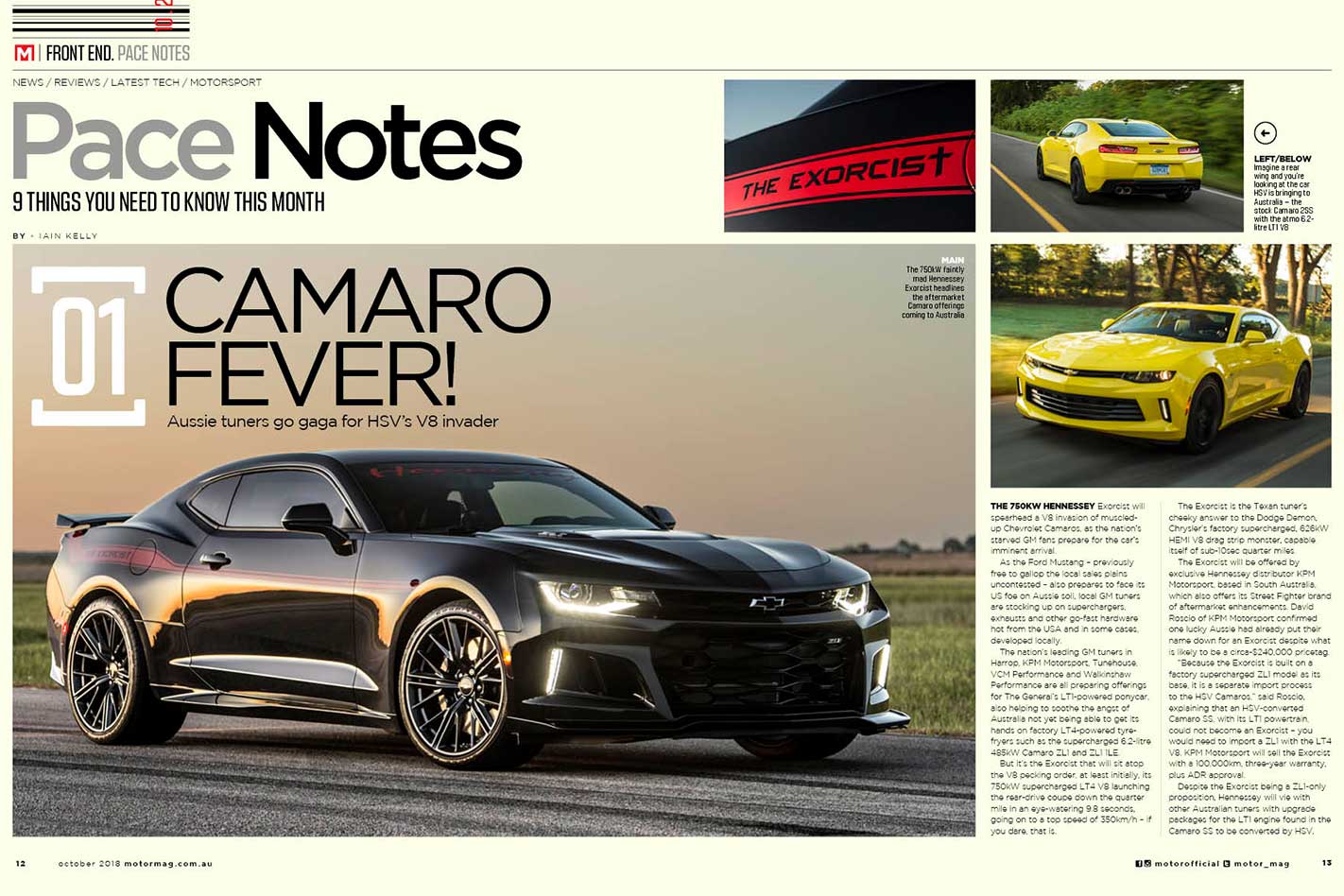
A look at Aussie tuners’ Camaro plans, as well as everything else you need to know about HSV’s Camaro. Plus, we bring you all the Pebble Beach highlights you could hope for.
First Drives
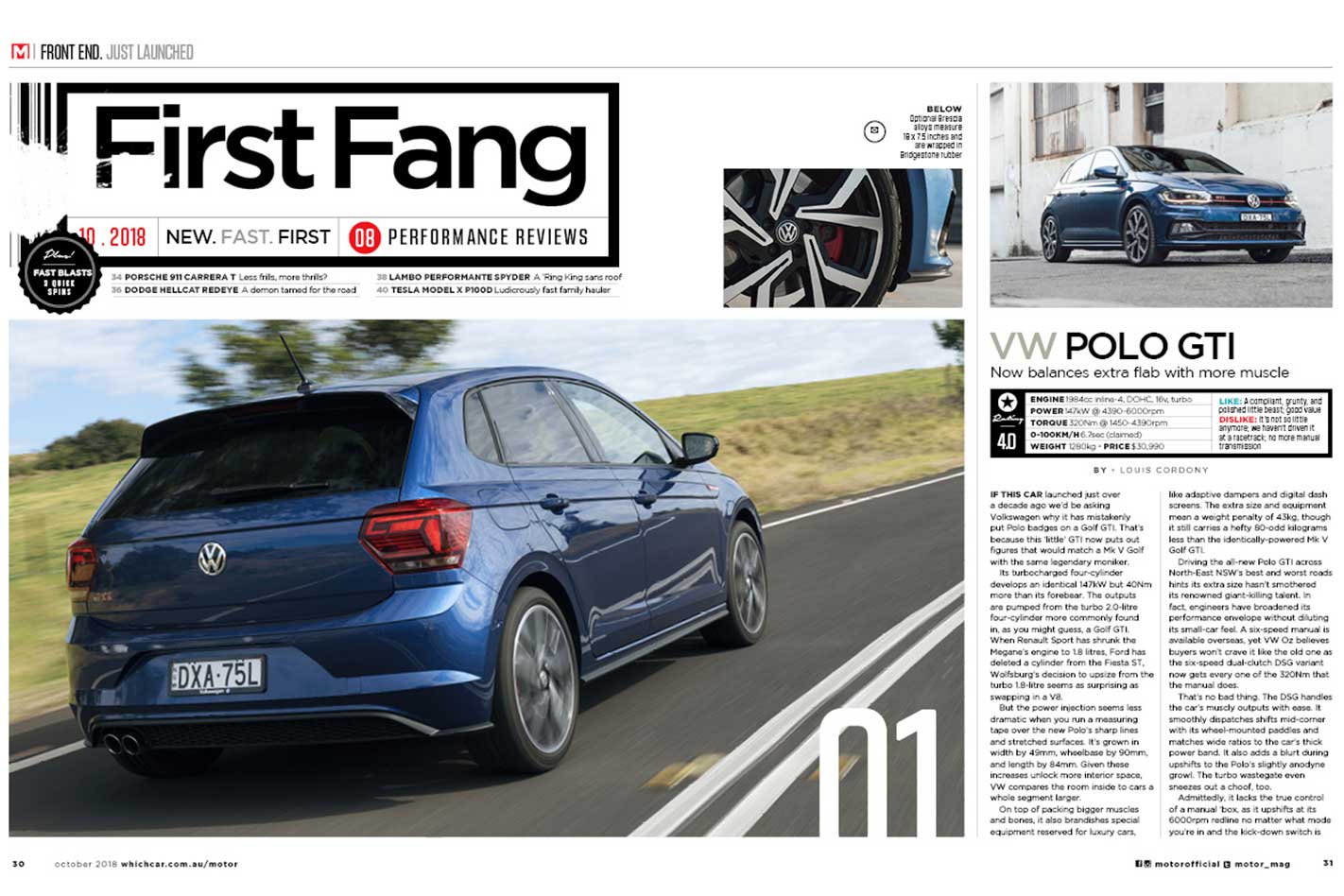
We put the new VW Polo GTI through its paces, along with the Porsche 911 Carrera T, Dodge Hellcat Redeye, Lambo Huracán Performante Spyder, and Tesla’s Model X P100D
Updated Mazda MX-5: 7500rpm 2.0-litre sampled in Oz
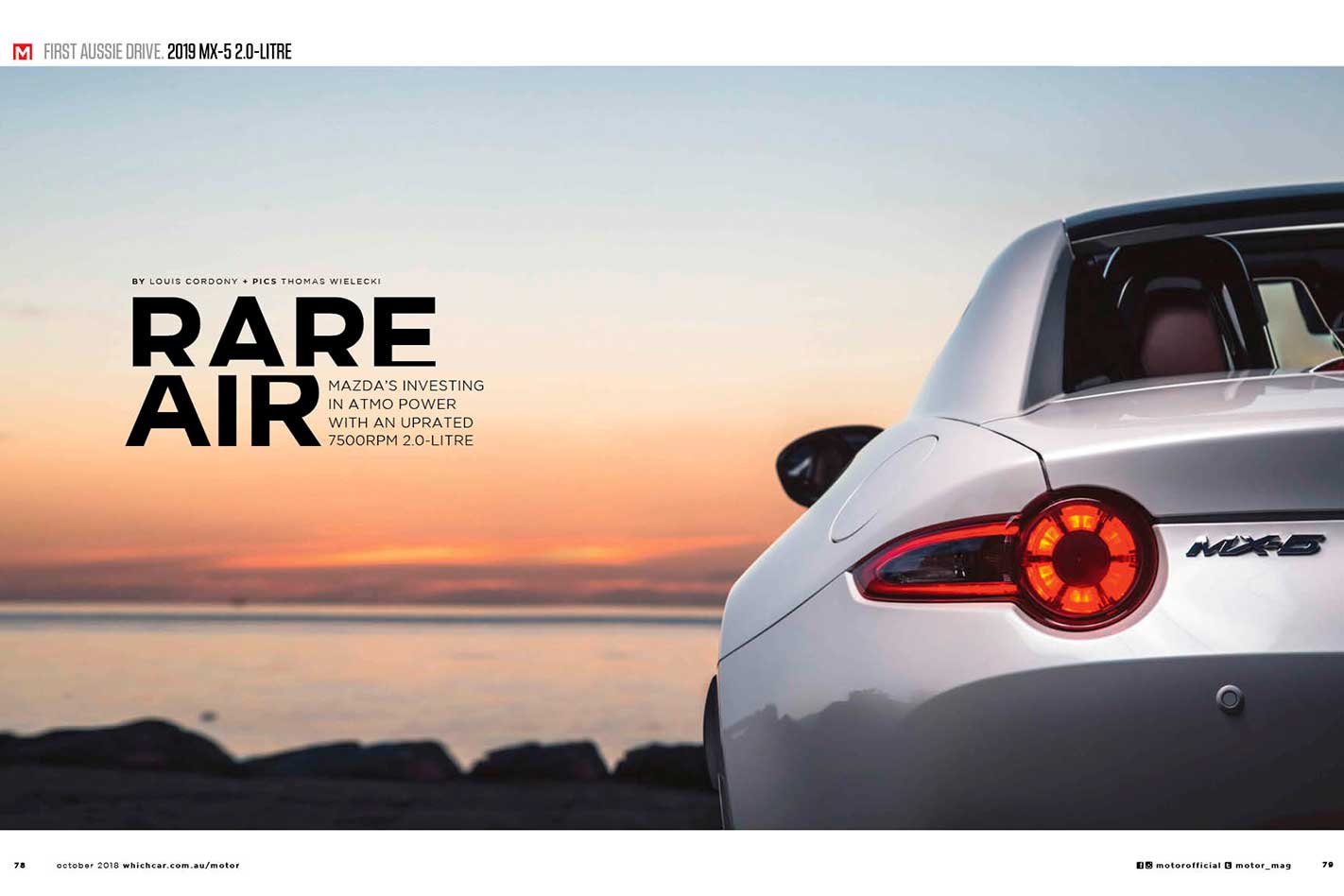
Mazda’s investing in natural aspiration with its most powerful 2.0-litre four-pot engine yet
Hot-Hatch Battle: Mégane RS280 Takes on Civic Type R, i30 N, and 308 GTi
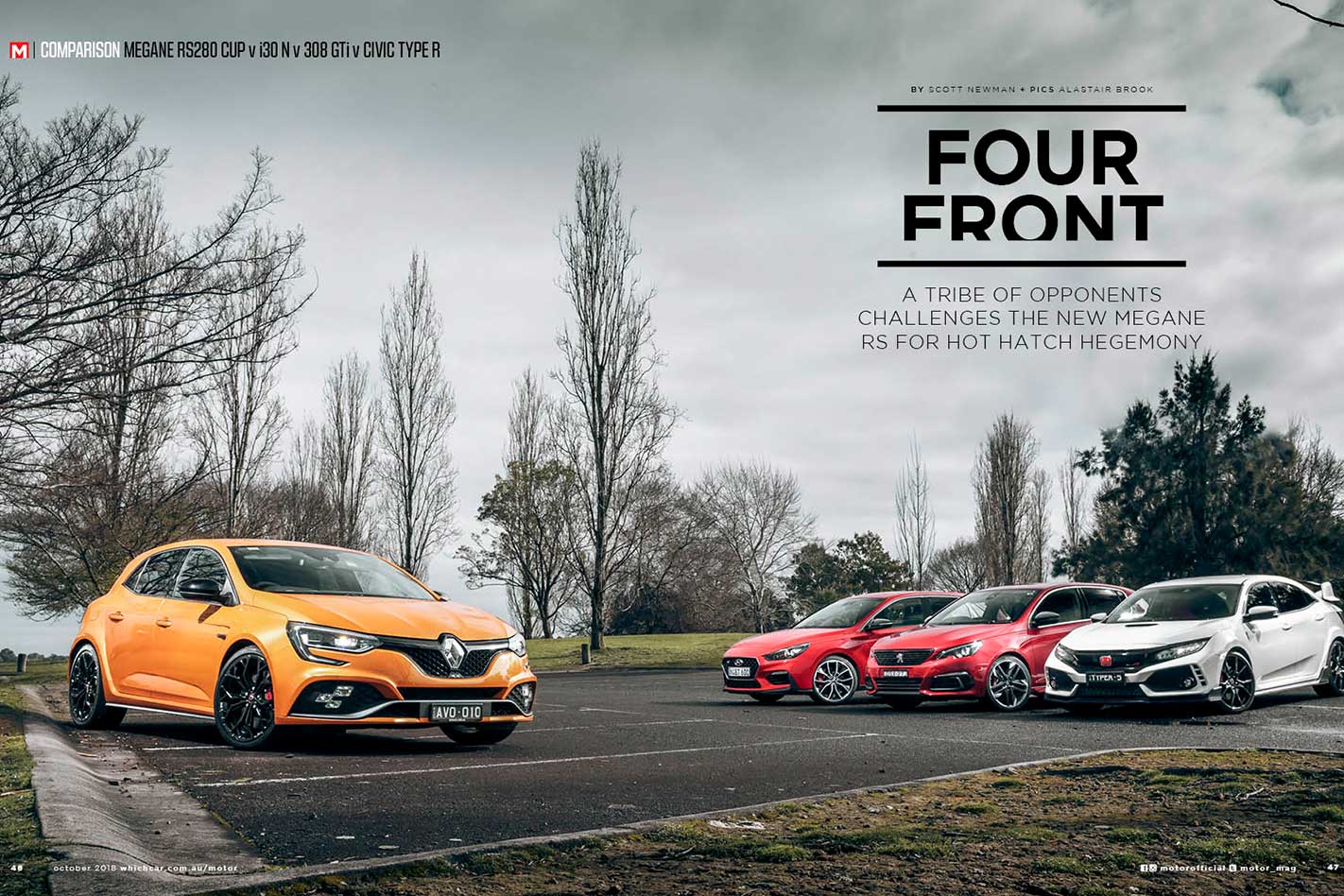
Hyundai, Honda and even Peugeot stand in the way of the new Renault Sport Megane
Roush Jackhammer Mustang: First Aussie Fang
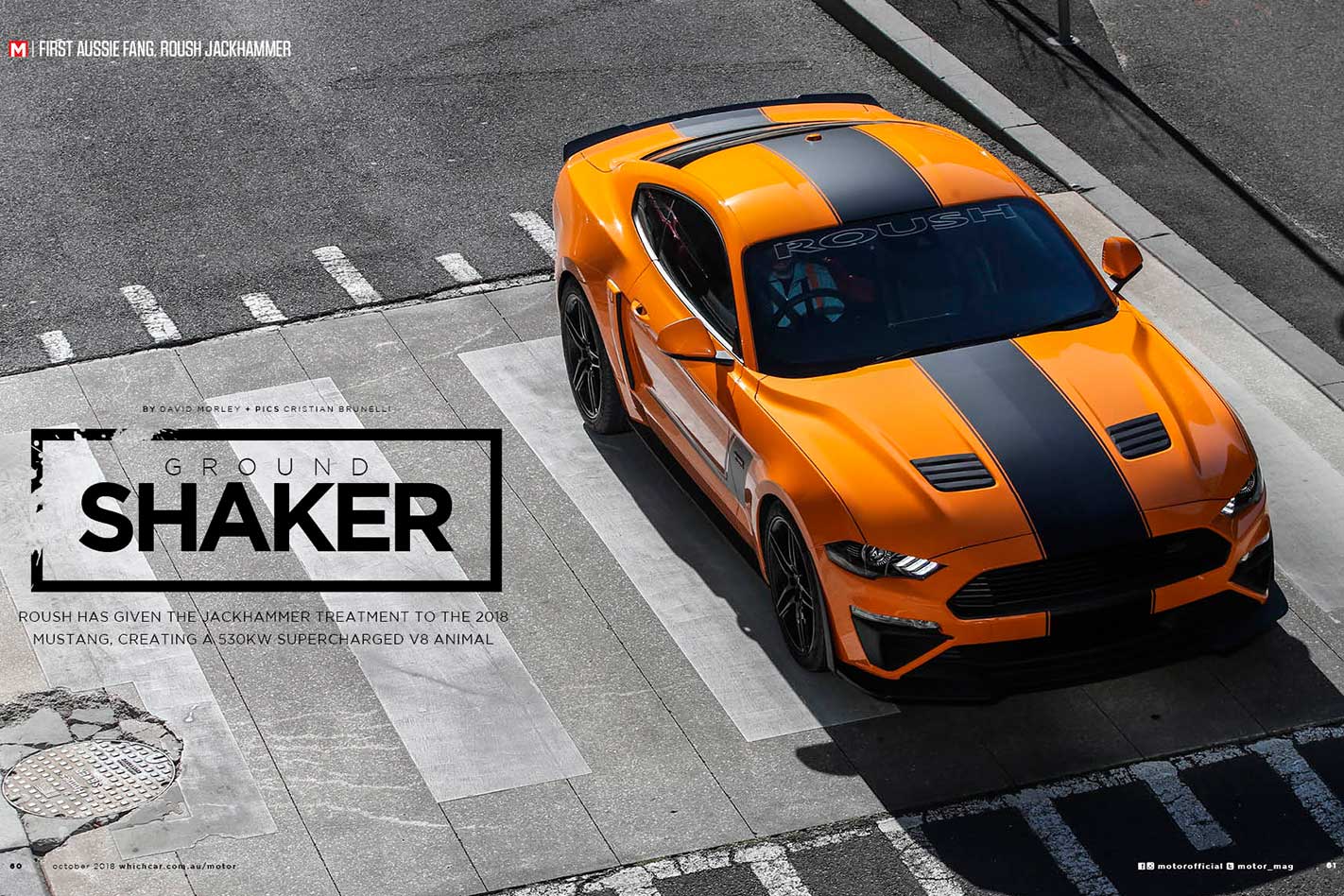
Dirty big supercharger and 530kW equals one car that’ll have teacups and saucers shaking
Ferrari 812 Superfast Driven Down Under
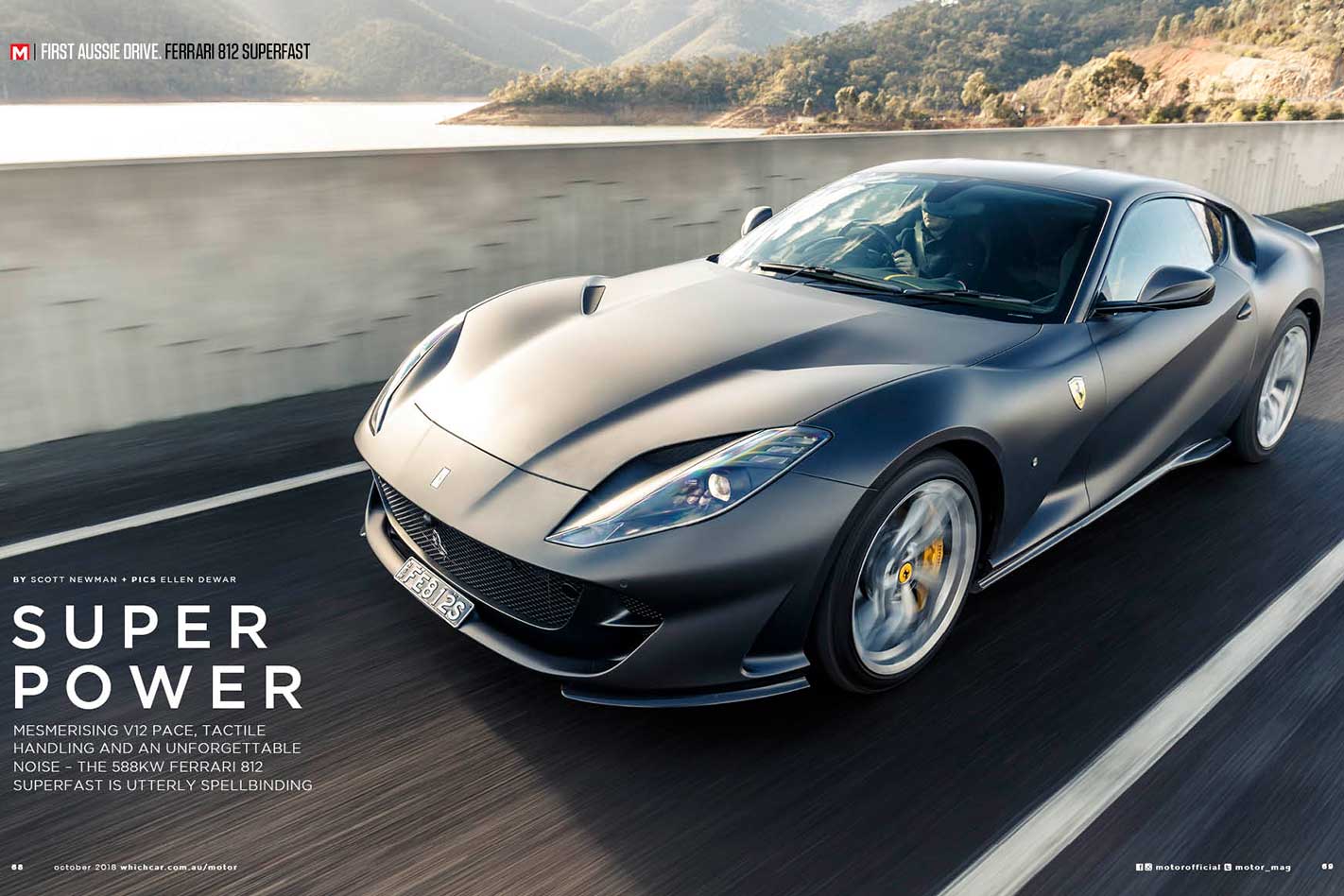
One of Australia’s best (and little-known) driving roads, and one helluva car
Uber Coupes: Porsche 718 Cayman GTS v Audi RS5 v BMW M4 CS
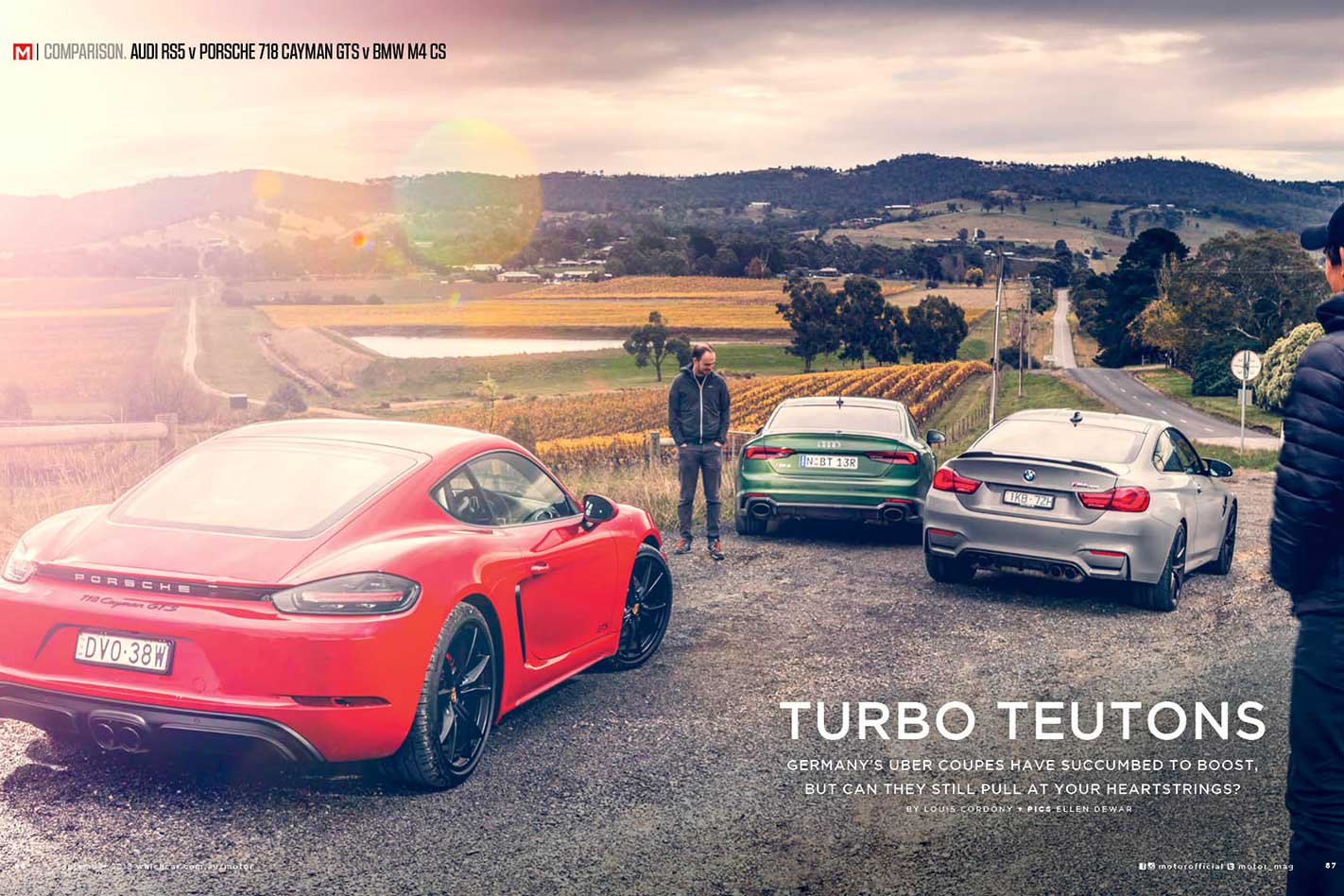
Three very different takes on the same performance-orientated, two-door theme
Road-legal Aston Martin Vulcan unleashed
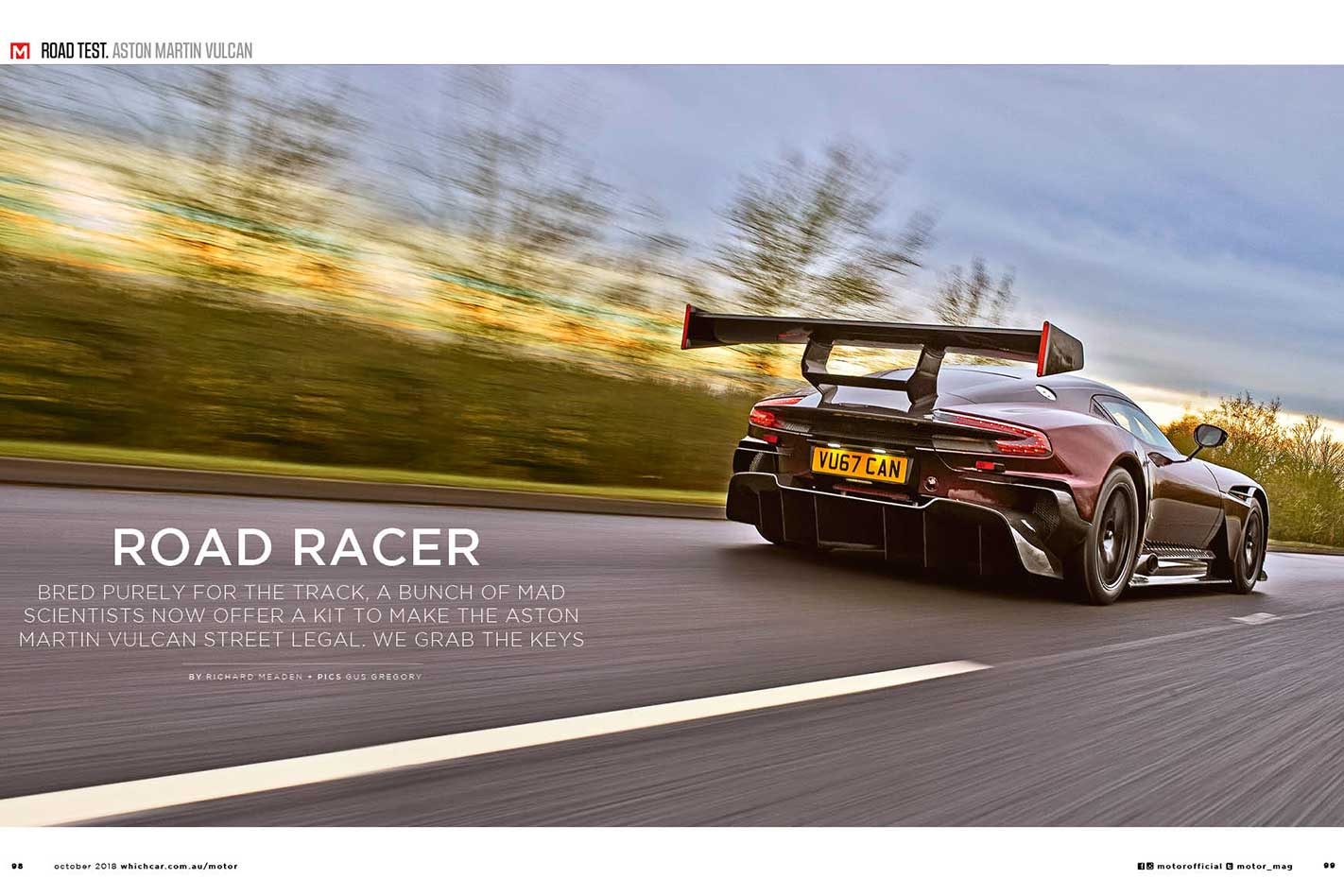
Aston creates ultimate Gaydon track weapon; engineering firm RML puts it on the road
Icon Buyer: Maserati Quattroporte
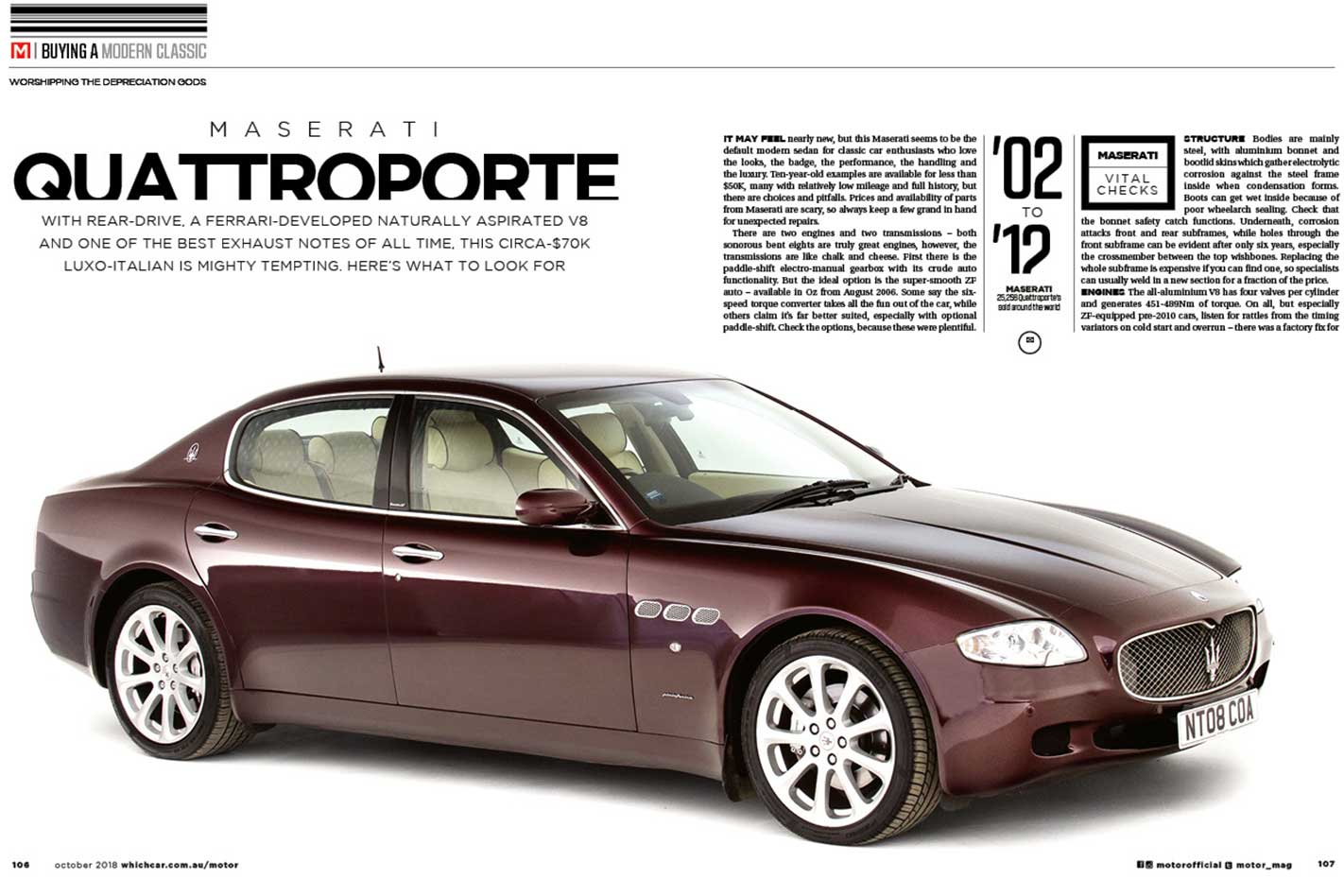
The Quattroporte is all sorts of rear-drive, Ferrari V8 goodness
Plus more!
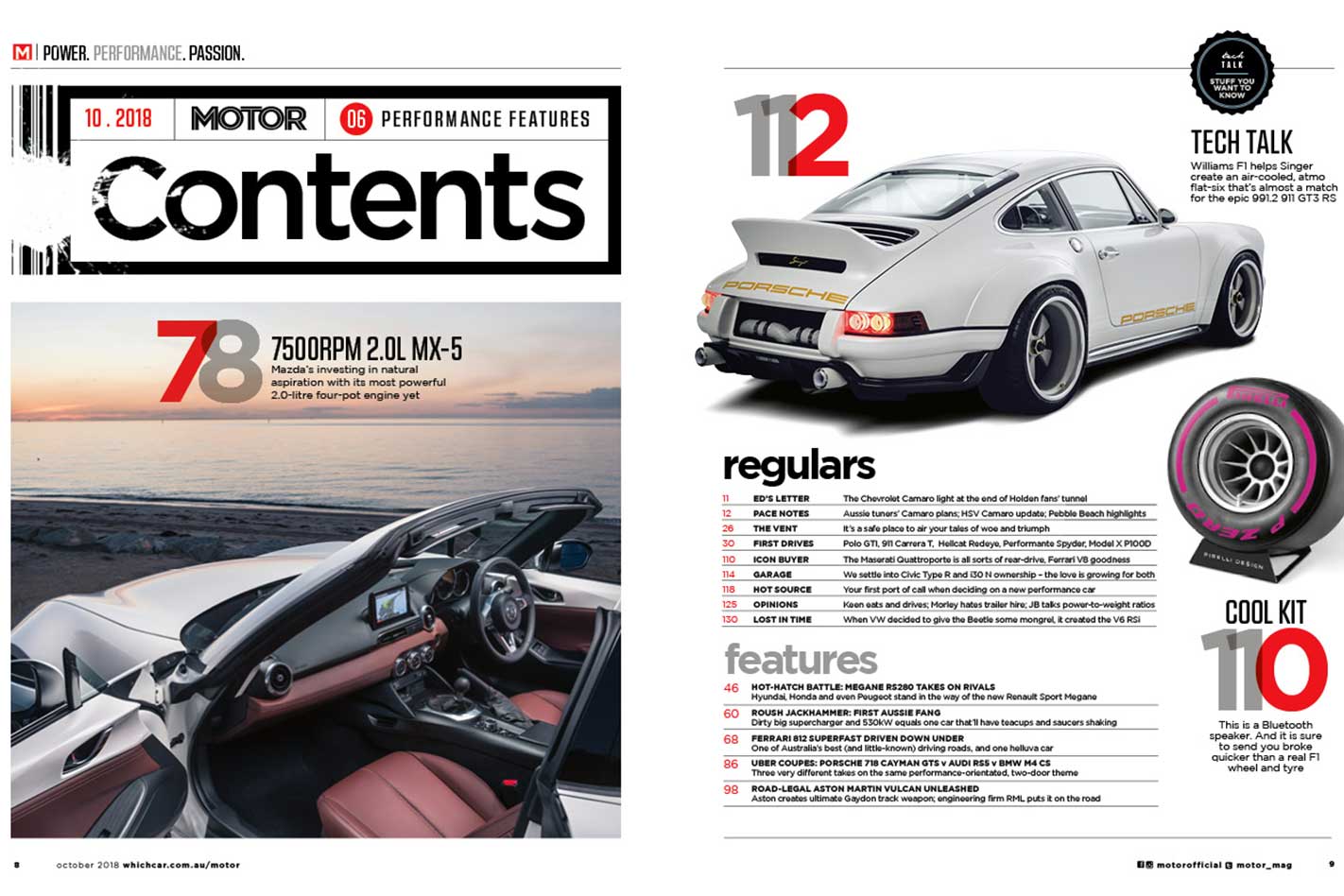
Columns, New vs Used, and more excellent motoring content is ready to be enjoyed by enthusiasts all around the country, and the world.
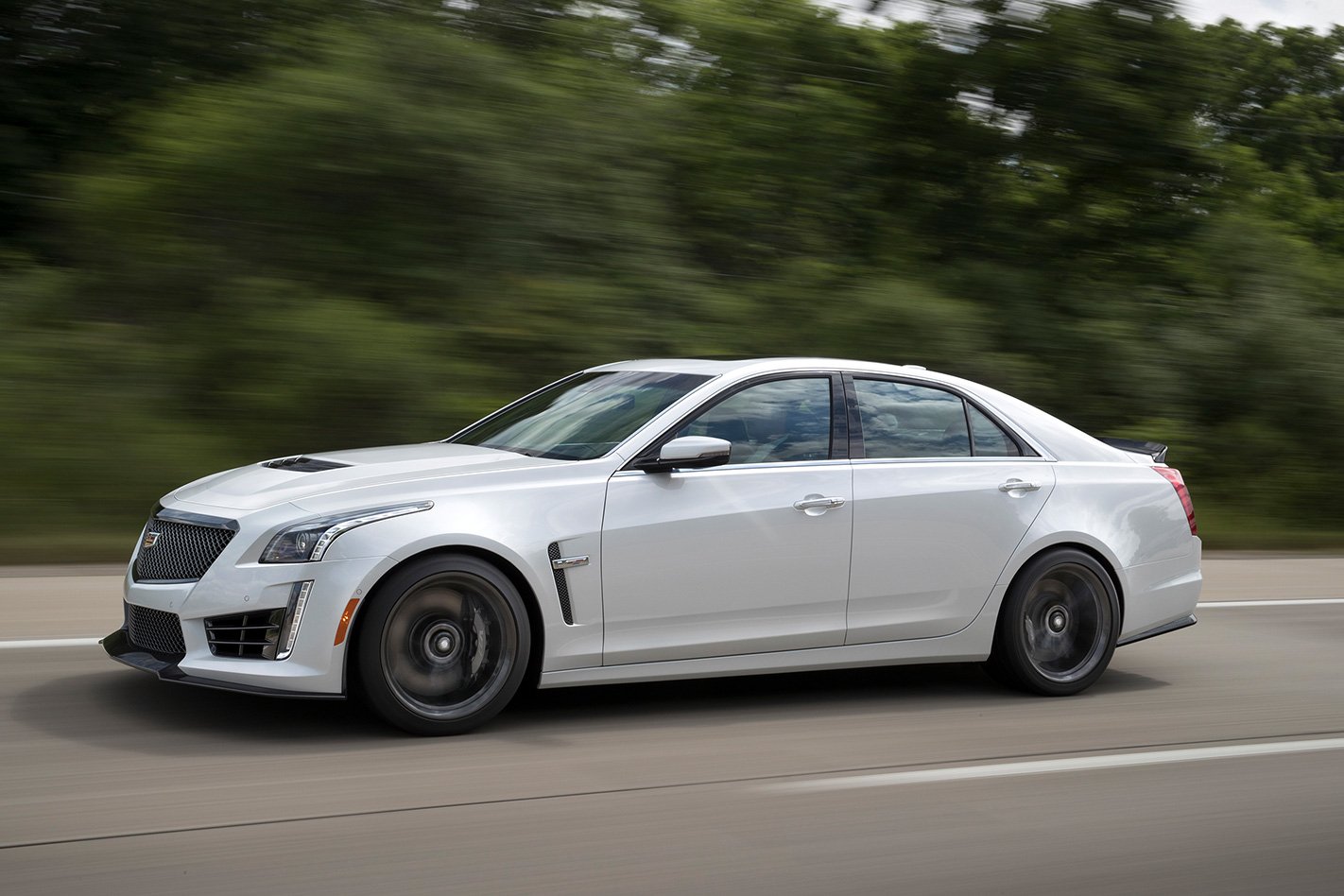
NEWS FROM America overnight will be disheartening for Aussie motoring enthusiasts, with Cadillac confirming the ATS-V and CTS-V will both be ending production over the northern hemisphere’s summer (our winter).
The sports sedan duo have a vocal fan following in Australia, despite not being sold locally. This is largely down to the fact they follow the same four-door performance formula of the Ford Falcon and Holden Commodore.
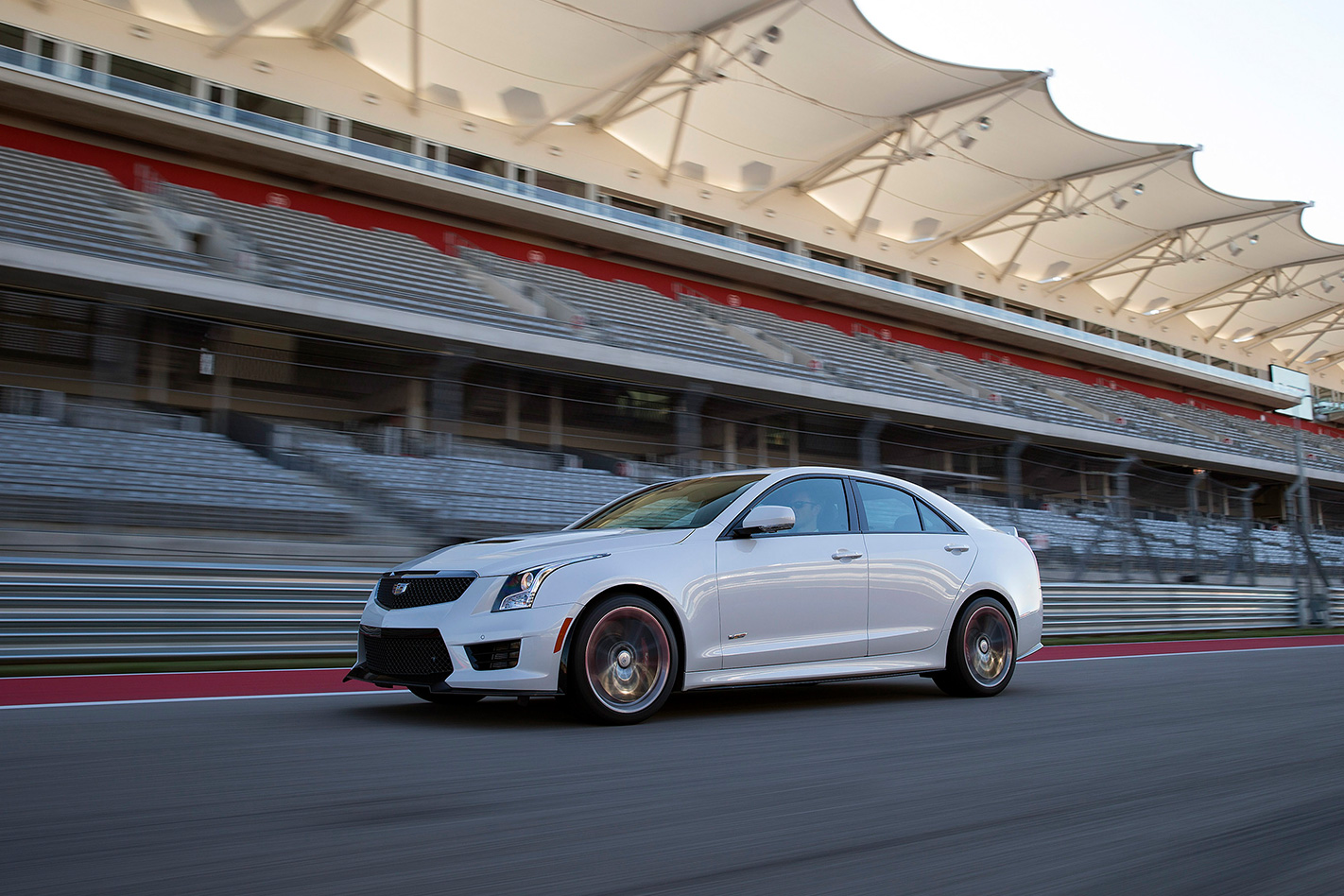
However, it’s not all bad news, with the duo’s replacement being evaluated for Australia.
Wheels recently spoke to Holden and GM executives about Cadillac coming to Australia, and the indications were positive. A full story features in Redline of the October issue of Wheels, on sale from October 4th.
Cadillac is said to be focussing on its SUV line-up and rationalising its sedan range. Insiders have suggested the ATS-V and CTS-V will be merged, while a new model will slot in underneath to rival the Mercedes-Benz CLA and Audi A3 sedan.
Once the ATS-V and CTS-V shuffle off their mortal coil in the coming months, their replacement will be the CT6-V, which has a 4.2-litre twin-turbo V8 producing an ‘estimated’ 410kW and 850Nm.
The new small-block bent-eight engine was honed on Australian soil at Holden’s Lang Lang proving ground.
Though impressive, the CT6-V’s power figures are outperformed by the supercharged 6.2-litre LT4 V8 of the outgoing CTS-V, which boasts 477kW and 855Nm.
The CT6-V will be sized to rival the likes of BMW’s 5 Series and 7 Series, and Mercedes-Benz’s E- and S-Class.
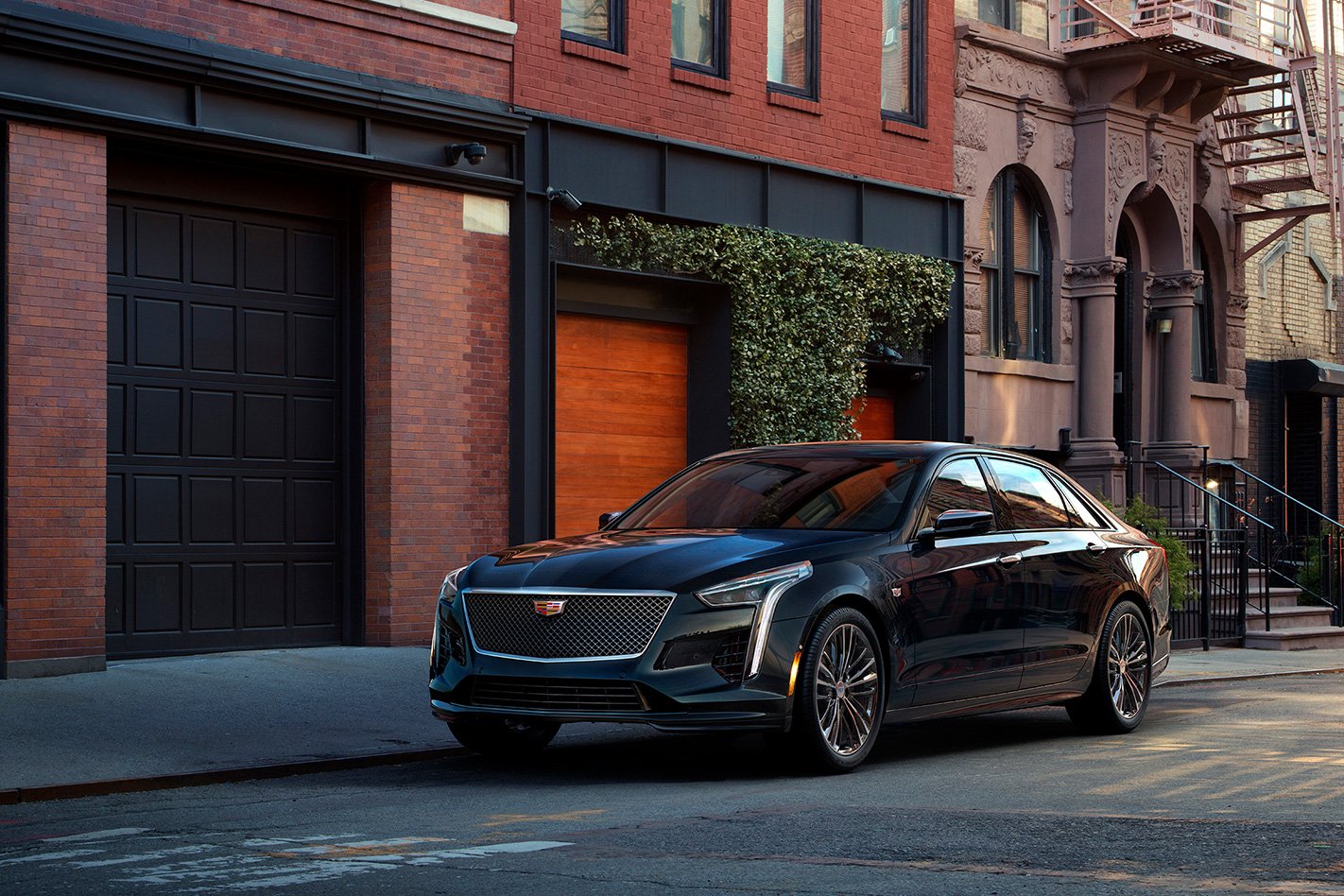
It was confirmed earlier this year Cadillac is also working on a rear-drive sedan which is smaller than the outgoing M3-rivalling CTS-V.
Former head of Cadillac Johan de Nysschen told Jalopnik the sedan would compete with the likes of the Mercedes-Benz CLA and Audi A3, and be a competent track performer.
“It will certainly lap the Nurburgring faster than any one of our competitors in that category, if they care about that,” he told the website.
Steve Carlisle is the boss of Cadillac, taking over from de Nysschen earlier this year.
The new head honcho said the brand’s performance range will grow in the future, while indicating the company is considering interests outside of North America.
“As we accelerate Cadillac’s growth around the world, our V-Series will continue to expand the brand, enhance its image and attract new buyers to our showroom,” he said.
It’s early days yet, but if Holden’s new chief David Buttner can convince the right people in Detroit, Australians with a yearning for rear-drive performance sedans from GM’s stables could soon have two tantalising options to choose from.
Aussies love the Ford Ranger and, from one month to the next, it tussles with the wide range of dual-cab utes on offer for not just the title of the country’s favourite one-tonner, but as the nation’s favourite vehicle – full stop.
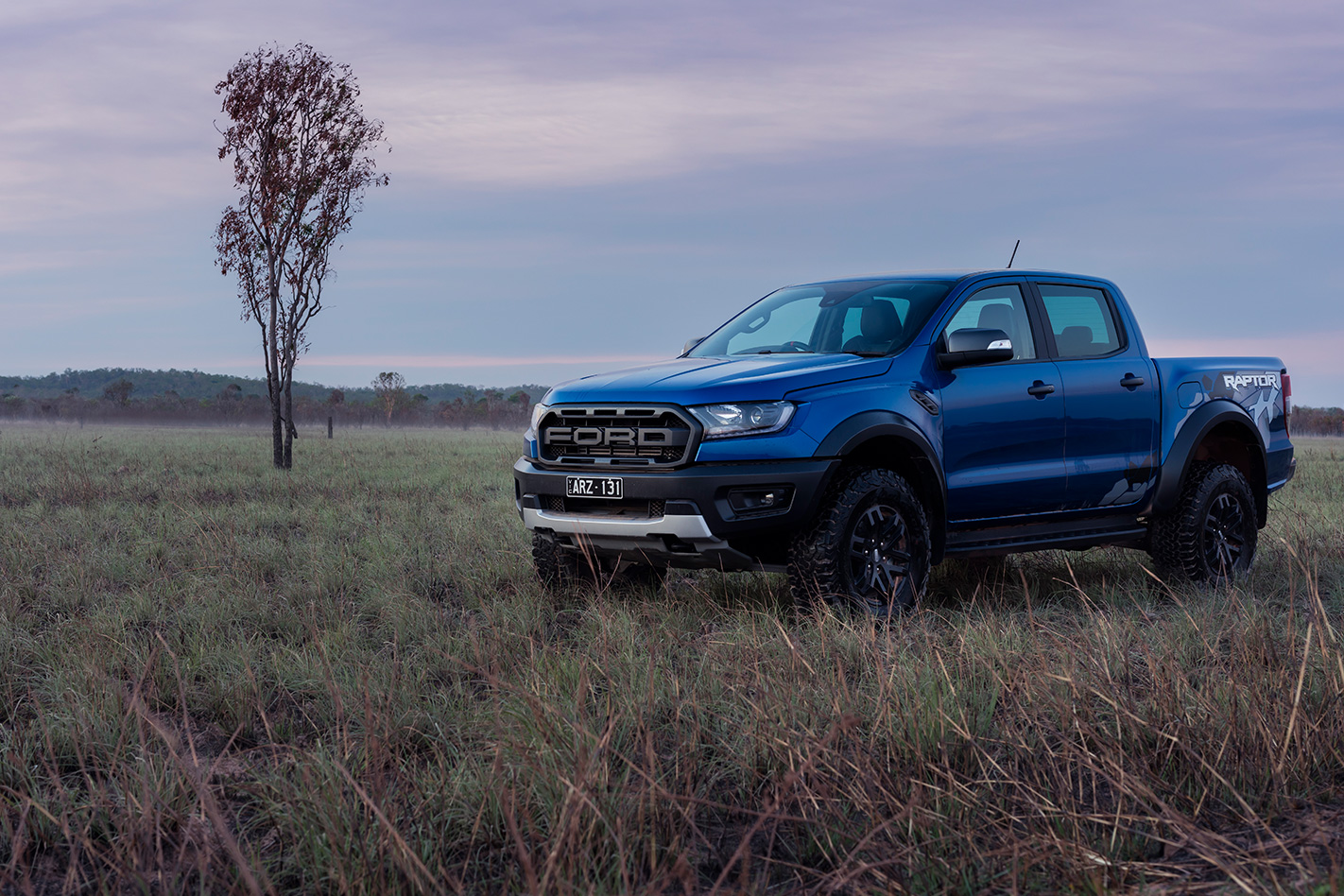
Local tastes favour the higher end, including the feature-rich Ranger Wildtrak, Hilux SR5 and Holden Colorado Z71 which continue to attract a strong audience from about the $50,000 to $60,000 mark, but the line-up now has an indisputable new king – the Raptor.
Ford is asking a premium of $74,990 before on-road costs for the mightiest Ranger, ranking it as Australia’s most expensive dual cab, so why is it causing such a stir?
Here are five things that make the Ford Ranger Raptor unlike any other tradie truck before it.
Suspension
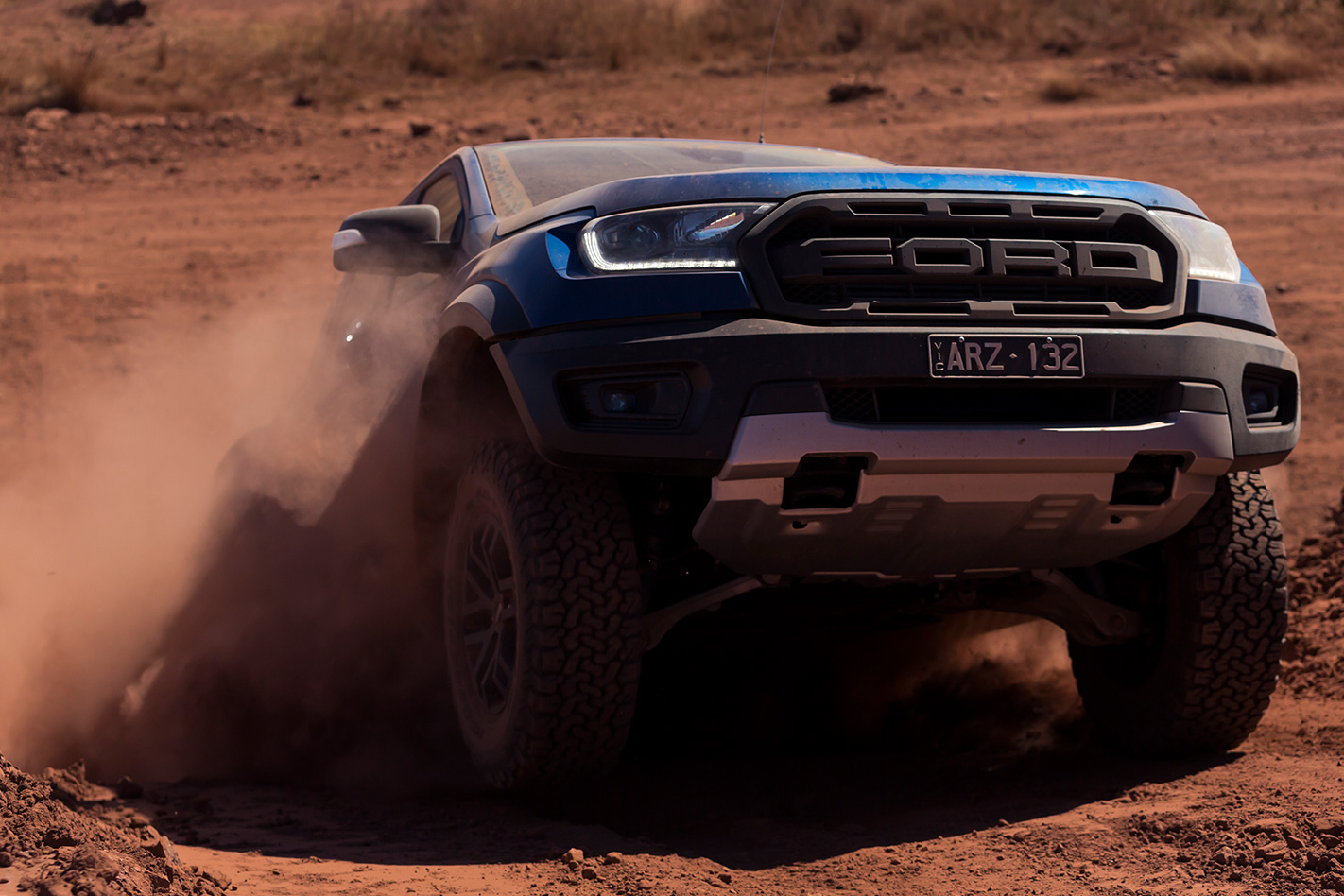
A significant portion of the Ranger’s premium price difference lies in its major suspension upgrade.
Under its fattened front arches, the Raptor has a double-wishbone front suspension (which it claims is a MacPherson strut design) while a coil-sprung solid axle with a Watts linkage looks after the rear end. Both axles are fitted with twin tube Fox 2.5-inch internal bypass dampers, which feature position sensitive damping and remote reservoirs, and the rear axle greatly differs from that of a standard Ranger, which uses leaf springs rather than coils.
The result is 238mm or ground clearance and 30 percent more wheel travel than the standard Ranger. Serious off-road enthusiasts will love the 32.5-degree approach angle, 24-degree departure angle and 24-degree break-over angle.
Finally, the six-mode Terrain Management System includes a mode entitled Baja, which invokes the mindboggling off-road race held on Mexico’s Baja California Peninsula. Competitors converge in some of the world’s most capable high-speed all-terrain machines and hints at the capability of the Raptor’s super-duty chassis.
Wheels and tyres
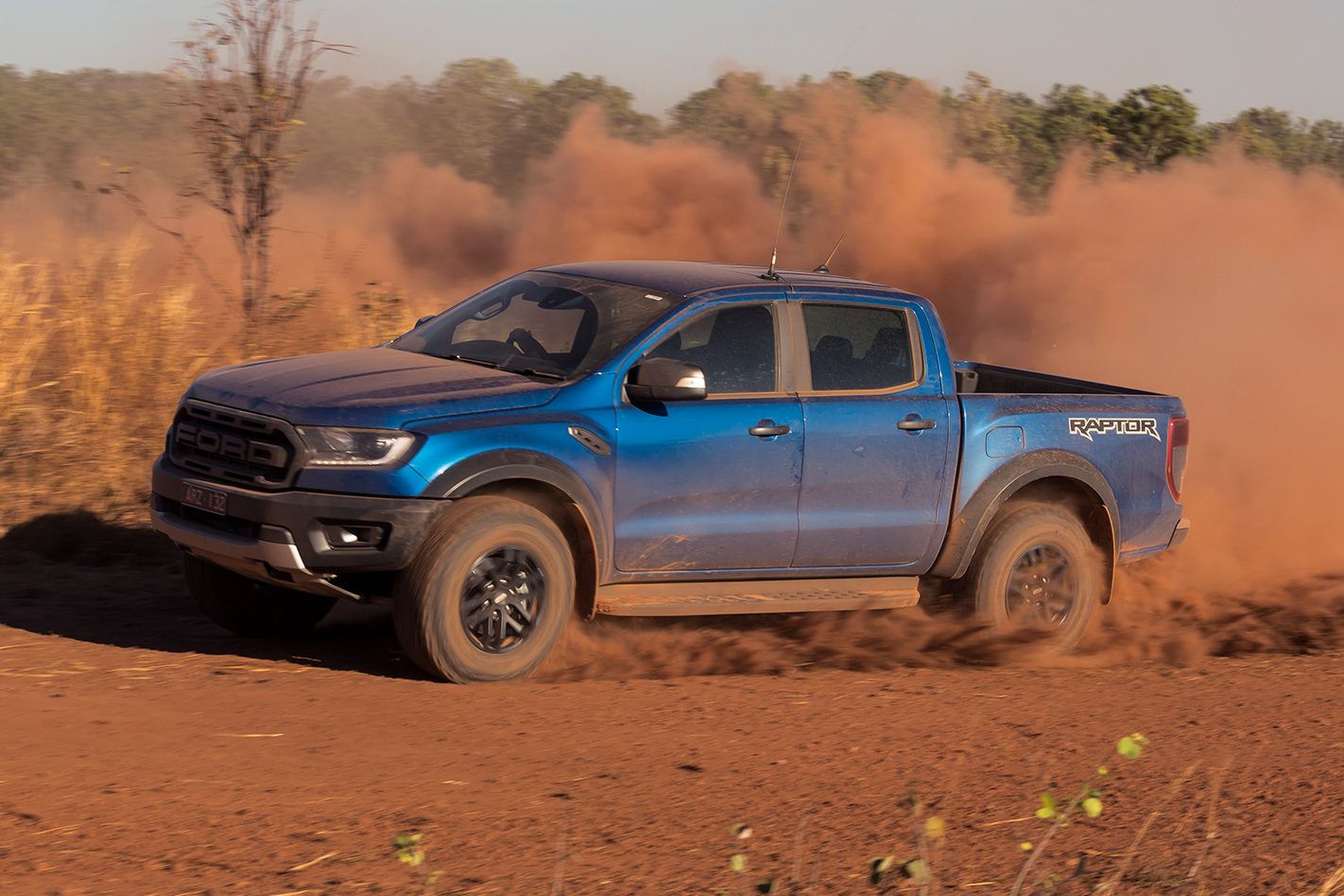
Bolted to the sophisticated suspension system are 17-inch alloy wheels which don’t sound particularly noteworthy, however, they are fitted with BF Goodrich All-Terrain T/A KO2 tyres, which have a whopping 33-inch diameter.
That allows the Ranger formidable grip off road and extra shock absorbency, without the hum that some knobbly off-road rubber produces when on the road. The ultra-rugged tyres also offer a 20 percent tougher side wall for resisting the punishment of hardcore off-road terrain, as well as longer life.
Engine
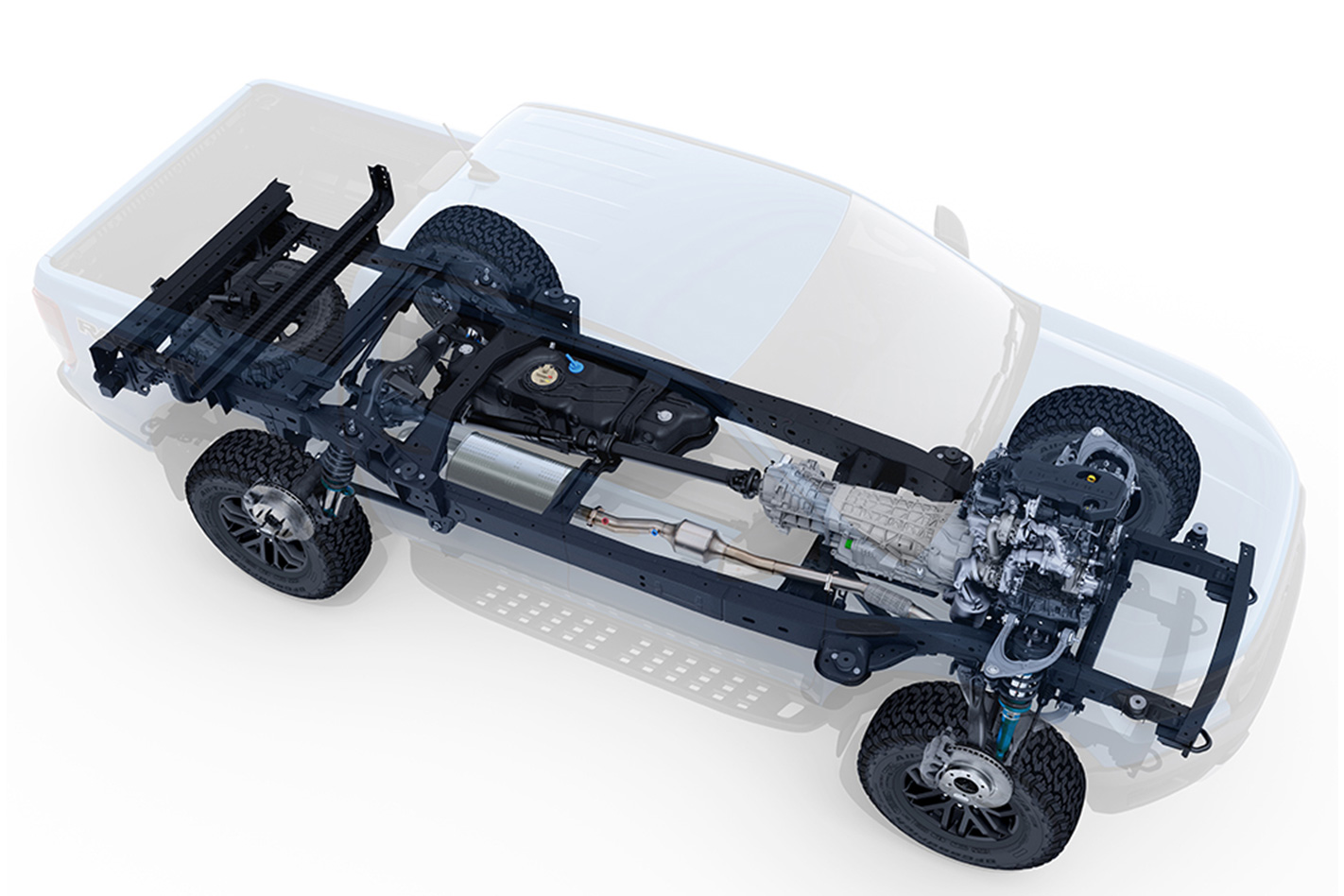
In the context of the Raptor’s pumped up ride-height, wide arches and knobbly tyres, a 2.0-litre four-cylinder diesel engine might seem like a strange match – and one that could be considered incapable of keeping the promises that its aesthetics make.
But thanks in part to a pair of turbochargers, the Raptor’s engine produces 157kW and 500Nm of torque – that’s more twisting force than a BMW M2. That beats the 147kW and 470Nm of the bigger 3.2-litre turbodiesel inline five that’s also available in the Ranger family – a commendable achievement when you consider it’s a bigger engine with an extra cylinder!
Dimensions
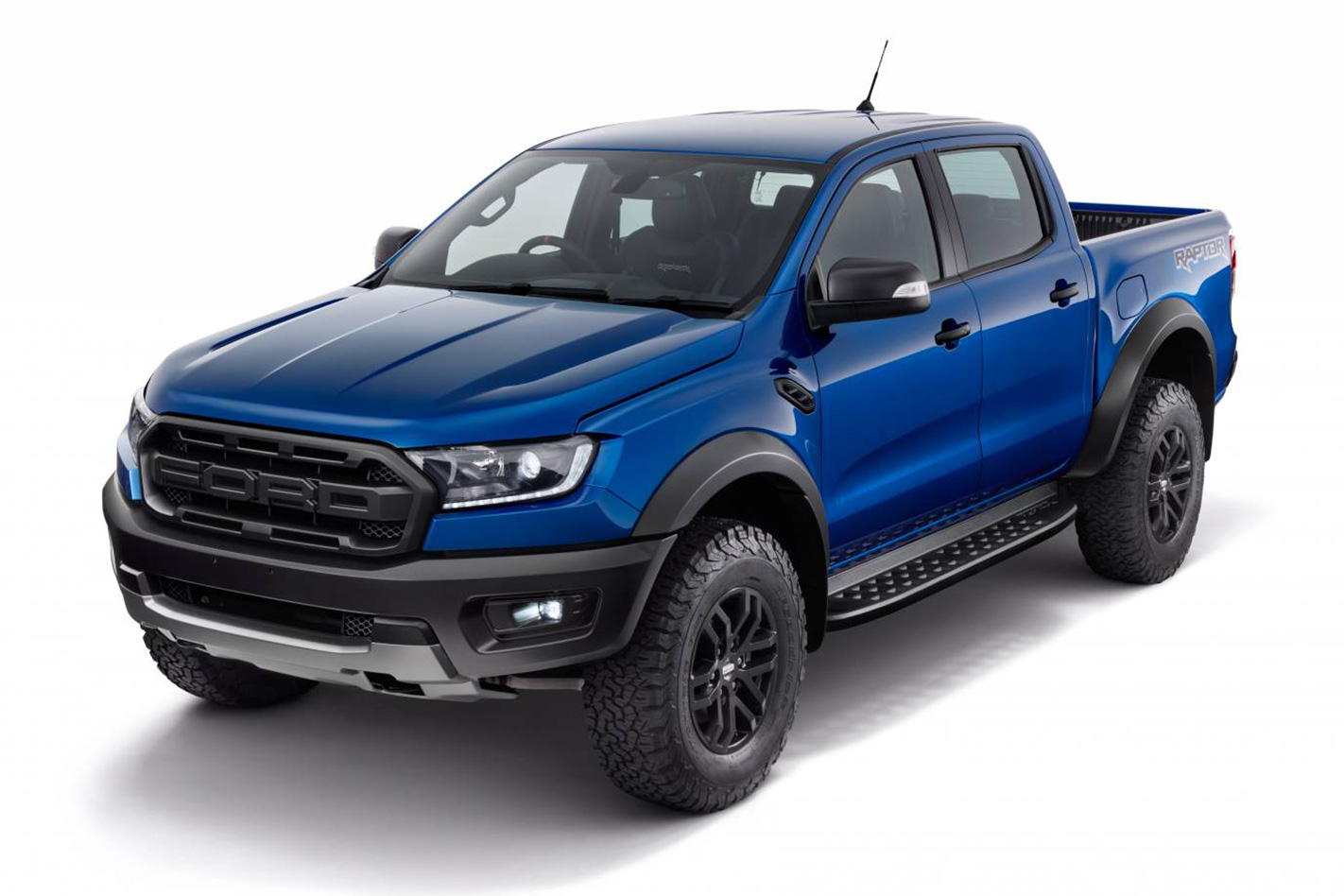
To accommodate the massive tyres and extended suspension travel, the Raptor put on some muscle. Compared with the Wildtrak, the Raptor is 43mm longer at 5.4 metres thanks to chunkier bumpers (which are separate from the body at the front, another point of difference), 25mm taller and, most significantly, 222mm wider with an imposing waistline of more than two metres courtesy of substantially swollen bodywork.
A comparison with its ‘larger’ US market F-150 Raptor puts that bodybuilder width into perspective, with the Ranger measuring just under an inch narrower.
Despite its more imposing stance, the Raptor can’t equal the Wildtrak’s hard-working credentials. With a braked trailer, the Raptor can tow a maximum of 2500kg and has a maximum tray payload of 750kg, while the leaner Wildtrak can pull up to 3500kg and haul 950kg in its tub.
But that’s not to say it isn’t beefy – the payload reduction has more to do with its unique rear suspension rather than any inherent weakness. In fact, its steel ladderframe chassis is almost completely different to a standard Ranger’s underpinnings thanks to heavy reinforcement to help deal with offroad duty and wider rails to accommodate that coil-sprung rear end.
Transmission
While many Ranger rivals have to make do with six or seven gear ratios for their automatic versions, the Raptor smashes that figure with a grand total of ten gears! Even the Volkswagen Amarok V6 TDI can’t get close with eight speeds.
The Ford’s ten-speed transmission allows the relatively diminutive engine to be kept in the peak torque range of 1750 and 2000 rpm and helps contribute to a fuel efficiency that Ford claims to average just 8.2 litres per 100km.
Not bad for a 2.3-ton road-legal monster truck.
MORE: Ford Ranger Range Review MORE: Ford Ranger Specs, Range & Price
It’s official: Wheels is 65 years old. But this series isn’t about us. To celebrate our 65th, we thought we’d take a look at the decisions that have changed the automotive world over the last six and a half decades. Some were inspirations that altered it for the better, others were engineering dead ends, nefarious cover-ups and valiant flops. Scroll on to read more, then click here to explore all 65 cars, people, game-changers and failures that have influenced the car industry since 1953, in no particular order.
1. Mitsubishi TM Magna
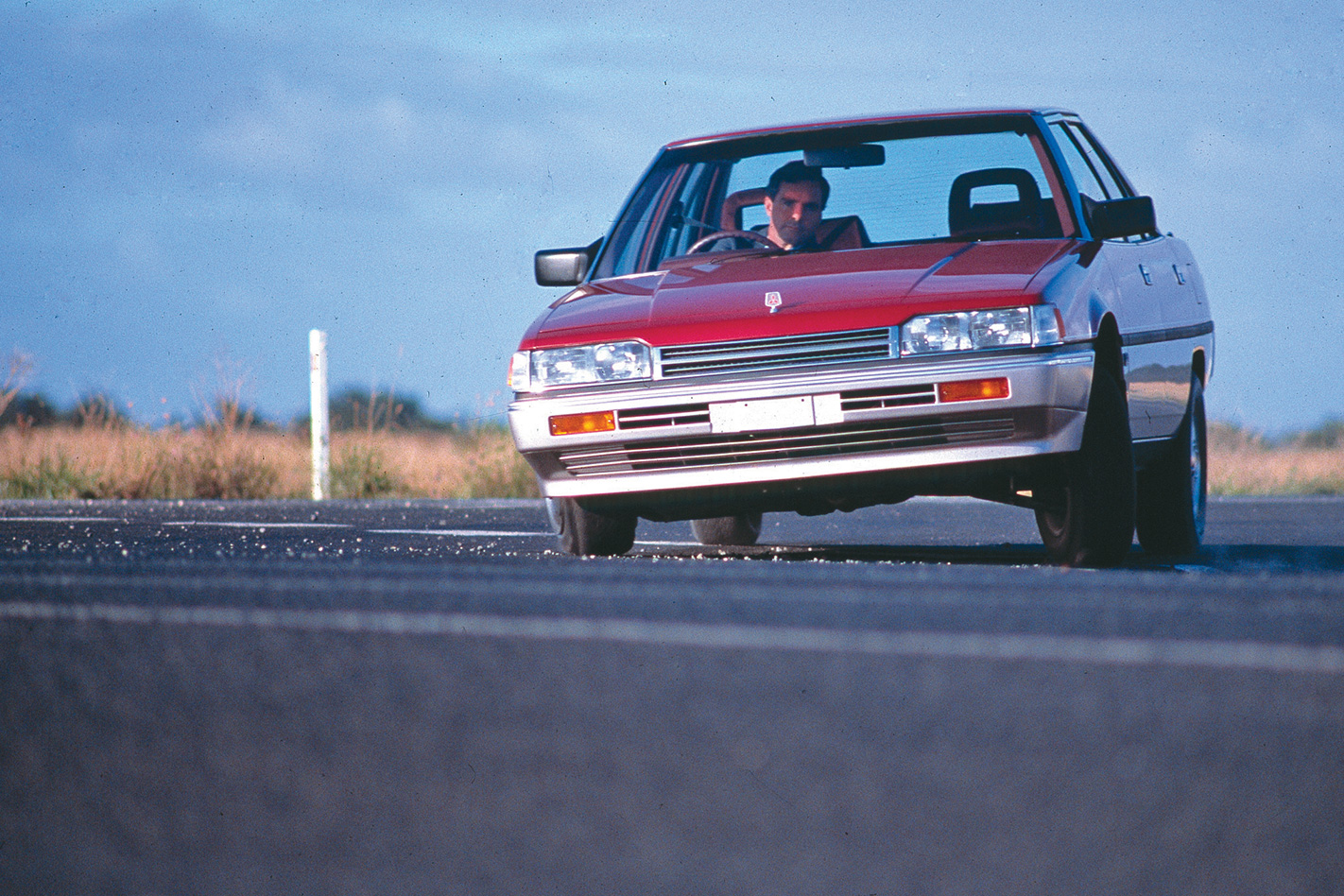
The ultimate evolution of the hugely successful Chrysler/Mitsubishi Sigma of the late-’70s/early-’80s, the original Magna (1985) finally achieved what domestic carmakers had wanted to do to overseas products for decades – widen them. While BMC’s aspirations of broadening the narrow-bellied Austin Freeway and Wolseley 24/80 came to nothing, Mitsubishi’s success in splicing 100mm into the centre section of the 1983 Japanese-market Sigma/Eterna set the global blueprint for today’s modern medium-size car. And made the Magna an Aussie success story across three generations. The ‘wide-body’ Toyota Camry (1993) was directly inspired by the TM Magna; likewise Ford’s last two generations of Mondeo/Fusion. y the TM Magna; likewise Ford’s last two generations of Mondeo/Fusion.
2. Holden FJ
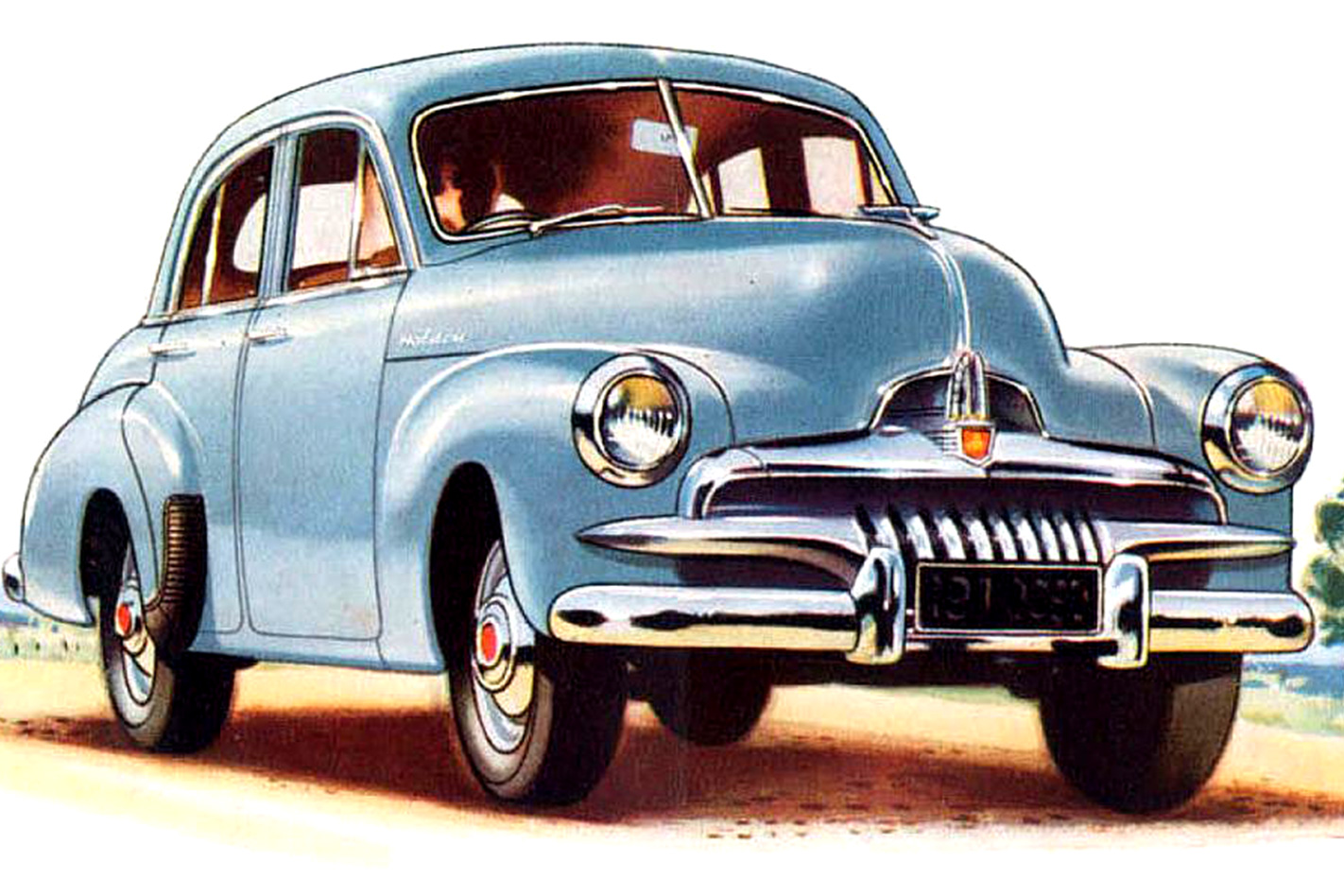
Beyond its affectionately ‘hunch-backed’ form, the FJ Holden (and its 48-215 predecessor) possesses something far more significant. With its gloriously extravagant chrome grille and freshly minted ‘Special’ variant, the FJ went on to influence Aussie culture way beyond the end of production in 1956. There were bands – Ol’ 55, fronted by Frankie J Holden (not his real name, would you believe) – and even a film called The FJ Holden (1977), delivering a bleak depiction of western Sydney’s cultural landscape as lead character Kevin seems to care only about his battered old FJ (and beer). And its star would shine again 50 years later as Efijy (2005), Holden’s breathtaking concept-car homage to the iconic FJ.
3. Toyota Landcruiser
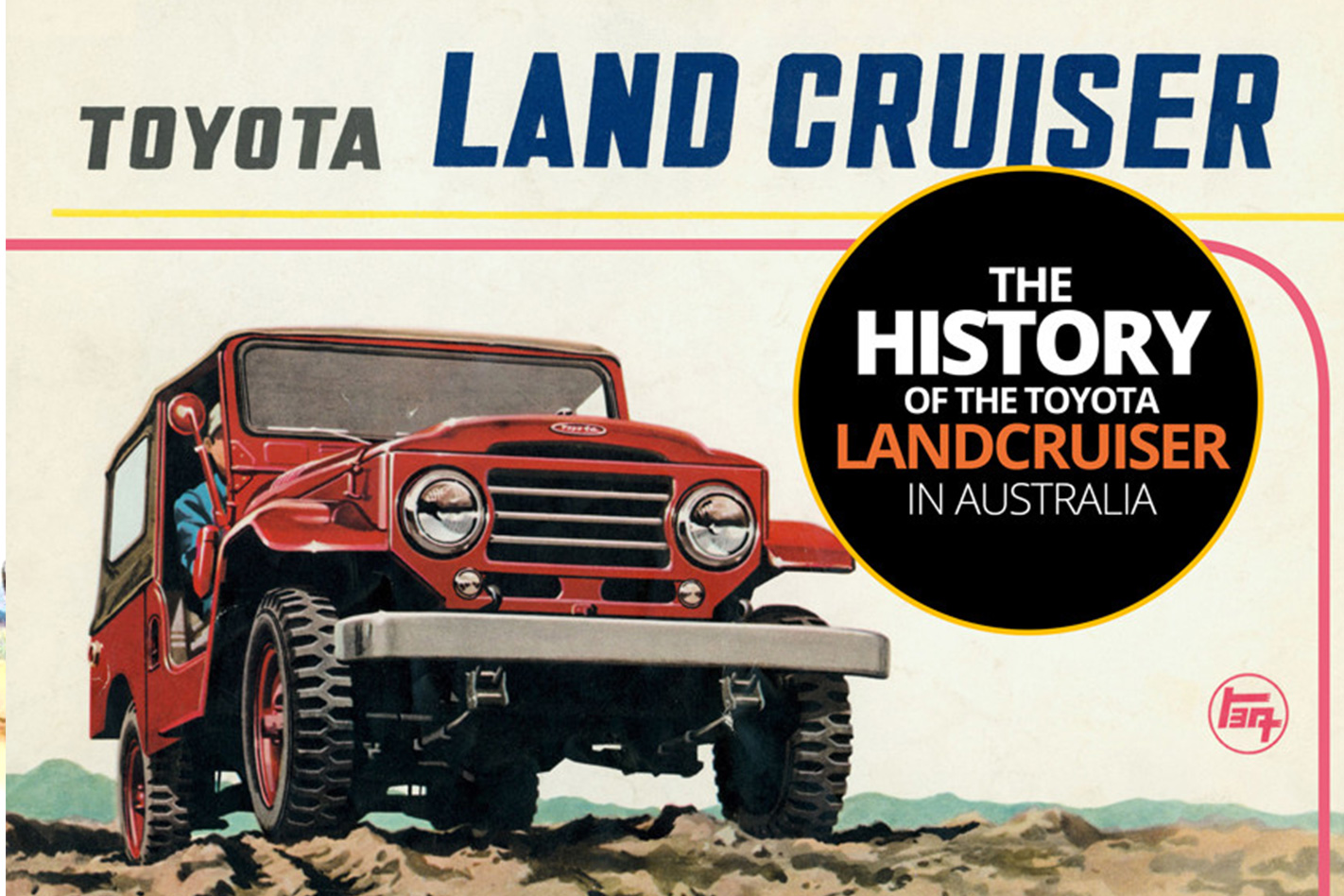
In the same year Holden dominated Australian passenger-car sales with more than 50 percent of the market, Toyota stepped quietly onto Aussie soil with the LandCruiser. Just 13 landed in 1958 – privately imported by Sir Leslie Thiess to assist with the Snowy Mountains Hydro Electric Scheme – but it didn’t take the LandCruiser long to find favour in mining and farming communities. Tough, handsome and unfailingly reliable, it was almost Chesty Bonds on wheels, with all four doing the driving. The LandCruiser family expanded in 1967 to include the FJ55V wagon – our first breakthrough ‘SUV’ – and half a century later, as total ’Cruiser sales in this country ticked over 700,000 (10 percent of total global volume), no one could doubt the significance of the Toyota 4WD’s impact. We’ve bought more LandCruisers than any nation on earth, a fact supported by the scores of grey nomads currently scouring the country in one, earning it virtual Aussie citizenship.
4. Ford Territory
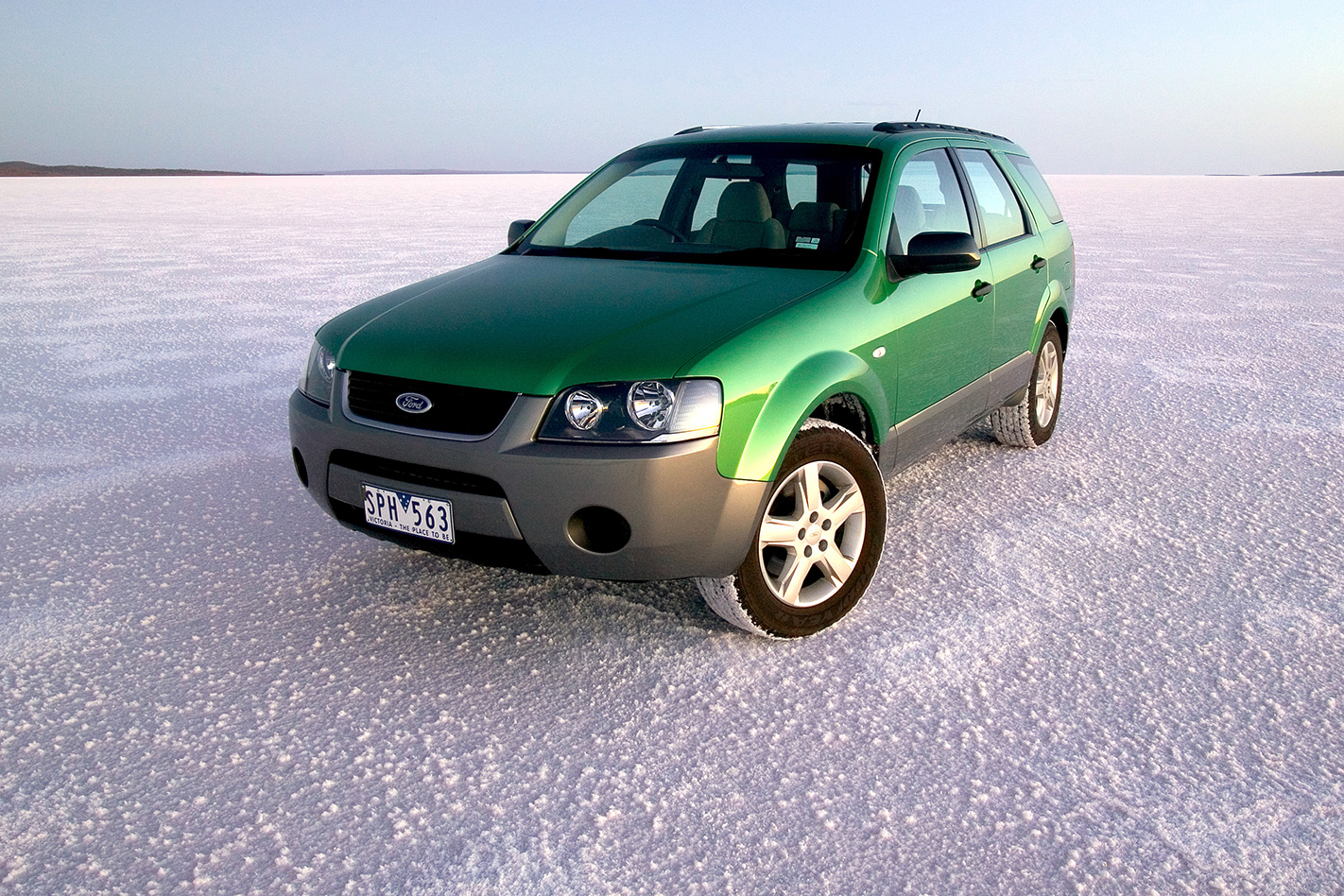
Ford Australia struck a winner with the Territory in 2004. A handsome monocoque design standing tall among a sea of lumbering separate-chassis rivals, it prefigured an era when available two-wheel drive and the lack of any real off-roading credentials played no determining factor in an SUV’s success, or lack thereof. As a design, it was bang up to date – superb seat comfort (providing you weren’t dumped on the bones of your bum in the third-row), excellent steering response, supple ride comfort, and brilliant vision. Twelve years later, it was still a handsome thing, finally available with a (sluggish) diesel engine option in lieu of Ford’s spritely, if thirsty, petrol six, and still able to house a bottle of wine lying flat in a bespoke receptacle next to the front passenger. Sooo Melbourne, darling.
5. Ford XR Falcon GT
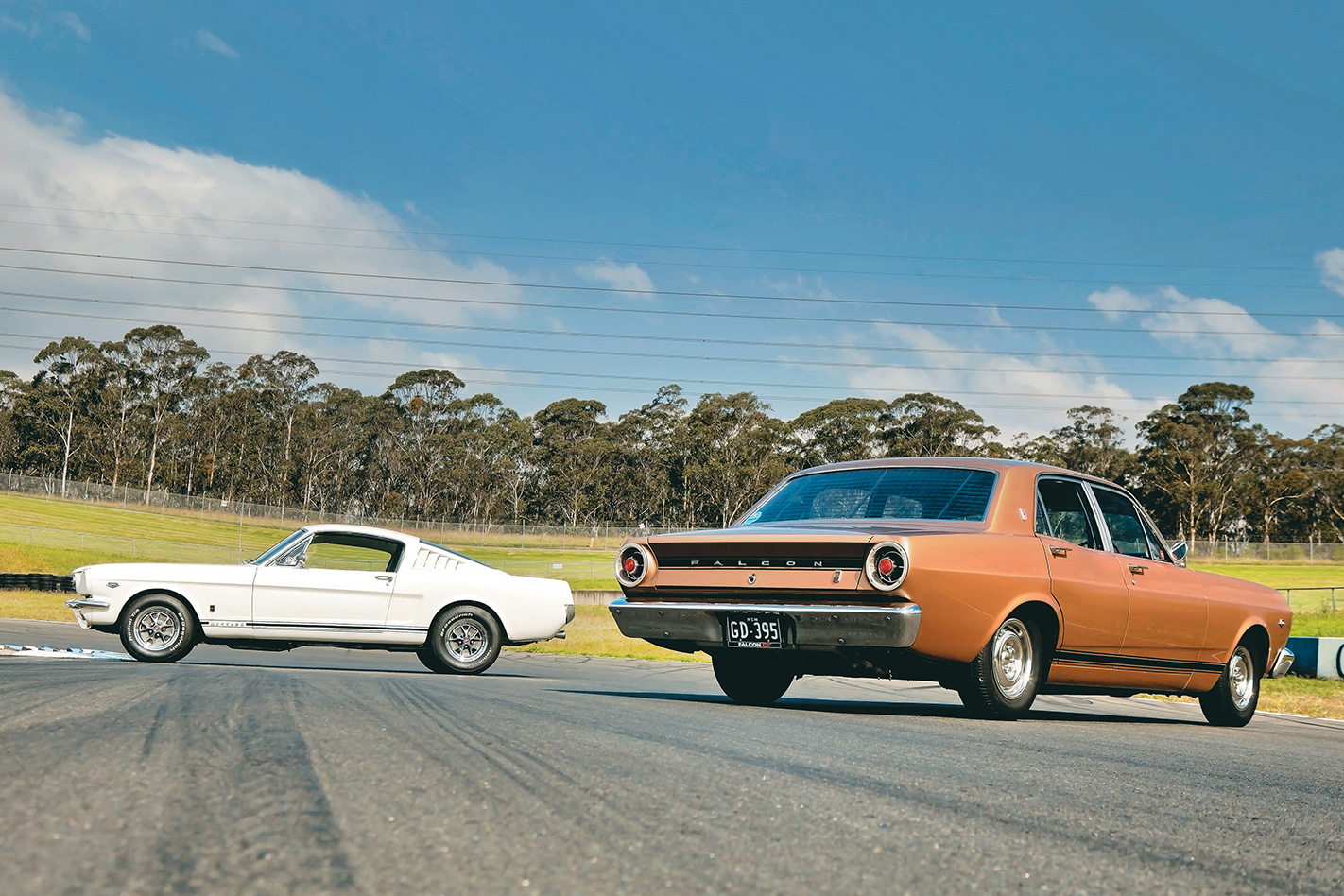
It wasn’t our first performance V8, and it wasn’t even our first V8 Falcon – that honour going to the COTY-winning XR range of 1966 – but the introduction of a GT version sparked a four-door muscle-car, er, ‘phase’ that would feed Aussie petrolheads for more than 50 years. Looking back on it now, a 16.4sec standing quarter is slower than a bunch of small automatic hatchbacks in 2018, but the Falcon GT’s crisp response, planted feel and long, lusty legs were the stuff of dreams in 1967. The almost overnight transformation from three-on-the-tree column gearshifts (with no synchro’ on first), bench seats and unassisted drum brakes to a bent-eight muscle sedan with broad buckets, taut suspension, power front discs and the same sports steering wheel as a Mustang must’ve been like waking up to a whole new world. Or bumping into Elvis in a lift. And the XR GT’s spirit would live on right to the close of Aussie production – the Falcon XR8 Sprint, Commodore SS-V Redline and HSV GTS-R W1.
6. Holden VE Commodore
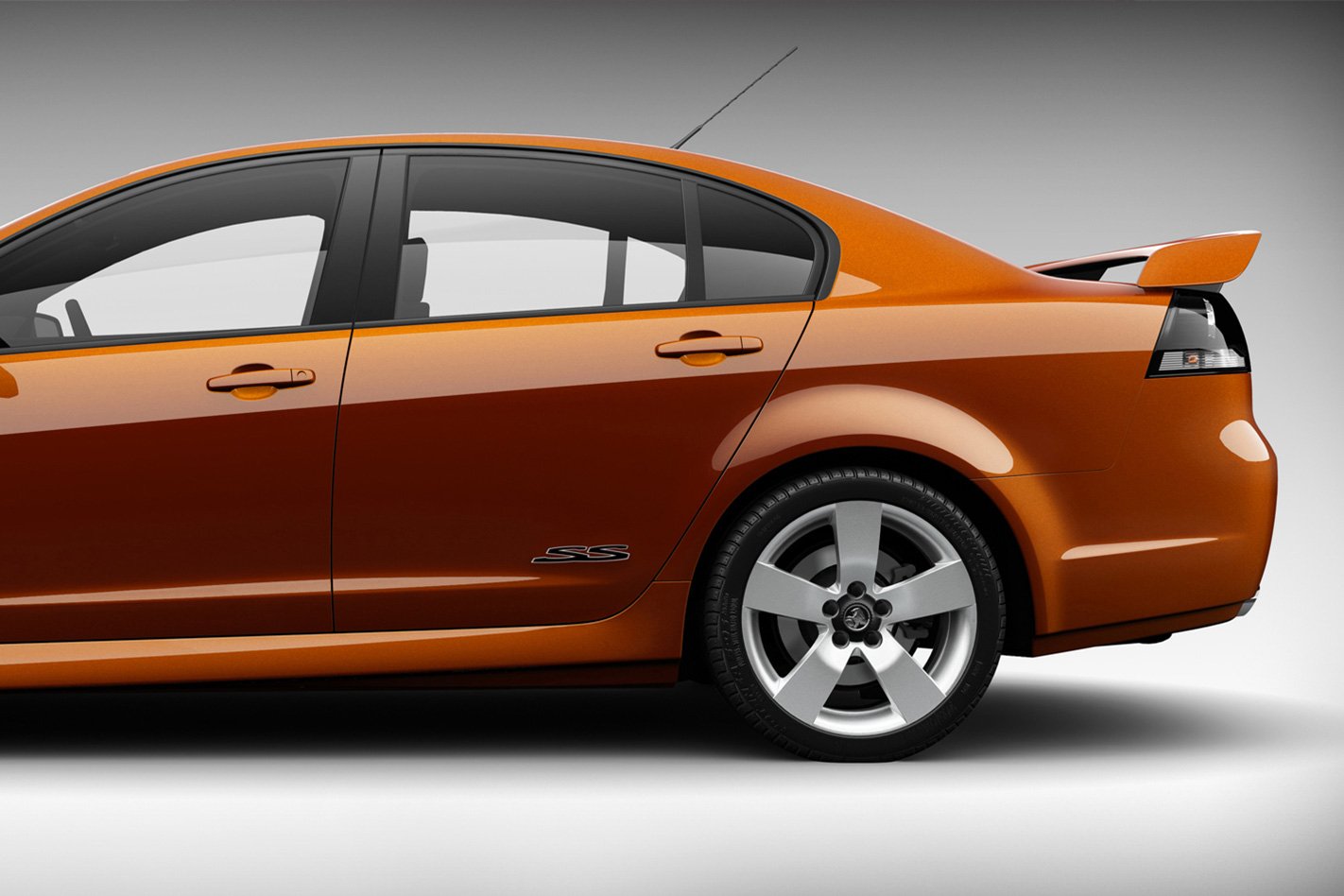
With 440,748 built across a seven-year period, five of those as our number-one seller, the VE has shaped our automotive landscape in the best possible way – with beauty. Even today, its exquisitely proportioned and expertly crafted form provides dashing relief among the hordes of appliances with which it shares road space – even when dumped on its guts with two drainpipes poking out its back end. As the pinnacle of Australian automotive expertise, it will forever stand tall and proud. And if enthusiasts continue to view it that way, we’ll keep seeing the VE (and its facelifted VF successor) on our roads, in all guises, well into an increasingly electrified future.
7. Volkswagen Beetle
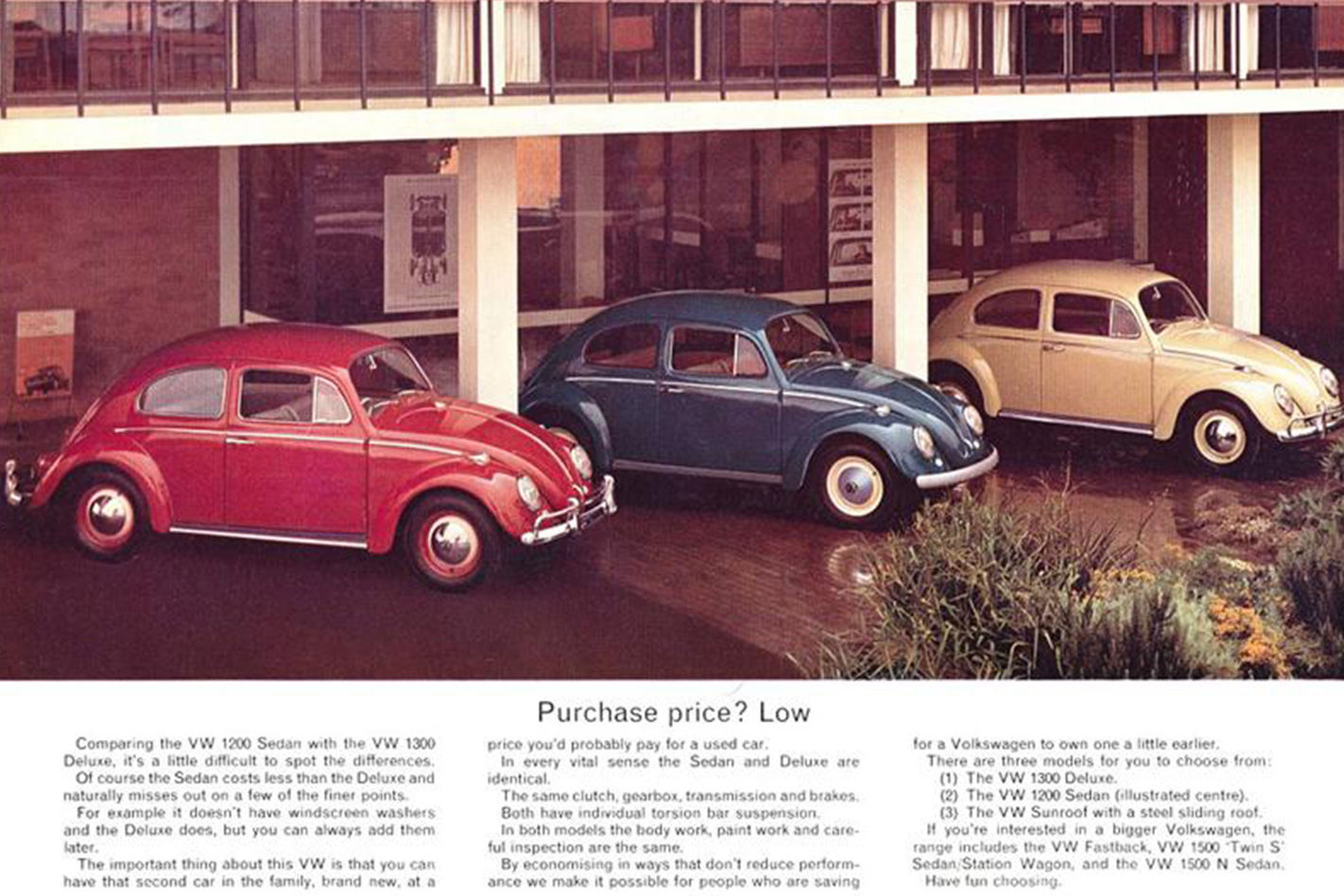
In post-war Australia, an easy-riding, affordable and virtually unbreakable small car was always going to earn a following – especially one that failed to ‘boil’ at the slightest hint of hot weather or hard work. And so it proved for the cute-as-a-button Volkswagen Beetle. Debuting here the same year as this very magazine (1953), the Beetle’s sales trajectory was rapid, and its prevalence on Australian roads both wide-ranging and long-lasting. By 1960, it was our second biggest seller (behind the FB Holden), achieving a sales figure (24,388) that would make the Golf proud today, and by the mid-’60s, 95 percent of it was manufactured here. Yet the Beetle’s eventual demise in 1976 failed to remove its trademark domed roofline from our streetscape. Right up to the late-’90s, you could still see Beetles scurrying among the daily commute.
8. Holden VB Commodore
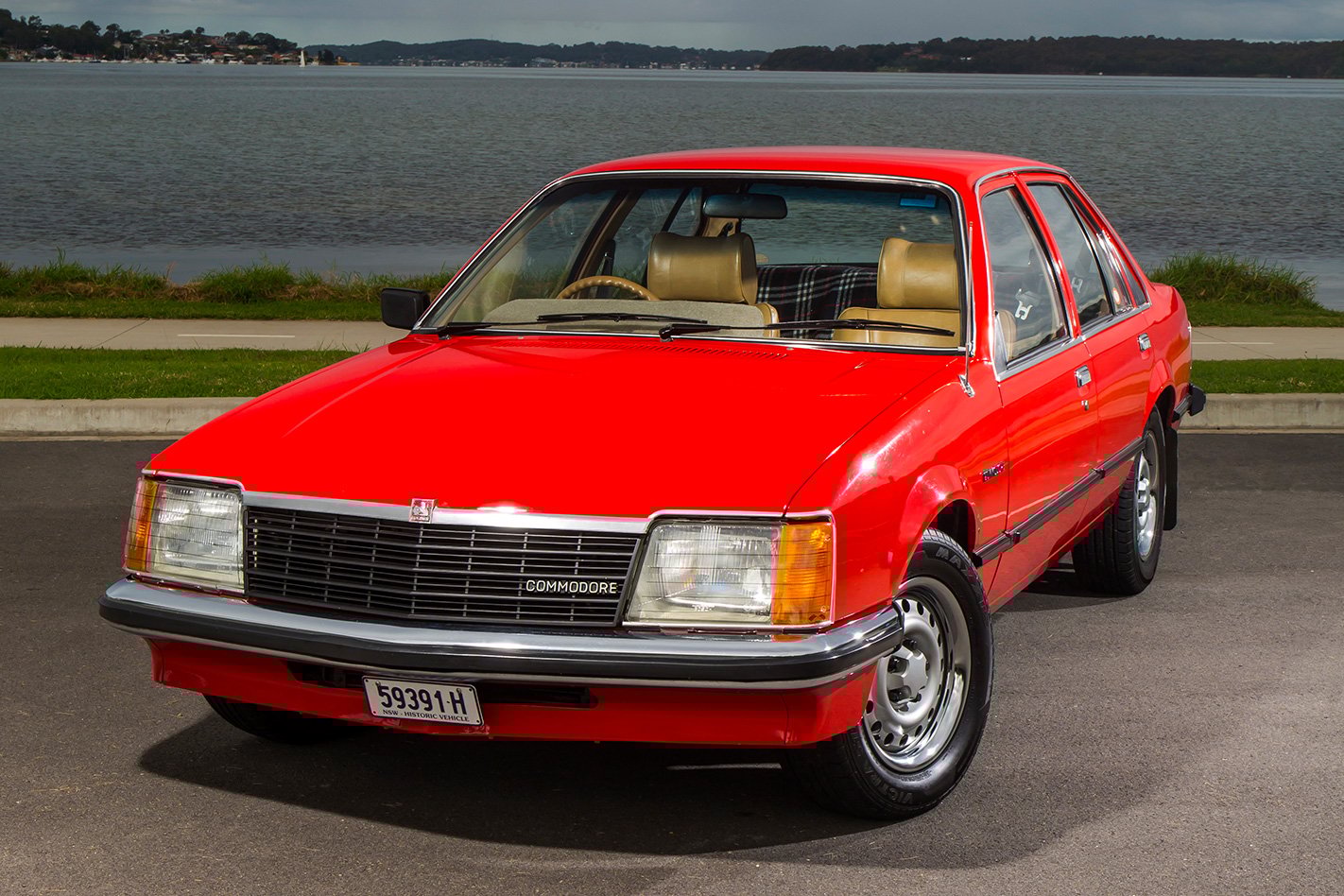
“It’s a Holden!” cried the advertising tagline, drumming home to people that the beautifully proportioned, European-flavoured VB Commodore was in fact “a Holden”, even though it was a virtual dead-ringer for Opel’s own 1978 Commodore. The difference, of course, was that ours had undergone exhaustive Outback development, strengthening its structure far beyond that of its German cousin, and you could have a V8 in one. Crucially, it’s that last point that helped Holden build the Commodore nameplate into what it is today. Or what it was when local production ceased last October…
9. Ford ZA Fairlane
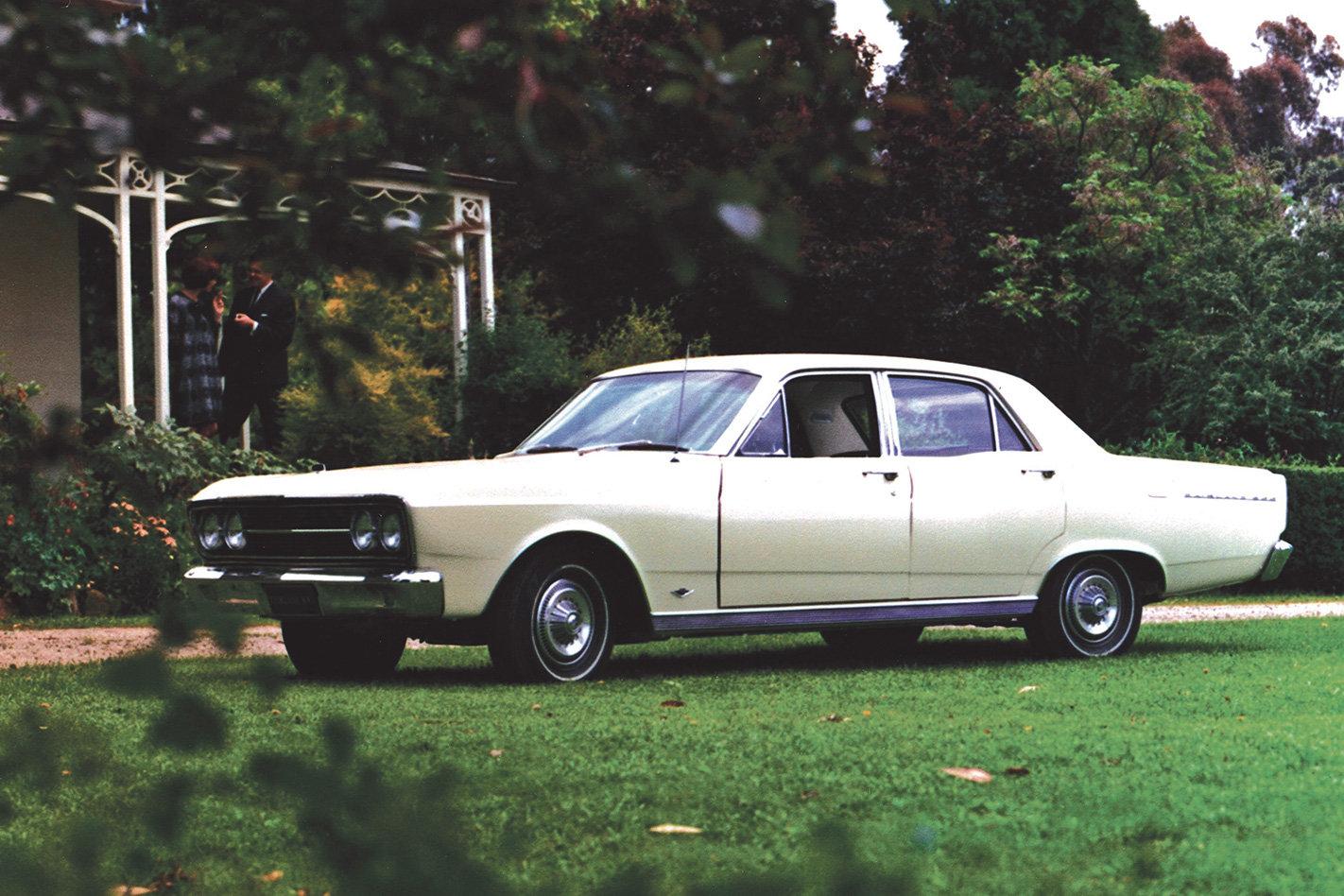
We’d seen Fairlanes before the locally developed ZA model debuted in February ’67 (namely the ‘Tank’ Fairlane of 1959-’62 and the 1962-’65 ‘Compact’ Fairlane – both US models assembled here) but the realisation of an affordable long-wheelbase ‘luxury’ sedan suddenly sprouted wings with the first ‘Aussie’ Fairlane. The ZA (and its ’68 ZB successor) was an overnight sensation, selling almost 20,000 in less than two years while becoming the blueprint for domestic luxury for the next four decades. And it spawned a bunch of domestic rivals, though none ever achieved the LWB Ford’s huge popularity. Thing is, our first-generation Fairlane was pure Americana. It may have been manufactured here but only the instruments, front guards, grille and headlights came from Broadmeadows.
10. Holden Sandman
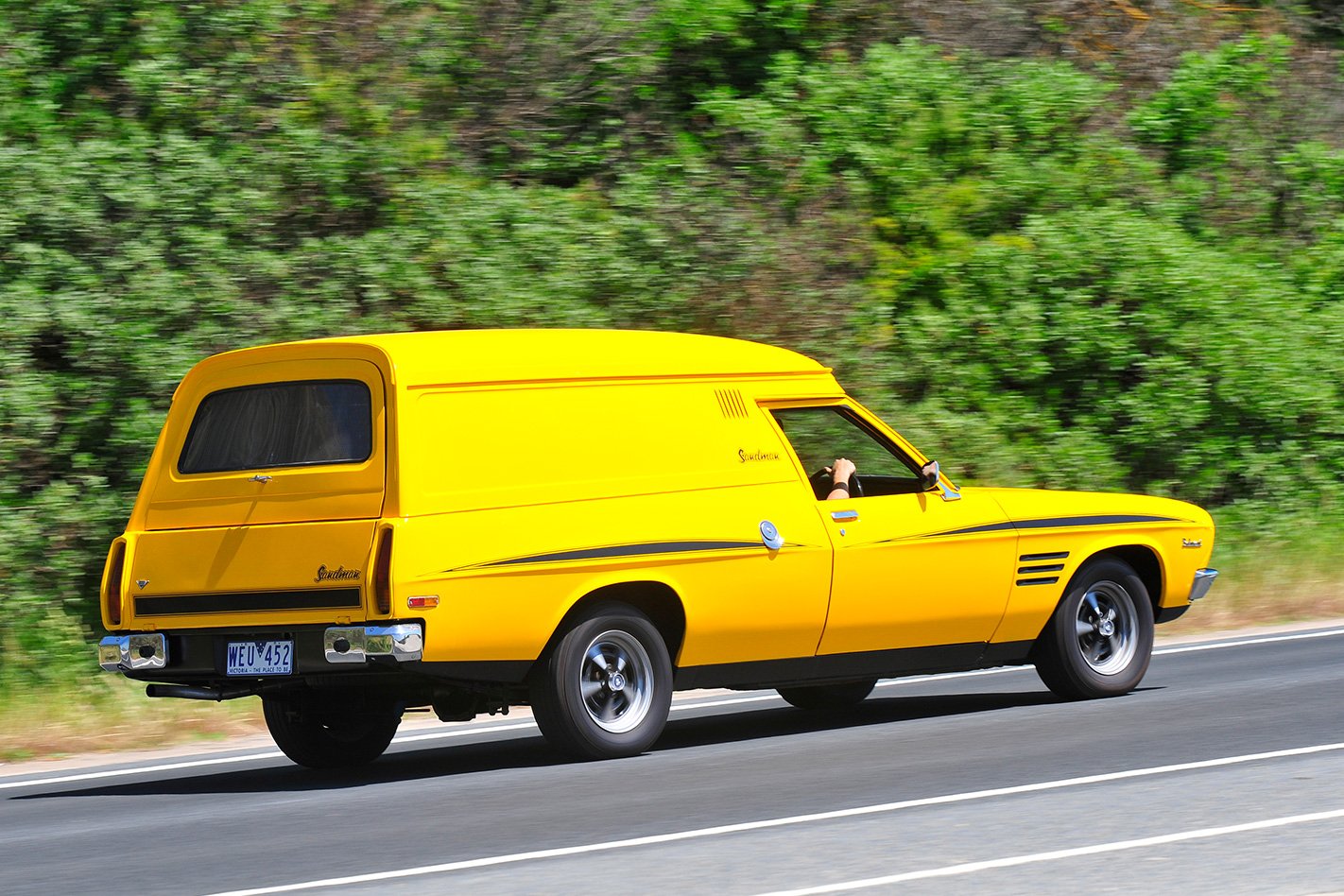
“And he’s got a panel van”, boasts one surfie scrag to another in Bruce Beresford’s Puberty Blues (1981), like it was the ’70s teenage equivalent of an apartment in Paris. But when you were still living under your parents’ roof, a mobile shaggin’ wagon was better than any Parisian pad. And none more so than the original Sandman, a special edition that first surfaced late in the HQ’s life (’74) and quickly came to symbolise the sand, sun, surf and sex-filled youth culture of 1970s Australia. Wearing loud colours, lairy decals, and quite often air-brushed murals and bubble-tint rear side windows, the craze spawned Van Wheels magazine, which morphed to become our sister title Street Machine.
Ferrari is set to expand its current engine offerings with the development of a turbocharged V6 and the application of electrical assistance to its current twin-turbo V8 and naturally-aspirated V12 configurations.
Sixty per cent of Ferrari’s expanded model range will be hybrid by 2022, while 100 per cent of its sports car offerings will feature electrical assistance in a bid to boost performance and lower emissions to meet strict new global targets such as Europe’s WLTP.
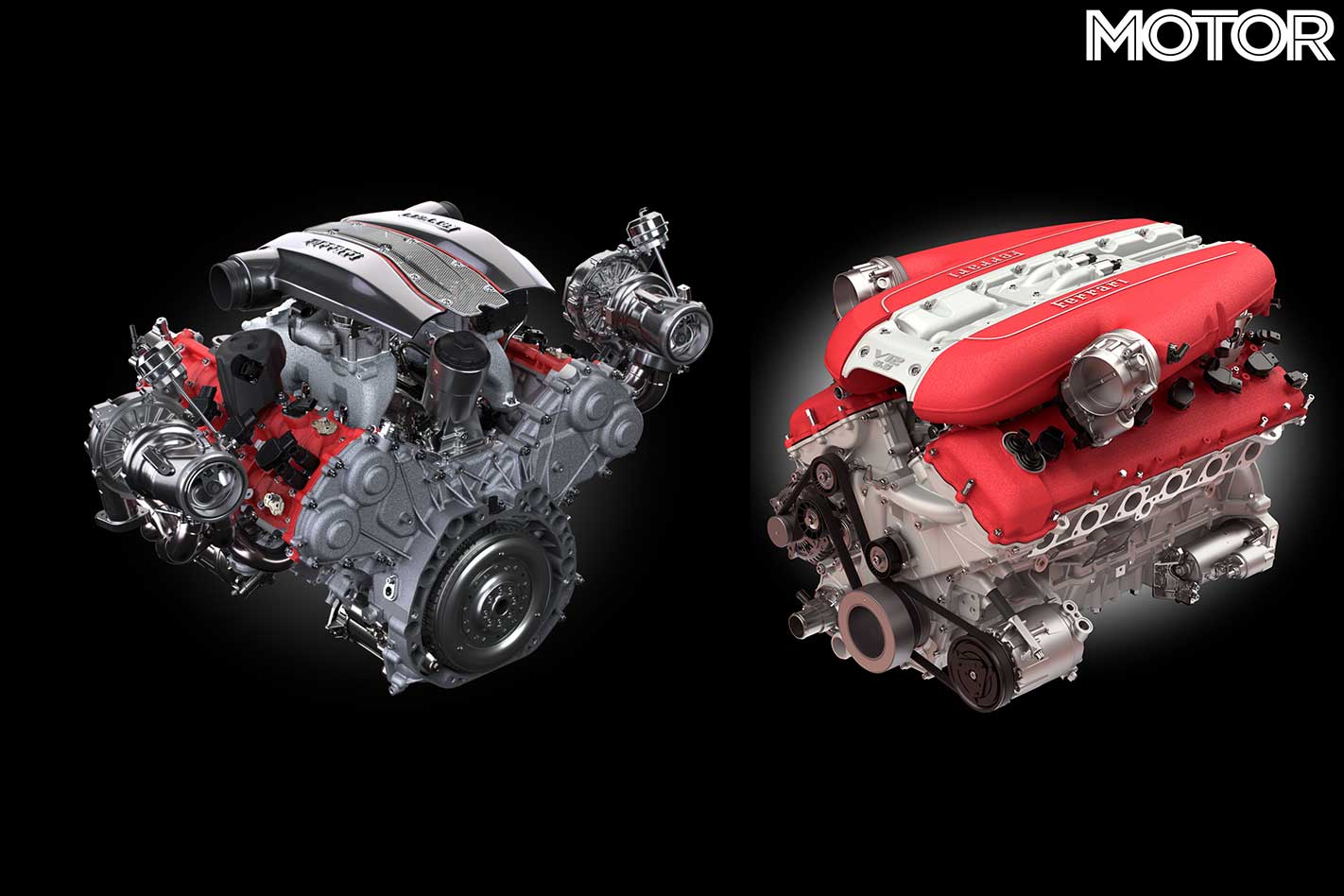
According to Chief Technology Offier Michael Leiters, the new turbocharged V6 will feature “a very particular, innovate architecture” while it and the twin-turbo V8 will leverage Ferrari’s F1 knowledge to increase power and response.
Specific power output will increase markedly. Ferrari’s current benchmark is the 488 Pista’s 135kW/litre, but applying electrical assistance will blow this out of the water, the upper end of Ferrari’s graph reading a mind-blowing 300kW/litre.
Even a 10 per cent improvement would result in almost 600kW from Ferrari’s current 3.9-litre twin-turbo V8, while the benchmark is Ferrari’s current F1 car, which produces around 750kW from a 1.5-litre V6, or 500kW/litre.
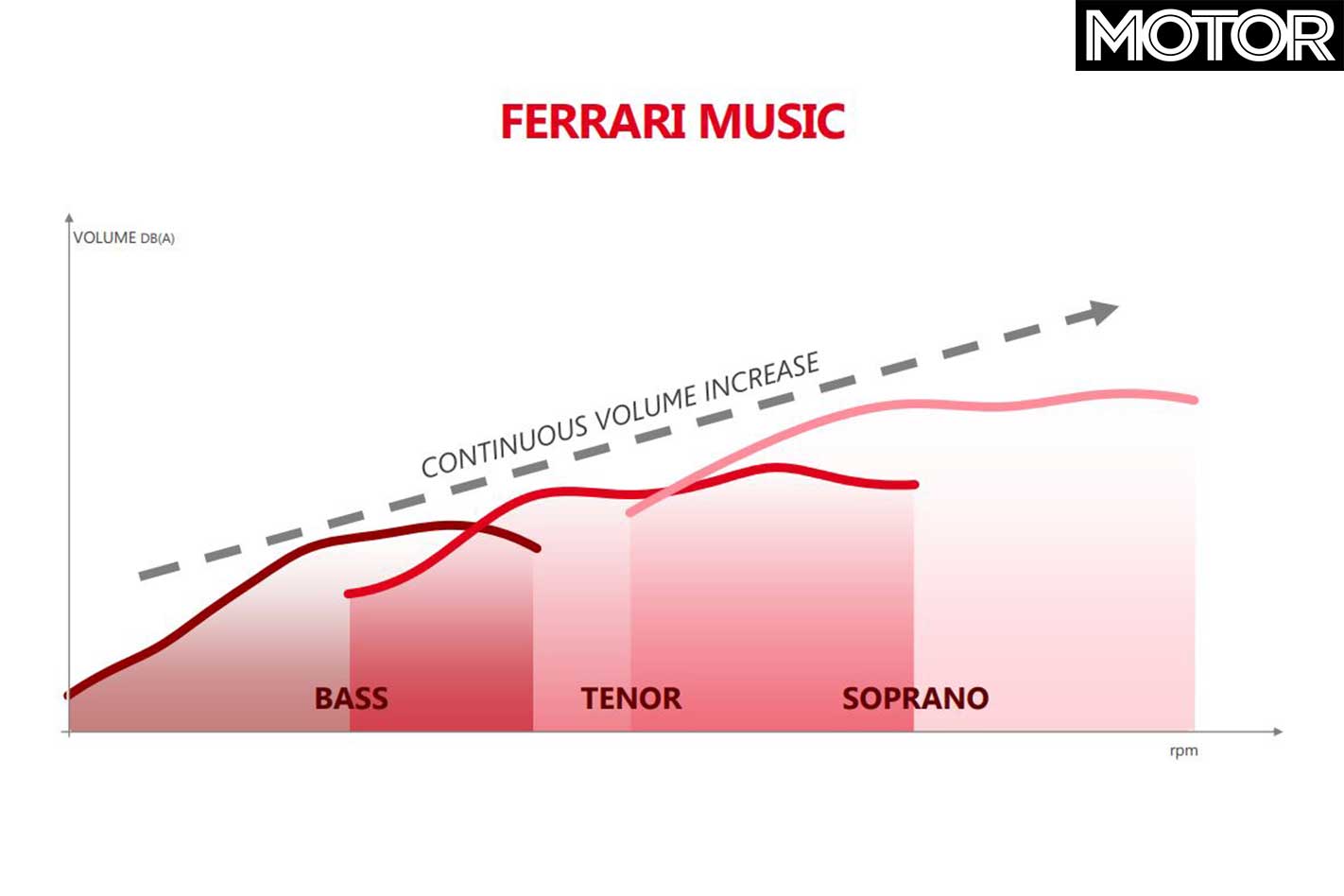
As well as outright performance, Ferrari outlined its two priorities as perceived acceleration and sound, meaning both the feeling of acceleration and the engine note need to increase in both volume and intensity as revs rise. Electrical assistance will eliminate turbo lag and provide linear acceleration thanks to its torque-fill capabilities.
Ferrari also committed to “continually developing its naturally-aspirated V12” which should be music to the ears to petrolheads everywhere. A brand-new dual-clutch transaxle will be developed and be common across its models.
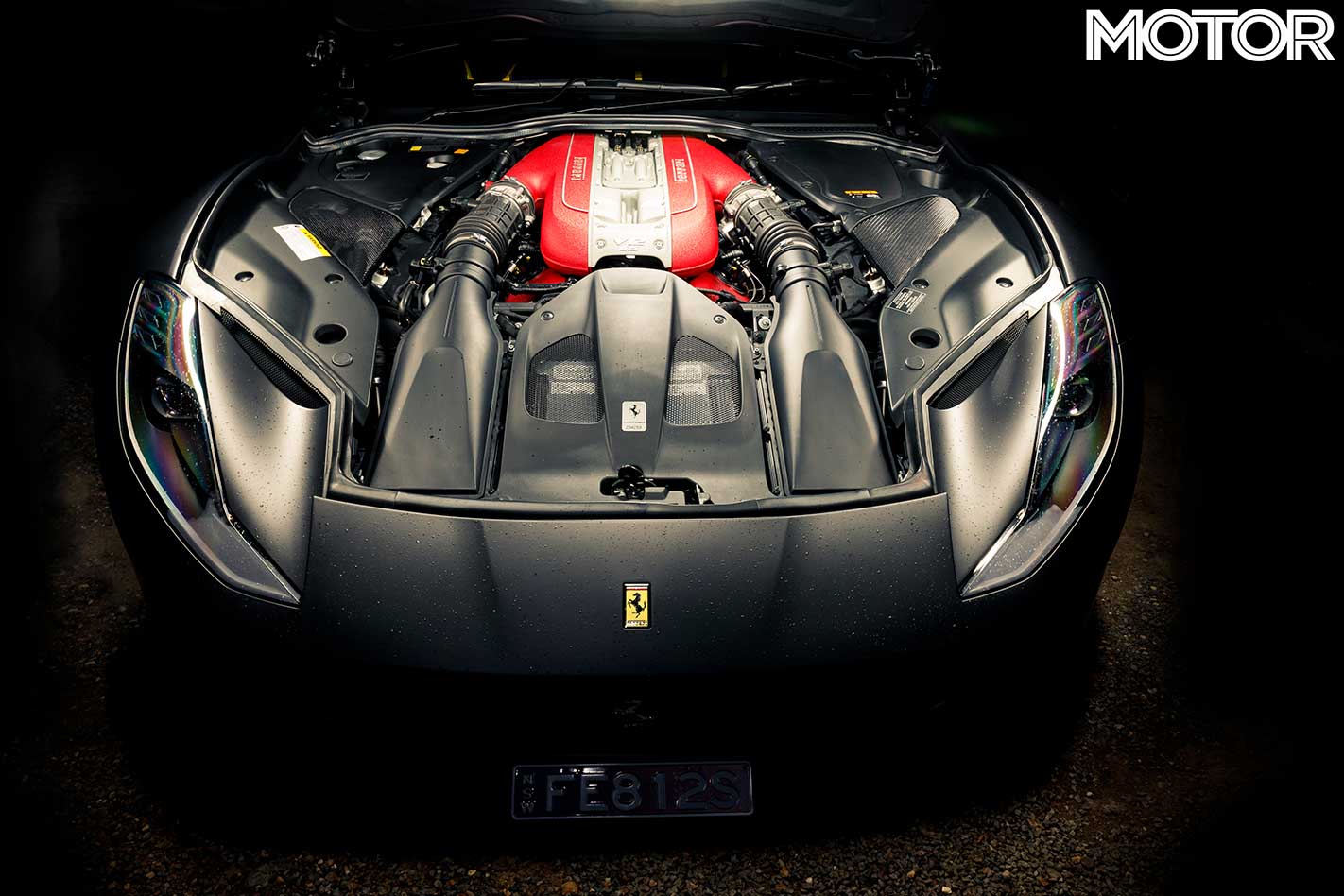
Maranello’s sports cars will remain rear-wheel drive with ever more sophisticated traction systems helping put power to the ground, while rear-, all- and even e-drive is on the table for its GT cars and ‘Purosangue’ SUV-that-isn’t-an-SUV.
Chief Marketing and Commercial Officer, Enrico Galliera, stated that development is well advanced and Ferrari’s first hybrid will appear “quite soon”, likely to be with the expected reveal of the 488 successor in 2019.
THE SUZUKI Jimny has been slapped with an ‘underwhelming’ score card in its Euro NCAP safety assessment, with one test embarrassingly resulting in the driver’s head contacting the steering wheel.
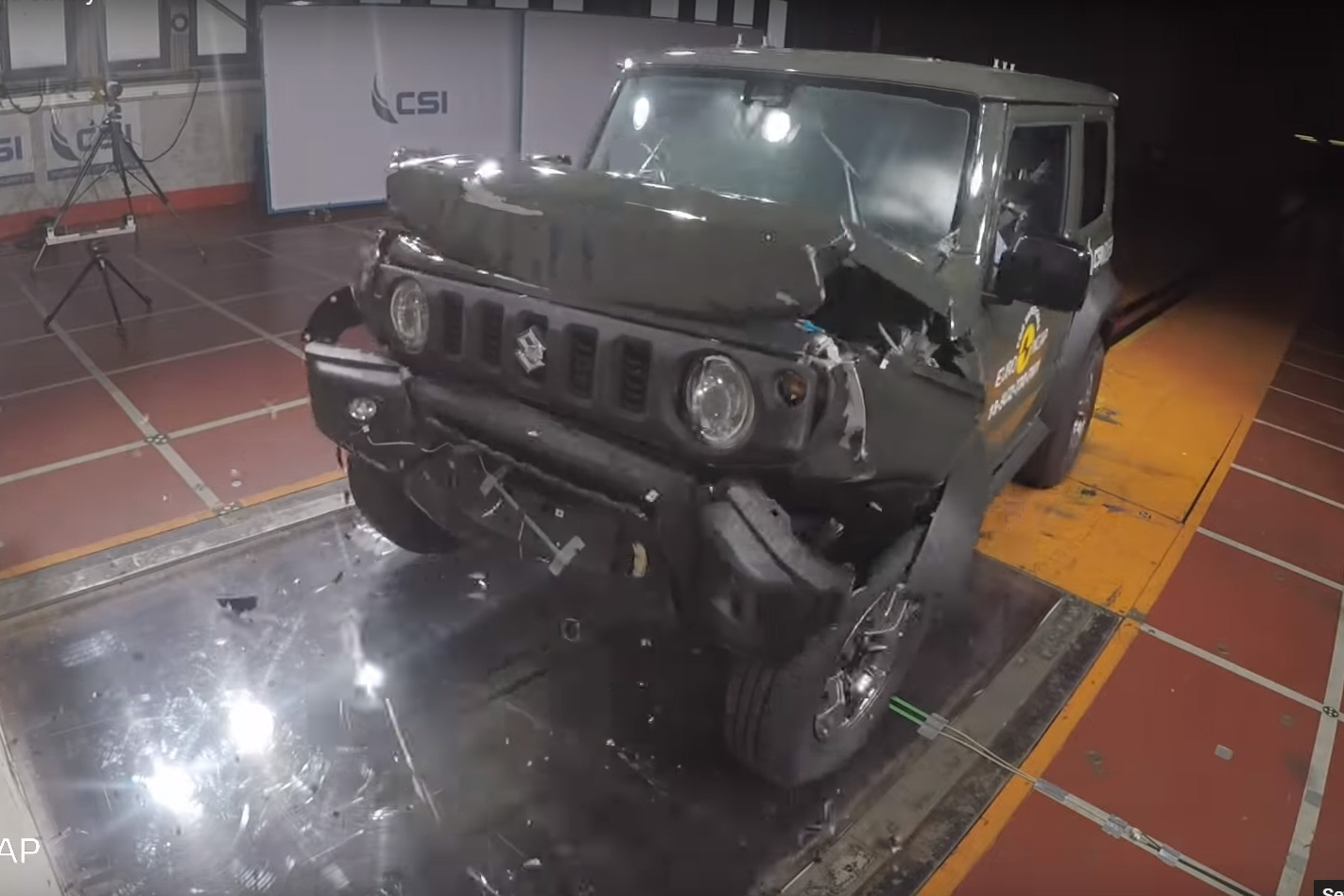
The diminutive off-roader was given three out of five starts, the worst result Euro NCAP has handed out since new regulations were introduced for 2018.
Final scores for the Jimny were 73 percent for adult occupants, 84 percent for child occupants, 52 percent for protecting vulnerable road users, and 50 percent for safety assistance systems.
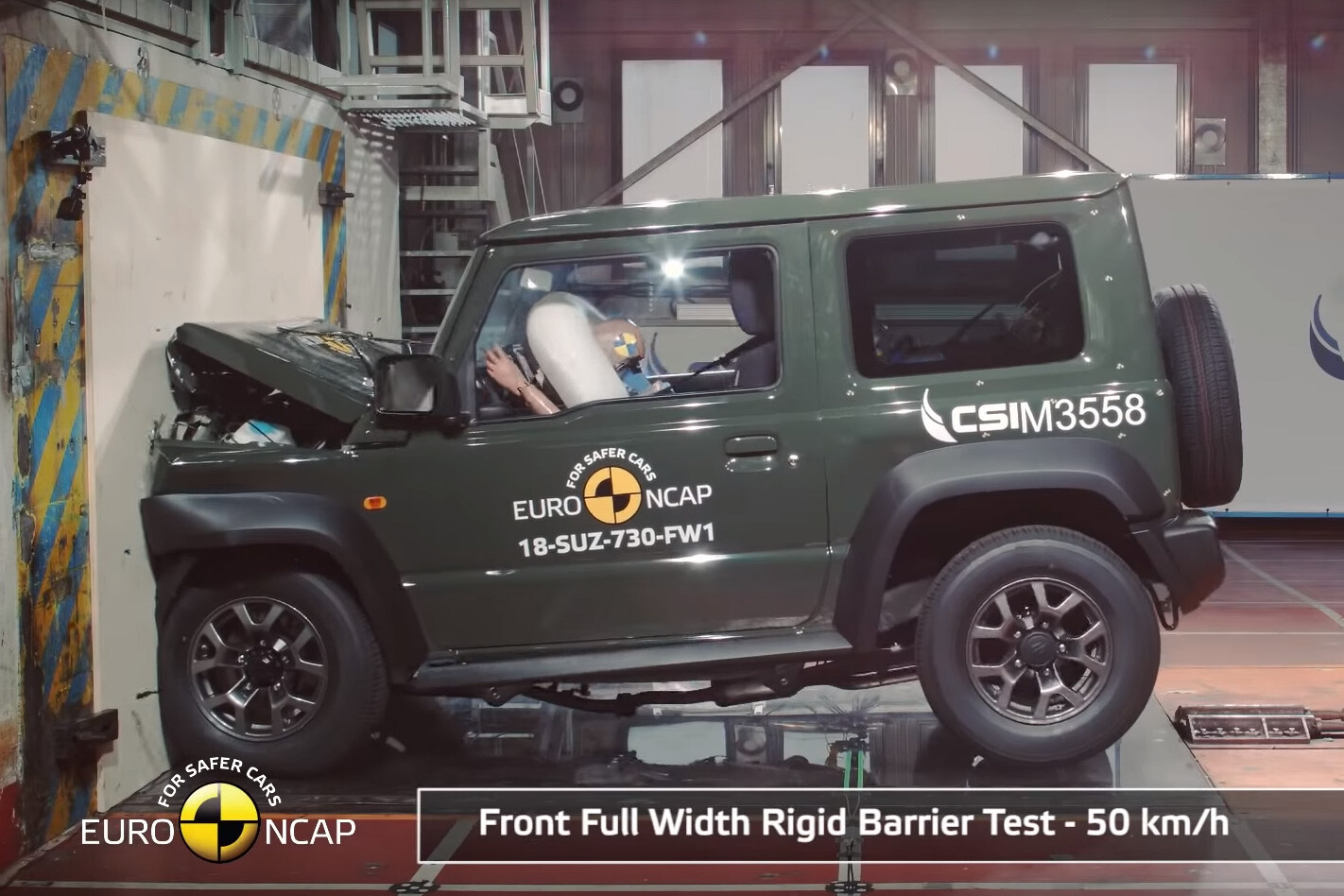
Euro NCAP assessors described adult occupant protection for the driver’s torso and rear passenger’s head as weak in the frontal offset deformable barrier and frontal full width tests.
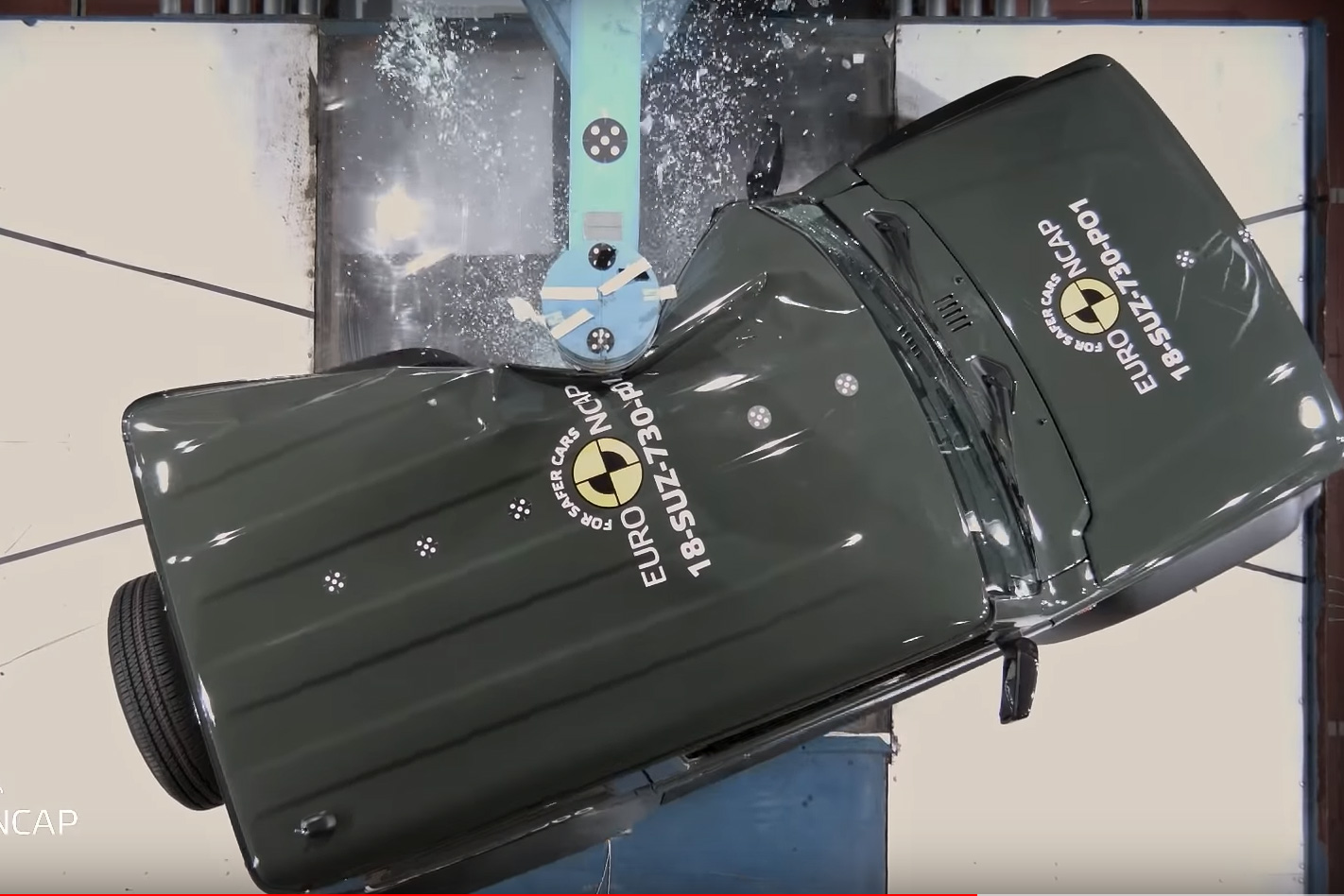
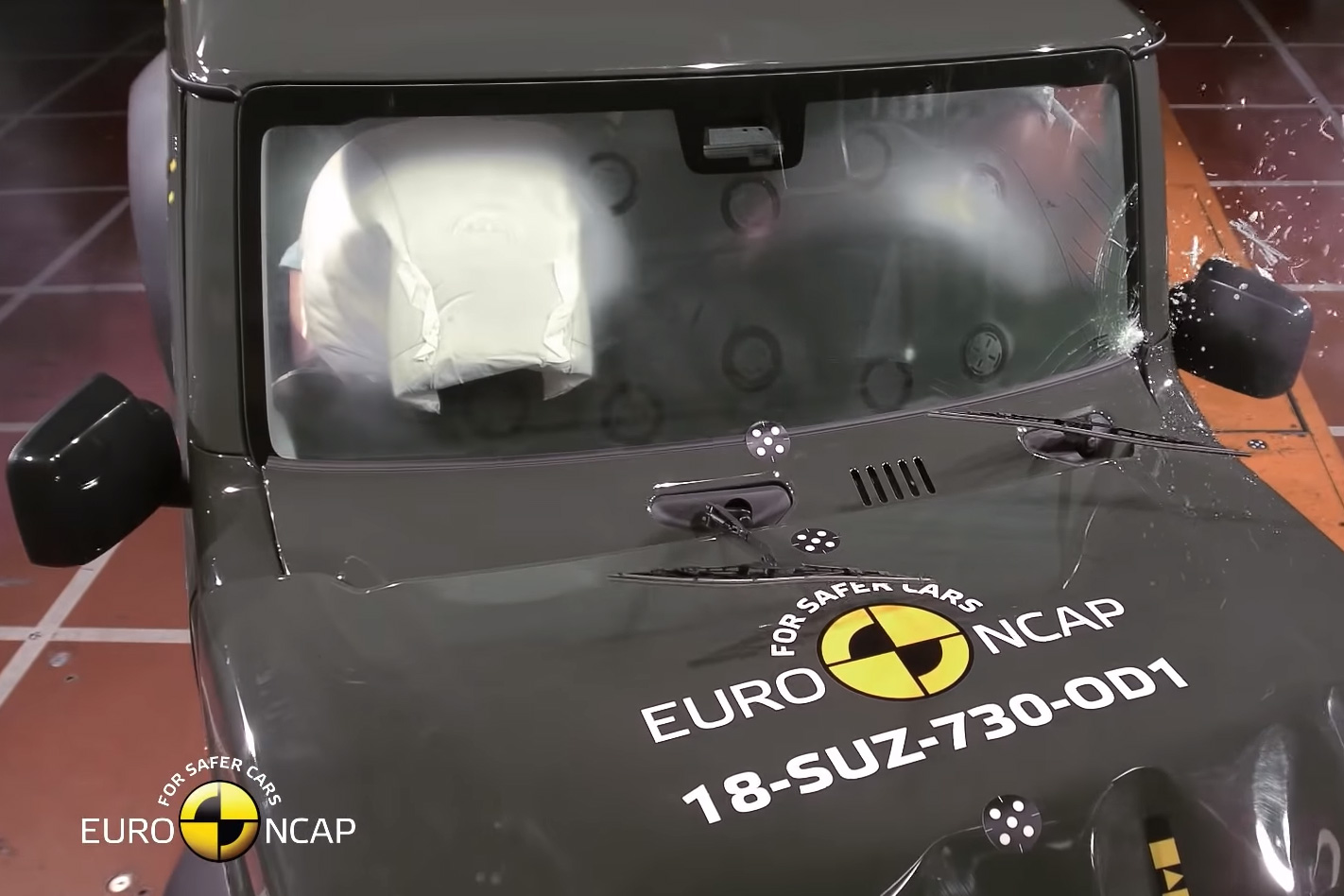
“There was insufficient pressure in the driver’s airbag to prevent it from ‘bottoming out’, allowing the head to contact the steering wheel,” the result report states.
“The passenger compartment was extensively deformed in the offset test, especially around the door-frame and the score for the driver’s chest was penalised for this unstable collapse. Combined with marginal dummy readings, protection for this body area was rated as weak.
The vehicle’s head restraint system further dragged down the scores, with Euro NCAP noting adequate protection against whiplash injuries was not provided.
The frontal offset deformable barrier test was a sticking point for assessors, with the Jimny achieving ‘adequate or worse’ for driver protection in every measured area except the driver’s neck, which was deemed ‘good’.
Dash design also caught Euro NCAP’s eye.
“Although dummy readings indicated good protection of the knees and femurs of both driver and passenger, structures in the instrument panel and dashboard were thought to pose a risk of injury to occupants of different sizes, and protection was rated as marginal,” the report stated.
The Jimny is fitted with Automatic Emergency Braking (AEB) as standard, and Euro NCAP reported that the system performed well during testing at speeds typical of city driving.
It is unclear whether the Jimny will be crash tested locally under the ANCAP system, which is now identical to Euro NCAP.
TO MANY people, this rust-red spire of arid rock about 100km south of Denver isn’t particularly special. There are 52 other mountains just like it in the state of Colorado alone, all of which peak above 14,000ft (4267m). In mountaineering parlance they’re simply called the ‘Fourteeners’.
But to those of us who know better, Pikes Peak is hallowed. For more than a century, madcap manufacturers and racing drivers with no self-preservation instinct have been attempting to tame its 31km ribbon of treachery that pitches upward to a finish line 4302m above sea level. The summit is almost twice as high as the tip of Australia’s premier peak, Mt Kosciuszko. Standout performances at the Pikes Peak Hill Climb have become the stuff of motorsport mythology.
Audi has taken overall victory on three occasions, all in a row, bookended by legendary wins for Michele Mouton in 1985 and Walter Rohrl in 1987. That success helped establish the credibility, and indeed the legend, of Audi Quattro.
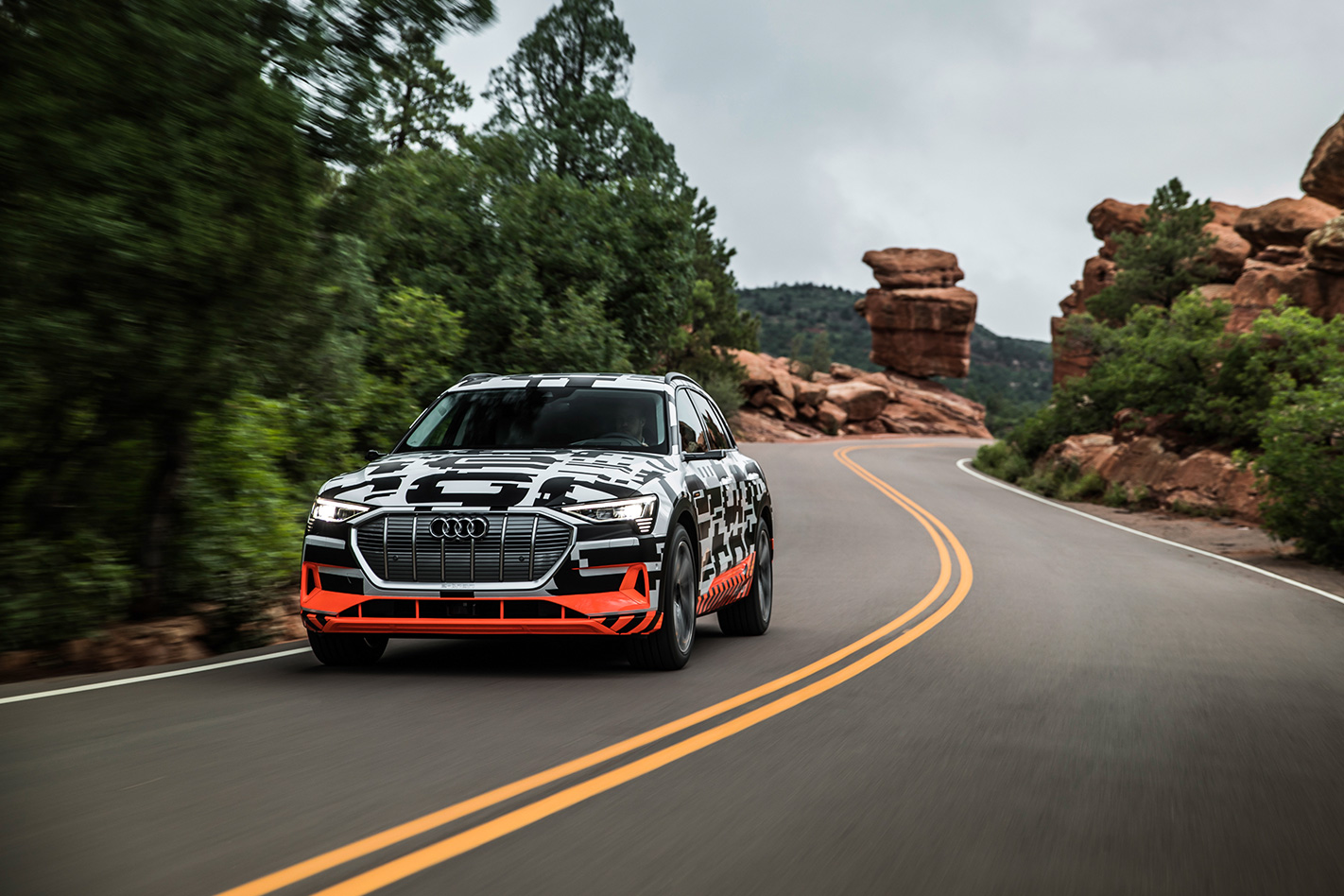
But the Audi I’m about to experience here has no legacy whatsoever. Its history is yet to be written.
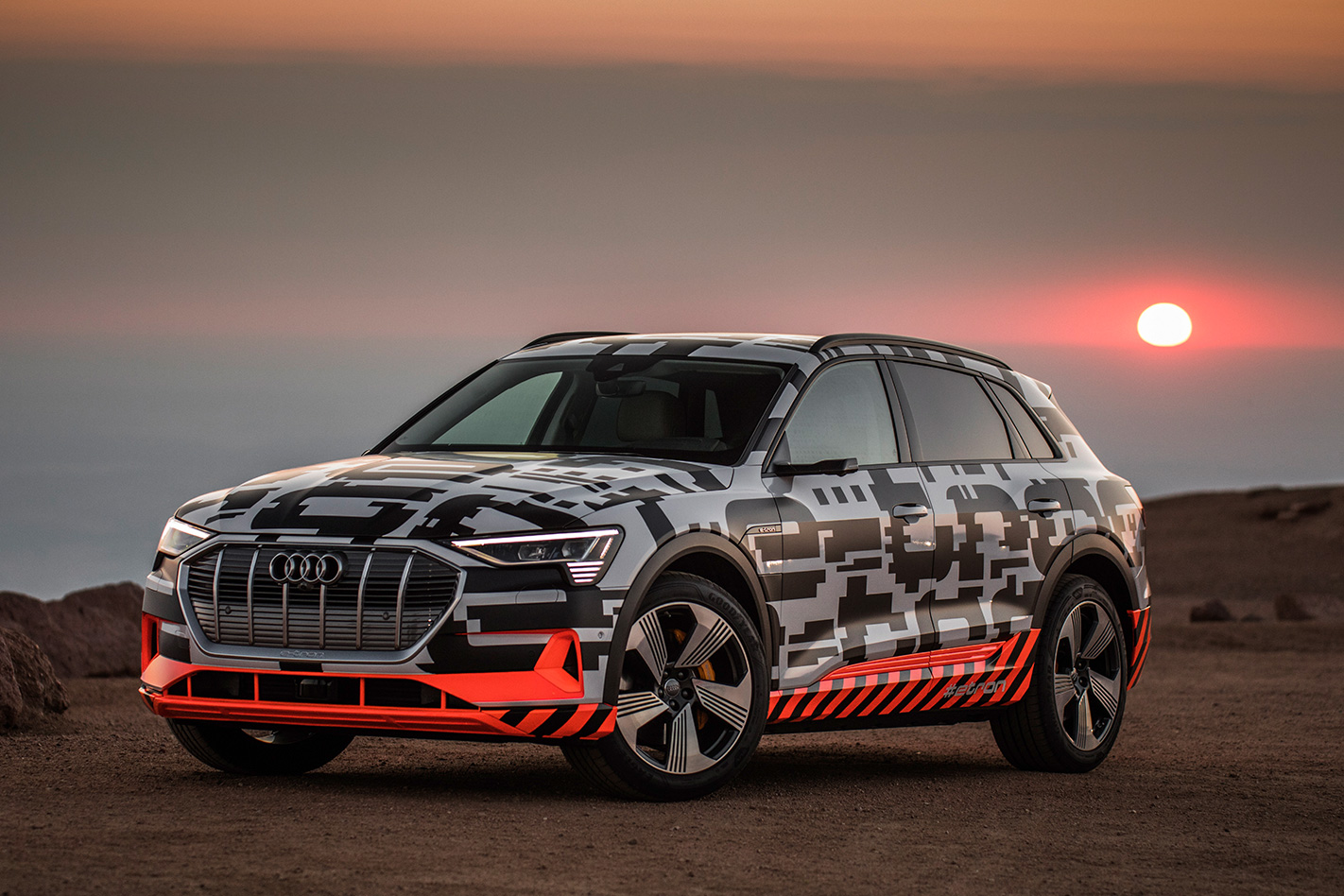
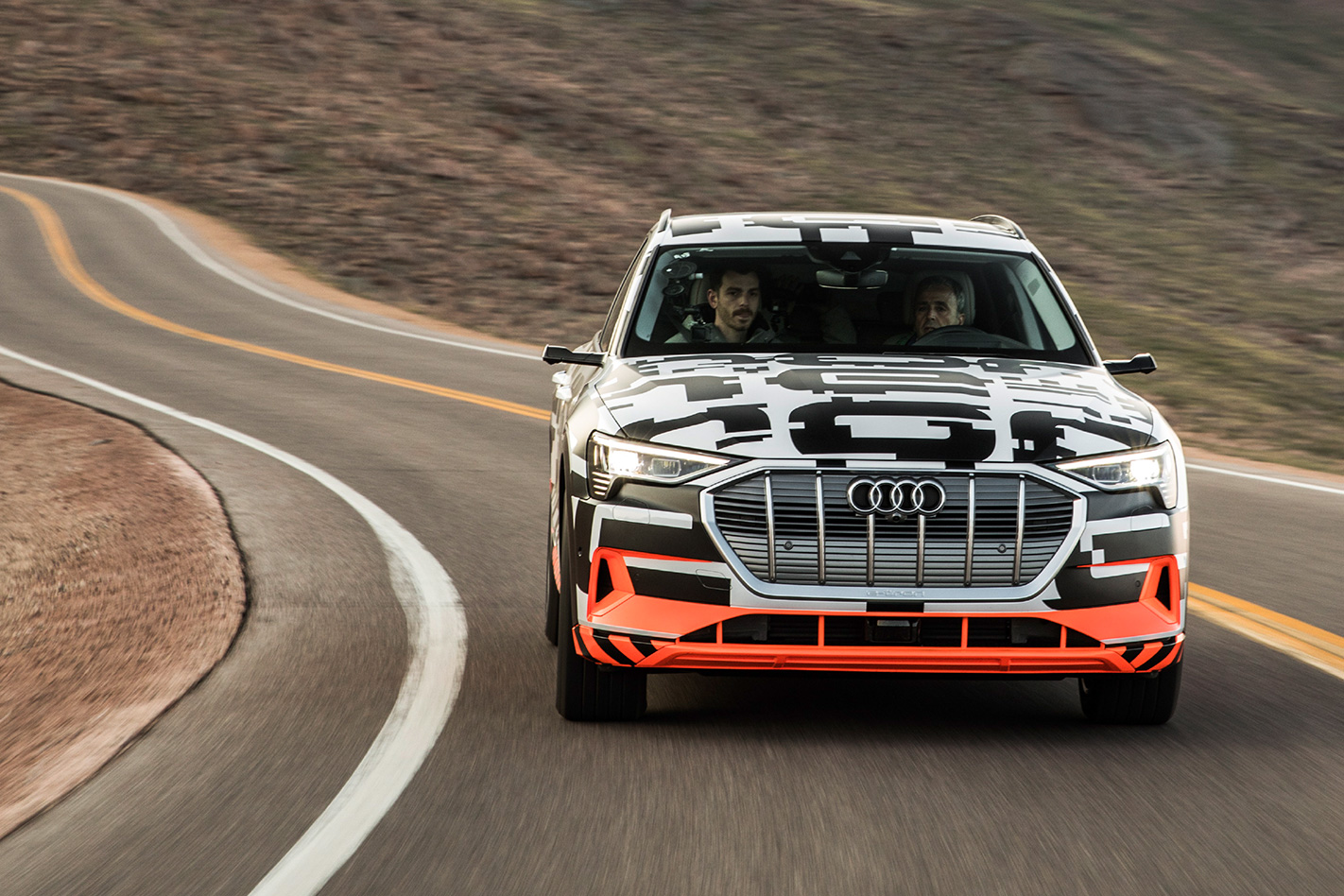
This is the Audi E-Tron, the German brand’s first all-electric production car. Or at least, it will be. This particular car is a prototype; a late ‘pre-series’ vehicle that’s largely representative of the finished product due to make a public debut in mere weeks, sans high-vis exterior disguise.
Audi has four of these prototypes in Colorado Springs, and at least 200 other examples shuffling about in various corners of the globe, manned by the departments charged with its development. This quartet has been gathered to give a small group of international media a peek behind the curtain at the current state of Audi’s electric vehicle program.
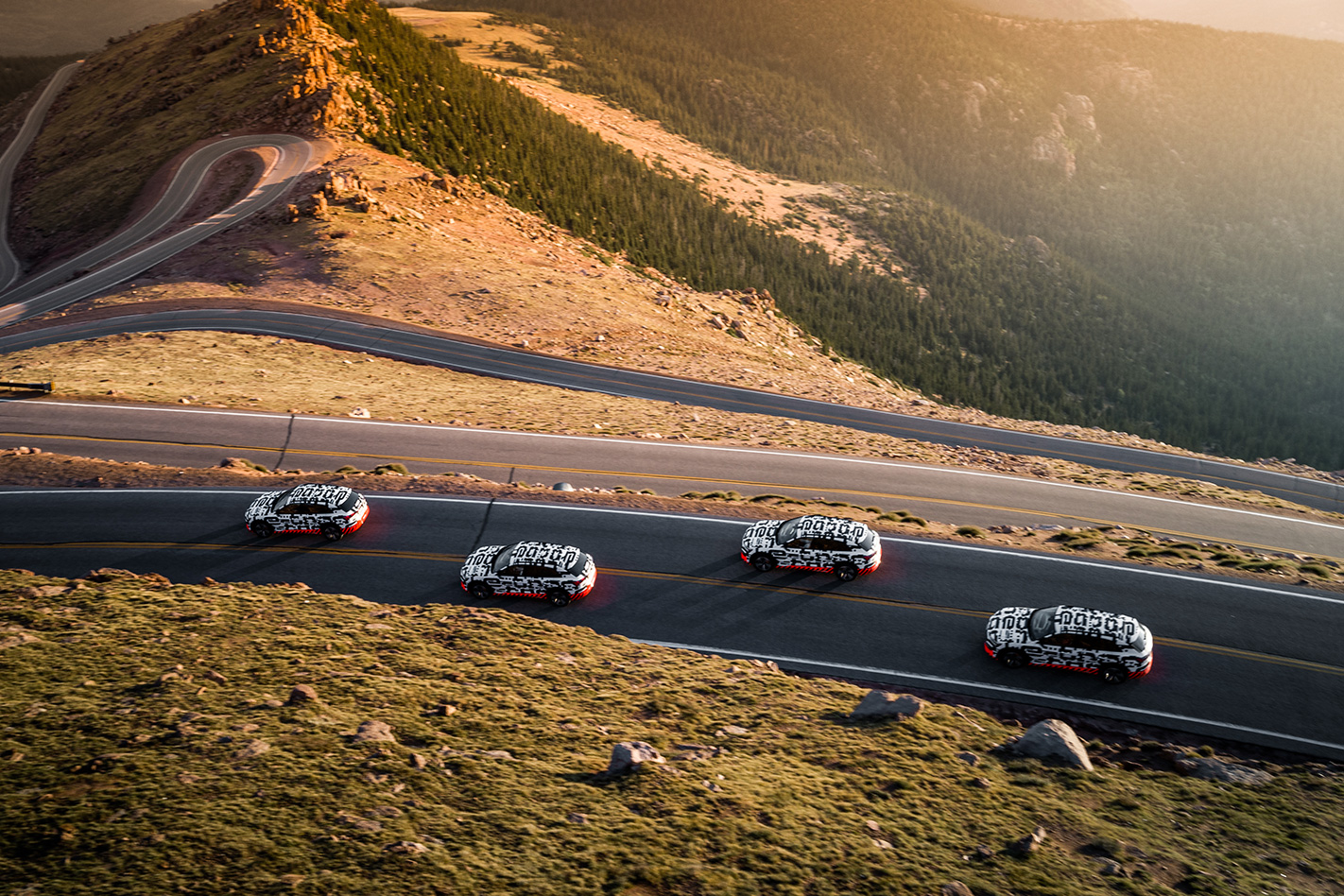
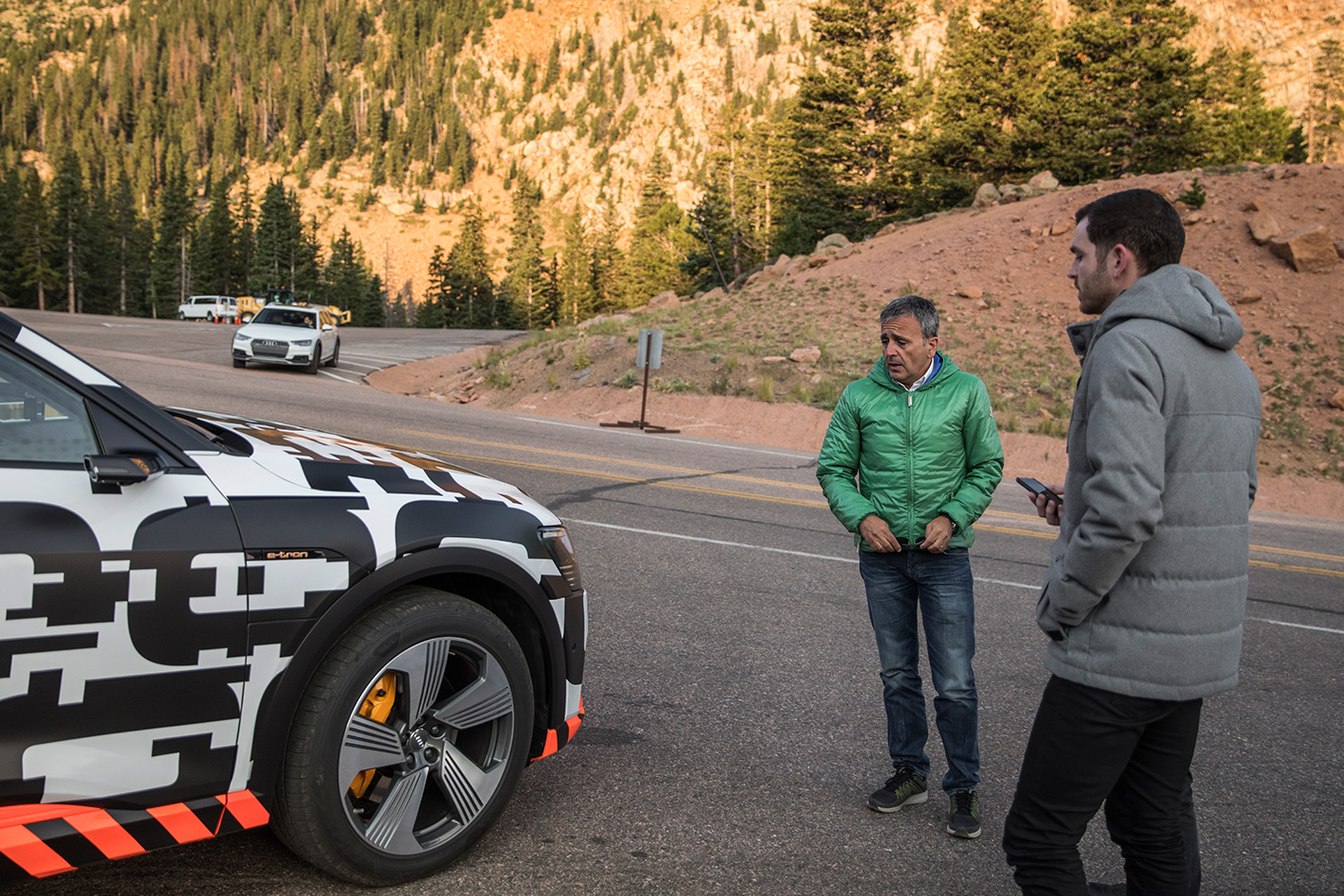
A special permit means the E-Tron we’re sampling can be driven on public roads despite its experimental parts that aren’t yet road legal. Things like cameras and screens that sit in place of conventional wing mirrors. The permit dictates only company employees can take the wheel, so we won’t be driving today. Instead we’ll be chauffeured by Oswin Roder.
Roder is one of the engineers responsible for the E-Tron’s electronic chassis control. He has spent months at the Nurburgring since becoming involved with the program in its early concept stages about three years ago, and he is clearly passionate about Audi’s electric future. We’ve been awake since 4:00am in order to get up and back before the road is opened to tourists, yet Roder is bright-eyed and impatient to jump in the car and get to work. Or maybe he’s just cold.
A shuttle drops us at the top where the E-Tron awaits. It’s summer in Colorado and the midday heat is extreme, but up here at this hour it’s barely above freezing. It takes me a moment to get my bearings and take in the utterly breathtaking view. In a bid to warm up I jog across the carpark to a lookout point about 30 metres away. By the time I reach the railing I’m panting for breath like a chain smoker. Air pressure at this altitude means the effective oxygen level is dramatically reduced; partial pressure here is only about 60 percent that of sea level. It’s one of the reasons EVs are so comparatively potent up here. Oxygen density matters far less than it does for combustion engines, especially turbocharged ones. But that isn’t important today. All we have to do is drive down.
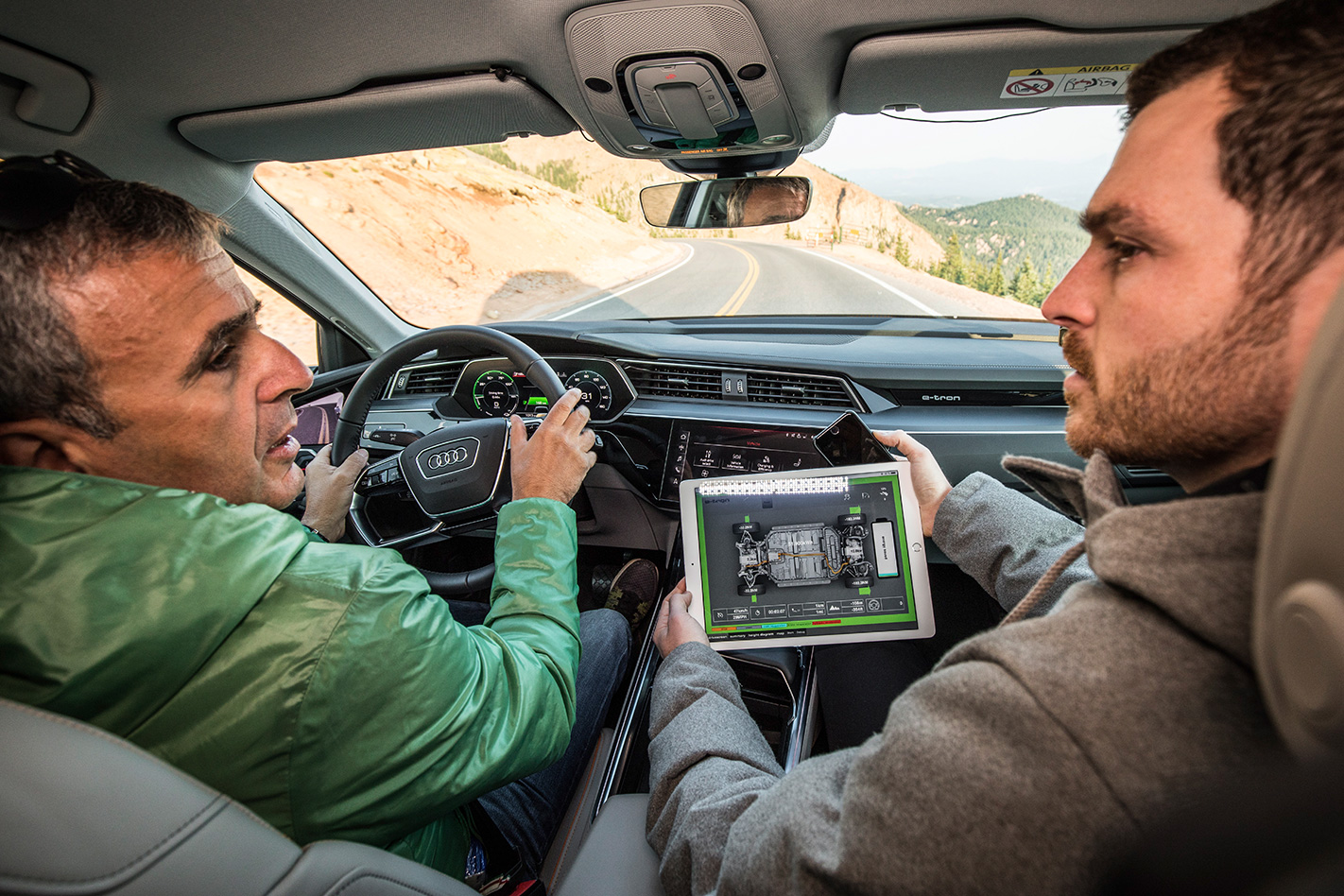
We clamber into the E-Tron and take shelter from the elements. The airy cabin is reminiscent of Audi’s current SUV crop, with its overall dimensions sitting somewhere between the Q5 and Q7. I remind myself that this is a prototype, but there’s no need to. The interior fitout is exquisite, and equipped with cutting-edge tech including the A8’s touchscreen-heavy MMI infotainment system. There are Bang & Olufsen logos on the speaker grilles, a colour head-up display, and premium leather trim. It’s a properly luxurious experience, and Roder knows what I’m about to do next before I do it.
“We must leave the seat heaters off,” he says, with a clear objective on his mind. To succeed today we need to conserve charge in the battery and recuperate as much potential energy as possible during our downhill run. We’re to do that using the E-Tron’s state-of-the-art integrated brake control system, which switches the electric motors to generators and converts kinetic energy into electric charge. The ultimate aim is to beat three other E-Trons doing the same. Seat heaters won’t help us.
The E-Tron sits on a version of Audi’s modular and ubiquitous MLB Evo platform. Roder explains the architecture wasn’t designed with an EV in mind, and had to be adapted to accept an asynchronous motor on each axle, the rear slightly larger than the front, and a physically massive 95kWh battery built into the floor between them. All of it is made by Audi.
Until now only morsels of technical information have been shared by Ingolstadt, but Roder seems willing to go off-script. He confirms the E-Tron’s outputs of 265kW and 561Nm, and a Sport mode boost function that lifts them to 300kW and 665Nm for eight second bursts. Its real-world range is more than 400km.
These figures put Audi’s first EV slightly behind rivals already in the market, including the Tesla Model X and Jaguar I-Pace, but Roder brushes off the criticism. “The performance of this car is still very good. Acceleration [0-100km/h] is under six seconds, and we have a big advantage in cornering. This was a high focus.”
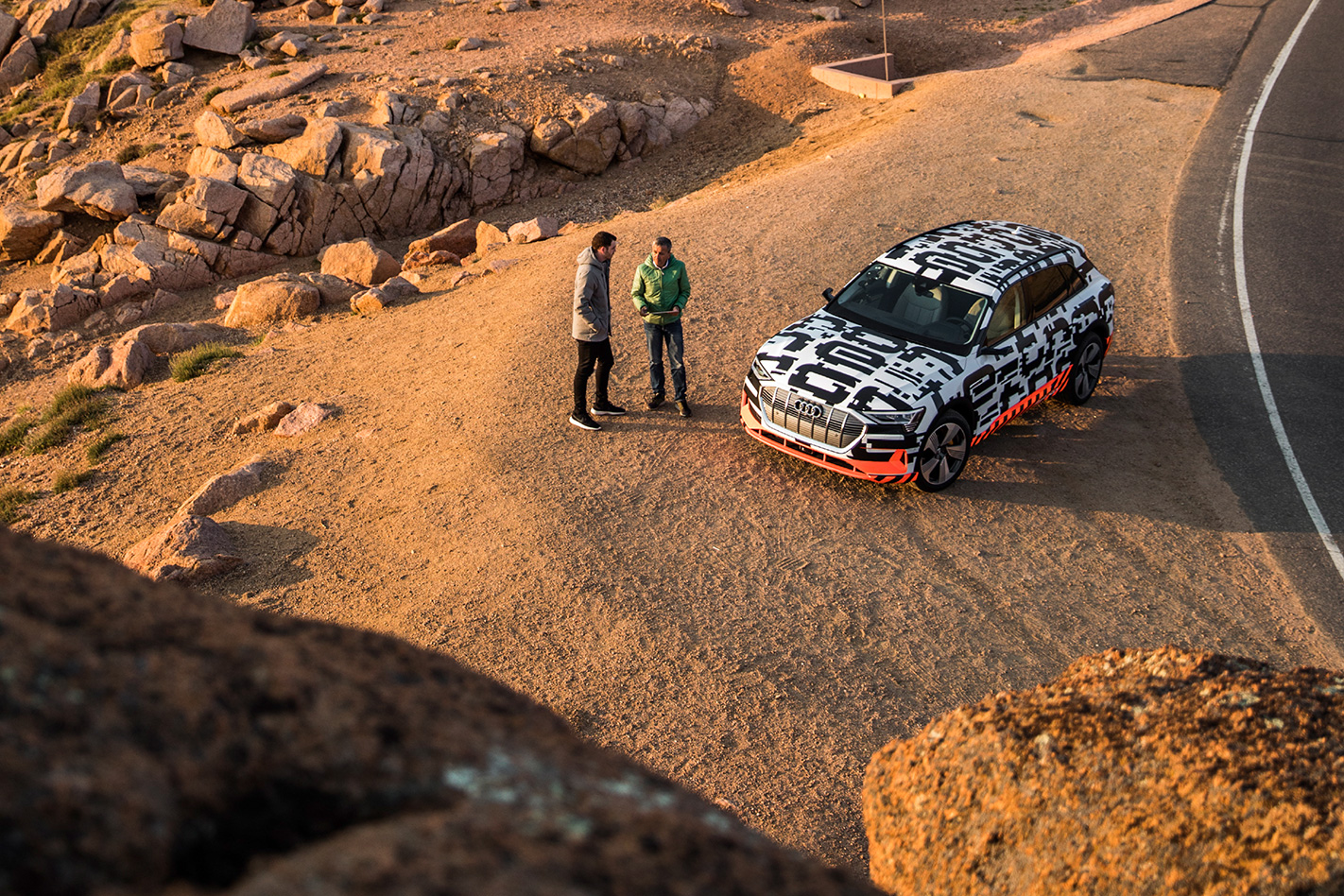
There are EV character traits that help this cause, such as a low centre of gravity, but there are disadvantages as well, most notably weight. All told, E-Tron is around 2500kg, with the battery contributing approximately 700kg to that. It’s a lot of mass to manage.
“We use progressive [variable] steering. We have a conventional ratio for driving ahead, and when it comes to a corner it gets more direct. This has a big influence on the car feeling agile and light.” I have to take his word for it. For now, we’re talking brakes.
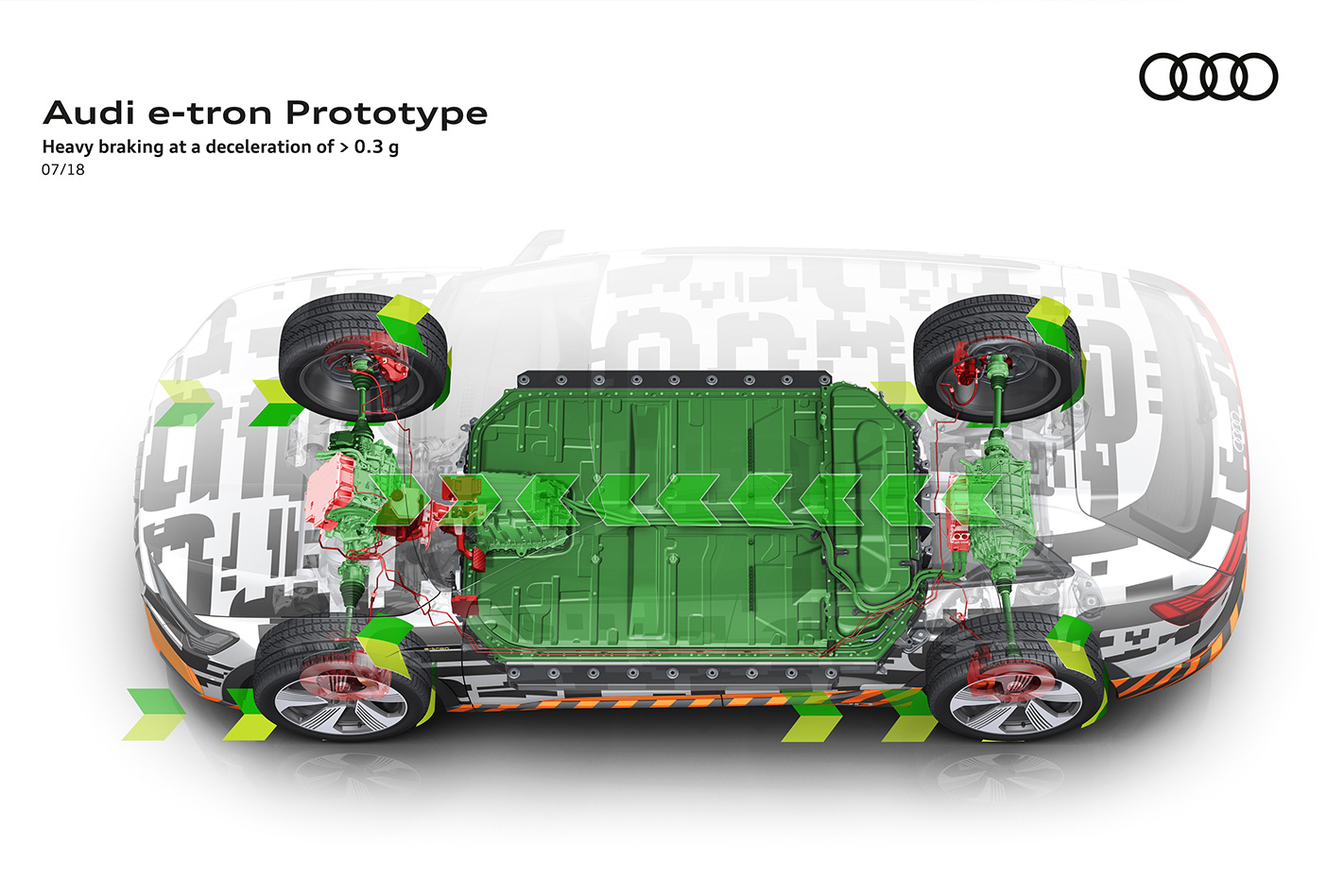
It’s easy to underestimate how central recuperation is to the driving experience of an EV, and how significant the influence will be on the way we drive in future. When you realise Audi has changed the function of the E-Tron’s paddle shifters to instead cycle through its three levels of regeneration, it starts to become apparent.
At the low end the system mimics engine braking and recuperates during coasting. At its strongest the E-Tron can be driven with one-pedal. As much as 90 percent of braking scenarios can be handled by the motors, meaning it is constantly recharging. The drivetrain can recuperate energy up to 0.3G of deceleration before the hydraulic brakes need to assist, which covers almost everything short of an emergency stop.
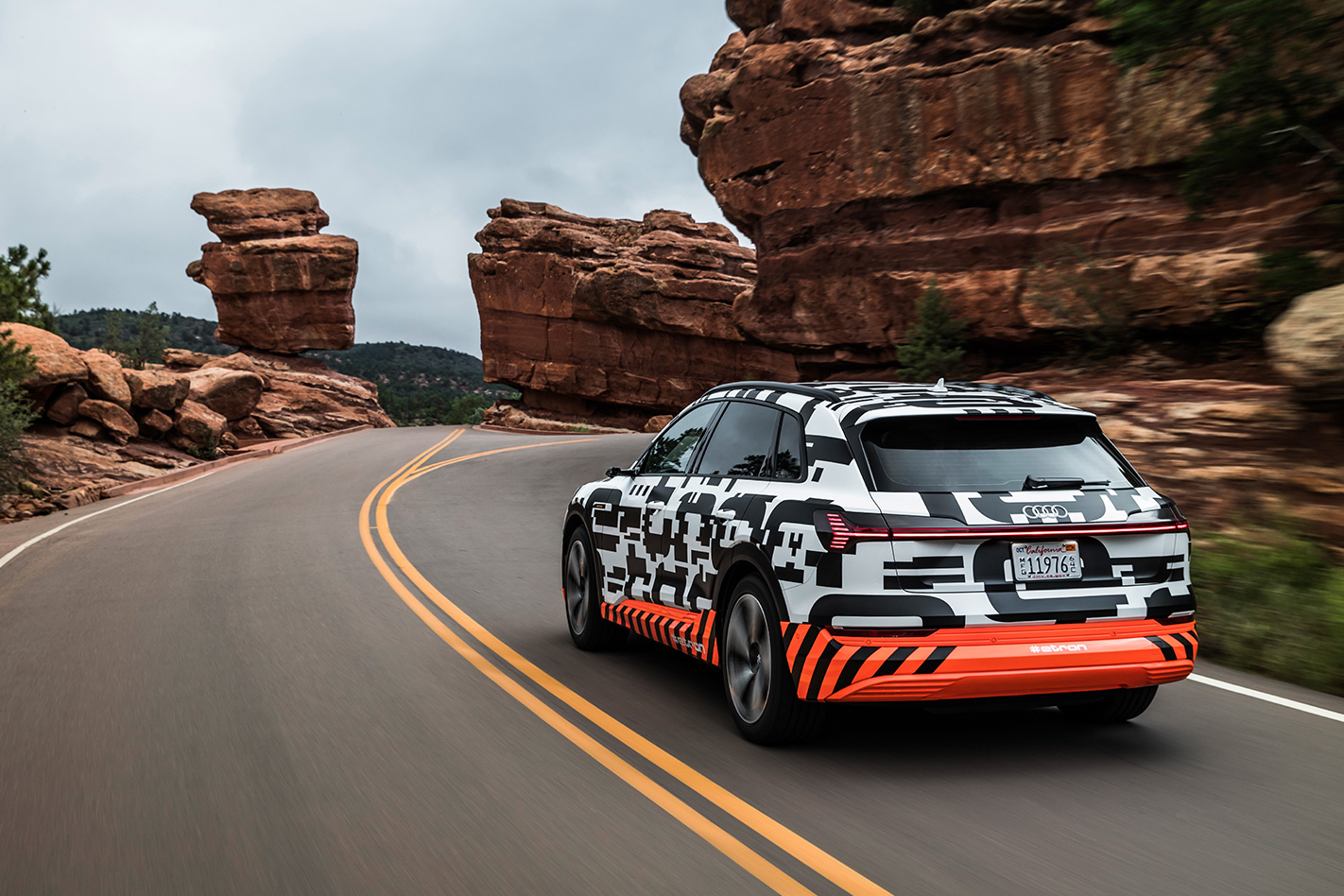
Up to 220kW of energy can be fed back into the battery by the system, which is far more than the 150kW a 400-volt fast charger is capable of when the E-Tron is hooked up to a socket. This is not the first EV energy recovery system, but it’s almost certainly the most efficient.
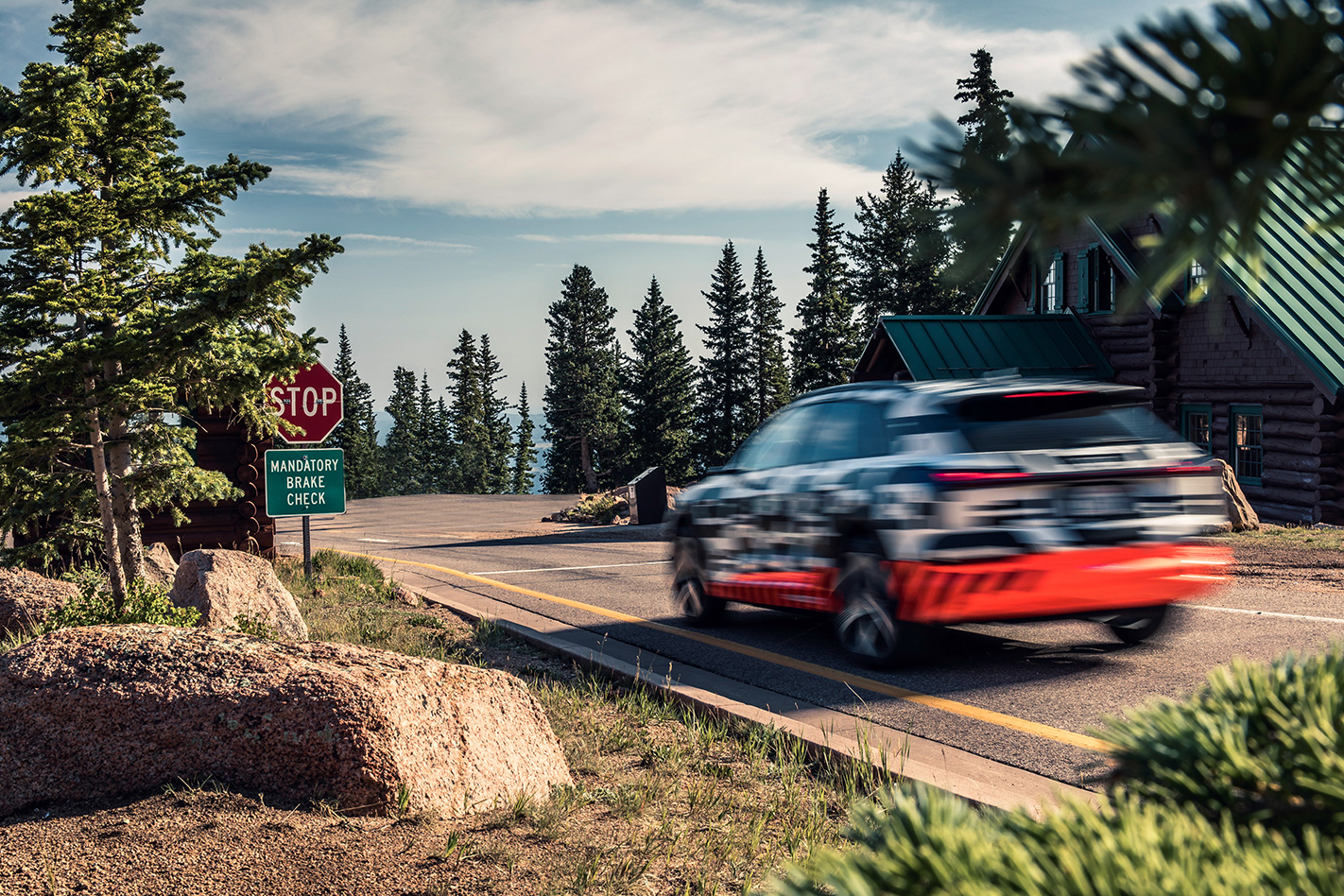
Pikes Peak drops away in front of us, the steepest sections plummeting downwards at 13 percent, which is more than a metre of fall for 10 metres travelled. After about 11km of riding the brakes and almost 1000m of descent we’re stopped by park rangers at a static checkpoint. Here, attendants carry out a mandatory test on every vehicle leaving the summit using a device that measures brake temperature.
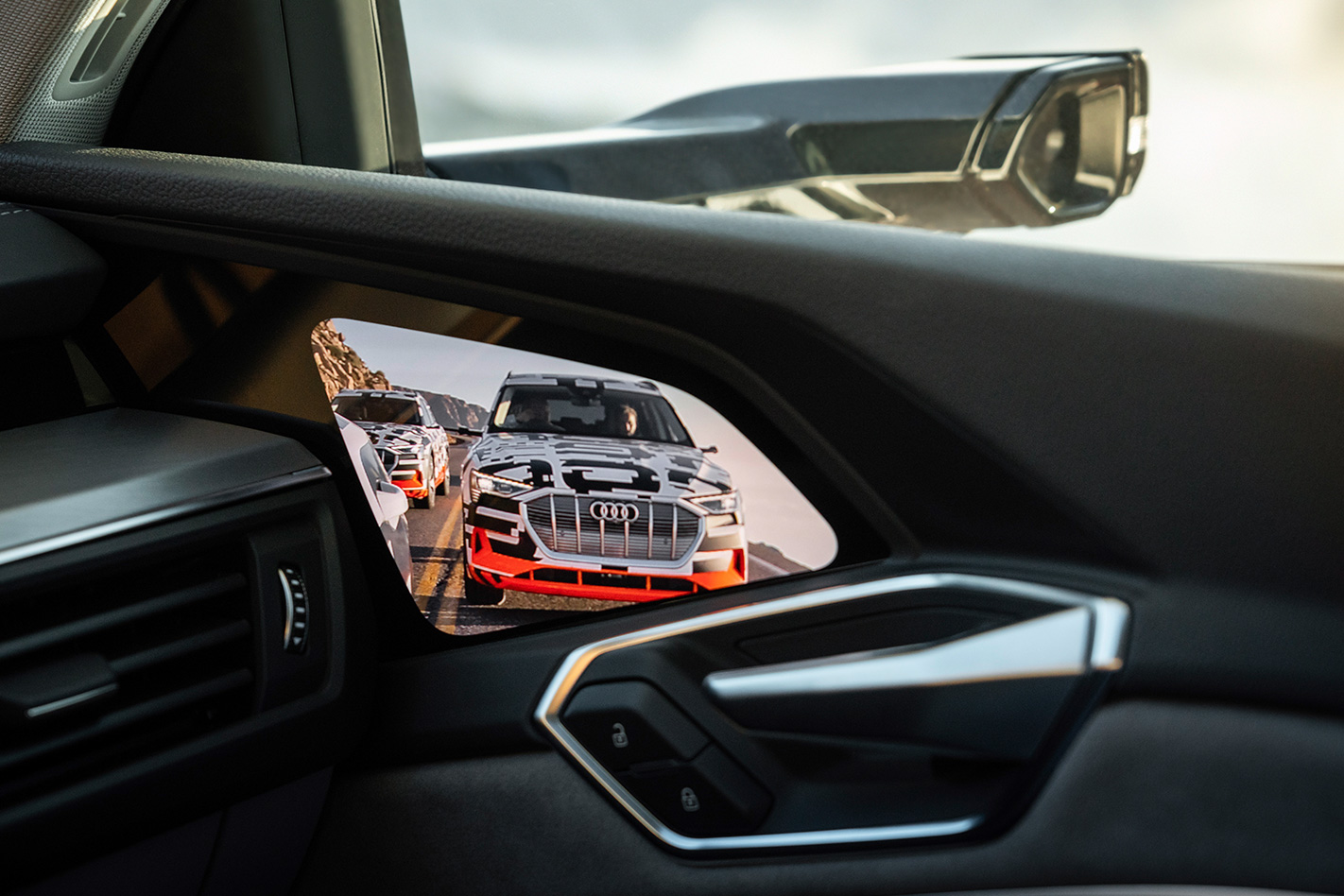
Our front rotors are barely five degrees above ambient at this point, registering 14 Celsius, or 58 Fahrenheit in the native tongue. “You don’t want to be above 300 [Fahrenheit/149 Celsius],” the lady tells us. “Otherwise you have to stop and let your brakes cool off. You’re good to go.”
There is no other system in the world quite like this one. One of the blokes responsible tells me there are 14,000 tuneable parameters in the braking system alone. In regular driving scenarios the E-Tron uses almost every supplementary system to maximise its efficiency. “No matter what the driver does, you always get the most amount of recuperation into the car,” says Roder.
Camera, radar and map data are used to analyse the road ahead, and the system can predictively distribute recuperation between the axles (but not individual wheels) to make it feel as natural as possible. At this point I wish I could feel it for myself. Audi claims this car’s completely decoupled brake pedal is a world first. The pedal is attached to nothing but a sensor that registers brake requests and a piece of elastic that simulates the sensation of a normal pedal. It’s done this way so that the system’s brain can blend the stopping power of recuperation and conventional calipers without the driver noticing.
Below 10km/h it takes more energy to stop the car than it can recover, so the regular brakes step in. The hydraulic pump that operates the calipers is the most powerful Audi has ever used. Should the car spot a pedestrian, its AEB system can initiate an emergency stop, from detection to brake lock, within 150ms. That’s quicker than the blink of an eye.
By the time we reach the bottom we’ve covered a distance of almost 30km. At the top, the E-Tron’s state of charge was 58 percent, or just shy of 50kWh. Over the course of the descent its systems topped up the cells with almost 10kWh of recovered energy. There was very little throttle input, so only 2.6kWh was consumed in getting there, and we spent the rest of the trip generating energy using gravity. We finish with more than 57kWh in reserve.
These are bizarre, seemingly counterintuitive numbers to wrap your brain around. In real-world terms we extended the car’s range by at least a kilometre for every kilometre travelled.Of the four E-Trons taking part, our figures are second best. One other car that didn’t stop for photography managed to regenerate 12kWh. Though this exercise is obviously an extreme example to illustrate the system’s ultimate capability, the practical everyday benefits are there.
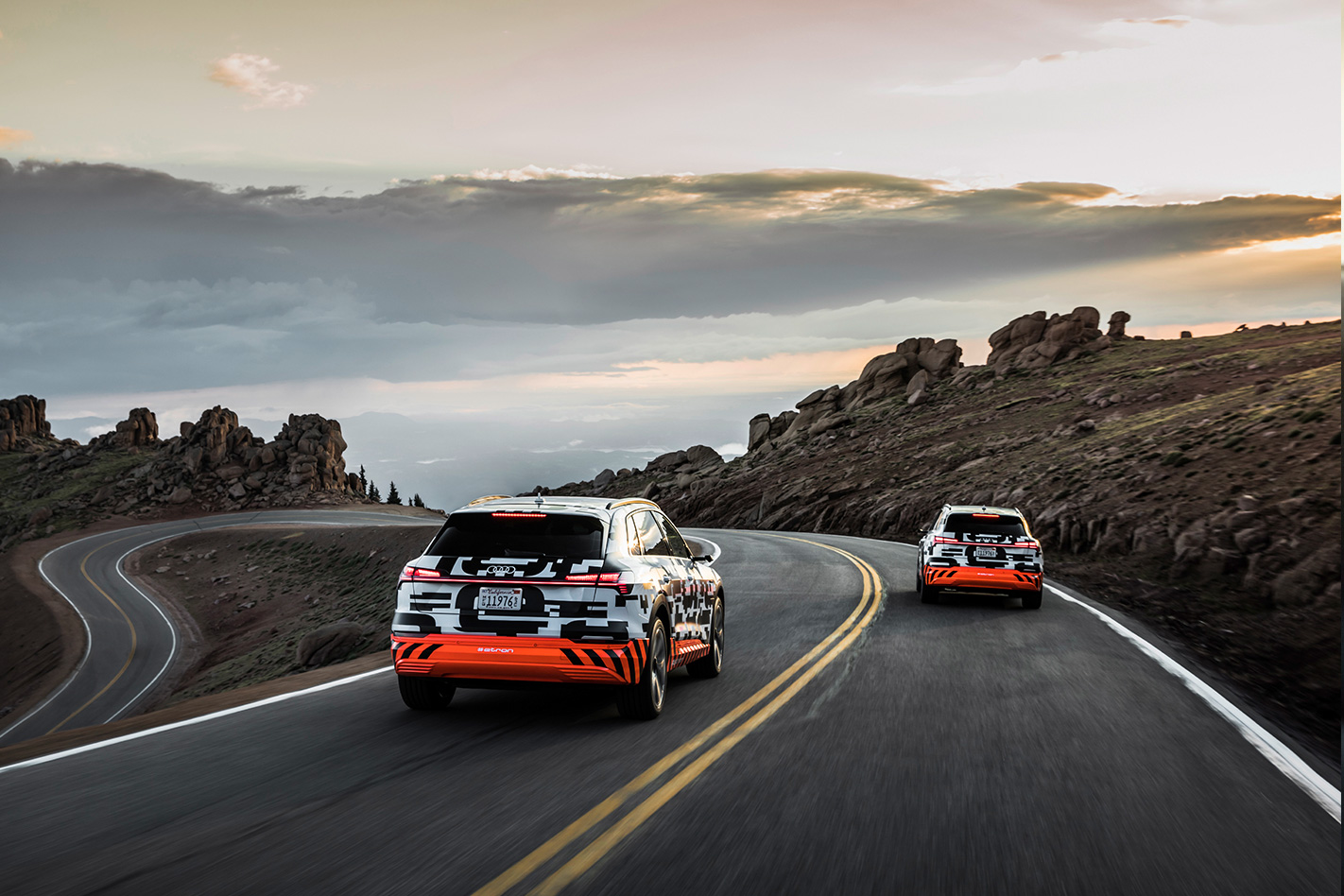
Audi says this system is easily transferable to future EVs and PHEVs. After E-Tron goes on sale a sportier version called the E-Tron Sportback will follow, riding on the same MLB Evo underpinnings. Two more Audi EVs are scheduled for 2020; a compact car built on shared architecture from the VW ID hatch, and the performance-focused E-Tron GT, which is expected to use the same platform as the Porsche Taycan (formerly Mission E). Volkswagen as a group has cleverly carved up its EV development using familiar synergies so that each brand tackles its own piece of the puzzle, and quickly.
What would normally have taken four or five years to develop according to one engineer, has been achieved in three, and with the promise of at least 20 electrified Audis by 2025, the E-Tron floodgates are fit to burst. Audi won’t be the first to market, but it’s poised to make an impact.
In a combustion engine car every brake application costs fuel. What is burnt in getting up to speed is lost, with nothing left to show for it. Efficient recovery of energy is a new proving ground for EV manufacturers, which is to say, all manufacturers hoping to survive. With no legacy to protect, the E-Tron enters the ring with nothing to lose, and the tools at its disposal could be game-changing.
WHAT IS IT?
This is the imminent return of a Japanese performance car icon. The fifth-gen Supra won’t launch until next year, but a pre-production prototype drive finally offered us a preliminary taste of Toyota’s flagship sports coupe, which has been in development for more than six years.
WHY WE’RE TESTING IT
The Supra nameplate is worshipped by the console generation, leaving this new one with huge boots to fill. A deal with BMW was needed to make its return possible for Toyota, but is a Japanese-German cross built in Austria worthy of such a storied badge?
MAIN RIVALS
Audi TTS, BMW Z4 Roadster, BMW M240i, Ford Mustang, Nissan 370Z Nismo, Porsche Cayman
THE WHEELS REVIEW
IT’S EARLY in 2012, at a racetrack on the outskirts of Madrid. Toyota is in the middle of launching an all-new, fun-loving coupe called the 86, when its chief engineer is interrupted by a phone call from HQ and ordered to drop everything. Another sports car project, in collaboration with BMW, has just been green-lighted, and it’s Tetsuya Tada’s job to take point.
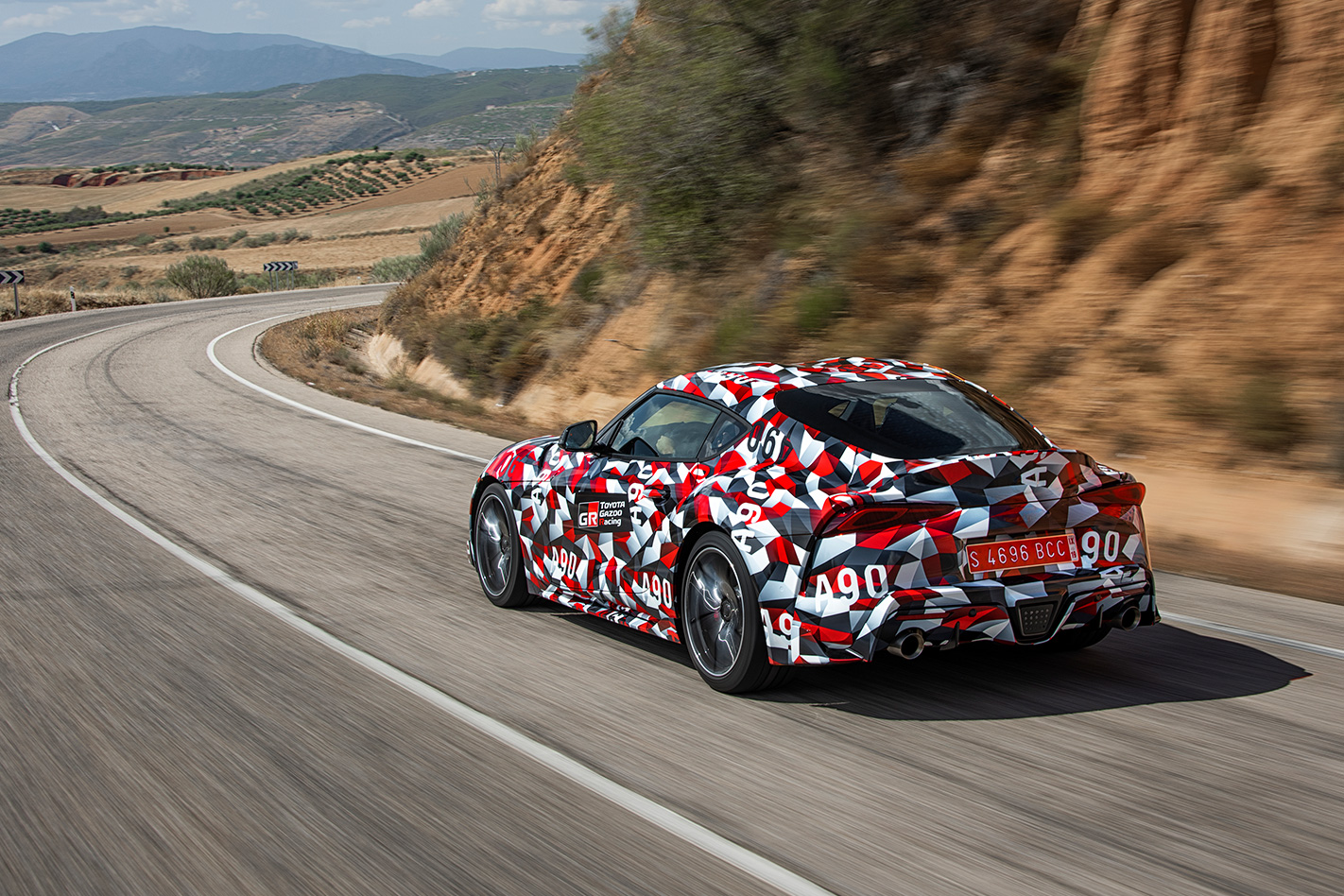
Six years of gestation later and Tada-san is back at the Jarama circuit in Spain on a bright Autumn afternoon. This time around he’s armed with prototypes of the long-awaited fifth-generation Toyota Supra, and in a few moments I’m going to drive it.
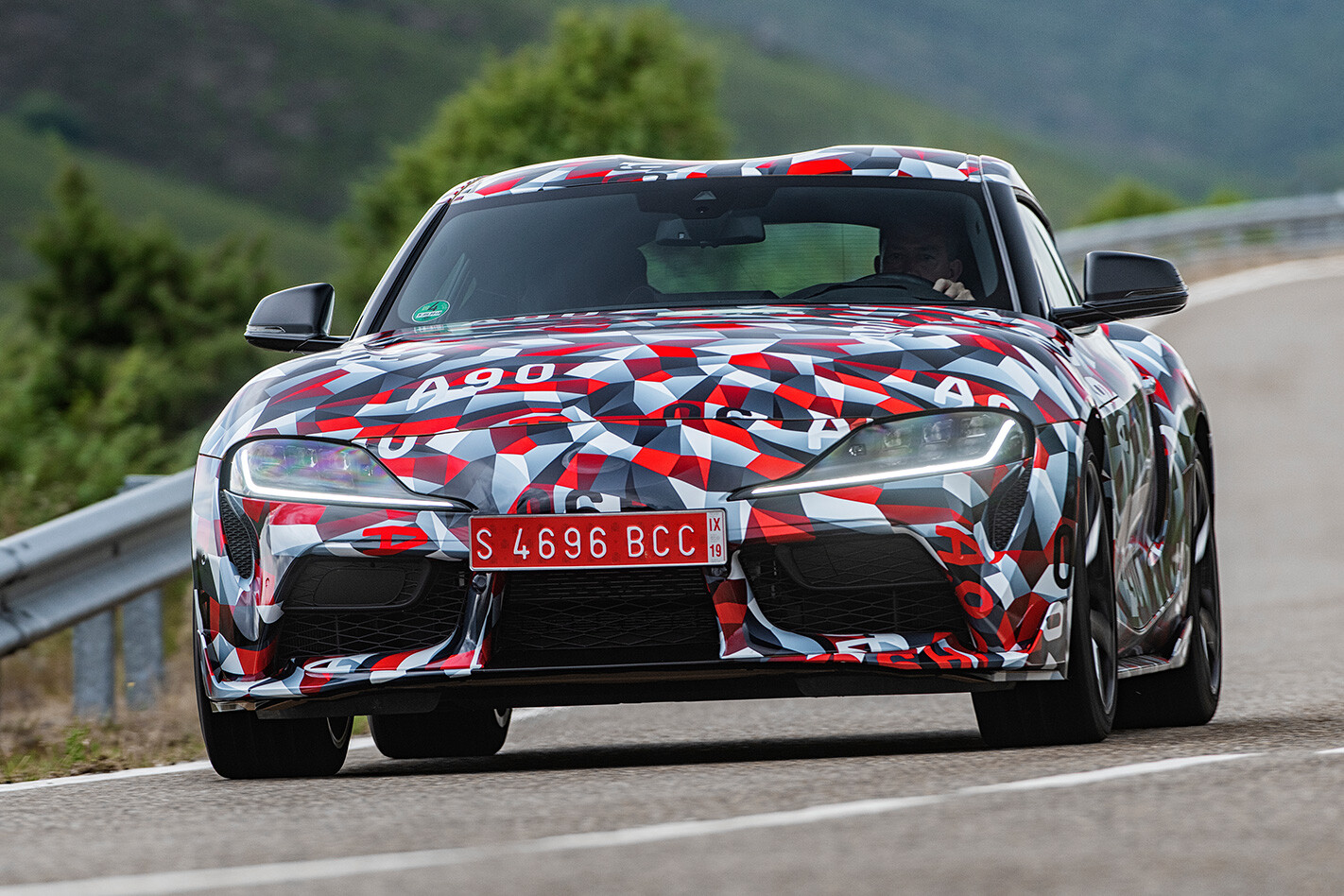
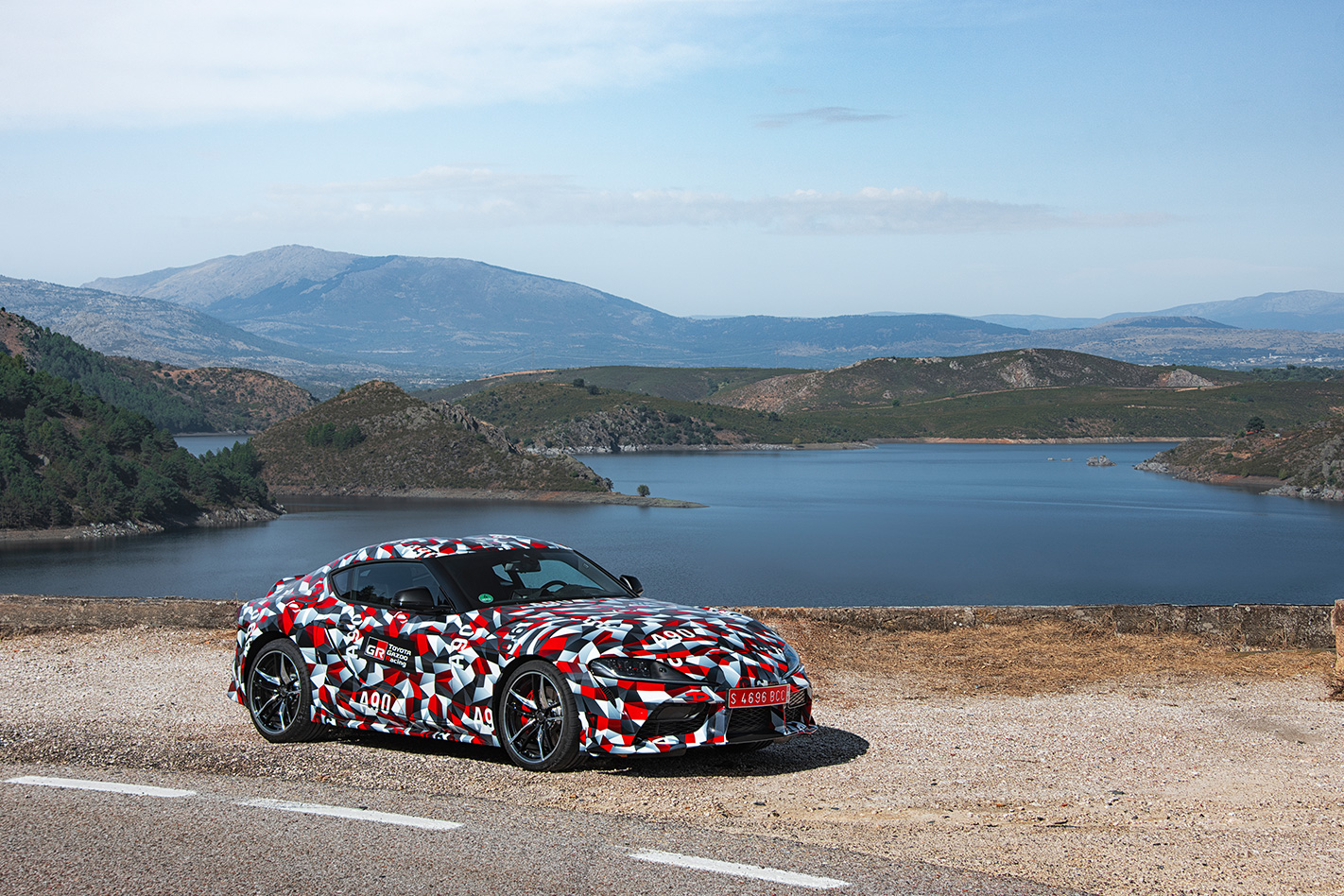
It’s still hard to believe this is happening, especially after such a protracted period of rumour and speculation. Only eight of these pre-production vehicles are said to exist, and four of them are here, wrapped in thin camouflage barely disguising the details of their dramatic two-seater form. The bodywork is littered with blanked off cooling ducts and aero features that future-proof it for racing use. An enormous clamshell bonnet opens from halfway up the quarter panels, and its cab-rearward profile bears a distinct similarity to its fourth-gen predecessor, the JZA80, a car still idolised more than 16 years after its production ceased.
What’s instantly striking is how compact the Supra is; barely as long or high as an 86, it creates presence with its width and stance. Using plastic for the rear hatch and clever packaging solutions has given it an even lower centre of gravity and a shorter wheelbase than the boxer-engined 86. A ‘golden ratio’ of 1.6:1 (wheelbase to track width) was the target – a template set by the Porsche 911 – and Toyota’s engineers are proud to have surpassed that, packaging it at closer to 1.5:1 for even greater agility.
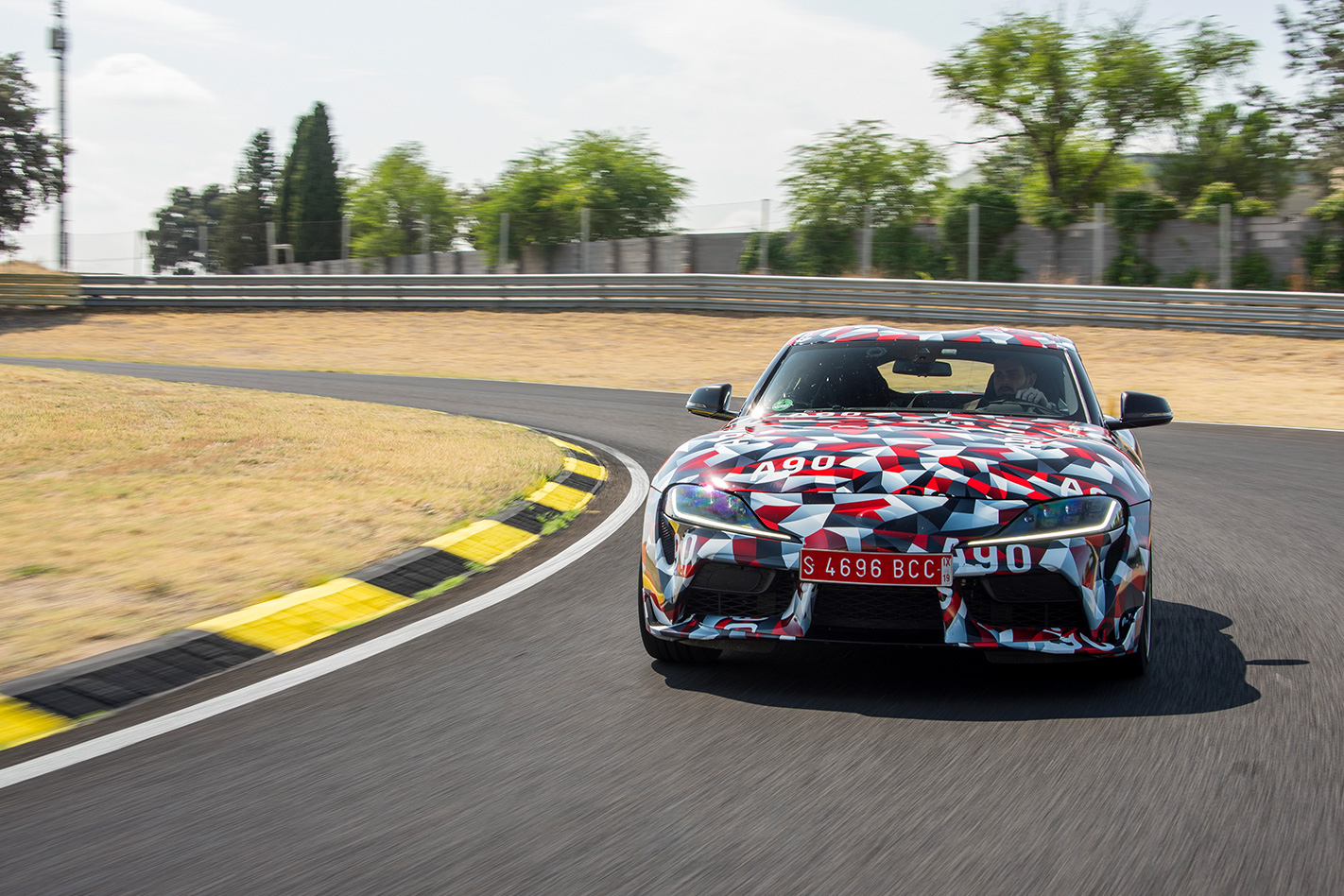
It sounds like a recipe for twitchy, snappy dynamics, but that’s simply not the case. On the road and on track the Supra is a joyfully cultured driving experience. Mechanical grip is massive, with clever aerodynamic measures that dial in high-speed stability and sticky Michelin Pilot Super Sport rubber in broad sizes of 275/35 at the rear and 255/35 front, on wide 19-inch wheels.
Direction changes are effortless, with crisp off-centre response and a linear feel to its steering, which makes it brilliantly intuitive as every input is rewarded with a proportional outcome. There’s an alert and playful character to it, but it doesn’t overstep to become hyperactive or nervous. Even on the circuit, the Supra feels friendly and communicative in a way that encourages confident driving.
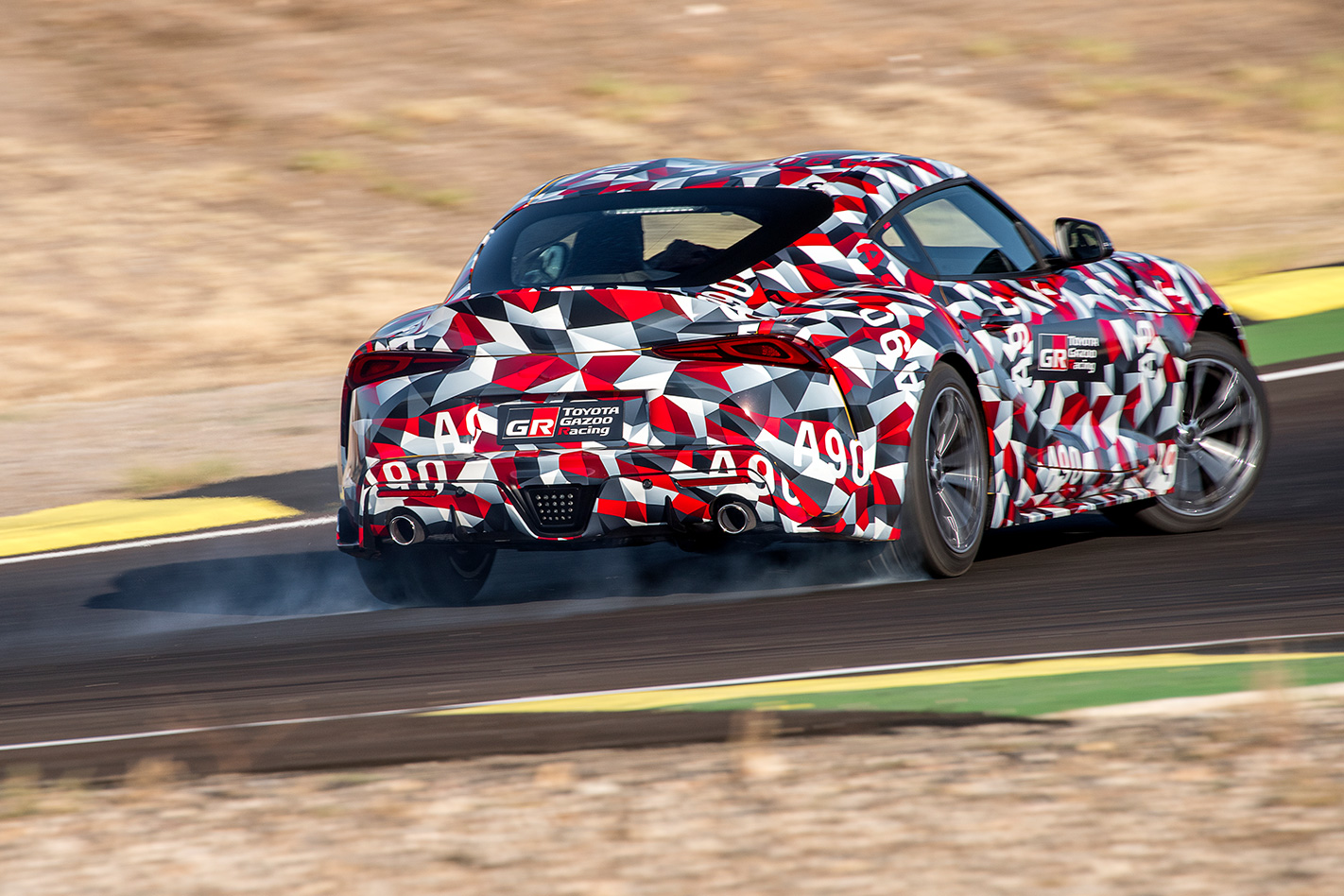
Around the fast, downhill right-hander onto Jarama’s main straight the Supra is hugely exciting. Its poise comes in part from an engine that sits entirely within the wheelbase of the car, meaning the front axle crosses forward of it in a front-mid layout. This helps achieve its perfect 50:50 weight distribution. What’s more, modern construction methods mean the Supra’s steel and aluminium composite body structure is in fact more rigid than that of the carbonfibre LFA supercar from 2010.
Toyota worked with BMW for two years on the basics of this shared platform, which also underpins the Z4 Roadster. The Japanese brand was able to influence important mounting points and the location of major components – including the driver – to suit the Supra’s intent and its design, which was worked on in Munich during the initial phase by stylists from Japan. An existing BMW architecture was the starting point, one compatible with Toyota’s desired power source; a turbocharged 3.0-litre in-line six-cylinder codenamed B58, as found in the M240i and the new Z4 in 250kW/500Nm trim. Without a straight six, it wouldn’t be a Supra, and without BMW, Toyota says the project simply would not have happened.
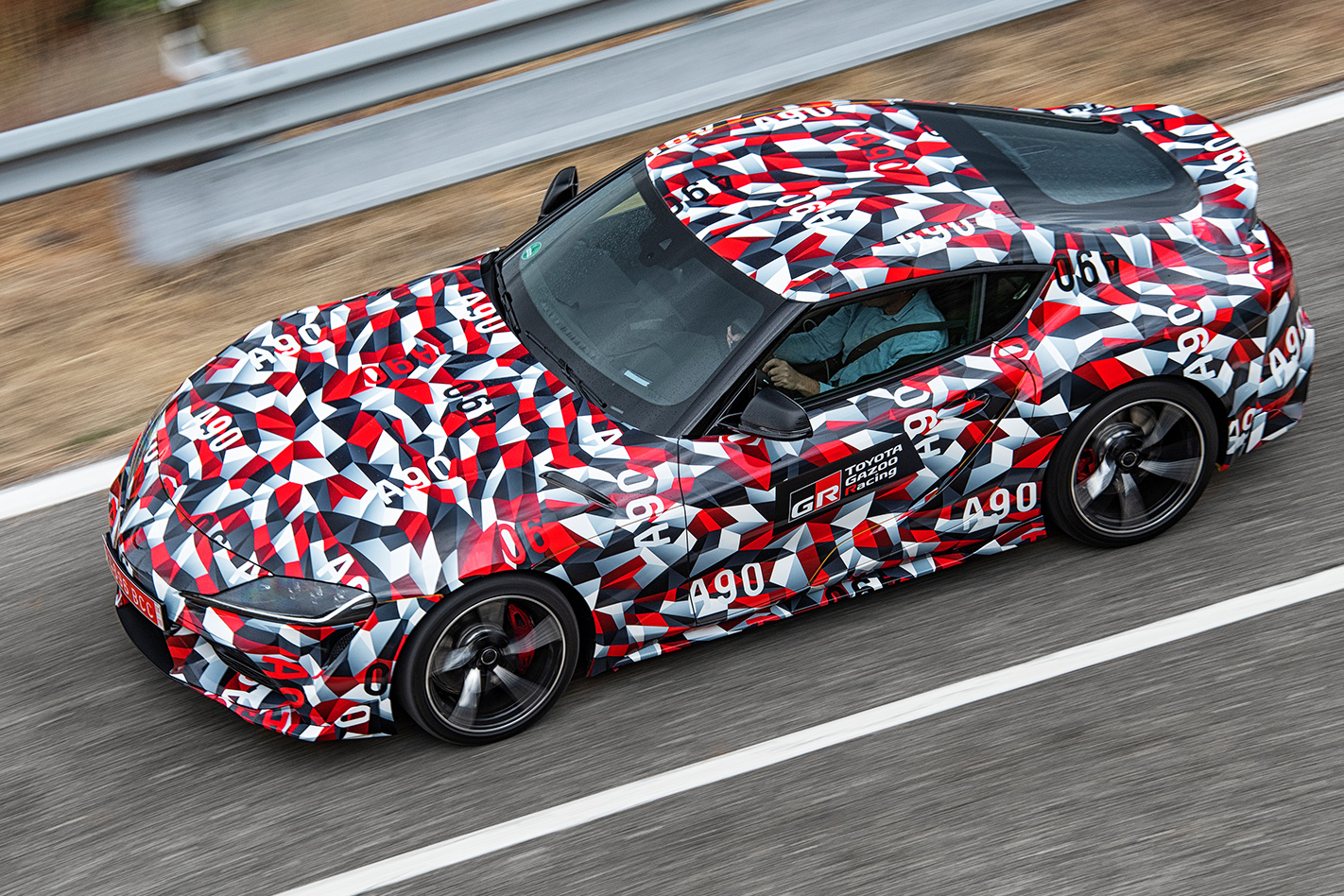
Supra’s outputs are yet to be confirmed, though they’re likely to be similar to those above. Toyota has taken the same hardware but developed its own tune for the powertrain, including the eight-speed automatic gearbox from ZF, which will get a launch control mode that is still being finalised. Toyota engineers say the Supra is on track to hit a target weight of 1500kg, which should mean 0-100km/h acceleration in about 4.5 seconds.
The muscular six-cylinder engine revs to almost 7000rpm, boasting a thick torque band that starts low in the rev-range with a lusty induction spool and velvety exhaust note in keeping with the Supra’s heritage. European models need a particulate filter in the exhaust to meet emissions regulations, and suffer from a suppressed soundtrack as a result. Other markets, including Australia, will welcome a more vocal set of pipes when the Supra reaches showrooms late next year, though whether or not that means doing away with a sound synthesiser that adds fake noise through the speakers in European versions is unknown.
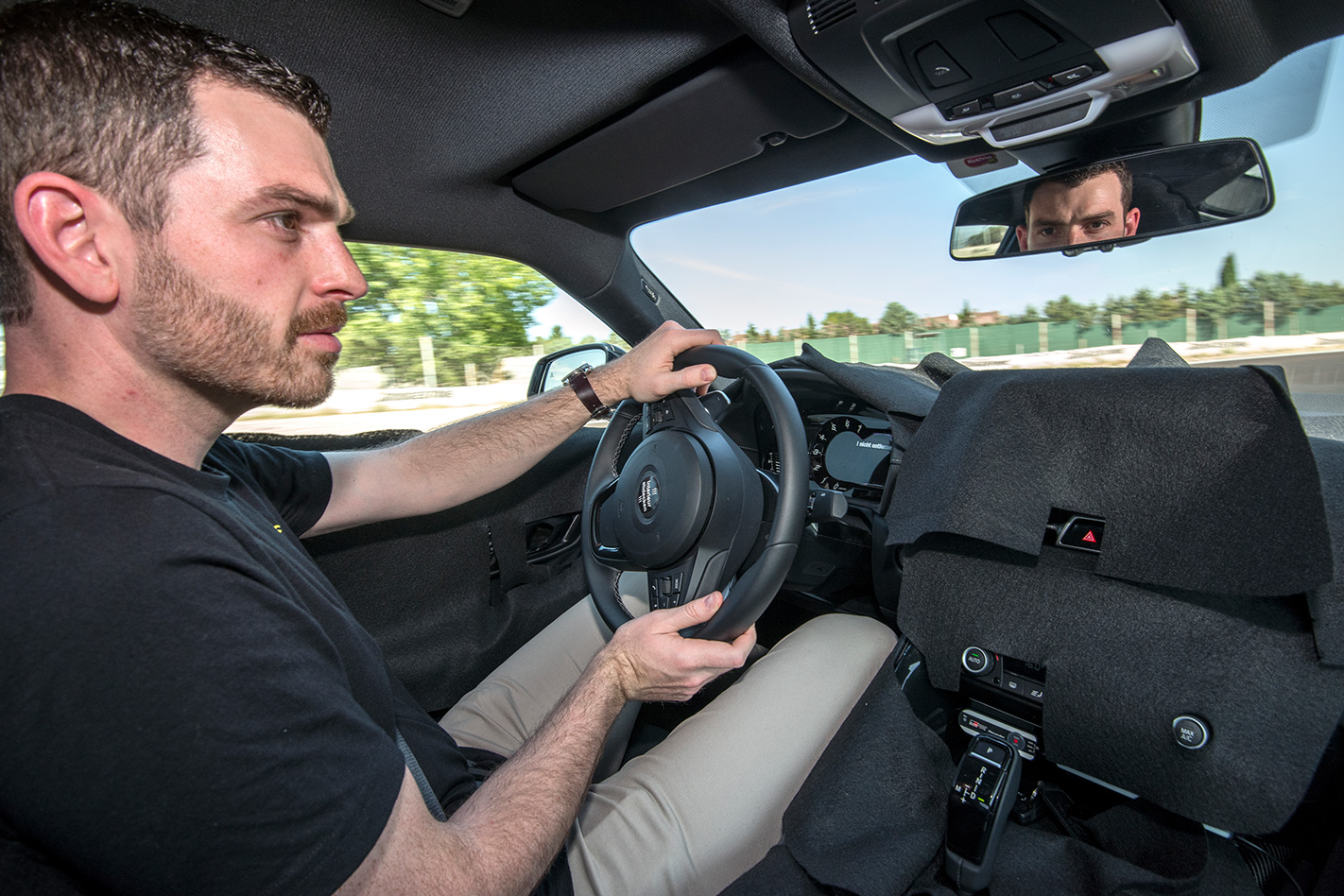
There are two available drive modes for Supra: Normal and Sport, and setting the ESC to off really means off. Sport mode sharpens throttle response, adds weight to the steering, tightens up the adaptive dampers, intensifies pops and crackles at the tailpipe, and switches to a gearbox calibration that is impeccable on track. A full manual mode is available, though downshifts from the slightly dull paddle shifter are sometimes delayed or ignored if requested with too narrow a buffer to redline.
A six-speed manual ‘box exists in the BMW portfolio linked to this engine, but that transmission option is not yet confirmed for Supra. A greater focus has been put on the buying habits of major markets, such as North America, which means the eight-speed needed to happen first.
A ‘go where the customer goes’ philosophy has seen 90 percent of Supra’s development take place on public roads rather than racetracks. A downside of that is its four-piston Brembo braking package, which showed signs of stress after a number of laps on track, but that won’t be of concern for most buyers. Braking modulation and performance at regular road speeds is impressive.
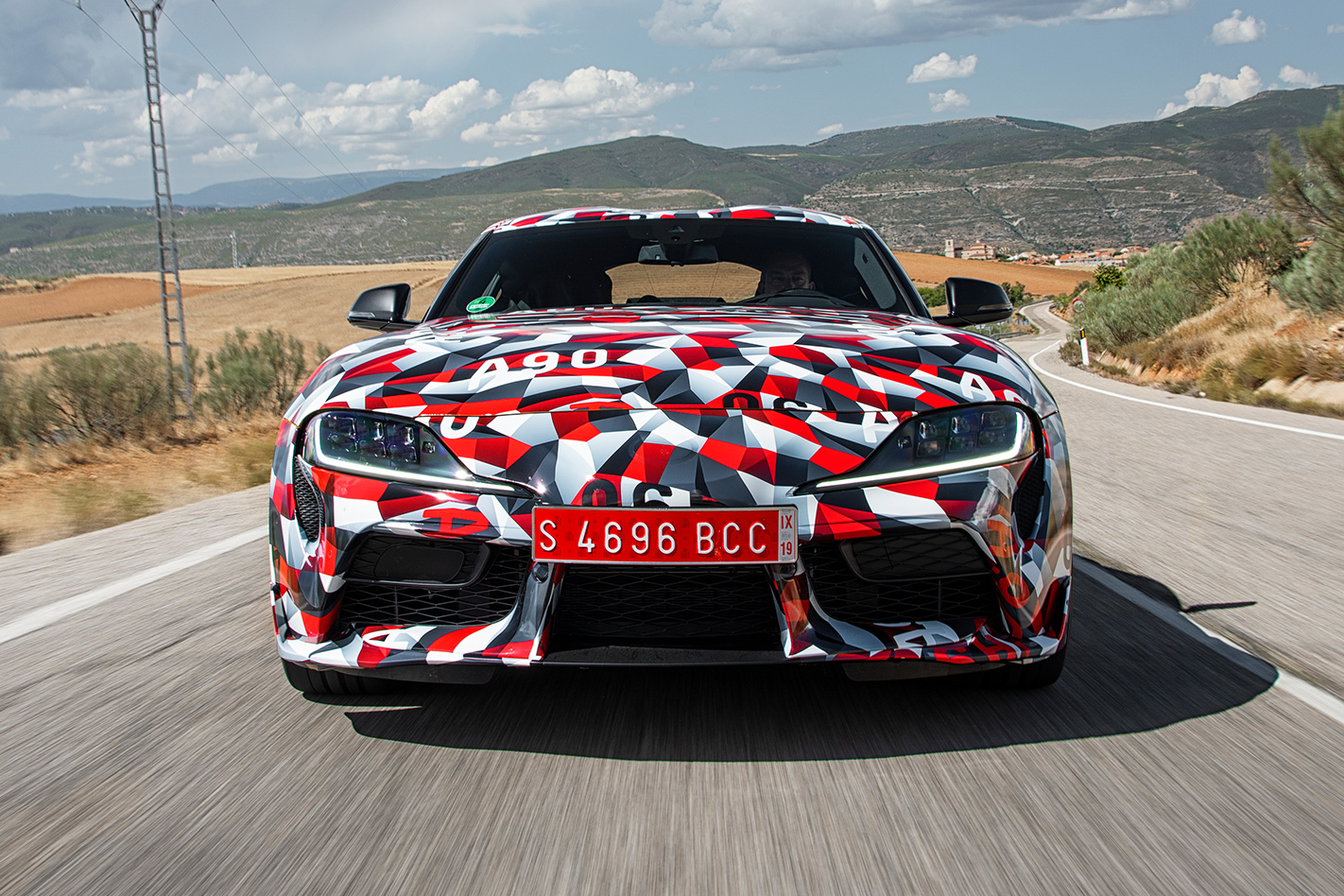
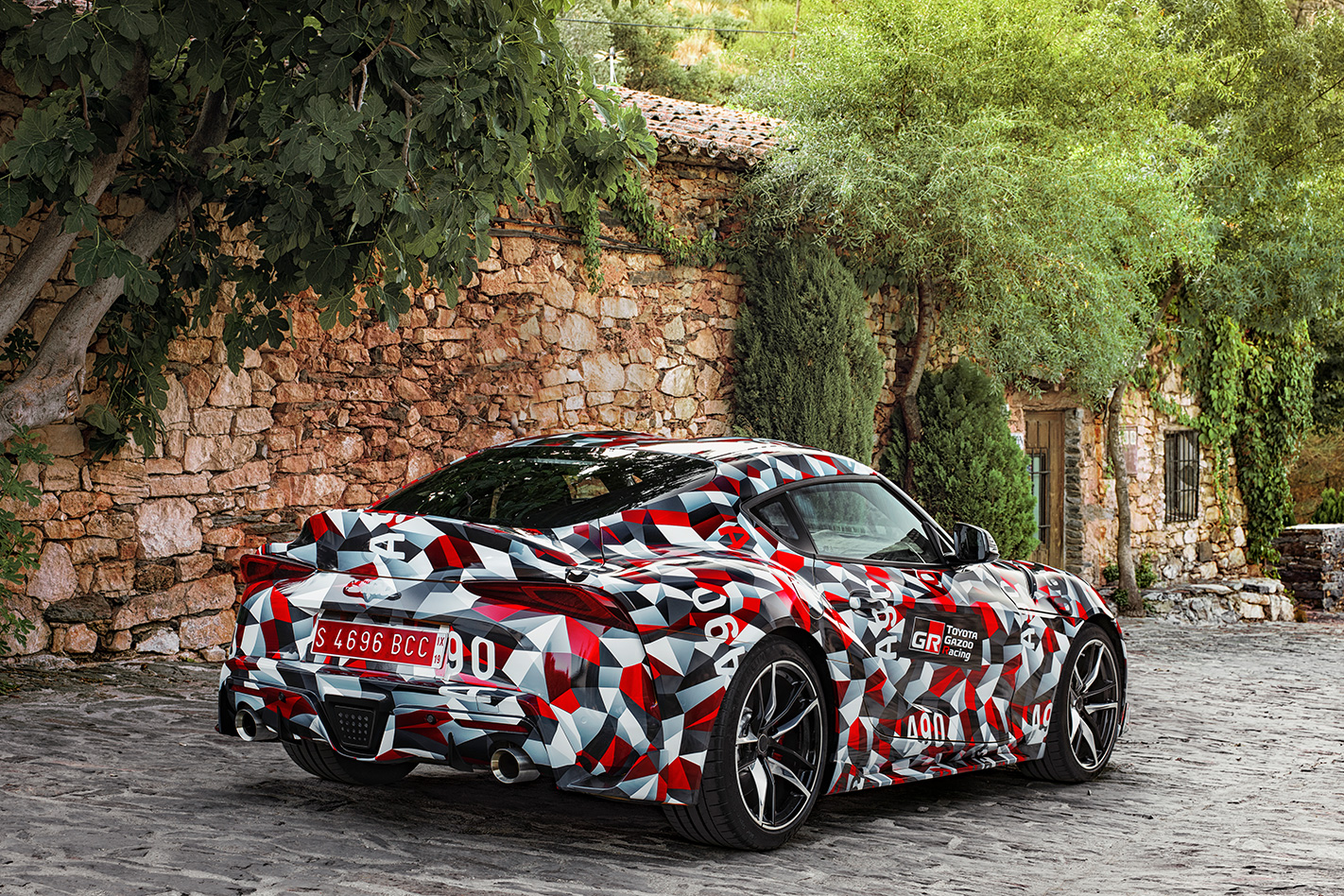
What’s surprising is how suave the Supra feels as a long distance cruiser. Ride quality is excellent, with a supple initial bump absorption and tightly controlled rebound. Toyota admits the tune of its 7mm lower adaptive suspension package is still receiving tweaks for production, but the early signs are positive. Even boot space is reasonable at about 250-litres. There’s no cargo barrier behind the two front seats, but cabin noise is cleverly suppressed for a sports car such as this, and certainly when compared to an 86.
Toyota says these prototypes are 95 percent representative of the finished product. They’re complete from a hardware perspective, but there’s an array of electronic revisions to be made before the deadline for final sign-off at the end of this year, mere weeks before production starts.
A big part of that work will be reskinning BMW’s infotainment system to look less like its German cousin. The intimate cabin, though covered by black felt in these prototypes, is clearly an amalgam from BMW’s parts bin, including familiar climate control buttons, carbonfibre trim, a joystick-style shifter, iDrive controller and widescreen display mounted high on the dashboard, though it should be noted it is not the same interior as the Z4 Roadster. Bespoke trim and switchgear would bring costs that Toyota deemed not strictly necessary, so only a unique digital instrument cluster featuring a large central tachometer is distinctively Toyota.
The rev-counter is visible through a steering wheel that has the smallest rim diameter Toyota could specify using the BMW bits available to it, and a slimmer profile than anything found in Munich with carefully shaped thumb cut-outs for fingertip precision. The driving position is generously adjustable within a narrow space, nestling the driver into a slim yet comfortable seat that puts all primary controls within natural reach. The short turret faces a shallow, letterbox windscreen, with side window glass that barely reaches the eye-line of taller drivers, and broad C-pillars behind. It’s fine on the open road, but in town visibility could be tricky. A surround-view camera mode would help with that.
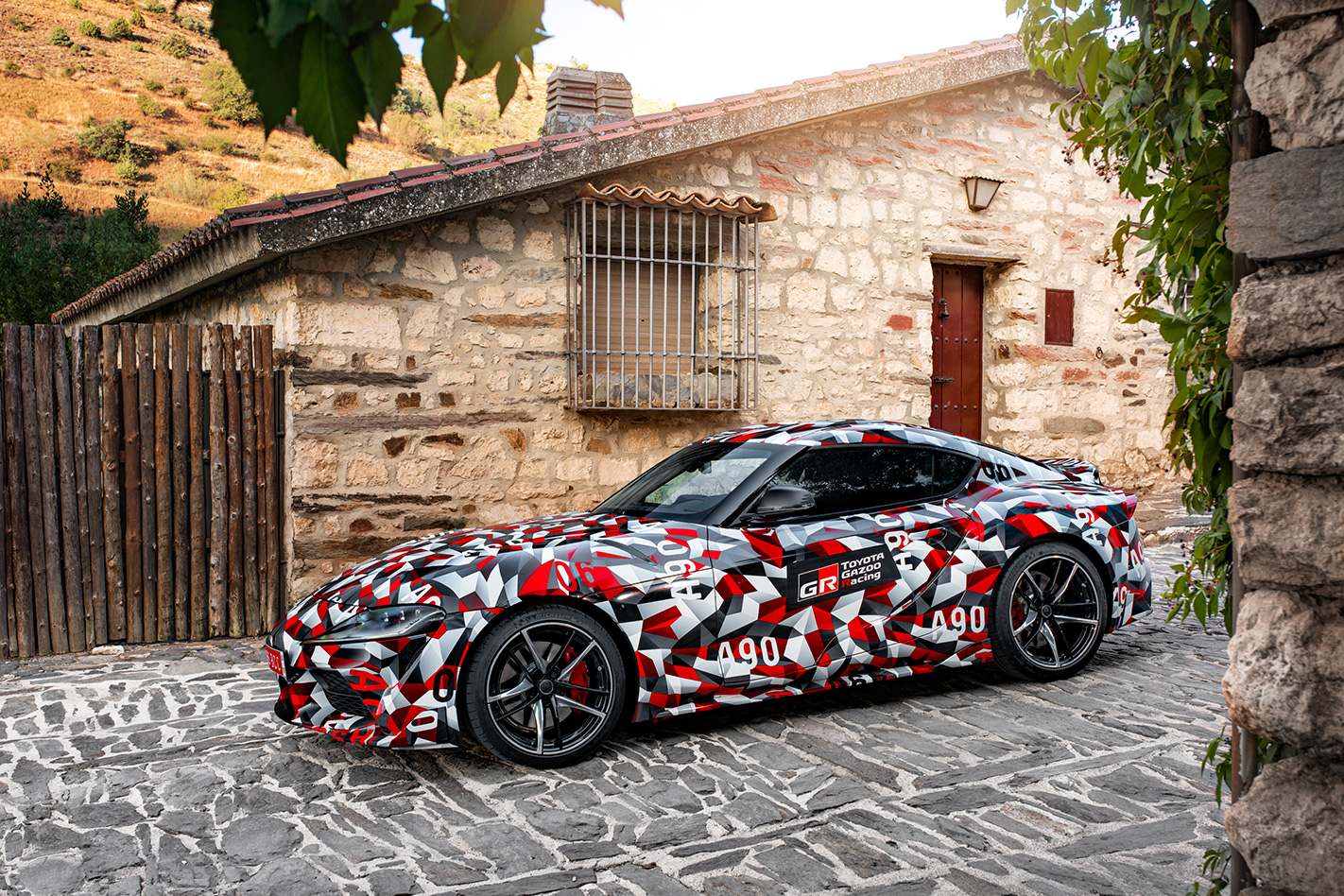
But features like that add cost, and the Supra’s price remains its biggest question mark at this stage. This will be the first car to bring the Gazoo Racing brand (GR for short) to Australia, badged as the Toyota GR Supra. Think of Gazoo Racing as the TRD of today, and you’re pretty much there. At the moment only one Supra variant is being talked about on the record, but expect entry-level and high-spec versions at launch – much like the 86 GT and GTS – with the fully featured Supra receiving the prototype’s adaptive dampers and a tricky active differential as standard. Somewhere around the $75,000 mark seems like a reasonable estimate at this point, but its arrival is still a long way off. A cheaper four-cylinder model is also on the cards.
There will be die-hard Toyota purists and detractors who take pleasure in criticising the half-caste Supra, but this coming together of two engineering-led automotive giants is shaping up to deliver a brilliant moment for modern sports cars.
THE WHEELS VERDICT
An unexpectedly suave sports car with genuine grand tourer cred that plays a convincing double act as an occasional track toy. The prototype’s silken German drivetrain combined with its Japanese dynamic nous puts the all-new Supra in prime position to take two good things and make something great.
PLUS: Powertrain strength and slickness, steering precision, long-distance touring ability, dynamic sophistication MINUS: Lack of exhaust sound for prototypes, outward visibility around town, limits of brake package on track
SPECS
Model: 2019 Toyota GR Supra prototype Engine: 2998cc 6-cyl, dohc, 24v, turbo Max power: 250kW @ 5500rpm (estimated) Max torque: 500Nm @ 1500-4500rpm (estimated) Transmission: 8-speed automatic Weight: 1500kg (estimated) 0-100km/h: 4.5sec (estimated) Economy: 7.2L/100km (estimated) Price: $75,000 (estimated) On sale: Q4 2019
BMW has released full details of the third-generation Z4 sportscar, confirming the previously-revealed M40i flagship will be accompanied by a pair of four-cylinder turbo options at the more affordable end of the spectrum.
Below the mighty M40i, which was revealed at the Pebble Beach concours in August, the Z4 will also be available with an sDrive30i and sDrive20i badge. Following the nomenclature applied to many other BMW models, the pair will be rear-wheel drive and powered by 2.0-litre turbo petrol engines in two different states of tune.
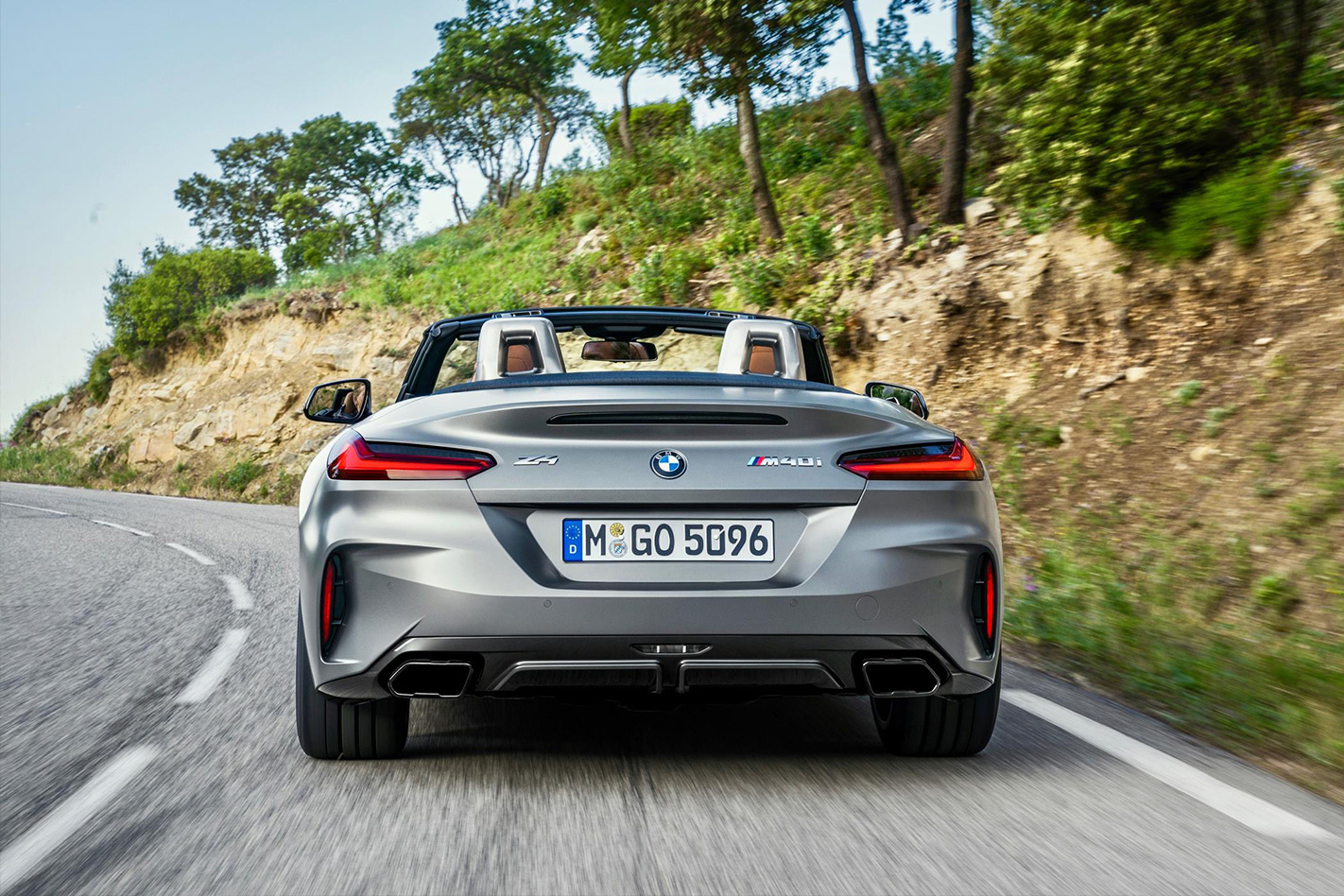
BMW Australia has confirmed the full trio of Z4 sports stars will be arriving in local showrooms no later than the second quarter of next year, although pricing is yet to be finalised.
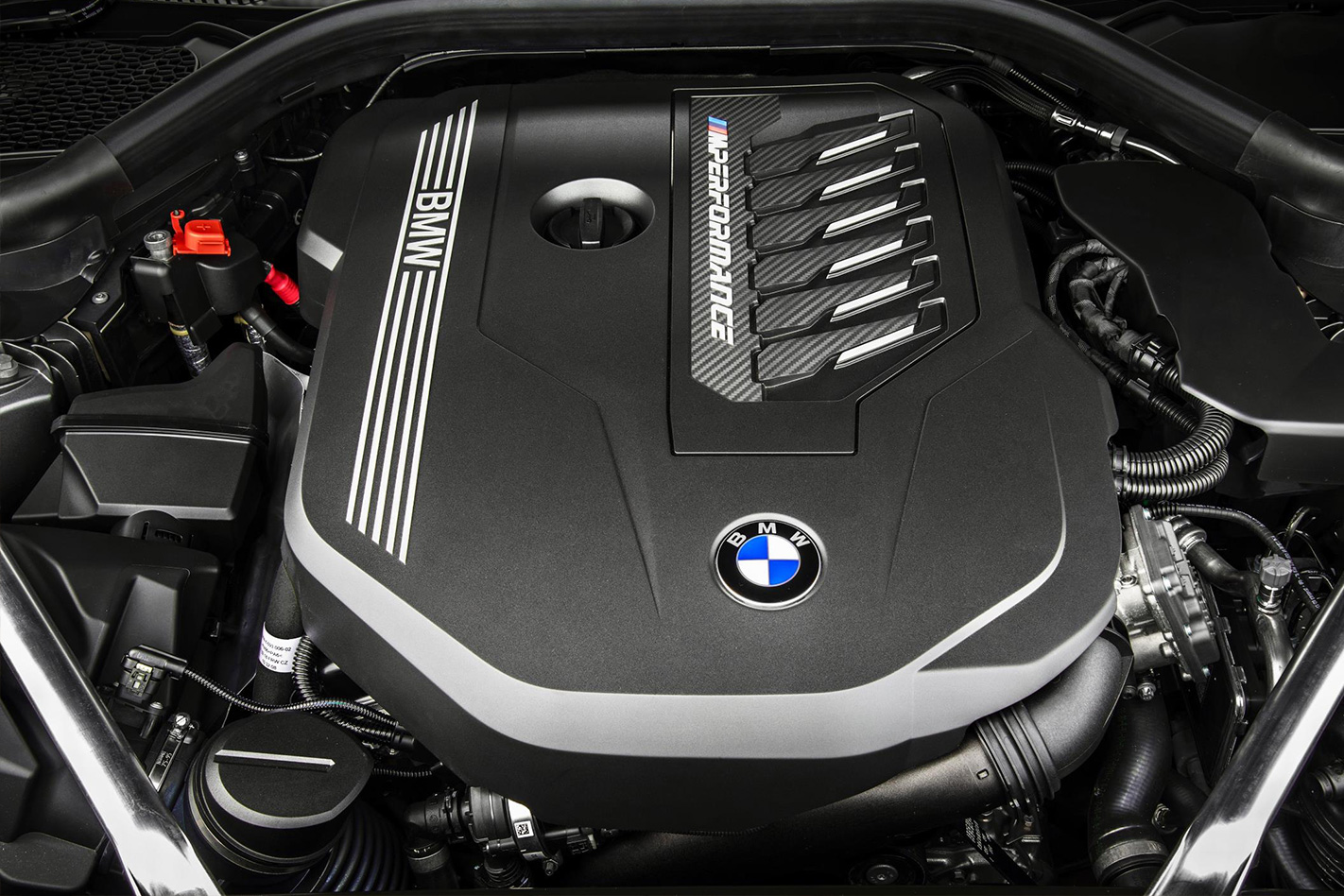
At the top of the pack, the Z4 M40i has an M Performance straight six-cylinder engine sending 250kW/500Nm to the rear wheels, and remains the high-performance hero until an unconfirmed full-fat M version joins the range.
While the range-topper uses its extra cylinders to get to 100km/h from standstill in 4.6 seconds, the 30i produces 190kW/400Nm and completes the same benchmark in a respectable 5.4s. The 20i uses the same engine in a lower state of tune to pump out 145kW/320Nm, which is good for a 6.6-second dash to 100km/h.
Compared with the previous generation, the new Z4 has grown in all main dimensions. Length is up 85mm to 4.3 metres, width has grown by 74mm to 1.9m, while height now measures 1.3m – an increase of 13mm. That said, the model’s wheelbase has been shortened by 26mm.
That makes the third-gen Z4 almost identical in dimensions to the Toyota Supra with which it shares a platform, except its length. The BMW is more than 50mm shorter.
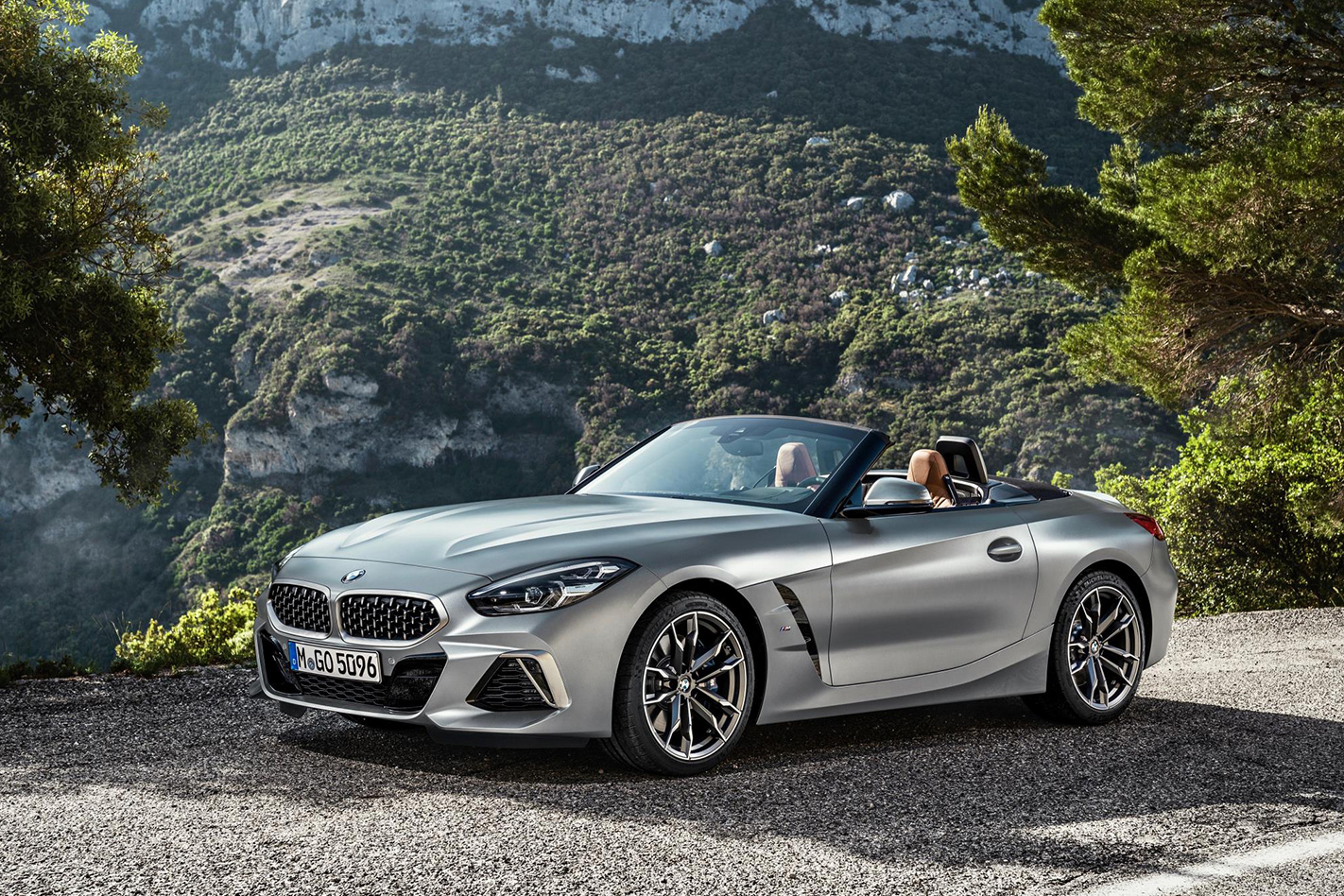
The full Z4 line-up will make its debut at the Paris motor show in October where it will show off optional full LED adaptive beam headlights, clamshell-opening bonnet, and electrically folding fabric roof, which can be opened or closed at speeds of up to 50km/h. The rag top is a return to the first-generation Z4 roof after the previous version adopted a folding metal roof.
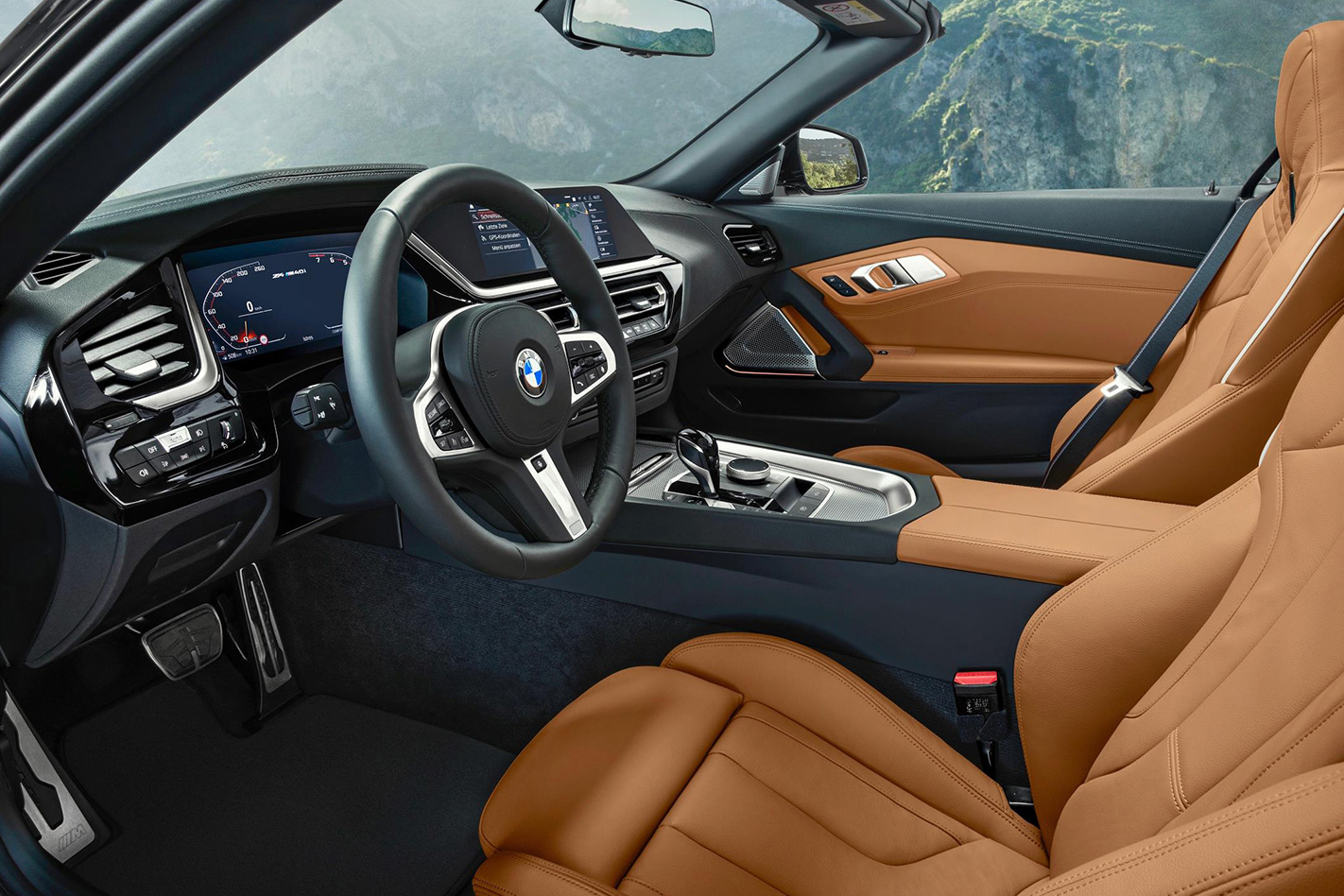
Inside, the Z4 cabin provides room for just two but offers storage behind the occupants, and features seats that are unique for each the model: heavily bolstered and covered in leather and Alcantara for the M40i, or Vernasca leather for the mid-range 30i.
The stowed roof has its own storage compartment and does not rob the boot of any of its 281 litres – that’s more than double the capacity of the previous-gen Z4 boot.
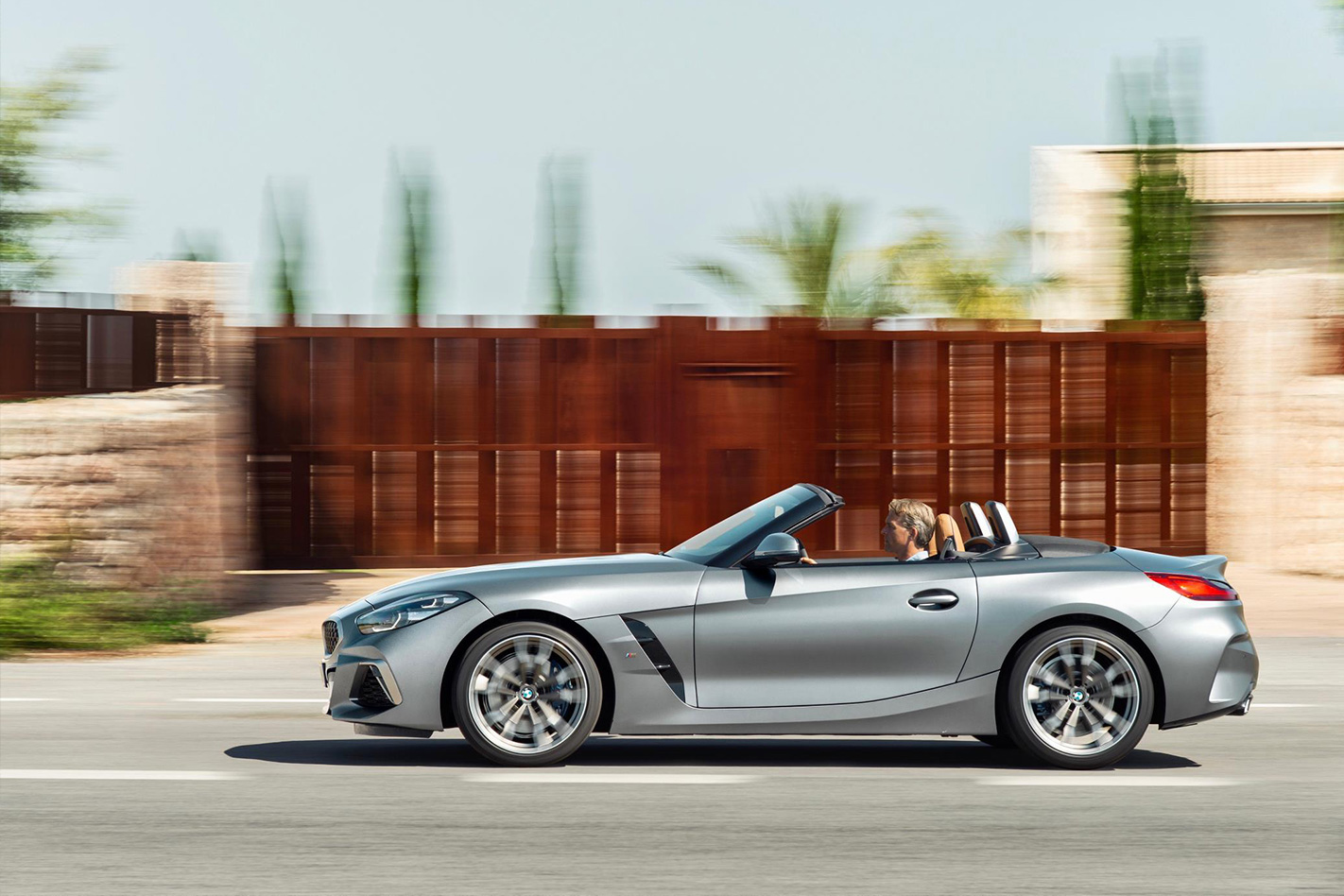
For its fun-focused two-door, BMW says it designed the new chassis for “extreme agility and handling dynamics” across the board. Suspension highlights include double-joint spring struts at the front axle and a five-link rear set up – the first for a BMW convertible, while variable sport steering allows several different rack speed and power assistance settings.
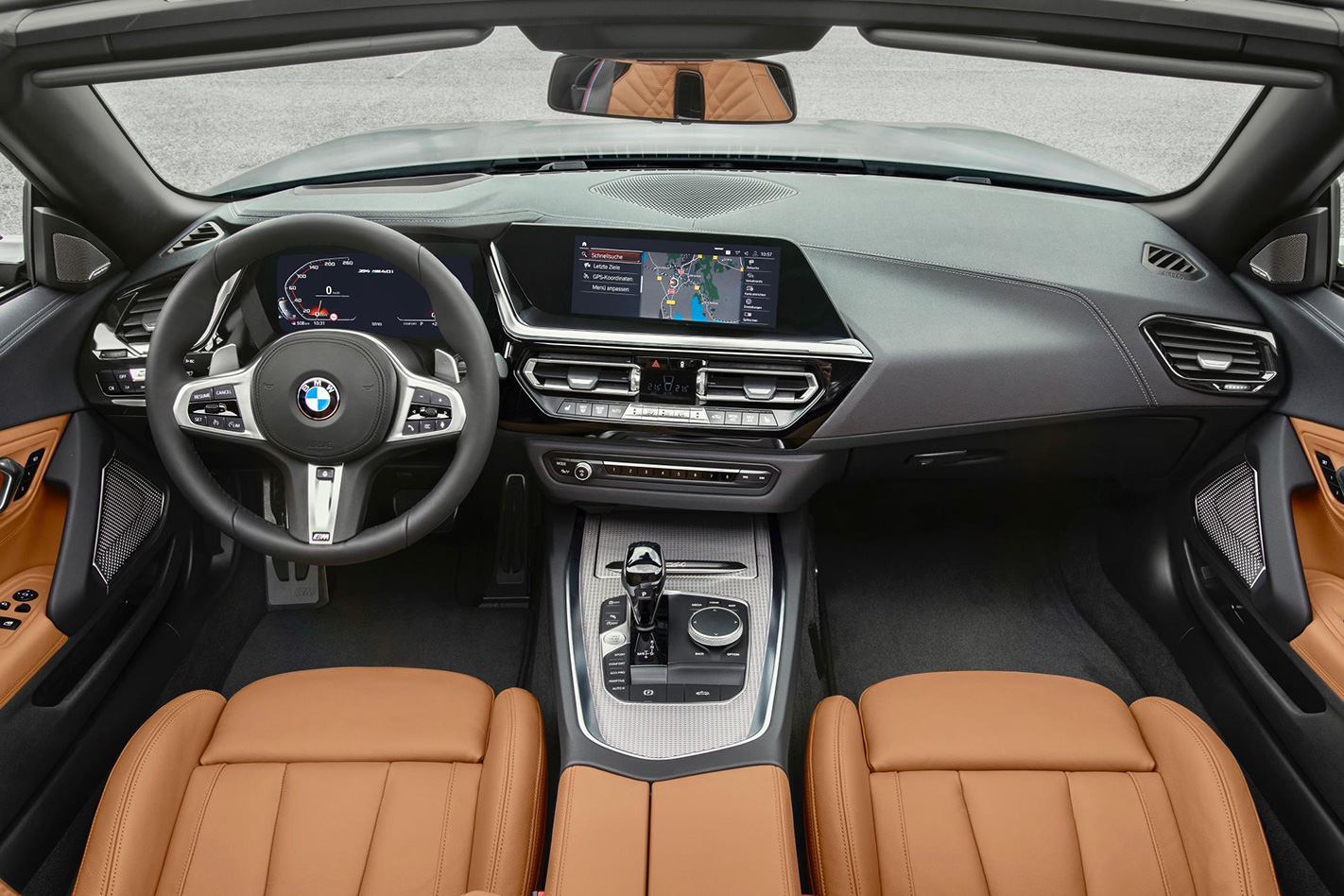
A plethora of performance-enhancing technology is added to the 40i including an M Sport differential, M Sport suspension, M Sport brakes, an extra Sport Plus mode in the switchable Driver Experience settings and stickier tyres fitted to 18-inch wheels. Standard wheels measure 17 inches for the 20i, 18-inch for the 30i, while the 40i can be upgraded to optional 19-inch rims.
Safety systems rank highly with all variants as well. Autonomous emergency braking with pedestrian recognition, lane departure warning, active cruise control, rear cross traffic alert, automatic parking assistance are all standard, while a head-up display features in the Z4 for the first time.
Local pricing and specifications will be announced closer to the new Z4’s Australian launch in the first half of next year.
The Volkswagen Jetta that starred in the film The Fast and The Furious has appeared for sale in the United States.
Famous for its role alongside Chad Lindberg who was known as ‘Jesse’ within the 2001 film, it is presented today for sale in original condition, with the body kit, spoiler, and decals that helped defined it and the movie’s unmistakable car culture.
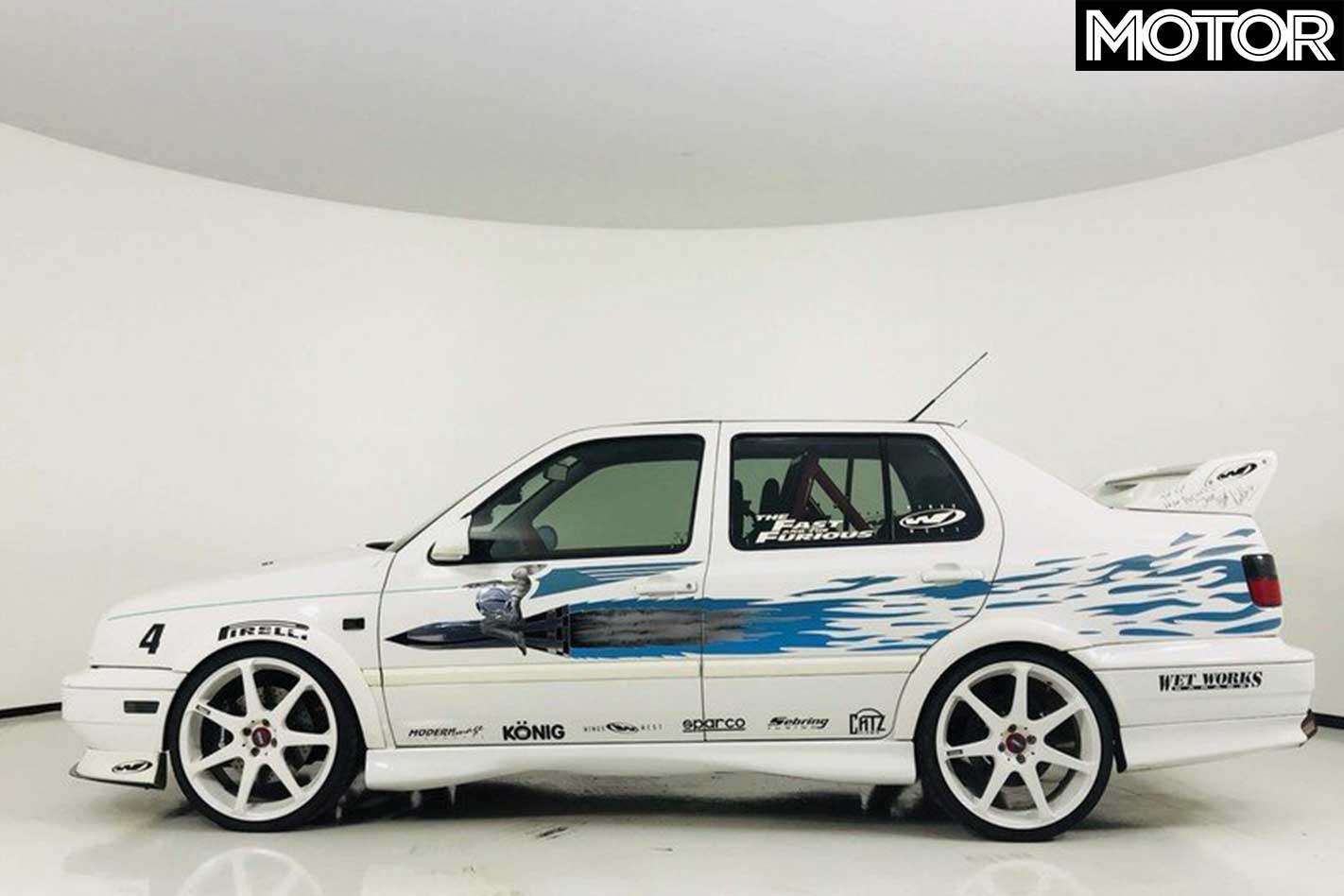
It was sold to Frankie Muniz of Malcom In The Middle fame following the movie’s release, who is an amateur racing driver and avid car enthusiast.
This Jetta was last seen for sale at dealers Barrett Jackson in 2016 where it was reportedly sold for US$46K. The price has grown considerably since then, with Arizona-based firm Luxury Auto Collection placing a price tag of US$99K (AU$138K) on this lot.
Despite a replica of this car being built for charity purposes, Paul Walker, Chad Linberg, and director Rob Cohen’s signatures on its rear spoiler prove this is indeed the genuine ex-Muniz car.
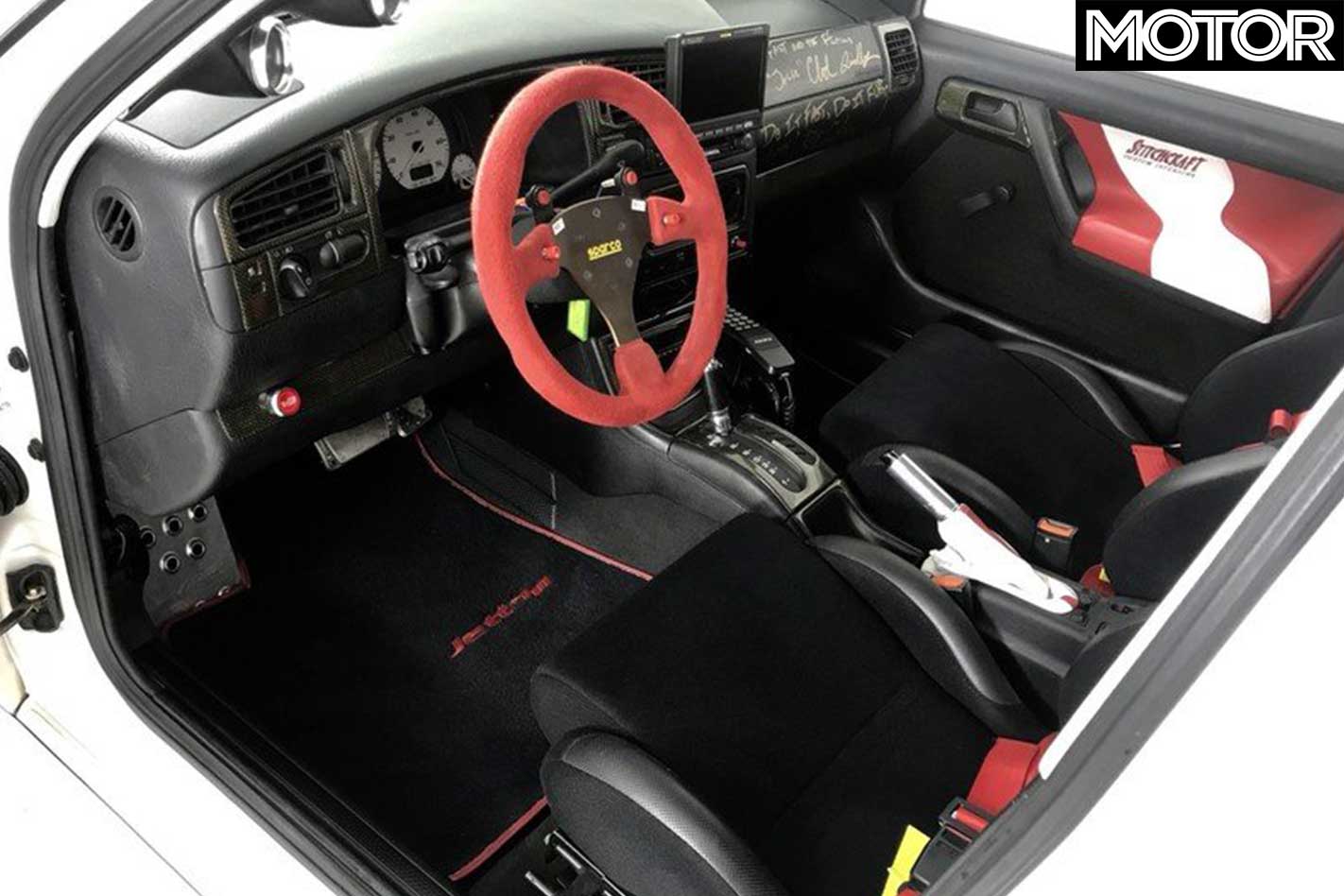
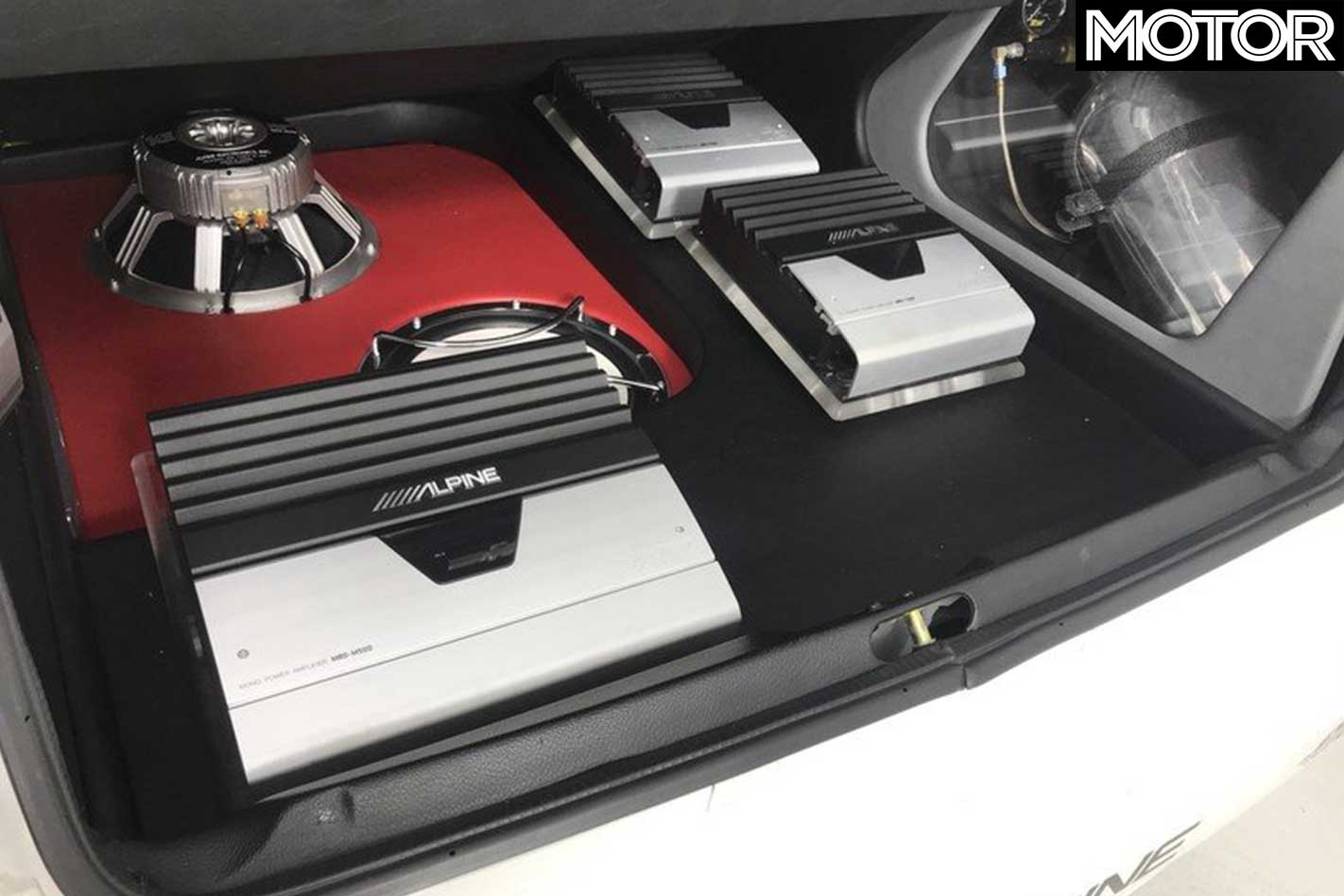
It features a 2.0-litre four-cylinder in an unknown state of tune that is matched to a four-speed automatic and front-wheel drive. Nitrous Oxide bottles feature in the rear boot alongside the car’s aftermarket sound system.
With 37,175km on the clock, a roll-cage has been installed since it appeared in the movie, while it’s written that the car also has a PlayStation 2 connected to its stereo system.
That asking price will make it one of the cheaper automotive alumni of the film, with Paul Walker’s orange Supra commanding over AU$230K when it changed hands in 2015.
Don’t recognise it? Or need a quick reminder of where it featured? Here’s a quick grab from the 2001 hit movie…
