
There’s no real arguing this one. 1993 was flat-out amazing if you were a petrolhead. More specifically if you had a passion for Japanese performance coupes, it was this genre at its very zenith. Maybe you were brought up watching scratchy copies of copies of ‘Best Motoring’ VHS tapes, you knew what Calsonic, Zent and all those weird JGTC liveries meant, and you rejoiced that Japanese sports cars had shaken off their blousy Eighties phase and had become gym-toned and confident.
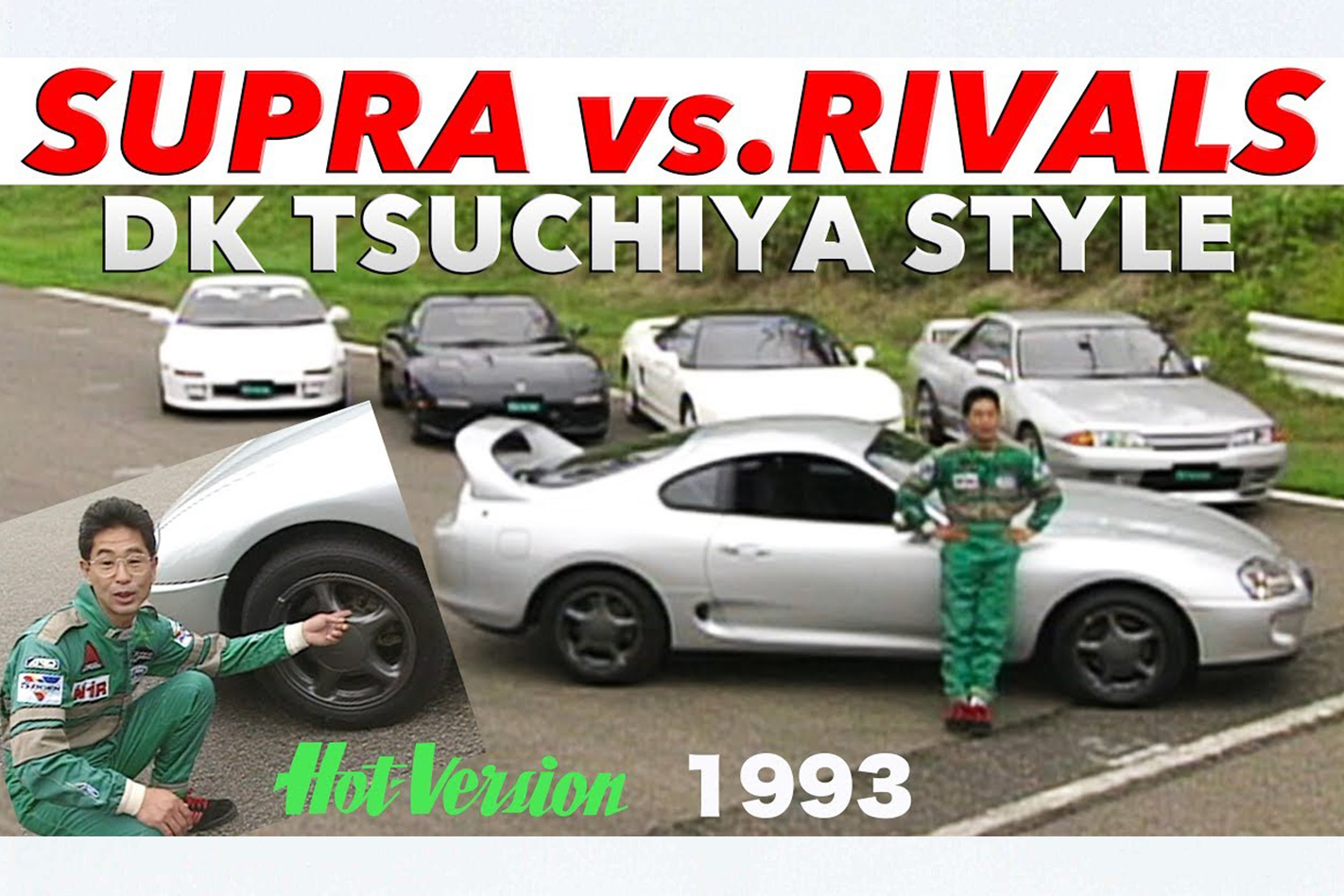
But if 1993 was the billboard year, 1989 was the genesis. This was the year that saw a whole slew of new product launches that would go on to redefine how we thought of Japanese cars. The Mazda MX-5, the Nissan 300ZX Z32, the Toyota MR2 Turbo, the Toyota Celica GT-Four ST185 and the Nissan Skyline GT-R R32 all hit Japanese dealers in ’89, the same year, incidentally, that Lexus showed with its LS400 that it could meet and beat the best European super-sedans in terms of refinement and quality. This was followed a year later by a car that would rewrite the script in a different manner, the Honda NSX, which had the chops to make Ferrari’s wares look ancient.
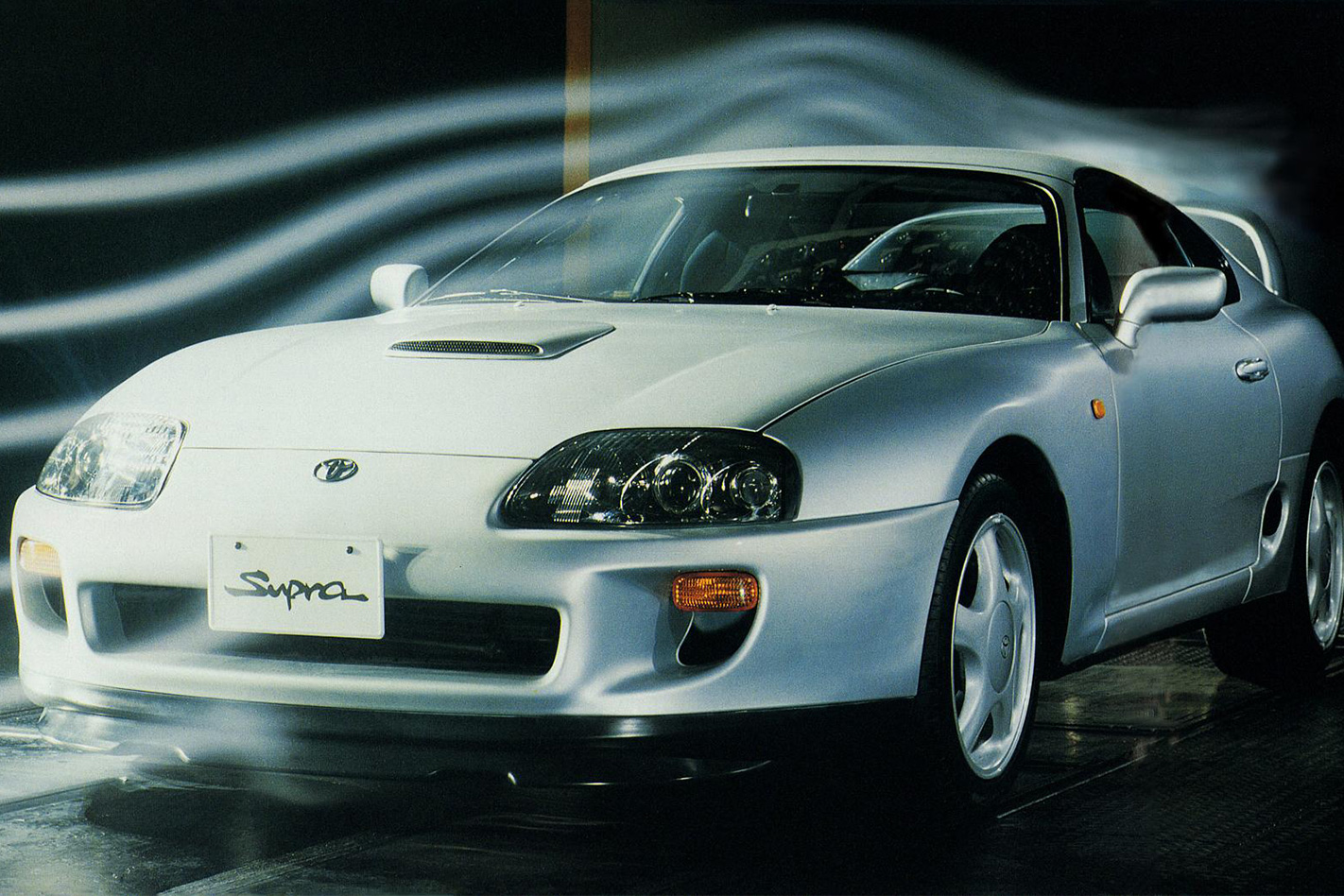
Fast forward to ’93 and all of these cars are still on sale. They were joined in 1991 by the Subaru SVX, in 1992 by Mazda’s ball-tearing FD RX-7 and the gull-winged Autozam AZ-1, and in 1993 by the A80 version of the Toyota Supra. With rally reps from Subaru and Mitsubishi and hot hatches such as the Pulsar GTi-R and the Daihatsu Charade GTti also available, 1993 was the high water mark. Not that we knew it at the time.
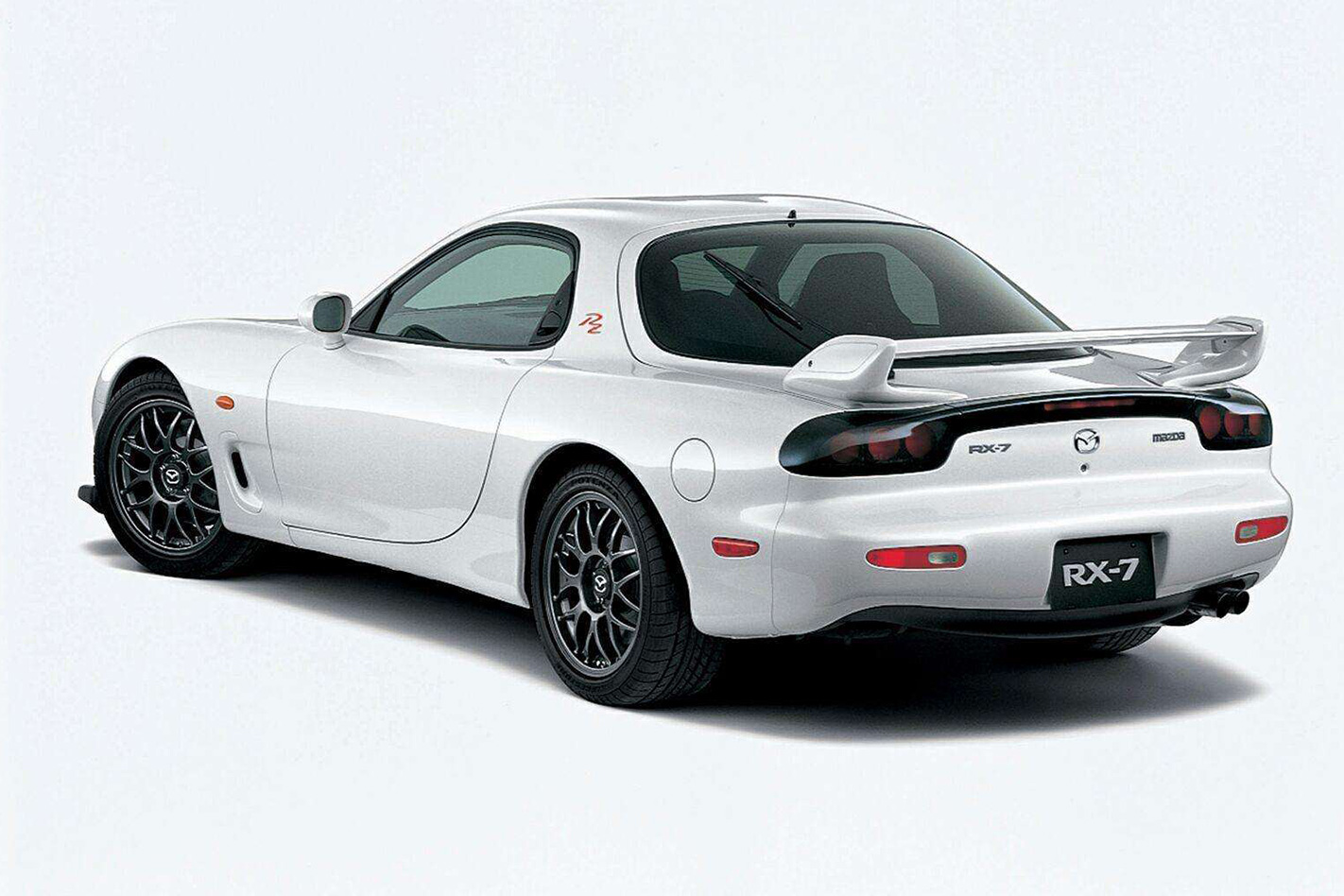
We didn’t know that we wouldn’t see another version of the RX-7 and that the NSX would soldier on for another fifteen years with ostensibly the same body shape. Nobody could have forecast that the Supra nameplate would go from hero to zero, only to be resurrected more than a quarter of a century later. Or that the MR2 would go from a 250km/h turbocharged terror to a 104kW lightweight with no baggage space. And then die for good.
Put that down to Japan’s ‘Lost Decade’, when the asset price bubble burst at the start of 1992. Land and property values had tripled throughout the 1980s. Increasing interest rates in 1990 kicked off a chain reaction that saw property and stock prices erode and then collapse. While 1993 was a celebration for most car lovers, if you were the CEO of a Japanese car manufacturer, it was a desperate claw back.
But here’s the thing. Some 25 years post 1993, all of these fantastic cars are now legal to be imported to the US. And many of those who remember that period with a certain rose-tinted nostalgia now have the means to buy the cars they lusted over as pimply kids. That has pushed up the auction prices in Japan as the country enjoys another used car export boom. For example, a 1990 Skyline R32 GT-R, eligible for US export, is worth a good deal more on the auction block than an equivalent 1994 model year version.
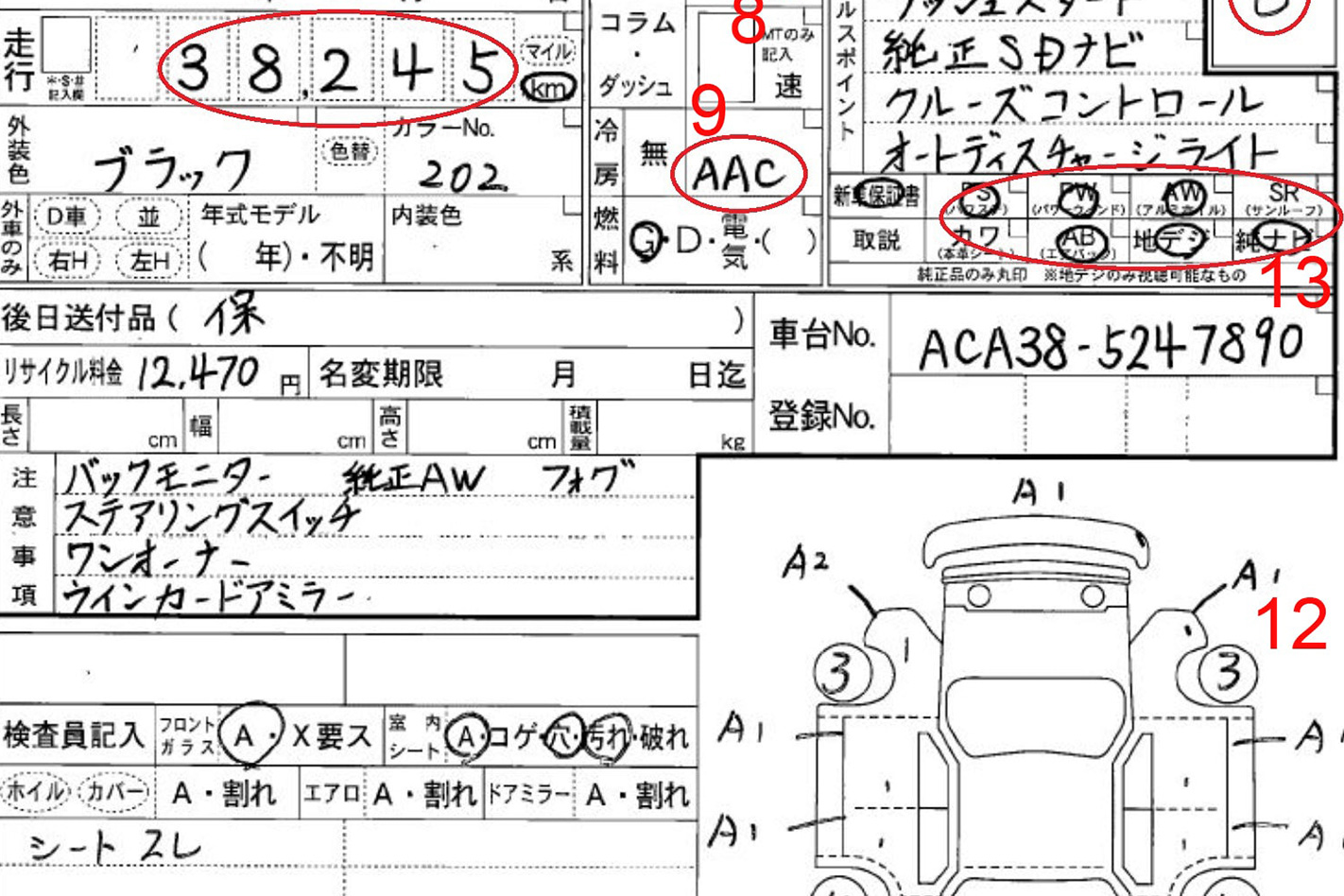
Next year, legislation may change here in Australia replacing the prior 1989 cut-off for import to a rolling 25 year rule in line with the US, opening up all of the cars built from 1989 to 1994. In other words, all the good stuff. But for every boom, there’s an eventual bust. Access to the best golden era cars could dry up as Aussie and American bargain hunters plunder the auctions and squirrel away all the collectables. So if you’re keen to track down something from Japan, you’re going to need to be very quick on the draw. Start saving, start doing your research on auctions, shipping and availabilities sharpish. But before you do that, hit up the comments and let us know what you have your eye on.
TELL ME ABOUT THIS CAR
Volvo’s first small SUV has made a stylishly late entrance to the segment, with its handsome chiselled exterior and airy interior design. Built on an all-new architecture, the all-wheel-drive XC40 draws on the Swedish brand’s success with the bigger XC60 and XC90, mixing style, function and safety with small but powerful turbocharged 2.0-litre diesel and petrol engines.
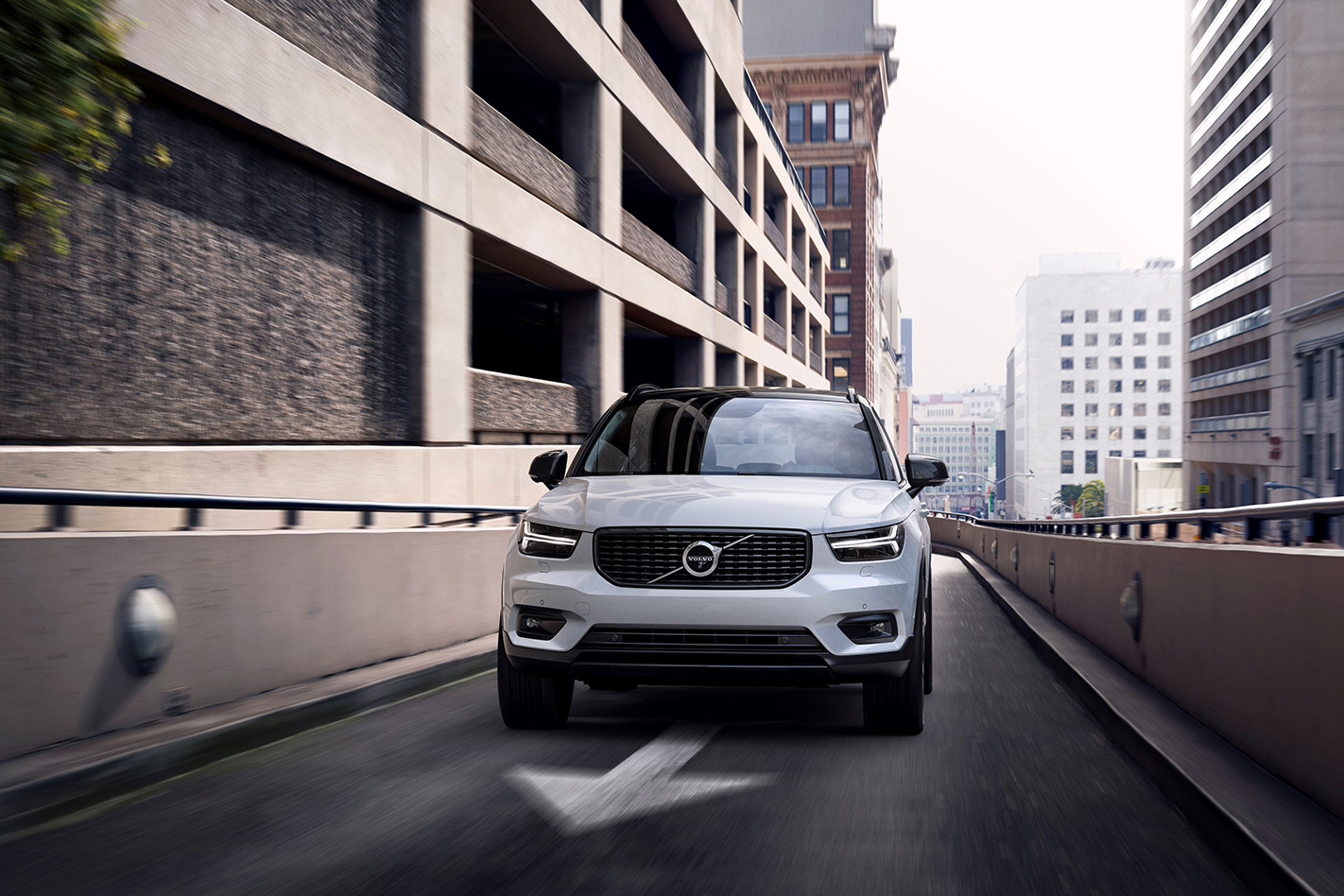
The XC40 range is priced between $47,990 and $57,990 and is available in four key variants – T5 petrol and D4 diesel versions of the Momentum and sporty R-Design spec levels. We drove the T5 R-Design Launch Edition that costs $1480 more than the standard T5 R-Design’s $54,990 retail price, with the extra coin bringing a bunch of otherwise optional extras including a huge panoramic sunroof, heated front seats, Park Assist Pilot, adaptive cruise control, 360-degree camera to aid with parking, anti-theft alarm, tinted rear glass, power folding rear seat backrests, and a 13-speaker Harman Kardon sound system.
STRENGTHS
- The spacious cabin is testament to modish Scandinavian design with plenty of attention to detail placed on aesthetics and convenience. The cabin has a wonderful airy feel that is accentuated by the optional orange ‘Lava’ carpet and door trims that highlight design elements such as the floating arm rests.
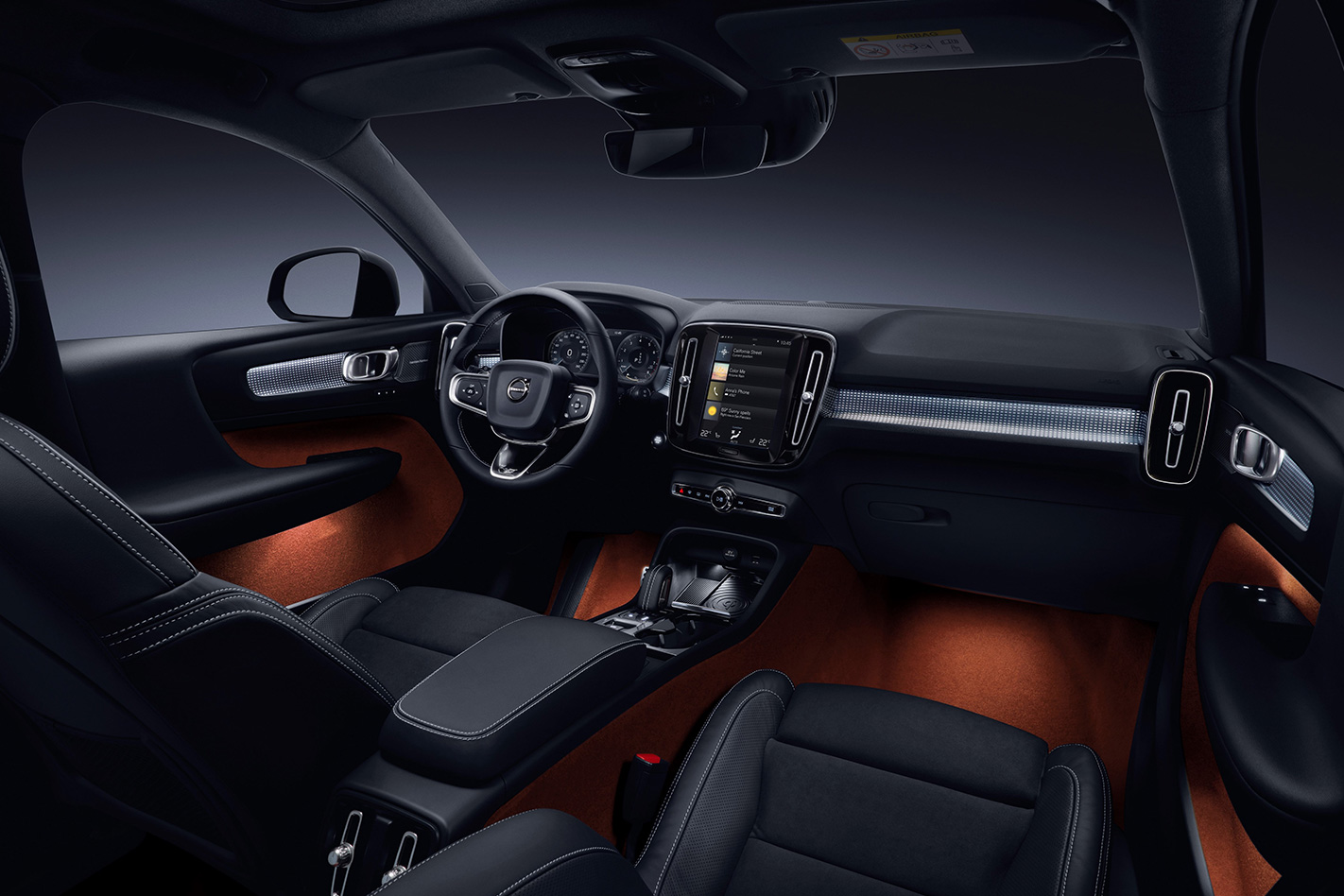
- You’re not lacking for storage, with huge front door bins that can hold a laptop bag, a handy removable rubbish bin in the deep centre console and even a flip-out handbag hook on the glovebox lid.
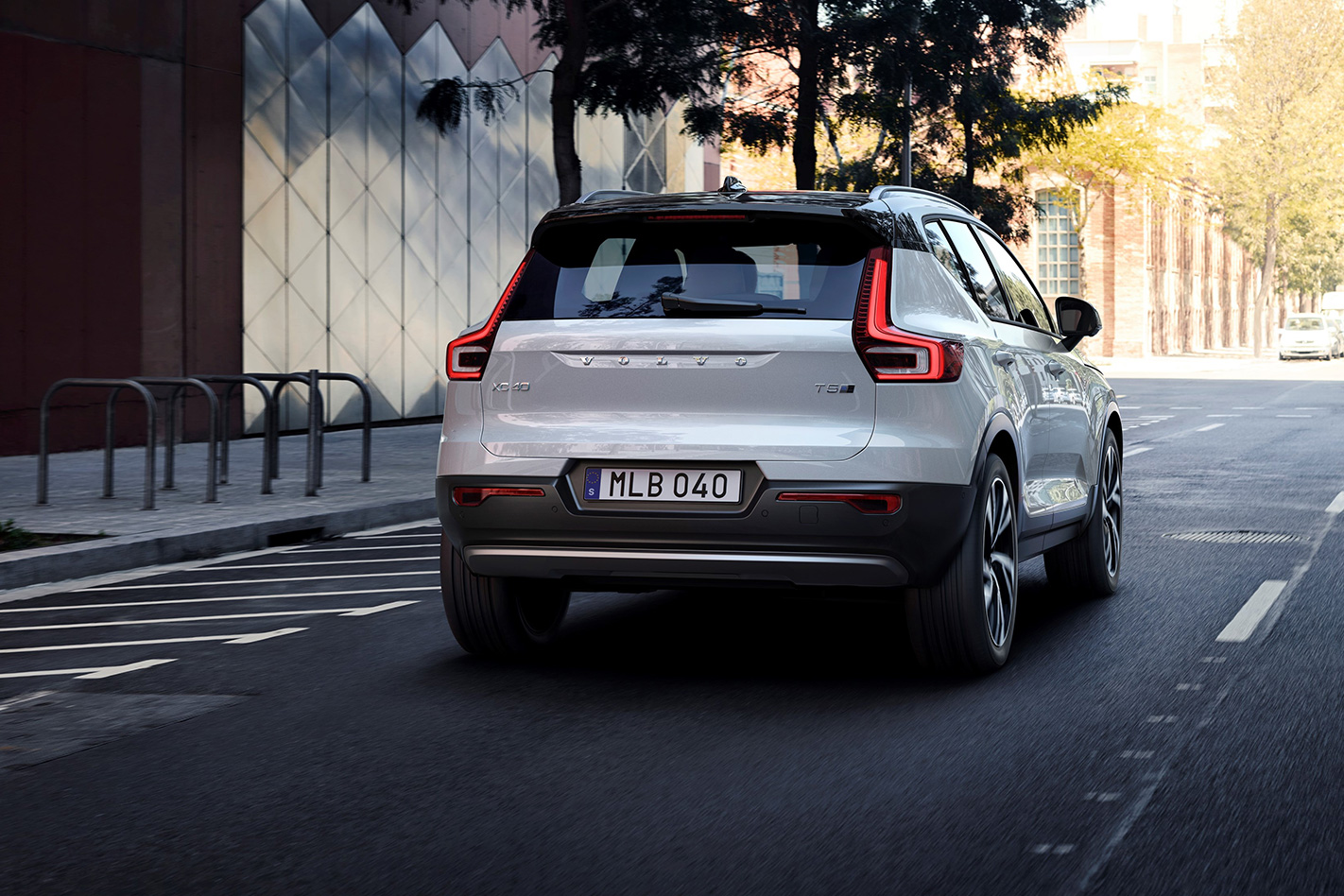
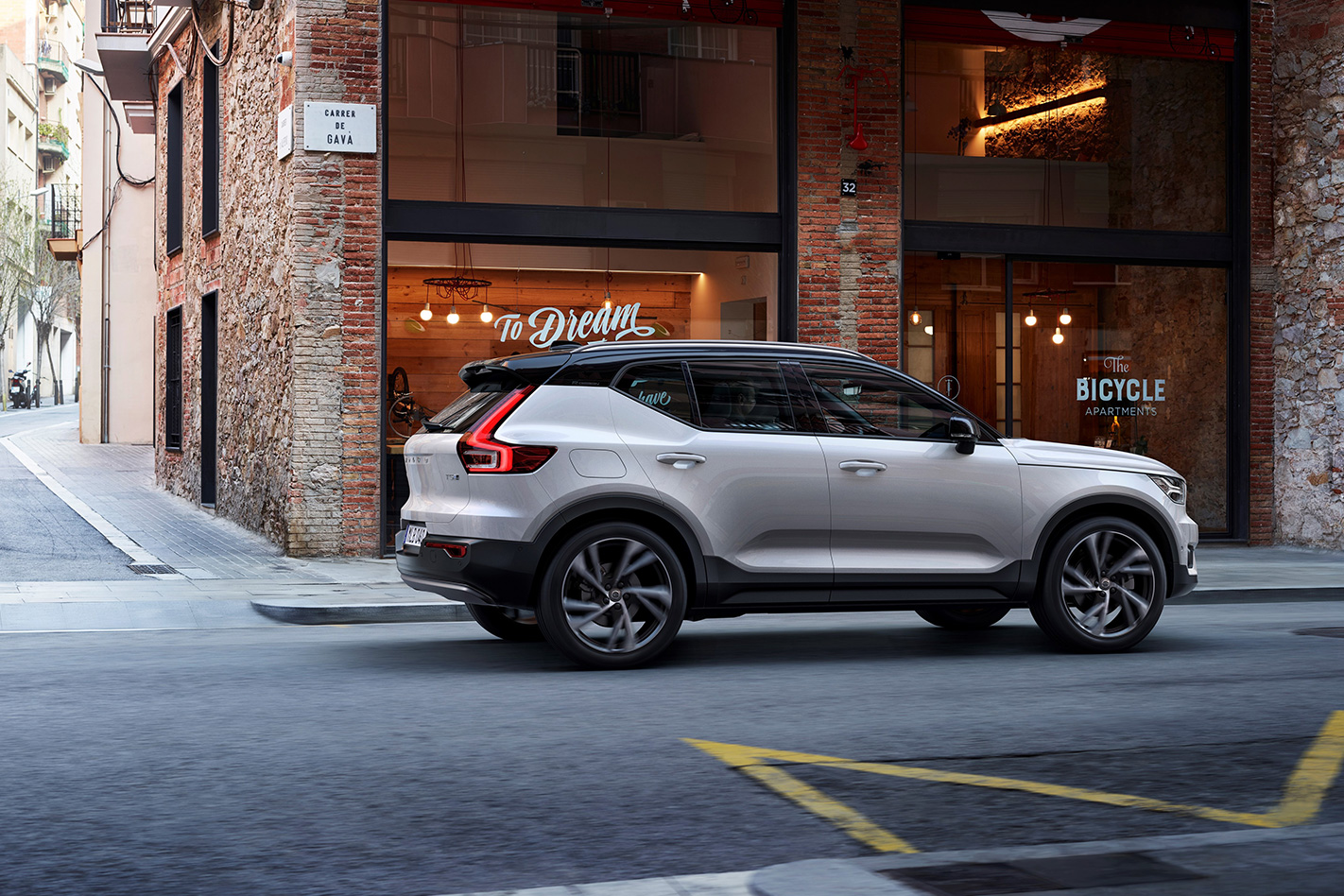
- The exterior looks great too. Volvo’s designers have managed to balance youthful looks that define most small-SUVs while maintaining the sophisticated stance and sculpted lines that help define the larger (and Wheels COTY winning) XC60. The sleek headlights with ‘Thor’s hammer’ DRLs complete the look.
- The XC40’s 1652mm height results in plenty of headroom. The back seats will comfortably accommodate two six footers, with ample the legroom the match.
- Despite its height, the XC40’s taught chassis absorbs the high-centre of gravity well to minimise body roll around bends.
- It’s fun to drive, with zippy handling and a composed ride. Any firmness from the 20-inch Pirelli Pzero tyres is well absorbed and controlled by the suspension, plus the front Nappa leather seats are ergonomic, comfortable and chic.
- The 182kW T5 turbocharged petrol engine is a peach. It feels relaxed when driving around town and at highway speeds, but it comes alive when you put foot down to overtake with much of its 350Nm of torque available between 1800 and 4800rpm via the obedient and smooth shifting eight-speed automatic transmission.
- It’s a quiet ride, with little tyre rumble though there is some wind noise around the wing mirrors and rear doors at higher speeds.
- The boot space is decent for this class at 460 litres with the seats up, and makes the most of the space with four bag hooks and a false floor that reveals a deeper section to securely hold items such as shopping bags. The rear seats fold down with the touch of a button to increase capacity up to 1336 litres.
WEAKNESSES
- While there’s plenty of leg and headroom for two adults, the rear seats lack under thigh support. Bumps are keenly felt down back too, and the short arm rest only supports your elbow meaning there’s not much to hold on to on winding roads.
- Side vision for smaller rear-seat passengers is hampered by window pillar and the rising shoulder line.
- The steering is light, which helps to make the XC40 feel agile and wieldy in city traffic, but it lacks feel and is disconnected from the front wheels at higher speeds, which can sap confidence through bends.
- The small leather gear shifter requires some familiarisation as it needs a double tap action to get from drive to reverse. Owners will no doubt get used it, but initially they find themselves trying to reverse or move forward while in neutral.
ARE THERE ANY RIVALS I SHOULD CONSIDER?
Similarly priced 2.0-litre turbocharged petrol competitors include the Audi Q2 2.0 TFSI, Audi Q3 2.0 TFSI, BMW X1 25i, BMW X2 20i, Jaguar E-PACE P250 and Mercedes-Benz GLA 250.
When the Subaru BRZ and Toyota 86 finished poorly at Bang For Your Bucks 2012, the postman got a hernia bringing in the mailbag for MOTOR that month.
As rear-drive, lightweight, keenly priced coupes, they were expected to – frankly – break our Bang For Your Bucks formula. But they didn’t. And people were unhappy.
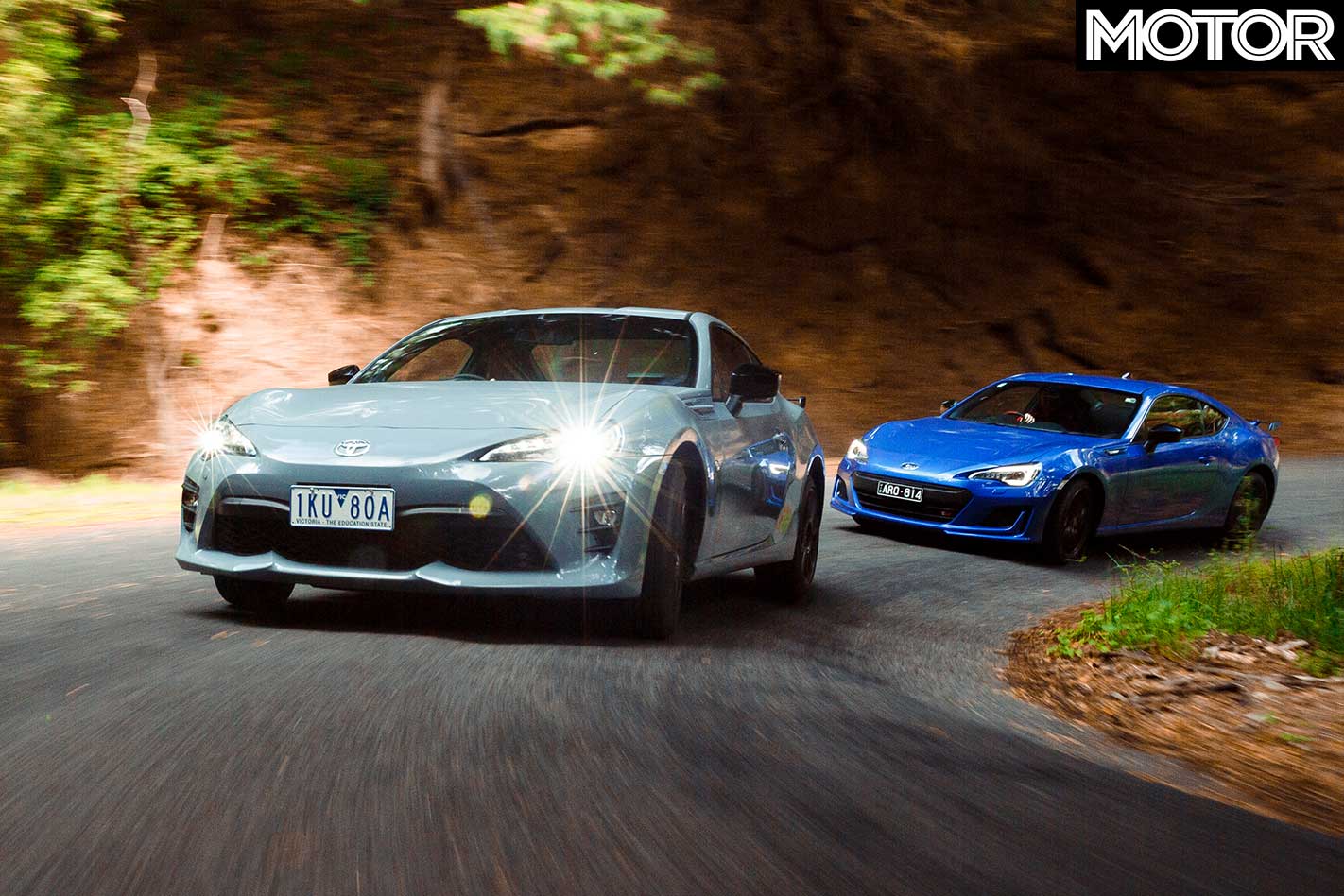
That’s because Bang For Your Bucks is a measure mostly of raw performance and, well, the 86 and BRZ aren’t about numbers, and the judges’ comments reflected as much, the Japanese pair locking out the top two results in the subjective rankings. Basically, the marketing spin was true – both the 86 and BRZ were absolutely brilliant.
As we are knuckle-draggers of the highest order, it wasn’t long before someone piped up with ‘those questions’, namely, could they use a cheeky turbo, or just a dash more grip?
We’ve watched Subaru and Toyota struggle to modify their masterpieces for years while these queries gnawed at our minds. Toyota teased us in 2013 with a Tada-tuned prototype that never made it to showrooms. It was followed by a sticker pack in 2015, a thorough fine-tune in 2016, then a TRD version that missed the mark in 2017.
Subaru’s efforts have been just as disappointing, with no more than a short-shifter or special colour headlining its special editions.
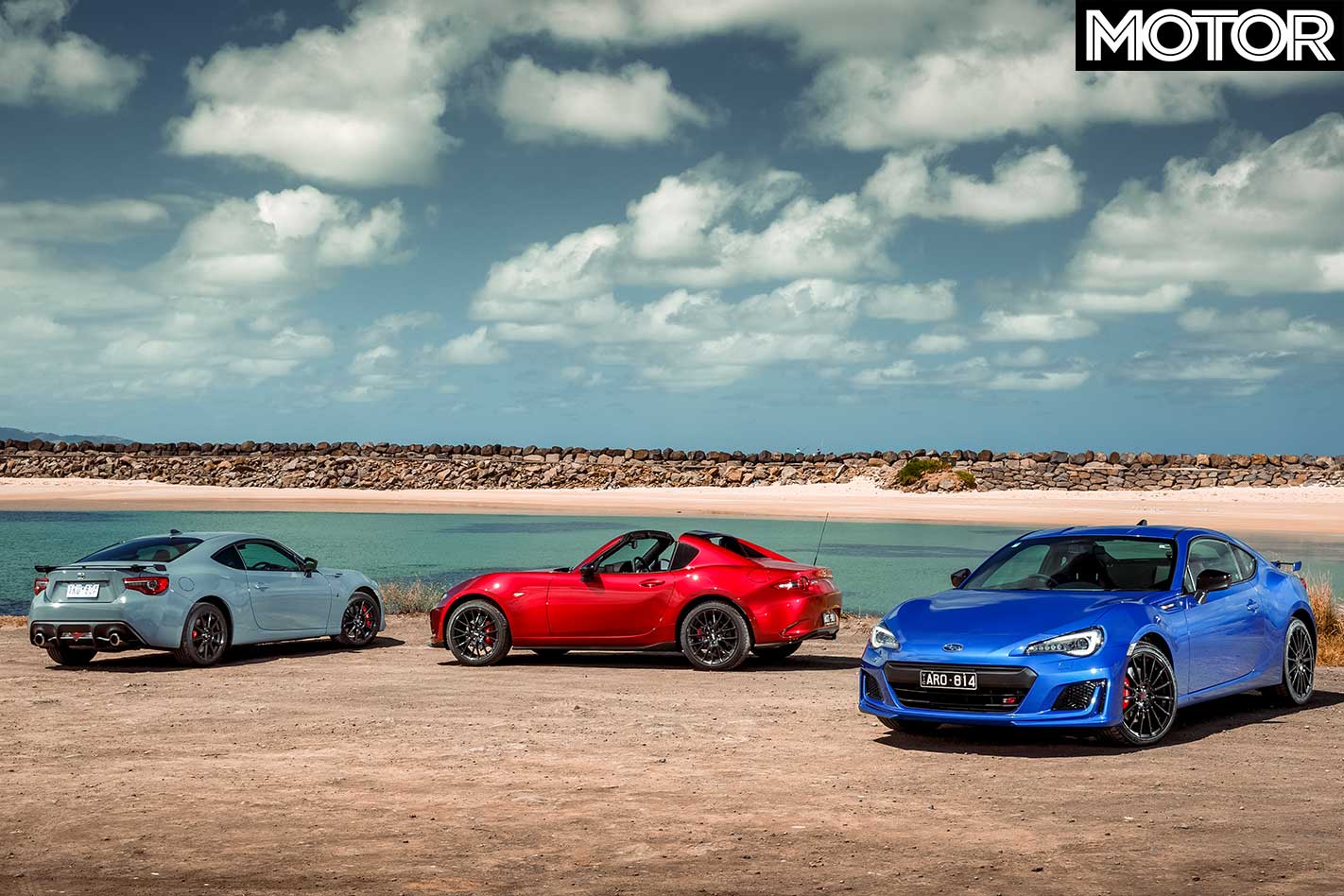
Recently, however, the car gods heeded our prayers – sort of. Subaru and Toyota announced proper factory-tuned bits the sports twins, making them the slightly-more-real deal.
While a model with a meaningful power increase remains the stuff of fantasy, we absolutely welcome the addition of words such as “Brembo” and “Sachs dampers” in official BRZ- and 86-related Subaru and Toyota press releases.
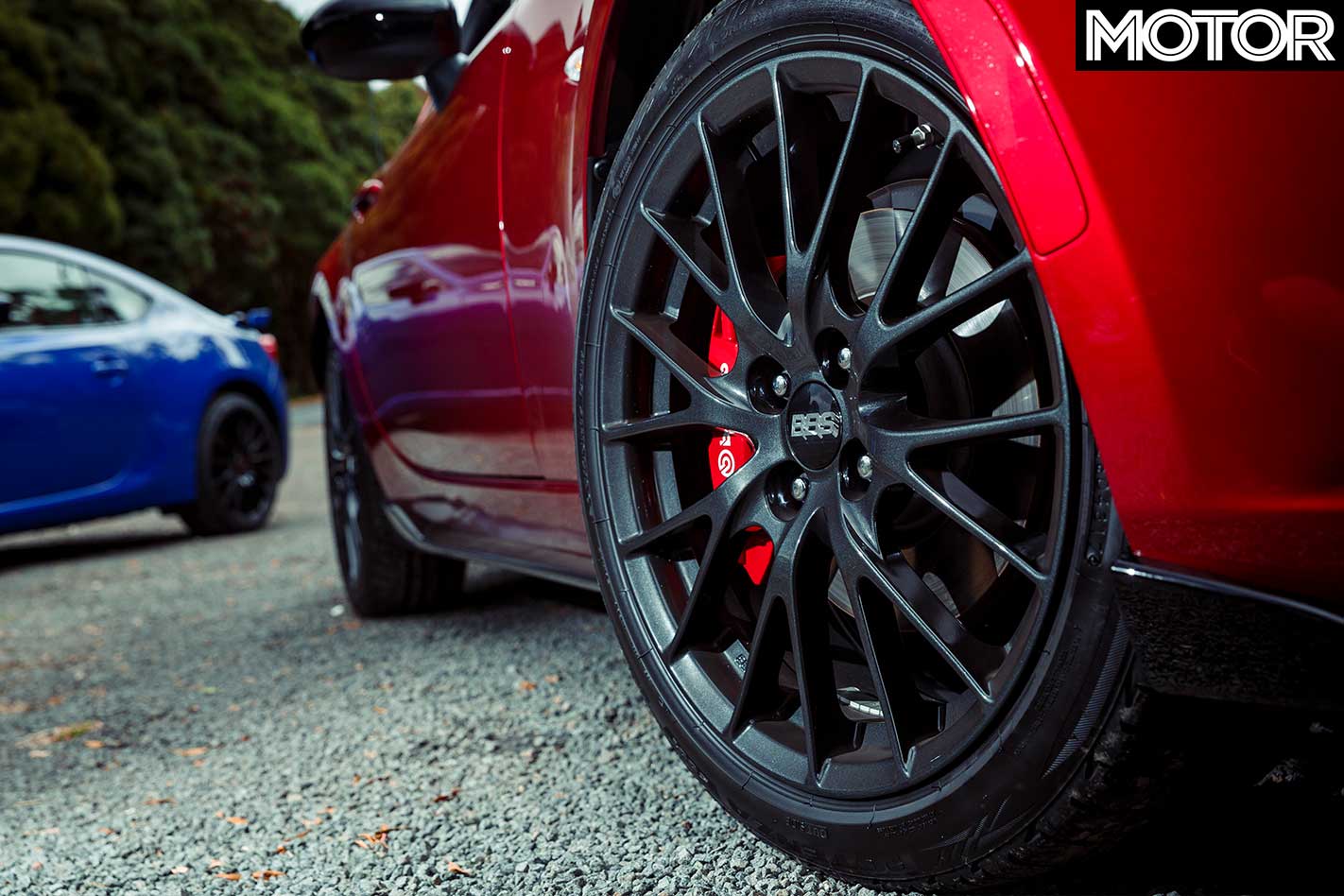
Shared across both cars, the new Brembo package comprises 326mm front discs clamped by four-piston calipers and rear two-piston calipers that gnaw 316mm ventilated discs.
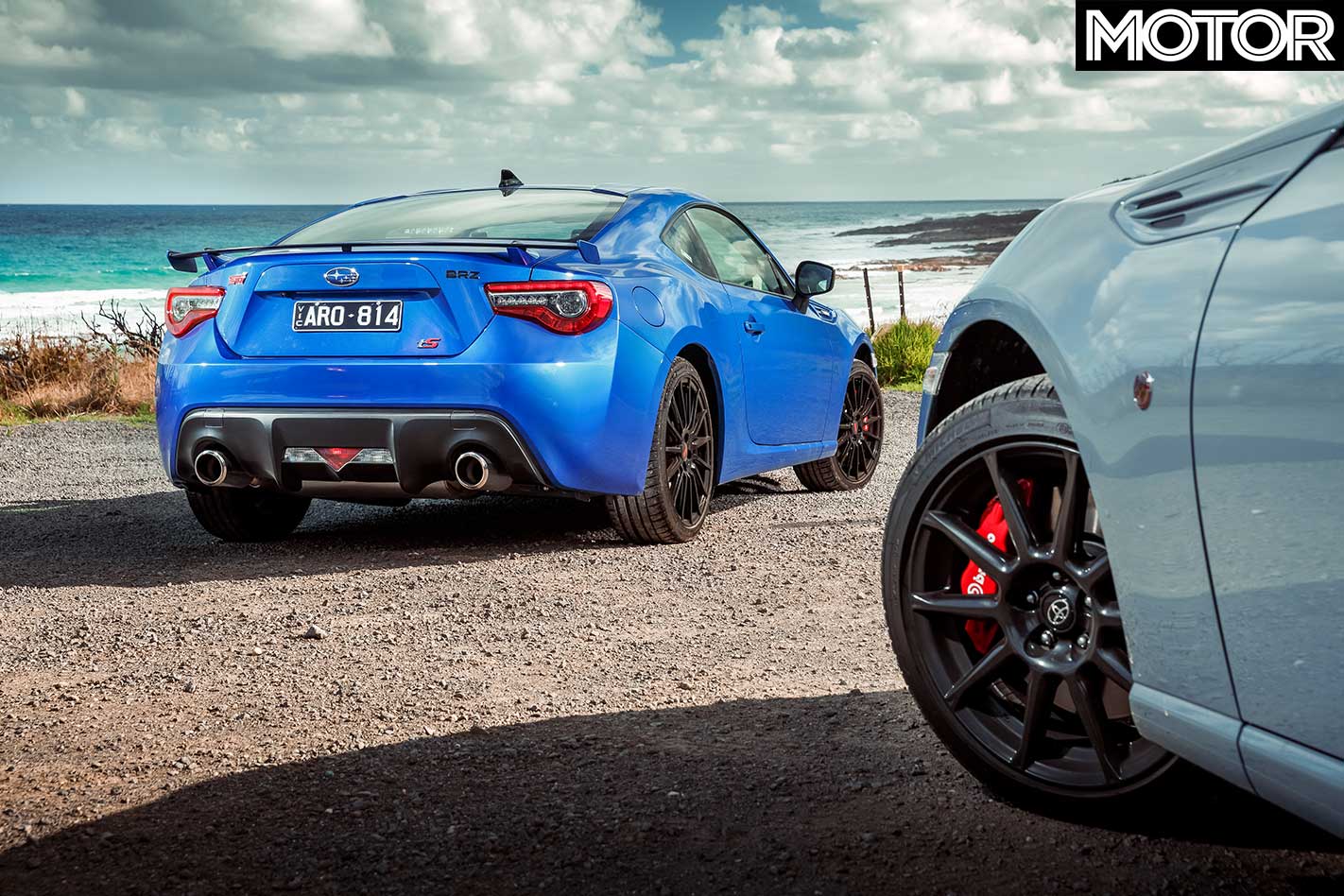
Toyota cages the brakes with sexier charcoal 17-inch wheels. They’re wrapped by the same 215/45 Michelin Primacy HP tyres used on the base car. You can find all this in a $2200 box on the 86 GTS’s options list (or $2900 for GT) which allows access to the exclusive Moon Slate grey as featured on our test vehicle here.
Subaru, meanwhile, infuses the new bits into a top-of-the-line BRZ called the tS. Short for ‘Tuned by STI’, the badge isn’t just a name. Fuji’s boffins have tinkered with the car’s chassis, bracing its belly and engine bay with bars to complement lowering springs coiled around its Sachs dampers.
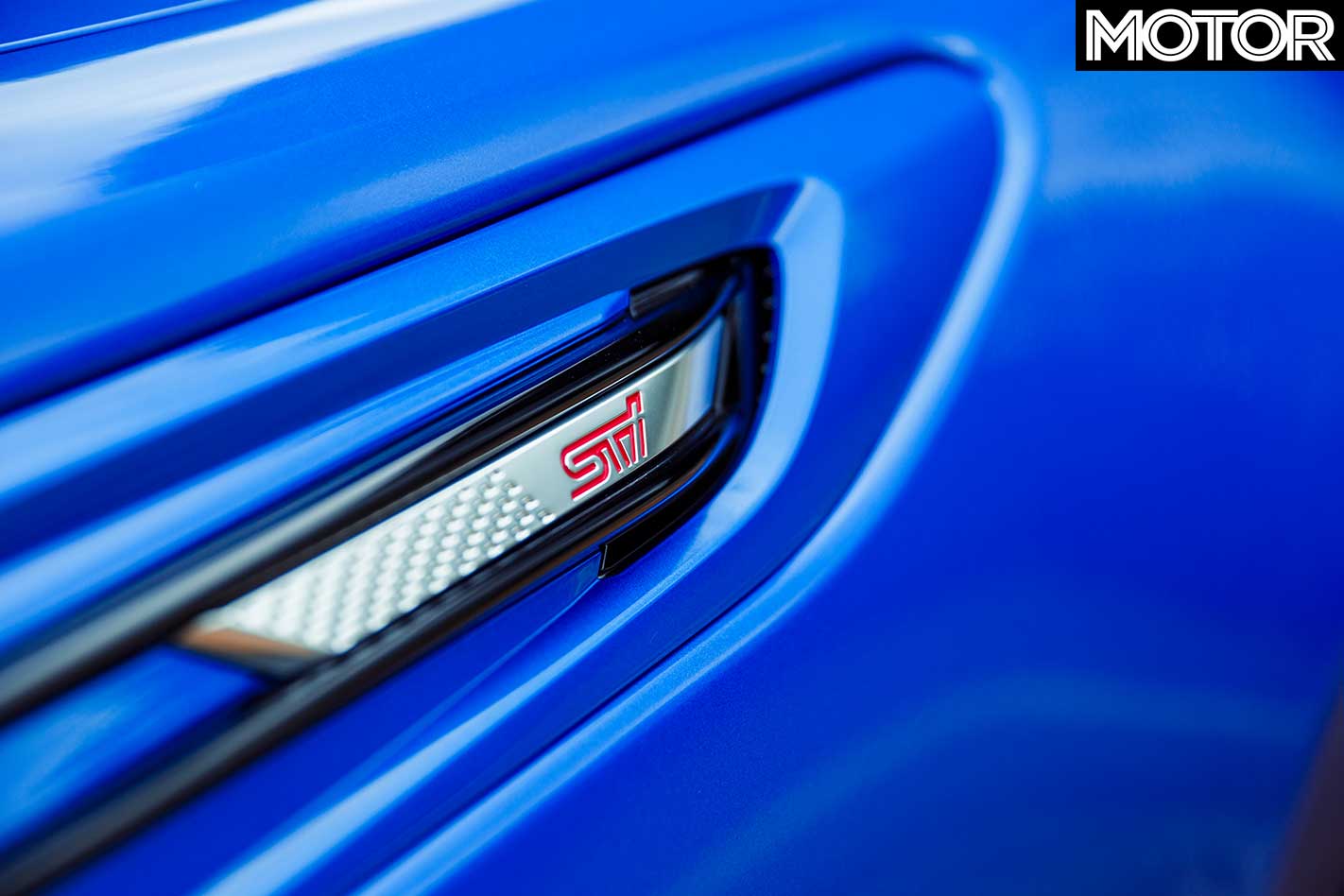
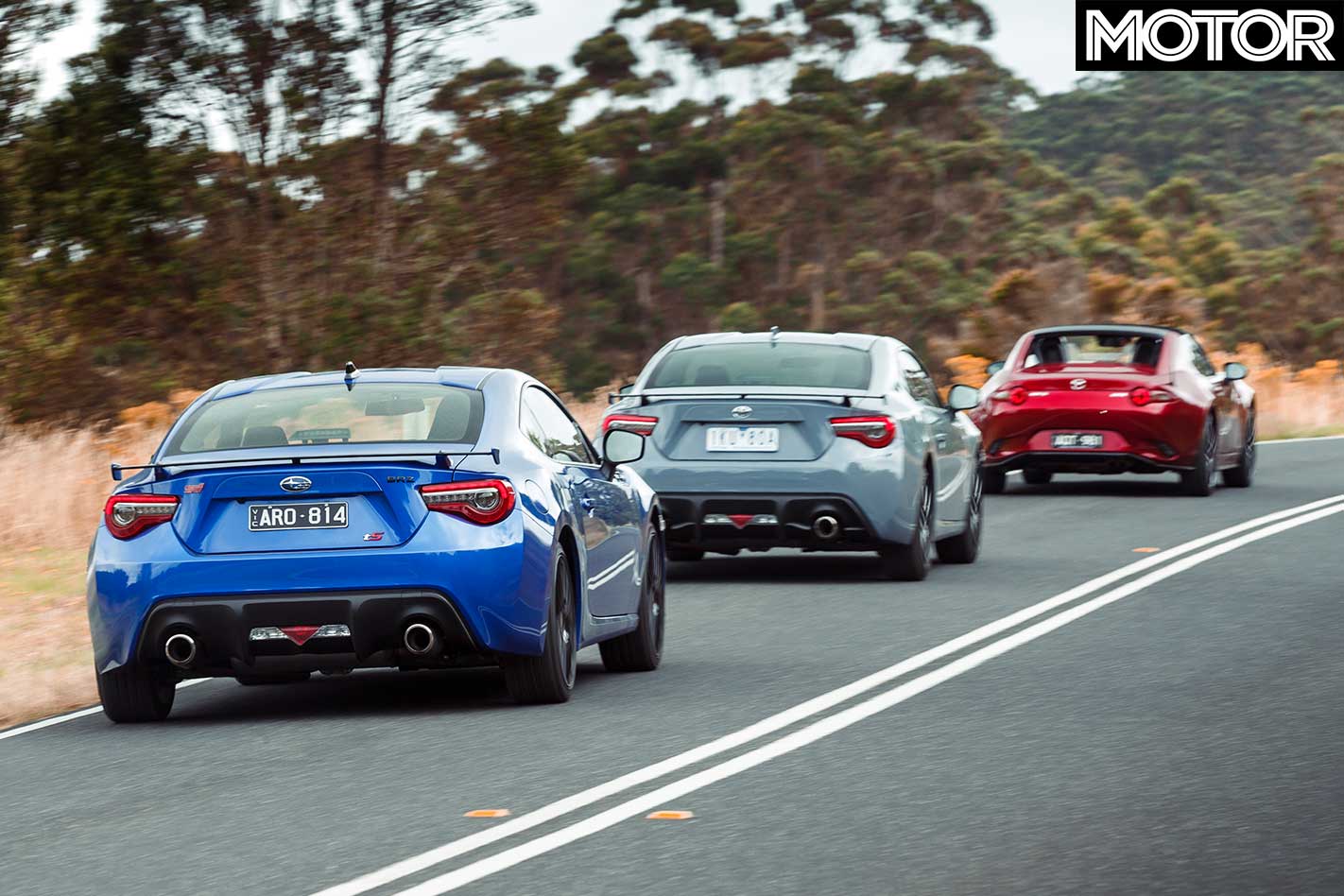
Finishing the package is Michelin’s new Pilot Sport 4 rubber on STI 18-inch alloys. And combined with myriad styling tweaks and accessories, the package pumps the BRZ’s standard price by $6000 to $39,900. Yet, it’s not the most expensive car here. That honour goes to the third car in this here test, the Mazda MX-5.
Almost cut from the same philosophical cloth as the Toyobaru twins – being lightweight, low power and low price – the MX-5 is obviously a radically different car, not least this RF version with its own folding hardtop roof.
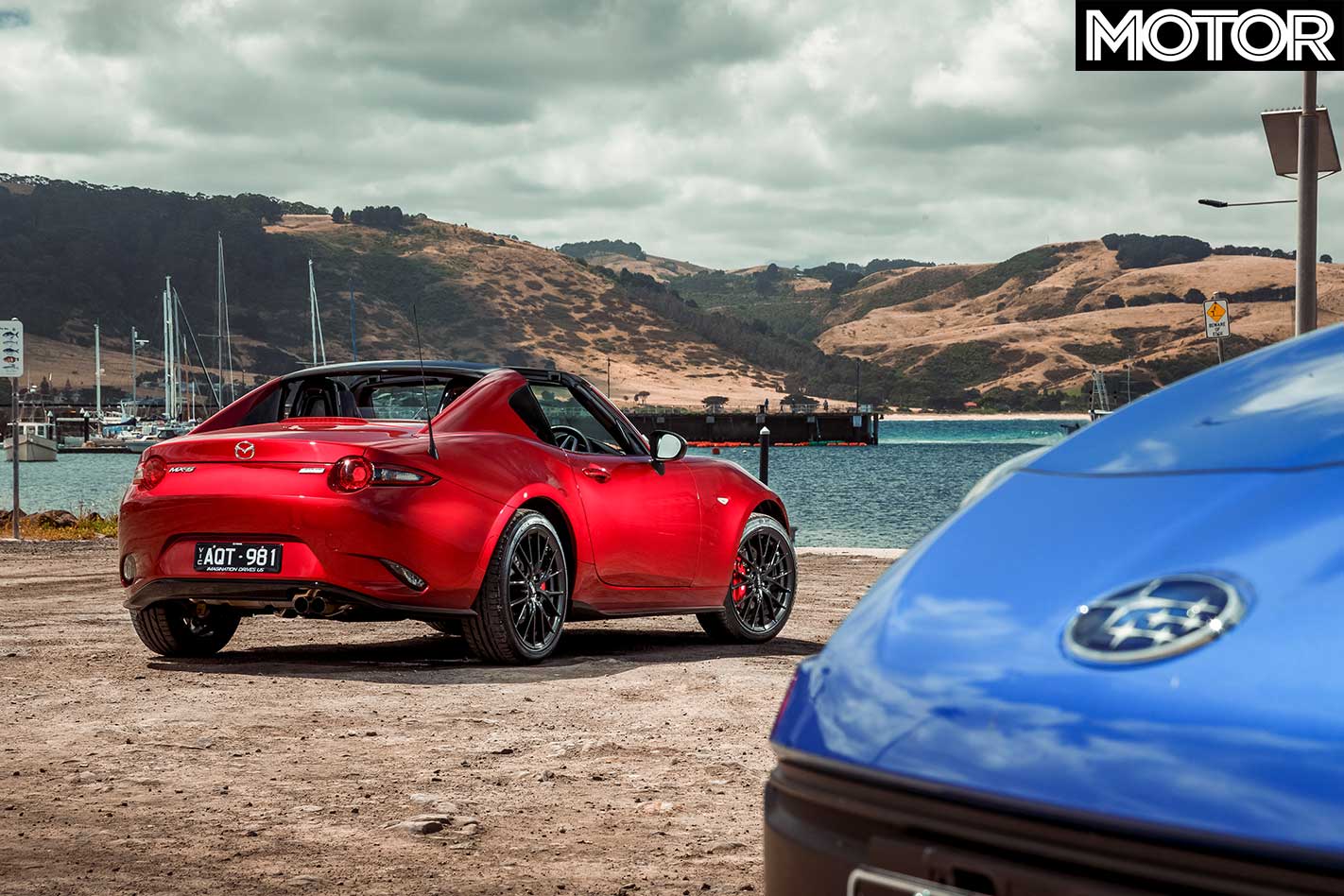
But wait, there’s more – we’ve nabbed one of 110 manual GT Limited Editions that have taken the Brembos and Bilstein dampers from American market MX-5 Club editions. It also adds trick adjustable Recaros and, strangely, a custom-made Seiko chronograph watch. Is this the best driver’s ND you can get? Perhaps.
It’s certainly the most expensive ND you can get. Unfortunately our fully loaded MX-5 isn’t as bargain-focused as our other two, and at $55,670 driveaway it brings back unpleasant memories of the NC days. As the ultimate MX-5 in specification and goodies, though, it deserves a shot against the other two at the title of ultimate cut-price lightweight rear-drive sports coupe.
For battle, we head to Victoria’s south-west Otway Ranges. The roads that wind their way through the seaside hills not only make for stunning photography, but their short and sharp corners favour handling over power. Perfect, then.
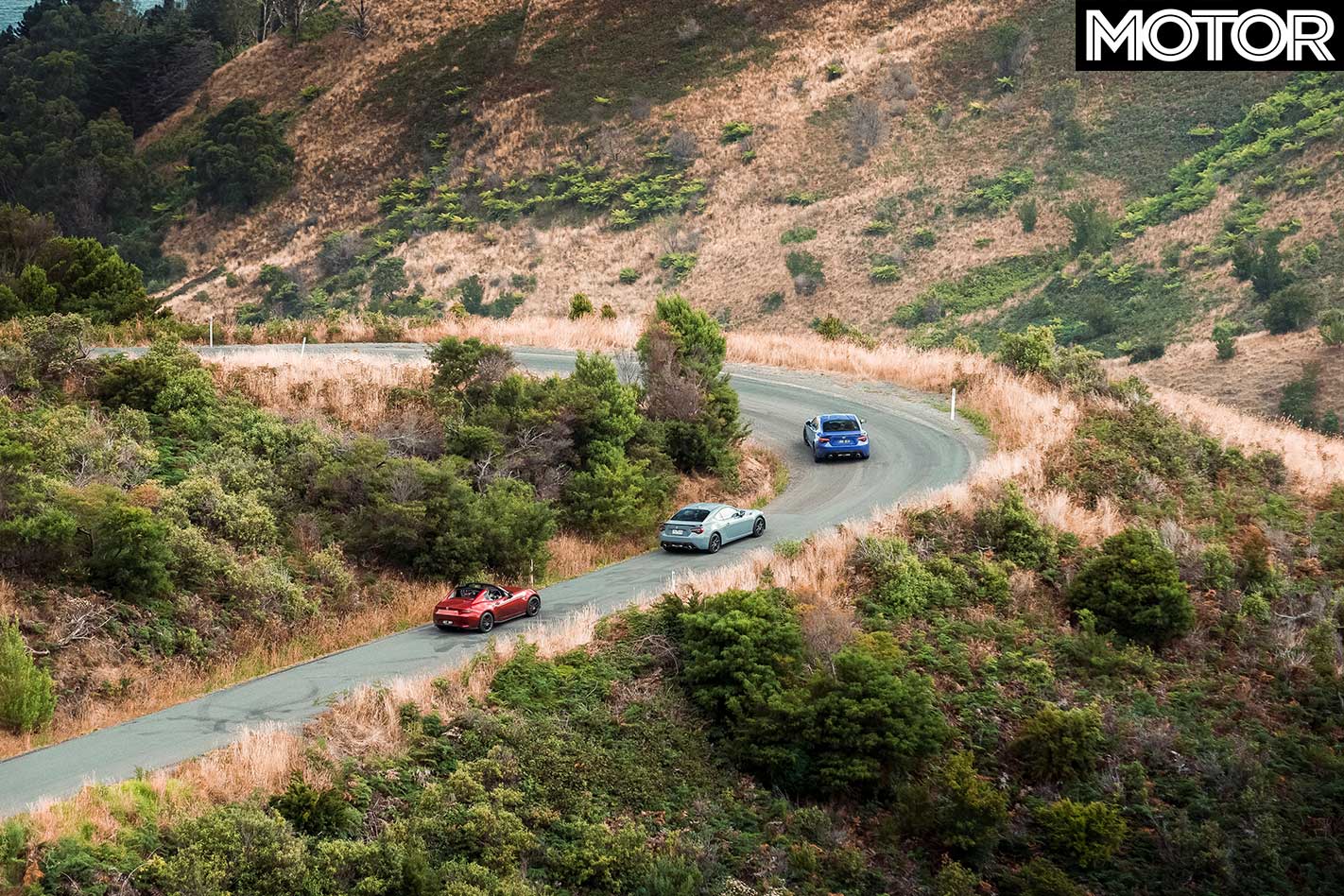
Our three protagonists certainly don’t raise eyebrows at the drag strip. (Again, we’re very sorry we don’t have performance numbers this issue – we’re working on getting them back.) The updated FA20 boxer punching away in the nose of our Toyota and Subaru reads like a gem on paper. It makes 152kW and 212Nm with bigger intake and exhaust runners, dual-fuel injection, variable-cam timing and variable valve-lift – all helping eke that meagre grunt from just 1998cc.
Scoff all you like, but it’s good enough to join the magic 100 horsepower-per-litre atmo club, with cars like the 911 GT3 and Audi R8. Although returning to reality with a thud, the boxer’s actual performance is nowhere near as bewitching.
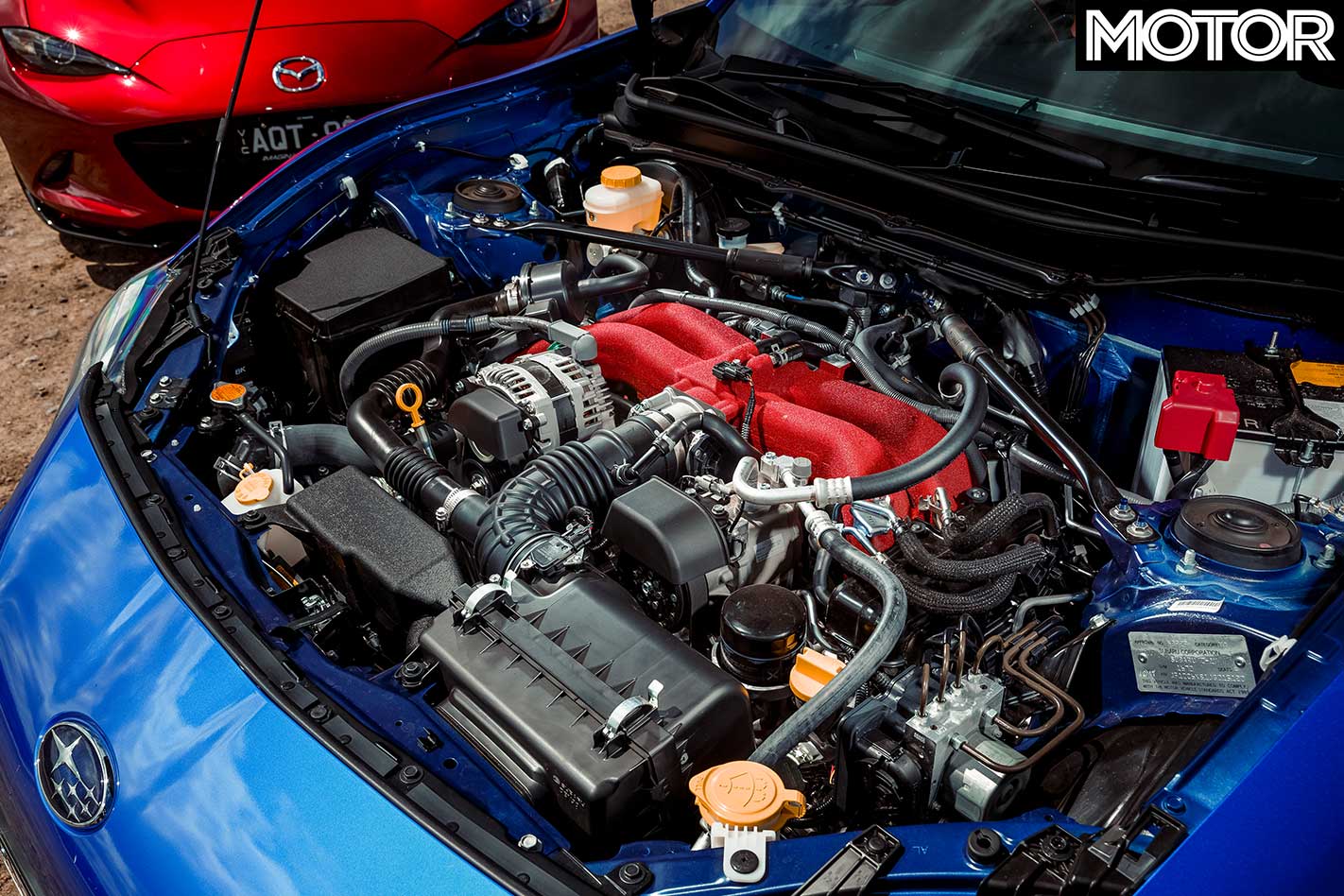
It might breathe through bigger pipes and feel enthusiastic when you first squeeze the throttle, but the urge disappears once revs pass 3000rpm. Acceleration picks up at 5500rpm as revs climb to a lofty power peak, but your foot spends forever on the firewall to get there. A little flat? Err, yep.
This robs the 86 and BRZ of meaningful in-gear thrust, and despite having to work their six-speed manual transmissions much harder as a result, it feels like a chore rather than an involving experience. Toyota or Subaru don’t seem to mind, clearly, as the torque hole is displayed in a real-time power graph on the LCD screen to the right of the rev gauge.
The MX-5 may pinch its undersquare inline-four from a Mazda3, rev to 6800rpm (versus 7400rpm), and produce 59kW per litre (versus 76kW), but its 2.0 litres feel much more muscular than the Subaru’s and Toyota’s.
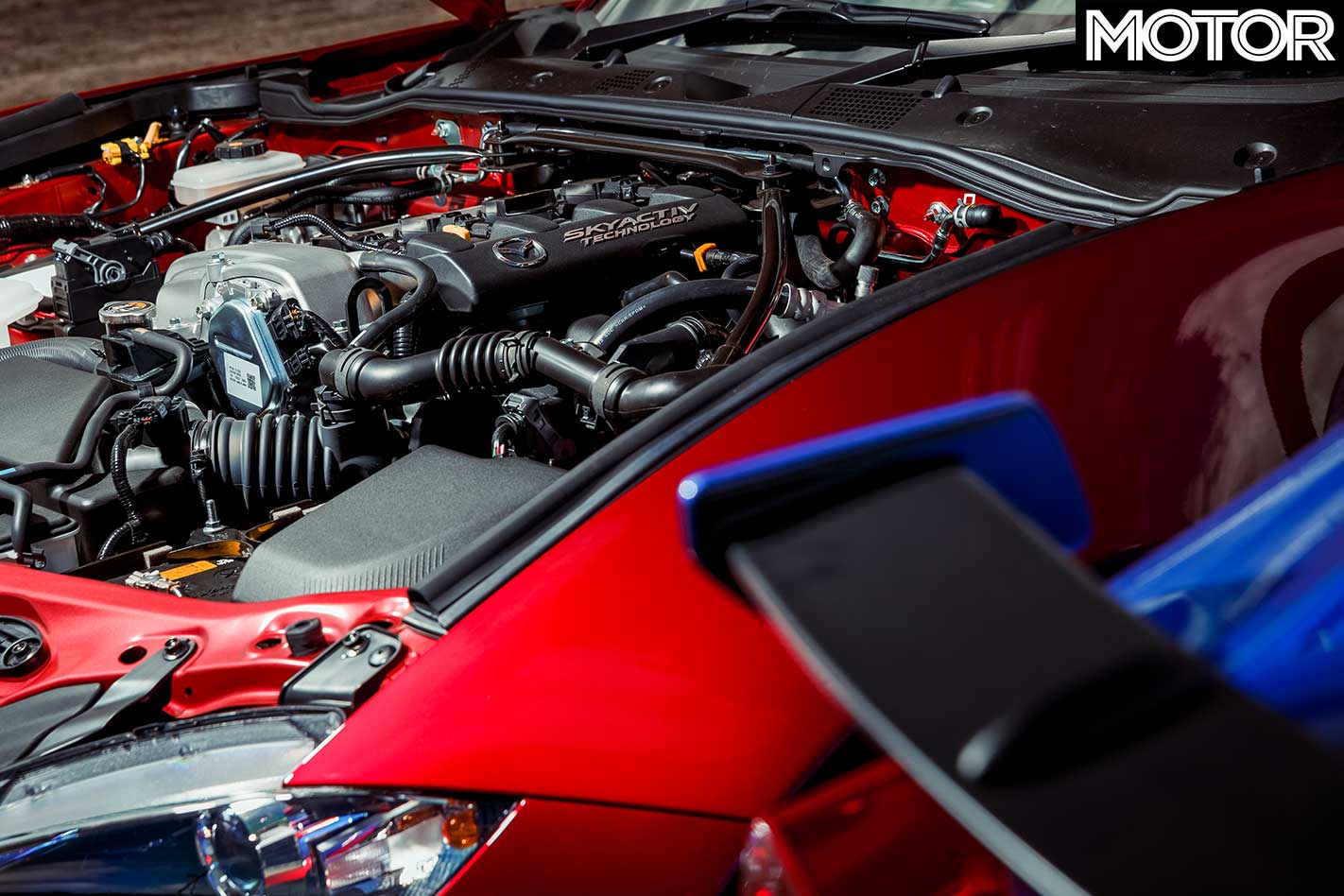
It certainly sounds better. Rather than the lumpy augmented intake noise heard in the 86 and BRZ cabin, you can almost hear the MX-5’s valves, lobes, and tappets gnashing together. Add the gruff blare from its tailpipes and each ascent to redline with the roof down sounds like driving through a bee swarm. The six-speed’s shift, too, is a real snickety sweetheart, whereas the 86 and BRZ’s longer shift can catch a bit when it’s cold.
While you’d need to run the 86 or BRZ downhill with a tailwind to dip into 6.0sec 0-100km/h runs or 14.0sec quarter miles, Mazda’s 2.0-litre soft-top has consistently delivered those times in previous performance testing. And the way our LE accelerates, even though it’s 60kg heavier, suggests it is every bit as fast. Each millimetre of throttle input changes the rate in which the scenery passes, and its torque builds in a flat, linear manner that makes every engine revolution count.
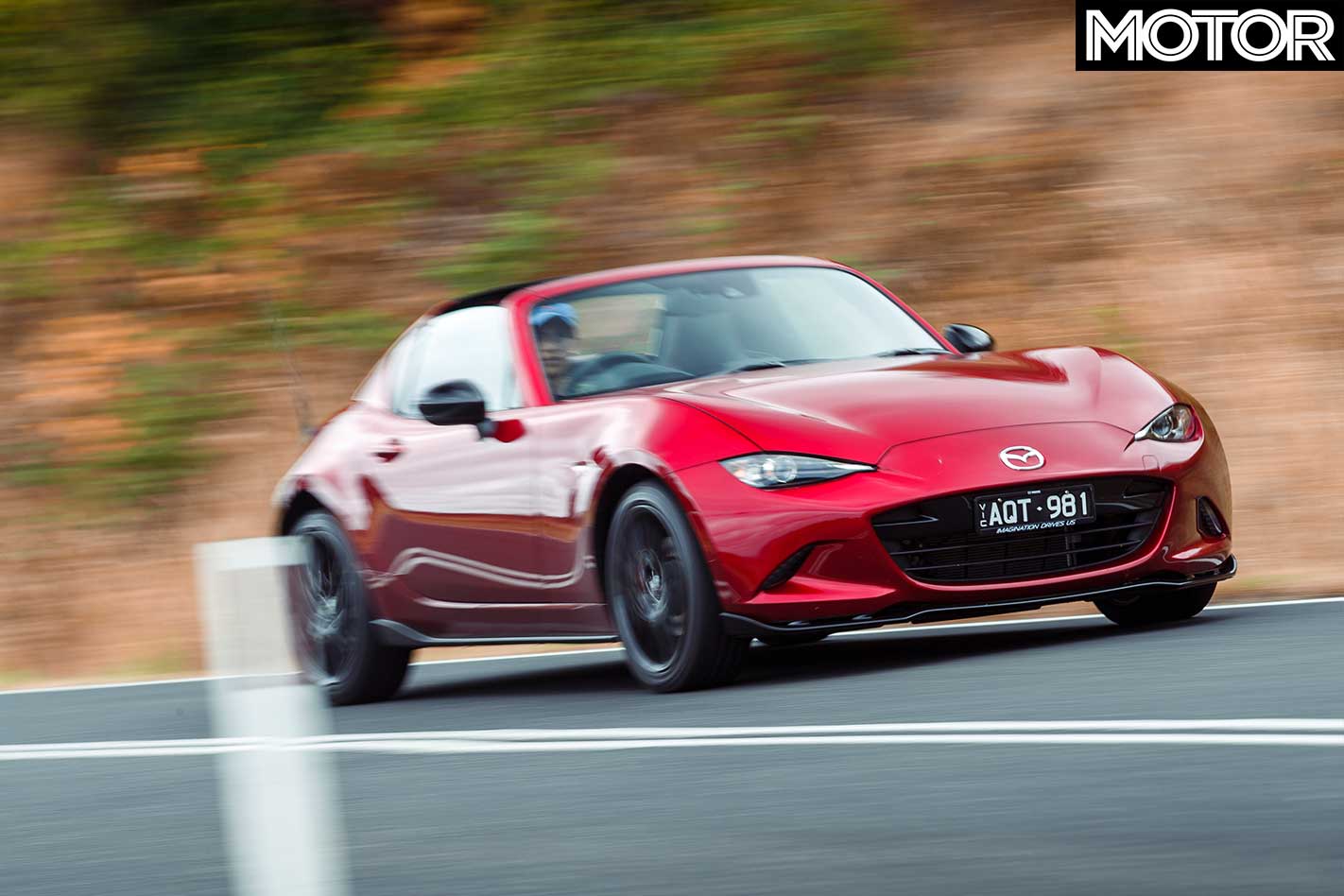
It’s a responsive unit, such that if you plant the throttle the Mazda’s bonnet will visibly and instantly lift, but you won’t want to be doing too much of that mid-corner as the GT LE is as sensitive to clumsy inputs as any other ND MX-5 we’ve driven. That’s even with the Bilstein dampers fitted to the LE, supposed to tame the extra softness built into the grand-tourer-designed RF.
There’s roll, squat and dive awaiting every one of your inputs. On the one hand, it makes you think so much about everything you do. You concentrate on brushing the brakes to tuck its front-end in, but then you need to come off them quickly to equalise its spread of grip. You also need to ease into the throttle to keep the nose down in case it pushes wide.
The MX-5’s 205mm Bridgestones can also only fulfil so many of your demands. And because the RF LE’s wheelbase is so short, the suspension so soft and the steering relatively slow, it drives with a twitchiness that makes every corner taken at more than eight tenths feel like a gamble with its grip limits.
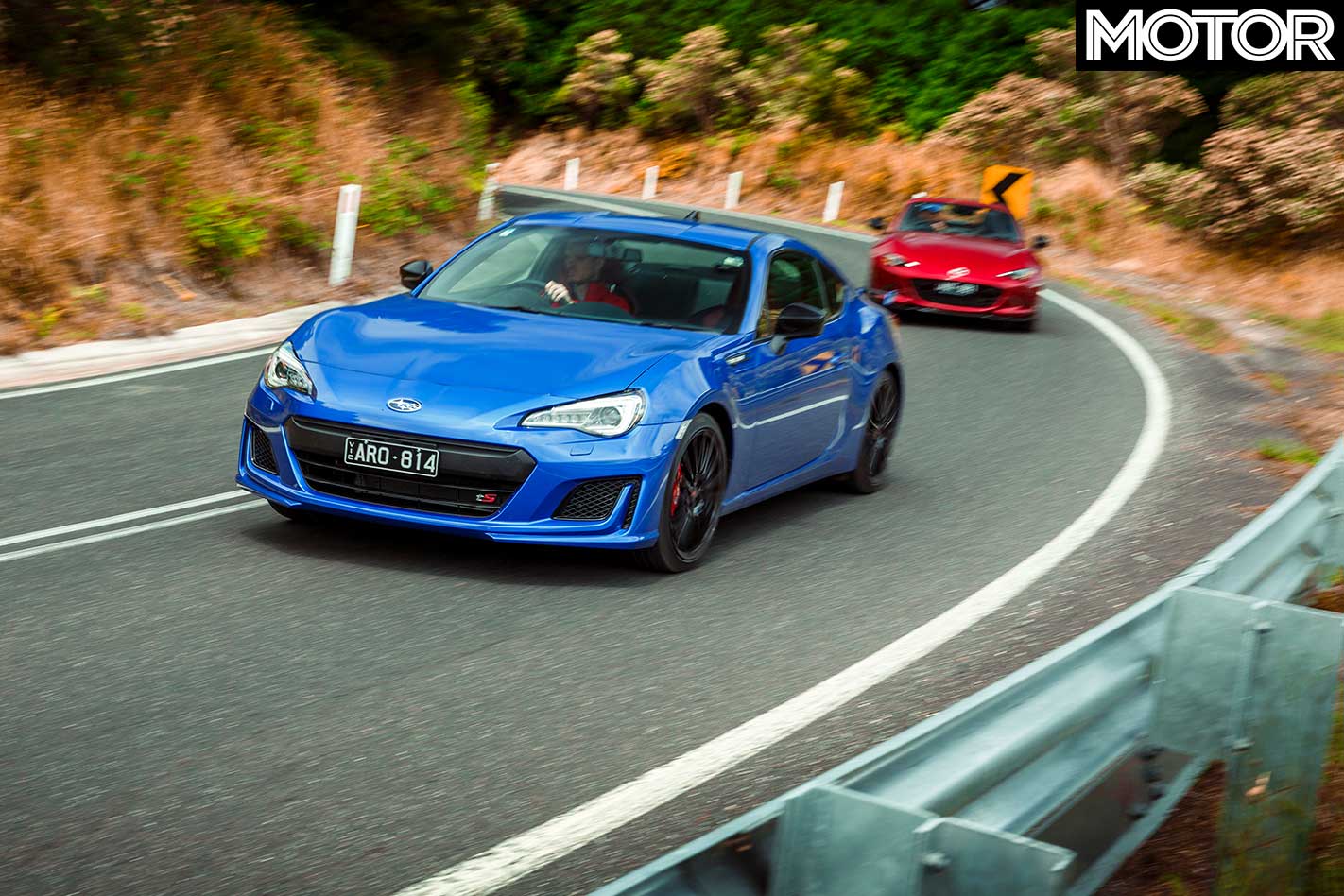
Following the Mazda in the Subaru is like watching someone try to run and balance an egg on a spoon at the same time. You notice the MX-5’s brake light flickering when you’re still into the throttle. And when you do use the Subaru’s brakes, they push back with more feel, depth, and power than the Mazda’s. They’re nothing like the soft items on the stock BRZ and the rear-end doesn’t come around like it’s on casters, either, if you brake too deep into a corner.
That’s mainly down its new Michelin Pilot Sport 4 tyres. They let the Subaru tear chunks out of the Mazda at each bend and raise its cornering limits to new dimensions. With the added grip you can get the BRZ up on its toes by turning in sharply. And because the tyres breakaway more progressively, you have more confidence to catch any twitches. Sharper, quicker, and more textured steering than the Mazda’s already brilliant system helps, too.
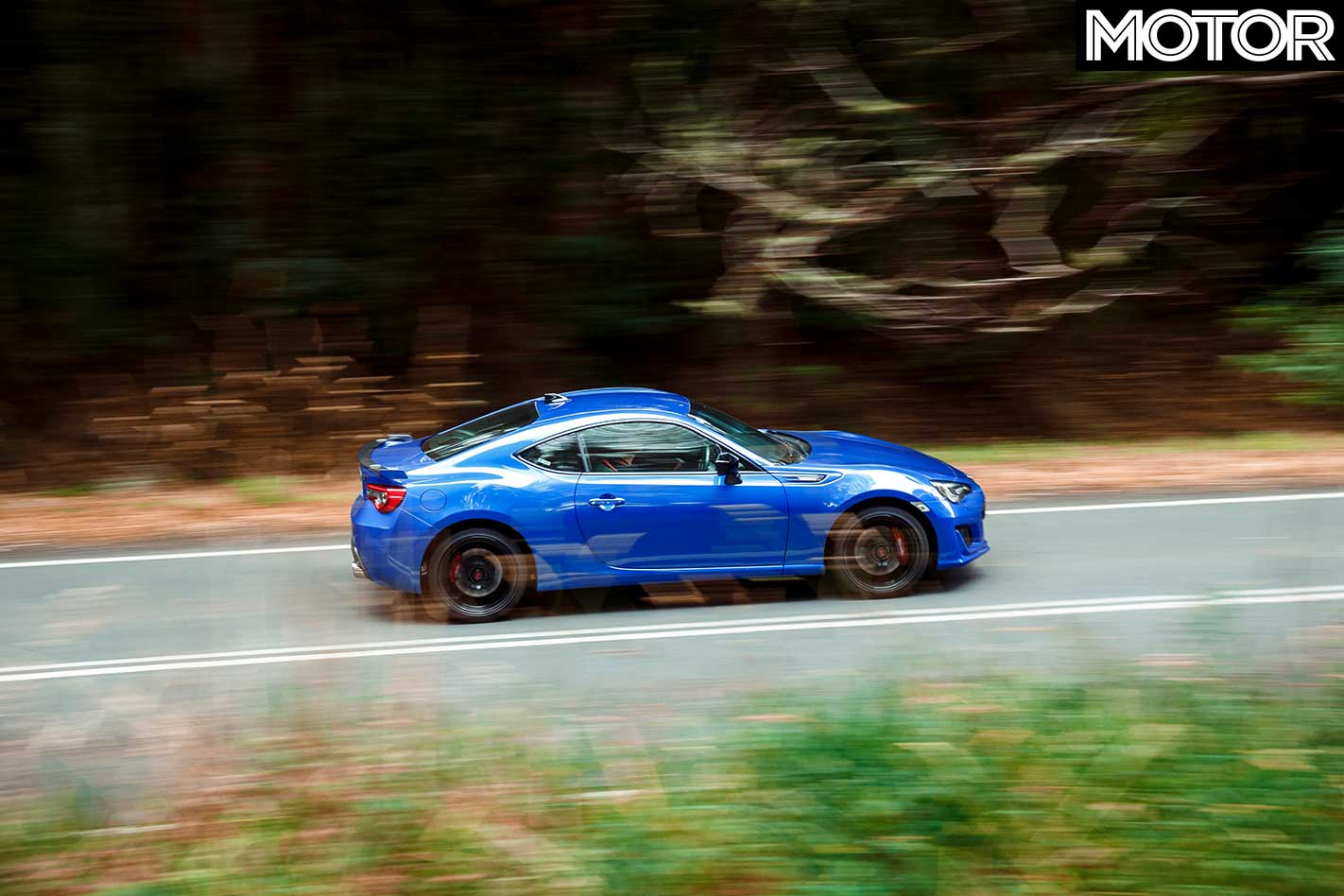
Even the Subaru’s computer systems have scored a leg-up from its new bits. Pock-marked roads trigger the Mazda’s ESP as its wheels drop in and out of holes, but the Subaru’s STI-tuned dampers control each wheel over bumps beautifully. The way it flows with roads means the BRZ’s dash rarely flickers with caution lights and its grip limits are now so stratospheric you don’t need to disarm the car’s stability system to get stuck in.
The Subaru BRZ tS is so capable, though, it’s like the athlete who’s competing one weight class too high. It has the moves, but lacks the punch to go with it. Sometimes you’ll pin the throttle through a string of corners for more than 10 seconds at a time. And you’ll often come out the other side of a flowing bend knowing the Subaru could carry more speed if it only had more power to play with.
Compounding the BRZ’s problem is the fact it no longer oversteers as easily. It used to induce grin-splitting slides with dismal outputs on hard springs and tyres, but you’ll now need a serious amount of commitment to get the Subaru sideways. Even on the racetrack.
Luckily, Toyota’s product planners have seen this coming and rather than transform the 86 into a high-grip monster with Porsche-like responses, it’s focused on retaining the original car’s playfulness. No doubt that’s helped by its Primacy HPs, because it’s surprising how hard you can push the 86 before it starts to loosen its hold.
Dial up your commitment to eight tenths on smooth flowing roads and it behaves almost identically to the BRZ tS, flowing from corner to corner with composure beyond a standard 86’s ability. It’s only when things start to tighten or you really push on that the tyres are exposed as a weak link in the dynamic chain. Suddenly the ABS bites a tyre into a corner or the throttle spins another coming out of it.
The 86’s balance, as well, will see its rear axle unstuck with more ease over mid-corner bumps. On bad roads, the Toyota’s thicker sidewalls also filter out the fine stuff while the Subaru’s 40-series tyres transmit more vibrations into the cabin.
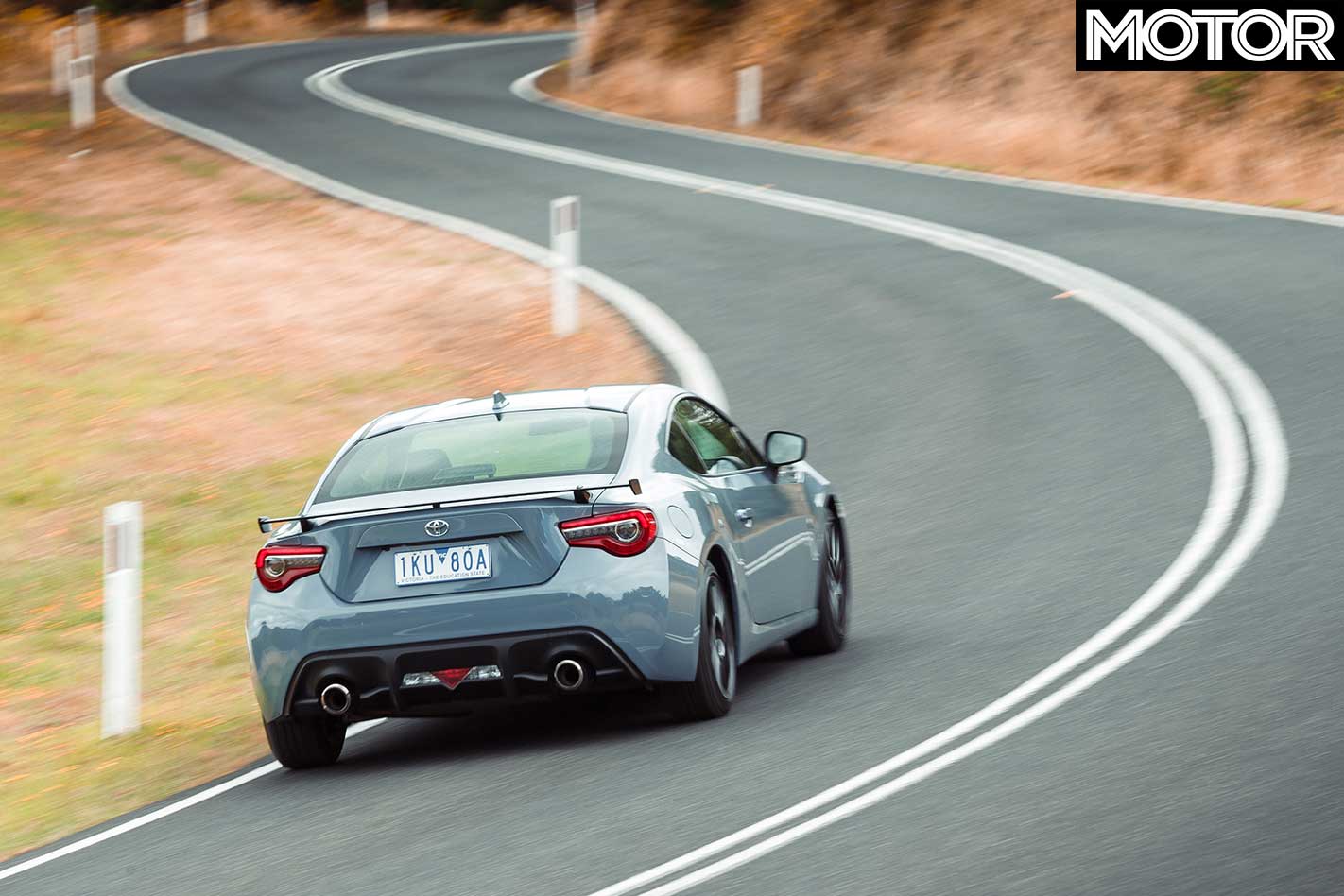
Damper travel is short in both cars, and those STI lowering springs give the BRZ a slightly firmer bounce, but both packages find their bump stops with a soft thud rather than a crash. They have massaged more compliance into the stock car’s ride so that you can now tackle terrible roads without sacrificing feedback or control.
But the biggest indication that ride levels have improved in both cars, is that the prospect of a couple of hours on a highway in either, no longer makes you wince.
By contrast the MX-5 LE’s ride is fine on a highway, breathing with softer rises and falls, but ultimately the setup is stiff when you don’t want it to be. It’ll scuttle shake more than a regular MX-5 on poor surfaces. Luckily, its fantastic Recaros reclaim some day-to-day liveability. You’d happily rack up a couple hours more in them after a long day driving.
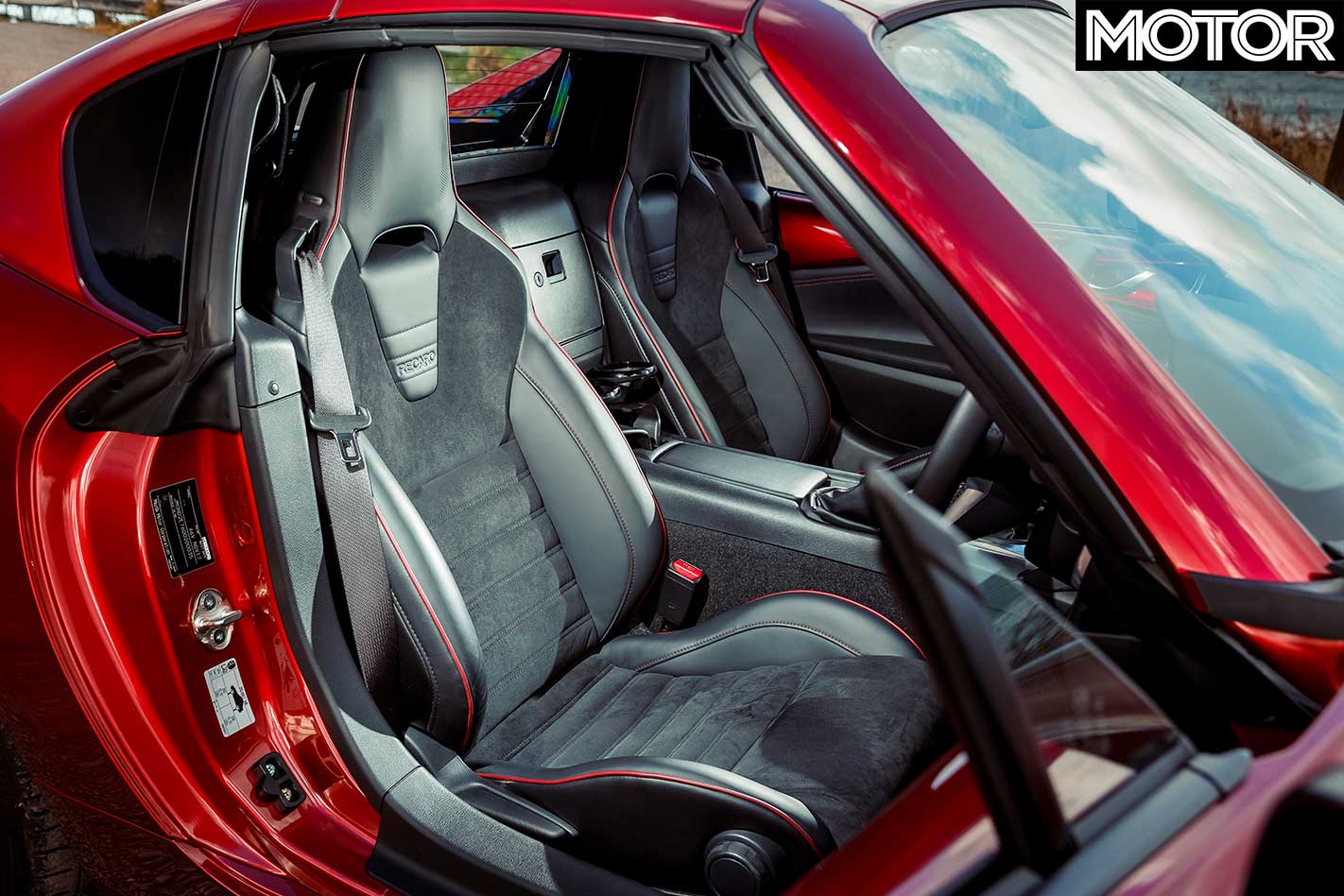
Once inside you’ll notice the RF has the most refined and evocative cabin design here, too, with the Bose stereo benefiting in particular from the hard-top’s added sound deadening. But space is cramped if you’re planning to bring anything more than your wallet. The ND MX-5 makes an 86 or BRZ feel roomy.
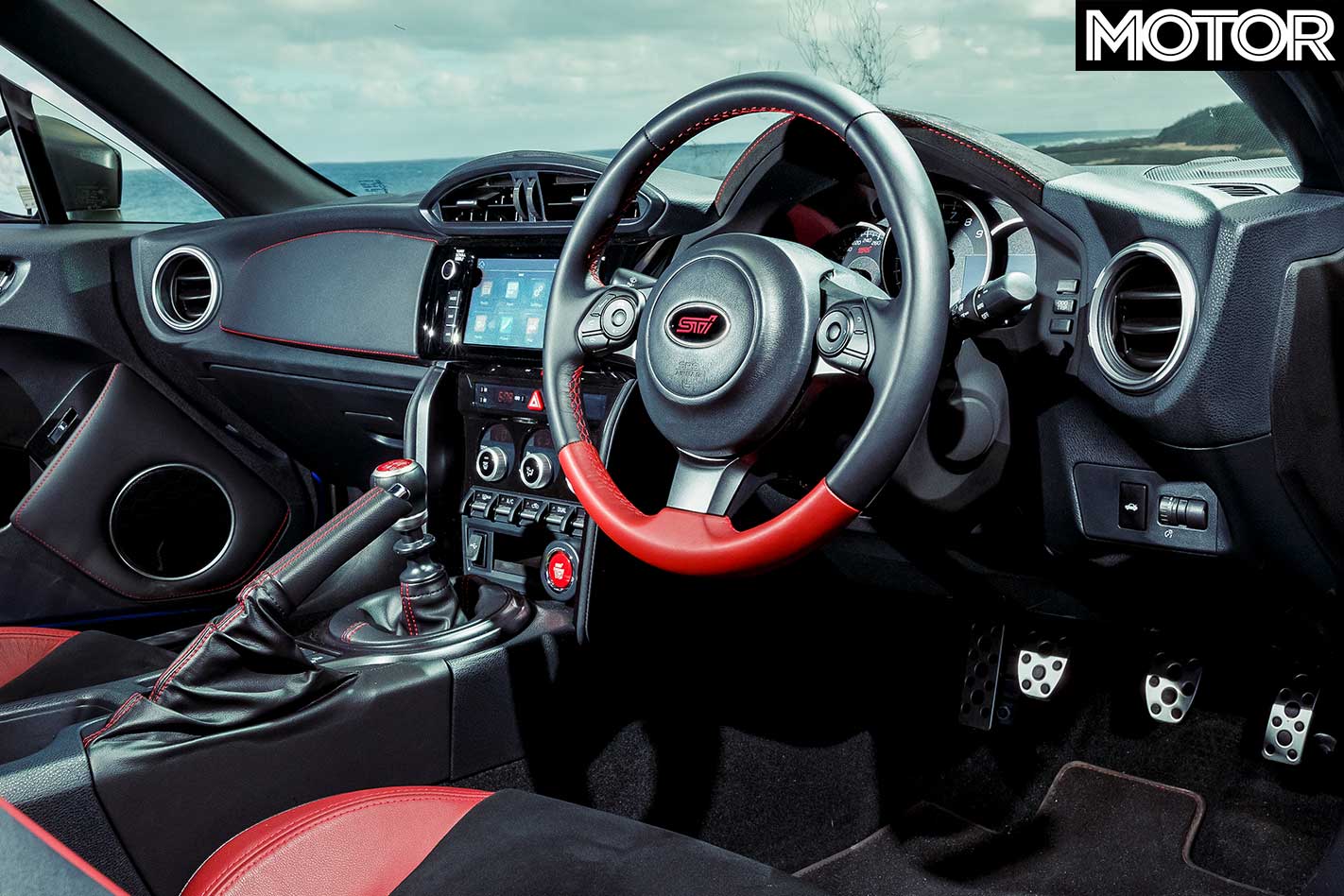
Those cars, too, aren’t going to win any awards for interior design but we appreciate their simplicity and straightforward ergonomics. The biggest news is Subaru has upgraded the BRZ’s infotainment with a 7.0-inch touchscreen sporting the latest ‘Starlink’ system across its range, putting graphics and functionality miles ahead of the Toyota’s ‘Link’ unit. Even Mazda’s MZD system can’t match the Sube’s for intuitiveness.
Ultimately, though, Mazda Australia’s intention to build the best MX-5 falls short in the RF GT LE. Bilstein suspension and Brembo brakes can’t extract any more grip from its carried-over tyres and it never really delivers a considered lift in performance. We understand big-spenders will magnetise to its all-out specification, but it’s hard to see the value in its $7K price hike when its bodykit and seats are the only products worth having over a non-LE variant.
Unless you must have Mazda’s slick six-speed manual and open-air driving experience, go for the BRZ tS or 86 Performance Pack. They might not be as thrifty as their donor cars at a smidge under $40K (before on-roads), but they offer a handling experience few could match at this price. If that’s what you prioritise, the Toyota will appeal to opposite-lock junkies while the Subaru is clearly aimed at track-day goers who thrive on more grip.
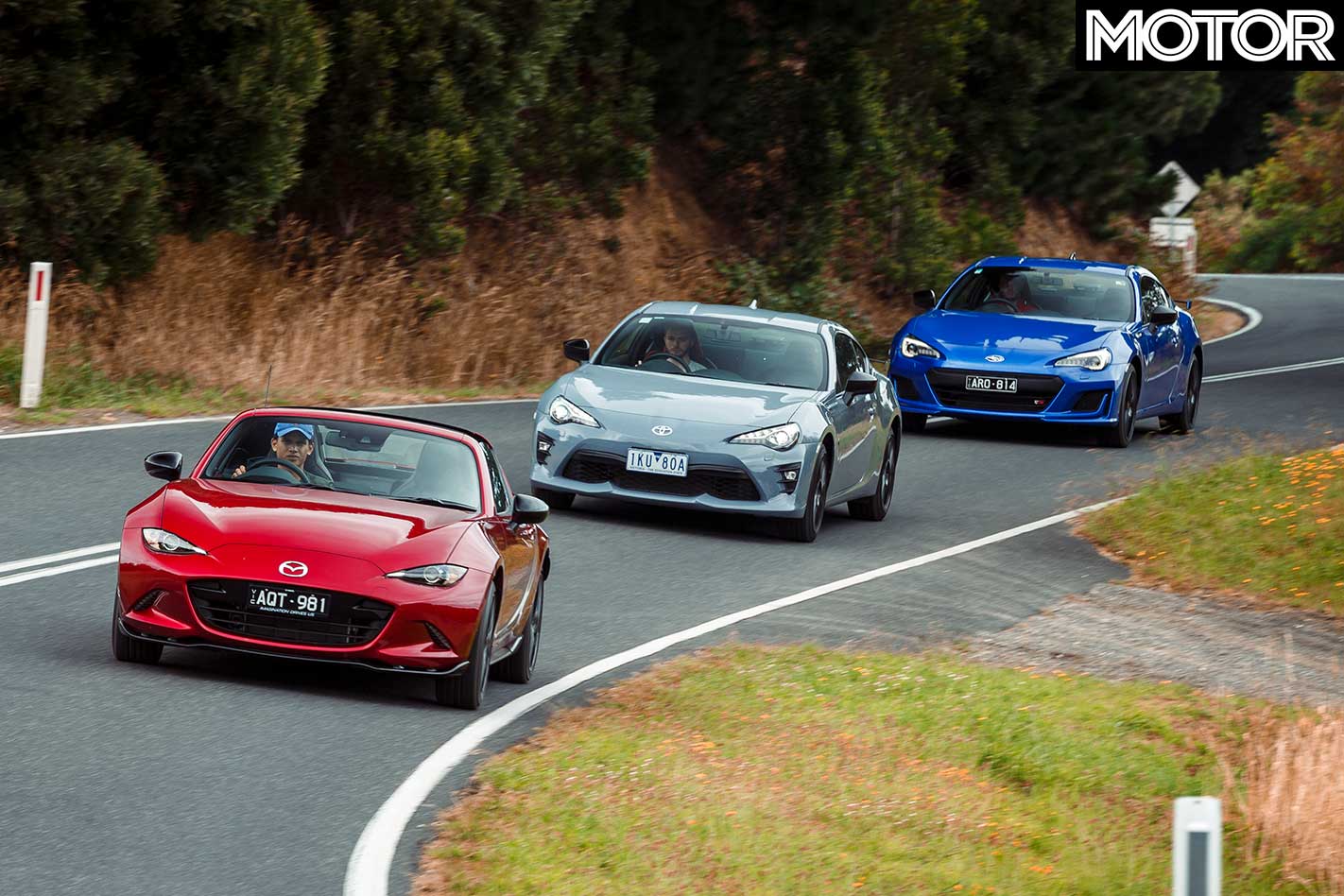
The decision’s easier to make on value when only $494 separates them. And while the BRZ’s chassis bracing make a negligible difference to its handling, the bigger wheels, specially tuned dampers, and stickier tyres certainly do. If it matters, the Subaru’s also easier on the eyes and its ‘Starlink’ infotainment system is infinitely better than the Toyota’s upgraded unit.
Toyota might have been wiser to offer the Performance Pack on its base GT to gain a $1000 advantage. Today, however, the BRZ tS unlocks the lurking potential in the BRZ’s handling platform to prove the fastest, most capable, and best value.
It’s a resounding confirmation to one of ‘those questions’, that yes, the BRZ does get better with more grip. Now, we’ll just wait to see whether Toyota will answer the other side of that coin when the next model launches in 2021.
Second Opinion: Scott Newman
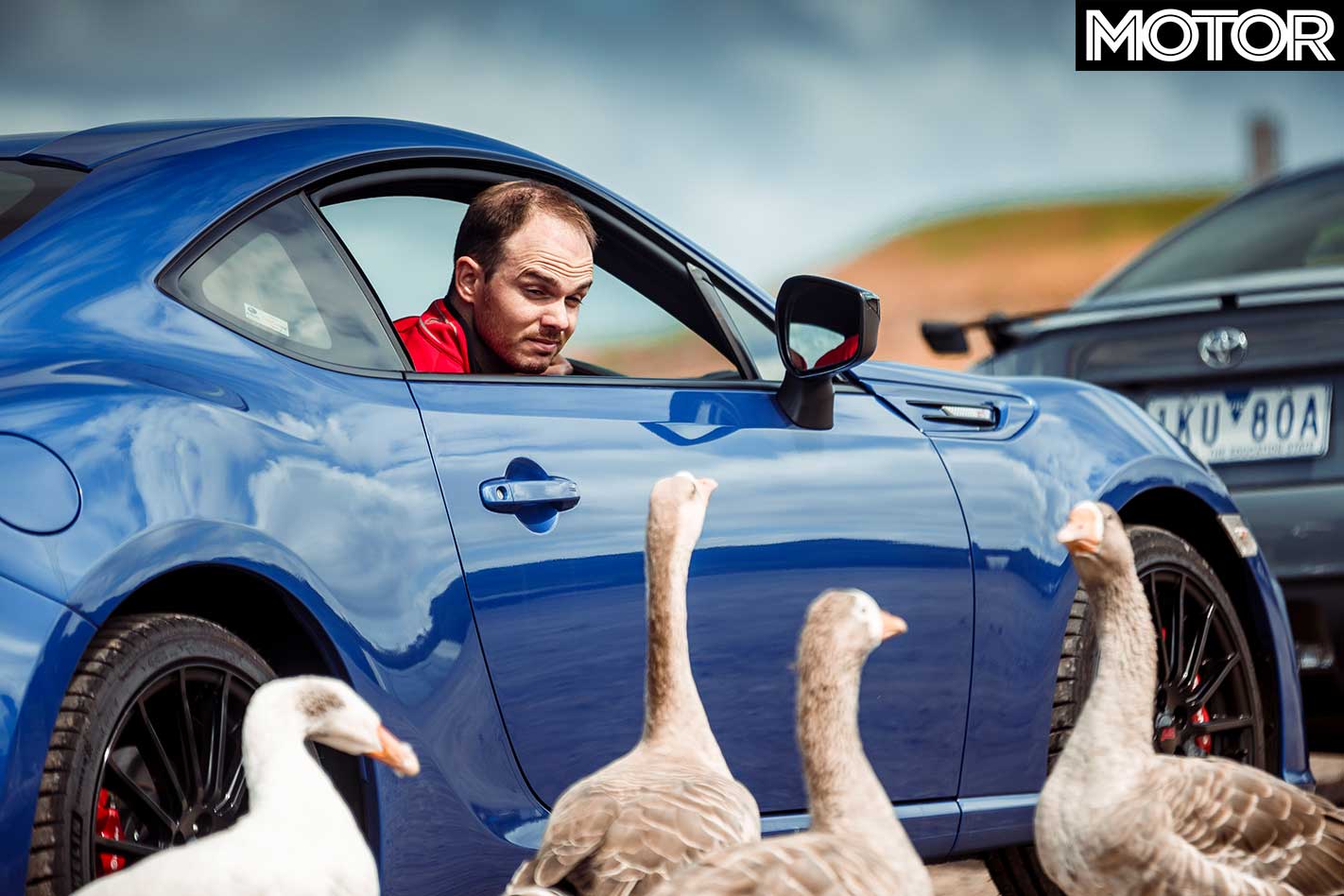
The MX-5 RF LE is a really appealing package. Maybe it’s just me, but I loved the colour of both exterior and interior, it’s a sweet powertrain combination and while the handling can be a bit wayward on the ragged edge, it’s certainly engaging. Overall, I really like… I’m sorry, it costs how much?
Toyota’s taken all the good bits from its garishly orange Limited Edition and offered them for a much lower price on this Performance Pack. If you’re a track-day devotee the upgrades are good value, but on the road the Michelin Primacy eco-tyres don’t offer enough grip to really exploit the chassis improvements. If you buy an 86 PP, invest in a better set of tyres.
Or just buy a BRZ tS. The latest-gen Michelin Pilot Sport 4 rubber arguably gives the Subaru too much grip, as it will no longer shimmy around at road speeds like the standard car. On the flip side, the extra purchase allows you to extract every ounce from the BRZ chassis – put simply, you can drive the ring off the tS. I can’t wait to drive it on track at Bang For Your Bucks.
The Subaru is the most well-rounded package here, but with a low-boost turbo kit it has the potential to be something truly magnificent.
Fast Facts
| u00a0 | 2018 Subaru BRZ tS | 2018 Toyota 86 GTS Performance Pack | 2018 Mazda MX-5 RF Limited Edition |
| BODY | 2-door, 4-seat coupe | 2-door, 4-seat coupe | 2-door, 2-seat roadster |
| DRIVE | rear-wheel | rear-wheel | rear-wheel |
| ENGINE | 1998cc boxer-4, DOHC, 16v | 1998cc boxer-4, DOHC, 16v | 1998cc inline-4, DOHC, 16v |
| BORE/STROKE | 86 x 86mm | 86 x 86mm | 83.5 x 91.2mmu00a0 |
| COMPRESSION | 12.5:1 | 12.5:1 | 13.0:1 |
| POWER | 152kW @ 7000rpm | 152kW @ 7000rpm | 118kW @ 6400rpm |
| TORQUE | 212Nm @ 6400-6800rpm | 212Nm @ 6400-6800rpm | 200Nm @ 4600rpm |
| WEIGHT | 1295kgu00a0 | 1258kg | 1091kg |
| POWER/WEIGHT | 117kW/tonne | 121kW/tonne | 108kW/tonne |
| TRANSMISSION | 6-speed manual | 6-speed manual | 6-speed manual |
| SUSPENSION (front) | struts, dampers, anti-roll bar | struts, dampers, anti-roll bar | struts, dampers, anti-roll bar |
| SUSPENSION (rear) | A-arms, dampers, anti-roll bar | A-arms, dampers, anti-roll bar | multi-links, dampers, anti-roll baru00a0 |
| L/W/H | 4240/1775/1320mm | 4240/1775/1320mm | 3915/1735/1235mm |
| WHEELBASE | 2570mm | 2570mm | 2310mm |
| TRACKS | 1520/1540mm (f/r) | 1520/1540mm (f/r) | 1495/1505mm (f/r) |
| STEERING | electrically-assisted rack-and-pinion | electrically-assisted rack-and-pinion | electrically-assisted rack-and-pinion |
| BRAKES (front) | 326mm ventilated discs, 4-piston calipers | 326mm ventilated discs, 4-piston calipers | 280mm ventilated discs, 4-piston calipers |
| BRAKES (rear) | 316mm ventilated discs, 2-piston calipers | 316mm ventilated discs, 2-piston calipers | 280mm ventilated discs, single-piston calipers |
| WHEELS | 18.0 x 7.5-inch (f/r) | 17.0 x 8.0-inch (f/r) | 17.0 x 7.0-inch (f/r) |
| TYRE SIZES | 215/40 R18 85Y (f/r) | 215/45 R17 87W (f/r) | 205/45 R17 84W (f/r) |
| TYRE | Michelin Pilot Sport 4 | Michelin Primacy HP | Bridgestone S001 |
| PRICE | $39,894 | $39,400 | $55,670 (driveaway) |
| PROS | Grip; brakes; point; infotainment system | Involvement; ride; steering | Brilliant seats; engine sound; looks |
| CONS | Lack of power; does it now have too much grip? | Infotainment system; lack of power | Unresolved handling; questionable value |
| RATING | 4.5 out of 5 stars | 4 out of 5 stars | 3.5 out of 5 stars |
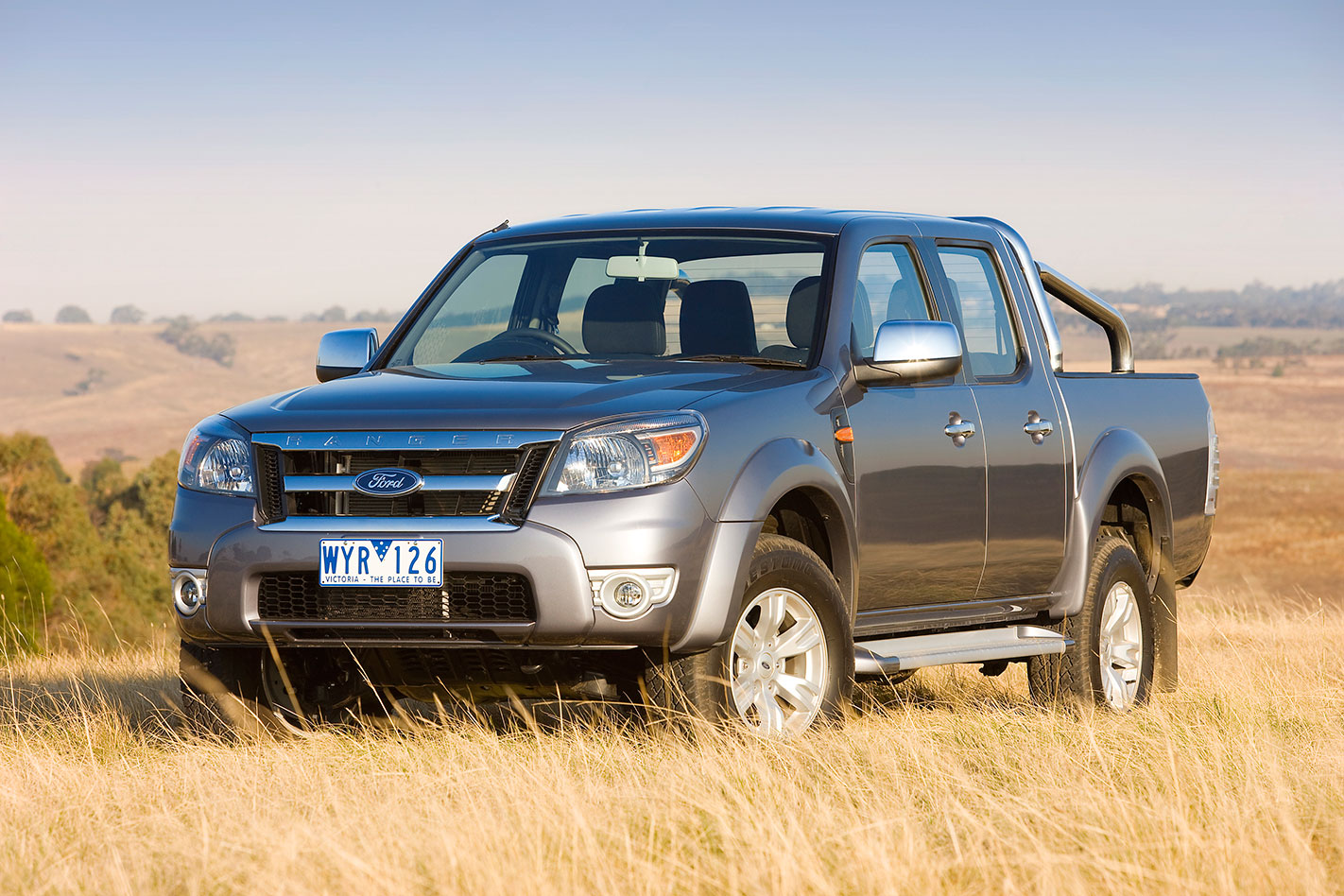
FORD has added almost 70,000 of its Ranger trade utes to the Takata airbag recall as the net to replace the potentially lethal devices is cast wider to include commercial vehicles as well as passenger cars.
However, Ford’s action is part of a voluntary recall – not the compulsory one affecting as many as one in seven vehicles on Australian roads – that has scooped up more than 20,000 Courier trade utes and 1300 Econovans.
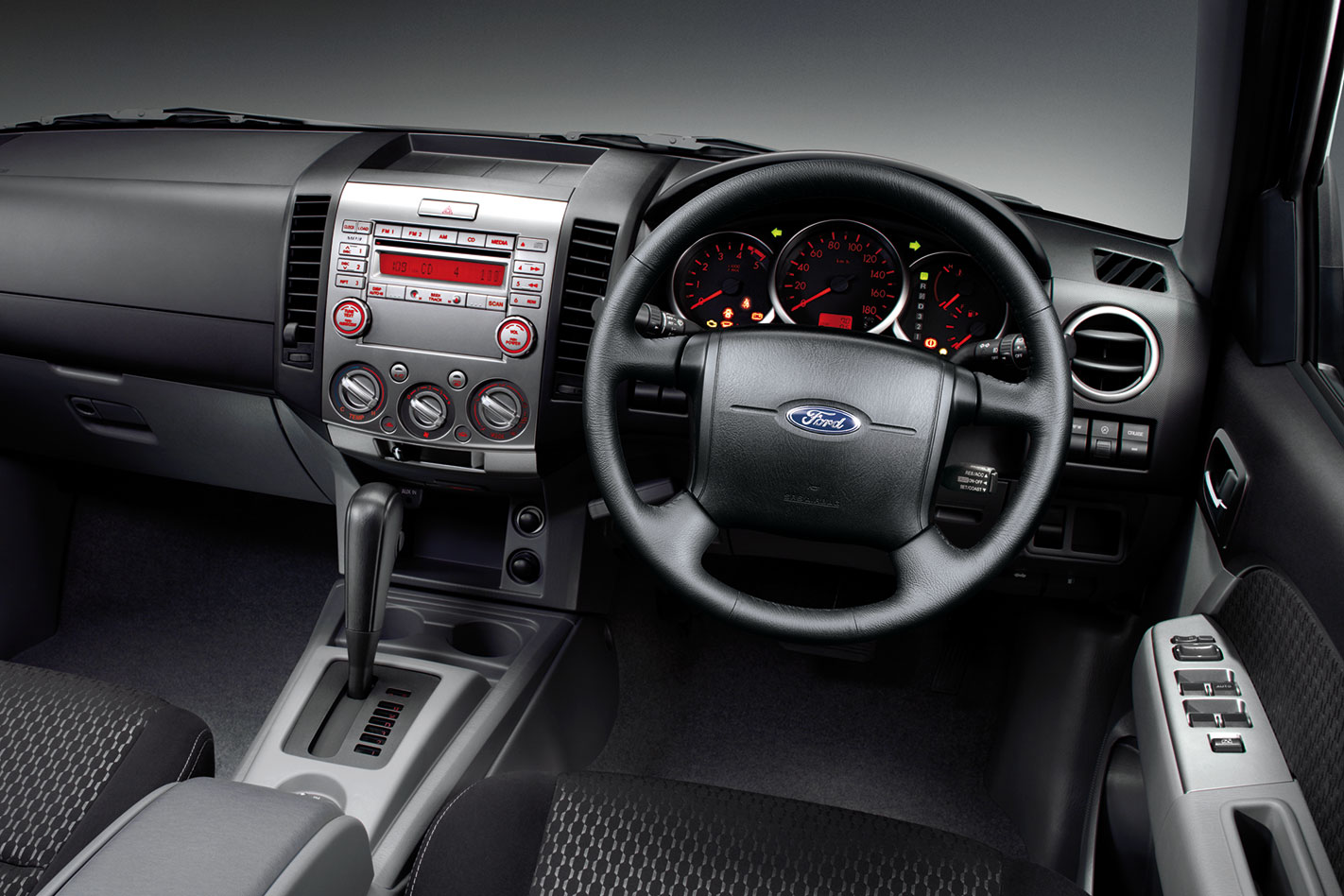
The recall notice says as the airbags fitted to the Ranger age, a combination of high temperatures and humidity can degrade the airbag’s explosive propellant used to inflate it.
So far, the Takata recall scandal has resulted in a single death in Australia after a driver was killed in Sydney last year after what police described as a “survivable” low-speed crash. Another person has been seriously injured by flying shrapnel.
The Ford Ranger recall predates the current generation of the trade ute that was designed and developed in Ford’s Australian engineering hub housed inside its former Broadmeadows head office, and the You Yangs-based proving ground.
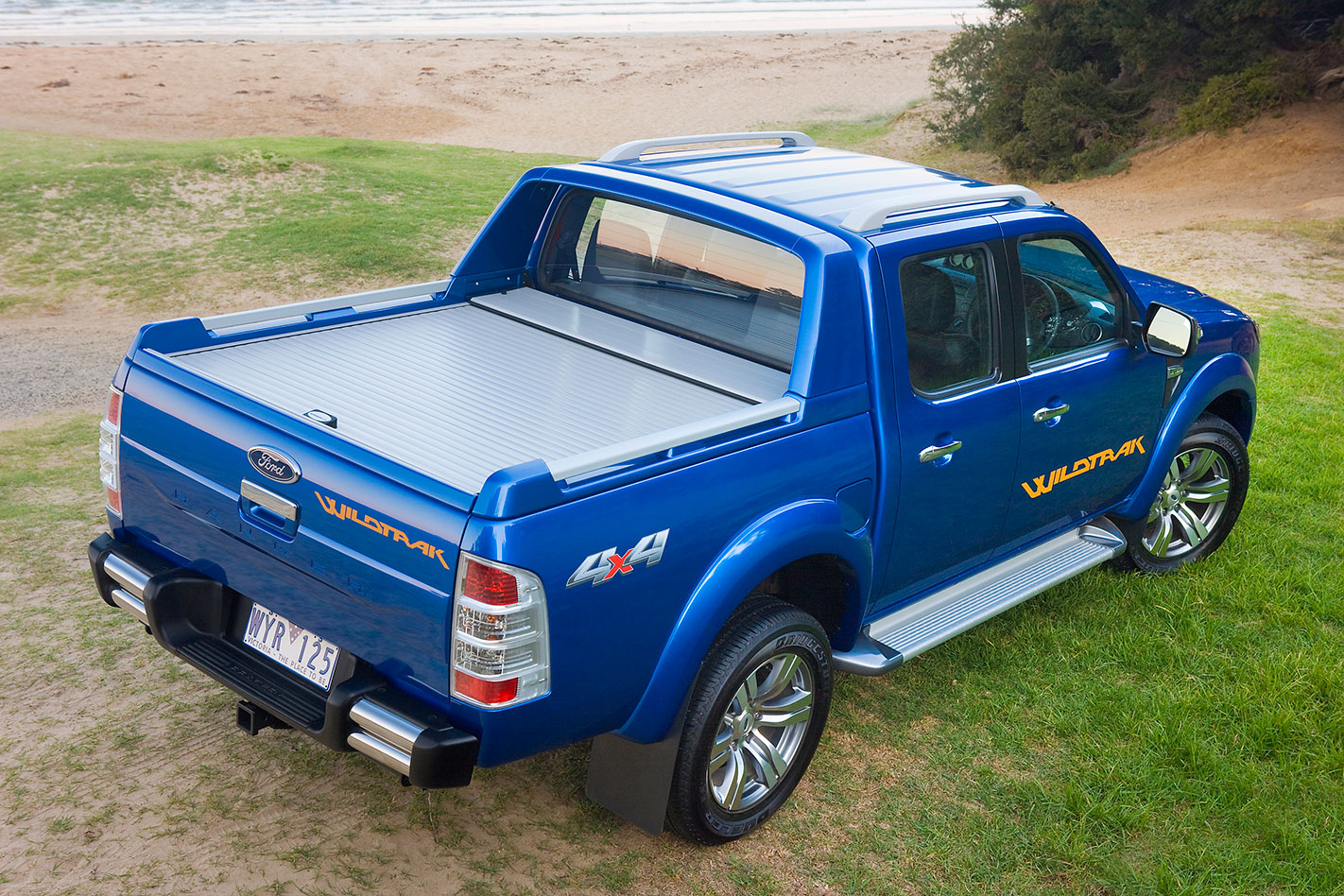
However, the new-generation, heavily Aussie-influenced Ford Ranger, introduced in 2011, has risen to become one of the market’s best-selling vehicles, outstripping traditional passenger cars to claim the number two spot behind Australia’s best-selling vehicle for the last two years – the Toyota Hilux. The rise of the trade ute, which now account for one in every five new vehicle sold in Australia, is due in part for their ability to be rugged enough for the worksite on weekdays, and yet double as family transport or a lifestyle vehicle on weekends.
Click here to see if your Ford Ranger is part of the recall.
It’s curious the hot hatch scene should have originated in Germany, evolved in Japan and, today, be dominated by France.
This feature was originally published in MOTOR’s February 2005 issue
Yep, the last two losers in WWII have been supplanted by the head-chopping surrenderphiles they tried to steamroll. That may change when the Golf GTI is brought to bear in a few months but, for the time being, these are the best you can buy for traditional hot hatch money. And not by a little bit, either.
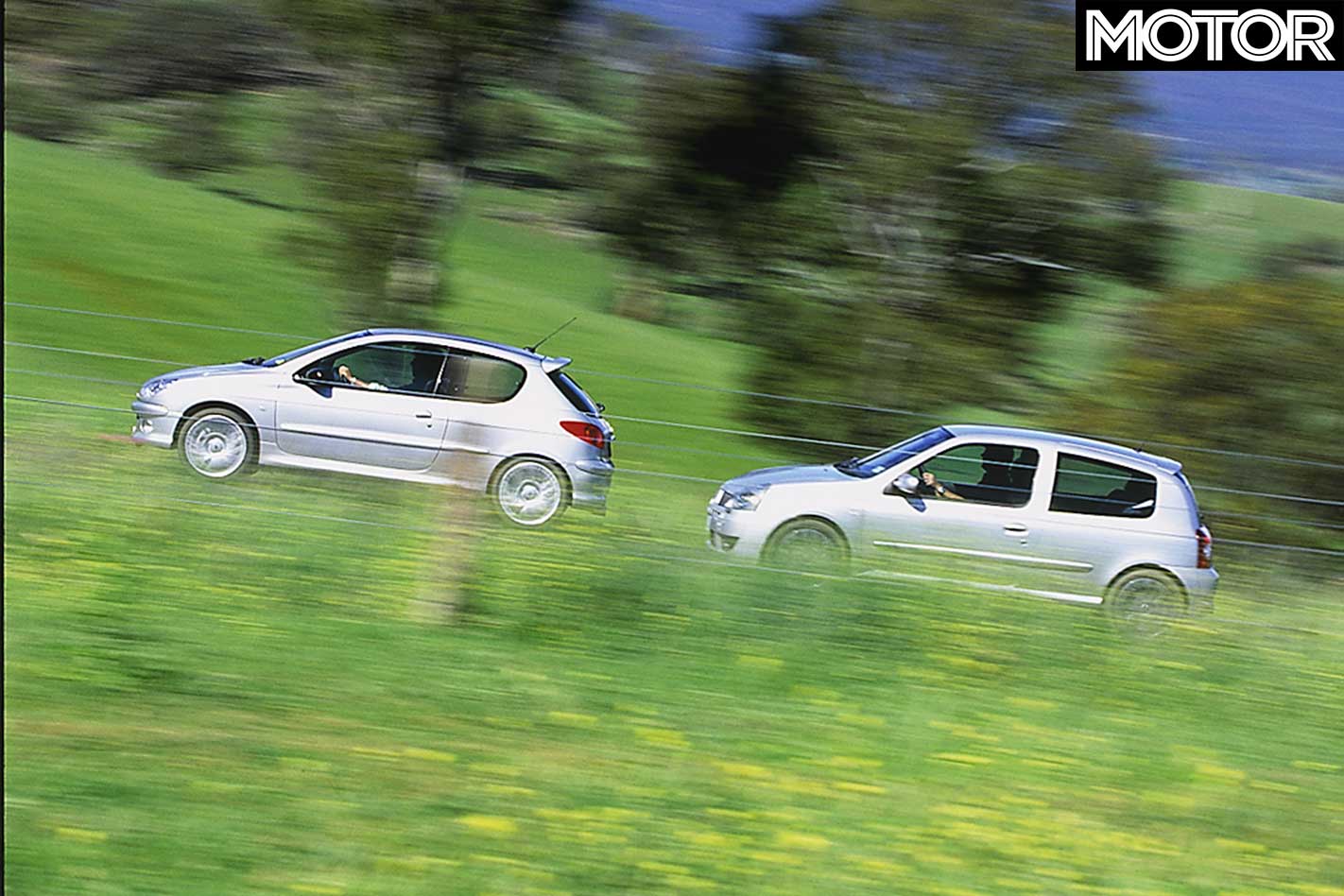
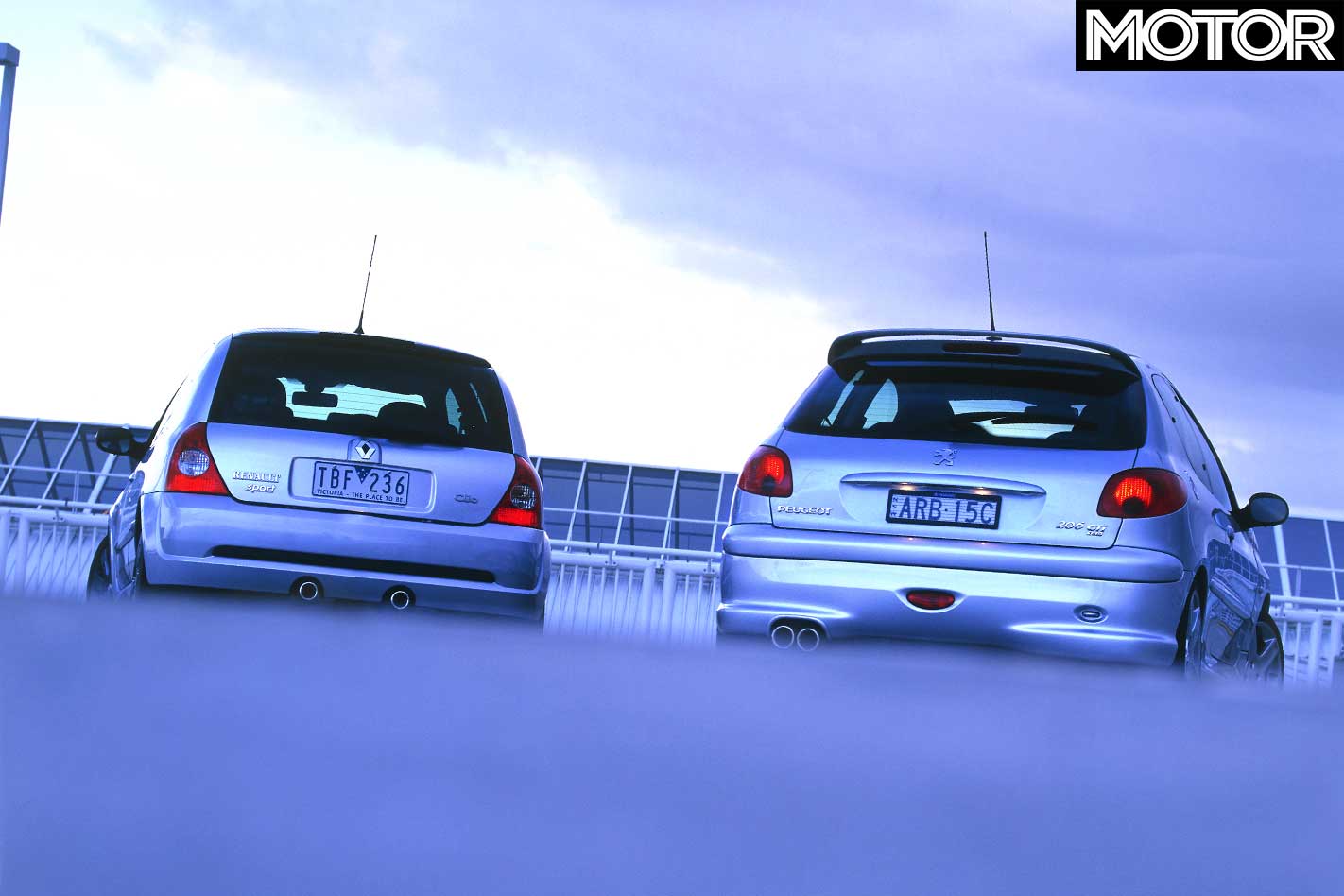
And, when Renault made its (by then, third) Australian launch, led by the earnest little Sport Clio, it confirmed that the best of hot hatches ate snails.
Peugeot escalated the violence late in 2003 by cranking the stock GTi’s power output to 130kW, stuffing 17-inch boots under it, ripping out half the suspension travel, slapping a $34,990 sticker on it and calling it the 206 GTi 180.
Didn’t take Renault long to respond, though. Late last year it not only claimed bragging rights with one extra kilowatt, but it did it in a two-pronged attack. There’s the Sport Clio 182 as the (slightly) softer, (slightly) more affordable alternative, but the firmer-riding, harder-cornering $34,490 Sport Clio Cup has led the charge.
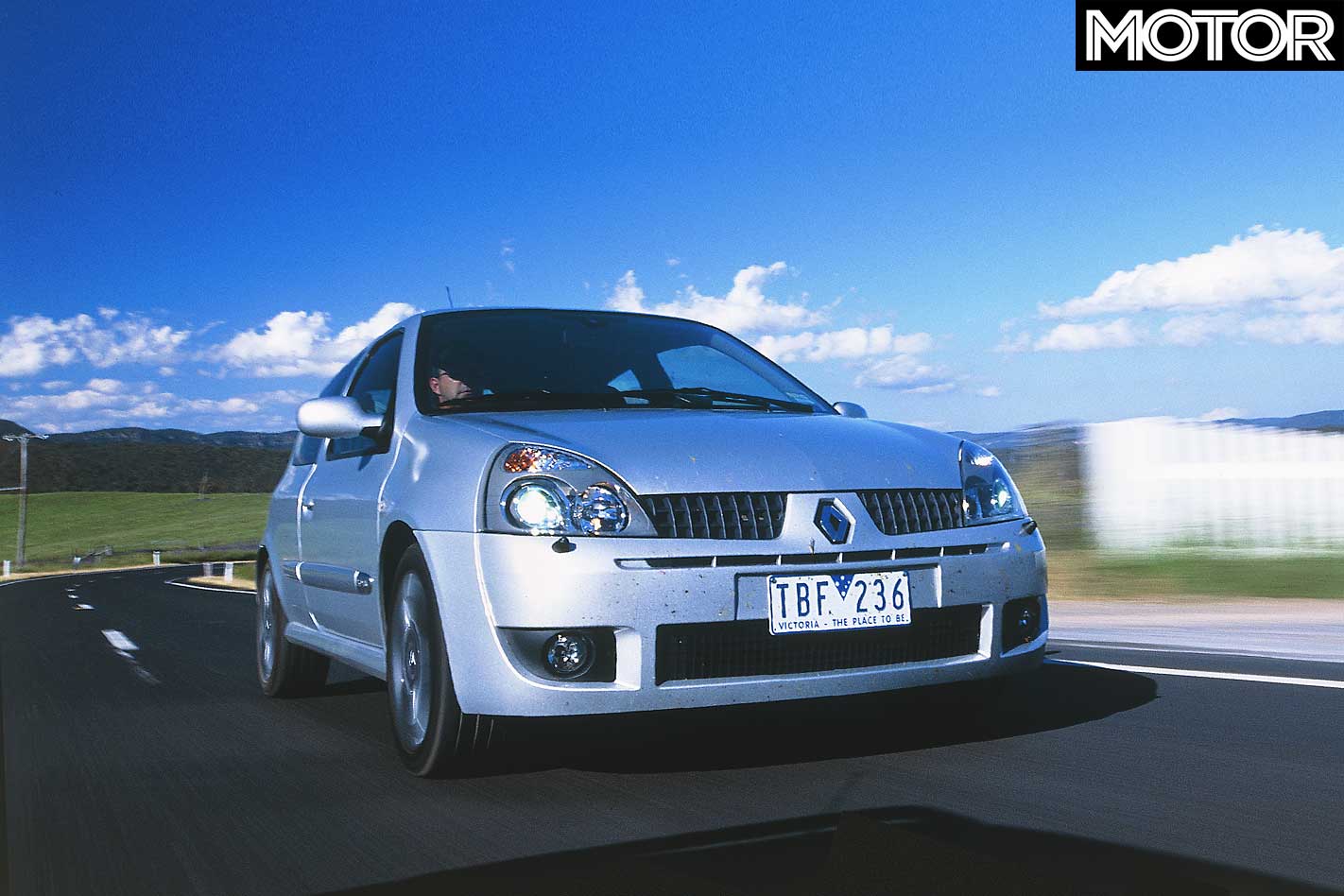
These things are closer than a cricketer’s box, in just about every way you could imagine. They overlap on their philosophies, outputs, price and weight, they’ve employed a lot of the same engineering tricks and, together, they’ve taken the hot hatch fight well beyond the reach of anything Japanese.
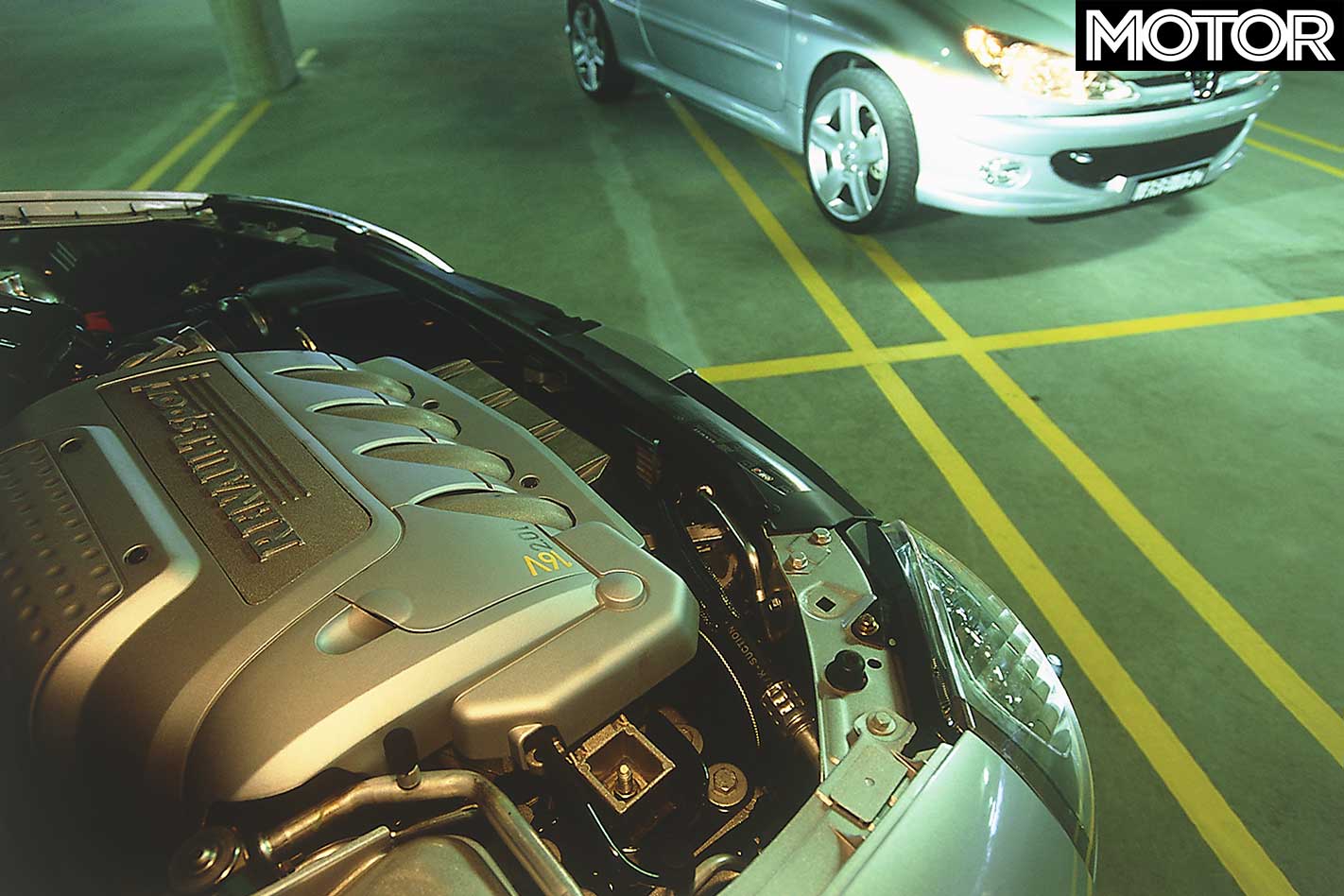
Their engines are highlights, but also show up just how close to the wire the engineering has been pushed. At 87 horsepower per litre (from the same 1997cc EW10 block used in the 307 and 406), there are times when the Pug’s motor feels like the engineers have compromised harmony for horsepower, and that doing any more of it could become unpleasant.
With a cylinder head that is machined off-site by F1 supplier Mecachrome, an alloy block with cast-iron liners and variable inlet valve timing, the EW10 J4S zings its way to 7300rpm. Peak power is a bit below that, though, at 7000rpm, while there’s 202Nm of torque at 4750rpm.
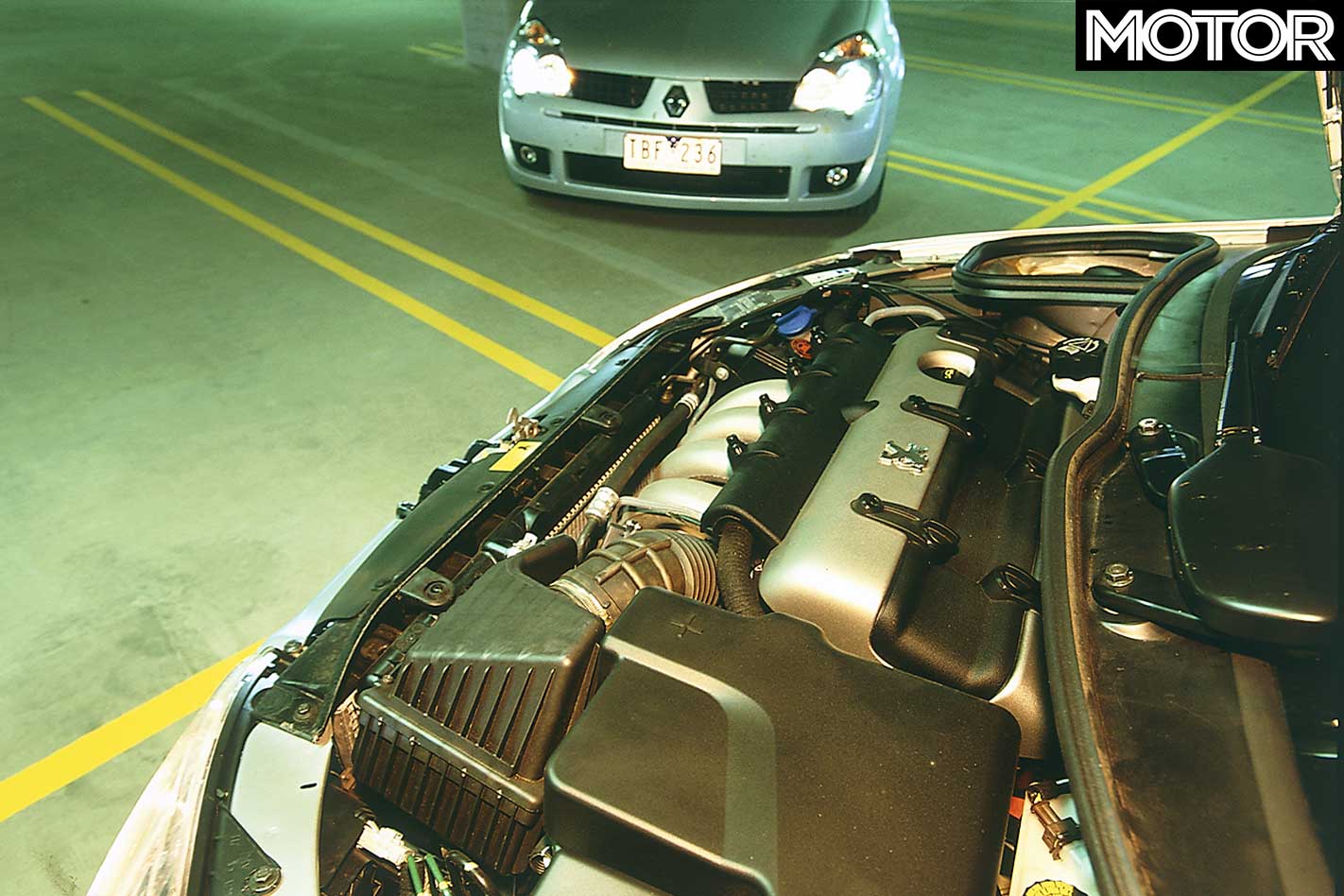
The engine’s aural tuning and NVH are designed specifically to make the driver feel like it’s all frantic and urgent. And it works. Its throttle response is instant, the noise builds in one direction (no timbre changes here) and, by the time you’ve hit the power peak, the cabin’s fair zinging with vibrations and induction roar.
It’s not going to blow WRXs away in a straight fight, but it won’t give a Subaru the chance of running away from the argument, either.
The Pug’s at its most urgent in the top 2000rpm, and the close-ratio five-speed gearbox works hard to keep it there. Cable-linked, its throws are long but accurate and, while there’s a lot of feel coming through the lever, not much of it is anything like the rifle-bolt actions of solidly linked shifter. In fact, shift action is actually a shortcoming in both cars.
The GTi 180’s first gear is actually taller than the one in the garden variety GTi (it’ll pull 66km/h at 7000rpm, Peugeot says, to hurl it out of tight corners), but every other ratio is shorter. Even so, the Peugeot seems to build its strength, just as it builds its sound and vibrations.
In isolation, it feels fast. And it is fast. It’s just that, in a straight line, the Renault’s faster.
The Pug can hold onto the Clio Cup in first but, conquer the Renault’s baulky one-two shift and it’ll be gone, chasing hard after WRXs and Integra Type Ss. It’s a mean little sucker and it seems to get a fair bit more gristle out of its 131kW than the Pug gets out of 130.
Where the Pug fires up in its last 2000 revs, the Renault’s genuinely strong from 1500rpm through to 7000rpm. They’re line-ball for throttle response, though, and it’s a highlight in both cars. They react instantly and instinctively to even whispered alterations in throttle openings, and that helps them to take advantage of their tautly sculpted chassis setups.
They both actually ride better than the tale of the mechanicals would have you believe. The 180’s front springs are a fair bit stiffer (40mm/dan versus 55mm/dan) than the GTi, while the Sport Cup takes the Sport’s already stiff set-up and cranks the front springs by 20 percent and the rears by 15 percent.
The Peugeot is firm – the firmer of the two – but admirably resists crashing into square-edged ruts. Its high-water mark is never going to be its suppleness, but it stands out from the crowd by having easily the most cohesive open-road chassis anywhere in hatchdom.
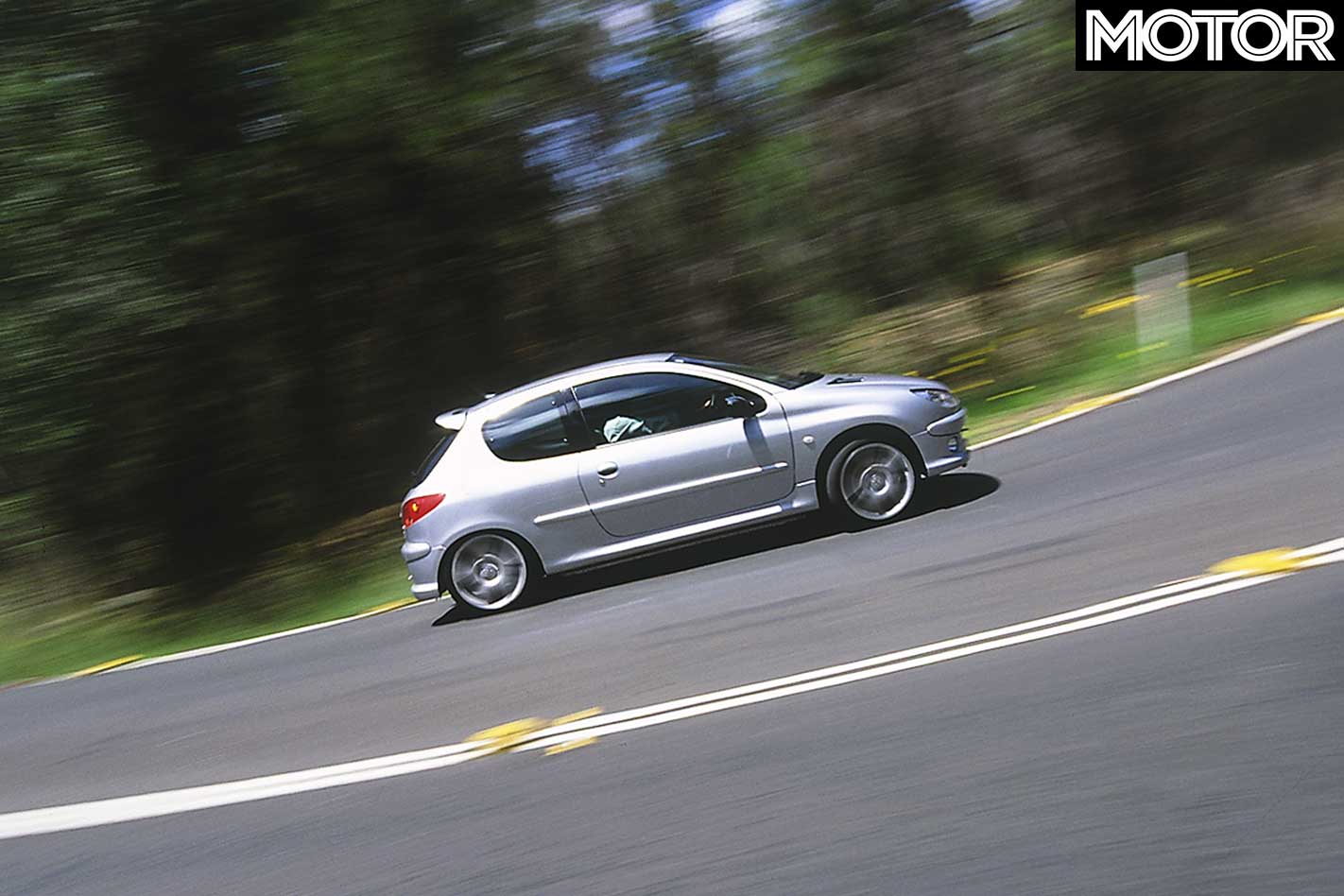
A well-driven Pug will stick with a moderately driven Rex on most pieces of winding road, it’s a combination of very low front and rear roll centres, remarkably accurate steering and beautiful balance.
Its steering is linear and the weighting, just off-centre, is sublime. And when it’s giving its all, the steering becomes a glorious concert of nibbles over bumps and twitches on power-down in undulating country.
Push hard on the way out of a corner, and you can get into the throttle earlier than you think, but you’ll still fall short in getting power-down out of tighter corners.
Even if you’re carrying a bit too much speed, though, it never falls into boring-arsed understeer. Instead, it feels as though all four wheels are sliding across the surface, and you can easily adjust it via the pedals. The odd thing is that the car feels like it rolls a bit in town, but corners very, very flat under lateral pressure once you get out into the hills.
Its turn-in is a highlight, particularly on faster corners. Once you’ve cocked it into a quicker corner, though, it’ll settle into a gentle, soft understeer, but it’s easy enough to fix it. Simply lifting off the throttle, or using a left-footed brush of the brake pedal, will do the job and the nose will tuck back in. In fact, it’s actually quite prone to lift-off or turn-in oversteer, but just how much the tail swings out will be up to you.
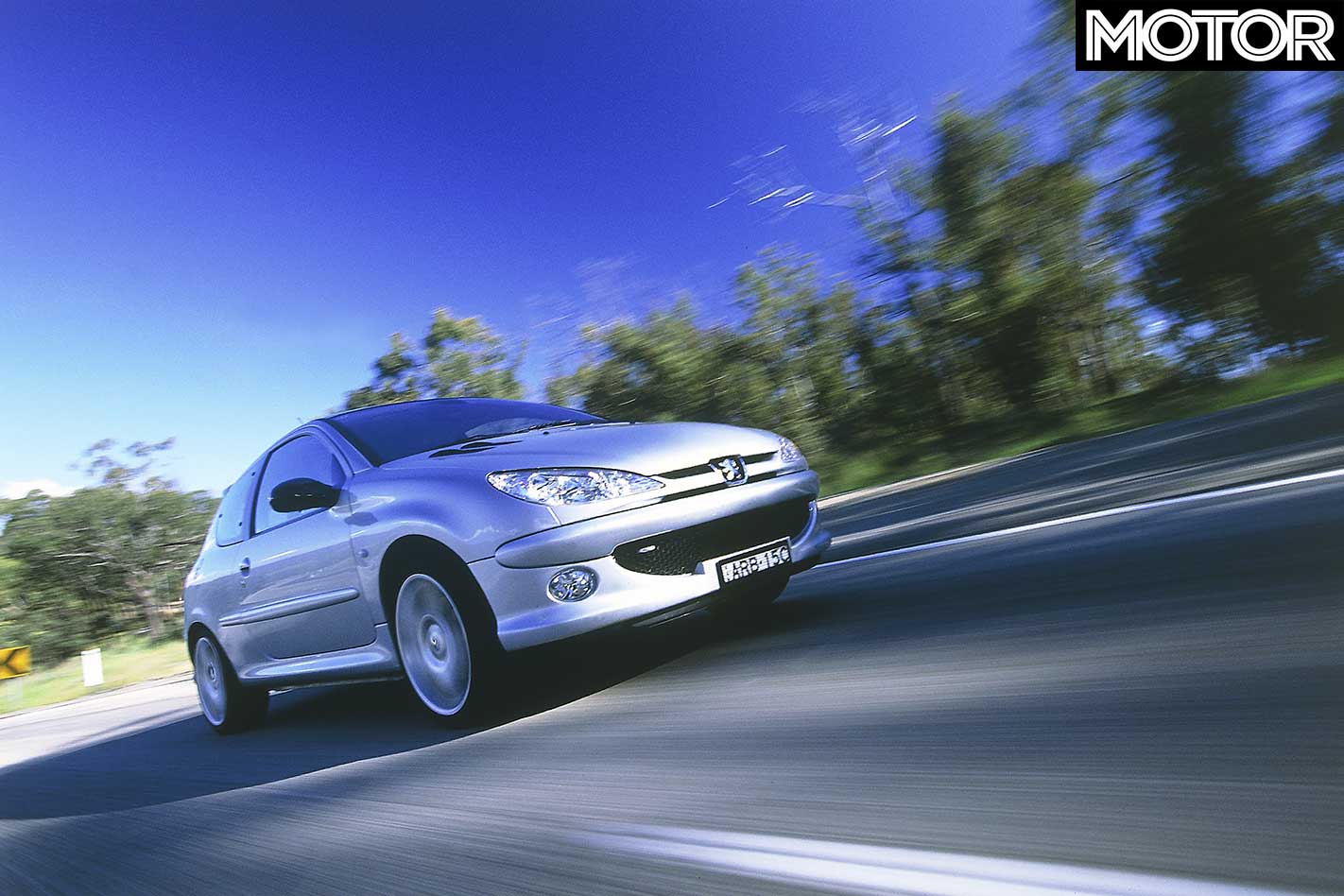
That’s the beauty of the Pug. Press it harder and it becomes a faithful little friend, and that friendly nature makes it easy to get the best out of.
The only significant disappointment with the chassis is that it’s underbraked – of the two cars, it runs out of pad bite first and it can fade to the point where it activates the EBD to get its retardation process anywhere near where you want it to be. Not so the Renault, which resists cooking classes belligerently.
The Clio’s the newer (or, at least, most recently updated) body, and it shows through new-school manufacturing techniques, like the one-piece turret, but for all that, the Pug’s a better looker, inside and out. The 206 is a classic example of the last school of body construction, the Renault is a so-so example, aesthetically, of the new one.
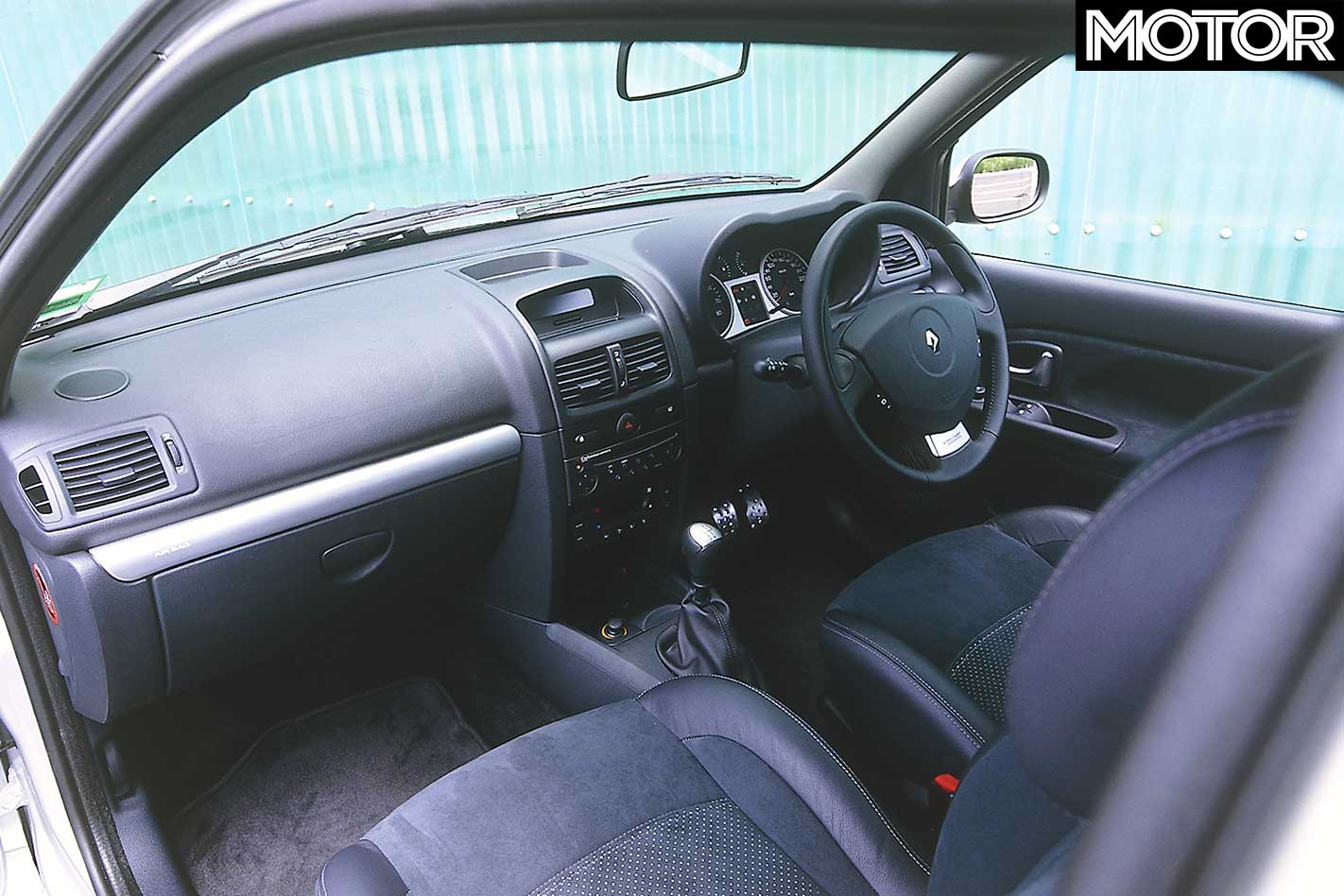
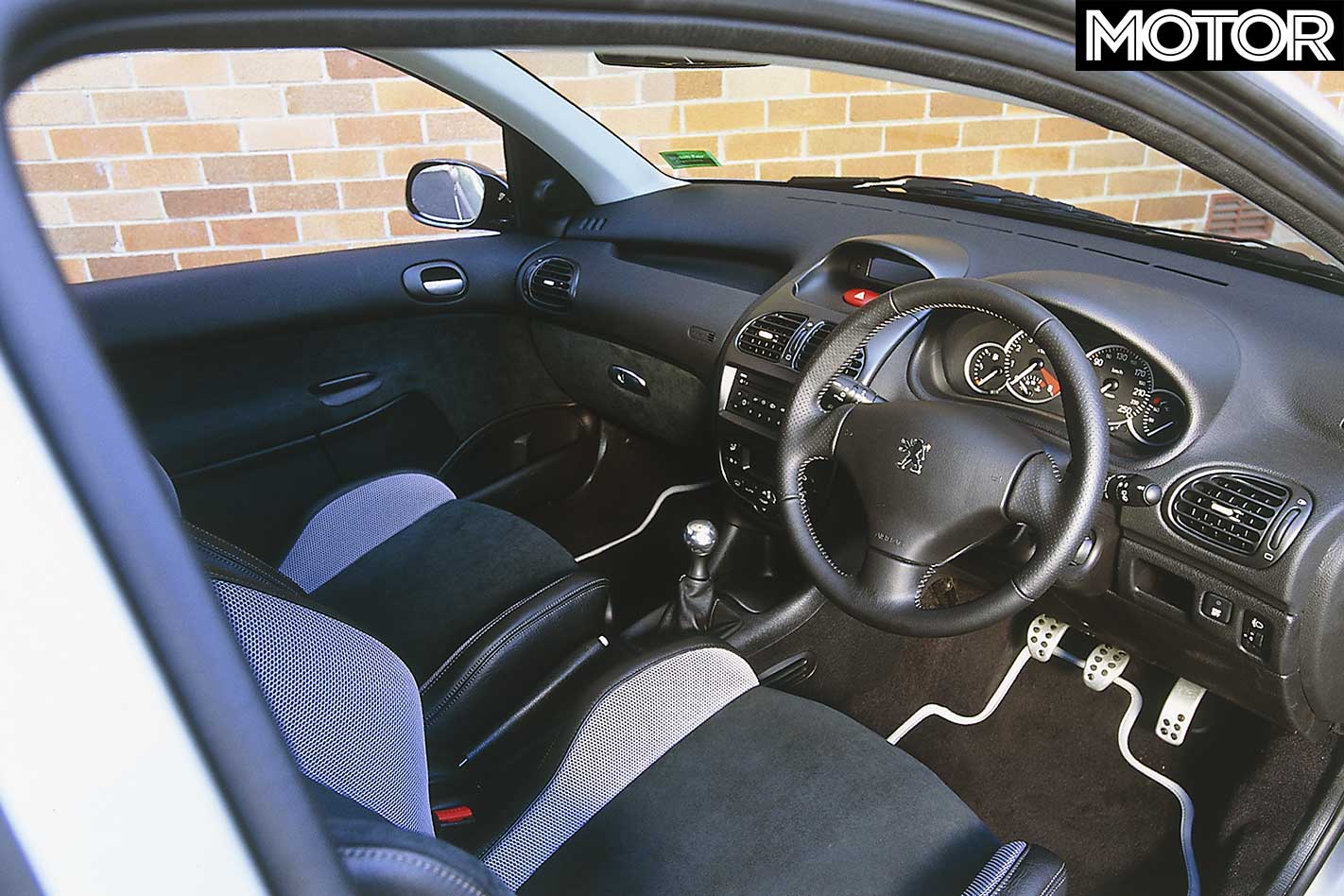
Both of them run terrific interiors, with the Peugeot again claiming the style points, with sexier-looking seats, but the driving position, as ever in the 206, is compromised. Nobody we tried could get it quite right for arms, legs, steering and gearshift. The Renault’s better, but not by much, and its seats work harder for you in the twisty stuff, too.
Still, the Pug’s biggest issue is that, for all of the giggles and the easy access to its speed, the Renault is faster. Substantially faster, but not quite as altogether.
Its steering, for example, doesn’t have the Peugeot’s feel or its accuracy, and the roll centre feels quite a bit higher, especially at the rear. There are situations, too, where it seems more reliant on tyre grip than chassis grip, such as second-gear corners. It’s also more prone to be twitchy, with a quick steering rack making it a game of toss-catch as it dances on bumpy roads.
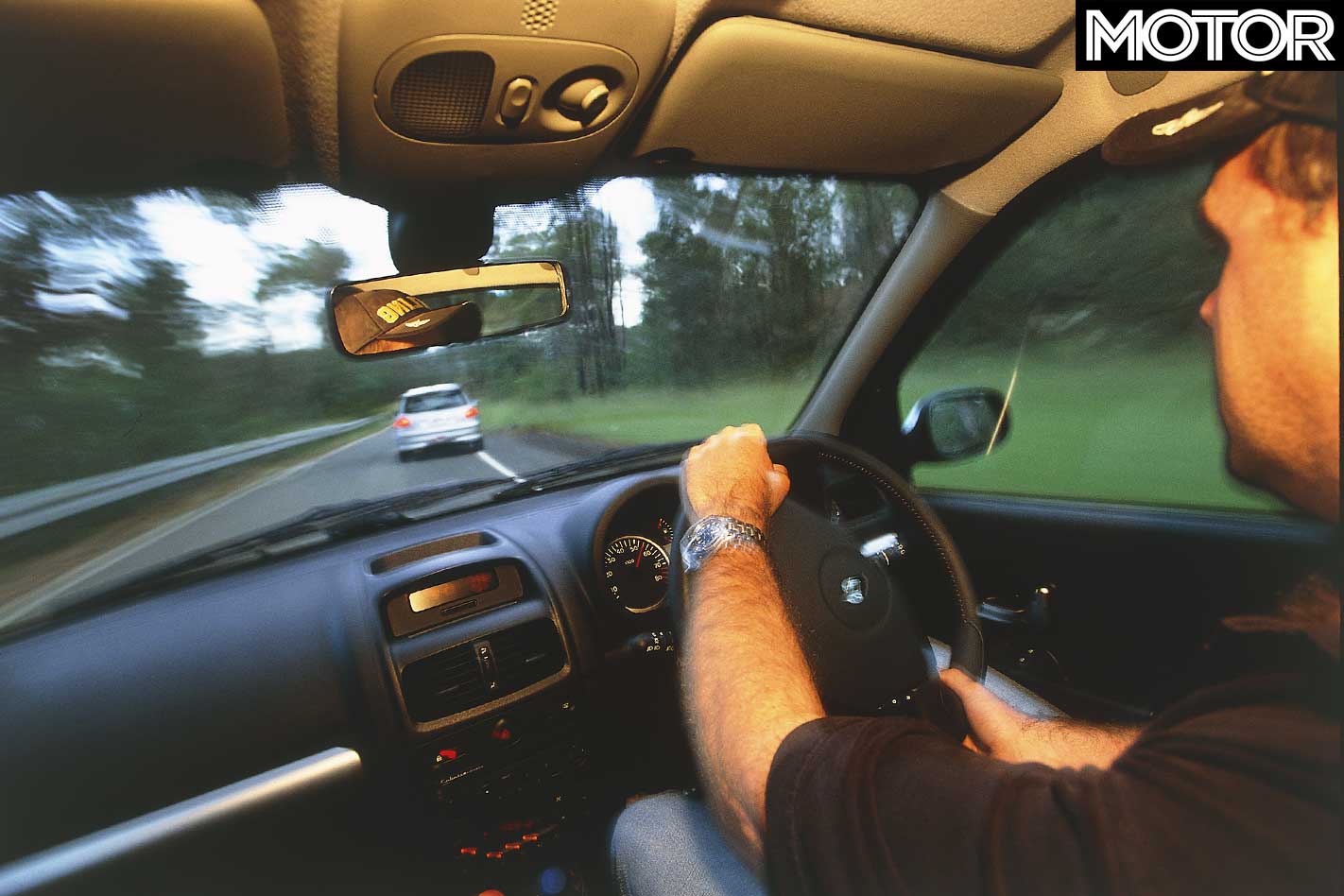
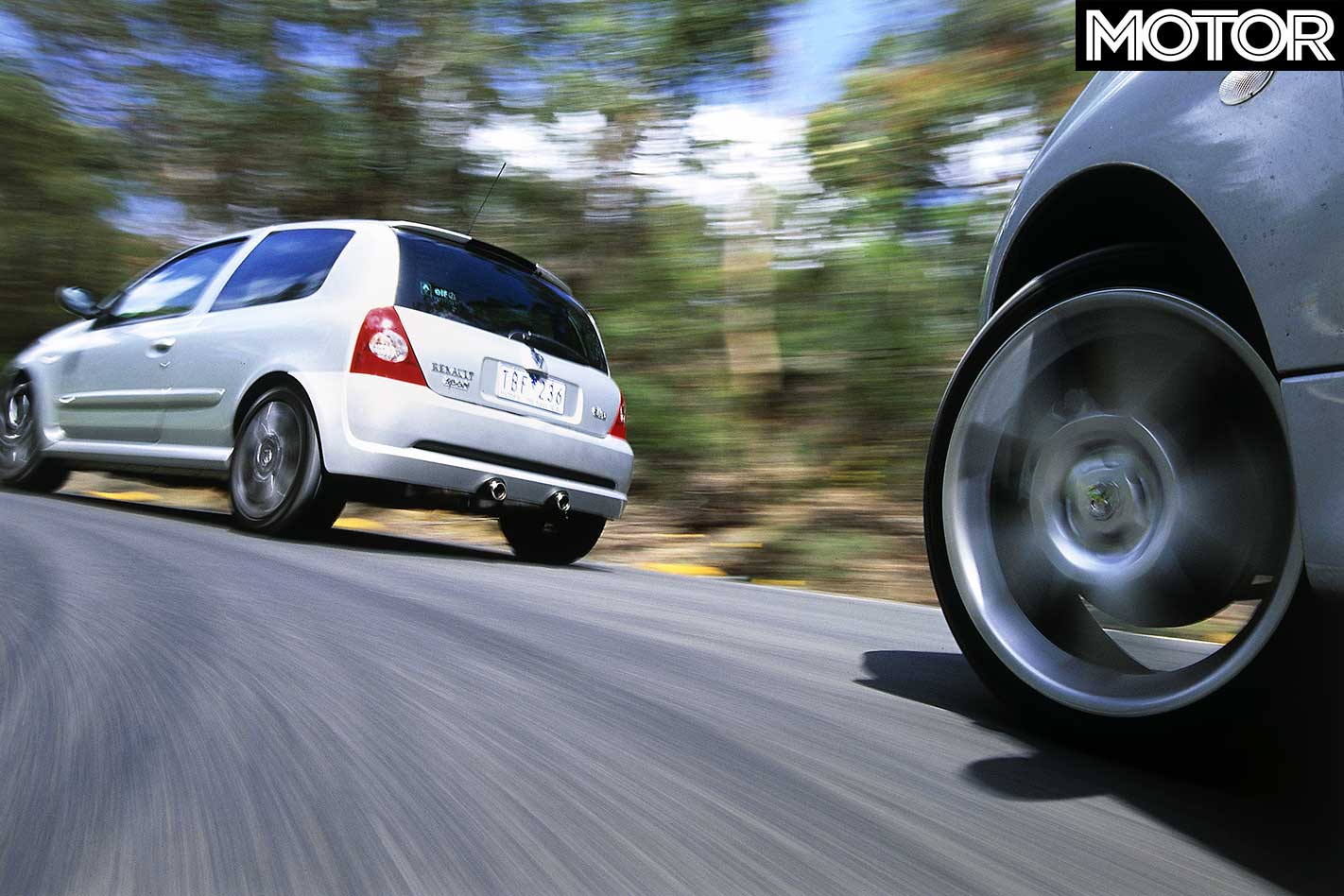
One of the key points here is its ability to change direction. If the Pug turns in quickly, the Renault is simply remarkable; sucking harder to the road on its 16-inch rubber than the 206 does on 17-inch wheels.
The odd part of all this is that the Clio’s steering isn’t that flash. There isn’t much feedback and it’s got a dead spot, relay-wise, just as the weight moves outwards on turn-in as you come off the brakes. It may be tyre related – other Michelins we’ve driven on have had something similar – but, where the Peugeot’s steering gives out constant, easy-to-absorb data, the Clio doles it out in big packets, jerking over bumps, with little or nothing in between.
For all their overlapping outlooks, there are significant differences between these two cars. It’s clear that Peugeot has worked very hard to maintain the 206’s premium position with the GTi 180, but it’s all work based on a chassis that, no matter how good at birth, is ageing.
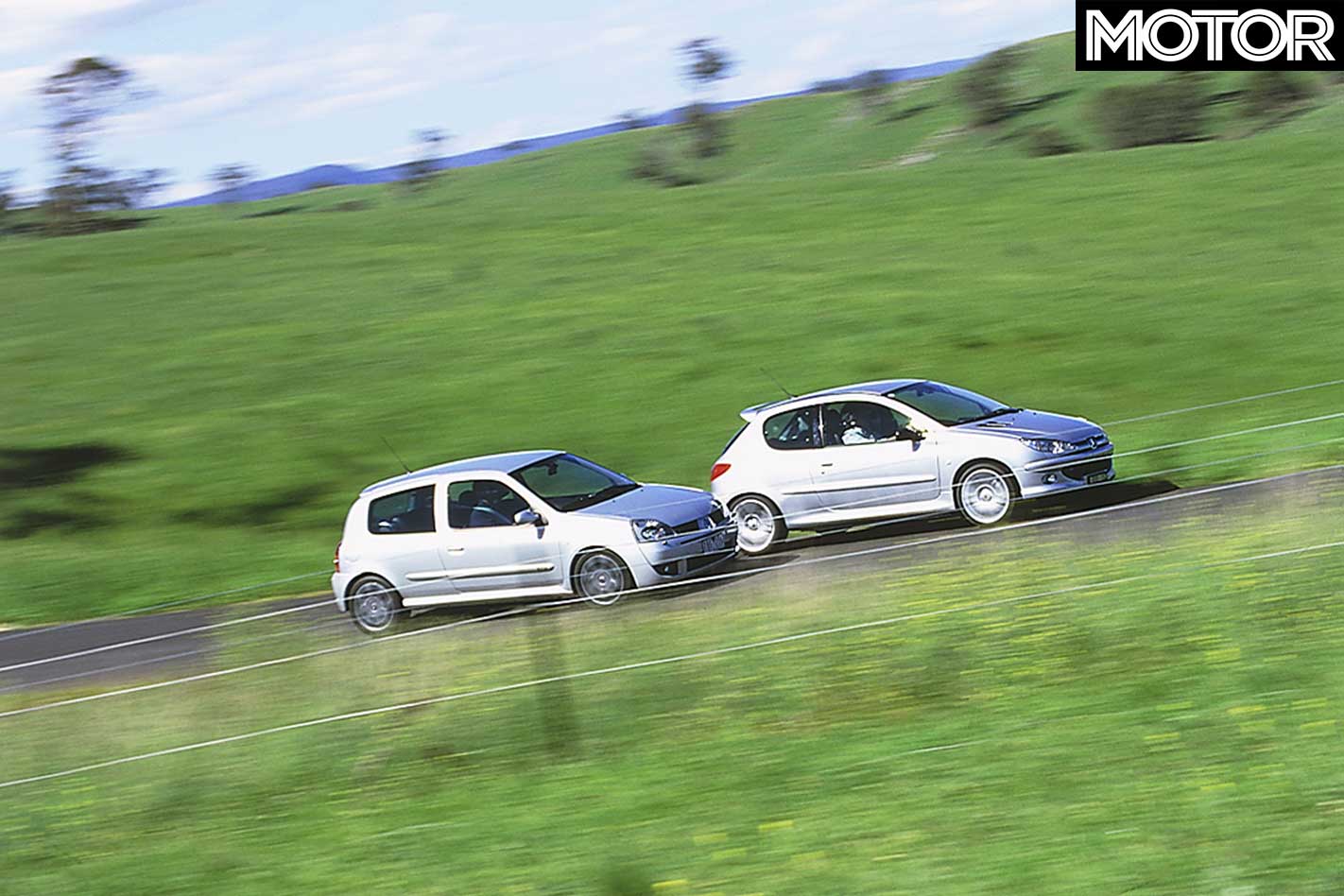
It’s just that, with an $81 million Clio upgrade less than a year old, and $19 million of that spent on the Sport models, Renault has built the Cup from a younger platform. That it can throw Peugeot’s one-inch tyre size advantage back in its face and can take seemingly similar kerb weights and engines, and turn them into another win is evidence of that.
For all that, though, the Clio is a more difficult car to drive at its limits, and only shows its best to those prepared to chuck it around and not worry about its drifting, bucking tendencies.
The Pug’s best may be a lesser present to receive, but it’s easier for most drivers to get at.
Which is why we won’t call this one, even if it seems like a clear win to Renault. For some of you, the price of the Clio Sport Cup may be just too high. But then, the plain-Jane Clio Sport rides better, is easier to drive quickly and only a fraction slower. And, what’s more, it’s cheaper, too.
Fast Facts
| u00a0 | 2005 Peugeot 206 GTi 180 | 2005 Renault Sport Clio Cup |
| BODY | three-door hatch | three-door hatch |
| DRIVE | front-wheel | front-wheel |
| ENGINE | front-mounted 2.0-litre, DOHC 16-valve four-cylinder | front-mounted 2.0-litre, DOHC 16-valve four-cylinder |
| COMPRESSION | 11.0:1 | 11.0:1 |
| BORE x STROKE | 85mm x 88mm | 82.7mm x 93mm |
| POWER | 130kW @ 7000rpm | 131kW @ 6500rpm |
| TORQUE | 202Nm @ 4750rpm | 200Nm @ 5250rpm |
| WEIGHT | 1100kg | 1035kg |
| POWER/WEIGHT | 118kW/tonne | 127kW/tonne |
| TRANSMISSION | five-speed manual | five-speed manual |
| SUSPENSION | MacPherson struts, coil springs, anti-roll bar (f); trailing arms, torsion bars, anti-roll bar (r) | MacPherson struts, coil springs, anti-roll bar (f); torsion beam, trailing arms, coil springs, anti-roll bar (r) |
| L/W/H | 3835/1673/1430mm | 3733/1639/1409mm |
| WHEELBASE | 2442mm | 2485mm |
| TRACKS | 1437mm (f); 1428mm (r) | 1430mm (f); 1408mm (r) |
| BRAKES | 283mm ventilated discs, single-piston calipers (f); 247mm solid discs, single-piston calipers (r), ABS | 280mm ventilated discs, two-piston calipers (f); 228mm solid discs, single-piston calipers (r), ABS |
| TYRES | 205/40 R17 (f & r) | 205/45 R16 (f & r) |
| PRICE | $34,990 | $34,490 |
Champion Clio The first Sport Clio came to Oz in 2001 and was quick to impress
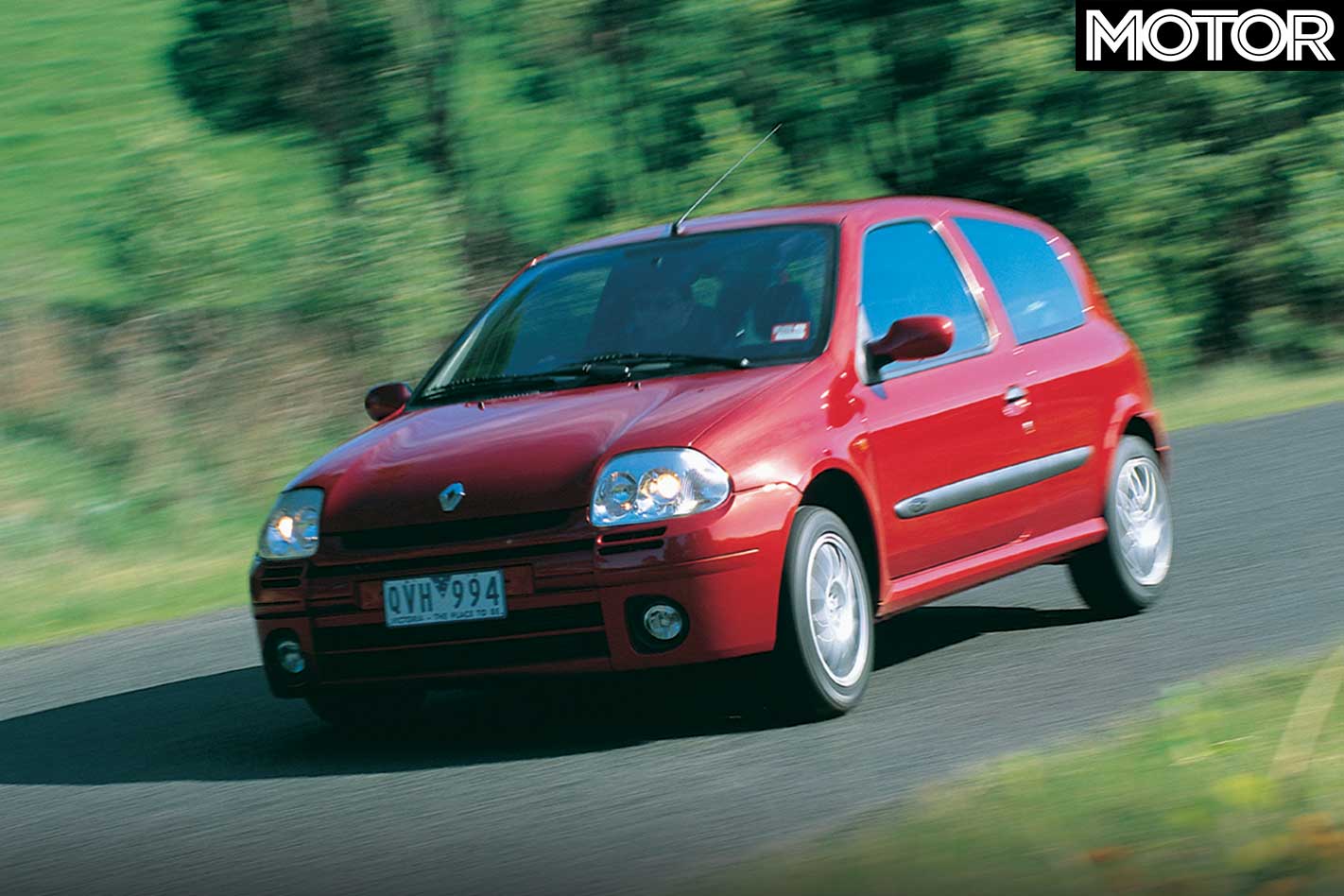
Powered by a 124kW 2.0-litre four cylinder, the front-driver won Bang For Your Bucks outright at its first attempt, and dominated its $30,000-$40,000 class until pipped by the Holden Astra SRi Turbo in 2003.
A brilliant handler, the Sport Clio won against 27 rivals, helped in no small way by its 200Nm of torque and cool three-wheeling cornering style. Terrifically chuckable, the Sport Clio has also proven itself sought-after in the used-car world.
The Peugeot timeline Peugeot has long been the king of hot hatchdom. Here’s the lineage
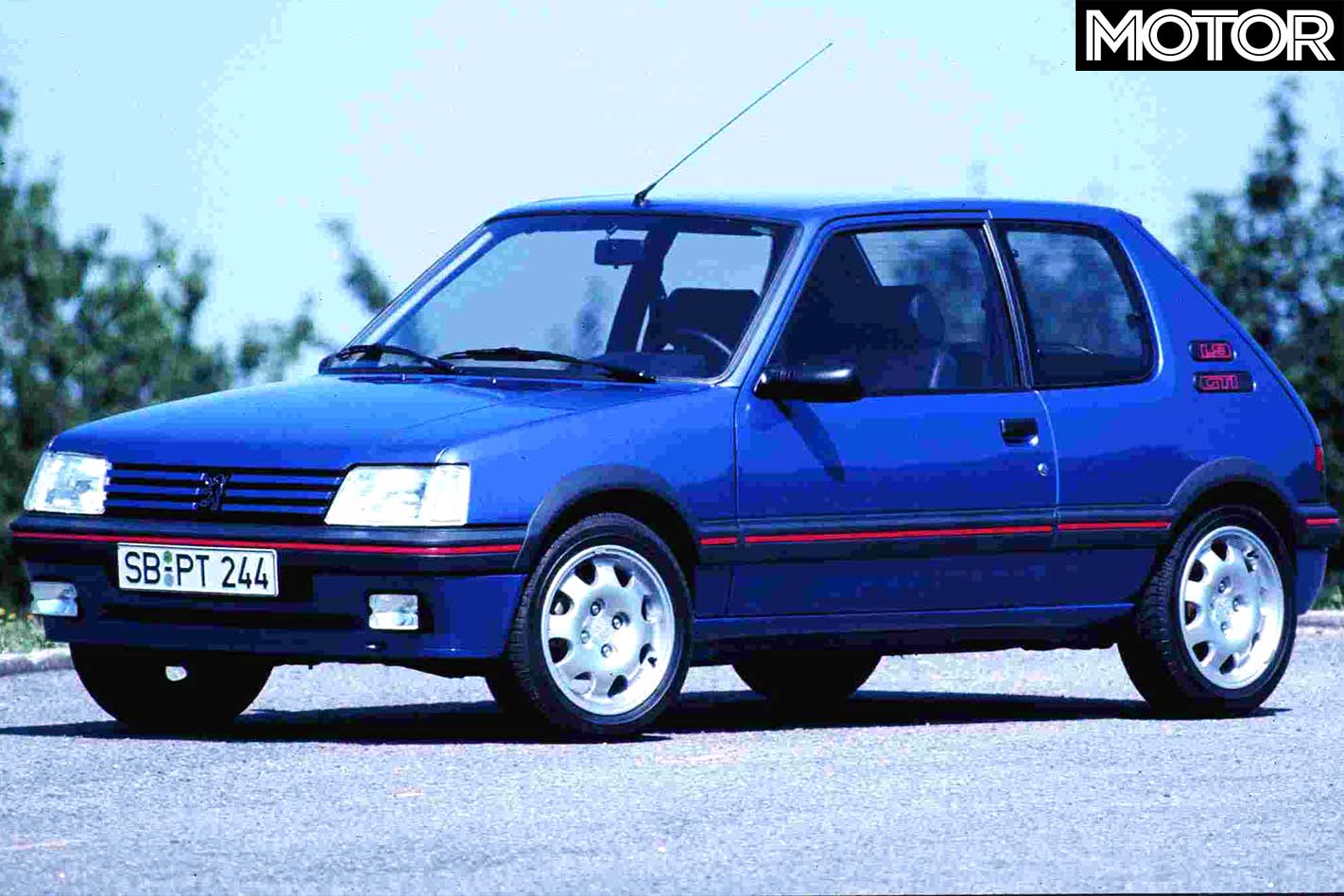
1984 – Peugeot 205 GTi Agile, simple and it ruled for a decade. From a 1.6-litre four, it ended up with 1.9 litres, with handling that is still a benchmark today.
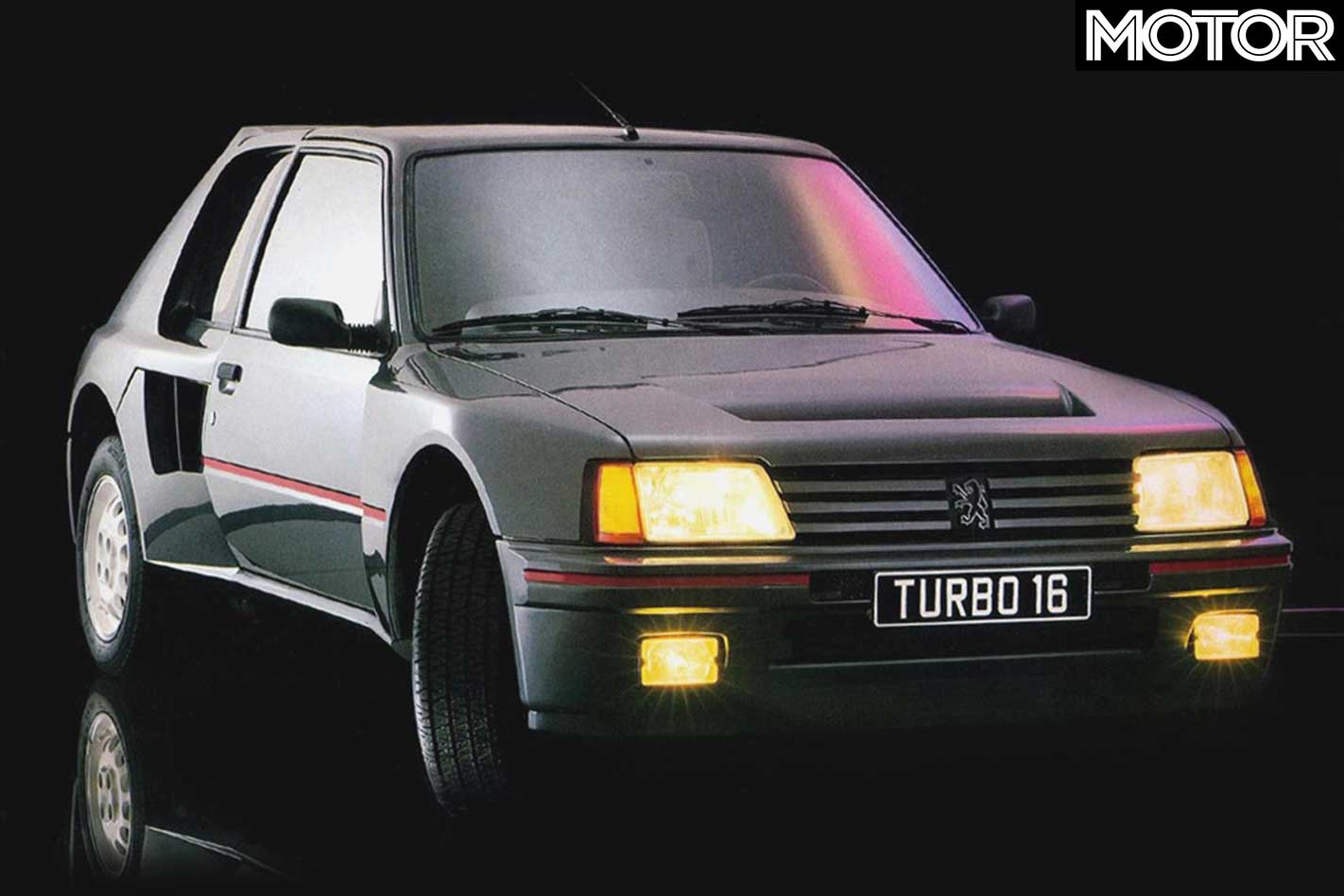
1984 – Peugeot 205 GTi T16 Built for Group B rallying, the T16 was a 205 in shape only. Tube framed, mid-engined, turbocharged and AWD, it won two WRC titles.
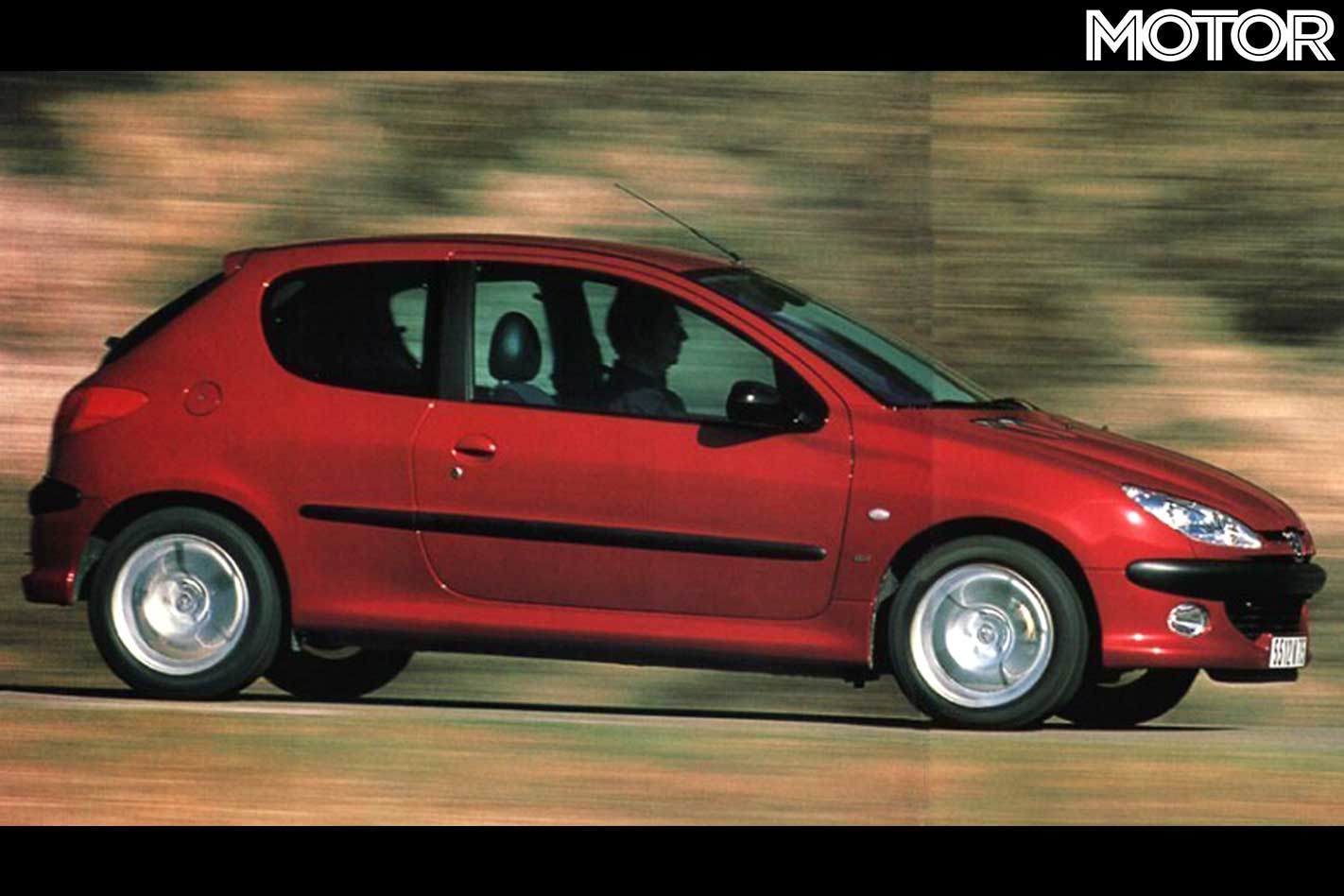
1999 – Peugeot 206 GTi A 2.0-litre, the 100kW Pug had a slightly awkward seating position, but bags of torque. Still softer than the 205 GTi, but very quick.
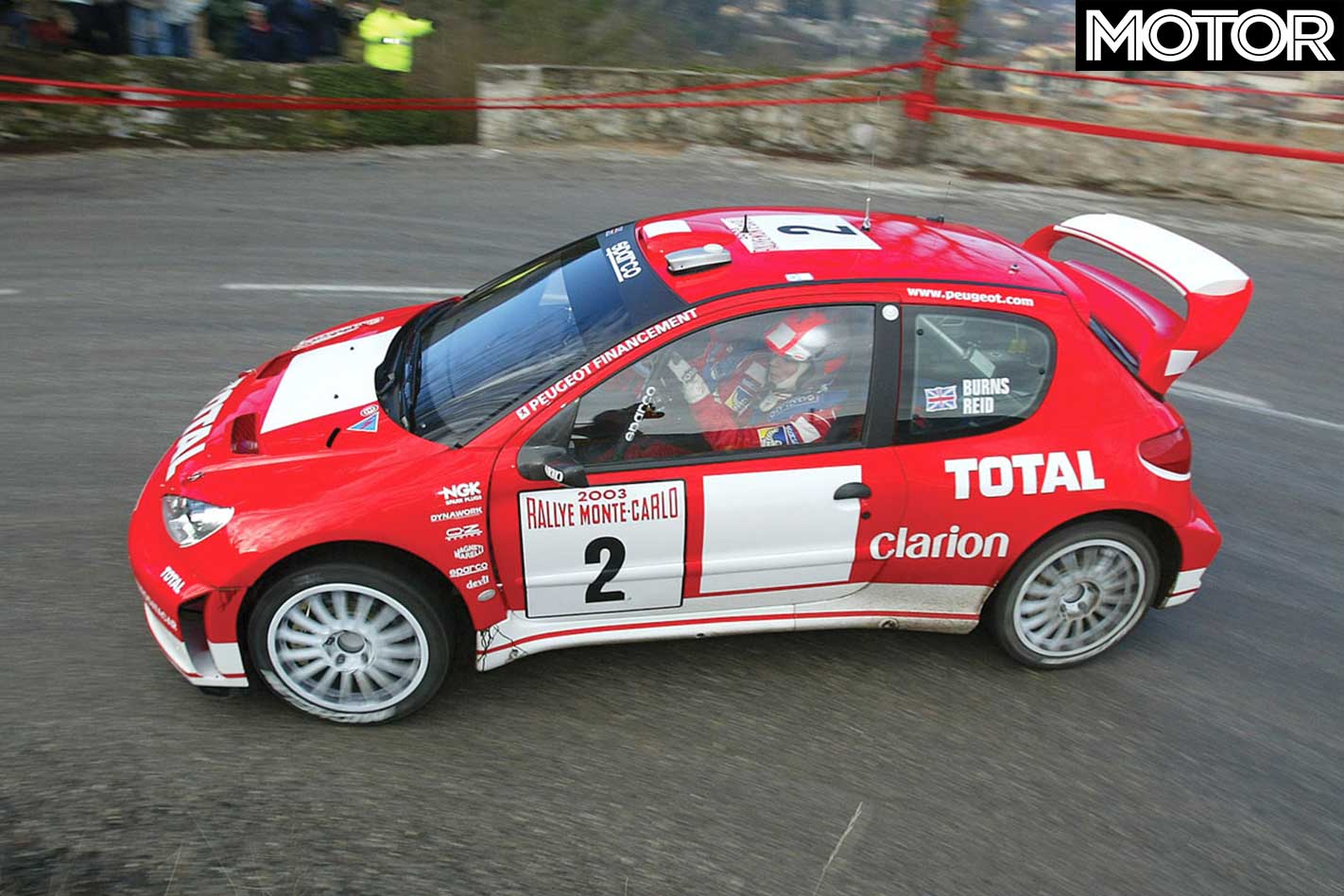
2000 – Peugeot 206 WRC This version will forever be associated with Marcus Gronholm’s two world titles. Richard Burns couldn’t drive it, though.
OPTIONSThe Alfa Romeo Stelvio Quadrifoglio’s arrival in Australia has been preceded by another performance variant that shares its engine with Alfa’s Giulia Veloce sports sedan.
The a 206kW/400Nm 2.0-litre turbo petrol Stelvio Ti is the most powerful four-cylinder petrol version of the Italian carmaker’s first ever SUV, bringing an additional 58kW/252Nm over the entry-level Stelvio.
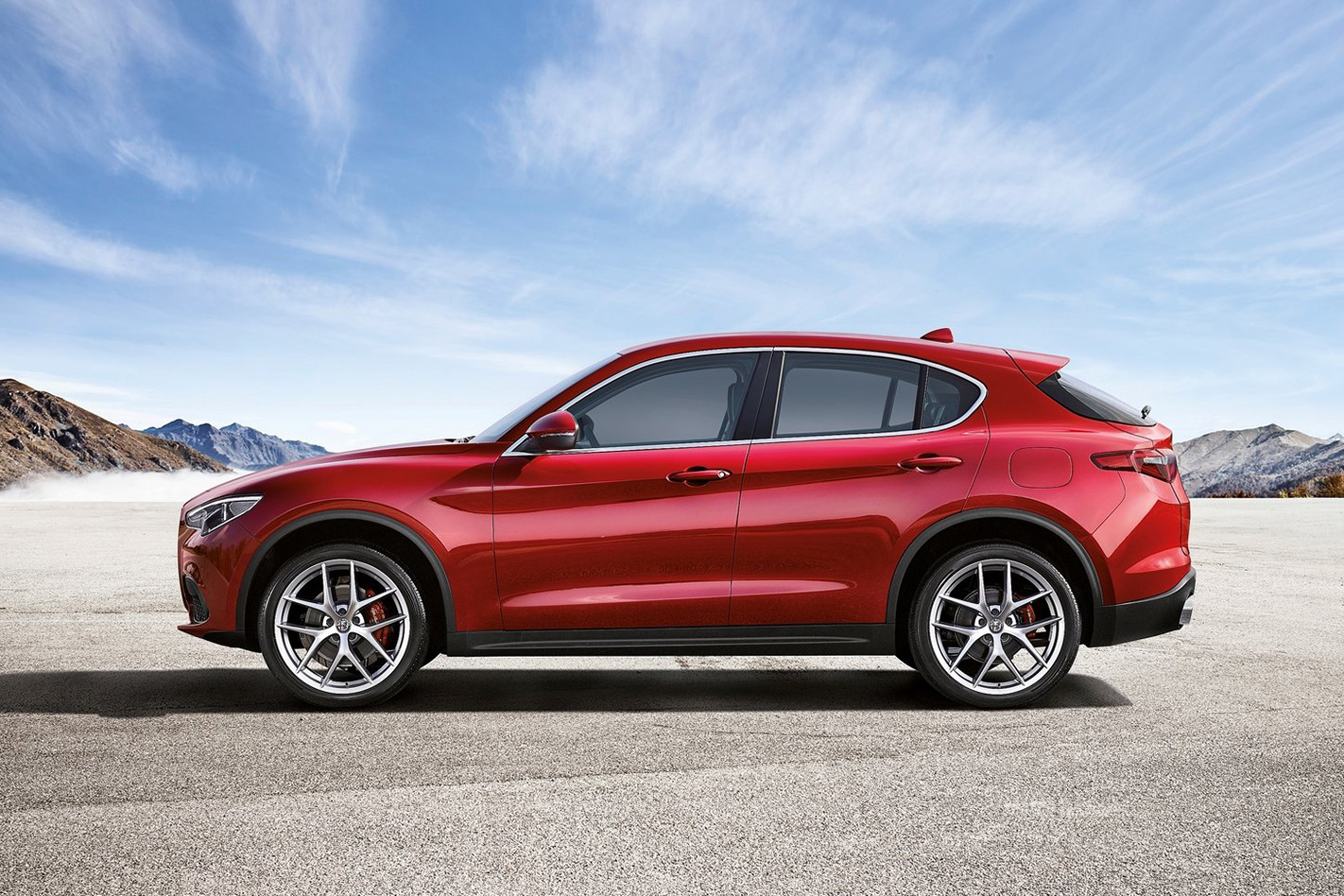
That considerable power boost results in a 1.5-second quicker 0-100km time of 5.7 seconds over the entry-level Stelvio; it’s also 0.9 seconds quicker than the torquey 154kW/470Nm 2.4-litre turbo diesel that currently tops the range.
Like the other two variants, the Stelvio Ti’s powertrain includes an eight-speed automatic transmission driving all four wheels.
The Ti’s standard features list will include go-fast cosmetic enhancements including 20-inch alloy wheels and red brake calipers.
Racetrack-bred Koni dampers and a rear limited-slip differential are also standard, though an even better ride is available with optional Alfa Active Suspension (AAS) electronic damping control, which improves ride comfort and road holding by assessing driving dynamics and road surface conditions in real time.
Other standard kit includes heated front sports seats, heated, flat-bottom sports steering wheel, aluminium sports pedals, DNA drive mode selector, genuine leather interior, remote start with passive entry, bi-xenon headlamps, dual exhaust, class-exclusive carbon-fibre driveshaft, Apple CarPlay/Android Auto and a 400w, 10-speaker sound system.
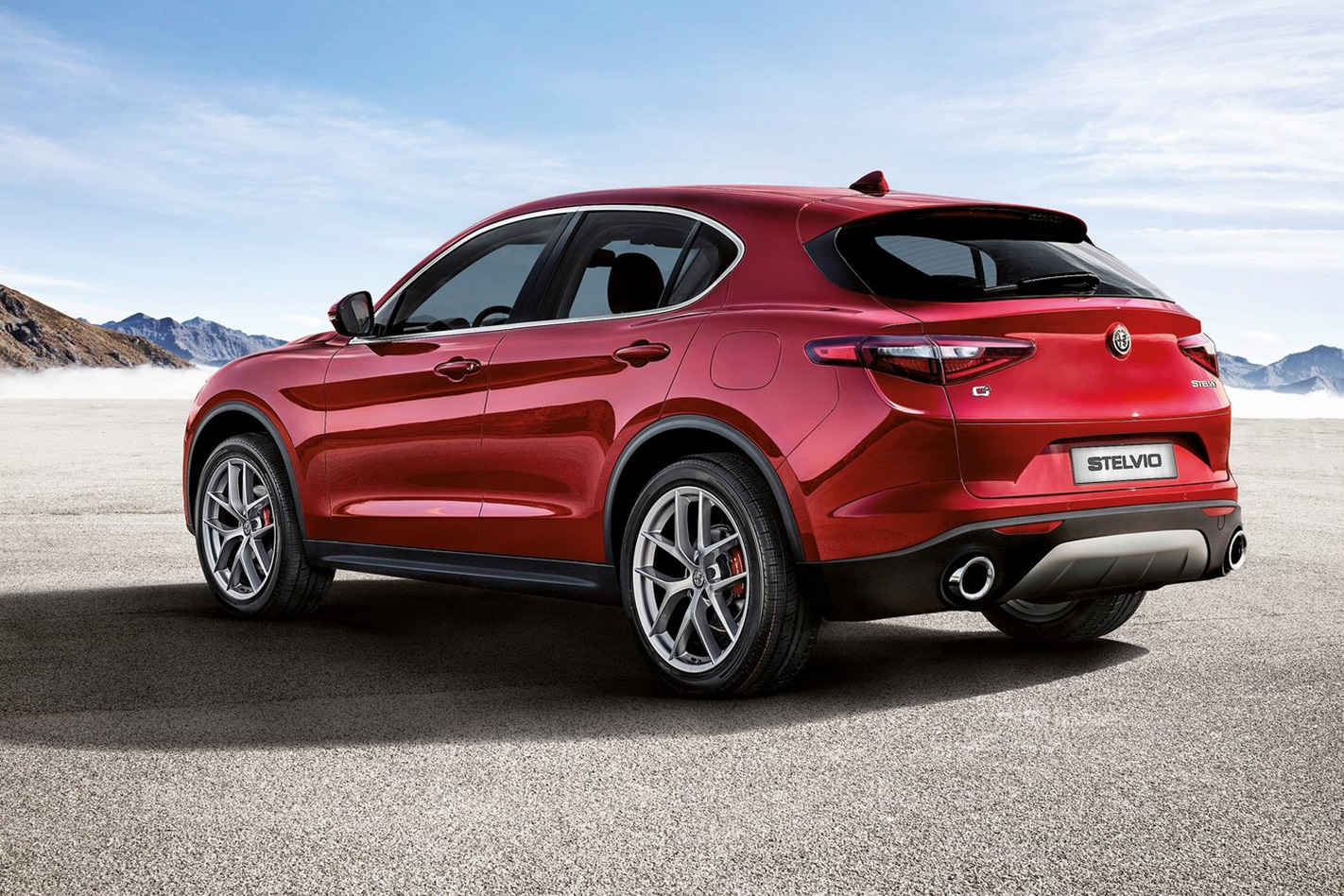
Priced from $78,900, the Stelvio Ti is now available for order before its arrival later this year, when it will temporarily top the local range until the even more powerful Stelvio Q (Quadrifoglio) arrives in time for Christmas with a six-figure price tag.
The Q uses a 375kW/600Nm twin-turbo V6 shared with the Giulia Quadrifoglio and its arrival will see the Ti cede halo duties to become a potent mid-spec offering that, like the Giulia Veloce, will provide a decent compromise in terms of enhanced driver enjoyment and price.
2018 ALFA ROMEO STELVIO PRICING
- Stelvio 2.0T Petrol – $65,900
- Stelvio 2.2T Diesel – $67,900
- Stelvio First Edition 2.0T Petrol – $71,900
- Stelvio First Edition 2.2T Diesel – $73,900
- Stelvio Ti – $78,900
- Panoramic sunroof – $2400
- Alfa Active SDC Suspension – $2200
- Harman/Kardon 14-speaker sound system – $1500
- Vehicle theft alarm – $1500
What stands out?
The Lexus LX is a very comfortable, smooth and quiet luxury 4WD wagon that is also highly capable when driven off road. Lexus is Toyota’s premium brand, and the LX shares its body structure robust 4WD chassis and turbocharged diesel engine with the Toyota LandCruiser. There are however many differences, beginning with the LX570’s bigger and more powerful petrol engine – a petrol V8 – and its eight-speed automatic gearbox. The LX570 also seats eight people.
What might bug me?
No eight seat option with the diesel LX 450dHow much money you find yourself spending on petrol. The LX 570 uses a lot of it, and it is especially thirsty in stop-start city driving. Lexus also recommends you run on premium petrol, which is more expensive than regular. (Although the LX570 will run satisfactorily on regular if necessary.)Messing about with the fiddly touchscreen controller that can make selecting functions difficult, particularly while driving.That friends who spent less and got the similar Toyota LandCruiser 200 can point to several reasons why their car is better. However, it won’t be a one-sided argument: the Lexus too has its strong points.Looking for parking spots big enough to accept your LX. It needs lots of room.
What body styles are there?
The Lexus LX large five-door SUV-style wagon is the only body style. The LX 570 has seating for eight in three rows, while the LX 450d has standard two-row seating for five.The LX drives all four wheels all of the time. You can also engage low-range gearing via a button on the centre console, which makes it easier for you to drive very slowly off-road.The Lexus LX is classified as an upper-large SUV, higher priced.
What features do all LX versions have?
A proximity key, which lets you unlock the car and drive away without removing the key from your pocket or bag. To start the engine, you push a button. Sidesteps, to help you get in and out of the car.Satellite navigation, displayed on a 12.3-inch touchscreen. A 19-speaker audio system with USB and iPod ports, and Bluetooth connectivity for music streaming and phone calls. Wireless charging for compatible mobile phones.Controls on the steering wheel for the sound system and your phone. Power-adjustment of the steering wheel for tilt and reach.A head-up display that projects your speed and navigation prompts onto the windscreen, so that you can see it easily without taking your eyes from the road.A rear-view camera, and front and rear parking sensors. Additional external cameras that allow you to select different views from around the car.Bright and long-lived LED headlights that come on automatically when it gets dark, and that dip automatically for oncoming traffic. Windscreen wipers that operate automatically when it rains.A leather-trimmed interior, with three rows of seats. Heating and power adjustment for both front seats. A memory for your adjustments to the driving position (steering wheel, external mirrors and 10-way adjustable seat), so that you can restore settings quickly after a companion has driven the car.Powered fore-and-aft adjustment for the second-row seat, and powered deployment and stowage for the third-row seats. Powered opening and closing of the two-piece tailgate.Four-zone climate control, so that the driver, front-seat passenger and two rear passengers can each set their desired cabin temperatures. A refrigerated coolbox in the centre console.Two 11.6-inch DVD screens behind the front seats, and three sets of wireless headphones, so that rear-seat passengers can watch movies or play games. A sunroof.Active (radar) cruise control, which will follow a vehicle in front at a pre-set distance, braking automatically if necessary. When the road ahead is clear, the LX will restore the cruise speed you have chosen.A range of driving modes, which lets you adjust in concert how directly the car responds to the accelerator, how weighty the steering feels, and how comfortably the car rides. Eco mode will even tailor the air-conditioning for maximum fuel economy.Adaptive suspension that optimises the ride automatically – and almost instantly – for smooth or rough roads, and that lowers the car at highway speeds to reduce body roll when cornering. You can also lower the car further when it is stationary, to make it easier for passengers to get in and out. And when you are driving off road, you can raise the car for more ground clearance.Electronic traction control, which helps the car go further in difficult off-road conditions. Crawl Control, for negotiating very difficult off-road terrain. (This controls the accelerator and brakes automatically to maintain a speed you select; all you have to do is steer. You use this in conjunction with the low-range gearing.)Settings for different off-road conditions that optimise the stability and traction control (also used in conjunction with the low-range gearing).Shiny alloy wheels, and a full-size spare wheel. A system that warns you if a tyre is losing air pressure.Ten airbags, and electronic stability control. (For the placement of airbags, and more on the LX570’s safety systems, please open the Safety section below.)The LX570 comes with a four year, 100,000km warranty.
Which engine uses least fuel, and why wouldn’t I choose it?
The 4.5-litre V8 turbo-diesel in the LX 450d is the more economical of the two engines on offer. In the official test it uses 9.5 litres/100km (city and country combined).This is the same diesel engine as in the Toyota LandCruiser 200 and shares the same six-speed automatic transmission. It was added to the LX range in March 2018 to provide an economical alternative to the LX 570’s big 5.7-litre petrol V8, which uses 14.4 litres/100km in the official government combined-cycle test, and generally more in the real world.The difference in fuel economy means the diesel has an average driving range of 978km, which is 20km more than the V8 petrol despite its 93-litre fuel capacity being 45-litres less than the V8 petrol’s twin-tank set up.Reasons why you would not buy the diesel engine include the fact the V8 is coupled with an eight-speed automatic gearbox which helps it to run extremely smooth and quiet, and provides effortless performance. And, if you need to carry more people, the diesel is only available with five-seats.
What key features do I get if I spend more?
The LX 450d is the cheaper of the two LX versions and comes with five seats and a less advanced six-speed automatic transmission.Spending more on the V8 petrol LX 570 brings a third row for a total of eight seats, and an eight speed transmissionAbout the only other thing you can spend more on is an Enhancement Pack that swaps the standard 20-inch wheels for sportier looking 21-inch wheels and lower-profile tyres. It also adds ventilation and cooling for the front seats, heating and cooling for second-row outer seats, and heating for the steering wheel.
Does any upgrade have a down side?
The significantly extra fuel consumption of the LX 570’s V8 petrol engine.The tyres on the Enhancement Pack’s 21-inch wheels are less suitable for off-road driving than the tyres on the standard 20-inch wheels. They are more susceptible to off-road damage, and don’t ride as smoothly on rough roads.Black is the only colour that doesn’t attract an additional cost. All other colours, including white, cost more.
How comfortable is the LX?
The LX might be a high-riding 4WD vehicle, but you can make it easy for even small or not very agile people to climb on board by putting the suspension into Access mode – which lowers the car. The side-steps help here too. And with its smart-key entry, it even unlocks automatically when you touch the door handle.Inside the LX’ spacious cabin you’ll find a world of comfort and opulence. Everything is beautifully finished and detailed. The dash is dominated by a huge, 12.3-inch tablet-style touchscreen, from which you can control the many ancillary functions. That means control buttons don’t crowd the dashboard.The LX 570 may have a big V8 under the bonnet but you’d hardy know, as it does its job in a very subdued, quiet and refined manner – all the while providing ample response and effortless progress.The LX 450d also has a very smooth ride and is much quieter than expected to the point where the engine sounds rather underwhelming when you accelerate.Both versions keep out road noise, and the suspension soaks up bumps beautifully.Life inside the LX is so very serene, unless of course you want to crank up the brilliant premium audio system.
What about safety?
Safety is a strong point of the LX. It brings you a big airbag count, fatigue-reducing automated functions such as headlamp dipping, and a comprehensive active safety suite that includes autonomous braking.There are 10 airbags: front and knee airbags for the driver and front passenger; side airbags for the driver, front passenger, and second-row outer passengers, to protect upper bodies; and full-length curtain airbags to protect the heads of outer passengers in all three rows of seats from side impacts.There is electronic stability control, which can help you bring a skidding car back under control. This is mandatory on all new cars.Automatic emergency braking operates as part of the LX’s radar-based Pre-Crash Safety System. If it detects the imminent prospect of a frontal crash, it will trigger an audio-visual warning and pre-tension the front seatbelts, and if you are not braking hard enough it will add brake pressure. If you are not braking at all, the system will brake for you automatically.The LX also warns you if you are about to let the car wander out of its lane (through distraction or fatigue), and of vehicles in blind spots to either side. And it has a rear cross-traffic alert, which warns you, when you are backing out of a parking spot, if cars are approaching from either side. This feature is particularly handy in country towns, which often have nose-to-kerb angle parking.The tyre-pressure monitor is another very useful safety item, and can help prevent an accident due to a flat tyre leading to a loss of vehicle control.The Australasian New Car Assessment Program (ANCAP) has not rated the Lexus LX, The Toyota LandCruiser 200, on which it’s based, has a five-star rating.
I like driving – will I enjoy this car?
The Lexus LX will astonish you with its comfort, silence and smoothness, which make it always an enjoyable car to drive.The LX 570’s big V8 petrol engine is totally unobtrusive unless you want it to be. Put your foot down and there’s a rush of effortless acceleration. It’s reserved but authoritative, and very much in keeping with the LX 570’s refined demeanour. It’s also stronger and a little smoother and quieter than the diesel.What the LX does less well is reward hard driving into and through corners, especially at high speeds and on bumpy roads. The automatic suspension systems do an excellent job of managing the car’s bulk, but there is only so much they can do for the handling because the LX has a truck-style chassis. It simply can’t provide the precision cornering and rough-road stability displayed by most other luxury 4WDs, whose chassis follow the patterns of those used on modern road cars.However, the truck-like chassis contributes to the LX’s formidable off-road capability. Off-road, an LX is at least as good as similar luxury 4WDs and generally much better. (It would be better again off road if it had higher profile tyres and smaller wheels, like the 18s fitted to the Toyota LandCruiser.)
How is life in the rear seats?
The Lexus LX has a very wide and comfortable second-row seat that will accommodate three adults without squeezing them up. The separate air-conditioning settings for either side of the second-row seat add to the comfort (as do the heating and ventilation for the outside seats supplied with the Enhancement Pack).The three third-row seats in the LX 570 are suitable for children and small adults. The powered fore-and-aft adjustment for the second-row seat is handy here, as you can tailor legroom in the second and third rows to suit passengers of different heights.Standard rear-seat entertainment systems give people in the back something to engage them on long trips, if they tire of the scenery.
How is it for carrying stuff?
The Lexus LX has a larger cargo space than most similar vehicles – 1085 litres with two rows of passengers – and is very good for carrying stuff. You can even fit a few medium-sized bags behind the third row seats when they are deployed.Push a button and the LX 570’s third-row seats stow away, leaving a large luggage space. If you fold the second-row seats flat as well, the luggage space is cavernous.Push-button opening and closing of the two-piece tailgate, via buttons on the key-fob, the dashboard and at the rear of the car, is also very convenient.The LX is rated to tow 3500kg, which is at least as much as any similar vehicle. It is a particularly good tow vehicle, although the petrol version in particular can be very thirsty in this role. Trailer sway-control is standard, and helps prevent oscillation developing.
Where is it made?
The Lexus LX is made in Japan.
What might I miss that similar cars have?
Lighter and more agile on-road handling, especially on bumpy roads. The Range Rover Velar, Audi Q7 and Mercedes-Benz GLE and Volvo XC90 shine here, but the Land Rover Discovery, Range Rover and the Mercedes GLS are also very good.The longer, 1453km average driving range of the diesel-powered Toyota LandCruiser 200, which has same engine as the LX 450d, but is fitted with an additional fuel tank which takes fuel capacity up to 138 litres.Change from the cost of the Toyota LandCruiser 200, on which the Lexus LX is based, including the top-of-the-range Sahara.Other plush off-road capable large SUVs you may want to consider include the Infiniti QX80, Nissan Patrol Ti-L and Jeep Grand Cherokee.
I like this car, but I can’t choose which version. Can you help?
If you don’t need the eight seats, the more economical LX 450d is the best bet if you’ll be using your LX for country touring and/or towing. As well as saving on fuel it provides an extended range of up to 1000km.
Are there plans to update this model soon?
The LX 570 arrived in Australia in 2008, and was last updated for the 2016 model year.The LX450d arrived in March 2018 with a 4.5-litre turbo diesel engine from the Toyota LandCruiser 200 and also brought the entry price of the LX down to $134,500. Specifications and features for the LX 450d will soon appear in the Cars Covered section at the top of the page below the main picture.Given that it is based on the https://www.whichcar.com.au/toyota/landcruiser” target=”_blank”LandCruiser 200, a new generation LX won’t arrive before a replacement for the 200 arrives – and that is not expected before 2019.
It should be no surprise that Australians love performance cars.
For a country that only had two ‘properly Aussie’ cars (sorry, Camry), it might have seemed excessive to some that we also had a separate company for each that would make them faster.
But even excluding HSV and FPV, Australians still seek out the faster version of their intended car more regularly than the average buyer.
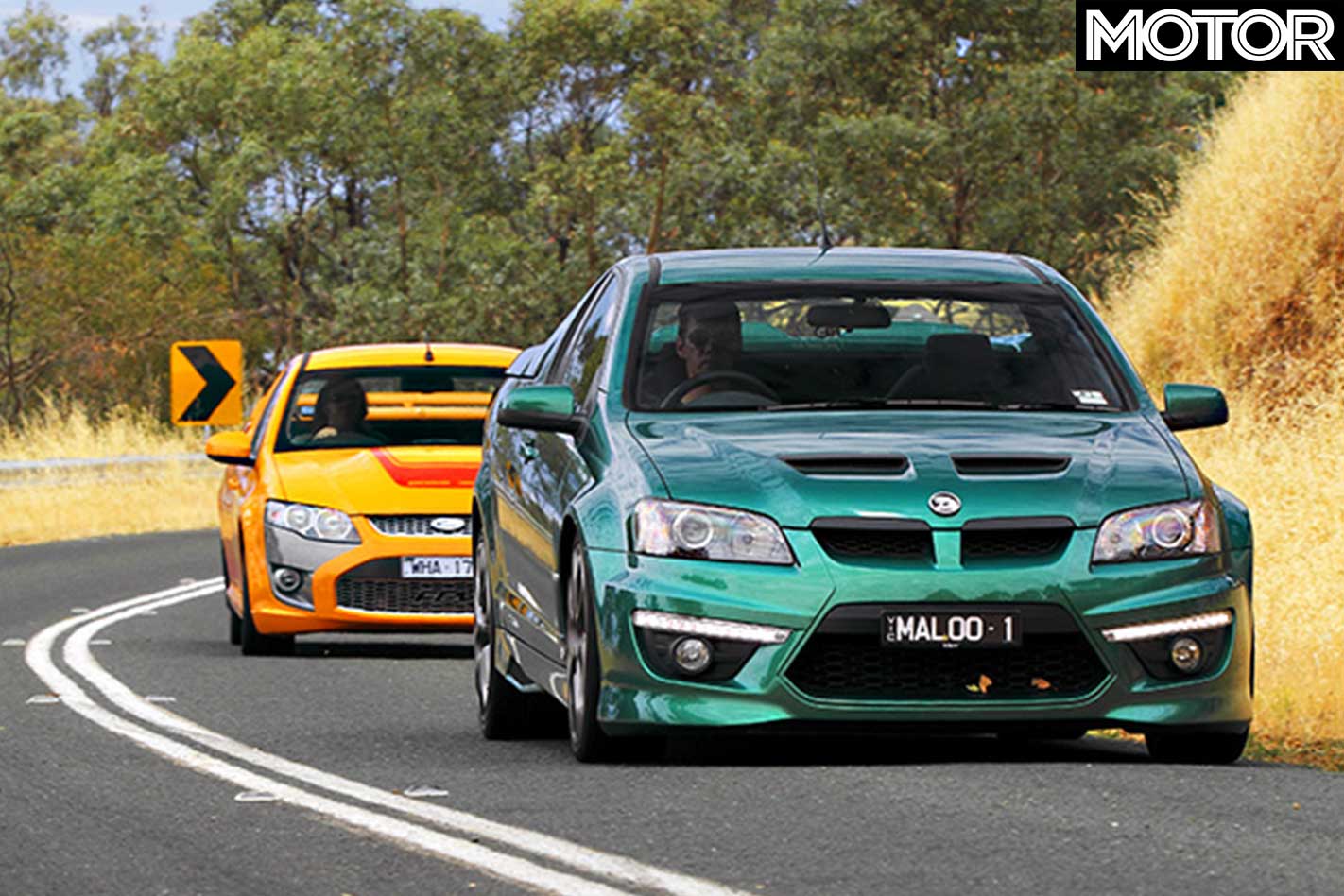
Of course, not every company would divulge their specific sales information, but BMW, Mercedes-Benz, Lexus, Volkswagen, and Ford were all happy to let us know just how well their performance models… er, perform.
The two premium German brands, BMW and Benz, both gave us an insight into how their performance sub-brands fare locally.
Australians, it turns out, constitute the largest per-capita market for AMG products in the world.
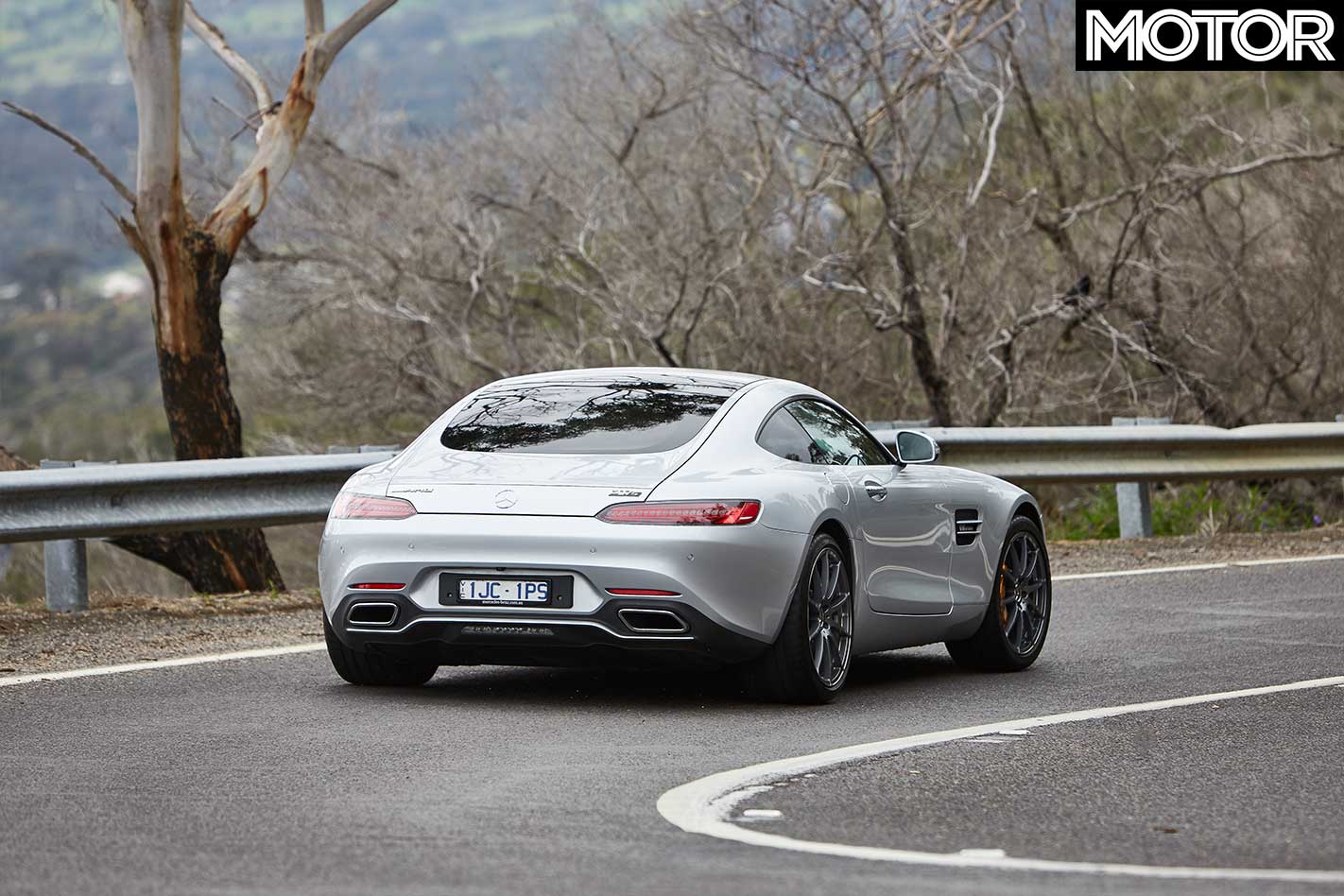
With approximately 20 per cent of Merc’s local sales wearing an AMG badge, this equates to (roughly, based on information from Mercedes) 7300 to 7500 AMG models sold in 2017. The brand’s total Australian sales were 37,068 that year.
Even given Australia’s relatively low population, we come in fifth place worldwide for total AMG sales.
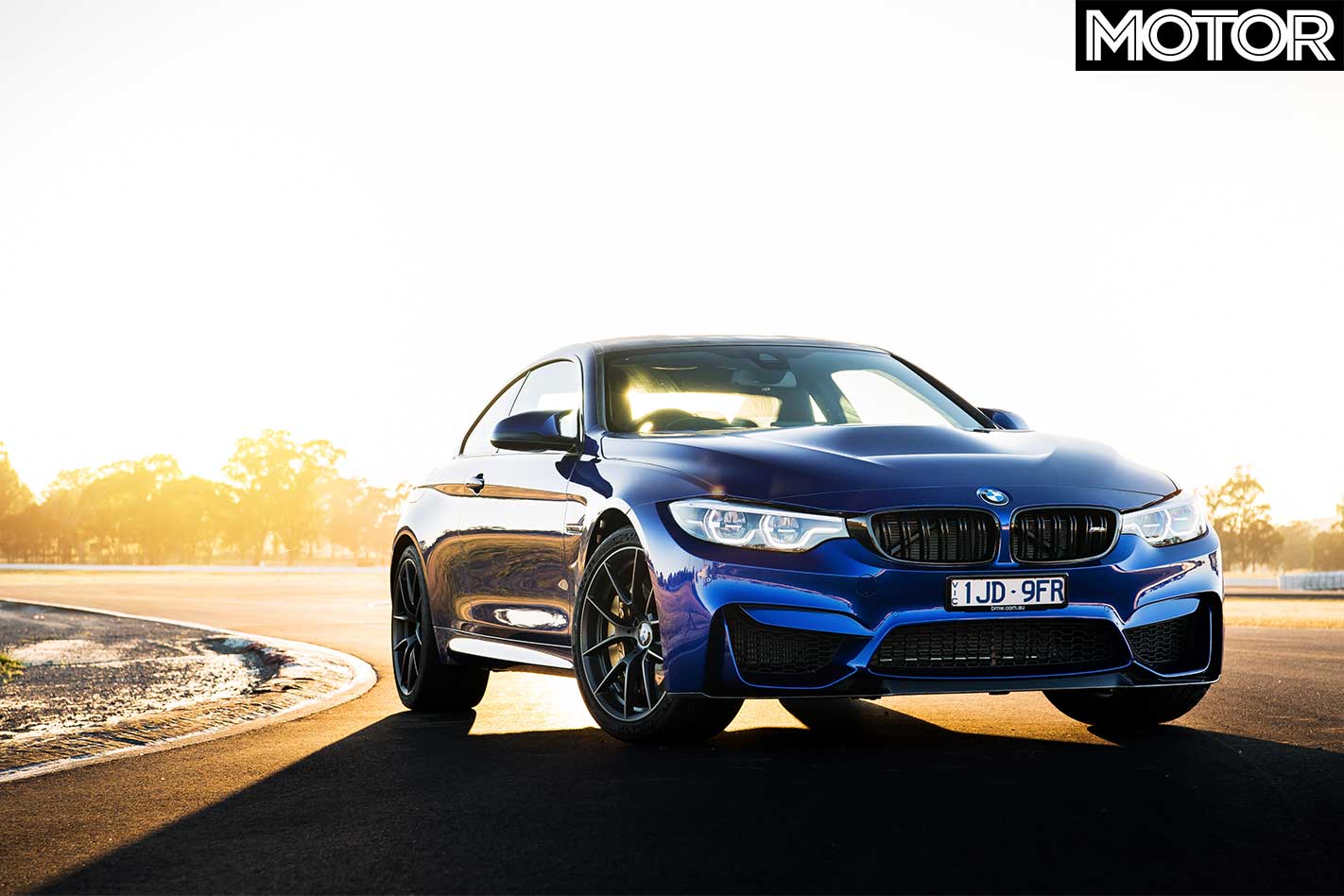
And it’s a similar story with BMW’s M cars. While Australia bought 23,619 BMWs in 2017, 1467 of those were proper M cars, not accounting for cars like the M140i or any other M-Sport cars.
This means that Australia’s ratio of M cars to regular models puts us, again, at number one worldwide.
The more widely accessible German, VW, still provides us with a snapshot of how many Australians are opting for the fastest model in each range, with a spokesperson telling MOTOR between 20 per cent and 30 per cent of buyers choose the most performance-oriented version of their selected vehicle.
The Golf, for example, helps Australia hold a place as the third-largest market for R and R-Line cars in the world. Volkswagen sold 16,859 Golf hatches in 2017, over 3000 of which were GTI or R products.
Lexus, though it has a smaller market share than its rivals, still follows a similar trend. Despite F products (its most performance-driven models) only making 57 sales (less than 1 per cent of total) in 2017, its tamer F Sport range makes up over 36 per cent of its total sales.
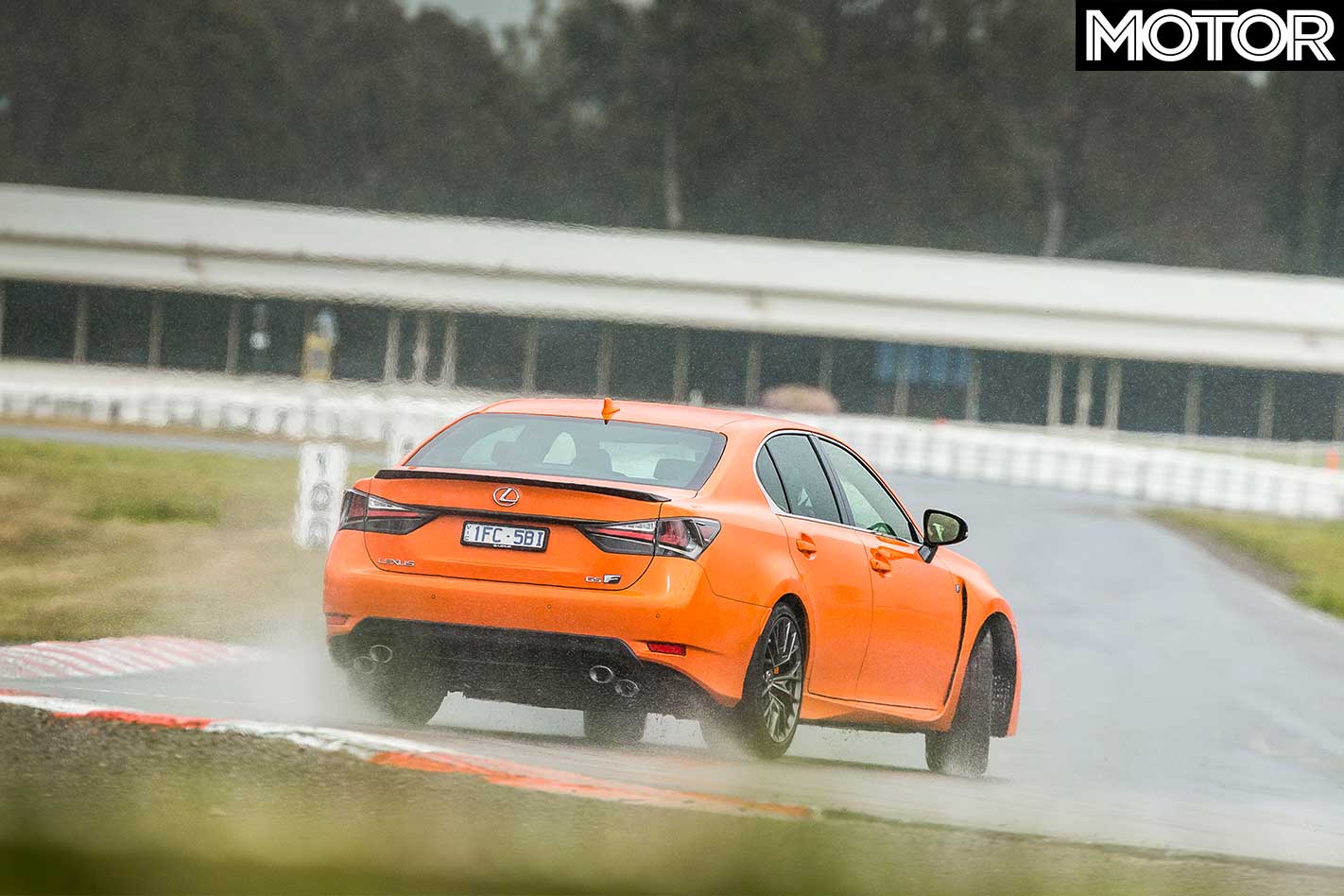
Where the Japanese premium brand sold 8800 cars locally in 2017, 3193 were F Sport models, cars that bridge the gap between its regular models and its wild V8-powered machines.
Finally, one of the biggest success stories for performance cars in Australia has to be that of the Mustang. Since its introduction to our shores, it has consistently topped the V-Facts ‘sports cars’ category, and makes up more than a tenth of Ford’s total local sales.
In 2017, Ford Australia sold 9165 Mustangs, both GT and EcoBoost, making up 11.7 per cent of its total 78,161 vehicles sold.
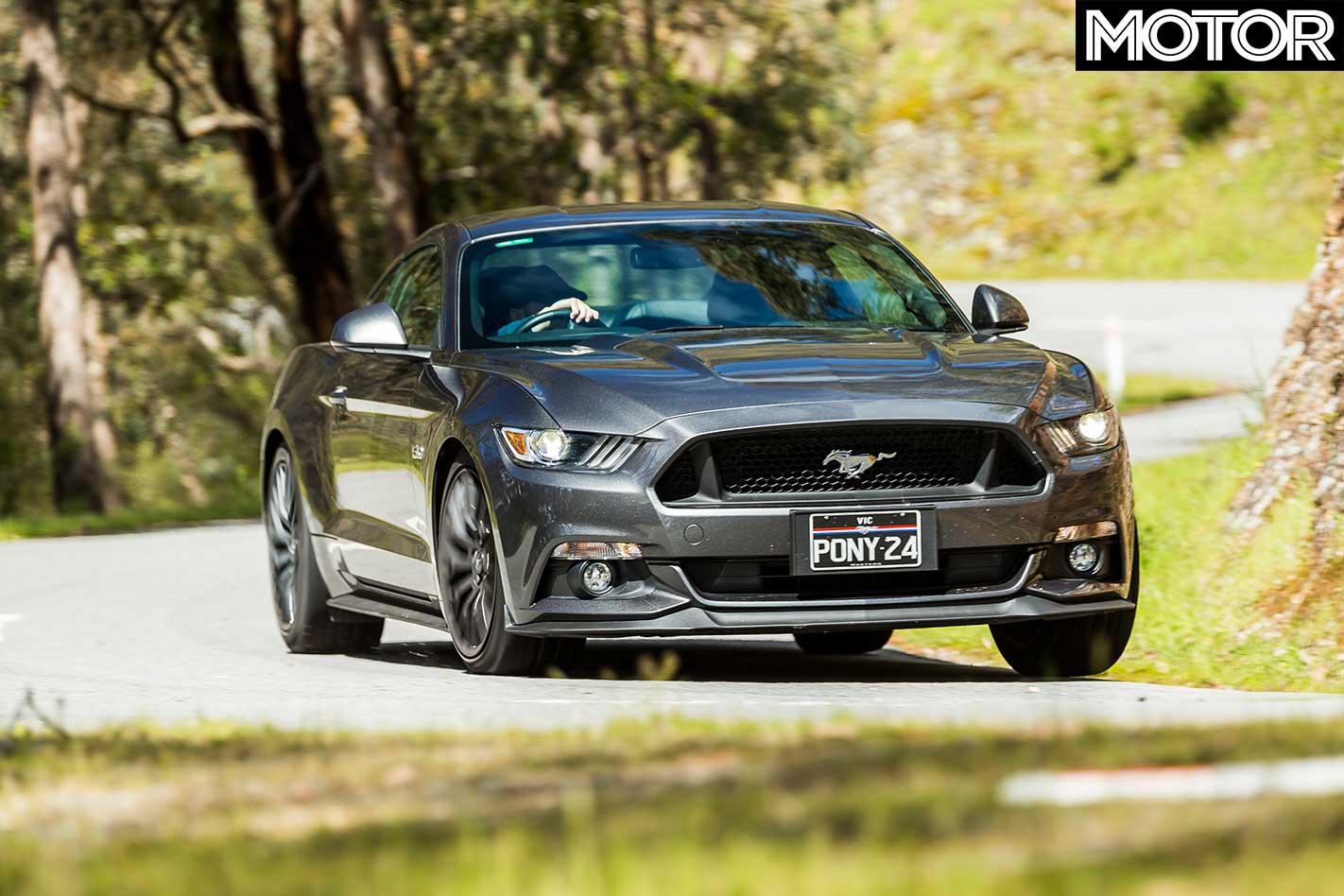
This year alone, up until and including April, Ford has shifted a coincidental 2018 Mustangs. That’s the number of cars, not the year.
In a time where the Ford Ranger is topping the Sales charts and Australians are getting into more SUVs and dual-cabs, it’s heartening to see that we still want to drive cars that we can be passionate about.
WHAT IS IT
In simplistic terms this spruced up dual-cab ute and its regular SportsCat (non-plus) sibling are the only HSVs on sale now Holden has ceased Commodore manufacture. There’s a subtle hint in its ‘proper’ name – Holden Colorado SportsCat+ by HSV – that Holden Special Vehicles has perhaps tried to put a little distance between this off-the-script departure and the brand name synonymous with Holden’s most desirable V8 sedans.
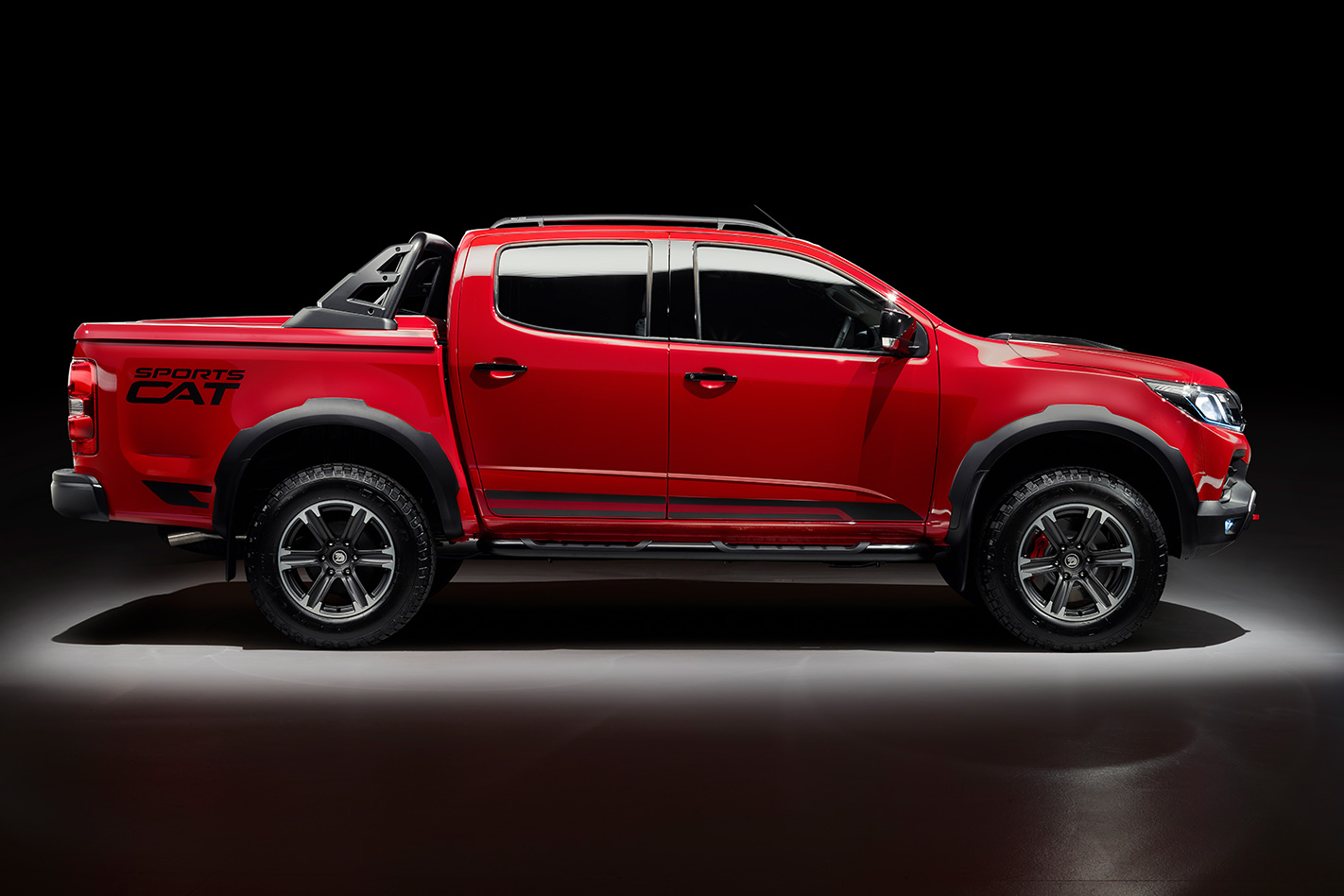
Nevertheless, this flagship Colorado has been on the receiving end of extensive re-engineering by HSV in all areas other than the one you might expect – power. Instead its $68,990 asking price as tested here (an $11,800 premium over the Colorado Z71 it’s based on) buys suspension, braking and styling enhancements honed by the team at Clayton.
WHY WE’RE TESTING IT
Dual cab utes are the most popular passenger cars in Australia, and a huge number of those being bought for both work and play are range-topping variants like this SportsCat+. Holden is up against it with such fierce competition in the segment, but could the expertise of HSV give Colorado an edge?
MAIN RIVALS
Ford Ranger Wildtrak, Toyota Hilux Rogue, Volkswagen Amarok TDI550 Ultimate, Nissan Navara ST-L, Mitsubishi Triton Exceed, Mercedes-Benz X250d
THE WHEELS VERDICT
While it’s not the HSV we know, SportsCat+ is more than just a collection of aftermarket bits bolted to a normal Colorado. There is engineering prowess at play here. Keen drivers won’t be flocking to it, but as a dual-purpose vehicle the SportsCat is more enjoyable on-road than other dual-cab utes, and has more off-road credibility than a normal Colorado to boot.
PLUS: Improved on- and off-road capability, road presence, clever de-coupling rear swaybar MINUS: Same engine outputs as Colorado, silly name, hefty price premium
THE WHEELS REVIEW
THEY say America is the land of second acts. It might be the only place on earth where a heavily accented Austrian bodybuilder can make a Hollywood fortune then reinvent himself as a politician and govern the state that made him famous.
Arnie’s metamorphosis could provide inspiration at a tough time for the folks at Holden Special Vehicles. Transformation is precisely what the local outfit is going through post Commodore, but a wary and judgemental Australian public means its second coming as a dual-cab ute vendor comes with a few unique hazards.
It only takes one glance at McPhillamy Park on the first weekend in October to see dual-cabs are precisely what once typical HSV customers are now driving. Ford and Toyota trucks dominate the Bathurst campground as well as the Aussie sales chart, and now HSV has entered the fray with the SportsCat.
Its full moniker is in fact Holden Colorado SportsCat by HSV. The awkward suffix suggests there’s a little discomfort at Clayton about going all-in with the HSV branding even though SportsCat is the only product in its dealerships for the time being.
Keeping it at arms-length may be due to the fact it makes no more power than a standard Colorado: 147kW and 440Nm with a manual ‘box, or 500Nm with the optional six-speed auto ($2200). There’s nothing wrong with the burly 2.8-litre four-cylinder turbo-diesel in this application, but it’s a big departure for HSV, especially left untouched.
That’s not to say HSV has sat on its hands here. Both versions – SportsCat ($60,790) and SportsCat+ ($66,790) – have received extensive suspension, braking and styling upgrades to make them better on- and off-road. More than half of all buyers are expected to go for the pricier SportsCat+, as tested here.
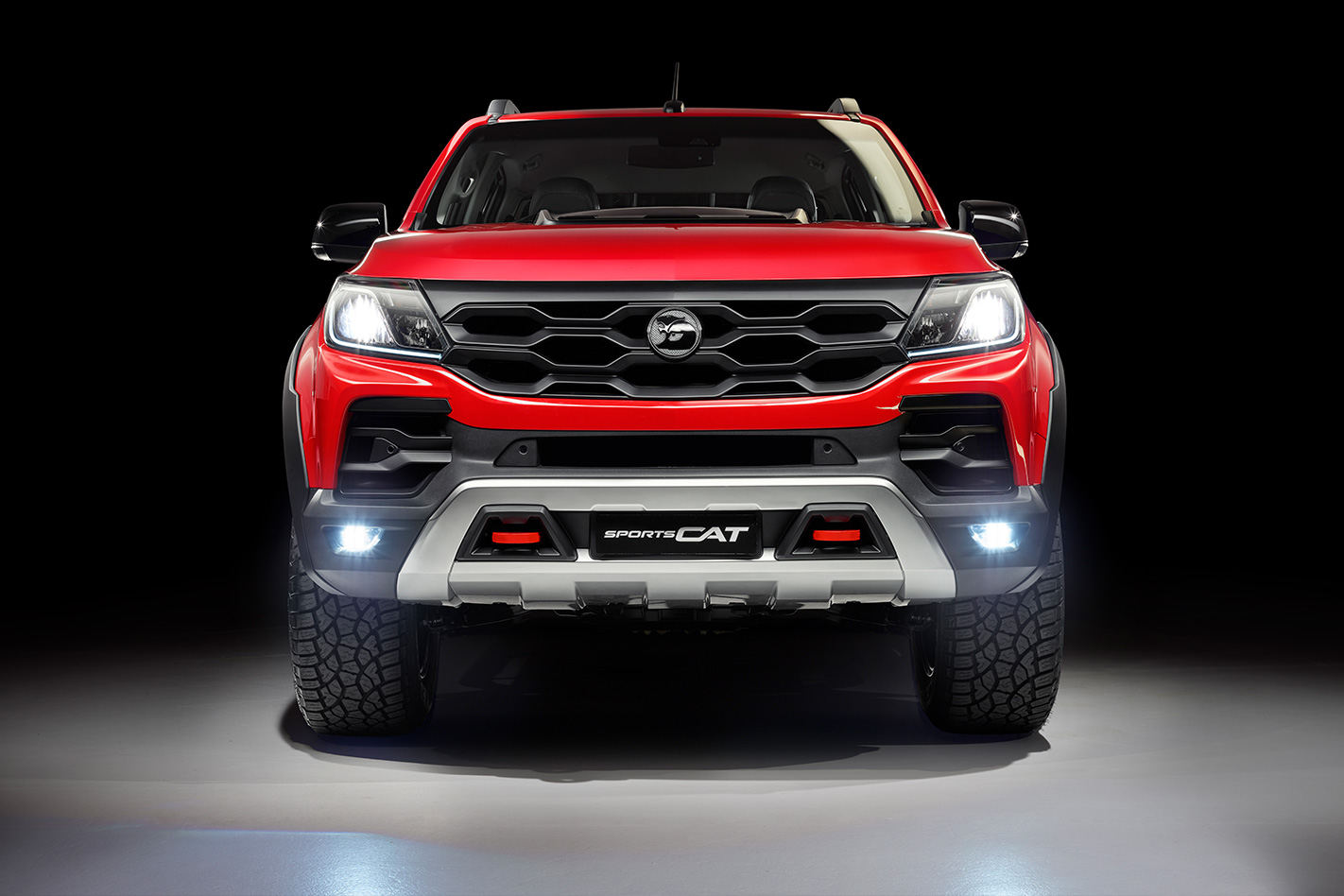
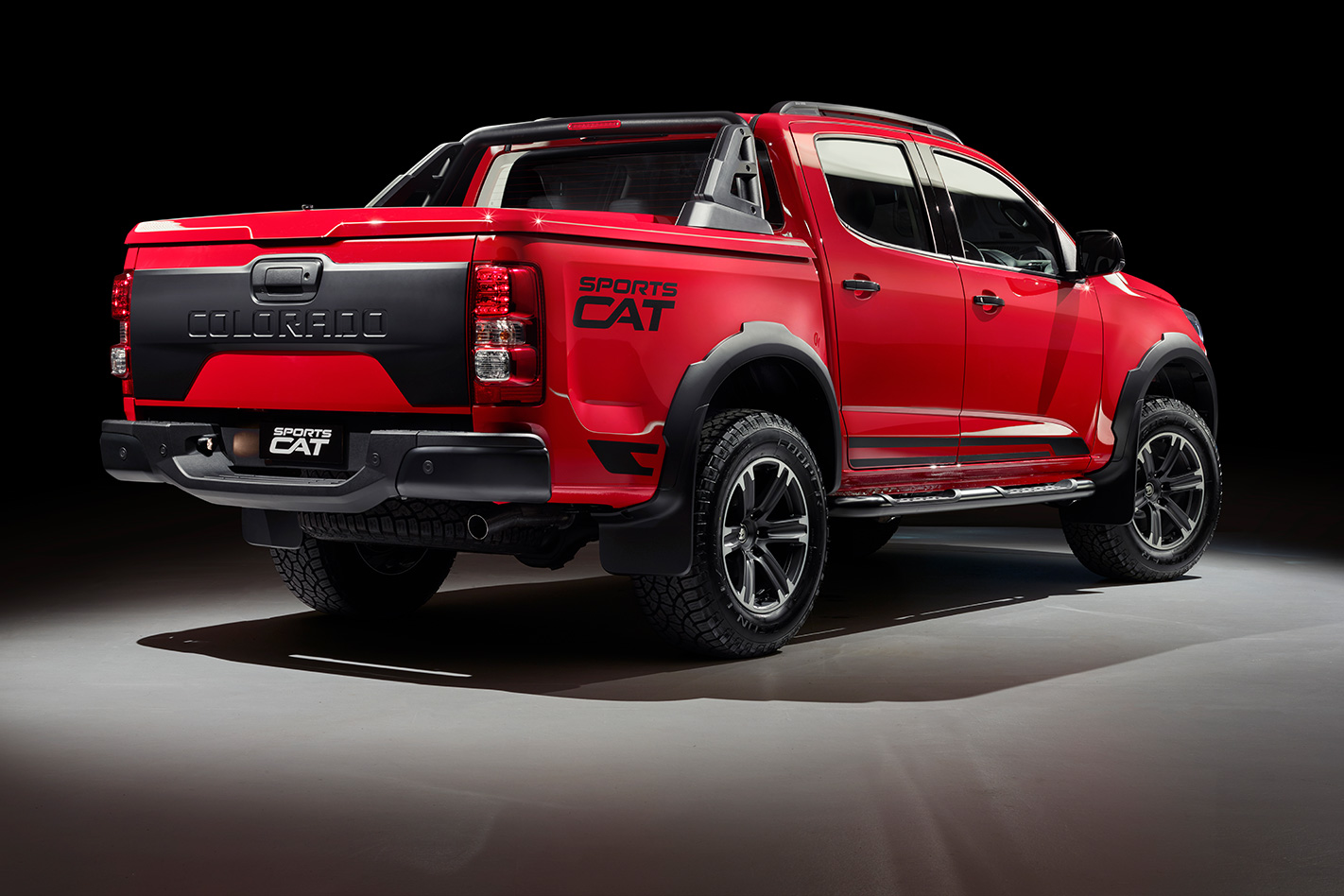
It’s the more heavily stylised of the pair, and includes a non-functional bonnet bulge and optional rear sail-plane ($1300) inspired by ski boats. A lower bash plate, LED lamps and twin tow hooks add utility as well as road presence.
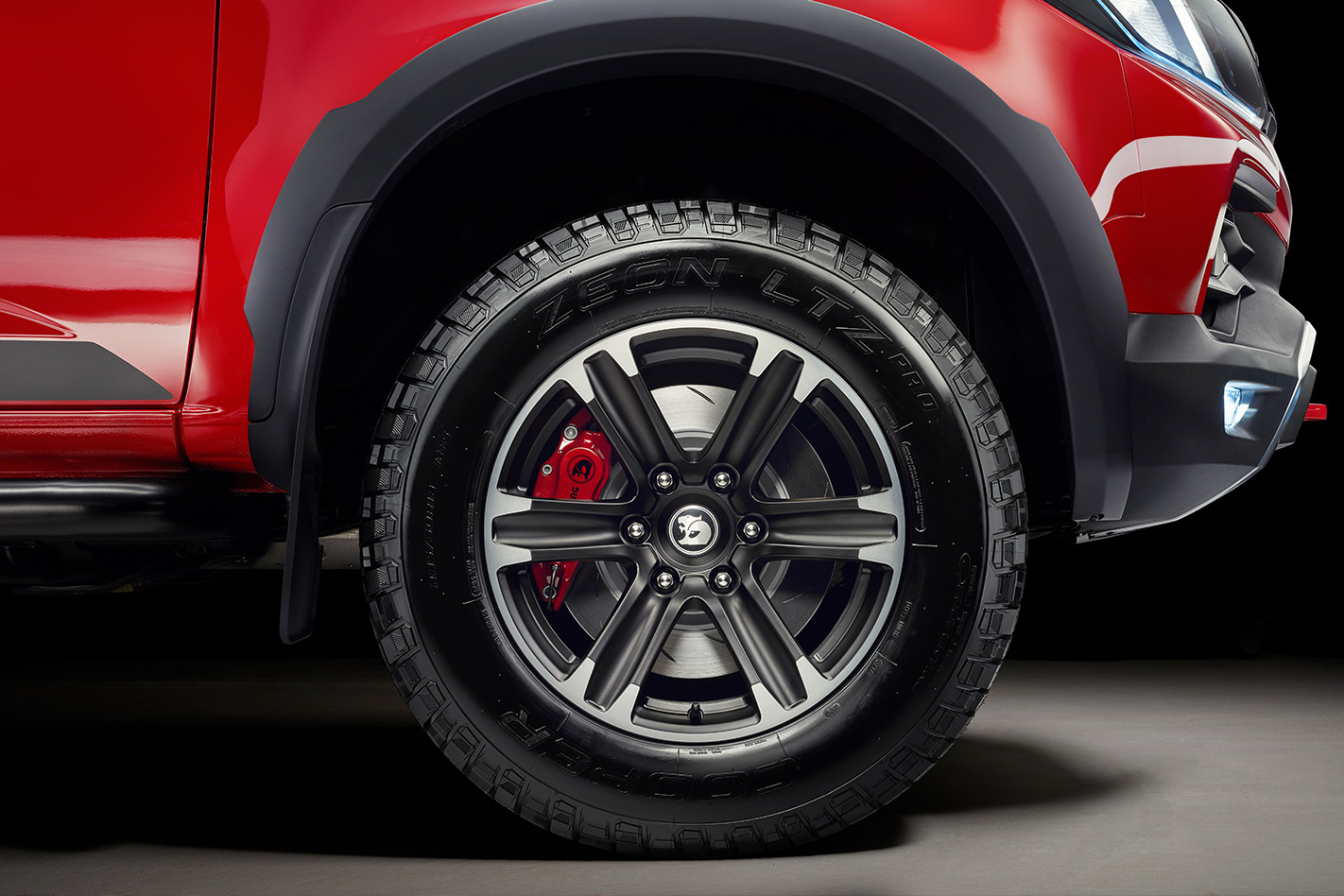
Ride height has grown 25mm with a front suspension lift (to even out rake), and a taller 285/60R18 Cooper tyre developed with HSV adds another 10mm for total ground clearance of 251mm. Arch extensions house 18×10-inch forged alloys and keep the 30mm wider track within check. Strut bracing inside the arches adds rigidity, and a larger (33mm) front swaybar and the presence of a rear swaybar (22mm) in the SportsCat+ offer better cornering support.
On road the uprated suspension brings clear handling improvements, with better body control than expected from this class of vehicle without a pronounced impact on the somewhat rough and ready ride comfort that’s par for the course in this category. Buyers flush with cash can option even tougher SupaShock suspension ($3600) with external oil reservoirs similar to those in the HSV GTSR W1.
Increased approach and departure angles of 32 and 24 degrees respectively up SportsCat’s off-road cred compared to Colorado, as does its standard rear swaybar that electronically decouples when low-range is selected to allow for full rear-axle articulation. Four-piston AP Racing brake calipers clamp 362mm front rotors, and a larger master cylinder reduces the necessary pedal travel for greater feel. The stoppers work well considering the 2274kg heft they’re arresting.
But this is obviously not a sports car, and still needs armfuls of steering to wind lock to lock. The rubber at each corner hangs on reasonably well at normal road speeds, but squeals early in faster cornering. Still, when driven like a dual cab should be it’s a more competent package than a regular Colorado.
HSV points out that while enthusiasts can bolt aftermarket parts to a Colorado for a seemingly similar result to the SportsCat, it takes a company like HSV to tune the electronic systems to optimally support those modifications, something it has done with the ESC for all three drive modes (2WD High, 4WD High and 4WD Low).
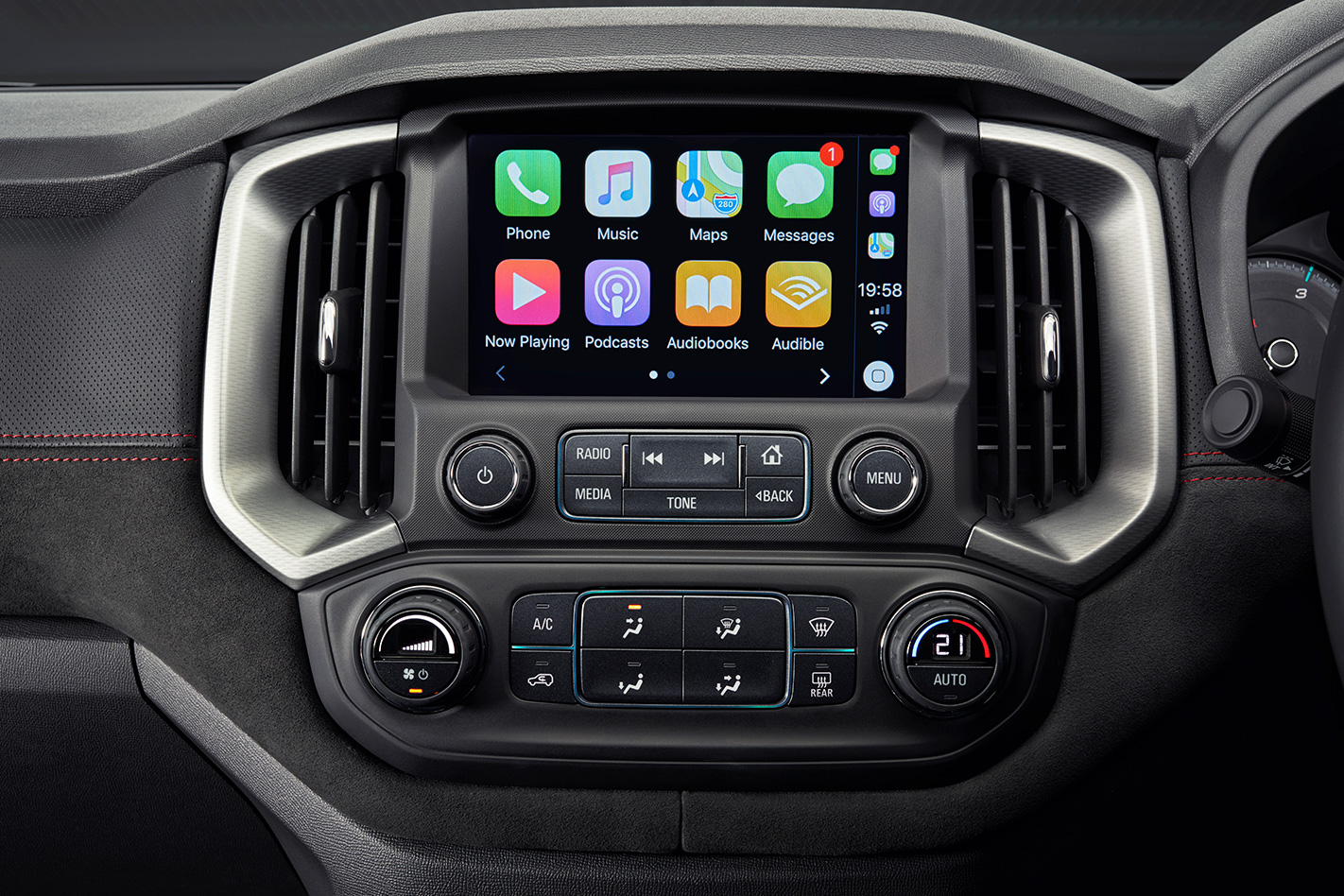
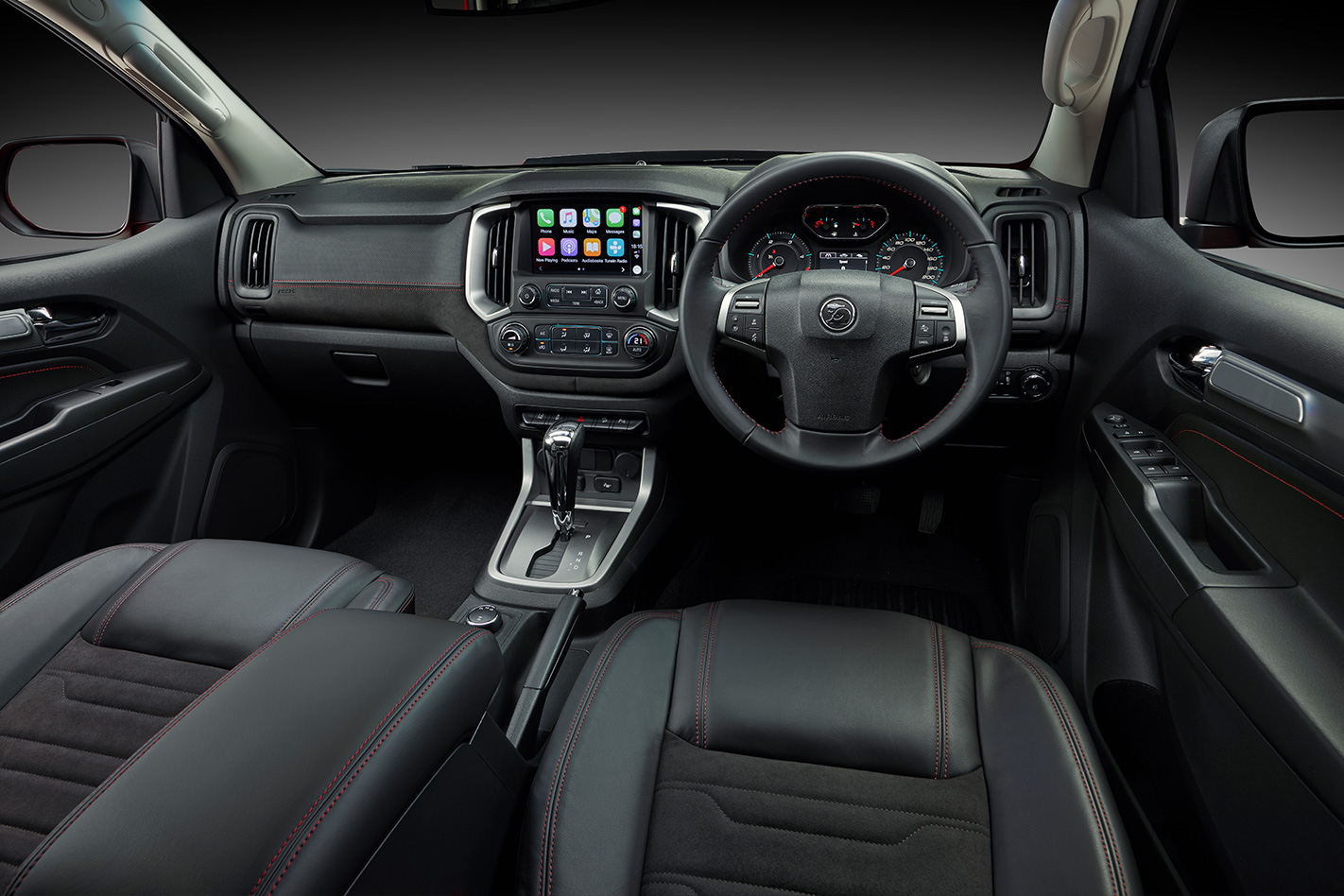
Sports seats inside feature a unique HSV base with larger bolsters trimmed in leather and suede with red stitching. It’s otherwise standard Colorado Z71 fare including Apple and Android connectivity, 8.0-inch screen, reversing camera, lane departure warning and remote start. Unique personalisation options for SportsCat include a tub liner, load master and roof rack. Integrated rails on the hard tonneau cover and inside the tray accommodate a variety of accessories.
Few could have known 30 years ago that HSV was effectively building a house on sand by focusing on a single large sedan. SportsCat may seem a bit like a stab in the dark in Commodore’s immediate wake, but the execution is good enough that, with time, it could prove a solid foundation for HSV’s reinvention.
SPECS
Model: Holden Colorado SportsCat+ by HSV Engine: 2776cc 4cyl, 16v, dohc, turbo-diesel Max power: 147kW @ 3600rpm Max torque: 500Nm @ 2000rpm Transmission: 6-speed automatic Weight: 2274kg 0-100km/h: 10.5sec (estimated) Economy: 9.1L/100km Price: $68,990 On sale: Now
ASK most Porsche fans what was the first all-wheel drive 911 and they’d have little hesitation in coming up with an answer.
“It was obviously the 964 generation, introduced in 1989 in Carrera 4 guise,” they’d say. Those that thought a little more laterally might expand the scope a bit to the Porsche 959 supercar, built between 1987 and 1988, with six more examples released in 1992. Oh, and Porsche’s Paris-Dakar rally-spec 911 of 1984?
Nope, you’re all wrong.
Sitting in Porsche’s museum is the strangest white elephant. Not only is it Porsche’s first all-wheel-drive 911, it’s also the company’s first completely open-topped 911. Developed in Weissach, the 1981 911 Turbo 3.3 4×4 Cabriolet Studie features a shortened 928 prop shaft to direct a proportion of drive to the front axle where an adapted 911 Turbo differential distributes torque.
How this car came about is fascinating. Throughout the 1970s, Ferry Porsche became increasingly convinced that company chairman Ernst Fuhrmann was planning a hatchet job on the 911. In October 1977, Fuhrmann went on record saying that the car risked becoming economically unviable by the end of the decade. The tipping point was 6250 global sales; if the 911 dipped below that figure, Fuhrmann’s maths dictated that it was not worthwhile. As it turned out, sales fell to 9745 units in 1980, and it was Fuhrmann who copped the bullet, not the 911.
His replacement, Peter Schutz, moved his pot plant into Fuhrmann’s old office at the end of November, 1980. Ferry Porsche had been in discussions with his nephew, Audi boss Ferdinand Piech, and, having seen early ur-Quattro development cars, became convinced that Porsche needed an all-wheel-drive 911. Where Fuhrmann had prevaricated on development of such an architecture, Schutz directed his engineers to pursue an engineering solution with highest priority.

“We can’t escape this four-by-four era,” Helmuth Bott, Porsche’s head of development, said when given responsibility to head up the technical team. “We have to be involved.” The result is the car you see here, a pearl white all-wheel-drive 911 Cabriolet concept that appeared on Porsche’s stand at the 1981 Frankfurt Motor Show. Most observers were more taken by the removal of its roof than what lay beneath, not realising that this would become the template adopted by every future 911 generation.
Bott’s own engineering mule, which was the second prototype (designated C20), was repurposed as the 1984 Paris-Dakar rally prototype. Previously a brown 911SC coupe, it enjoyed funding from Rothmans to turn it into a rugged rally weapon. The Type 953 rally car was born, winning the 1984 Paris-Dakar. The actual C20 did the recce for the route, pioneering much of the 4×4 hardware for the 959 and ended up in Melbourne as part of Lindsay Fox’s collection, but hasn’t turned a wheel in anger in the last 28 years.
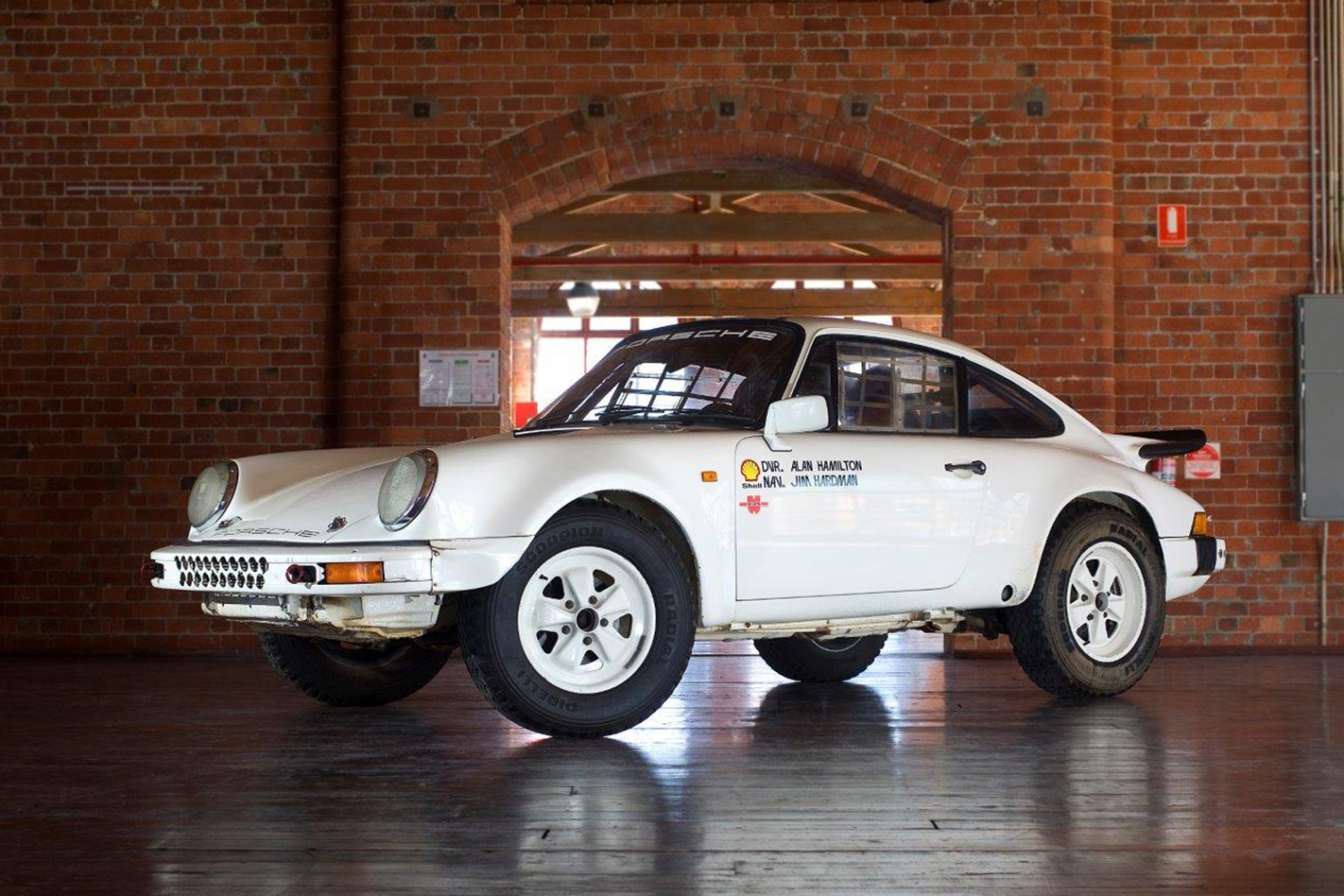
The fact that Porsche has been building all-wheel-drive 911s for 37 years is remarkable in itself. In 1981, the 911 badge was only 18 years old, younger than the Audi TT nameplate is today. That meant for more than two-thirds of its existence, the 911 had been engineered as an all-wheel-drive model. Nowadays Porsche builds more all-wheel- than rear-drive cars. That genesis can be traced back to a wholly 1980s pearl white cabriolet that sits largely unnoticed in Zuffenhausen.
