
TOYOTA and its luxury offshoot Lexus have announced plans to roll out versions of their cars in the US that can chat with each other to save fuel and stay safe on the road.
The first of these cars will appear on US roads in 2021, the Japanese car maker said. The cars will use a short-range frequency similar to Bluetooth to swap information as they pass each other, and to talk with roadside infrastructure such as traffic lights.
The dedicated short-range communications (DSRC) technology is already being tested at several sites in the US. According to Toyota, the service “supports the broadcast of precise anonymised vehicle information several times per second, including location, speed and acceleration”.
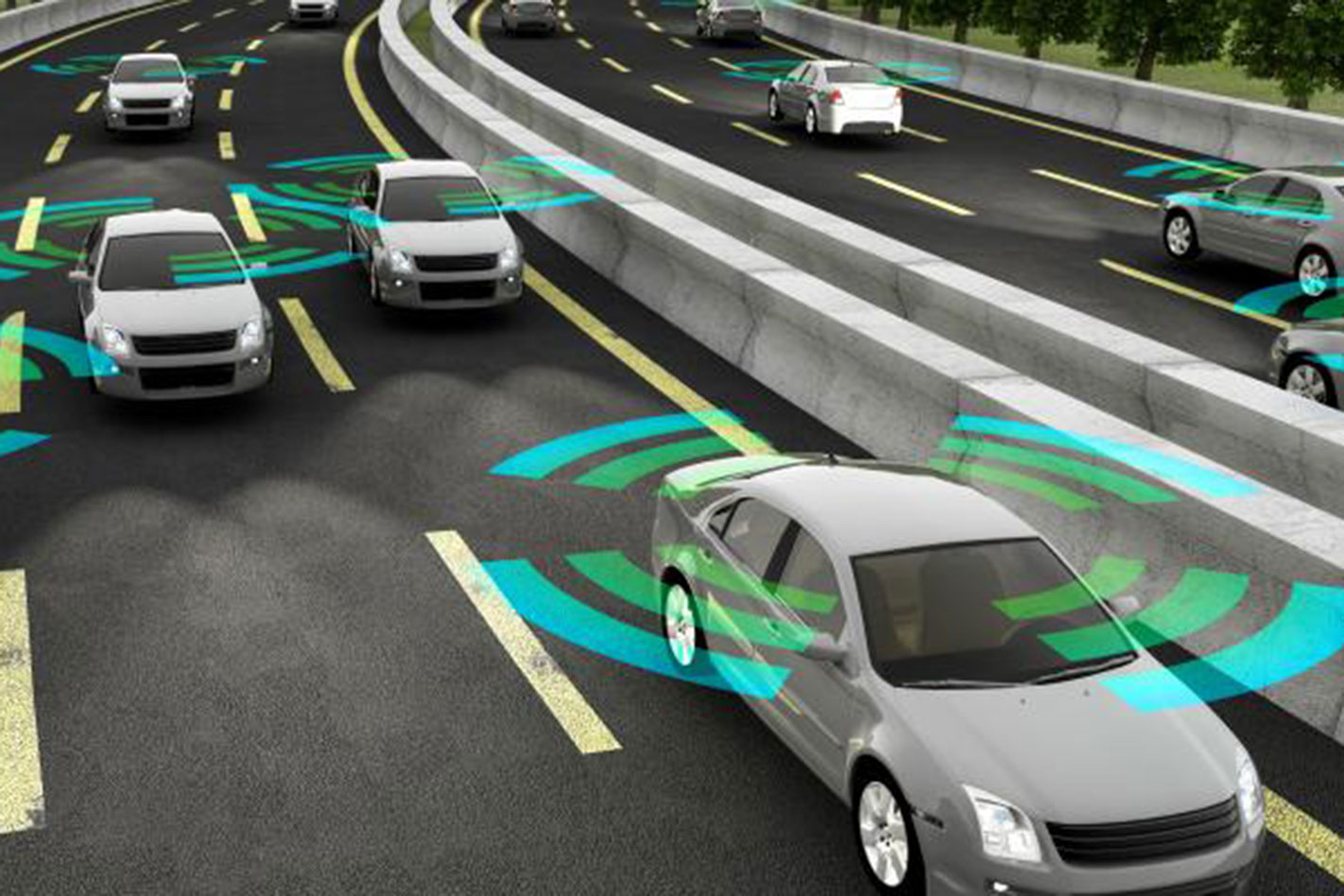
Toyota demonstrated the technology at the 2015 Tokyo Motor Show, showing how cars could give drivers a countdown to when they could expect a red light to turn green, and even warn of an oncoming car while preparing to cross a multi-lane road.
Australia faces a unique set of challenges before DSRC technology can be introduced here: it uses some of the same radio frequencies as the ones used by toll road companies to collect their fees and may interfere with the technology; and while the Federal Government has reserved most of the radio frequencies needed to roll out DSRC, Telstra owns the rights to use part of it.
The lack of global standards on radio frequencies has hurt Australia before. Mercedes-Benz had to adhere to several legal requirements to introduce radar-based active cruise control to the 2012 S-Class, which could interfere with deep space-gazing radio telescopes. These days, Mercedes-Benz can use the car’s GPS system to work out when it is near one of these facilities, such as the NSW-based Parkes radio telescope that featured in the movie The Dish, and automatically switch it off.
Telstra used this month’s Commonwealth Games on the Gold Coast to trial its 5G technology, a new generation of ultra-fast mobile networking that can transfer much more data in a shorter space of time. It is optimised for bandwidth-hungry applications – such as when cars need to talk to each other.
US luxury car brand Cadillac early last year became the first manufacturer to introduce the DSRC technology as standard, fitting it to the flagship CTS sedan. The technology the CTS uses can swap up to 1000 messages a second with another CTS-badged sedan at a range of up to 300 metres – and was developed by Australian company Cohda Wireless.
Cohda announced yesterday that it had developed a world-first system that could accurately position a car without relying on a satellite-based a GPS system – important when cars lose GPS signals in so-called urban canyons created by high-rise buildings in crowded cities, or in undercover car parks.
If proof was needed that Mazda needs to revive the RX-7, then here it is – the 1995 Series VI/FD RX-7 SP race car that once wore Triple M livery and was driven to victory at the ’95 Eastern Creek 12-hour by JB and Dick.
This review was first published in MOTOR magazine’s February 2009 issue.
It isn’t too heavily modified, but with a full roll cage, no airbag, race seats and a fire-breathing exhaust, it isn’t road-registered, either. Some early morning track time at Wakefield Park beckoned.
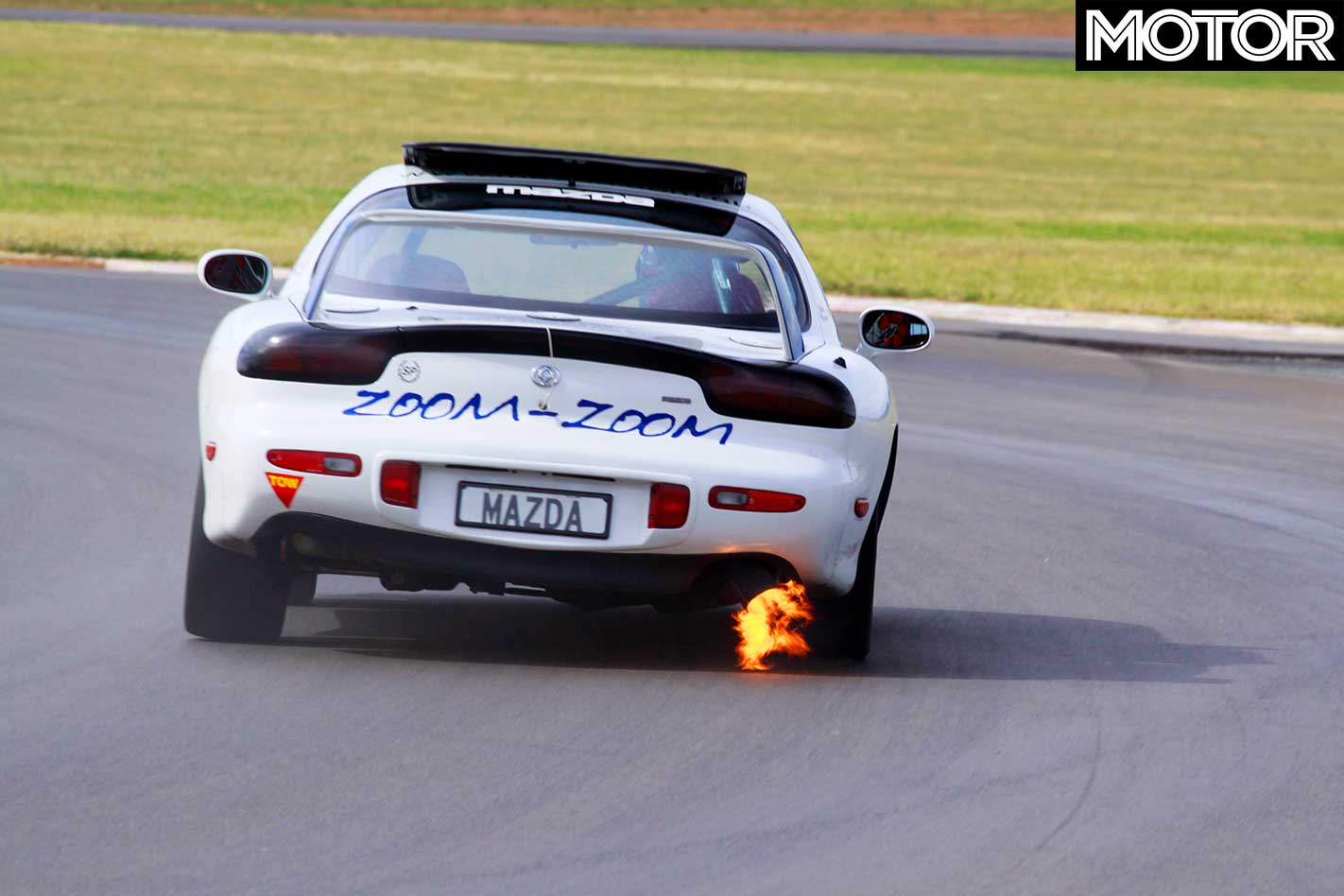
Again, it’s the superb balance of this RX-7’s chassis that makes it so entertaining to throw around. I’ve been warned that this wicked-up SP wearing old tyres might be like driving on ice, but she’s actually pretty sticky, until I try and squeeze on some twin-turbo thrust exiting Wakefield Park’s hairpin, and discover that when this RX-7’s arse lets go, it does so instantly.
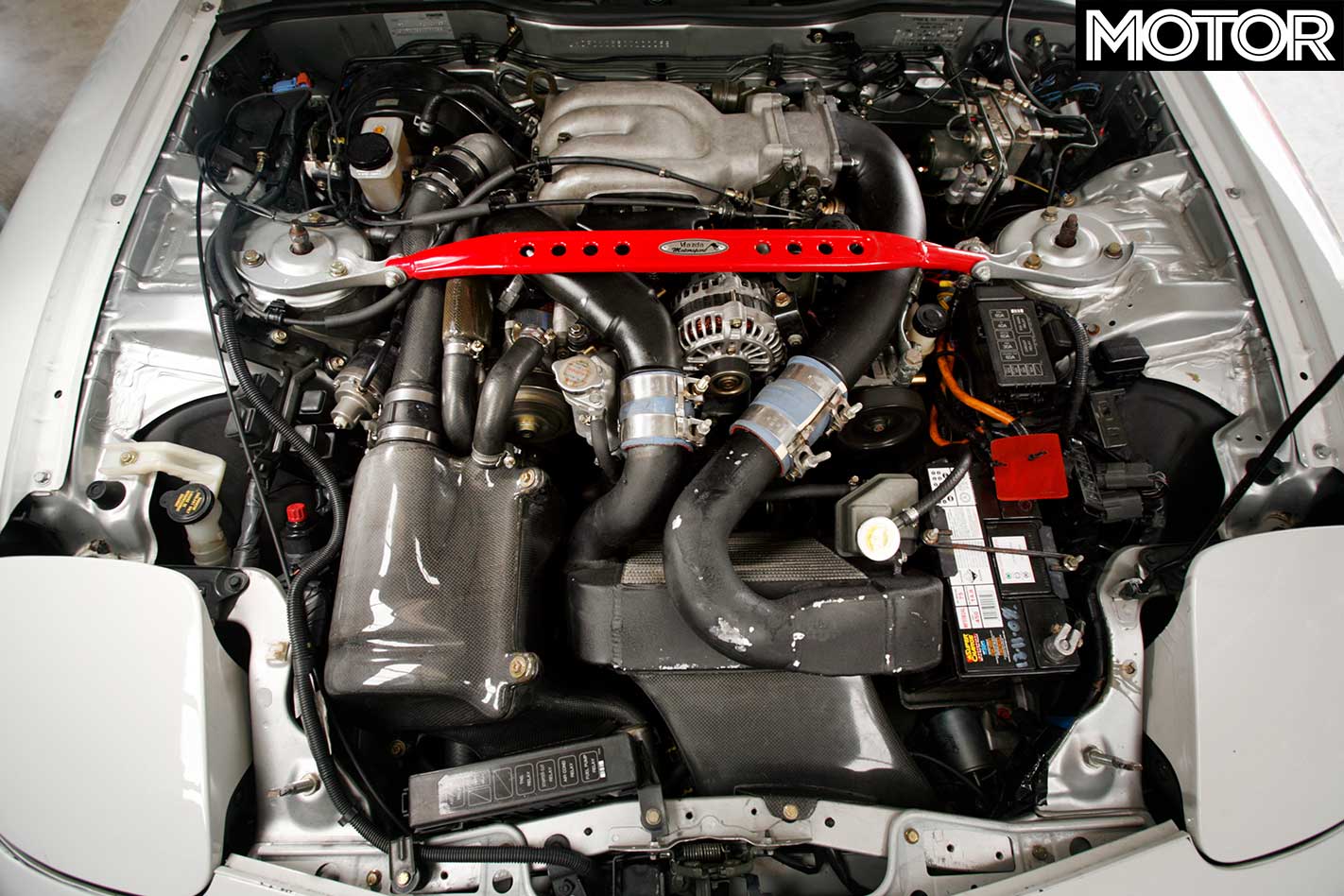
This modified example (with an estimated 240kW, up from the standard SP’s 204) is pretty laggy at low revs and isn’t anywhere near as tractable as either the RX-8’s Renesis or the Cosmo’s 10A, but its mid-range is monumental, and the back-slamming grunt on tap from 4800rpm to the 7500rpm cut-out is sensational.
It’s a reminder of just how suited Mazda’s rotary is to forced induction, and to racetrack applications. And why we’d love to see another RX-7.
Fast Facts – 1995 Mazda RX-7 SP
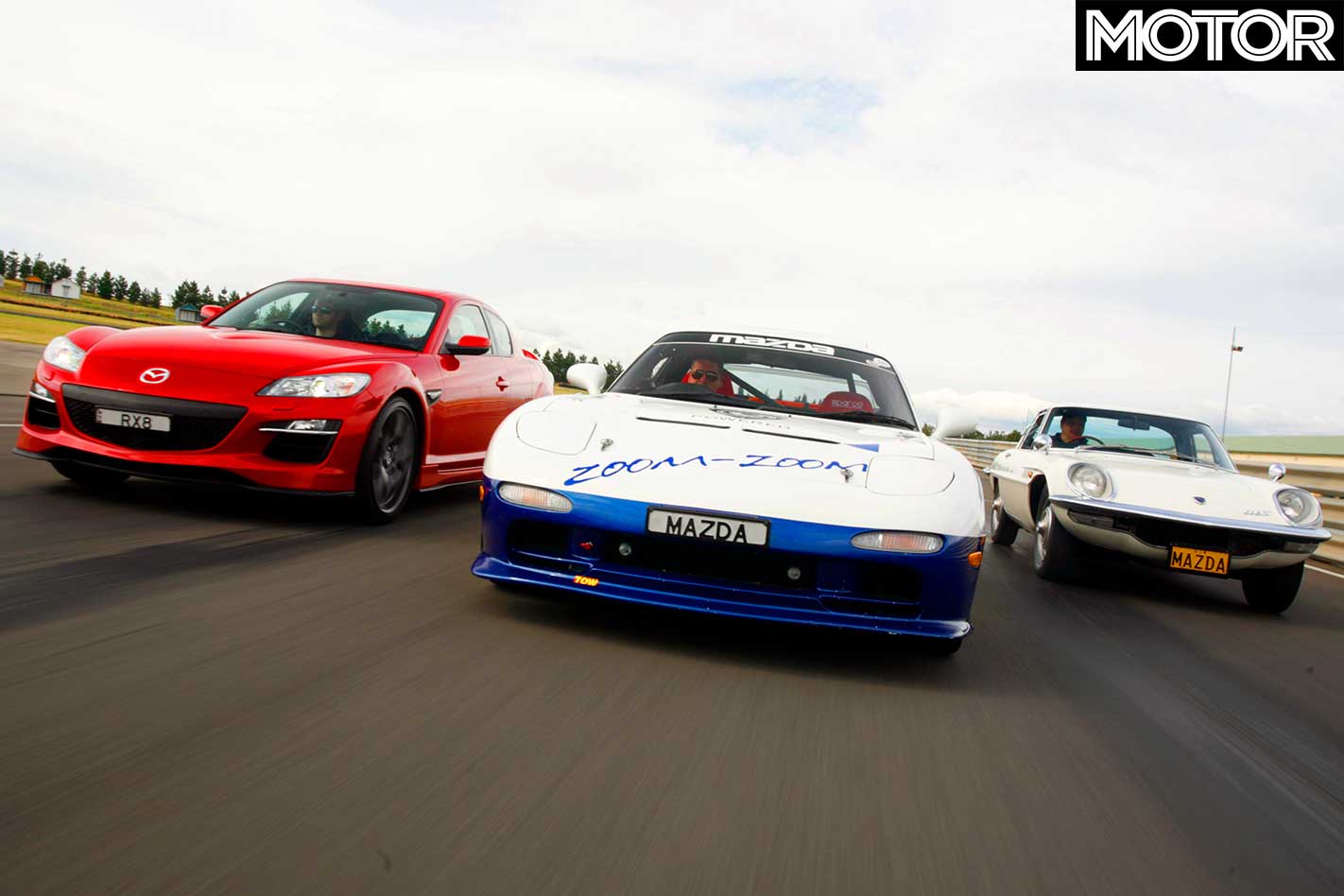
LIKE: Reminds you just how right and how great the last RX-7 was DISLIKE: Its racetrack nous and turbo stonk might not be carried on
What stands out?
The Peugeot 208 is a uniquely styled, beautifully finished little hatch that oozes French charm. It offers economical three-cylinder engines with character, and a high level of ride and cabin comfort. There is also an appealing, hotted-up, four-cylinder 208 GTi.
What might bug me?
Paying more for the most costly 208, the GTi, and not getting the automatic emergency braking that’s standard with the Allure and GT-Line models.
What body styles are there?
Most 208s are five-door hatchbacks, but the 208 GTi is a three-door hatch.The Peugeot 208 drives its front wheels. It is classed as a light car, lower priced.
What features do all 208 versions have?
Air conditioning, and cruise control with a speed limiter.You also get a leather trimmed steering wheel, front fog lights, and bright, long-lasting LED daytime running lights.Arkamys brand, six-speaker audio system, controllable from a 7.0-inch touchscreen, with AM/FM radio, Bluetooth connectivity for phone calls and audio streaming, and USB and auxiliary input sockets. Reversing camera and Rear parking sensors give you an audible indication of how far the bumper is from obstacles.Fog lights, and bright, long-lasting LED daytime running lights.Leather trimmed steering wheel with audio system controls.Alloy wheels, and a full-size spare wheel and tyre. A tyre pressure monitor, which warns you if a tyre has lost air (this can give you extra time to get a slow puncture seen to).Six airbags: two directly in front of the driver and passenger; one on the outer side of each front occupant to protect the upper body; and a curtain airbag on each side covering the front and rear side-windows.Electronic stability control, which can help you control a skidding car. All new cars must have this feature.Every Peugeot 208 carries a five-year, unlimited kilometre warranty.
Which engine uses least fuel, and why wouldn’t I choose it?
The turbocharged 1.2-litre three-cylinder that drives most five-door Peugeot 208s – and all automatics – is as easy on fuel as any of the three engines available, consuming just 4.5 litres/100km on the official test (city and country combined).One reason you might not choose the 1.2 turbo is that you are happy to pay more for your 208, you need only three doors, and you want the dramatically more exuberant personality of the 208 GTi. Its turbocharged 1.6-litre four-cylinder supplies more than half again as much thrust as the turbo 1.2-litre, while using about 20 per cent more fuel.Both turbocharged engines have stop-start systems that save fuel in urban driving. They shut down when you stop, and start automatically when you take your foot off the brake pedal to drive away.All 208 five-doors come with a conventional (torque converter) six-speed automatic gearbox. The 208 GTi comes only as a six-speed manual.
What key features do I get if I spend more?
The most affordable 208, the Active brings, you the auto gearbox and turbo 1.2 engine that’s standard in all but the three-door GTI model. It also has standard cloth trim and 16-inch alloy wheels. Satellite navigation is available as an option.Spending still more for a 208 Allure gets you, in addition, satellite navigation as standard, dual zone climate control (which lets you set different temperatures for each side of the cabin), and front parking sensors. A city park system can steer the car into parking spaces automatically. Windscreen wipers operate automatically when it rains, headlights switch on by themselves when it’s getting dark, and there are fog lights which shine into corners.The Active also gains automatic emergency braking, which was previously an optional extra.Springing for a 208 GT-Line brings the look and feel of a 208 GTi, almost, but without the firmer ride and extra power. Changes over the Allure include sports front seats, which have deeper side bolsters that give you extra support during quick cornering, 17-inch alloy wheels with tyres of a lower profile again, and a suite of sporty interior and exterior cosmetic upgrades.Auto-braking is standard on the GT-Line as well.Options available on some but not all 208s are front seat heaters, leather seat trim, a power operated panoramic sunroof.Choosing the most expensive 208, the 208 GTi, gets you a big increase in engine power and cornering ability – the latter from stiffer springs and firmer damping. The GTi comes with seats trimmed in a mix of leather and cloth, as well as sporty interior touches such as red trim highlights, a race-car style flat-bottomed steering wheel with sculpted thumb-grip areas, and aluminium covers for the control pedals. On the outside, you get different 17-inch alloy wheels, dual chrome exhaust tips, a different front grille and a rear spoiler.The GTI loses the automatic emergency braking available in the Allure and GT-Line.
Does any upgrade have a down side?
The firmer springs and shock absorbers on a GTi make the ride a bit less supple, particularly at low speeds and over sharp-edged bumps.The deeper front seat bolsters in GT-Line and GTi versions make the seats a bit less easy to jump in and out of, compared with the non-sports seats in the other 208s.Because it’s a three-door, the GTi has longer, heavier front doors than the five-door 208s. This can make getting in and out a bit more difficult in confined spaces or on hills.There is a small but noticeable reduction in the smoothness of the ride as you move from the 55 profile tyres on the Active and Allure, to the 45 profile tyres on the GT-Line, because the lower profile tyres have less rubber and air cushioning you from the road.Auto emergency is standard on the 208 Allure and GT-Line, but you can’t have it with a GTi.Of nine colours available on a Peugeot 208, only Bianca White comes without extra cost. Pearl, metallic and matte finishes cost about $1000 extra. The GTi only comes with six colour options, including Bianca White.
How comfortable is it the Peugeot 208?
The attractive interior presentation, palpable quality, and softly cushioned front and rear seats make the Peugeot 208 a fundamentally pleasant and comfortable car to sit in, and the French brand’s renowned – but only recently rediscovered – supple ride quality makes the 208 a relaxing car to ride in.The low position of the steering wheel, a part of Peugeot’s raised head-up instrument cluster design, takes some getting used to. The unique layout means there may not be a big enough range of adjustment to allow a comfortable position for every driver, although you can adjust the wheel for both height and reach.Five-door 208s have terrifically absorbent suspension, which lets them breathe to soak up bumpy, undulating roads tackled at highway speeds. Yet they also deal smoothly with low-speed bumps and joins in the road. The 208 also shuts out tyre, wind and engine noise very well.The 208 GTi’s suspension is firmer than that of five-door 208s, which makes it less smooth in most driving. However, it is not over-stiff and the damping feels well matched to the stiffness of the springs. It is unavoidable that a hot-hatch is a bit less comfortable than a normal light hatchback, but the 208 GTi is comfortable for what it is.
What about safety in a 208?
Stability control, six airbags, and a tyre pressure monitor contribute to a good safety package in the Peugeot 208.Autonomous emergency braking system is only included in Allure and GT-Line versions. It warns you of obstacles in front of the car, typically a slower vehicle, and applies the brakes automatically if you do not react. It is effective at speeds up to 30km/h.The Australasian New Car Assessment Program (ANCAP) awarded the 208 its maximum five stars for safety in 2012.
I like driving – will I enjoy this car?
The French flair evident in the design of the Peugeot gives it personality that’s rare in a relatively inexpensive small car. That makes it satisfying to own, even before you go for a drive.Once you’re perched on a softly supportive pew behind the low-set steering wheel, looking at the richly rendered instrument panel that sprouts out of the dashtop, it’s clear you’re about to drive something a bit different.The payoff for the low steering wheel position, as well as reminding you you’ve gone Gallic (rather than, say, restrained German or techy Japanese), is that you can see the speedo and tacho dials easily, without taking your eyes off the road.The bulky A-pillars, on the other hand, obstruct vision, particularly to the right at roundabouts and at intersections.The small steering wheel guides the nose of the 208 with alacrity – the Peugeot really responds quickly to the wheel, which makes it fun to drive.The handling is more measured, with a lovely smooth and fluid feel into and out of corners. This, with the supple ride, ensures the 208 remains swift and composed even on lumpy roads.The turbo 1.2 has a charming off-beat sound – makes for far more effortless acceleration, and contributes to more driving fun. It works well with the smooth, decisive six-speed automatic.While the 208 GT-Line looks sportier than Active and Allure versions, its engine and suspension is unchanged. So, aside from having front seats with extra lateral support, 17-inch wheels and tyres, and a sporty feel in the cabin, it’s not that different to drive.This is where the 208 GTi comes in. It is a powerful, performance-focussed little car – a totally different proposition aimed at the enthusiast driver. The turbo 1.6-litre four-cylinder makes it a little rocket, and the compact proportions, quick steering, manual gearbox and firm suspension make it brilliantly rewarding in the bends.
How is life in the rear seats?
The 208’s back seat is relatively softly cushioned, and provides good head and leg room. It’s not as roomy as the practicality-focussed Honda Jazz, but it offers more space than most alternative light cars.The seat base offers good under-thigh support and a slightly elevated position that affords occupants a good view over the front seats. The angle of the backrest has been judged just right for long-haul comfort. And like the front, the rear compartment is a fairly quiet place to ride.The GTi’s three-door body means back-seaters have to flip one of the front seats forward and climb in via a front door, which makes it a bit more difficult than the five-seaters to get in and out of.
How is it for carrying stuff?
The 208’s boot is usefully bigger than those of most light hatchbacks, at 311 litres. Of the main alternatives, only the Honda Jazz (350 litres) can carry more luggage.With the 60-40 split rear seatbacks folded the 208 can carry 1158 litres of cargo, which is again generous for a car of its size.
Where does Peugeot build the 208?
Peugeot builds the 208 in several countries, but the ones sold on the Australian market are built in France.
What might I miss that similar cars have?
Perhaps the option of city-speed auto emergency braking, if you are looking at a 208 Accent or GTi. (It is available on the 208 Allure and GT-Line.) You can add AEB to any Mazda2, for example.If you’re looking for a little car with van-like qualities, you might appreciate the generously spacious (and versatile) Honda Jazz, or the roomy-beyond-its-size Skoda Fabia wagon.Perhaps a longer warranty: the Renault Clio is covered for five years.Among other cars worth considering are the Volkswagen Polo and Ford Fiesta. Or, if you’re considering a 208 GTi, you could also look at the Clio Renaultsport, Fiesta ST or Polo GTI.
I like this car, but I can’t choose which version. Can you help?
Our reviewers like the 208 Active automatic. The extra power of the turbo 1.2 engine that comes with the auto gearbox makes both urban and highway driving more relaxed. Choosing the least costly way to get this engine helps contain the price of the 208, which is already a bit higher than that of many alternatives.
Are there plans to update this model soon?
The current Peugeot 208 went on sale in September 2012, superseding the Peugeot 207. It was joined by the 208 GTi in August 2013.In October 2015 the 208 was updated for the 2016 model year. The styling changes were subtle. The big change was the introduction of the more economical Euro 6 emissions-compliant three-cylinder engines and six-speed automatic gearbox, which replaced an outdated non-turbo four-cylinder and four-speed automatic. Outputs of the 208 GTi engine were also slightly increased.The 208’s base price went up in 2017 when the Access was dropped from the range, making the more costly Active the most affordable model, albeit priced above $20,000.Equipment levels were also raised in 2017, with the touchscreen and reversing camera becoming standard across the range, and automatic emergency braking, which was an option in the Allure and GT-Line, becoming standard in those variants.Expect to see a new 208 in 2018, which will be built on all-new underpinnings developed jointly by Peugeot and its Chinese manufacturing partner Dongfeng.
TELL ME ABOUT THIS CAR
The GT variant of the Mazda 2 sits at the top of the light-car range and is available as a hatch or sedan, and with the choice of a six-speed manual or six-speed automatic transmission to go with its 1.5-litre four-cylinder petrol engine.
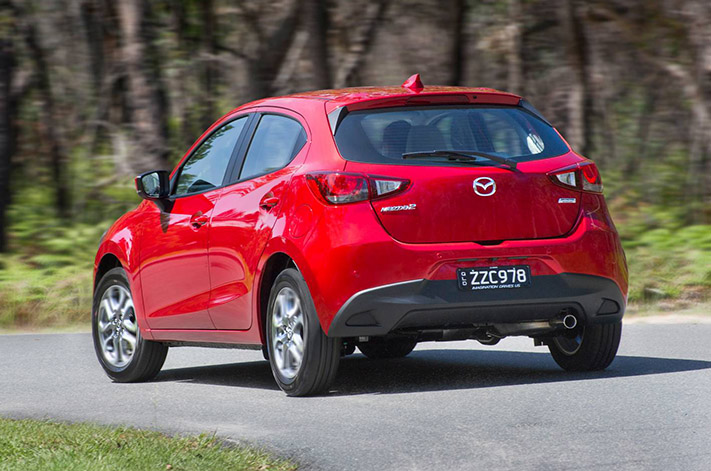
It’s incredibly well-equipped for a car priced below $25,000 with standard features including two-tone leather interior, head-up display and automatic emergency braking.
The GT retails at $21,680 for the manual and $23,680 for the auto, with no differences between sedan and hatch pricing. We tested the automatic hatch.
STRENGTHS
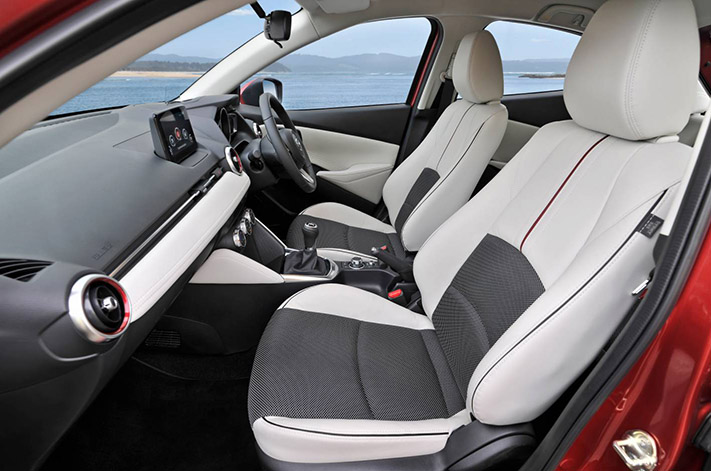
- The interior looks great for a car in this class. Our test vehicle had two-tone cream and black leather which really gave it an airy feel. Most surfaces had a premium, soft-touch finish including the dashboard and door trims.
- The Mazda 2 seats four adults in comfort for short or moderate trips, with good legroom in the rear, though headroom is a little tight for longer bodies.
- It’s very well equipped, with a head-up display, cruise control, rear parking sensors, 7.0-inch touchscreen, digital radio, satellite navigation, LED headlights with LED daytime running lights, climate control air-conditioning, digital speedo, 16-inch alloy wheels, push-button start and auto-folding door mirrors.
- Active safety in the Mazda 2 GT includes automatic emergency braking, rear-cross traffic alert, blind-spot monitoring.
- Ride quality is good and it handles well in all but the trickiest of corners thanks to Mazda’s G-Vectoring Control, which manipulates the engine when you turn the steering wheel to transfer weight to the front tyres in a way that is said to improve response and reduce driver fatigue.
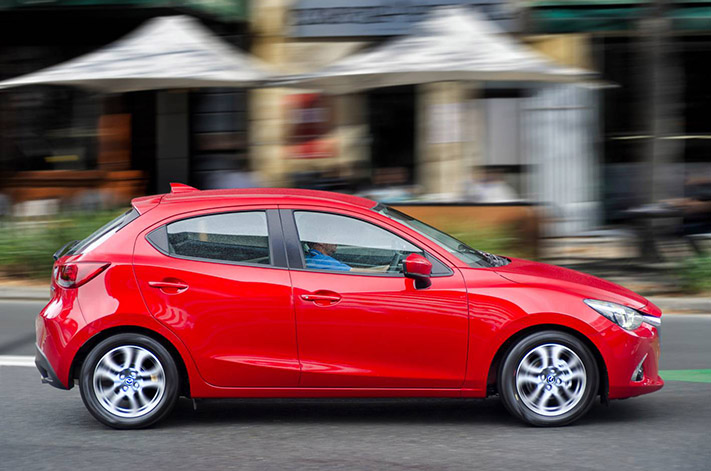
- The hard-working 81kW/141Nm 1.5-litre engine does well with the six-speed auto, though it is a little sluggish from a standing start in the default drive mode. Sport mode sends revs to redline before changing up gears, though sometimes you need to double tap on the accelerator for it to gear down again. The Normal drive mode does a much better job of holding engine torque once you get going.
- The Mazda’s boot space is 250-litres, which is a little below average for a light hatch, and well below rivals including the Hyundai Accent (370 litres), Volkswagen Polo (351 litres) and Kia Rio (325 litres). If boot space is important, the Mazda 2 sedan holds a cavernous 440-litres.
- Despite improvements to reduce cabin noise levels with the Mazda 2’s more recent upgrade, there’s still quite a bit of road and wind noise inside at higher speeds.
- While it provides dependable performance the 1.5-litre engine is showing its age against the smaller but more powerful and efficient turbocharged units under the bonnets of its main rivals.
- Also showing its age is the infotainment system, which is user-friendly but lacks Apple CarPlay/Android Auto connectivity and includes apps that are now defunct such as Pandora and Stitcher radio.
- The rising rear window-line obscures side vision for children in the back seats.
In GT spec the Mazda 2 is a class above many of its rivals and, despite being one of the older designs on the market, can be considered alongside European-built models such as the new Volkswagen Polo, Citroen C3 and Skoda Fabia, and against fellow countryman the Suzuki Swift GLX Turbo.
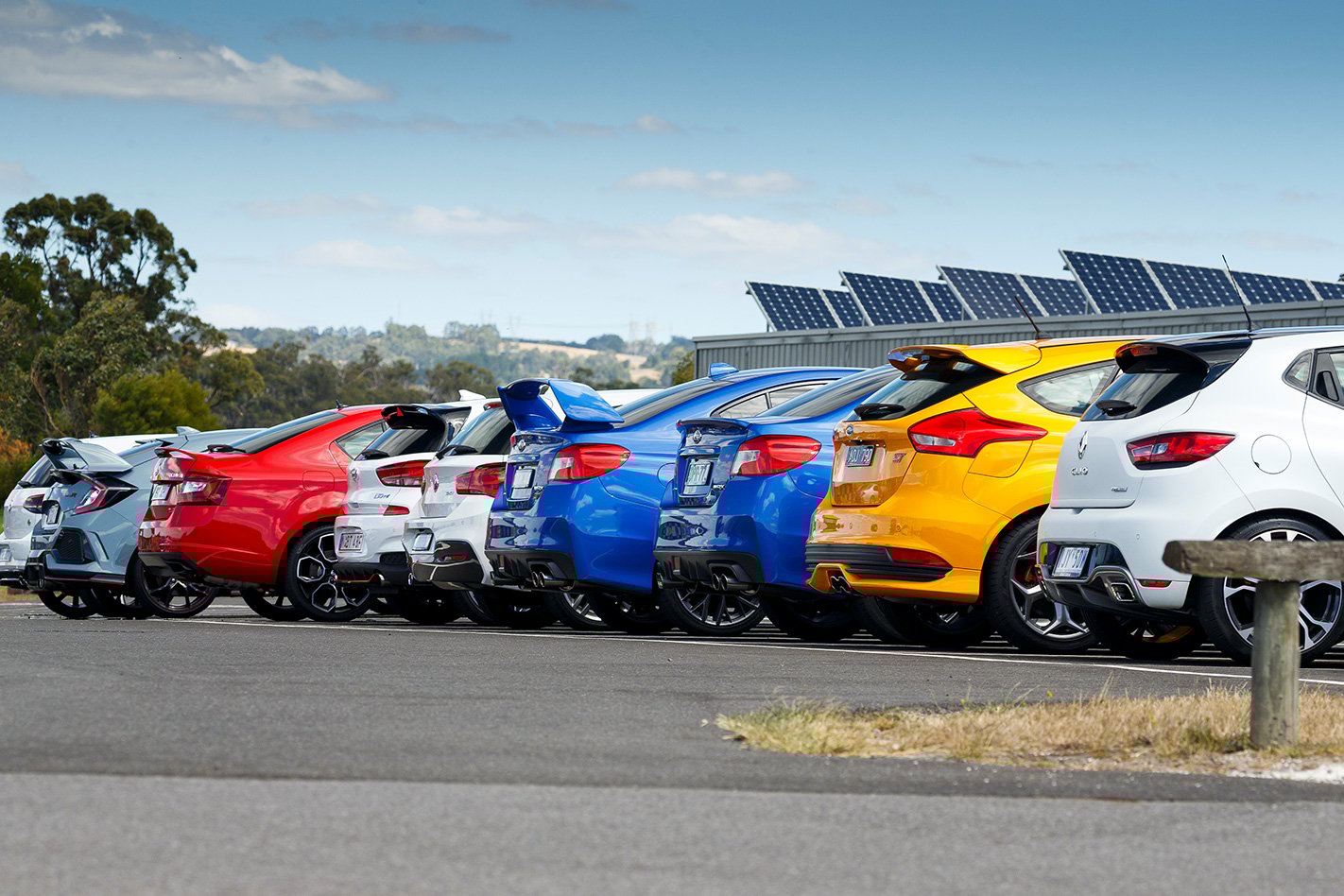
WE LOVE a good hot hatch here at Wheels and, if our monthly mailbag is anything to go by, you do too. So, this month we set out to find Australia’s best.
The big build-up surrounding Hyundai’s i30 N prompted us to snag one as soon as it made landfall and line it up against 11 rivals sure to make it break a sweat. No spoilers here, but all we’ll say is that the Korean didn’t prove a disappointment.
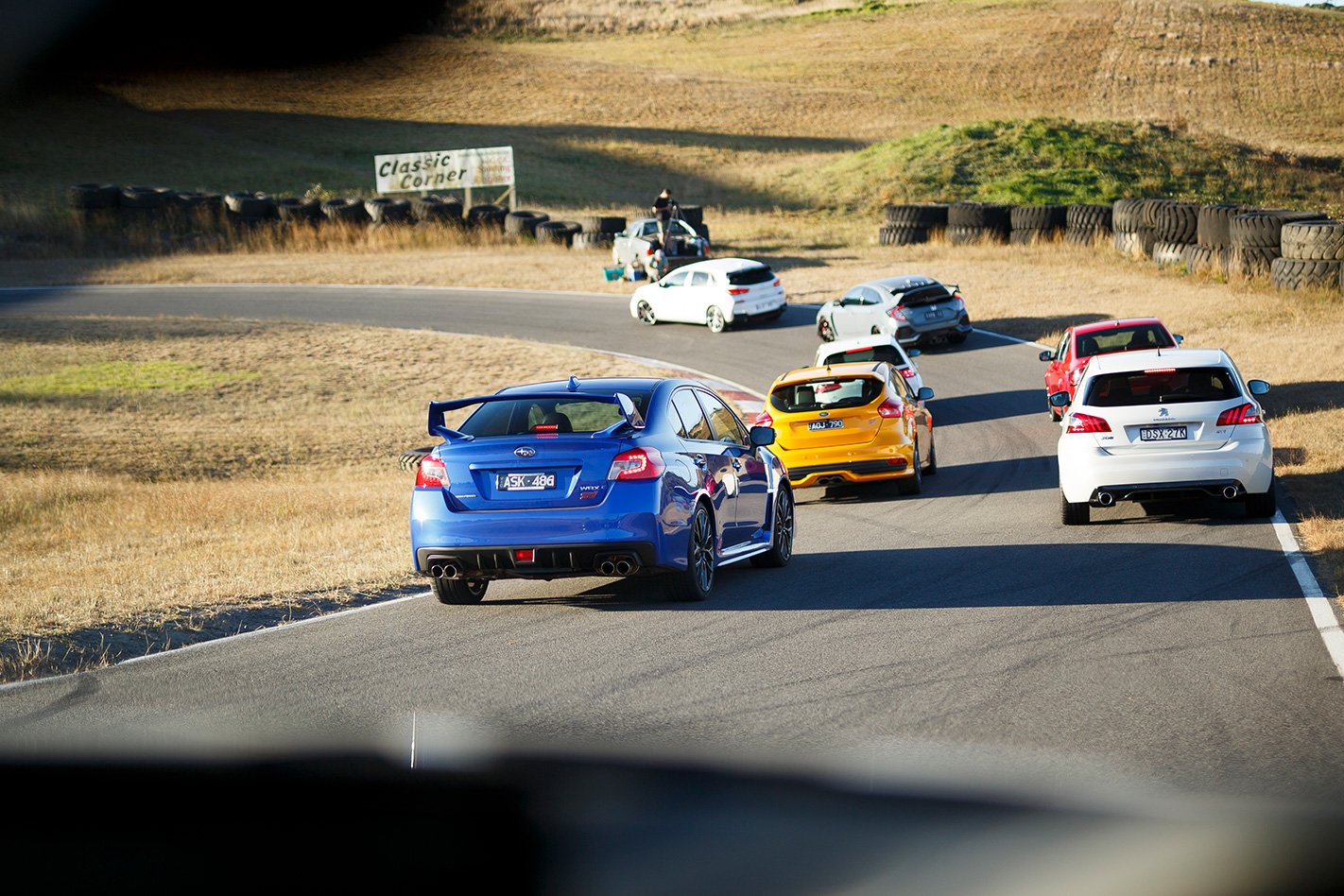
We set a few ground rules beforehand, limiting the upper price limit to $52K to keep things vaguely sensible. That meant Honda’s giant-killing Civic Type-R just about squeaked in, as did Volkswagen’s Golf R Grid Edition. It also meant that Ford’s Focus RS – now available exclusively in Limited Edition guise – didn’t make budget, while Renault’s latest Megane RS didn’t make the boat in time.
Aside from the Hyundai, the Golf R and the Civic, we had a left-fielder, the rear-drive BMW 125i, Ford’s evergreen Focus ST, the feisty Mini Cooper JCW, Peugeot’s lauded 308 GTi 270 and the all-aggro Renault Clio RS220 Trophy.
Then there’s the big-hitting Skoda Octavia RS245, the Subaru WRX (hey, we know it’s not a hatch but you’re bound to cross-shop one in this price bracket), its sibling the WRX STi and the doyen of this particular class, the Volkswagen Golf GTI, tested here in no-nonsense GTI Original specification.
THE TESTS
Track performance isn’t everything in this class, but it is important. So we took our timing gear and hit the gnarly Bryant Park circuit at Haunted Hills with gun professional driver Renato Loberto setting reference laps. Every car was then put through the full Wheels road test wringer. The results are bound to surprise you. They surprised us.

Things we learned? There can be a law of diminishing returns at work when you throw more and more money at a cheap car. Even the last-placed car can and will put a huge grin on your face. All-wheel drive doesn’t buy you any great advantage on a tight, twisty and very dry track. And that buried somewhere to the south of Mt Buller is a very fast and deserted dead-end road that couldn’t be more perfect for hot-hatch testing.
We value your opinions, so do let us know what you think of our hot hatch verdict either by hitting up the Wheels Australia Facebook page or Twitter feed or emailing us directly at [email protected].
Join us for the ride in this action- and adventure-packed April edition. To subscribe, go to magshop.com.au/wheels, the iPad via the iTunes Store or on Android devices via Google Play.
Maranello, you’ve done it again…
WHAT IS IT?
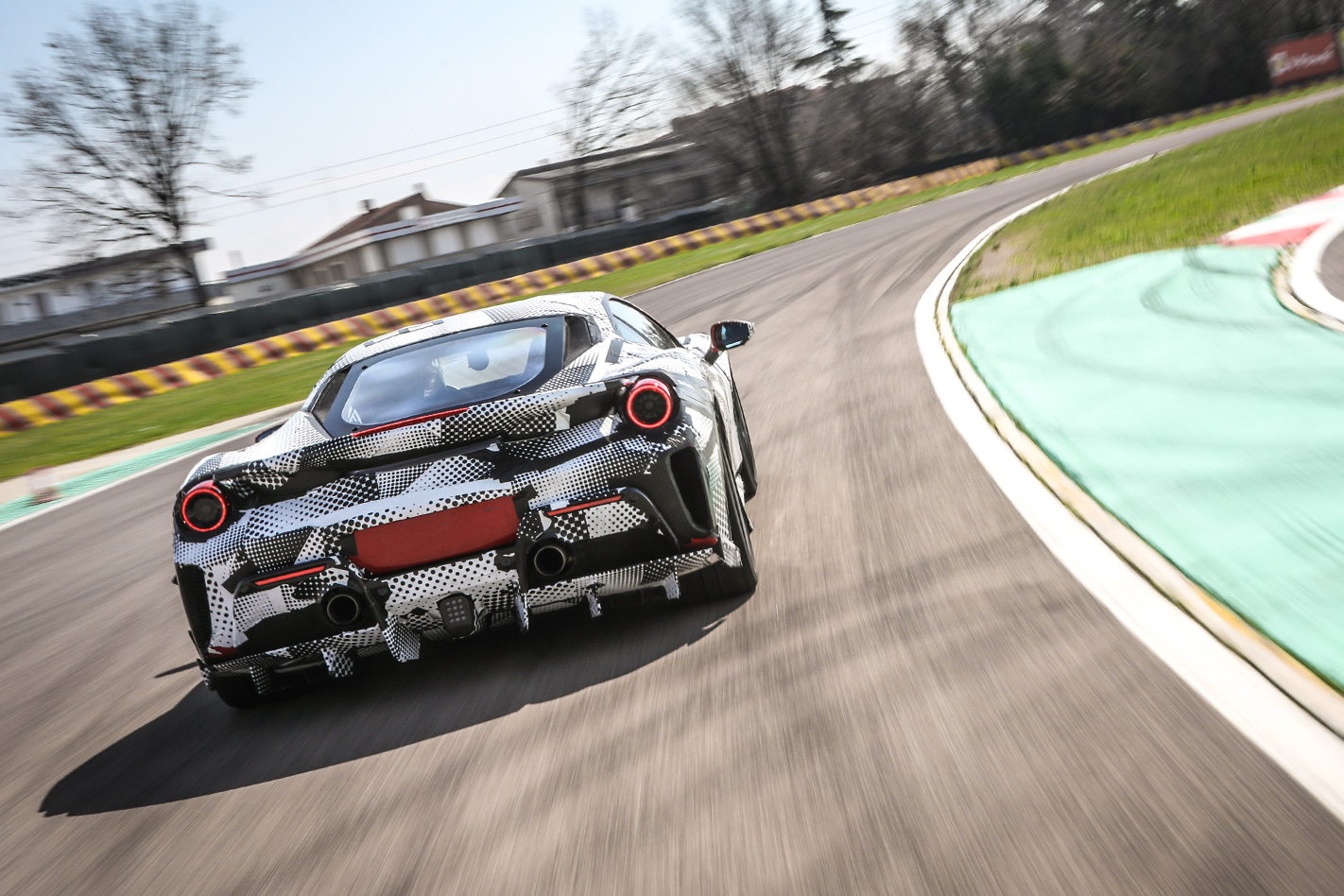
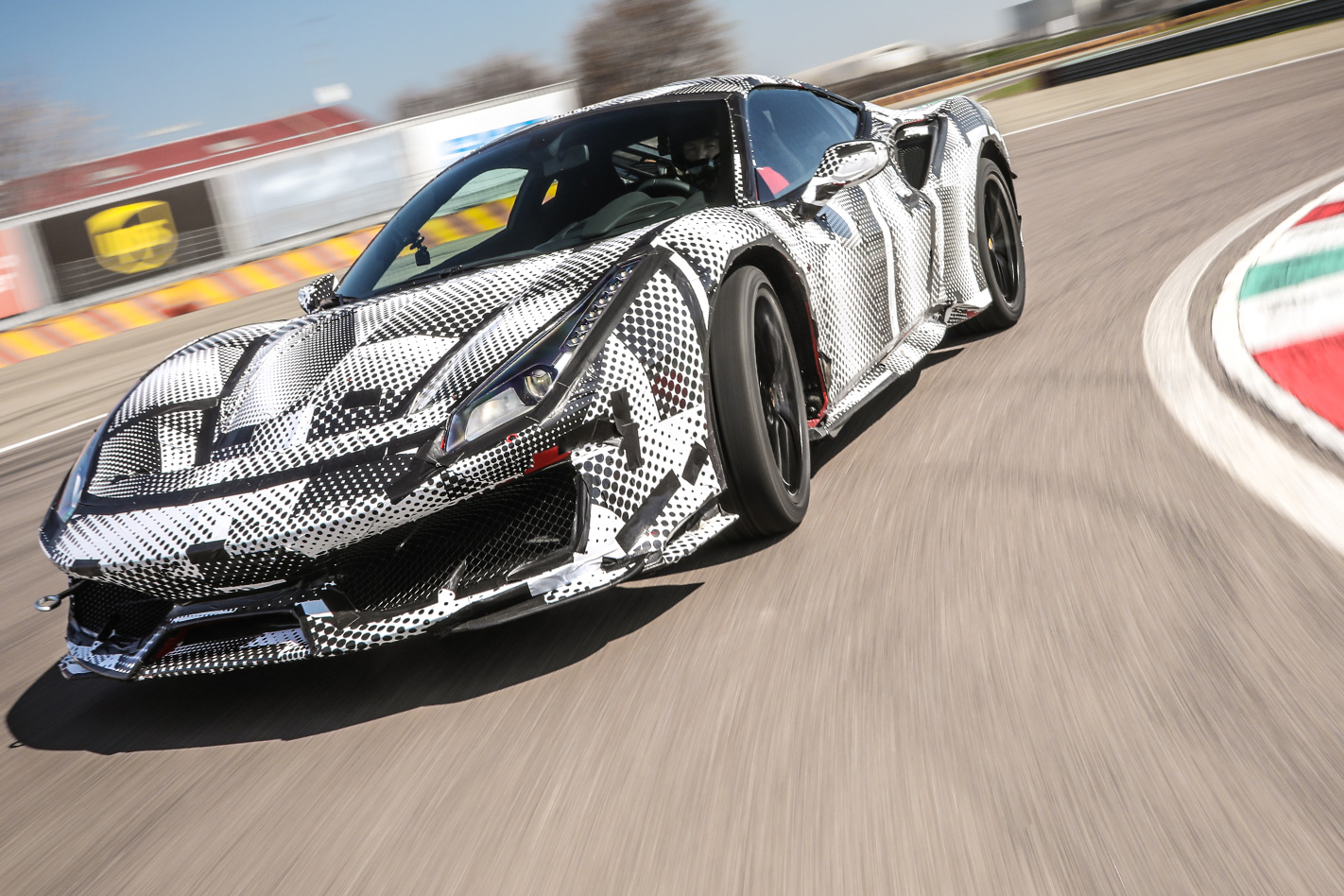
High-performance, track-worthy version of the Ferrari 488. It has a mid-mounted twin-turbo V8 driving the rear wheels.
WHY WE’RE TESTING IT
Ferrari staged a special 488 Pista drive event for journalists on the judging panel of the International Engine of the Year award ahead of most media. Who’s going to decline an invitation like that?
McLaren 720S is its only true rival.
THE WHEELS VERDICT
Another amazing achievement from Ferrari. The 488 Pista is faster than the revered 458 Speciale, with an even more highly polished suite of driver aids to make its power even more easily accessible. This is a towering technical tour de force, with bonus lovely looks. Just don’t expect the same wailing soundtrack of Ferraris past…
PLUS: Engine; transmission; chassis; brakes; electronic control systems; exterior MINUS: Some won’t like the way it sounds; spartan interior; price
THE WHEELS REVIEW
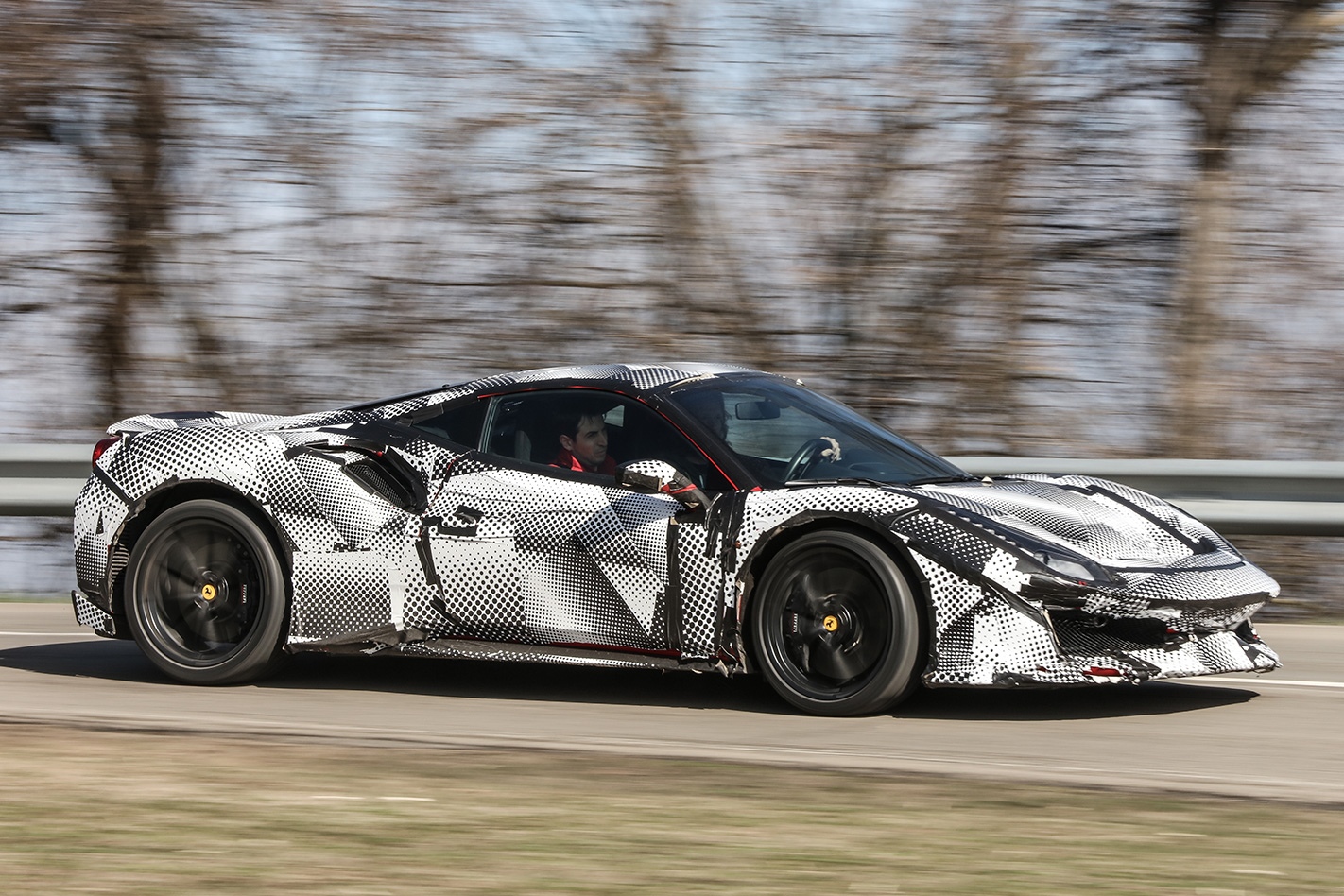
RAFFAELE De Simone short shifts with a gentle tap of the 488 Pista’s satin-finish carbon-fibre right paddle. Ferrari’s thirty-something GT development driver tells me later he’s had 150 laps of Fiorano to hone his act. And it’s worth watching…
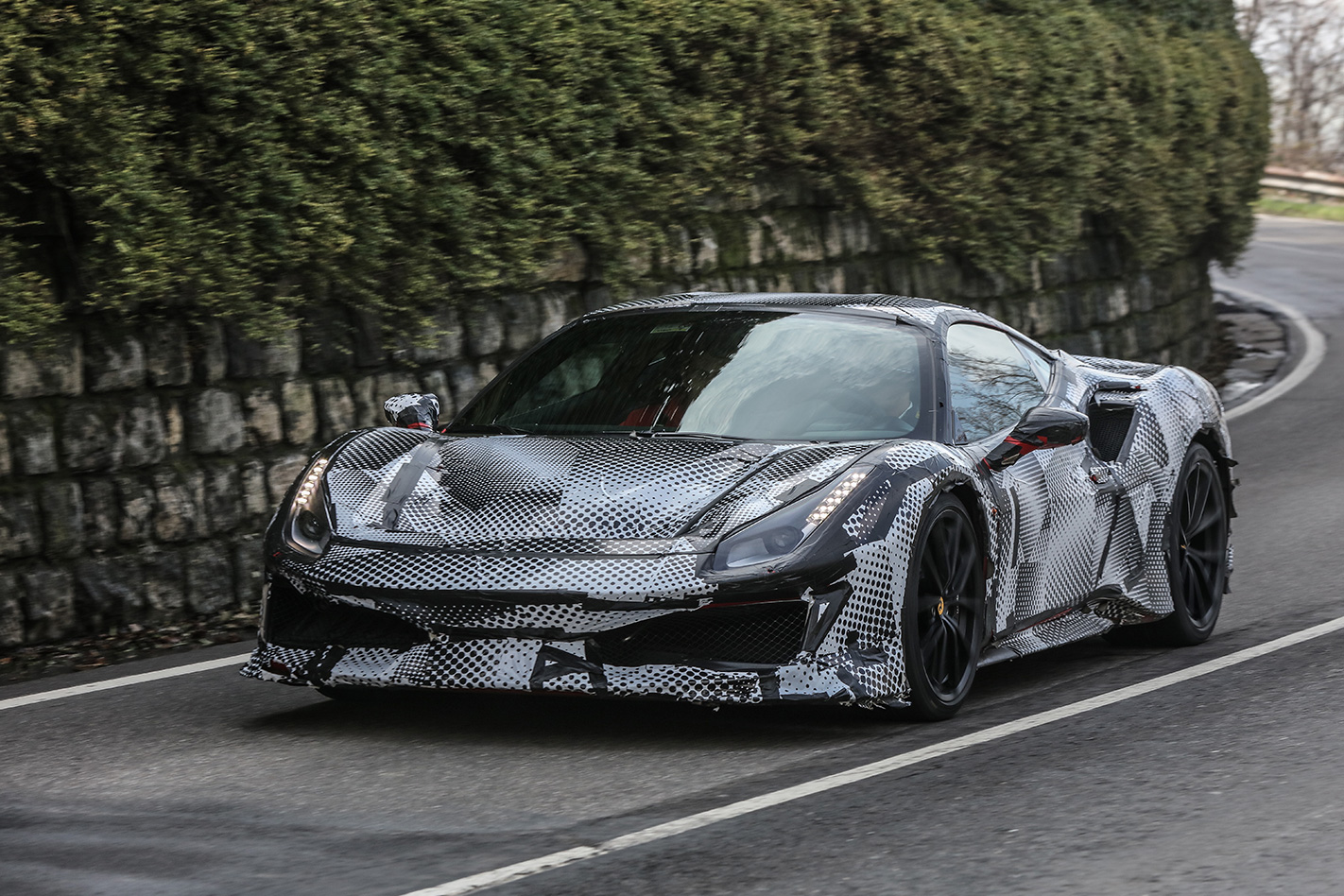
‘Pista’ is Italian for ‘track’ and this Ferrari lives up to the name. And it needs to. The $645,000 drive-away price-tag is a hefty $175,000 more than the 488 GTB.
Acceleration out of the tighter of the compact circuit’s two hairpins is savage, but even wilder are the lateral loads the 488 Pista can generate through the open curves that follow.
This is when, so as not to disturb the car’s awesome equilibrium, De Simone makes the early upshift. Still the speed builds, still the Ferrari holds the arc. And this is just the sighting lap…
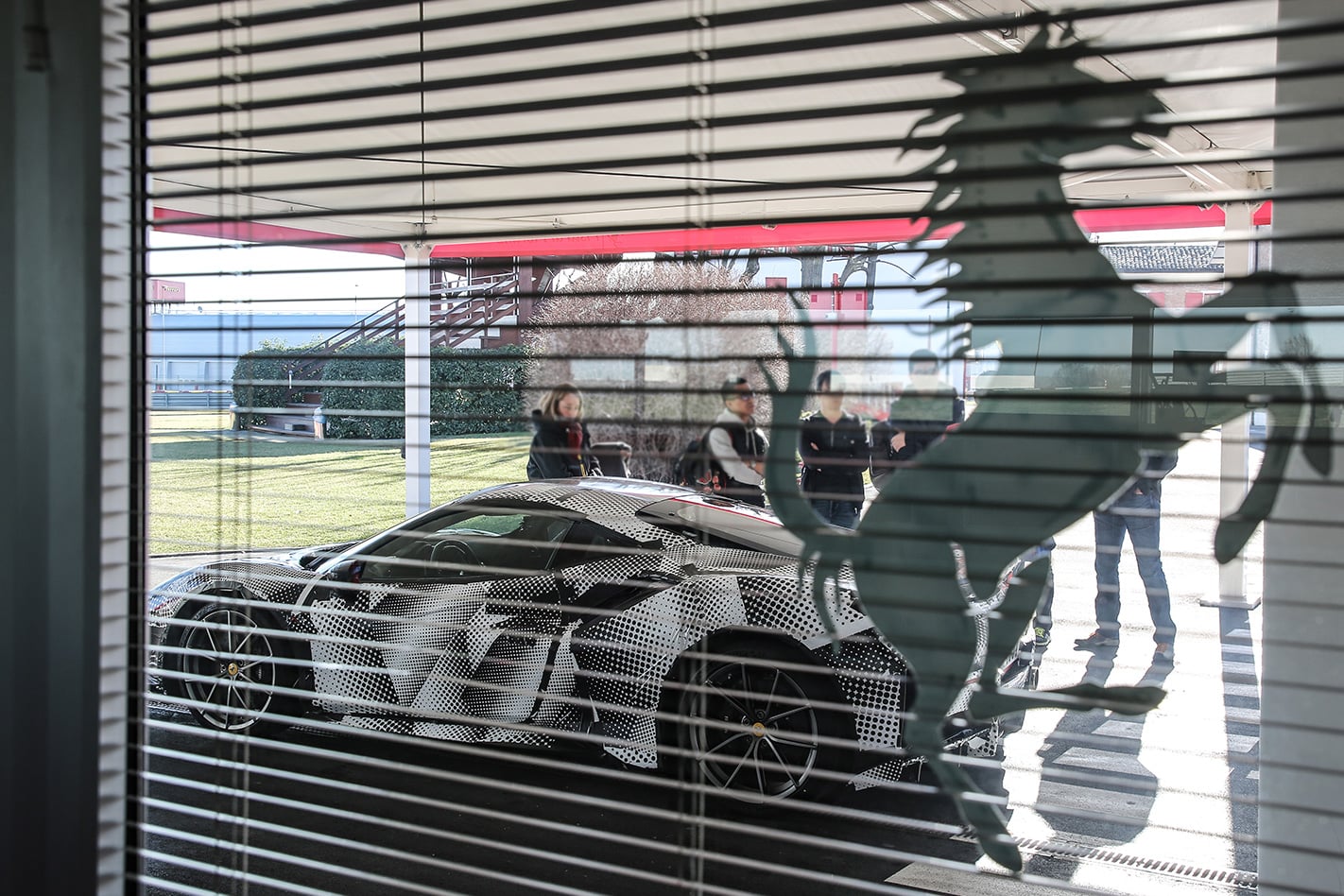
What follows is a literally breathtaking display of what the 488 Pista can do with a practiced pilot at the wheel.
Compared with De Simone’s scorching laps mine are lukewarm, at best. But there’s no mistaking this car’s ferocity. Or its finesse.
The increases are substantial, and there’s little difference in weight between the two, yet the 488 Pista’s factory-claimed 0-100km/h is only one-tenth of a second better than the 458 Speciale, 2.9 versus 3.0 dead. This points to the difficulties faced by Ferrari’s engineering team in transforming the 488 Pista’s power into pace.
Yet they have succeeded. The 488 Pista feels subjectively faster round Fiorano than the 458 Speciale. It’s an impression backed by Ferrari’s official lap time. At 1:21.5, the 488 Pista shaves 2.0 secs off the 458 Speciale’s best, quite a margin on a not-so-long 3km circuit.
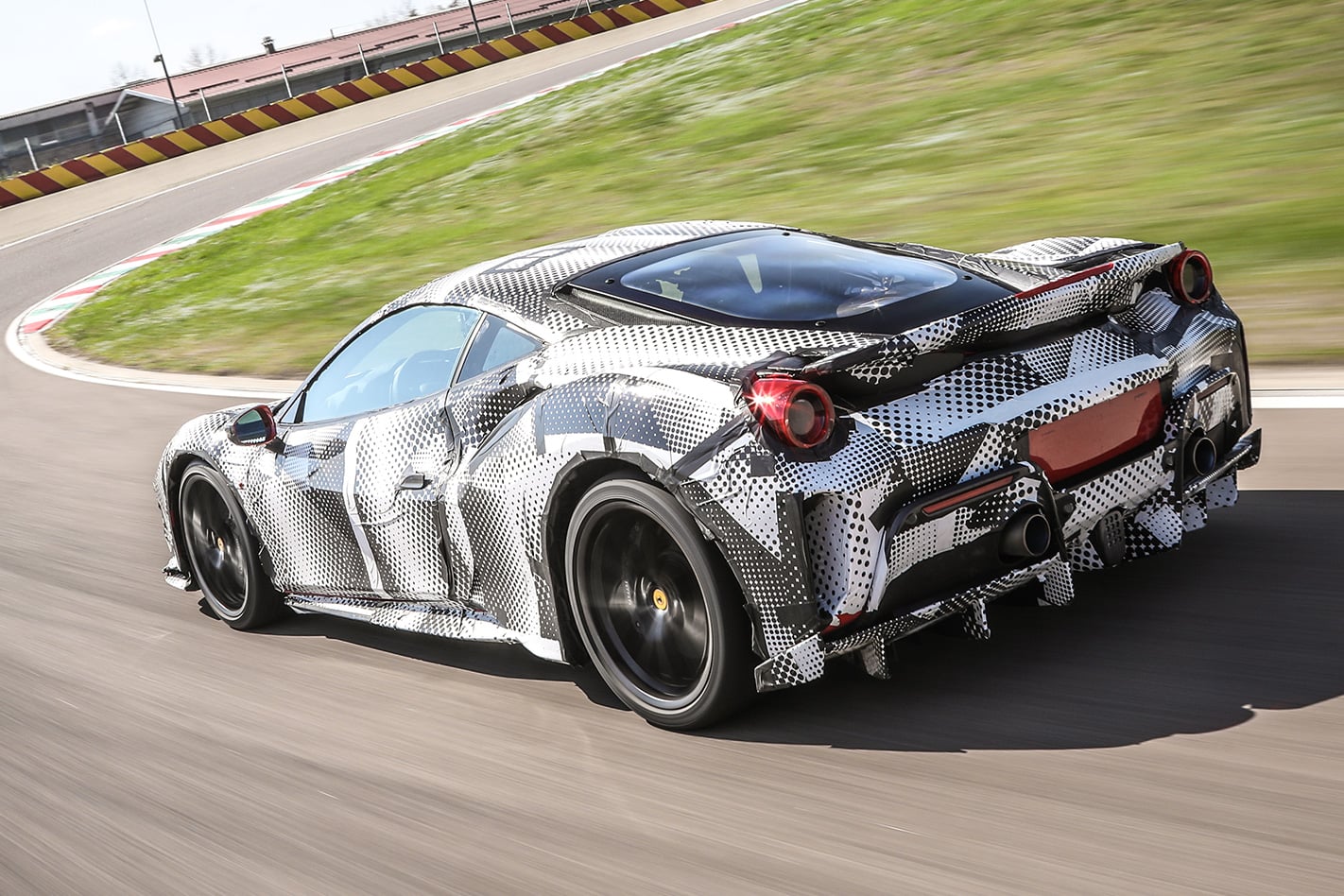
The electronics curb but don’t kill the oversteer when I enter the tricky right-hander before the circuit’s overpass bridge more than just a little too hot.
Punching out of Fiorano’s two truly tight corners I learn you can give the 488 Pista wide open throttle as early as you like. With the manettino set to ‘Race’ the electronics simply turn your ham-footed wish into brain-warping reality, as you tap up through the gears to the cracking tempo of the flashing shift lights in the top of the steering wheel.
Select ‘Auto’ mode for the seven-speed double clutch and it does a brilliant job in ‘Race’, snapping up through the gears like a champion. Hold the left paddle back while braking hard for one of those hairpins and the drivetrain control electronics deliver a series of brutally precise downshifts.
This was a major job. The engine of the 488 Pista shares its vital statistics – bore, stroke and capacity – with the 488 GTB. But fully 50 percent of its parts are new.
Codenamed F154CD, key changes include big-ticket upgrades like titanium con rods, titanium-alloy turbo turbines, a carbonfibre intake plenum and exhaust manifolds fabricated from tough Inconel steel. There are also new cams, stronger heads and a lighter flywheel.
Some of the changes are costly substitutions that contribute as much to reducing weight as increasing power, strength and durability. One of the objectives was to reduce rotational inertia. It’s down 17 percent, while power rises by 38kW compared to the 488 GTB.
Also compared to the 488 GTB, the 488 Pista is 90kg lighter. The difference is most obvious in the car’s cabin. Featuring Alcantara and carbon-fibre, but minus conveniences like a glovebox, it’s bare essentials on a no-expense-spared budget.
The exterior design is heavily influenced by the 18kg-lighter engine. The V8’s breathing and cooling arrangements have been totally redesigned, drawing on lessons learned from track-only versions of the 488.
The side ducts now feed air through the engine intercoolers, not to the engine. The V8 now draws breath through apertures near the rear spoiler. Other changes, like the attention-getting S-Duct nose, were designed to improve engine cooling at the same time as aerodynamic efficiency.
These changes, driven by the pursuit of performance, have shaped an exceptionally good-looking car. The Pista is arguably the loveliest 488 so far.
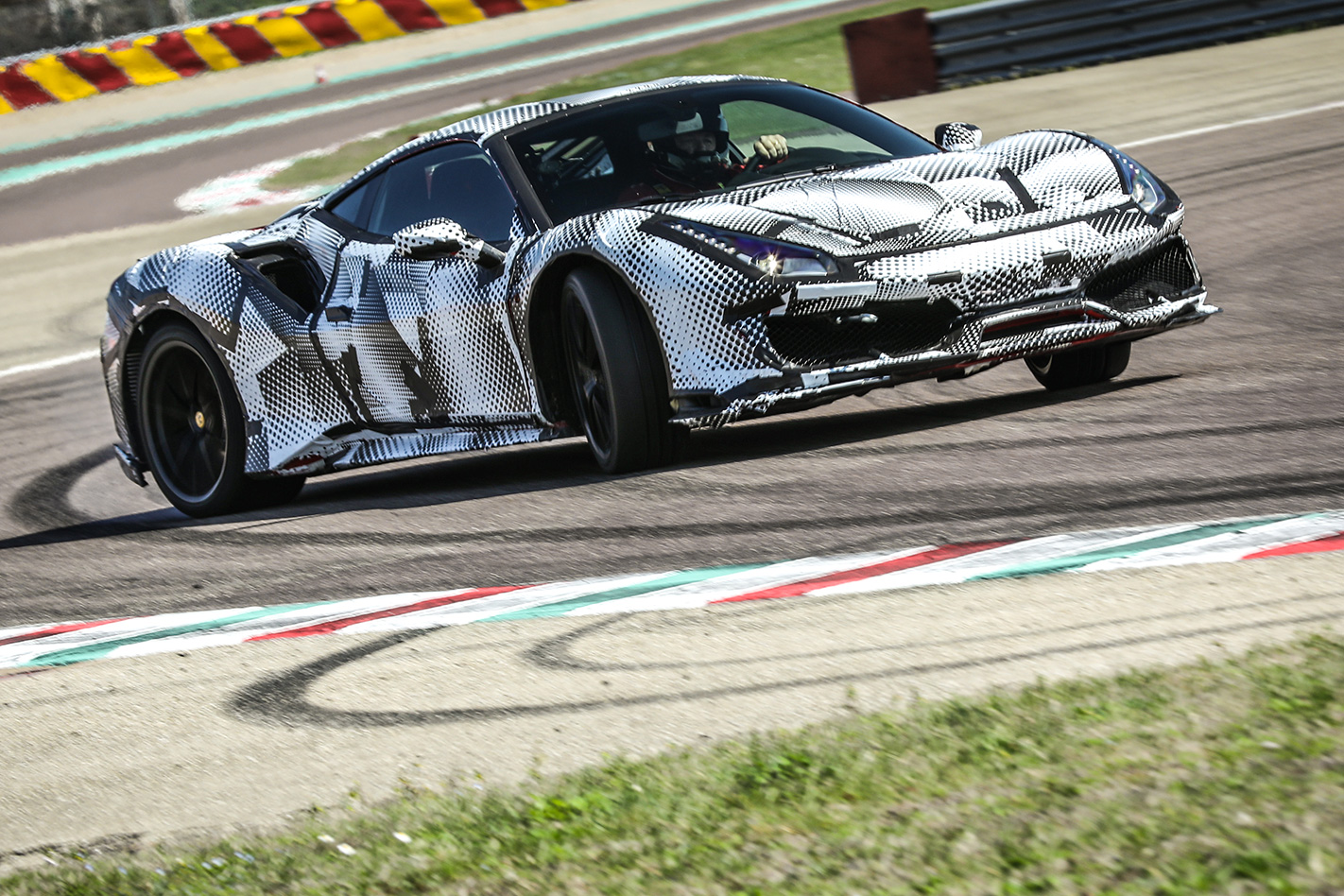
The V8’s strong torque makes the 488 Pista untemperamental. The engine growls away happily in the bottom half of the tachometer dial, ever ready for a quick overtake. In ‘Sport’ mode the double-clutch shifts smoothly. And the ride in this mode isn’t jarring.
Though the 170-litre luggage space under the lightweight bonnet is skimpy, taking the 488 Pista touring doesn’t seem a completely crazy idea.
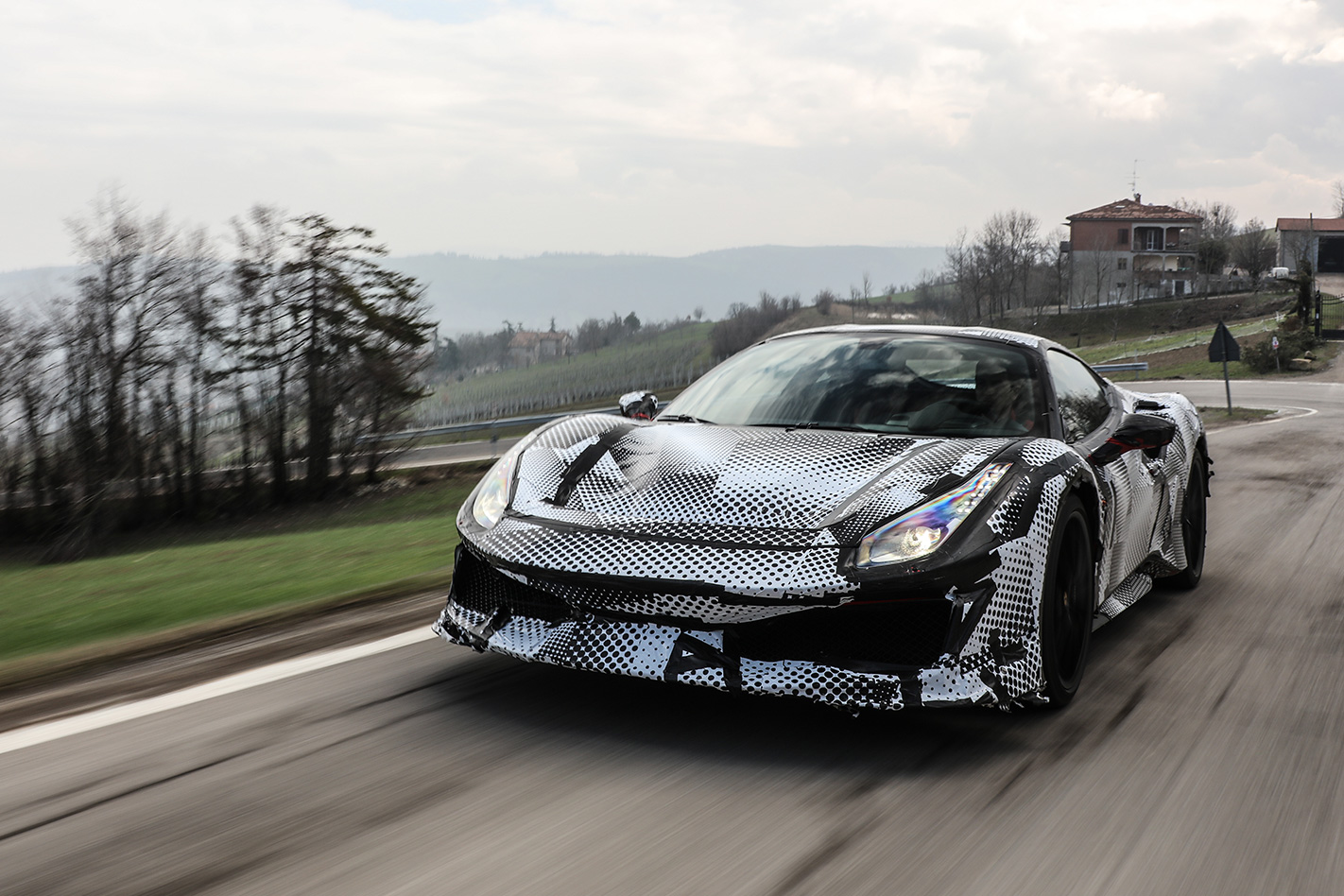
Enjoying the warmth of a sunny, early Spring day in Northern Italy, I watch others take their rides around Fiorano. The Ferrari’s mufflers are valved, with the flaps opening at around 4000rpm and 50 percent throttle.
With De Simone driving, they’re certainly open, yet the low-pitched sound is a surprisingly mellow bellow. Compared to the soaring operatic tenor voices of earlier, non-turbo Ferrari V8s, this one is a crooner.
But the song it sings is very, very seductive…
SPECS Model: Ferrari 488 Pista Engine: 3902cc V8, dohc, 32v, twin turbos Max power: 530kW @ 8000rpm Max torque: 770Nm @ 3000rpm (in 7th gear) Transmission: 7-speed dual-clutch auto Weight: 1385kg 0-100km/h: 2.9sec (claimed) Economy: 11.5L/100km Price: $645,000 On sale: Now
The Australian distributor for Shelby American, Mustang Motorsport, has confirmed the next iteration of the Shelby Super Snake will be arriving locally this year, based on the new 2018 Ford Mustang GT.
With the option for either a 522kW or 597kW supercharged 5.0-litre V8, the next Super Snake will be capable of a 0-97km/h (60mph) sprint in just 3.5 seconds.
In Australia, the Super Snake pack will cost $91,500, plus the cost of the donor car and any extra options, from Mustang Motorsport.
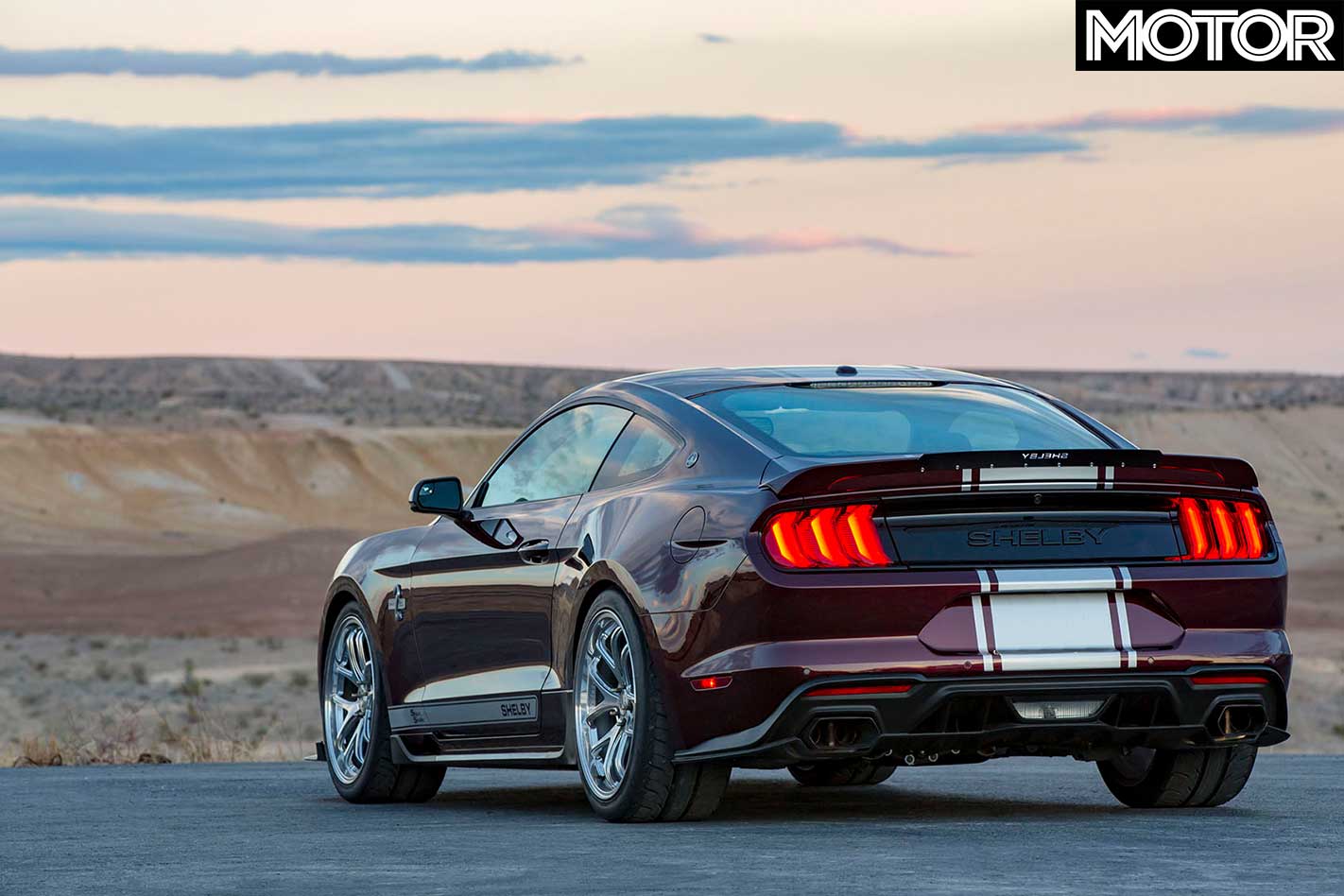
The Shelby-certified build will “be branded with a unique CSM number that will be included in the Official Shelby Registry,” says MM.
Visually, the Super Snake gains a redesigned font bar and grille, which is not only a departure from the 2018 Mustang’s design, but from the previous Shelby Super Snake design as well.
“A massive new lower splitter with functional brake ducts also sets the new Super Snake apart from the rest,” Mustang Motorsport adds.
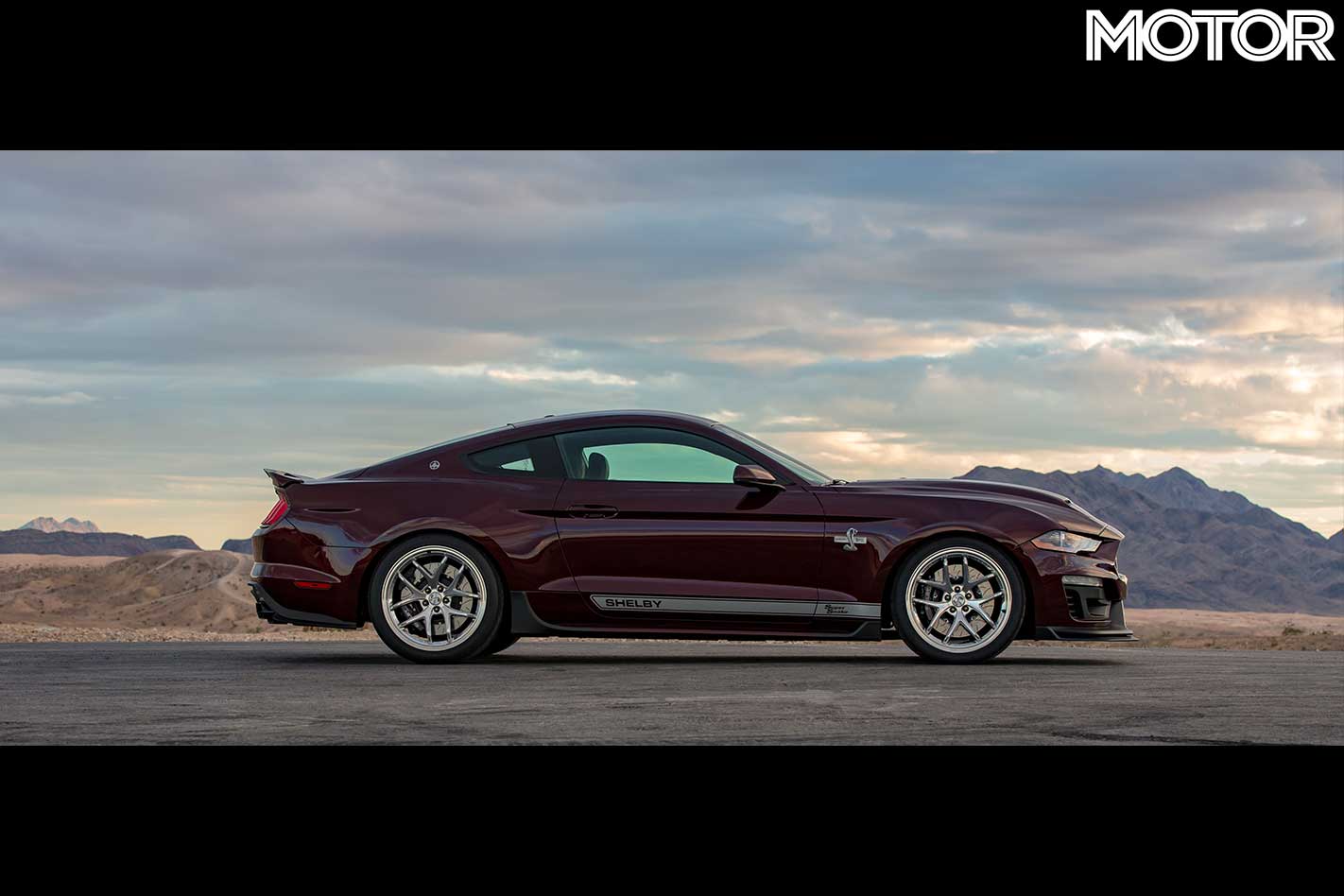
“The Shelby theme continues inside with finely appointed stitching and badges.”
If the visuals don’t give away the game, punters on the street will know it’s no ordinary Pony with the sound of a Shelby active exhaust screaming bloody murder, and the supercharger whine turning the engine into a forced induction monster.
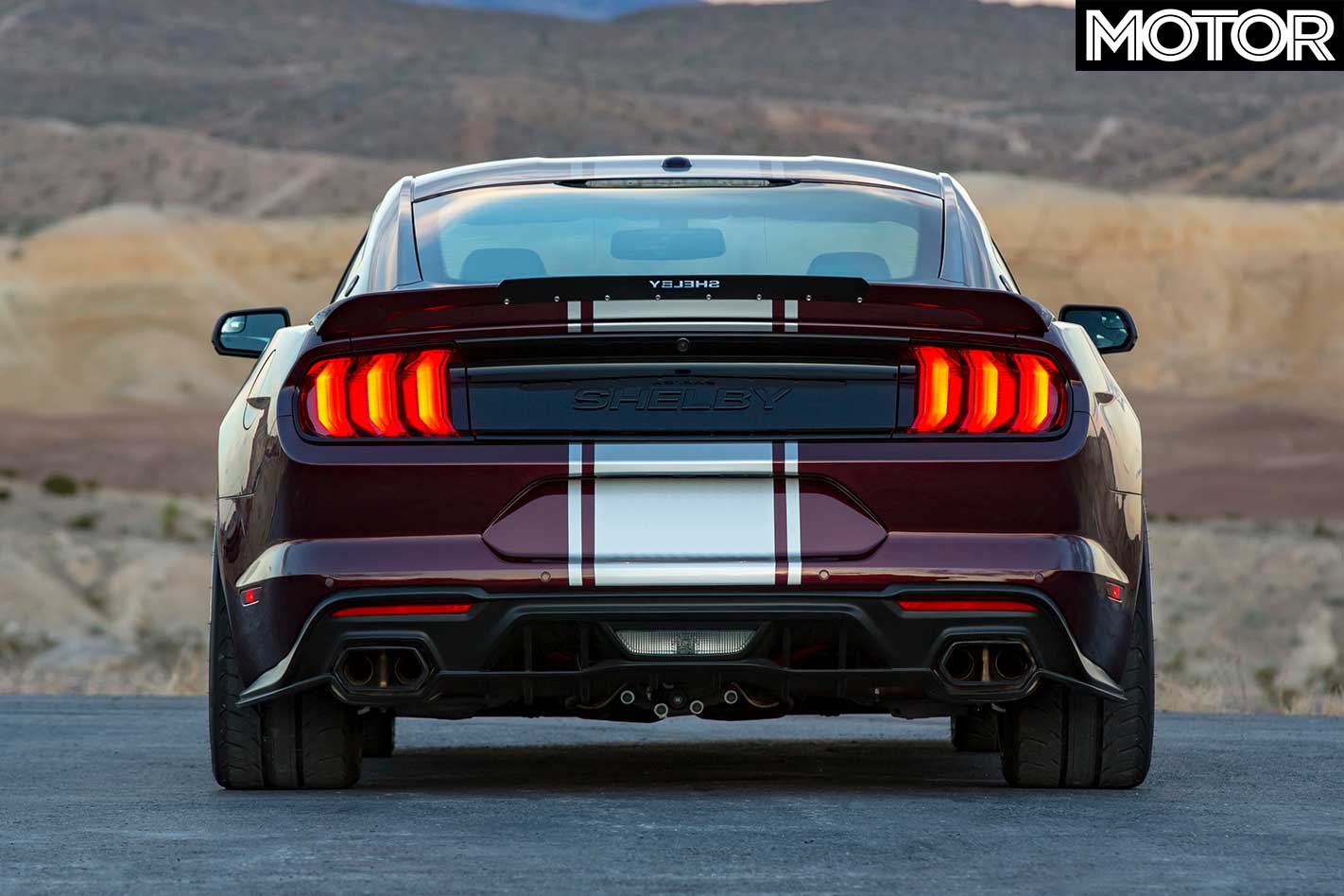
A widebody pack is also available for $24,636, which adds fenders, ducts, winglets, and deep dish wheels (as well as re-worked suspension to suit) for a more wild look.
Mustang Motorsport says the new Super Snake will arrive in Q4 this year.
Mercedes-Benz has revealed a new special edition C-Class sedan, dubbed the ‘Edition C’.
The new package adds a suite of luxury items to the entry-level C200, as the popular model enters its run-out phase ahead of a significant upgrade.
To sweeten the deal , C200 sedans ordered between April 1 and May 31 can be specced with the Edition C package for a drive-away price of $60,900, which is $1000 less than the usual recommended retail price.
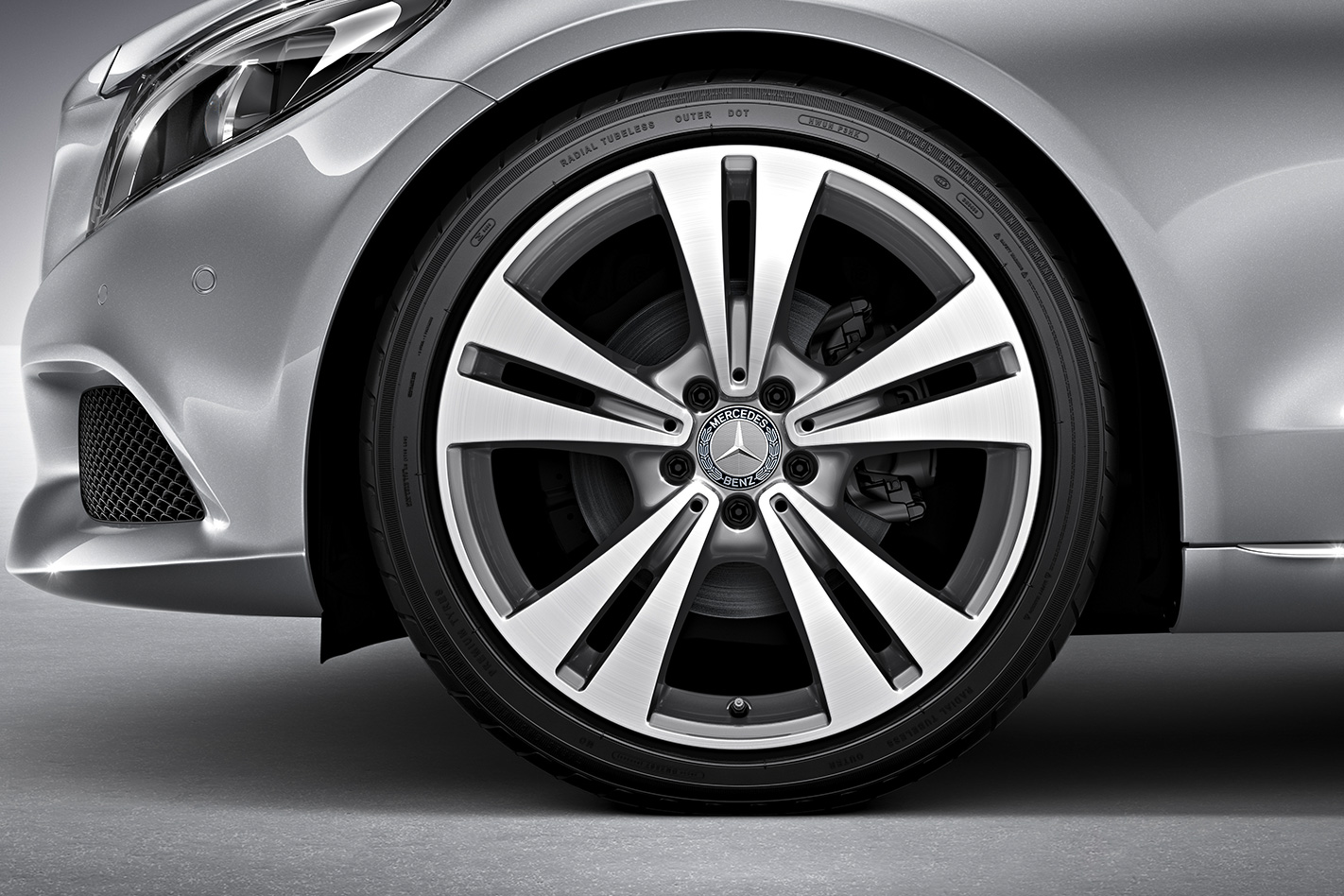
As well as plenty of spare change, the package brings a glass electric sunroof, Apple CarPlay/Android Auto smartphone mirroring, metallic paint (excluding ‘designo’) and 19-inch alloy wheels over the standard specification.
The C-Class C200 is powered by a 2.0-litre four-cylinder petrol engine making 135kW and 300Nm, mated to a nine-speed automatic transmission.
Standard equipment includes a seven-inch colour display with touchpad control and media interface, satellite navigation, digital radio, electric front seats, keyless start, dual-zone climate control, black piano lacquer and brushed aluminium trim, rain-sensing wipers and LED headlights.
Barrett-Jackson has just wrapped up a massive four-day-long auction at Palm Beach, Florida, in which hundreds of cars found new owners.
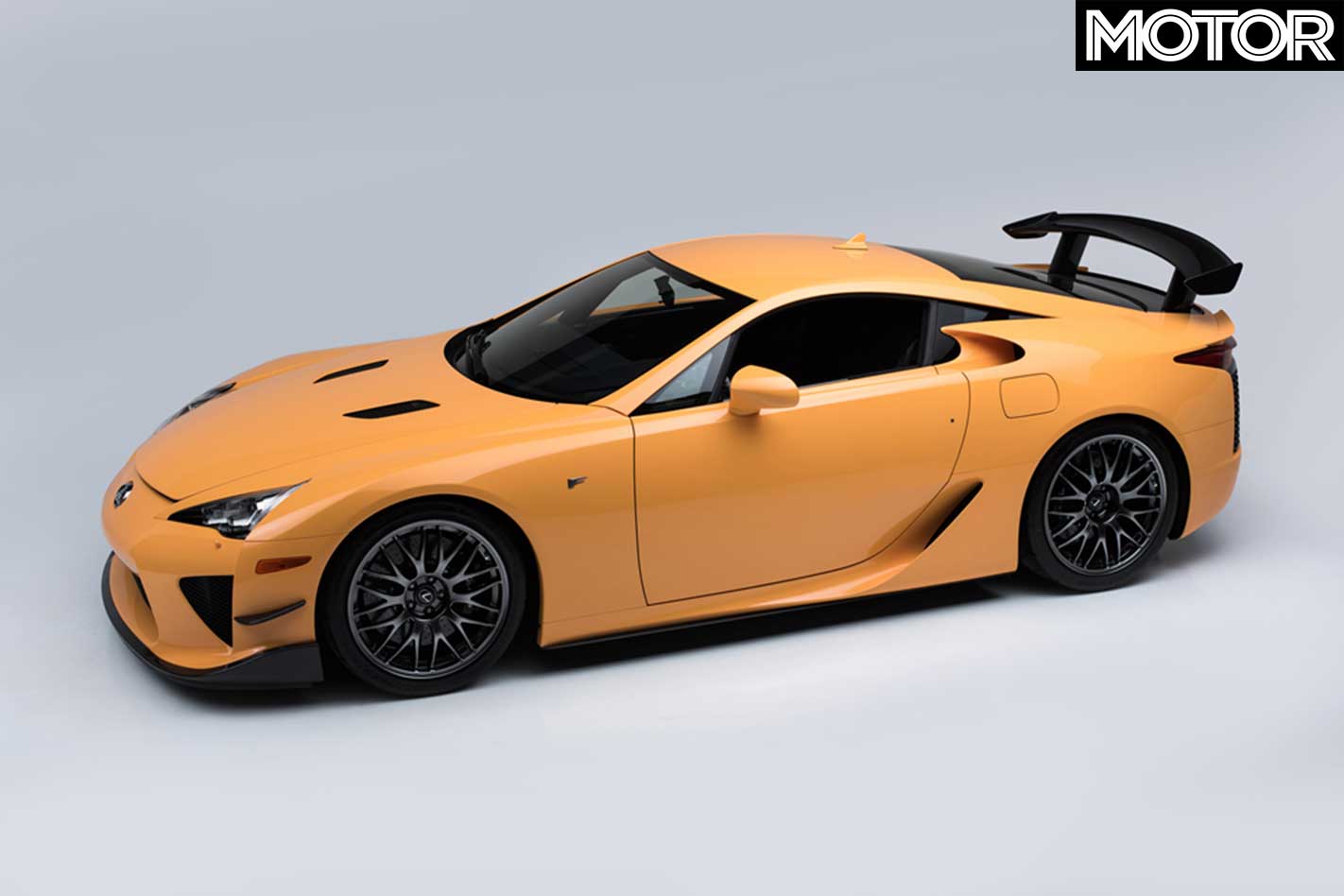
Leading the charge for dollar values was a rare 2012 Lexus LFA Nürburgring Edition, one of only 50 ‘Ring specials built.
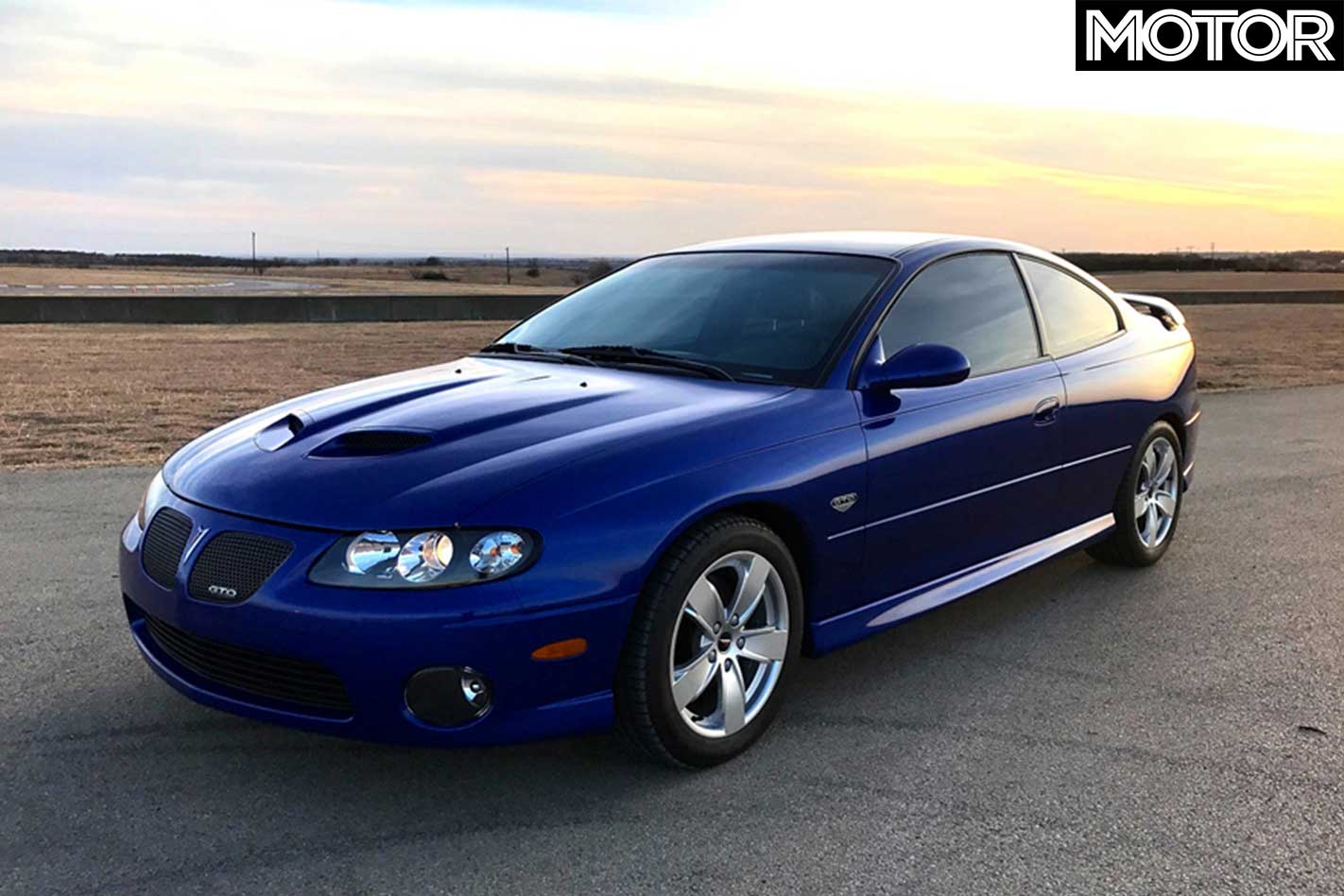
For something that hits a bit closer to home, a 2005 Pontiac GTO that’s travelled 1885 miles (3033km) fetched USD$26,400 (AUD$33,946).
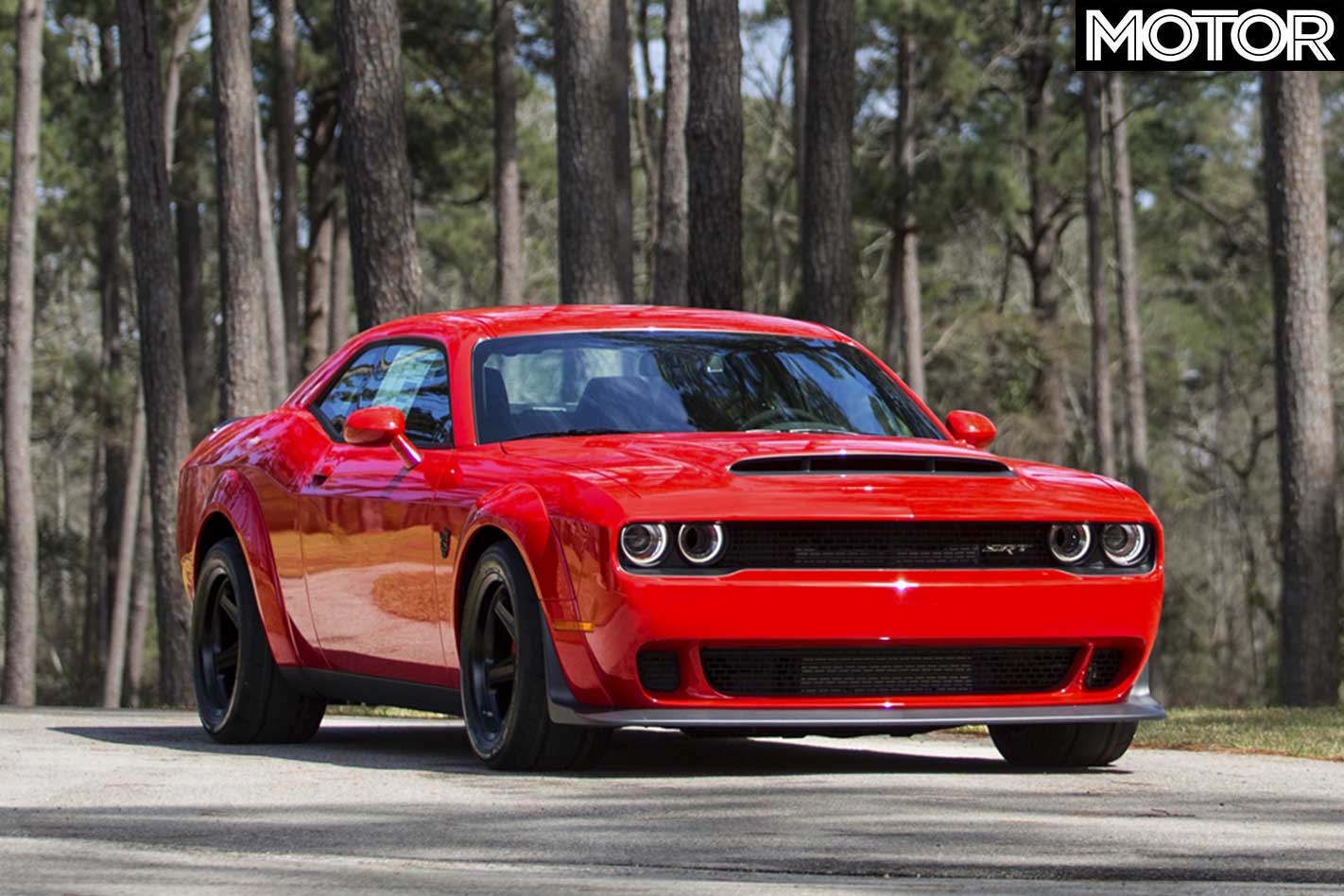
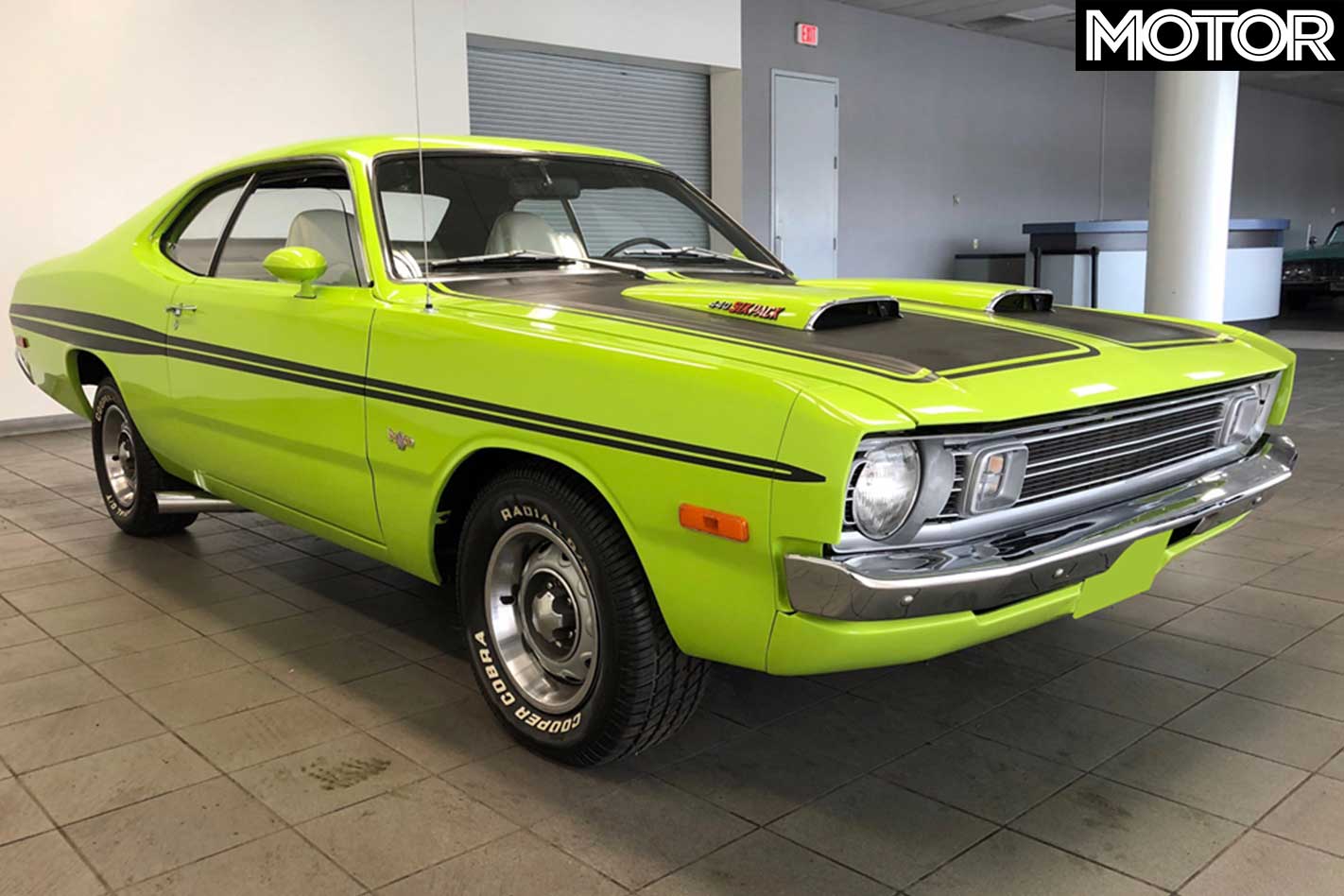
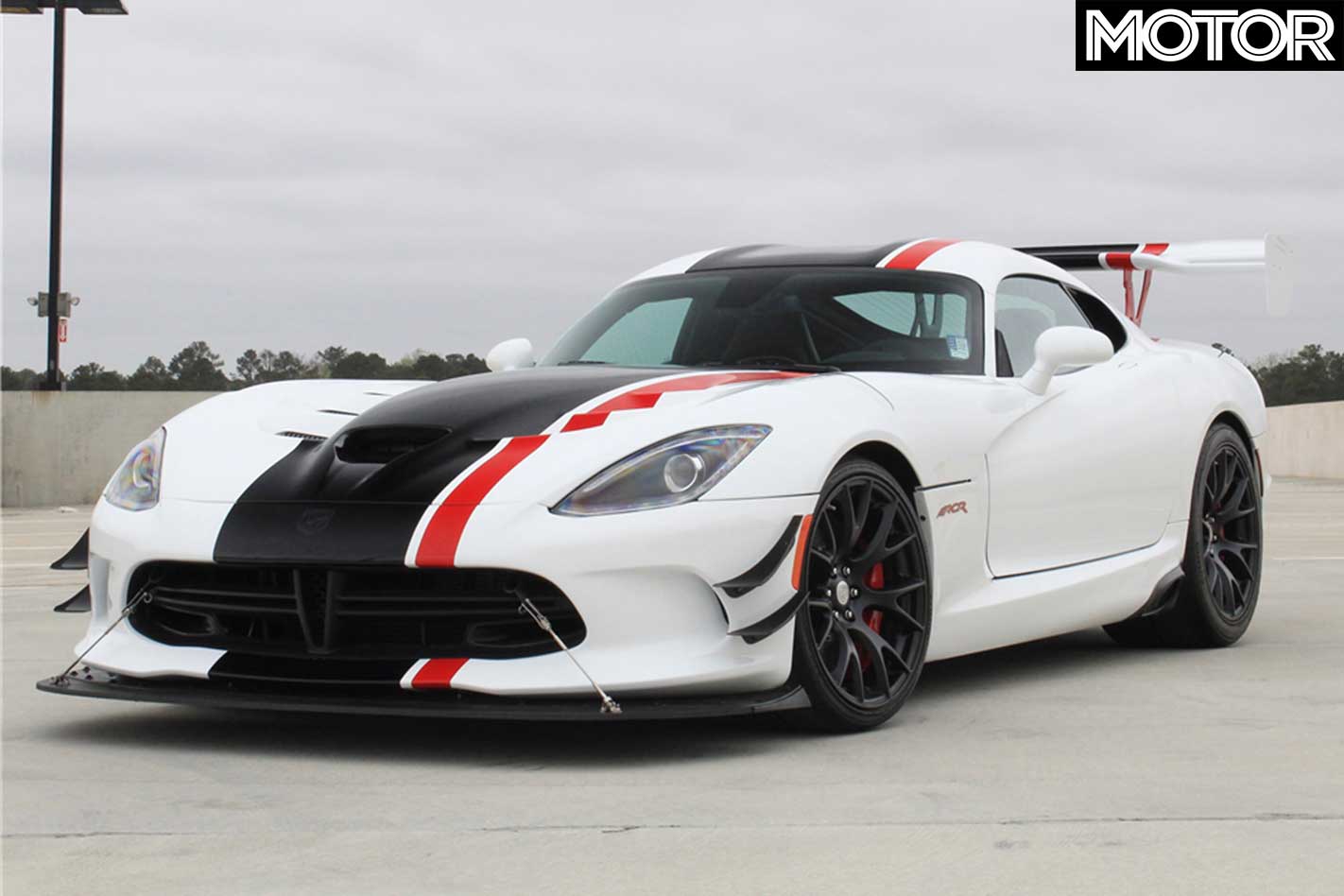
The third Demon is a little more old school, a customised 1972 Dodge Dart with a stonking 7.2-litre six-pack V8 in the snout. It sold for USD$38,500 (or AUD$49,505).
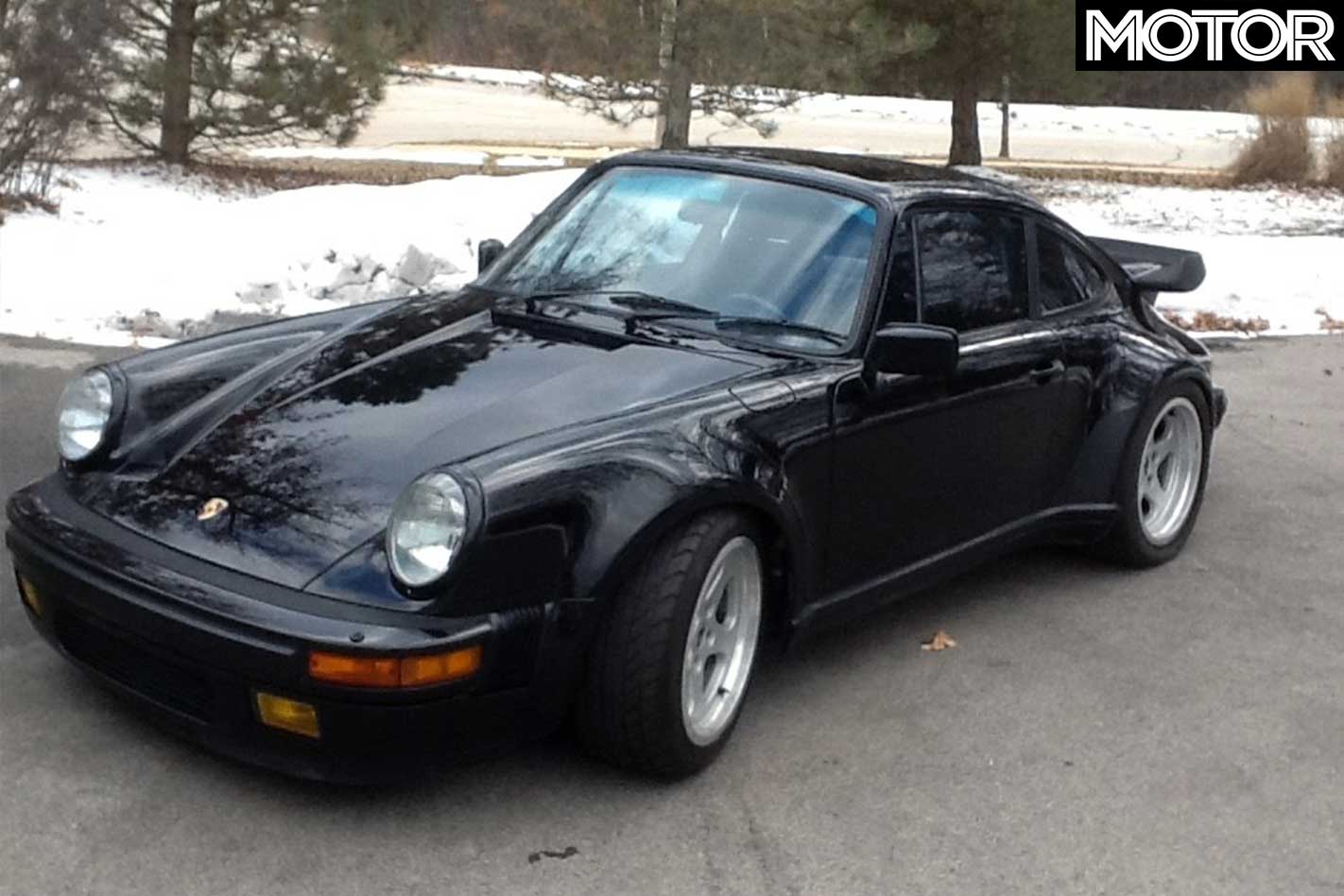
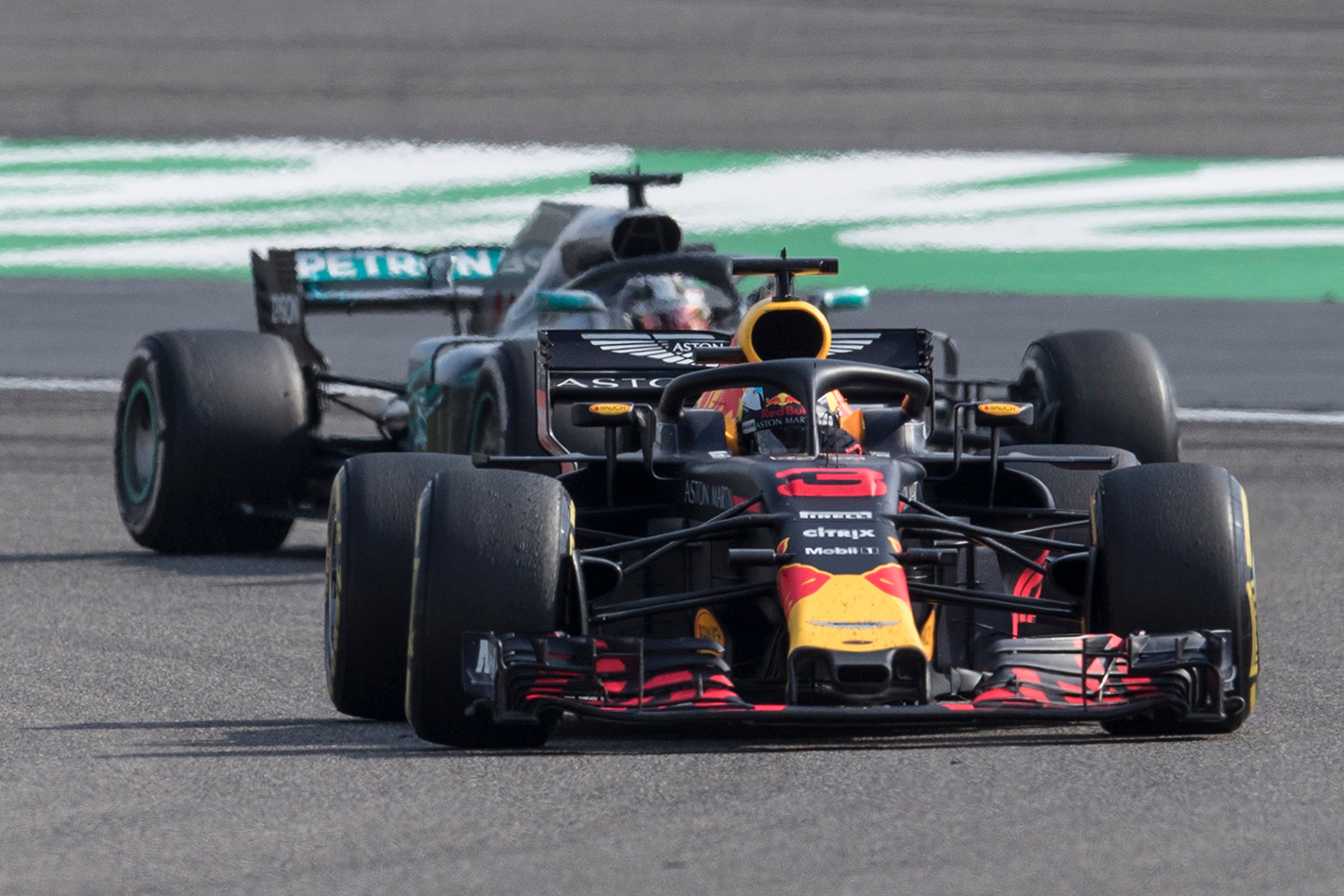
DANIEL Ricciardo proved to the world he is one of the greatest overtakers on the Formula 1 grid with a stunning late-pace performance at the 2018 Chinese Grand Prix.
Starting the race in sixth, the West Australian went on to put in one of the greatest overtaking masterclasses of modern F1, dispatching Kimi Raikkonen, Lewis Hamilton, Valterri Bottas, and Sebastian Vettel in clinical fashion.
A safety car late in the race spiced up the grand prix, with Red Bull double-stacking both its drivers, with Max Verstappen leading the Aussie.

That became fourth after Ricciardo came from a different postcode to mug Hamilton – the reigning champ giving racing room to the Aussie ace.
Both Ferraris were dispatched on the main straight, leaving just Bottas in the Honey Badger’s sights.
The move for the win was a clutch, with Ricciardo diving underneath the Mercedes as Bottas continued to squeeze the Aussie towards the apex.
Between the quartet of victims are nine world drivers’ championships, compared to Ricciardo’s nought.
Ricciardo is out of contract at the end of the year, and is rumoured to be hot property. Bottas at Mercedes, and Raikkonen at Ferrari are similarly out of contract.
Some reports claim the Australian is already involved in high-level contract negotiations with Ferrari about securing a red race suit for 2019.
Regardless of where he ends up, we look forward to watching more of his daring overtakes on the world stage.
To watch the full 2018 Chinese Grand Prix race highlights click here.
