
PORSCHE has announced it has dropped the diesel-engined Macan, leaving it without a single oil-burning option across its entire product line-up. It attributes the decision to changing consumer choice – and not the Dieselgate scandal.
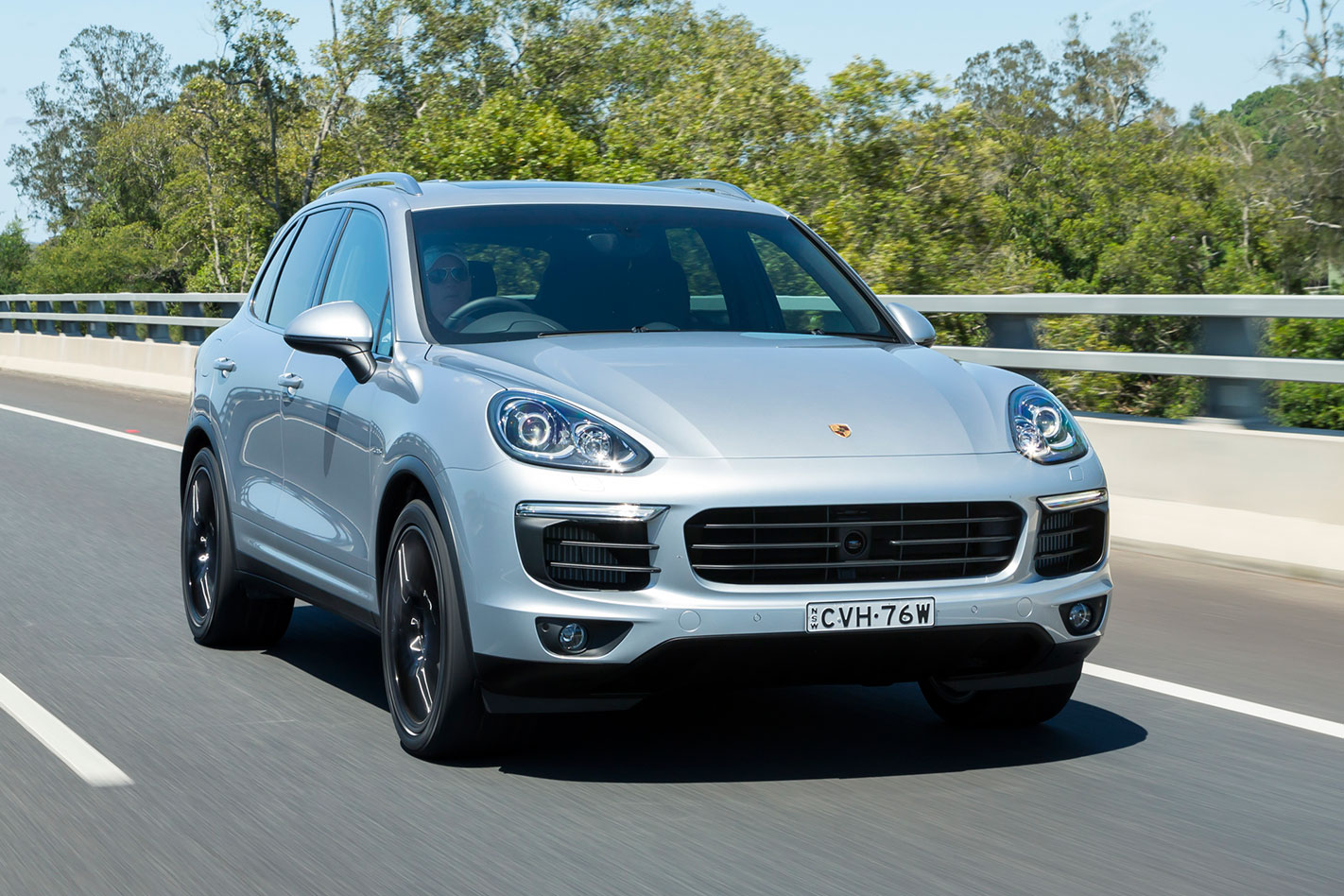
It potentially spells an end for oil-burning versions of the Porsche Cayenne, which is currently in run-out ahead of the introduction of an all-new model later this year that is yet to confirm if it will add a diesel variant. The diesel-engined versions of the Panamera grand tourer and the Porsche Macan have already been withdrawn from sale.
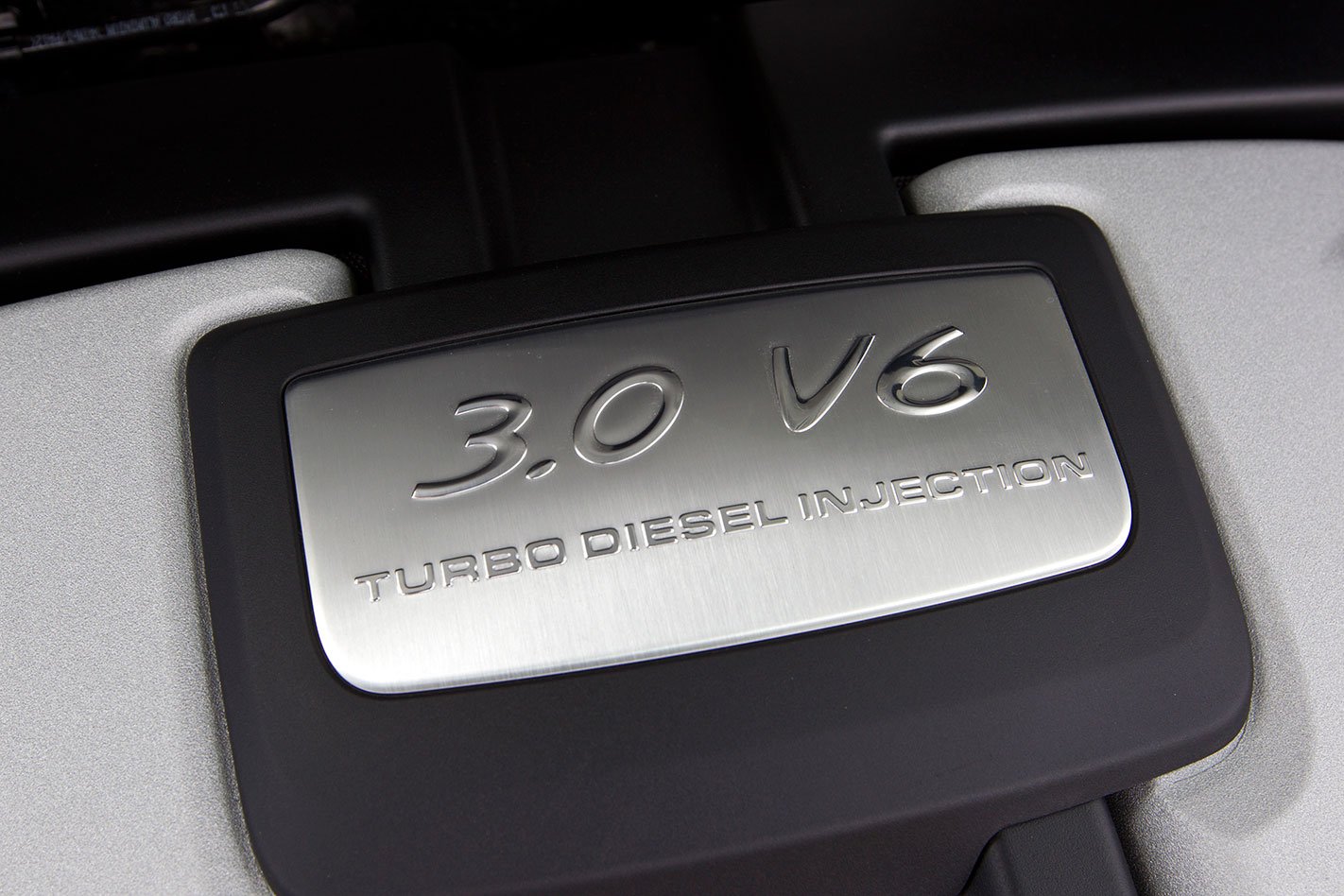
It said the last diesel-engined version of the Macan rolled off the Leipzig production line last week. Porsche first flagged it was weighing up the future of its diesel drivetrains six months ago after first introducing them to the Cayenne almost a decade ago.
Porsche Australia public relations head Chris Jordan said a diesel drivetrain option was “still very popular” with Cayenne buyers here, although more Panamera buyers were opting for the hybrid drivetrain over the diesel one, in line with wider global trends. He said Macan diesel sales were not as strong as for the Cayenne.
Porsche was scooped up in the 2014 Dieselgate scandal after the 3.0-litre turbo-diesel engine it used in the Cayenne was identified among a number of Volkswagen Group’s oil-burning powerplants that included defeat devices that could identify when the engine was being emissions-tested, and produce fewer harmful exhaust fumes.
Porsche is reportedly suing Audi, the Volkswagen Group member that supplied the diesel engines that the sports car and SUV brand used for its diesel-engined models, for €200 million ($A314 million) as it tries to recover the cost of the scandal.
Porsche announced earlier this month that it would tip €6 billion, double what it had previously proposed, into the development of electric and hybrid drivetrains – the so-called “electrmobility” – by 2022, shifting its focus to plug-in hybrid and fully electric vehicles.
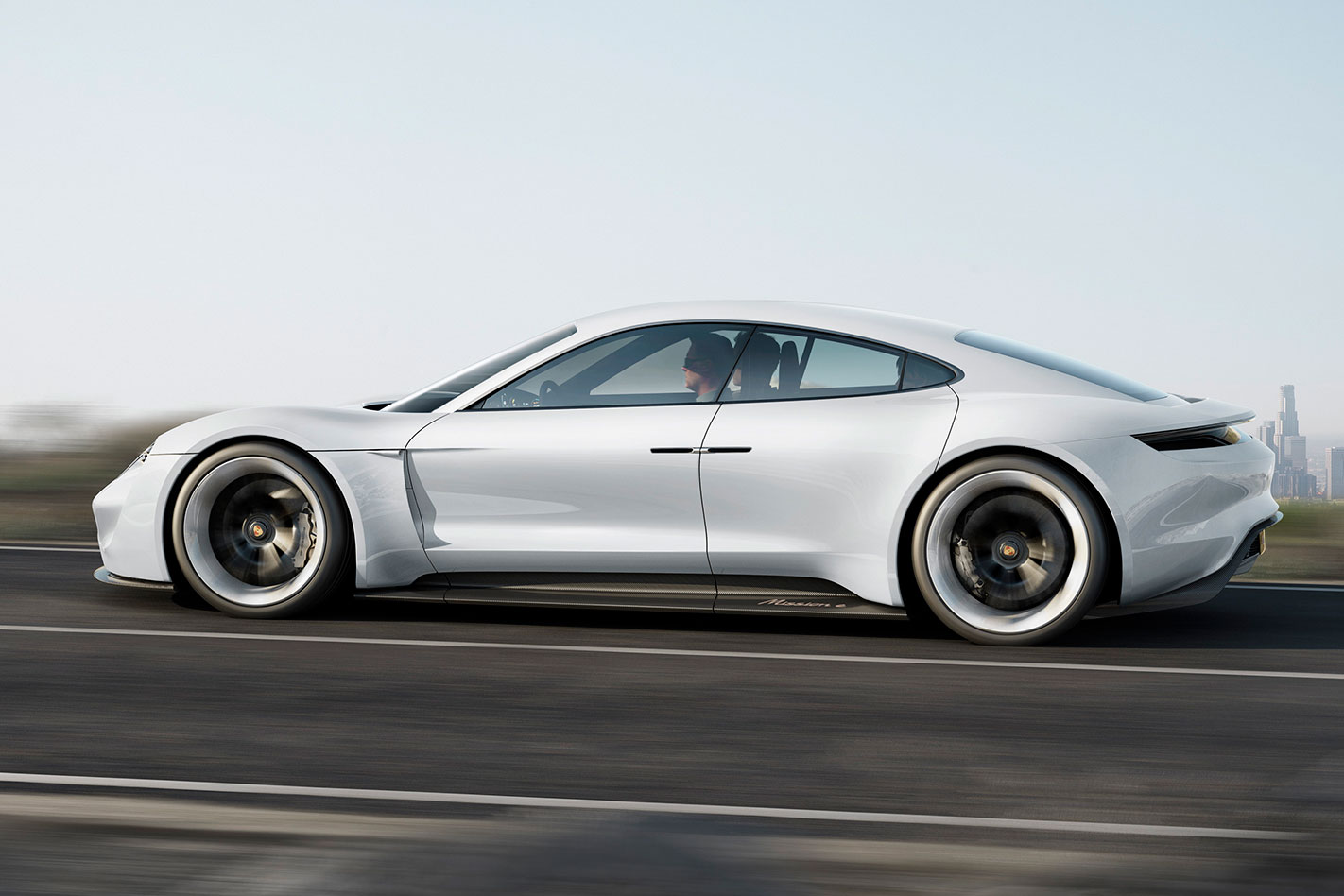
A €500 million slice of the extra investment will help the car maker spin multiple variants and derivatives out of the platform developed for the 450kW Mission E electric concept car, elements of which are believed to be built into the 992-generation 911 coupe.
Another €100 million has been set aside for “electrification and hybridisation of the existing product range”. The brand currently only has hybrid versions of the Cayenne SUV and Panamera grand tourer, which includes the flagship V8-engined, 500kW Panamera Turbo S E-Hybrid.
PCOTY 2018 lacked any mega-buck super exotics, but the strength of the field is perfectly illustrated by the eighth placing of the Alfa Romeo Giulia QV.
In the tightly packed midfield, a handful of points could make a significant difference to the final results – another four would’ve vaulted the Giulia to sixth. Nonetheless, a bottom-half finish wasn’t what we expected of Alfa’s new poster child, pegged pre-event as a possible podium finisher.
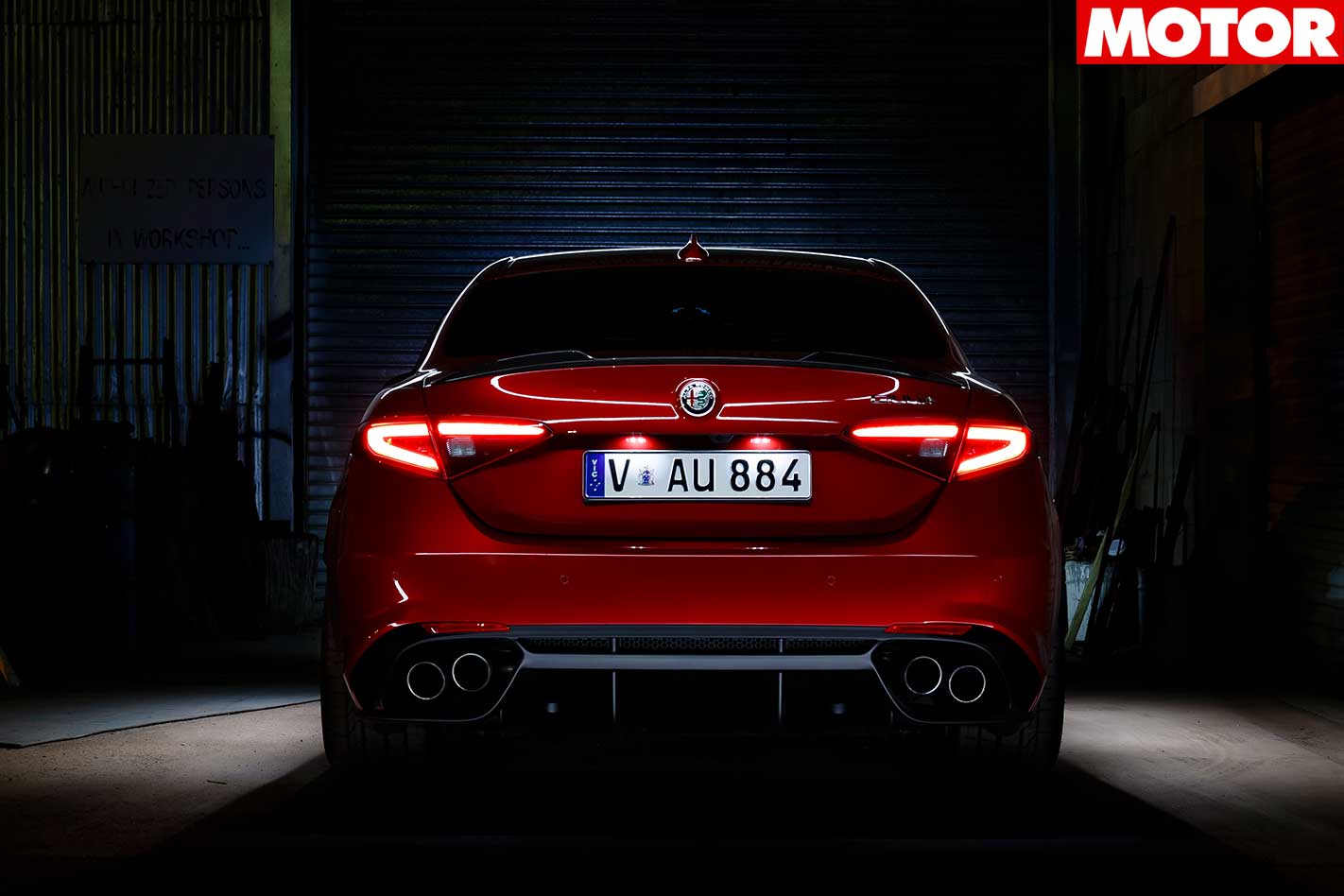
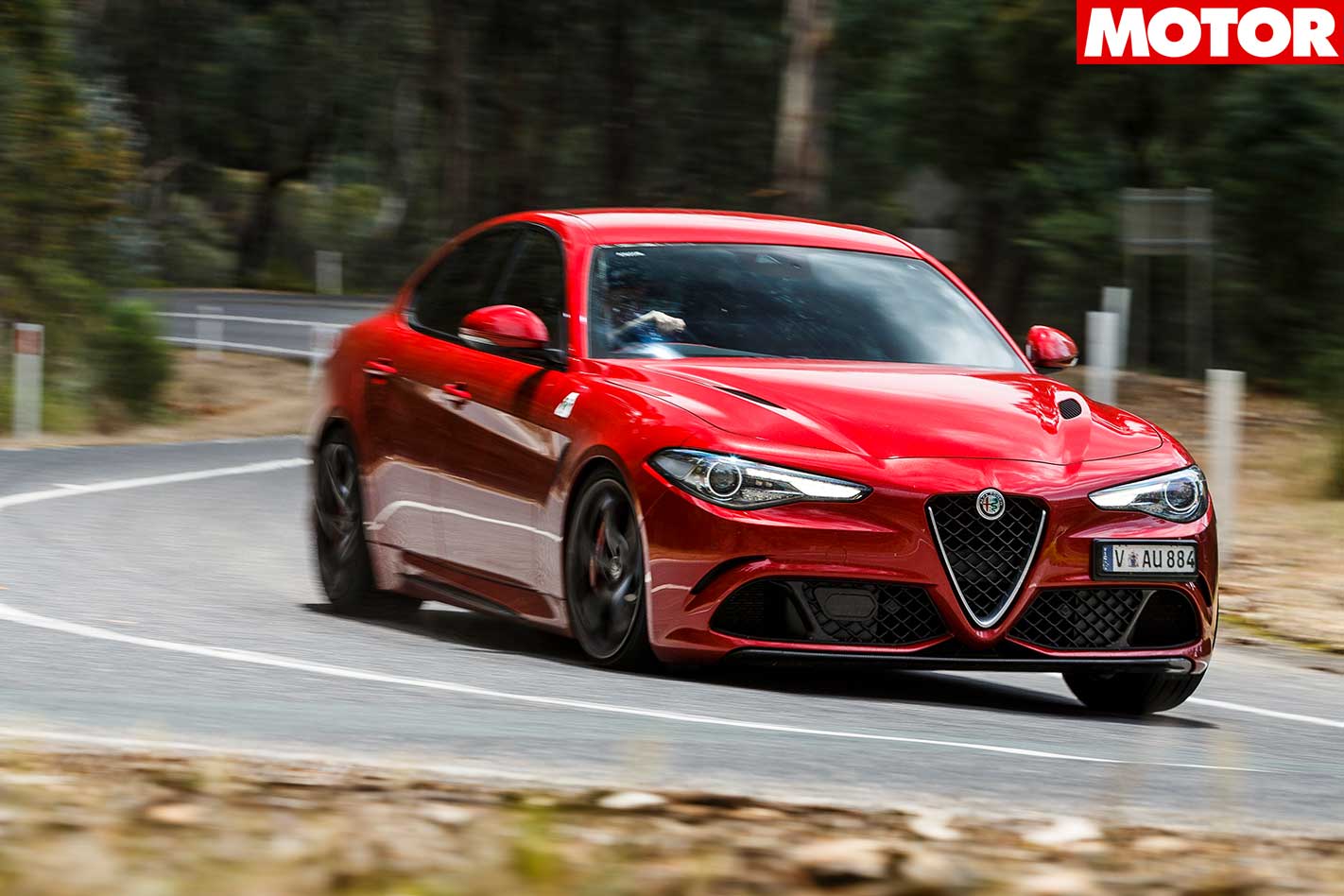
Others were kinder, impressed by the Giulia’s torquey twin-turbo V6, snappy eight-speed auto, chassis balance and, in particular, its outstanding ride. After the E63 S, the Alfa’s keys were the most sought-after on touring sections thanks to its calming refinement, yet with the flick of a switch – or in this case, the turn of a dial – it could turn into a hairy-chested tyre killer.
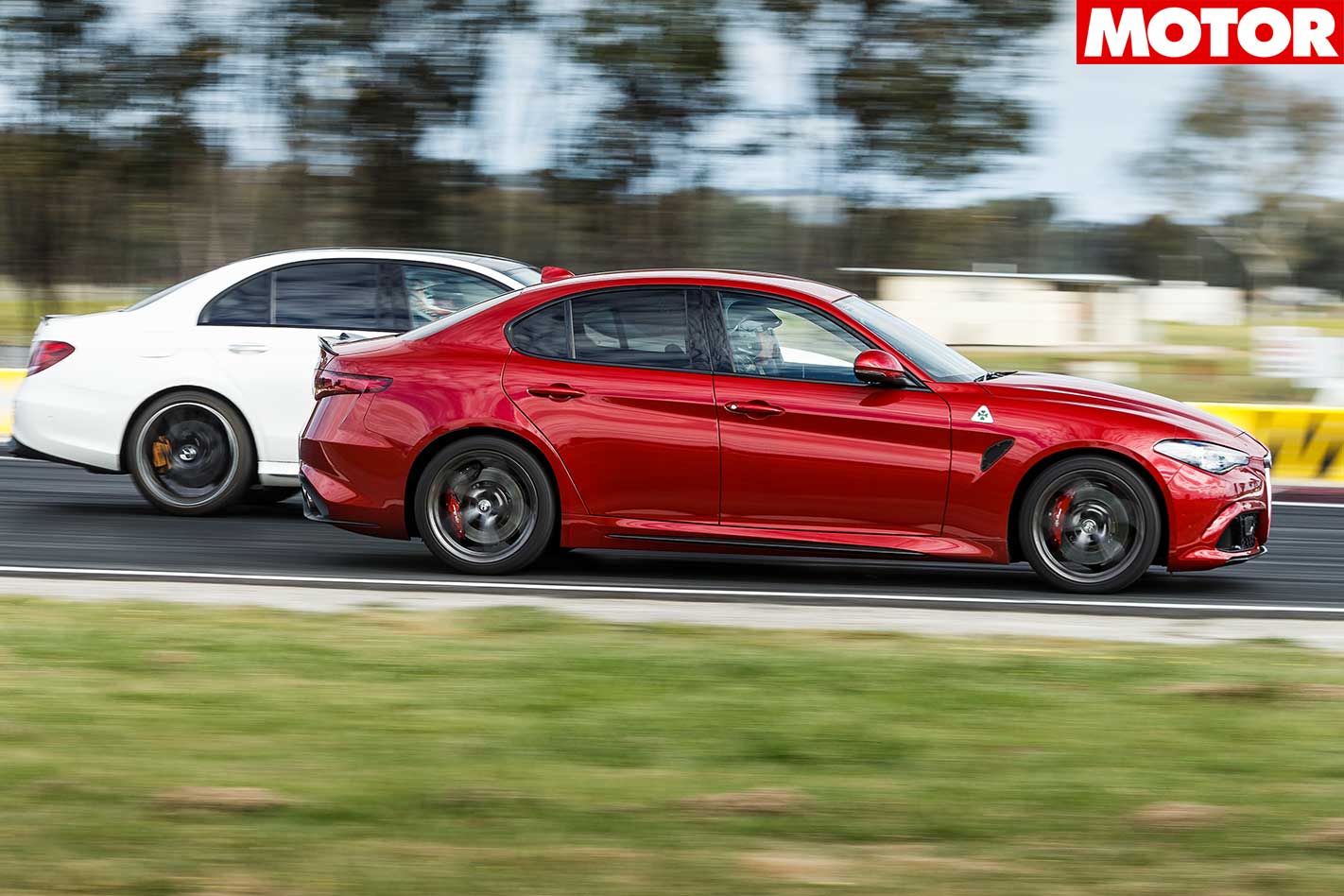
It has enough grip to impress when driven neatly for a lap time, yet more than sufficient grunt to be a rocket in a straight line and bonfire the rear tyres if someone else is paying the bills. It relishes being driven hard and doesn’t wilt after multiple laps, either.
Four-door Ferrari is a cliché and, honestly, a bit of a stretch. However, there’s definitely similar DNA in the suppleness and progressiveness of the Giulia’s chassis, as well as the light, super-quick steering. The ultra-alert response of the front-end is difficult to gel with initially and it’s possible some may never manage it, but you can always be sure the nose will go exactly where you point it.
Universally disliked was the wooden feel to the brake pedal, especially at low speed, while the ABS could be easily triggered over bumps – brake-by-wire might be very clever, but the calibration needs further work. Rougher roads taken at speed also pushed the chassis out of its comfort zone.
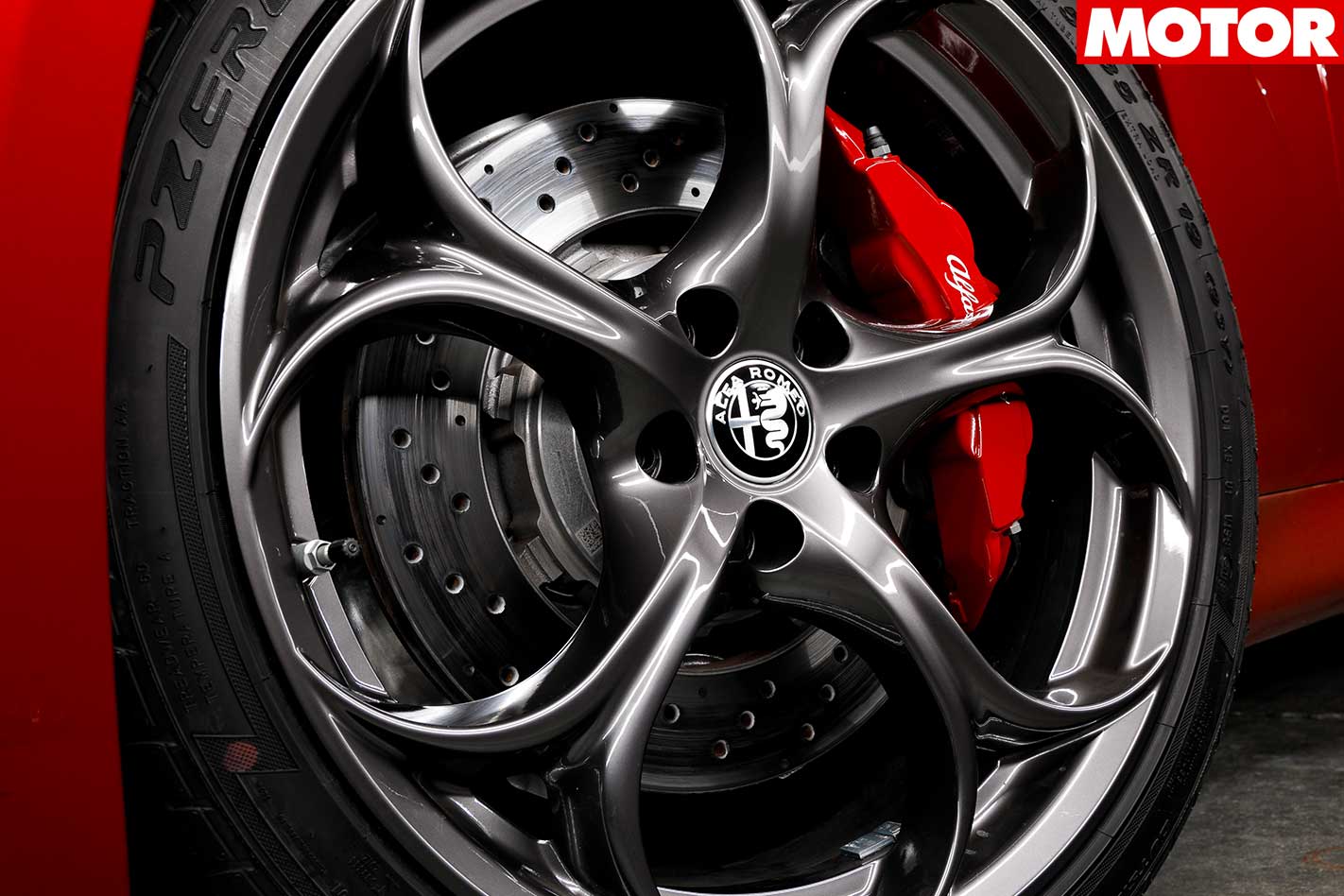
The Alfa is a top-notch performance sedan, one definitely worth investigating if you’re in the C63/M3 market, but every car ahead of it blew our socks off in one way or another and the Giulia simply didn’t. A few choice tweaks could elevate it to greatness.
2018 ALFA ROMEO GIULIA QV SPECS: Body: 4-door, 5-seat sedan Drive: rear-wheel Engine: 2891cc V6, DOHC, 24v, twin-turbo Bore/Stroke: 86.5 x 82.0mm Compression ratio: 9.3:1 Power: 375kW @ 6500rpm Torque: 600Nm @ 2500rpm Power/Weight: 231kW/tonne Transmission: 8-speed automatic Kerb weight: 1597kg Suspension: double A-arms, coil springs, adaptive dampers, anti-roll bar (f); multi-links, coil springs, adaptive dampers, anti-roll bar (r) Brakes: 390mm ventilated/drilled discs, 6-piston calipers (f); 360mm ventilated/drilled discs, 4-piston calipers (r) Wheels: 19.0 x 8.5-inch (f); 19.0 x 10.0-inch (r) Tyres Sizes: 245/35 ZR19 (f); 285/30 ZR19 (r) Tyres: Pirelli P Zero Corsa Price: $143,900
0-100km/h: 4.31sec (7th) 0-400m: 12.20sec @ 194.96km/h (7th)
Morley – 7th I’d buy the Veloce over the QV. But you can’t argue with the stomp of this thing. So I won’t.
Campbell – 6th Fair weapon on the track. Awesome ride. Good, if not excellent, in almost all areas.
Newman – 7th Takes some getting used to, but hugely entertaining once you’re dialled in.
Robson – 9th Where’s the car I tested at the launch? This feels so different.
Reynolds – 8th Heaps of torque, good with ESP off, but brakes feel odd.
JUDGES’ SCOREBOARD
| u00a0 | Campbell | Morley | Newman | Reynolds | Robson | Total |
| Performance | 8 | 7 | 8 | 7 | 8 | 38 |
| Dynamics | 8 | 7 | 7 | 7 | 6 | 35 |
| Accessibility | 7 | 6 | 7.5 | 8 | 7 | 35.5 |
| Liveability | 8 | 6 | 8 | 7 | 7 | 36 |
| Value | 7 | 6 | 7 | 5 | 7 | 31 |
| X-Factor | 7.5 | 5 | 5 | 5 | 6 | 28.5 |
| Total | 45.5 | 37 | 42.5 | 39 | 40 | 204 |
JUST 17 months after wheeling out its wild and edgy UX Concept at the Paris Motor Show, Lexus has confirmed that it will reveal that car’s production-ready counterpart at next month’s Geneva Motor Show.
A lone teaser image accompanied Lexus’ announcement, showing the UX’s tailgate and rump-spanning tail lamp graphic to good effect. Other details are hard to discern, but a ‘UX 250h’ badge can be clearly seen when brightening the image.
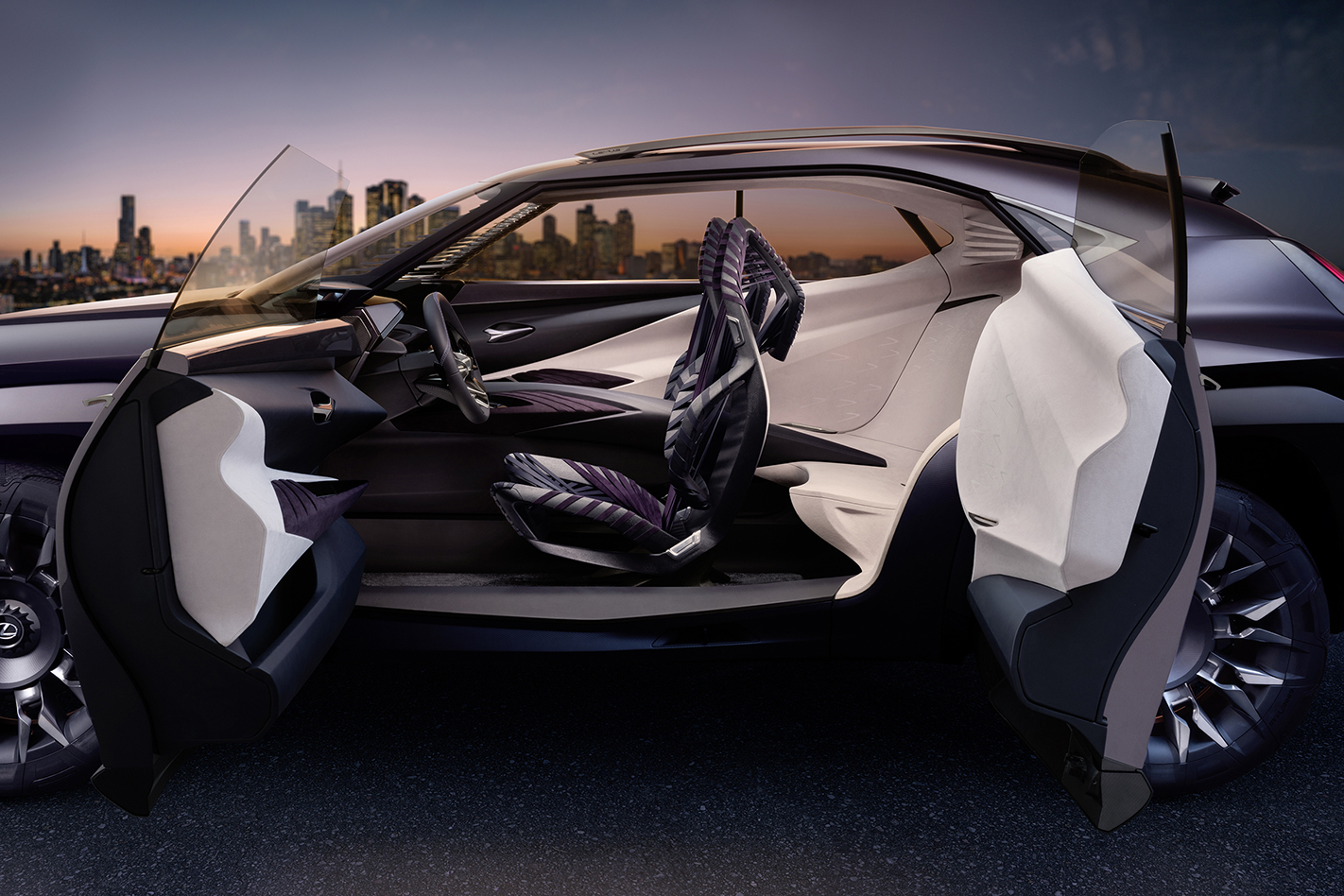
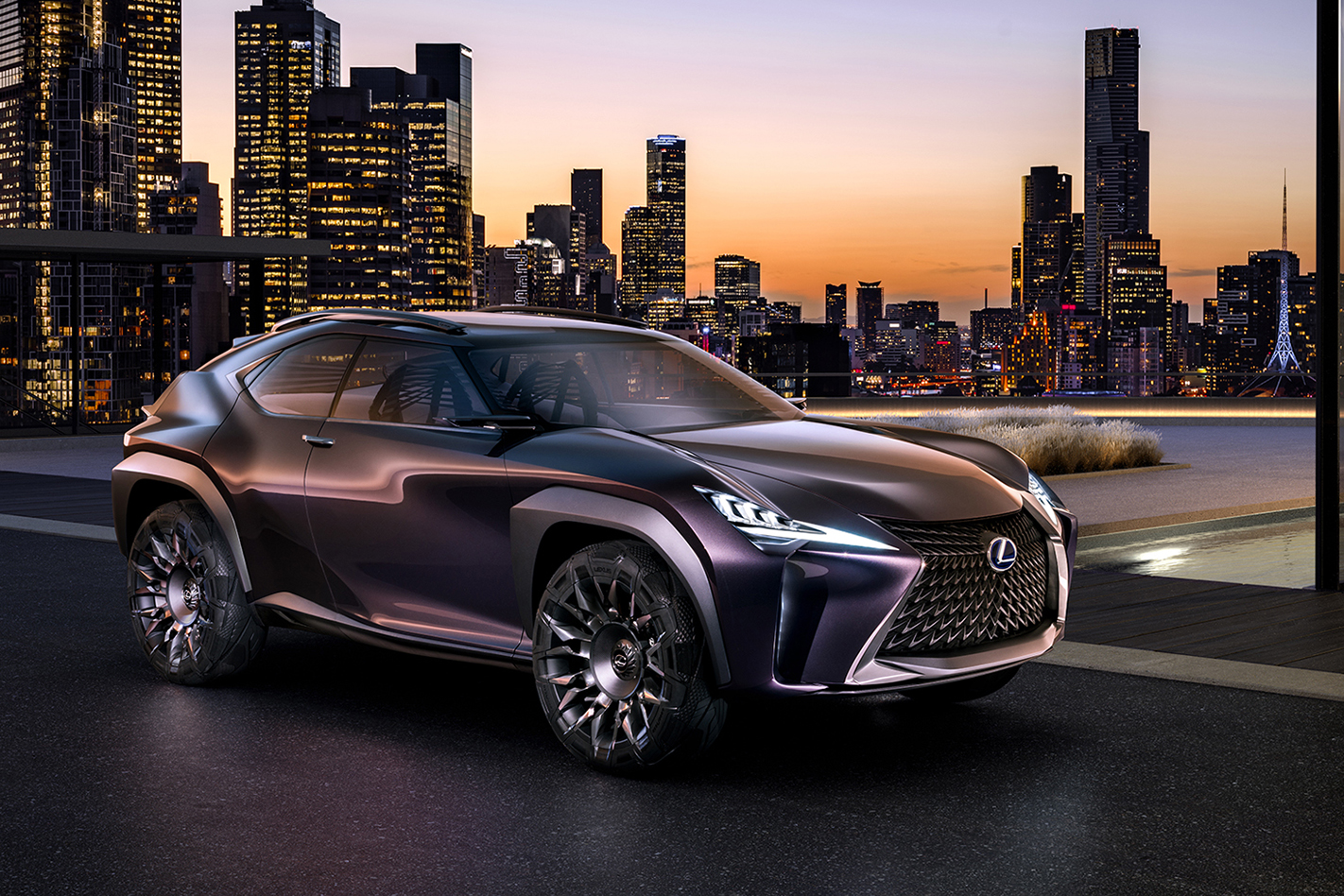
Also visible are pronounced black plastic rear wheelarch flares, which have been toned down from the dramatically pumped items of the UX Concept (below). The concept’s adventurous C-pillar has also adopted a more sober treatment, while the upturned ‘bullhorns’ of the concept car’s tail lights are still there, albeit in a more vestigial form.
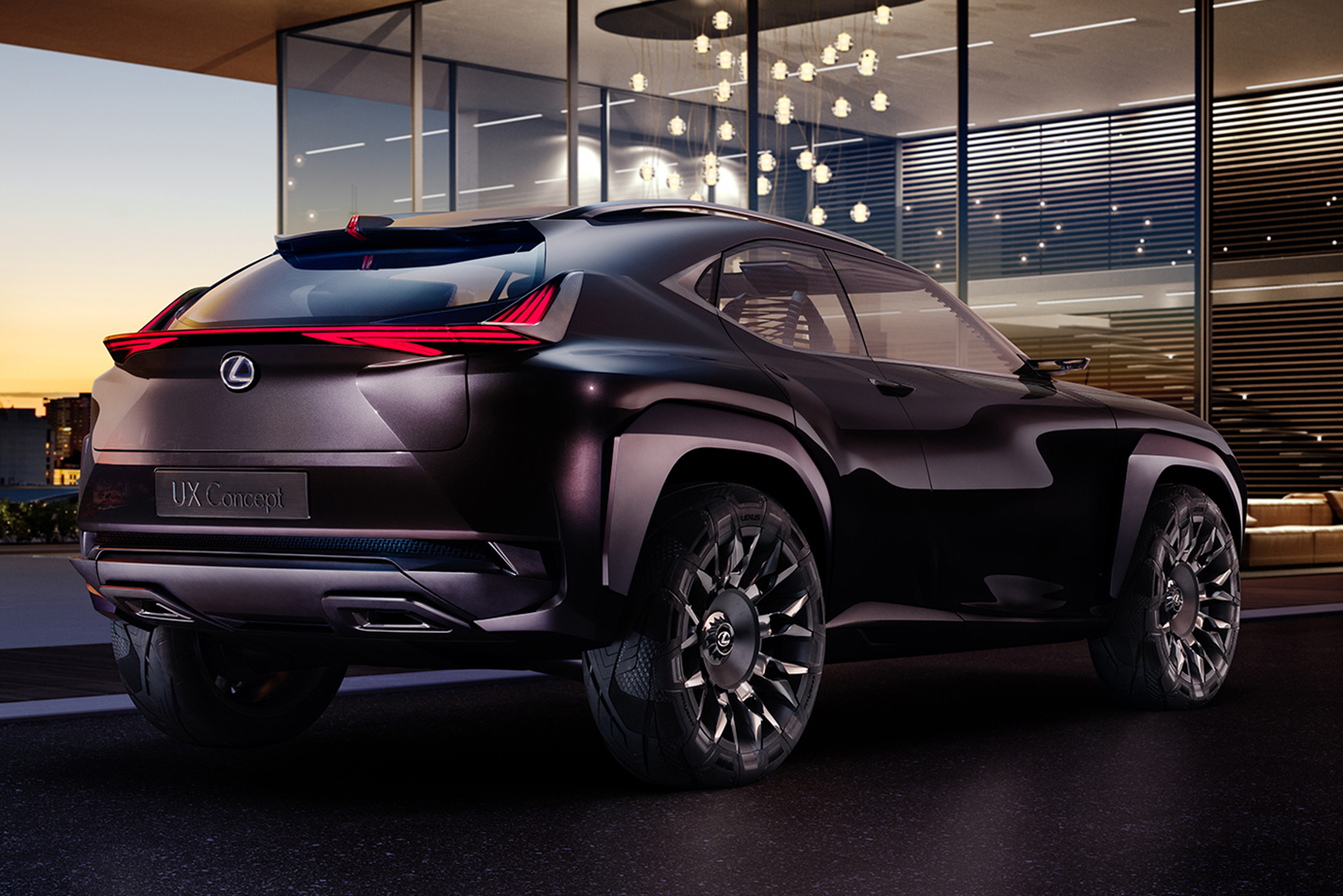
Even so, we can safely assume the concept’s suicide rear doors, enormous and intricate wheels, spiderweb seats and elaborate dashboard won’t make it onto the production car.
“NX and RX have been great,” Hasan said. “Where we go from here is we’d want to expand our lineup. We want to expand our product portfolio. The RX L is a great opportunity to compete in the upper end of the market, but at the same time there’s an obvious need for a product below the NX.”
“[Lexus] product planning is studying the market and we’re seeing good growth, as well as other competitors launching product there, so it’s clear to us that there is a market opportunity.”
Even so, in a presentation to the media outlining Lexus’ 2018 product roadmap for Australia the UX was conspicuously absent. Despite the urgent demand for a compact crossover or SUV for its Aussie showrooms, Lexus may not bring the UX to our shores until 2019.
The Lexus UX will be officially unveiled at Geneva on March 6.
There were a few interesting results after Shannons Late Summer Classic Auction in Melbourne last night.
Most surprising is perhaps the amount of money paid for a first generation 1996 Subaru WRX and a 1992 W20 Toyota MR2.
The Subaru was estimated to pick up between $22,000 and $26,000 due to its low 23,657km odo reading and desirability as an early version of a now legendary car.


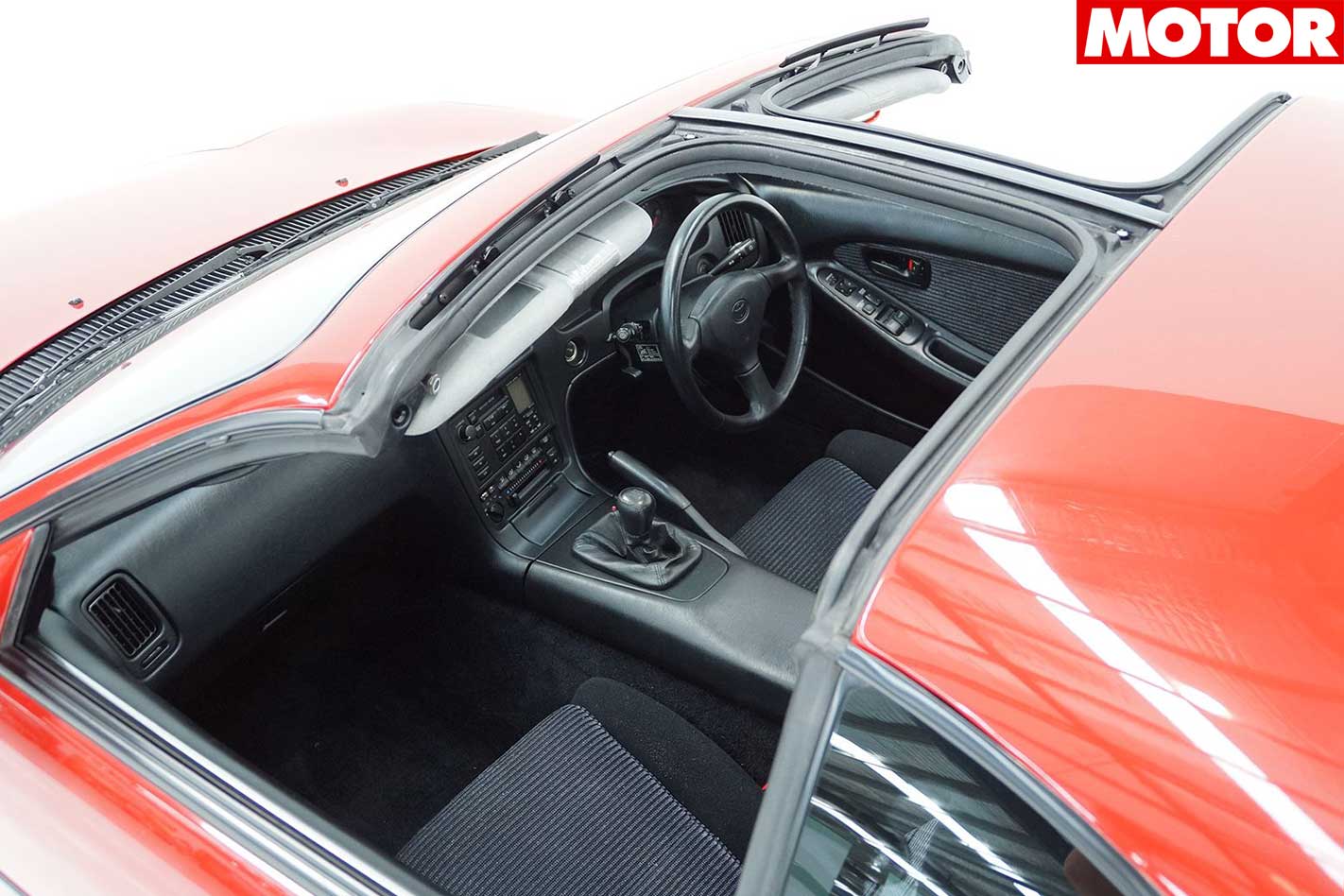
This one was sporting 50,432km on the clock, and its interior looked well-kept for a 26-year-old targa-topped car.
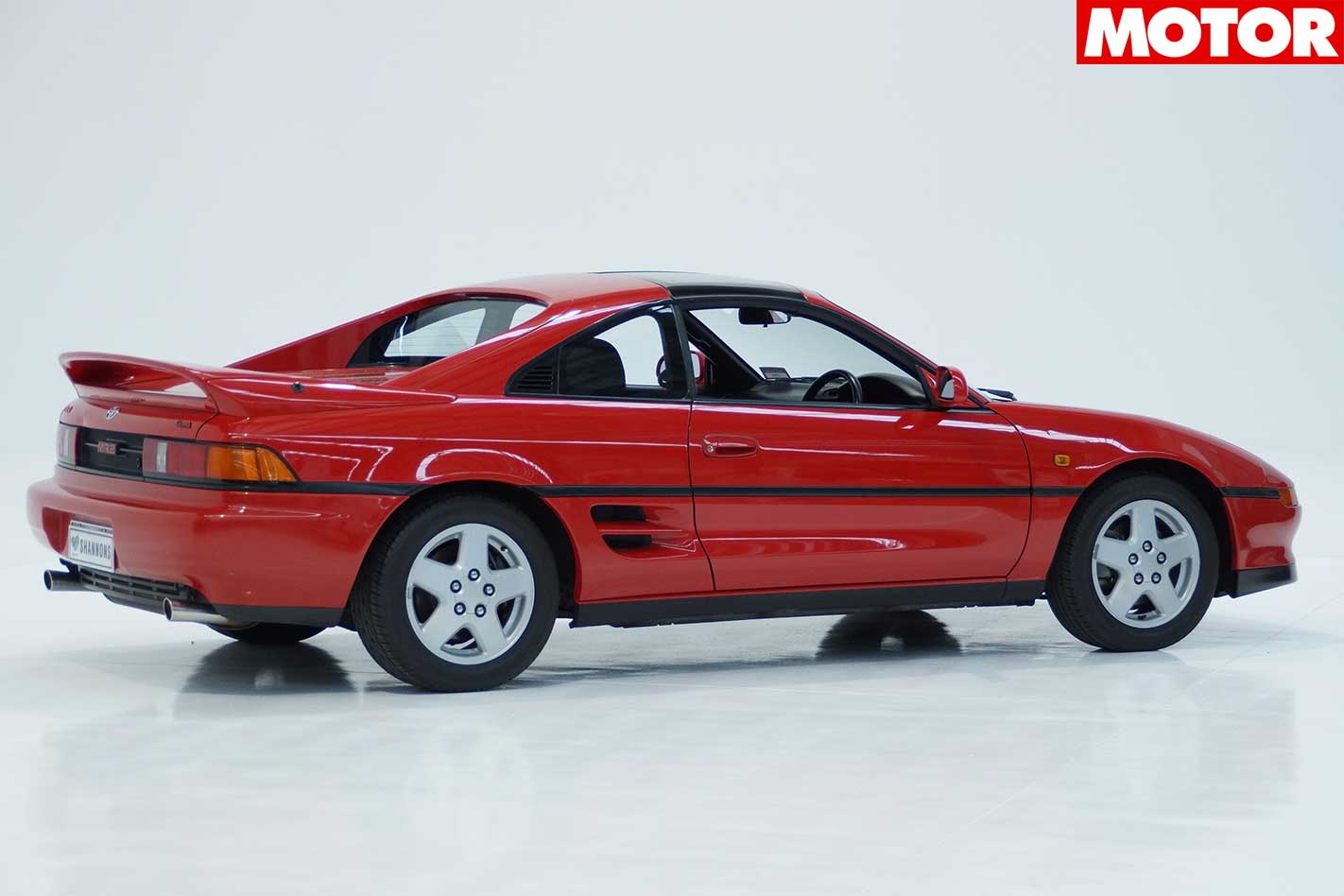
It goes to show that the classics of the ‘90s are quickly picking up value, especially when it’s so rare to find a totally stock example.
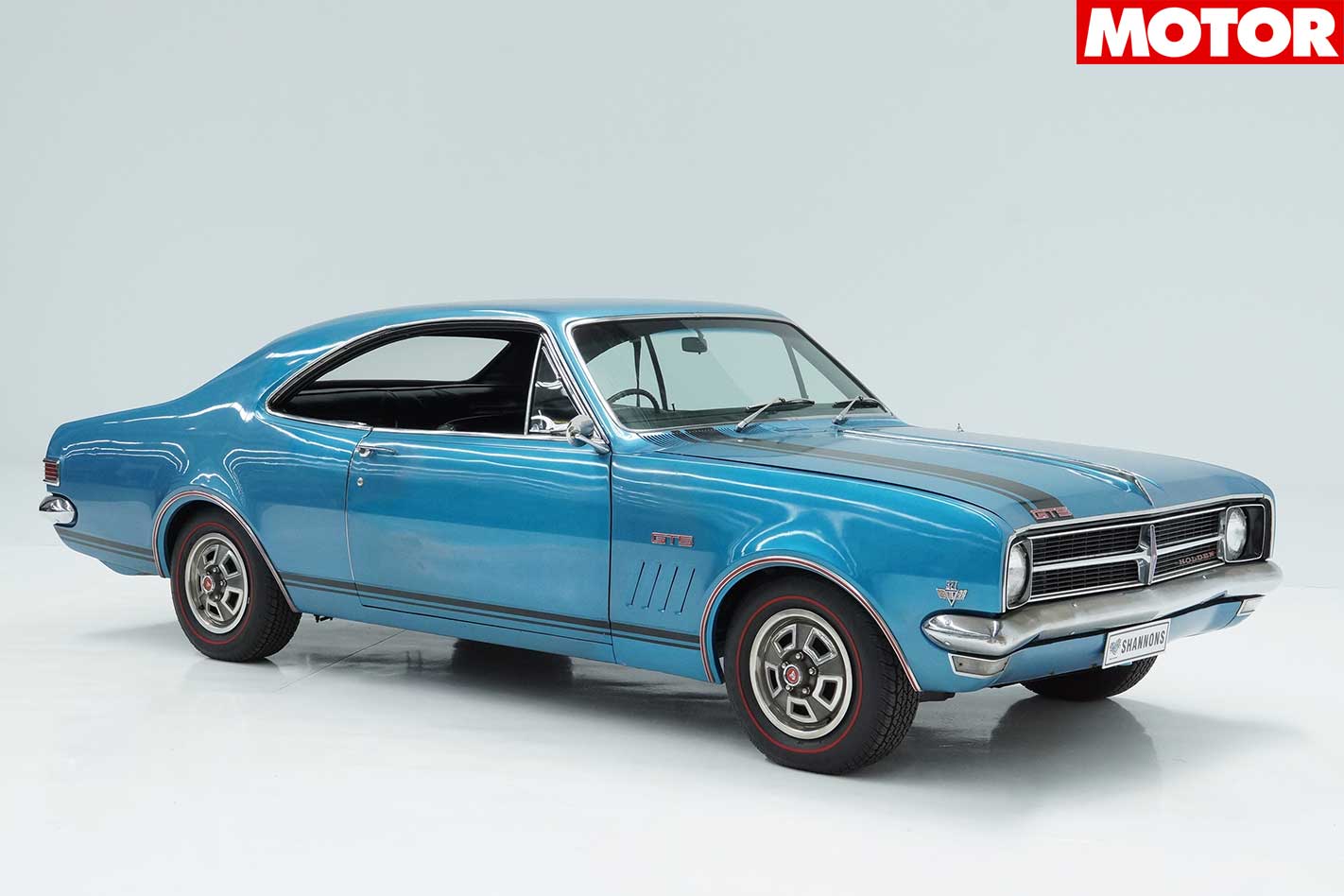
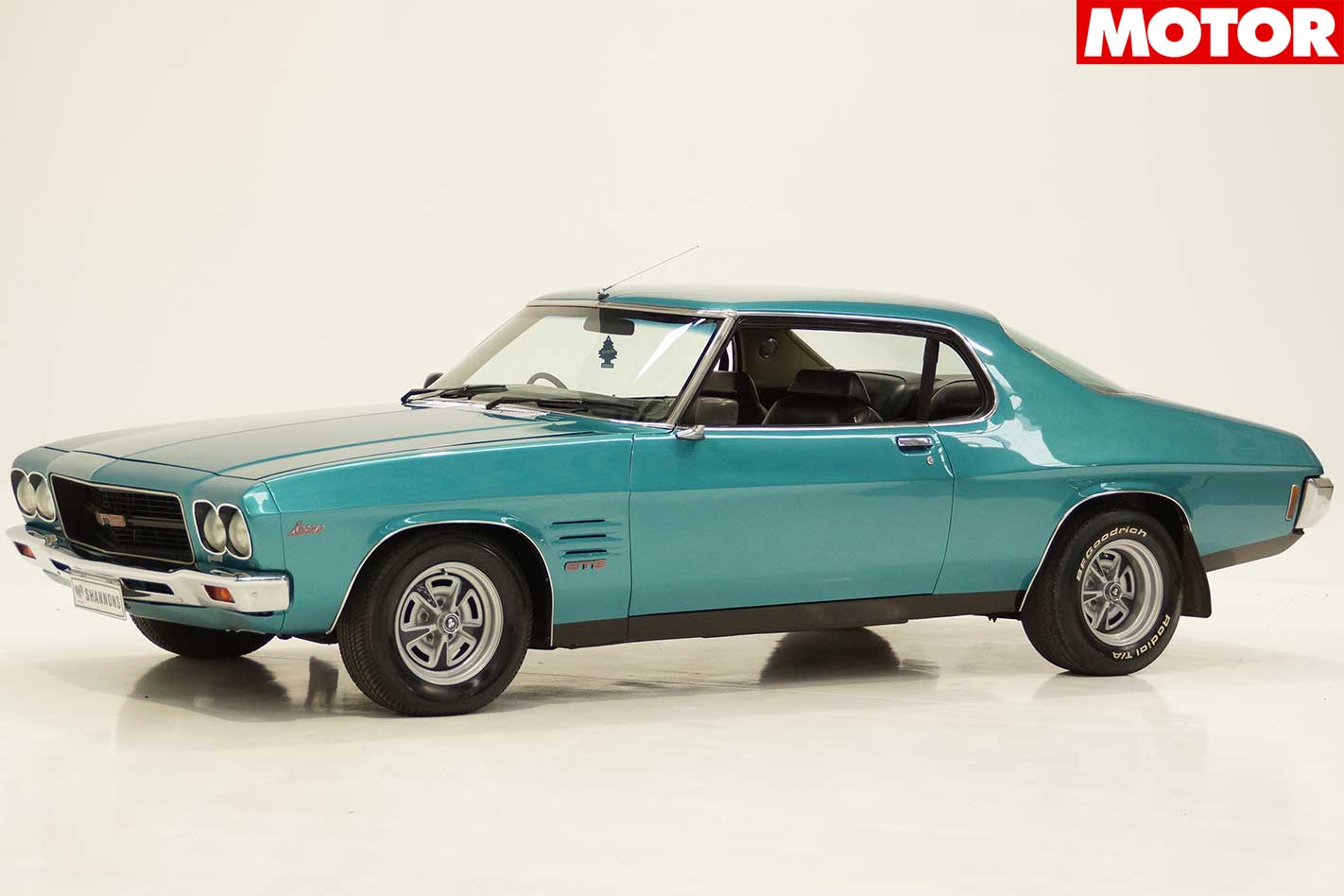
You might be wondering how many Commodore-based HSVs are left in showrooms and warehouses across Australia, considering it’s now been months since Holden shut the factory doors.
Well, there’s good news if you were worried you wouldn’t be able to buy a new HSV.
HSV tells MOTOR it still has “hundreds” of cars left across GTS and GTSR models.
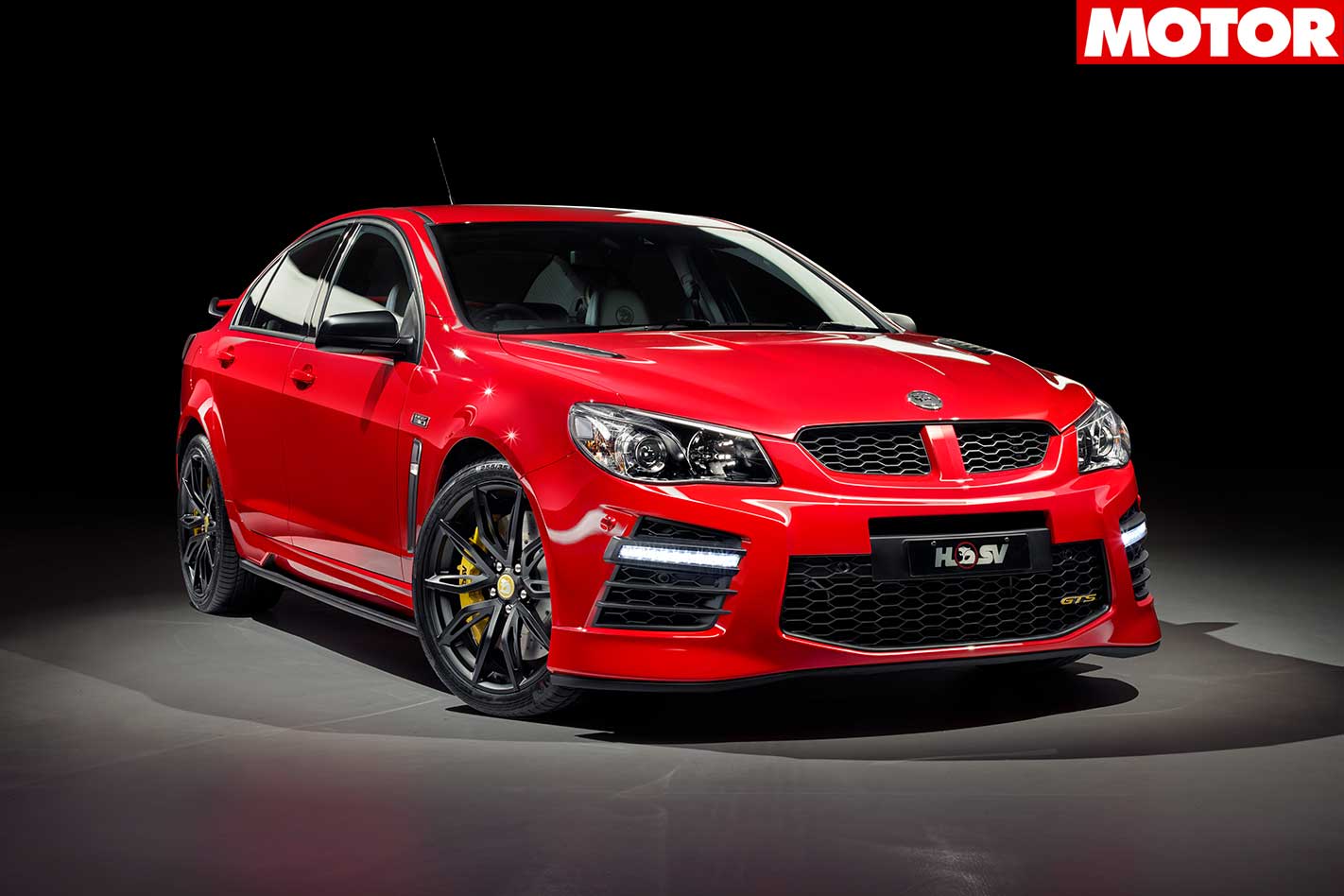
A HSV spokesperson says while there are still a few hundred HSVs yet to be sold, a recent increase in demand means they’ll all likely be gone before 2018 reaches its mid-point.
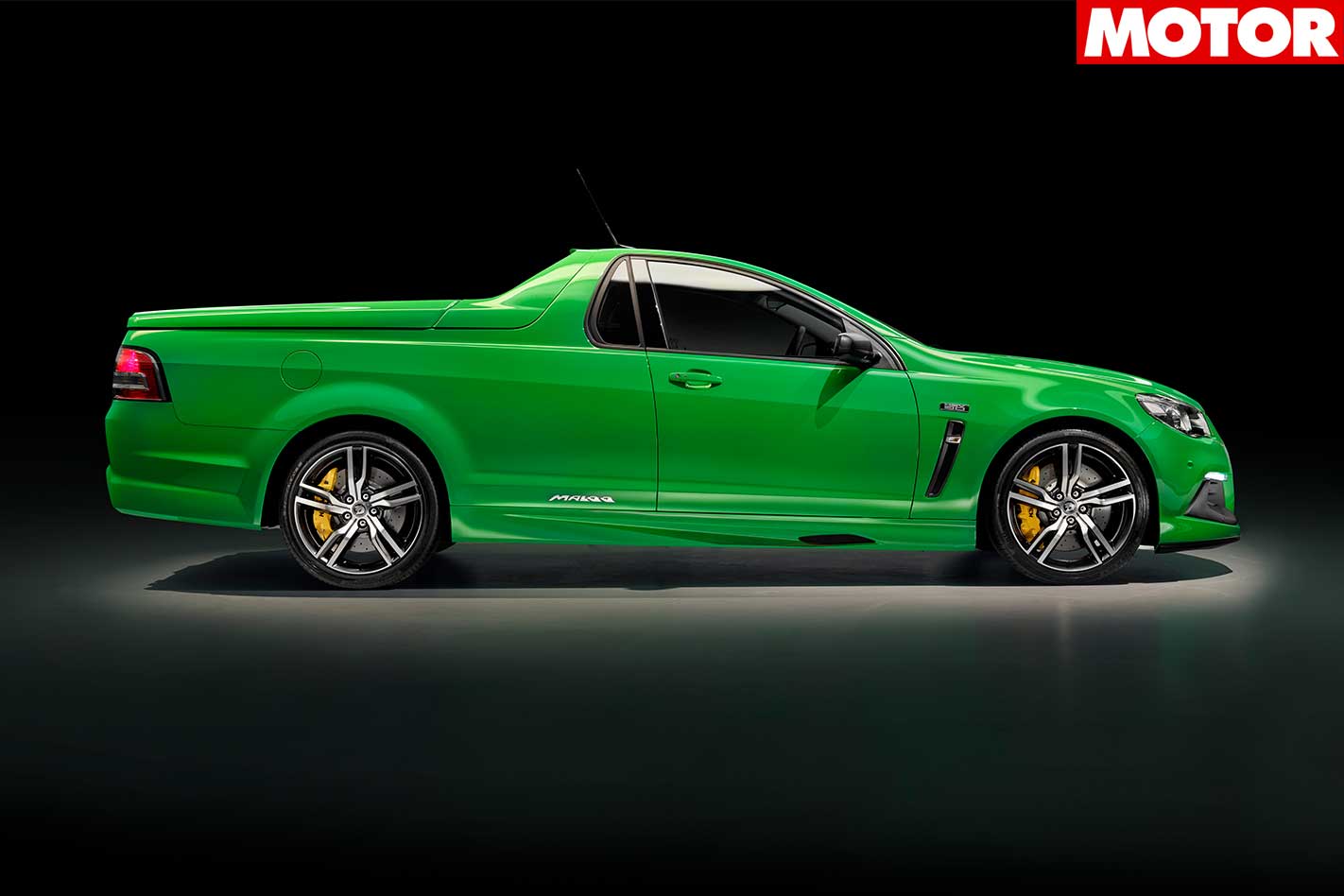
“We began runout in February last year, and saw a massive spike in sales at that point.
“We did also produce about 10-12% more cars through the year in 2017, so there were more vehicles to meet demand.”
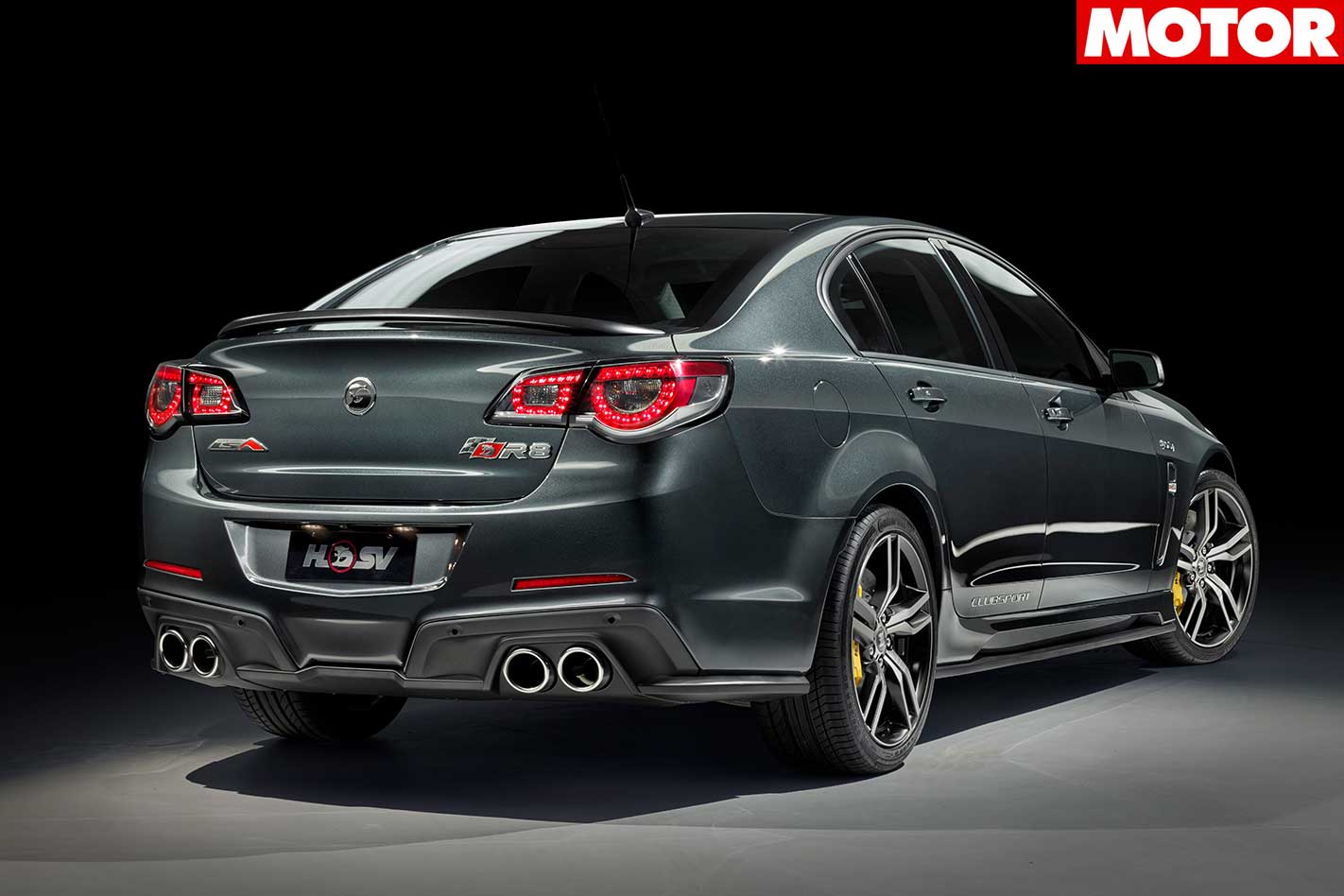
Paull adds that there are no more W1s left either. But we’re confident most avid MOTOR readers are aware of this fact.
His advice for anyone wanting a HSV but still yet to buy?
“Anyone still wanting a Commodore-based HSV will need to get in fast. It’s a piece of Australian automotive history, and there are limited numbers left.”
David Brabham has announced the return of his family name to the motoring world, with the imminent launch of Brabham Automotive.
The brand has already registered a website and started up some social media accounts, but aside from that there’s not much official word on the intention behind the startup.
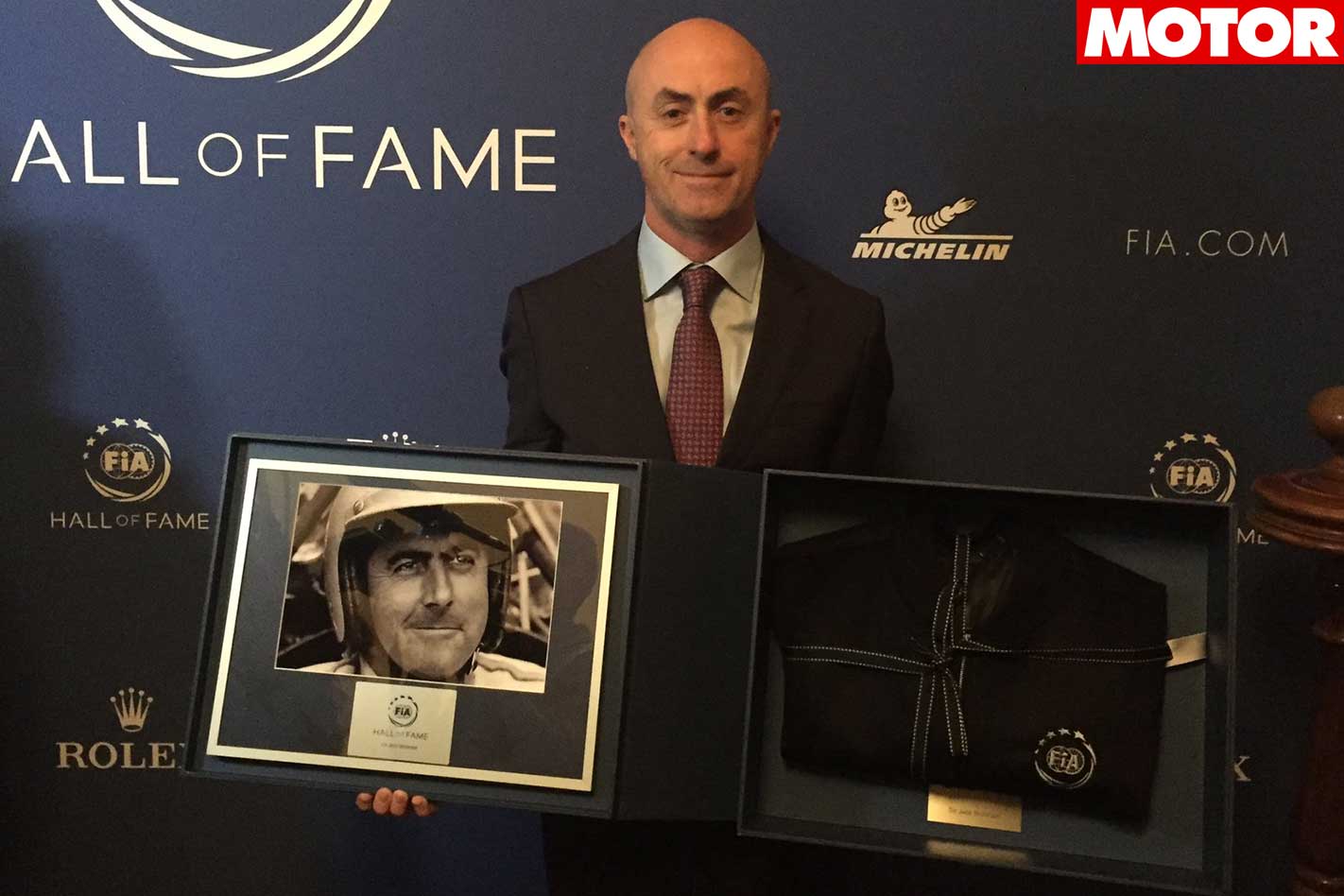
Brabham Automotive released a short statement today, teasing what might be coming. We won’t be surprised to see the company become involved in racing, but it’s unclear what else is on the horizon.
“Led by multiple Le Mans winner, David Brabham, the announcement marks a continuation of the family’s legacy that started with his father, triple Formula 1 World Champion, Sir Jack Brabham,” the statement says.
“A racer like no other, as well as a pioneer, engineer and F1 team owner, Sir Jack Brabham left an indelible mark on the world of motorsport, uniquely being the first and only driver to win an F1 World Championship in a car bearing his name.
“Today’s launch heralds the start of a new chapter in the story of a family synonymous with success.
“Drawing on vast experience from four decades of competing at all levels of global motorsport, David Brabham has combined his skill, passion and enthusiasm to guide this project ahead of its unveiling.”
MOTOR will bring you the latest on Brabham Automotive when we know more about this mysterious venture.
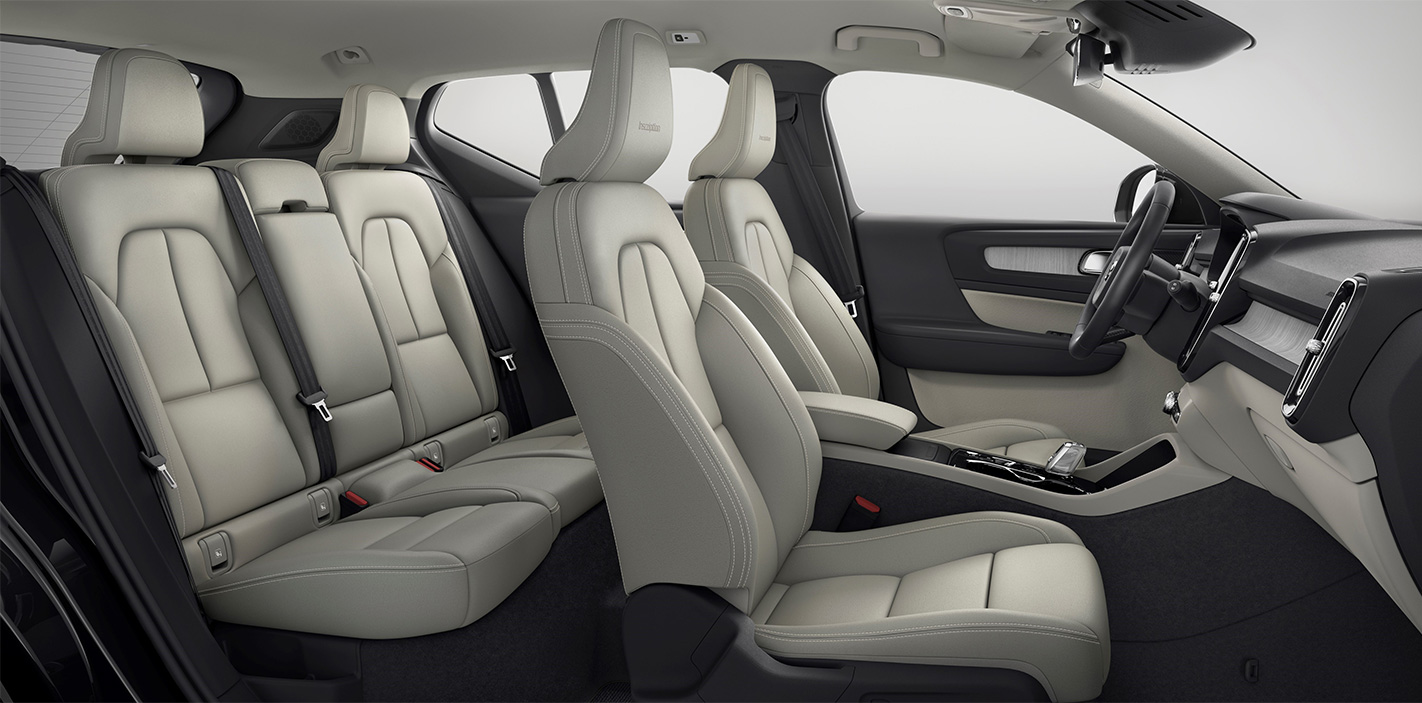
THE Volvo XC40 range will add a three-cylinder petrol engine – the Swedish company’s first in its 91-year history – to its driveline choices as it prepares for a battery-only version of the compact SUV.
However, it’s likely to be a long wait for Volvo’s first pure EV to arrive in Australia. Volvo Cars Australia public relations director Greg Bosnich said as we were considered a long-lead market for the brand, it would be late in 2020 at the earliest that we’d see the electric XC40 arriving on the market.
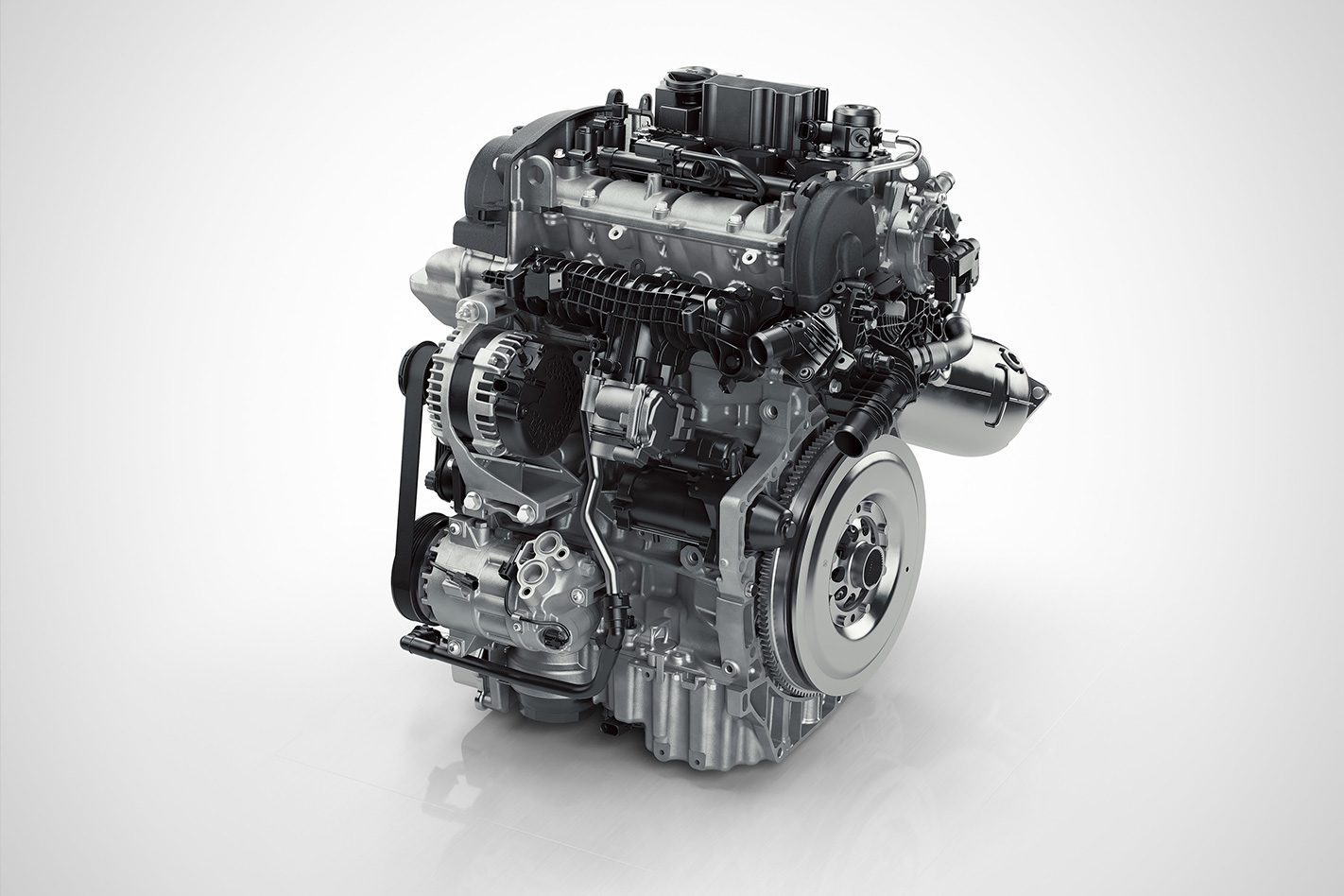
The petrol three-pot – Volvo already has a diesel version – joins Volvo’s growing suite of “Drive-E” powertrains, with the car maker saying it had been “deliberately designed for integration into Twin Engine plug-in hybrid cars”. It means the XC40 family will spawn hybrid versions, with a plug-in hybrid XC40 expected here in about late 2019 at the earliest.
Volvo’s three-cylinder engine is effectively a cut-down version of the turbocharged 2.0-litre four-cylinder unit that Volvo uses across its model ranges in various states of tune. Volvo said the engine would be available with either a six-speed manual transmission, with an eight-speed automatic transmission tuned for the small triple joining the range “next year”.

The XC40 is due to launch in Australia in a few months’ time. Launch engines are expected to be a 185kW “T5” turbocharged 2.0-litre petrol, and a 140kW “D4” turbocharged 2.0-litre diesel producing 140kW. Both will use an eight-speed automatic transmission, and send drive to all four wheels.
The Volvo XC40 is visually very similar to the Swedish car maker’s 40.1 Concept, unveiled in 2016. The car is built on Volvo’s all-new Compact Modular Architecture platform that will sit under all the future small cars that will evolve from the brand.
Volvo’s newly created performance sub-brand, Polestar, is also working on an all-electric sedan called the Polestar 2 that it will add to its showroom in about 2020 before potentially being earmarked for an Australian launch – again, if it is approved for right-hand drive. The Polestar 1, a $200,000 450kW/1000Nm four-seat performance coupe featuring a 2.0-litre petrol engine and two electric motors due next year, won’t be made in right-hand drive. You also won’t be able to buy it; Volvo plans on leasing them to customers.
Volvo is expected to pull the covers off the Volvo V60, a wagon version of the S60 sedan, at next month’s Geneva motor show.
NISSAN’S Roadster refuses to age aesthetically, but time’s catching up on the mechanicals.
WHAT IS IT?
Familiar, if nothing else. For 2018, Nissan’s venerable sports car has been updated with a light exterior refresh, but the same mechanicals that have been powering the good-looking two-seater convertible for almost a decade remain unchanged.

The updates apply to both coupe and convertible but we are focusing on the rag-top Roadster, which is priced from $60,990 or $63,490 for the auto.
WHY WE’RE TESTING IT
Despite a run that is approaching 10 years, Nissan continues to find homes for the 370Z. Over the course of its life, the Zed has been given a number of updates, but it’s still essentially the same car under its pretty flanks.
We’re boarding the Roadster for a refresher course in Nissan 370Z top-down motoring to see if the ageing recipe can continue to offer a competitive option in the affordable rear-drive sports car arena, with a car that’s now more affordable than ever.
MAIN RIVALS
Ford Mustang, BMW 2 Series Convertible
THE WHEELS VERDICT
It might be long in the tooth, but the popularity and relevance of Nissan’s convertible is aided by a lack of competitors in a niche, sparsely populated segment. Its styling seems like it will never tarnish and it now carriers a sticker price that has never looked so compelling. If you’re not a Mustang kind of person then there’s not much else with rear-drive, two doors and more than four cylinders.
PLUS: Looks that refuse to date; involving dynamics; sharp price MINUS: Fussy steering; aged interior; engine unhappy to rev
THE WHEELS REVIEW
IT’S not fair to assume something isn’t competitive simply because it is old. You need only look to surfer Kelly Slater who still takes home trophies at 46 years of age, or perhaps super veteran Australian drag racer Gary Phillips, who continues to succeed on the strip despite almost 50 seasons in the game.
History is littered with examples of the opposite, and how age eventually gets the better of us and things. So where does the Nissan 370Z fit into that theory?
It’s been on offer in essentially the same form since 2009 but despite knocking on the decade door, it has been given another light update. Keen Z fans will notice a different 19-inch wheel design, blacked-out rear fascia, smoked front and rear light clusters – pinched from its more serious Nismo sibling – and that colour, Cherry Red, replaces Bordeaux in the paint palette.

With no mechanical changes for this year, the 370Z has to do battle with an ageing drivetrain and dated interior but its competitiveness comes down to value. That’s what we are here to explore.
In a segment that trades so predominantly on looks, the Nissan’s exterior and aesthetic appeal plays a huge role in its perceived value, but its styling is also arguably its strongest attribute. Quite how the 370Z still looks so good for its age is a mystery, and a testament to good design.
Crack its top open and the Roadster looks even better. The classic matte black fabric roof contrasting with Cherry Red paint is classy, but when it’s stowed, the drop-top Zed has a fantastic stance with big booty not unlike the hump that sits on the Porsche 911 Cabriolet’s tail.

There is a type of customer that will buy a 370Z (or any sports car for that matter) based purely on the way it looks and the way they will look in it. For that customer, the Nissan is as attractive as ever.
But for the other type of buyer – the one that places value in dynamics, performance and interior design, what can the Zed offer?
Let’s start at the front and the 3.7-litre naturally aspirated V6 that drives the rear wheels with 245kW and 363Nm. With those figures you would expect the Roadster to have a decent amount of mumbo, and it does. The convertible carries a whopping 136kg extra mass thanks to the roof mechanism and extra chassis stiffening metalwork, but still manages to be brisk off the line with plenty left for overtaking.
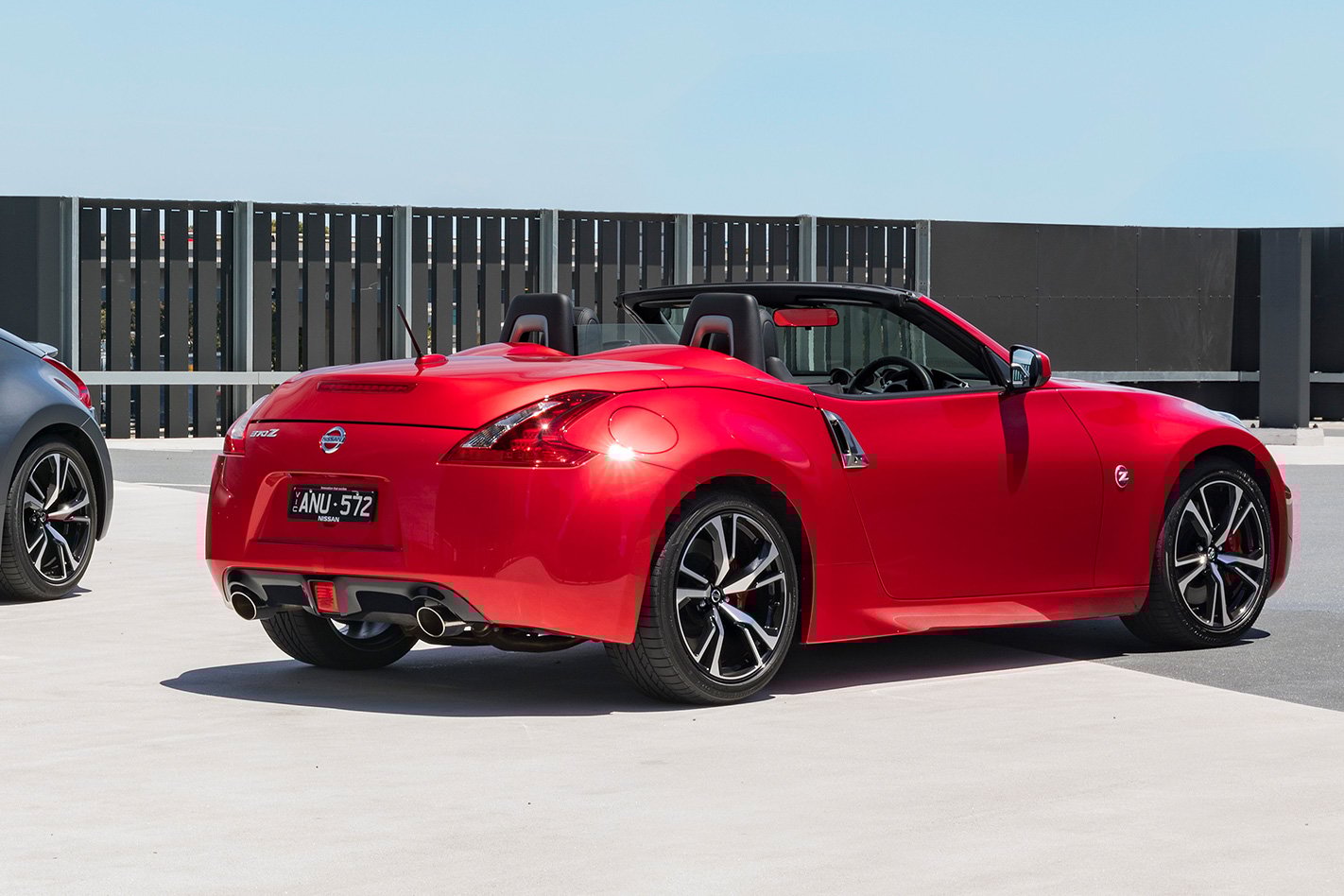
On the back of the V6, a seven-speed transmission sends power to the rear axle via a carbonfibre propshaft and has a certain amount of character in its operation. Its split personality is not always predictable though, and some gear shifts are dealt with smoothly and with sophistication, while others are slammed heavily into place as if the gearbox thinks you’re hunting lap times.
Take matters into your own hands and grab a paddle shifter and you might be surprised at the efficacy of the transmission. For a unit as matured as this, cog-swaps are surprisingly fast and delivered with a satisfying urgency.
There’s more good news when it comes to the chassis. While Roadster owners pay a significant weight penalty over the coupe, the extra chassis stiffening work is very effective.

Minimal to no body roll is aided by a stiff suspension set-up that is firm but liveable – we refer back to the Nismo if you want an example of that.
Only the steering lets the handling down a little with a fussy tendency to seek out imperfections in the road and tug the wheel away from the dead ahead line, but is then light and excessively assisted when in turns.
A decent driving position, albeit one without steering reach adjustment, situates the occupants deep in the cabin and adds a feeling of immersion in the Nissan, rather than the sensation of being perched on top of a toy-sized cabrio. We’re looking at you, Mazda MX-5.
A firm brake pedal with lots of capacity for hauling up all 1618kg of kerb weight adds to a more driver-focused package.
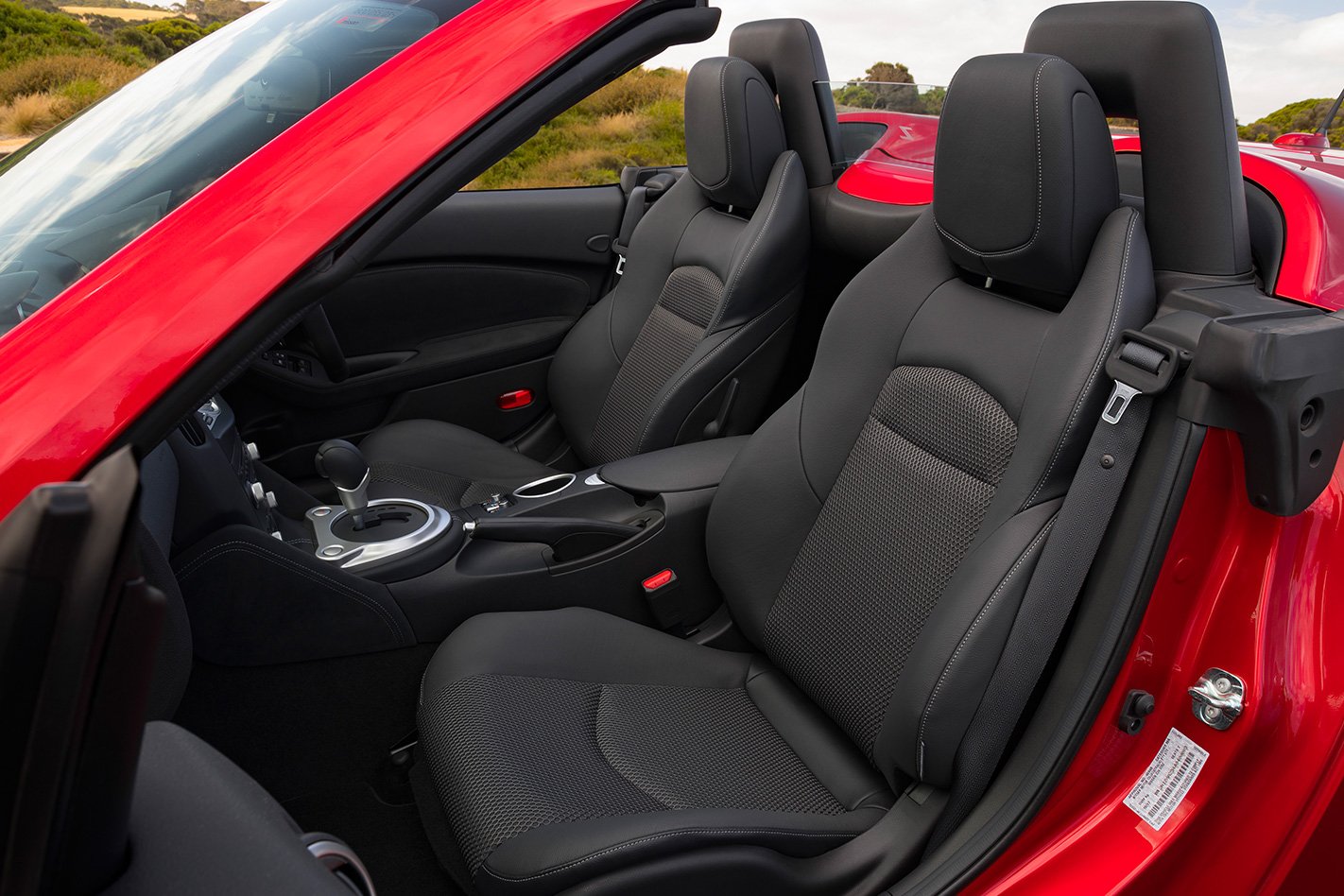
It’s becoming increasingly hard to find a handbrake lever in new cars today and the heated and cooled switches look a little added as an afterthought – largely because they are – but in both cases the functionality is great. Flicking the little dial one way for three cool levels or the other way for a trio of heat settings makes so much sense.
We also like the three dash-top gauges that house almost superfluous information that most drivers won’t use (except the digital clock in the right pod), but the romantic notion somehow works in a driver’s car.
Yes, the Nissan 370Z Roadster might be showing its age in its drivetrain and interior, but that undeniable vintage is offset by a package that is quick, fun to steer and, above all else, lovely to behold. With its sharpened pricing the venerable Zed is still holding its own in an unforgiving market, if you can ignore its flaws.
SPECS
Model: Nissan 370Z Roadster Engine: 3696cc V6, dohc, 24v Max power: 245kW @ 7000rpm Max torque: 363Nm @ 5200rpm Transmission: Seven-speed auto Weight: 1618kg Fuel economy: 11.2L/100km 0-100km/h: 5.7s (estimated) Price: $63,490 On sale: Now
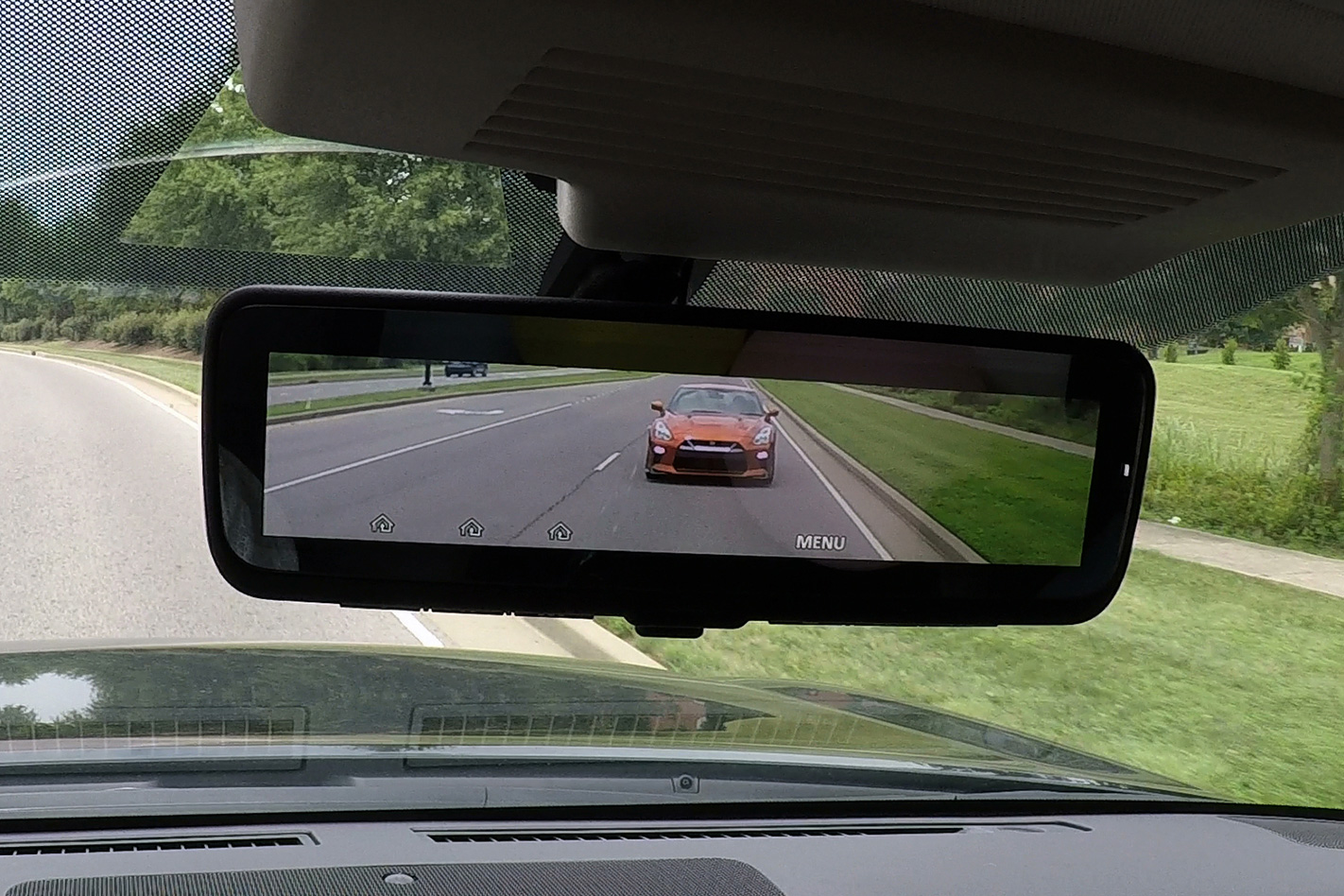
CLEVER driver-assist technology comes to the Nissan Patrol including a rear-vision mirror that can see through rear-seat passengers.
WHAT IS IT?
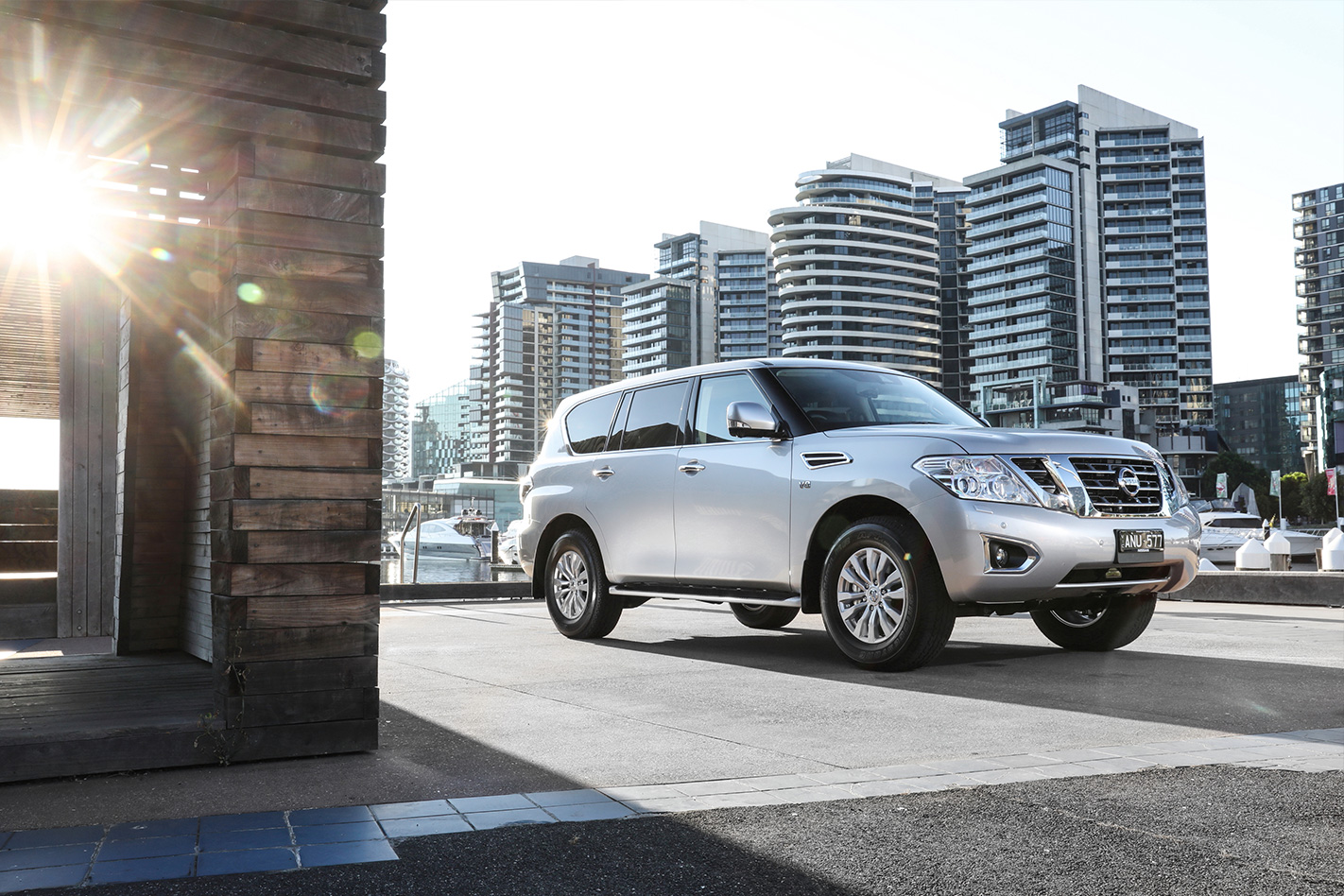
Nissan’s four-pot diesel-only Y61 Patrol is dead, leaving only the bigger V8 petrol Y62 Patrol on sale. An entry-level Ti costs from $71,990, with the top-spec Ti-L attracting a $88,990 recommended retail sticker.
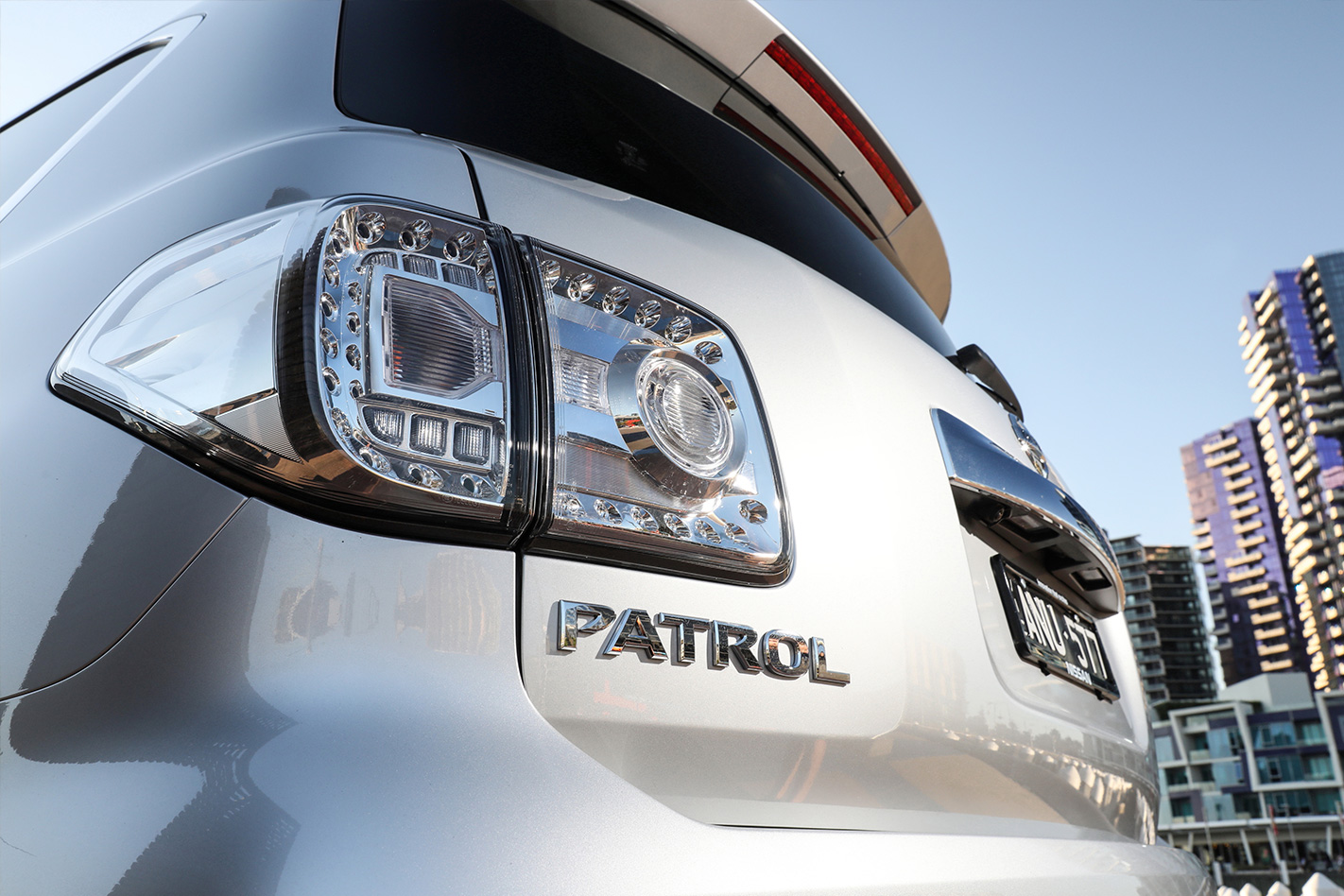
Late last year it had an update that introduced a range of driver assist technologies. One is a rear-vision mirror that can see past the rear seats even if they’re occupied to let a driver know what’s behind the big off-roader.
Toyota LandCruiser 200 Series VX petrol
THE WHEELS VERDICT
Something this big and heavy shouldn’t do the stupid things your right foot asks of it, but the Nissan Patrol does. The driver assist technology is welcome, given this thing’s ability to lift its skirts when needed, and its ability to defy the laws of physics is awe-inspiring.
THE WHEELS REVIEW
A CAMEL was once the default ship of the desert. But camels are unpleasant creatures that bite and smell, and make a noise similar to what you’d expect from a male walrus in the height of mating season. Thankfully, the camel’s role is now taken up by overtly large off-road vehicles, the likes of our subject here, the Nissan Y62 Patrol.
That “Y62” is an important distinction. Sock-tanned off-road enthusiasts Australia-wide are still crying into their campfire-fresh Bedourie-cooked damper rolls at the loss of the GU Patrol, a tough, rugged, diesel-engined workhorse as old as grandpa’s father’s uncle’s axe that was killed off by tightening Australian vehicle emissions standards. For the Y62 has gone soft in comparison, you see.
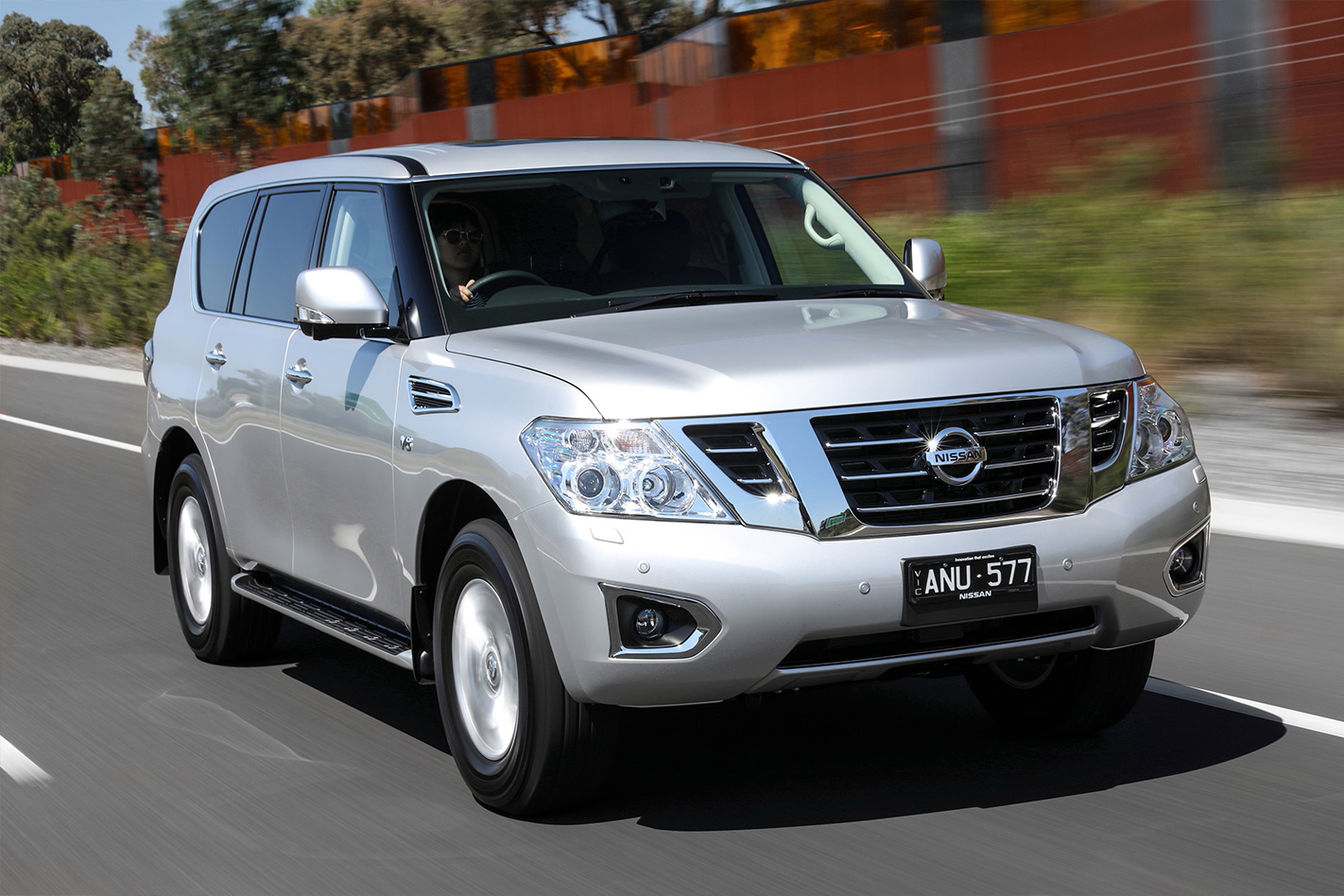
And it will fill the rear-view mirror quite quickly. Under that shovelnose bonnet is a VK56 90-degree 5.6-litre atmo V8 producing 298kW and 560Nm, and connected to a surprisingly short-travel throttle. Flex the right Blundstone and the Patrol will leap from a standing start, a distinctive V8 warble accompanying the surprisingly linear and brisk acceleration that should bring a grin to the maw of many a disciple of displacement. The Patrol is an automatic all-wheel drive with on-demand, push button/twist dial four-wheel-drive, but in default mode most of the torque is biased via the seven-speed automatic down to the rear, with the front axle stepping in when needed. Put a load on – we tried the Patrol with four people on board and towing a catamaran – and at freeway speeds the seven-speed auto will hunt through the gears as it chases the engine’s 4000rpm torque peak. On the freeway the Patrol sat on 15.3L/100km; on the city cycle we saw that soar to 22.4L/100km.
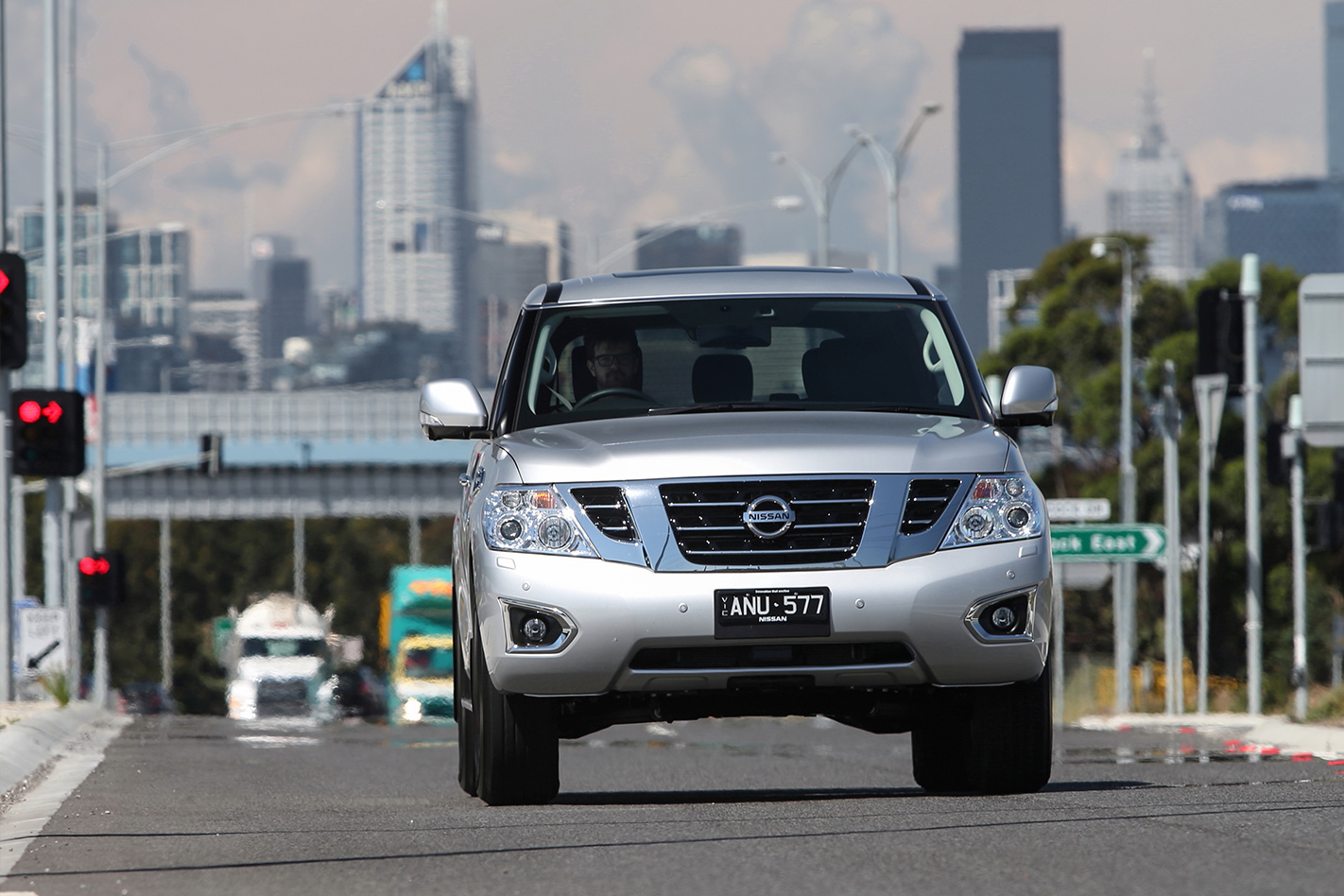
New to the top-spec Patrol are active cruise control, which leaves too big a gap to the car in front, and Intelligent Distance Control that will automatically jam on the brakes if the active cruise control isn’t set and stop you from snotting the new-look grille and foglamp housings on the back of the car in front. They’re a welcome addition, even if you’re perched so high in the driver’s seat – you climb, rather than hop in – that you have a commanding view over the traffic in front, giving switched-on drivers a chance to see what’s happening ahead rather than rely on the electronic nanny.
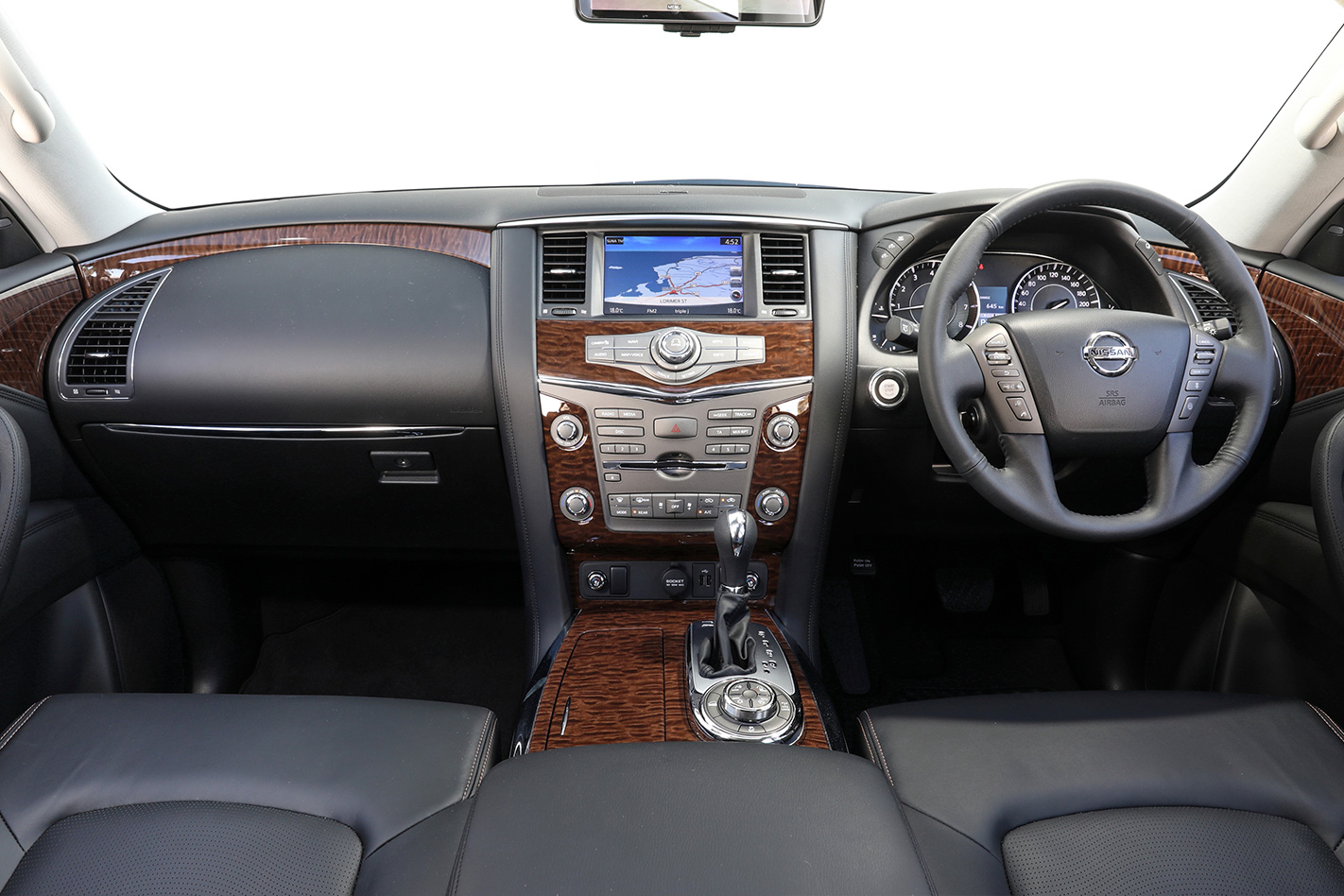
Inside, the Patrol feels wide, not helped by large, flat seats and a skinny-by-comparison centre console that in our test car had a cool box fitted between the front seats that can even be opened from the second row. There are headrest-mounted multimedia screens (they will play audio from a smartphone but not show the picture) for second-row occupants that hook into the DVD player, and room for up to eight adults via a 60:40 split-fold third row that doesn’t lie completely flat when stowed. From the driver’s seat, the small monochrome digital display is limited in function and doesn’t even include a digital speedo.
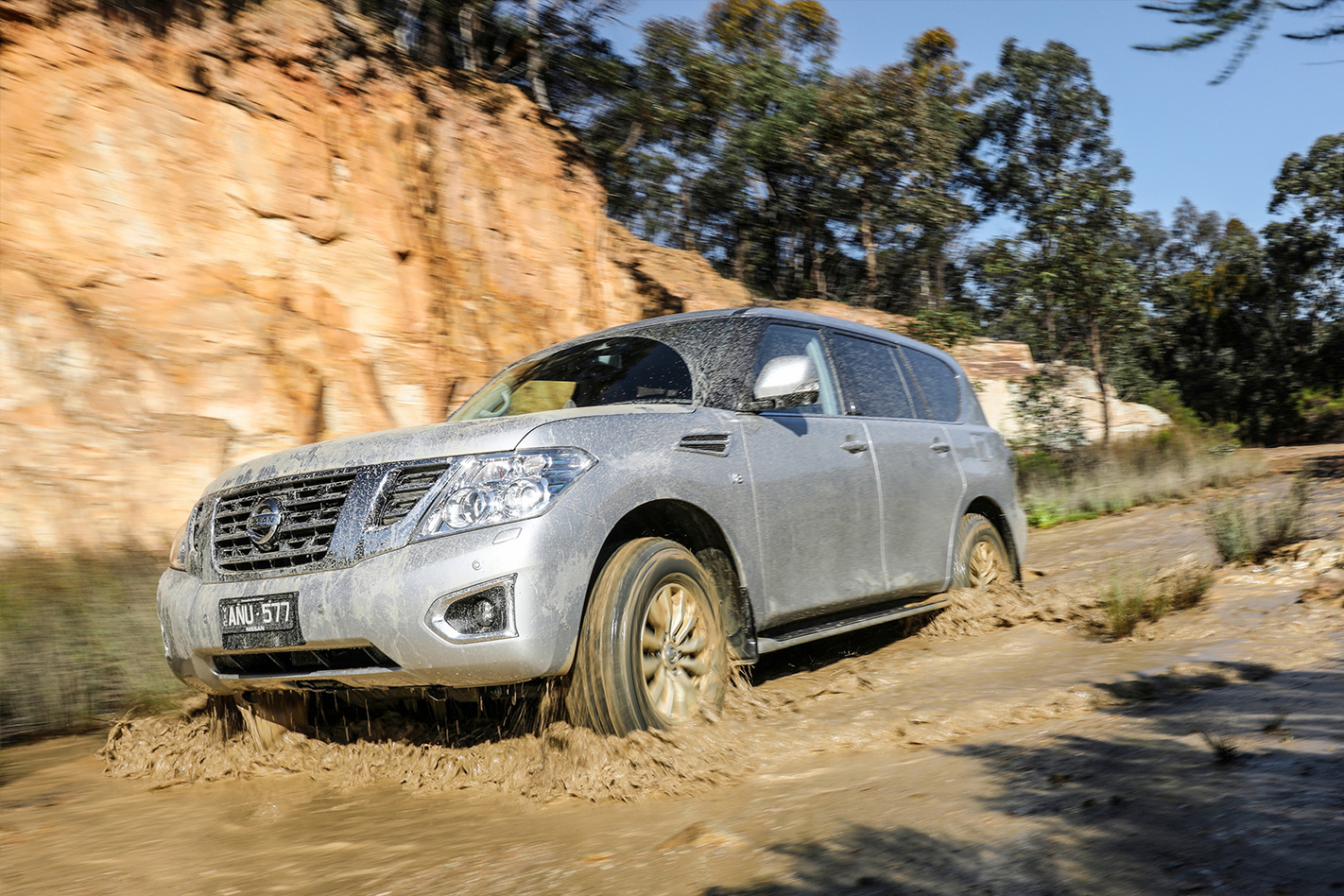
The Nissan Patrol isn’t an obvious choice as a commuter car, and you’re going to need a strong and specific reason to buy one. Whether that sonorous V8 is enough reason, you can be the judge.
SPECS
Model: Nissan Patrol Ti-L Engine: 5552cc V8, dohc, 48v Max power: 298kW @ 5800rpm Max torque: 560Nm @ 4000rpm Transmission: 7-speed auto, AWD Weight: 2750kg 0-100km/h: N/A Economy: 14.4L/100km (claimed) Price: $88,990 On sale: Now
THE February 2018 issue of Wheels goes on sale this Thursday, headlined by two must-read stories from traditional rivals, Ford and Holden.
Gracing the cover is the new Ford Ranger Raptor, with our feature story on the 500Nm twin-turbo Baja beast containing exclusive photography and in-depth interviews with the men and women who engineered the newest entry into the booming performance ute market.
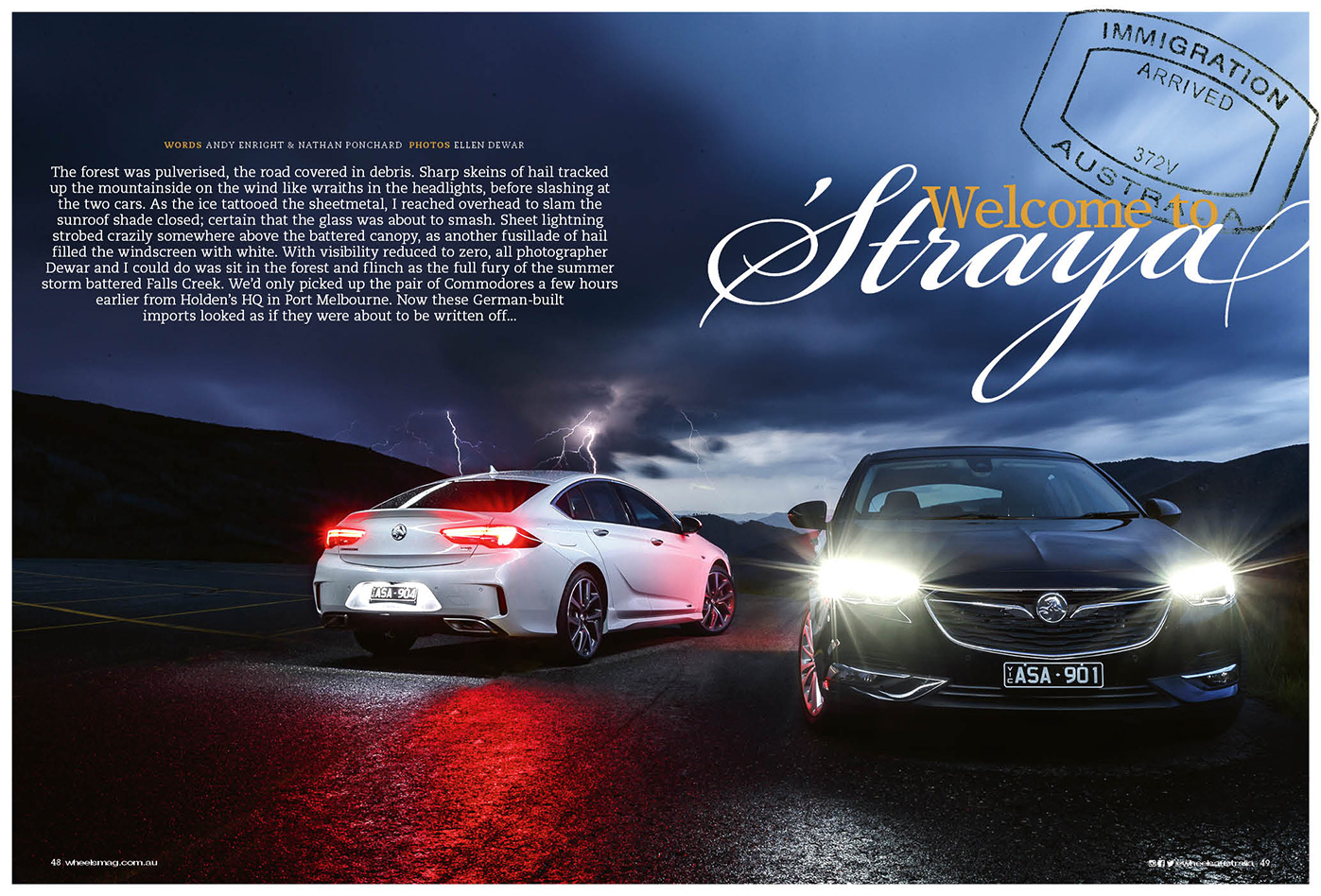
We also grab Holden’s ZB Commodore weeks ahead of every other outlet in Australia to subject it to its toughest test yet: a five-day, 300km road trip from Melbourne to Bourke. The two-part feature sees us drive both the flagship VXR and oil-burning front-drive Calais from Melbourne to Sydney, and then Bourke and back; the final leg acting as a homage to Peter Robinson’s classic one-day 1700km tale in Holden’s HQ Kingswood.
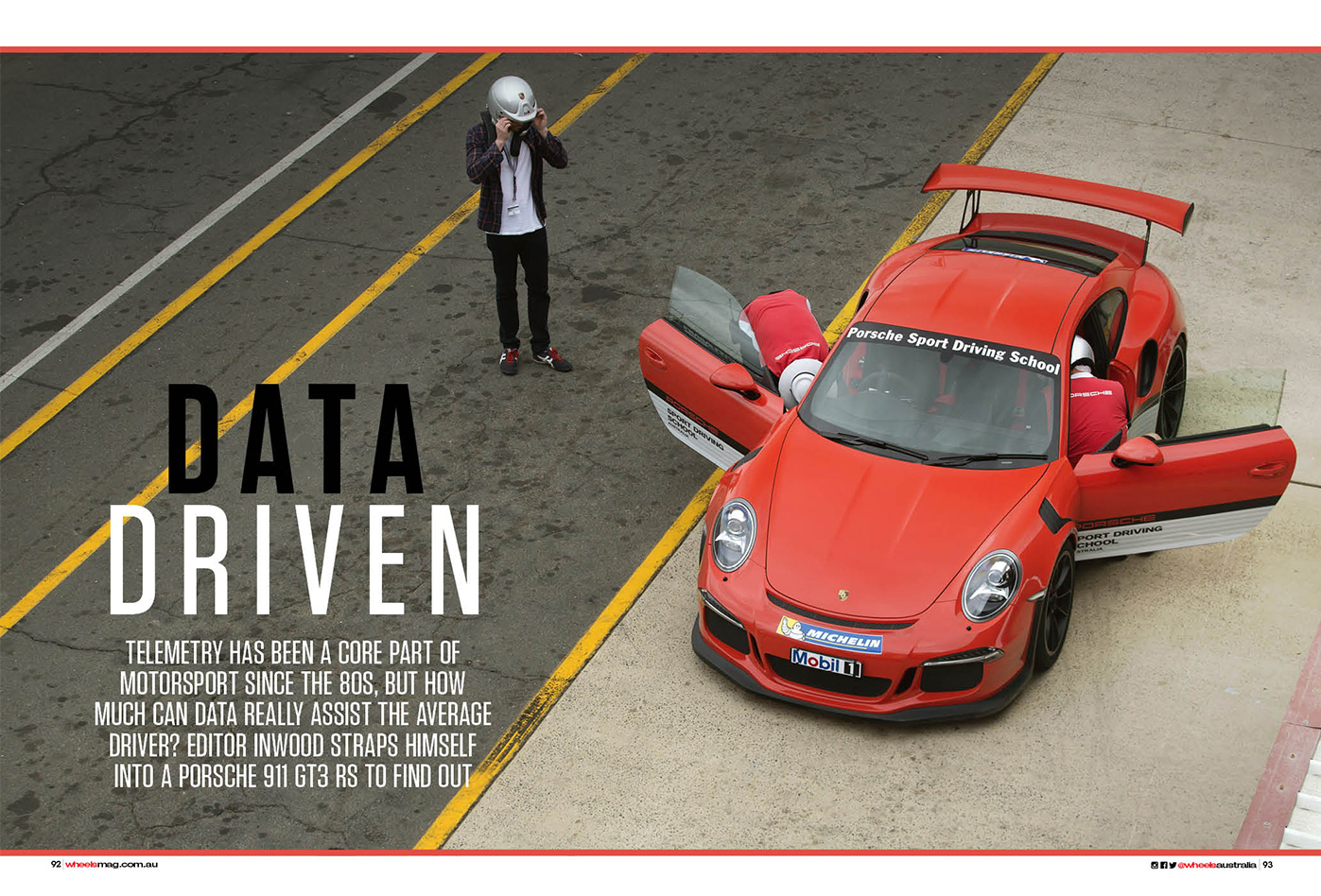
Meanwhile, editor Alex Inwood escaped to Queensland to spend a day driving a Porsche GT3 RS, digesting data, and receiving tutelage from racing ace Steven Johnson. He says it was in order to find out exactly if data and telemetry can elevate your driving skill to the next level, but we suspect he just wanted to practice ahead of the next staff karting session.
We also delve into the minds of the men concurrently attempting to shatter the world speed record and try to understand why they risk their lives in pursuit of speed.
Also in this issue:
- We put the Alfa Romeo Stelvio Q to the test on the fearsome Jebel Jais mountain road
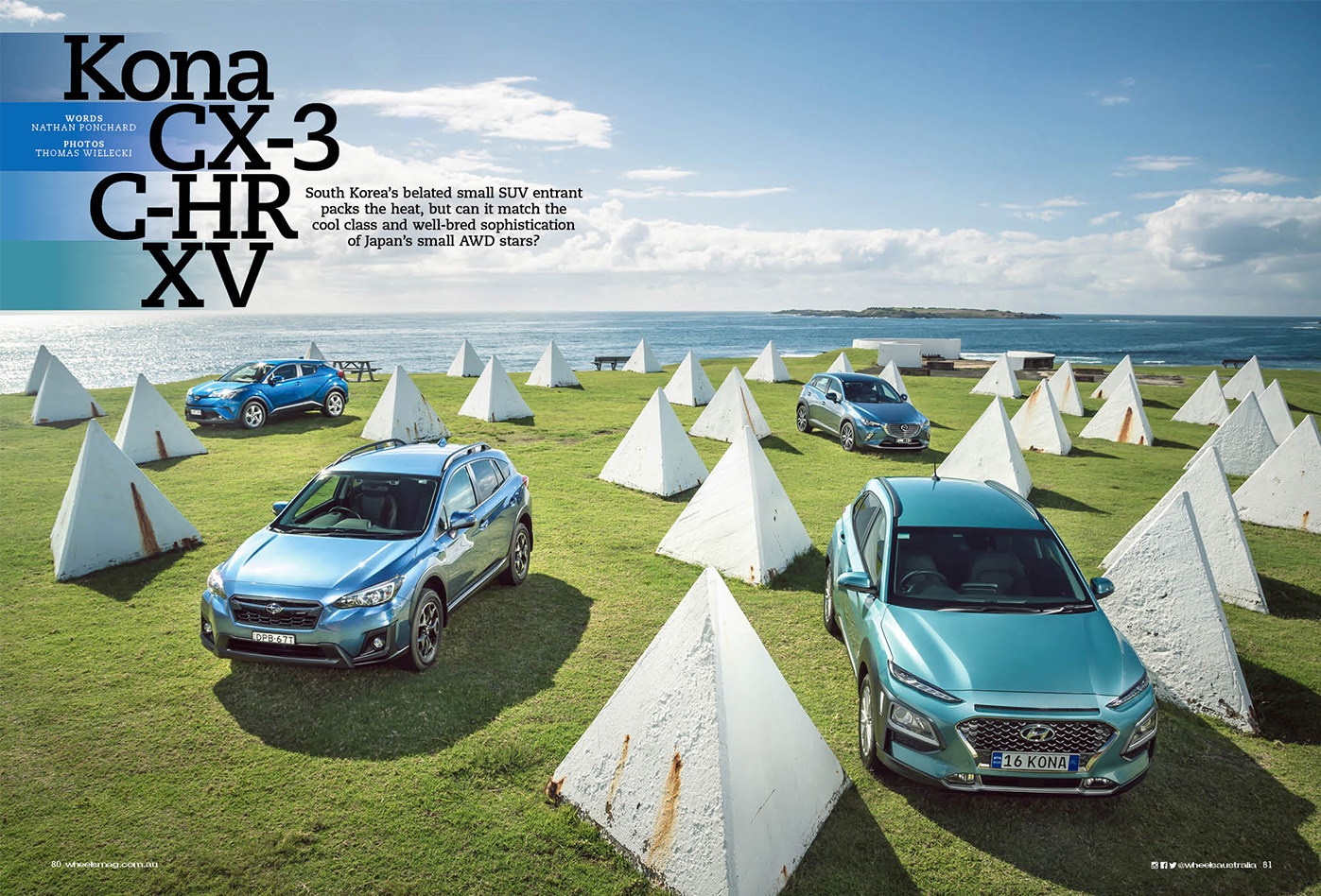
- Small SUV comparison: Hyundai Kona vs Mazda CX-3 vs Toyota C-HR vs Subaru XV
- Driven: Suzuki Swift Sport; Mercedes-AMG S63 Cabriolet; Aston Martin DB4 GT Continuation; Subaru BRZ tS; Audi Q2 2.0 TFSI; Jaguar F-Type 2.0
- Our garage: Honda CR-V, Renault Megane, Lexus LC, Kia Picanto, and Subaru Impreza
- Explained: Brake-by-wire
- Plus … columnists, Marketplace, Showroom, and all this month’s motoring news
