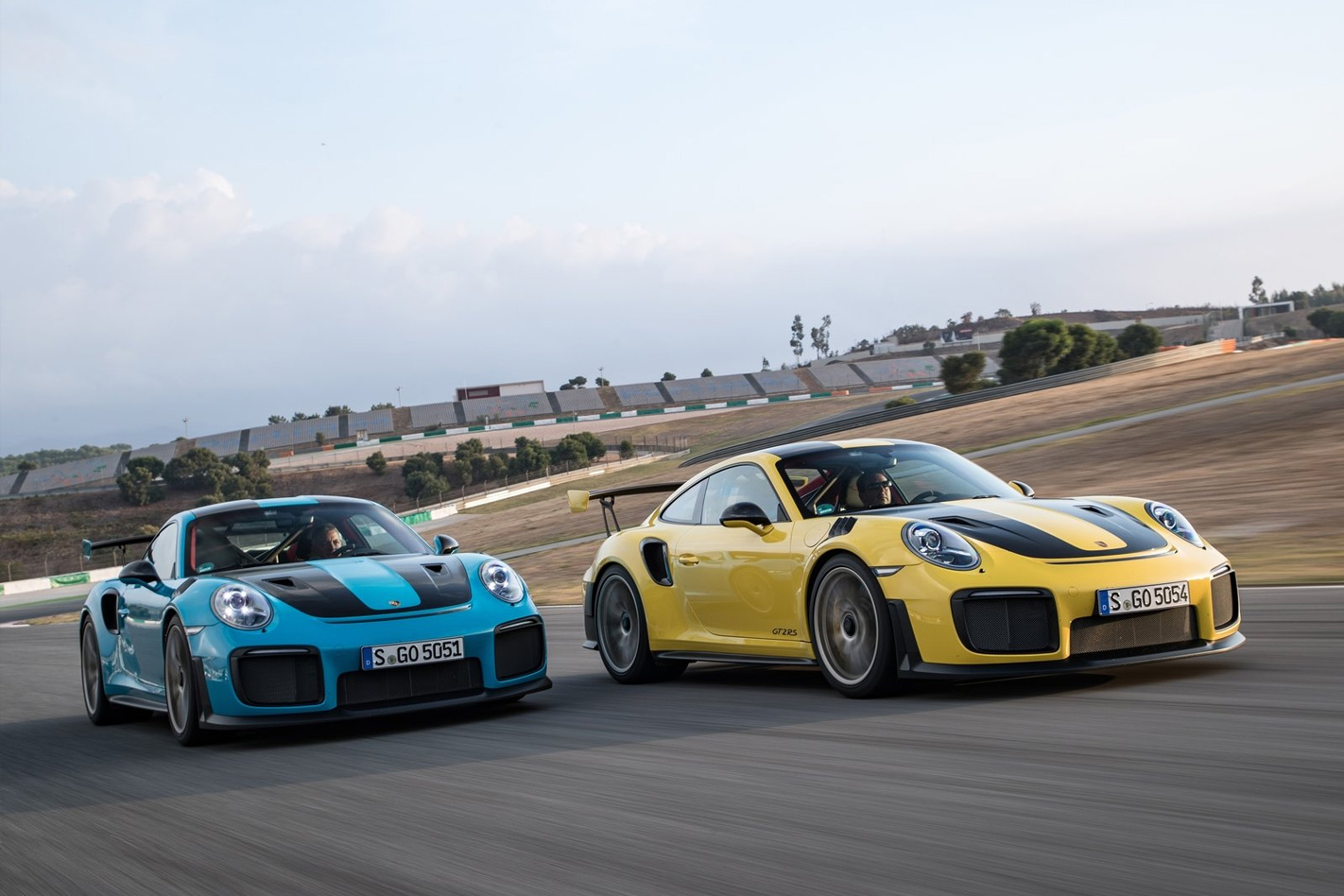
THERE’S no two ways about it: 2017 was a vintage year for fast cars. We saw a host of mouthwatering machinery unveiled, and it’s hard to nominate just one. Given that these yearly lists usually end up with a Porsche 911, and we drove the fantastic GT3 and GT2 RS this year, we thought that for once we’d give the others a moment in the sun. So here are the six non-Porsches that blew our skirts up in 2017.
Alfa Romeo Giulia Quadrifoglio
The beneficiary of a massive budget for development, Alfa blew almost all of it on a chassis with driving dynamics that redefine the class. If you thought a BMW M3 or a Mercedes-AMG C63 represented the state of the art in performance saloons, you need to try the Giulia. Preferably on the worst roads you can find. It’s next-level brilliant. The steering and the brakes take a little acclimatisation, but once you’re keyed into the Giulia’s groove, nothing really comes close. Not with four seats in this price bracket at least.

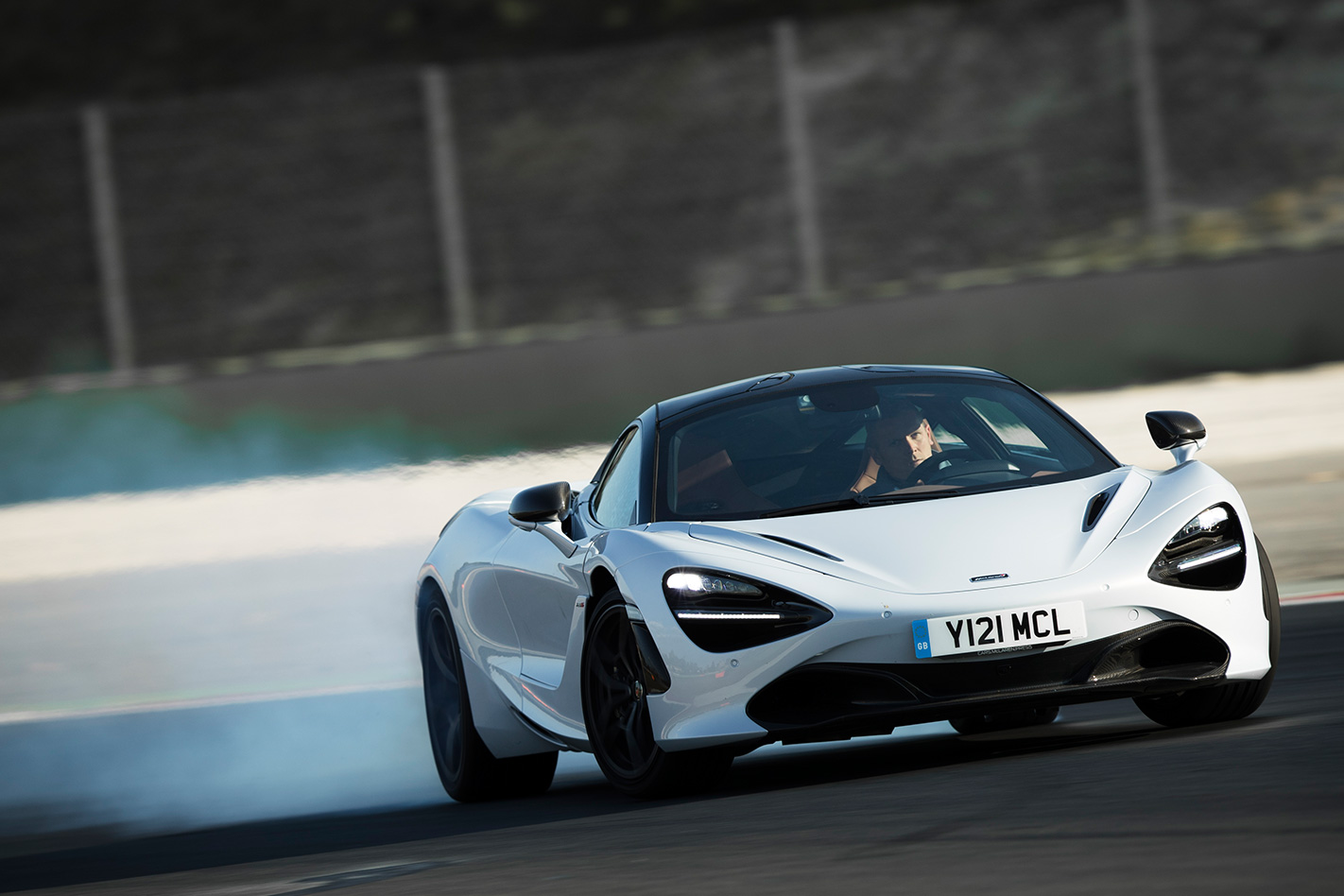
The Huracan Performante turned back the clock. By most accepted measures an atmo-engined Lambo would have no business bettering the Nurburgring lap times of a money-no-object,rocket-science special such as the Porsche 918 Spyder. Thing is, nobody told Sant’Agata. The Performante’s not all dumb grunt, though, with some very clever active aero, masses of forged carbon fibre and some very clever electronics. Its V10 lump might also be the greatest-sounding engine on sale today.

Okay, so another mid-engined supercar might be a tad predictable, but the Mac 720S is something quite special. Faster than the McLaren P1 hypercar on most circuits, the 720S gets an engine that Woking claims, with typical exactitude, is 41 percent new – in the process outgunning Ferrari’s 488GTB by 38kW. For those who think that the Ron Dennis touch still pervades McLaren, think again. This is a 530kW supercar that features a drift mode. Crazy.
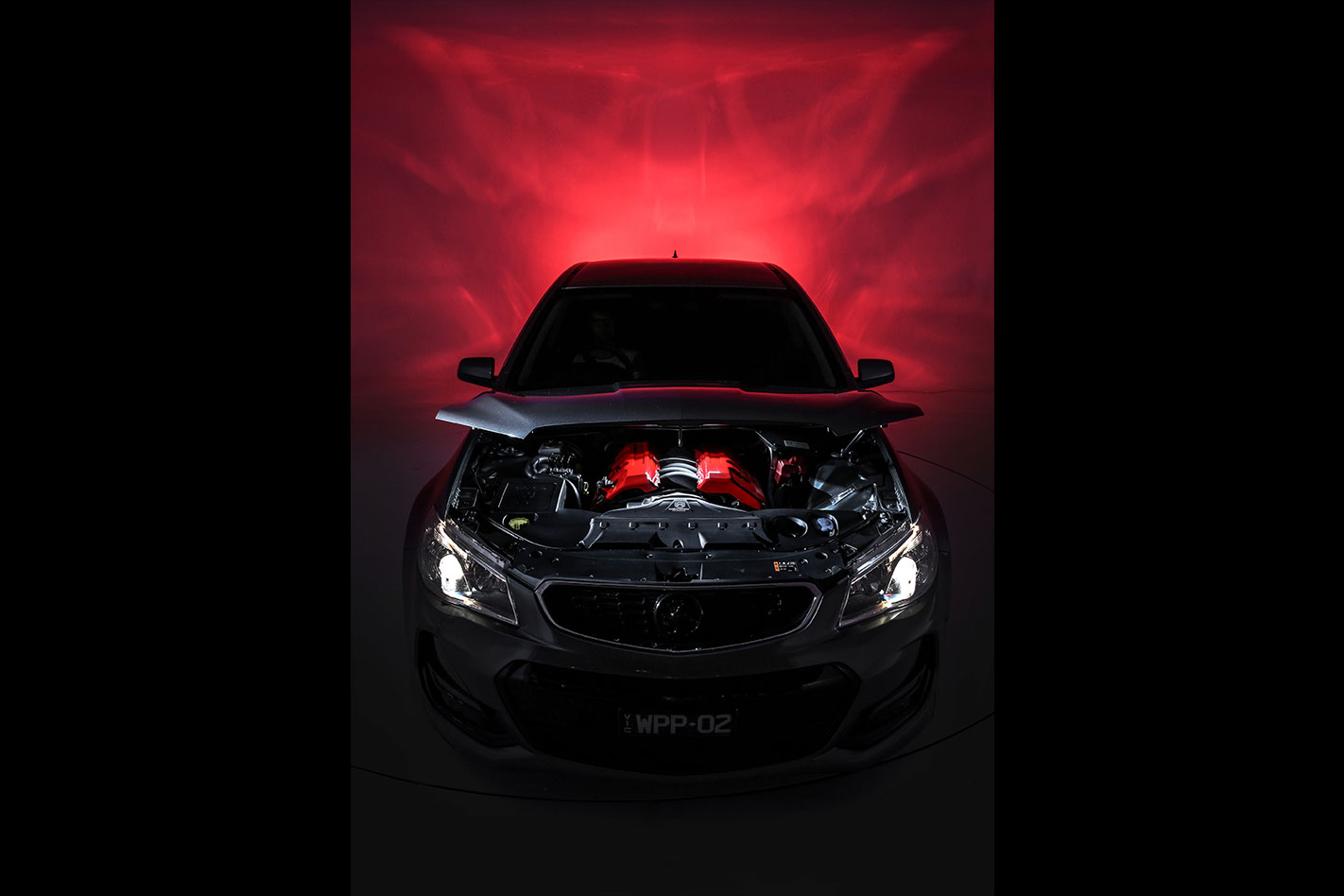
Here’s one that tugged at our heart strings and also generated a few heart-in-mouth moments. Put bluntly, the W1 is about as wild a ride as you’ll ever want to encounter, on the public road at least. If the Clubsport is Bruce Banner, this one’s the Hulk; the bigger, angrier version that always feels as if it’s about to pulverise you into a million pieces. It’s concussively fast – with 475kW on tap that’s pretty much a given – but what’s so amazing about the W1 is that the engine calibration feels so slick for such a low-volume model. It’s almost as if the Commodore VFII was made for an LS9.

This one split opinion a bit. It’s possible to be underwhelmed by the now turbocharged Civic Type R if you hate the styling and don’t drive hard. We still hate the styling, but if you are prepared to give it a merciless caning, the talent of the Civic’s chassis makes it impossible not to love. Our previous favourite in this class has been the Ford Focus RS and the Civic pushes the all-wheel-drive Ford really closely. On a give and take road there’s little to separate them, but you’ll emerge from both with a massive smile.

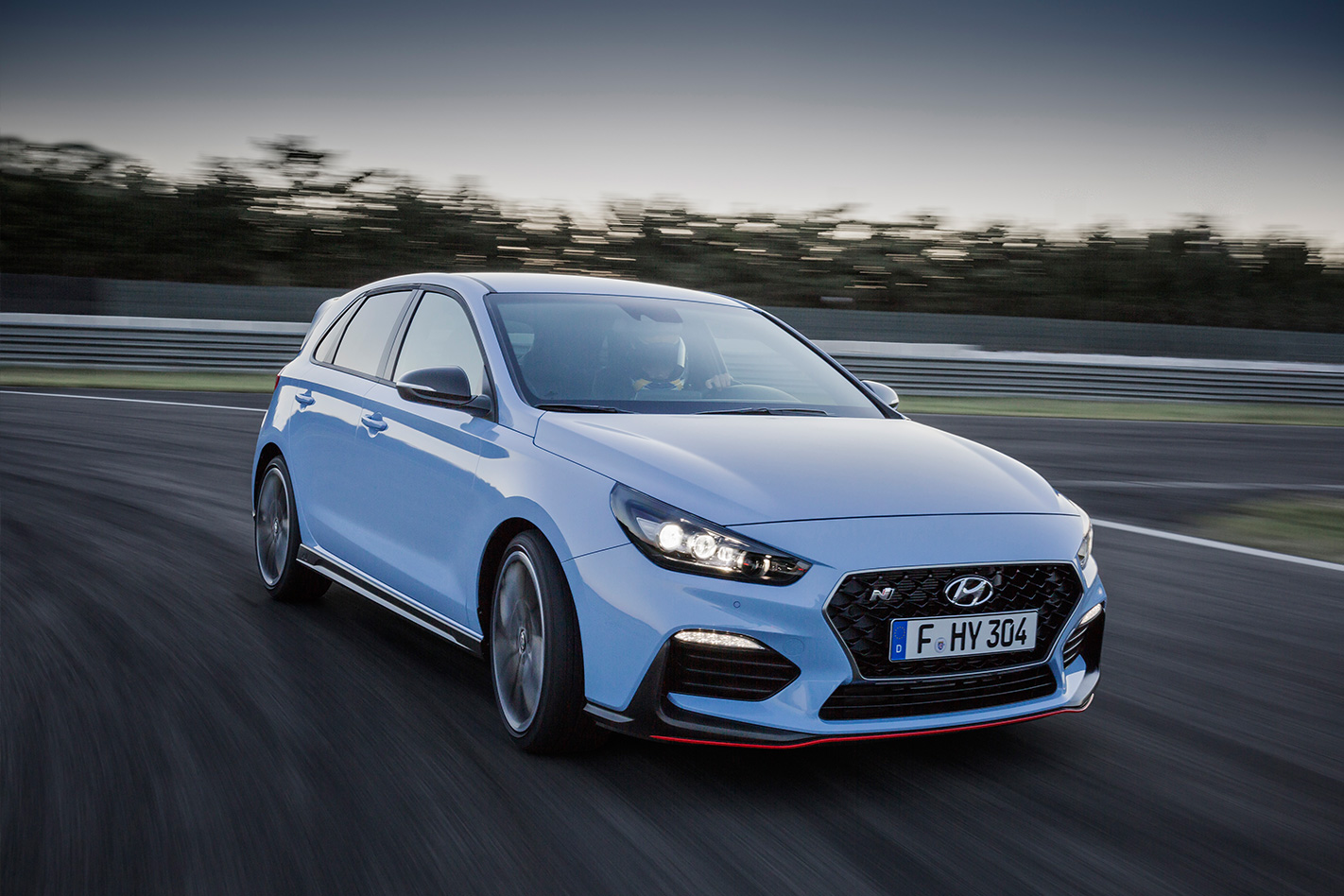
At the more affordable end of our list is Hyundai’s entrant into the hot hatch sector. It’s got the imprimatur of Albert Biermann, the former engineering guru at BMW M, all over it and it feels like the real deal. We’ve only experienced the N on foreign tarmac, so we can’t tell you if it’s better or worse than a Golf GTI definitively, but it’s there or thereabouts. The 202kW Performance Pack version looks to be the go, and with up to 378Nm available on overboost, it’s not going to take long for other drivers to realise that Hyundai’s N division means business.

On every shoot, MOTOR tries to capture the best possible imagery.
Time constraints or the weather sometimes put us up against it, but our awesome team of snappers – both freelance and staff – are constantly amazing us with their talent, efficiency and creativity.
Below you’ll find our selection of the Top 10 images of 2017, while in the gallery above are the many honourable mentions – it could’ve been three times as long! Rest assured we’ll be doing our best to ensure the 2018 list is even better.
Walkinshaw W407 – Cristian Brunelli (January 2017)
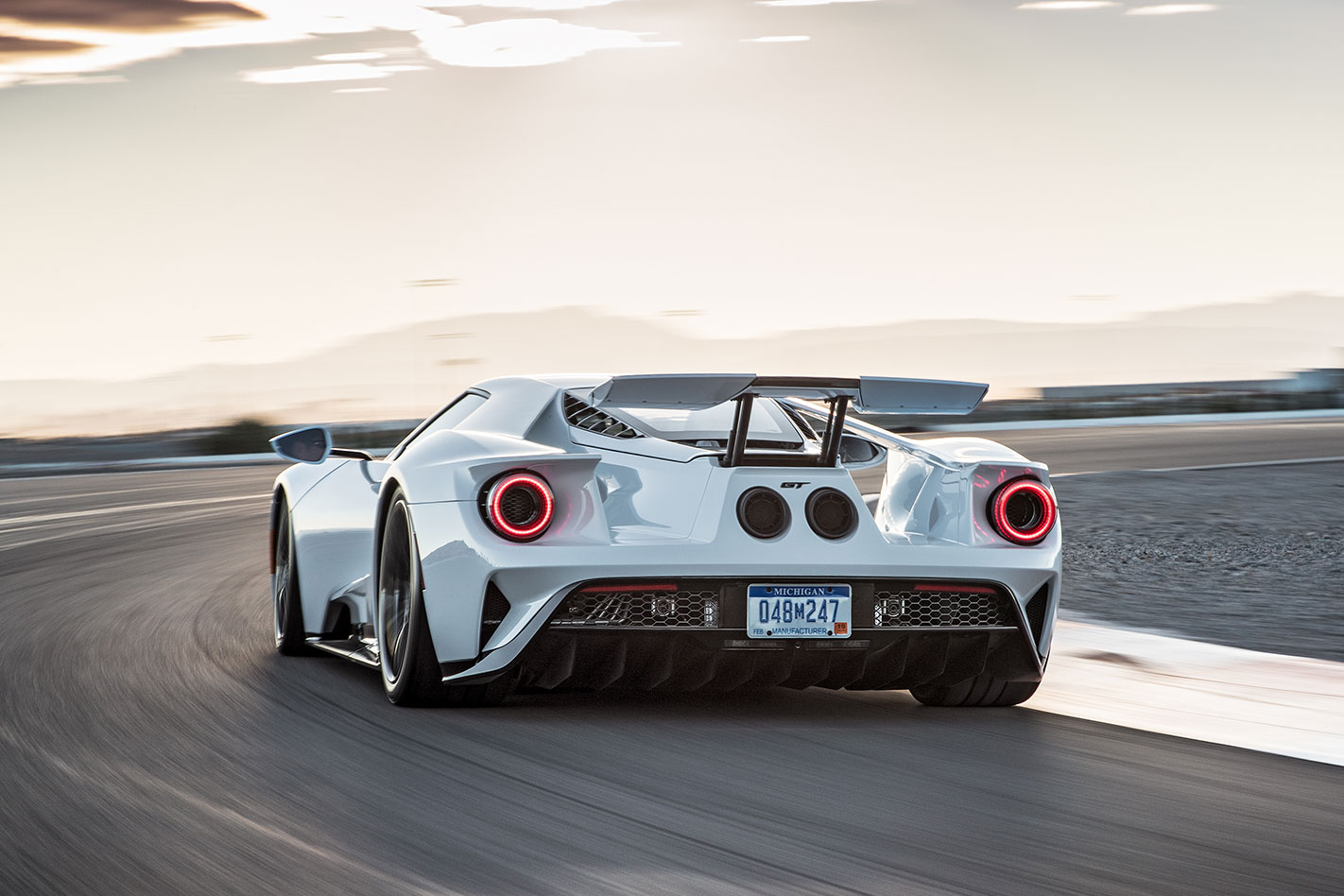
Ford GT – William Walker (March 2017)
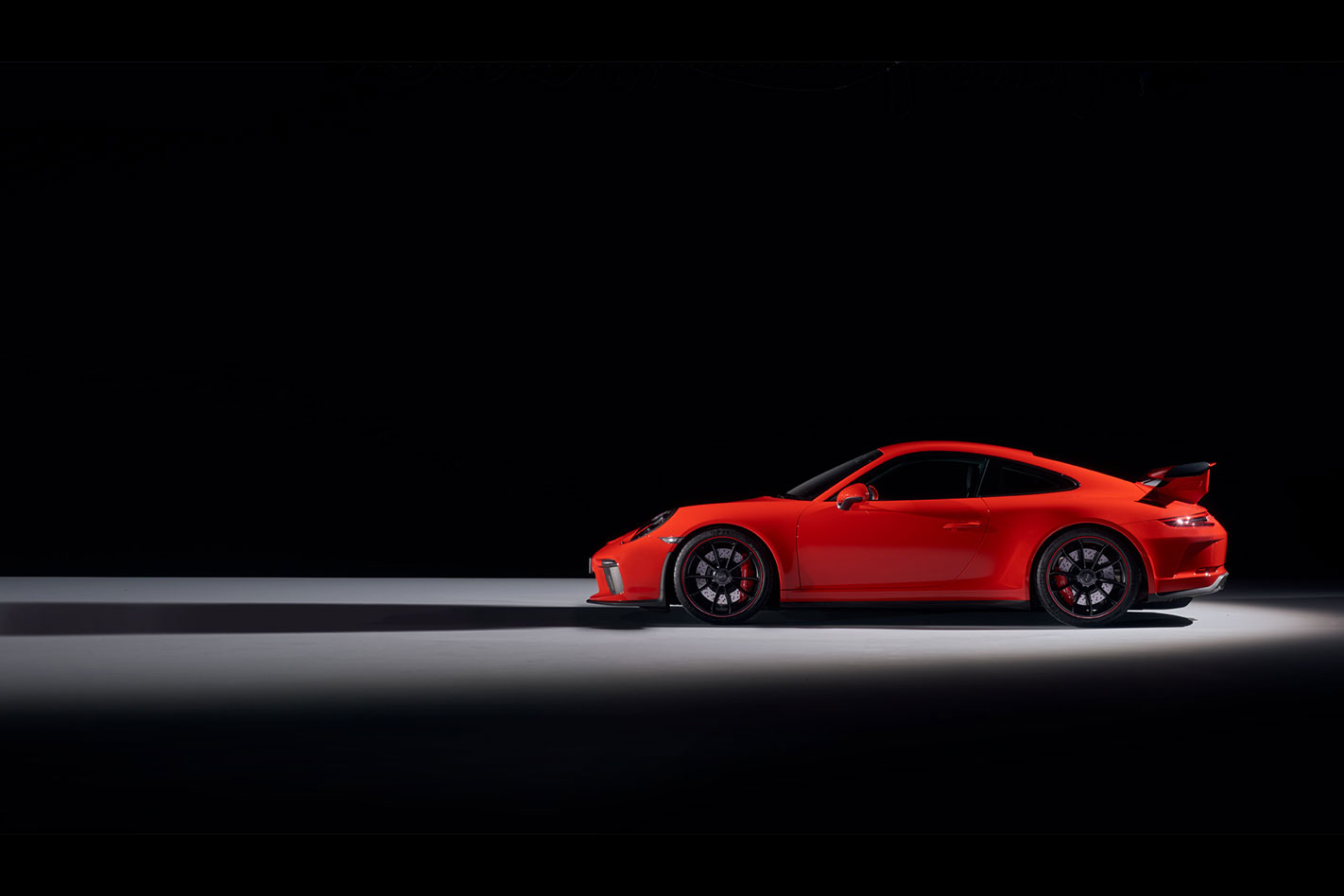
Porsche 911 GT3 – Richard Pardon (April 2017)
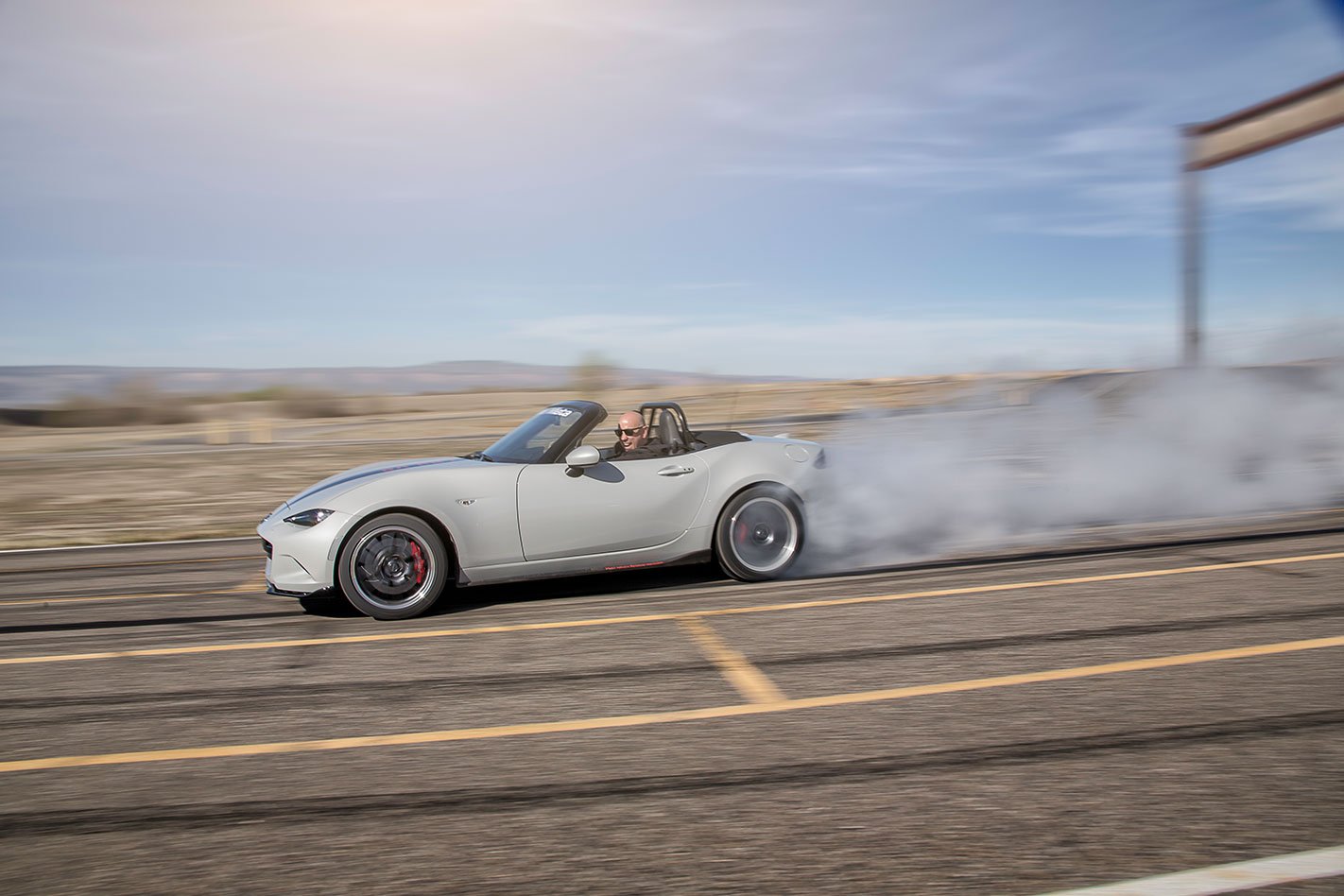
Mazda MX-5 V8 – Travis Ingram (June 2017)
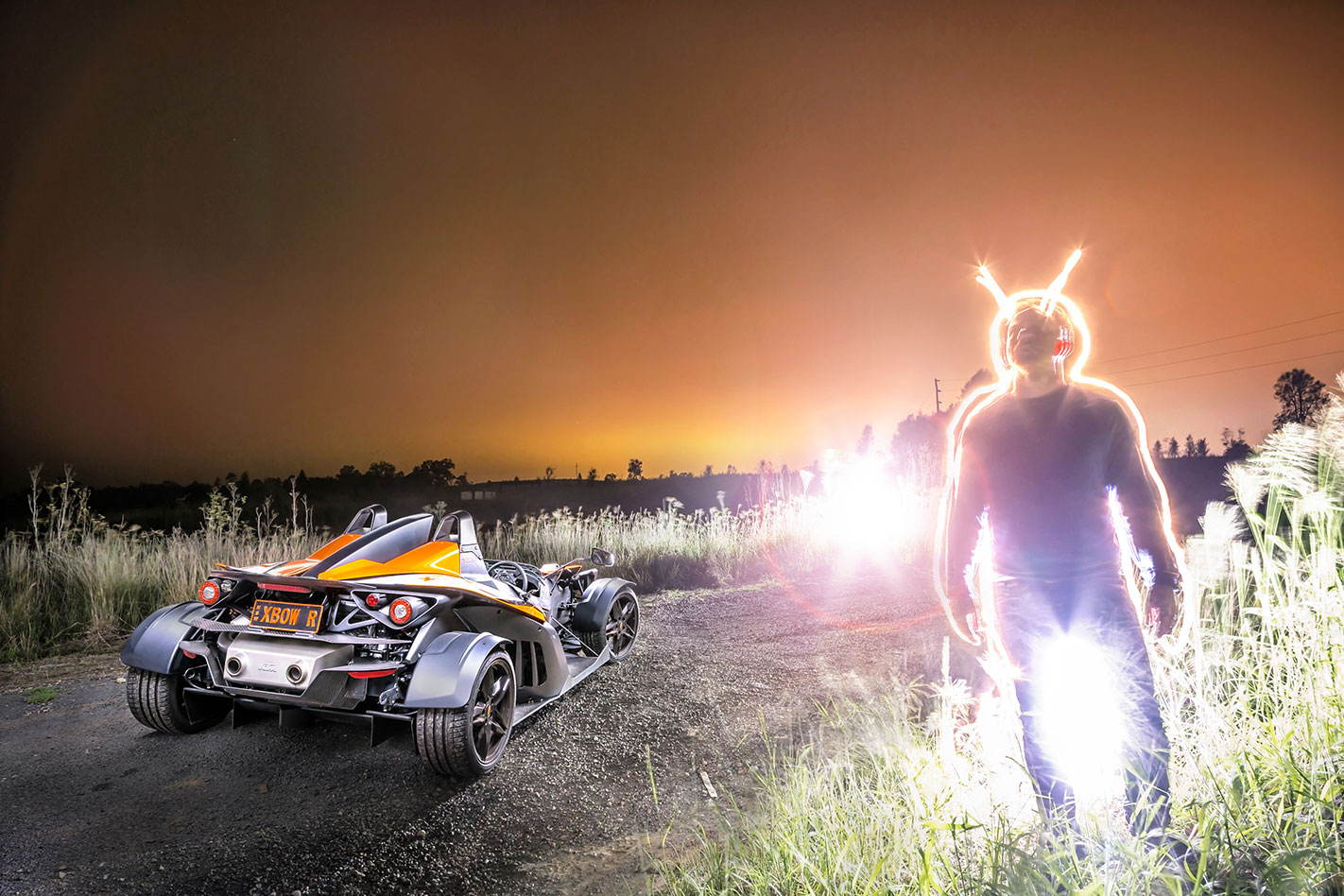
KTM X-Bow – Thomas Wielecki (June 2017)
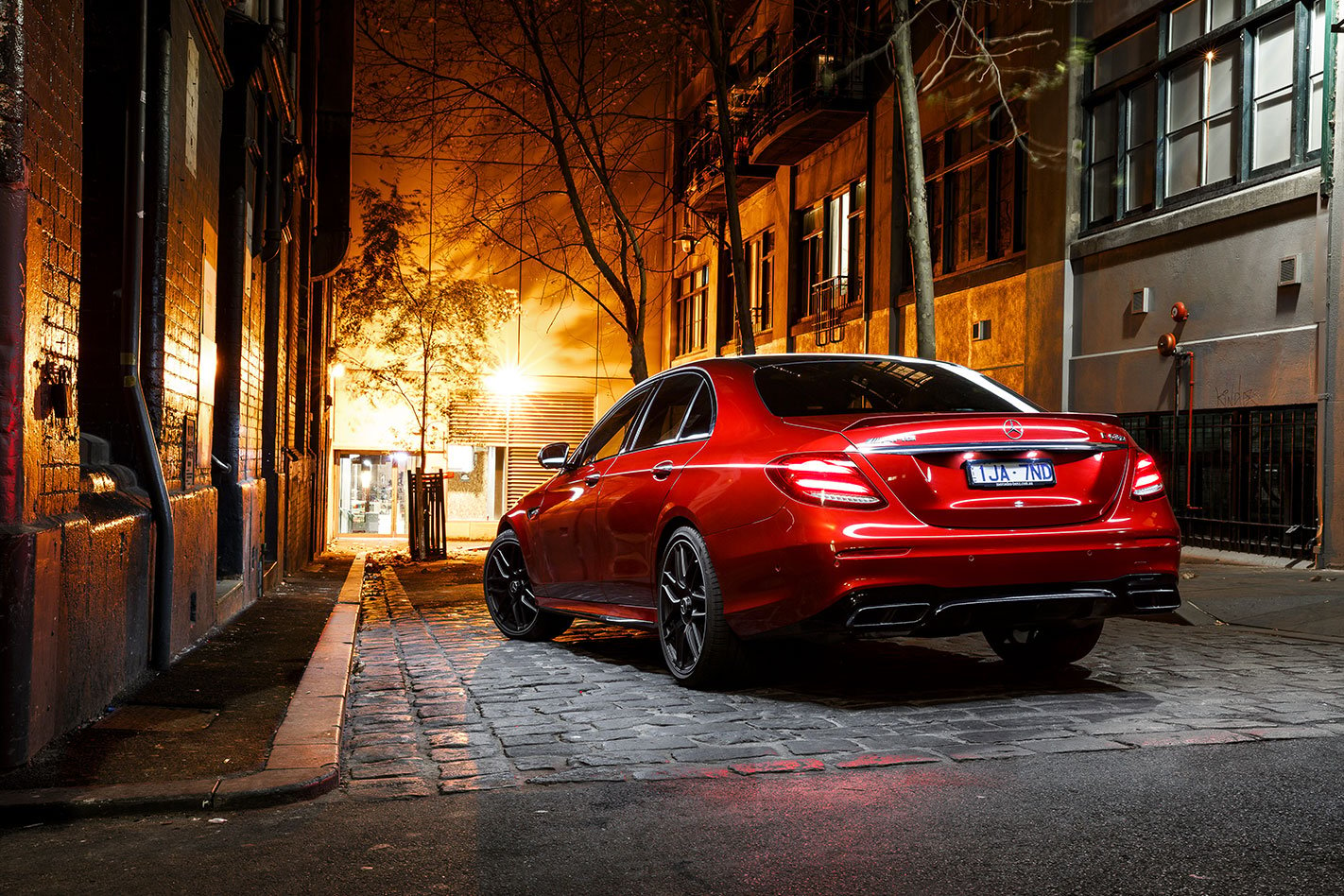
Mercedes-AMG E63 S – Nathan Jacobs (July 2017)
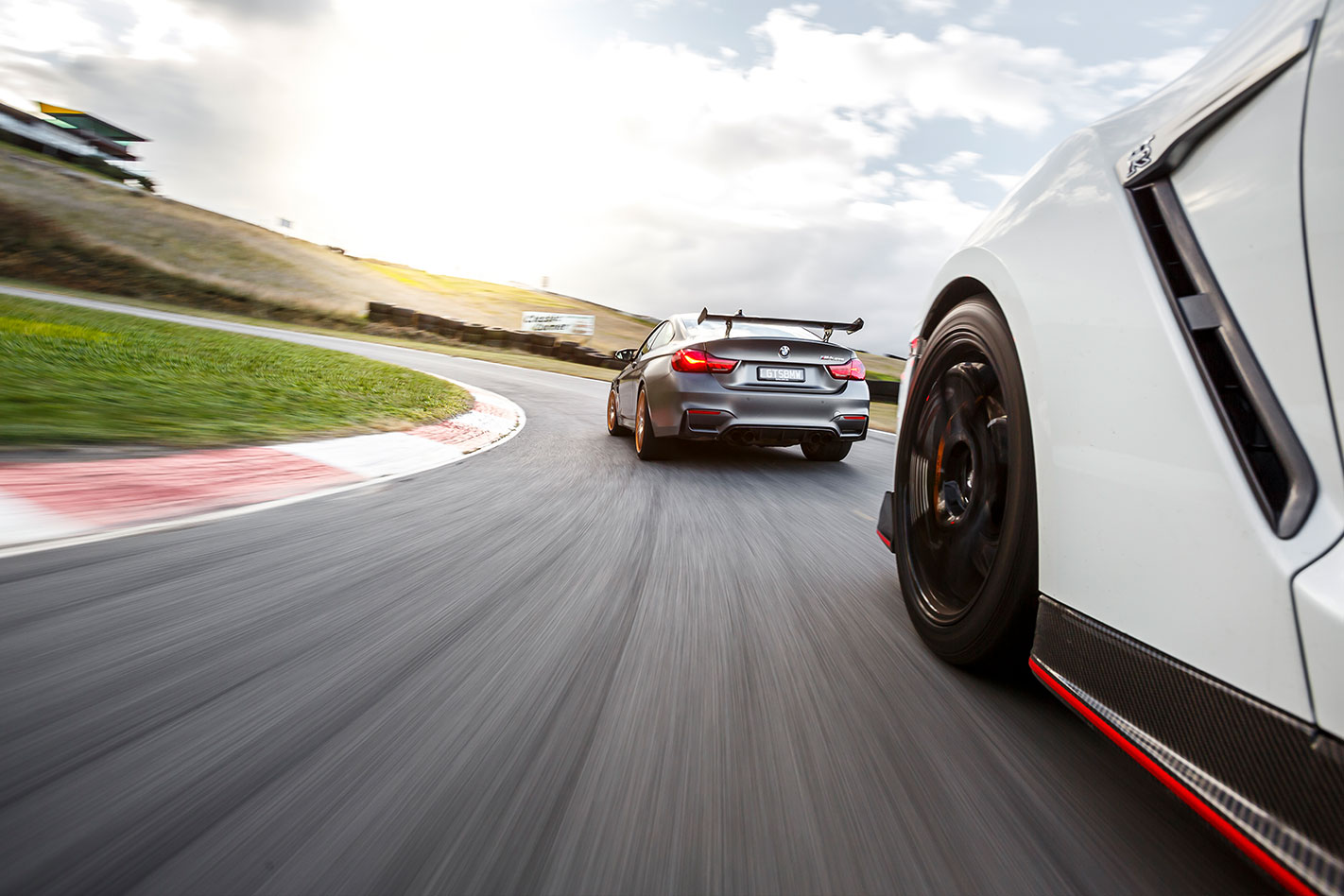
Nissan GT-R Nismo & BMW M4 GTS – Nathan Jacobs (August 2017)
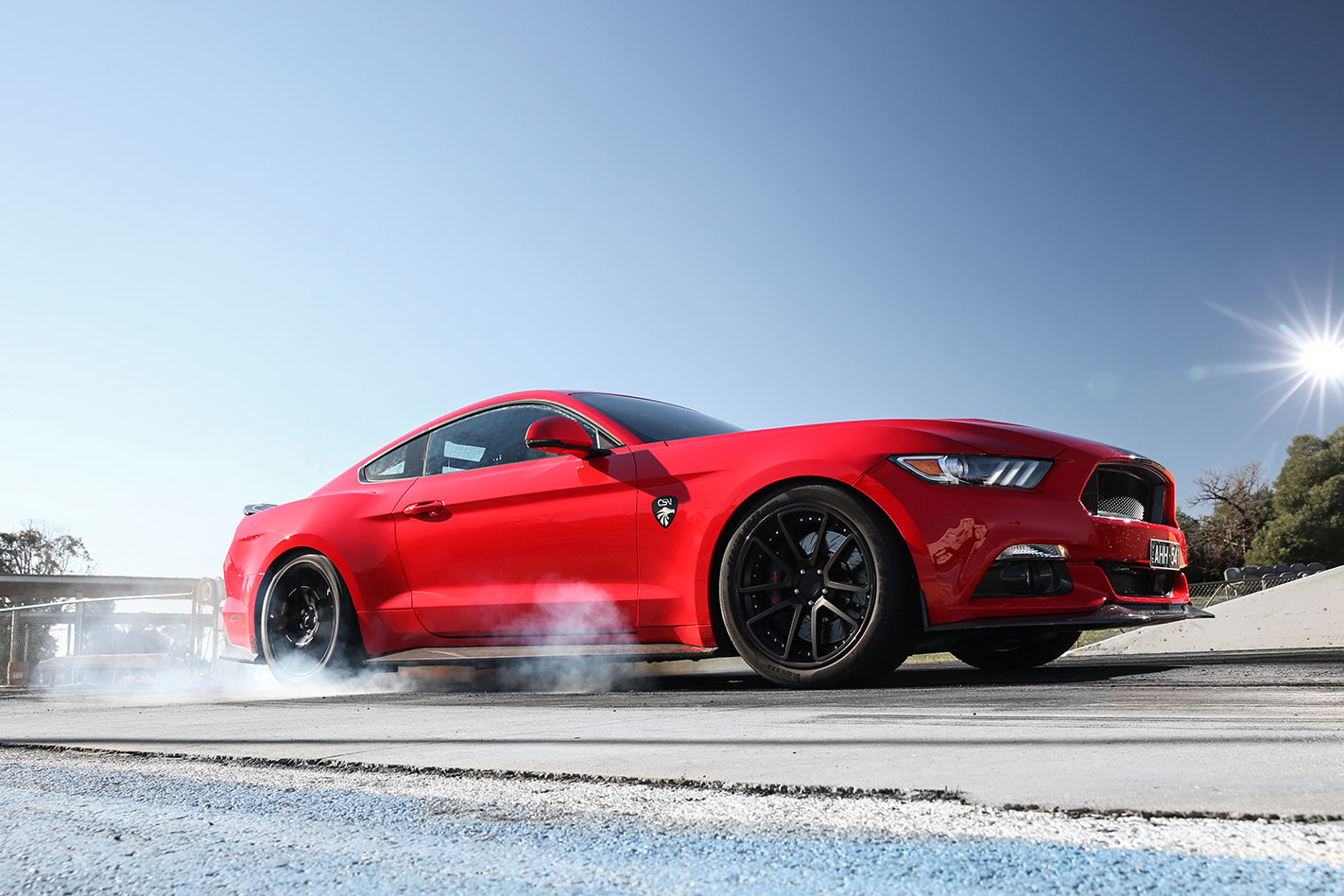
CSV Ford Mustang – Cristian Brunelli (August 2017)
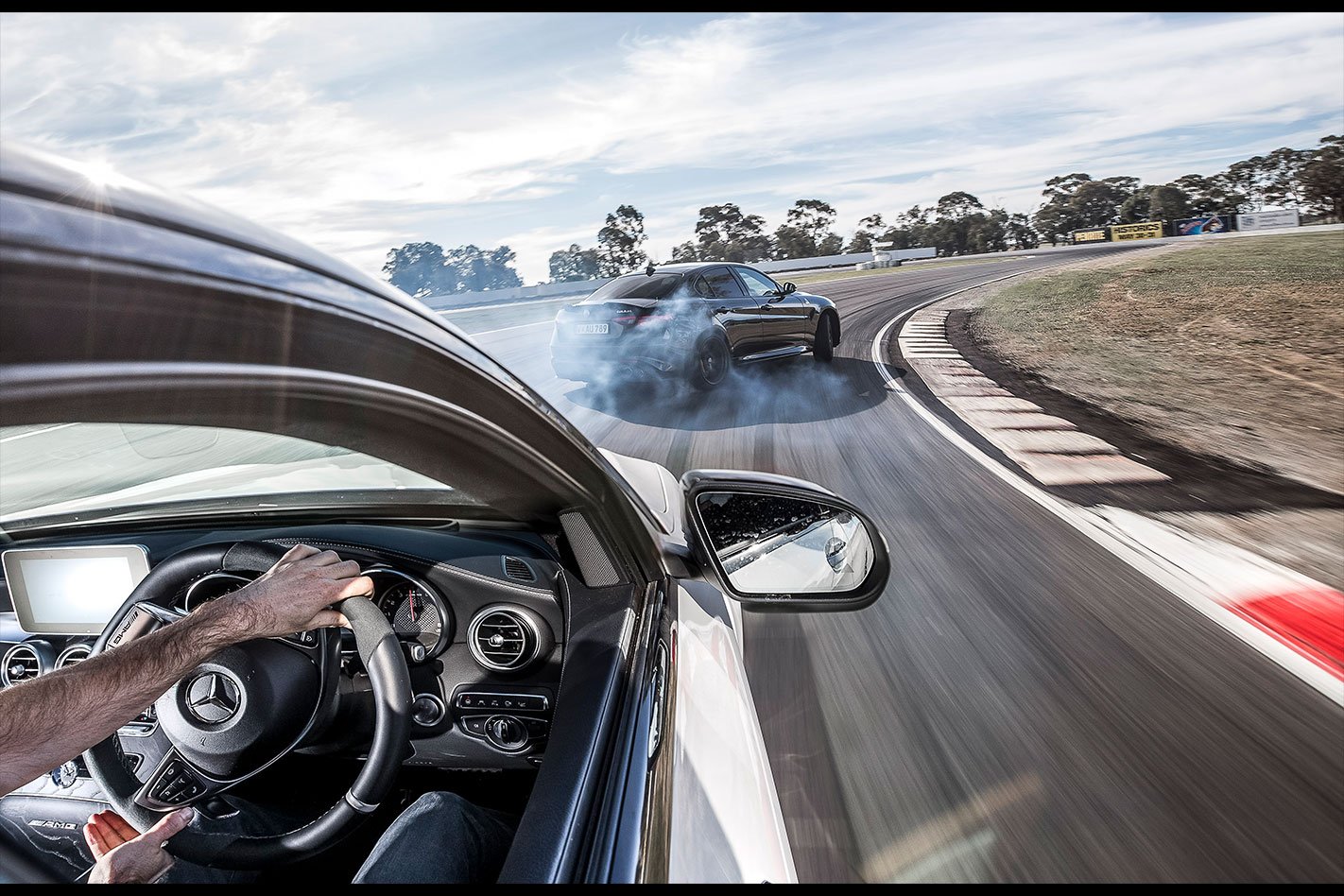
Mercedes-AMG C63 S & Alfa Romeo Giulia QV – Ellen Dewar (September 2017)
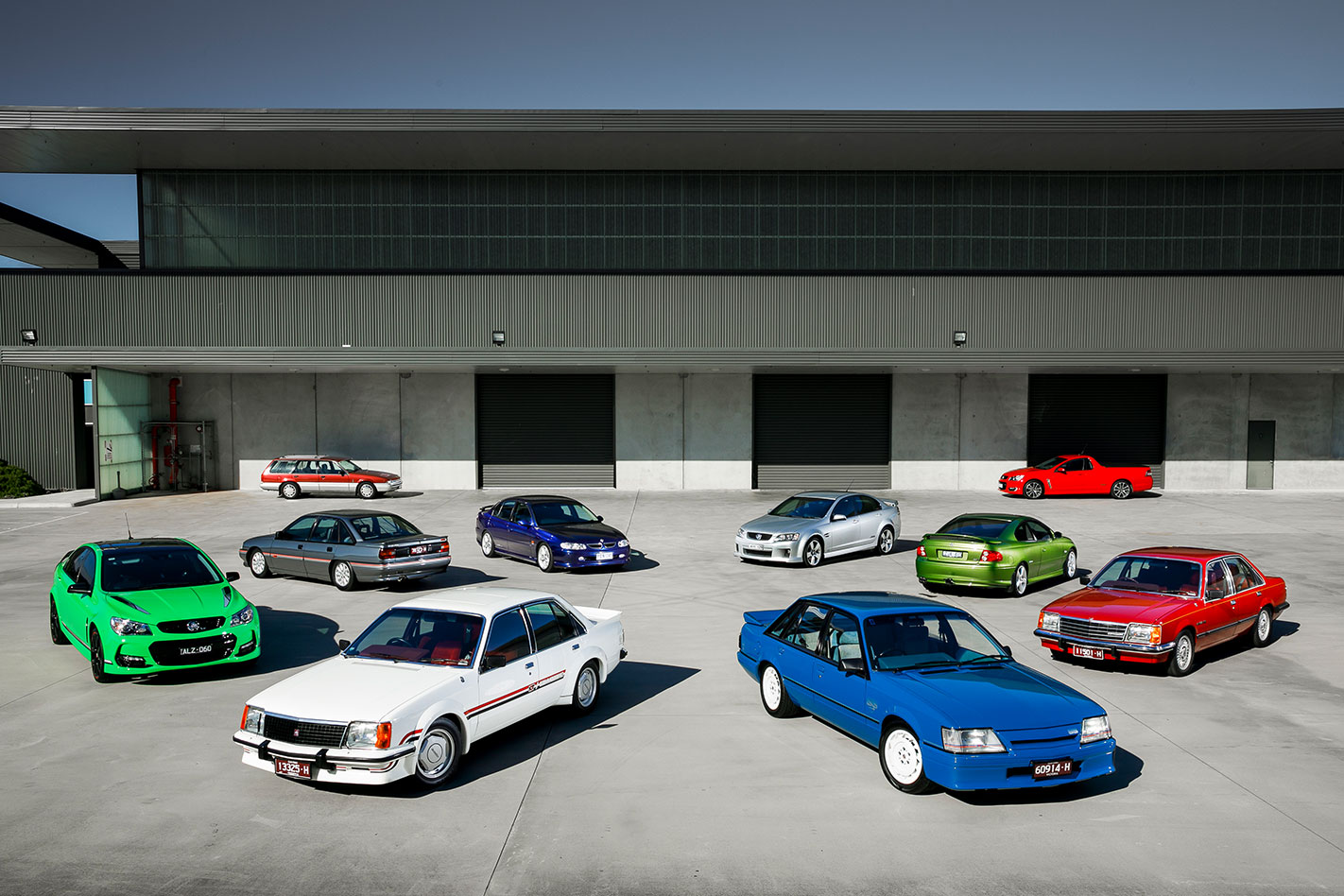
Holden Commodores – Nathan Jacobs (November 2017)
I swear if the wind was blowing right, you could hear the morose howls from the dealer principal as he surveyed his ghost-town forecourt, and you could just about watch the cobwebs growing around the mirrors of the undesired C70s and S80s.
Amazing how a change of ownership can reinvigorate a brand. Chinese giant Geely bought Volvo from Ford in late 2009, and immediately set about giving the Swedes access to Chinese finance, paid for a new Chinese manufacturing base and generally gave them the resources they needed to revitalise the line-up and produce relevant, competitive cars.
Global sales last year were 534,127, almost exactly 200,000 units more than Volvo shifted in 2009. And while the all-new Volvo XC60, due here soon, is primed to be the brand’s volume model, the wagon lover in me was keen to try the V90, the car Ben Oliver drove to Sweden’s most remote restaurant.
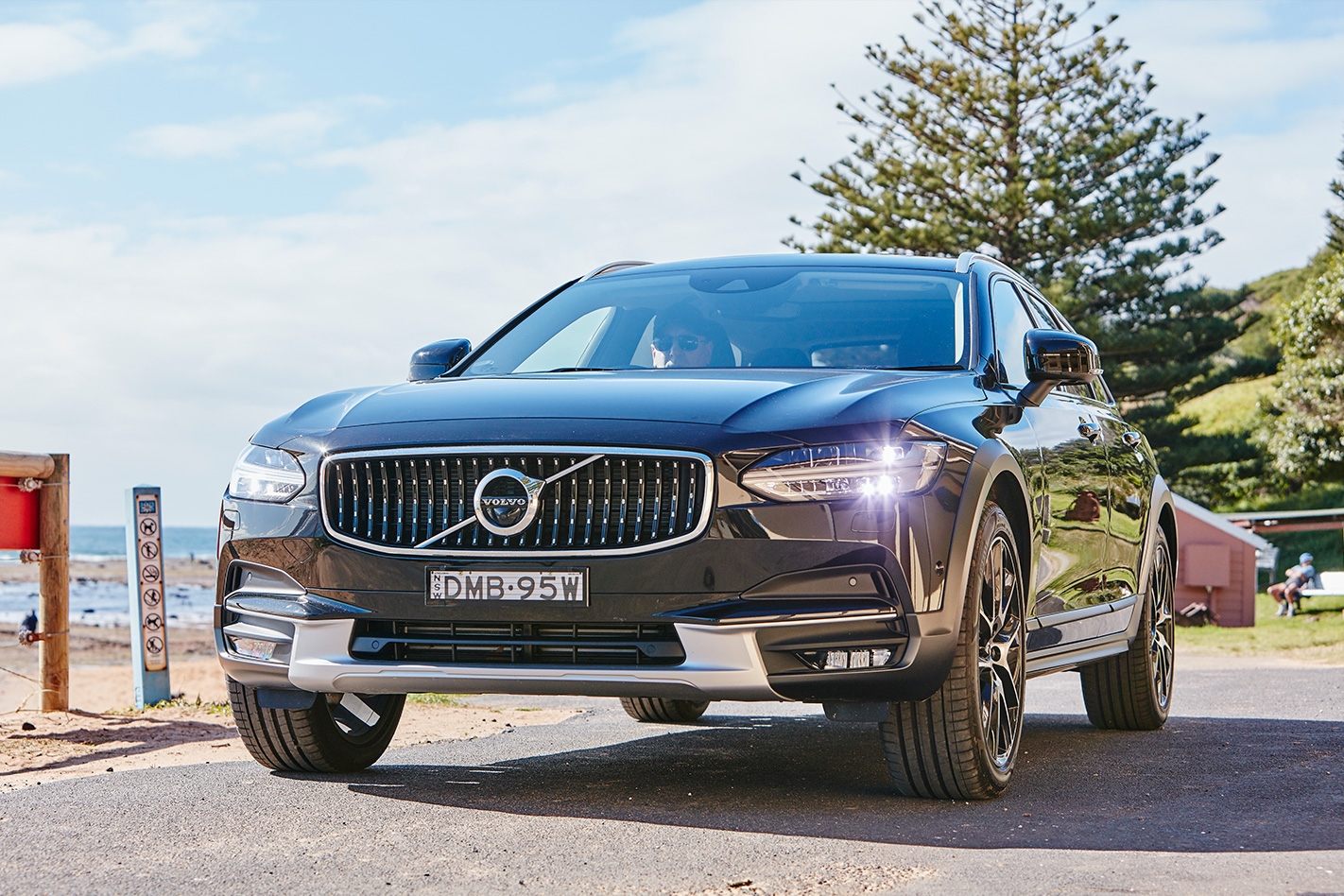
“No can do,” said Volvo Australia. It turns out a decision as to whether the regular V90 will join the local range is yet to be made.
Instead, I was offered this; the high-riding Cross Country version of the V90, jacked-up by 60mm, armed with underbody and sill protection, and sold here only with the 2.0-litre twin-turbocharged four-cylinder diesel making 173kW and 480Nm, rather than the 2.0-litre petrol that’s turbo- and supercharged (for 235kW/400Nm) that can be fitted to the S90/V90, as well as the XC90 and forthcoming XC60.
So, I’m now the proud custodian of a large all-wheel-drive wagon, built to handle light-duty off-road driving, and priced at $99,900. It’s worth noting that figure is about 10 percent sharper than its rivals like Audi’s A6 Allroad ($112,855) and the new Mercedes-Benz E-Class All-Terrain at $109,900.
The options list for my car has been given a nudge, but not to an abnormal degree for this class. Mine is fitted with the $3000 Technology Pack, which adds head-up display, 360-degree camera, digital radio tuner, and Apple CarPlay/Android Auto smartphone integration.
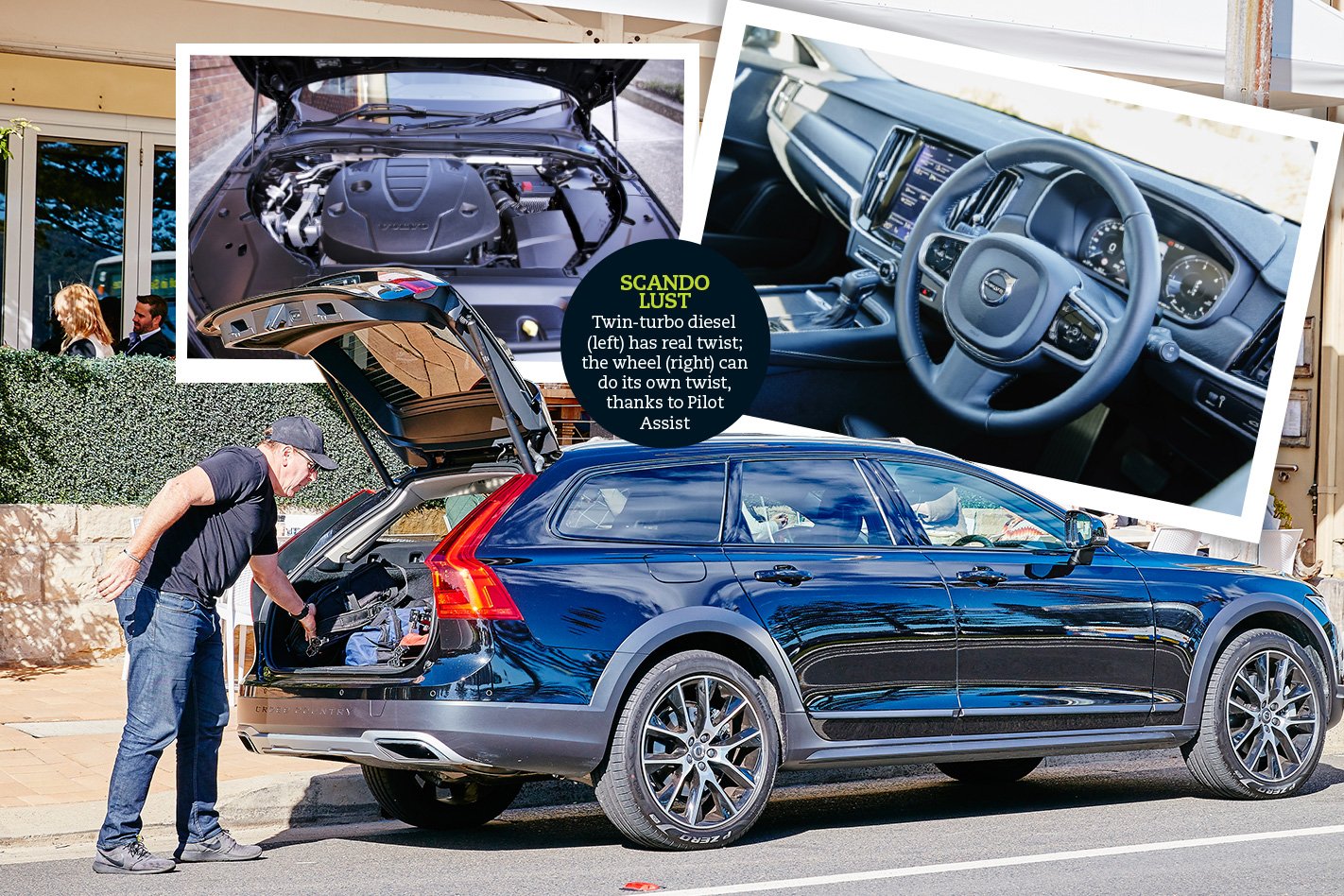
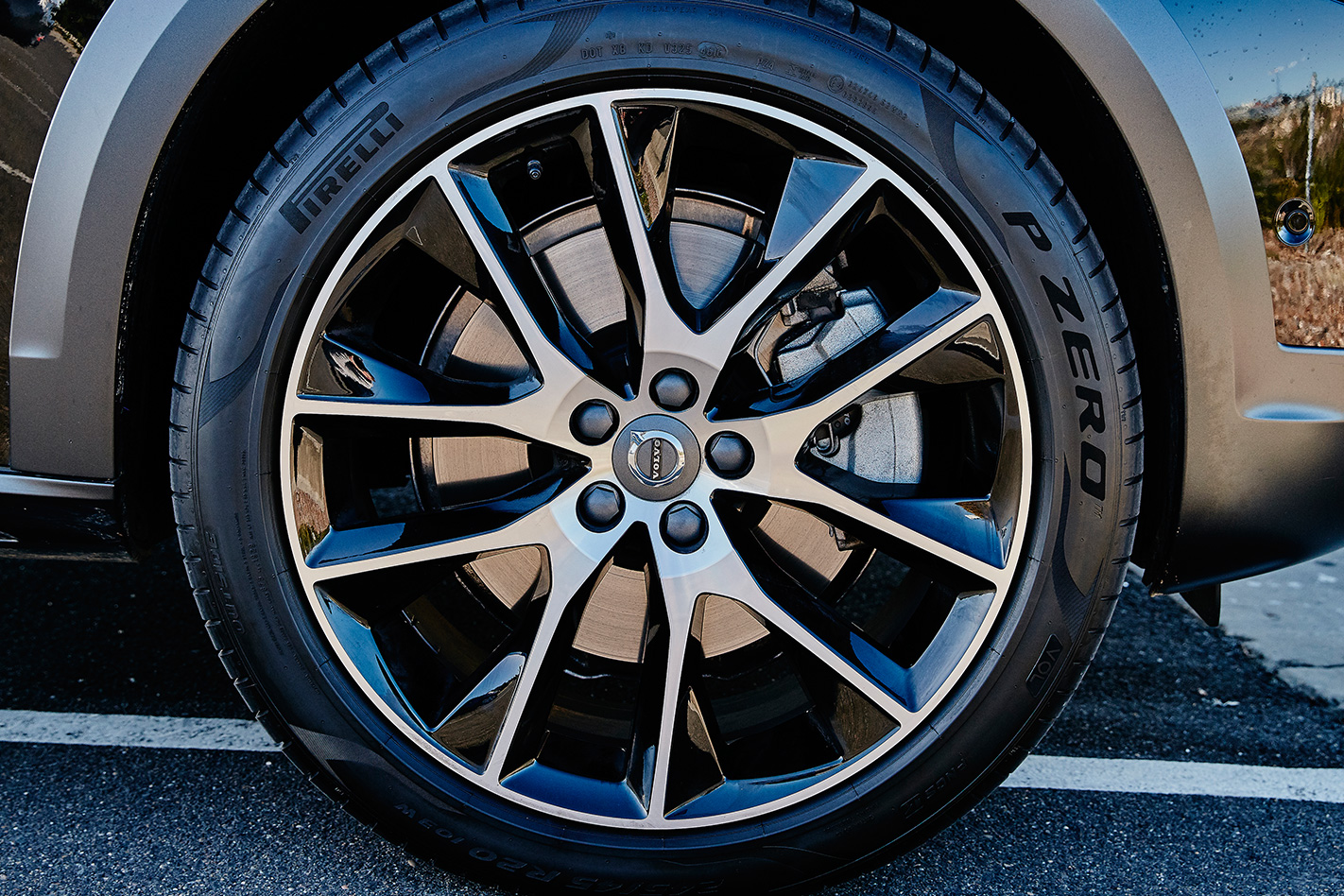
Then there’s the Lifestyle Pack at $2000, which includes perforated charcoal-coloured Nappa leather, heated front seats, a vast sunroof, and tinted rear glass. Added to this is front-seat ventilation for $1200, power cushion extensions for the front seats at $650, and 20-inch Tech Grey machine-finished wheels with Pirelli P Zero rubber for $2850. Finally, there’s the black metallic paint at $1900.
That brings the total to $111,500 plus on-roads, but does leave a significant option bundle called the Premium Pack unchecked. There is no drive-mode selector, for example. You get in, you drive; one mode fits all. But I suspect I’ll miss drive modes less than a couple of other bits of equipment. The standard sound system is reasonable but not a patch on the 1400-watt Bowers & Wilkins system also included in the Premium Pack.
Perhaps the most noteworthy exclusion, though, is the rear air suspension which is also part of this elusive bundle. Without it, the V90 runs a transverse, composite leaf-spring rear suspension system. First impressions, with the car on those plus-one 20-inch wheels, is the ride does not deliver the suppleness, refinement or comfort one could reasonably expect in this class.
The wheels and Pirellis do look great, but they sit as a slight spec anomaly on a Cross Country model, seeming about as well-suited to mud ’n’ guts adventures as Graham Norton in a pair of Tom Ford brogues.

There’s no questioning the strength of the engine for a four-pot, however, while the cool, minimalist Scando interior design has won me over, and has me reaching for my black turtle-neck sweater and wire-rim glasses. And did I mention the size? I can hear my own voice echo, it’s so cavernous inside. Actually, maybe I should just stop singing along to Roxette.
Untimely advice
The head-up display is great in that it shows speed zones; the only problem is its software is sometimes wrong. Anything that is a 40km/h zone during school hours is always a 40km/h school zone; the Volvo is convinced there are kids wandering the road at 10pm on a Sunday night. Meanwhile, on the Bradfield Expressway after crossing the Harbour Bridge, the car advises the 80km/h zone is actually 30km/h; guidance that would see you rear-ended if you took it.
Unscheduled stoppage
I’m wondering if Volvo sources its AEB sensor equipment from the same supplier as Mercedes-Benz, because my car exhibits the same false-alarm and braking intervention as that which has affected Ryan’s E-Class. Sometimes you know why the system has triggered; it may be a pedestrian island up the road that the car thinks you’re on course to hit. But there have been other times where I’m at a loss to explain what the car has sensed to spook it. How do I convince the Volvo to relax?
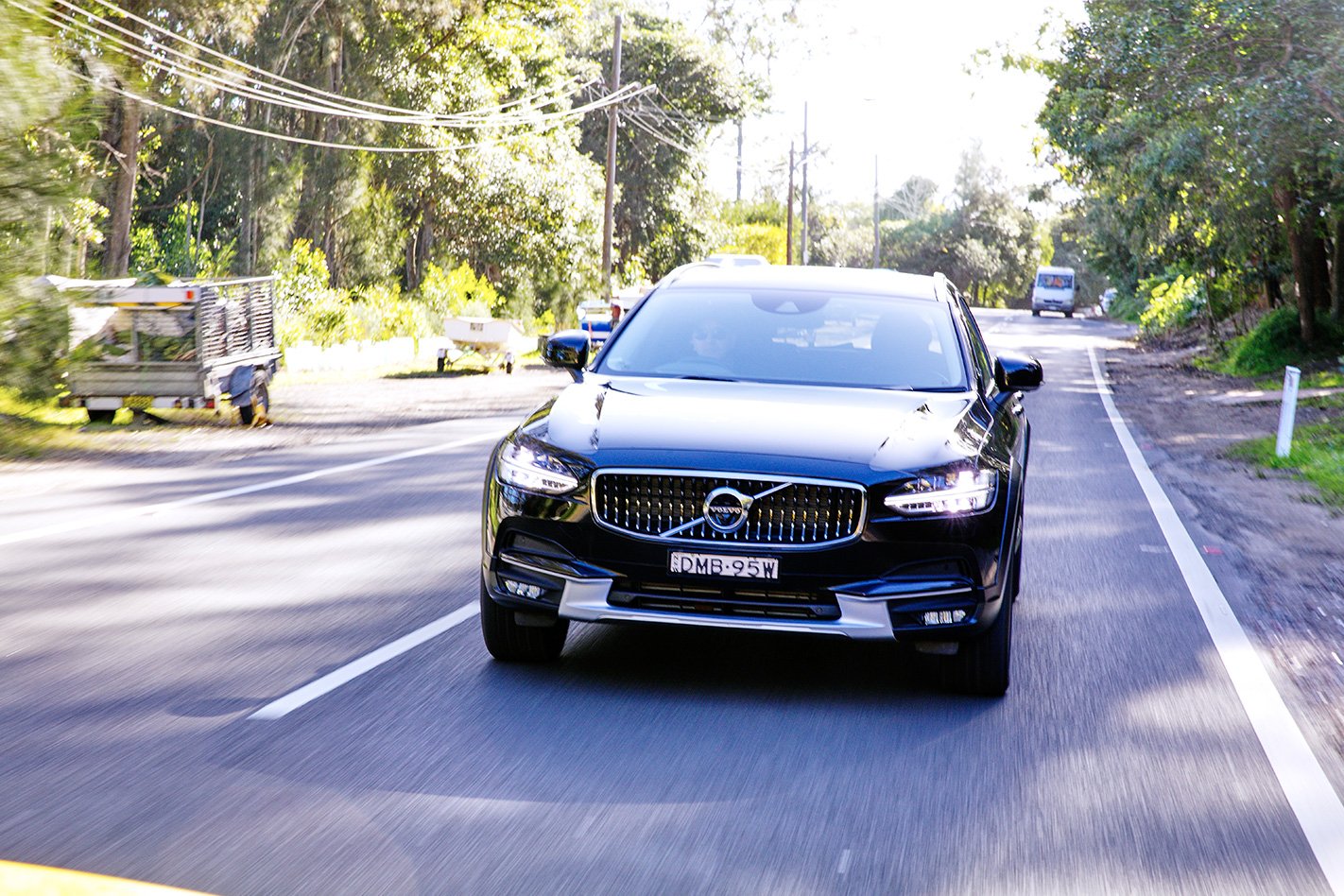
UPDATE 1
IF YOU were asked to name the ultimate hero-to-villain downfall of the modern age, I wonder if your first reaction would be, “Grant Hackett in an economy-class seat”?
But I’d suggest the slippery slope that diesel fuel has found itself on in recent years is of greater global significance, unless of course you were the owner of that cruelly tweaked nipple on a Virgin Australia flight over Melbourne back in April last year.
Diesel fuel was, for decades, touted as Europe’s supposed energy saviour, subsidised because of its energy-dense ability to reduce consumption and therefore CO2. Since then we’ve had dieselgate, alarming warnings as to how NOx emissions can be worse for your health than binge-watching a season of Real Housewives of Melbourne, and recently, Volvo’s announcement that its current diesel tech will see it out, as the company transitions to a purely hybrid/EV range by 2019.
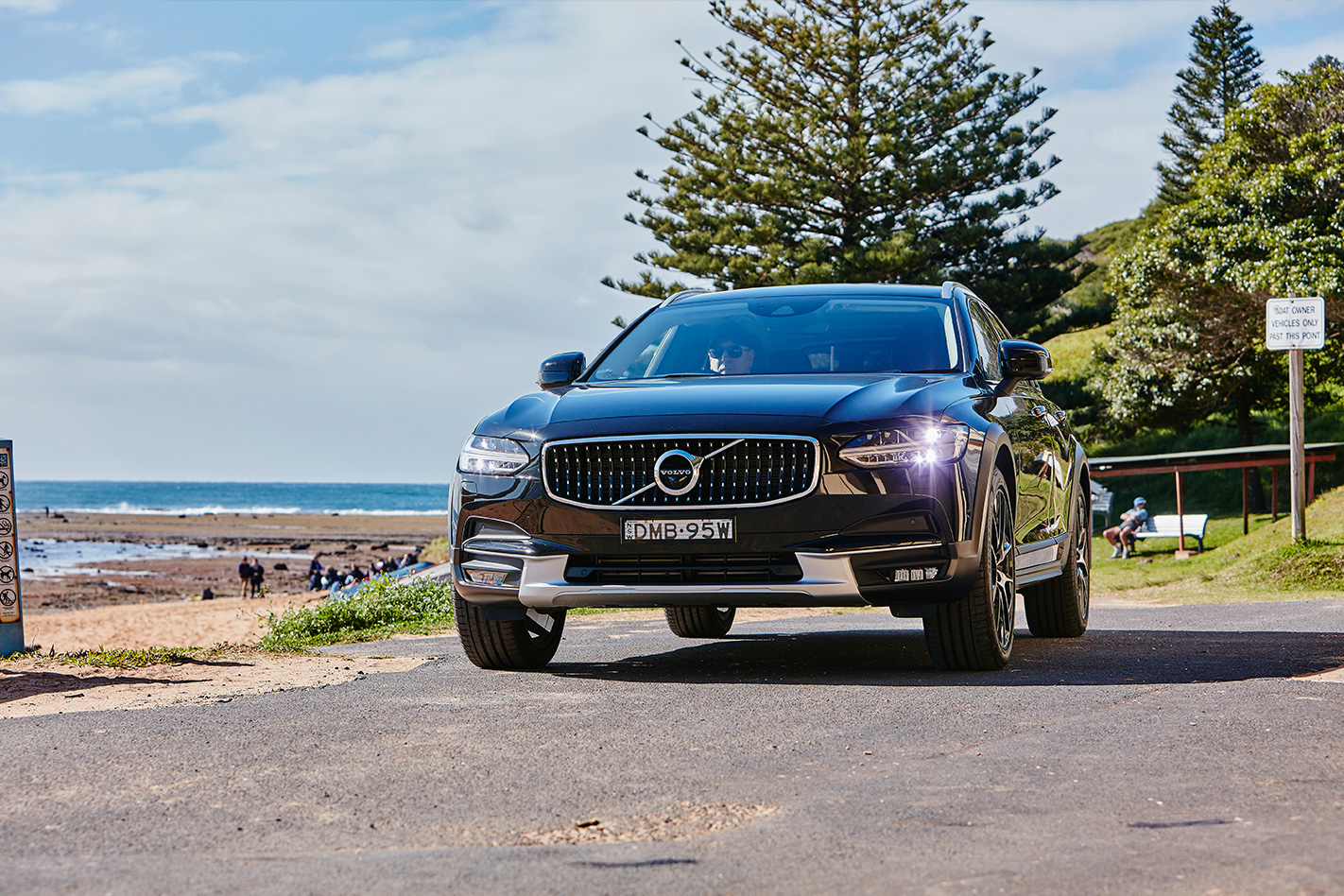
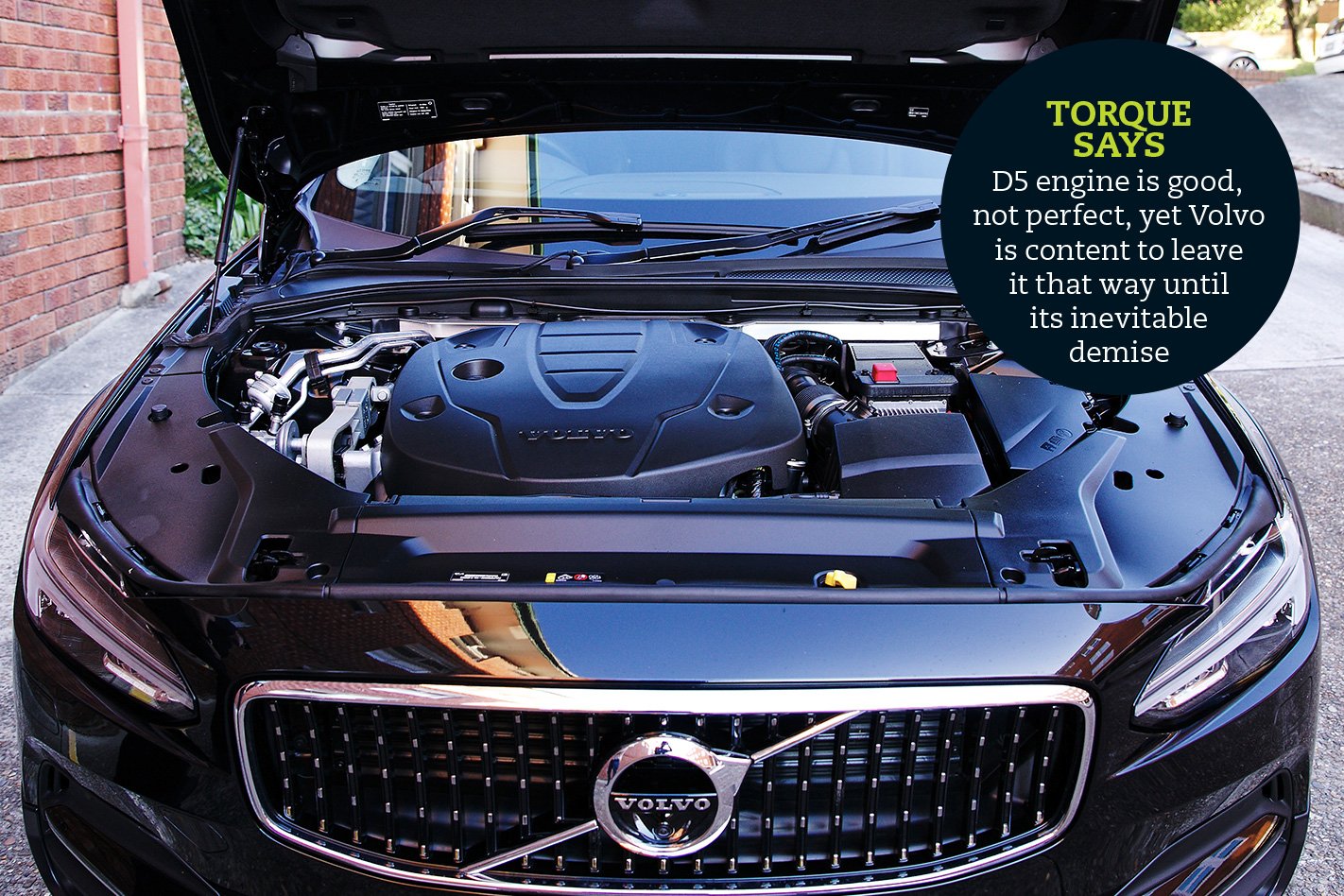
So where does all that leave me and the 2.0-litre twin-turbo diesel in my Volvo V90 Cross Country? Well, probably fairly ambivalent if this engine was an oil-burning benchmark of efficiency and refinement. Alas, it’s not, if only by a small and specific margin.
First, the positives: the D5 donk features the very clever ‘PowerPulse’ system, which sees an electrically driven compressor feed a pressurised air canister that fires a burst of compressed air at the turbine to spin it up just off idle and reduce lag.
Brilliant idea, but its effects on low-rev performance are subtle. This is a not a laggy engine, but the off-idle response is still quite soft, and teamed with the V90 CC’s hefty weight – about 2.1 tonnes with my gut and fuel on board – means you need to clog it firmly to get moving smartly, then ease off as the surge takes hold. In that bottom-end zone below 2000rpm – most apparent in slow-crawling traffic – the sound is not obtrusive, but still gravelly and identifiably diesel.
Above 2000rpm there’s a chameleon-like transition; the clatter disappears and a more anodyne growl takes over. From here to the point of peak power at 4000rpm, it’s terrifically strong and refined; you’d be hard-pressed to identify what type of fuel the Volvo is burning.
I’d be curious to see how the engine behaved if the optional drive-mode selector was fitted; would it be more responsive in Sport mode? Then again, just fitting a pair of paddles would give more immediate ratio control and potentially alleviate the soft bottom-end issue.
On the subject of the Aisin-sourced eight-speed auto, it’s largely very good without troubling the benchmark from ZF in terms of smoothness and response. What is good is its willingness to upshift on a light throttle and make use of the torque. The ratio spread is also well considered; a nicely stacked set that leaves eighth sufficiently overdriven to drop revs to just 1700rpm at a 110km/h cruise.
As for consumption, the 5.7L/100km official combined figure is the usual nonsense; it’s low sevens on the freeway, high nines around town. The engine is Euro 6-compliant, but let’s not talk about the NOx thing…
No knob jokes here
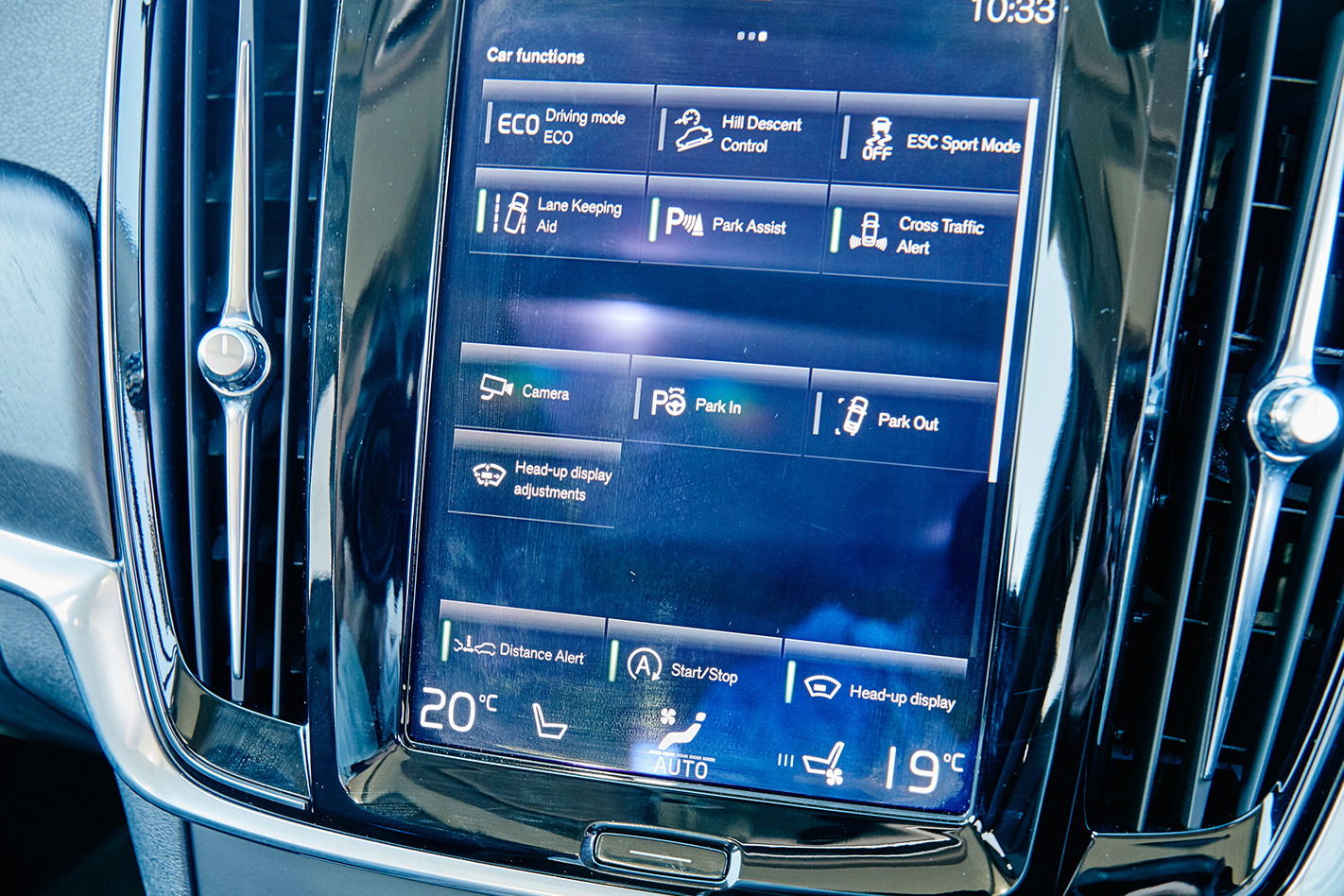
Knob lovers, roll over; resistance is futile. Multimedia screens handling every minor function are here, and there’s no turning back. Fortunately, I rate Volvo’s effort as one of the better of the breed.
Firstly, it’s super responsive to the touch. The three main pages are logically presented, they swipe swiftly, and require minimal eye diversion from the road. Crucially, there’s a hard ‘home’ key, and — rejoice — a knob for volume.
UPDATE 2
As a futurist, I’ll admit it: I really suck. I remember when SMS was introduced, and everyone got in a lather over the fact they could faff about on a numeric key pad to send each other messages.
“What?!” I scoffed incredulously. “Why would anyone bother with that hassle when they can hit one speed-dial key and actually speak to the person? Rubbish idea. Will never catch on.”
So, yeah, a few bazillion text messages later, I clearly got that one wrong.
I flag this so you know that anything I predict about automotive future tech, trends and autonomy is probably going to be hopelessly misguided, and if you can be bothered to check back here in a dozen or so years, you’ll probably see that borne out.
But I’m going to come out with it anyway: autonomous cars are coming, and the technology stands to split the driving world into two groups.
There will be those who enjoy lounging around on their phones as the computers and sensors look after the driving, and there’ll be the rest of us, who sit there, eyes peeled into the traffic, shouting and swearing at the car with nerves jangled, utterly convinced we could be doing a better job of this complex task called driving.
| 2017 Volvo V90 Cross Country long-term review, part one
I know it’s early days in the long march to the projected Level 5 autonomy that will make us nuffies redundant at the wheel, but spending time with the Pilot Assist system in the V90 Cross Country recently has forced me to face up to what I’ve probably suspected all along: I’m just too much of a control freak in a car to want to hand over the reins.
On a run up the M1 towards Newcastle recently, my internal monologue urging the car to obey my commands and not its own brainpower nearly sent the computers and sensors off to lodge a complaint about workplace bullying.
By current standards, the adaptive radar cruise control works well, and does give a level of protection from inadvertently speeding. But fact is I don’t find it relaxing or in any way beneficial to leave the car to do the slowing down and speeding up. I’m in the driver’s seat; I can’t take a nap, so surely I may as well do it? I do it better, and it keeps my mind from wandering down worm-holes.
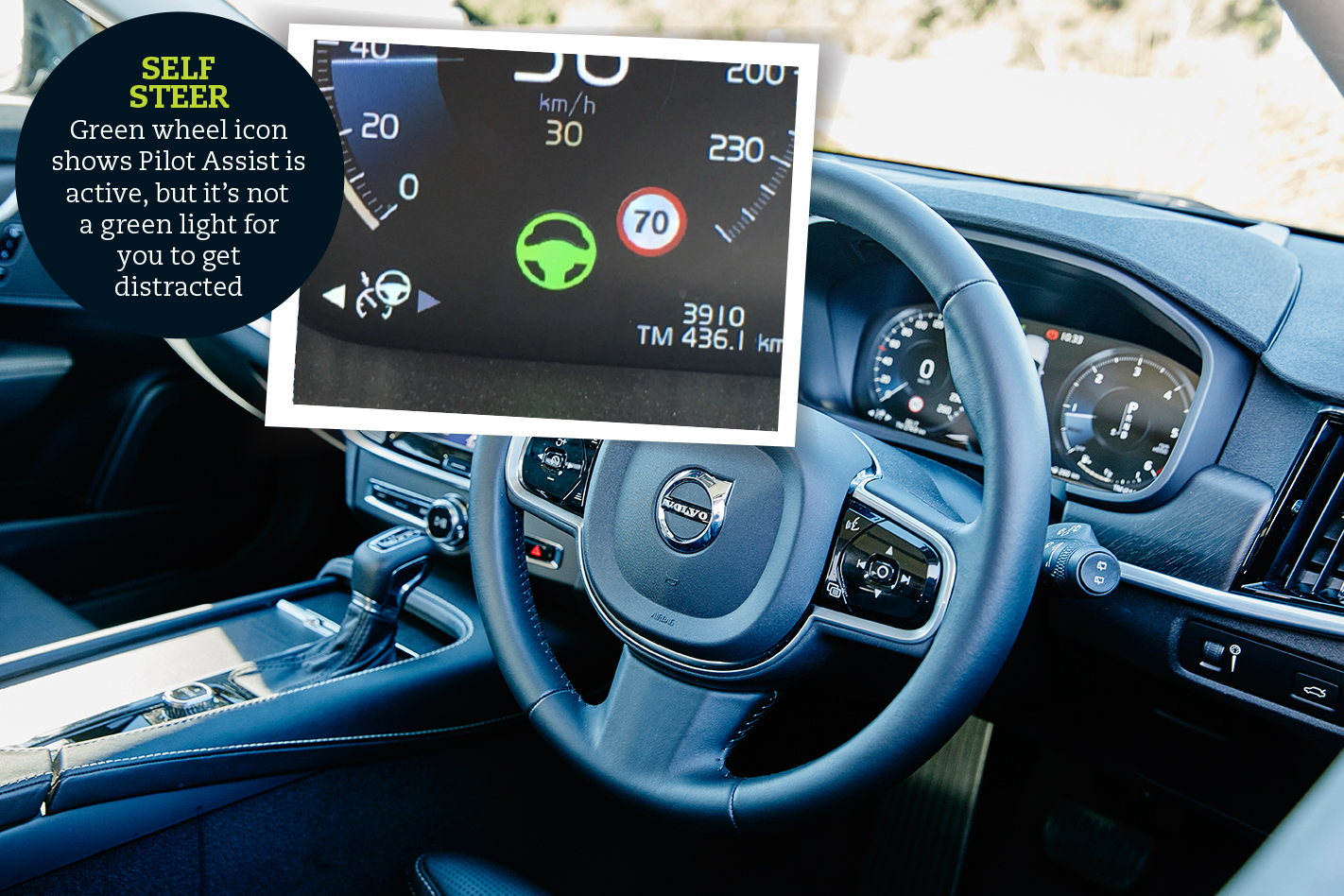
The assisted steering, too, brings mixed feelings. On a mostly straight or only gently deviating expressway, it holds the lane securely and can be useful to allow your eyes a break from the road, to take in the broader surroundings; perhaps admire some excellent roadside billboards or fields of cows, if you happen to be an enthusiast of either (I’m both).
It’s also all a bit ‘gee-whiz, here’s the future!’ when you go fully hands-off, but the car only allows you to do this for 30 seconds, so whatever it is you need to do with two hands, you need to get it done smartly. And if the road really curves, the car runs uncomfortably close to the centre divider or side Armco before the steering takes a series of small, reactive bites, rather than tracing a smooth, predictive arc.
That’s when you know you really can do this steering thing better than a machine, at least for now.
Anyway, let’s check back in 2030 to see how awesome autonomy is, and how I love it, and how hopelessly wrong I was … again.
Case closed for neat freaks
The covers for the centre console storage remind me of a high-end desk, maybe belonging to some extremely organised person who only ever has the items they need visible at any one time, then neatly put it all away each evening.
I am so not that person normally, but the elegant design and feeling I get when entering the car and finding it all neat and closed up is actually bringing me closer to the efficient, tidy human I would like to be.
UPDATE 3
THOSE of you with sharp memories may recall that, before he was appointed Labor’s Minister for Voter Dissatisfaction and Cock-Ups, lanky chrome-dome Peter Garrett was the frontman for a little Aussie pub band called Midnight Oil.
Despite them having delivered precisely zero new music in 16 years, it turns out I was not alone in being quite keen to see Midnight Oil on their Great Circle reformation tour.
A few hundred thousand Aussies felt the same way, leaving both Sydney shows – and one in the Hunter Valley – sold out.
Only one course of action, then: load the Volvo V90 Cross Country for a final roadtrip, and point north to the Oils’ Coffs Harbour gig about six hours away on the NSW mid-north coast.
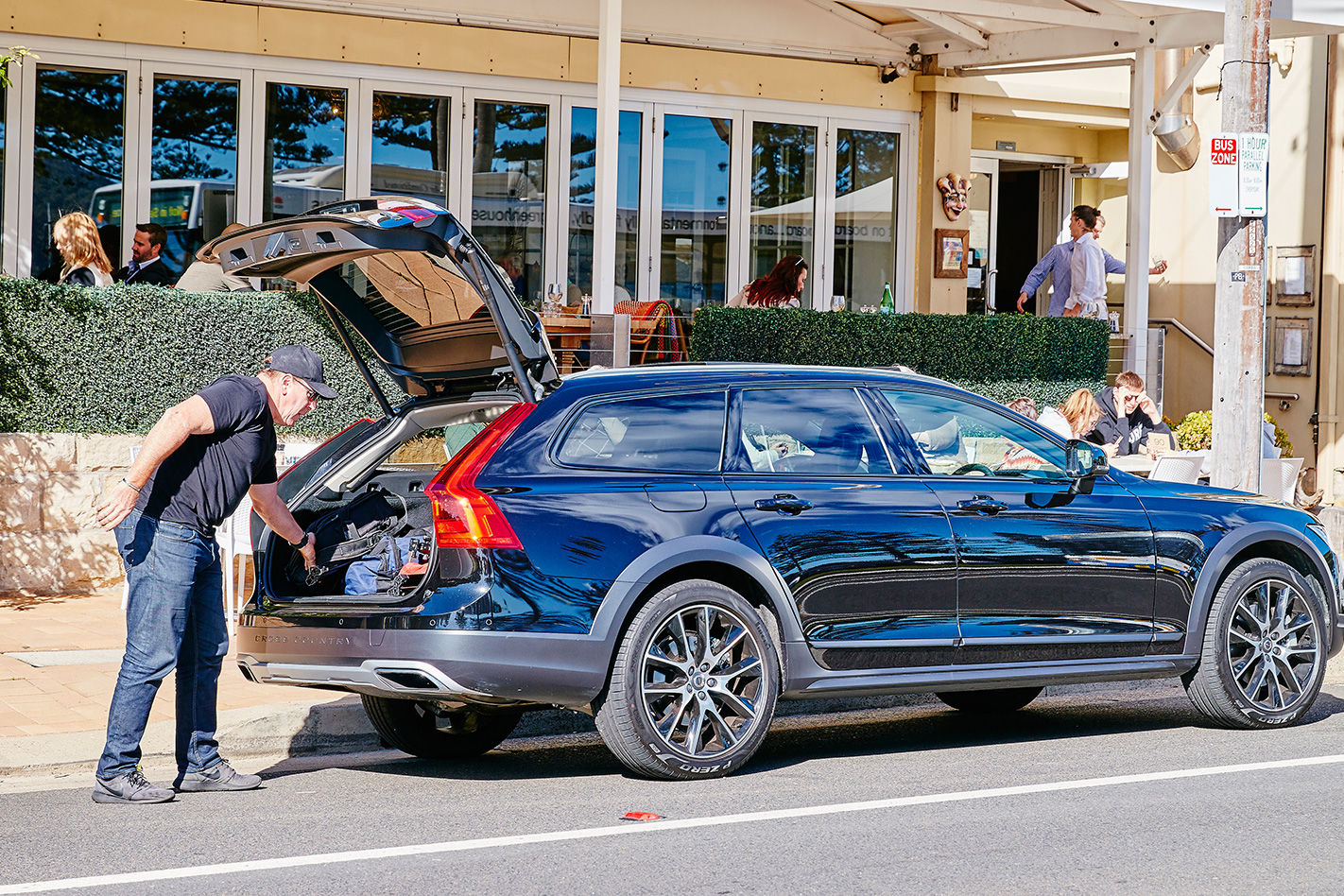
This, I figured, was the sort of role the big V90 wagon was created for: loping expressway and country driving, loaded up with everything we’d need for a long weekend away.
Well, everything we’d need, plus all the extra crap I insist on taking any time we leave Sydney. After all, I learned the art of over-packing from the master, Ged Bulmer, and given the Volvo’s 1526 litres of load space with seats folded, it seemed foolish to risk leaving anything (remotely) useful at home. So with the boot brimmed with overnight bags, beach furniture, fishing gear, esky, picnic kit, portable barbecue and the trusty piano accordion (hey, you never know…) my partner and I rolled gently out into the pre-dawn darkness.
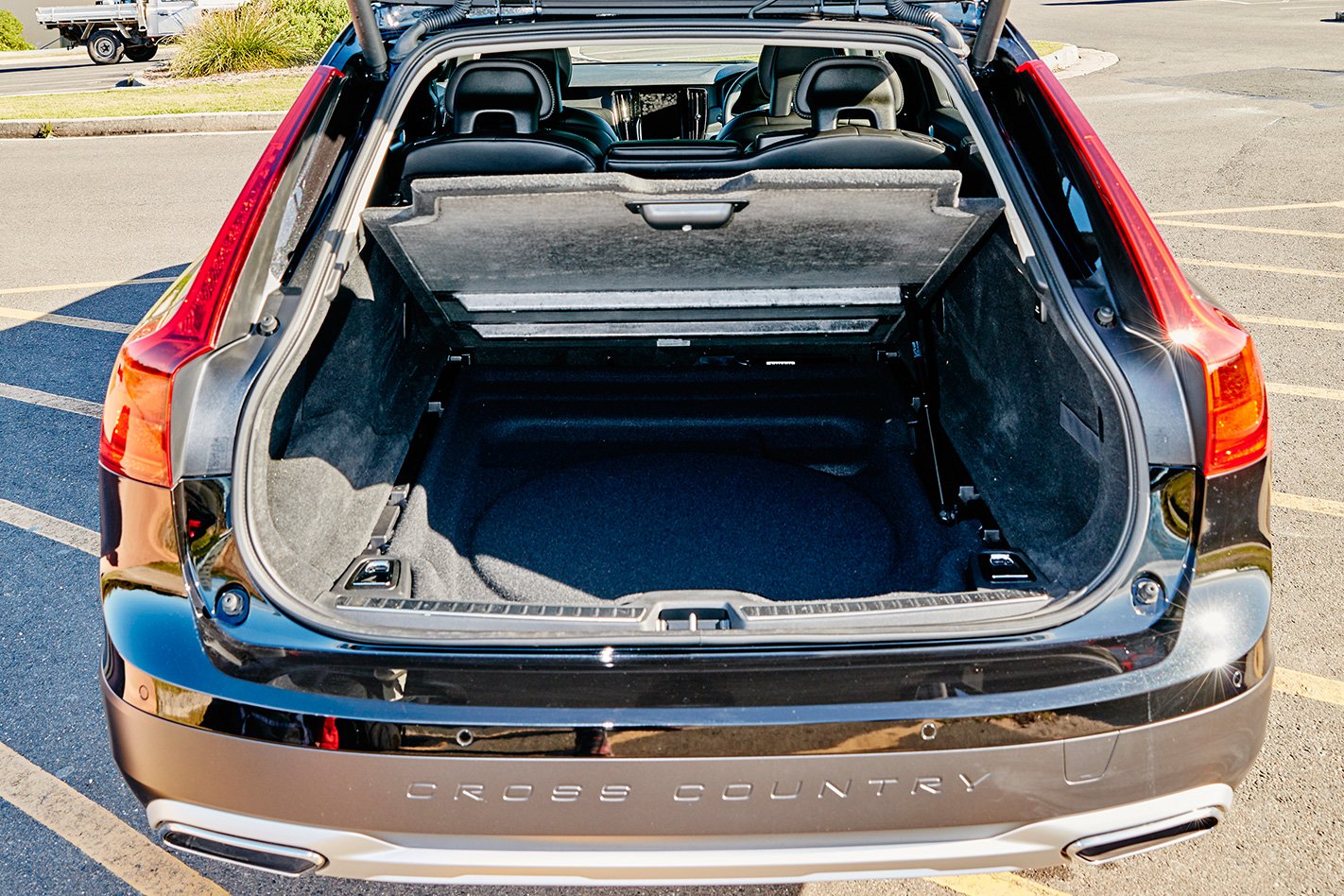
And still woke the neighbours. No question Volvo’s NVH team can do better on the low-rev acoustics of this engine, but once in its stride, it’s muscular and refined.
A 115km/h expressway cruise speed also plays to its efficiency strengths – you can watch the consumption falling from the around-town circa-10L/100km, steadily dropping to mid-sixes as the engine purrs away in eighth gear.
I know the target market may not care, but I still would have liked shift paddles for greater control of the auto, as chasing lower ratios via kickdown feels a little primitive in this age.
There’s also the sense that given the price and segment, there simply shouldn’t be fairly fundamental things like paddles missing.
On the M1 expressway towards Newcastle, I often found myself wedged in the ‘traffic scrum’, due to every other driver’s (justifiable) speeding paranoia, so when the chance came to accelerate into clear air, there was that slight lag that comes with having to kick down, rather than pre-loading a lower ratio. Yes, I could have just pushed the lever over into the manual mode, but the shift pattern is arse-about, and that irks me, and weekends away should be irk-free zones.
Those 20-inch Pirellis do challenge that theory, however. Freeway driving highlights just how surface-sensitive they are. On glassy hotmix, the sound from them slips away to a background hiss, like analogue tape, but the moment you hit coarse-chip, they roar like a Marshall amp with an open circuit.
We attempted to drown them out with some very loud ’90s Oz rock, which seemed in the spirit of the trip and worked pretty well. It’s in this mode – cruising on a mostly good surface, music cranking – that you can appreciate the accommodation virtues of the V90.
You sit in supreme comfort with seats that fully support your under-thigh zone, and waft cool air into your back via the three-speed ventilation system. The climate control works brilliantly, while the active cruise, if you are inclined, is well calibrated and responsive.
Driven like this, it’s effortless to reel off big distances. The tank’s cruising range of over 800km feels entirely useable, provided, of course, you have a bladder made of aircraft aluminium.
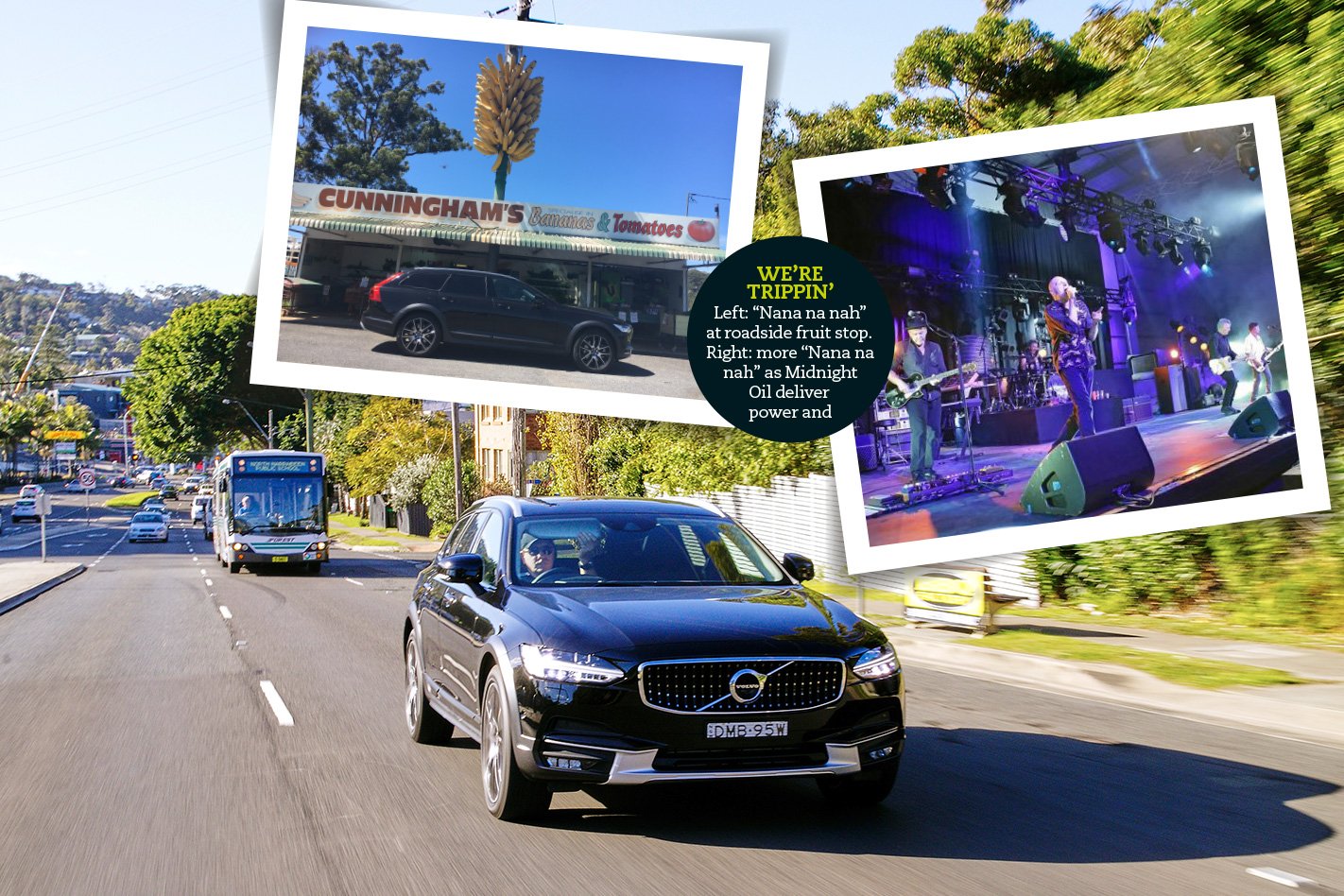
As we rolled into Coffs Harbour, I parked and reflected on the last four months with the V90. Firstly, I hope the Aussie SUV obsession never stops Volvo and the premium Euros from offering wagons in their line-ups.
Secondly, this car is very spec sensitive. If you’re considering one, I’d say avoid the 20-inch wheel option and put that $2850 towards the $6000 Premium pack that includes rear air suspension. The potential is there for an excellent, versatile touring wagon, especially if you can make off-road use of the Cross Country spec. (Er, anyone?)
And yes, the Oils really did make the trip worthwhile. As a still, star-filled night fell over Coffs, the original five members emerged on stage as fit, fired-up fellas in their mid-60s, and proceeded to rip it up in a blistering sonic assault worthy of men half their age.
Please don’t ever go back to politics, Peter. Stick with the night job.
Should fairness be optional?
Am I alone in finding the option-bundling strategy of the premium Europeans confounding, and in many instances, utterly non-consumer focused? What happened to giving customers what they want, for a fair price? Take Volvo’s $6K bundling of rear air suspension with the premium B&W audio system. Why, exactly? What do they have to do with each other? Can you imagine a restaurant only allowing you to order a bottle of wine if you pay for a dessert at the same time? Not a Swede strategy, Volvo.
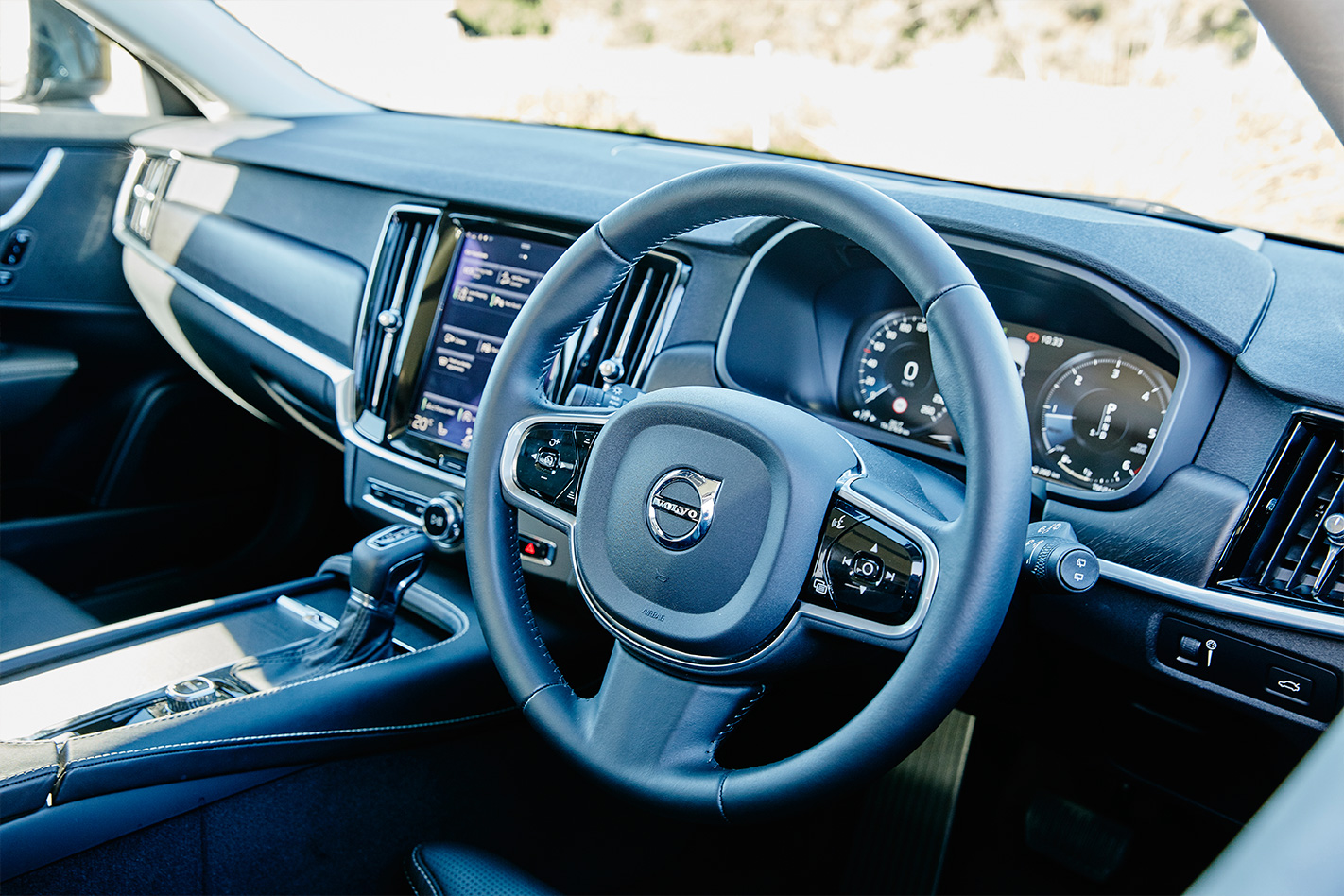
Throttle that rider
The vast power-operated panorama roof (part of the optional Lifestyle Pack that also includes dark tinted rear glass) was welcomed by anyone sitting in the rear seats, as it does make the cabin feel extra spacious and light-filled. No qualms about its operation, nor the effectiveness of the blind. Just one caveat: I’m fairly sure it’s the source of ambient noise entering the cabin. A truck, or an unmuffled Harley blatting alongside makes you feel like you’re at a screening of Easy Rider.
At the heart of any great car is its drivetrain and the complex combination of precision engineering and development is often one of the elements that leaves the most residing memories.
Over the past 12 months we have had the opportunity to put some very fine petrol, diesel and electrified powerplants through their paces, but the ones that really stood out aren’t necessarily the most powerful, noisiest or biggest (although you will find a number of tyre-demolishing large displacement donks in the list below).
To make the Wheels best engines of 2017, a new vehicle’s drivetrain has to simply do something better or more memorably than any other.
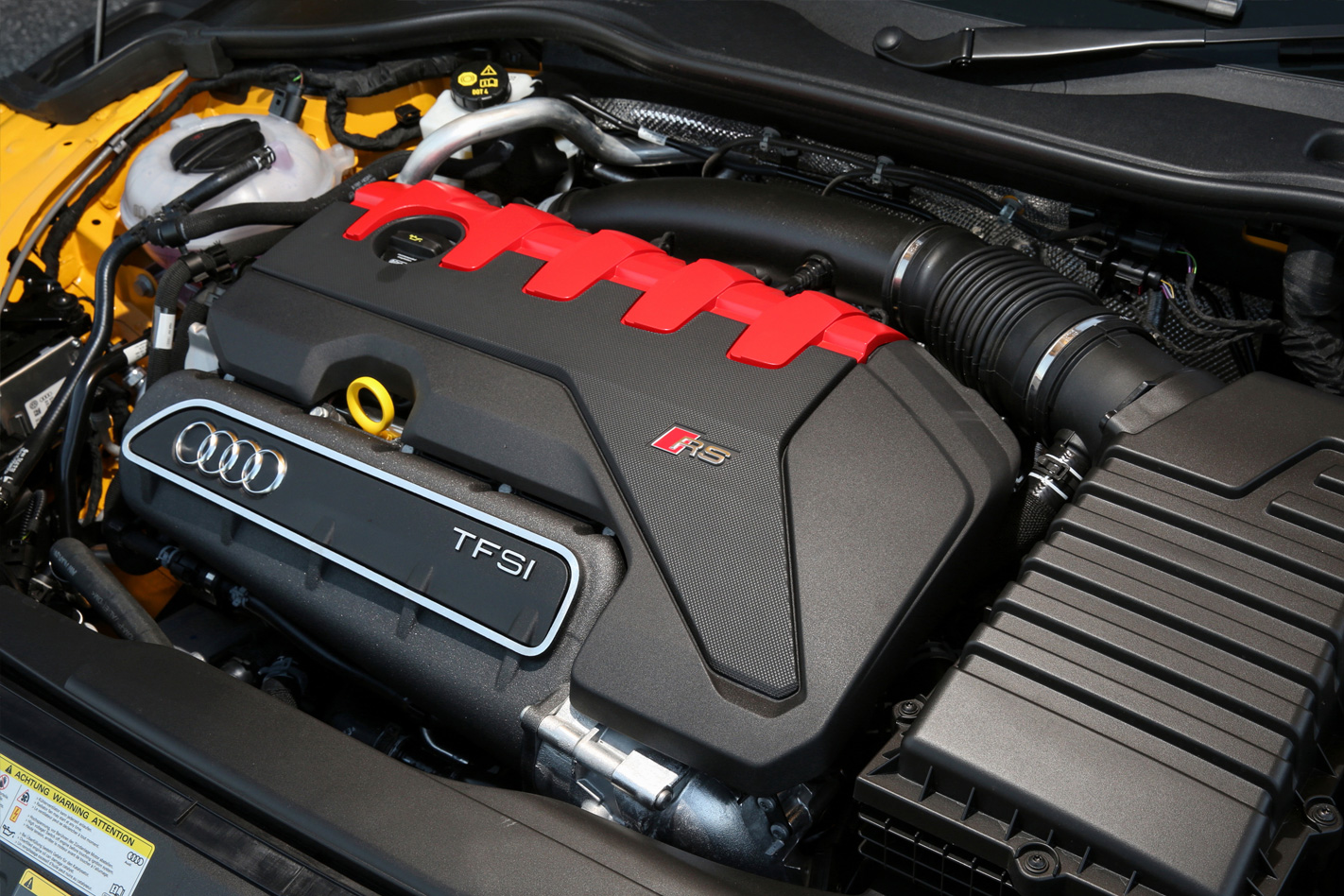
Ferrari 812 Superfast – 6.5-litre V12
Let’s start with the biggest and most powerful in our rundown. Ferrari’s monstrous 812 is not called the Superfast for nothing and with an eye-popping 588kW from a naturally aspirated V12, its big coupe has speed in excess.
Despite its massive capacity from 12 cylinders, the Ferrari masterpiece manages a stratospheric redline of nearly 9000 rpm with an accompanying soundtrack of demonic orchestral proportions.
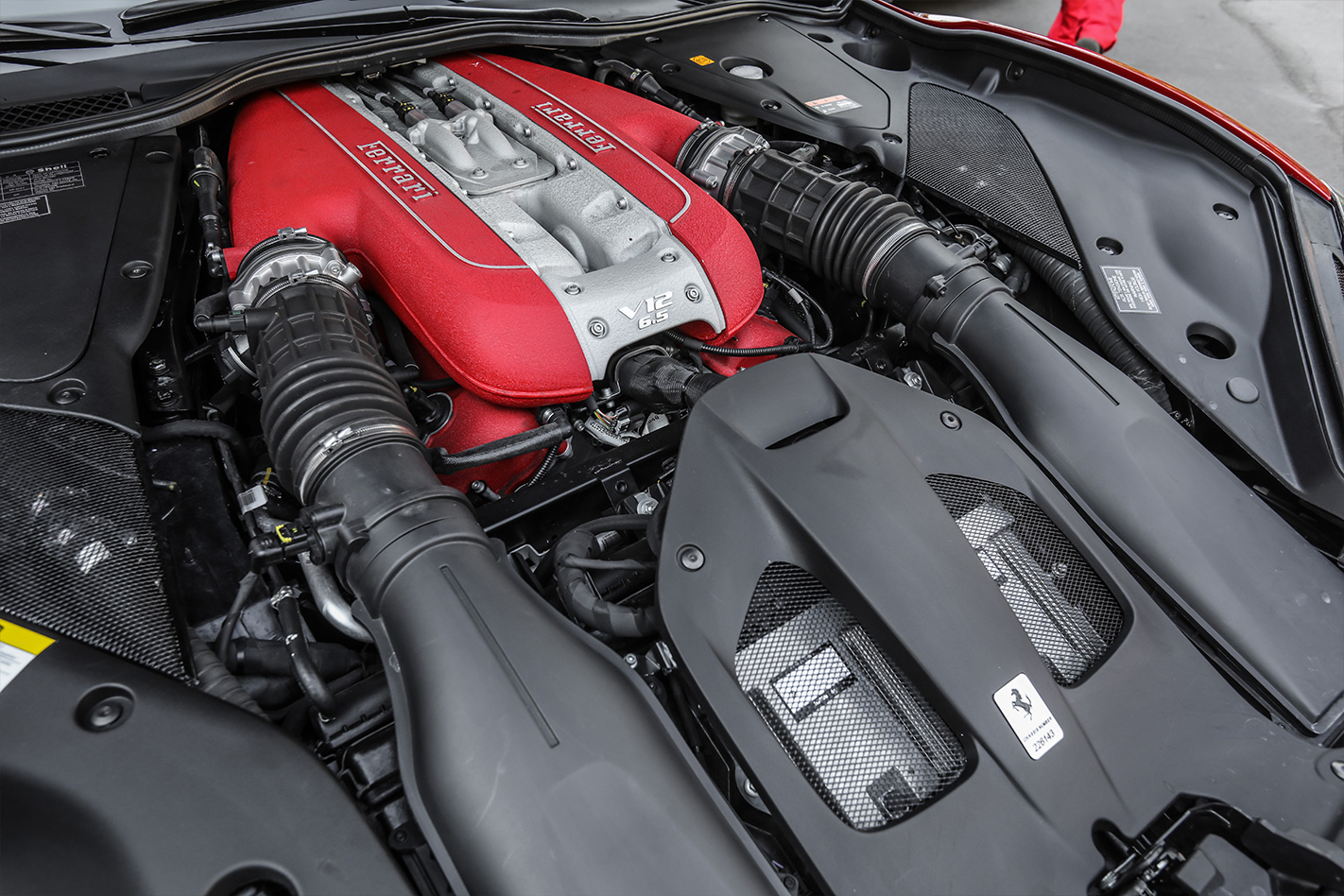
Brilliant engines are not always about more displacement and Honda’s first turbocharged Civic Type-R is a testament to that. 228kW and 400Nm from 2.0-litres is not what makes the feisty hatch memorable, especially when you consider Mercedes-AMG gets 280kW from the same capacity.
The reason the Civic’s engine is here is thanks to its race-engine-like delivery with power surging towards the top end accompanied by a dry unapologetic note that feels more rally racer than run-of-the-mill hot hatch.
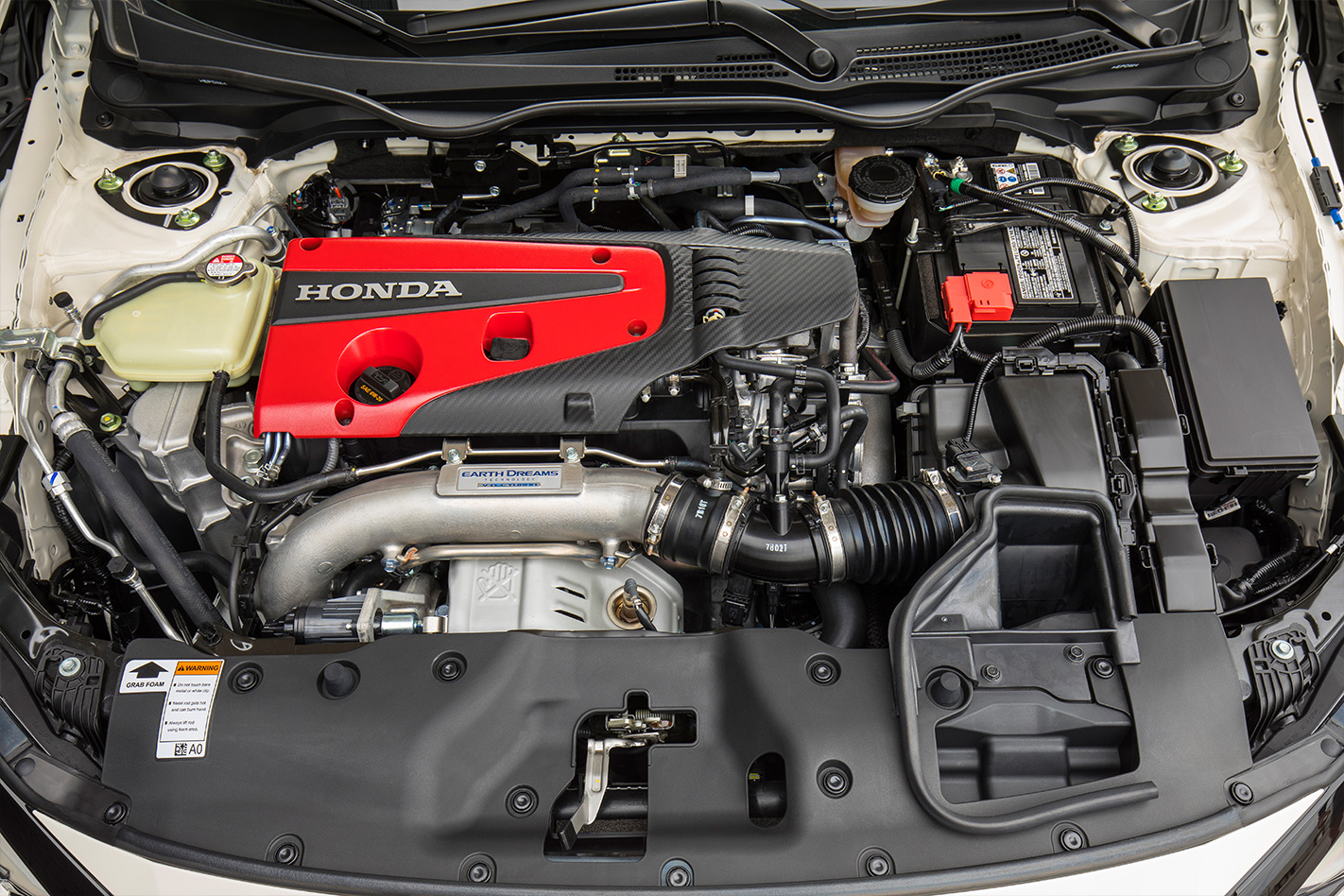
No favourite engines list would be complete without a representative of the oddball five-cylinder club and Audi delivered two cars this year powered by an all-new alloy block version that spits out 298kW under the bonnet of its iconic TT and RS3 Sedan.
It’s in our list partly for its linear power delivery and impressive performance, but mostly for its weirdly lovable yammering soundtrack that transports you straight back to the 1980s when the original Ur Quattro was tearing up tracks all over the world.
When editor Inwood piloted the formidable ‘Widow-maker’ this year he remarked how different the mighty flat-six felt compared with the unit that powers the 911 Turbo S, even though they are closely related. It’s essentially a race engine for the road.
We like it because it produces 515kW, is unlike almost everything else in the motoring world, sounds mad and it didn’t kill our boss.
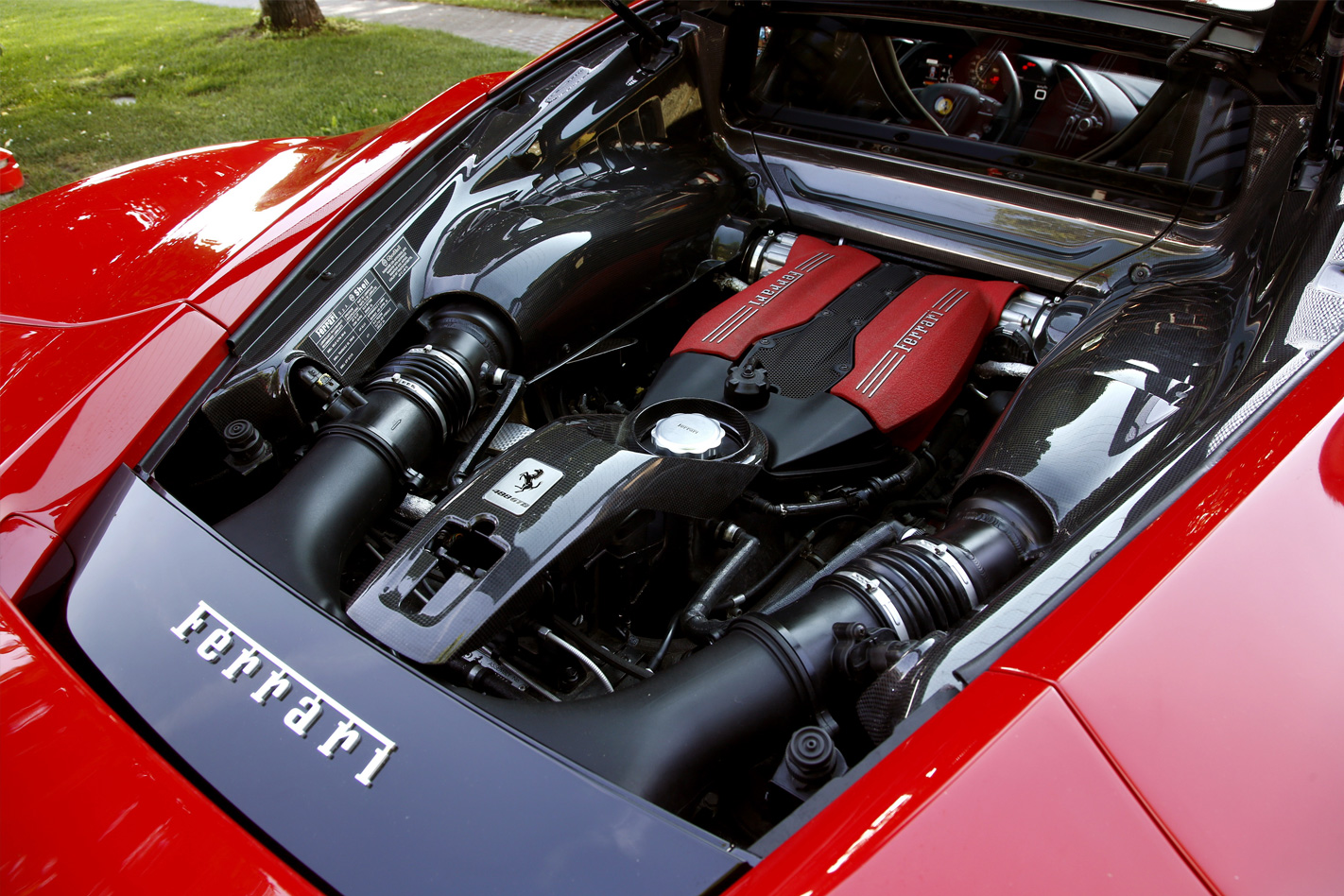
Stupendous power of 492kW, zero turbo lag and a holler that is pure prancing horse are all talents of this incredible Ferrari engine, but a clever transmission program makes this impressive piece of engineering even more enjoyable.
In lower gears, the V8 won’t let you have full torque but progressively opens the taps as you rise through the gears. The effect is the same brutal acceleration in each gear and makes it feel like the 488 will simply never stop going faster. Intoxicating.
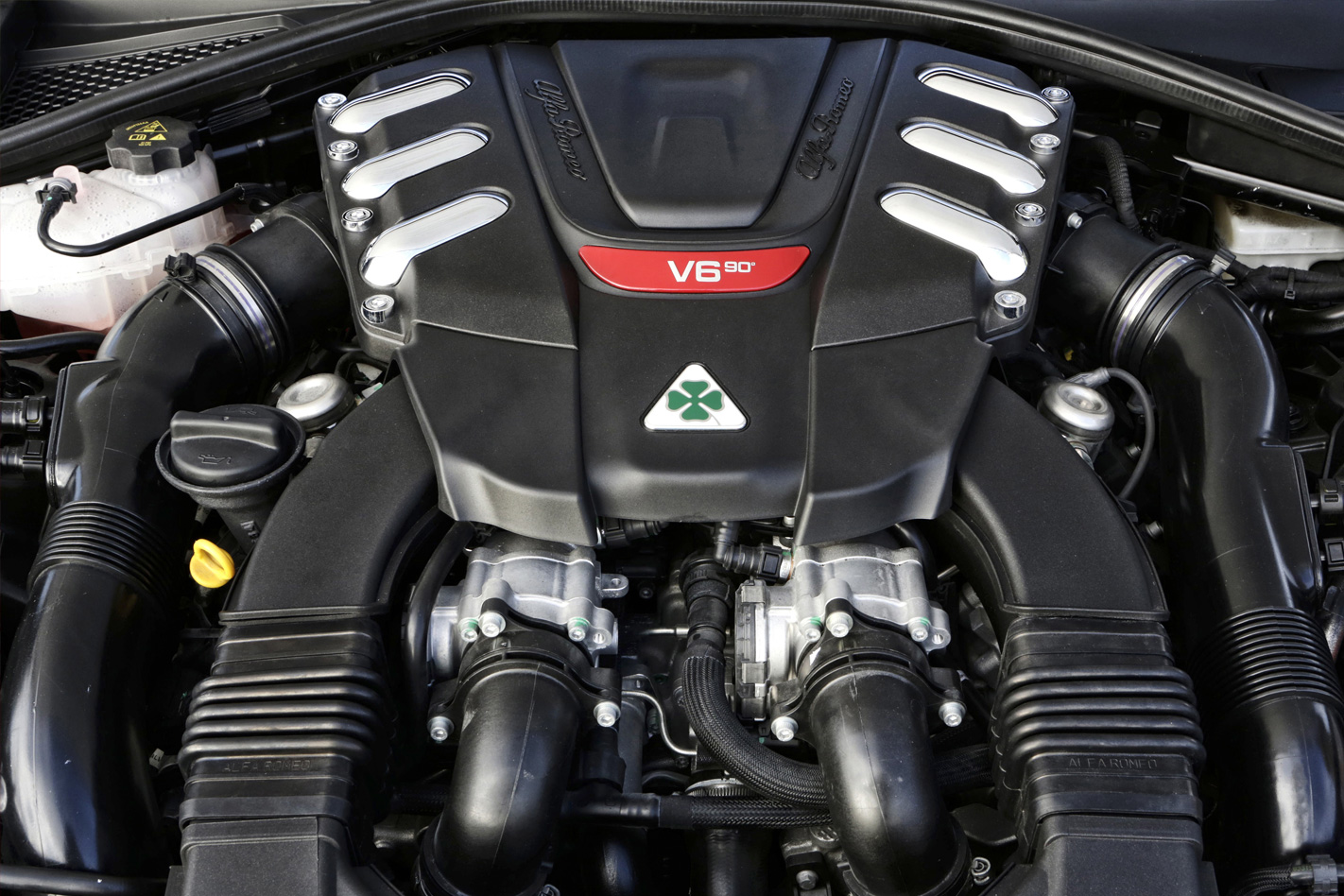
This is the car that Alfa simply had to get right if it was to stand any chance of rebuilding a reputation as a builder of competent performance cars and the engine of the Quadrifoglio Verde (green cloverleaf) version carried much of that responsibility.
Fortunately for the Italian brand, the force-fed V6 is a sensation. 375kW and 600Nm blasts the QV to 100km/h in a claimed 3.9 seconds and right into the front yard of the traditional German contenders in the hyper sedan arena.
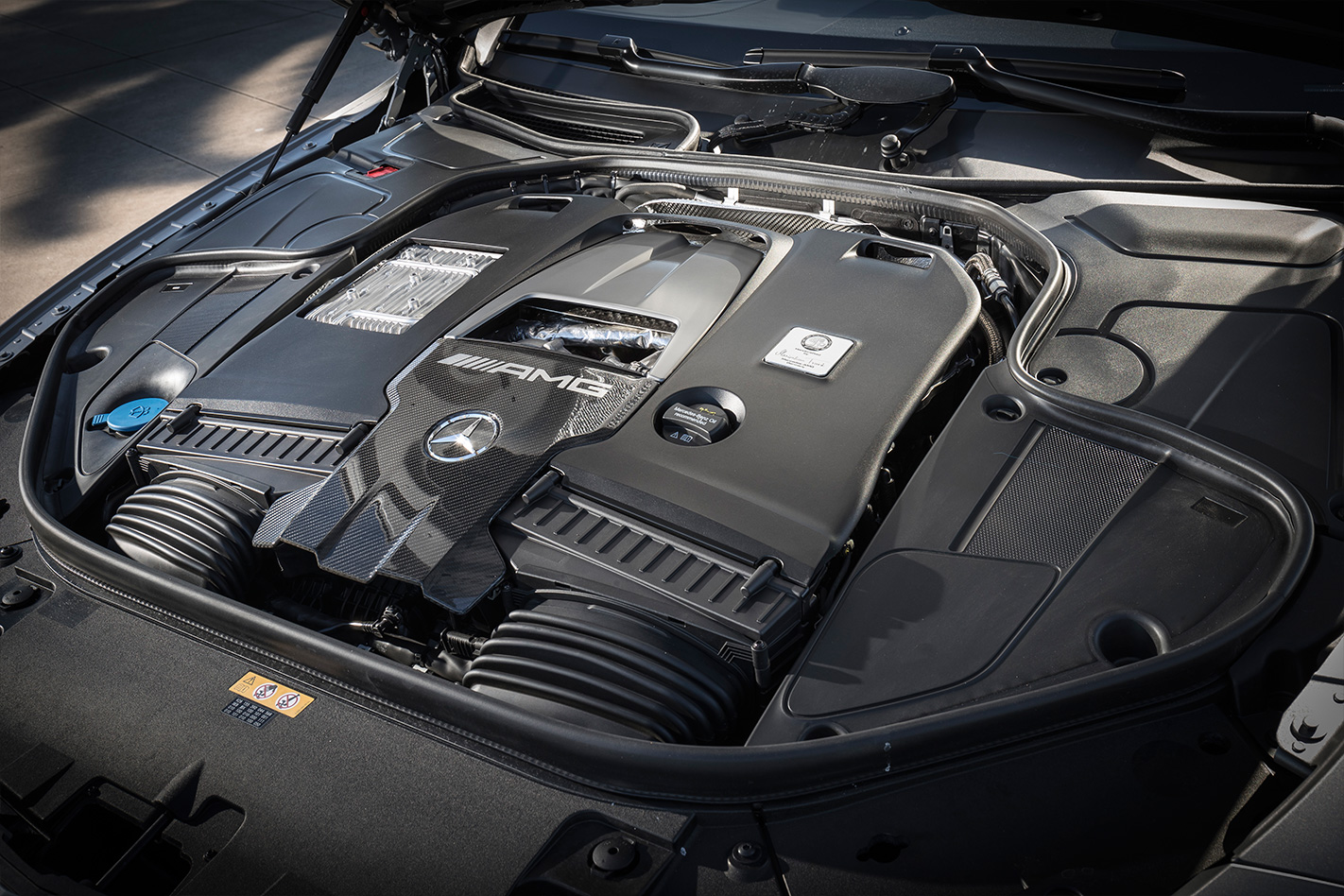
We are very familiar with the hand-built 4.0-litre V8 from the purveyors of power Mercedes-AMG, having steered many fine vehicles propelled by it, from the GT, through the C63 to the E63, but under the bonnet of the new S63 Coupe and convertible Merc has wrung out even more grunt.
With 450kW it matches the E63 S but takes torque to a new 900Nm milestone. As you might imagine, acceleration is vicious and we loved terrorising the canyons around LA with an utterly insane exhaust crack soundtrack that probably had the locals running for cover.
As an institution of petrolheads and not dieselheads, all of our offerings have been strictly spark ignition so far, but here’s a donk we simply couldn’t go past even though it drinks liquid coal.
Audi’s SQ7 engine produces a massive 320kW and 900Nm by using a complex recipe of electric supercharging and a pair of turbos and when we tested the big SUV on Germany’s autobahn it allowed us to crack a very un-SUV-like 259km/h.
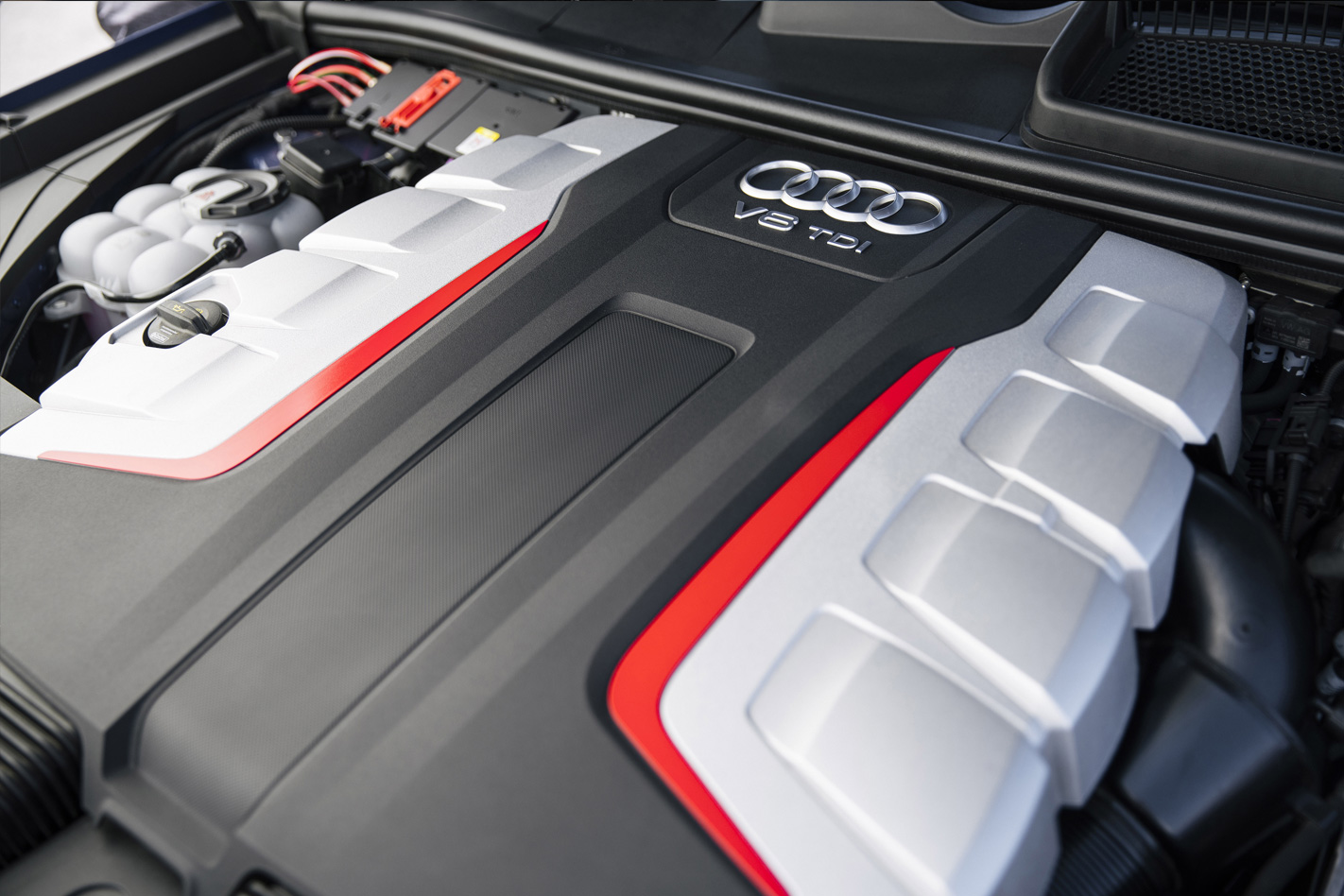
Expect to see more of this engine. While it is closely related to the Audi S4 and S5 3.0-litre V6, a downsize to 2.9-litres by shortening the stroke by 3mm and the addition of an extra turbo pushed power to 324kW.
It also powers the new Audi RS5 flagship four-seat coupe and adds prodigious, useable power to both large SUV and executive coupe alike. We reckon it is the perfect fit for many other high-performance vehicles in the Volkswagen Group family and predict it will be making more appearances in 2018.
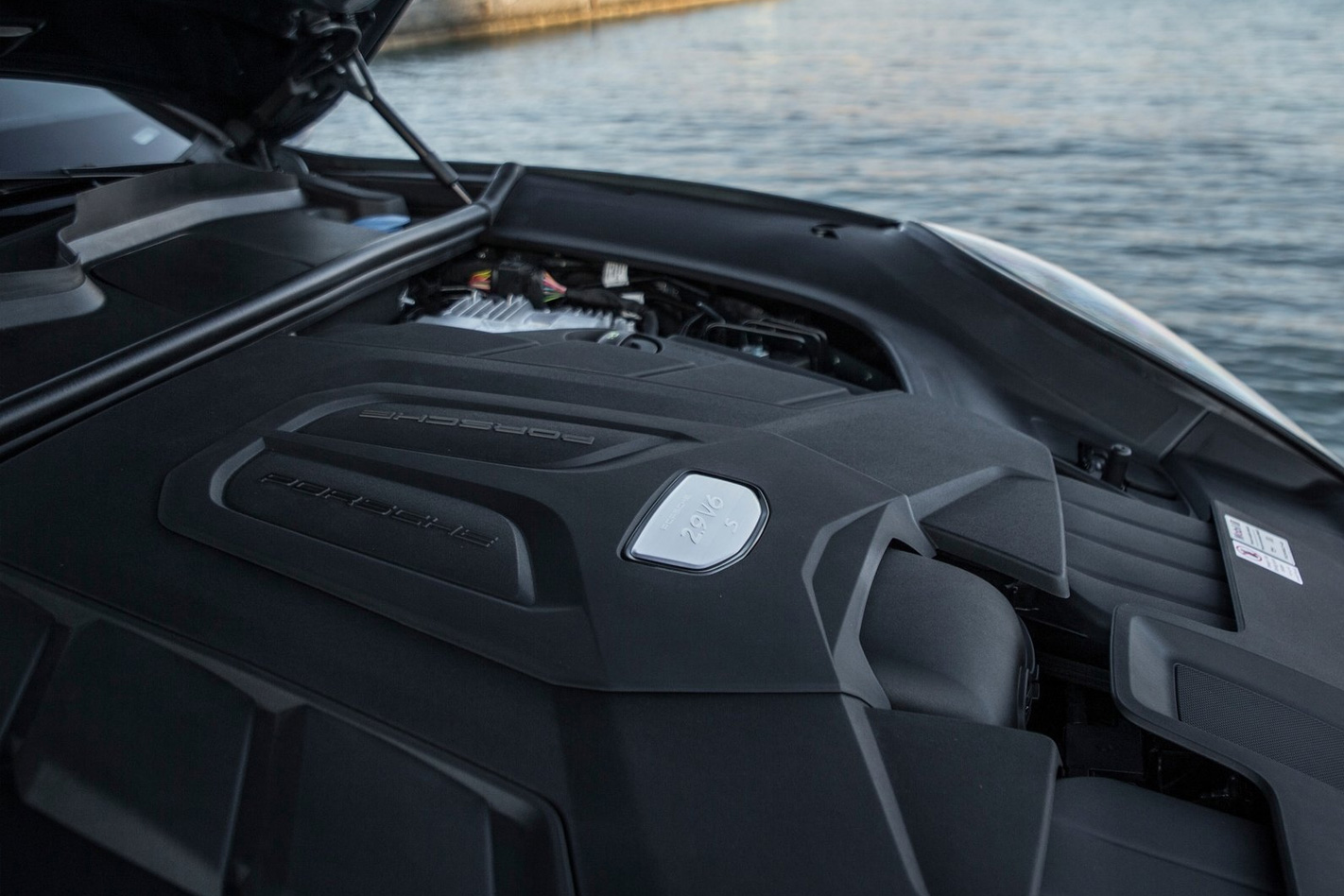
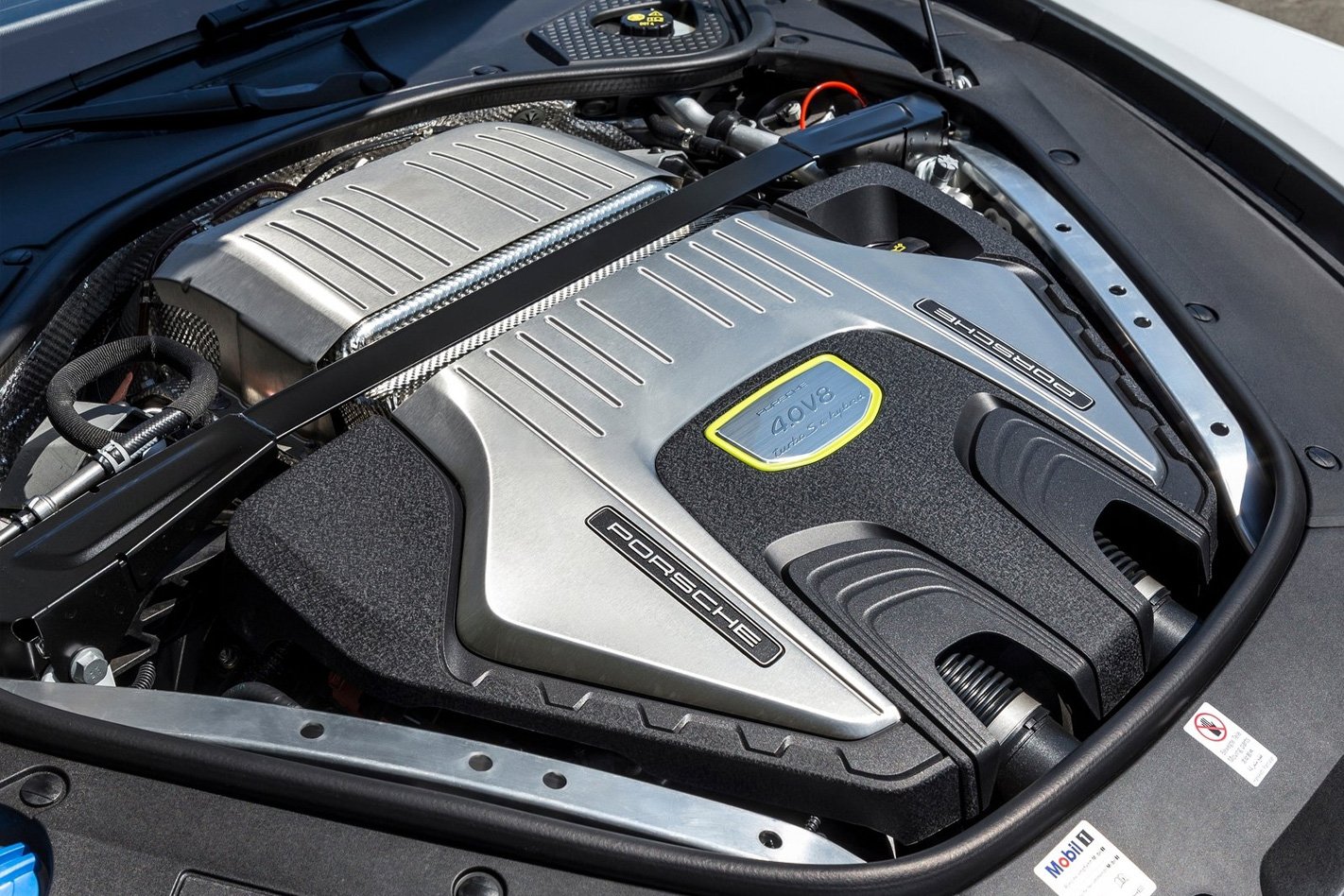
Hybrids used to be all about saving fuel and reducing emissions at the cost of driving enjoyment and performance, but Porsche’s top-shelf Panamera completely rewrites the rule book on PHEVs.
On its own, the turbo V8 produces a handy 404kW but an electric motor dumps in another 100kW for unbelievable pace and instant acceleration no matter what the gear, revs or driving conditions. That’s our kind of hybrid.
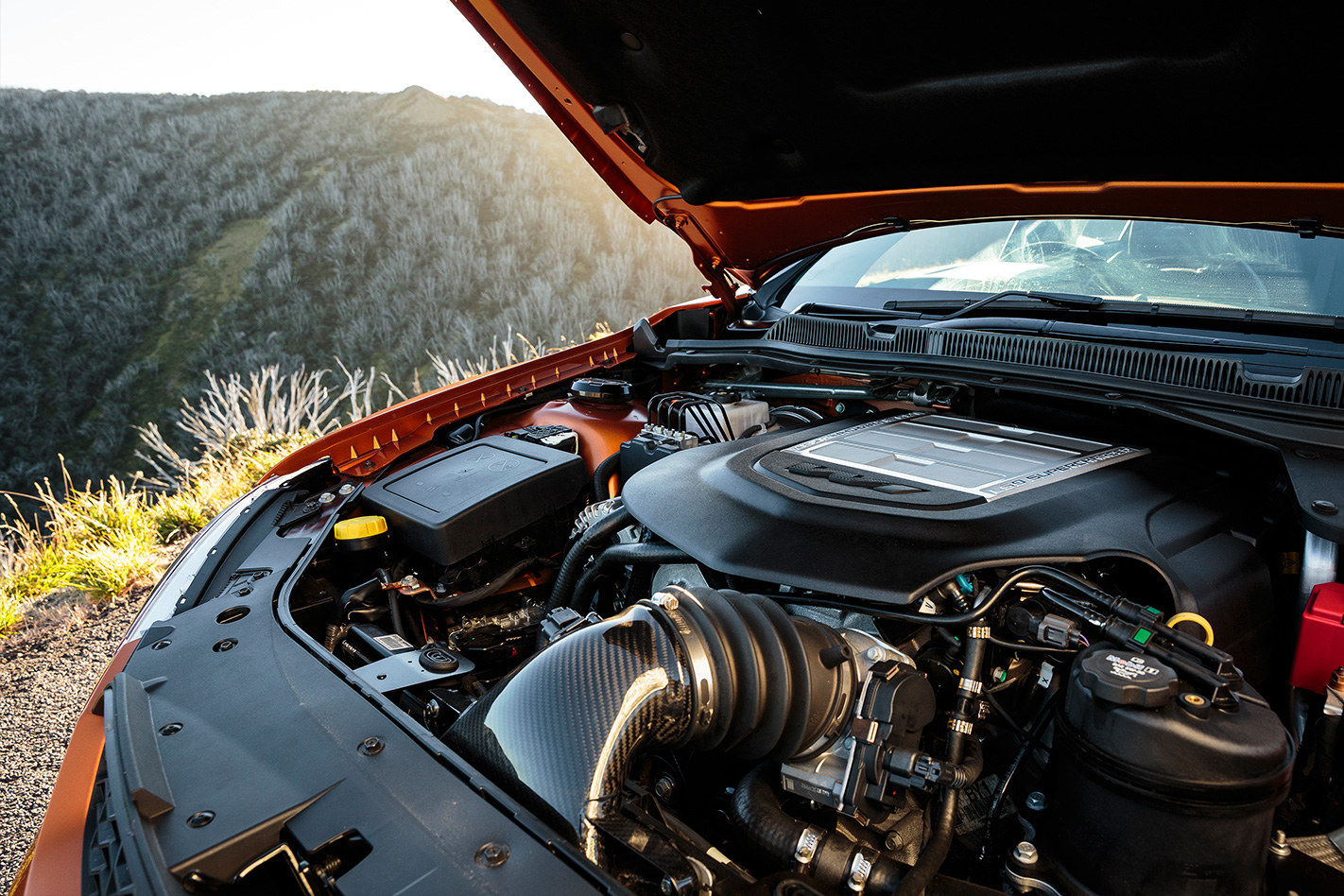
It’s not just that the mental W1 pumps out a 474kW and 815Nm and it’s not just that its LS9 V8 was pinched from the mighty Chevrolet Corvette.
The HSV GTS-R W1 engine is here because it powers the last HSV to use an Australian made car as its basis and showed exactly what this great country is capable of creating when it puts its octane-fuelled mind to it. The savagely fast W1 will always be one our favourites.
BIG, bad, brawny and mechanically simple V8s have been the bread and butter of the Corvette for decades, but recently leaked CAD images show that things are about to get a little more sophisticated for the beloved ‘Vette’s next-generation replacement.
Published on enthusiast site corvetteforum.com, a single image purporting to show the powerplant of a range-topping Corvette variant depicts something that’s so far evaded GM engine bays: a twin-turbocharged overhead cam V8. Not the most ‘Murican of configurations for The General’s star-spangled sportscar, but performance freaks are unlikely to care.
We’ve glimpsed CAD illustrations of the new mid-engined eighth-generation Corvette’s innards before, however those images – also unearthed by corvetteforum.com – depicted a naturally-aspirated V8, most likely the 6.2 litre LT1 that powers the current front-engined C7 Corvette and Camaro SS. The latest image, meanwhile, shows something we haven’t yet seen: a dual overhead-cam V8 with a pair of turbochargers hanging off each side and a set of water-to-air intercoolers nestled in the valley.
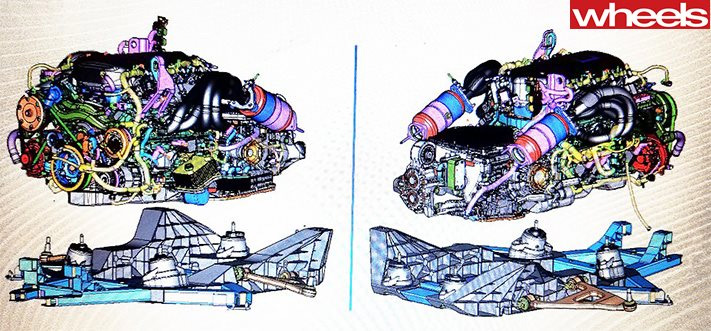
Expected to carry the engine code ‘LT7’, this turbocharged donk is expected to power a mid-ranking variant as well as the flagship model of the C8 Corvette family, leaving the 6.2-litre pushrod-equipped LT1 to open the range. Both the mid-level and range-topper will feature a pair of turbochargers and twin-cam cylinder heads, but the former is expected to displace a modest 4.4 litres while the latter will flex 5.5 litres.
As for power output, those numbers are still very much top secret. However with the LT1 already capable of a very stout 343kW without the aid of turbocharging, the Corvette’s advanced new powerplants should easily eclipse the 485kW and 563kW outputs of the current Corvette Z06 and the mighty Corvette ZR1.
The best part? Chevy’s supercar is being fixed up with an Australian visa as we speak.
THE 2017 Supercar season will be regaled as one of the finest in the modern era of the sport.
It had everything; big shunts, daring comebacks, a torturous Bathurst 1000, door-banging racing, that nail-biting finale, and a season-long duel between drivers and teams that pushed the best in the business to the very edge.
But hang onto your butts, because 2018 is shaping up to be a belter. Here are all the reasons why you should tune in.
Erebus Motorsport’s revival
The story of Erebus Motorsport should one day be made into a movie. It has everything from a shock entry into the sport, to struggling at the back of the pack in uncompetitive Mercedes-Benz cars, and then rising from the ashes to win the 2017 Bathurst 1000 behind the wheel of a Holden.
The squad is currently in a renaissance period, finding its stride with the oddball David Reynolds leading the way behind the wheel. Hotshoe young gun Anton de Pasquale joins the team in 2018, and perennial frontrunners Triple Eight has admitting to relishing having the Erebus Holdens hot on its heels. Erebus will be one to watch this season, and a loveable underdog to support for the championship.
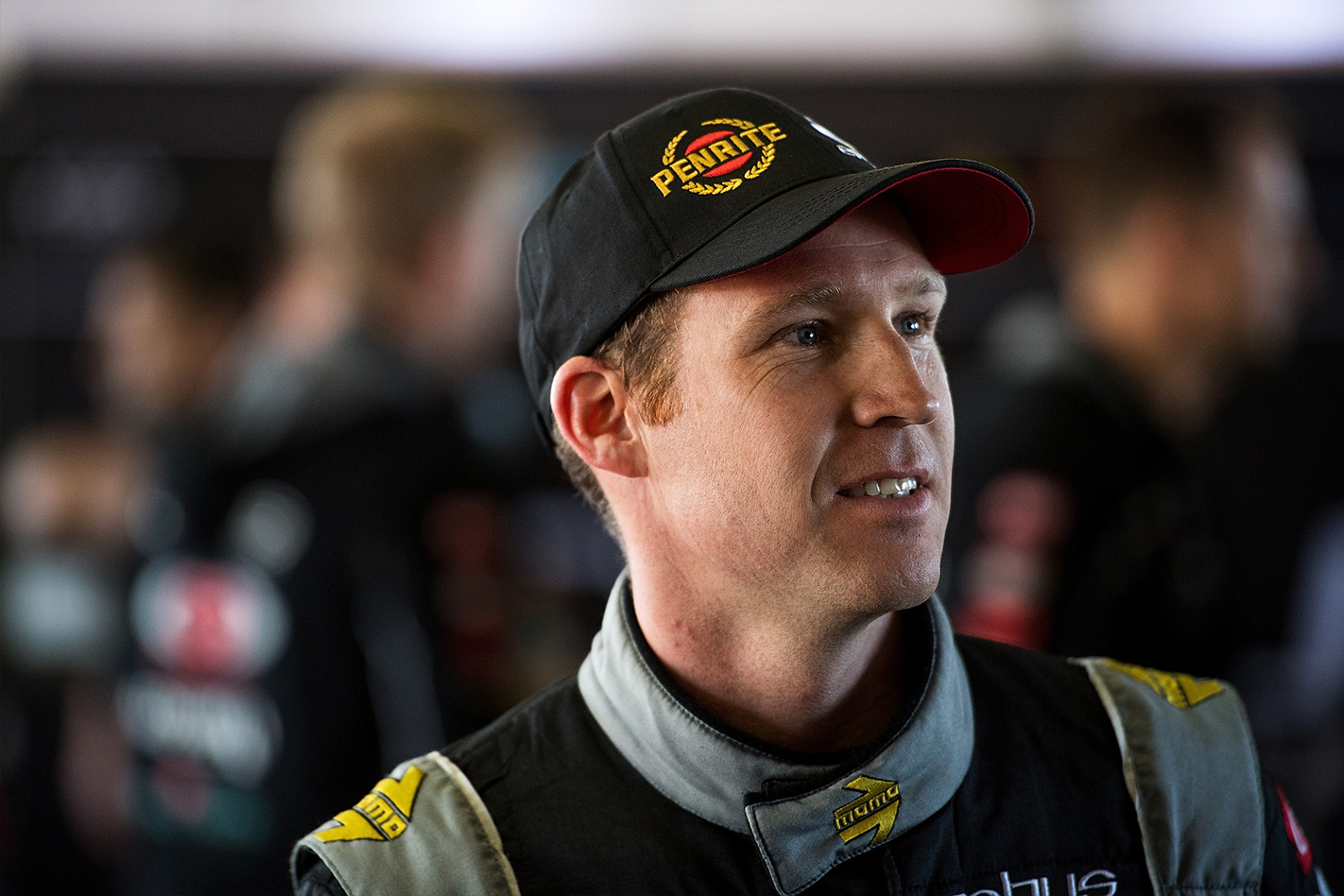
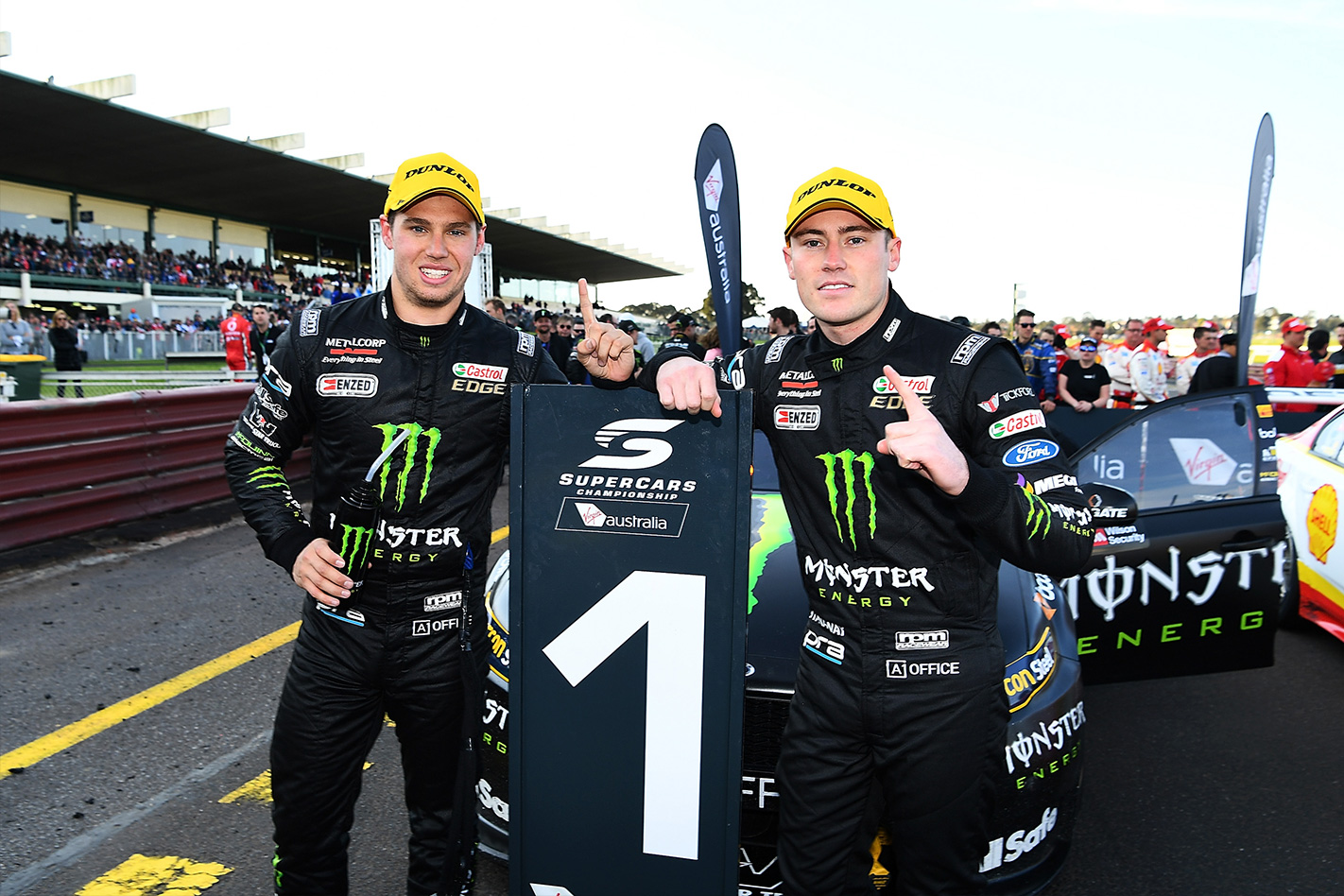
A new year means fresh drivers, with Todd Hazelwood, James Golding, Richie Stanaway, Anton de Pasquale, and potentially Jack Le Brocq starting their rookie seasons in the premier class. Stanaway arrives with plenty of hype and with a Supercars race win already under his belt after claiming victory at last year’s Sandown 500, while Hazelwood and the Matt Stone Racing team bring back the true spirit of privateer racing on a tight budget. Each of the rookies will want to prove themselves, so think of it as a championship inside a championship between the young guns.
Blue Oval fans rejoice, as 2018 brings with it two new Ford racecars to the Supercars grid. Matt Stone Racing and the newly rebranded 23Red Racing (nee Lucas Dumbrell Motorsport) will both field FG X Falcons, alongside the two from DJR Team Penske, and four from Prodrive.
Ford won the constructor’s championship last year, upsetting a streak long held by Holden. Despite the two extra cars, Ford remains outnumbered, with 14 Commodores on the grid in 2018. Nissan will field just four Altimas.
Admittedly, it’s going to be a little odd seeing a Ford FG X Falcon, which went out of production in 2016, racing and potentially beating Holden’s fresh-off-the-boat ZB Commodore.
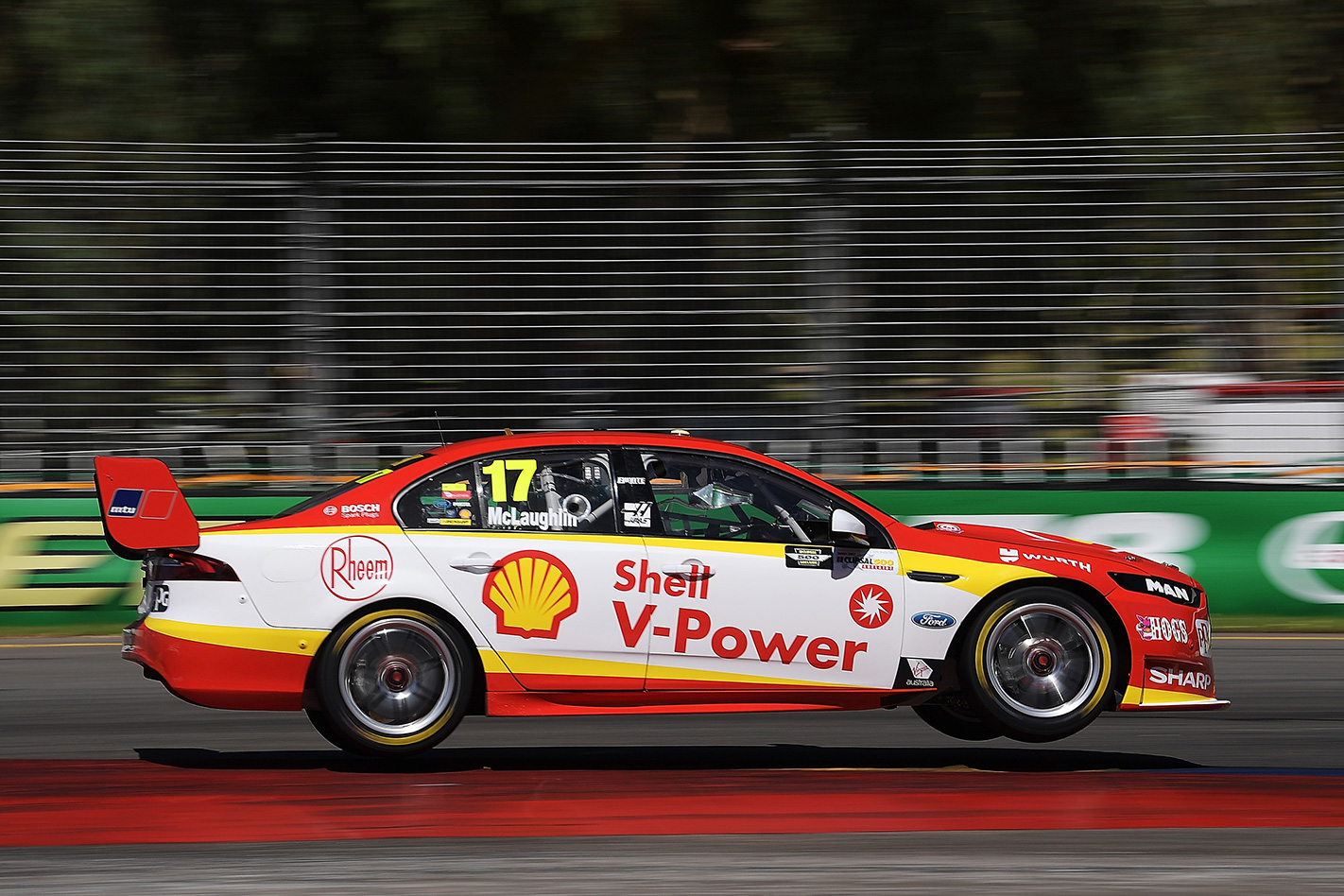
It was a case of so close and yet so far for Scott McLaughlin in 2017. With one hand on the trophy at the start of the last lap of the year, it all went to hell in a shocking turn of events that allowed Jamie Whincup to secure his seventh title. The Kiwi youngster and his DJR Team Penske squad will want redemption in 2018, and will be firing on all cylinders to secure what would surely be an emotional first crown.
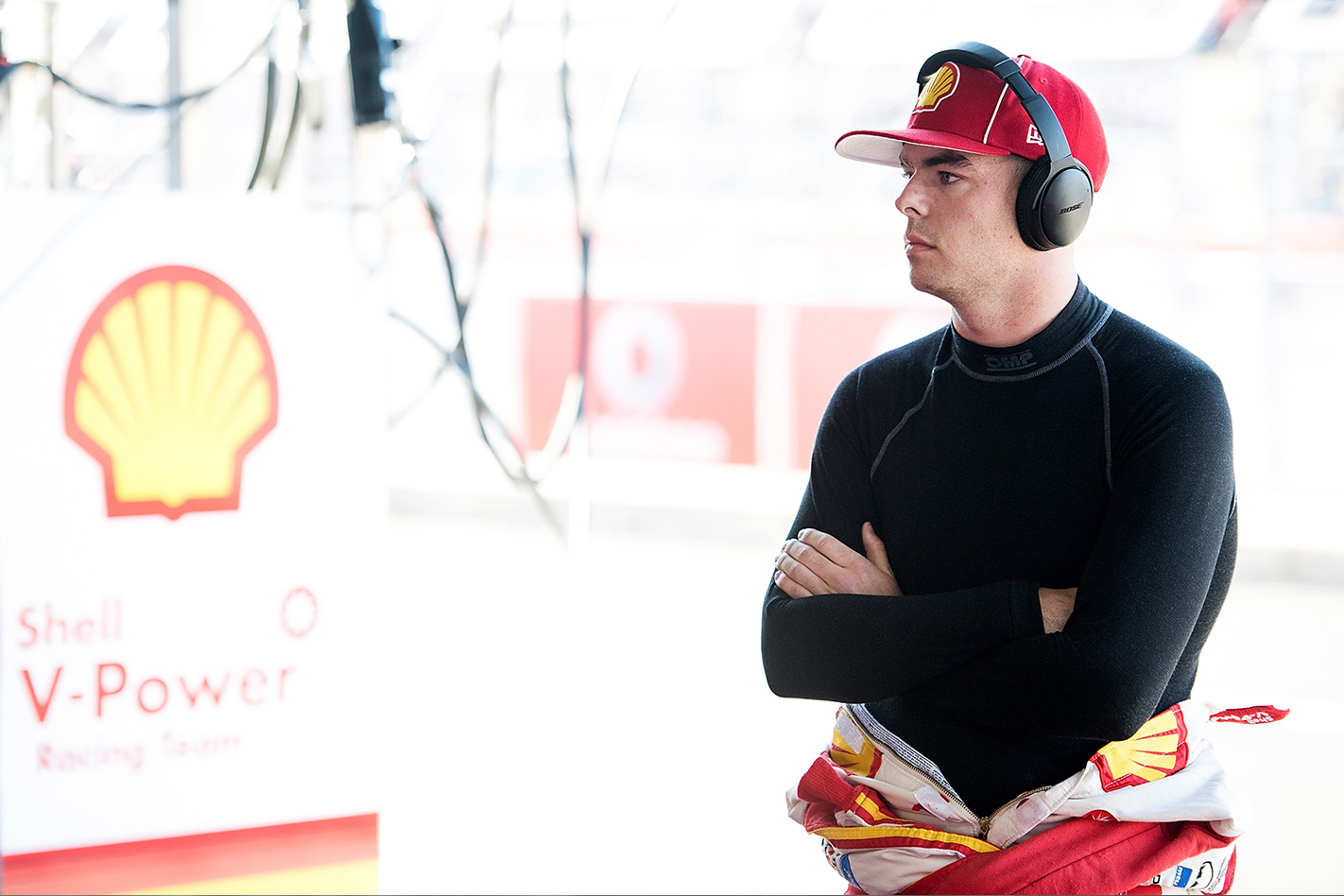
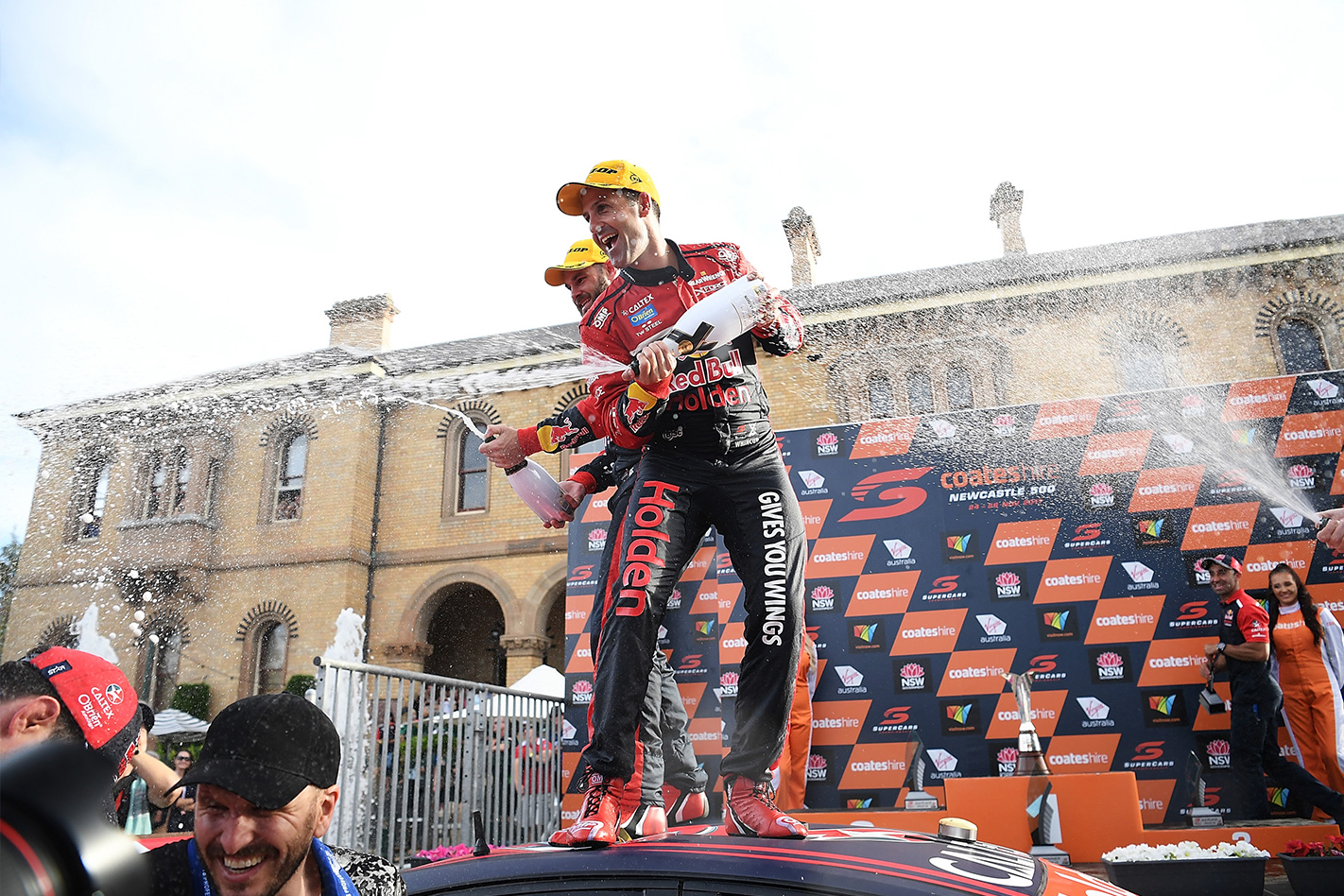
Standing in McLaughlin’s way is the greatest Supercar driver of the modern era (arguably ever) and one of the best touring car racers to grace a racetrack – Jamie Whincup. Having won his seventh championship in 2017, the notoriously focussed Whincup will be eager to go back-to-back for an eighth. As extra motivation, DJR Team Penske snatched the team’s championship from the Red Bull Holden Racing Team, and the coveted spot at the end of pit lane, last year. When that ZB Commodore with a #1 in the window rolls onto the track, look out.
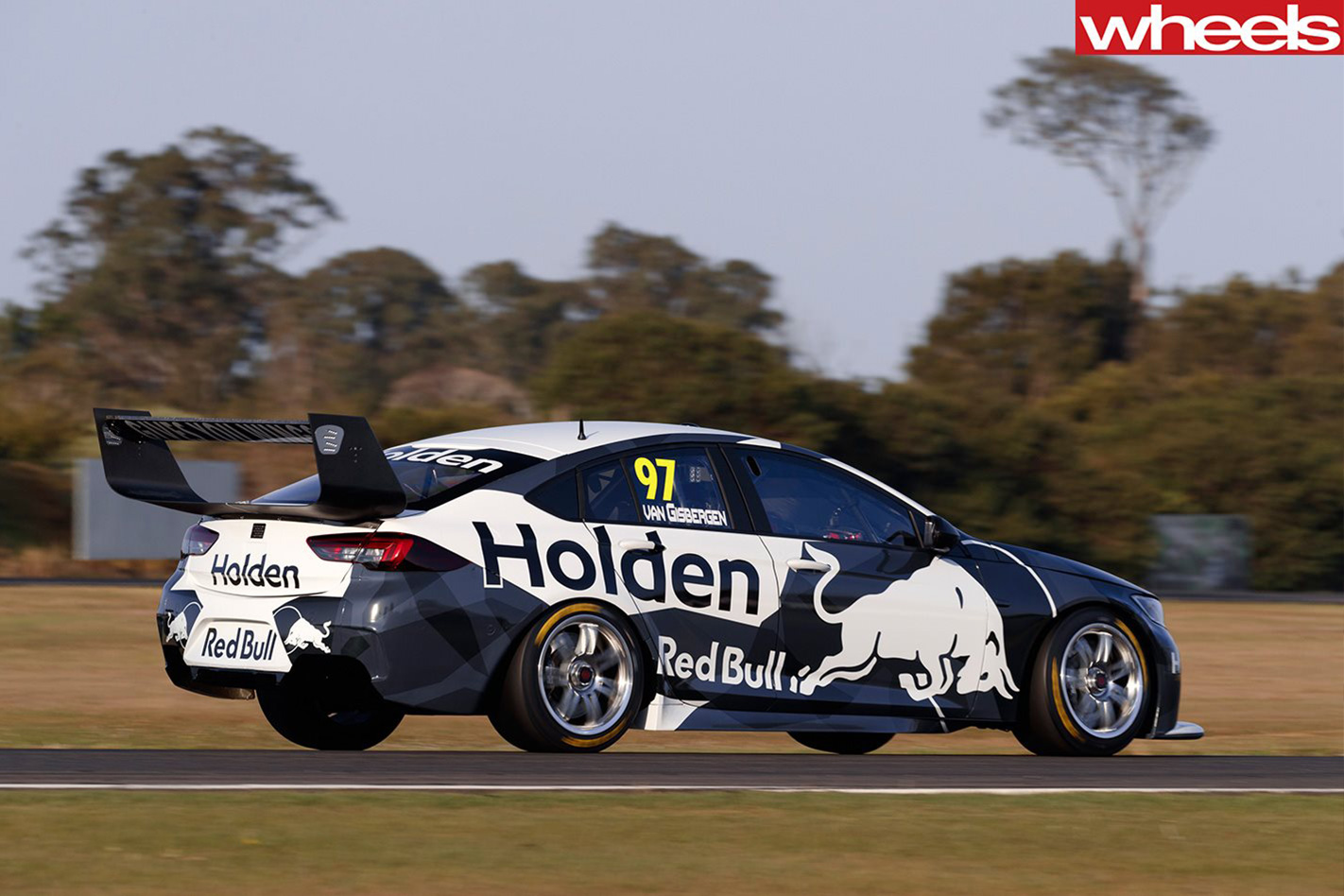
The VF Holden Commodore became the brand’s most successful racecar in 2017, eclipsing the VE for total wins. But it’s now been put out to pasture, with the ZB Commodore body replacing it, but the 5.0-litre atmo V8 heart remains.
Triple Eight will field the twin-turbo 3.6-litre Cadillac-sourced V6 in a number of wildcard entries next year, including at the Bathurst 1000, with Aussie Porsche factory driver Matt Campbell at the wheel. Roll on the next era of touring cars in Australia.
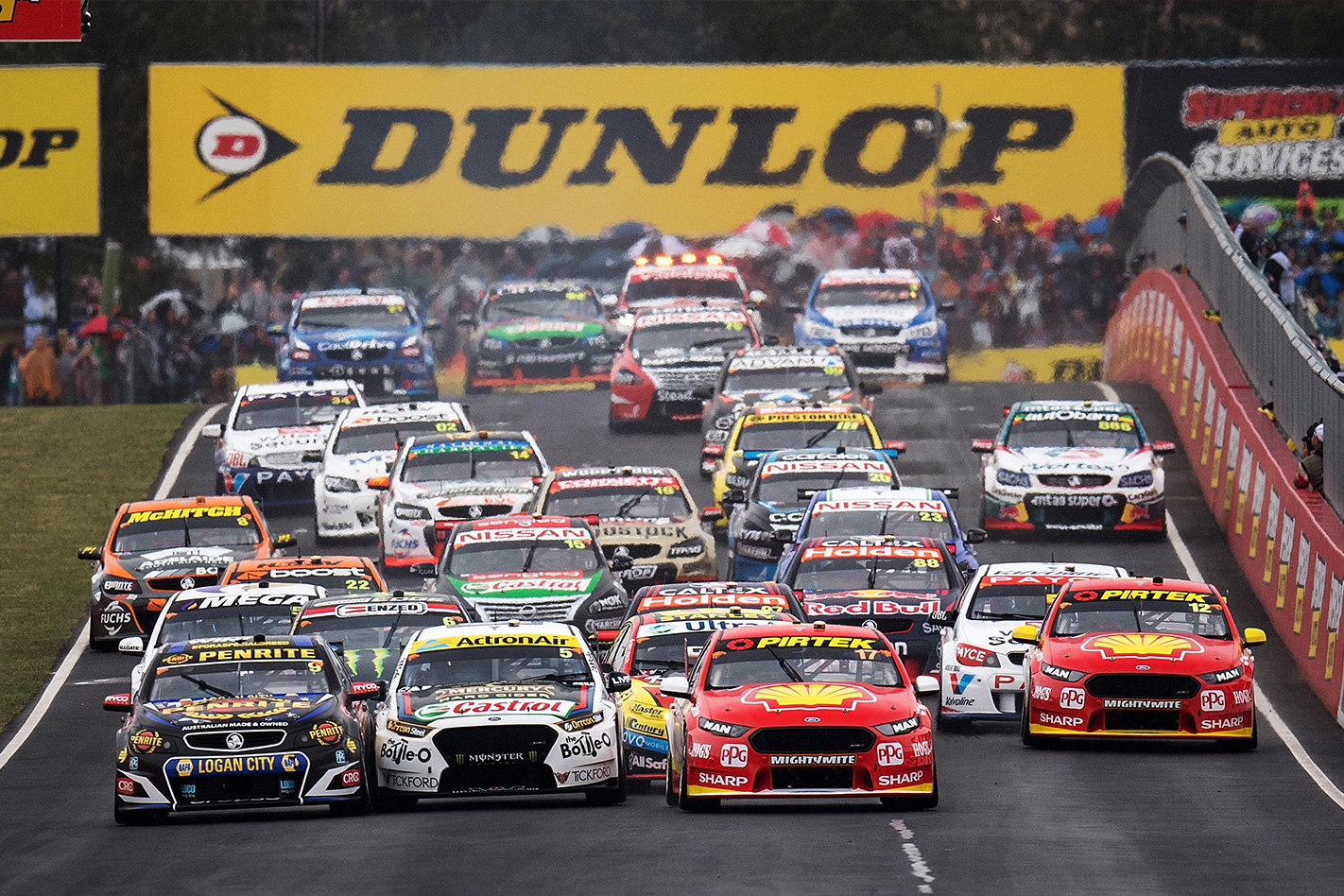
Above all else, the reason why you should watch the 2018 Supercars Championship is the racing. It is some of the very best in the world, with tough, fast race cars banging doors and rubbing bumpers. The field is incredibly competitive, with often just a single second separating the pack during qualifying, and the formats toss up exciting racing again and again. Don’t listen to the naysayers, Supercars is some of the best motorsport you’ll see this year.
Last year was a big one for SUVs, which overtook the sales of traditional passenger cars for the first time in Australia. There’s nothing to suggest the lead won’t be further extended in 2018 with a host of newly released models vying for honours against the tried and tested ones across the three main segments – small, medium and large SUVs. These will be joined by all-new high-riders during the year, including the following five offerings.
Citroen Aircross
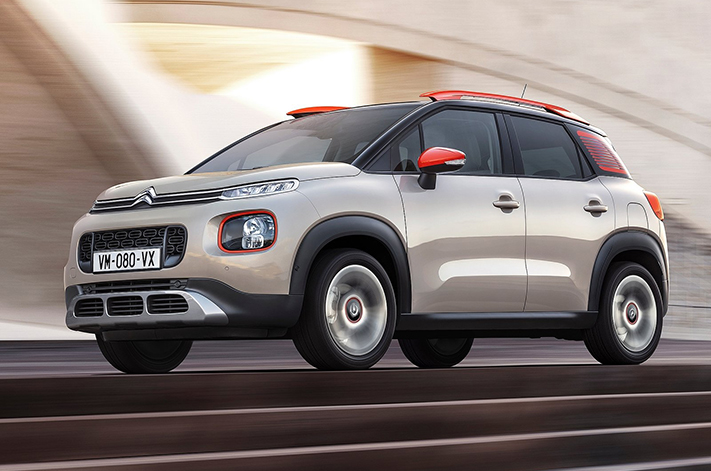
Citroen’s growing SUV range will include its smallest ever crossover, which will slot into the French car maker’s range alongside the C4 Cactus and C5 Aircross. Boldly designed and with typical French interior design flair, the Aircross will be one of the more spacious small SUVs with heaps of legroom and a sizable 410-litre boot.
Australia-bound models will be powered by an award-winning 1.2-litre three-cylinder turbo engine that provides plenty of zest. Expect the Citroen Aircross to arrive in the second quarter of the year
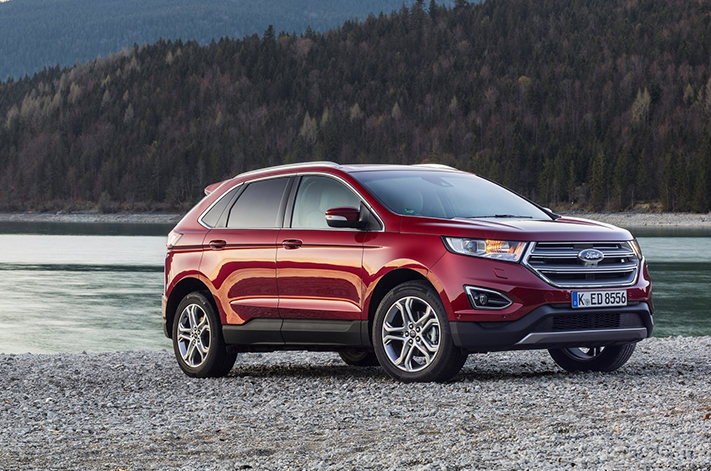
Ford’s belated locally made Territory replacement, the Endura, is expected in the middle of 2018. It will be powered by a 154kW/450Nm twin-turbo diesel engine coupled to a six-speed automatic transmission, sending drive to all four wheels. There will be no petrol versions, unlike in overseas markets were the vehicle is called the Edge – a name that Ford can’t use here because Toyota Australia already owns the rights.
Ford Australia has so far released few details about the Endura except to say it will be “positioned as a premium, highly equipped urban SUV offering extensive driver assist features and striking, contemporary design and styling”.
Jeep Wrangler
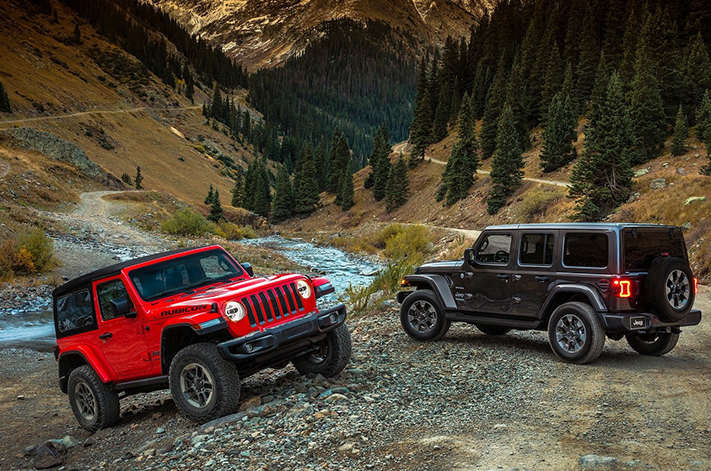
An all-new version of the archetypal Jeep arrives next year with looks that still hark back to its 1940s origins. But it will have plenty of 21st century technology under its sturdy skin including a new 2.2-litre turbo-diesel engine, eight-speed auto, and a huge leap in interior presentation and equipment.
Jeep is touting even greater off-road ability, but with suspension retuning aimed at improving road manners and ride comfort to overcome the current model’s weaker points. The range includes the entry-level Sport, the Overland and the more off-road focused Rubicon.
The 2018 Jeep Wrangler isn’t expected until late in the year.
Skoda Karoq
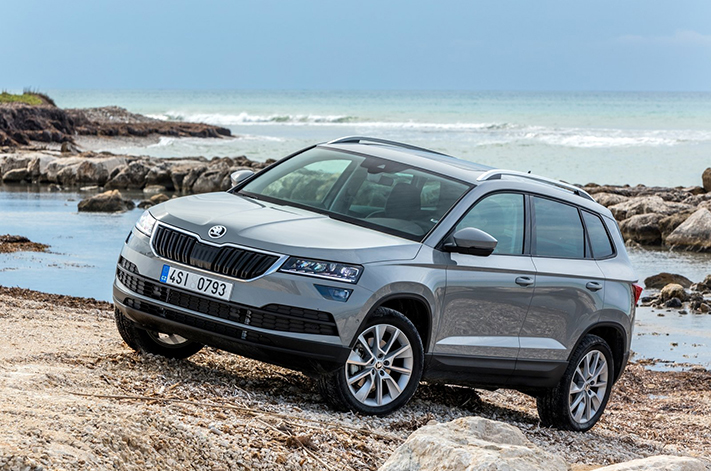
Skoda’s mid-sized SUV will have a luxury focus, with only higher-spec models to be sold in Australia when it arrives in April. Built on the same platform as the similarly sized Volkswagen Tiguan, the Karoq will arrive in Australia with either front- or all-wheel-drive options available.
The range-topping engine is a turbocharged 140kW 2.0-litre four-cylinder diesel engine driving all four wheels via a seven-speed dual-clutch automatic transmission, while a turbocharged 1.5-litre petrol engine driving the front wheels is also expected to make an appearance here.
VW Tiguan Allspace
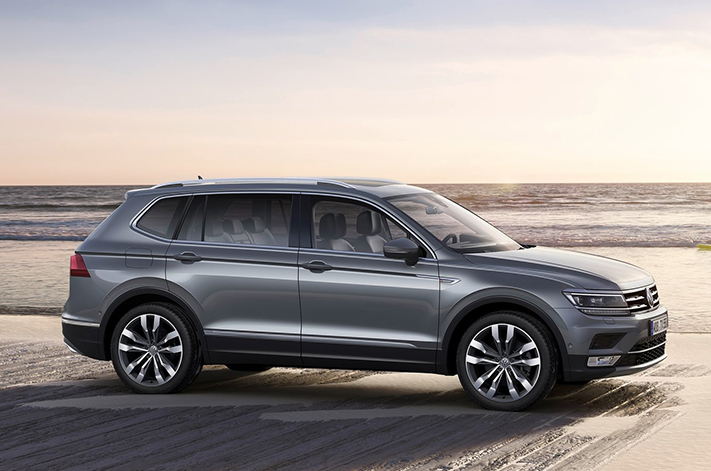
A longer seven-seat version of the Volkswagen Tiguan is expected to arrive here late in 2018. Unveiled at the 2017 Detroit Motor Show, the “5+2”-seater Tiguan Allspace is 215mm longer than the five-seat version on which it is based, and has a huge 760-litre rear cargo compartment that can also be used to add two more seats for the school run. Rear seats up, threre’s still enough room (230 lItres) to wedge all the schoolbags inside the tailgate.
Engine options for Australian models are yet to be confirmed but expect to see a similar range of engines as already available in the classic Tiguan range.
It comes down to numbers with a Mustang EcoBoost. Has to, because sex doesn’t really come into it. So have a squiz at the numbers at work here once Mustang Motorsport has got through with the EcoBoost ’Stang.
For starters, the 350 thing refers to the horsepower which, in a metric world equates to a claimed 261kW. In turn, that equals 0-100 in six-dead and the quarter mile time now starts with a 13. That was once a supercar’s skill set. Even now, they’re handy numbers.
If you want to replicate this car, you’ll see from the specs (see breakout) that you’ll need an extra $21-plus grand to do so.
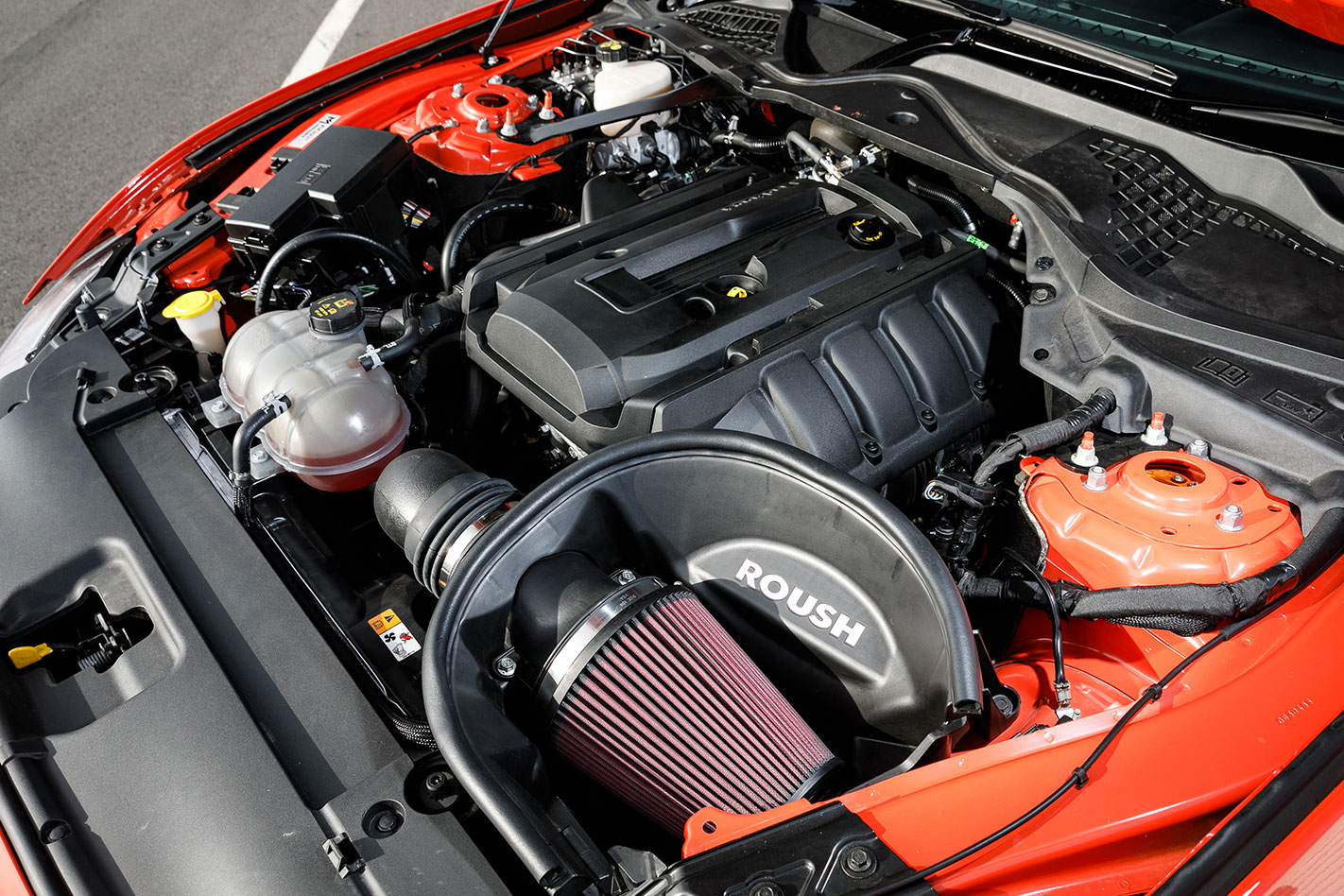
That includes the cat-back exhaust and dump pipe, Roush cold-air intake, a front-mount intercooler, blow-off valve and colder spark plugs to better cope with the extra boost.
There’s also an optional further tune to make 24psi work as well as giving the thing adjustable launch control, and, best of all, flat-shifting by killing the engine’s spark when you dip the clutch.
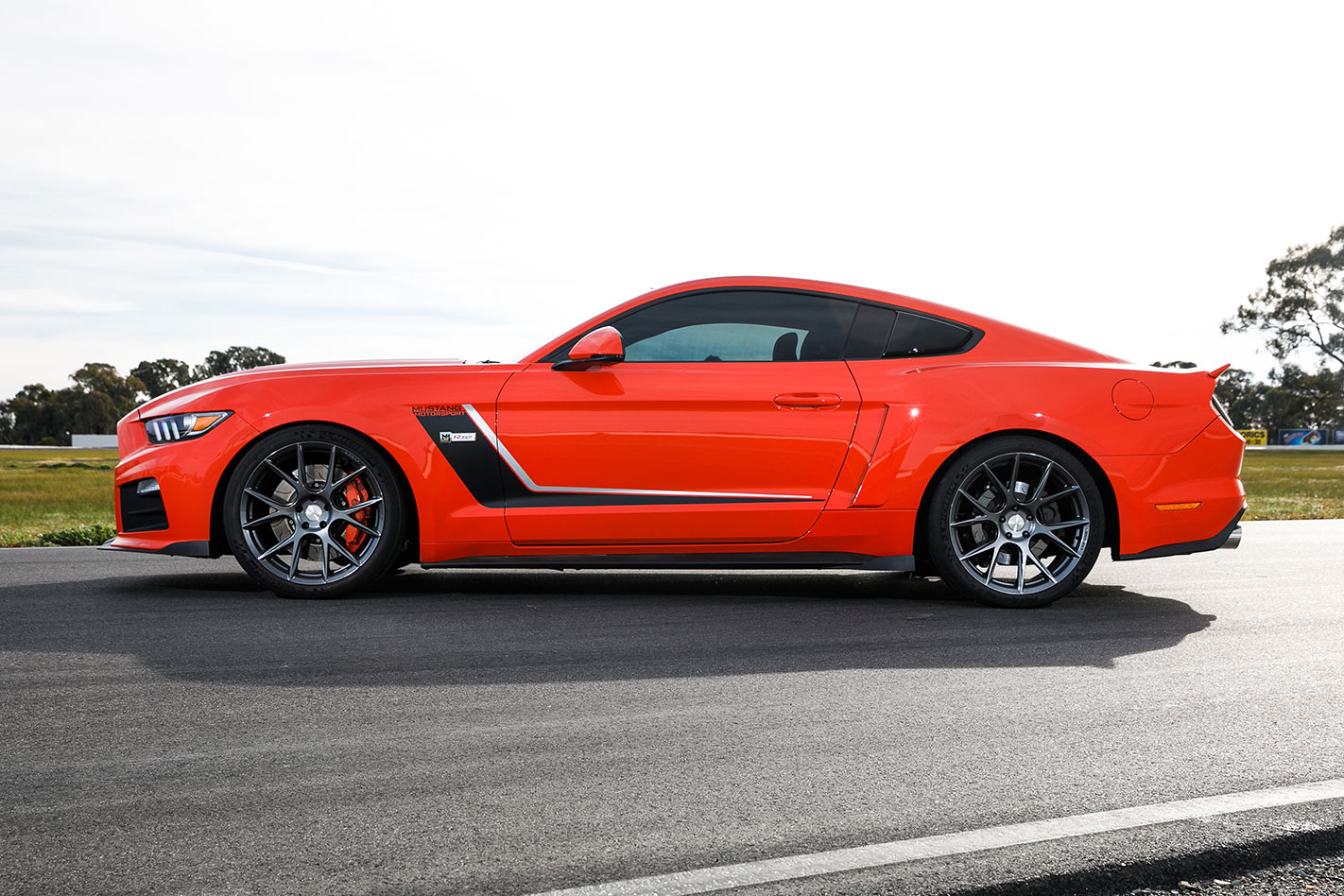
But you are into the realm of decent lap-times and the MM EcoBoost will give a stock Mustang V8 a real run for its money. And it feels that way, too, although there’s no escaping the fact that this isn’t a V8 Pony. That starts with the noise.
Sure, the MM car is loud and a bit rude, but hearing that jockey’s voice coming from a prop-forward will, I think, never stop feeling a bit weird. Same goes for the chorus of whistles, toots, parps and woofles as the compressed air finds new and exciting places to exit.
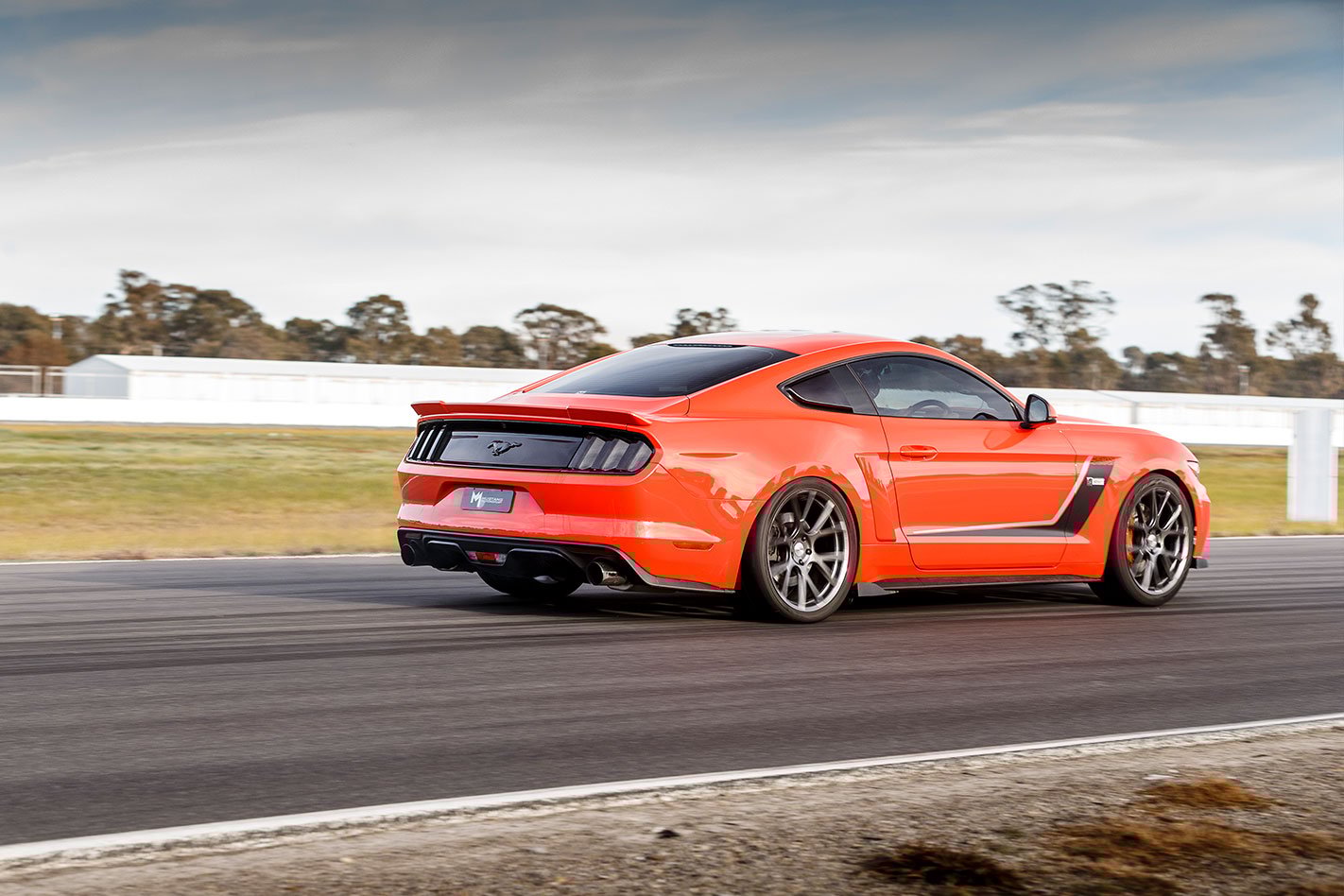
The Shockworks suspension, adjusted for the track, is a revelation, too. And with less mass over the front cross-member, the EcoBoost feels a bit livelier through the tiller than the V8 versions. Same goes for the brakes; with more or less the same hardware as its R727 big brother, this Turbo-’Stang hauls up hard, though the smaller front tyre (compared with the V8 MM car) meant that its ABS limit is a fraction lower.
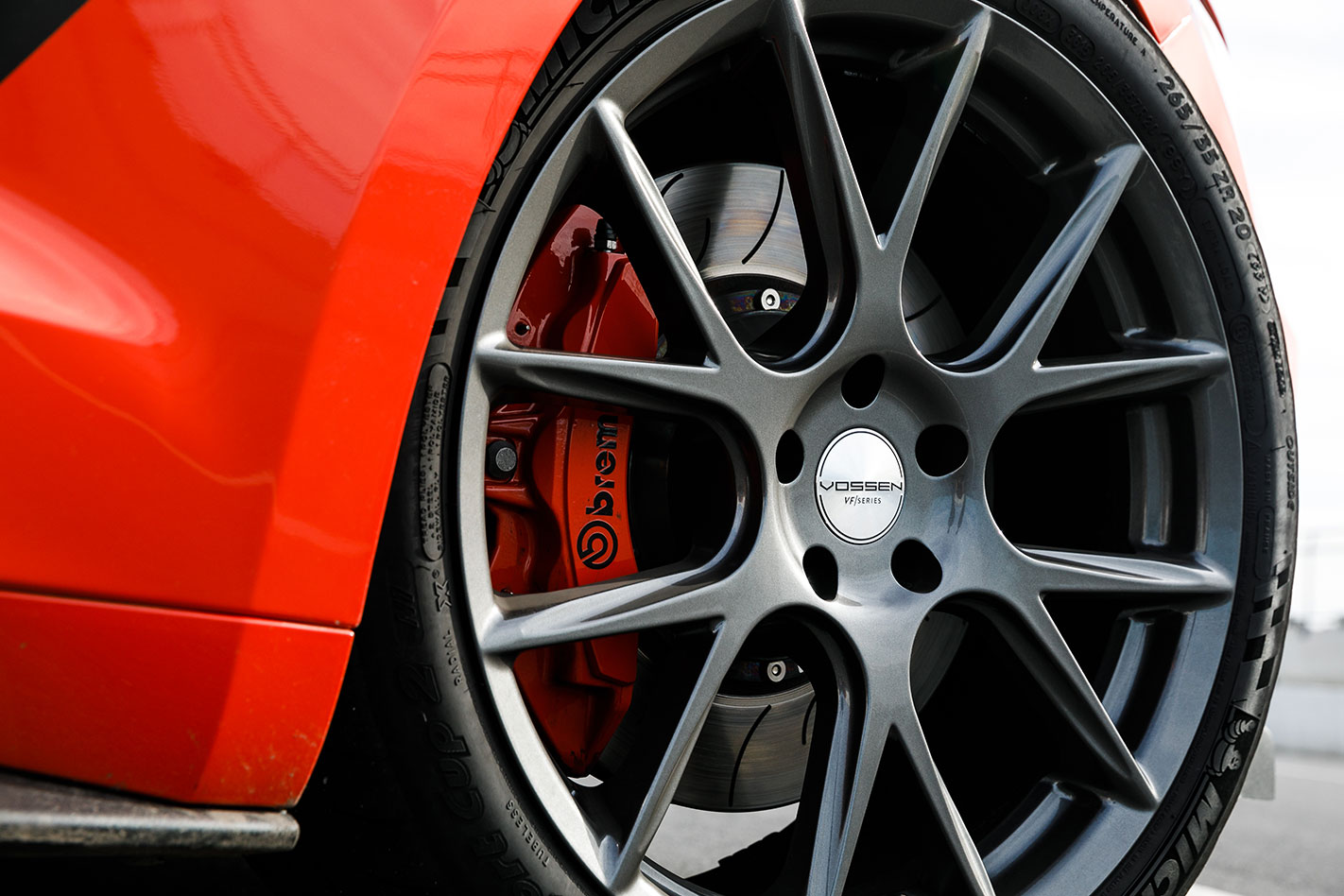
The R350T is also a car that you’d be much happier throwing a novice track-dayer into. It lacks the outright tyre-shredding urge of the V8s here, but its tactility and balance would be great teaching tools.
And the flat-shift thing is fun all day, even if it takes a bit of getting your head around the first few times.
Only the need to short shift to get around a lack of top-end muscle spoils the fun a bit, but that only underlines the need for corner speed of which there was plenty, better than all but its stablemate, in fact.
WARREN LUFF SAYS:
“It’s a huge amount of fun out on track. You can see that a lot of time and effort has gone into the suspension of this car.
“It definitely feels like it could cope with another 150kW with the amount of grip the rear of the car has got.
“The overall chassis dynamics are really impressive and the improvements to the engine give it that little bit more punch out of the slow-speed corners.
“Even the little finishing touches like the Roush Motorsport gear lever really finish off the retro look well.”
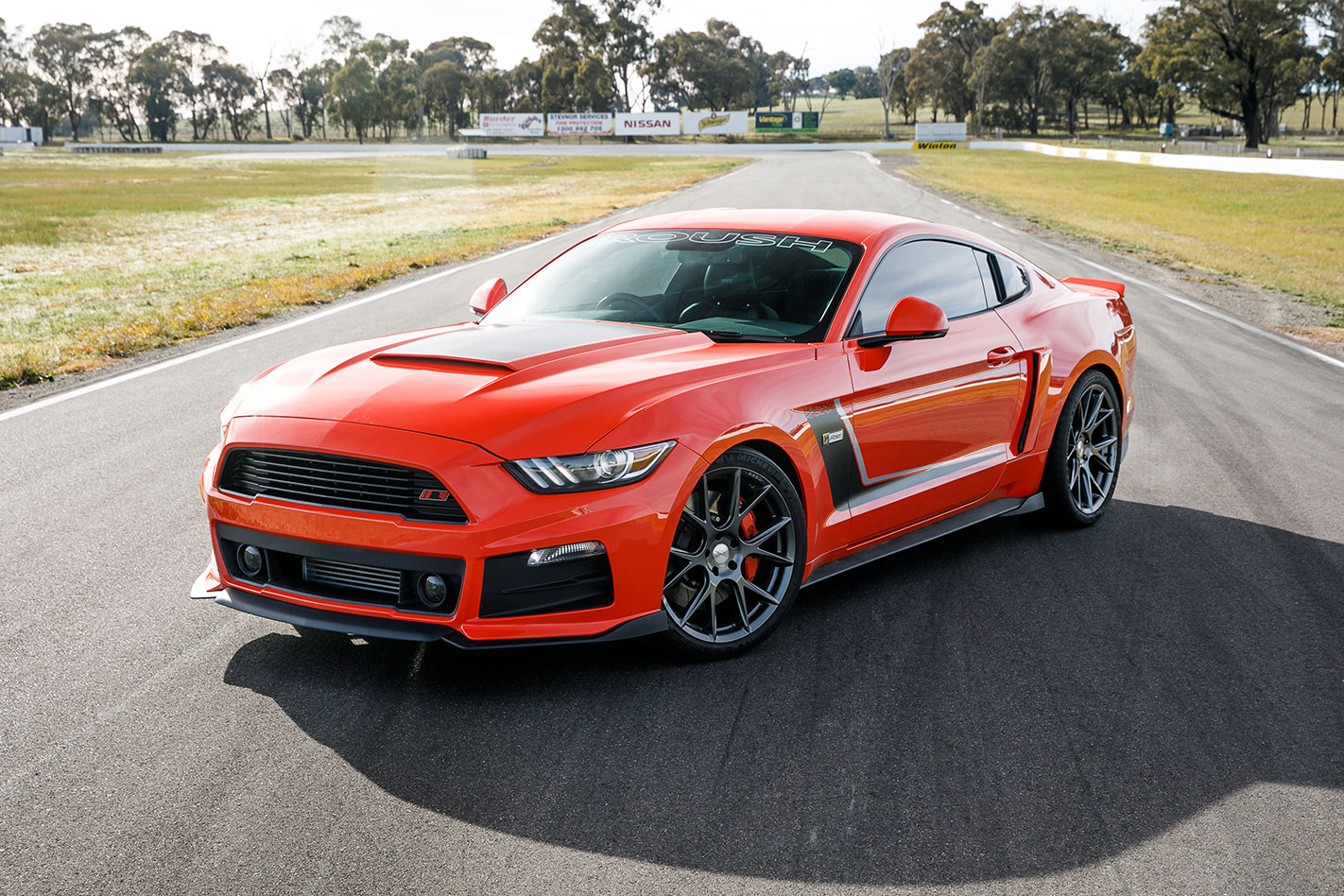
MUSTANG MOTORSPORT ECOBOOST MM-R350T SPECS
Power: 261kW Torque: 550Nm
0-100km/h: 6.03 seconds 0-400m: 13.92 seconds 80-120km/h: 3.3 seconds 100-0km/h: 38.14 metres Lap Time: 1:37.9 seconds Apex km/h: 85.02km/h Lap V-max: 172.36km/h 400m V-max: 170.15km/h
Engine: 2261cc inline-4, DOHC, 16v, turbo Gearbox: 6-speed manual Suspension: struts; anti-roll bar (f); multi-links, coil springs, anti-roll bar (r) Brakes: 380mm ventilated/slotted two-piece discs, 6-piston calipers (f); 330mm slotted two-piece discs, single-piston calipers (r) Wheels: 20 x 9.0-inch (f); 20 x 10.0-inch (r) Tyres: 265/35 ZR20 (f); 295/30 ZR20 (r); Michelin Pilot Sport Cup 2
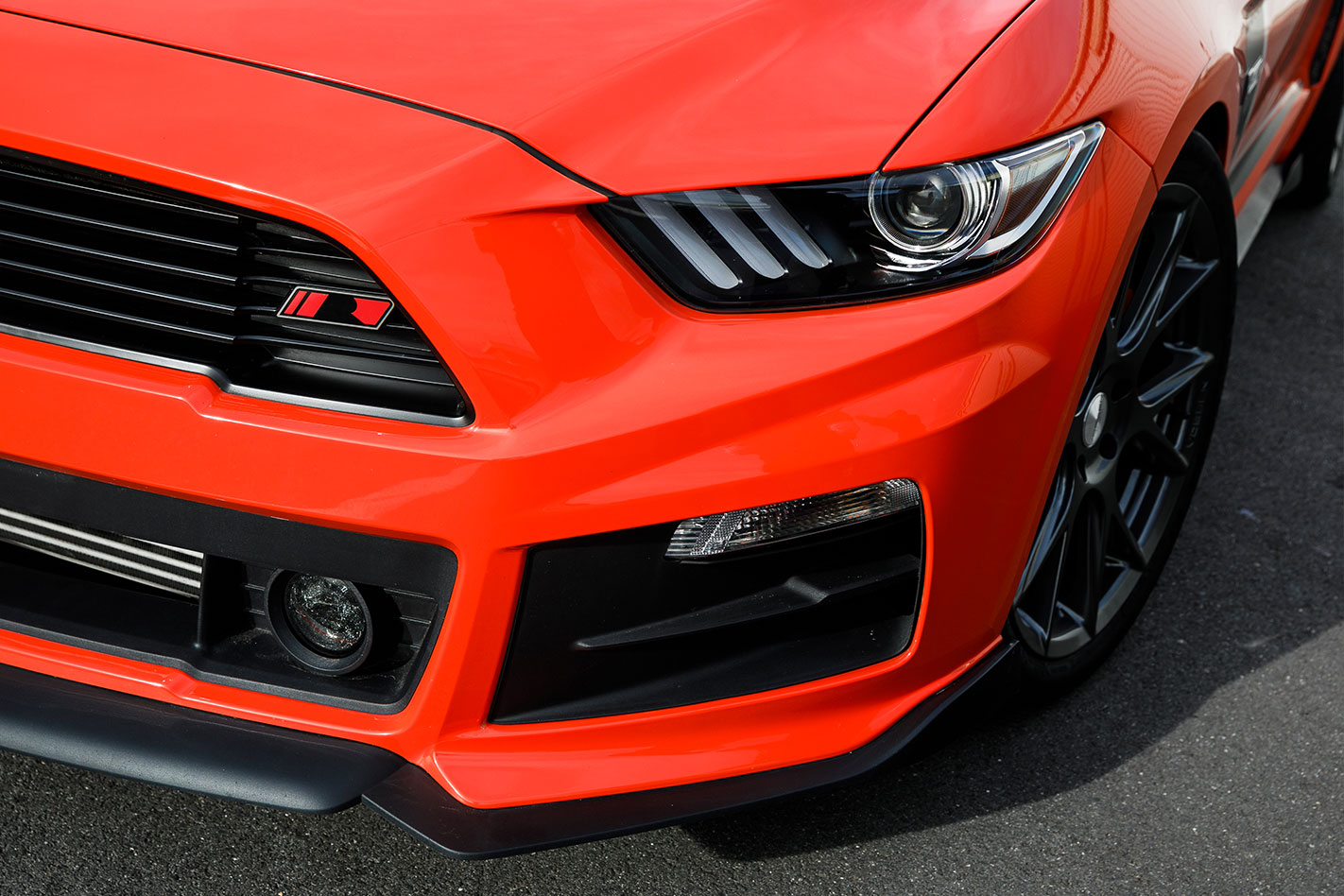
PARTS AND PRICES
R350T Kit: $21,000 Optional Extras: $9500 Total Mods Cost:$30,500 Vehicle Cost: $45,990 Total Cost: $76,490
“Lamborghini! Oh my God! It’s a Lamborghini!” Instant recognition.
This feature was first published in MOTOR’s June 2004 issue.
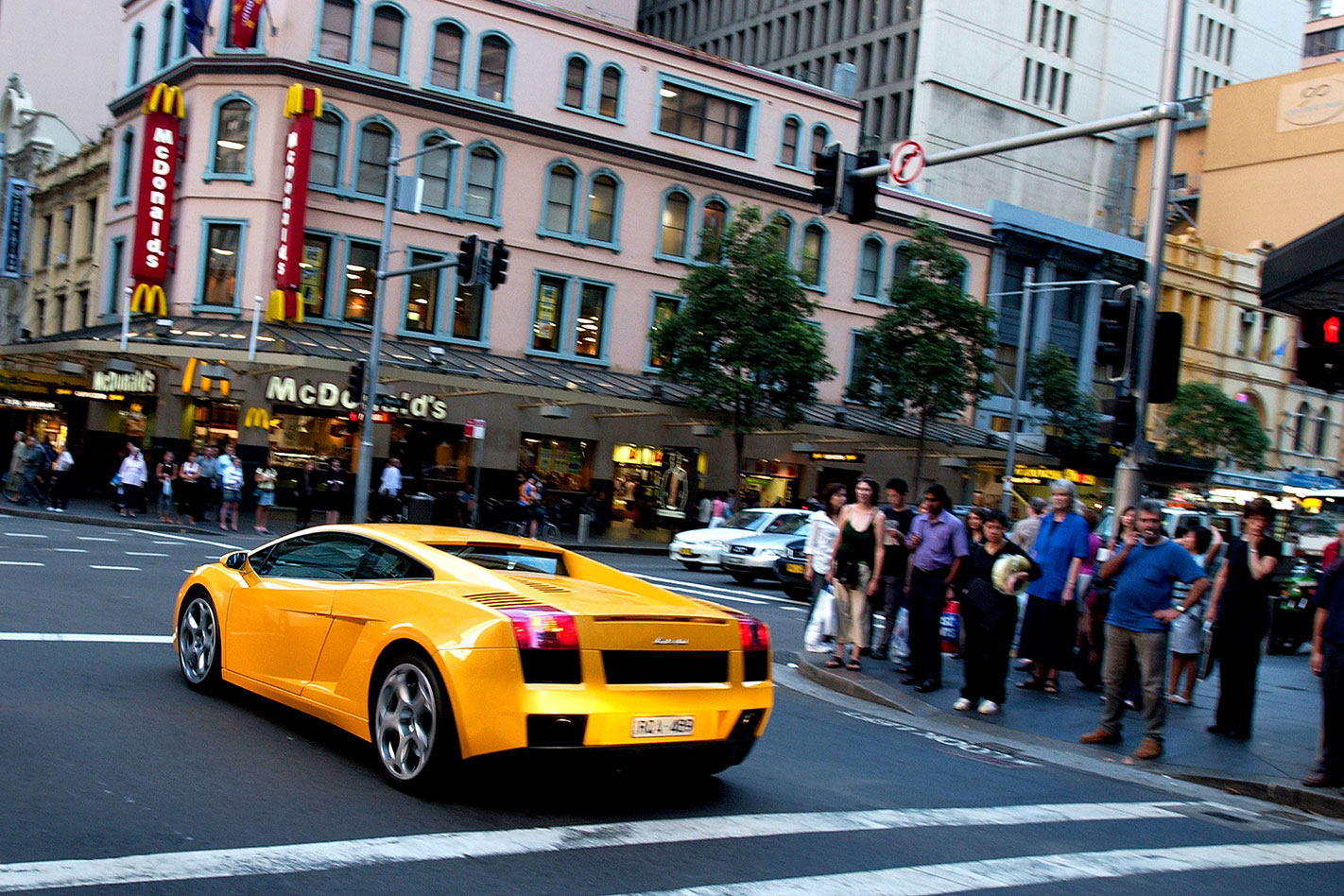
George Street, Sydney, Friday 5:30pm, there’s clear and obvious love for yellow Lamborghinis. After a working week, in the heart of Australia’s biggest, busiest city, people are relaxed. The sun is setting, and large rectangular beams of sunlight lift the darkening corridors of concrete. We’re in what photographers call ‘the golden hour’.
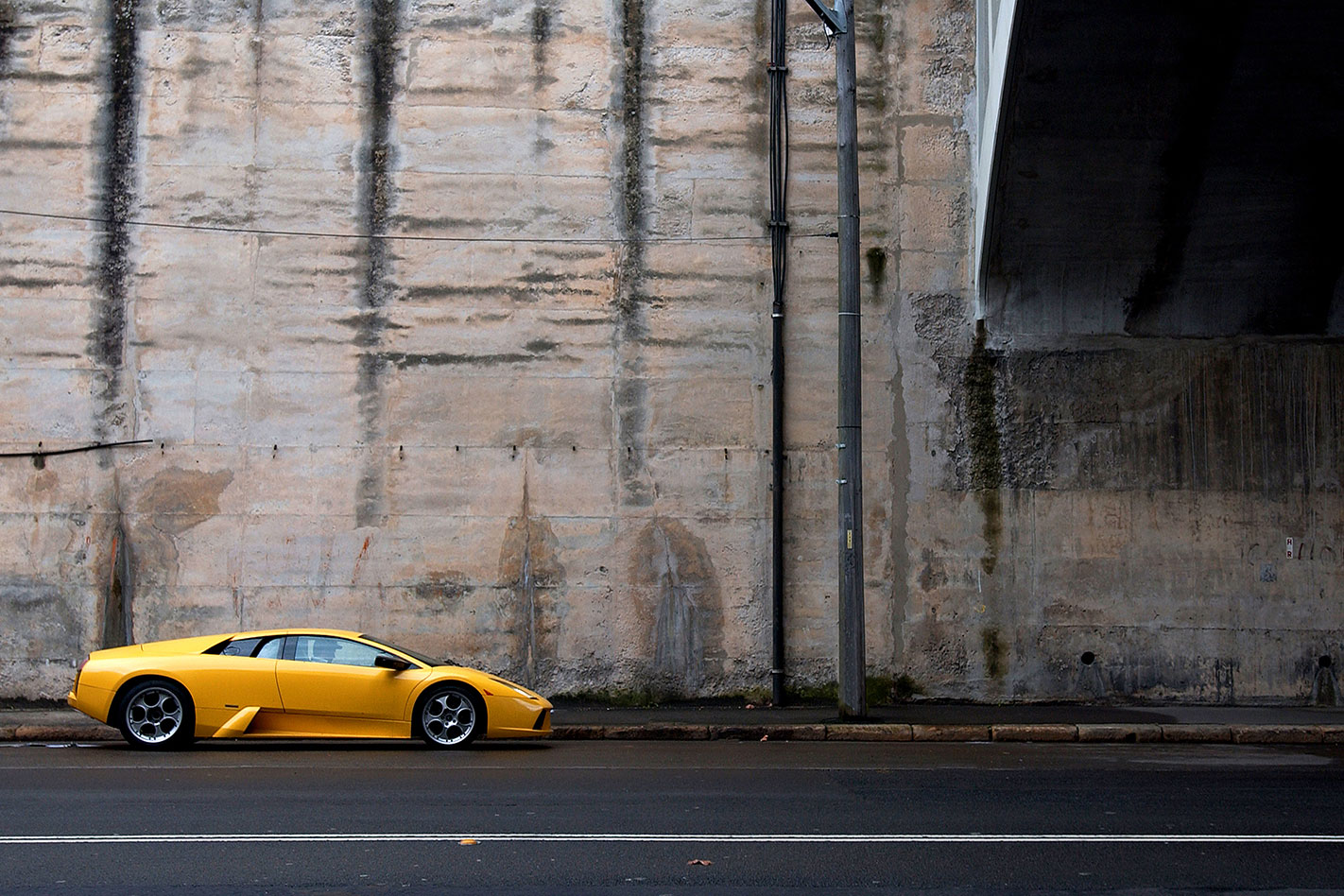
The pearlescent yellow mica paint glows, contrasting with concrete and brick. The gaping, low snout of a Lamborghini hovers over the white-painted pedestrian line as the massively raked windscreen reflects the city’s skyline like a mirror.
Lamborghini’s Gallardo is like the road Moses, magically parting a sea of traffic and people. Hundreds mouth the L word. Hundreds more yell it. Dozens are jumping in front with mobile phone cameras, others are calling friends: “you gotta get down here, NOW! Two yellow Lambos!”
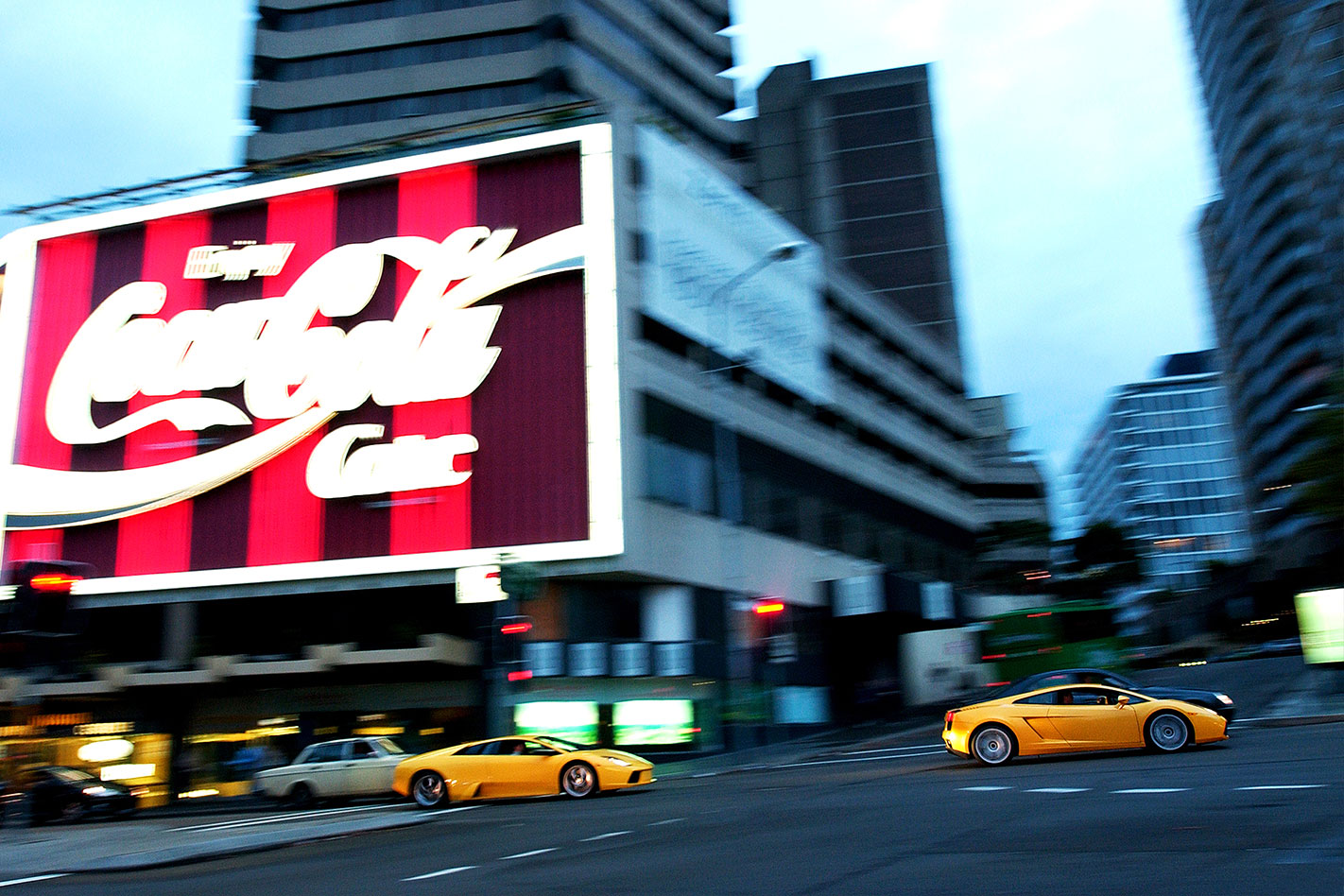
Two in convoy is the stuff a flummoxed, pointing young boy will remember for life.
Inspired by ace shooter Thomas Wielecki, others pull cameras, flashes pop and one guy unashamedly yells: “That Gallardo is f&#king awesome, man!”
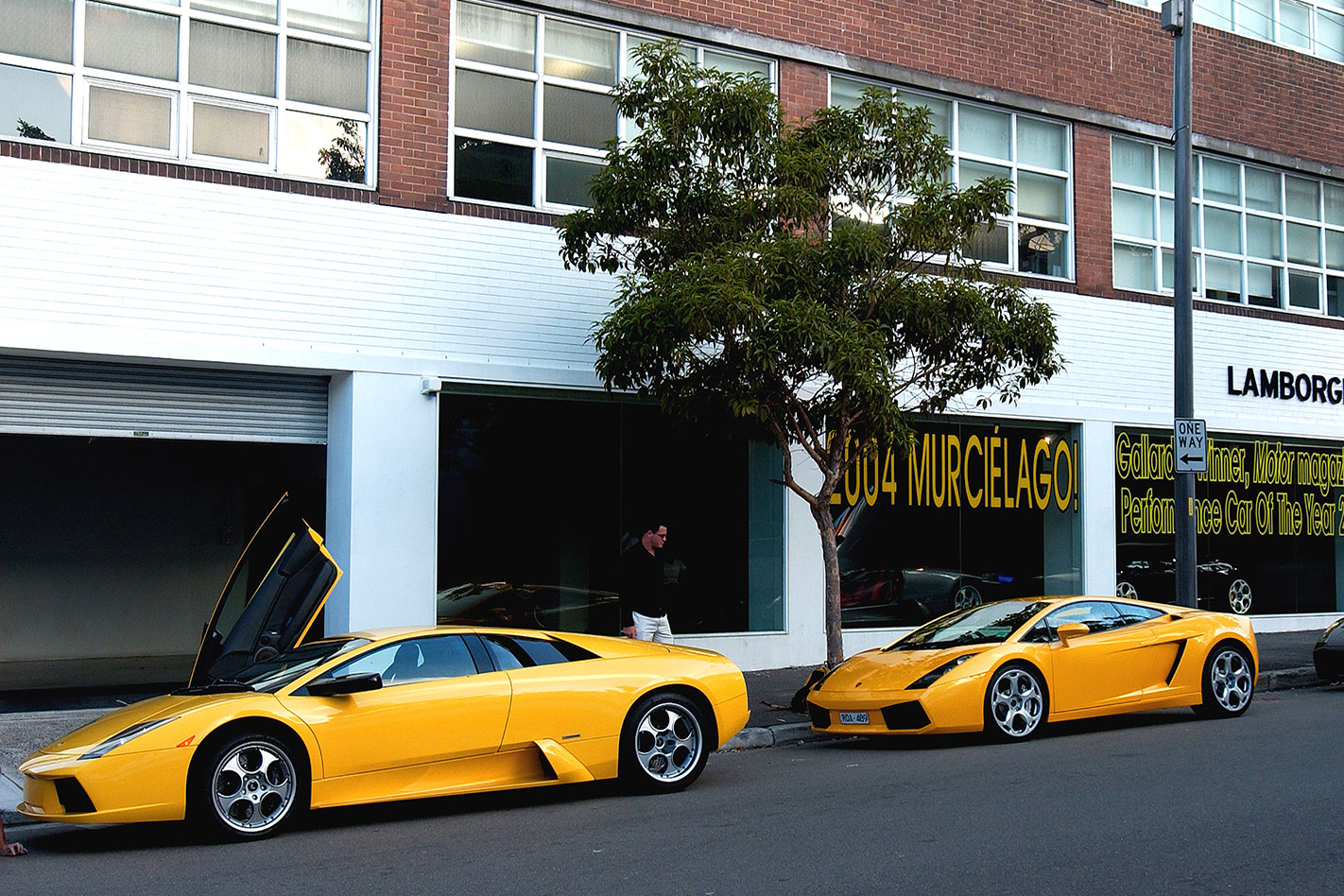
Three 20-something girls look like clowns at the fun park, heads swivelling in unison, mouths agape. Anyone without a camera is staring at our mobile display of Lamborghini’s entire range, taking mental pictures to preserve what they may never see again. And all are smiling like Disneyland employees on Happy Day, realising the rarity of the occasion. It’s not just the initial shock of a new Gallardo, but also the second blow of big daddy Murciélago tagging along like a chaperone on formal night.
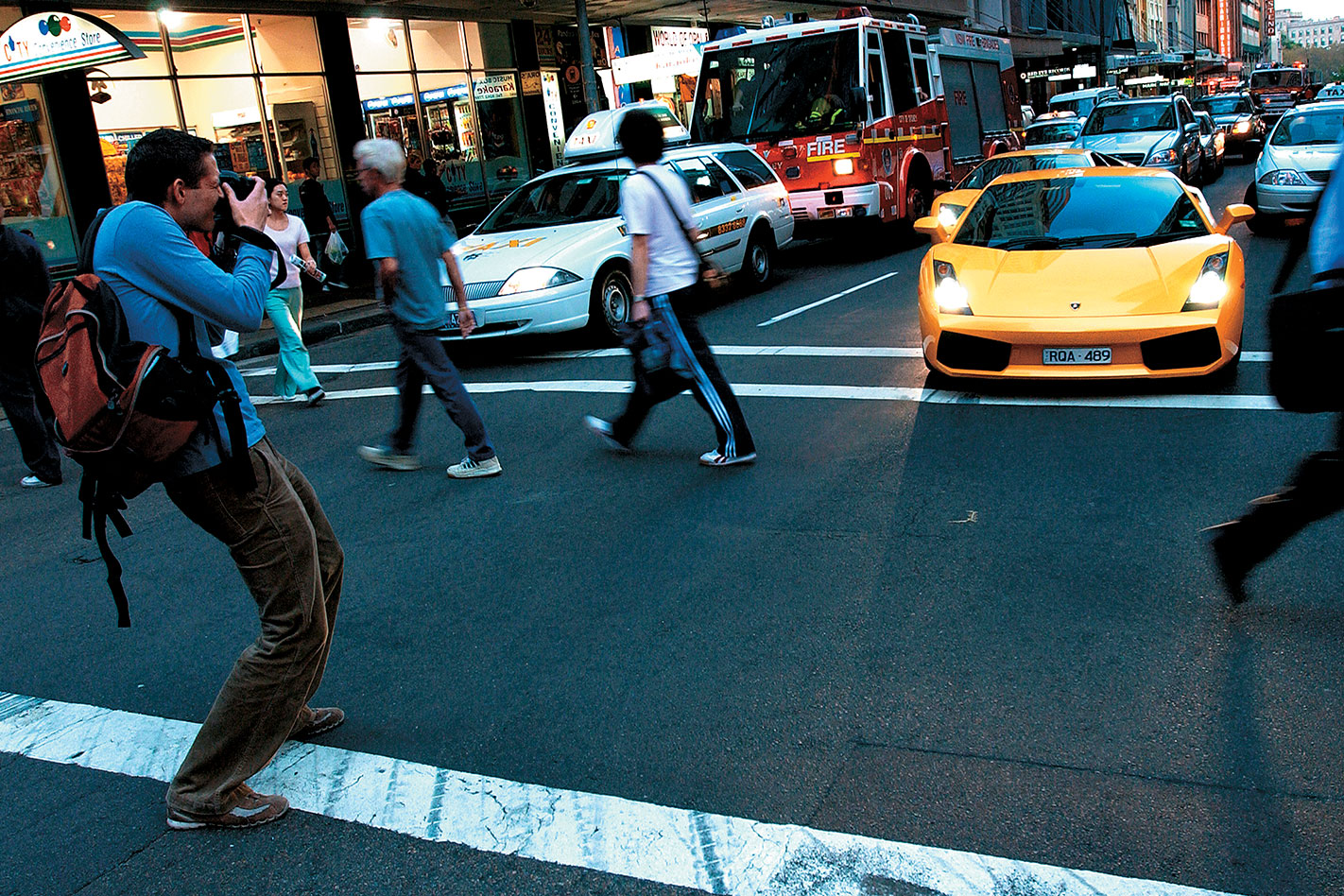
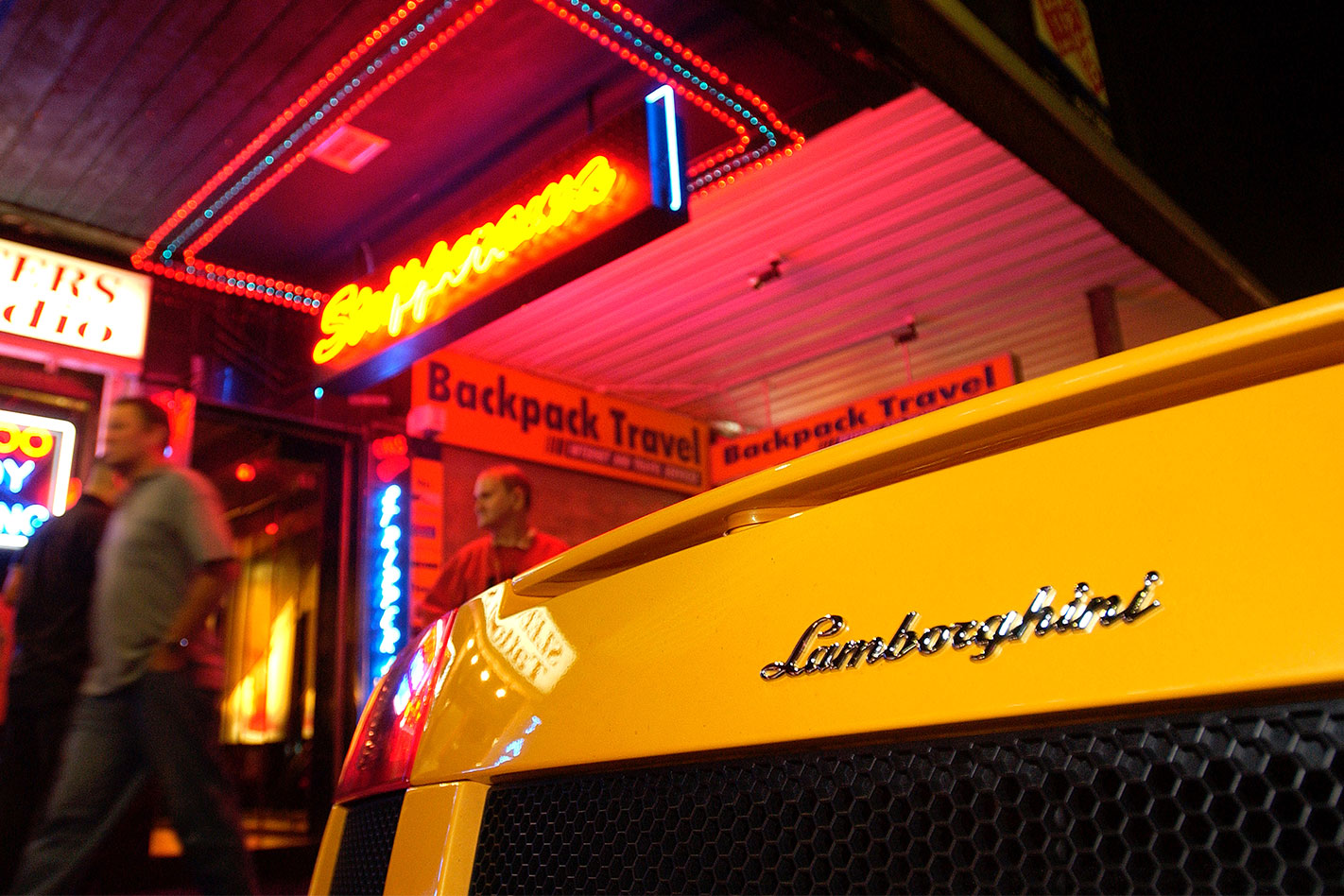
Lamborghini’s Gallardo (it’s Ga-yar-doe) is as much an event as a car. It creates its own atmosphere, magnetises and hypnotises. Tonight, many will find the G spot right in front of them.
Earlier, Sydney Lambo’s Greville Bogard impressively kept a straight face when he firmly requested we not scrub Gallardo’s low nose.
Ten minutes later: kkssshh over a hump at 2km/h. Then k-r-r-r-r as it diagonally crawls over a driveway at 0.5km/h. It’s a good thing the design not only hides scratches, but uses an alloy, replaceable skid-plate underneath – which also seems to amplify the sound. Deal with it, and the rest is dead easy, and so alive.
The strong smell of new leather wafts throughout the cabin. The seat is snug, but comfortable once lowered with the right rake, tilt and lumbar – all electrically, of course. I’m comfortable.
Re-check badge: yep, still a Lamborghini. The flat-bottom steering wheel, with a centre seemingly from a dodgem car, tilts and telescopes perfectly. Two alloy pedals are offset to the left – the accelerator in line with the steering column – but a few minutes later it’s forgotten and Gallardo is as good as tailor-made.
Key in, and a cute yellow mini-Gallardo appears in the dash. Twist wrist… nothing.
It’s in gear and needs a momentary pull-back on both shift paddles to engage neutral. Still nothing! Not until a harder shove on the solid brake pedal unlocks the electronics and z-r-r-r-r-r. Music from the whirring starter motor: the mechanical high-pitched metal-on-metal whine lasts a full second – to build oil pressure from the dry sump – and the beast comes alive like a lion clearing its throat, taking its first, smooth morning growl.
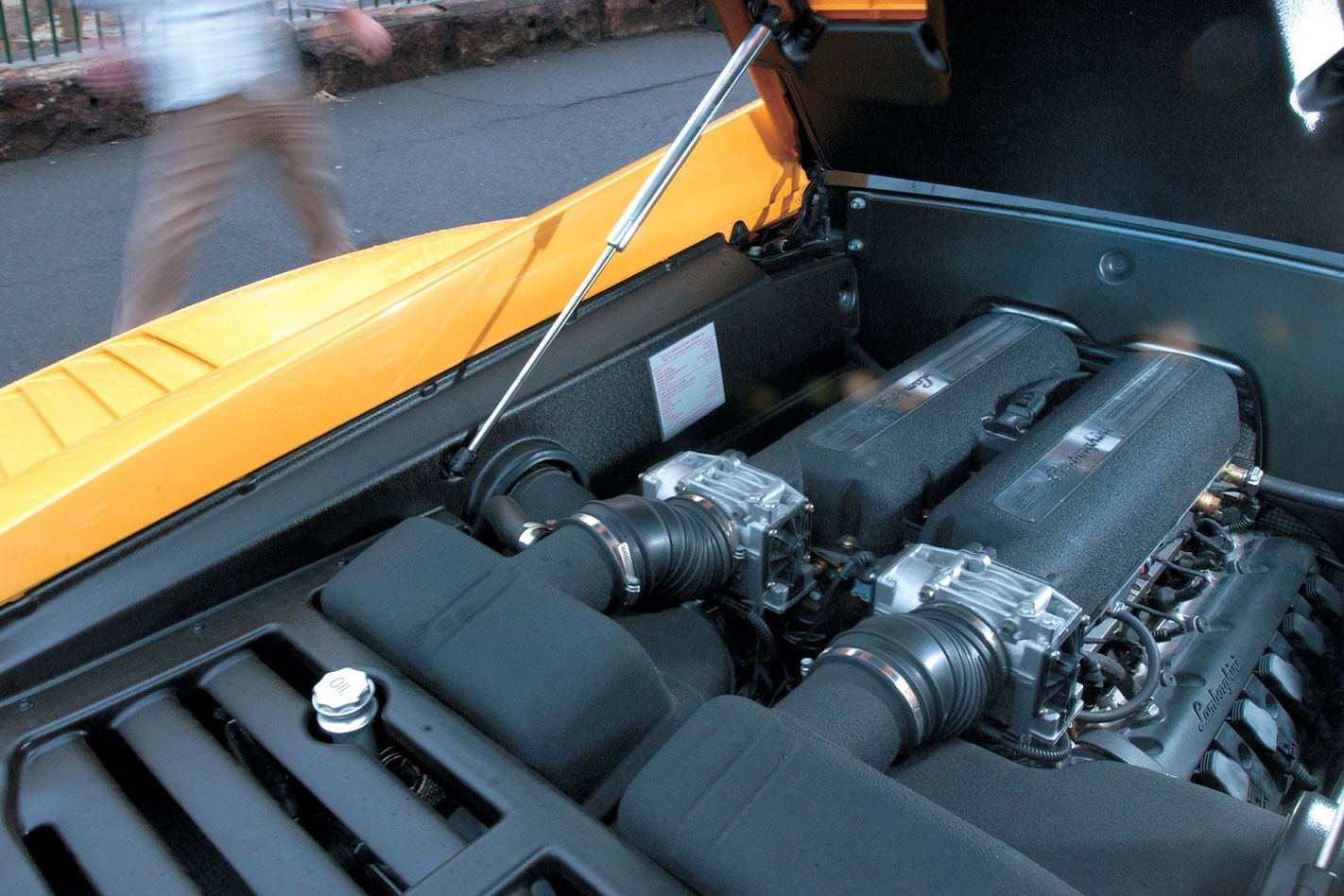
The numbers are pornography. Gallardo sprints to 100km/h in 4.1 seconds, wastes a quarter-mile in low-12s, through to 309km/h. Uh-huh, not interested today. We scooped a world-first drive in the Aug ’03 issue; strapped one an issue later in Italy. Gallardo is even the reigning PCOTY champ, so if you want specs, see back issues.
This is the PCOTY encore performance, maybe the slowest test of a Lambo ever and a chance to see if the $25k for the optional e-gear six-speed paddle shift is really worth the price of a new Civic.
Supplier to Ferrari/Maserati, Marelli’s robotised manual e-gear box has four modes for low traction, full auto, and manual shifting, with a sport mode that tightens shifts to as good as instantaneous and raises the stability control threshold.
No need to pull neutral before reverse, just hit the lonely R button, isolated on the right facia, and a series of whines, clunks and thunks from the tail engages gears. Rear vision is good and the mirrors large and effective. Parking sensors would be better, though, because reverse disengages if the driver’s door is opened for a backwards peek.
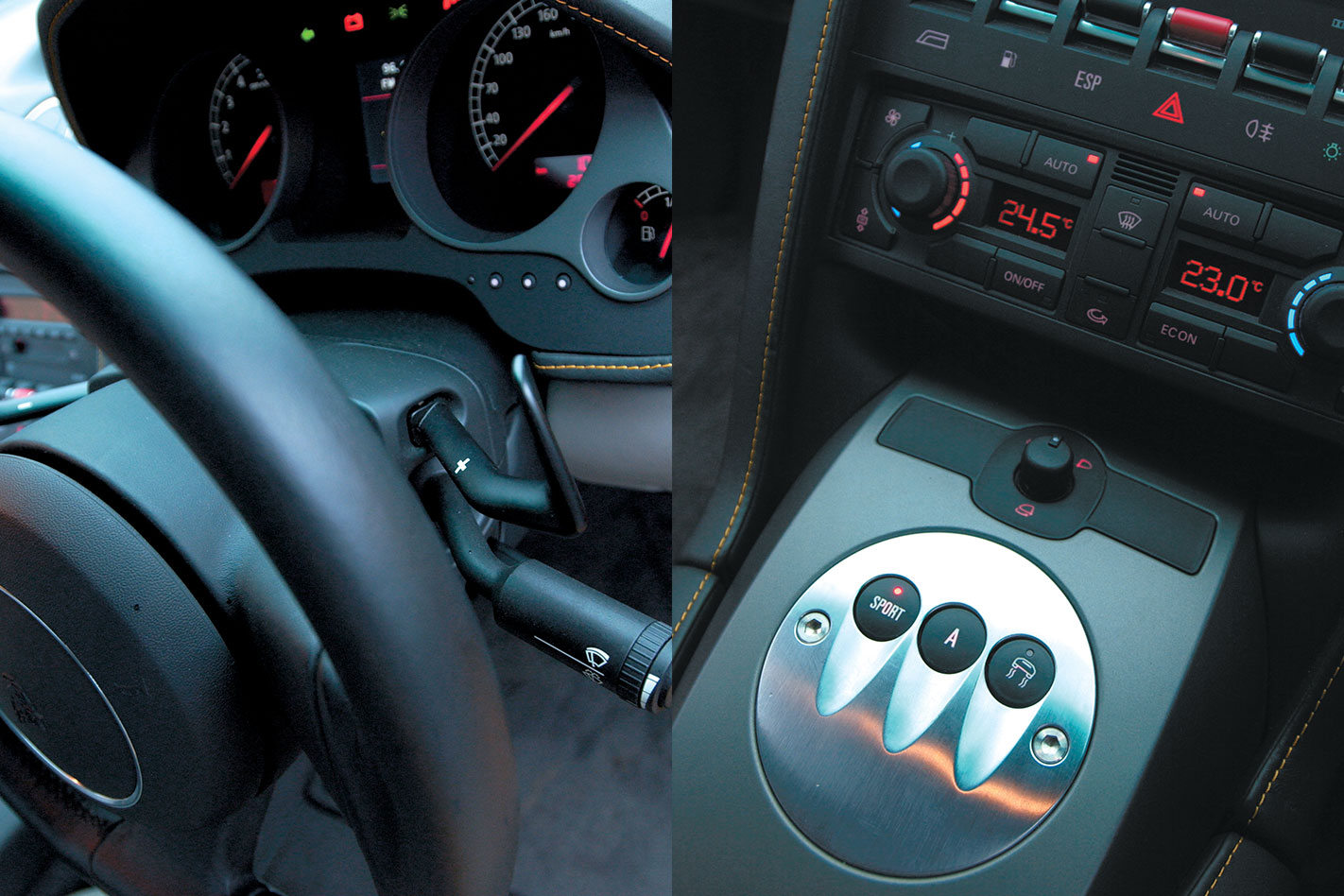
Tap a paddle, though, and it gels. Be stupid, upshift to sixth gear at 10km/h and it’ll allow it. Excellent! Mash the throttle and it’ll insanely run to 104km/h in first with a deep, powerful, sonorous blast so explosive, you need second or third gear to really feel, learn and love its powerband.
Go for a mad-man blast and a growl starts from just 2250rpm, exploding around four, and kicking hard again around six, a shove it maintains to the high 8200rpm limiter. All in a V10!? Downshift, hard, and it aggressively blips the throttle. Be lazy and it politely, automatically downshifts right when you want it to – rarely when you don’t – even engaging neutral if you forget. It’s an aggressive ’box. If it’s mathematically possible, Gallardo will obey. Downshift to first gear at 100km/h? Certainly sir, have 8000rpm! Brilliant!
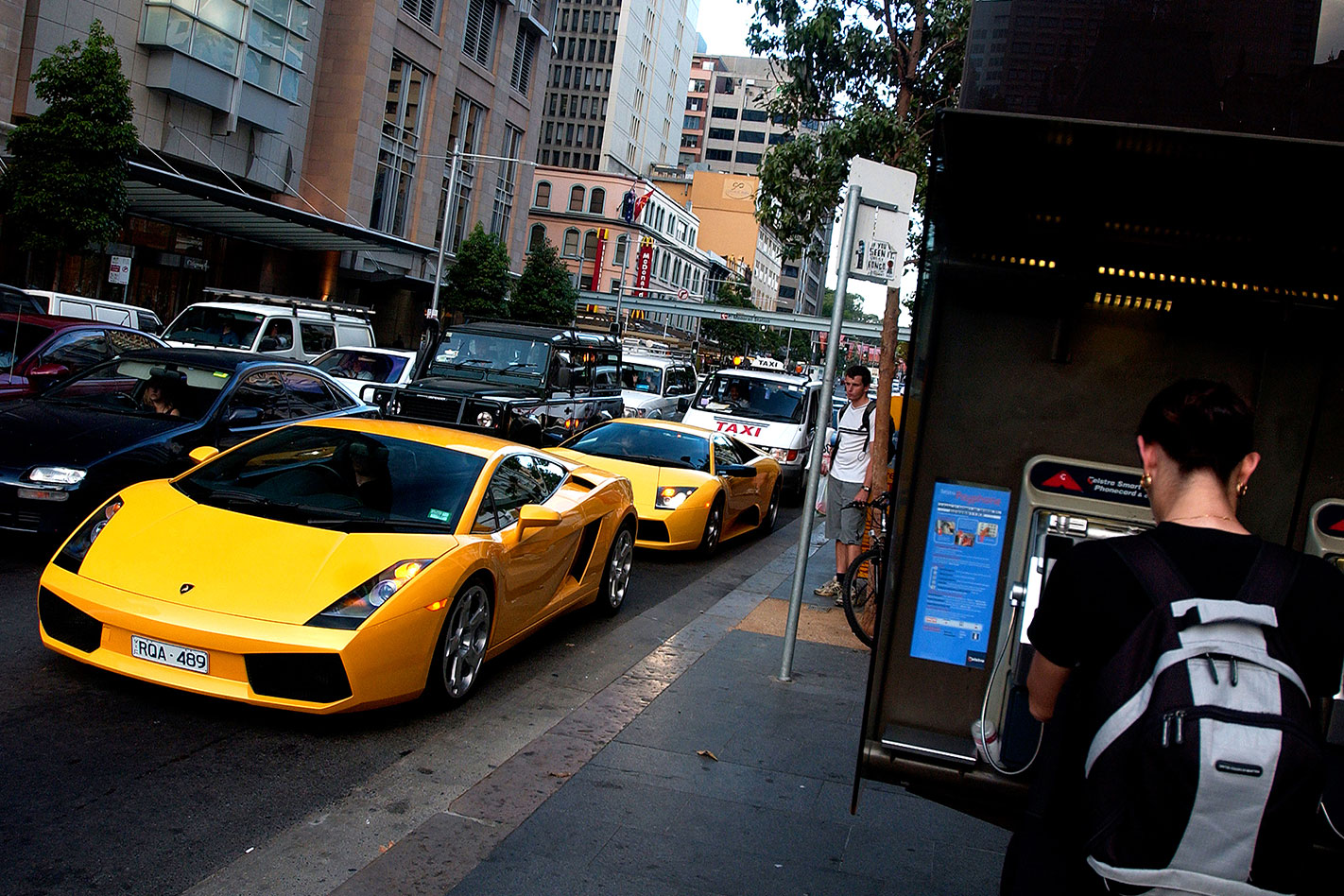
Gallardo has more parking privileges than the disabled, too. At The Rocks, mesmerised zombies invite us to stop in a No Standing zone. Instantly, 50 people appear as Gallardo’s talking to us with the ticking, creaking and groaning of cooling metals.
“Must be a shocking ride with those rubber bands around the wheels,” offers one watcher. Um, no. The Pirelli P Zero Rossos may spray on from a can, but the suspension has this cushy layer. Most impressive of all are the incredible 24-piston brakes, which, stone cold or stinky hot, bury the nose so hard you expect to see bitumen folding in front of you.
“It’s my 17th birthday today,” swoons a girl. “Can I p-l-e-a-s-e sit in the Lambo?” Gallardo love is put on hold as she spots the Murciélago’s more photogenic scissor doors, fulfilling at least one birthday wish.
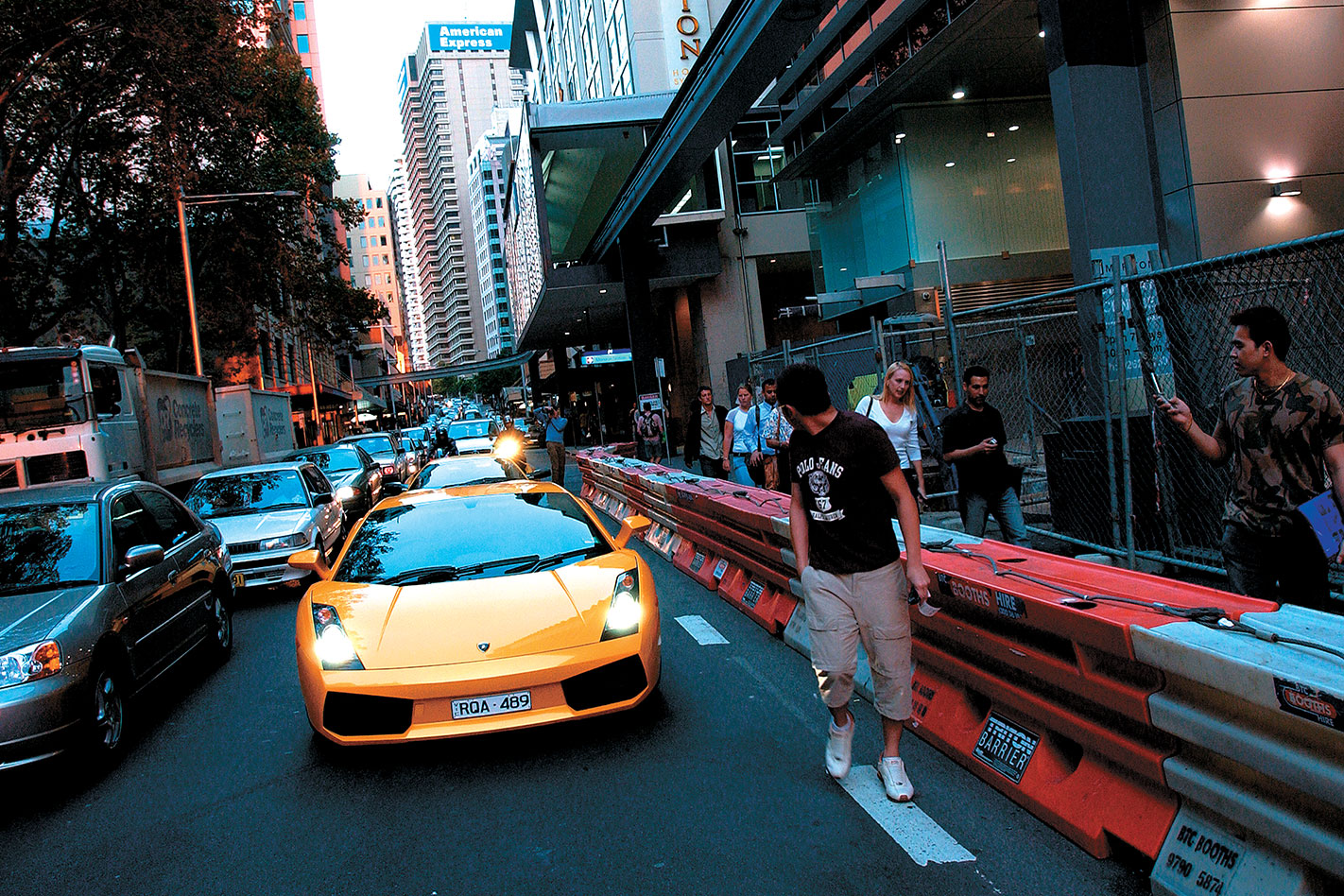
But Murciélago doesn’t do it for me like Gallardo. Those who say it’s sanitised can go back to their ancient supercars with awkward driving positions, no air-con, no vision or practicality and some mystical, intangible aura.
Gallardo has everything: looks, power, handling, brakes, and space for one blonde and one bag. So I’ll happily have this Gallardo, in this colour, this interior trim and definitely this e-gear. I’ll relish and smile while scraping the spoiler on my driveway every single day.
And I’m sure people will gather to watch.
Big Daddy – Lamborghini Murciélago
Forget the day Kennedy was shot or the day man stepped on the moon, I can tell you exactly where I was the day I saw my first Lamborghini. It was a dark blue Countach at a service station near my mum’s house. I instantly knew what it was, thanks to obsessive watching of Cannonball Run.
If I had to pin-point a reason for my love of cars, it’s this moment. Twenty years later, the entire current Lamborghini range shows up in my street on a Friday night.
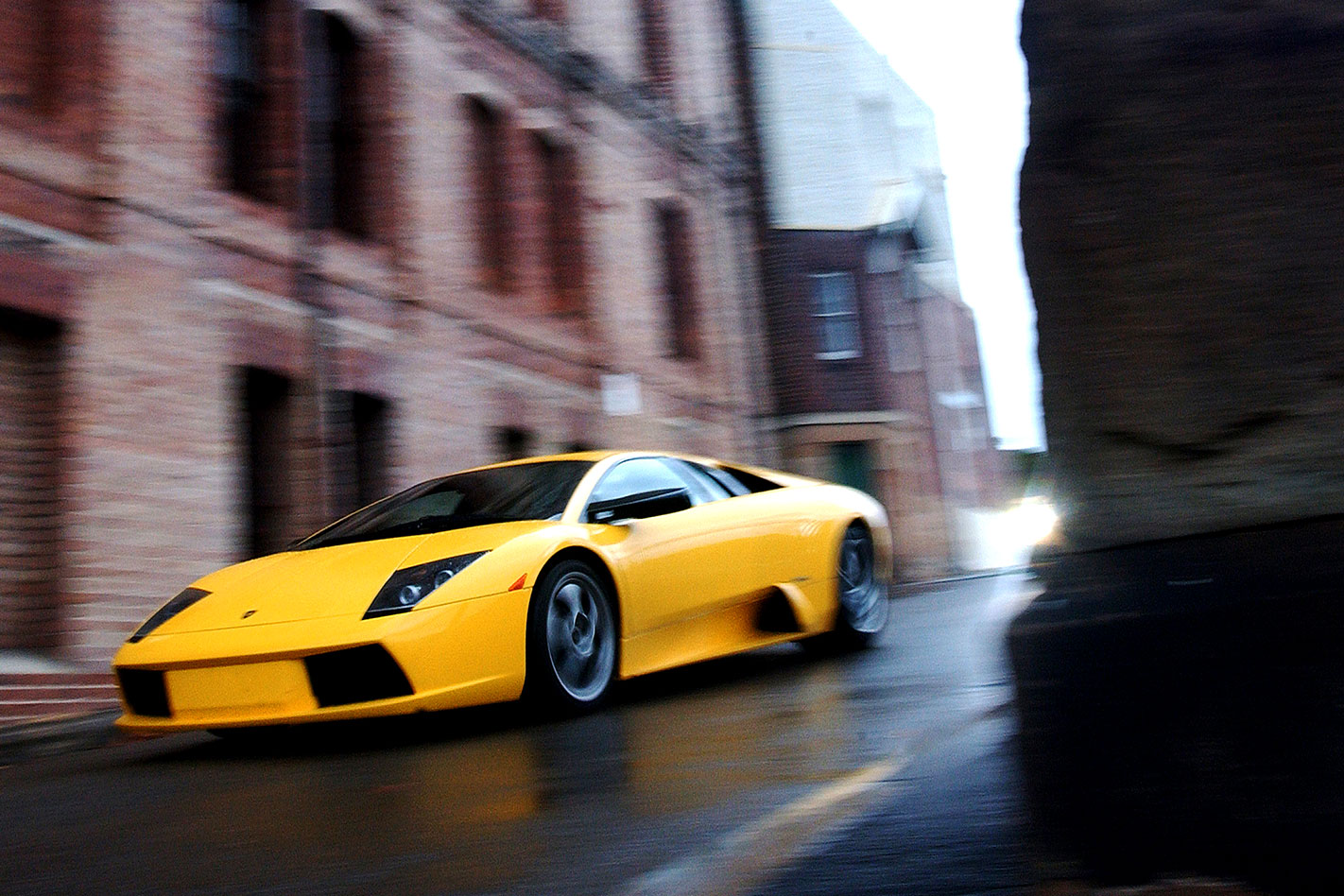
In between bouts of uncontrollable smugness, my brief was to discover if the arrival of the Gallardo had rendered the Murciélago redundant.
So what does another two hundred grand get you over the $400k Gallardo? A 6.2-litre V12 is first on the list. With 426kW at 7500rpm the Murciélago is the most powerful car on sale in Australia. And it’s only out-gunned by a handful of cars around the world, namely the limited production Ferrari Enzo and Porsche Carrera GT. As far as off-the-peg production cars go, this thing’s The Daddy.
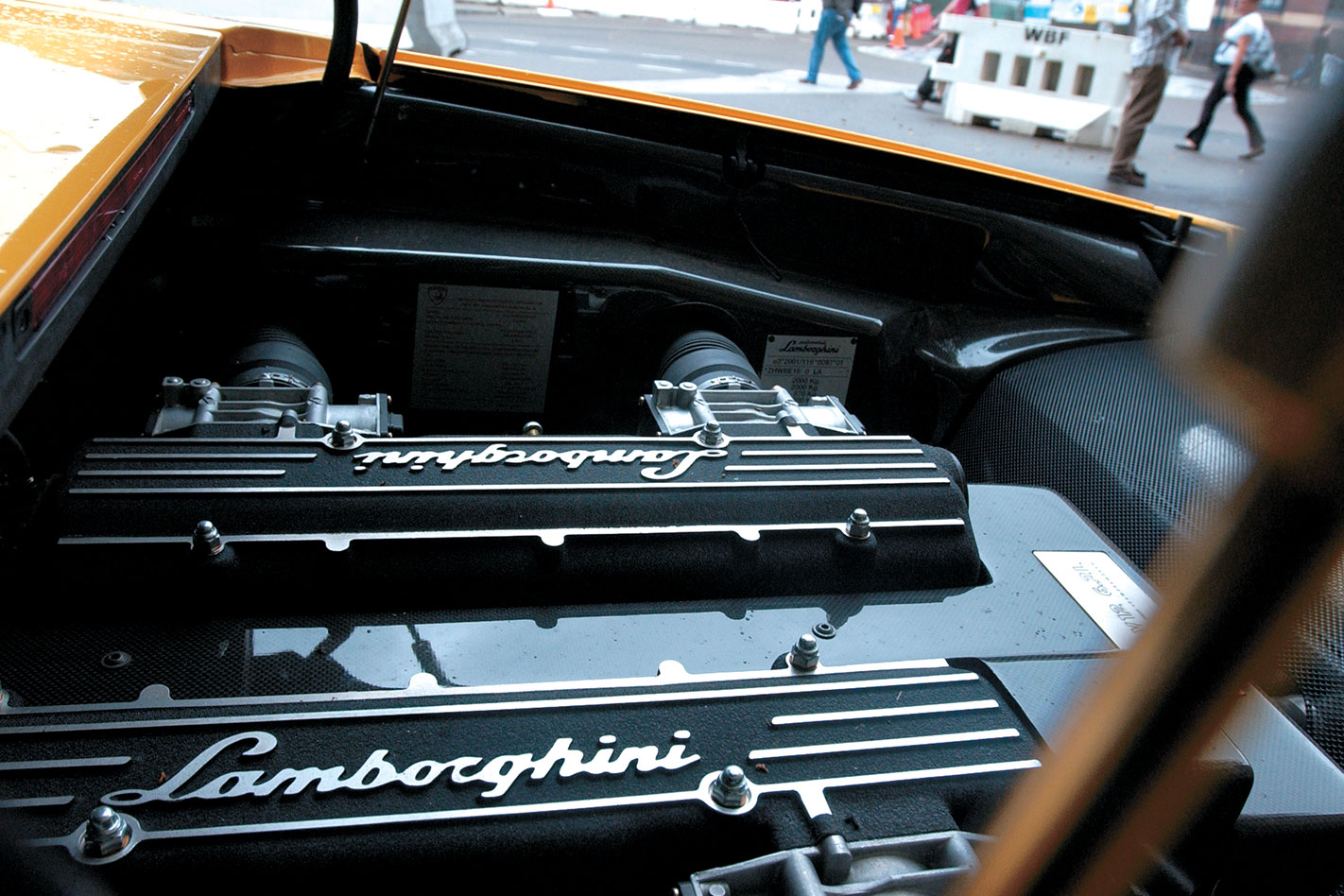
But for all the numbers, it’s the noise and addictive speed that’ll get you. You’ll never get used to the combination of sounds coming from behind your left shoulder blade. Ever tried to take a bone off of a hungry dog? That’s a Lambo V12 at idle. From about 4000rpm until the tacho needle plunges into the red at 7600rpm, the engine goes even more feral and the pure thrust is even more corrupting. As the engine bellows, whoops, rumbles and tingles behind you, the pace continues to pile on, pausing only to slot home another of the six ratios via the sensual, open-gated shifter.
Numbers and words do nothing to describe the searing speed that is generated by this car, but try 0-100km/h in 3.6 seconds, 0-400m in 11.7 and a genuine top whack of 330km/h. It’s faster than any cliché you care to throw at it but very effing fast is about as close as you’ll get to an adroit description.
Dry-sumping of the V12 gets it 50mm lower in the chassis, but with this much weight behind the centre-line you’re constantly aware that lift-off oversteer is an ugly possibility.
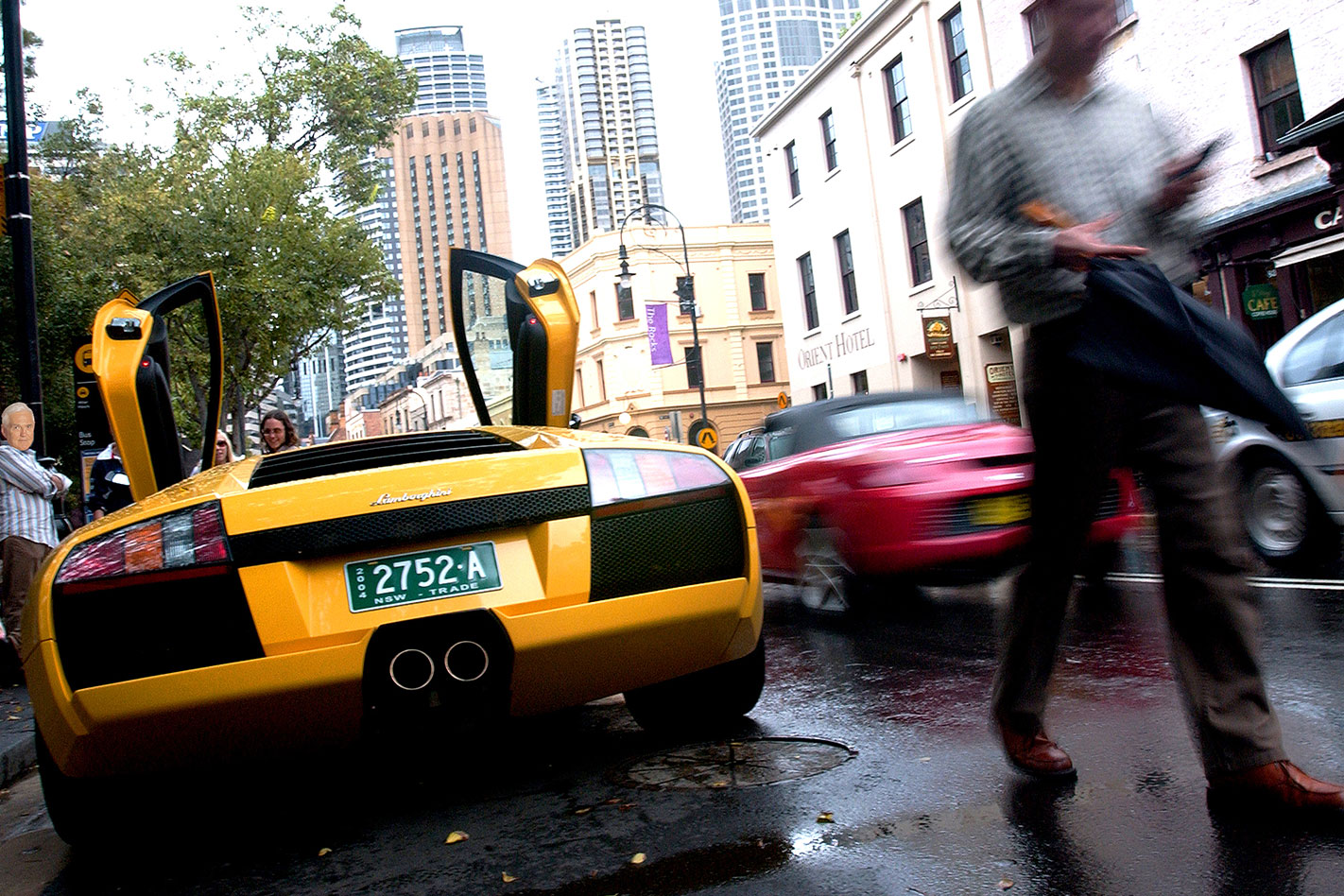
Powering out of a tightish second gear right-hander the Murciélago’s rear stepped early and very wide. An instinctive roll of the wrists caught the first half of the slide, but then the bad boy demands to be driven on the throttle to keep it off the Armco. Snapping the throttle shut will just spit you the other way, so a bit more right foot here and a bit less there saw me through. The cold sweat pooling in the small of my back says some luck was involved, but the Murciélago slides and recovers better than most other mid-engined weapons.
Probably the easiest way to sum up the insane appeal of Murciélago is to quick scroll through the car’s trip computer. Aside from the features you’d expect to find, Lamborghini’s thoughtfully included an overall peak speed function, top speed on current journey and peak g-forces recorded. Modesty denies posting of my personal bests, but this is better than PlayStation.
For sheer pose value, the Murciélago’s ace up the sleeve is the scissor doors. Flip one up and everyone forgets the Gallardo, and their girlfriend, husband, child. Simply nothing beats the drama of a yellow, V12 Lambo with the doors erect.
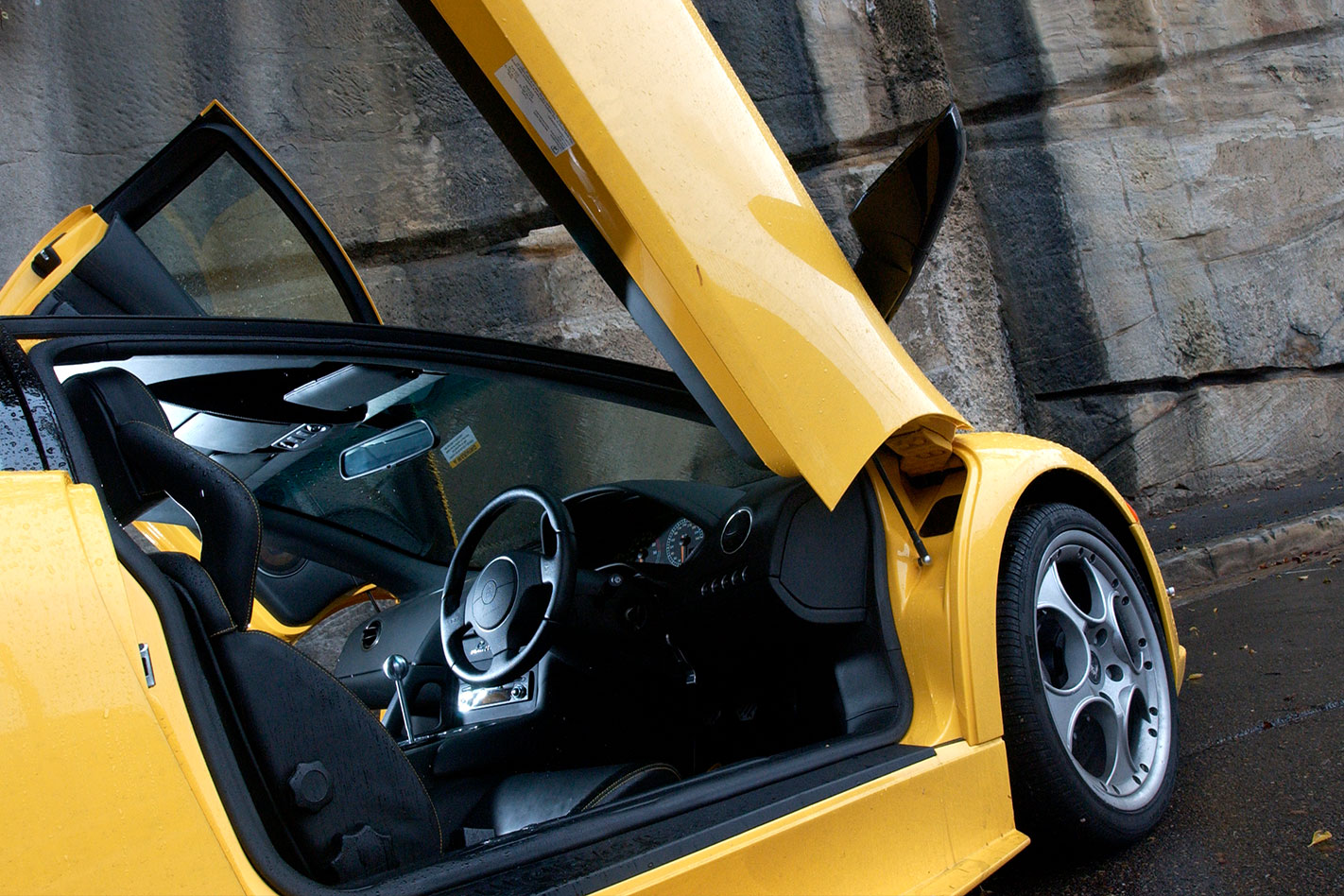
At the Gallardo’s launch, Lambo and Audi brass stressed that the baby supercar wouldn’t step on the toes of the big daddy. The Murciélago will remain the flagship of the company with its V12 powerplant and those doors. It’d be a shame if they were the only reasons you bought one, because it’s still a sensational form of transport.
More than that, the Lamborghini Murciélago is the greatest show on earth. – Jesse Taylor
Fast Facts
While one-tonne utes and SUVs steadily gain a following in Australia as the most popular models, the small segment still manages to pull a significant audience of drivers looking for a vehicle at the more affordable and more manageable end of the spectrum.
In 2018 there will be a busy calendar of launches for vehicles in the small segments from all brands and for all budgets. Here’s a selection of the new metal coming from the more conventional to the fast and unorthodox.
Kia Cerato
Due for a reveal at the Detroit motor show, the next generation of Kia’s consistently popular small hatchback and sedan will arrive in Australia about the middle of the year, bringing more safety kit and a more sophisticated package, says the South Korean maker.
Pricing is expected to be sharp and Kia is charging the new model with the task of maintaining the Cerato growth trend, with Australian sales increasing for the last four years.
Nissan Leaf
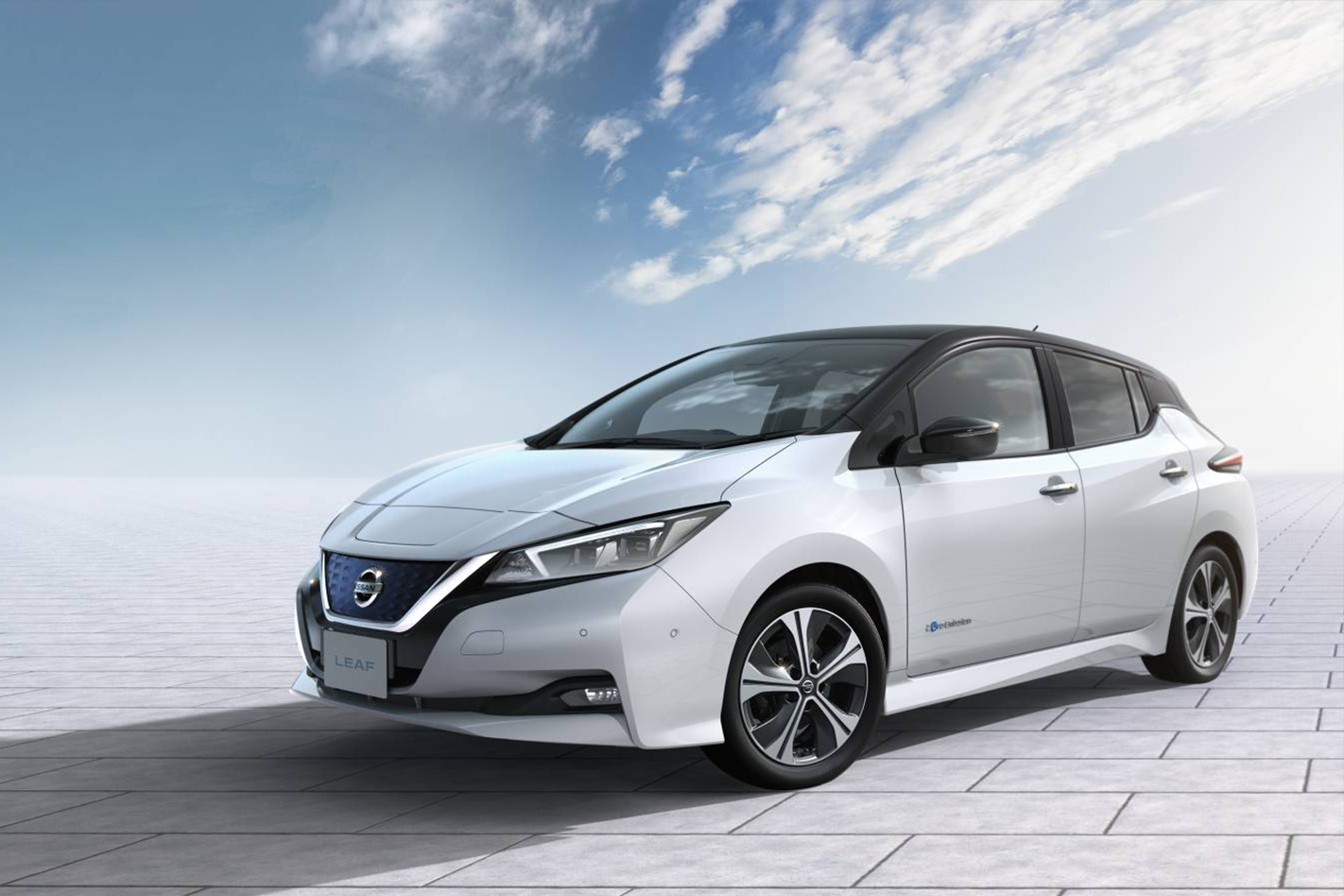
You won’t see the next-generation of Nissan’s electric Leaf until late in the year but the Japanese car maker is saying the new model is worth the wait, with a driving range of up to 400km, 435 litres of luggage space and a fresh new design.
Pricing is expected to be higher than the outgoing Leaf and about the $50,000 mark, but exact details and specification will have to wait until closer to the model’s arrival.
BMW i3
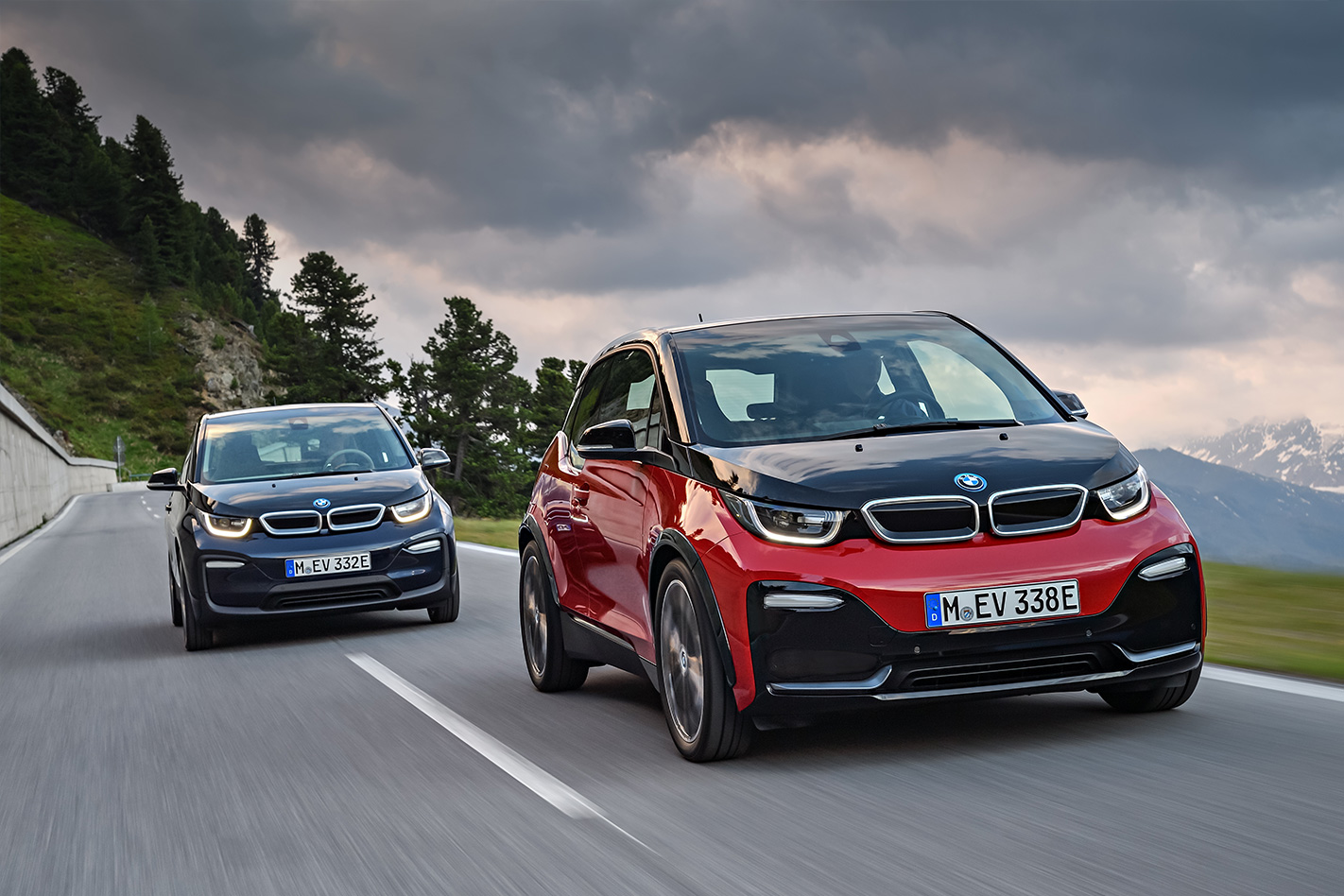
Another electric small car will be arriving early in the year with the update and facelift of BMW’s little i3. Both pure EV and range-extended versions are getting a mild aesthetic update as well as a larger-capacity battery that will allow the hatchback to go up to 300km.
But the big news is the addition of a new i3 S variant, which will be the first performance-focused i3 and bumps power up 10kW and an extra 20Nm of torque. Pricing starts at $68,700 for the standard pure EV i3 and tops-out at $75,900 for the range-extended i3 S.
Kia Picanto
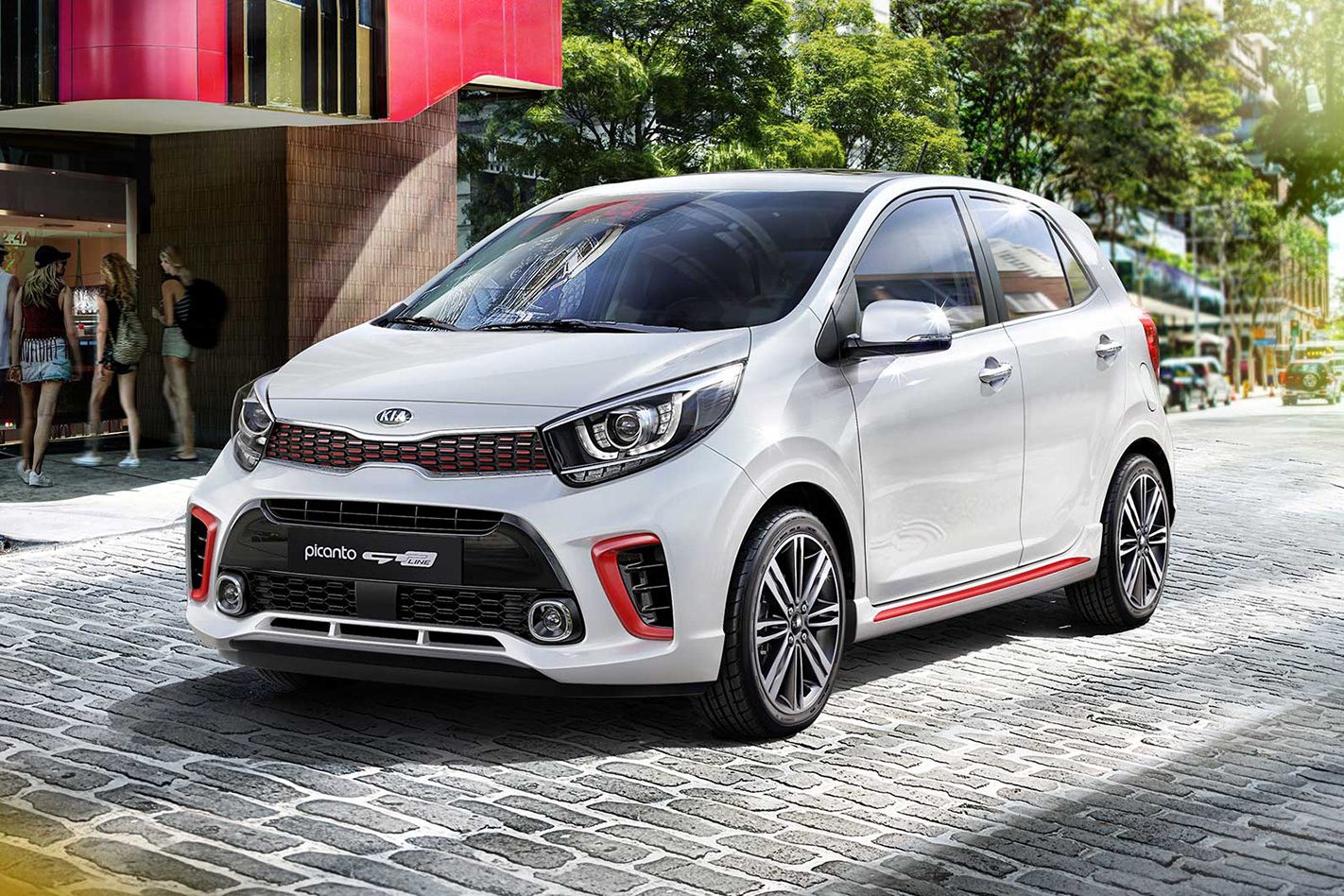
At the very small end of the spectrum, an extra variant of Kia’s new Picanto is also likely to roll in during 2018 for customers who like the cheeky styling and manageable proportions of the compact hatchback but with a little more go.
The model is still yet to be finalised, but for about the $20,000 mark, the GT-Line has a 1.0-litre turbo three-cylinder engine that sends 74kW of power to the front wheels and brags about its extra performance with a sporty bodykit, bigger wheels and a manual-only gearbox.
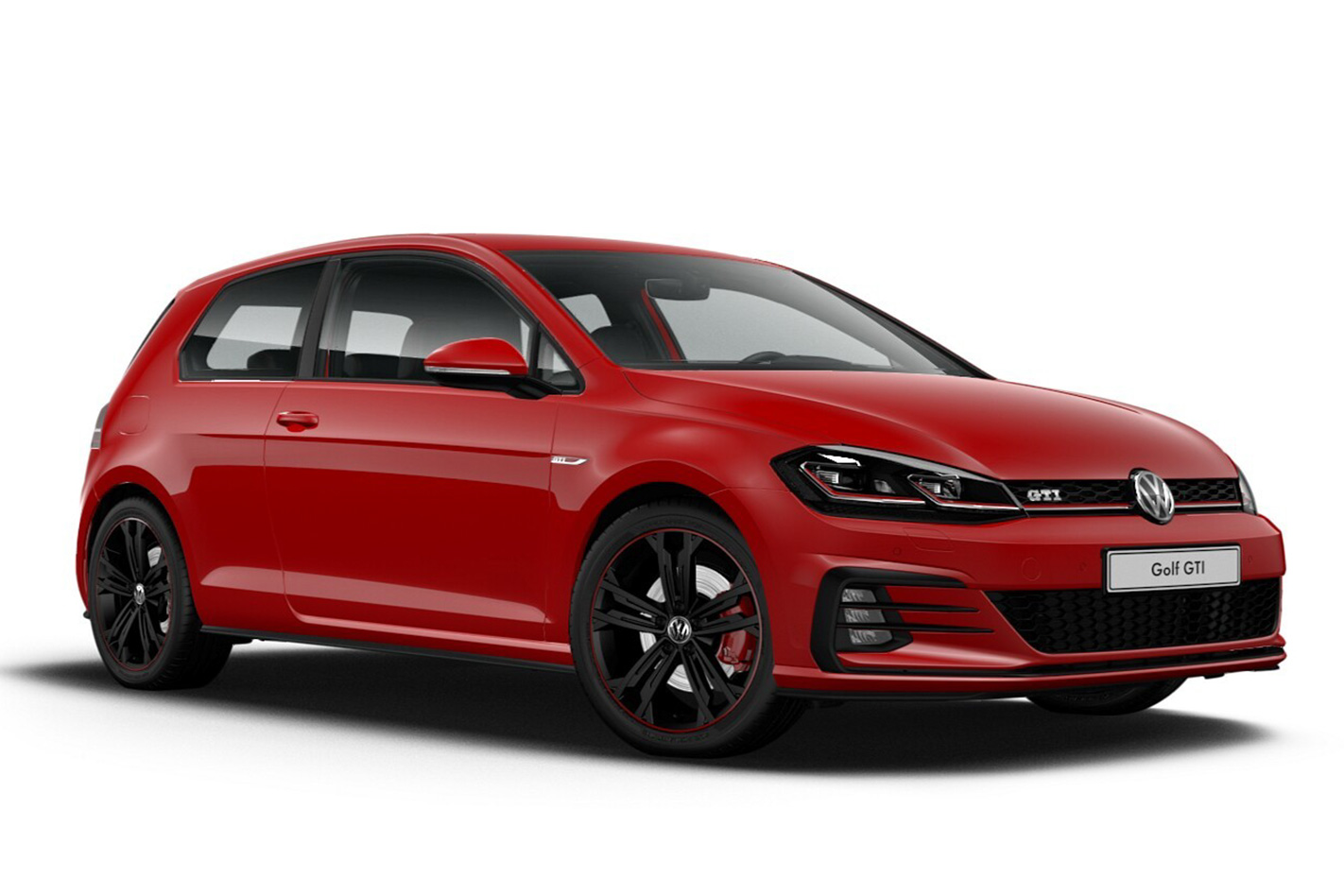
Golf GTI Original
For the high-performance small car fans, Volkswagen has a version of its iconic Golf GTI ready to rumble in 2018. Early on in the year, the German car maker will launch the Original special edition for less than $40,000, which has pared-back specification and is available in red or white only.
For those looking for more power from the likeable Golf package, Volkswagen is also rolling out a Grid Edition of the Golf R, which approaches the model from a similarly Spartan angle to drop the price below $50,000.
Hyundai i30 N
The hot Golf will get a shot across its bow in 2018, as will any hot hatch worth its salt, when Hyundai finally breaks into the high-performance market with its i30 N.
Up front, a 2.0-litre turbo four-cylinder drives the front wheels with up to 202kW via a manual gearbox and is capable of getting to 100km/h from zero in just 6.4 seconds.