THE various motorsport championships around the world have been run and won for the year, and the world’s race cars put into storage ahead of testing next year.
But that doesn’t mean we can’t celebrate what was another nailbiting season of racing, filled with equal measures of tragedy and triumph, punctuated by thrilling passes and jaw-dropping crashes.
We’ve decided to celebrate the racing year that was by honouring our favourite people, moments and races with some awards:
Biggest upset
Jackie Chan Racing – 24 Hours of Le Mans
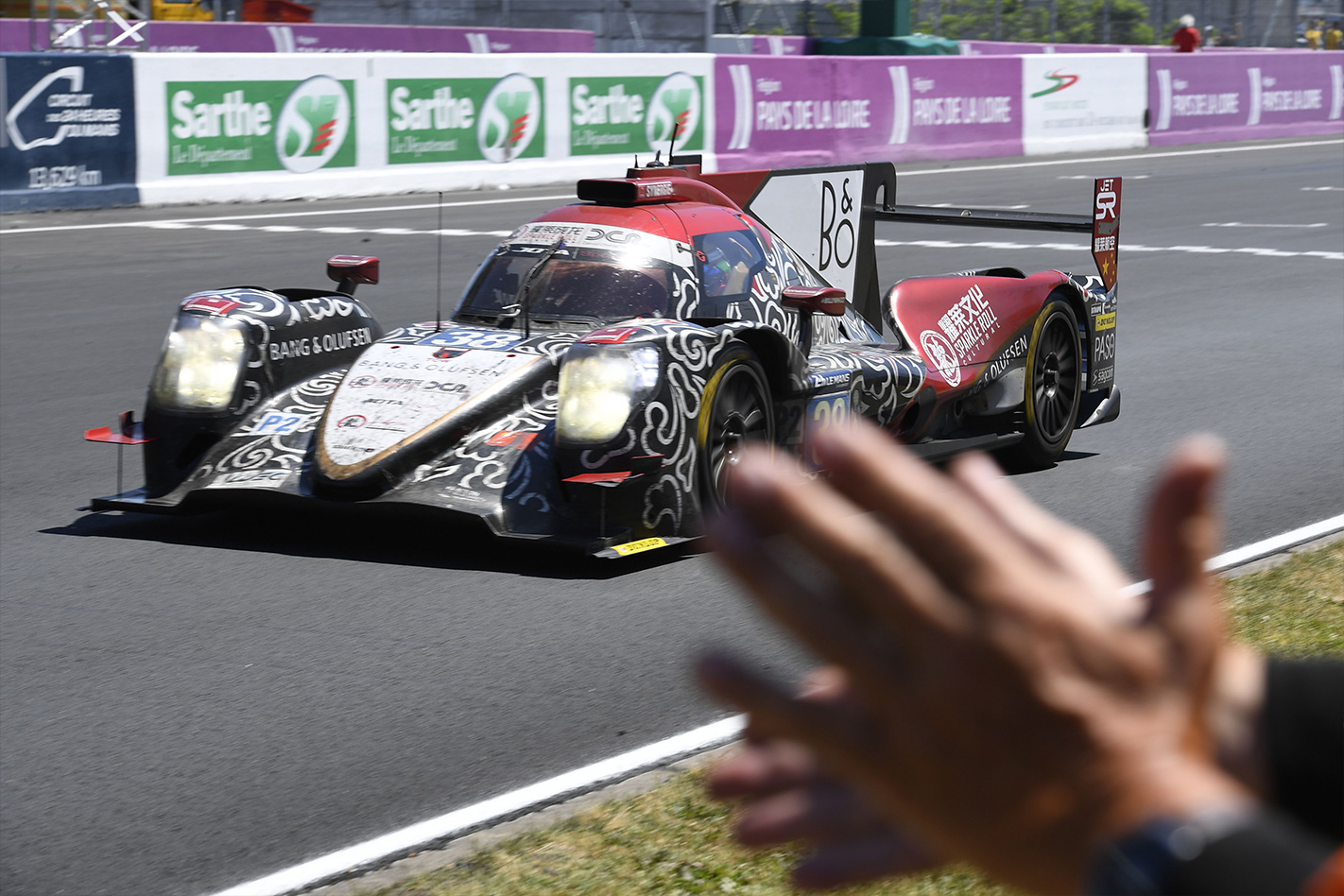
It’s four hours until the end of the biggest endurance race of the season – the 24 Hours of Le Mans – and an LMP2 car is leading the race. With a laptime roughly 10-11 seconds slower than the top-tier LMP1 weapons around the La Sarthe circuit, the thought of an LMP2 car leading the Le Mans outright is unthinkable. But motorsport fans, this wasn’t a dream, it was a reality which will haunt LMP1 teams for years to come.
The team that found itself at the front was Jackie Chan DC Racing (yes, THAT Jackie Chan). Unfortunately, Porsche managed to get one of its 919 LMP1 cars back on track and running in time to overtake the LMP2 minnow with two hours to spare. But, for a couple of glorious hours and for the first time in history, an LMP2 car led endurance racing’s greatest event before finishing second outright – outperforming multi-million-dollar factory squads.
Jordan Taylor
If you’re not already following Jordan Taylor on his various social media channels, change that. The American sportscar driver is one of the best ‘follows’ you can add to your feed. From his laugh-out-loud photo captions from flights, to his satirising of fellow racing drivers, to his backyard karting antics: Taylor is a refreshing change to the mountain of stale motorsport social media feeds.
Best pass
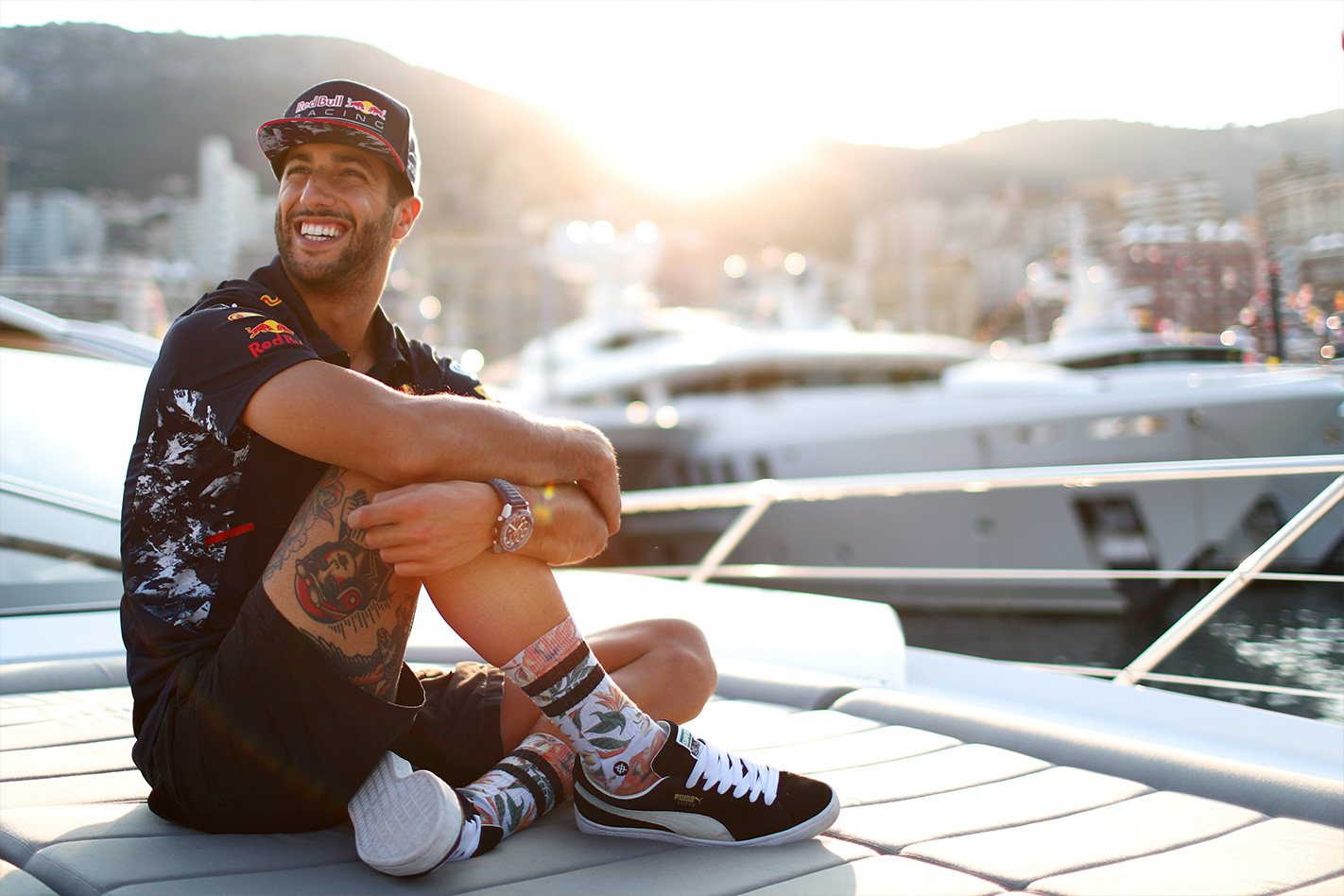
Ricciardo kills three birds with one pass
Passing a single driver in a corner is just part of the job for racers. Passing two in a single curve is impressive. But dispatching three opponents in one foul swoop … well, that makes you Daniel Ricciardo.
The Aussie driver overtook Nico Hulkenberg, Lance Stroll, and Felipe Massa in one masterful movement during a restart at the Azerbaijan Grand Prix. The Honey Badger at his best.
Best meltdown
Sebastien Buemi – Montreal Formula E ePrix
A bad day at work can grind the best of us down, but what happened to Sebastien Buemi in the Montreal Formula E race seemed to hit a nerve. With his title hopes on the line, Buemi got caught up in some early on-track carnage, with his race unravelling from there.
After losing the championship, Buemi went into full meltdown, picking verbal fights with three of his competitors in the space of a couple minutes. It’s quite something to watch.
Best personality
Daniel Ricciardo
We here at Wheels HQ are self-aware enough to realise our bias might be showing with this one, but it couldn’t be anyone else, could it? Daniel Ricciardo has earned himself a reputation of being a laugh in interviews traditionally reserved for dry PR-fed lines. He’s doing the country proud, not least for stealing Lewis Hamilton’s phone during the podium celebrations in Mexico.
Not convinced? Watch his antics during a rain delay when qualifying at Monza, when the Aussie snatches a broadcast camera to go spy on his rivals at Mercedes.
Erebus Motorsport
Erebus was the little team that could, winning the biggest race of the Aussie motorsport calendar. David Reynolds and Luke Youlden’s victory at this year’s Bathurst 1000 was one for the ages -while Erebus Motorsport’s team owner Betty Klimenko has undoubtedly deep pockets, the squad has downsized in recent years and struggled for on-track performance. However, this year it has shaken off that reputation, and asserted its authority by adding taking the Peter Brock Trophy home from Mount Panorama following an unpredictable, wet, wild and thrilling endurance race.
Tearjerker moment
Fernando Alonso’s engine failure – Indianapolis 500
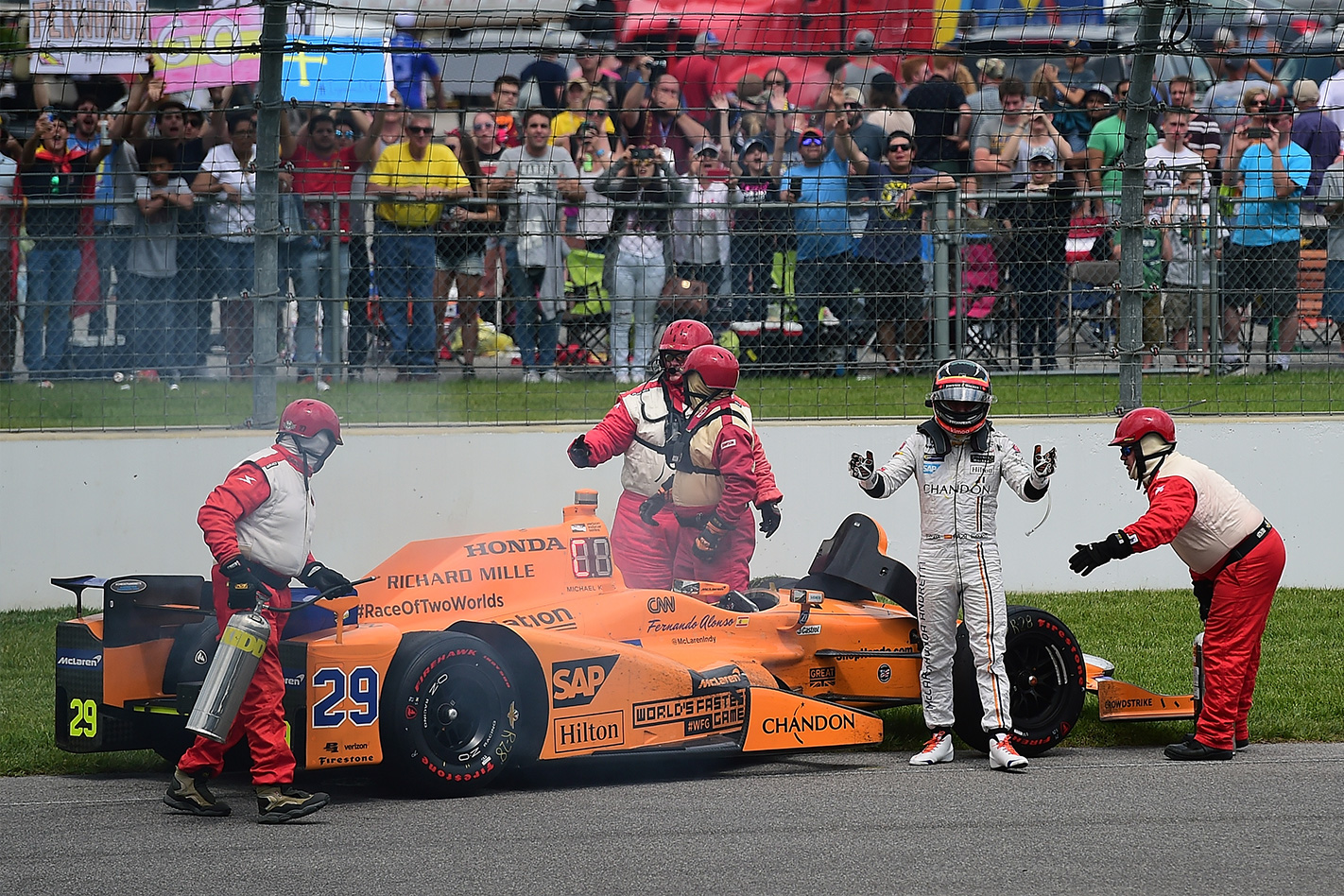
It was the news which shocked the motorsport community, Fernando Alonso, two-time world driver’s champion and McLaren Formula 1 driver would snub the Monaco Grand Prix to compete in the Indinapolis 500. Rated as one of the best living racing drivers around, it was no surprise Alonso adapted to oval racing swiftly. A solid qualifying performance was followed by a measured and impressive drive in the race. The Spaniard was leading the biggest single-day sporting event in the world on his first attempt, and victory looked assured.
But then ghosts of F1 engines past came back to haunt Alonso, and his Honda engine failed. It was a cruel twist of the knife for a man who has suffered at the hands of Honda’s turbo V6 engines for two years, and was clearly hoping for a reprieve.
Porsche 919 Hybrid
Officially being retired in Bahrain, Porsche’s LMP1 racer will be sorely missed from the world’s racetracks in 2018. Being sacrificed so the brand can join the growing ranks of Formula E, the 919 is headed to the halls of Porsche’s retirement warehouse with an illustrious record. The 2.0-litre V4 turbo hybrid accrued a trio of drivers’ and constructors’ championships, along with 16 victories and 11 pole positions from just 33 races. The LMP1 category, and the motorsport world, is poorer for its departure.
Best race team
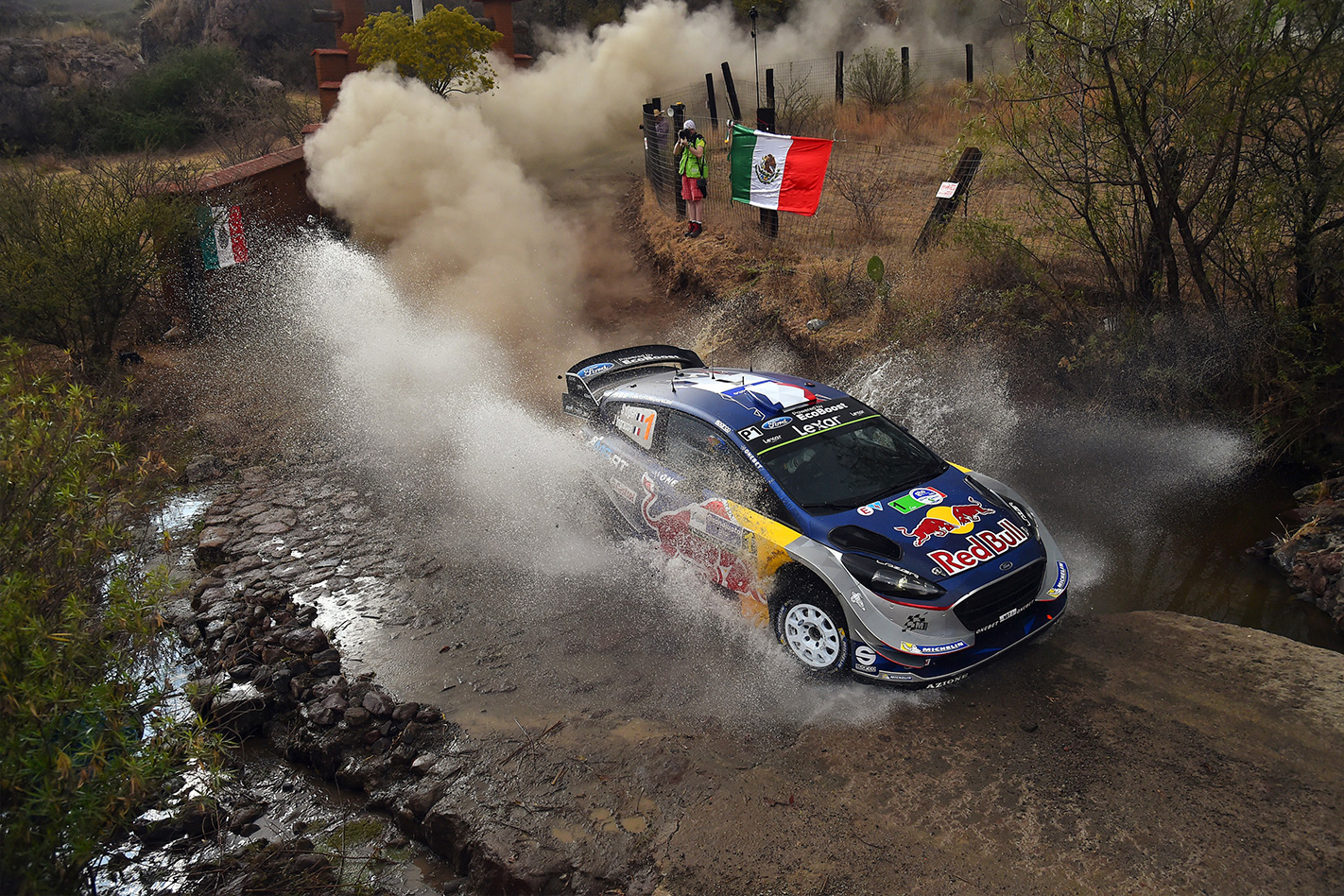
M-Sport
While technically the factory Ford squad, M-Sport receives little to no funding from the Blue Oval, making it a well-heeled privateer team. Building all-new cars to meet WRC’s new 2017 regulations, and with a star recruit in Sebastien Ogier, M-Sport went on to win both drivers’ and constructor’s championships, along with four rallies during the season.
Shane van Gisbergen – Winton
There could only be one, the king of victory celebrations in Supercars, Shane van Gisbergen. The Kiwi’s antics in Winton after his victory was one of the best he’s put down. A stout burnout, followed by sideways tyre-frying antics for the majority of the circuit. Watch, and enjoy. RIP tyres.
Enjoyed reading our previous instalment of our most popular features of 2017? Here’s five more to give you some holiday season reading material.
Toyota’s Aussie timeline
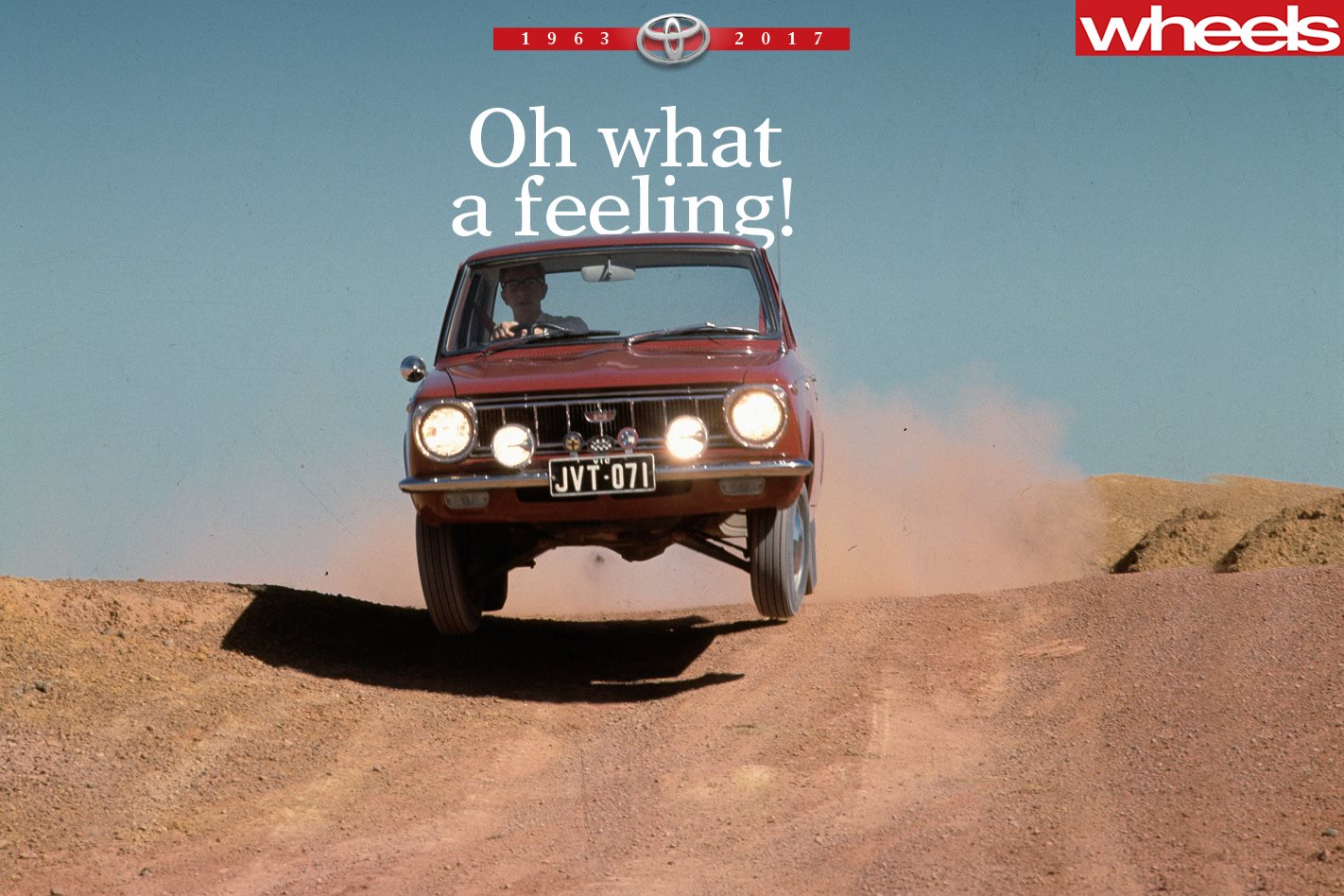
Our retrospective Toyota timeline was a hit, covering the gamut of the Big T’s Aussie-assembled offerings. Clearly, there are still plenty of Australians who get a bit emotional about Toyota upping stumps – even though it’s a brand that’s known for being bland.
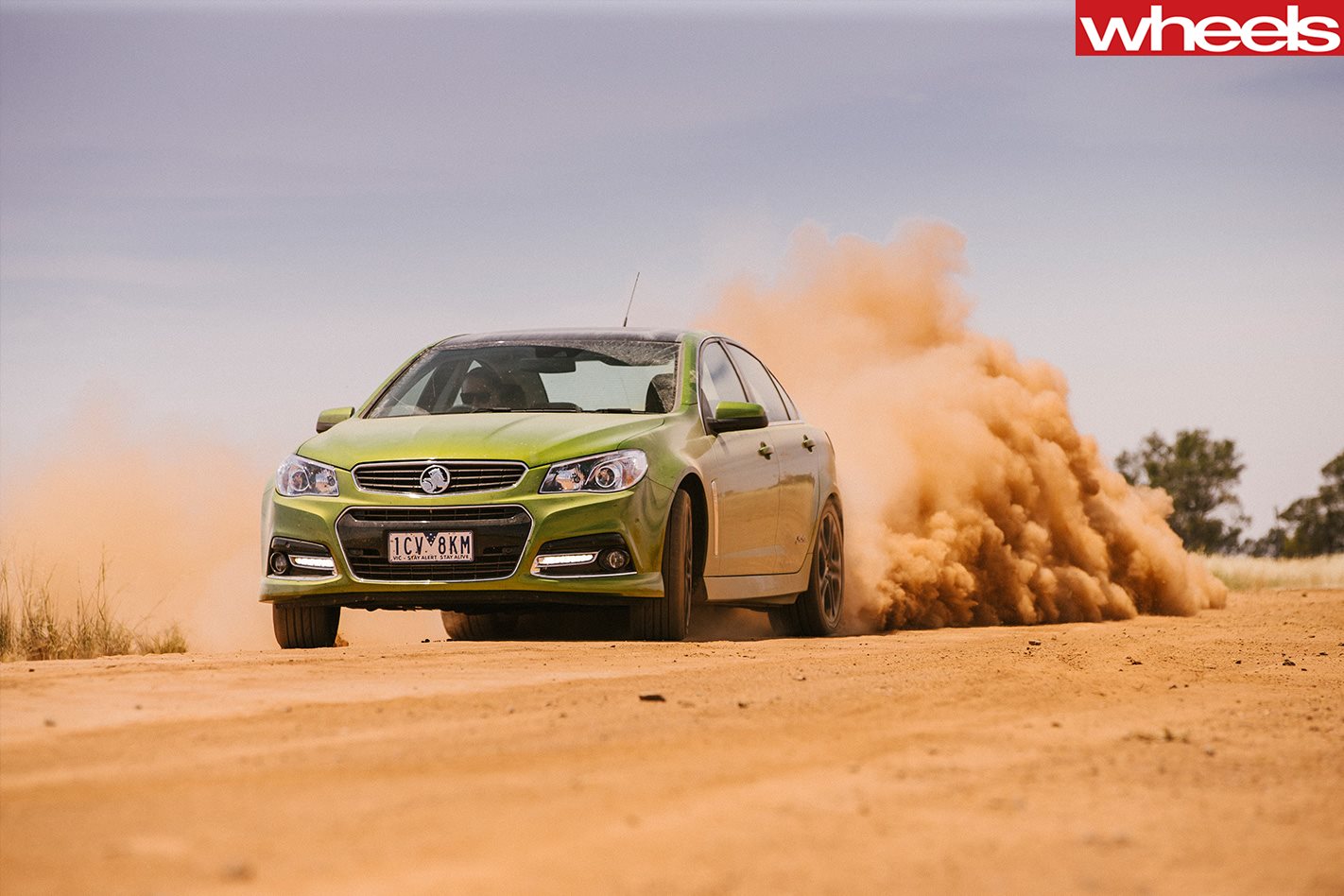
Holden and Wheels: Epic Drives
Hunting down 300km/h at Bathurst in a Ferrari 488
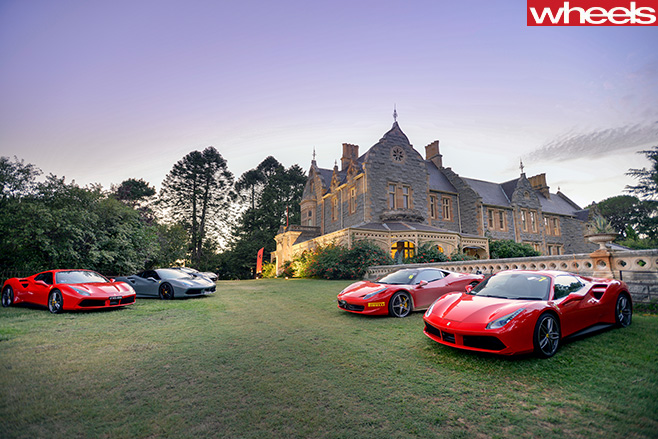
And that’s exactly what our scribe Stephen Corby sought to do, attempting to put 300km/h on the dial of a Ferrari 488 GTB at the Mecca of Aussie motorsport, Mount Panorama. Is the downhill slope of Conrod Straight long enough for a Fezza to hit that target? Have a read.
Wheels Tyre Test 2017
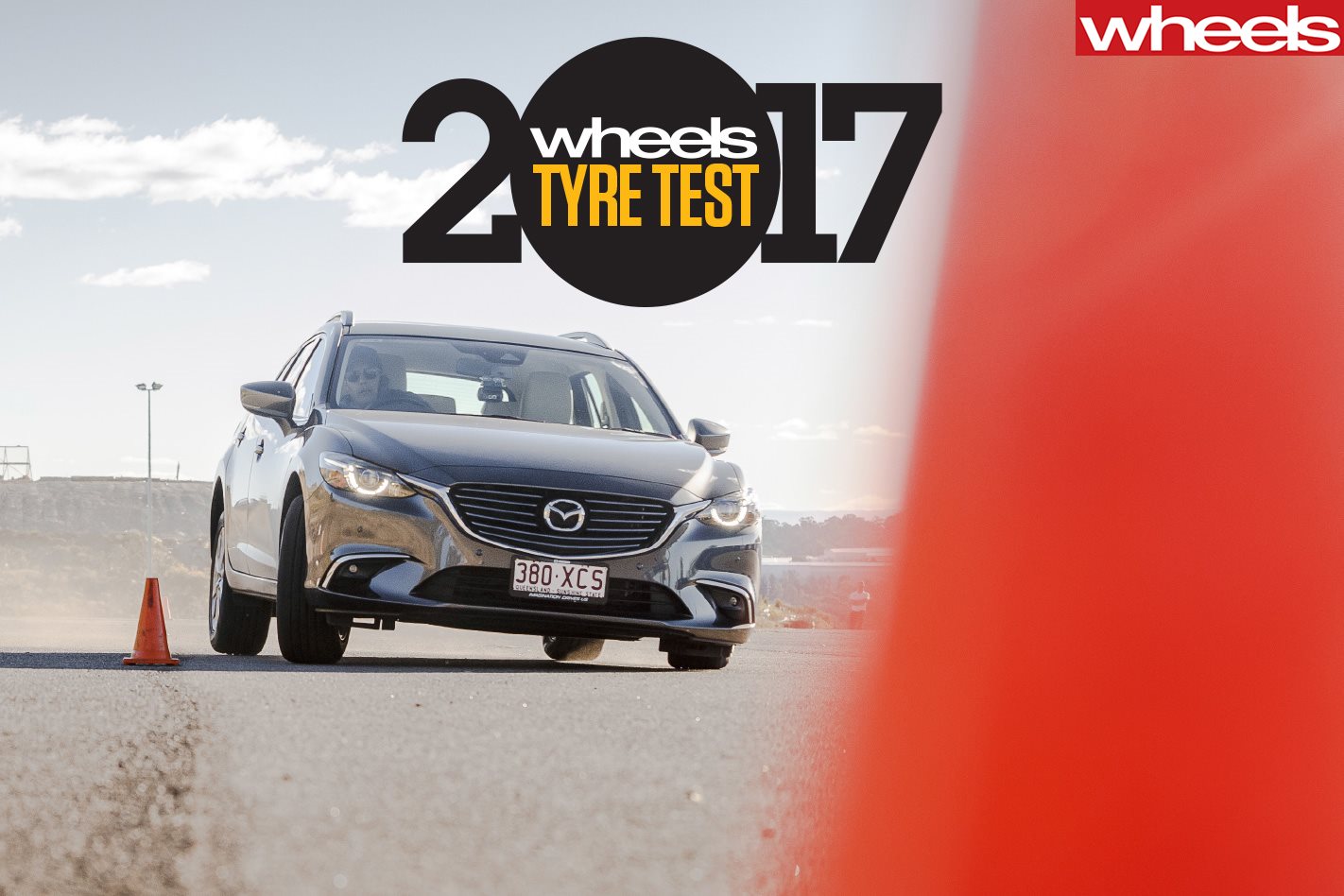
The four rubber hoops that connect your car to the ground may not be the most exciting components of a car, but they’re by far the most important. No other part has anywhere near as much impact on how comfortable, quiet, grippy and fast a car is than its tyres, yet often the temptation is to simply go with whatever’s cheapest when time comes to replace the factory-issued set.
But before you do that, have a read of our eight-way tyre comparo. Yes, it’s as dry and methodical as you’d expect, but if you value your car – and your life – they’re words that you need to read.
Holden SS – a history lesson
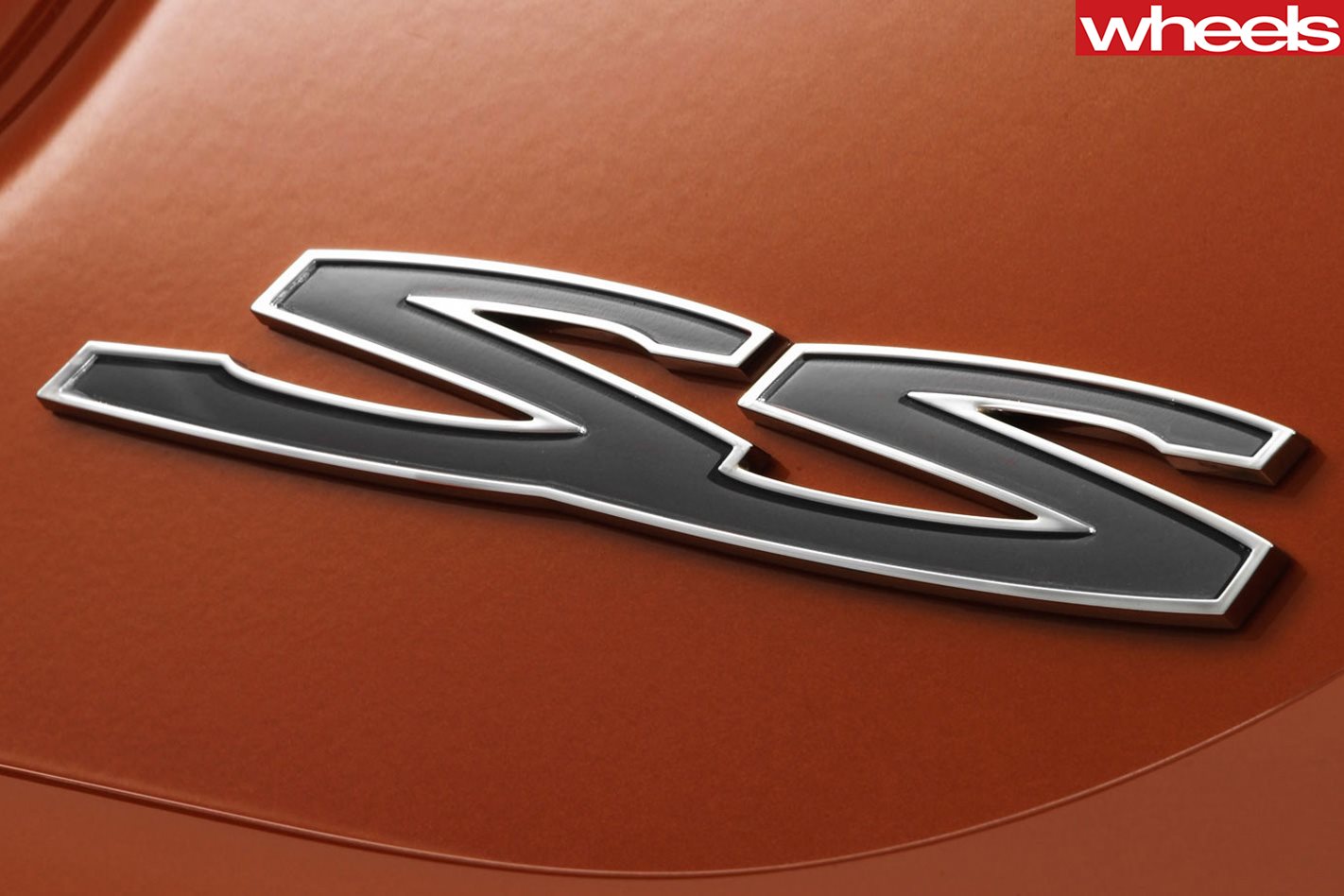
We tracked the evolution of the badge from its hairy-chested disco-era beginnings all the way through to the sophisticated VF SS-V Redline of 2017. The SS lineage ends with the arrival of the V8-less ZB Commodore and we’ll miss it greatly. Judging by the amount of traffic this feature generated, a great many of our readers will too.
There’s a certain soundtrack to the XJR575. It’s not just the threatening growl as the engine bares its teeth, or the low-down bawl evacuating the quad exhaust pipes. It’s not even your own squeals of joy as you mash the pedal, only to be pinned back against the seat by a fist of unholy torque.
It’s something more subtle, lurking in the background; the slow, inevitable tick-tock as Father Time counts down the lives of ludicrous luxury sports sedans like this one.
Those with a glass-half-empty worldview might start singing sad hymns and sending flowers to Jaguar HQ. The more upbeat, however, will want to praise the company for building an old-school, tarmac-guzzling fiend in a world now dancing to the tune of sparkly hybrid-electric tech and sanitised SUVs.
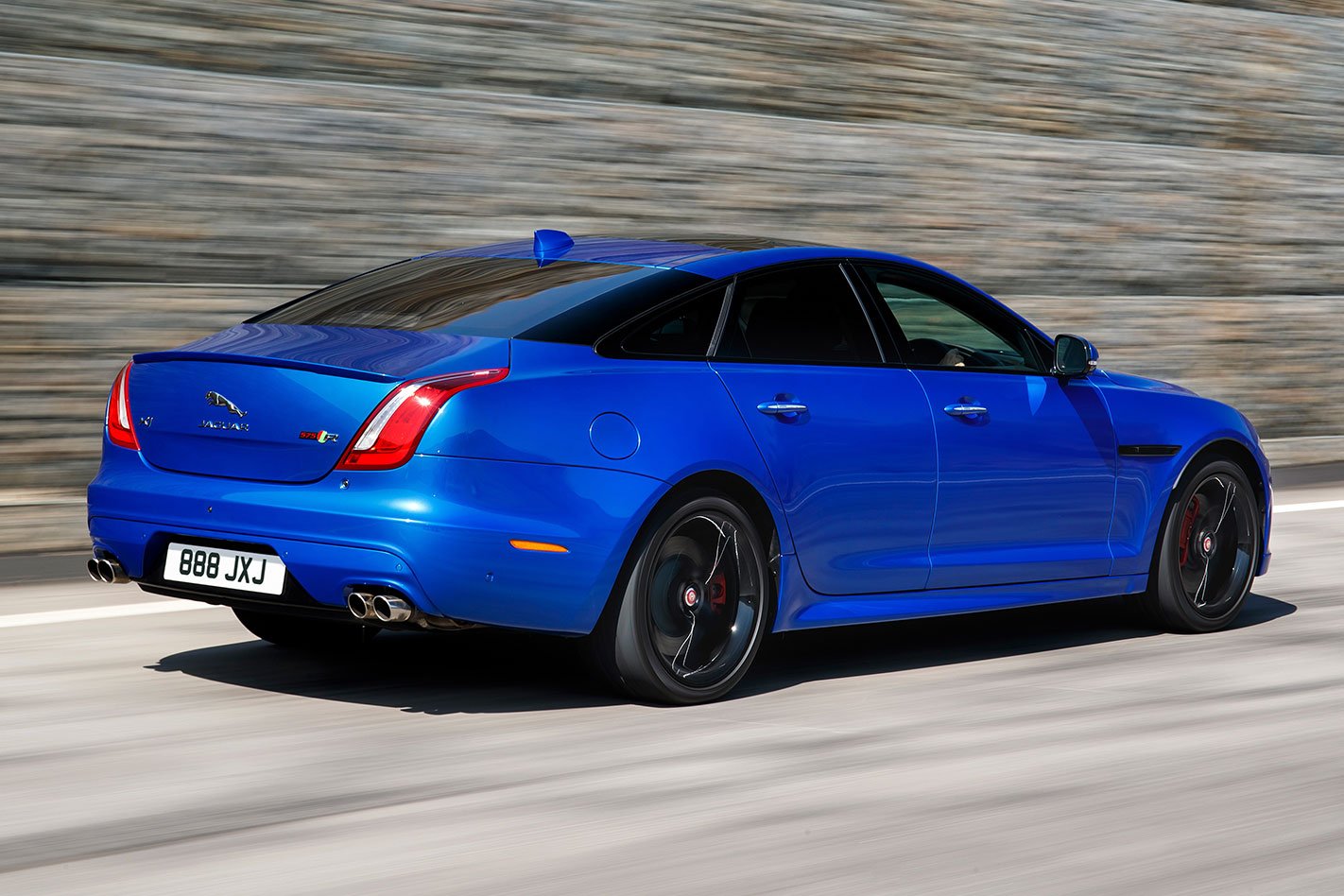
You know how most people eat with their eyes? At kerbside this car whets the appetite immediately, mainly due to its two feisty exclusive colours: Velocity Blue and the military-influenced Satin Corris Grey, a shade so tough – or over the top – Kim Jong-un probably decorates his bedroom with it. Gloss black 20-inch alloys, low air intakes and twin bonnet louvres add to the anticipation.
But the XJR575 doesn’t follow its theatrical opening salvo with an upper-cut, knocking the fun out of you. After the boisterous start – from zero to 100km/h in 4.4 seconds – the whole experience smoothes out somewhat as the Jaguar surges assuredly through the eight-speed automatic ZF ’box.
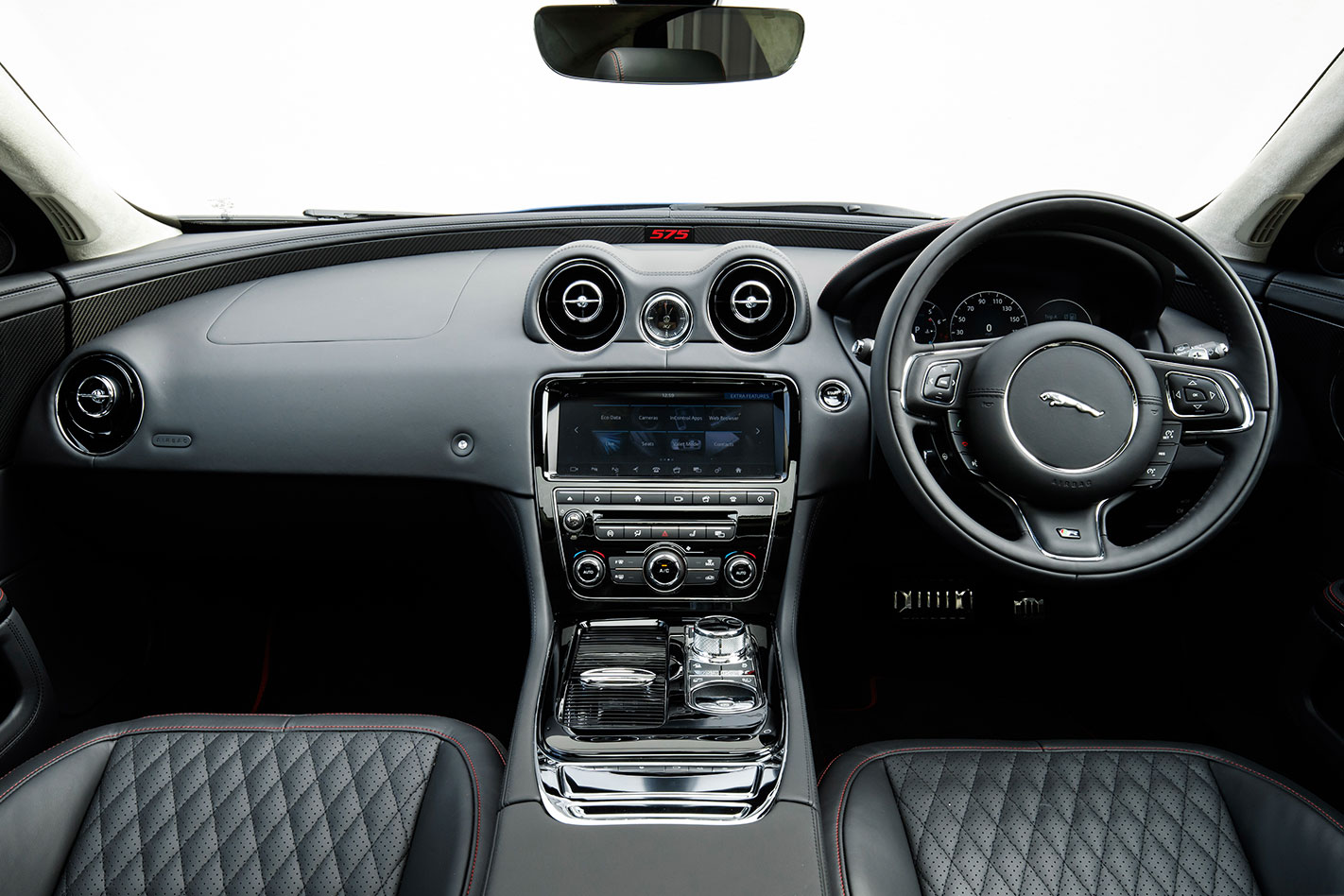
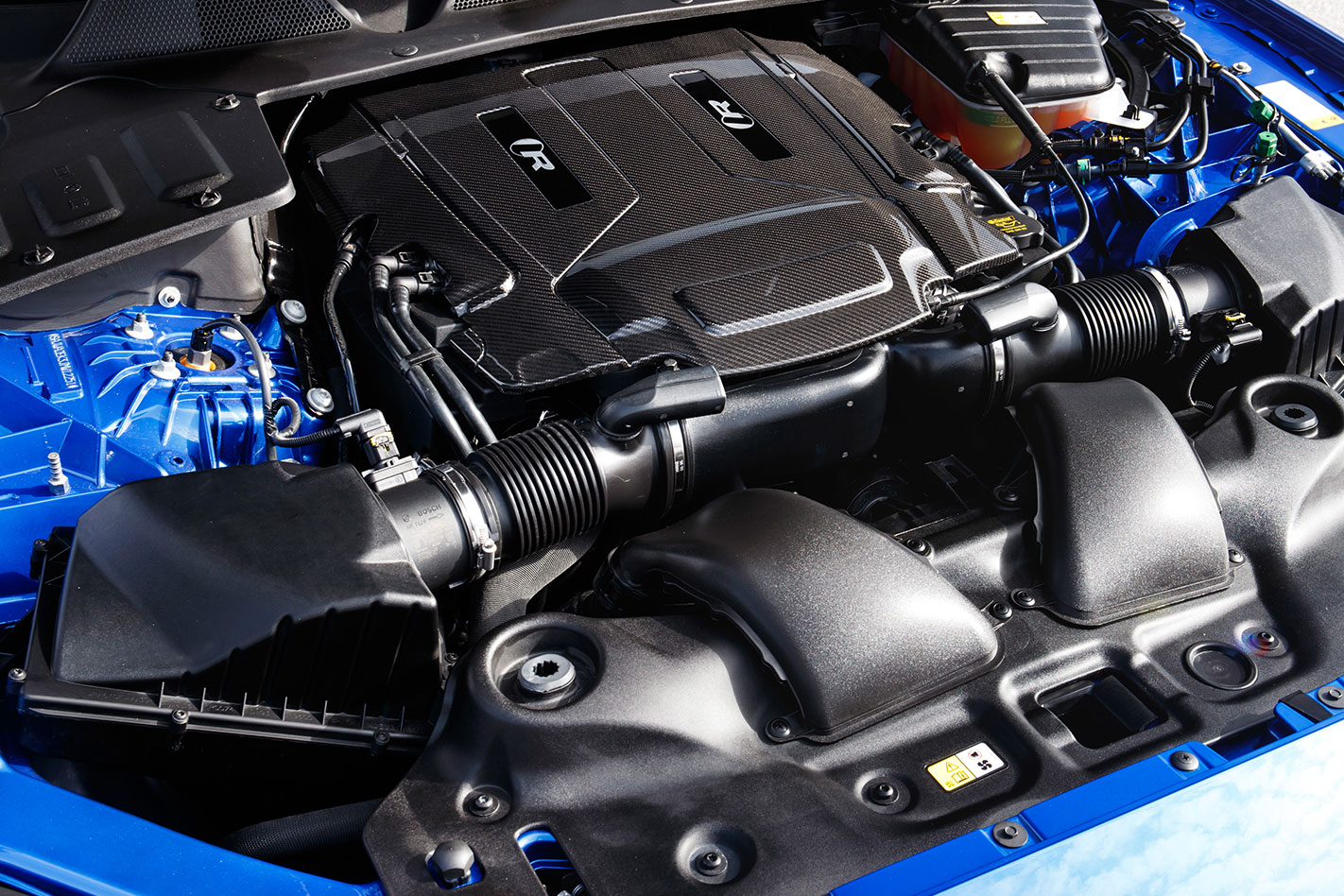
Even so, the XJR575 is engaging and insanely fast on any type of road. In a straight-ish line on Portugal’s highways, even deep into the rev range there are never-ending pockets of power and torque waiting to be plundered – a fact borne out by the powerplant’s numbers: 423kW at 6250-6500rpm and 700Nm at 3500-4500pm, all channelled through the rear wheels only.
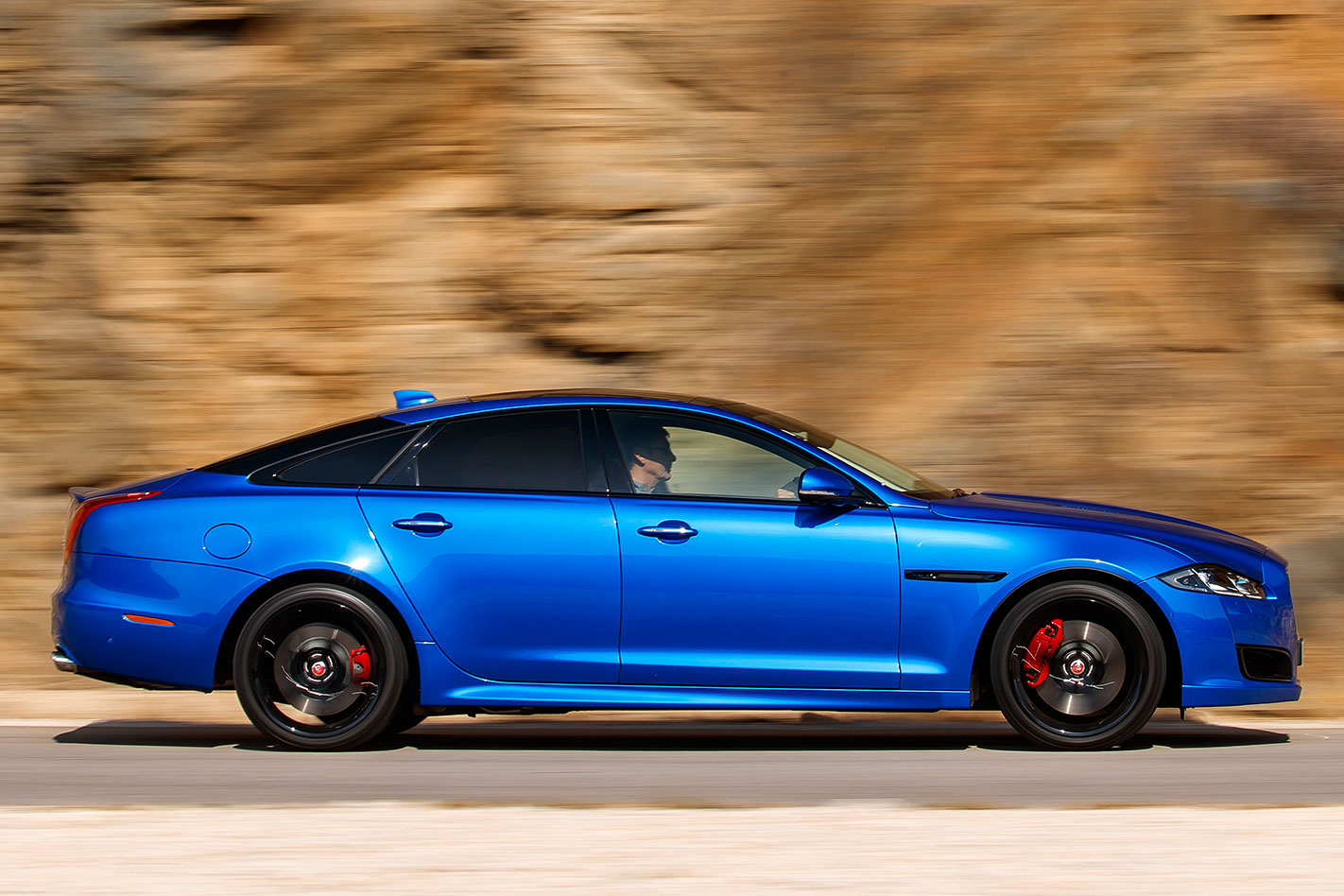
As befitting a premium sedan costing north of $300,000, the double-wishbone suspension smoothes out most bumps, even on Portugal’s gnarlier mountain tracks.
It was in these conditions that we expected the beefy Jag – 5.13-metres long, 1875kg – to show some glaring limitations. But it didn’t, by and large.
Powering out of tight corners, the colossal 295mm-wide rear rubber continues to handle all that torque and the car remains surprisingly athletic yet firm for a big horizontal wardrobe. Electric rather than hydraulic steering now features on all rear-driven XJs, but feedback is still communicative, though if a touch heavy after prolonged periods of twisty hill work.
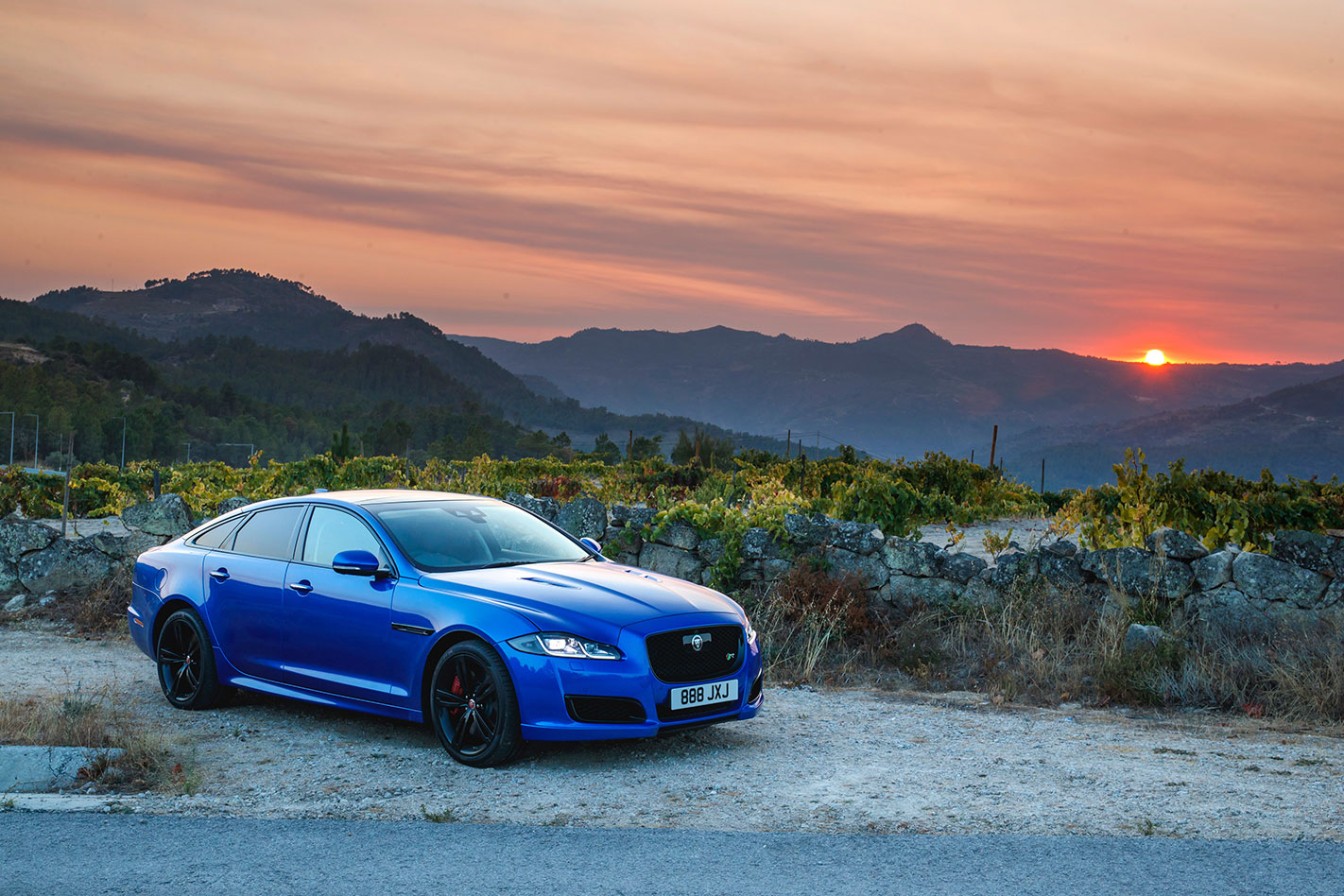
Long may it defy that slowly ticking clock.
Rating: 4 stars out of 5
2018 Jaguar XJR575 specs Engine: 5000cc V8, DOHC, 32v, s/c Power: 423kW @ 6250-6500rpm Torque: 700Nm @ 3500-4500rpm Weight: 1875kg 0-100km/h: 4.4sec (claim) Price: $306,475 Like: Blistering performance; great handling; meaty brakes Dislike: Wind noise; weighty steering; pricey options list
Welcome to the MOTOR Awards for 2017, where we recognise the best and worst or the year.
The three awards we’re giving out here are for Best Chassis, Best Electronics, and Best Newcomer.
BEST CHASSIS: McLaren 720S

The replacement for the 650S may have a face that looks like it’s sporting two black eyes (to some), but this latest Super Series model – priced locally at $489,900 plus on-roads – has proven it is primed to land return blows on the similarly priced Ferrari 488 GTB and shouty Lamborghini Huracan.
With 91 per cent of the 720S claimed to be new, the latest full carbon fibre Monocage II chassis boasts what the Brits claim is ‘extreme’ rigidity. Unlike the just-succeeded 650S, this new 720S is so stiff that ultra-slim A-pillars and glazed, see-through C-pillars can be used, all of which makes parking the McLaren as easy as a Mazda 3. Overall dry weight drops 18kg to 1283kg – meaning it’s lighter than much of what you’ll see parked at your local Woolies.
Hydraulically interlinked dampers remove the need for anti-roll bars, so together with the redesigned double-wishbone suspension uprights, and a torque-vectoring system that’s so good there’s no need for a mechanical limited-slip differential, 16kg drops from the chassis’ limbs.
Despite the mid-mounted twin-turbocharged V8 growing from 3.8- to 4.0-litre capacity, it now sits 120mm lower than in the last-gen chassis, with the top of the curvaceous rear-end dropped 145mm, all to lower the centre of gravity.
But here’s the kicker, that full-length wing lurking on its rump actually acts as a drag-reduction system (DRS). Within a half-second, the wing stands upright to help the 720S slow from 200km/h to standstill in 4.6 seconds. And this happens after it has powered to that speed in 7.8sec, passing 100km/h after just 2.9sec. Downforce has increased by 30 per cent on a 650S, while aero efficiency has doubled.
According to our European correspondent, Georg Kacher, though, it’s the way the 720S brings it all together that matters most in this McLaren. Drift control electronics allow drivers to choose slip angles with greater ease than swiping left or right on Tinder.The M840T engine strikes a soulful tune all the way up to its 8200rpm cut-out, and the retention of hydraulic-assist steering allows the road surface to trickle through to your fingertips.
The 720S delicately balances itself in tighter corners, segueing into lurid power oversteer on longer sweepers. It’s claimed the 720S is quicker than the 675LT, and could even thump a P1 at some circuits.
It might not be the most emotive choice, but it’s supremely talented. It can switch to being smooth and supple on city streets, with the 770Nm at 5500rpm engine being utterly usable. And that’s its hook. An “interaction of its talents” is, according to Kacher, the speciality of this one McLaren that certainly sparkles as this year’s best chassis.
BEST ELECTRONICS: The Mercedes-AMG GT R’s Traction Control
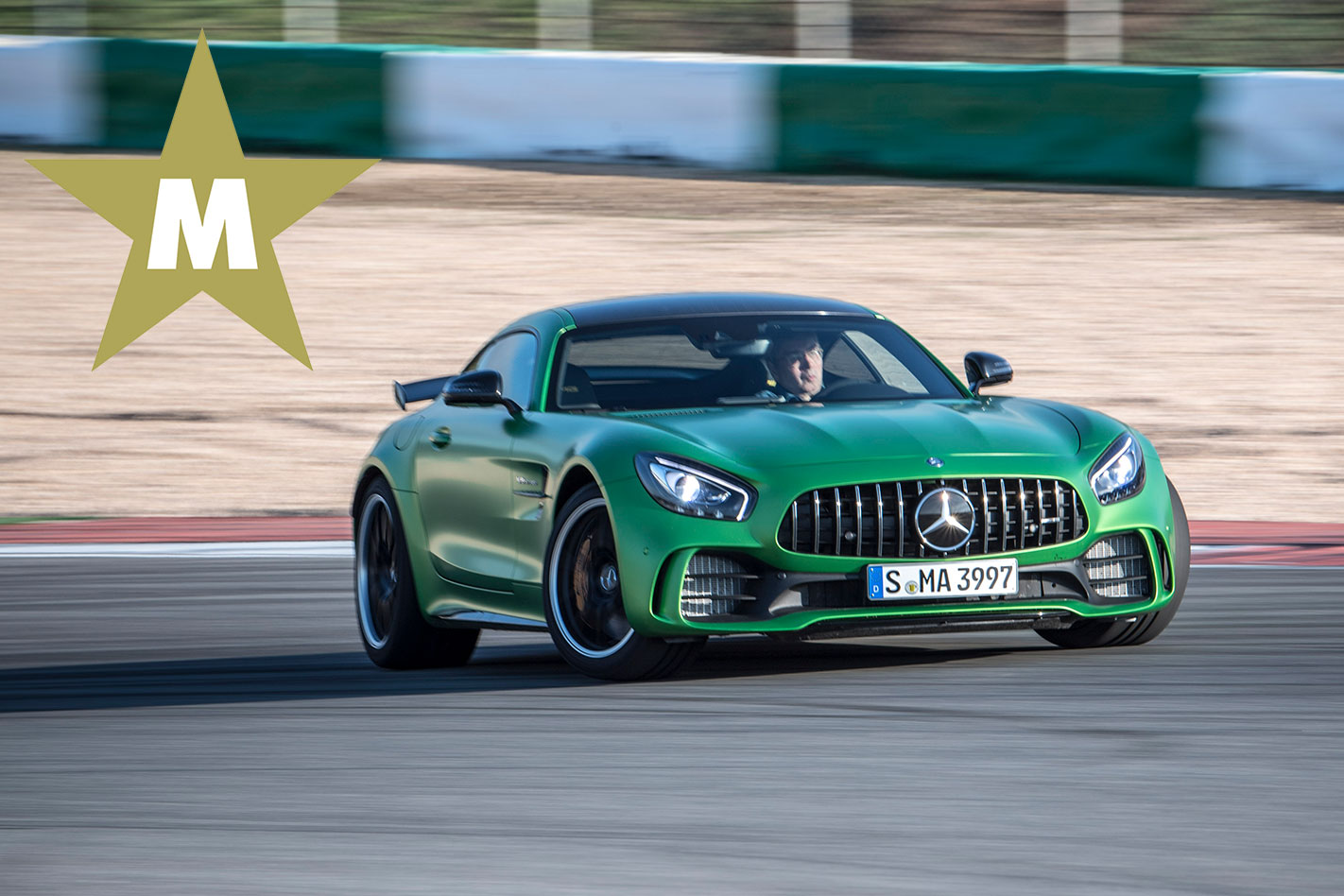
AMG has taken this concept and turned it – literally – up to 10 in its hardcore GT R by offering a 10-stage traction control system nicked from its GT3 race car.
It allows a driver to dial up precisely the amount of electronic assistance required by the road surface or their skill level, with 1 keeping things neat and tidy and 10 leaving you largely up to your own devices.
Note it won’t keep you out of the barriers, as it only activates traction control, not ESP.
If only there was a Spinal Tap mode that went to 11…
BEST NEWCOMER: Hyundai i30 N

We’ve driven the i30 N, albeit in left hook on European roads, and reckon it’ll get right into rivals from Volkswagen, Ford, Renault and Peugeot when it arrives early next year.
It balances rich feedback with excellent body control and compliance.
On top of this, adaptive dampers and programmable drive modes give it a multi-layered personality.
The absence of an automatic might hurt its chances luring loyalists from other brands, but overboost, rev-match, and an active exhaust means it’s likely to charm the rest of us.
Holden on to what matters – a family portrait
Wheels has recorded more of Holden’s history than any other motoring publication on the planet. It’s only right then, that we did something unprecedented to mark the end of Holden’s local manufacturing.
On a suitably cloudy day, more than 50 Aussie-made Holdens and their owners gathered together at the Lion’s 60-year-old Lang Lang proving ground in south-eastern Victoria. It’s unlikely Holden fans will ever see anything like this again.
Ferrari and Shell: did they create the greatest car ad ever?
Entertaining ads for car people are hard to come by. Usually, we are bombarded with the same, derivative, clichéd tropes. Rarely does something come along to truly stir the soul and get our oily veins pumping like this effort from Ferrari and Shell, with a two-minute tribute to Maranello’s finest racing cars.
The clip involves five F1 cars from Ferrari tearing their way through crawling city landscapes around the world. It’s a visceral ride which puts the viewer in the thick of the action.
Watch a Ferrari 250 GTO getting binned at Goodwood
This year’s Goodwood Revival was filled to the brim with top-notch classic racing amidst a joyous atmosphere that celebrated all things stylishly retro and classy motoring.
One of the nasty side effects of classic motorsport however, is that you tend to bend some very expensive cars, such as a Ferrari 250 GTO that was estimated to be worth upwards of $50 million.
Owned by Anthony Bamford, and driven by Andrew Newall and Frank Tippler, the 1964 250 GTO ended up in the barriers during practice for the RAC TT race after evasive action to dodge the 250LM driven by Chris Harris.
Two legends went rallying in McLaren 570 GTs
This video, aptly titled “Off-Road McLaren 570 GTs” was uploaded by Mike Tornabene. For the confused, the video does exactly what it says on the box.
We won’t give you a blow-by-blow recap, but we offer this – multiple indulgent slow-motion shots of McLarens affixed with light-bars powersliding on the dirt. Job done we reckon.
Mazda 3 celebrates 40 years Down Under
The arrival of the Mazda 323 to our shores in 1977 marked the beginning of a storied history for Mazda small cars here in Australia.
You might have been driven around in one as a child. You may have learned to drive in one or had one as your first car. Maybe there’s one parked in your driveway right now.
This great video shows some of the key models from the past four decades and you can read the accompanying story here.
Five minutes with Daniel Ricciardo
Daniel Ricciardo is one of Australia’s most famous exports, with the perpetually-grinning F1 driver being hot property both on and off the track.
We cornered Ricciardo to throw some curly questions his way and his answers are entertaining, to say the least. From his first cars to what’s presently in his driveway, to revelations about some of the crazier things superfans have asked him to do, Ricciardo gives us a peek into his life.
The greatest lap in Formula One history
Ayrton Senna has his name etched alongside four different records in the Formula One history books.
However, there is one achievement by the Brazilian which you won’t see officially recognised, and that is the greatest single opening lap of an F1 Grand Prix.
While that may be a subjective call, it is widely accepted that Senna’s efforts in the first lap of the British Grand Prix at Donington in 1993 is the best history has seen.
THIS wailing time machine is blurring me backwards through the decades.
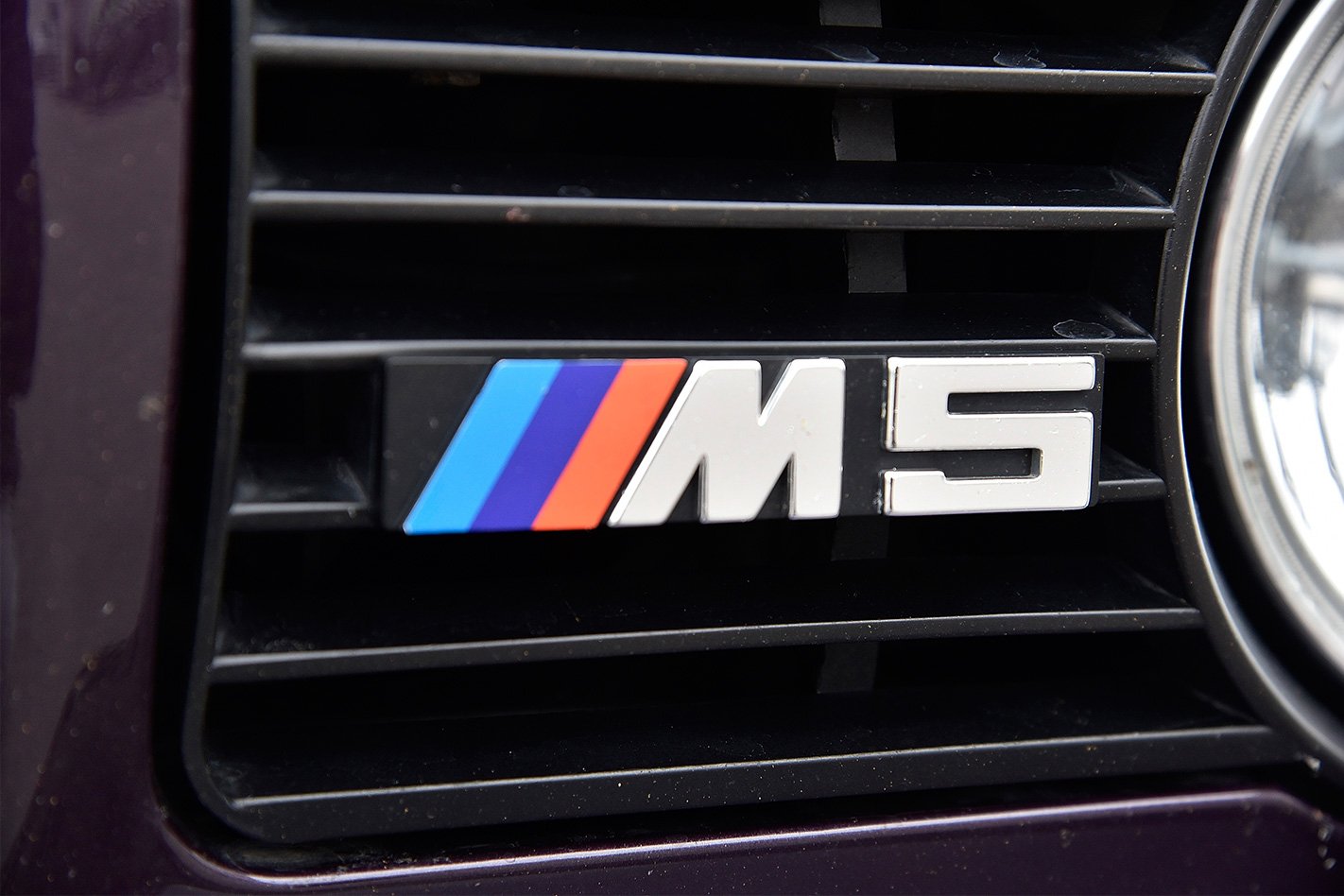
It was in 1990 that I first drove a BMW M car and now, almost 30 years later, I’m back behind the wheel of an E34 M5.
The Daytona Violet example is part of the BMW Classic collection. With a bunch of other pre-M Motorsport and old-time M cars, it’s been delivered to the Kempinski Hotel at Berchtesgaden for a group of Australian journalists to drive back from the Bavarian Alps to Munich.
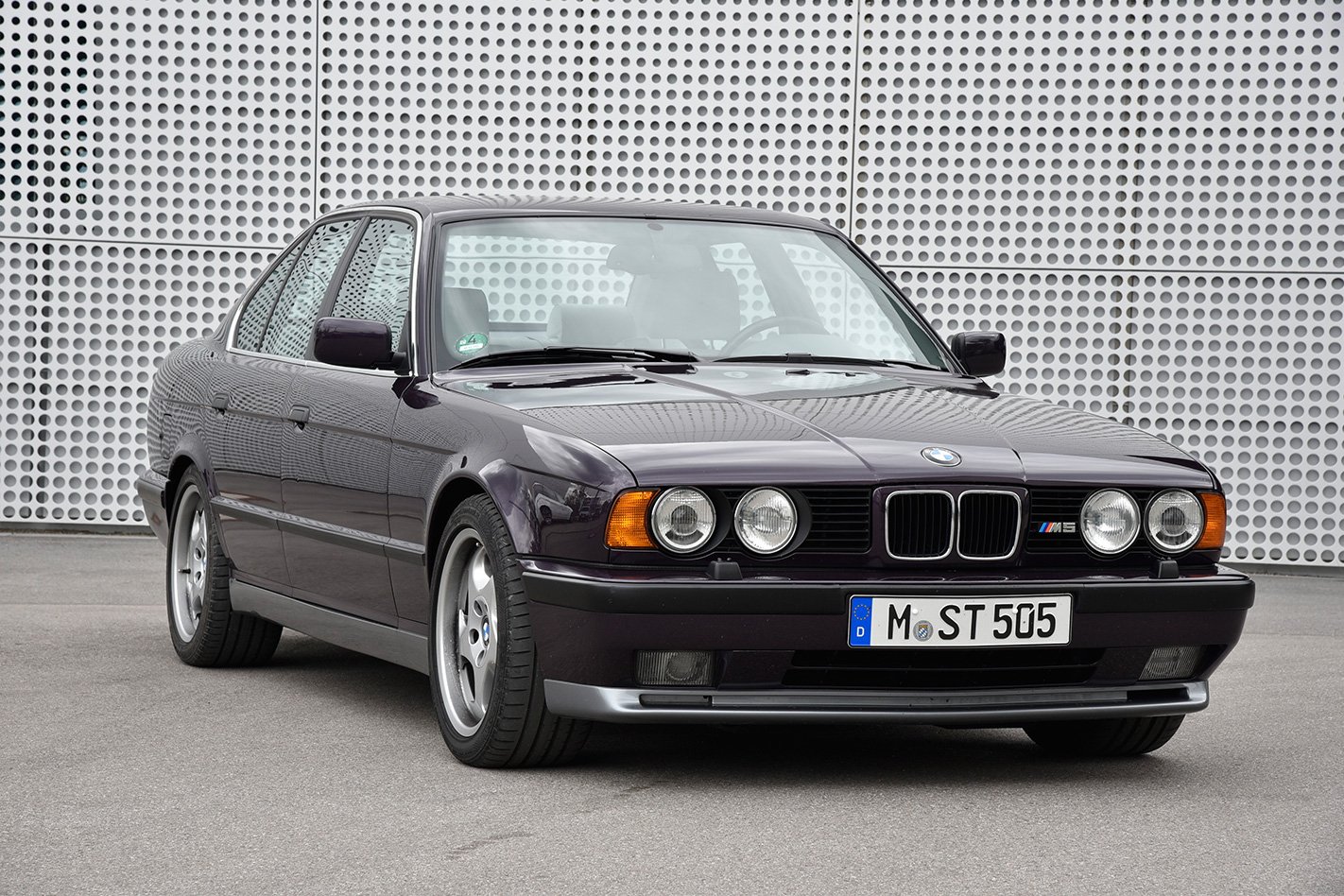
The vivid impression that my first M car made has endured.
Mainly because of a drive at often hugely illegal speeds (I’m counting on the statute of limitations applying here) from Bathurst to the outskirts of Sydney and back.
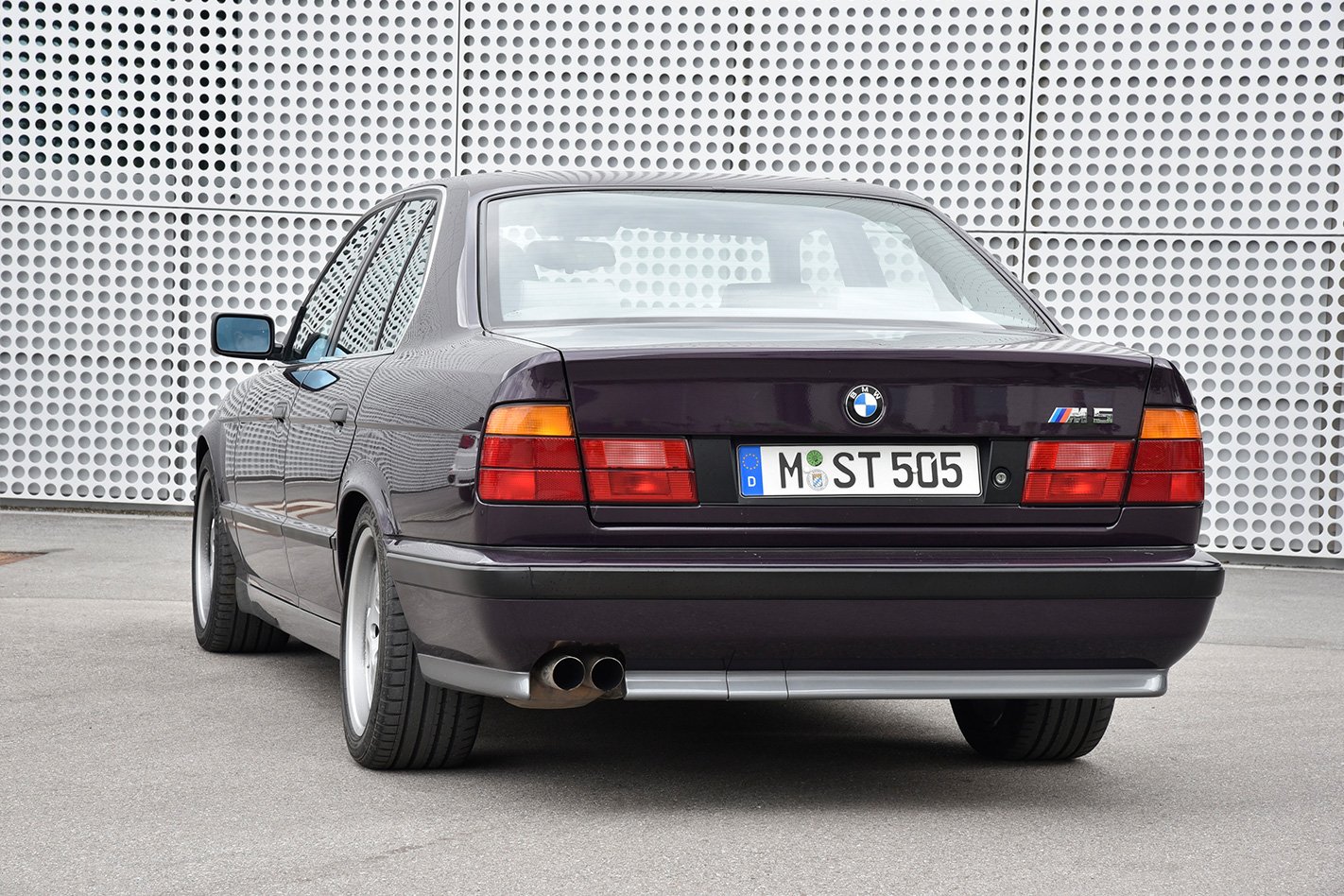
There have been plenty more memorable M5 moments between then and now. The power-steering pump of a 4.9-litre V8 E39 failing while I was doing performance testing at Eastern Creek in the late ’90s. Doing repeated launch-control runs in a 5.0-litre V10 E60 on an airstrip in Germany at that great car’s international launch in 2005. Seeing the traction control light flashing at north of 160km/h on a lumpy Spanish road in a twin-turbo 4.4-litre V8 F10 back in 2011.
The most recent memory is from 2017. I half spun a prototype of the forthcoming F90, the first all-wheel-drive M5, on BMW’s Miramas proving ground in the south of France.
In my defence, I was in the car’s ESC-off rear-drive mode and chasing BMW works driver Timo Glock in an M4 GTS at the time. He saw it all in his rear-view mirror.
“You almost caught it,” he told me, laughing.
The old car’s exhaust makes real music, the manual gearbox is a well-oiled pleasure to use, the interior is plain but purposeful.
But the E34 does feel awfully slow, even though this is a 1992 car with the later 250kW 3.8-litre version of the BMW Motorsport-derived in-line six, not the 232kW 3.5-litre engine I remember.
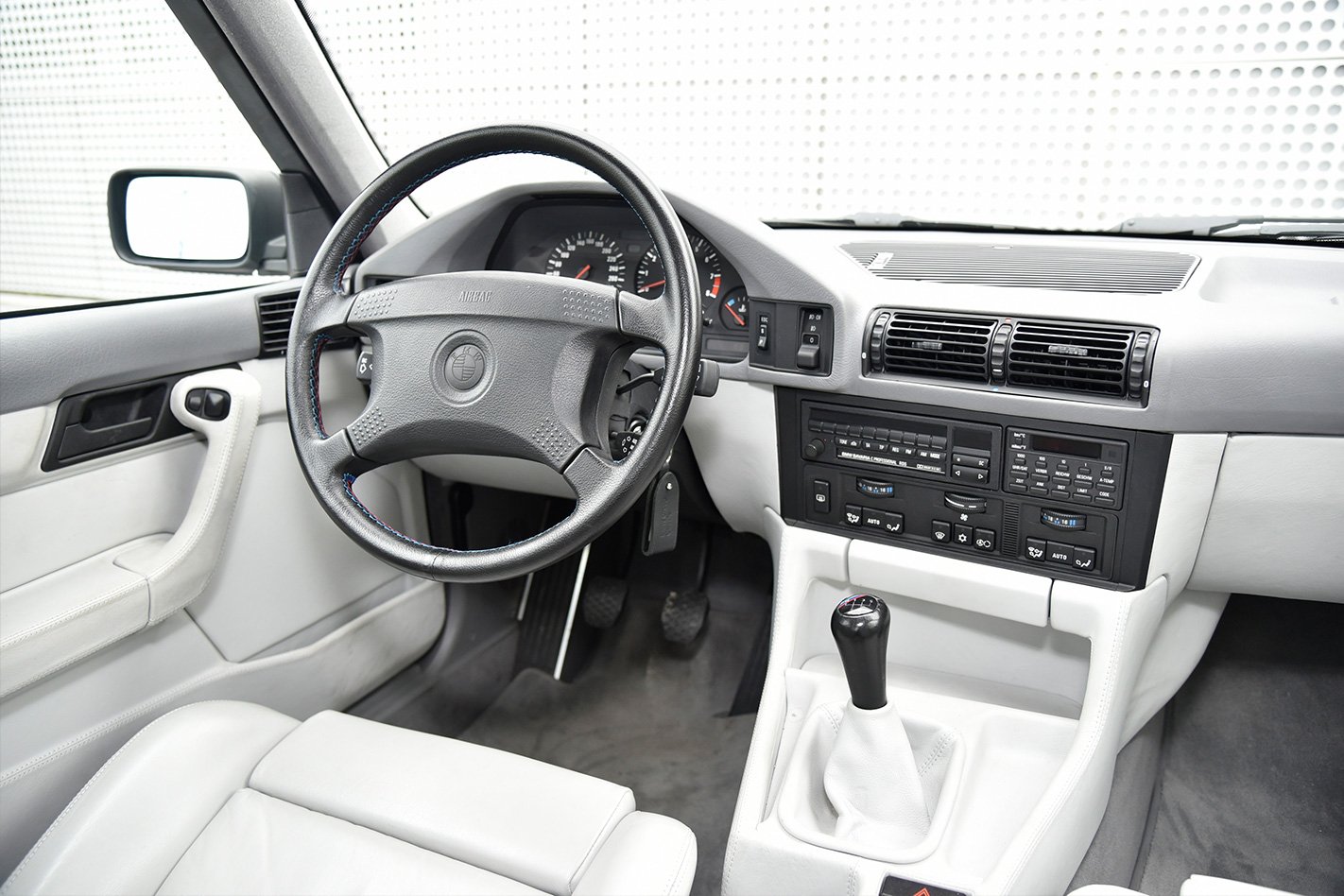
I’d climbed into the E34 expecting a heartwarming encounter with an old, fondly remembered acquaintance, and I got it.
What I hadn’t anticipated was a coldhearted reminder of how much progress has happened in the last three decades.
I’m starting to think that nostalgia ain’t what it used to be.
Whether you want a little extra grunt or a drag strip dominator, there have been few engines more ripe for tuning than’s Ford’s iconic 4.0-litre.
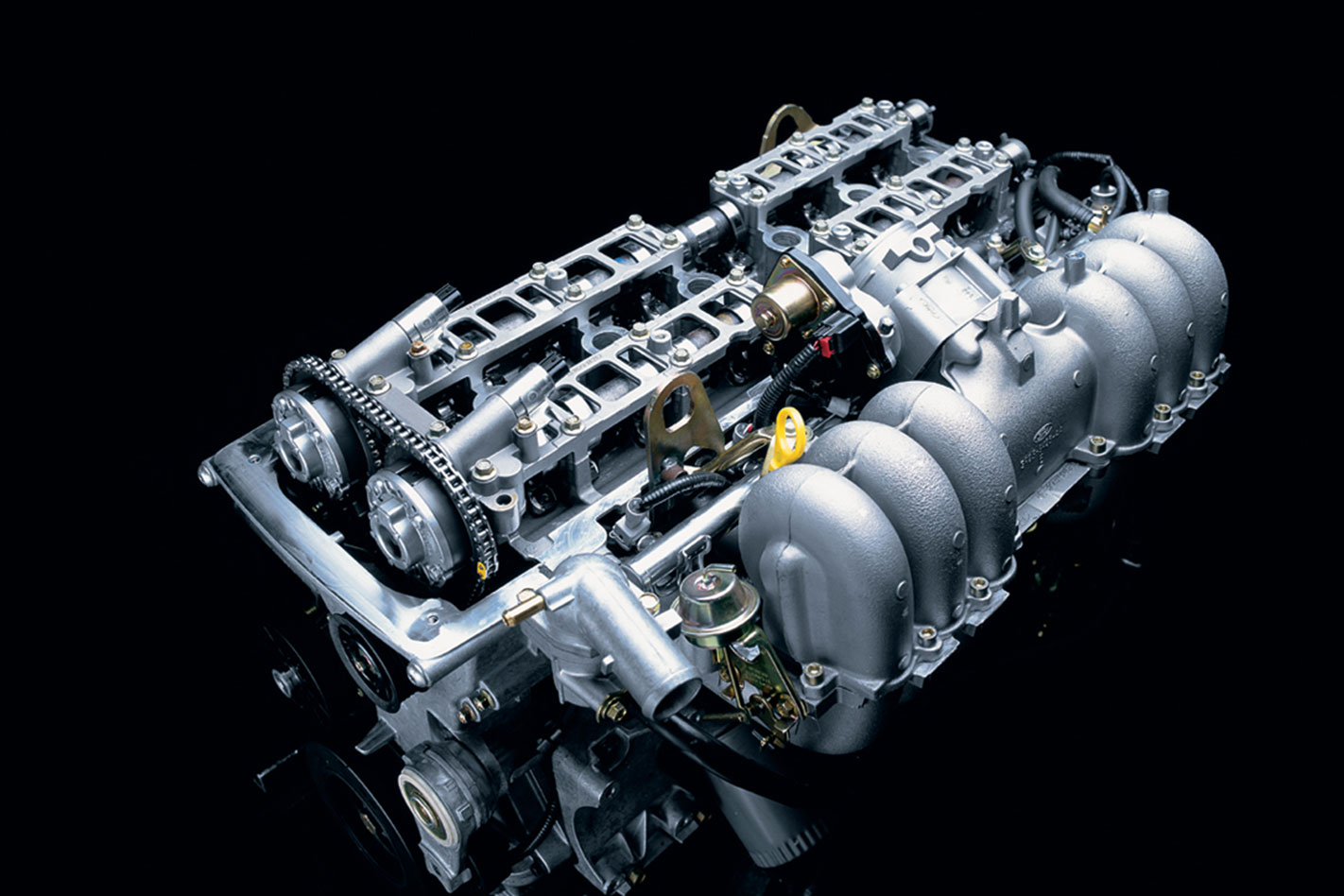
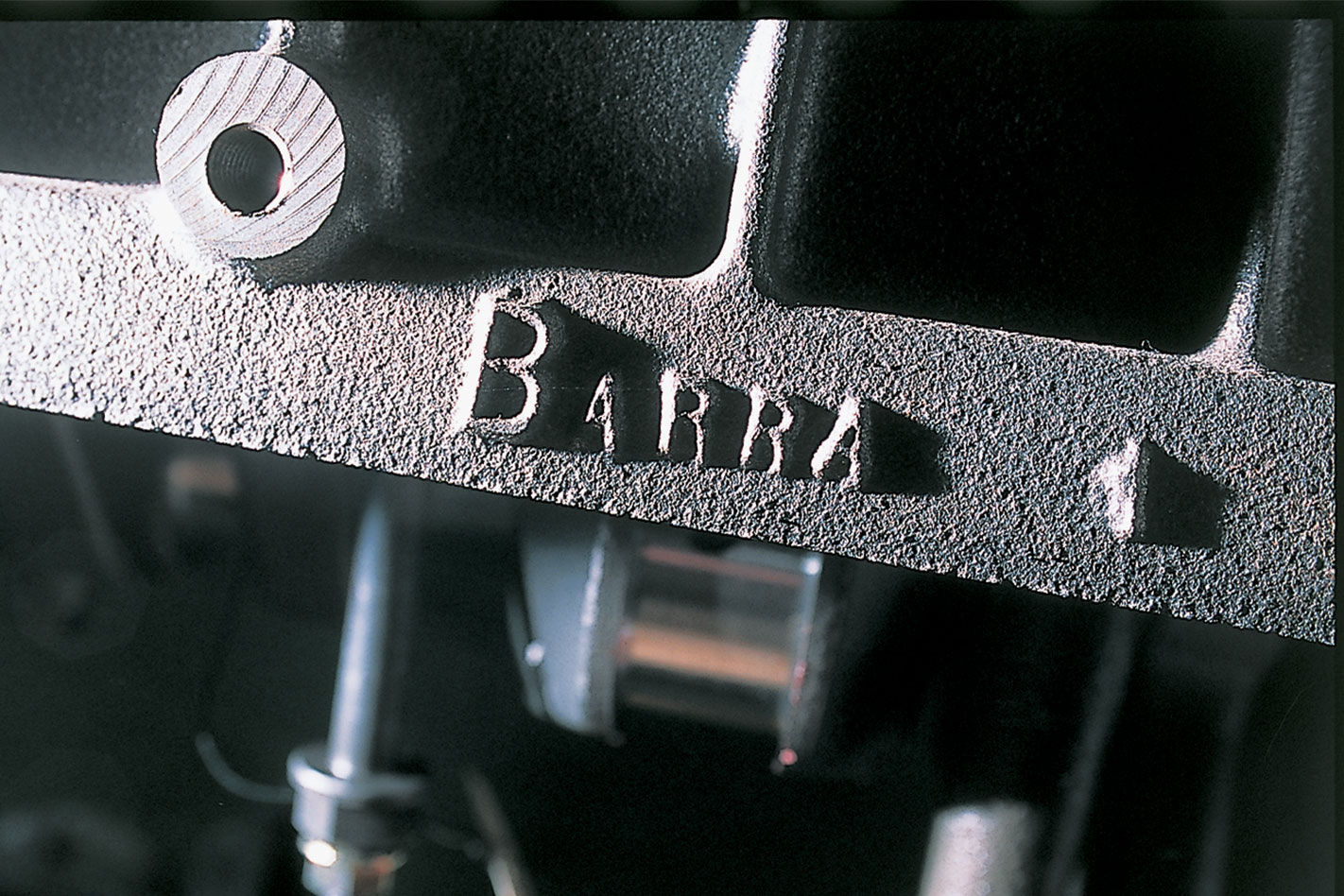
Introduced in 2002 as part of Ford’s revamped BA Falcon range, the ‘Barra’ six-cylinder turned Australian tuning on its head. After a few lean years Blue Oval fans finally had a deep-breathing iron block, alloy headed, 4.0-litre, twin-cam turbocharged and intercooled six-cylinder to take on Holden’s new 5.7-litre LS1 V8 as well as the turbo Japanese terrors.
Named after the Barramundi fish, the first Barra 240T made 240kW and 450Nm from Ford, but was soon pumping quadruple that as tuners got their hands on the engines. The launch of the BF Series II saw heavily upgraded conrods and revisions to the mechanical package that meant punters could wind the grunt up a lot more than the factory 245kW. There was also the Barra 270T, a high-performance variant used in FPV F6 Typhoon and F6 Tornado models.
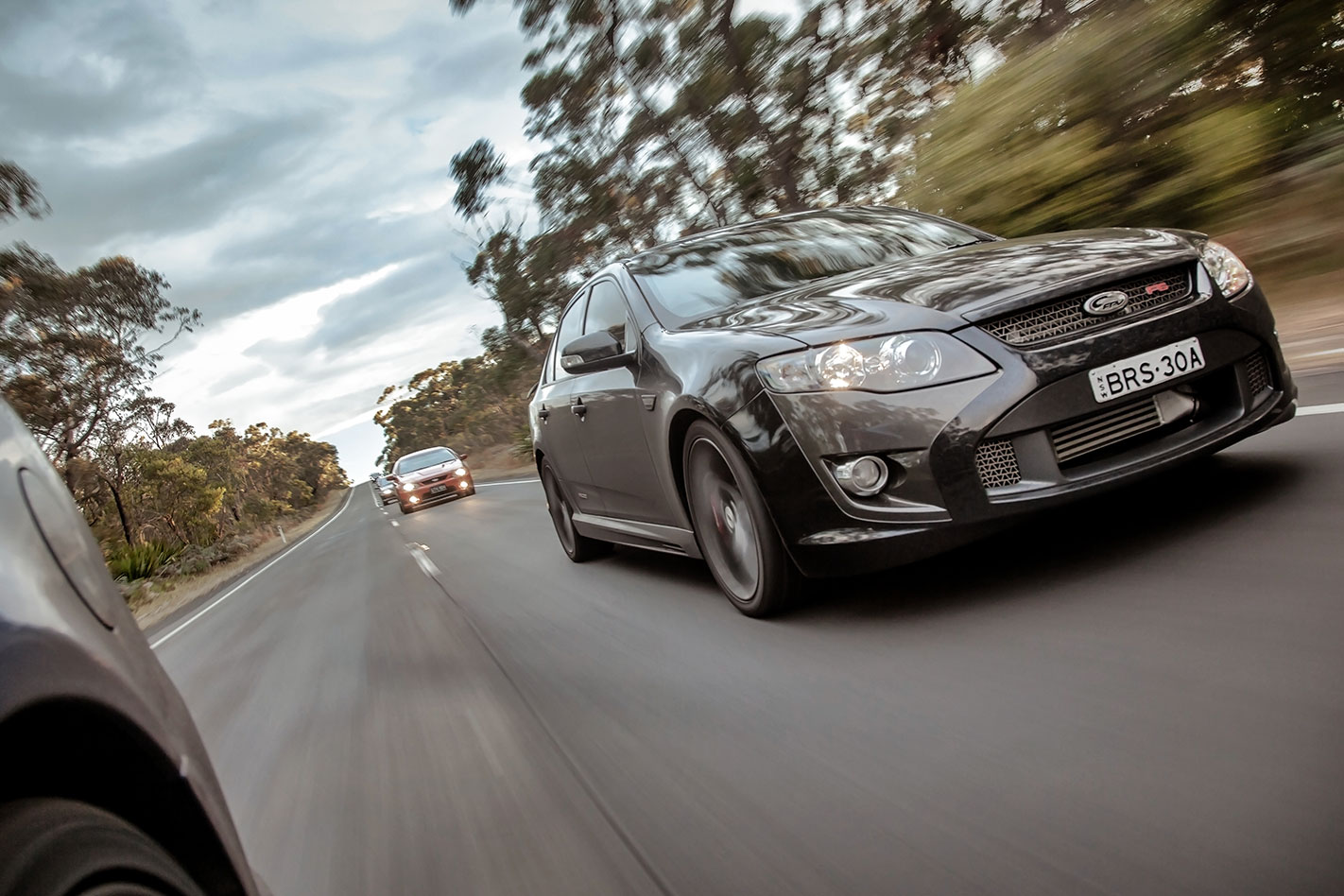
The limited edition FG-X XR6 Sprint was the ultimate incarnation, being a variant of the 270kW XR6 motor juiced to make 325kW, with 370kW available as a 10-second overboost. So, what do you need to hop up your Barra six?
1. Exhaust
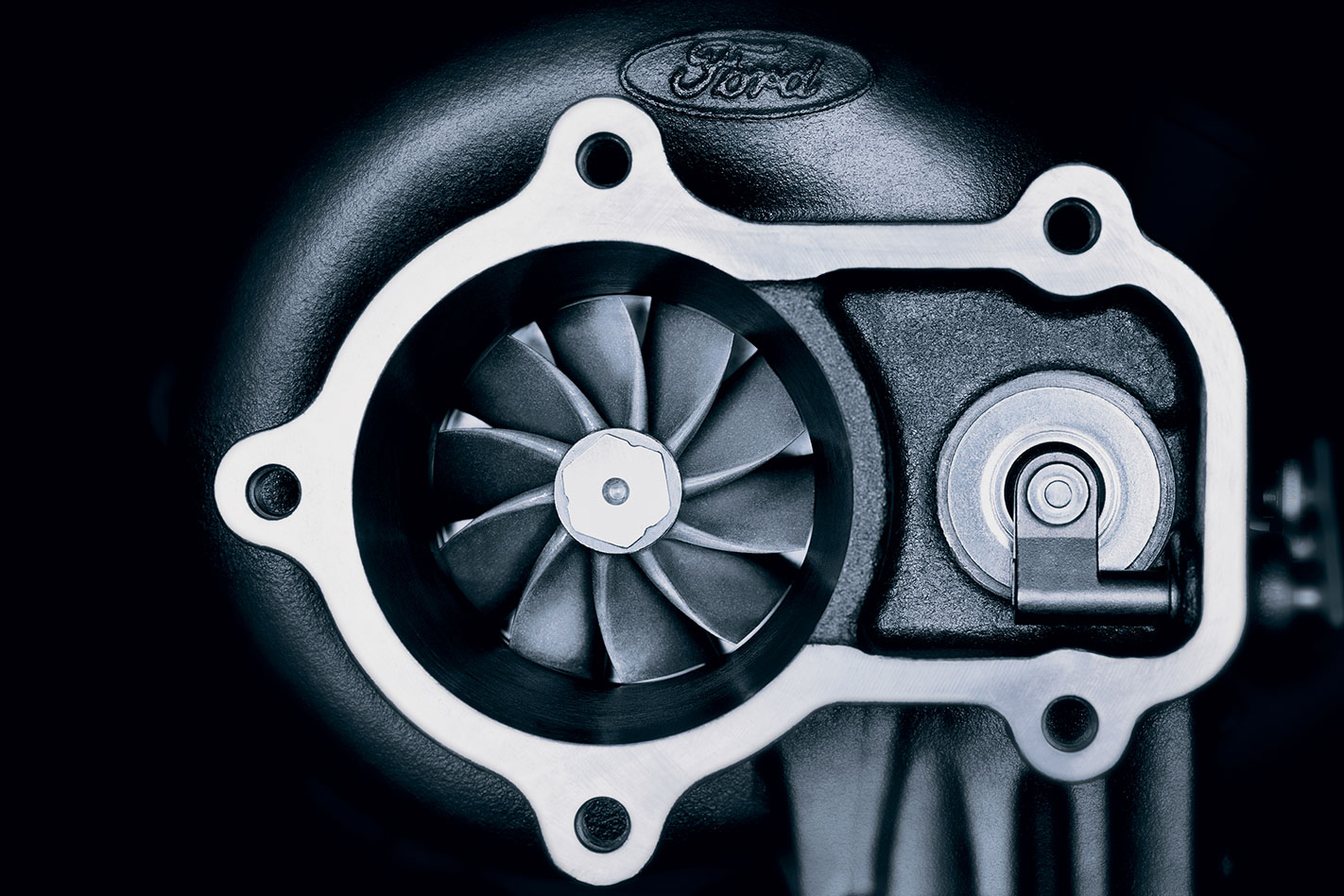
If you’re not aiming for 450kW at the treads then you don’t really need a 4.0-inch exhaust like the cool kids at Maccanats. However, given you have four litres of capacity and a large GT35-sized turbo from the factory, many cars get a far less restrictive 3.0-inch or 3.5-inch dump pipe as a first modification, of which there are many off-the-shelf options. Complete upgraded exhaust systems are easier to find than cops at a pizza shop on shift change.
2. Turbo
3. Conrods
4. Oil Pump
5. Valve Springs
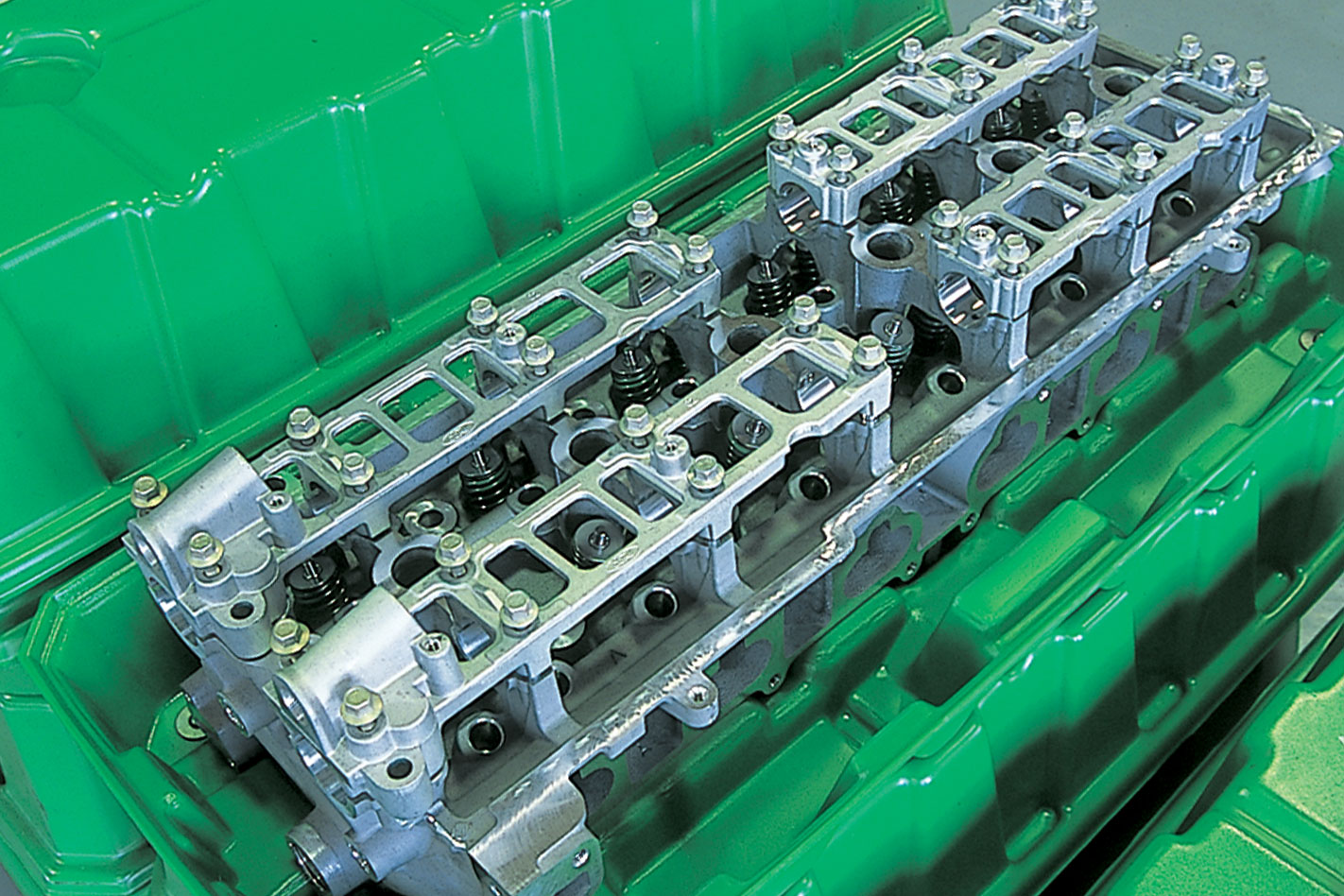
6. Fuel System
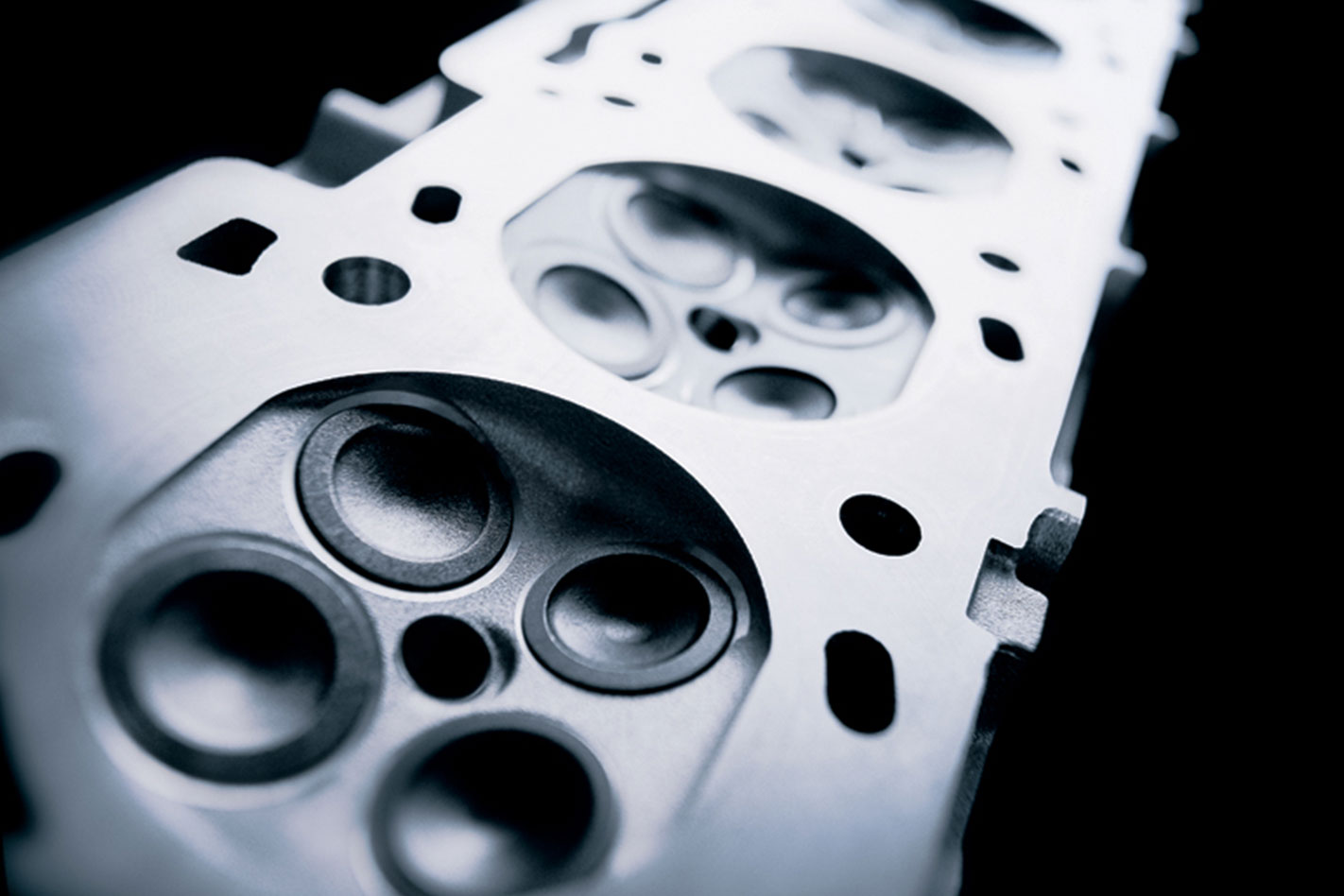
7. ECU
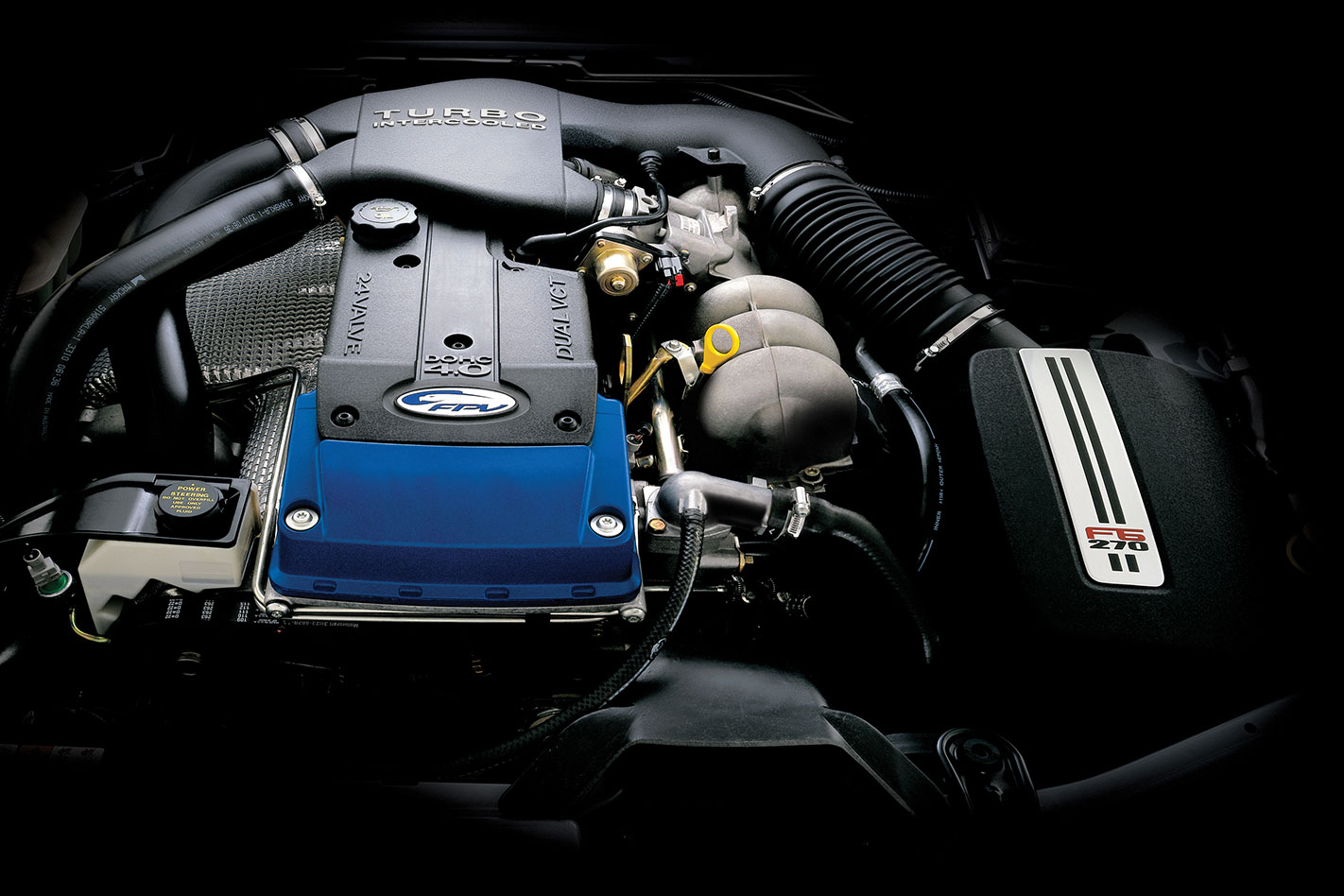
Welcome to the MOTOR Awards for 2017, where we recognise the best and worst or the year.
In this instalment we give out three awards – Best Engine, Best Drivetrain, and Best Noise.
BEST ENGINE: Ferrari 812 Superfast
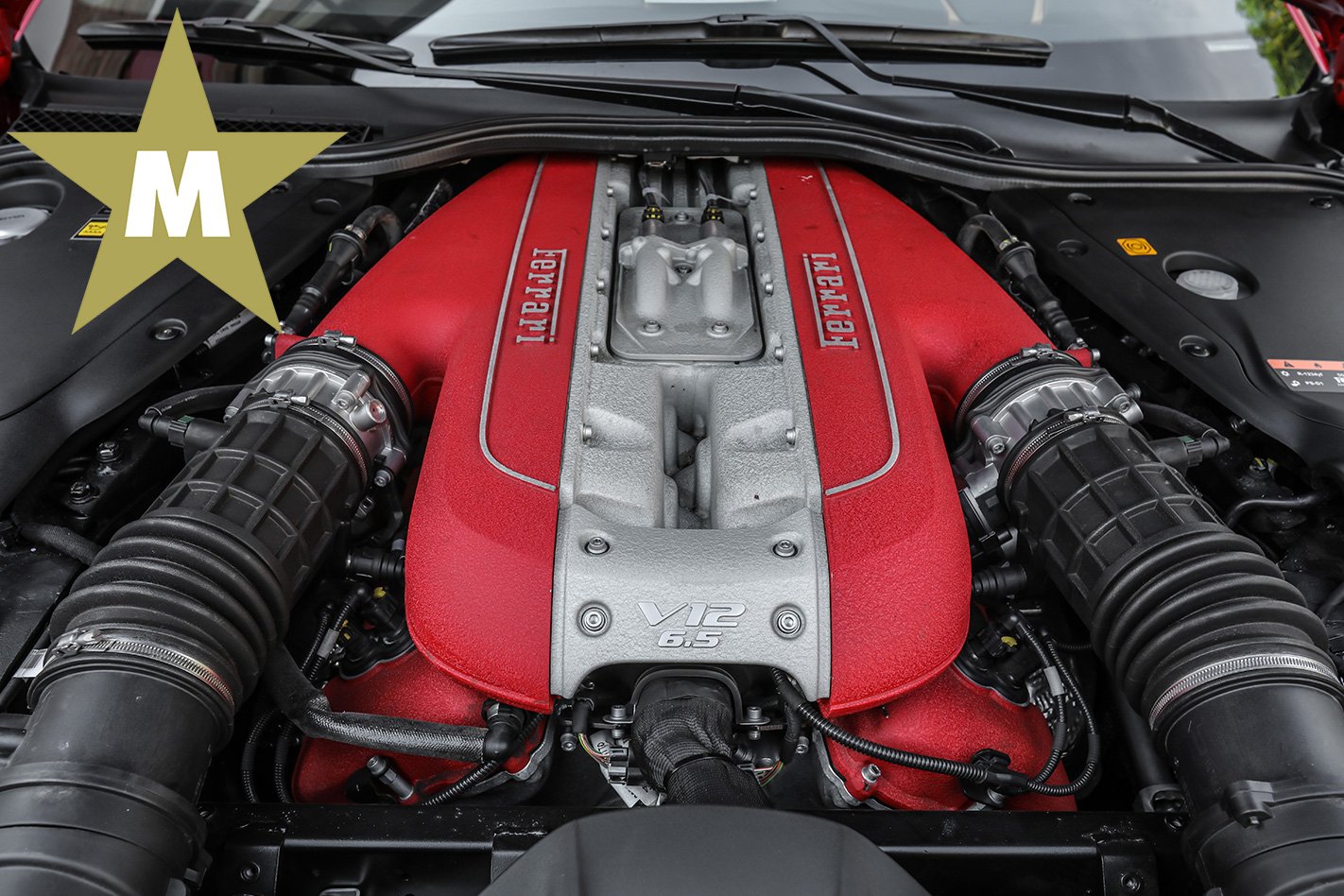
The engine plugged into Ferrari’s new 812 Superfast isn’t solely about numbers, though it has plenty if you want them. Shall we start with power? It produces a monstrous 588kW, making it the feistiest car, bar LaFerrari, in Maranello’s stables. It’s even ballsier than most of Ferrari’s F1 engines from the early 1990s.
Those 800 metric horses are served at 8500rpm, and while an Audi R8 V10’s valvetrain would be tapping out here, the Superfast’s V12 can spin another 400 revolutions. It revs this freely even though capacity is a hefty 6.5 litres, or 234cc more than the F12 Berlinetta’s V12 thanks to a longer crankshaft stroke.
But don’t draw conclusions, Ferrari says three-quarters of this engine is new. The sky-scraping 13.6:1 compression ratio is slightly higher, and assisted by a new triple-spray high-pressure fuel system. Meanwhile, new variable intake runners, driven by oil pressure, ensure air dives into cylinders at the right speed at all times.
Yes, a McLaren 720S will undercut that by a tenth, but like we said, this engine isn’t just about numbers. Because at this speed, it’s hard for mere mortals to judge such fine differences. It’d be like trying to discern who hit you harder, Foreman or Ali? There are other charms hidden in a Maranello-built atmo V12.
From down low, when the Superfast opens its lungs and starts consuming the surrounding atmosphere at an alarming rate, the V12 spins into a spine-tingling shrill no blower-assisted mill can match.
And let’s talk about that torque curve. It has more twist down low than an SS-V Redline, and more than an Audi RS6 waiting at 7000rpm, making it so flat, full, and long the 812 is just as comfortable tailing bumpers on the Harbour Bridge as it is winding out at Phillip Island. This is probably why the amount of Fezza owners driving their V12 GT daily is up from 36 per cent around the year 2000 to 54 per cent today.
Without turbines choking its exhaust, or rotors to spin up, throttle response is unlike anything else. We learned any right-foot flinch in the F12 could hoist road speeds 15km/h above the posted speed limit. The 812 comes with an extra 43kW and 28Nm.
But the most special thing about this V12 is that it may be the last of its kind. Ferrari says its GT is going hybrid in 2020, changing the direction of a lineage that began with its very first car in 1947, was continued by its iconic F1 racers, and culminates in the finest engine on-sale today.
BEST DRIVETRAIN: Mercedes-AMG E63 S
Just like a certain iconic haircut popular with rural folk, the new Mercedes-AMG E63 S is business at the front, party at the back. When you want to go fast, or just go to the shops in an undramatic fashion, AMG’s new super sedan is all-wheel drive.
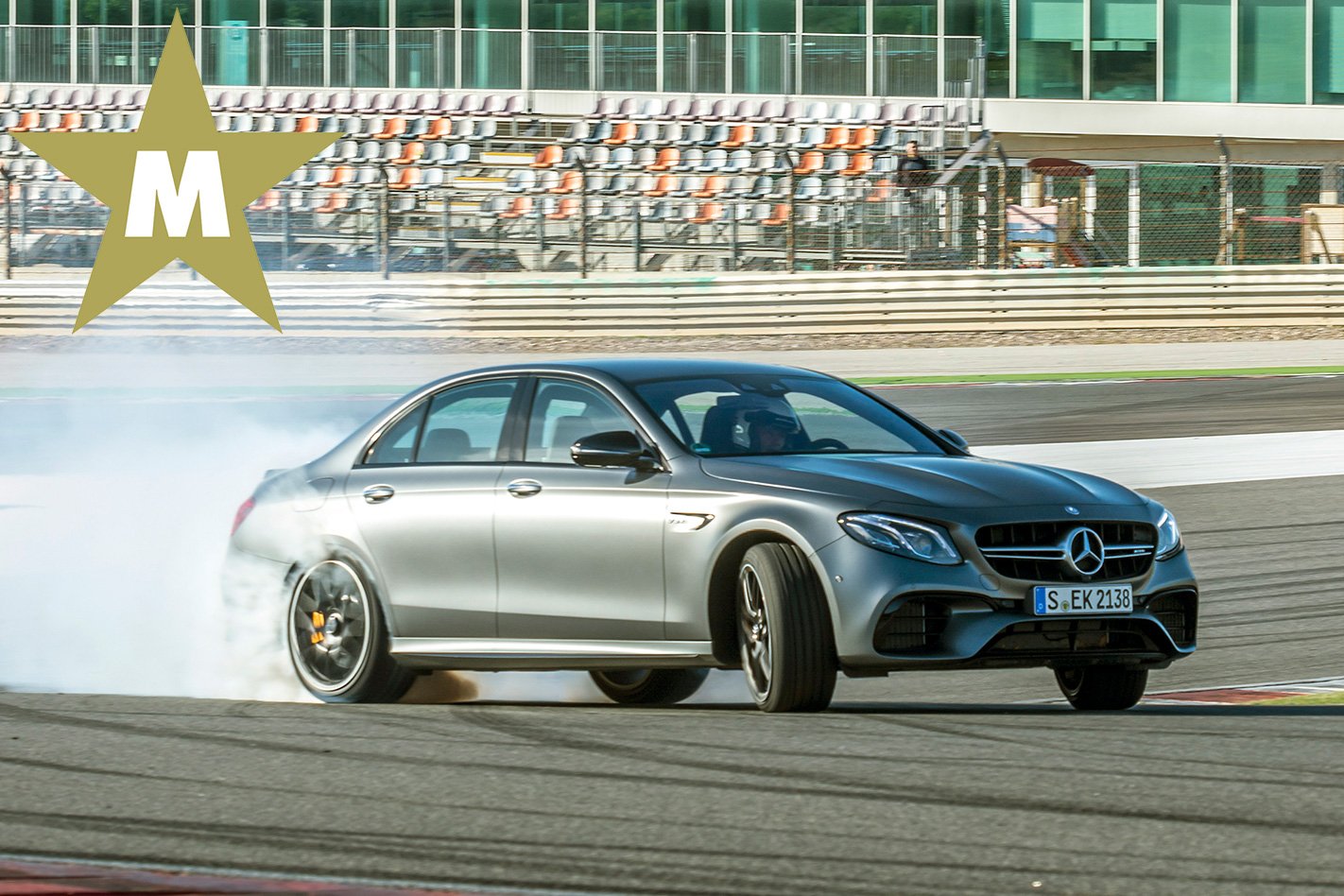
The technology will also appear on the new BMW M5, leading to drastically reduced acceleration times without killing the fun factor associated with the German horsepower race.
We’d be surprised if we ever see a purely rear-drive sedan from the Germans again.
BEST NOISE: Lexus LC500
CLEARLY, the LFA’s blood still runs in Lexus’ veins, because the sometimes conservative company has uncorked one of the best noises this side of a NASCAR.
The 5.0-litre V8 plugged in the LC500 is shared with the GS F and RC F and is co-designed by Yamaha.
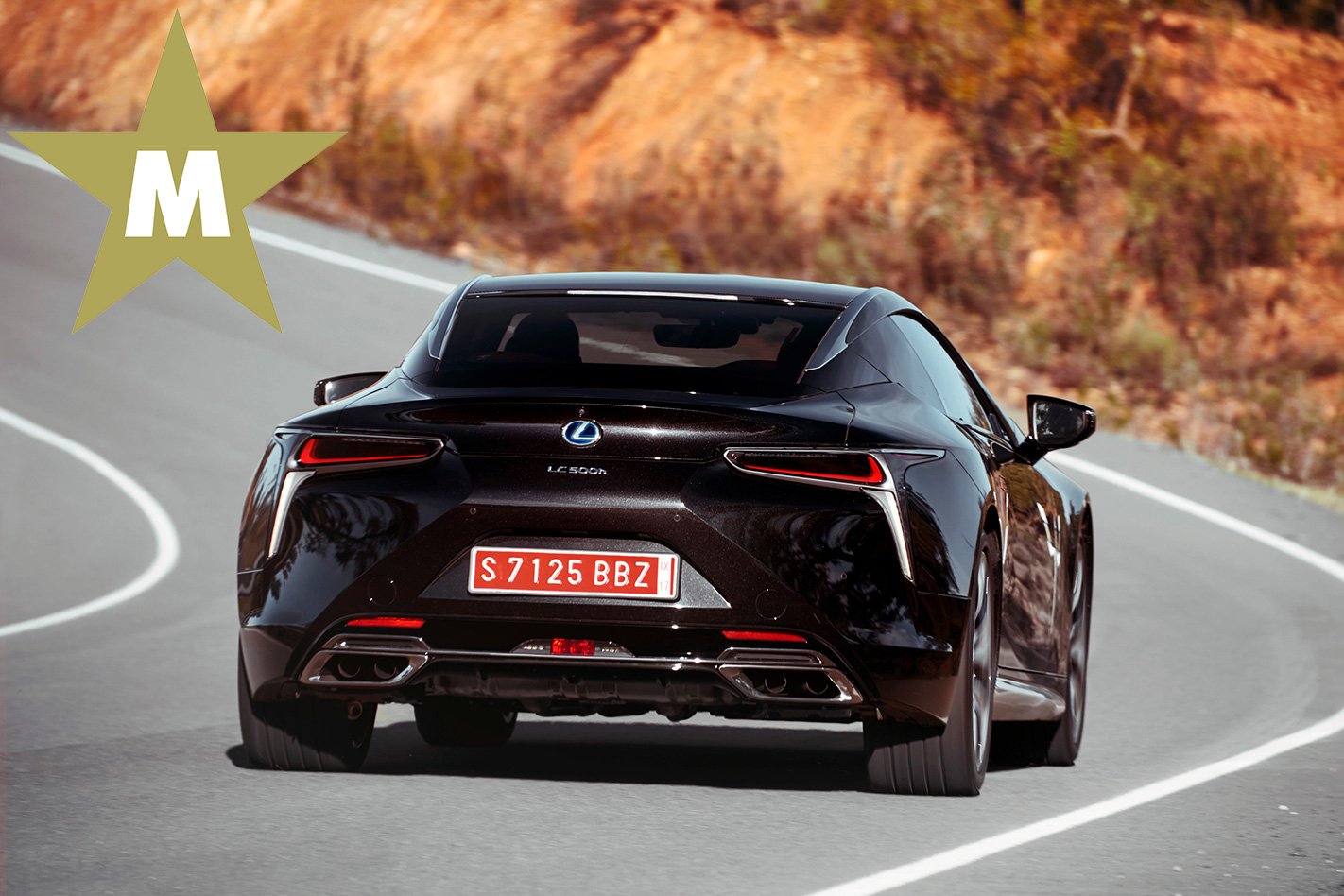
The soundtrack is just as delicious inside, and the ignition cut makes it sound like it’s mated to a sequential gearbox.
Even your neighbours will enjoy its roar.
A little of what you donu2019t fancy does you good. At least, thatu2019s my take on the Mini Countryman thatu2019s now sitting in my garage.Let’s not mince words here. It’s a visually challenged thing, isn’t it?
The exterior took a couple of weeks to get used to but the interior, well, it’s brown. Extravagantly, overwhelmingly slurry pit brown.
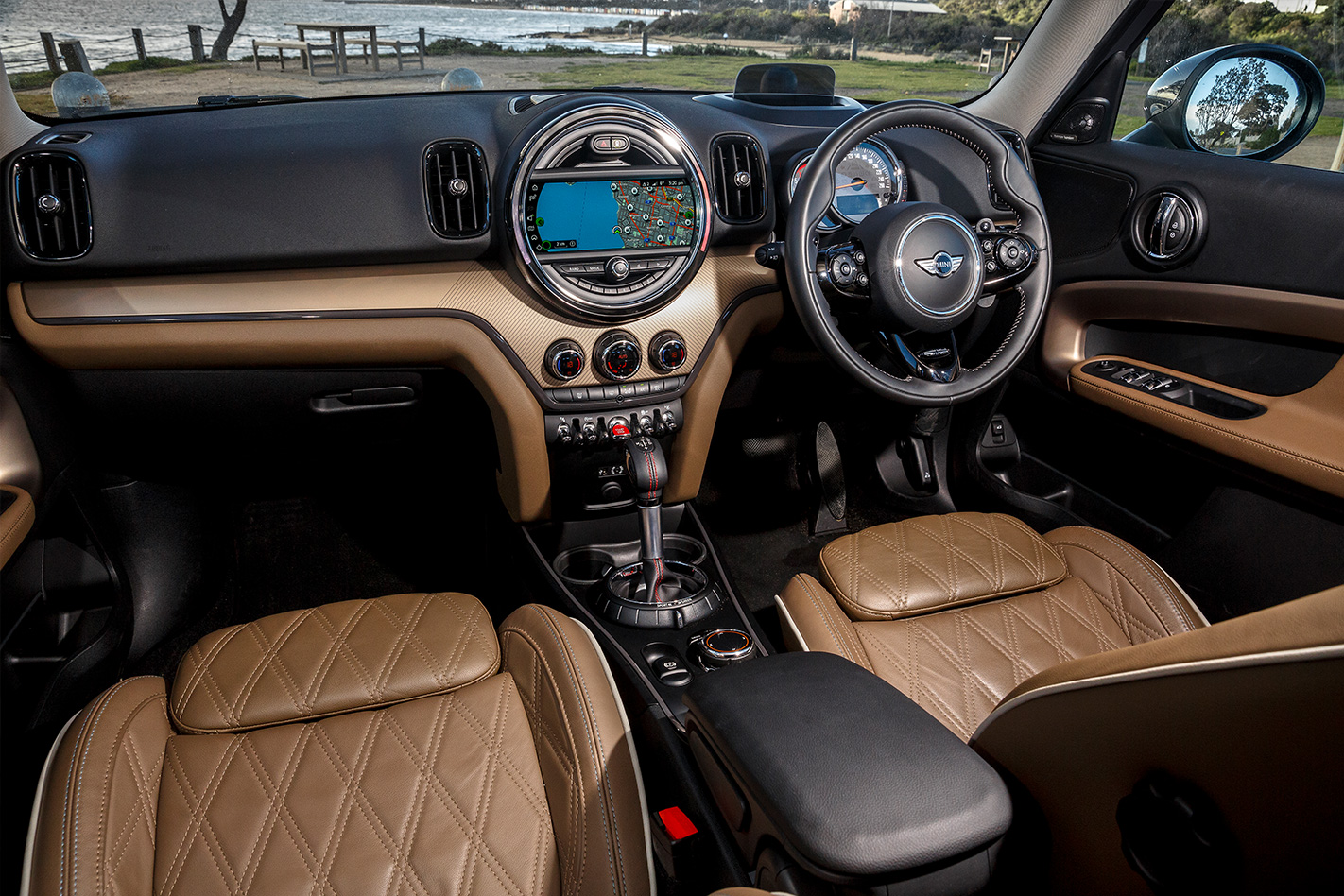
I tried to find the upsides as I was handed the keys to a car that would be my daily for the next three months, but couldn’t look beyond that brown interior. And yet, after a month with the car, I find myself rather maddeningly liking it. Call it automotive Stockholm Syndrome.
On the face of it, the Mini Cooper SD All4 Countryman ought to appeal. It has a zingy 140kW diesel that generates 400Nm and can punt the big-boned BMW X1 in a fancy dress to 100km/h in 7.4 seconds.
It’s economical, it’s practical, the all-wheel drive will be good for trips to the snow, and there are a whole host of electronic gewgaws to play with.
The first thing I clearly have yet to master are its indicators. I can see what Mini has tried to do here. Tap for a three-blink lane change or fully press the stalk to keep it on. Trouble is, the distance between the two settings seems to be about a micron, and changing lanes won’t cancel it. This creates a ham-fisted display of left, right, left, right, and a subsequent barrage of swearing. If it ain’t broke, don’t fix, Mini.
The ride quality is firmer than it really needs to be, but the flipside of this is that it’s a hoot to hustle about.
Understeer is well telegraphed and a sharp lift of the throttle sends the back swinging round just enough to feel engaging. The stability control system is smart/slow enough to realise that you’re counter-steering and lets you play along which, when you think about it, is quite remarkable for a diesel demi-SUV.
I’ve been determined to test its off-road chops, which has thus far involved driving straight up the wall-like hillside at the end of my road, bouncing over the top and re-joining the blacktop. It’s a heck of a shortcut, but I’m going to curtail it before I’m reported by residents for bringing down the tone of the neighbourhood. It’s just good to spray a bit of mud up the side of the Countryman to make it look a little less milquetoast/suburban.
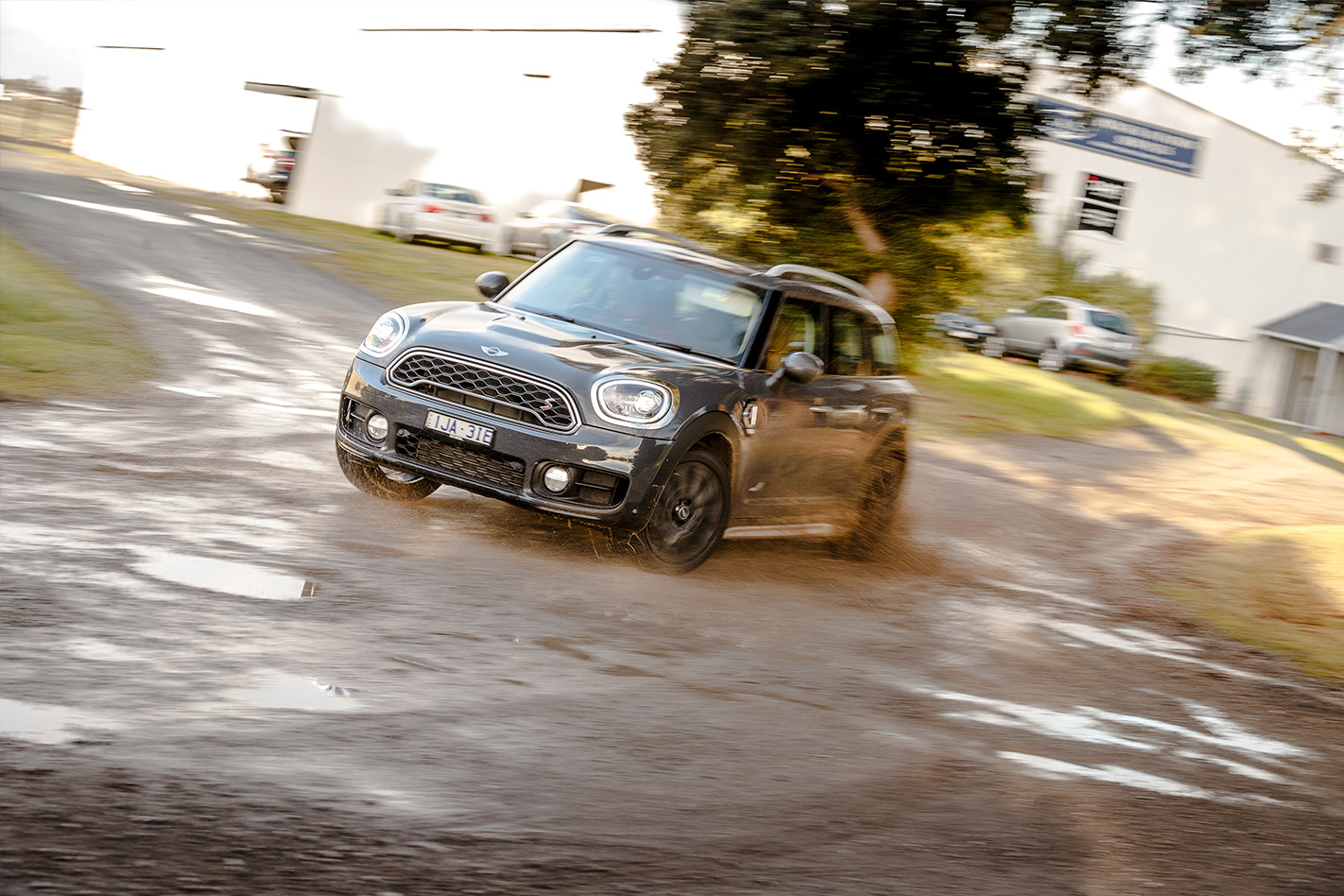
To the Mini’s list price of $51,500, this one’s saddled with $1900 worth of Chester Leather upholstery, a $600 British Oak illuminated dashboard fascia, a $200 leather steering wheel, a $300 luggage compartment net, and the $2400 Multimedia Pro package, which adds a navigation system with 8.8-inch monitor, a head-up display, and a 12-speaker Harman Kardon stereo.
That lot tots its price up to $56,900, which would easily net you Wheels’ current Car of the Year, a Mazda CX-9 in AWD Touring trim. That’s quite a vehicle, so you’ve really got to buy into Mini’s special sauce if you’re to see value in the Countryman.
Still, despite initial minor grievances, the Countryman’s irrepressible personality is winning me over. I can handle its quirks such as having expensive leather upholstery with no seat heating. I can put up with the harebrained indicators and irascible ride quality.
The brown interior? That might take a bit longer.
Heads, you lose
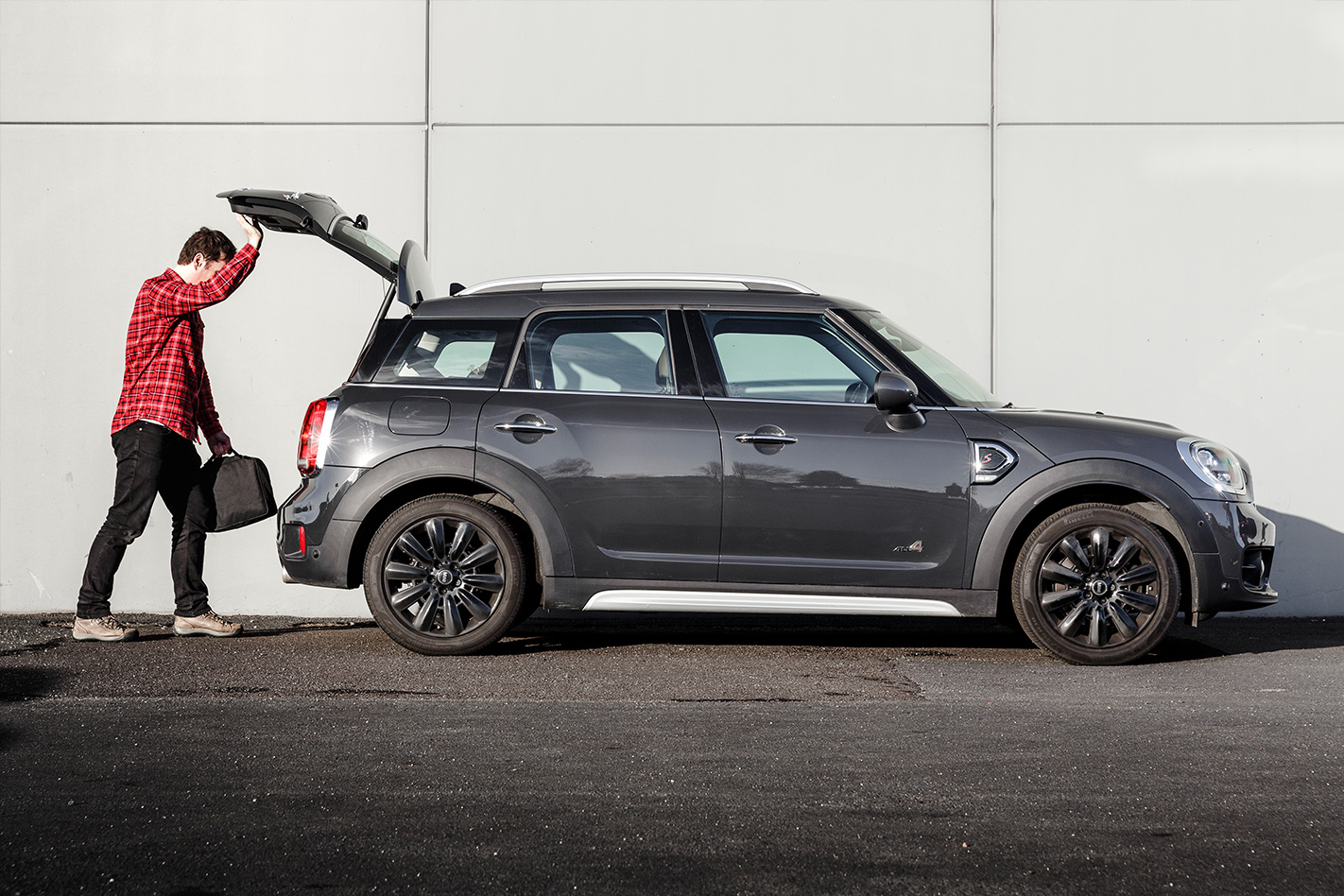
Keyless go presents car manufacturers with all manner of quandaries as to what the car should do when the key is no longer detected inside it. One strategy I wasn’t expecting from Mini was to close the Countryman’s electrically powered tailgate onto my head as I was unloading the car. A quick-fire beep alerts you that something might be happening, and then it’s boot latch to the back of your noggin time. Not an experience I’m keen to repeat.
Parking violation
I tried the Countryman’s parallel self-parking system once and it didn’t do too bad a job. I’m not sure I’ll be using it again though. Leafing through the manual, it says “the parking assistant can steer the vehicle over or onto kerbs. There is a risk of property damage.” Kerbed alloys would doubtless result in some pretty serious derision here in the Wheels office, so I’m steering well clear of parking assistant and sticking to doing it the old-school way.
Update 1
You’re a clean car person, or you’re not. While Andy saw mud and dirt as a badge of honour, the Countryman’s versatility may be seeing him convert
I’ve come to the conclusion that you’re either a clean car person or you aren’t.
I know of colleagues who take an almost disturbing pleasure in getting all hot and sudsy with their vehicle, and others who prefer to wear constellations of bug splats and baked-on brake dust as badges of honour.
I thought I was in the latter camp. I used to love seeing Le Mans cars arrive at Goodwood, still scarred with rubber streaks, oil stains, and with bits of pheasant stuck in their grilles.
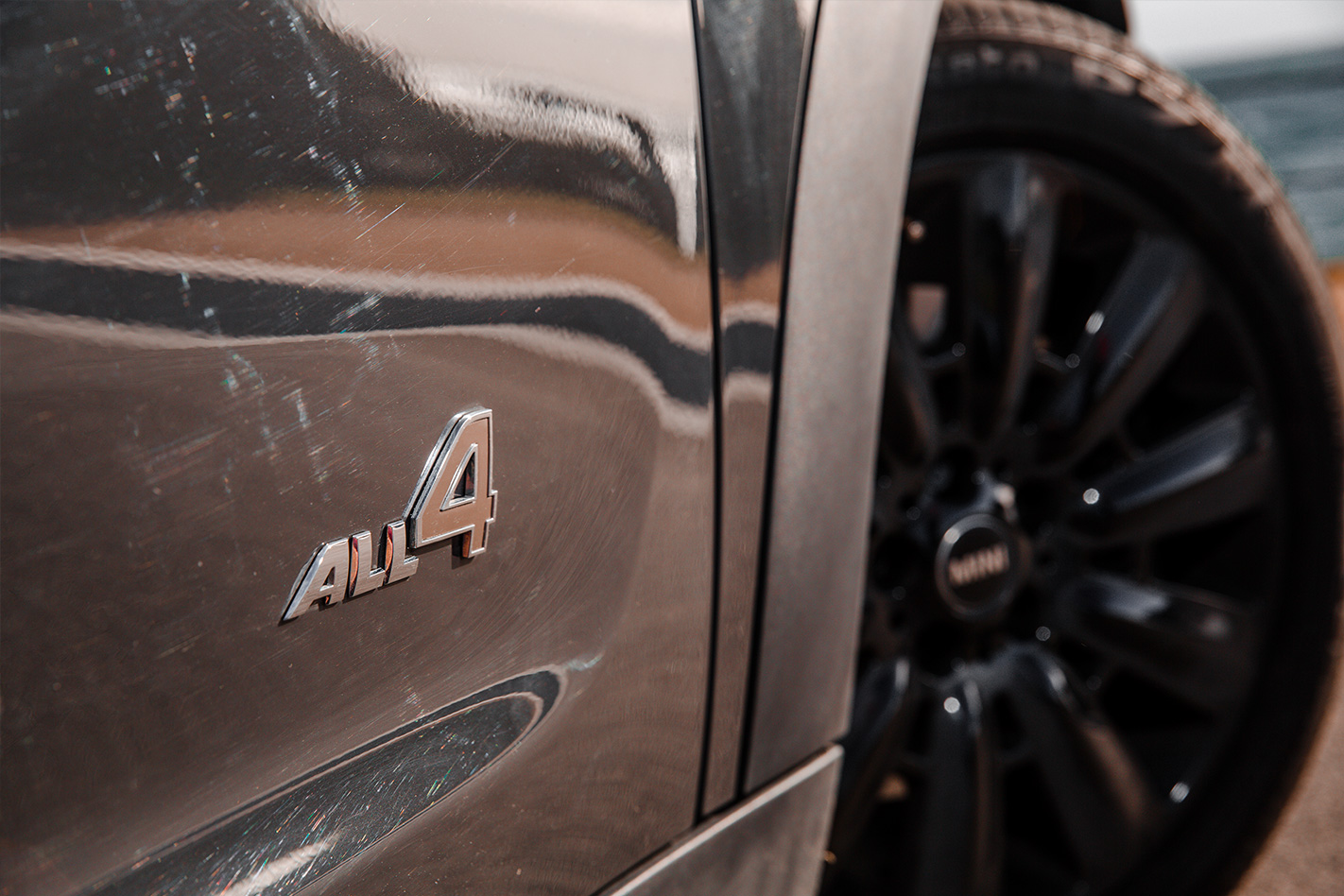
Now I think I’m turning to the other side and becoming a regular at the jet-wash. I enjoy getting the Mini Countryman dirty, but among the acres of gleaming metal in the Wheels car park, I’m getting filth-shamed.
Despite being grey, the Countryman is a hard car to hide in. It’s noticeably bigger than most Golf-sized hatches and on a cold morning, the diesel engine doesn’t do its stealth credentials any favours. Once warmed up, it’s a bit smoother but it’s never going to be one of those cars that has people surprised that it drinks from the black pump.
Talking of pumps, this month I’ve been using the sport mode more often and I’ve seen a bit of a dip in fuel economy, from 6.3L/100km last month to 7.3 this month. The sport mode keeps the transmission one gear lower, making it feel a good deal more responsive.
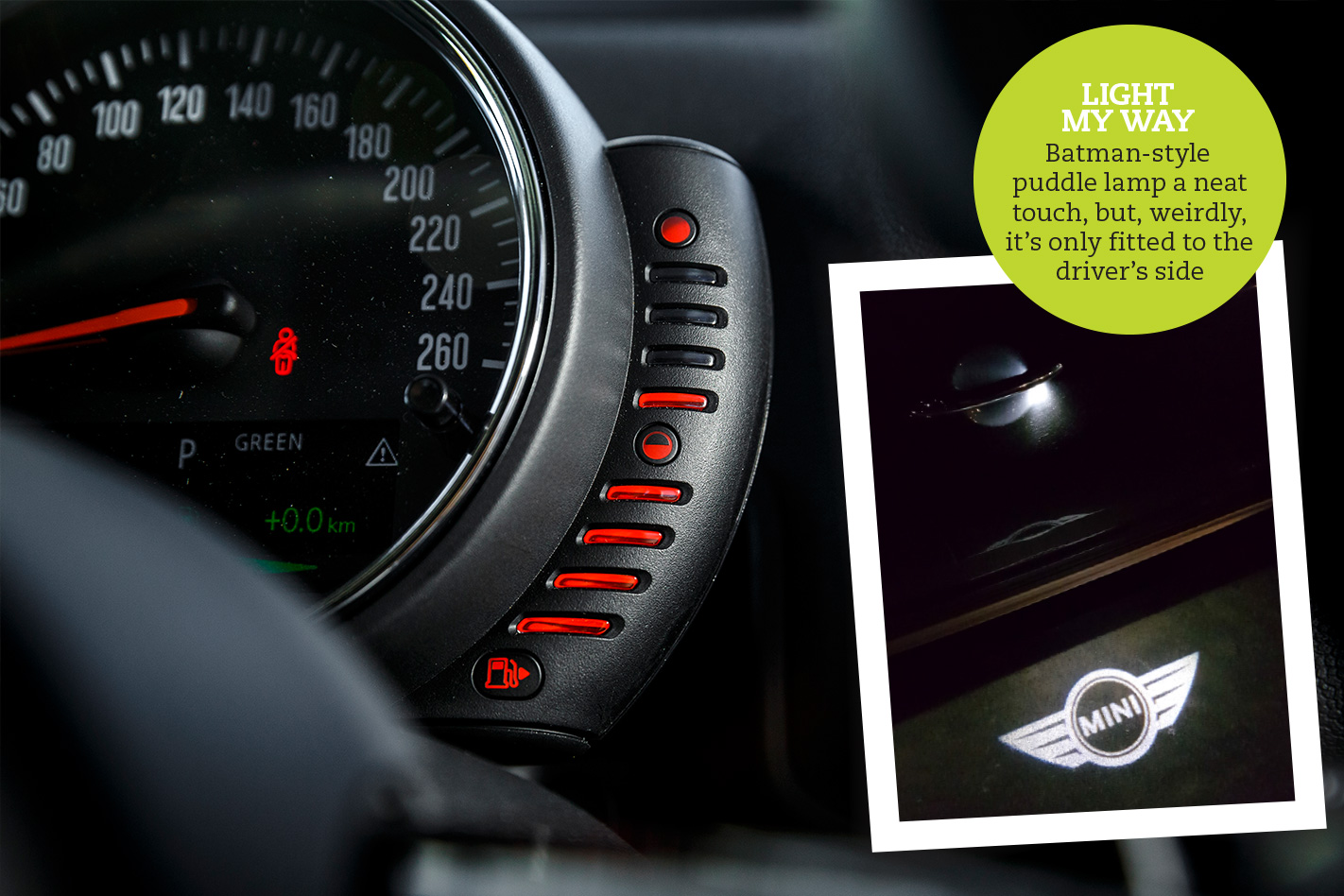
I also discovered late in the month that the tyre pressures were uniformly 3psi below placard. With a bit more air and a lighter right boot, I’m aiming to bring the fuel economy back into the sixes.
The adaptive cruise control has been a boon on the freeway, but it is prone to the odd moment of indecision and, like Ryan’s AMG E43 long termer, is occasionally prone to dropping the anchors with a perfectly clear road ahead. As with most semi-autonomous systems, it’s a case of getting to know its idiosyncrasies and in such situations, a little manual intervention pays dividends.
The head-up display, which keeps you informed of the speed limit at all times, is something that, once sampled, I’ll find hard to live without.
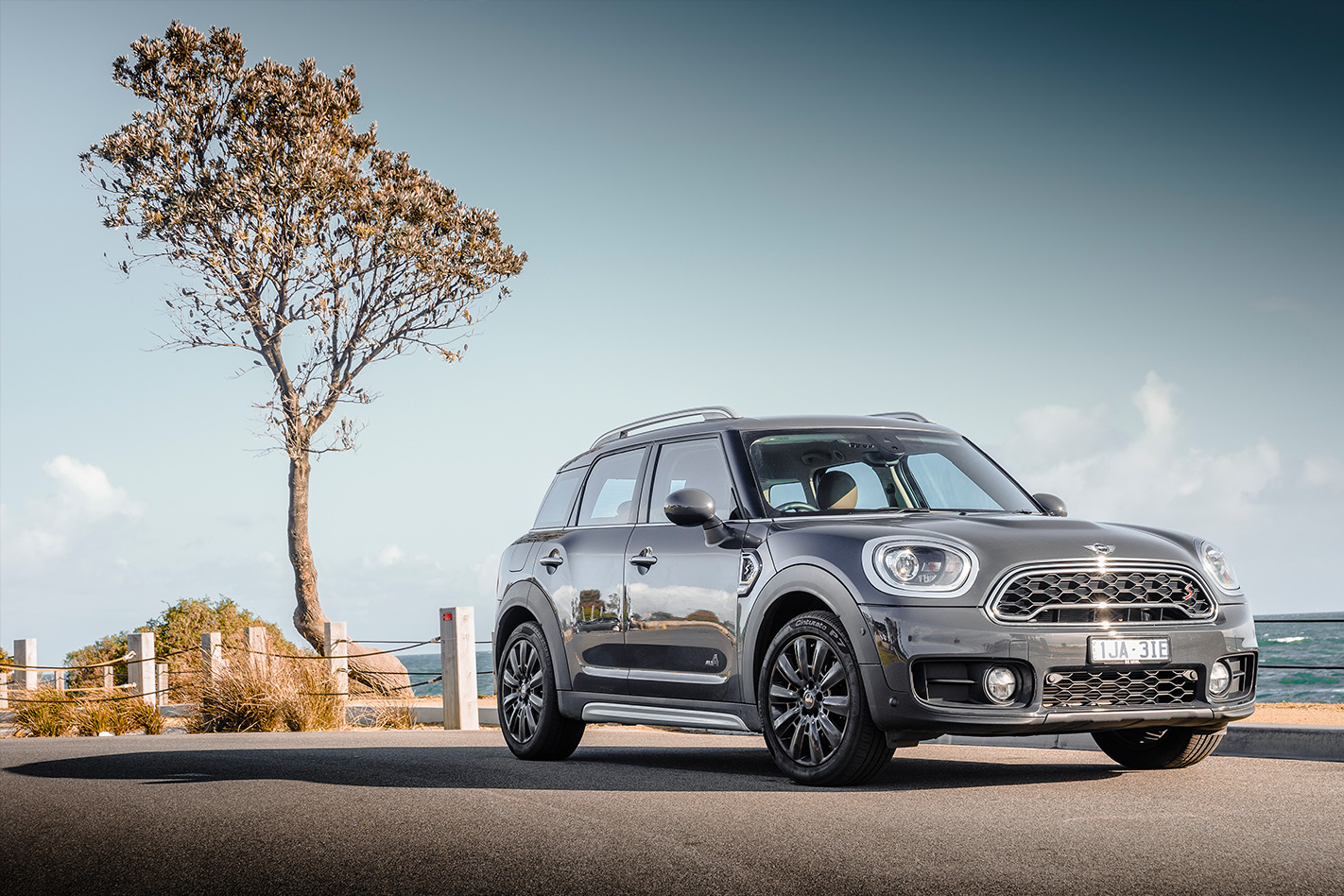
The Countryman has been pressed into use as a hauler of garden waste this month and has seen countless Ikea bags rammed with dead buffalo grass and soil-encrusted roots destined for the local green tip. This, and a boot load of disintegrating polystyrene, has tested my cleaning skills to the max, and researching the most effective Dyson attachments has become my life.
Thankfully, the car’s looking pretty schmick after a bit of elbow grease and exposure to the V8 Animal cordless stick. Clean cars, eh? Call me a convert.
Update 2
Watergate, Dieselgate, now Tailgate … gate
It started innocuously enough.
The key fob button for the Mini Countryman’s motorised rear hatch had suffered a fit of pique and obstinately refused to function.
If you’ve been following my experience with Mini’s plus-size model, you’ll know that the rear hatch has taken a dislike to me, acting all innocent and then lunging at the back of my head if given the opportunity. I’ve wised up to that particular stunt but the car has now adopted an even more dastardly tack.
Returning to the vehicle after locking it in a busy shopping-centre carpark, I gazed across the serried rows of vehicles to spot the Countryman with the rear hatch raised to the skies in a triumphant ‘screw you!’ salute. I wondered how long it had been sitting there like that and was relieved to find my laptop and jacket had remained resolutely unstolen.
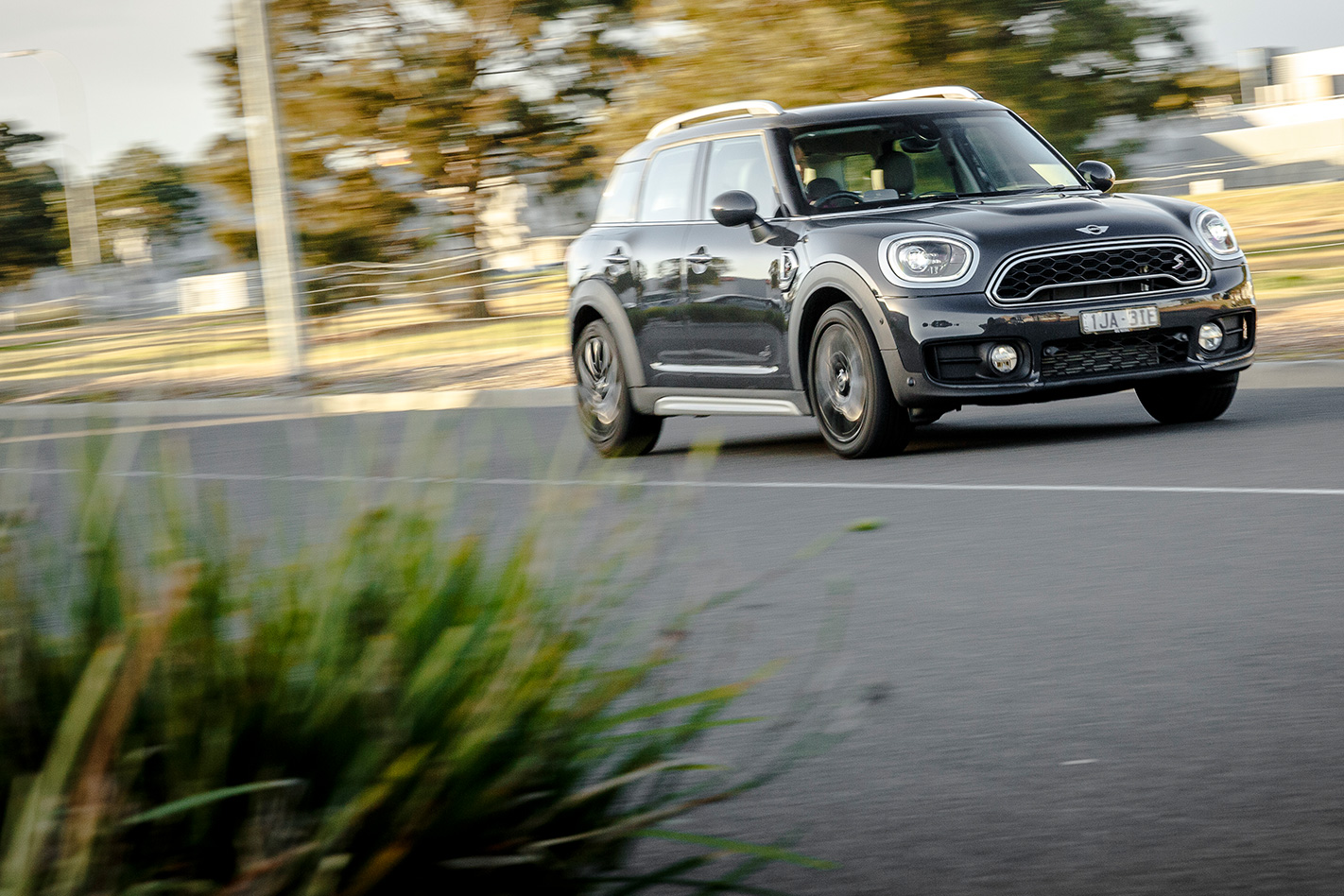
A week later it did it again, this time fortunately in the secure office car park. By this point, I’d taken care not to leave anything worth stealing in the vehicle, but it’s far from ideal.
These electrical glitches have put me on my guard a little, but the Countryman’s infectious personality otherwise makes it an easy car to get along with. It just has an evil tailgate and that’s something I have to take as part of the package.
It’s like my neighbour’s kitten; a lovely little thing until it craps in your shoe. But you just can’t stay mad at it for too long.
The Mini Countryman has also endeared itself to the tightwad in me. After vowing not to drive it everywhere in sport mode, fuel use on the last tank improved to 5.3L/100km which isn’t at all bad for an all-wheel drive almost-SUV.
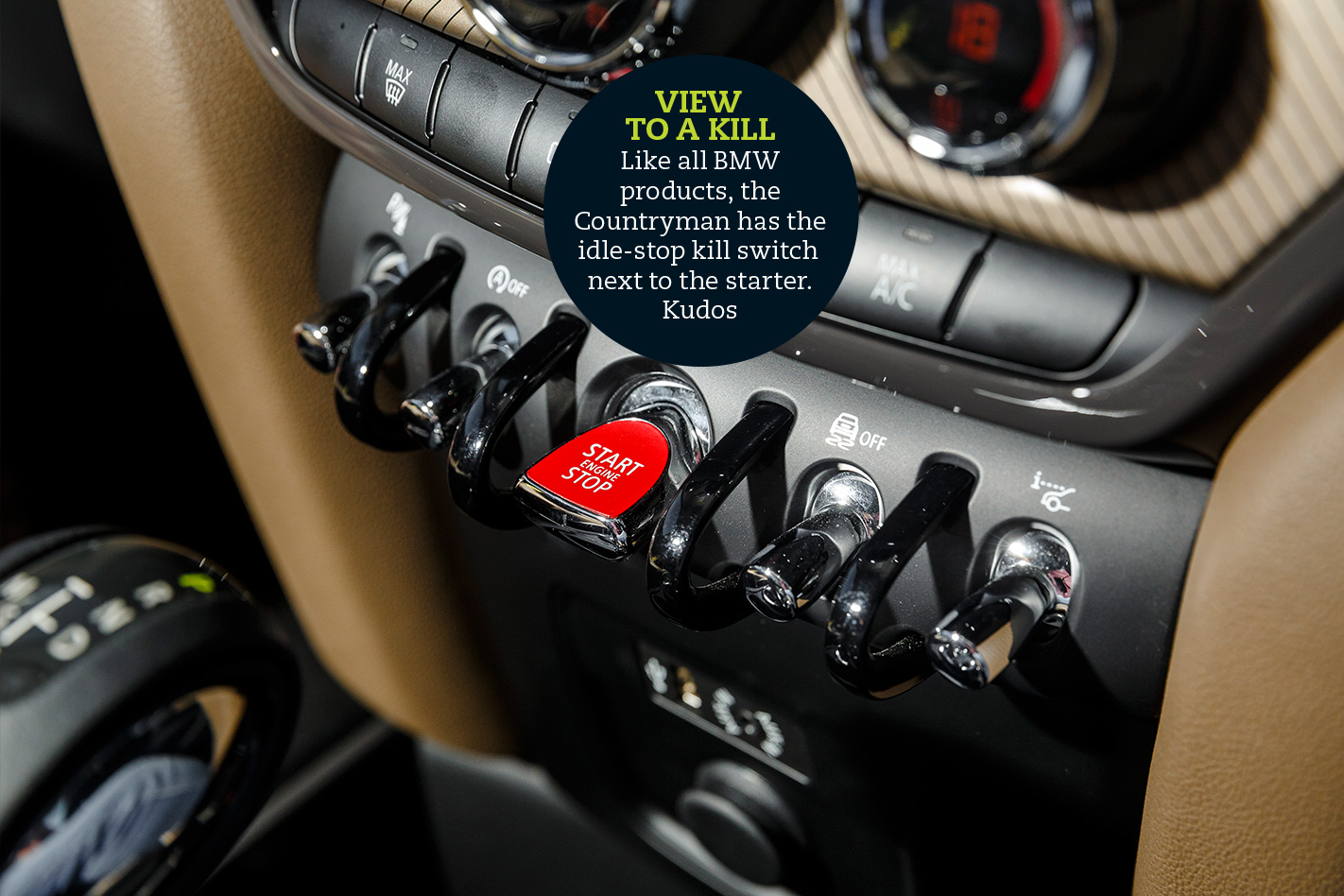
I think I’ve even got Kirby’s Kia Picanto pipped as the most economical vehicle on the Wheels fleet. It’s almost as if we’re acting as the offset program for Ponchard’s V8 Mustang but I reckon the good ol’ boy Ford would grate on you a long time before the Countryman.
Knowing that I can return the car after four months means that the downsides of Countryman ownership are easier to shrug off.
If I’d forked out $56K for one, I’d probably be less sanguine about its peccadilloes. The most annoying thing is that I know I’d still genuinely like the car. Against all my better judgment and diligently curated prejudices, I’m sold on the thing. Your mileage may vary.
Speakers corner
Never mind the polar opposite of consumption between the Mini and Ponch’s Mustang; there’s no contest when it comes to audio quality, the Mini’s 10-speaker Harman Kardon set-up being the antithesis to the Mustang’s Shaker system.
The audio quality is great, but it could really do with a bit more grunt. All too frequently, I find that I’m at maximum volume and there’s zero distortion, fuzz or flutter from the speakers. The spec sheet says 360 watts but it feels as if the DSP amplifier could benefit from a few additional ponies.
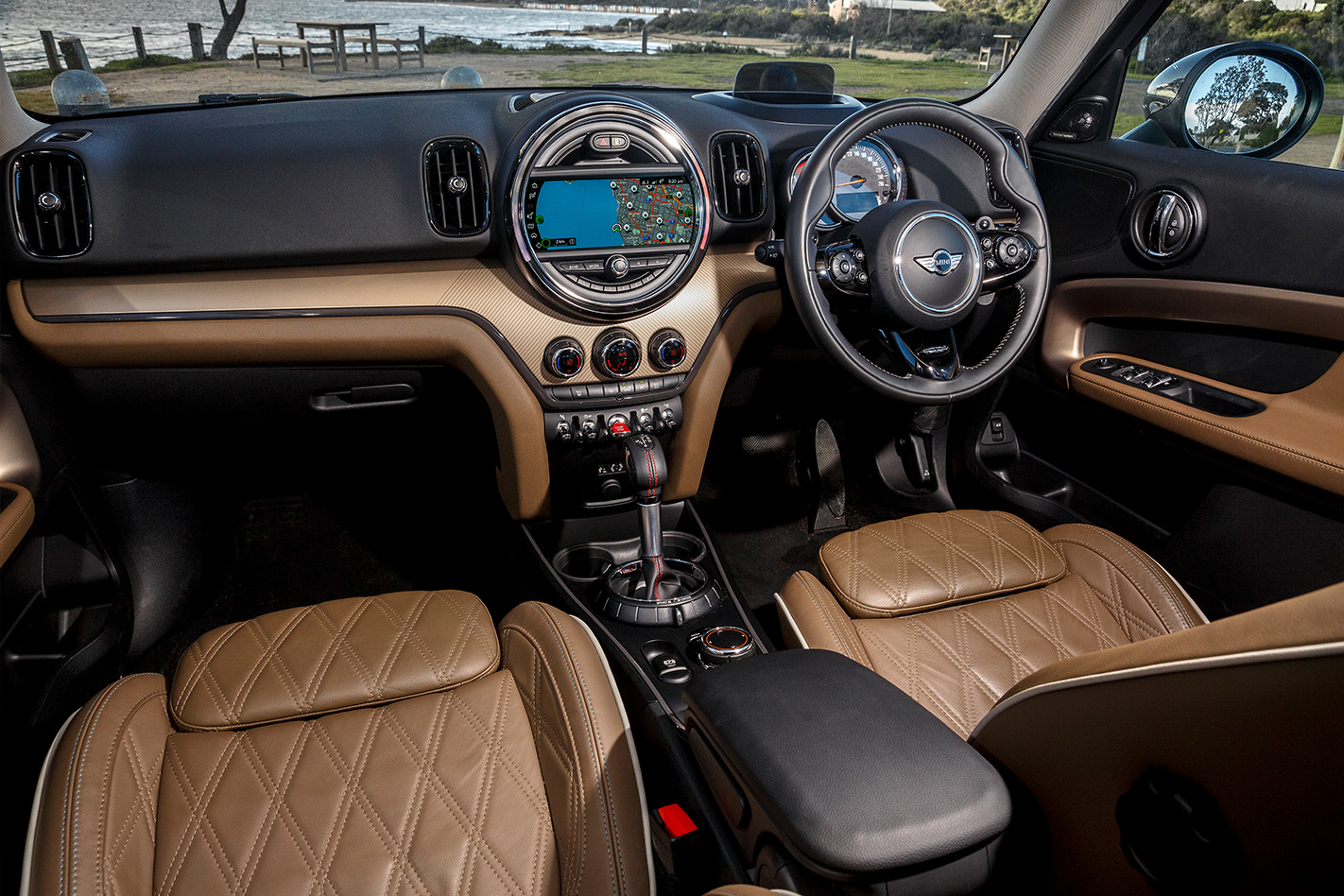
Update 3
Chasing hypermiler rewards sees Enright fed up to the gills
Buried deep within the Mini Countryman’s labyrinthine infotainment menu is an option intriguingly titled Minimalism Analyser.
It’s not something you’d probably bother with, as you need to switch the car into ‘Green’ mode to access it, something that only communists, school teachers and me would ever do.
Nevertheless, a long freeway drive saw me shuffling through a few of the car’s different driving modes and it was then that I discovered the green fish.
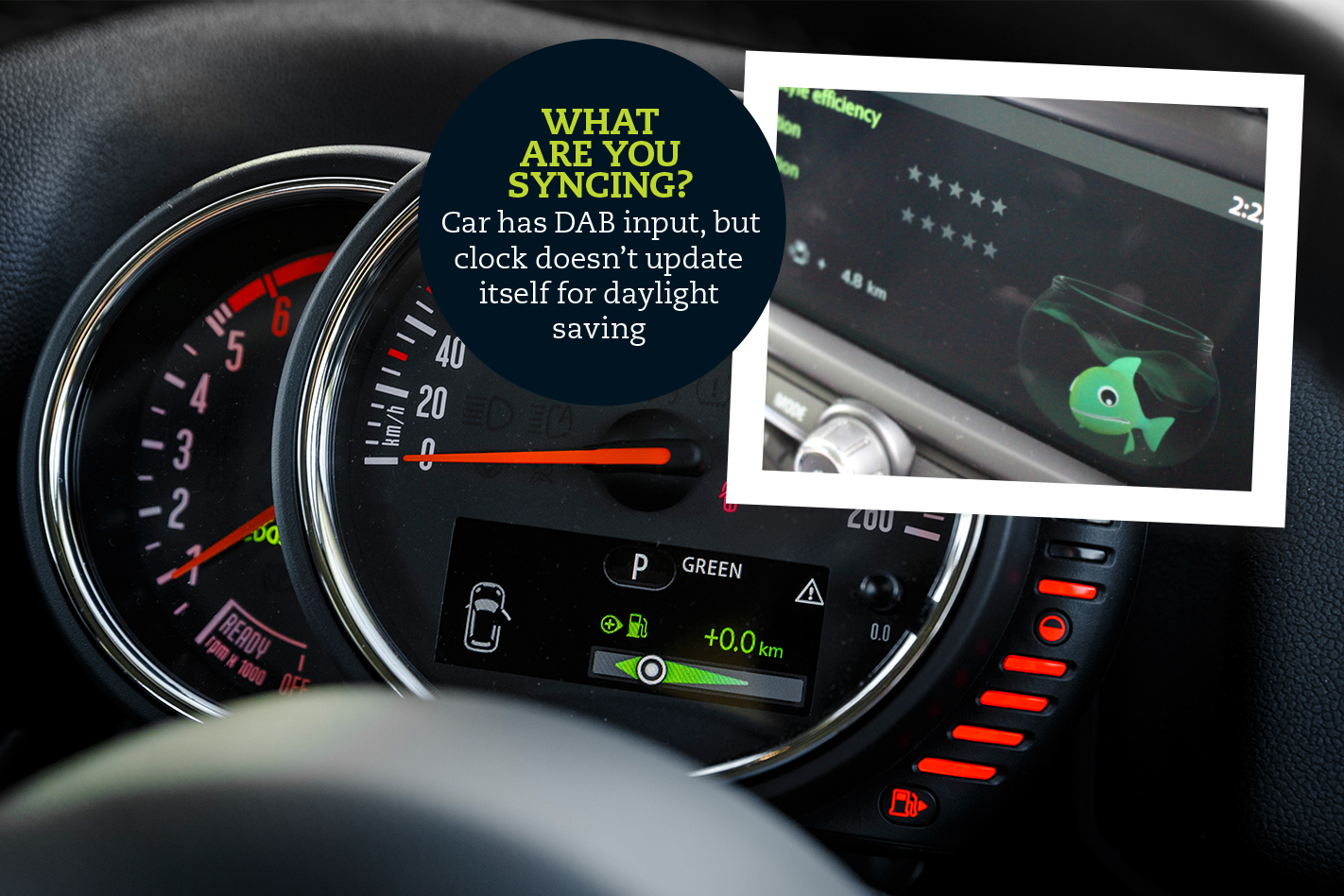
There it sits in a goldfish bowl beneath a meter which measures both anticipation and acceleration. The five stars for each of these attributes are greyed out. Challenge accepted.
Gain a star and the fish does a backflip and looks slightly happier. After three stars he beams this earnest, gormless grin and you’re hooked.
At this point, you begin to realise that earning stars is turning you into a complete horror scene of a driver. Accelerate to keep up with the traffic flow and the fish docks you an acceleration star.
As a result, you pick up speed like a darted sloth while spittle-flecked Falcons fill your rear view, the drivers flashing, gesticulating and mouthing obscenities. One drew level and went berserk, his frenzied interjection only interrupted when his durry fell into his crotch/seat fabric junction.
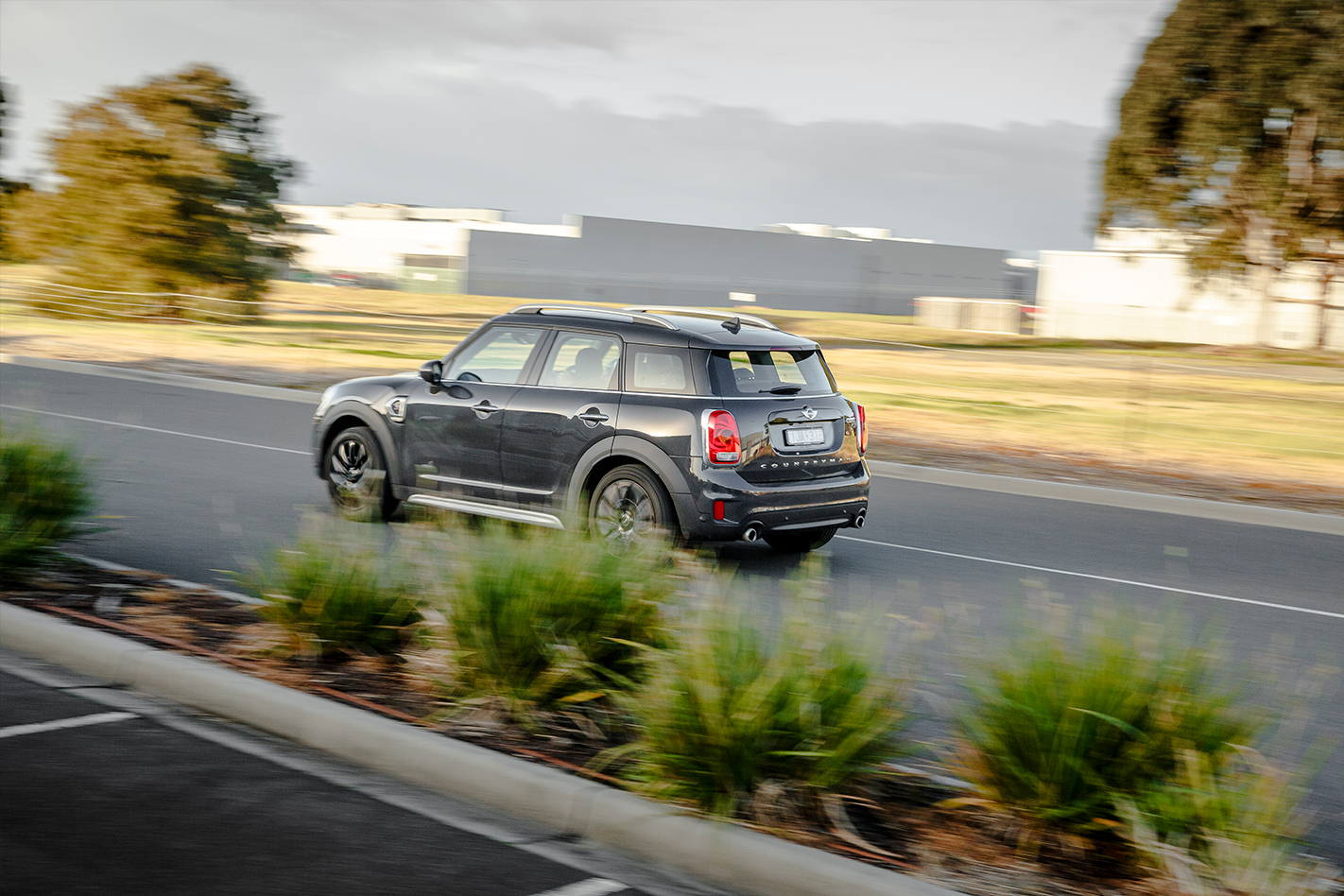
If traffic backs up and you need to brake, the fish deletes all of your anticipation stars. The first time this happened, I was frothing too.
I’d just spent the previous hour and a half forensically managing my throttle and braking inputs like Sandra Bullock in Speed and then that gooby-eyed freak just took away all of my stars.
I stop for a drink and a Filet-O-Fish and vow never to switch the thing on again. Yes, I’d saved 10km worth of fuel over my 150km stint, but the stress of trying to ignore furious drivers, treating the throttle like a detonator and desperately willing the fish to flip just to save 82 cents worth of fuel has taken its toll. Hypermiling is just too hardcore for me. I have new respect for communists and schoolteachers.
Other than that, the Countryman has performed brilliantly this month: 8/10 – would recommend. Just don’t fall for its fishing scam.
Fat camp
Offered for sale in Europe is this fetching Autohome rooftop tent for the F60 Countryman. As far as I can establish, the unit weighs 58kg and the roof rails are rated to a maximum load of 75kg. Last time I checked I was tipping the scales somewhere north of 17kg…
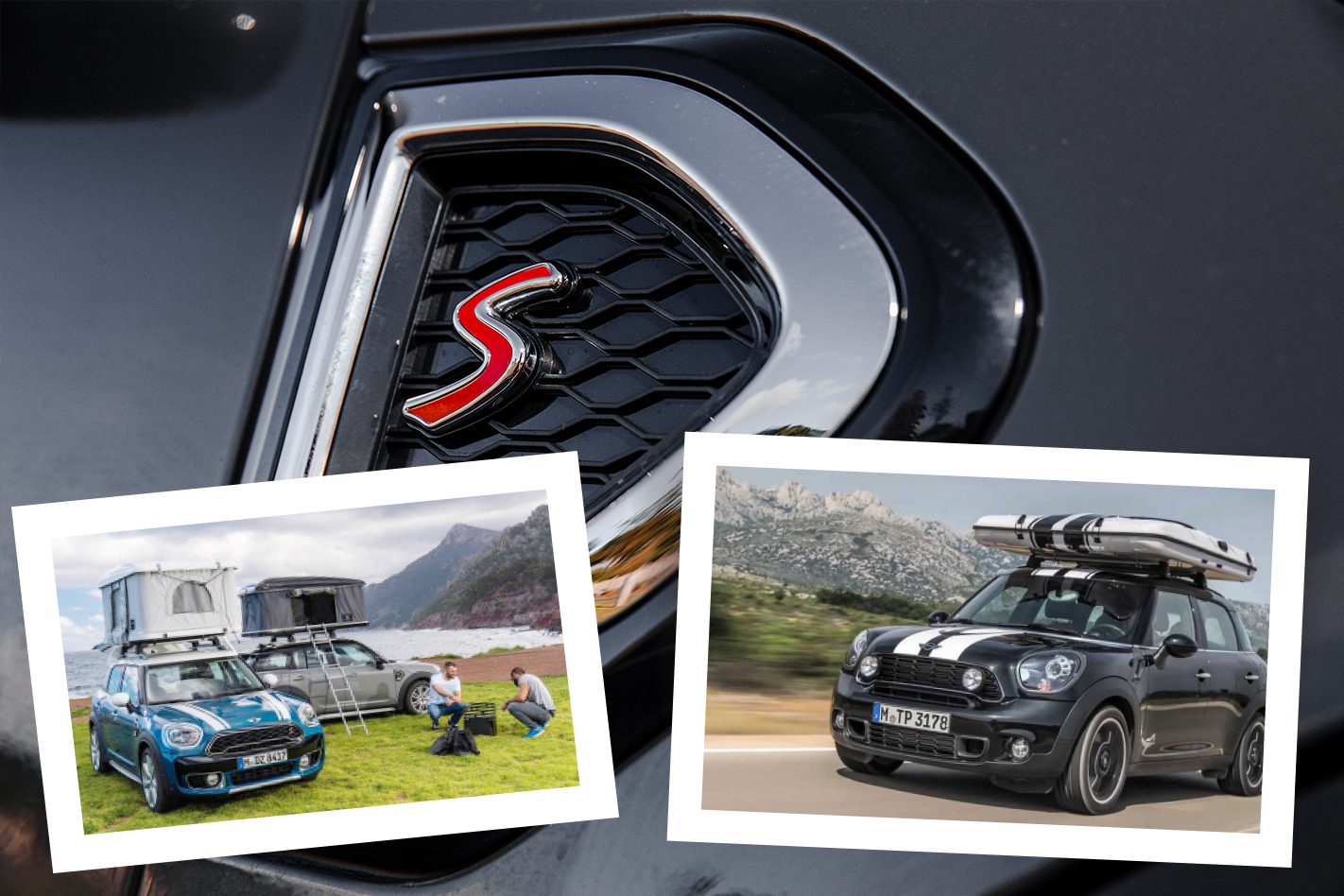
Update 4
Aesthetic excesses, vaporised roadkill, a torched perineum… but Mini’s junior SUV emerges victorious
THUS far, I’ve largely avoided driving into Australian wildlife. Yes, I’ve clouted a few birds, and have had a couple of close squeaks with myopic marsupials, but I have yet to flatten something that could inflict the sort of panel damage that would require one of those ‘unpleasantness’ phone calls to a press office.
I nearly broke my duck on a recent drive to Wangaratta in the Mini Countryman.
I’d committed to take part in a 50km cycling event called the Ned Kelly Chase but had neglected to do any training beforehand.
Crippling undercarriage destruction set in at about the 40km mark and a protracted waddle back to the Countryman only exacerbated my discomfort.
Fortunately the Mini Countryman’s seats almost seem designed for a 110kg man with an acutely contused coight, but half way through the 15km drive back to the guest house, a swamp wallaby hopped out in front of the car. I slammed on the picks as hard as they’d go and gave the little fella a 5km/h boop, which he looked a bit disgruntled about.
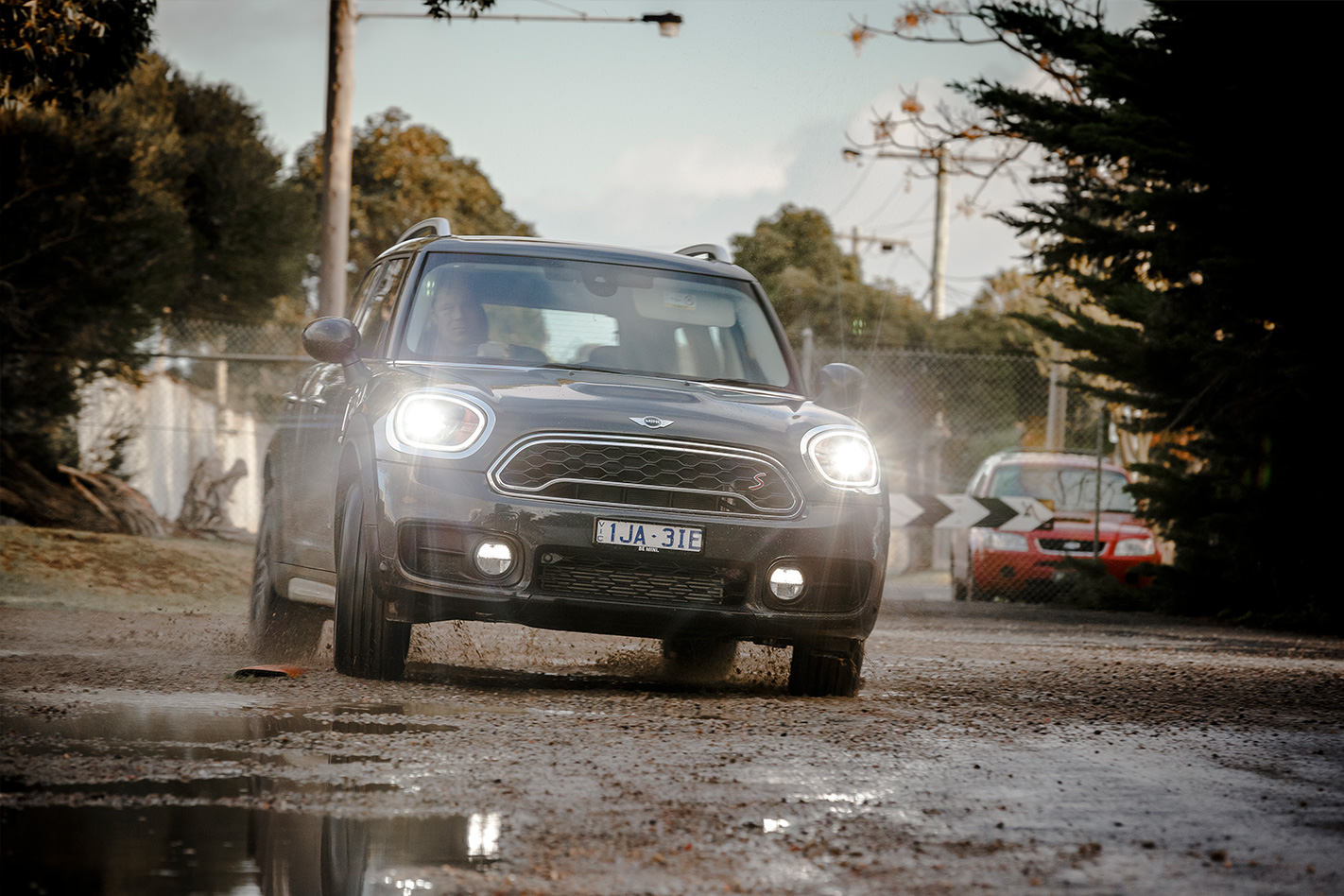
As my heart rate returned to normal, he happily hopped off, straight into the path of an oncoming Kenworth, which unfortunately atomised him.
Hosing a fine mist of gore off the side of the Mini that evening while sitting on a bag of frozen peas, I mentally totted up the good points of the Countryman SD All4 that I’d soon be handing back.
Good brakes were a given. It also handled well for what is ostensibly a diesel SUV. It’s genuinely good fun to punt around a hilly B-road, the eight-speed ZF transmission sharp enough in Sport mode to rarely have you flicking a paddle.
That it’s also creditably economical (I averaged 6.2L/100km, even with a fair amount of enthusiastic pedalling) ought to seal the deal for many.
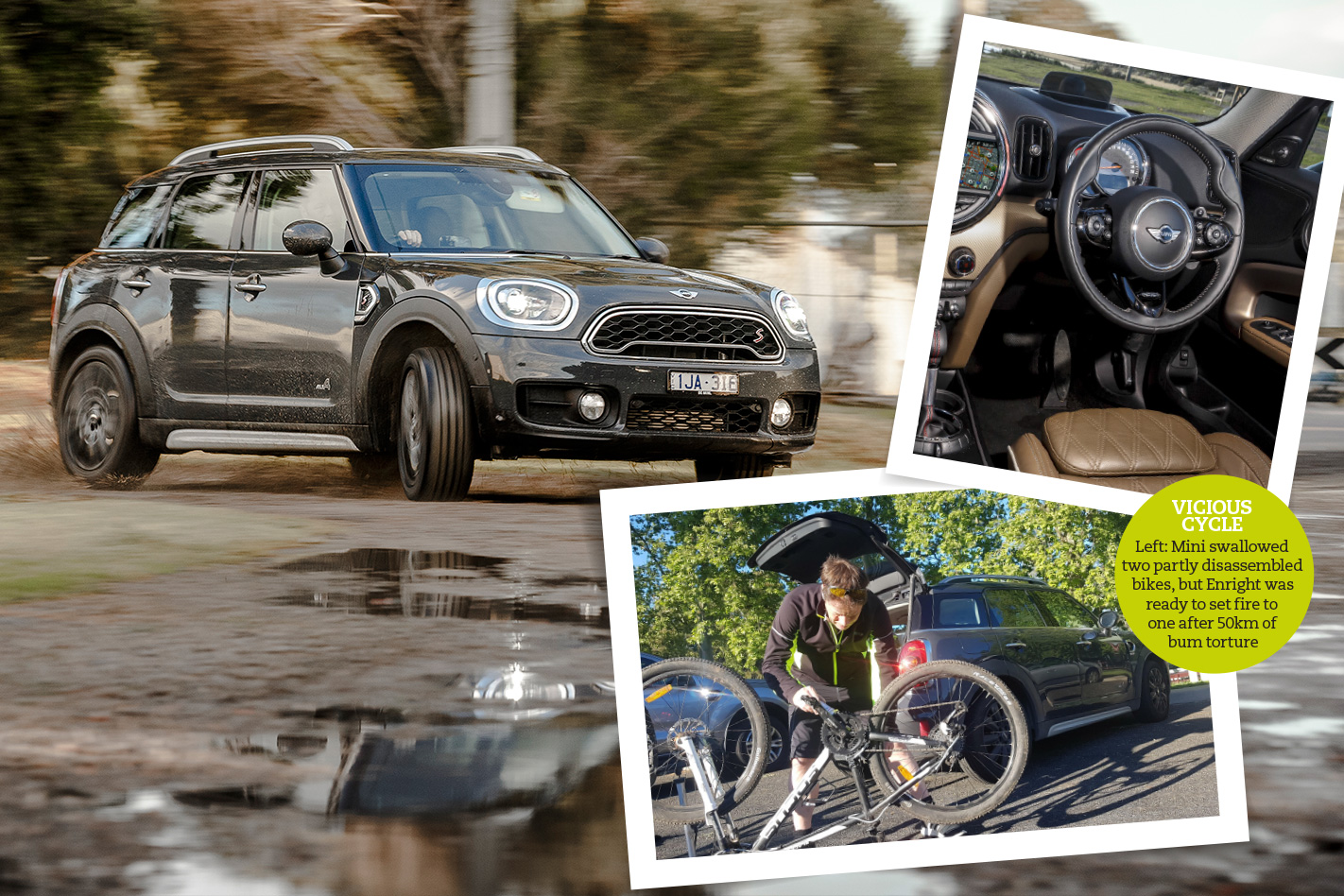
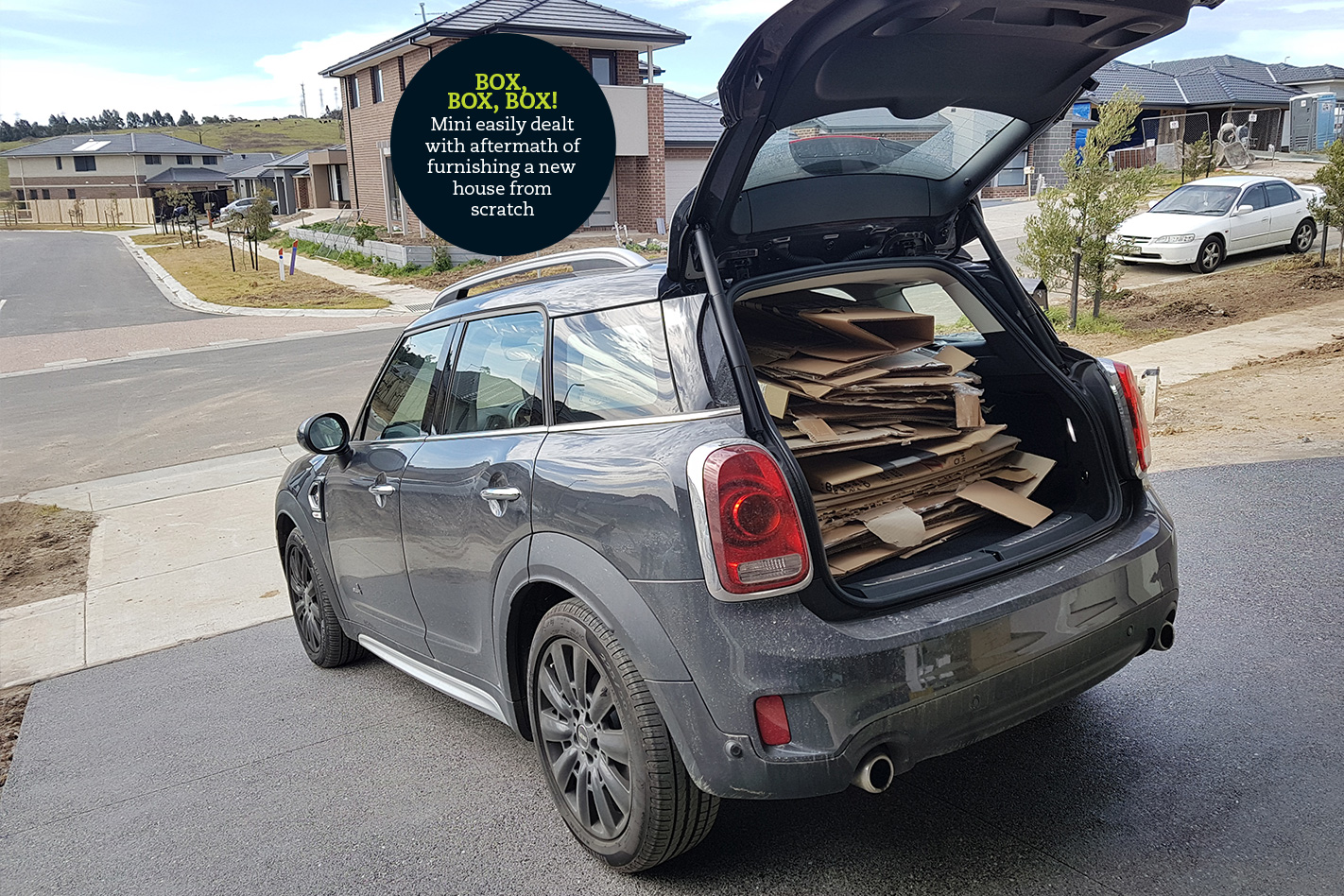
It’s practical too. The two dismantled mountain bikes that represent a bit of a Tetris puzzle in my Golf VII are swallowed up by the Countryman’s cargo bay with plenty of room to spare.
Returning to the Countryman after a few days in a Volvo XC60 also reminded me just how much heft there is to this car’s steering. If you bemoan the over-assistance of modern electric steering systems, you’ll adore the way you can strong-arm the Mini through a corner.
It’s not a car that’s long on handling subtlety, but it loves being treated to a bit of clog. As always with the Countryman, so much comes back to its price.
While it’s positioned as a boutique choice, you’ll need to be the judge regarding how much you buy into that particular marketing decision. Given that we can’t compare it directly to similarly priced mainstream SUVs, such as the Mazda CX-9, you have to look at what else your $52K buys.
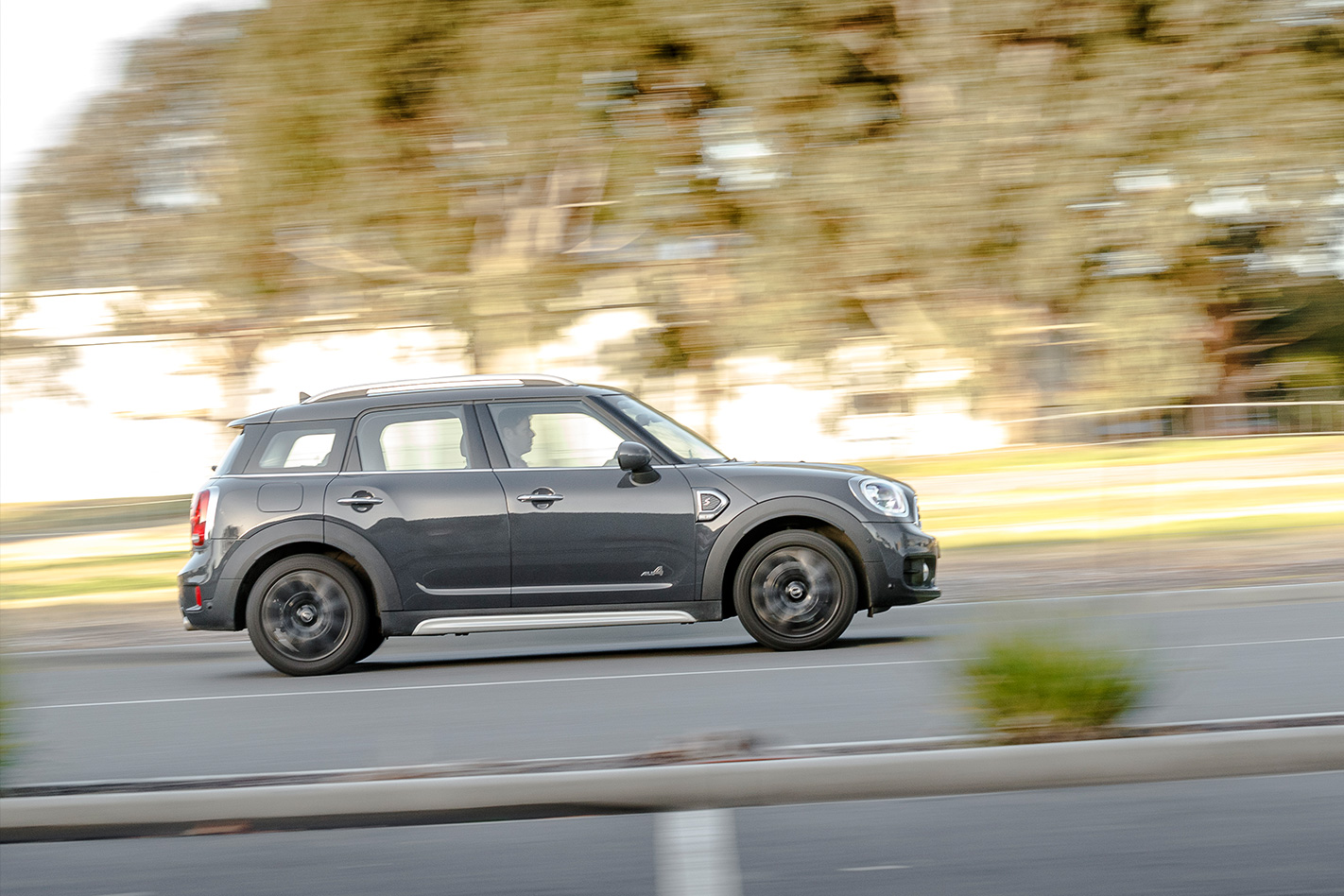
And it buys a lot in the ‘something cool and fun that the kids can get in the back of’ sector.
A Volkswagen Golf R, a Peugeot 3008, a Subaru WRX or, if you’re a handy negotiator, you might well land an Alfa Giulia for a lot less than its $59K list.
Would I recommend a Countryman Cooper SD All4 to a friend? Yes, as long as they had deepish pockets and a fairly liberal aesthetic palate.
I’ll miss its weird blend of kitschy overstyling and honest-to-goodness backroads substance. It never failed to raise a smile.
Unless you’d just lowered the driver’s window to check on a dazed swamp wallaby.
CALL them outrageous, call them unrealistic, call them bizarre.
Regardless of your feeling toward the various one-off show cars that have rolled-out around the world’s motor shows this year, concepts serve an important role.
Some may be hinting at a new design direction for a company, others might foretell of a brand entering a new segment, while others may preview a completely new model. Either way, whether they be life-size clay models, functioning prototypes or even virtual vehicles in computer games, concepts are the auto industry’s crystal ball.
Here is a review of the year’s best concept vehicles and a fleet of cars that will almost certainly drop a few clues about the new hardware we can expect to see in 2018 and beyond.
BMW Z4 Concept
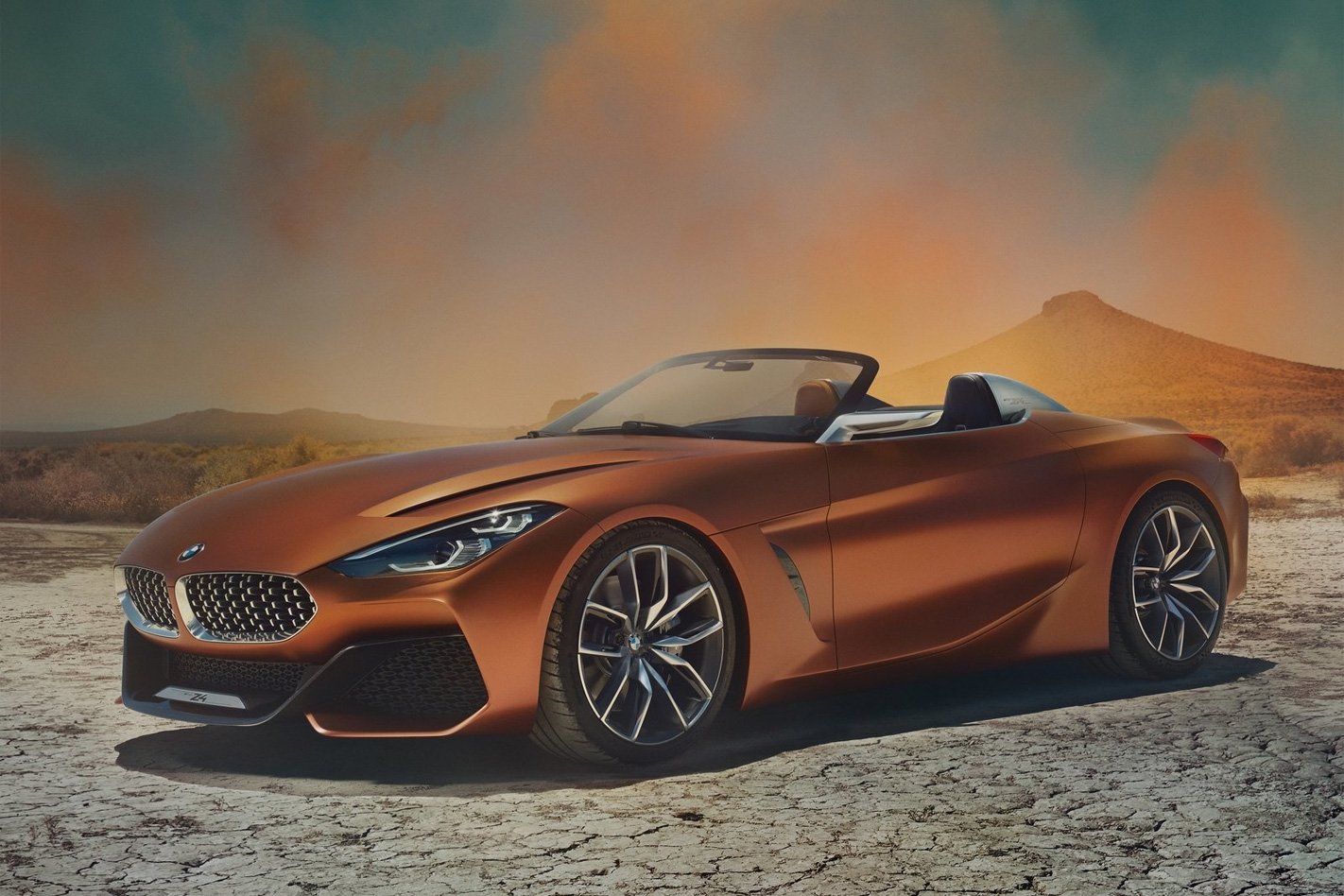
While some radical concepts skirt the very edges of reality and possibility, BMW’s Z4 Concept that debuted at Pebble Beach in August is at the opposite end of the spectrum.
Yes, its blade-like door mirrors and asymmetric two-tone interior are unlikely to see showroom lights, but the two-seat sportscar appears to be very close to a production version.
Show cars rarely survive the journey from concept to production model unscathed, but we hope the next-generation Z4 looks a lot like this elegant and imposing concept.
At the opposite end of the spectrum is this wild study from Infiniti.
While many manufacturers resurrect features for concept cars from past models and heritage, relatively young car maker Infiniti decided to invent its own history with the frankly gorgeous Prototype 9.
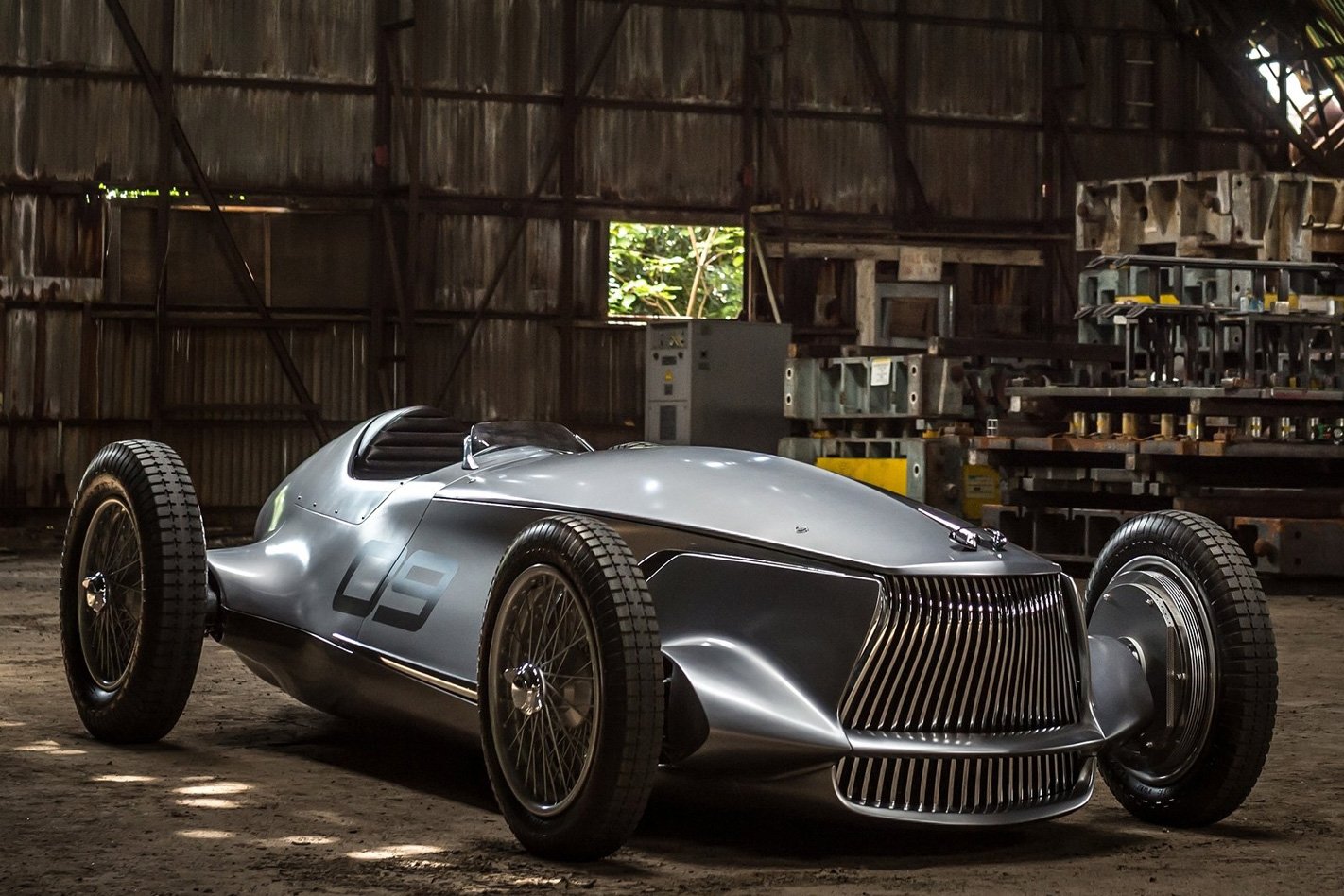
A 120kW/320Nm electric drivetrain can power the concept up to 170km/h and 100km/h from zero in 5.5 seconds. Traditional body crafting techniques and batteries did not focus on weight reduction however, and the concept weighs in at a hefty 800kg.
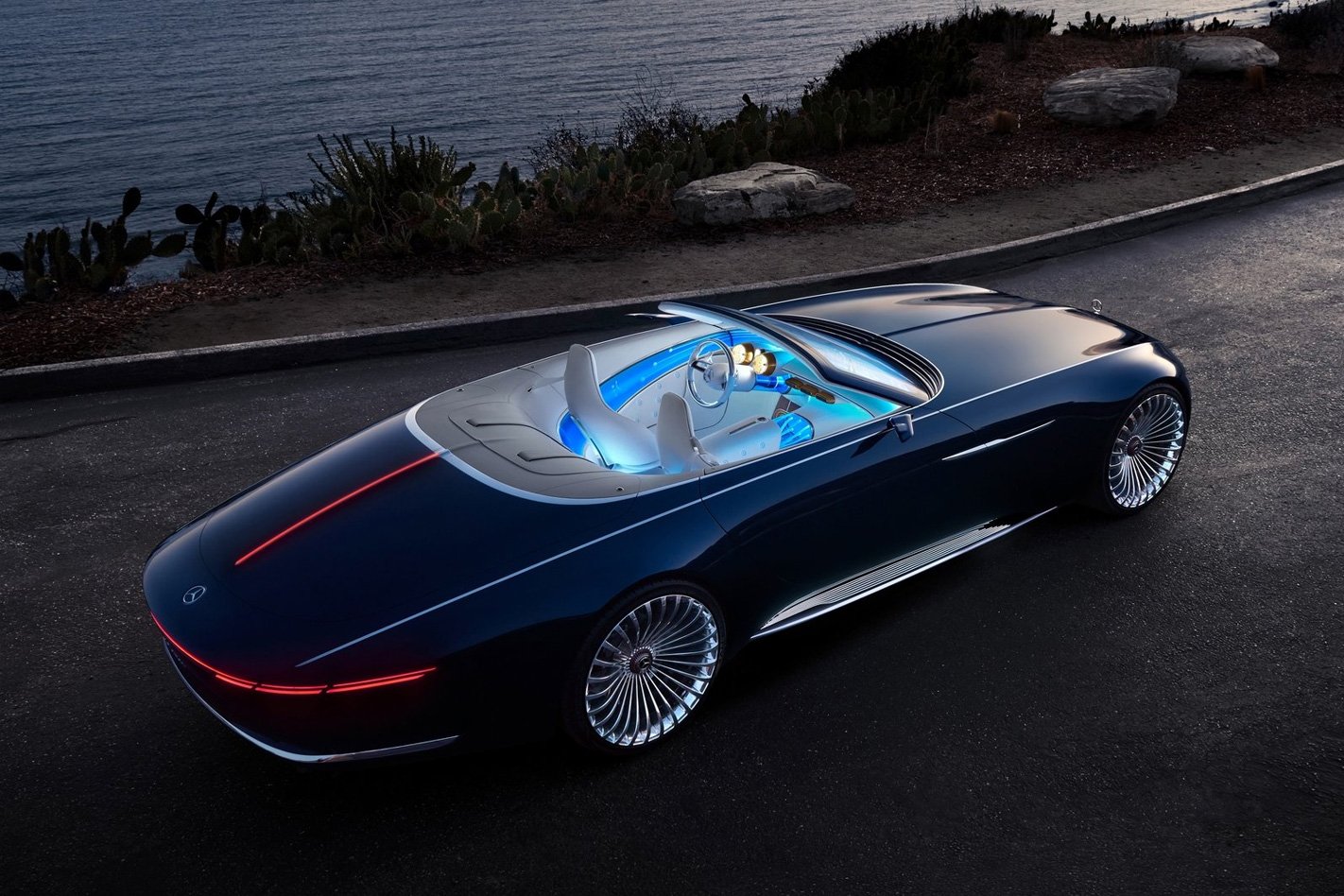
Mercedes-Maybach 6 Cabriolet
From the diminutive and compact, to the utterly vast. Mercedes-Maybach followed up on its six-metre long land yacht from a year previously, with a new convertible version for the Pebble Beach show.
There is absolutely no way this behemoth would work on public roads but that didn’t stop several well-heeled visitors offering the German car maker huge sums of money to build them a version of their own.
Proportions that are the stuff of pure fantasy may never make it to production, but the wonderful car was a welcome departure from the vehicles Maybach has produced in recent years, including the 57 and 62, which gained almost as many remarks but for all the wrong reasons.
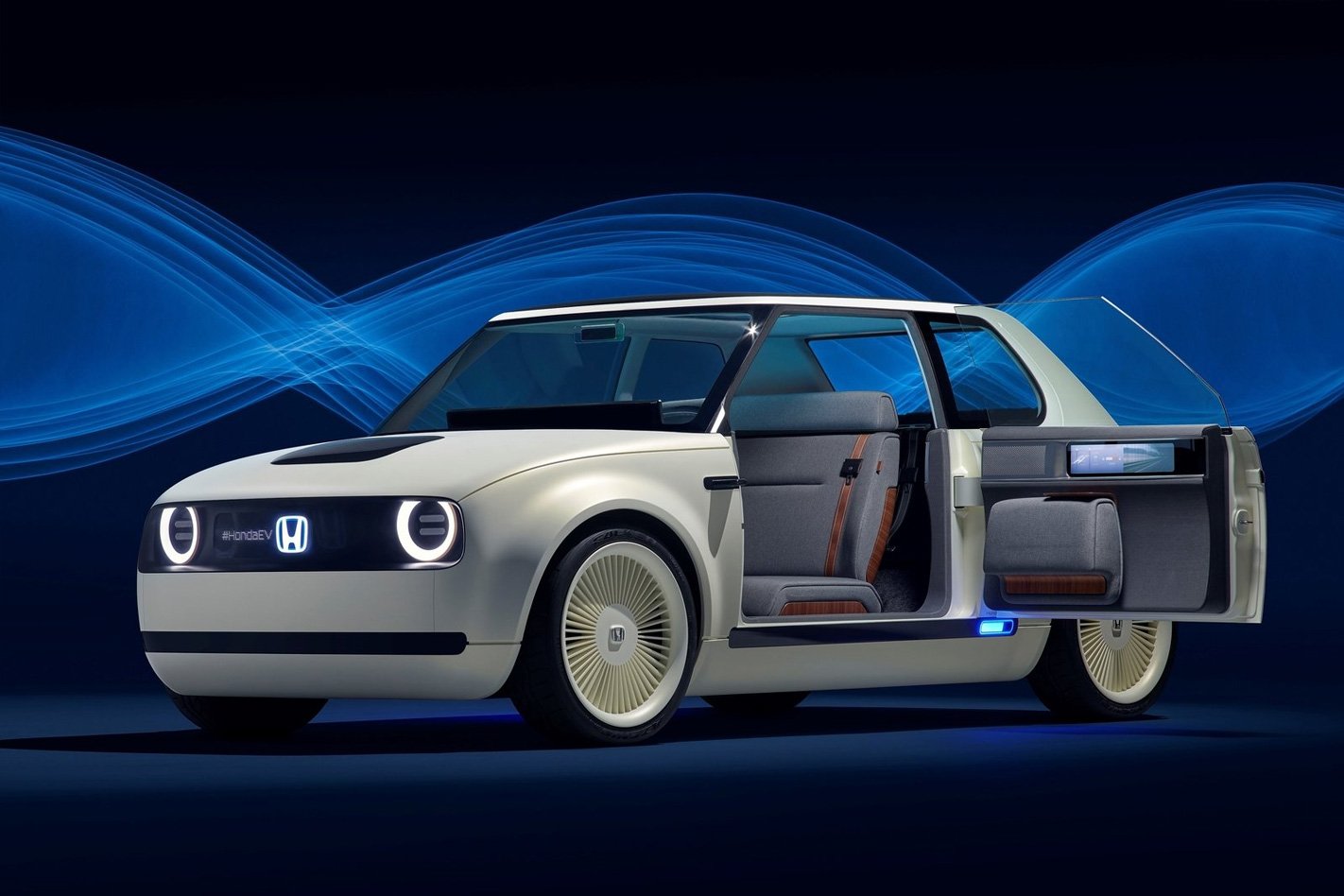
Honda’s surprise unveiling at the Frankfurt motor show categorically proves that concepts don’t have to be vast, fast and over the top to draw a crowd.
The Urban EV Concept is an unbelievably charming three-door hatch that relies on restrained, simple design, while mixing elements of the original Civic and even a little Mk1 Volkswagen Golf with futuristic touches and technology.
Its brilliant proportions, big fine-spoked wheels and purity of design made it one of our favourite concepts of the year, but the best news? Honda is going to build it! Keep your eyes on the launch circuit in 2019 for the production version and keep your fingers crossed it looks just like this.
But if you did want something outlandish, extreme and hyperbolic in the way it drives, looks and, most likely, costs, look no further than the purveyor of some of the world’s most outrageous concepts and road cars.
Lamborghini’s Terzo Millennio is obviously off the chart when it comes to styling, but its creators had clearly been on the grappa when they dreamed up the drivetrain as well.
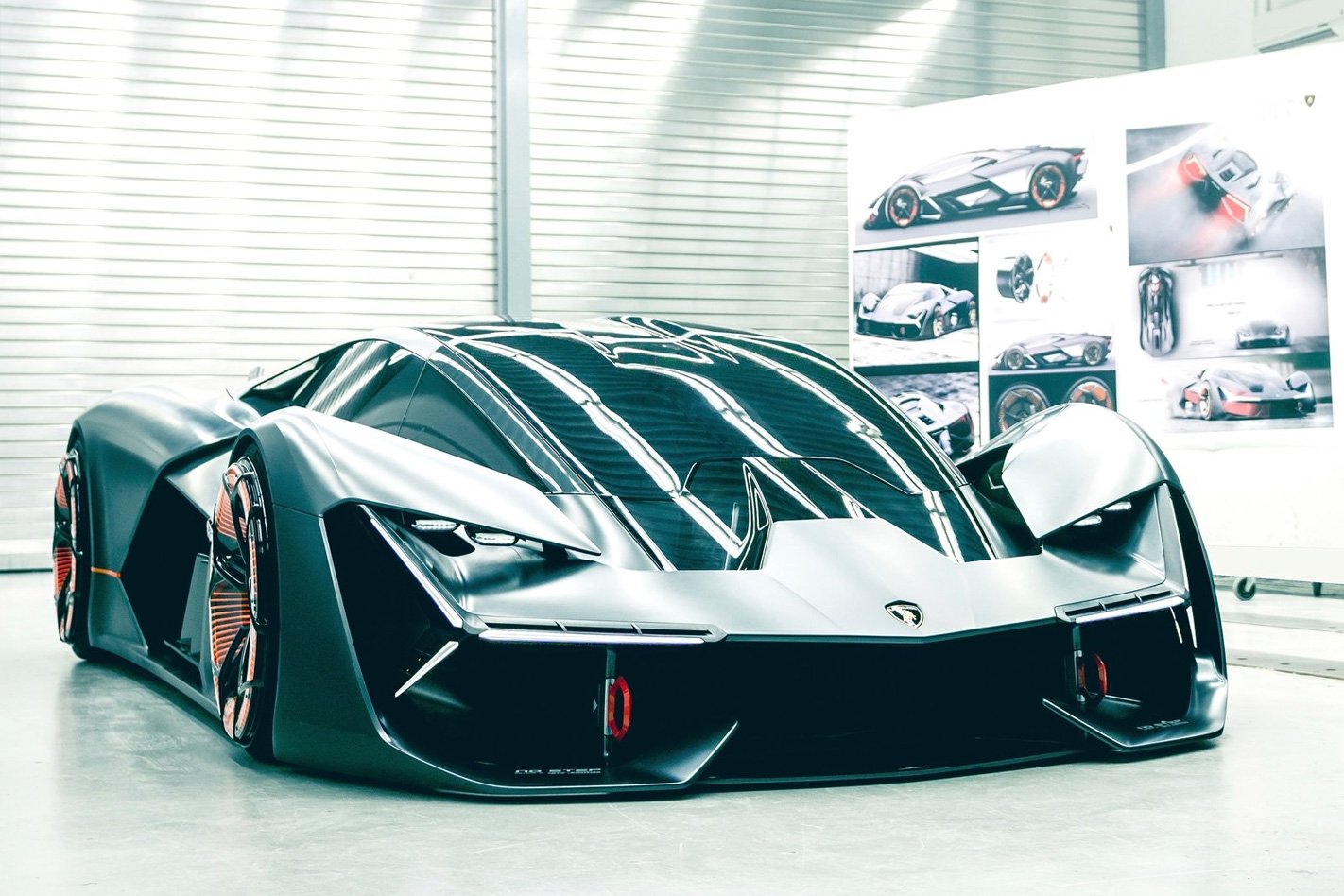
Without the constraints of designing a traditional electric car, the Lambo artists had an open sandbox to play in. The result is a no-holds-barred tech fest.
Bentley EXP 12 Speed 6e
Hard to believe our next favourite concept is from the same parent company as the Lamborghini, but the Volkswagen Group was also responsible for the knee-weakening Bentley show car too.
Debuting at the Geneva show in March, the clumsily-named EXP 12 Speed 6e followed on from the coupe version of a year earlier, but swapped out its petrol engine for an electric drivetrain.
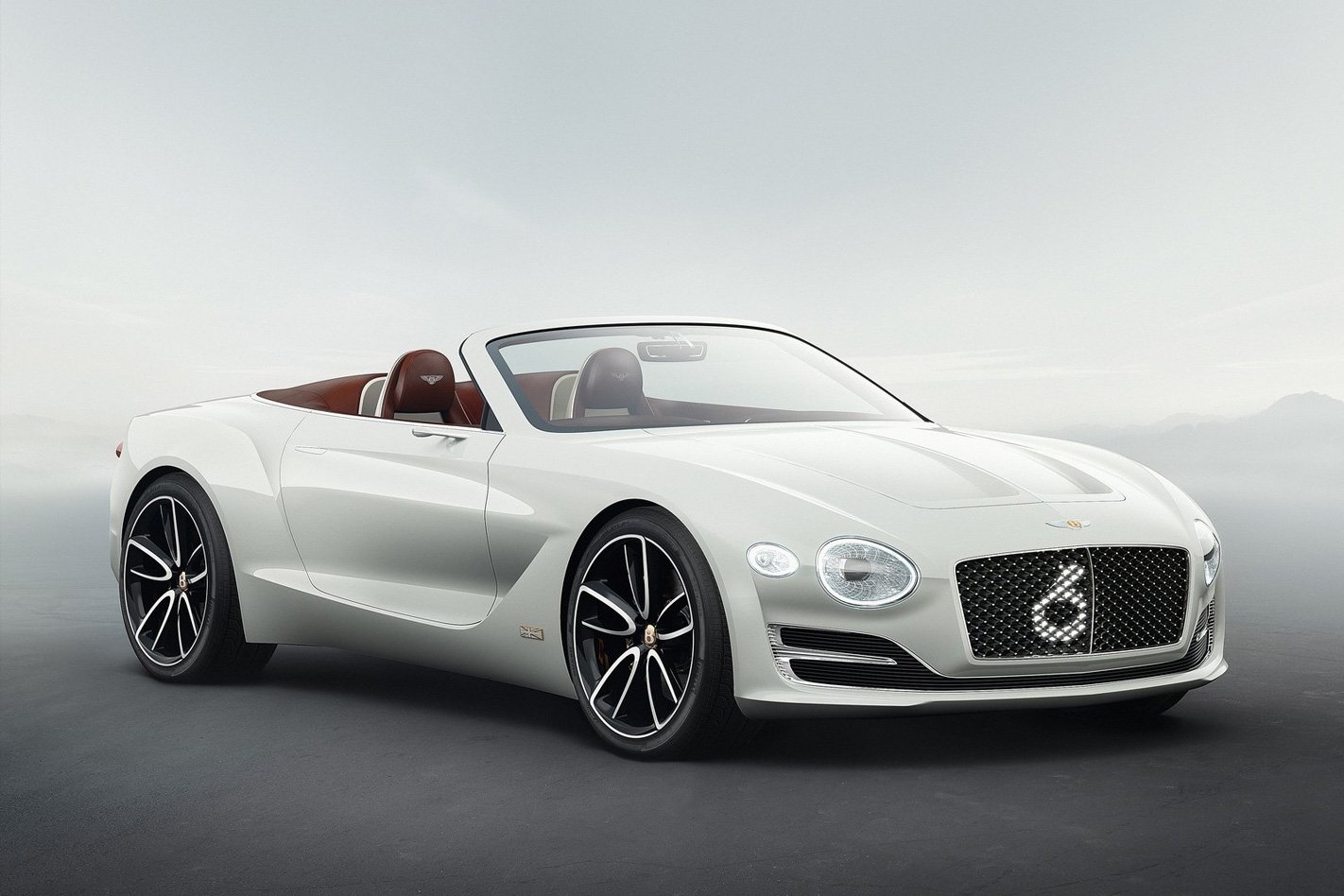
Speaking of the Continental, the response to the concept was so positive that Bentley’s designers incorporated many features into the new generation model that has since emerged. See, they really do listen to us.
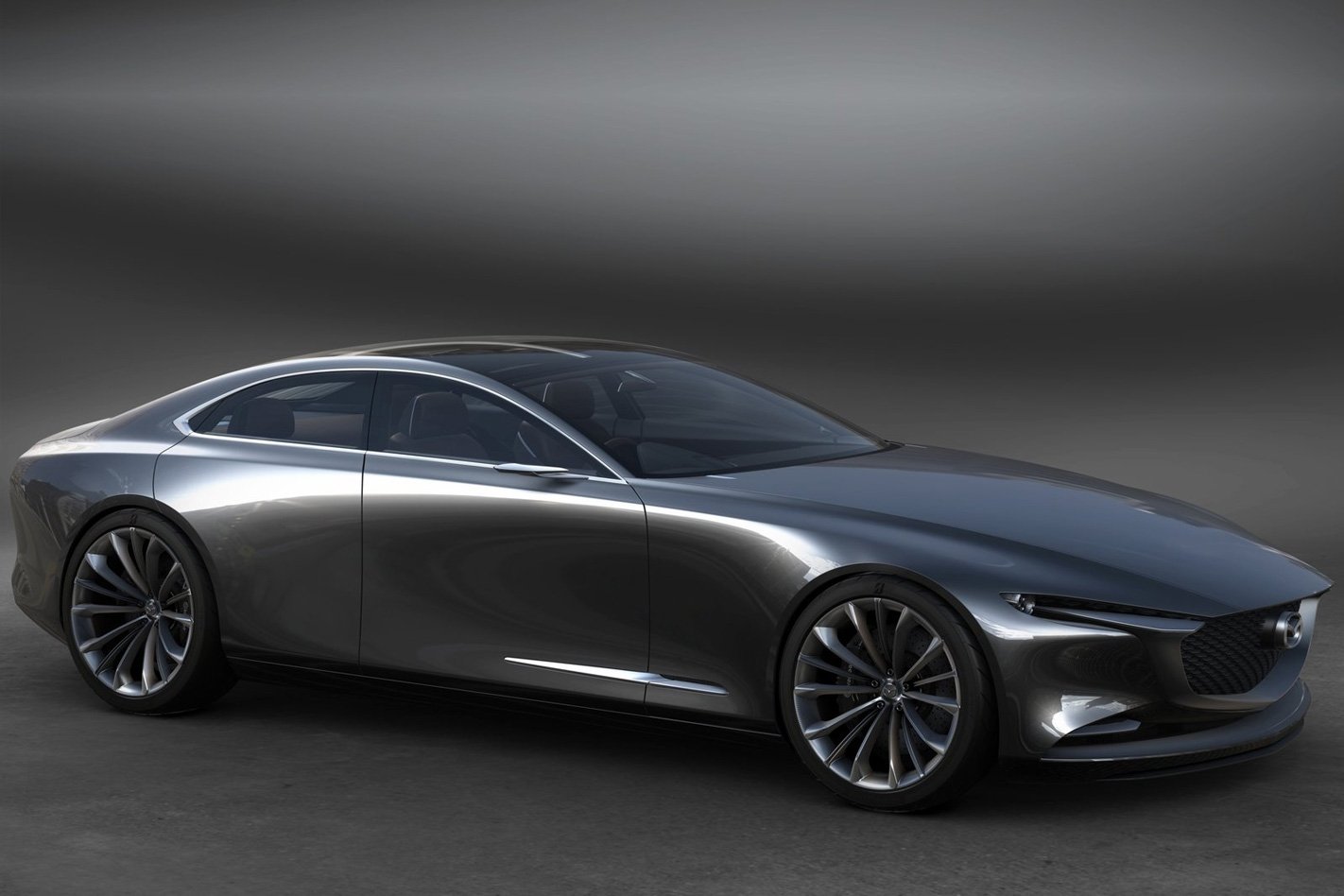
Mazda Vision Coupe
Following a long and consistent run of show-stopping Mazda concepts, the Vision Coupe delivered another remarkable design that, if the Japanese brand’s previous offerings are to go by, will evolve into a production car that echoes its design faithfully.
In the Vision Coupe’s case, the concept is touted to become the next Mazda 6.
While there are heavy hints of Aston Martin in the Vision Coupe’s styling and an immense glasshouse that extends almost to the edge of the boot, Mazda says the design honours the classic 1969 Luce Coupe – except with four doors and a footprint that will struggle to fit within a regular parking spot.
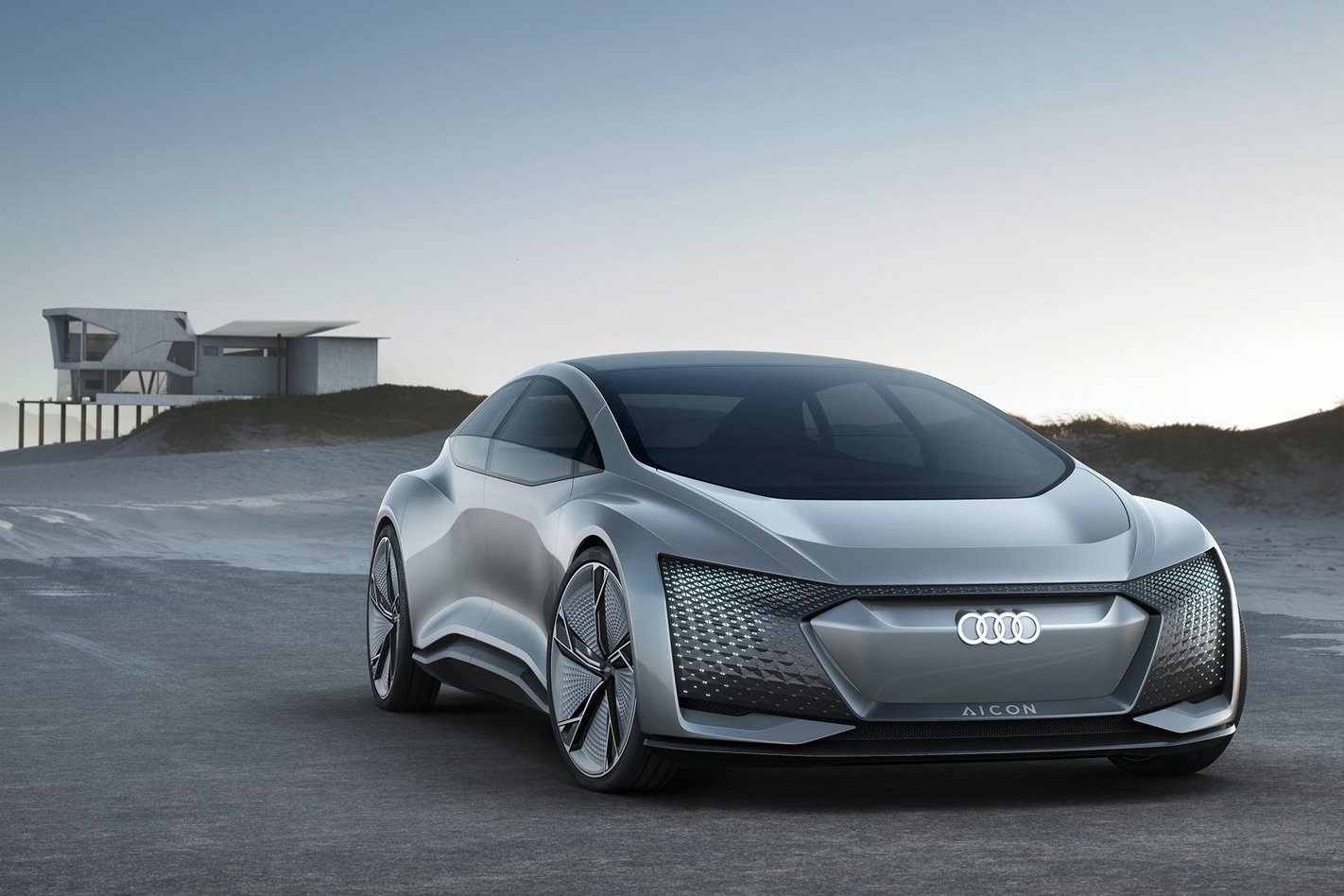
It seems appropriate to cap off this list with a car that’s was one of the wildest and most forward-looking concepts of the year. Debuted by Audi at the Frankfurt Motor Show, the Aicon concept is the German manufacturer’s take on the luxury car of the future.
The suicide doors may be old school, but the Aicon houses tech that is so conceptual that Audi is actually yet to make it a reality. Then again, that’s the point of a concept – to push technological boundaries.
Fully autonomous and powered by electricity, the Aicon has no steering wheel in its 2+2 cabin and doubles the range of present-day EVs. Driver controls aren’t the only thing missing: the Aicon has no seatbelts, with Audi claiming its autonomous tech will become so advanced that seatbelts will no longer be necessary.