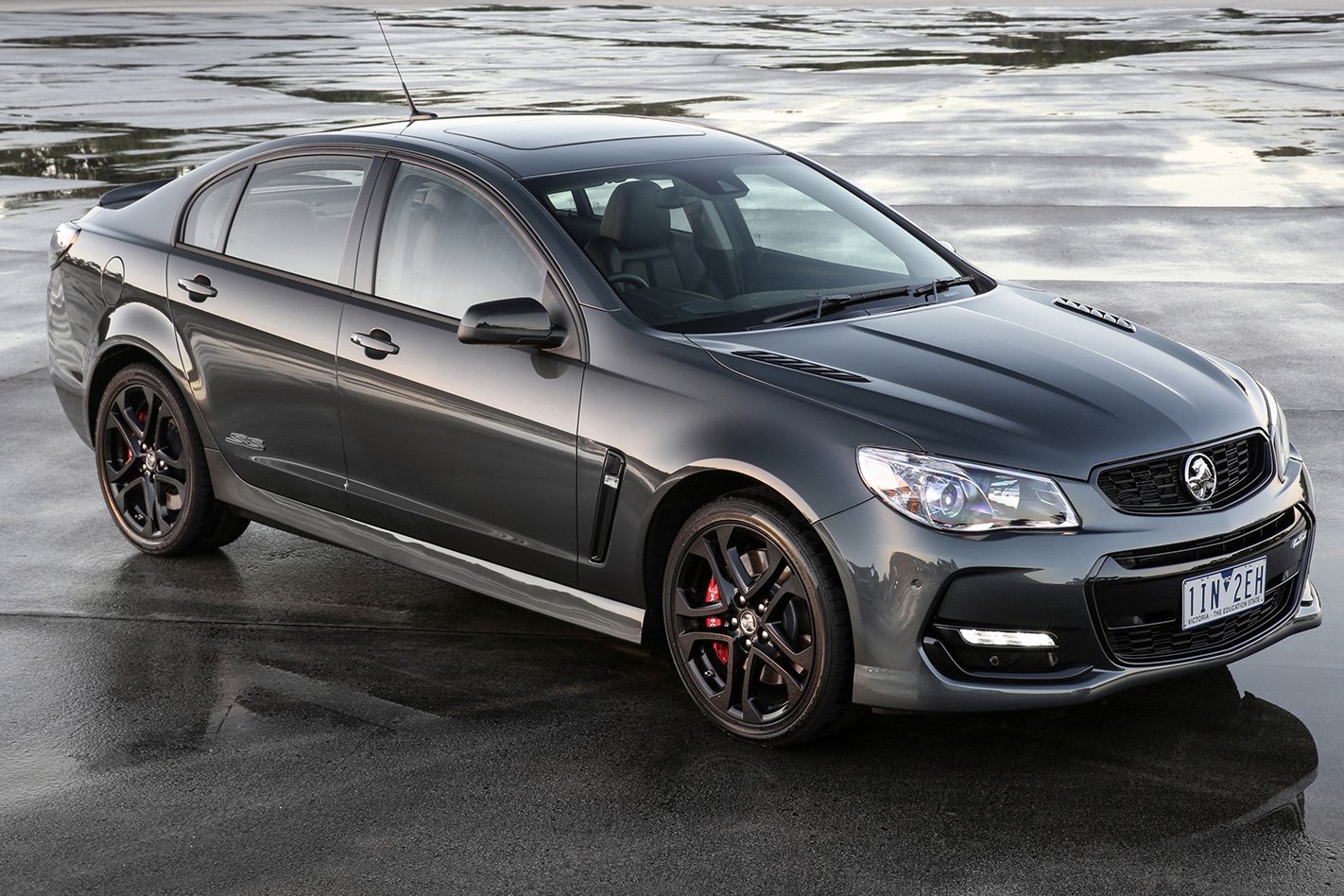
As the Toyota Camry and Holden Commodore bow out of Australian production (before switching to imports), the question now is where their still-significant volume could go.
Year-to-date to September 2017 – each local model’s last full month – showed the Camry held 58 per cent of its sub-$60K medium car class with 18,441 of 31,876 sales, while Commodore snared 83 per cent of the sub-$70K large car class with 17,124 of 20,709 sales.
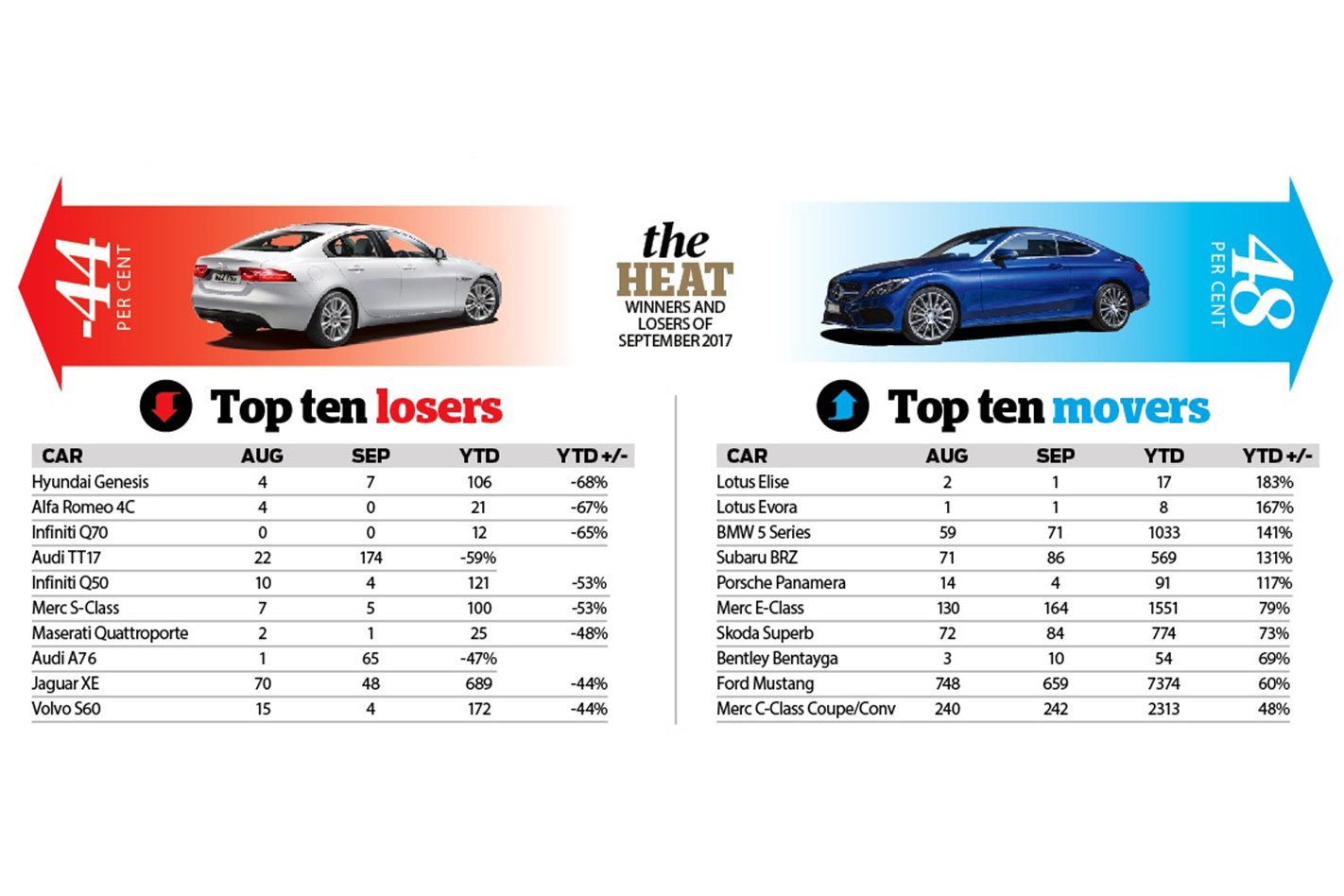
Both Toyota and Holden have accepted that each model’s replacements won’t sell as well. What are buyers turning to, then? The sub-$60K medium SUV class has shifted 123,639 units this year, four times the sales of the sedan class which has 11 rivals and one big Camry leader.
The sub-$70K large SUV class has 20 competitors thrashing it out for 87,929 sales with a quarter of the year to go. And within the $70K-plus large SUV class, a staggering 14 premium players have been fighting for just 16,014 buyers. With five options in the Commodore class, then, there is an opportunity for fresh metal such as the Kia Stinger.
Kia wants to shift 250 units per month initially, doubling over time for 6000 annual units. Another large car, the Skoda Superb, is also up 73.3 per cent, with 773 sales placing it on track for a 1031 haul by year’s end.
The Stinger and Superb might be no Falcon and Commodore at their finest, but in a highly fragmented market the days of hogging more than half a segment’s volume look to be all but over.
WHAT IS IT?
Simple… the only medium-sized premium SUV with a V8
WHY WE’RE TESTING IT
Could there be a reason no-one else has done it? The international launch in Germany was a chance to find the answer to this question, around six months ahead of the AMG GLC 63 S’s arrival in Australia
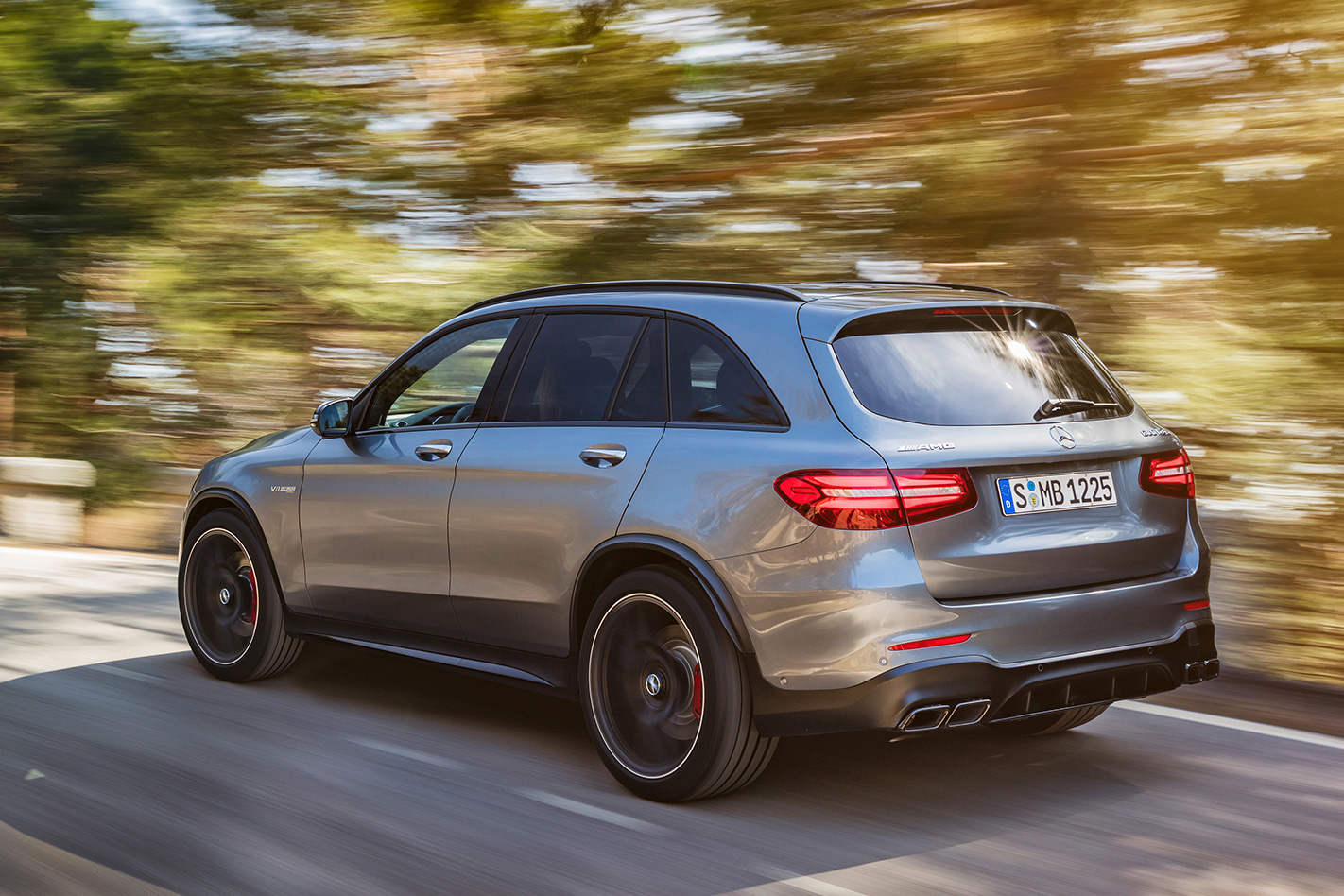
There aren’t any. Audi, BMW, Jaguar and Volvo all have performance versions of their GLC competitors (Q5, X3, F-Pace, XC60) in the showroom or on the way. None of them has more than six cylinders which is why the Mercedes-AMG due to launch around June 2018 is something different. It’s more extreme. And much more expensive
THE WHEELS VERDICT
The laws of physics still apply. The GLC 63 S is high and heavy, so it’s no agile corner-carver. But it is powerful, quick and, if you want, loud. Sensibly, Mercedes-AMG doesn’t fight the inherent dynamic disadvantage of the SUV, giving it an air-spring and adaptive damper suspension set-up that prioritises comfort. The GLC 63 S delivers a much smoother experience than the rough-riding, slightly less expensive, and slower, C63 S sedan or Estate wagon.
Plus: Performance, exhaust sound, decent comfort, looks Minus: Handling, clunky auto, efficiency, price
It’ll make you a straight-line hero, the GLC 63 S. And then, just moments later, it’ll turn you into a cornering coward. SUVs are like that. It may be true that Mercedes’ development budgets are measured in cubic Euros and that AMG can probably afford the very best chassis engineers that money can buy but the laws of good, old-fashioned Newtonian physics remain stubbornly inflexible…
It takes serious chutzpah to install an engine like AMG’s twin-turbo 4.0-litre V8 in an SUV weighing in at around two tonnes, but this is a quality that’s not in short supply at Affalterbach. They’ve already put their twin-turbo 5.5-litre V8 into a bunch of bigger and weightier SUVs; the GLE, GLE Coupe, GLS and, nuttiest of all, the ancient G-Class.
The new GLC 63 S, due to arrive in Australia around June 2018, will be quicker than all of them. The 0-100km/h time claimed by Mercedes-AMG for its newest SUV is 3.8 seconds. This time is more than a second swifter than the company’s own GLC 43. It’s also significantly quicker than any other six-cylinder performance SUV, including BMW’s new X3 M40i, due early next year, the Audi SQ5 and the Jaguar F-Pace S. It also beats the new Volvo XC60 T8, with its potent plug-in hybrid petrol-electric drivetrain combining power from a four-cylinder engine up front and a volt-sucking motor in the rear axle.
Mercedes-Benz Australia will import only the GLC 63 S, equipped with the 375kW/700Nm version of the twin-turbo 4.0-litre V8 instead of the non-S’s 350kW/650Nm engine. This is the same engine used in the C-Class family of 63 S models, and it’s been chosen for the GLC for exactly the same reason; when it comes to V8s from AMG, Australian customers prefer to buy the more powerful version.
Although official prices for the GLC 63 S (and the GLC 63 S Coupe; see sidebar) were announced last July, Mercedes-Benz Australia is rethinking some aspects of specification and equipment. But there will be little change from the $164,900, before dealer delivery and on-road costs, according to company spokesman David McCarthy. In round figures it will be $5000 more than the C 63 S Estate.
The extra money buys all-wheel-drive, something none of the AMG V8-powered C-Classes have. The GLC 63 S’s 4matic+ system was given a workout at the international launch. The intro was staged in south-west Germany, on a day featuring non-stop grey skies and wet roads.
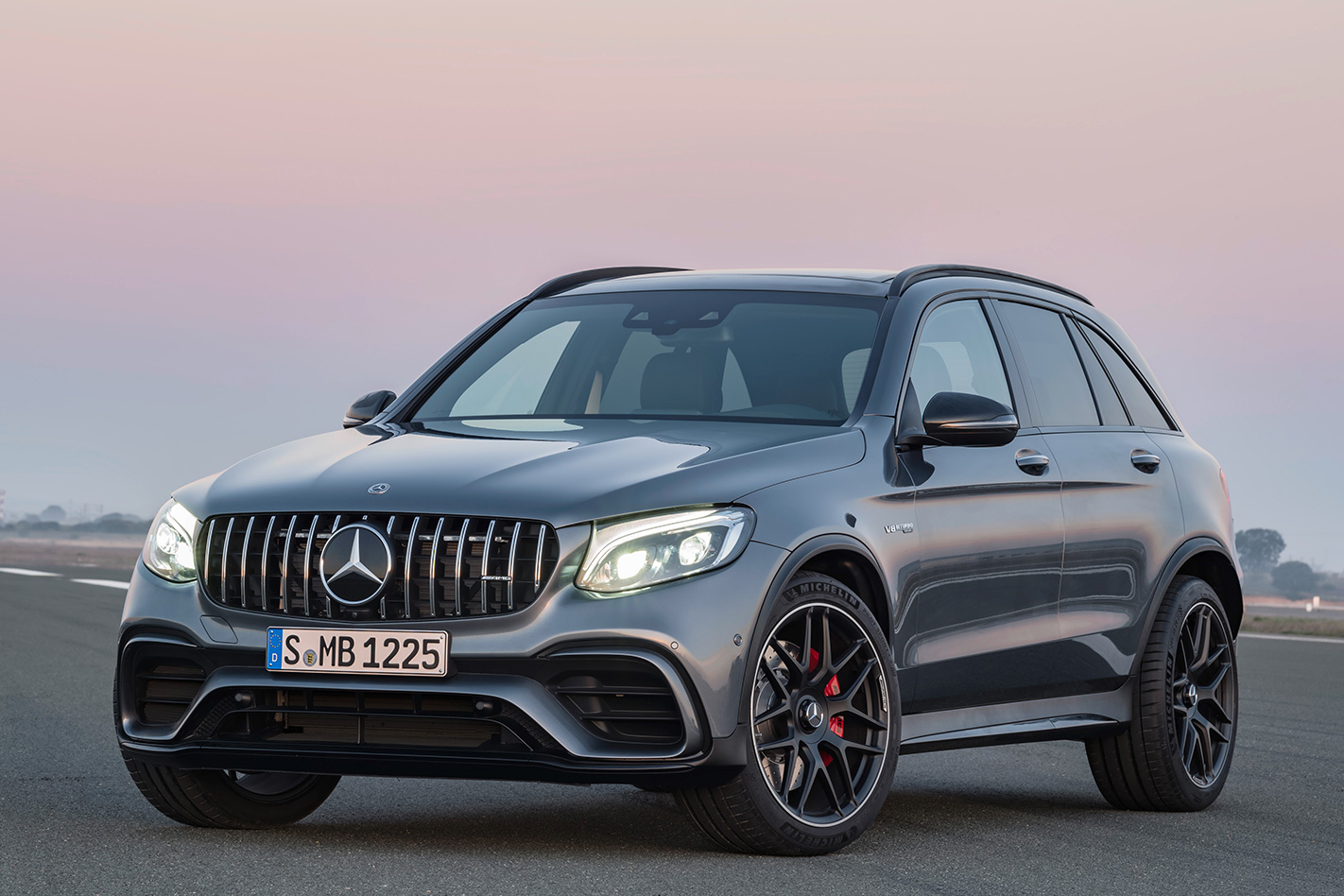
Mercedes-AMG provided only very highly specified S versions for the drive program. These were equipped with 21-inch wheels and tyres, plus a Performance exhaust system which allows the driver to open sound-quelling flaps in the mufflers at any time, regardless of which Dynamic Select driving mode is in play. Both these are optional in Europe (but the situation could be different in Australia).
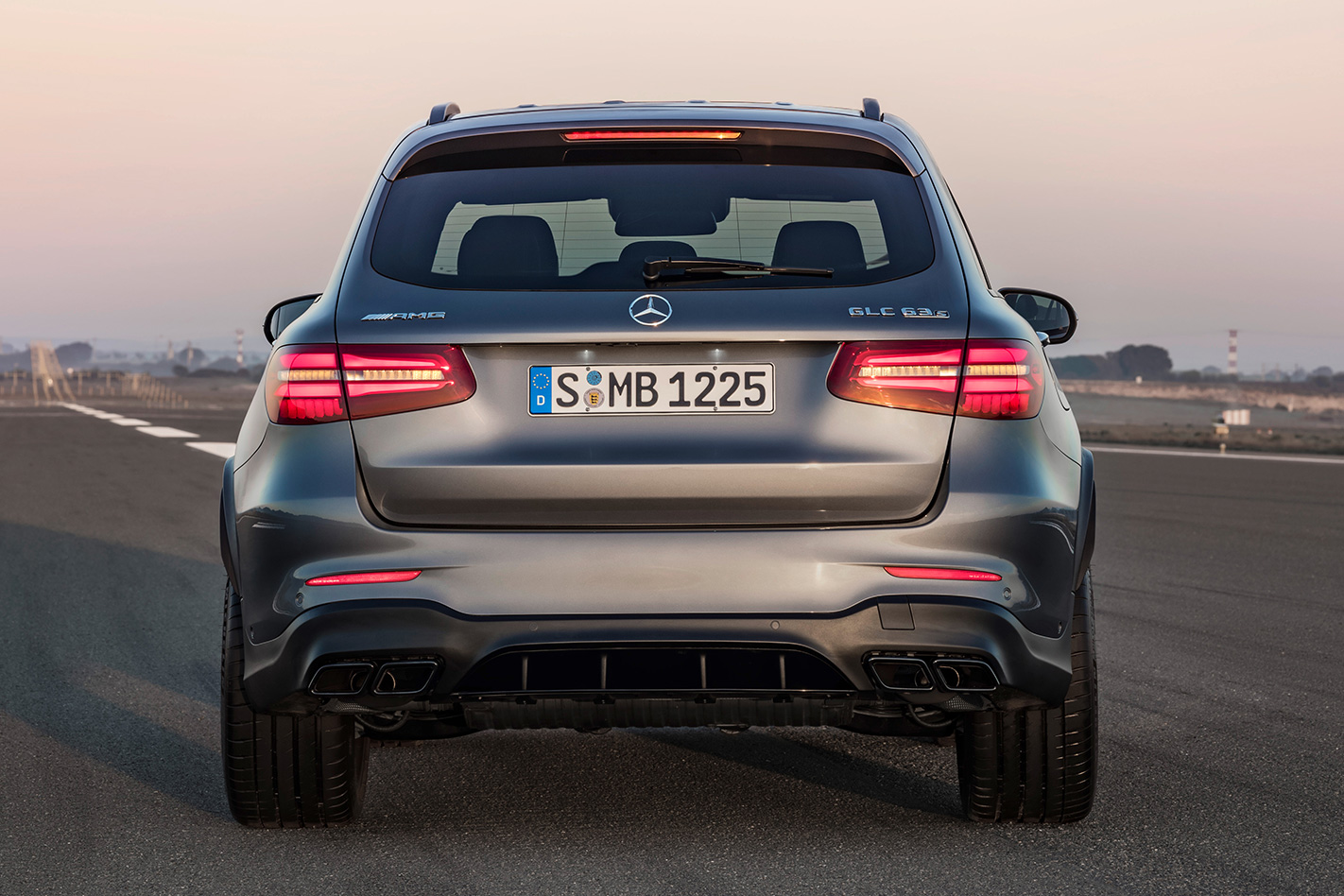
With its mufflers uncorked, the GLC 63 S can sound like a visit to the zoo. The engine growls, roars, bellows, cackles and spits. Mercedes-AMG obviously understands how to make the right noises to satisfy V8 exhaust note lovers.
If there’s a weakness in the drivetrain, it’s the transmission. AMG replaces the torque converter of Mercedes’ standard nine-speeder with a wet clutch to create the Speedshift MCT. It’s a snappy shifter, especially in Dynamic Select’s racier modes, but it can sometimes be jerky and clumsy at low speeds on light throttle openings.
Three-chamber air springs and adaptive dampers are standard across the GLC 63 range. The ride in Comfort mode is, well, comfy. Surprisingly so, in fact. Sport, Sport+ and Race modes dial up suspension stiffness in stages. At the same time the drivetrain becomes more and more eager to please.
Despite AMG’s carefully graduated calibration work, the GLC 63 S feels heavy and high when it comes to corners. The sporty Dynamic Select modes never manage to eradicate the impression of ponderousness that’s amplified by steering that seems slow in comparison with the speed of response always available from the drivetrain.
It’s no sports car, and was never going to be. But the GLC 63 does import some sports car glamour that works, more or less. The SUV borrows the Panamericana grille previously reserved for the GT family.
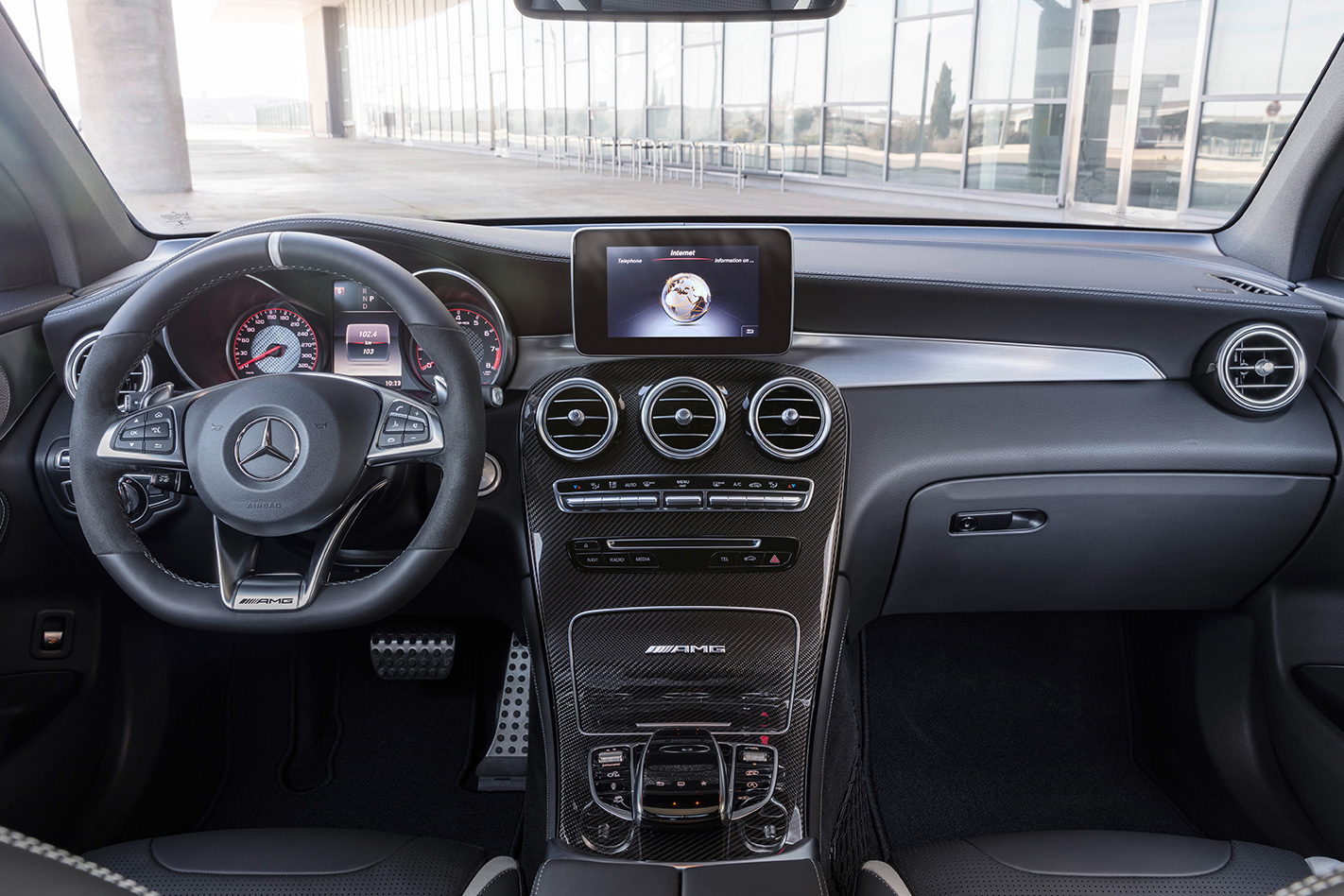
Interior upgrades include sports front seats, a Performance steering wheel, AMG instrument cluster and aluminium cabin trimmings. It’s a classy environment that is also usefully spacious.
There can be little doubt that the GLC 63 S will be a hit. Australia is a market that likes AMGs – they currently account for around 20 percent of Mercedes sales here – and loves SUVs.
It won’t hurt that the GLC 63 S will be easily the least costly of the really quick Mercedes-AMG products to be sold here. Only the E 63 S – another AMG with all-wheel-drive – and the top versions of the GT sports car can beat the coming SUV’s 0-100km/h time.
But for anyone who believes driving satisfaction must be measured by more than simple speed, the GLC 63 S will inevitably disappoint. Its height and heft dull the precision of its responses to steering inputs and make the braking system work hard. It has the pace to excite, but lacks the grace to involve.
There’s an old song titled “I Fought the Law”, memorably covered by The Clash in 1979. The lyric continues… “and the Law Won”. It always does…
SPECS
Model: Mercedes-AMG GLC 63 S 4matic+ Engine: 3982cc, V8, dohc, 32v, turbocharged Max Power: 375kW at 5500 to 6250rpm Max Torque: 700Nm at 1750 to 4500rpm Transmission: 9-speed automatic Weight: 1935kg 0-100km/h: 3.8 sec (claimed) Fuel economy: 10.7L/100km (European combined cycle) Price: $165,000 (est) On sale: June 2018
WHAT IS IT?
An updated version of Abarth’s most potent model on offer in Australia – the 595 Competizione. What’s Abarth? In other global regions, the scorpion badge represents a more widespread halo line-up above the Fiat range, but as just one Fiat model is on sale locally – the 500 – Abarth functions more as a standalone performance brand.
The Abarth 595 uses the cheeky Fiat 500 as its basis but features a pepped-up turbocharged 1.4-litre petrol for a significant performance advantage as well as uprated brakes and suspension, while a mild facelift and tech revision accompany the update.
WHY WE’RE TESTING IT
In September, the Competizione flagship was treated to a significant price hack which chopped $8000 from the bottom line, but some previously standard sporty bits were relegated to the options list to make the cost cutting exercise possible.
Without diving in to the extras and adding back some of our favourite features, including carbonfibre Sabelt sports seats, does the diminutive 595 retain its surprising abilities and separation to the more unassuming Fiat 500 on which it’s based?
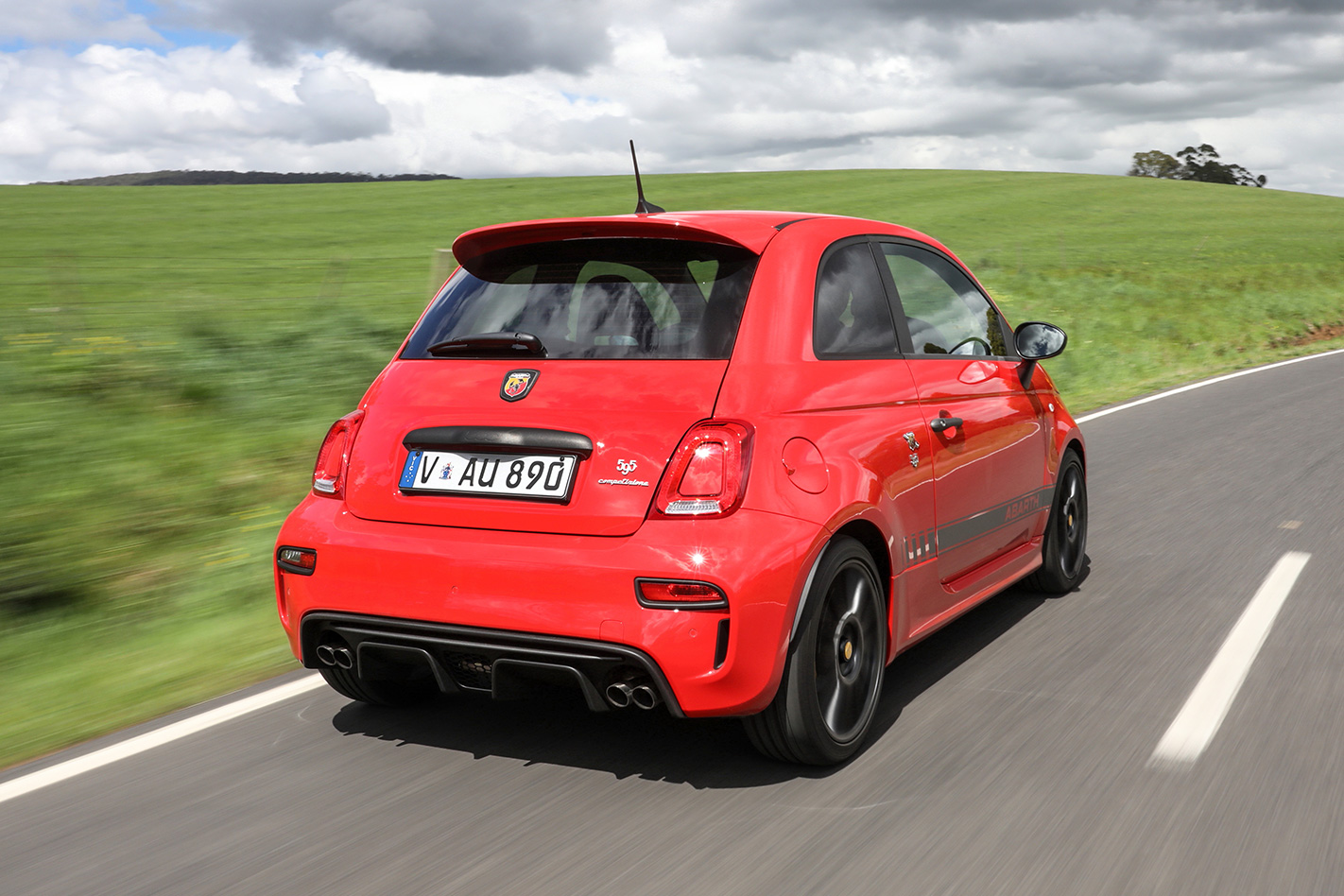
In reality, virtually everything about the 595 Competizione should make it a terrible car. The driving position is bizarre, that dramatically reduced price is still on the high side for a compact hatch and on first acquaintance it seems that the only practical application for it is transport to the chiropractor.
2018 Abarth specials on the way
In isolation, just one of the 595’s flaws would be a black mark against any other little three door, but there’s something about the ‘roid-pumped Fiat’s sheer chutzpah and the fact that it looks, sounds and drives like nothing else in its class (or quite a few other classes for that matter), that it seems to make a strange sort of sense.
Living with the 595 Competizione day to day would require a hearty dose of tolerance and flexibility, but for those perfect days and far-off pristine roads, there’s not much else that can put a bigger smile on your face.
PLUS: Unmistakable looks; serious performance; brilliant exhaust note MINUS: Crippling ride; tiny fuel tank; weird driving position
THE WHEELS REVIEW
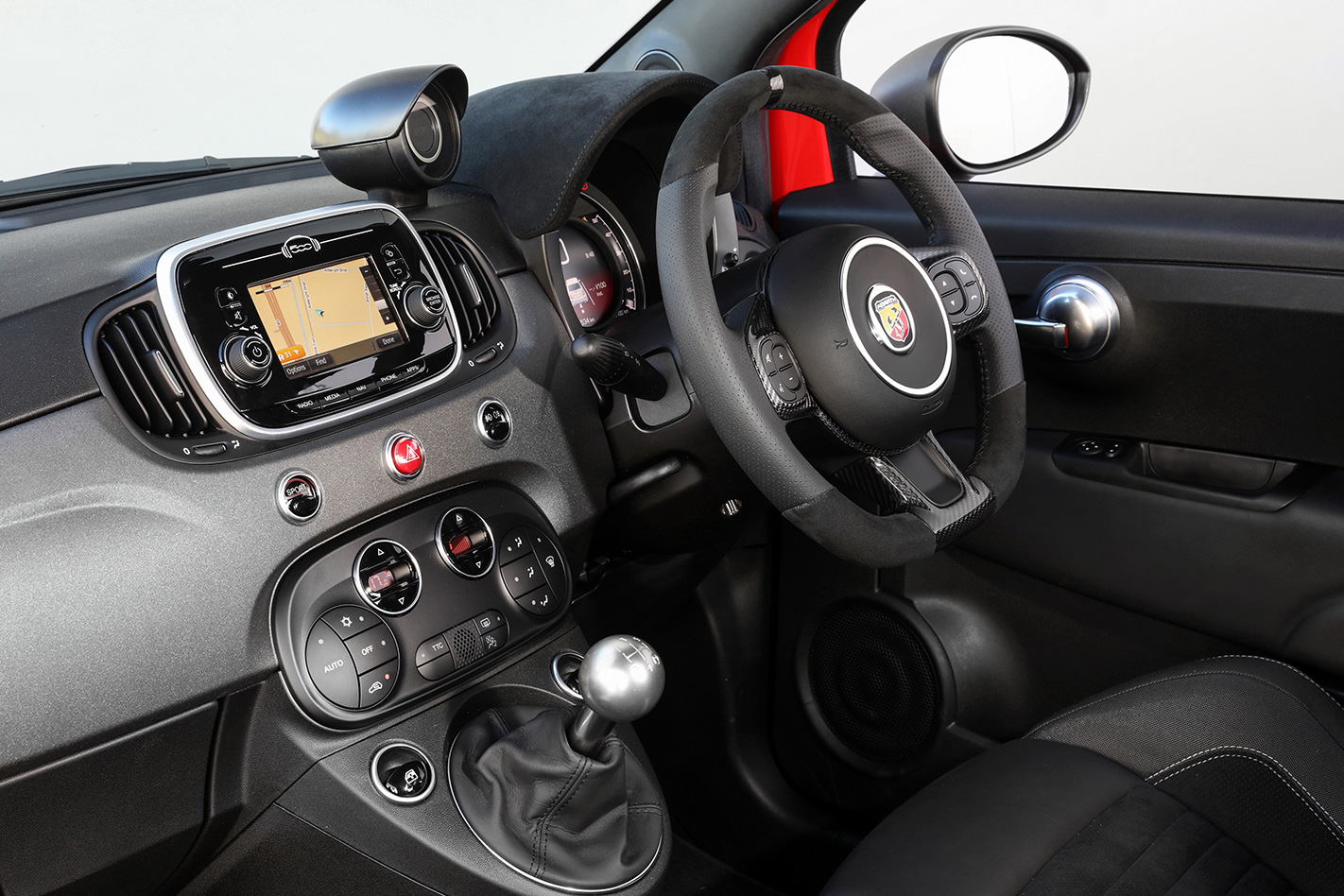
LET’S CUT straight to the chase. Even with a recent $8000 price chop, there is still only one car in the compact hatchback segment that costs more than the Abarth 595 Competizione. So you would expect to feel quality and value at virtually every touch-point of the little Italian right? Hop aboard though and you are met with a cabin not far removed from the $17,990 entry-level Fiat 500.
Some hard plastics, easily the tiniest touchscreen in the business and only one-way steering adjustment forces a seating position not unlike a Land Rover Defender. At least the utterly fantastic Sabelt carbonfibre racing seats redeem the situation to a degree. Ah wait, no. They’re a $2000 option. While we’re paying out on the 595 we should also mention practicality.
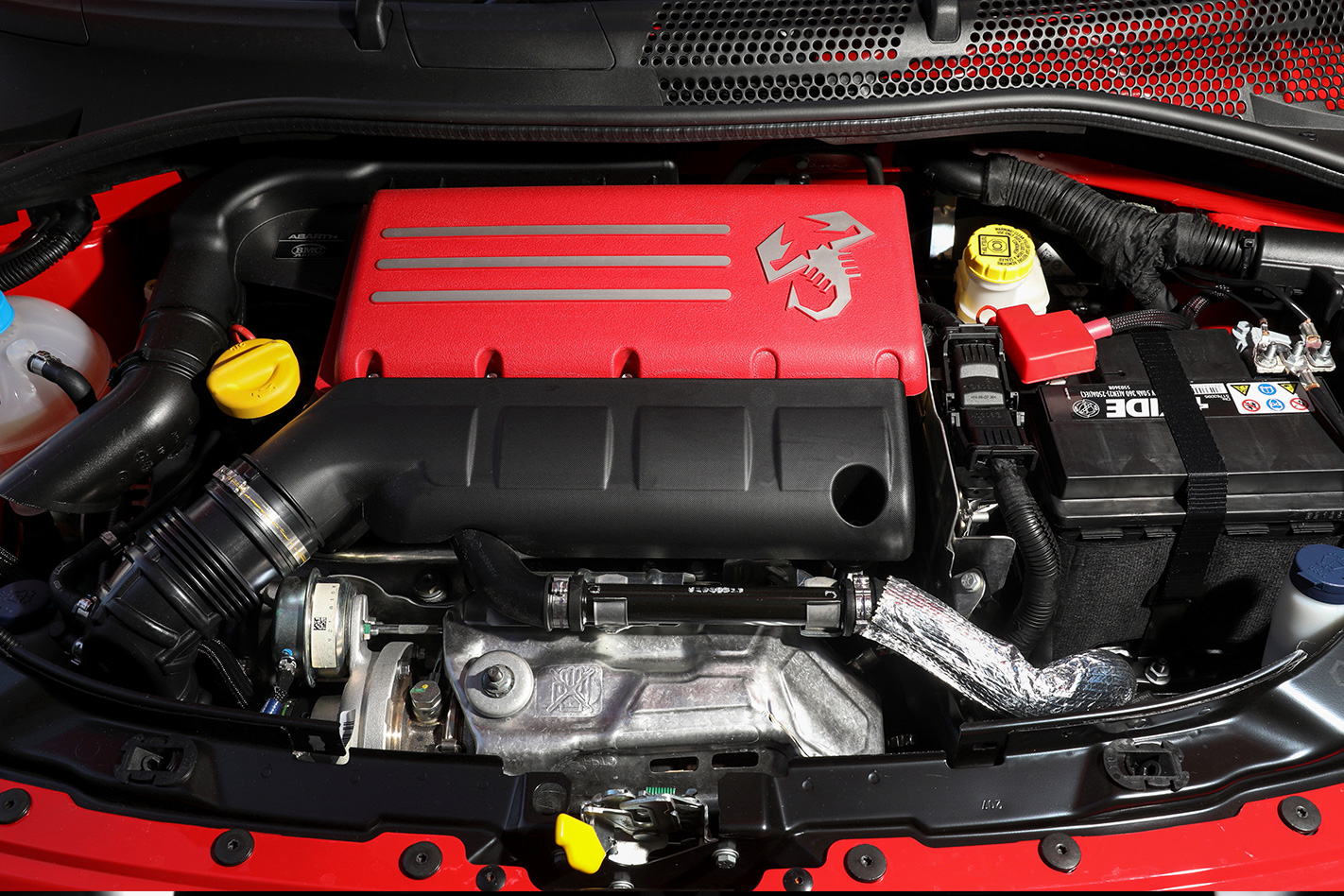
Click the notchy five-speed manual gearbox into first, give the 595 everything and it’s like you’ve stamped on its tail. With a bantam kerb weight and bags of front-drive traction, acceleration is lively in all lower gears and accompanied with a manic exhaust note from the standard Monza sport system.
The Competizione gets adaptive suspension on both axles and allows you to select from a very hard, vision-blurring setting or even firmer. But you can forgive it a few slipped discs for its manner on smoother twisty roads. Body-roll is virtually non-existent, handling is joyously playful and while there is plenty of torque-steer, the front end is easily managed and involving.
The brakes won’t let you down either thanks to four-piston front calipers courtesy of Brembo, which translate to a firm pedal feel and tireless performance. Yes the 595 Competizione is a bit pricey and yes it has some typically quirky Italian flaws you might not forgive in another brand, but the result is a hugely likeable, almost human quality.
Whether you are piloting the Abarth through your favourite roads or simply admiring its unique looks, the 595 Competizione will never fail to make you laugh out loud in delight and disbelief.
SPECS
Model: Abarth 595 Competizione Engine: 1368cc inline four, dohc, 16v turbo Max Power: 132kW @ rpm Max Torque: 250Nm @ 3000 rpm Transmission: five-speed manual Weight: 1045kg 0-100k/h: 6.7s Fuel economy: 6.0L/100km (claimed) Price: $31,990 On sale: Now
WHAT IS IT?
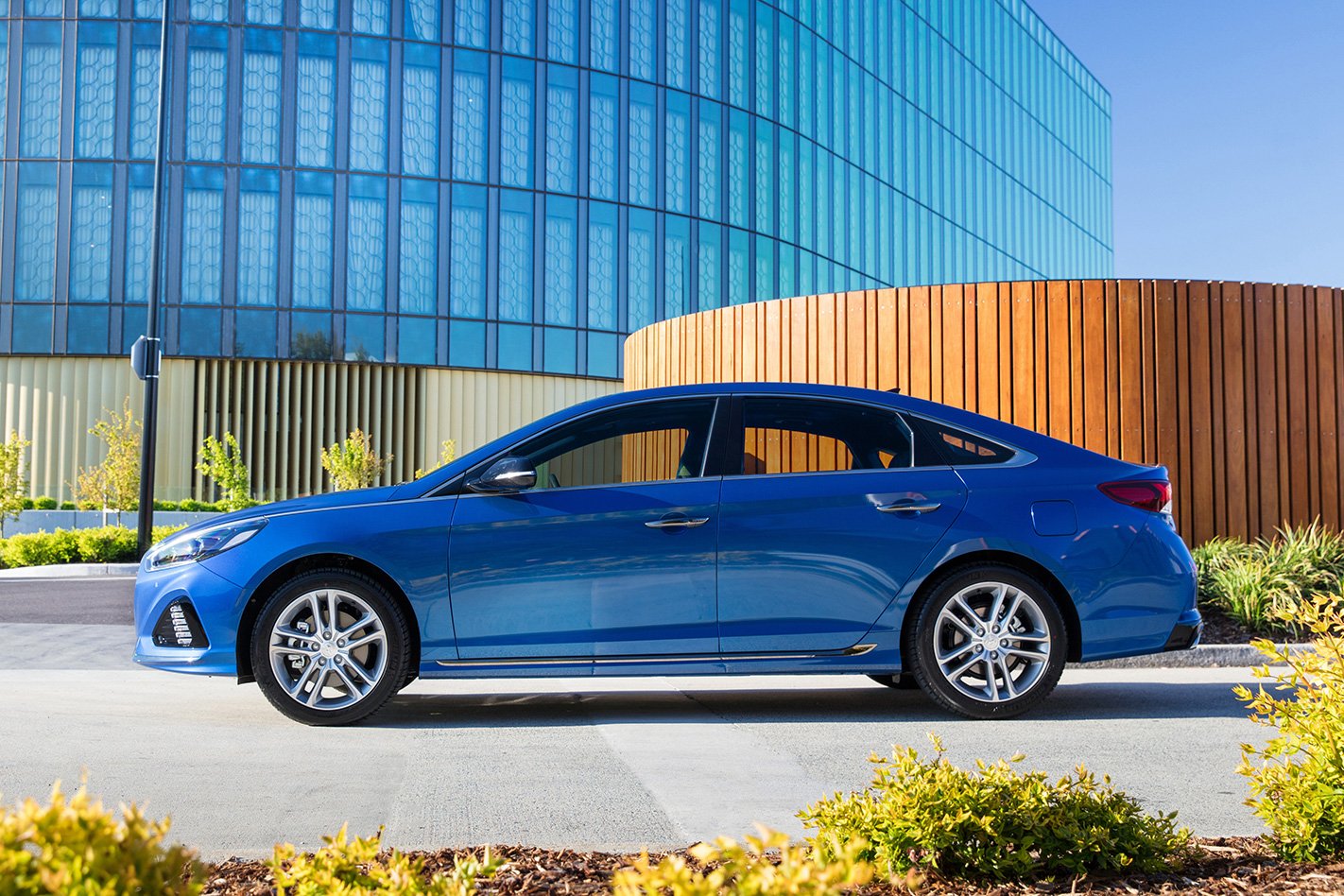
An updated version of Hyundai’s Sonata mid-size sedan that rivals the Toyota Camry, Mazda 6 and the incoming, imported Holden Commodore. This isn’t an all-new car, but rather a facelift that brings overhauled styling for a sportier look, important tech and safety upgrades and a revised two-tier model line-up that starts at $30,990 for the entry-level Active and tops out at $45,490 for the range-topping Premium model we’re driving here.
WHY WE’RE DRIVING ITTo see if the updated Sonata can deliver on the promise shown by its LF-series predecessor. While far from perfect, we praised the old Sonata’s fluid handling, impressive list of equipment and spacious interior, though criticised its busy ride and uninspiring dynamics. Can this new model bridge the gap?
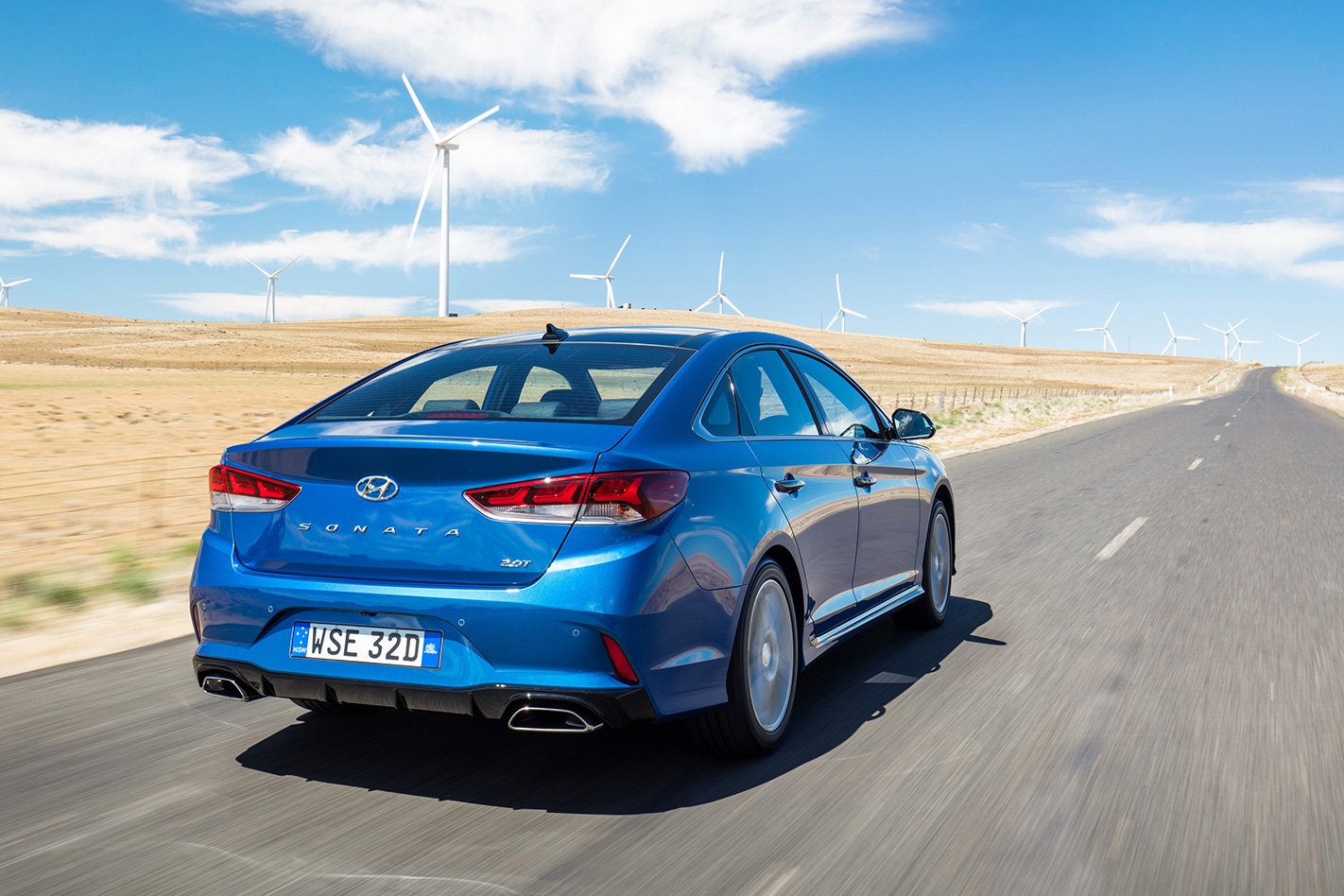
THE WHEELS VERDICTSleeker to look at and now even better-equipped, the 2018 Sonata continues the nameplate’s march in the right direction but still lacks the dynamic polish and all-round appeal to challenge the best in its class. And no AEB availability is a disappointing omission.
PLUS: Boosted equipment and safety tech; practical and spacious; fluid handling; gutsy 2.0 turbo MINUS: AEB unavailable; torque steer and axle tramp; uninspiring dynamics
Well, fast-forward 12 months and the updated Sonata has arrived. Now boasting overhauled styling that ditches the old car’s restrained and slightly dour look for a sportier and sleeker appearance with a cascading front grille, the 2018 Sonata also brings important tech and safety upgrades and a rationalised, two-tier model line-up. The mid-spec Elite variant is no more, with the range now starting at $30,990 for the entry-level Active and, as before, tops out at $45,490 for the flagship Premium variant we’re testing here.
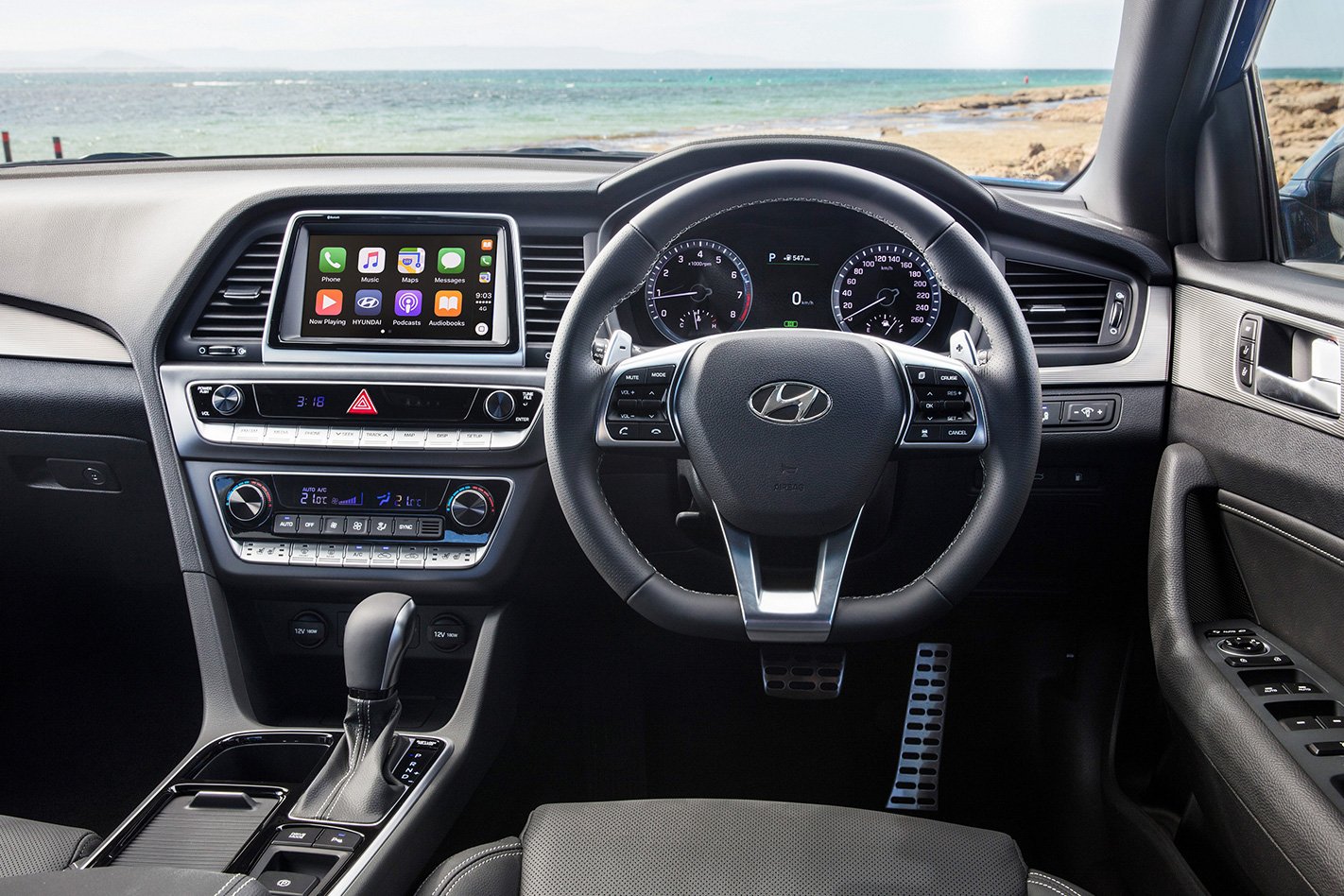
Inside a revised centre stack with piano-key buttons houses an 8.0-inch touchscreen with sat-nav and Apple CarPlay/Android Auto connectivity.
Premium versions gain the most bells and whistles, with new additions to an already extensive list of standard equipment including a flat-bottomed steering wheel, a wireless phone charging pad and an updated safety pack that brings blind spot detection, lane-departure warning and radar cruise control. Disappointingly, despite Hyundai Australia’s best efforts, AEB isn’t available on either Sonata variant as the potentially life-saving tech isn’t offered to our market.
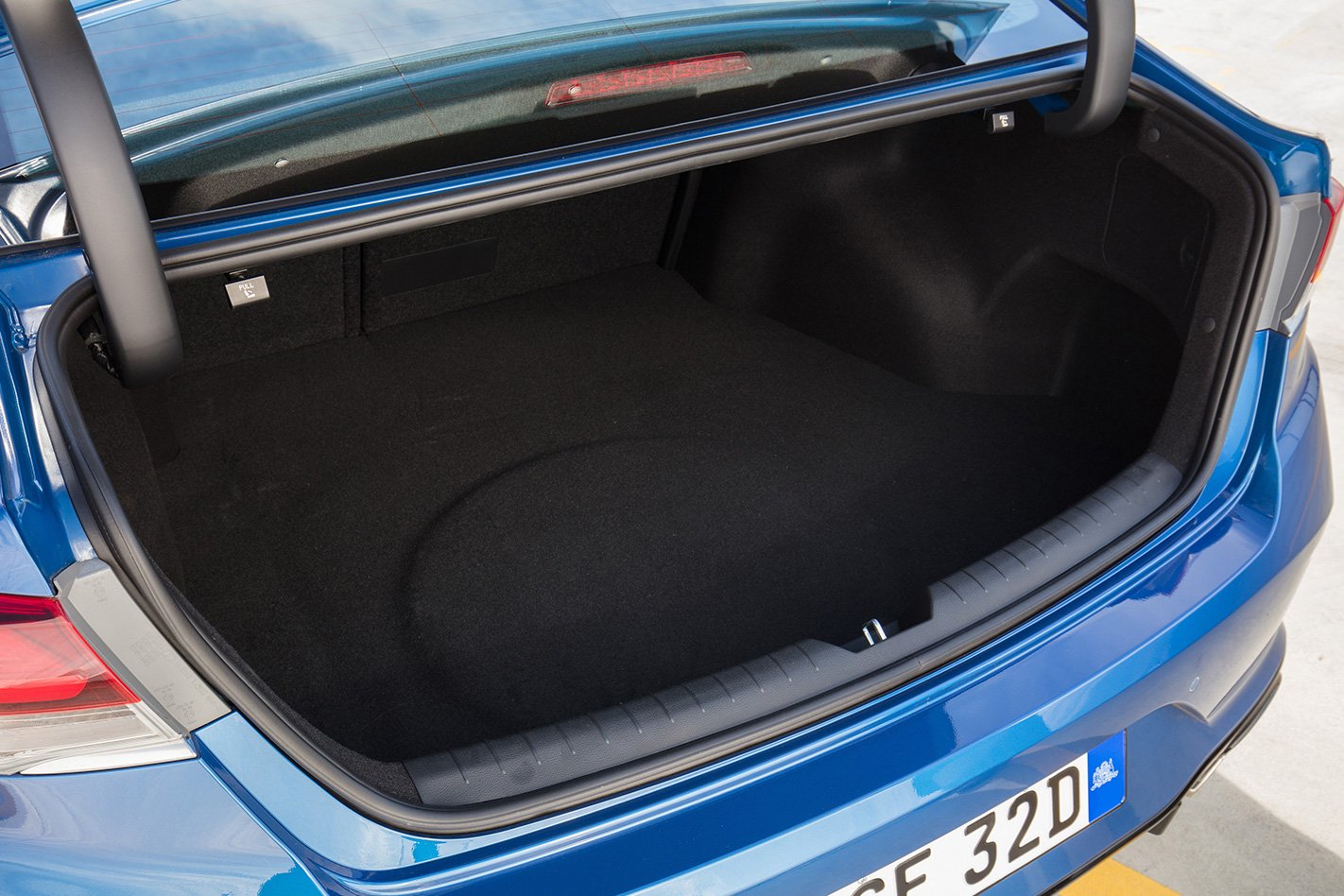
As before, the Sonata’s cabin is spacious and comfortable with ample knee, shoulder and headroom in both rows, plus excellent vision and an airy, light-filled ambience helped by the Premium’s standard panoramic sunroof. Rear-seat passengers are well catered for too, with centre air vents, window blinds and well-padded seat cushions.
Yet there are flaws. Despite the better rubber, wheel spin and torque steer are apparent in the Premium with heavy throttle inputs and on poor surfaces the ride is consistently busy. They’re niggles that take the edge off what is a well-judged dynamic package and mean that despite its improvements, the 2018 Sonata falls largely into the same trap as before: much to like and little to offend, but also little to excite.
SPECS
Model: Hyundai Sonata Premium Engine: 1998cc 4cyl, dohc, 16v, turbo Max power: 180kW @ 6000rpm Max torque: 353Nm @ 1350-4000rpm Transmission: 8-speed automatic Weight: 1560kg 0-100km/h: 7.0sec (estimated) Economy: 8.5L/100km Price: $45,490 On sale: Now
So you have read Part One of our affordable performance car investment piece and have decided that you have more than $25,000 to splash. Well done. Good on you, big spender.
Part One tallied the first half of our 10 affordable sports car nominations, with the Mazda NA MX-5, Peugeot 205 GTI, original Subaru WRX, Honda Integra DC2 Type-R and – deep breath, be still our beating hearts – Mitsubishi Lancer Evolution VI Tommi Makinen Edition all currently costing less than $25,000. For the second five nominations, we look at performance car investments costing between $25,000 and $50,000.
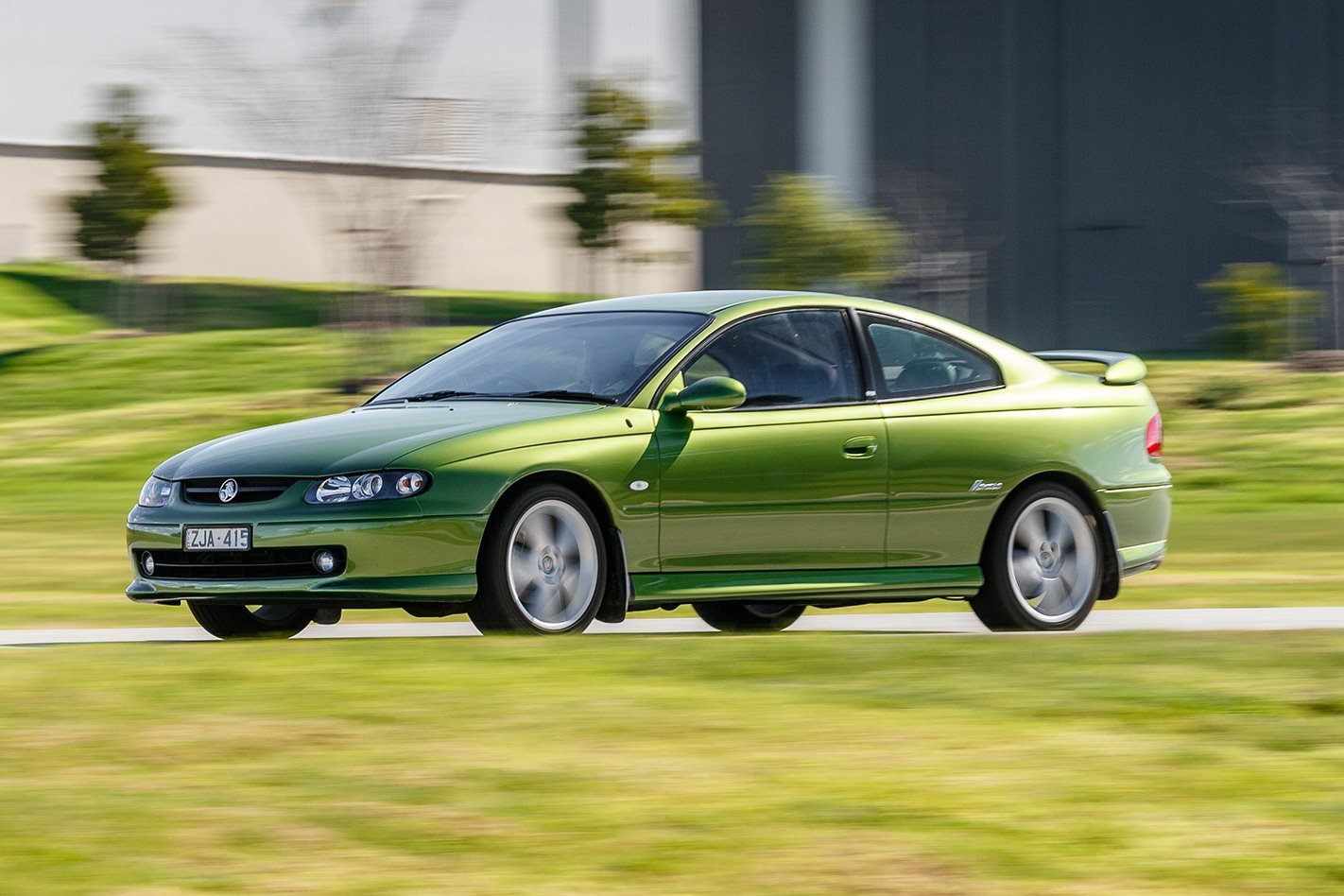
2001 Holden V2 Monaro
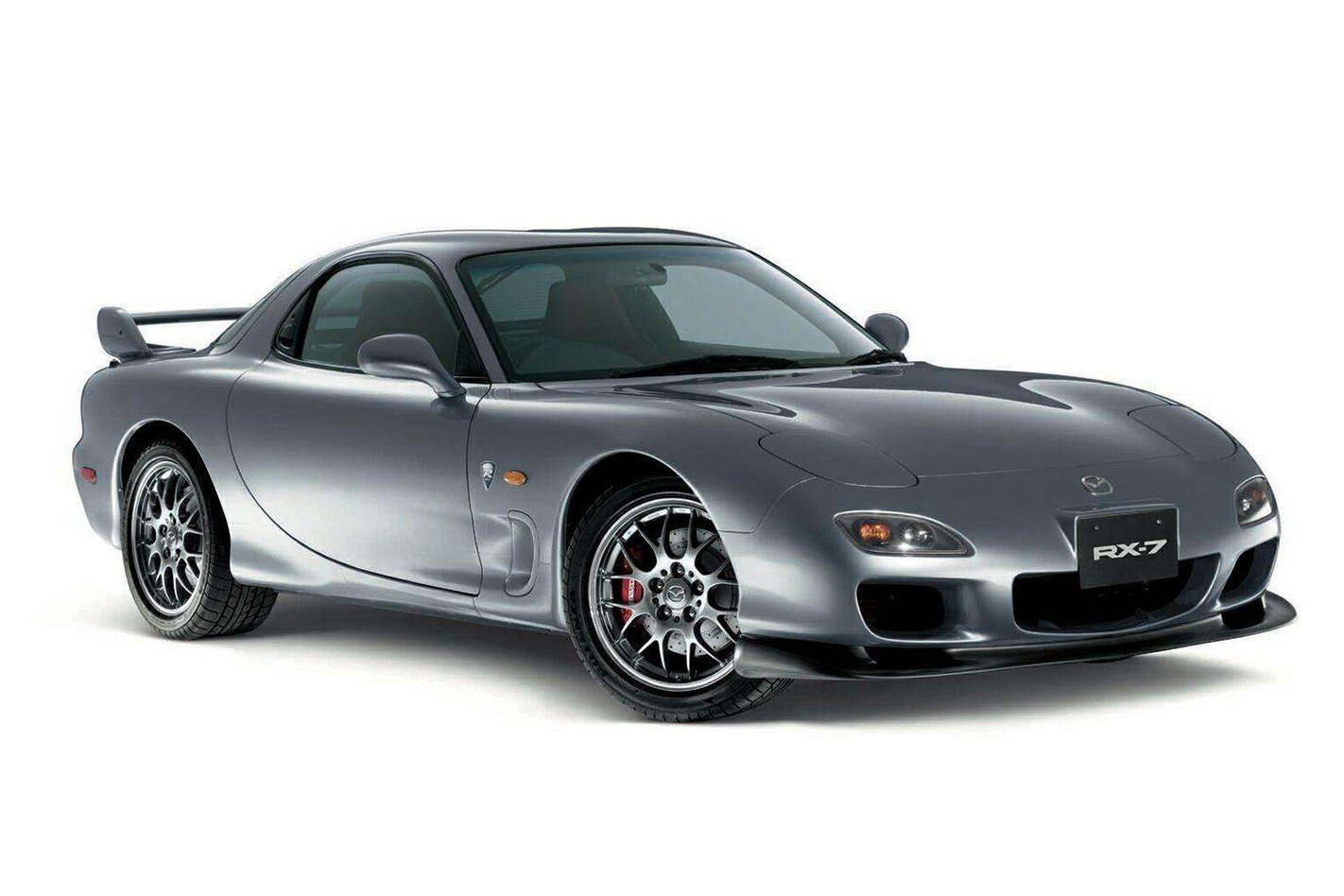
2002 Mazda RX-7 Spirit-R
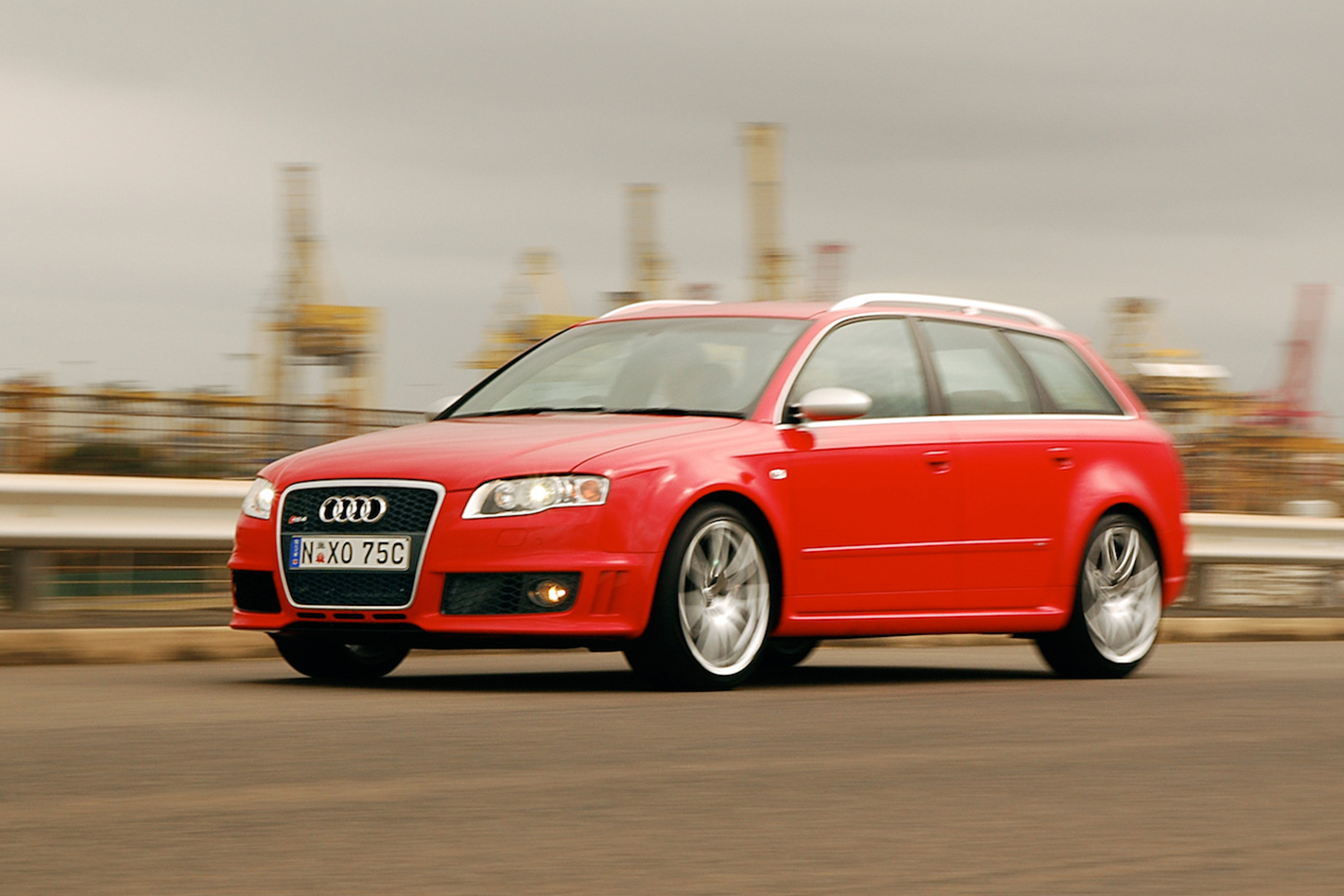
2007 Audi RS4 Avant
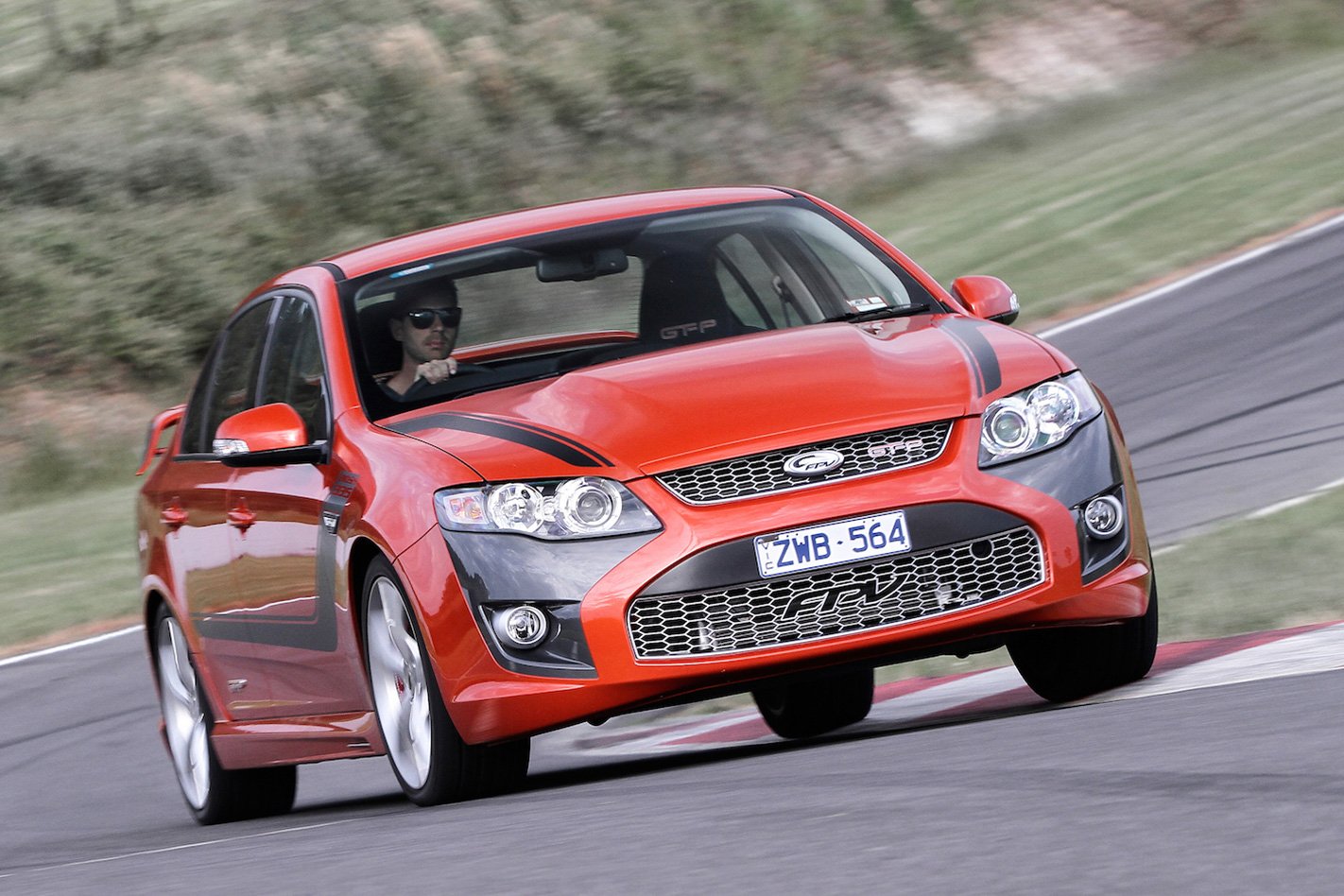
Last of the Ford Performance Vehicles (FPV)
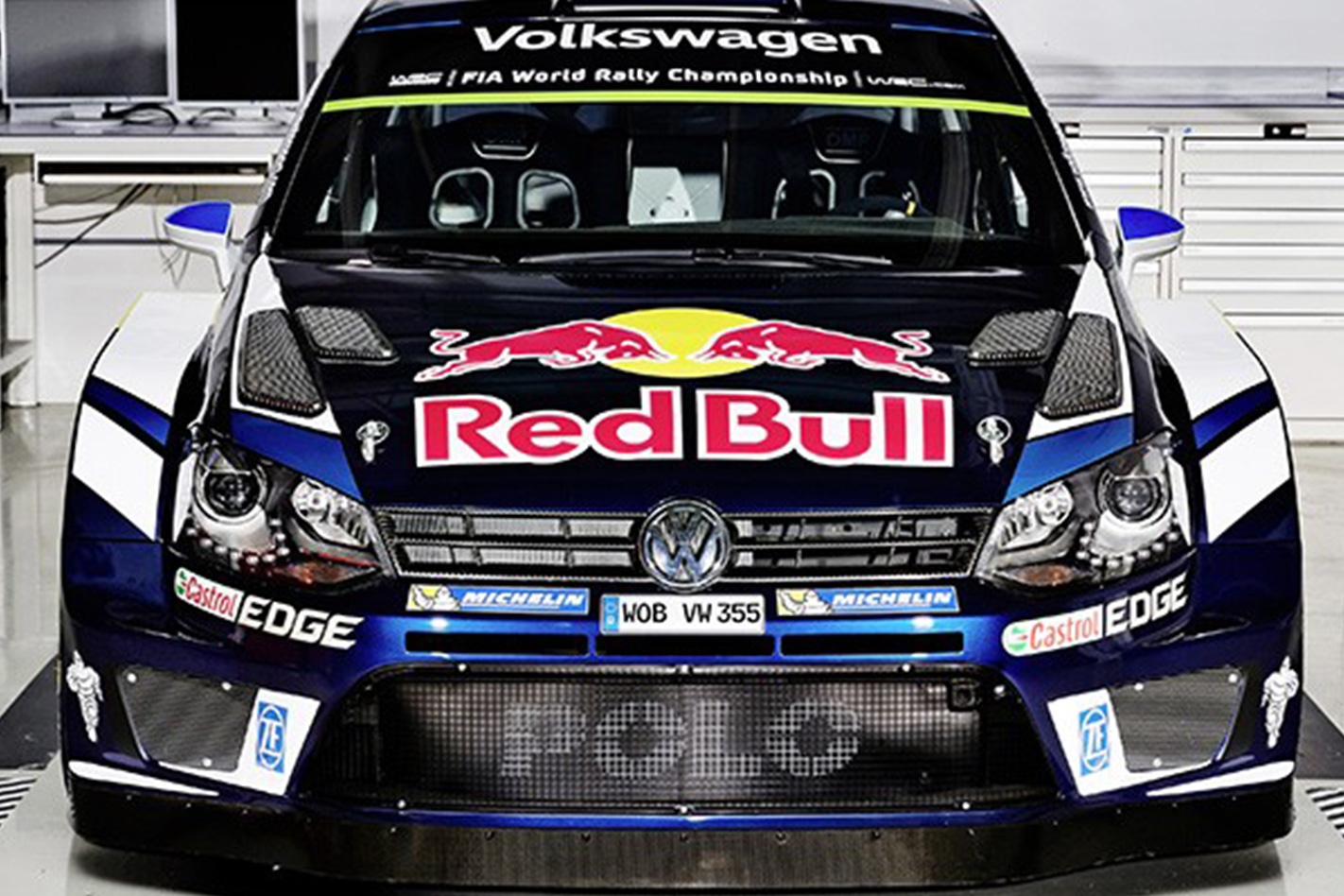
Volkswagen Motorsport has revealed its new VW Polo R5 rally car, which it will offer to its racing customers.
The 200kW, all-wheel drive rally monster was created by Volkswagen Motorsport technical director François-Xavier Demaison and Gerard-Jan de Jongh, who was five-time WRC champ Sébastien Ogier’s race engineer while Ogier drove for VW Motorsport.
The VW Polo R5 has been in development for most of 2017, with only a sketch of the car (top image) having been revealed to the public so far.
Volkswagen Motorsport director Sven Smeets says Volkswagen’s previous sporting success in the WRC will help it assist its racing customers in their own gravel-flinging endeavours.
“With the Polo GTI R5 we are hoping to transfer our expertise from four WRC titles to customer racing successfully, and offer a first-class racing machine for countless rally championships from national series to the WRC,” says Smeets.
“Before the first race outing next year, we will subject the Polo GTI R5 to rigorous testing to make sure it is prepared for the extremely varied track conditions around the world.”
OPINION: Is the WRC on the right track?
With Volkswagen Motorsport having last participated (and dominated) in the WRC in 2016, the 2018 season will mark a spiritual return to the competition for VW, despite not entering a factory team.
Ogier is still in the lead for the 2017 season, though is now driving a Ford Fiesta for privateer entry M-Sport, which has been the dominant force in the WRC since VW’s departure.
The FIA WRC continues next week in NSW with Rally Australia, the last round of the 2017 season.
Researchers at the Massachusetts Institute of Technology have discovered that a Tesla Model S in the US emits more carbon dioxide over its whole life than a small petrol car. The study suggested that a Mitsubishi Mirage was in fact a greener choice for US owners looking to reduce their CO2 footprint.
While ‘car that gets to 100km/h in less than 3 seconds is more emissive than a city scoot’ might not be a revelation to some, it’s interesting to put some hard numbers to our long-held suspicions. The boffins discovered that the Mirage emitted 192g/km for every kilometre travelled, the Tesla 226g/km and – for perhaps a fairer comparison of a potent executive express – the BMW 750i xDrive chugged out a hefty 385g/km. Well, it does have a V12 under the bonnet so perhaps that’s understandable.
The Green Vehicle Guide, which ranks all cars sold in Australia with an emissions rating, ranks the Model S at 188g/km, the Mirage at 128g/km, and the rear-drive version of the BMW 750i – the all-wheel-drive one isn’t sold here – at 242g/100km.
At this point, my maths teacher would probably want to see my workings, and these figures encompass not only the energy consumed and CO2 emitted during the cars’ driving lifetime, but also their production and end-of life recycling. The researchers also took into account the CO2 produced by the power stations necessary to generate the Model S’ electricity, in this case based in the US Midwest. In a country with greener energy generation, the Tesla would perform better. Here in Australia where coal-fired power still reigns supreme, it would doubtless emit even more carbon dioxide per kilometre.
| Top 5 Cars with the longest electric range
“Both hybrids and electric vehicles are better than conventional cars in… emissions-intensive locations”, said MIT’s Jessika Trancik. This like-for-like comparison proves this but if you really want to do your bit for the environment, it’s worth asking yourself whether you really need an all-wheel-drive electric rocket ship when there’s a simpler and cheaper solution sitting in your local Mitsubishi dealer’s showroom.
You can thank Ted Bullpitt (ask your dad) for the fact that so many Australians think Kingswood when the topic of Holden comes around.
And while it’s true that the mighty Kingy became a central theme in Aussie life, (along with ‘leave the money on the fridge’) in fact, the Holden Commodore has had a much, much longer run.
UPDATE DEC 2019: Since this story was published, much has happened. The VFII Commodore gave way to the ZB Commodore, a rebadged Opel Insignia, and sales declined significantly. On December 10th 2019, Holden announced the Commodore would be dropped from its lineup completely, along with the Astra, leaving the brand selling only SUVs and light commercial vehicles.
Even if you include the WB Commercial range (the Kingswood sedan was gone by the end of 1980) which lasted until 1985, you’re looking at a 17-year run for the Kingswood badge. But the Commodore? Thirty-nine years. Yep, almost four decades and, in that time, there have been some glorious performance versions.
Here are the 10 we reckon represent the genre most completely and faithfully. Back in the late 1980s, the Australian car industry was going through a period of change. Even Ford was in on the act, offering up a Falcon dubbed rather optimistically ESP, which stood for European Sports Pack.
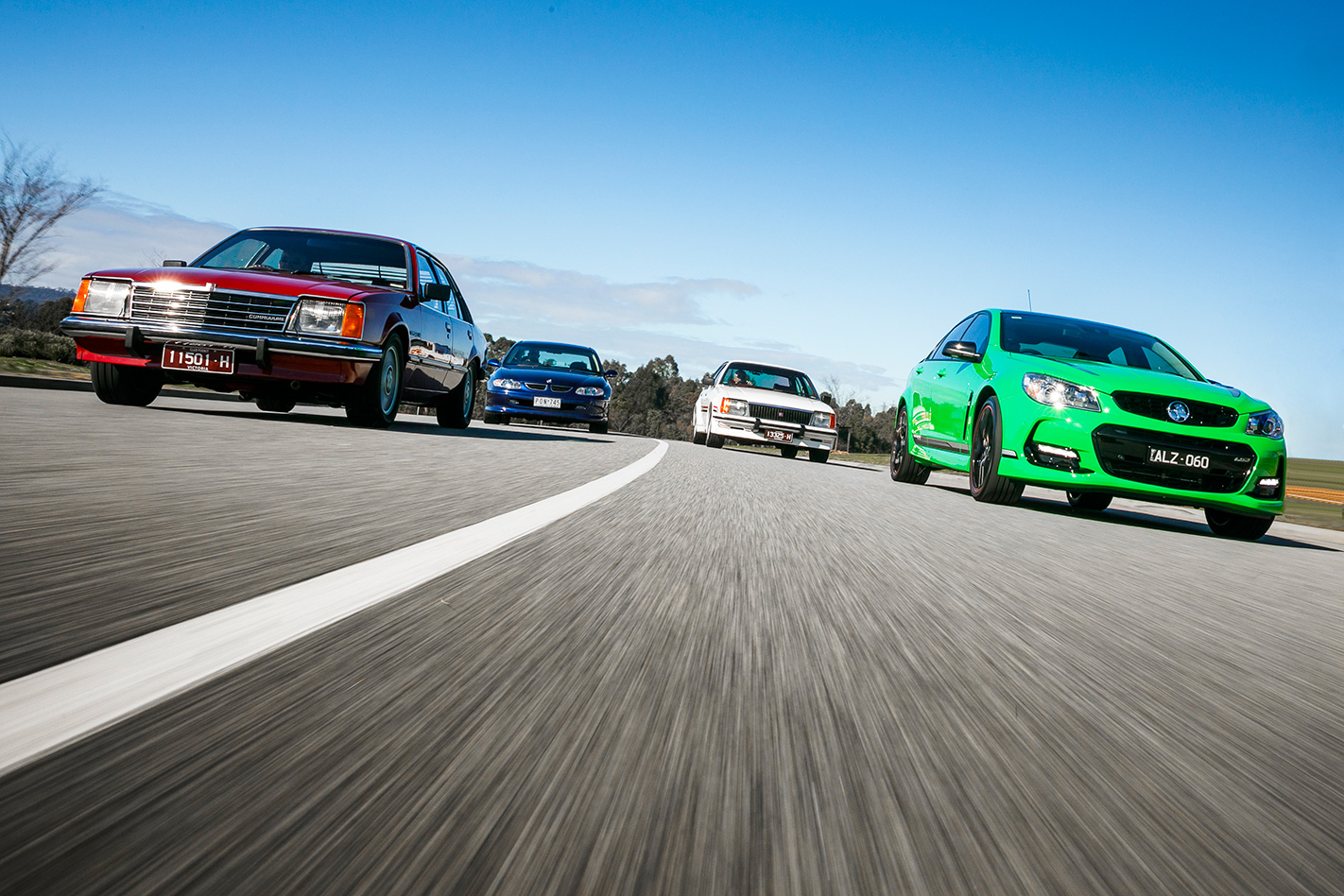
But the Commodore was on the agenda for another important reason: the World Car was the buzz in the global industry. Why design and engineer a completely different car for different markets? Surely, what works in the US or Germany will work in Australia?
Er, no, as it turned out, and Holden had to do a whole bunch of re-engineering of the basic Opel platform and bodyshell before it arrived at a car that would cope with Australian conditions. And there was another criteria that needed to be met – it had to be able to accommodate the V8 engine option if it had any chance of being successful Down Under.
So, yes, the original VB Commodore was a world car, but one that had huge local input. Which just makes it seem a tiny bit ironic that it’s globalisation (among a plethora of other factors) that has put the final nail in the coffin of local car-making – which is still a difficult notion to digest.
But none of that changes the fact that when the VB Commodore burst on to the scene in 1978, we all stood around with our mouths open. Yes it still had a live-rear axle and yes it still used old push-rod engines.
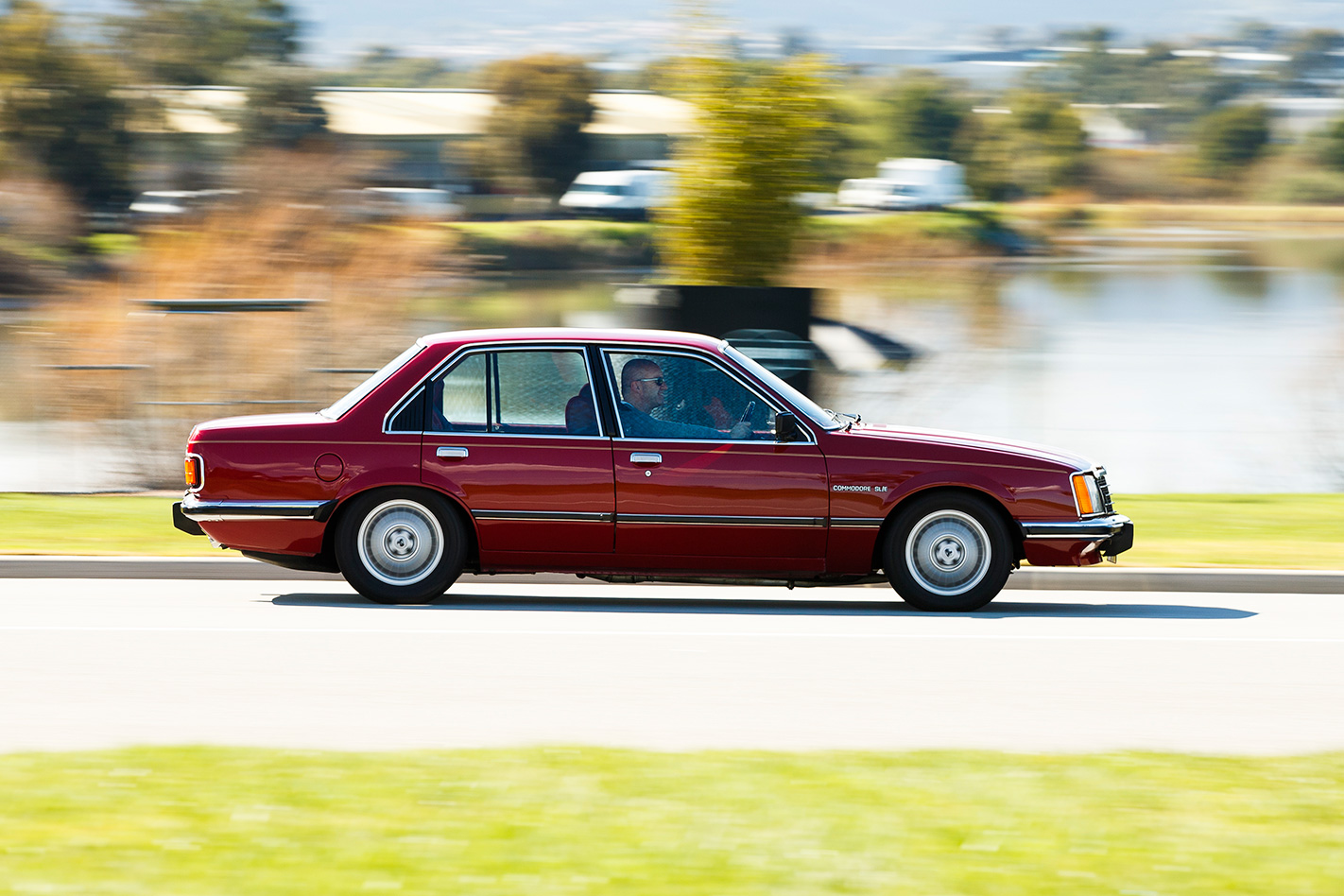
Oh, and there was this version called the SL/E. And that was just a spaceship. Alloy wheels, lots of fuzzy, gaudy velour trim, chrome strips everywhere and, get a load of this Shazza, windscreen wipers on the headlights. And while a lot of SL/Es were six-cylinder powered, an awful lot of buyers took the plunge and specced either the 4.2-litre or 5.0-litre V8 engine.
Of those two, the 5.0-litre was the big hitter and it immediately became the performance Commodore of the time. Apparently, a handful (like 100 or so) of the 5.0-litre L/Es were optioned with a four-speed manual, but the vast majority were, like this car, autos.
If you’ve grown up with post-VT Commodores, you simply would not believe just how light a VB feels to drive. They weigh in at close enough to 1380kg (with that big lump of cast iron under the lid), but even with the typically dodgy power-steering of the day, they are like a scalpel compared with the later stuff.
Well, a sharp knife, anyway. And with the old 308 on board, even allowing for a soft tune and a four-barrel carburettor rather than injection, they were a quick thing in the day. Quicker than most, anyway.
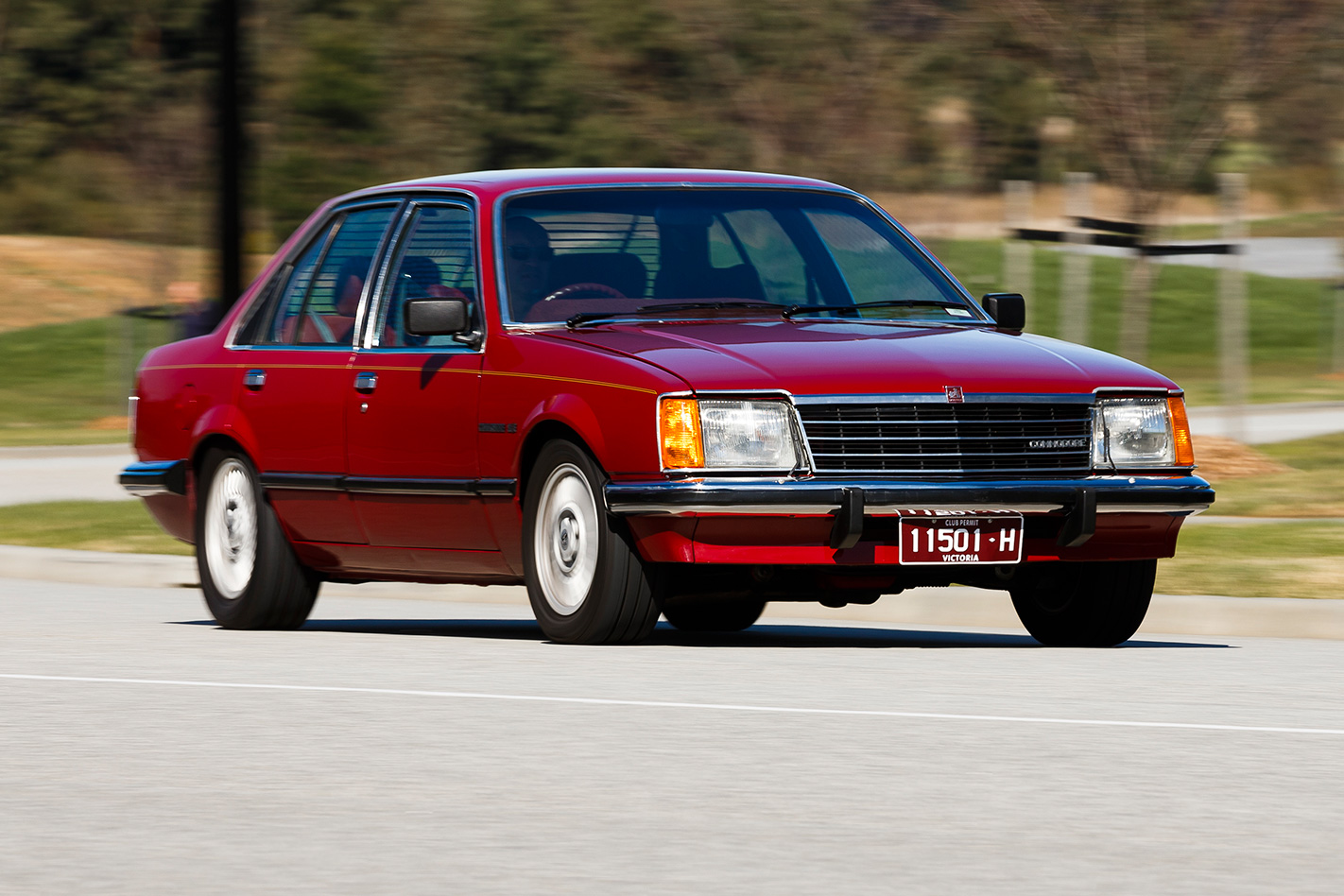
The SL/E crossed a few borders, too, and blurred a fair few lines. On the one hand it wasn’t out of place in the driveway of the local bank manager, but it could also hold its own as a modern muscle car. You look at a VB SL/E now, of course, and they seem almost impossibly small.
And it’s true; they are. In fact, it’s no accident that just 10 years later, Holden went back to a full-sized, full-width format for the VN Commodore. And while a VB won’t stay with an LS1-powered Commo, an SL/E still has enough of that lovely low down, 308 urge to be a thoroughly convincing drive.
Holden’s stillborn 350ci VB Commodore
And though they look small, they also look undeniably ‘right’. The proportions work and the shovel-nose and thin roof pillars have aged very gracefully over the years. They still drive beaut, too, and that lightness and agility is what stamps them as most different from later Commodores.
The automatic tranny makes them manageable, the big glasshouse gives great vision out and the torque of the 308 puts a real spring in the VB’s step. Calling them a completely modern-feeling drive is probably pushing it, but they still represent a huge jump over anything with a Holden badge that went before it.
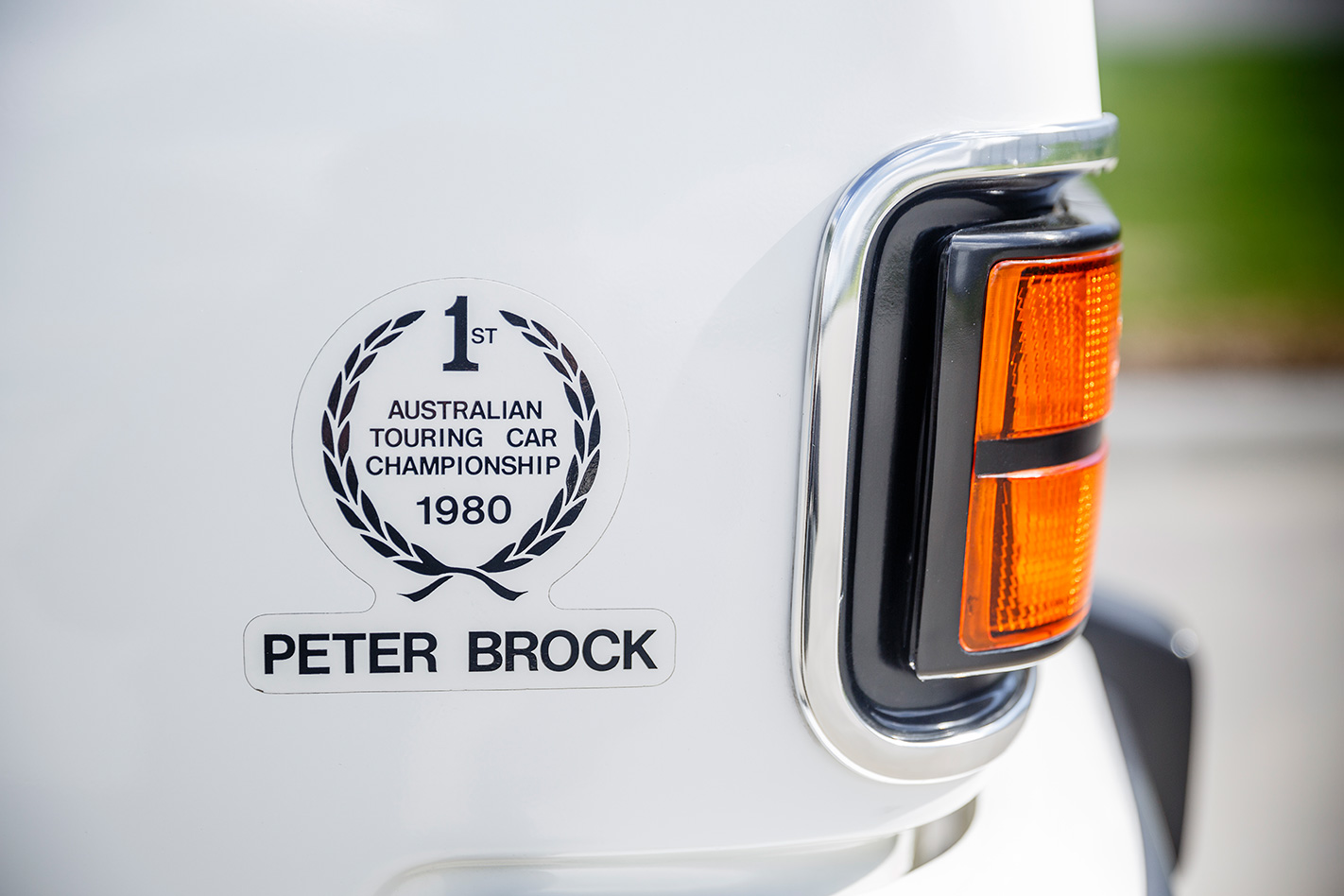
Fact is, the birth of HDT cars was a huge leap for both Brock, who was in those days, after all, known only as a race driver, and for Holden, which not only helped the new venture in many ways, but also agreed to sell the – largely untried – product through its own dealer network.
It needn’t have worried, because the car that eventuated, the VC HDT was, and still is, a legendary piece of equipment. Just as well, because the road car business was what funded the race team.
Understated it is not, and those huge wheel-arch flares, mad boot spoiler and those too-cool Irmscher alloys still make us old blokes go a bit wonky in the guts. By then, of course, touring car racing in this country was no longer conducted on an improved-production basis, and we’d moved on to the rather more accommodating Group C rules.
Nevertheless, if you wanted to race a 5.0-litre Commodore, you still had to sell one to the punters. Suddenly, the Brock connection made all sorts of sense (as if it hadn’t before). So the HDT Commodore became a very broad blueprint for what raced at Bathurst under the HDT banner, an operation now owned by Brock.
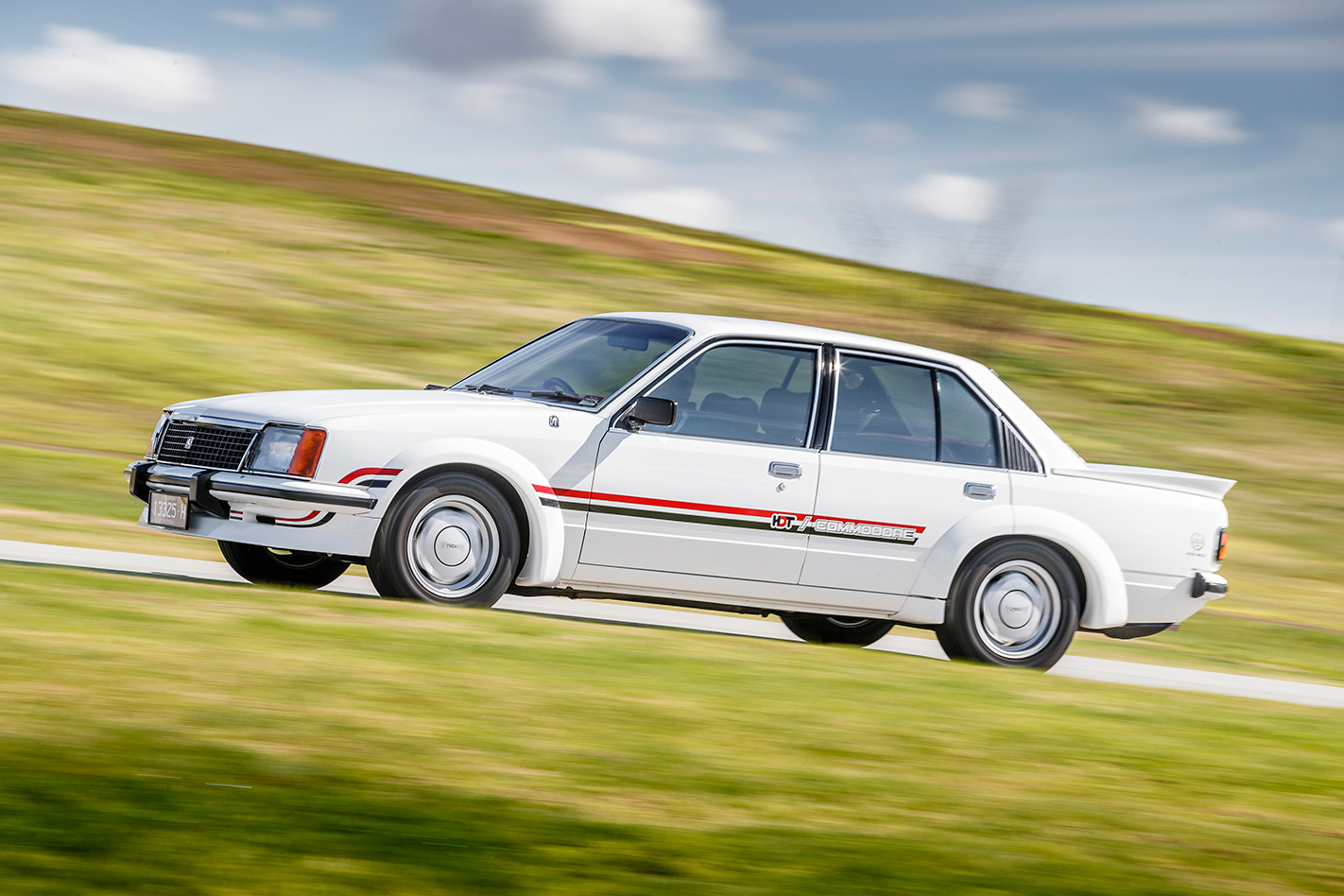
And it’s that mad, wilful mood that pervades the car, from its velour roof lining to its trademark red, white and blue stripes. It’s no shrinking violet. With Brock’s attention, the 308 was tweaked up to produce about 160kW, but the exact output of each individual car is debateable.
Essentially, if you wanted it and could afford it, there was a pretty good chance Brocky could be persuaded to oblige you. It sounds a bit laissez faire these days, but back then cherry-picking a car’s spec was still happening even at official Holden dealer level.
The bulk of the 500 VC HDTs though, were fitted with a fiddled version of the Quadrajet four-barrel carb (including a cold-air intake) with ported heads and a port-matched intake manifold. Based on the SL/E, they therefore had the full bordello crushed velour trim and they were painted either white, red or black.
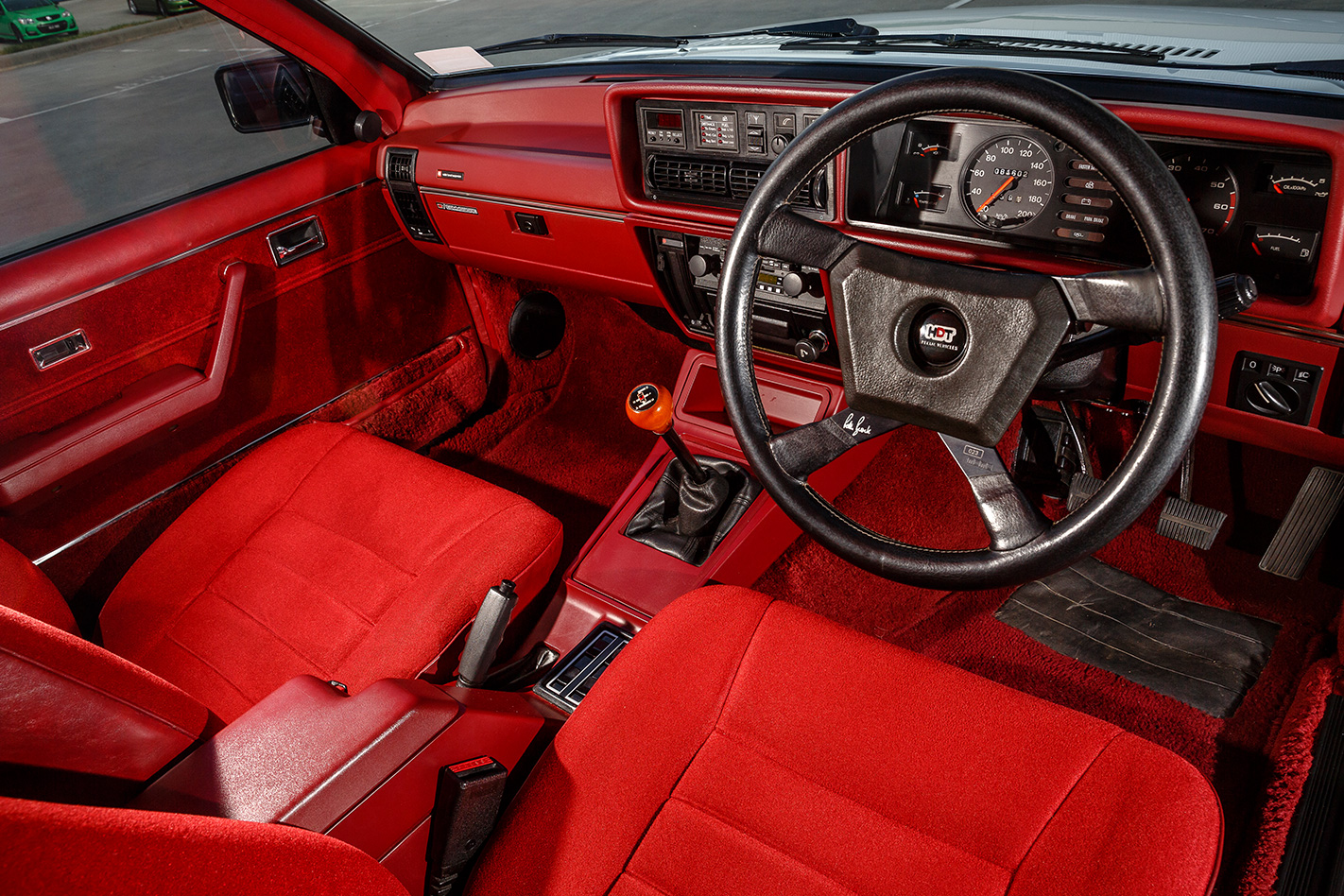
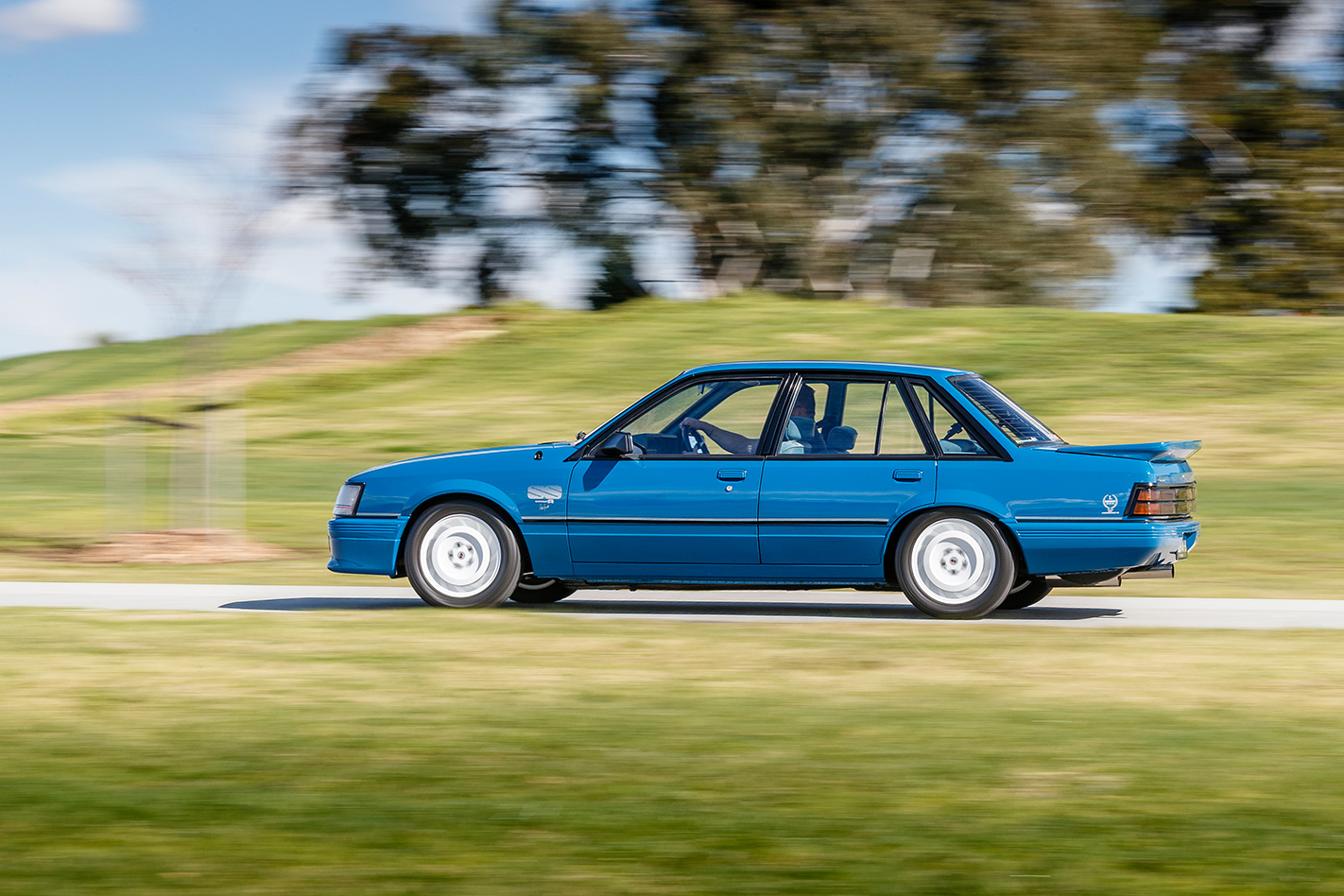
Especially since the auto for the HDT was the TH350 rather than the old Trimatic that joined the flywheel and diff in the vast majority of contemporary Holdens. It seems a bit odd in these days of six and seven-speed manuals and 10-speed autos, that the most famous of all Brock cars, the Blue Meanie VK Group A SS, was also still a four-speed car.
I mean, this was 1985, right? Then again, the world of HDT cars was clearly in a state of flux, judging by the variations on the Blue Meanie theme.
How that gels with the notion that the VK SS was a homologation car for the newly minted Group A rules (which came into effect in Australia in 1985) poses more questions than it answers, but beyond the car’s reputation (which is rock solid) the HDT VK Group A is a bit of an enigma wrapped in a riddle.
That starts with whether the thing is a Holden or strictly a HDT product. There’s a single Holden badge on the bootlid, but also a HDT build-plate. The slightly more pedestrian, basic VK SS is rumoured to have a mixture of cars with and without the HDT build plate under the bonnet, so who the hell knows.
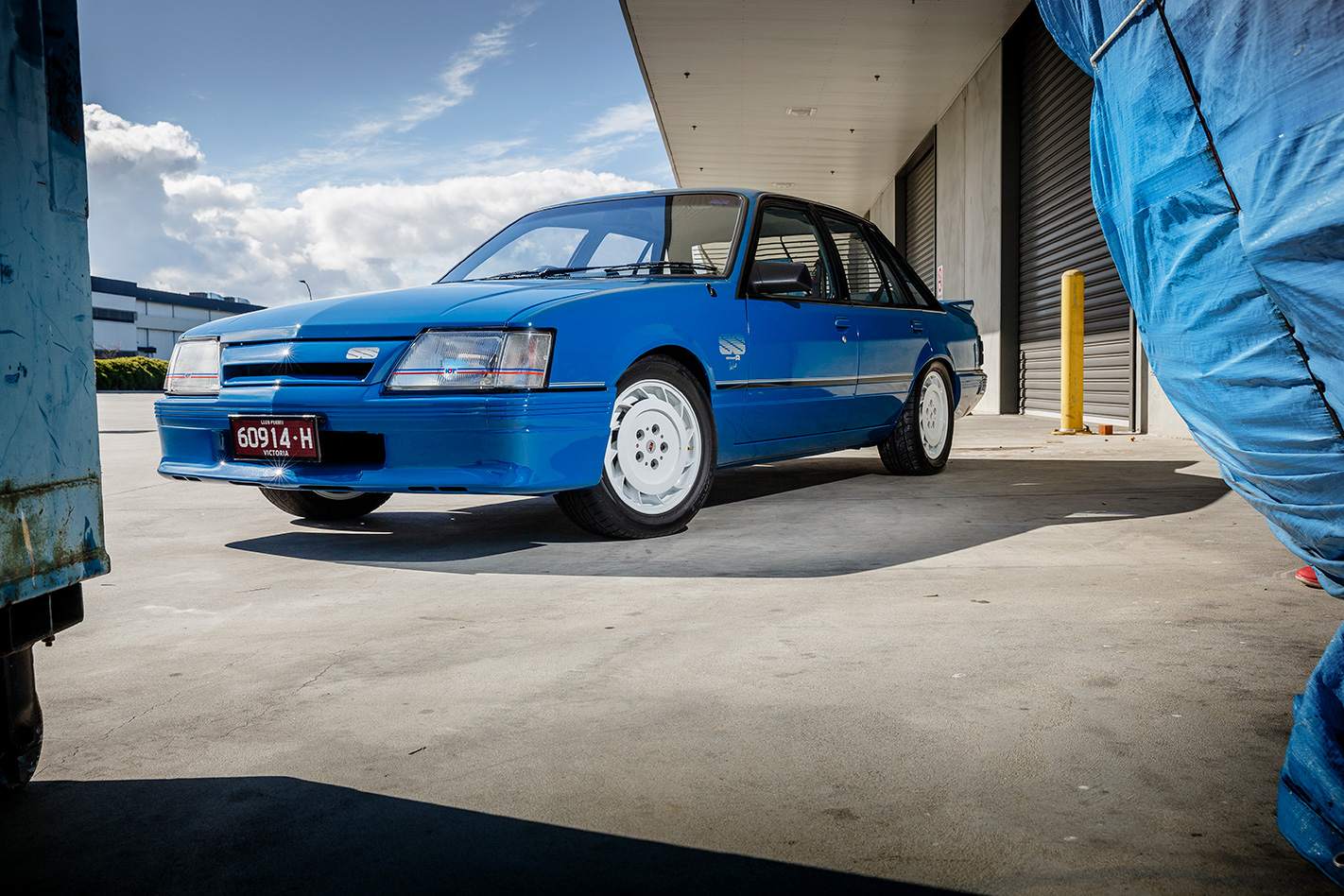
A slightly destroked crank took it down to 4987cc. As well as the short-stroke bottom end, the A9L (as the Group A engine code was known) also got roller rockers, a lumpier cam, a cold-air intake and a few tweaks to the block to relieve stress areas and prevent cracks and failures under the blowtorch of touring car racing.
Brock claimed 196kW for the thing which, given the single four-barrel carby, was really something. Especially back then. HDT’s attention to detail was starting to shine through, too, and as befitting its homologation-car status, the Group A got 16 x 7-inch alloys, a body kit, Scheel front seats as well as a Momo tiller and gear knob.
But light weight was also critical for a racecar platform, so the VK got a very simple interior with just two speakers. However, here’s where it gets weird again: If you had an extra $2850, you could order your Group A with the T5 five-speed manual as in the car featured here, which also came from the dealership with four – count ’em – speakers for the radio-cassette.
You can’t even sit inside a VK Group A without being reminded that this is a homologation car. And that goes double when you drive it. It’s raw. The camshaft is a fair old size and it feels like there’s very little to insulate you from what the various oily bits are doing. Wonderful in other words.
By the time the VL Commodore had come along, Holden had learned a fair bit about the unleaded petrol that became mandatory at the same time. Chief among those things was that the old six-cylinder Holden motors were never going to work on the new brew.
So, Holden went shopping, and that led to Nissan in Japan and the injected 3.0-litre RB30 straight-six. Compared with the old red/blue/black Holden sixes, the Nissan mill was a true revelation with loads more power, decent torque for it size and a smoothness and refinement that the old Holden sixes could never have matched.
Hell, it even ushered in a four-speed automatic option. Even more interesting was a close relation of the RB30 called the RB30ET, which ran a single turbo and bumped power from the stock VL Commodore’s 114kW to 150kW. Okay, so an N/A, two-litre Toyota 86 has about the same output these days, but that turbo torque was the name of the game.
I can clearly remember looking at a Calder Park time-slip from the press launch of the VL Turbo which read 15.2. Again, a Toyota 86 can match that, but in 1986 this was the new benchmark Aussie performance car.
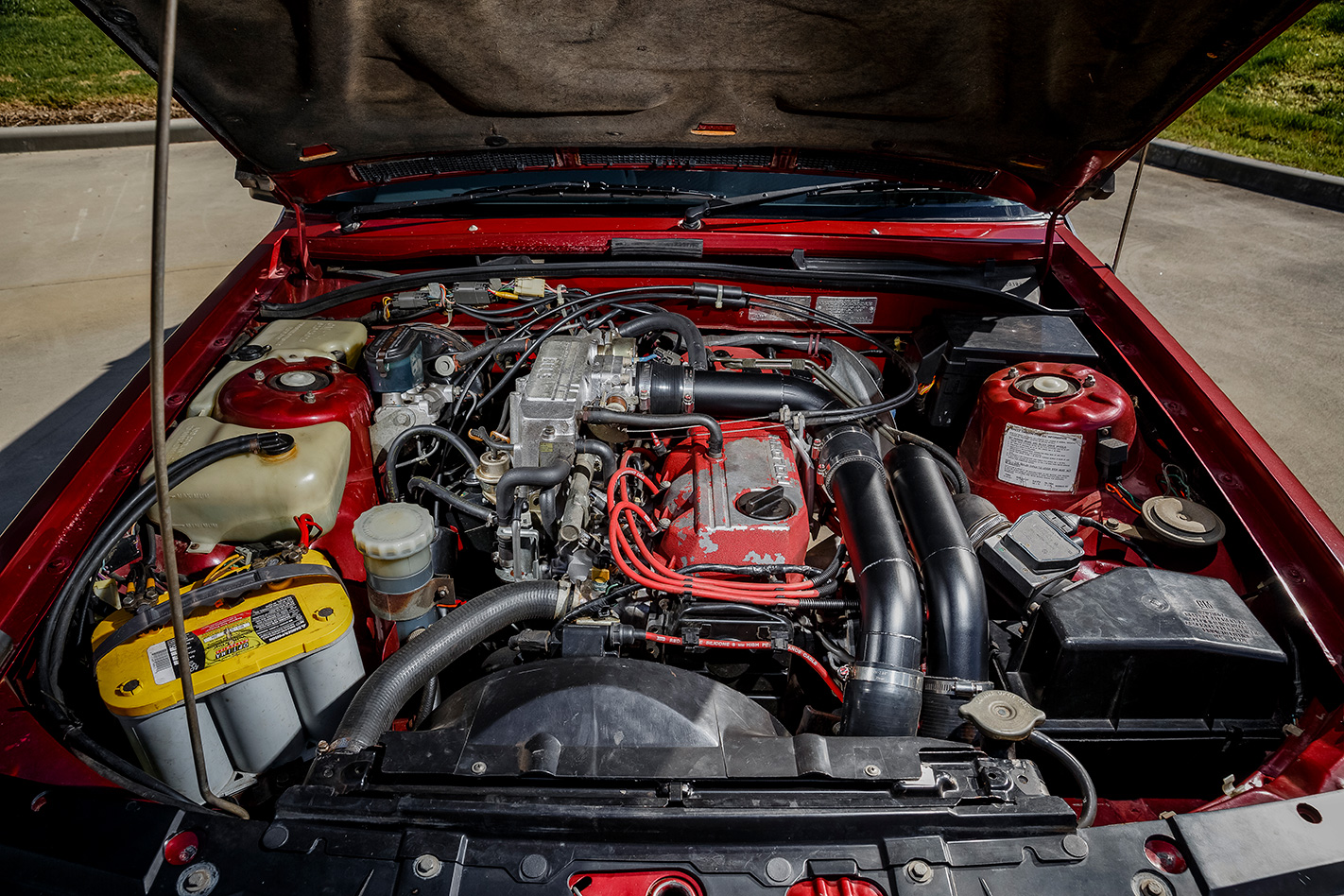
You also had to take the FE2 suspension package and the 15-inch wheels, required to clear the V8-spec brakes. But with the 15-inch version of the plastic wheel-trims, a white Exec Turbo was the ultimate mid-80s Q-ship.
Brock was in on the turbo thing, too, and as a 22-year-old staffer on Car Australia (which morphed into MOTOR in the 1990s) I got the job one day of picking up a brand-spanking VL Turbo with a few Brock tweaks.
Holden VH Group 3 vs Peter Brock’s VH 05
Turns out the car was actually Brock’s own company car and it was a pale, metallic green jigger with a manual box and those gorgeous Momo five-spoke alloys. It also turns out that another journo from one of the Melbourne newspapers had borrowed the sister car the week before, took it for a spin and forgot that the tranny had an over-drive.
Apparently, the turbo-six didn’t much like being held flat in third gear and threw a leg out of bed. Exactly what Brock thought of spotty little me turning up to borrow his own car a week later is not exactly known. However, he was an absolute gentleman about it.
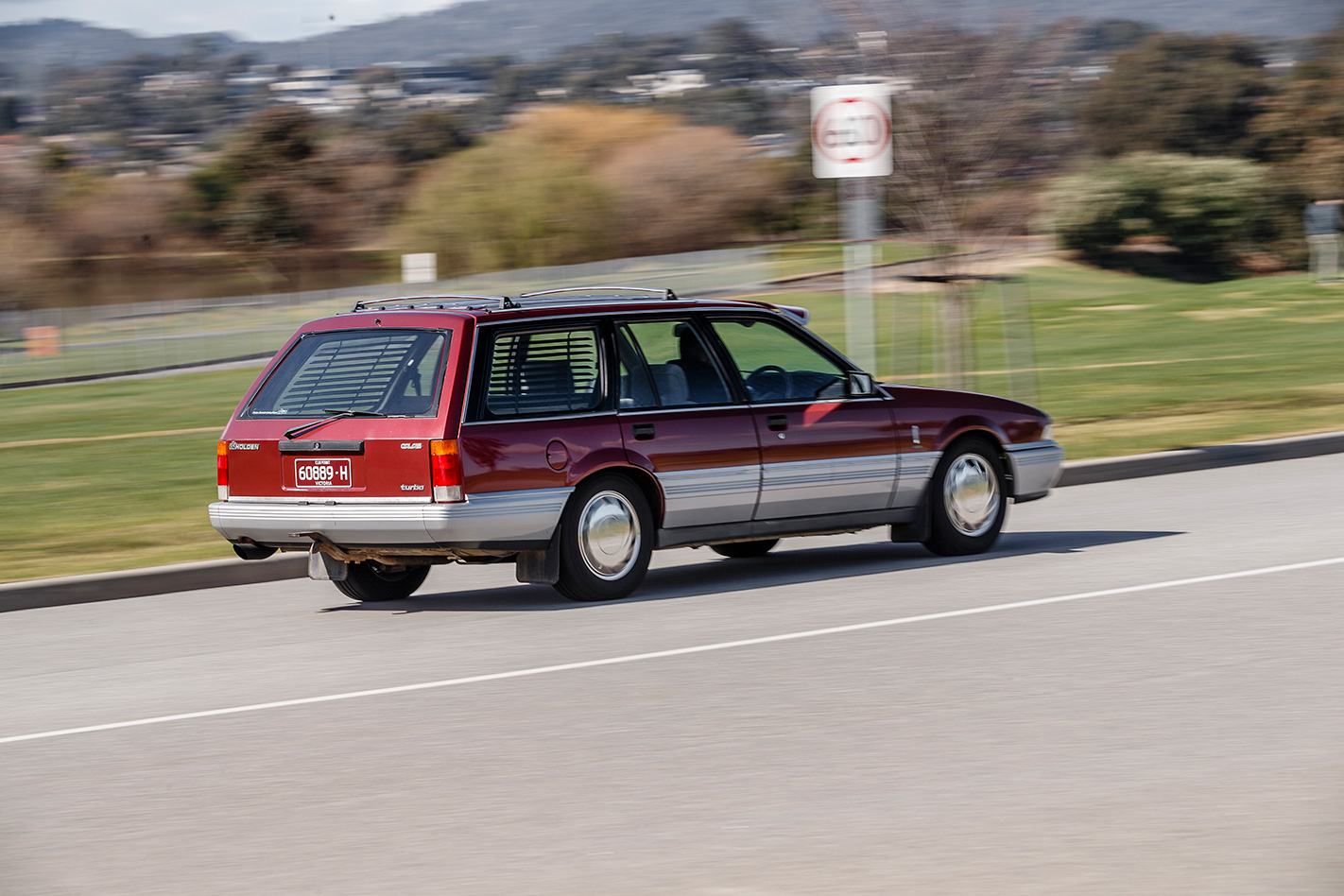
It made about 150 in V8 form, but only around 50 with the turbo motor. And this is one of them. It’s about as understated as a 15-second car could be in 1988, and it stands as a great sleeper even now.
ULP was clearly a thorn in Holden’s side in the mid-to-late 80s, but eventually it settled on a solution: The bread-and-butter Commodores would get the 3.8-litre Buick-derived V6 engine for the new VN Commodore, while the in-house brains trust at Fishermens Bend would sort something out with the V8. Did it ever.
The bottom end stayed much the same including the 304-inch capacity, but the top end stuff was all new. That included the cylinder heads which now featured an inlet-exhaust-inlet-exhaust port layout and electronic fuel-injection was adapted. And the old girl loved it.
Suddenly, power was up to 165kW, torque was a meaningful 385Nm and if the five-speed manual didn’t suit you, there was now a four-speed auto in the form of the TH700.
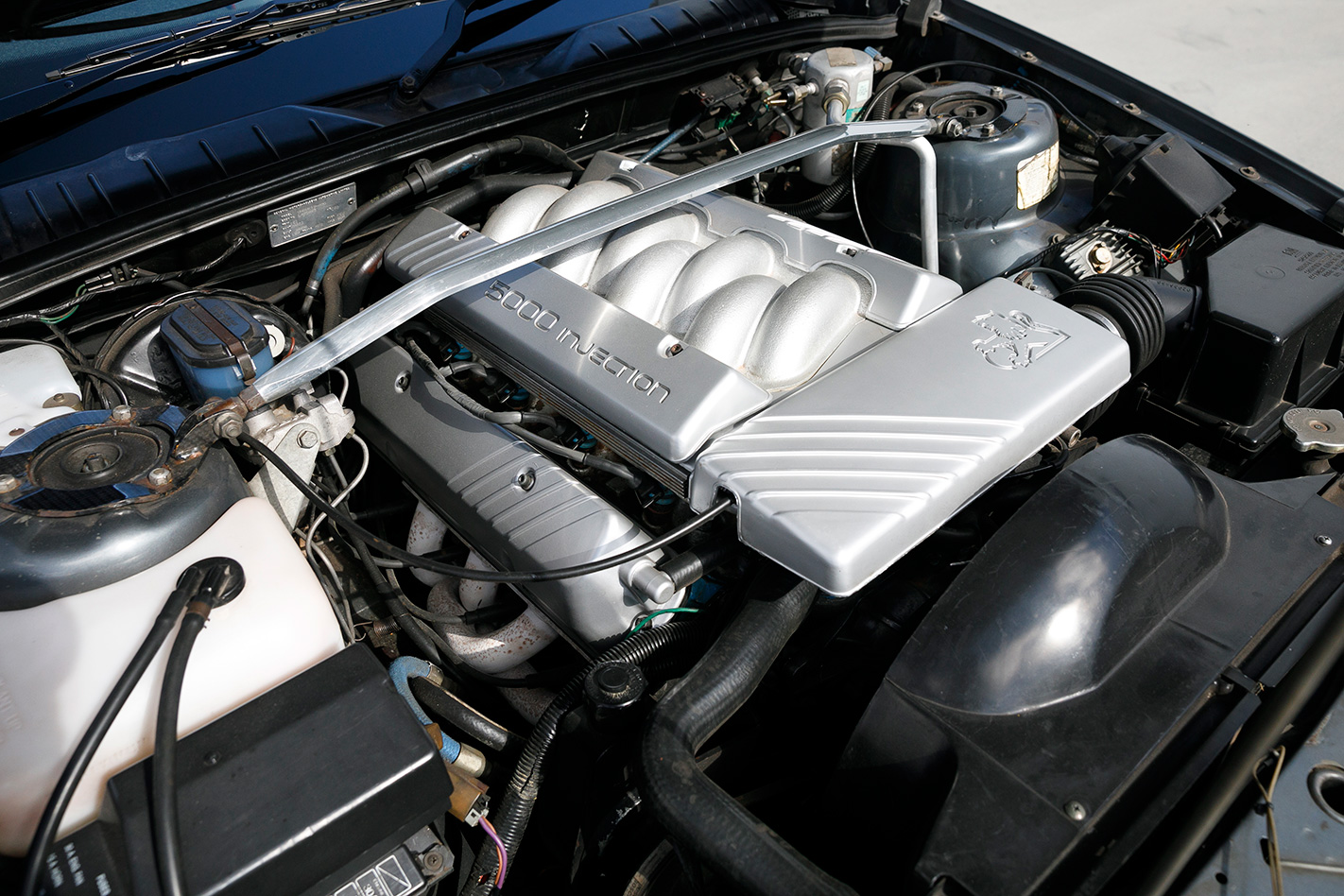
Certainly, for lovers of local performance, there was only one showroom worth visiting. While Holden Special Vehicles produced the VN Group A SS to homologate its touring cars, that model was never as highly regarded (until now) as the Brock homologation specials that went before it.
Or the Walkinshaw Commodore that immediately preceded it, for that matter, Even with its twin-throttle body version of the 5.0-litre and 210kW, the VN Group A S looked fat, rode harshly and the six-speed manual was clunky and recalcitrant. It was also $70,000 by the time you put 12 months rego on it and paid the stamp duty.
Which meant the hero car of the hour was the VN SS, an Executive-based bomber with the 165kW V8, a choice of auto or manual, FE2 suspension and 15-inch alloys of a particularly ordinary design.
Forget that the VN still ran the VL’s skinny front track (which explains the pigeon-toed look) and that it was still a live-axle car (the IRS wouldn’t arrive until the next SS, the VP) because the VN SS was it-and-a-bit back in the late-90s.
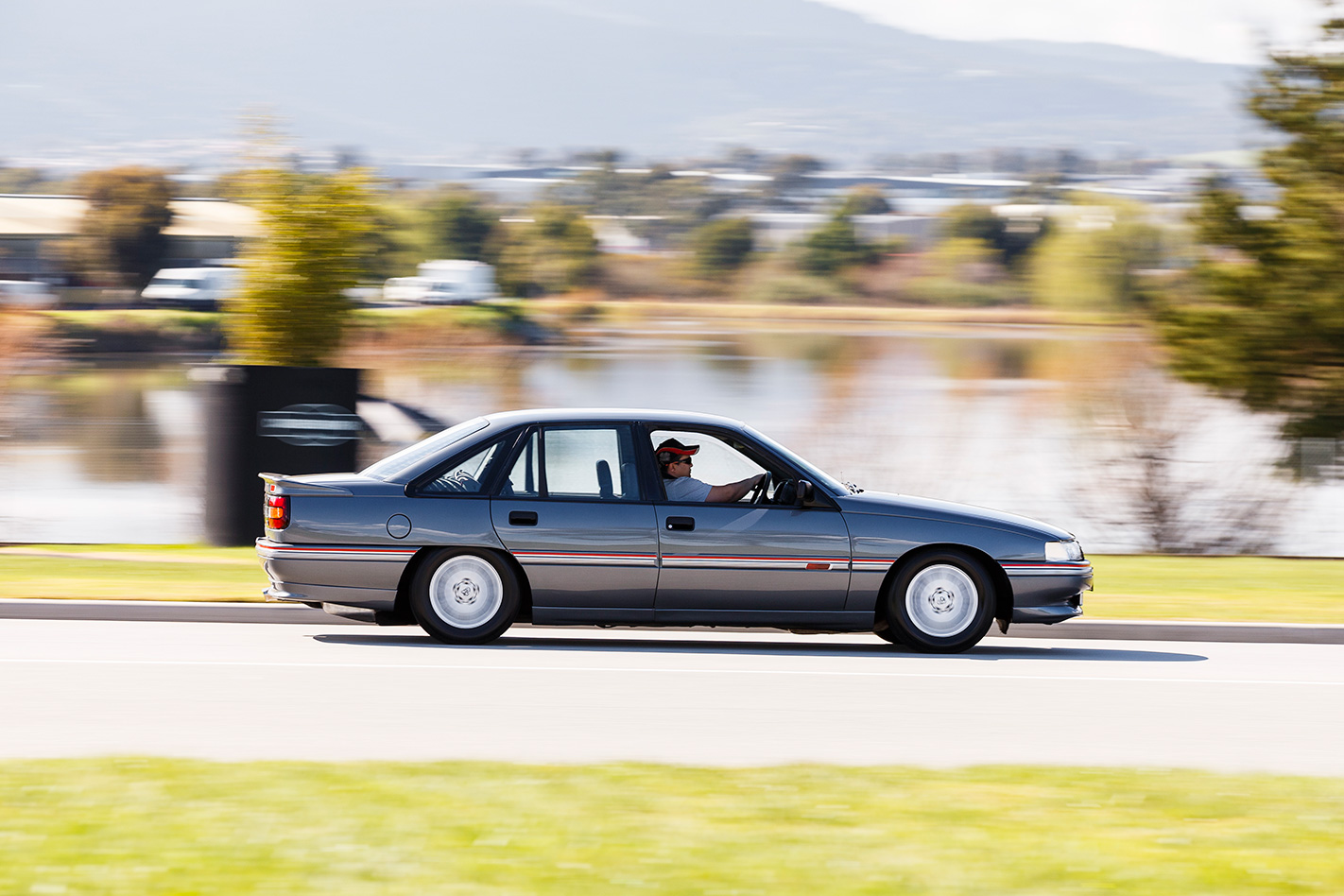
The look was a bit dumpy back then, but these days, it seems to have come into its own and the whole concept is being applauded for its purity and simplicity. Okay, so the interior design owed more to an egg-and-spoon race than the space race, and the crook plastics meant that any VN was home to plenty of fizzes and buzzes early on.
And, yes, the build quality was off the pace and the bodyshell was a bit flexy, and, and, and – we could go on. But, ultimately, with that engine, the VN SS rocked. Still does. The VN SS set the model on a particularly successful course for the next few years with sophistication increasing along the way.
So it was natural that the whole SS thing would be carried into the all-new VT Commodore of 1997. But by then, even Holden had to admit that the old 5.0-litre engine was pretty much getting towards its use-by date and the Chevrolet-sourced LS1 was waiting in the wings for the Series II VT, which lobbed in 1999.
But when it did land, the LS1 was a slight disappointment in a couple of areas. It was lazy off the bottom end and it had quality issues. Serious ones.
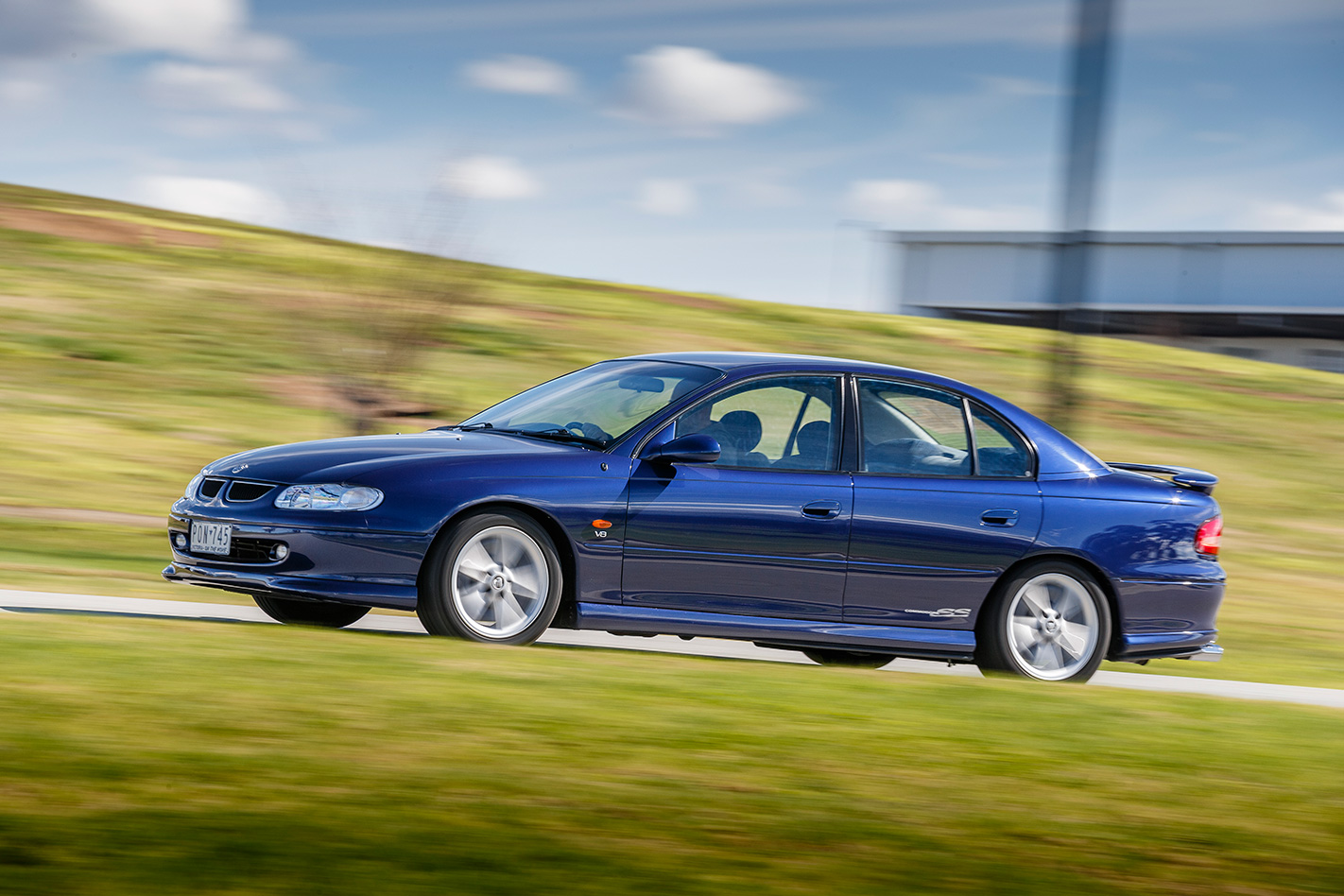
And even though Holden knew it was going to the Chev V8 in just a handful of months, it also knew that the Holden V8 would need a smarten up if it was to carry the VT SS through. And that’s the other reason this car is here – in its final form, the 5.0-litre Holden V8 was enjoying its finest hour.
Still unchanged in capacity terms, the engine was spruced up with sequential fuel-injection for efficiency and a roller camshaft for better performance. The end result was 179kW, but a popular option was the high-performance upgrade which took power to 195kW and torque to 430Nm.
That was still a little short of the Gen III’s 446Nm, but that was produced at 4400rpm while the Holden V8’s torque peak was a more urban-friendly 3600rpm.
Ultimately, it was the extra kerb mass of the bigger, wider, more substantial VT body that did the damage, and as Holden improved the LS1, the performance gap between each new SS and the VT Series I SS grew ever larger.
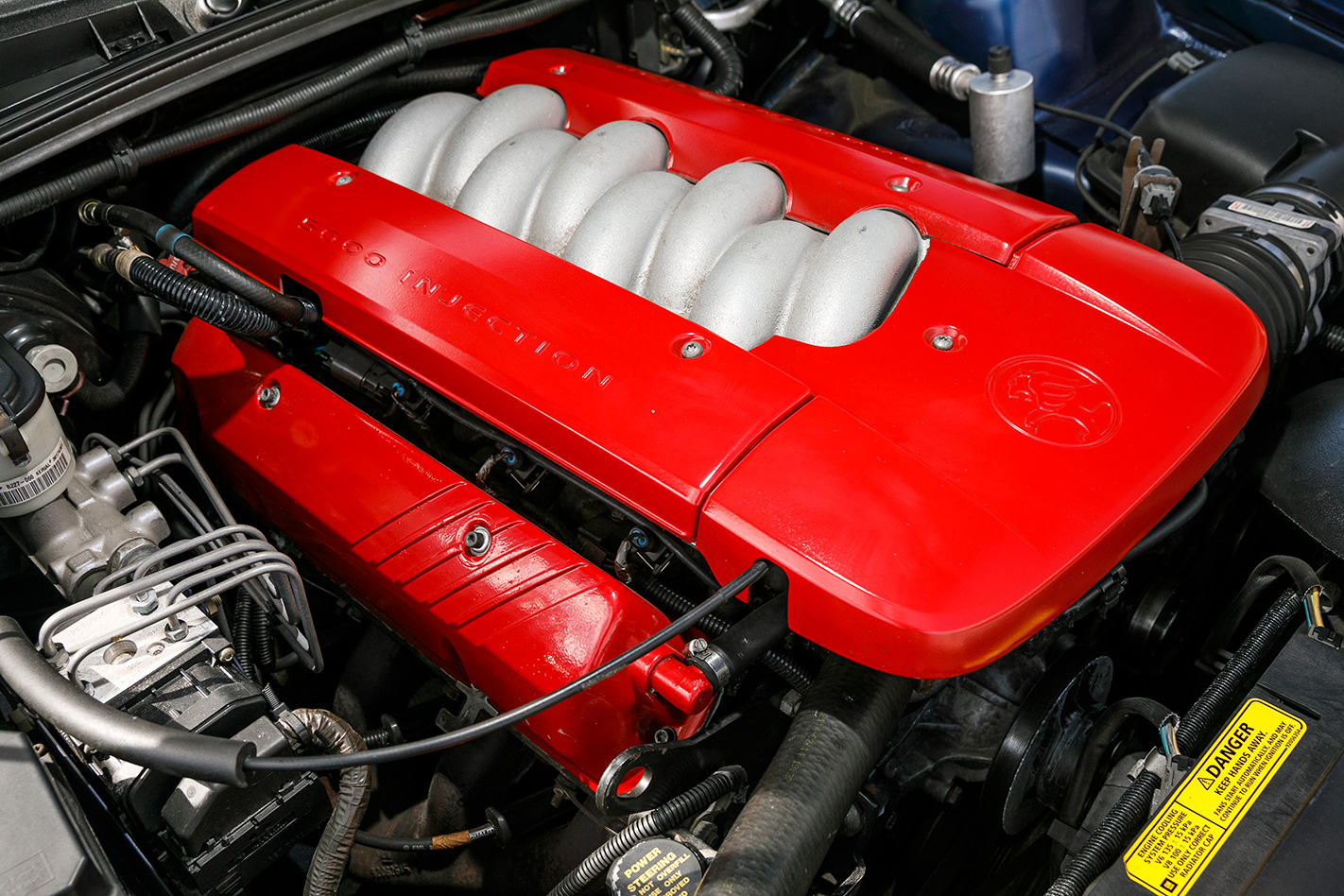
Thanks to the Chev’s odd firing order, the old Holden motor sounds better, too. And I own one of each, so I should know. Actually, the next chapter in this story is also a bit personal for me. See the Hothouse Green CV8 Monaro in the pics? Yep, that’s my actual car.
Paid for with my own money. It’s not that the VX Commodore was much more than a very mild facelift over the VT, but the reason this car is here is all about that body. And what a body. You could argue that Australian car-makers have not yet made a full-sized two-door that doesn’t look the absolute business.
From the first two-door Falcon, to the HQ and XA hard-tops, right up to this car – it seems to be something we’re pretty good at getting right when we do them.
You all know the story by now: After-hours project by a handful of dedicated Holden designers and engineers; winds up on Sydney Motor Show stand in 1998; Holden caves in to buyer pressure and by 2001 it’s in production complete with Monaro badges.
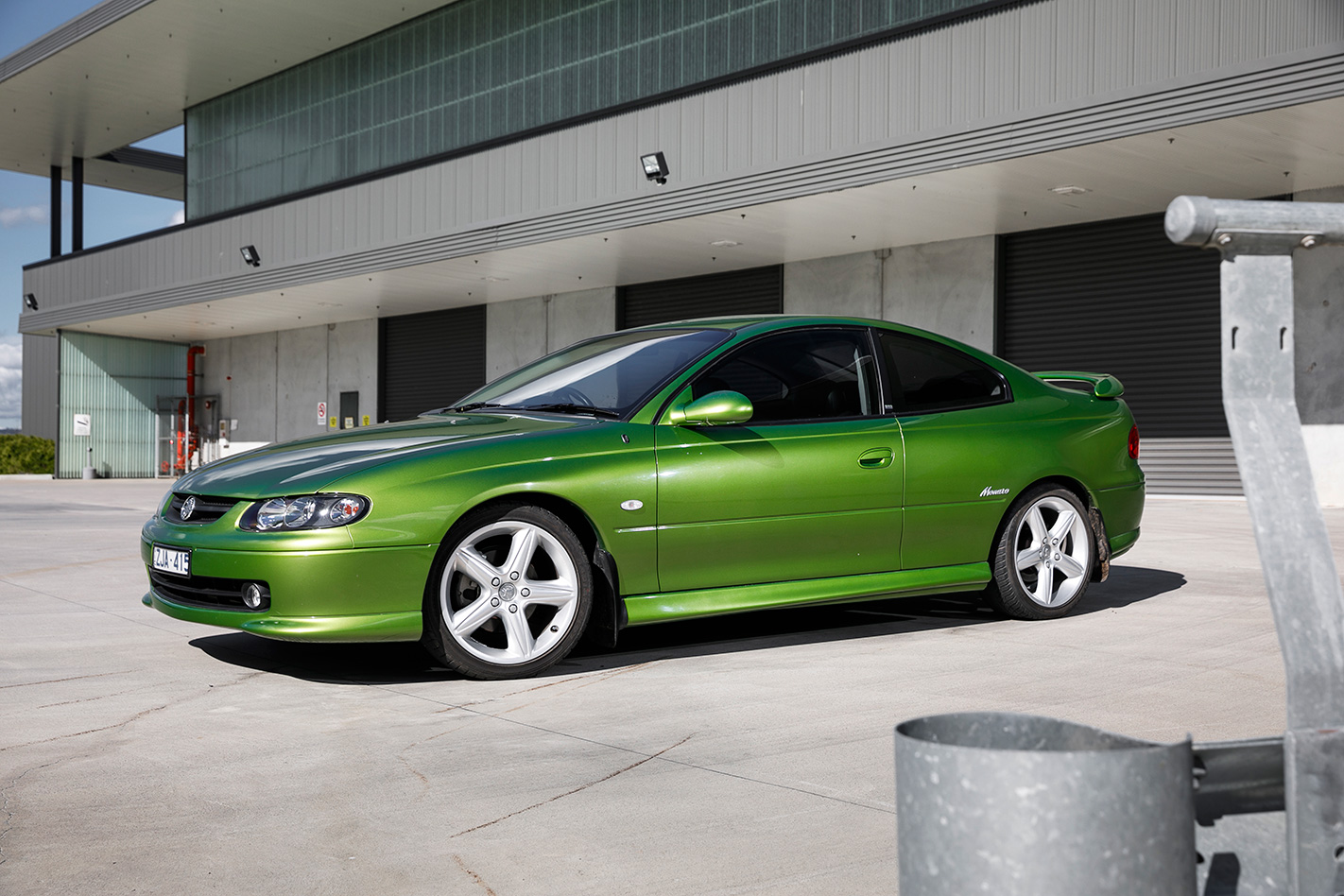
In fact, even though Holden made around 60,000 Monaros, about 40,000 were exported, which is why you’re not tripping over them here these days. Holden actually went to the trouble of fitting the Monaro with a slower steering rack to improve accuracy at the helm, but beyond that, it’s kind of a two-door Commodore to pilot.
Which is not necessarily a bad thing, because the LS1’s woes had largely been addressed by this stage of the game and the extra toe-control link in the rear end was in production, too. You still need to give the V8 a decent serve of revs for meaningful thrust, but get it right, and it can boogie.
They love fuel around town, but on the open road, you might even see the trip computer spit out a number that starts with seven, although eights are certainly more than achievable. Equally Commodore-like was the bogey of production tolerances.
Motor tested several Monaros throughout the years at big-ticket events like PCOTY and it’s not stretching the truth to say that some were peaches, and some were the crates those peaches came in. So what did you get that you couldn’t with a (much cheaper) VX Commodore SS?
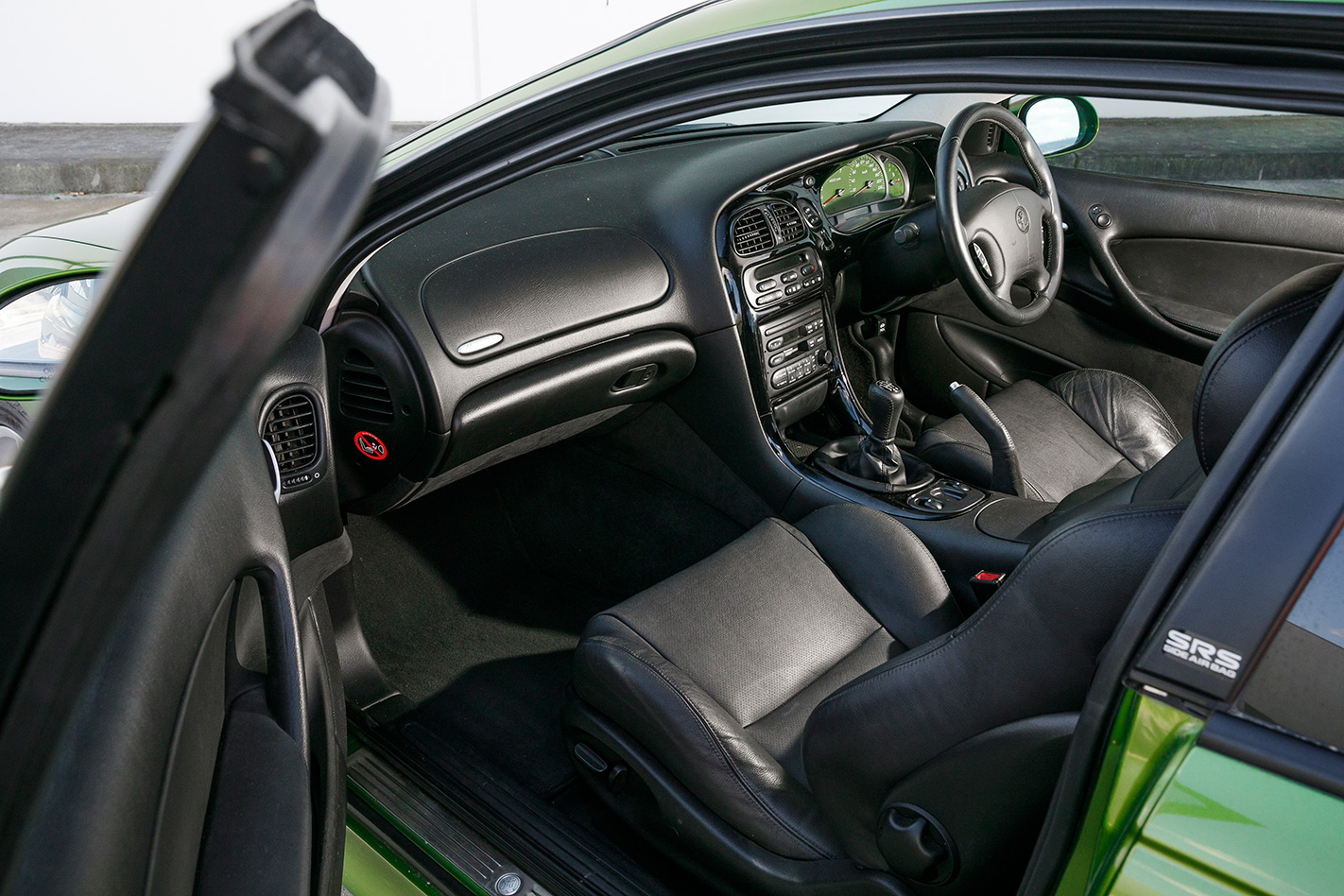
And despite being a two-door, those two big rear buckets will actually accommodate full-sized humans. The rear spoiler? Holden’s design boss at the time, Mike Simcoe, reportedly threw a wobbly at the thought of it and I’m with him.
Mine still has the spoiler because it’s a gut-the-interior, rear-windows-out job to weld up the holes and blend the new paint on the boot into the rest of the car. No, I’m not joking. But it is a V8 manual (rather than an auto or the supercharged V6 version that was dumped after just a couple of years’ production) and it’s mine.
And I can’t think of a sexier car that a clown like me can afford to own and maintain. As long as I can keep the ULP up to it. If the idea of an LS1 still puts you off (and there are those out there) then the next car in chronological order, the VE SS, might just have been the tonic back in 2006.
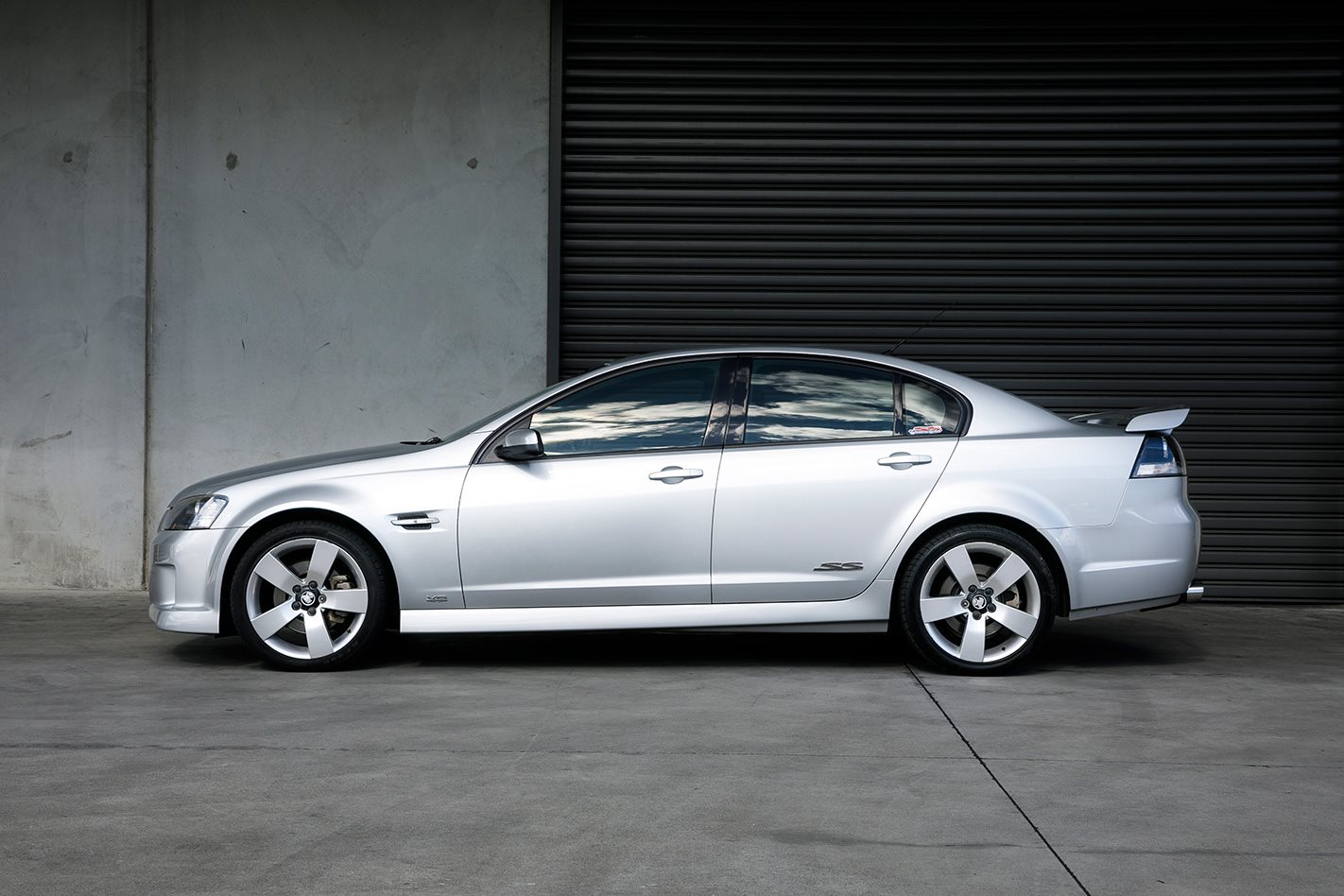
Okay, so the very last VZ Commodore SSs also got the six-litre LS2, but the VE platform was a huge step forward in every other way and stands as one of the best local designs right out of the box.
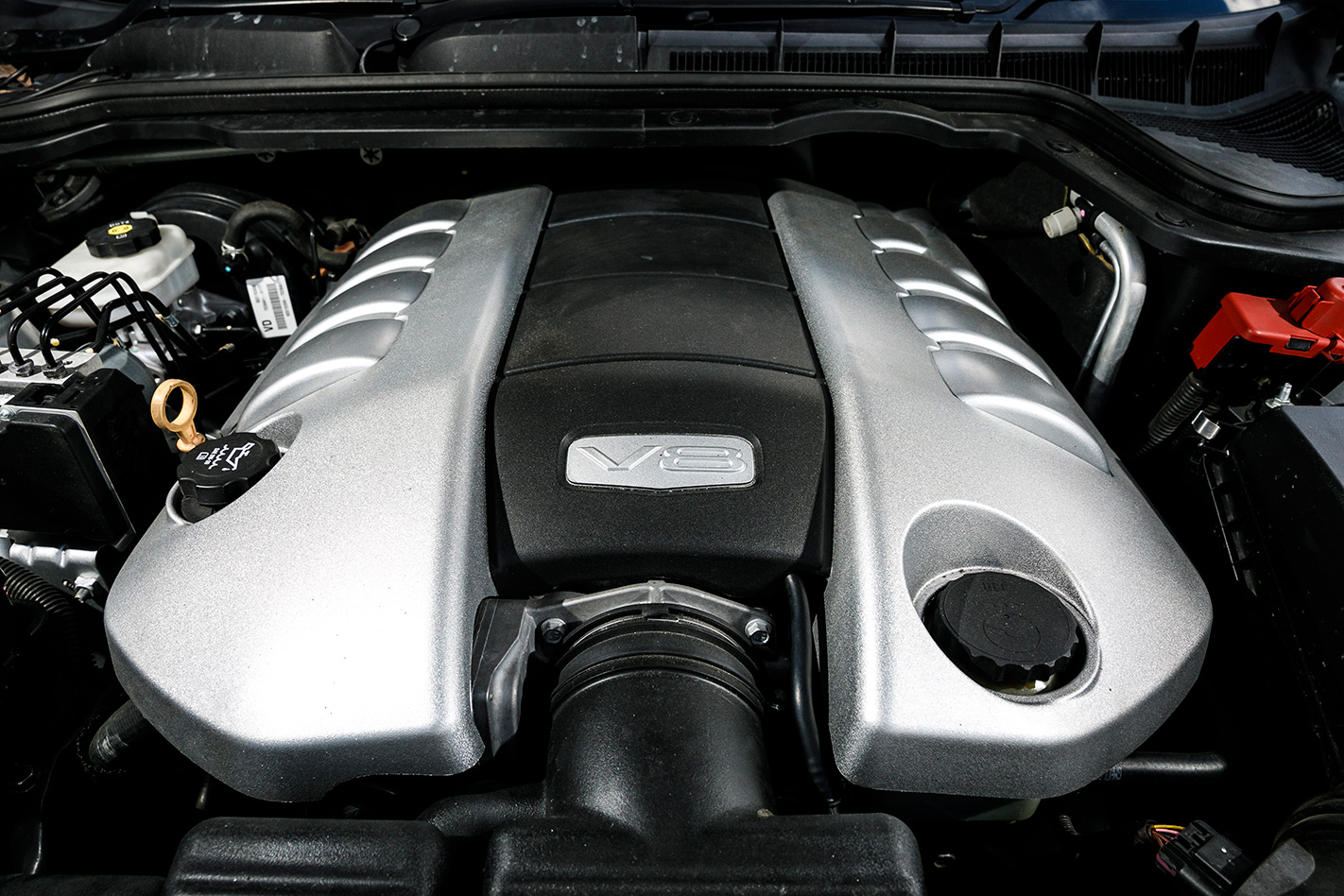
The LS2 cracks on harder and earlier than any LS1 and it’s not just the extra 300cc of displacement; the bigger motor is definitely bolder. And, suddenly, you weren’t a second-class citizen if you wanted an automatic gearbox; the six-speed auto became standard on the VE SS from day one.
The interior was a let-down with some iffy red graphics and poor plastic fit and finish and those A-pillars are still criticised for being thick enough to hide a B-Double. Which they are.
If you wanted more than the Omega underpinnings offered, of course, all you had to do was opt for the SS-V package which upped the ante to include 19-inch alloys and a larger, colour screen in the centre-stack. Either way you still got 270kW and the sort of performance that very few family cars could get near.
And the world was taking notice, too, with Holden exporting the VE to the Middle East, South Africa, Brazil and, of course, in a coals-to-Newcastle move, to the US where it was rebadged as the Pontiac G8.
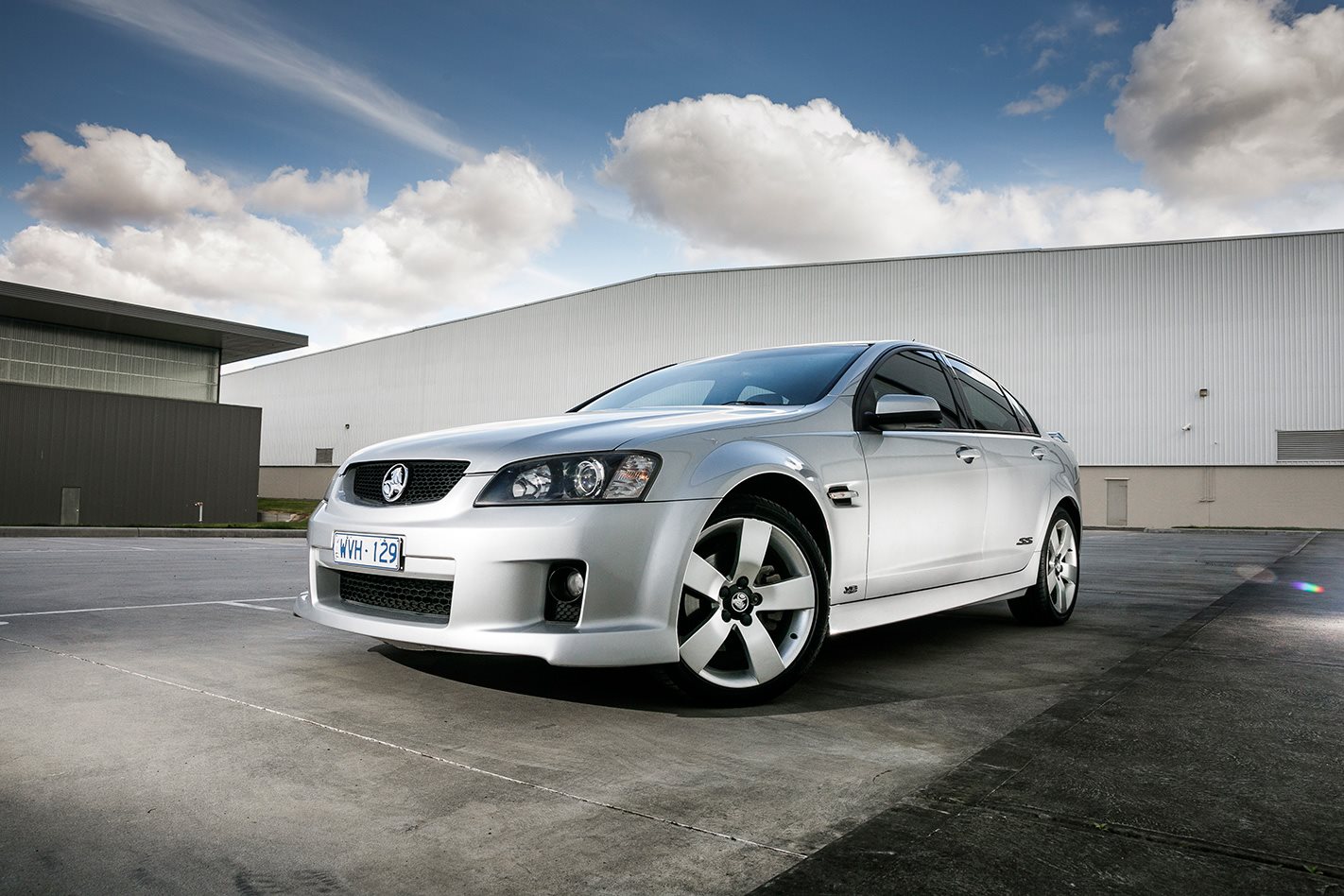
And what stunning value it was, and is. No discussion of hot Holdenry would ever be complete without a nod to the mighty Commodore Ute. Yes, the Ute was a mainstay of dealerships long before the Commodore took hold, but these later tray-backs are the closest things to a two-seat, long-boot sports car.
Given the buyer profile, it’s no surprise that Holden has always offered the hay-hauler with a V8 engine and the first Commodore Ute was the VG, launched in 1990 and immediately adopting the injected 5.0-litre.
As did the rest of the Commodore dynasty, it progressed through to the VS of 1995, but when Holden shifted sedan production to the new VT in 1997, the engineering work on the Ute hadn’t been completed. So Holden just kept cranking out the VS ute right up to 2000 when the VU (VX-based) Ute was ready to roll off the production line.
In that later guise, it had the roller-cam, sequentially injected 5.0-litre and was quite a thing with its lightweight body and optional limited-slip diff. When the VU lobbed, it was straight into the LS1 bin for an engine and a much bigger, smoother looking body that reminded you, from some angles, of the US-market Chev El Camino pick-ups.
For the loss factor, obviously, but also because the Motorsport shows what might have been had we stuck with things. Lost opportunity sometimes seems worse than lost reality, somehow. Holden only built 1200 Motorsport Editions, but despite that, this was no token effort.
Nope, the old girl was going out with a bang and full props to Holden for ensuring that was the case. So, it started with a Commodore SS-V Redline, itself no bag-o-bolts, and added a range of stuff starting with the Magnetic Ride Control dampers that took the handling to a new level at this price point.
Set to Tour mode, the damping recreates (more or less) the FE2 suspension tune, while switching to Sport gets you FE3-spec damping. Go for the Track setting and it’s stiffer again.
As well as all the other SS-V Redline bits, including the big Brembo calipers, the Motorsport got a set of two-piece, cross-drilled front rotors (aluminium top-hats) that reduced unsprung weight. Holden also dipped into the GM Stateside parts bin and borrowed the driveline cooling package from the 650-horsepower ZL1 Corvette.
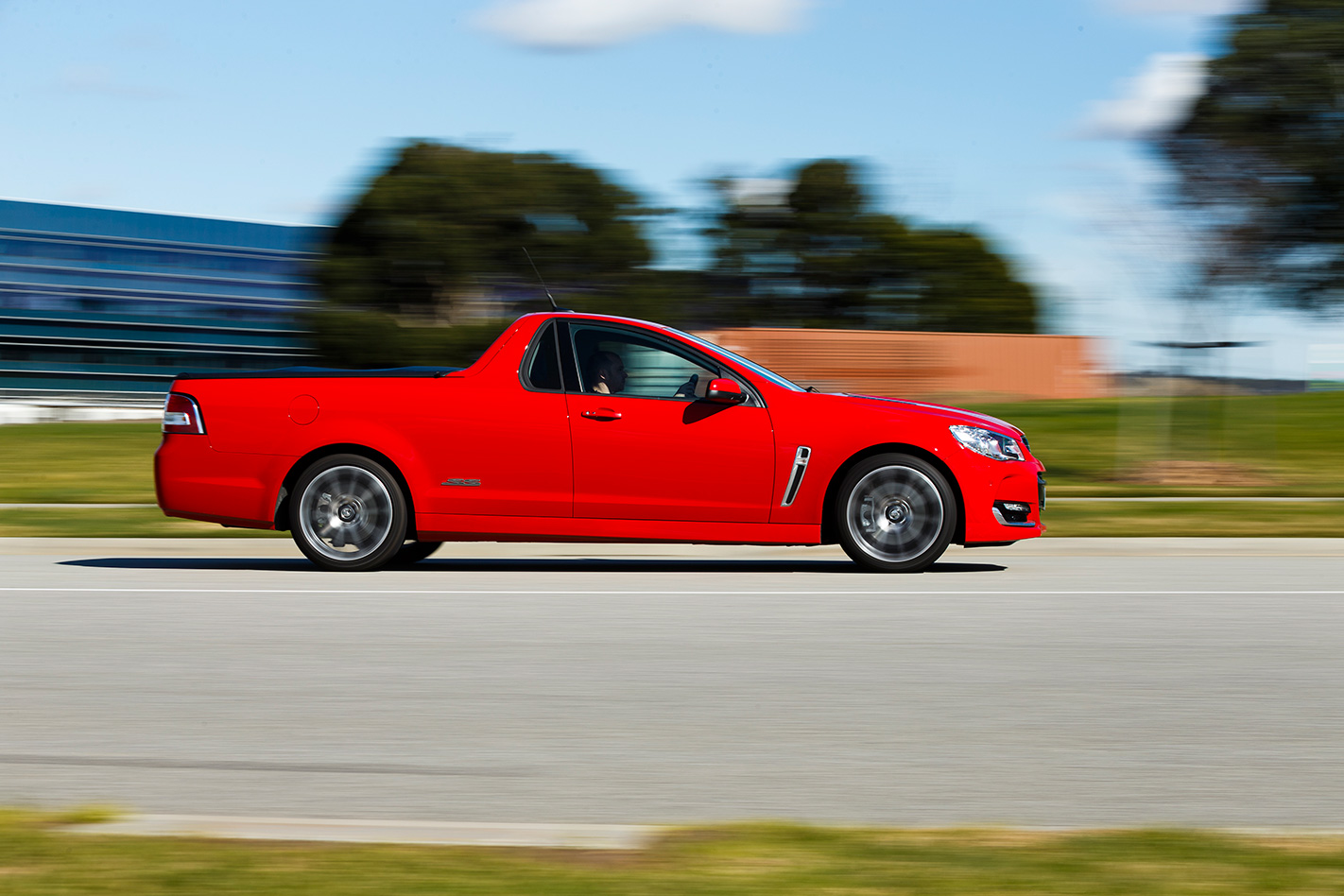
We wouldn’t have, though. It still feels like a VF Series II Redline when you first jump in and start rattling off laps, but start to use what the Motorsport has to offer and you’ll soon discover a great depth or ability and character.
That starts with the adaptive dampers, of course, but soon extends to the braking hardware once you’ve leaned on them a couple of times in quick succession and discovered that they don’t even look like fading or extending your stopping distance.
If ever there was a Holden Commodore that made you stop and wonder if you really needed an HSV, this one is it. And that really is a great compliment. Meanwhile, you still get that wonderfully responsive, talkative VF front end that feels lively without being flighty and reminds you that even in an age of electric steering assistance, a big car can still be on its toes.
And the noise. Lord, the noise. Even in its most basic SS guise, the VF Series II has a yodel all its own and, while we’re making blanket statements, I think it’s the best sounding factory Holden ever. And I’m certainly not alone with that thought.
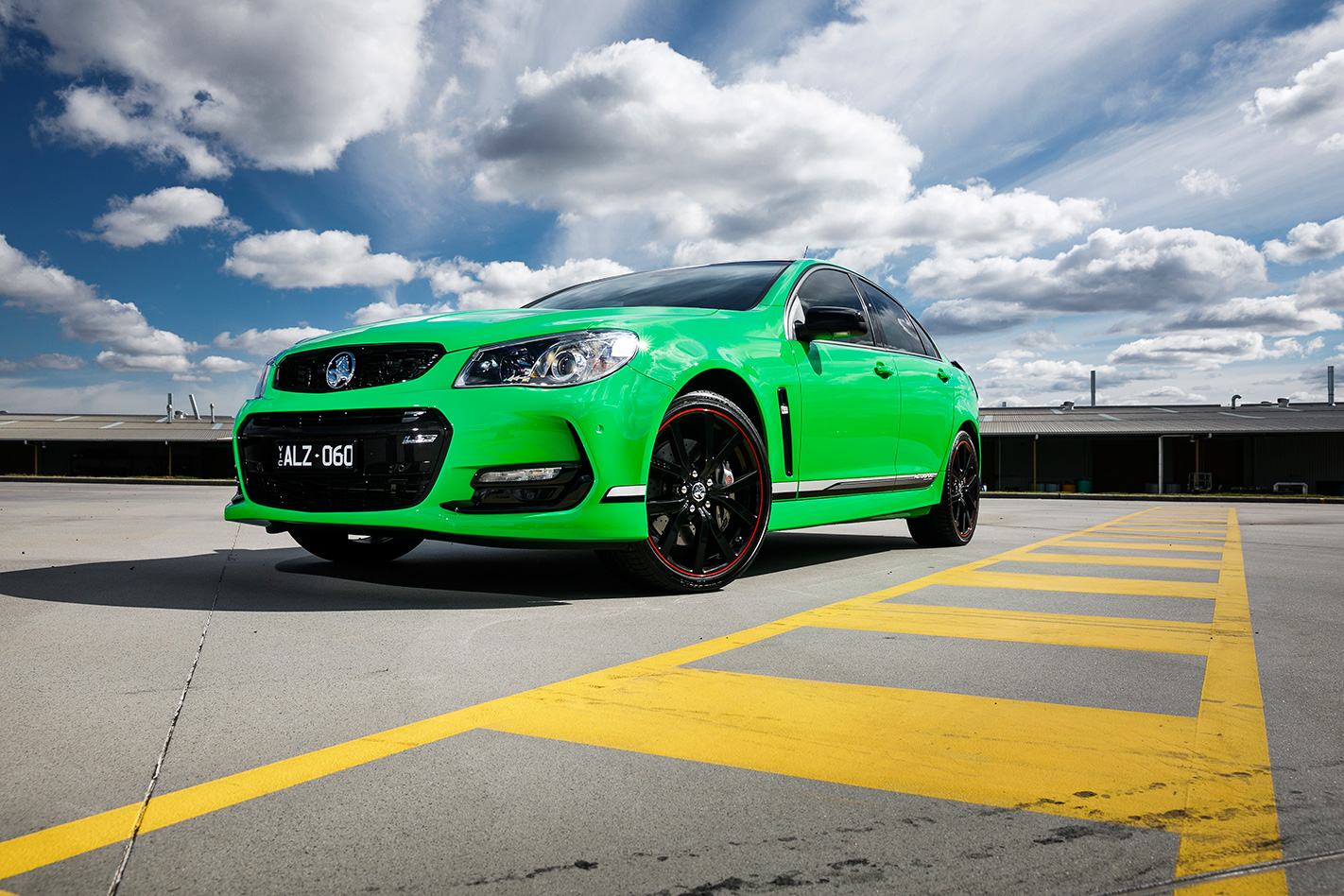
There are countries where it is a jailable offense to mock the president; where beer is not allowed; where locals wouldn’t know a high-performance family sedan if it ran over them. Fortunately, and thanks to cars like the Commodore (and endlessly mockable pollies) Australia has no such problem.
Until now, anyway, and the demise of the local car-making industry should serve as a reminder of a couple of things. First, that we had it good, real good, for a long time. And secondly, that we need to hang on to these cars and look after them so that they’re around for future generations of tappet-heads to admire.
I already struggle when the kids who run this magazine ask me “Who was Debbie Harry?”, but I’ll be even sadder when the first nipper asks me “What was a Holden Commodore?”.
Because then I’ll know that one more little strand of that fabric we know as society will have frayed, snapped off and blown away in the breeze. I blame politicians. I blame globalisation. But I can’t bring myself to blame Ted Bullpitt.
If you’ve ever wanted to feel like Steve McQueen, this might just be your best chance short of escaping prison on a German motorbike.
The race suit McQueen wore in the film Le Mans, as well as a handful of iconic cars will feature in Sotheby’s aptly names ‘Icons’ auction in December.
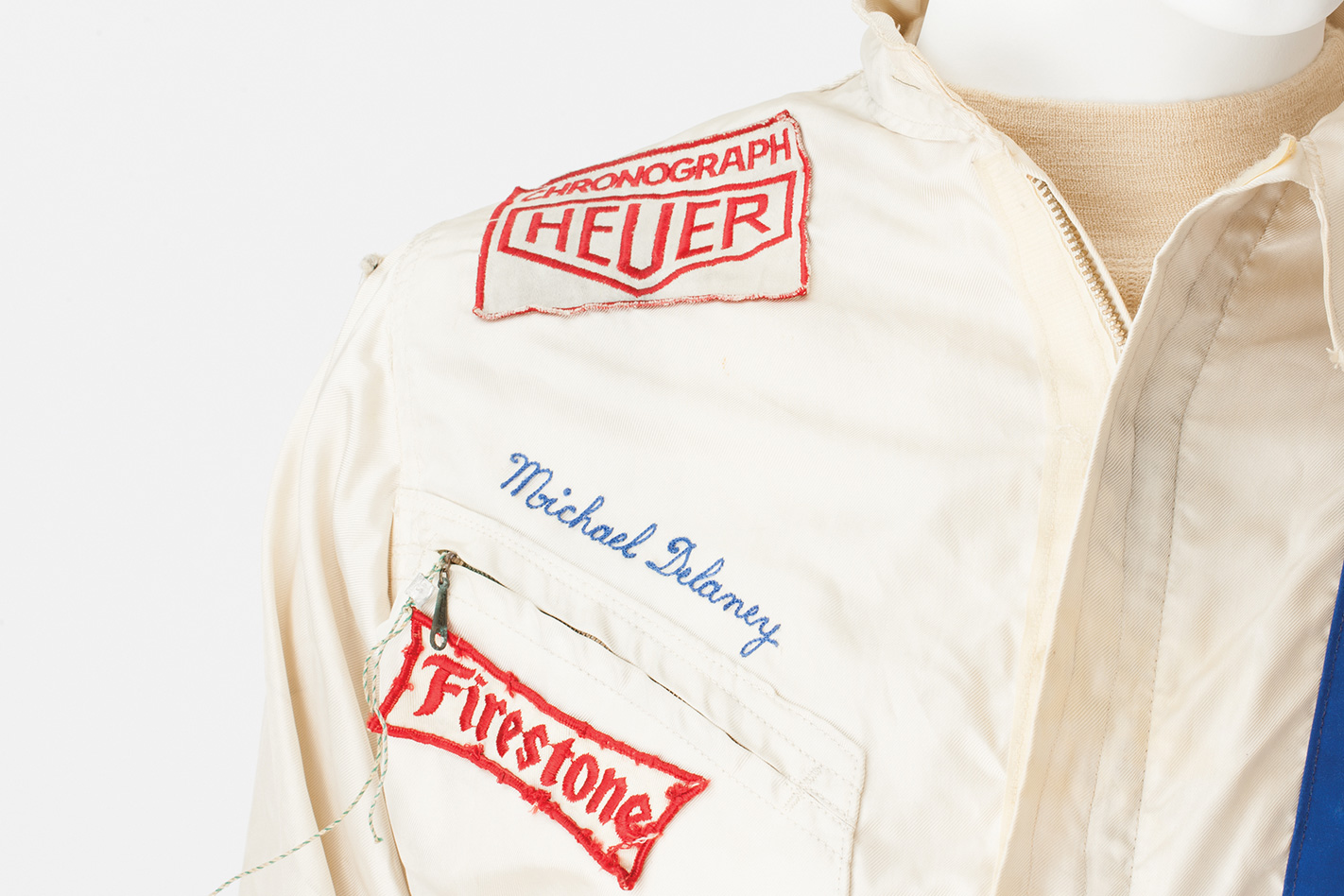
The suit, which belonged to McQueen’s character and protagonist Michael Delaney, features some light staining and all the original stitching and patching consistent with its time on screen.
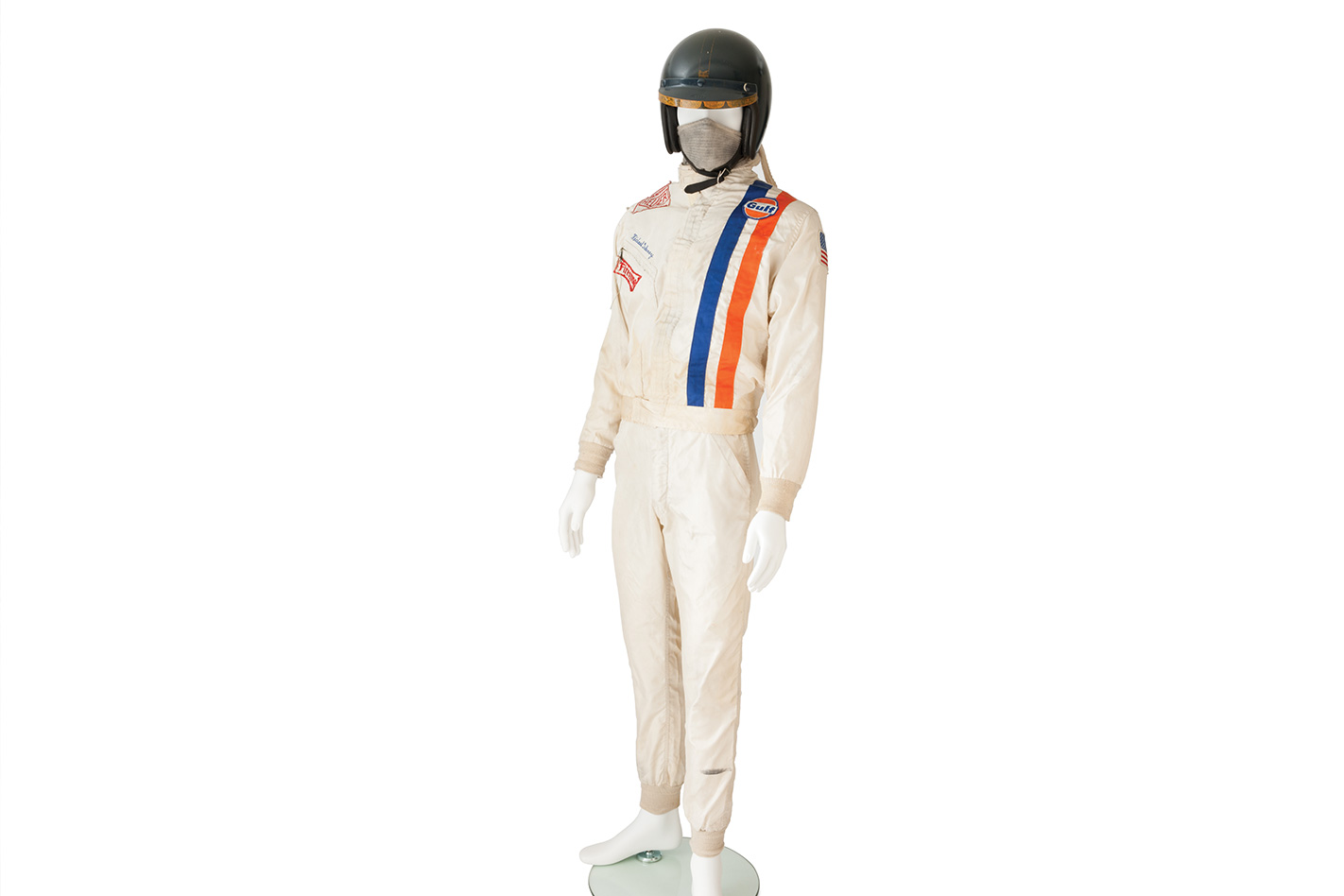
The suit was given away to a prize winner for a promotion, though first prize was the Porsche 914 used for filming.
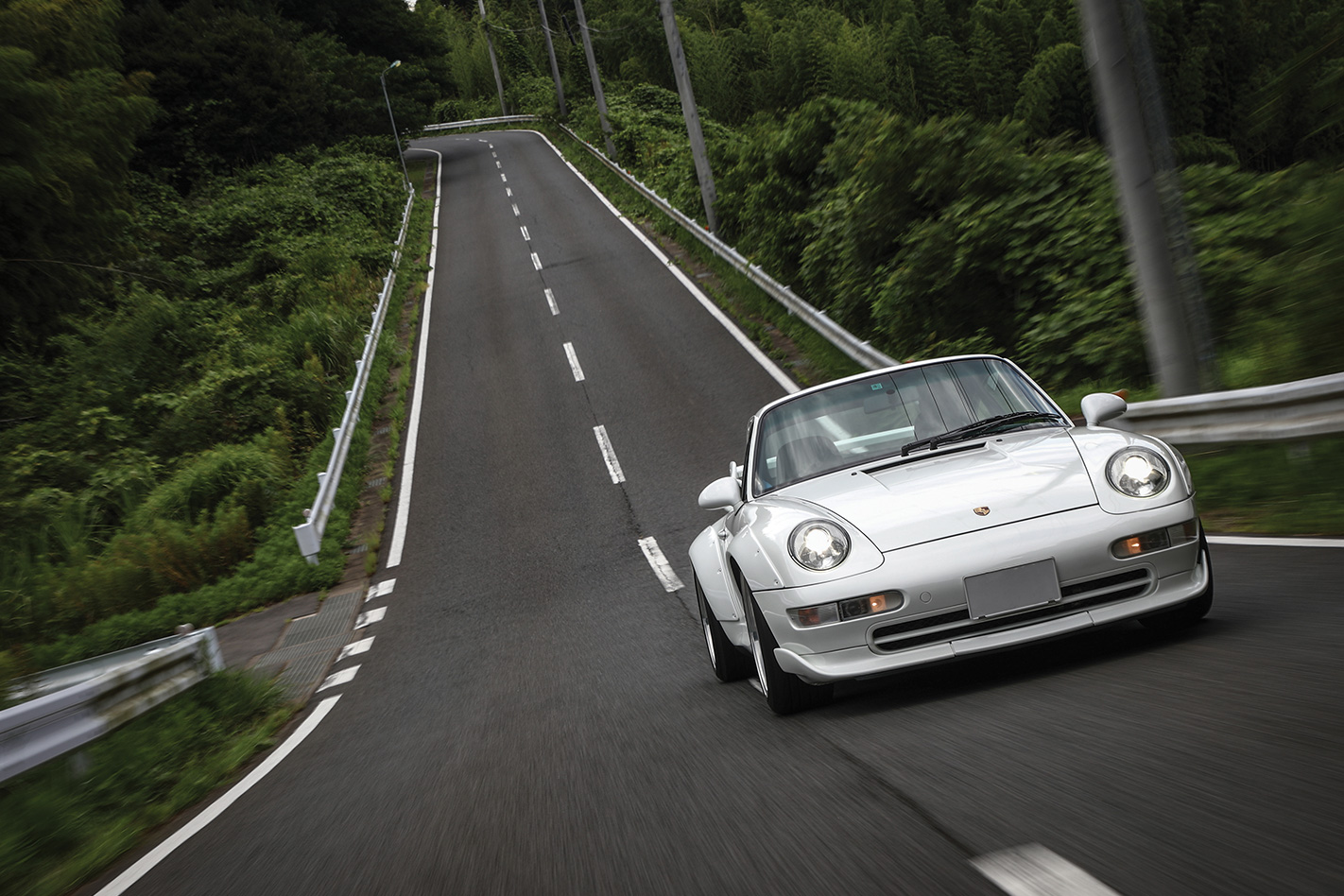
But the auction will also facilitate the sale of a handful of cars usually found on the bedroom walls of young car fans. A 1996 Porsche 911 993 GT2, a 1989 Lamborghini Countach, and a Ferrari F40 are also set to sell.
Ferrari Performance Collection up for auction
The GT2 is estimated to sell for between $1,436,050 and $1,827,700.
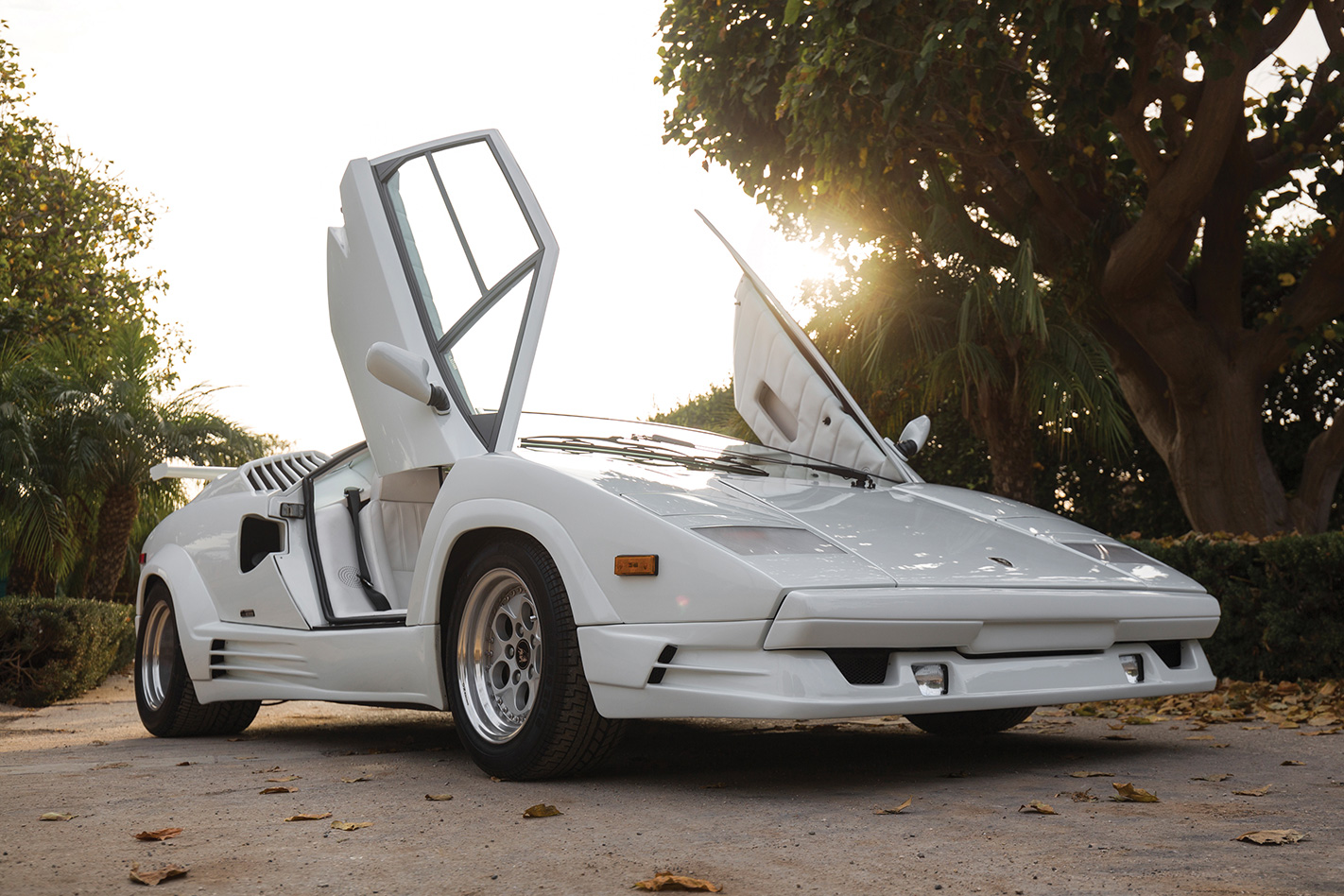
Having travelled 15,708km, the Countach is still relatively fresh for its age, with a minor accident in 2005 being the only blemish on its record.
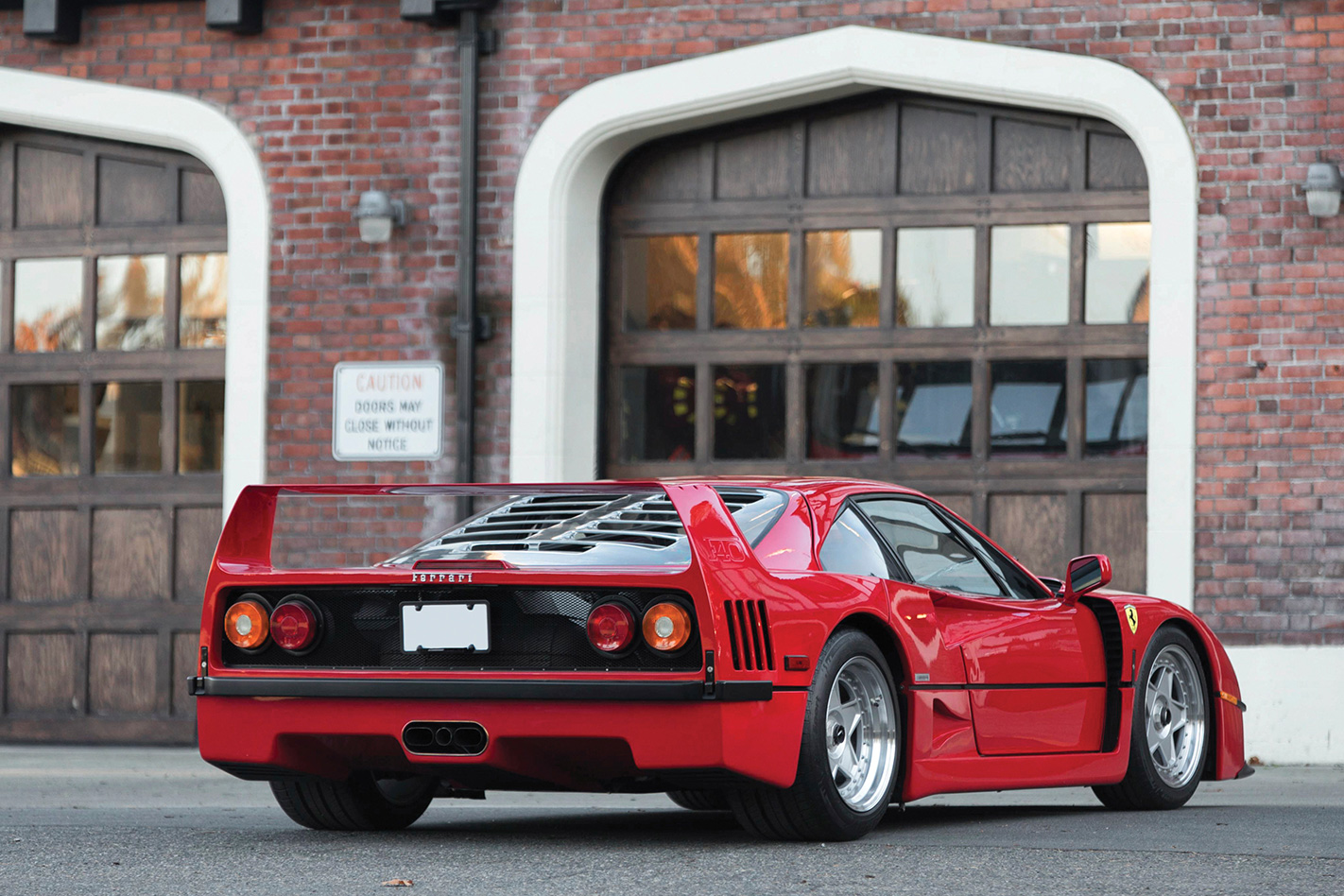
Sotheby’s is expecting it to fetch $1,566,600 to $1,827,700.
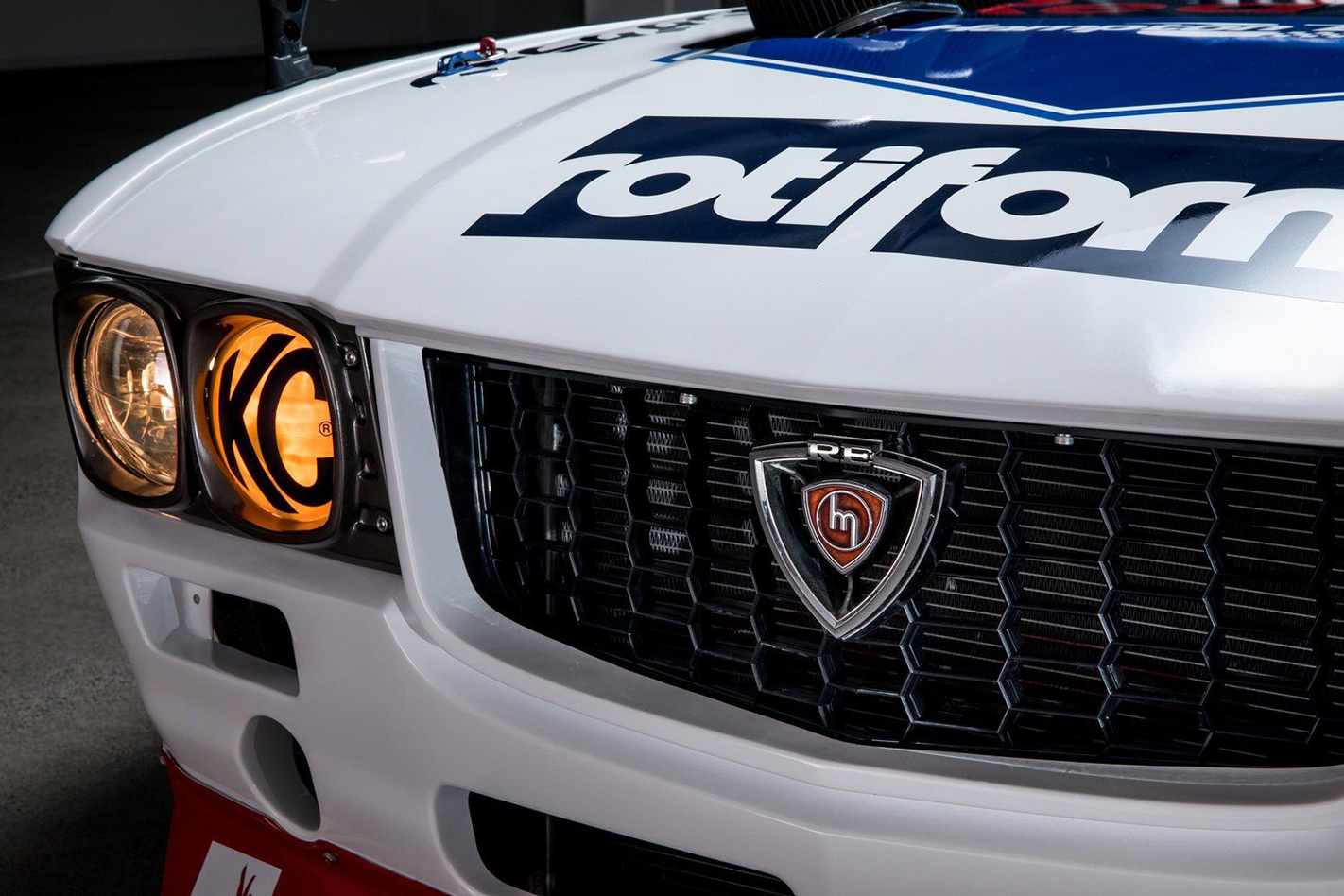
IT’S sometimes held to be the most beautiful Japanese car of the modern era, but Kiwi drifter ‘Mad’ Mike Whiddett has decided that the FD RX-7 lacked a little something. And that little something was the front end of an RX-3.
It sounds like a mash-up that should never work, but we have to admit that ‘Madbul Gen 7.3’ looks the absolute business. The creation is the work of legendary stylist Kei Miura, and while the RX-7 chassis remains in place, the front end gets a 12A Savanna RX-3 grille, and spotters might well notice that there’s the big 10A RX-3 grille badge.
The heavily-dished Rotiform LHR wheels are pure Tatsumi car meet, and the car even sports its original JDM licence plate. The Rocket Bunny body kit gives the car the macho stance to complement the bluff front end, hiding the FD’s more feminine curves while the hockey stick door mirrors complete the retro look.