
- Introduction: Improving the breed
- Update 1: Daily duty
- Update 2: ‘S’ for Suspension
- Update 3: League of Legends
- Update 4: Conclusion
Introduction: Improving the breed
THE ORIGINAL Toyota 86, launched in 2012, was always a tricky car to live with on a daily basis.
Busy, jarring ride; a cost-conscious interior and a live, 24/7 broadcast of the bitumen beneath you – vibration, noise and all. But you put up with it, because when the road turned twisty, nothing less than $50,000 satisfied or pleased, from a driving perspective, like the 86, with sublime steering, nimble handling and that oh-so-sweet rear-drive feeling.
The five per cent spent on far-flung, twisty roads, more than justified the other 95 per cent. Same applied, of course, to the Subaru BRZ. Yet it’s interesting, how many 86 owners do you see driving around who wouldn’t know what that five per cent feels like, yet put up with the 95 per cent on a daily basis?
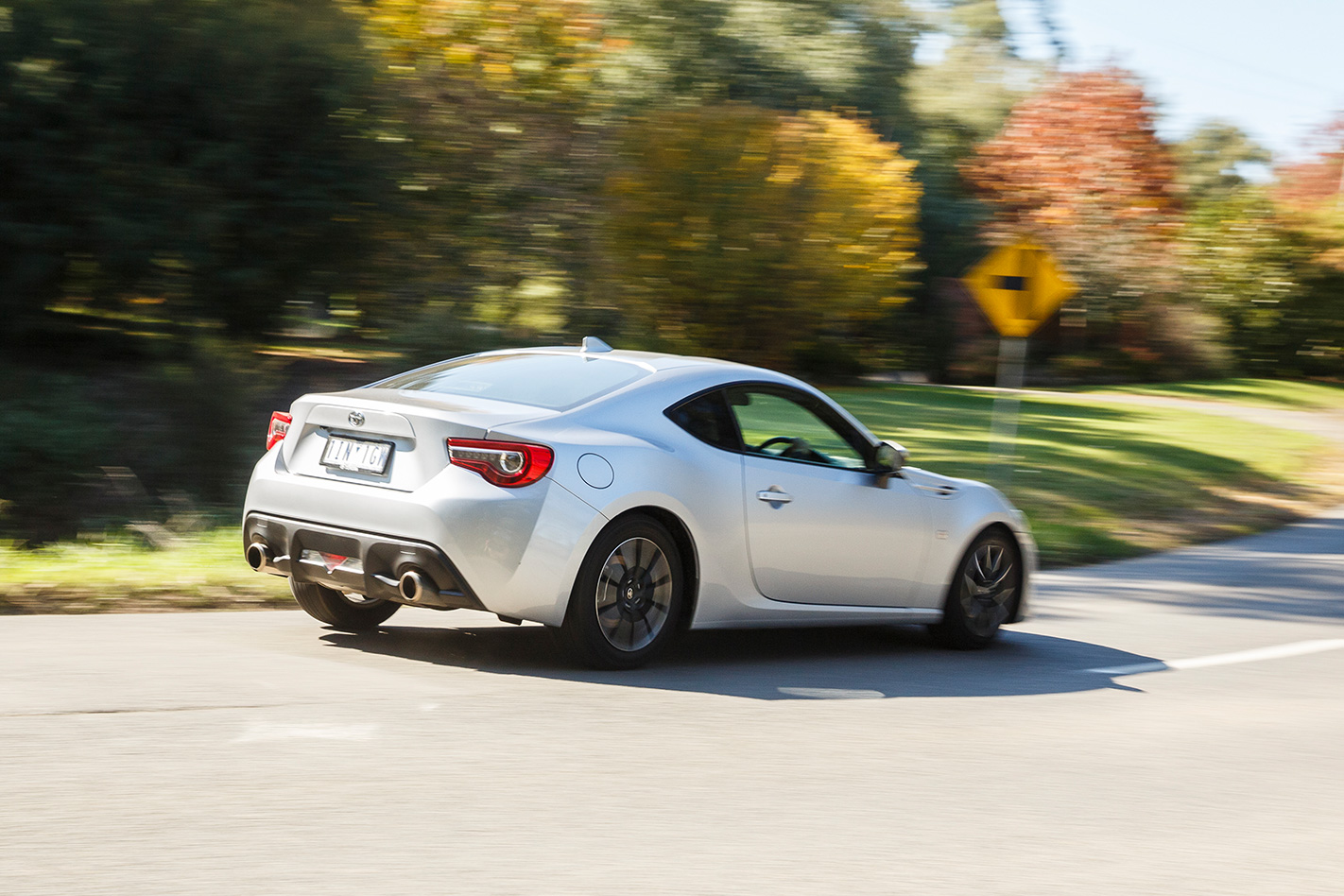
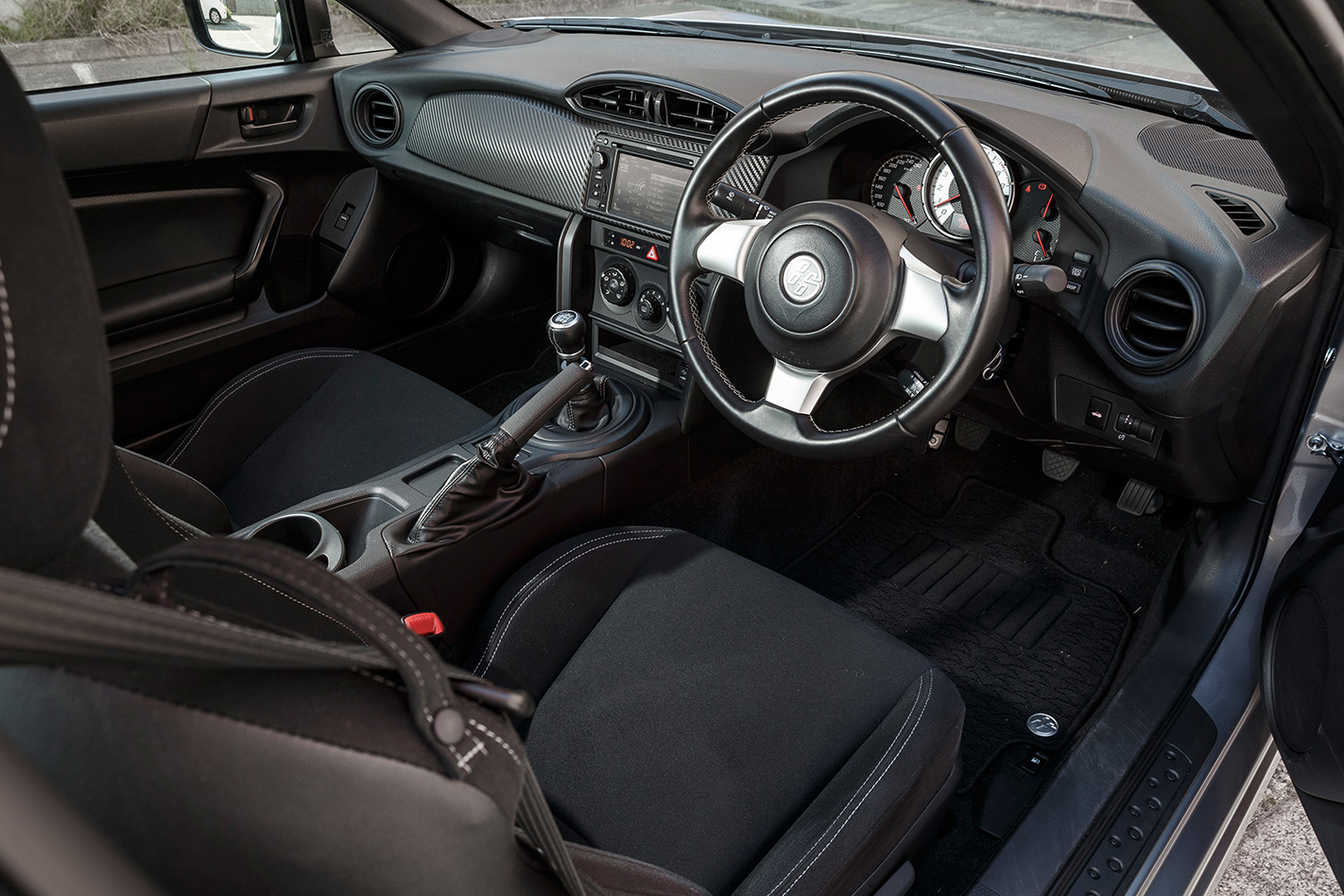
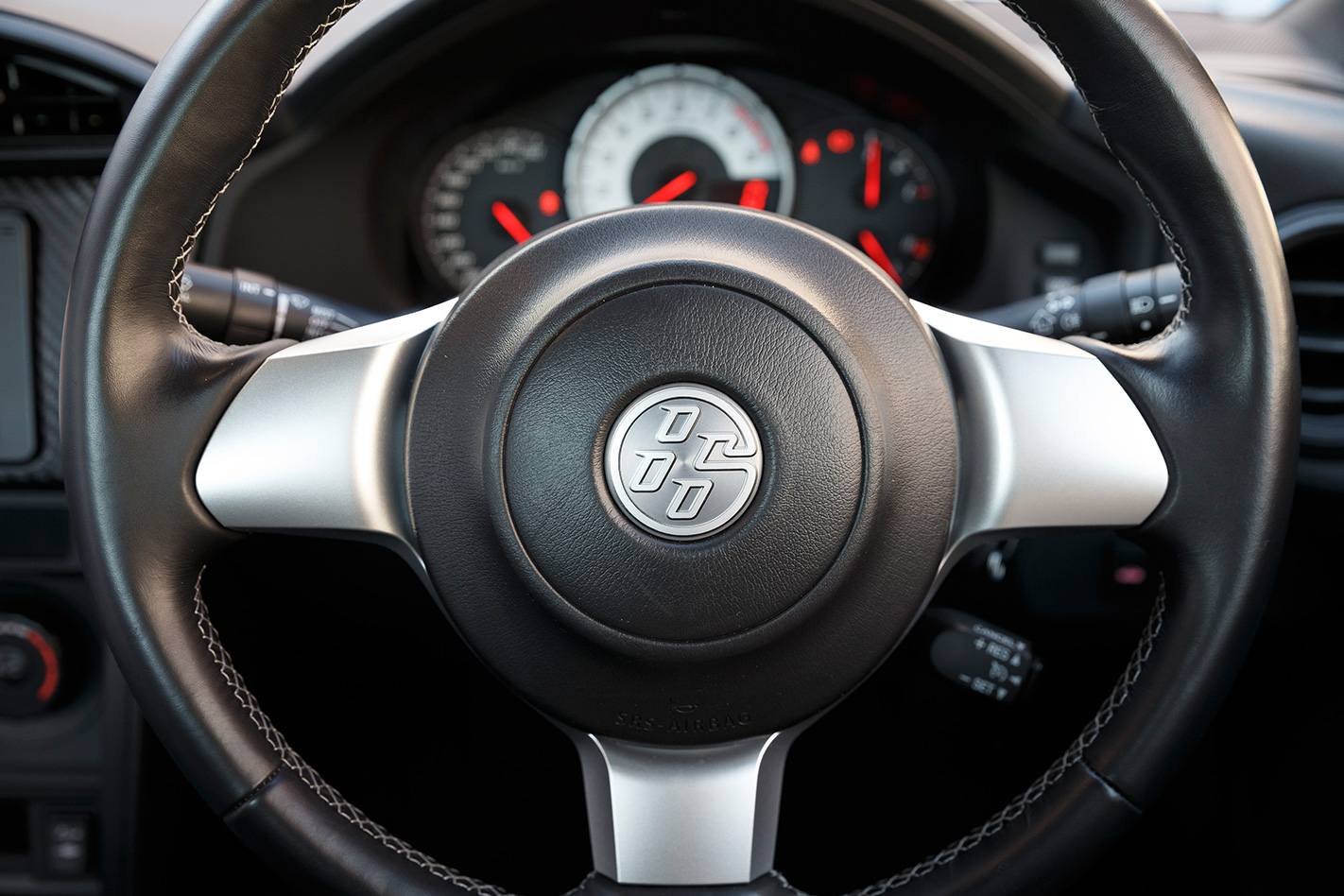
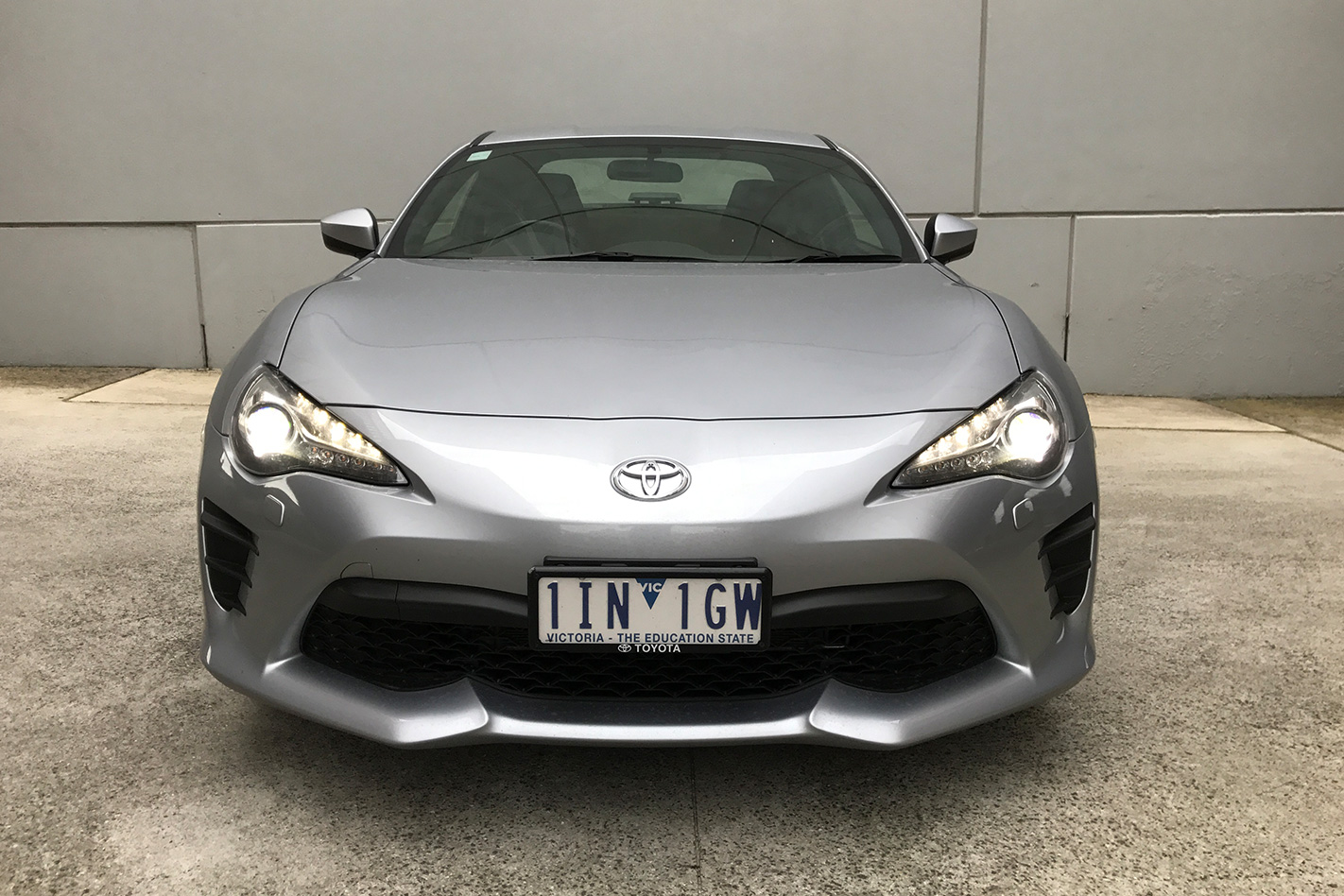
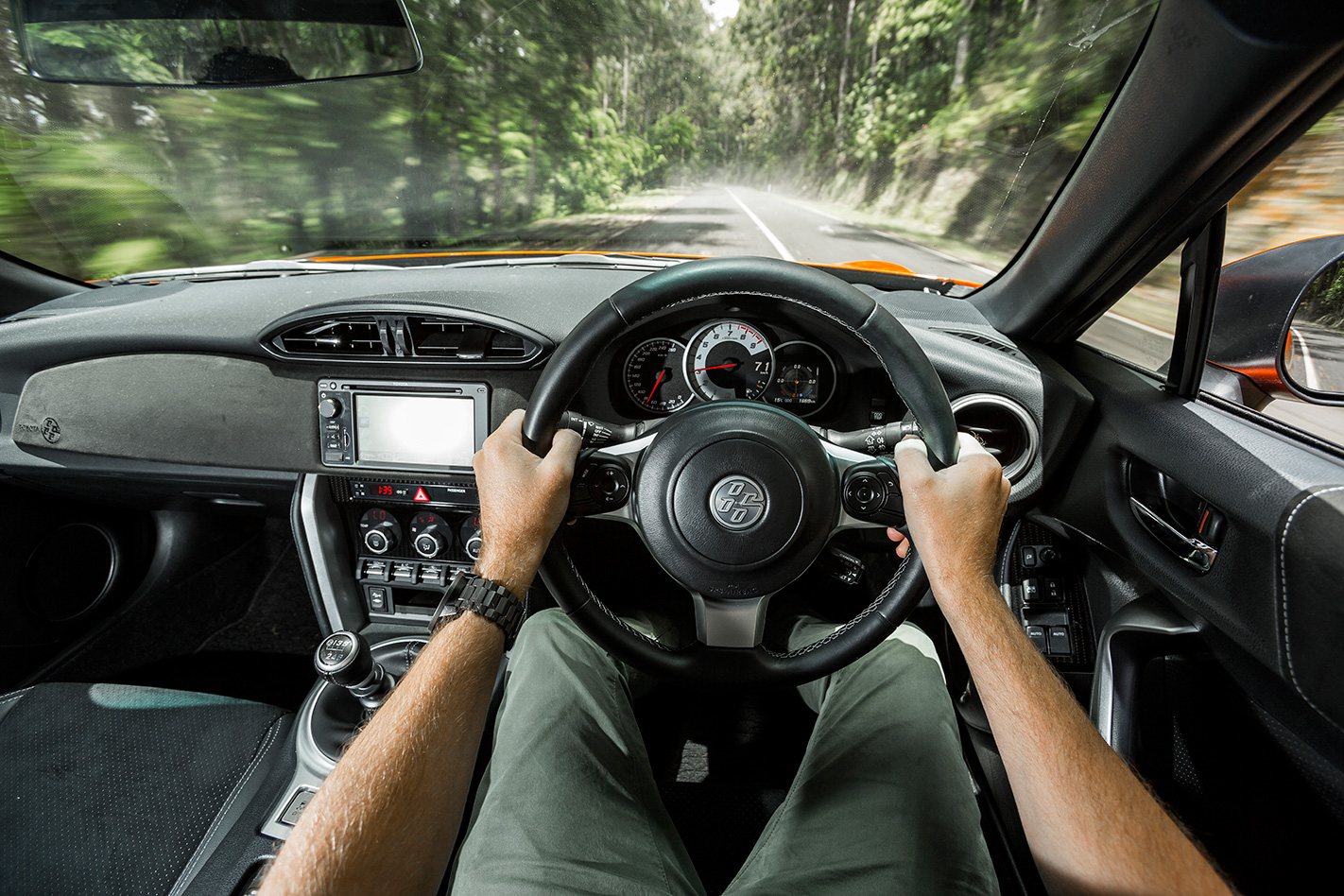
This could be the case, ever so delicately, with the new 2017 Toyota 86. A major freshen up to keep it rolling off showroom floors, the 86 scores a restyled front bumper; updated headlights and taillights; a new 17-inch wheel design for the GTS; and spruced-up interiors including a new 362mm steering wheel, the smallest fitted to any Toyota.
But there are two other fairly major changes: brand-new chassis electronics including a much-needed, ‘half-off’ Track mode; and some interesting changes to the suspension, including an overhaul of the dampers and a softening, by 15 per cent, of the rear springs (and a 1mm thinner swaybar), and a 10 per cent firming of the fronts.
And how is the 86 ageing in the general performance car world? We’ve got three months in a base GT at which point we swap for three more in a GTS. And by the end of it, we’ll have a pretty good idea if Toyota’s changes have made the 86 even sweeter, or a new flavour nobody was asking for.
MONTH ONE
Claimed combined consumption: 8.4L/100KM Starting ODO: 3500KM Duration: 6 months (sort of)
Liked: So much of it feels right Disliked: Most points under 5000rpm
Update 1: Daily duty
How the 86 became a much nicer daily driver
MONTH TWO with Toyota’s updated 86 GT and, interestingly, we’ve not (willingly) spurned it in the car park for more comfortable alternatives – like we might have, once the novelty had long worn off, with the ‘original’ car.
That’s because the 86 is now a much easier gadget to live with on a daily basis, owing mostly to the softened, more grown-up ride making it more than bearable over bumps at urban speeds. It seems to have come at a small cost, however, for those only interested in pure, uncompromised driving thrills.
We might try to find a stock, original car for some back-to-backs later, as we’re talking very minor differences here, but a decent drive in our little 86 GT made us wonder if the slightly softer suspension has, by the smallest amount, blunted rather than sharpened the 86’s responses.
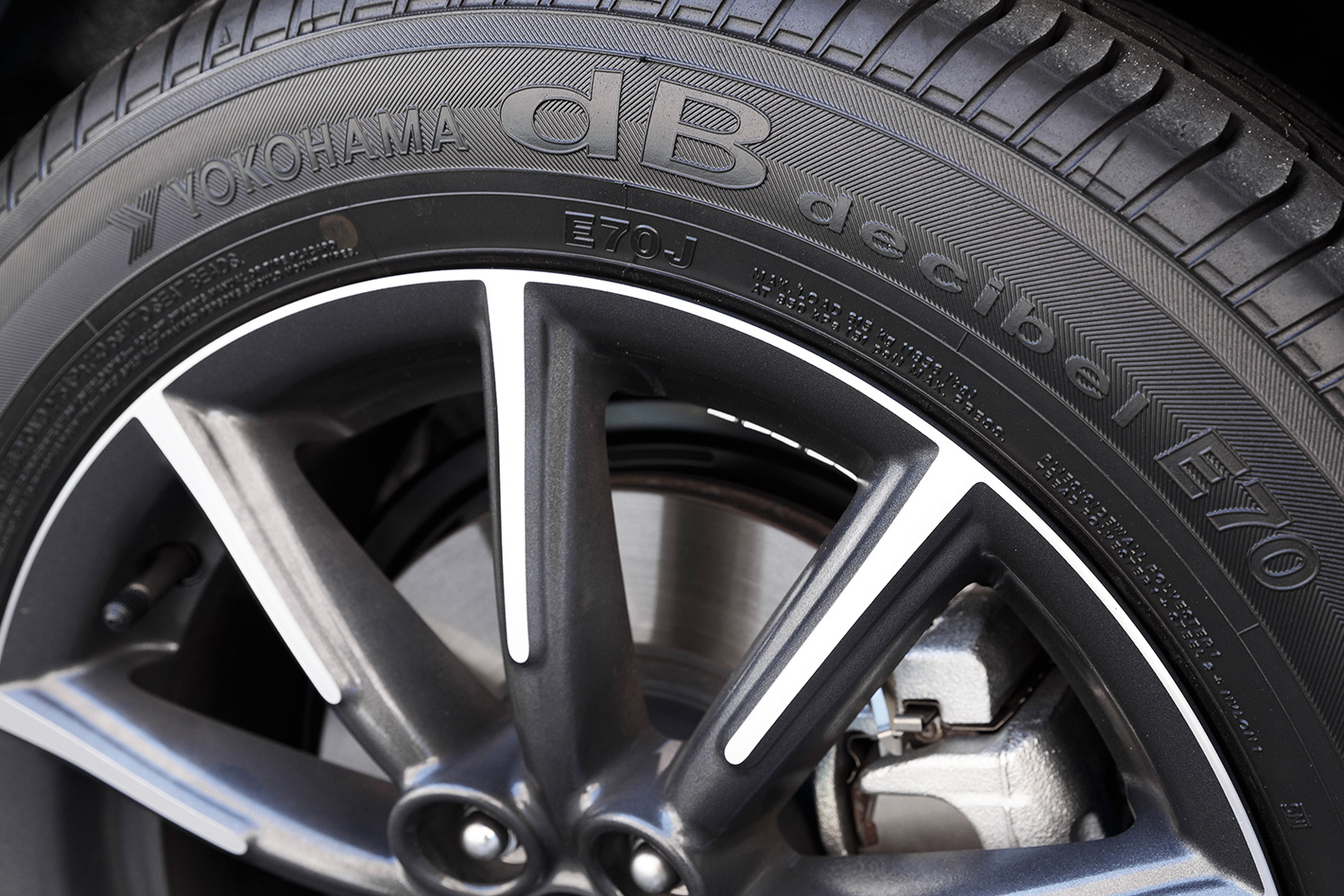
From a driving perspective, the tyres don’t feel as fit for purpose as the rest of the car, but fortunately this is, of course, easily fixed. All that aside, we’re relieved to report that the updated 86, and BRZ, remain the most fun cars you can buy new for under $40K.
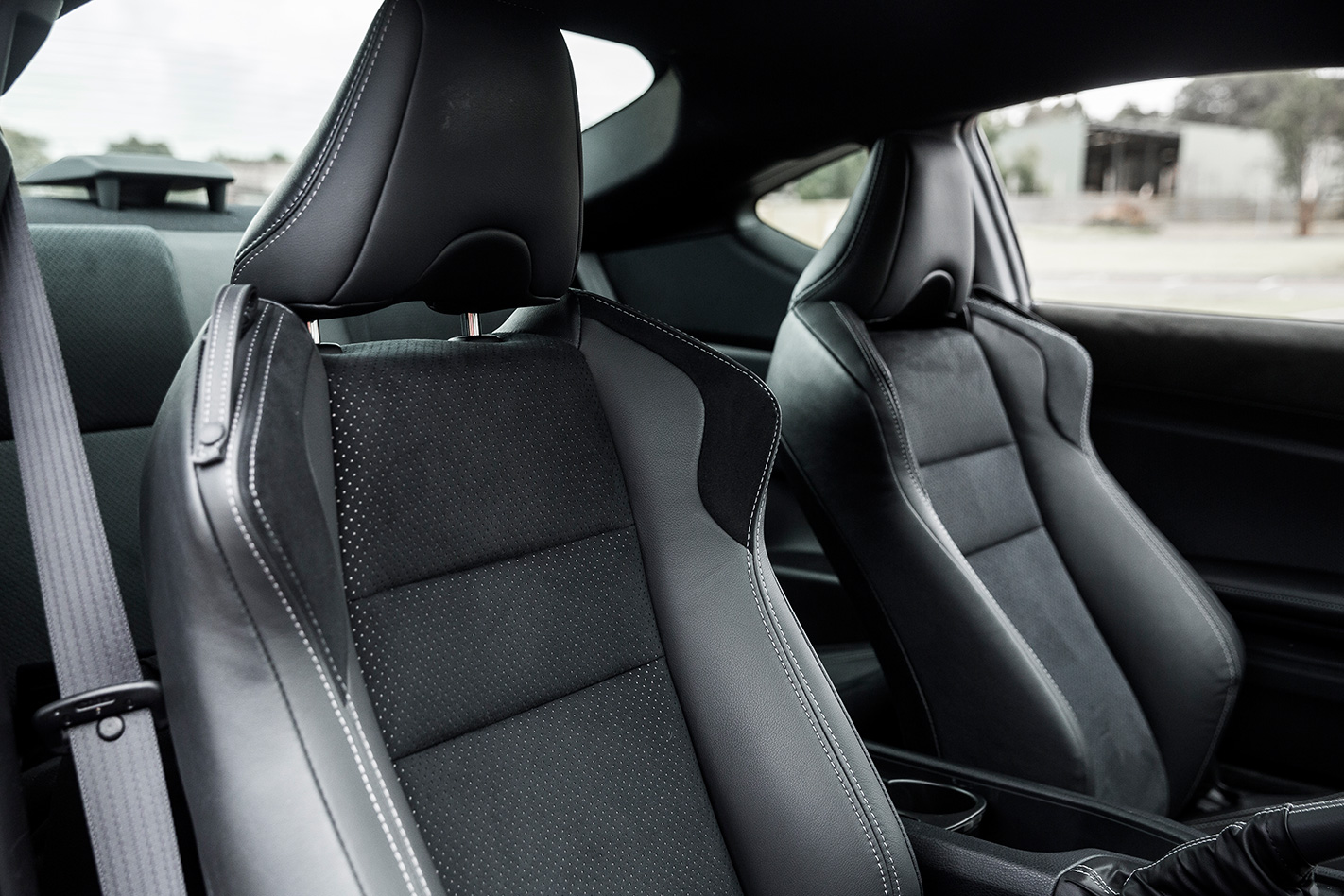
Or not, if you own it. We had forgotten just how fun these cars can be. The front end remains one of the best in any sports car on sale; the seats are huggy; the driving position spot-on; there’s throttle-oversteer on command, provided the rear tyres already have some lateral load; and the pedals make heel-and-toeing a breeze.
However, for many owners, even Track mode might begin to feel a tad conservative, and it’s testament to the 86’s friendliness that you may feel entirely confident turning the ESP all the way off.
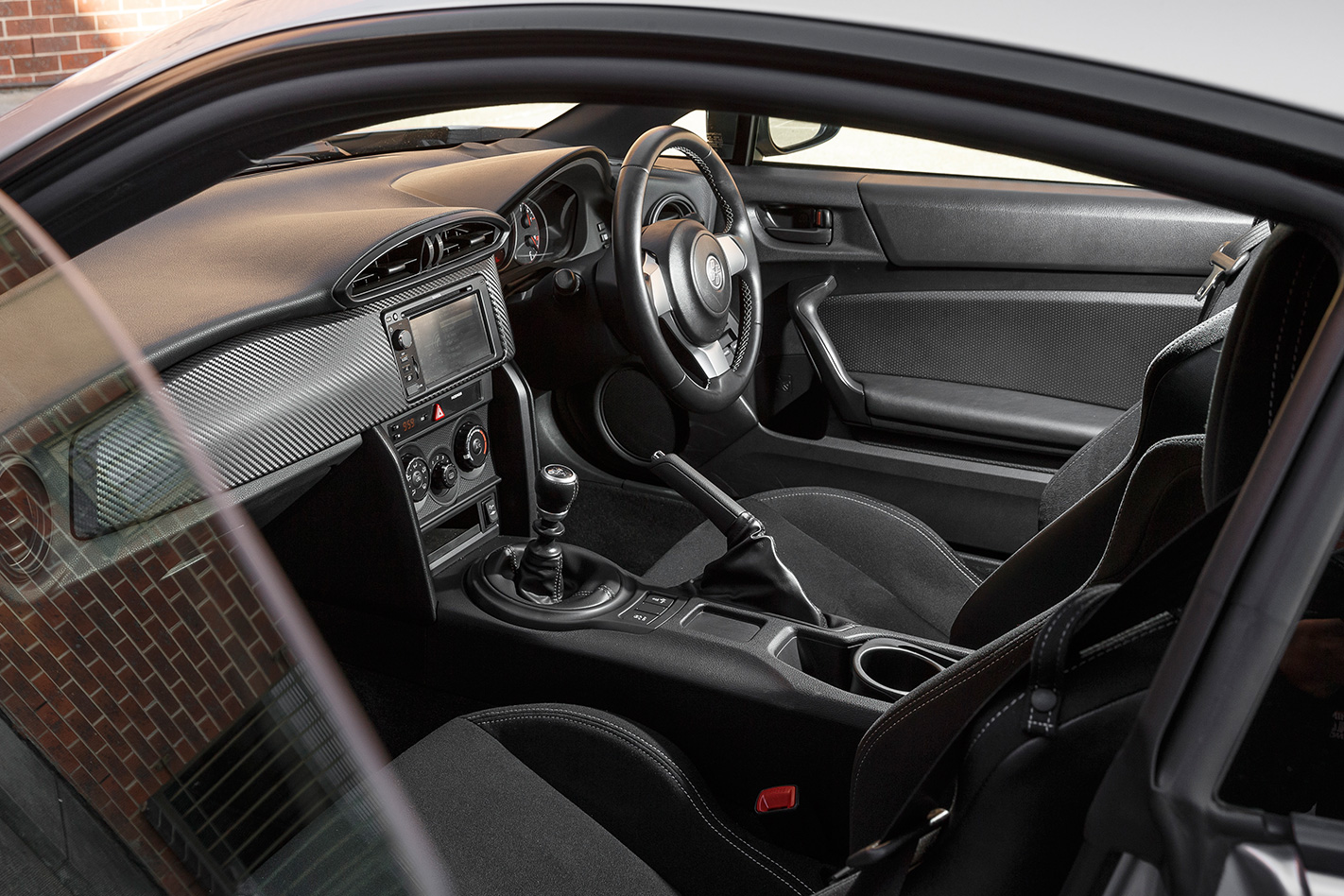
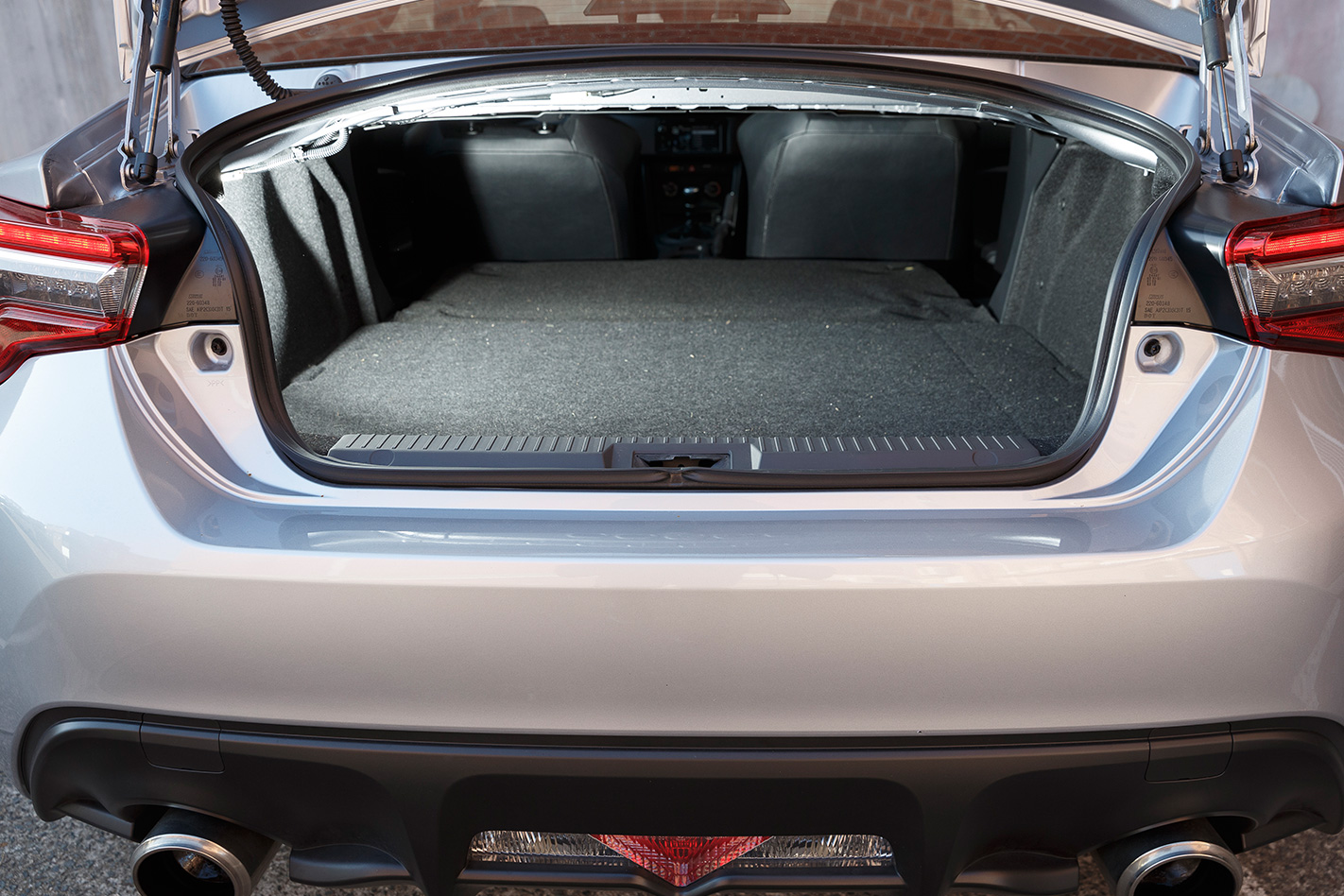
And the interior of the GT does feel a tad less plain now with the double-DIN TFT infotainment display – effectively from the GTS, sans satnav. Then there’s the cruise control, indicator and wiper stalks whose gizzards would not surprise us to share part numbers with Toyotas from the early 2000s.
Even if, it seems, it’s at a slight cost to the other five.
MONTH TWO
Fuel this month: 9.2l/100km Average: 9.2l/100km Distance this month: 882km Total: 4382km Liked: Softer ride helps daily driving
Liked: Softer ride helps daily driving Disliked: The standard tyres. They’re horrible Favourite moment: Sideways all day on track
Update 2: ‘S’ for Suspension
We swap Toyota 86 GT for GTS
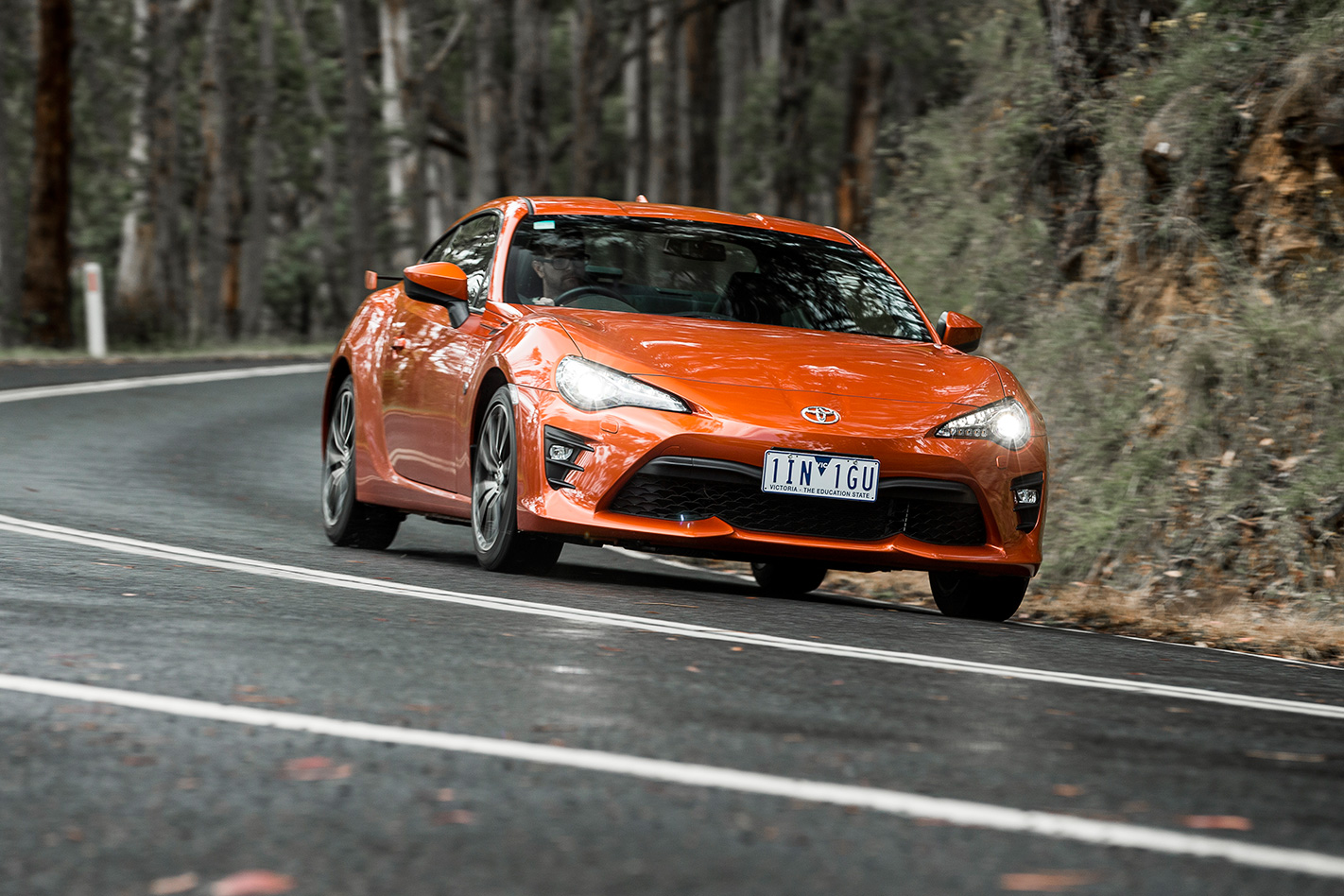
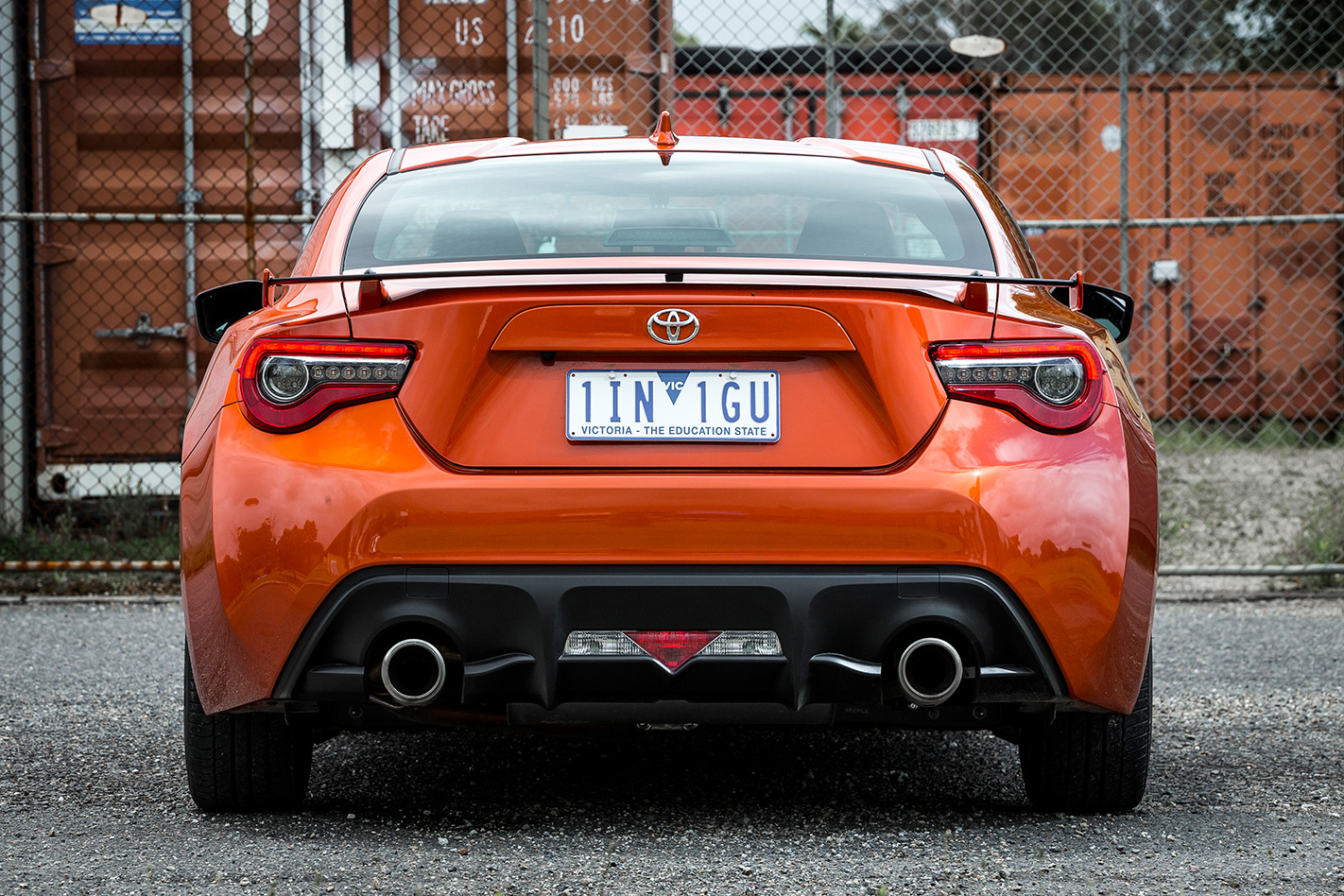
YOUR eyes don’t deceive you – like a Pokemon, our Toyota 86 long-termer has evolved from a silver GT to a Velocity Orange GTS, as we continue to comprehensively evaluate the most recent updates to the 86 range.
And it took about two minutes of driving for a swear word to come out of our mouths. Toyota has not quietly revolutionised the 86’s ride as we had concluded from driving the GT last month.
It seems we should have waited until driving the GTS on 17-inch, 45-profile tyres before foolishly announcing – having only driven the GT on 16-inch, 55-profile tyres – that the difference in ride is game-changing for the 86’s daily driveability.
Mea culpa. Alas, as we jiggled along in the GTS, we were pleased to discover many positive things to talk about in the 86’s change to 2017-spec. It seems Toyota has listened to the many and unrelenting criticisms of the 86’s cheap and cheerful interior, apparently spending a lot of energy trying to jazz it up.
Plainly, the bulk of the 2017 updates was sunk into the GTS – not the GT. From the perspective of a long-term test, the GTS is much nicer than the GT owing to numerous little conveniences that add up. Keyless entry, seat heaters, a better infotainment system (although still maddeningly unintuitive, with ugly menus, and slow to respond to inputs).
If you are buying an 86 as a toy and intend to show it no mercy, you may as well just get the GT. And put in some rubber floor mats. To our eyes it looks better, too. While in orange the new front bar does make the 86 look a little like a halloween jack-o-lantern (impossible to unsee –sorry) it’s an effective freshen-up, including the new 17s.
Next month we broaden scope and explain why the new 86 is not, to our minds, the spiritual successor to the legendary AE86.
MONTH THREE
Fuel this month: 10.8l/100km Average: 10.0l/100km Distance this month: 229km
Liked: GTS interior now a little nicer Disliked: We were wrong about the ride…
Update 3: League of Legends
There’s one area in which the new 86 can’t live up to the legend
THE Toyota 86 has a very different DNA to its spiritual forebear, the AE86 Sprinter, if you ask me.
What would I know? I own one – a 1984 Trueno GT-APEX with the revered 1.6-litre inline-4 4A-GE, the engine Toyota built that very closely resembled the legendary Ford Cosworth BDA 1.6-litre inline-4 of the time.
With the same bore and stroke (81 x 77mm) and similar head designs, both engines, in race trim, would produce similar outputs at similar rpms.
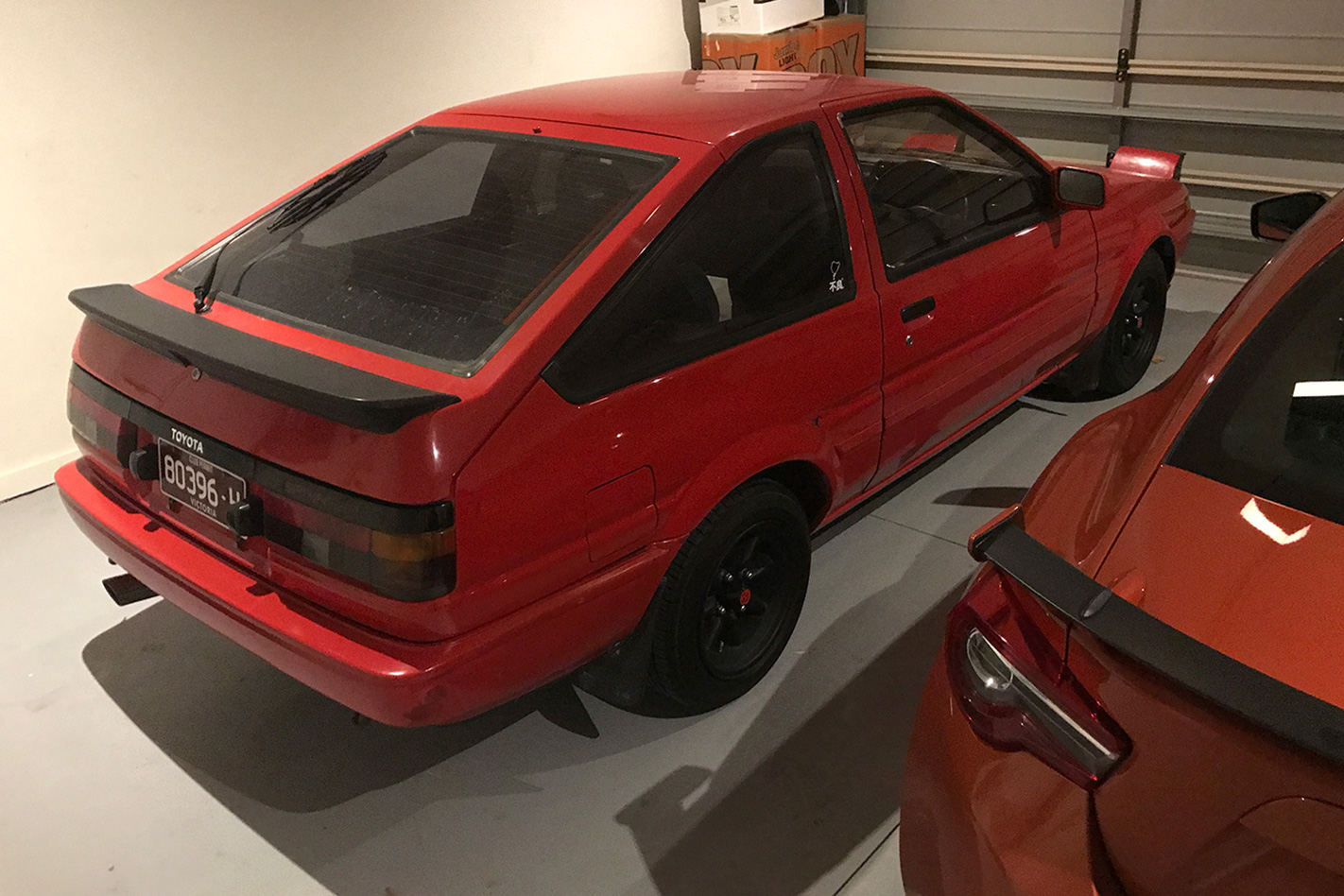
Don’t get us wrong, with 152kW/212Nm it more than does the job, but in a more functional than emotional manner. The sound in particular will hardly raise the hairs on the back of your neck. That is, unlike the 4A-GE. A good 50 per cent of why this car is the cult classic that it is has to do with the engine.
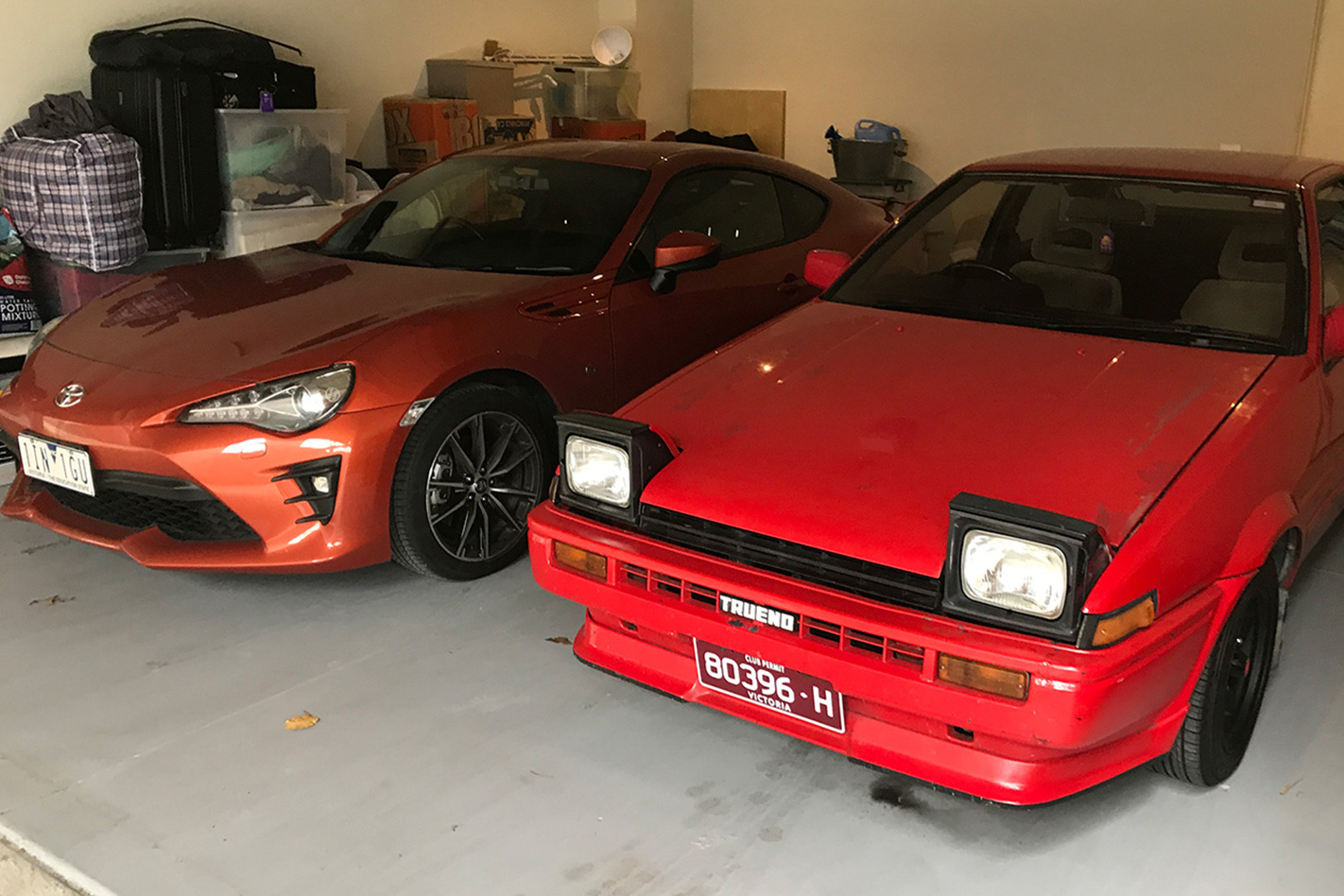
Of course, the little AE86 isn’t going to win many drag races because despite its screaming atmo engine making it feel fast, a new Toyota 86 would smoke it in a straight line. And the new 86 itself is hardly your first choice for the Friday night drags. Should Toyota have used an inline-4 in its new 86 instead of the boxer?
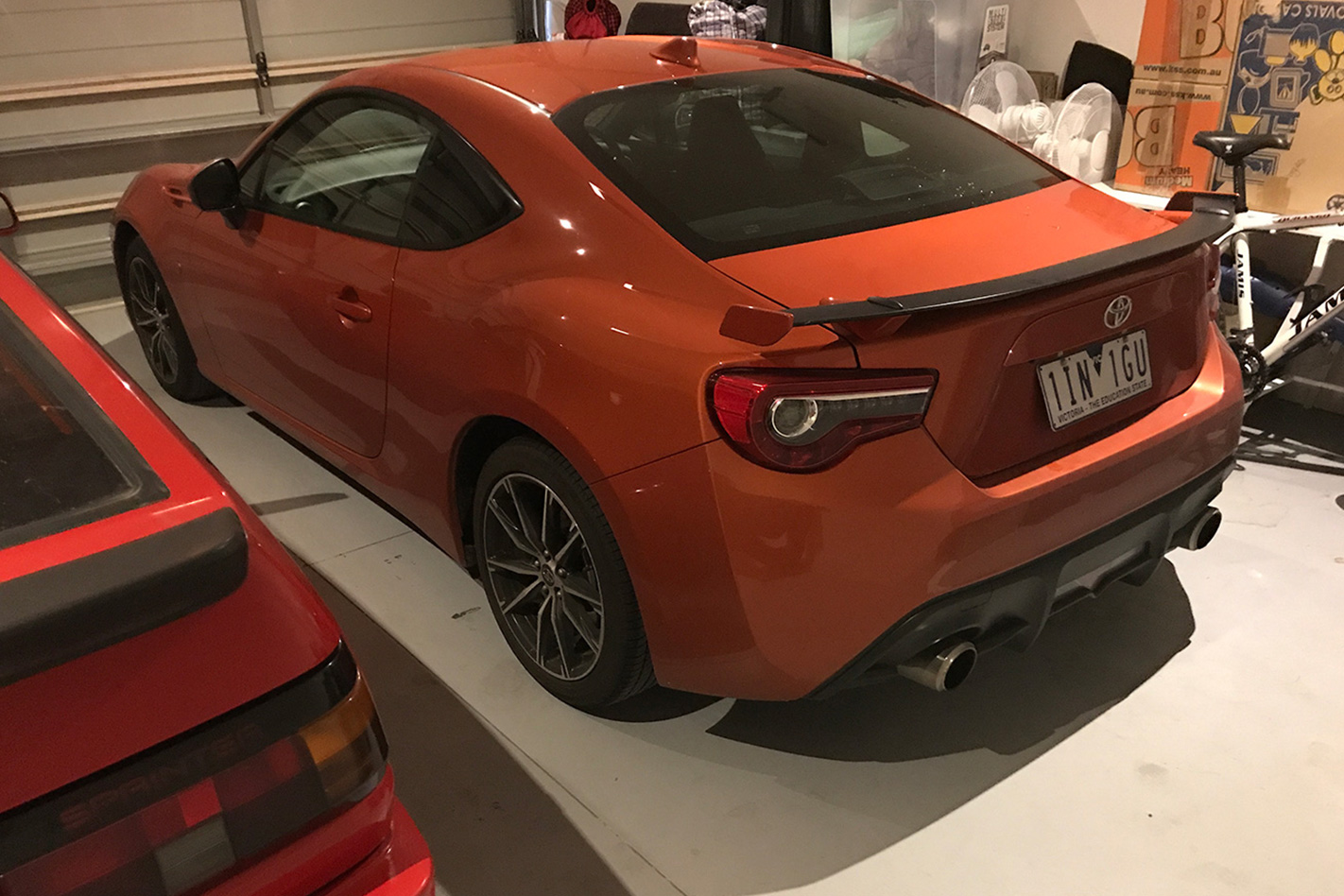
And part of the 86 and BRZ’s sublime front end surely has much to do with the boxer engine’s lower centre of gravity. If it’s the engine that an AE86 owner would find most underwhelming about a new 86, they’ll be blown away by the chassis. The AE86 is a surprisingly agile car with a lightness and willingness to its handling unexpected for its age.
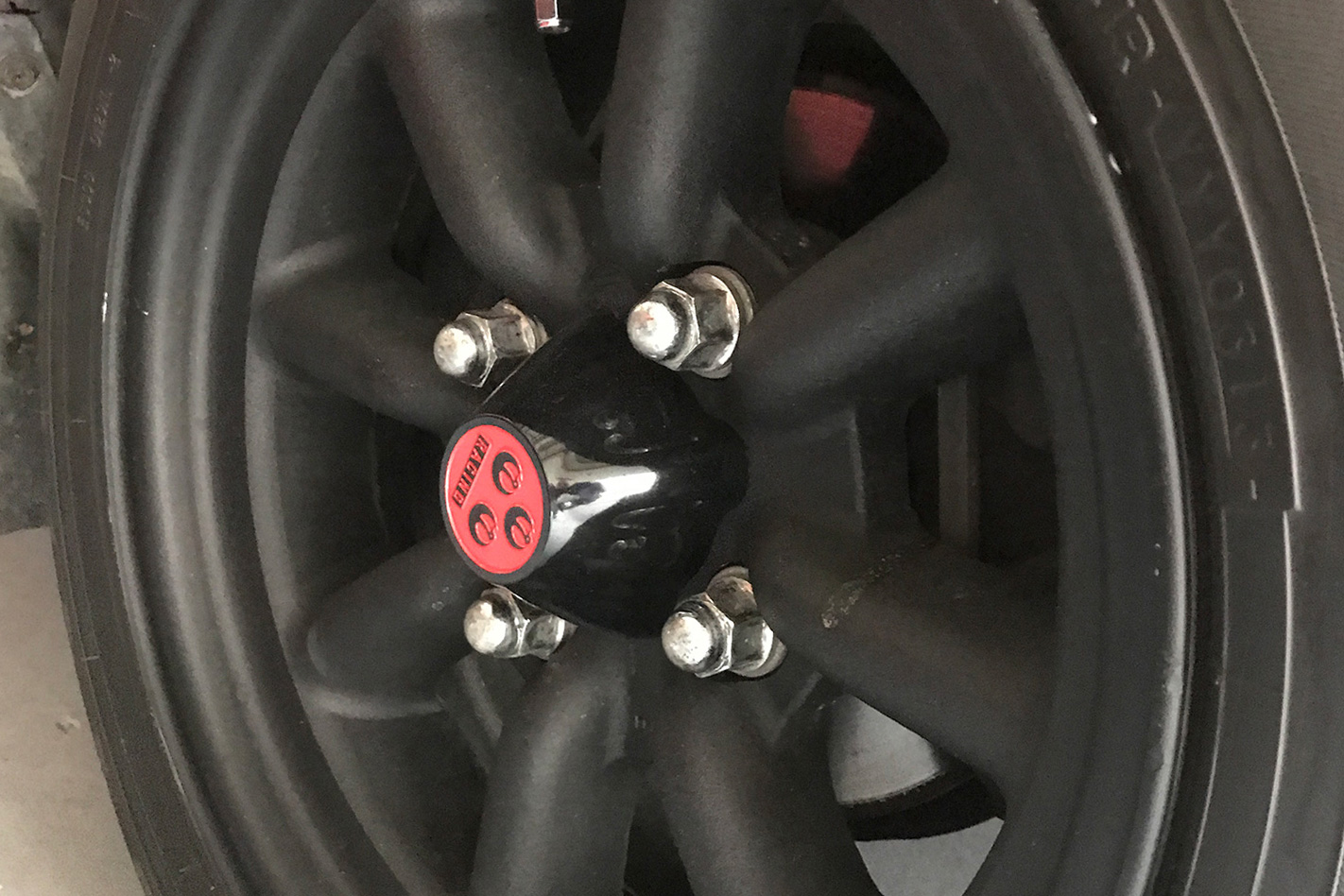
The same handling compliments can be given to the 86 and BRZ – and it’s the strand that most strongly connects new to old. With lithe and eager handling, fantastic steering and an obvious rear-drive character, the 86 will have you hunting down corners. As has been much publicised.
Like the DNA of two parents into one child, perhaps it was just unlucky the Toyota 86 ended up with the Subaru engine. The soul of the AE86 lives on in the seat and steering wheel of the new 86, just not the accelerator pedal. Or tail pipe.
MONTH FOUR
Fuel this month: 9.6l/100km Average: 9.9l/100km Distance this month: 866km
Liked: AE86-like handling and fun Disliked: Engine doesn’t howl like a 4A-GE
Update 4: Conclusion
After five months we farewell our Toyota 86
Five instalments and more than 5000km across two variants of Toyota’s updated-for-2017 86 and we can report that it’s basically the same car as launched in 2012, but the interior tweaks, concentrated on the GTS, make it just that much nicer to live with.
And the brand new chassis electronics – ESP and traction control – are game-changing in that more people who buy the 86 are able to enjoy its wonderful handling with a safety net intact. Previously the electronics would intervene so clumsily and abruptly you had to turn them off to properly enjoy a fast drive.
Which would leave you exposed. Fortunately, not anymore. Aside from those two things, the updated 86 really just looks a little nicer (thanks to a new front bar, rear spoiler and 17-inch wheel design) and goes a little harder, thanks to bumped-up outputs (up 5kW and 7Nm to 152kW/212Nm) and a shorter final drive in the manual models.
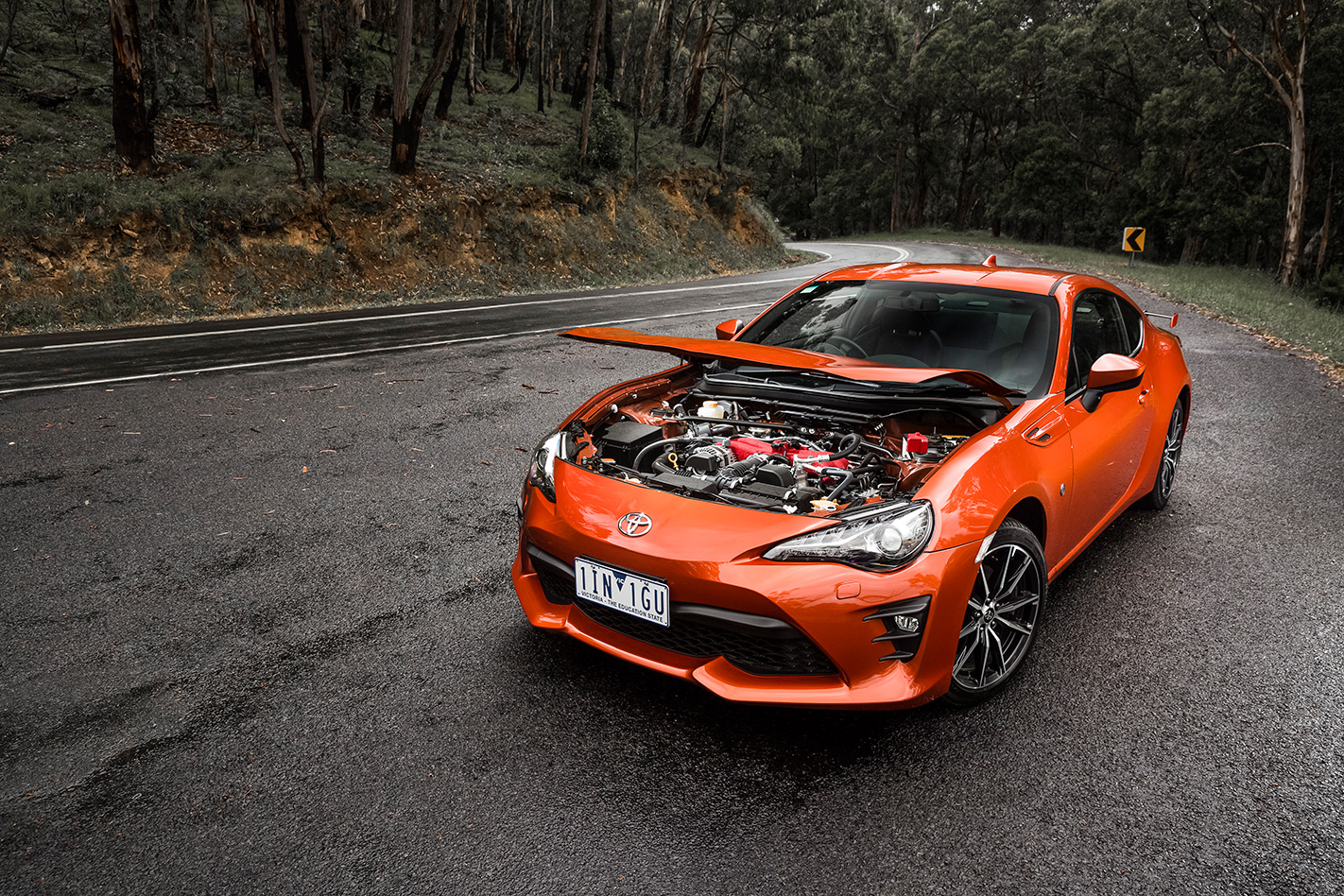
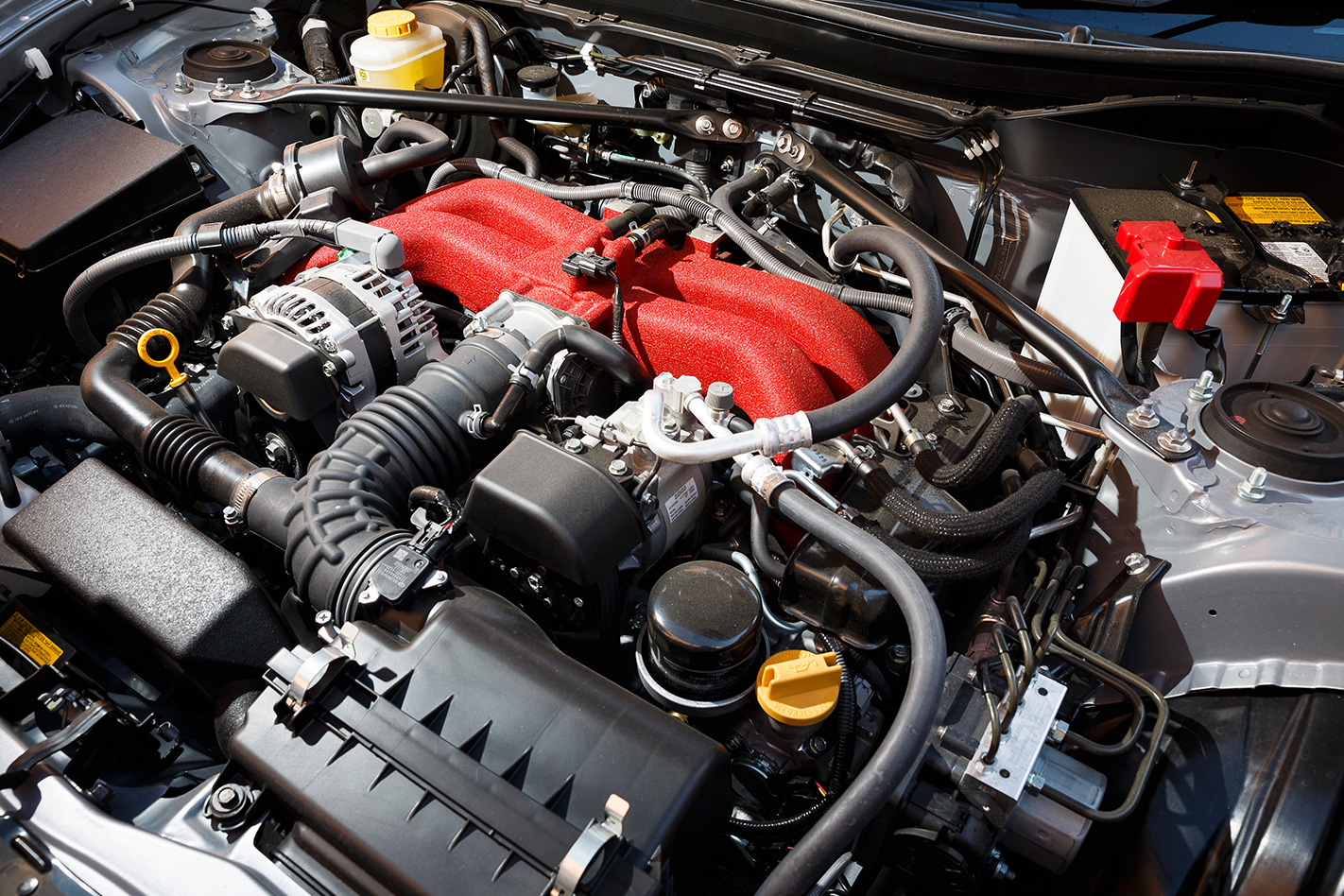
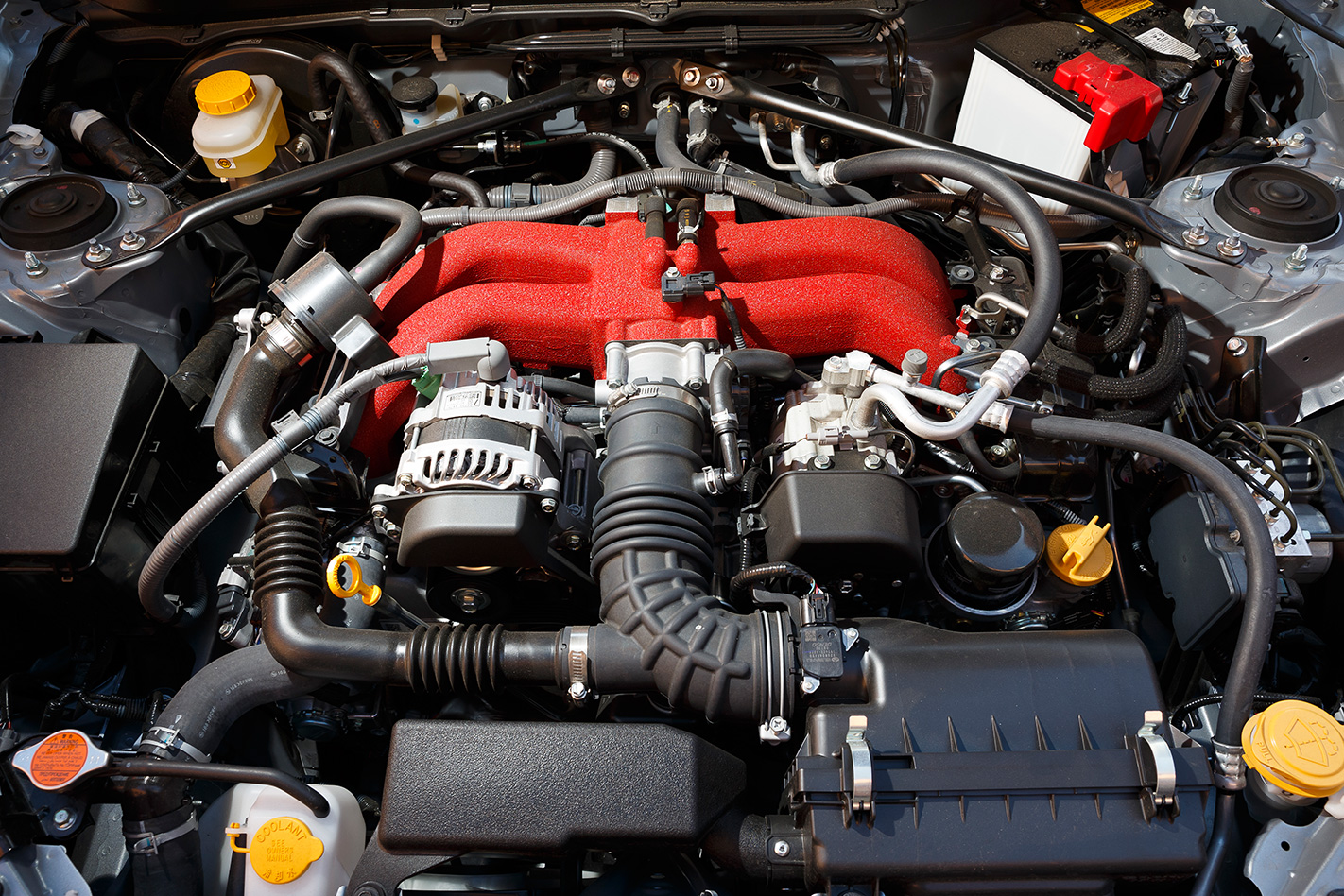
The engine is still as dull, uninspiring-sounding and limp below 6500rpm as ever (7400rpm redline) and indeed it remains a gripe of the car. While it does the job in the higher revs, making for a surprisingly quick clip, it is very difficult to feel affection for it.
But it’s more than made up for by the handling. If you love driving, particularly in a rear-drive setting, the 86 is still easily one the most fun and satisfying cornering devices under $100,000. There is a slight trade-off, and another long-term gripe – this is still a bumpy-riding car.
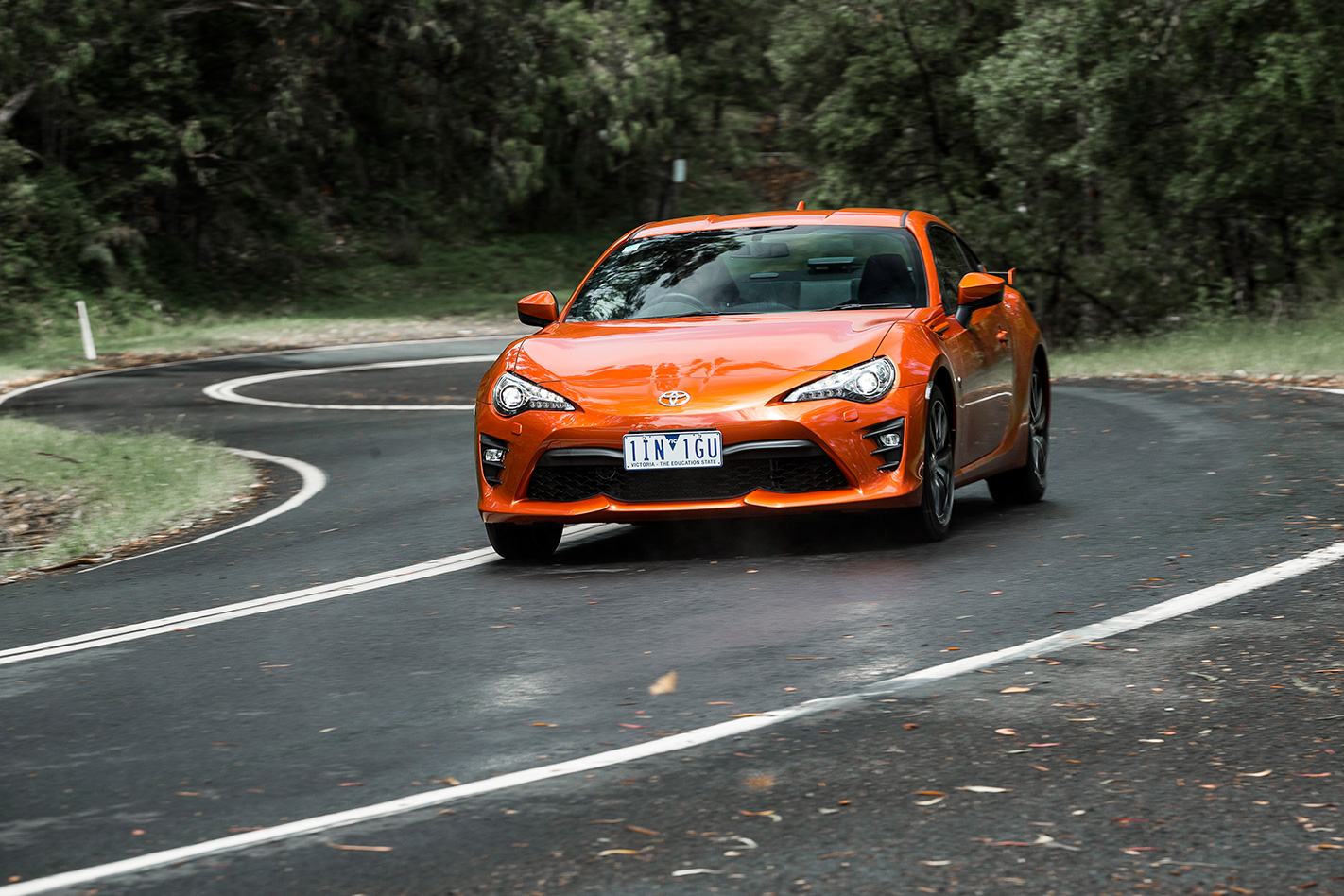
A used one. Even now there are so many for sale with full service histories, less than 75,000km in mint condition and owned by people who – not to judge books by their covers – would rarely go over 5000rpm. And the market is slowly filling with used 86s, driving down prices.
The cheapest used 86 I could find online was a 2013 GT for $16,500. In five years they will start dipping below $10,000. If your idea of driving thrills doesn’t require 600 horsepower, an 86 might be all the sports car you need. I’ve had as much fun driving an 86 (or BRZ) as I have had driving a Ferrari 488 or Porsche 911 GT3.
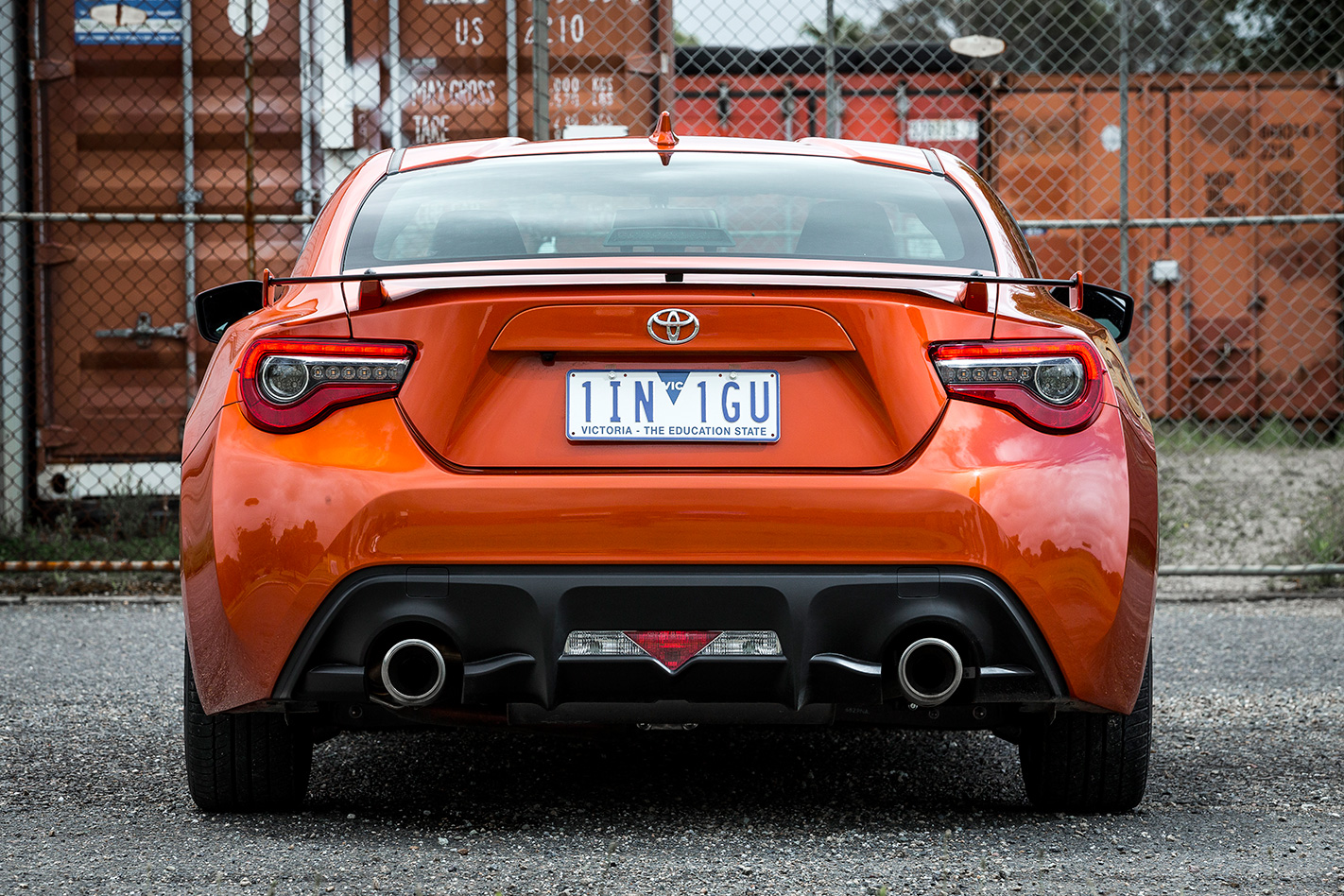
Or buy a GT, fit a half cage, upgrade the brakes and fit wheels in a size that can handle a tyre like the Michelin Pilot Sport Cup2 or Bridgestone RE-71R. Adding grip to an 86 should make it much more fun.
And if that doesn’t make sense to you, consider that a red flag that you might never be satisfied with the 86’s level of power.
MONTH FIVE
Fuel this month: 11.4l/100km Average: 10.2l/100km Distance this month: 245.8km Total distance: 4646km
Liked: This is as fun as cars get. Simple Disliked: Engine impossible to fall in love with
THE Volkswagen Arteon is the German auto giant’s attempt to sneak into luxury heartland and steal away customers from BMW, Mercedes-Benz and even corporate cousin Audi – not to mention Lexus, Infiniti and Jaguar.
It may have the right look, but does it have the dynamic goods?
WHAT IS IT?
Essentially the replacement for the Passat CC, the Arteon takes Volkswagen back into premium territory with a mid-sized sedan that trades heavily on style, equipment and performance to give it the edge over similarly-priced luxury-marque rivals.
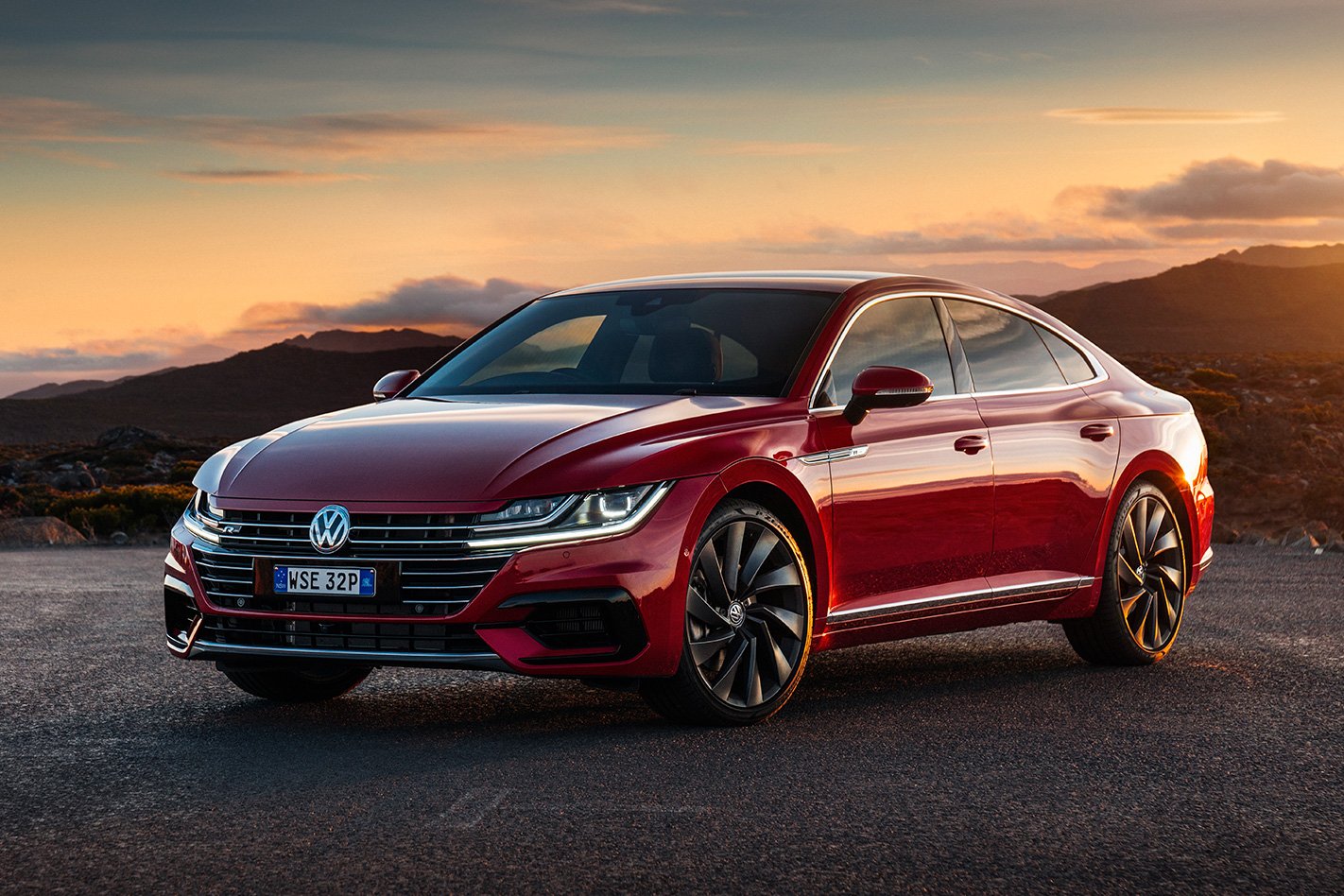
Volkswagen’s had a fancy midsizer before, but the Arteon is VW’s most concerted effort so far to snare buyers who are looking for a little more prestige to park in their driveway.
MAIN RIVALS
Lexus IS 350, Jaguar XE 25t, BMW 320i, Mercedes-Benz C200, Infiniti Q50, Audi A4
THE WHEELS VERDICT
The Arteon makes a strong case for itself through its design alone. While Volkswagens are often handsome cars, the styling department usually plays a safe game, and it’s rare for the German automaker to put out a car that is a genuine head-turner like the Arteon.
When lined up against price rivals from the luxury segment, Arteon’s high level of standard equipment and excellent drive experience also put it in good stead. The only real problem it’s got is whether Volkswagen can convince those who’d ordinarily aim for a base model C-Class to hop into a car with a less prestigious badge instead.

MINUS: Can’t compete in the badge cachet stakes; interior doesn’t look as special as the exterior; not enough aural drama
THE WHEELS REVIEW
Volkswagen’s “Premium for the People” marketing mantra certainly makes for an ambitious mission statement. Almost as ambitious as the crisp, sleek and undeniably attractive Arteon that it’s attached to.
Priced at $65,490 and offered in a single, highly-specified configuration that throws VW’s most cutting-edge infotainment and safety tech together with the 206kW 2.0 turbo and AWD driveline of the Mk7 Golf R, the Arteon definitely exudes a premium aura. Ignore the badge, and the Arteon looks like it belongs outside a country club, not a Coles carpark.
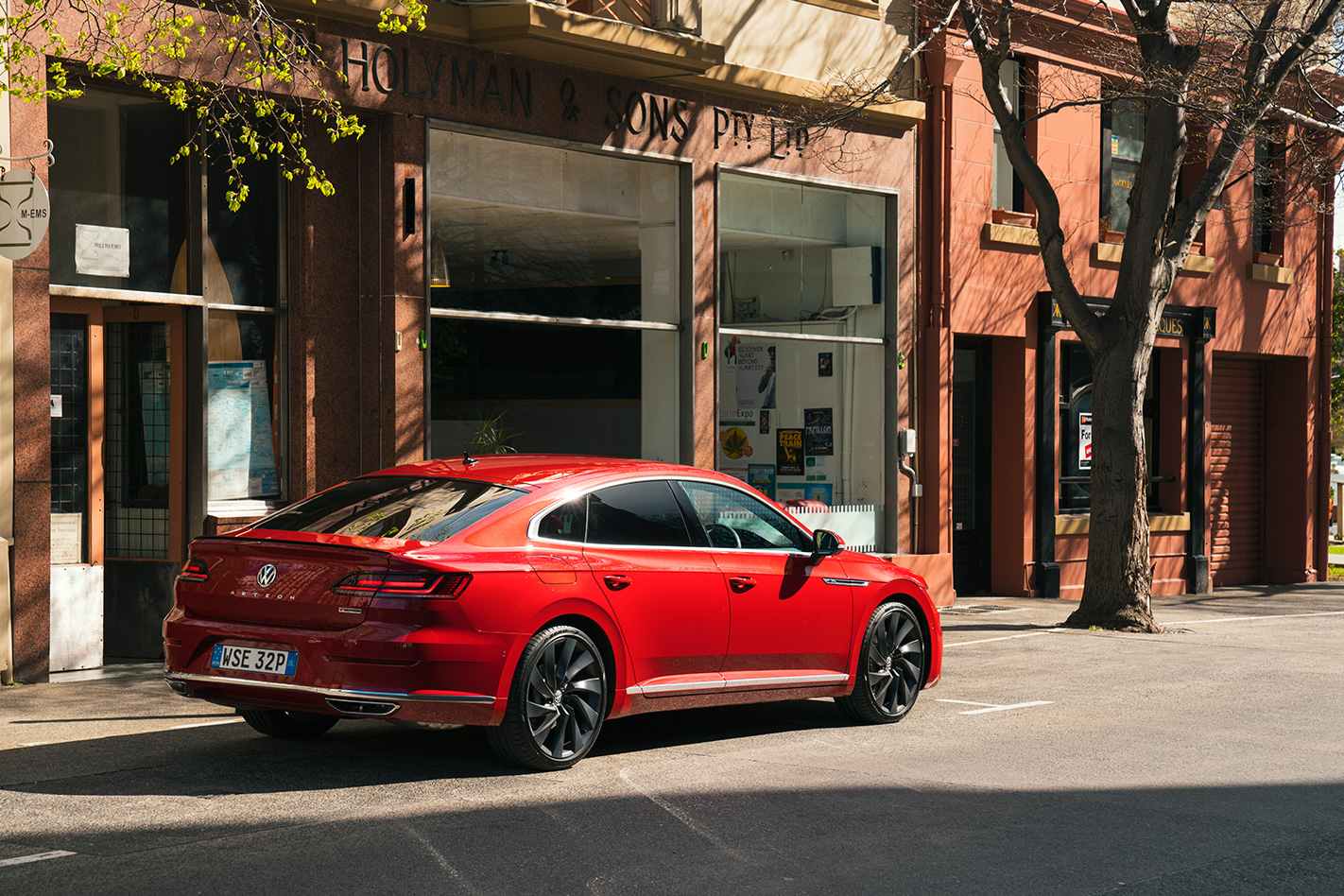
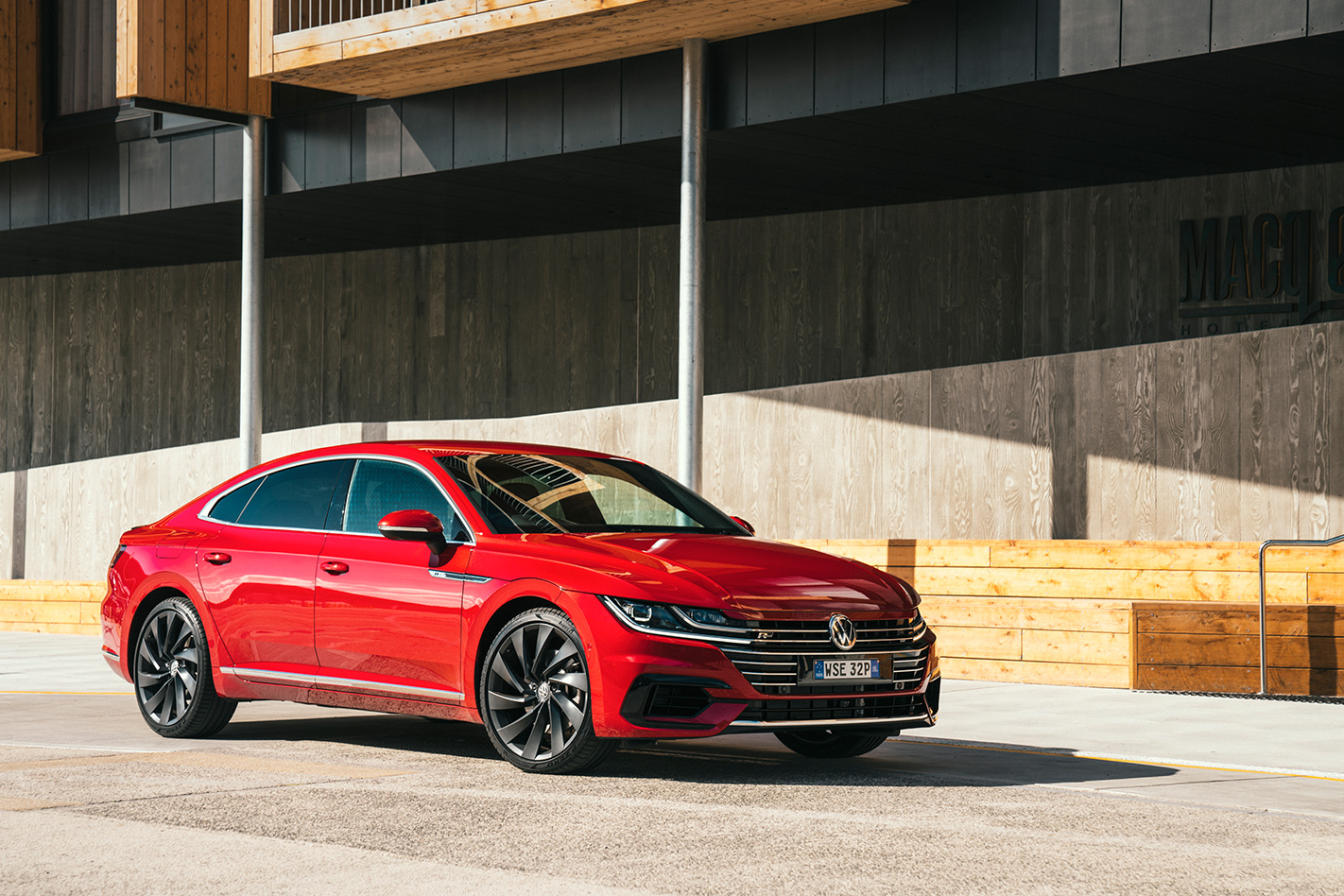
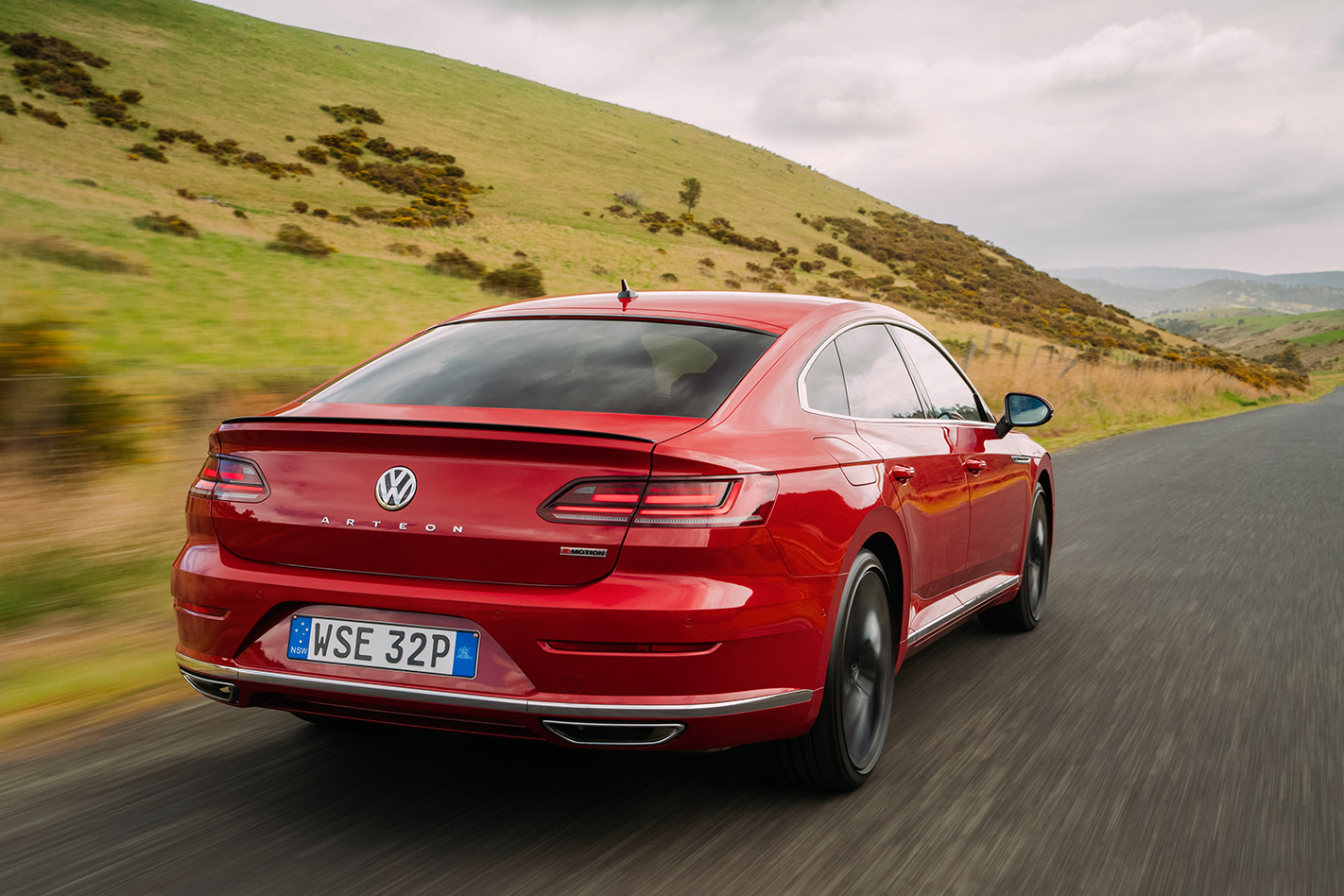
It’s certainly got the visual presence to make you forget about entry-grade luxo-sedans, so the Arteon gets off to a good start. With sharp bodylines, a broad chrome grille that blends into the headlamp jewellery and clamshell bonnet that puts a furrowed brow over its active bi-LED headlamps, the Arteon’s snout is imposing and distinctive – traits few VWs have boasted before.
It’s a looker, but hopping into the driver’s seat puts you within an interior that’s much less adventurous. There’s a stronger Passat flavour here – no surprise given the Passat and Arteon are platform partners – and while it looks tidy and business-like, it’s a sober contrast to the flamboyant exterior.
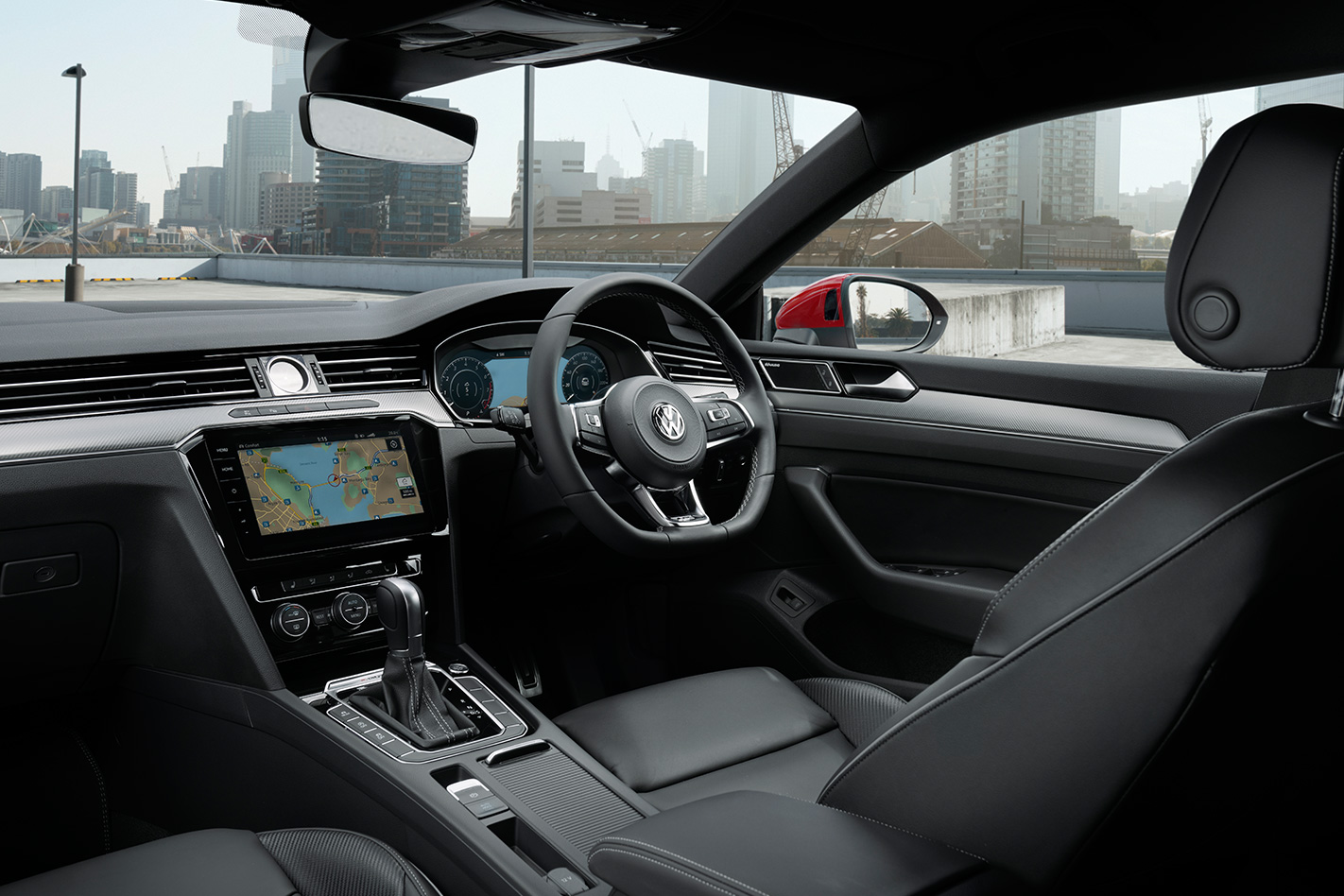
And there’s plenty of technological wow factor to offset the sensible design. A 9.2-inch flat glass infotainment display is the Arteon’s tech centrepiece, and it’s backed up by an all-electronic instrument panel and a head-up display – VW’s first. A 360-degree camera view, gesture control, tri-zone climate control, and heated seats at front and rear number among the Arteon’s tech highlights.
Open up the custom drive setting screen and a slider appears with Comfort at one end and Sport at the other, allowing the driver to take their pick of which setting suits them best. Is the regular Comfort mode not cushy enough? The system allows you to dial up more marshmallow if you want, while also allowing the dampers to be cranked up firmer than what the ordinary Sport setting would allow.
At the softer end of its suspension spectrum, the Arteon irons out poor-quality roads with ease without feeling excessively floaty over longer undulations. There’s plenty of suspension travel for it to use, yet body control is good.

And in that config, it ably fits Volkswagen’s own description of the Arteon as occupying the intersection between traditional sedans and sports cars. The steering may be lacking feel or feedback, but it’s hooked up to a grippy and responsive front axle that goes where you point it, while the rear tracks along faithfully. The rack ratio is also especially fast just off centre, which adds to the Arteon’s alert and agile feel.
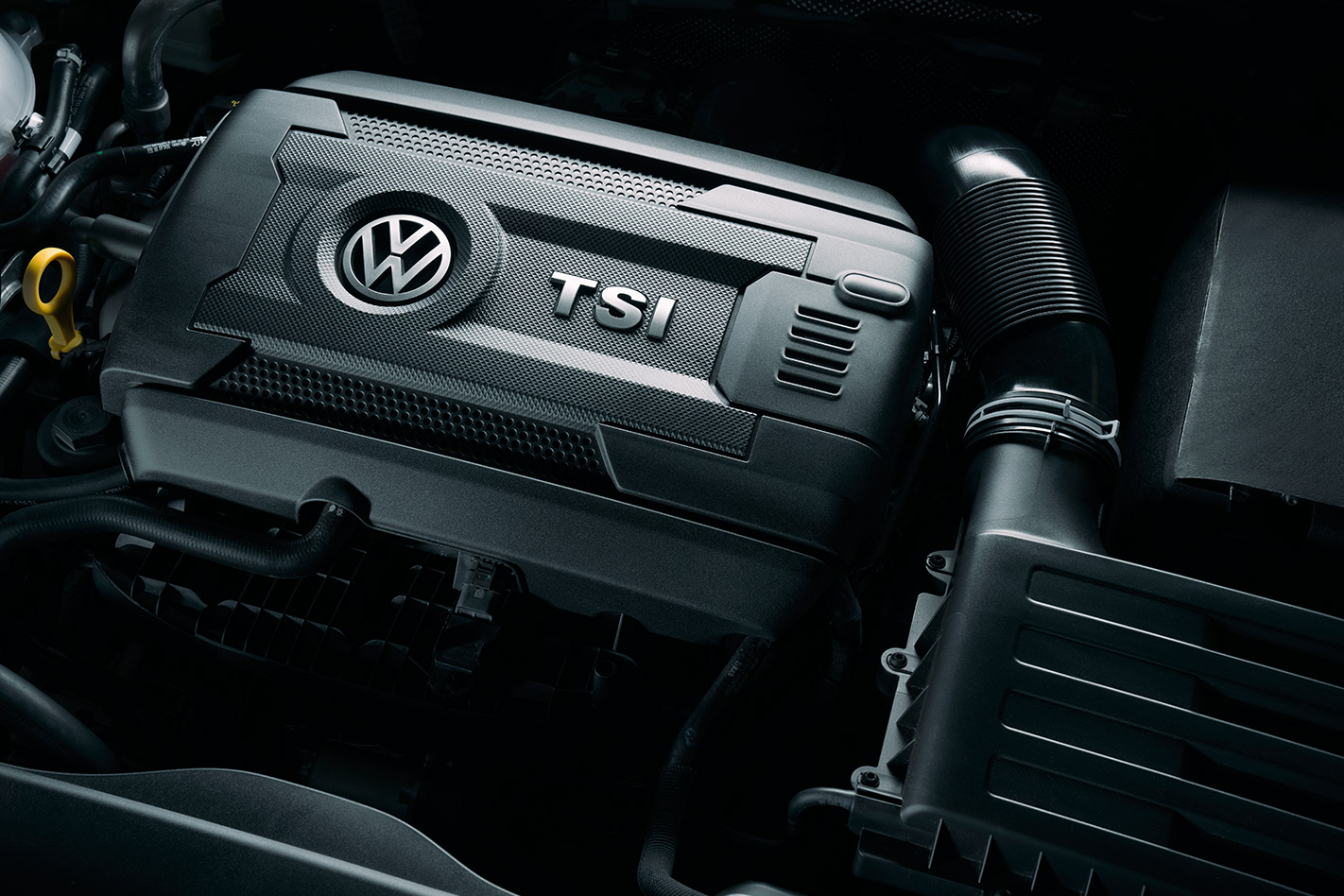
At a cruise the powertrain shows off its flexibility by providing ample torque in its midrange, with maximum twisting force available all the way from 1800rpm to 5600rpm.
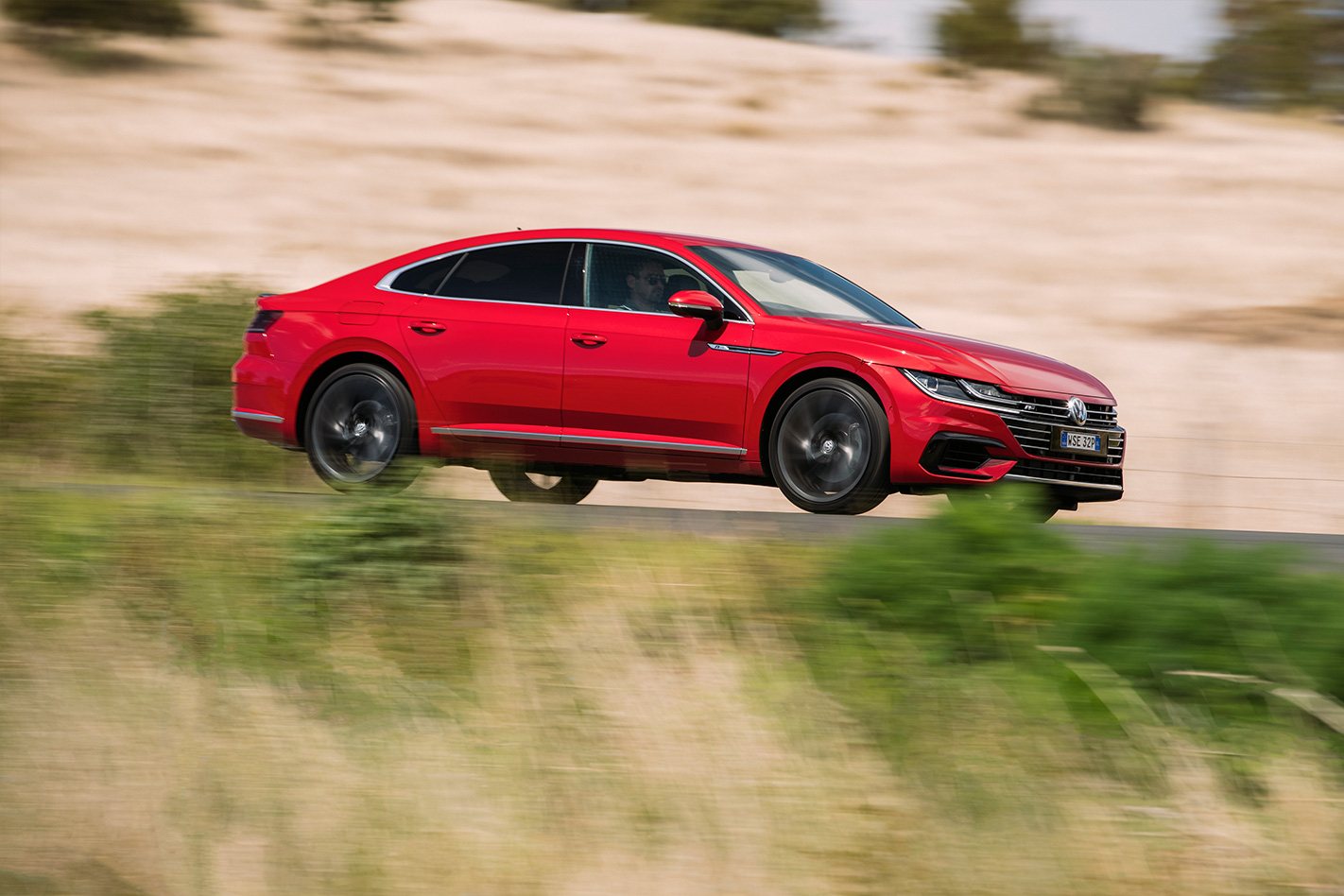
Objectively speaking, the Arteon is an intelligent alternative for those shopping in the mid-size luxury segment. There’s a whiff of prestige about its design, it drives well, is positively packed with equipment and though it’s only sold in a single specification, it’s got everything you need and little that you don’t. If you can suppress your badge snobbery, it’s well worth a look.
Vote for the Volkswagen Arteon to win the 2018 Wheels Car of the Year Readers’ Choice competition
SPECS:
Model: Volkswagen Arteon 206TSI R-Line Engine: 1984cc 4cyl, dohc, 16v, turbo Max power: 206kW @ 5700-6500rpm Max torque: 350Nm @ 1800-5600rpm Transmission: 7-speed automatic Weight: 1658kg 0-100km/h: 5.6sec (claimed) Economy: 7.5L/100km Price: $65,490
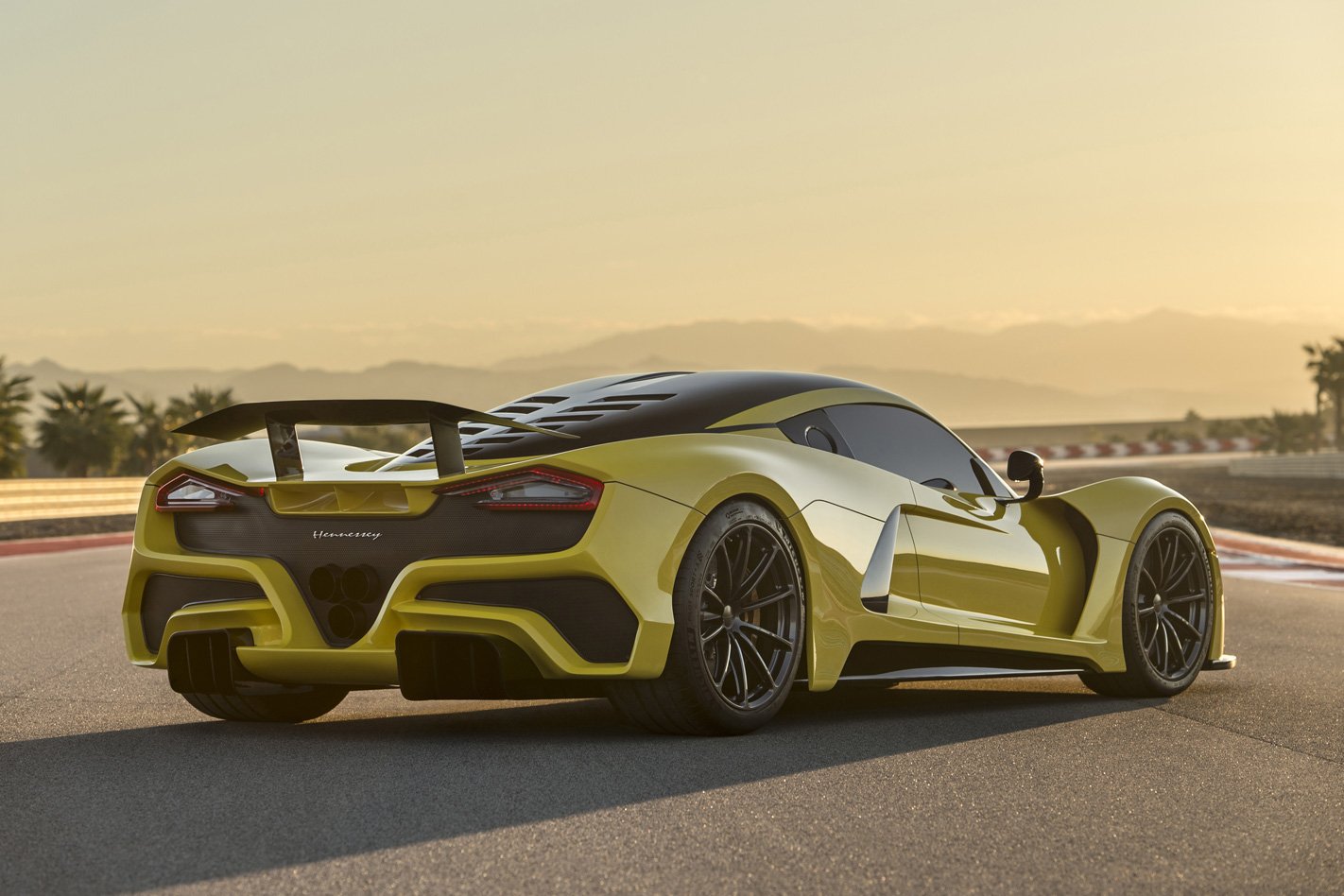
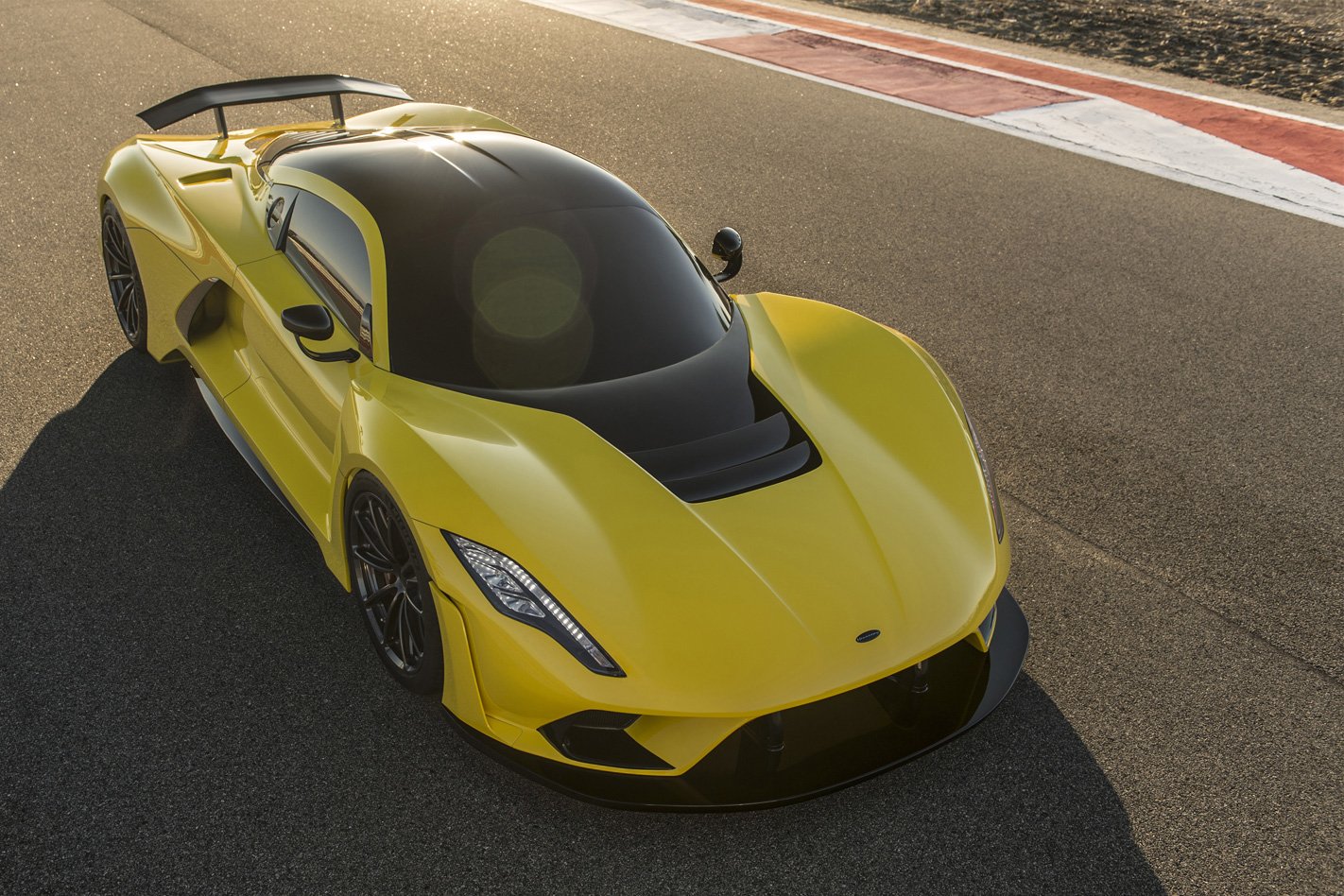
JOHN Hennessey revealed his latest limited-production weapons-grade creation this week, the Hennessey Venom F5, and with it launched a high-speed arms race to crack the 300mph barrier in a street-legal vehicle.
The Texan tuner is taking on European giant Bugatti in a race to the famed triple ton, but there is a significant hurdle which is poised to catch out both parties: Rubber.
While both parties claim their creations are capable of cracking 300mph (482km/h), it’s all theoretical as there isn’t a road tyre in production capable of withstanding the immense loads put through the rubber at that velocity.
When a vehicle is travelling at those sorts of speeds, the forces are immense, and no one has built a tyre which can withstand it safely – certainly not treads which are street legal.
But it’s the 82km/h after that which is going to be the biggest challenge for these lovers of speed.
Hennessey has yet to conduct any speed testing in the Venom F5, and doesn’t intend to until next year. In fact, a final production version hasn’t yet been built
The Venom F5 produces 1193kW from a twin-turbo V8, sending power to the rear wheels via a seven-speed single clutch paddle shift transmission, and tips the scales at just 1338kg. Importantly, it also has a drag coefficient of 0.33, making it slipperier than an eel in jelly.
In the other corner is the Chiron, with a quad-turbo eight-litre W16 sending 1103kW to all four wheels via a seven-speed dual-clutch transmission, tipping the scales at 1996kg.
At its public debut at Sema, the Venom F5 was wearing Pilot Sport 4S tyres. Up front are 19-inch rims with 265/30 rubber, and at the rear is 20-inch wheels wearing 345/30 wrappings.
Bugatti has teamed up with Michelin to co-develop tyres capable of withstanding 3800g of centrifugal force.
The Chiron wears boots measuring 285/30 R20 at the front, and 355/25 R21 at the back. Its predecessor, the Veyron, famously wore run-flat Michelins that cost $50,000 a set in order to set the current production car top speed record of 267mph (431km/h).
It has been 30 years since the Ferrari F40 galloped past the 200mph barrier, and now the next great speed achievement is in the sights of two companies with a proven track record in velocity.
But before we witness the 300mph barrier fall to engineering marvels, there is going to be a back-room arms race to construct the tyre needed to get the respective players across the line.
Because of this, it’s unlikely either Hennessey or Bugatti will give the production car record or triple ton a challenge until at least late next year, possibly 2019.
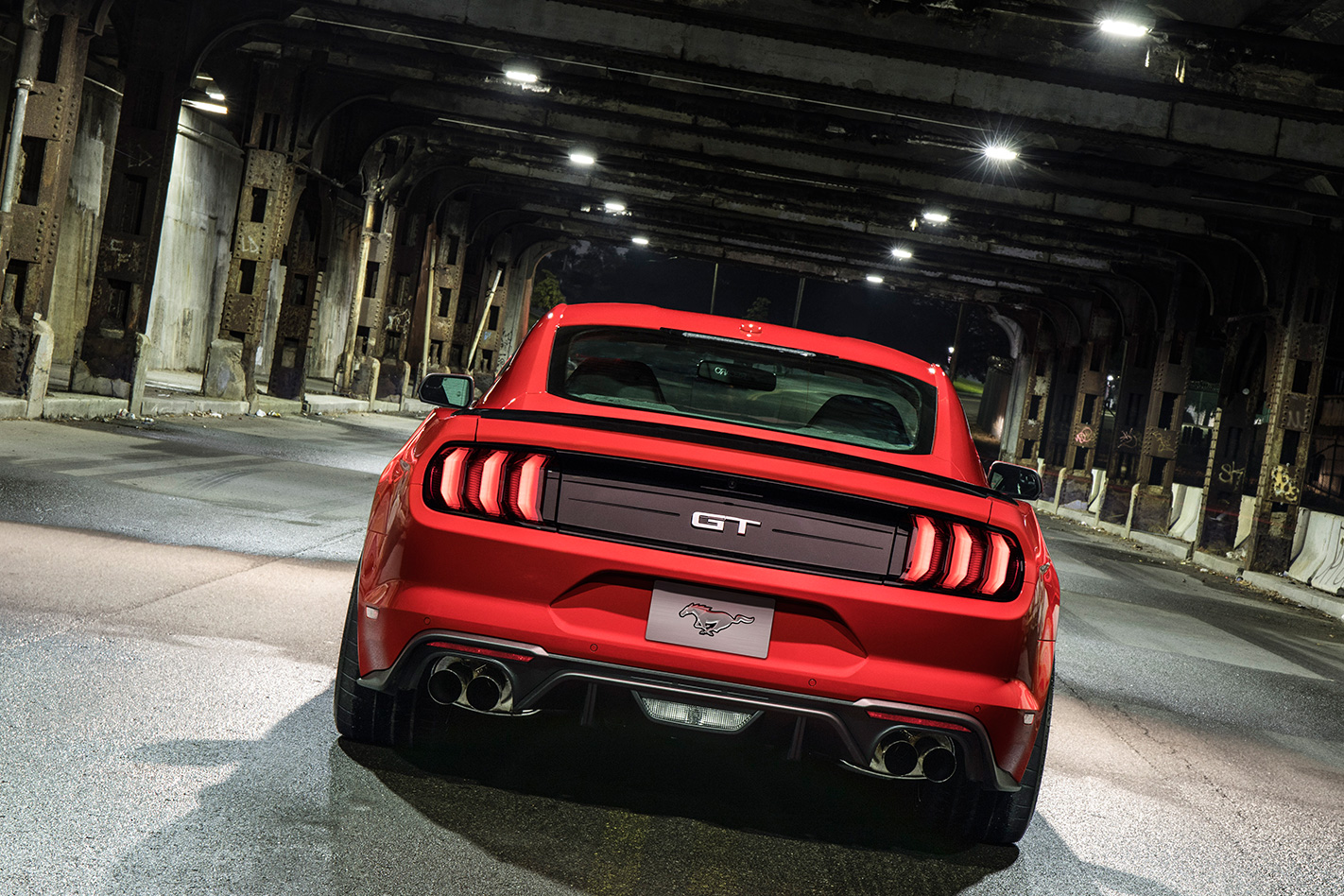
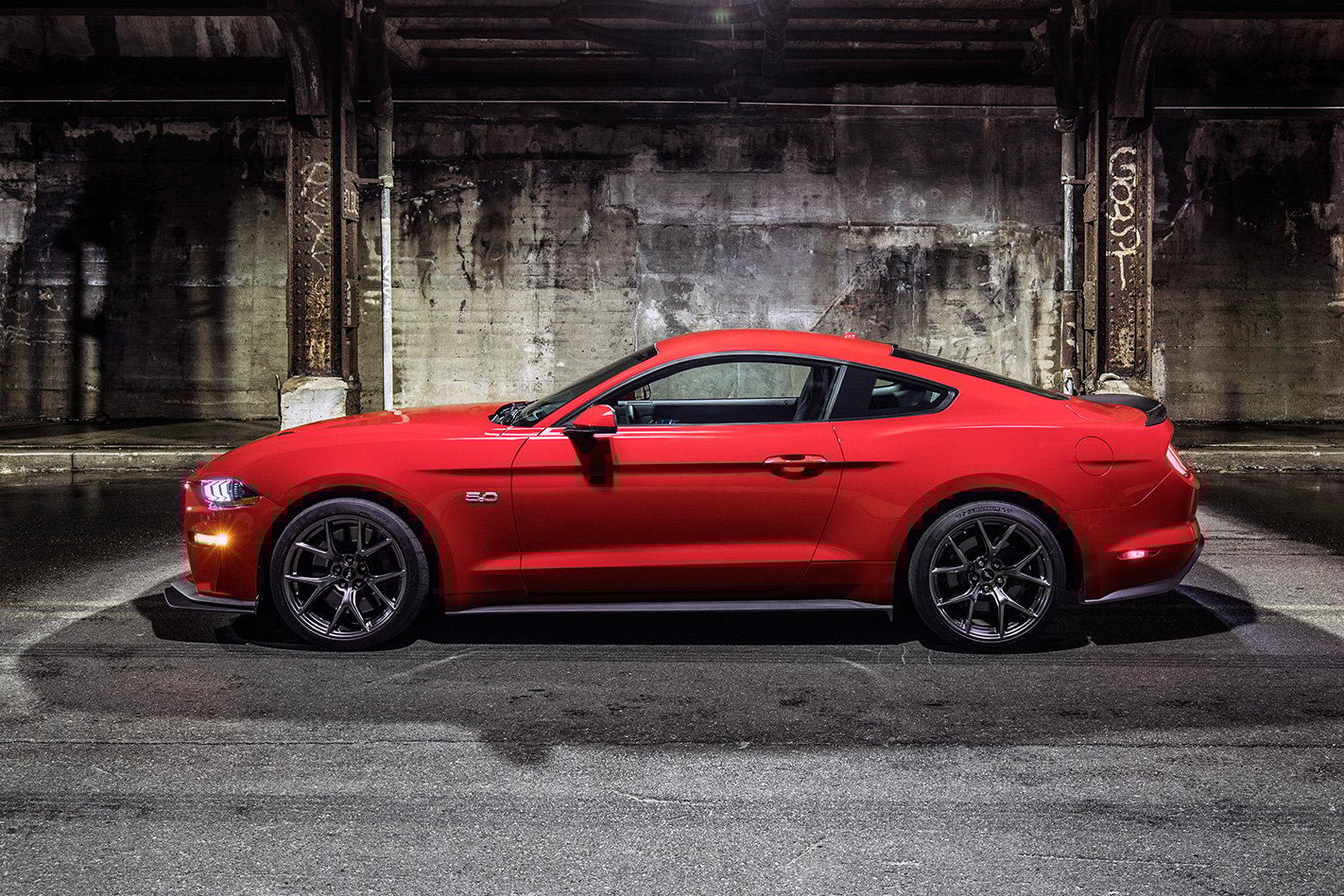
Ford has revealed its new Performance Pack for the 2018 Mustang GT.
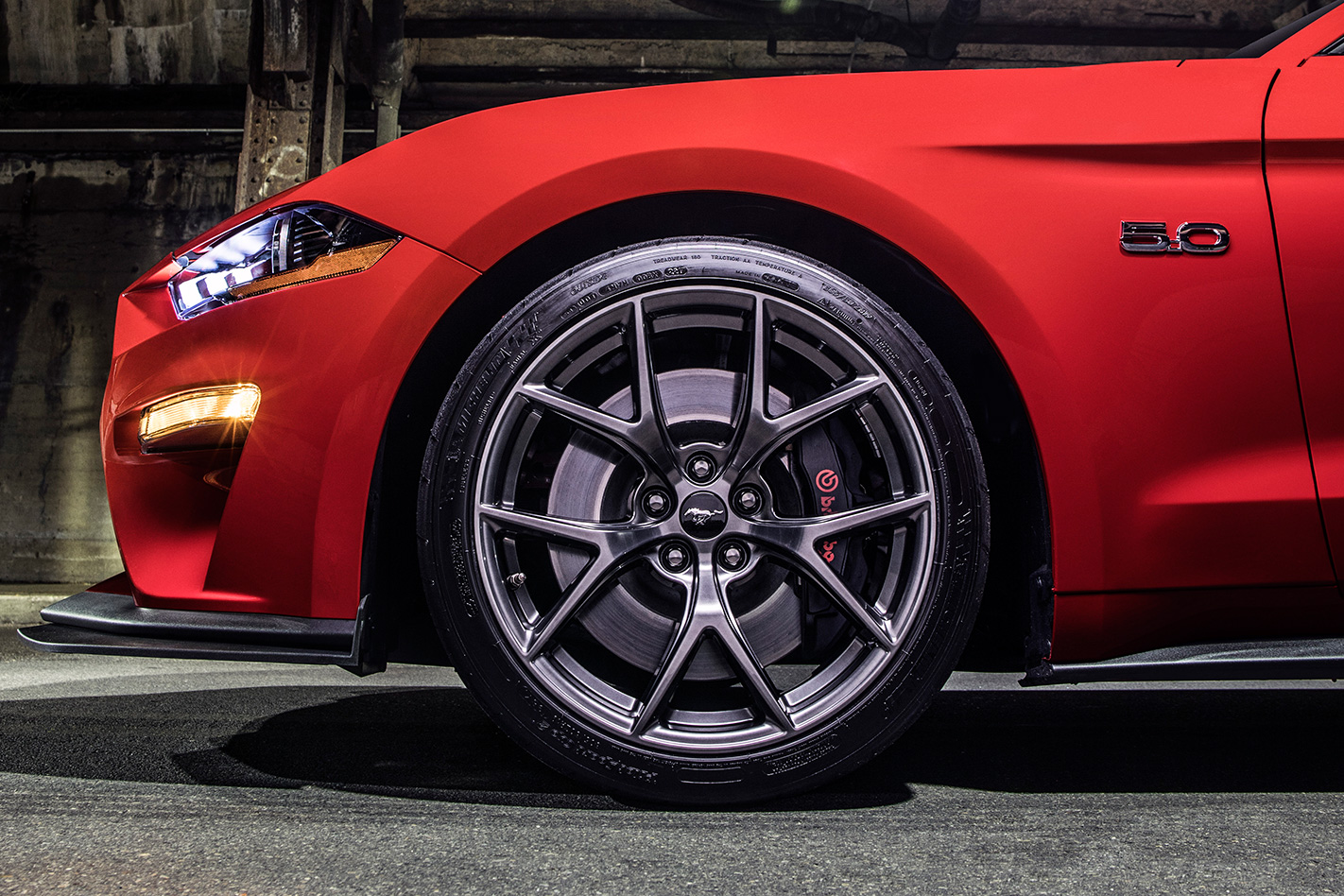
Features from the first Performance Pack which was built for the ‘current’ Mustang all carry over to the new pack, including chassis and antilock brake tuning, unique stability control and electric power-assisted steering, Brembo six-piston front brake calipers with larger rotors, a larger radiator, and a Torsen rear diff.
The only visually obvious additions to the vehicle are the high-performance front splitter and rear spoiler, as well as the exclusive 10-spoke 19-inch wheels.
“Our targets were aggressive, and we nailed them,” Gesek says.
Michelin Pilot Sport Cup 2s are also added with the Pack, which are 1.5-inches wider than those found on the first iteration of the Performance Pack.
Ford vehicle dynamics development supervisor Jamie Cullen says this, and the improved MagneRide suspension, means the Mustang’s grip levels are dramatically increased with the Performance Pack Level 2.
Cullen led road testing by the team to ensure their work had achieved notable improvements in steering, braking and handling.
While we expect to see a performance pack for the Mustang when it lands in Australia, specifics have not yet been confirmed by Ford locally.
If you had to imagine your dream Range Rover, it would surely look something like the SV Autobiography.
Everything thrown at the interior luxury-wise and, under the bonnet, one of the shining stars of the Jaguar-Land Rover universe, the 5.0-litre supercharged V8 from the F-Type cranking out 405kW and 680Nm. Welcome to the SV Autobiography Dynamic, the fastest, most powerful and, at $316,000, most expensive Range Rover ever produced.
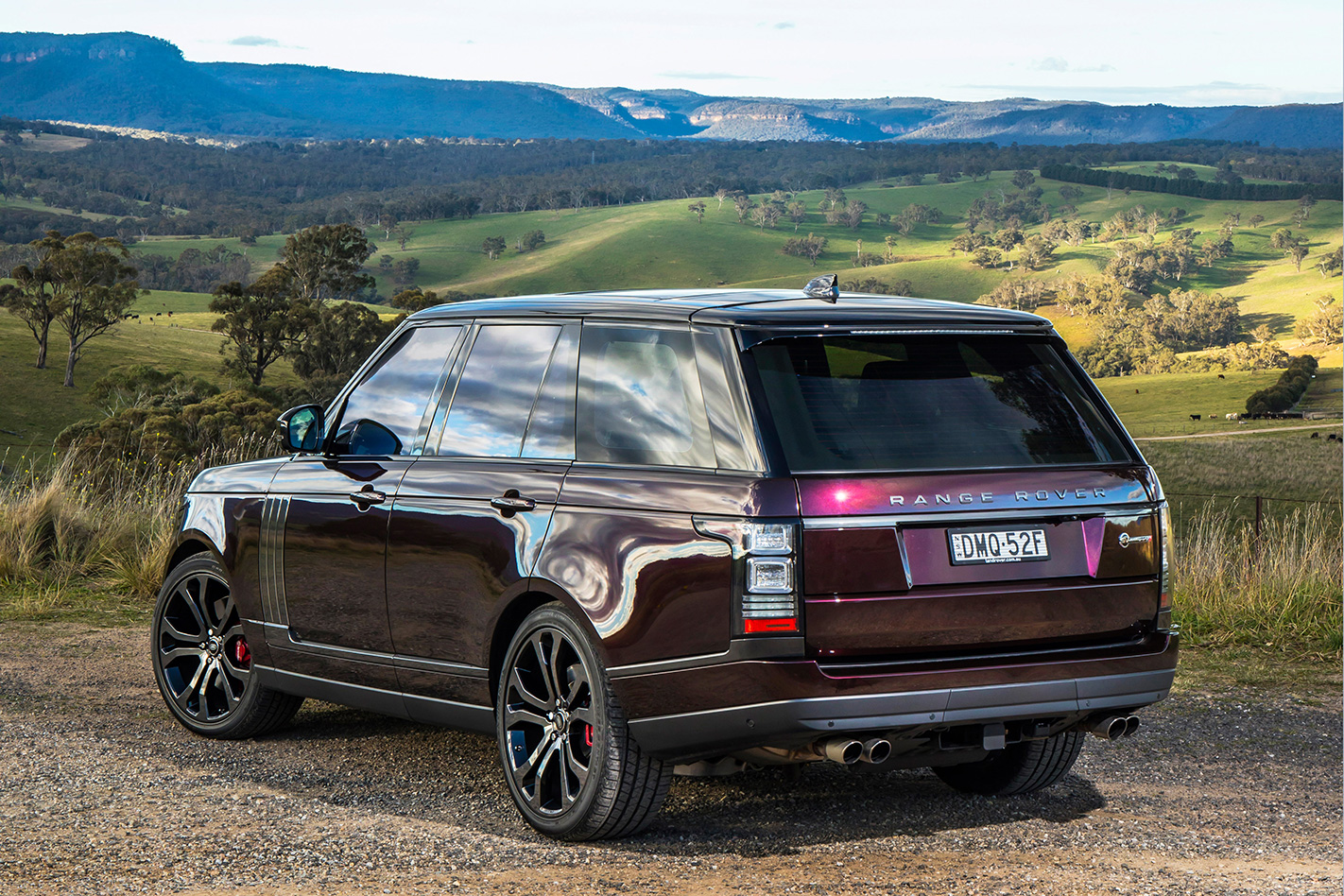
Approaching the boxy, deep purple test vehicle, with 22-inch wheels and looking behemoth-like, there are few cars with as much presence as this one. Set the air suspension on the lowest setting for a menacing, almost tall-wagon look; or jack it right up for a don’t-mess-with-me attitude.
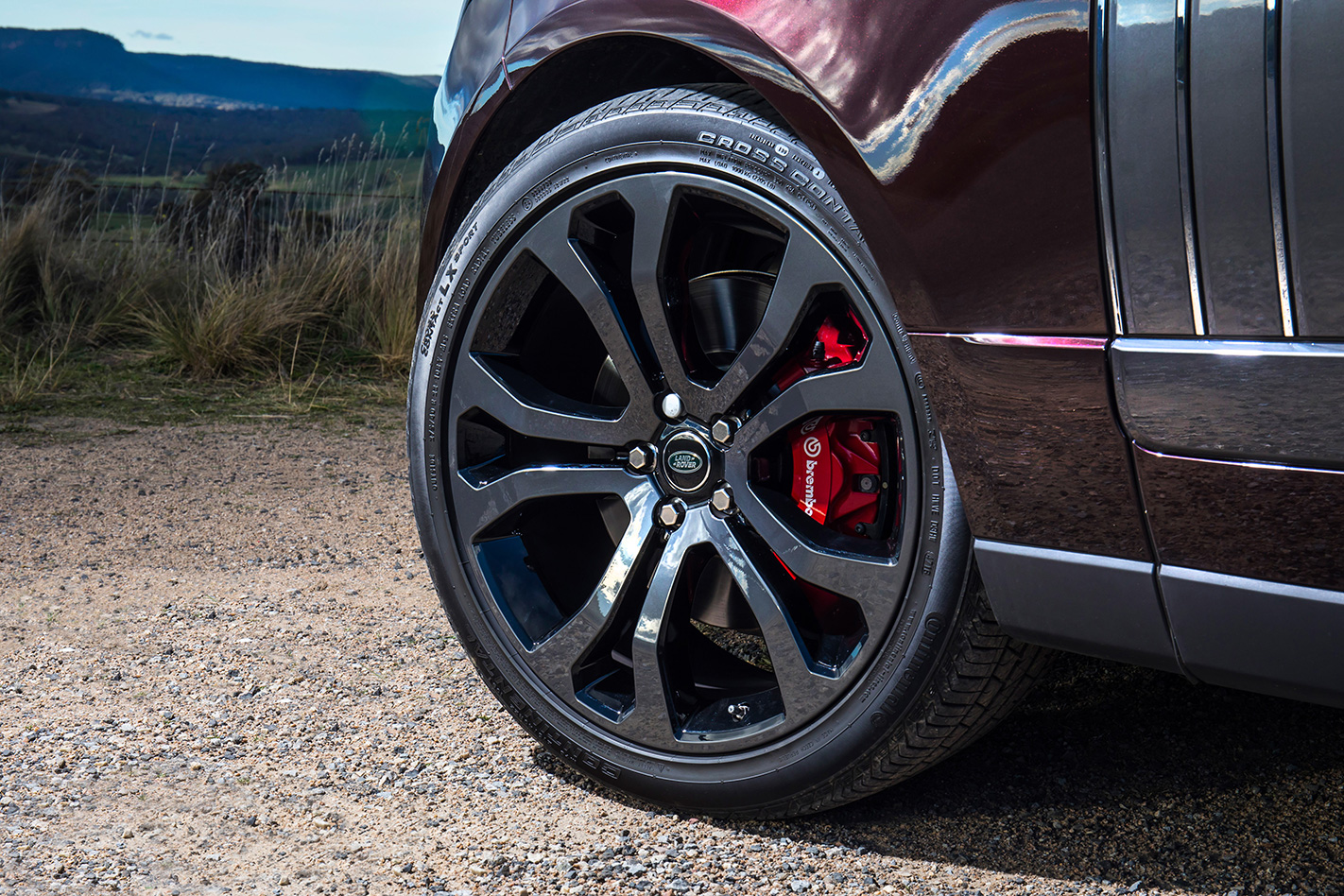
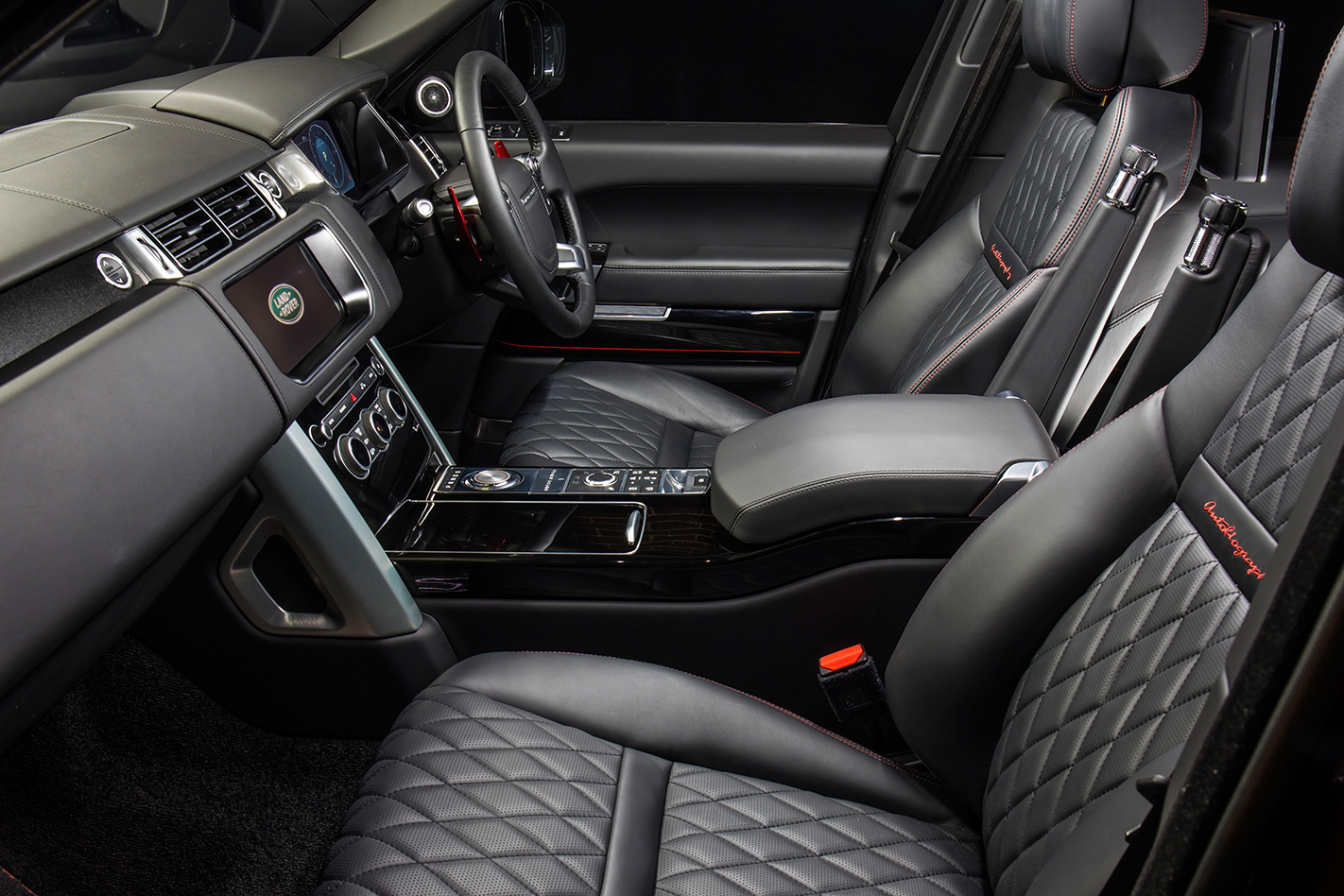
Unfortunately, there is a certain something about the Range Rover’s interior that doesn’t match up to its price tag. Is it the way the buttons feel? Or the way the graphics on the LCD screens look? It’s hard to put your finger on, but jump from a Bentley Bentayga to a Range Rover and you might get what we mean.
Although that’s still like saying, the Hilton isn’t quite as nice as the Sheraton. Sitting up high, the ride is also blissful, completely wafty at 100km/h, like you’re suspended on a cloud. Although we suspect it might quickly get uncomfortable if the surface conditions got ‘challenging’.
Fortunately there’s a mean V8 burble, even if it’s not quite as loud, sinful or anti-social as some of its SVR siblings. For all its grunt and decent brakes, you will laugh out loud at its handling.
Even with electromechanical anti-roll bars, it’s Bodyroll Central, the car moving through long and exaggerated arcs – with also some pretty funny squat and dive – necessitating some considered inputs when driving fast. There is a lot of weight moving about. Is this a performance car?
You’d certainly never describe it as a giant hot hatch, like you might a BMW X5M. It’s just a nice car with a nice engine.
3.5 stars out of 5 Likes: Look at it; listen to it; sit in it Dislikes: We prefer driving it slowly; it costs how much?
2018 Range Rover SV Autobiography specs: Engine: 4999cc V8, DOHC, 32v, supercharged Power: 405kW @ 6000rpm Torque: 680Nm @ 2500-5000rpm Weight: 2465kg 0-100km/h: 5.5sec (claimed) Price: $316,000
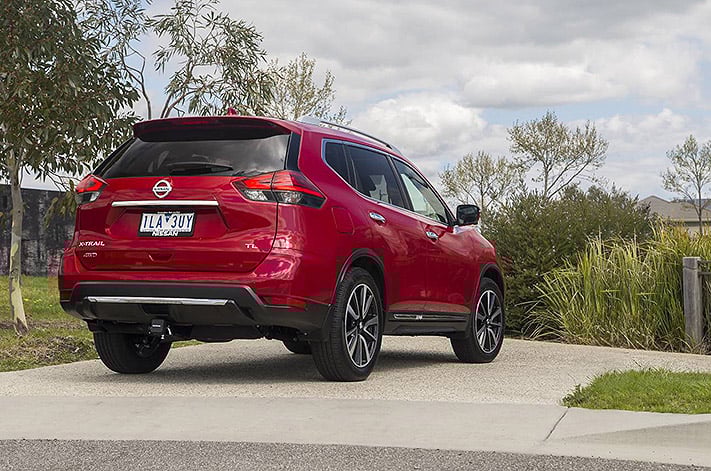
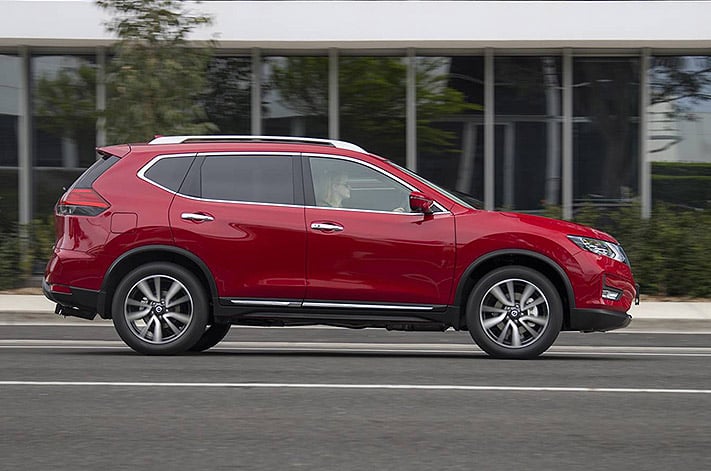
The Nissan X-Trail is one of the few popular medium SUVs to offer more than a simple nod to off-road ability, and the new 2.0-litre turbo-diesel engine boosts its go-anywhere credentials.
Priced from $47,290, the TL 4WD features most of the top-spec features of the X-Trail Ti variant including leather-accented interior, Bose premium audio system, heated steering wheel, heated front and rear seats, and a panoramic sunroof.
STRENGTHS
- The turbocharged 2.0-litre diesel engine is more powerful than the 2.5-litre atmospheric engine in the Ti, and has significantly more torque for better pulling power. Apart from a bit of turbo lag, the diesel pulls the X-Trail along effortlessly with plenty of power in reserve for overtaking or climbing hills. And unlike the petrol engine it doesn’t have gear-change delay issues with the CVT auto.
- Fuel economy is pretty good. The official combined figure is 6.1L/100km but we averaged around 8.6L/100km, though, to be fair much of this was in urban conditions.
- The ride is smooth and comfortable on the highway or around town, but is let down by the tapping of the diesel engine, especially when cold.
- The “Intelligent 4×4” with Hill Descent Control allows X-Trail to handle relatively rough terrain compared with its more city-centric rivals.
- The interior is well put together and features double-stitched leather-accented seats, piano black fascia inserts and metallic trim.
- The reversing camera with all-round view makes parking even easier.
- Syncing to your phone via Bluetooth is quick and simple.
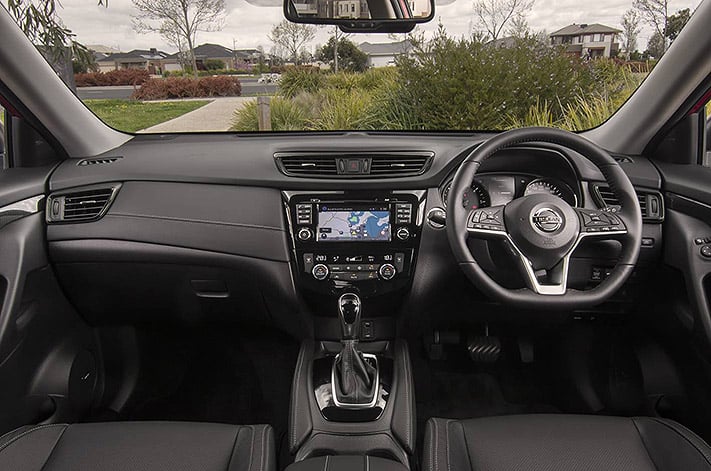
- The new flat-bottomed steering wheel features a more intuitive button arrangement, and makes getting in and out of the car a little easier.
- The rear cargo area holds a hefty 565 litres that expands to 945 with the 60-40 split rear seats folded down. The boot floor lifts up and splits in two to reveal separate compartments.
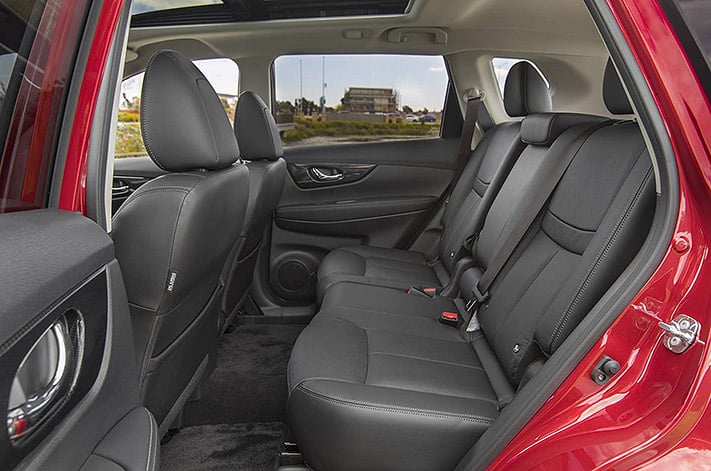
- It’s roomy and comfortably seats five adults. There’s heaps of legroom in the back helped by seats that slide back and forth.
- As well as great legroom the rear passengers benefit from heated seats and their own air vents, and raised ‘stadium-style’ seating for excellent front and side vision that’s further enhanced by the panoramic sunroof.
- Like all X-Trails, the TL comes standard with automatic emergency braking.
- Road and engine noise is a little louder than other models thanks to the diesel engine, panoramic sunroof and bigger 19-inch wheels.
- Compared with other off-road capable SUVs, the kind of rough terrain the X-Trail can handle is limited by its relatively low ride height and long front and rear overhangs.
- The infotainment system isn’t as good as you’d expect from a premium model. The satellite navigation map looks dated and lacks detail, which isn’t helped by having to look down at the screen away from the windscreen. And while there’s buttons to select radio, CD and AUX, the only way I could play music via Bluetooth was to select that mode via the driver information display in the gauge cluster – which makes it difficult for passengers to access. And there’s no smartphone pairing via Apple CarPlay or Android Auto.
- The Auto Stop function, which is meant to save fuel by automatically cutting the engine when you stop and turning it back on when you take your foot off the brake, comes in too quick. This is fine at traffic lights, but is a pain when you stop for a moment while trying to park. There is an override switch, but you usually only remember it after it frustrates you.
- None of the diesel X-Trails, including the TL, is available with seven seats.
- The foot-operated parking brake is a little dated and easy to forget.
- The TL lacks a couple of features in the petrol-powered Ti including lane keeping assist and adaptive cruise control.
- Diesel engines generally make for good tow rigs. However, the continuously variable transmission limits the diesel X-Trail to towing 1650kg braked trailer, only 150kg more than the petrol version.
The Nissan Pathfinder TL compares well with comparatively priced, upper-spec diesel variants of other popular mid-sized SUVs, including the Ford Escape Titanium, Hyundai Tucson Highlander, Mazda CX-5 GT, Mitsubishi Outlander Exceed, Subaru Forester 2.0D and Volkswagen Tiguan 140TDI.
The sixth-generation Nissan Patrol large off-roader has undergone its first facelift since a 2014 upgrade, bringing a revised front end, new tech and a price hike.
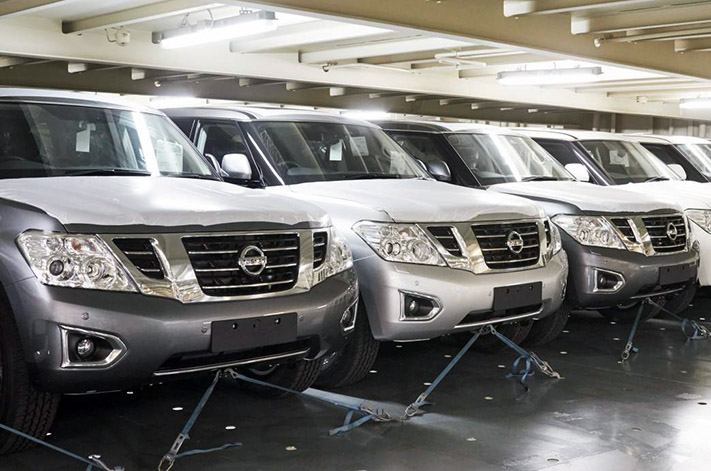
The refreshed face uses a more contemporary bumper design with triangular fog-light housings, and a grille with horizontal bars that gives the four-wheel-drive Patrol more of a family resemblance to the Pathfinder. Redesigned 18-inch wheels give a more premium look.
The interior upgrade is even more subtle, and consists of a more intuitive, a revised touchscreen-controlled infotainment system and two USB charging points at the rear of the centre console.
The range-topping Ti-L grade scores larger eight-inch entertainment screens built into the back of the front seat headrests.

That model also receives Nissan’s ‘Intelligent Rear View Mirror” (I-RVM), a virtual aid that helps drivers “see” through the back rows and a full boot.
I-RVM works with a high-performance rear-facing camera, with an integrated LED screen showing an image resembling a conventional mirror with an unobstructed view of the road behind while driving. Another advantage of the I-RVM is it filters sun- and headlight-glare.
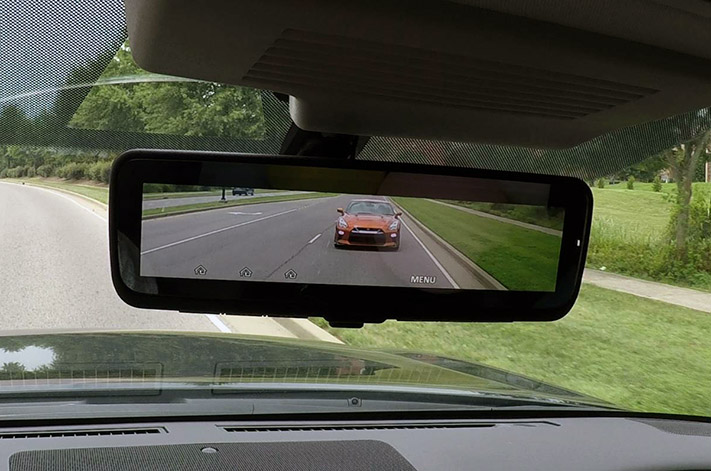
Drivers can easily swap between the I-RVM and the traditional mirror by flicking a switch under the unit.
The Patrol’s performance is unchanged with the 5.6-litre V8 petrol powertrain carrying over from the previous model.
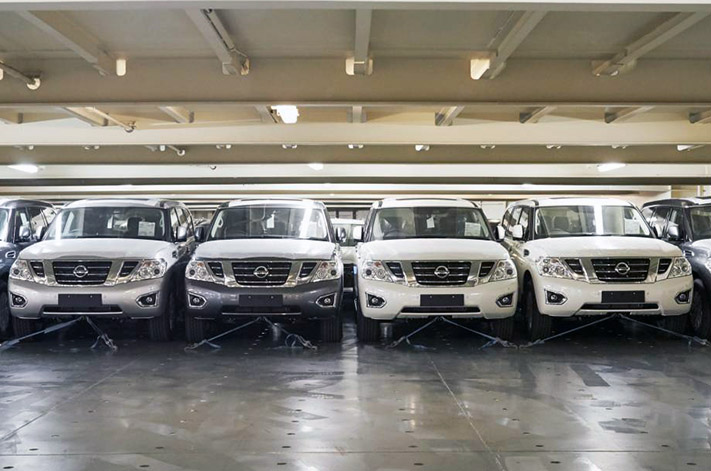
The 2018 Nissan Patrol will arrive in showrooms later this month, with pricing starting from $71,990. Prices are up $2000 for both the entry-level Ti and Ti-L, despite the Ti not gaining the I-RVM.
As before, standard equipment across the range includes satellite navigation, push button start, climate control and a full-size alloy spare wheel.
2018 Nissan Patrol pricing
- Patrol Ti – $71,990
- Patrol Ti-L – $88,990
A PASSENGER car rose to the top of the new-car buyers’ ranks in October as trade utes took a back seat for the first time in four months.
The Hyundai i30 snared 3983 sales for the month, 171 ahead of the second-placed Toyota Hilux on 3812 sales. The Hilux’s traditional rival, the Ford Ranger, could only snare 3074 buyers for the month, placing it fourth behind the Toyota Corolla with 3088.
Of note this month, though, were sales of the Holden Commodore. Production of the large family car ended on October 20, slamming the door on almost 70 years of Australian manufacturing, but Holden managed to pair 2418 of them with new owners – representing half of the brand’s passenger car sales for the month. It finished ahead of the fourth-placed Mazda 3 with 1962 sales.
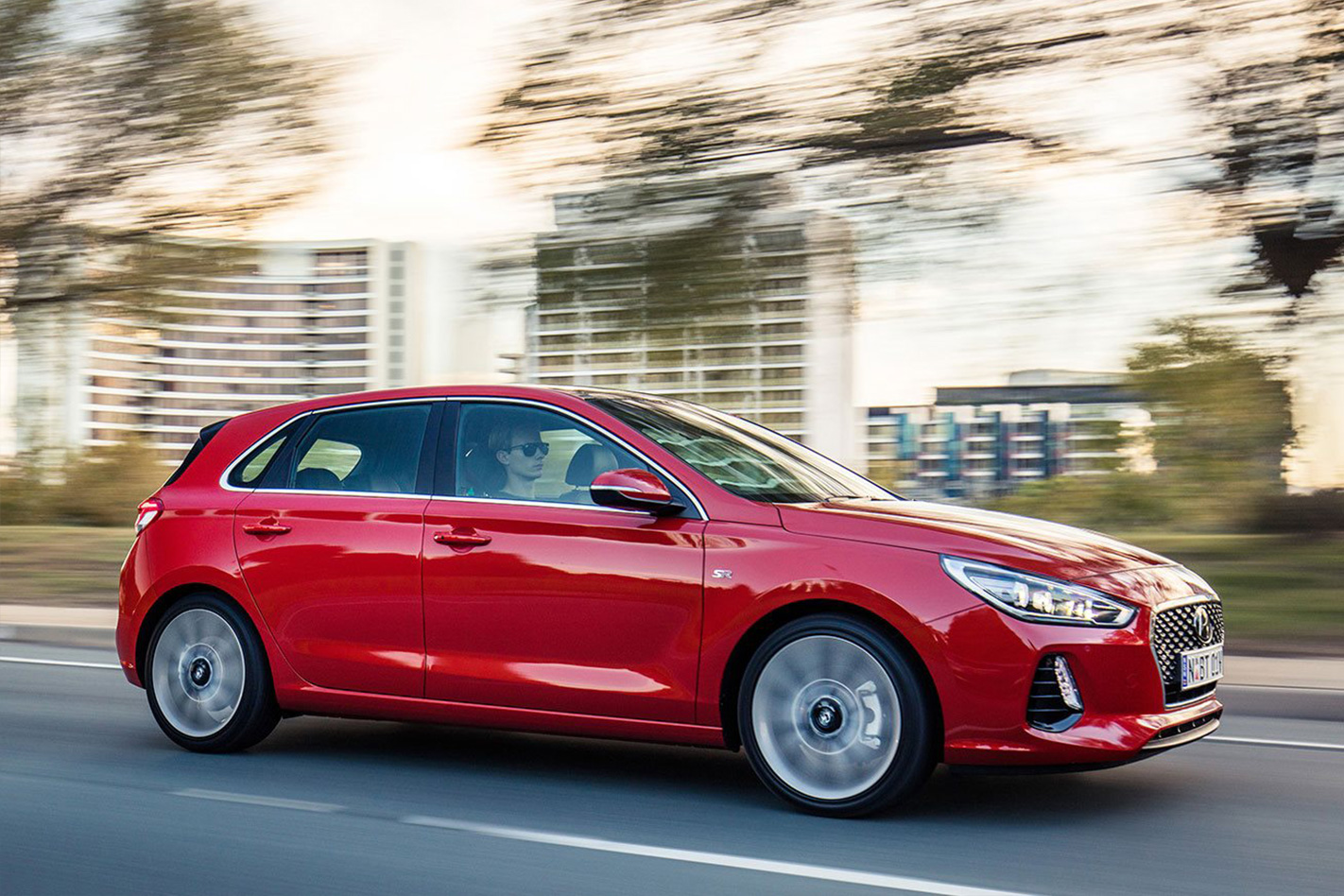
Despite the closures of both Ford and Holden in October, sales of Australian-made cars still hit 5129. Ford – which closed in October last year – accounted for 30 of them, with just 10 Falcons and 20 Territory SUVs moving for the month.
Overall, the market soared to a new high for October, hitting 95,763 and beating the previous benchmark for the month set five years ago.
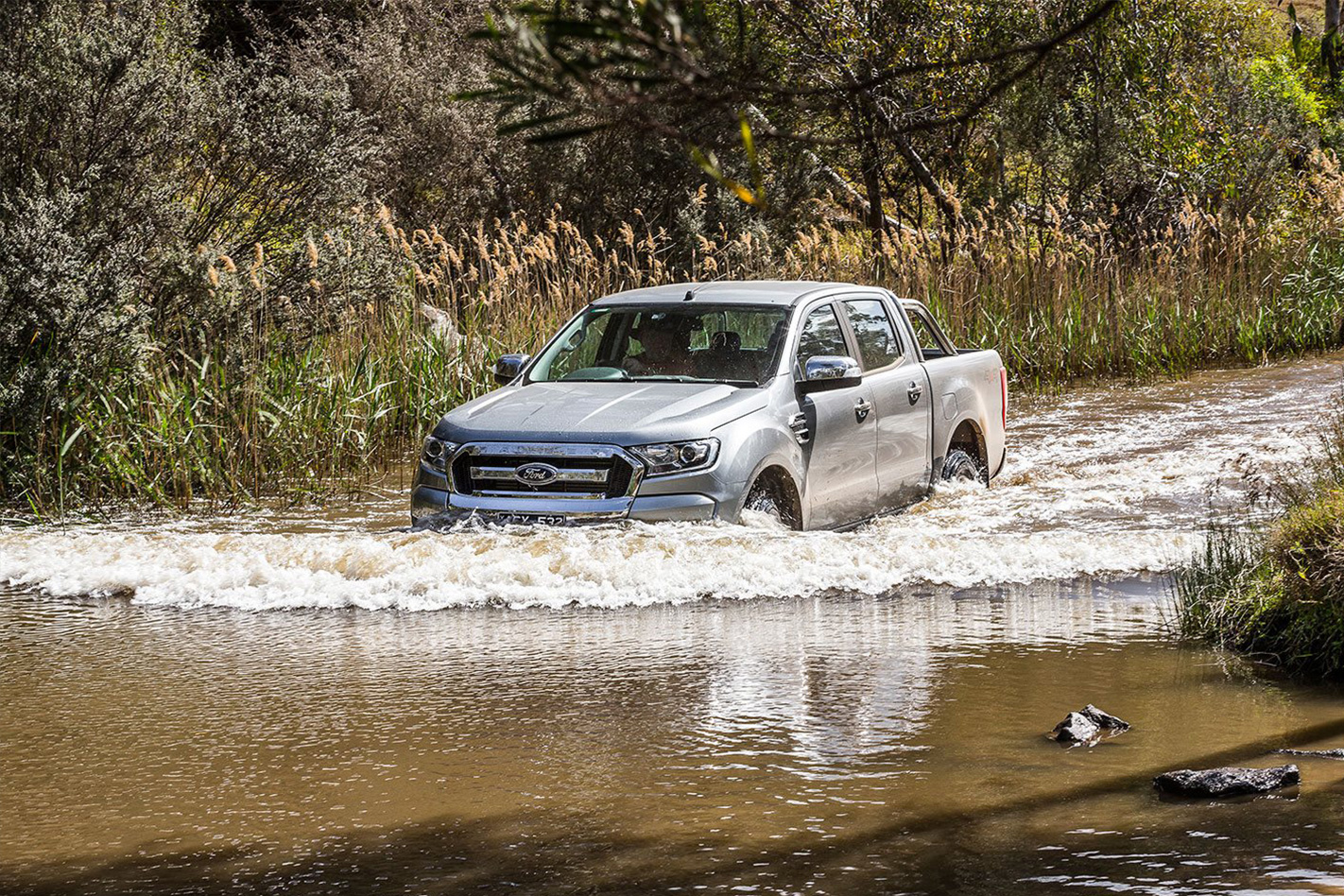
That’s mainly because SUVs grew 1.2 percent month-on-month, while the light commercial segment, where trade utes vie for private as well as business buyers, jumped 18.5 percent led by the higher priced 4×4 variants, up by 25.2 percent.
Toyota’s run of lacklustre market share has ended, with Australia’s biggest brand snaring a more healthy 18.6 percent share of the market for the month. Hyundai, meanwhile, with stocks of the sharply priced Kona baby SUV (857 sales) flooding in, overtook Mazda (8.4 percent) to take second place with a 9.2 percent share, with Holden (8.1 percent) crushing Ford (6.0 percent) for the month.
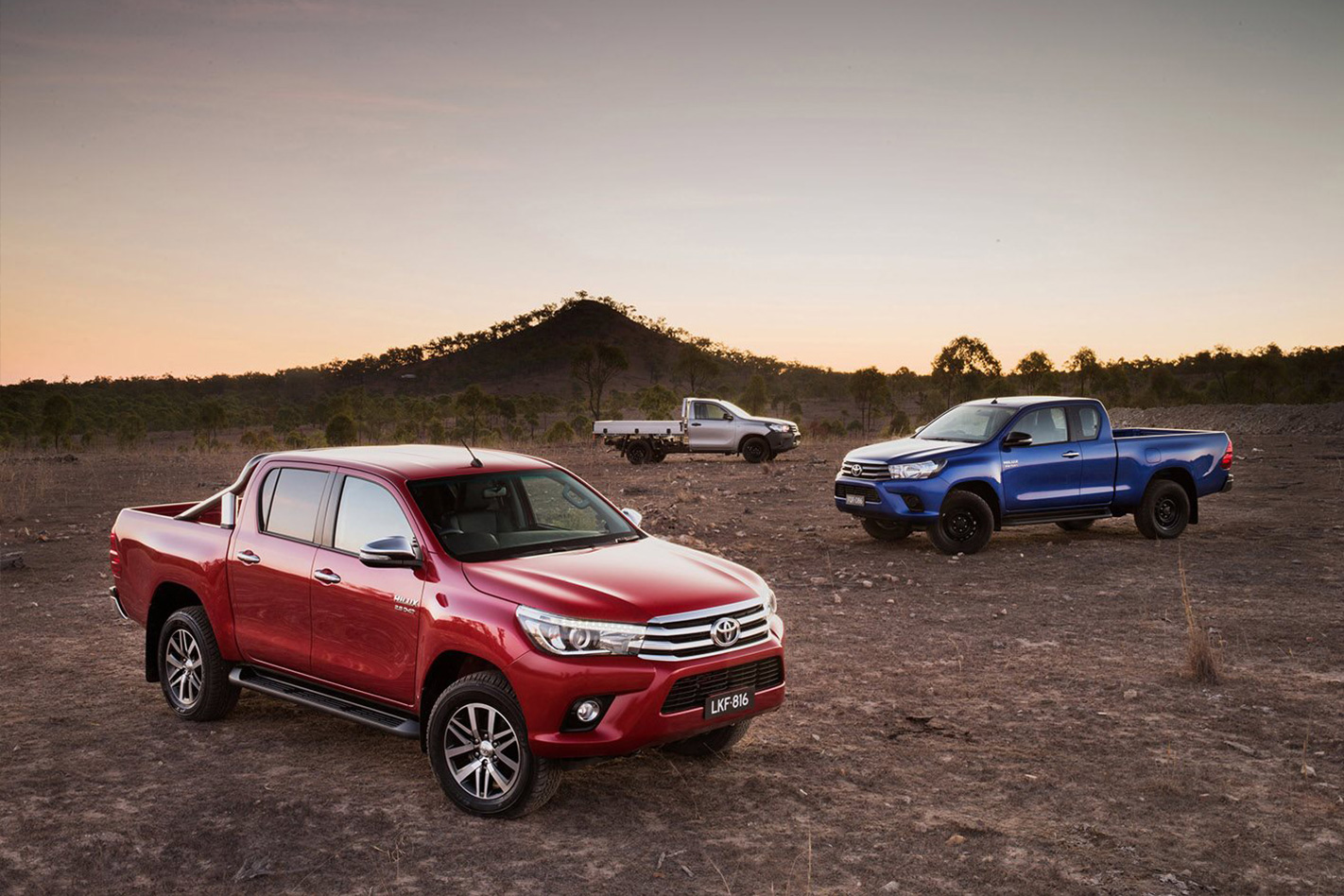
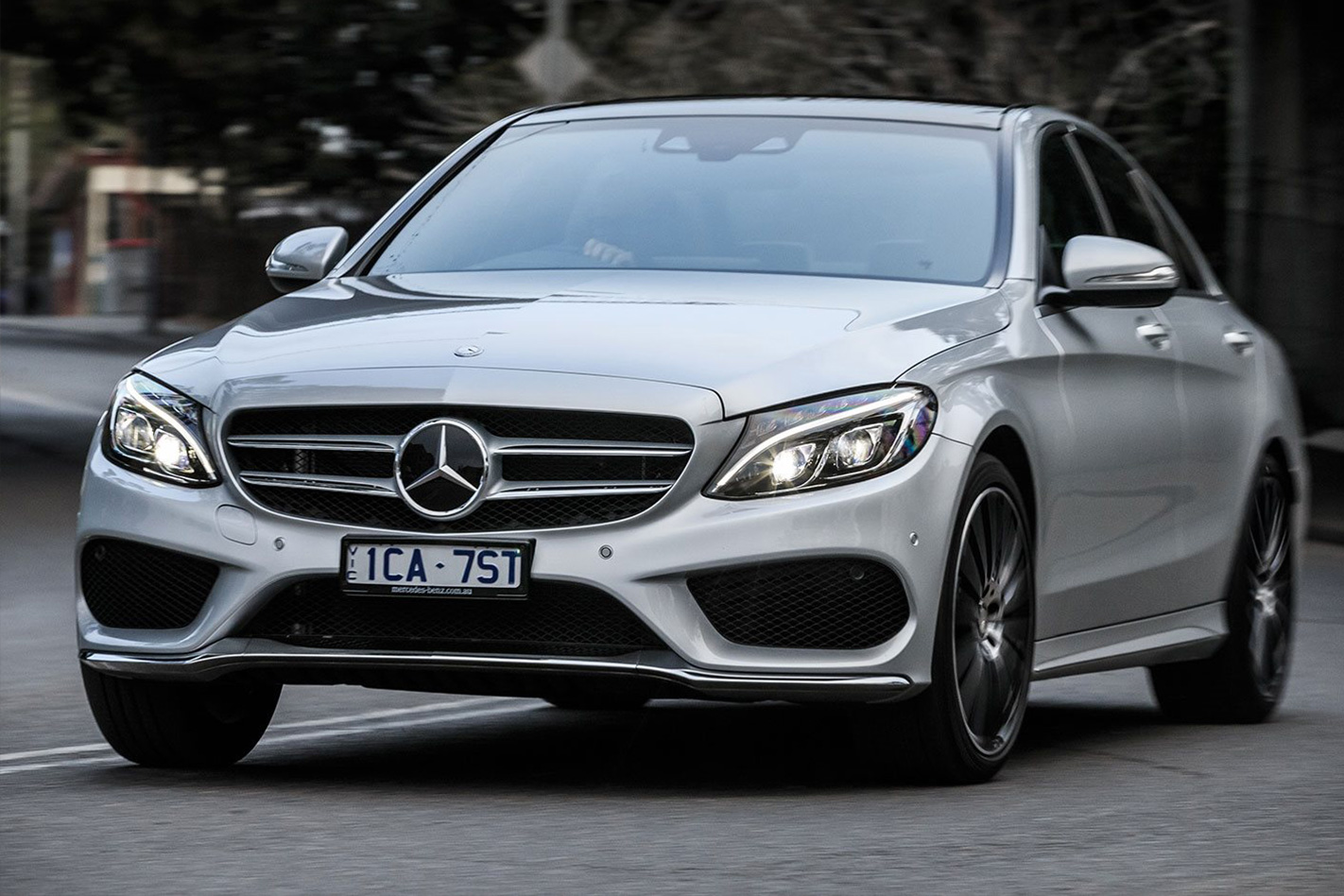
BMW languished a bit, attracting only 1783 sales for the month weighted towards its small SUVs, while Mercedes-Benz sold 609 C-Class cars to help it post 2519 sales for the month.
Lexus claimed a strange victory. It sold 870 cars compared with 923 in the same month last year, but preferred to compare the latest figures with September’s 637 sales to claim a rather hollow sales-gain victory.
TOP 10 PASSENGER CARS FOR OCTOBER 2017*
RANK MODEL SALES (Oct 17) SALES (Oct 16) 1 Hyundai i30 3983 2718 2 Toyota Corolla 3088 3210 3 Holden Commodore 2418 2101 4 Mazda 3 1962 2191 5 Toyota Camry 2057 2135 6 Mazda CX-5 2173 1612 7 Volkswagen Golf 1808 1417 8 Nissan X-Trail 1762 1655 9 Toyota RAV4 1700 1502 10 Mitsubishi ASX 1542 1650
*Source: VFACTS
TOP 10 BRANDS FOR OCTOBER 2017*
RANK BRAND SALES (Oct 17) SALES (Oct 16) 1. Toyota 17,836 16,438 2. Hyundai 8800 8704 3. Mazda 8054 7921 4. Holden 7726 7521 5. Ford 5785 6508 6. Mitsubishi 5550 5227 7. Nissan 4565 5543 8. Volkswagen 4941 4869 9. Subaru 4667 4140 10. Kia 4255 3543
*Source: VFACTS
ELECTRIC car maker Tesla has posted its biggest quarterly loss on record, burning through almost $US620 million ($A804 million) in the three months to September, as it fell short of production targets.
The thumping loss – accumulated losses over the last decade now total about $US10 billion, and only $US3.4b remains in the petty cash kitty – comes as Tesla announced another delay to production of the Model 3, the cheapest Tesla and the one that is tipped to generate the least profit for the California-based car maker.
“The initial phase of manufacturing any new vehicle is always challenging, and the Model 3 production ramp is no exception – particularly given our focus on highly automated manufacturing processes that will ultimately result in higher volumes at significantly lower costs,” Tesla said in a statement announcing the loss.
“Model 3 has been designed for manufacturability, so the car itself is not difficult to build. That said, the Model 3 production process will be vastly more automated than the production process of Model S, Model X or almost any other car on the market today, and bringing this level of automation online is simply challenging in the early stages of the ramp.
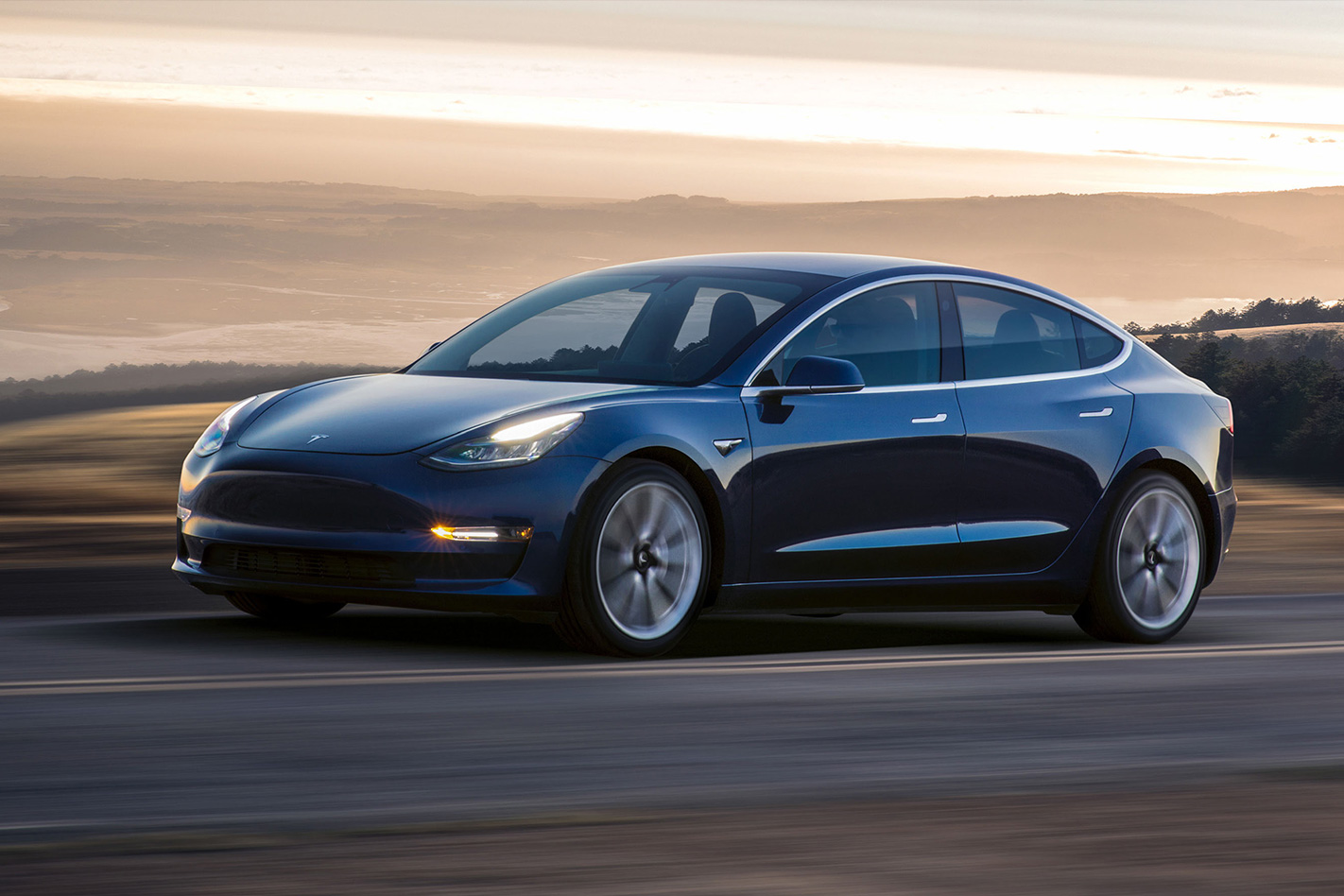
At the moment, though, Tesla said “burst builds of short duration” on parts of the Model 3 production line had shown it could assemble components for 1000 of the mid-size sedans per week. Other parts of the highly automated and extremely complicated line could build up to 500 a week, it said – a long way short of its aim to build 10,000 a week.
“While we continue to make significant progress each week in fixing Model 3 bottlenecks, the nature of manufacturing challenges during a ramp such as this makes it difficult to predict exactly how long it will take for all bottlenecks to be cleared or when new ones will appear,” it said.
“Based on what we know now, we currently expect to achieve a production rate of 5000 Model 3 vehicles per week by late Q1 2018, recognising that our production growth rate is like a stepped exponential, so there can be large forward jumps from one week to the next.”
The car maker has tipped that working out all the bugs in the way it builds the Model 3 will cost it about another $US1 billion over the last three months of this year. But by ramping up production of the Model 3, and producing fewer of the higher-margin Model S and X also means the car maker will skim less profit from the products it sells – with the amount of money Tesla makes from each sale expected to dip from an average of 25 percent to 15 percent.
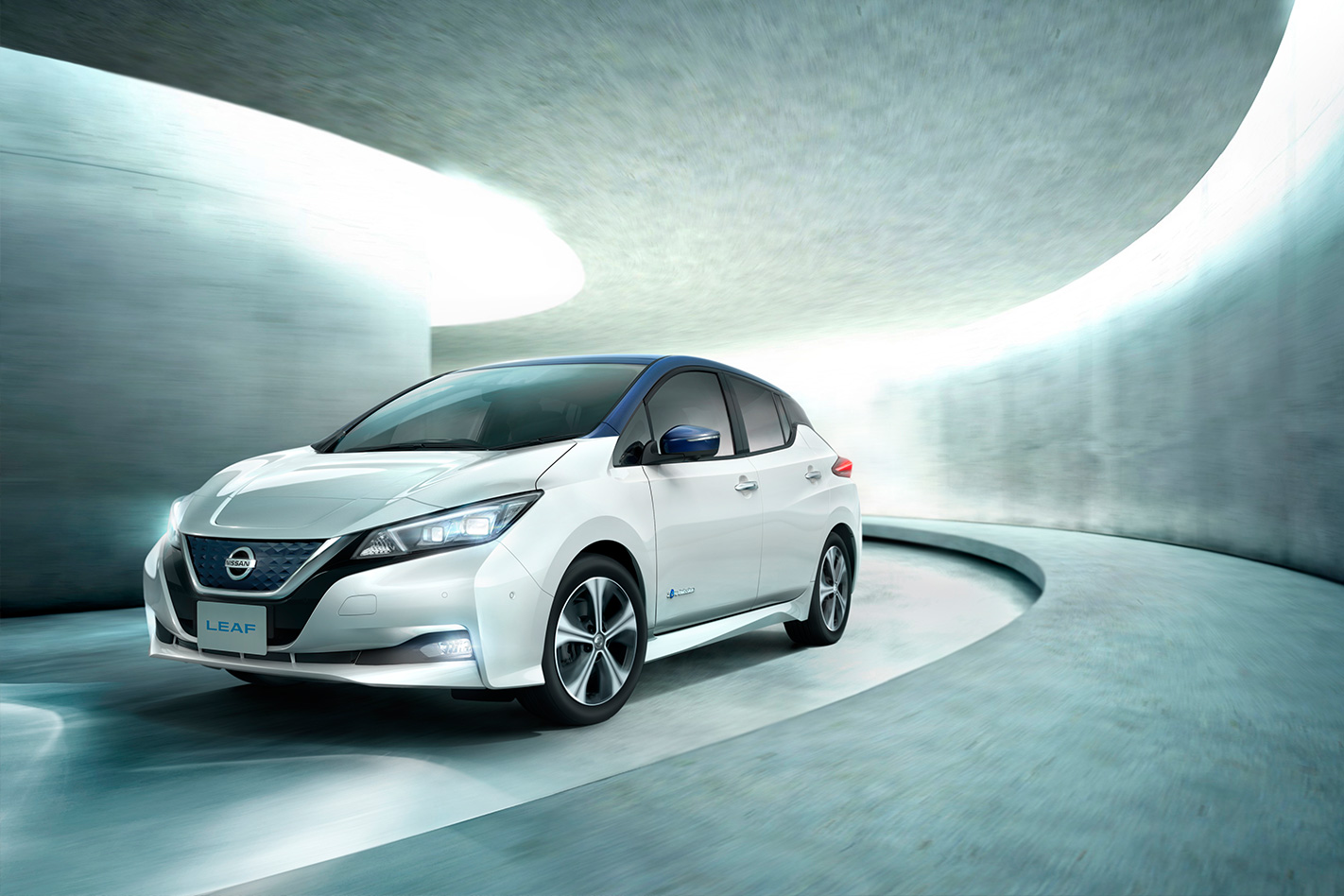
Under the terms of the Tax Cuts and Jobs Act, the House Ways and Means Committee has proposed the government repeal the electric vehicle tax credit, potentially hurting the sales of more affordable battery-powered vehicles such as the Chevrolet Bolt, the Nissan Leaf, the Renault Zoe – and the Tesla Model 3.
The Tesla Model 3 will price in the US from about $US35,000 if you include the $US7500 incentive that’s now under threat. By the time the Tesla Model S liftback sedan or Model X people mover make their way to Australia, the price has jumped by around 15 percent compared with US pricing, meaning the Model 3 will potentially price here from around $50,000, or about the same as the next-generation Nissan Leaf, due on sale here late next year.
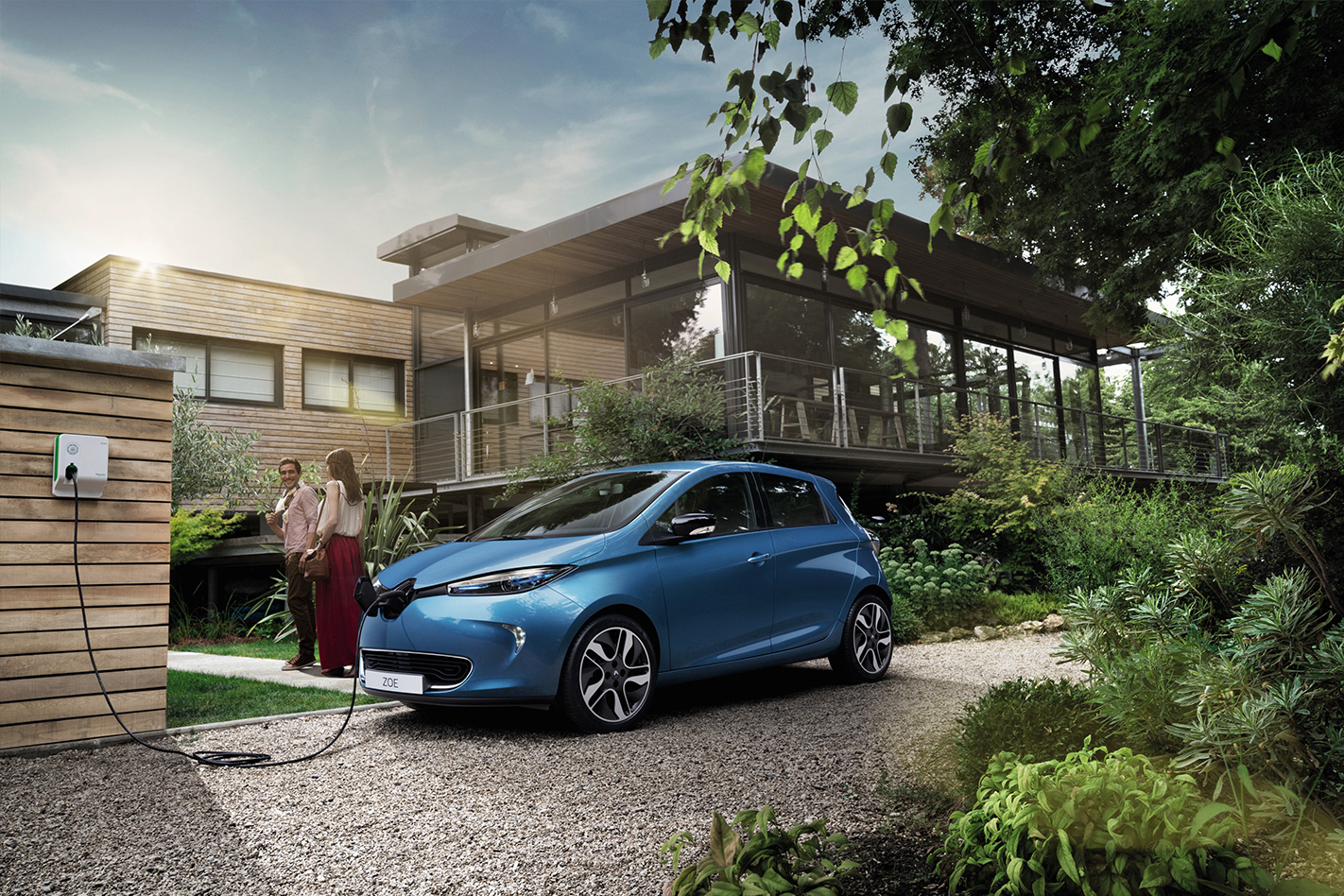
The first Tesla Model 3 deliveries had been expected in Australia mid-way through next year, although the production hiccups are expected to push the sedan’s arrival time back even further.
WHAT IS IT?
The crucial all-new mid-size SUV that BMW is counting on to help turn around its year-on-year sales decline.
WHY WE ARE DRIVING IT
The first three (of five) models in the range were provided to us out of Cairns in far-north Queensland, giving a good indication of the new BMW X3’s touring and dirt-road performance.
THE WHEELS VERDICT
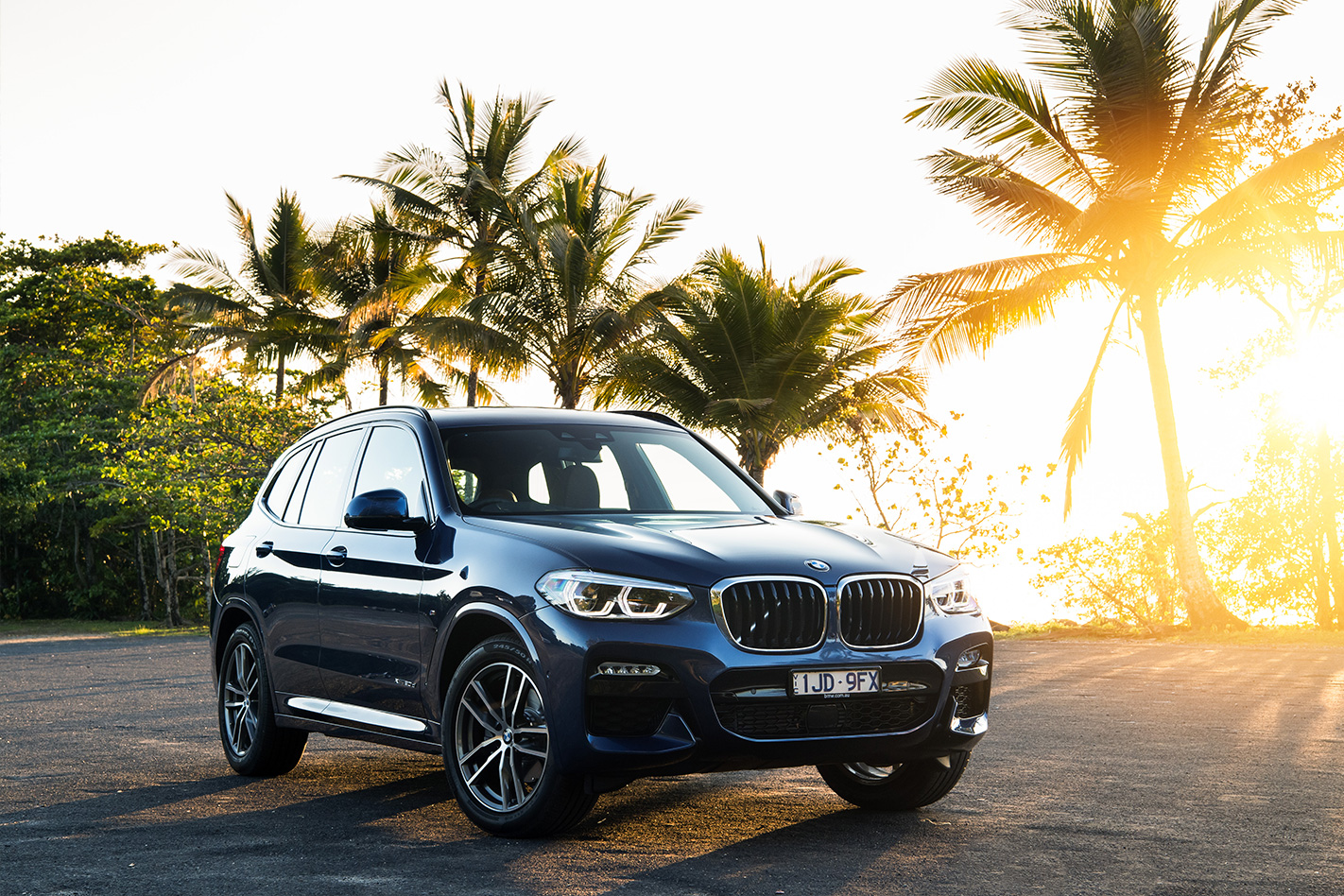
The third-gen X3 makes tangible – in places, massive – gains over its predecessor, and delivers a blend of space, efficiency and responsiveness that will win it plenty of fans. With a rear-drive base petrol model and a high-performance variant due early next year, there will be an X3 for every taste and application. However, whether the new model can win a head-to-head comparison against the best of its class rivals is another question entirely.
THE WHEELS REVIEW
Saviours can come in many forms, but could one really emerge packaged as a premium mid-sized SUV? BMW Australia sure hopes so, as the company could use a selfless heavy lifter right now. The 2017 calendar year has not been kind, with sales down around 16 percent on this time last year, and arch-rival Mercedes-Benz is powering off into the distance, some 10,000 cars ahead.
But BMW is playing it cool, assuring anyone listening that the “new product onslaught!” will slam the downward trend into reverse, starting right here with the all-new X3. It’s impossible to argue about the potential, given BMW’s top three sellers in Australia are SUVs, and the mid-size segment into which the X3 dives is healthiest of all.
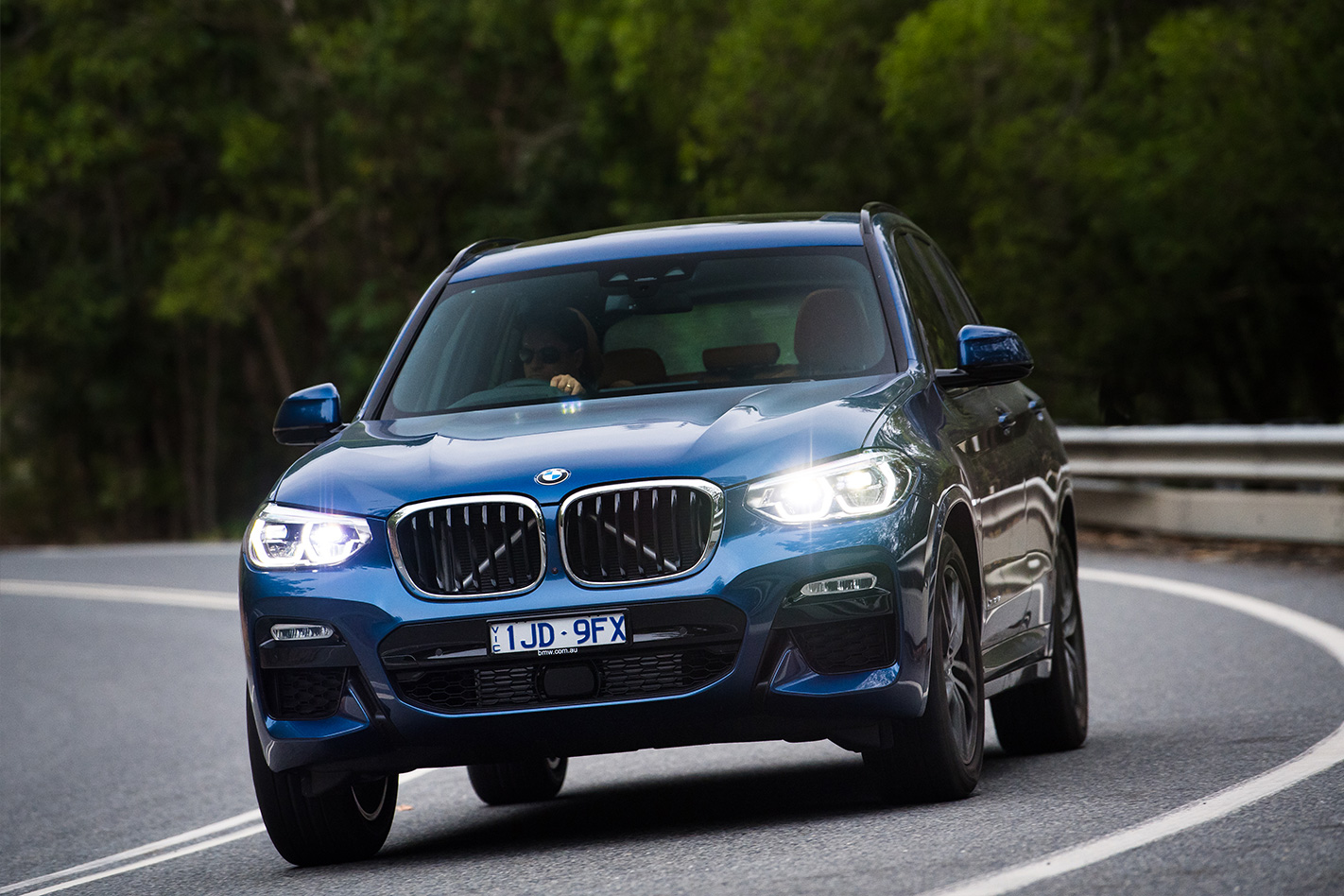
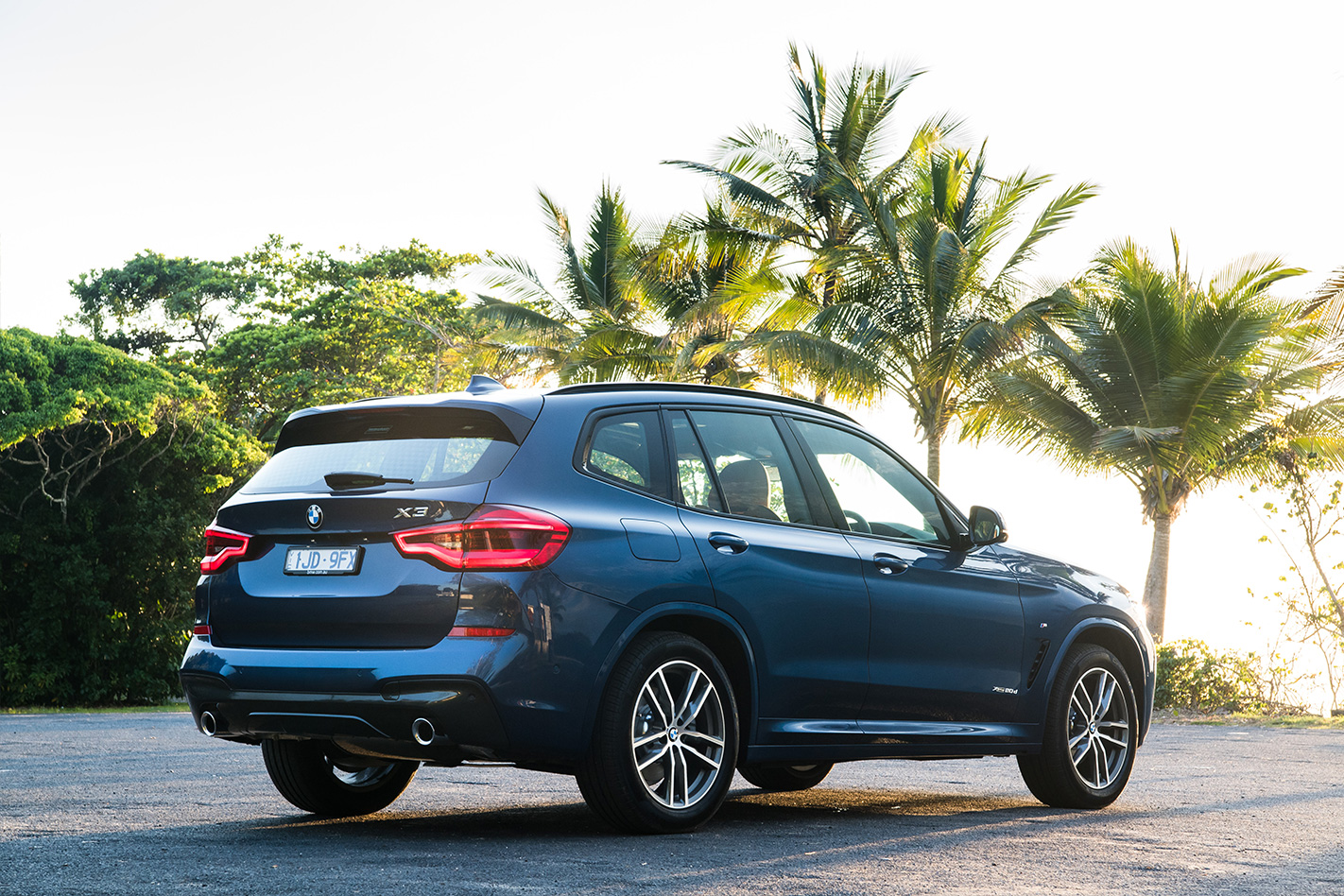
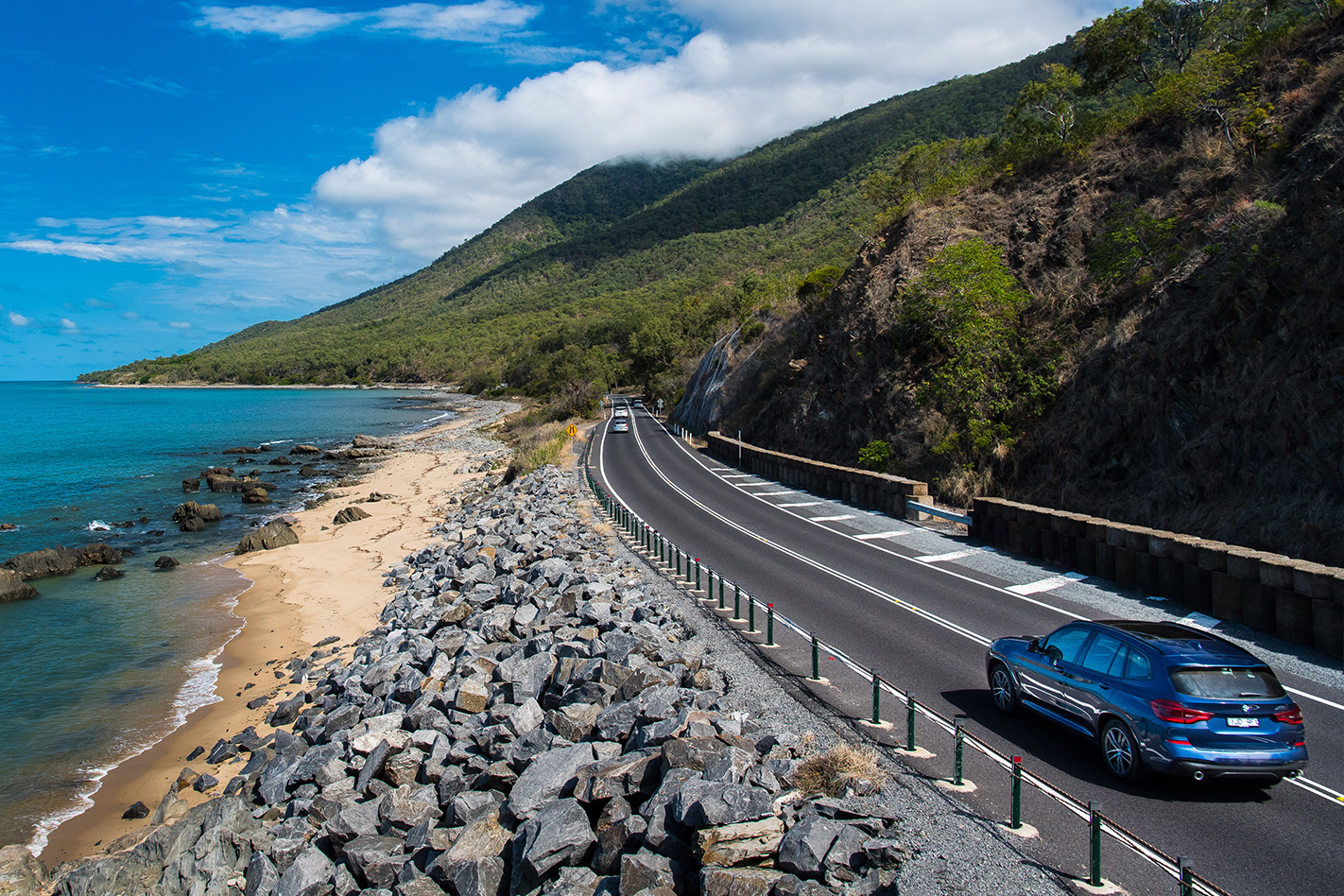
That exterior is the work of BMW’s Aussie-born designer Calvin Luk, and while it’s way more masculine and assertive than its slightly dumpy predecessor, a cursory inspection suggests a slightly reduced X5, until you really start studying the finer details. Underneath (and inside) it’s very much a raiding of the 5 Series component sets, which brings an increase in wheelbase of 54mm, which also sees the overall exterior grow by the same measurement.
Also, proof you’re not just imagining it: this third generation (G01) X3 is now larger than the first-gen X5. The growth spurt only brings a 6mm increase in rear legroom, but it’s enough that a pair six-footers can comfortably inhabit the rear seats provided the front-seat occupants don’t demand full rearward travel of the their pews.
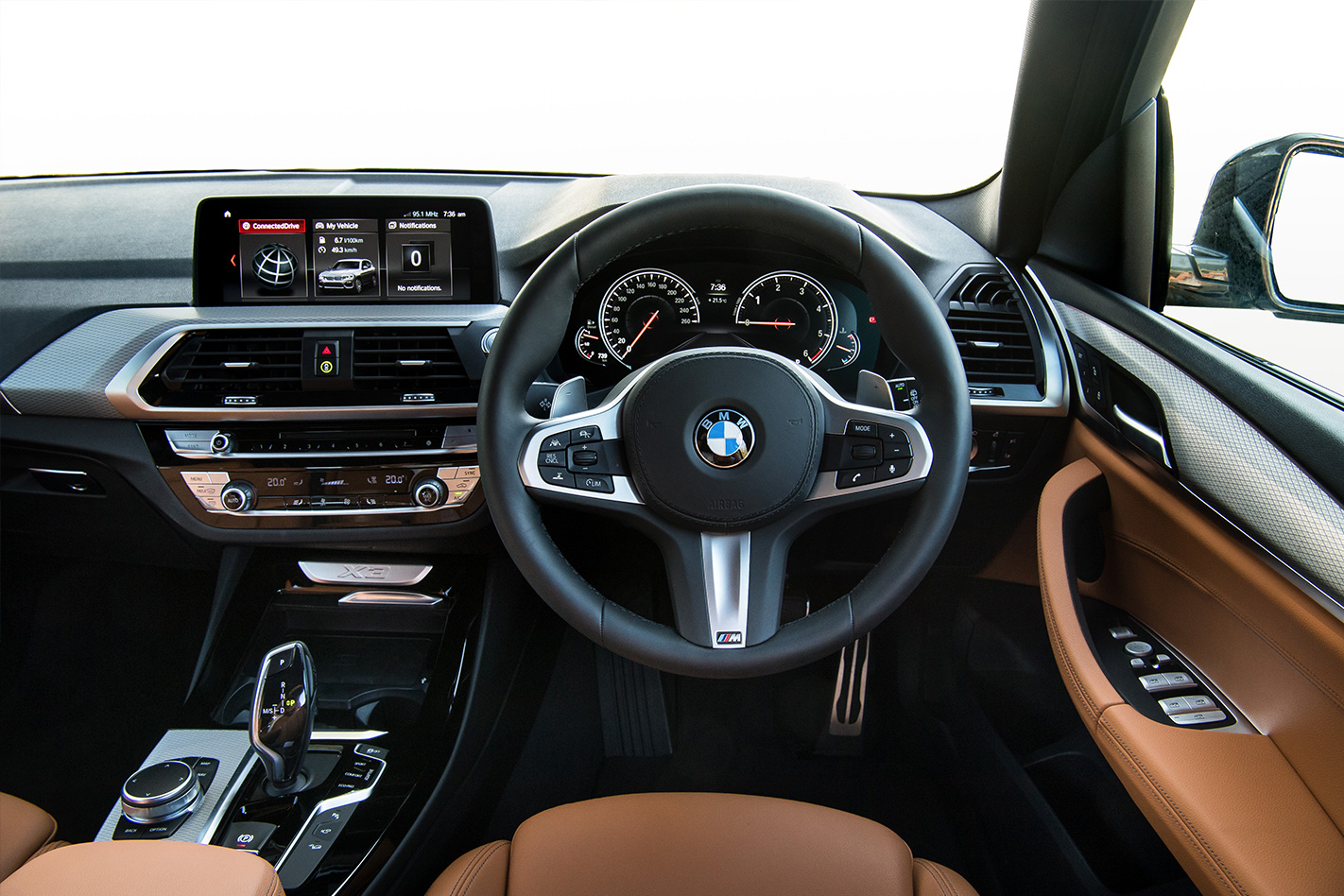
Only the lower plastics – kick panels, doorbins, etc, – look a bit utilitarian; elsewhere the sense of premium is mostly persuasive. The iDrive 6 system now features a touchscreen, while the centre stack, with its aluminium-finished buttons and glossy touches, is both elegant and functional. The standard instrument panel on the two upper-spec models is now of the ‘virtual’ variety, but features raised aluminium semi-circles that frame the main dials to give a sense of three-dimension depth.
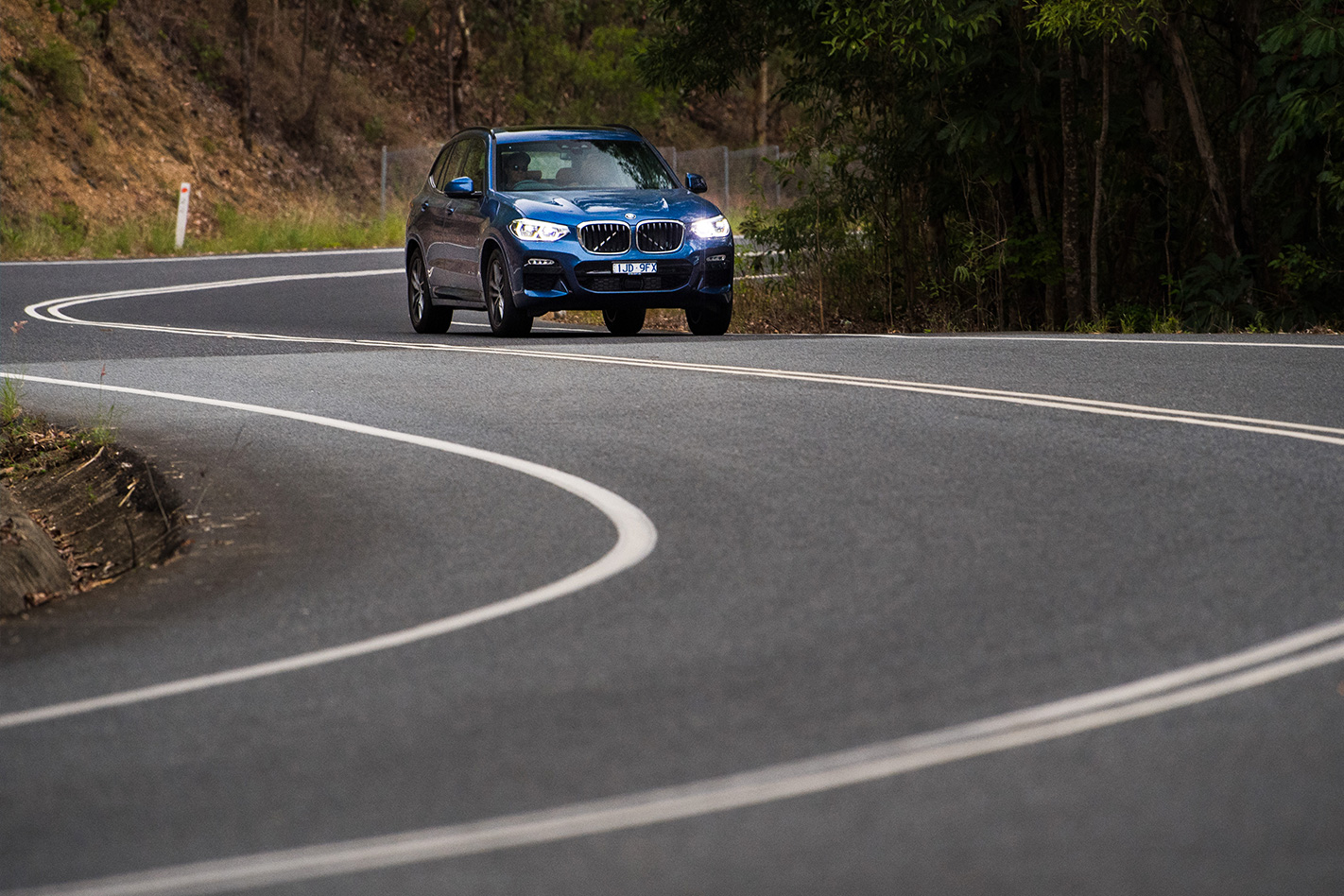
As for the driving experience, first impressions are that BMW’s powertrain expertise shows no sign of eroding. The outputs of base 2.0-litre turbo-diesel (140kW/400Nm) don’t change, but the toxicity of what exits its tailpipe does: this engine is now Euro 6 compliant, meaning it uses the addition of Adblue from a separate tank to reduce harmful emissions.
The inherent clatter at idle and in the step-off phase is well-muted, and the performance it delivers – 0-100km/h in 8.0 seconds – feels adequate for the driving demands most owners would ask of it. If the budget is tight, this model, even on standard 19-inch wheels and without lavish options, doesn’t feel like you shop at Costco and raid clothing bins.
For a proper slug-fest of torque, though, you’ll want the 30d. Power from the 3.0-litre straight six oiler is only up by 5kW (now 195kW) over the old X3 30d, but torque jumps to 630Nm (up from 560) and both sprinting ability and shove on the move feels seriously unambiguous. Just as impressive is the refinement and revability: if you insist, via Sport Plus and manual mode, the eight-speed auto will forgo the usual 4700rpm upshifts, and instead hold the engine on its limiter at 5500rpm, without sounding like it’s about to throw a rod out of bed.
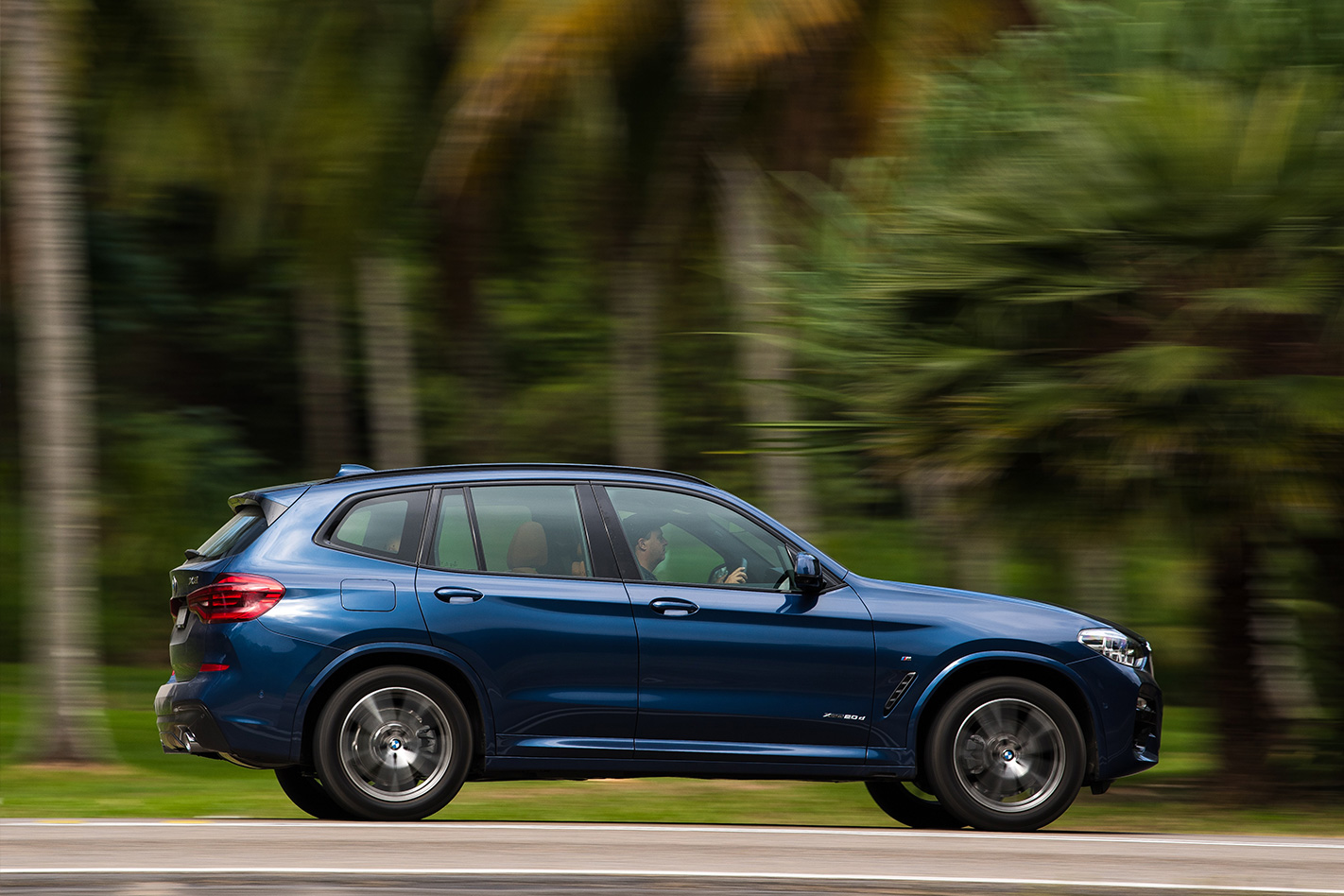
So the X3 doesn’t feel as if it leaps to class leadership in terms of outright dynamics. But buyers in just about all SUV segments are willing to overlook a multitude of on-road compromises in the quest for the driving position, packaging and perception of a premium interior promised by the badge. On this level, the X3 delivers.
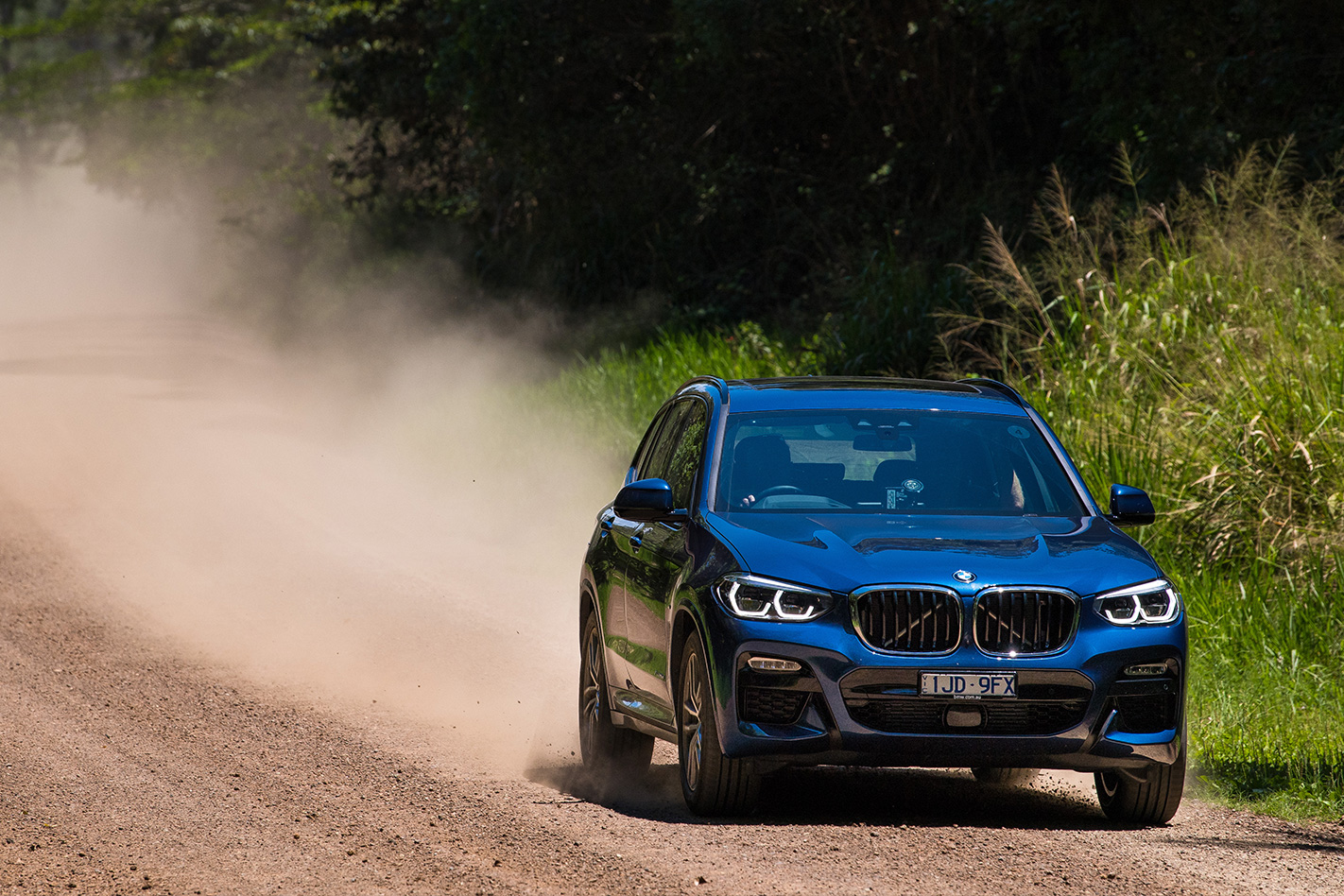
2018 BMW X3 SPECIFICATIONS
- Model: BMW X3 xDrive 30i
- Engine: 1998cc 4cyl, dohc, 16v, turbo
- Max power: 185kW @ 5200-6500rpm
- Max torque: 350Nm @ 1450-4800rpm
- Transmission: 8-speed automatic
- Weight: 1790kg
- 0-100km/h: 6.3sec (claimed)
- Economy: 7.6L/100km
- Price: $75,900
- On sale: Now
