
“YOU’D have to shoot me first.” Ferrari CEO Sergio Marchionne didn’t leave a lot of wiggle room on the prospects of the company ever building an SUV. That was in February 2016.
Now it appears that Sergio might have to start getting his Zegna suits Kevlar-lined. More than one source has confirmed that a Ferrari SUV is on the cards. Just bear in mind that if you ever call it an SUV in the hallowed halls of Maranello, you might be the one who cops the bullet.

Bloomberg has recently confirmed initial rumours of a high-riding utility vehicle in Ferrari’s plans, part of a scheme to increase annual production beyond 10,000 cars and, in turn, double profits by 2022. The 10,000 car limit is key here because once production exceeds that number, more stringent fuel economy and emissions rules are levied on the manufacturer.
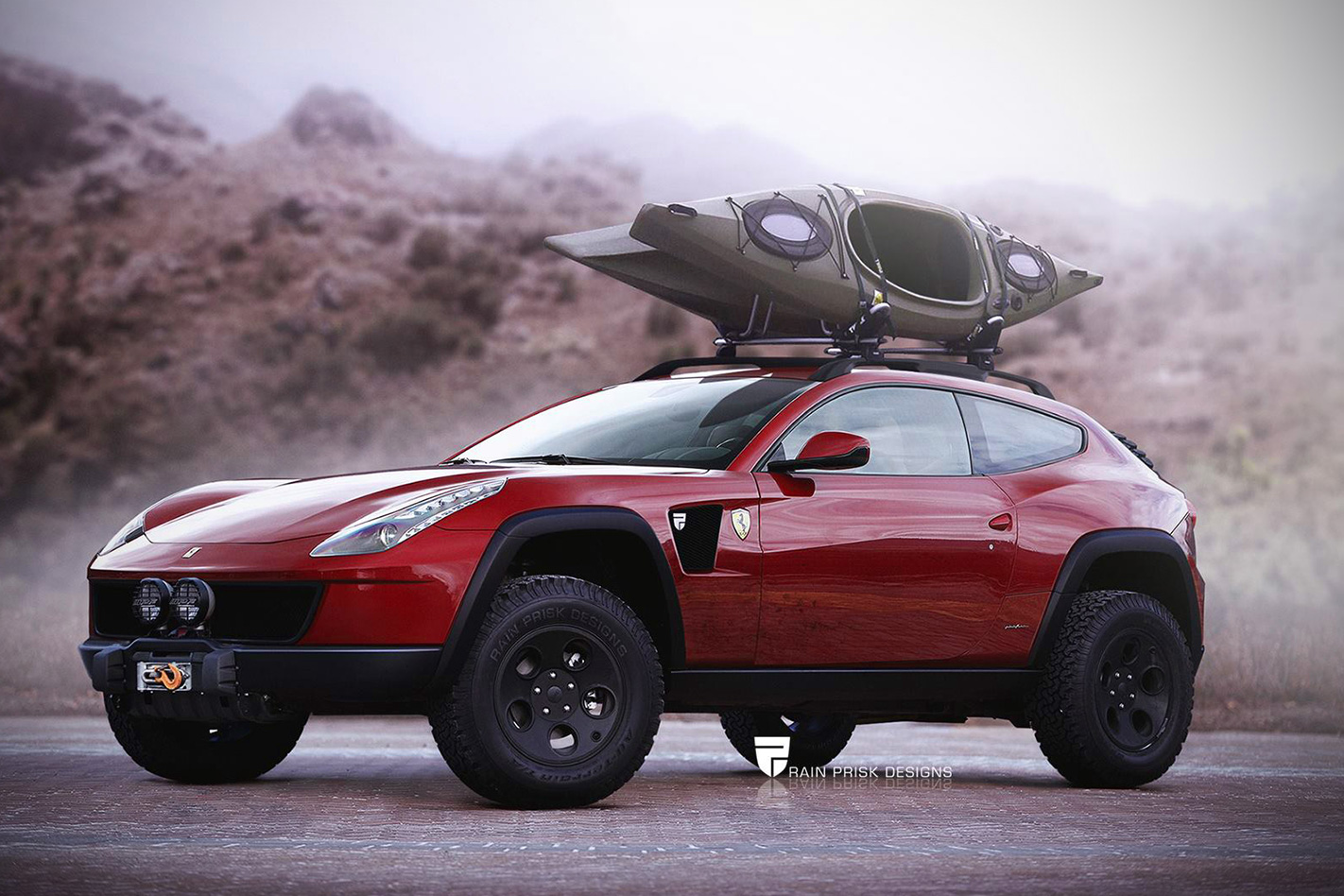
Our sister title in the UK, Car, has reported that the ‘SUV’ project has the internal designation F16X and that the vehicle will be a sporty, albeit jacked-up coupe with hybrid power built on the same lines as the GTC4Lusso. The rear doors will be disguised to give a sleeker profile, with no conventional B-pillars. It’s also alleged that an eight cylinder engine will be fitted rather than a V12.
Growth markets – especially China – are a target for the Ferrari utility vehicle, which may well be a lifted four-seater crossover along the lines of Aston Martin’s DBX concept rather than a more traditional lumbering wagon. With Porsche, Bentley and Maserati already in the game and both Lamborghini’s eagerly-awaited Urus and Rolls Royce’s behemoth Cullinan also waiting in the wings, it makes solid financial sense for Ferrari to launch an SUV.
Marchionne’s recently unveiled five-year plan takes him through to his proposed retirement in 2021 and, if sources are to be believed, will be part of a push to increase electrification across the range and to introduce a second shift to the Maranello plant which is Ferrari’s only manufacturing facility.
Ferrari’s sales stood at 8014 in 2016 and the current target is to boost sales to 9000 cars in 2019. For many years, there was a voluntary 7000 car limit on Ferrari production to protect the exclusivity of the brand. Analysts at Mediobanca SpA, UBS Group AG and Bernstein predict deliveries could jump to as high as 15,000 under Marchionne’s new plan.
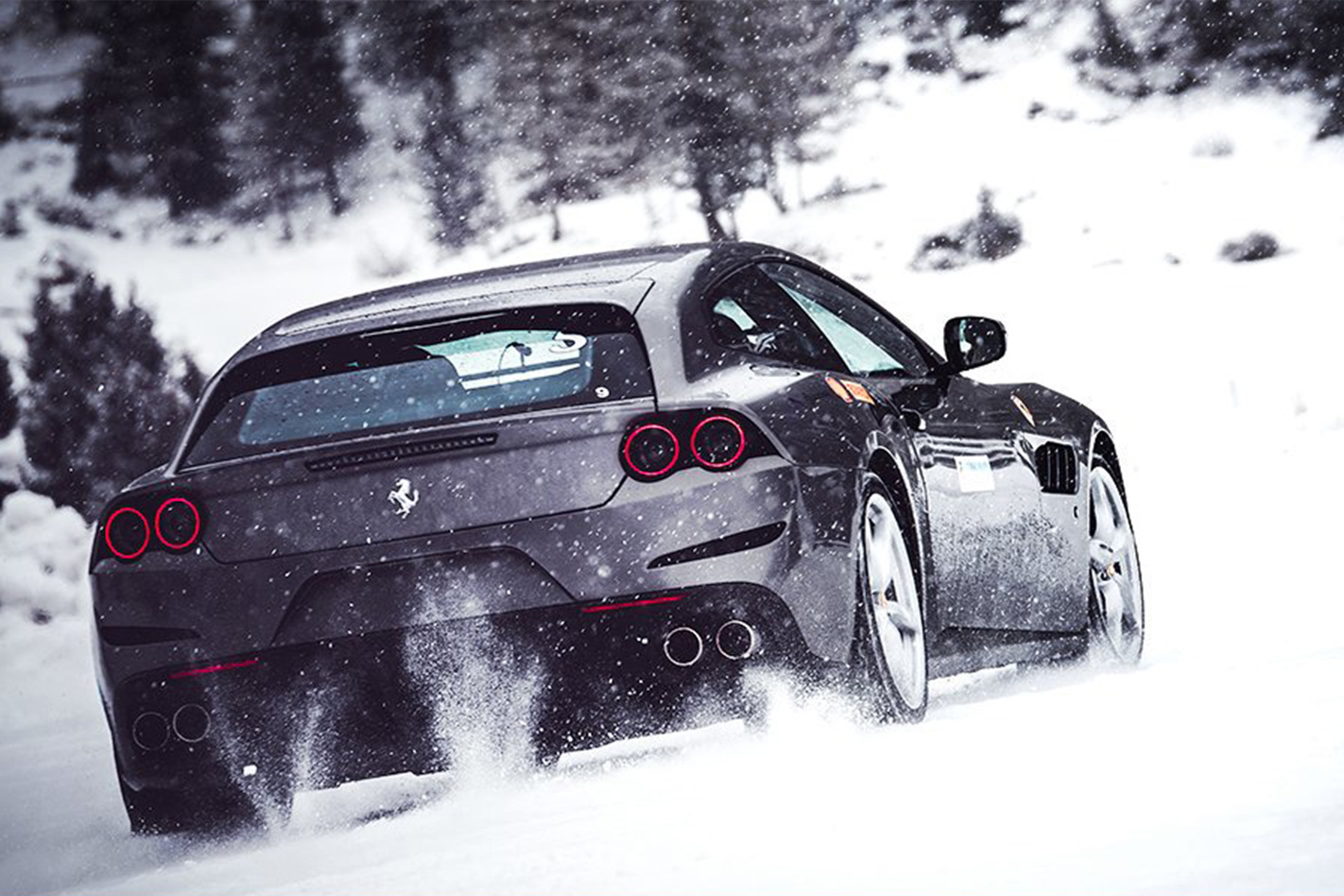
Unlike Lamborghini, Ferrari has no SUV in its back catalogue to lend a historical authenticity to its move into this new market sector. Building a vehicle with more space than the current all-wheel drive GTC4Lusso would risk diluting Ferrari’s brand, but it seems as if Marchionne’s parting legacy could be to drench the company in new money. Consider that trigger pulled.
Less is more. It’s a well-worn adage that works particularly well in the automotive world. Specifically, less weight results in more performance which, in turn, results in more fun.
BMW has subscribed to this premise for decades, creating a lineage that began with the E9 CSL ‘Batmobile’, continued with the likes of the E30 Sport Evo, E36 Lightweight, E46 CSL and E90 CRT and now culminates in the F82 M4 GTS, M Division’s idea of the ultimate road-racer.
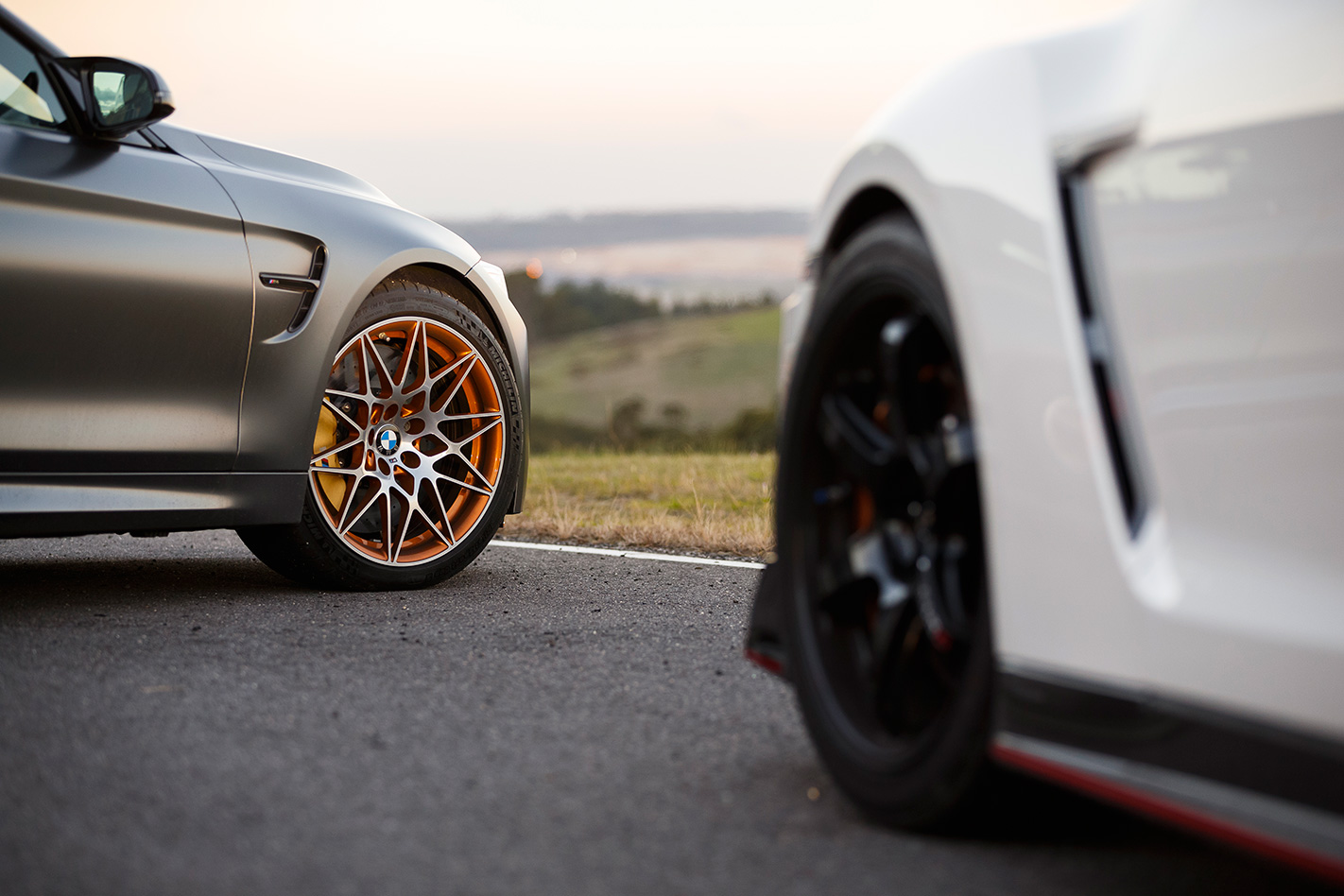
Further weight is lost courtesy of a titanium exhaust, carbon ceramic brakes, lightweight centre console and door trims and replacing the rear seats with glassfibre panels coated in Alcantara. For those truly averse to kilograms, a further 7kg can be dropped courtesy of $21,560 carbon wheels.
BMW originally planned to build just 700 GTSs, though that total swelled to 803 customer cars (830 including development cars) by the time production concluded, plus another 200 mechanically identical DTM Editions. No doubt thanks to that extra production, Australia was able to double its allocation to 25 cars (plus 10 DTMs), but all were sold before they were even loaded on the boat.
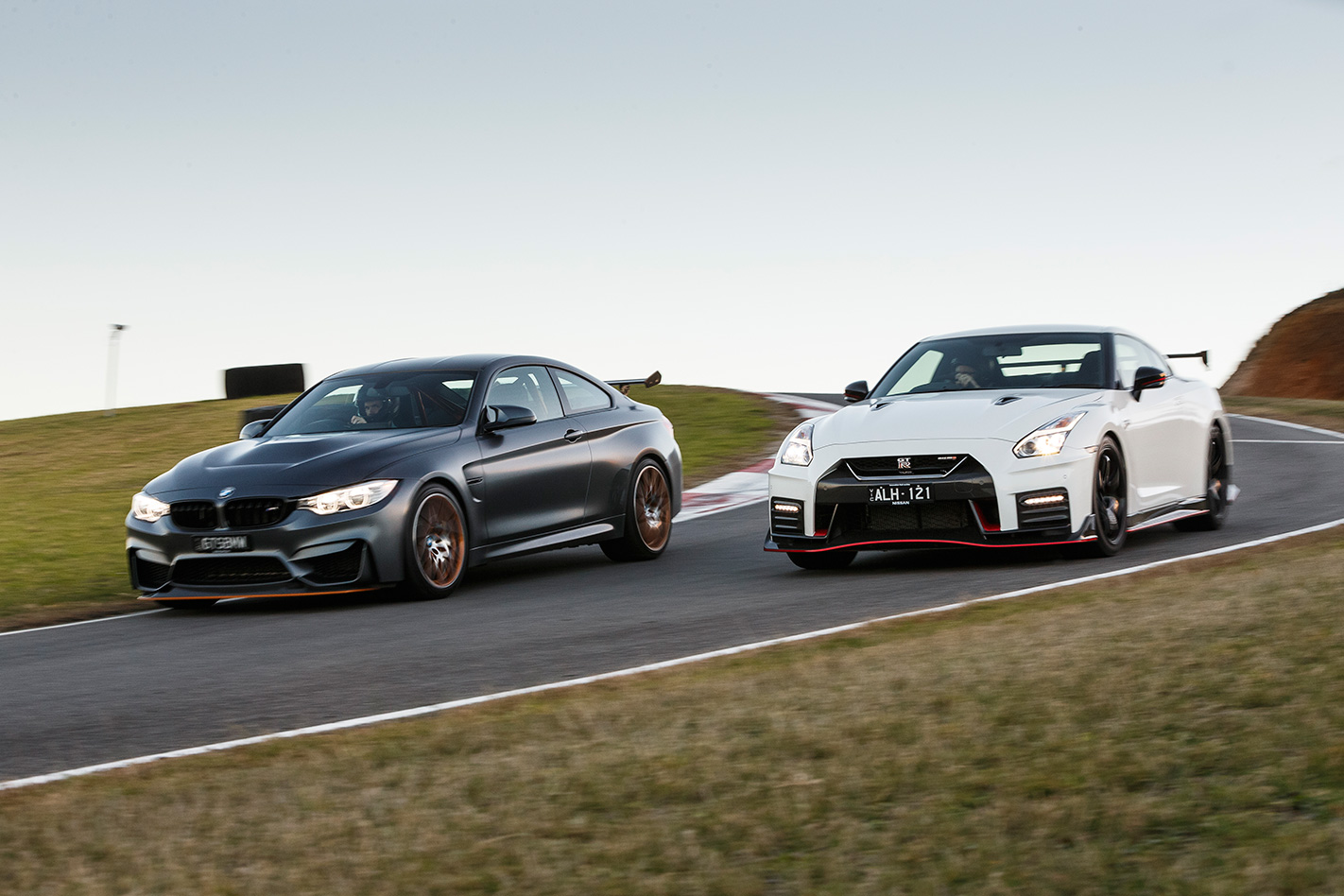
You can buy a Nissan GT-R NISMO no problem, though at $299,000, $110,000 more than a standard GT-R Premium, it’s likely to be even rarer than the M4 GTS. On the face of it, this might not be the most obvious comparison, but both are track-focused, hardcore versions of regular sports coupes powered by twin-turbo six-cylinder engines.
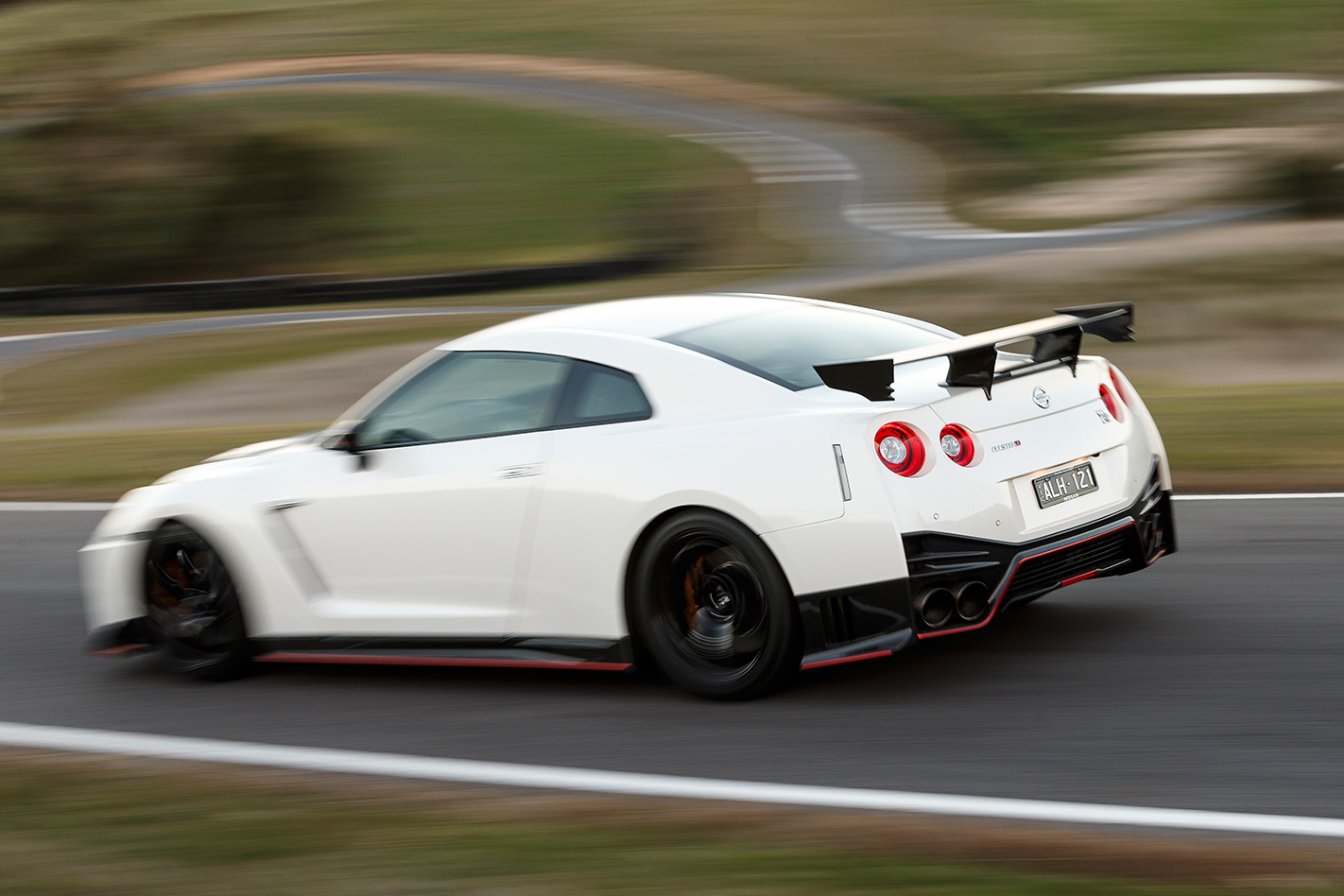
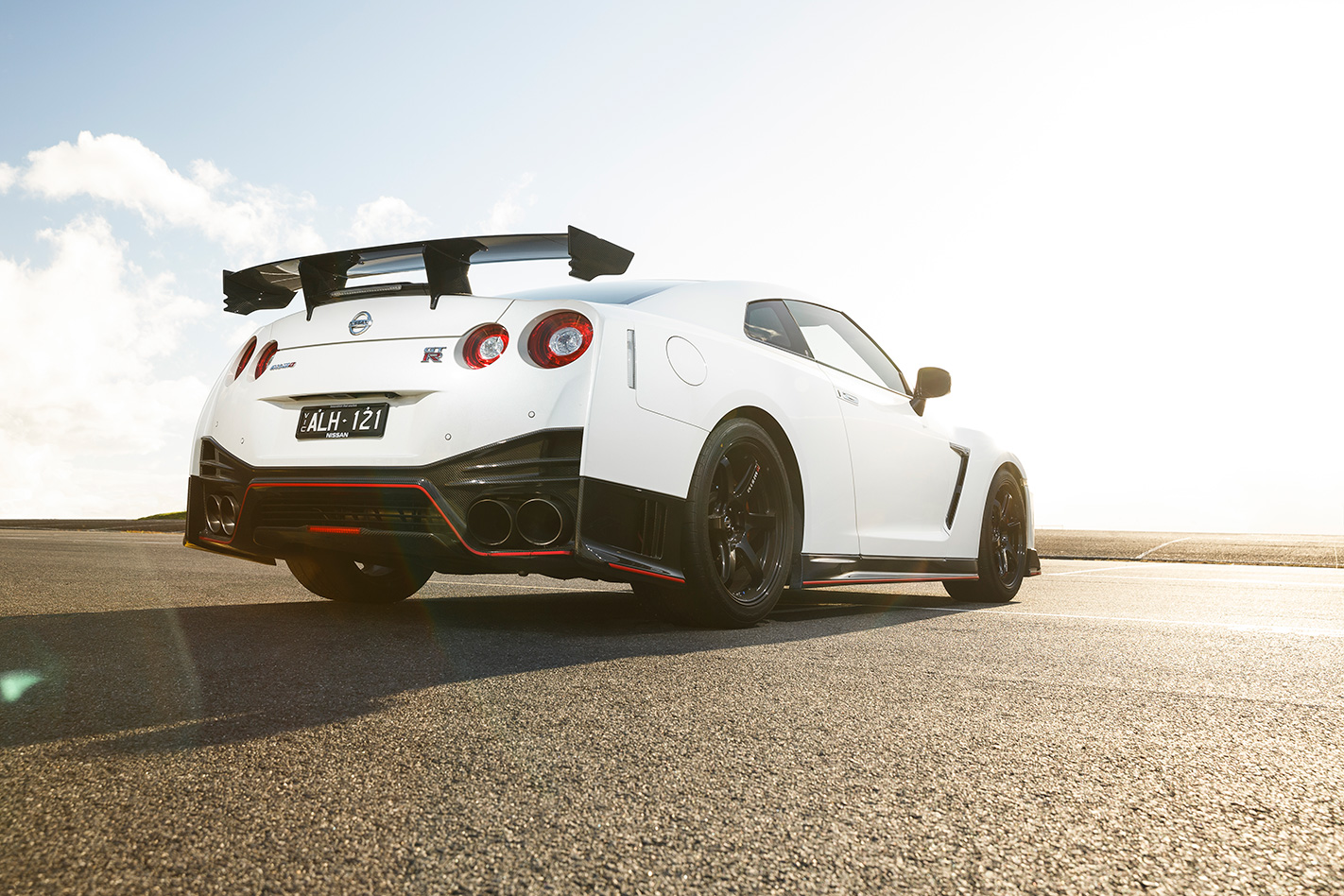
Yet, unlike the BMW, the Nissan retains all its creature comforts, including its rear seats, which no doubt hurts it on the weighbridge, but does wonders for its day-to-day useability. Surprisingly, if you’re prepared to make some small concessions, the NISMO is every bit as habitable as the standard GT-R.
Road noise from the Dunlop Sport Maxx GT 600 semi-slicks (255/40 ZR20 front; 285/35 ZR20 rear) is considerable and like previous R35s, the NISMO’s stiffer suspension makes selecting Comfort mode a must at the start of every journey, but this is far from a rough-riding track special.
There are still plenty of clunks from the gearbox and low-speed chatter from the diffs but paradoxically, noises that seem somewhat agricultural in the standard R35 suit the NISMO’s more focused personality. When it comes to focus, though, the BMW’s is razor sharp.
The lightweight Recaros hug you tightly – as long as you’re Recaro-shaped – and aren’t particularly comfortable for long trips, not helped by the uncompromising ride. We received the M4 GTS with the adjustable suspension set to the same settings with which it recorded its impressive 7min28sec Nurburgring Nordschleife lap.
While the Green Hell is far from billiard-table smooth, on a typical Aussie back road this setup results in the car hopping and skipping over lumps and bumps, accompanied by plenty of squeaks from the rollcage. It’s a Spartan affair inside, too, with no keyless entry, centre console storage or door grab handles – and only regular air-conditioning (no climate control)!
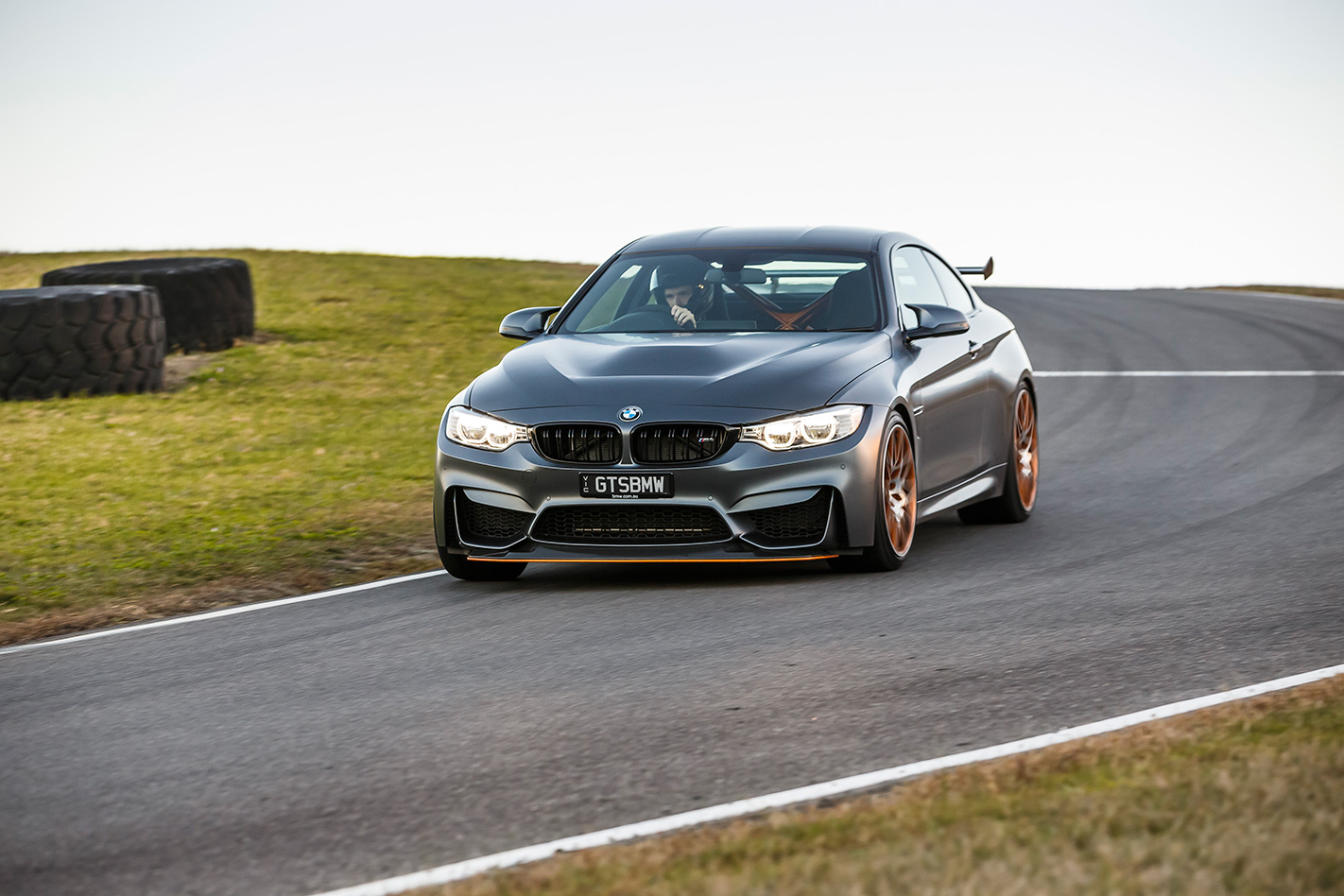
Even by the standards of the genre (911 GT3 et al) the BMW is tough work. Of course, all this will easily be forgiven if the M4 GTS is utterly scintillating to drive, but it’s not a car you just jump into and go flat-out. Wearing staggered Michelin Pilot Sport Cup 2 tyres (265/35 ZR19 front; 285/30 ZR20 rear), on cold rubber and damp roads the GTS will break into wheelspin in fifth gear on part-throttle.
Patience is needed to build tyre and brake temperature; then you’re rewarded with a car transformed. Certain M4 traits remain – the steering doesn’t offer much communication through the overly-thick wheel rim, for instance – however, with warm rubber you can commit to corners hard on entry and exit, safe in the knowledge there’s a stable base beneath you.
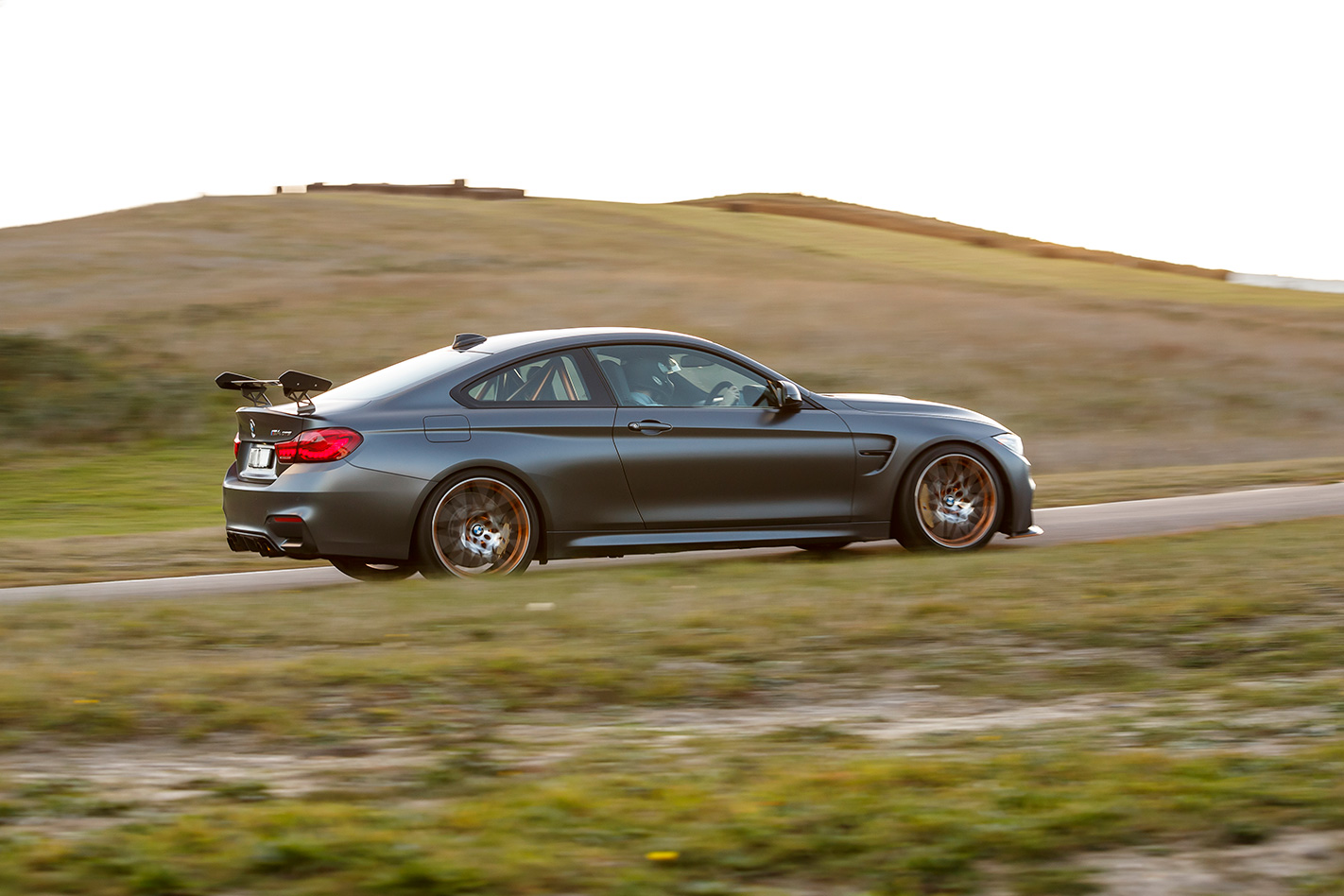
The giant carbon brakes (400mm/six-piston front; 380mm/four-piston rear) are massively powerful – stopping from 100km/h takes just 32.54m – with only the occasional kick of ABS intervention, and while the gearbox suffers the odd stumble around town, it works brilliantly at maximum attack, allowing up to 7000rpm on downshifts.
Suddenly the creaks and rattles cease to matter, not that you’ll be able to hear them over the insane exhaust note. The M4 GTS is one of the loudest, most raucous carson sale, with so much artillery fire on the overrun you’d swear it was running anti-lag. Sadly, this stability and confidence doesn’t translate from the road to the racetrack.
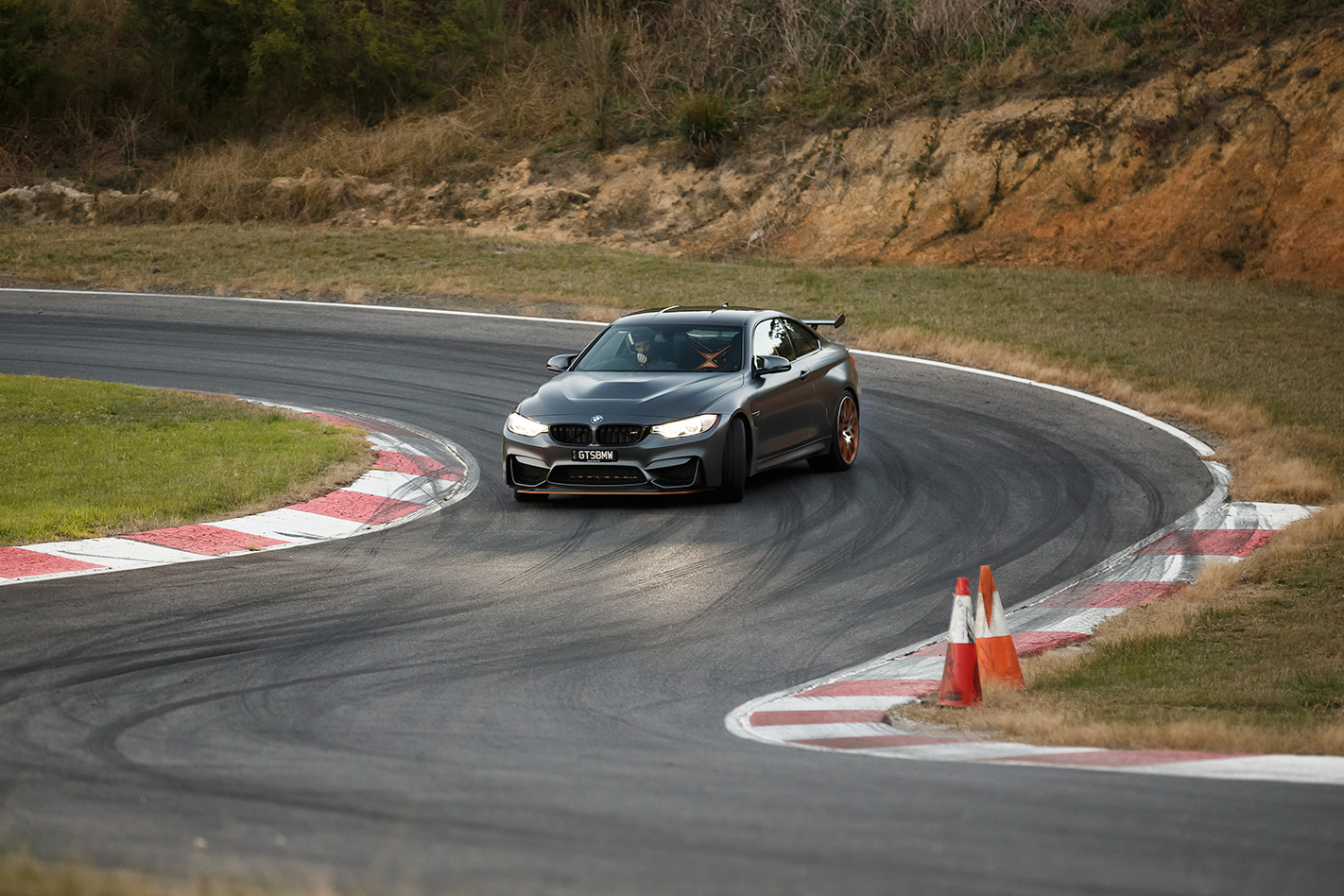
It peaked at more than 130km/h on its way to a best lap time of 1:00.20sec, though I never felt I particularly got the best out of it. And therein lies the problem. On the road, where you aren’t working at the absolute limit of adhesion, the GTS feels stable and trustworthy.
Yet, when you start to breach that limit on a race track it goes mute on you just when you want it to start talking the loudest. Bryant Park is almost purpose-built to trip a car up dynamically with blind crests, quick changes of direction and off-camber corners and the M4 GTS doesn’t offer enough communication for the driver to feel comfortable committing.
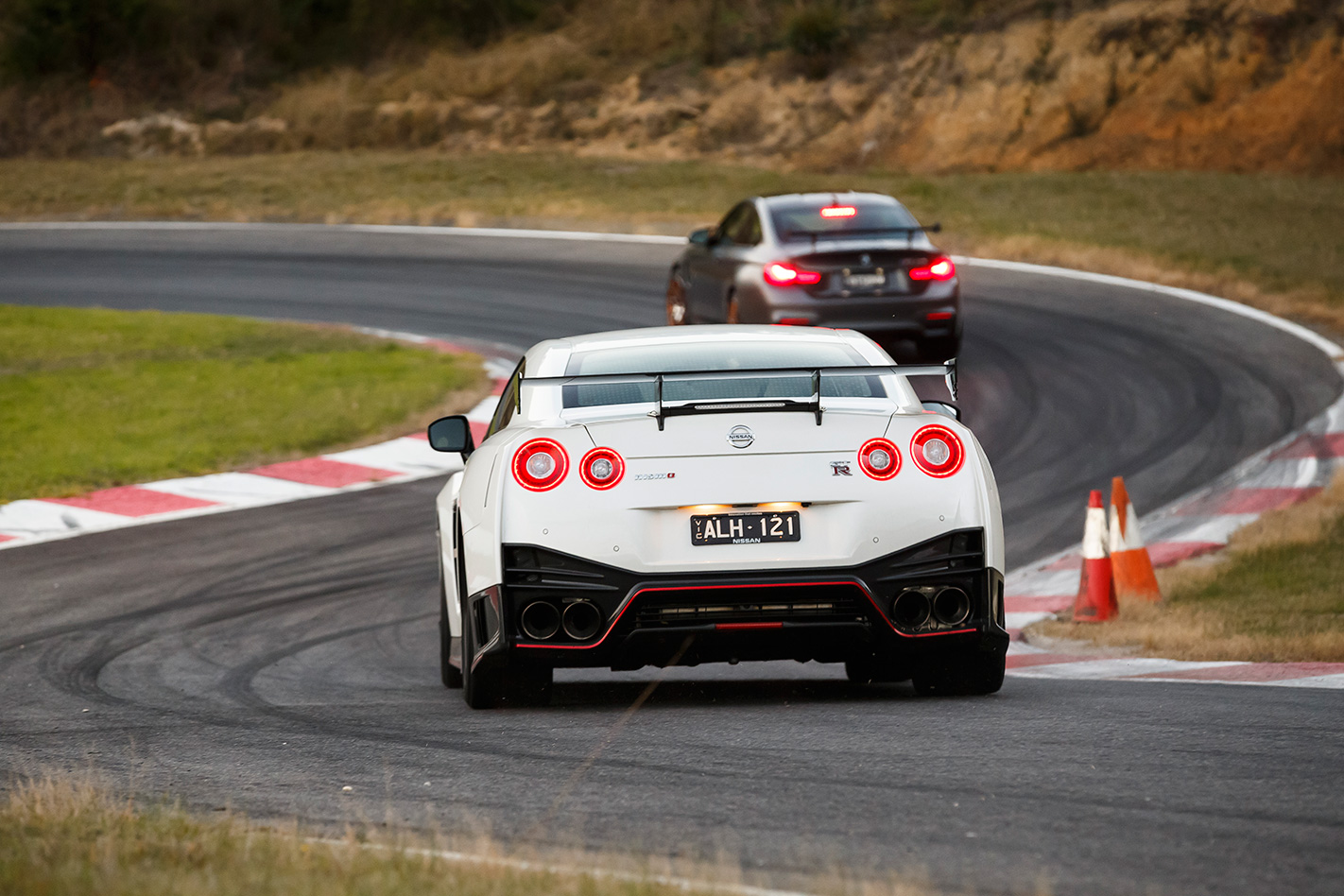
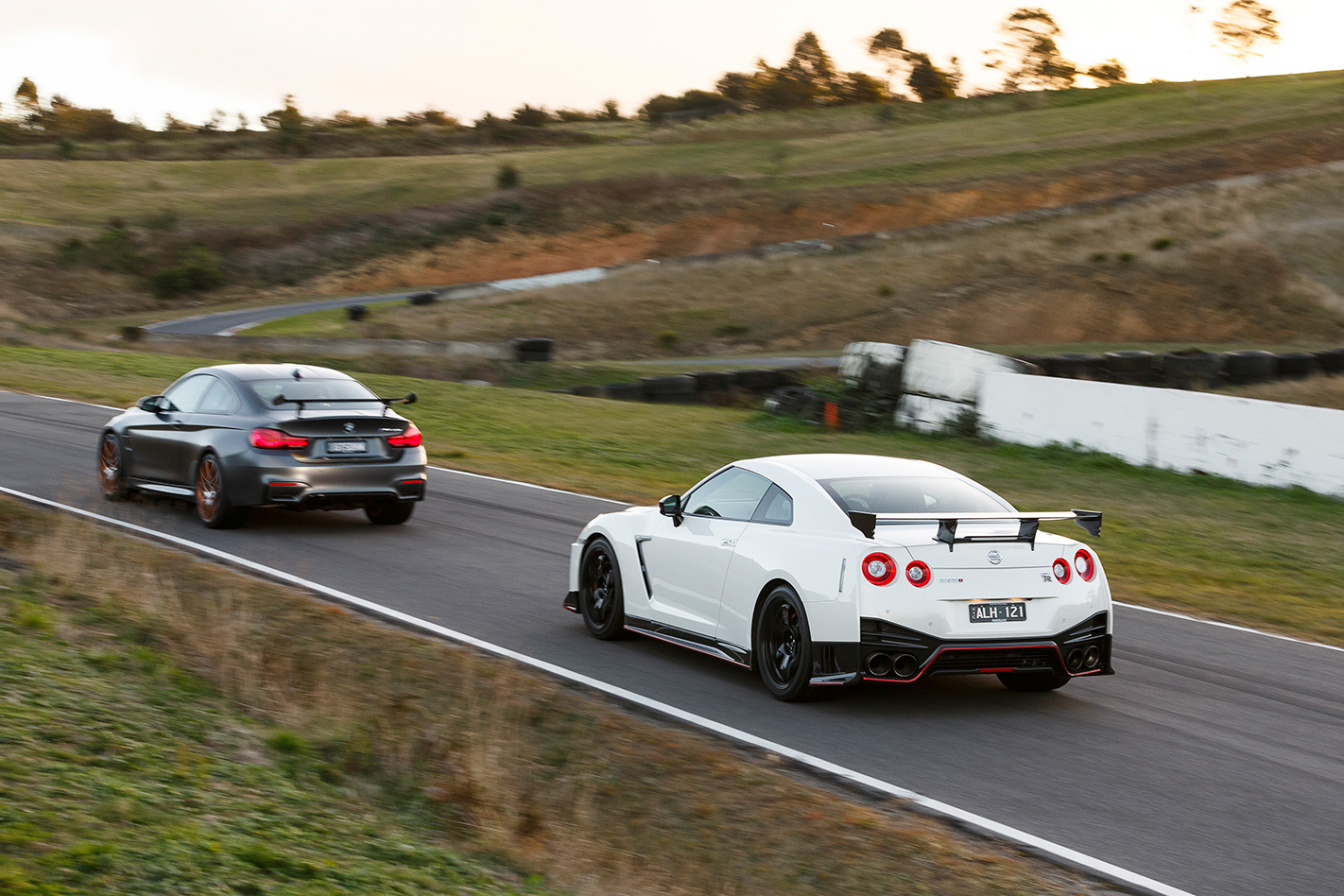
Simply put, it was a revelation around Bryant Park, like being allowed to steer a roller coaster. After only a handful of timed laps I was out of breath, exhausted by the forces involved and concentration required. The best of those laps was 58.90sec, a full 1.3sec clear of the BMW, however, despite the challenge of the M4 GTS, it’s possible the NISMO had even more to gain due to its stratospherically high limits.
Initial laps with the ESC in ‘R’ mode felt like the GT-R was trying to run with its shoelaces tied together. With the electronics off – though they won’t deactivate completely – it instantly went more than a second faster, rocketing out of turns with a hint of oversteer. The key to the NISMO’s success is its unbelievable front-end grip.
There are no fancy composite materials, just fully floating, two-piece rotors measuring 390mm front and 380mm rear gripped by six- and four-piston calipers respectively. The package offers incredible stopping power and brilliant feel with perfectly judged ABS calibration.
On the road this combination of talents makes the GT-R NISMO possibly the fastest point-to-point machine I’ve ever driven – only a Porsche 911 Turbo S comes close. Nor is it some PlayStation on wheels; the hydraulically-assisted steering offers plenty of feedback and if you’re clumsy with your inputs it will bite hard, violently pitching into oversteer.
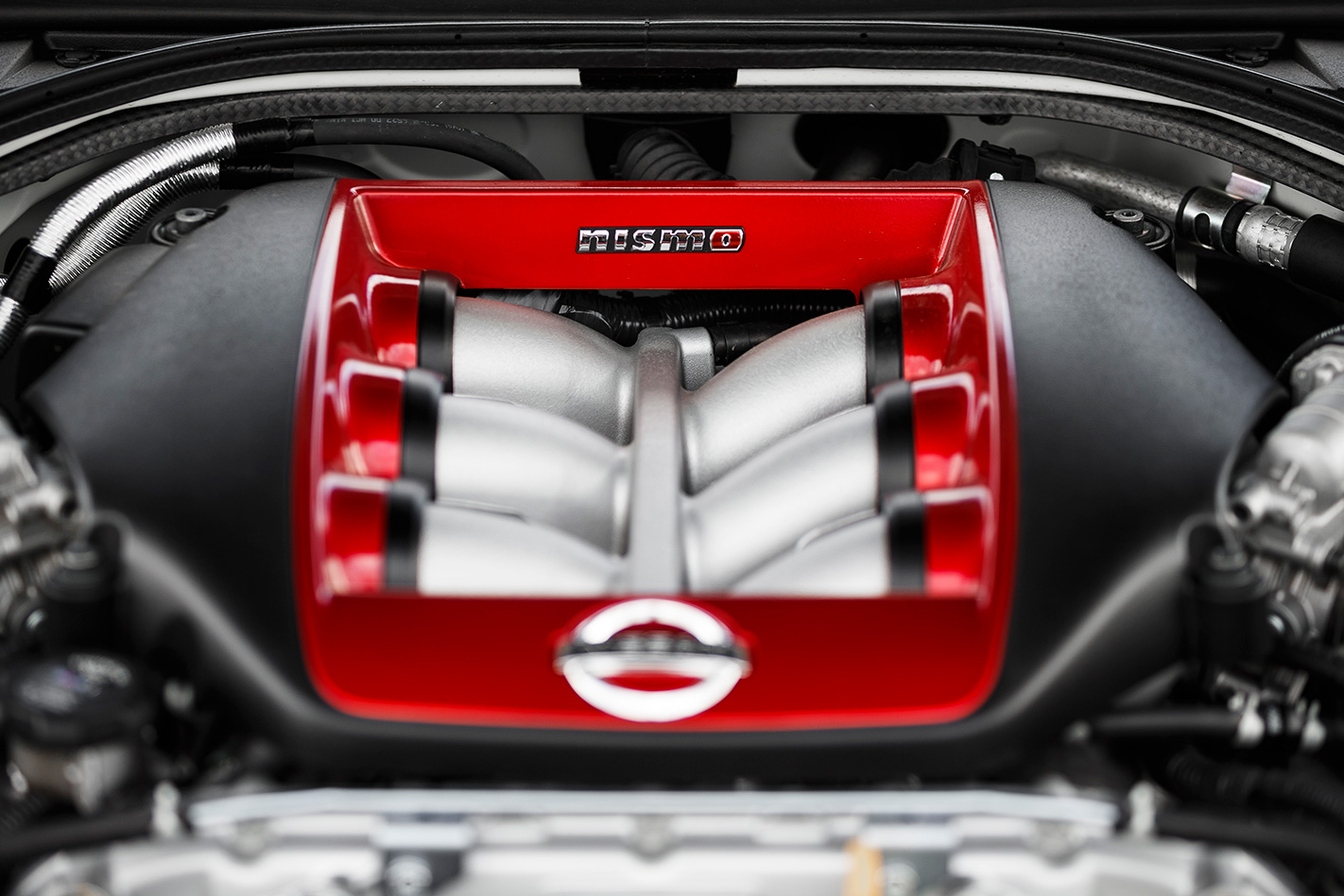
The extra 22kW/20Nm boost over a standard GT-R comes courtesy of larger turbochargers from the GT3 racecar, yet the powerband remains broad and its hunger for the 7000rpm redline undimished. It’s not the world’s best-sounding engine, its furious induction noise often bringing to mind the vacuum cleaner from hell, but my god is it effective.
Nissan’s 0-100km/h claim of 2.7sec is fanciful in the extreme, however, reaching triple figures in 3.28sec and crossing the quarter mile in 11.19sec is no mean feat. To be honest, we’ve recorded similar numbers in a standard GT-R, but the NISMO’s extra grunt is evident in its 203.08km/h trap speed, almost 5km/h faster than we’ve recorded in a regular R35.
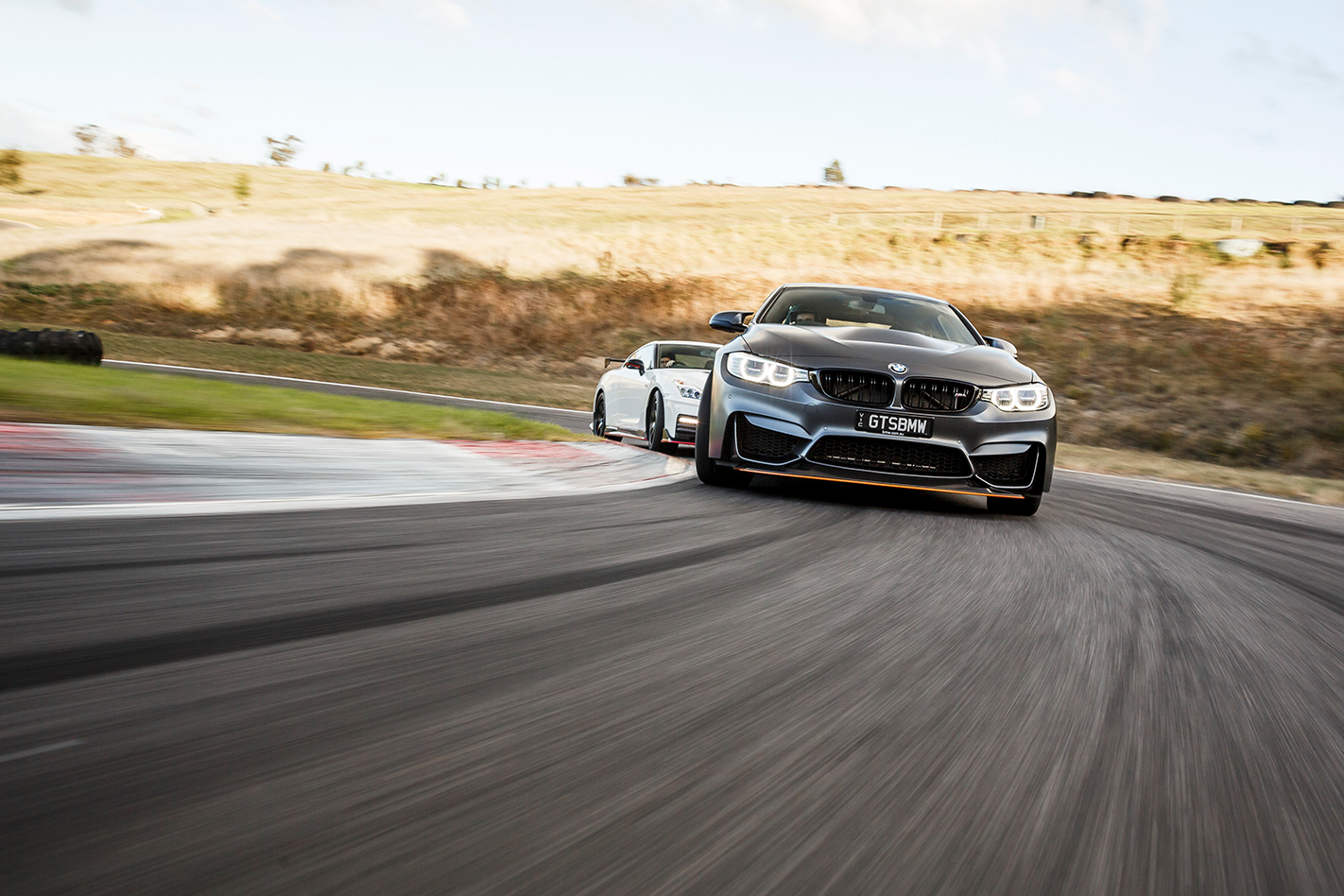
Which is ultimately a big part of the reason we’re left largely unimpressed by the M4 GTS. It’s very quick in its own right and looks and sounds wild, but it’s little quicker and not as enjoyable on the limit as a regular M4 Competition while costing almost twice as much.
Perhaps it would’ve shone at a faster track, perhaps adjusting the suspension settings brings it to life, but perhaps it’s the ultimate expression of the M Division’s recent philosophy that’s resulted in fast, yet flawed cars like the F10 M5 and current M3/M4 siblings.
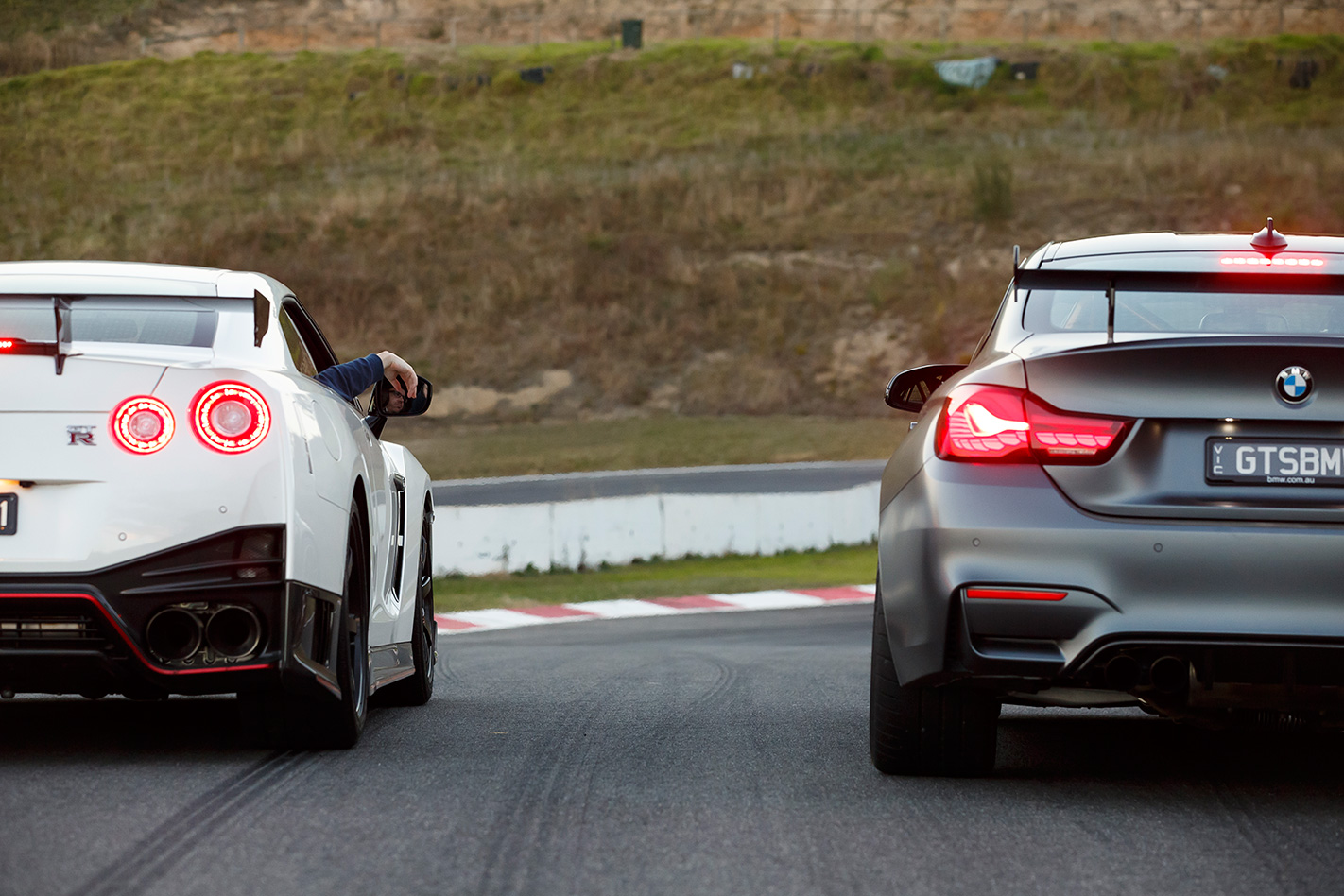
It’s more comfortable and useable day-to-day, much faster in a straight line, yet also the quicker and more rewarding car at tracks both fast and slow. The GT-R Track Edition, which scores most of the NISMO’s chassis tweaks for $70,000 less, is arguably the smarter buy, however the NISMO definitely feels special in a ‘real life Gran Turismo’ kind of way.
In this instance, the BMW M4 GTS proves less can sometimes be less, while the Nissan GT-R NISMO proves more can also be more.
2017 BMW M4 GTS SPECS: BODY: 2-door, 2-seat coupe ENGINE: 2979cc inline-6cyl, DOHC, 24v, twin-turbo POWER: 368kW @ 6250rpm TORQUE: 600Nm @ 4000-5500rpm TRANSMISSION: 7-speed dual-clutch TYRES: Michelin Pilot Sport Cup 2 PRICE (as tested): $294,715
2017 NISSAN GT-R NISMO SPECS BODY: 2-door, 4-seat coupe ENGINE: 3799cc V6, DOHC, 24v, twin-turbo POWER: 441kW @ 6800rpm TORQUE: 652Nm @ 3800-5600rpm TRANSMISSION: 6-speed dual-clutch TYRES: Dunlop Sport Maxx GT 600 PRICE (as tested): $299,000
The classic concept of a big engine in a small car has been proven time and time again, with timeless examples like the Shelby Cobra, the VW Golf R32, and the upper echelon of BMW Z cars.
But what if you’ve got a small car with a small engine and you want to change that? Most people would turn to the tried and tested option of the relatively cheap LS-swap.
MKAL Automotive in Melbourne is one such place that’ll do it properly, with ex-Holden engineer Steve Kalfat running the place.
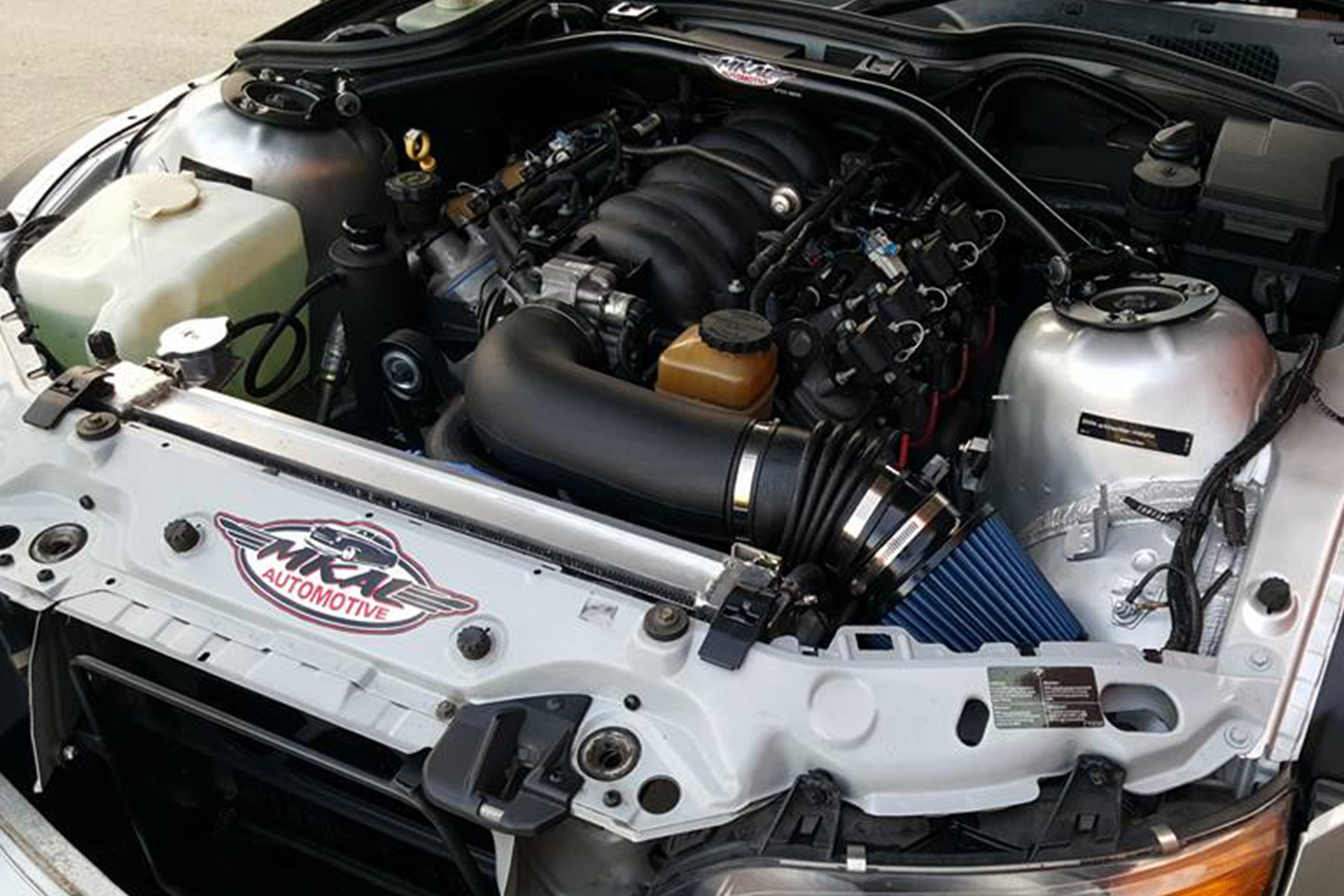
Though the thing looks rather snug in the Z’s engine bay, Kalfat says getting the motor in wasn’t as difficult as one might think.
“Everything was pretty straight-forward, even the wiring was easy,” he told MOTOR.
“We braced the rear end and manufactured a new cradle for the diff from a 6-cylinder Bimmer, and braced the chassis mounts.
“We swapped in some similar front-end gear to that of an E36, so that the car could handle the extra weight.”
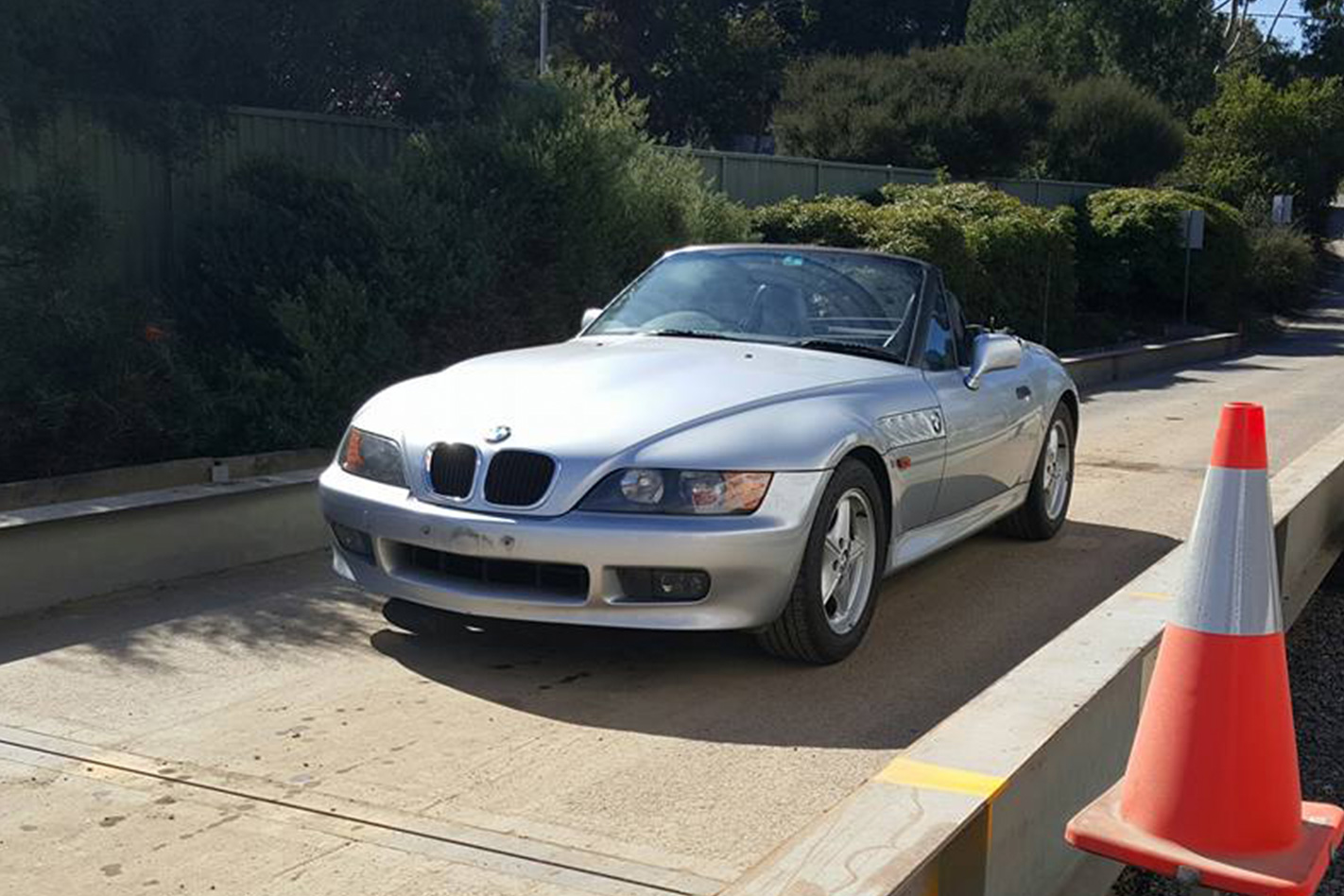
Though it’s been a short while since the Z3 rolled out of MKAL, Kalfat says he remembers the power through the rear wheels being between 220kW and 230kW.
That’s a significant improvement over the 100kW or so that a 1.9-litre four-banger Z3 would have made back in the day, and that’s before it gets to the wheels.
In the past, we’ve covered another of Kalfat’s more conventional swaps, with an LSA making its way into an ex-police VT Commodore.
Then, Kalfat told us that he won’t put something through his shop unless it comes out the other side with an engineer’s plate and the car is complied with ADRs.
This Z3 was no exception, though the starting price might turn some away. To do it right, Kalfat says a swap like this starts at $15,000, with specific needs being taken into account on top of that.
MERCEDES-AMG’s flagship GT family will double to six options when a GT Roadster and GT C Roadster convertible join the high-performance two-seater range in October, along with a new mid-range GT C Coupe.
The most affordable GT Roadster will share the specification of its equivalent entry-level Coupe for a $25,000 premium over the $259,711 before on-road costs tin top, and both cars will be powered by a 350kW/630Nm twin-turbo 4.0-litre V8, which represents a 10kW/30Nm boost over the previous offering.
In terms of performance, the second convertible will be positioned between the AMG GT S, and AMG GT R coupes with 410kW and 680Nm from its 4.0-litre twin-turbo V8 priced from $338,711, while a limited Edition 50 Coupe will be on offer for $335,211 until the end of the year, for customers wanting the mid-range GT C performance in a hard top.
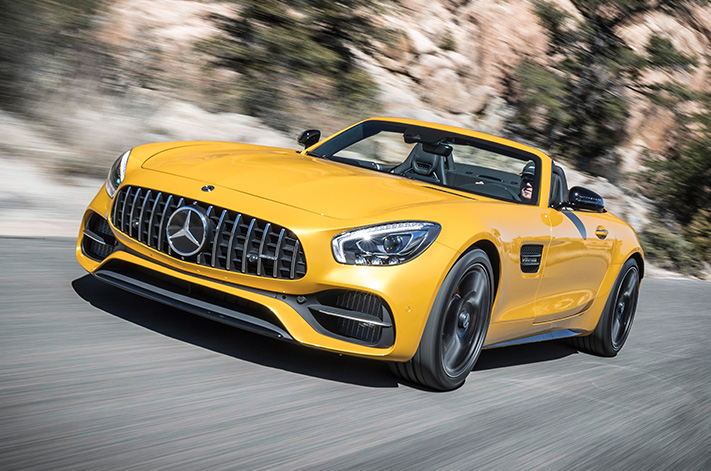
As part of the update, the GT S coupe will also get a tune up, which takes its power output up 9kW and 20Nm to 384kW and 670Nm, while all versions in the expanded six-car line-up will wear a new facelifted front end which features the company’s Panamericana grille.
The AMG GT R remains the power player of the range with 430kW/700Nm and is only available in coupe form for $348,711.
Mercedes-AMG’s first GT drop-top offerings will arrive just in time for summer and allow owners to enjoy the warmer days with a folding fabric roof that stows in 11 seconds while driving at speeds of up to 50km/h. For cooler or wet weather, the convertible roof features three-layer construction for optimum sound and temperature insulation and classic soft-top looks.
Both versions of the Roadster will also feature a ‘draught stop’ wind deflector and heated seats for more open-top driving enjoyment, while the GT S Roadster adds to that with Mercedes’ Airscarf neck warmers, as well as seat cooling, Nappa leather upholstery and a sports steering wheel with part synthetic suede trimming.
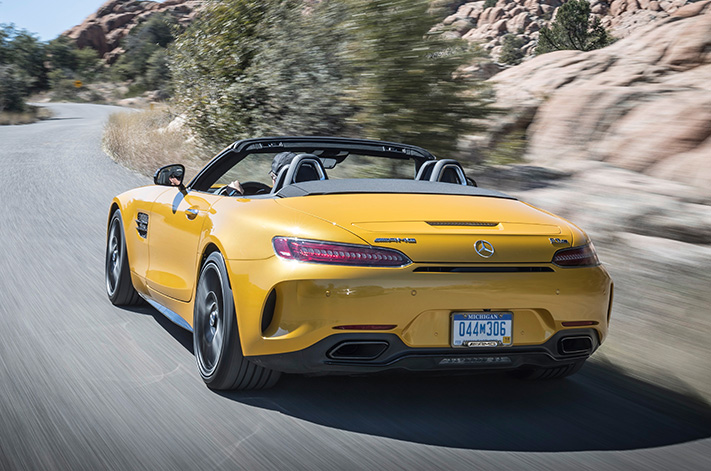
Until a ‘standard’ GT C Coupe arrives mid 2018 the more exclusive GT C Edition 50 will be the sole GT C Coupe offering with a number of bespoke features to celebrate the founding of the iconic Aufrecht, Melcher and Grosaspach (AMG) performance branch half a century ago.
AMG Performance seats and steering wheel, an AMG interior Night Package, Edition 50 detailing in the head rests and steering wheel centre, quilted Nappa leather upholstery and AMG trim elements in black chrome are all included.
On the outside Edition 50 Coupes get forged AMG cross spoke wheels that measure 19 inches on the front axle and 20-inch at the back, LED headlights, smoked chrome trims and a choice of either Graphite Grey Magno or Cashmere White Magno paint finishes.
Zero to 100km/h acceleration times have not been provided for the new additions or updated GT and GT S variants, but in the current range, the GT does the dash in 4.0 seconds, mid-range GT S manages 100km/h in 3.8s and the GT R knocks another two tenths off that time. Convertible Roadsters are likely to weigh more than the coupe which will have an effect on performance.
BMW Australia has rejigged the equipment list of its volume-selling 3 Series, gifting it an up-to-date infotainment package, new cabin materials and a smattering of other cosmetic tweaks for the 2018 model year.
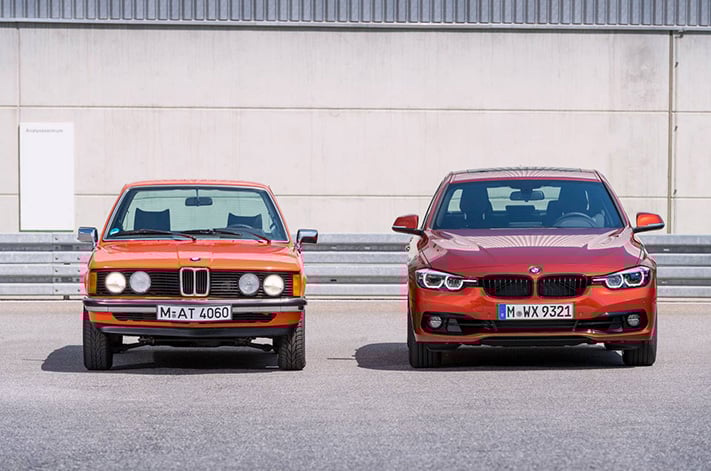
The changes are admittedly minor, with the only external clues being the addition of a lurid ‘Sunset Orange’ paint scheme to the palette, and new alloy wheel designs (18-inch for 318i and 320i/320d, 19-inch for the 330i, 330e and 340i).
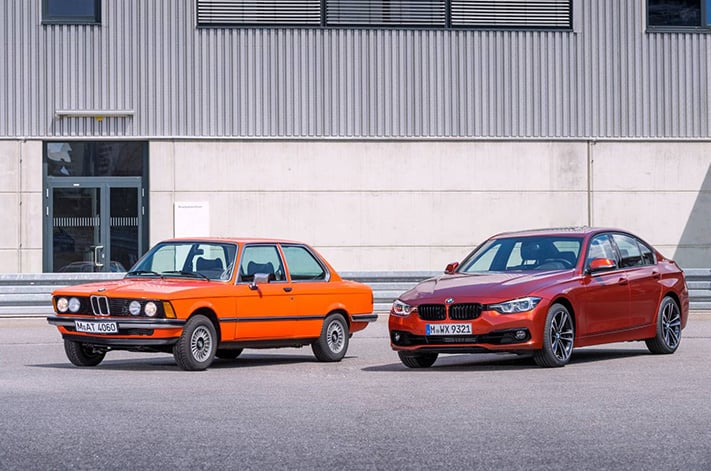
As before, the Sport Line grade is standard for all models in the range bar the 340i. The 340i can be had with the sportier M Sport package or Luxury Line at no cost, while Luxury Line is also a no-cost option for the 330i and 330e.
Greater changes are evident from the driver’s seat, with BMW’s latest generation of its iDrive infotainment suite now fitted across the 3 Series line-up. Displaying through either a 6.5-inch colour display on the 318i, 320i and 320d, or on an 8.8-inch touchscreen on other models, the iDrive6 system includes, among other features, a DAB+ digital radio tuner, AM/FM radio, satellite navigation and Bluetooth telephony and audio streaming.
All models in the range also feature a head-up display, which can now detect and display the speed limit for the road being travelled.
BMW says the cabin has been “redesigned with a driver-focused geometry”, but the changes are few beyond the addition of a USB port to the lower dash and a double-stitched upper dash treatment. ‘Cognac’ high-grade Dakota leather upholstery has joined the option list, however, and a dark ‘Aluminium Carbon’ trim is also available for cars equipped with the M Sport package.
Under the bonnet, there are no changes to the 3 Series’ engine range.
Beginning with the 100kW/220Nm 1.5-litre turbocharged inline three of the 318i, the 3 Series petrol powertrain range also includes the 135kW/270Nm 2.0-litre turbo of the 320i, the 185kW/350Nm 2.0-litre of the 330i and 330e (the latter of which makes peak torque of 420Nm thanks to its additional electric motor) and tops out with the 240kW/450Nm 3.0-litre turbo inline six of the 340i.
A sole diesel option is offered in the form of the 135kW/270Nm 2.0-litre of the 320d.
PRICING
Available from November this year, prices for the 3 Series have risen across the board. See below for retail pricing, as well as their respective price increases:
BMW 318i sedan – $57,300 (+$800)
BMW 320i sedan – $63,400 (+$900)
BMW 320i Touring – $67,500 (+$1000)
BMW 320d sedan – $65,800 (+$900)
BMW 330i sedan – $70,900 (+$1000)
BMW 330i Touring – $75,000 (+$1100)
BMW 330e sedan – $73,900 (+$1000)
BMW 340i sedan – $91,200 (+$1300)
The subtly-updated 2018 Renault Clio RS has arrived in Australian showrooms, with a circa-$30,000 sticker price.
Packing the same 1.6-litre turbocharged four-cylinder engine as before, the Clio RS sends 147kW and 260Nm to the front wheels via a six-speed dual-clutch transmission.
There will be two specs of Clio RS available. The entry level Sport (costing $30,990), and flagship Cup (costing $32,490). Both variants will have its own unique suspension tune, while the Sport sits on 17-inch alloy wheels compared to 18-inch for the Cup.
Both specs come with Launch Control, multiple drive modes, 320mm brake discs, hydraulic compression bump stops in the suspension, and a new LED headlight design called RS Vision.
The RS Vision was first seen on the Clio RS 16 concept car, and gives the car a striking appearance.
Other standard features include front foglights, front parking sensors, automatic engine stop/start, climate control air-conditioning, tyre pressure warning system, LED cabin lights, and digital radio.
There are several factory-fit optional extras for the Clio RS. The first is dubbed Black Pack. This adds an F1-inspired black blade on the front bumper, a black boot lid, black Renault Sport badge, black rear diffuser, black trim inserts on the side door protection, and black 17-inch alloy wheels.
Second is the Leather Pack, adding dark leather upholstery with red highlights, an RS badge on the front headrest, heated seats for front occupants, and a height adjustable passenger seat.
Finally there is the Entertainment Pack, which adds R-LINK sat-nav and multimedia system with voice control, Android Auto phone mirroring, RS Monitor, Bose sound system, and R-Sound engine sound generator.
“The Renault Sport badge has a long and successful history here in Australia,” said Renault Australia’s Managing Director, Justin Hocevar.
“Australia consistently appears in the top five for global Renault Sport sales and we expect this to continue with this new-look model.
“One of the exciting new features is the innovative chequered flag-shaped R.S. VISION lighting system, exclusive to Renault Sport vehicles. This highly-efficient lighting signature enhances night-time visibility by co-ordinating the foglights, cornering lights, and side lights as well as the long-range headlights.
“Of course, the Clio RS benefits from Renault’s five-year unlimited kilometre warranty and Capped Price Servicing, providing our customers with outstanding value and peace of mind.”
2018 Clio RS price:
Clio RS Sport – $30,990
Clio RS Cup – $32,490
Factory-fitted options – RRP
Metallic paint – $550
Signature metallic paint – $750
Black Pack – $500
Leather Pack – $1,500
Entertainment Pack – $1,500
Sometimes it’s a great car that sticks in your mind. Others, it’s the drive itself that is unforgettable.
But back in the mid-’80s, I was lucky enough to score a remarkable drive in a legendary car. And believe me, the memory is as fresh today as it was just hours after piling out of the thing, home safely after about 700 frenetic kilometres.
The road in question was the Alpine run from Canberra, down through Cooma, Adaminaby, Kiandra, Cabramurra, Khancoban, Corryong, across the Kiewa and King Valleys, over the Great Divide passing Powers Lookout, into Mansfield and then back to home base via Yea and Yarra Glen. It remains one of my fave routes.
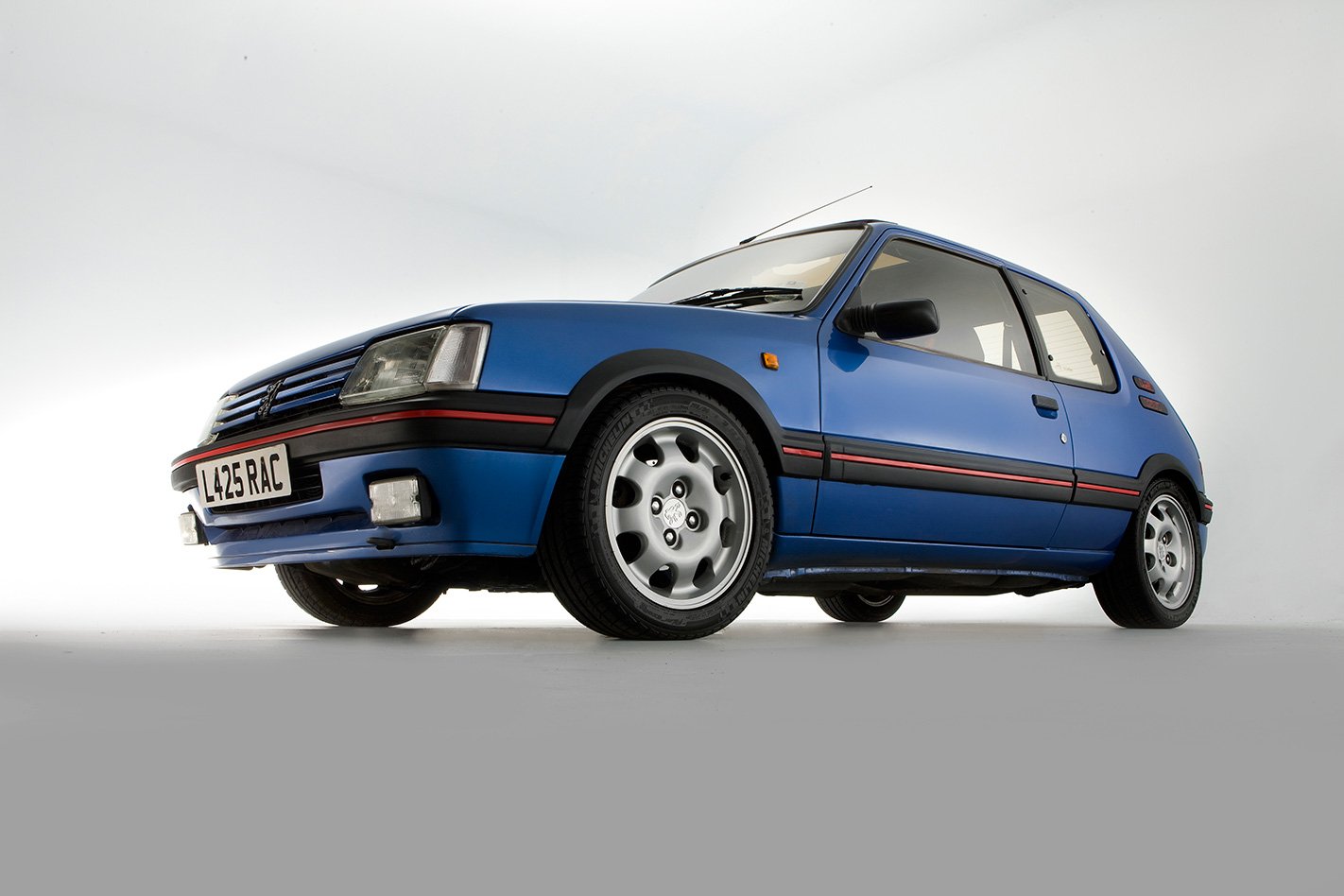
My companion for this madness was an old mate – a farm boy raised on diesel Rodeos and leaf-sprung Falcons – who simply could not believe the stunts this crazy, noisy, yapping little frogmobile was pulling off. He still talks about it today whenever we get together.
While we’re all comfortable with the idea of hot Pug hatches these days, the funny thing is that back in 1987 when the thing landed here, Peugeot was buried in its own ordinariness. The 505 was lacklustre (compared with the excellence of the previous 504, anyway) and even the all-new 405 that was just around the corner promised much, but ultimately, delivered very little.
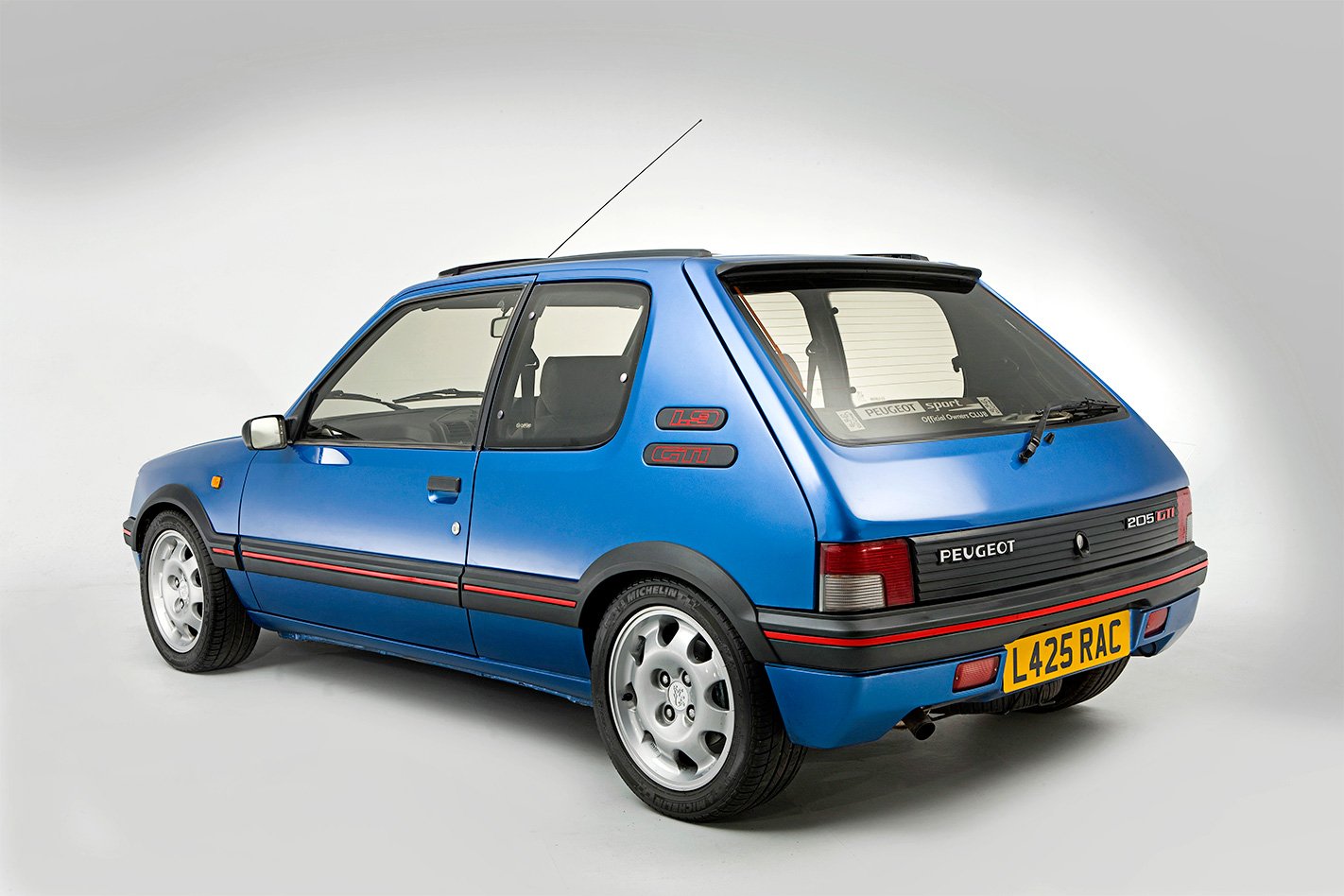
Nope, what made the GTI special was its adherence to a tried and proven formula: a teeny-weeny little car jammed to the gunwales with a huge engine.
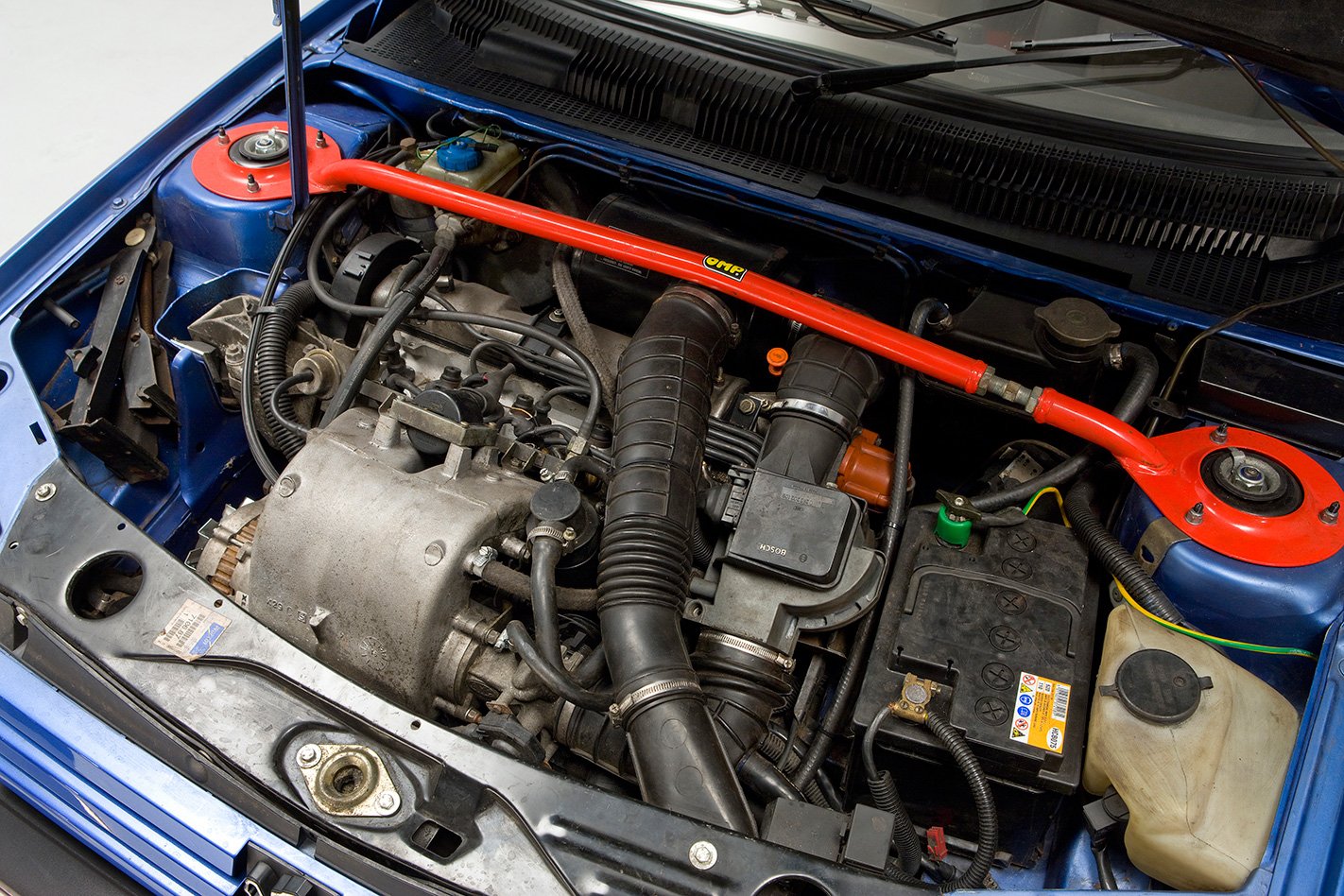
And you don’t need to be an automotive historian to know that this sort of caper can work; just look at the current hot-hatches and see if the same formula doesn’t still add up.
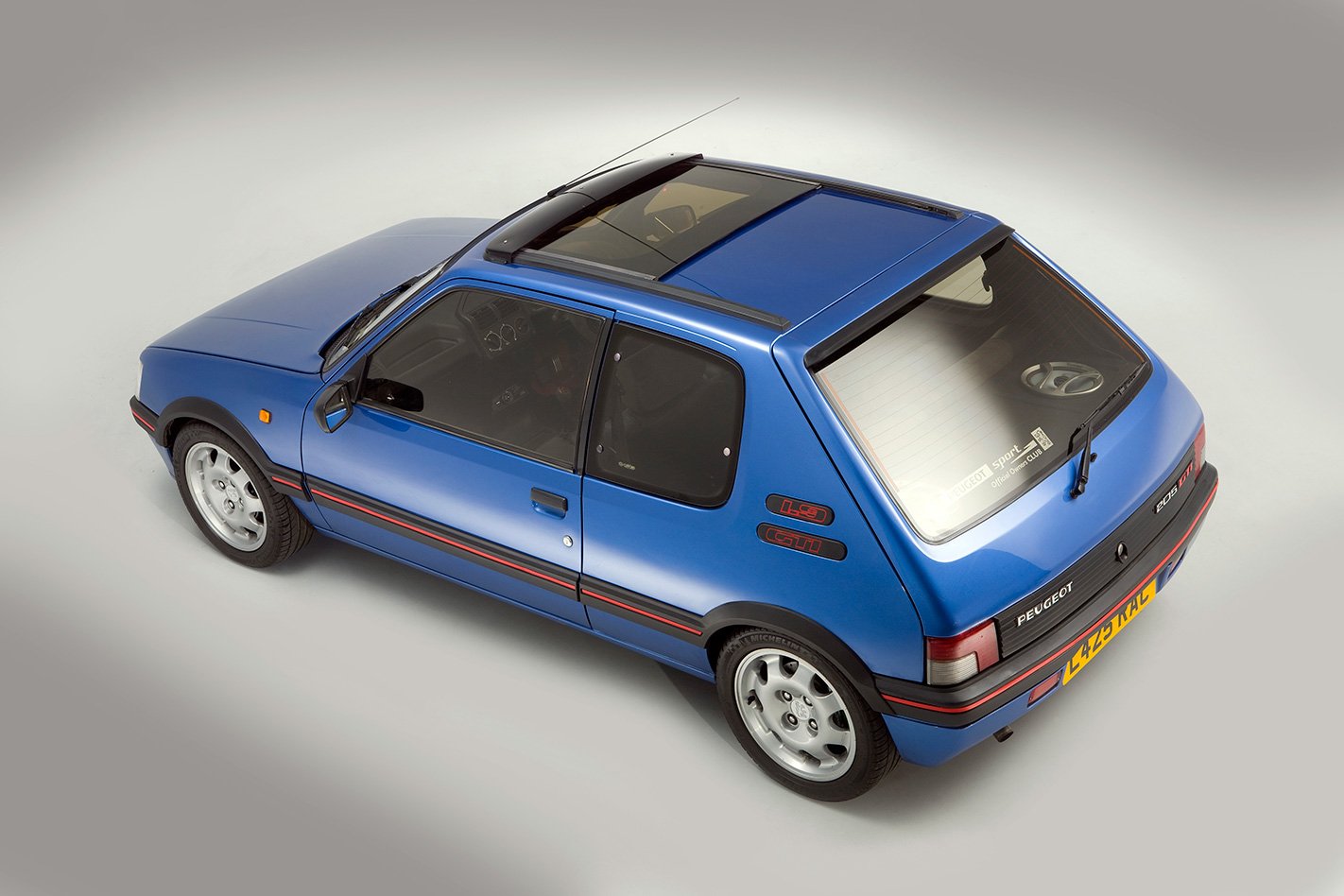
In the Peugeot’s case, the engine was anything but high-tech. Single overhead cams, just two valves per cylinder and electronic fuel injection were about as exotic as it got, but the thing was tuned for torque which made it even better at flinging 1000kg or so of hatch down the road.
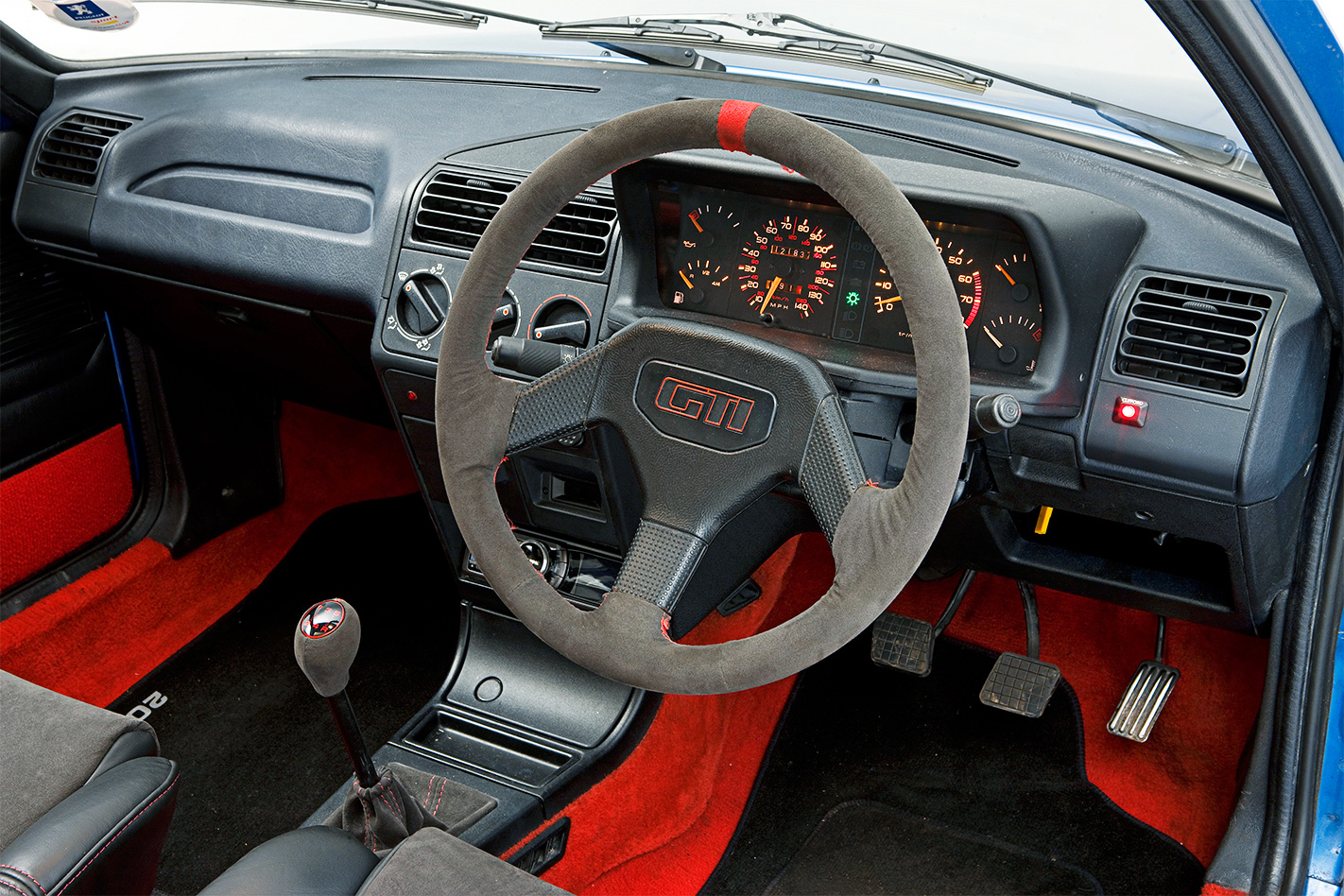
But even the customer version of the GTI went pretty well and handled like no other small car you could buy at any money. At a time when manufacturers were still getting the hang of making engines work on unleaded and handling wasn’t a word you saw in small-car brochures, the 205 just kept those jaws a-dropping.
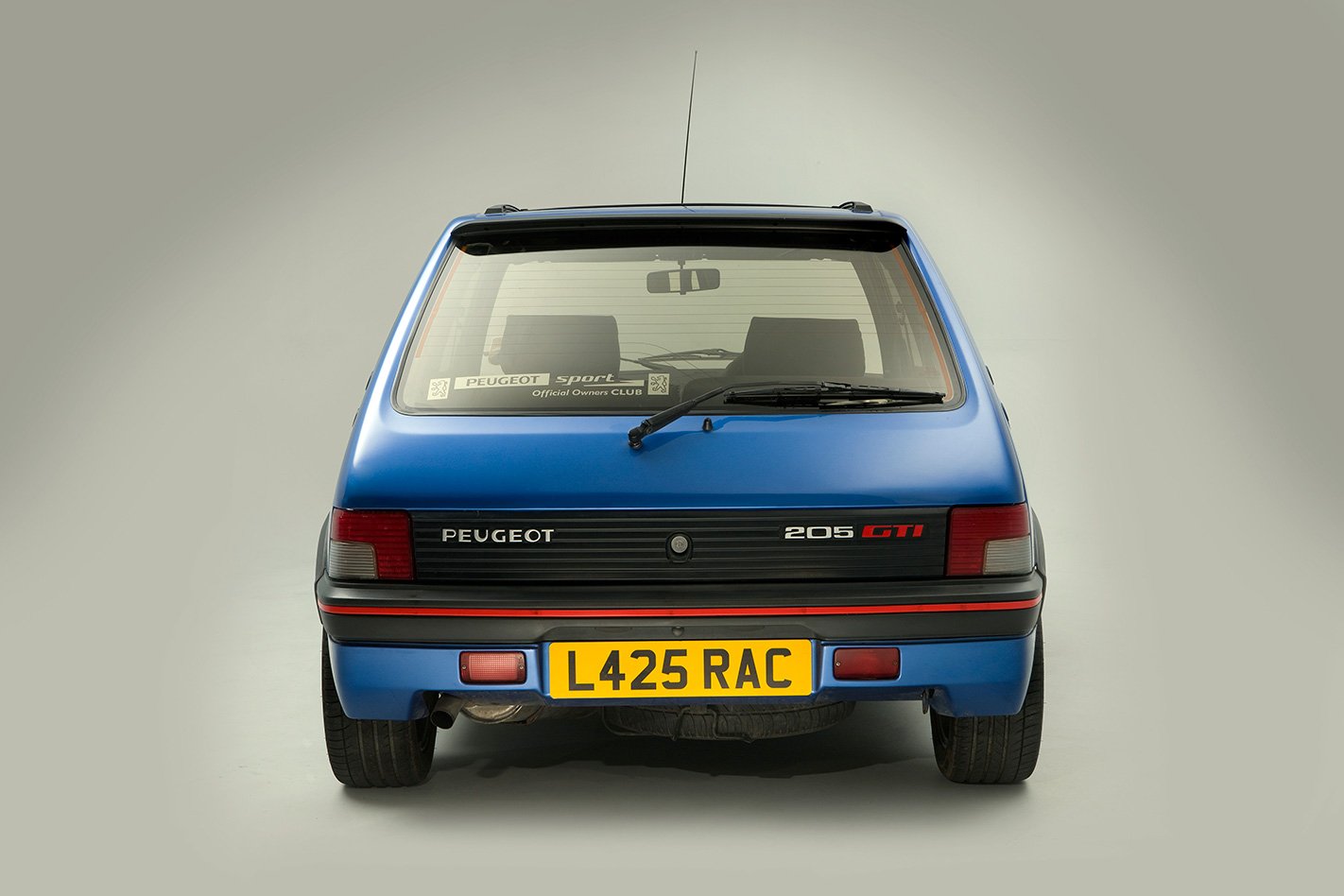
Okay, the ride wasn’t exactly world-beating and the short wheelbase meant it could get a bit medieval on yo’ ass if you got stupid with it, but as a means of covering big distances on gnarly roads with a stooped grin on yer face, the GTI was unbeatable.
A later batch of cars arrived in 1991 and these, while being pretty much the same animal, were a better thing. For a start, you now had access to 90kW of power hanks to a retune of essentially the same motor, but the facelift also fixed the car’s biggest oversight which had afflicted it from day one.
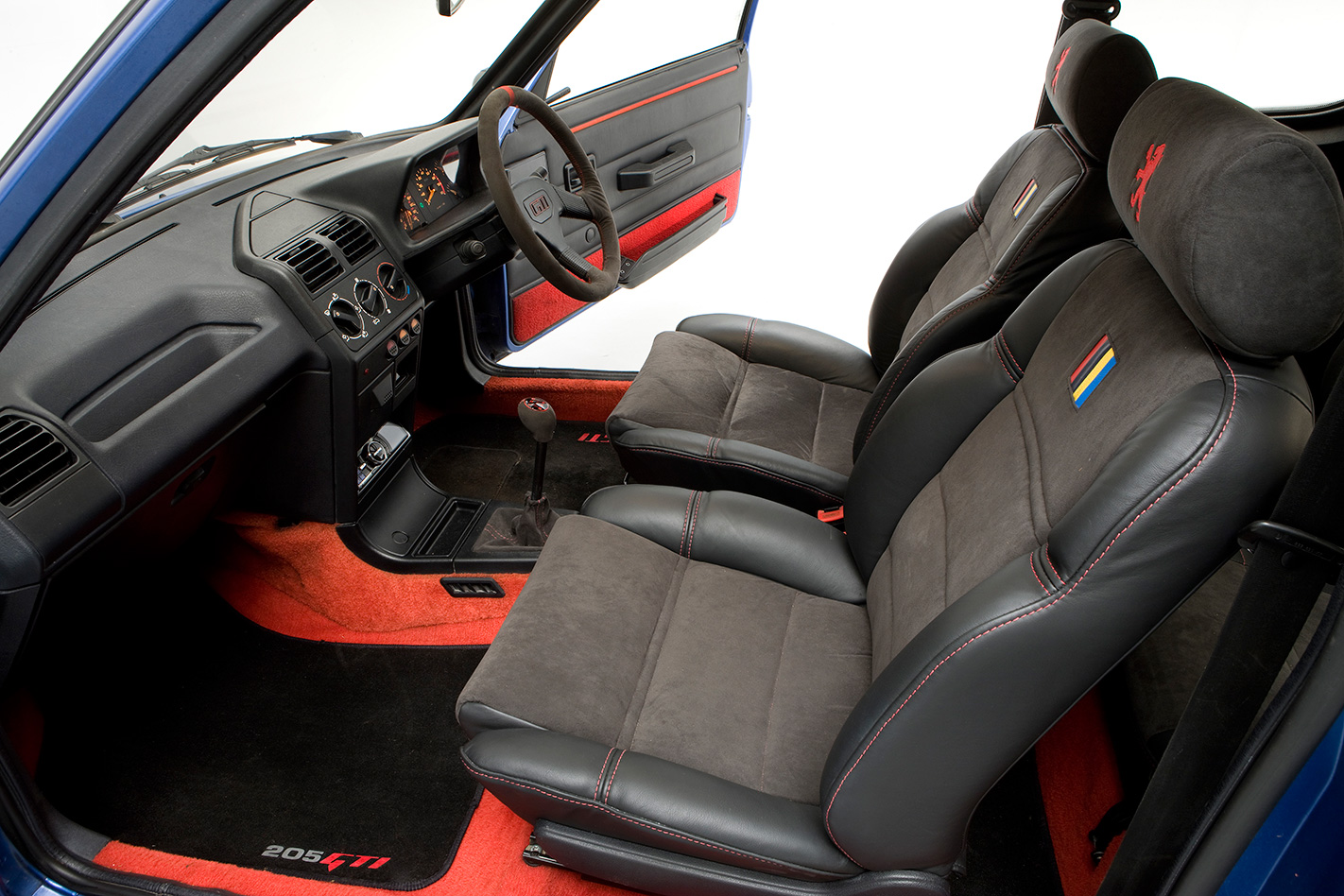
The Peugeot importer of the day (and it’s not the same mob as today) was faced with the dilemma of having either a car that would cook its passengers in summer or one that needed a ’roid monkey to steer it. History records that they opted for air-con, perhaps reasoning that a few weeks behind the wheel would build the necessary muscles in most owners.
Anyway, like I said, the updated version fixed that by combining power-hook with air-con (although it was never the Arctic variety in the first place) so they’re the cars that are worth looking for now.
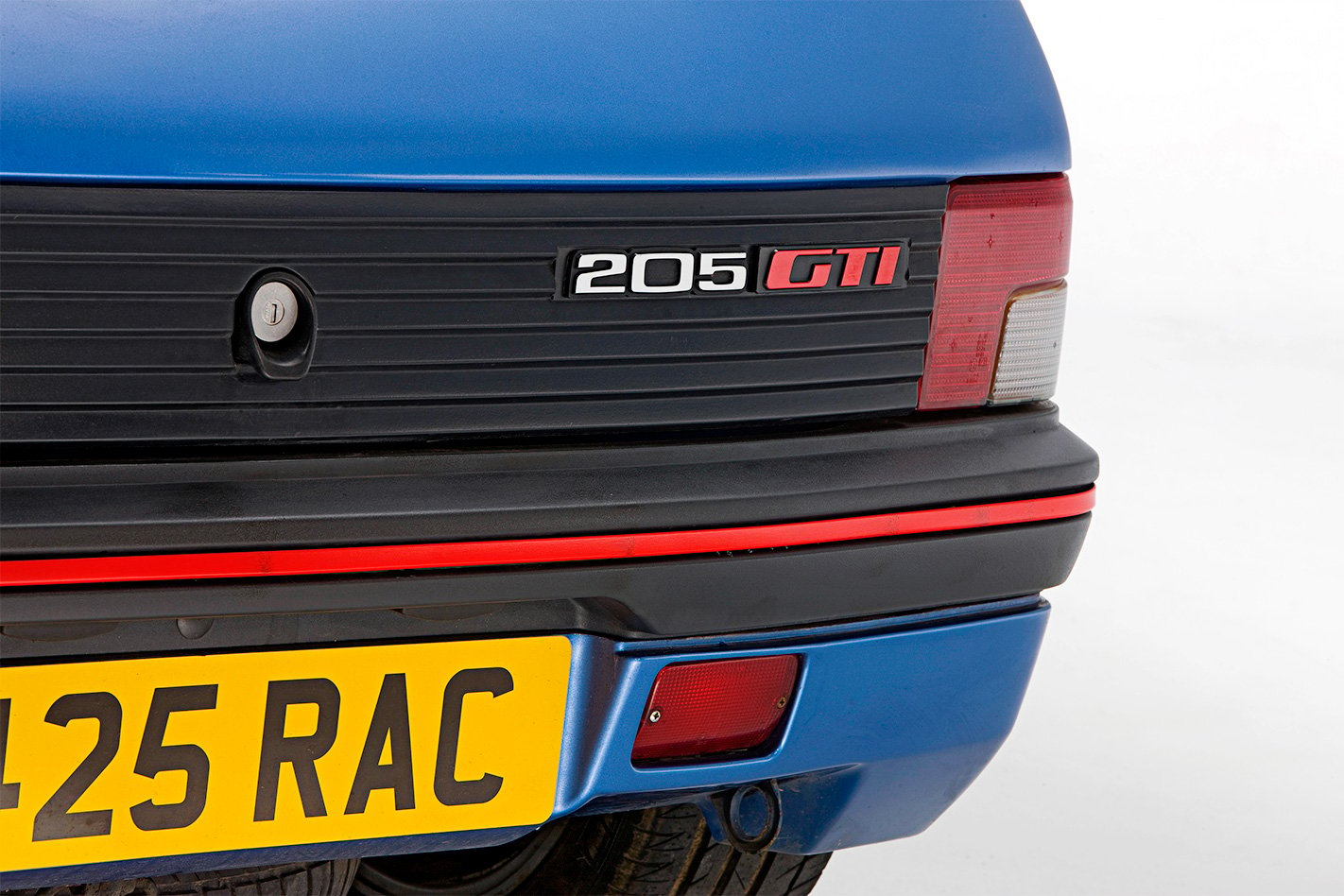
Chances are any 205 GTI will have creaking doors and hatch (the metal frames squawk on the sealing rubbers) and you might find cracks in the body joins (check for reapplied joint sealant) or even stress cracks in otherwise important parts of the monocoque.
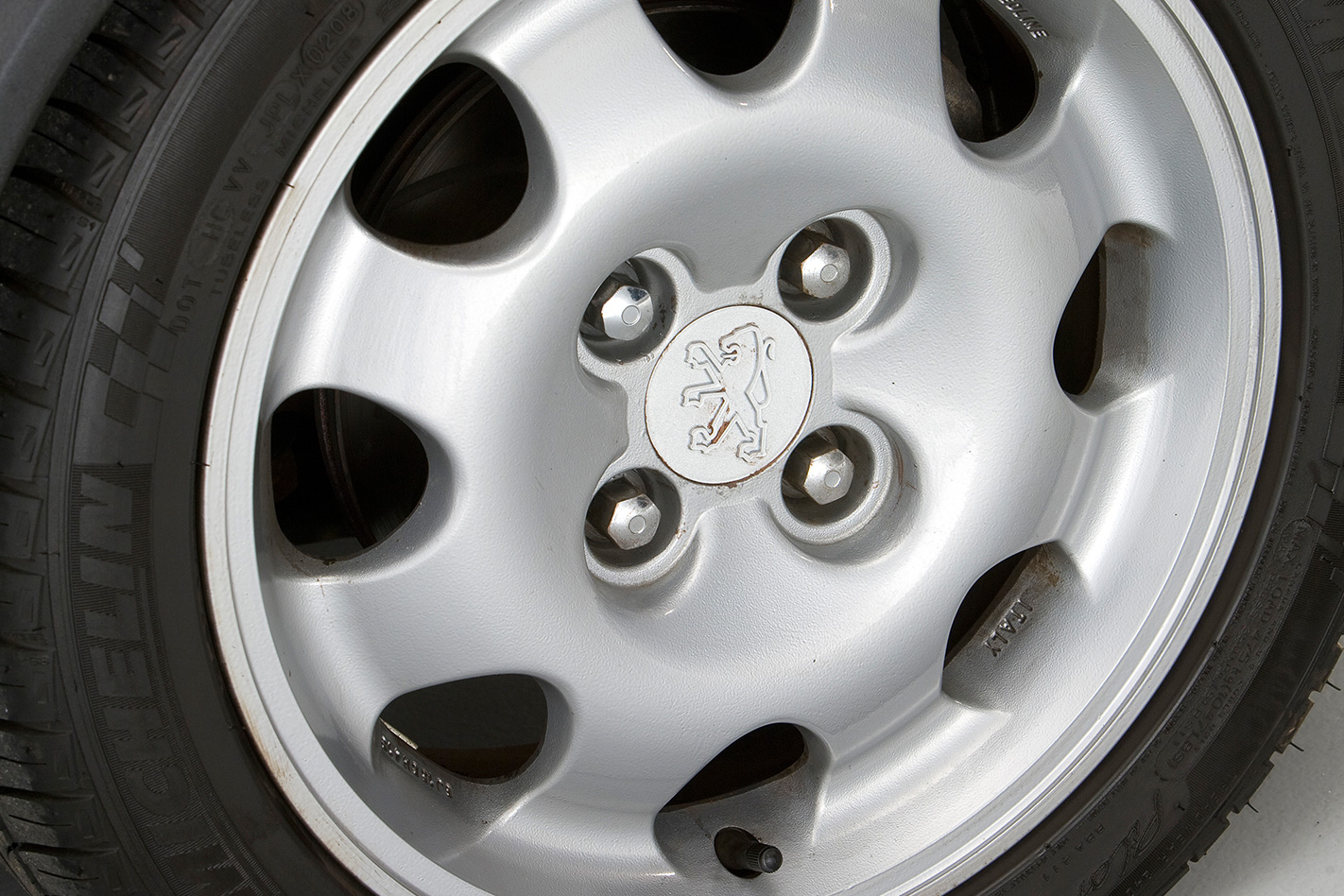
Check underneath, too, because brakes didn’t last long on hard-driven examples and driveshafts don’t last either. The engine will probably be leaking oil and the gearbox could have very little synchromesh left on its lower gears. A clutch that shudders is either worn out or pointing to a flywheel with hot spots that will need machining to fix them.
You’ll also probably find during your first Saturday-morning once-over that the 205 GTI likes a drop of lubricant. Early engines had horrendous oil-burning problems, but the bulk of these were fixed under warranty. The rest will have died by now anyway. But even a ‘good’ one will use a little oil between services and the smart owner keeps a watchful eye on the dipstick week to week.
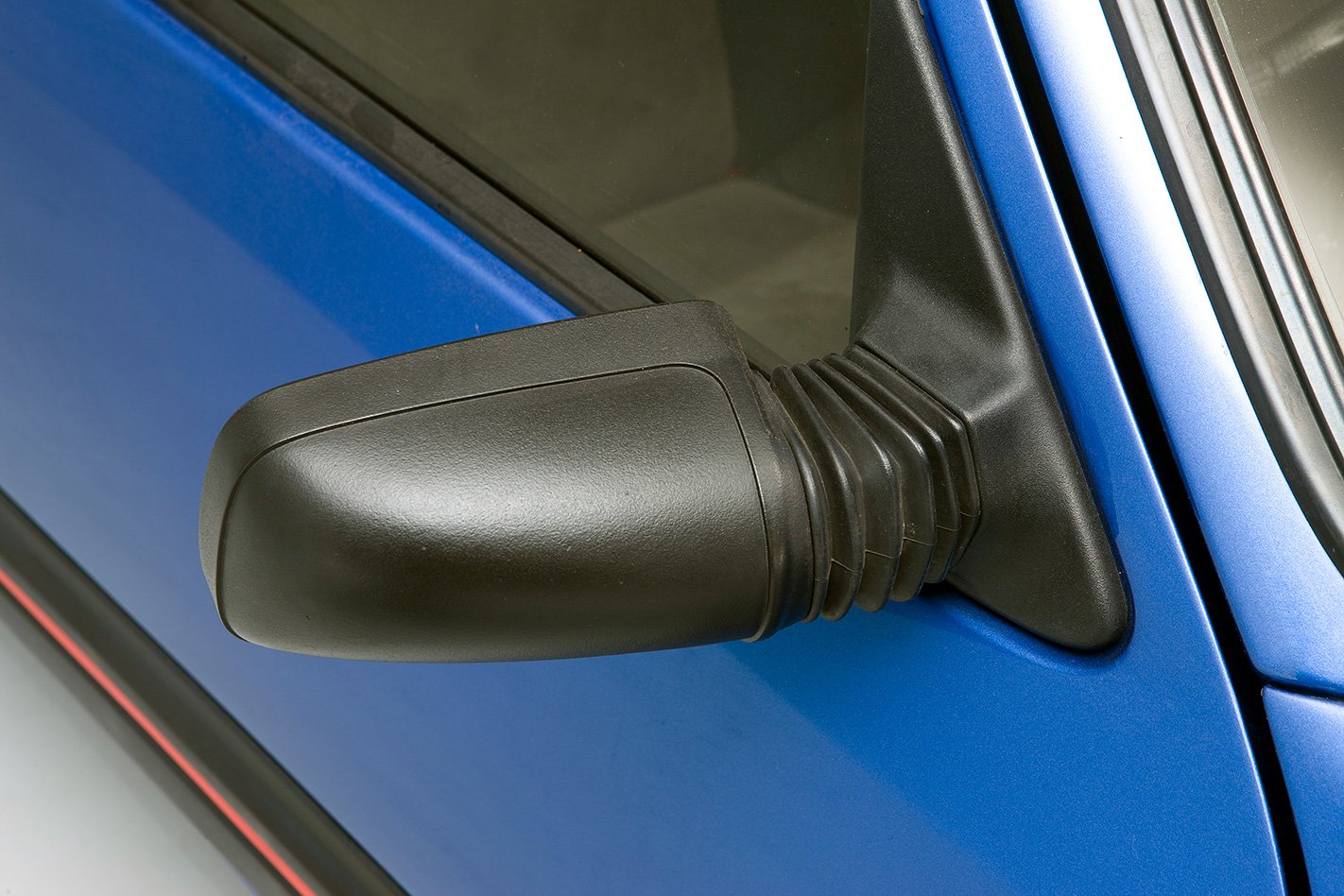
It really is a shame that Peugeot doesn’t make anything like the 205 GTI these days. In fact, apart from a rare couple of hot-rodded 306s in the mid-’90s, the company hasn’t even come close to matching the 205 for coolness and charm in the years that have followed. And that doesn’t look like changing soon which only makes the original the absolute best.
Pros
• Enough performance to see off many allegedly sportier cars
• Great handling
• Funky looks
• Oodles of cred
Cons
• Early cars had air-con, but no power steering
• Most still around are dungers that have lived hard lives. Truly solid ones are rare
• Oil burning is a fact of life
• Mechanically lacking in a few areas
IT’S official; the Holden Commodore, until now raised on a diet of football, meat pies and kangaroos, won’t be celebrating Octoberfest come the arrival of the next-generation NG version in 2018.
Instead, it will officially celebrate Bastille Day. Groupe PSA, the French owner of brands including Peugeot and Citroen, announced overnight it had finalised the takeover of GM’s European division, Opel, that will supply our first-ever fully-imported, front-wheel-drive, shrunken-down Commodore.
“Groupe PSA today announces the closing of the acquisition of GM subsidiaries Opel and Vauxhall, a project that was signed on 6 March 2017,” PSA said in a statement released late yesterday announcing that the €2.2 billion ($3.1 billion) deal was finally done.
“With Opel and Vauxhall, Groupe PSA becomes the second largest European car manufacturer, with a market share of 17 percent in the first half.

Part of that worldwide growth comes from the supply of the European-styled Opel Insignia, the vehicle that underpins the 2018 Holden Commodore and that also will include some bespoke bodywork, and plenty of tweaking to the suspension, to give it a distinctly Aussie flavour.
In time, though, Groupe PSA will convert Opel’s products to sit on Groupe PSA platforms, potentially meaning that when the Opel-based Commodore comes up for renewal in about 2025, underneath it could sit on one of the group’s two new electrified platforms.
Wheels has made several interview requests to Groupe PSA asking for the French carmaking giant to spell out how it intends to integrate the Commodore into its product portfolio. Only hints of the agreement between Groupe PSA and GM have been revealed – some of them in filings to the US Securities and Investments Commission – to say how the European empire will be carved up over time.
GM’s former British brand, Vauxhall, and Opel now have 100 days to develop a plan on how it will help to deliver €1.7 billion in savings in the next three years. How Holden — still a part of the GM empire — fits into that plan is unclear.
Groupe PSA’s announcement comes as Holden embarks on its most ambitious European-sourced model offensive in its 69-year history as a major strategy of its 2018 and beyond post-manufacturing future.
GM and Holden have previously stressed the importance of sourcing vehicles from Europe given the shift in Australian tastes towards luxury and European models.
Holden released a brief statement after the sale was first announced confirming the immediate supply of Opel-sourced cars – including the upcoming Commodore, the first one not produced in Australia – “are not affected at all”.
IN 1953, Australia was changing.
Post-war rationing was over, some bloke called Lang Hancock had found iron ore in Western Australia, hurdler Shirley Strickland became a household name after winning gold at the Olympics, Bathurst hosted the Australian Grand Prix for the first time and a bunch of Poms blew up their first atomic bomb right in our back yard.
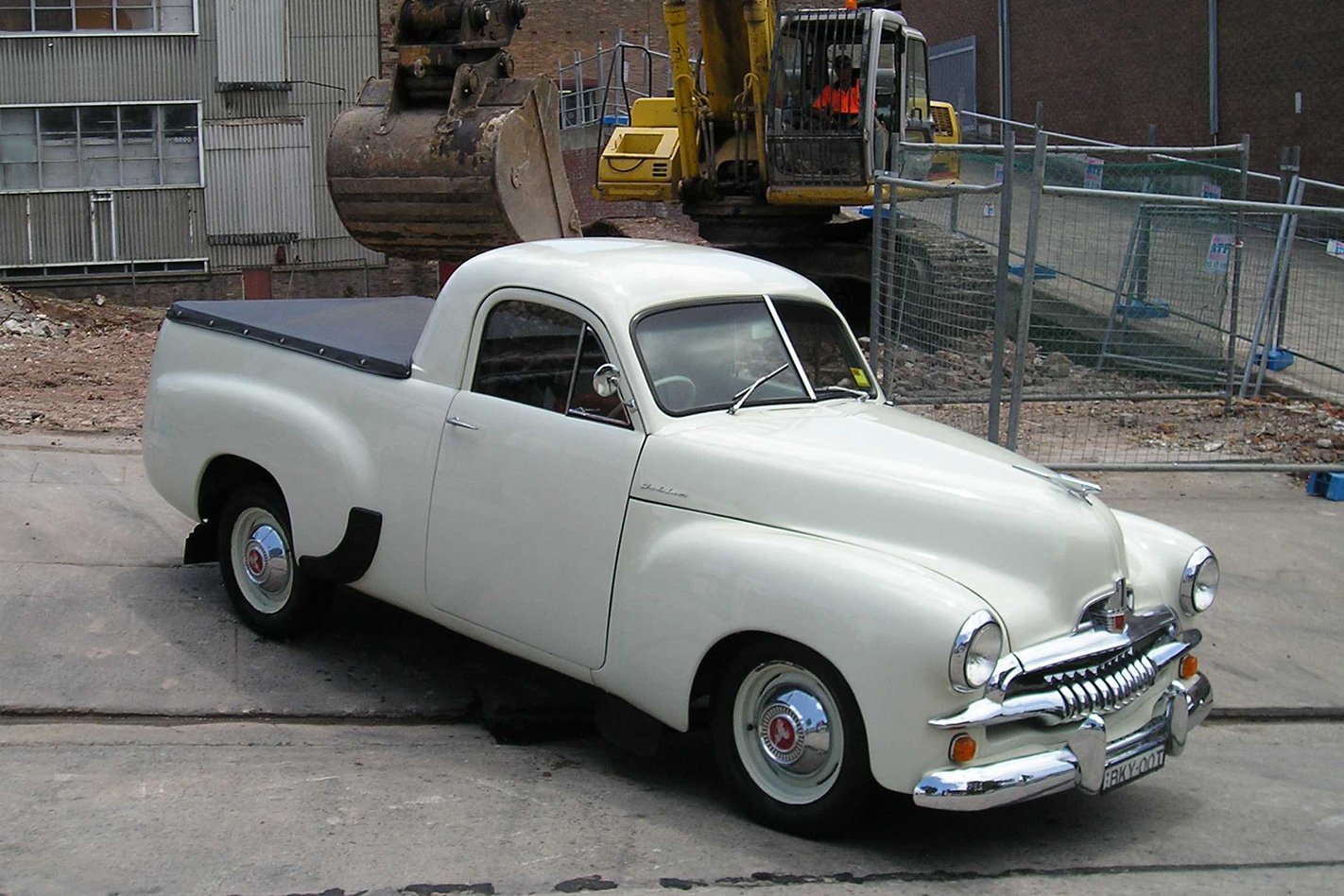
It was also the time the first seeds of expansion were sown for the Australian car industry. Demand for Holden’s 48-215 was outstripping supply, as was a freshly added sedan-based “Coupe Utility”. So, on the fourth anniversary of the first homegrown sedan rolling out of Woodville, GM announced an ₤11 million investment in the plant that would lift production to 200 a day.
The flood of migrants into Australia brought with them European tastes. Porsche had launched the 356, the first of its cars, in 1951 at the South Melbourne town hall, just up the road from the Albert Park Grand Prix circuit.

A number of them started to establish a foothold in Australia to work around punitive tariffs brought in to protect local jobs and Holden.
The complicated merger of Nuffield and Austin, British Motoring Corporation and Leyland formed British Leyland Australia, Chrysler Australia was formed after the US carmaker bought out coachbuilder T.J. Richards with the aim of building a family of passenger cars and commercial vehicles with 90 percent local content.

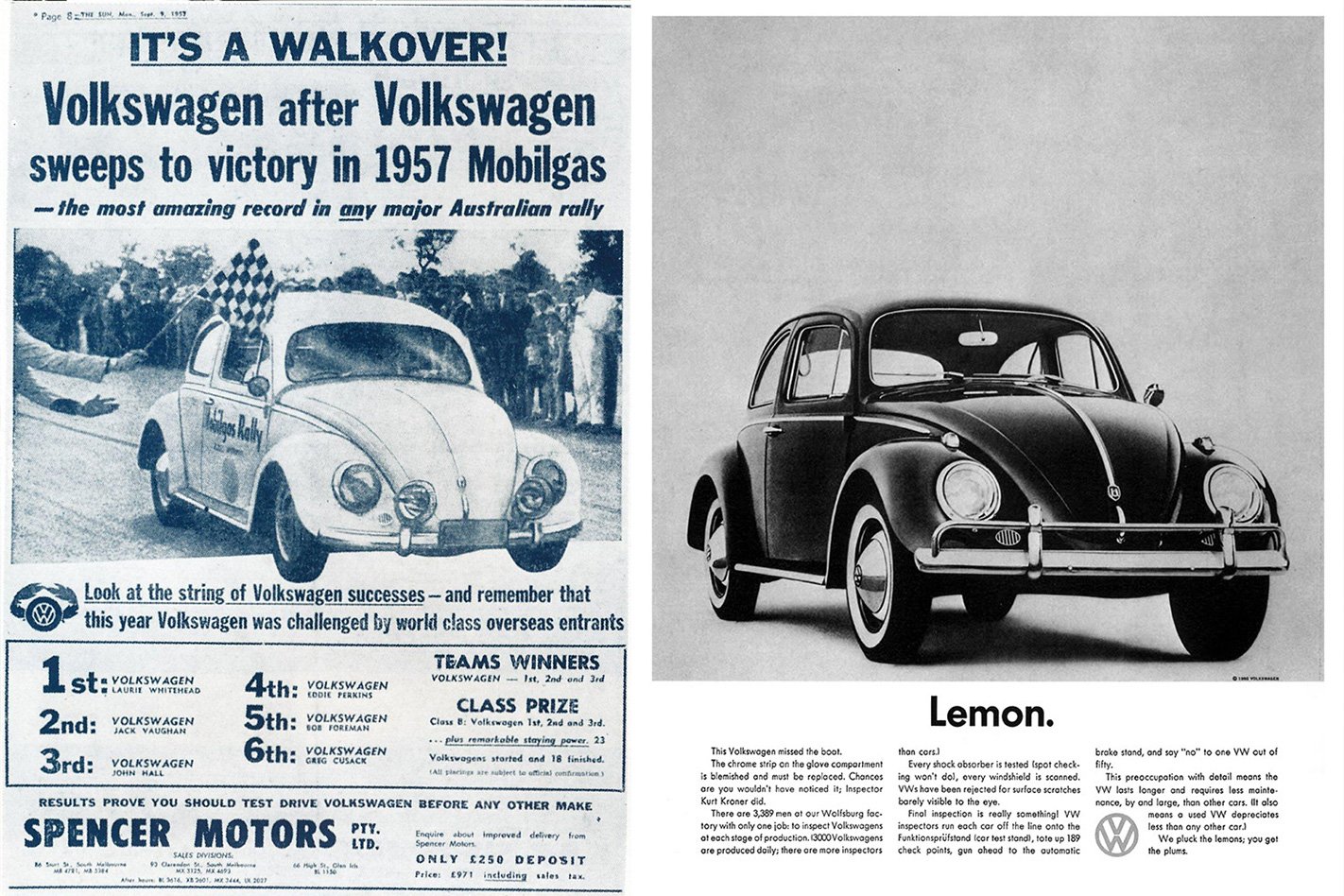
A strange little car from Germany – one that both Morris and Ford rejected after World War II – arrived in Australia in 1953. It was simply known as the Volkswagen, though the air-cooled, rear-engined family car devised during the Third Reich’s reign was more popularly known as the Beetle.
After a slow start, sales built steadily as the decade progressed, with the Beetle the fifth best-selling vehicle in 1956 and reaching number three two years later. It would eventually add an assembly line in Clayton, Victoria.
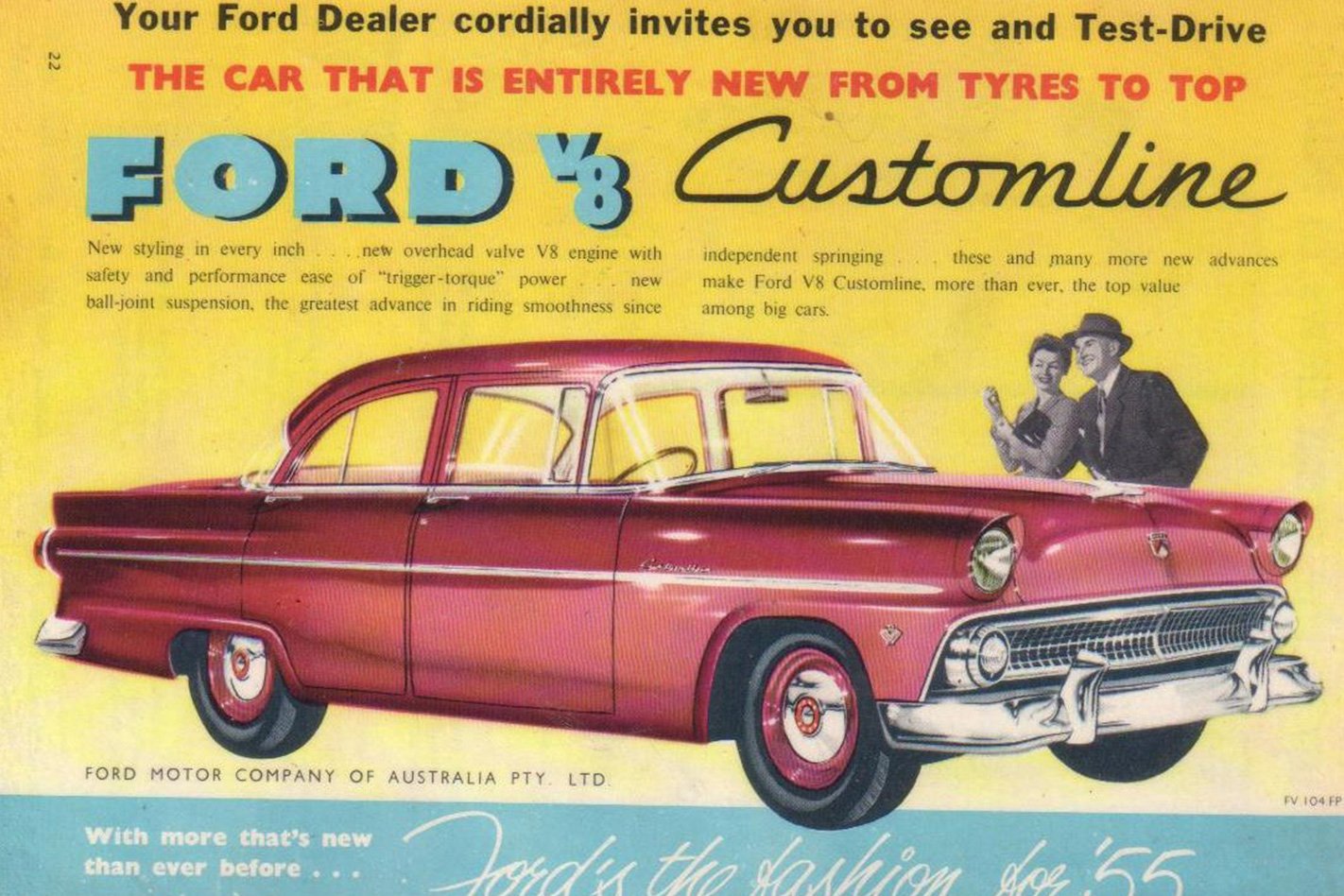
Originally intended for a factory to build a future Zephyr, the Broadmeadows head office was to eventually become the home of the US-designed and engineered Falcon.
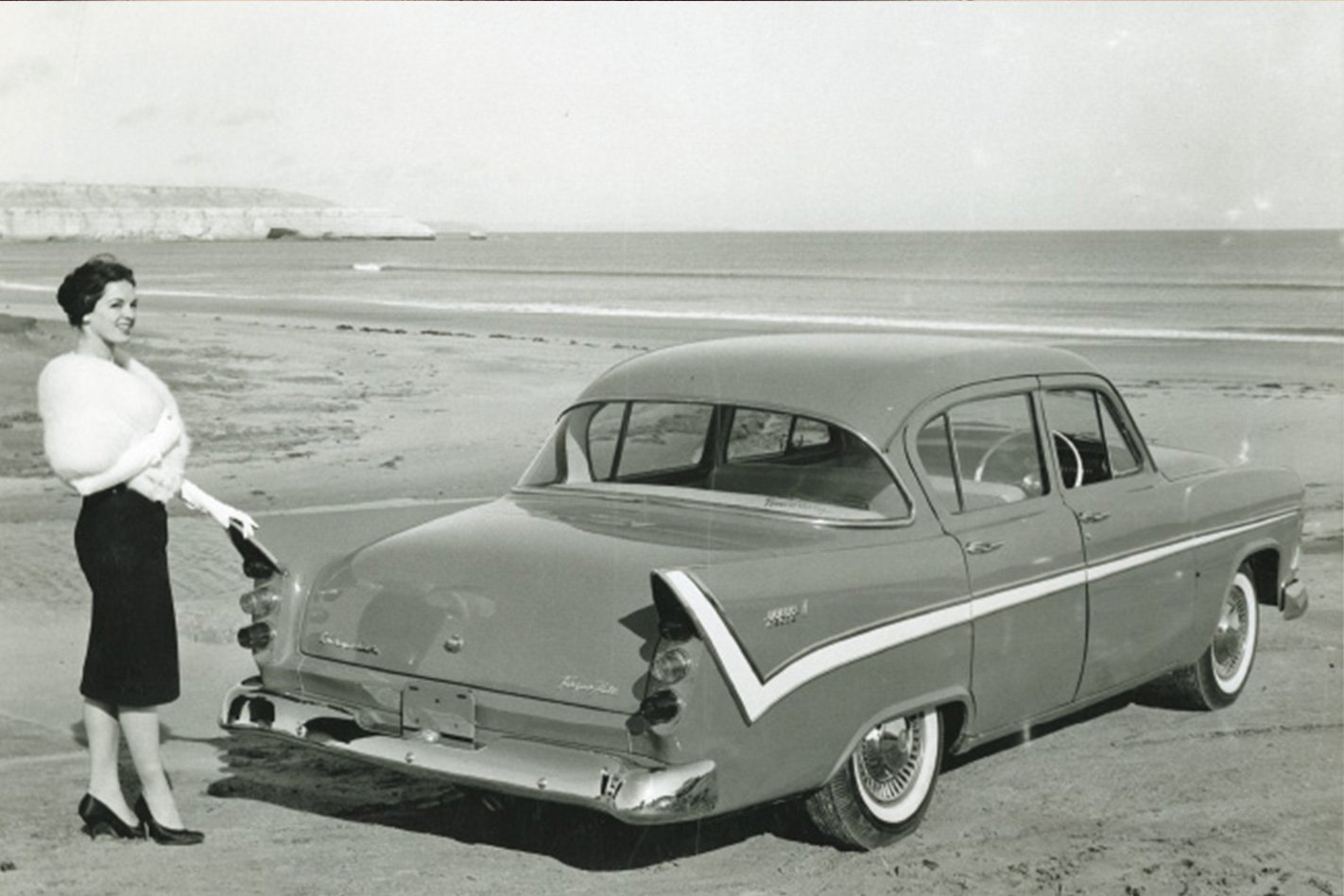
British cars such as the Hillman Minx (maker of the 1956 Mark VIII Gaylook De Luxe Saloon – oh these were much more innocent times!), Humber Super Snipe (both by Rootes Australia, the local offshoot of a British company that also made the Sunbeam and Singer models), Standard Vanguard Spacemaster, Vauxhall Velox, Austin A30 and Morris Minor were still comparatively popular in Australia during this era.
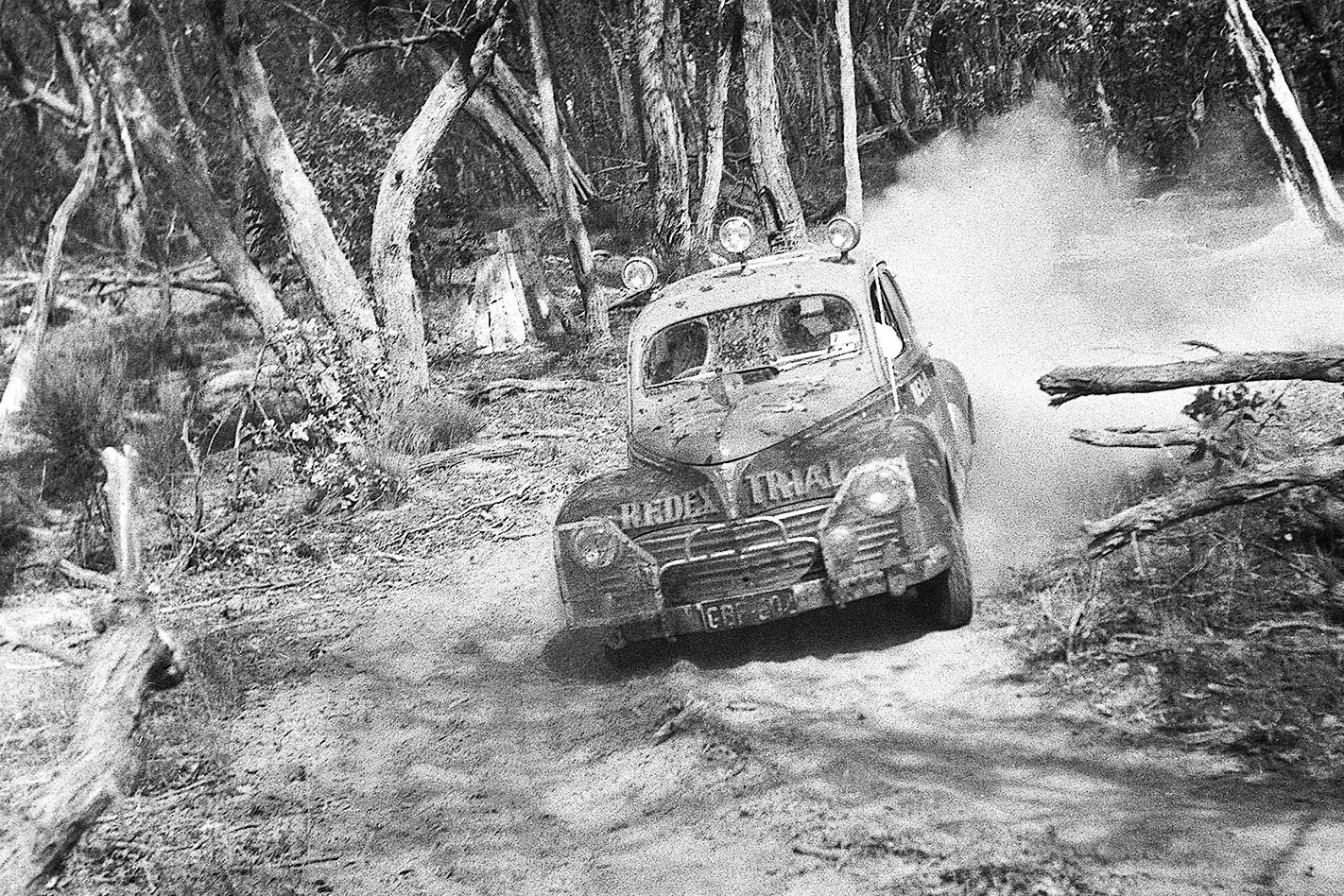
An event called the Round Australia Trial was introduced to allow carmakers to demonstrate how well-adapted their products were to the Australian environment.

The 403 built on its predecessor’s reputation from 1955, but the lack of six-cylinder power meant no Pug ever came within a cooee of Holden’s popularity.
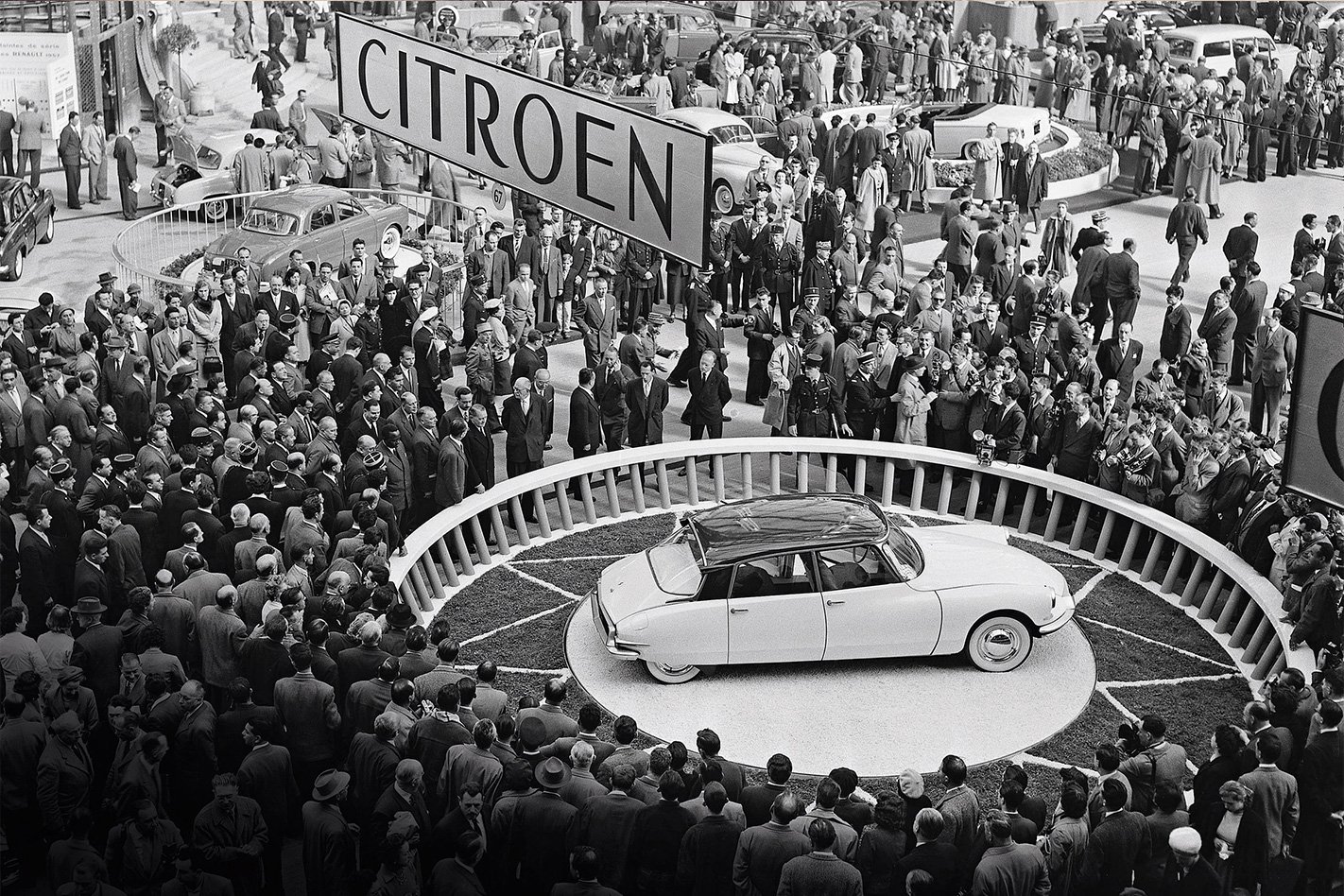
The epochal Citroen DS that shocked the world in 1955 arrived in Australia a couple of years later. Its futuristic styling clicked with the UFO mania sweeping the world at the time, though Aussies were sceptical about the cost maintaining the ingenious hydraulics that controlled the suspension, brakes and gear lever. Arguably the most beautiful car ever produced, the DS also somehow found a following among more avantgarde-minded motorists.
But a completely redesigned top hat that evolved into 1956’s far-more contemporary FE Holden ended up being one of the most exciting moments of the decade, making headlines and causing mayhem in dealerships as folk clambered to take a look at the latest version of Australia’s Own.
Holden would enter the 1960s as the undisputed king of the Australian car market.
Next: 1958-1962: The Ford Falcon flies
Catch up on our previous 1948-1952 recollection: Australia’s post-war car industry is born
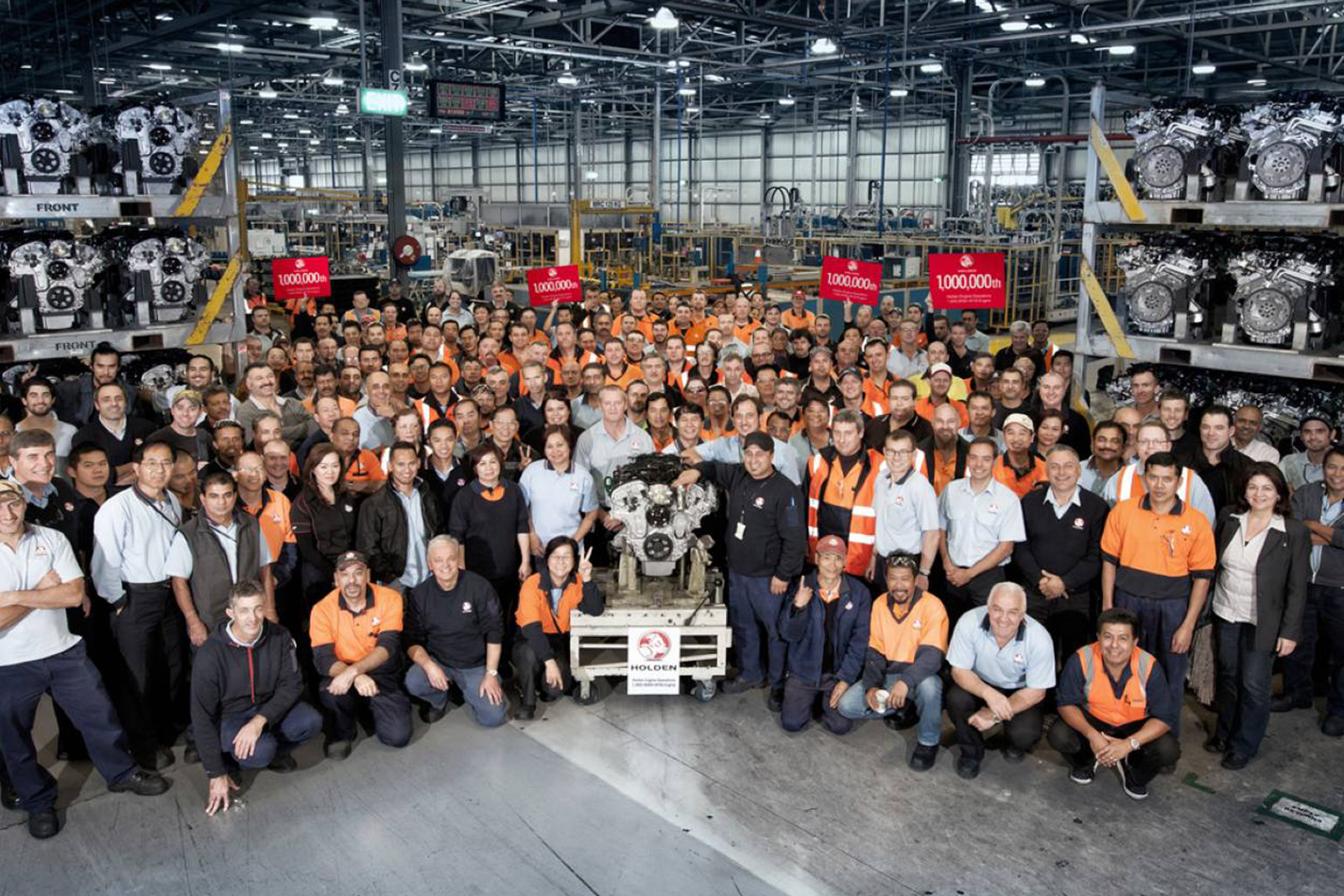
Multinational defence company BAE Systems has announced it will set up an engineering hub in Holden’s former engine manufacturing plant at Fishermans Bend in Melbourne.
As part of a Federal Government tender (which BAE is a contender for) called ‘LAND 400’ the contractor aims to build 225 new combat recon vehicles to replace the current fleet of light armoured vehicles used by the Australian military.
BAE Systems says the hub will be the biggest of its type in the country if it is successful in its bid, with the roughly $5 billion project estimated by the Victorian Government to create more than 2,000 manufacturing and supply chain jobs.
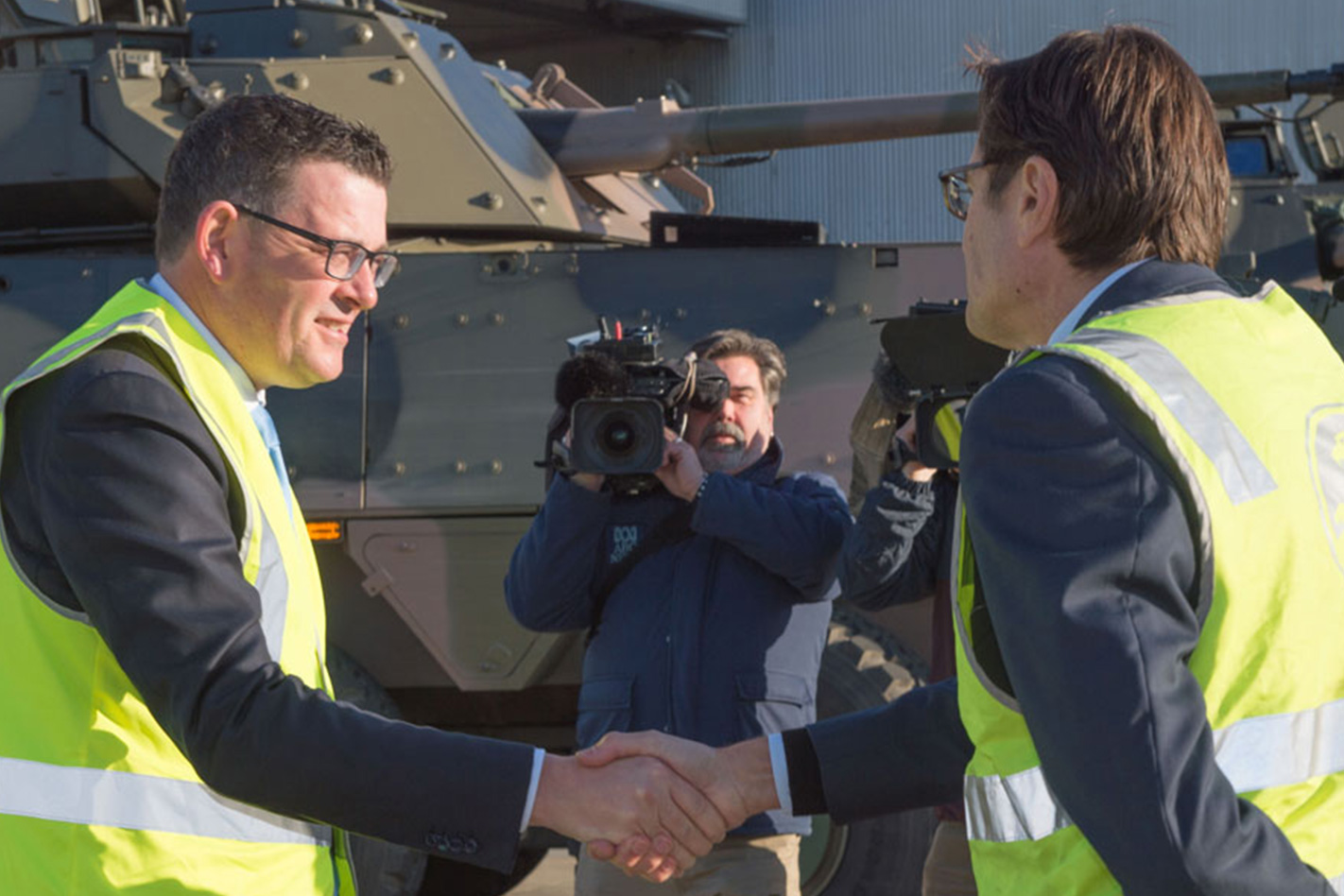
Other vehicles BAE has for offer are the BvS10 armoured articulated vehicle, which is adaptable as a combat or command support vehicle, and the CV90 tank, which BAE says has been deployed in “UN and NATO in missions across the globe”.
These are the two vehicles the company lists as its products for Australia, though its international repertoire of combat vehicles is dozens strong thanks to acquisitions of other defence businesses.
For example, it also manufactures the somewhat well-known Bradley tank after it bought US contractor United Defense in 2005.
If its plans go ahead, BAE says up to 1000 engineers will be designing and maintaining new defence systems for the Australian Defence Force from the Fishermans Bend plant, with over 200 people estimated to be employed for the building phase of the project.
The Victorian Government has backed BAE as a contender, while a German company would set up in Queensland with backing from the Queensland Government if it is successful.
Premier Daniel Andrews says the deal shows that vehicle manufacturing can live on in Australia, even if not for passenger cars.
“Victoria is the traditional home of vehicle manufacturing, and this project would create thousands of jobs at a time when our automotive sector is in transition.”
UPDATE: 3.20pm August 2nd
MOTOR has received information which contradicts BAE’s confirmation that the plant will go ahead. We have contacted the government to confirm details of this story which are now in contention, and will update the story accordingly.
UPDATE: 5.50pm August 2nd
The Federal Government has not yet announced its decision on which company will be awarded the tender to build 225 military vehicles for the Defence Force, however BAE systems has advised it is still keen to explore the viability of the project should it not be successful. Fishermans Bend is still set to become an engineering hub, and a Victorian Government spokesperson has told MOTOR that BAE is still likely to pursue a development there.
