
MASERATI has updated its GranTurismo two-door range with such subtle changes that you’re barely going to be able to pick the new one up from the old one.
As well as slightly more poke from its Ferrari-built 4.7-litre atmo V8 – it rises 5kW to 343kW – the GranTurismo adds a slightly redesigned hexagonal sharkmouth grille to make the svelte coupe’s profile ever so more slightly slippery through the air. It also gains a subtly different rear bumper that Maserati says gives it a neater look, and a slightly larger 8.4-inch touchscreen gracing the dash that adds Apple CarPlay and Android Auto.
The improved-for-2018 GranTurismo – revealed in slightly more hardcore SC form overnight in front of the New York Stock Exchange – also gains a Harman Kardon premium sound system, along with a revised centre console that moves the drive mode selection controls – and here’s that word again – slightly closer to the shifter for improved ease of use.
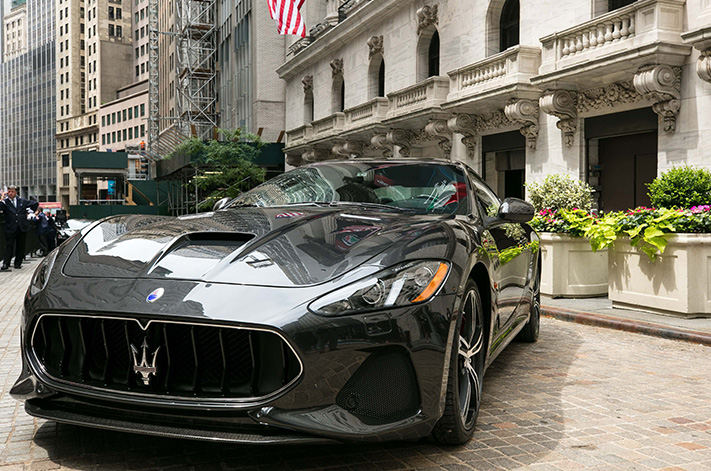
Two variants of the redesigned GranTurismo will be available – the entry-level Sport and the more track-focused MC.
Similar to before, the GranTurismo Sport will be able to sprint from 0-100km/h in 4.8 seconds, all the way to a top speed of 298km/h. The lighter MC variant will be marginally faster with a claimed 0-100km/h time of 4.7 seconds and a top speed of 299km/h.
Pricing for the revised models is yet to be announced, although when it arrives here towards the end of 2017, expect it to start from around $300,000.
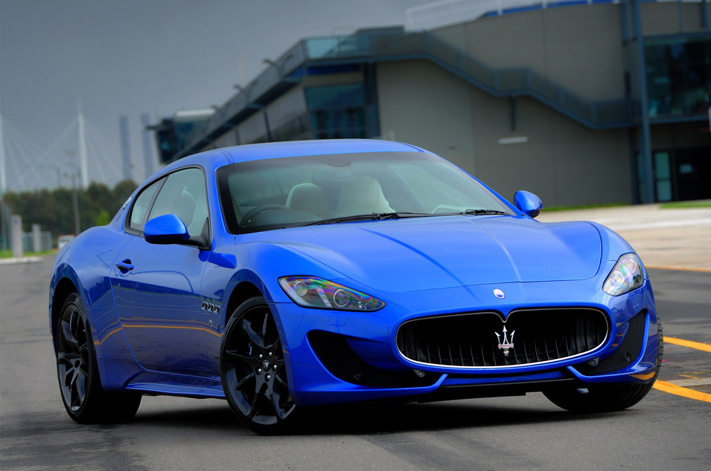
In the meantime, you can play spot the difference with the old model pictured below.
BMW has confirmed pricing and specification for its new-generation 5 Series Touring ahead of the model’s release later this year.
Two drivetrain options for the luxurious wagon have been confirmed, along with two trim levels and several options packages carried over from the 5 Series sedan.
The range will start at $99,990 for the 520d featuring an efficient 2.0-litre four-cylinder turbo diesel engine producing 140kW and 400Nm, which should help it reach 0-100km/h in 7.8 seconds while returning fuel economy of 4.9L/100km.
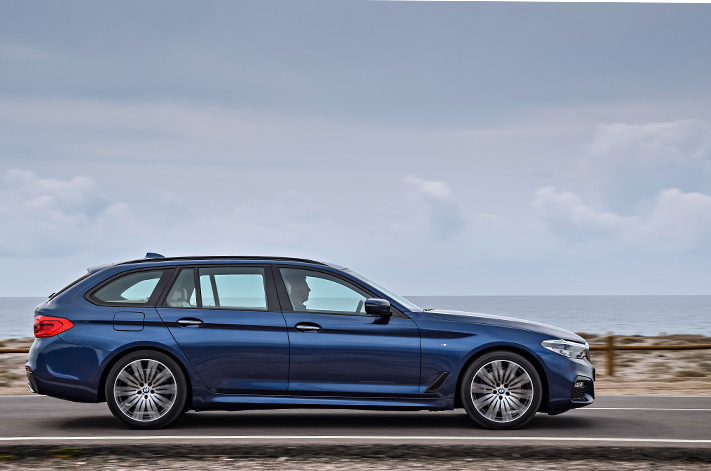
The range-topper is the 530i, which is based on the best-selling variant of the 5 Series sedan range. Starting at $115,500, it features a 2.0-litre four-cylinder turbo petrol unit putting out 185kW and 350Nm, with a claimed 0-100km/h time of 6.5 seconds and fuel economy of 6.5L/100km.
As standard, the 520d will come equipped with the Luxury Line package while the 530i will be in M Sport guise; however, the M Sport package is optional for 520d models, while the Luxury Line package is a no-cost option for the 530i.
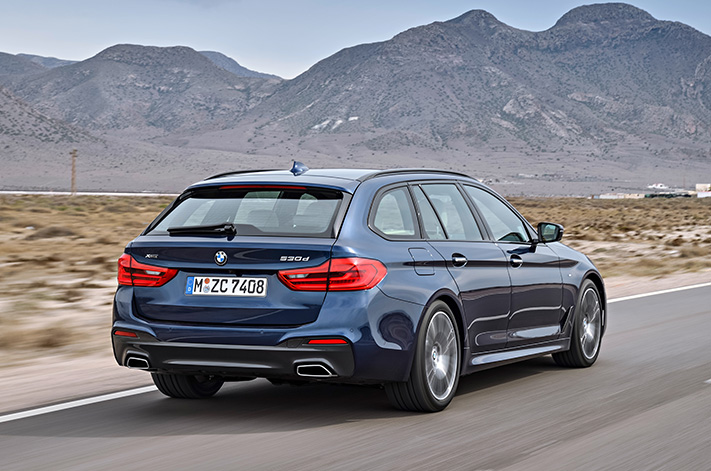
The standard 520d Luxury Line model features a raft of standard equipment, notably including:
- 18-inch BMW alloy wheels in ‘Luxury’ design
- Chrome exterior highlights for the front and rear bumpers, air intakes, kidney grille, window frames, air breather, and tailpipe finishers
- Illuminated door handles with chrome inserts
- Sport leather steering wheel
- Dakota leather upholstery
- Driving Assistant Plus and Parking Assistant Plus systems
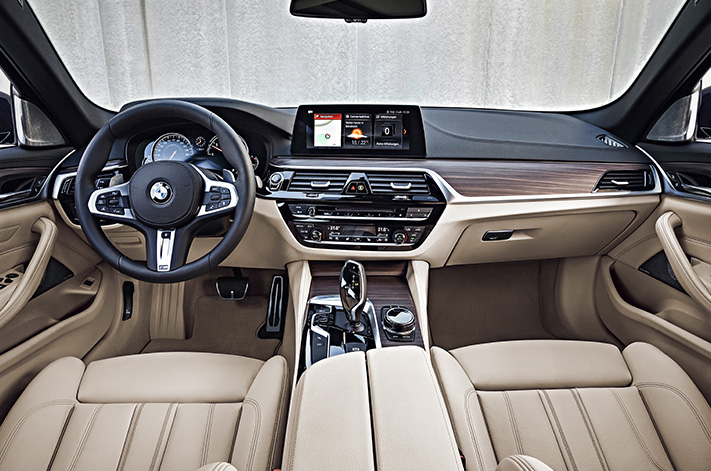
The 530i M Sport gains some unique upgrades over the 520d which include:
- Electrically adjustable dynamic damper control
- M Sport brakes
- 19-inch BMW M alloy wheels
- Adaptive LED headlights with high beam assist
- Front heated seats with lumbar support
- 16-speaker Harman Kardon surround sound system
- Multi-function display
- Comfort Package – $2,700 with Luxury Line models, $2,100 with M Sport models Includes dynamic damper control, high beam assist, lumbar support for driver and front passenger, and front-row seat heating
- Precision Package – $3,400 Includes 16-speaker Harman Kardon surround sound system, adaptive LED headlights, multi-function instrument display, and high beam assist
- Exclusive Package – $6,400, available only with Luxury Line models Includes 19-inch alloy wheels in a choice of two styles, Nappa leather upholstery, dynamic damper control, high beam assist, and heated Comfort seats for driver and front passenger
To go along with all of this technology, there are a number of practical features all 5 Series Touring models will feature.
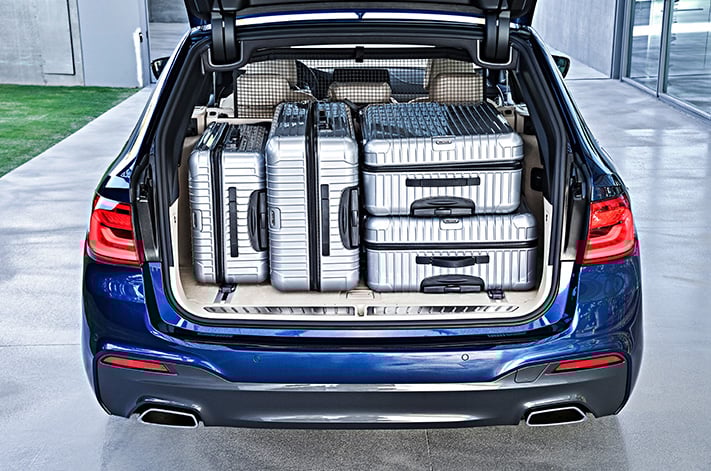
The rear window can be opened separately to the tailgate, the luggage cover retracts and returns automatically, and the 40:20:40 split folding rear seats can be remotely folded, all in the name of additional loading flexibility.
All models will also feature a specialised Luggage Compartment Package which adds sliding rails and mounted fastening points to store luggage safely and easily.
Regarding servicing, the 5 Series Touring uses a Condition Based Servicing system which monitors the environments the vehicle is used in and how the vehicle is driven, along with mileage and fuel consumption data, in order to calculate service and inspection intervals.
For those pining for a luxury wagon such as this, you can expect 5 Series Touring models to hit showrooms this October.
List Pricing
520d Luxury Line – $99,990 530i M Sport – $115,500
Note: These prices include GST and Luxury Car Tax, but exclude dealer charges, stamp duty, statutory charges, and on-road costs.
After the reveal of the Dodge Demon, its less agro Challenger Hellcat brother has been given some new ‘threads’, more grip, and a new steering system to help it keep up.
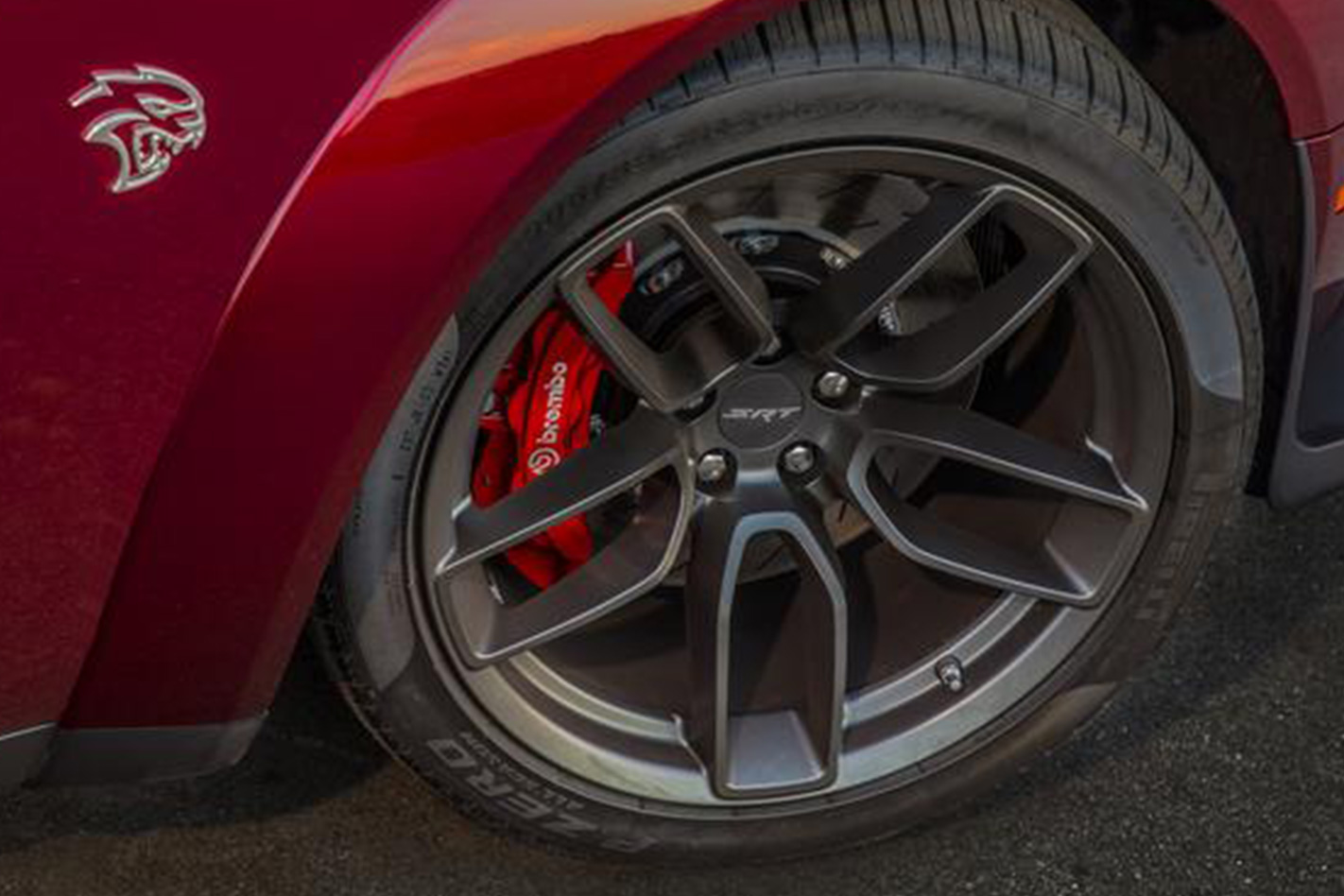
The Hellcat has had the same flared wheel arches from the Demon bestowed upon it, granting an extra 3.5 inches (8.9cm) of body width than the previous Hellcat.
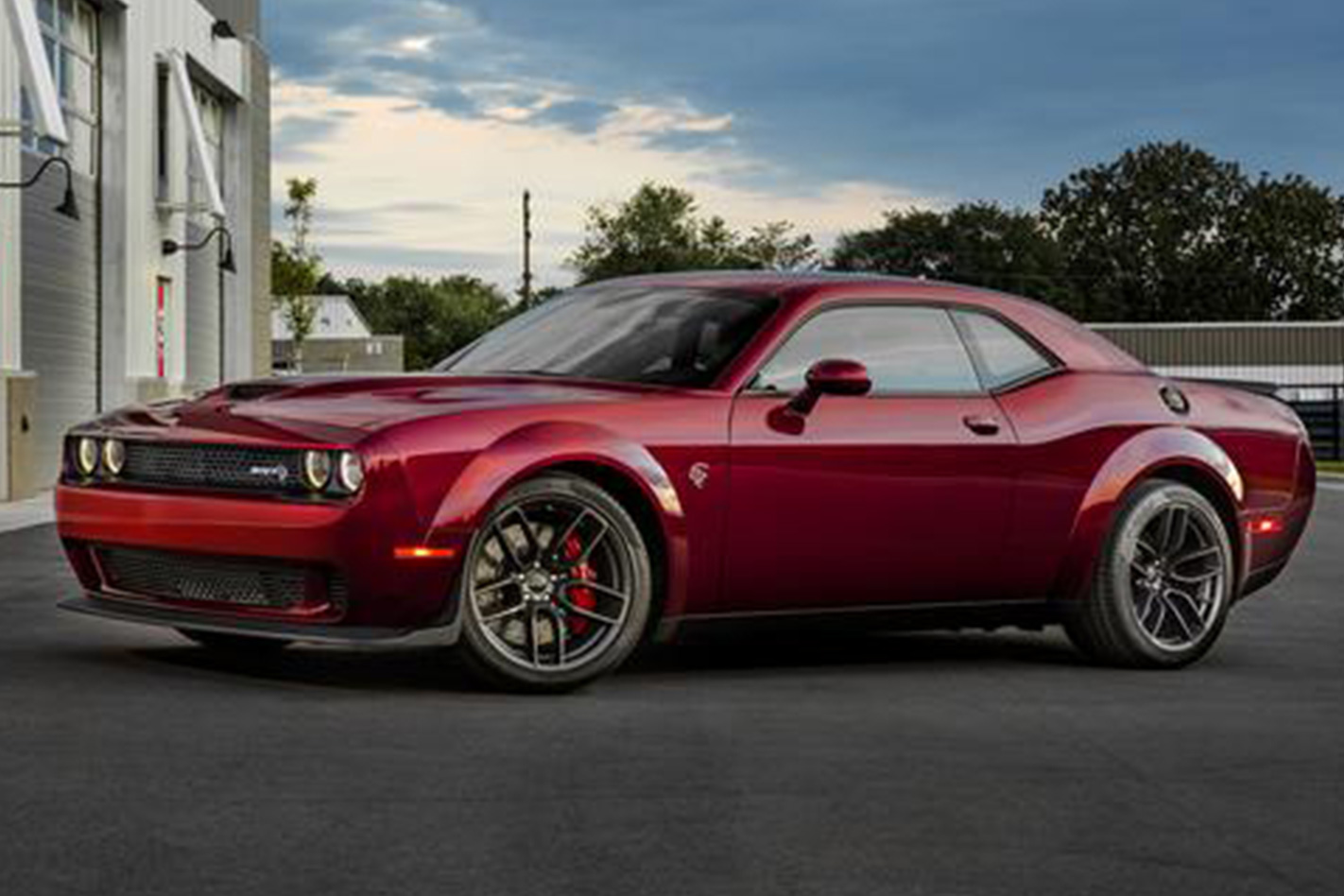
The 2018 Hellcat Widebody also gets a new electric steering system with SRT Drive Modes, allowing driver to select different steering setups.
Dodge Viper farewell video a smoky tribute
Dodge says all of this has resulted in improved lap times during testing, recording gains of two seconds per lap on a 1.7-mile (2.73km) track.
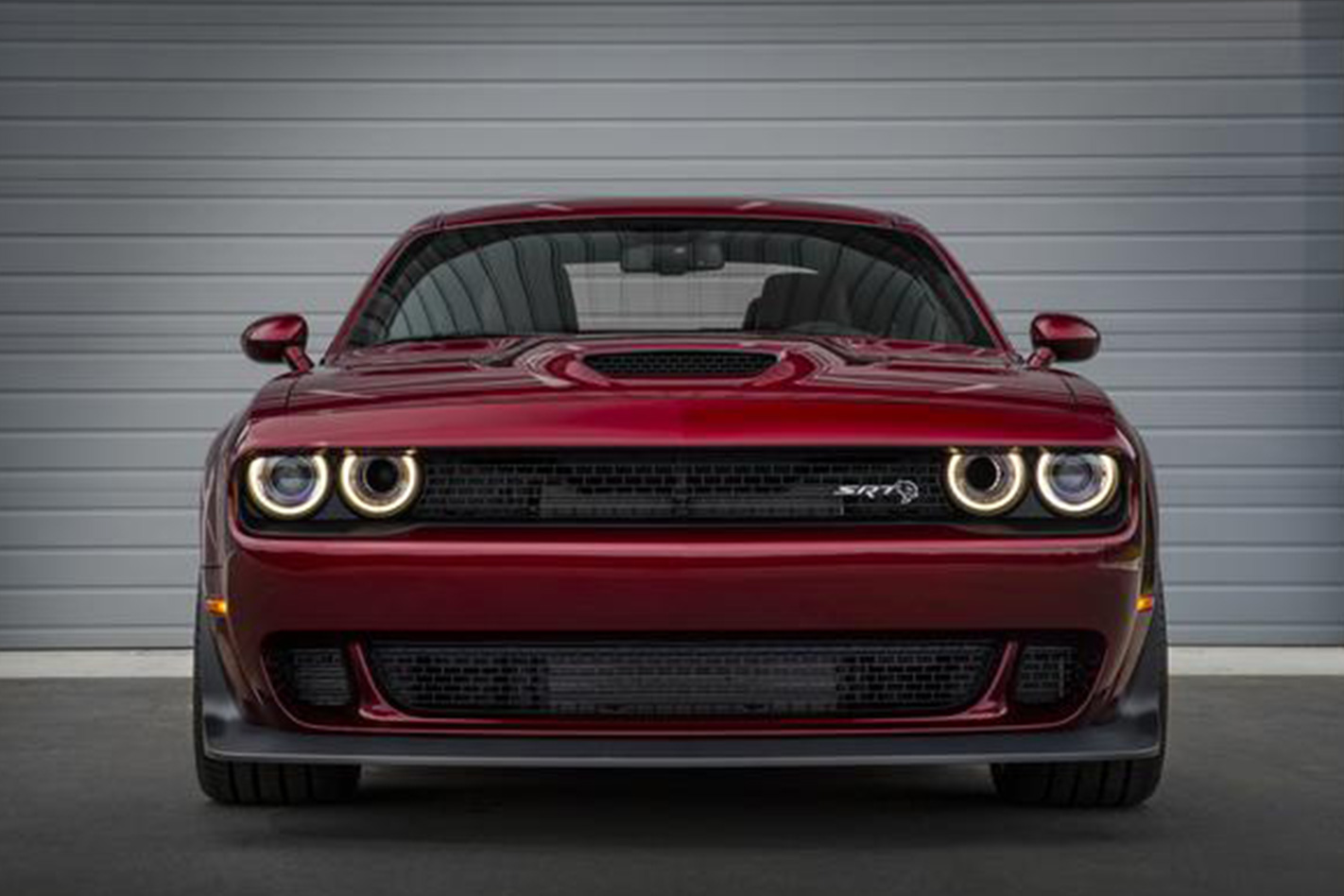
The Hellcat Widebody will then carry on to 313km/h
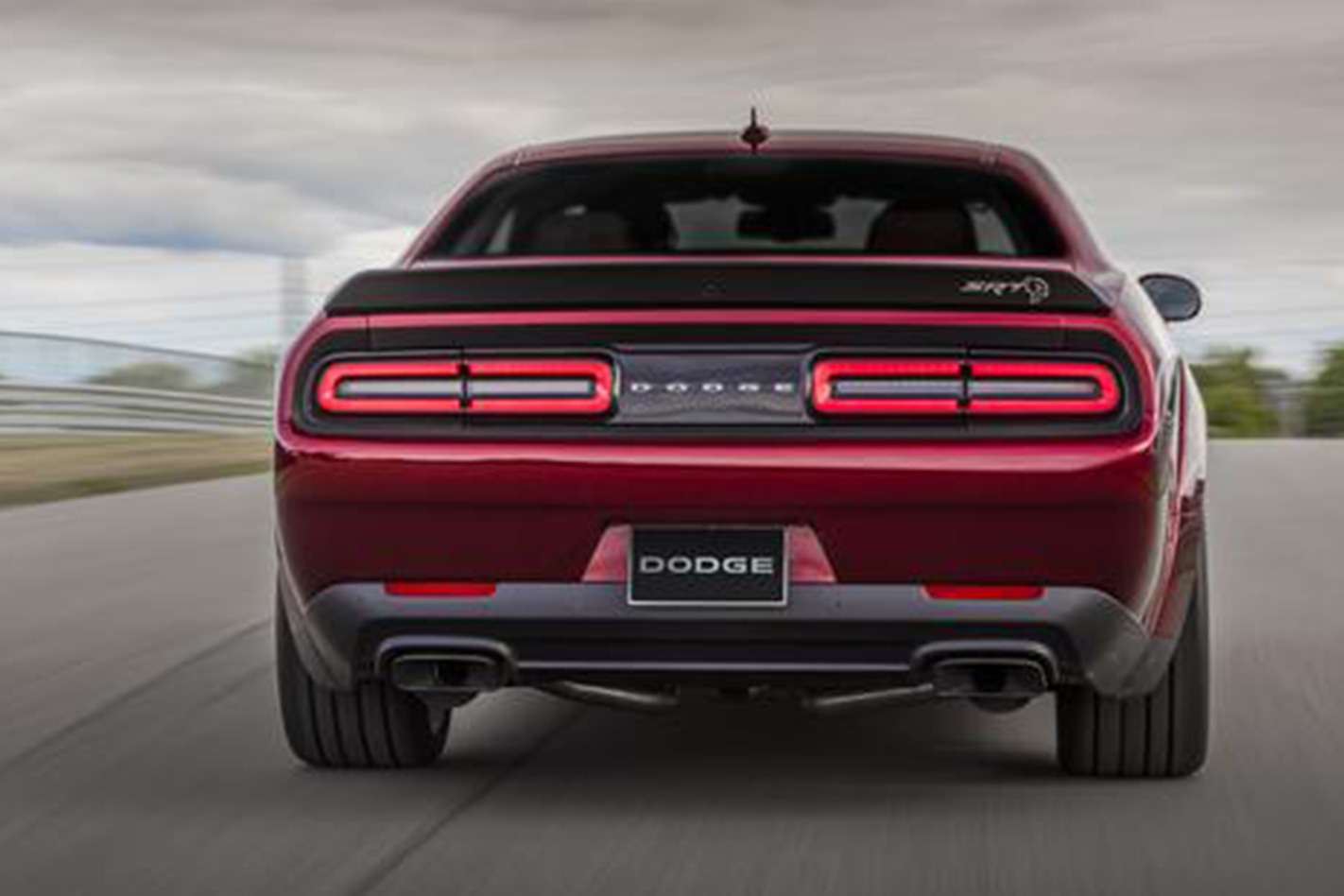
Starting at USD $71,495, including the US ‘gas guzzler’ tax, the Widebody will be available in the US from Q3 this year, but sadly the Hellcat won’t be making its way Down Under in any substantial (or official) manner.
STEP aside F-Type R, there is a new king of the pride, with Jaguar unveiling the most powerful road-going car in its history.
Packing a supercharged 5.0-litre V8, the XE SV Project 8 sends a stonking 441kW to all four wheels via a tuned eight-speed auto.
The cost? Jaguar lists the official price as £149,995 (A$253,451) but there’s precious little chance the likes of us will get our hands on one as production is limited to just 300 units, and that list is already chock-full of pre-approved customers. And every Project 8 has its steering wheel fitted on the left.
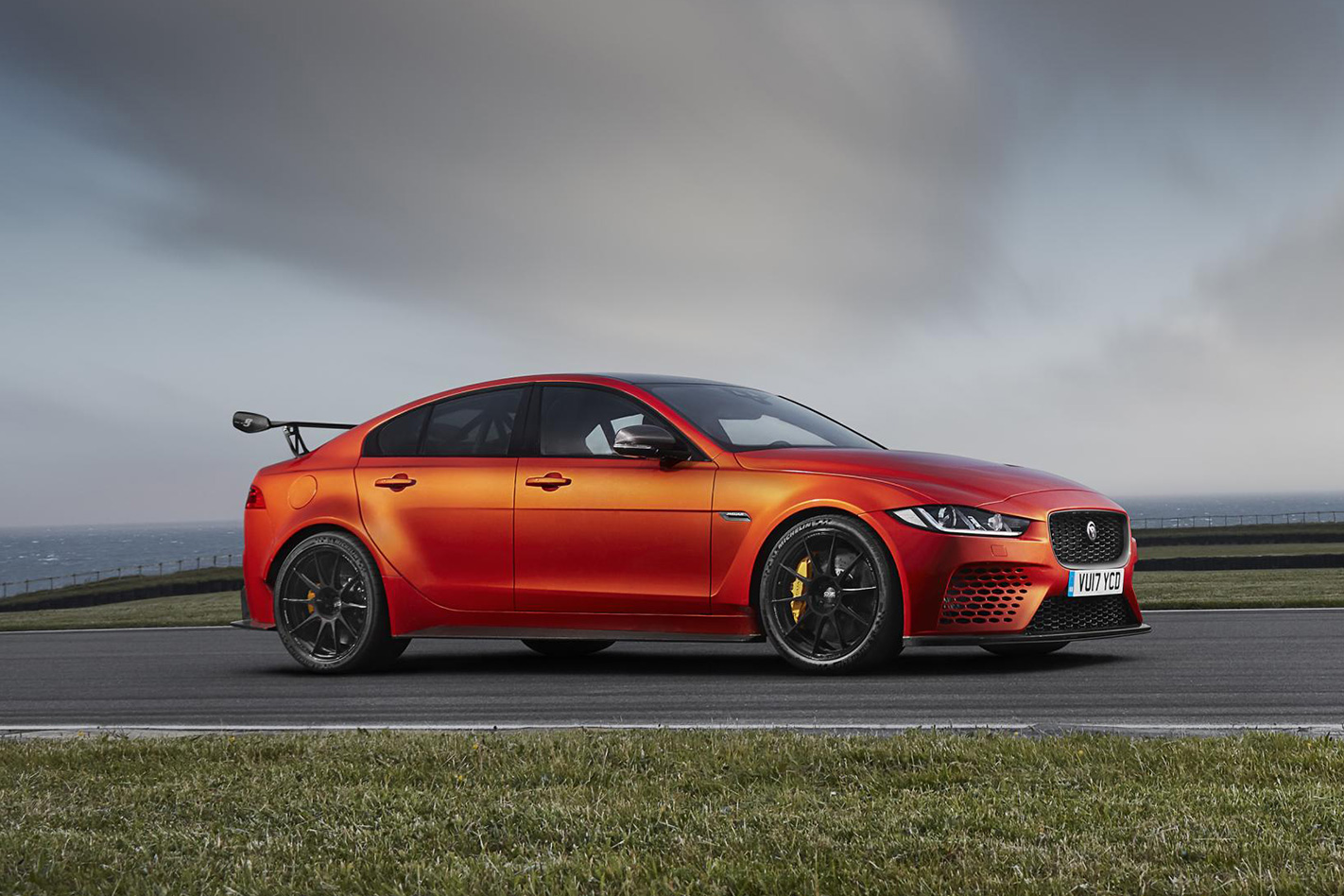
But that is just about the only metric where a standard car will better the Project 8, with the angriest XE available springing to 60mph (97km/h) in 3.3 seconds. That is supercar-beating territory from a four-door sedan. It’s been engineered by the Special Vehicle Operations team to top 200mph, (322km/h), making it a huge 72km/h faster at the top end than the next-fastest XE production model.
The wide flared arches and aggressive bodywork aren’t just for rear-view intimidation factor, with JLR’s Special Operations boss John Edwards stating “form follows function without compromise”.
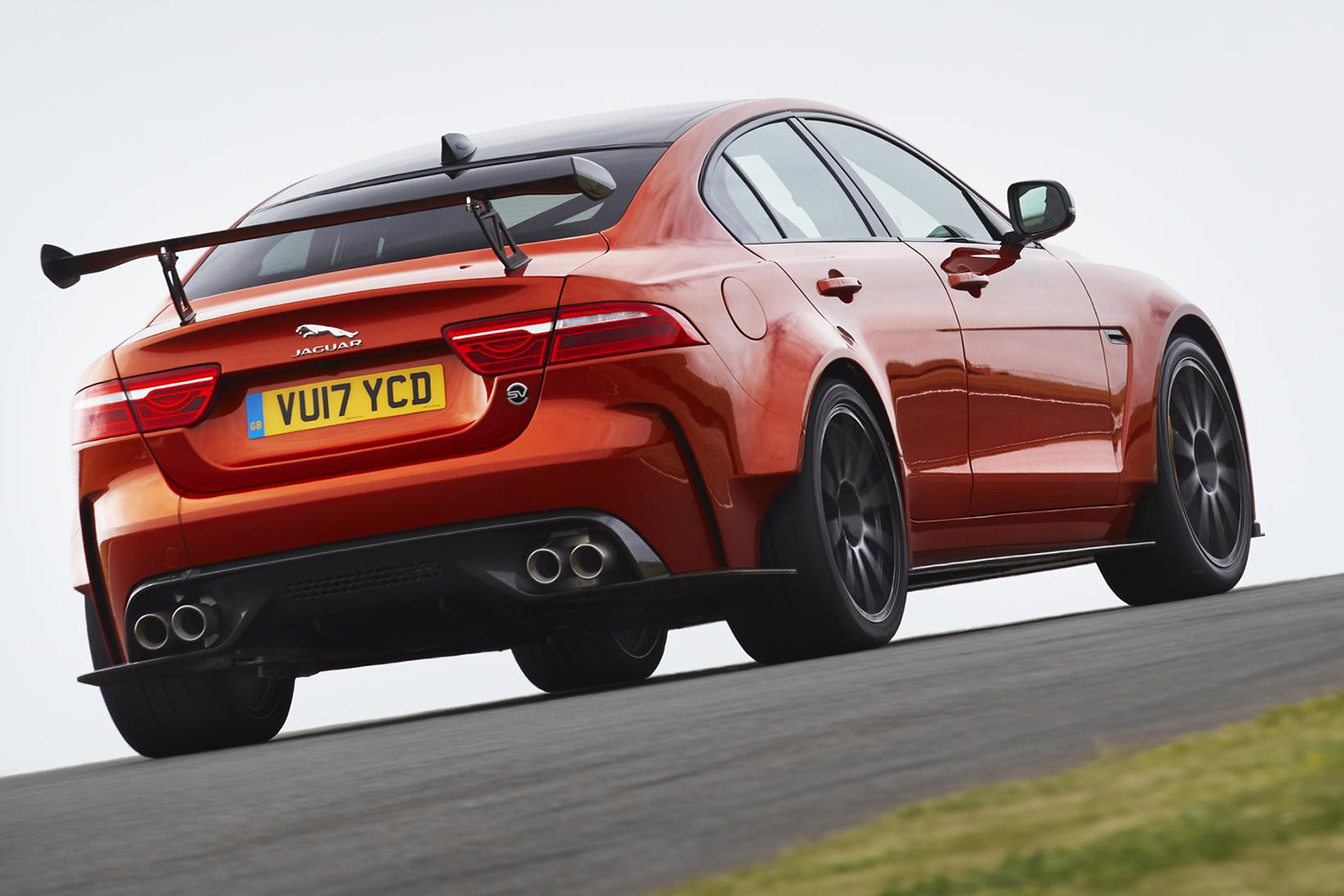
Whopping 400mm carbon-ceramic front discs provide the whoah to all that go, and Edwards claims the Project 8 “sounds like no other Jaguar”.
Jaguar will offer some customisation options so customers can personalise their Project 8, but that refuses to budge when it comes to either wheels or tyres. The only body panels the XE SV Project 8 shares with its regular siblings are the front doors and roof.
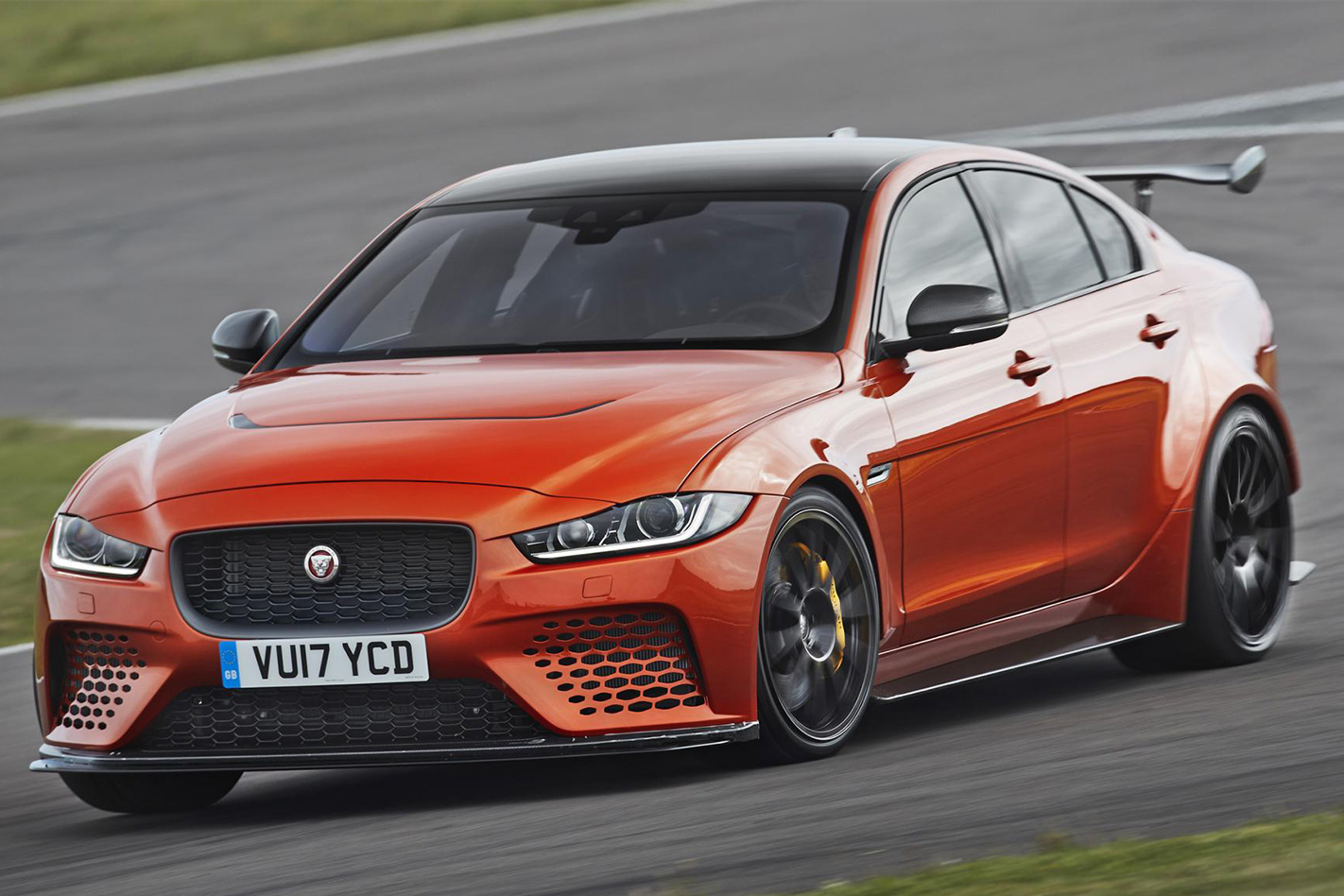
Manually adjustable suspension and aerodynamics make the Project 8 hugely appealing to well-heeled track day enthusiasts. And yes, of course that huge rear wing is functional. SVO has also designed custom suspension knuckles machined from billet, with trick silicon nitride ceramic bearings – a first for JLR – helping to reduce unsprung mass by 840g at each corner. There are also height-adjustable spring platforms, Jaguar offering the option of two ride heights.
If all that makes the Project 8 sound more like a race car than a road car, that is exactly the point. Jag bosses claim that despite the headlights and numberplate, in no way was the XE SV Project 8 intended to be a useable and friendly grocery getter.
“My SVR is a useable, everyday car. If this ends up being an everyday car, we’ve missed the point,” Mark Stanton, SVO’s director, said.
And yet, Jaguar still went to the trouble of fitting the car with a WiFi hotspot which will connect to eight different devices. Because, what’s the point of crushing your opposition at a track day, if your mates can’t Snapchat it at the same time?
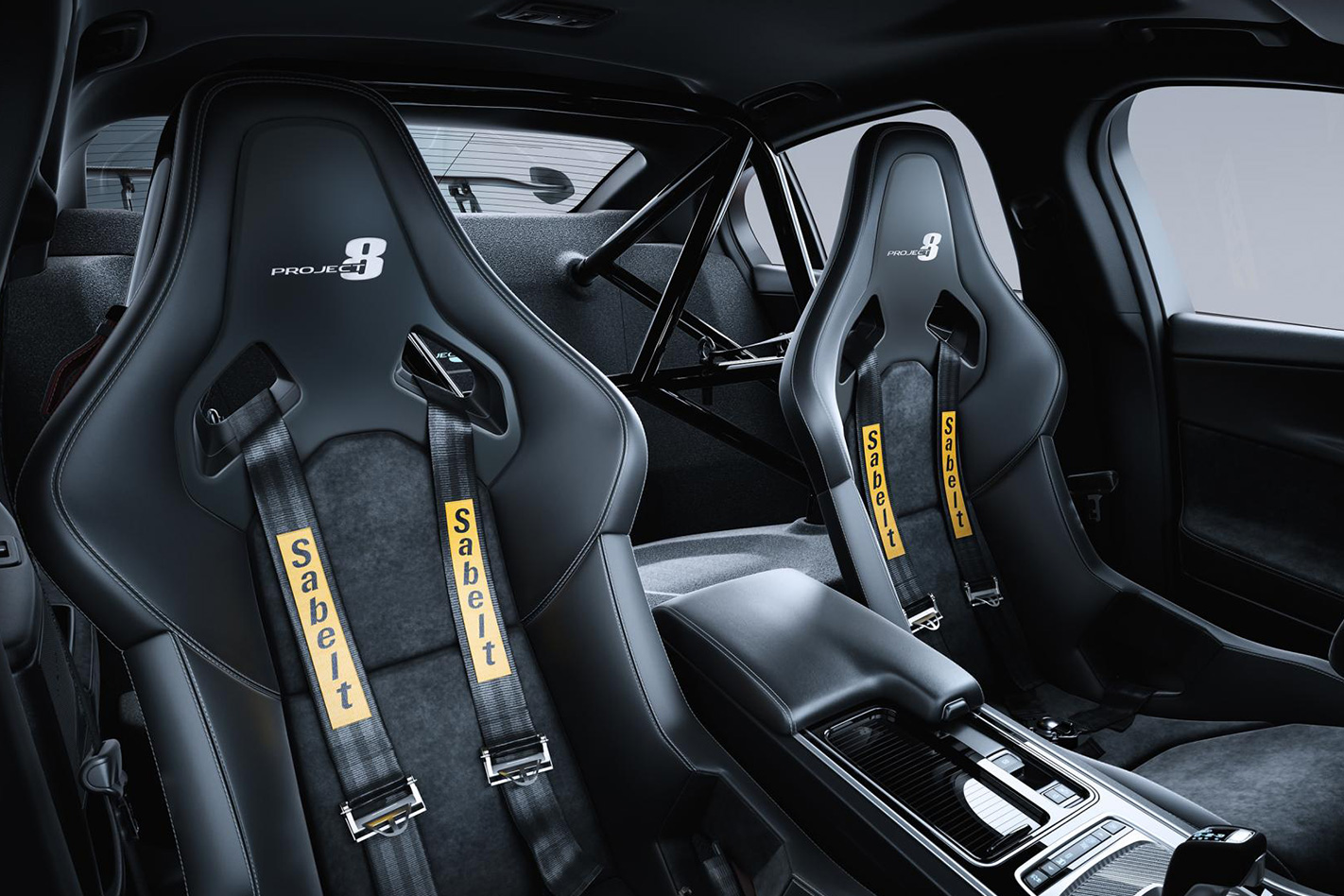
If you are one of the lucky few that gets to own one, Jaguar predicts the Project 8 will be an instantly appreciating asset. Clearly, this will hinge upon exactly how much of the massive investment ploughed into this limited-run car inevitably trickles down into a roadgoing variant and how closely that car can mirror the capabilities of the Project 8. For the time being at least, Jaguar has set a very fast-moving target for its rivals to draw a bead on. Albeit at a price.
Providing drive to all four wheels was once generally associated with off-road vehicles whose four-wheel drive (4WD) systems increased traction to allow negotiation of very rough terrain.
These are not to be confused with all-wheel-drive (AWD) vehicles, which aren’t necessarily built to go off-road but have power transmitted to all four wheels to help improve on-road grip, handling and safety.
There can be a blurred line between the two, with some car manufacturers referring to cars having 4WD when they’re technically AWD systems and vice versa.
So what’s the difference?
All Wheel Drive
AWD is popular with ‘soft-road’ SUVs as well as high-performance vehicles to make then handle better on icy roads or gravel tracks as well as offering more traction on road.
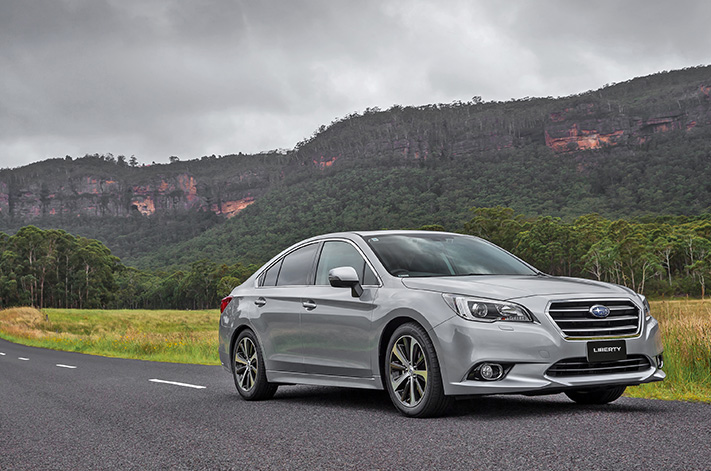
It works automatically to send torque to all four wheels only when the car senses extra traction is required, such as a slippery surface.
Like any four-wheel drive system, a disadvantage of AWD is that it’s more expensive than two-wheel-drive drivetrain and added friction between the tyres and road as well as frictional losses in the transmission system leads to increased fuel use.
Some manufacturers are overcoming this disadvantage such as Audi’s quattro ultra system that can completely disconnect the axle-connecting driveshaft at both ends to effectively run as a front-wheel drive.
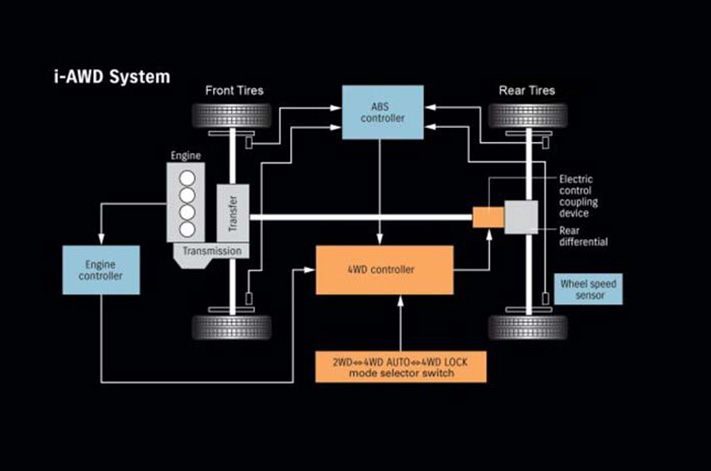
AWD grip is only as good as the car’s tyres and with electronic stability control mandatory in all new cars it won’t necessarily be that much safer than a two-wheel-drive variant in everyday conditions.
Four Wheel Drive
There are two kinds of 4WD systems – part-time and full-time.
Many 4WD SUVs and utes have part-time 4WD, which are two-wheel-drive vehicles with power usually going from the transmission to the rear axle differential. When 4WD is needed, torque can be shared with the front differential via the transfer case so all-four wheels have traction.
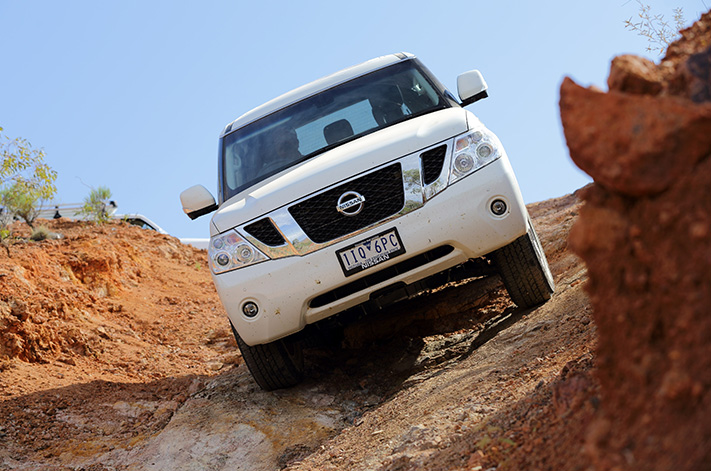
Such systems are usually complemented by a low gear range, which multiplies the torque sent to the wheels for more crawling grunt during tricky situations such as descending and climbing steep and slippery slopes.
That extra torque in low range can be complemented by a differential lock which locks both wheels together on a given axle preventing wheel spin and traction loss.
There’s no advantage in leaving your vehicle in low range and with the diffs locked on road, in fact it can be quite damaging. It uses more fuel, chews through tyres and adds strain to the gearbox called transmission wind-up that’s caused when all four wheels are forced to turn at the same speed – wheels naturally turn at different speeds during normal road driving.
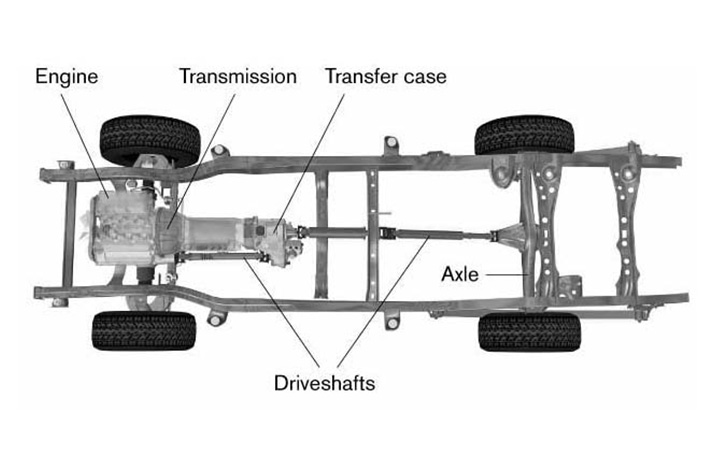
Full-time or permanent 4WD is where the lines are really blurred as it drives both front and rear axles all the time but has the ability to alter the amount of torque split between each axle meaning it’s not inaccurate to call it AWD.
As well as being suitable for some loose surfaces, it can also improve grip on normal roads which also makes it desirable for some high-performance cars as well as all-terrain vehicles.
Full-time 4WD gets around transmission wind-up by having a centre, or open differential which allows each axle to turn independently, while still receiving torque.
| FWD vs RWD vs AWD: Which is best for you?
It was in the mid-2000s that a case could be made for each M car going ‘up’ a series.
MOTOR 30 Years of BMW M3 Special
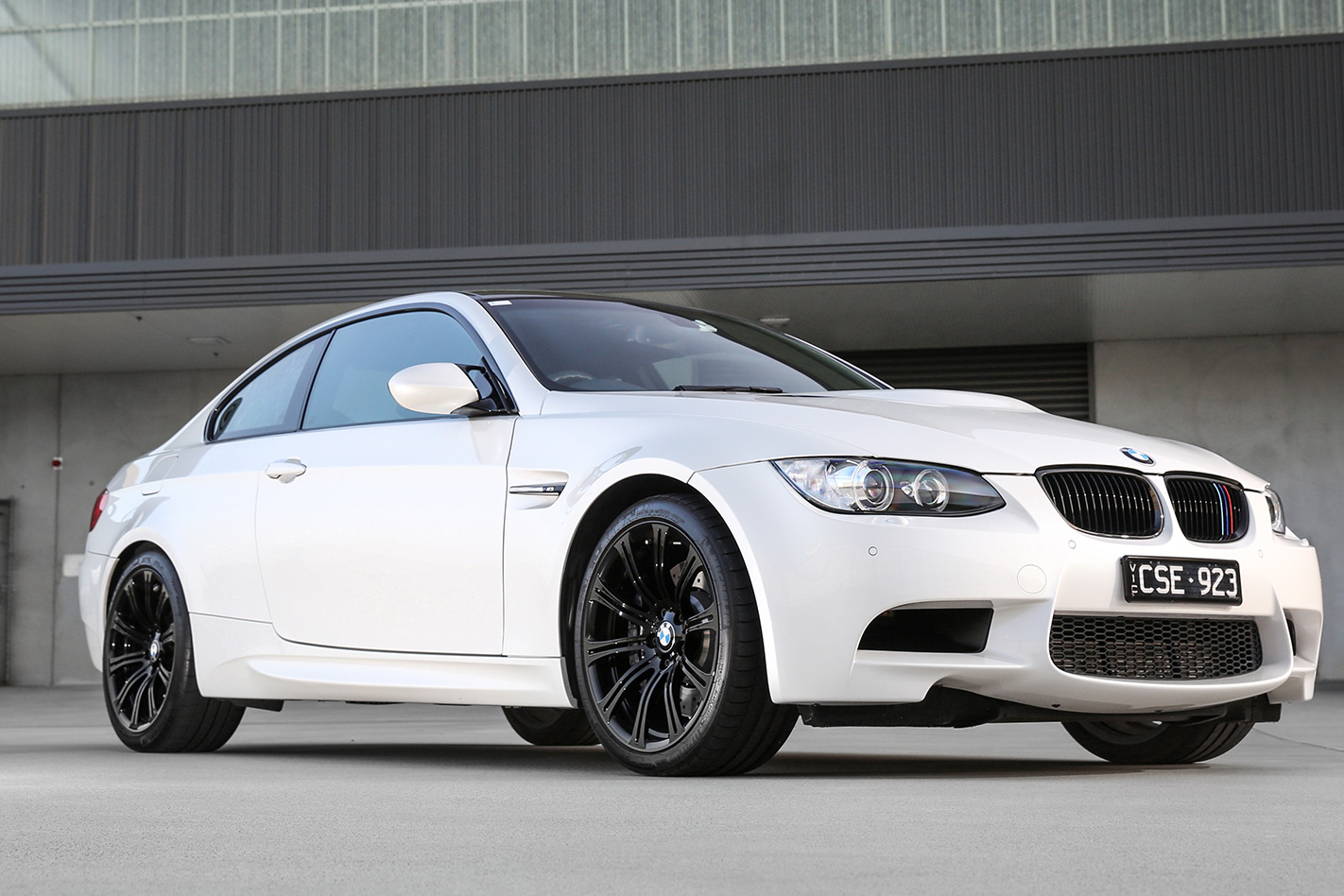
For example, compare the stats of the E92 M3 with the E39 M5. The M3 has a 1600kg body measuring 4615mm long, 1804mm wide and 1418mm tall powered by a 309kW/400Nm 4.0-litre V8.
The M5 is similar in size (4784/1800/1437mm) though a porky 1795kg, and powered by a 294kW/500Nm 5.0-litre V8. Wheel and tyre sizes were similar, as were the brakes – even the diff ratio was identical.
BMW and McLaren enter engine partnership
Drive an E92 M3, however, and these questions will quickly be replaced by a much simpler one – who cares?
It begins with a press of the starter button. As fine as the nasal scream of the E46’s six-pot is, there’s something about the guttural growl of a V8 that stirs the emotions, especially when enhanced by an aftermarket exhaust system like on Chris Shaw’s E92.
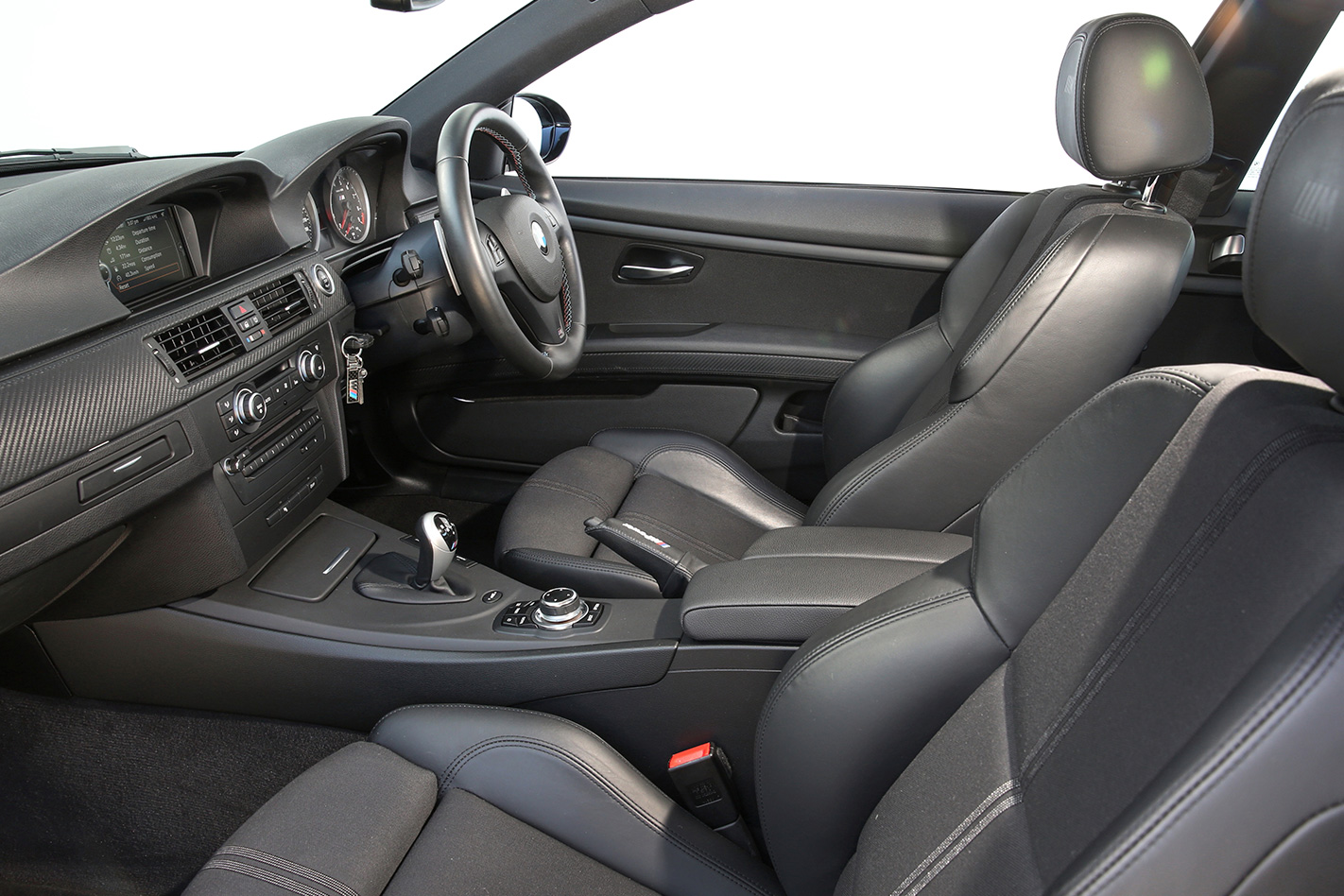
Its hunger for revs eggs you on towards the 8250rpm redline, which is a problem when you’re driving someone else’s pride and joy, particularly as Chris’s M3 sounds like a V8 Supercar.
30 Years of BMW M3: E46 M3 wagon
Of all the cars here it’s the most difficult to exercise restraint in. A six-speed manual was standard, however this example is fitted with the seven-speed dual-clutch. Early examples could be alarmingly erratic, but Chris’s 2012-build shifts swiftly and smoothly, exposing the E46’s SMG ’box as the technological dead-end that it was.
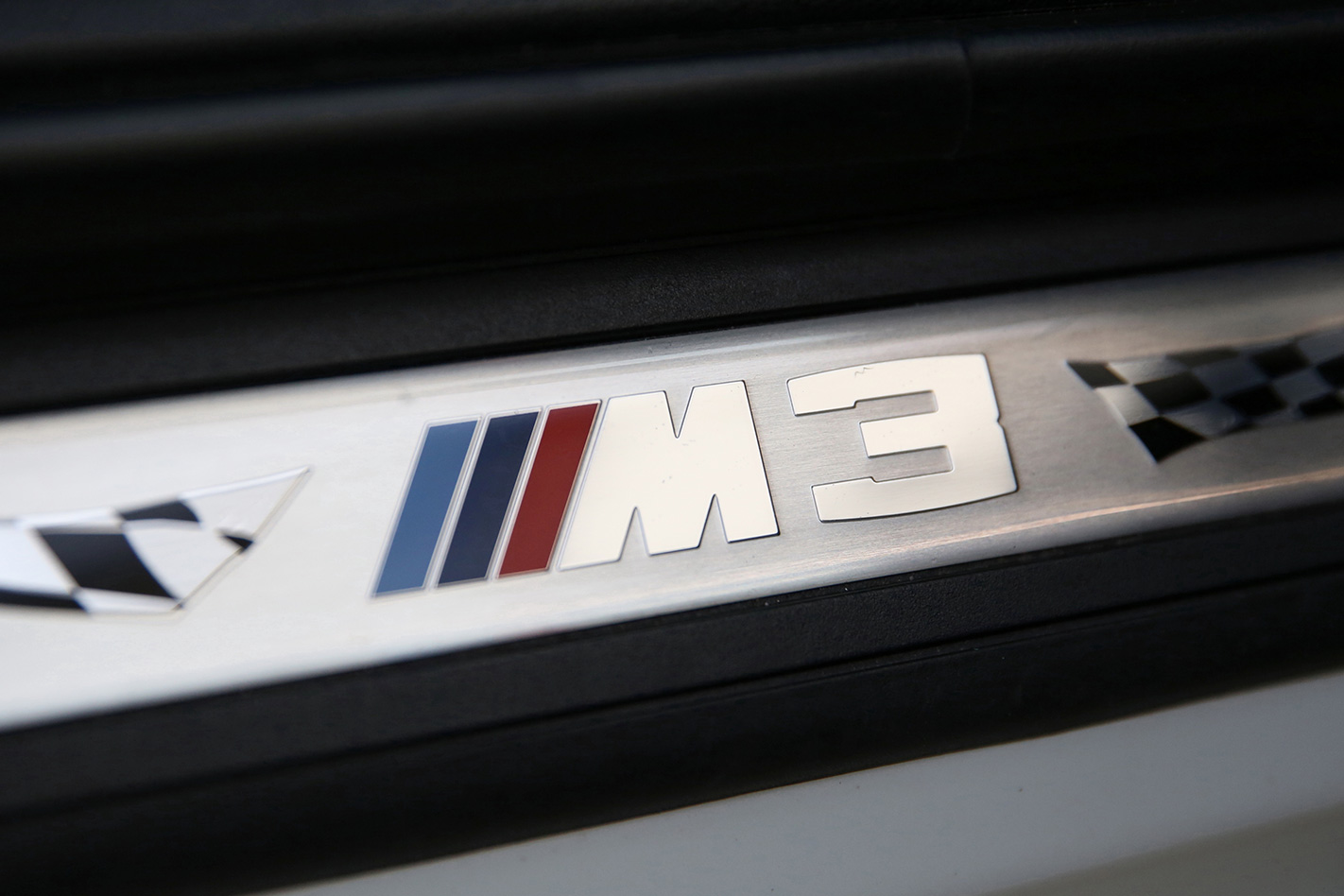
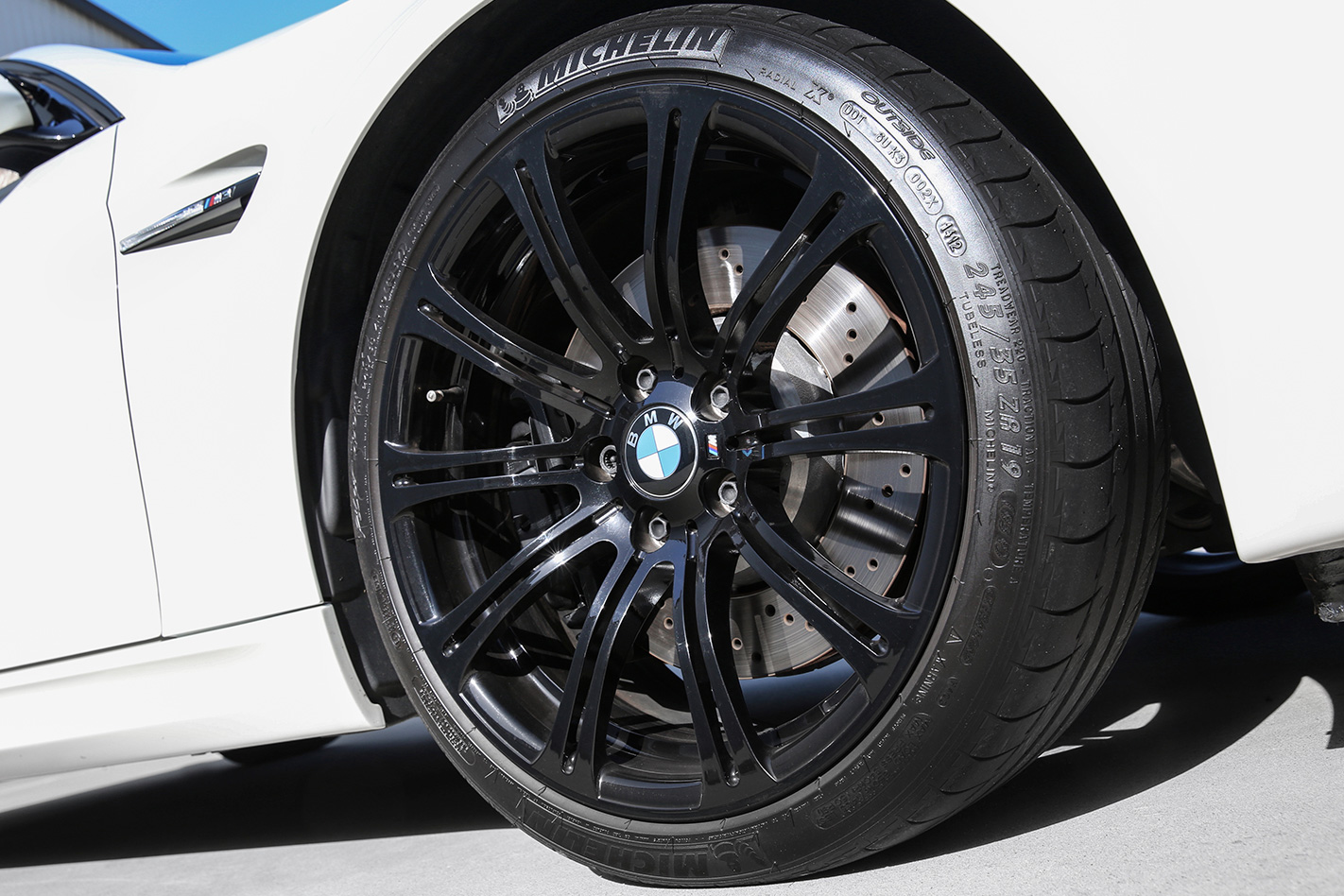
There’s more power and grip, and on cold tyres it’s extremely keen to oversteer – a characteristic of the Michelin Pilot Super Sport rubber – but the communication levels are such that the car feels friendly and enthusiastic rather than nervous and wayward.
BMW M Division could ditch manual and DCT
In fact, it strikes arguably the perfect balance between grip and grunt.
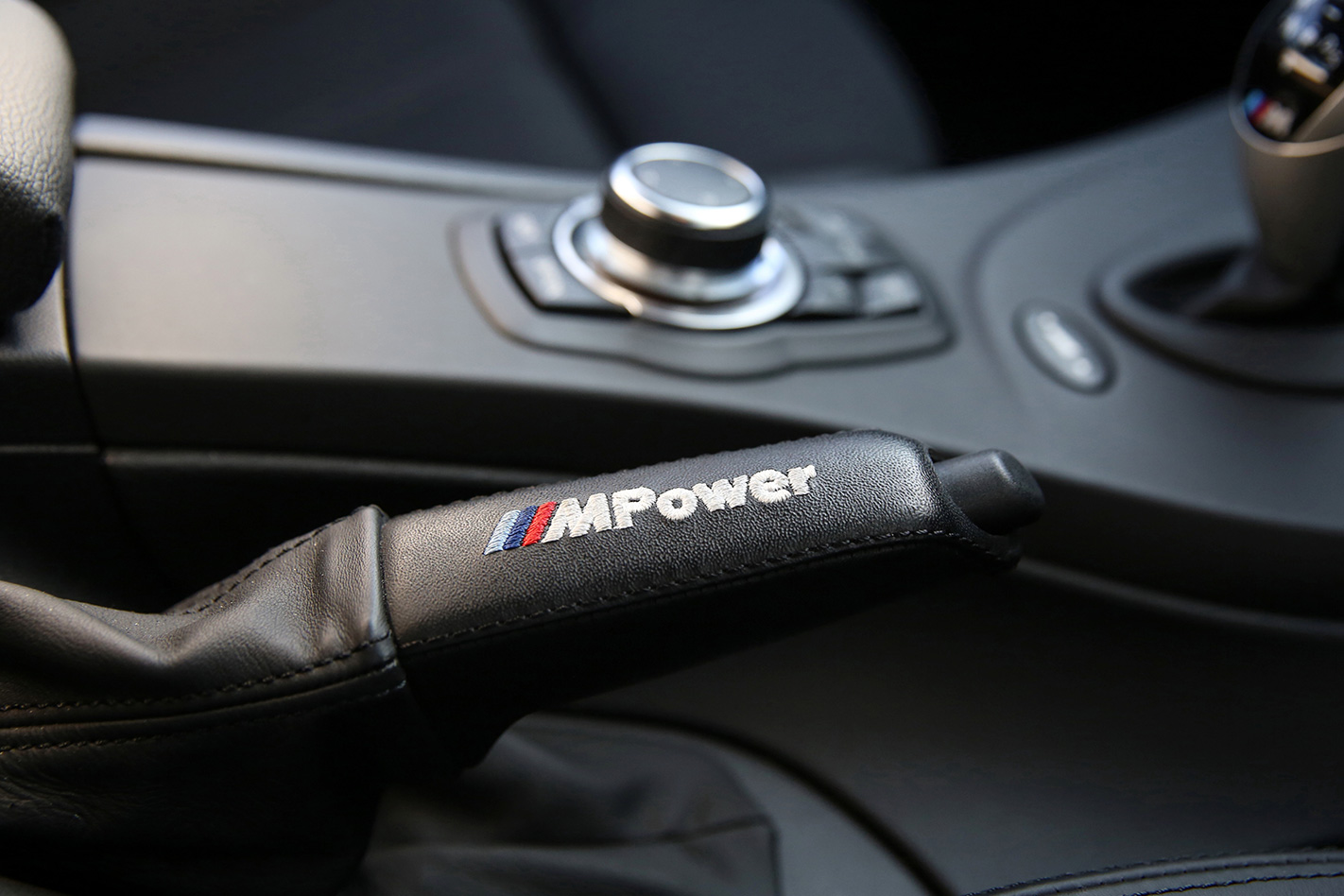
2018 BMW X3 M40i details revealed
The first E92 M3 I drove was a manual Pure Edition II – identical to Chris’s bar the gearbox – and I couldn’t get enough of it. To stimulate sales, BMW Australia deleted a load of equipment, most of it superfluous, and cut almost $15,000 from the price.
The best part was to come a year later, however, when BMW slashed the price of the M3 Coupe to $125,000, which must rate as one of the greatest bargains of all time.
And with the super-rare GTS and CRT models (see breakout) reserved for overseas buyers and the Competition Package now consisting of merely some wheels and minor suspension tweaks, that was as good as it got for E92 M3 special editions.
I guess, like me, they just couldn’t think of any way to improve it.
Audi’s all-new twin-turbo coupe brings the heat to a segment that’s red hot.
WHAT IS IT? The second generation of Audi’s most potent coupe below the flagship R8.
WHY ARE WE DRIVING IT? This is the first RS offering built on the MLB evo architecture, and given our deep regard for the S4/S5, we have high hopes for it on our first sample on European roads.
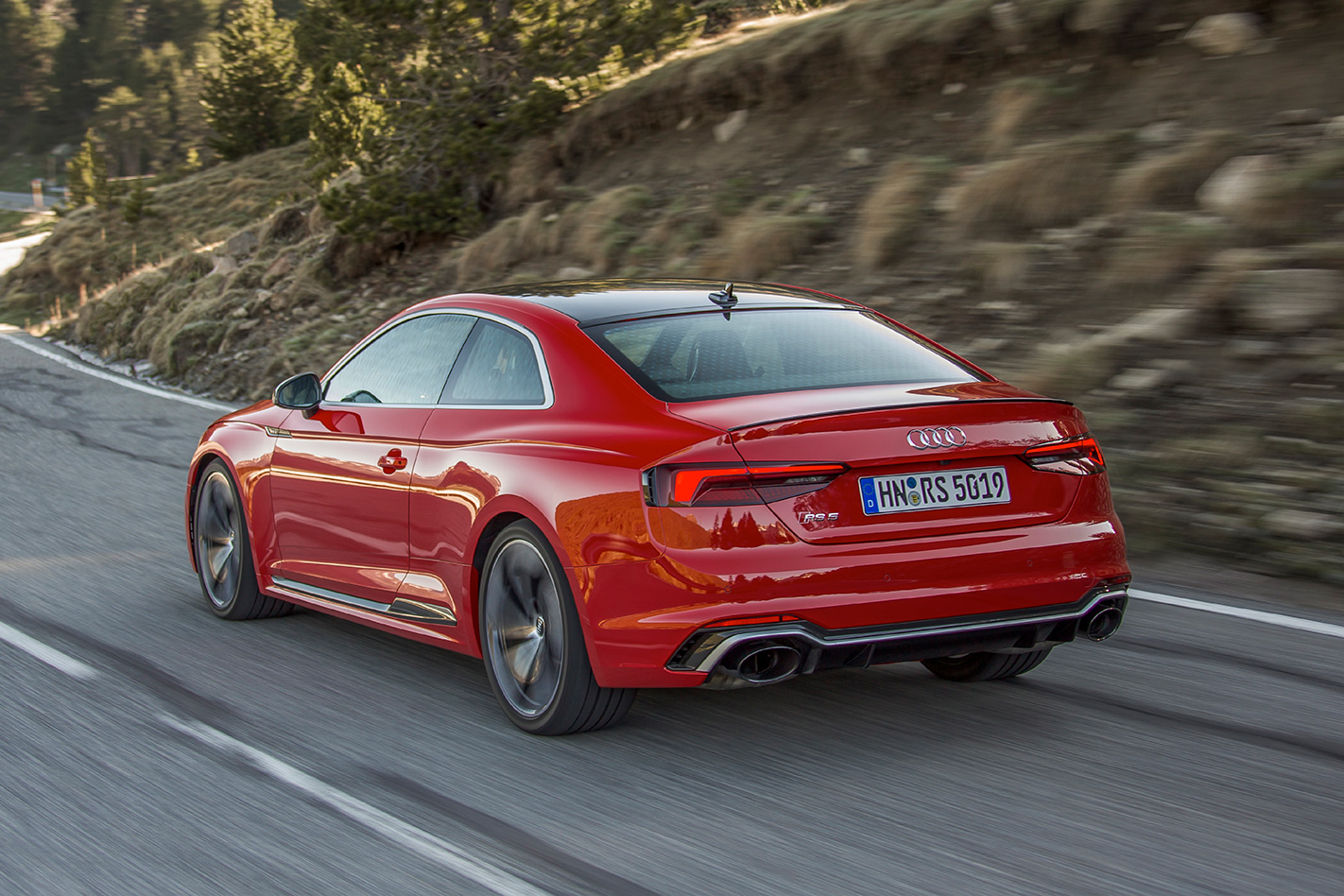
THE WHEELS VERDICT The Audi RS5 secures a niche as being the only all-wheel-drive offering in this segment, so outstanding all-weather traction is a given. It also delivers terrific day-to-day liveability thanks to its ride, equipment, and ergonomics. It’s not as ferocious as the real hard man of this class − that’s the C63 S coupe − but nor does it punish your pelvis the way that car’s unforgiving ride does.
PLUS: Tenacious traction; mostly absorbent ride; polish and usability; equipment and interior MINUS: Slightly restrained engine character; is it sufficiently thrilling at the limit?
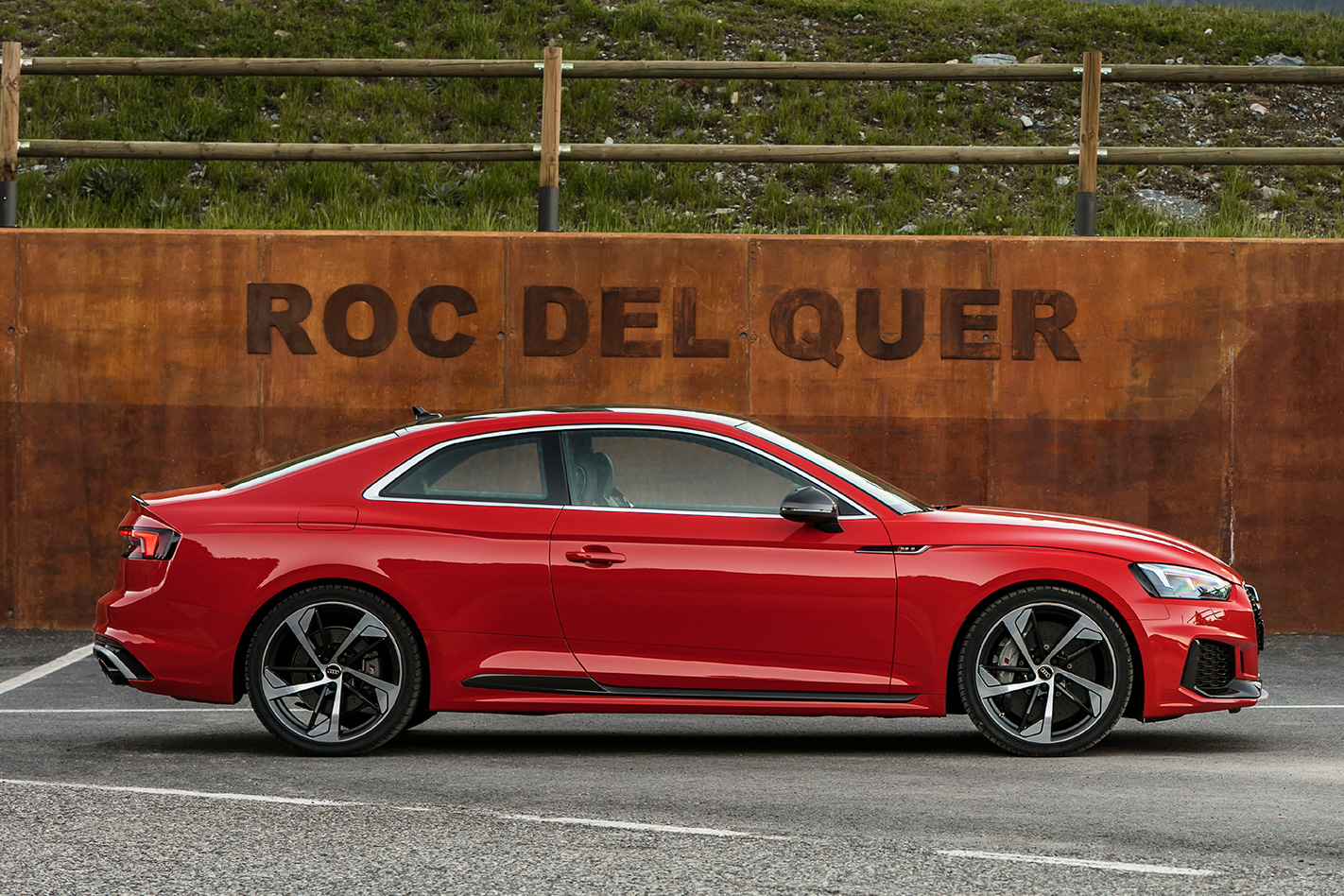
What are the odds? According to Audi Sport’s head of technical development, Stephan Reil, ‘coincidence’ is not a concept his department deals with. “Our target was to match the outgoing engine,” he explained to me at the RS5’s launch in the French Pyrenees mountains.
“It’s important that customers know they are getting vastly more torque, much better consumption, with no reduction in power.”
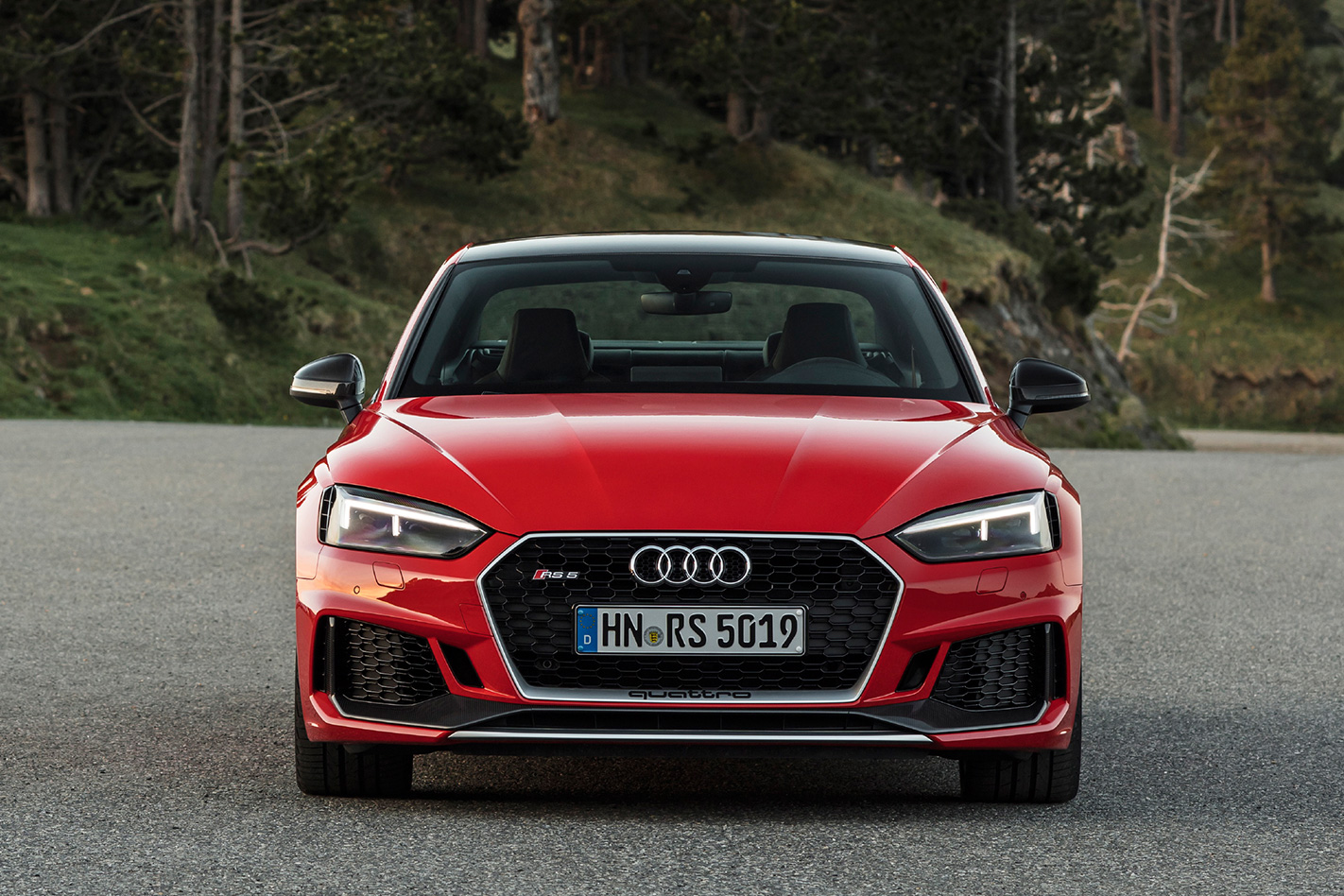
I had to ask: is Audi Sport declaring an official withdrawal from the power war that rages in every high-performance segment? That 331kW figure is well short of the 375kW that Alfa extracts from a similarly sized turbo V6 in the Giulia QV, and is likewise 44kW down on arch-rival Mercedes-AMG’s twin-turbo 4.0-litre V8 C63 S.
Reil just shrugs. “We believe 331kW is ample for this car. Besides, customers buy power, but they drive torque.”
We leave it there, feeling fairly certain Reil and his team have a little up their sleeve for the inevitable Plus version.
Anyway, does it matter? Does an on-paper power deficit really influence enjoyment, when there’s 600Nm on tap from just 1900rpm, and a quattro system to get it all cleanly to the ground ? We hit some spectacular mountain roads to find out.
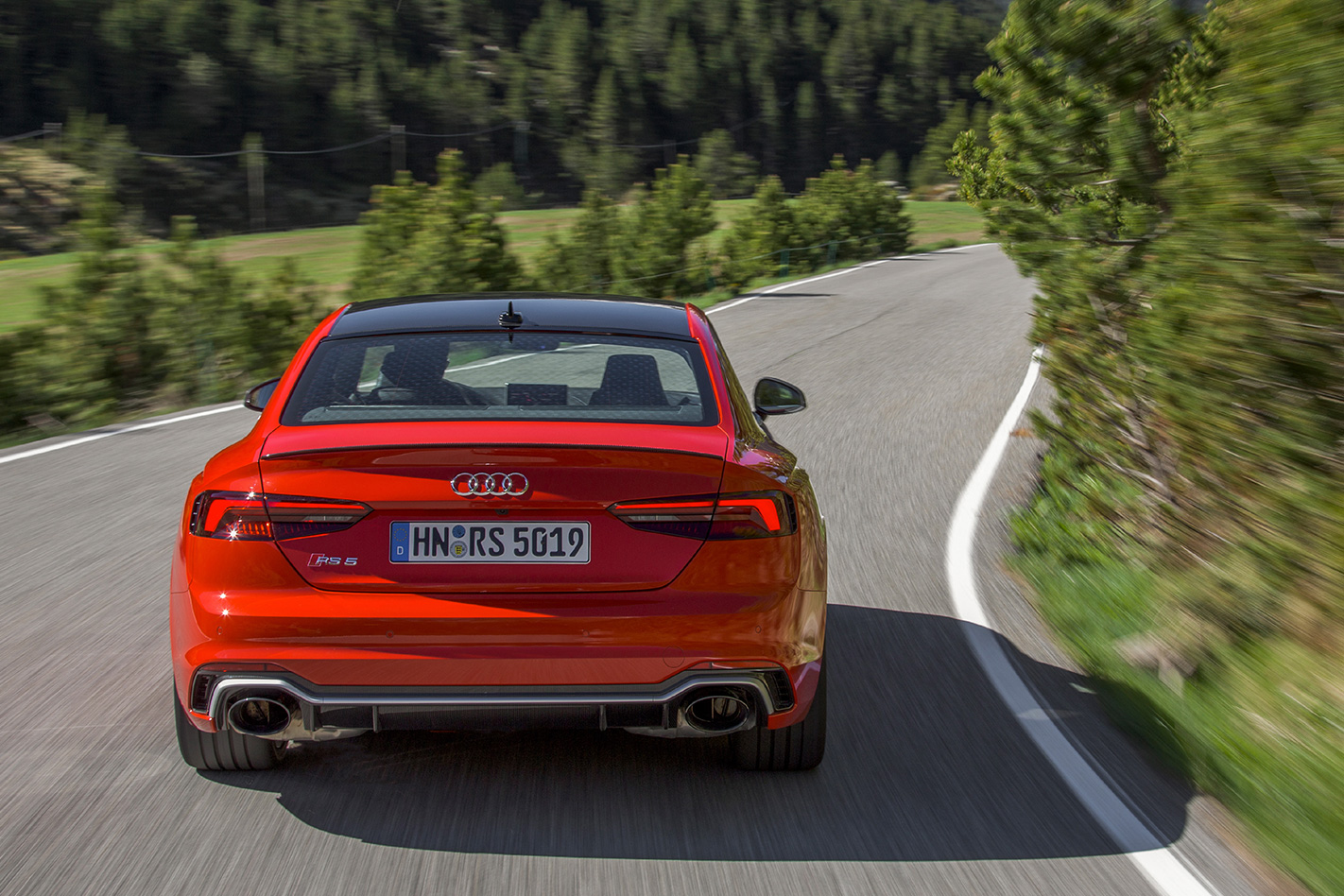
That vast wodge of torque arrives early and pretty much lag-free, and doesn’t taper until 5000rpm, so obviously the RS5 feels properly rapid. And not just on the move either; the claim of 3.9 seconds for 0-100km/h feels entirely credible, thanks in no small part to all-paw traction. For crucial sprinting ability, this car will almost certainly have the jump – literally – on its rear-drive rivals.
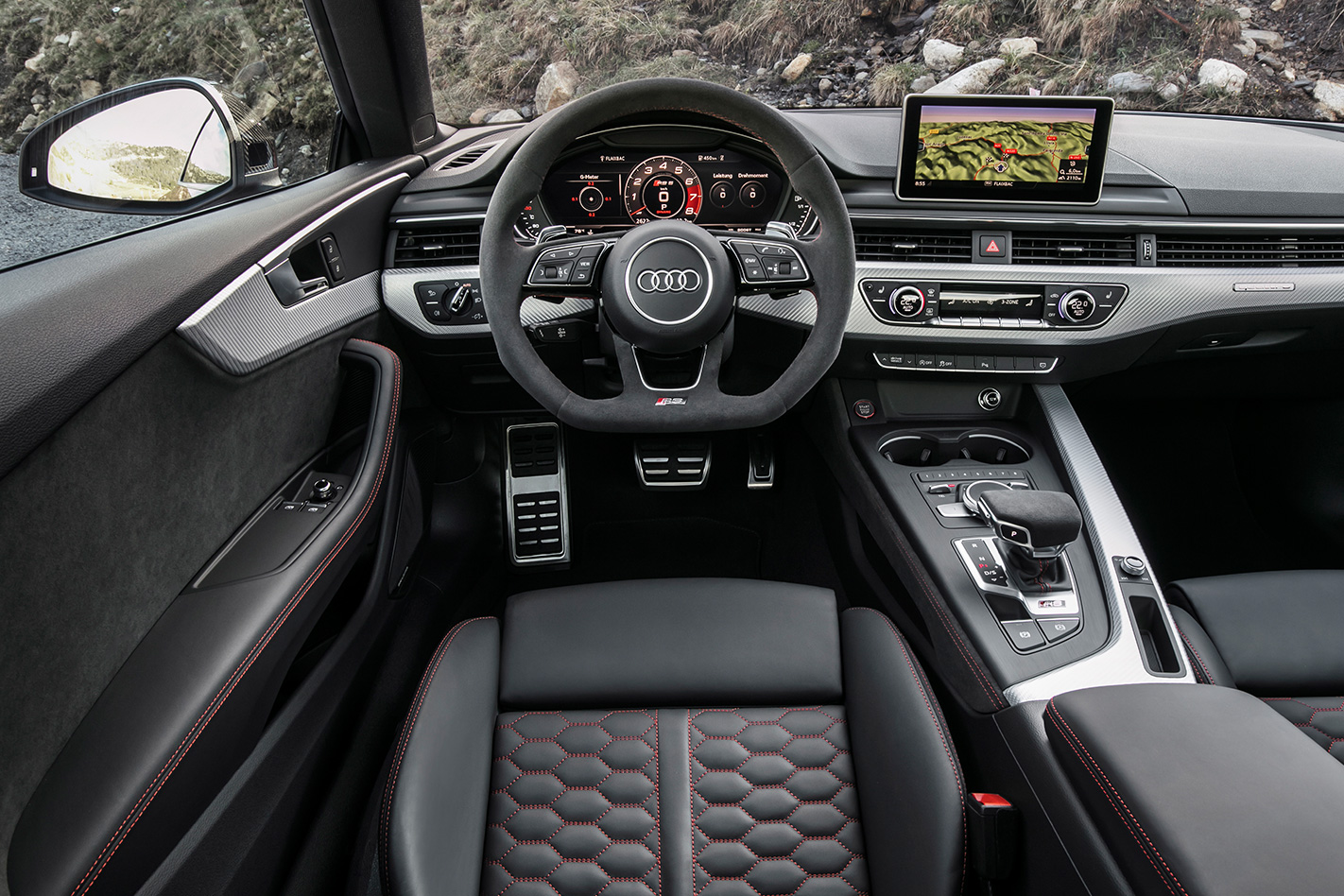
The shifts are beautifully crisp and quick, but best exploited via the paddles. There’s a feeling that in Dynamic, the box is not quite as telepathically gifted as the best calibrated dual-clutchers from more expensive rivals like Porsche and Ferrari.
The quattro system is set up to provide its best approximation of a rear-drive feel (torque split is normally 60 rear:40 front, but the system is capable of sending around 80 percent rearward) and it largely succeeds. Floor the throttle out of tight turns and there’s a seat-of-the-pants sense of imminent oversteer, but then the all-wheel drive’s massive tractive qualities just slingshot you out of the corner. Perhaps with ESC off on a track, where you could push harder, you could prompt some tail-out action, but not on the road. That said, the ESC Sport setting does provide the leniency for a wag here or there.
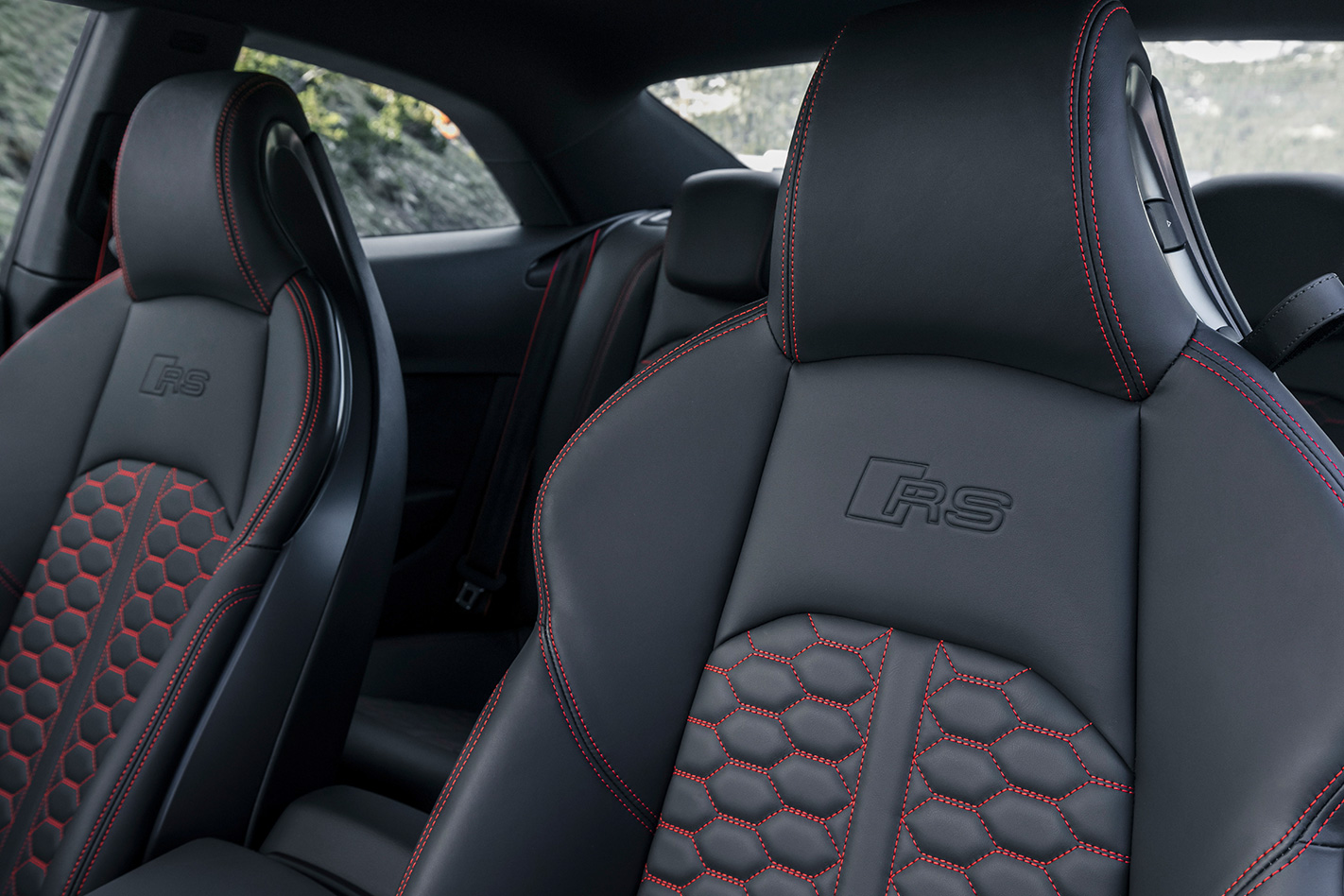
The cars we drove were fitted with the dynamic steering option which quickens the ratio as lock is wound on; a system that has had its detractors. I can’t side with them in this application. I found it predictable and incisive, with ideal weight in the Comfort setting. Dynamic makes it heavier, but also brings a slight off-centre stickiness. Keep it in Comfort and I’d argue this is the best steering Audi in the company’s line-up, bar the R8. Even with that huge front footprint, there’s no tramlining or corruption, at least not on the smooth surfaces we drove on.
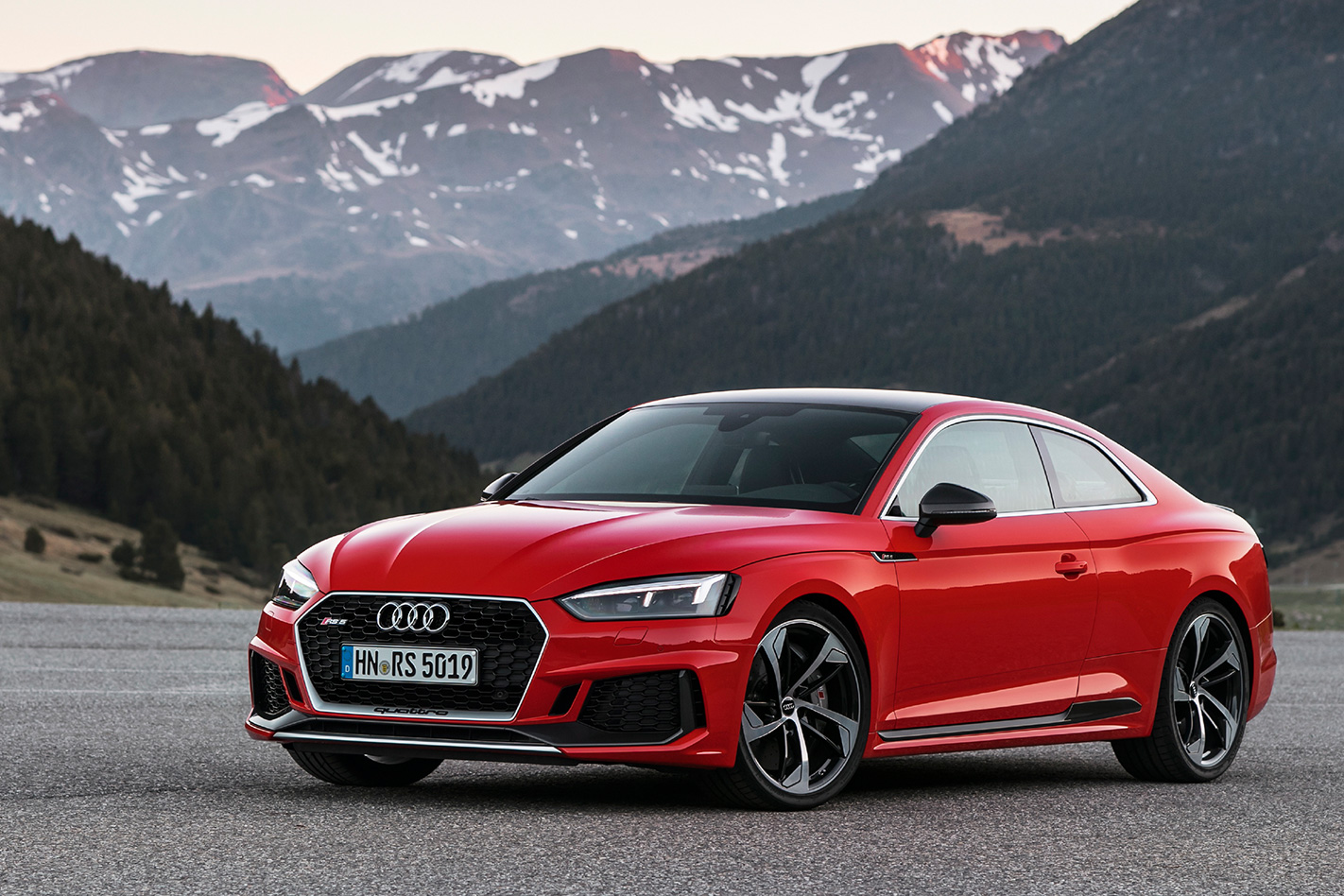
Audi knows its customers don’t want a car that’s as focussed (and compromised) as a C 63 S coupe, so the RS5’s day-to-day liveability and GT qualities stand applauded as its core USPs.
SPECS Model: Audi RS5 coupe Engine: 2894cc V6, (90°) dohc, 24v, twin turbo Max power: 331kW @ 5700-6700rpm Max torque: 600Nm @ 1900-5000rpm Transmission: 8-speed automatic Weight: 1665kg 0-100km/h: 3.9sec (claimed) Economy: 8.7L/100km Price: $157,900 (estimated) On sale: June
A BEEFED up next-gen Ford Ranger has been spied testing in the US, reigniting scuttlebutt about a high performance Raptor variant.
The next Ford Ranger due in 2019 is being designed and engineered atop the T7 platform in Australia, and will be sold in the US for the first time. This widebody test vehicle was spotted in Michigan.
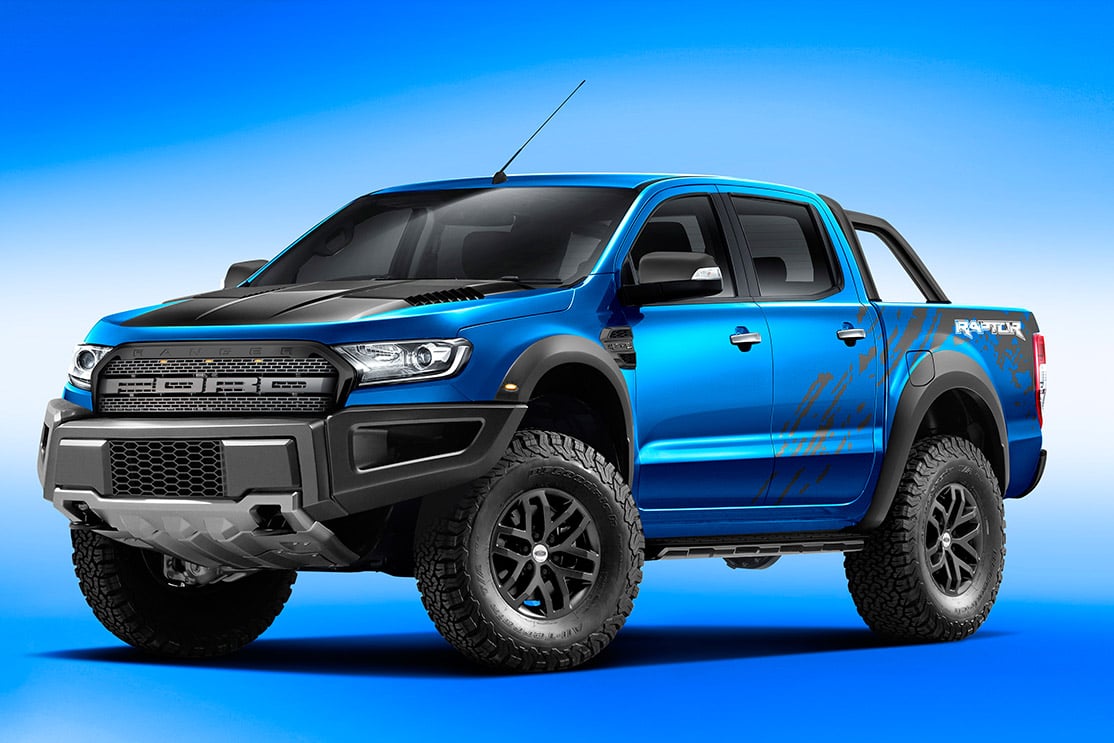
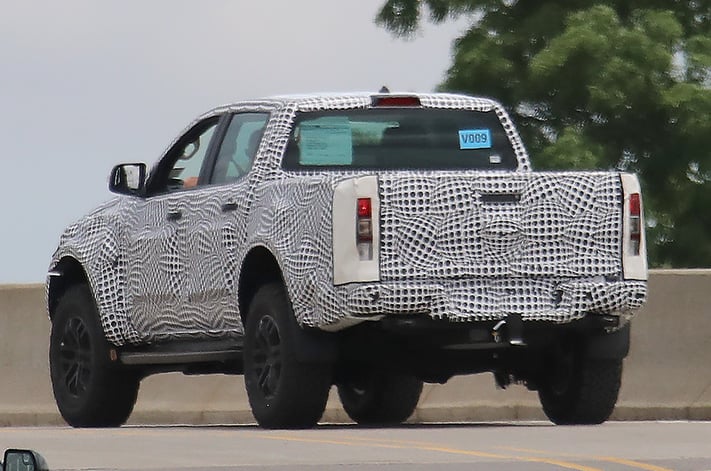
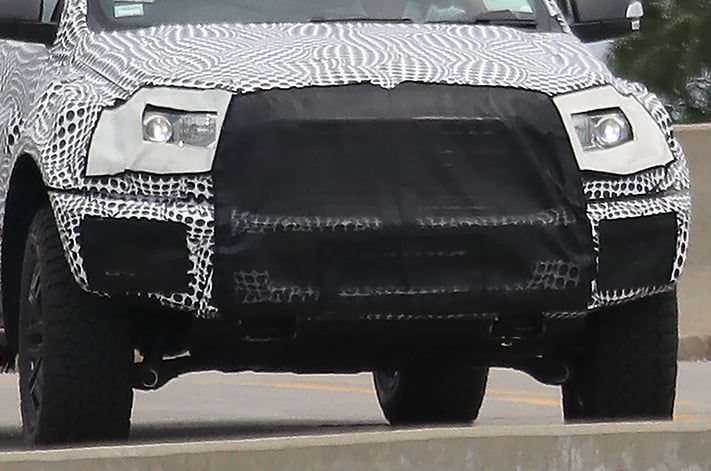
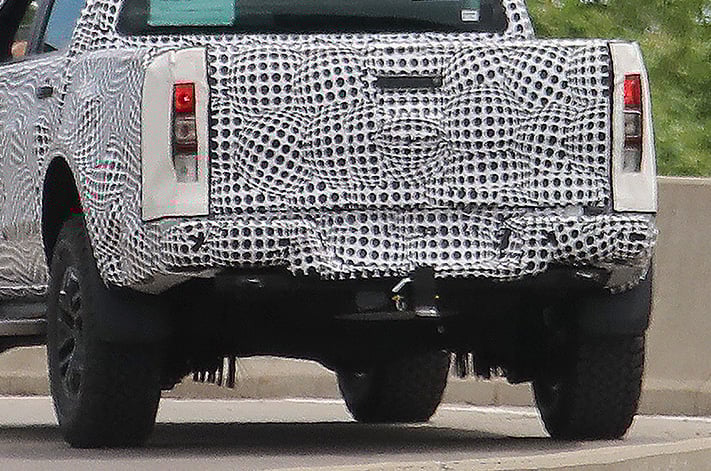
Sporting beefier rubber, flared bodywork, and more camouflage than a Special Forces unit, the vehicle has all the hallmarks of a Ford Ranger Raptor mule.
Further giving away the game is a taller ride height, Raptor-style wheels and what appears to be a more aggressive front bumper.
Ford Australia has toyed with the idea of a Ranger Raptor before, as a range-topping model to inject a bit of America’s favourite son, the F-150 Raptor, into its local line-up.
Ford applied to trademark the names ‘Ford Ranger Raptor’ and ‘Ranger Raptor’ in Australia last year, and rumours of the hardcore dual cab have circulated for a while now.
Engine details for a potential new model remain speculative. Under the bonnet of the test mule could be the 2.7-litre V6 Ecoboost turbo petrol engine paired with a 10-speed auto that was developed in conjunction with GM.
The same setup is available in a ‘standard’ F-150 in America. If that is the case, expect north of 242kW and 508Nm for a Raptor-badged variant.
The Wildtrak is the current Ranger flagship Down Under, and is powered by a 147kW/470Nm 3.2-litre five-cylinder turbo diesel. Diesel is unpopular in the United States, meaning a performance petrol engine is more likely.
The yet-to-be-released Ford Bronco will share the same architecture in the US market, along with the next-generation Everest to be sold here.
The Ranger is one of the best-selling vehicles in Australia, battling with the Toyota Hilux for sales supremacy. The most expensive Wildtrak variant makes up a significant portion of all Rangers sold.
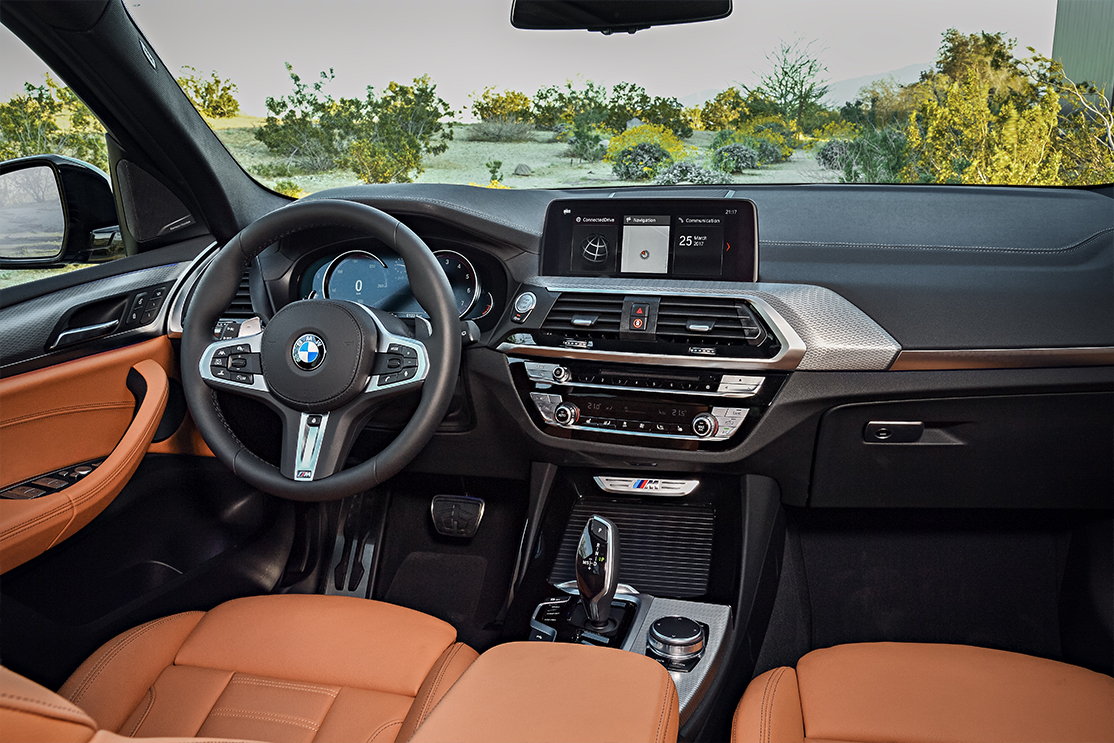
BMW unveiled its all-new third-generation X3 mid-size SUV overnight, well ahead of an Australian arrival, which is expected to be in early 2018.
Three engines will be available initially. The only petrol X3 will be the M40i variant, powered by a 3.0-litre turbo inline six engine producing 265kW and 500Nm and able to accelerate to 100km/h in 4.8 seconds. That’s quicker than the Mercedes-AMG GLC 43, and 0.4 seconds slower than Audi’s RS Q3.
Completing the new X3 range at launch will be a pair of diesel models called the xDrive20d and xDrive30d.
The xDrive20d will have a 2.0-litre turbo diesel inline four-cylinder engine, while the xDrive30d will have a 3.0-litre turbo diesel inline six-cylinder engine. Both will send power to all four wheels.
The xDrive20d will produce 140kW and 400Nm, while the xDrive30d will make 195kW and 620Nm.
Two other petrol variants, the xDrive30i and xDrive20i will be available at a later date, in both rear-wheel drive and all-wheel drive specification.
Major advancements for the all-new X3’s platform make it lighter and more efficient than its predecessor.
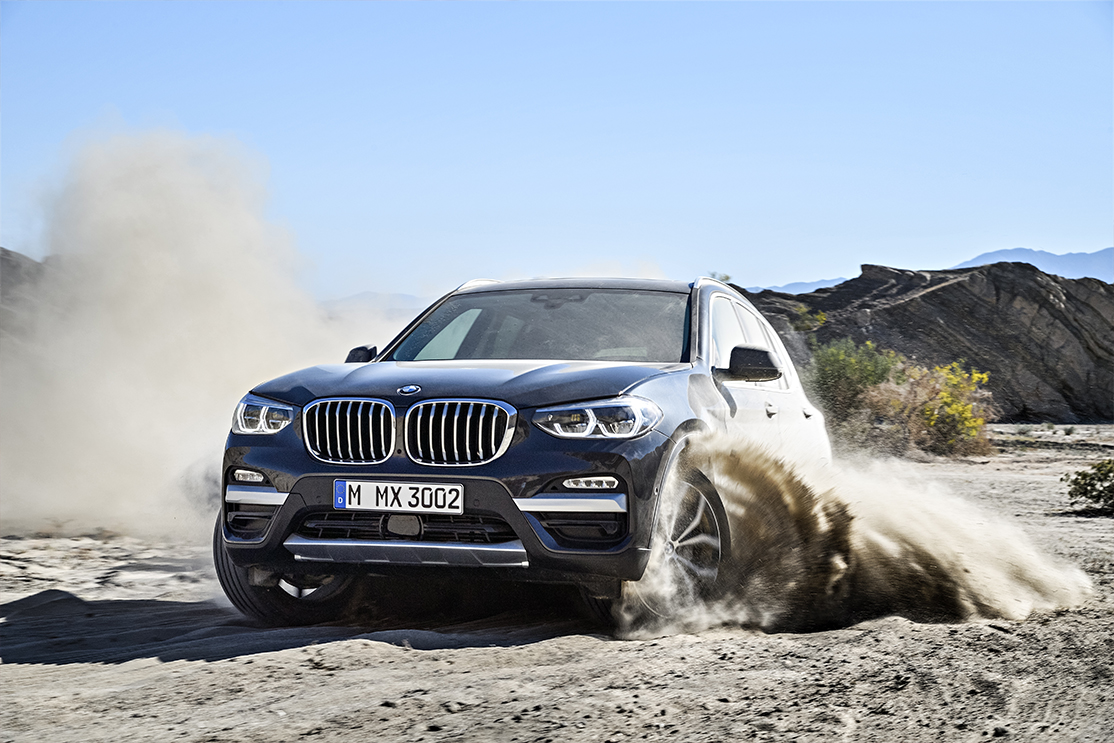
Despite low-profile rubber, and chic city styling, the X3 will also be capable once bitumen turns to dirt. This is thanks to 204mm of ground clearance, a 25.7 degree approach angle and a 22.6 degree departure angle, plus a 500mm wading depth.
The xDrive all-wheel-drive-system in the new X3 has been calibrated with a rearward bias for a more sporting feel, but can send power to each corner of the vehicle independently to provide maximum traction during poor conditions.
Expect the new X3 to arrive in Australia early 2018. Local specification and pricing will be announced closer to the Australian launch.
If you are one of the thousands of Australians buying a new dual-cab ute each month, Ford is hoping a selection of trim upgrades to its models will help you choose the Ranger over other rivals.
In response to direct customer feedback, leather seats, black leather accents, and leather door trim inserts will now become an option of the 4×2 and 4×4 XLT dual cab.
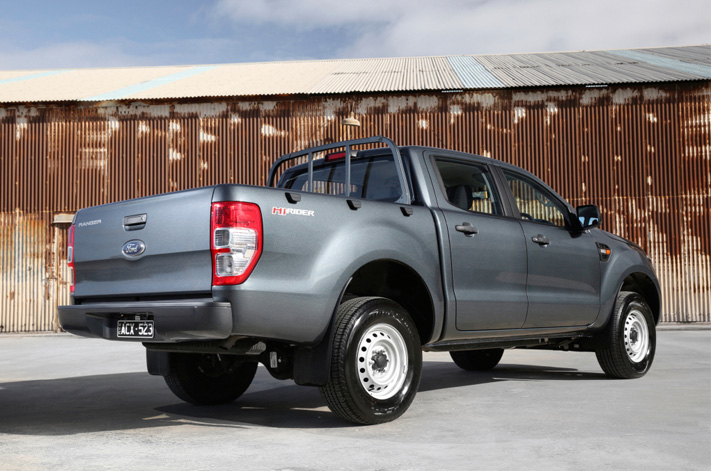
Ford has slapped a list price of $1650 on the hide pack but that doesn’t include dealer deliver fees and statutory charges.
“Our engineers and designers have listened to what customers really want, taking their feedback and building it into an already superb range,” said Graeme Whickman, President and CEO, Ford Australia.
“The Ranger is a class-leading vehicle … but customers can truly see that Ford is listening and aiming to produce the best vehicles possible,” added Whickman.
More than 4000 Rangers were sold in May alone, almost outselling rival Toyota’s Hilux. Ford sells more 4×4 versions of the Ranger than does Hilux, but Toyota sells more 4×2 versions of the Hilux.
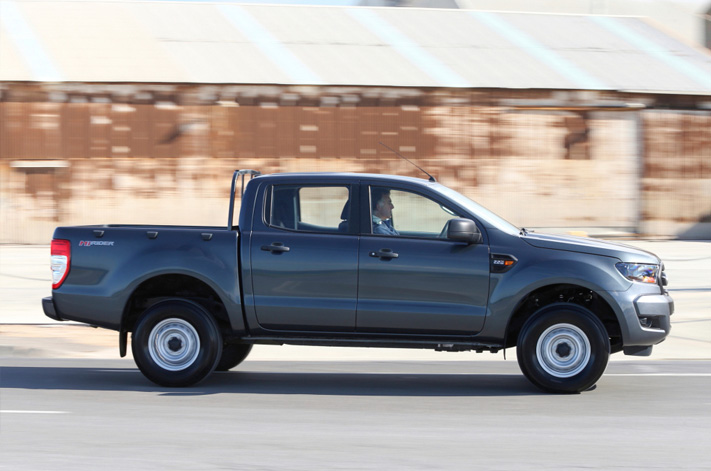
The flagship Wildtrak model has also undergone some small tweaks, with the front and rear seat design and quality being improved to better resist staining. The seats will now also have less front cushion overhang to improve comfort.
An outside temperature gauge will now be available on all models except the XL Plus, and all models have improved cup holder designs.
XLS models will no longer have outer tie down hooks to help achieve a sleeker exterior design.
Prices will remain the same across the model range, and the changes are effective immediately.
