
If you’re going to call your child Michael Jordan, Muhammad Ali or Donald Bradman, you bestow upon them a certain expectation of sporting prowess.
Read the full MOTOR 30 Years of BMW M3 Special
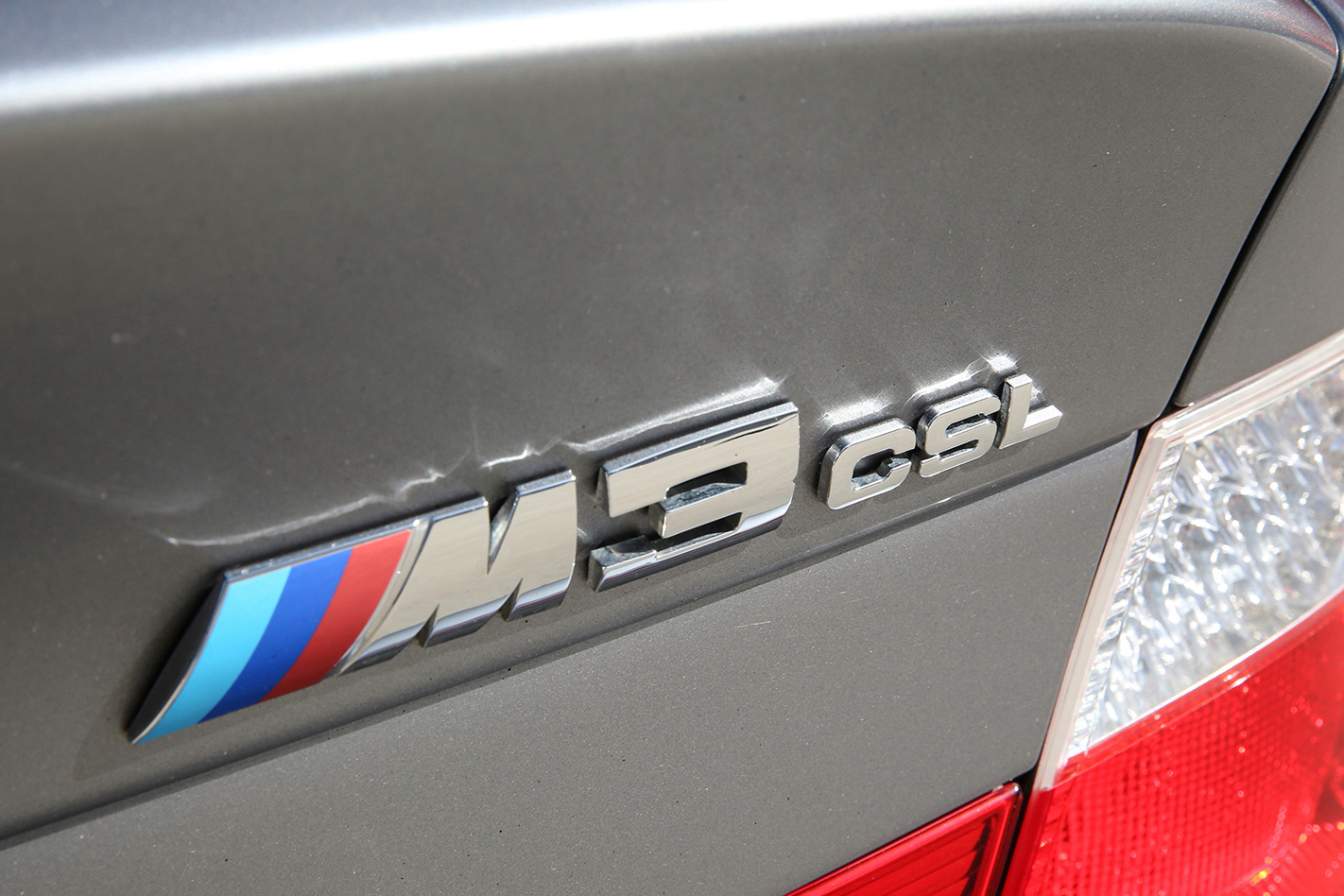
So it is with the E46 M3 CSL, which revived a famous moniker that adorned one of BMW’s most iconic touring cars. The E9 CSL earned the nickname ‘The Batmobile’ for its wild wings, so BMW courted controversy in applying the badge to the relatively unadorned E46.
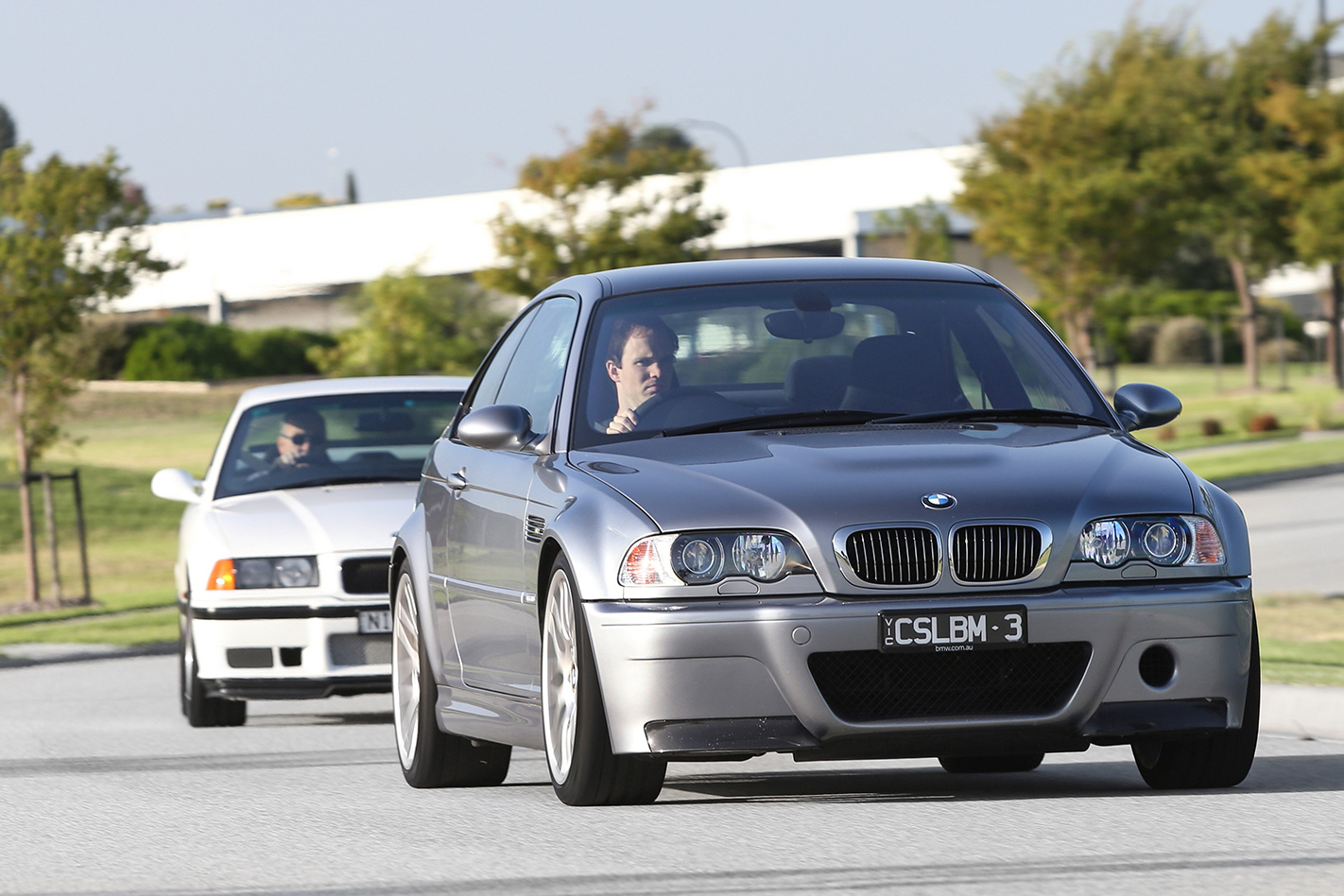
Finally, all luxuries are deleted, there’s an aluminium bonnet, thinner rear glass and lightweight wheels. Further lightening came via the owners’ wallets, the 23 CSLs that landed locally (from a total of 1383) wearing a $68K premium at $210,000.
The car’s mechanical specification received similar attention. Outputs increased by 13kW/5Nm thanks to angrier cams and the gaping cold-air intake, while the steering ratio was quickened from 15.4 to 14.5:1, the suspension stiffened with larger anti-roll bars at both ends, front brakes enlarged, aluminium rear control arms solidly mounted and new ‘M Track’ mode stability control program installed, activated by the sole button on the Alcantara-shod steering wheel.
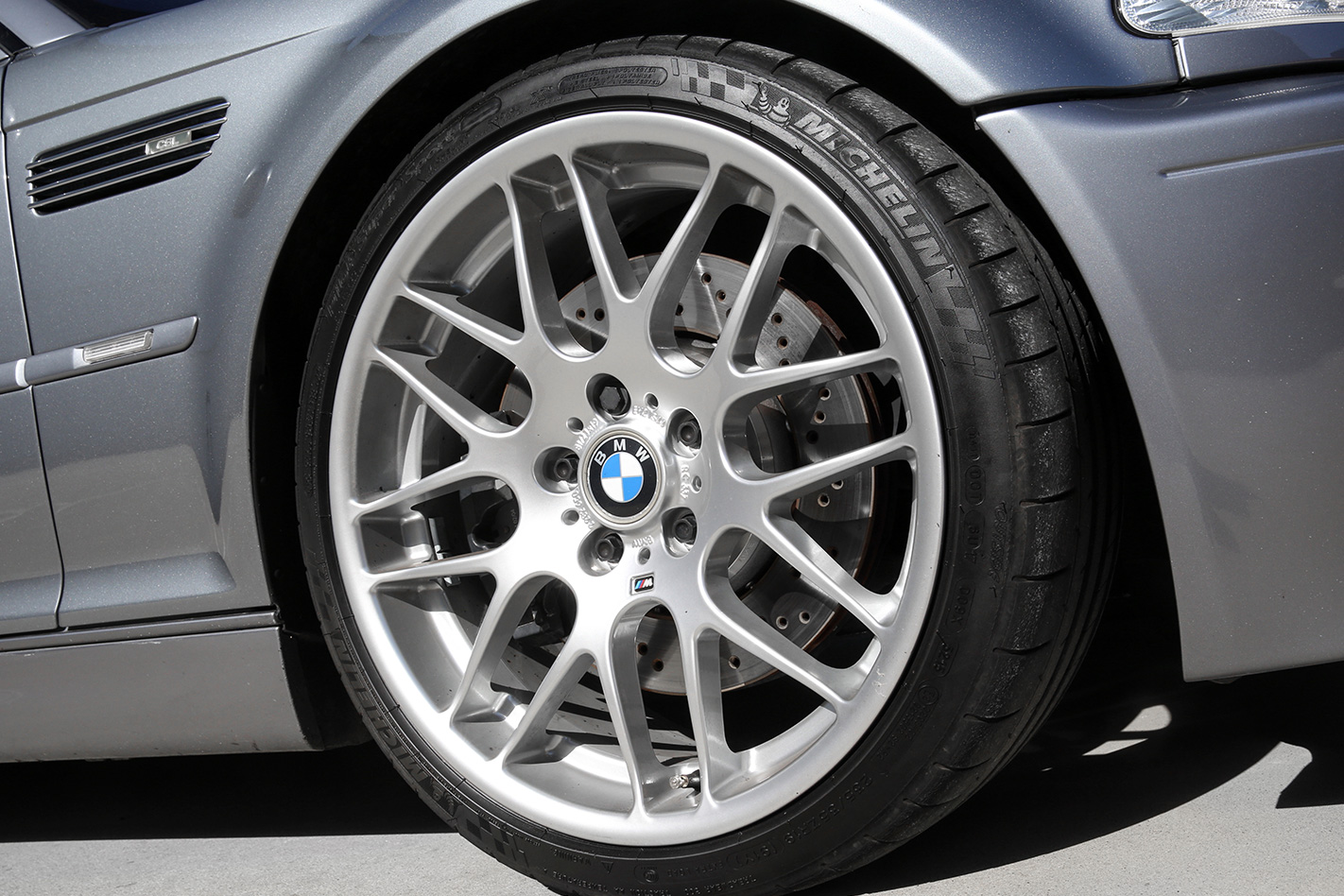
These tyres were a key contributor to the E46 CSL’s jaw-dropping circuit pace; at Eastern Creek, BMW claimed the CSL was seven seconds faster than a regular M3.
Around the same track in the hands of MOTOR’s Dean Evans, the CSL bested the Porsche 911 GT3 by almost two seconds, and Cam McConville outpaced the Lamborghini Gallardo around Winton by half-a-second at PCOTY 2004, though the Italian reversed the order when it came to the final placings.
2016 BMW M3 Competition review
It’s a shame as the rest of the car is nigh-on brilliant. The engine builds and builds to an epic crescendo, accompanied by one of the horniest engine notes ever.
Apologies for the sexual imagery, but if the sound of an E46 CSL coming towards you at full noise doesn’t arouse, check your pulse, you might be dead.
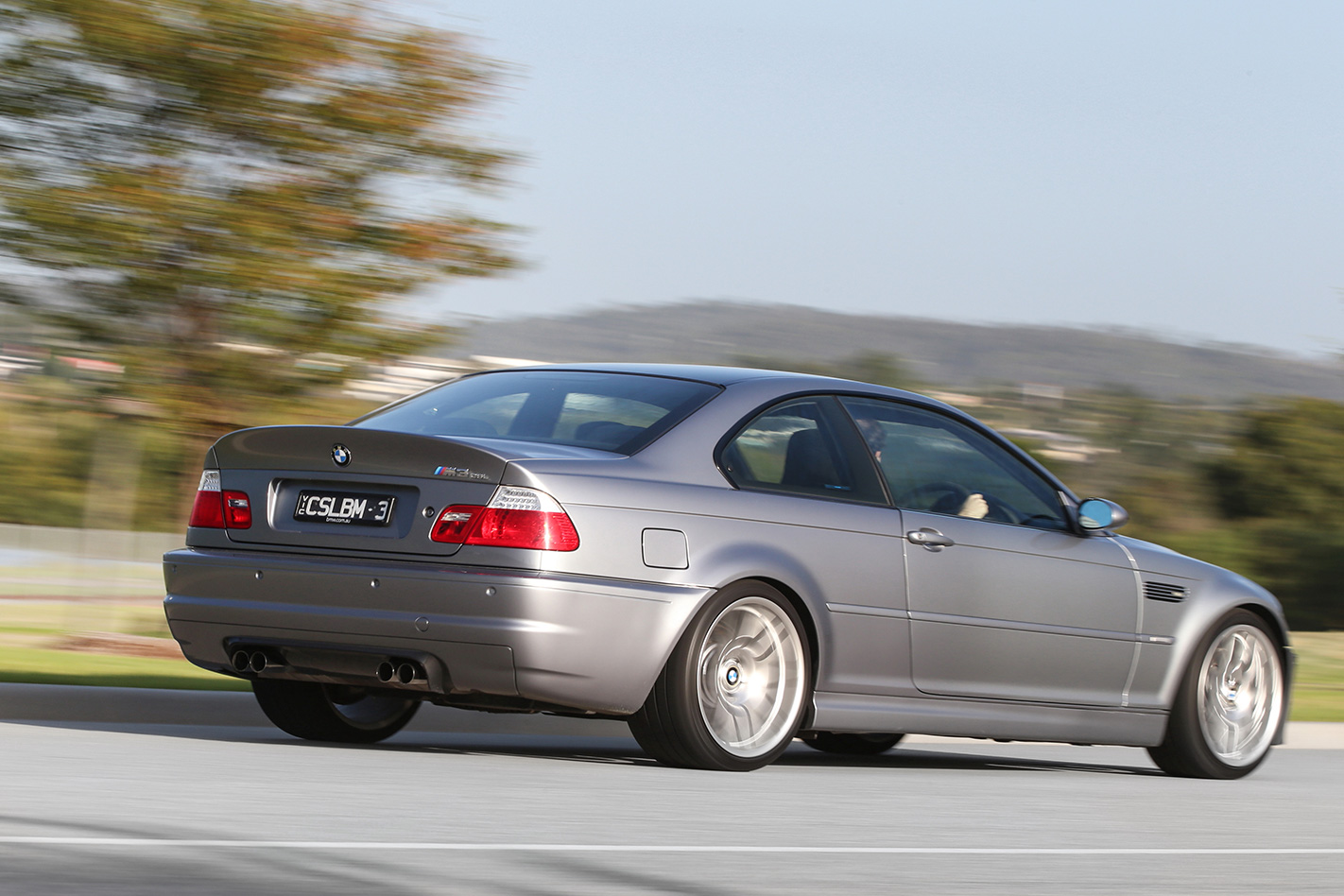
The steering is a bit mute, but the CSL is a superb driver’s car, unbelievably pure with the pace to keep modern hot hatches honest.
If you can find an E46 CS, which scored the CSL’s brakes, steering, wheels and ESP, while keeping the option of a manual gearbox, buy it before prices go berserk. You won’t regret it.
WELCOME to your first official look at the third-generation BMW X3. While it was leaked on the internet days before it was supposed to, thanks to BMW’s over-eager Hong Kong outpost, we now know the official details of the German brand’s all-new mid-size SUV. And they are juicy.
The headline act is the range-topping X3 M40i, which is the first ever X3 to carry an M prefix and is set to rival the Mercedes-AMG GLC 43 and Audi RS Q3.
Powered by a 3.0-litre inline six-cylinder turbo, the X3 M40i sends a respectable 265kW and 500Nm to all four wheels via an 8-speed automatic.
Peak power arrives at 5500rpm and maximum torque is available from 1520-4800rpm, with all that oomph pushing the M40i from 0-100km/h in 4.8 seconds – faster than the GLC 43, but slower than its rival from Audi.
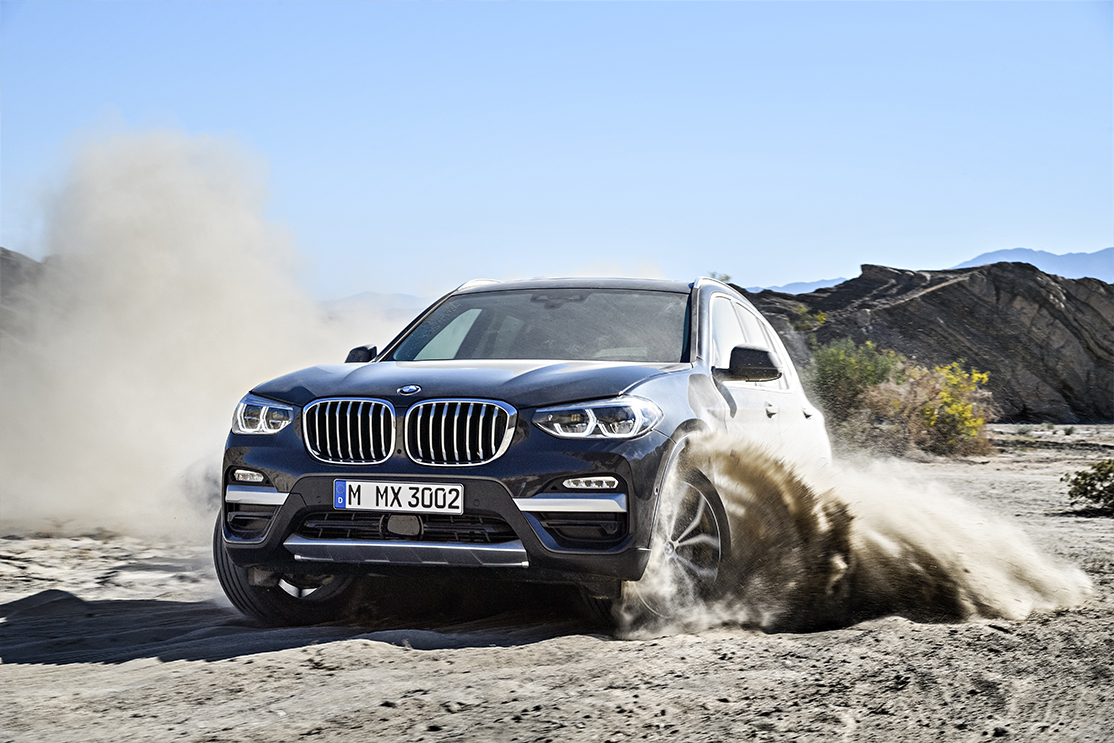
Interestingly, unlike the current X3 range which offers two less-powerful four-cylinder petrol options in the X3 xDrive20i and 28i, the M40i will the only petrol X3 offered when the new model arrives in 2018.
Completing the range will be two different diesel models, the xDrive20d and xDrive30d.
These will soon be followed by the BMW X3 xDrive30i as well as the 20i engine variant, which will be available in both rear-wheel-drive and all-wheel-drive.
The xDrive20d is powered by a 2.0-litre inline four turbo diesel producing 140kW/400Nm, while the xDrive30d uses a 3.0-litre inline six turbo diesel engine with 195kW/620Nm.
Both send power to all four wheels via an 8-speed auto.
BMW’s engineers have worked hard to reduce weight with this new-generation X3, with a focus on unsprung weight to help improve dynamics. This has been achieved with aluminium swivel bearings, tubular anti-roll bars, and a new electric power steering system.
The X3’s xDrive all-wheel-drive system has been calibrated with a rearward bias, but can send power to each corner of the car independently to maximise traction in tricky conditions.
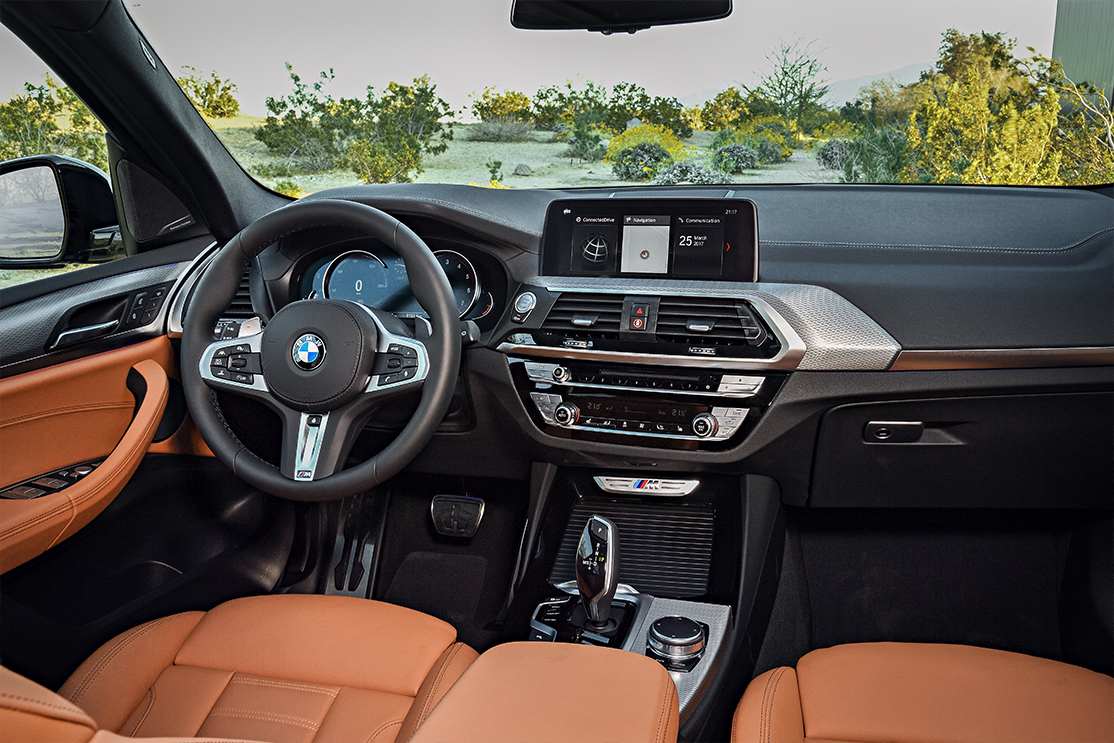
If you have a particularly twisty commute, an M Sport suspension package is available as an optional extra and adds adaptive dampers, M Sport brakes, and variable sport steering.
That isn’t to say the X3 won’t go off-road. A 204mm ground clearance, 25.7 degree approach angle and 22.6 degree departure angle, plus a 500mm fording depth provide decent on-paper promise should the terrain turn tricky.
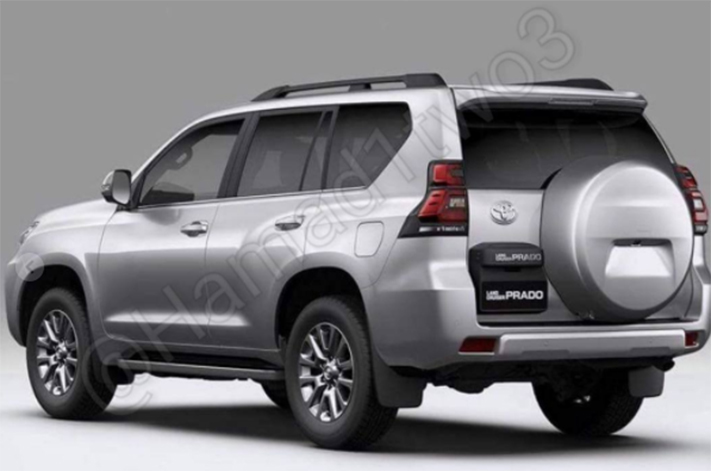
Images uploaded to Instagram appear to reveal the new updated face of the Toyota LandCuiser Prado.
Posted by Instagram user @hamad1two3, the pictures are unverified, but are consistent with imagery used in manufacturer brochures.
If accurate, the LandCruiser Prado will be receiving a completely redesigned front, with fresh bonnet, grille, headlights, and bumper.
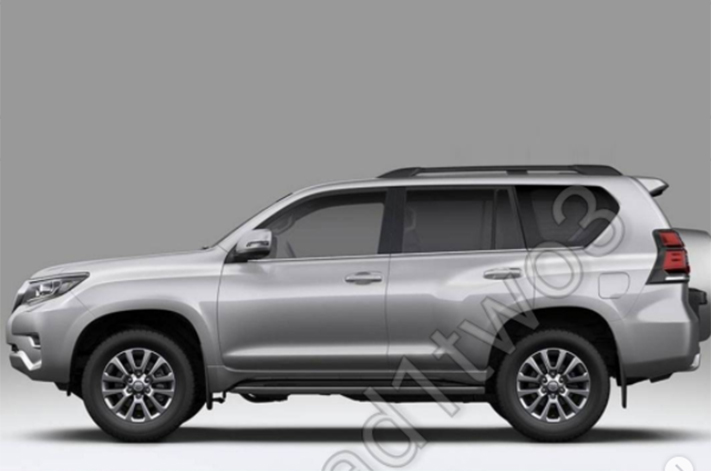
The rear end receives a lighter touch, with slightly reworked bumper, and new taillight treatment.
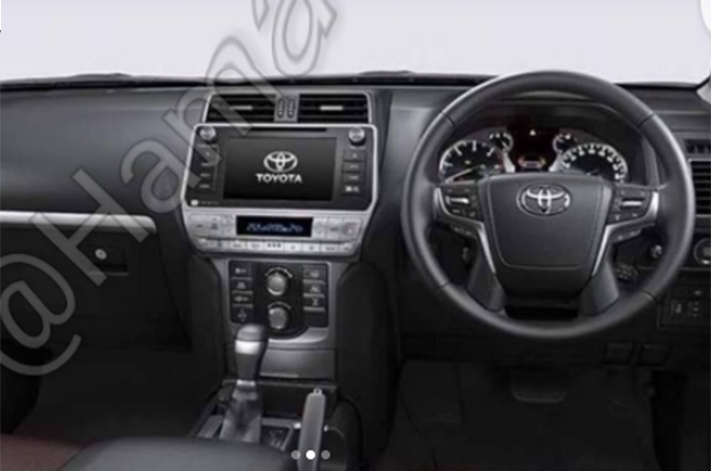
The interior also appears to receive an update, with the centre console being redesigned, along with the infotainment and climate controls. There is also an 8-inch touchscreen and a new layout for the dash.
The facelift would be the current-generation LandCruiser Prado’s second since its debut in 2009, having undergone an update in 2013.
It’s reported the revised Prado will receive AEB, pedestrian detection, lane departure warning with steering assistance, auto high-beams, and radar-guided cruise control for the Japanese market.
Rumours are circulating it will be revealed publicly in Japan on September 12.
If accurate, Aussies can expect the updated 150-series to arrive on our shores by early 2018.
FOLLOWING this weekend’s bump and grind between Lewis Hamilton and Seb Vettel, we look back at Formula 1’s most lamentable examples of physical contact.
Yes, it’s those moments when the noble tenets of sportsmanship got shredded and rammed into an opponent’s grill. Without any further ado, here’s our hall of brain-fade shame.
Michael Schumacher vs Damon Hill – Adelaide 1994
Despite the fact that the physical likeness of Hanna-Barbera’s Dick Dastardly was based on Damon Hill’s dad, Graham, it was Damon’s rival for the driver’s championship in 1994, Michael Schumacher, who had all the cartoon villain moves.
A solitary point separated the two drivers heading into the 1994 season showdown in Adelaide. Schumacher, who was leading the race, ran wide at the East Terrace corner on lap 36, biffing the concrete wall. As Hill’s Williams swooped to pass Schumi’s ailing Benetton, the German swerved across to the left-hand side of the track before turning in sharply on Hill’s car, demolishing its front left suspension. Schumacher won the championship as a result and forever protested his innocence. Williams naturally took a different view, chief engineer Patrick Head saying “Williams were already 100 percent certain that Michael was guilty of foul play.” As indeed, was anybody with a functional set of peepers.
Michael Schumacher vs Jacques Villeneuve – Jerez 1997
Why mess with a winning formula? That appeared to be Schumacher’s logic when, three years later, he found himself in another situation where ramming a rival Williams out of a race would guarantee him the title. Unfortunately, his Ferrari only managed to bump the wrong part of Jacques Villeneuve’s car, ricocheting off his tyres and into one of Jerez’s bottomless gravel traps.
Schumacher was subsequently summoned to a disciplinary hearing by the FIA and on November 11, 1997, it was announced that Schumacher would be disqualified from the 1997 World Championship. Max Mosley stated that the panel “concluded that although the actions were deliberate they were not premeditated”. Even the German press turned on him, Frankfurter Allgemeine calling him “a kamikaze without honour” while in Italy, the Agnelli-owned La Stampa – the family who also owned Ferrari – said “His image as a champion was shattered, like a glass hit by a stone.” Whoops.
Ayrton Senna vs Alain Prost – Suzuka 1989
Although he’s now perceived as a virtual deity, Ayrton Senna had the whole ‘kamikaze without honour’ gig pretty well dialled. His ‘win or crash trying’ mentality was the template for the phenomenally successful Schumacher and nowhere was his ruthlessness better displayed than in the penultimate round of the 1989 Formula 1 season.
Trailing McLaren team mate Alain Prost by 16 points, the Brazilian needed to win both of the final rounds to claim overall victory. His higher downforce setting in the race saw him catch Prost on lap 40, turning hard into the Frenchman, who had nowhere to go, at the chicane. The tactic worked to perfection. The two cars slid to a halt and Prost climbed out, thinking the retirement of the two cars spelled victory for him. Then Senna rejoined the race, pitted for repairs and caught Alessandro Nannini to take the chequered flag. Senna was disqualified and fined US$100,000, FISA labelling him a ‘dangerous driver’. Notoriously paranoid, Senna always maintained that the move was a political act by French FISA president Jean-Marie Balestre to favour his countryman.
Ayrton Senna vs Alain Prost – Suzuka 1990
Balestre, Prost and Senna were at it again at the next Japanese GP. After securing the fastest lap in qualifying, Senna asked for pole position to be moved to the cleaner left-hand side of the track. Balestre refused, reasoning that Senna hadn’t had an issue the two previous years where he had also qualified on pole. In a fit of pique, Senna vowed that if Prost, who was alongside him on the grid, got an advantage into the first corner he’d attempt to take the lead into the first corner, come what may.
Sure enough, Prost got a cleaner start, and Senna refused to yield. The two cars flew into the kitty litter, Senna winning the world title in the process. Prost was apoplectic, the normally phlegmatic Frenchman describing the move as “disgusting” and Senna as “a man without value”.
Michael Schumacher vs Rascasse – Monaco 2006
Schumacher showed that he hadn’t been fully rehabilitated from character failings in 2006, when, during qualifying for the Monaco Grand Prix, he parked his car at the Rascasse hairpin. Hearing over the radio that Fernando Alonso was on a particularly hot lap that looked likely to deny him pole, Kerpen’s favourite son decided that his Ferrari couldn’t make it around the corner and parked it on the exit, bringing out a yellow flag and denying Alonso a chance to set the fastest lap. He was later stripped of his pole position and sent to the back of the grid by unimpressed stewards.
Steward Joaquin Verdegay later said, “He performed some absolutely unnecessary and pathetic counter-steering, and that lasted five metres, until there was no more chances of going through the turn normally. He lost control of the car while travelling at 16km/h. That’s something completely unjustifiable.” Former champ Keke Rosberg was also singularly unenamoured of the move. “It was the cheapest, dirtiest thing I have ever seen in F1,” said the Finn. “He should leave F1 and go home.”
Nelson Piquet Jr vs The Wall – Singapore 2008
The most egregious, premeditated crash of the lot? You’re looking at it right here. Nelson Piquet Jr crashed on purpose on the 14th lap of the Singapore GP to bring out a safety car in order to advantage title-chasing team mate Fernando Alonso. Putting his car into the wall, the Brazilian endangered spectators, marshals and himself. Both Piquet and Renault executive director of engineering Pat Symonds blamed each other for concocting the spectacularly ill-conceived idea.
Renault didn’t contest the FIA’s charge that they had conspired to fix the race and a year later announced that both Symonds and the team’s managing director, Flavio Briatore, had been fired. The flamboyant Briatore really copped a flogging from the authorities, being suspended from all Formula 1 events and FIA-sanctioned events indefinitely, whilst Symonds received a five-year ban, both sanctions later overturned by a French court. British newspaper The Times called it “the worst single piece of cheating in the history of sport.”
Felipe Massa, who went on to fall shy of the world title by one point, blamed ‘Crashgate’ for bringing his tally up short, calling Renault’s actions “ugly” and said he would never hire fellow Brazilian driver Piquet if he ever became a team principal.
The 344kW ‘Aussie Raptor’ (Ford Ranger) was a hit with MOTOR’s readers before we even spoke to the people who built it.
We’re fixing that now, after having spoken to Diesel Leaders in Queensland, the people committed (or brave… or crazy!) enough to build something like this.
Our point of contact was Gary Coleman, one of the diesel mechanics there, who said the project got off to a rocky start.
Miami V8-powered Ford Ranger on dyno
“This build took a lot longer than expected. I’m not sure exactly how long it was but it was at least 6 months, maybe more,” Coleman told MOTOR.
“It wasn’t so much that we had setbacks, it just took a lot more engineering than we first expected, the gearbox being a prime example.”
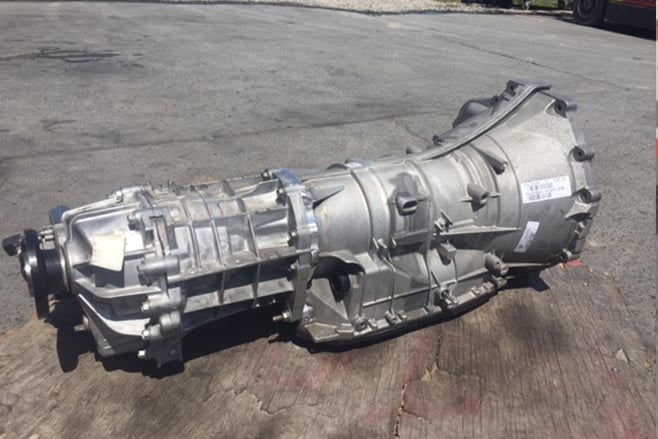
The team eventually found the help it needed in the form of Phil Weeks at Rage Engineering, who was “more than happy to marry the Ranger transfer case on to the V8 gearbox”.
“Absolutely everything about this build was difficult. I can’t think of any one piece that we were able to fit without having to modify it somehow.
“V8 conversions are fairly commonplace and we didn’t want this truck to be looked at in that light, which is why we went with the quad cam, supercharged, Boss V8.”
It was a struggle, but we’re glad they took it on.
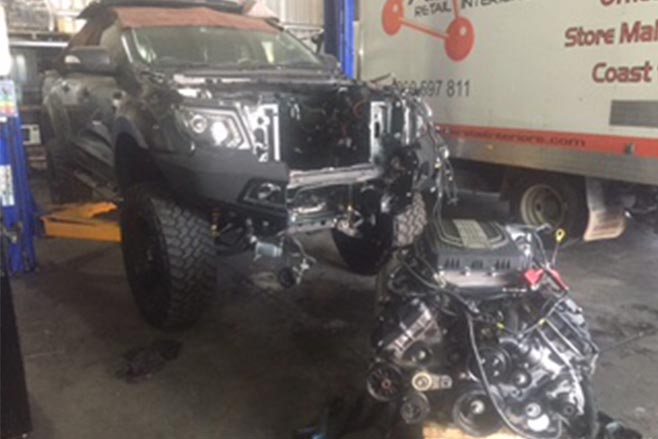
“Everything had to be custom made, engine and box mounts, drive shafts, all the original Ranger engine bay ancillaries, (battery, intake, power steering, etc.) are all on opposite sides to the V8 and had to be swapped.
“Add to this the fact that at the beginning of the build the owner had requested that to the best of our ability we make it look like a factory V8 which meant that we couldn’t use parts that were obviously aftermarket.
“So rather than use an aftermarket thermofan, we modified the FPV fans to go on the Ranger radiator and then re-shaped the Ranger cowling to hide the fans altogether to keep the Ranger looking factory.”
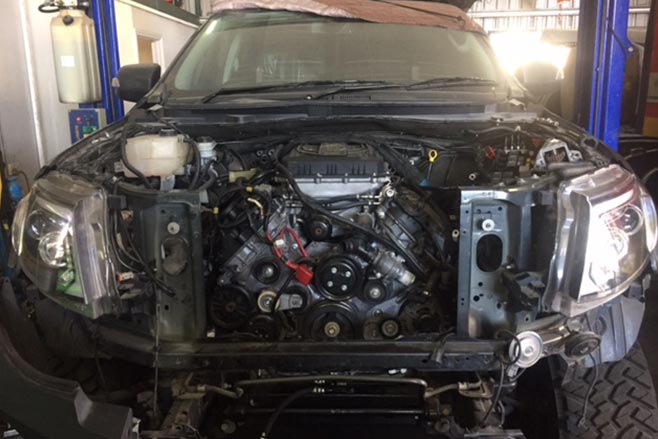
Keep in mind this was all happening while they ran the regular business, too.
“As it turns out, an Aussie V8 doesn’t speak the same language as a Euro Ranger so we had a performance wiring guru from Sideshow Wiring come in and sort that side of it out for us, along with the guys at Real Dyno.”
620kW daily driven Ford Territory
So, with the Ranger all put together, we asked how the thing actually drives.
“It’s f**king fast!!!”
“Not only is it fast but its smooth. This ute drives like it came off the assembly line like this,” Coleman says.
“We haven’t had an opportunity to test it off road yet, we’re still putting some finishing touches on it but I can’t imagine it would be any different off road.”

And Gary Coleman certainly sounds like he feels that way.
“It’s very rare that you get the opportunity to be involved in a project like this, especially as a diesel mechanic.
“So to be able to see this through from conception to completion, and to be able to build this truck without compromising quality and to keep it looking factory, has been a real pleasure.
“I’m not ashamed to say that we have created something to be proud of.”
There have been many, many crazy builds over the years involving Suzuki Hayabusa engines.
The lightweight motorcycle is among the fastest in the world, so its engine is often stolen to power vehicles such as the Radical SR8LM, which had two Hayabusa engines engineered to be one V8.
Abarth Rally: The thinking man’s rally
And that’s what this little Fiat Abarth 500-based rocket you see here houses.
Built by Austrian Georg Pacher (no, not MOTOR’s man in Europe), the PRC-Abarth is a hillclimbing weapon that has our curiosity piqued.
According to a few sources, the video above included, it’s a 680kg, tube-framed hillclimb racer based fairly loosely on a Fiat Abarth 500, though it kept some of the bodywork.
Fiat Abarth 124 Spider R-GT tarmac test
Without an official figures list – Pacher’s work doesn’t have a huge online presence – we can only go on the ‘400+hp’ (or 300-ish kiloWatt) figure in terms of power output, though we know that a Hayabusa-based V8 can rev up into the 11,000s.
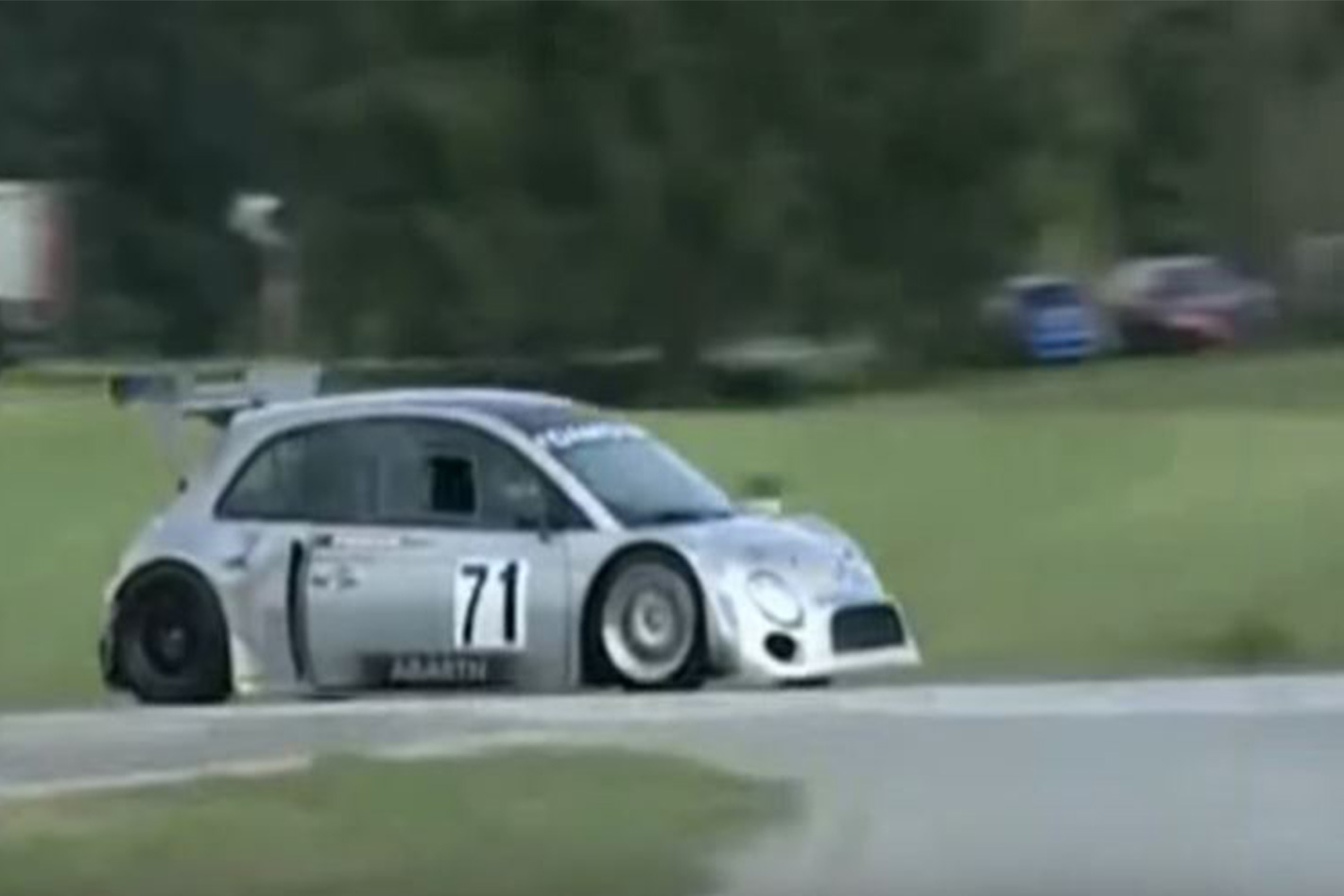
Couple that with the low weight (we’re talking as light as a Caterham Seven), and you’ve got yourself an unstoppable, albeit bizarre, hillclimbing monster.
It sounds like a handful to drive, though the driver (who we assume would be Pacher) seems to be handling the thing like it’s on rails.
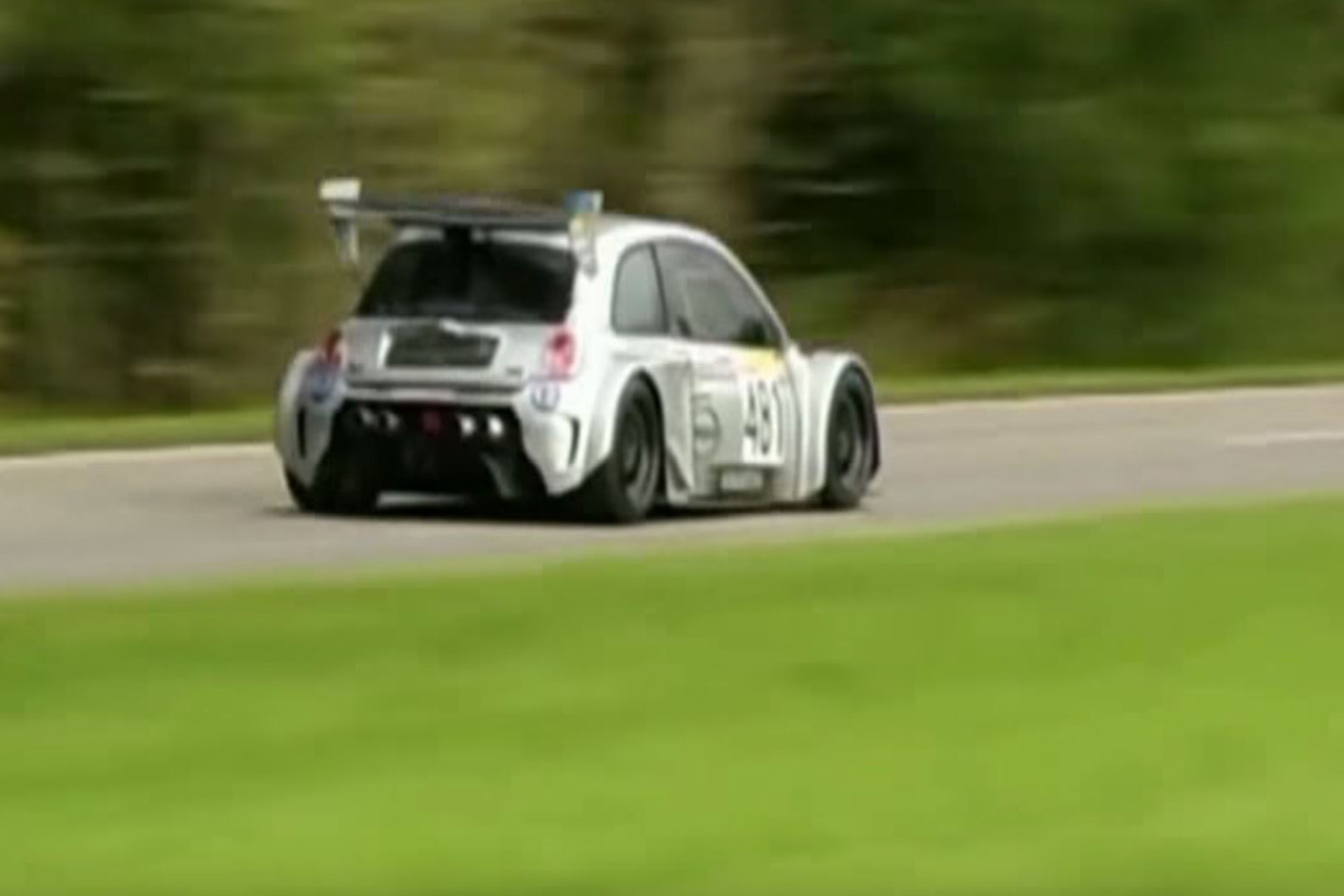
Thankfully, he left the hillclimb community with something epic to aspire to, as well as the physical remnants of his incredible engineering creativity.
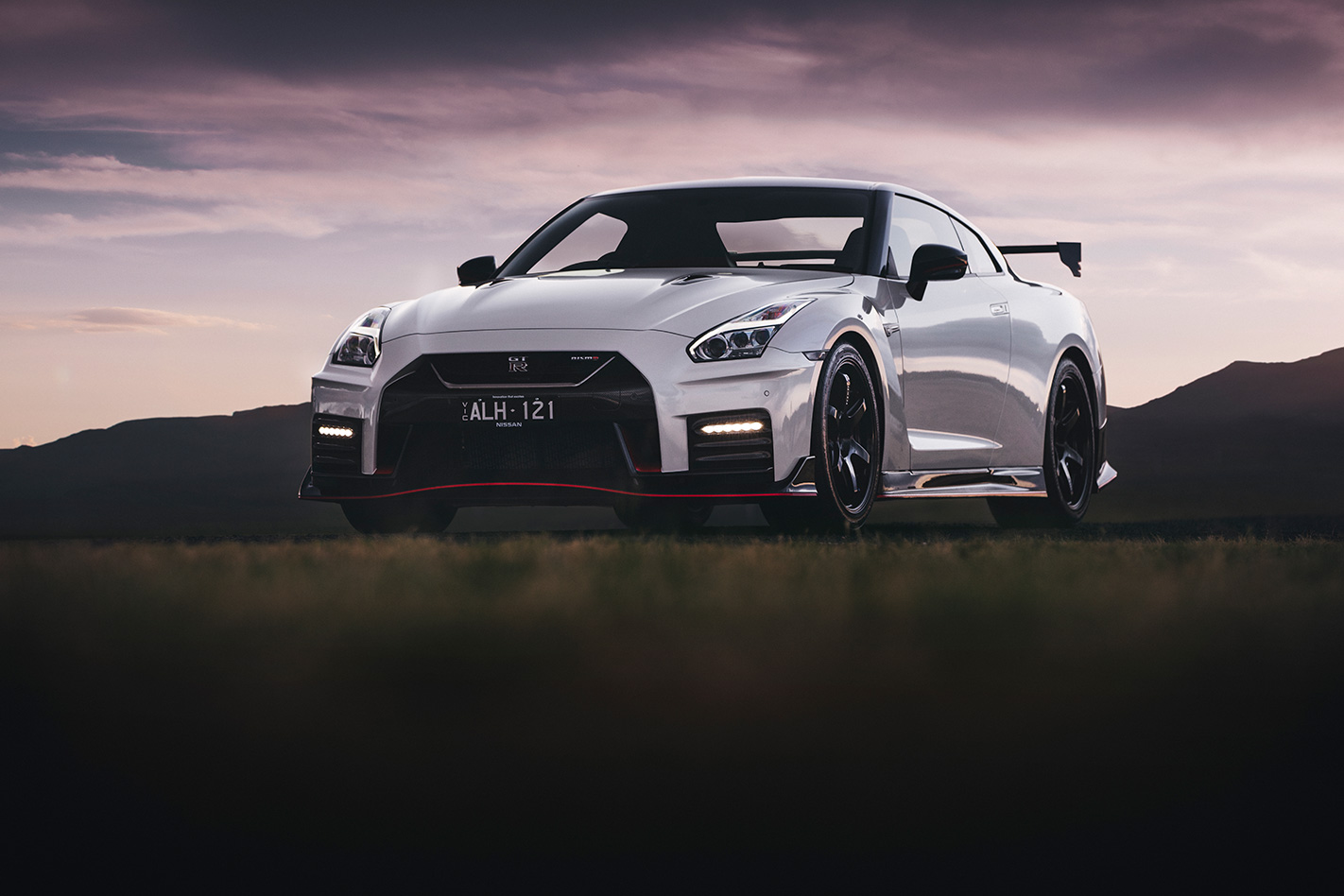
The GT-R Nismo is the fastest road-going Nissan you can buy today. Although it is priced at almost $300K it offers performance that challenges high-end performance cars with much higher price tags.
STRENGTHS
The GT-R Nismo’s almost physics-defying performance is its calling card. It offers a level of grip, power and engagement that’s at times difficult to comprehend. It will blow you away with its sheer explosive performance, and that’s cool.
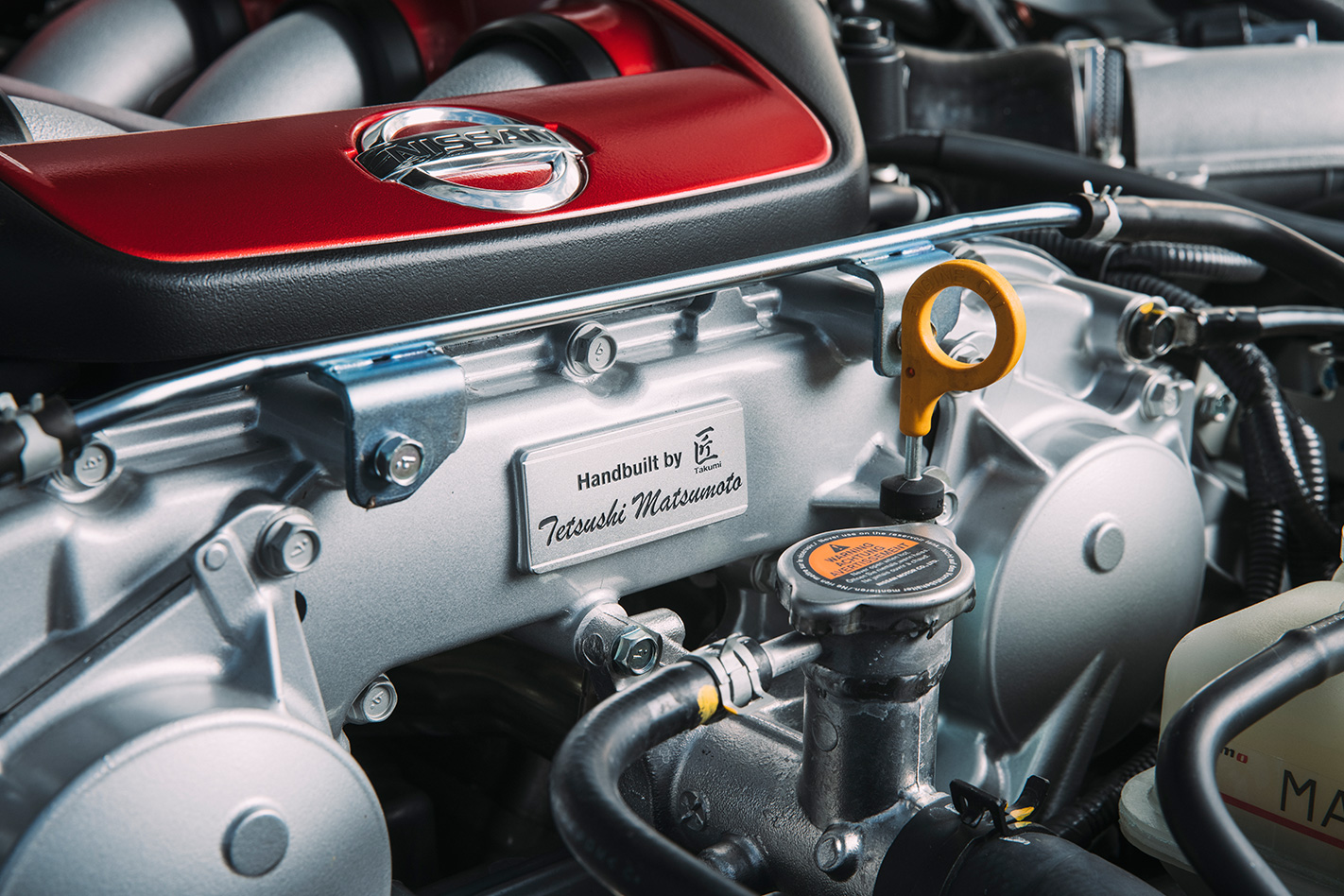
Speaking of explosive energy, the GT-R Nismo smashes out 441kW and 652Nm from its twin-turbocharged 3.8-litre V6 (22kW and 20Nm more than a GT-R Track Edition). It all goes to the road via a six-speed dual-clutch automatic transmission and a sophisticated all-wheel-drive system, and Nissan claims it’ll launch to 100km/h from standstill in about 2.7 seconds. That’s incredibly rapid.
The GT-R Nismo will hang on tenaciously in corners, its adjustable – and Nismo-specific – Bilstein dampers providing as little compliance as possible to maximise tyre grip from its four 20-inch track-spec Dunlops. It’s no lightweight, but it negotiates bends like a car with 200-odd kilos less mass.
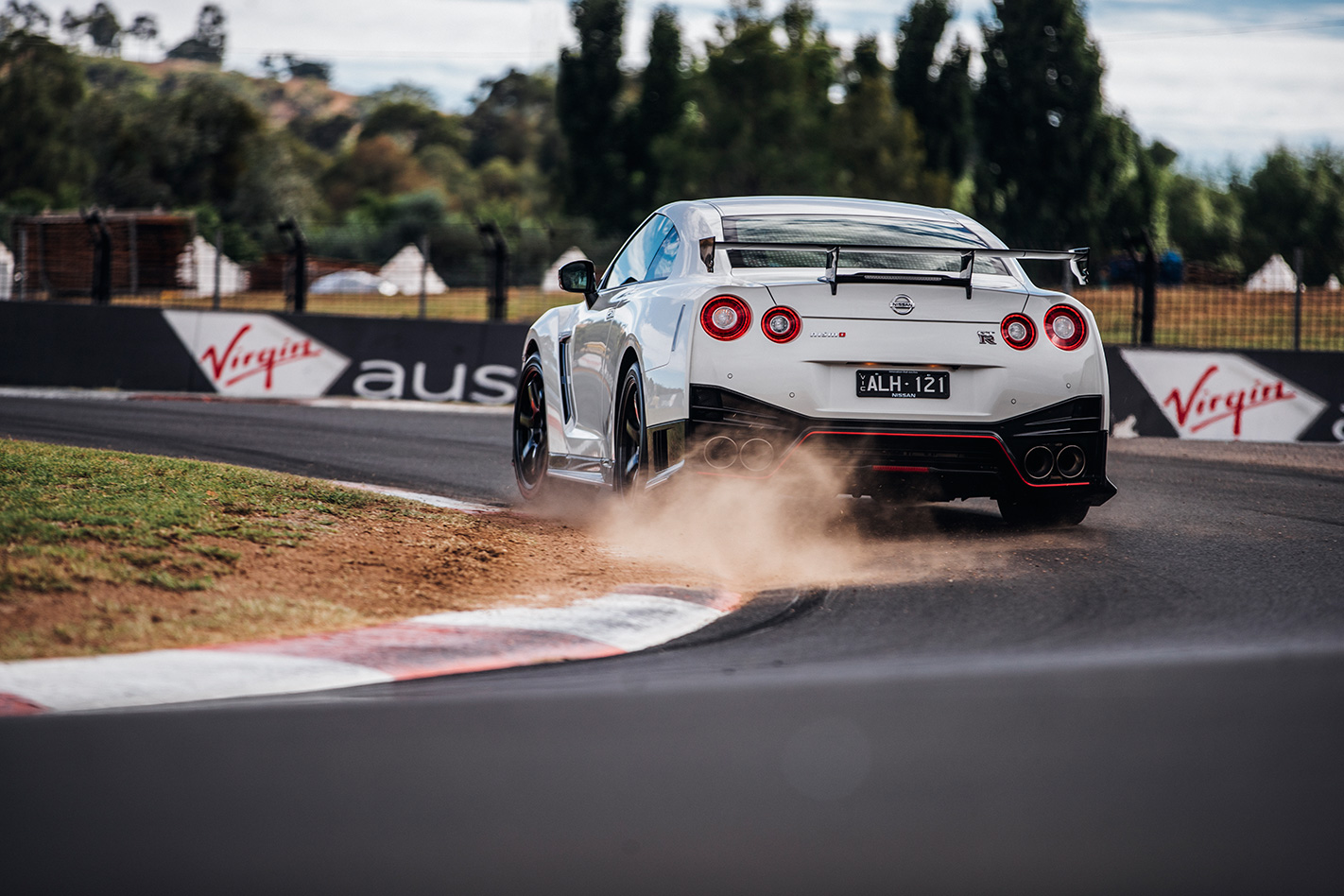
It looks aggressive and purposeful, so there’s no mistaking it for a run-of-the-mill GT-R. The Nismo is wrapped in carbonfibre bodywork, capped off with a huge carbonfibre rear wing – and it all serves to give the car improved aerodynamics for high-speed driving, as well as a more athletic appearance.
The Nismo’s steering is one of the most tactile and engaging around. It constantly feeds information to the driver about precisely what the front wheels are doing, and it’s always moving around in your hands as the car responds to changes in the road surface. The steering is ultra-responsive, as you’d expect of a top-tier sports car.
Nismo-specific interior touches such as the Alcantara-trimmed steering wheel and dashboard, carbonfibre trims and Recaro bucket seats impart a race car vibe to the cabin. Those race buckets offer excellent comfort despite having less adjustability than the standard GT-R’s all-electric front seats.
WEAKNESSES
There’s no ‘off switch’ for this car – it’s always in maximum attack mode, even with the suspension set to comfort and the drivetrain switched to its gentlest setting. It is always raw, all of the time, and if you’re looking for a supercar that you can drive every day the novelty of the Nismo’s extreme nature will likely wear thin very quickly.
The steering’s sensitivity and feedback may be great when you’re attacking a mountain road or a hurtling around a racetrack, but on long drives it can quickly get tiring. You need to fight the wheel often, as it’ll threaten to pull itself out of your grip, and big bumps at highway speeds require a firm grasp of the tiller to keep the car within its lane.

The GT-R Nismo cares not for things such as refinement, and the cabin is an unbearably noisy environment if you’re traveling at triple-digit speeds on a coarse-chip highway. Even when you’re not, the sound of the GT-R’s dual-clutch gearbox is ever-present, and then of course there’s the noise emitted by the engine itself.
It’s pricey at $299,000, but limited supply means you may struggle to get your hands on one even if you can stump up the cash. Only 20 will be sold in Australia each year.
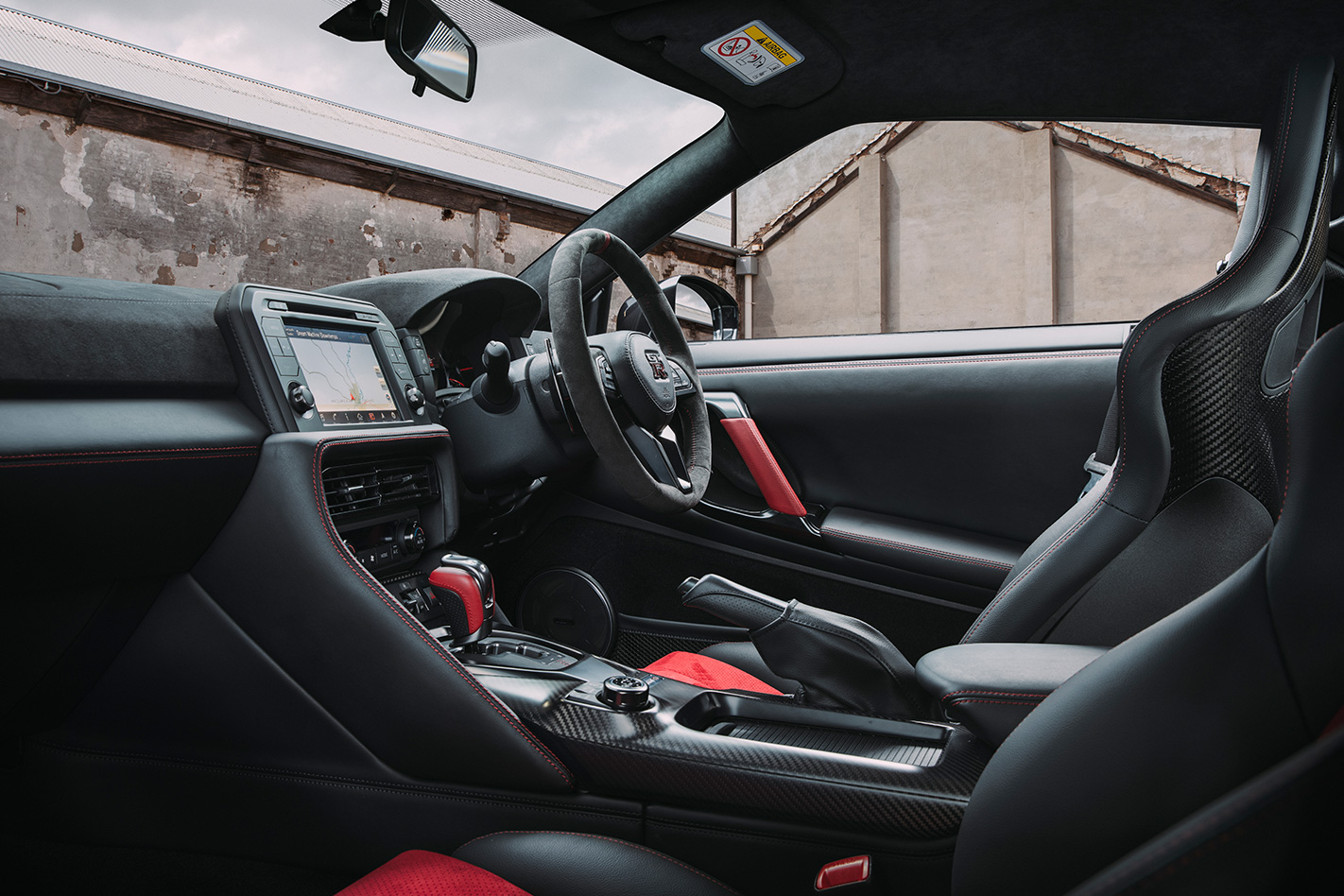
As comfy as the Nismo’s Recaro seats are, they’re mounted quite high for a sports car. Tall folks may find themselves too close to the headlining, and it’s perplexing why the seats have been mounted so high. At a glance there’s plenty of space beneath them to accommodate a lower seat position.
ANY RIVALS I SHOULD CONSIDER
The Nissan GT-R’s arch-nemesis has long been the Porsche 911 Turbo, and the GT-R Nismo lines up most closely to the 911 Turbo S. Both are powered by twin-turbocharged 3.8-litre six-cylinder engines, both use a dual-clutch transmission exclusively, both are all-wheel drive and both will hit triple-digit speeds in under three seconds.
The major differences are in price and civility – the GT-R Nismo is $162,900 less expensive than the Porsche, but the 911 Turbo S makes a better proposition for daily use.
Another choice is the Jaguar F-Type SVR. With 423kW and 700Nm from a 5.0-litre supercharged V8 going to all four wheels, the $290k F-Type SVR is a slightly cheaper alternative to the Nissan, but also slightly slower.
Really want the Nissan but can’t come to terms with the cost? The GT-R Track Edition is a compelling alternative. It misses out on the GT-R Nismo’s brutish bodywork and bigger turbos, but with a sizable 419kW and 632Nm and track-focused suspension settings it will give you most of the Nismo’s thrills for a more reasonable $227,000 outlay.
Some cars are better off without a ute variant.
BMW built an M3 ute a couple of decades ago and, while cool, it never really took off. Probably because they only built one.
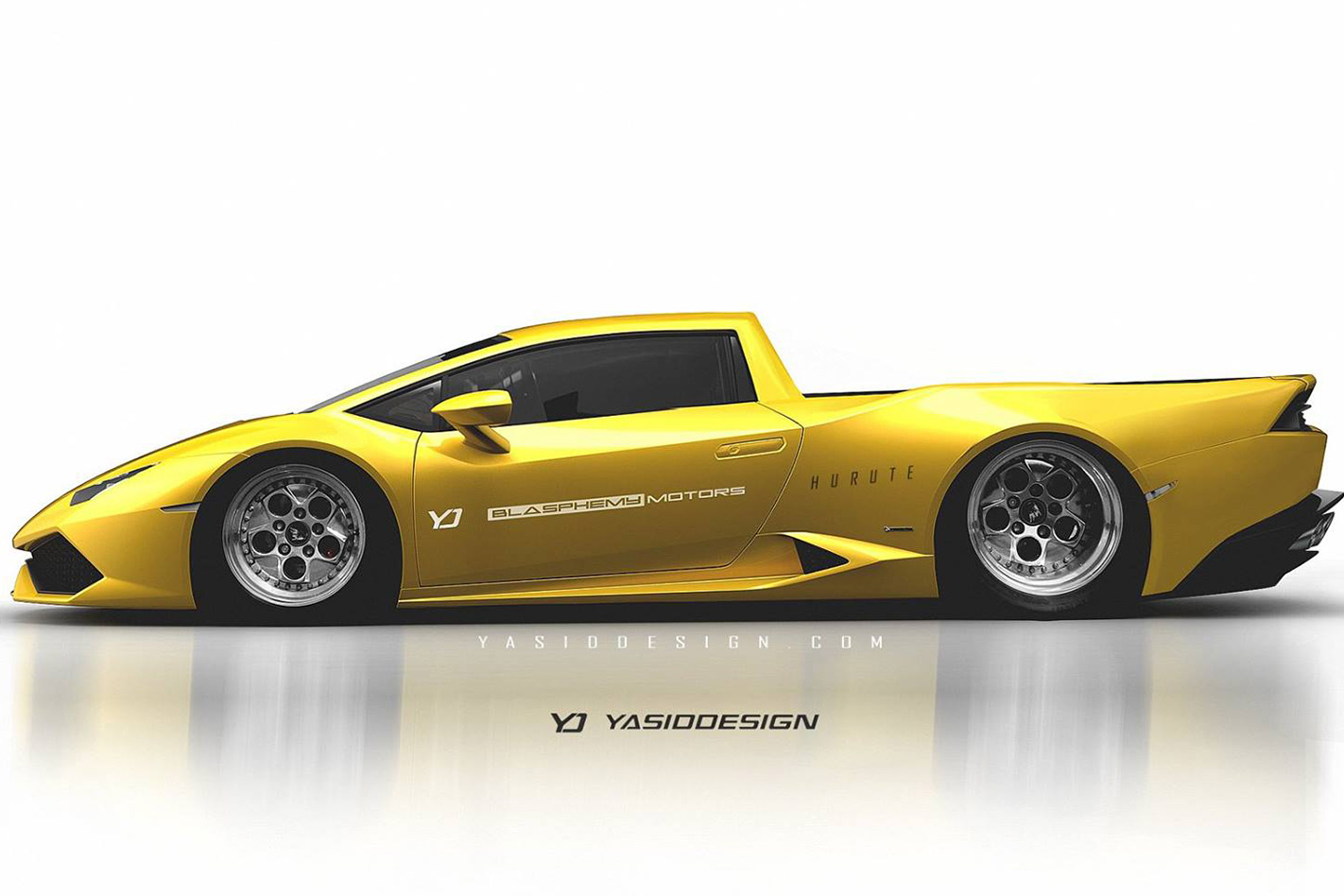
But, flying in the face of ‘the norm’ is an artist known as YasidDesign, who decided not only would it be cool to create supercar utes, but to up the ante with supercar wagons.
McLaren 720S not just about numbers
Under the name of a made-up customs shop, Blasphemy Motors, YasidDesign has altered the hypercar holy trinity to be almost unrecognisable.
Yet we kind of want to see the hyper-wagon thing happen. Just not like this…
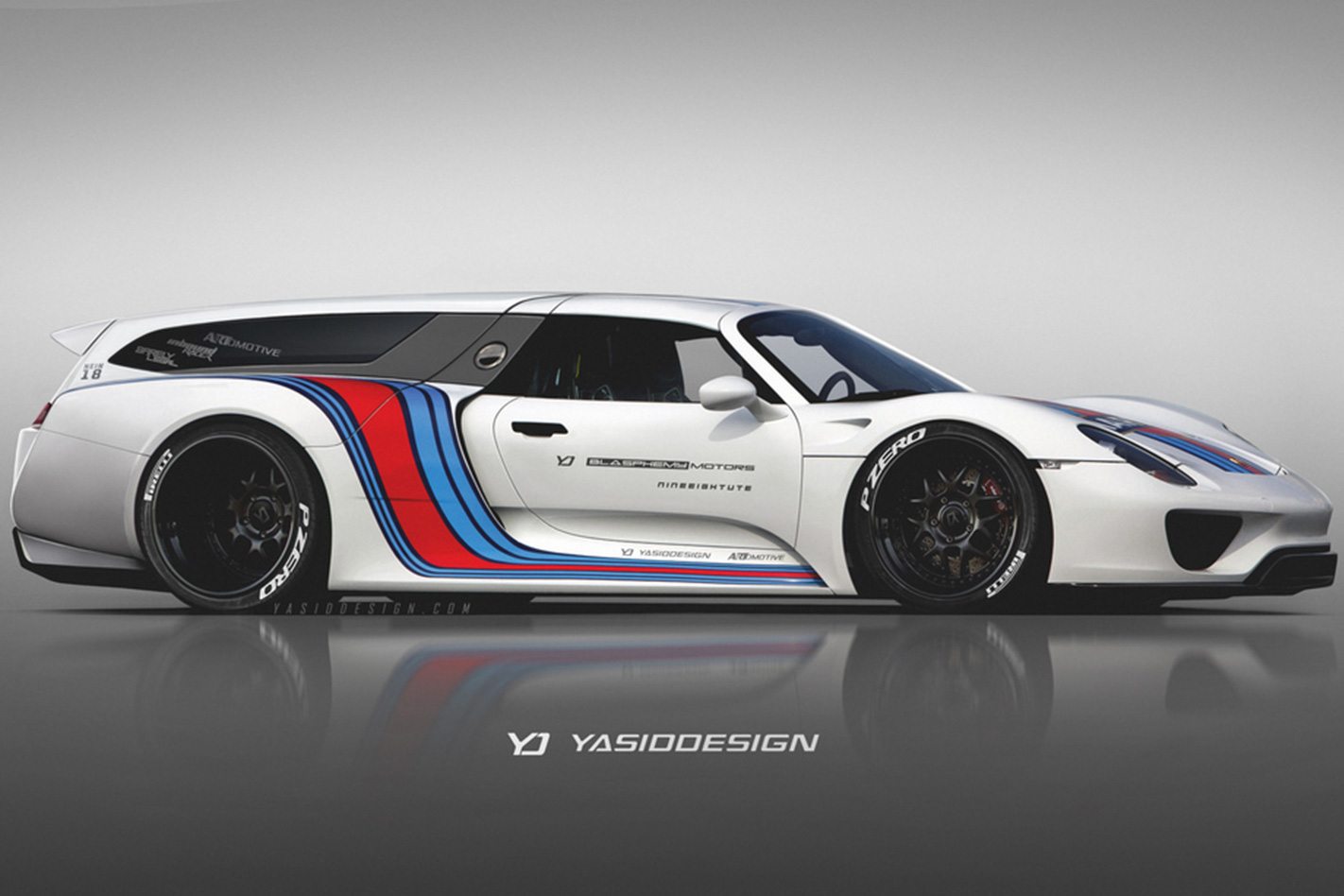
It does raise an interesting question for these cars, though: where would the engine go?
The ultimate hypercar track day
In a Facebook post about the utes, the designer said “Where’s the engine? I have no idea really, but I like to think it’s tucked in the bed.”
While the artworks are bound to divide opinion, and maybe hospitalise one or two purists, there’s no denying the skill that goes into making a supercar still look at least believable as a ute or a shooting brake.
These aren’t the wildest things YasidDesign has come up with, standouts include a Rat-rod police Kombi, a BMW E10 with the roof lopped off, and a Ferrari 250 GTO drag car…
It’s worth checking out the Facebook page. Enter at own risk.
COULD the quirky Citroen C4 Cactus – one of the most unconventionally styled cars on the Australian market – be about to lose one of its defining features?
Media reports have suggested the compact Cactus could lose its AirBumps – the replaceable plastic panels inserted into the door skins that help them hold up to supermarket bumps and scrapes – as part of an upcoming makeover of the small hatchback.
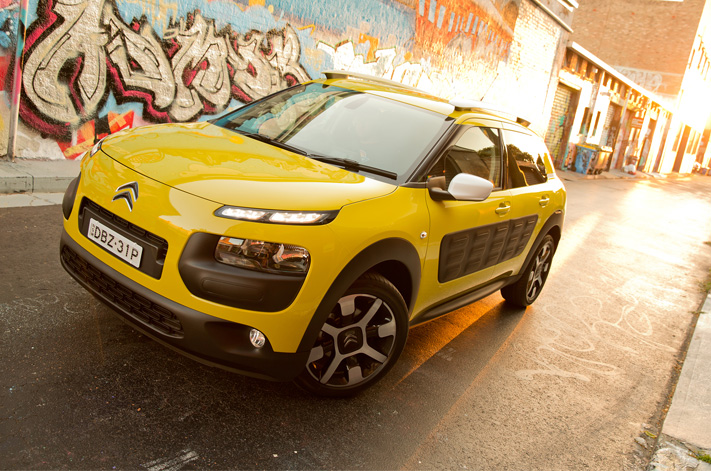
British motoring mag AutoExpress reckons a chat it had with Citroen chief executive Linda Jackson suggested a mid-life spritz for the Cactus will include the shift to a more conventional look that will pull it into line with the recently launched C3 Aircross – revealed earlier this month as a crossover-styled, highly customisable hatchback – and the larger, SUV-styled C5 Aircross revealed in April.
The Cactus – a rival here to the likes of the strong-selling Mazda CX-3, Honda HR-V, Holden Trax, Ford EcoSport and the Toyota C-HR – was a late arrival to Australia, landing here in early 2016 but a couple of years behind going on sale overseas.
A fun little package with either a diesel engine fitted to a robotised six-speed manual gearbox, or as a petrol engine in front of a five-speed manual, it was shortlisted for the 2017 Wheels Car of the Year Award where it was described as a brilliant example of how to fuse form and function – even if the robotised manual gearbox feels as though the engine is being punched in the guts between shifts.
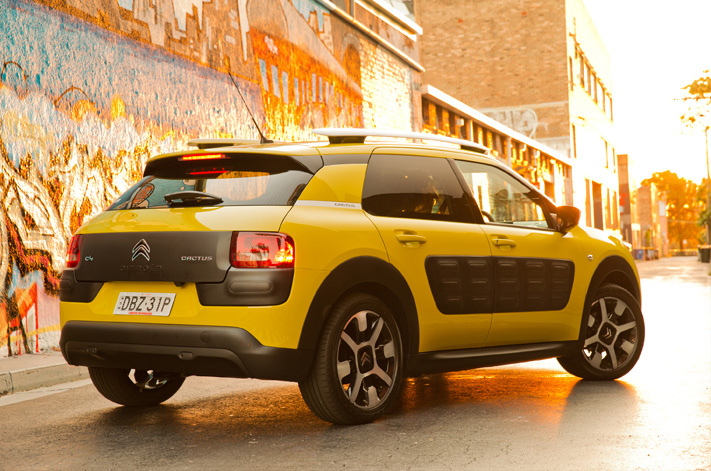
That hasn’t translated into sales; in the first five months of this year Citroen has sold just 32 of the C4 Cactus hatches, well down on the 103 sales it had snared in the same period last year.
As yet, Citroen hasn’t released any clues as to drivetrain changes for the updated Cactus, although other models in the PSA family – including the Peugeot 208 and 2008 – use the Cactus’ PureTech engine with an Aisin six-speed automatic transmission.
Should it jump to a conventional auto, an auto petrol variant could do much for sales of the currently manual-only petrol Cactus.
An all-new BMW X3 will be officially revealed tonight, but it appears someone at Munich forgot to tell the company’s Hong Kong operation. It has broken an international embargo and published details, pictures and even video of the next-generation luxury SUV on its website.
According to the BMW Hong Hong site, the range will include the familiar xDrive 20i petrol and 20d and 30d diesel variants, along with a new range-topping M-tuned M40i with 264kW/500Nm twin-turbo six that will send power to all four wheels via an eight-speed automatic transmission.
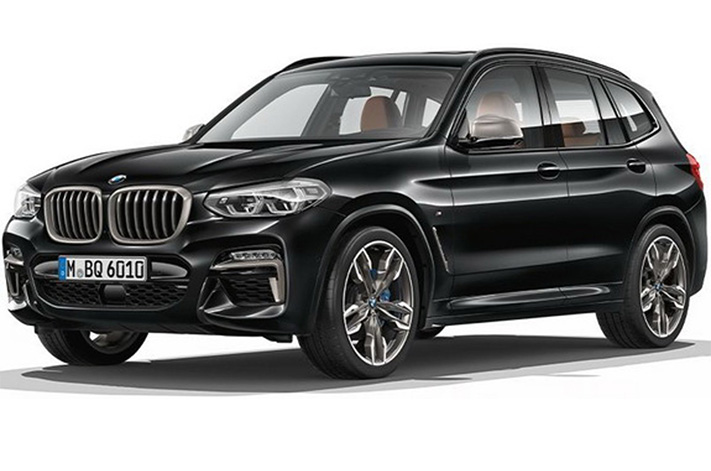
BMW claims the M40i will accelerate from 0-100km/h in 4.9sec on specially tuned M Performance suspension and steering, and 21-inch double-spoke M alloys.
While the M40i is yet to be confirmed for Australia it’s more than likely that we’ll see it in our showrooms.
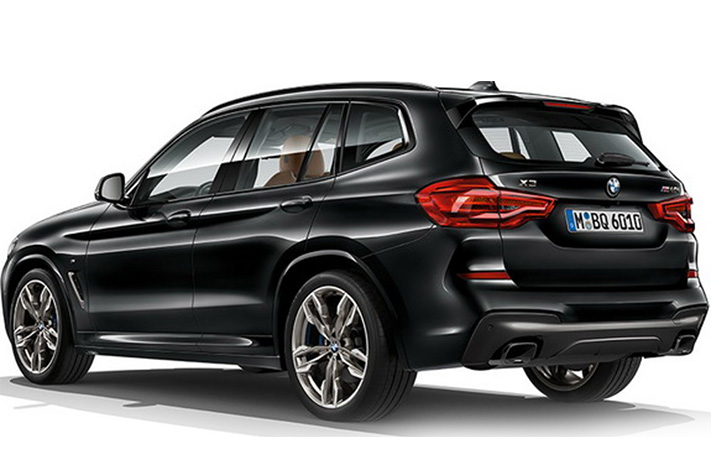
There are fewer surprises in terms of looks, with evolutionary design changes that meet BMW’s contemporary design language including a rounder front end with larger kidney grille and sharper headlights, and new rear-end treatment resembling the X5.
The range-wide design cues also make their way inside with the dashboard looking very similar to the new 5-Series cockpit.
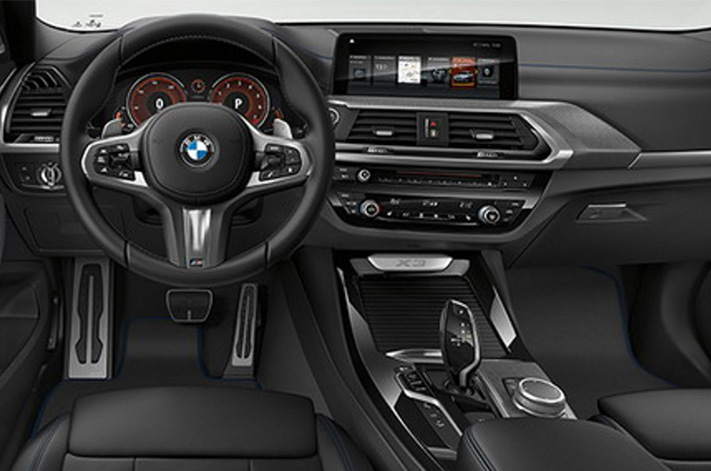
Built on BMW’s modular CLAR platform, the X3 has a slightly bigger footprint than the current model, which should translate to more passenger and cargo space.
A video on the Hong Kong site also suggests semi-autonomous systems including lane-keeping assist, head-up display, an automatic tailgate with foot-waving operation and even an optional electric bike to carry in the back.
