THE Audi A8, the German luxury brand’s new flagship limousine, will be able to roll itself over slightly to protect occupants from a crash, the carmaker has revealed.
The technology, which uses the A8’s safety systems to detect if a side-on crash is about to happen, will lift that side of the car 80mm in less than half a second, allowing the stronger door frame and body sill to absorb more of the impact.
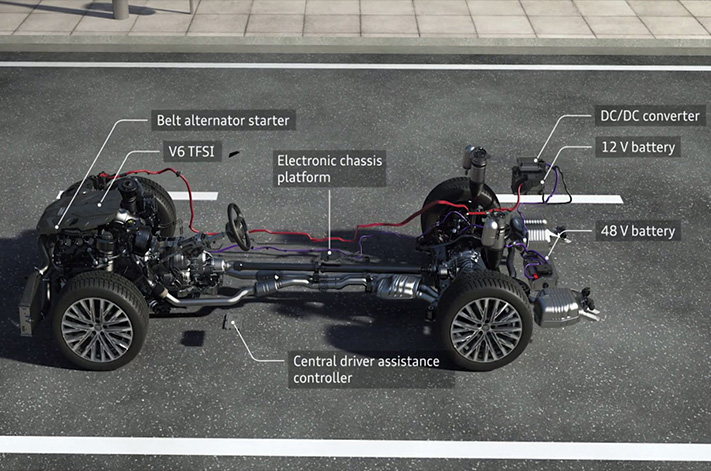
Other high-demand electrical components suited to 48-volt systems include a mild hybrid drivetrain.
For the new active chassis technology, the A8 has an electromechanical unit at each corner of the suspension system. They are managed by an electronic chassis platform (ECP) central control unit that is integrated in to other vehicle systems.
Each unit is capable of applying up to 1100Nm of force to either compress or extend the suspension arms, depending on the road conditions and driving style.
During fast cornering the active system can counter the compression of the outside wheels, reducing bodyroll, and can minimise pitch and dive during heavy acceleration or braking by applying force to either the front or rear suspension.
The result is a combination of sharper vehicle dynamics and driver reward when negotiating exciting roads, and increased occupant comfort when cruising or being chauffeured.
There are also safety advantages. If the A8 senses the likelihood of a side impact with another vehicle, the suspension on the exposed side is raised. Occupants experience a load reduction of up to 50 per cent, says Audi.
Complementing the active suspension technology are air suspension and rear-wheel steering, which enables a number of driving modes according to driver and passenger preference, and reduced turning circle – the A8 will loop back on itself in a tighter turn than an A4, according to the German car maker.
A complete rundown of the new Audi A8’s features and technology including range wide hybrid technology, self-parking and weight-saving design will be detailed at the Audi Summit in Barcelona on July 11.
Sport Utility Vehicles (SUVs) hijacked the term crossover.
The label should really apply to these five – plus another five runner-up – wagons that blend dynamic appeal with load-lugging space. The SUV, by contrast? Lumbering thirst mixed with inefficient packaging.
There is no reason to buy an SUV as a family car, even if the household budget doesn’t extend as far as Joe Hockey’s cigar.
The rules are as follows: wagons with 50,000km and 100,000km on the clock, not older than a decade – okay, there’s one major exception – and with prices ranging from $10,000 to sub-$50,000 pre-haggling.
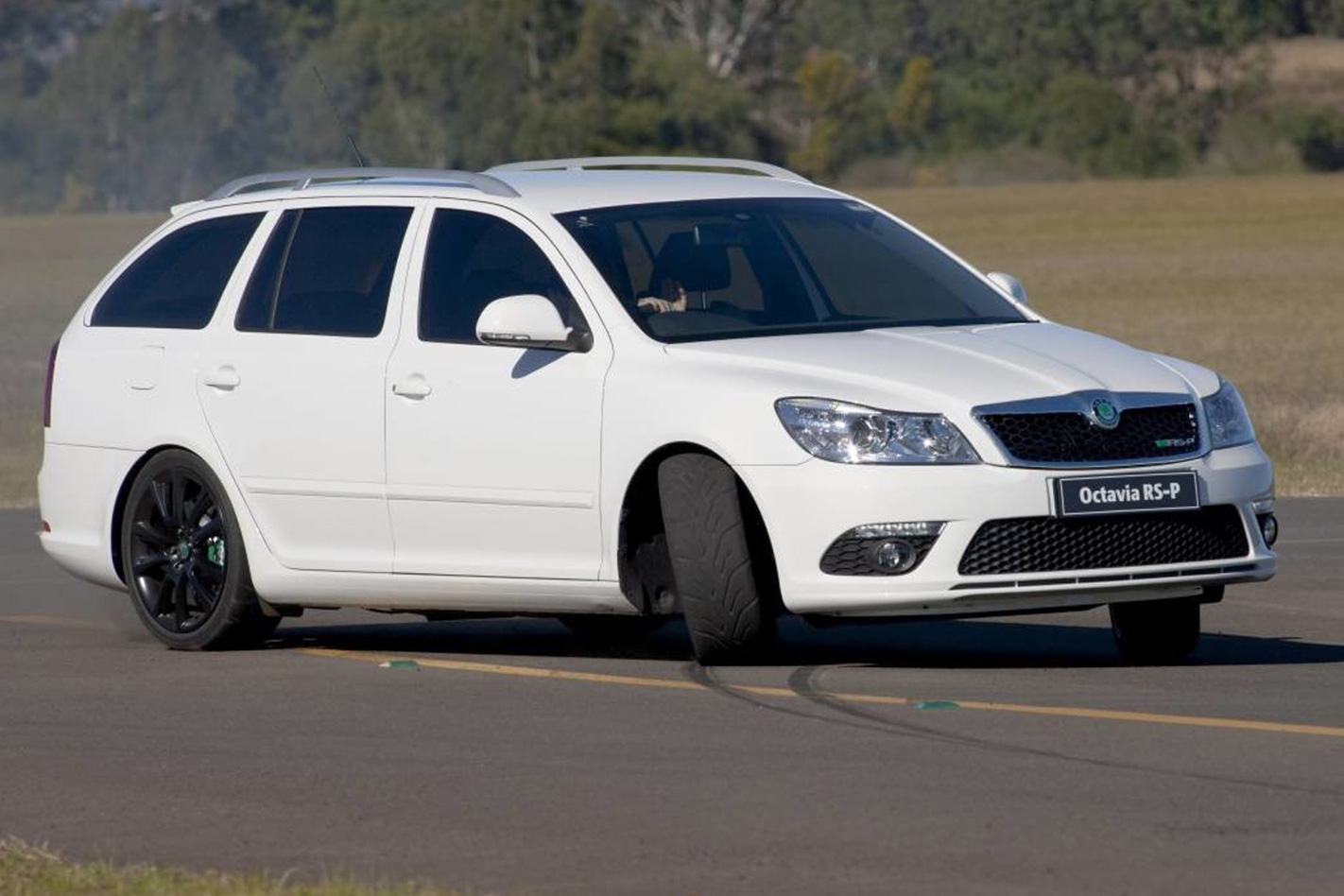
1. $10,000 – 2010 Skoda Octavia RS 147TSI Wagon with around 100,000km A Mk5 Golf GTI with a better boot and worse resale. The 147kW 2.0-litre turbo is flexible even by today’s standards, and both manual and six-speed DSG were available. A seven-year-old Skoda for $10K is bang-on. (RS-P Concept shown)
2. $15,000 – 2007 Subaru Liberty 3.0R with around 100,000km
Go the smooth 3.0-litre flat six over the 2.5-litre turbo and find a (rare) Blitzen special edition preferably in red with a (ultra-rare) manual transmission. The Liberty brand peaked a decade ago, and it hasn’t driven this well or looked this good since.
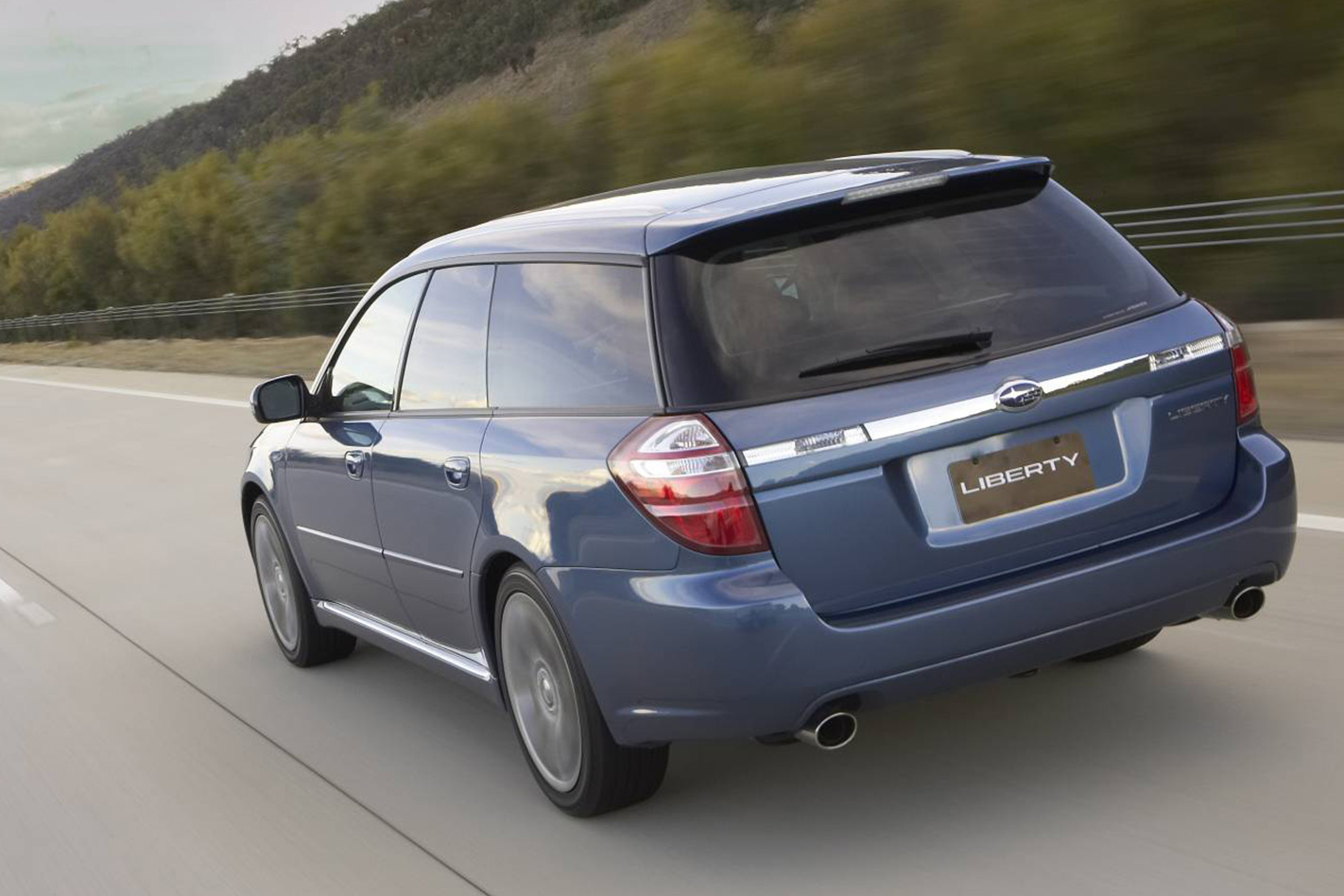
3. $20,000 – 2010 Holden Commodore SS Sportwagon with around 100,000km
Holden designers’ favourite company car remains a looker today. Only go the SV6 if you’re tight, but a V8 with (rare) manual will hold its value best long-term; plus, the six-speed auto was below average until VE Series II handed the baton to VF in 2013.
Runner-up: 2008 BMW 530i Estate with around 100,000km. Can’t do a V8 manual? This E60-gen sold new at almost twice the price of an SS, and while the 3.0-litre six isn’t super quick, it sounds great and the chassis is terrific.
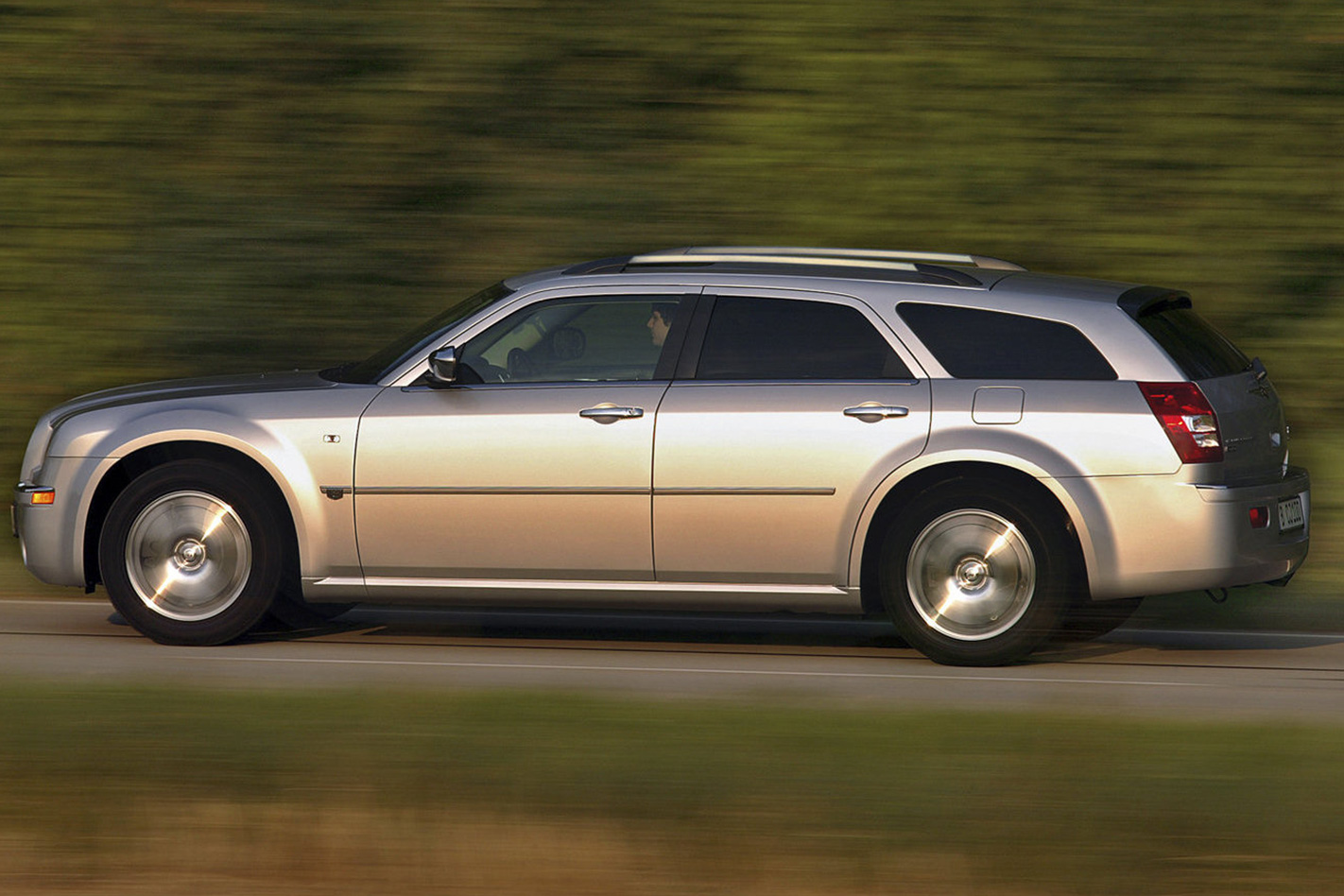
4. $25,000 – 2008 Chrysler 300C SRT8 Touring with around 60,000km
Old E-Class-based brute isn’t subtle or sensible. But this is MOTOR and the 300C SRT8 Touring packs a mighty 6.1-litre HEMI V8 with 317kW and 569Nm under the snout of its long, hearse-like body. We found one with just 60,000km for $25K.
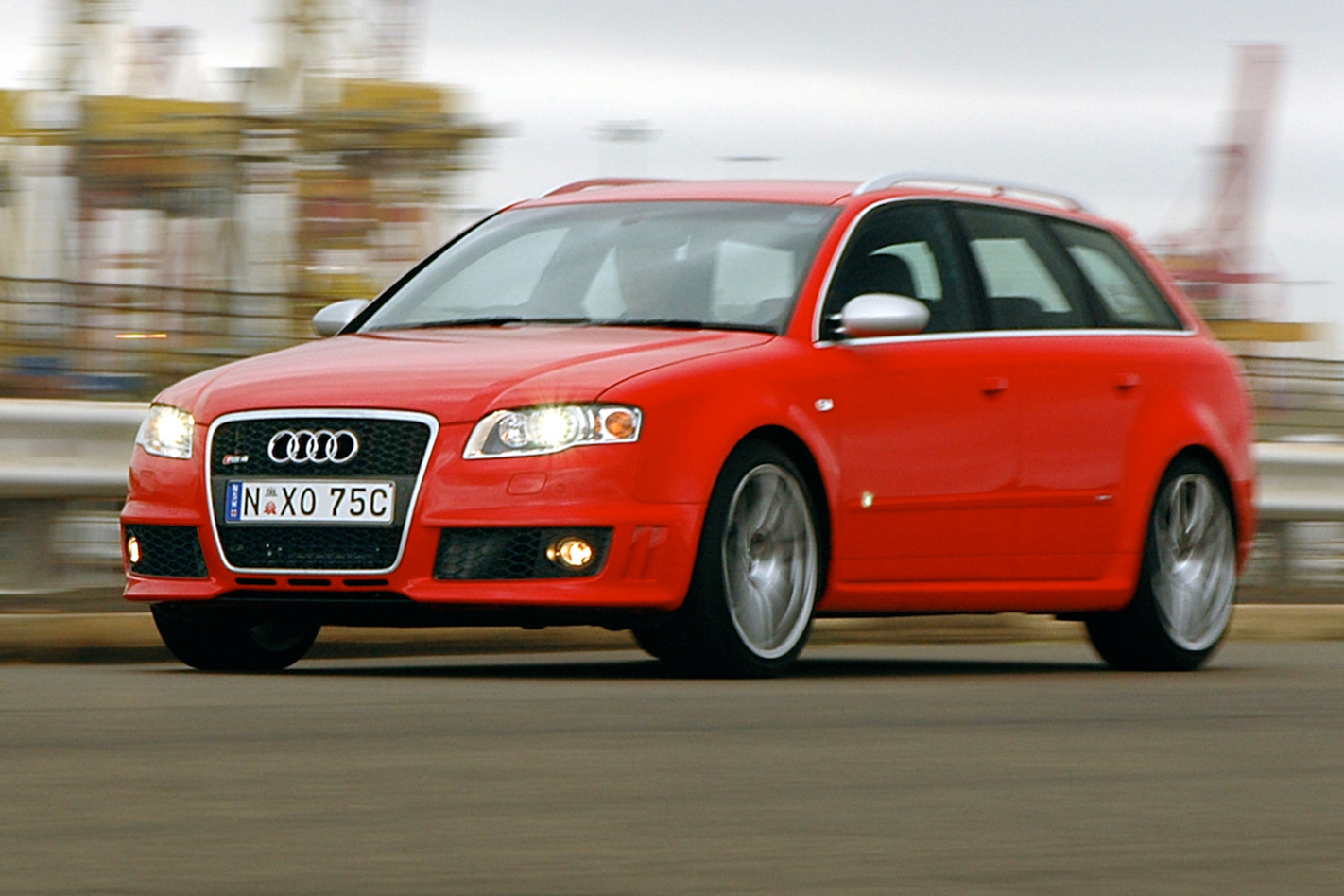
5. $30,000-plus – 2007 Audi RS4 Avant with beyond 100,000km
Manual-only and with the same soaring 4.2-litre atmo V8 used in the Audi R8, the RS4 Avant has become very special in this day and age, and its sellers know it. Prices vary – and can be a gouge – but no more than $40K should be paid these days.
THE MODERN DRIVER is conditioned to expect that the turn of a key or the push of a button will, through some invisible and unimportant process, start the engine.
Symphony in C was first published in Wheels in June 1987.
Similarly, some preprogrammed wriggling down the left side of his body will cause a clutch somewhere to disengage, and a new gear to be selected. Electronic engine management systems and sensor-studded anti-lock braking devices mean the modem driver, in his hermetically sealed environment, simply goes through the motions of “driving a car”, insulated in his plastic pocket from any activity taking place underneath.
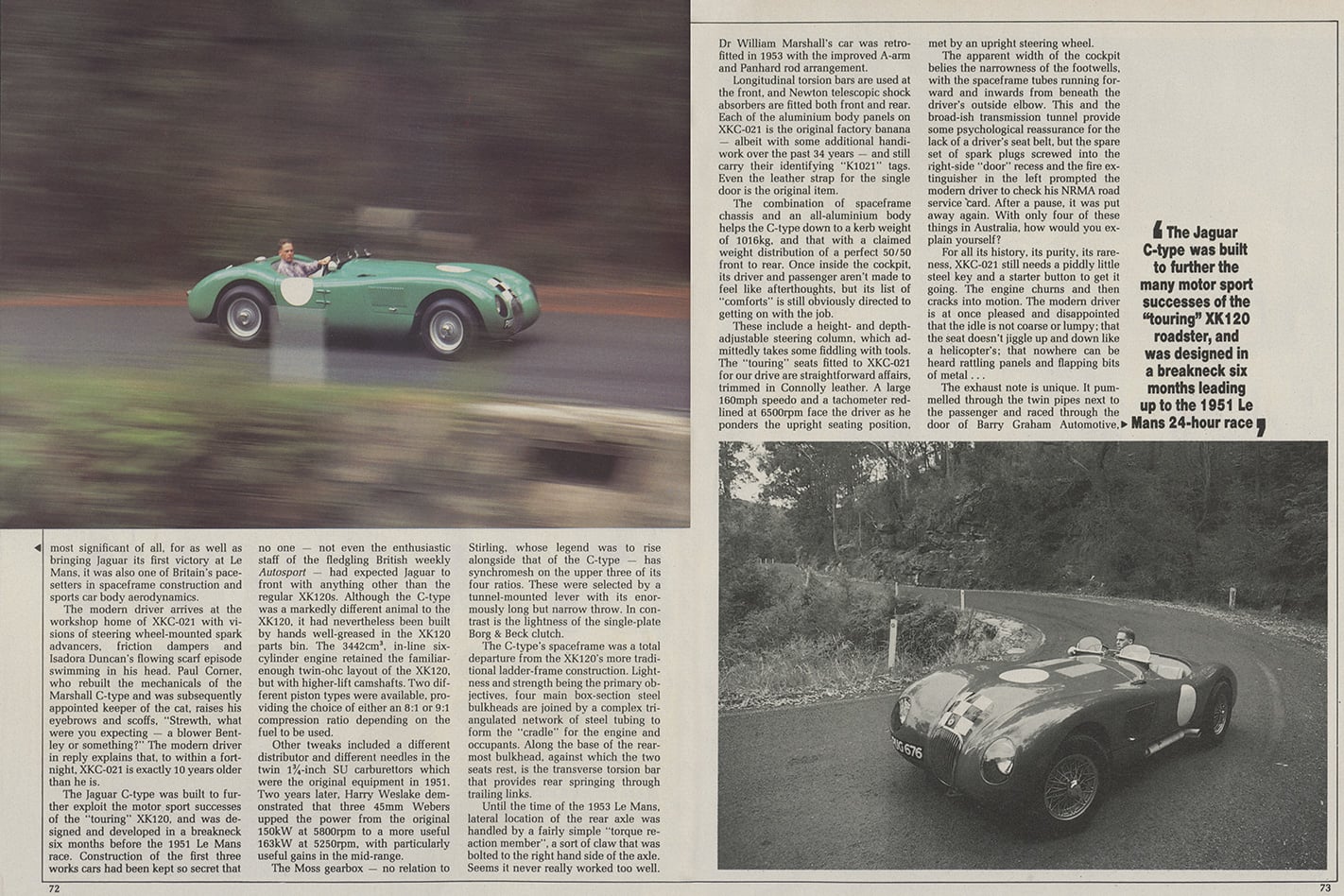
A Jaguar XK120 C-type is in theory a car like any other, yet the time and purpose for which it was built makes it completely different for the modem driver. Clinging to the large steering wheel, eyes smarting both from concentration and from the battering wind, one becomes acutely aware of each individual action and its response. In the C-type, one isn’t just “driving a car”, but using the utmost of precision in conducting an orchestra of free-thinking mechanical components.
And the stench and snarl of the engine washing through bonnet louvres, the graunch of the Moss four-speed ‘box when hurried amateurishly through its gate and the suicide leap taken by the brake pedal when it hasn’t had its reassuring dab, aren’t going to let you forget it.
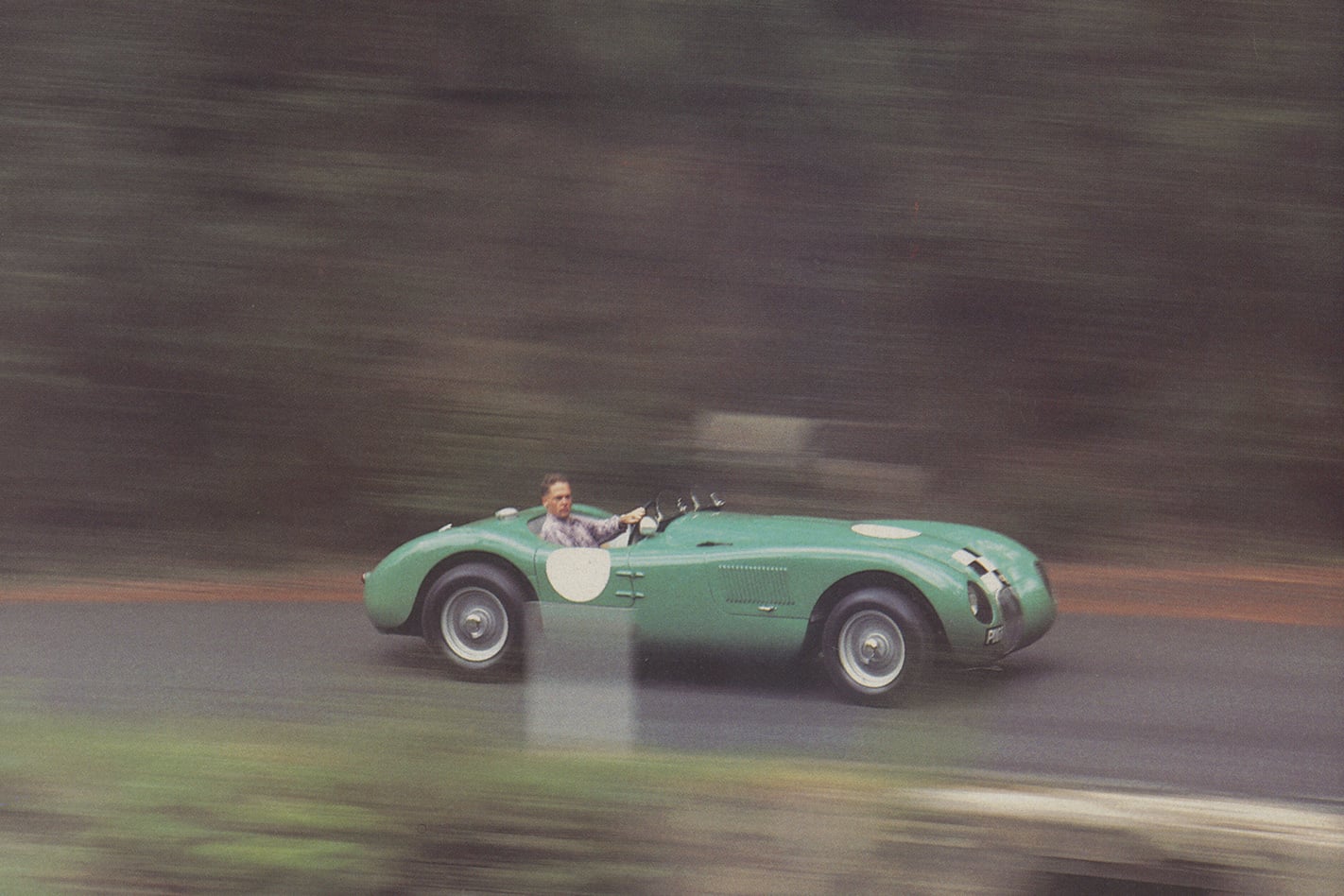
It’s one of automotive history’s typical anomalies that everyone knows an “E-type Jag“, but few are aware of the D-type before it and fewer still of the C-type. Yet the C-type is arguably the most significant of all, for as well as bringing Jaguar its first victory at Le Mans, it was also one of Britain’s pacesetters in spaceframe construction and sports car body aerodynamics.
The modem driver arrives at the workshop home of XKC-021 with visions of steering wheel-mounted spark advancers, friction dampers and Isadora Duncan’s flowing scarf episode swimming in his head. Paul Corner, who rebuilt the mechanicals of the Marshall C-type and was subsequently appointed keeper of the cat, raises his eyebrows and scoffs, “Strewth, what were you expecting – a blower Bentley or something?” The modem driver in reply explains that, to within a fortnight, XKC-021 is exactly 10 years older than he is.
The Jaguar C-type was built to further exploit the motor sport successes of the “touring” XK120, and was designed and developed in a breakneck six months before the 1951 Le Mans race. Construction of the first three works cars had been kept so secret that no one – not even the enthusiastic staff of the fledgling British weekly Autosport – had expected Jaguar to front with anything other than the regular XK120s. Although the C-type was a markedly different animal to the XK120, it had nevertheless been built by hands well-greased in the XK120 parts bin. The 3442cm3, in-line six-cylinder engine retained the familiar-enough twin-ohc layout of the XK120, but with higher-lift camshafts. Two different piston types were available, providing the choice of either an 8:1 or 9:1 compression ratio depending on the fuel to be used.
Other tweaks included a different distributor and different needles in the twin 1 3/4-inch SU carburettors which were the original equipment in 1951. Two years later, Harry Weslake demonstrated that three 45mm Webers upped the power from the original 150kW at 5800rpm to a more useful 163kW at 5250rpm, with particularly useful gains in the mid-range.
The C-type’s spaceframe was a total departure from the XK120’s more traditional ladder-frame construction. Lightness and strength being the primary objectives, four main box-section steel bulkheads are joined by a complex triangulated network of steel tubing to form the “cradle” for the engine and occupants. Along the base of the rearmost bulkhead, against which the two seats rest, is the transverse torsion bar that provides rear springing through trailing links.
Until the time of the 1953 Le Mans, lateral location of the rear axle was handled by a fairly simple “torque reaction member”, a sort of claw that was bolted to the right hand side of the axle. Seems it never really worked too well. Dr William Marshall’s car was retrofitted in 1953 with the improved A-arm and Panhard rod arrangement. Longitudinal torsion bars are used at the front, and Newton telescopic shock absorbers are fitted both front and rear.
Each of the aluminium body panels on XKC-021 is the original factory banana – albeit with some additional handiwork over the past 34 years – and still carry their identifying “K1021” tags.
Even the leather strap for the single door is the original item. The combination of spaceframe chassis and an all-aluminium body helps the C-type down to a kerb weight of 1016kg, and that with a claimed weight distribution of a perfect 50/50 front to rear. Once inside the cockpit, its driver and passenger aren’t made to feel like afterthoughts, but its list of “comforts” is still obviously directed to getting on with the job. These include a height- and depth-adjustable steering column, which admittedly takes some fiddling with tools.
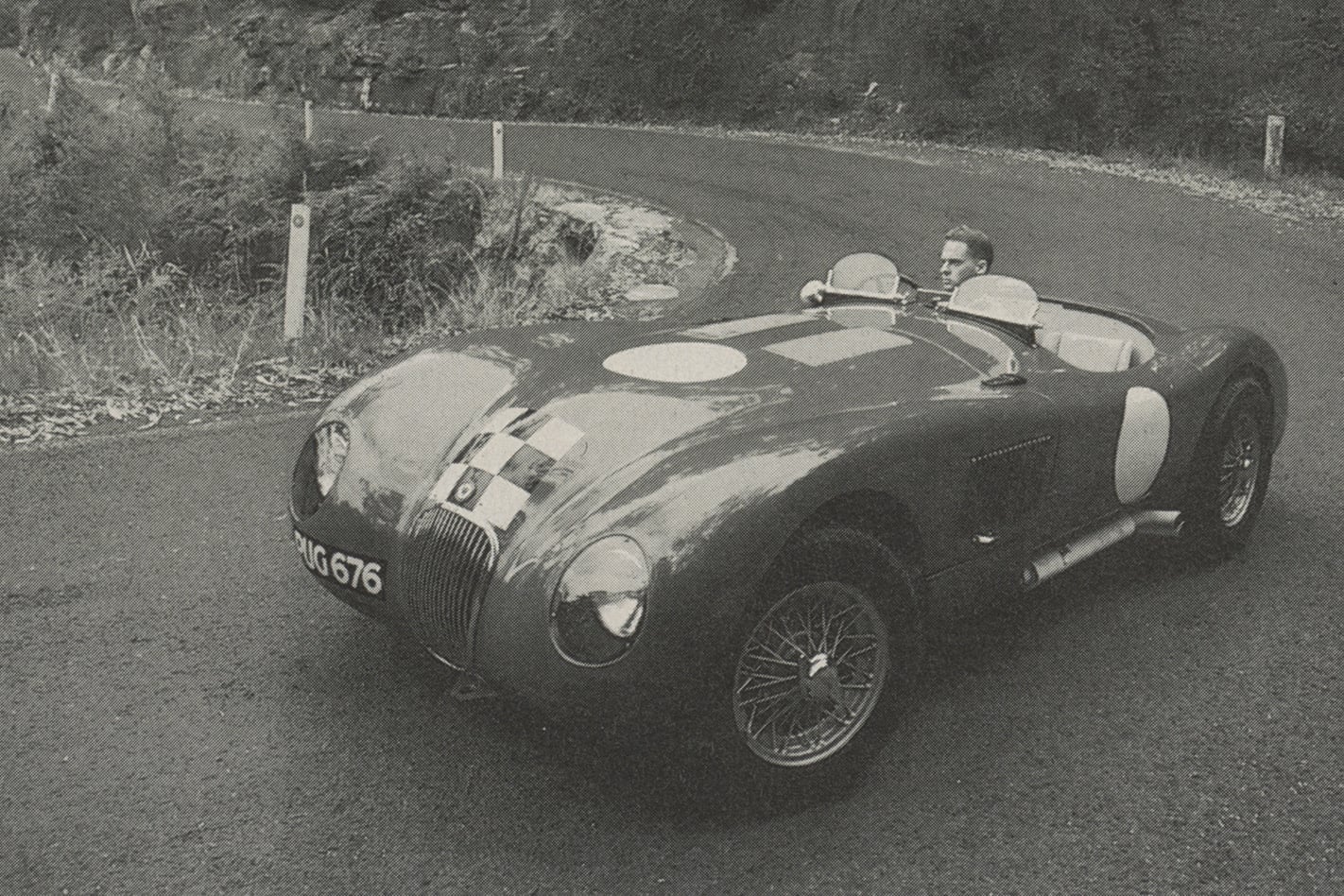
For all its history. its purity. its rareness, XKC-021 still needs a piddly little steel key and a starter button to get it going. The engine chums and then cracks into motion. The modern driver is at once pleased and disappointed that the idle is not coarse or lumpy; that the seat doesn’t jiggle up and down like a helicopter’s; that nowhere can be heard rattling panels and flapping bits of metal …
The exhaust note is unique. It pummelled through the twin pipes next to the passenger and raced through the door of Barry Graham Automotive, kicking some drums and rearranging the furniture as it went. It then descended again on the C-type, straddling the cockpit and encrusting itself around the soul of the modern driver.
His mind went back. At age six he believed that the Tasman series cars warming up their engines at Warwick Farm were saying “Brabham, Brabham”. A backfire suggested “Jack”, and although The Great One wasn’t yet knighted, a trailing throttle would have been good enough for “Sirrrrr”. Not like a six, yet not like a VB, the C-type’s growl has a complexity of timbres, tannins and the maturity of a classic Beaujolais. And it is saying “drink me, drink me … ” It was the custom of Jaguar’s William Lyons to have his cars driven all the way to Le Mans from the old Swallow Lane factory in Coventry. Thus, engineers Ray “Lofty” England, Jack Emerson and Phil Weaver set out early in June, 1951 in XKC-001, 002 and 003.
Four hours into the race itself, these three cars occupied first, second and third places. Suddenly, the third placed car of Clemente Biondetti I Leslie Johnson lost oil pressure and was out.
Shortly after midnight the leading car of Stirling Moss/Jack Fairman suffered the same fate. The eyes of the Jaguar crew turned to the remaining car of Peter Walker/Peter Whitehead. Investigation showed that a copper pipe within the sump was cracking due to engine vibrations, and in turn starving the bearings of oil, thus outing XKC-001 and 002. The message was relayed to Walker and Whitehead, who held their revs accordingly. Whitehead crossed the line to score a debut win for the C-type, barely six weeks after the car had first turned a wheel.
Jaguar’s fortunes at Le Mans in 1952 were very much the product of this panic. New long-nosed bodywork was fitted in an effort to increase speeds along the Mulsanne straight. To fit the new bodywork, the radiator header tank was moved back to the firewall, but through a quirk of engineering fate this proved to be the Jaguars’ undoing. Each of the works cars overheated and expired early in the race. Deliveries of “customer” C-types, with the koala-face bodywork to which the factory would quickly revert, had commenced just a few weeks before.
The cars, however, were not for sale to just any well-heeled wanker – such people would have to wait for a Corvette or a Shelby Cobra. Instead, Jaguar preferred to dole out the cars to those with prior affinities to the company.
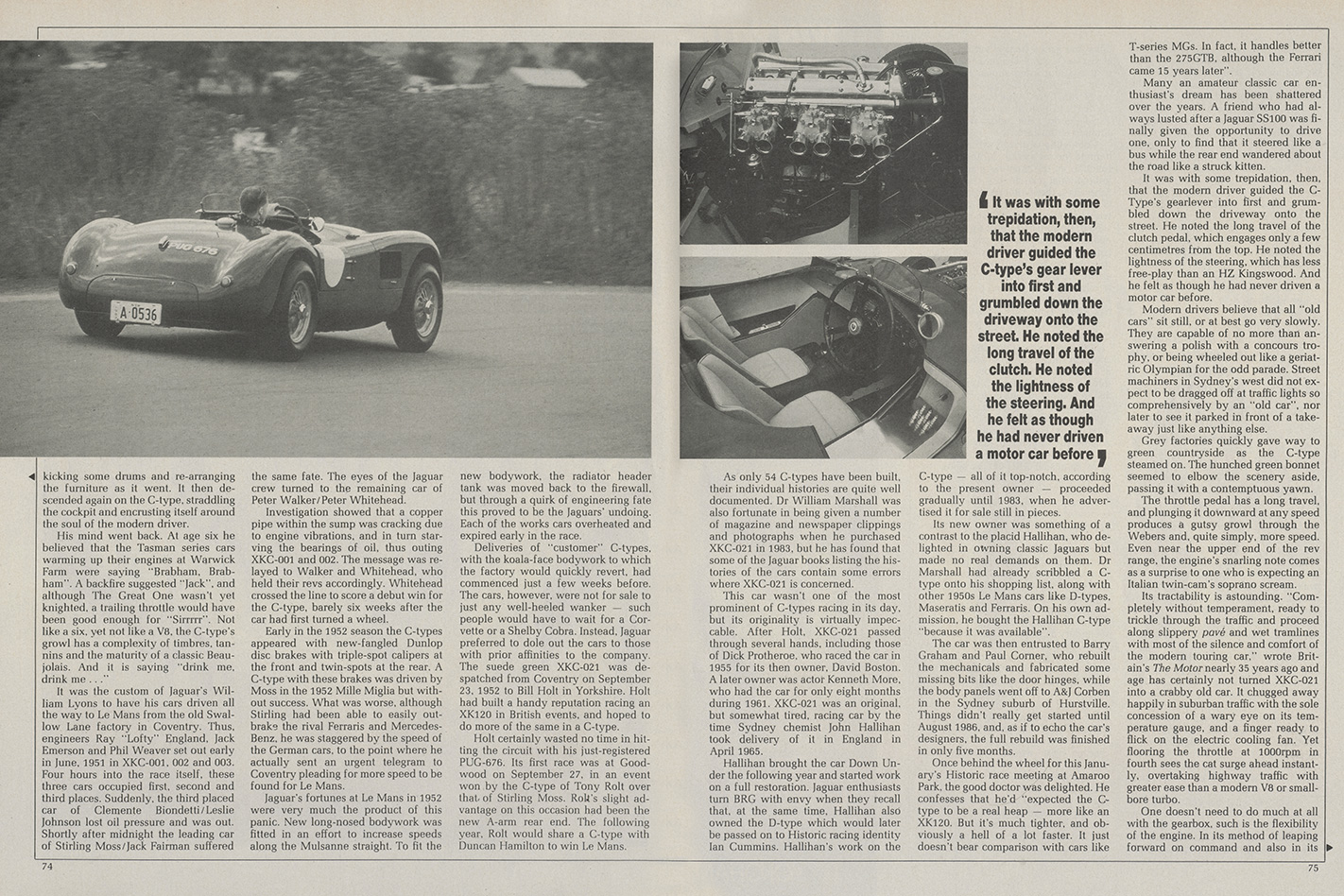
The suede green XKC-021 was despatched from Coventry on September 23, 1952 to Bill Halt in Yorkshire. Halt had built a handy reputation racing an XK120 in British events, and hoped to do more of the same in a C-type. Halt certainly wasted no time in hitting the circuit with his just-registered PUG-676. Its first race was at Goodwood on September 27, in an event won by the C-type of Tony Rolt over that of Stirling Moss. Rolt’s slight advantage on this occasion had been the new A-arm rear end. The following year, Rolt would share a C-type with Duncan Hamilton to win Le Mans.
As only 54 C-types have been built, their individual histories are quite well documented. Or William Marshal! Was also fortunate in being given a number of magazine and newspaper clippings and photographs when he purchased XKC-021 in 1983, but he has found that some of the Jaguar books listing the histories of the cars contain some errors where XKC-021 is concerned.
Hallihan brought the car Down Under the following year and started work on a full restoration. Jaguar enthusiasts turn BRG with envy when they recall that, at the same time, Hallihan also owned the D-type which would later be passed on to Historic racing identity Ian Cummins. Hallihan’s work on the C-type – all of it top-notch, according to the present owner – proceeded gradually until 1983, when he advertised it for sale still in pieces.
Its new owner was something of a contrast to the placid Hallihan, who delighted in owning classic Jaguars but made no real demands on them. Dr Marshall had already scribbled a C-type onto his shopping list, along with other 1950s Le Mans cars like D-types, Maseratis and Ferraris. On his own admission, he bought the Hallihan C-type “because it was available”.
The car was then entrusted to Barry Graham and Paul Corner, who rebuilt the mechanicals and fabricated some missing bits like the door hinges, while the body panels went off to A&J Corben in the Sydney suburb of Hurstville. Things didn’t really get started until August 1986, and, as if to echo the car’s designers, the full rebuild was finished in only five months.
Once behind the wheel for this January’s Historic race meeting at Amaroo Park, the good doctor was delighted. He confesses that he’d “expected the C-type to be a real heap – more like an XK120. But it’s much tighter, and obviously a hell of a lot faster. It just doesn’t bear comparison with cars like T-series MGs. In fact, it handles better than the 275GTB, although the Ferrari came 15 years later”.
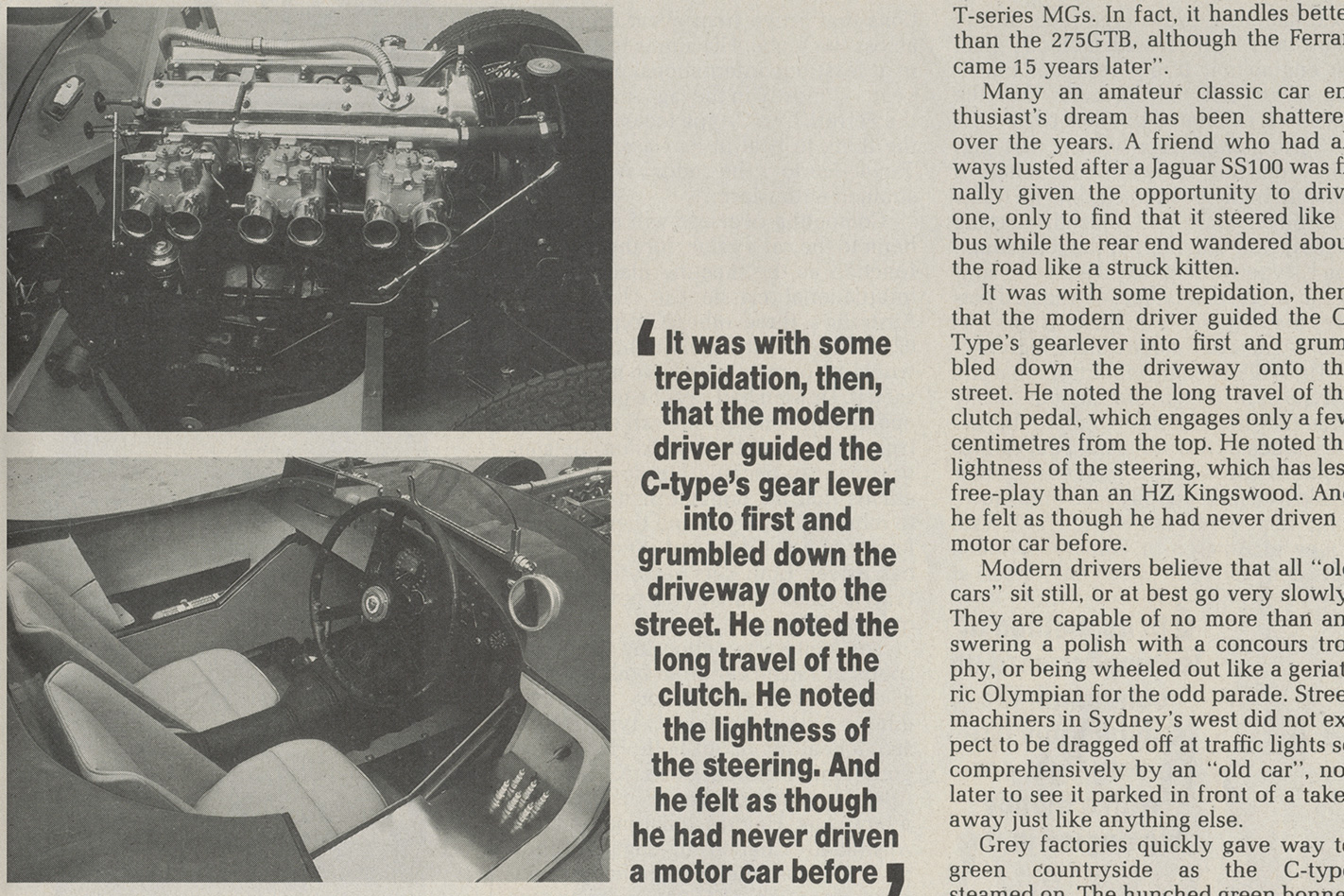
Modern drivers believe that all “old cars” sit still, or at best go very slowly. They are capable of no more than answering a polish with a concours trophy, or being wheeled out like a geriatric Olympian for the odd parade. Street machiners in Sydney’s west did not expect to be dragged off at traffic lights so comprehensively by an “old car”, nor later to see it parked in front of a takeaway just like anything else.
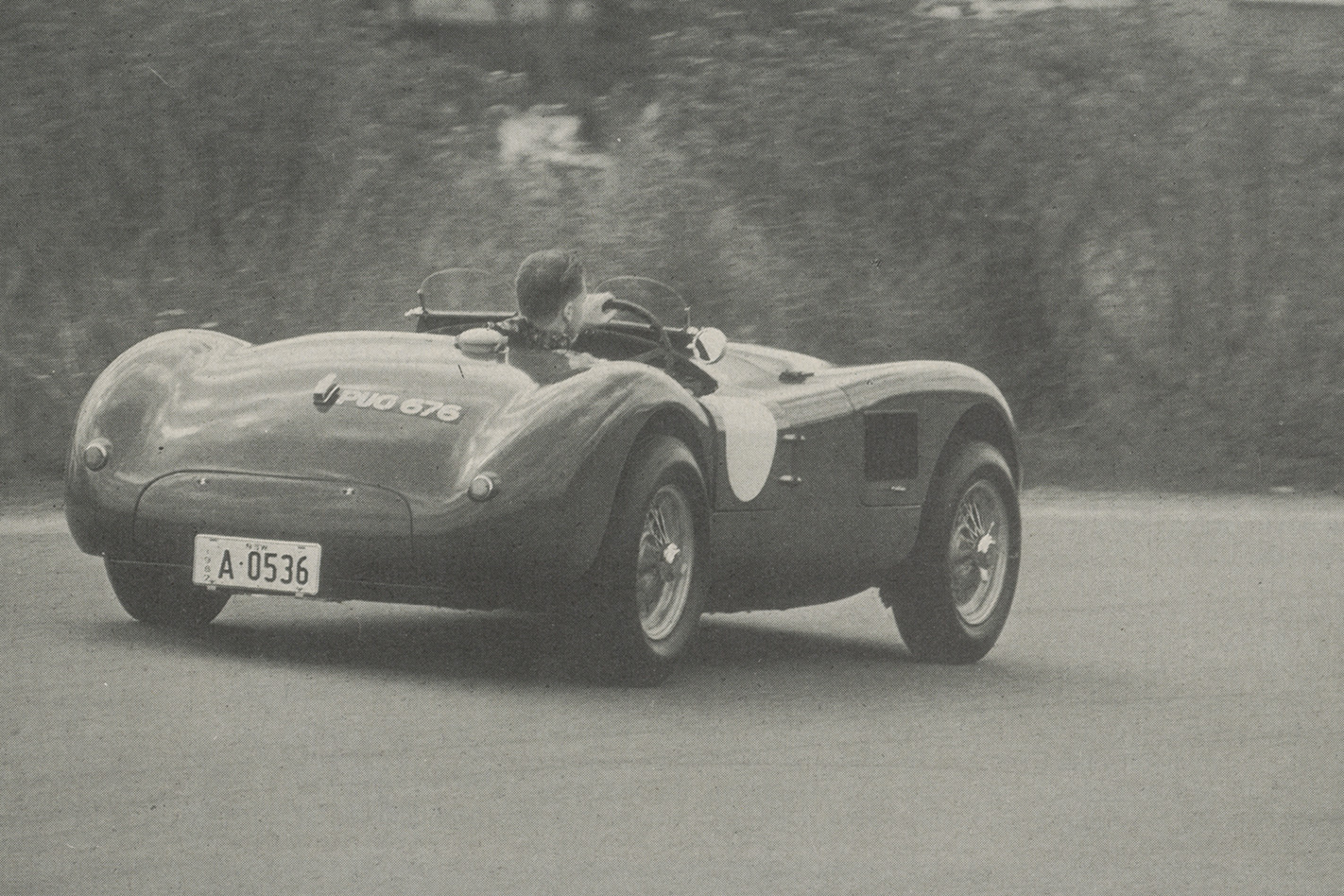
Grey factories quickly gave way to green countryside as the C-type steamed on. The hunched green bonnet seemed to elbow the scenery aside, passing it with a contemptuous yawn. The throttle pedal has a long travel, and plunging it downward at any speed produces a gutsy growl through the Webers and, quite simply, more speed. Even near the upper end of the rev range, the engine’s snarling note comes as a surprise to one who is expecting an Italian twin-cam’s soprano scream.
Its tractability is astounding. “Completely without temperament, ready to trickle through the traffic and proceed along slippery pave and wet tramlines with most of the silence and comfort of the modern touring car,” wrote Britain’s The Motor nearly 35 years ago and age has certainly not turned XKC-021 into a crabby old car. It chugged away happily in suburban traffic with the sole concession of a wary eye on its temperature gauge, and a finger ready to flick on the electric cooling fan. Yet flooring the throttle at 1000rpm in fourth sees the cat surge ahead instantly, overtaking highway traffic with greater ease than a modern VB or small-bore turbo.
One doesn’t need to do much at all with the gearbox, such is the flexibility of the engine. In its method of leaping forward on command and also in its road manners, the C-type feels mostly like a very light car with a bloody great big engine in it. It requires much pinching of oneself to remember that the speedo is calibrated in miles per hour.
Stirling Moss has written that Jaguars from this era were best suited to smooth, high-speed tracks like Le Mans and Silverstone, and indeed, steering across to the shoulder of the road found the C-type wanting to take a good sniff at the verge, and on fast corrugated corners the rear end is inclined to step offline – sometimes quite alarmingly.
Dr William Marshall attests that the C-type is a delight on smooth racing circuits, where he likes to drive this car very much as it was meant. Paul Corner assumes the air of a nervous mother while Marshall happily tells of his race-long dice with Les Wright’s Buckle coupe at Amaroo in January. A touch between the pair over the crest at Bitupave resulted in shreds of Wright’s rubber being left on the C-type’s knock-on hub, and 61-second laps show Marshall wasn’t kidding .. .
The man has an admirable philosophy. “The car was made to race, that’s what it’s for. It happens that I race to win. I enjoy having it, and I enjoy caning it”. But what if he were to hang the thing on a fence somewhere? “Ah, well, we’d just take it home and fix it. Nothing’s irreparable”. Lines that flow easily from the tongue of one of Sydney’s leaders in reconstructive surgery. Paul Corner, meantime, looks pale.
Acknowledging his enthusiasm, the Panalpina World Transport company and the Australian National Line have got well behind the speed-hungry surgeon, enabling him to accept the invitations that arrive from event organisers across the globe. His aim is to compete in at least one international event each year – “mostly in the Jag. or I may take the Ferrari. The C-type looks like being the thing to beat in its class in the ’88 Targa Florio”, he adds with unrestrained enthusiasm.
Competing overseas will also do no harm to the car’s value. for these events function as the meeting place for the international classic car clique. Like Australia’s three other C-types, XKC-021 is known intimately to hundreds of would-be owners who have never even seen it. Or Marshall says he gets at least one international phone call each week from some well-heeled Briton, Belgian or American begging him to sell it. He admits that his original plan had been to rebuild the C-type and then flog it in favour of a D-type, “but everyone who has driven both cars says that the C-type is nicer to drive. It’s not quite the quickest, though … “
For collectors, choosing a classic sports or racing car often boils down to a choice between history and condition. Australia’s four C-types represent a healthy mix of both. Historic car guru John Blanden owns XKC-041 in Adelaide, an ex-Ecurie Ecosse car which Les Hughes, chairman of the Australian Council of Jaguar Clubs, says is “absolutely magnificent” and rates alongside XKC-021 as being two of the most original C-types.
Remarkably, the sister car to Blanden’s XKC-042 resides in Melbourne and is, according to Les Hughes, “basically original but a bit tired”.
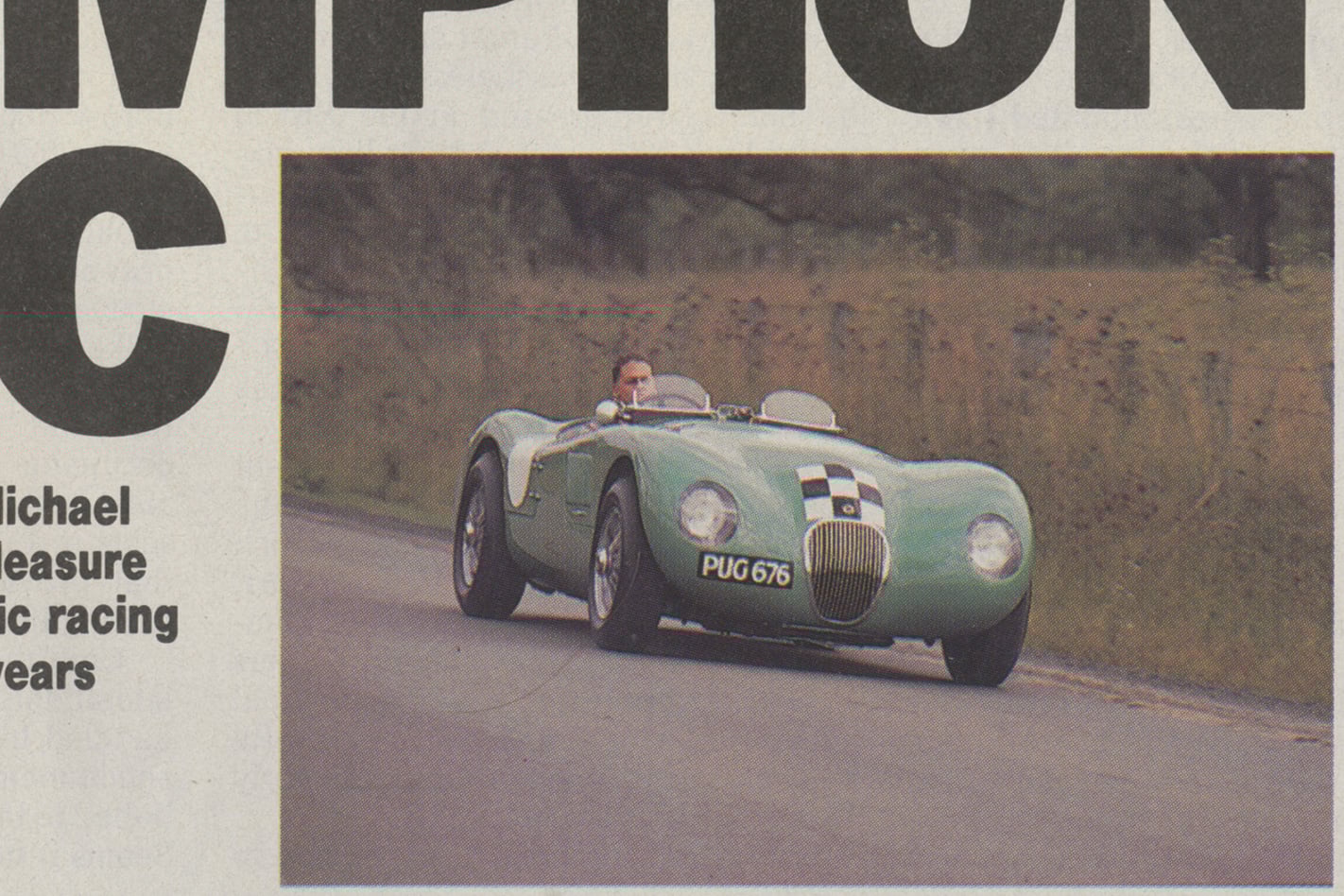
The weight of the C-type’s history and present-day value became entirely secondary as we passed trucks and traffic on the freeway taking us home. We were struck by the realisation that modern motoring is pure folly. If we wanted to change lanes we simply did it. If we wanted to see behind, we turned our heads and enjoyed the uninterrupted view. If we wanted to get in or out of the car, we did so unhindered by seat belts and door locks. And if we had crashed, we would probably have been killed.
And the fact that we could open three carburettors, accelerate the motion of camshafts and valves, cause the engine to develop more power and thereby make our motor car travel more quickly, all by pushing one single pedal, became a thing of immense beauty.
Excluding concepts and one-off oddities, the rarest M3 of all came not from Munich but from Queensland, courtesy of Frank Gardner Racing.
In a joint venture with BMW Motorsport, FGR built 15 E36 M3Rs to homologate the car for local endurance racing.
Porsche found enough customers to justify importing the 911 RS CS, while Mazda’s skunkworks was whipping up the RX-7 SP, so Gardner and his crew set to work developing the E36 into a potent racer.
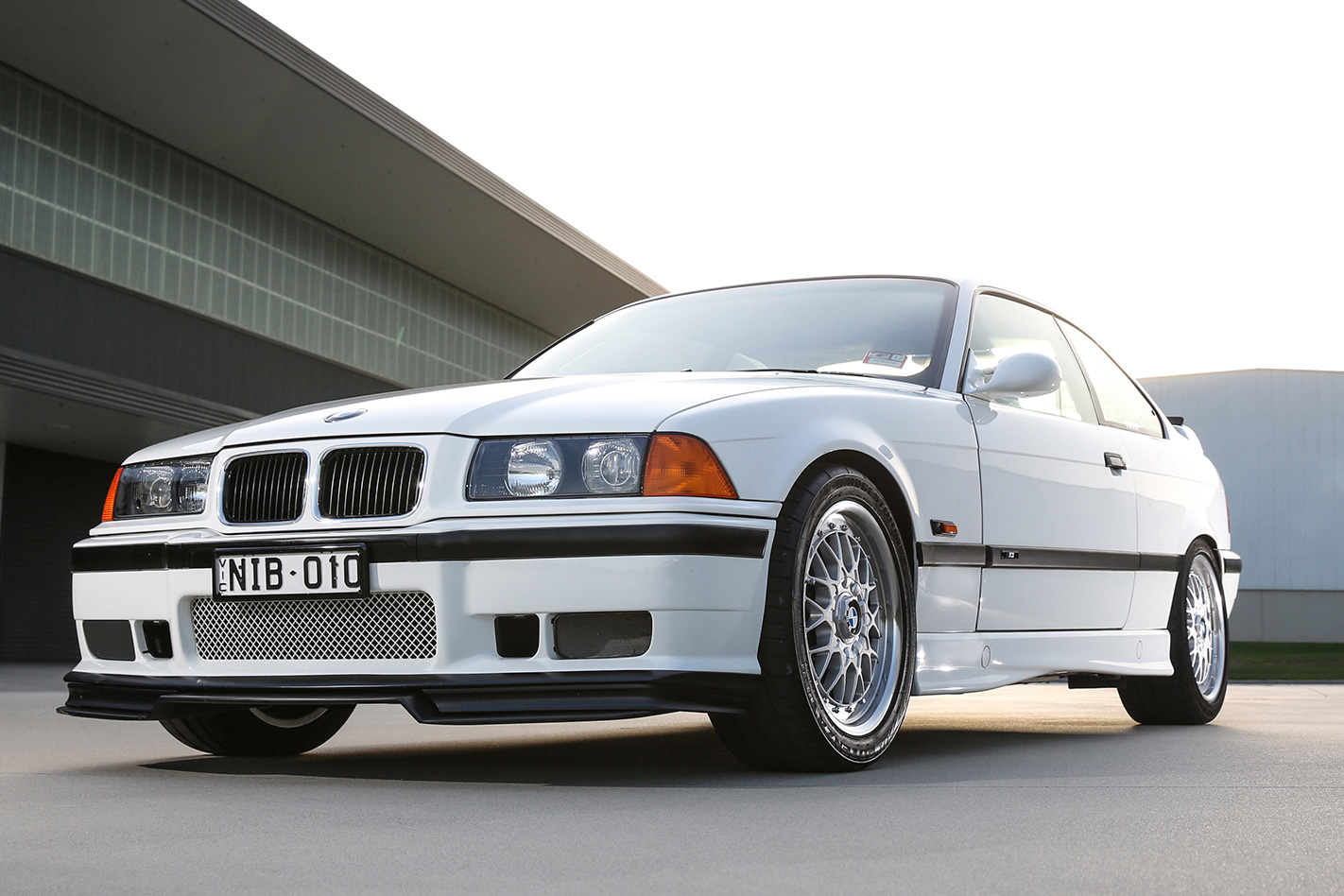
The 2990cc S50 B30 straight six benefitted from new camshafts, a revised intake, optimised exhaust ports, a dual-pickup oil sump and a new ECU to produce 239kW at 7200rpm and 320Nm at 3500rpm. Further down the driveline there was a lightened flywheel and the option of two different clutches depending on whether the car was intended for race or road use.
Research indicates the car also used stronger 850Ci driveshafts and a shorter 3.23:1 final drive, however the maintenance bulletin from BMW Australia, which lists all M3R parts, makes no mention of these. We suspect the latter is likely but the former not.
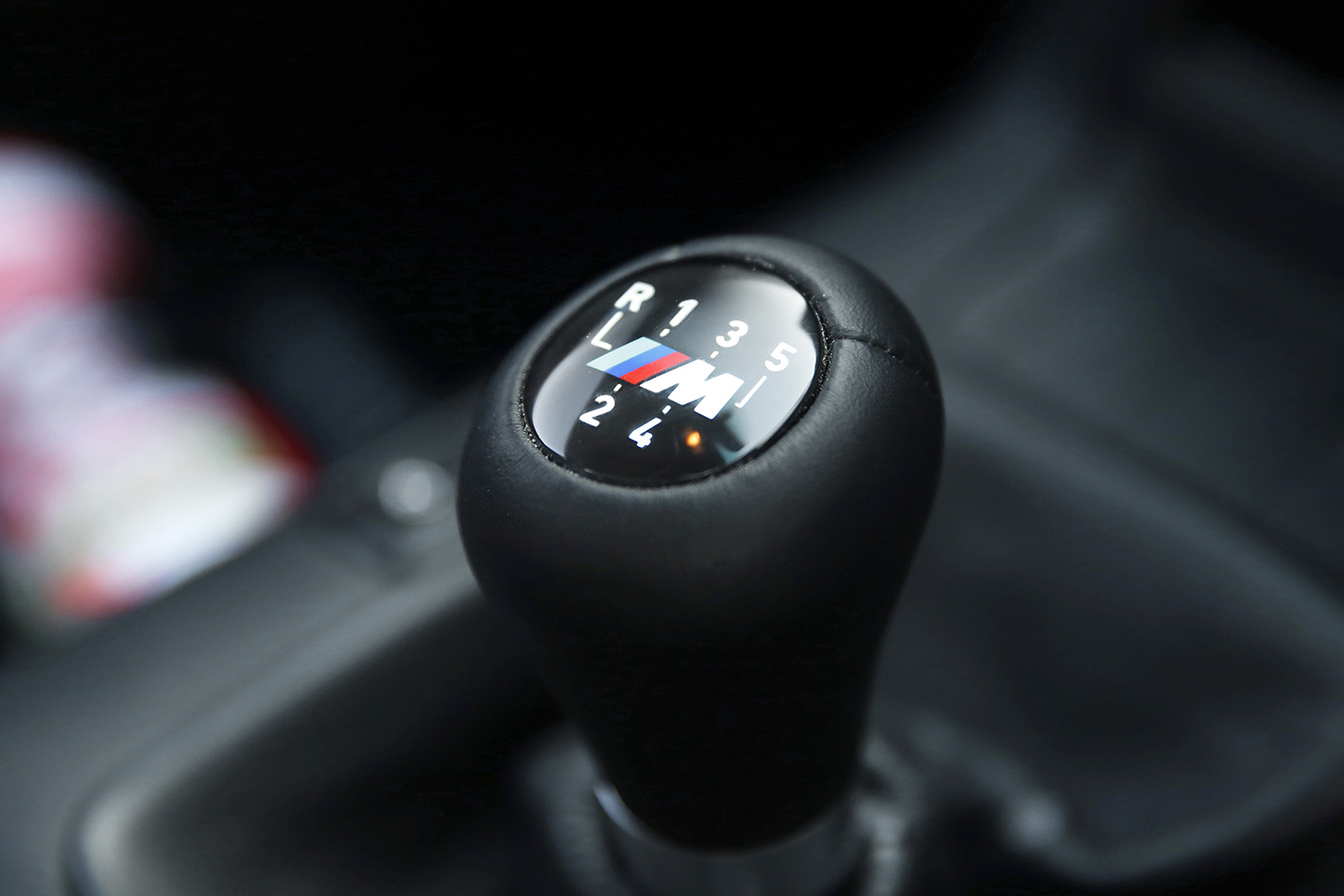
Standard wheels were 17 x 7.5-inch front and 17 x 8.5-inch rear, but apparently all cars were fitted with optional 17 x 8.0-inch fronts.
BMW M3/M4 Pure announced from $129,900
The M3R wore a $189,450 price tag, a whopping $64,800 more than the regular M3 Coupe. It wasn’t any faster either, stopping the clocks at 5.74sec (0-100km/h) and 14.02sec (0-400m) versus the regular car’s 5.69sec and 13.96sec.
In a comparo against its Mazda and Porsche rivals the verdict was that the BMW was neither fish nor fowl, compromised compared to the standard car yet not fast enough to compensate.
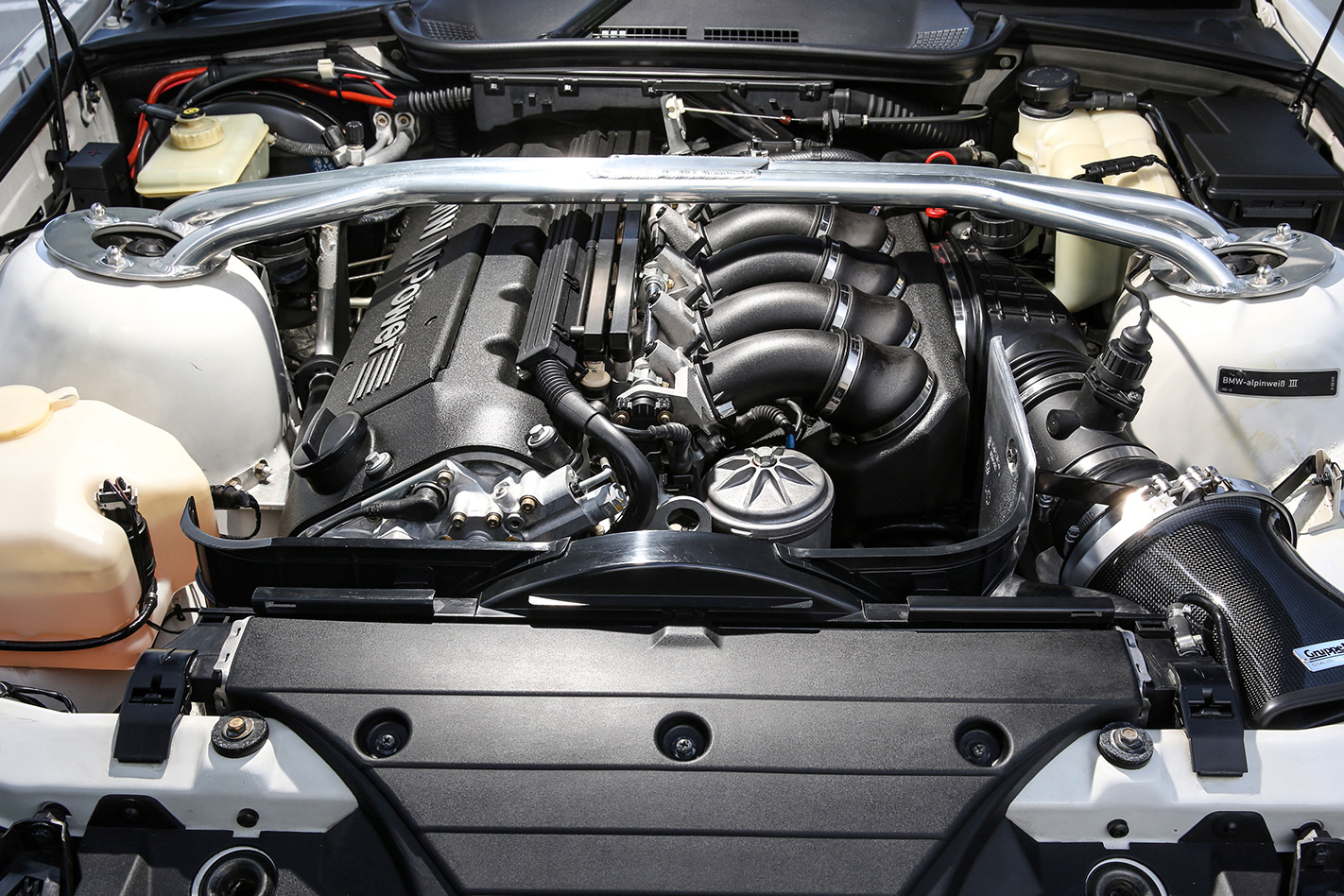
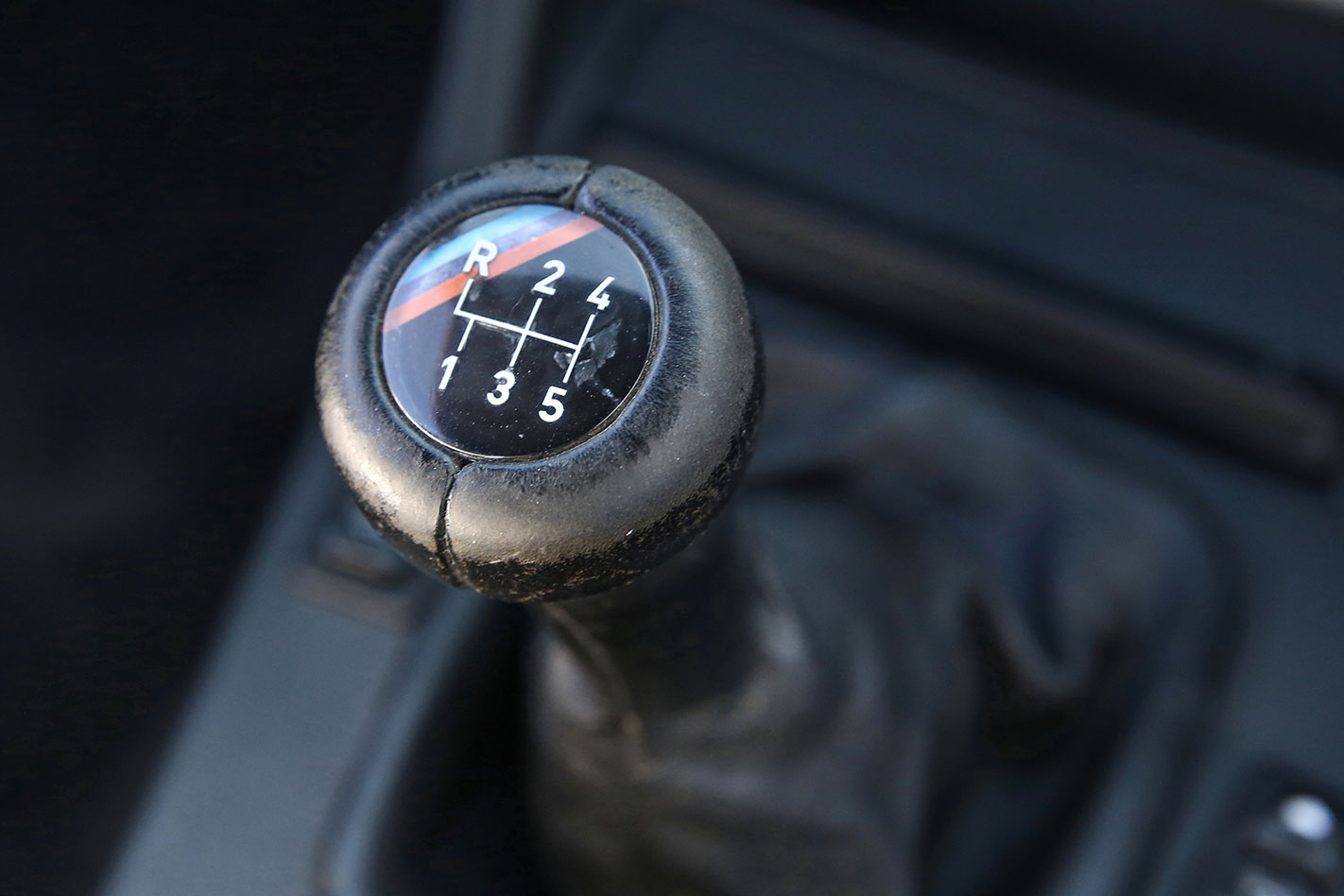
There are still just five ratios, but the E30’s long throw has been replaced by a much tighter gate, and the standard racing clutch has thankfully been replaced by a more progressive item.
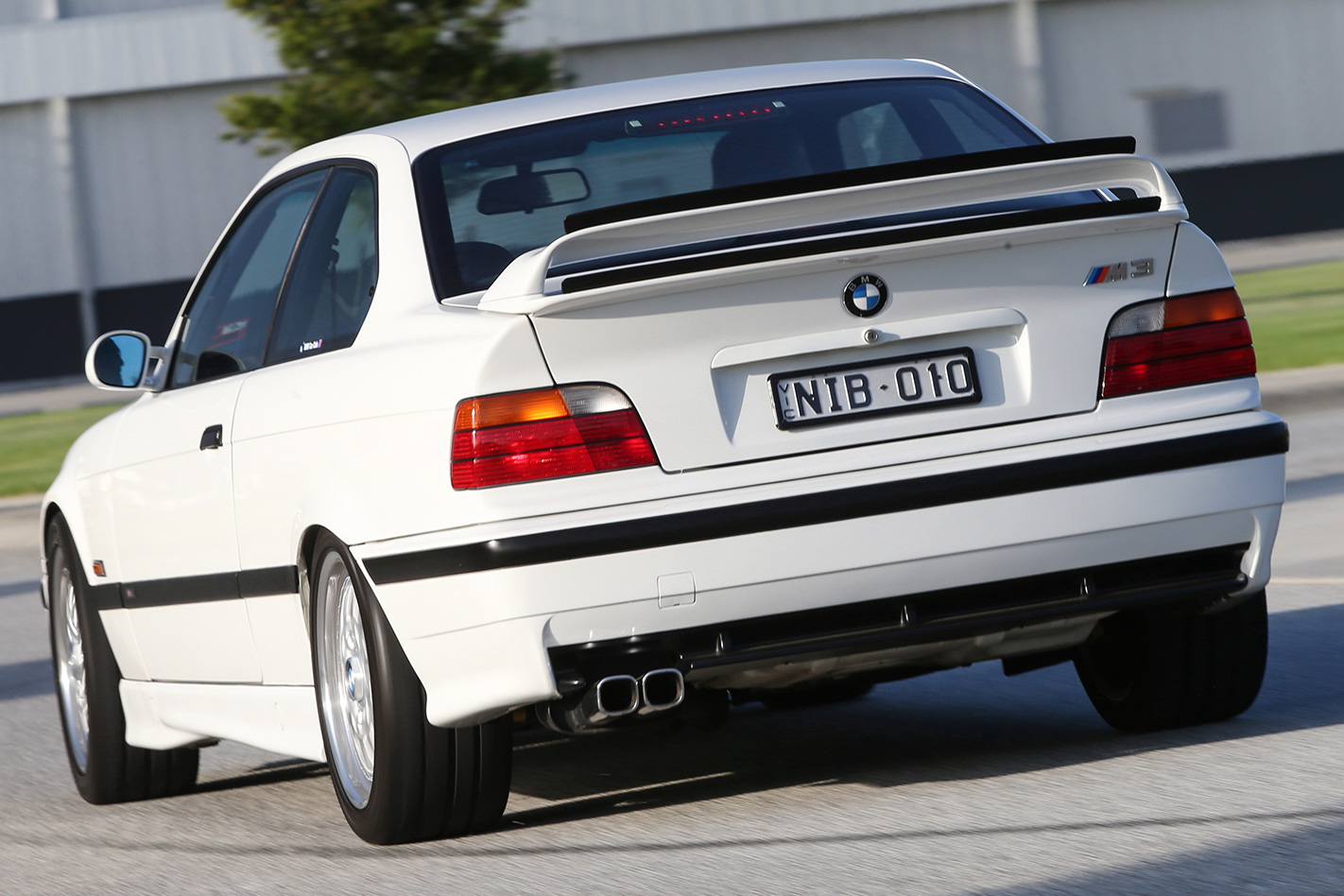
Like the E30 the M3R feels to sit squarely on all four tyres and quickly inspires confidence, though the steering lacks feedback and the overly-large wheel dulls initial response.
AUSTRALIA’S Daniel Ricciardo has scored his first win of the year – and his fifth in Formula One – after a madhouse, headshaking Azerbaijan Grand Prix in which the two leading world title protagonists clashed spectacularly.
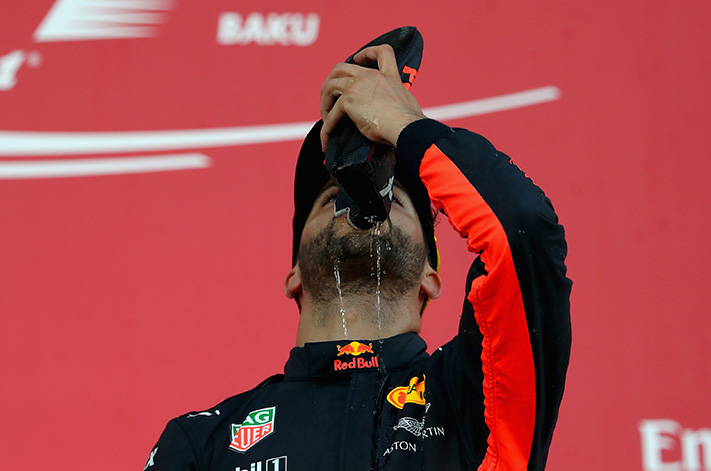
Ricciardo started 10th after a crash in qualifying, slipped back to 17th after an early pit stop to clear debris from the brake ducting of his Red Bull, and claimed the top of the podium after a stunning climb back remembered best for his superbly judged restart after the race had been red-flagged for 15 minutes.
“I have never really had a boring win and today was certainly not that,” said a giggling Ricciardo after his unexpected triumph in which championship contenders Hamilton and Vettel sparred on the track to finish well down the order.
“After all the chaos and the red flag I felt that a podium was in reach but then once Lewis had to pit and Seb had the penalty I knew the win was possible. I kind of said yesterday that after my qualifying mistake and starting in 10th place, today was going to be a race of no mistakes, capitalising on moments and opportunities and I felt like we did everything we could this afternoon.
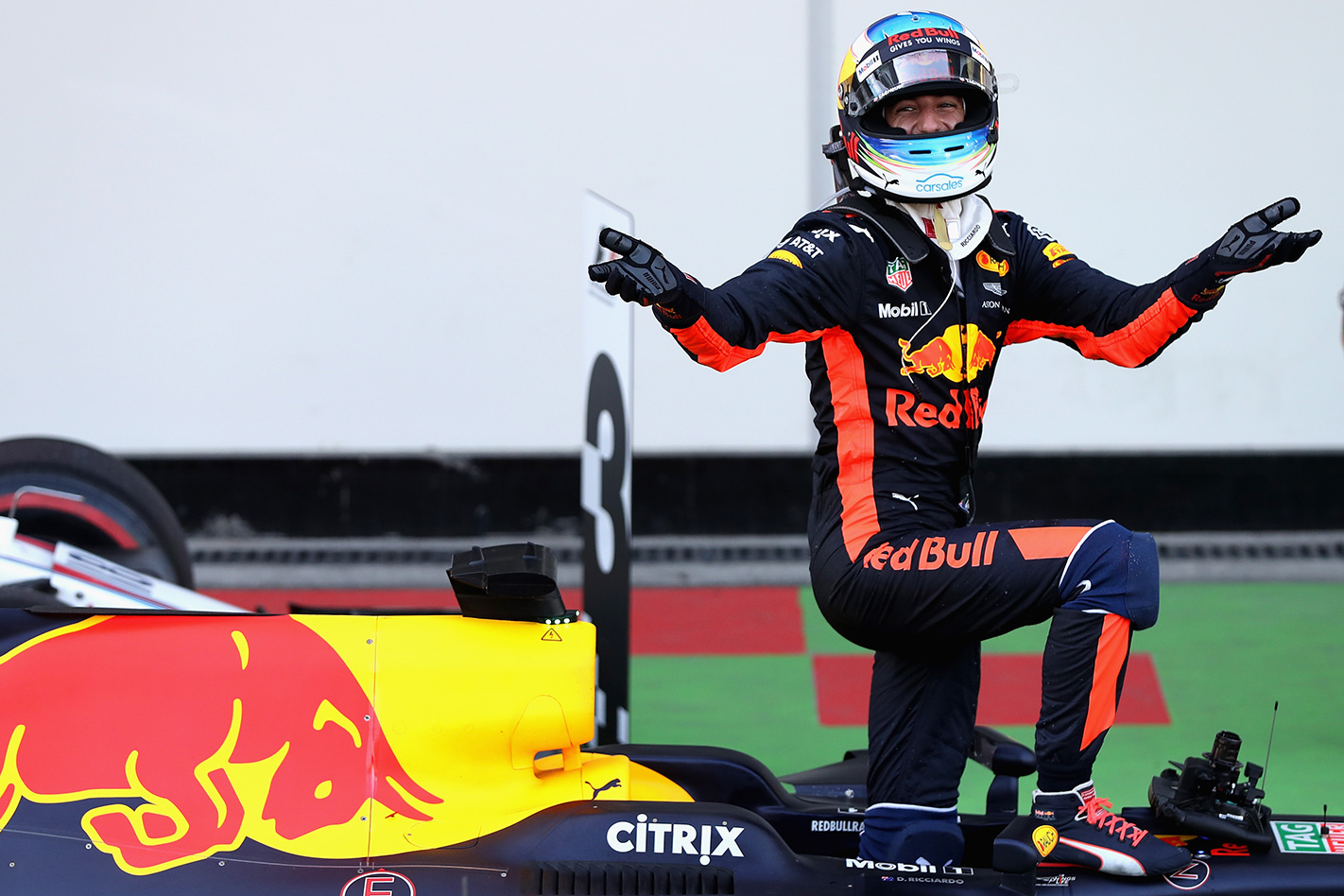
“What a day, it’s crazy and it’s slowly sinking in.”
There was also a whole lot more.
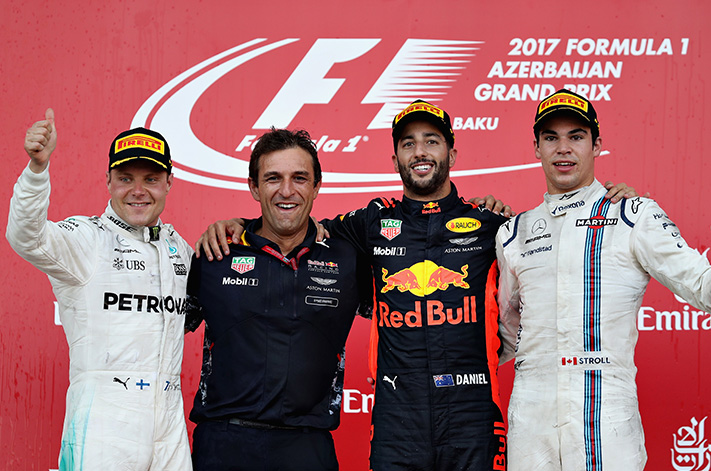
Second was stolen right on the finish line by Mercedes’ Valtteri Bottas, who at one point in the race was a lap down.
“Today was a crazy race, especially for me,” Bottas said. “I had a puncture on the first lap after the contact with Kimi on lap one. I was a lap down, then had to overtake the field under the safety car. The second safety car after that really helped me out and, step by step, I moved forward from there.”
“I’m just lost for words right now,” said the elated teenager. “It was such a hectic race and so much happened, but the team kept me cool on the radio, the pace was good, we took it to the end and stayed out of trouble.
“I can’t quite believe what’s just happened. We just lost out to Valtteri at the end there in one of the closest finishes of all time going side-by-side across the finish line. Coming into this weekend I never thought I would be standing on the podium.”
Who could have predicted that top three? Certainly not Ricciardo.
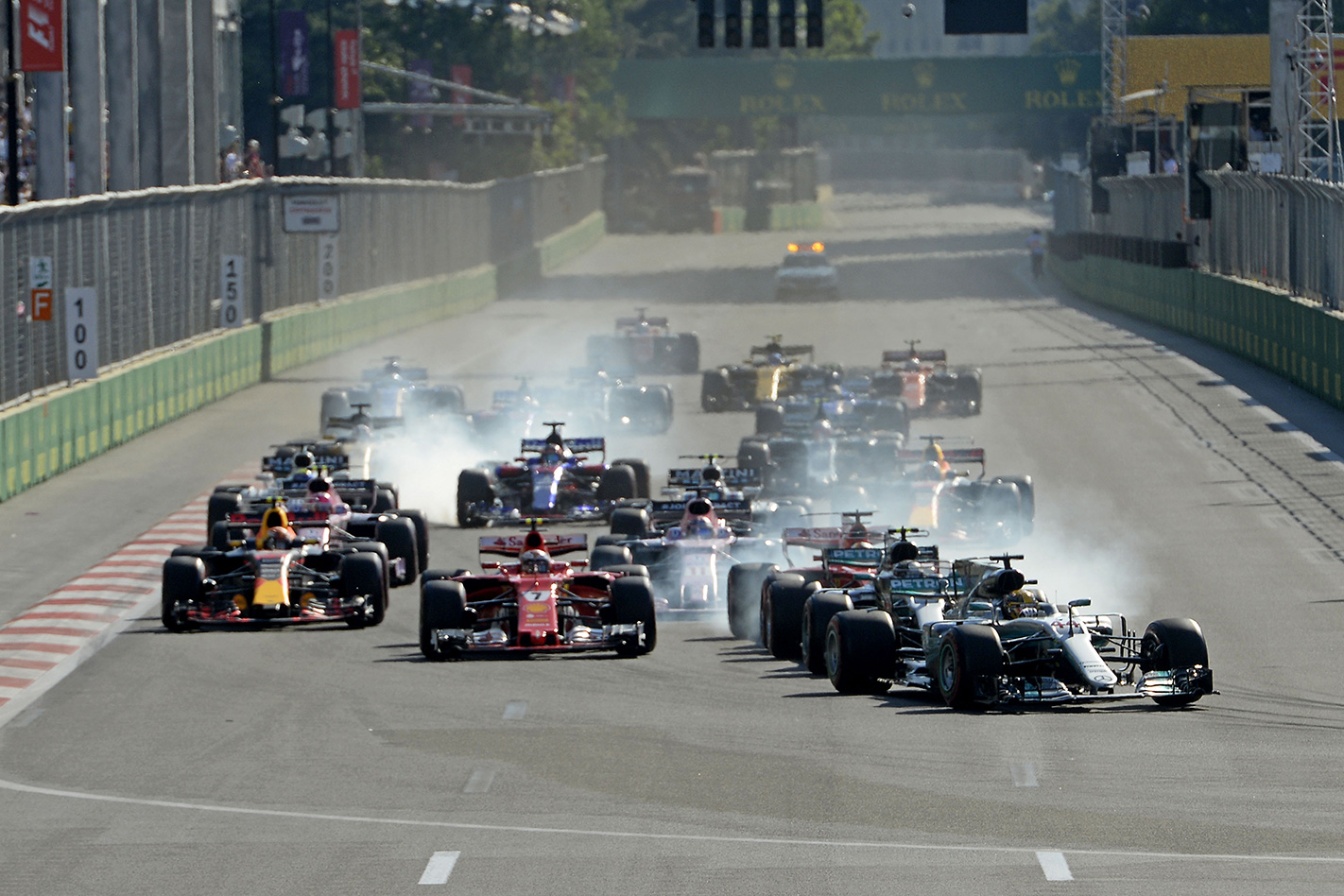
But the real, confusion came on Sunday at 5pm during a thrilling, bizarre contest that lurched and crashed through many plot changes. There was also some strange behaviour by championship leader, Ferrari’s Sebastian Vettel, who was obliged to take a penalty after some unseemly frolics with Lewis Hamilton at a safety car restart.
As the safety car was about to pull off, Vettel rear-ended his Mercedes enemy when either Hamilton lifted off the throttle, or the German was too enthusiastic in accelerating off a turn…
Carbonfibre flew everywhere. That wasn’t the end of it. Gesticulating angrily, Vettel immediately drew alongside, and appeared to steer into the side of the Mercedes as the two took to the pit radio to vent their displeasure.
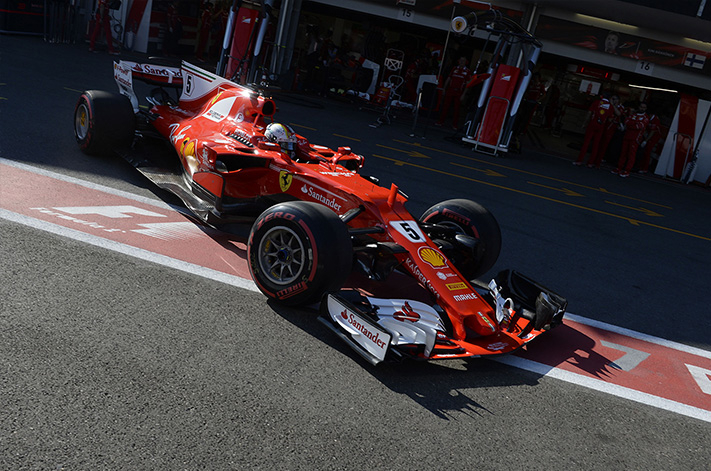
“He just turned in and hit me,” Hamilton reported.
The safety car was quickly deployed again for debris and there was more car crunching in the next attempted resumption with the two Force India cars getting together, ending Perez’s 37-race sequence of race finishes. More importantly, the biffo killed chances of both cars getting high finishes.
Kimi Raikkonen picked up a debris-related rear puncture.
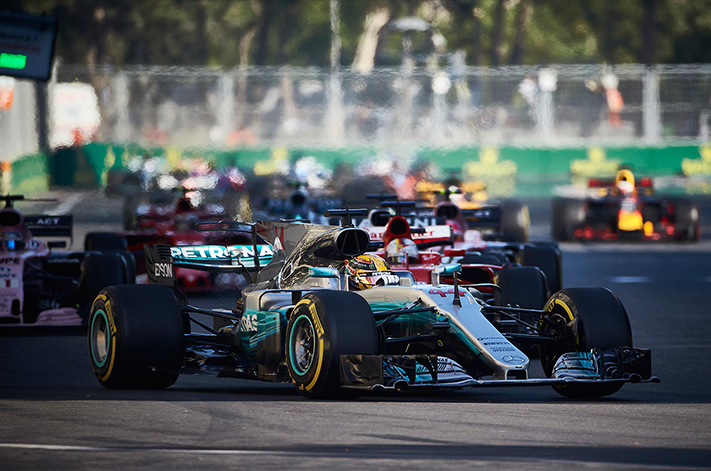
The restart, uneventful between Hamilton and Vettel, brought Ricciardo into play. From fifth, he opportunistically fired past the two Williams (Felipe Massa troubled by a broken damper) in a daring, cleverly judging late braking move into turn one.
He was in a podium position, but had half a race distance ahead of him.
Stroll was pushing hard but Ricciardo reeled off some fast laps to ease the gap to a comfortable few seconds by the end.
The surprises kept coming when the television cameras picked up a potential safety issue with Hamilton’s u-shaped headrest, which was loose. The team asked him to attempt to push it into place on the straights. He couldn’t and then he was ordered to pit to have the errant item fixed.
That dropped him to seventh, which became eighth when Vettel was told to serve a 10-second pit-lane penalty for his fender bender with the Mercedes driver.
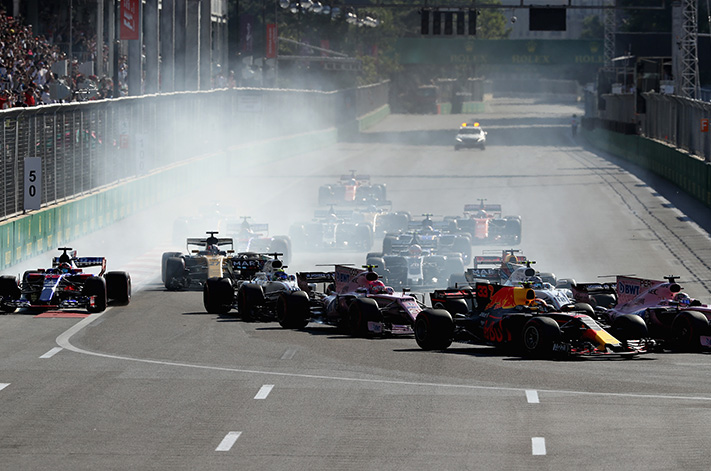
Elsewhere there was plenty going on, and more retirements than usual in the modern era.
Max Verstappen had another lively start but retired early with a Red Bull that failed again.
Contact with teammate Perez aside, Esteban Ocon (Force India) drove strongly for sixth, with Haas’ Kevin Magnussen, and Carlos Sainz (Toro Rosso) also picking up good points.
And here’s the biggie: Fernando Alonso scored McLaren’s first points of the year with ninth, ahead of Pascal Weherlein (Sauber).
Leaving Baku, Hamilton and Vettel must have reflected on what might have been.
Hamilton probably lost the win due to the wayward headrest, while Vettel’s rash retaliatory move cost him likely victory.
Hamilton wasn’t cutting Vettel any slack over their incident. “I slowed down in the same place on the entry to T15. At that point, it is up to me to control the pace and then I felt a bump from behind. But that wasn’t the issue for me – everybody saw clearly what happened after. All the young kids in other series look up to us, as champions, to set an example and that is not the behaviour you expect to see from a multiple champion.”
Brisbane-born New Zealander Scott Dixon has beaten the Team Penske armada to win his first IndyCar race of the season, at Grand Prix Road America.
Dixon, who raced at Le Mans last weekend, started from fifth behind the Penskes, but pounced on the lead on lap 31 of the 55-lap race and was never headed.
American Josef Newgarden was second, with pole-sitter Helio Castroneves third.
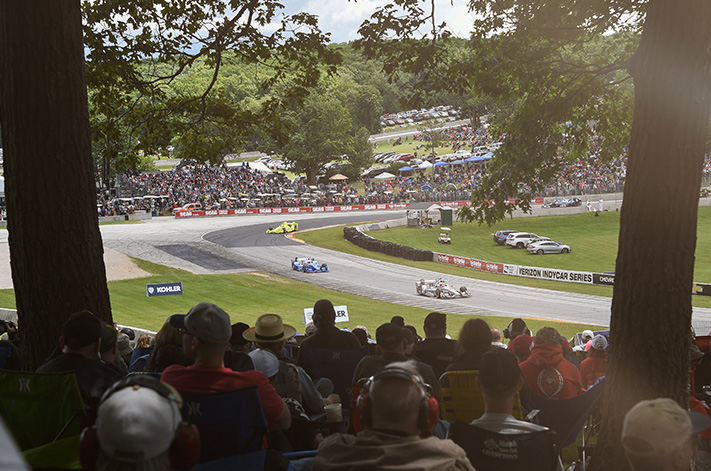
Toowoomba’s Will Power, who started on the outside of the front row, was fifth. He won at Road America a year ago.
It was an unexpected success for the Chip Ganassi-Honda driver, with Team Penske Chevrolets expected to dominate the race after their drivers claimed the first four positions on the grid during qualifying.
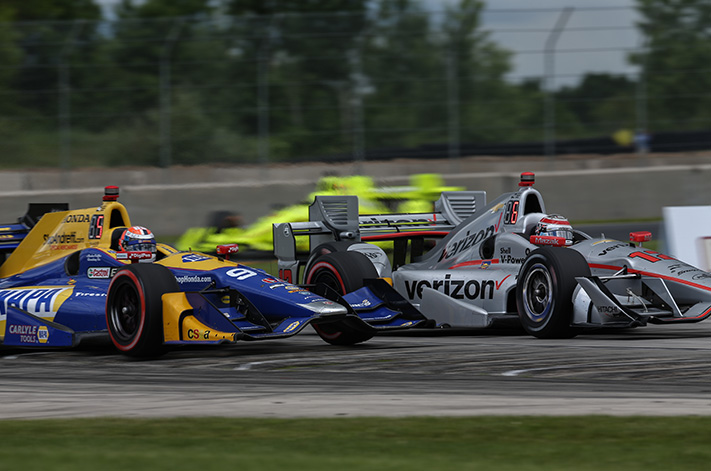
“It’s not what I expected; I’m just so pleased for the whole team.”
He made a crucial pass on Newgarden at a restart, using a tyre advantage to surprise the leader with a stunning outside pass.
“Josef made it easy for me,’ Dixon said, understated as usual.
Rossi wins Dutch MotoGP thriller
The world’s most popular motor sporting figure, Valentino Rossi, thrilled his army of followers when staving off the threat of his close mate Danilo Petrucci to win the Dutch Grand Prix at Assen in a race result in doubt to the last corner.
In another sign of his class and longevity, it was the 38-year-old Italian’s first win of 2017, coming 20 years and 313 days after his first Grand Prix victory.
Rossi’s Yamaha teammate Maverick Viñales crashed out of the race – and the championship lead – during a troubled weekend made difficult by the changeable weather conditions.
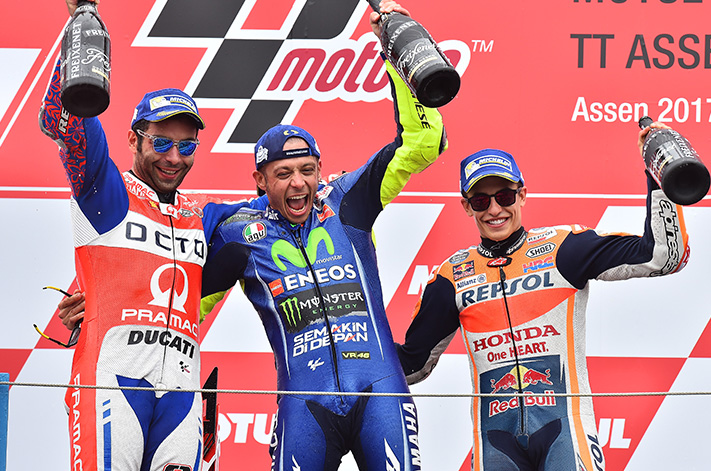
Australia’s Jack Miller finished sixth in a race with plenty of fallers.
At the start, Rossi slotted in behind Johann Zarco and Marquez while Ducati’s Petrucci continued his fine recent form to tag along with the front bunch.
Rossi picked off Marquez for second and then pounced on Zarco for the lead a lap later, the French rookie fading with tyre issues.
With eight laps remaining, Rossi looked in charge, but then light rain started to fall.
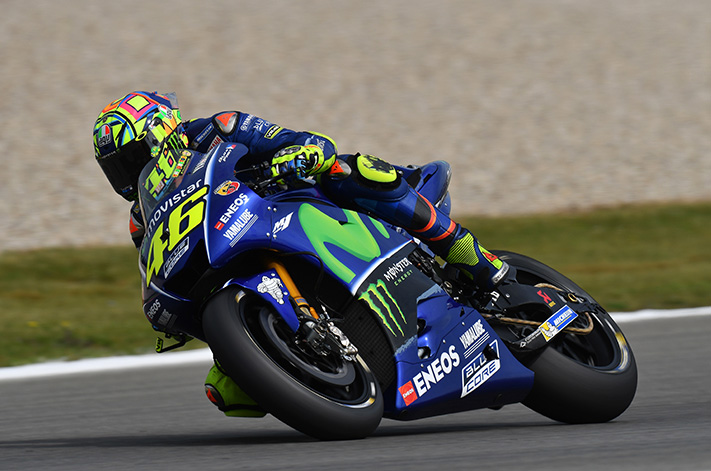
Rossi, pioneering out front, eased off warily and lost much of his lead as Pedrucci, Marquez and the late-charging Andrea Dovizioso closed.
Petrucci, seeking his first MotoGP win, passed Rossi with five laps to go, but a lap later the more nimble Yamaha YZR-M1 regained the lead.
The last laps were drama filled as the pair scythed through backmarkers, with Pedrucci baulked on two occasions. Rossi held firm, taking a sensational win.
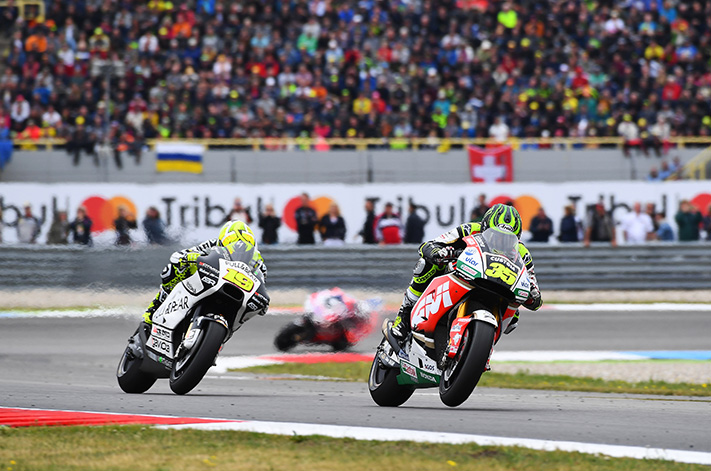
It must have been galling for multiple world champ Jorge Lorenzo on the factory Ducati to see Petrucci go within 0.063sec of victory when he could only land a distant 15th after changing bikes. He qualified 21st.
Dovizioso’s fifth place moves him into the lead of the MotoGP championship standings.
Just 11 points covers the top four, with Viñales second, from Rossi and Marquez.
FOR sale: One of the last Land Rover Defenders ever built. Oh, and more significantly, its owner hasn’t crashed it.
Yep, a two-door Land Rover Defender owned by actor Rowan Atkinson – best known for his character, the mischievous, Mini-driving Mr Bean – is up for sale. But unlike the ultra-rare, very quick and hideously expensive McLaren F1 he formerly owned, crashed – twice – and then sold, this one is believed to be one Defender that has never bent a fender in anger.
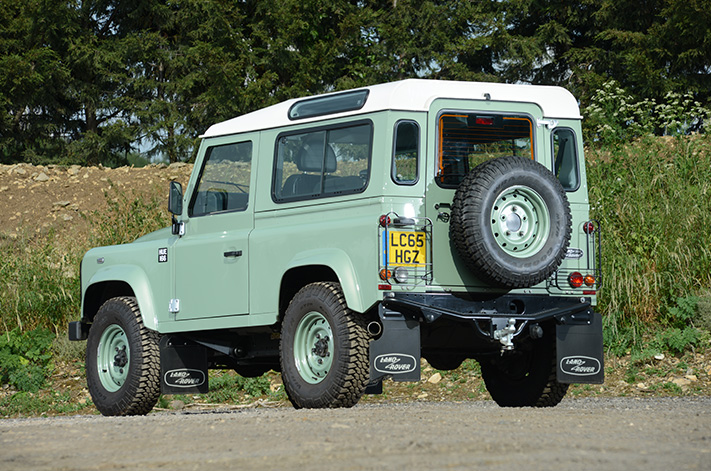
Unlike the $16 million McLaren, the Heritage Green Landie is only expected to fetch upwards of $60,000 when it is sold late next month – that’s still more than twice the retail price the rugged off-roader originally sold for.
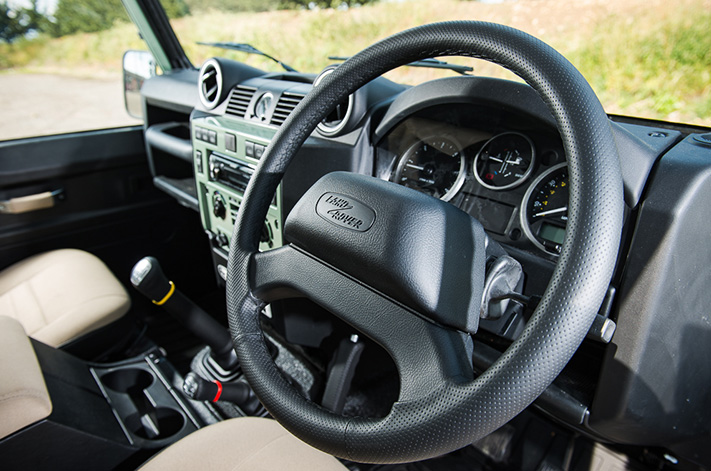
The auction bumf says this particular Land Rover Heritage series vehicle, was delivered to Atkinson in late November, 2015. It’s not an off-the-shelf version either, featuring digital radio, mudflaps, a towbar, a bespoke barrier for a dog, and rubber mats.
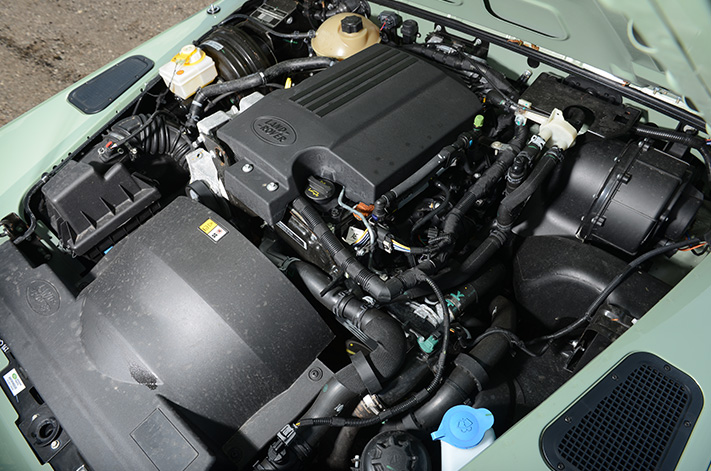
Atkinson’s personal car collection is believed to be extensive. As well as the banged-up McLaren, a car he’d owned since new and used as a daily driver, he’s rumoured to have owned everything from a gullwinged Mercedes-Benz SLS to an Aston Martin V8 Zagato, and an original Honda NSX (as well as a Honda Civic Hybrid).
The internet changed the way we ‘kick tyres’ in new-car showrooms. But it’s also changing the way car companies want sell their products to you.
Wander around any major shopping centre, and you’ll come across displays from car makers as diverse as BMW, Subaru and Tesla. Ask for a test drive, and in some cases the car will come to you, sometimes for the weekend, as the brands try and best show how their model shines. And sometimes, you don’t even need to talk to a salesperson.
The most disruptive brand when it comes to cutting-edge technology also happens to be the most innovative in terms of how it sells its products. In the US, specialist electric car maker Tesla has tried to reinvent the new-car showroom, encouraging its customers to order and pay online, and only wander into an Apple-style storefront to pick up their new ride.
“The online process is complementary to the in-store process,” a Tesla spokesman told WhichCar.
“There is consistency with the use of the design studio, allowing for customers to come in-store and be educated by the Tesla team, undertake a test drive, however be able to make decisions pertaining to their design in the comfort of their home if they wish.
“They are then able to place the order online, or go through their configuration in-store. This also allows for customers in locations where we do not have stores to order our vehicles as we continue to grow.”
Shopping centres have also become a beacon for car makers, where potential buyers hunting around for the latest fashion for their wardrobe could also be seeking the same thing for their driveway.
Mini pioneered the concept of pop-up stores in Australia, launching short-stay shopfronts that blurred the line between shopping centre and showroom. It’s now quite common to see miniature showrooms in busy shopping centre walkways where passers-by can get up close with new cars and form that first emotional connection – one that could one day translate to a sale.
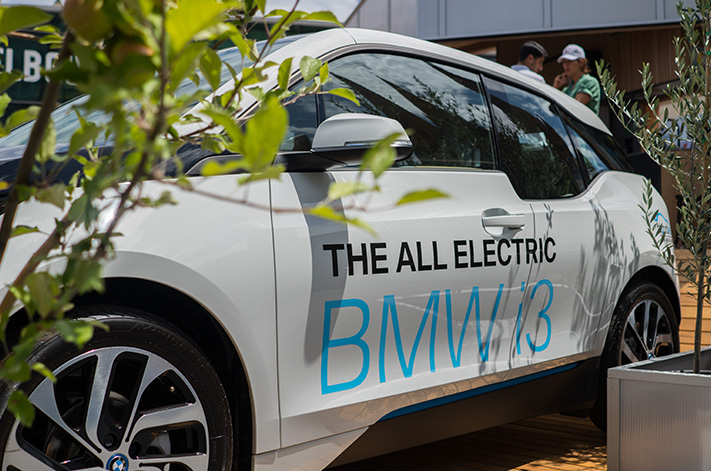
BMW isn’t even bothering with a car for its latest campaign to promote the i3. Instead, it is using virtual reality to get potential shopping centre-based customers up close with the most technology heavy model in its showroom. Passers-by can don a virtual reality headset to jump inside a BMW i3 made entirely out of pixels, and move around it using the same advanced graphics that once ran the styling studios of the world’s largest car companies.
It appears to be working; in its first few months, the augmented reality i3 had hosted 1000 people who had never experienced the brand before.
But it is not just about flogging cars inside the shopping centres. The car parks, too, have become a new playground for showcasing product.
BMW is at the forefront of this, too, sponsoring a number of heavily branded recharging points at Westfield shopping centres for its growing range of plug-in hybrid models, and the hybrid/electric “i” range that includes the i8 supercar and the i3 city runabout.
It hopes that as shoppers walk past, the exclusivity of the parking spaces – the recharging bays are located under cover and close to the shopping centre’s entrance – is enough to tip some buyers into thinking of investing in the plug-in tech when next they shop around for a new car.
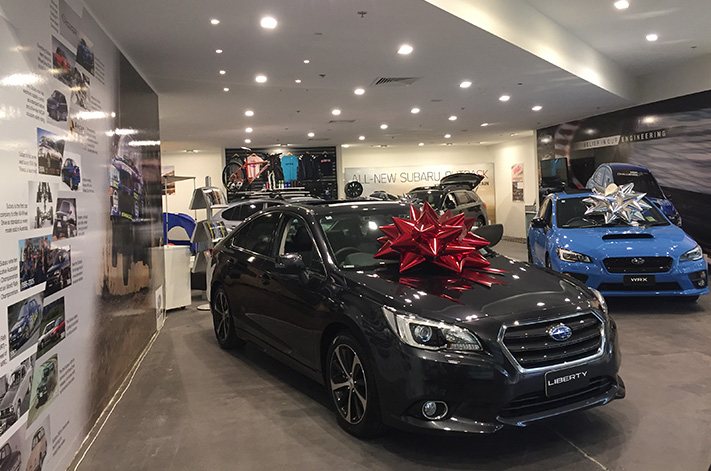
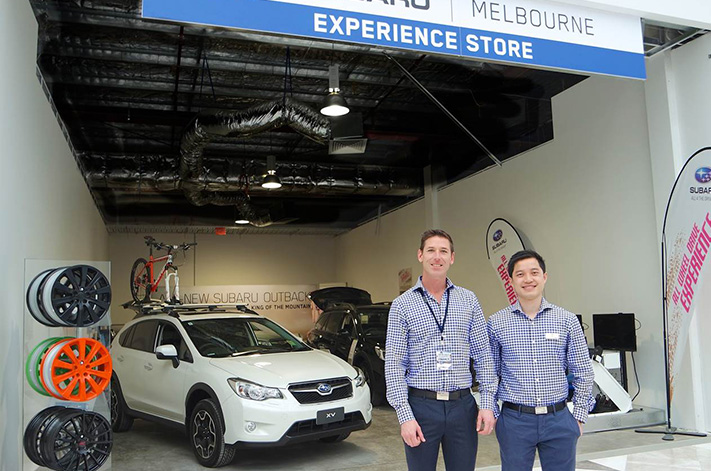
Likewise, Subaru is pushing into the shopping centre as a showroom of the future. It has started with a similar pop-up store to BMW’s idea, but plans to grow those that show promise into a permanent storefront.
“We had the opportunity to trial these pop-up stores over the past year and are encouraged by their success,” Subaru Australia managing director Colin Christie said. “Driven by the positive customer response and number of sales – more than 500 vehicles sold since its introduction – we are committed to offer this new kind of Subaru buying experience in other markets.”
Subaru has also experimented heavily with selling cars online, pushing specialist models including the BRZ sports coupe and WRX/Sti sedans via the platform. It has worked well for Subaru’s niche models, but now it plans to expand it to more mainstream models, including the recently launched XV small SUV.
“The biggest thing for us is giving options to customers,” Christie said. “The buy online platform, certainly there are people taking it up and that’s across BRZ, STi and Impreza, and now with XV,” he said.

The part of the website driving the online sales, he said, was the online car configurator, which had attracted 100,000 people since its launch who were keen to build a customised Subaru.
Christie said Subaru was looking at rolling the concept out across other models in the line-up.
“If customers want to buy cars this way, then it’s all about allowing them, in the comfort of their own home, to build and design their own cars and then basically interact with the dealer to transact.
“And that’s where the vast majority of people do it, they still want go in and interact with the dealer and have that support program and advice that they provide.”
Subaru is also about to launch a mobile test drive service where customers interested in a model can walk outside the door jump behind the wheel on their lunch break.
Despite its high-tech focus, the idea of selling cars online isn’t new. The first car maker to attempt to sell their products on the world wide web exclusively in Australia was Smart, the city car company owned by luxury car-making giant Mercedes-Benz.
Smarts sold here in very small volumes, with Mercedes-Benz electing in 2013 to move sales of the car exclusively online. It even offered customers the ability to have the cars delivered to their home, with all the necessary paperwork in tow, once the payment had cleared.
The trial was deemed an instant success after one of the first customers to use the service paid in full for a Smart – at 9.30pm on a Sunday night.
YOU CAN tell a lot about a man from his handshake.
First published in the June 2017 edition of Wheels Magazine, Australia’s most experienced and most trusted car magazine since 1953.
Mike Horn clamps you like a garbage compactor and then begins a process which feels as if he’s trying to dismember your limb with the intention of beating you with the soggy end. In his defence, I can understand why.
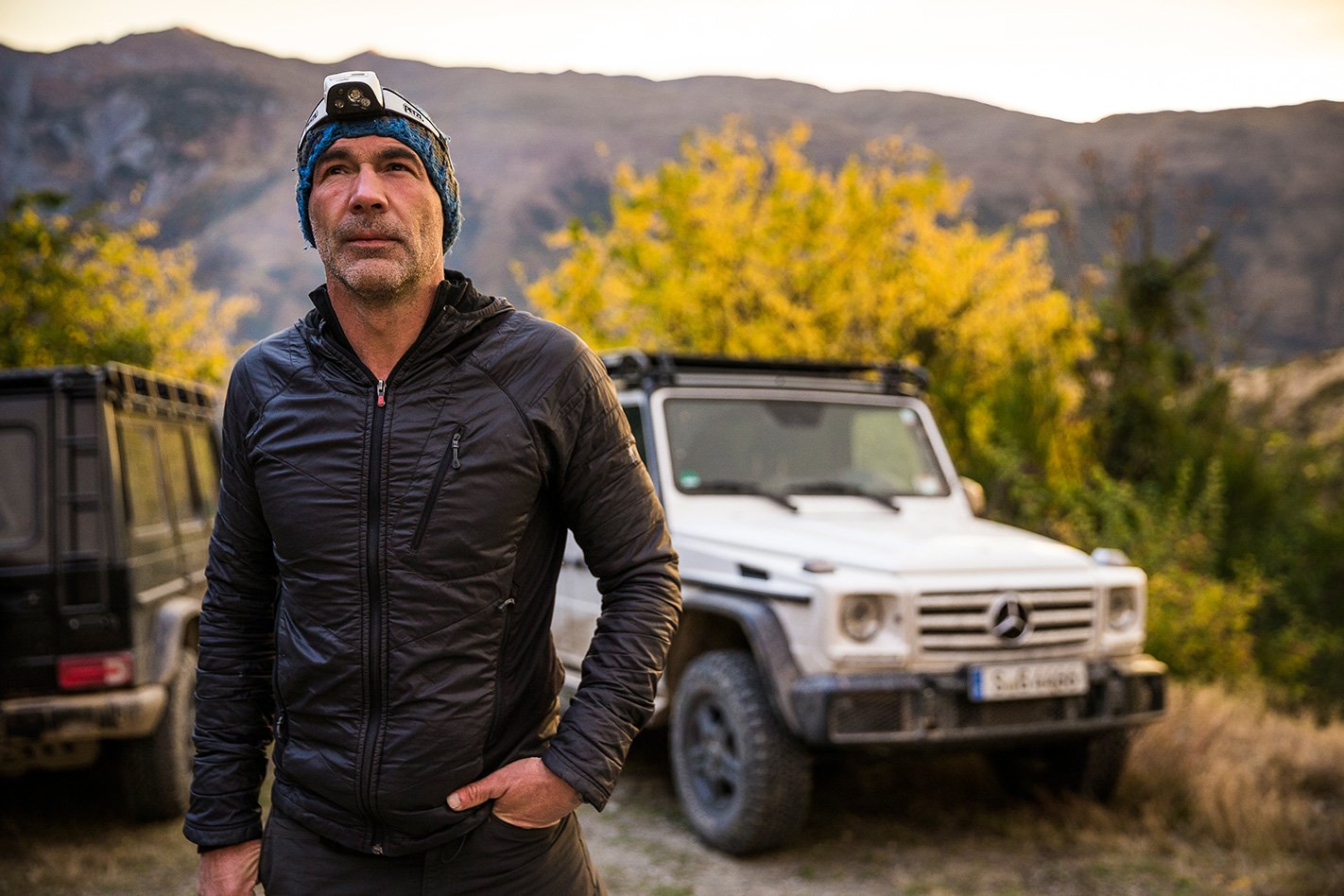
If you’re not acquainted with Horn’s canon of work, here’s a quick primer. He’s climbed 8000m peaks in the Himalayas without oxygen, he’s traversed the length of the Amazon on a boogie board, walked to the North Pole in the permanent darkness of winter, circumnavigated the globe at the equator under his own steam, and then done the same with the Arctic circle. At the moment he’s part way through Pole to Pole, an expedition that starts and ends in Monaco and which, as its name suggests, takes in solo crossings via the North and South Poles.
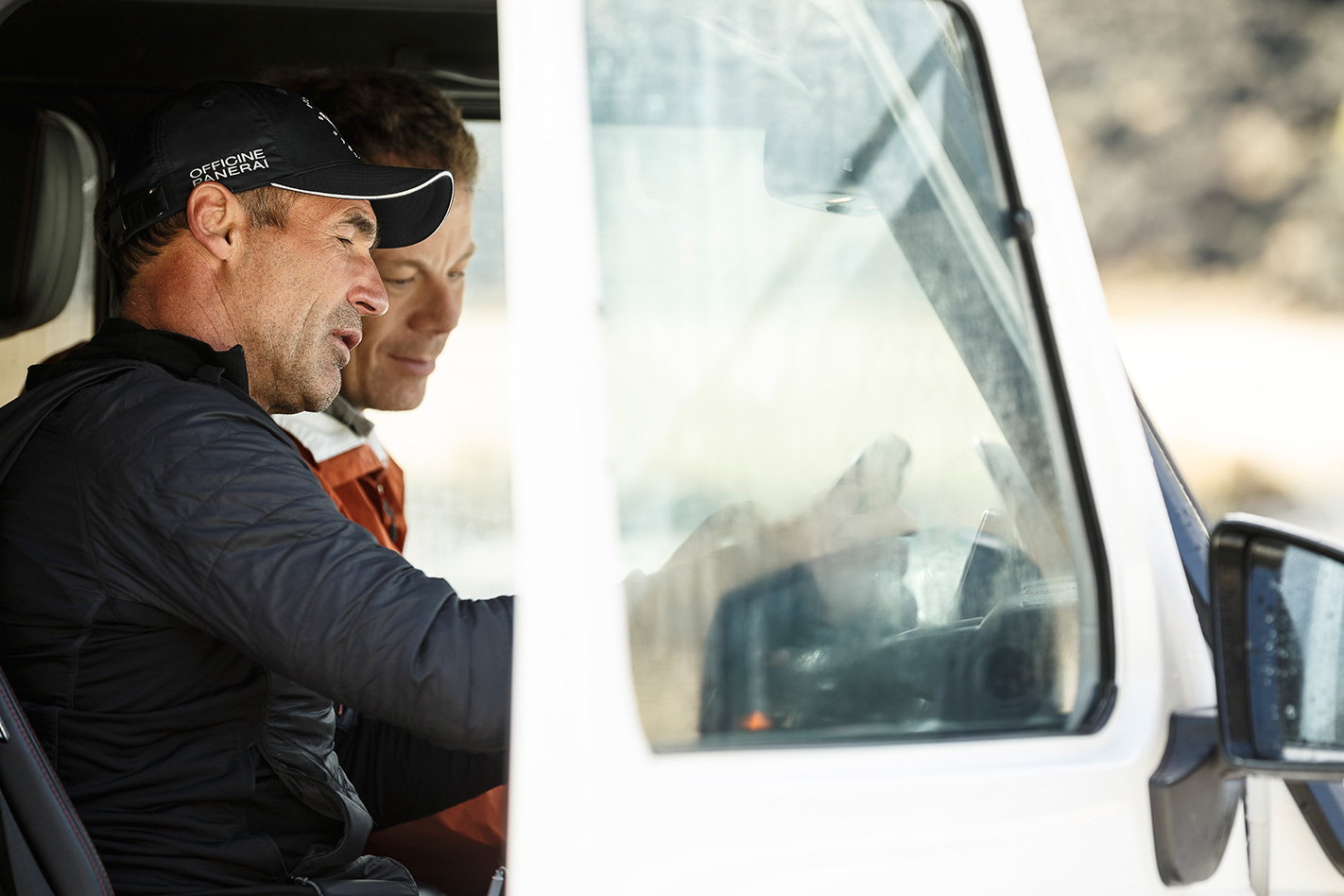
With the first solo, unsupported crossing of Antarctica just completed in a record time of 56 days and 22 hours for the 5000km journey, he’s just been reunited with the pair of G-Class expedition vehicles that Mercedes has supplied him with and is looking to point them at the South Island’s wildest spots. What’s more, because he finished his Antarctic crossing so far ahead of schedule, we’re invited to eat the spare polar rations.
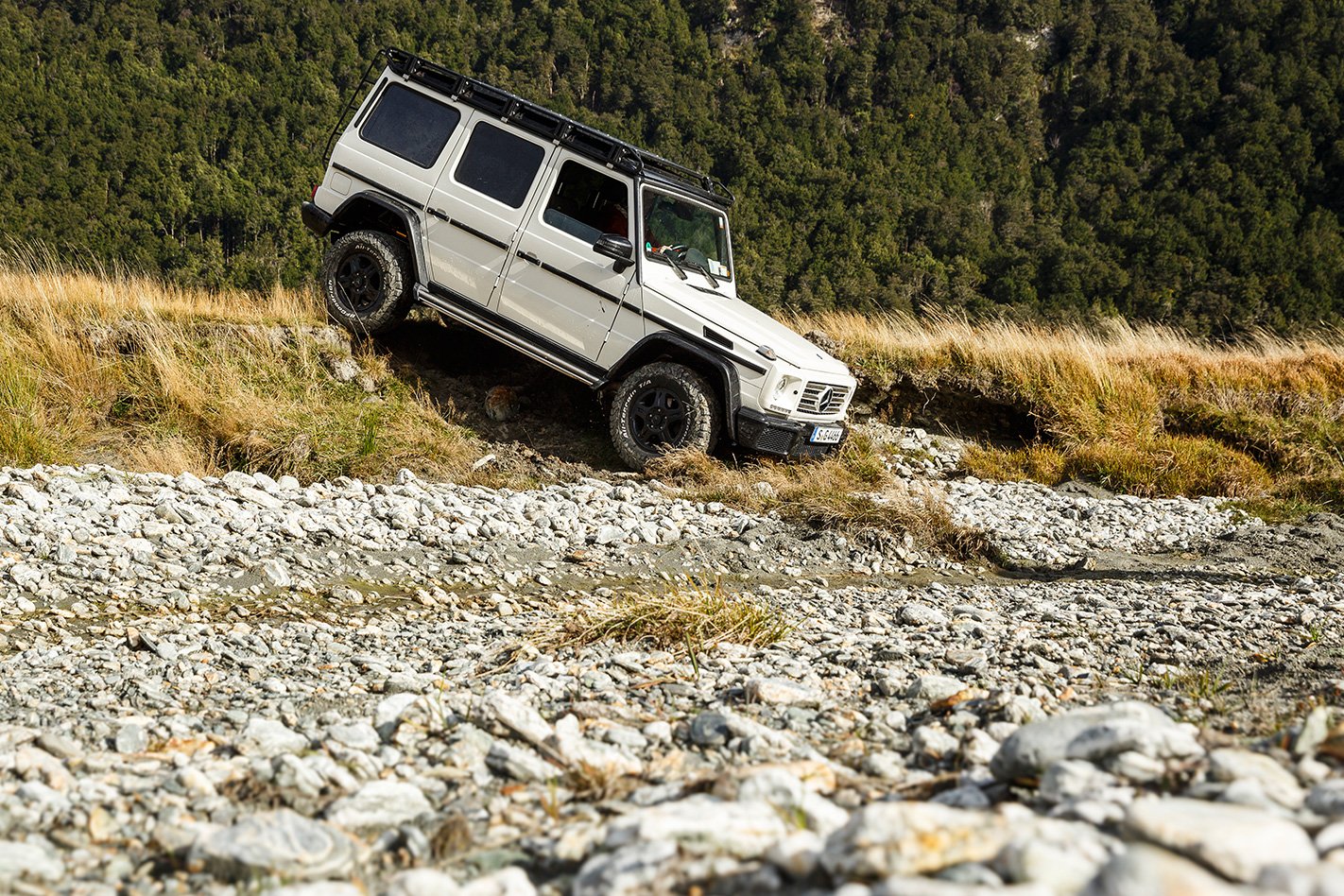
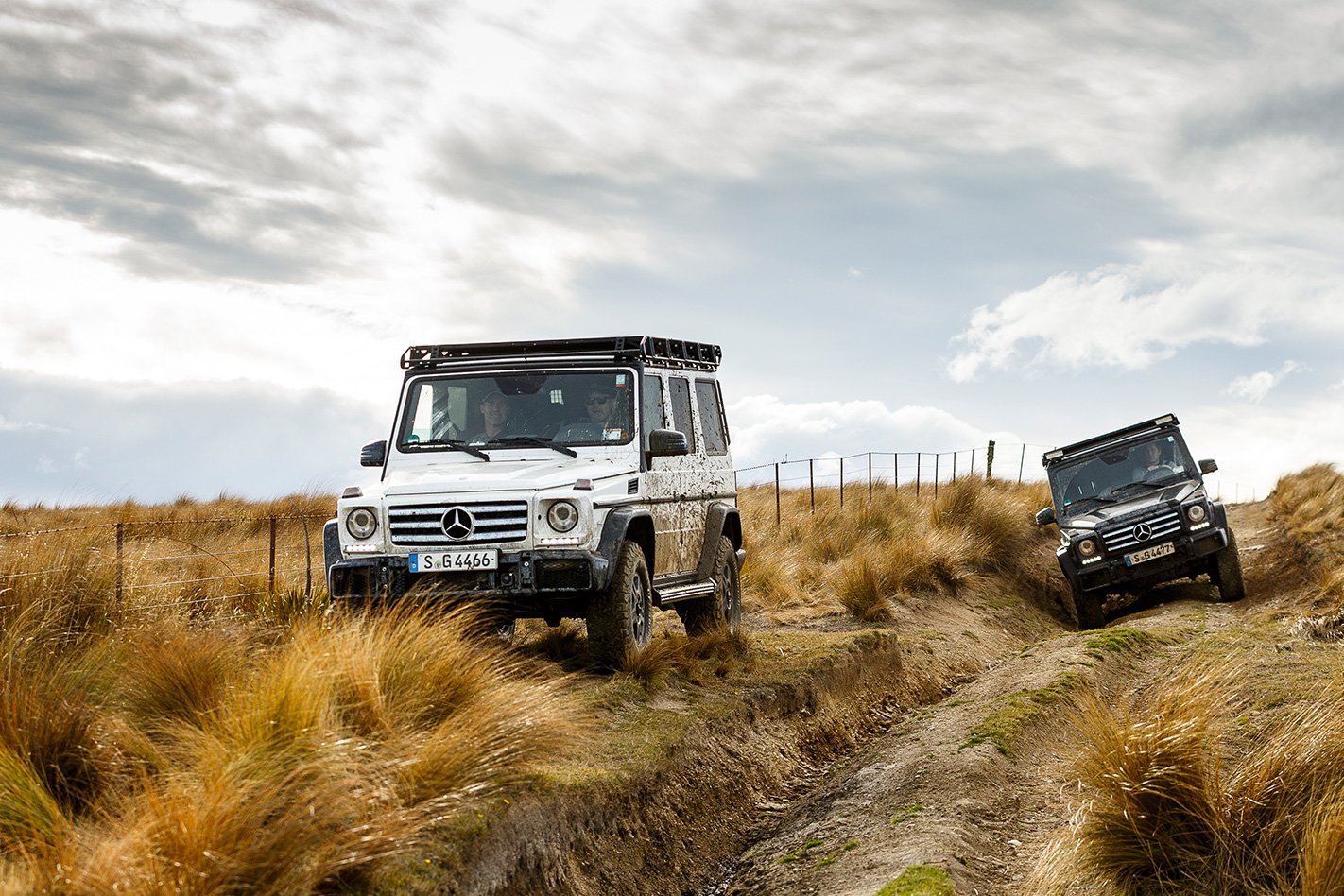
It’s a badge of honour for a motoring journalist to never be a nervous passenger, but this is beyond any sort of off-road driving I’ve ever experienced. The speedo heads north of 120km/h as the heavily laden G-Class descends like a skipping stone, revs flaring as wheels kiss and release from the ground. Horn’s sawing at the wheel, grinning, as the other vehicle becomes a black blur in the rear view. I’m just waiting for one malign combination of dips and ramps to send us into some sort of inverted death corkscrew.
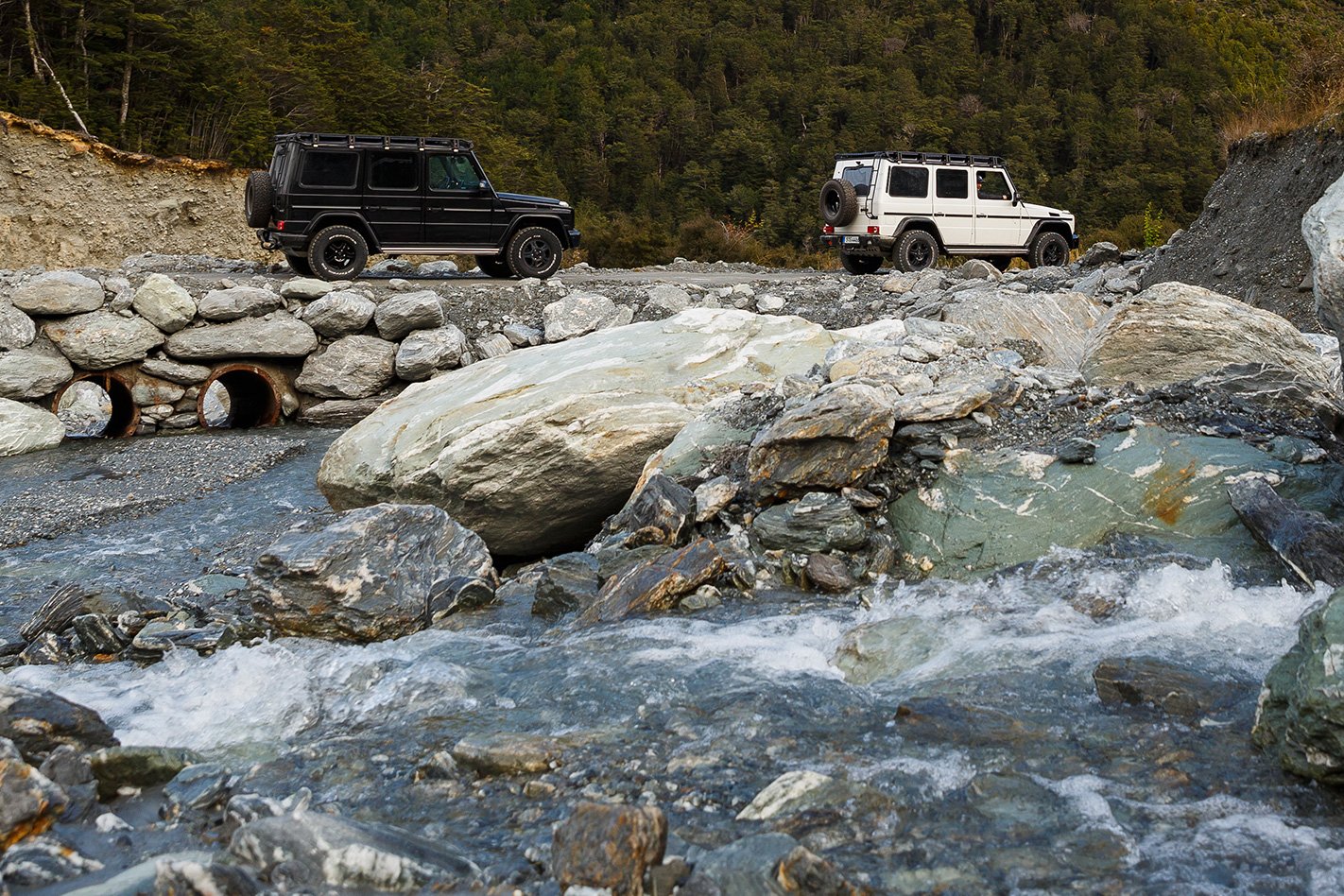
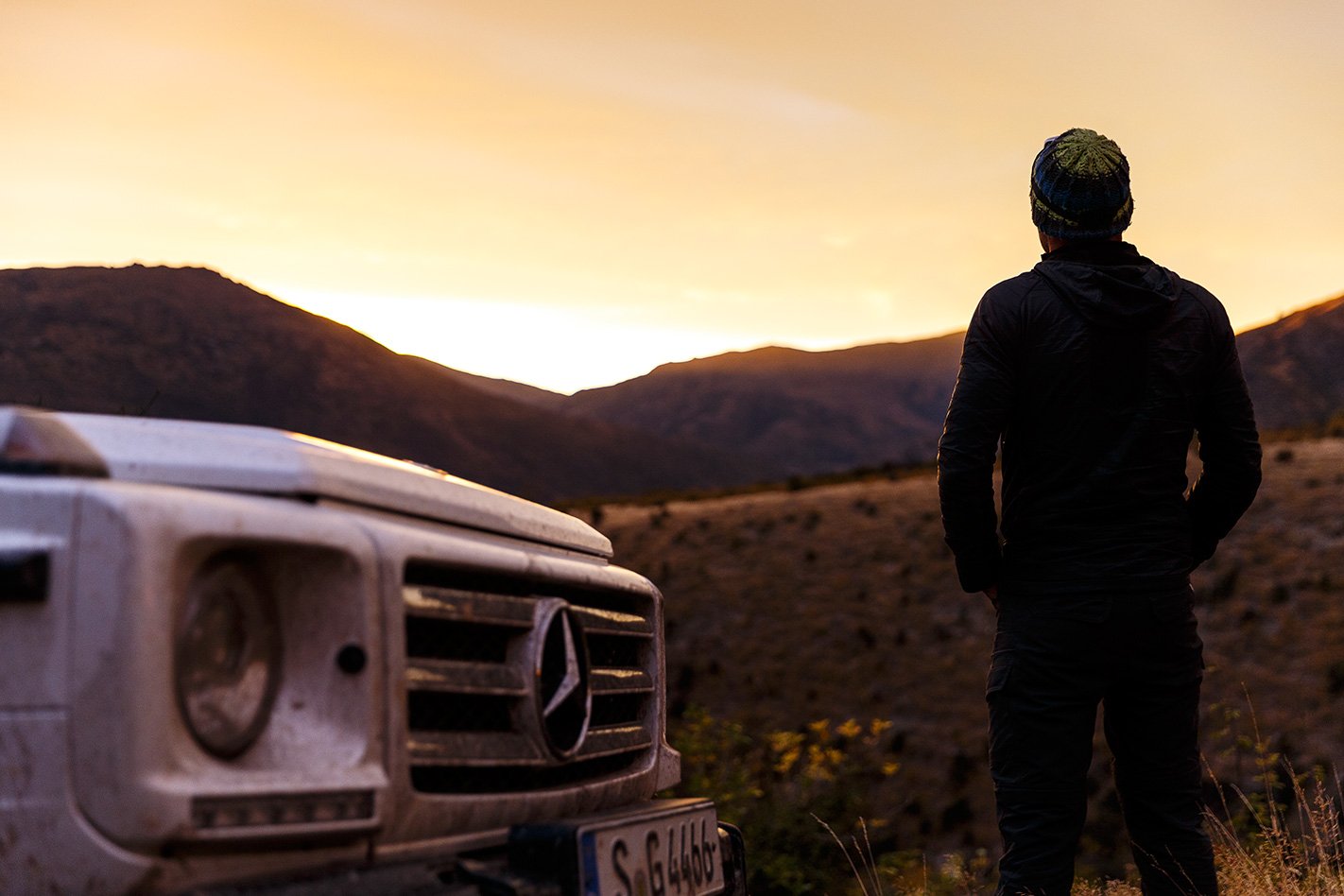
“Having these vehicles as a tool makes my life as an explorer more complete. I can load my stuff into my space. I don’t want to fly over in a plane or a helicopter like I used to in order to access these remote places,” explains Horn. “I want to travel, to see new things, to learn from the people, taste their food, smell their smells and understand better who they are and why they’re like that because that landscape determines the people that live in that country. The landscape develops who you are. The cars have become my travelling companion. Where the car stops, I start on foot,” he tells me.
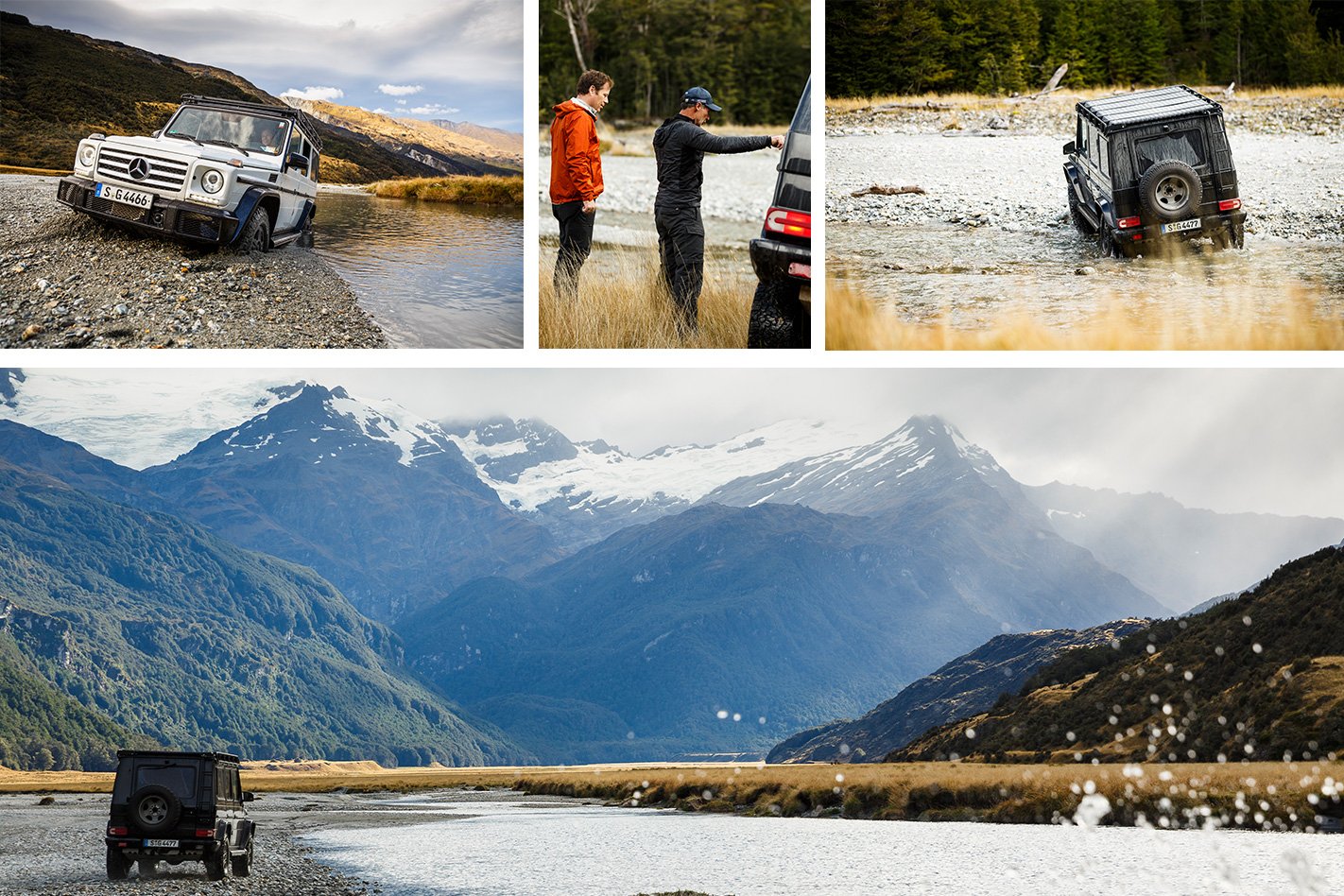
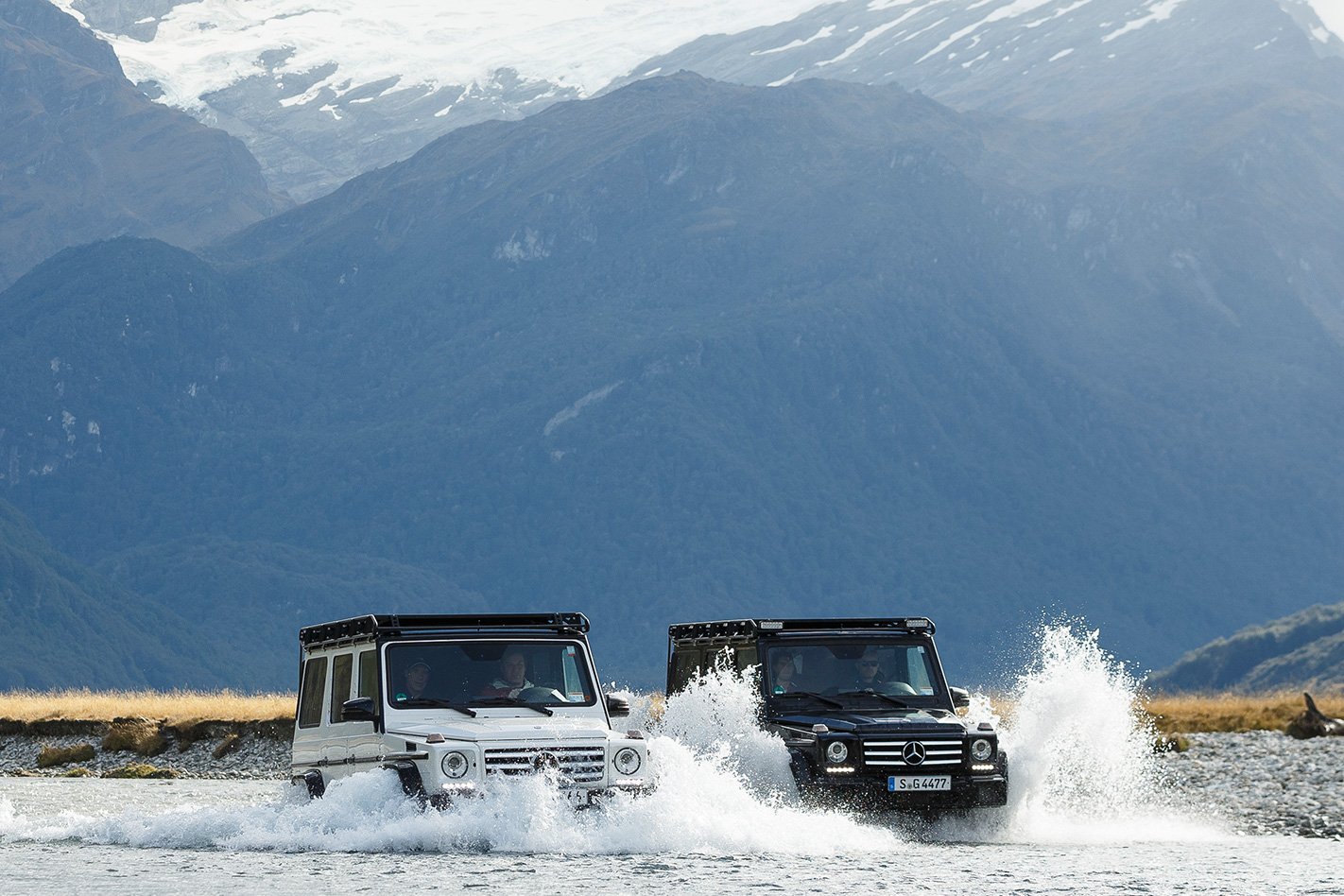
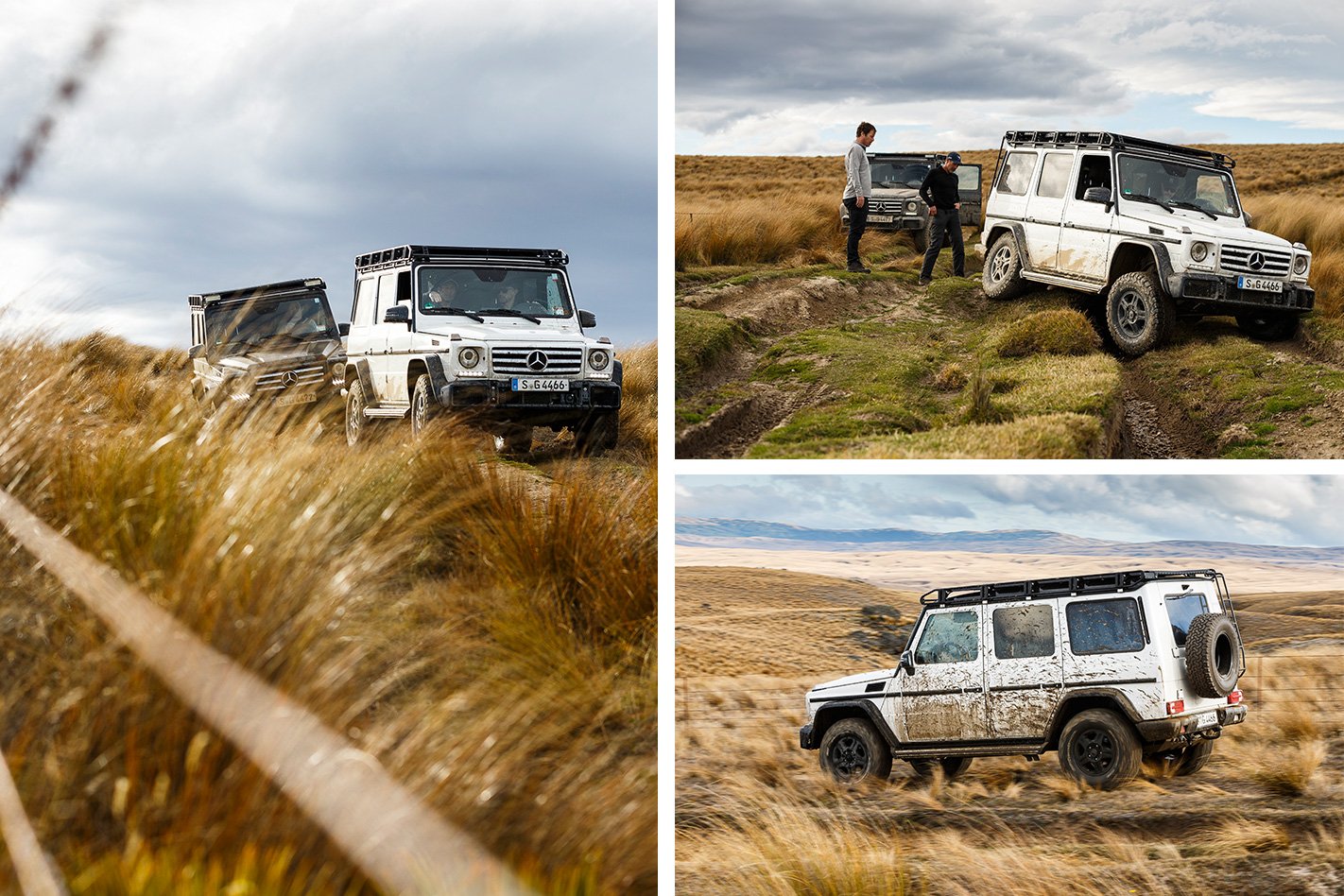
In his downtime since Pangaea berthed in Dunedin, Horn and his daughter Annika have been criss-crossing the South Island looking for remote spots in which to bog a G-Class. It’s clearly been a diligent bit of preparation, as our route crosses remote sheep stations, punctuated by wild camping under kaleidoscopes of stars. We wade through river deltas in the shadow of Tolkienesque glaciers and inch along narrow canyon roads with centimetres of space between the dizzying precipices and soaring rock walls. One day we’re edging through mossy forests, the next forming an express dust cloud soundtracked by yammering V8s across deserted mile-wide glacial valleys.
If there’s one theme that runs through Horn’s expeditions, it’s a certain quest for authenticity; to do things the right way. Often that comes at the cost of commercial success.
“You try and set rules and regulations that you live by. You’re the person that puts your life in danger,” he muses. “It’s not a commercial event. It’s not another tennis or golf tournament or F1 race. It’s about a human being who’s willing to go out there and to pioneer new frontiers. But at the same time you’re so fragile. You can lose everything. I’m always in the shit. It’s just the depth that varies.”
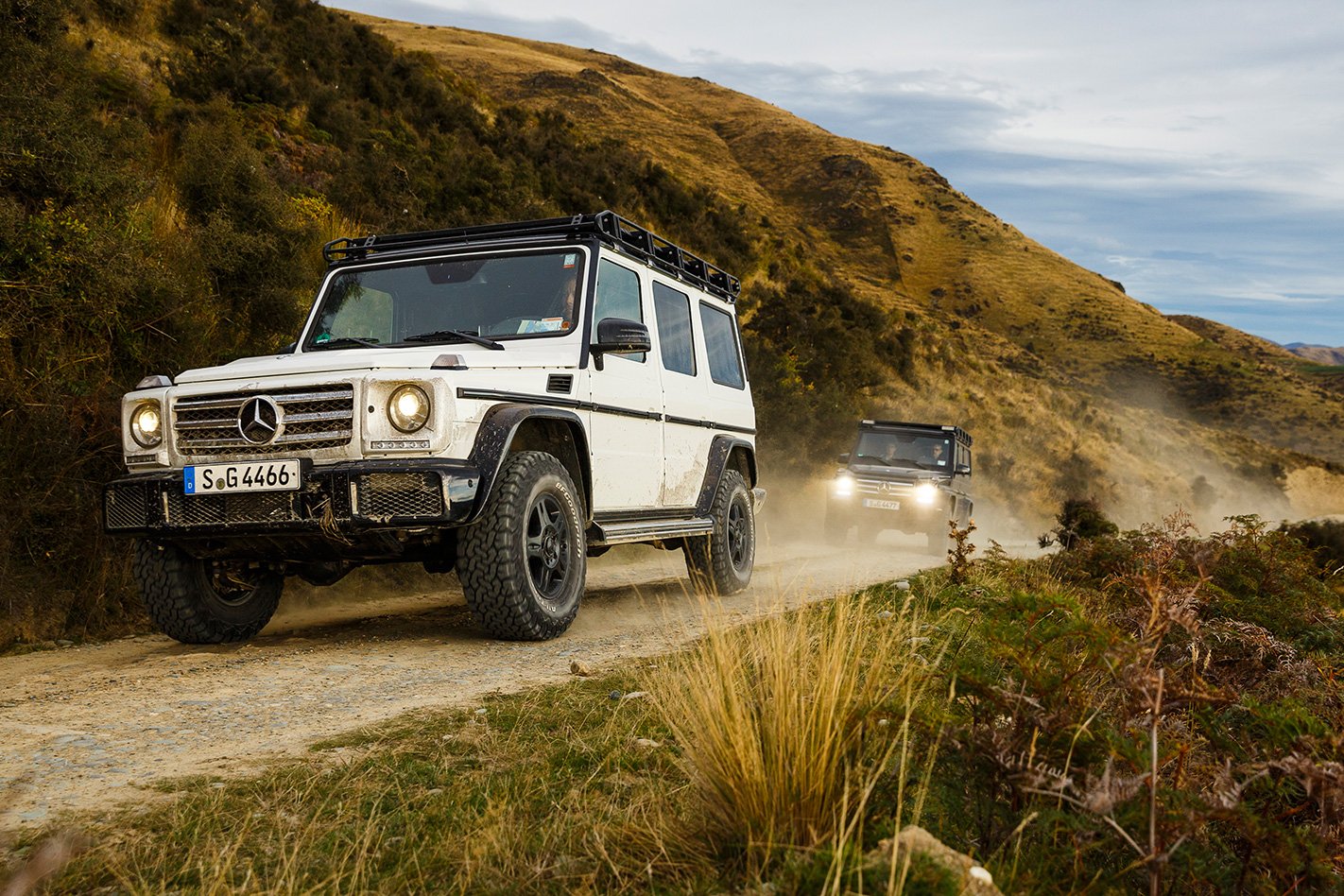
“I broke the socket in my shoulder; the bit that supports the ligaments. The sled jammed nose into the snow while kite skiing so the kite just picked me up, turned me round and slammed me into the ice a couple of times. I couldn’t get to the quick release, so I had to pull out a small knife and cut the lines to the front of the canopy,” he says. It’s far from his only close call on the ice. “I set fire to my tent once. I was changing a gas bottle in the tent. The temperature outside had risen suddenly by 20 degrees and I’d left the pilot light on without noticing. Just a tiny half-flame. As soon as I opened the new bottle, the vapour spread and ignited and I lost everything. From that point I was in igloos.”
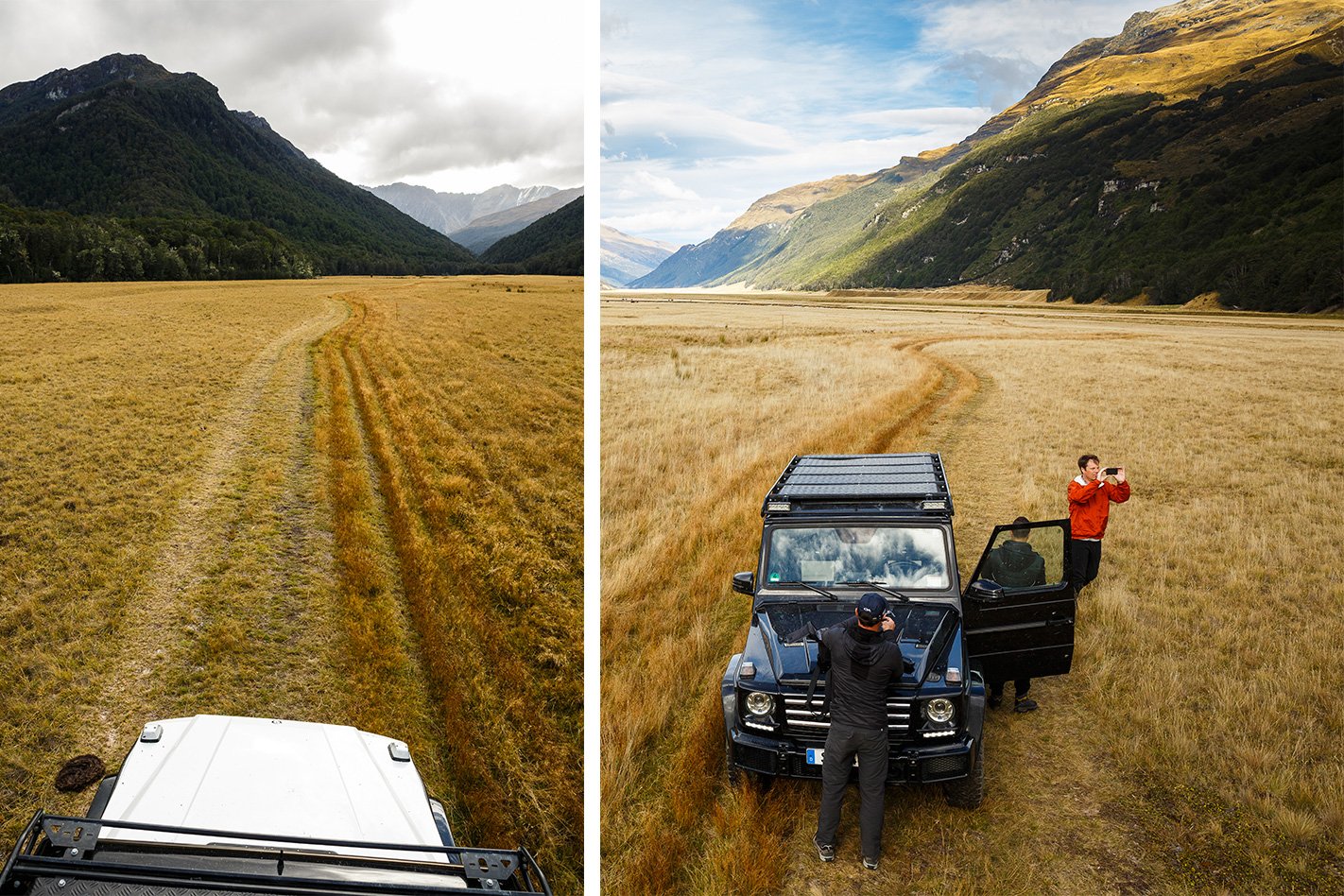
“I was asleep in my tent and the bear climbed onto my sled and started trying to tear it apart to get to the food,” he says. “It rolled onto the tent at one point and I was pinned under its belly. I said to Borge [Ousland, his trekking partner], ‘Get the flare gun. There’s a bear in my sled!’ He just rolled over and said, ‘It’s not in my sled.’ And that was it. We didn’t really get on; barely spoke two words a day on that expedition. He was ice cold. Now we’re the best of friends.”
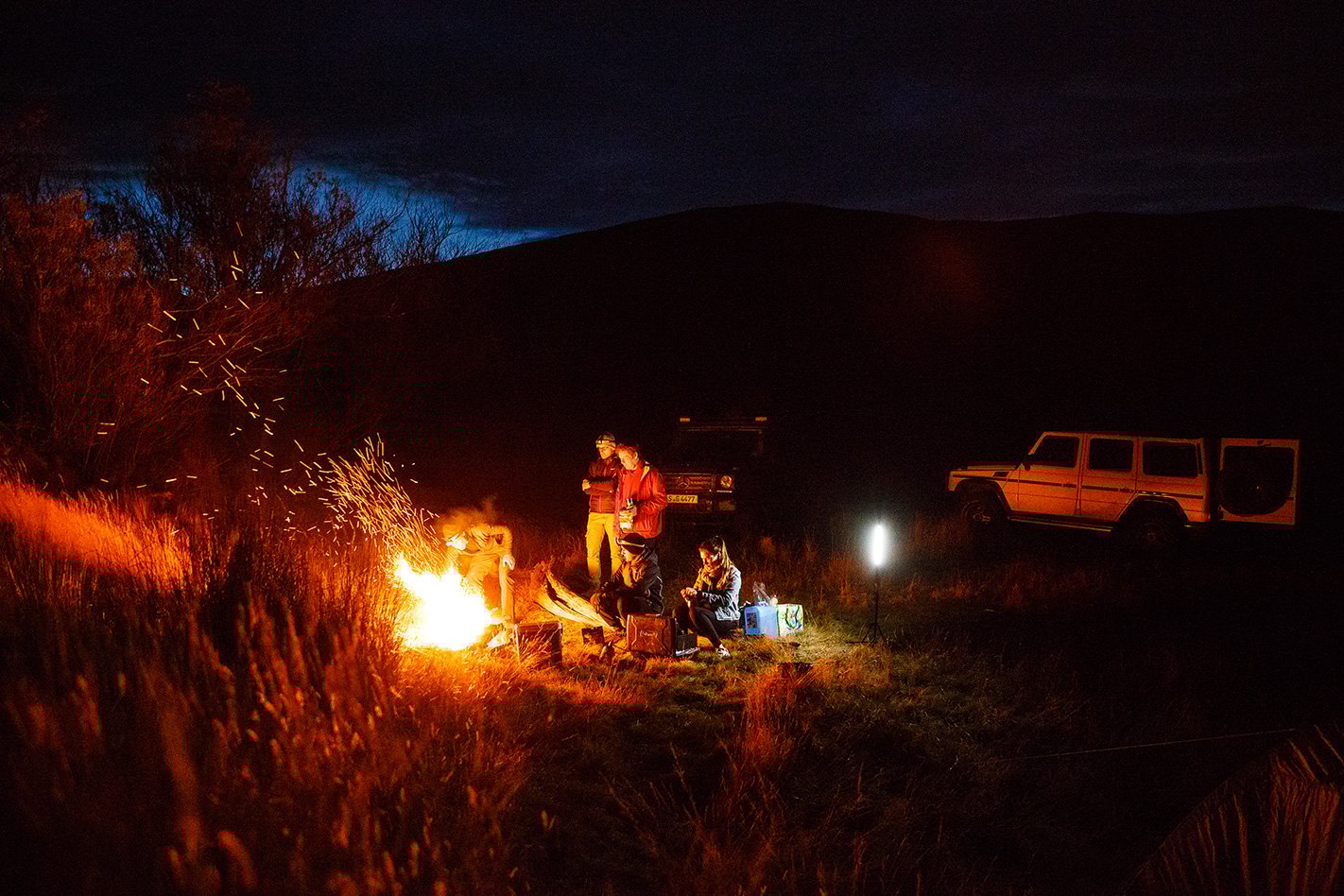
Later that evening, we sit by the fire sampling some of Horn’s polar trekking food. There’s the usual freeze-dried boil-in-the-bag stodge as well as some fantastic home-made creations, most of which are steeped in olive oil. Honey and butter bites, packet soup loaded with Pringles to form a salty slurry, porridge laden with olive oil, white chocolate and almonds, it’s all calculated with a fanatical attention to weight and nutritional value.
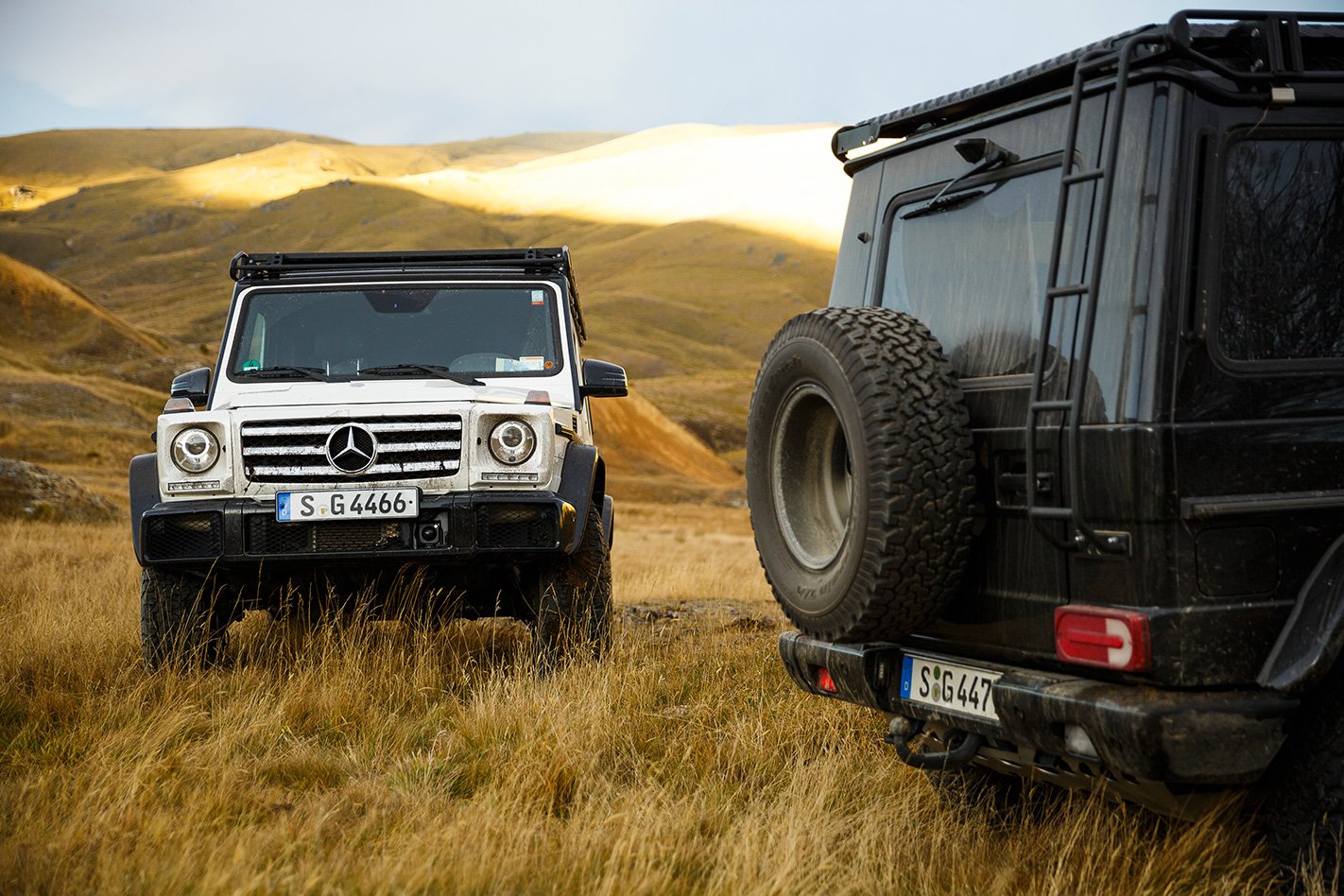
Like most professional sportspeople, Horn has a good line in well-rehearsed motivational soundbites. “The will to win must become bigger than the fear to lose” is one. “The impossible only exists until we find a way to make it possible” is another.
Then there’s “We have 30,000 days in a lifetime. Live each one to the fullest.”
I’m keen to understand what motivates him; what’s beneath the bonhomie and the platitudes. Persistent needling eventually pierces the defences. Jabbing at the bonfire with a stick, his black eyes flash with anger and you see the steeliness beneath.
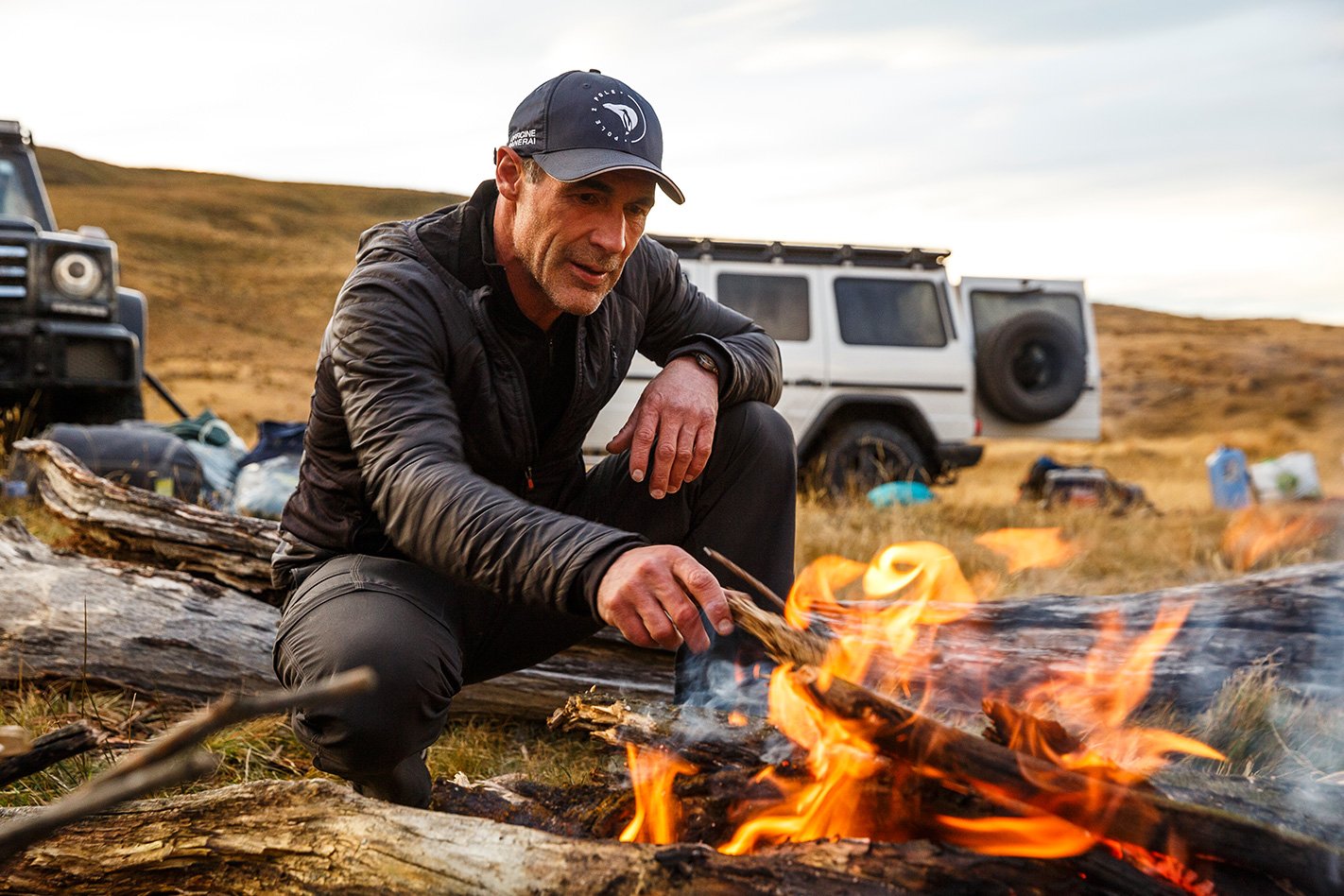
Spend more time with Horn and you see more of that essential steeliness. He’s phenomenally capable and unfazed by obstacles. He talks of his time at war in Angola, dealing with gun-running mercenaries protecting shipping from Somalian pirates, and of watching men lose their lives in Brazilian sluice mines.
“Gold doesn’t attract good people,” he says.
“These guys would be climbing riverbanks on ladders made of sticks, carrying bags of sand. The ladder breaks, they fall to their deaths. Next guy.”
He worked for a while as a diver tasked with sucking gold-laden sediments from the bottom of an Amazon tributary.
When asked by his daughter if they could go back to South America his brow furrows. “That’s a place for young people,” he says. The statement brooks no argument. Later that day he spots a rabbit in the road and as it jinks to escape, he steers the G-Class towards the embankment, flattening the invasive species. “Bastards,” he grunts. I suddenly feel self-consciously soy Melburnian.
Way out on one remote treeless sheep station, we find an abandoned Nissan Pintara. It’s been rolled, stripped and peppered with buckshot.
“Let’s drive over it with the G-Class!” he shouts, alive with childlike glee. Our Mercedes-Benz chaperone’s eyes widen in panic, his mouth forming a perfectly mute little ‘o’.
We’ve just accounted for four of the world’s greatest living explorer’s 30,000 days. He’s experienced more than his fair share in this one lifetime, so we don’t feel too guilty about acting as ballast for a bit. The V8 fires up, the G-Class bumps over a bushy median to the car park exit and Horn’s headed back to the dock at Dunedin.
He’s that naughty kid whose antics you just can’t help laughing at. You know you shouldn’t.
But, hey, life’s too short to worry about things like that.
It would be easy to dismiss the claim that BMW built the E30 M3 as a race car first and then worked backwards as glib marketing speak, but even a cursory glance at its racing CV lends it credibility.
After all, the E30 M3 won the 1987 WTCC, 1987 and 1989 DTM, 1988 and 1991 BTCC, 1987 ATCC, 1987-90 French Supertouring titles and the Italian Superturismo series in 1987 and 1989-91. And despite not being conceived as a rally car, the E30 also won the 1987 Tour de Corse (the last rear-drive car to win a WRC rally).
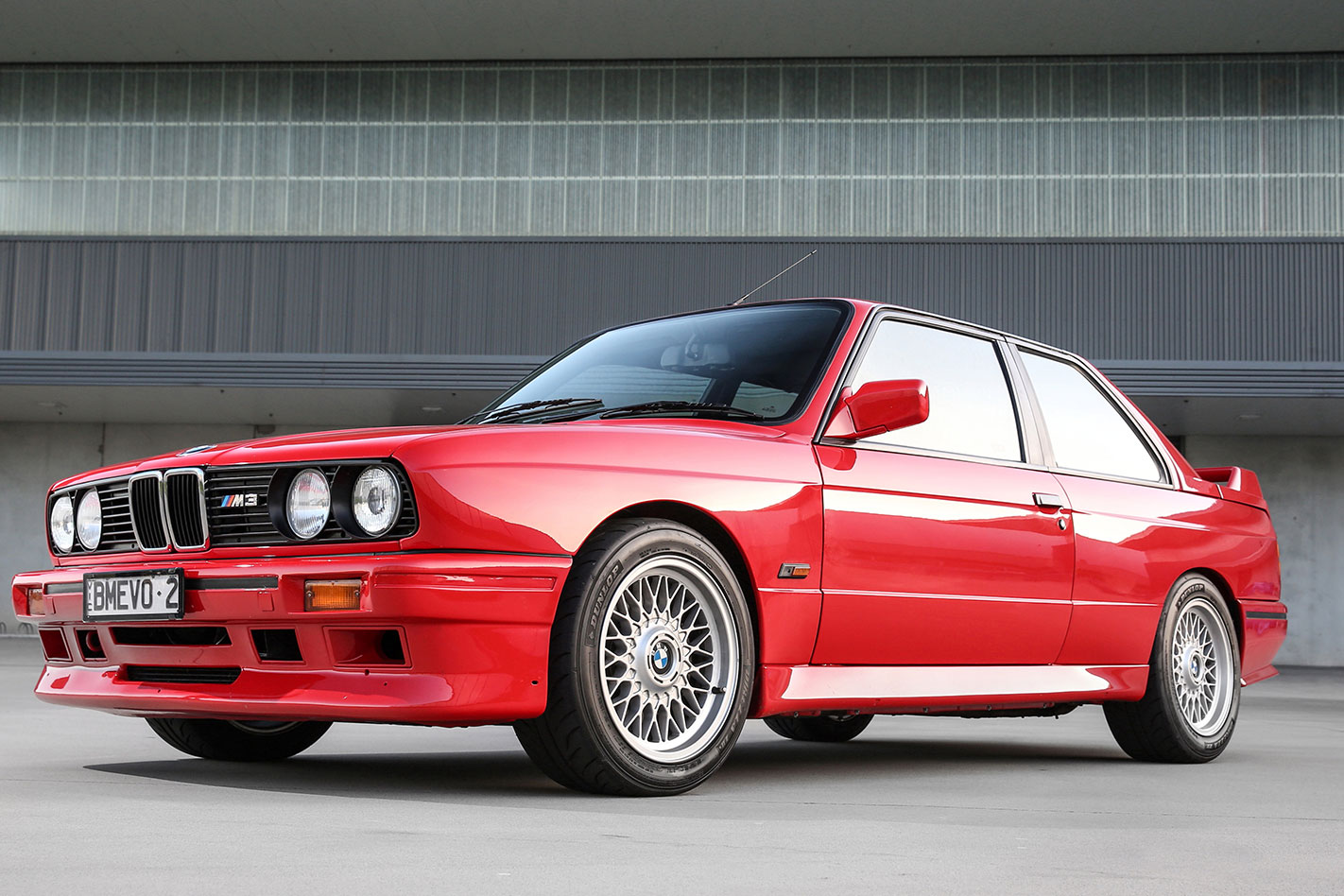
Chassis changes included a quicker steering rack (19.6:1 to the standard car’s 20.5:1), three times more castor, stronger wheel bearings, wider tracks, revised shocks with shorter, stiffer springs, a thicker (19mm) rear anti-roll bar and the front anti-roll bar being linked to the struts. Electronically-adjustable dampers with three settings became an option in 1988.
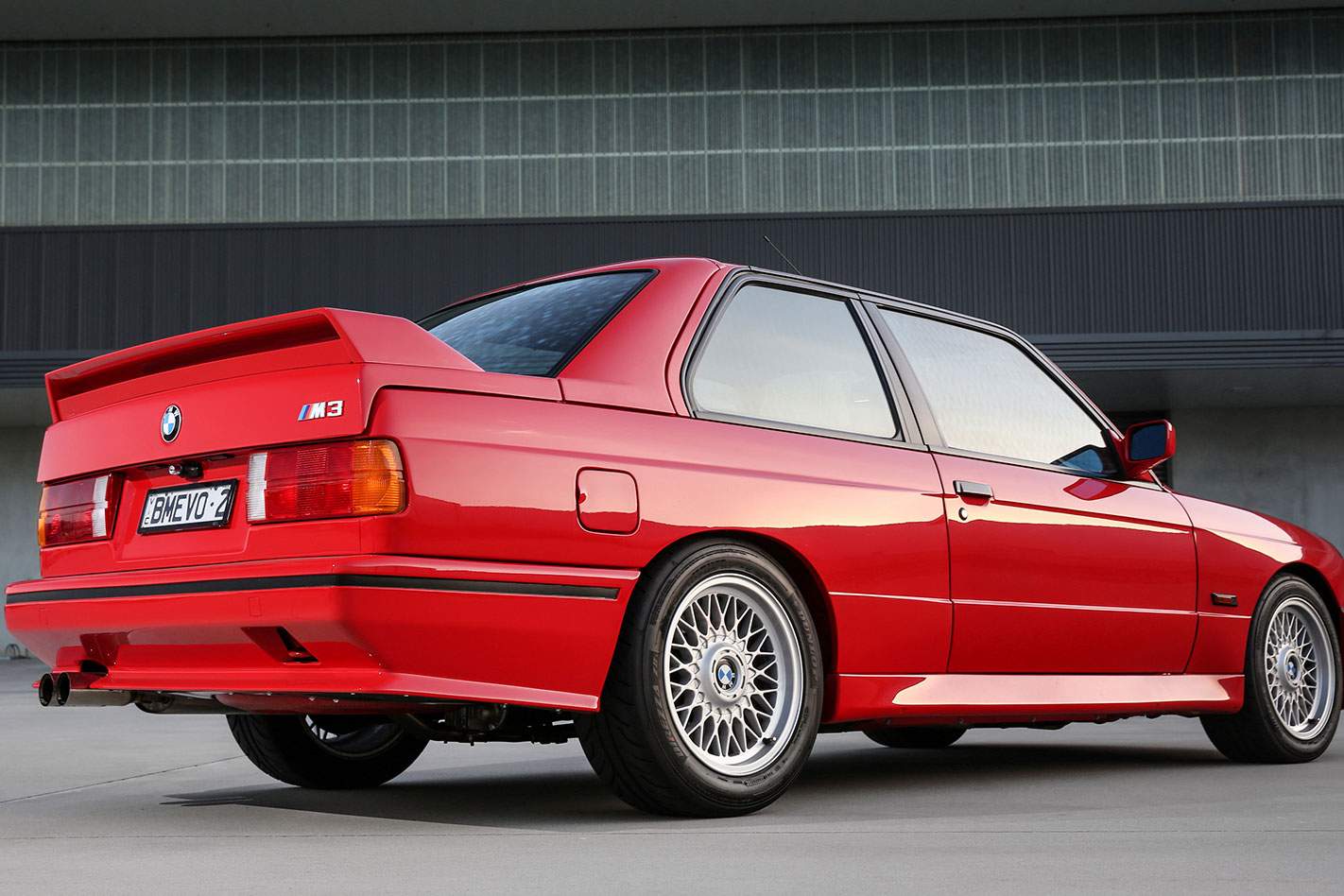
A revised engine, introduced in September 1989, altered outputs to 158kW/230Nm. All models came with a five-speed manual gearbox and limited-slip differential.
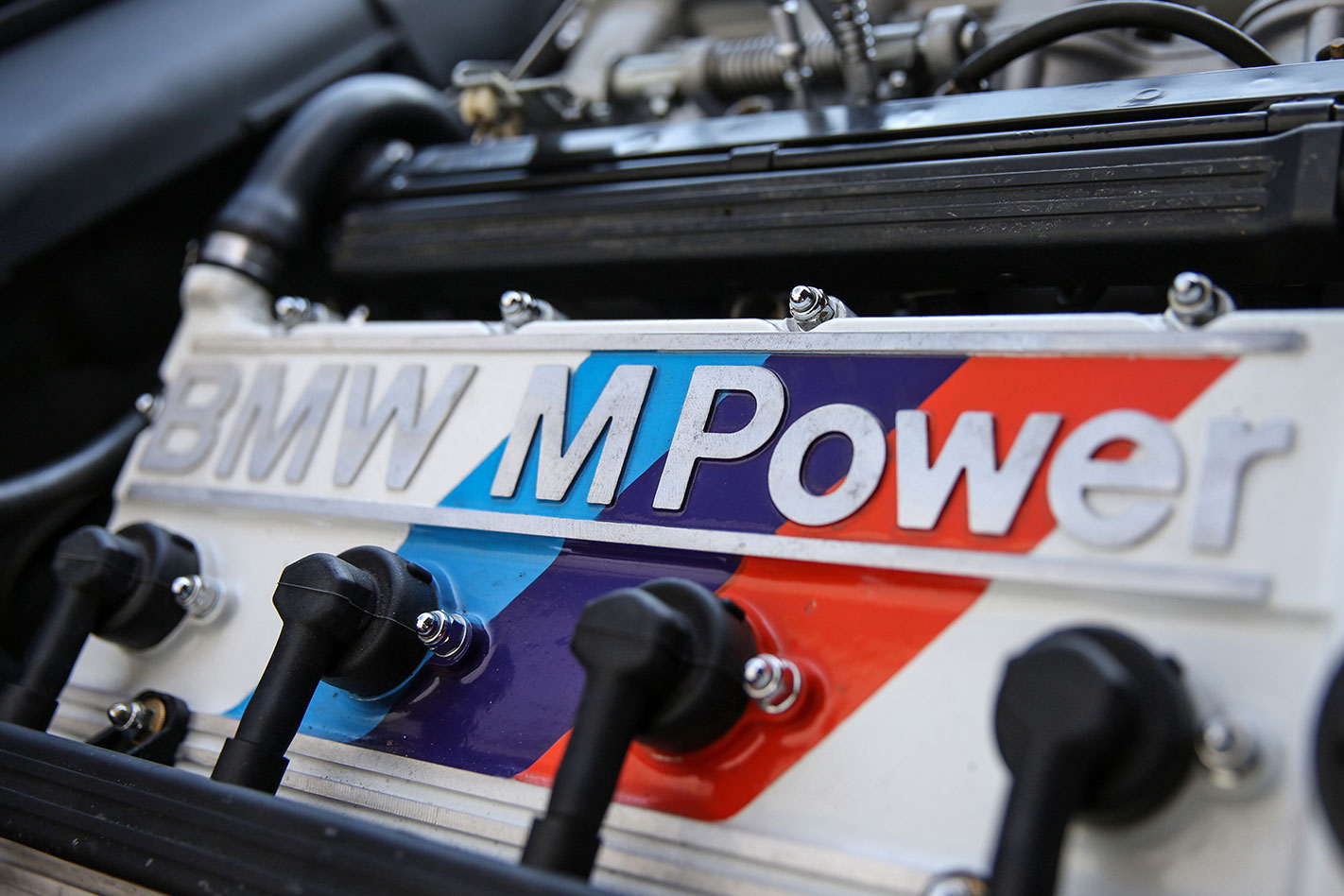
The first Evolution, introduced in February 1987, is not named as such, as it merely added a revised cylinder head and the 505 cars built are not individually numbered.
More BMW M2s allocated for Australia … again
Finally, aero tweaks included a deeper front airdam with brake ducts replacing the foglights and an additional lip spoiler at the rear. Each car is individually numbered out of 500, though according to production records 501 were built… Last but not least were 600 Sport Evolutions (see breakout).
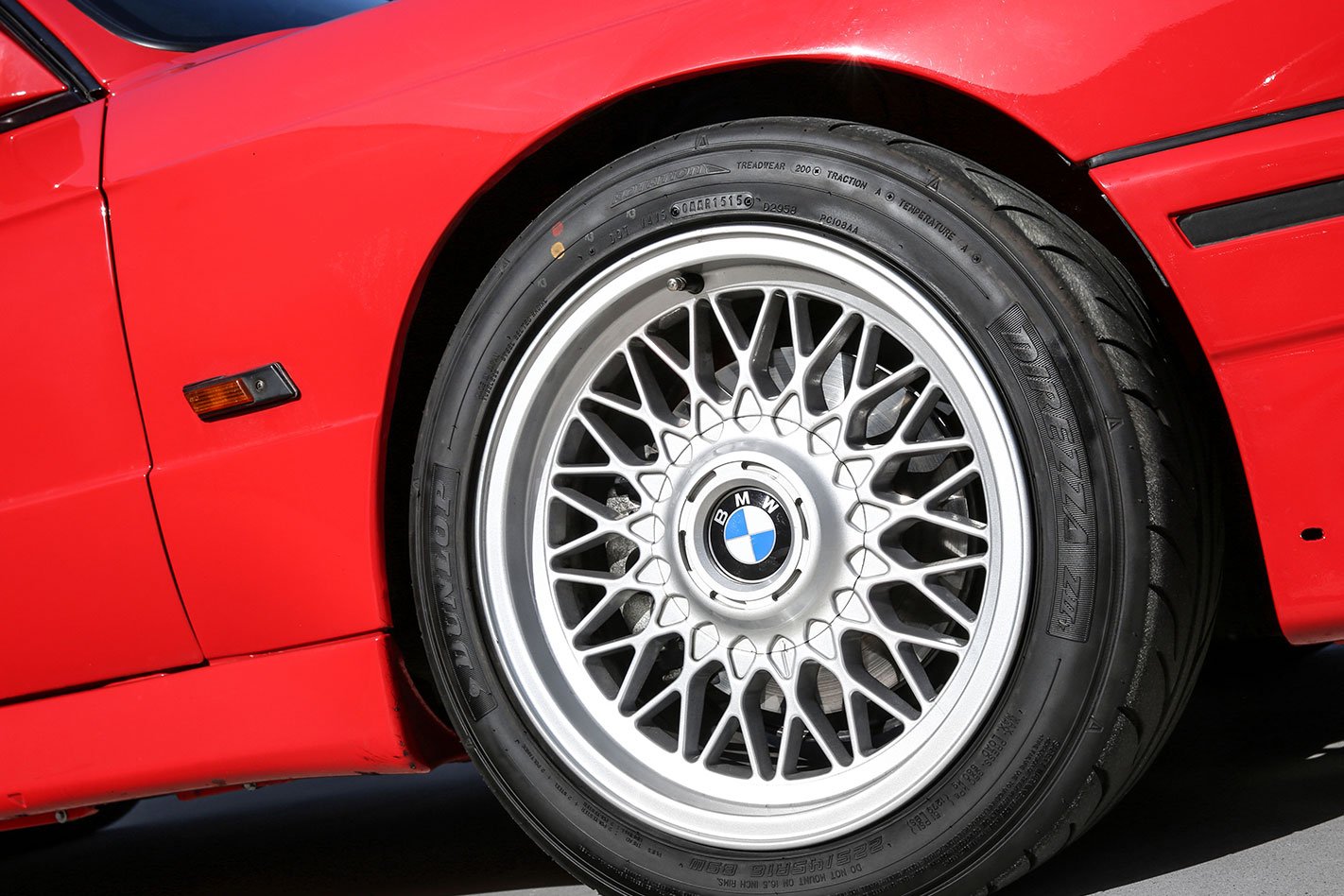
Five ultimate BMW M3s part 5: M4 GTS
The familiar driving position makes it easier to grapple with the dog-leg gearbox, as muscle memory keeps getting in the way on downchanges. The shift itself is long but it’s quite easy to heel-toe, though the driving position is a little long-armed as the steering wheel – heavily offset to the left – isn’t adjustable for reach.
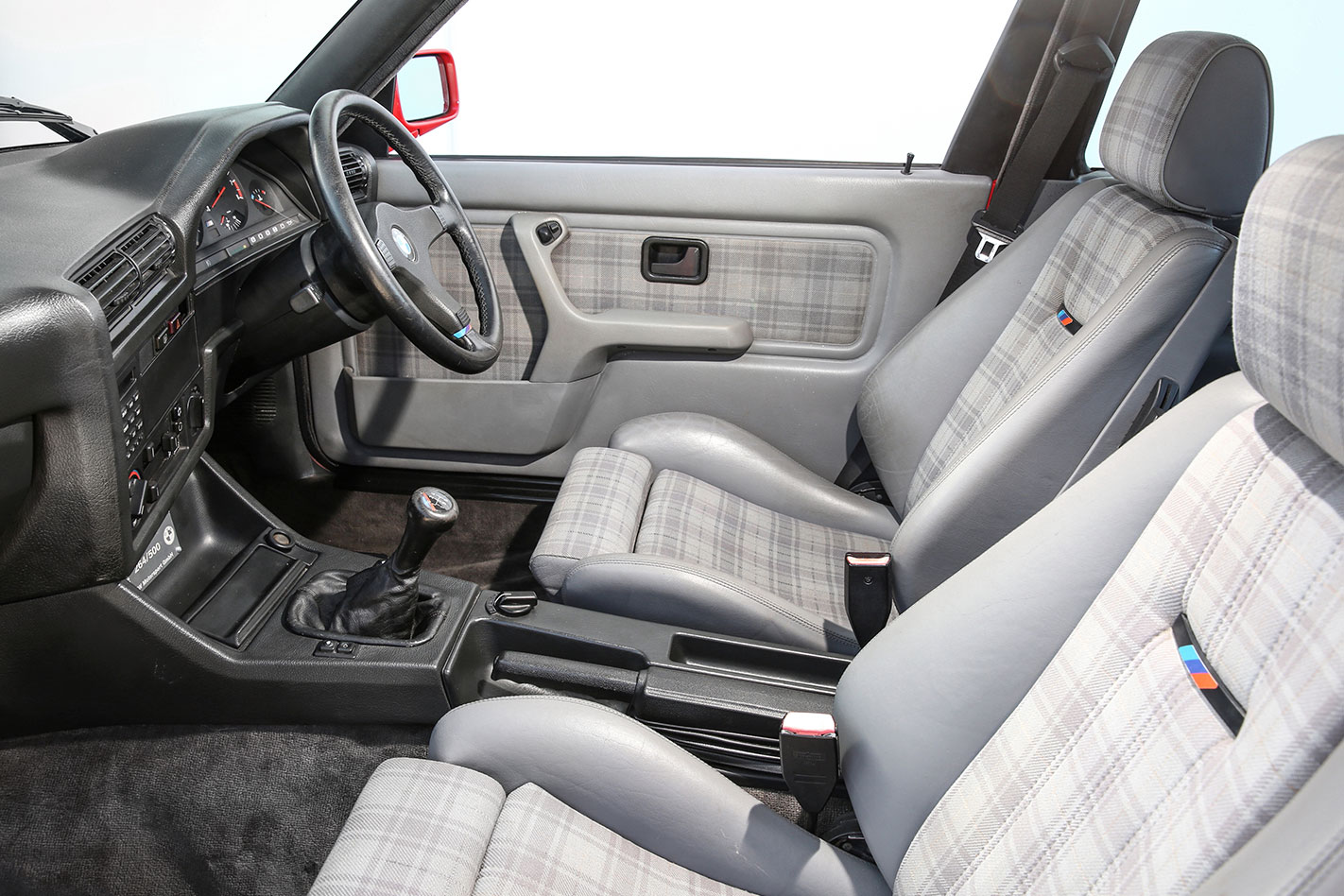
Sticky Dunlops make Rob’s car feel a little over-gripped, but the chassis balance is tremendous and the steering a highlight, quite slow in its gearing but not at all ponderous, and the way it weights up naturally under load without unduly increasing effort is delicious.

OFF THE back of the International Engine of the Year awards, Wheels picks its shortlist of the best engines on sale right now.
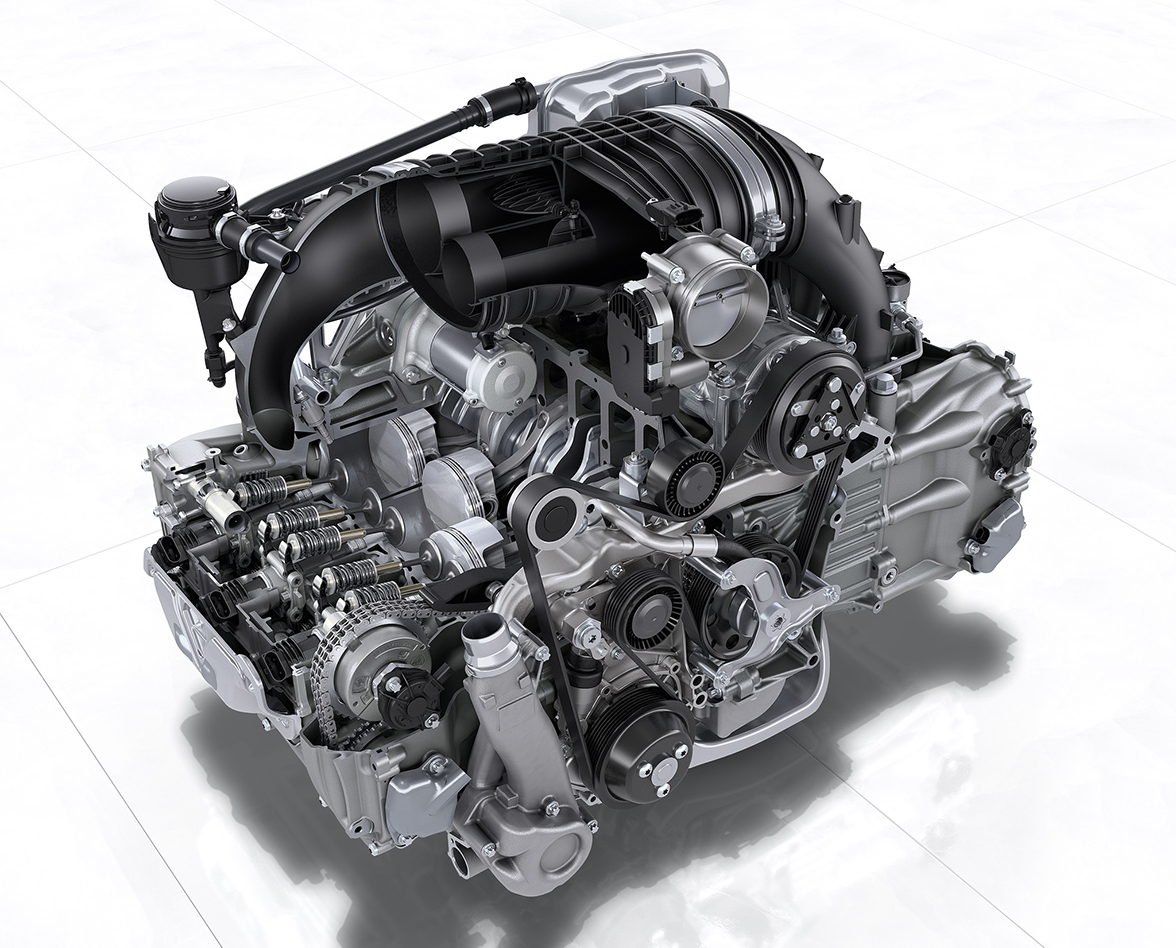
Porsche 911 GT3 – 4.0-litre flat-6, dohc, 24v Max power: 368kW @ 8250rpm Max torque: 460Nm @ 6000rpm
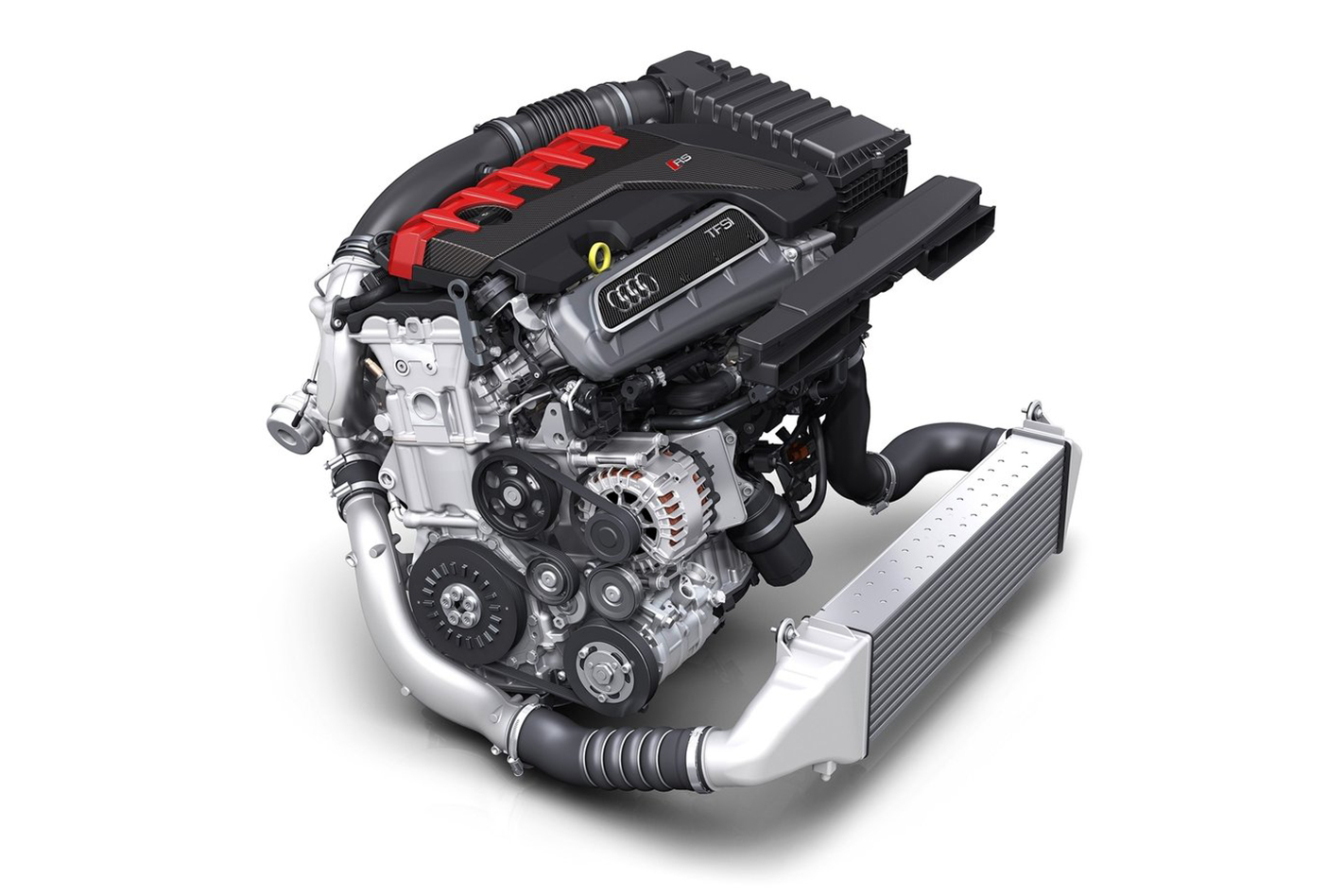
Audi RS3/TT RS – 2.5-litre inline 5-cyl, dohc, 20v, turbo Max power: 294kW @ 5850-7000rpm Max torque: 480Nm @ 1700-5850rpm
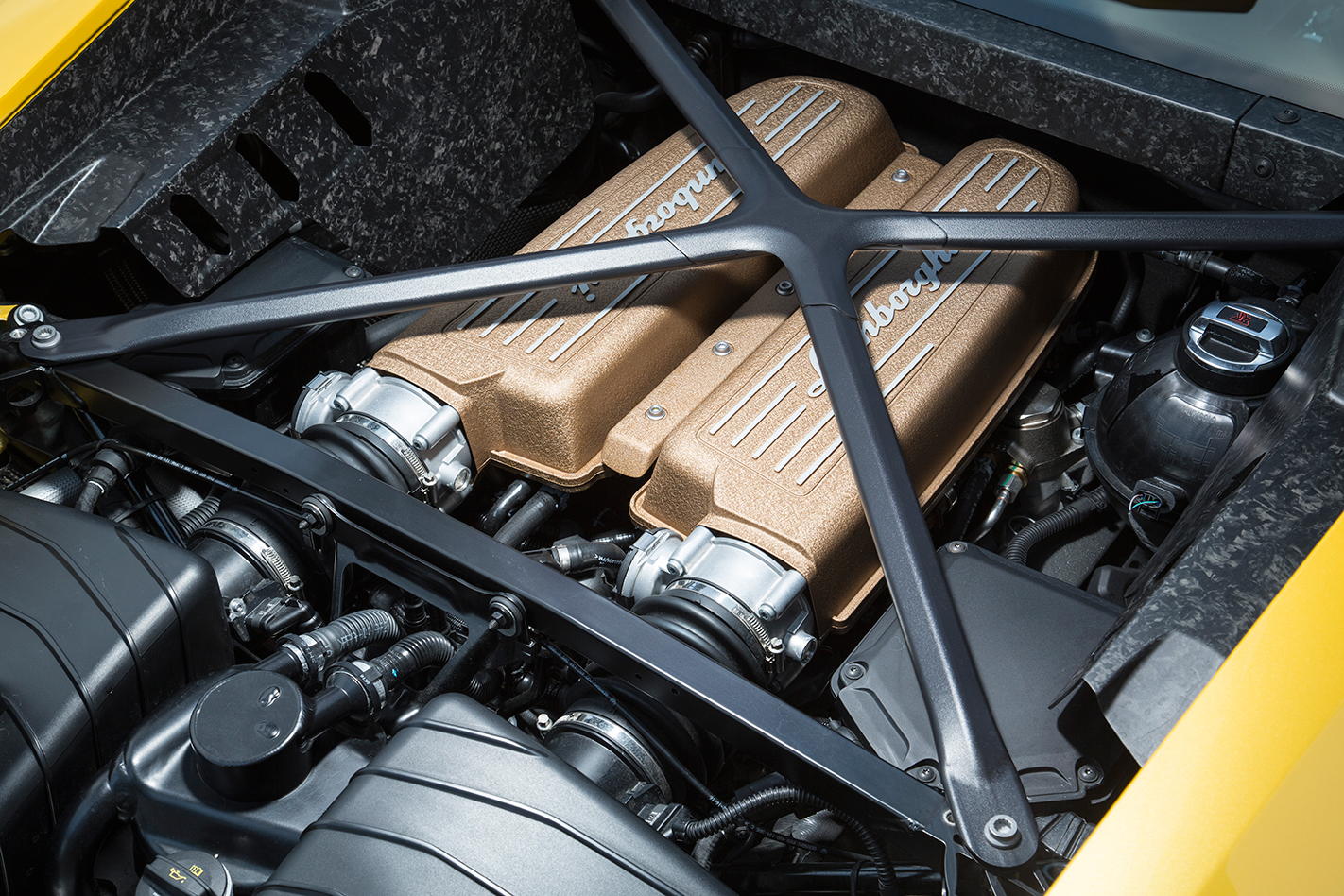
Lamborghini Huracan Performante – 5.2-litre V10, dohc, 40v Max power: 470kW @ 8000rpm Max torque: 600Nm @ 6500rpm
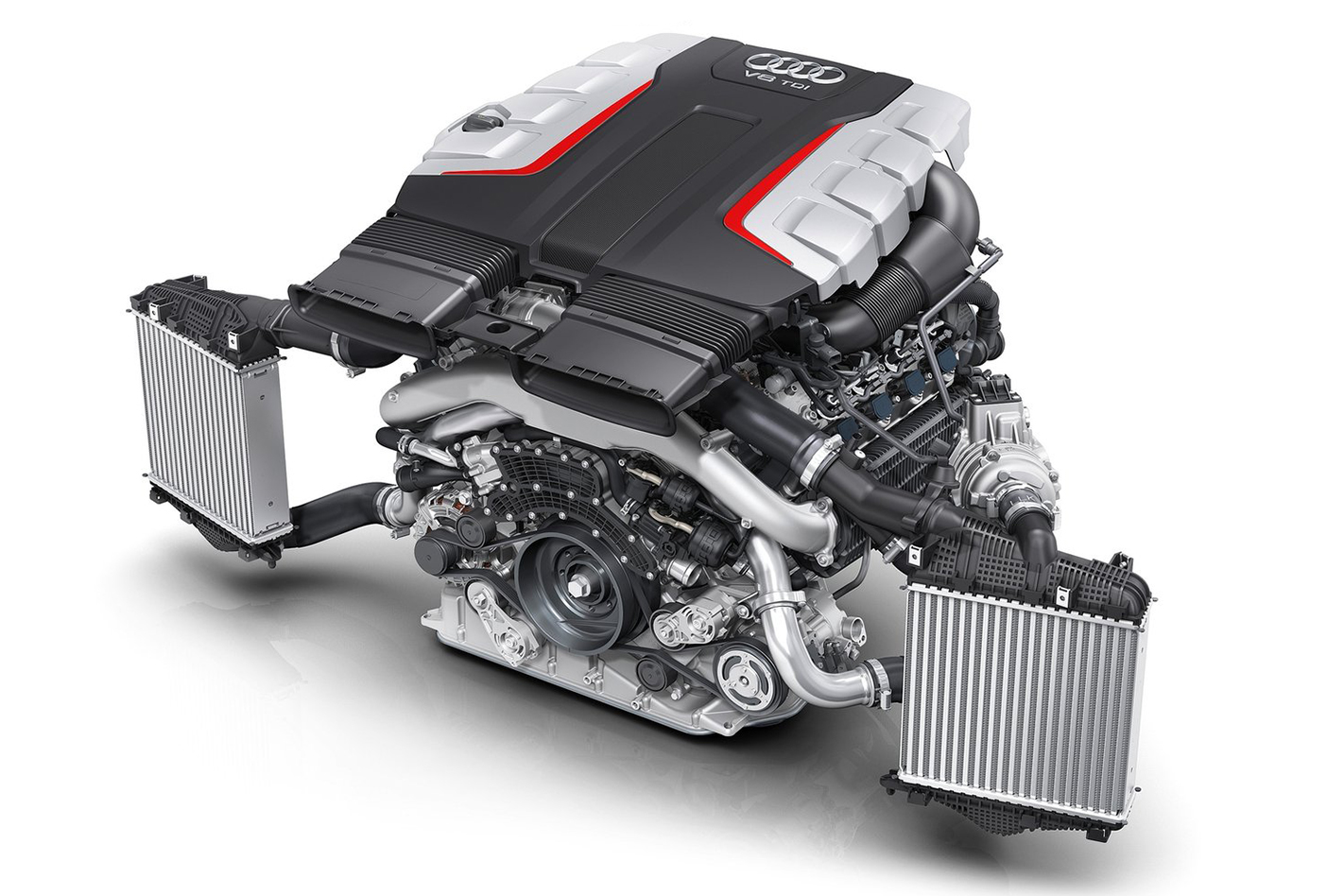
Audi SQ7 – 4.0-litre V8, dohc, 32v, turbo Max power: 320kW @ 3750-5000rpm Max torque: 900Nm @ 1000-3250rpm
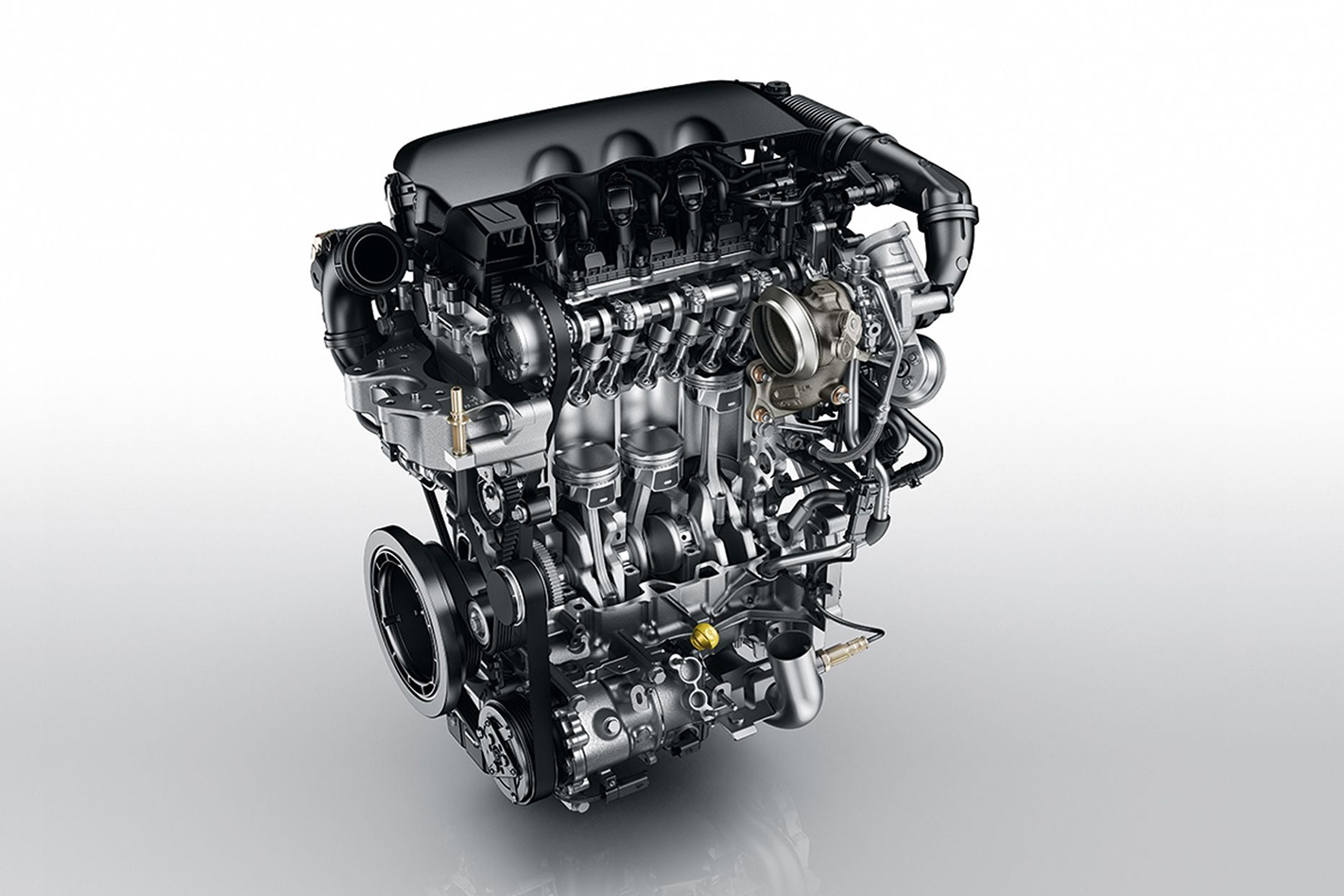
Peugeot 308 Active – 1.2-litre inline 3-cyl, dohc, 12v, turbo Max power: 96kW @ 5500rpm Max torque: 230Nm @ 1750rpm
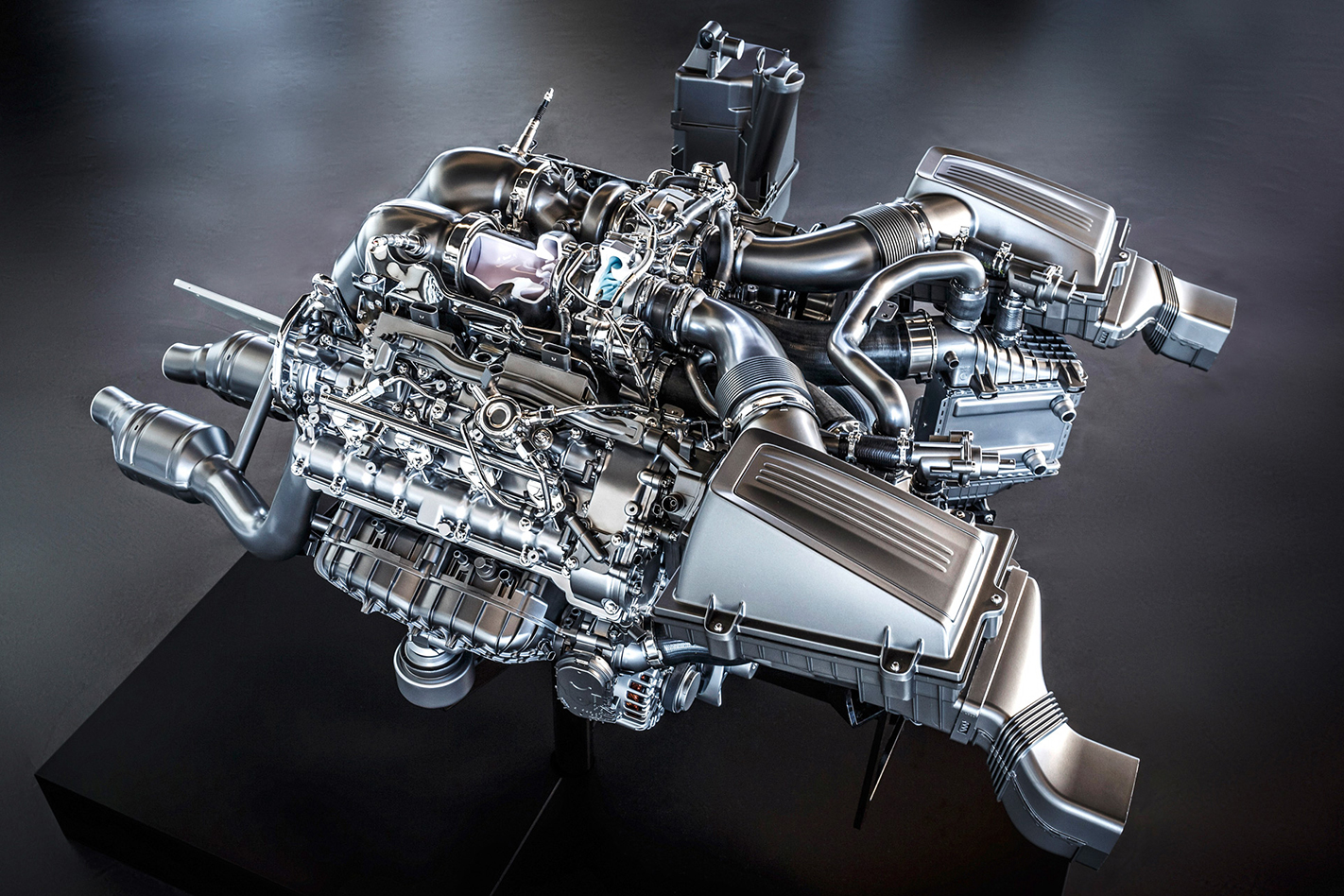
Mercedes-AMG E63 S – 4.0-litre V8, dohc, 32v, turbo Max power: 450kW @ 5750rpm-6500rpm Max torque: 850Nm @ 2500rpm-4500rpm
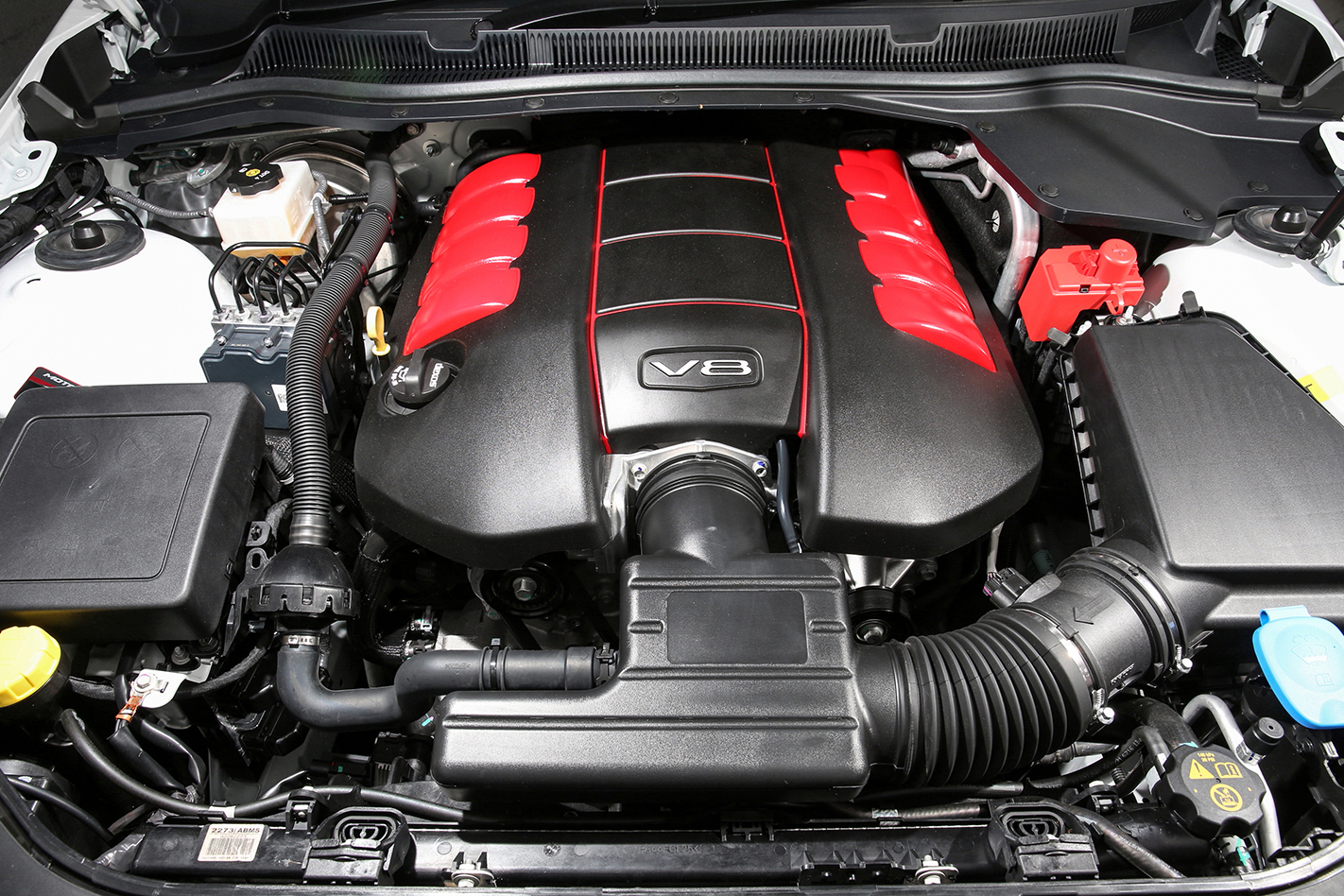
Holden Commodore SS-V Redline – 6.3-litre V8, ohv, 16v Max power: 304kW @ 6000rpm Max torque: 570Nm @ 4400rpm
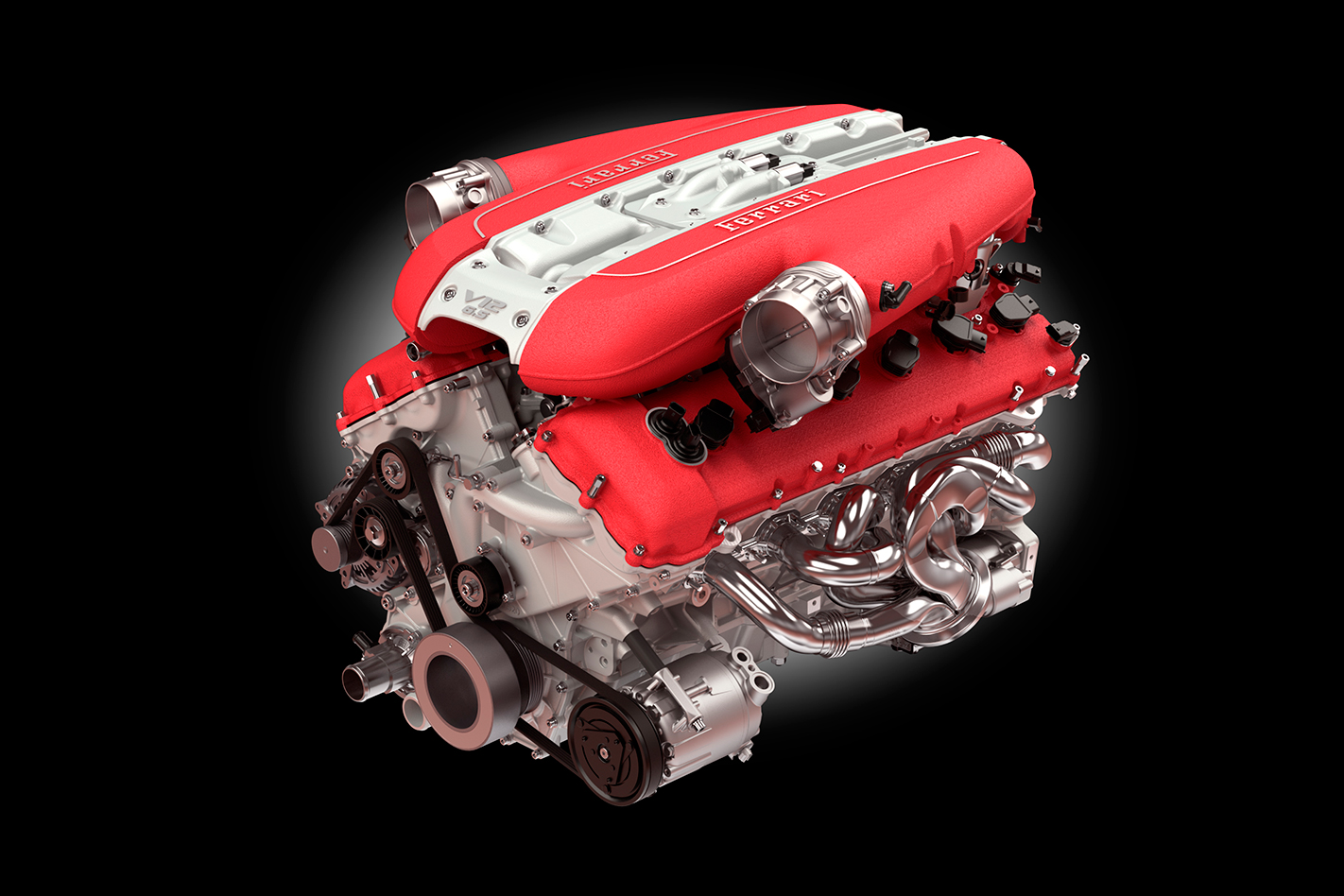
Ferrari 812 Superfast – 6.5-litre V12, dohc, 48v Max power: 588kW @ 8500rpm Max torque: 718Nm @ 7000rpm