
The eagerly-awaited Toyota C-HR is now on sale in Australia, with the compact crossover slotting into the local Toyota range below the Toyota RAV4 and priced from $26,990 for the entry-level manual.
That starting price may seem steep, but Toyota has packed the C-HR with a huge array of standard equipment.
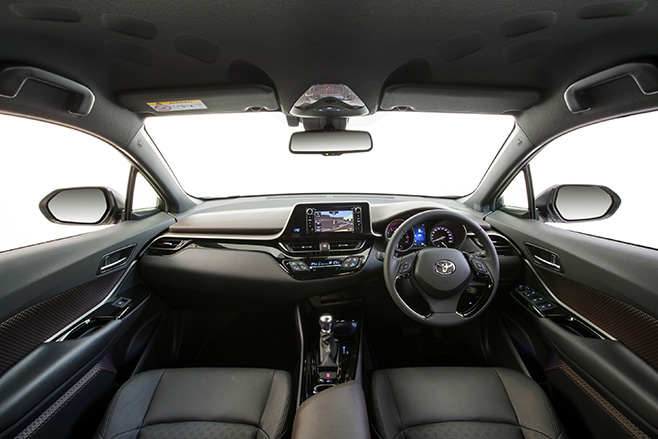
A turbocharged 1.2 litre engine is the mechanical centrepiece (and the sole powertrain offered in the range), but of greater interest to buyers will no doubt be the provision of satellite navigation, active cruise control, autonomous emergency braking, front and rear parking sensors, dual-zone climate control and 6.1-inch colour touchscreen infotainment display.
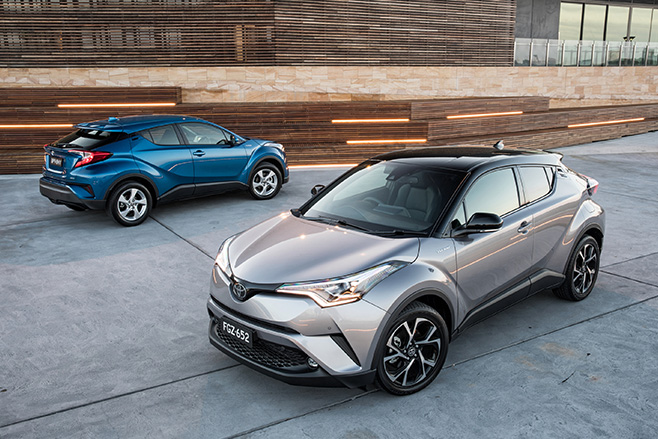
All of that is standard across the two-model range along with a scrolling list of features on each and every Australian-delivered C-HR (see below).
Step up into the range-topping C-HR Koba for $33,290, and a CVT automatic transmission (a $2000 option in the base model) becomes standard along with keyless entry and ignition, LED headlamps, 18-inch alloys, heated front seats, leather upholstery, a powered driver’s seat, an air-purifying climate control system, privacy glass, interior ambient lighting and the option of a two-tone colour scheme.
The base C-HR comes with a six-speed manual transmission and front-wheel drive as standard, with a rev-matching function for sportier (and smoother) driving. The differential is also pre-loaded to enhance traction when powering out of corners, and Toyota isn’t shy about billing its first compact SUV as being a driver’s car.
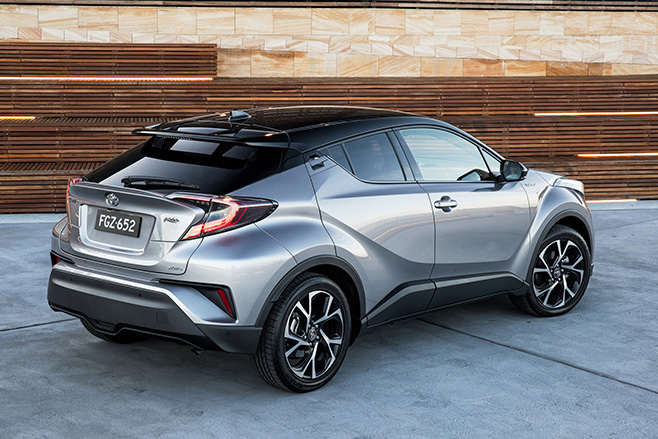
A CVT automatic is also available, with seven pre-set ratios in its manual shift mode.
Those wanting the extra security of all-wheel drive can option it in either model grade for $2000, though it’s strictly a CVT-only affair.
Beneath the CH-R’s sharply-sculpted bodywork lies Toyota’s still-fresh TNGA platform. Modular and adaptable it will eventually underpin the bulk of Toyota’s passenger car offerings. The company says it delivers enhanced body rigidity for better safety and handling, as well as a more sophisticated suspension setup.
Up front is a conventional MacPherson strut arrangement, but the rear suspension is a double-wishbone multilink – uncommon in the world of compact SUVs.
With Australian cars sourced from Japan, Toyota Australia has only managed to secure an initial allocation of 6000 cars for 2017.
With rising popularity of small SUVs like the Honda HR-V and Mazda CX-3, demand for the Toyota C-HR could see customers having to take their spot in a queue before supply improves next year.
2017 Toyota C-HR pricing
- 2WD manual – $26,990
- 2WD CVT – $28,990
- AWD CVT – $30,990
- Koba 2WD CVT – $33,290
- Koba AWD CVT – $35,290
Toyota CH-R standard equipment list
- Pre-collision safety system
- Lane departure alert with steering assist
- Sway warning system
- Blind spot monitor
- Rear cross-traffic alert
- Front and rear parking sensors
- Reversing camera
- Seven airbags, including driver’s knee airbag
- Vehicle stability and traction control
- Trailer sway control
- Anti-skid brakes
- Hill-start assist control
- Brake assist
- Electronic brake-force distribution
- Brake hold
- Advanced pitching control
- Front (4) and rear (4) parking sensors
- 17-inch alloy wheels
- Halogen projector-type headlamps
- LED daytime running lamps and fog lamps
- Rain-sensing wipers
- Roof-mounted spoiler
- Tailgate lip spoiler
- Dual-zone automatic air-conditioning
- 6.1-inch multimedia display/audio with six speakers and voice control
- Toyota Link** connected mobility
- Satellite navigation
- 4.2-inch colour multi-information display (MID)
- Premium steering wheel with audio, phone, MID and driving switches
- Electronic park brake
- Shark-fin antenna
- Power folding heated exterior mirrors
- Auto-dimming interior mirror
- Sporty fabric front seats with six-way manual adjustment
- Engine immobiliser
- “C-HR” puddle lamp
When we first heard whispers that Holden was to revive the Director nameplate for one of its final ‘Special Edition’ Commodores, it certainly raised our eyebrows.
We assume that most people are familiar with why the name Director is so controversial, but in case you’re not, here’s a quick summary. Left exhausted after his attempt at the 1984 Le Mans 24 Hour, Peter Brock was introduced to Dr Eric Dowker, who introduced him to the concept of ‘orgone energy’.
Together, the two of them developed the most appropriately named feature of any car in history, the ‘DB Polarizer’. According to Brock, it harnessed this mysterious energy like an automotive version of The Force and improved every facet of a car.
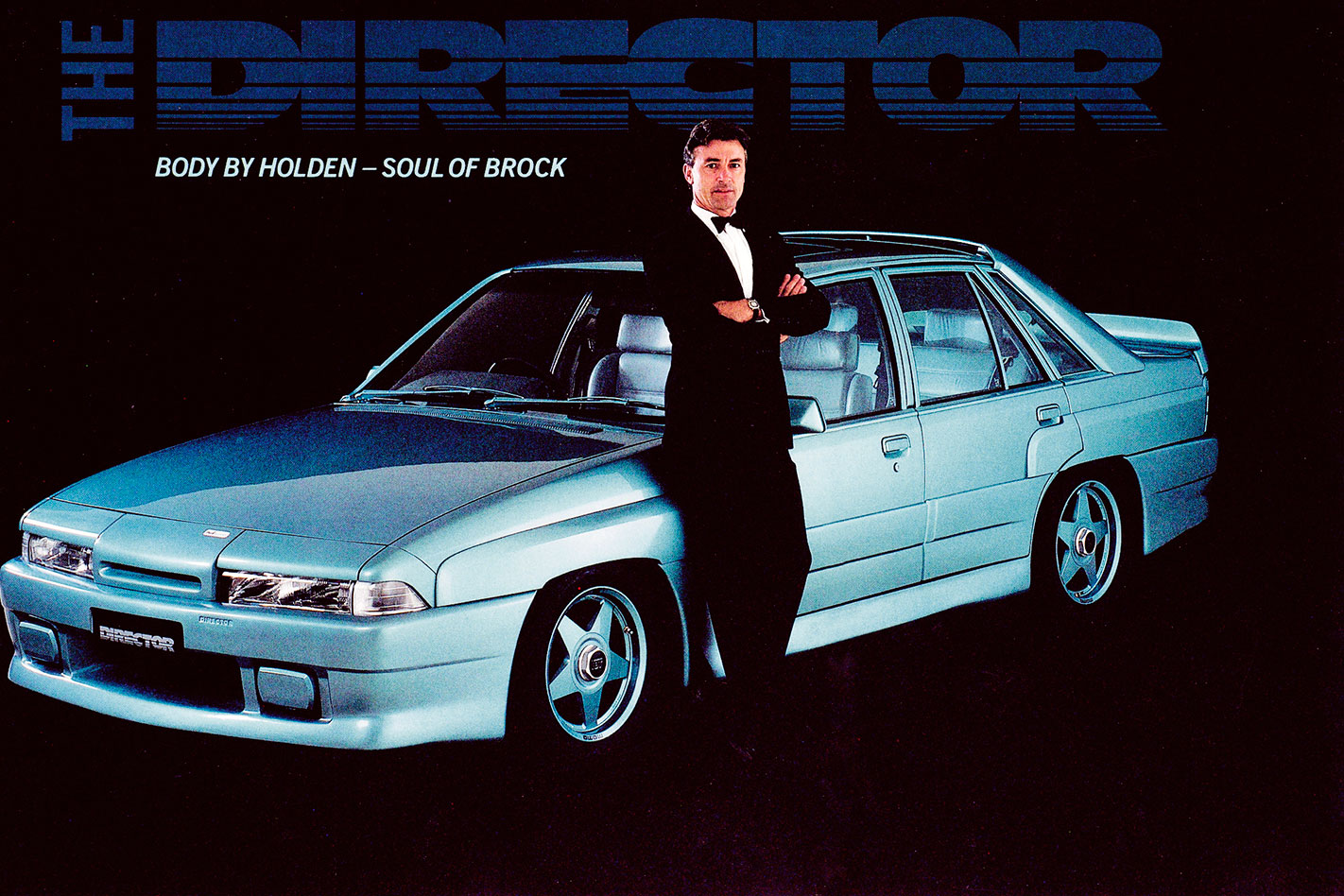
Undeterred, Brock developed the HDT Director, forcing Holden to terminate its relationship with the HDT operation in February 1987. It was a bitter and public split that took years to heal and hardly an affair that seems worthy of celebration.
So why did Holden revive the nameplate? We put the question to it and it responded with the following statement: “[The] Director is our ‘wolf in sheep’s clothing’. This blend of sophisticated performance and luxury lent itself perfectly to the Director name and gave us the opportunity to honour the late Peter Brock with one of our final, most collectible locally made vehicles.
“The contribution that Peter Brock made to Holden, motorsport, road safety and to the Australian community in general is legendary. It’s appropriate we would use the Director, and naturally it’s going to be associated with his legacy.”
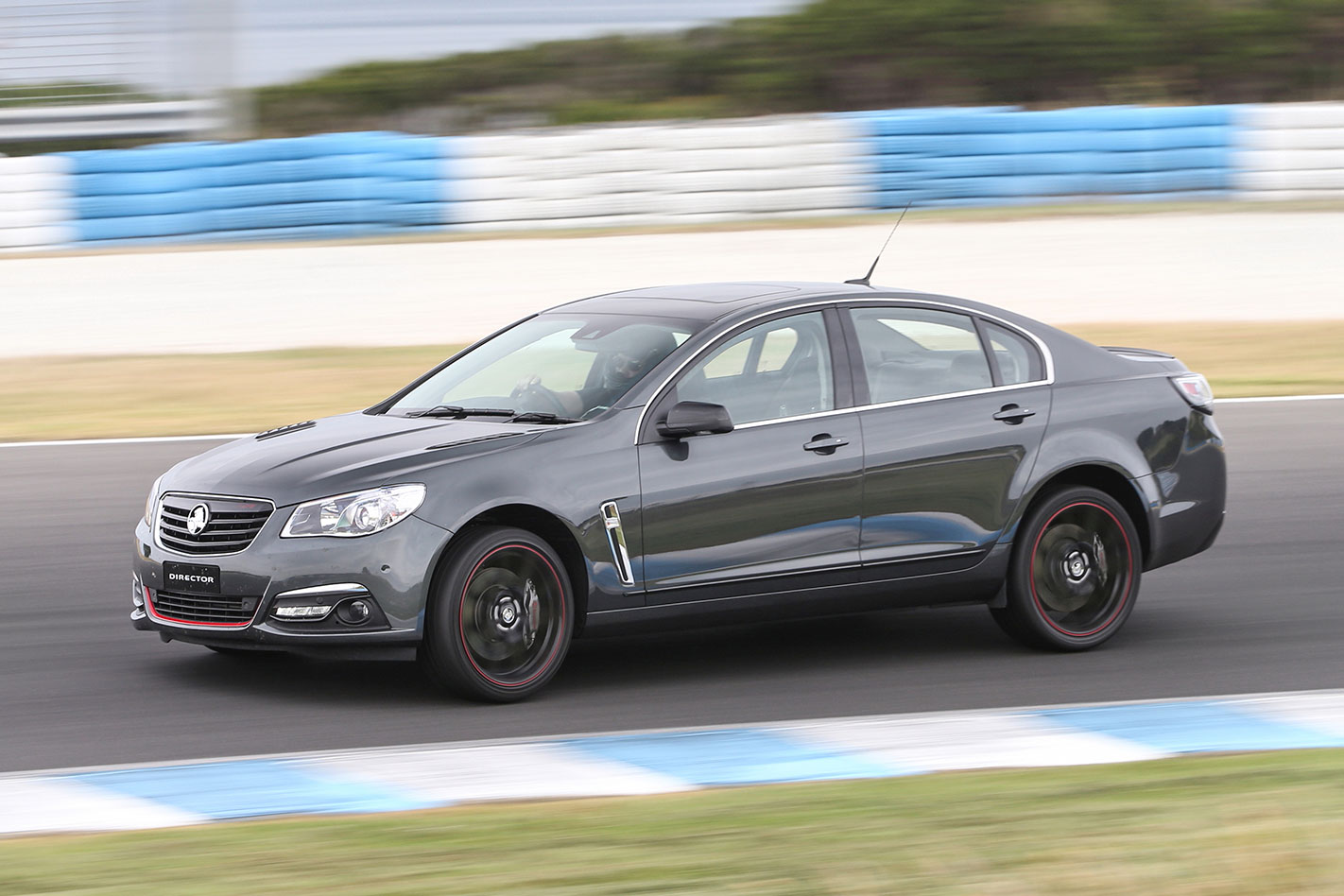
A Holden spokesman told MOTOR it was felt that enough time had passed that the badge could be used as a celebration of Brock’s legacy rather than a reminder of the lowest point of relationship between the two.
What do you think of Holden’s decision to use the Director nameplate? What name would you have chosen instead? Let us know in the comments below.
Cool ride; doesn’t get to saddle up for round two.
AUSTRALIA has so much residual love for the Ford Mustang that this ballsy two-door coupe/convertible was never going to fail in our market. Not at prices beginning in the mid-40s for a manual Ecoboost Fastback and stretching to a still-modest $66K for the flagship V8 rag-top. Nothing can match the traffic-stopping wow factor of a new Mustang for anything close to its price.
That’s a huge part of this car’s appeal – its egalitarian pricing strategy, hence why it’s been such a massive sales hit (see sidebar) – but there’s also an unexpected serving of substance to accompany the Mustang’s retro-modern styling. And as last year’s winner (the Mazda MX-5) proved, there’s nothing stopping a sports car from claiming a Car of the Year award.
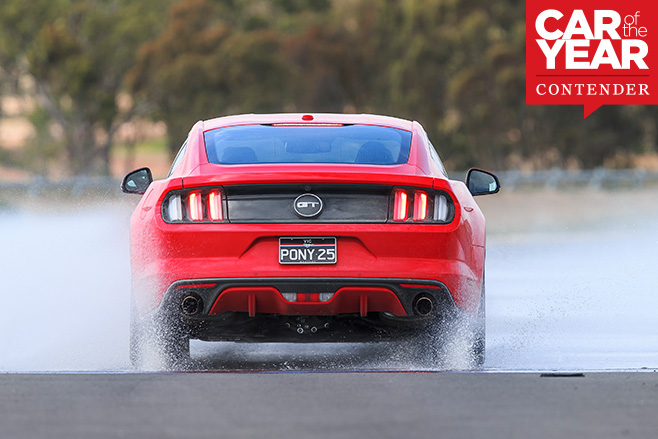
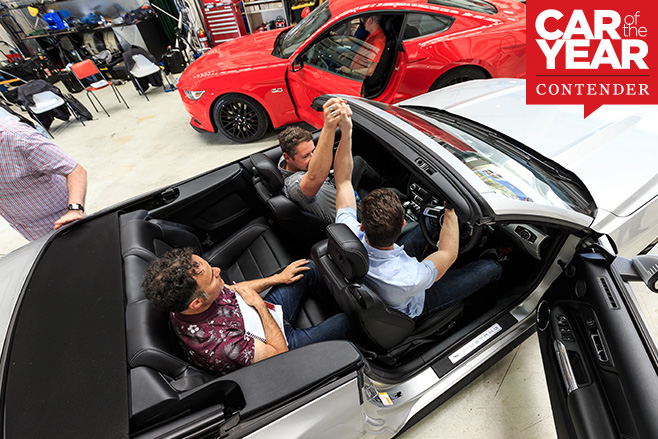
There’s some cringeworthy heritage like ‘Ground Speed’ emblazoned in the over-crowded instrument dials (with mph as well as km/h markings), and some ironic heritage, too, like the protruding structural lumps of the convertible’s roof frame harking back to the Model T. But the new Mustang is such a likeable beast – even the Ecoboost auto convertible – that many of those issues can be overlooked in the real world … just not Car of the Year.
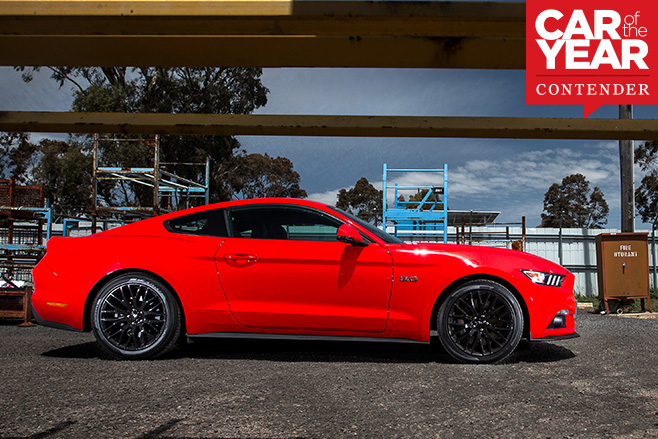
The driver’s Mustang is clearly the V8 manual Fastback. On the dirt handling circuit at You Yangs, it was an absolute riot (because dirt drifting is so important to Mustang owners…), combining innate chassis purchase with progressive dynamic response and great brakes. It continued this precise, poised, grip-laden display on bitumen, though wet-surface braking isn’t the Mustang’s forte, and it fails to build on the safety score of dual front knee airbags with any driver-assist technology.
SPECS
BODY Type: 2-door coupe, 2+2 seats Boot capacity: 324 – 383 litres Weight: 1664 – 1811kg
DRIVETRAIN Layout: front engine (north-south), RWD Engines: 2261cc 4cyl turbo (233kW/432Nm); 4951cc V8 (306kW/530Nm) Transmissions: 6-speed manual; 6-speed automatic
CHASSIS Tyres: 255/40R19 – 275/40R19 ADR81 fuel consumption: 8.5 – 13.1L/100km CO2 emissions: 199 – 306g/km Collision mitigation: No Crash rating: 5-star (US NHTSA) Prices: $45,990 – $66,490
Dud diesel and semi-auto combo prickled the judges.
IT TOOK two years for Citroen’s new-age halo vehicle to reach Australia, but that delay has not diluted the visual and conceptual impact of this flamboyant crossover wagon.
Overflowing with unusual, yet delightful design details, and innovating with ‘AirBump’ absorptive body cladding, the Citroen C4 Cactus brings much-needed flair to the fairly conservative small SUV/crossover class. Yet this poster child for Citroen’s future design and engineering direction is no architectural folly. It’s a brilliant example of how to fuse form and function.
Take Cactus’s interior. With semi-bench front seating and a full-bench rear, you could (wrongly) assume that the Citroen rivals a ’60s Holden Kingswood for occupant support. But its seats are plush and enveloping, enabling genuine five-seat comfort in combination with superb all-round vision. And mounting the front-passenger airbag in the ceiling means the Cactus’s posh-luggage design cues aren’t merely garnish; the ribbed section on the dash top not only provides a non-slip surface for devices, but it houses a nifty hidden bin.
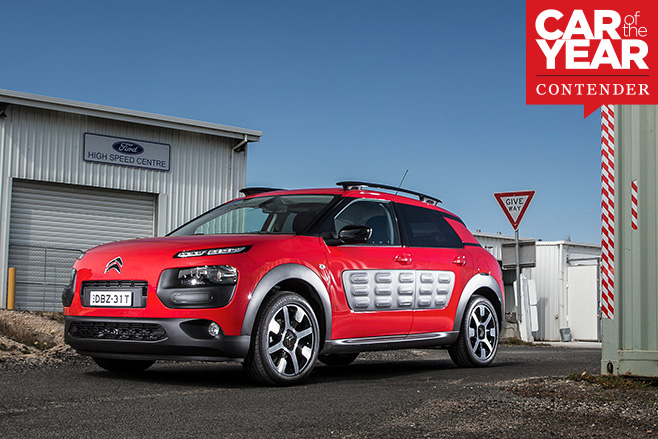
But this French charmer’s Car of the Year case begins to unravel when you explore its drivetrain choices. One of them – an award-winning turbo-petrol triple, tied to a long-throw five-speed manual ’box – is an utter delight, blending smooth, seductive performance with stunning flexibility and benchmark economy. The other – an ageing turbo-diesel lumped with a ‘robotised’ six-speed gearbox (and bought by 80 percent of customers) – is crucified by its uncultured transmission.
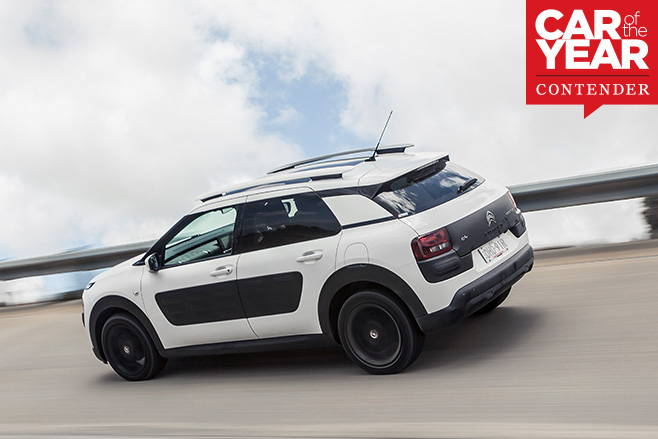
That’s a crying shame for the Cactus because it’s such a likeable drive. Lovely balance, leaning towards benign understeer when pushed, and an ability to effortlessly devour big distances. Only a slight awkwardness to its driving position and occasional kickback through its tilt-only steering wheel tarnish its dynamic sheen, not to mention some agitation from its torsion beam rear end on choppy surfaces.
It’s also good value if you take into account Citroen’s mega warranty and the fact our Exclusive variant has the most standard kit of any Cactus in the world. But in a field this strong, the diesel’s gearbox acts like a knife to the Citroen’s jugular.
Specs
BODY Type: 5-door wagon, 5 seats Boot capacity: 358 litres Weight: 1020 – 1055kg
DRIVETRAIN Layout: front engine (east-west), FWD
Engines: 1199cc 3cyl turbo (81kW/205Nm); 1560cc 4cyl turbo-diesel (68kW/230Nm) Transmissions: 5-speed manual; 6-speed semi-automatic
CHASSIS Tyres: 205/50 R17 ADR81 fuel consumption: 3.6 – 4.7L/100km CO2 emissions: 94 – 107g/km Collision mitigation: No Crash rating: 4-Star (Euro NCAP) Prices: $26,990 – $29,990
1. The original Volkswagen Tiguan had one of the smallest boots in its class but the second-generation model introduced in 2016 has one of the biggest, thanks to bigger external dimensions. It offers up to 615 litres of luggage capacity with the rear bench seat in use and its sliding base in its most forward position.2. Second-generation Tiguan is 60mm longer than its predecessor, though height is reduced by 38mm. The model is based on the same modular architecture as Volkswagen’s best-selling model, the Golf.3. Tiguan’s range-topping model, the 162TSI, is powered by the same turbocharged engine fitted to the iconic Golf GTI hot-hatch. Although the SUV is a bit heavier, its all-wheel-drive system allows it to match the GTI’s acceleration speed.4. 4Motion all-wheel-drive variants are still mainly front-wheel drive, moving torque to the rear wheels when wheel-slip is detected. An off-road mode assists on loose surfaces by holding gears longer and improving throttle precision, while the electronic stability control system acts to ensure the wheels with the most grip get the most engine torque.5. The Volkswagen Tiguan features more driver aids than your average mid-sized volume-selling SUV. Standard equipment includes autonomous emergency braking, fatigue detection, lane departure warning, and optical parking guidance and assistance.6. Only one manual gearbox is available in the Tiguan range – on the base 110TSI variant. Every other model features a DSG auto, with either six or seven gears depending on engine.7. The most expensive Tiguan, the 162TSI Highline, can still be ordered with up to nearly $9000 in options, including an R-Line Package that brings notable features including electronically adjustable suspension and 20-inch alloy wheels.
Watch our 2017 Volkswagen Tiguan video review here
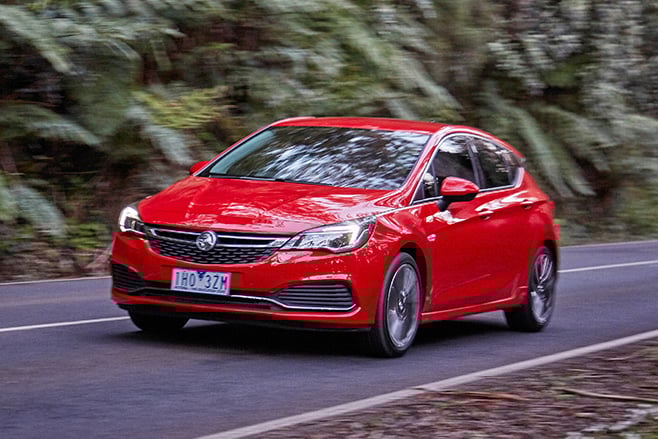
Holden is in the middle of a reinvention. It’s locally made models have cruised off into the sunset opening the door for cars like the all-new Holden Astra. It has certainly made waves in Europe it’s little wonder. It’s fun to drive, it looks sleek and it’s enjoyable to ride in too.
What stands out
Sure, the popular small car segment is hotly contested but the Astra stands out. Holden offers turbocharged engines, Apple CarPlay and Android Auto infotainment apps as standard. The chassis is lighter and the suspension and steering have been especially tuned for Australian conditions making for a comfortable ride over inner city potholes and bumps.
What’s inside
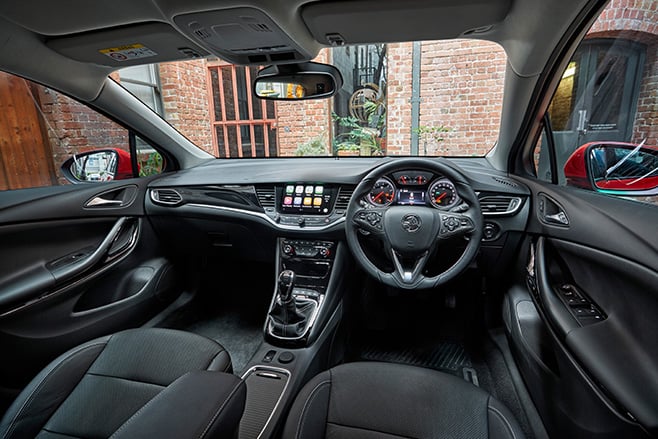
Inside, the Astra feels a little like the Tardis. Okay, it’s a small car but surprisingly there’s so much space. Four adults can easily fit inside. The Astra is comfortable and really nicely finished, especially at its price point … even if storage is a little bit mediocre and there’s only one USB charging point.
The good news is Astra has done away with all that cabin clutter and button-heavy dash. It looks much sleeker inside.
Choosing yours
There are three Astra variants to choose from. All three offer a choice between a manual or automatic gearbox.
The entry level Astra R features a 1.4L turbocharged four-cylinder petrol engine, alloy wheels, a rear view camera and rear park assist and a set of LED daytime running lamps.
Spend a little more and the mid-tier Astra RS gets a more powerful 1.6L turbocharged engine, and the full set of active safety gear as standard. Including, automatic emergency braking, Forward Collision Alert with Head-Up Warning and Lane Departure Warning with Lane Keep Assist.
The top of the range Astra RS-V has even more goodies to make it look and feel premium. It has heated seats, a larger 8-inch colour touchscreen and how’s this for luxurious – a heated steering wheel. There’s also bigger alloy wheels and LED tail lamps, and if you want to go all out you can even add Holden’s IntelliLux LED Matrix headlights which – get this – automatically adapt the strength of the headlights to your driving conditions. No more startling oncoming traffic.
Summing up
The Astra really impressed us with its performance, technology, economy and style. Holden is relying on this model, and it should do its bit to reinvigorate the brand.
TWO days from now Ford will lift the lid on its next-generation Fiesta ST warm hatch, and to whet the appetites of cash-strapped performance junkies the European arm of Ford has released a short teaser film.
Showing the hotted-up version of Ford’s all-new Fiesta racing through the Cologne assembly plant that birthed it, the video doesn’t give much away. The car wears camouflage, the editing is fast and there’s a hell of a lot of assembly line equipment getting between the camera and the Fiesta ST.
https://www.instagram.com/p/BQxvfw7j0fL/
All we know is that this car sports a five-door bodystyle, is compact enough to race through a confined factory environment, and will probably outrun a guy on a bicycle.
Vanilla versions of the new 2017 Ford Fiesta will be offered with a three-door bodystyle in Europe, but at this point it’s unclear whether the ST will come with the same option. Initially a three-door only model, the Europe-market Fiesta ST received a five-door version late in its life cycle. In Australia it was only ever offered as a three-door, while the Fiesta ST was exclusively a five-door proposition in the USA.
With rivals like the Renault Clio RS and Volkswagen Polo GTI proving successful as five-doors, the Fiesta ST may follow suit with a global roll-out of a more versatile five-door body style.
Tech details are naturally under wraps until the 24th of this month, but expect more herbs than the outgoing model’s 134kW/240Nm peak outputs. Will an automatic gearbox option be offered? It’d be a first for the Fiesta ST, which has been manual-only up until now, but offering a two-pedal variant would certainly unlock the door to more sales.
Ford Australia wont’ be drawn on whether the updated Fiesta ST will be offered here as a five-door model, or whether it will continue to be offered a three-door only model. Local deliveries of the regular Fiesta aren’t expected to happen until late 2017 at the earliest, so we can likely expect the new Fiesta ST to be a 2018 proposition.
As our ultimate award, Performance Car of the Year is the highlight of MOTOR’s calendar.
How could you not look forward to a week-long thrash on road and track in the finest fast cars of the past 12 months? Rarely is there a bad car present – typically we’re sorting varying degrees of excellence – but as the pieces fell into place it became clear that PCOTY 2017 would be quite a special field.
As such our ‘10 best cars of the year’ blew out to a dozen, which is stretching the limit of what we can logistically accommodate, but to leave any of these 12 at home would have been criminal – as it is, some arguably worthy contenders failed to get a guernsey. Nonetheless, the last time Australia witnessed a team of 12 this good, Warnie, McGrath and Ponting were wearing the baggy green.
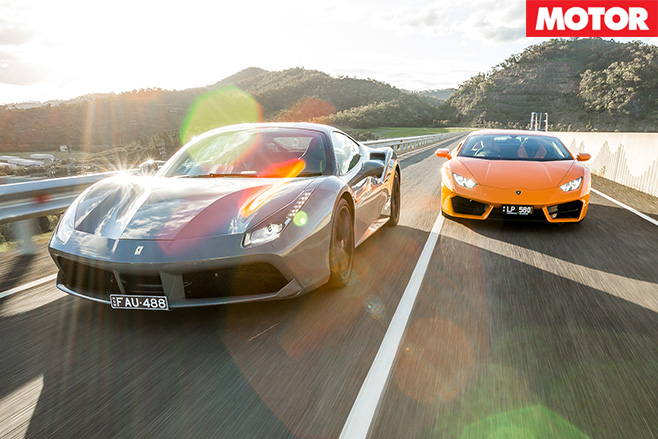
This year, however, no fewer than four bona fide supercars make it to the Driver Education Centre (DECA) at Shepparton for day one of PCOTY 2017, and they don’t come much more super than the Ferrari 488 GTB. Turbocharging is supposed to ruin sports cars by adding weight and dulling response, but Ferrari has added plenty of silver lining to the forced-induction cloud by screwing 492kW/760Nm out of the 3.9-litre twin-turbo V8.
Having sampled the 488 before I know its performance is borderline frightening, but as the only judge to have spent significant time behind the wheel, it’s an unknown quantity for most. And then there’s the as-tested price tag of $625,278, making it by far the most expensive contender.
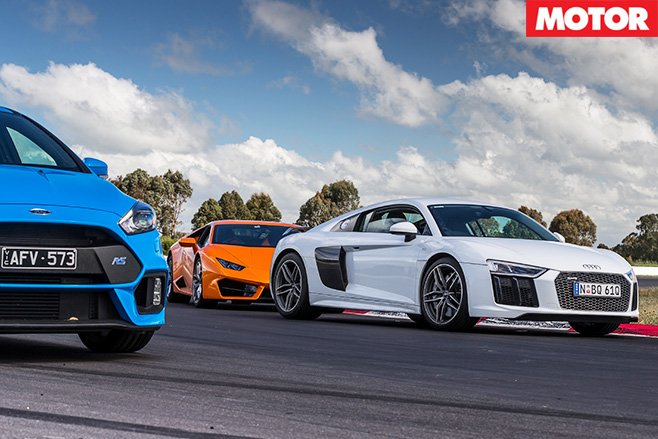
The deletion of all-wheel drive doesn’t always translate to more entertainment – Morley still wakes in a cold sweat at memories of the Gallardo LP550-2 Balboni that appeared at PCOTY 2010 – but the advantages or otherwise of two driven wheels will be brought into sharp relief by the Huracan’s quattro cousin, Audi’s R8 V10 Plus.
While evolutionary in both design and specification, the latest R8 feels quite different to its two-time PCOTY-winning predecessor to drive. Thankfully, that searing atmo V10 remains, now tweaked to 449kW/560Nm, along with the usual first-class Audi interior and Blade Runner looks.
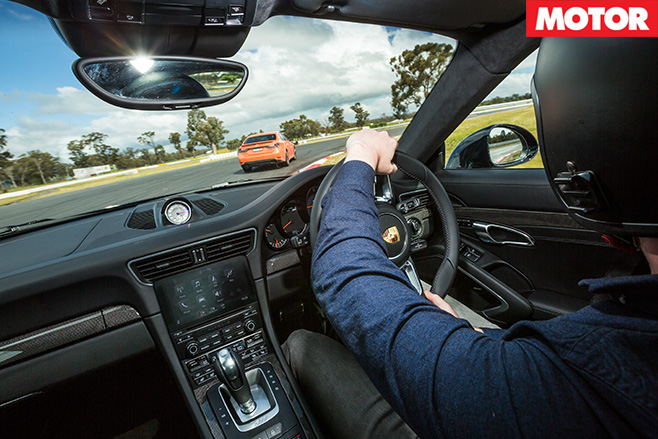
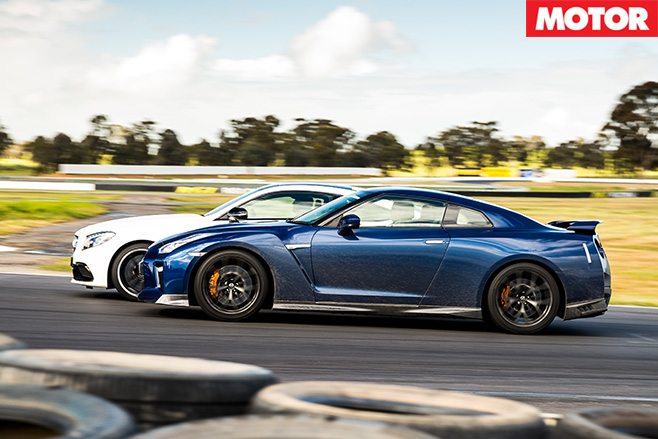
The Turbo S would rather talk to the Nissan GT-R, the two sharing a common interest in tearing up twisty roads at physics-defying speed. The R35 has appeared twice before at PCOTY, winning on both occasions, but with the MY2017 facelift being the most substantial yet, we thought it would be interesting to see where Godzilla ranked among the latest offerings.
Now packing 419kW/632Nm, it undoubtedly still has front-running pace and the suspension and interior upgrades rectify some of the criticisms we’ve had in years past. But can a softer, more rounded GT-R still wow in the same manner as when it last vied for PCOTY honours five years ago?
One of the hero cars of 2016 is the BMW M2, rightly hailed as a return to form for M Division. In Oz-only Pure guise it’s a back-to-basics recipe with tasty ingredients: 3.0-litre twin-turbo six in the front, six-speed manual in the middle and limited-slip differential at the rear, all offered at a price that makes a Cayman or TT – not to mention its M4 big brother – look a bit expensive.
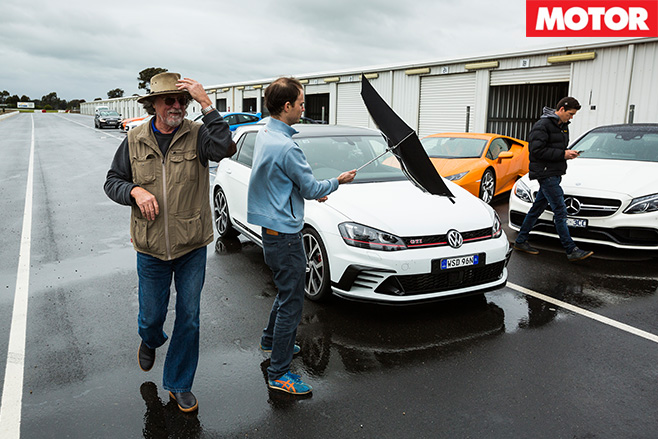
Expensive isn’t an accusation you could level at the VW Golf GTI 40 Years. Granted, $48,990 for the six-speed dual-clutch version we have here isn’t exactly church change, but it does make the limited-edition Golf the cheapest car in the field. The $2500 premium over the Golf GTI Performance appears good value, too, given the 40 Years scores bespoke 19s, an aero kit, Alcantara interior bits and, most importantly, an extra 26kW, with a further 18kW/30Nm available in 10-second bursts on overboost.
Regardless, Ford’s fantastic five-door rewrites the hot hatch rule book and has its sights set on upsetting the apple cart for a few of the big-dollar exotica. The same could be said of Ford’s other PCOTY 2017 entrant, the Mustang GT. We tried to limit each manufacturer to just one car, but knew there would be howls of protest if either the Focus or Mustang was left at home.
But Ford’s latest pony car doesn’t make the list on popularity grounds alone. It’s a properly sorted coupe and offers an unrivalled combination of style and sex appeal for less than $60K.
Speaking of entertaining, last but certainly not least is the HSV Clubsport R8 LSA. If it feels like the supercharged Clubbie has been out for ages, that’s because it has – about 12 months, in fact. HSV’s Gen-F2 range launched just weeks after last year’s PCOTY but was a guaranteed call up thanks to 400kW/671Nm of blown V8, finely honed dynamics and a sharp (in this company, at least) $80,990 price tag.
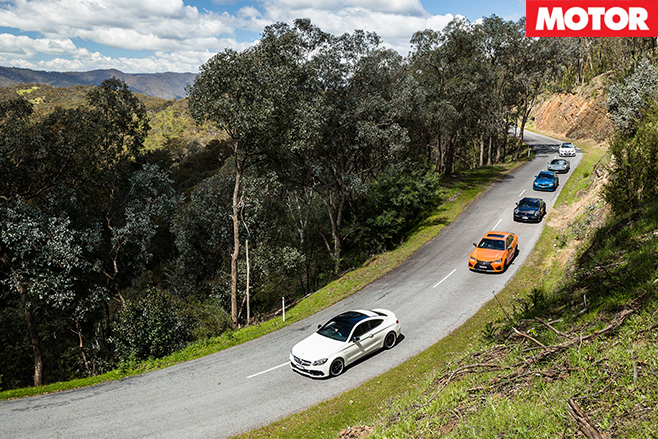
This year’s testing schedule closely follows that of 2015: a day at DECA to test the contenders’ performance in a closed environment, flat-out laps at Winton and two days of on-road assessment to make sure everything works as it should in the real world.
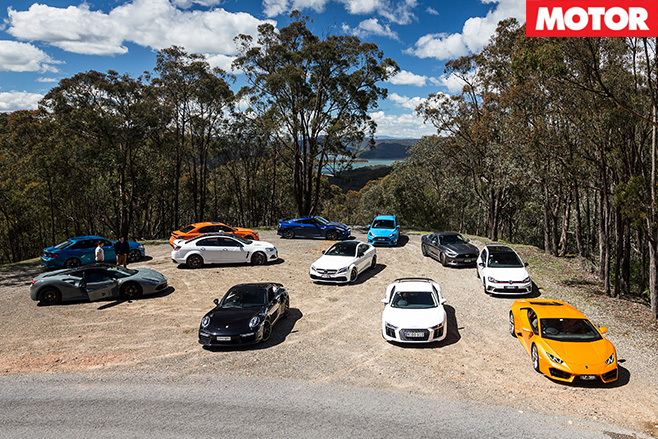
With fuel tanks brimmed, memory cards loaded and keys in ignitions, all that’s left is to discover which contender will reign as the performance car king for the next 12 months.
The Hyundai i30 Wagon has been revealed just days after it was teased, but don’t get your hopes up for a budget-friendly cargo-carrier, as Hyundai Australia has announced the wagon is not for Aussie consumption just yet.
Earlier this week Hyundai communications manager Bill Thomas said Australia’s growing preference for SUVs over wagons offers a clear indication as to why the i30 Tourer (aka wagon) was pulled from Australian showrooms at the end of 2015.
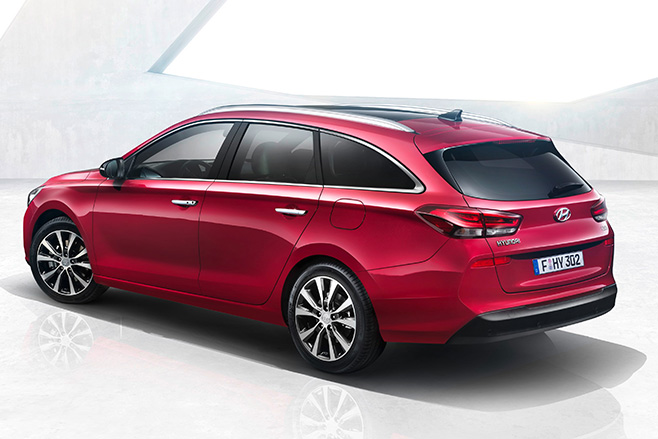
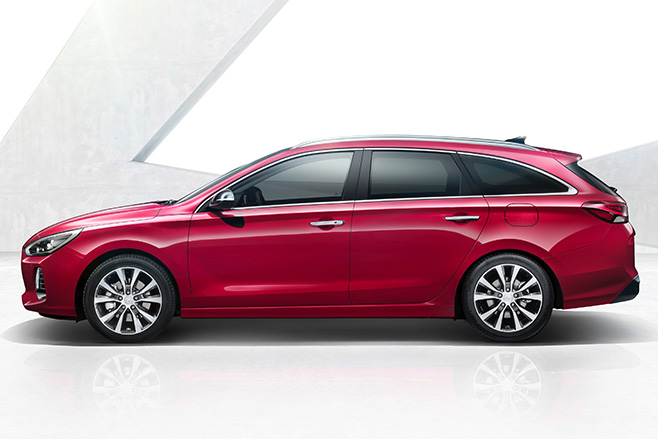
Nevertheless, Hyundai’s new i30 variant is an attractive interpretation of a hatch-based wagon. The new-generation i30 Wagon follows the design template set by the i30 hatch, sporting the same headlights and tail lamps as well as Hyundai’s signature ‘cascading grille’. The main differences occur behind the C-pillar.
The new design, with its tapering roofline, gives the Wagon a sportier look. While the wheelbase remains the same as the i30 hatch at 2650mm, it grows in overall length to 4585mm, adding 74 litres of seats-up boot space to the previous-gen wagon’s 528-litre capacity for a total of 602L.
The i30 will also include plenty of safety gear, such as Autonomous Emergency Braking, Driver Attention Alert, Advanced Smart Cruise Control, Blind Sport Detector, Lane Keeping Assist System and Speed Limit Information Function.
It will also offer customers updated connectivity with features like Apple CarPlay and Android Auto, as well as a wireless charging system for smartphones.
It will be powered by either a 1.6-litre turbo diesel or one of three petrol engines, including an all-new 1.4-litre turbocharged four-cylinder engine delivering 103kW of power, and the 88kW 1.0-litre three-cylinder. A 1.6-litre turbo petrol will headline the range
More information on the i30 Wagon will be revealed next month at its official debut in Geneva.
RANGE Rover has teased its upcoming Velar SUV ahead of its global debut at the beginning of March, and its first public appearance at the Geneva Motor Show later that month. Set to become the fourth model in the British marque’s line-up, the Velar also takes Range Rover into new territory: that of SUV ‘coupes’.
But as these teaser images show, the Velar’s rump won’t be nearly as tapered as those of existing SUV-based fastbacks like the Mercedes-Benz GLE Coupe, BMW X6 and the upcoming Audi Q8. Instead, Velar’s silhouette appears to be more Macan-like thanks to shallow-raked tailgate glass while the roofline is truncated but doesn’t sport an aggressive slope.
Designed to sit between the entry-level Evoque and the Range Rover Sport, the Velar is expected to be built atop the Jaguar F-Pace’s all-alloy architecture. That means a longitudinal powertrain layout and handling-focused suspension geometry, with plenty of aluminium suspension bits to keep weight down and road-holding up.
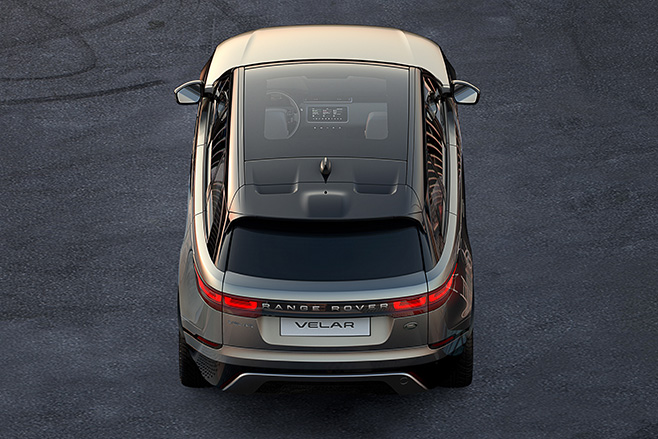
We only get a decent look at its rear end for now, but it’s clear that Range Rover is making design a key USP of the Velar. The roof is almost entirely glass and the tail lamp graphic is slim and wide, unlike other existing Range Rover models. The ‘Range Rover’ script spans the full width between those twin-element tail lamp clusters, and a pronounced ledge separates the side sheetmetal from the turret and glasshouse.
Other neat touches include the sculpted air channels that direct air flowing over the roof under the tailgate-mounted spoiler ‑ a neat piece of aero and one that should help keep the rear glass clear in dusty or wet conditions. When the covers get lifted on March 1, we should be greeted by a fairly handsome vehicle.
Until then, though, this is our best look yet at Range Rover’s shapely newcomer. Stay tuned, all will be revealed next week.
