
The most challenging and tempting drivers’ roads in Australia – closed to all other traffic.
And an arsenal of playthings from BMW’s M division fun factory. It’s tantamount to answering a knock on your front door and finding the trim gals from the local gym standing there laughing with takeaway Thai and a couple of slabs.
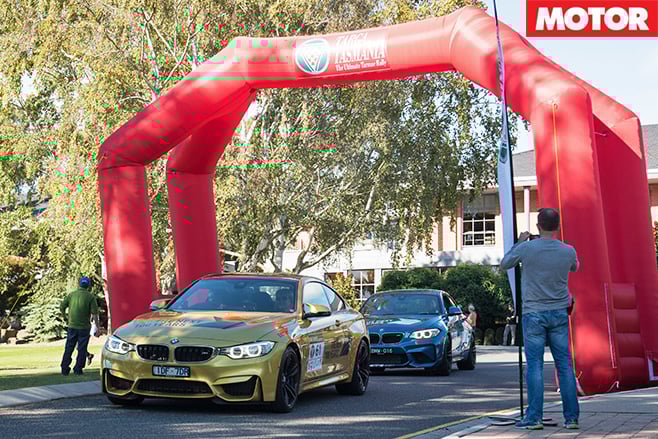
The 25th anniversary of Targa Tasmania drew the biggest (380-car) entry ever, and a magical mix of modern exotics and today’s peppy hotties, classic and stodgy oldies, rambunctious US and Aussie muscle, and the occasional WTF? oddity.
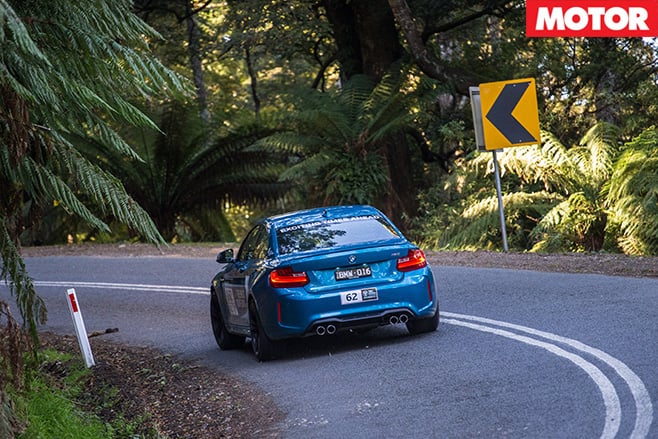
The Targa field comes in two distinct categories – a seriously competitive entry which sensibly requires safety protection from cages to helmets, and a Tour group which isn’t timed, doesn’t require anything other than a credit card, the right machinery, and an attitude based around common sense.
Forget suggestions that it’s an easy drive in bucolic surroundings, though; uneven patchy surfaces, undulations, blind crests, unexpected damp and mossy stretches and unpredictable corner radii are a thought-provoking recipe.
Serious goers such as local hotshot Jason White, (Dodge Viper), a five-time winner, twice winner Tony Quinn (Lamborghini Huracan), winner on eight occasions Jim Richards (Porsche Cayman GT4) and Matt Close (Porsche 911 GT3) went at it hard and fast, relying on pace notes to coach and reassure them through blind corners and over 200km/h-plus crests.
It was the 24th Targa Tassie for Richo and navigator Barry Oliver. They loved this one as much as the first and landed yet another podium. White blew the V10 in the Viper on the second last day during a tight tussle with Close, who went on to win GT2 and the event outright, while rally ace Steve Glenney won GT4, snatching the lead on the last day.
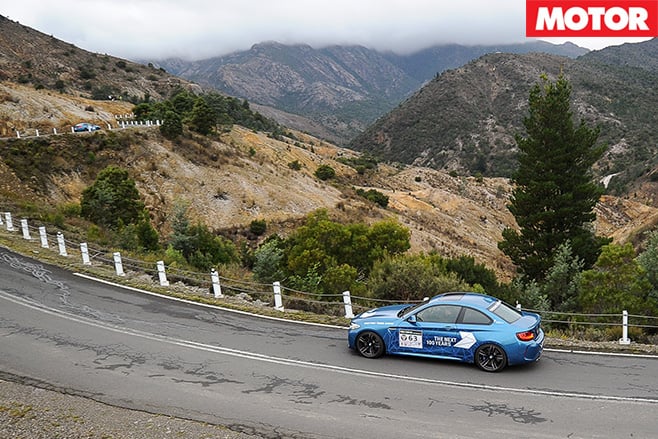
On the tighter stages this was no great hardship. To keep us under a semblance of control on the faster open stages, a Targa-supplied electric GPS tracking device called Rally Safe pinpointed our location and monitored speeds. Infringe more than once or twice and censure followed.
Targa 2016 started in Launceston and covered much of the picturesque island state, touching on Burnie, Stanley, Strahan and finally to Hobart. More than 500 competitive kilometres all told, across 38 stages.
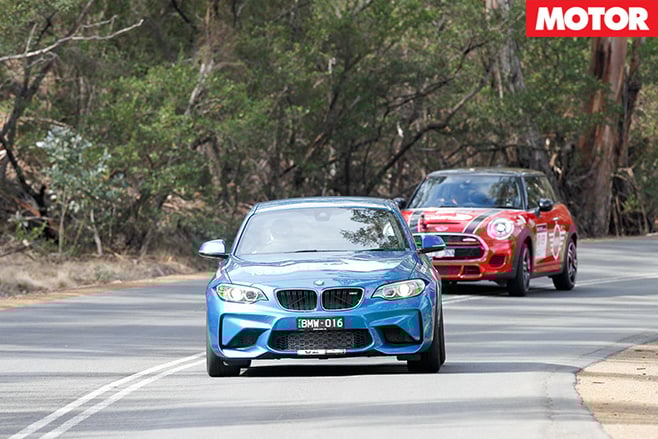
A record 97 female navigators were in the passenger seats this year, including the brave Claire Dowling sitting alongside MOTOR. Remember too, Targa is a game that the women can play.
The opening days of Targa Tassie were unusually dry but the knife twist came on the last morning, with drizzle bringing some unwelcome treachery to the bumpy, narrow and technical stages south of Hobart. Sobered by the sad sights of a couple of hi-po Porsches massively devalued after huge impacts with earth banks, the BMW guys and gals opted for a less adventurous approach, especially on the Cygnet and Longley skating rinks.
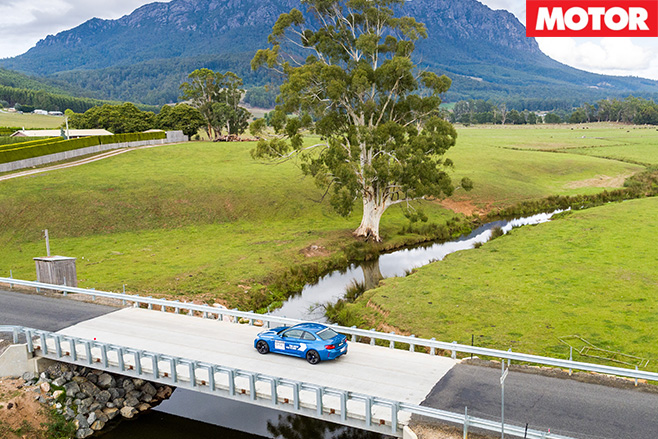
The M2, just released here in six-speed manual and seven-speed twin-clutch DCT forms, and a sub-$100K purchase, is unquestionably one of the best-value performance cars available today.
In a motoring world of complicated technological aids, the M2 is a car for driving purists, people who drool over traditional front-engined, rear-drive coupes with lots of urge, competent chassis and not much in the way of electronic nannies.
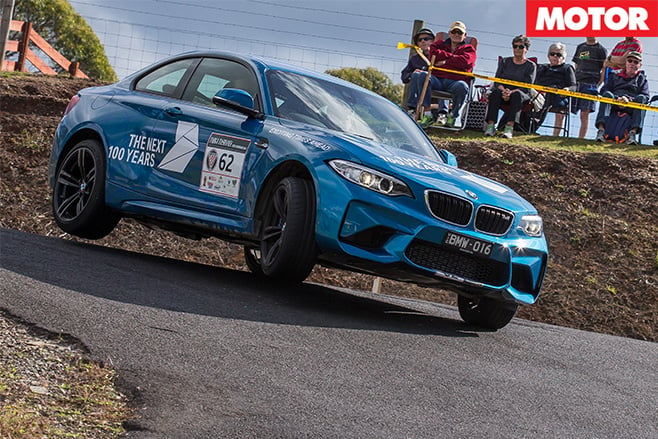
All M2s ride on 19-inch wheels and Michelin Pilot Super Sport tyres, which are very effective in all conditions, though noisy on the coarser surfaces.
Traditionalists will no doubt hanker for the manual, which MOTOR tried on three stages of Targa including the gyrating, tight Queenstown blast, loving every blip on the down changes, and every growl from the four exhausts. Why four? Dunno.
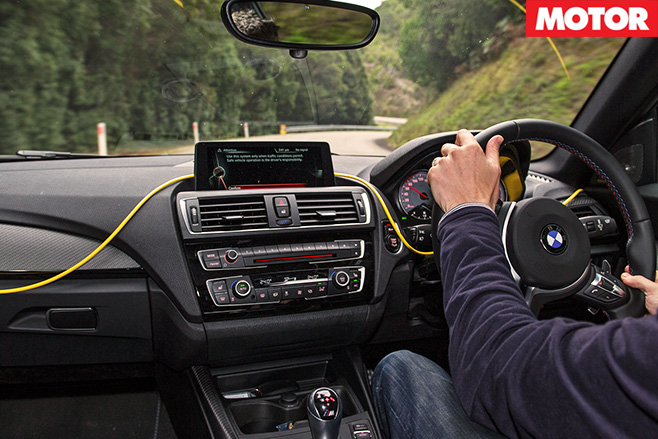
We were helped, of course, by a terrifically responsive front end and brilliant steering, with all the communicative road feel a keen driver demands and redolent of the days before electric assistance came along.
The M2 is such a comfortable, almost restful, jigger too. The power-adjustable sports buckets are supportive, with the seat wings cranking in to tightly hug the torso.
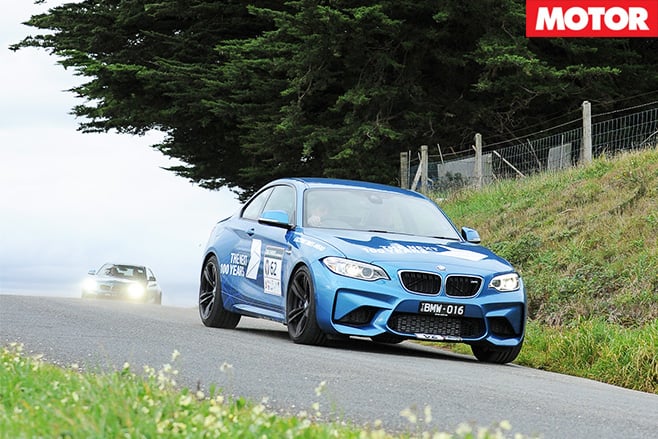
Targa Tas, a history
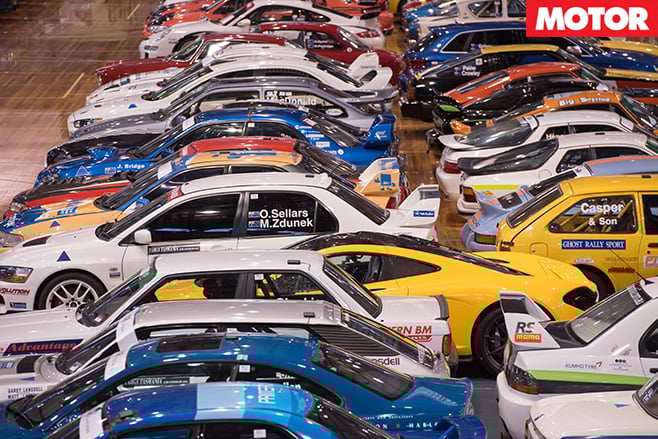
The event’s length, six days for 2016’s 25th Anniversary, makes it an incredibly tough test of man and machine. The challenge has lured some of the world’s finest drivers, including Stirling Moss, Jack Brabham, Sandro Munari, Jochen Mass, Walter Rohrl, Peter Brock, and of course eight-time winner Jim Richards.
Bad luck for champ
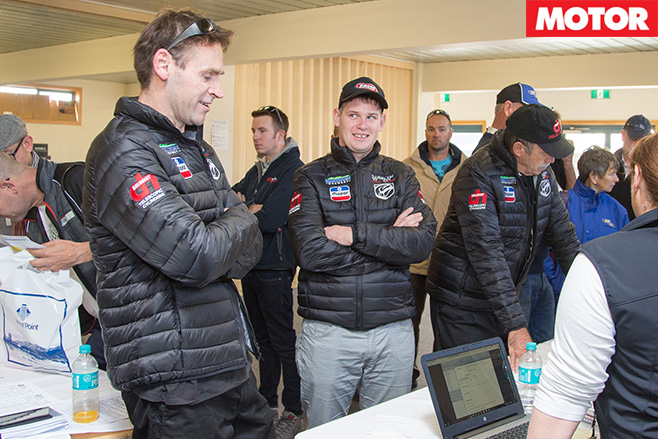
It proved a potent combination, White swapping fastest stage times with Matt Close in a Porsche 991 911 GT3, just 15sec separating the two after 27 stages, before the Viper’s V10 blew, handing Close the outright win.
But the most curious story was that of past winner Steve Glenney who started the event in the passenger seat, taking the wheel of the Subaru WRX STI on Day Two when the driver complained of blurry vision. He then dominated the GT4 class to win by 3min16sec from Tony Quinn in a Lambo Huracan.
MERCEDES-Benz’s next crop of autonomous cars will leave Australian speed limits behind as they ready themselves for a life in the fast lane.
The carmaker last week unveiled the technology that will feature in its upcoming E-Class sedan, including a suite of driver aids that will even perform a lane change for the driver in fast-moving freeway traffic.
And in Germany, the carmaker will soon tweak its automated cruise control system – which can automatically slow its cars when the vehicle in front does – to work at 250km/h; an increase from its present speed of 210km/h.
Jochen Haab, a Mercedes-Benz vehicle engineer working on the next generation of the carmaker’s Pilot Assist system, said he believed the next-generation system he was working on would work best on the freeway at speeds of between 100-130km/h.
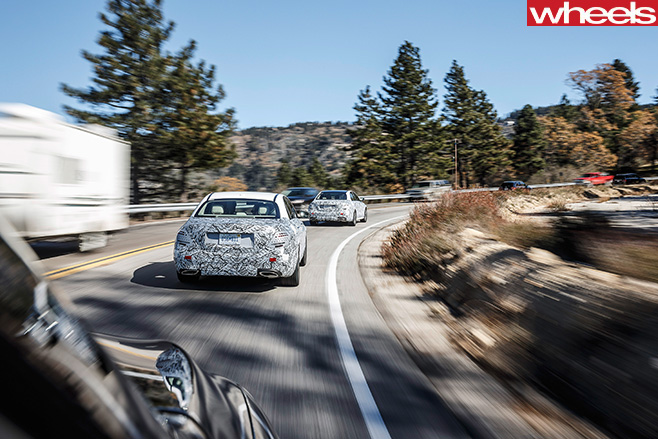
“I think somewhere between 100km/h and 130km/h is a reasonable speed for autonomous driving, and we will probably start with speeds that you will be very much acquainted with in Australia – which might be a problem for acceptance at the beginning in Germany.”
According to Haab, the benefit of being able to move cars autonomously and at higher speeds down a freeway would result in less congestion, but in some instances could actually increase commuting times.
“Autonomous driving is not there for getting you there the fastest possible way, but the most comfortable way,” he said.
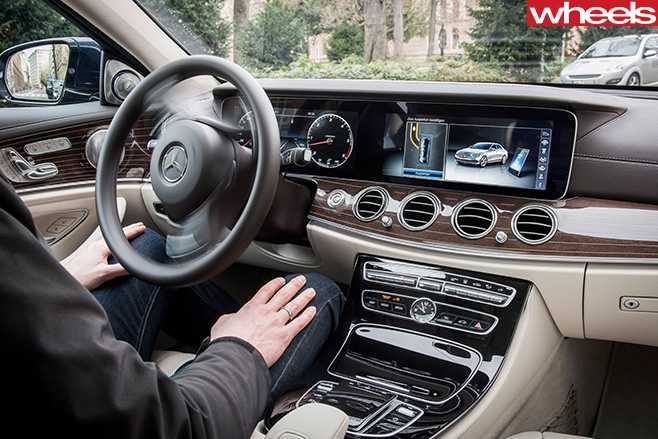
“And 100km/h to 130km/h is a reasonable speed. Again, you have to be able to deal with at least five seconds headway [to the car in front] and that is limited by a sensible range of radar.”
According to Haab, a next-generation Mercedes-Benz S-Class limousine due in about 2018 will be the first Mercedes-badged vehicle to cross the divide into the next stage of autonomous vehicle technology – a highly automated car that can tell when it reaches its limits and hands control back to the driver.
Shining a light on the once dark art of turbos and superchargers with some exciting and inspiring interactive explanations.
FORCED induction can be a dark art. Superchargers, turbochargers, roots-style, twin-scroll, centrifugal – you can be easily forgiven for not understanding the ins and outs of every single variation.
It may be shameful to admit, but not everyone has an engineer’s level of understanding when it comes to pub discussions.
But fear not, because Aussie tyre company Tyroola has a website that is here to help.
Simply named Supercharger vs. Turbocharger, the site includes interactive animations that allow you to truly understand how the wonders of forced induction work.
Each step of the procedure is labelled clearly, and you are able to break down the entire process in easy to digest pieces.
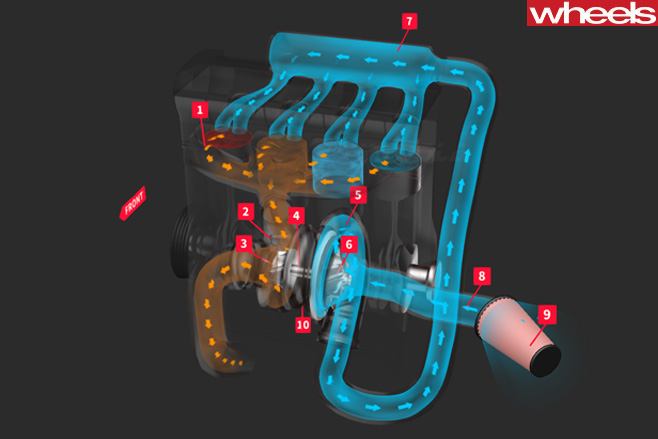
The site isn’t reserved solely for those looking for some ammo for lunch-time discussions. Even if you are across the ins-and-outs of forced induction, the animations make for fascinating viewing, and it’s easy to lose hours moving your way around the interactive explanations.
Before long, you will find yourself inside a turbocharger, watching the firing order of pistons. It’s genuinely fascinating.
The coolest thing about the site is the way it makes a technology that would have most people without automotive minds tuning out, into something fascinating. Show it to your family, children, parents, and friends; share a little bit of knowledge so that others understand what makes something as crude as a combustion engine a life-long obsession for car enthusiasts.
Skoda has given a spritz to its Octavia mid-size car, hoping to give it a leg-up against the likes of the segment-crushing Toyota Camry, the Mazda 6 and the Subaru Liberty. The headline act is the introduction of autonomous emergency braking – tech that can help you avoid a rear-end shunt – in a family-sized car costing less than $23,000.
- Skoda has lifted the price of the Octavia Ambition, the cheapest car in the range, by $500 with this facelift, but reckons buyers gain $4300 in extra gear. The $22,990 entry-level car now includes alloy wheels, adaptive cruise control that keeps a set distance away from the car in front, a reversing camera with rear parking sensors, an emergency braking system that stops the car if it senses a low-speed crash is about to happen, and a bigger colour screen mounted high on the console that works with both Apple CarPlay and Android Auto.
- The Octavia Ambition this car replaces didn’t even have alloys. Instead it had steel wheels hidden behind plastic hubcaps. It was also missing cruise control and a centre armrest between the front seats.
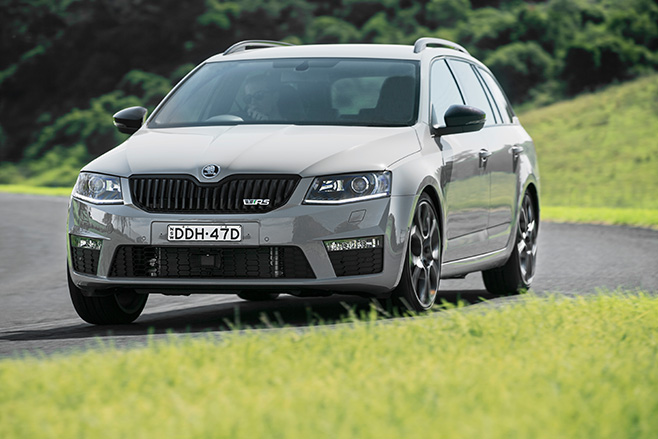
- Skoda is hoping Octavia buyers imitate what they do with the slightly larger Superb range: buy a car and then stack it up with packages. The Octavia will have three of them: a $3400 Sports Pack for Ambition models that gives it a more sporty look and bigger wheels, a $3200 Tech Pack that adds keyless entry – just keep the key in your pocket – front parking sensors and a lane-keeping system among other things, and a Comfort Pack with red-stitched leather, electric front seats and heated seats all around. There’s also a couple of “Black” packs that offer blacked-out exterior details and even larger wheels.
- The Skoda Octavia Scout is Skoda’s off-road version of the Octavia wagon. It’s better than a traditional SUV, as it’s more car-like, and includes the same smart braking system as the road-going versions. It doesn’t have animal detection, so slow down for the kangaroos.
- If you’re thinking about towing a caravan, buy the manual version of the Octavia. It is rated to tow 2000kg, which is a decent-sized caravan. The six-speed dual-clutch automatic versions of the Octavia can only tow 1600kg.
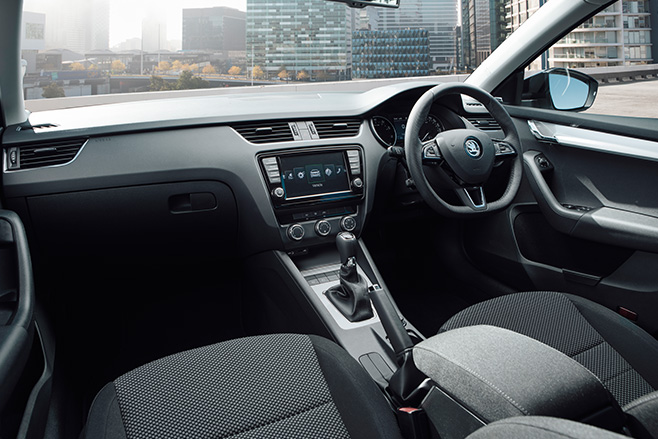
- Sadly, the Octavia misses out on a fairly unique feature of the larger Superb: umbrellas hidden inside a special cavity in the front doors. This is a feature you’ll see on Rolls-Royce cars.
- The Octavia RS is the sporty version of the liftback and wagon. It taps into sister brand Volkswagen to borrow bits from the Volkswagen Golf GTI, providing buyers with something that’s effectively a cheap, family friendly front-wheel-drive sports car.
By all accounts I should be okay with this, even loving it, but despite my awe at the technical genius behind it, I can’t mask my uneasiness.
Let’s take a step back.
It is the launch of the new range of Mercedes-Benz E Class plug-in hybrids, which come equipped with the latest in automated driver technology.
The endearingly Germanic engineer speaking at the launch stresses that this allows for automated and not autonomous driving; there’s a difference – not that the layman will care or understand – and I’m reminded that I’ll still need my wits about me.
Despite this, the car will accelerate, brake, steer, and even change lanes by itself at the touch of a button. It’s the kind of system traditionally reserved for the flagship ultra-luxurious Mercedes-Benz S Class.
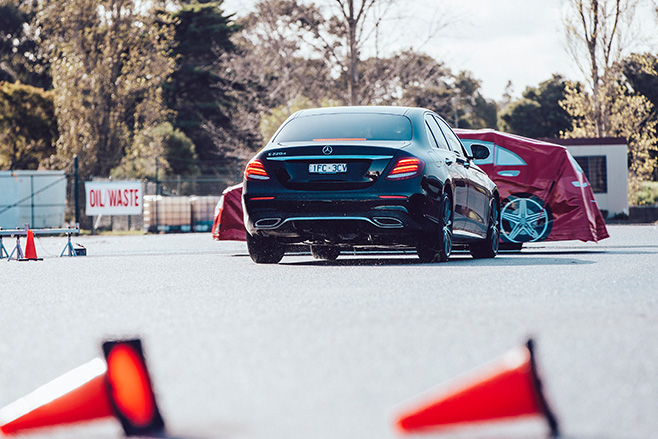
This technology is cool, there is little doubt about that. Mercedes-Benz has clearly invested heavily in the systems they are providing as standard for Australians. On paper, and in the presentation, it all seems very straightforward. The car has an array of radars looking ahead and behind the vehicle which allows it to trundle along by itself, all you have to do is watch over it and step in when something unexpected happens. It all seems so easy, and more importantly, relaxing.
Importantly however, these are driver aids. It is designed to lighten the load of driving, not remove responsibility completely – a kind of halfway house into the future.
As part of the launch we are put in the driver’s seat, and taken on a loop which combines regular and highway driving in south eastern Melbourne. Walking to the cars I am palpably excited. As much as I love the experience of driving, without autonomous driving features, the future of the automobile is pretty bloody bleak. Cool tech which allows a car to travel without my input tickles my fancy as much as the much-maligned Ford Focus RS ‘Drift Mode’ – or so I thought.
Driving this E-Class is the popping of my automated vehicle cherry. Prior to sliding into its leather-clad seats, the closest I had come to a self-driving vehicle was good ol’ cruise control – none of this adaptive, lane-detecting business.
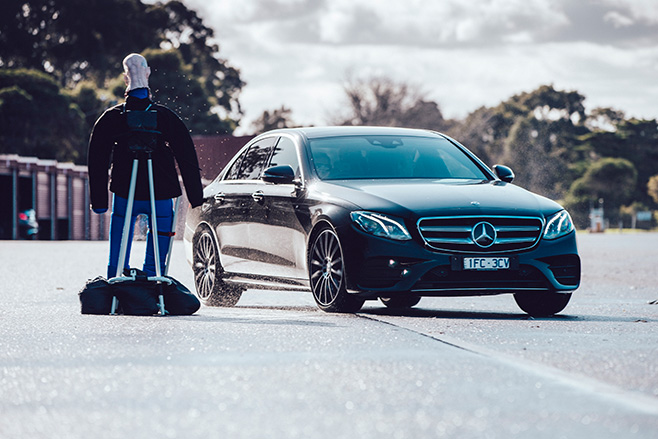
In the first part of the drive, I am in control: steering, accelerating, and braking are all done on my terms as the instructor in the passenger seat urges me to get a feel for the car. All’s going smoothly – literally. As we turn onto the highway onramp, the automated system is initiated, and with my hands only lightly gripping the wheel, and feet clear of the pedals, the Merc gradually builds speed to the 110km/h limit. A standard cruise control does the same, but the real test comes at the merge, which contains just a slight kink in the direction the road takes. It isn’t a huge deviation, but it’s enough of a kink that if you didn’t follow it, you would careen straight into the fast-flowing lanes of traffic on the highway, instead of the gentler merge that it’s designed to effect.
With the science behind the technology freshly explained and swirling in my head, I have full confidence the E-Class will navigate this smallest of directional changes with ease, and I will be able to initiate the auto-lane change while revelling in the masterfully designed tech.
Not so.
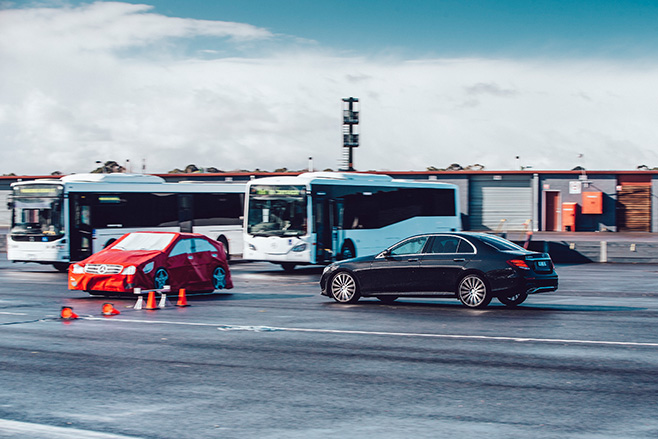
As the car approaches the slight kink, it continues on its established trajectory, only jerking itself in the right direction at the last moment with a soft ping and notification on the heads-up display. To its credit, the car never leaves the lane, and merges successfully, but my confidence is shattered. In my head the doubt floods in. It was a slight – but important – change of direction. One which myself, or any half-decent driver, would complete without even noticing. But the automated system had made it jerky, unsettling, and now I was the opposite of relaxed. It’s not a great start, but there’s now several kilometres of one of Australia’s best highways for the car to redeem itself ahead of us.
But then the second cage-rattler occurs. Just as I am beginning to enjoy the ability of the car to maintain a safe distance to the car ahead, a courier van decides it fancies the gap. The E-Class is travelling marginally quicker than the van – maybe only two or three kilometres an hour. The courier has his indicator on and is now moving into the gap, which is shrinking due to the difference in speeds. The Merc makes no indication of slowing down and carries on without a ping, or a boop, or any indication it recognises what is going on. I cannot be clearer in stating a collision was not imminent, not even slightly.
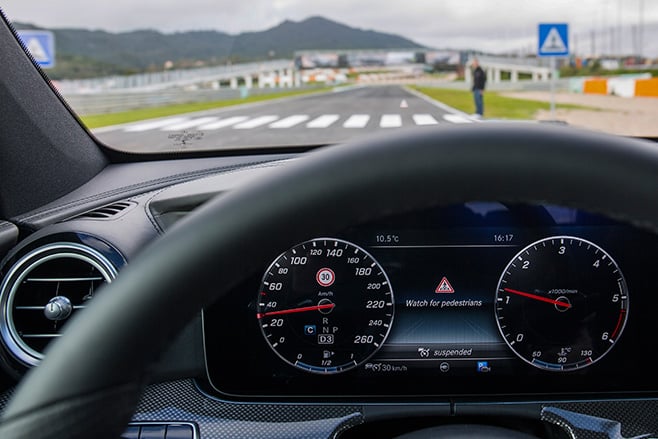
But the van had every right to the gap, was initiating its merge, and the Merc was closing the gap inconsiderately. I don’t like being inconsiderate, particularly behind the wheel of a car at 110km/h, so I tap the brake, take back control of the car, and leave the van breathing room to complete its lane change. I have no doubt the Merc would have done the same eventually, and without any collision, but in the split second decision I beat the machine, and did so without any jerkiness or unnerving pings.
Friends with no interest in cars were eager to hear my thoughts on automated driving – technology all of them yearn for to be common place. I explained it thus: It is like having a learner driver at the wheel. You have to keep your eyes on the road, and be aware of what is happening as if you are driving, but you don’t get to be the one determining when to brake and accelerate, or how smooth the steering input should be. Instead you sit there, letting the computer do all that while you watch over. I don’t know about you, but that is just about the opposite of relaxing for me. If you think of the system as a helping set of hands in these terms it does a decent job, but it can be unsettling.
As an unashamed member of Gen-Y I love new technology, and I love the tech behind Mercedes-Benz’s automated driving systems. I am eager to experience the next step, but at the moment, I am just not convinced.
Perhaps most importantly though, I don’t feel like letting a jerk drive the car while I sit in the pilot’s seat.
Nissan Australia has thrown a swathe of accessories at its three most popular models to create a limited run of what it’s calling the N-Sport range.
Beneficiaries of the local and factory fit upgrades are the Nissan Juke hatchback, the Nissan Navara ute and the Nissan X-Trail SUV, and while Nissan Australia said the newly-announced N-Sport range will only be available for a limited time, they confirmed the N-editions will continue to form an essential keystone to Nissan’s future retail plans.
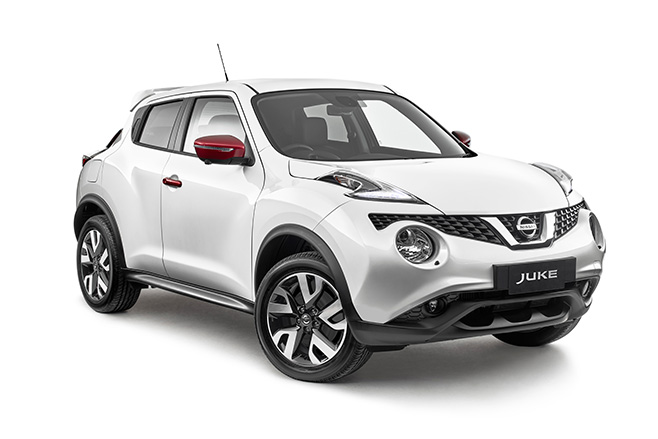
“There’ll be three sub-brands that we use for special editions which allows us consistency,” explained Nissan Australia’s Chris Jordan. “Like the N-Trek sub-brand – where we released special versions of the Patrol, Pathfinder and X-Trail – the N-Sport range is a continuation of that theme.”
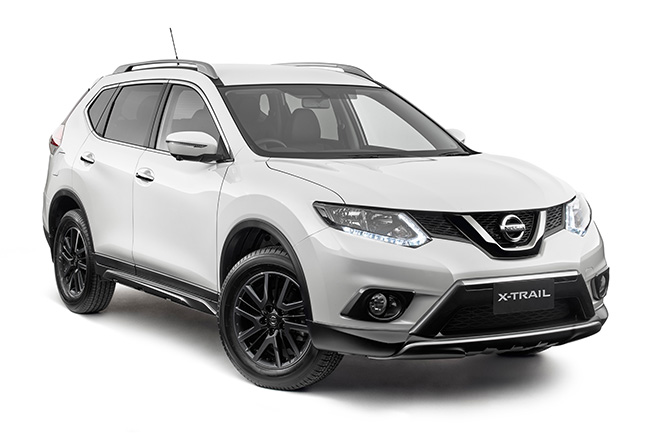
For the Juke, the N-Sport badge means 18-inch alloy wheels, a roof spoiler as well as red-painted door handles and mirrors across all models, while the N-Sport edition of the X-Trail sees a choice of either a gun metallic or silver version across all model’s in the five-seater SUV’s line-up.
Regardless of the colour, the N-Sport X-Trail editions means the addition of colour-specific 17-inch alloy wheels, side skirts and front- and rear-bumper finishers, while the gun metallic version also gets a colour-coded front grill. Applicable only to the X-Trail ST-L model, in either the gun metallic or silver option, are colour-coded finishers surrounding the lights.
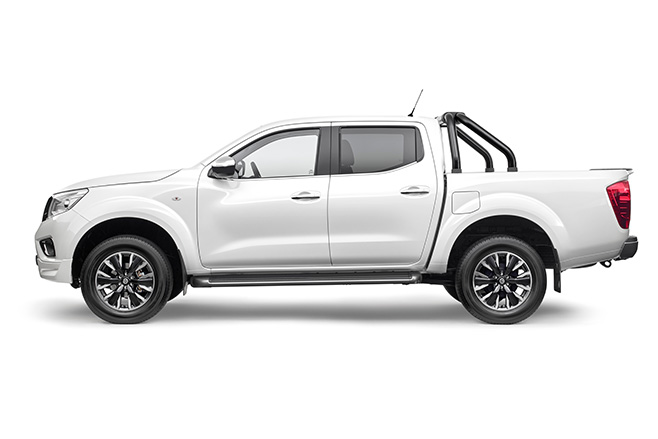
As well a similar cosmetic upgrade for the Navara’s exterior – 18-inch alloy wheels; a black honeycomb grille; sports front skirt; smokey chrome fog light finishers; and gun metallic steps and rear bumper – the N-Sport badged Navara also gains a satellite navigation system with a seven-inch screen and contrasted leather seat highlights as part of the interior upgrade.
The limited edition N-Sport Juke is priced at $35,990, the up-spec X-Trail starts at $33,990 while the sportier Navara is priced at $47,990 (manual) or $50,490 (automatic) drive away.
WHEN RICKY Martin tangoed out of the closet not many were surprised by the announcement.
And we’ve had the same reaction to Audi’s new name for the RS6 Avant… Performance. Because as far as obvious statements go, 445kW/750Nm hidden under the bonnet of a family-hauling wagon certainly warrants the moniker.
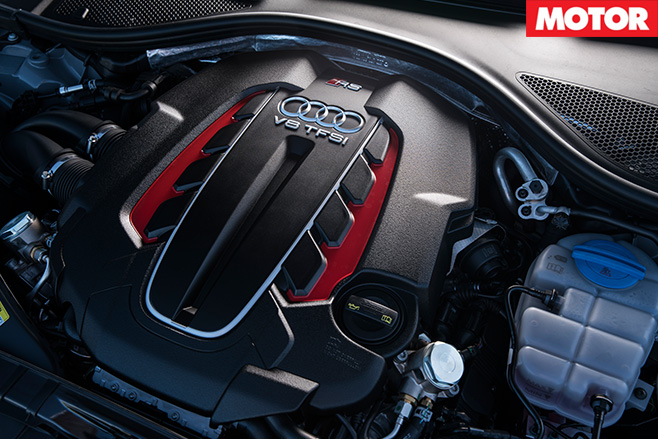
Rather, the label change is the marketing department’s way of signalling the Audi RS6 Avant’s clock had struck time for a mid-cycle update. So with a 4.0-litre twin-turbo V8 at its disposal Audi’s led with an upgrade to its engine, unlocking more power and adding an overboost function to its aresenal.
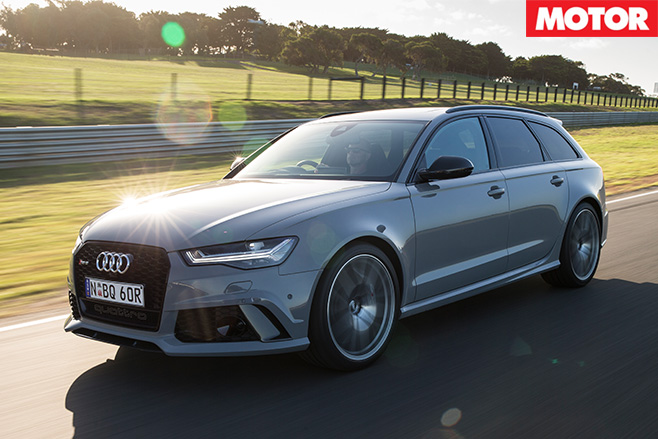
Elsewhere, an RS sports exhaust system’s bolted to the engine, ‘titanium look’ styling bits replace aluminium and the massive 21-inchers lined in 285mm rubber welcome new designs.
Just like the ‘old’ RS6, plonking into the interior is like stepping into a designer showroom. There’s swathes of carbon fibre, while the standard RS Design package drapes the front sport seats in Alcantara and leather.
It’s simply a tomahawk missile with seatbelts. Sure, it can’t escape its 1950kg mass in corners and you do a lot of waiting to turn the thing, but once you tickle the throttle its active rear diff shoots power wide, and it then goes to devouring each of its eight cogs with a thunderous burp on every upshift.
Track goers would be wise to tick the $20,940 ceramic brakes (we were glad to have them at Phillip Island), and we suspect the $5K Dynamic Package’s steel springs and linked-dampers are key to its agility – as we didn’t drive a car without them.
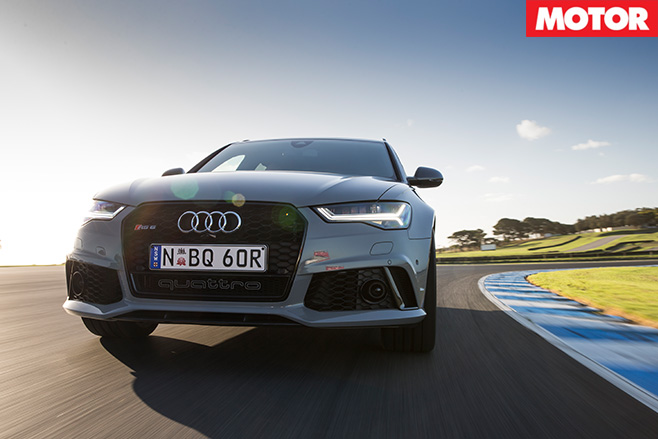
With Benz’s E63 Estate missing, it leaves BMW’s X5M as its closest foe. And while the RS6’s growing price doesn’t help, it’s still a brilliant reason why hot SUVs should never have existed at all. Now, if only Audi could make that more obvious.
4.5 OUT OF 5 STARS
LIKE: Huge speed; menacing looks; thunderous note DISLIKE: Pricey options; rather large heft
SPECS Engine: 3993cc V8, DOHC, 32v, twin-turbo Power: 445kW @ 6800rpm Torque: 700Nm @ 1750rpm Weight: 1950kg 0-100km/h: 3.7sec (claimed) Price: $245,400
TELL ME ABOUT THIS CAR
It’s the third generation of Ford’s most high-performance five-door hatchback, developed by the company’s Performance division to deliver uncompromising performance, both on road and track. It’s targeted directly at serious driving enthusiasts.
STRENGTHS
- Turbo-charged four-cylinder engine delivers plenty of immediate response from modest engine speeds, so does not require high revs to deliver swift performance.
- The six-speed manual gearbox has a pleasing shift action, and enhances the driver’s sense of connection with the car.
- The all-wheel-drive system is specially configured to give the car the sort of sporting balance keen drivers normally associate with a rear-drive vehicle.
- It’s a easy car for even modestly skilled drivers to push hard, yet still rewards expert drivers.
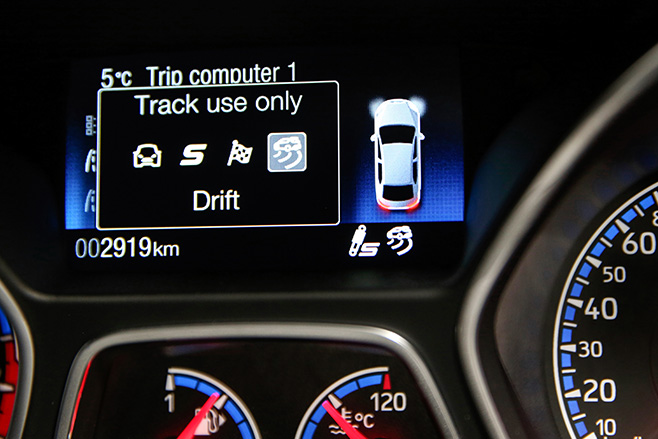
- A Drift mode, suitable only for racetrack use, allows a skilled driver to push the car into highly desirable controlled slides.
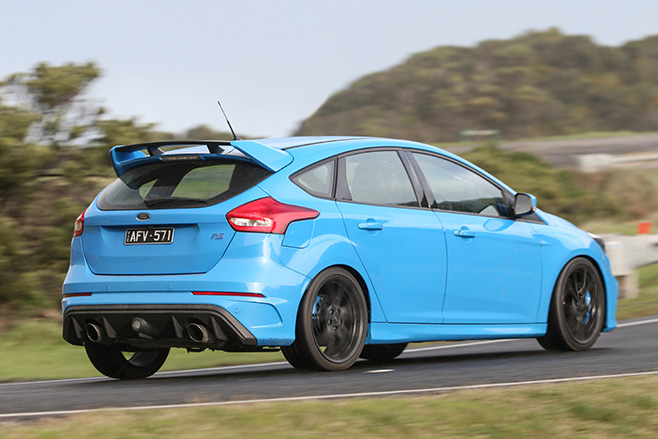
- The steering is super responsive and provides a great sense of what is going on at tyre level.
- High performance brakes provide massive stopping power, and are strong enough to withstand punishment on a racetrack.
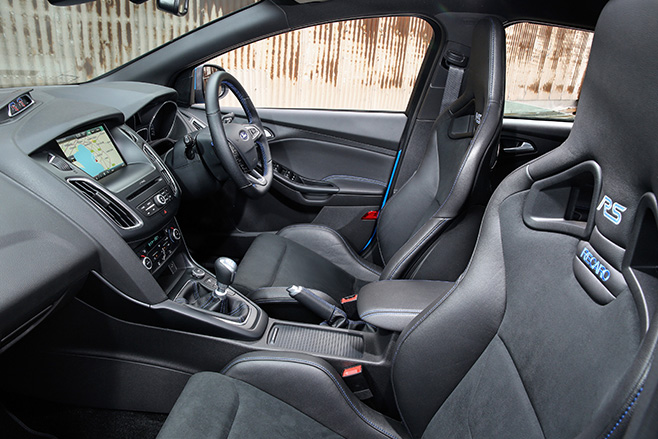
- Deeply sculpted front seats locate both driver and passenger very securely, and provide great comfort.
- Five-door body provides excellent passenger- and cargo-carrying flexibility.
- Keenly priced, given the exceptional performance on offer.
WEAKNESSES
- No automatic transmission is offered.
- Even with the suspension’s dampers in the Normal mode, the ride is very firm, and can be jiggly and uncompromising at urban speeds.
- The suspension’s Sport setting is much firmer still, making it suitable only for racetrack use.
- The front sports seats are deeply supportive, but not height adjustable, and taller drivers may feel they are seated too high. They are also less easy to slip in and out of than conventional seats.
- The turning circle is big, reducing the car’s manoeuvrability in tight conditions.
- The instruments’ graphics appear a little basic and not especially attractive.
ANY RIVALS I SHOULD CONSIDER?
The Volkswagen Golf R is considered a segment leader due to its combination of strong performance, excellent finish, high level of equipment, and general liveability. It’s only a few thousand dollars more expensive than the Focus RS, however it would concede a little in outright performance, especially on a racetrack.
The Mercedes-Benz A45 AMG produces even more power than the Focus RS, is even quicker in a straight line, and is underpinned by a similar hard-edged performance philosophy. It’s also a super-fast point-to-point car, but costs around $30,000 more than the Ford before options.
Likewise the Audi RS3 – fast, beautifully finished, but not a direct rival for the Focus RS due to its circa-$79k price tag.
Click here to read the full review on the Ford Focus range.
Will Power takes Toronto Indy
The Aussie is the form driver but has he left his title run too late?
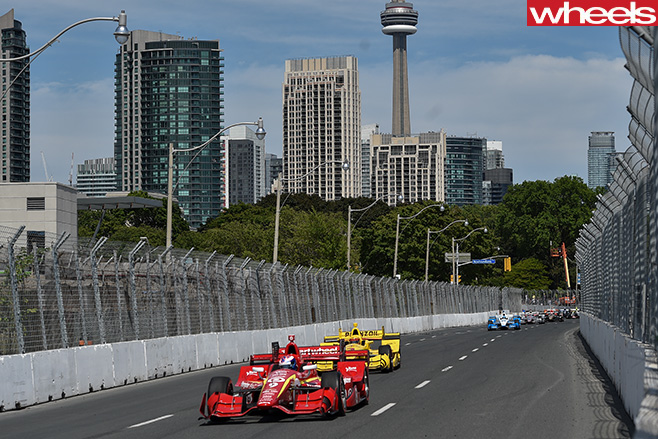
Australian Will Power has taken his third IndyCar win on the streets of Toronta to close within 47 points of championship leader, his Penske-Chevrolet team-mate Simon Pagenaud, who managed only ninth in Canada at the weekend.
Power missed the opening race of the season with medical issues after a crash and after a quiet start to his 2016 campaign has come on strong to win three of the past four races (plus a second last weekend in Iowa) to fire himself back into title contention.
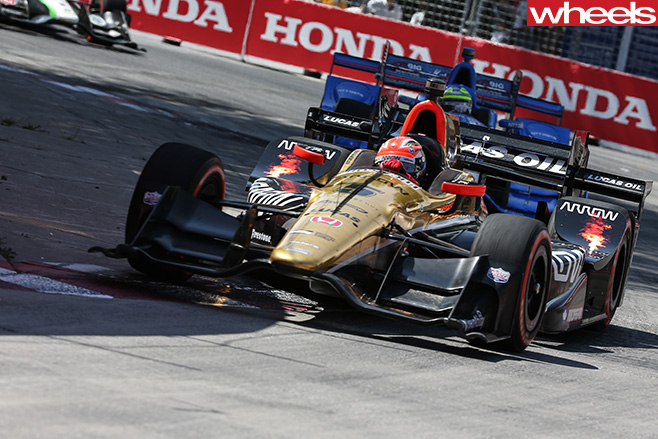
While 47 points is a formidable margin, Power made it clear he hasn’t given up on the 2016 crown.
Power, who previously won the event in 2007 and 2010, was 1.5275 seconds clear of second place.
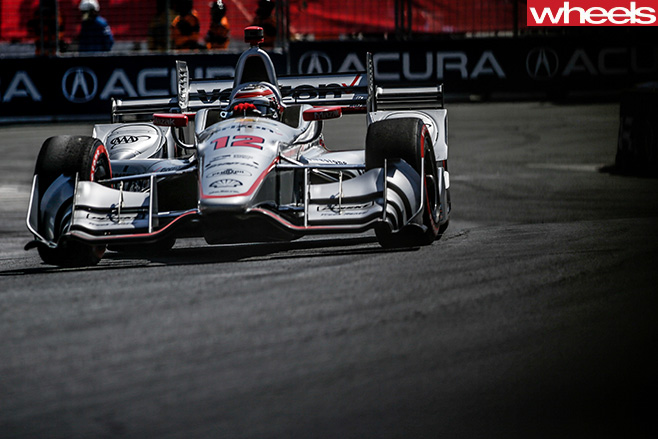
Scott Dixon, the pole sitter, jumped out to a good start and maintained an almost two second difference between himself and standings leader Simon Pagenaud after 54 laps. The New Zealander, however, was caught by a yellow on lap 58, finishing a frustrating eighth.
In a race defining move, Power made it to the pits before the pitlane closed and this left him up front.
Brave tyre call and even braver riding lands Marquez victory in Germany
Honda star produced magic to take a sensational seventh Sachsenring win.
From nowhere, Marc Marquez and his Honda team pulled a stunning early call to switch from rain tyres to slicks setting up a stunning win in the German MotoGP race at the Sachsenring – his seventh consecutively victory there.
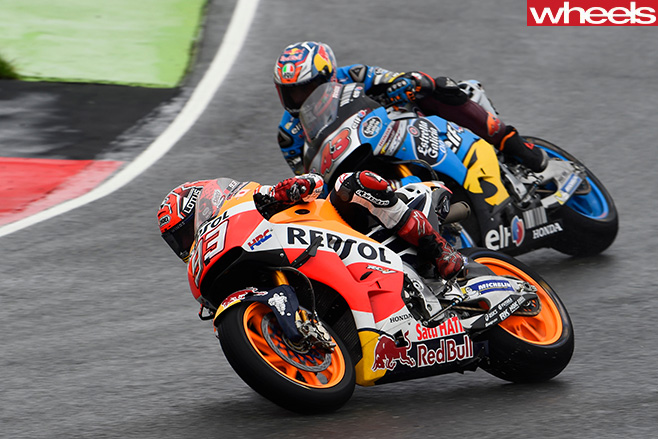
But then there were almost no further signs of rain, making tyre choice more important than ever.
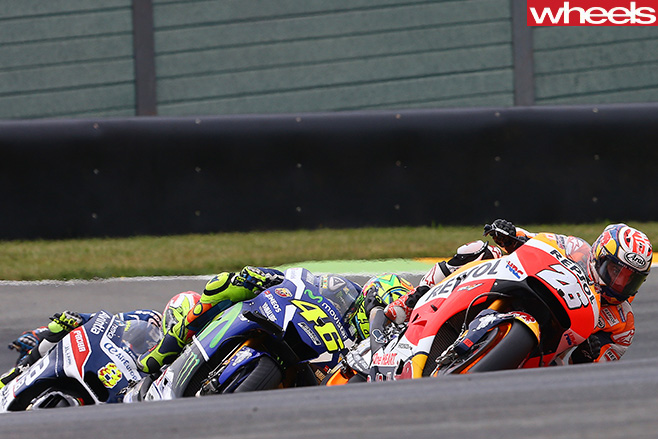
Andrea Dovizioso (Ducati Team) and Valentino Rossi (Yamaha MotoGP) controlled the early laps as slowly a narrow dry line appeared.
Pole man Marquez struggled initially, simply unable to match the pace of the leaders. Then he ran off at Turn Eight and was lucky to stay upright.
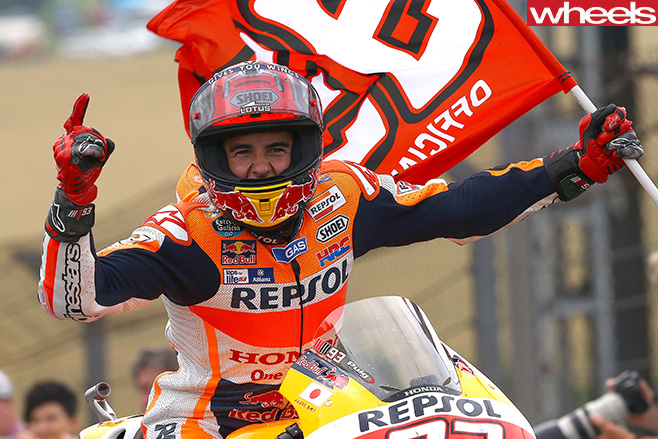
Six laps from the chequer, the unstoppable Marquez took the lead and never looked back. His lead at the top of the championship has blown out to 47 points, following his win and the sad race of nearest rival Jorge Lorenzo, whose Yamaha faded to 15th.
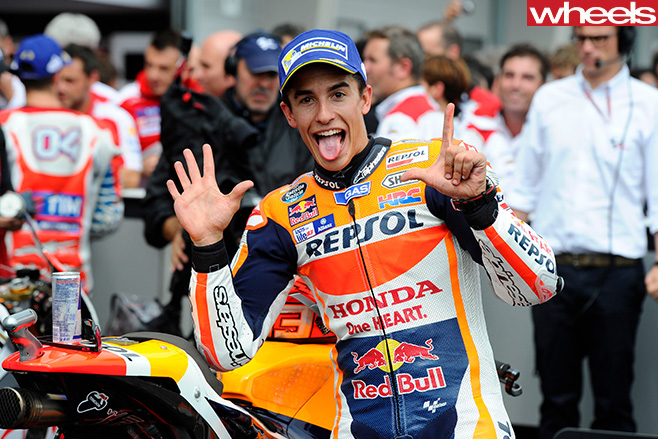
A delay in switching to slicks cost Dovizioso track position but the Ducati man salvaged third out of a race that promised more.
Aussie Miller rolled the dice and elected to try to get his fading wets to the finish, hitting the lead briefly but ultimately opting to change to slicks after Marquez raced by him. Miller rescued seventh place.
Marquez is peerless at the Sachsenring – he has scored pole seven years in a row (the last four in the premier class). And he has won seven races consecutively
“In the first part of the race, in the wet, I found things a little difficult,” Marquez reported later. “I had picked the wrong front tyre for my riding style, but I was able to switch to slicks. I was very careful in the opening laps after changing bikes, because the dry line was very narrow and there was still a lot of water on the surface. It’s always very difficult to decide when to change bikes, and perhaps we made our switch very early—I think I was the second rider to do so—but I decided to take a chance and it went well.”
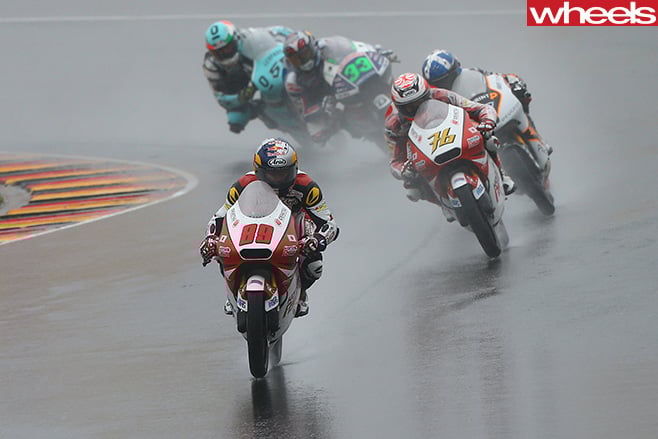
Remy Gardner finished 12th for Tasca Scuderia after a sensible ride in the conditions, scoring his second career Moto2 world championship points. “The race was tough; it was my first time on a Moto2 bike in the wet and whilst I wasn’t super-fast our mission was to finish the race and we did that. I wasn’t crazy fast but I was consistent and finishing races in these conditions pays off.”
Khairul Pawi, a 17-year-old Malay with unbelievable touch in slippery conditions, scored a stunning win in Moto3, winning by the huge margin of 11.1 seconds.
It was rookie Pawi’s second GP win in just 10 starts.
By the end of the first lap, Pawi had shot from 20th to seventh, He was in front by the start of lap five.
Earlier this year, Pawi was the first Malaysian to win a grand prix. Now he has won two.
MotoGP now takes a short summer break before the paddock re-convenes for the next race of 2016, which will be at the Red Bull Ring in Austria on August 14.
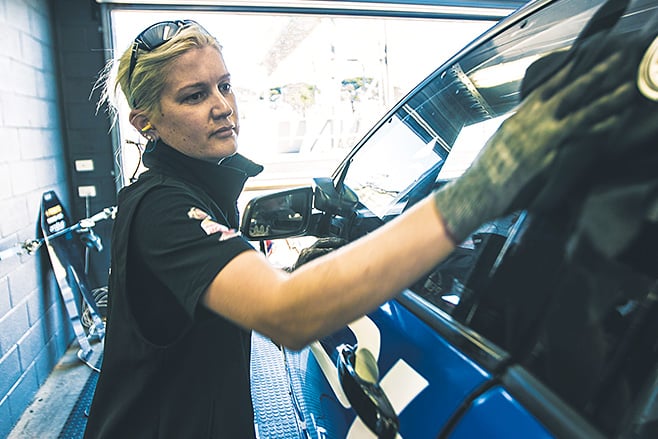
It takes guts to step into an industry where you are so outnumbered that those like you can be counted on a single hand. That is what Frances Buckley (pictured below) and Bonnie Beard (top) have done in becoming the first all-female number one and two mechanics (respectively) in Supercars. They worked together for the first time at a track at the CrownBet Darwin Triple Crown – Bonnie’s first event with the team – but they’ve already achieved a lot.
WHEN DID YOU FIRST GET INVOLVED IN MOTORSPORT?
Frances: I have been involved in motorsport for about 10 years now, but only as a weekend warrior, not in a full-time position.
Bonnie: I have been involved for five years. I started volunteering as a track official in 2011 and just got the bug. I got my CAMS licence through the young officials program and then started flagging.
HOW DID YOU GET YOUR CURRENT POSITIONS WITH EREBUS MOTORSPORT?
FB: I used to work as the number two mechanic, but then the number one got promoted, so I moved up. I only started with the team this year.
BB: Before I started studying I knew nothing [about mechanical things], so I devoted every minute to learning about cars and getting as much experience as I could. I managed to get some work experience at Erebus Motorsport last year working with the V8 Utes, and eventually ended up on the Australian GT program this year.
WHAT DOES YOUR JOB ENTAIL?
FB: I’m the number one mechanic on Aaren Russell’s Commodore. I make sure everyone is doing their job and the car goes out as it should. We strip down the car when it comes off the track and see where it’s at, then send stuff away for sub-assembly, then clean it up, put it all back together again and set up for the next round.
BB: I’m the number two mechanic on the #4 car, so I have to follow what Frances says! Just basic cleaning duties, changing brake rotors, pulling parts off the car and putting them back in, as well as assisting Frances.
HAS IT BEEN A STEEP LEARNING CURVE?
FB: It really has. I am certainly in the hot seat right now, because everything is my responsibility. I have a lot of things to maintain and take care of, which I am not used to.
BB: It has been a massive learning curve. It is a matter of being able to learn under pressure and, in a fast-paced environment, being able to retain that sort of information so you can remember for later on down the track.
HOW DO YOU FIND THE PRESSURE OF WORKING FOR A SUPERCAR TEAM?
FB: It doesn’t have any more pressure than any other job I have done, to be honest. It is just a job and you get on with it.
BB: I love it! I came from six years of bar-tending so I am used to the fast pace and the pressure of having to not make mistakes, so it is enjoyable.
AS A WOMAN, DID YOU FIND IT DIFFICULT TO GET INTO THE SPORT?
FB: Yes, I had been trying to get into Supercars for quite a long time. But, unfortunately, I think being a female has let me down. I think people used to overlook me and not really consider that I had what it takes.
BB: I don’t think so. Starting off it was more to do with not having enough experience, so it was a bit of a gamble [for the team]. But showing initiative and that I can do the work to the same level as most blokes, is good.
WHAT IS YOUR FAVOURITE PART OF THE JOB?
FB: Being at the track, nothing really beats it. It is always good to see the car out on track and then have it come home with a good result.
BB: Some days it is just another day of work. But if someone had said to me a couple years ago that I was going to be working on a race car, I probably would have laughed at them! It is all just awesome.
ARE YOU PROUD OF BEING A WOMAN IN A MALE-DOMINATED JOB?
FB: It is pretty cool! I was just trying to get a role with a Supercar team. I wasn’t really expecting to jump straight to the top in my first year. It was a bit unexpected.
BB: I definitely am. It is definitely a milestone and something that will follow me for the rest of my career. My whole family is proud of it and everyone is proud that there are two chicks working on a race car for a change.
BREAKING BARRIERS
Frances and Bonnie are proof that women are just as capable as men in the high pressure world of the Supercars pit lane. And they have a good role model: their team owner is a woman, Betty Klimenko.
