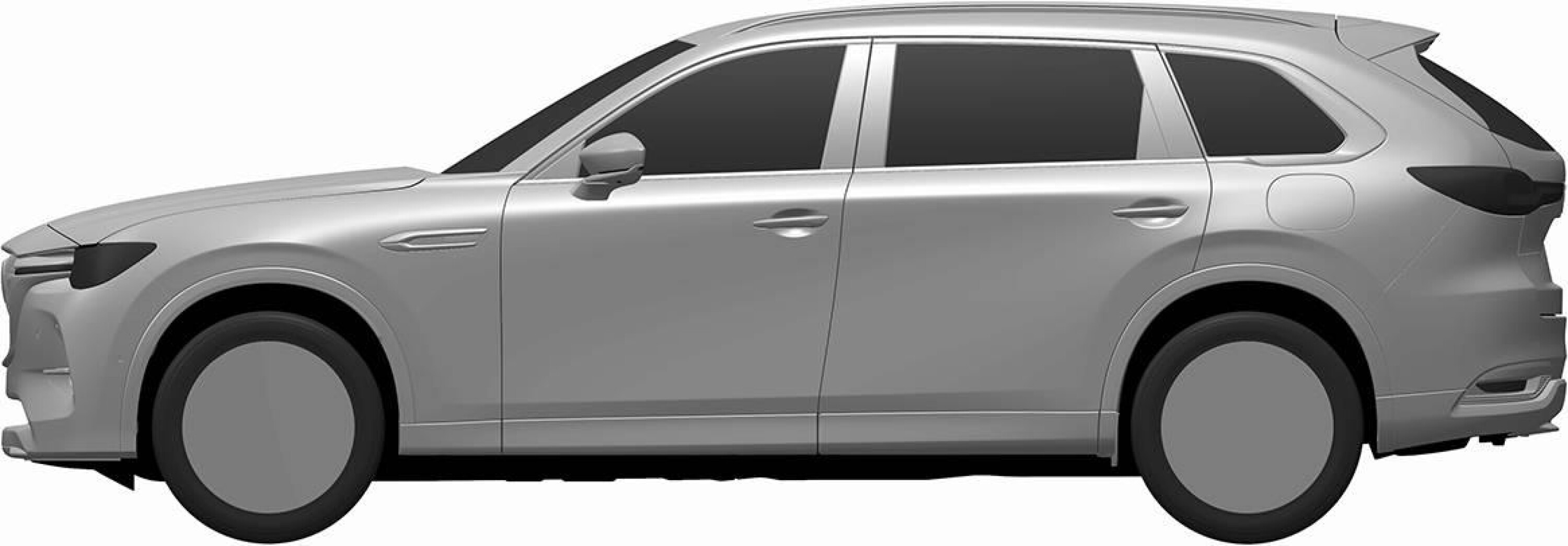
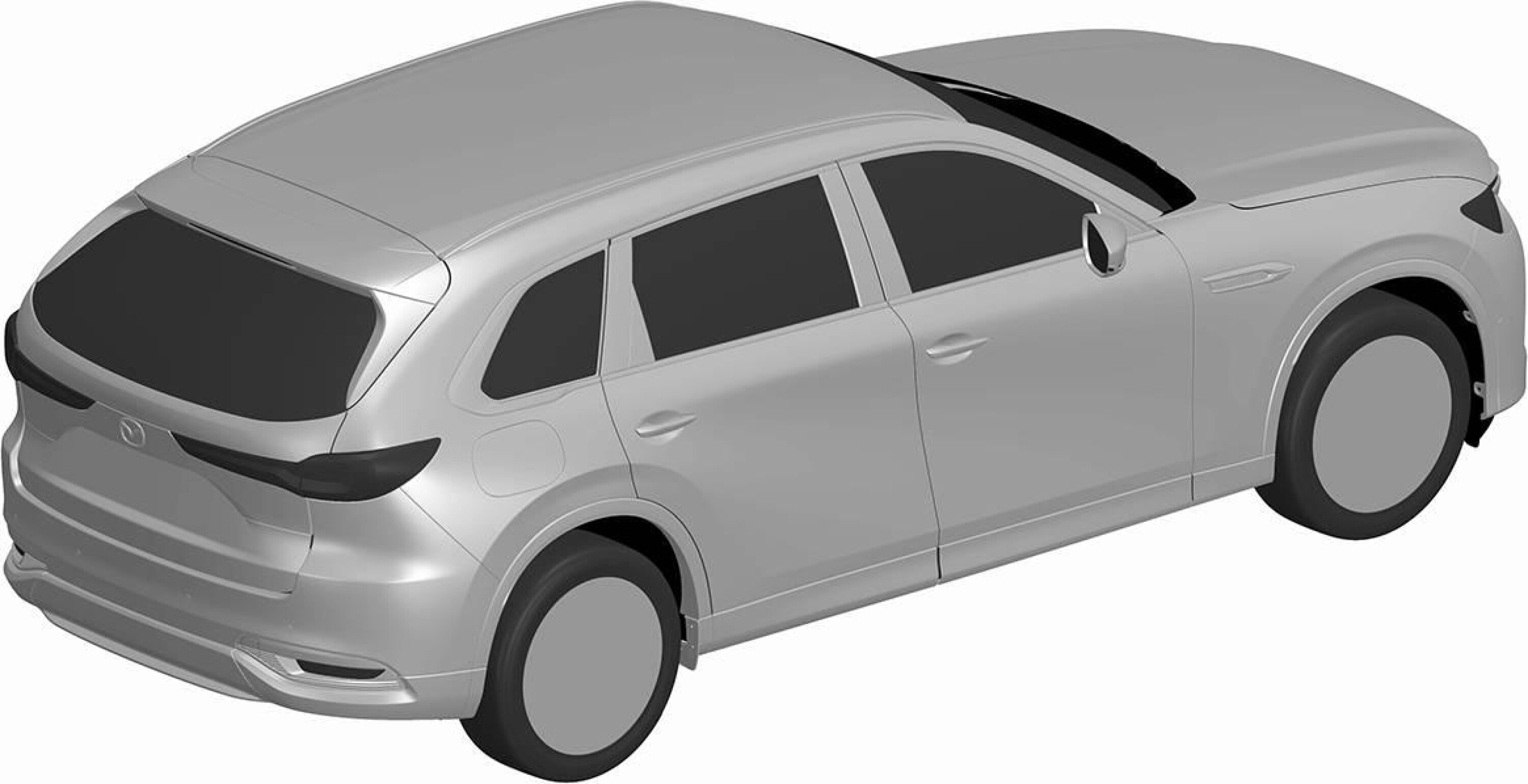
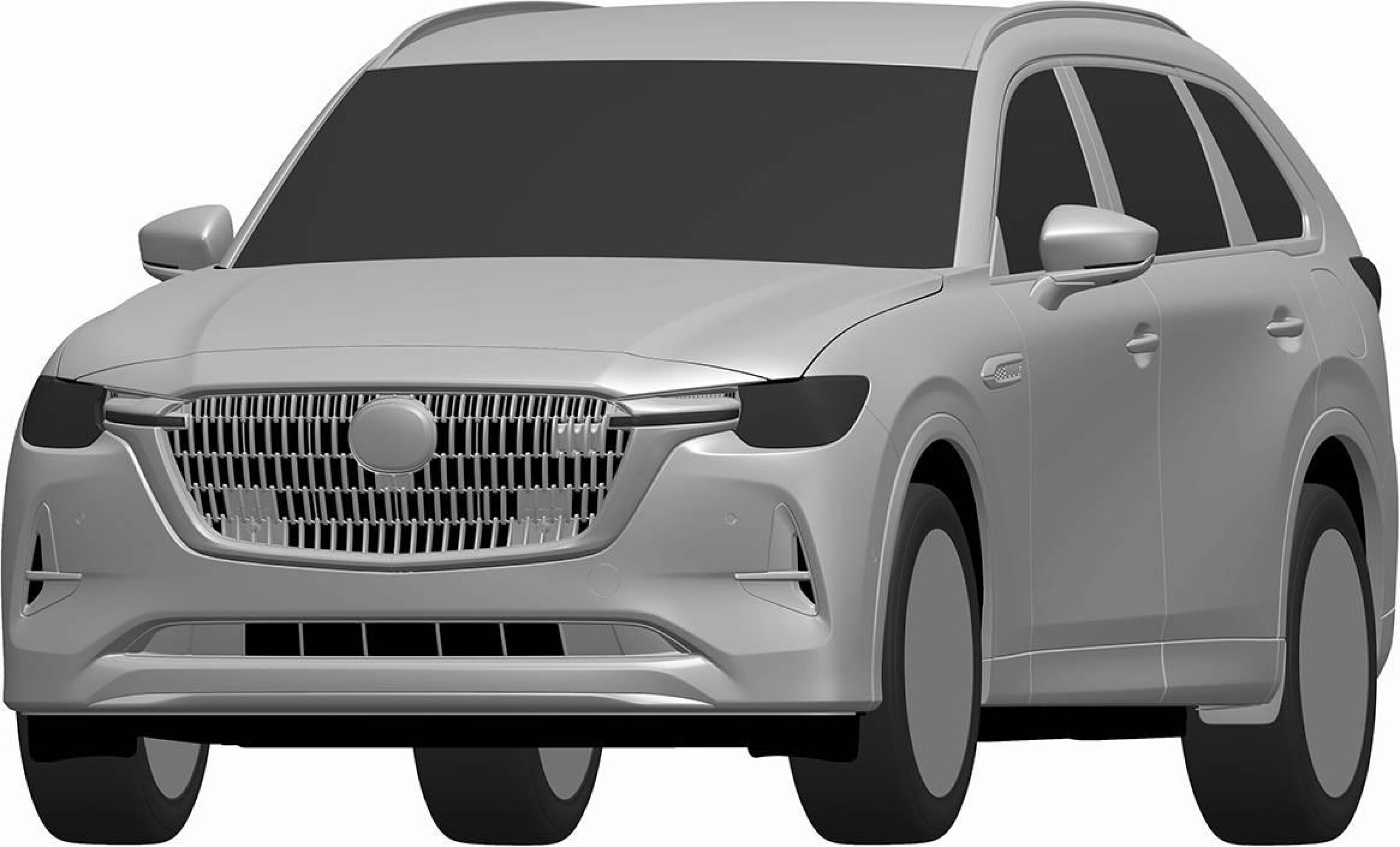
The 2025 Mazda CX-80 large SUV has been revealed in a Japanese patent database ahead of its debut in the coming months.
As expected, the rear-biased Mazda CX-80 is a longer three-row version of the CX-60 midsize SUV, much like the relation between the front-biased CX-5 and the now-discontinued CX-8.
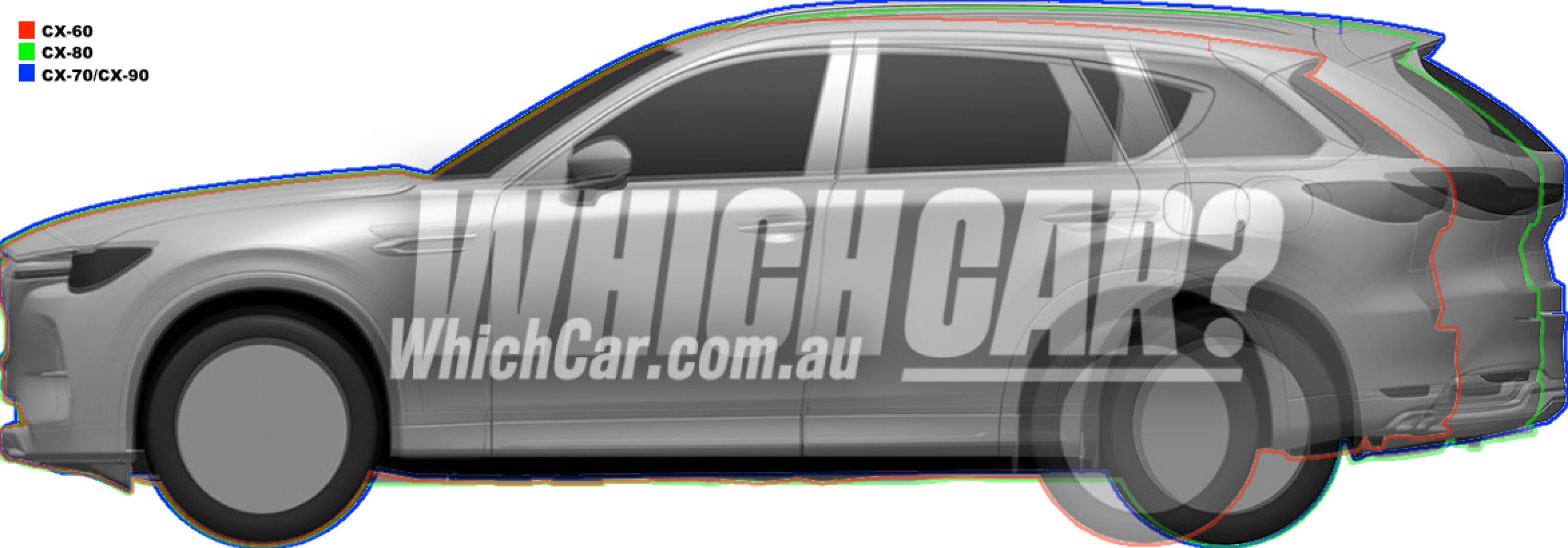
While the CX-80 appears to be identical to the CX-60 from the front door forwards, the patent images reveal it will have longer rear doors, a larger D-pillar, a different rear bumper, and tail-lights similar to the CX-70 and CX-90.
1
The CX-60 and CX-80 are ‘narrow-body’ vehicles aimed at the European and Japanese markets, while the two-row CX-70 and three-row CX-90 are ‘wide-body’ vehicles aimed at North America.
“[Australia is] privileged enough because I suppose we as a team think we can have an opportunity with all four. And here we are [in the situation] that we will have all four in our portfolio,” said Mazda Australia managing director Vinesh Bhindi at the reveal of the CX-70 in January.
“What that means is you might see some overlap, but really when you understand our business strategy – which always has been to give consumers as many opportunities and options and choice as possible and let the customer decide – it makes sense for us to get [all four].”
It is expected to have an identical width to the CX-60 at 1890mm, compared to 1840mm for the CX-8, 1969mm for the CX-9, and 1994mm for the CX-70 and CX-90.
While the CX-80’s exact length remains unclear, expect it to measure around five metres compared to 4.7 metres for the CX-60. It appears to adopt the same 3.1-metre wheelbase as the CX-70 and CX-90.
1
The CX-8, which was a stretched version of the CX-5, utilised the same wheelbase as the CX-9 despite its smaller dimensions.
All of Mazda’s new SUVs are based on the brand’s ‘Large Platform’ architecture that features a rear-wheel-drive bias and ushers in a family of fresh inline six-cylinder engines.
The CX-80’s engine choices should mirror that of the CX-60, which offers three powertrains: a 209kW/450Nm 3.3-litre mild-hybrid six-cylinder turbo-petrol, a 187kW/550Nm 3.3-litre mild-hybrid six-cylinder turbo-diesel, and a 241kW/500Nm plug-in hybrid that features a 100kW electric motor matched to a naturally-aspirated 2.5-litre four-cylinder petrol engine.
1
The seven-seat CX-80 will carry a more affordable price tag than the CX-90, which starts from $74,500 before on-road costs.
However, it will be pricier than popular entry-level versions of the CX-8 and CX-9 as the brand continues its ‘premium push’ here in Australia.
With the smaller CX-60 starting at around $60,000 and stretching to $85,000 for the flagship PHEV variant, it’s fair to assume pricing for the CX-80 will start from around $65,000 to $70,000.
The 2025 Mazda CX-80 three-row SUV will be unveiled in the coming months. It is expected to arrive in Australia later this year.
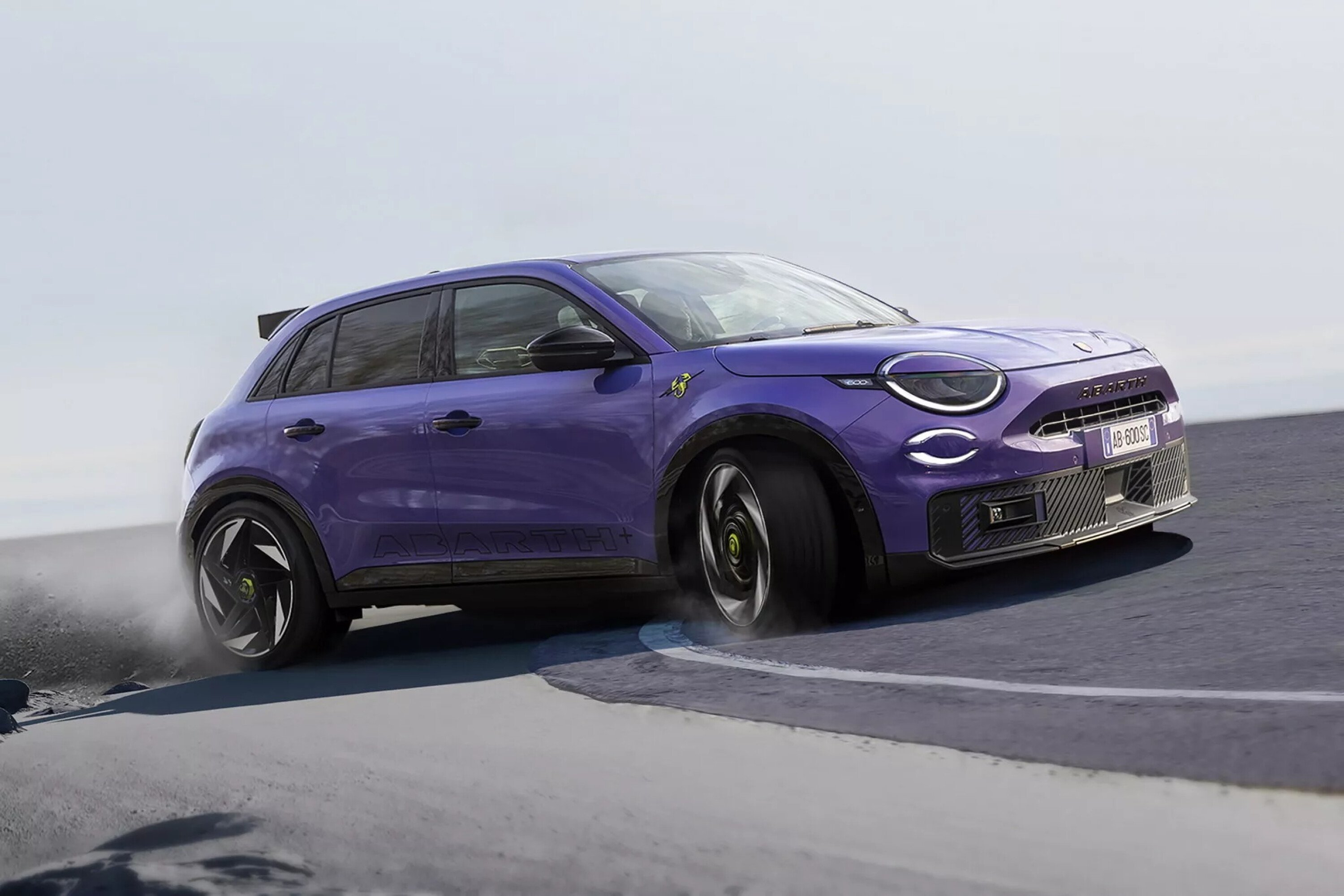
Following last year’s big reveal of the new 500e electric hatch‘s 600e SUV cousin, in-house tuner Abarth has offered a first look at its performance version.
For now, the brand has released just one image, coming in response to a video posted to Instagram [↗] as the vehicle was being shot for its imminent marketing campaign.
1
Abarth has shown its 600e in the extra special Scorpionissima launch edition form, which will be limited to 1949 units (in honour of the original 500’s 1949 post-war rebirth).
The Abarth 600e will produce 176kW, which isn’t massive power in this era but it’s a good deal more than the 113.7kW offered with the Abarth 500e – and it will likely prove punchy with its electric torque, whatever the number ends up being.
The excitement factor will be boosted by the addition of a mechanical limited-slip differential, exclusive to the Abarth 600e.
Watch for more on the Abarth 600e to be revealed in the coming weeks.
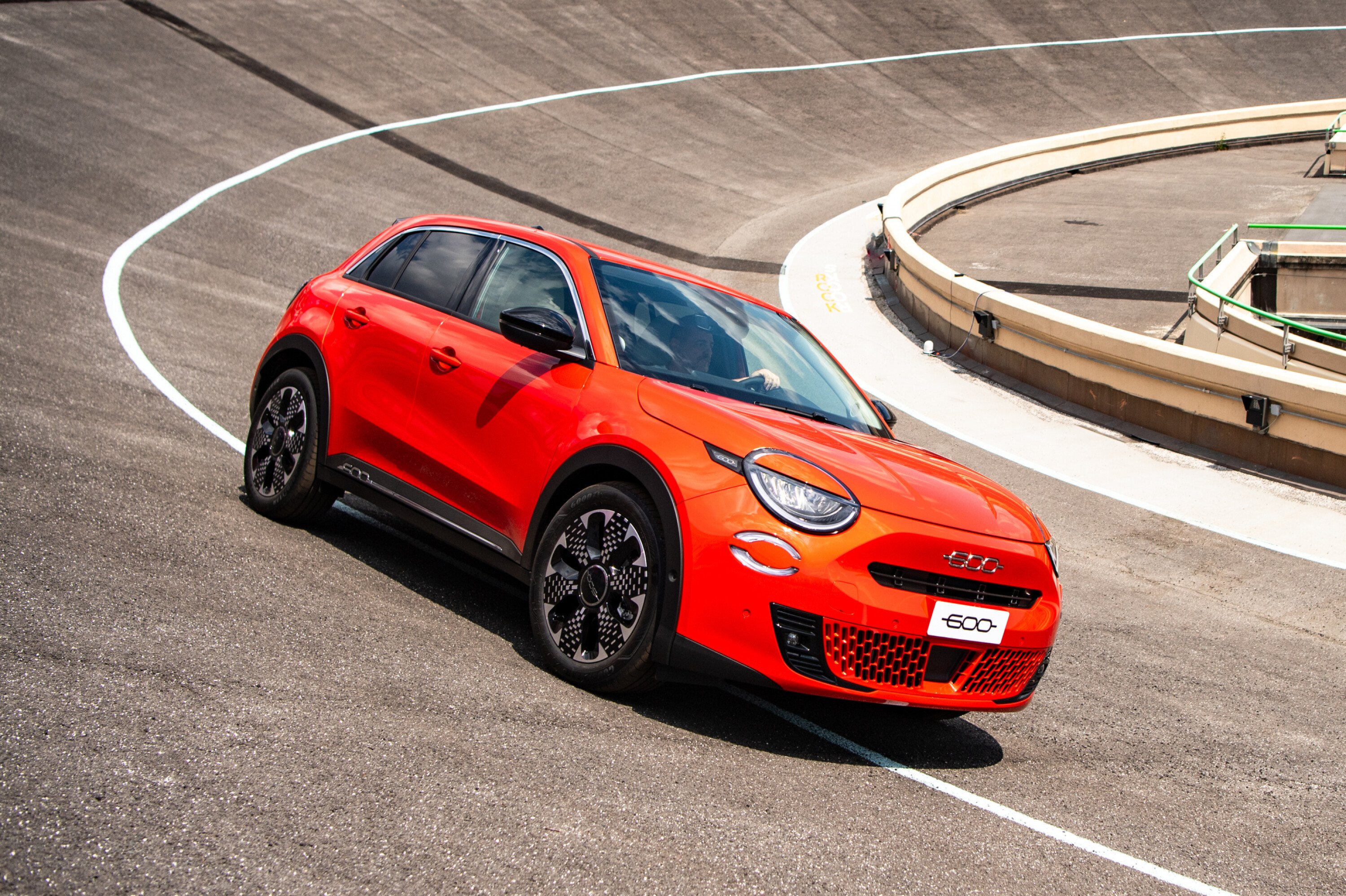
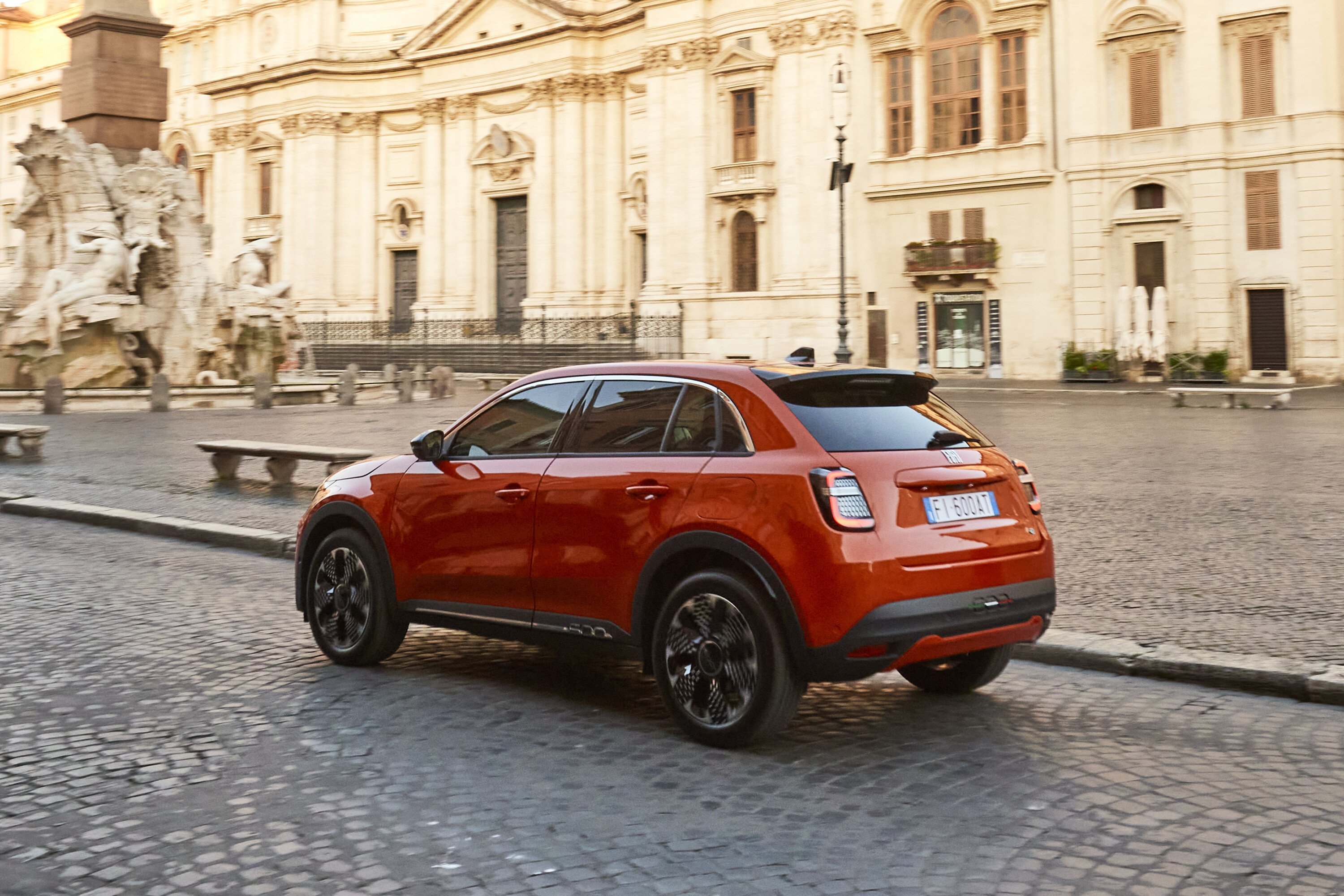
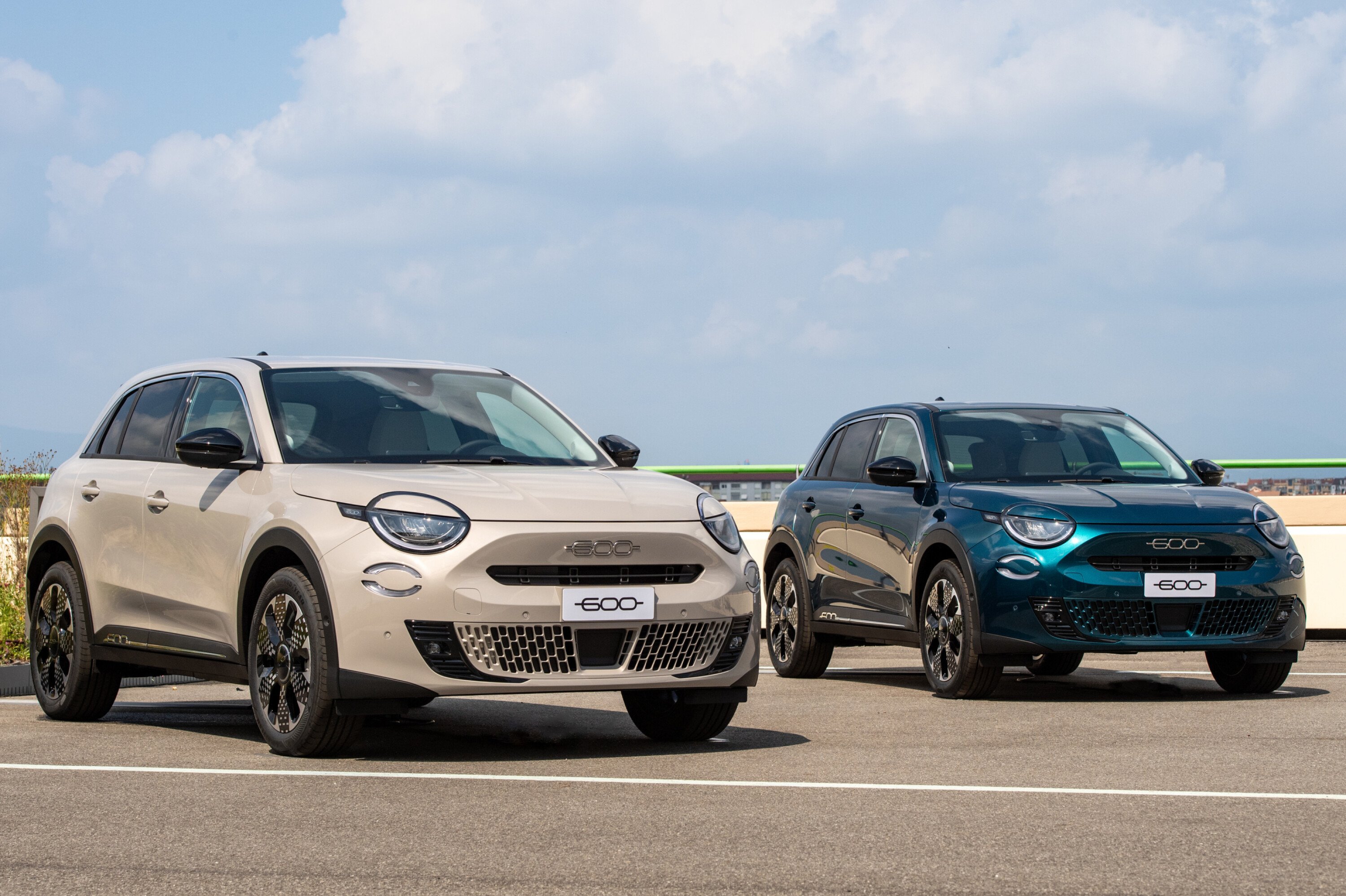
The compact Fiat 600e electric SUV has been detailed at last, with a more practical interior and longer driving range than the 500e micro hatch.
Snapshot
Fiat 600e electric SUV revealed with up to 409km range
Quirky Italian styling in higher-riding crossover body
More practical, longer range alternative to 500e hatch
Following a subtle reveal last month, the 600e is the Italian carmaker’s first electric crossover SUV.
The 600e debuts as a spiritual successor to the 500X which was discontinued locally in 2021.
1
Fiat 600e key specs
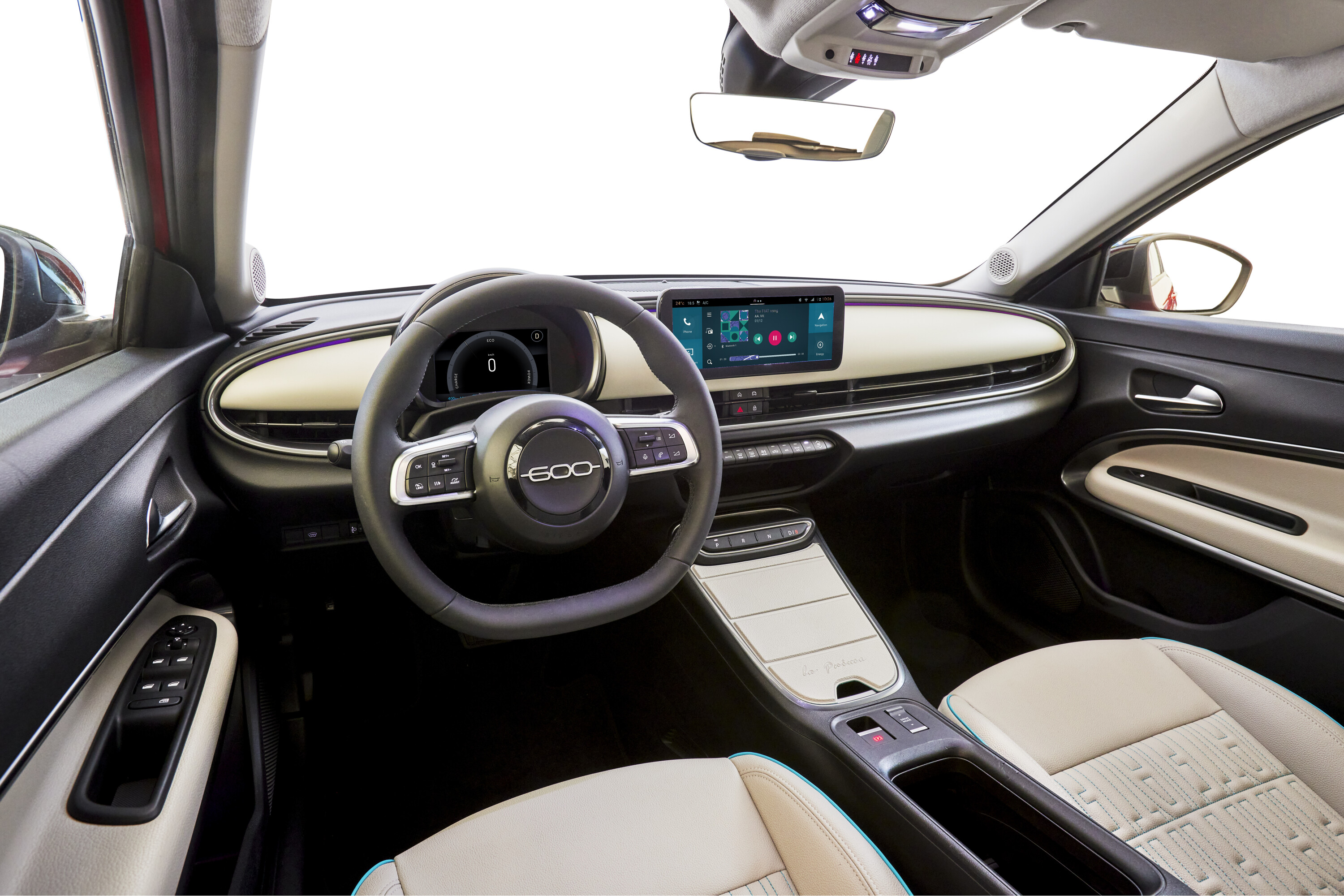
Compared to the Fiat 500e arriving in Australia this month, the 600e offers a higher 199mm ground clearance (up 69mm), a roomier interior with 15 litres worth of cubbies in the cabin, a 360-litre boot (up 175 litres), and an electric tailgate.
Additionally, it boasts up to 409 kilometres claimed WLTP driving range, which is 98km more than the 500e and matches the related Jeep Avenger EV sold overseas. Both models use the Stellantis groups’ Common Modular Platform 2 (e-CMP2).
The Fiat 600e SUV also packs a more powerful front-mounted electric motor producing 115kW of power and 260Nm of torque (up 28kW/40Nm), though the heavier weight and larger battery means acceleration time is identical to the 500e.
The Italian carmaker will also sell a petrol-electric hybrid drivetrain model in mid-2024.
2024 Fiat 600e specs
Battery size (usable)
51kWh lithium-ion
Claimed driving range (WLTP combined)
406 – 409km
Claimed efficiency (WLTP combined)
15.1 – 15.2kWh/100km
Max AC / DC charging speed
11kW / 100kW
Power / Torque
115kW / 260Nm
Drive type
FWD
Claimed 0-100km/h time
9.0 seconds
1
Fiat 600e key features
The Fiat 600e electric SUV will be sold overseas in two highly-specified variants.
The 600e RED continues its partnership with the disease-fighting private charity, with slightly more efficient 16-inch alloy wheels, requisite red badging, dashboard trim, and black fabric seats made out of recycled materials.
The top-spec 600e La Prima gets larger 18-inch alloys, ivory synthetic leather seats with turquoise accents, and is available in four exterior colours – Sun of Italy, Sea of Italy, Earth of Italy, Sky of Italy. As per previous teasers, there’s no grey option offered.
2024 Fiat 600e features (overseas specs listed)
10.25-inch touchscreen with wireless Apple CarPlay and wireless Android Auto
Eight-colour ambient lighting, including dashboard strip
7-inch driveru2019s display
Six-speakers
Uconnect services and smartphone app
USB-A and USB-C charging portsu00a0
Centre console with a magnetic lid and configurable cup holders
Full suite of Level 2 active safety assistance systems
Heated front seats
Front, rear, side parking sensors
Back massaging driveru2019s seat
180-degree ultra-wide reversing camera
1
Will the Fiat 600e be sold in Australia?
Stellantis Australia told Wheels that it has “nothing to announce at this time” on whether the Fiat 600e SUV will come to Australia.
The small electric SUV will first launch in Italy in September, priced from AU$59,500 (EU€35,950) to rival the related Jeep Avenger, Peugeot E-2008, and Volvo EX30.
“Do you know the secret?” asked the Lamborghini driving instructor, conspiratorially.
Given my frankly lamentable driving in the Diablo SV around Imola, I thought that I’d made it reasonably obvious that the secret was manifestly lost on me.
As a twenty-something journalist with zero experience of driving supercars on track, I’d been subjected to the ultimate indignity of the instrcutor asking me to drive the car round the Autodromo Internazionale Enzo e Dino Ferrari solely in third gear so I wouldn’t shock the driveline with my klutzy downchanges.
1
The notes on my my braking read “violento e impreciso” which required little in the way of translation. I could almost feel the ghost of Ayrton Senna facepalming in horror with each pass of Tamburello.
The Diablo SV wasn’t even supposed to be there. It was a sacrificial beater car, its interior drilled full of holes where data gathering equipment was once mounted, prominent because it was the only one of the pre-facelift Diablos present.
It was also the car I was given to drive, largely because I probably looked the riskiest prospect.
1
As it turned out, I was one of the few who didn’t manage to bin or bend anything during the three-day course and was glad to escape ever becoming the second Wheels editor to have duffed a Diablo.
It turned out that the instructor’s question was a mispronounced “do you know the circuit?” After getting comfortable with the sinuous rhythm and surprising vertical relief of Imola’s parkland track, my driving improved considerably and I was even permitted to use the gearbox.
I did nearly flatten a photographer who slid out of the back of a tracking vehicle when its driver accelerated up the hill from the Tosa hairpin, but I guess violento brake pedal applications can also yield benefits.
1
It was just a difficult bastard and I was too intimidated by the car, by the onlookers, by the track and by the whole experience
The Diablo SV left a lasting impression on me. It was nothing like I expected. Perhaps I was anticipating something a bit less earthy for my first Italian supercar experience. At the time, I had neither the confidence nor the ability to get anything like the best from the chassis or the drivetrain, but I was shocked at how guttural, how agricultural, even, the V12 sounded at low revs.
The bass notes punched you in the diaphragm. It was just a difficult bastard and I was too intimidated by the car, by the onlookers, by the track and by the whole experience. I’d adored Lamborghini since I was a small child and here I was, not in any way worthy of this 395kW missile. Humbling doesn’t even begin to cover it.
Perhaps that’s the way it should be. Supercars should be intimidating. They should leach consequence from every pore. They should be terrifying and intolerant, and their drivers should look like heroes. The Diablo was one of the last of that ilk.
1
It pays to remember that the Diablo SV was never supposed to be a collector’s special.
In fact, in terms of Lamborghini’s price walk-up, it was the entry-level model, a simpler rear-drive proposition when compared to the more sophisticated AWD VT models. Back in 1986, it was priced in the UK at £125,000, some £23,000 less than the ‘standard’ Diablo.
The strategy back then was to save on build costs by creating genuine back-to-basics cars that borrowed some of the optics from the ritzy SE30 Jota but stripped out the all-wheel drive and didn’t initially include features such as traction control, anti-lock brakes or some interior trim parts like leather or full-featured door cards.
1
A lot of soundproofing was deleted too which, in turn, meant that many SV customers didn’t bother with a stereo system. Maybe Lamborghini didn’t quite have Porsche’s chutzpah in removing items and then charging customers more for the privilege.
That was largely because the company was struggling to shift Diablos. In 2023, Lamborghini produced around 11,000 cars. Back in 1990, when the Diablo was introduced, anything over 100 cars was a decent showing. By 1995, the Diablo line was five years old and was no longer the freshest supercar.
In the intervening years the McLaren F1 had appeared and readjusted everybody’s idea of what a truly fast car was. The Diablo SV needed to reset the meter and remind buyers of traditional Lamborghini values: purity, aggression and excitement.
1
Before we jump too far into describing what buyers got, it’s worth breaking down the SV into some specific sub-niches. The big division is between the pop-up headlamp coupes and the ‘Audified’ fixed-lamp SVs that appeared in 1999, of which 100 were sold that year.
Even prior to that, there were the early SVs and the 1998 build cars that got a whole heap of upgrades and, as a result, are some of the most prized. Then there are the low-volume specials, like the pair of SV Roadsters (unveiled at the 1998 Geneva Show), and the 20 ‘Monterey Edition’ cars exported to the US in 1998.
These got SE30-style bladed vents ahead of the rear wheels, faintly hideous chrome wheels, a body coloured spoiler, leather seats and a set of SV Monterey Edition-branded fitted luggage.
1
For the purposes of this piece, we’re concentrating on the pre-facelift coupes, as they make up the bulk of the current parc of SVs. The SV was first shown at the 1995 Geneva Show, reviving the Super Veloce badge last used on the Miura SV in 1971.
There were discussions at Sant’Agata as to whether the cheapest Lamborghini deserved to wear such an illustrious badge, with some preferring the blander Clubsport appellation. It was noted that Porsche had a claim on this badge.
More aggressive cams and freer breathing exhaust liberated another 13kW to deliver 380kW, with 46kg being shaved from the weight of the stock Diablo. Back in 1996, Wheels sent Peter Robinson to the Croft circuit in the UK in the SV and he found it suitably entertaining.
1
“Hugely powerful, incredibly noisy and tiring over any distance, the Diablo SV is also immensely entertaining,” he noted. “For safety, use the brilliant brakes only in a straight line, otherwise there’s a chance of the tail stepping rather quickly and acutely out of line.
Once mid corner, you can take advantage of the Diablo’s inherent traction and enormous power to rocket out. You’ll be amazed by the car’s surprisingly economical use of road space, the steering’s communication and its sheer speed and ability point to point. Not a car for the timid, but thrilling to drive, if only for a couple of hours at a time.”
Rather surprisingly, the brutish Lambo aced everything else on a lap of the circuit, which was some going when the field included cars like the Porsche 993 Carrera RS lightweight, the Dodge Viper GTS and the Caterham 7 Superlight. This Diablo was clearly no mere show pony.
1
Lamborghini wasn’t done with developing the Diablo SV. Its key impediment was, believe it or not, emissions, which meant that it couldn’t be sold in the US.
That changed when a whole raft of updates were introduced, starting with cars built in October 1997 for the 1998 model year. Tellingly, the 1998 Detroit Show was chosen to unveil these revisions.
The game changer was a variable valve timing system that lifted power to 395kW at and identical 7100rpm, and torque stepped up from 580Nm at 5900rpm to 605Nm at 5500rpm. The big news, commercially at least, was that the VVT system got Lamborghini past US emissions regulations.
All 1998 SVs were then treated to updated ABS software and 18-inch front wheels to replace the old 17-inch alloys. This, in turn, allowed the fitment of larger 355mm front brake discs, with the rears also nudging out to 335mm (up from 330 and 310mm respectively).
1
A four-spoke airbagged steering wheel was fitted, and general utility was boosted with the options of a hydraulic front axle lift system and the four-way electronically-adjustable Koni dampers borrowed from the VT.
These changes improved the Diablo SV, but the fundamentals remained the same. You still had a car with a 41:59 front to rear weight distribution. It still drove through a pair of huge rear treads, it still sported the standard satin black spoiler with manually-adjustable gurney flap (colours or delete were available as option), the body was still aluminium and reinforced composites and the suspension remained unequal length wishbones all round with anti-roll bars front and rear.
The gearbox was still a slightly obstreperous gated manual dog-leg five-speed and you still got the roof scoops (but sadly not the individual throttle bodies) of the SE30 Jota.
1
The facelift brought a far slicker interior, better fit and finish, the deletion of the lovely pop-up lamps and, notably, the excision of any reference to design by Marcello Gandini.
Even at this stage, Lamborghini’s sales target for the facelifted Diablo was a mere 180 cars worldwide per year.
Time has been kind to the Diablo SV; a car that Lamborghini thought it could build cheaply and which could dig it out of a financial hole. Its reversion to a certain charm and simplicity came right at a time when supercars were trending in the opposite direction.
1
While the Diablo SV was being unveiled at Geneva in 1995, Ferrari was across the hall whipping the hanky off the F50, a car with a 60-valve F1-derived V12 engine bolted to a full carbon-fibre tub.
What seemed out of step then is refreshing now and an SV is worth considerably more than a standard early Diablo, with the 40 right-hand drive pop-up lamp SV coupes trading healthily.
It’s still a car that demands huge respect and one that is increasingly recognised as a key component in Lamborghini’s transformation. It stands exactly at the transition between cottage-industry Lamborghini and the slicker and more commercially savvy operation we know today.
1
A such, the Diablo is treasured by fans of the marque as the last of its ilk; sometimes a little rough around the edges, but that’s an integral part of the appeal.
Many years later, I was reacquainted with the car that so terrified me as a cadet journalist. I expected to get in and wonder why I’d been so cowed by it. Yet on those roads, on that day, it was still a handful, still something you’d love to have the time to master in all its dimensions.
I cast my mind back to Imola and realised I’d done well just to bring the thing back in one piece. Three other cars at that event weren’t so lucky. Almost a quarter of a century of recrimination was banished, but my respect for the Diablo SV hadn’t attenuated one iota.
1
If anything, the excitement of driving it has only become more amplified in an era of sanitised performance.
The SV badge was reprised for the Diablo’s successor, the Murcielago, which marked the end of the line for the iconic Bizzarrini V12 engine. The Murci was undoubtedly a better car in virtually every measurable metric, but did it have the unpolished charisma of the Diablo, that tangible link to the hand-crafted Lamborghinis of yore?
No. That’s why we love the Diablo SV. Lamborghini built better, prettier and rarer Diablos but perhaps none epitomises the company’s incredible tale of transition better than the Super Veloce and who doesn’t love a great car and a happy ending?
1
Unveiled at the 1996 Geneva Motor Show, the Diablo SV-R was a lightweight competition version of the SV built for the Lamborghini Supertrophy. This race series ran for four years with its inaugural round being the as a support race at Le Mans in ‘96.
The 28 Diablo SV-Rs entered were built in four months alongside production SVs and featured a power bump to 397kW, thanks largely to an early version of the VVT system that would later appear on production Diablos.
A six-speed manual transmission was fitted, and Supertrophy cars also featured pneumatic air jacks, a full roll cage, fixed headlamps and an uprated aero package. Weight for the race cars was 1385kg, 191kg less than an equivalent road car. In total, 31 SV-Rs were built, with a handful being converted for road use.
The process of launching a new car has never been more transparent. The days of ghillie-suited photographers having to camp out for days on end to get a cover-worthy snap are essentially over.
With easily leakable online documents, website input gaffes, and dedicated testing cycles on open-to-public roads (not to mention the proliferation of smartphones and digital cameras), we know more about new cars before they break, which is what’s made this issue far more accurate and detailed than it would’ve been a decade ago.
Because there’s so much information, so many teasers and snippets – everything from shadowy concept sketches, early cabin reveals, and manufacturer-supplied ‘spy’ shots that emerge before the first overseas reviews, the ‘curve of excitement’ (as I’ve scientifically named it) now has more small spikes over a longer, flatter anticipation period.
1
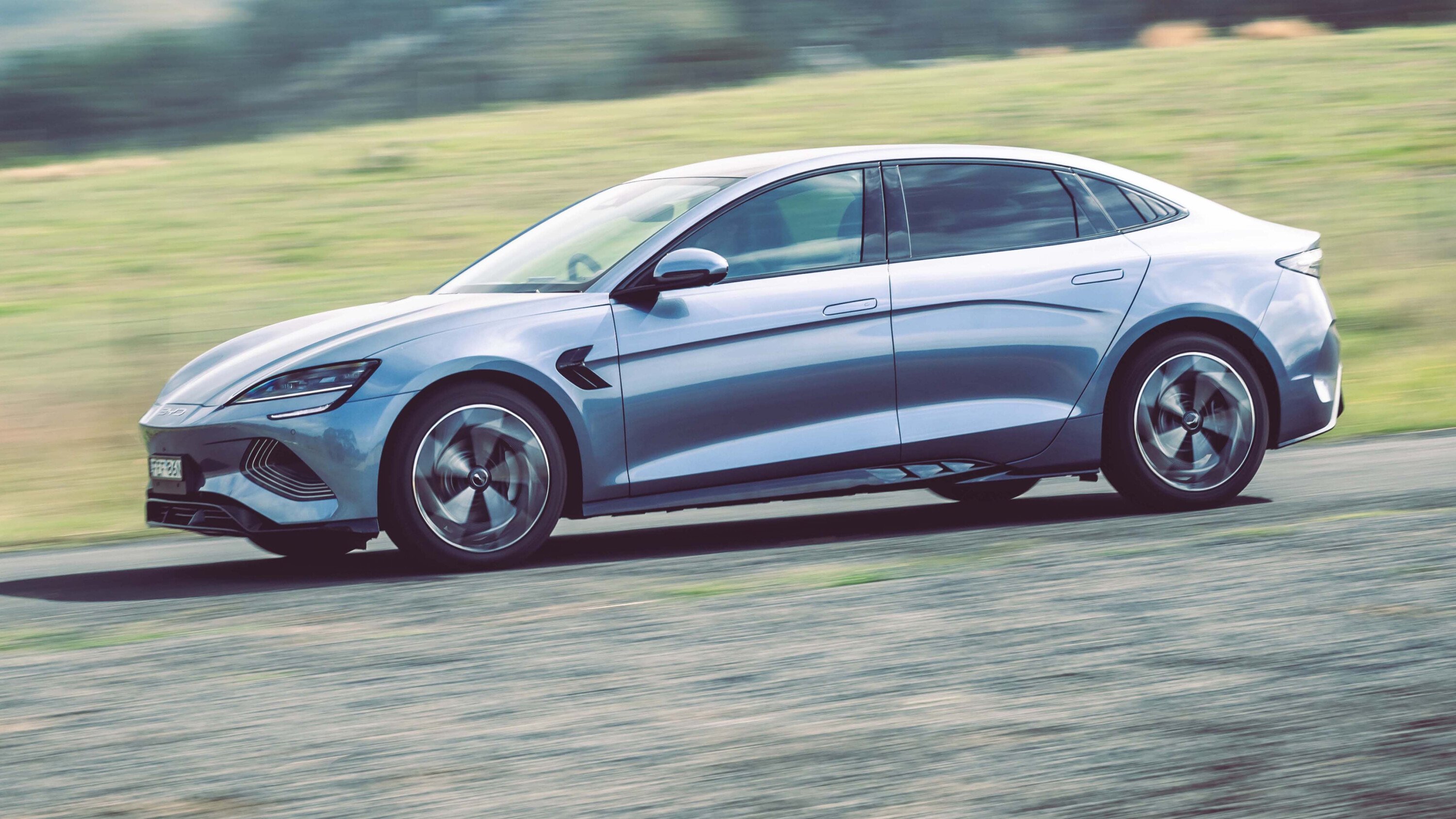
I was reminded of this phenomenon last month on my first sample of the BYD Seal, the new Chinese-made sedan with twin-motor AWD and astounding speed on tap.
It gets to 100km/h in 3.8 seconds costs and is under $70K, and therefore offers the best kilowatt/dollar ratio of any new car ($176.27 per kW, if you’re wondering).
Not directly involved with the car’s coverage, I read my colleague’s pricing stories with great interest as the Seal comfortably cemented itself as the cheapest among rivals. Then came the spec battles and comparisons, with which I began building an expected driving experience. Frequency selective dampers and four-piston front brake calipers clamping big ventilated and cross-drilled rotors on the Performance piqued my interest especially.
1
And yet when it finally came to sampling one on home soil, the experience was less than excellent.
A typical muggy December day in the Blue Mountains where the heat lingers in humidity like a sauna brought sharp sun rays that did their best to flatten any interest in the design – though the Seal’s bonnet creases and unique proportions still caught my eye.
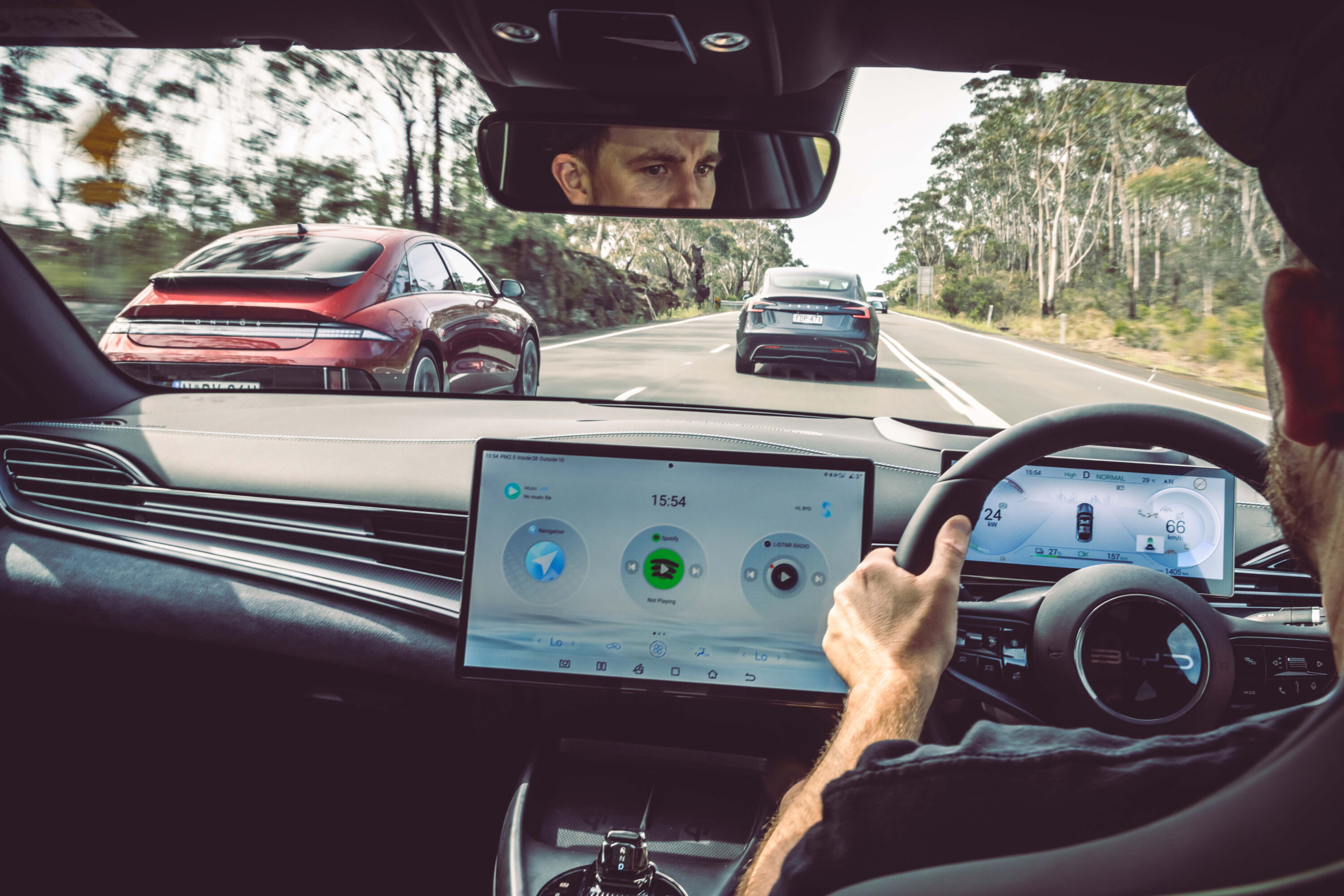
I took a seat inside and, instead of experiencing the beauty of the glossy marketing images promising high-quality quilted leather seats, I was greeted with an offputting plasticky smell and materials a notch down from what I was expecting.
Then came the drive; aside from ballistic acceleration, it followed the cabin’s trend, and the poorly calibrated driver aids and chassis left me disappointed.
This isn’t a review of the car by any means (although you can read my comparison here) and your Seal mileage may vary. Instead, it’s just my latest memorable brush in a long line of the excitement curve phenomena.
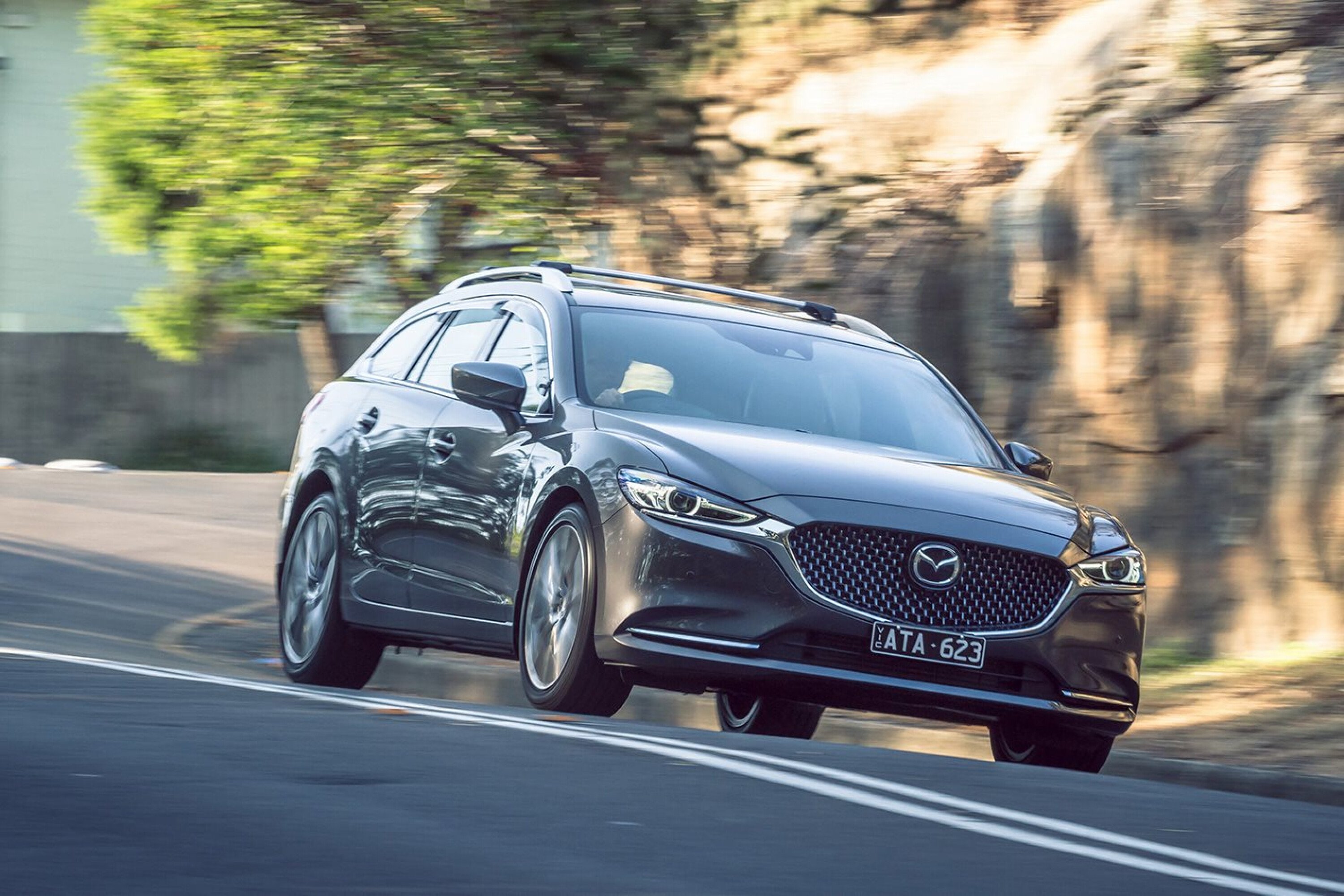
As a counterpoint, I sampled a Mazda 6 GT SPearlier this year, and despite low-to-no expectations (launched way back in 2012, it sits well near the wrong part of the excitement curve) it performed exceptionally well, much to my delight.
1
Regular road testing means this experience is common, yet at the end of the week the car goes back and I’m free of any financial burden.
But we’re in an era of protracted wait times, and as someone who doesn’t know how it feels to have this happen when money’s on the line, I’d be intrigued to hear about your brushes (positive or negative) with the patented ‘new car-buying excitement curve’.
The NFL Championship game is set to occur on the 12th of February with the San Francisco 49ers squaring up against the Kansas City Chiefs, and the entirety of the Taylor Swift fanbase, it seems.
Each year the Super Bowl presents an opportunity for companies to deploy their Taylor tailor-made commercials for the event, seeking to grab the attention of the largest audience and vie for that coveted achievement of “virality”.
Toyota was said to be stepping back from the fanfare of Super Bowl attention, but instead it’s offered up two ads. This year also saw BMW, Kia and Volkswagen enter the fray that is the commercial portion of The Big Game.
Below is the latest rundown of the car-related adverts for your enjoyment, and we’ll update this post as any new ads feature over the weekend.
BMW
The Bavarian car maker obtained actor Christopher Walken for its “Talkin’ Like Walken” advert to promote the new 5 Series and i5.
The ad features a number of other people who imitated his. Iconic voice and. Cadence. And affectation.
In a completely different tone, Kia offers its sentimental “Perfect 10” advert to show the new EV9 SUV. Get the tissues.
The ad highlights the EV9’s bi-directional power function to light up a display and power the music for a granddaughter’s skating performance for her grandfather.
The imagery of a tired but proud older generation emotionally expressing their approval for the next isn’t lost on us, Kia.
Offering its “An American Love Story”, Volkswagen shows a number of icons through the ages, focusing on the Beetle, Kombi and Golf before flowing onto VW’s upcoming cars like the ID.Buzz.
The “Bigger and Better than last year” billboard as the Beetle navigates New York’s intersection suggesting how VW really shook up people’s perception of what a car was back then. This is all set to the tune of Neil Diamond’s “I Am… I Said”
The Toyota Tacoma “Dareful Handle” advert pays tribute to, of all features, the grab handle. The ‘Jesus!’ bar, as it’s often known here.
Notably, the ad doesn’t use the slightly more blasphemous names for them that I heard while growing up.
Toyota has also shown its LandCruiser Prado advert, “When Eli Manning Fumbles Your Land Cruiser Review” which features Manning spoiling a walkaround review by wandering into the shot before being rebuked by Abdullah of the Pushing Pistons YouTube channel.
This is likely a poke at Manning’s 125 career fumbles. I don’t follow the NFL, so yes, I had to google that statistic, along with who Eli Manning is. And what a “fumble” is.
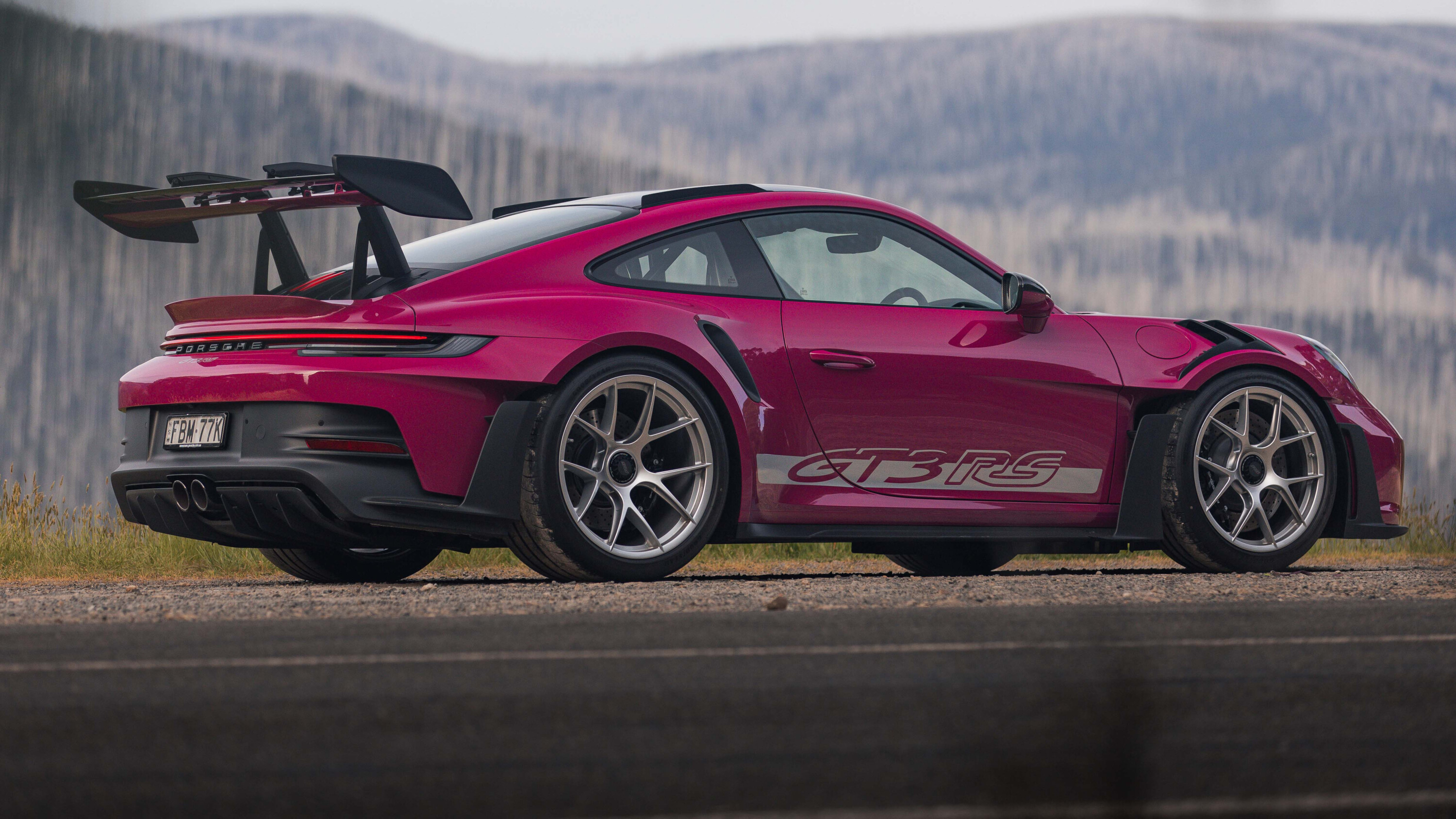
Okay, fish out of water time. Given the extreme track focus of the latest Porsche 911 GT3 RS, you might be expecting this review to include some balls-to-the-wall laps around a circuit.
One with many high-speed corners, like Silverstone or Phillip Island, would make sense given this new car’s obvious focus on aerodynamics, but no… in a shock twist, you’ll find no track driving here.
Instead our plan is to answer a more pressing question that surrounds the GT3 RS: what’s it like as a road car? We already know it’s a monster on a circuit – it’s now bulging with so many complex driver aids and is so hellbent on generating downforce that it might actually be Porsche’s wildest and most track-focused creation yet.
1
But what we don’t know is how it performs away from the smooth confines of a racetrack. Is it the pick of the 911 range?
The pinnacle of real-world driving thrills? Or has it become so hard-edged and focused that it feels too extreme for the street? Fish, water… ah you get it.
Happily, we have just the roads to give the new GT3 RS a proper workout. Our plan is to collect the car from Porsche’s Melbourne HQ and then head south-east towards Gippsland where we’ll tackle the roads we use for Car of the Year testing.
It’s a challenging loop – one full of low- and high-speed corners and surfaced with gnarled, bumpy tarmac – but even before we set off, I start to question the sanity of our plan.
1
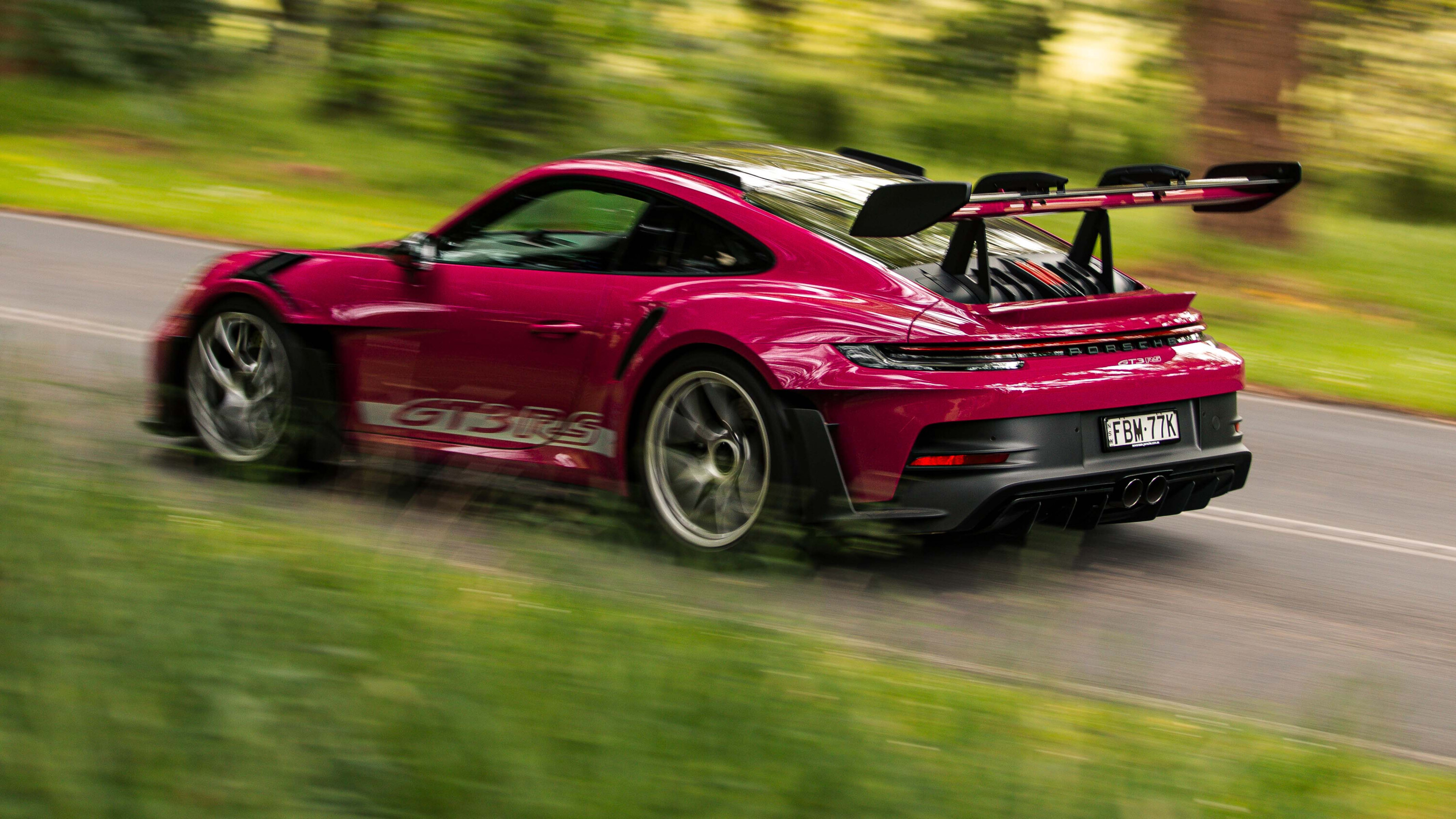
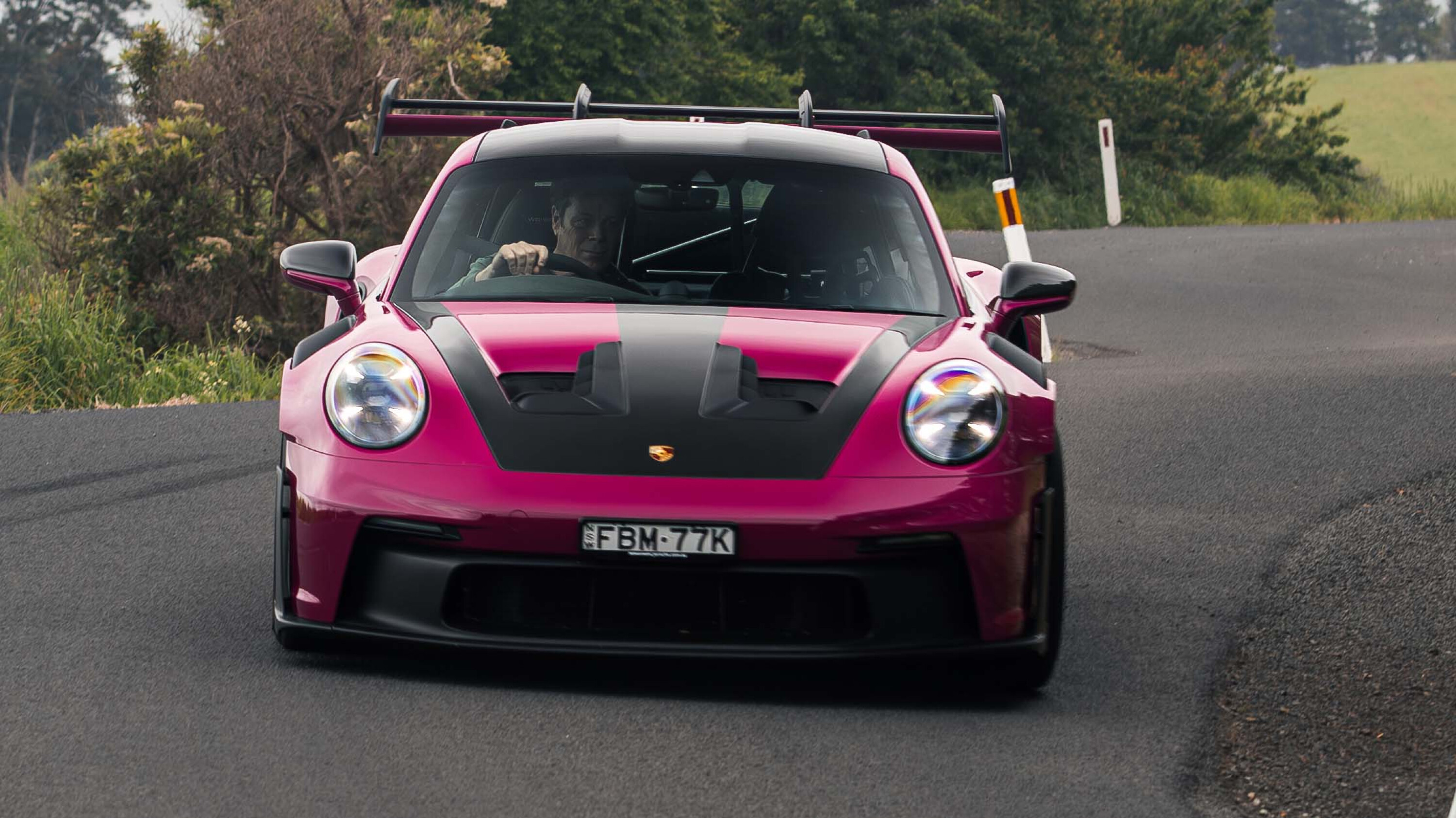
Crikey this car looks wild. It’s the rear wing you notice first, naturally, and it’s somehow even larger and more absurd in person than it is in pictures, but the rest of the car is just as dramatic.
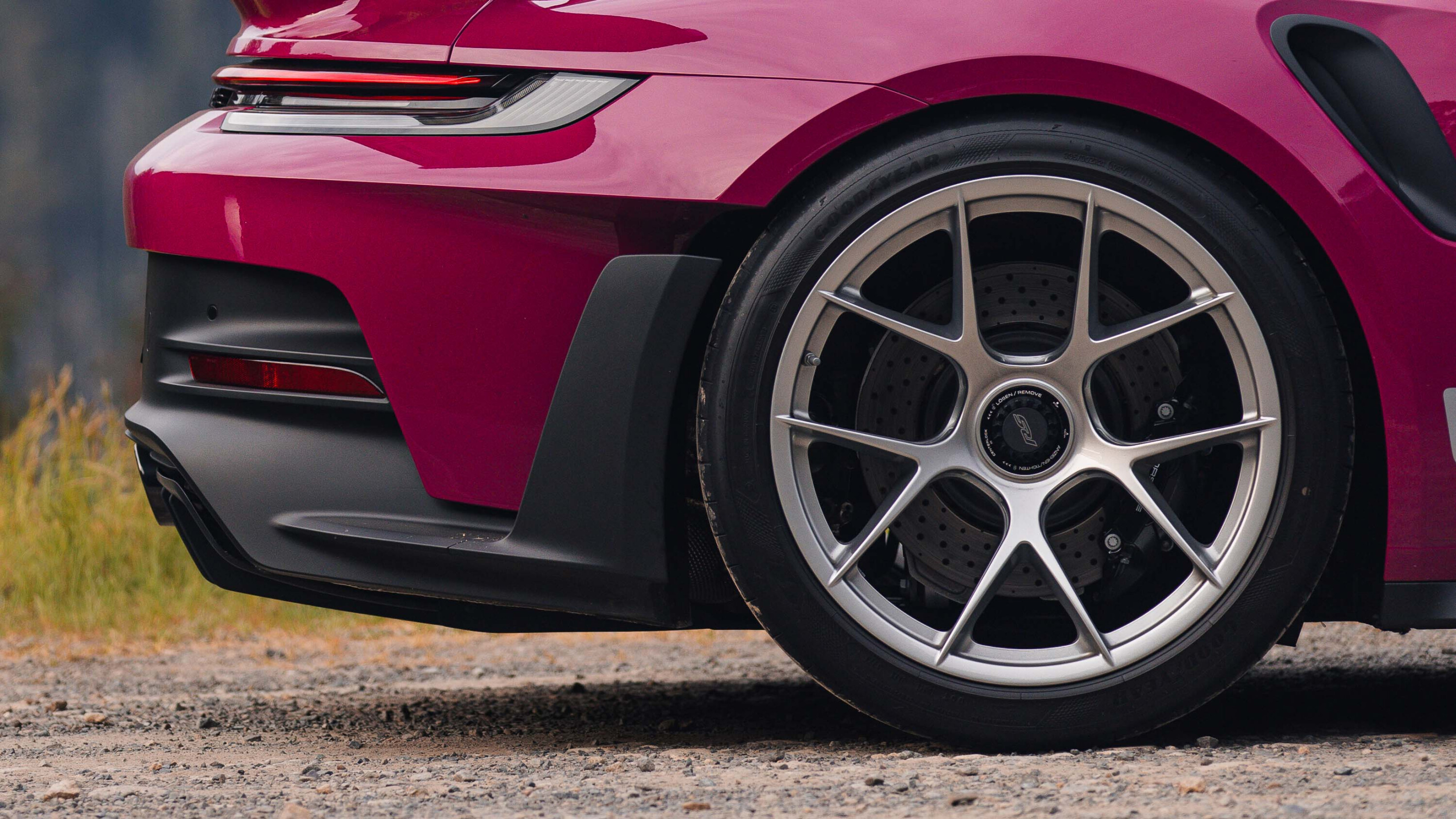
There are blade-like fins on the roof, huge cut-outs in the carbon bonnet, and gulping voids behind the front wheels that are so large you can see a big chunk of the tyre itself. There are loads of details to geek out over, too, like the expensive-looking forged magnesium wheels and the pneumatic cylinders that operate the rear wing’s drag reduction system (DRS).
Is it pretty? That depends who you ask – one passerby was bold enough to call it ugly – but there’s certainly beauty in the sheer single-mindedness of the design.
1
Every inch has been honed to generate downforce and the result is some dizzying numbers. At 280km/h, the GT3 RS is generating 860kg of aero grip, which is three times more than a ‘regular’ 911 GT3, and a chunk more than its key rivals.
A Lamborghini Huracán STO, for example, which is the most track-focused Huracán you can buy, makes 420kg of downforce at the same speed as the Porsche. A Mercedes-AMG GT Black Series makes 400kg at 250km/h and even a McLaren Senna can only muster 800kg at 325km/h.
The Porsche’s colossal rear wing is a heavy contributor, of course, but an equally crucial element is a new central radiator design. This deletes the previous three-radiator layout and instead frees up space on either side of the nose to better channel air down the side of the car.
1
Total outputs are now 386kW at 8500rpm and 465Nm at 6300rpm
The compromise is the single radiator now occupies the luggage compartment, meaning there’s no boot, but the goal is to dispel as much hot air as possible outwards while keeping the centre of the car free for dense, cool air to rush into the gulping intake for the 4.0-litre naturally aspirated flat six.
The powertrain itself is largely the same 4.0-litre and seven-speed PDK combo you get in a GT3 but changes to the cylinder heads, valve timing and camshaft have liberated an extra 11kW. Total outputs are now 386kW at 8500rpm and 465Nm at 6300rpm, with that torque figure actually being 5Nm less than the GT3.
The 0-100km/h sprint is dispatched in 3.2 seconds, which is two tenths quicker than a GT3 – thanks in part to different gearing and a shorter final drive – while top speed has fallen slightly from 318km/h to 296km/h. Blame drag for that one.
1
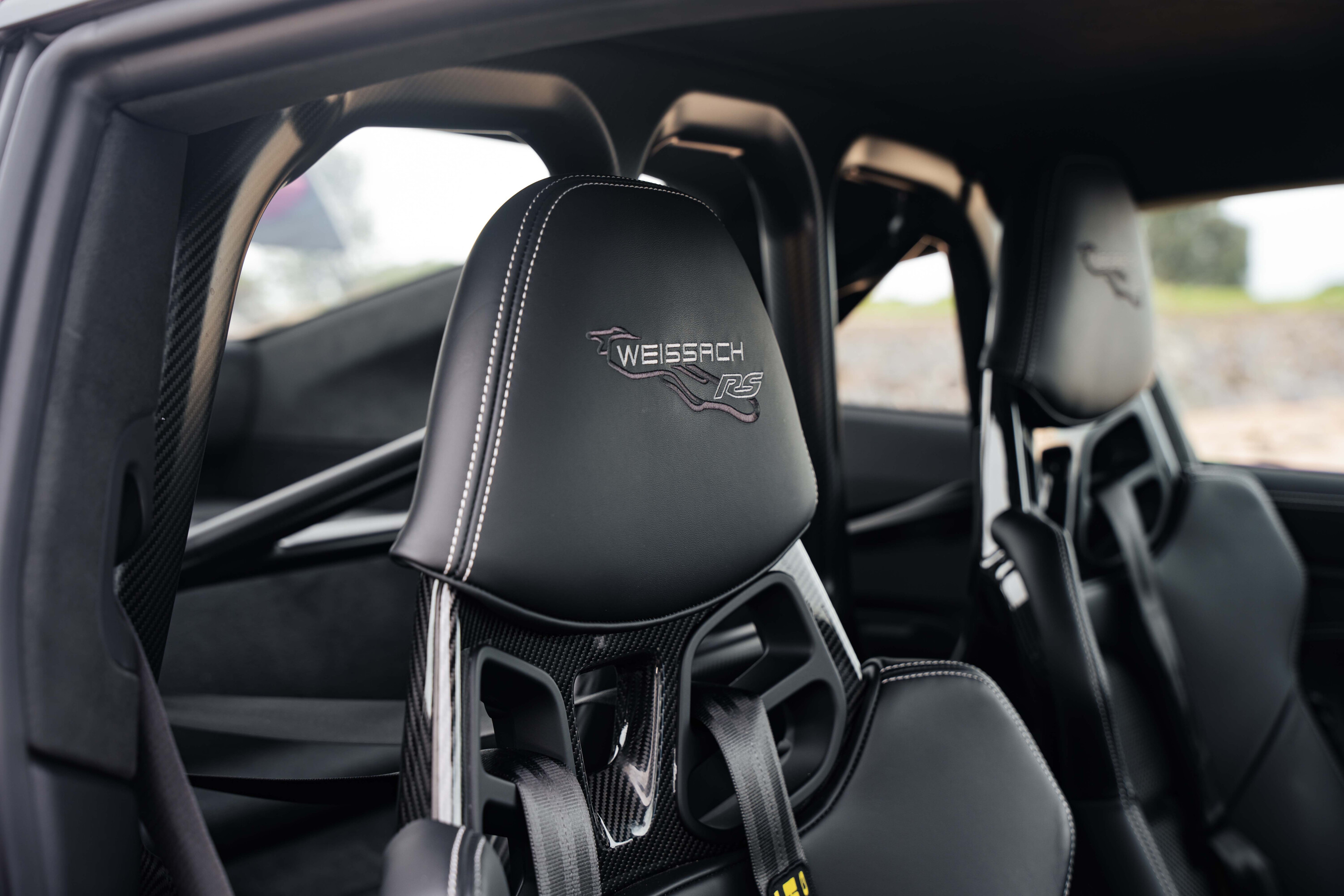
Slipping inside only reinforces the sense of focus. Our car is fitted with the optional Weissach Pack which, for $76,000 extra, adds a carbon-weave finish for the bonnet, roof and rear wing,) and forged magnesium wheels.
It also swaps out the standard steel roll cage for one made of carbonfibre, which looks fantastic and is a world-first, according to Porsche.
If the Weissach pack sounds a touch exxy, then brace yourself for the price of the actual car, which starts at $537,600. That’s a whopping $120K leap over the old GT3 RS and that’s before you get into the options list. Our test car cost $670,660 before on-road costs. Yikes.
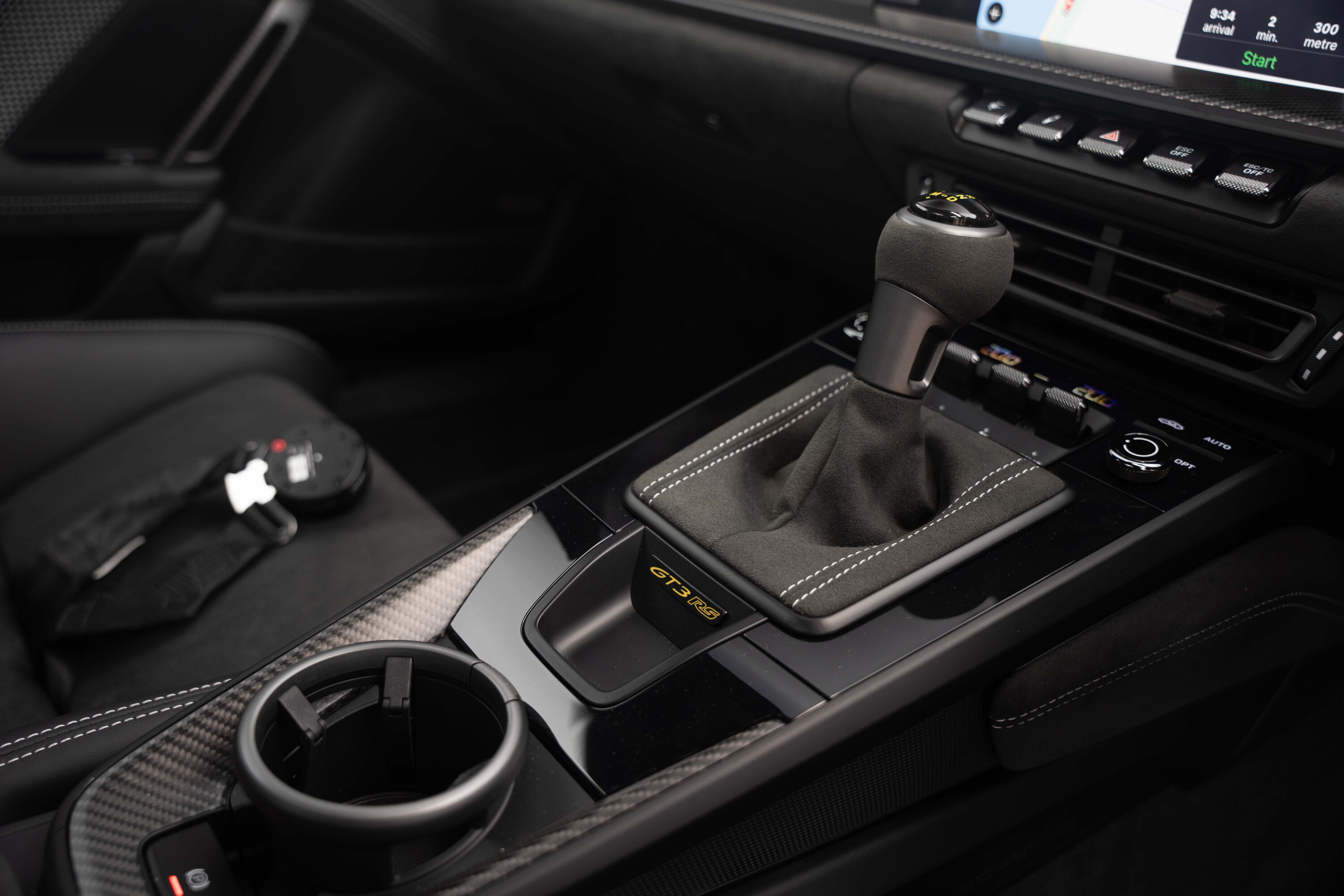
The rest of the cabin is a rich mix of carbon, soft leather and black race-tex. While the layout is typical 911 – there’s no option to delete the stereo or air conditioning for this generation – it’s the detailing the sets the RS apart.
1
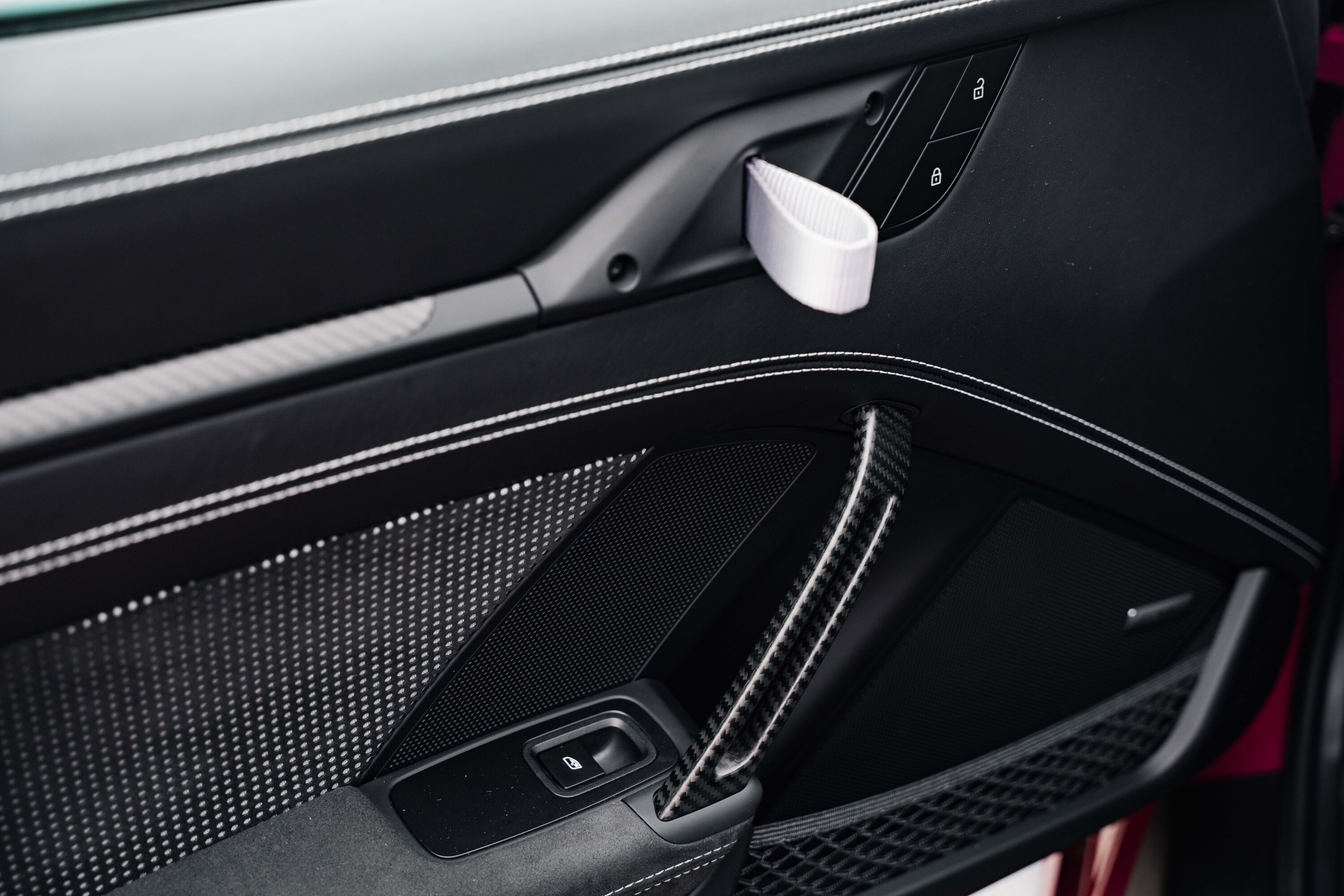
Each door pull is a slender spar of exposed carbon, the seats are lightweight carbon buckets and the tactility of the shift paddles, which are naturally made of carbon, is different thanks to a magnetised action that delivers a louder, metallic ‘clack’ with each gear change.
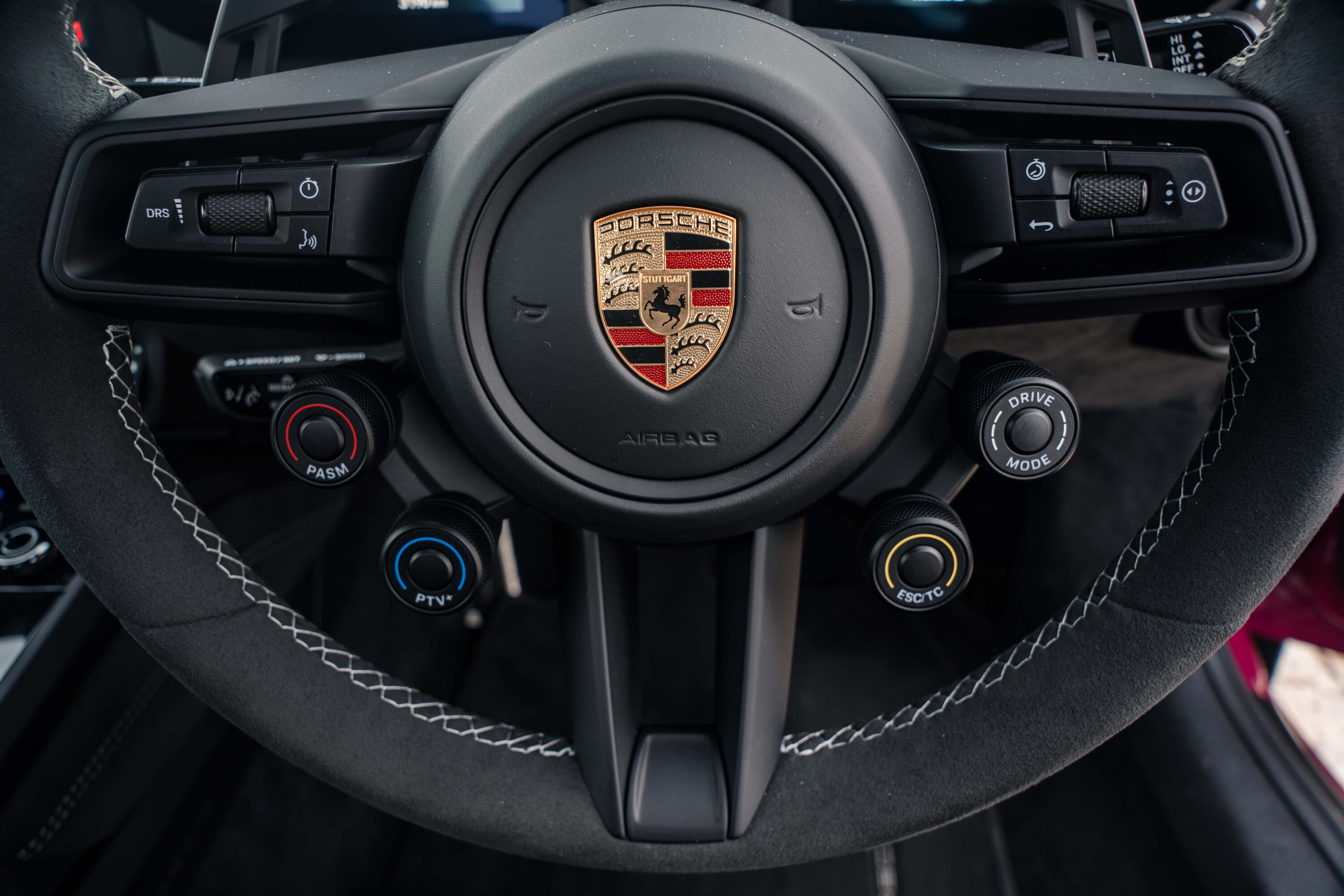
Then you notice the rotary dials hanging from the steering wheel. There are four of them and they’re the keys to unlocking the RS’s dizzying amount of adjustability. Everything from the suspension’s bump and rebound, to the level of traction-control intervention, and even the rate of locking for the differential on the way into and out of corners, can be fine-tuned by the driver.
This customisation could also be the secret to giving an obviously track-focused car decent road manners, given the damping’s softest setting – there are eight levels of firmness – will deliver more compliance than simply leaving the car in default.
1
Seeing a GT3 RS trundle past is akin to having an Apache gunship buzz your local shopping centre
How does all this feel in city traffic? Like overkill of course. Seeing a GT3 RS trundle past is akin to having an Apache gunship buzz your local shopping centre and it only takes one join in the tarmac to understand this is a properly serious machine.
The whole car feels rigid and unyielding, with zero slack to the controls. Surprisingly, the low-speed ride actually isn’t that bone-jarring – there’s deftness to the damping and the wheels never crash through, even over large potholes.
And Porsche is the master at making high-performance transmissions feel docile and smooth at low speed. Okay, the seven-speed dual-clutch can jolt and clunk a bit when the car is cold, but get some heat through the system and the gearbox is as smooth and seamless as an i30 N.
1
The RS is another level of focus entirely but it’s good to know its ultra-firm chassis won’t chip your teeth
Predictably, there’s plenty of tyre noise on the freeway (the Goodyear Eagle F1 R rubber measures 275 wide up front/335 out back) and the chassis is stiff enough that you’ll feel your squishy bits jiggle occasionally, but the bucket seats are a triumph of comfort and support. We drove the car all day and didn’t have a skerrick of leg or back pain.
Is it just as comfortable as a regular GT3? Not even close. The RS is another level of focus entirely but it’s good to know its ultra-firm chassis won’t chip your teeth or turn your skeleton to dust on a long road drive.
The view out verges on hilarious thanks to the hulking shape of that huge wing in the mirrors. The wing itself is so tall it doesn’t actually impede on rear vision, but it’s fun to watch the top element move when you switch the DRS between its high- and low-downforce settings.
1
The system works automatically above 100km/h and 95 percent throttle or, for the full race racing-driver experience, you can open and close the wing’s top element yourself via a DRS button on the steering wheel.
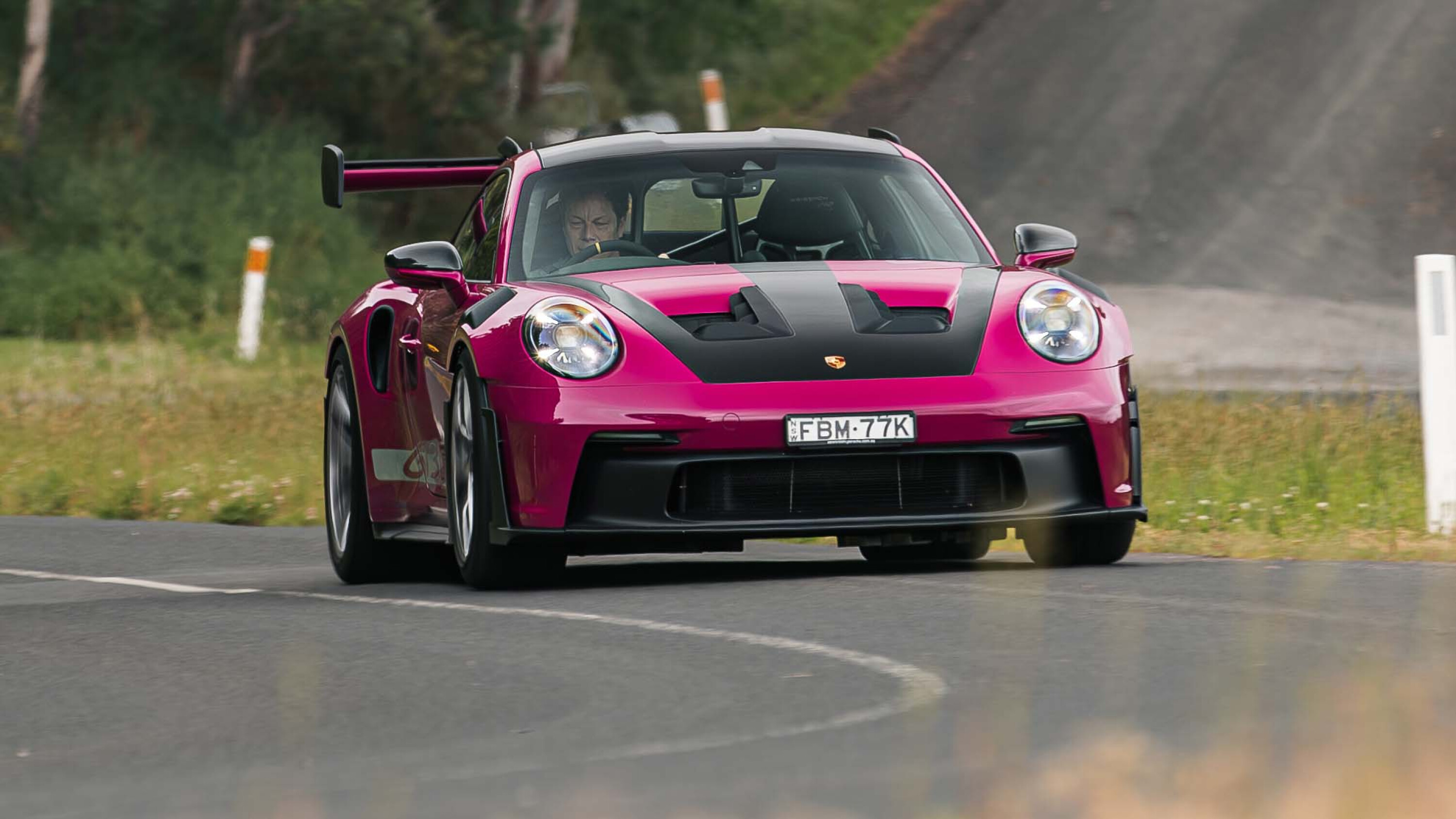
Again, it feels like overkill on the M1, but the RS experience starts to coalesce once the road gets twisty. The steering is close to perfection. Meatily weighted and with a natural speed, there’s no vagueness or sneeze factor to contend with here. Just total obedience and clarity.
And once you get some heat into the track-focused Goodyears, the grip on offer from the front axle feels utterly resolute. I shudder to think what it’d be like when its cold and rainy – challenging, most likely – but today, the way the RS’s nose dives into corners is deeply addictive.
1
I only encountered the dreaded shudder of understeer once and only because I deliberately wound on the lock at a hairpin to see when the grip would run out.
The rear axle isn’t quite as tied down. The 4.0-litre flat-six might ‘only’ produce 386kW (absurdly, that figure seems modest in an age of 500kW+ rivals), but it’s still easy to overwhelm cold rear tyres if you get a bit greedy with the throttle on corner exit. Build some heat into the rubber and you can be much more decisive but there’s another issue to contend with — actually keeping the tyres in contact with the road.
Sucked in by the grippy front axle and telepathic steering, it’s staggering how quickly my confidence and speed build, until I hit a series of bumps that sends the rear skipping wide.
1
It’s a vicious moment, a proper bum puckerer, and a vivid reminder of just how stiff and snatchy this car has become.
Dialling the damping into a softer setting helps – the spread between soft/hard is noticeable but not day-and-night different – though I soon find myself leaving a margin in the RS that I wouldn’t in the more forgiving GT3 or more softly sprung GT4 RS. Where those cars can be properly exploited on bumpy backroads, the 3 RS demands more respect and bravery.
Happily, the standard steel brakes are absolutely mighty (carbon discs are optional) and the engine, even at sensible speeds, is a proper event. Porsche’s 4.0-litre is one of the world’s best engines and while the RS’s changes are small, the shorter gearing helps to make it feel even more urgent and evocative.
1
There’s also something deeply satisfying about the surgical precision and control you get from an atmo donk, which is doubly important in a car as unyielding as this.
You’d rightly expect the RS version to be lighter than a regular GT3 but oddly, it isn’t. Despite a body shell that’s made mostly from carbon-composite, and a horde of other weight-saving measures, the RS hits the scales at 1460kg. That’s 15kg more than a PDK GT3, which considering how many wings and flics the RS now carries, is actually pretty impressive.
So is Porsche’s bewinged monster too extreme for the street? No, it’s not, yet it’s abundantly clear a regular GT3 is a better road car. To properly unravel the ability of the RS, and to drive it in the way that it almost demands you to, you need a serious racing circuit.
1
That’s also the place to better explore the settings for the diff, damping and aero, which is one aspect of the RS that does feel too extreme for the road. Beyond tweaking the dampers, we barely explored the rotary dials.
It’s a brute, this car; a machine that beats the air into submission and holds up a mirror to your driving ability. As for being a fish out a water? Nah. It’s good on the road. But it’d be phenomenal at a track.
In January 2020, I was looking for an affordable and interesting daily driver. Growing up in a family of adored 1990s Toyotas with exceptional reliability, I was keen to experience a homegrown product.
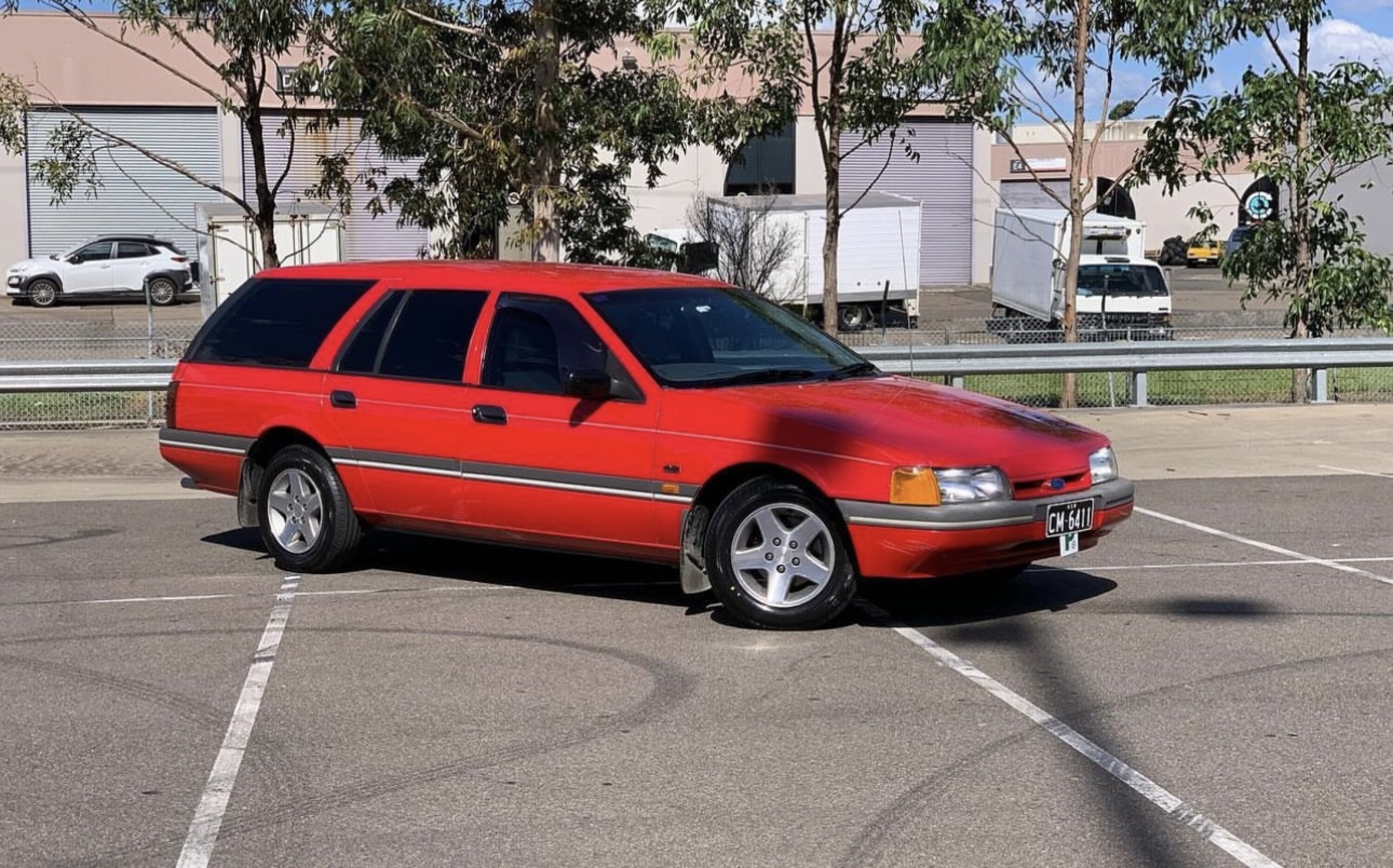
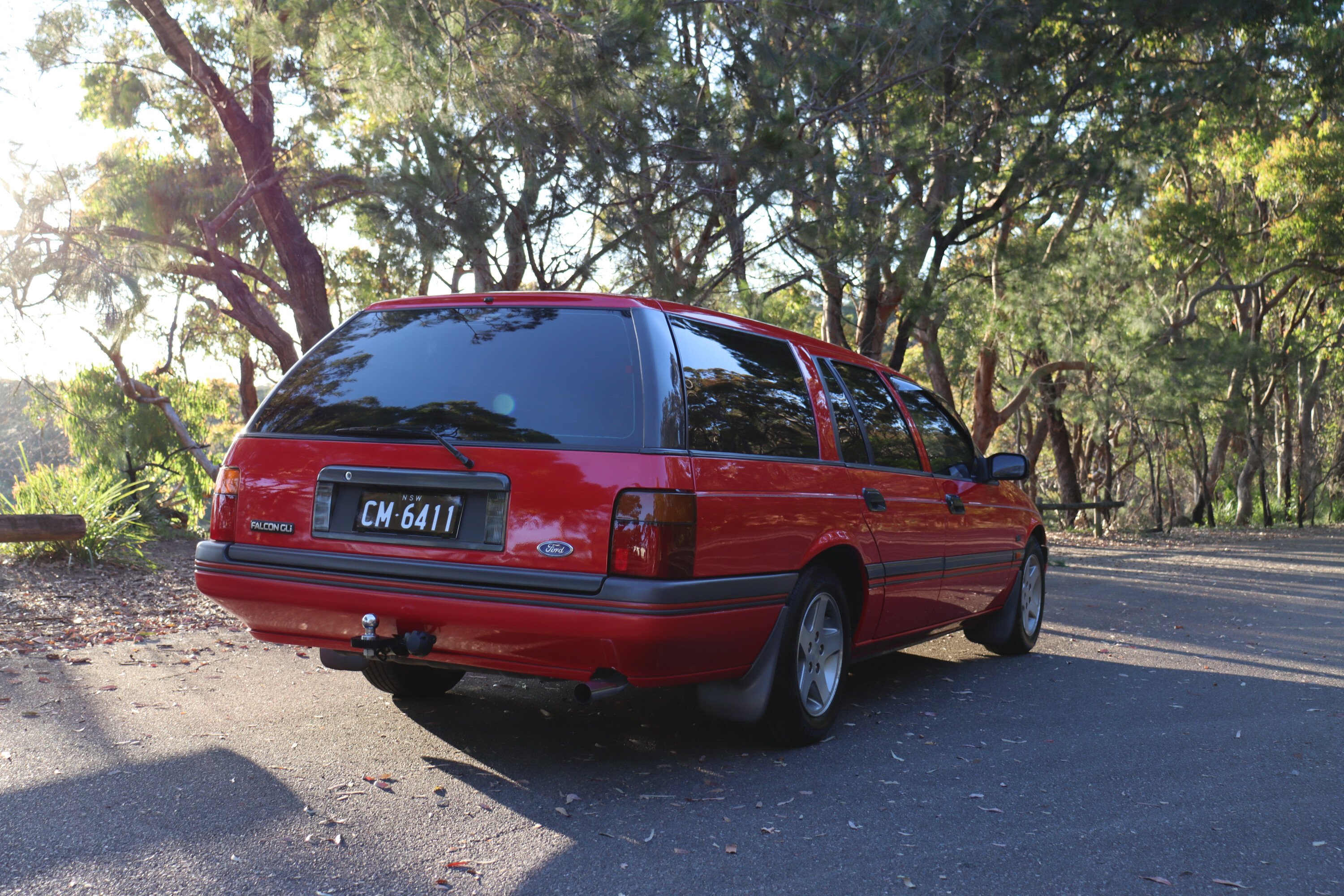
After stumbling across a cheap 1992 EB II GLi wagon in Le Mans Red with the rare ‘Centafold’ front bench seat and column automatic option – and seeing as I missed out on my neighbour’s very similar EB II a few years prior – I had to take this opportunity.
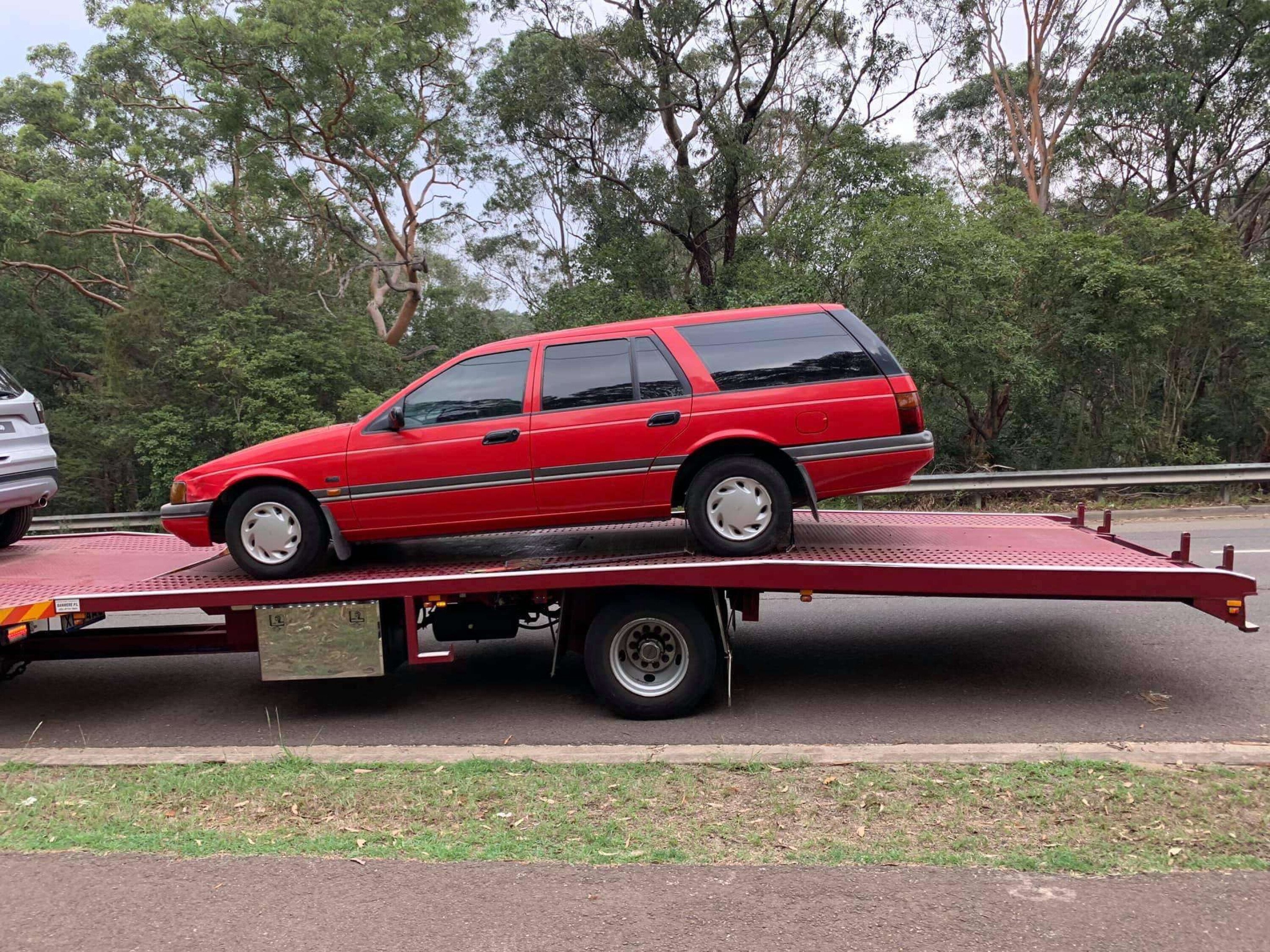
The car was in Victoria – bearing the original Garden State plates (FAA-660) – so I had a friend down in Melbourne check it out for me. It seemed reasonable, so a few days later the Falcon had made its way to Sydney on a tilt tray (during a hailstorm of course). Thankfully, the Falcon somehow survived unscathed.
1
It was finally registered and ready for daily use
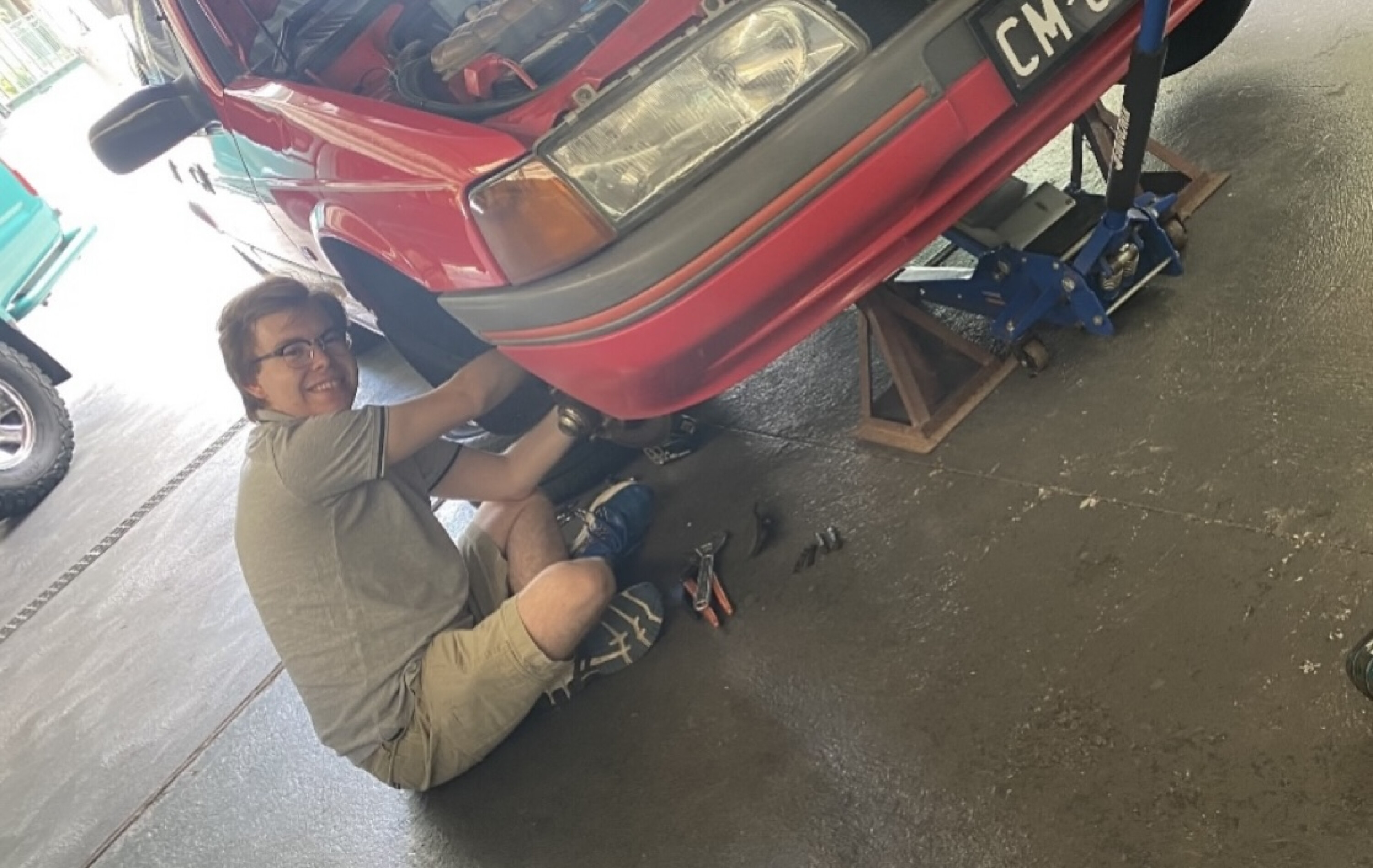
Over the next few weeks, with the help of a mate, the car was thoroughly cleaned inside and out. A mystery ant nest in the glovebox was found, a period correct Pioneer head unit was installed, some new rubber was fitted to the skinny 14-inch steel wheels, a general service was done, and the rotten exhaust had removed itself (it fell off on the first drive) so was replaced.
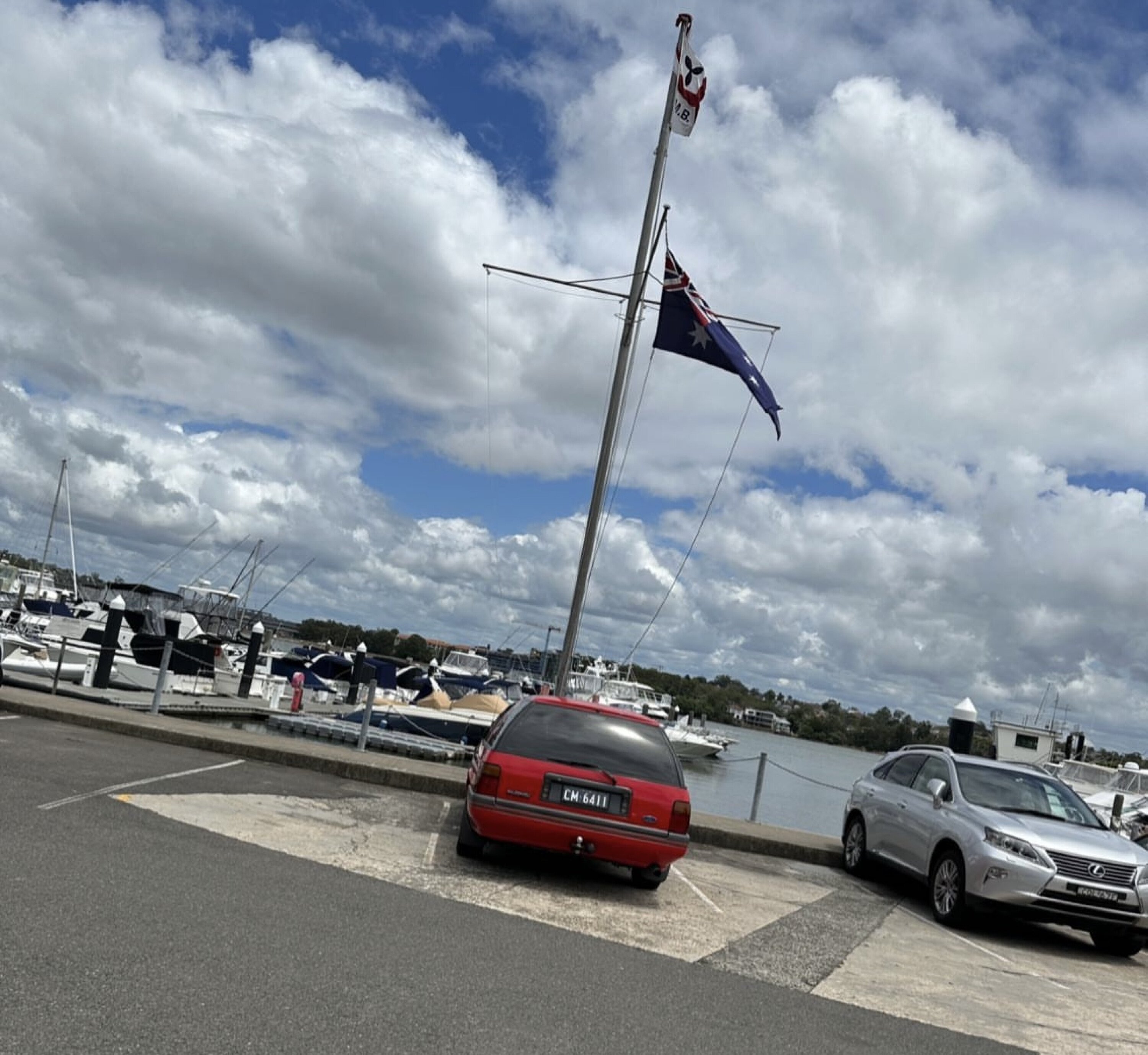
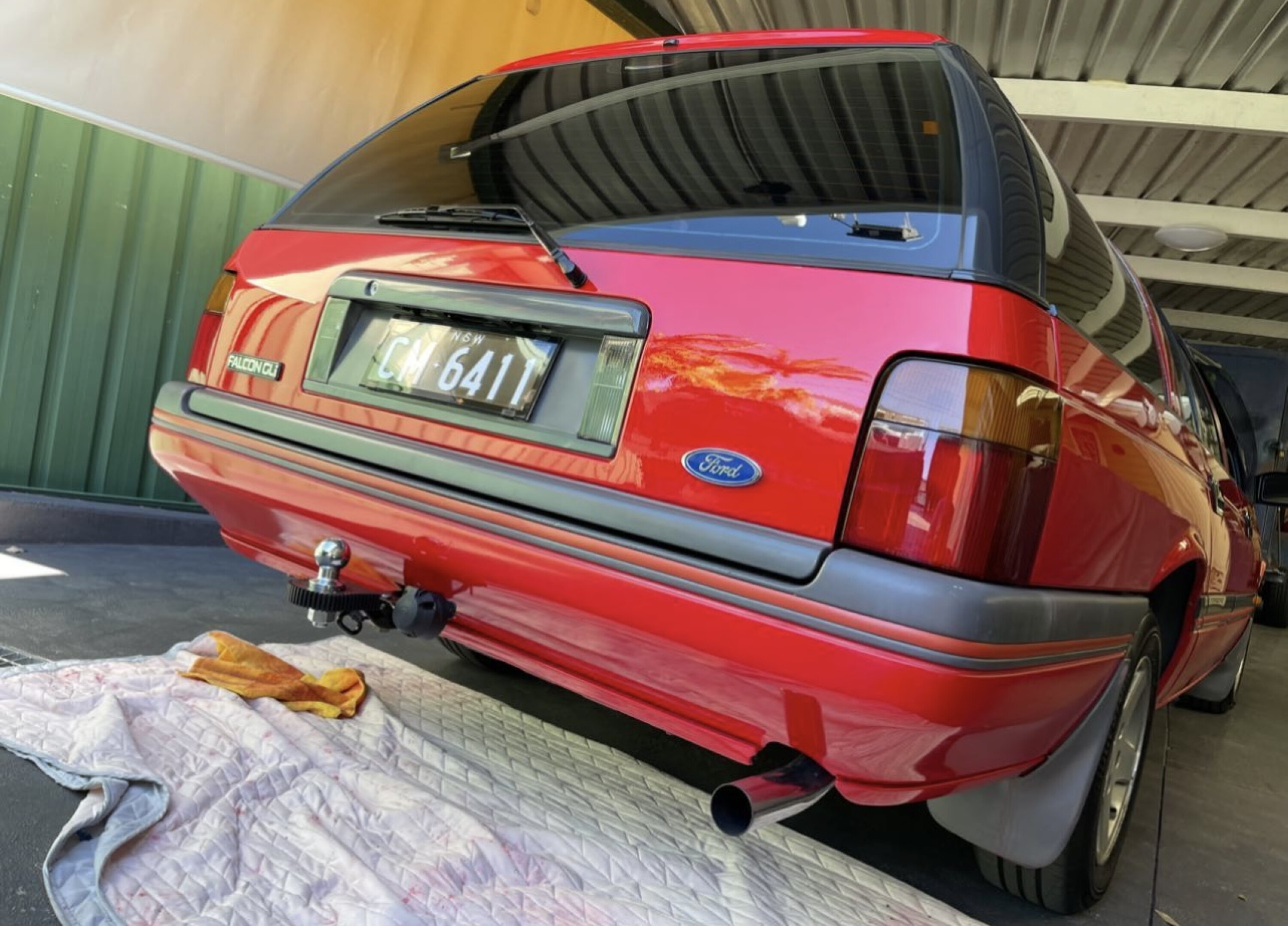
The Falcon went off for registration inspection, which required ball joints (no surprise if you are familiar with these cars), suspension components and a few minor service items. No big deal. It was finally registered and ready for daily use wearing my white-on-black CM-6411 plates.
1
Then it happened: the realities of waking a car from sitting dormant. The classic head gasket issue of early E-Series Falcons made itself known, with a lovely fluorescent green waterfall down the side of my engine block. My wallet said “ouch”.
Next, the automatic transmission snapped a pressure control spring and I was suddenly friendly with my local automatic transmission specialist. This, among the many other common issues such as perished hoses, gaskets, water leaks, seized brake calipers, cranky air-conditioning components and other random aged components reared their ugly heads.
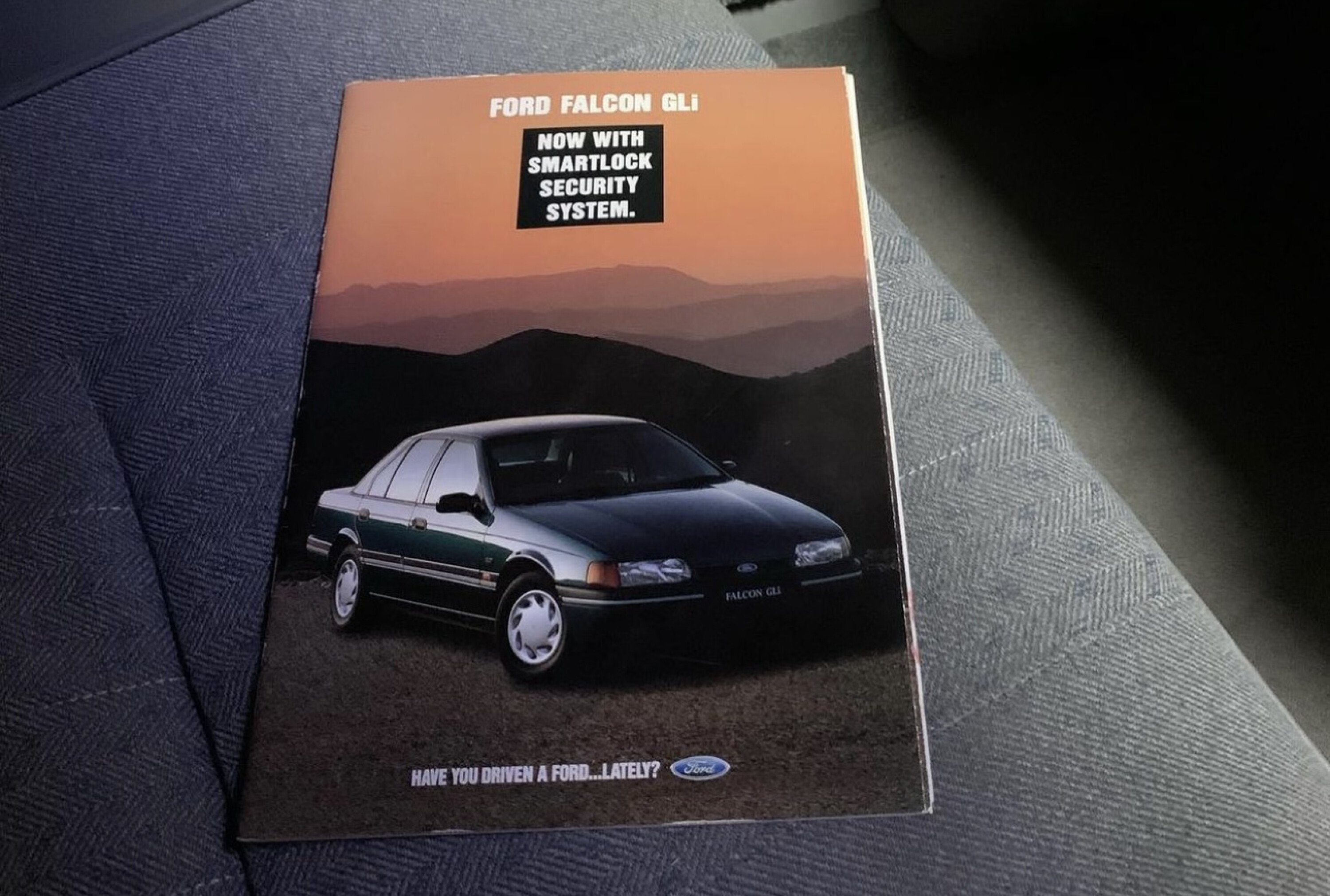
All in good fun, I fixed those over time, much to the further dismay of my wallet. That said, in credit to Bosch Australia my original SmartLock immobiliser module (another common failure point) is still working perfectly.
The modifications begin
After slumming around in a povvo-pack GLi for a month, lots of switch blanks and optional extras were calling my name.
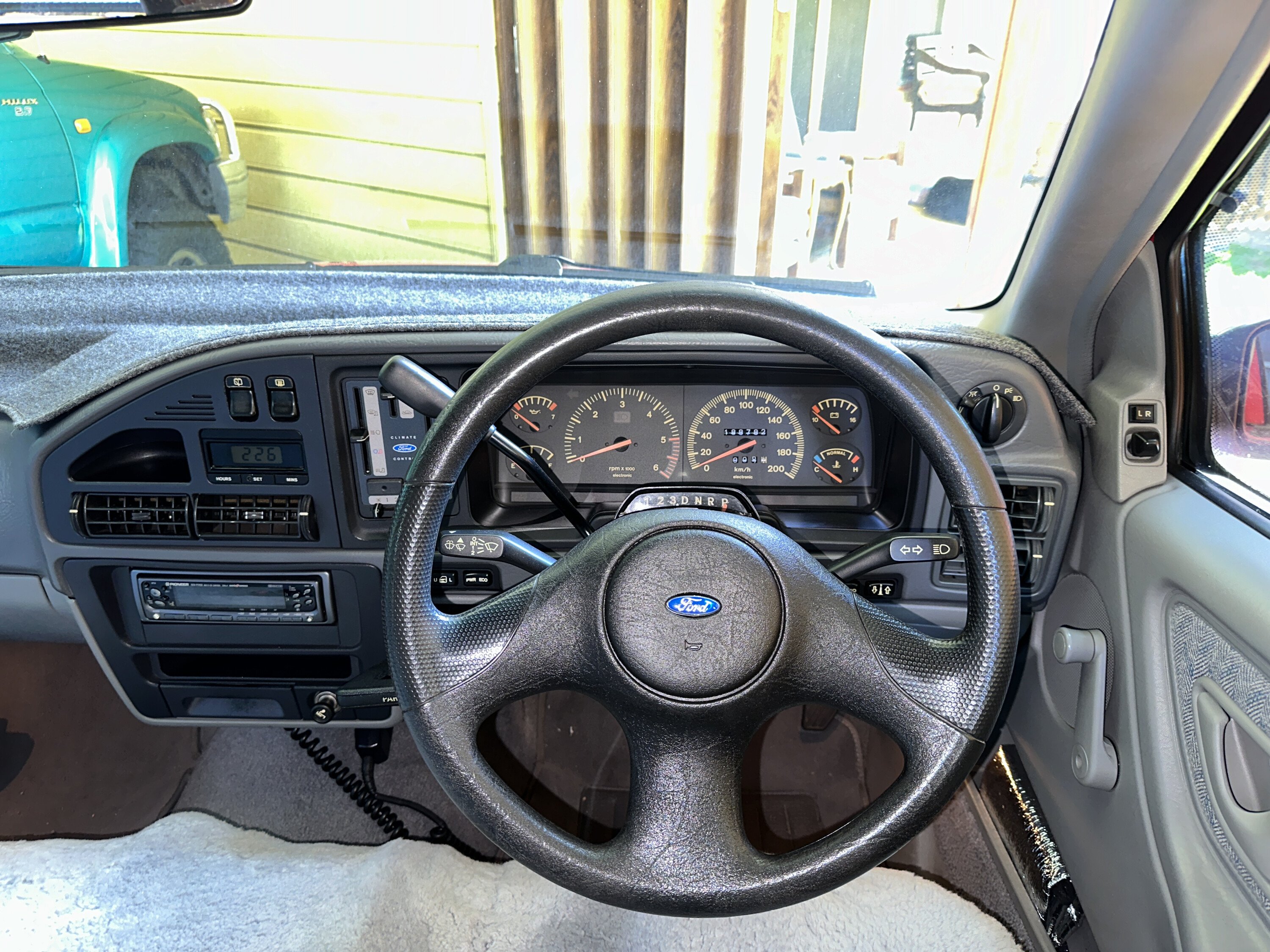
Before too long, a set of 15-inch S XR6 machine-finished alloy wheels with 205/65R15 tyres went on, a sports dash with full instrumentation appeared (built from three separate clusters), as did a clock, electric antenna, and red XR6 exterior trim inserts.
Plenty of parts were sourced from many visits to the now-departed Pick ‘n’ Payless self-serve wreckers, which always turned into an entertaining outing with my mates.
1
Body-wise, the original bonnet, both bumpers and the left front guard had some damage
After realising the stock brake setup wasn’t terrific, a dual-diaphragm brake booster from a former unmarked police car, DBA T2 rotors, braided lines and performance pads found themselves fitted to the car.
It had the desired effect, shortening the pedal travel and pulling this 1500-and-something kilo slab to a stop in a much-improved distance.
Body-wise, the original bonnet, both bumpers and the left front guard had some damage from a minor incident prior to my ownership, so were replaced and resprayed. Most of the original Le Mans Red acrylic lacquer remains elsewhere, in reasonably good condition.
1
Inside the Falcon
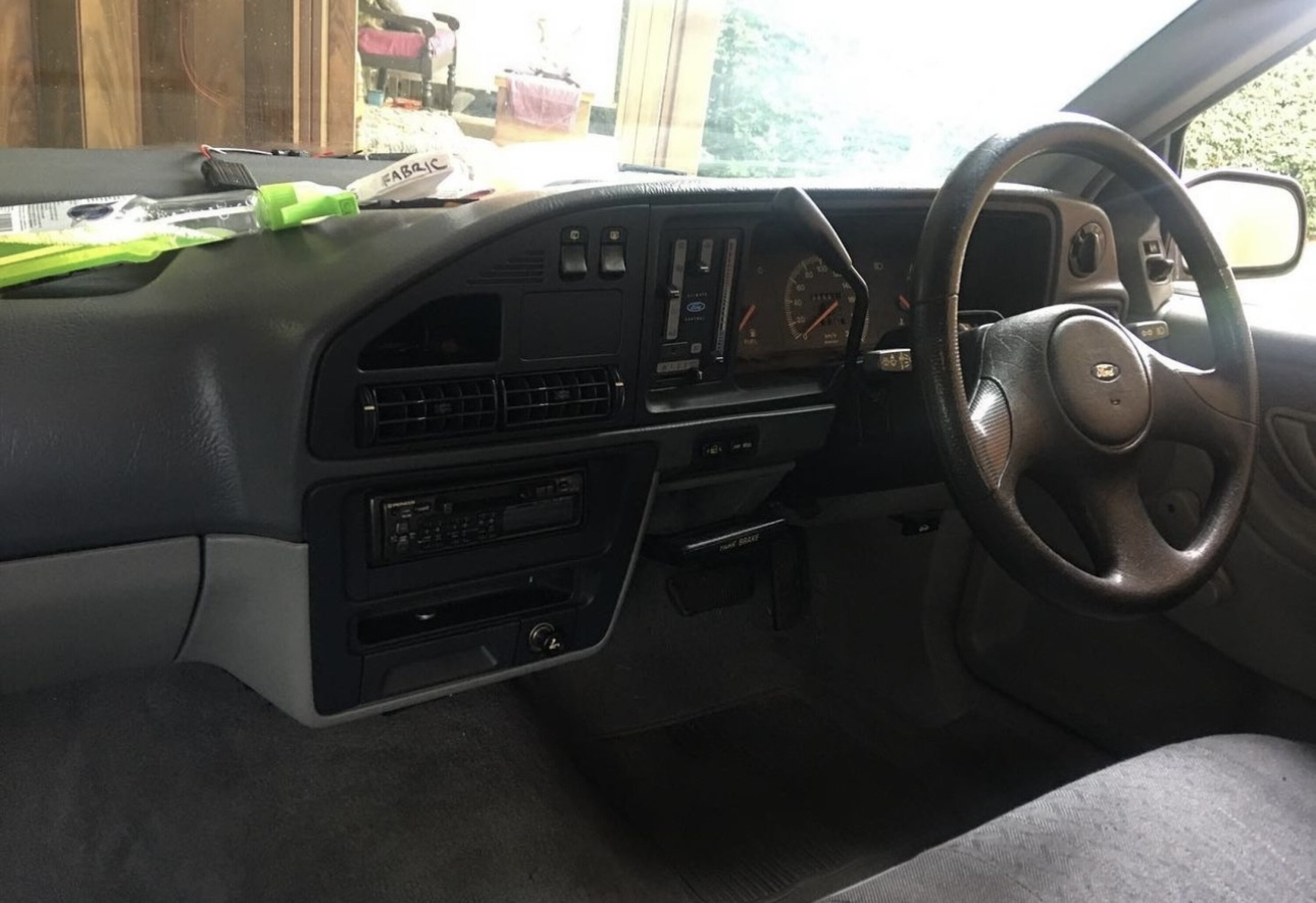
The interior of the Falcon is a sea of many different shades of grey cloth and plastic, although being an EB II, my example has the two-tone dash (dark grey upper section, light grey lower section) which makes the car feel a little less like sitting within an elephant that’s been turned inside out.
1
Next to the clock is a strangely shaped compartment originally designed for taxi drivers to store their business cards
A very comfortable front bench seat is found up front, with a centre folding armrest that becomes a third seat – a feature for which Ford coined the term ‘Centafold’.
The creature comforts are present, with manual ‘Ford Climate Control’ sliders and switches unconventionally placed next to the cluster for efficient and non-distracting fingertip operation that soon becomes muscle memory.
By contrast, the rear demister and wiper rocker switches are questionably mounted off to the left and above the clock, feeling like a bit of an afterthought.
1
Next to the clock is a strangely shaped compartment originally designed for taxi drivers to store their business cards. Anything placed inside will fly out at any given moment, so it is quite useless.
Apart from the headlight and dome light controls being placed on the dash, common for Australian cars at the time, the usual stalk-mounted indicator, high beam and wiper controls are present.
Located above the driver’s knees are controls for the tailgate, central locking, power/economy transmission modes and (dealer optional) electric antenna, as well as the handbrake (taken from the XD Falcon).
These are often obscured by the large steering wheel, projected at the driver at an angle as the steering column is off-centre and skewed slightly to the right, much like some Holden Torana models in the past.
1
In the lower dash are a single DIN radio aperture, a vacant slot for a small tissue box (or 1990s graphic equaliser) and the telltale 1990s feature, an ashtray.
There’s another three-seater bench at the rear, which is a great place to fall asleep during a road trip (hopefully not from carbon monoxide leaking through the tailgate seal).
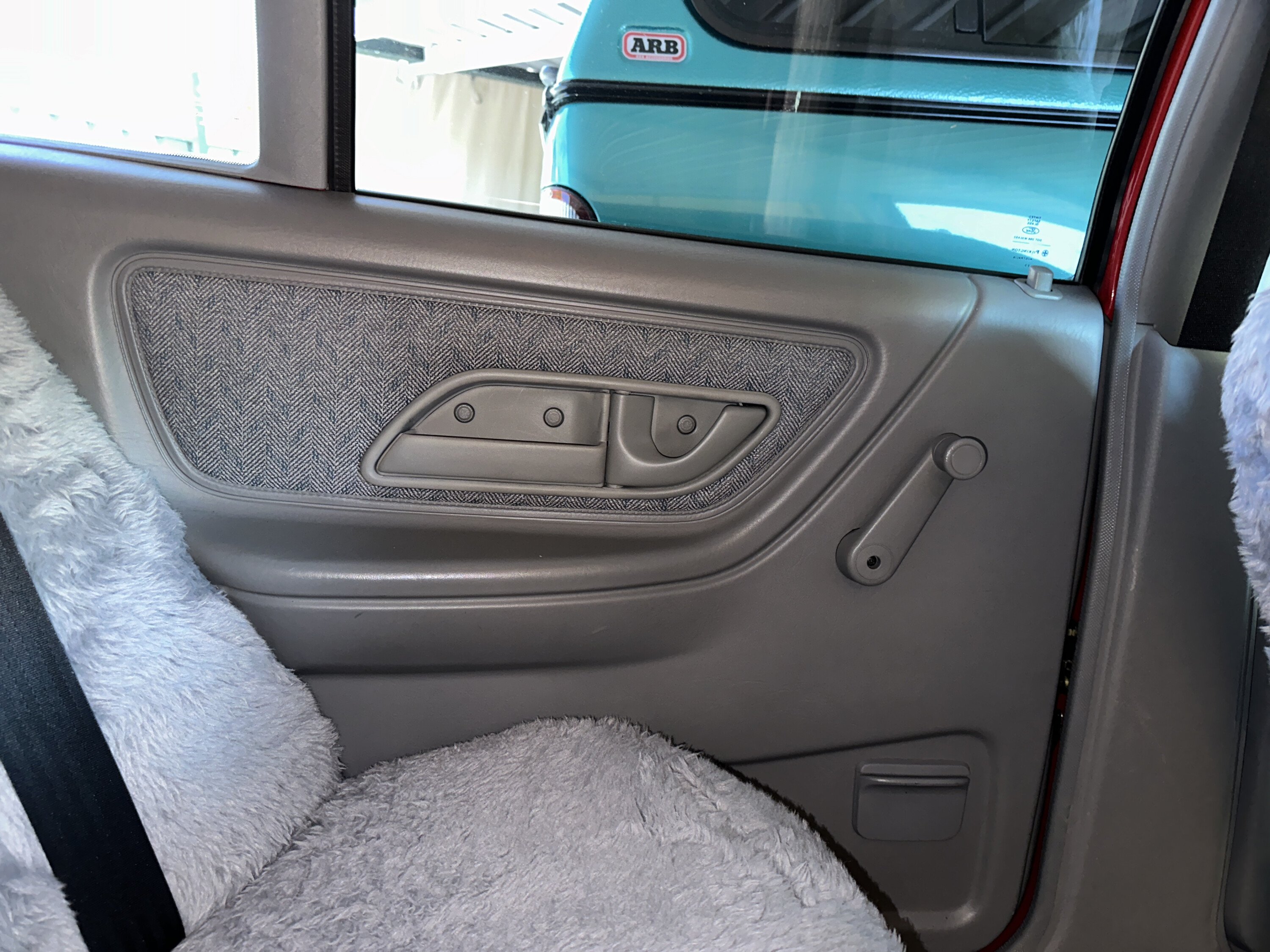
As well as window winders, ashtrays are mounted to the doors (presumably so 90s kids could smoke too). Apart from that, there’s absolutely nothing else back there. Purposeful and dedicated (read: povvo pack).
1
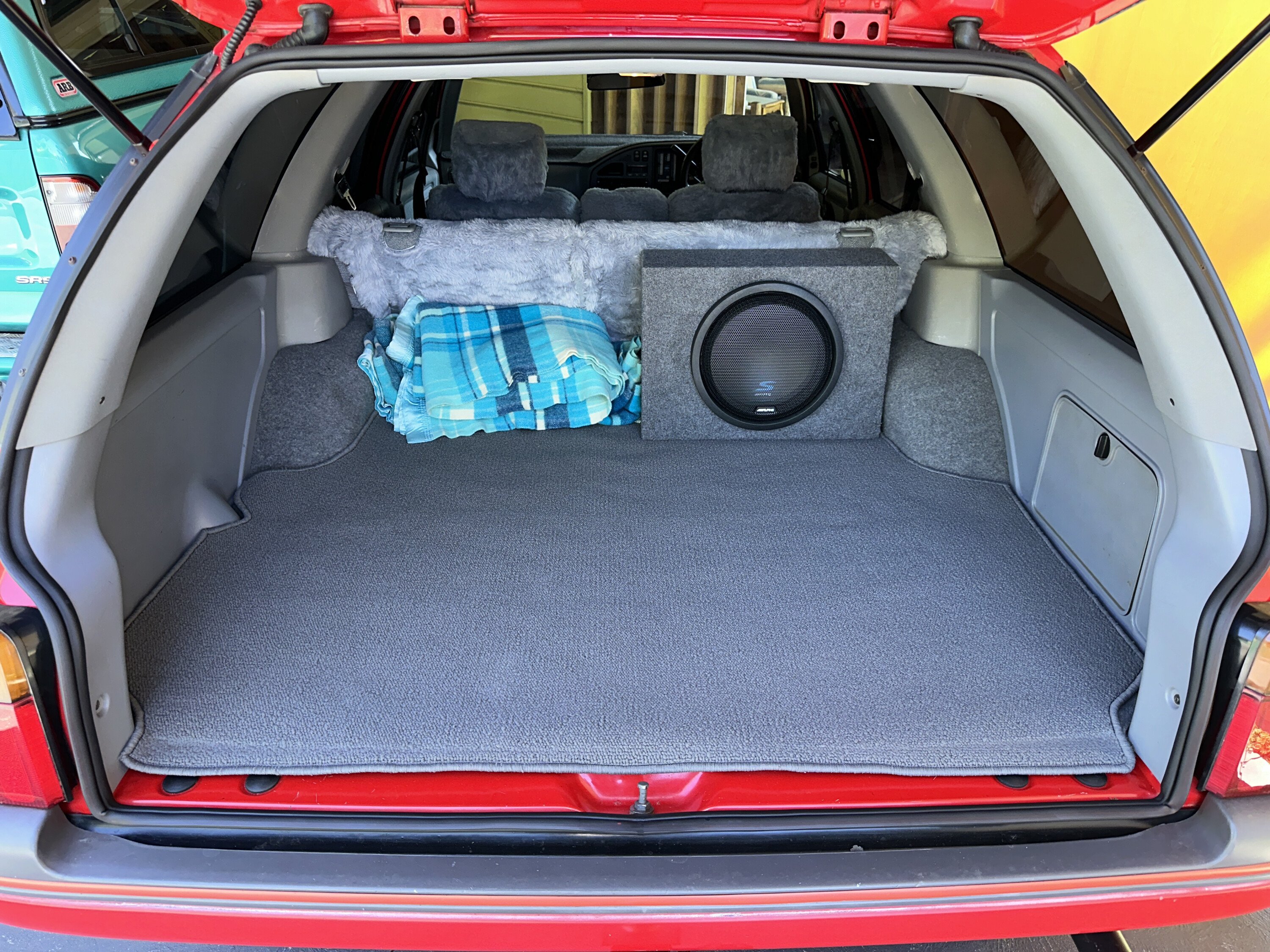
The rear seat backrests have a 60:40 split-folding configuration to yield even more cargo room from an already cavernous cargo area.
Said cargo area has an interior light, a small storage cubby for tools, and a compressed timber floor panel under the carpet, which conceals the 72-litre fuel tank, a handful of spare items and a full-sized spare tyre (try that with your modern car!).
The cargo area has a flat floor, with a wide and low opening aperture, making for a practical classic.
How does it drive?
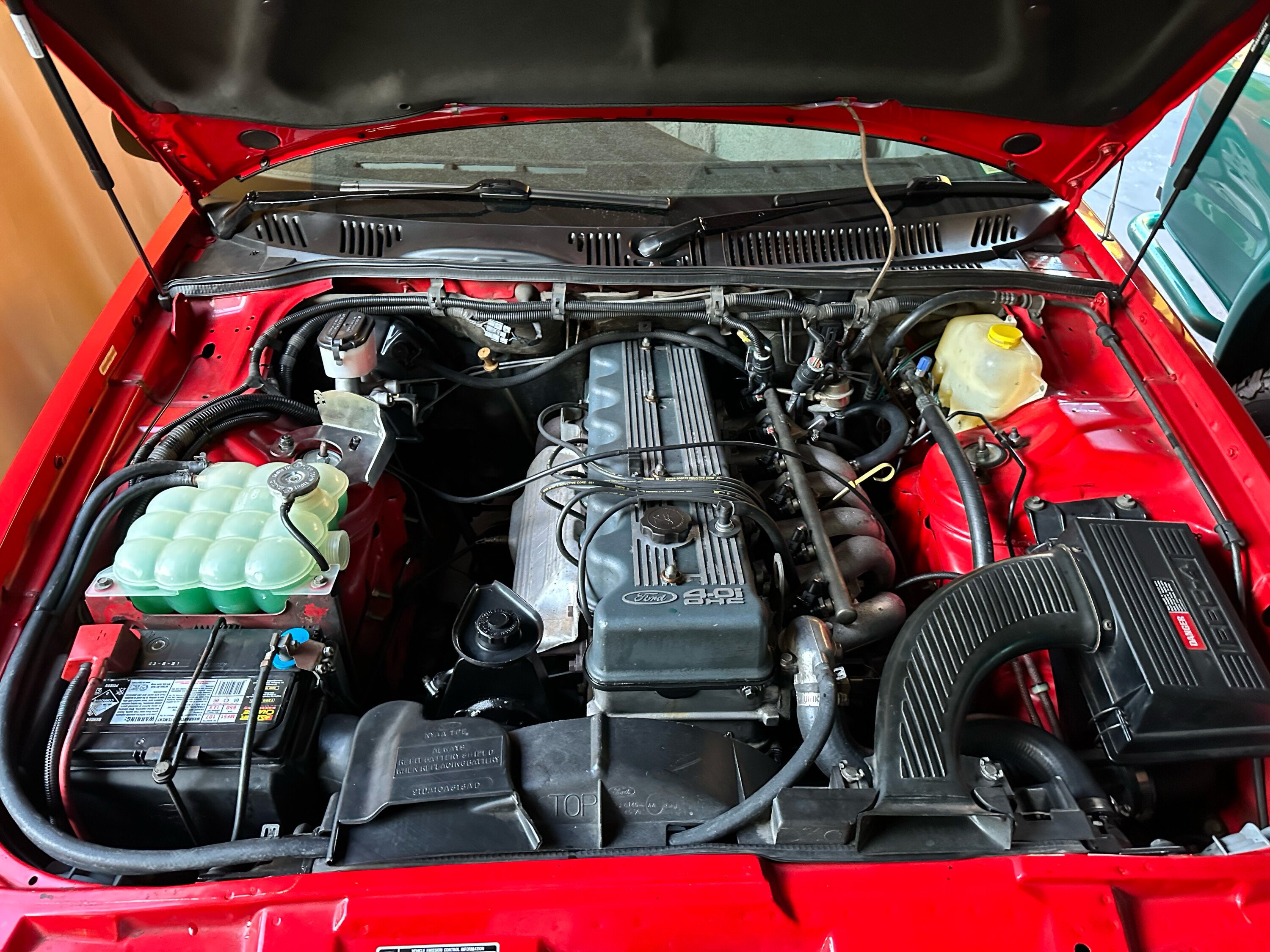
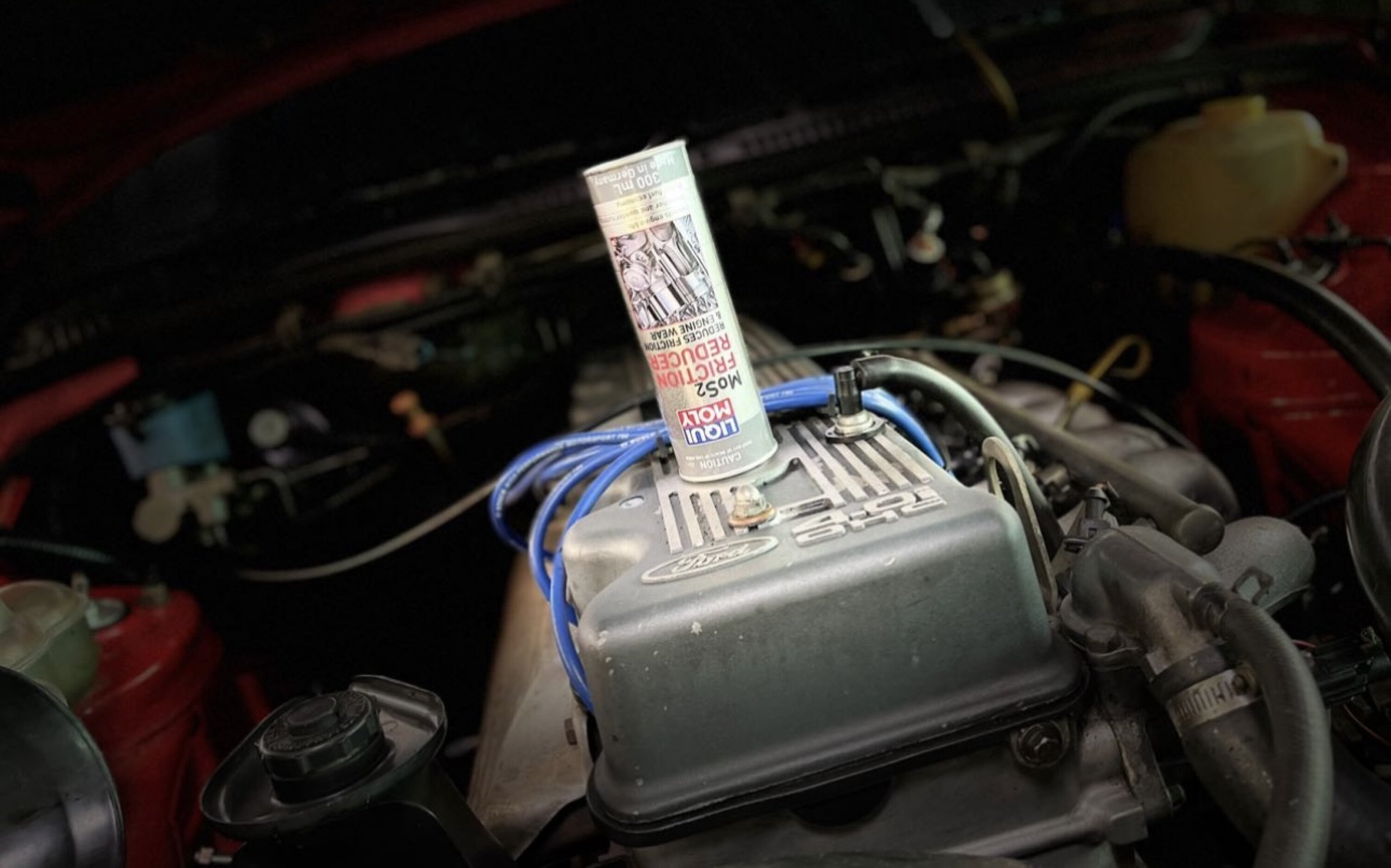
The MPFI 4.0-litre SOHC engine – with however many of the original 148kW and 348Nm left – is a lazy, torquey, low-revving cruiser most of the time but can be strung out to around the 5000rpm range, clutch fan roaring, ready for a red light drag race. Theoretically speaking.
At high revs, the crank feels like it wants to eject from the block, with a definitive angry note emanating from the engine bay. Ford did eventually sort this out with the addition of more main bearings and better balancing in the infamous Intech.
With a four-speed BTR slushbox and its classic first-gear taxi whine, the gears are quite tall in this car, making for a sluggish start off the line but great cruising legs on the highway (within the legal speed limit, of course).
The engine and transmission combo feels industrial and heavy-duty, inspiring a feeling of confidence and heft that is seldom felt in modern drivetrains. Fuel consumption sits around a reasonable 9.0L/100km on the highway, or a thirsty 14L/100km when driven mercilessly. Nowhere near the economy of a new car, but that’s not a surprise.
For something resembling a brick, my Falcon handles surprisingly reasonably, with a firm but comfortable ride. In stock form, however, the suspension felt much like a soggy old mattress and not engaging whatsoever.
1
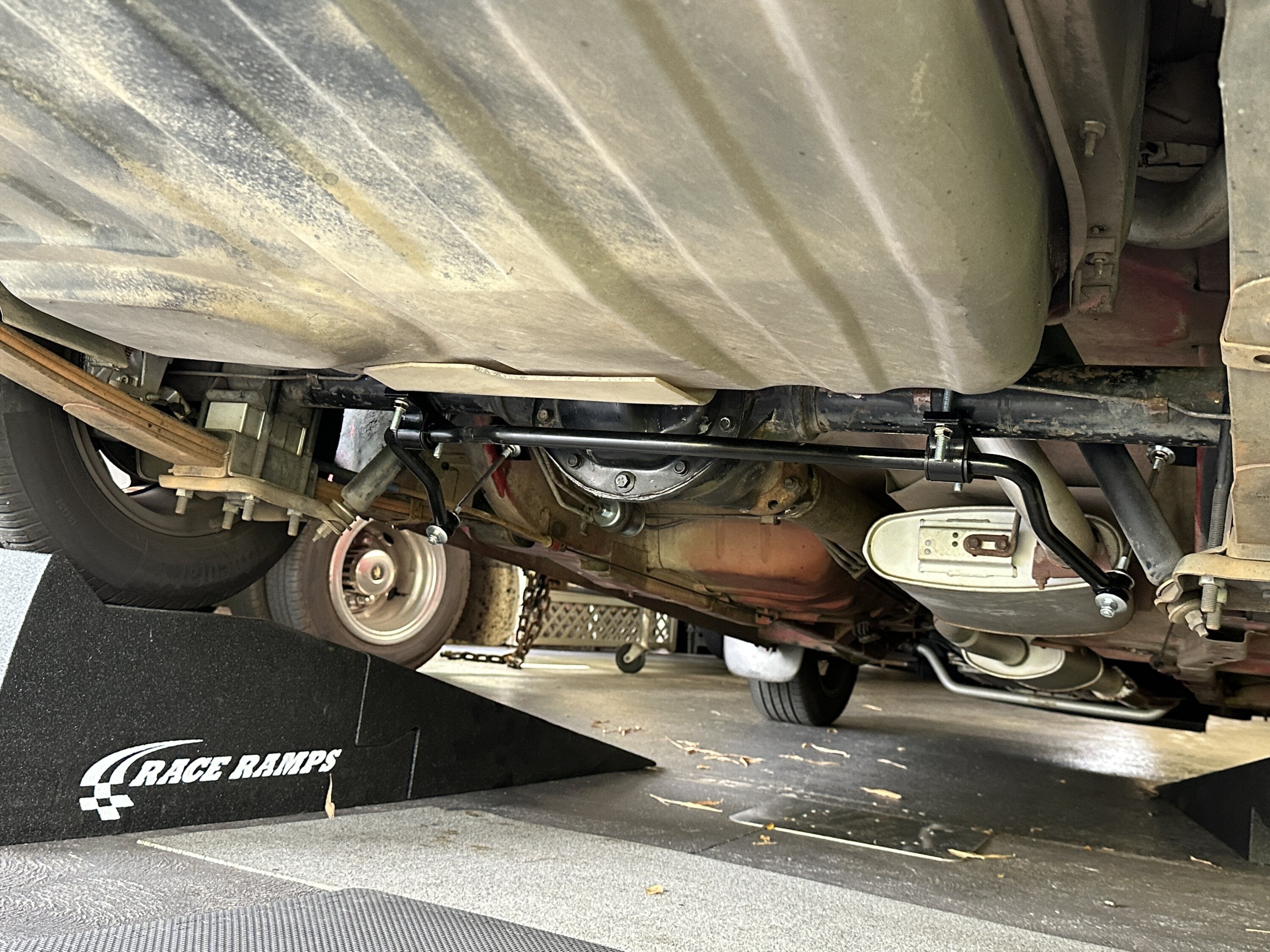
With a front-end alignment, new suspension all round, a larger front sway bar and the addition of a rear sway bar, the live-axle, leaf-sprung commercial rear end became a joy to flick around, especially in the wet.
After the underwhelming original open diff centre experienced sudden and unscheduled disassembly in a local industrial estate (on a late and rainy night, naturally) I fitted an Eaton Truetrac LSD that made a night-and-day difference in terms of predictability and control.
Steering feel through the Kirby-Bishop hydraulic power rack and pinion setup is direct with great feedback and not overly insulated, unlike GM Holden’s offerings at the time.
Although a little front-heavy with the inline six-cylinder lump up front, the SLALS pseudo-double-wishbone front end (inspired by those Euro traitors) still holds up, even in the corners of a particular national park found south of Sydney.
The complete lack of anything resembling ABS or traction control makes for a direct and focused driving experience compared with modern cars.
Surprisingly, even in a torrential downpour, it takes a lot to upset the Falcon’s stability; solid and confident roadholding on 205/65R15s was not what I had initially expected.
The original 195/75R14 cheese-cutters were far less confidence-inspiring, although for a long-wheelbase car of considerable weight (for its time) the Falcon is fairly nimble.
1
Does the growing list of parts and repairs ever end?
Eventually, it does. After sorting out all the essential safety and roadworthy items, and replacing ageing sensors and electrical components (looking at you, TFI module and Loch Ness distributor, buried below the intake manifold) it mostly comes down to cosmetic wear and tear.
It all boils down to one point – accepting imperfection. When a car reaches a certain age some non-essential wear-related items will appear. Even as a chronic perfectionist who is never truly satisfied, I know it’s best to think of these blemishes as part of the car’s history; a tapestry of its life.
Enjoying the vehicle for what it is and using it as it was designed for are the most important things to value and remember. Otherwise, you’ll end up chasing your tail.
In the case of my Falcon, it is a daily driver, to preserve my other cars. One of them has to cop some wear and the wagon takes it in its stride.
The Falcon is a properly sized station wagon, a body shape nearly extinct now.
The cargo capacity is exceptionally cavernous and extremely practical. I’ve driven my elderly German Shepherd around, saved vintage things in council clean-ups, and have used the cargo area to hold many late-night McDonalds “tailgate conferences” with mates, using the open tailgate as a rain shelter. It’s almost like Ford designed the wagon for these purposes…
For its age, the Falcon is pretty easy to live with.
It keeps up relatively well in modern traffic, with enough overtaking power for highway driving. The air-conditioning is freezing cold in summer and the heater is painfully hot in winter.
The Falcon provides an unhindered and unassisted direct driving experience, in a modern-enough car to live with daily.
No reversing camera or sensors needed, just turn your head and look for yourself, out of the generously sized rear glass.
Attention. Lots of people will notice the car and quite a few will share a memory or two.
Particularly entertaining is local highway patrol officers sharing stories of their EB Falcons with me and asking to check out my car. I now receive a wave in traffic from various local police cars, which keeps things interesting!
Collective fun.
My wagon has brought many of my mates together for various missions and drives in my time of ownership, with the freedom to fit five friends comfortably – you can’t do that in an MR2 or MX-5!
E-Series Falcons are fitted with many interchangeable parts, some from American Fords of the era and some from earlier (and later) Australian Fords, which can still be found.
However, many parts are specific to the exact generation of Falcon so with age, rarity and discontinued genuine or quality parts, specific components such as the ignition distributor, central locking actuators, blower motors, air-conditioning compressor and various body and trim components can prove very difficult or impossible to source and are often quite expensive.
Aftermarket support is nowhere near comparable to GM Holden or European cars of the same era.
E-Series Falcons rely on specific service requirements and uncommon fluids, such as MobilFluid 454 for the power steering, which can only be found at a random selection of 7-Eleven servos, or the wind-back rear brake calipers that are often destroyed by unwary owners with g-clamps.
Owning a factory service manual is essential as these cars are as fussy as a BMW or Benz of the same era and any neglect of these requirements will lead to failure down the track.
Old gaskets and seals can also be a pain and require labour-intensive disassembly and reassembly.
There are a few oil leaks that I tolerate due to the immense work involved in rectifying them. I prefer to think of it as active corrosion protection.
In terms of cosmetics – four words. Single stage red paint.
Keeping the Falcon shiny and red is a task, requiring frequent machine polishing and lots of waxing, and there’s lots of real estate to cover.
These points considered, if a breakdown occurs the Falcon can end up off the road for a few weeks while waiting for parts. Unless someone keeps a hoard of spares in their wardrobe like I do.
During my ownership, I have essentially replaced every mechanical component except the bottom end of the engine, with upgrades that will support some forced induction in the future.
It would be quite nice to bolt a sneaky turbo onto the SOHC, keeping the interior and exterior as unassuming as possible. I have no idea when this will happen but it’s a nice pipe dream.
When it comes to good rubber, 205/65R15 tyres are proving increasingly uncommon as time goes on and are mainly designed for smaller modern cars. As such, some BFGoodrich Radials in 225/60R15 size will be fitted next, for some extra roadholding ability (white letters on the inside of course).
Oh, and some Koni Red shock absorbers wouldn’t go astray…
This is, on the face of it, a truly great time to be a car enthusiast
Compiling the list of cars that we’re most looking forward to seeing in 2024 has only served to remind me that not only are we seeing peak internal combustion engine, but we’re seeing technology move apace in other areas.
The Ferrari 296 GTB showed that a hybrid V6 can be better than an atmo V8. The Tesla Cybertruck has demonstrated that 48v electricals and 4680 battery cells are a formidable technical combination.
Hyundai has proved beyond any measure of doubt with its Ioniq 5 N that an electric car can be involving and exciting to drive.
1
New car sales in Australia last year broke all records, recovering from the one-two combo of pandemic and semiconductor shortages.
The cars for sale in 2024 are faster, smarter, cleaner, safer and more packed with features than ever before. I remember goggling at the performance of the Ferrari F40 back in 1987. If you’d have told me that, at some point in my professional life, a cheapish Chinese hatchback could leave Maranello’s finest for dead to 100km/h I’d have thought you’d need sectioning. Yet here we are.
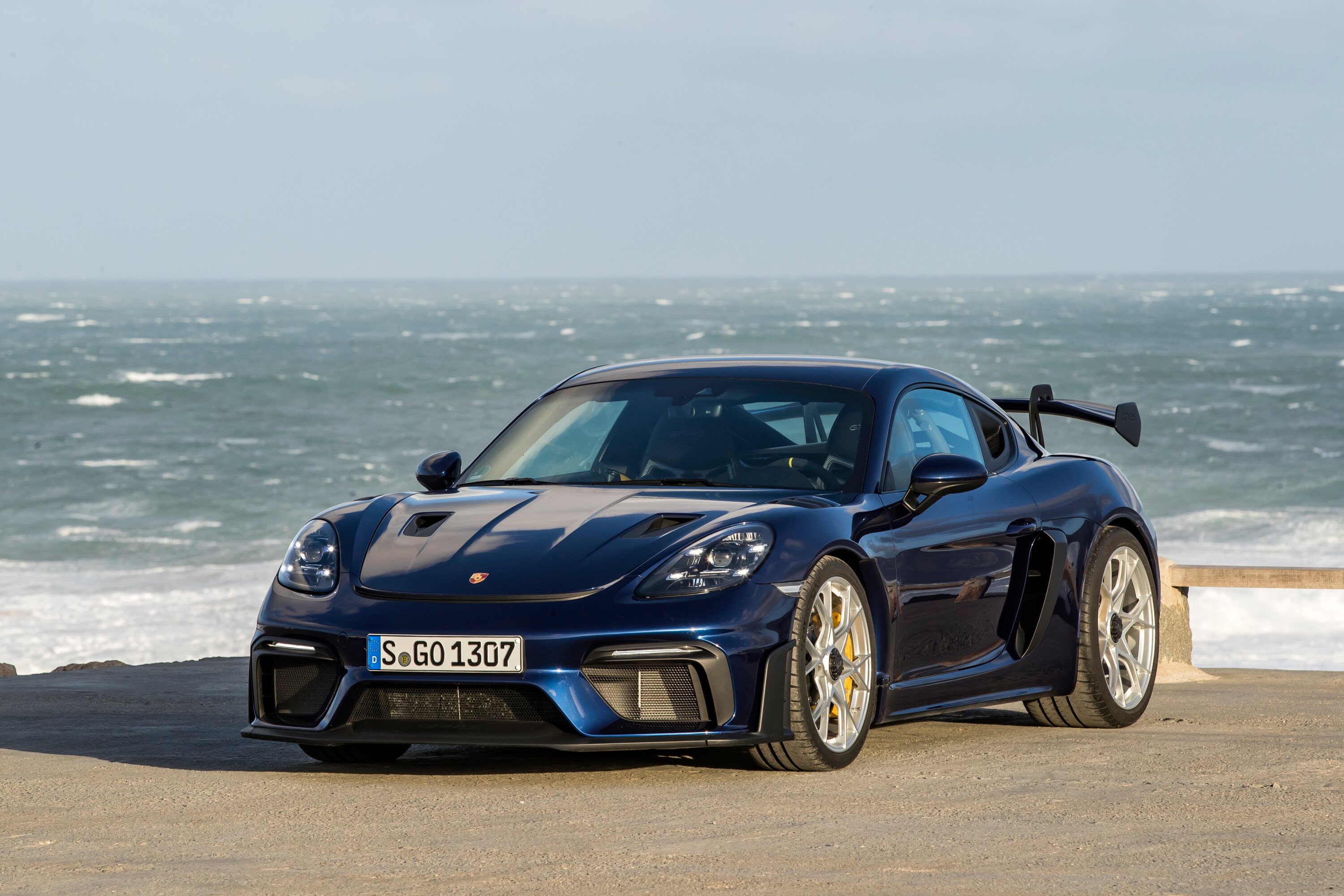
Because the ICE gloves have come off, be in no doubt that some of the cars on sale now will be worth a fortune in a few years’ time. We’ll look back at cars like the Porsche 718 Cayman GT4 RS and wonder why we didn’t squirrel one away in a dehumidified garage and retire on the proceeds.
1
In fact, any of the cars in the sports car comparison in this issue ought to stand their owners in pretty good stead in years to come. They just won’t make them like that any more.
That doesn’t deter some online commenters though, with one visitor to the Wheels site claiming that the EV ‘fad’ had already passed. That ignores the fact that manufacturers like Hyundai, the Stellantis Group, Volvo and Nissan are cutting research and development budgets to zero on passenger vehicle internal combustion engines.
Very soon, there will be no more new engines being unveiled. The payback period on such projects is already becoming too short.
1
Enjoy this brief window while it exists
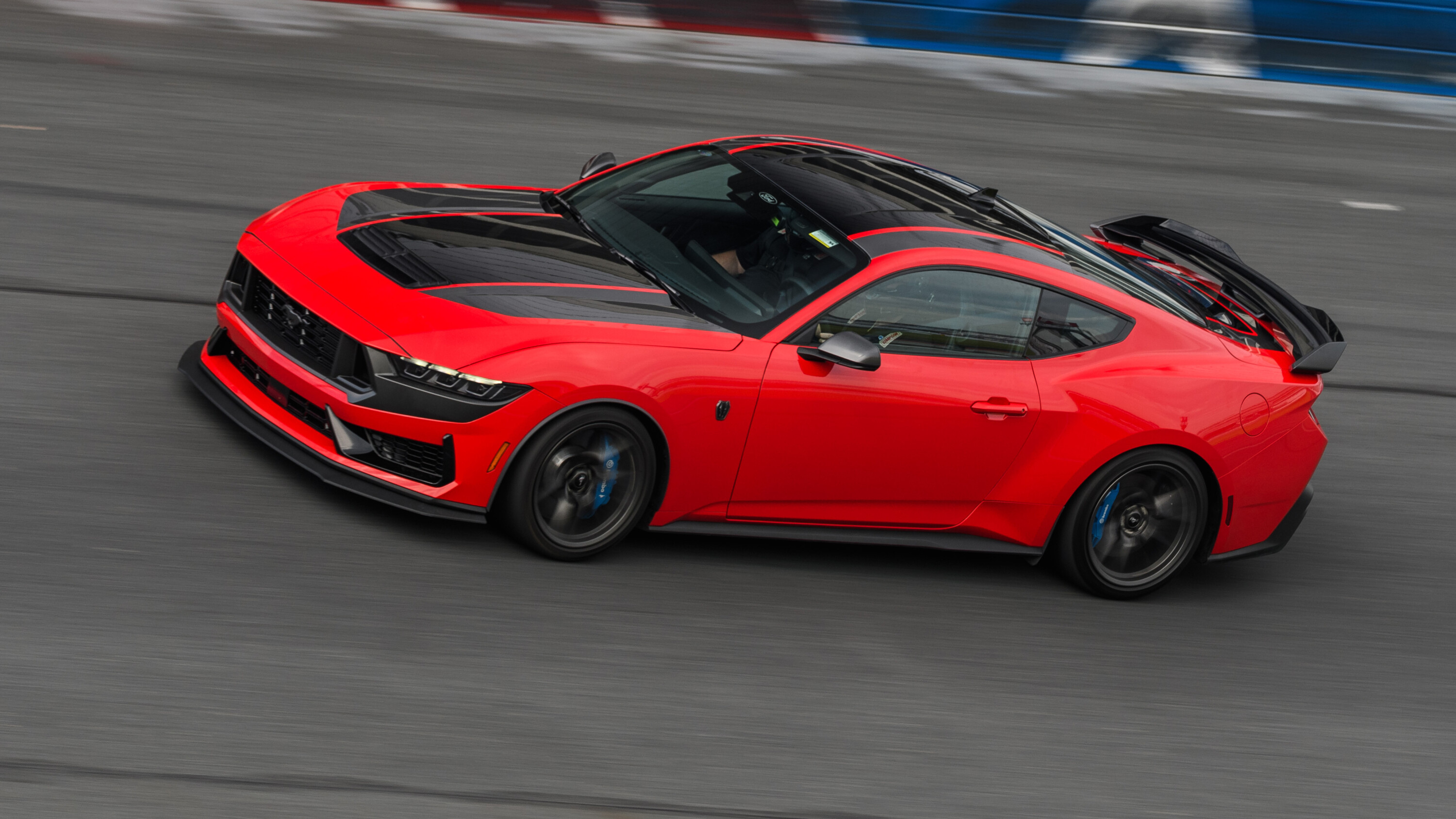
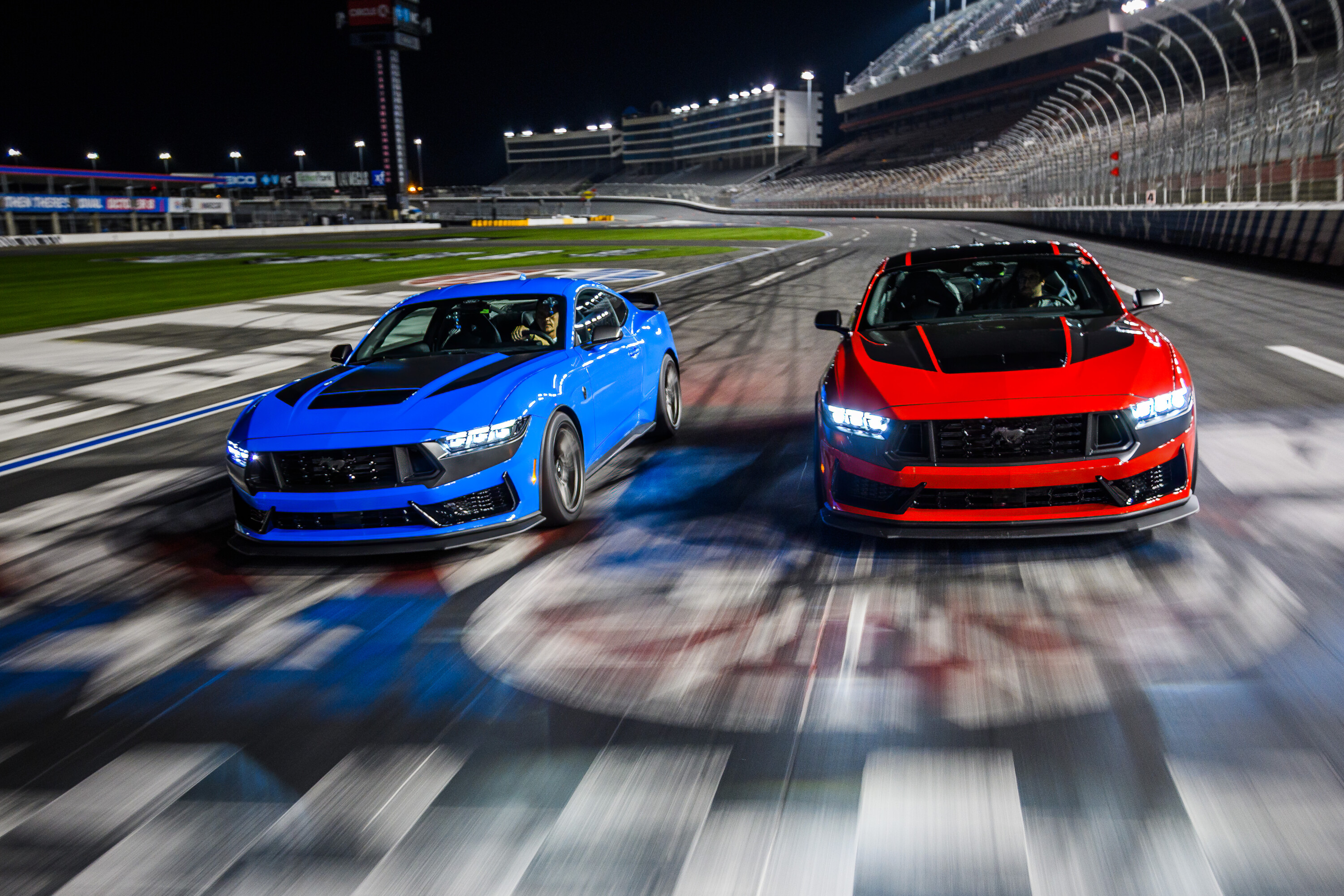
If you’ve always wanted a brand new Ford Mustang V8 with a manual gearbox, go out and treat yourself. You’re not going to have the opportunity for very much longer.
I can’t get bent out of shape in any way about the minimal poofteenth of pollution that this last fling of enthusiast ICE cars will emit from their tailpipes. In the overall scheme of things, it’ll prove little but the most insignificant of rounding errors.
For those of you that are rusted-on petrolheads, we understand if the electric cars to date haven’t done much to get you excited. That will change.
1
Companies like Porsche, Ferrari and Lamborghini will die if it doesn’t and that’s not going to happen.
I was recently speaking to some Porsche engineers who were working on EV projects and asked them whether they miss working on more traditional Porsche cars. Not one of them would go back. They all maintained that we are only just beginning to see the mind-bending things the next generation of all-electric powertrains and chassis are capable of.
So happy New Year to one and all. It could well be a cracker.
If you even knew there was a Car of the 20th Century, you probably thought it was the Ford Model T, as voted in December 1999 by the Global Automotive Elections Foundation.
The same august (if unheard of, before or since) body also named Giorgio Giugiaro as Designer of the Century – so, you know, no beef there.
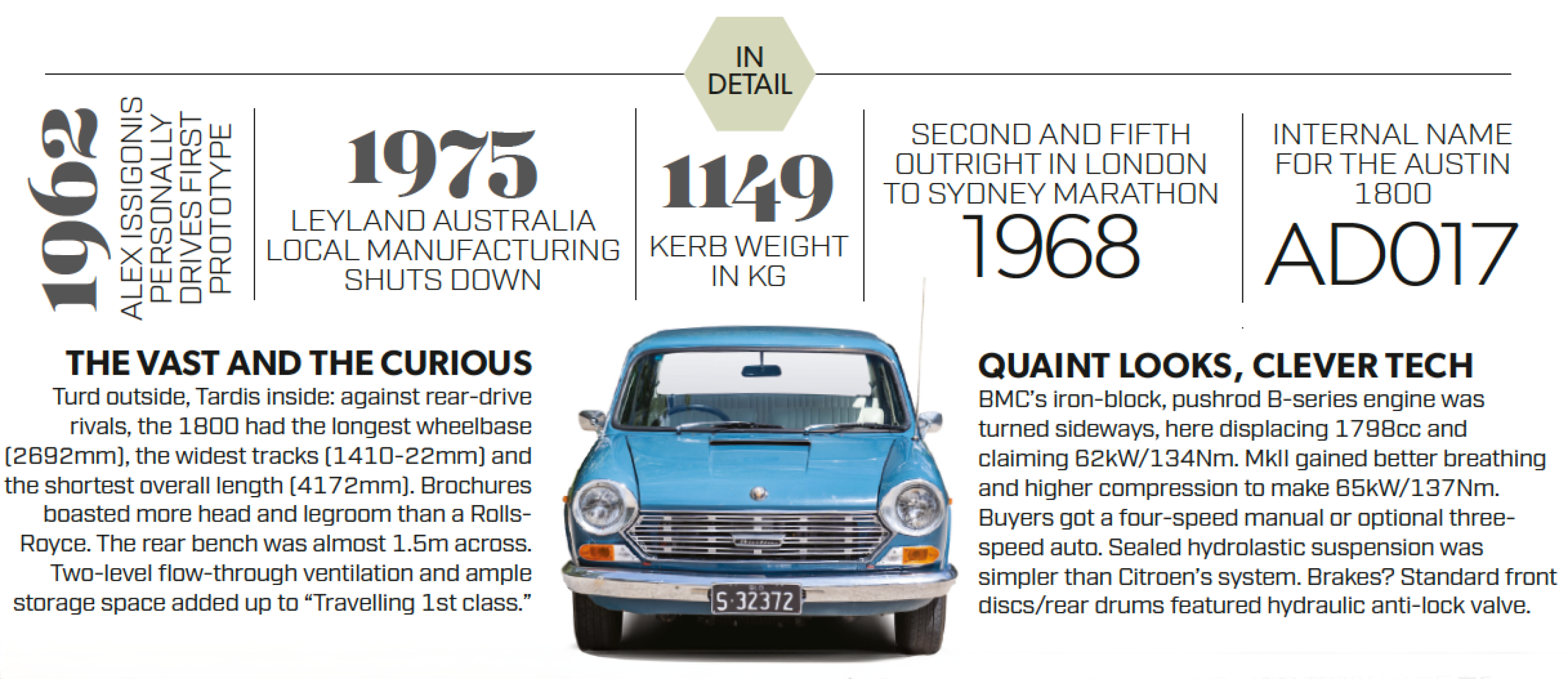
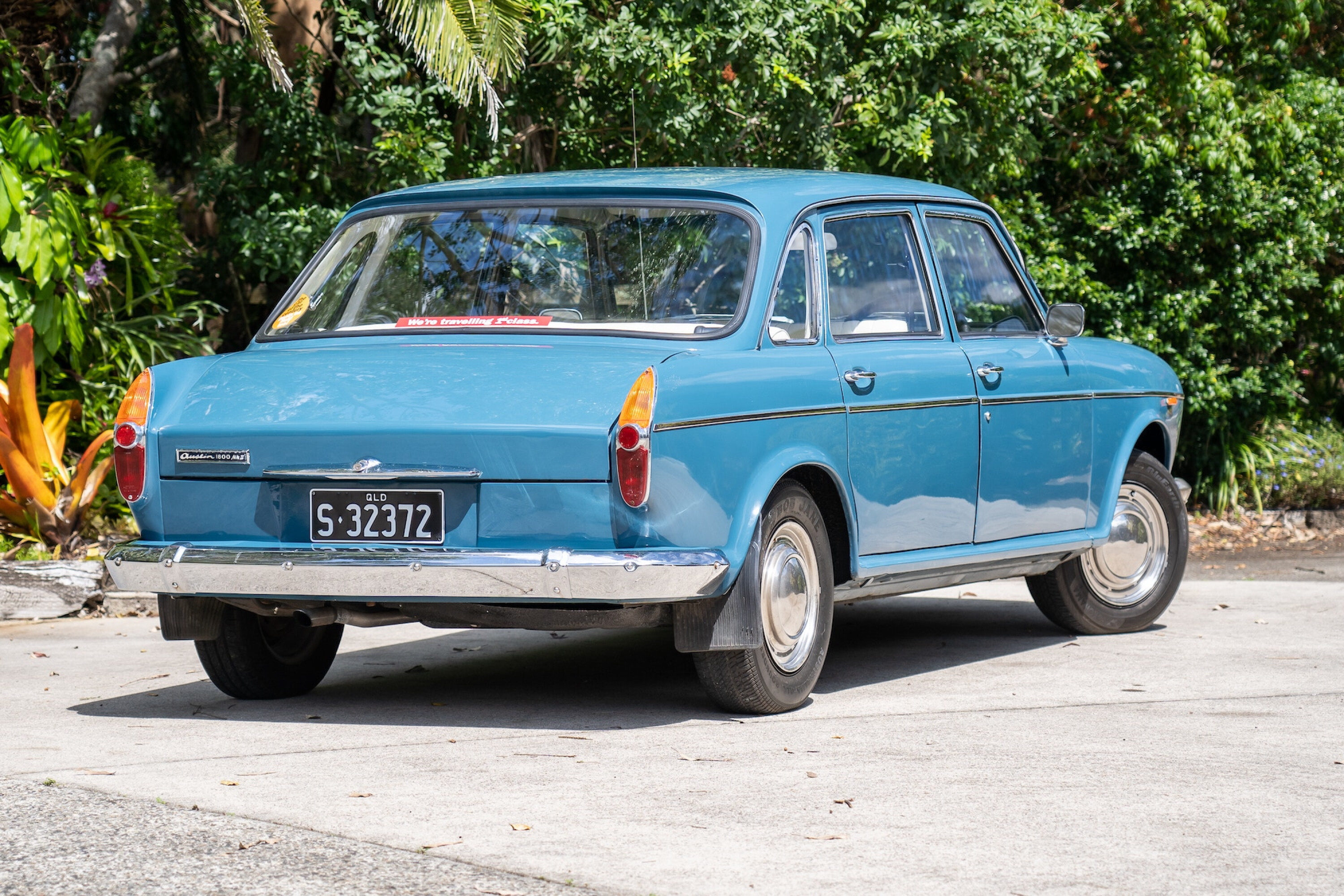
What you may not have known was that the Car of the Century had already been proclaimed a full 35 years before, by the company that built it. To this accolade was launched, on 20 November 1965 in Sydney, the Austin 1800.
To give it due, just six years after the revolution of its sibling Mini, the 1800 was a space-efficient stand-out against a class of cart-sprung and drum-braked rivals – Holden HD, Ford Falcon XP and Chrysler Valiant AP6. It would have an echo 20 years later in Mitsubishi’s Magna.
1
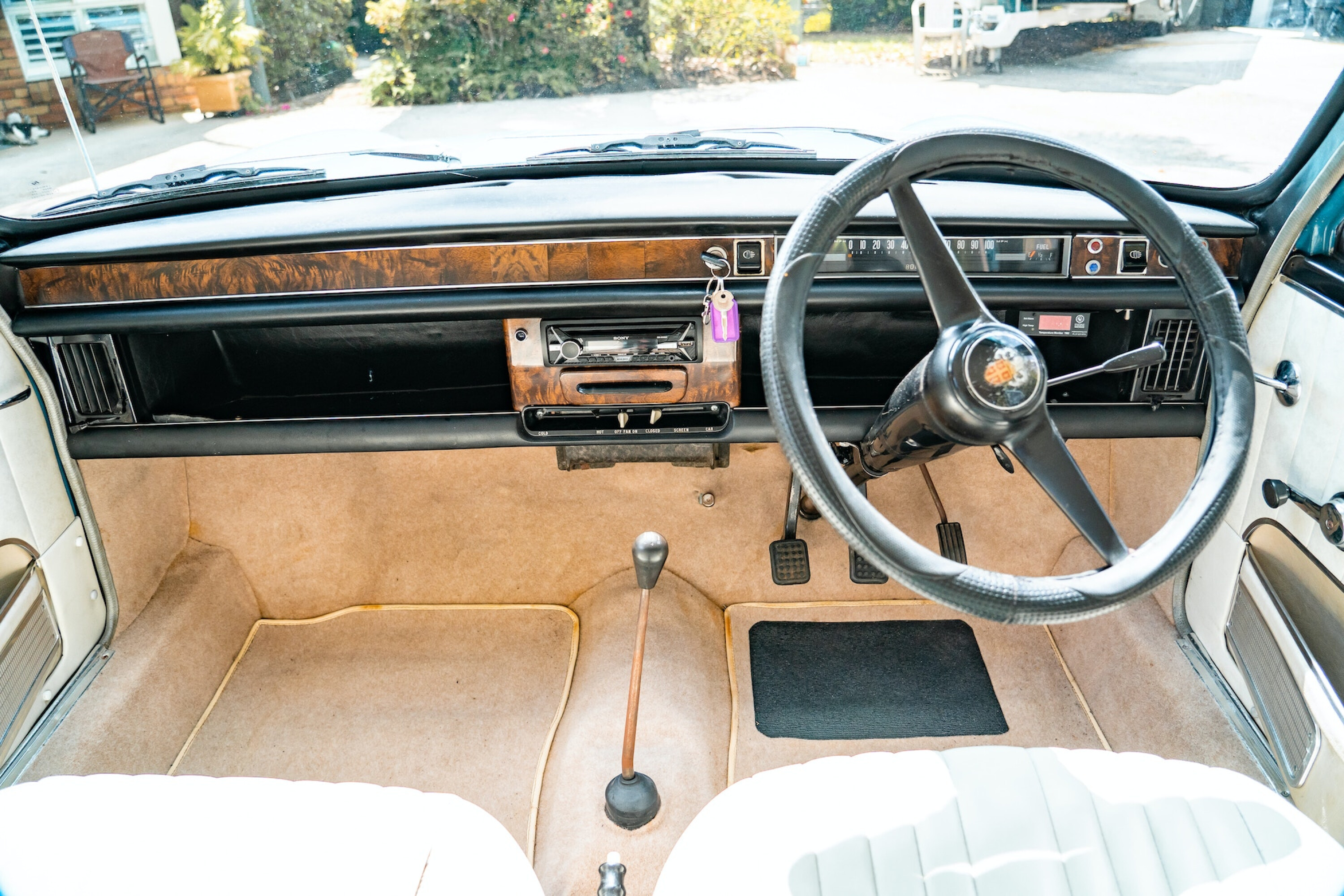
The 1800’s CV included design by Mini creator Alec Issigonis, styling by Pininfarina and space-saving hydraulic suspension.
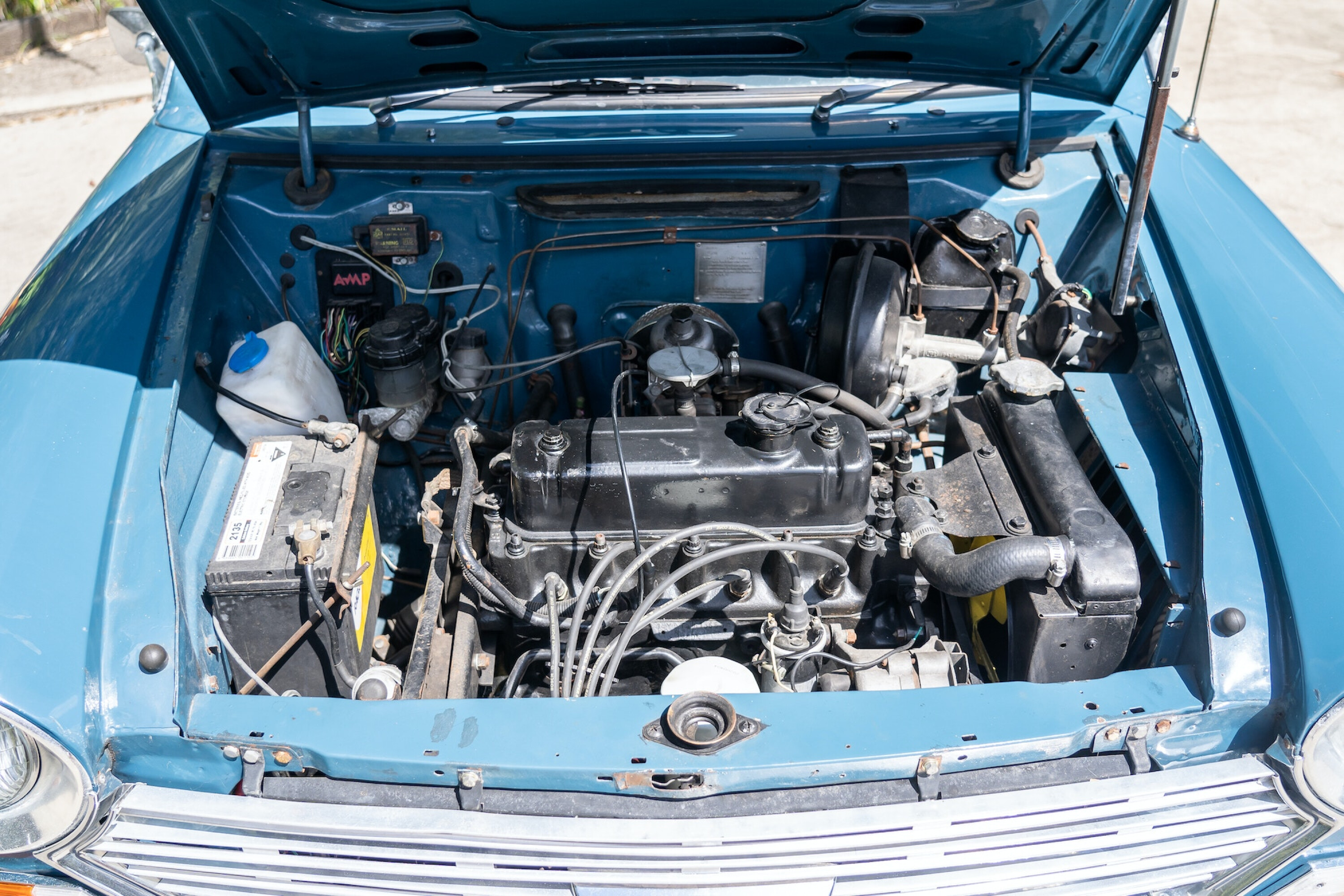
The B-series engine, while here mounted transversely and driving the front wheels, was essentially that from the MGB sports car.
The transverse drivetrain and wheel-at-each-corner stance translated to 70 percent of the car’s overall length being devoted to passenger or luggage space.
Launched in the UK in 1964, the 1800 had a year of testing in Australia prior to local production at Zetland. Modifications included stronger engine mounts, deeper seat padding, fully reclining backrests, standard seatbelts, a quicker steering ratio, refined throttle and gearshift cabling, and improved dust sealing and underbody protection.
1
Its nickname of “land crab” described not just the car’s hunched stance, but its tough bodyshell and class-leading grip, handling and ‘front disc’ braking.
These all contributed to a high profile in endurance rallying, and gained the 1800 a dedicated minority following – including for the rare (fewer than 5000 built) local ute. At its peak, Australia accounted for 40 percent of the 1800’s global sales.
Around 60,000 Aussie sedans and utes were built, in Mk1 and (from 1968) MkII guises, before replacement in 1970 by the even quirkier X6 Tasman and Kimberley – the latter with a 2.2-litre in-line six across its nose.
The new year is well underway, and the used car market still maintains its steady pace – so here’s a few auctions at Grays that have caught our eye this week.
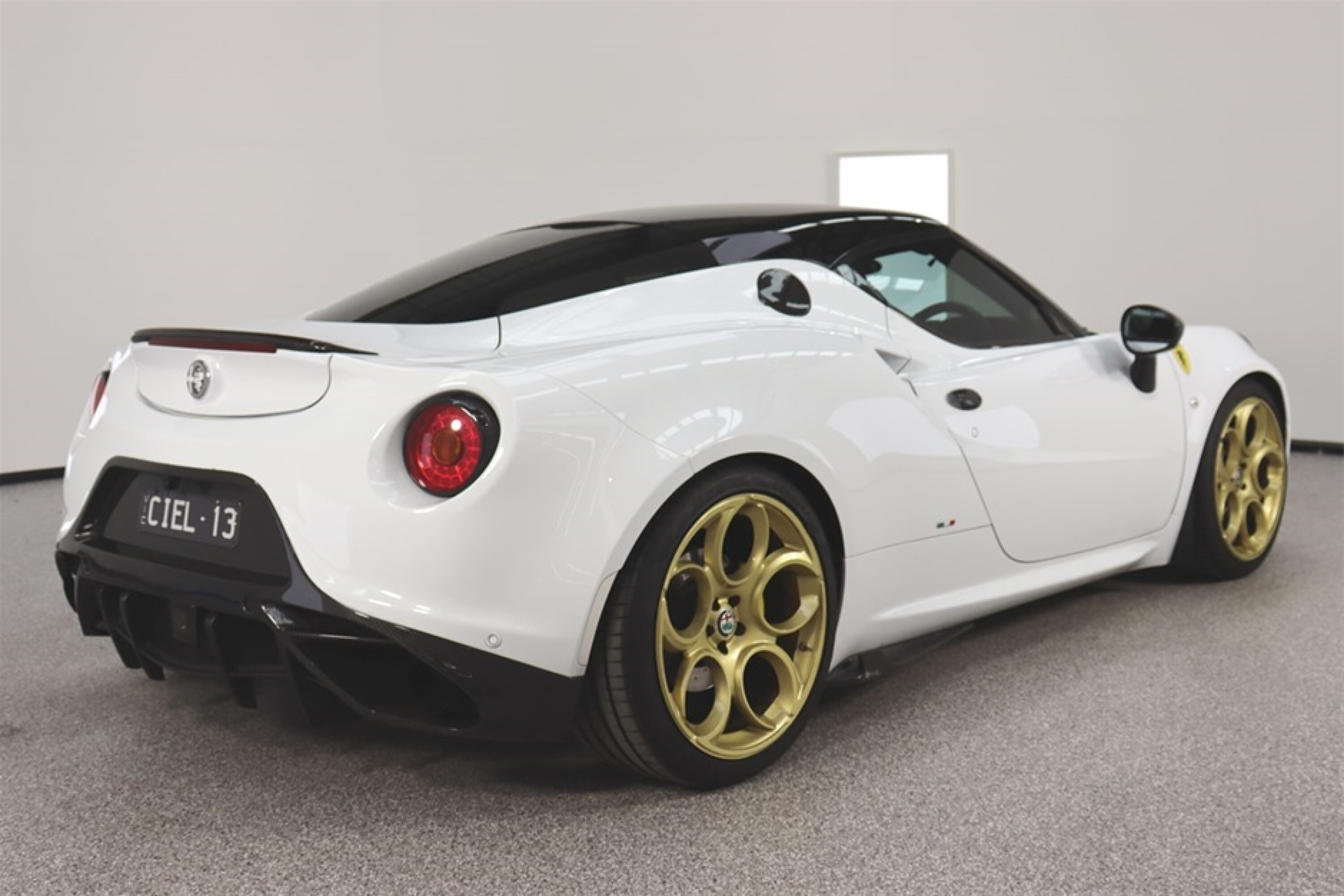
Alfa Romeo 4C
First up is an example of Alfa Romeo’s brilliant little 4C coupe, which looks quite appealing in the white with gold rims.