
Subaru says: “For certain models, we continue to offer a range of classic non-metallic, pearl, and silica paint choices. These encompass Ignition Red for BRZ and WRX, Ceramic White for WRX, and Pure Red and Oasis Blue for Impreza/Crosstrek. A diverse selection of paint colours, combined with no extra charge for metallic-paint finish, allows our customers to select the paint that aligns perfectly with their preferences.”
The most hotly contested segment in the country has a familiar winner but with reduced margins as new players enter the fray.
The Medium SUV segment saw an increase of 24.3 per cent in 2023 to outperform the overall Australian new-car market’s 12.5 per cent gain, with 268,480 Medium SUVs sold last year.
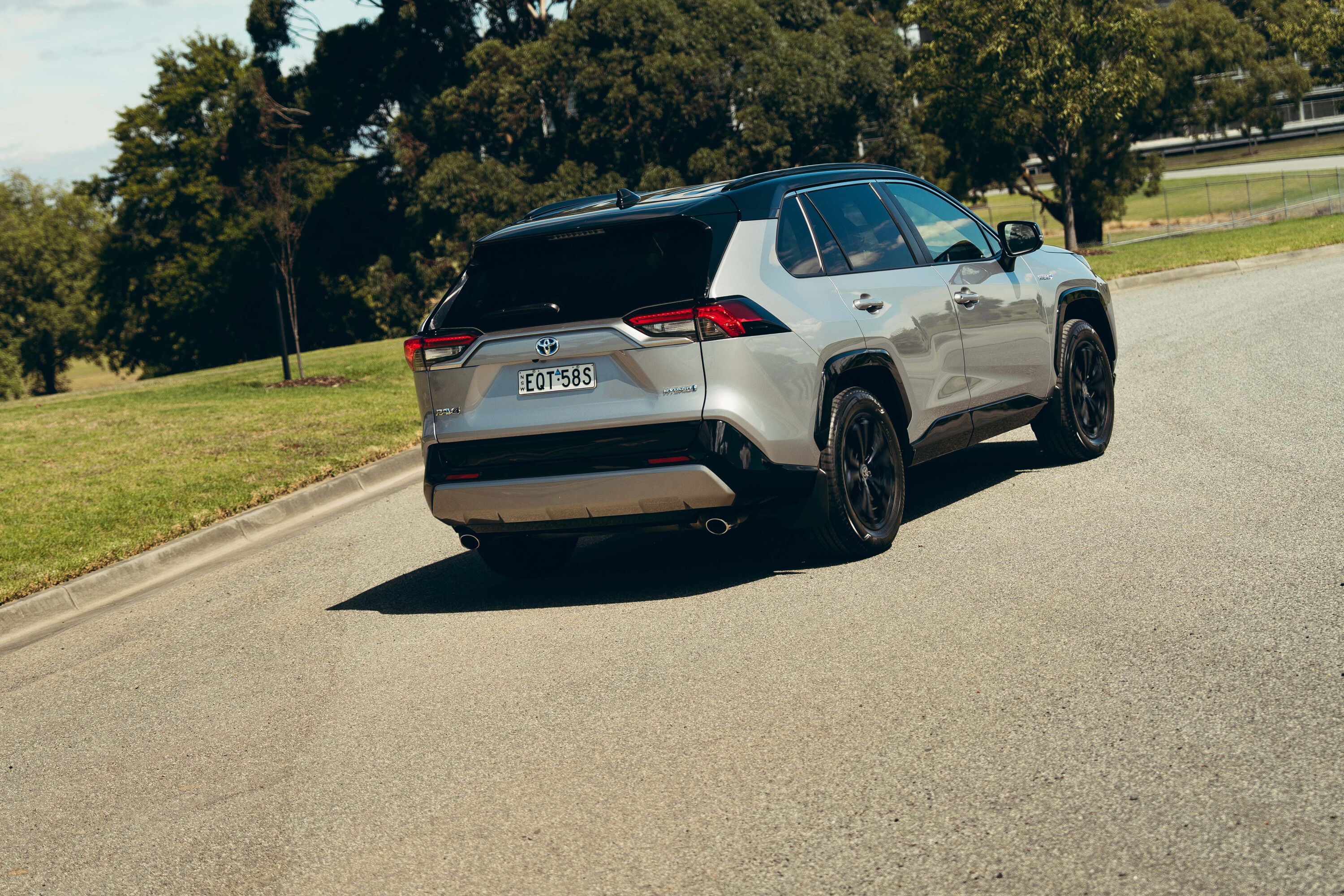
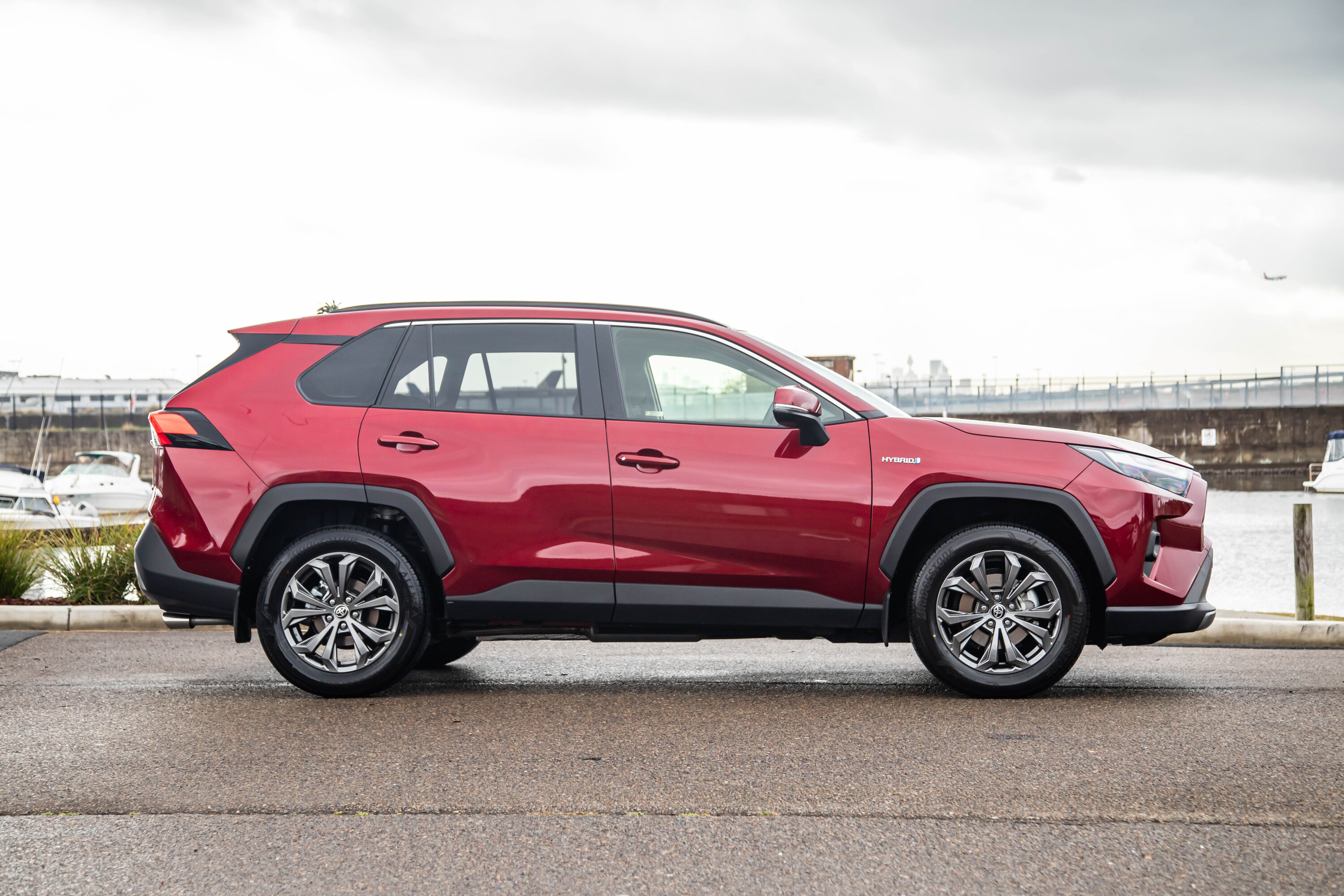
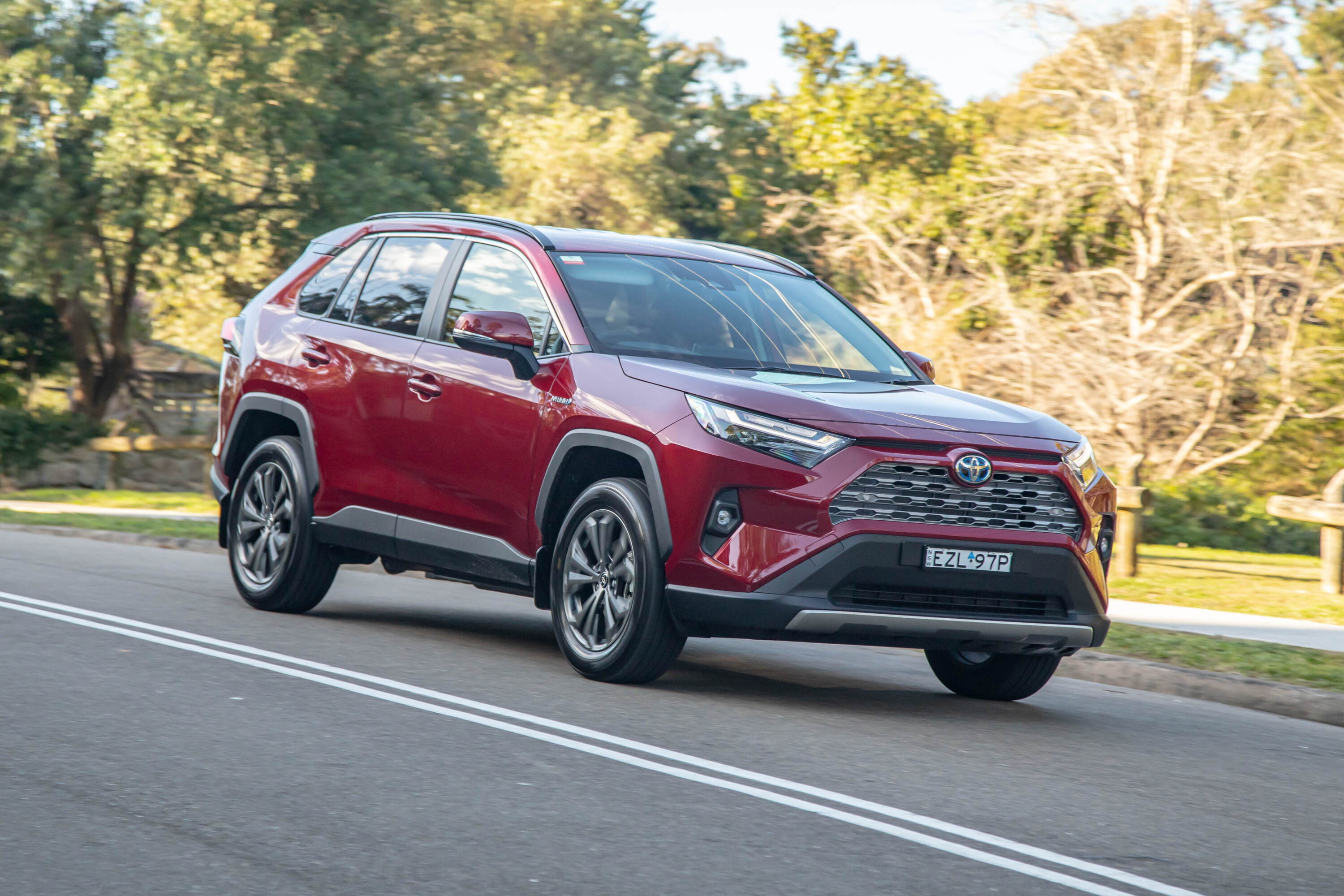
The Toyota RAV4 was the best-selling Medium SUV for the fourth straight year, ahead of the Mitsubishi Outlander and Mazda CX-5 – but all only the Outlander managed to improve its volume over the previous year.
1
SUV sales were up across all segments in record-setting 2023, but the RAV4’s 29,627 sales were well short of its 34,845 figure from 2022.
While a lower sales number, it was still easily more than Outlander’s 24,263 despite the Mitsubishi being the newest model of the top trio, introduced in 2021, and the only one of the three to increase its sale number.
The RAV4 wasn’t the sales leader all year, either, with the CX-5 leading the segment in January, the Outlander slipping into second by March, both ahead of the Toyota.
The RAV4 jumped in front of both rivals to lead the CX-5 by only 100 units at the end of April, the Toyota the only model in the segment to crack 10,000 year-to-date in May.
1
It remained at the top of the tree for the rest of 2023.
It’s another impressive feat for Toyota – which continues to be the best-selling car brand in Australia by a substantial margin – given the supply issues that created long waiting lists for RAV4 and undoubtedly sent buyers unwilling to wait to rival manufacturer’s showrooms.
Toyota has also loaded significant price rises onto the RAV4 as a result of stock shortages, but the SUVs popularity remains solid with its ongoing success boding well for 2024 with a new RAV4 due in Australian showrooms.
The Mitsubishi Outlander’s sales grew substantially, outselling its 19,546 2022 result by 24.1 per cent while RAV4 and CX-5’s sales declined 14.7 and 15.0 per cent respectively.
1
The Outlander’s 2023 effort saw a close battle with the Mazda CX-5, which it overtook in July and slowly crept ahead of to stretch to finish 1180 units ahead of the Mazda by the end of the year.
The Mazda CX-5 was a former best seller, having been the sales leader in 2019, yet its sales performance remains strong after annual updates to the current generation that has been on sale since 2017, the same year the RAV4 debuted.
The CX-5 started the year ahead of RAV4 – topping the segment in January 2023 – but minor updates couldn’t keep it ahead of the Toyota and Mitsubishi as RAV4 stock arrived here.
Missing the podium by a slim margin was the Hyundai Tucson with 21,224 sold, its freshly updated range to be bolstered in mid-2024 with the arrival of a hybrid model to help it tackle the dominant RAV4 which has seen hybrid models the strongest sellers.
1
The Subaru Forester was fifth (16,381) ahead of the Kia Sportage (15,747), but the biggest mover in the field was the BYD Atto 3 with 11,042 sold – the seventh best and final Medium SUV to sell more than 10,000 units in 2023.
The Atto 3 started the year with only 267 sales in January – versus RAV4’s 1958 that month – but took a 5.4 per cent share of the segment for the year as the best-performing Chinese brand in the segment, ahead of MG.
That also makes the Atto 3 the best-selling electric Medium SUV in 2023.
1
The Atto 3’s formidable performance helped reduce RAV4’s 2022 leadership share from 19.6 per cent to 14.6 per cent.
That continues was downward trend for the segment leader as competition increases, with RAV4’s 2021 share 23.6 percent, having been 25.1 per cent in 2020.
The largest declines in the segment were recorded by the Citroen C5 Aircross, which saw sales fall from 64 to 41 for a 35.9 per cent decline, while the MG HS declined 25.8 per cent.
MORE
Everything Toyota
MORE
Midsize SUVs
Toyota Australia predicts the Australian new-car market will contract in 2024 as it returns to “pre-COVID normal” – but the Japanese brand expects to sell more cars than it did last year.
Toyota Australia vice president for sales, marketing and franchise operations Sean Hanley said the brand anticipates the automotive industry will deliver around 1.05 to 1.1 million vehicles this year, down from the record-breaking 1.2 million cars sold in 2023.
“That’s down on 2023 results of over 1.2 million market, but it’s still an incredibly strong result. It wasn’t that many years ago in Australia that if we did over a million, we thought it was incredibly strong. We’re still over a million, so things are still going to be great,” said Hanley.
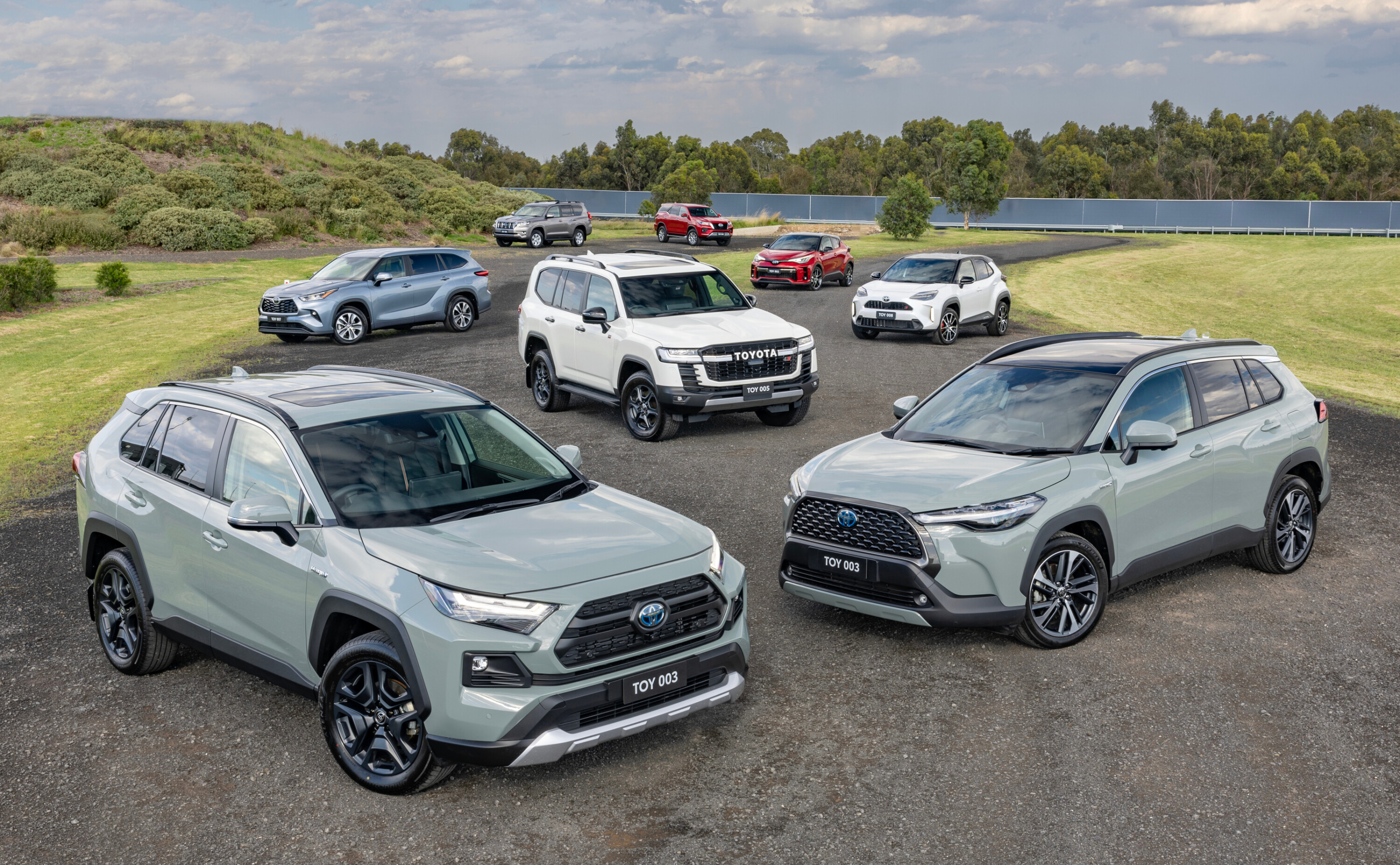
In 2023, Toyota retained its position as Australia’s top-selling brand for the 21st year straight, with 215,240 vehicles delivered to customers – marking the 19th time in the past 20 years that its sales have exceeded 200,000.
This result was more than double that of second-place Mazda, which sold 100,008 vehicles.
“When we reflect on 2023, it certainly for Toyota was a year of two halves. In the first half, we sold just 92,250 vehicles to the very supply production restricted period. But when you look at the second half of the year, it changed dramatically. We sold a record 123,005 vehicles,” said Hanley.
Hanley said the record second-half result was due to “greatly improved” supply and the health of Toyota’s order bank, which enabled it to reduce customer wait times.
1
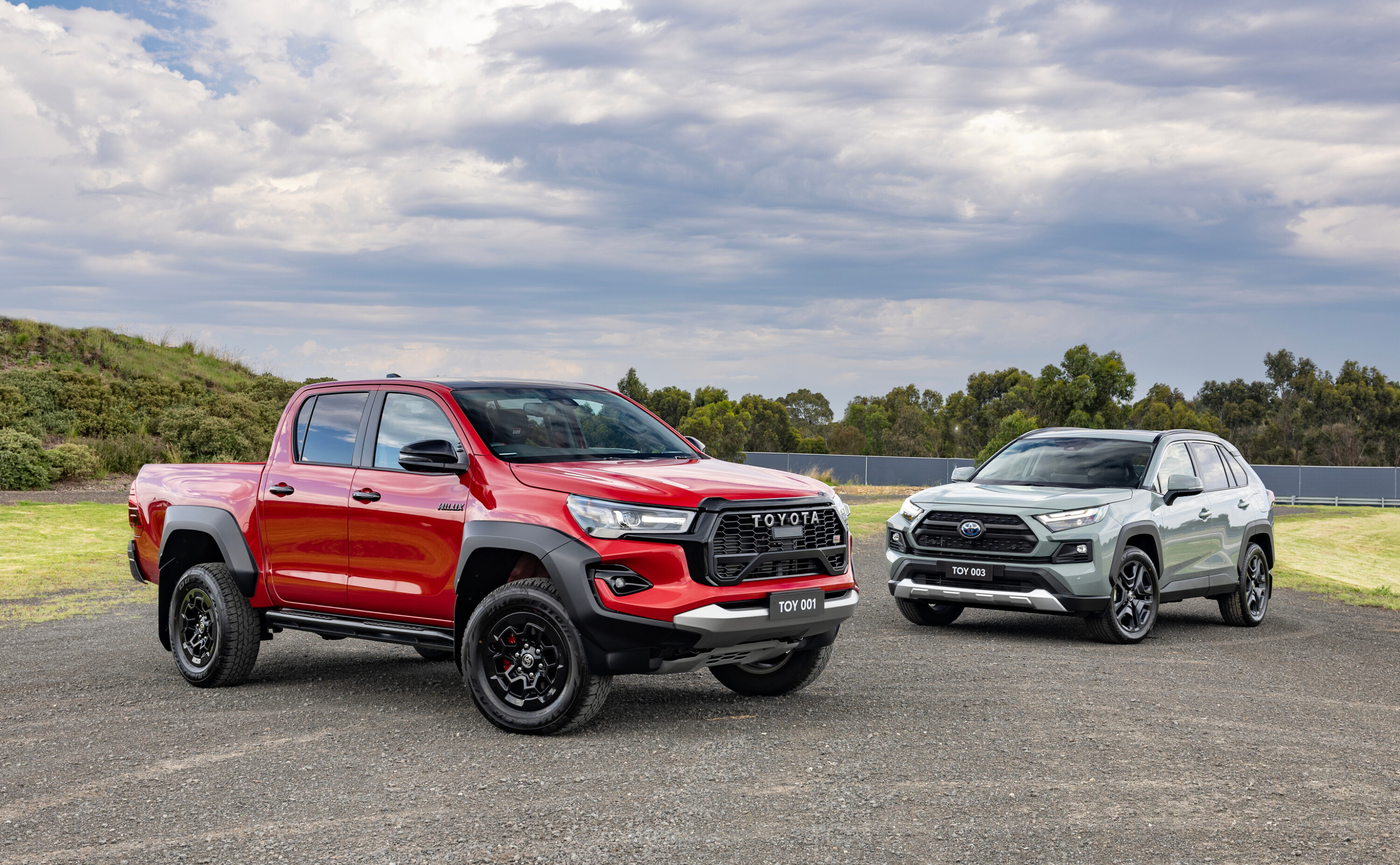
“Our Toyota forecast for the new year is our supply is strong, our demand is strong, our order banks healthy, particularly in the first quarter, we have strong supply of RAV4 Hybrid, and as a result, we expect to increase our sales volume in 2024,” said Hanley.
“This will see our market share also increase and we still aspire to get to that 20 per cent market share in 2024, all going to plan.”
While Toyota forecasts increased deliveries in 2024 compared to 2023, it is unlikely to beat its all-time sales record of 238,938 vehicles set in 2008.
In 2022, Toyota sold 231,050 vehicles in Australia – its third-highest result ever.
1
“I don’t think the market will be there to support an all-time sales record to be honest. I think that boat sailed in 2023. I think if we had the supply capability maybe in 2022-23 that could have happened because the market conditions were right,” said Hanley.
“Unfortunately, the supply versus the demand didn’t line up for Toyota, so I don’t think that we have the capability to do an all-time record in 2024, but we’ll certainly have better growth in 2024 than what we saw in 2023. I think it’d be very healthy.”
A neck-and-neck race throughout 2023 between the Ranger and HiLux saw the Ford take the gold medal following strong sales in December – and the competition between the two utes is expected to remain fierce in 2024.
Despite losing its top-seller status, the HiLux remains successful around the country, selling over 60,000 units, and has been the top seller in the Northern Territory for the past 23 years, in Queensland for 17 years, in Western Australia for 16 years, and in South Australia for three years.
When asked if the HiLux could bounce back to become the number-one seller again in 2024, Hanley said that would be up to the market to decide.
“We’ll certainly be working hard and having a good go with HiLux,” he said.
“Sixty-thousand sales is still good for HiLux. It’s still an incredibly big part of our product line-up. We’ll keep developing it, we’ll keep enhancing it. Ultimately, the market will decide that.
“We’ll always be out there having a go and offering the best we can to the market. I still believe that HiLux 4×4 is by far the best off-road capable vehicle in the Australian market, but that’s a matter of opinion from a Toyota guy.”
Toyota Australia will launch several new vehicles this year, including the BZ4x electric SUV in February, the C-HR in March, the LandCruiser Prado in May or June, an updated HiLux with a 48-volt assist system in the first half, and the Camry in the second half.
The brand said it expects some supply challenges in switching to all-hybrid powertrains for the C-HR and Camry, with the first priority being to supply vehicles to customers already on the waiting list.
This includes the in-demand RAV4 Hybrid mid-size SUV, which should have its wait time halved from 12 to six months by mid-2024.
MORE
Everything Toyota
Isuzu Ute, Lexus and MG are among brands to set sales records in Australia as both emerging brands and established players shake up the market, most notably Chinese and electric car makers.
A record-setting 2023 saw more new vehicles sold in Australia than ever, but with more brands hitting local showrooms record sales for car makers are becoming more difficult to come by.
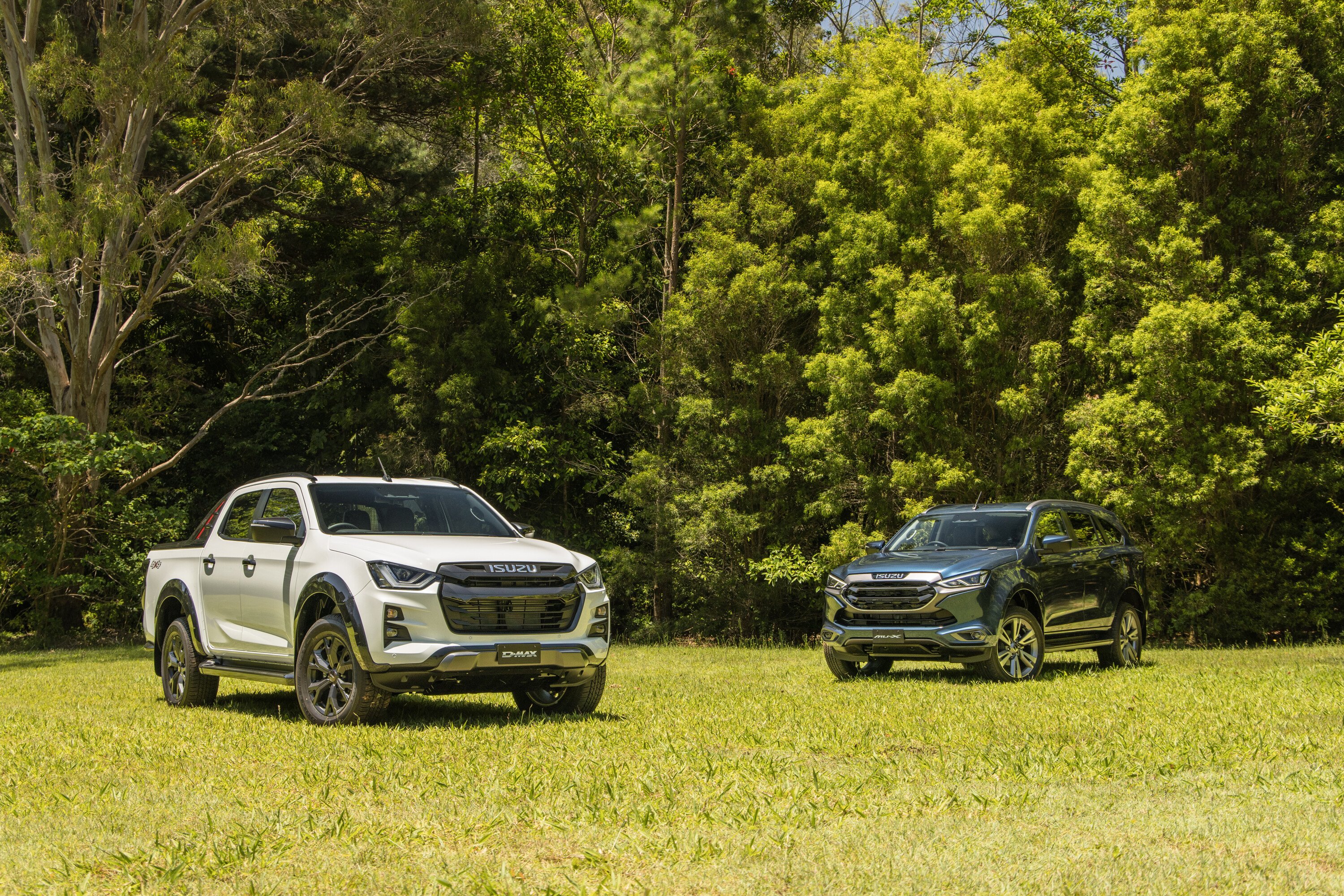
The Isuzu D-Max followed home the Ford Ranger – which took the best-selling spot for the first time – and the Toyota HiLux as the third most popular ute.
1
Isuzu Ute set a record in the process, with 45,341 sales to place tenth overall, with less than 1000 units between it and eighth-placed Tesla.
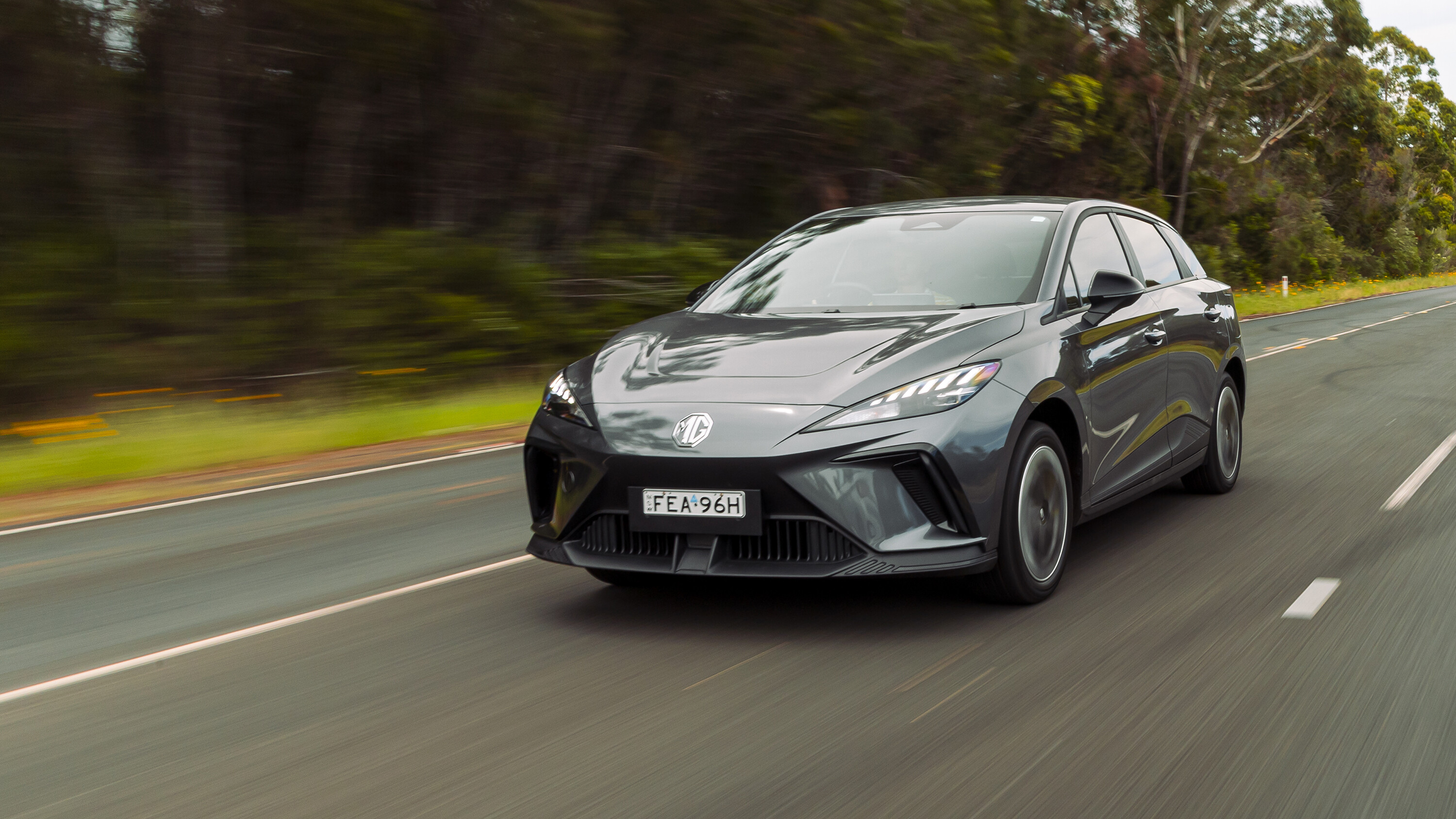
The best-selling Chinese car maker in Australia for 2023 was MG, with the ZS small SUV its most popular model.
The revitalised brand set a new record yet again with 58,346 sales – beating its 2022 figure of 49,582 – to place seventh overall behind Mitsubishi’s 63,511 figure.
1
MG’s 2023 figure comes off 15,253 sales in 2020 and 39,025 in 2021.
GWM and LDV join MG to make it three Chinese car makers in the Top 15 – all setting sales records – with GWM posting 36,397 sales (up 45.3 per cent) to rank 12th overall, with LDV 15th after posting a 30.9 per cent jump to 21,398 sales.
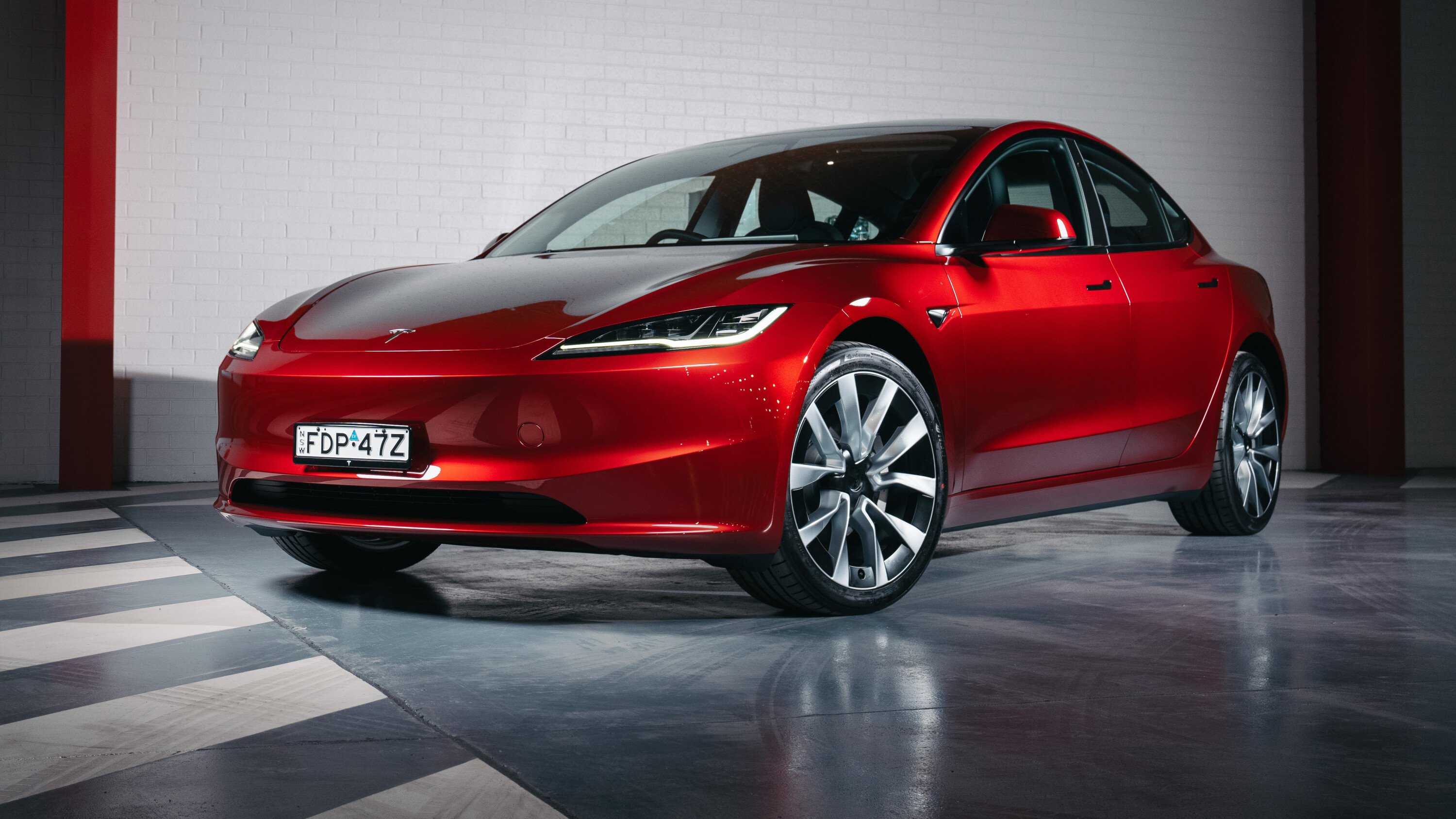
While Tesla began reporting sales via the official VFACTS portal only in April 2022, previously reported data confirms its 46,116 registrations for 2023 as its highest on record (placing it behind MG and ahead of Subaru by a mere two sales).
Volvo surpassed 10,000 sales for the second consecutive year, its new record of 11,128 led by its XC40 small SUV beating 2022’s 10,715 result.
1
Lexus also posted its best numbers in its 33 years of operation, with 15,192 sales smashing its previous 9612 record set in 2019.
SsangYong was another car maker to post a new annual record here, with 5966 sales 51.3 per cent up on its 2022 record result of 3943.
At the premium end, Genesis posted its best year to date, close to double its 2022 sales of 1039 with 1916 sold in 2023, the GV70 mid-size SUV making up more than half of those sales.
Porsche sold 6052 units to break its record of 5608 set in 2022, with the Macan its most popular model and due for replacement in 2024.
January 2024: CX-70 reveal date confirmed
The incoming new Mazda CX-70 will be unveiled at 3am Australian time on January 31, the Japanese brand has confirmed – almost exactly one year since we first reported on the new model (below).
Set to join the existing CX-60 and CX-90, along with the upcoming CX-80, the new CX-70 will round out the large end of Mazda’s new-generation SUVs – assuming it doesn’t have a giant CX-100 in the works.
If Mazda’s growing range of SUVs is starting to confuse you, here’s what we believe about the CX-70: it’s effectively a five-seat, tapered version of the big CX-90.
The CX-80, on the other hand, is expected to be a slightly narrower and longer version of the CX-60 – think of the relationship between the CX-5 and the CX-8.
If you’re still confused, hey, don’t worry about it.
Continue reading our story below for more on the CX-70, and watch for the full reveal later this month.
February 2023: CX-70 confirmed
Nathan Ponchard
If there’s one thing the Mazda Motor Corporation isn’t short of, it’s brand new SUVs.
Indeed, it still has two major global models to be revealed over the next 12 months – including a sportier five-seat version of the just-revealed CX-90 which will be called CX-70.
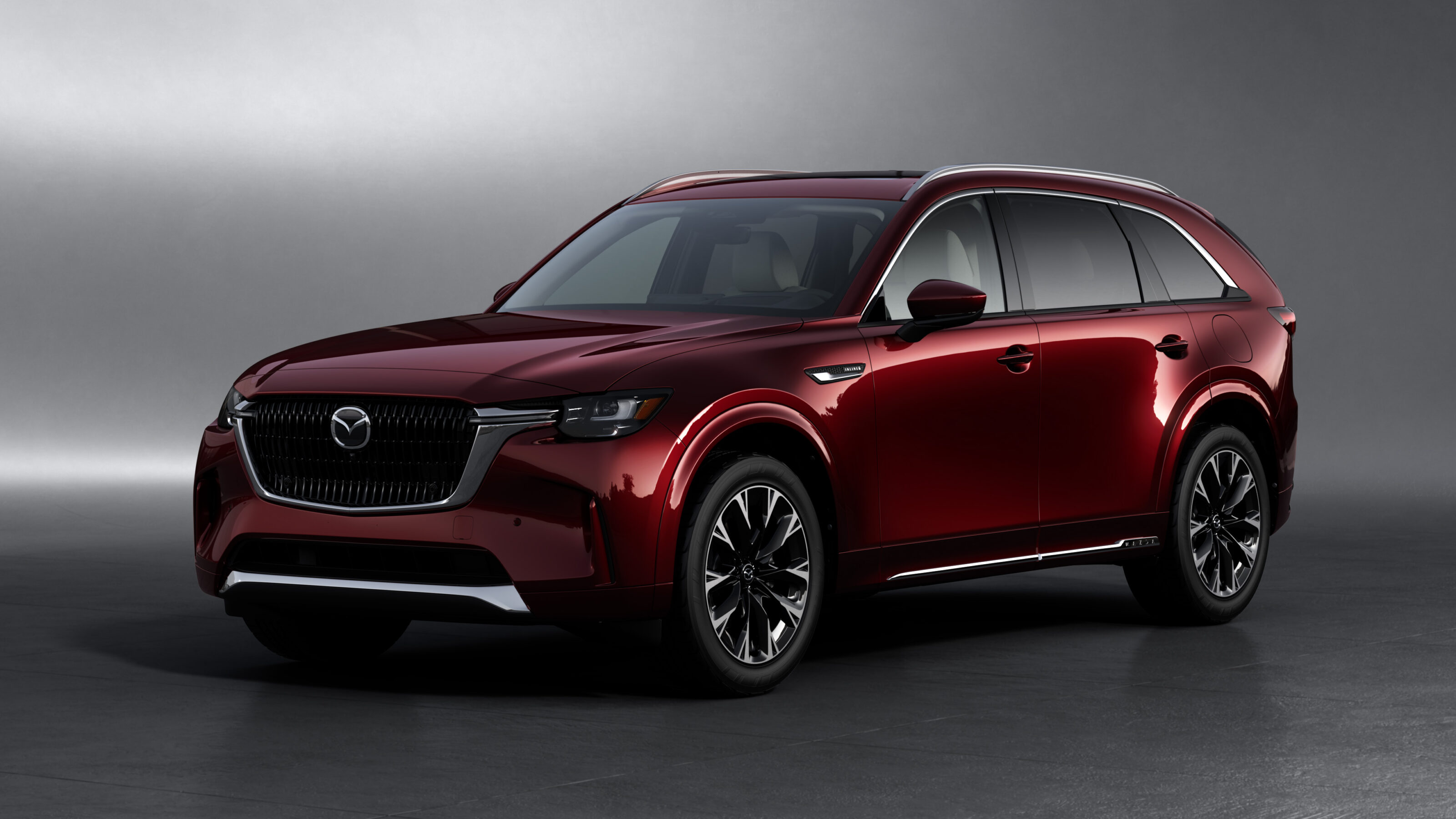
While concrete details remain fairly scarce on what the CX-70’s unique talents will be, we know for sure that it’s closely related to the the CX-90, will be built in Japan alongside its three-row sister in both right- and left-hand drive (predominantly for the US market) and will share the CX-90’s drivetrains – meaning a pair of turbocharged inline sixes and a four-cylinder plug-in hybrid.
We also know it’s under close consideration for Australia and is currently having its business case assessed for our market.
Speaking to Wheels at the CX-90’s global online unveiling, Mazda Australia managing director Vinesh Bhindi said that Mazda is currently looking at the business case for CX-70 (as well as a narrow-bodied, sub-CX-90 seven-seater called CX-80) – “to see whether that makes sense for us” – but that they’re not in a position to confirm its green-light status.
1
“It’s an option for us, and it’s not a restriction from the factory on whether we must take it or we must not take it,” he said.
That means if the dollars add up, CX-70 is go. Given Mazda Australia’s track record on having a ‘why shouldn’t we sell it?’ mentality with everything presented to them, confirming CX-70 for our market appears to be merely a formality.
Based on Mazda’s already-demonstrated efficiency in sharing body parts, you can expect the CX-70 to share most or all its shape from the B-pillar forward with the CX-90 – the bonnet, grille, and grille surround are already common between narrow-bodied CX-60 and broader CX-90. But it’s what goes on at the other end that remains under a cloud.
According to Mazda Australia marketing director Alastair Doak, when asked by Wheels if the fundamental differentiator for CX-70 is that it’s a shortened, two-row, five-seat version of the CX-90, he replied “in very simplistic terms, you will be not far off the mark if you wrote that.”

1
We also put to him that the CX-70 seems quite exciting in concept, given the CX-90 already looks dynamic, and it’s the three-row family version, so if you shortened the body, sloped the rear-end and dialled up the sex appeal, the five-seater could be really cool. He responded by saying “you would think so, yeah.”
As for the forthcoming CX-80, Mr Doak sounded quite pleased with the design direction of what is, at its core, a stretched seven-seat version of the CX-60 premium medium SUV.
Unlike the awkwardly proportioned CX-8 (our words, not his), Mr Doak said the relationship between the CX-80 and CX-60 was “similar but different”.
“I can tell you that CX-80 looks really nice, they’ve done a really good job with it.”
1
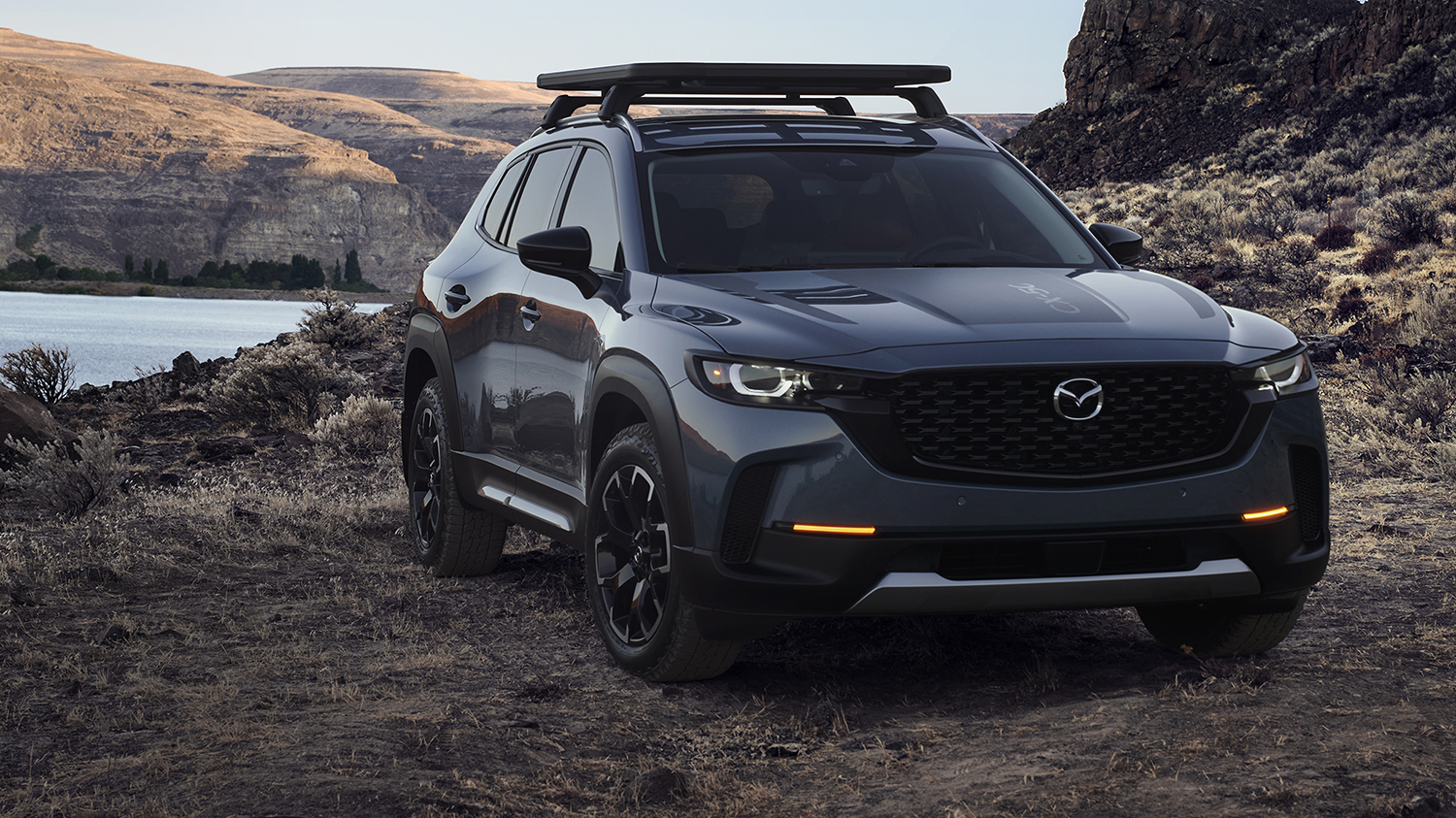
As for the CX-50 – a broad, chunky, US-built medium SUV based on the Mazda 3/CX-30 platform – it’s looking highly unlikely for Australia.
Why? Simply because it’s a smash hit in North America and the Alabama factory that builds it doesn’t need the additional volume – or perhaps the complexity – to justify squeezing in a right-hook version of this highly praised SUV.
“It’s not on offer to us,” said Mazda Australia managing director Vinesh Bhindi, even though they still have their hand up for CX-50, to register their ongoing interest.
“The conversation still remains that it’s built in the US for the US market, or North American market only. So it’s not even being talked about.”
Despite only coming on stream in April, Mazda USA shifted 21,329 CX-50s in 2022. This compares to 151,594 examples of the CX-5 medium SUV during the full calendar year.
MORE
Everything Mazda
Buyers looking for a hybrid car with no delay: which do you want first, the good news or the good news?
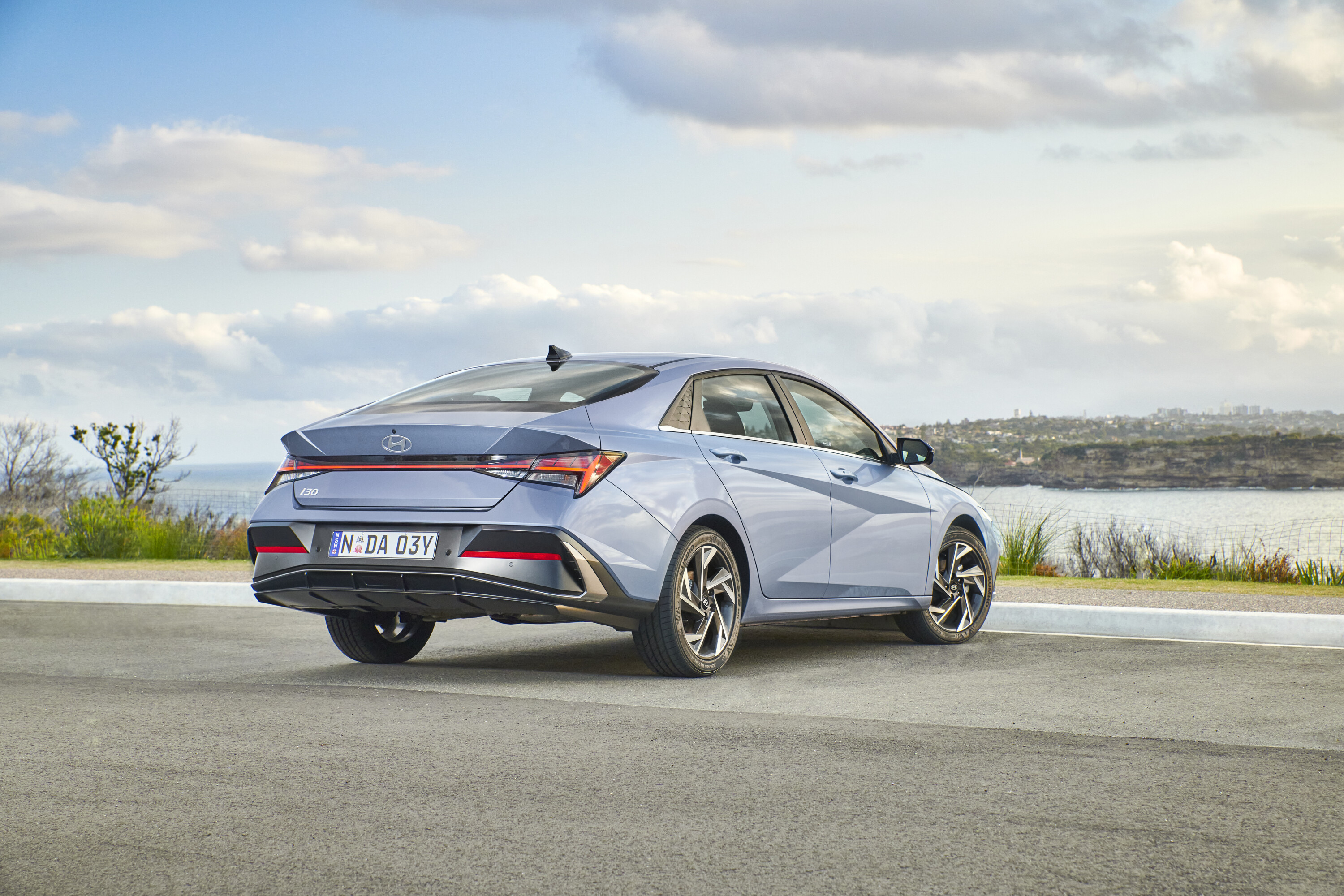
The good news is that Hyundai’s new i30 Sedan Hybrid has a new national drive-away price that undercuts the sedan version of the popular Corolla hybrid. Hyundai is clear in its messaging, too, specifically calling out the Corolla in its announcement to media.
The entry-level i30 Sedan Hybrid is priced at $35,990 drive-away, while calculated drive-away prices for the Corolla (based on a Sydney location) have the hatch starting from $35,917 and the sedan from $36,133.
It’s a savvy marketing play by Hyundai, with the i30 Sedan Hybrid’s retail price (before on-road costs) of $33,000 slightly higher than the Corolla Ascent Sport Hybrid sedan’s $32,320 retail price.
1
The other good news is that Hyundai will have 200 i30 Sedan Hybrid cars here in January, followed by another 400 in February – and a promise of “less than three months” for any further orders.
Our last information on the Corolla shows delays of around 225 days, depending on the specification – nearly three times longer than the wait on Hyundai’s new hybrid, if you don’t get one of the cars already inbound. For its part, Toyota’s website reveals only that it has “extended wait times”.
Hyundai also offers, for your consideration, the below comparison of pricing and equipment highlights for the i30 Sedan Hybrid and the Corolla Ascent Sport Hybrid.
| i30 Sedan Hybrid | Corolla Ascent Sport Hybrid (sedan) |
|---|---|
| $33,000 MLP / $35,990 DA | $32,320 MLP / $36,133 DA |
| 1.6L petrol Hybrid – FWD | 1.8L petrol Hybrid – FWD |
| 104 kW combined | 103 kW combined |
| 147 Nm @ 4000 rpm | 142 Nm @ 3600 rpm |
| 6 Speed dual-clutch automatic transmission | Continuously Variable Transmission (CVT) |
| 3.9L/100km combined fuel consumption | 3.9L/100km combined fuel consumption |
| 16u201d alloy wheels | 16u201d alloy wheels |
| Leather appointed steering wheel and gear shifter* | PVC plastic steering wheel and gear shifter |
| Dual-zone climate control | Single-zone climate control |
| Rain sensing windscreen wipers | Manual windscreen wipers |
| * ‘leather appointed’ usually means a combination of genuine and synthetic leather (vinyl / PVC), so Hyundai’s point here might not be much to brag about. | |
We’ll have our first chance to drive the i30 Sedan Hybrid in February when press cars become available – that’s when we’ll know if Hyundai’s hybrid can outdo the proven Toyota system.
In the meantime, see our full 2024 i30 Sedan pricing story linked below.
MORE
PHEV and Hybrid Cars
Wheels magazine has always had a passionate audience, with a thriving letters section. Here’s the latest from our readers.
And while we’re talking about the mag, have you subscribed?
1
Palette knifed
?️ Robert Ius, Haberfield, NSW
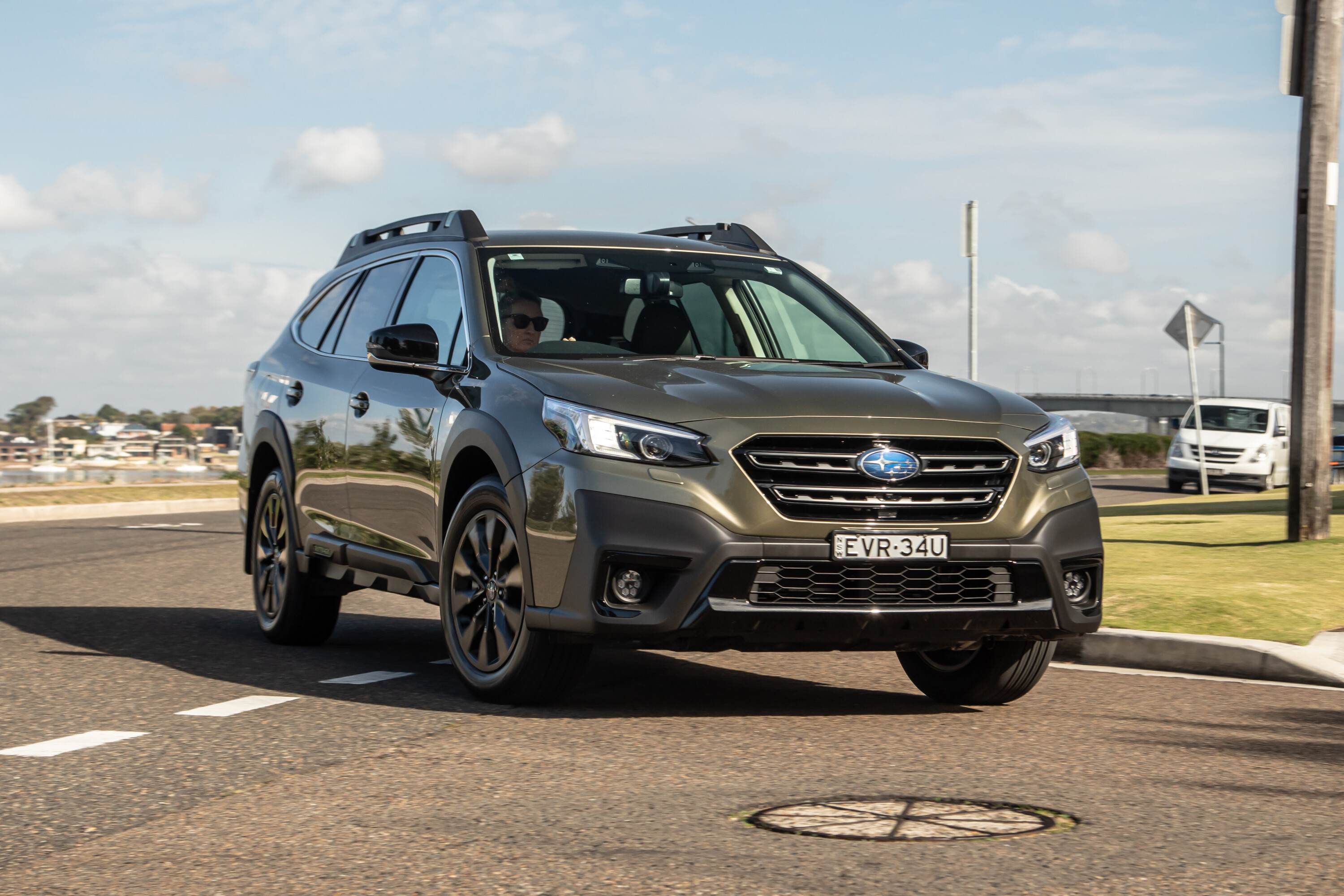
After reading the latest garage report on the Subaru Outback, one thing that needs to be put into context is the statement that there is no additional charge for metallic, pearl or silica paint colours.
The reason is that Subaru Australia no longer imports cars with traditional solid paint colours.
Hence today the recommended retail prices already include the extra cost for metallic, pearl and silica colours. If plain solid colours were offered in Australia, these cars would be close to $1000 cheaper and metallic, pearl and silica colours would be listed as an extra cost.
Mazda Australia applies the same import strategy to their Australian cars as it is a simple way to make larger profit margins and give consumers the false impression they are getting metallic, pearl or silica paint colours for free.
ud83dudede Editor Andy
1
Sweet as, bro
?️ Alex, New Zealand
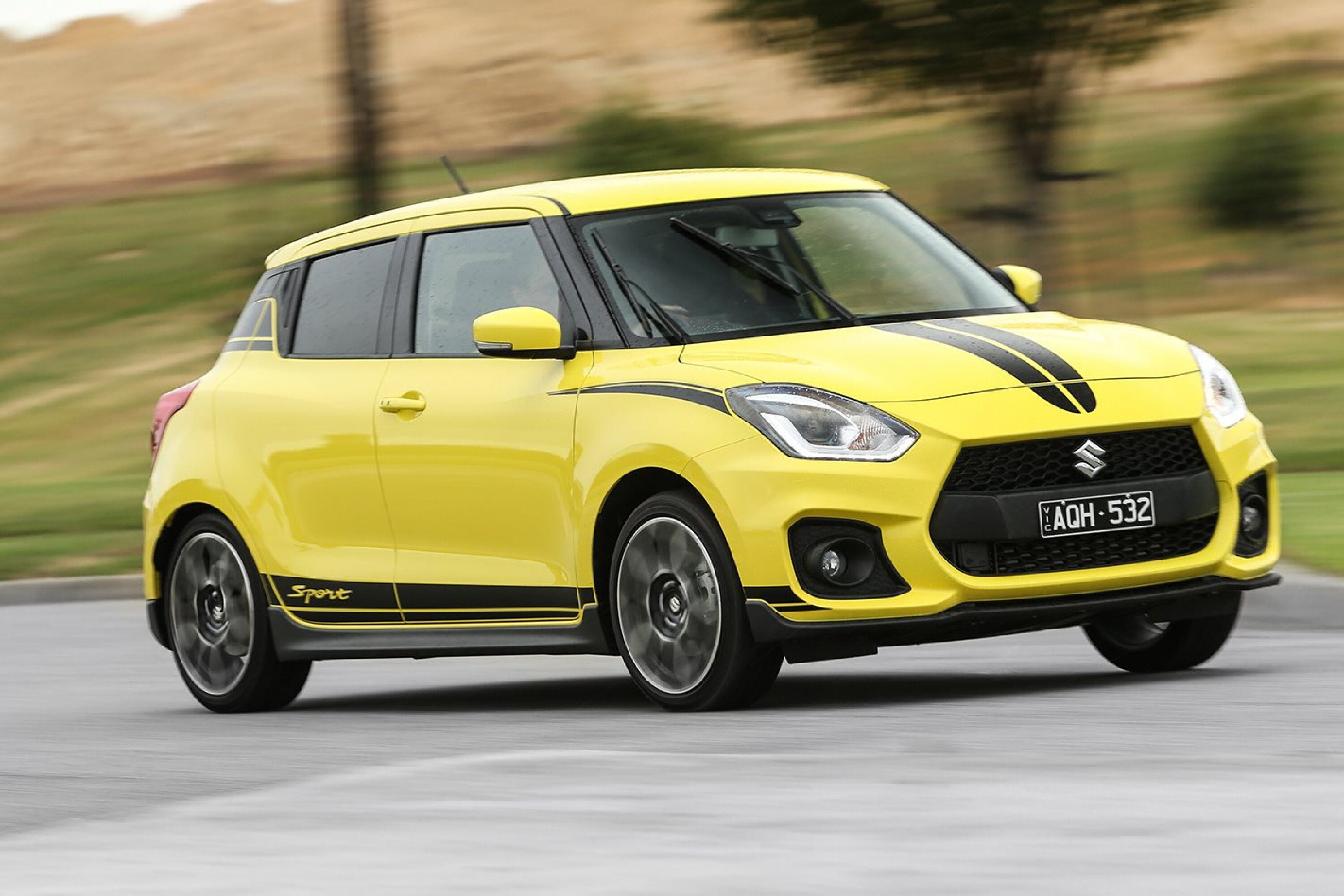
I am in the market for a hot hatch in the range of $20K NZD. This is going to be my first car and I need something reliable, safe to please my parents, but also must be fun in manual. I’m looking at a ‘19 Swift Sport with around 50,000km, a ‘13 Fiesta ST with around 90,000km, or possibly even a ‘14 Megane RS265 with over 100,000km.
I like the look of the Swift being quite new and knowing it will be reliable, plus with lower kays and insurance costs, while also being better on fuel. For the Fiesta and Megane, I know they have been highly rated but I’m not sure on insurance, fuel, reliability or other owners previously thrashing them. From what I’ve seen, the Megane RS looks much too fast for me but I’m not sure about the Fiesta ST.
So, what do you think the money should be spent on? Should I play it safe with the Swift? Are there any other options that you can think of? Thanks.
ud83dudede John Law
The Swift Sport is a great choice for your first car. Reliable, super-cheap parts and servicing, offers enough fun and not so much power to spell trouble. Megane RS250 or 265 are fantastic, but honestly a little focused if you’re not going to be tracking your car. Being heavier, they go through consumables (brake pads and front tyres especially), too.
That leads me to my ideal ‘enthusiast’ pick, the Fiesta ST. I learned to drive in a Clio 182 (and still own one), and the Ford is the closest to that in spirit. Being a Renault fan, I’ll leave you to consider third-gen Clios (197 or 200, 2008-2013). Awesome chassis and a barrel of laughs. Not the easiest or cheapest to service, though they’re more reliable than most assume.
1
Touchy subject
?️ Robert Ius, Haberfield, NSW
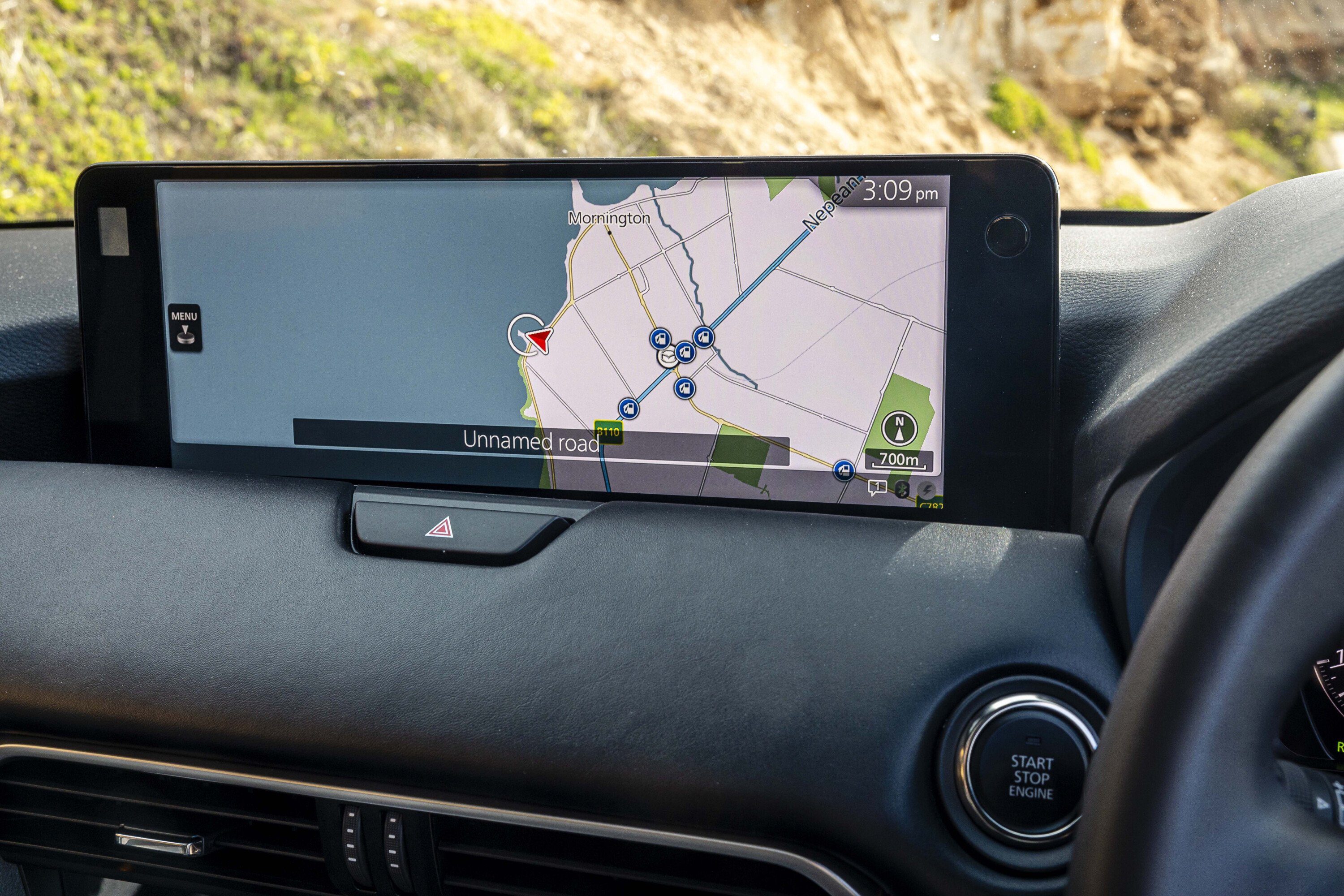
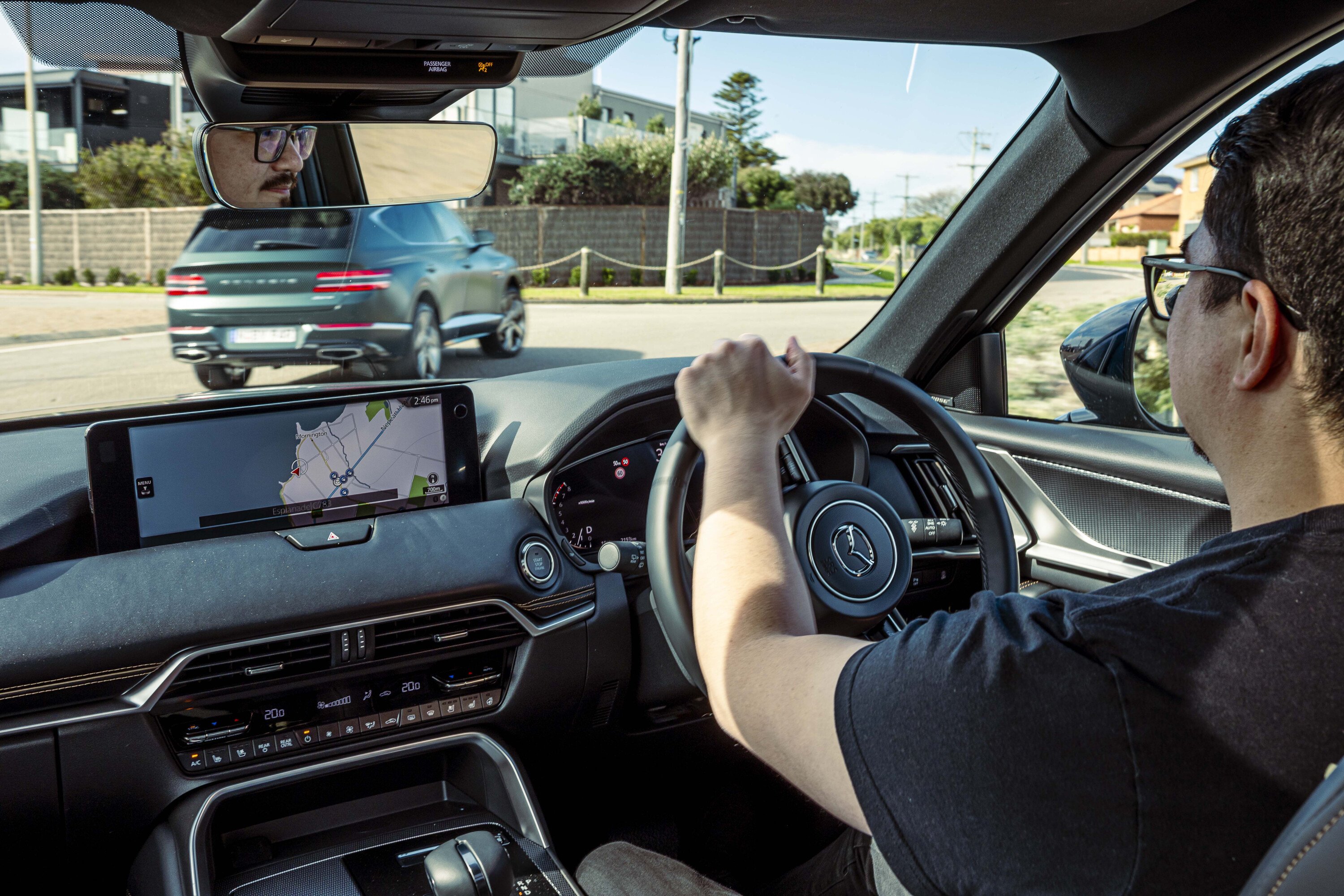
The current trend of single/dual multimedia and control interface touchscreens displacing all buttons and switches for even basic functions (seat heating, fan speed, temperature, volume etc) is a critical ergonomic disaster dictated by cost savings, with poor regard to driver safety design.
It is well documented that the number one cause of accidents is driver distraction, and the use of control touchscreens that require visual interaction with the screen needlessly increases the rate of driver distraction.
The distraction caused by operating touchscreens while driving is no different to texting on a mobile phone while driving. Vehicle manufacturers need to be held accountable for this dangerous safety oversight.
1
The technology already exists to freeze touch-control actions while a vehicle is moving, with control actions executed merely via voice control (or simply reintroducing the most common switches).
It appears most manufacturers are doing nothing in this critical safety area until legislation forces them to make the obvious safety changes. Any new car that does not incorporate sound driver safety ergonomics and an uncomplicated user-friendly dash design will be off my next car shopping list.
Kudos to Mazda for having the design fortitude of placing driver safety at the forefront of their new dash designs.
ud83dudede Editor Andy
We’re thinking along the same lines, Robert (see my Editorial this month) but, for what it’s worth, sometimes I find navigating Mazda’s non-touch interface takes my attention from the road longer than jabbing a screen with my finger.
1
Say something!
?️ Alan Dowling, via email
I was fascinated and entertained by Andy Enright’s editorial in the October issue. The vanilla consensus among motoring writers is something that has long bothered me.
It’s almost as if – and correct me if I’m way off-beam here – junior journalists are following in a long tradition of repeating the opinions of senior staff and thus the cycle continues.
Bill Tuckey’s opinions were absolutely his own. As are those of the likes of Mel Nichols and Dave Morley. You’d never call LJK Setright or David C. Davis derivative. Cutting to the chase, I’d like to say that automotive journalism should value those voices that are unafraid to speak their own truth or come up with an original thought once in a while. It’s surprisingly rare.
1
Happy COTY chappie
?️ David Taverner, Indooroopilly, QLD
I just bought a Ford Everest. It’s a bloody ripper. Thanks for the tip.
ud83dudede Editor Andy
Thanks for choosing to support Aussie design and engineering.
The Wheels question to you
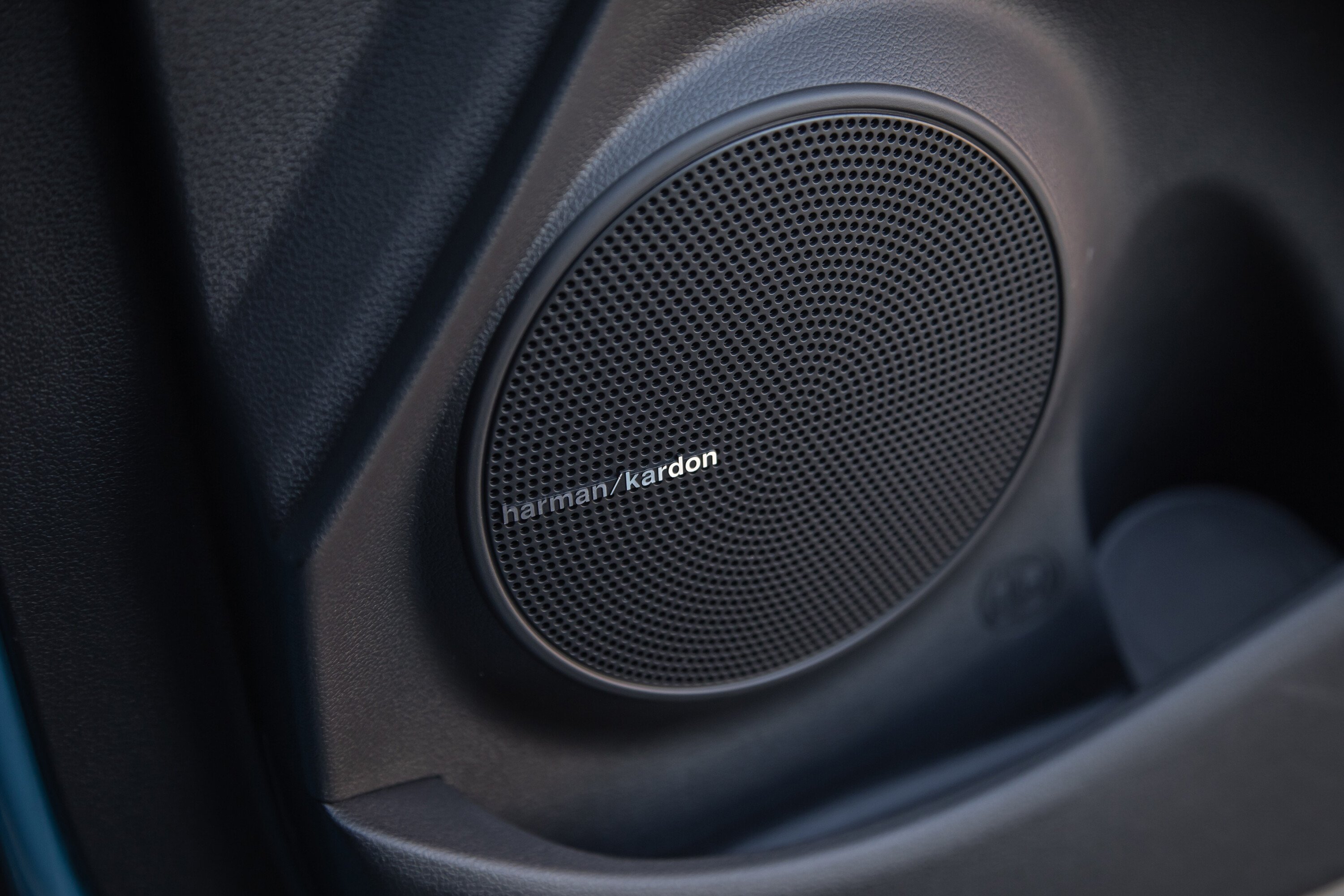
Does the spec of a car’s stereo play a significant part in your buying decision?
Of course
- I mean, it might not swing my choice of model, but Iu2019ll usually spend up and option the premium stereo if that choice is available. Why pay $100K for a car to spend days of your life listening to a $200 stereo? S. Whitley, via Facebook
Not really
- Maybe Iu2019ve got a bit of a cloth ear but at the volumes at which I listen to music, even the base stereo systems sound OK to me. I canu2019t remember the last time I heard a seriously bad audio system in a new car. G. Catley, via Facebook
1
Want to have your say? Keep it tight (no more than 200 words) and include your suburb if via email: [email protected]. You can also chime in on Facebook & Instagram.
Wait, what? The Huracán is dead? Well, not officially. But you can’t order one anymore.
Sant’Agata stopped taking orders for new cars way back in May, and is concentrating on fulfilling the existing order bank of Tecnica, STO and Sterrato models – the last of which will be built in July. So if you want a new Huracán, that train has sailed, my friend.
The Huracán achieved something that wasn’t always a strong point of Lamborghini. It got better and better with each passing year. It’d be easy to dismiss that as just dewy-eyed nostalgia – the creeping realisation that when this atmo V10 is gone, nothing of its ilk will be built again.

1
Yes, there is an element of only realising what you’ve got when it’s (nearly) gone, but there’s more to it than that.
The first Huracán LP 610-4 models that arrived in 2014 had the presence and, with 449kW to call upon, no little performance, but there was an element missing. Ferocity.
The Huracán had been benchmarked against Ferrari’s 419kW 458 Italia, a car that shared its natural aspiration and broadly similar performance.
But by the time the baby Lamborghini came to market, Ferrari had a bigger stick waiting in the wings in the form of the 493kW 488 GTB, a car that was faster, lighter and possessed of a considerably higher tuning ceiling than the Huracán. Within a year of launch, Lamborghini was playing catch up.

1
Its initial response was to not play Ferrari’s game. It launched the lighter, sweeter and less powerful rear-drive LP580-2, which was the first of its smart moves.
Suddenly the Lamborghini could be positioned as the purist’s choice against the turbocharged missile from Maranello. It then aced the 488 with the rather lovely LP640-4 Performante – all 471kW of it.
Ferrari countered with the 488 Pista, and then the F8 Tributo, which used the 530kW guts of the Pista to completely spike the guns of the 2019 Huracán LP640-4 EVO. But it was the final trio of Huracáns that showed Lamborghini at its very best.

1
Between them, the ballistic STO trackday special, the greatest-hits-collection LP640-2 Tecnica and the bonkers LP610-4 Sterrato rally-raid replica sent the Huracán out with the sort of flourish that merits a standing ovation for Stefan Winkelmann and his team. It’s like a nascent MBA case study into how to successfully breathe new life into ageing product.
By the time the final Huracán is delivered to its customer, the model line will have been in production for a decade.
In that time Ferrari has been through four cars as rivals. Yet we’ve seen glimpses of the next-gen Lambo, set to be powered by a hybridised 4.0-litre V8.

1
The Huracan’s biggest sales year was officially 2022, but that’s likely to be eclipsed by 2023’s figures.
In all, over 20,000 cars were sold across its lifespan, easily eclipsing the 14,022 figure of its Gallardo predecessor, notwithstanding long factory shutdowns due to the Covid pandemic. What’s more, it’ll leave a big hole in the range, as its successor is unlikely to arrive before 2026.
A Lamborghini deserves a V12. But the Huracán proved that a perfect 10 wasn’t a bad substitute.
Test notes
Of all the Huracán variants, our pick would be the Tecnica, offering the purity of the most powerful atmo V10 paired with rear-wheel drive, delivering great steering and buckets of handling adjustability. You still needed to be on your game though, as you would with any car with a foursquare footprint, huge tyres and an engine in the middle. From a technical perspective, the Huracán Tecnica had been left behind by the likes of Ferrari, but it delivered such fun you probably won’t care.
Improving the breed
Lamborghini didn’t always have a stellar reputation for sympathetic model development.
Look at the Countach, which turned from a svelte masterpiece to Vegas-era Elvis in its final days. Audi changed that, with the Diablo transforming into a better car, as did the Gallardo and Murcielago.
The Huracán did likewise, Sant’Agata listening to feedback and implementing well-judged quality, styling and dynamics upgrades.
Polestar, the all-electric spin-off of Volvo, will triple its Australian range this year with the arrival of the large Polestar 3 SUV and Polestar 4 fastback SUV.
Compared to many brands, that won’t seem like a huge launch schedule, but with only one model in market right now – the popular Polestar 2 small sedan – 2024 will be an important year for the brand’s Australian growth.
Part of it should have happened sooner, however. The 3 was unveiled in October 2022, with pricing confirmed in February, but delays detailed later in May mean the 3 now won’t arrive until the middle of 2024 – nearly two years since its big reveal in Amsterdam.
The more recently unveiled Polestar 4 is on track, at least, for the previously promised third-quarter debut.
Here’s more about those two models, along with the Chinese-owned Polestar brand’s other upcoming offerings.
JUMP AHEAD
2024
Beyond
Polestar 2
No changes here. The Polestar 2 was given a significant update in 2023, and that’ll likely carry on for the next couple of years.
You can read about the updated model – priced from $67,400 – at the link below, including more standard tech, a longer driving range, a fresh face and rear-wheel drive.
Polestar 3
This one could be a gamechanger for Polestar, with the 3 set to enter as a more advanced, more premium and more spacious big brother to the small Polestar 2.
Australian pricing was revealed in February 2023, kicking off from $132,900 before on-road costs. That could change by the time the 3 launches in mid 2024, but we expect most details to remain as they were last year.
Get all Australian pricing and equipment details here, and visit our Polestar 3 page to see how it compares with key rivals in the premium EV segment. And watch our walkaround video above! ?
Polestar 4
The Polestar 4 ‘coupe SUV’ was unveiled in April 2023, with prices surfacing earlier than intended in December.
When it launches sometime in the third quarter with an entry price of $81,500, the Polestar 4 will join the list of rivals trying to beat Tesla’s upcoming Model Y facelift.
Get all the Polestar 4 pricing details here, and find more at our Polestar 4 page below.
Polestar 5
Following the Polestar 3 and 4 will be the brand’s new performance flagship – the four-door 5 sedan, or ‘grand tourer’.
Think of the Polestar 5 as a rival to the Tesla Model S Plaid, Audi e-tron GT and Porsche Taycan.
Underneath is a bonded aluminium platform bespoke to the 5, and the brand is anticipating outputs of 650kW and 900Nm sent to all four wheels.
Polestar is targeting an Australian release in early 2025 for the four-door 5. Pricing is yet to be confirmed, but it’s safe to guess high-end variants will push beyond the $200K barrier locally.
Polestar 6
Concept becomes reality – and we’ll get a piece of the action, albeit in two years’ time. And a lucky few have secured theirs already!
The Polestar 6 roadster is set to become a reality, with the Swedish firm revealing tonight its O2 concept will launch as a production car from 2026.
Build slots were made available to customers last year, and the first 500 spaces were spoken for quickly. Since then, Polestar has offered no word on when a next round of slots will open.
? Watch our video tour above and get all the news on the Polestar 6 at our page below.
The storied Bavarian marque is about to set off on a product offensive driven by ‘Neue Klasse’ electric vehicles, but combustion engines won’t be left behind.
Headlined by the forthcoming i3 and iX3 all-electric models that will debut new electric architecture with augmented reality cockpits, efficient batteries and powerful motors, BMW and its M division have a very exciting future ahead of them.
Unlike some companies, BMW hasn’t set an end date for combustion engines, though by 2030 it is hoping to reduce CO2 emissions by 50 per cent (compared to 2019) and make vehicles more recyclable; the M division reckons half of its sales will be electrified by 2027.
2
BMW’s model naming is a tad confusing at the moment.
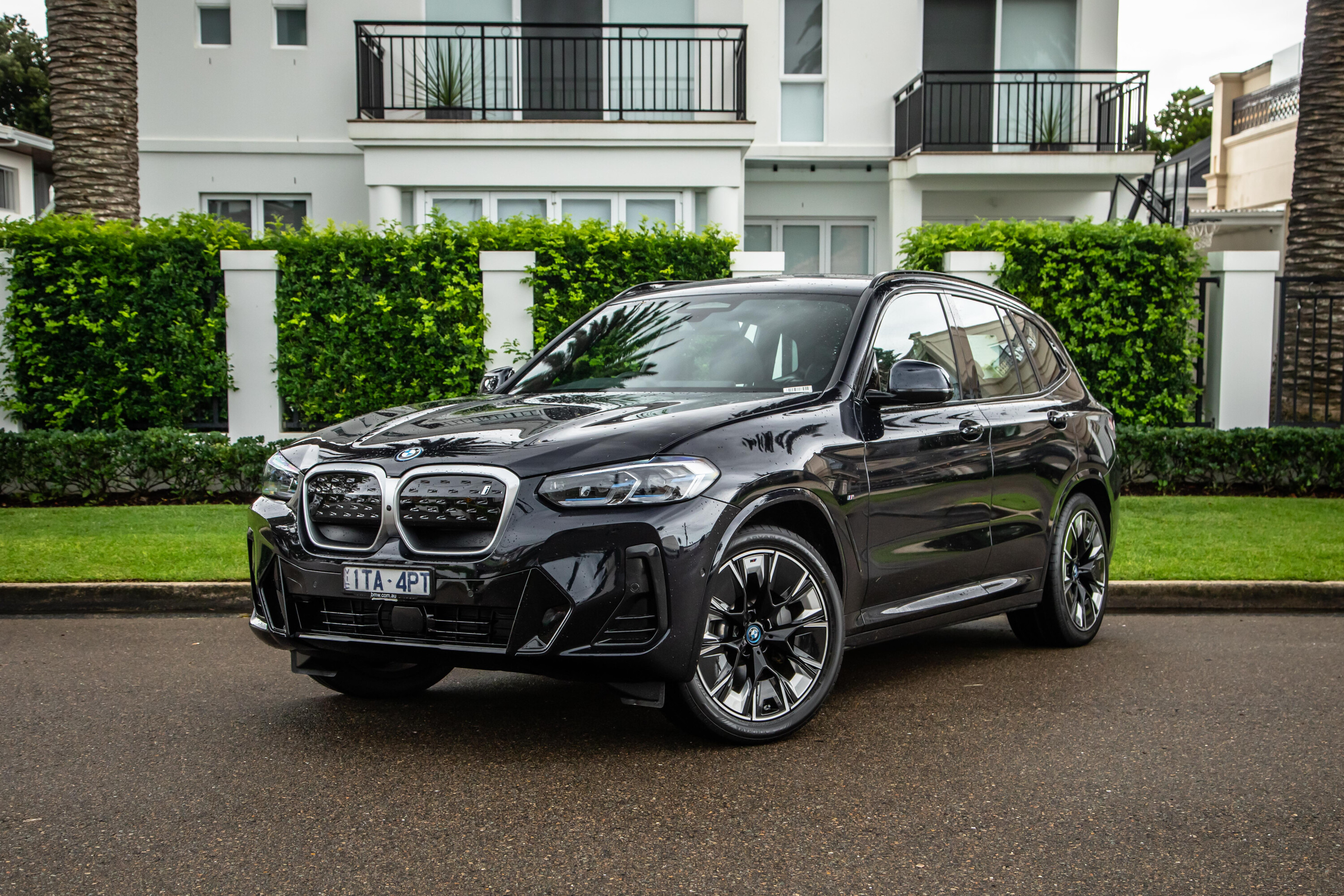
With most of the brand’s second-gen EVs sharing platforms with combustion cars, the electric X3 is known as the iX3, and the China-market 3 Series EV is the i3, which is not related to the 2013 i3 hatch.
Over the next five years, BMW will streamline its model names while moving electric vehicles to its bespoke ground-up Neue Klasse platform for BEVs. Combustion-engined cars will live on with updates to existing underpinnings and powertrains.
With so much coming down the pipeline across a wide range of segments, we’ve distilled important BMW’s future models into one article, so read on to find out what your next Bimmer might look like.
1
JUMP AHEAD
- 1 Series (F70)
- 3 Series and i3 (G50/NA0)
- iX3 and X3 (NA5/G45)
- M3 (G80 and future G84)
- M5 and M5 Touring (G90/G99)
- M EVs and ‘hand of god’
1 Series (F70)
With the current gen ‘F40’ available since 2019, the ‘F70’ due next year won’t be an entirely new generation.
It’s expected to carry over its UKL2 platform and basic engines with some fairly major styling revisions outside, and fresh technology within – likely similar to the X1’s airy cabin layout.
The F70 codename was revealed accidentally in an online M Performance parts catalogue earlier this year. The new 1 Series will probably be the first combustion BMW to drop ‘i’ from the end of petrol-engined variants; instead of the 118i it will be just 118. – the next step in differentiating ICE from EV models.
The 1 Series is expected to stay in production into the next decade, and in 2028 or 2029 a smaller Neue Klasse-based vehicle probably known as the i1 will arrive as the marque’s EV entry point.
3 Series and i3 (G50/NA0)
BMW’s most iconic nameplate looks set to live on another generation as a combustion / plug-in hybrid vehicle alongside the all-new Neue Klasse-based i3 sedan.
Documents leaked by BMW insiders suggest the next-gen 3 Series – chassis code G50 – will arrive with updated versions of BMW’s existing power plants, including petrol plug-in hybrids. There’s also likely to be another combustion M3 this decade.
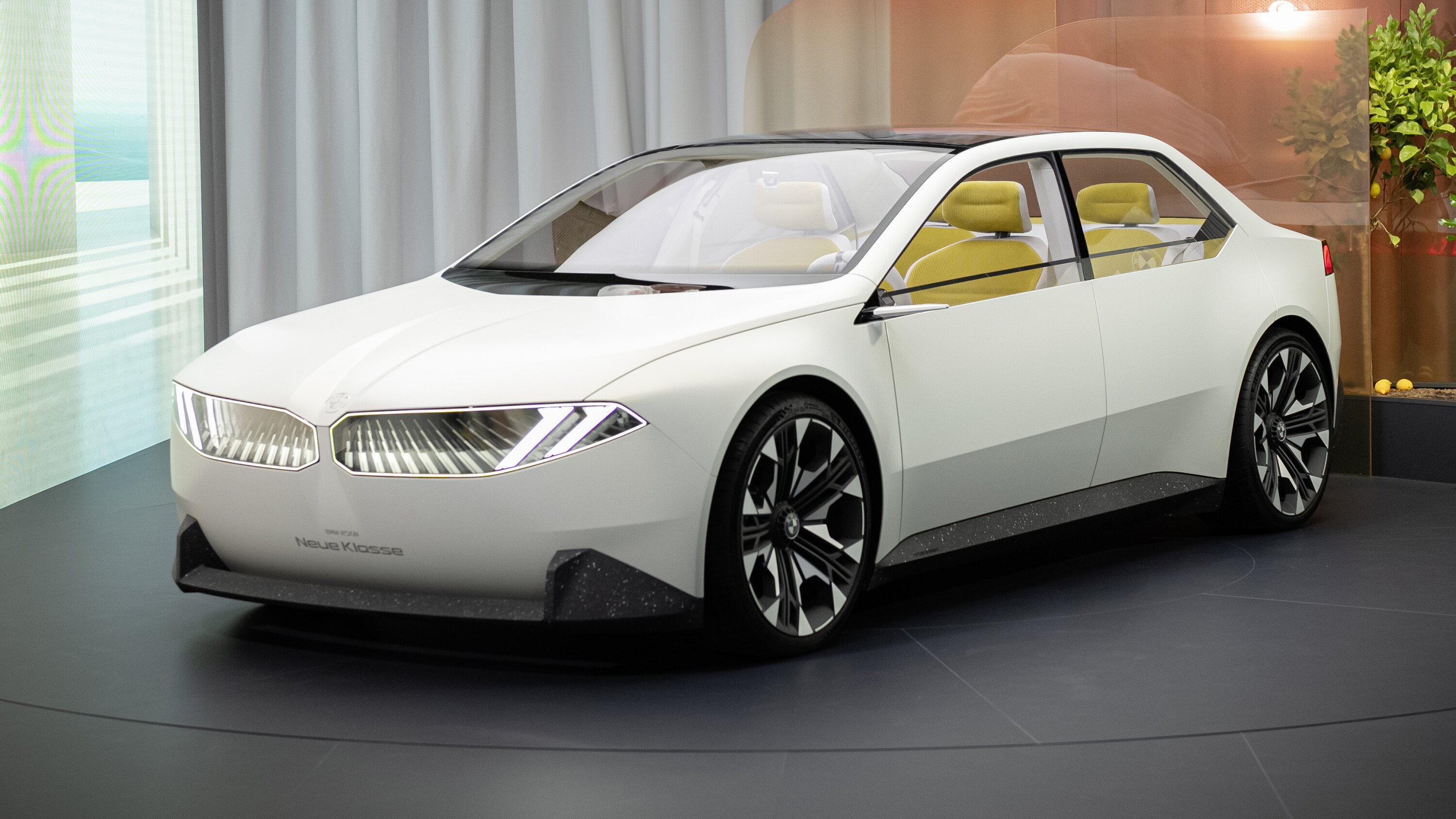
But the bigger news is the all-electric i3 that’s expected to arrive in 2027 based on BMW’s brand-new ‘Neue Klasse’ architecture – and it will take a similar form to the eponymous concept revealed at September’s IAA mobility show in Munich.
1
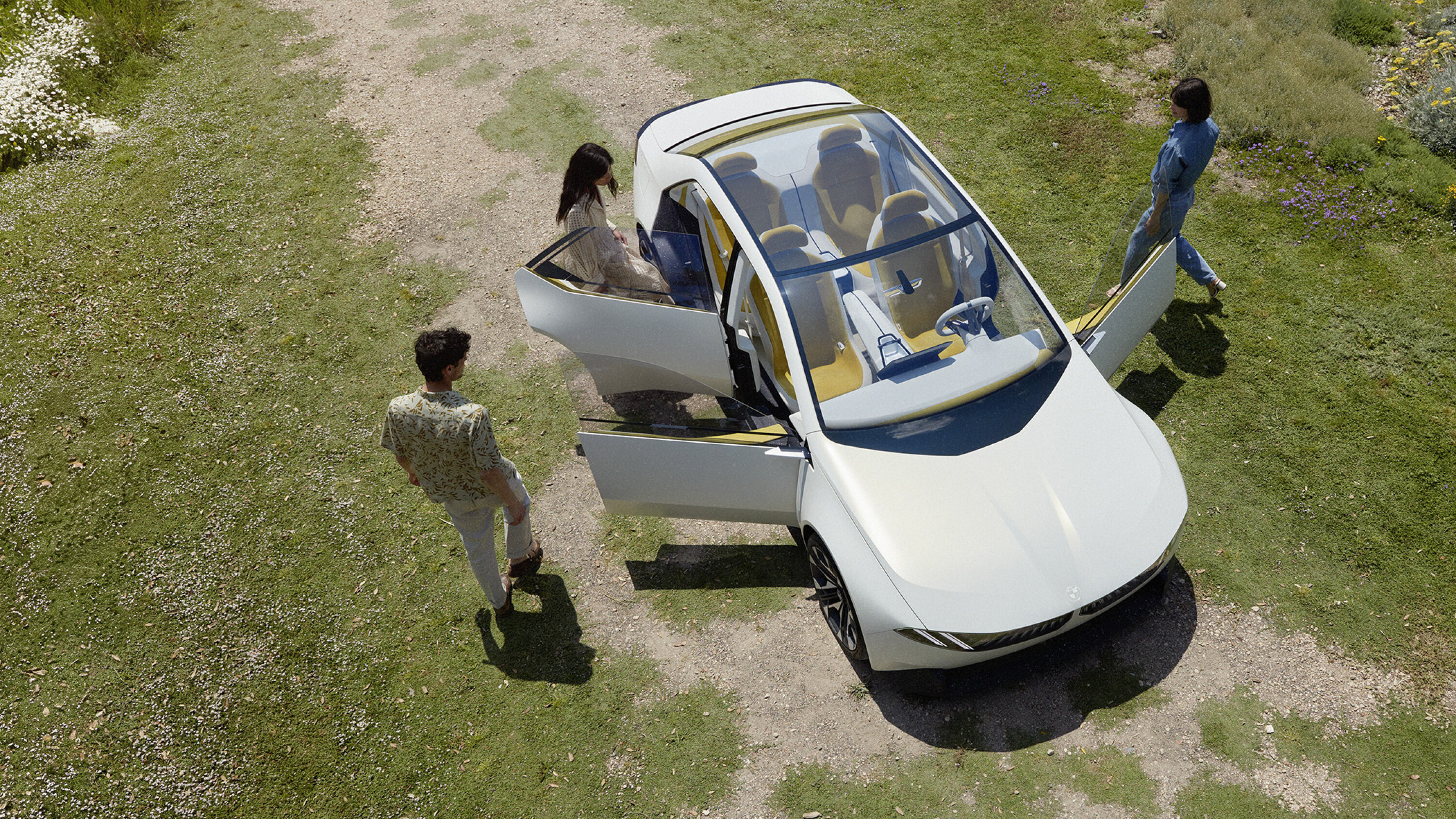
With an interior that’s airy and fresh featuring an augmented reality head-up display and crisp exterior designs that show off a new design direction inspired by models of the past, the new i3 will take BMW into its next era – hence the name ‘New Class’.
The concept runs deeper than batteries with up to 1000km range and new cabin direction. Underneath, the steel-alloy compound matrix is designed with easy recycling and repairability in mind in a nod to sustainability.
Expect multiple variants with different driving ranges, with rear-wheel drive on lower-end models and trick all-wheel drive with twin motors on top-end xDrive grades.
iX3 and X3
The X3 medium SUV will beat the 3 Series to the punch, due for refresh in 2024 in combustion guise to become the G45.
Like the 3 series, expect the X3 to continue with its CLAR underpinnings and existing four- and six-cylinder engines in revised form. Styling looks to be inspired by the smaller X1, with similar tail and headlight shapes and patterns. Inside, expect a similar treatment with a spacious and airy interior backed up by BMW’s latest iDrive system.
Following the G45, BMW is expected to debut the production version of its Neue Klasse platform beneath the iX3 ‘NA5’ – a sign of the SUV-dominant times. It’ll launch in Europe in early-mid 2026, with other markets to follow.
More connectivity, a spacious design, recyclable materials and sustainable production of the body and batteries will underpin BMW’s second foray into an electric medium SUV. We’d anticipate driving range over 500km and price of more than $120K locally.
M3 (G80 and G84)
The M3 CS is confirmed for launch next year and there will be a Touring version, too. Both get a bit more grunt (up 30kW, now 405kW), stickier tyres, and sharper chassis.
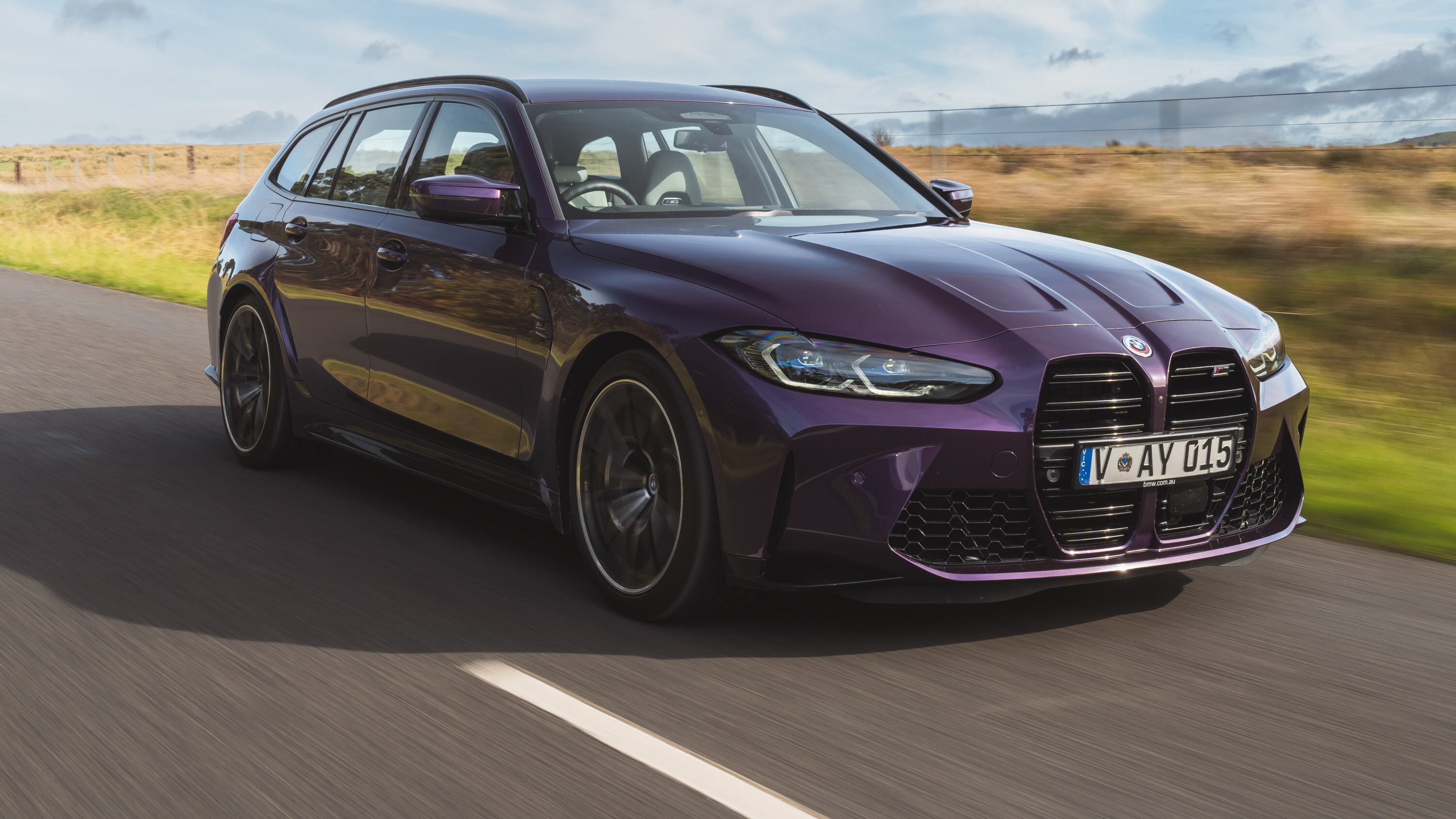
However, we’re excited about the next generation of combustion-powered M3, probably arriving in 2027. Unnamed sources close to BMW indicate the current G80 and G81 M3s will get a heavy overhaul in around 2027, though not one significant enough to change their chassis codes drastically. Expect them to be known as the G84, or similar.
It may be a plug-in hybrid (and will use some form of electrification, such as mild-hybrid, at the least), but crucially the ‘S58’ 3.0-litre twin-turbo inline-six in the current vehicle has been developed with Euro 7 emissions standards in mind.
M Boss Frank van Meel told WhichCar that “the market is booming for six-cylinder inline engines,” adding that the layout is “probably going to be around for quite a while.” That’s good news for BMW M fans, then.
M5 and M5 Touring (G90 and G99)
These are the next M cars to launch, and the M5 Touring will be the first outing for the long-roofed 5 Series. It will become the third M5 wagon made by BMW and could become the first sold (officially) in Australia.
Powering the G90 and G99 will be a V8 petrol engine with a plug-in hybrid system – though it won’t be a rinse and repeat of the XM’s powertrain according to Autocar [↗]. Instead, the G90 will probably use a version of the F90’s ‘S63’ twin-turbo V8 powertrain and a large 19.4kWh lithium-ion battery.
With two extra cylinders than what AMG’s E63 rival will be packing, the BMW Bahnstormer is expected to develop around 590kW at all four wheels; full details are expected in 2024.
M electric vehicles with ‘hand of god’
There’s a lot of chatter about BMW’s future M products, with the brand trademarking ‘iM3’ within Europe in November 2023.
However, executives then denied that the M3 would ever go electric. Instead, expect an M version of the i3 sedan (with coupe and touring models possible) to be sold beside the combustion-powered M3 – though this could be a red herring in itself.
What we do know, is what the M division is targeting for its electric products, and that it hasn’t ruled out engaging tech such as the Hyundai Ioniq 5 N’s simulated sound and gearshift features for its products.
1
M has rightly said that it’s more about how the grunt is deployed to the wheels, rather than the total amount
As for targets, vehicles in testing can produce over 1000kW without too much trouble, the issue comes with cooling. After deploying so much grunt, the car needs time to reset – tuning the power back to a reasonable 745kW makes for longer running and more stable battery temperatures. And, to be fair, 745 kilowatts sounds like plenty for the road.
M has rightly said that it’s more about how the grunt is deployed to the wheels, rather than the total amount. It’s therefore combined powertrain and driving dynamics software into a single system, known as the ‘Heart of Joy’ that will work alongside the ‘Hand of God’ power control unit.
In plain English, we can expect the M Division’s electric cars to have the same brutish excitement and slideability as the current crop of combustion-engined models. Following the first electric M car, likely a 3 Series-sized model, we can expect an M version of the new X3 as well.
MORE
Everything BMW
The Subaru BRZ is officially the best-selling sports car in Australia, ending the Ford Mustang’s seven-year reign as No.1.
Subaru’s coupe registered 1573 units in total to put it on pole position in the 2023 sales race, with Ford’s famous pony car in second place with 1475 registrations.
Mustang sales ran out of gas in the last few months of 2023, with stock depleted ahead of the new, seven-generation model’s arrival in 2024. After the BRZ overtook it in November for year-to-date sales, it left the Mustang unable to respond.
While Mustang sales dropped 22 percent year on year, BRZ sales grew 35 percent.
BMW’s 2 Series grabbed the bronze medal with 1164 sales last year, up 74 percent and just 20 units ahead of the BRZ’s twin, the Toyota GR86.
For two other notable models in the Sports Cars Under $80K VFACTS category, there were 653 registrations for the Mazda MX-5 and 449 sales for the Nissan Z.
BMW’s larger sporty coupe (and convertible), the 4 Series, took honours in the Sports Cars Over $80K – pipping the Mercedes-Benz C-Class Coupe/Convertible by 858 units to 808.
In the Over $200K ‘Supercar’ category, the Porsche 911 reigned supreme again with 558 sales – albeit with the icon’s market share slipping from 47 to 41 percent.
Story to here: 5th December 2023
The Subaru BRZ is set to be crowned Australia’s best-selling sports car for the first time after overtaking the Ford Mustang in annual sales.
Ford’s famous ‘pony’ car has been unrivalled in the segment since the sixth-generation version had its first full year on sale in 2016.
With Mustang stocks virtually depleted with a new-generation model (pictured below) due in the second quarter of 2024, the BRZ overtook the Ford coupe/cabriolet in November.
Just nine Mustangs were registered last month compared with 117 units of the BRZ, moving the Subaru ahead in the year-to-date race by 1494 to 1470 sales.
Ford says there’s “literally just a handful” of outgoing Mustangs left in Australia, suggesting the BRZ can’t be caught with just December remaining.
BMW’s 2 Series is highly unlikely to catch the BRZ, trailing the BRZ and Mustang with 1066 sales so far in 2023.
Toyota’s twin to the BRZ, the GR 86, is the fourth most popular sports car with 1053 sales between January and November.
The 86 has traditionally outsold the BRZ since the nameplates were launched in 2012 and it was Australia’s best-selling sports car between 2013 and 2015, before the arrival of the Mustang.
The BRZ outsold the 86 in 2022 – the year both models were released in second-generation guise – though the Subaru launched several months earlier.
In 2024 the BRZ range will add a new ‘tS’ (tuned by STI) variant.
