
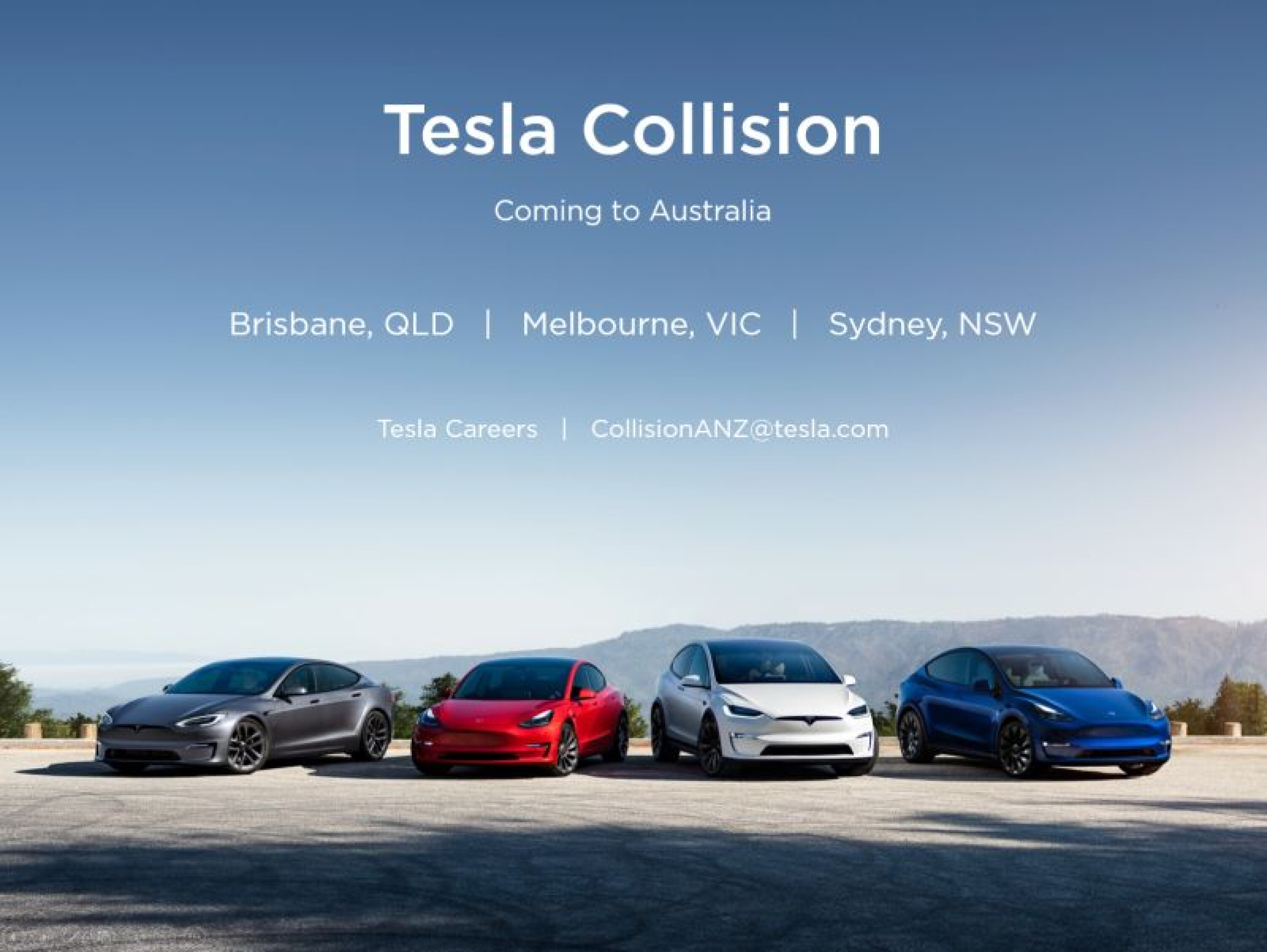
Tesla will soon launch an accident repair service in Brisbane, Sydney and Melbourne, as it seeks to integrate more after-sales work in-house.
Snapshot
- Tesla to offer in-house accident repair services
- Will launch in Brisbane, Sydney, Melbourne
- A step towards after-sales u2018vertical integrationu2019
Dubbed ‘Tesla Collision’, the electric vehicle and technology company is currently hiring a host of roles to perform “full structural repair in addition to light collision” works on the Model 3 sedan, Model S liftback, and Model X SUV (strangely the role descriptions don’t list the Model Y crossover).
Judging by the position descriptions, it’ll likely cover cosmetic repairs or replacements to the body panels, interior trim, suspension parts, radiators, airbags and other internal structural components.
Wheels has contacted Tesla Australia for further information on the scope of the Collision Centres.
Currently, Tesla servicing centres can already perform “light collision repairs” on parts such as bumpers, wing mirrors, wheels, glass, and the tailgate.
More extensive repairs are currently being carried out by third-party Tesla-approved Collision Centres across the nation.
Unlike other carmakers, Tesla doesn’t tend to disclose its repair documentation nor supply its parts to any third-party technician, but could be forced to under new ‘right to repair laws’.
Australia’s best electric cars for 2023
We’ve tested nearly every EV below six figures in Australia to rank the best on sale today
The launch of Tesla Collision Centres aims to fully-integrate the after-sales process for owners and seems to be a step towards Tesla Insurance, which is already available in the US using its data collection sensors to determine a safety score and coverage premium.
A total of 2226 Tesla Model 3 sedan and Model Y SUVs were sold in Australia last year – dominating the full EV sales charts by a fair margin, despite the growing competition from the launch of the BYD Atto 3, Polestar 2 and Kia EV6.
Where are the Tesla Collision Centres?
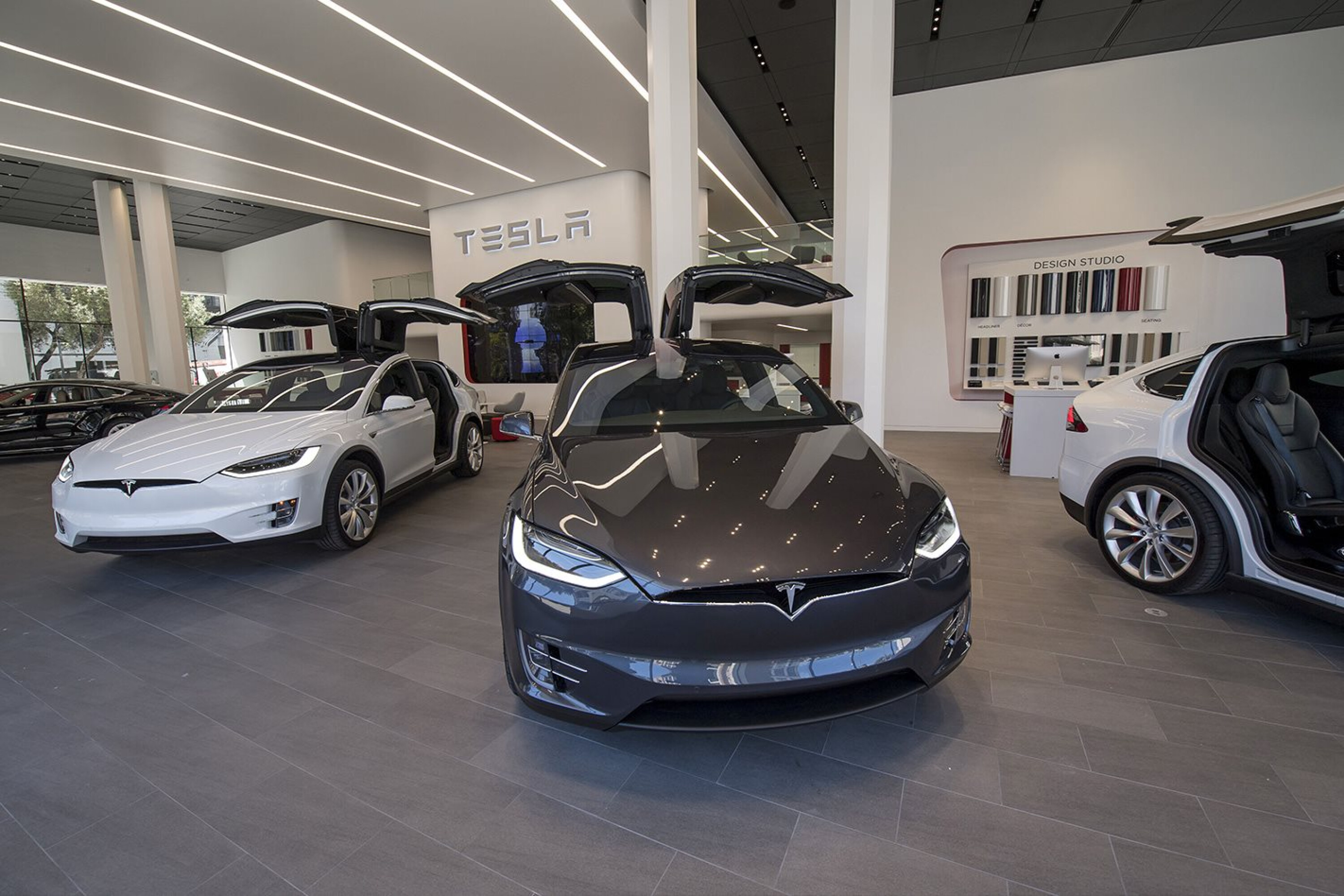
At launch, the Tesla repair centres will be located at the three most populous capital cities in Australia.
They all seem to be at or near its delivery warehouse centres.
Tesla owners can schedule an appointment via the Tesla smartphone app and selecting ‘Collision & Glass Repair’ – though the company states, “Depending on the severity of the damage, you may be referred to an alternate location.”
| City | Suburb |
|---|---|
| Brisbane | Hendra |
| Sydney | Alexandria |
| Melbourne | Cremorne |
⚡ More EV stories to help you choose the best car for your needs
Volkswagen has sharpened its offer on in-stock T-Cross Style models by $1000, dropping the drive-away price from $36,990 to $35,990.
For those in the market for a light SUV right now, Volkswagen’s Australian arm has promised 1400 examples of T-Cross 85 TSI Style are bound for our shores, so wait times will be minimal.
The 85 TSI Life is also on offer until 30 June, though its $33,490 price has climbed by $500 from before.
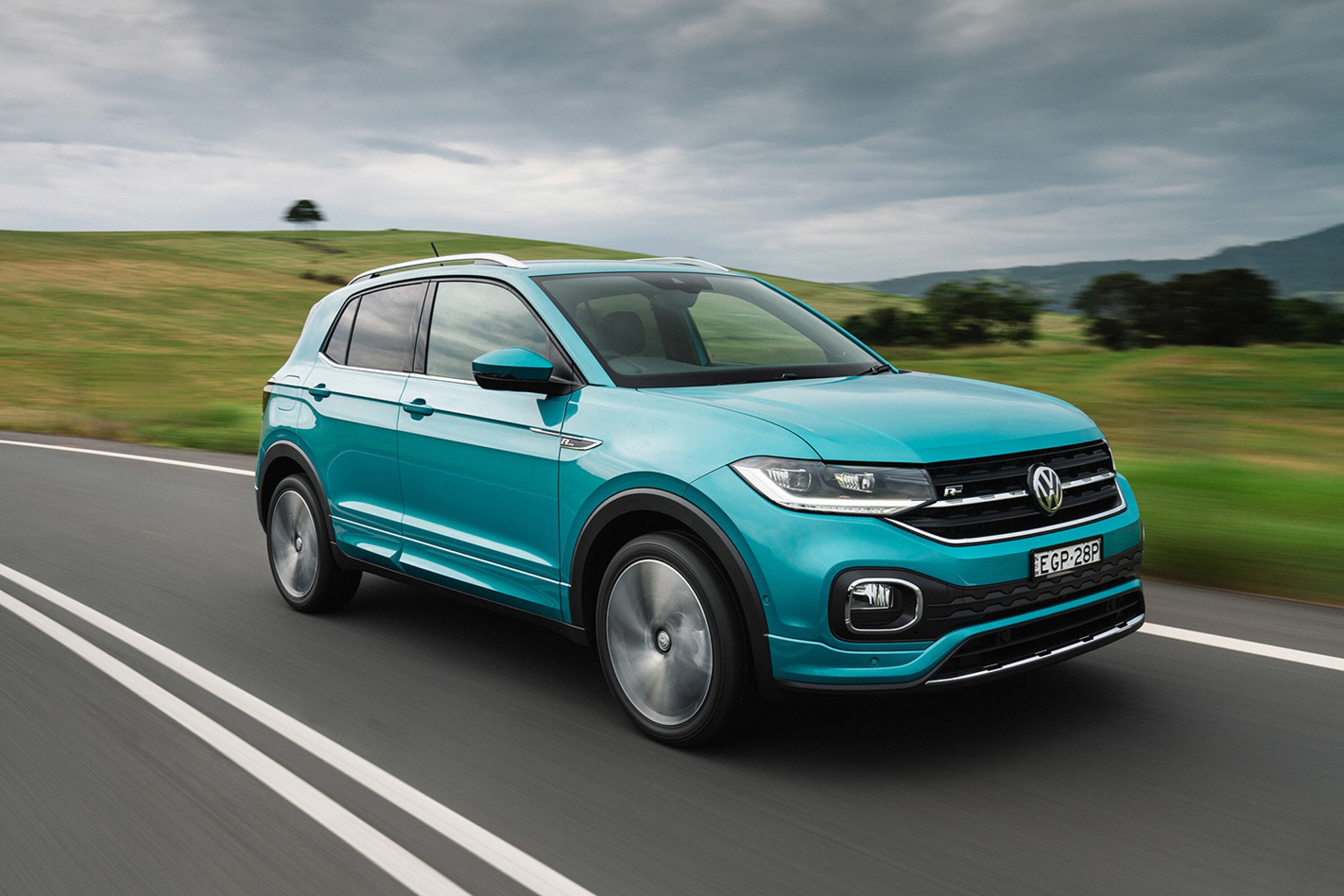
The Life is equipped with 16-inch alloy wheels, an 8.0-inch touchscreen, wireless phone charging, fabric upholstery, and a leather-appointed steering wheel.
Volkswagen’s T-Cross Style gains LED headlights, 17-inch alloy wheels, dual-zone climate control, and ‘comfort sport’ cloth upholstery.
Both variants use an 85kW/200Nm 1.0-litre turbo-petrol three-cylinder engine mated to a seven-speed dual-clutch transmission that drives the front wheels.
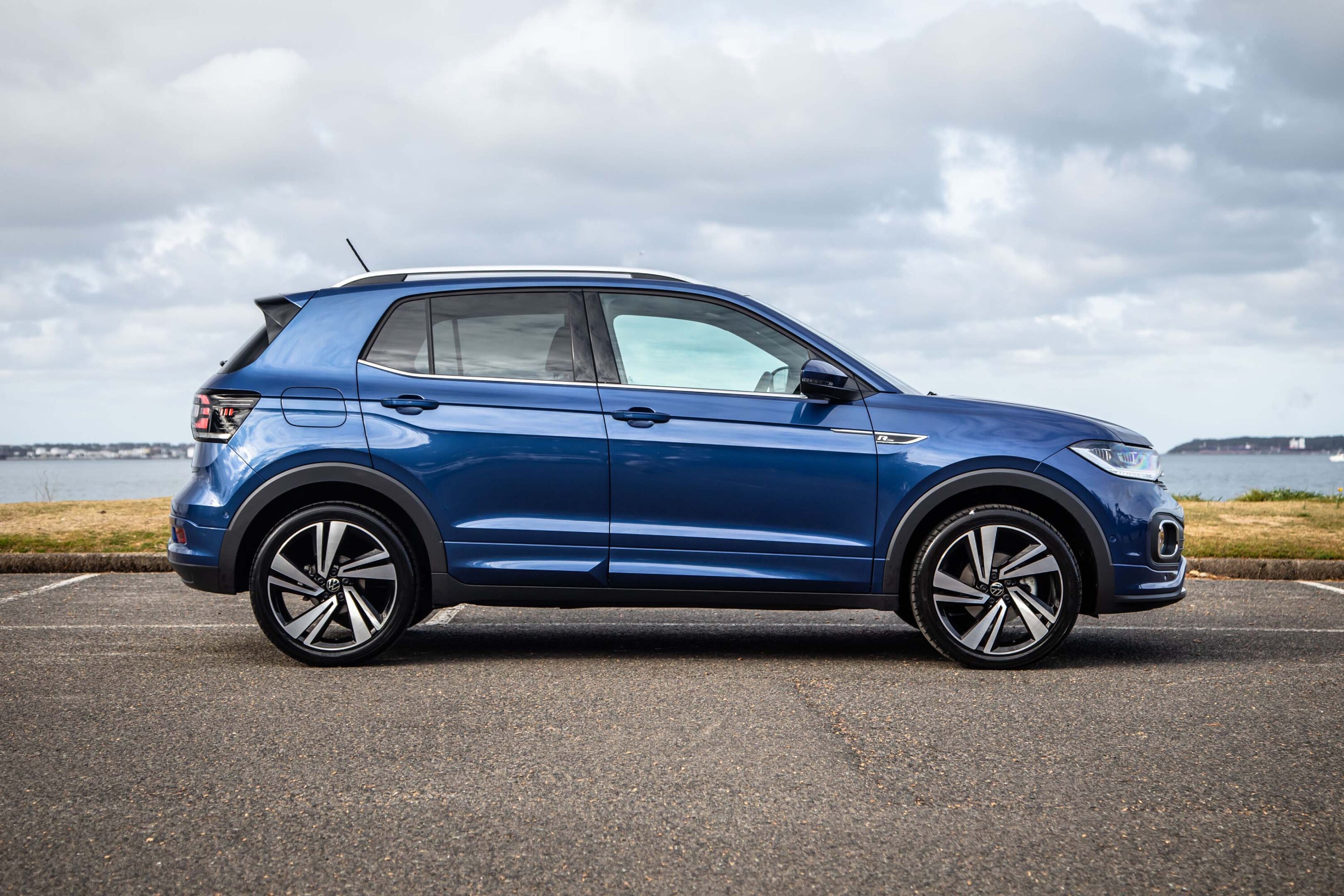
2023 Volkswagen T-Cross pricing
| Volkswagen T-Cross | Drive-away offer | MLP |
|---|---|---|
| 85 TSI Life | $33,490 | $30,990 |
| 85 TSI Style | $35,990 | $33,490 |
Our original story, below, continues unchanged
The Story to here
Volkswagen Australia is offering incentives on certain models, including three years free servicing for Tiguan Allspace 132TSI Life and drive-away deals on others.
Five years of free servicing is already included with the purchase of a VW Passat, Passat Alltrack, Arteon and Touareg until March 31.
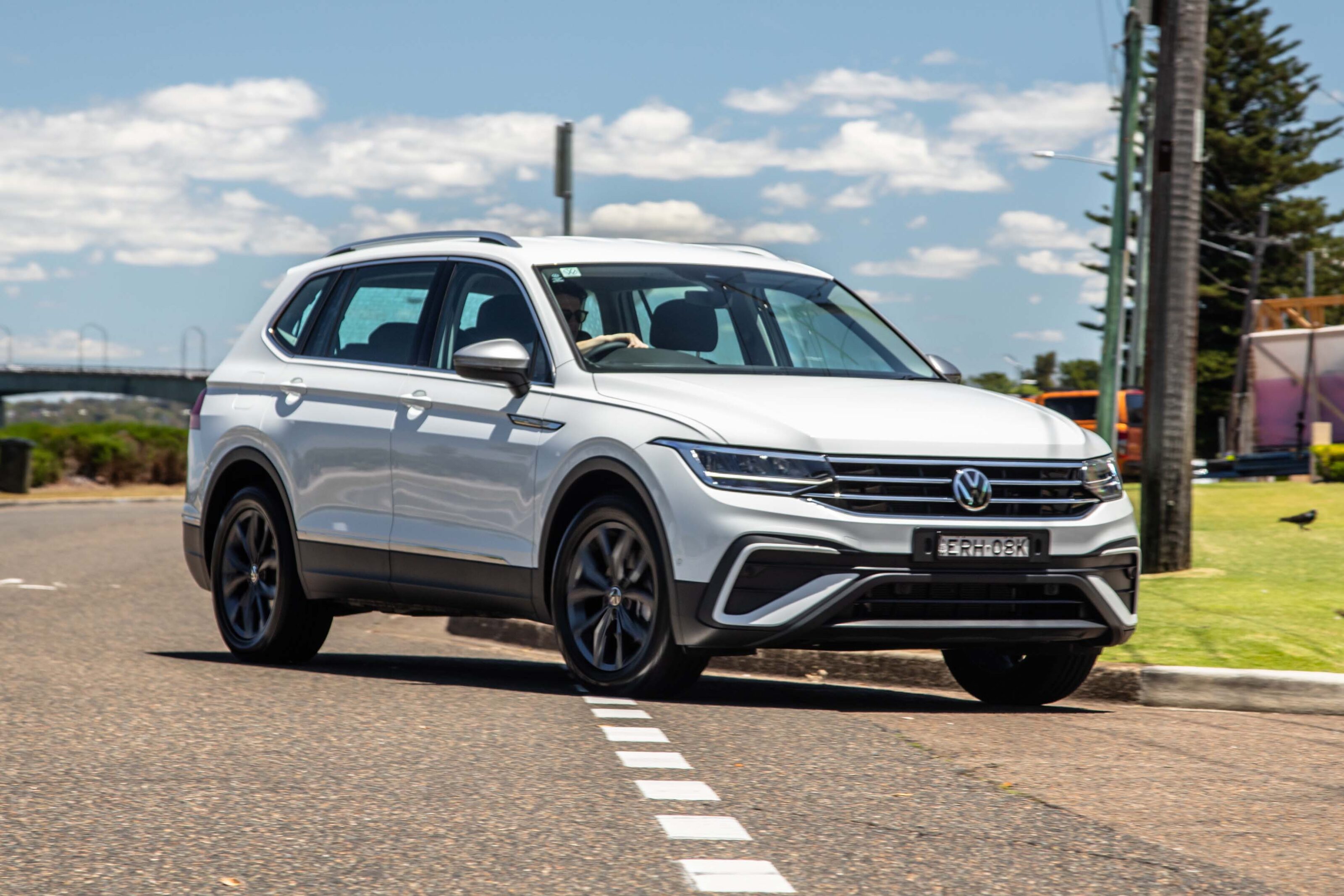
The Tiguan 132TSI Life comes with a three year/45,000km care plan, normally valued at $1650, and like the other VW models with free service plans, is available to purchase from dealers right now.
The 132TSI life lists at $48,390 before on-road costs and features a 132kW/320Nm 2.0-litre turbo-petrol four-cylinder engine hooked up to all four wheels via a seven-speed DSG automatic.
“Free servicing is a local cost initiative designed to help offset global cost increases faced by all brands in the areas of supply chain and logistics”, Volkswagen Australia said in a statement.
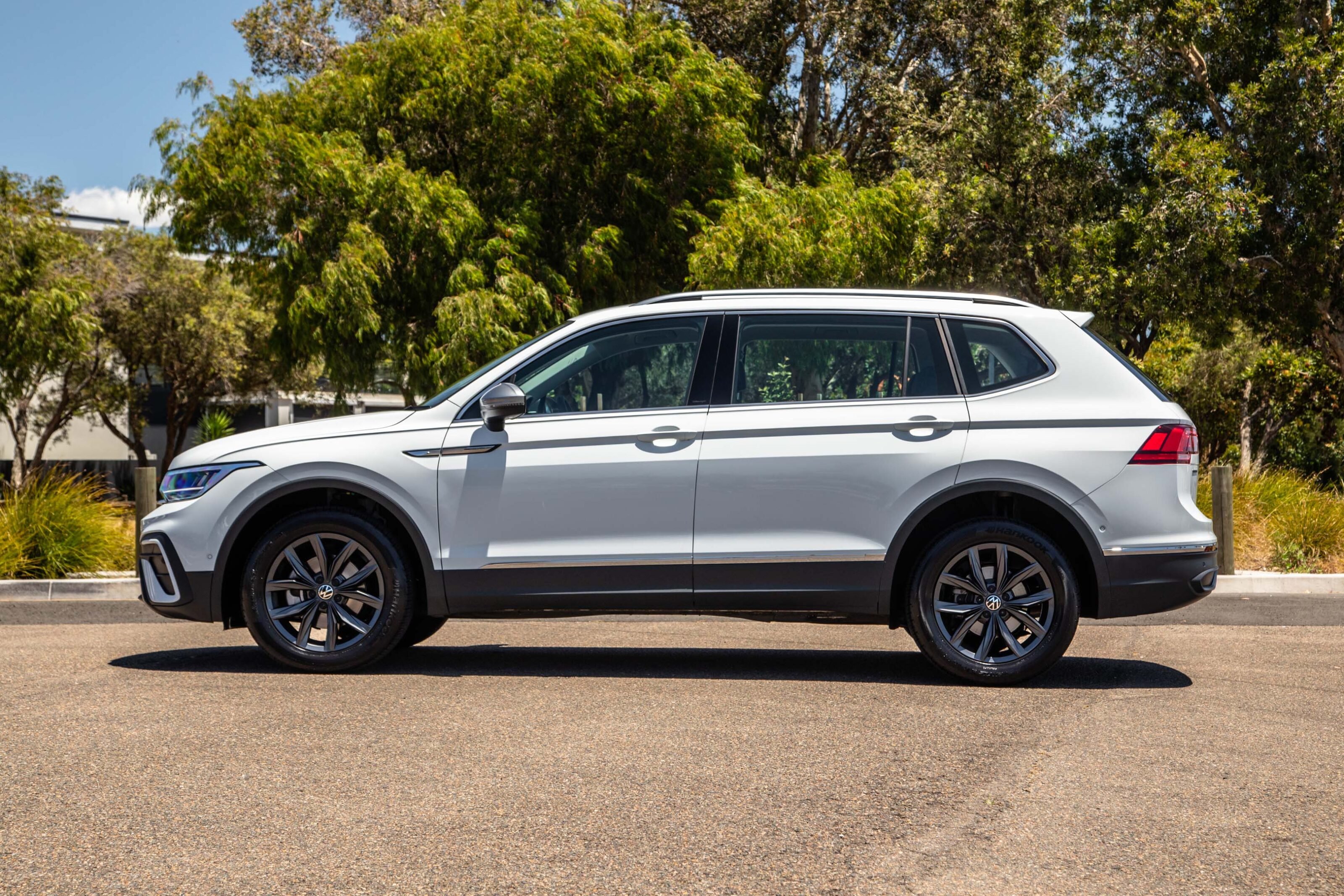
Drive-away price offers on select models
In addition to the now five-strong selection of vehicles with free servicing incentives, Volkswagen is offering fixed national drive-away deals on the below vehicles.
Volkswagen is also offering finance deals on T-Roc Style and R-Line, as well as Tiguan Life, Elegance, and Monochrome.
| Model | Drive-away offer | MLP (+ORCs) |
|---|---|---|
| Tiguan Allspace 132TSI Life | $49,990 | $48,490 |
| Tiguan Allspace 162TSI Adventure | $54,990 | NA |
| Touareg 170 TDI | $95,990 | $89,240 |
From January 1, 2023, Volkswagen pushed through a raft of increases to list prices, running from $240 for a T-Cross Style light SUV to $1500 for a Tiguan R medium SUV – but the price increases did not reflect any additional equipment.
June 19: Forget $47,990 – the MG 4 will start in Australia from below $40,000.
Get all the details at the story linked below.
April 6: $47,990 pricing confirmed
The Long Range MG 4 Essence will start from $47,990 before on-road costs, with pre-orders open from 11 April.
Snapshot
- 61.7kWh battery gives 435km driving range (WLTP)
- Top-spec Essence starts under $50K
- Dedicated electric architecture, RWD
After revealing the MG 4 last month at the Fully Charged show in Sydney, the Chinese-owned carmaker has confirmed the electric small car will start at $47,990 before on-road costs.
Initially, just one variant will make it to Australia, known as the Essence locally, it’s equivalent to the UK’s top-spec Trophy trim. Wheels understands that the UK’s SE and SE Long Range variants are likely to join the line-up shortly, potentially wearing ‘Excite’ badges.
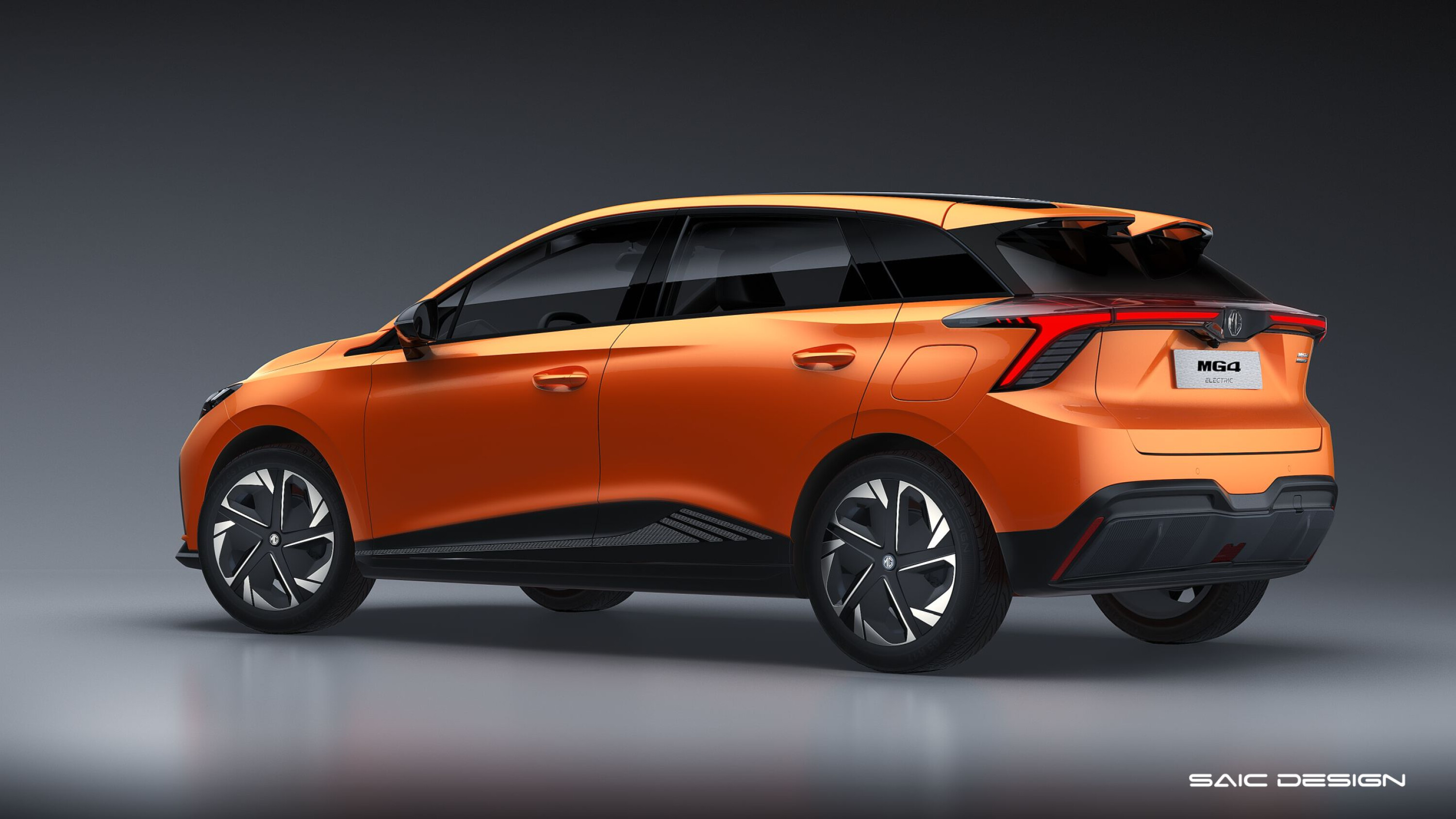
Our Essence, therefore, gets the larger 61.7kWh (64kWh gross) lithium-ion battery pack and a more powerful 150kW/250Nm rear-mounted electric motor than the Standard Range car. Driving range is quoted at 435km in combined WLTP, relying on a 14.2kWh/100km efficiency figure.
There are 18-inch alloy wheels, LED lights, and a roof spoiler outside to let you know this is the flagship MG 4, while inside you get rear cross-traffic alert and blind-spot monitoring over the lower-spec cars.
Being based on MG’s modular scalable platform (MSP), the 4 should be more advanced than the company’s ZS EV, which runs on a converted internal combustion platform. It also gives it improved fast-charging capability, able to take on DC electricity at 135kW, enough to take the battery from 10-80 per cent in 34 minutes on a 150kW charger.
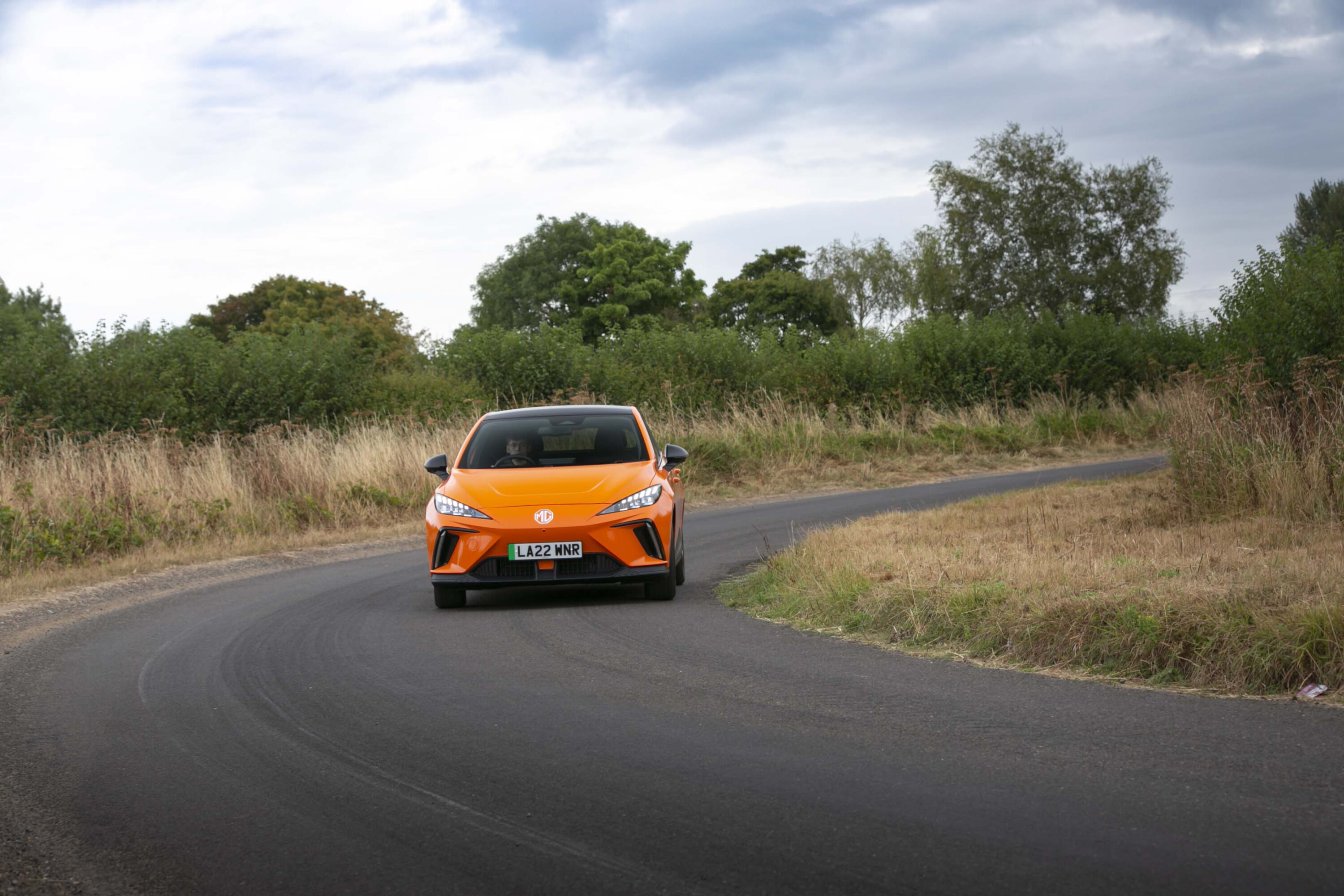
| 2023 MG 4 Essence standard features | |
|---|---|
| Price: $47,990 before on-road costs | |
| 18-inch alloy wheels | Two-tone roofu00a0 |
| Roof spoiler | 10.25-inch touchscreenu00a0 |
| Digital instruments | Wireless charging |
| Apple CarPlay/Android Auto | u2018iSmartu2019 Telematics |
| 360-degree camera | Blind-spot monitoring |
| Rear cross-traffic alert | AEB with ped, cyc, junction detection |
Measuring 4287mm long, 1836mm wide and riding on a 2705mm wheelbase, the MG 4 is almost identical to a Volkswagen Golf in size. The MG 4 was also awarded five stars in Euro NCAP crash testing.
When it hits dealers, the MG 4 small electric car will rival the Nissan Leaf, GWM Ora, and BYD Atto 3, as well as MG’s own electric ZS small SUV. Customers will be able to order the MG 4 from 11 April with deliveries starting early in the second half of 2023.
Our original story, below, continues unchanged
The story to here
March 14: Ahead of an Australian release in the second half of the year, the 2023 MG 4 was on show at Sydney’s International Convention Centre.
Snapshot
- MG 4 due in the second half of 2023
- Three variants expected
- Pricing could start in the low $40K region
- Driving range varies from 350-350km
A pair of MG 4s sat alongside the big-battery ZS EV Long Range as the two new models that MG will release this year.
Roughly VW Golf-sized, it’s expected that the MG 4 hatch will be available with a choice of two battery packs – 50.8kWh and 61.7kWh – and three trim levels. Driving range runs from 350 kilometres WLTP for the smaller battery and 450km for the larger.
Nailing pricing will be crucial, but the electric MG 4 is off to a good start. In the UK, the hatch is GBP£3000 less than the ZS EV. Converting its GBP£26,995 drive-away price to Aussie dollars would see the base model 4 start at AU$49,500 drive-away.

It’s likely the MG 4 will be cheaper here – expect entry-pricing between $42-50K – due to the Free Trade Agreement between Australia and China, but whether it will trouble the GWM Ora and ZS EV short-range at the entry-level remains to be seen.
“We felt there was no better stage than Fully Charged Live to offer a glimpse of MG’s future in previewing our first global modular scalable platform in the MG4 and we know you’ll be as excited as we are to see it on Aussie and NZ roads in [the second half of this year],” said CEO MG Motor Australia, Peter Ciao.
With three trim levels promised initially, expect Australian MG 4s to mirror the UK’s lineup: SE, SE Long Range, and Trophy. The Trophy trim is allied with the larger 61.7kWh battery pack exclusively.
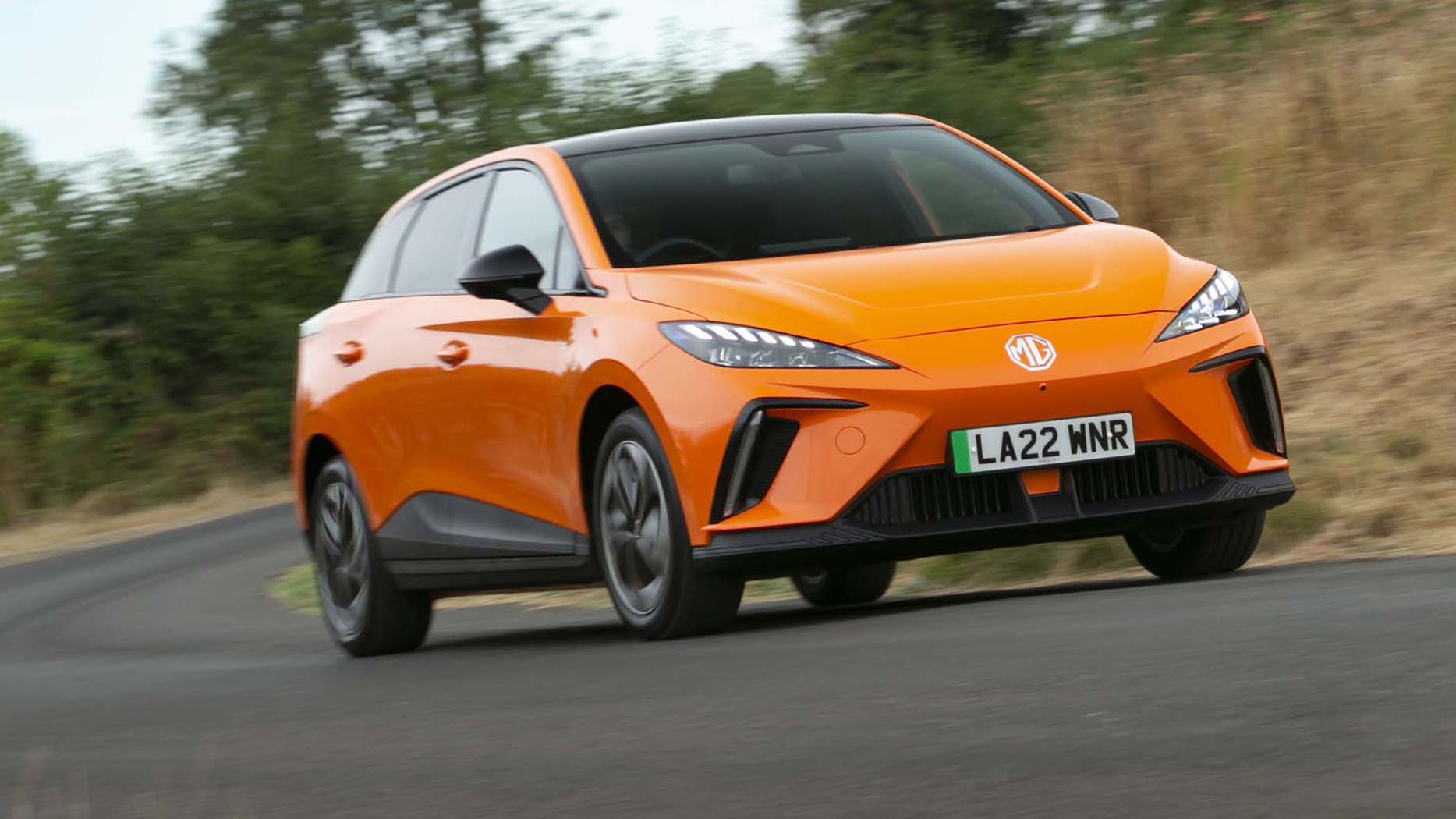
All grades get AEB with pedestrian, cyclist and junction detection, lane-keep assist, adaptive cruise control with stop and go, auto high-beam, and traffic sign recognition. The top-spec Trophy scores blind-spot monitoring, and rear cross-traffic alert. The MG 4 was blessed with five stars in Euro NCAP testing.
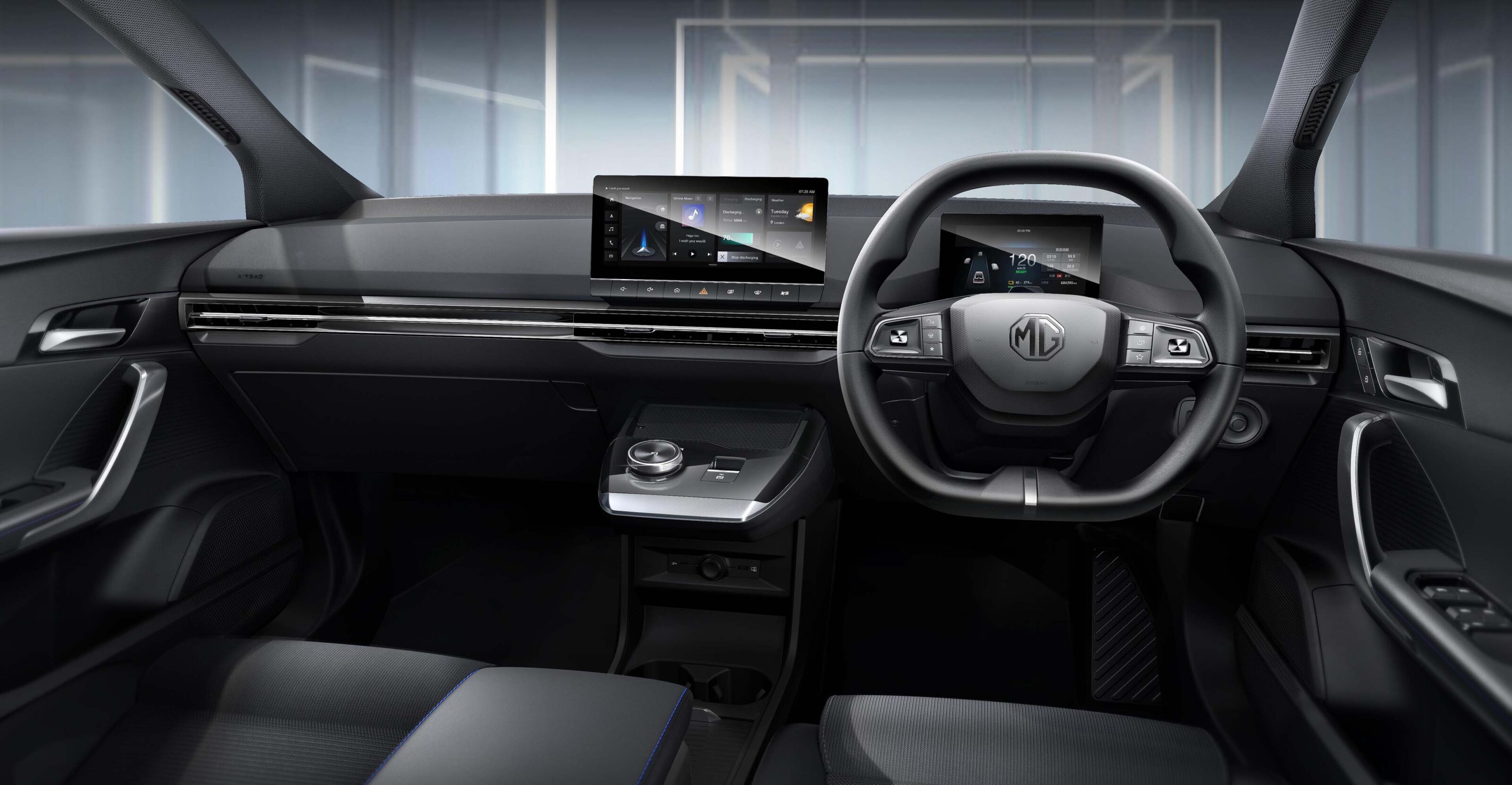
Inside, a digital instrument cluster, 10.25-inch touchscreen, adjustable regenerative braking settings, Apple CarPlay, Android Auto, and DAB radio are standard.
A single electric motor is mounted on the front axle developing 125kW/250Nm in the Standard Range, and 150kW/250Nm in the heavier Long Range. A twin-motor performance variant is expected globally, with Australian plans yet to be confirmed.
Charging maxes out at 150kW (DC) for the Long Range, allowing 10-80 per cent recuperation in 35 minutes. A 7kW AC charger will take charge from 0-100 per cent in 7.5 hours for the short range, and nine hours for the Long Range.
In Australia, MG will back the MG 4 with a seven-year/unlimited kilometre warranty for the body, battery, and electronics.
Our original story, below, continues unchanged.
December 2022: MG 4 spied; scores five Euro NCAP stars
The 2023 MG 4 electric hatch has been spotted testing in Sydney by a Wheels reader ahead of its expected March or April Australian release.
It’s confirmed that the MG 4 passed ADR compliance tests earlier in November, so this camouflaged mule is likely being used as a final evaluation model.
The vehicle was spotted parked up in Alexandria, not far from MG Australia’s headquarters. It’s rocking a camouflage wrap, and wheels that appear to be prototype or pre-production items.
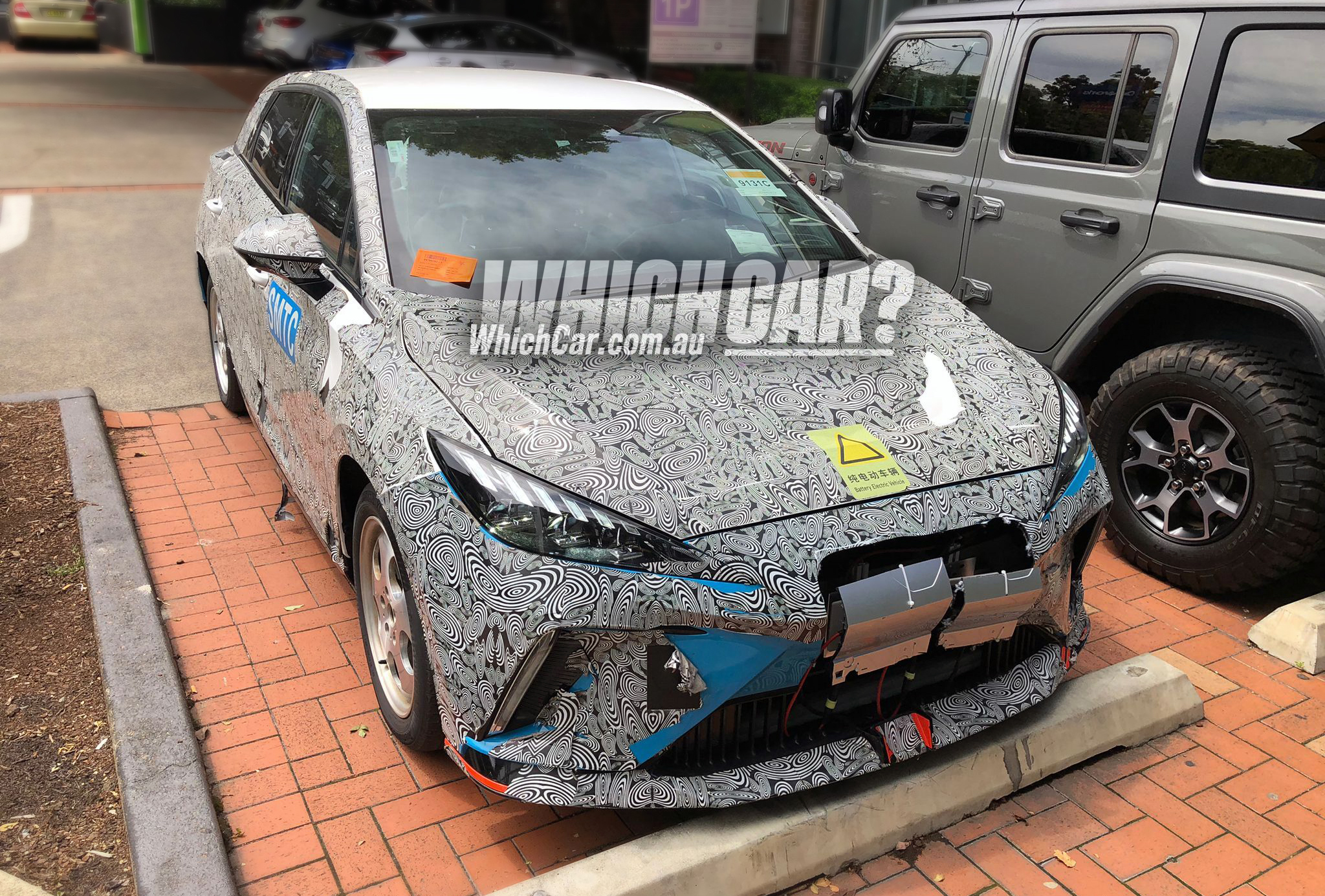
The MG 4’s number plate area is covered up with what appear to be pieces of sheet metal, with cables and data-gathering equipment hidden behind.
Chinese-owned MG has not announced local suspension tuning programs like Korean rivals such as Hyundai and Kia, instead this vehicle is most likely being used to evaluate infrastructure and technology features, such as traffic-sign recognition functionality.
Our spy shot was coincidentally snapped on the same day the MG 4 hatchback was awarded five stars in Euro NCAP safety testing.
Europe’s peak safety testing body awarded the new EV scores of 83 per cent in adult occupant and 80 per cent in child occupant protection testing. Safety assist programs were given a 78 per cent pass rate and vulnerable road user protection 75 per cent.
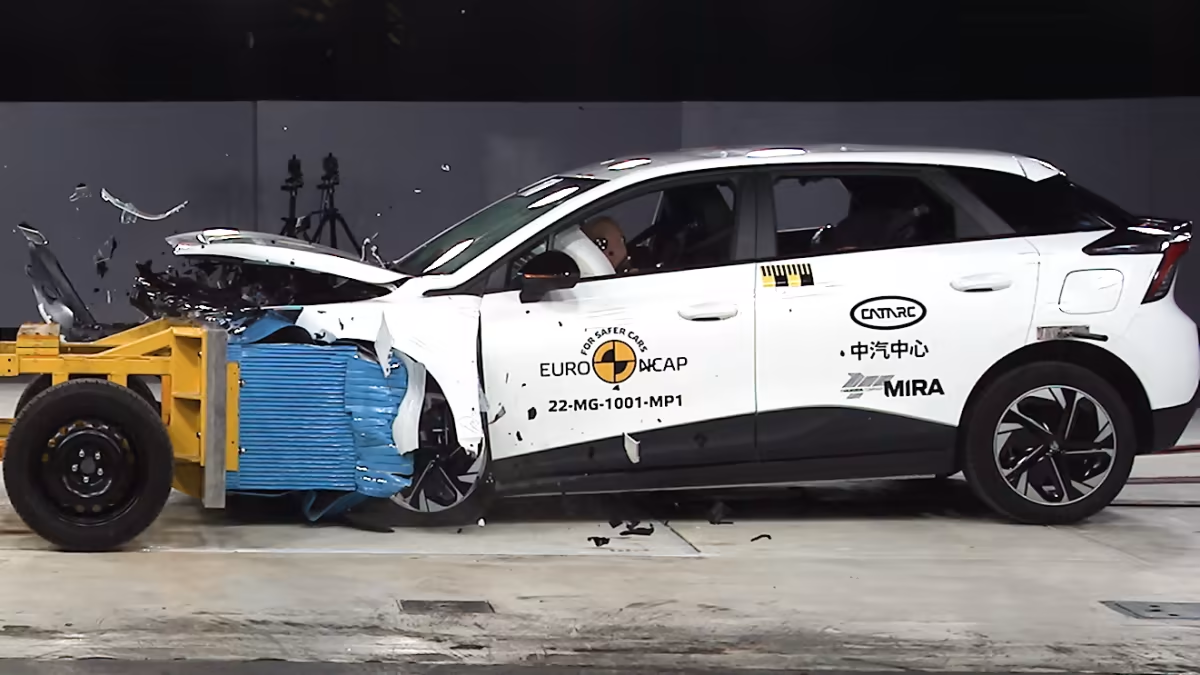
The Australasian New Car Assessment Program (ANCAP) has yet to evaluate the MG 4’s safety credentials, but a five-star Euro NCAP score typically translates into a full complement of stars for Australia.
Pricing, Australian timing and specification is all yet to be locked in.
The 150kW single motor MG 4, a rival for the BYD Atto 3 and MG ZS EV, is expected to launch first with a price from as low as AU$45,000 and driving range of 350 kilometres, climbing to 450km for the long range variant.
A hotter 330kW dual motor is expected to follow as a rival for the Hyundai Ioniq 5 and Polestar 2 dual motor.
November 7: 2023 MG 4 confirmed for first-half Australian arrival
At today’s local launch of the updated MG ZS EV, MG Motors Australia has confirmed the highly anticipated MG 4 electric hatch will arrive on the local market during the first half of 2023.
The MG 4 hatchback has long been earmarked for domestic sale, having arrived locally in August for testing, and more recently gaining its ADR (Australian Design Regulations) approval just last week.
Today’s confirmation during media question time marks the MG 4’s first official confirmation of Australian sale.
Further details, including local specifications and pricing, remain unconfirmed, however the car is currently offered in the UK market in standard 51kWh and long-range 64kWh configurations, with entry pricing converted to around AU$45,000.
A hot dual-motor variant was revealed last week for the Chinese market, producing 330kW and 600Nm, though that specific variant’s Australian arrival remains unknown.
More details will be revealed closer to the 2023 MG 4’s launch in H1 next year.
Stay tuned as more information comes to light.
Best Electric Cars Under $65k: Affordable EVs Rated
Welcome to part one of three price-based EV buying guides, this one focused on the most affordable electric cars available in Australia today
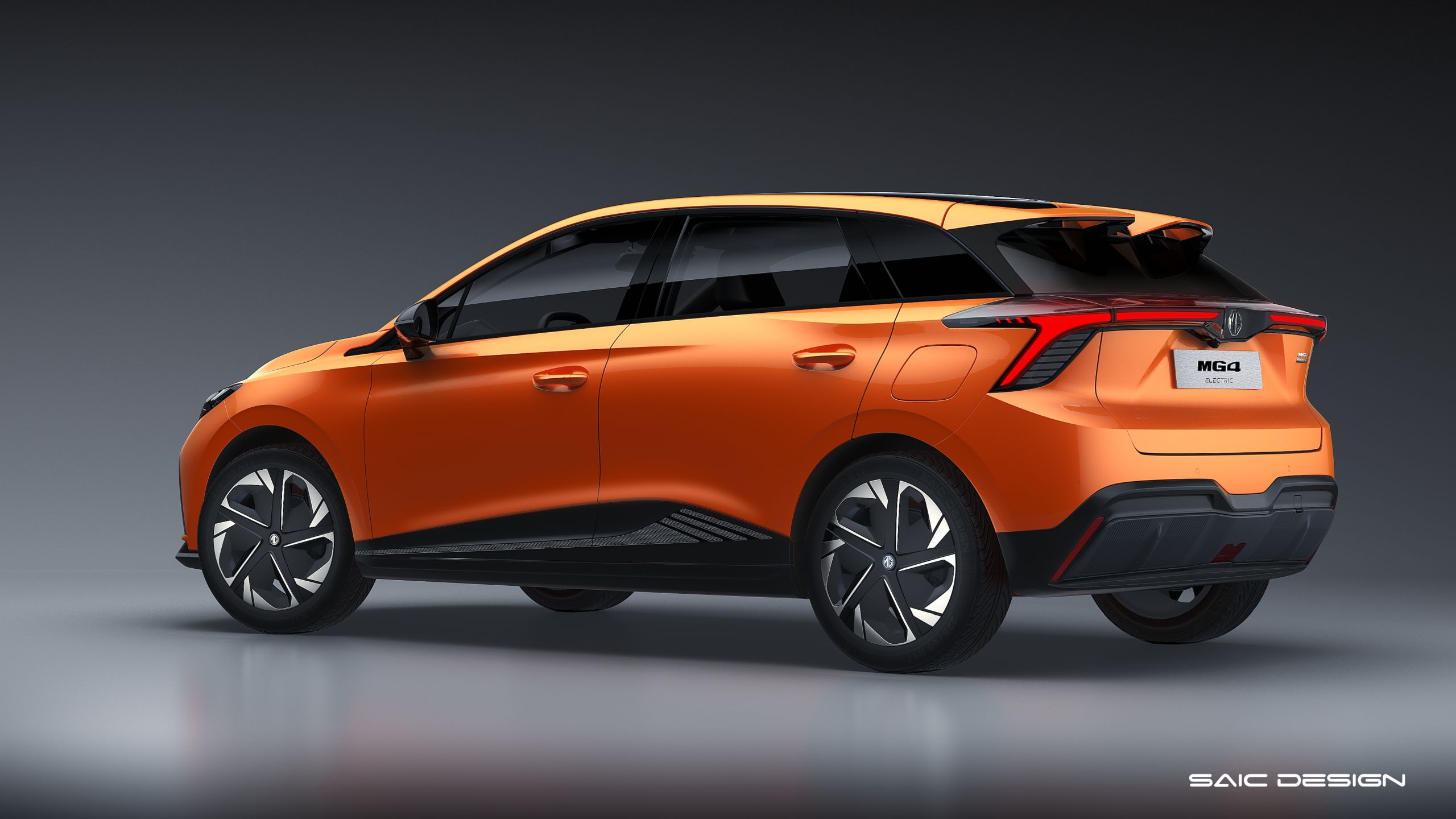
September 1: 2023 MG 4 electric hatch gets ADR approval
The 2023 MG 4 electric hatch is one step closer to a local arrival, with government documents revealing it has received Australian Design Rules certification.
The approval follows exclusive images sourced by Wheels of an example testing in Australia earlier this week (see below).
“We can confirm that we are working through the Australian Design Rules process and look forward to hopefully showcasing this model in due course,” said a spokesperson for MG Motor Australia.
The documents have not revealed drivetrain or battery details for the MG 4, however, we’d expect a similar line-up to the United Kingdom locally.
In the UK, the electric hatch is currently offered in standard and long-range forms, starting from £25,995 (AU$44,190).
A dual-motor variant, known as the MG Mulan Triumph Edition in China, was revealed this week, offering hot-hatch performance with 330kW of power and 600Nm of torque.
Stay tuned to Wheels for the latest information on the 2023 MG 4 electric hatch.
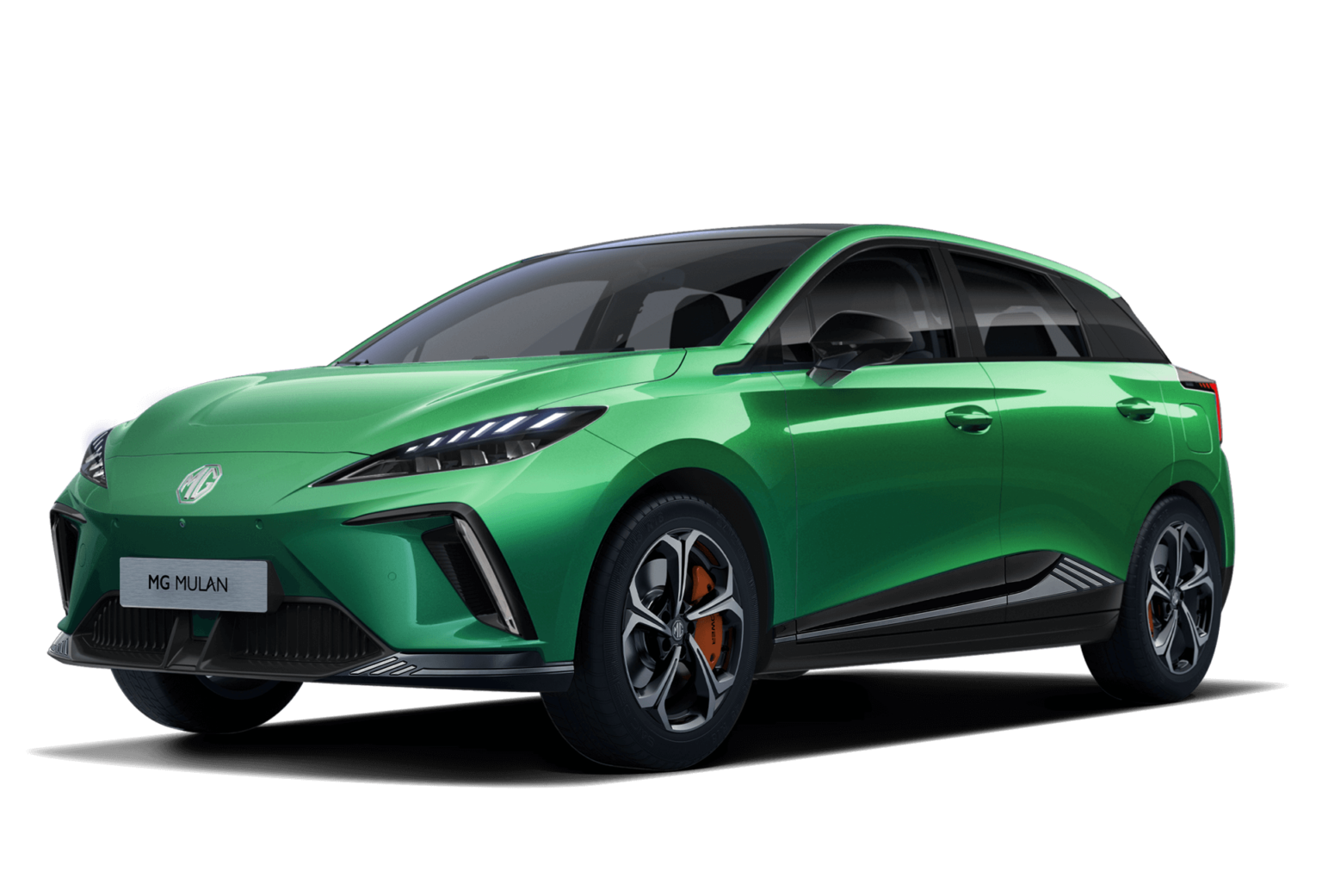
August 30: MG 4 electric hatch arrives in Australia for testing
The MG 4 electric hatch has arrived on Australian soil for testing, with hopes it will launch locally early next year.
The new EV will drop into the Chinese marque’s current range of models below the ZS SUV and above the MG3 city-sized hatchback.
Exclusive images obtained by Wheels show the MG 4 arriving in Australia, where it is understood to be undergoing testing against local conditions, as well as homologation and conversion to right-hand-drive.
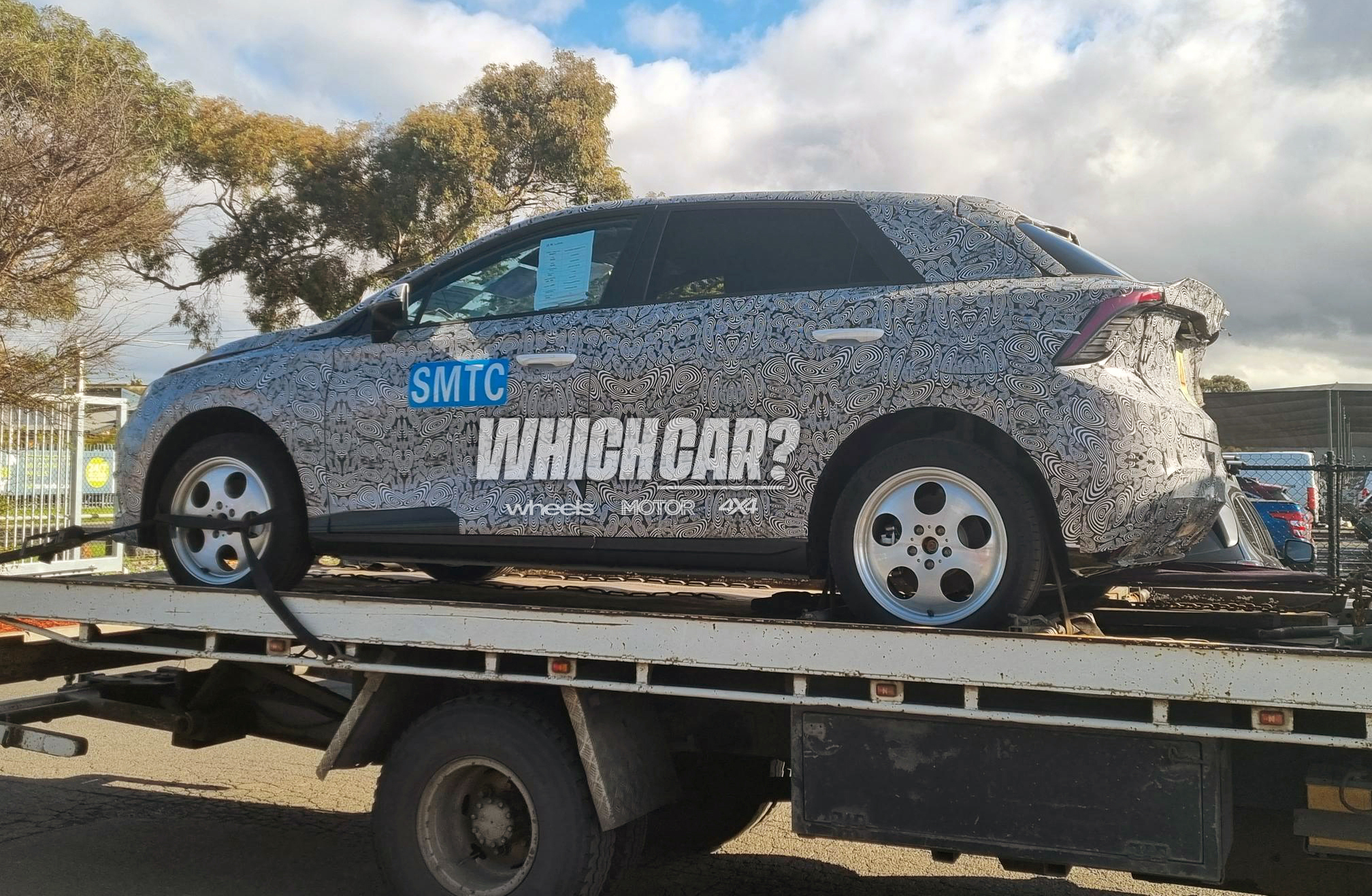
The MG 4 is still to be officially confirmed for an Australian launch, although the company’s local arm has previously revealed it is evaluating the model and hopes to bring it here by early 2023.
A spokesperson told us: “The MG 4 remains very firmly in our sights for Australia, although timing for its arrival will be announced in due course.”
Revealed for Europe earlier this year, the new 2023 MG 4 electric vehicle is on sale for the equivalent of just over $45,000 in Australian dollars. By comparison, the MG ZS EV currently offered in Australia is priced from $46,990 drive-away for the entry-level Excite and $49,990 drive-away for the top-shelf Essence.
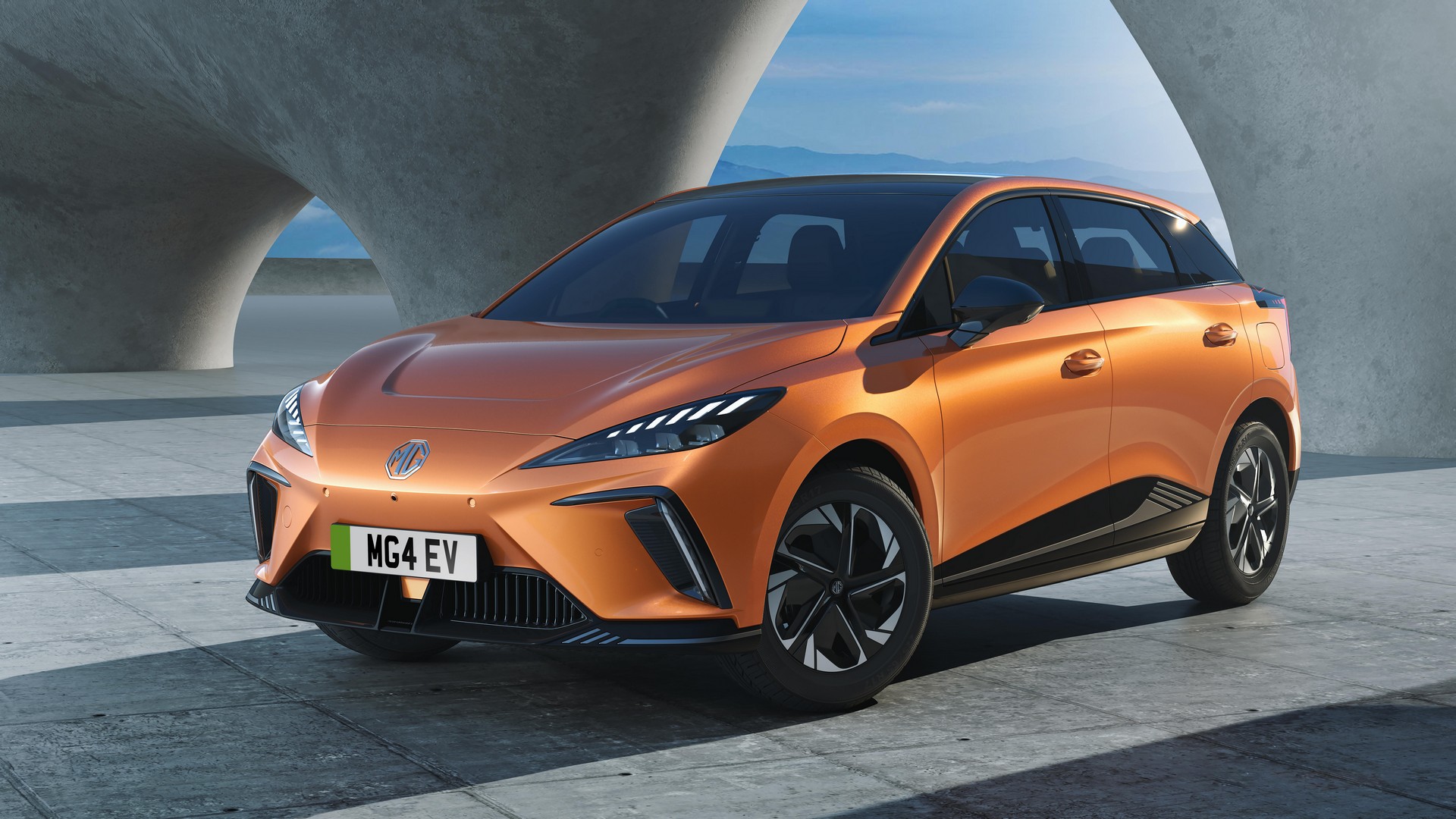
Underpinned by MG’s new Modular Scalable Platform (MSP), the MG 4 will be available for European buyers with a choice of two floor-mounted, 110 millimetre tall battery packs –either a 51kWh or 64kWh unit, capable of delivering up to 350 or 450 kilometres of driving range respectively.
While the 51kWh-equipped MG 4 delivers 125kW to the rear wheels through its electric motor, the larger 64kWh battery allows for up to 150kW, enabling a 0-100km/h time of under eight seconds with a limited top speed of 160km/h.
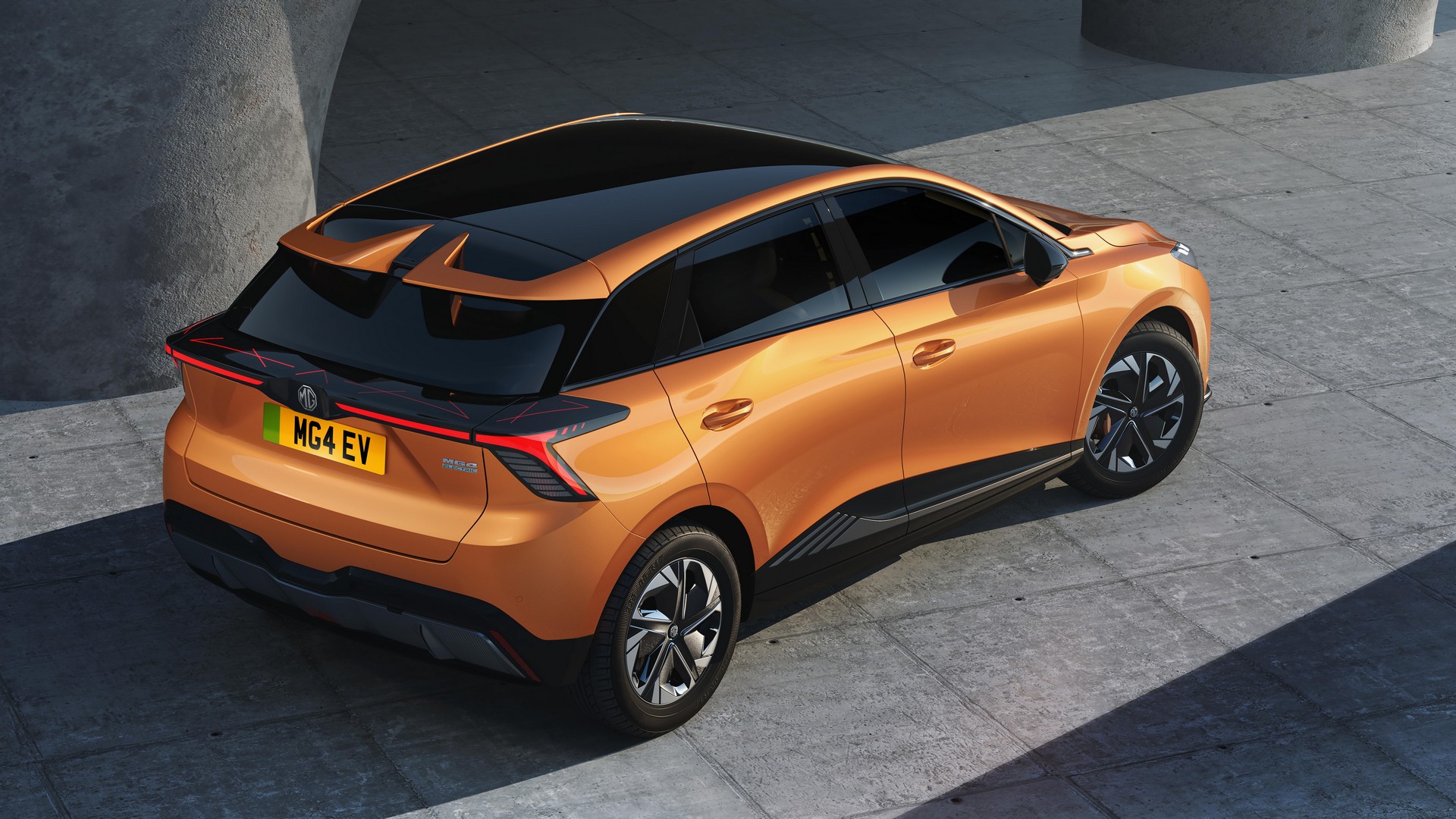
It rides on a 2705mm wheelbase, which compares favourably to the ZS EV’s 2585mm footprint, although its overall length is shorter at 4287mm versus the ZS EV’s 4314mm.
Interior comfort should be better than in the ZS EV, however, thanks not only to the longer wheelbase but also to its slightly wider design – 1836mm versus 1809mm.
According to AutoExpress, the MG 4 range will be expanded with a new dual-motor performance flagship version in around six months’ time
Ford Australia has issued a recall for around 1400 vehicles due to a manufacturing defect.
Snapshot
- 2022 Ford Ranger and Everest recalled
- Due to manufacturing defect for the driver’s seatbelt
- Around 1400 vehicles affected
The cause of the recall – affecting 1380 new-generation Ford Ranger and Everest vehicles built in 2022 – relates to the driver’s seatbelt, which could be assembled incorrectly.
According to the notice published by the Department of Infrastructure, this could cause the seatbelt’s effectiveness to be reduced in an accident.
“If the seatbelt is not assembled correctly, it will not adequately restrain the occupant in a crash, increasing the risk of injury or death.”
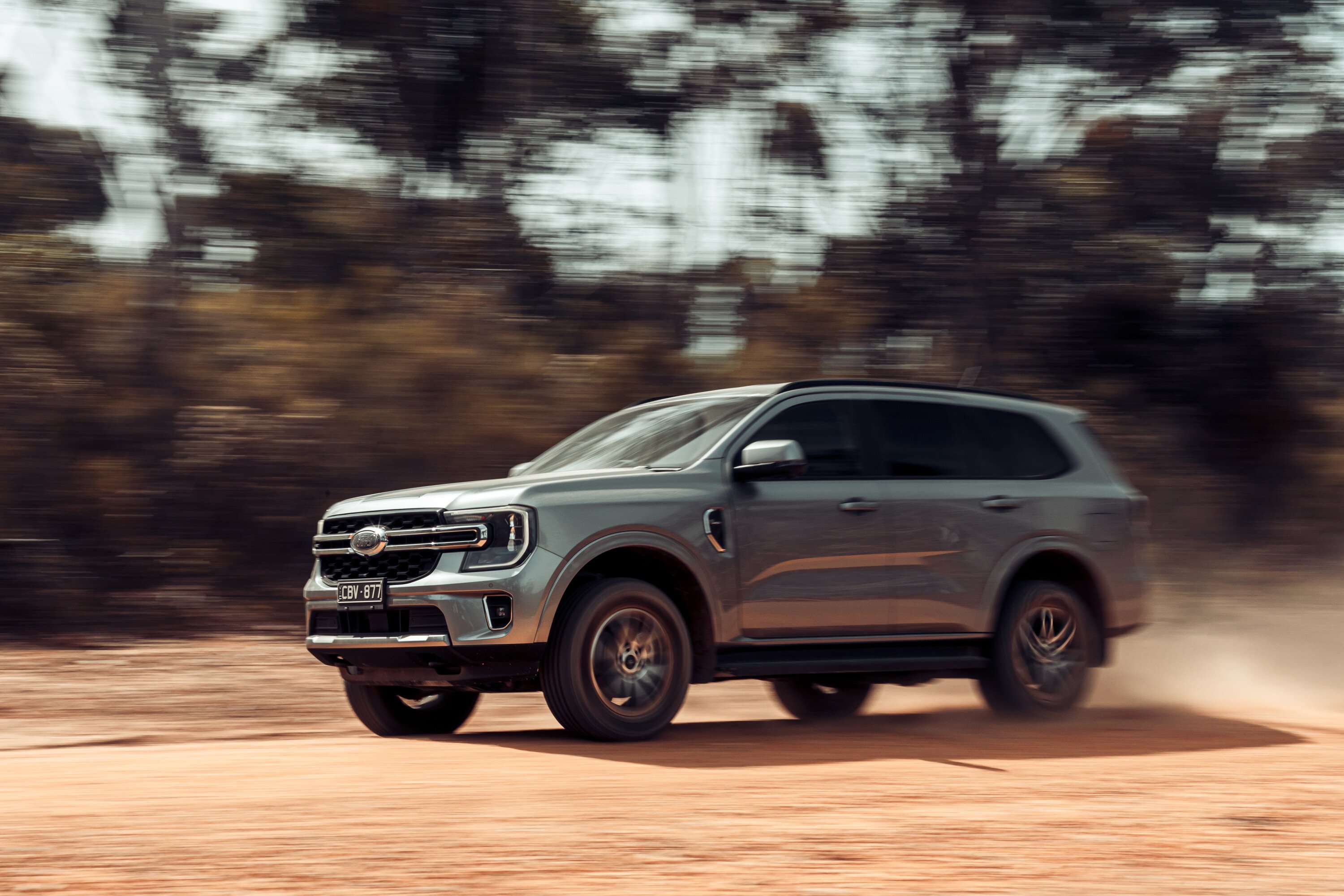
Ford Australia said affected owners should contact the company to ensure their details are up-to-date, with parts currently unavailable.
It said affected owners would be contacted when parts become available to book an appointment with their nearest dealership to inspect and rectify the fault at no cost.
A VIN list for the affected vehicles can be found here (CSV spreadsheet file).
The company can be contacted directly by calling 13 36 73, or by visiting a dealership, found here.
New 2024 Mini Electric hatch shows its skin ahead of big reveal
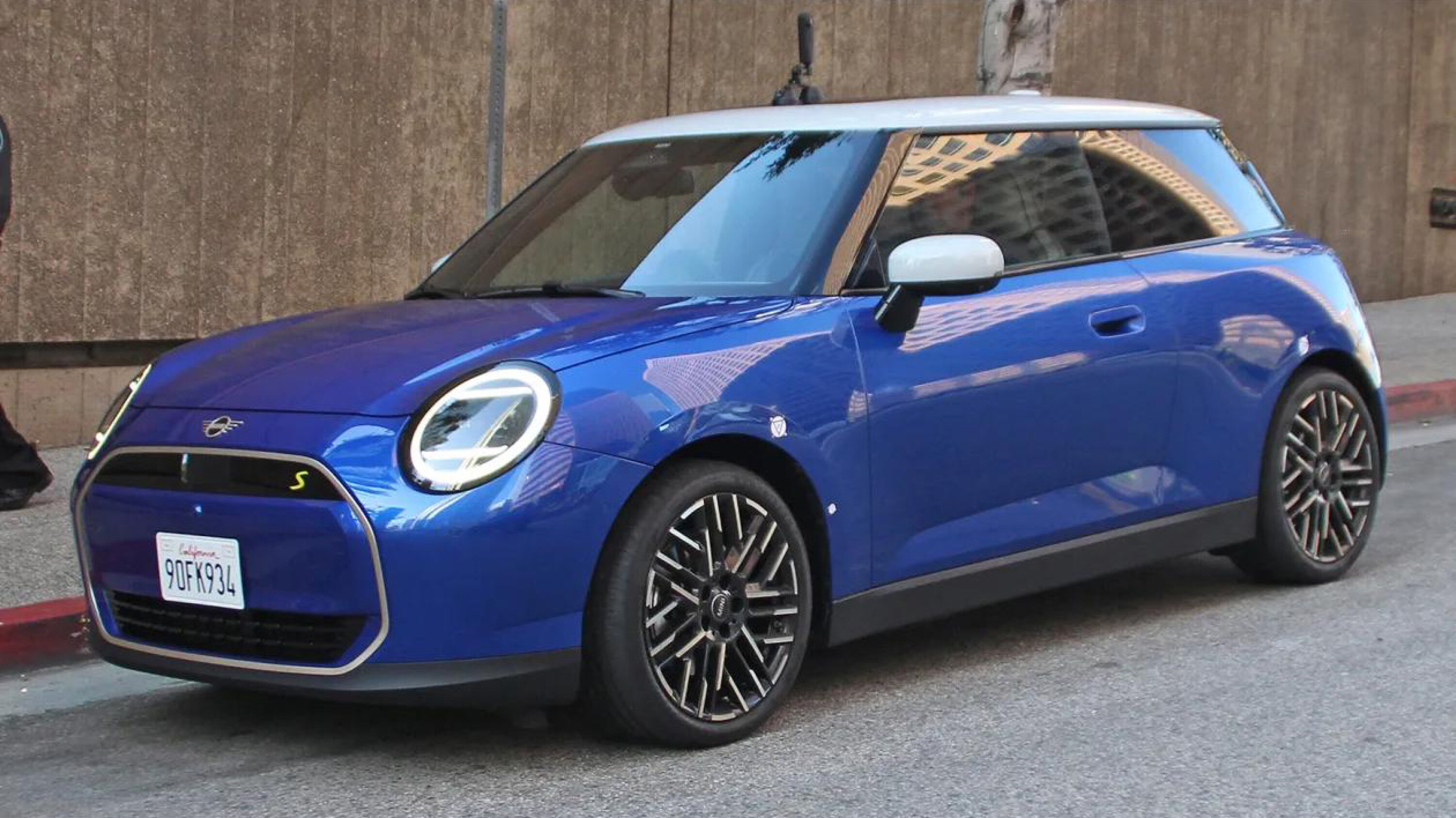
The new-generation 2024 Mini Cooper electric hatch has surfaced online this week, captured in California as it undergoes filming and photography for the coming onslaught of marketing.
The new-look Mini, posted to Instagram, looks set to enter as the biggest styling revolution the brand has seen in decades – as far as a Mini goes.
The round headlights and huge grille are still present, but both elements are bigger than ever before, surrounded by a more streamlined bumper design than past generations.
This variant, clearly marked as a sporting Cooper S, shows its badges in the usual positions.
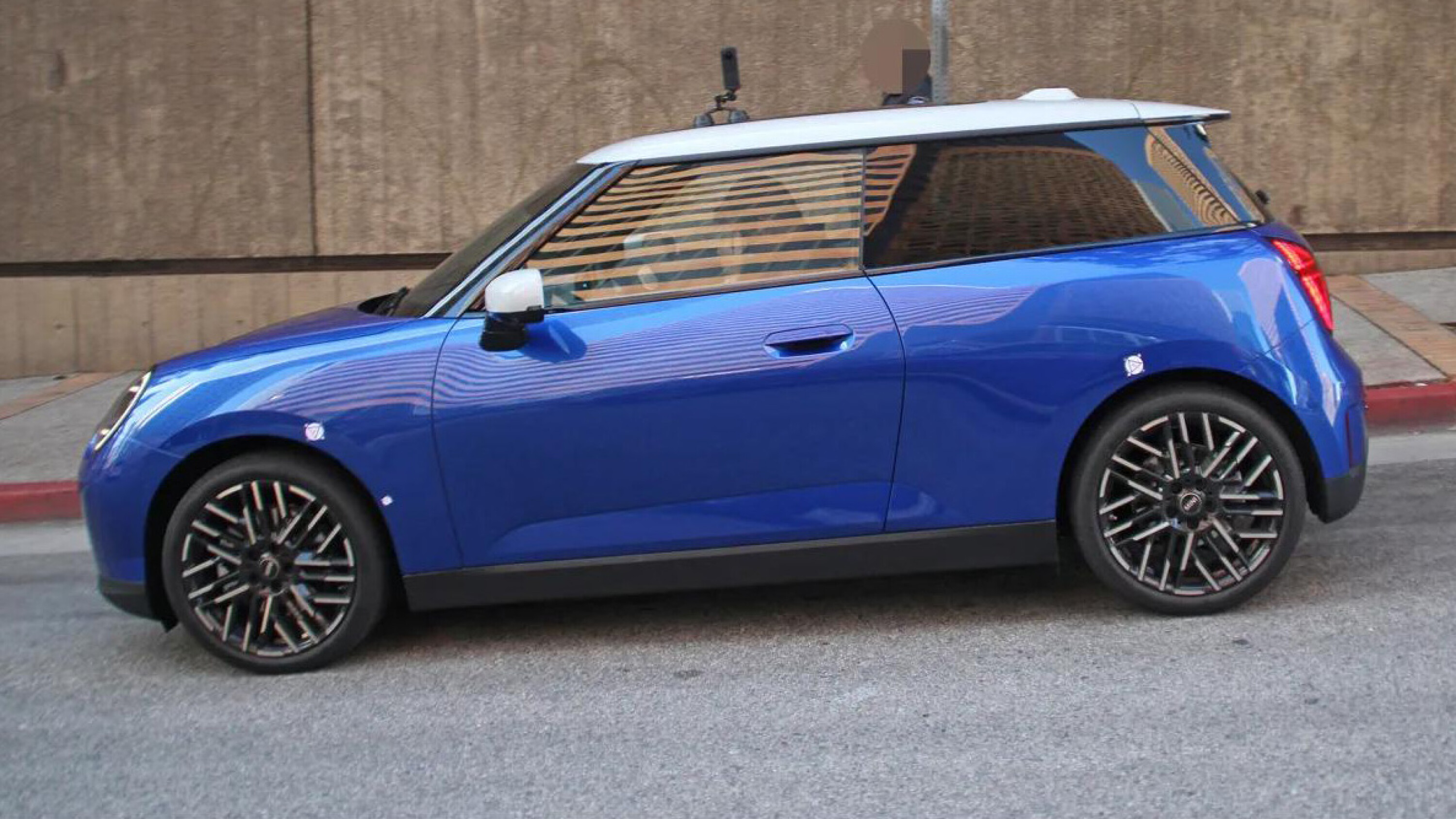
The profile or side view is instantly recognisable as a Mini, but again there’s a new level of simplicity and minimalism in its character. Never has a car looked more like the silhouette it’d cut on a dark night.
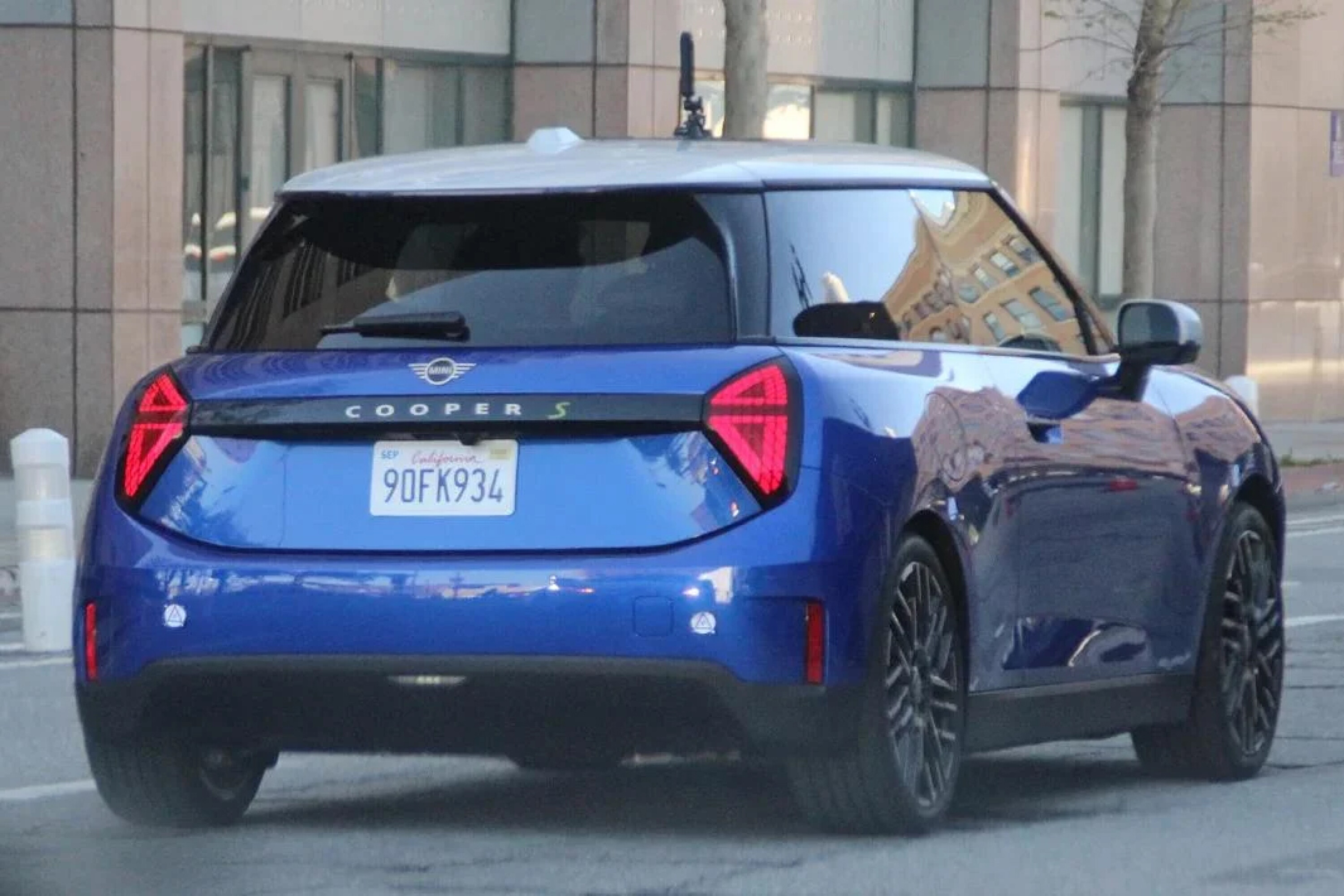
The rear is where the most standout change can be found, with new triangular tail lamps replacing the familiar rectangles of previous models. And, while we have only one photo to work from, it looks as if the Union Jack will continue as the key LED light signature.
The new tail lamps are connected through the centre by a simple black bar, with the Cooper and S badges sitting prominently beneath the familiar Mini logo.
As an all-electric model, this Cooper also has no exhaust pipe to be seen at the rear, with only a smooth grey plastic insert along the bottom of the bumper.
In 2021, BMW confirmed all future electric Mini models will be built in China by GWM.
Announced as part of a larger event discussing the group’s future, Mini’s move to pure electrification is described as “absolutely ideal” for the “urban brand”.
The Mini brand‘s very last combustion engine will be introduced by around 2025, the group says, with only electric models to be launched from that point.
Mini’s range of fully-electric models will account for “at least” 50 per cent of all sales, with every single Mini model available only as an EV “by the early 2030s”.
It remains to be seen what this will mean for Mini pricing in Australia, although without a revolution in battery costs, buyers can undoubtedly expect the point of entry to become markedly more expensive.
Right now, the Mini Electric Classic is priced from $55,650 before on-road costs in Australia.
It seems like most European compact EVs in Australia will stick around that $50k price point. The recently announced Fiat 500e will start from $52,500 while the larger but still Qashqai-sized Renault Megane E-Tech will enter from around $70,000.
The new Mini is expected to make its official debut later this month.
Australia’s best electric cars for 2023
We’ve tested nearly every EV below six figures in Australia to rank the best on sale today
The story to here
March 23, 2022: New Cooper showcased in cold-weather testing
The 2023 Mini Cooper Hatch is being tested in the Arctic Circle at BMW’s test centre in Arjeplog, Sweden.
While snow and ice driving isn’t relevant to the vast majority of Australians, there’s an important reason for the extreme winter testing. The next generation of Mini Cooper is completely electric, and battery and charging capabilities can suffer in near-freezing weather.
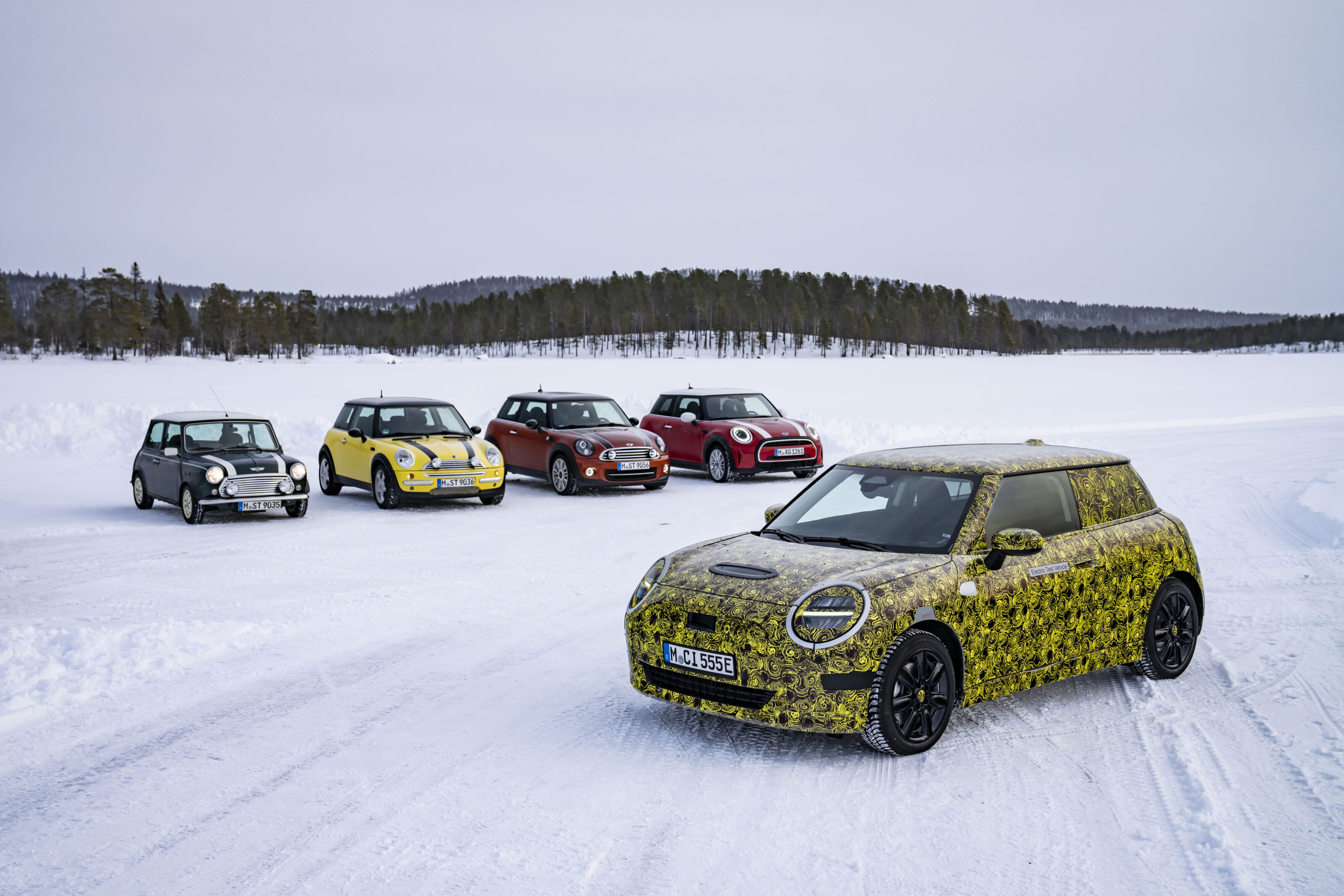
More importantly for the likes of northern Europe and Alpine-like regions in Australia, Mini is also testing the chassis, steering, and general dynamic behaviour of the fourth-gen (since BMW’s takeover) Cooper Hatch.
Mini says the EV tech in the prototypes has already proven itself with a “high degree of maturity at extreme temperatures below freezing”.
“Mini is on a path of growth and heading towards a fully-electric future,” said head of Mini, Stefanie Wurst.
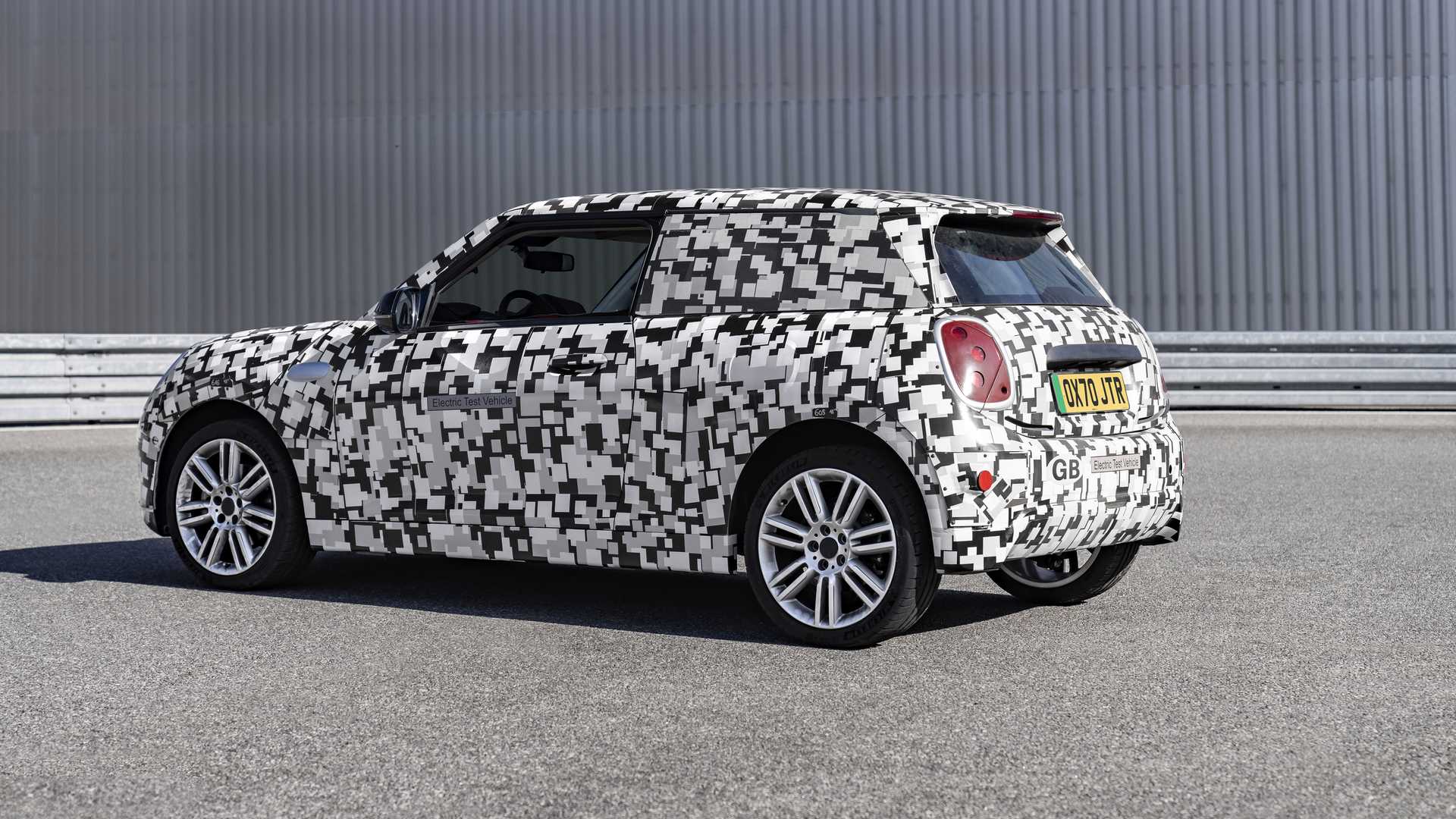
“Our iconic Mini three-door maximises the experience for our customers through its electrified go-kart feeling, combined with digitalised touchpoints – and a clear focus on sustainability with a minimal environmental footprint.”
Previous teasers and leaked images have shown the next Mini to be more closely following the original car’s ethos of minimalism, with wheels right at the corners of the car and the continuation of its simple design language.
Images from China, however, show a dramatically different rear, with sharp triangular tail-lights replacing the rounded designs of previous generations. It’s not yet completely clear if these are Chinese-market-only versions.
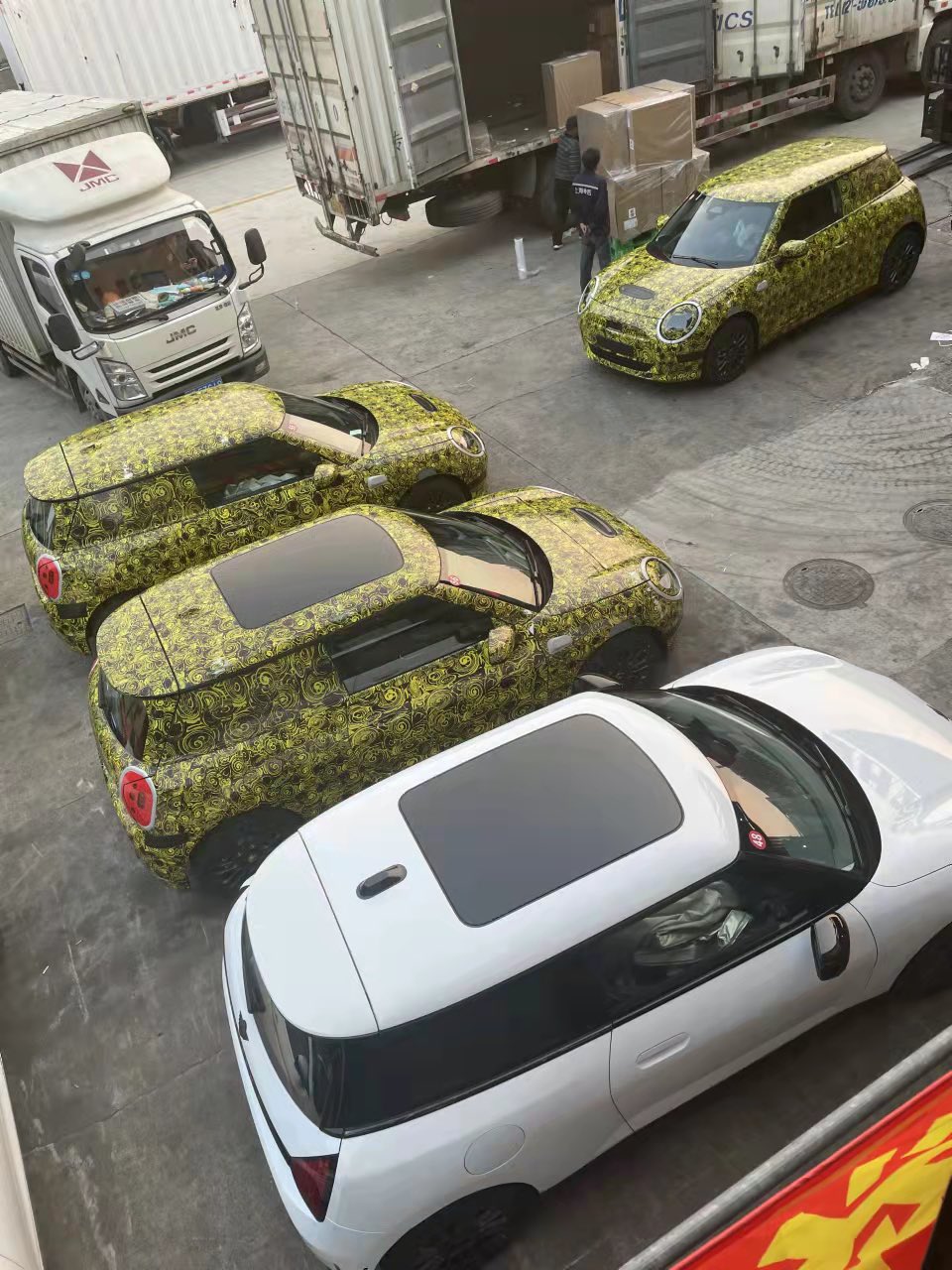
In a conversation with Wheels, previous Mini boss Bernd Korber said the next five years of Mini are “pretty much buttoned up.”
After the new three-door EV, a five-door EV crossover will follow in 2024. Simultaneously, the next Mini Countryman will be built in the BMW Leipzig plant with EV and ICE powertrains available, similar to BMW’s X1 and iX1.
“The plan is to market the compact utility vehicle as a small electric-only crossover, and to position the bigger third-generation Countryman SUV about half a notch above the current model,” Kerber said.
After two months of solid improvement in a post-COVID sales environment, Australian new car sales steadied in March, as delivery constraints posed problems.
According to monthly results from the Federal Chamber of Automotive Industries (FCAI), March’s sales were 3.9 per cent shy of the same month last year with 97,251 units registered, down from 101,233.
The market dropped 3.9 per cent this month, but year-to-date sales remain up 2.5 per cent in 2023, which FCAI chief executive Tony Weber says is a better indication of the situation.
“March was a solid month for new car sales given the supply constraints car makers are facing both domestically and internationally… year-to-date sales have increased 2.5 per cent which is a better indicator of the underlying strength of the market,” said Mr Weber.
March followed the trend of February, with Toyota down on its typical performance – in this case, 39 per cent – which is enough to account for the lower posted sales on its own.
Toyota Australia vice president sales, marketing and franchise operations, Sean Hanley, confirmed the brand is working to improve supply throughout the year.
“The March results confirm our earlier advice that the first quarter would be challenging for deliveries. We expect some improvement in supply during the second quarter and a further pick-up during the second half of the year.
“Demand for Toyota vehicles remains strong and our order bank is very healthy. For the full year, we are expecting to deliver more than 200,000 vehicles for the 19th time in the past 20 years,” Hanley added.
New South Wales sold the most vehicles with 30,256 registrations, ahead of Victoria at 24,107 and Queensland with 22,244 sales.
Western Australia (10,129), South Australia (6543), Tasmania (1620), the ACT (1576) and the Northern Territory (776) followed.

Australia’s top 10 cars for March 2023
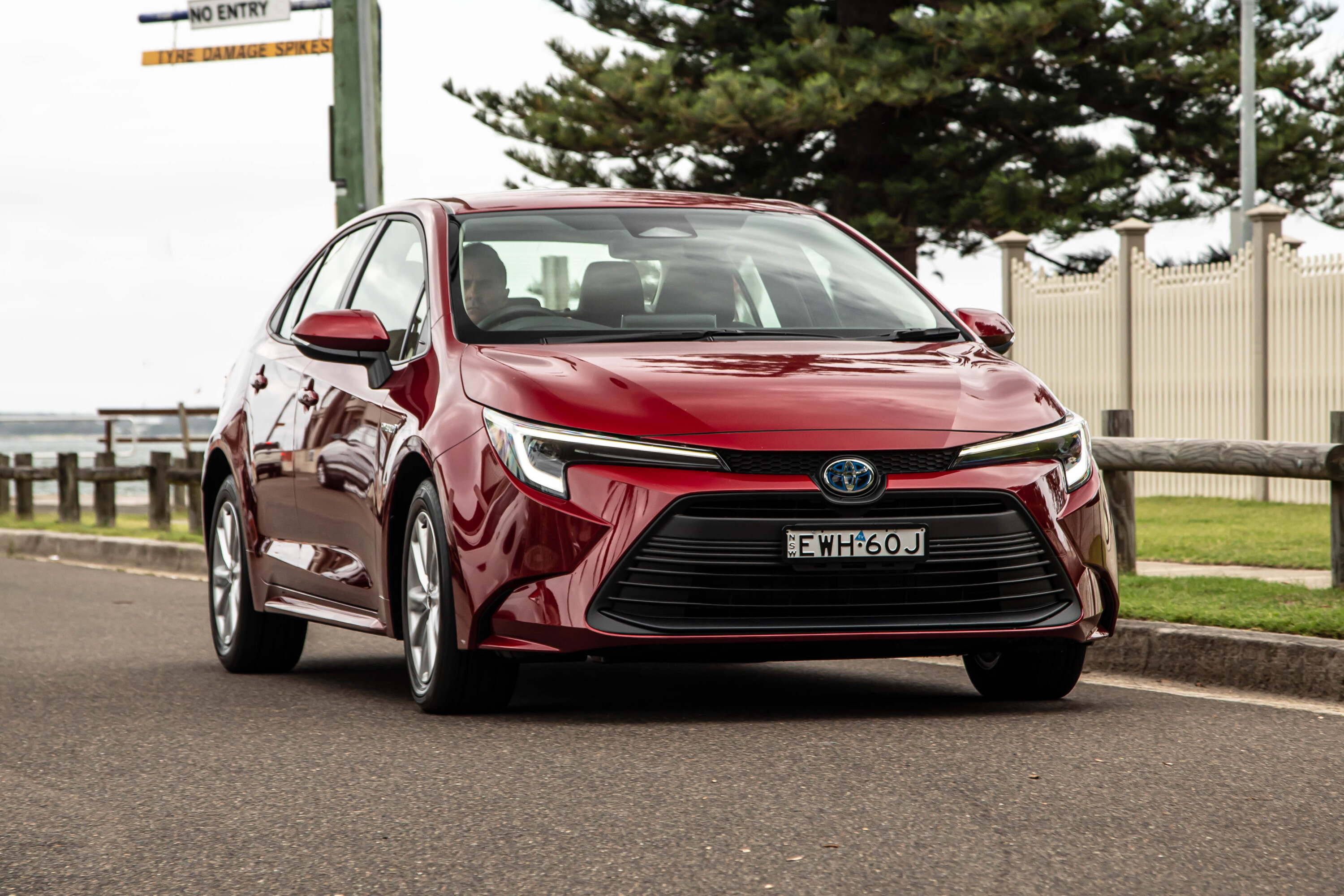
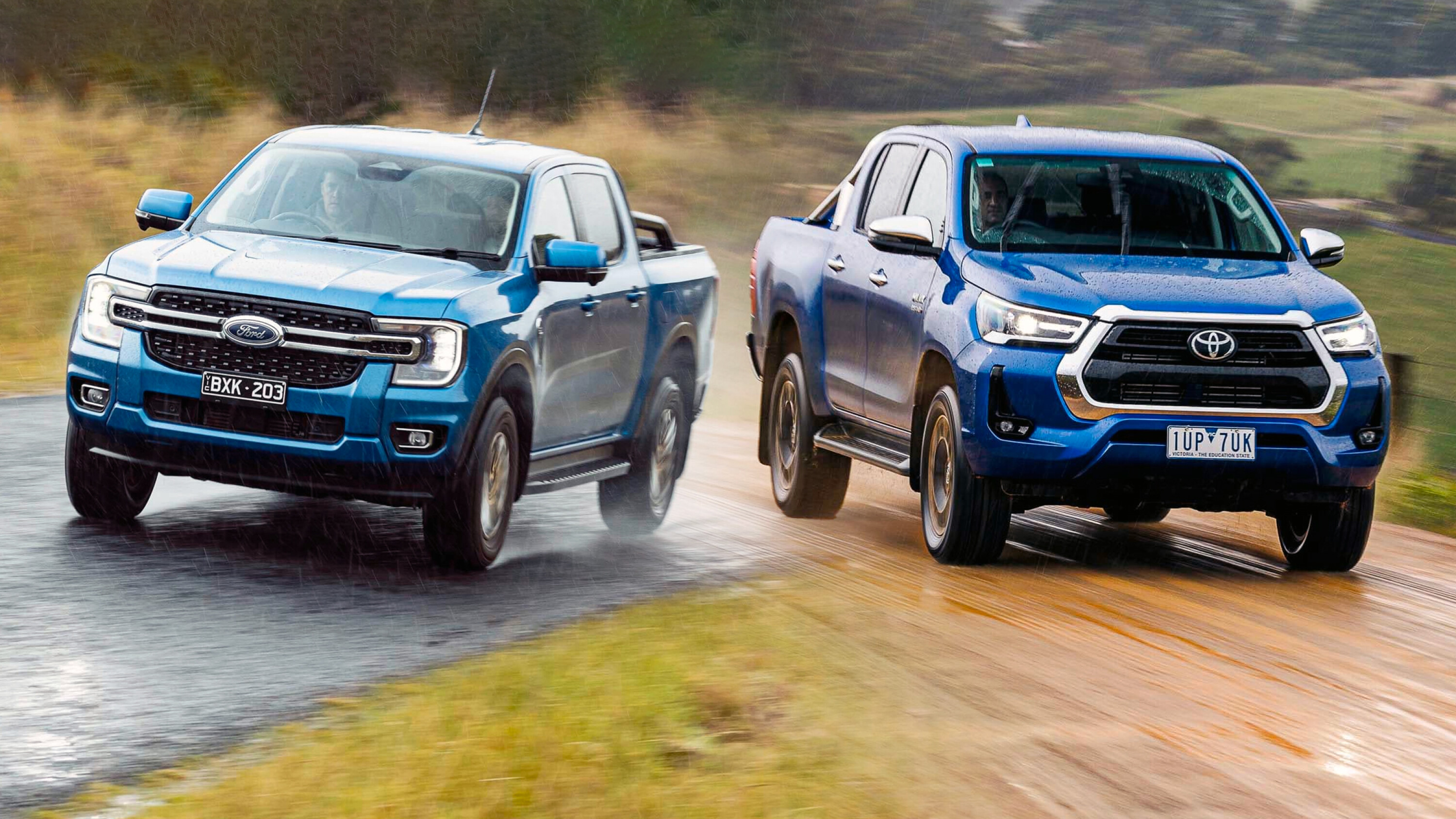
The three best-selling vehicles in March 2023 were all utes, with the Toyota HiLux (4583) narrowly scraping ahead of the Ford Ranger (4508), and the Isuzu D-Max in third (2789).
Mitsubishi has plenty to celebrate with its Outlander medium SUV scoring fourth place in the sales race (2169), and posting a generous 34 per cent increase over last year.
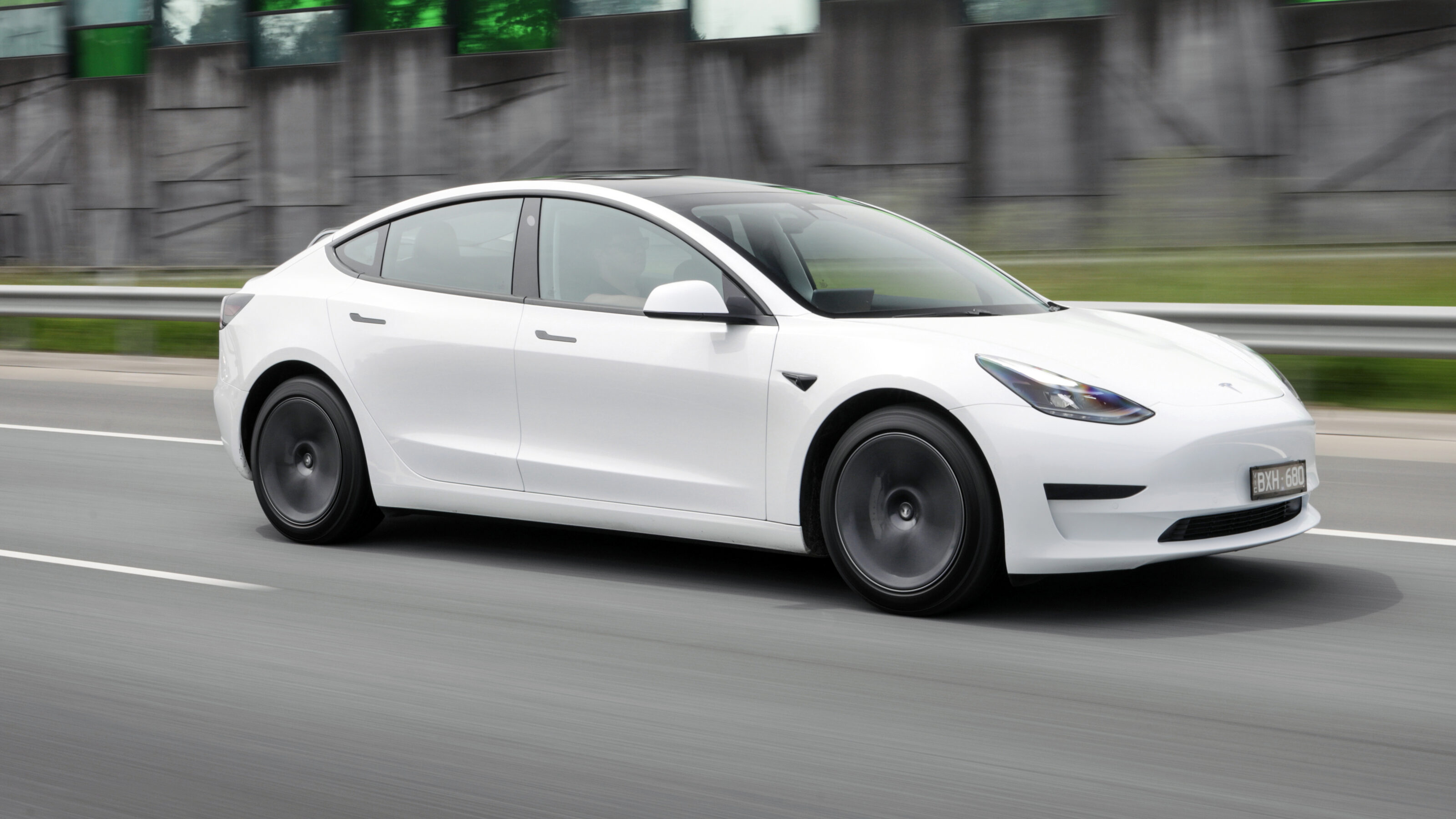
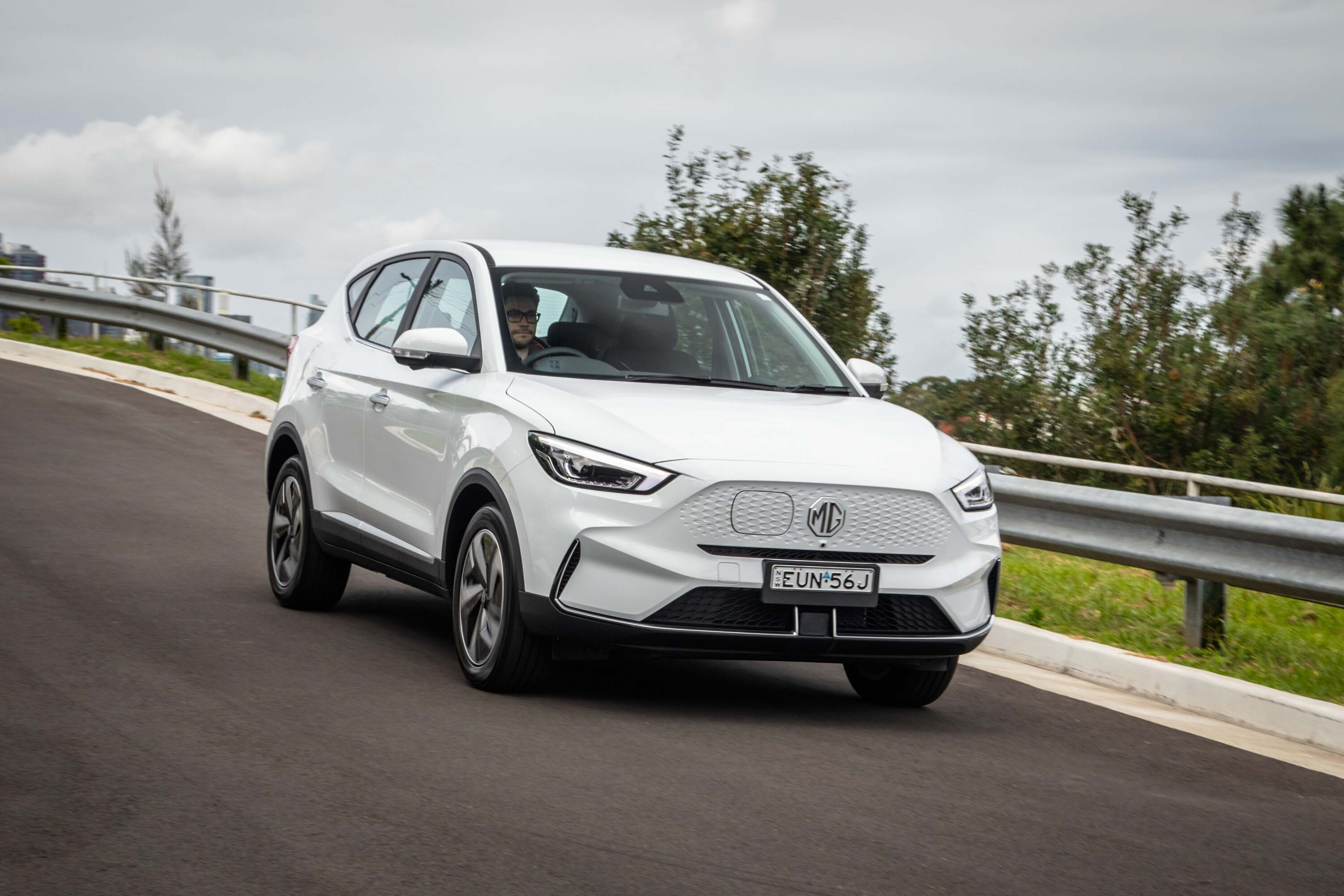
Fifth spot went to the Tesla Model Y (1938) outselling its sedan sibling for the first time. In year-to-date standings, the Tesla Model 3 is in third, ahead of the Mazda CX-5, though both vehicles had a less encouraging March, with the Mazda in sixth (1917) and the Tesla in 11th place (1640).
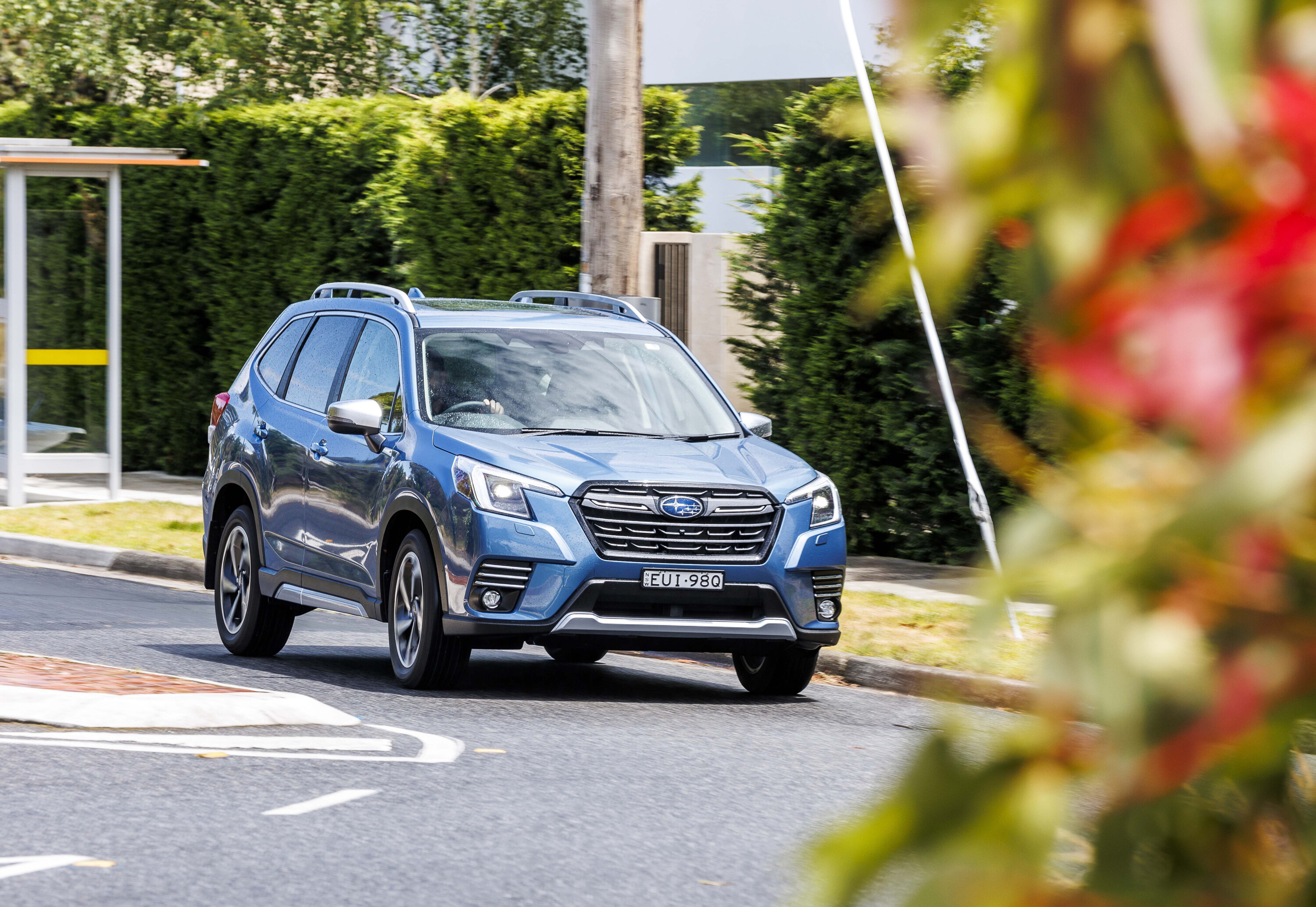
Seemingly from nowhere, the Subaru Forester scored seventh place (1881) followed by the MG ZS small SUV (1844).
An uncharacteristically-weak showing from the Toyota RAV4 put it in ninth for March, and the medium SUV usually seen vying for third place is in seventh year-to-date. The Isuzu MU-X posted a strong result in 10th with 1745 sales.
There was no single passenger car in this month’s top 10 sellers; five were medium SUVs, three utes, and one small and large SUV apiece. The usual small car performers, the Hyundai i30 and Toyota Corolla, finished in 13th and 17th, respectively.
In tables: Top 10 model year-to-date 2023
| Rank | Model | YTD 23 | YTD 22 | Variance |
|---|---|---|---|---|
| 1 | Ford Ranger | 13,730 | 9660 | 42% |
| 2 | Toyota HiLux | 12,653 | 14,718 | -14% |
| 3 | Tesla Model 3 | 7238 | 4417 | 64% |
| 4 | Mazda CX-5 | 6706 | 8250 | -19% |
| 5 | Isuzu D-Max | 6563 | 6272 | 5% |
| 6 | Mitsubishi Outlander | 6009 | 4644 | 29% |
| 7 | Toyota RAV4 | 5851 | 10,489 | -44% |
| 8 | MG ZS | 5733 | 5297 | 8% |
| 9 | Subaru Forester | 4960 | 3455 | 44% |
| 10 | Hyundai i30 | 4499 | 5853 | -23% |
Australia’s top 10 car brands for March 2023
Ups and downs ? ?
It’s a story we’re very accustomed to in ranking terms, but Toyota’s number-one spot looks less assured than usual, with 13,223 deliveries putting it 39 per cent down on March last year (▼ from 21,828 this time last year)
Conforming to the status quo, Mazda followed in second with 8243 deliveries (▼ from 11,248), and Ford third registering 6485 vehicles (▲ from 4245), with 85 per cent of its sales coming from Ranger and Everest.
Kia had another solid month with 6403 sales (▲ from 6051) – just 82 cars behind Ford – while Mitsubishi (5863, ▼ from 9007) overtook Hyundai (5369, ▼ from 6516) in March.
Following the traditional car brands were ladder frame specialist Isuzu (4534, ▲ from 6051 ) and Chinese-owned MG (4007, ▲ from 3962). An old stalwart, Subaru, posted cracking sales in March (3852, ▲ from 2279), led by many Forester deliveries. It was enough to sneak into ninth place.
Rounding out the top 10 this month was Tesla, with 3578 registrations. The electric car brand seems to have figured out its early drop-shipment woes and is now a familiar face among Australia’s best-selling cars.
In tables: Top 10 brands for March 2023
| Rank | Brand | Mar-23 | Mar-22 | Variance |
|---|---|---|---|---|
| 1 | Toyota | 13,223 | 21,828 | -39% |
| 2 | Mazda | 8243 | 11,248 | -27% |
| 3 | Ford | 6485 | 4,245 | 53% |
| 4 | Kia | 6403 | 6,051 | 6% |
| 5 | Mitsubishi | 5863 | 9,007 | -35% |
| 6 | Hyundai | 5369 | 6,516 | -18% |
| 7 | Isuzu Ute | 4534 | 3,306 | 37% |
| 8 | MG | 4007 | 3,962 | 1% |
| 9 | Subaru | 3852 | 2,279 | 69% |
| 10 | Tesla | 3578 | 4,417 | -19% |
And the rest…
| Make | Mar-23 | Mar-22 | YTD 2023 | YTD 2022 |
|---|---|---|---|---|
| Volkswagen | 3476 | 2832 | 8948 | 6125 |
| Nissan | 3404 | 3168 | 8425 | 8322 |
| GWM | 3338 | 907 | 8194 | 2886 |
| BMW | 2858 | 1824 | 5385 | 5369 |
| Mercedes-Benz | 2774 | 2761 | 6692 | 6799 |
| LDV | 1954 | 1387 | 5029 | 3553 |
| Audi | 1770 | 1185 | 4803 | 2713 |
| Honda | 1608 | 1508 | 3939 | 4089 |
| Suzuki | 1518 | 2027 | 4310 | 4705 |
| Isuzu | 1256 | 1057 | 3240 | 2450 |
| Lexus | 1133 | 855 | 2351 | 2088 |
| BYD | 1061 | 0 | 2098 | 0 |
| Volvo | 1017 | 1043 | 2737 | 2623 |
| Renault | 705 | 882 | 1990 | 2545 |
| Ram | 681 | 464 | 1637 | 963 |
| Land Rover | 677 | 726 | 989 | 1203 |
| Skoda | 644 | 716 | 1968 | 1470 |
| SsangYong | 536 | 217 | 1474 | 724 |
| Jeep | 519 | 685 | 1218 | 1784 |
| Mini | 457 | 173 | 912 | 676 |
| Cupra | 449 | 0 | 808 | 0 |
| Porsche | 425 | 730 | 1421 | 1576 |
| Chevrolet | 224 | 169 | 680 | 443 |
| Polestar | 212 | 115 | 548 | 115 |
| Peugeot | 199 | 175 | 425 | 542 |
| Fiatu00a0 | 184 | 172 | 503 | 415 |
| Genesis | 69 | 60 | 285 | 215 |
| Jaguar | 55 | 111 | 110 | 178 |
| Alfa Romeo | 41 | 61 | 100 | 162 |
| Maserati | 35 | 59 | 73 | 147 |
| Citroen | 23 | 34 | 44 | 96 |
| Aston Martin | 22 | 10 | 35 | 27 |
| Ferrari | 16 | 20 | 55 | 57 |
| Bentley | 12 | 24 | 57 | 51 |
| McLaren | 6 | 4 | 20 | 9 |
| Rolls-Royce | 4 | 5 | 7 | 15 |
| Lotus | 3 | 18 | 26 | 53 |
| Lamborghini | 1 | 8 | 26 | 23 |
| Alpine | 0 | 1 | 0 | 3 |
| Chrysler | 0 | 18 | 0 | 42 |
Size and Shape: Market segment results
The number one category overall was medium SUVs, with 22,086 deliveries, up 19 per cent compared to last year.
Utes also flexed their muscles, securing 21 per cent of sales this month, followed by small and large SUVs (13 per cent).
Passenger cars had a decreased share again in March, making up just 17.7 per cent of new-car sales.

In tables: New car sales by segment and size for March 2023
| Class | Mar-23 | Mar-22 | YTD 23 | YTD 22 |
|---|---|---|---|---|
| Medium SUV | 22,086 | 18,512 | 58,683 | 49,280 |
| 4×4 Uteu00a0 | 16,474 | 17,375 | 44,497 | 46,893 |
| Small SUV | 13,016 | 12,118 | 35,147 | 35,263 |
| Large SUV | 12,611 | 13,292 | 35,228 | 32,472 |
| Small Car | 6276 | 8128 | 16,933 | 21,493 |
| Light SUV | 4088 | 5016 | 14,255 | 13,962 |
| Medium Car | 4051 | 7078 | 13,495 | 11,749 |
| Light Car | 3457 | 3885 | 10,497 | 11,749 |
| 4×2 Uteu00a0 | 2725 | 3350 | 7348 | 8377 |
| Upper Large SUV | 1725 | 1955 | 4799 | 4448 |
| Medium Van | 1647 | 2117 | 4489 | 5951 |
| People Movers | 1123 | 1064 | 3864 | 2904 |
| Sports Cars | 978 | 688 | 2443 | 2064 |
| Ute 4×4 >$100K | 880 | 620 | 2256 | 1348 |
| Micro Car | 703 | 570 | 1573 | 2011 |
| Large Car | 557 | 521 | 1303 | 1279 |
| Small Van | 80 | 299 | 173 | 546 |
| Upper Large Car | 37 | 65 | 111 | 172 |
New-car sales by fuel type in March 2023
Electric vehicles accounted for 6.8 per cent of registrations this month and outsold hybrid and plug-in hybrid vehicles. When totalled, zero and low-emissions vehicles accounted for 12.8 per cent of new-car sales this month.
Though it’s encouraging to see the increase in uptake of low-emissions vehicles, as Mr Weber pointed out, the top-three sellers remain diesel utes that emit more than 190g/km of CO2.
“If we want more zero and low emission vehicles on our roads, then we must provide the necessary recharging infrastructure and move to implement an ambitious yet achievable fuel efficiency standard which will encourage manufacturers to allocate more of the limited supply to Australia,” Mr Weber added.
In tables: New car sales by fuel type for March 2023
| Fuel type | Mar-23 | Mar-22 | YTD 23 | YTD 22 | Variance (month) | Variance (YTD) |
|---|---|---|---|---|---|---|
| Petrol | 50,229 | 50,282 | 139,586 | 135,532 | 0% | 3% |
| Diesel | 30,063 | 33,369 | 83,095 | 89,086 | -10% | -7% |
| Electric | 6612 | 5532 | 17,396 | 6752 | 20% | 158% |
| Hybrid | 5247 | 7474 | 16,101 | 20,585 | -30% | -22% |
| PHEV | 569 | 427 | 1461 | 1047 | 33% | 40% |
| Hydrogen | 0 | 2 | 0 | 6 | -100% | -100% |
Country of Origin: Where Australia’s new cars came from in March 2023
Australians still love Japanese cars, with a quarter of sales hailing from the country, then followed by Thailand.
However, like February, China once again beat Korea to the podium, posting a 31.1 per cent increase on March last year and up 70.7per cent year-to-date.
A whole host of new Chinese brands starting sales in Australia can be partially thanked for the growth, with LDV, MG, Chery, and GWM among the fresh names.
But established companies are increasingly looking to China for manufacture, think Polestar, Tesla, BMW and more.
Following the big nations was Germany, with 4996 cars delivered to Australia in March, then by the United States, England, and Mexico.
In charts ?
March 2023 – Top 20 models
March 2023 – Top 10 brands
March 2023 – Overall segment sales
March 2023 – Category sales
March 2023 – sales map
March 2023 – buyer type
March 2023 – Model sales race
Toyota RAV4 XSE Hybrid v Nissan X-Trail Ti E-Power hybrid
Australia loves a good rivalry: NSW versus Queensland, “parma” versus “parmi”, even Phillip Lowe versus rampant inflation.
For years, in the car world, it was Ford versus Holden – but as their Australian factories disappeared, new rivalries have rushed in to fill the vacuum. One of them is Nissan versus Toyota, and swinging away in the shadow of Patrol versus LandCruiser is RAV4 versus X-Trail.
Toyota practically invented the compact crossover when it launched the RAV4 in Japan in 1993, and in the year 2000, Nissan unleashed the X-Trail as a snowboard-lugging, mountain-bike-chasing small SUV rival.
More than 20 years later, however, the RAV4 is the tearaway sales champion – basically the new Holden Commodore as Australia’s most popular passenger vehicle (that isn’t a ute).
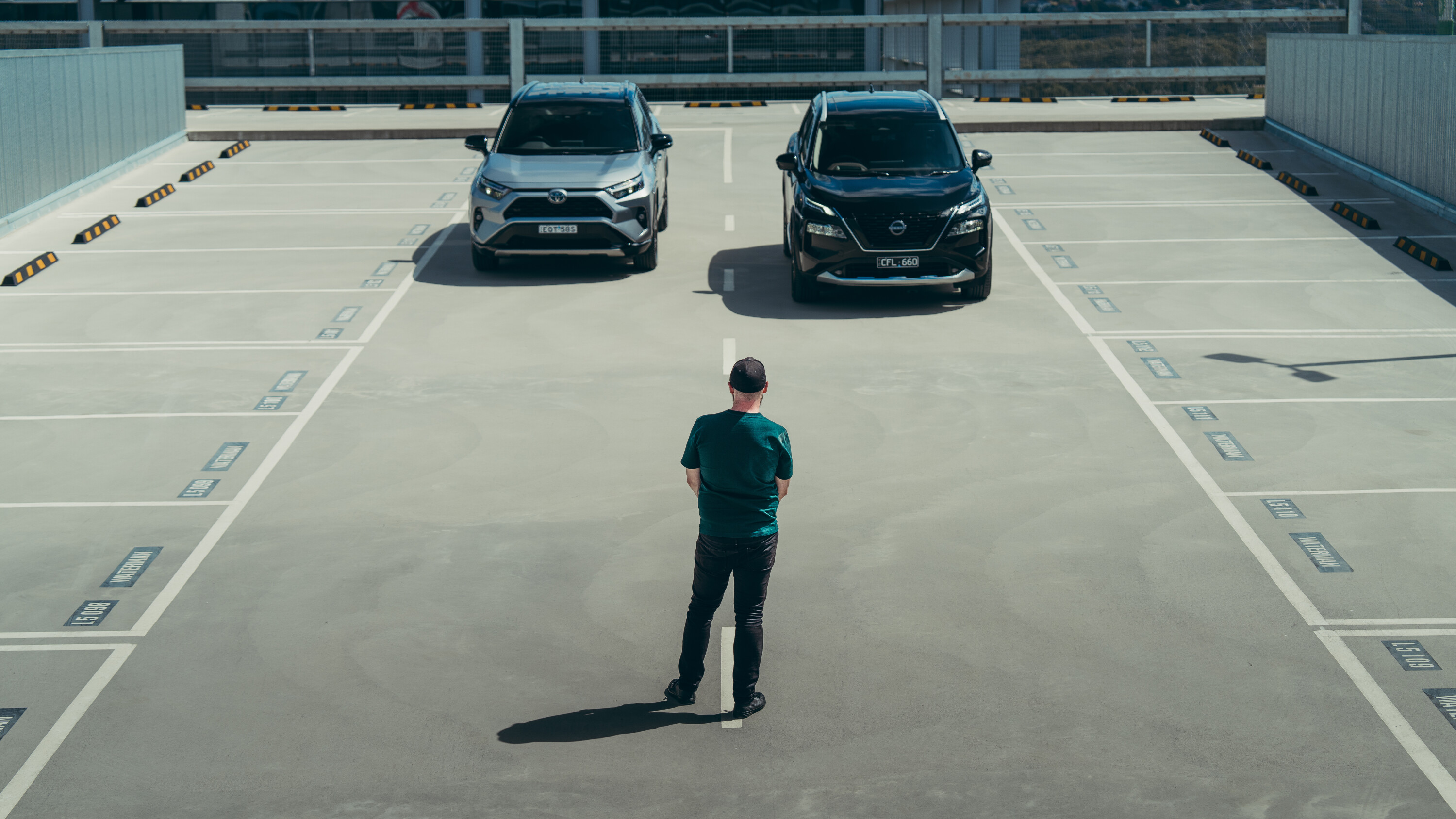
For the last decade or so, hybridisation has had a lot to do with the RAV4’s success – but now, there’s a new generation X-Trail offering the same thing. And in a more clever way, argues Nissan.
While the RAV4 hybrid’s petrol engine still powers the wheels, Nissan has copied Tesla in making a vehicle powered exclusively by electric motors. It’s just that, instead of fitting a giant battery you plug into a power socket – hopefully fed by green energy – they’ve fitted a teeny-tiny battery needing to be almost constantly recharged by an engine with a petrol tank.
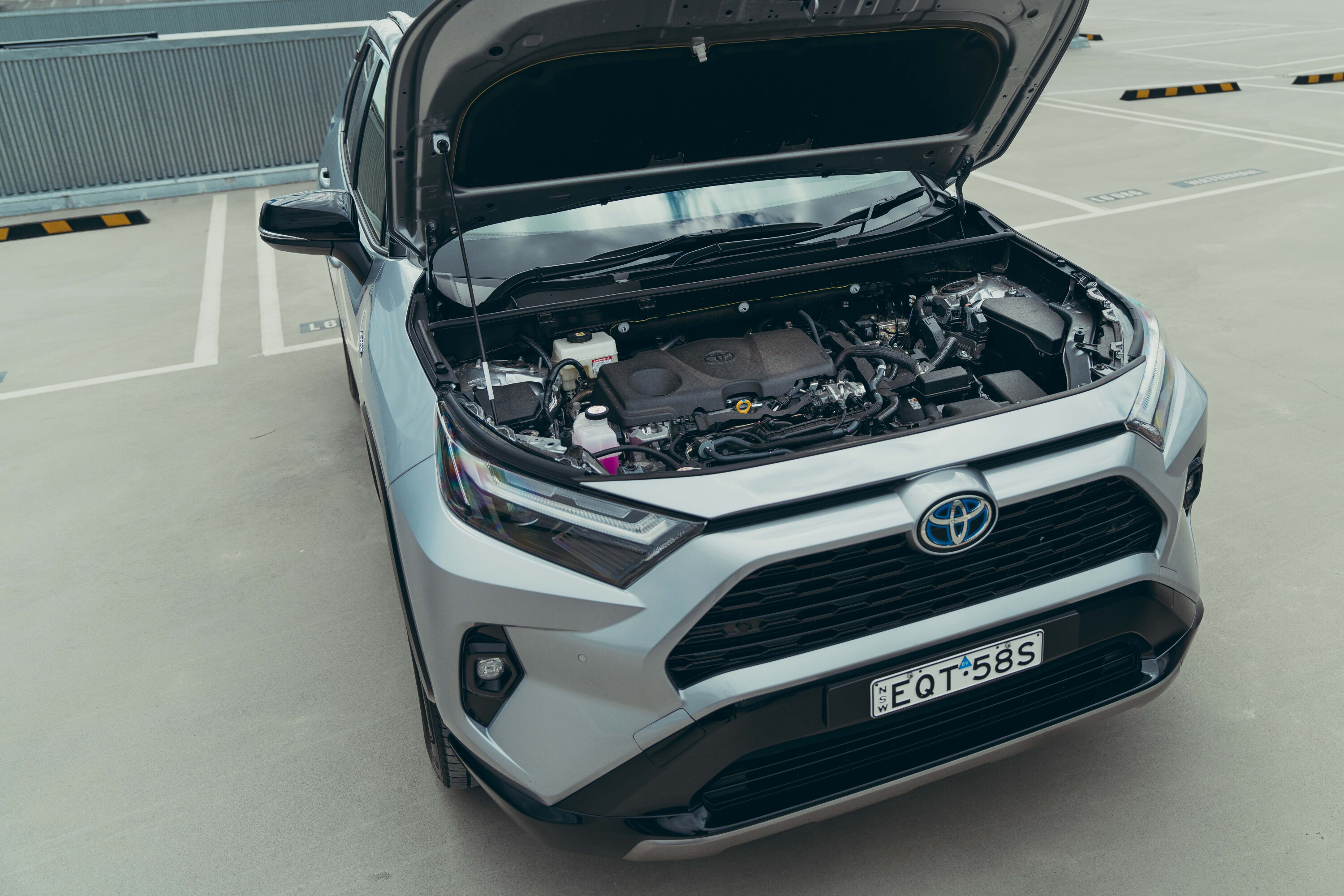
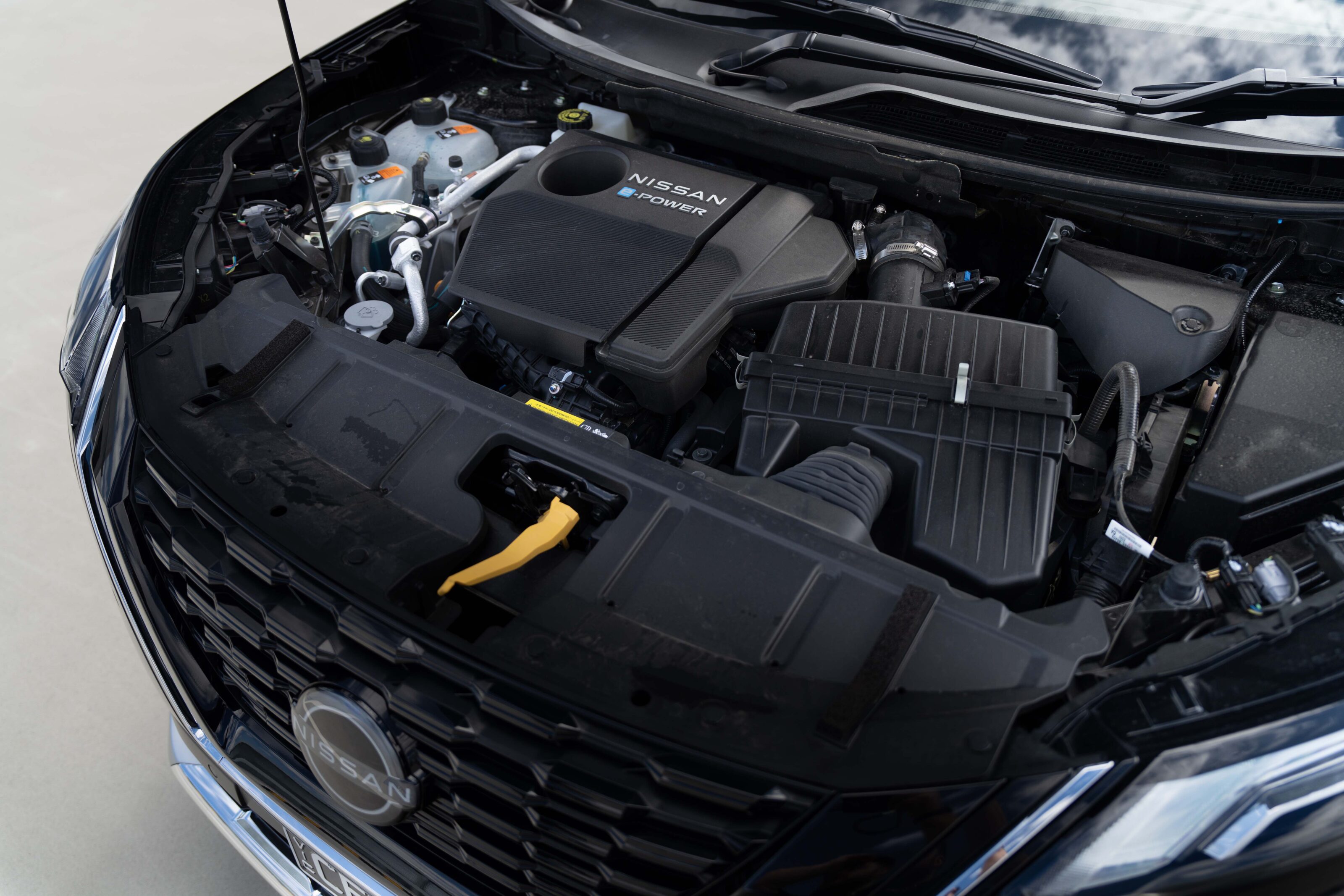
The dual electric motors – one front, one rear – give the X-Trail E-Power all-wheel-drive and a combined power output of 157kW. Under the bonnet, a 1.5-litre three-cylinder turbo-petrol engine switches on and off purely as a generator for the tiny battery, which in turn powers the electric motors.

As the battery is so small at just 2.1kWh – most electric cars are more like 60kWh – the petrol engine is kicking in and out constantly to keep it topped up.
Much of the X-Trail E-Power’s general concept has been inspired by the world of electric cars and, indeed, Nissan’s marketing team has sprinkled some electric vehicle fairy dust on its new hybrid SUV.
But don’t be misled, it’s still ‘just’ a hybrid powered by coral reef-killing hydrocarbons. Better, to be sure, than a purely internal combustion powered car, but it’s not even a plug-in hybrid like its closely related (and pricier) Mitsubishi Outlander cousin.

Toyota, meanwhile, offers both front- and all-wheel-drive hybrid RAV4s. While today we’re testing a front-drive hybrid (transparency: it was what Toyota could make available), the all-wheel drive versions with triple electric motors and 163kW are more comparable to the X-Trail E-Power.
Unlike the X-Trail E-Power, the RAV4’s 2.5-litre inline-four can recharge the small 1.5kWh battery but also directly drive the wheels as needed.
A clash of engineering philosophies, yes, but at the end of the day it’s all about whose approach uses the least fuel. Later we’ll reveal the answer.
Many customers will be drawn to the new Nissan simply because wait times for the RAV4 hybrid, as of March 2023, are ludicrously long. And, as we’re about to find out, even if there wasn’t a wait for the RAV4 you’d still be rightly tempted by the hybrid X-Trail.
JUMP AHEAD
- How much is it, and what do you get?
- Comfort and space
- On the road
- Safety
- Fuel efficiency
- Ownership
- VERDICT
- Specifications
Pricing and features
In terms of what you get for your money, the Nissan is a better deal.
Our X-Trail E-Power test car is the $54,190 (before on-road costs) Ti. Our RAV4 is an XSE 2.5 hybrid FWD which is $45,700 before on-road costs. The Edge 2.5 hybrid AWD would have been more directly comparable to the X-Trail E-Power Ti at $55,150, but since they’re sold out for about two years, this one was gonna have to do.
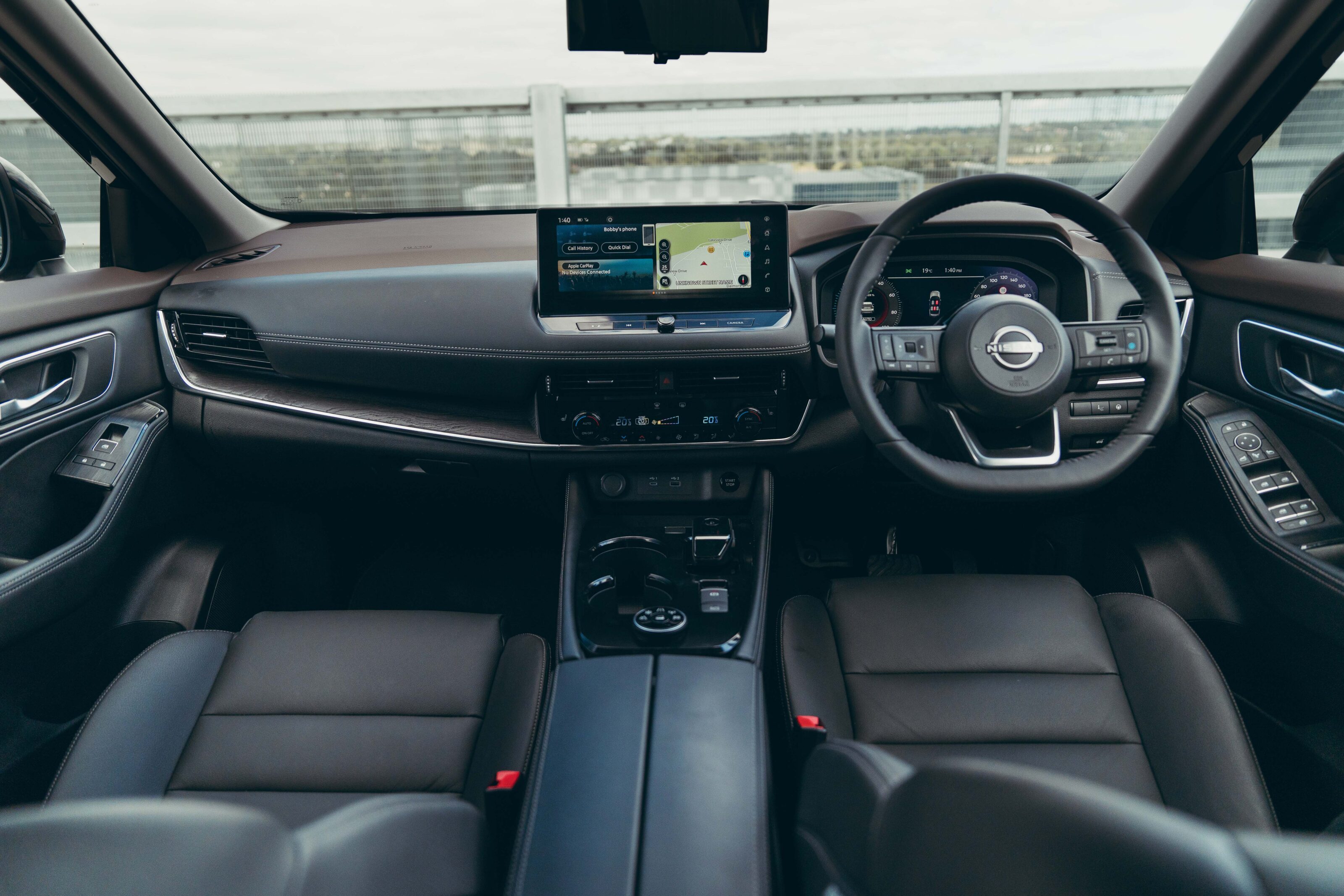
Both cars are richly equipped, but comparing RAV4 Edge to X-Trail E-Power Ti, for about $1000 less than the Edge, trumps Toyota’s standard kit list with a head-up display, video rear-vision mirror (which takes some getting used to, but is better than a normal mirror), larger 12.3-inch central infotainment screen (versus the RAV’s 10.5-inch) and a panoramic sunroof versus the moonroof of the RAV4. And, as you’ll read below, a much cleverer rear seat design.
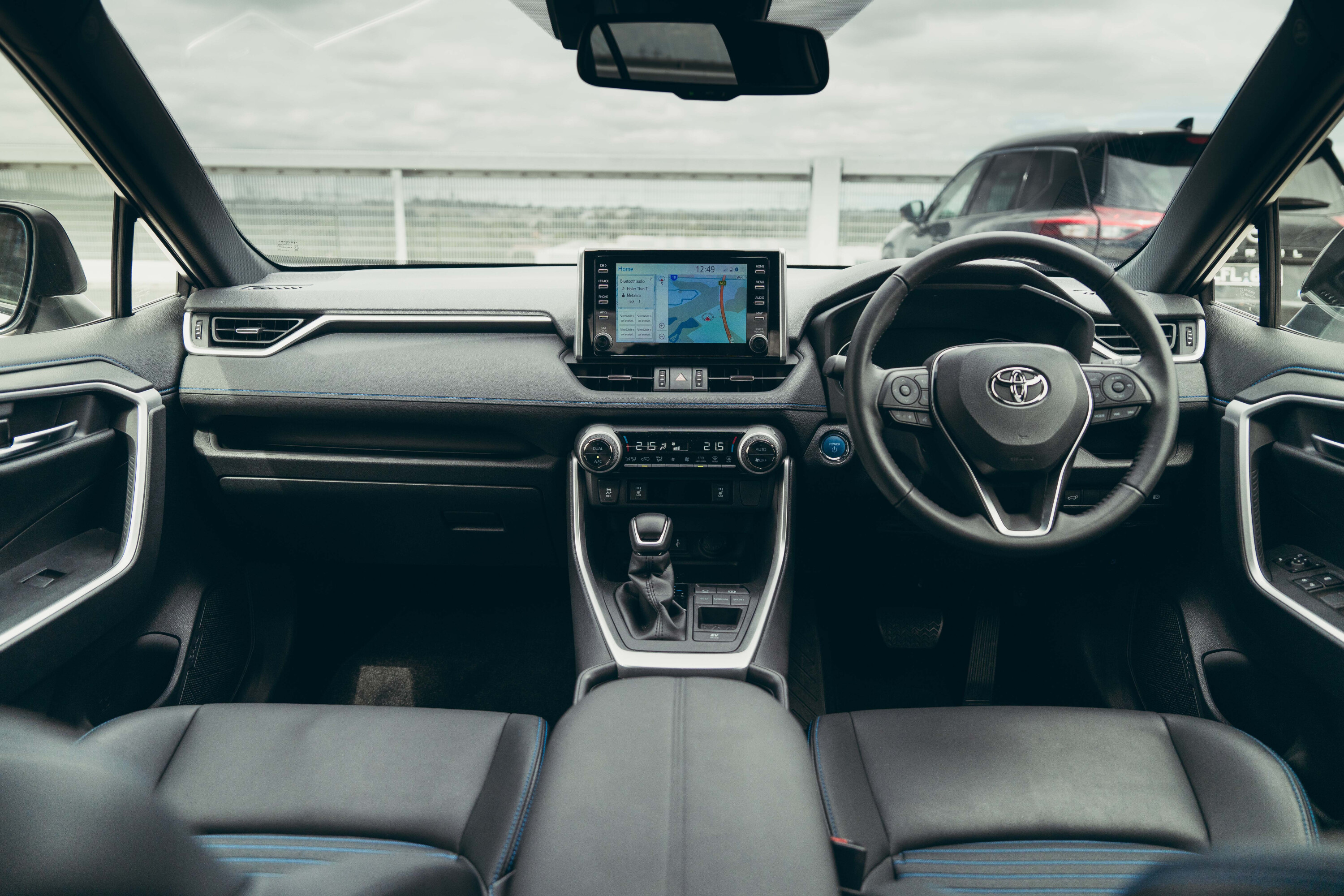
Both cars use semi-autonomous cruise control with active lane-keeping. The X-Trail gets Nissan’s latest ProPilot+ cruise control, which will steer itself down the motorway hands-free for up to nine seconds. The RAV4 will do the same for up to nine seconds.
Wireless phone charging pads are standard in both, as is wireless Apple CarPlay – but only wired Android Auto.
Comfort and space
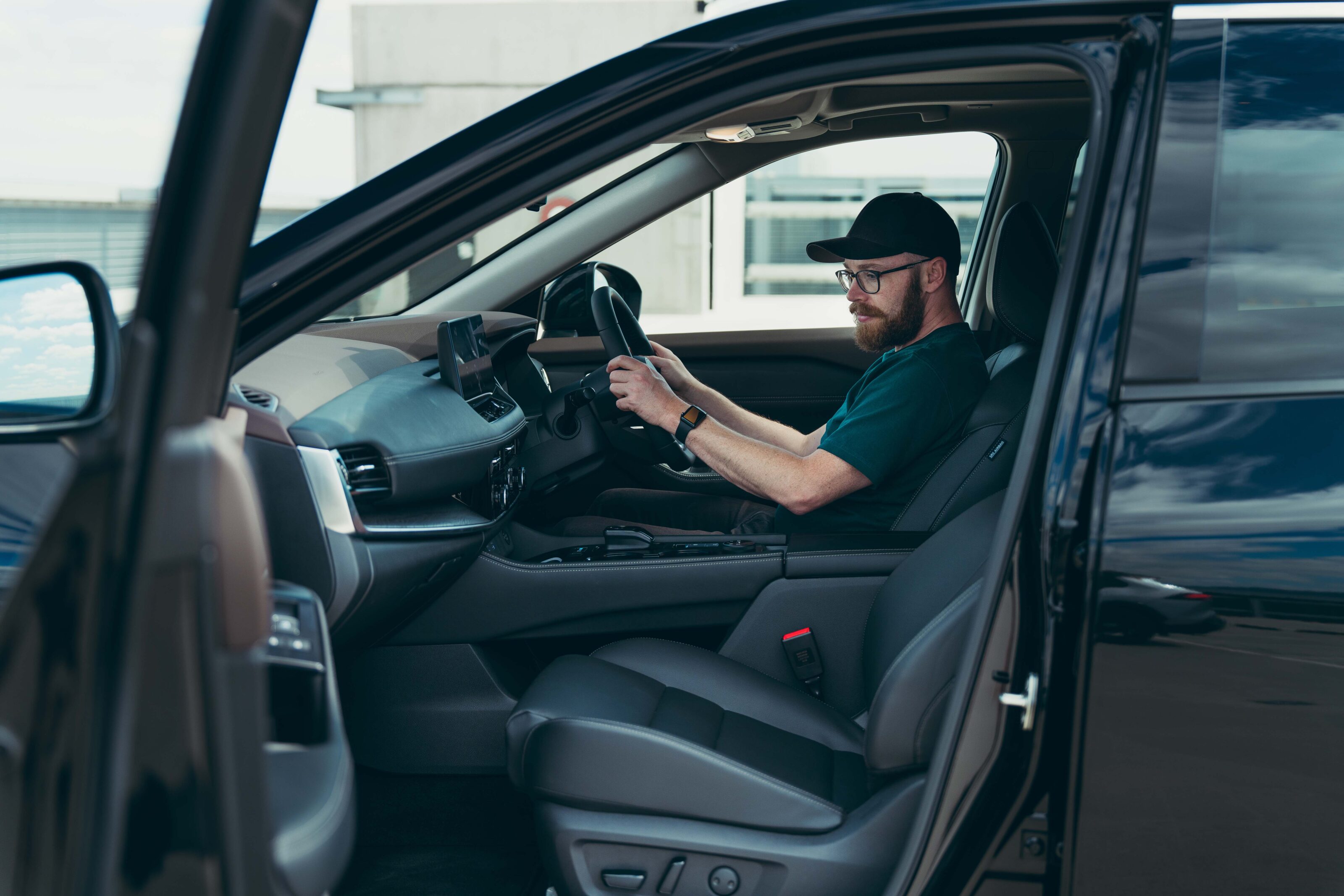
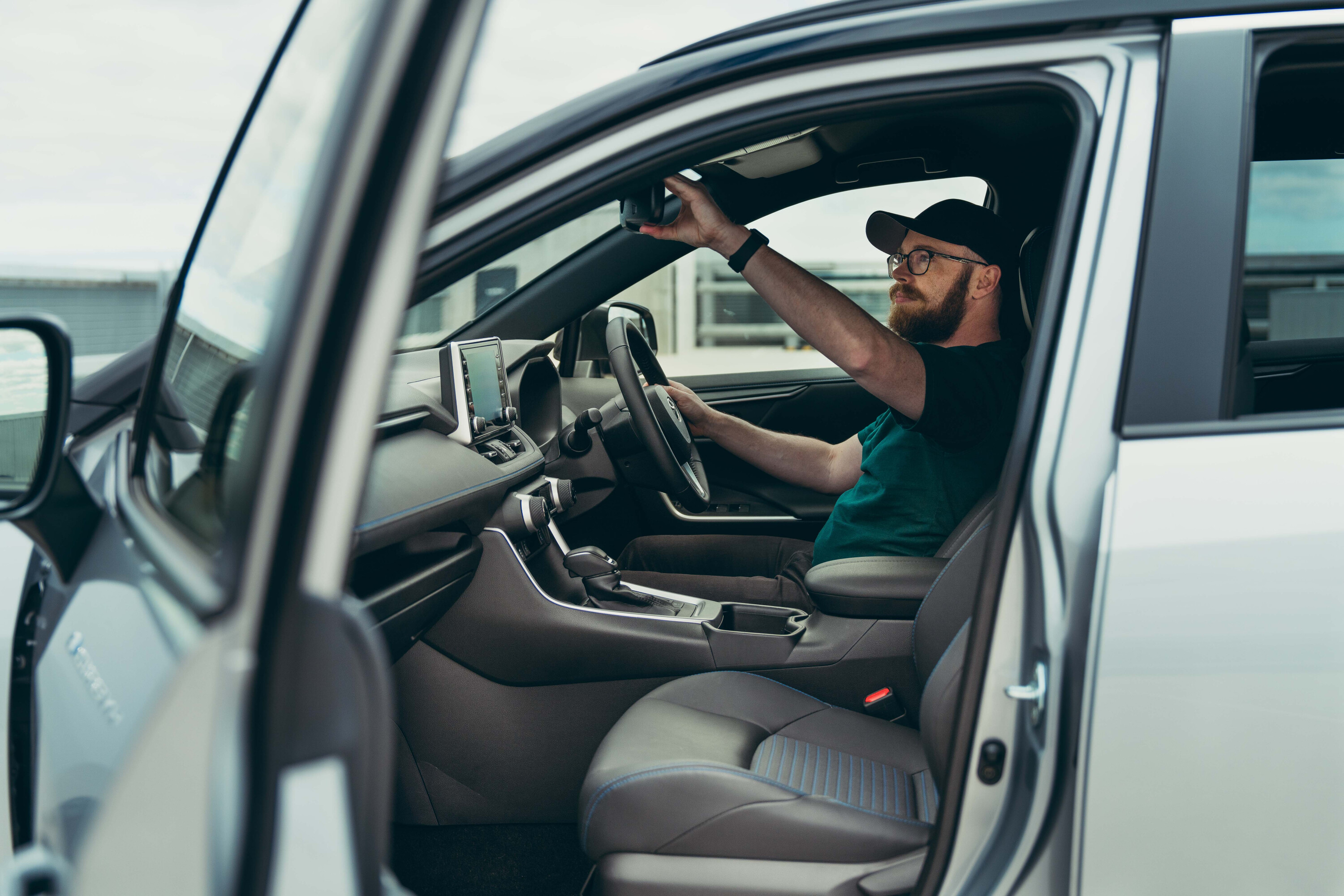
Both cars are lovely places to sit, but if the RAV4 is a pair of Redback boots, the X-Trail is more like RM Williams. It’s just lovelier.
The interior of our X-Trail E-Power Ti felt almost Infiniti- or Lexus-like with its faux woodgrain veneer, leather and piano black plastics – not to mention generously sized digital displays with smart, high-resolution graphics.
By comparison, our RAV4 XSE felt more rugged and basic, like you could hose it out. There’s less of a sense that you have to ‘take your shoes off’ as engendered by the slightly fancy X-Trail, while the digital displays are smaller, seem lower in resolution and about 20 years old for their graphic designs (to be fair, the infotainment graphics are about to be updated to something much smarter for the MY23 RAV4).
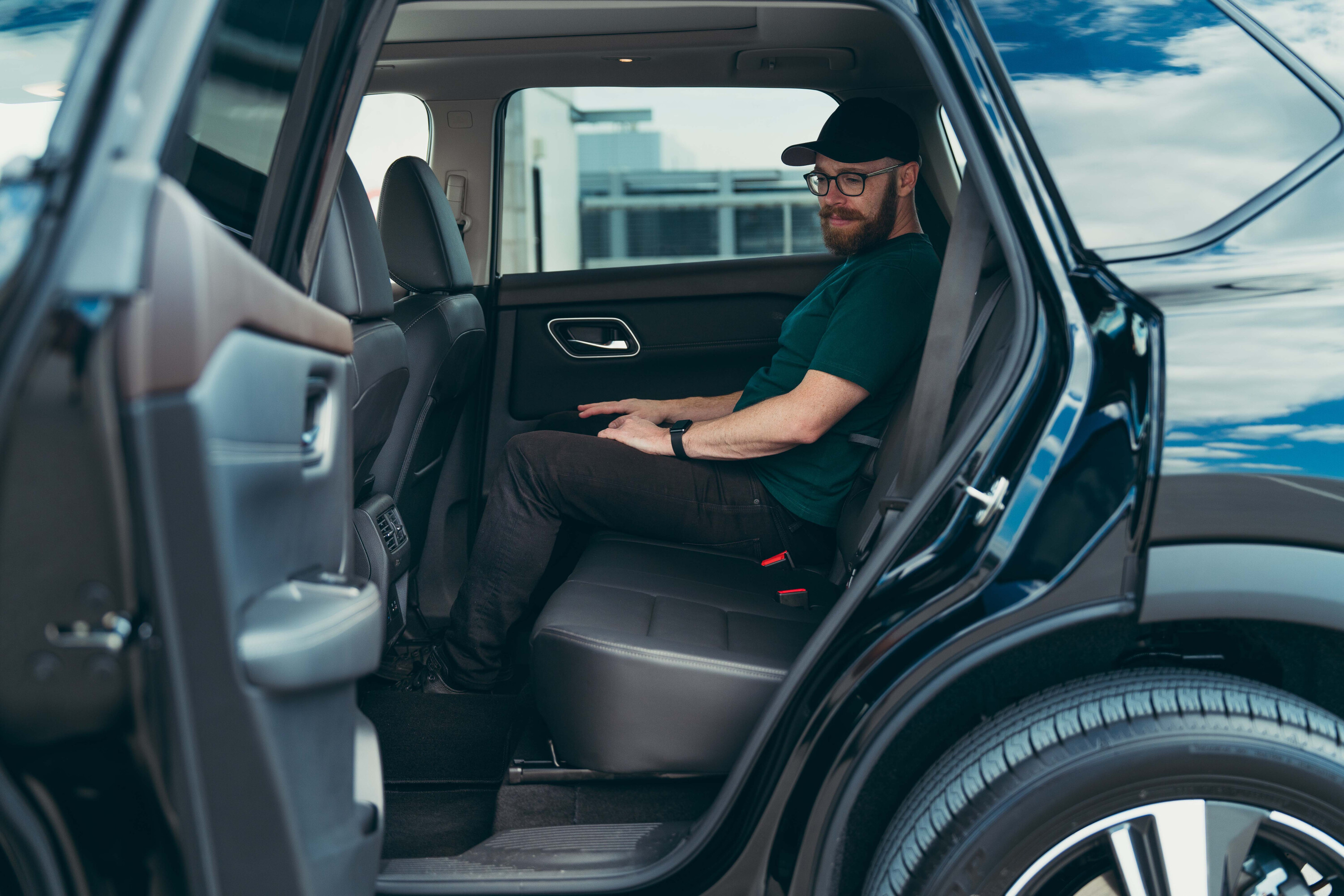
The X-Trail’s back seat is also much cleverer than the RAV4’s.
Mounted on rails, the entire second row can be shifted fore and aft to give either greater rear-seat legroom, more boot space, or whatever balance between both you need. In comparison, the RAV4’s is fixed – like it’s 1998.
Infinite tilt adjustment on the X-Trail’s second-row backrest also means you can recline it back a bit and have a snooze, if you want.
The new X-Trail also offers its rear-seat occupants more amenities. Both get centre armrests with cup holders but whereas the X-Trail offers map lights for each outer rear-seat occupant, tri-zone air-conditioning, and USB-A and USB-C outlets, the RAV4 only has a map pocket behind the passenger seat (none behind the driver), a single rear ceiling dome light, mere flow control for its two rear AC vents, and offers only two USB-A outlets.
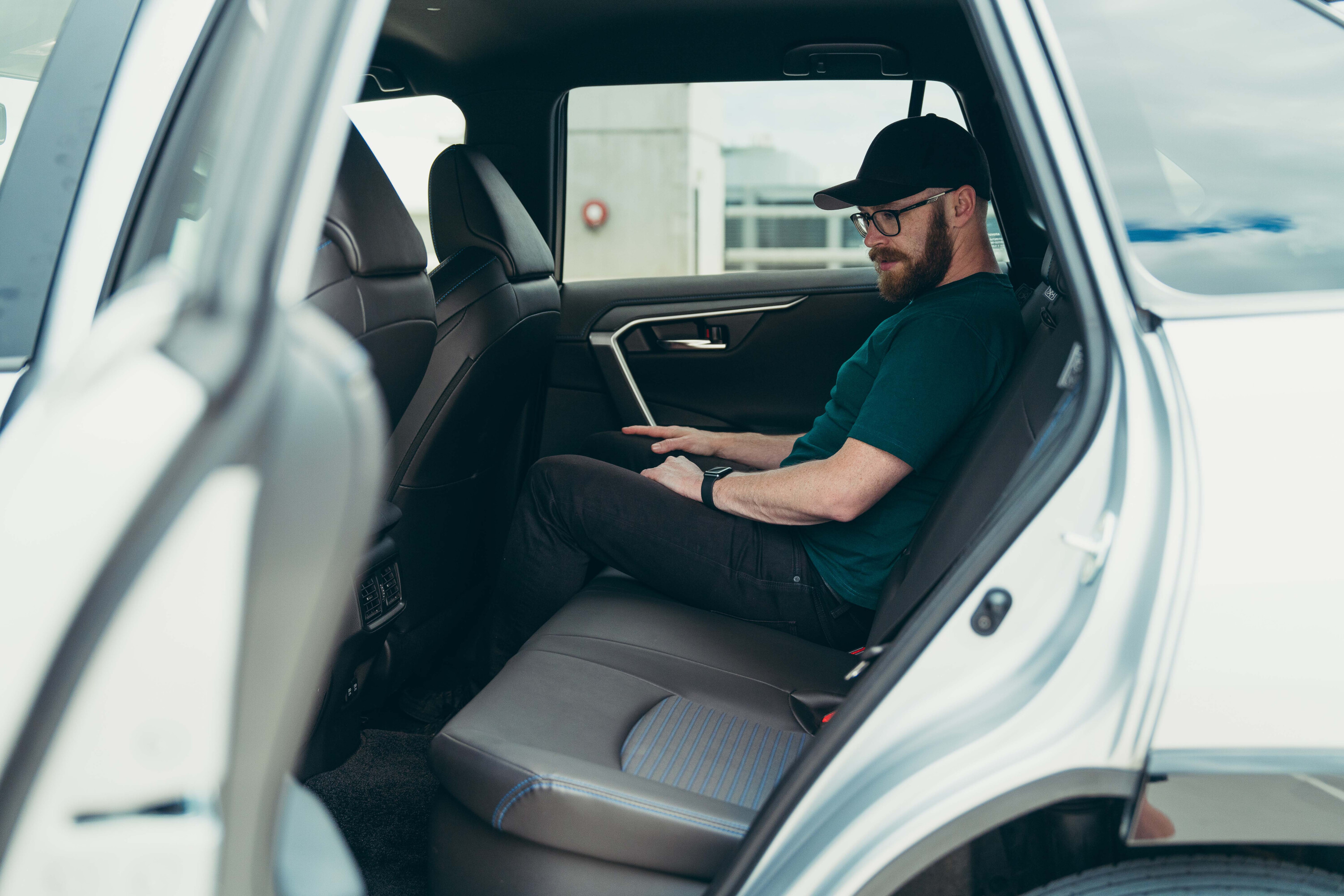
Also standard on the X-Trail are built-in rear window shades, like an expensive European vehicle, whereas the RAV4 does not.
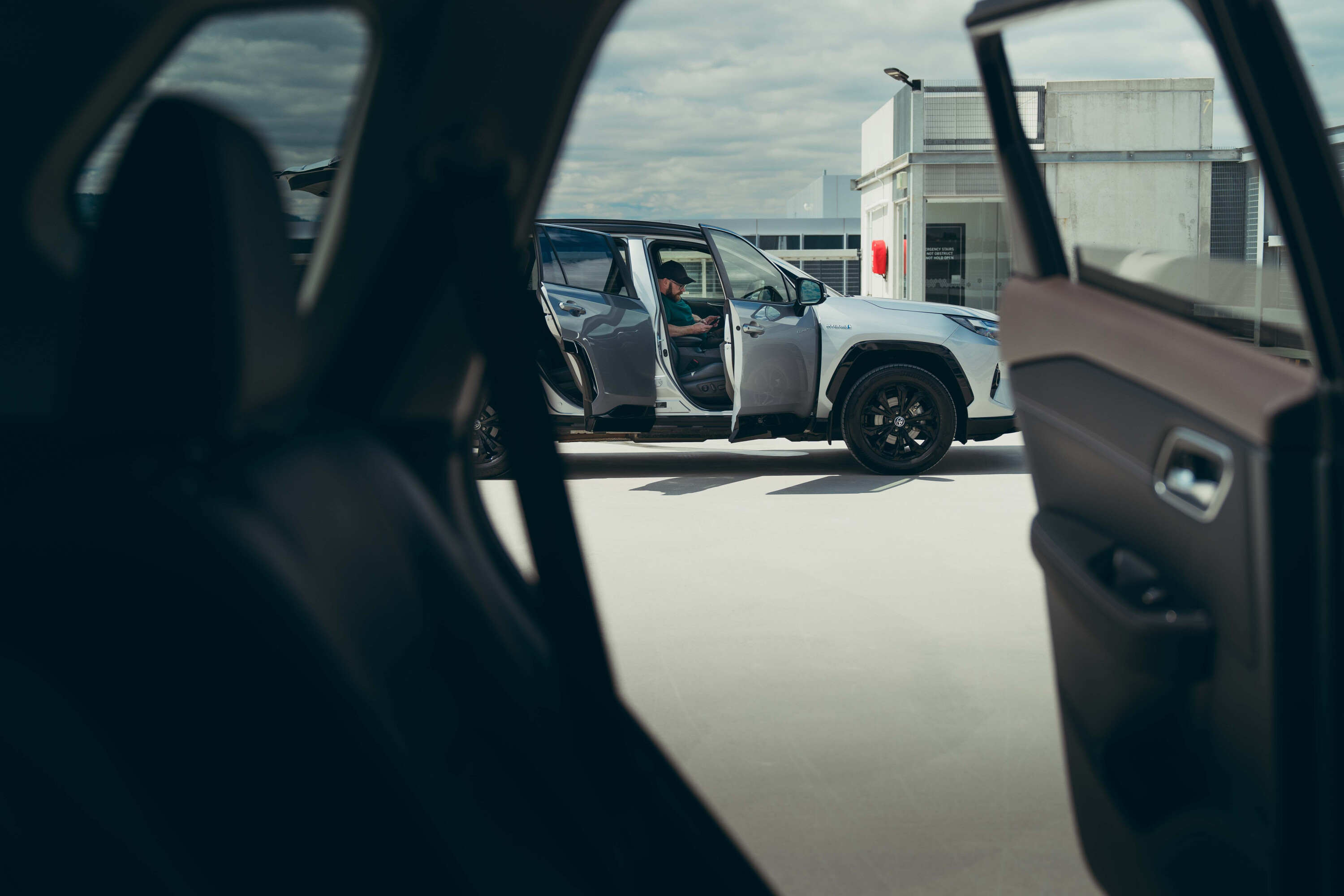
The X-Trail’s doors also open much wider than the RAV4’s thanks to clever hinges. The rear doors open almost 90 degrees, giving incredibly easy access to the rear seats.
This is an underrated thing when wrestling with a writhing three-year-old. The RAV4’s open about 60-70 degrees and still grant easy access, just not as generous as the X-Trail.
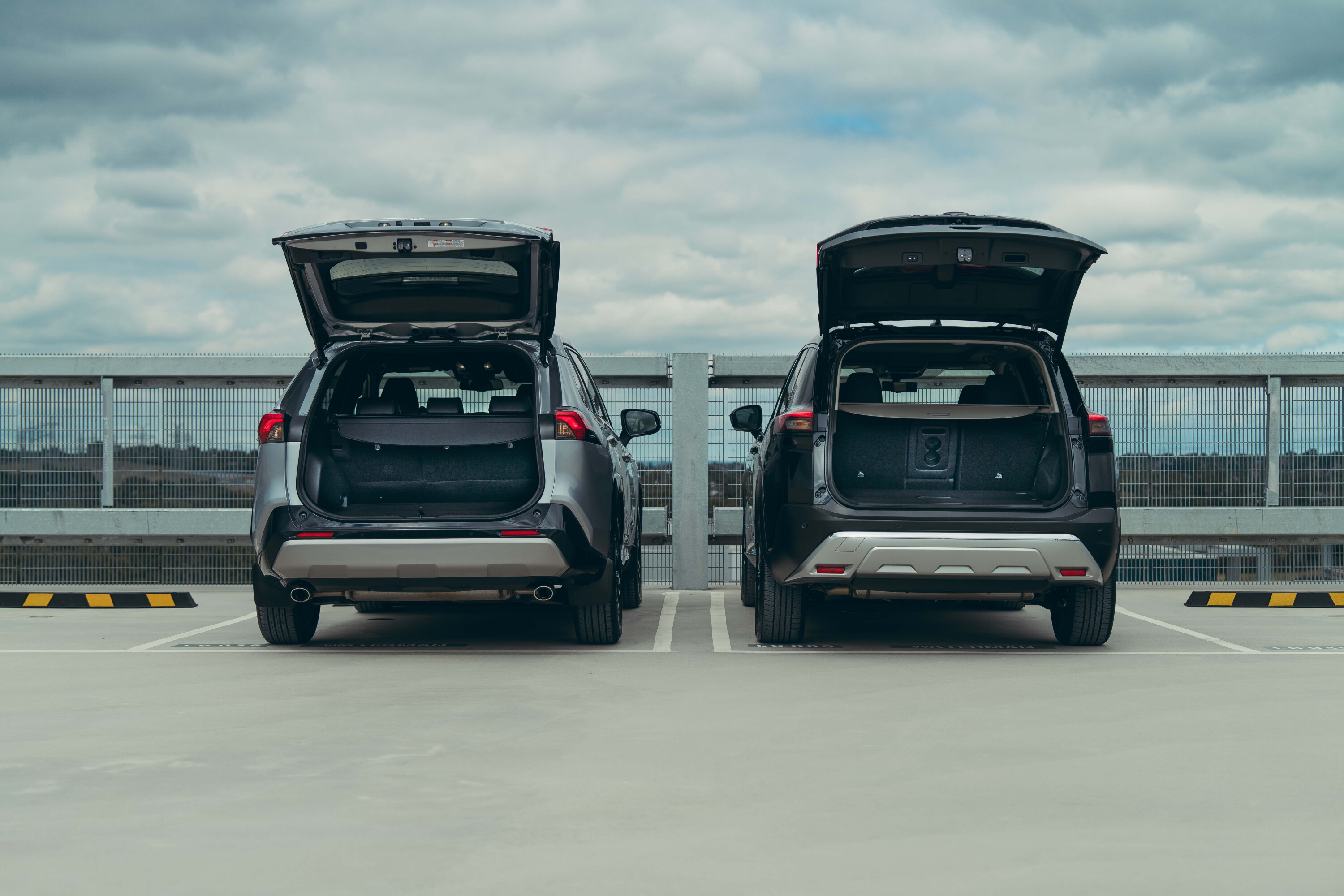
Boot space: X-Trail E-Power v Toyota RAV4 Hybrid
Both boots are about the same size, the X-Trail’s 575 litres versus the RAV4’s 580L.
Both feature 60:40 split-fold rear seats, with the X-Trail gaining a few extra points for having a pass-through ‘ski port’ in the rear backrest, where the middle seat folds down.
Each of our test cars had electronic opening and closing tailgates, while neither offered rear-seat folding releases at the back of the boot (meaning you have to lean in to release them and fold them down).
The RAV4 features a space-saver spare wheel (size T165/80D17 104M) whereas the X-Trail uses an arguably inferior puncture repair kit. Something to keep in mind if you regularly drive long distances to the middle of nowhere.
On the road
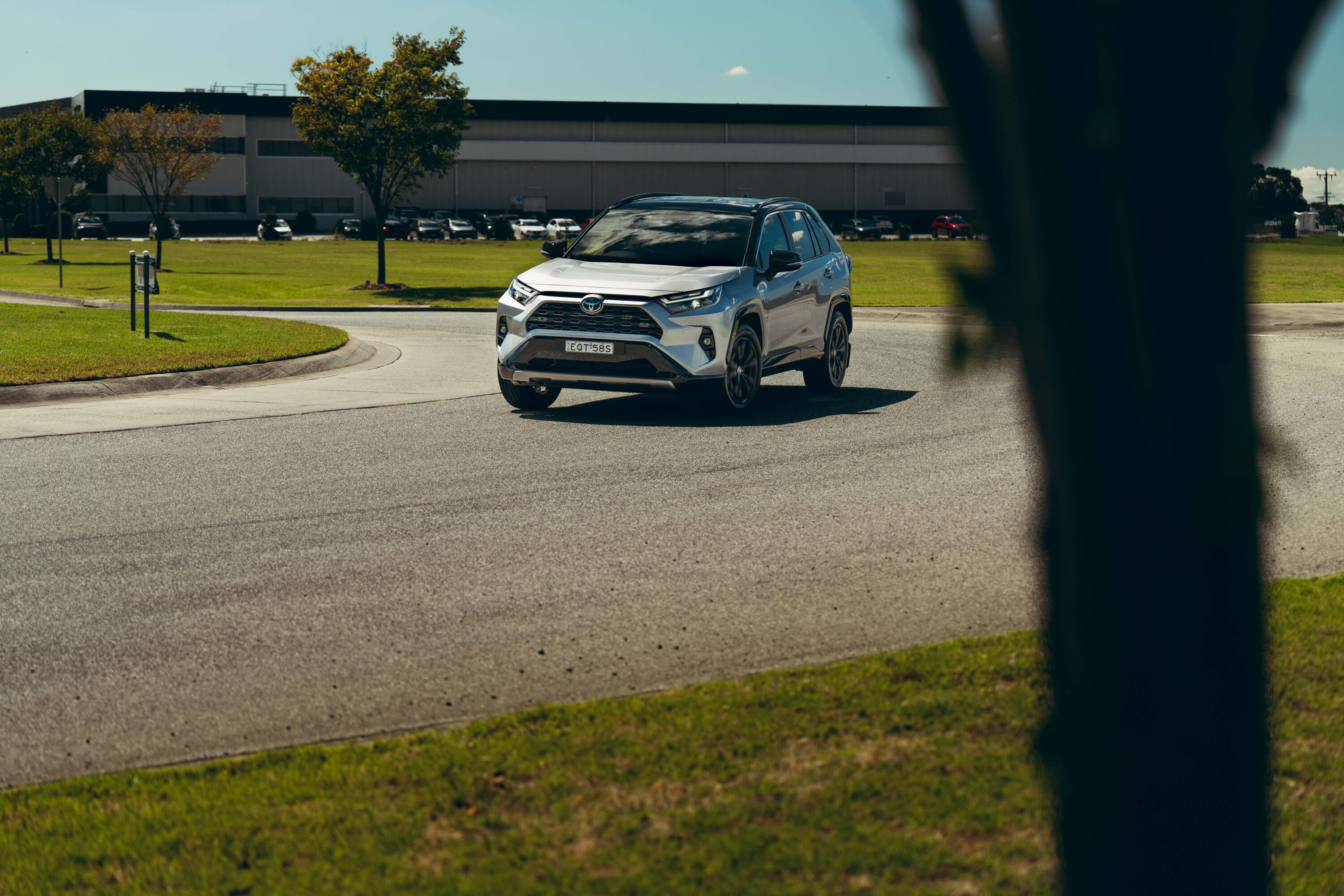
With slightly better forward visibility, the RAV4 also feels a bit smaller and narrower – and it’s just a nice, easy car to drive. The X-Trail is also a breeze, but feels slightly larger.
Despite their very different hybrid configurations, both cars operate similarly at urban speeds (below about 80km/h), motoring about using their smooth, punchy electric motors, engines quietly switching on and off in the background.
But it’s the X-Trail whose engine is a little bit quieter and kicks in less noticeably, and better insulates occupants from general road noise. In fact, it makes the RAV4 feel a bit noisy, even crude, like it has much less sound deadening. The X-Trail is the more refined car.
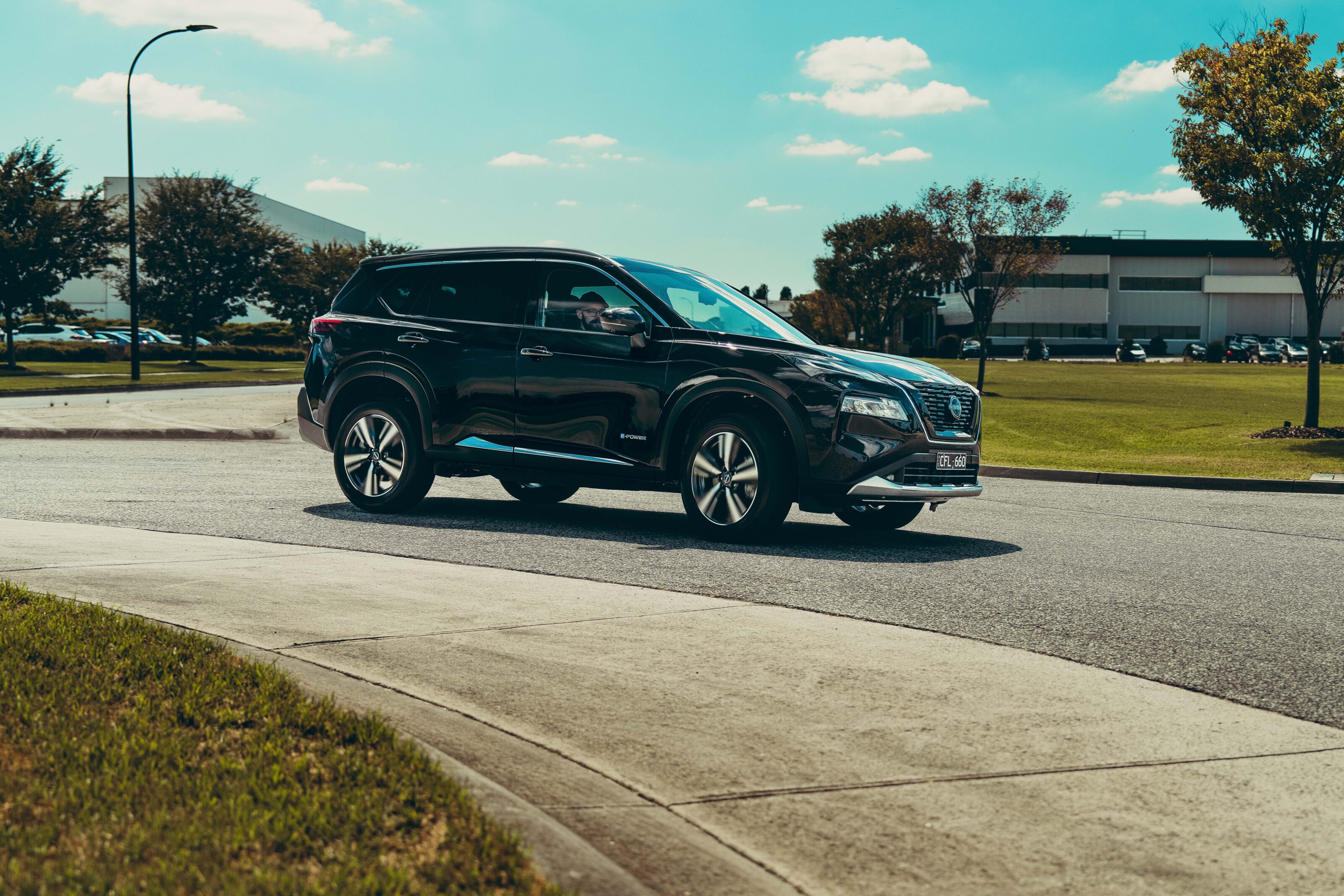
With its larger and more powerful electric motors, the X-Trail’s acceleration feels a lot punchier from a standstill. We love the instant torque of its electric motors. Nissan claims 0-100km/h in 7.0 seconds. We got 7.6 seconds to 100km/h in our own testing.
Crucially, it feels a lot faster and its 0-50km/h speed would be up there with some sports cars. The acceleration quickly starts tapering after about 50km/h as the electric motors run out of puff shifting 1903kg of Nissan SUV.
The RAV4 offers the same feeling, but not as strongly – at least in the 2WD hybrid guise of our test car. The AWD hybrid, with its large additional rear electric motor, would accelerate more like the X-Trail E-Power. In 2WD hybrid guise its engine has to kick in and help power the wheels sooner as its electric motors simply aren’t as grunty. A Toyota RAV4 hybrid with all-wheel drive does 0-100km/h in about 8.3 seconds.
With its larger and more powerful electric motors, the X-Trail’s acceleration feels a lot punchier from a standstill.
Both offer dedicated “EV modes”, but only if the small onboard batteries are topped up – which can only be done via driving. The RAV4 2WD hybrid can do “up to 1km” on electric power alone, although you can’t accelerate very fast and your top speed is limited by the power of the electric motors.
The X-Trail can accelerate harder and motor on electric power at a higher top speed, and can go a little bit further in its “EV mode” thanks to its slightly larger 2.1kWh battery (versus 1.5kWh of the RAV4). In other tests, we’ve managed to go around 4km on battery power alone. But at 100km/h on flat ground, the E-Power’s petrol engine is humming away (noticeably) to keep the small battery constantly topped up. It may as well be a petrol-powered car.
At low speeds, where it typically motors about electrically – and silently – with its engine off, the X-Trail emits a sort of futuristic droning sound from an external speaker to warn pedestrians it’s about to run them over. The RAV4, which also spends most of its time at low speeds in electric-only mode, doesn’t.
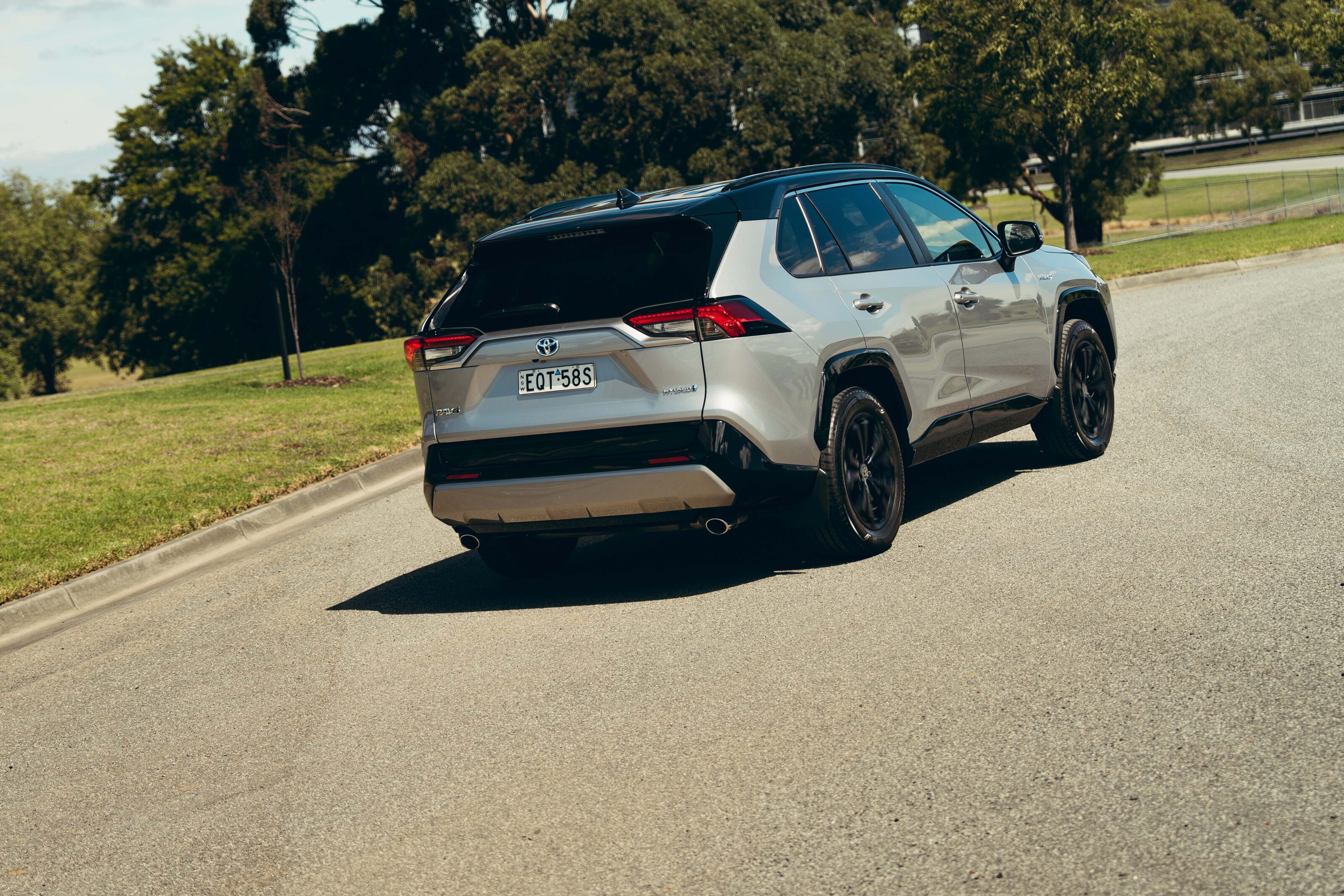
Like many new electric cars, the X-Trail E-Power offers a ‘one-pedal’ drive mode.
As you come off the accelerator, it starts braking automatically and you can feel the brake pedal depressing under your foot all by itself. It’s a bit weird to experience this in a hybrid vehicle (as opposed to an EV) and we gladly switched it back off.
The softly-sprung RAV4 had comfier ride quality, especially our XSE on chubby 225/60 R18 tyres. The X-Trail also rides nicely but is a bit unexpectedly jarring over road joins and other harsh bumps, as if it’s got large wheels and very low profile tyres – but it doesn’t really, they’re 235/50 R19s.
Over sharp bumps, the X-Trail’s ride quality is sometimes harsh enough that you almost wince slightly. Adaptive dampers would elevate the ride quality to match the premium interior. Or fitting smaller wheels and higher profile tyres.
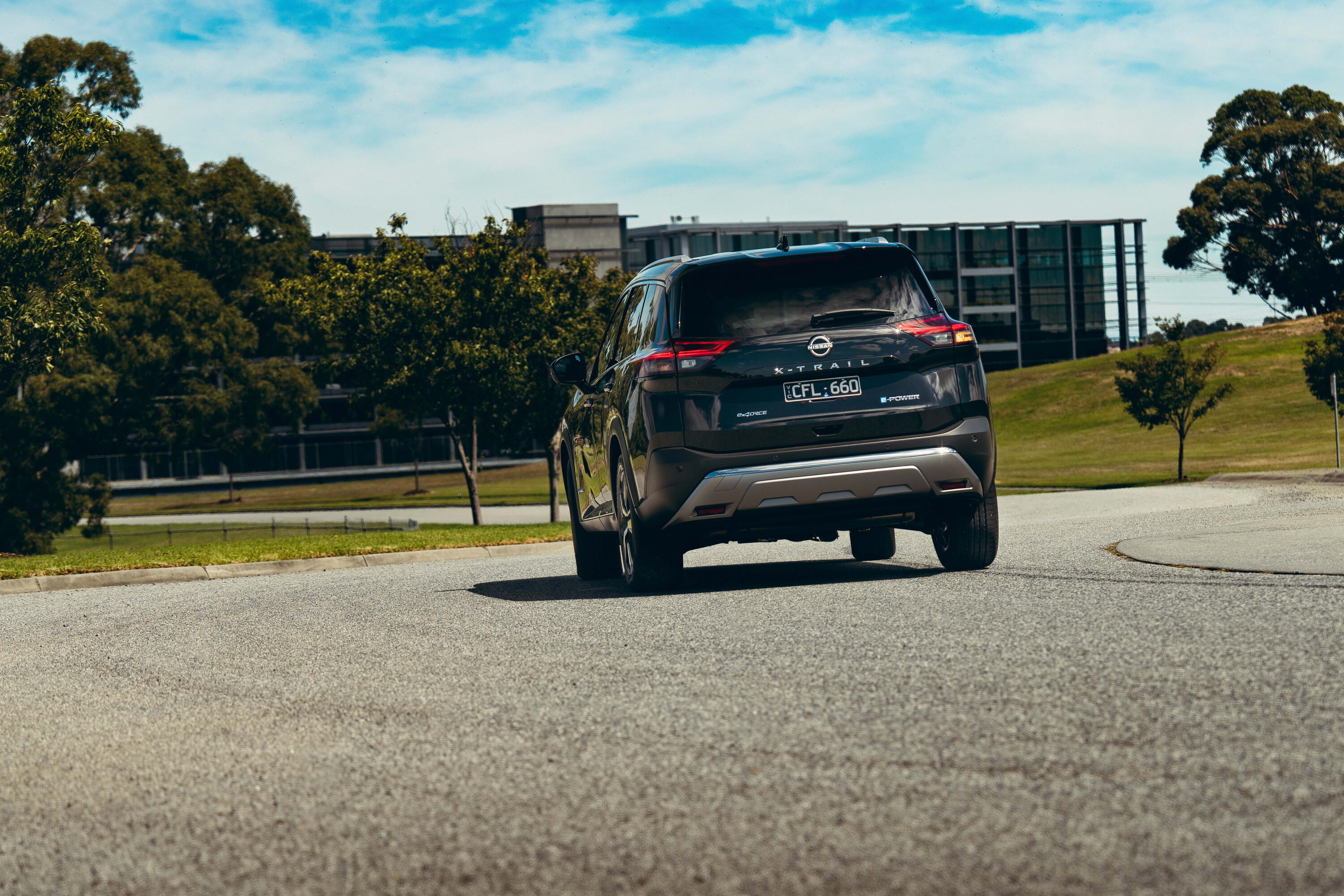
If you love driving and had to sell your sports car to get an SUV, you can stop reading – because the RAV4 is your winner of this test.
There’s a surprising verve and sparkle about its dynamics, like the engineers that made it had a lot of fun. Find yourself on a twisty road and it eggs you on to go a bit faster, and kiss the (relatively low) limits of the tyres; it loves being driven hard.
All the controls feel beautifully weighted and uncorrupted, like a GR86. By comparison, the X-Trail is also an enthusiastic and competent handler, but only up until about ‘eight-tenths’ where it starts getting a bit flustered and unhappy, and isn’t much fun.
That could partly be because of the grades we tested. At 1690kg the RAV4 Hybrid XSE 2WD does weigh 213kg less than the X-Trail E-Power Ti. At 1760kg, a RAV4 Edge hybrid AWD is closer to the E-Power Ti’s 1903kg.
Safety
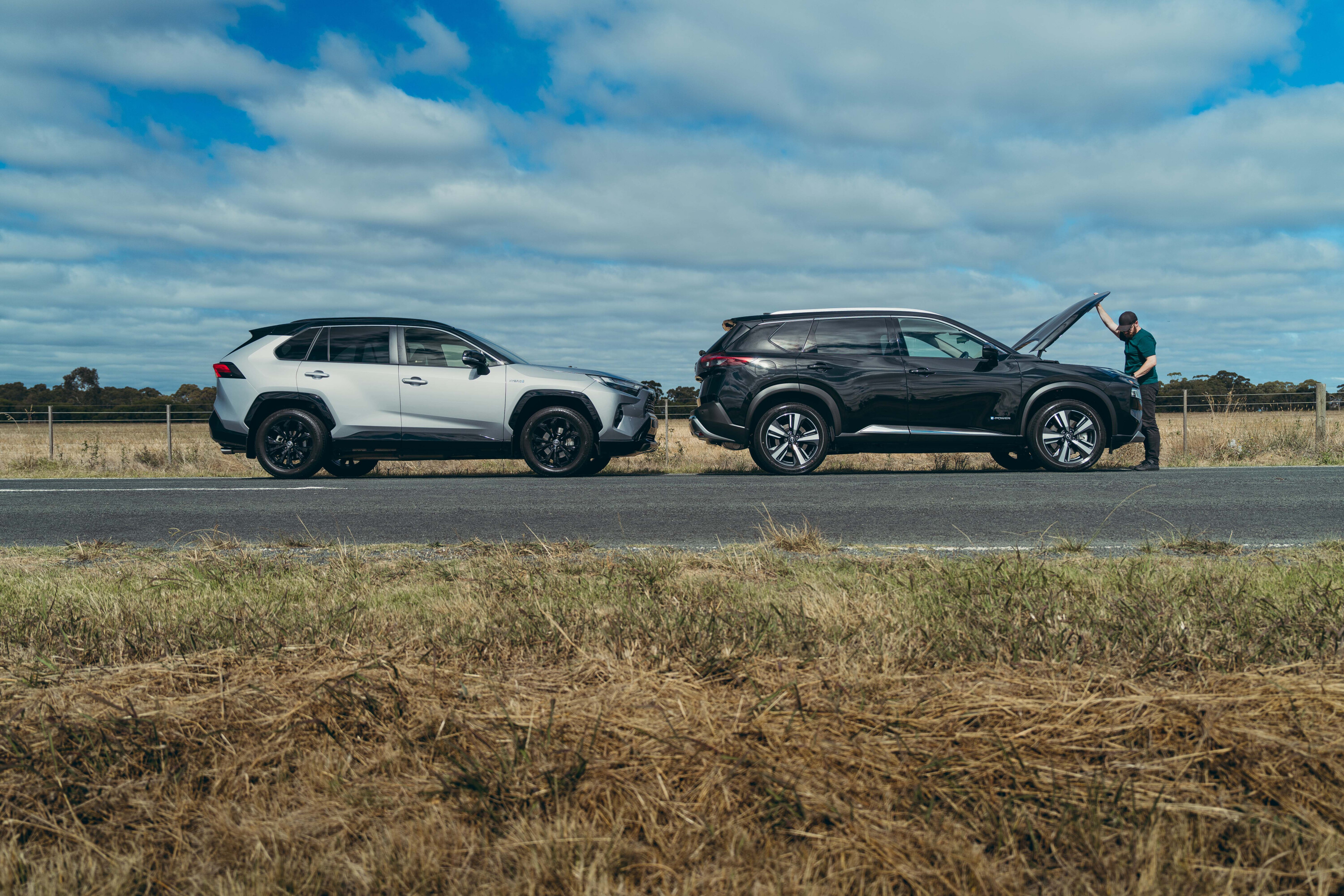
Both cars scored five stars when crash tested by the independent Australasian New Car Assessment Program (ANCAP). The RAV4 was tested in 2019 and the X-Trail 2021.
There are no notable safety omissions with either vehicle, both offering all the modern safety features you could desire.
One minor concern we had is with the X-Trail E-Power’s electronic stability control (ESC). We tested this vehicle at Wheels Car of the Year and found the ESC too ‘loose’. It was surprising as all other Nissan models we tested, including other X-Trail variants, had excellent ESC systems.
Fuel efficiency
Many of you will skip ahead to this bit, and the verdict is in: the E-Power simply uses more petrol than the RAV4 hybrid.
But only by a bit.
Nissan claims 6.1L/100km for the X-Trail E-Power on the combined cycle and Toyota’s equivalent figures are 4.7L/100km for the RAV4 hybrid 2WD and 4.8L/100km for the AWD.
Based on our testing, owners can expect to get roughly 6.0L/100km during everyday driving in the X-Trail E-Power and about 5.7L/100km in the RAV4.
Depending on driving styles and how flat or hilly the area you live is, your mileage may vary, as they say.
One trip across Melbourne in traffic, with a mix of motorway and urban driving, yielded 3.9L/100km for the RAV4 and 4.1L/100km for the X-Trail.
The E-Power might yield slightly better efficiency in a hilly area where its 2.1kWh battery can scavenge more energy down hills, compared to the RAV4’s smaller 1.5kWh unit.
Toyota recommends 91 RON for the RAV4 and while the E-Power can run on the same with “reduced performance”, Nissan recommends more expensive 95 RON premium unleaded.
Extra points go to the X-Trail for having an externally openable fuel filler flap, like a European car. You just press on the flap and it pops open, so you don’t have to remember to press a button in the interior – unlike the RAV4.
Both cars have 55-litre fuel tanks.
Ownership
Toyota offers the better ownership deal over five years.
A RAV4 comes with a five-year, unlimited-kilometre warranty – with an additional two years for the engine and driveline provided you service it with Toyota, – and a 10-year warranty on the hybrid battery. Toyota also covers hire car and towing costs for up to seven years, if some sort of warrantable defect puts your car out of order.
The RAV4 hybrid requires servicing every 12 months or 15,000km. Toyota caps the servicing price at $260 for the first five services, for a total five-year servicing cost of just $1300. That’s very sharp.
Nissan also offers the X-Trail with a five-year, unlimited-kilometre warranty. You also get five years of standard roadside assistance thrown in.
The X-Trail E-Power requires servicing every 12 months or 10,000km. Over five years it costs $2353 to service – quite a bit more than the RAV4 hybrid.
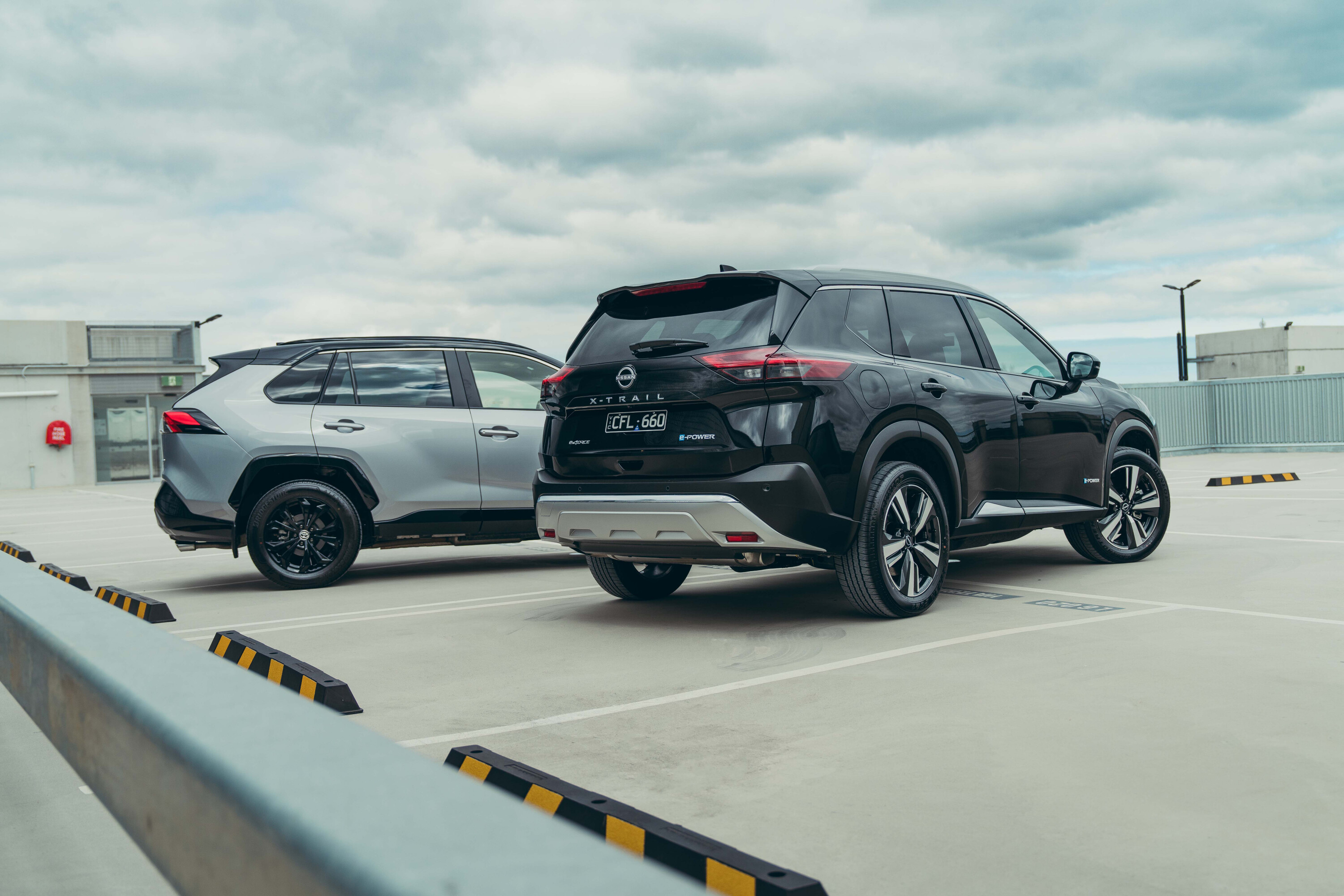
One major ownership advantage the X-Trail E-Power offers over the RAV4 Hybrid is – as of March 2023 when this article was published – you can simply own it a lot sooner.
One Nissan dealer told us they could get customers into an X-Trail E-Power “next month” if they didn’t care much for the colour or trim; while others reported “July-August”, “a couple of months”, “May” and “six or seven months for a ‘build-to-order’ vehicle”.
“We’ve had a lot of RAV4 customers give up,” said one Nissan salesperson, who had recently sold four X-Trail E-Powers in one day. Some were purchased by would-be RAV4 owners who got tired of waiting and cancelled their orders.
“We’ve had a lot of RAV4 customers give up,” said one Nissan salesperson
When we asked about wait times for a RAV4 Edge hybrid, we got laughed at by one Toyota salesperson in Victoria: “At least three years; Edge is the longest wait”.
Multiple other dealers reported “18 to 24 months” for any hybrid model and “24 months plus” for Cruiser AWDs, which are the most popular. One salesperson said America was hoovering up global RAV4 availability, impacting Australia. “What we sell in a year, they sell in a month in America,” he said.
Two salespeople independent of each other said GX trim level was the quickest way into hybrid RAV4 ownership with wait times more like “eight months” or “nine to 12 months”.
VERDICT
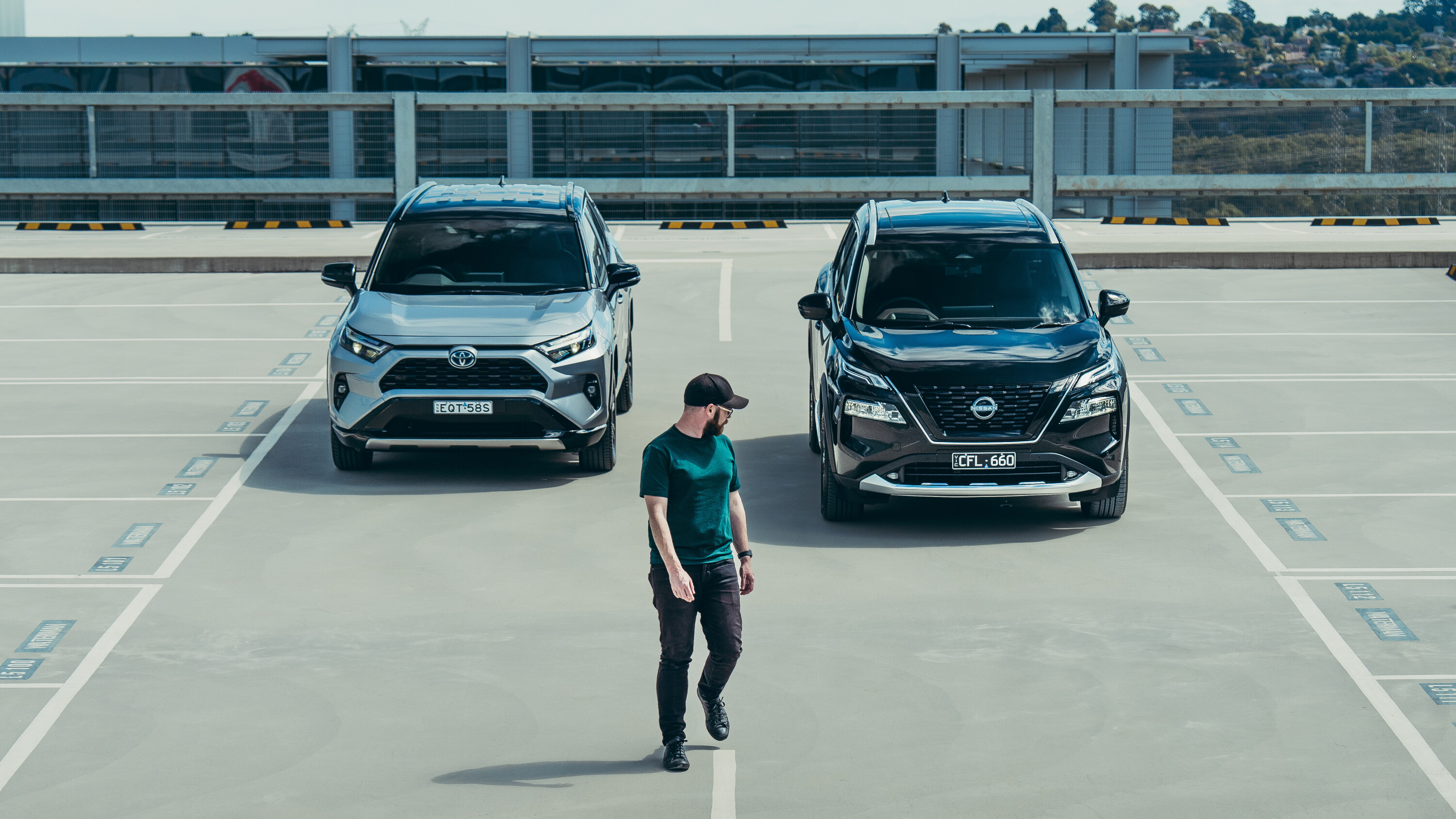
? The new X-Trail E-Power is our winner.
Its interior is much nicer, the rear seat more clever, it’s a quieter and more refined car and we enjoy the extra punch from the larger electric motors. It’s also slightly better value.
We enjoy its hybrid concept more than Toyota’s. It feels like an electric car – one that has an engine constantly humming away. But it’s a fairly quiet engine and, being three cylinders, almost sounds kind of good when you can hear it. Boot the X-Trail E-Power up a freeway on-ramp and the engine kicks in so aggressively – and loudly – it may as well just be a petrol-powered car.
If this was an AFL match, it would be X-Trail beating the reigning premiership winners RAV4 in the very first round – an upset, no doubt. Whether that will translate to a grand final win in the sales race is another matter, of course.
That all said, the RAV4 is a close second in this test. The handling is more fun, its ride quality is better and it’s cheaper to run. In isolation, it’s an outstanding vehicle and it’s not hard to see why there’s a queue around the corner to get one.
SCORING
Nissan X-Trail e-Power: 8.5/10
Things we like
- Lovely interior
- Punchy acceleration
- Refinement
- Clever rear seats
Not so much
- Could be more efficient
- Running costs
- Imperfect ride quality
Toyota RAV4 Hybrid: 8/10
Things we like
- Still the hybrid efficiency king
- Excellent dynamics
- Cheap to service
Not so much…
- Basic interior
- Lower refinement
- The wait time is how long?
SCORING BREAKDOWN
| Nissan X-Trail E-Power | Toyota RAV4 hybrid | |
|---|---|---|
| Safety, value and features | 8.5 | 8 |
| Comfort and space | 9.5 | 8.5 |
| Engine and gearbox | 8.5 | 8 |
| Ride and handling | 8 | 9 |
| Technology | 8 | 7.5 |
| OVERALL | 8.5 | 8 |
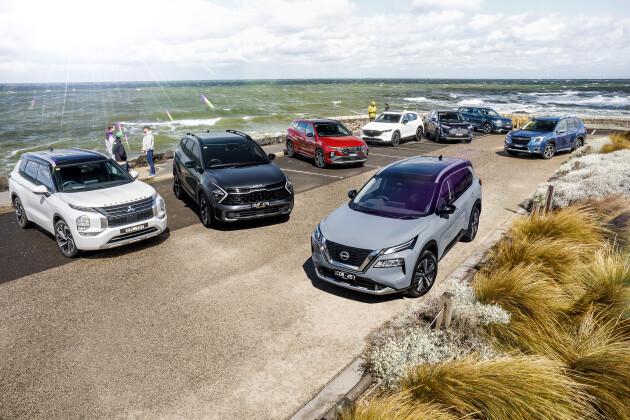
Medium SUV comparison: 2023 Mega Test
Thinking of buying a new mid-size SUV this year? We test eight of the best and most popular contenders to see where you should spend your money
Lancer Evolution, Pajero Evolution, Galant VR4, 3000GT, and Magna Ralliart are but a few cars that put Mitsubishi on car enthusiast’s maps in Japan’s golden era. Rally heritage, groundbreaking drivetrain tech, and go-anywhere toughness became the brand’s signatures as a result.
Without those models, or the budget to develop a niche sports car, Mitsubishi’s performance agenda has shifted in the modern era. At the helm of Ralliart’s revival is Hiroshi Masuoka, not only a vice president in Mitsubishi, but a successful Dakar racer having won the gruelling cross-country rally twice in Pajeros.
Masuoka-san admitted he would love to see Ralliart variant at the top of every Mitsubishi model’s line-up. He also reiterated that an “almighty” tri-motor plug-in hybrid Outlander Ralliart is in testing (see renders below).
We know what Ralliart can do to the brand, and how it will elevate the brand… I’m not saying Ralliart is going to be what it was in the past – I think it’ll be very different.
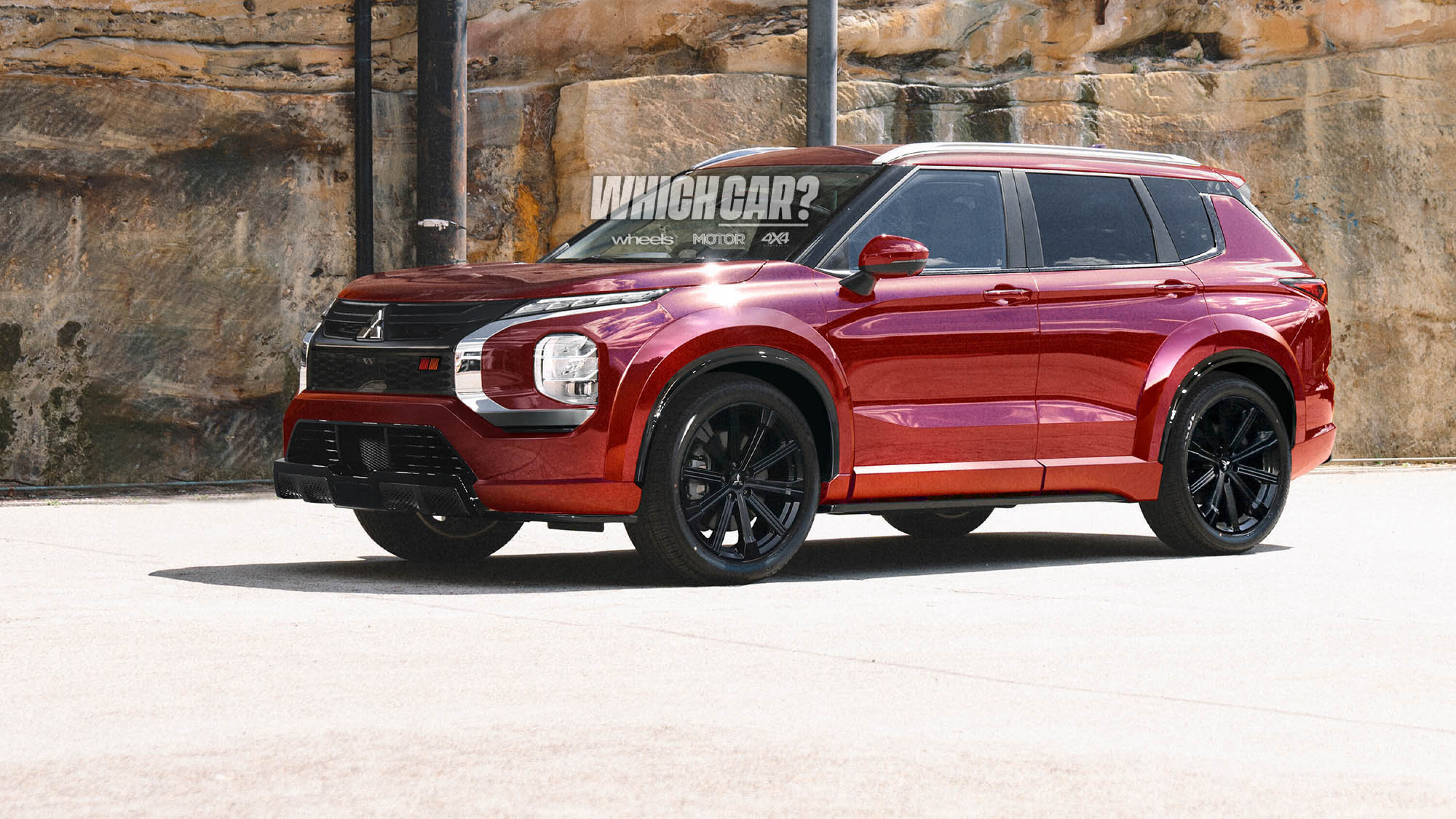
“Last year we started Ralliart’s comeback… we studied, again, for some ideas of the brand’s evolution and I hope to develop special parts, and more sporty parts for Triton, Outlander, Pajero Sport, and maybe even Eclipse Cross in the future,” said Masuoka.
Aside from Outlander, the next-gen Triton ute will be an ideal platform for Ralliart’s expression; especially given a near-production MQ Triton beat heavily modified Toyota Hiluxes to win last year’s AXCR championship, as Masuoka-san boasted.
“My personal idea is that we have a ‘top grade’ Ralliart special model, and then a Ralliart version of Mitsubishi production cars”, continued Masuoka-san, though he stopped short of defining the kind of modifications that will define Ralliart products.
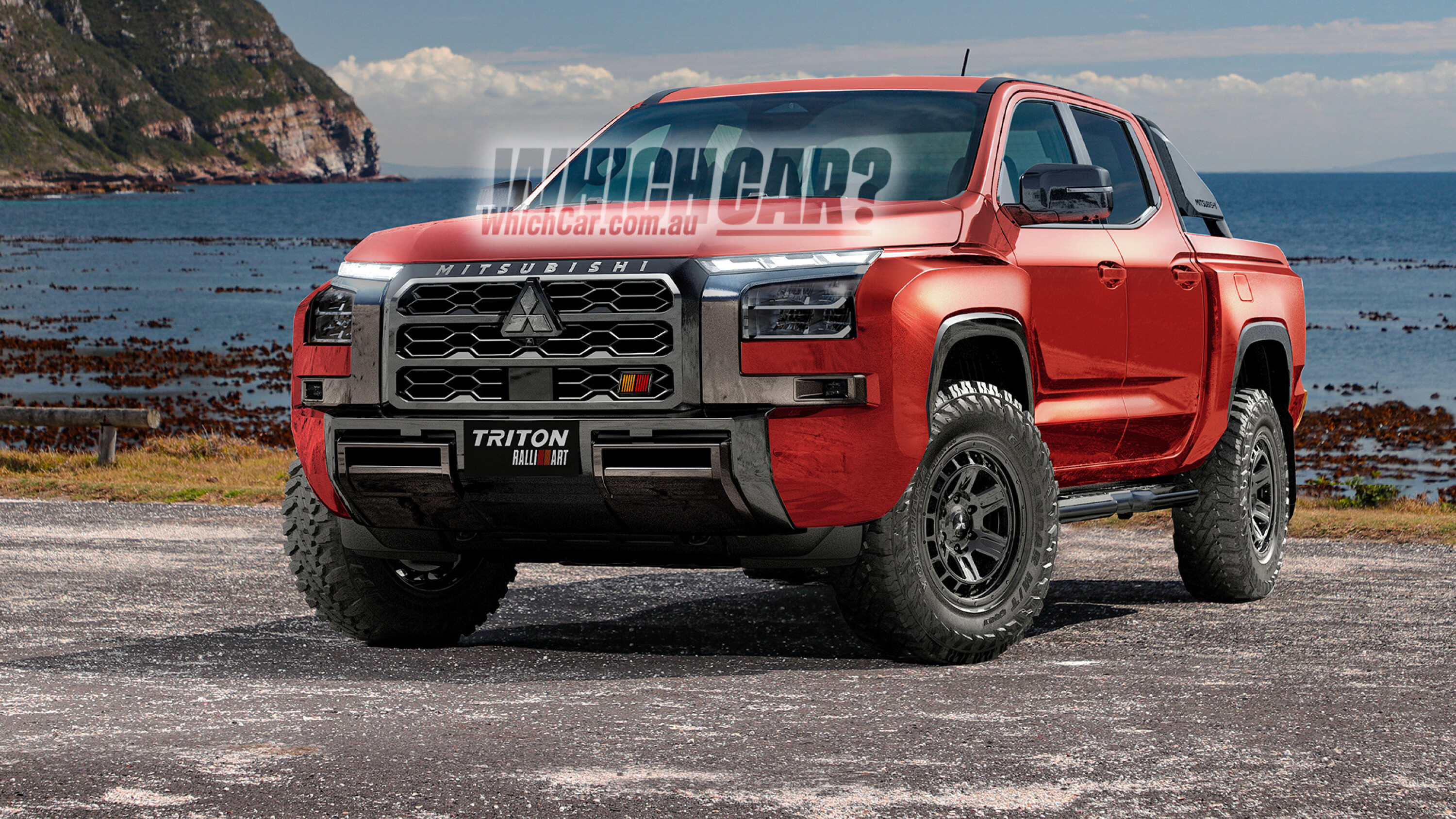
Triton Ralliart rendered!
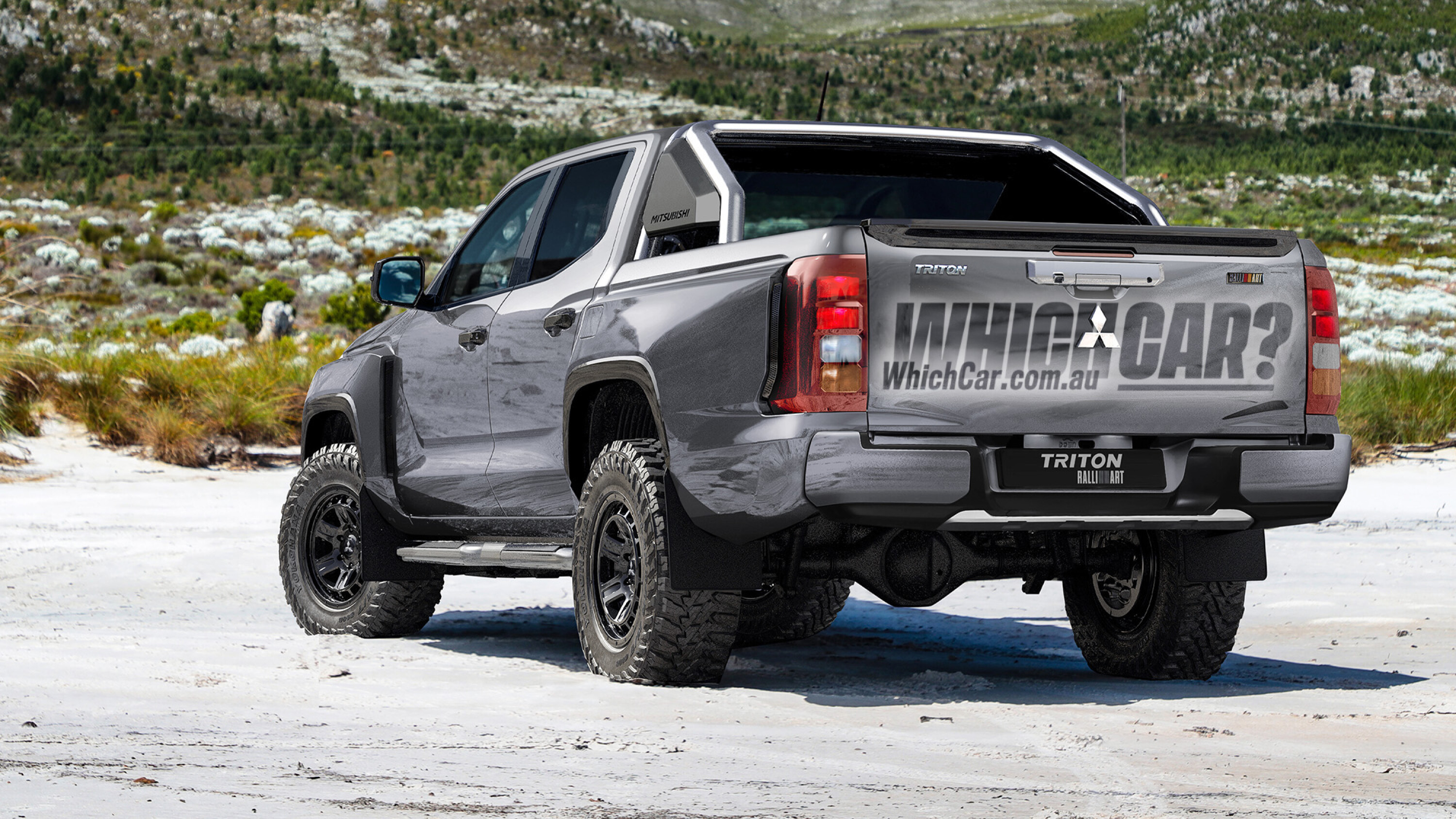
Following our first glimpse of next-gen Triton with Mitsubishi’s XRT, we’ve put together a pair of renderings imagining a hotted-up Ralliart variant.
A rival the Ford Ranger Wildtrak X, Toyota HiLux GR Sport, and Nissan Navara Pro-4X Warrior, we hope to see chunkier off-road tyres, lifted suspension, a beefier front bumper, and pumped guards.
From the sounds of it, Ralliart could even go as far as adding power – in the vicinity of 10kW/20Nm, just like the AXCR racer. If a new-gen Ralliart Triton comes to fruition, it’s likely to be developed in-house by Mitsubishi, not an Australian second-stage manufacturer.
What do the suits think?
It’s little surprise that Masuoka’s passion and excitement for Ralliart is palpable, but he has to answer to suits and shareholders; the exercise must be profitable.
John Signorello, a self-proclaimed car enthusiast, former CEO of Mitsubishi Australia, and current executive at MMC is a champion of the Ralliart program. He’s someone who sees value in building the halo brand – and the excitement seems to be pulsing through Mitsubishi as a whole.
“We know what Ralliart can do to the brand, and how it will elevate the brand, so our job and our regular discussion is: how do we use our heritage?”
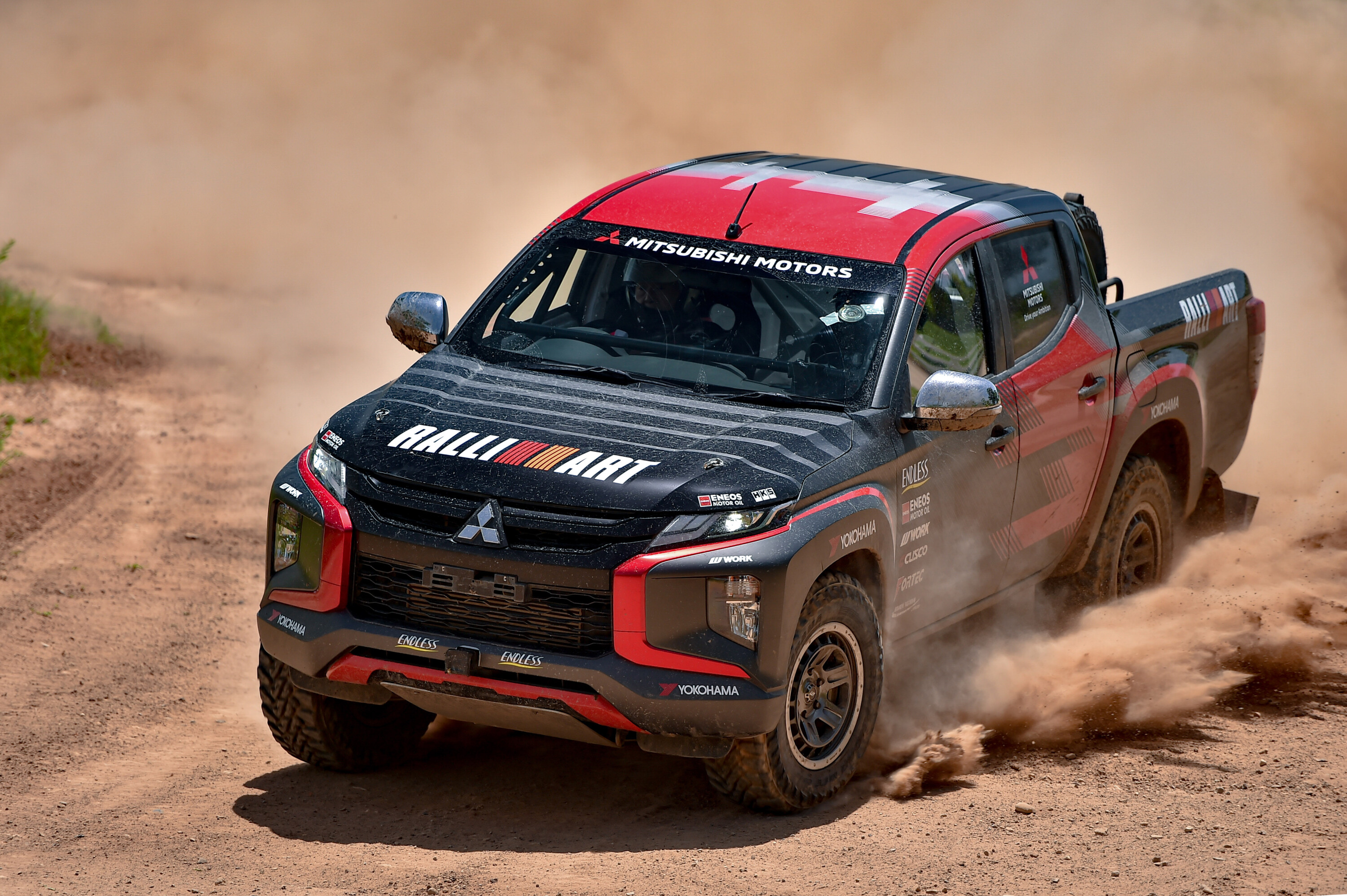
“I’m not saying that [Ralliart] is going to be what it was in the past – I think it’ll be very different – and that’s the study that’s happening. That’s the regular discussion that’s being had,” said Signoriello.
“We have a very healthy discussion internally… before, we were not focusing on such a brand, we were more concerned about profitability. But now, we are discussing Ralliart, which means that we are very much focused on ‘the brand’,” Koichi Namiki, general manager product strategy division told Wheels.
Both Toyota and Hyundai have found mojo in their performance brands – GR and N respectively – so, providing Mitsubishi nails the formula, hope is there. To give context on Ralliart right now, it has about 20 employees, making it half the size of Toyota’s GR program.
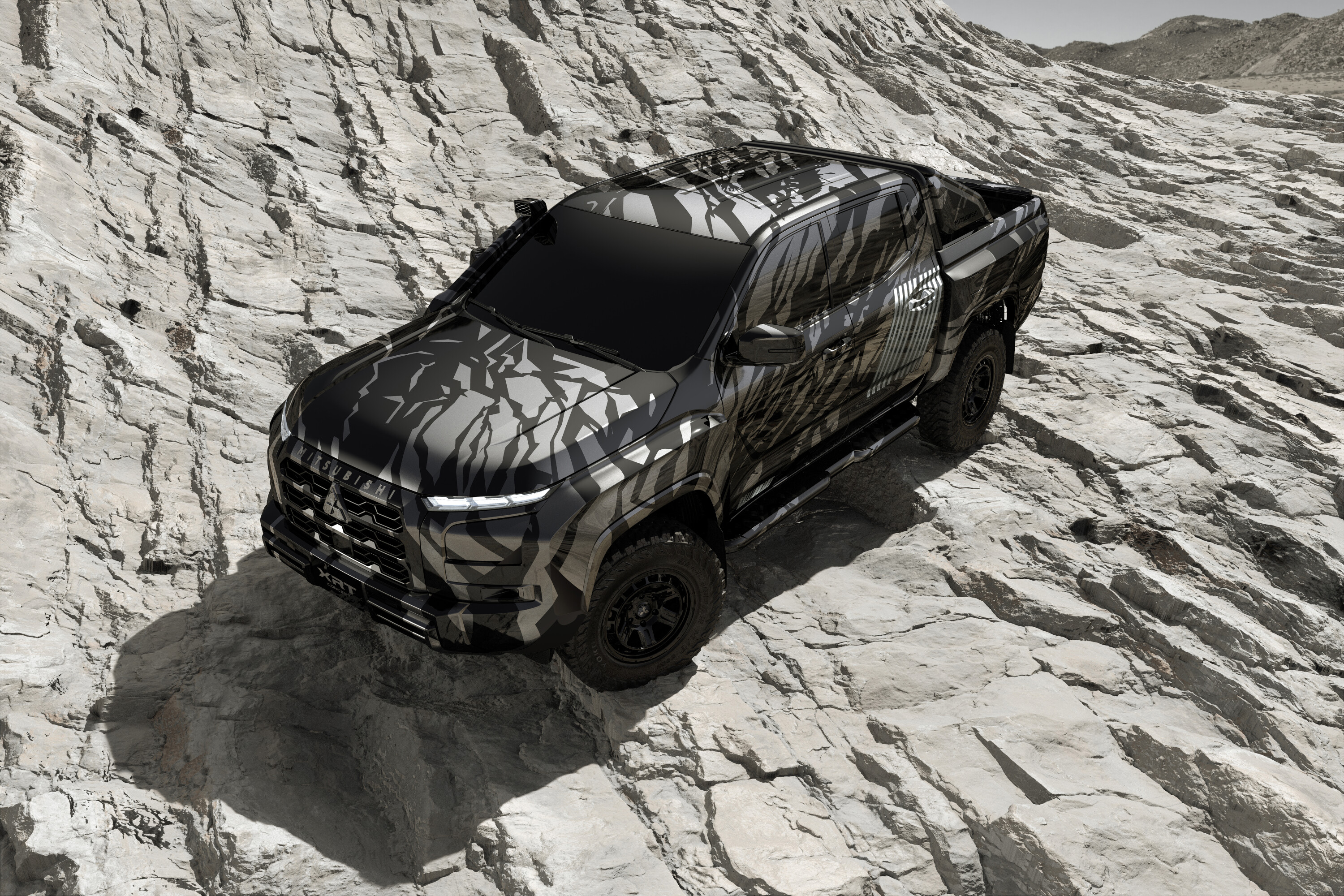
The winning performance brand formula isn’t to only build expensive, niche products. A Ralliart flagship would give Mitsubishi licence to introduce aspirational variants that offer greater profit margins without diluting the brand – think GR Sport for Toyota and Hyundai N Line.
Though Australia has recently stepped up to a key market for Mitsubishi, the carmaker has to balance our small but mature sales space against less-developed, high-volume ASEAN markets identified as key growth regions. It’s a tricky balancing act.
One thing is certain: a stickered-up Ralliart Triton with few mechanical changes won’t be enough to impress Australians. Ralliart needs to offer more, it needs to go at least as far as Nissan and Premcar did with the Warrior program.
Snapshot
- Current ASX production will cease at some point
- Captur-based model most likely ASX replacement
- XFC will need upgrades to meet Australian standards
According to Mitsubishi executives, there are two realistic options to replace the 13-year old Mitsubishi ASX: a previously-ruled-out rebadged Renault Captur, or the production version of the XFC concept.
“We could come up with a totally new car, but it’s not likely,” general manager product strategy division at Mitsubishi Motor Corporation, Koichi Namiki, told Wheels.
“Our desire in Australia is, of course, that we will have a range of products which attracts customers with ‘Mitsubishi Motors-ness’,” a quality roughly defined by Namiki-san as a combination of toughness, dependability, and safety.
We could come up with a totally new car, but it’s not likely
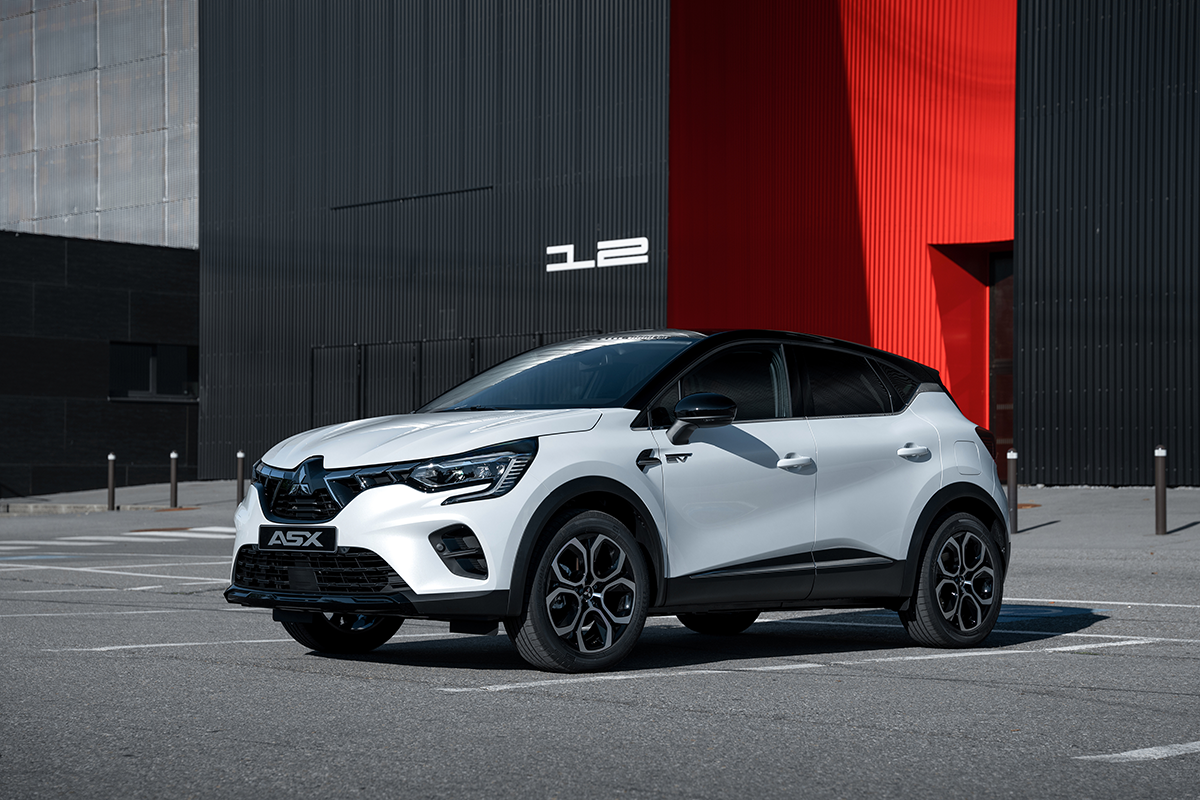
How do the ASX replacements stack up?
Thing is, neither the Euro ASX nor XFC has been developed with Australia in mind. In the European car’s case, it’s Alliance badge engineering so Mitsubishi can offer a left-hand drive, Euro 6-compliant small SUV to complement its Outlander plug-in hybrid.
Compared to our ASX (known as RVR in Japan) the Captur-based car is a half-size smaller; it’s roughly 15cm shorter and rides on a 41mm shorter wheelbase.
It also uses efficient hybrid Renault powertrains and electronics, which fits Australia’s incoming emissions policy – if not Mitsubishi’s image. We can begrudge the current ASX’s dull drive, but we can’t criticise its proven reliability and cheap servicing.
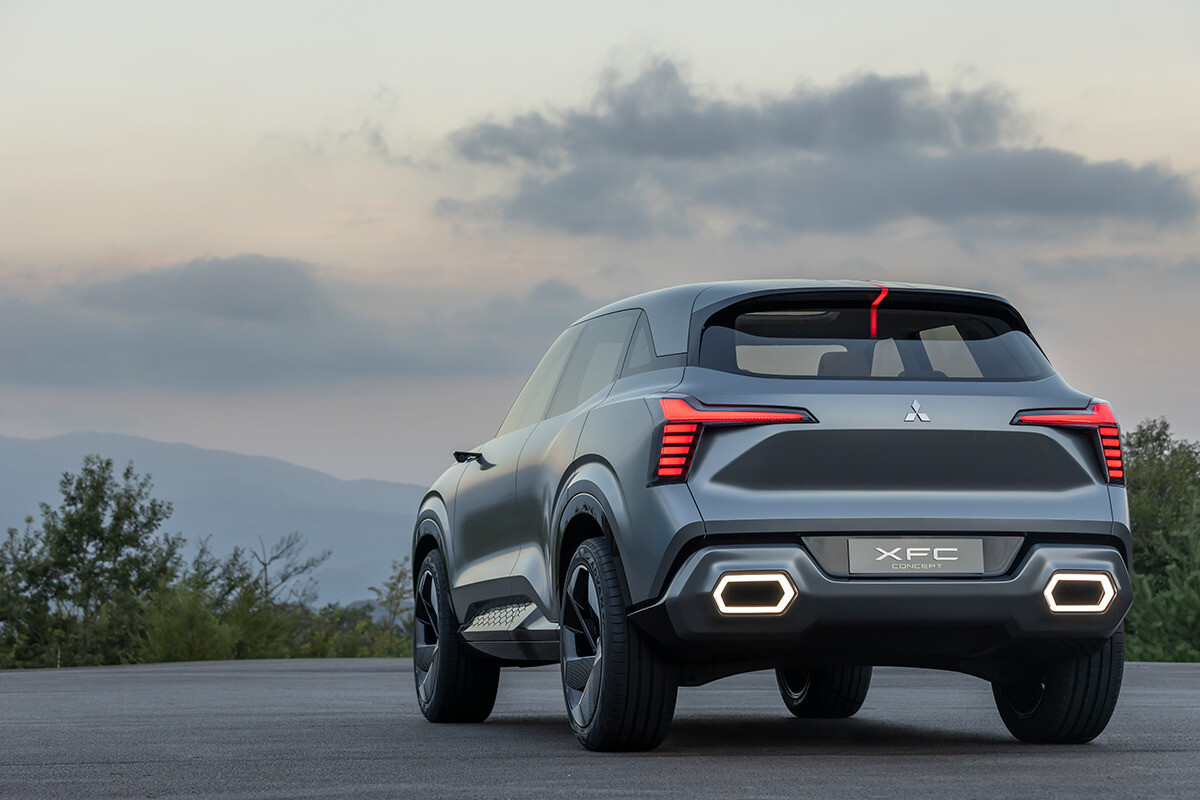
As for the XFC, it’s been developed with Mitsubishi’s growth region in mind, that being the ASEAN region which comprises 10 countries, none of which have safety standards quite as strict as Australia.
“XFC is for the ASEAN region in our mind. Of course, if it’s possible, we’d like to expand the market including leverage areas, but probably not for markets like Japan,” said Namiki-san
As outlined in Mitsubishi’s mid-term plan, the XFC will not be an electrified model at launch. Instead, expect a small-capacity petrol, such as the 77kW/141Nm 1.5-litre petrol four-cylinder found in the ASEAN-market XPander people mover.
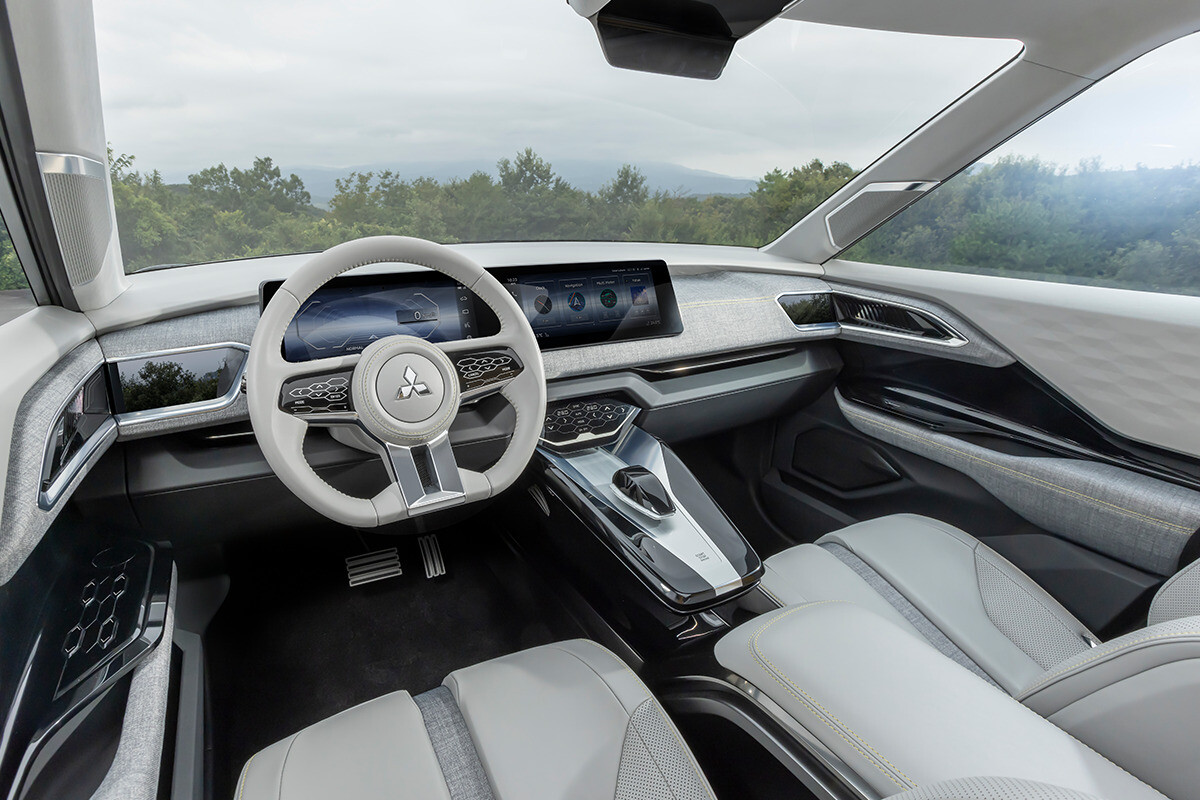
Namiki-san was honest that, as futuristic as it may look, the production version of XFC will need safety and performance upgrades if it’s to satisfy mature markets of Australia and New Zealand.
There are several other products in Mitsubishi’s mid-term plan, including a small Alliance BEV (perhaps a Megane E-Tech twin) and a two-row hybrid SUV (potentially an Eclipse Cross successor in the shape of a Nissan Qashqai clone), but Namiki made clear that neither would be a direct successor to ASX.
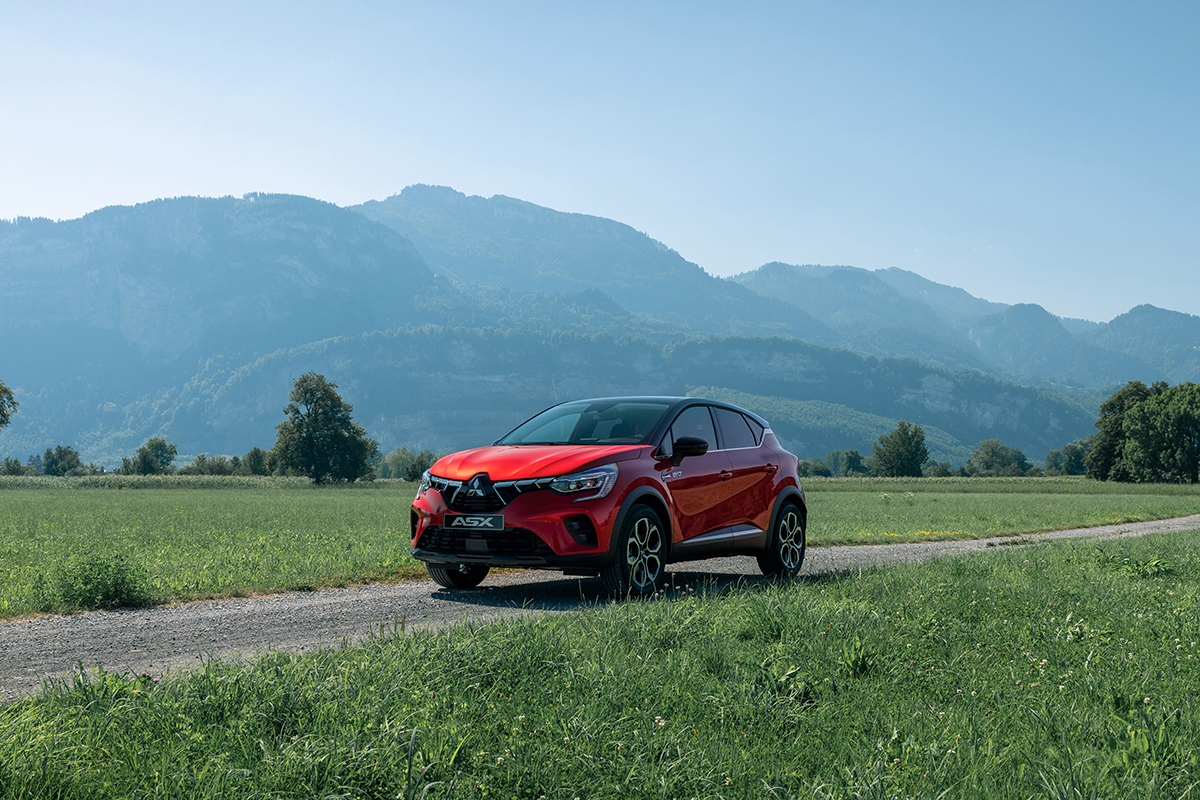
Would Mitsubishi continue with no ASX replacement?
You’ve got to imagine Australians will be sceptical of a rebadged Renault Captur, but given the XFC’s ASEAN-market focus, the new car also seems like a poor fit to replace ASX.
“Every product can’t last forever,” said Namiki-san stopping short of pin-pointing an end date for ASX. It’s also evident that Mitsubishi’s focus isn’t on small monocoque SUVs right now, so status quo could continue for a while yet.
“What we are talking about internally is that the SUV is the most important vehicle type. Not like a crossover type, more like an authentic one…we’re not trying to expand the vehicle range to sell hatchbacks or sporty cars, we’re just trying to concentrate on SUVs,” said Namiki-san.
Mitsubishi continues to work towards and ASX replacement, though there may end up being a gap between the current car and its successor.
Mitsubishi’s new Outlander PHEV is already on sale – but here’s everything that went into it
Jetting to Japan from Australia, a half-hour bus ride along Hokkaido’s snow-lined roads finally brings us to Mitsubishi’s Tokachi proving ground.
Completed in 1996, the 1000-hectare facility features all manner of car-busting tracks to test new vehicles to their limits. Like all good proving grounds, there’s an aura surrounding Tokachi – its trees have seen a great many prototypes (and probably crashes) over the years. If only they could talk.
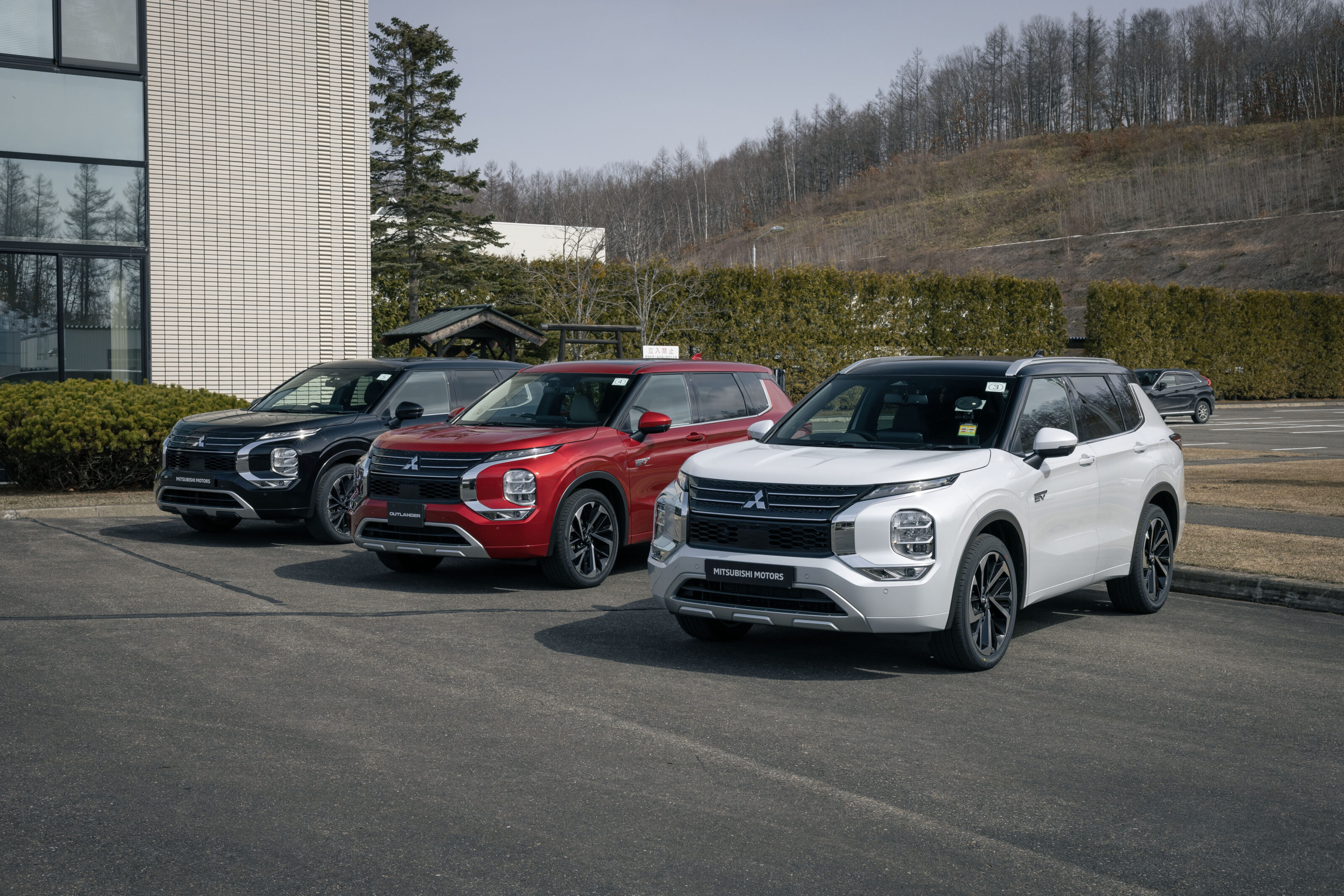
A trio of Outlander plug-in hybrids greets us at the gate, as we’re here for less secret reasons. The red-and-white PHEVs look unassuming, but the third Outlander appears to have mismatched wheels; a closer inspection reveals the same 21-inch alloys that’ve been subjected to enough gravel rash to knock all the black paint free from the faces.
“This is the gravel development car.” No kidding.
You can see the array of mud flaps underneath that protect the exhaust (without the rubber it would get too dented), and the absolute havoc the rocks have wreaked on the Outlander’s underbelly.
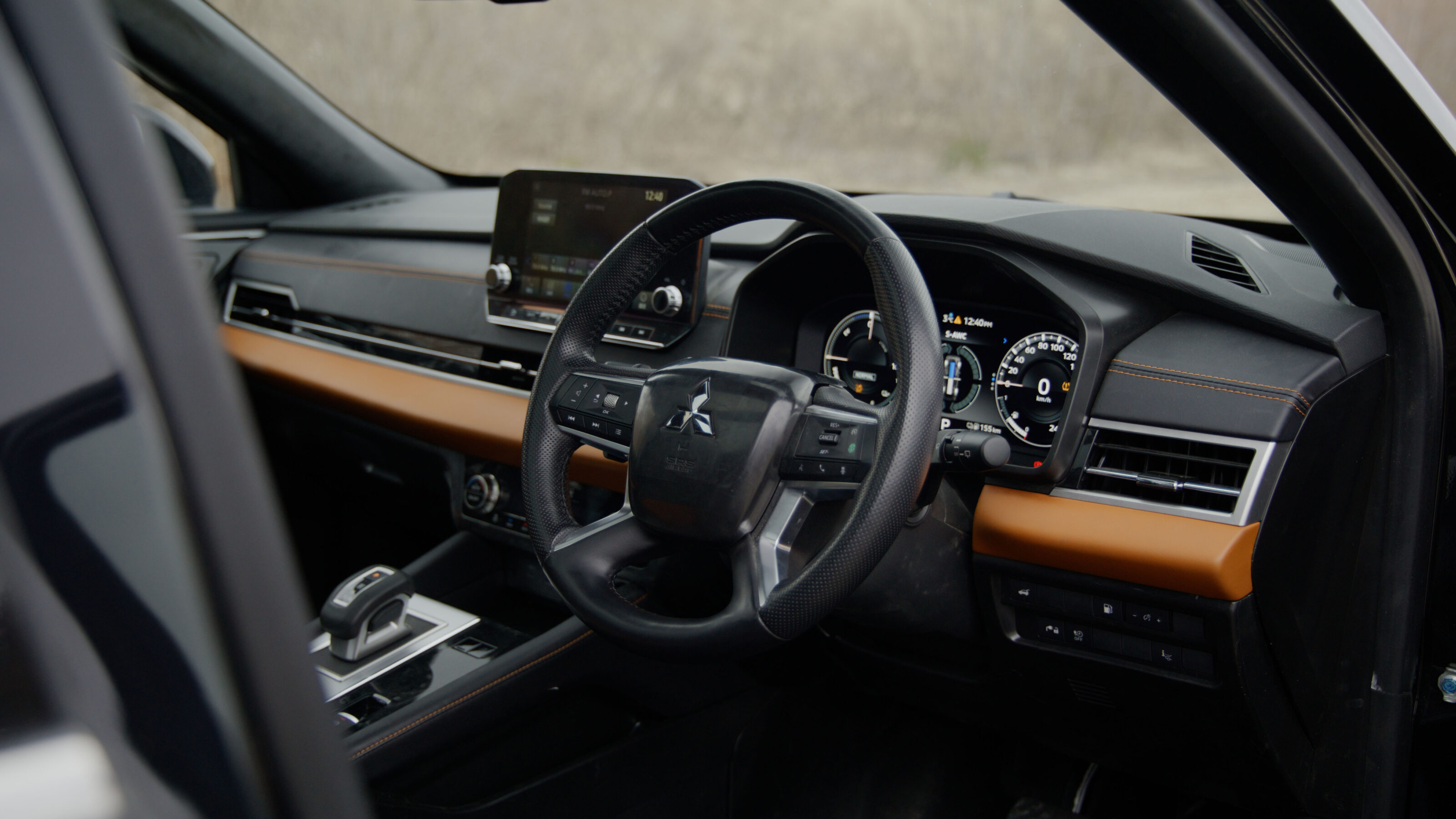
The real surprise comes inside, where the Outlander Exceed Tourer’s plastics are smooth and ungrained, and the digital driver’s display reads an absurd 286,000 miles – or 457,000km. To put that into perspective, it would take an average Australian 35 years to rack up that mileage, and Mitsubishi reckons this Outlander is still on its original dampers and suspension bushings.
Another, more consumer-relevant quirk is the second-row captain’s chair arrangement, which would make a worthy addition to the Aussie market, we reckon.
It’s rare for a car company to give journalists a peak behind the curtain at what went into developing a car. Usually, mules like this are discarded, or at least hidden from view. But the car we drove has likely been instrumental in influencing the direction the future tri-motor Outlander Ralliart will take.
The digital driver’s display reads an absurd 457,000km – it would take an average Australian 35 years to rack up that mileage
Following a safety induction and briefing on the day’s activities, I’m first up in the prototype. We follow development driver Atsuro Hirayama – in one of two Final Edition Lancer Evolution Xs that casually hang around the proving ground – onto the 10km high-speed bowl.
“Stop, and then give it full acceleration,” crackles the radio from the centre console.
V-Maxing a 185kW/450Nm Outlander plug-in hybrid doesn’t sound particularly intimidating (it’s only 180km/h, after all) but in the battered-up mule, things aren’t exactly serene.
All those kays on rocks and dirt have definitely left some weight lodged in the rims, and probably some buckles too. These become apparent between 120-130km/h as the Outlander tries to shake itself to pieces. Not wanting to drop back from the lead trio, I keep my foot in, hoping it will improve. As we approached the 180km/h top speed, it does indeed, and the worst of the wobbles subside.
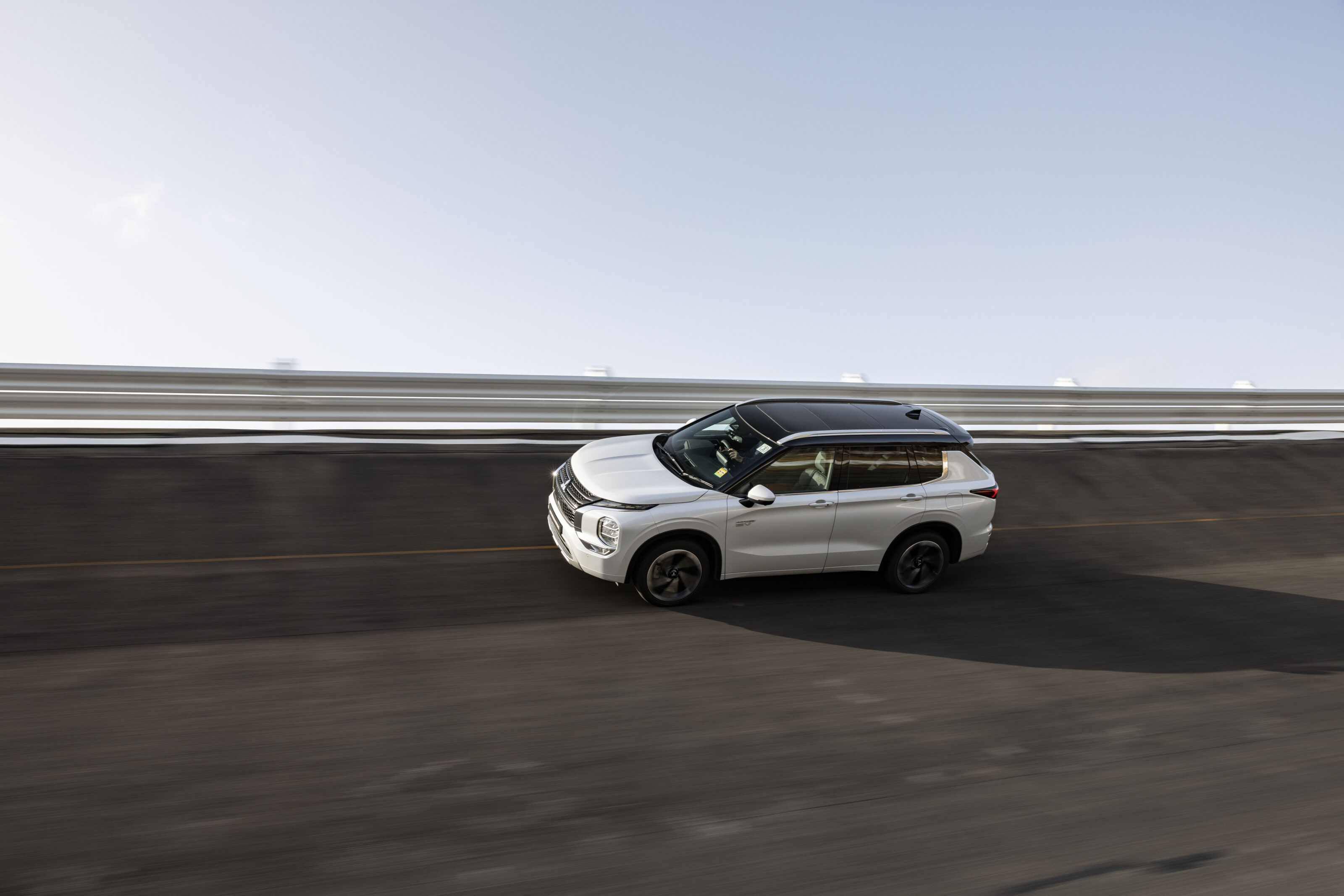
None of this is hugely relaxing, of course. Sunroof rattling and computer chiming a calm but insistent alert at the disconnected tyre pressure monitoring, broken headlights and phantom unbuckled belts – but that’s all part of the fun.
Next on the list is another tarmac activity, a motorkhana of sorts, tracing the Outlander plug-ins through a series of cones to test the ABS, ESC, power delivery, and on-limit handling.
Threading a two-tonne electrified SUV through some cones may sound a chore, but the Outlander’s party piece is the way it disguises its 2110kg kerb weight.
Light steering and an alert front end are eager to dive into corners, and the instant torque from the rear 100kW/195Nm electric motor shoots the Outlander toward the next cone. Overwhelm the front tyres (it’s not a hard task) and you’ll get a lot of understeer, but be gentle and you can have fun.
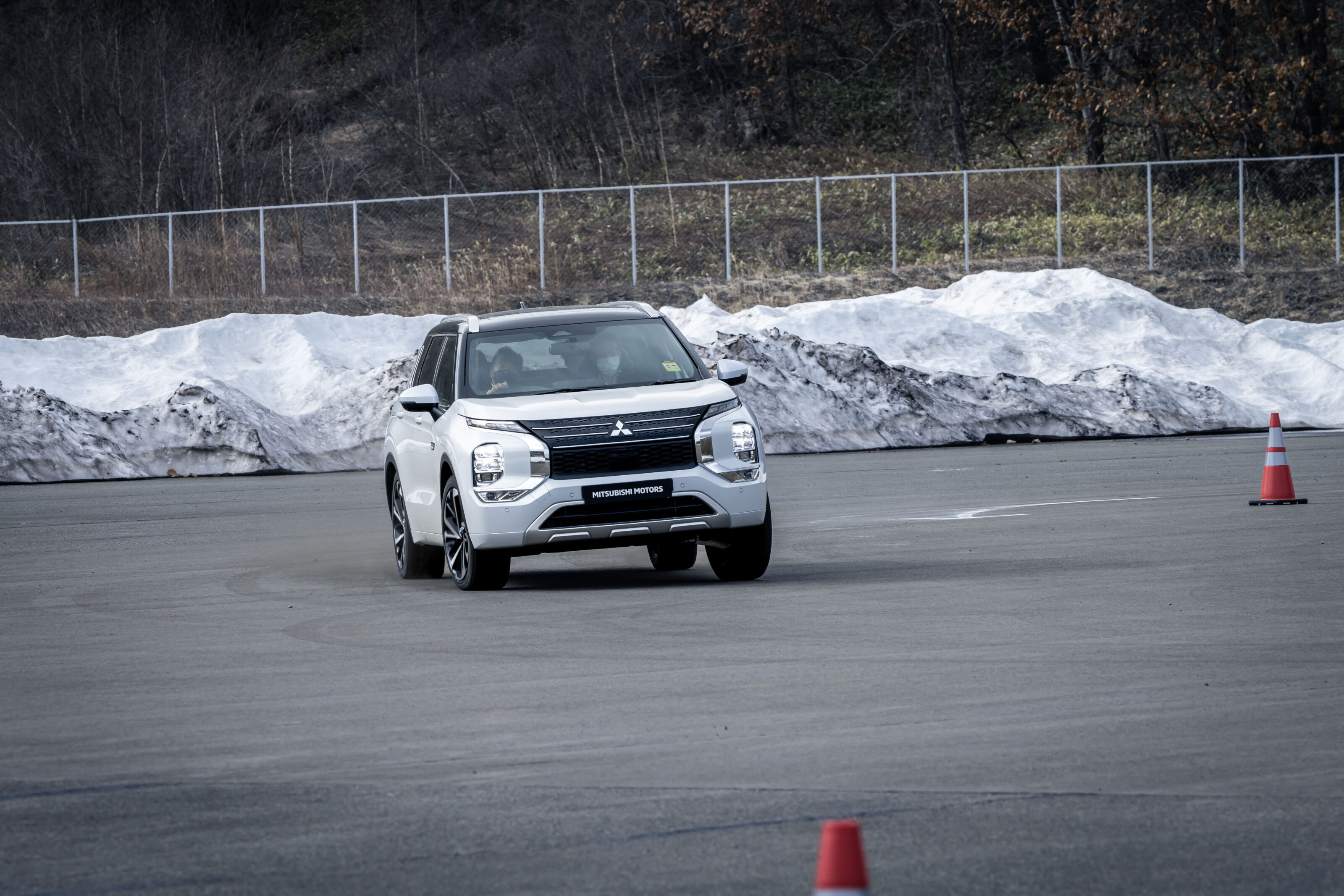
Of the three cars on hand, the black development is definitely the most expressive. A well-timed left-foot brake on turn-in sends the rear wide and – providing you stay smooth with the inputs – holds the intentional yaw for a second, showing the depth of Mitsubishi’s ESC calibration. Of the seven drive modes, Tarmac is the most natural, while Power alarmingly fast – and Gravel/Snow the most fun.
At the end of the Motorkhana, a low-friction surface awaits us. With all four wheels, this simulates driving on ice, and it’s astounding how effective Snow mode makes the traction control. Next, we’re encouraged to drive with one wheel on the slippery, and the other on normal tarmac to test the ABS calibration.
Tokachi’s smooth tarmac test circuit also highlights how Mitsubishi arrived at the Outlander’s suspension tune. The car is great over all the bumps constructed here – no surprises – but even this advanced proving ground has no simulation of Australia’s scabby and potholed tarmac.
What we’re really here for is what this car’s been doing for most of its life – slithering around the hilly, off-camber gravel circuit.
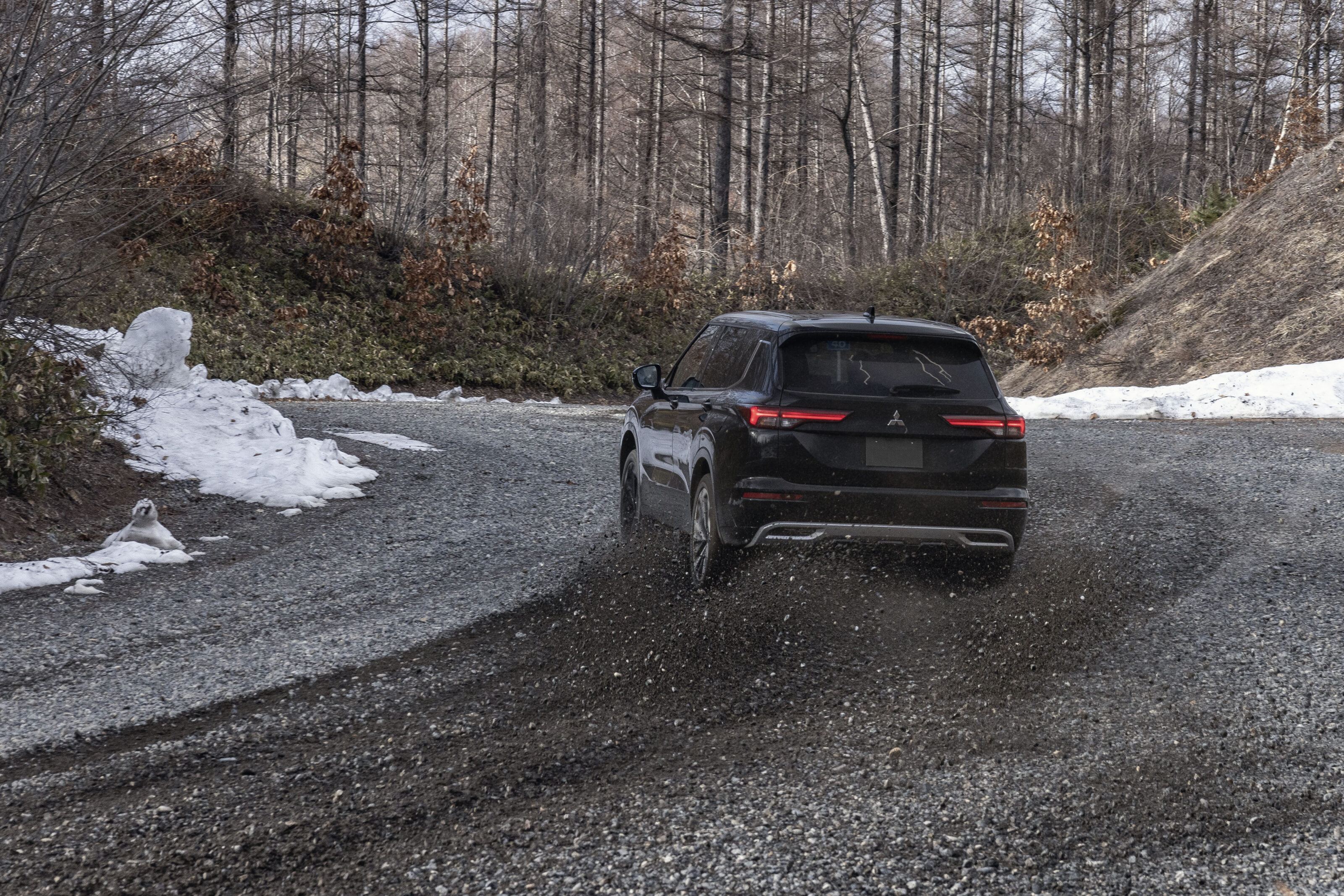
We start in normal mode, Hirayama-san encouraging deference to the tricky course, and I can see why. The first descent is steep and the surface unforgiving. Initially, Outlander’s ESC and traction control work tirelessly to limit slip.
The second lap time is about Gravel mode. With traction control off (but ESC left alone), I’m encouraged to push a little harder. There’s a fluidity to the Outlander on gravel not evident on tarmac; the trick is to stay smooth on the steering inputs and use the brakes to guide the SUV around.
By the third lap, sliding has become second nature, with Gravel mode allowing smooth and predictable four-wheel slides without ESC intervention. Only when you really get it wrong (or are too aggressive) do the nannies cut in. Add to that the instant torque from the Outlander’s rear motor and the clever single-speed transaxle front transmission, and the amount of confidence I find in this two-tonne SUV is really astonishing.
To finish the day, Hirayama-san takes us out for a hot lap – and hot it is. He enters the corners fully crossed up, at one point tagging a mid-corner bump that feels like it’ll rip the standard 255/45R21 Bridgestone Ecopia off the rim (it didn’t). It didn’t take long for the unmistakable smell of cooked brake pad to waft through the crisp mountain air – and he did all this with his massage seats on.
Hirayama-san is no average joe. His driving career started in the Japanese Gymkhana championship where he piloted a Mirage Asti coupe race car, with its 1.8-litre engine bored and stroked to 2.0 litres.
He then transitioned to drifting, owning three generations of Nissan Silvia – S13, S14, and S15 – chewing through four SR20s and three transmissions along the way.
He currently works on the Outlander (presumably with ties to the coming Ralliart version), next-gen Pajero Sport and Triton ute, as well as some of Mitsubishi’s Kei cars as a development driver. His personal car is a Rover K Series-powered series-2 Lotus Elise. A died-in-the-wool petrolhead, then.
It’s this kind of passionate employee, a largely unknown and unsung development driver, that can inject even the most mundane cars with a bit of character. Hirayama is just one Mitsubishi employee, but there are many more enthusiasts just like him in the fold. We have high hopes for the future of Ralliart.
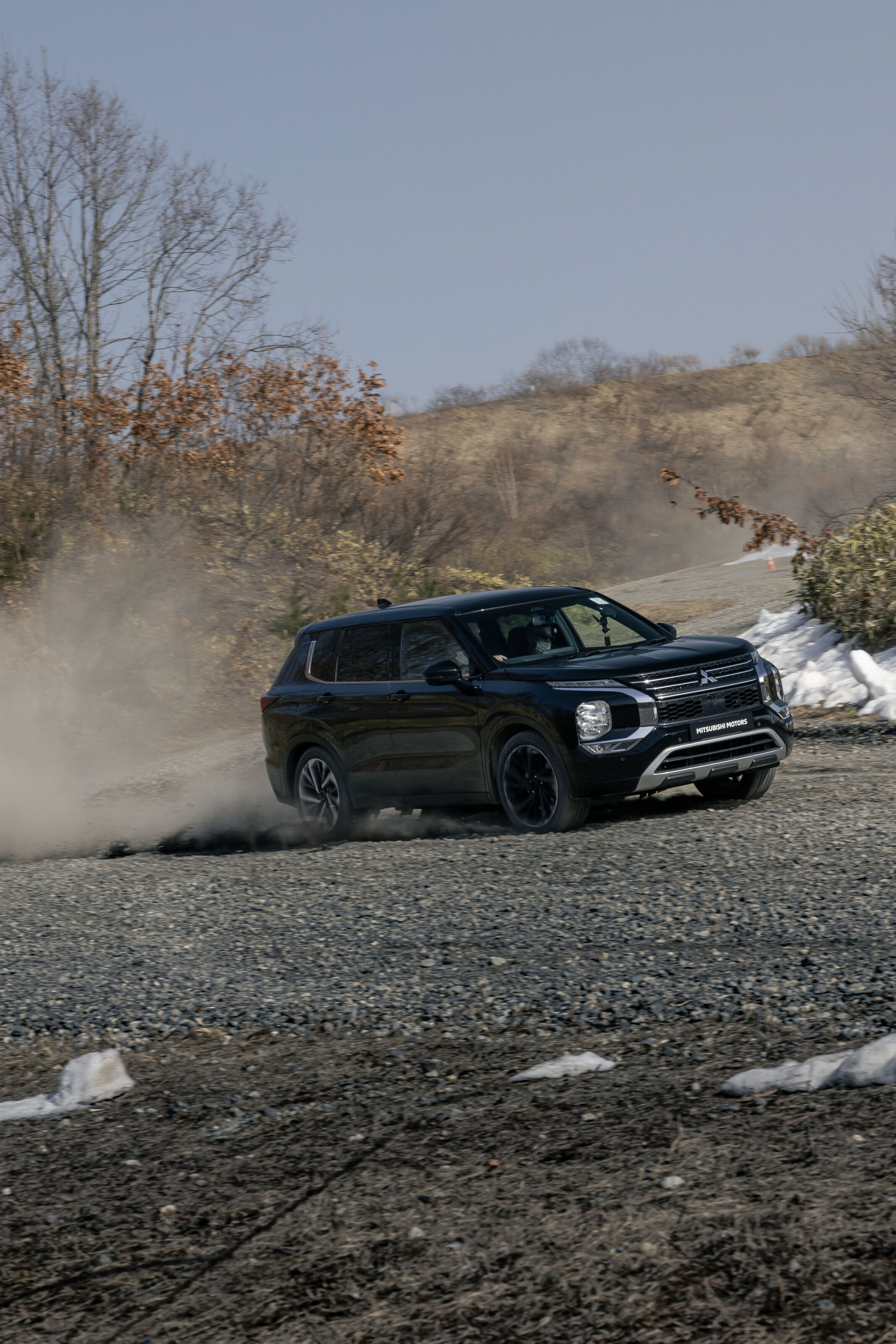
What did we learn by sliding around a Mitsubishi Outlander that’s effectively traveled to the moon and halfway back?
We learned this family SUV has been tested to within an inch of its life, and it’s a pleasure to be able to celebrate a gladiator of vehicle development.
The exercises also confirmed something about Mitsubishi’s products: although the Outlander and Triton might have somewhat firm and clumsy low-speed suspension tunes, there’s a depth of quality engineering and toughness not evident in up-start Chinese rivals.
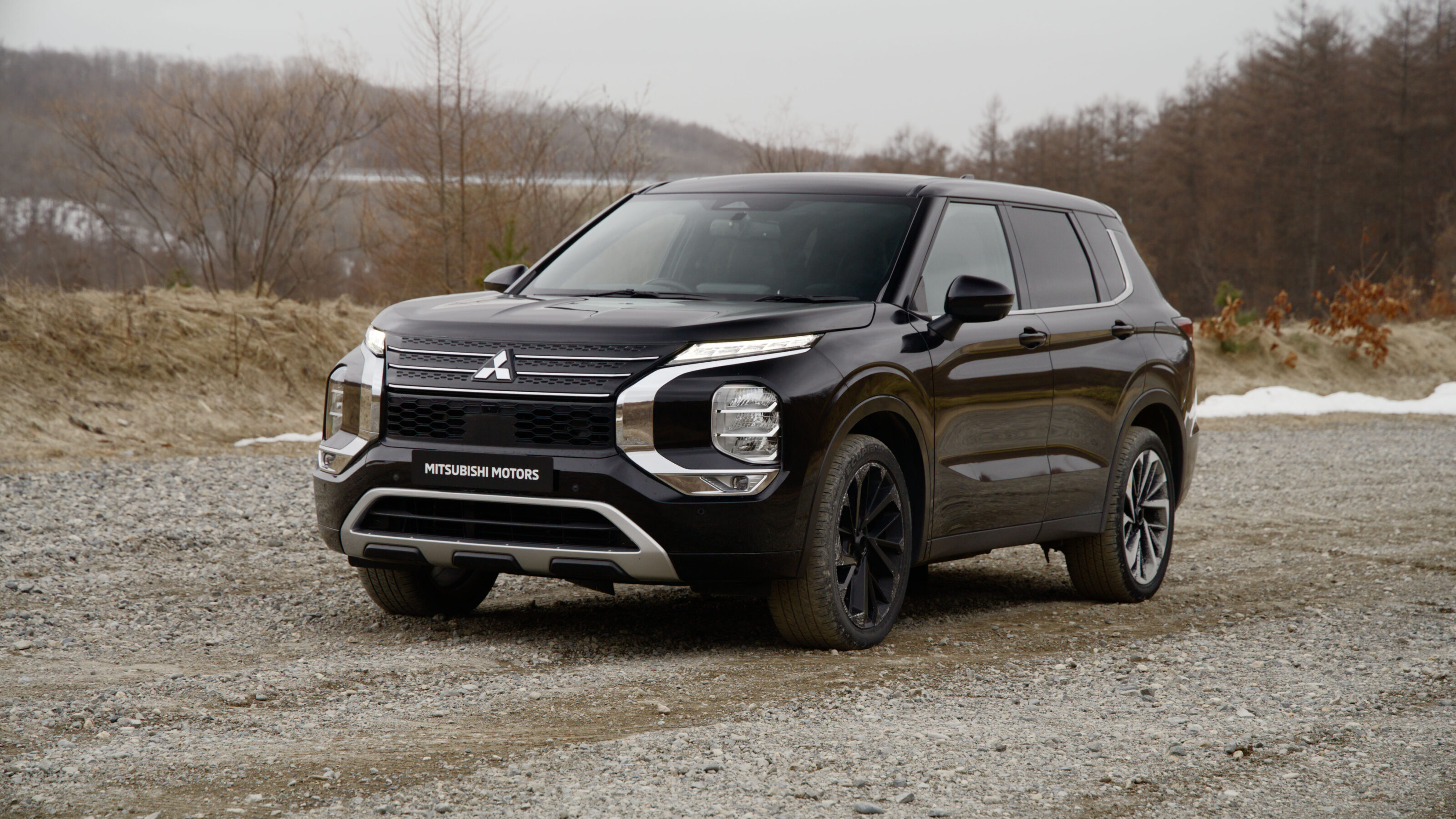
Does knowing what’s behind Mitsubishi’s test regime somehow make the Outlander plug-in hybrid the best medium SUV? Not quite. But I have come away from Japan with a new-found appreciation for the capability of Mitsubishi’s plug-in powertrain, all-wheel drive system, and dedication to vehicle testing.
Even in such an everyday family vehicle, the S-AWC system is rather special. One can only imagine how an extra 100kW, 200Nm, and performance-tuned air suspension would feel in an Outlander Ralliart.
