
Subaru will get a high-performance double shot in the arm in 2021 and a refreshed driver’s model stable when both the all-new WRX sedan and BRZ rear-drive coupe touch down late in the year.
The heavy hitting but affordable pair of high-achieving models couldn’t come a moment too soon with the WRX and its later STI flagship cutting laps of Australian showrooms since 2014, while the BRZ arrived in its first-generation in 2012.
While the brace of bruisers continues to draw a loyal audience, both are starting to feel their age with a corresponding decline in sales, but a replacement will invigorate overall sales, explained Subaru Australia national public relations manager David Rowley.
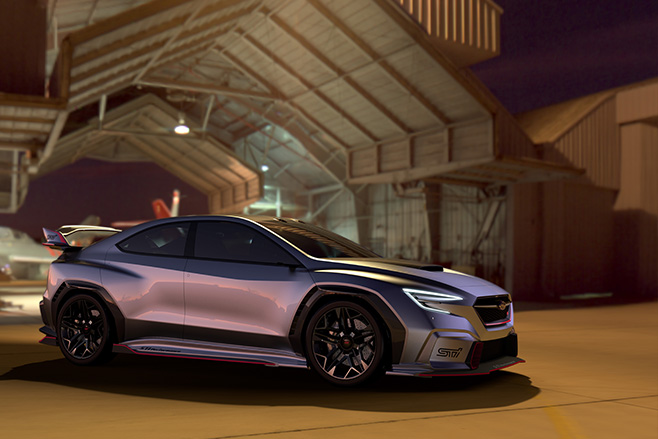
“BRZ, WRX, STI, they’re very much halo cars for the brand and, while we love the volume and they’re great sellers within their niches, they tend to have this reflected glory on the broader range and bring in new prospects and new customers,” he said.
When it arrives, the new WRX will be the latest model to roll out on the company’s proliferating Subaru Global Platform (SGP) following the closely related Impreza, XV and Forester, bringing a host of enhancements to the iconic driver’s model.
Subaru Australia general manager Blair Read said the new platform has sharpened the dynamic characteristics of every model so far to adopt the SGP – a key feature to the company’s rally-derived sedan.
“The biggest (enhancement) will be from a handling and dynamics perspective and that’s seen in Outback,” he said. “What’s most noticeable for most people is the rigidity of the car and what that does for the feel for the driver. We’re really looking forward to how that manifests itself in WRX.”
As far as other specific details, little has been confirmed for the forthcoming second-generation WRX although Read hinted at a similar combination of all-wheel drive and turbocharged flat-four engine and “Core Subaru DNA” in the VA-model successor.
Exact timing and the first solid technical details will follow soon but for now, fans will have to wait until “later this year” to get their hands on the first examples of the new WRX, and the now confirmed STI version will follow “slightly behind WRX”.
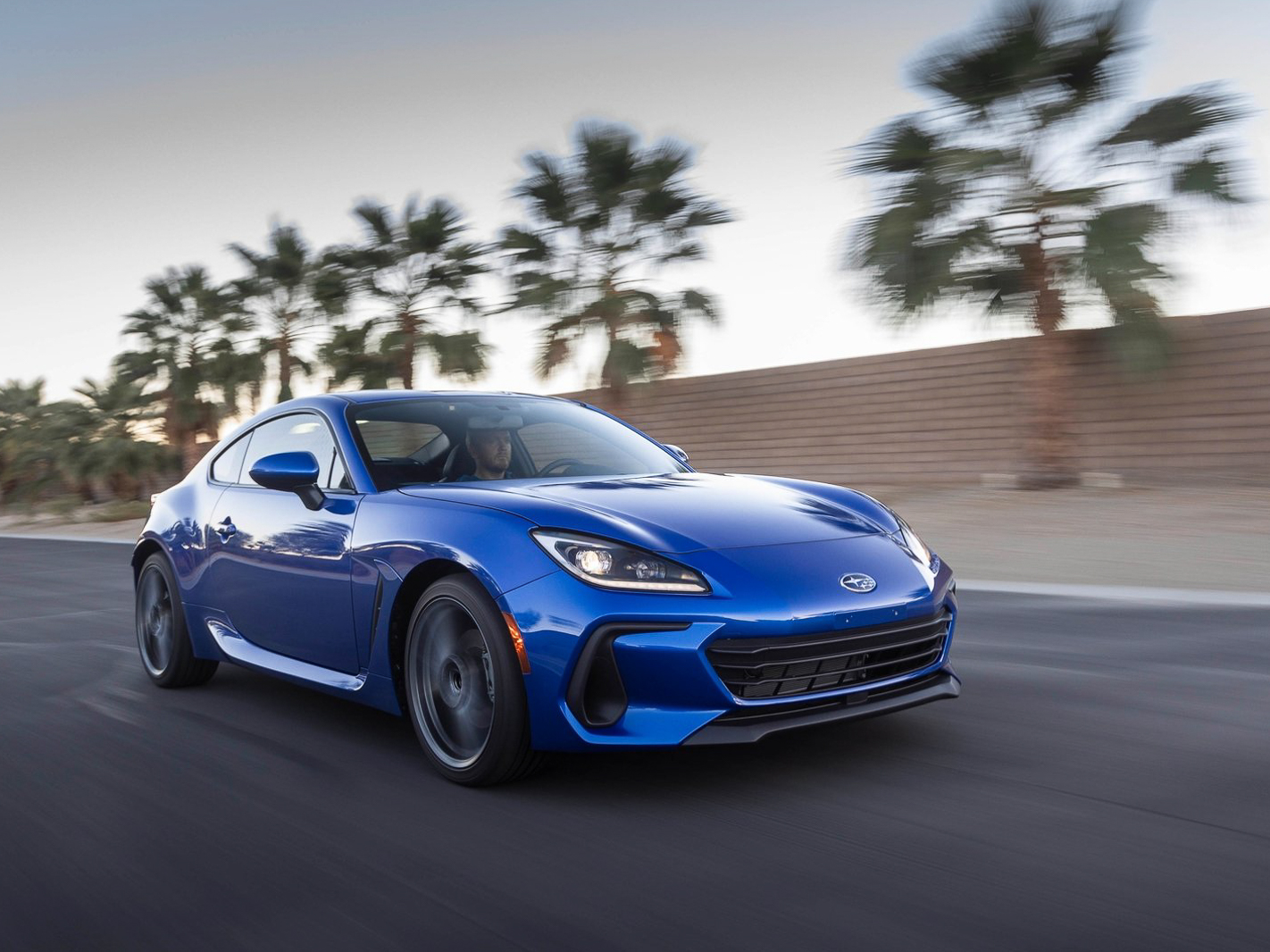
It will share showroom space with the second-generation BRZ coupe which has been revealed in much greater detail including its enlarged more powerful engine, lower stiffer stance, and cutting edge technology.
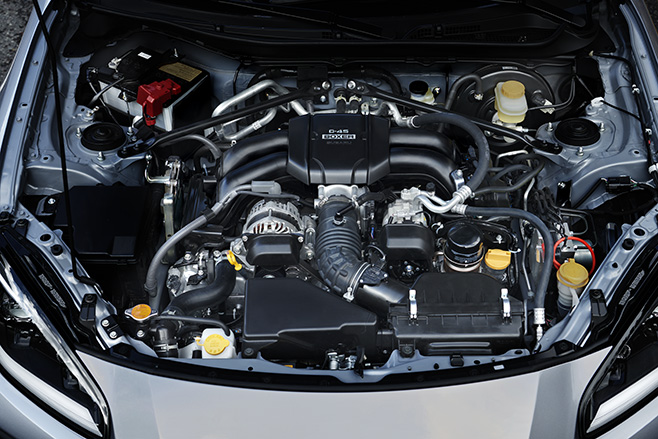
Like its unique rear-drive layout, its platform will also be an anomaly in the Subaru line-up, rolling not on the SGP architecture but Toyota’s TNGA underpinnings, although the engine will be pure Subaru with a 2.4-litre boxer four powering the new model.
Time to answer the question: ‘will adding crazy amounts of power make me faster at the track?’
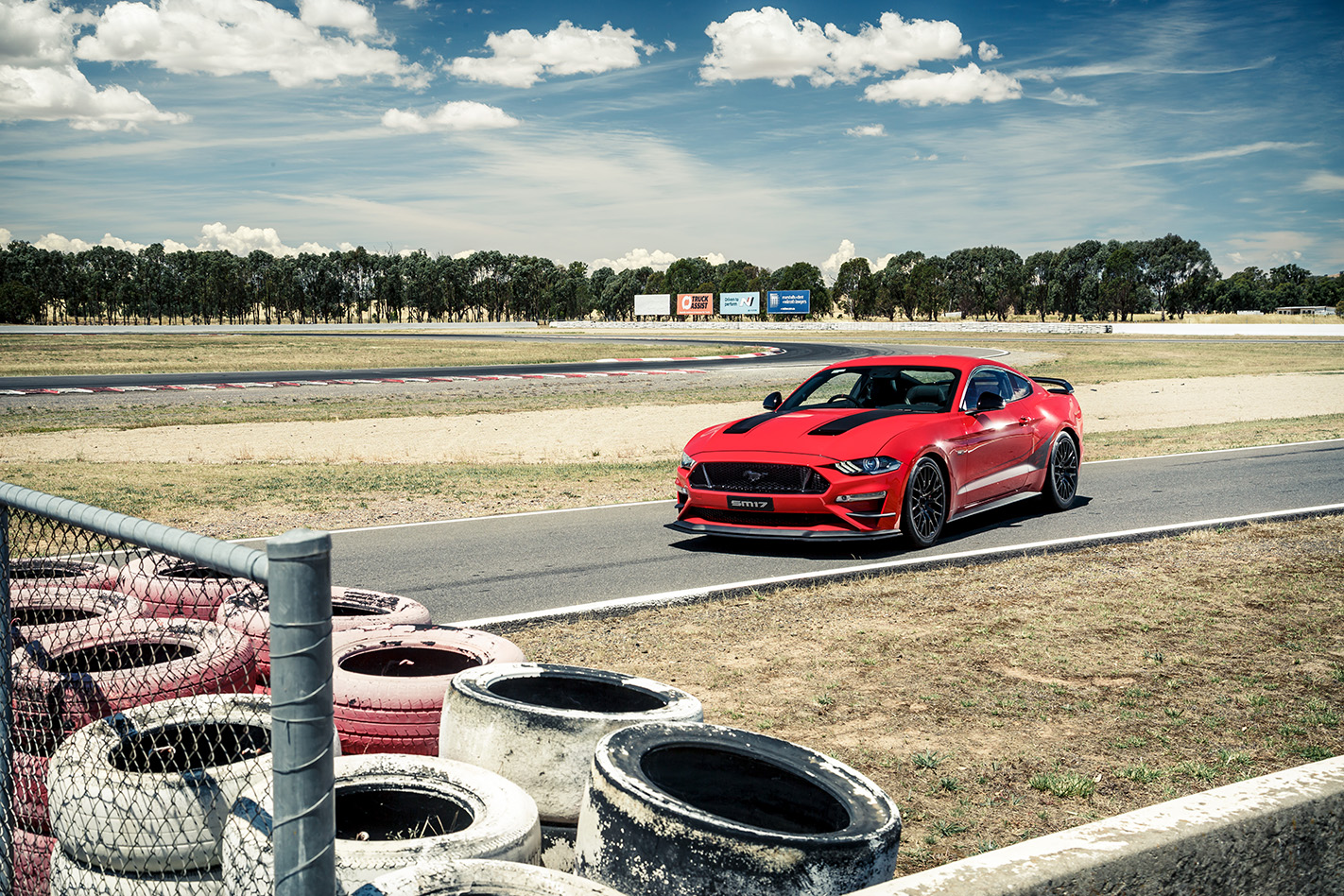
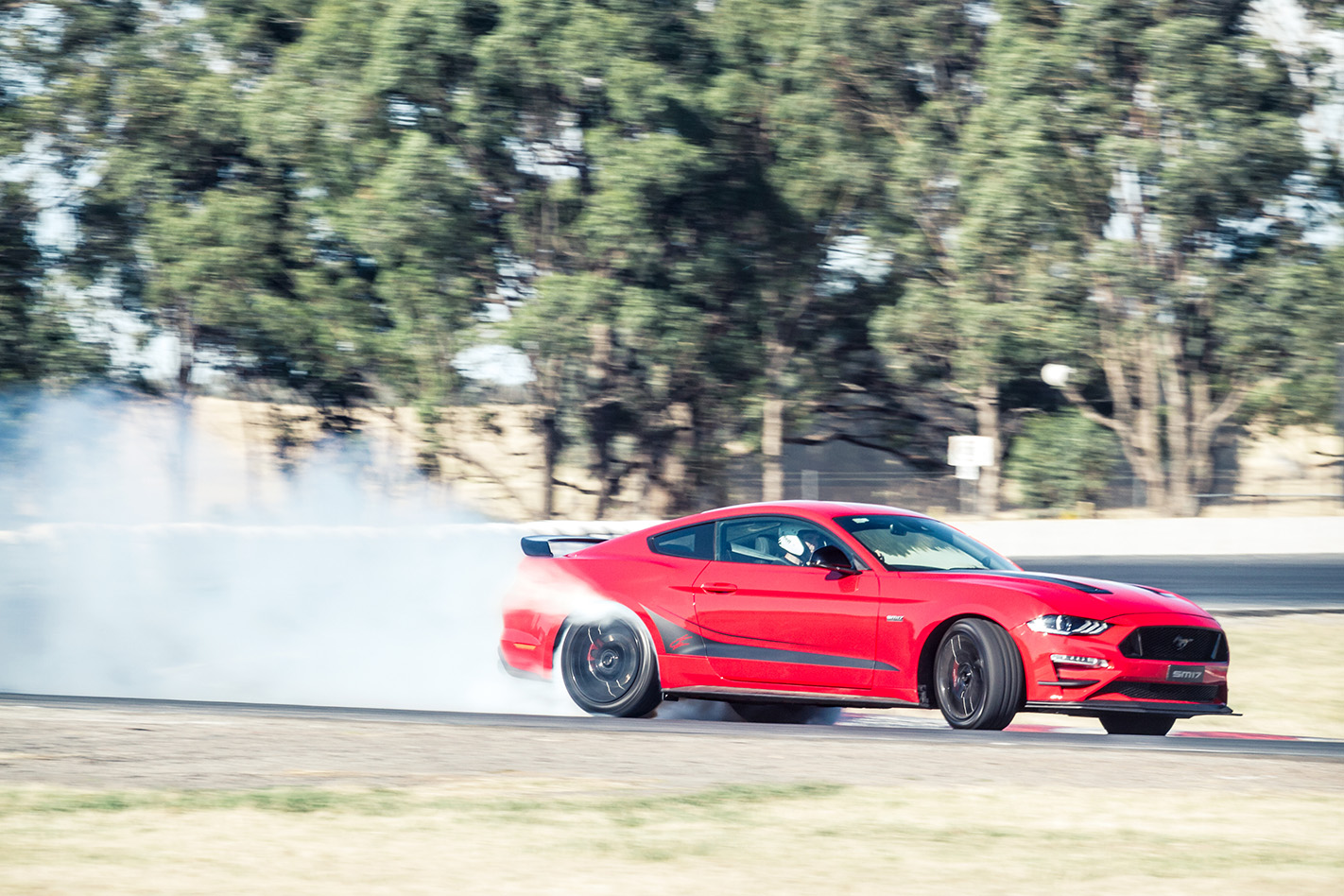
Our tool for this experiment is the Ford Mustang SM17 by Herrod Performance – a supercharged version of the already impressive Blue Oval coupe.
The figures are staggering – 578kW and 810Nm – making this the most powerful vehicle compete at MOTOR’s Performance Car of the Year… ever.
But, as the saying goes, power is nothing without control. To try and reign in this wild pony we have race ace Karl Reindler.
It was a scorching day at Winton when we conducted testing, resulting in some cooling issues for the high-powered monster. However, Reindler was still able to get a lap in, setting a time of 1:33.7, seeing it vault into second place on the MOTOR Shootout leaderboard.
“It’s the only one I think I was just a slight bit intimidated by jumping into,” Reindler said following his hot lap.
“Leaving pit exit, it actually put the power down quite well.
“I mean it’s wild don’t get me wrong – but it wasn’t as much of a shock to the system as I was expecting.
“It’s very capable; it’s got a really stiff platform which is fantastic. A little bit of understeer through the hairpins but I only got one lap in which is the frustrating thing about it.
“You’ve got to be so patient trying to put the power down with – whatever it is, 800-odd horsepower – underneath your right foot. I may have left some big juicy liquorice strips out of the last corner to start my lap – I was a bit eager to get my lap going.”
Make sure to check back next week to see how the Mercedes-AMG A45 S fares in the MOTOR Shootout.
Honda has welcomed a new-generation HR-V today, unveiling the all-new small SUV with the brand’s clean new design themes and with a hybrid powertrain for the first time.
Indeed, hybrid will be the only option available to HR-V buyers in Europe. Australian details are still to be revealed, but Honda’s local arm has previously confirmed it intends to offer hybrid variants of all future models.
Depending on the final product plan, petrol versions could form the basis of the new HR-V line-up in Australia, and the Japan market is already confirmed to have a 1.5-litre petrol variant on its roster.
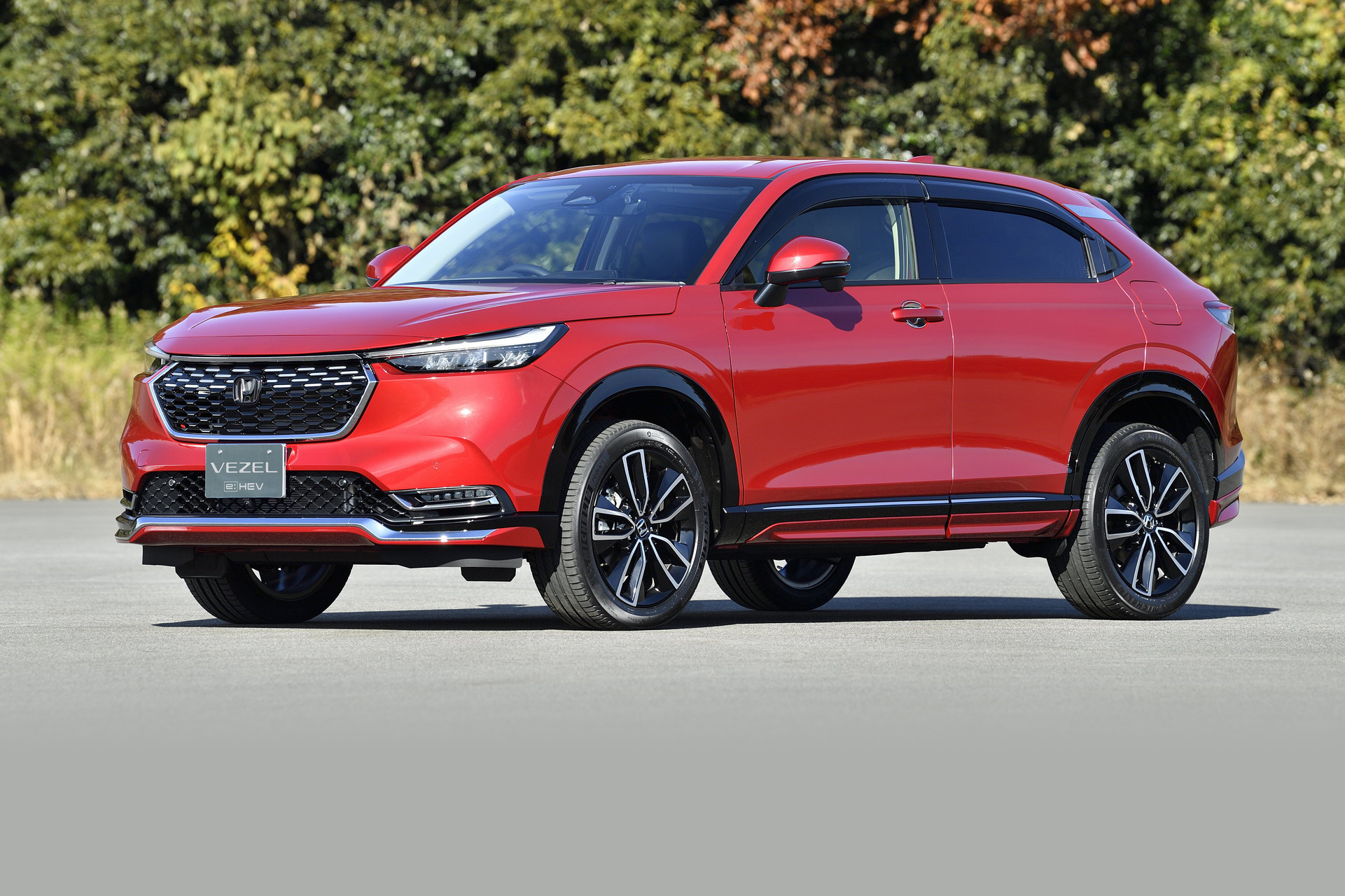
For petrol models, buyers might expect a grille design that look more like the Japan-market styling packs featured at the bottom of this story.
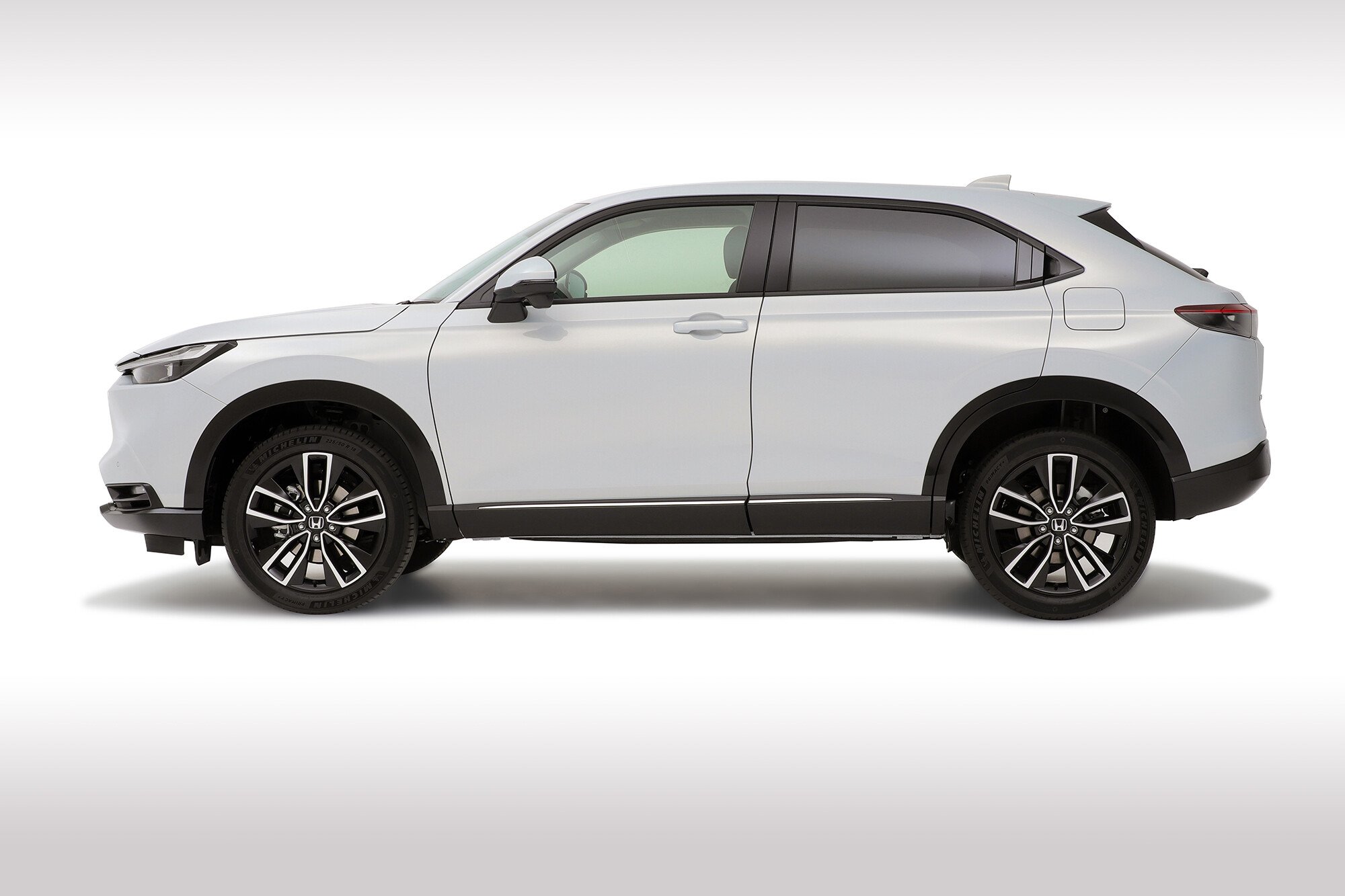
Overall, the new HR-V’s looks are simpler and more streamlined than before, with a number of new interesting elements such as the slatted front grille shown on this hybrid model, a tapered roofline and accentuated wheel guards.
Honda also says it retains the previous HR-V’s class-leading interior space, with the trick ‘Magic Seat’ folding seat mechanism making a return.
The design uses a coupe-like form which is said to enhance the interior space and provide a high level of comfort, the Japanese manufacturer said.
The new integrated-look grille of the hybrid is flanked by a set of thin-profile LED headlights. It also gets an elongated bonnet, while vertical side panels ensure unimpeded interior space.
The C-pillar door handles have been carried over, though the new HR-V now features a tapered roofline that descends into a beefier rear end than before. LED tail lights are bridged by a full-width light bar, as is becoming the norm in automotive design.
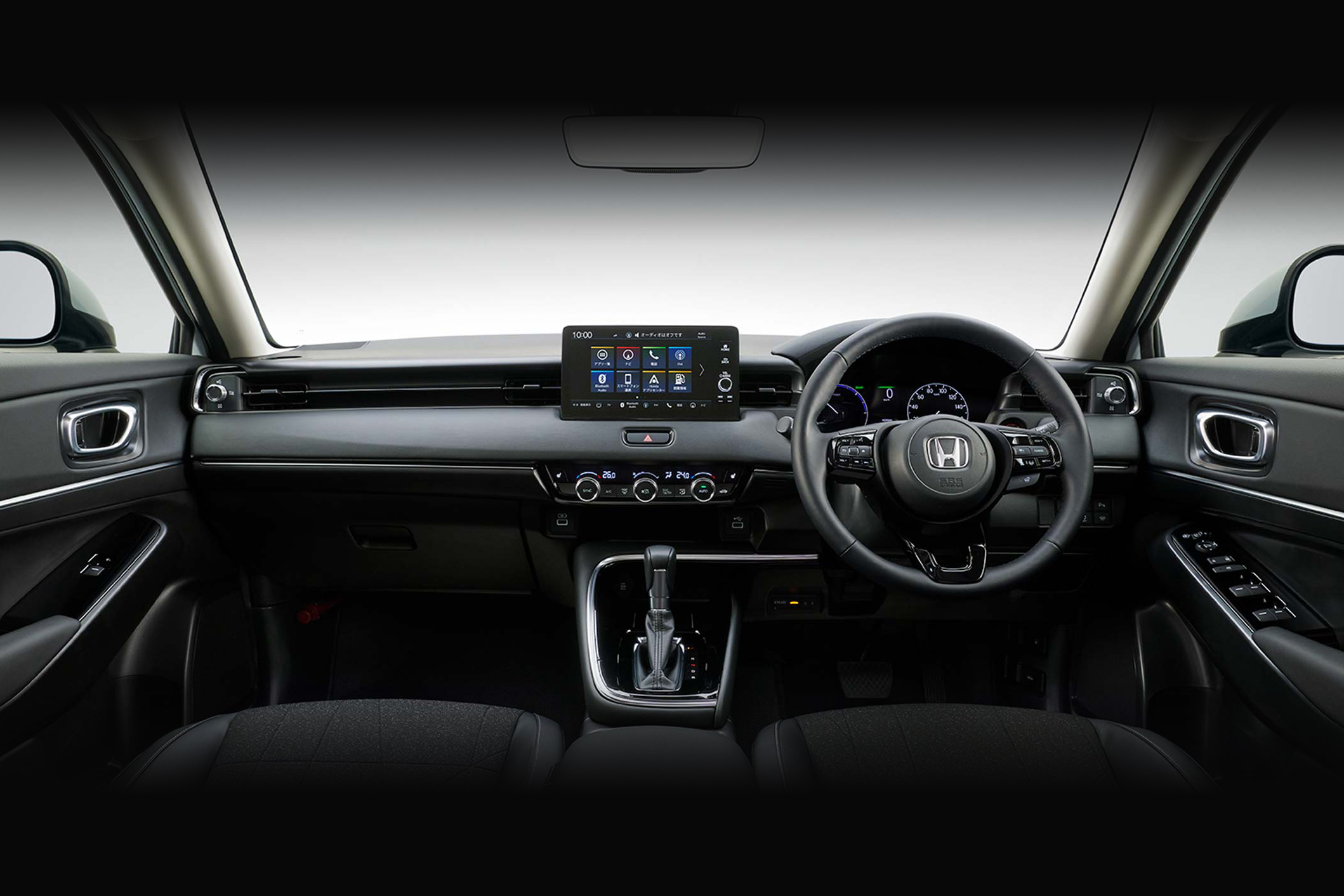
Inside, the HR-V features a new-look, Honda E-inspired interior with newer fabrics and soft-touch materials. It’s more of a minimalist style than before, featuring only carefully considered design elements.
It will receive a larger Honda Connect touchscreen infotainment system in the centre of the dash, with connected features like digital key, automatic map updates and in-car wifi.
The low-mount dashboard and centre stack stocks physical dials for climate control functions, volume control and air vent adjustment.
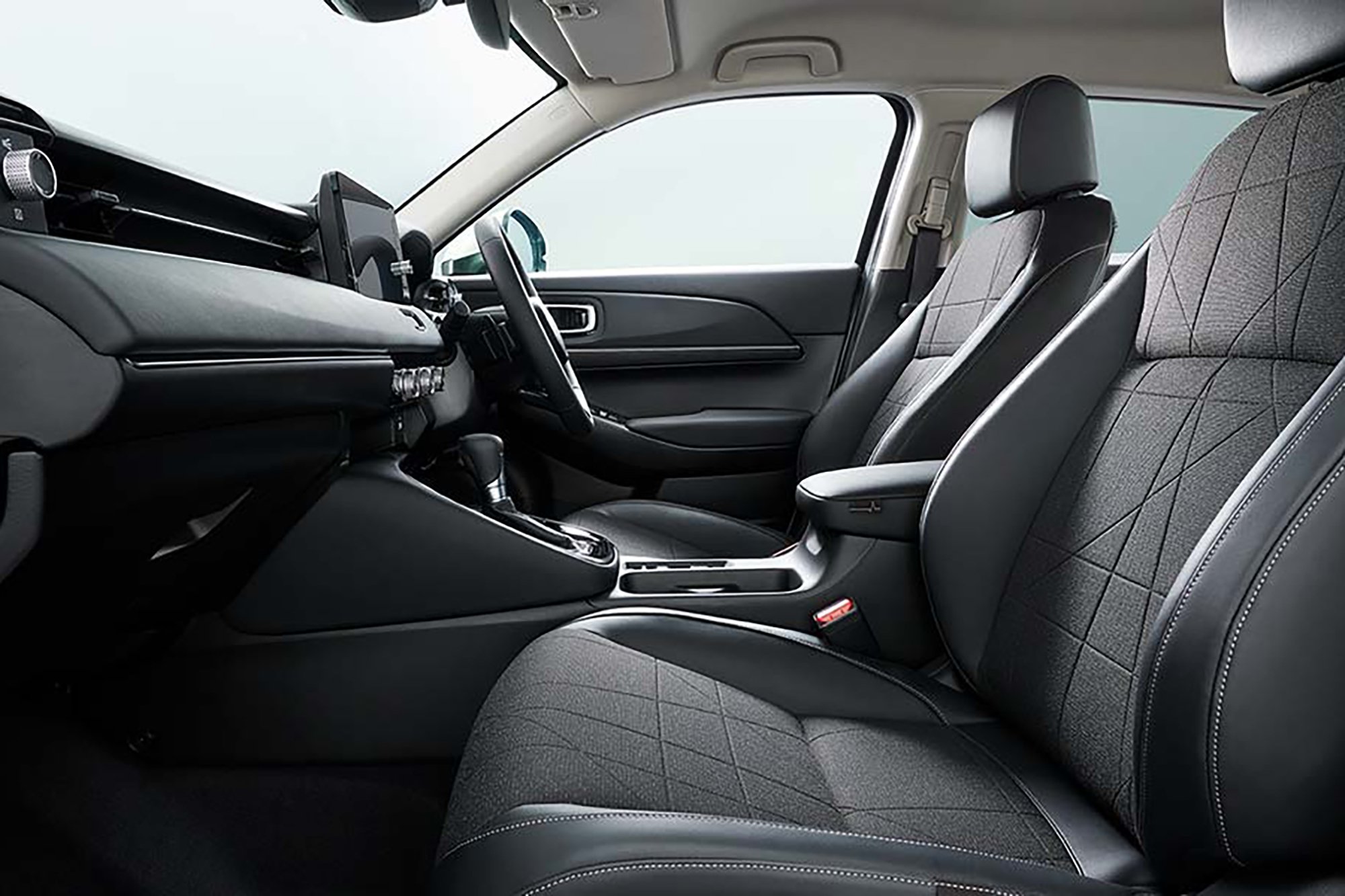
Also of note is a new air diffusion system that provides a curtain of fresh air beside and above passengers, flowing from L-shaped vents in the dashboard.
Only one powertrain has been announced for the 2021 HR-V so far: a petrol engine matched to a two-motor ‘e:HEV’ hybrid system.
It allows the driver to switch between three driving settings; including EV mode, hybrid mode and engine mode. Full details for this system are still to come.
Honda Sensing safety features will be offered, including items such as autonomous emergency braking with pedestrian detection, adaptive cruise control, auto high beam, lane-keep assist and sign recognition function.
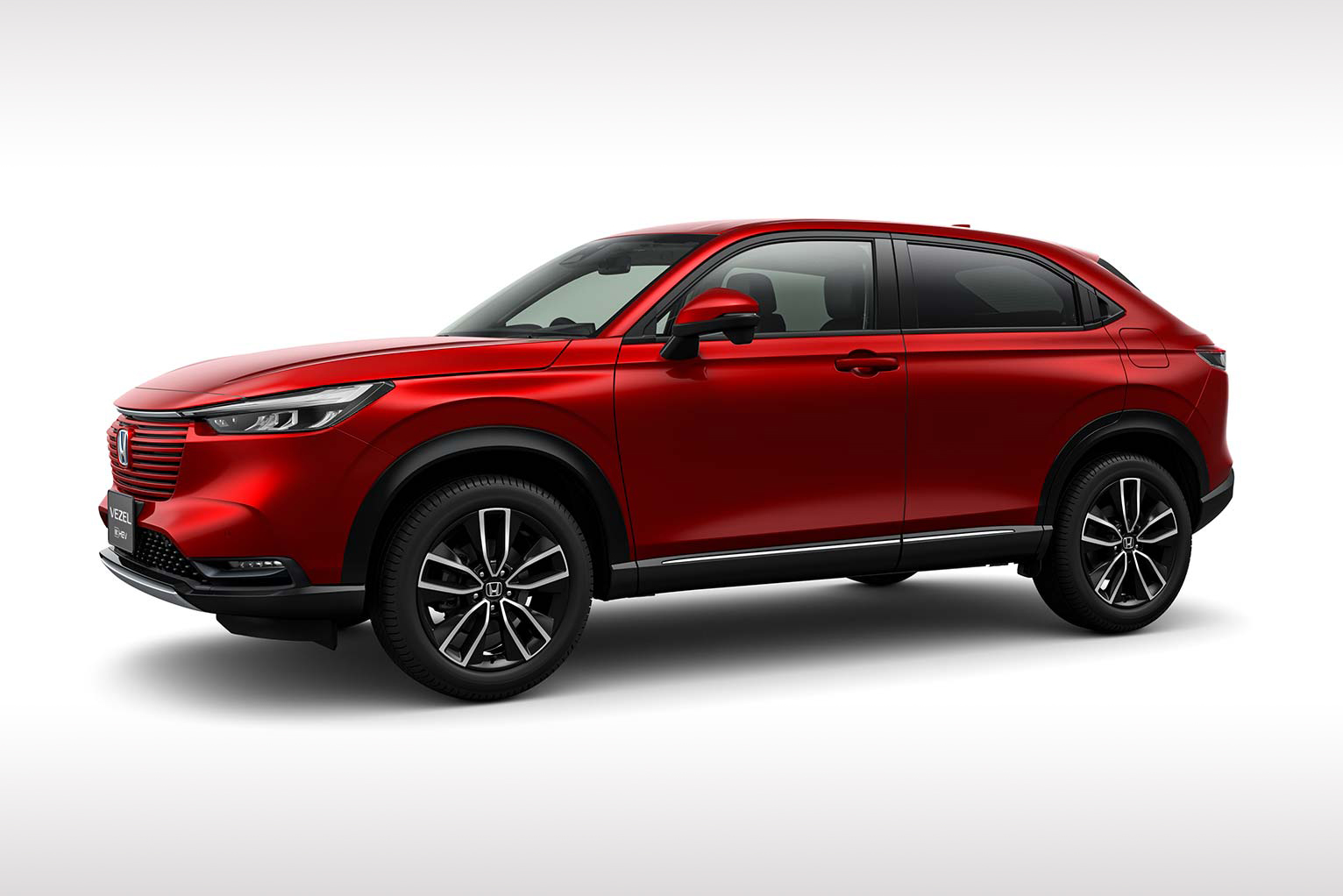
The Honda 2021 HR-V rejoins the popular small SUV segment to battle the likes of the Hyundai Kona, Kia Seltos, Ford Puma, Volkswagen T-Cross and Mitsubishi ASX.
European deliveries are scheduled to begin in late 2021, with Australian timing still to be properly firmed up.
“The current HR-V continues to be one of the most popular and successful models in the Honda range, so we’re looking forward to the new model joining the line-up in Australia over the next 12 months,” a Honda Australia spokesperson said today.
“We will be able to share more details about the all-new HR-V for our market as we get closer to the local launch.”
Below: A pair of style packs available to the Japanese market
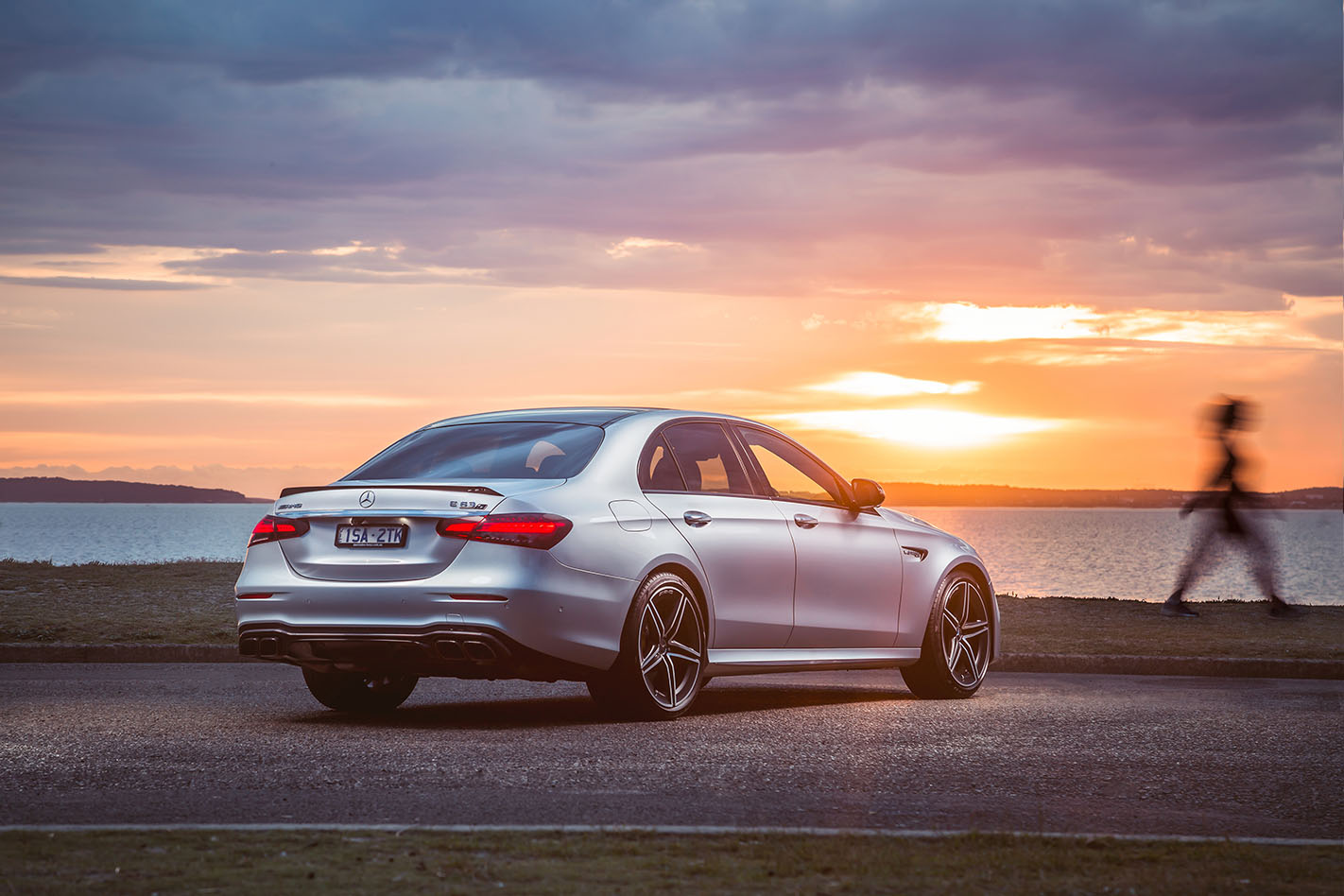
Progress is unrelenting, but subtle. We all know cars are faster now than ever before, while at the same time the upper levels of performance are more readily available to mere mortals. However, knowing doesn’t always equal understanding. This is perfectly encapsulated by the Mercedes-AMG E63 S, which has been updated for 2021.
You may well know that this German brute uses a 4.0-litre twin-turbo V8 to send 450kW and 850Nm to all four wheels, helping lurch it to 100km/h from a standstill in a claimed 3.4 seconds. But understanding what that means is a whole other situation.
To provide the true scope of awe the updated E63 S deserves we need to go back 23 years, to the excess of the late-’90s. The GT1 category was in its final years of implosion, with the likes of Porsche, Toyota, Nissan, and Mercedes-Benz all building incomprehensibly expensive and complicated vehicles that barely met any definition of ‘road car’ in order to bend loosely written homologation requirements over their knees.
Merc’s answer was the CLK GTR Straßenversion. While the race car used both V12 and V8 engines in competition, this ‘street version’ (of which 25 were built) was equipped with a 6.9-litre naturally aspirated V12. Output? 450kW and 775Nm. At the time, it was the most expensive production car ever built, with a price tag of US$1,547,620 (equivalent to US$2.4 million or A$3.2 million today). A modern-day equivalent would be if Porsche took its 919 LMP1 racer, slapped a licence plate on the front and sold it to its favourite billionaires. It would be a performance car high-water mark that you’d expect to last more than a couple of decades.
Why are we talking about a low-volume hypercar from an era of excess? Well, the E63 S is as powerful (but with more torque), less expensive, and quicker than the CLK GTR that redefined the hypercar genre. Oh, and it can carry five people and luggage in comfort all day long. Progress.
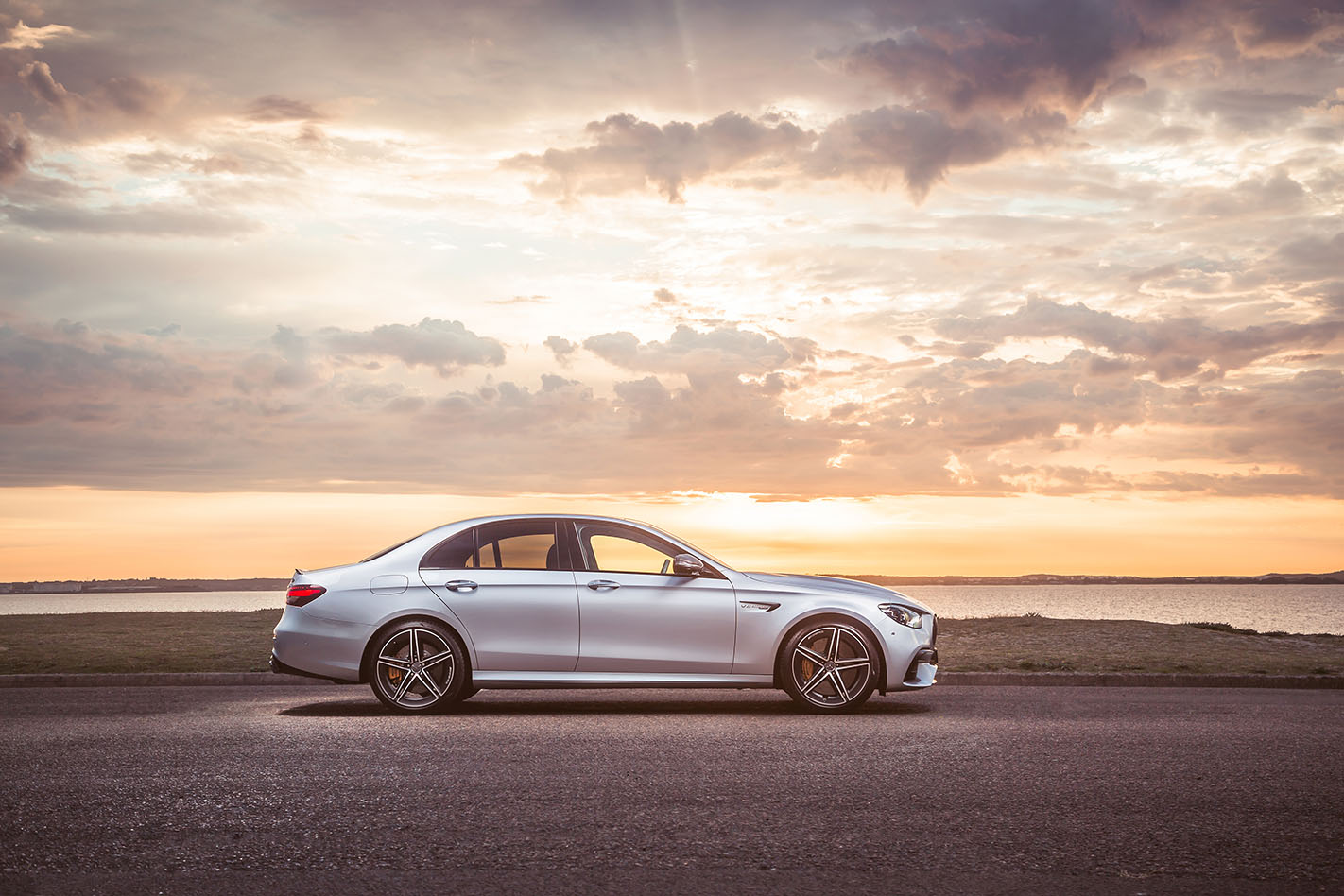
WHAT IS NEW ON THE 2021 MERCEDES-AMG E63 S?
Now we have context for the new E63 S, what is it that has changed for 2021? Well, it has fresh styling, which includes a larger central air duct in the front fascia, new infotainment system, and updated steering wheel. While the powertrain remains unchanged, and Mercedes-AMG won’t officially confirm it, we suspect the air suspension tune and throttle calibration has been slightly tweaked compared to the pre-facelift version. Subtle, but definitely present, the changed behaviour in these two areas helps transform the E63 S’s character, giving it a more useable, approachable demeanour beyond its demented extreme.
There are really twin personalities hidden underneath that restyled sheet metal. There is the calm, soothing everyday cruiser that will handle a commute with ease and cosset you on long drives. Turn up the heat, and a beast emerges that is as ferocious as it is powerful, an absolute brawler that pairs a Mike Tyson punch with Usain Bolt footwork.
HOW MUCH DOES IT COST?
That doesn’t come cheap though, with the E63 S wearing a sticker price of $253,900 before on-roads. Of the two options fitted to our test car, the cheaper was 20-inch forged wheels for an amenable $3400. The beefy carbon-ceramic brakes cost $15,900. Add stamp duty and luxury car tax to the mix and you are rapidly looking at a final cost that starts with a three. While AMG’s rivals are just as prone to suffering a blow to the knees from expensive options, they are starting from a lower base price. The M5 Competition starts at $244,900 (packing an extra 10kW but down 100Nm), while the arguably more practical RS6 is a comparative bargain at $216,000 before options and on-roads – though has a 14kW and 50Nm deficit to the E63 S.
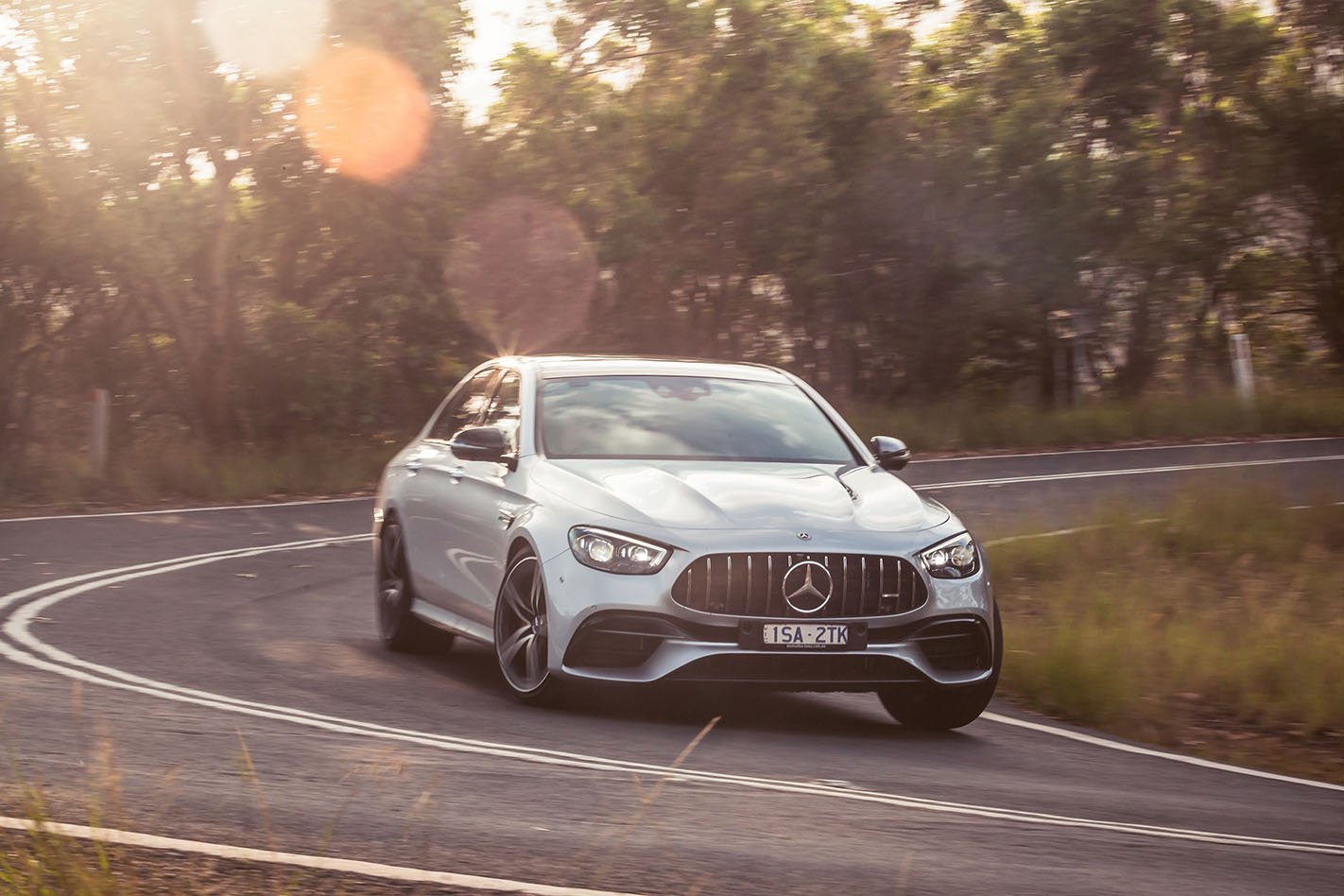
WHAT IS IT LIKE TO DRIVE?
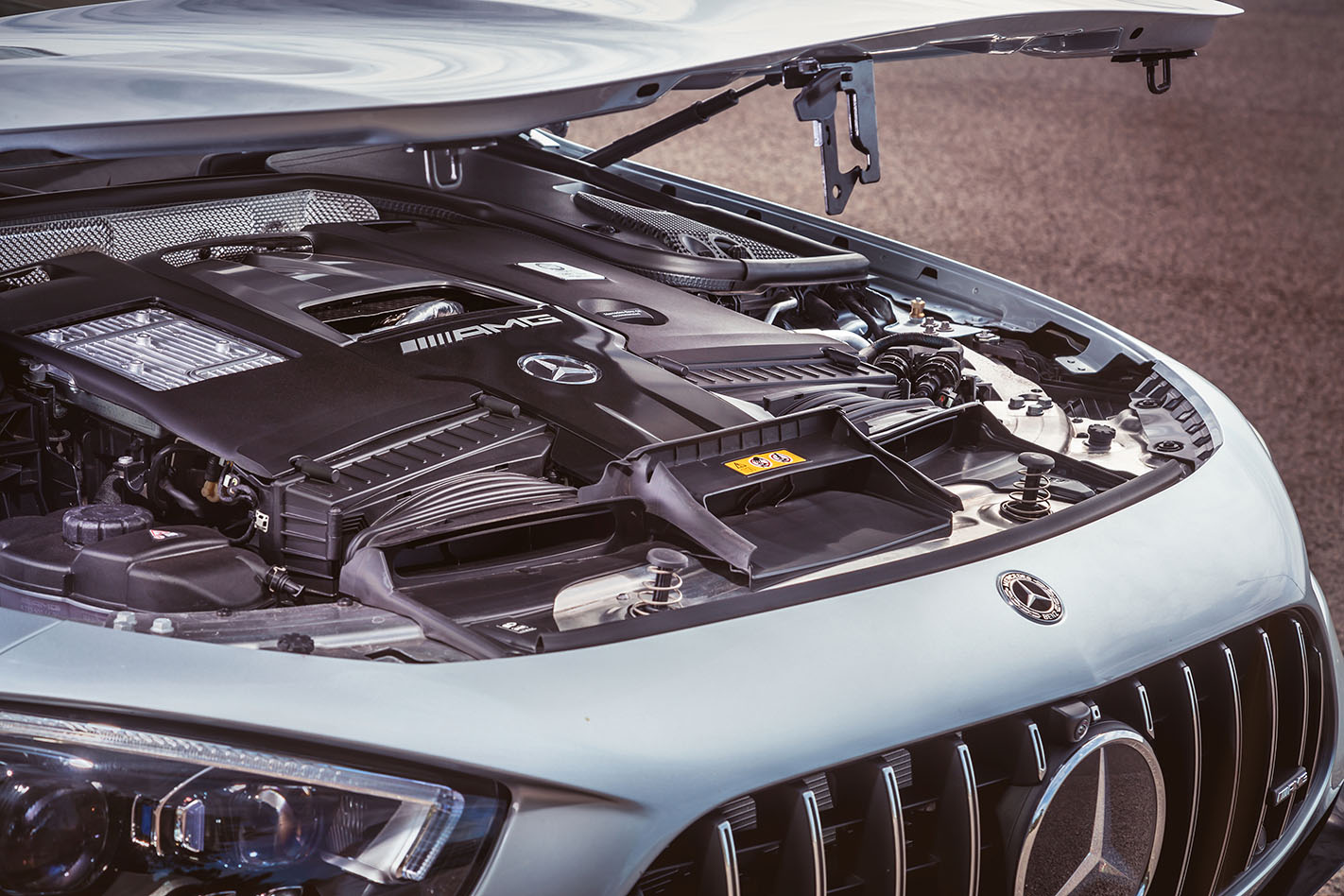
The twin-scroll turbos, mounted inside the vee of the E63 S’s engine, huff up to 21psi of boost into the V8. AMG’s engineers have worked magic, with the V8 devoid of any significant turbo lag despite having to shove 1.5 bar of additional air into the combustion chambers. Power is on-demand at all times, and while peak grunt only arrives near the top of the rev range all the torque is being deployed from just 2500rpm across a meaty band.
The throttle is well calibrated so that partial application, even in Race mode, is progressive. It remains sharp without becoming binary. However, as you press further, into the final 5 per cent of pedal travel, things become properly unhinged.You see, in that final few millimetres when the throttle presses into the firewall, this once tame highway cruiser sheds any and all pretence, unleashing the kind of absolutely primal savagery that is becoming of its staggering power outputs.
Torque is immense in every gear, providing frantic acceleration on corner exit. There is so much shove on tap through such a girthy power band that third gear can become a one-size-fits-all ratio. Put the big AMG into manual mode and you quickly discover that first is useless unless you are fully stationary, second disappears rapidly and you need to keep an eye on the shift light. By the next shift, you realise that the E63 S is unrelenting in its brute force and fourth is something that should be kept to track applications only.
While the tachometer reads to 8000rpm, you’ll encounter a 7000rpm soft cut in manual mode. However, the multi-clutch nine-speed is generous with its downshifts. If it can mechanically do so it will fulfil all requests, even dropping you down a ratio right onto its redline. Keep it in automatic and Sports Plus mode is intuitively calibrated – downshifting while braking so it is in the right gear and at the right revs for when you want to apply the throttle on corner exit.
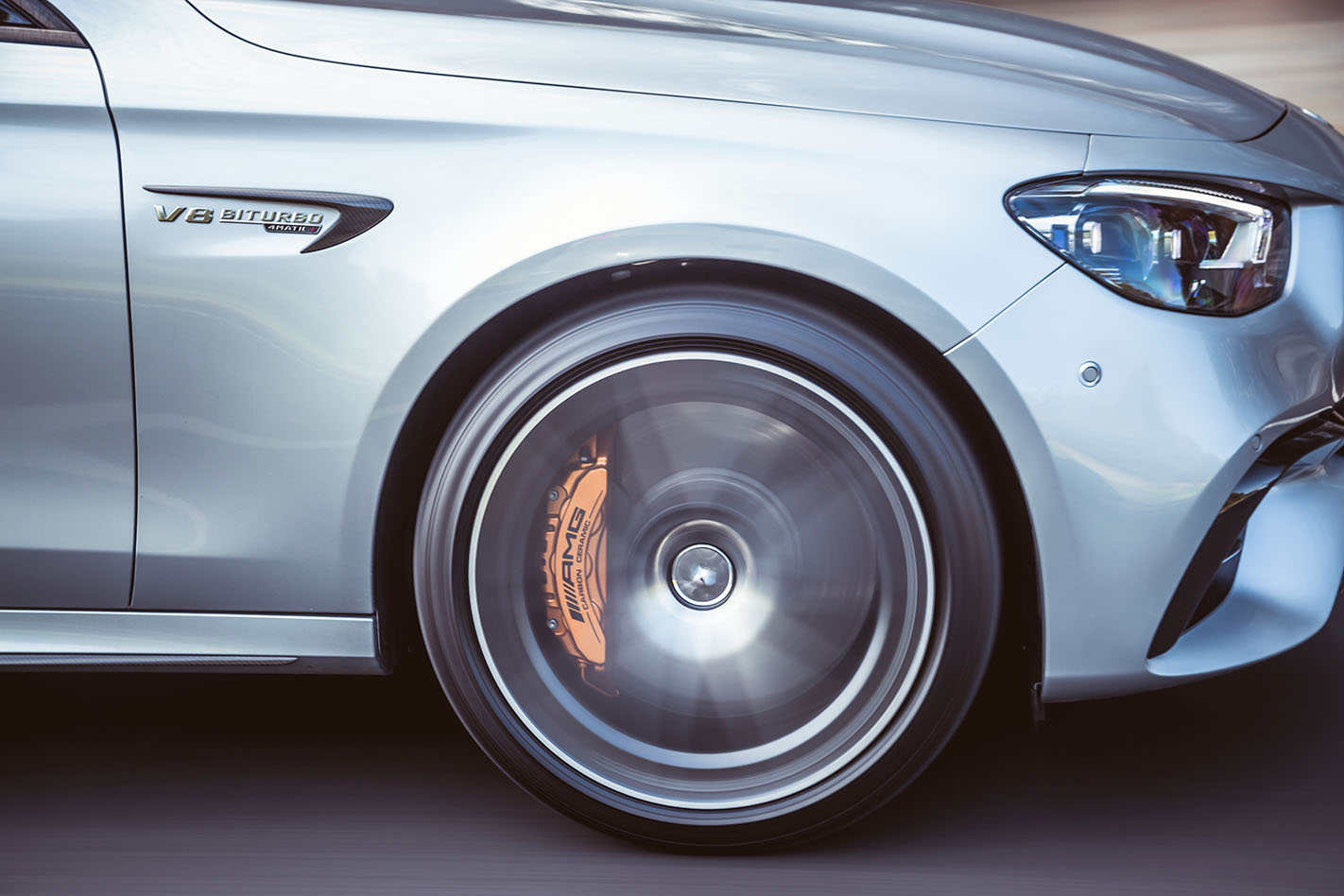
Assisting the powertrain in deploying the prodigious power to the tarmac without erupting in billowing plumes of tyre smoke are Michelin Pilot Sport 4S treads, measuring 265/35 at the front and 295/30 on the rear axle. The optional carbon-ceramic brakes boost the front rotors in diameter from 390mm to 402mm (clamped by six-piston calipers), while the rear discs remain at 360mm with single-piston calipers. Although expensive, they are a boon for the AMG’s performance credentials. Speed is applied so rapidly on corner exit that you can be caught off-guard by how quickly the next bend approaches. While the braking performance is impressive, expect the E63 S to stop like a sportscar and you’ll be bending Armco.
Steering, as is so common in modern systems, is well-weighted but a tad numb. To be fair to AMG, it is certainly better than the artificially viscous sensation BMW has engineered into its systems. Despite being just two turns lock-to-lock, the E63 S doesn’t feel darty, with the steering calibration being speed-sensitive. The quick ratio always feels natural, and is weighted in a way that gives credence to the nearly two-tonne kerb weight. The lack of fine-detail fidelity feel means your ears are a better indicator of front-end grip than your fingertips.
There’s plenty of front-end bite, but you do need to slow down on sharp bends and hairpins as the all-wheel-drive system and sporty rubber fail to completely prevent the harsh reality of physics. However, the E63 S shines if you tone down expectations of rapid direction changes, slowing the car for a more subtle entry speed before applying an initial small turning input to settle the car on the outside rubber. Once stable you can get on the throttle, and all that grunt results in corner exit speeds that you’ll need to redact from any pub convos for legal reasons.
When hustled the AMG has a ‘pick a line and stick to it’ mentality, particularly when it comes to open constant radius corners. Once you settle the car on entry you can simply apply more throttle until your licence begins burning a hole in your pocket. There’s not much in the way of malleability once you have initiated a turn, and while you will get small hints of oversteer when truly throwing caution to the wind that isn’t where the E63 S is happiest or fastest. That’s because of the all-wheel-drive system, which while shockingly good at deploying the weapons-grade firepower of the M177, talks it down from the ledge of all-out lunacy. There is enough mechanical and tyre grip that the electric nannies are rarely called upon, the AWD system making peak performance more accessible more of the time.
VERDICT
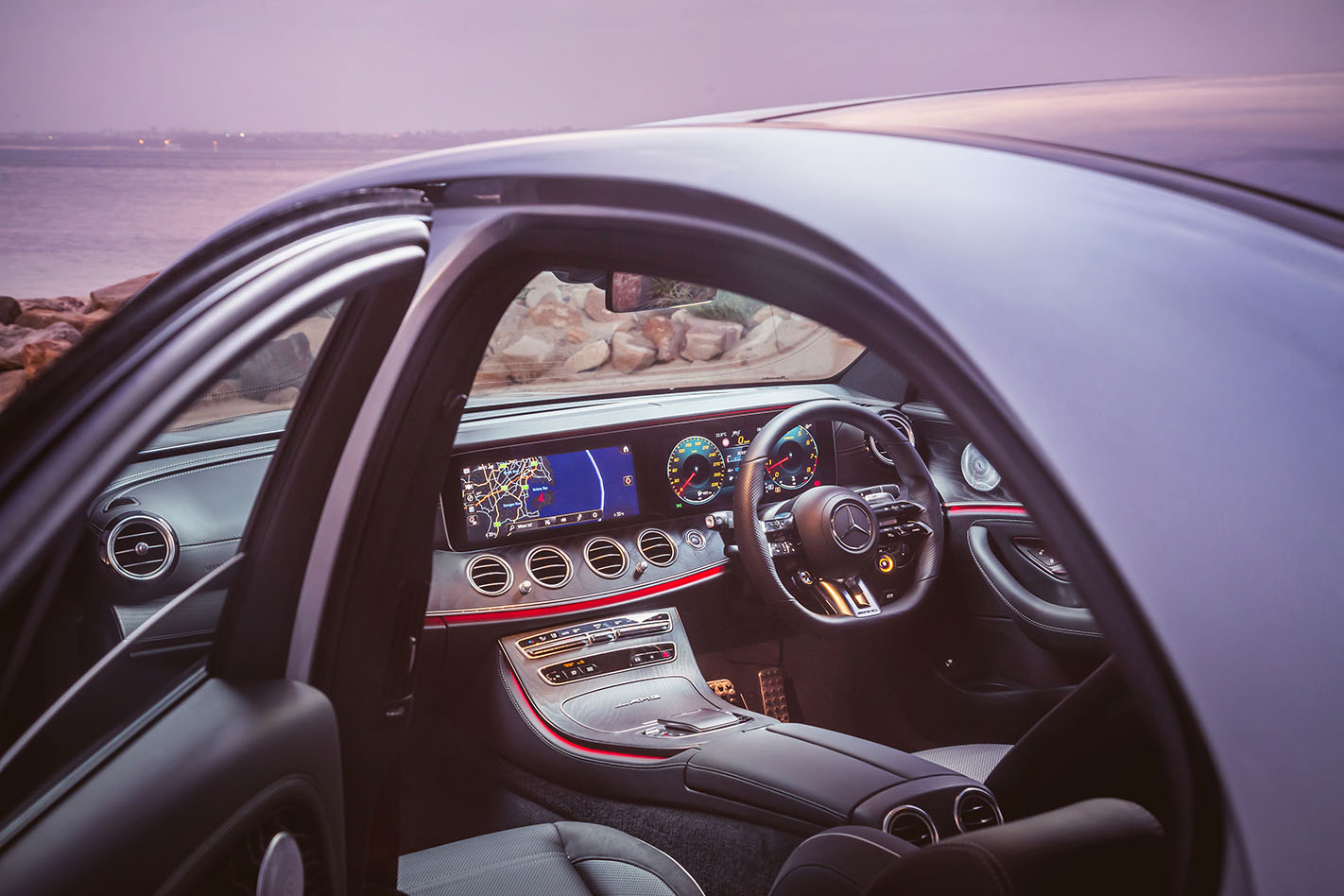
What makes the E63 S all the more impressive is it is shockingly good at going fast, without sacrificing the core of why people buy E-Class sedans – they are damn fine luxury saloons. You get heated and cooled seats that have a massage function with hot stone, heated armrests on the doors and centre console, a panoramic sunroof, informative head-up display and Mercedes’ latest MBUX infotainment system. There is enough room in the back seats for six-foot adults and rear occupants are treated to B-pillar air vents plus a central vent for each side, along with independent temperature and fan controls. Have your cake and eat it too. There are some interior foibles though, with some of the interior plastics – particularly those on the all-new steering wheel – feeling a bit chintzy and poorly fitted for a quarter-million luxo barge.
While comfortable enough to be liveable around town, the air-suspension is a tad nibbly even in comfort mode. It doesn’t have a wafting character, but thankfully is nicely damped to prevent crashing over big bumps. Sport and Sport Plus makes the car feel taut without sacrificing comfort – body roll is subdued while bump absorption qualities are maintained. Even in its most aggressive setting the suspension is not so stiff that it skips over mid-corner bumps, with the E63 S remaining confidently planted in the situations we threw at it on undulating Aussie B-roads.
In short, the updated E63 S is more comfortable than ever, while retaining an aura of power that leaves the hypercars of old cowering in the corner. Progress may be subtle, but the big stick carried by this super sedan sure ain’t.
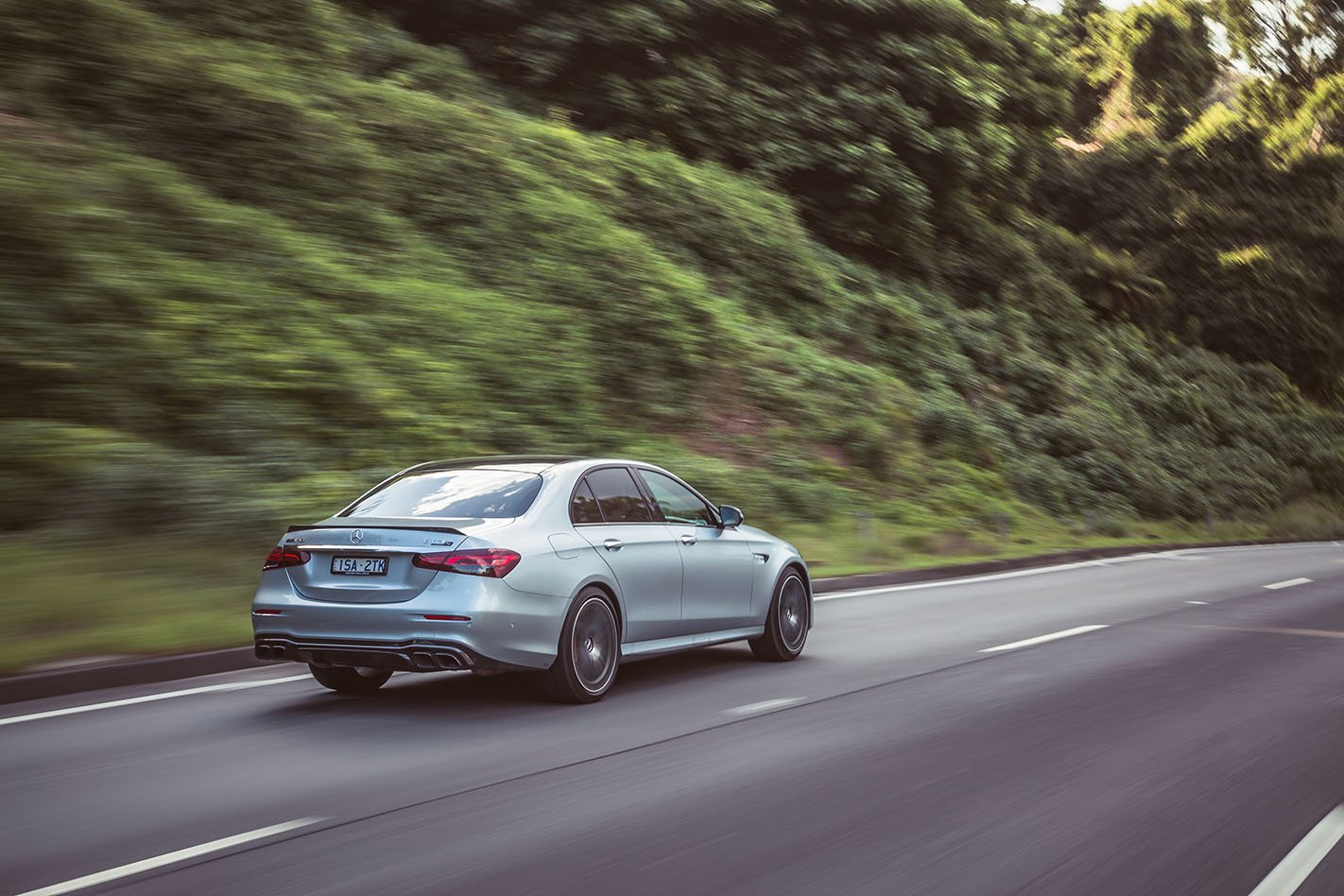
2021 MERCEDES-AMG E63 S SPECS
Engine: 3982cc V8, DOHC, 32v, twin-turbo
Power: 450kW @ 5750-6500rpm
Torque: 850Nm @ 2500-4500rpm
0-100km/h: 3.4sec (claimed)
Weight: 1935kg
Price: $253,900
Rating: 4.5/5 stars
Like: That engine; prodigious speed; versatile personality
Dislike: Expensive compared to rivals; interior details a tad chintzy
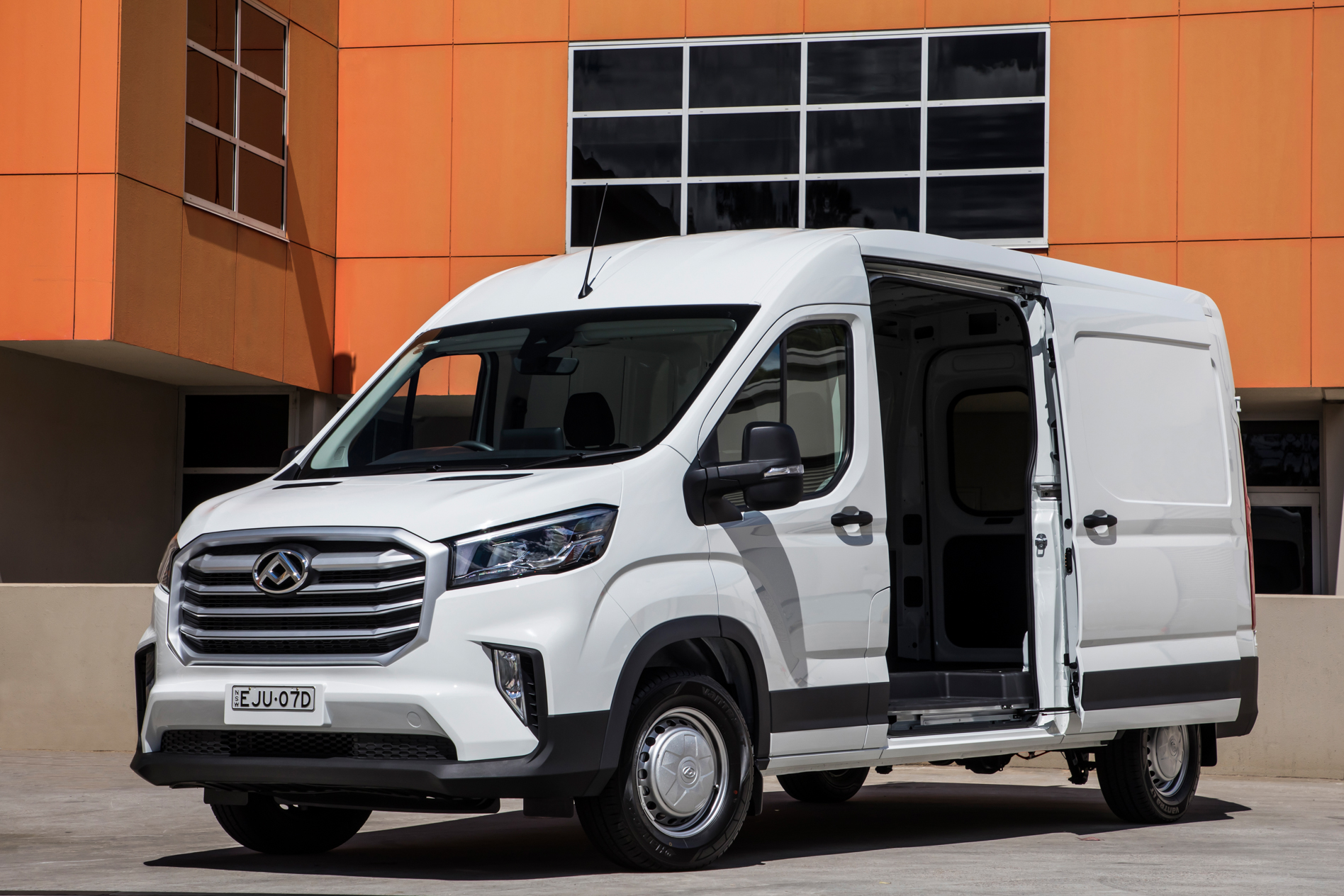
A recall notice has been issued for a potentially fatal brake fault affecting MY2020-21 LDV Deliver 9 Vans.
The fault involves a rear brake pipe that could leak brake fluid due to a manufacturing defect.
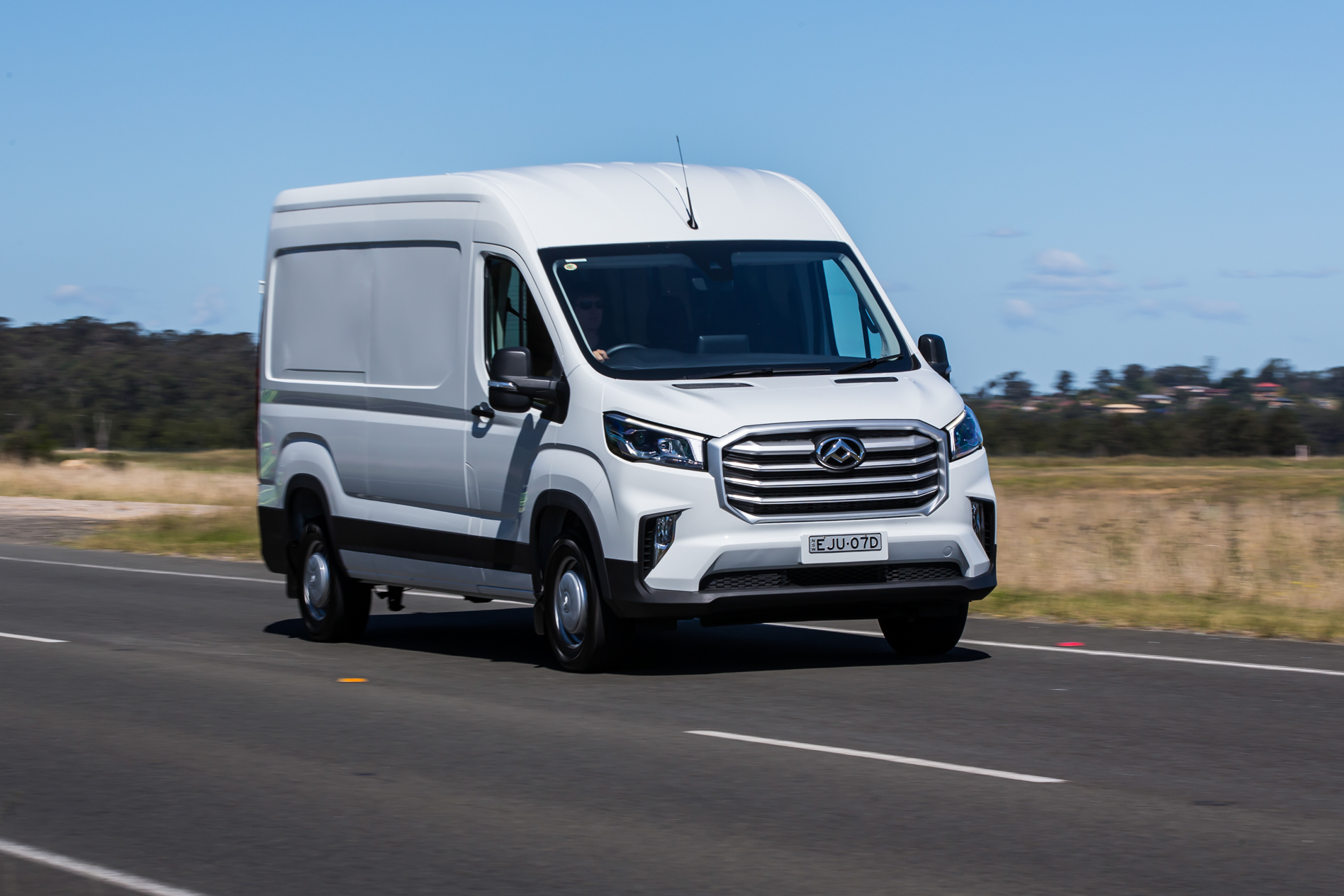
According to the Product Australia recall, if the rear brake pipe leaks, “it may result in a loss of braking performance, which can increase the risk of serious injury or death to vehicle occupants and other road users”.
The recall affects 535 LDV Deliver 9 Vans in Australia.
Vehicles Identification Numbers (VIN) of the affected vehicles can be found here.
Affected owners and operators can take their vehicles to their authorised LDV dealer to have the work carried out to their vehicle.
For further information, contact an authorised LDV dealer or call LDV Customer Assist on 1800 709 832.
The LDV Deliver 9 Van is a newcomer to Australia, having arrived in late 2020 as a 61 per cent cheaper alternative to the category-leading Mercedes-Benz Sprinter.
Distributed in Australia by Ateco, it is the Chinese carmaker’s first entrant into the large-van market here and sits above the LDV G10 petrol-powered one-tonne van and the V80 one-tonne diesel van.
MORE Why a car recall isn’t all bad news
The layout of Albert Park Formula 1 circuit will change ahead of the 2021 Australian Grand Prix.
Works were set to begin following March’s annual event, though a postponement to November 2021 means the amendments can be made before this year’s race.
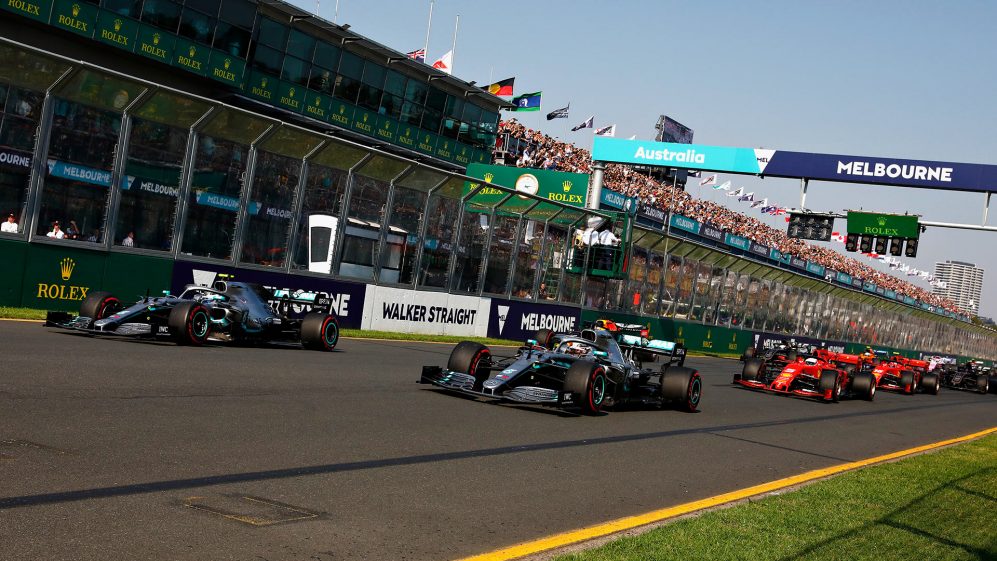
According to Motorsport.com, circuit upgrades are divided into three phases, with phase 1 already complete. It involved the widening of pit lane, and the relocation of the pit wall closer to the track. This will allow the pit lane speed limit to be lifted.
Phase 2 will see a number of corner complexes changed, to provide better overtaking opportunities. Turns 9 and 10 will see the most significant change, instead of a heavy braking zone into a tight right-hander it will now be more of a sweeping bend, with cars able to carry a higher cornering speed.
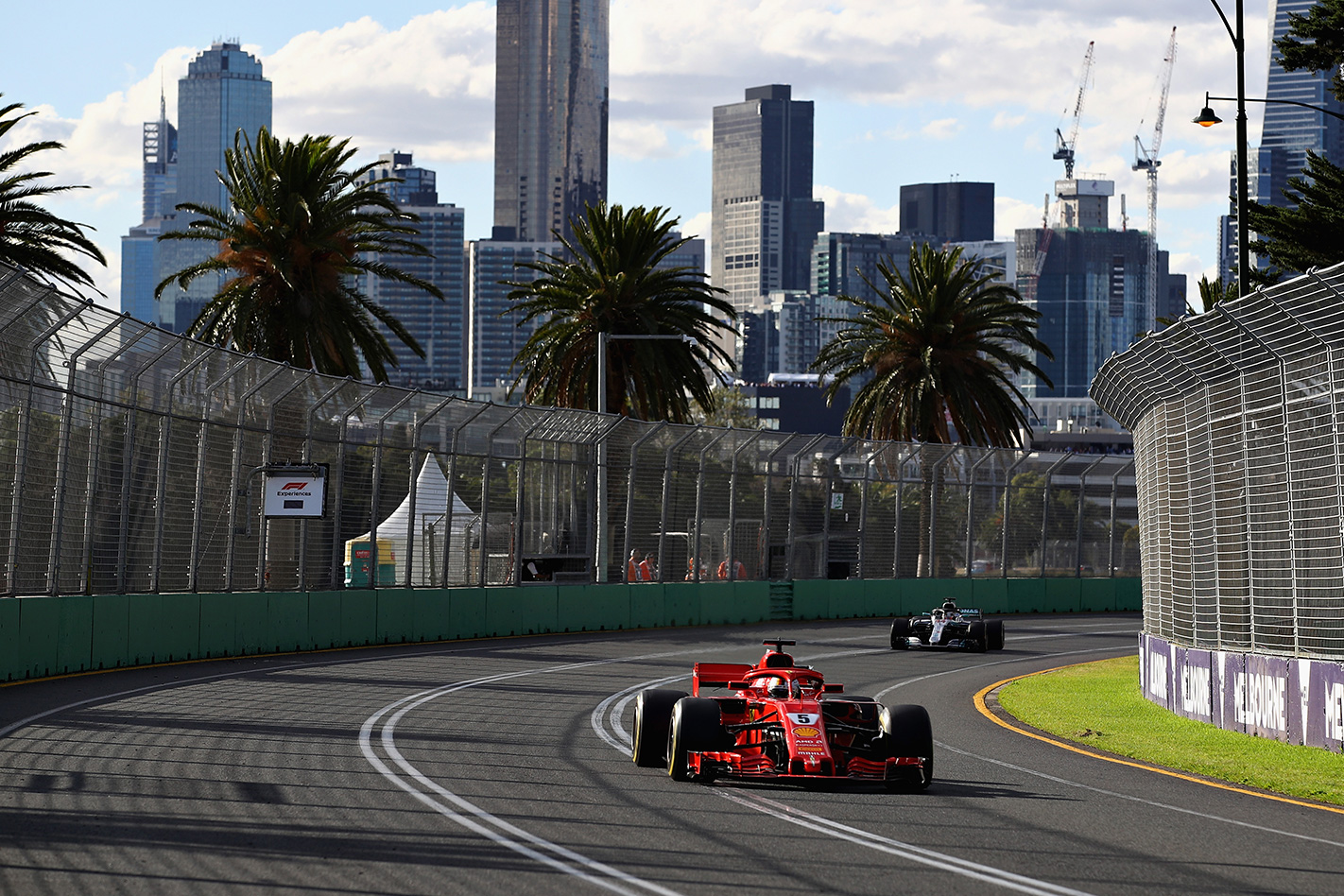
In turn, that will see cars arriving at higher speeds to turns 11 and 12 for, potentially, an even more challenging complex. Turn 13 will be widened with extra camber to allow for varied racing lines.
Minor changes to turns 1, 3 and 6 will also occur. Phase 2 will begin next Monday.
The final phase will involve a full resurfacing of the circuit with more abrasive bitumen designed to make tyre degradation more of a factor. That is slated to be completed after this year’s race is held in November 2021.
It is understood that some drivers were consulted about the proposed changes, with Daniel Ricciardo weighing in with his opinion.
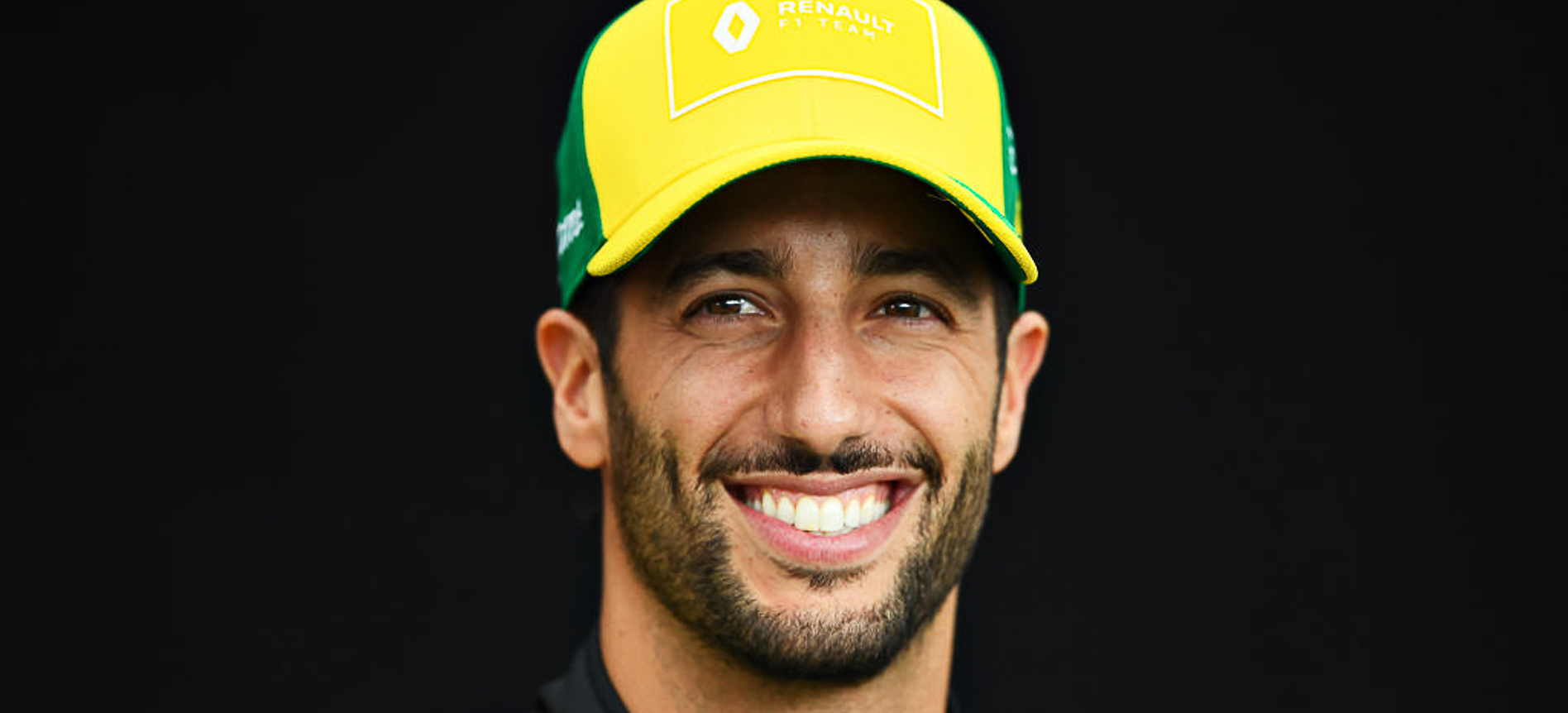
“I was one that gave some feedback at the time, so I’m certainly not claiming anything, but I was aware of it,” Ricciardo told Speedcafe.com.au.
“It was quite cool that they brought us drivers in on the conversation to understand what would make the race, I guess, better as a spectacle and more exciting.”
The bulk of the works is expected to be completed in July 2021.
Kia has whipped the covers back from its 2021 K8 luxury sedan overnight, revealing a huge BMW 7 Series-rivalling ‘Tiger Nose’ grille.
The K8 replaces the Cadenza in global markets such as South Korea and the United States and is designed to sit below the Kia K9 (K900) luxury flagship sedan.
Most notably, the K8 scores a new and bold iteration of the South Korean carmaker’s ‘Tiger Nose’ grille, which is larger than ever before and features a new diamond pattern.
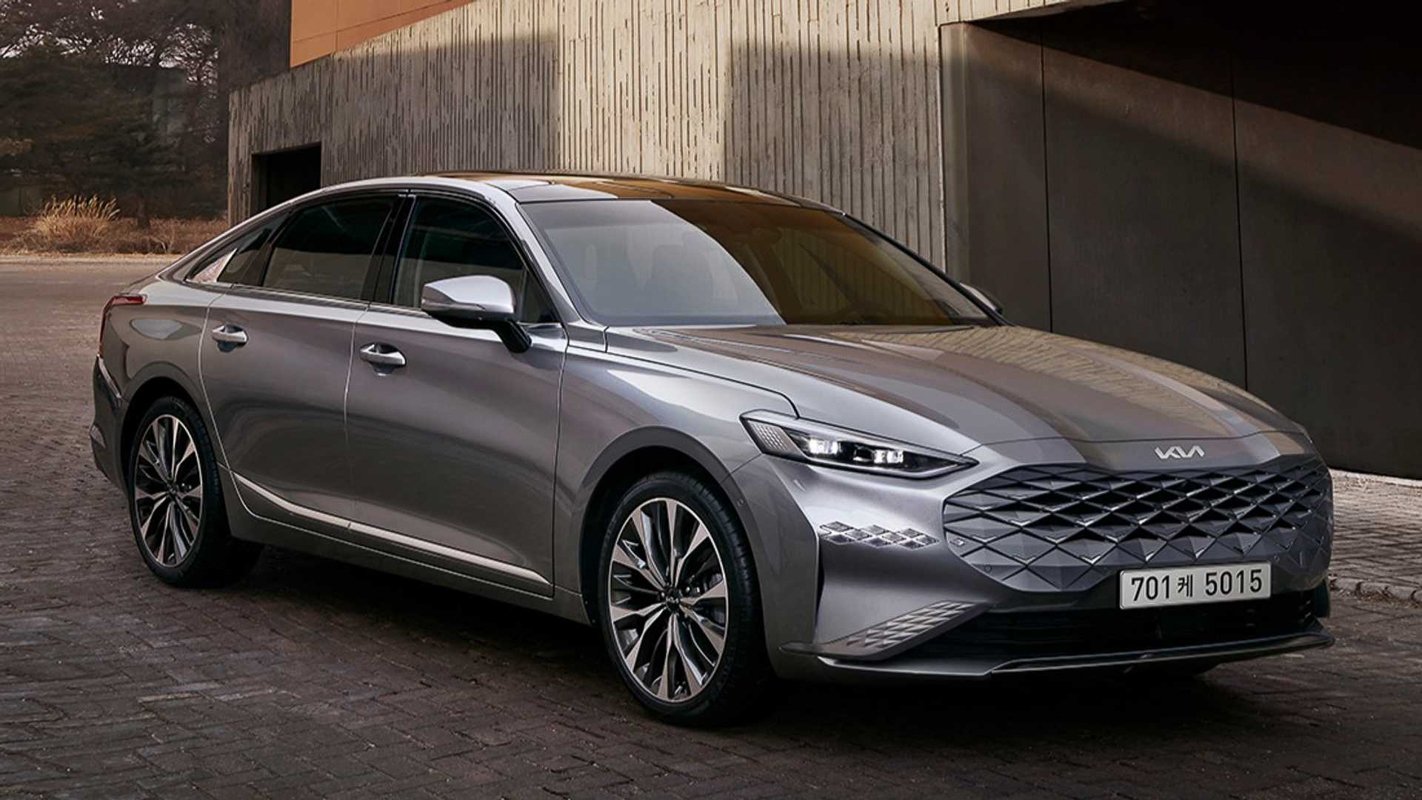
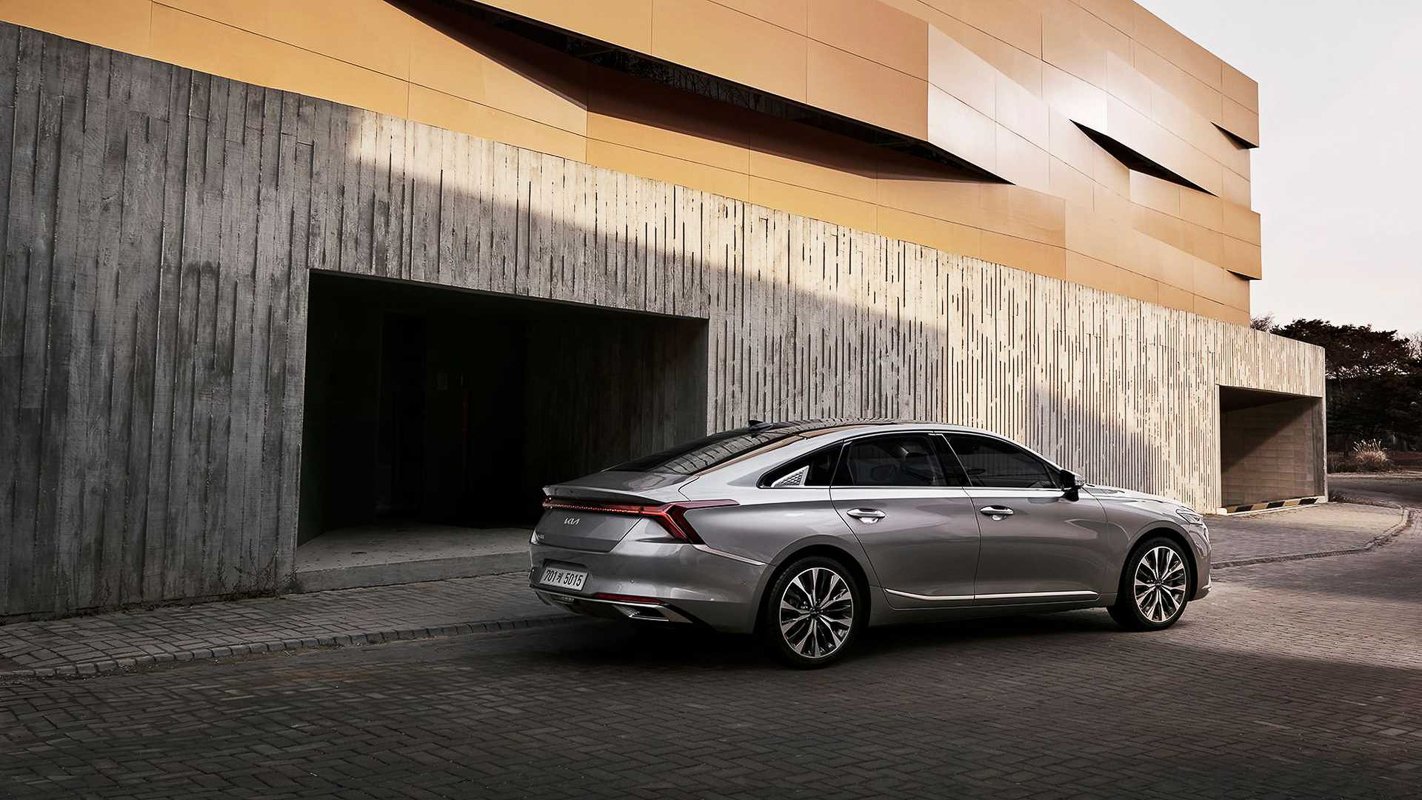
A pair of sleek headlights flanks the big grille and a gradual sloping roofline descends into a rear end that sports a full-width light bar, as is becoming a trend in automotive design.
It’s an eye-catching design, and follows the head-turning 2016 Cadenza styling that came before it.
The K8 also wears Kia’s new-design logo that is meant to signify the brand’s commitment to a sustainable future through forward-thinking technology and electrification.
New interior photos show a sumptuous quilted leather upholstery design with wood inlays in the wide dash. The dash also incorporates two 12.0-inch screens which connect together – one for the digital instrument cluster and one for infotainment. A Meridian 14-speaker sound system will be offered.
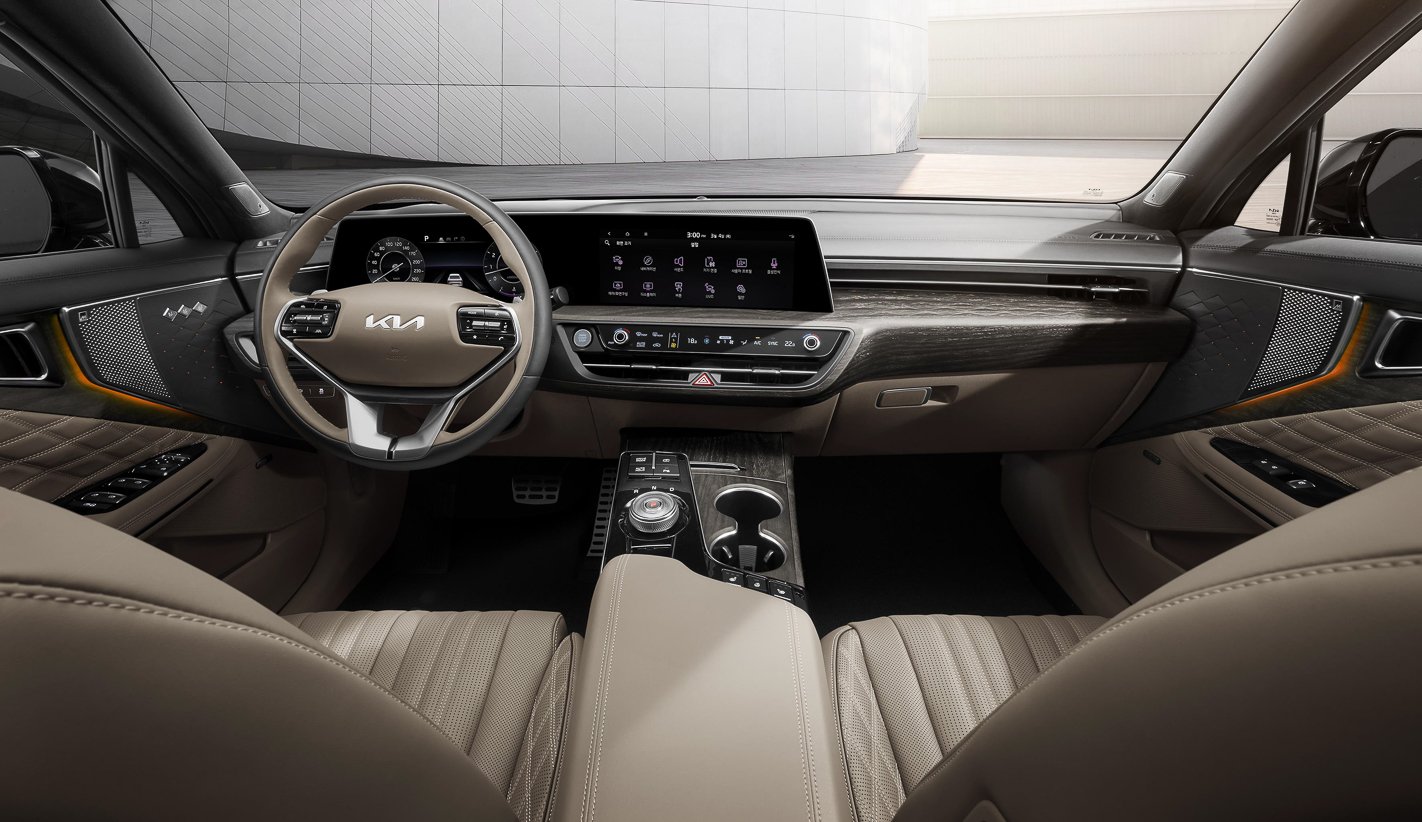
This is about all we can glean from Kia’s newest model; this is merely a design preview rather than a full release.
Kia has not detailed which engines will be found under the bonnet.
One way to embrace Kia’s futuristic vision would be supplying the K8 will a plug-in hybrid or fully electric powertrain, though that remains to be seen.
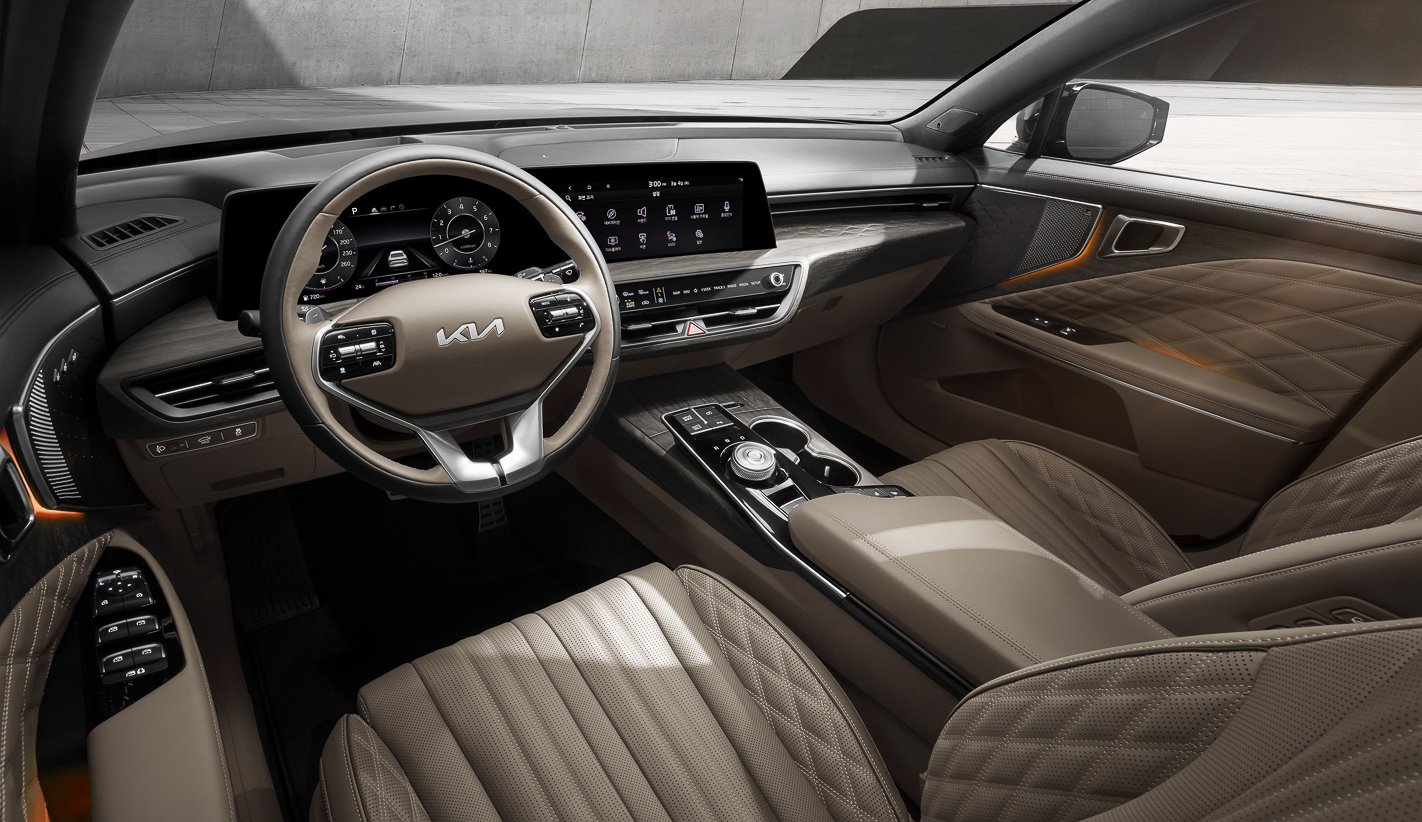
Production will begin later in 2021 in South Korea.
Would you like to see the 2021 Kia K8 introduced in Australia?
Ford has committed to an all-EV line-up in Europe by 2030 and while the decision won’t affect the much-loved Ranger ute any time soon, the move will have an impact on Australia.
Australian Ford sales are dominated by the Thai-built Ranger, but apart from the Everest and Mustang, all other models including the Escape, Puma, Focus and Transit are European-built.
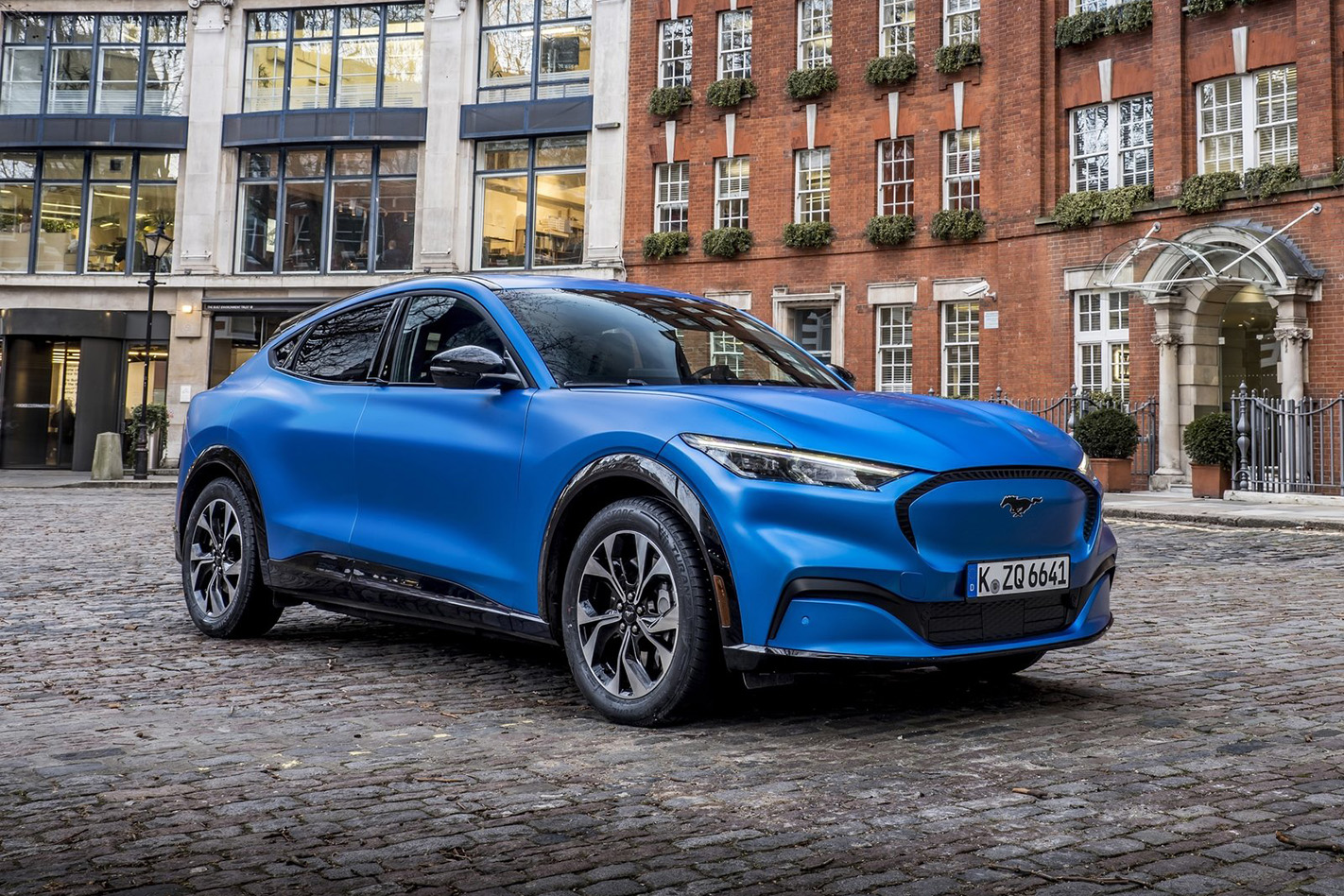
Ford Australia says it’s too soon to discuss what impacts the Ford of Europe move will have on other markets, including Australia, but a spokesman told WhichCar it acknowledges there is growing appetite among Australian consumers for EVs and hybrid vehicles, which it will soon cater for with the 2021 Escape PHEV.
“Ford has an important role to play in reducing carbon emissions and improving the health of the planet, and we are proud to have the goal of being carbon-neutral by 2050,” the spokesman said.
That goal might be expedited thanks to Ford of Europe’s decision, and while Ford HQ has yet to make a similar commitment for its entire global operations, it is aggressively embracing electrification in the US where arch-rival GM announced it will be fully electric by 2035.
Whatever happens around the rest of the world, the Blue Oval’s commitment to an all-EV European line-up by 2030 will be a far-reaching one it says will cost A$28bn by 2025 – double its original EV spending plans.
In addition, Ford says 100 per cent of its European range will be “zero-emissions capable” by mid-2026, meaning all-electric or plug-in hybrid, with the entire commercial range, including Transit, being zero-emissions capable by 2024.
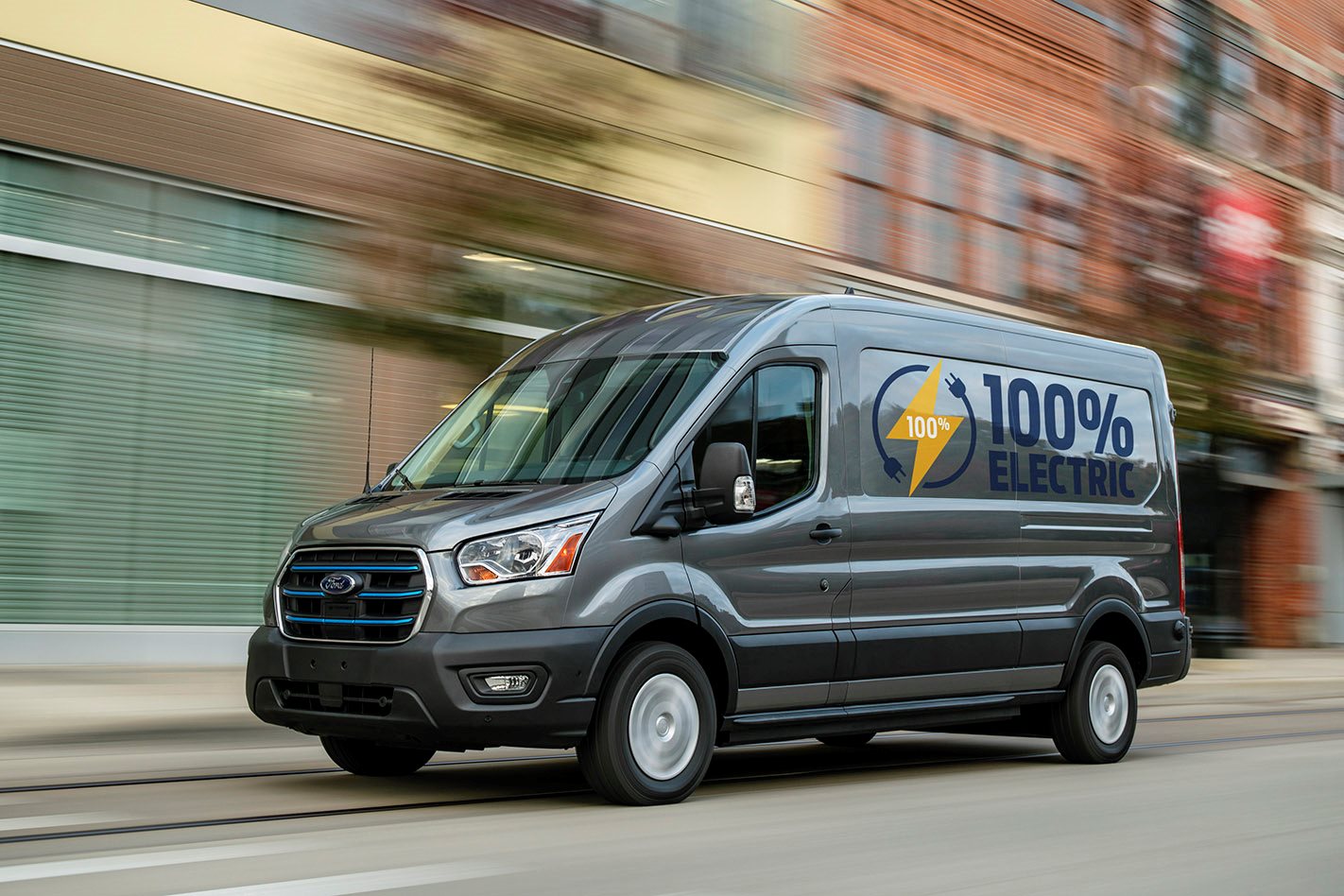
Ford’s Europe president Stuart Rowley said this massive investment and priority shift is “an attempt to turn around manufacturing, modernise the model range and a way to disrupt ourselves” to catch up with the likes of the Volkswagen Group and the newly formed Stallantis’ race to electrify their model ranges.
Part of Ford’s strategy involves ploughing A$1.3bn into its factory in Cologne, Germany, to create a new electric vehicle manufacturing hub – with the first EVs rolling off the line by the end of 2023.
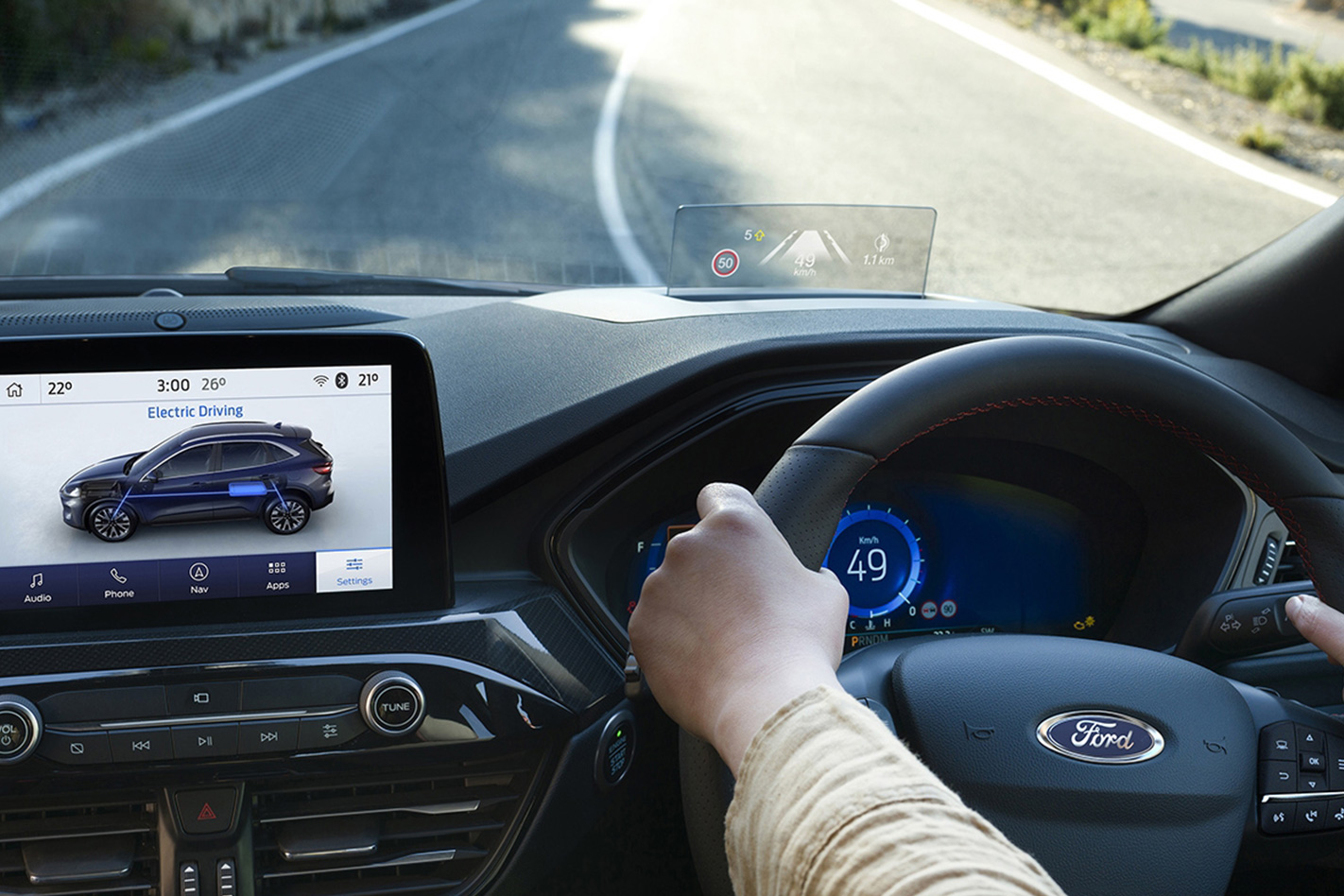
While it has yet to announce new models, Ford did confirm its first European-built, mass-produced and affordable EV will be produced there.
According to CAR UK, that vehicle will be a Volkswagen MEB-based product, as a result of the company’s strategic alliance with Volkswagen, with a second following shortly afterwards.
Ford has added a new affordable option to its popular Ranger dual-cab line-up that is aimed firmly at the worksite and outback, but brings added all-terrain ability and extra equipment for a bargain price.
Dubbed the Ford Ranger XL Tradie, the new arrival is based on the $50,990 XL 4×4 Double Cab and adds popular options into the standard equipment but, with a driveaway price of $47,990, the newest version is now the cheapest version on offer in the 19-variant family.
Powered by the longstanding 3.2-litre five-cylinder diesel, six-speed automatic transmission and four-wheel drive, the Tradie is positioned above the stripper-spec XL 2.2-litre diesel and 3.2-litre manual but is significantly cheaper than both.
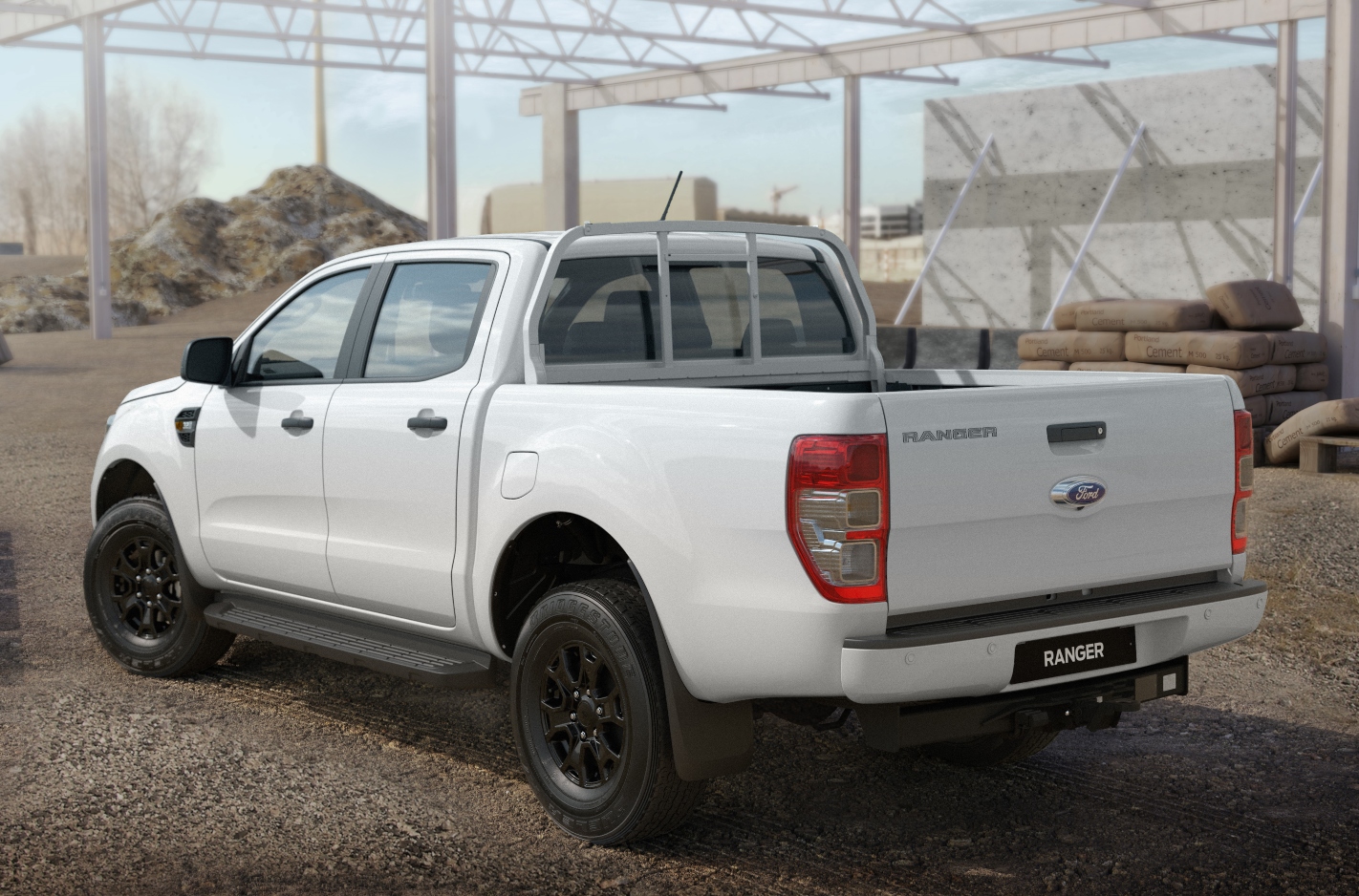
Interested customers are advised to act fast though as Ford says the limited edition will only be offered “while stocks last” although the company has not stated exactly how many it will be making available. Miss out on the limited-time deal and Ford will ask $52,190 for a Tradie before on-road costs.
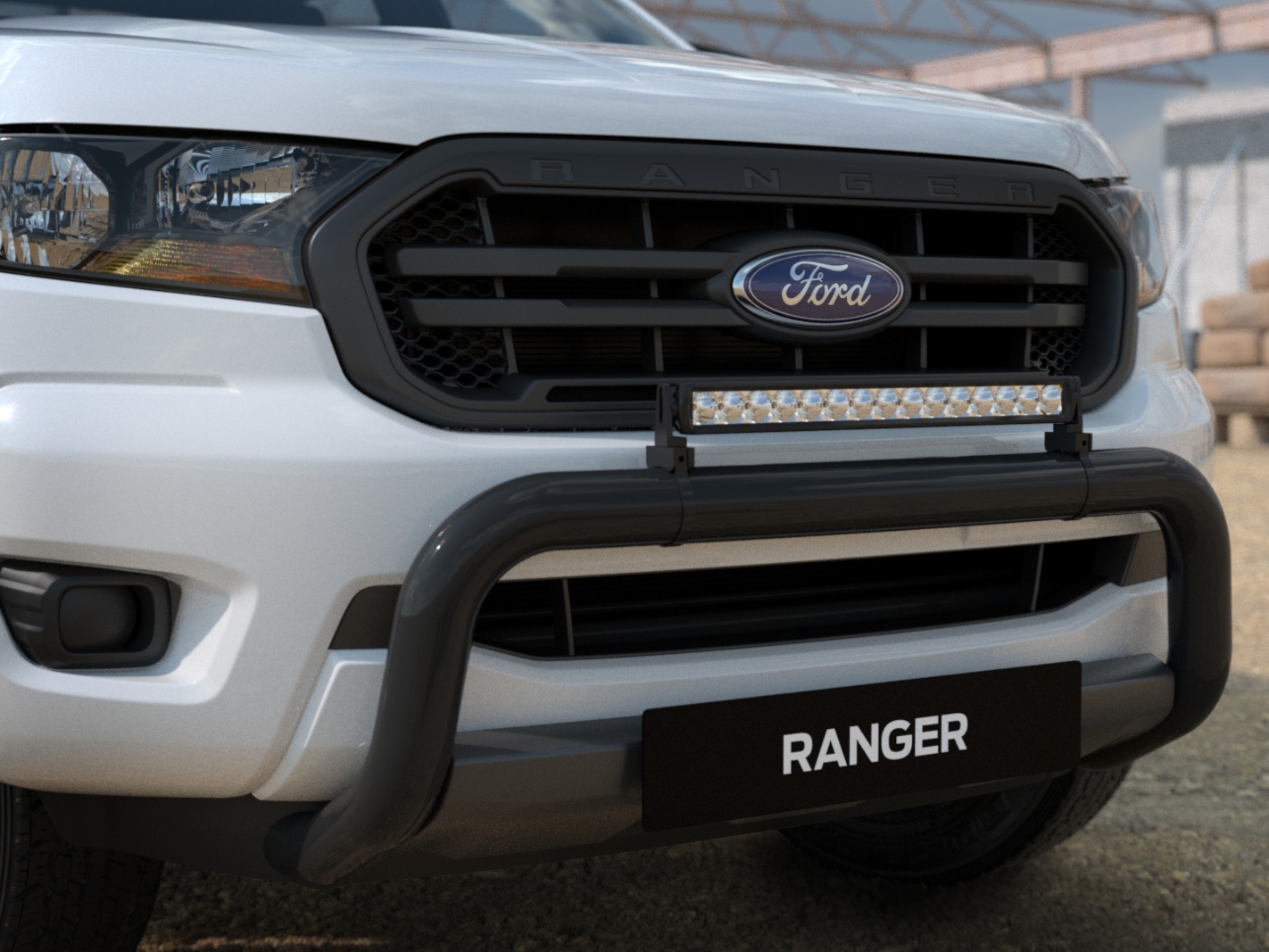
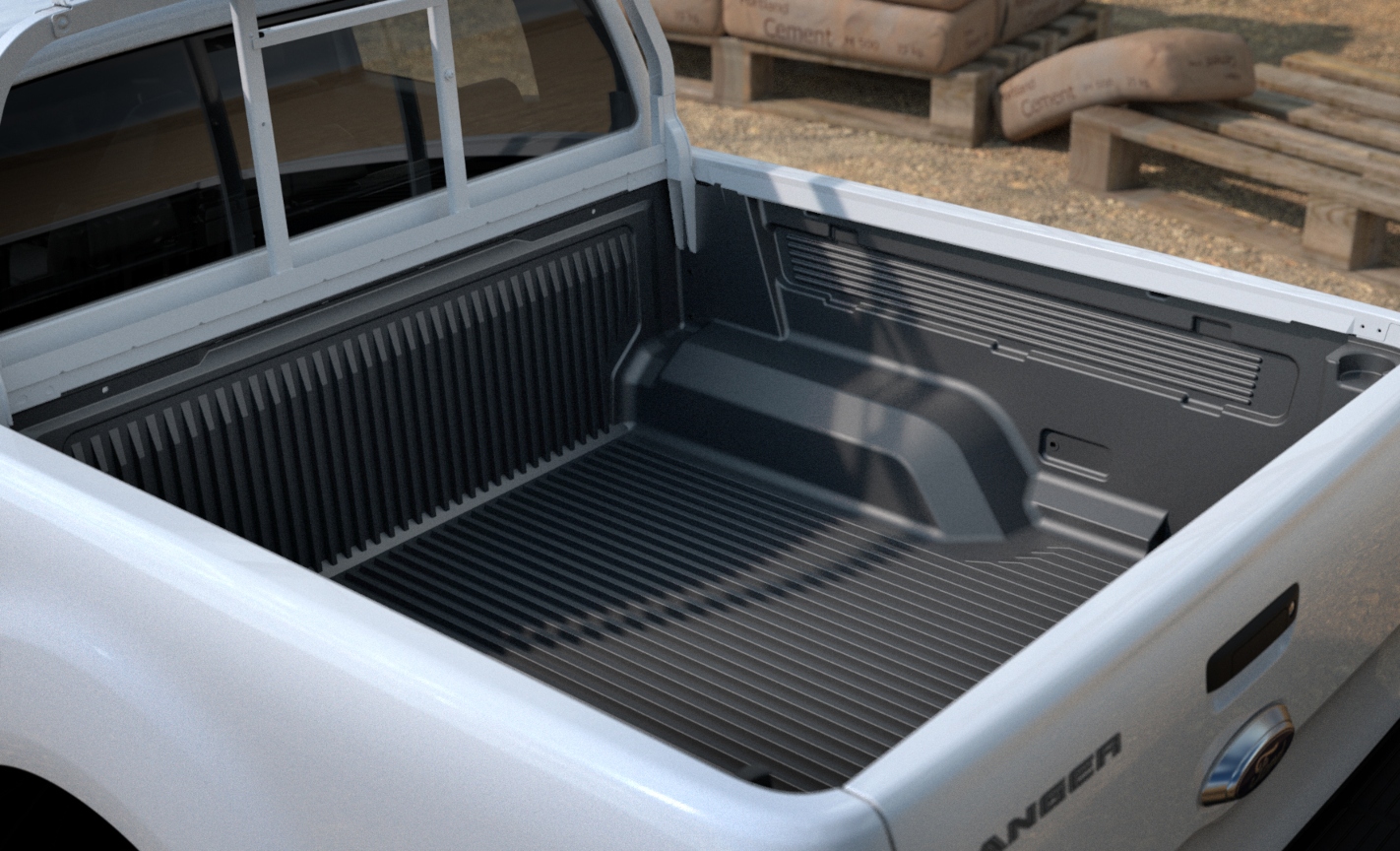
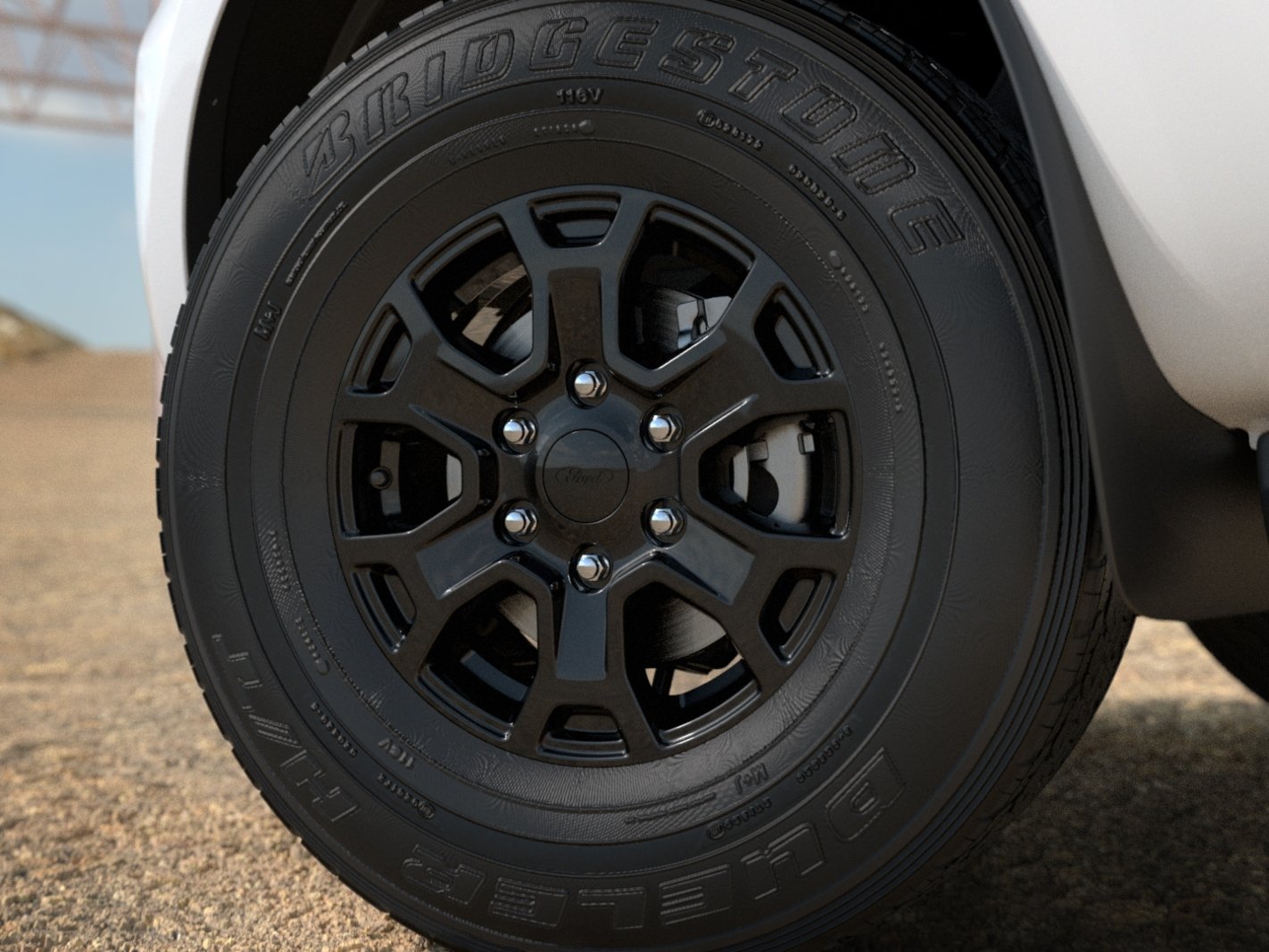
Adding to the XL 3.2-litre auto standard equipment, the latest hard-working Ranger option gets a durability-boosting black nudge bar, matching side steps and a bed liner, while unique-design 16-inch alloy wheels in black are also thrown in with the bundle.
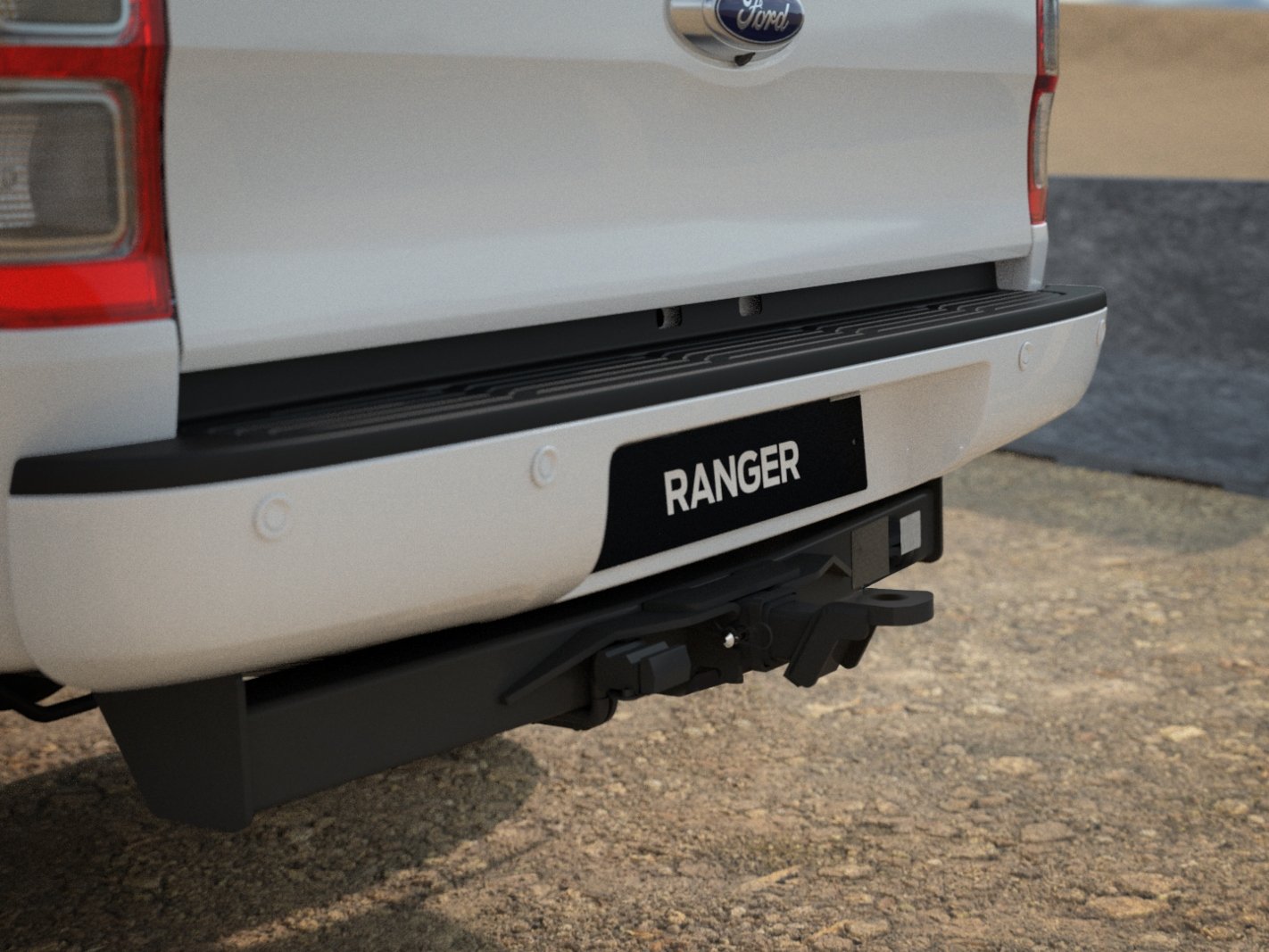
Mounted to the nudge bar, a 21-inch LED light bar enhances night-driving visibility and safety, while a factory fitted towbar completes the set of extra equipment offered by all Tradie dual-cabs.
Arctic White and True Red are the no-cost colour options but, for an extra $650 Ford will dress the Tradie up in Meteor Grey, Aluminium Silver, Blue Lightning or Shadow Black.
Like the non-limited XL 3.2-litre auto, the Tradie gets a respectable range of technology including Ford’s Sync3 information and entertainment system, which brings a touchscreen, Android Auto and Apple CarPlay smartphone mirroring, and access to FordPass Connect.
In conjunction with the FordPass Connect smartphone application, the feature enables remote locking and unlocking, remote start and vehicle status information from the user’s device.
Despite its position at the most affordable end of the Ranger dual-cab range, the Tradie is offered with a high level of active safety equipment including forward collision mitigation technology and a five-star ANCAP safety rating.
Complementing the standard 4×4 transmission, the XL Tradie has high and low range gearing, a locking rear differential and water wading depth of up to 800mm at a maximum speed of 7km/h.
The new Ranger XL 4×4 Tradie Double Cab is on sale now and joins a long line of special editions from the Blue Oval, including the Sport, FX4 Max and Wildtrak X.
Land Rover may go the way of Jeep and its Gladiator ute, with a company executive giving word that the Defender range could expand to welcome a pick-up body style.
While the UK manufacturer has indicated in the past that a pick-up version of the Defender could be a possibility, no firm intentions have been laid until now.
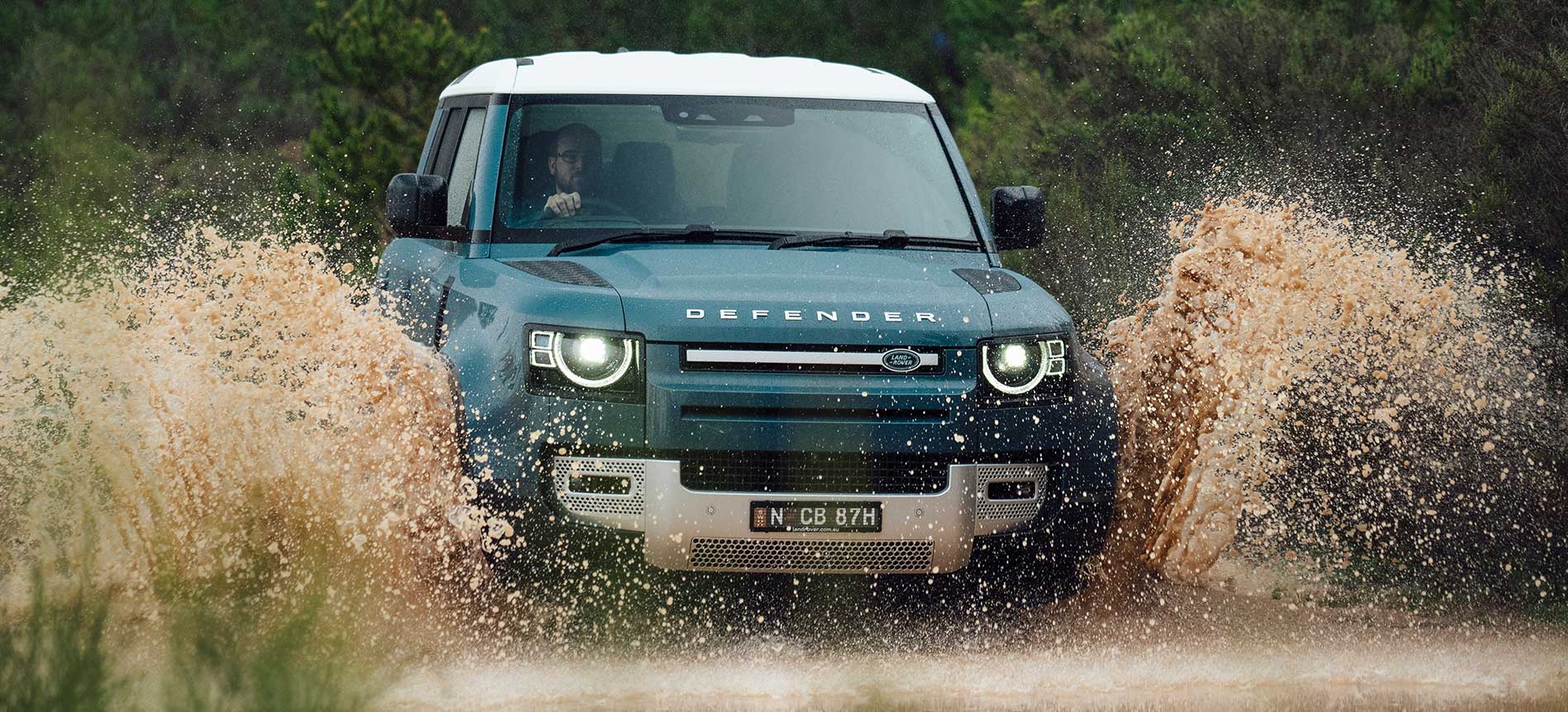
Jaguar Land Rover executive of vehicle programs Nick Collins told Autocar that not only is a Defender pick-up feasible, but the firm imagines “there is enough customer demand” to justify one.
Collins reiterated that “there were no structural limitations” to a Defender ute and that you “can make a pick-up from a monocoque [chassis]”, despite nearly all pick-ups on the market utilising a body-on-frame architecture.
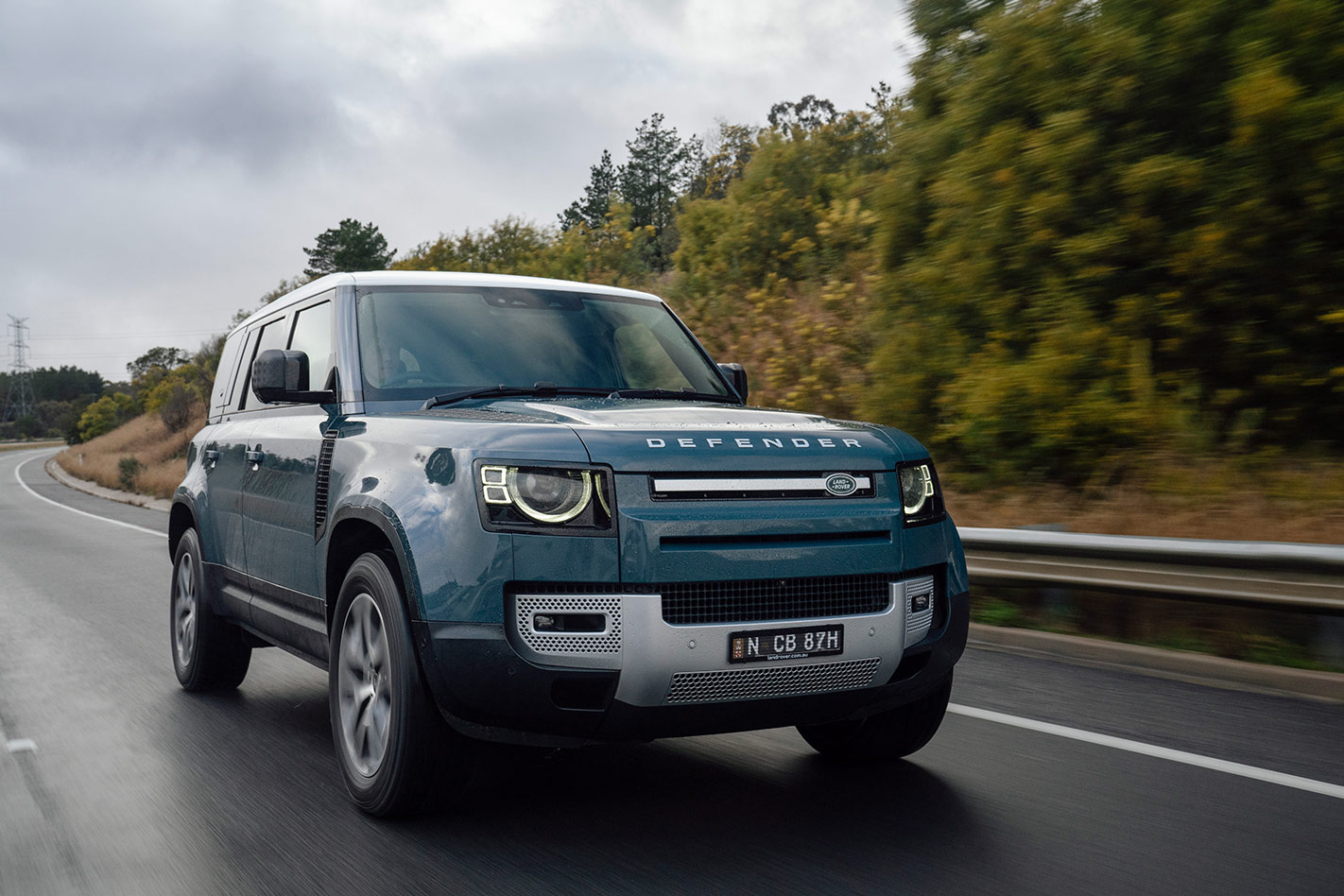
A tray-backed Defender would follow in the footsteps of off-road rival Jeep, which developed a ute variant of its Wrangler 4×4 off-roader between 2018 and 2019. It would also slide into the hotly-contested dual-cab ute market in Australia to compete against the Ford Ranger, Volkswagen Amarok, Mitsubishi Triton and Nissan Navara or offer a luxury alternative.
It’s expected that trim and engine options would mirror that of the Defender off-road wagon, with a range of petrol or diesel ‘Ingenium’ six-cylinder engines. We’re unlikely to see a short bed Defender 90-version of a pick-up, with Land Rover expected to rely on the extended wheelbase Defender 110 body instead.
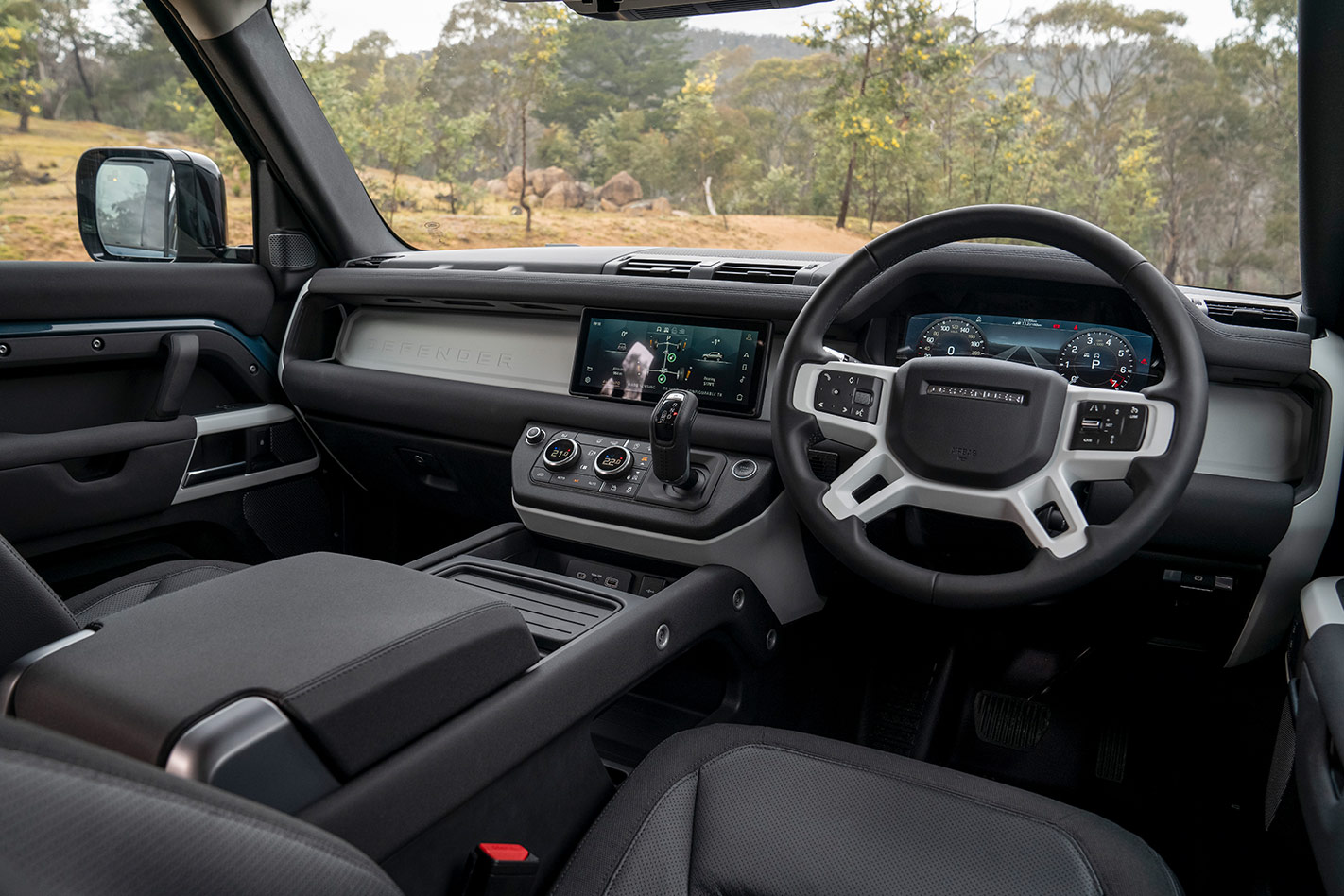
“We always said the Defender would be a family,” Collins said.
While saving discussions regarding future product for “another day”, Collins insisted we should “watch this space” for a Defender pick-up.
No further details are offered by Collins regarding a potential timeline; we expect the forthcoming Defender 130 with a longer wheelbase to arrive first before the British marque focuses on other projects.
