
Carbon fibre is cool: fact. It’s a gospel truth of the automotive world that if you want to make anything ooze an aura of awesome that’d make Steve McQueen jealous, just drape it in that silky black weave.
Behind the aerospace and defence sector, the automotive industry is the world’s next biggest consumer of carbon fibre. Problem is, carbon fibre requires vast amounts of energy to create, and is incredibly difficult to recycle. So, as the motoring world relentlessly moves toward a more ecologically conscious future, sustained use of the lightweight composite will become an ever larger moral quandary.
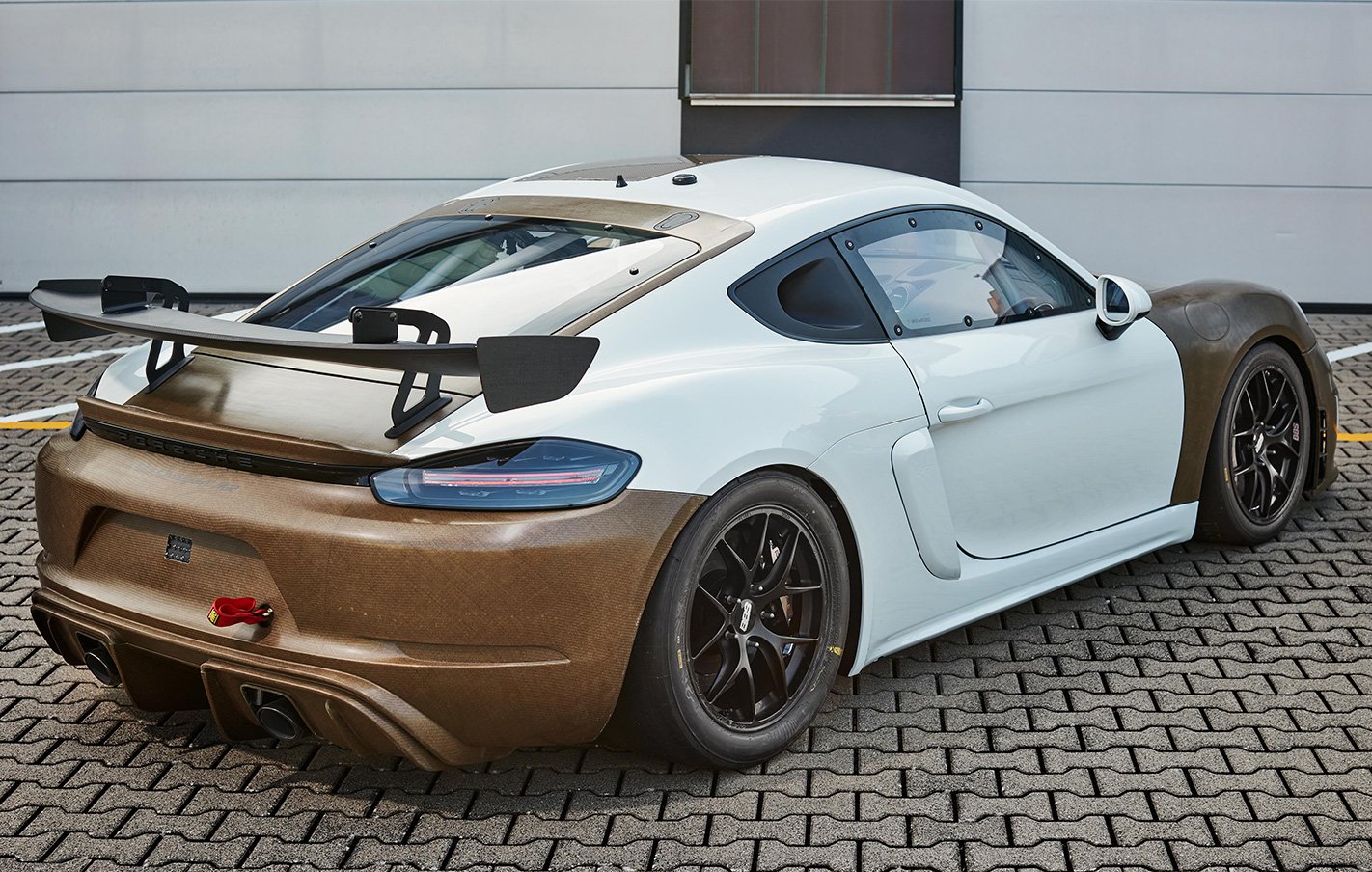
Enter ampliTex, a carbon-fibre-like material that is created from sustainable materials, requires less energy to produce, and can be recycled easily. The alternative to traditional composite materials has been created by Bcomp, a Swiss outfit that specialises in creating sustainable lightweight materials. Porsche uses ampliTex on its Cayman GT4 Clubsport racer, while the McLaren F1 team is evaluating the material for the construction of Daniel Ricciardo’s seat for 2021.
The core ingredient of ampliTex is flax, a plant used primarily in the production of linen. Not only are the raw materials needed to create ampliTex better for the environment compared to carbon fibre, but it also requires less energy to create.
Porsche Motorsport’s composites expert Eduard Ene said last year that producing the raw materials for the Cayman GT4 Clubsport’s doors and wing required 75 per cent less energy than carbon fibre.
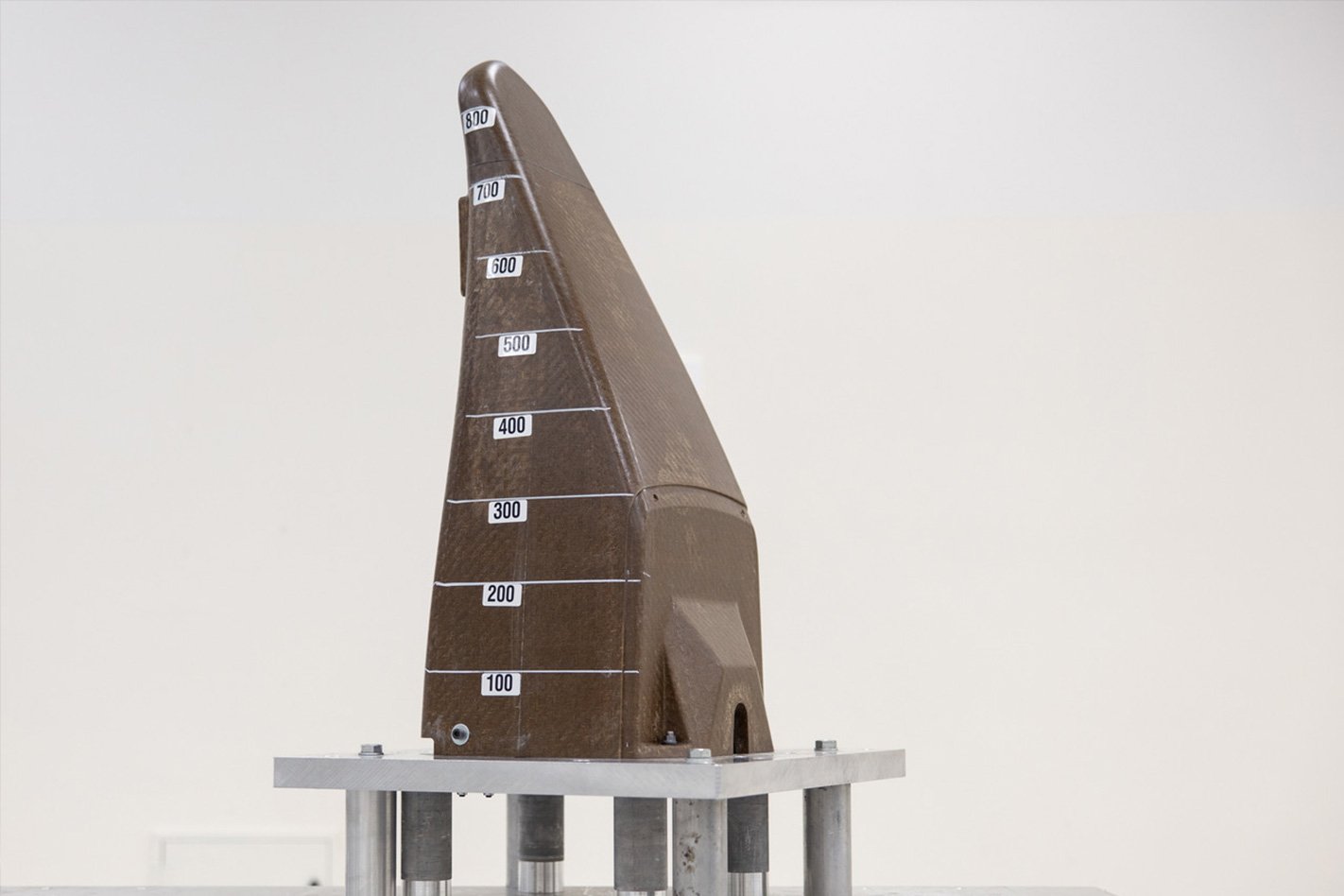
Up until now, natural fibre alternatives to carbon fibre have been used for non-structural components such as bonnets and wings. However, Bcomp has partnered with YCOM (an advanced motorsport technologies company that has been involved in projects like the VW ID.R and Porsche 919) to create the first Front Impact Absorbing Structure made entirely of sustainable materials to pass FIA tests. It was the nose of an F1 car.
For the first time since lightweight composite monocoques stormed onto the F1 grid with the McLaren MP4/1, a sustainable alternative is now available, with FIA-approved testers Politecnico stating that the ampliTex crash structure performed in line with one made from carbon fibre. Bcomp and YCOM state that their ampliTex crash structure reduces CO2 emissions by 50 per cent during construction compared to more traditional composites.
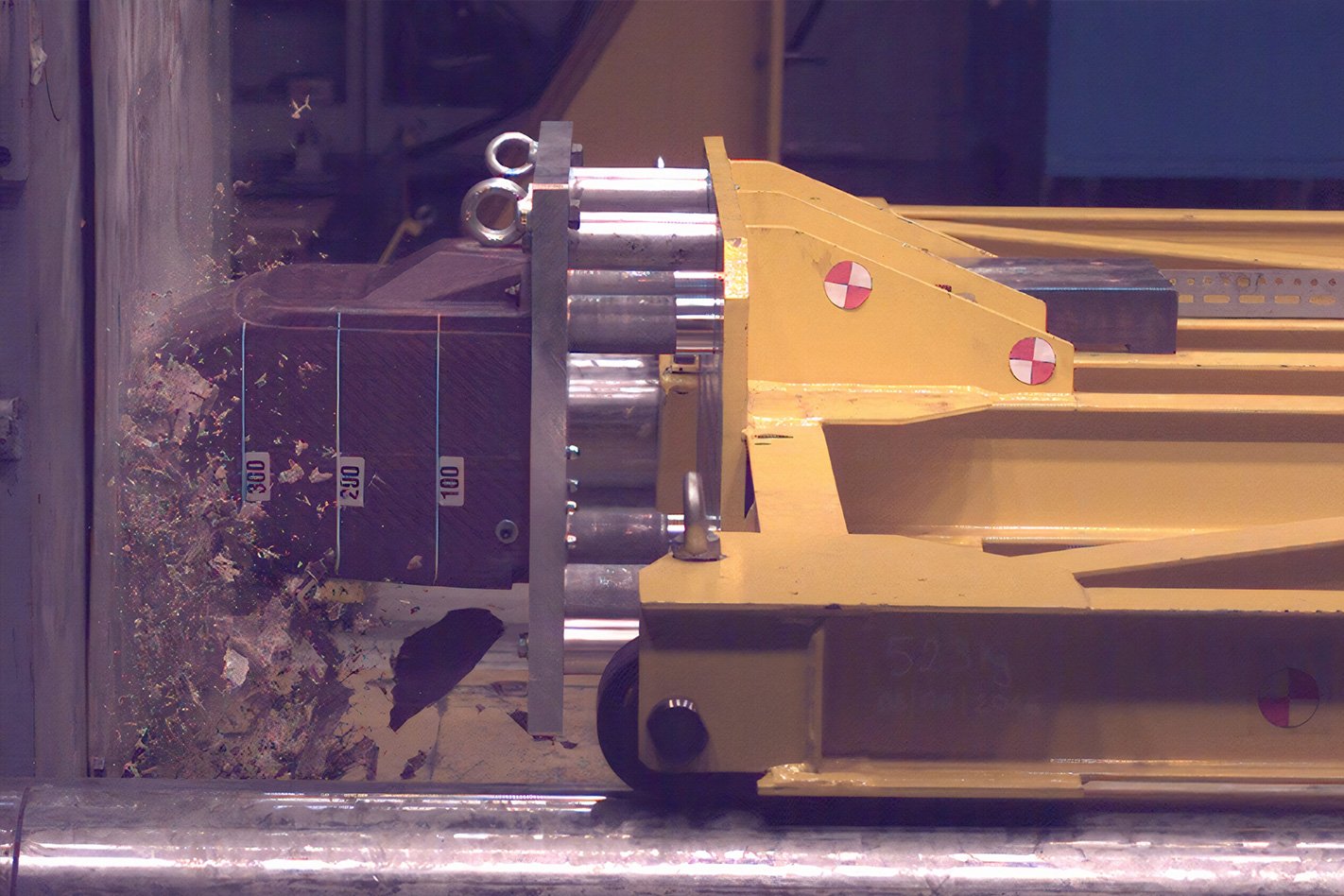
There are downsides, namely weight. The ampliTex crash structures can be 40 per cent heavier than carbon fibre, currently ruling it out for extensive use in elite competition. However, the material offers significant benefits in vibration damping, where it is five times more effective than carbon fibre. This is part of the reason why McLaren is using the material for future F1 seat construction, reducing the amount of vibration transferred to the driver in the cabin. When not being used in a dense crash structure, ampliTex offers a 9 per cent weight bonus compared to a carbon equivalent.
Should you have a shunt, ampliTex also delivers. Where carbon fibre splinters into small, sharp pieces that are difficult to clean up, the natural fibre alternative breaks up into larger, smoother chunks under high-impact loads. It’s also difficult to recycle carbon fibre once it has been in an accident – it must be burnt at extremely high temperatures to be disposed of – where the natural alternative can be ground down for reuse.
While natural fibres like ampliTex are yet to make their way into road car construction, both Porsche and McLaren are currently investigating the materials. Initially, the material will be used for non-structural components, but its vibration damping and reusable qualities mean manufacturers will be looking at ways to integrate the material more in the construction process.
01. ADDED FIBRE
To create ampliTex, flaxseed is woven into a fibre, which is then shaped much like traditional composite materials. Multiple sheets of the weave are laid on top of each other and then strengthened by a grid of twisted, thick pieces of yarn also made from flax that Bcomp calls powerRibs.
02. ECO FRIENDLY
A hectare of flax plants is capable of absorbing and converting 3.7 tonnes of carbon dioxide into oxygen each cycle. The plant can also be used in crop rotation programs, meaning it can be farmed and harvested without interfering with food production. Creating the raw materials for ampliTex is a CO2 neutral process.
03. COST EFFECTIVE
Despite being a relatively new material, construction of ampliTex is cheaper than carbon fibre. McLaren says that the raw materials needed to create an ampliTex seat for its F1 car cost 30 per cent less than a carbon fibre equivalent. With new cost-cutting rules being put in place, expect natural fibres to begin proliferating the F1 pit lane.
04. RACE READY
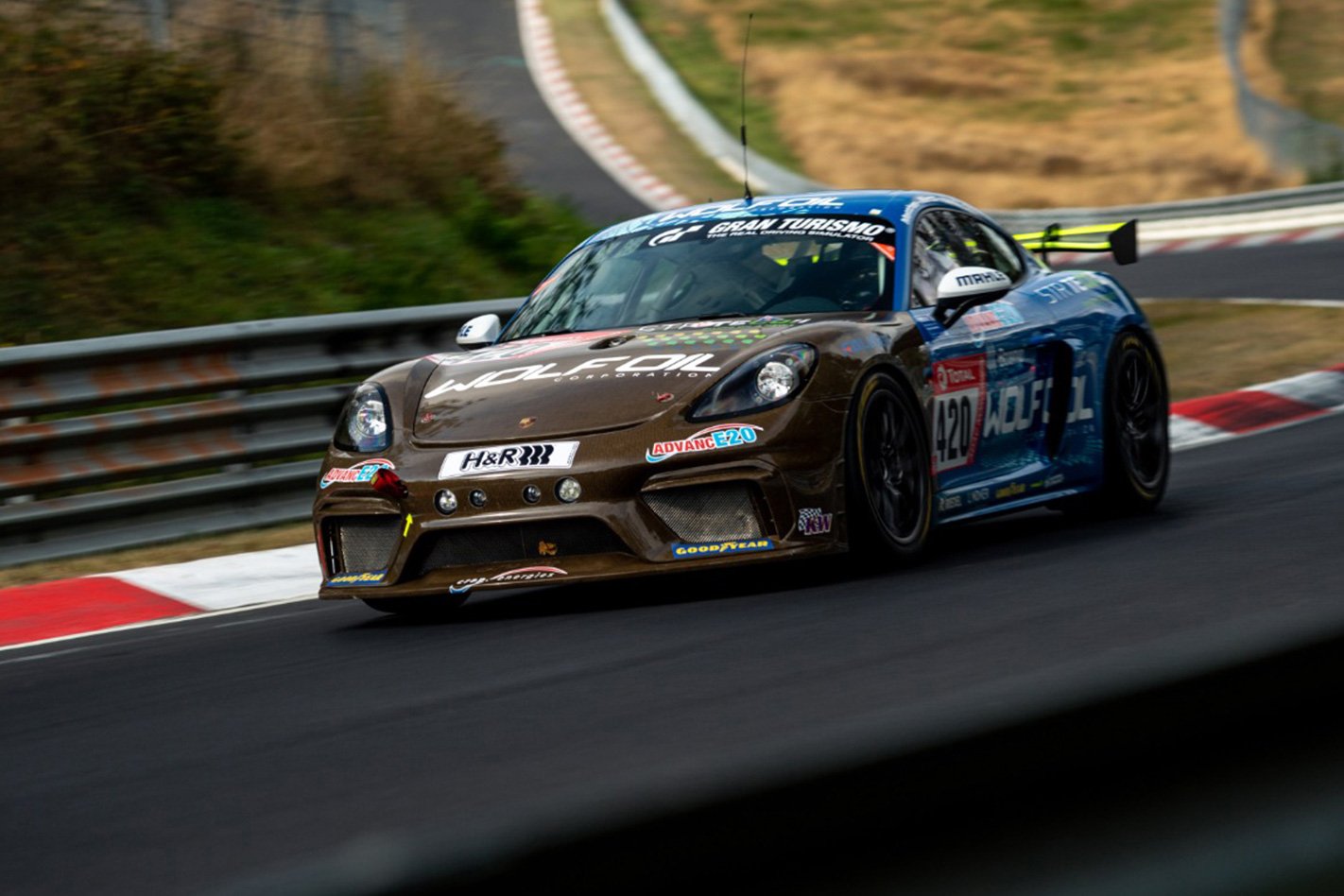
Manthey Racing, Porsche’s pseudo factory race team, is gearing up to offer natural fibre panels and wings for the 718 Cayman GT4 MR to customers after testing the parts at the most recent 24 Hours of Nűrburgring race. For the event, the Manthey Racing Cayman’s front and rear aprons, front spoiler, front and rear bonnets, mudguards, and diffuser were all made from natural fibres.
UPDATE, February 8, 2021: Hyundai has published a page on its customer website to help owners better understand the nature of the recall described below, and what is being done to carry out the work as quickly and as safely as possible.
You can learn more here, on the Hyundai Australia website. Our original story continues below.
February 5, 2021: Hyundai has issued a recall notice for more than 93,500 Tucson mid-sized SUVs due to a faulty electrical component that has the potential to start an engine-bay fire even when the car is turned off.
The fault, which affects all 2015 to 2021 Tucsons, involves an electronic control circuit board in the anti-lock braking system (ABS) module that, due to a manufacturing error, “will short circuit” when exposed to moisture.
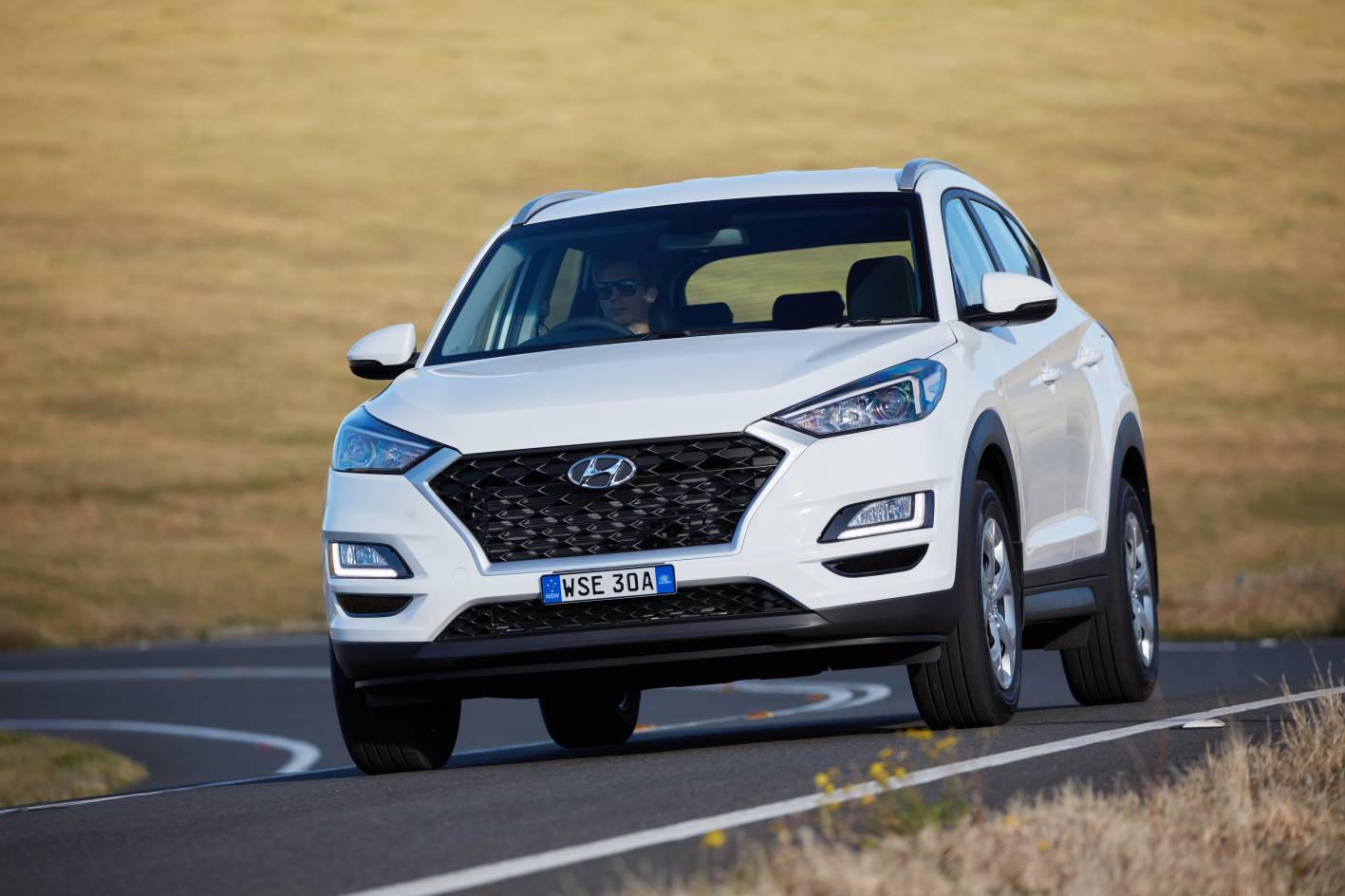
A short circuit presents a risk of an engine compartment fire, even when the vehicle is turned off, as the circuit is constantly powered.
According to Product Safety Australia the fault also “increases the risk of an accident, serious injury or death to vehicle occupants, other road users and bystanders, and/or damage to property”.
The short circuit does not affect the functioning of the brake system.
What should Tucson owners do?
Owners of affected vehicles should park them in an open space and away from flammable materials and structures. In other words, not in a garage or carport.
Hyundai will get in touch with owners to ask them to contact an authorised Hyundai dealership to have a relay kit installed on the circuit board free of charge.
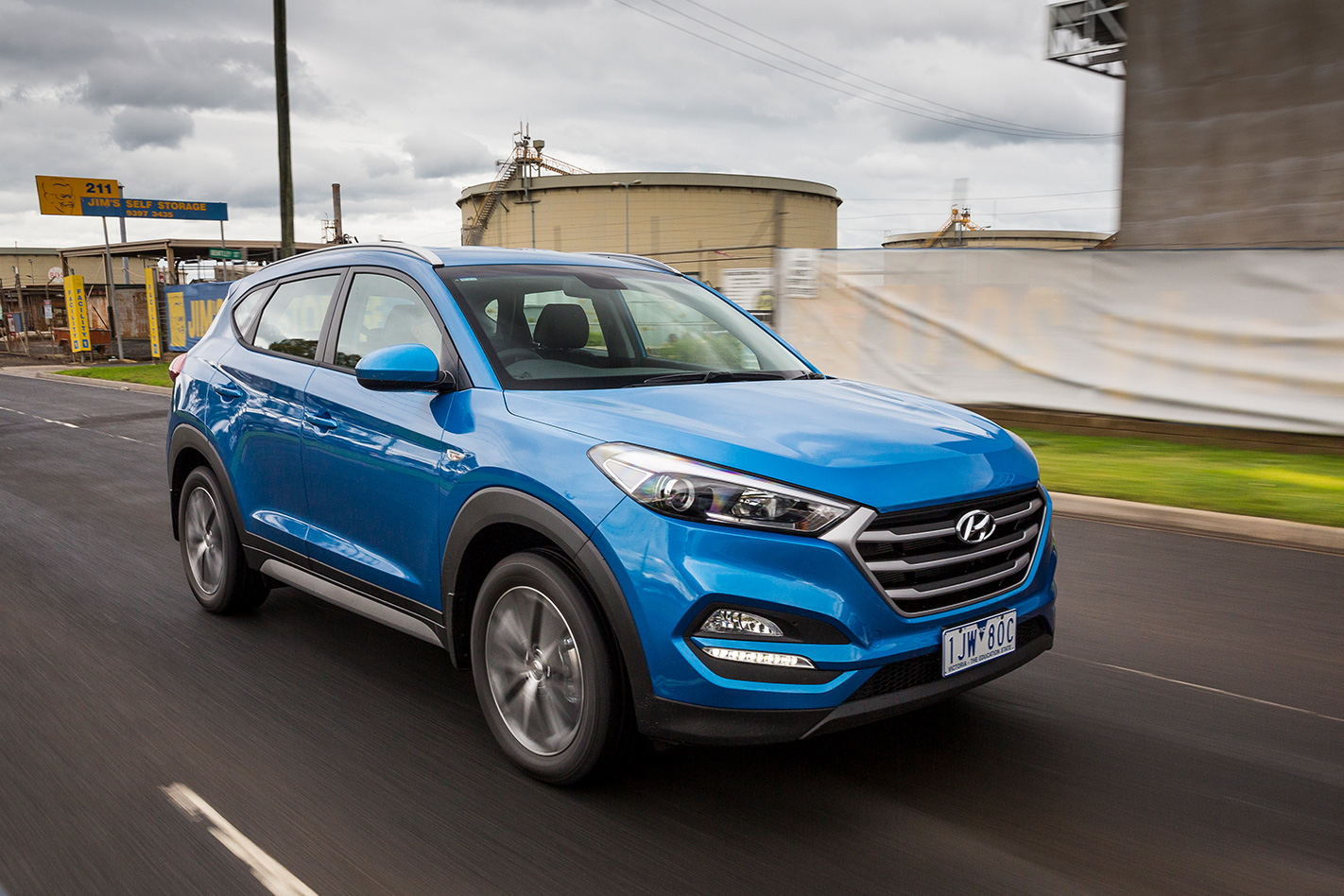
The fix prevents the power surge and eliminates the risk of fire.
The Product Safety Australia website has a Vehicle Identification Number (VIN) list of all affected Tucsons.
For further information, contact the Hyundai Customer Care Centre on 1800 186 306 or visit the Recalls section on the Hyundai Australia website.
Jeep has issued a recall for early-model WK Grand Cherokees to fix a fix that it previously fixed.
The company has sent a notice to the ACCC to track down 16,000 Jeep Grand Cherokees sold between 2011 and 2013 in order to replace a fuel relay that was subject to its own replacement recall in both 2014 and 2015.
According to Jeep, the fuel pump relay on some vehicles may be susceptible to silicon contamination on the relay contacts.
This, in turn, can cause the relay to fail, which could result in stalling or, in official terminology, a “no-start condition”.
“If the engine stalls while driving there is an increased risk of an accident resulting in injury or death to vehicle occupants and/or other road users,” reads the recall notice.
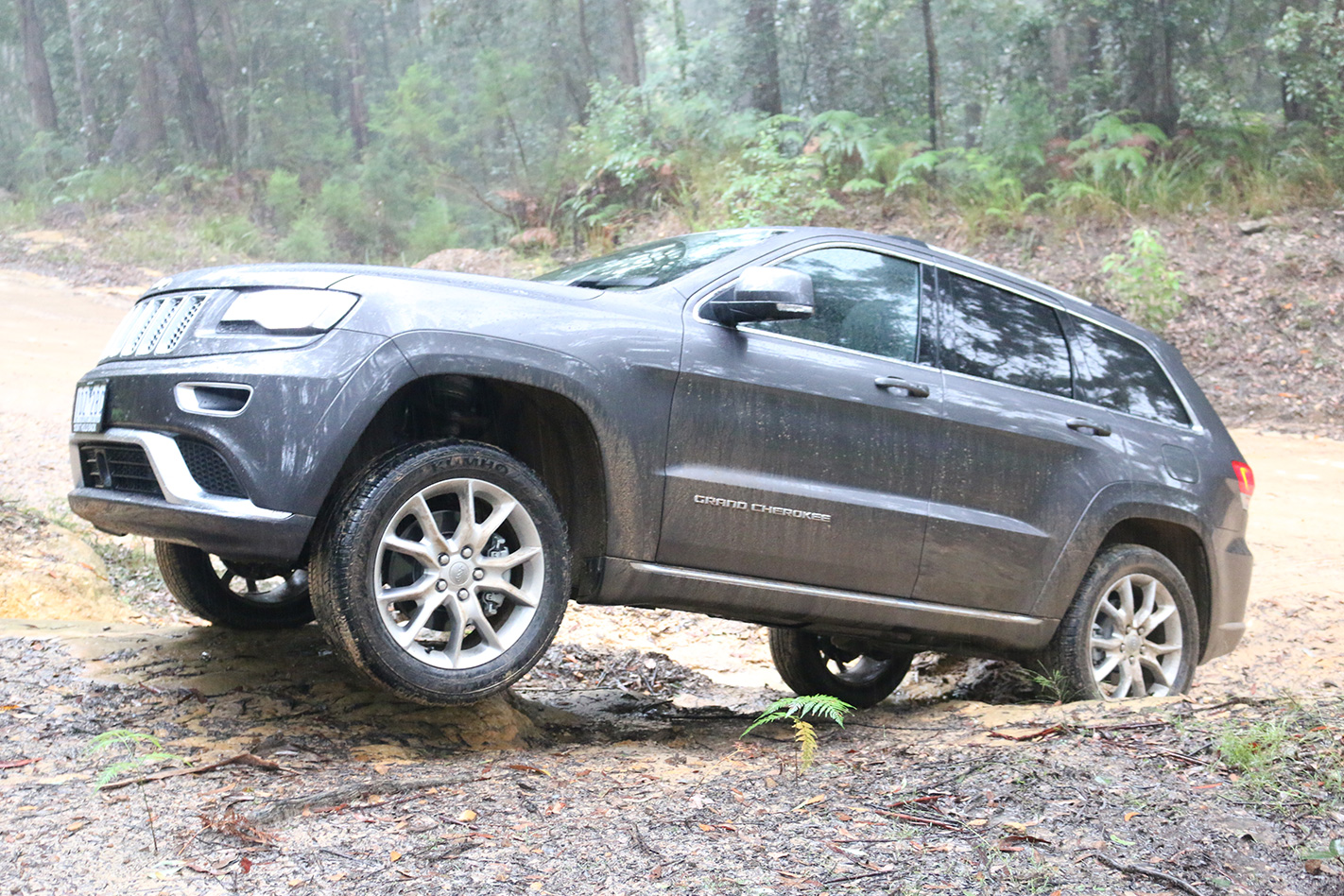
As you’d expect, Jeep will reach out to customers in its database to arrange for a free refit of the troublesome fuel relay.
The WK Grand Cherokee has been in service for Jeep since 2011, and has been the subject of at least 20 recalls over that period.
Some were for issues as minor as a failing interior vanity lamp, though a large-scale recall occurred in 2016 to add a fix to the Jeep’s self-centring joystick-style automatic shifter to prevent roll-away incidents.
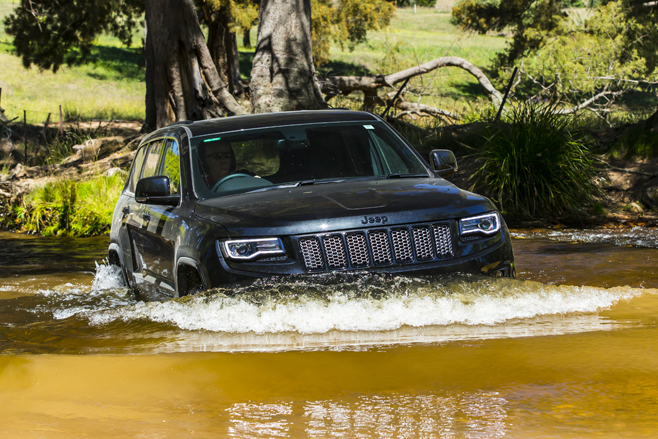
This is the first recall for the once-popular SUV since 2018 when it was included in a mass recall of powertrain control module failures across a variety of Jeep products.
The next-generation Jeep Grand Cherokee has been revealed and will launch in Australia in 2022.
The ‘virtual mirrors‘ available on the all-electric Audi e-tron are one of its coolest features. So how exactly do they work?
The benefits of virtual mirrors have been widely touted: less wind noise and lower aerodynamic drag, as well as the ability for the image to be digitally adjusted for brightness if it’s dark outside.
Do these benefits work in the real world and do they outweigh the rather significant shift in operation for one of a car’s staple systems?
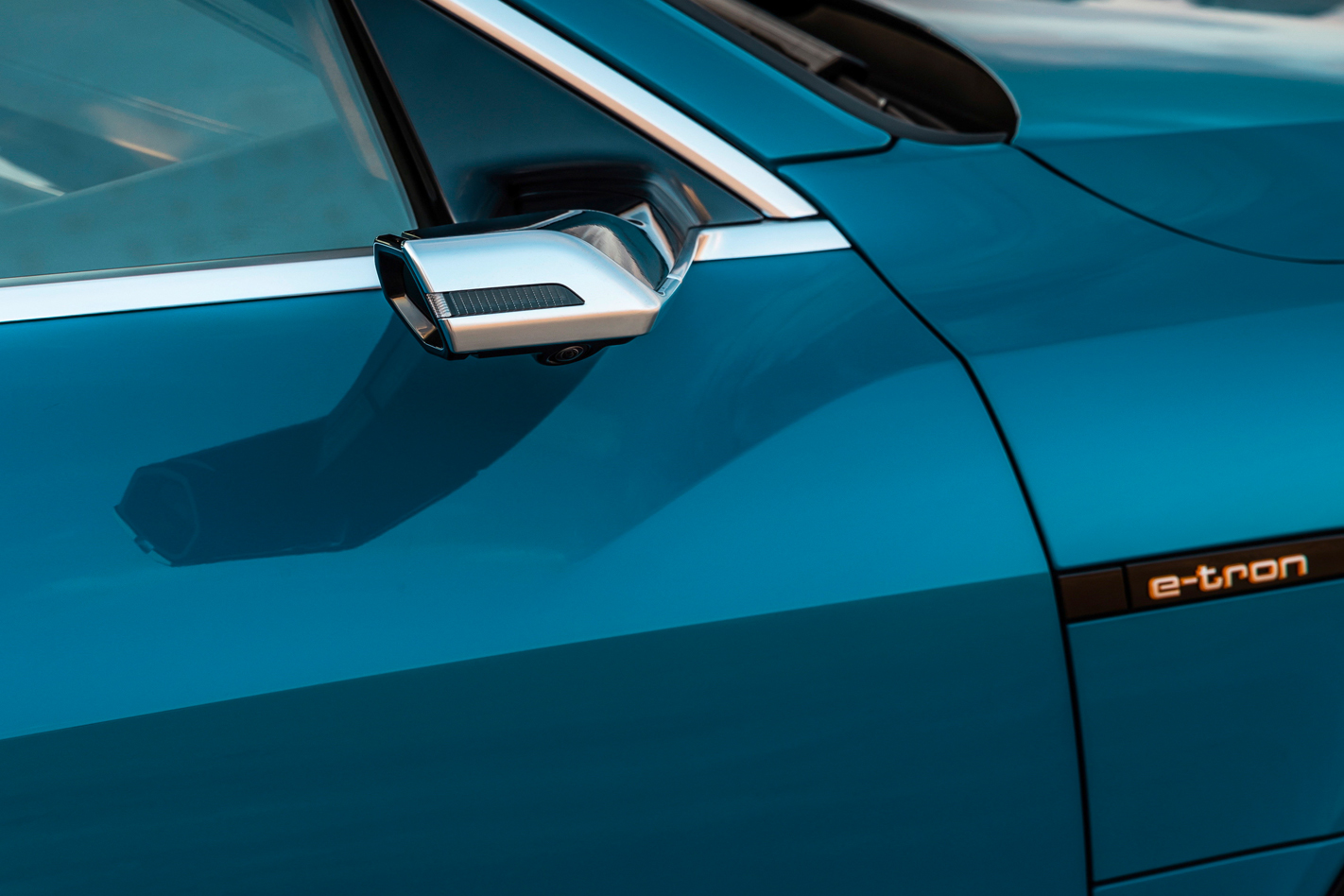
The cameras can be adjusted like regular mirrors, and don’t make the car any wider, but those aren’t the gripes those new to virtual mirrors might develop.
Ash Westerman explains everything you need to know in the above video.
Ken Lee has dreamed of designing cars for as long as he could remember. When he was nine years old his family moved from Hong Kong to Los Angeles, and an affinity with pick-up trucks and wagons quickly developed.
He says that one vehicle in particular stood out: the first-generation WD21 Nissan Pathfinder. More than 30 years later, as Senior Design Director at Nissan’s Global Design Centre in Atsugi, Japan, Lee led the design of the fifth-generation Pathfinder which was unveiled in the US today.
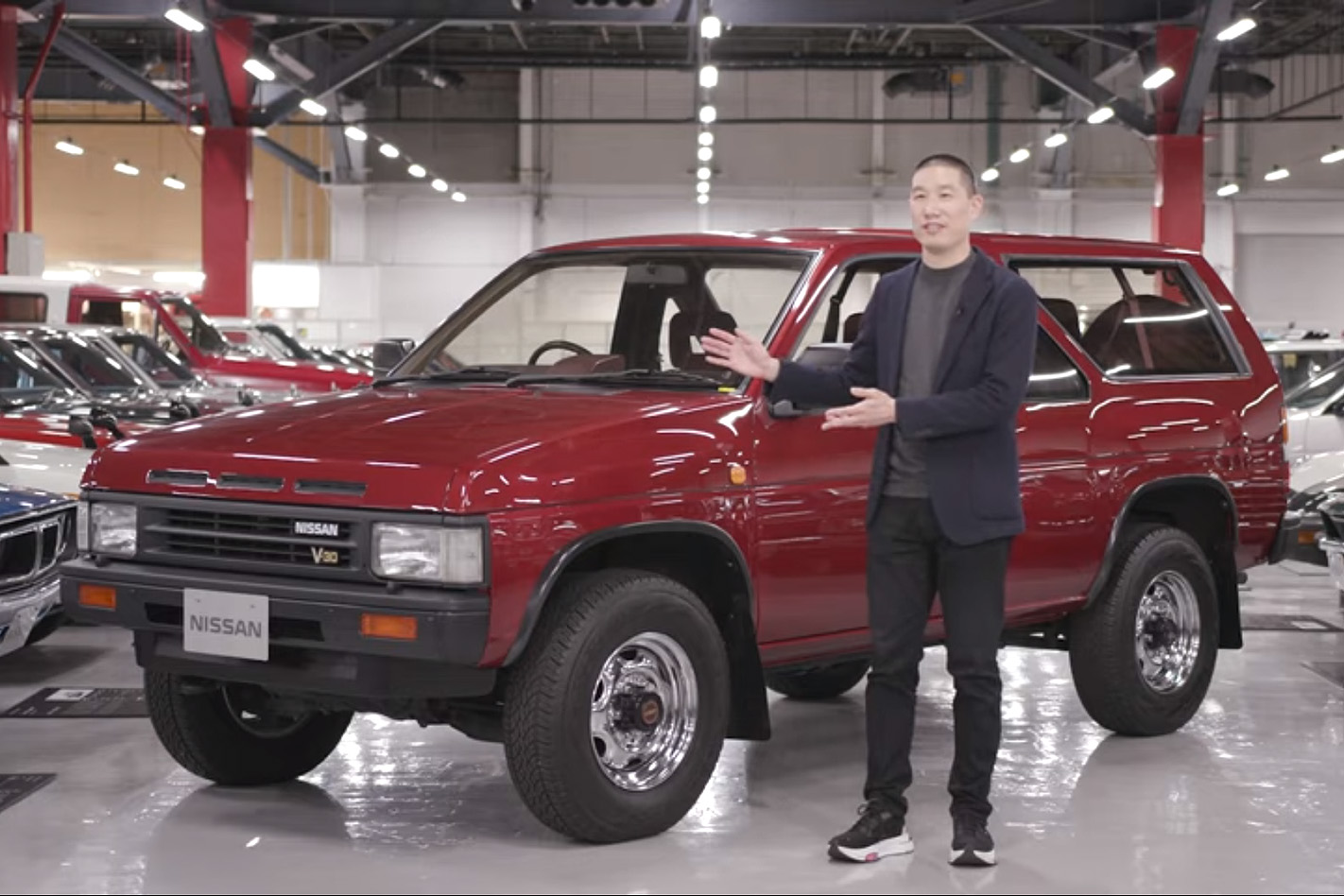
Lee, who has been with Nissan for 18 years, says it’s no coincidence that the 2022 Pathfinder eight-seat SUV features elements in common with the iconic three-door model.
“Seeing the original Pathfinder hit the road was very exciting because it brought something new, something fresh and exciting to the market,” he says.
“I always remember the fender blisters on the side that bulge out, showing the muscularity of the toughness underneath. But it was done in a fresh way. It’s not boxy. It’s integrated seamlessly with a very cool sculpture.”
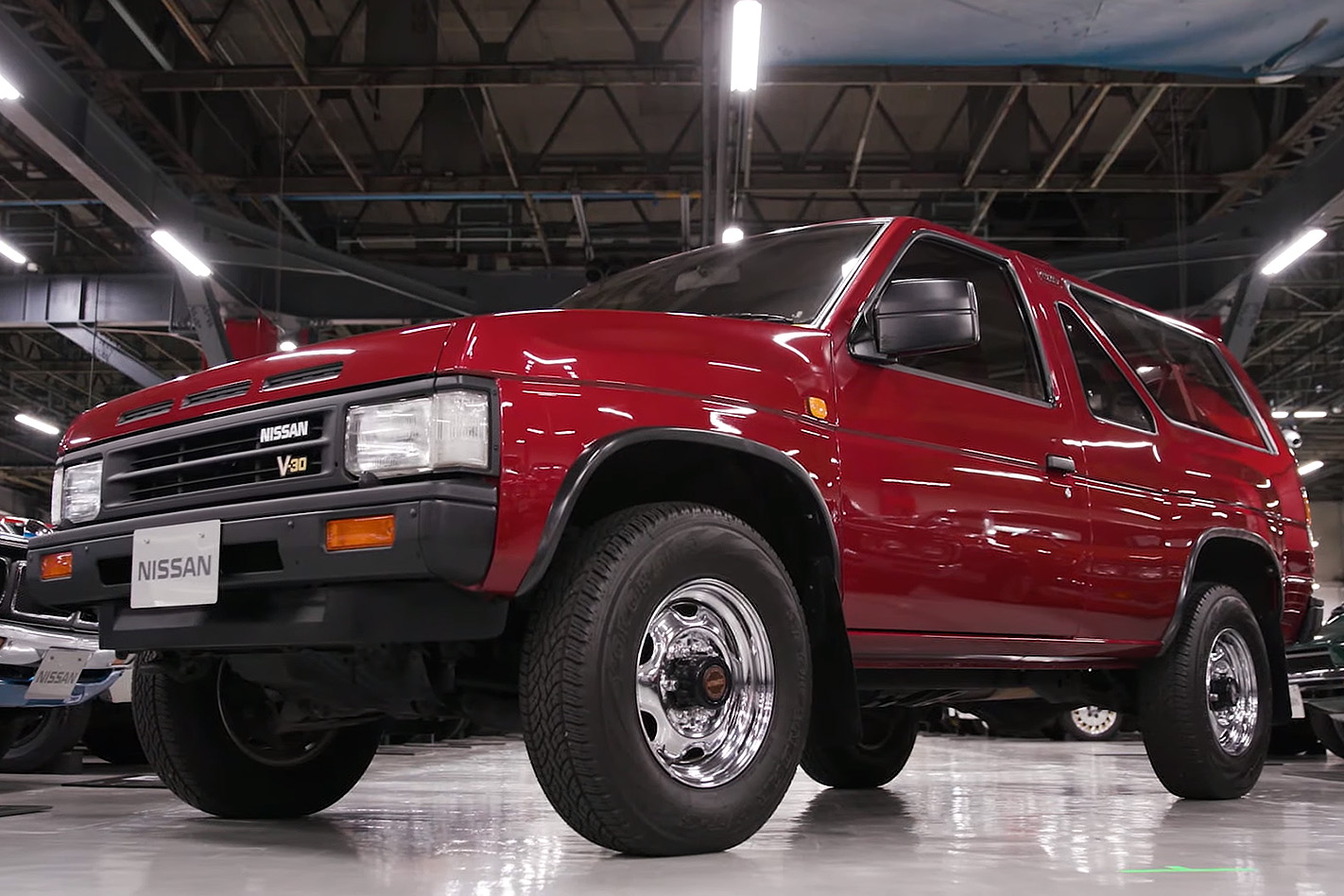
Needless to say, when Lee received the project brief for the fifth-generation Pathfinder, he decided to take what made the original “super cool” and bring it to the new model.
“In the last decade or so, the family SUV segment has been going towards more and more comfort-oriented. The shapes are getting softer, more aerodynamic, and overall getting more car-like.
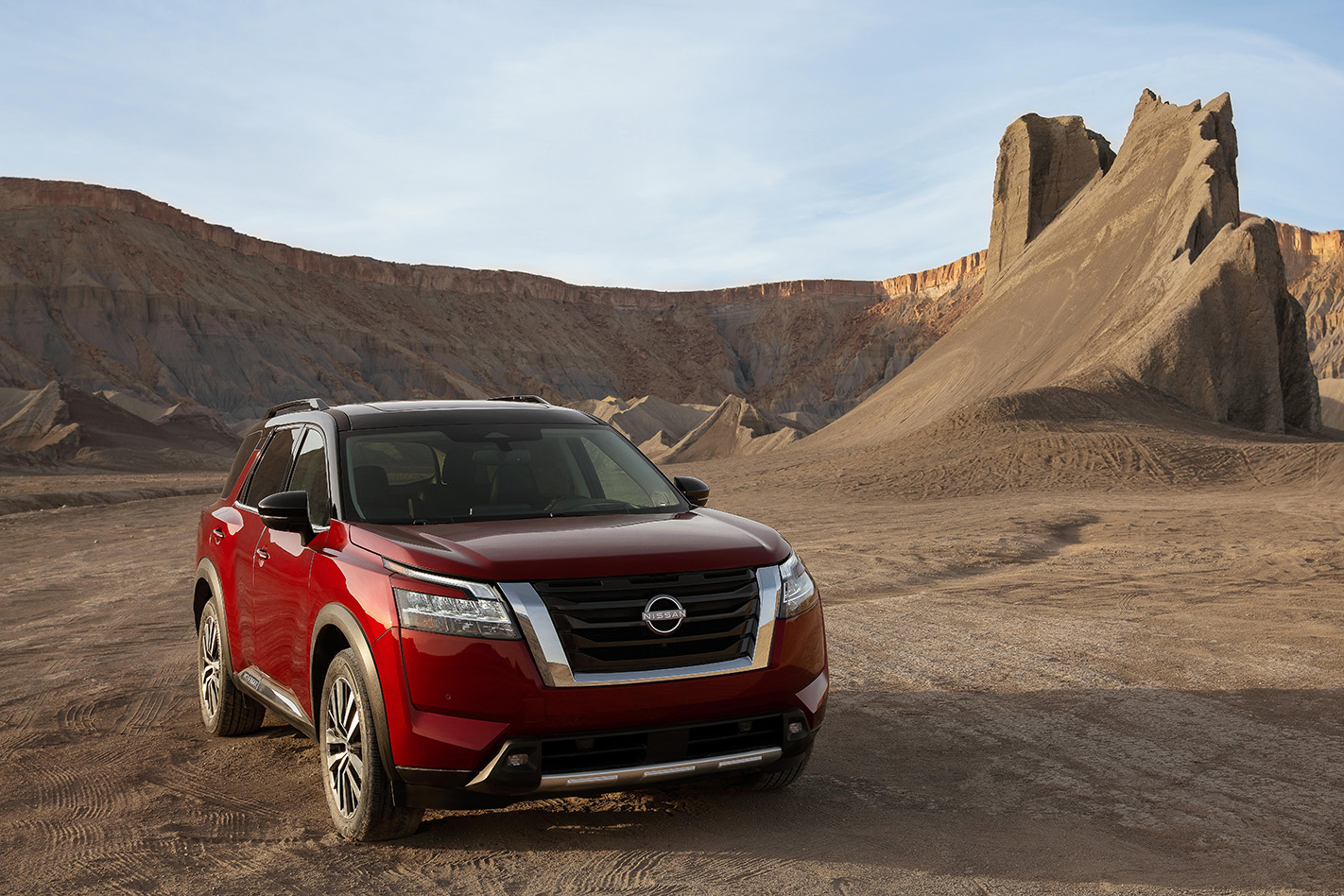
“As we move on to the next generation, we know there’s an opportunity to inject more toughness and more strength to this segment. So we saw an opportunity here and we found inspiration in the original.
“Starting with a front end, of course, we have the famous three slots on the hood. We wanted this not to be literally incorporated into the new one but as an Easter egg. It’s hidden at the top of the grille, and it’s subtle.
“And yes, it was important that they be functional for the purity of the design.”
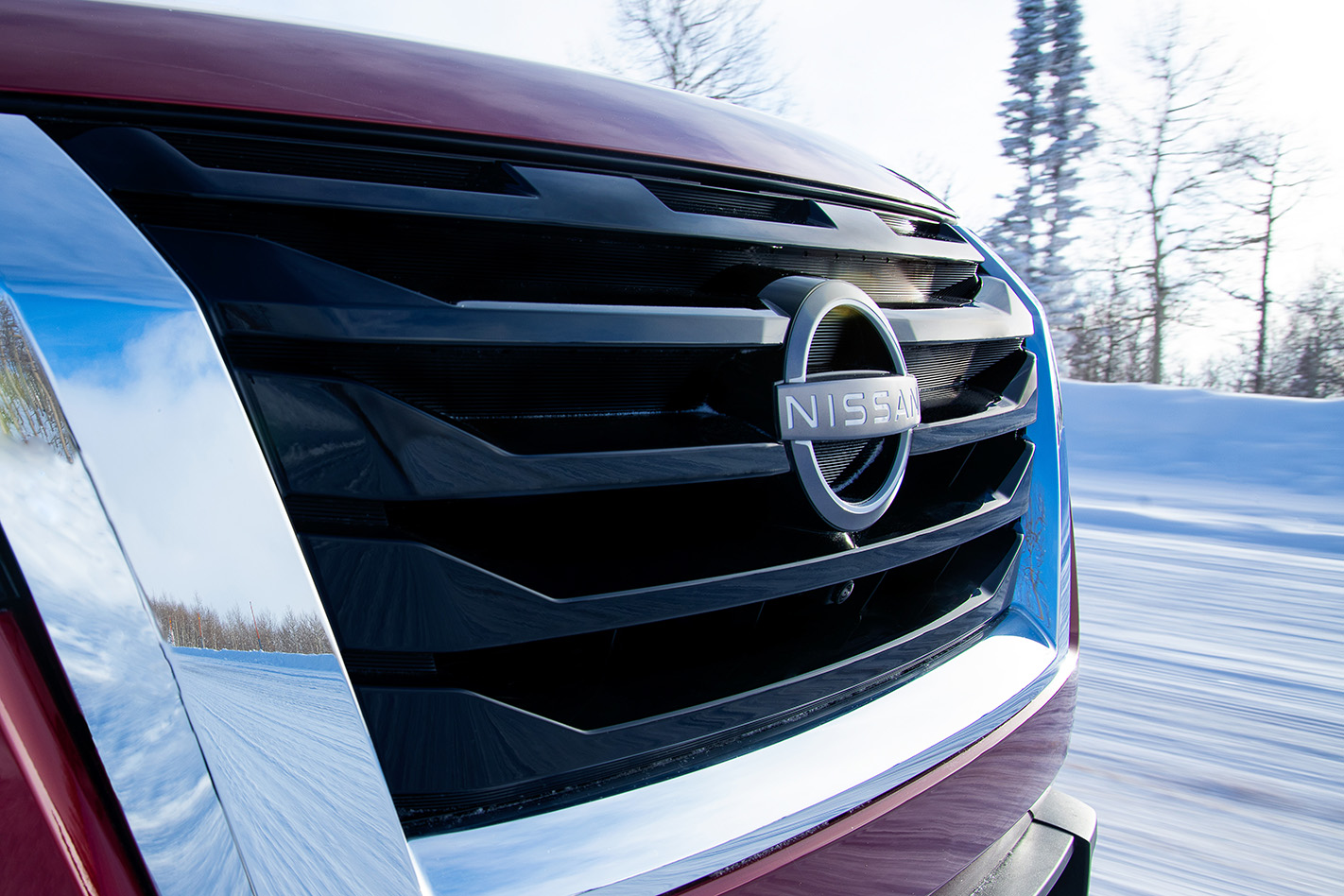
Another obvious tribute to the original Pathfinder is the forward-leaning C-pillar that replicates the triangular side-window frame.
“Now that was a three-door, so of course on the new Pathfinder which is a five-door we wanted to interpret it in a new way, and we’ve come up with a new floating C-pillar.”
Lee also points out that the new Pathfinder’s front end has become more upright than the outgoing model’s and has a straighter bonnet much like the original one.
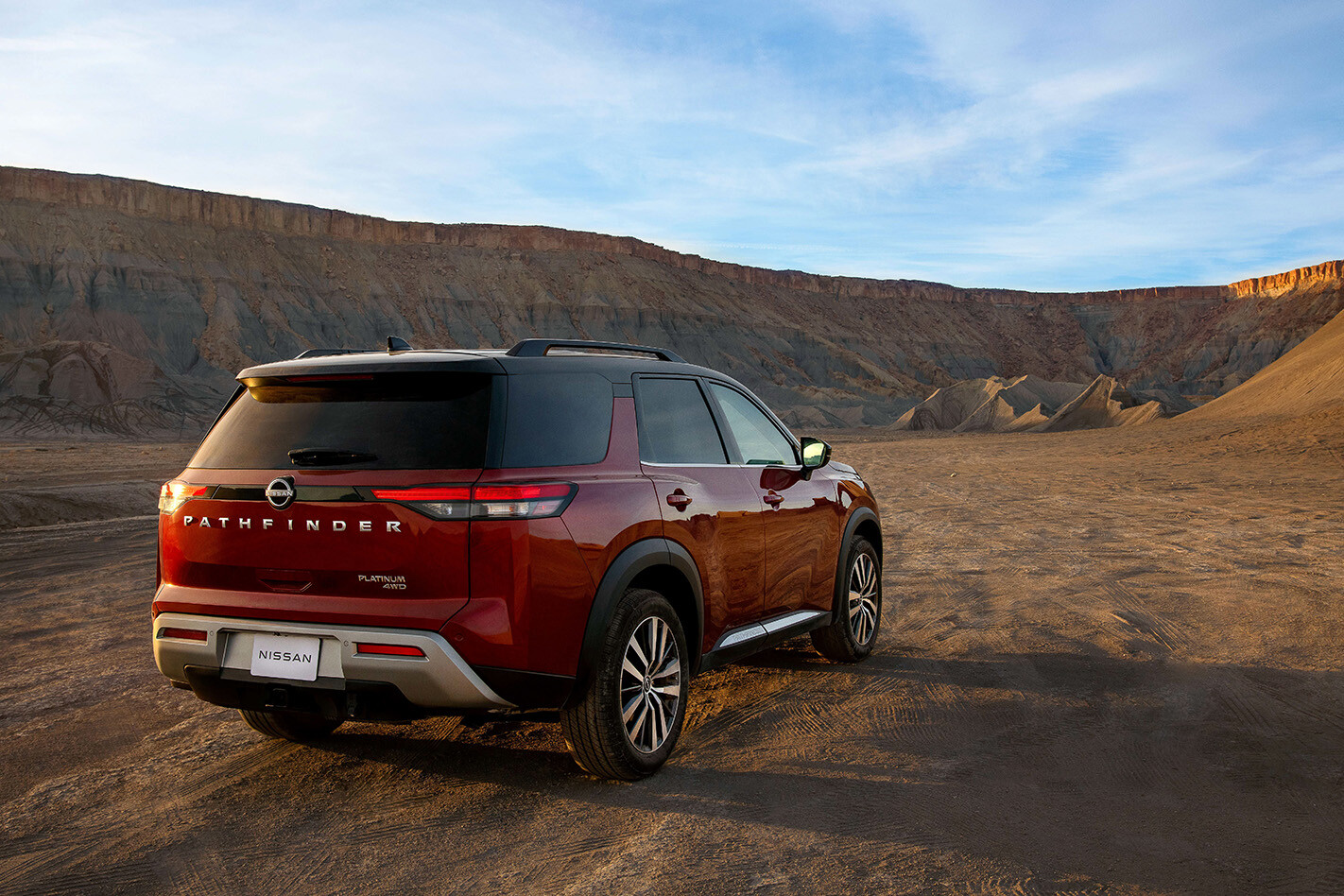
Of course, the all-new Pathfinder had to have its own attributes penned for the twenty-first century incorporating Nissan’s current V-Motion design language. But even then the design team looked to the original for inspiration.
“One of the elements that made the original Pathfinder look so clean and modern to me at the time was the sharpness and the details, the way they’re executed. It didn’t look like a traditional SUV then.
“That inspired us for the new Pathfinder to also look for high-tech expression, the details.
“Lighting is a big thing these days, and we wanted to convey a sense of high-tech.”
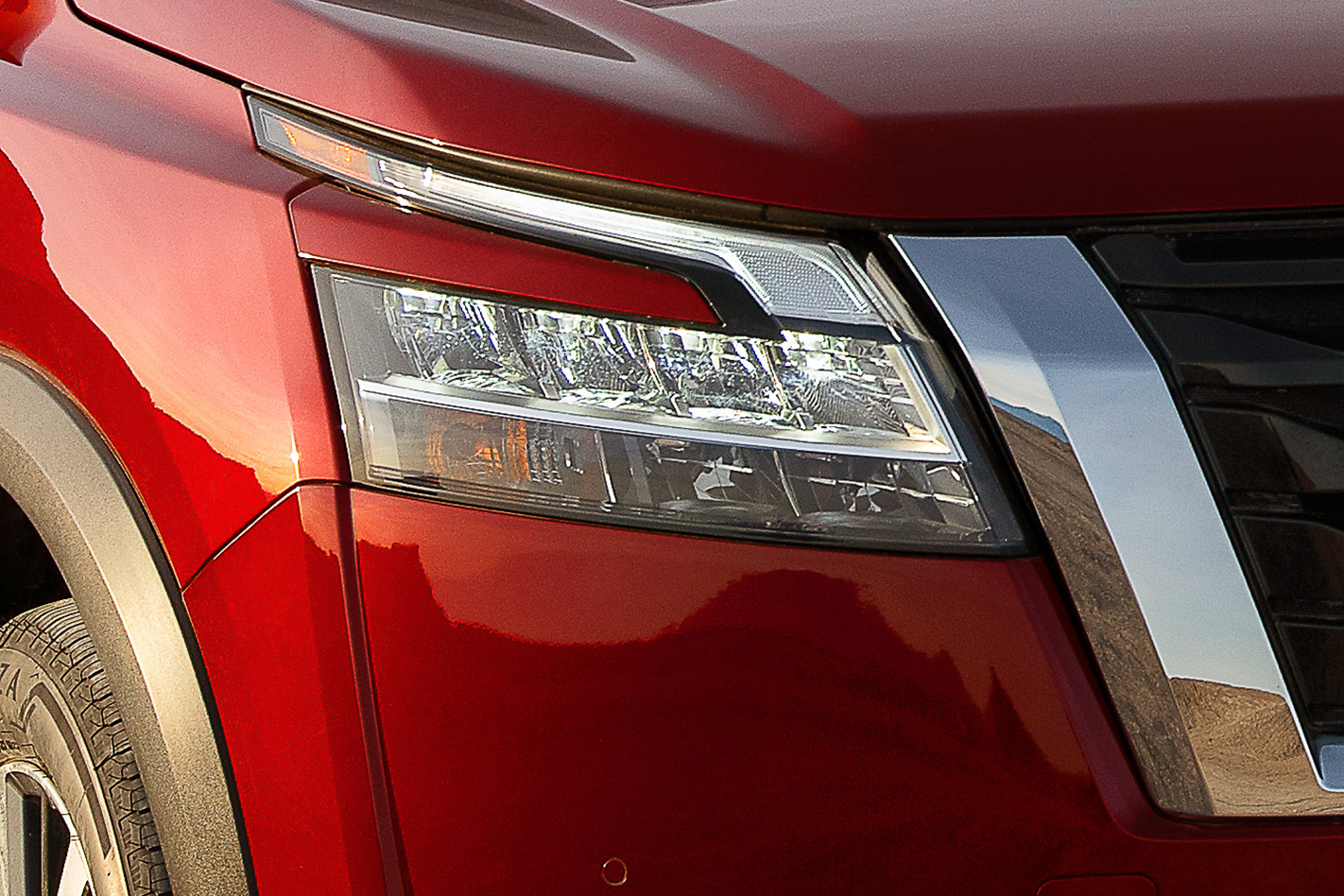
Then there’s the distinctive rear end.
“Our goal was to make it clean, simple and wide feeling, much like the original. The new tail-lamps are flush, horizontally oriented, giving a sense of width
“And you’ll notice that in the centre, we proudly display the Pathfinder badge with big letters to signal that the Pathfinder is back.”
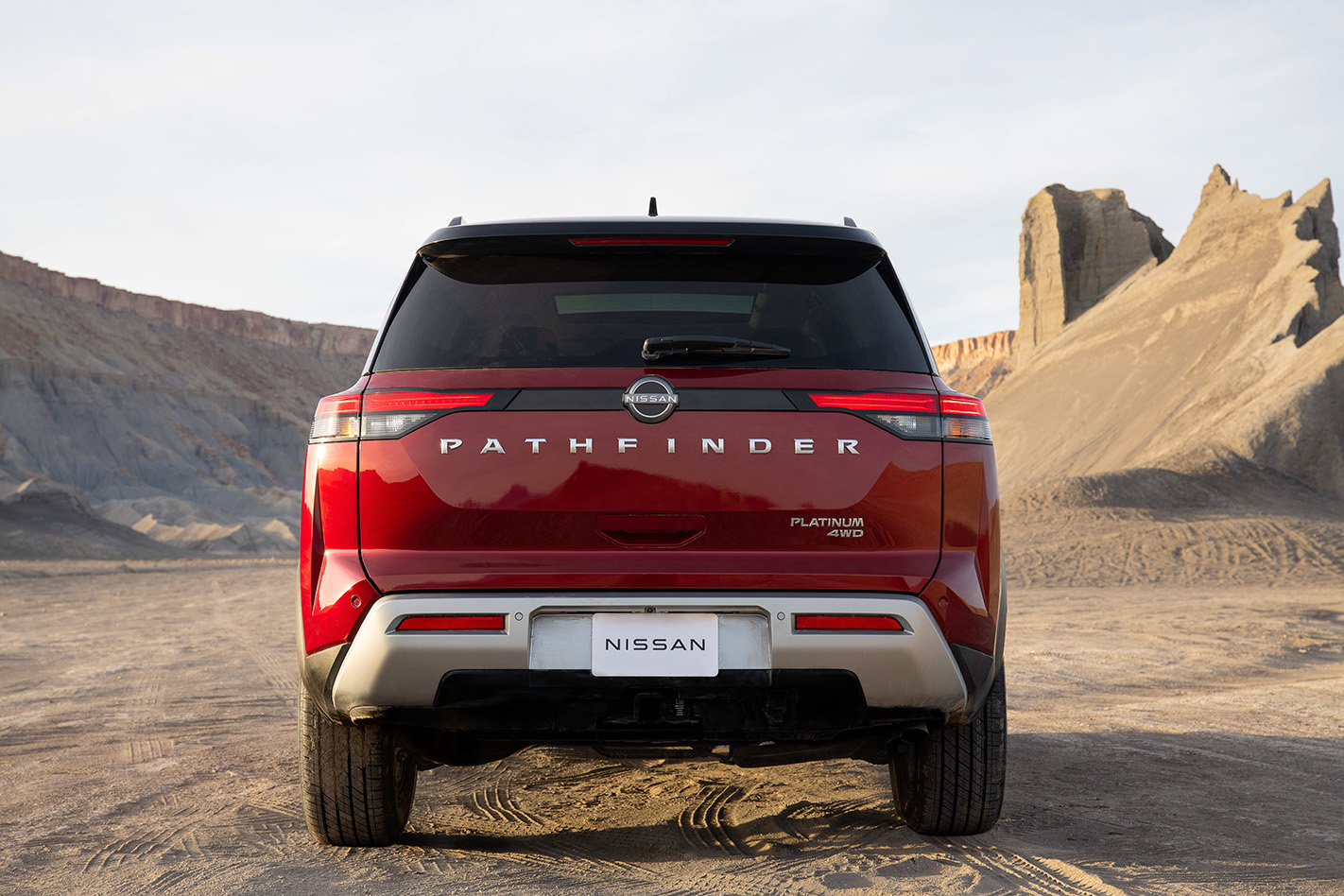
Finally, Nissan decided to give the new Pathfinder a vibrant colour palette, featuring 14 colours/colour combinations including five two-tone treatments.
What I remember from my childhood, those Pathfinder advertisements in magazines, they were in the bright red colour, very iconic and memorable,” Lee says.
“And this time around, to add something new, we are introducing a two-tone colour on the Pathfinder so you could get it with a black roof. We’ve carefully designed the graphics on the body side, including the floating C-pillar, to allow the two-tone roof to seamlessly integrate into the overall design.”
Audi Australia has issued a recall notice for 19 vehicles across its model-year 2021 Q7, SQ7 and RS6 lines to address a fault in its airbag system.
The company reports that a faulty connector on the system’s crash sensor could become detached, potentially causing a delay in the deployment of side airbags and curtain airbags.
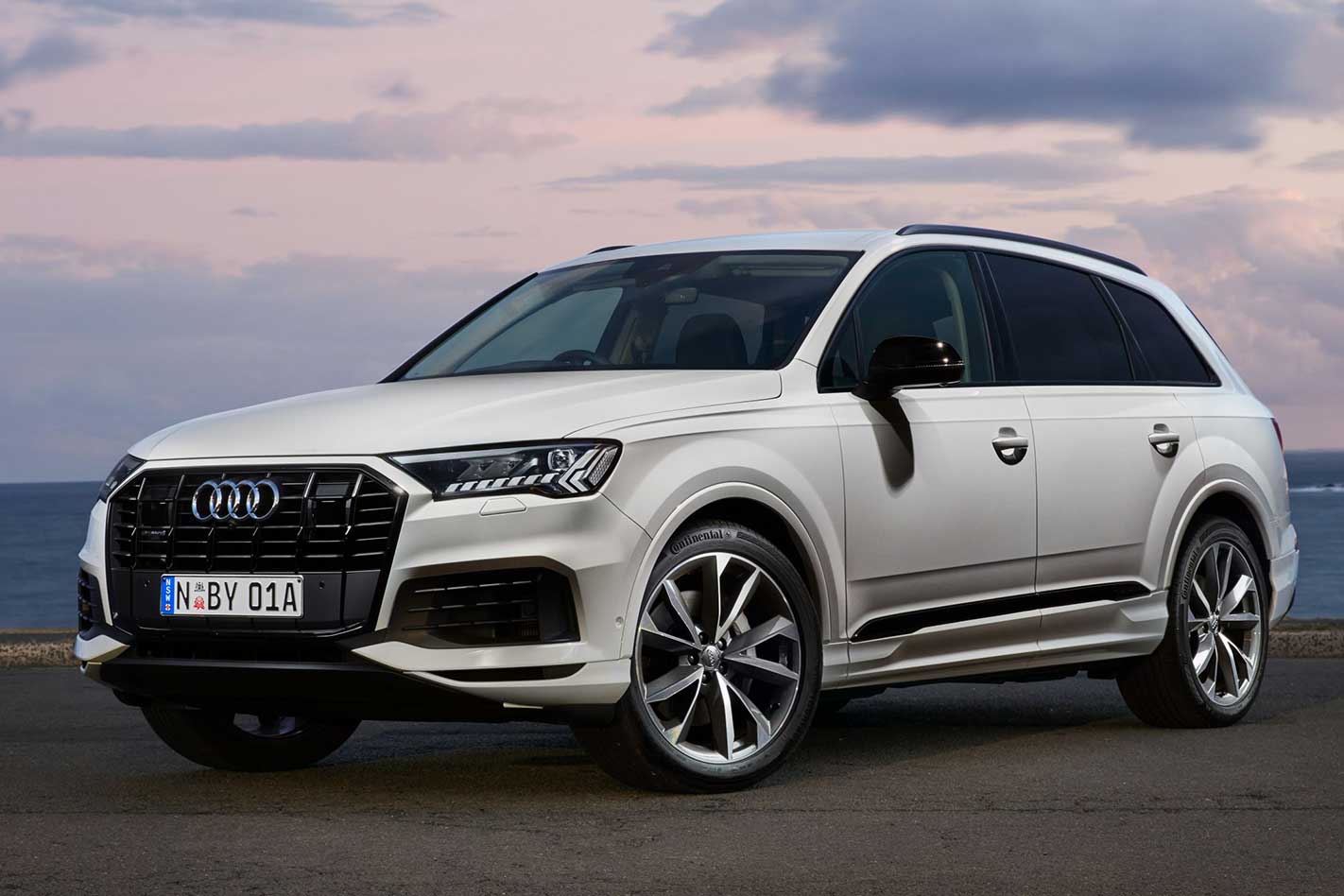
Audi warns that any delay in the operation of these systems would increase the risk of injury or death for vehicle occupants.
A list of VINs (Vehicle Identification Numbers) for the affected vehicles can be found here, in PDF form. (Click here for a guide on how to find your VIN.)
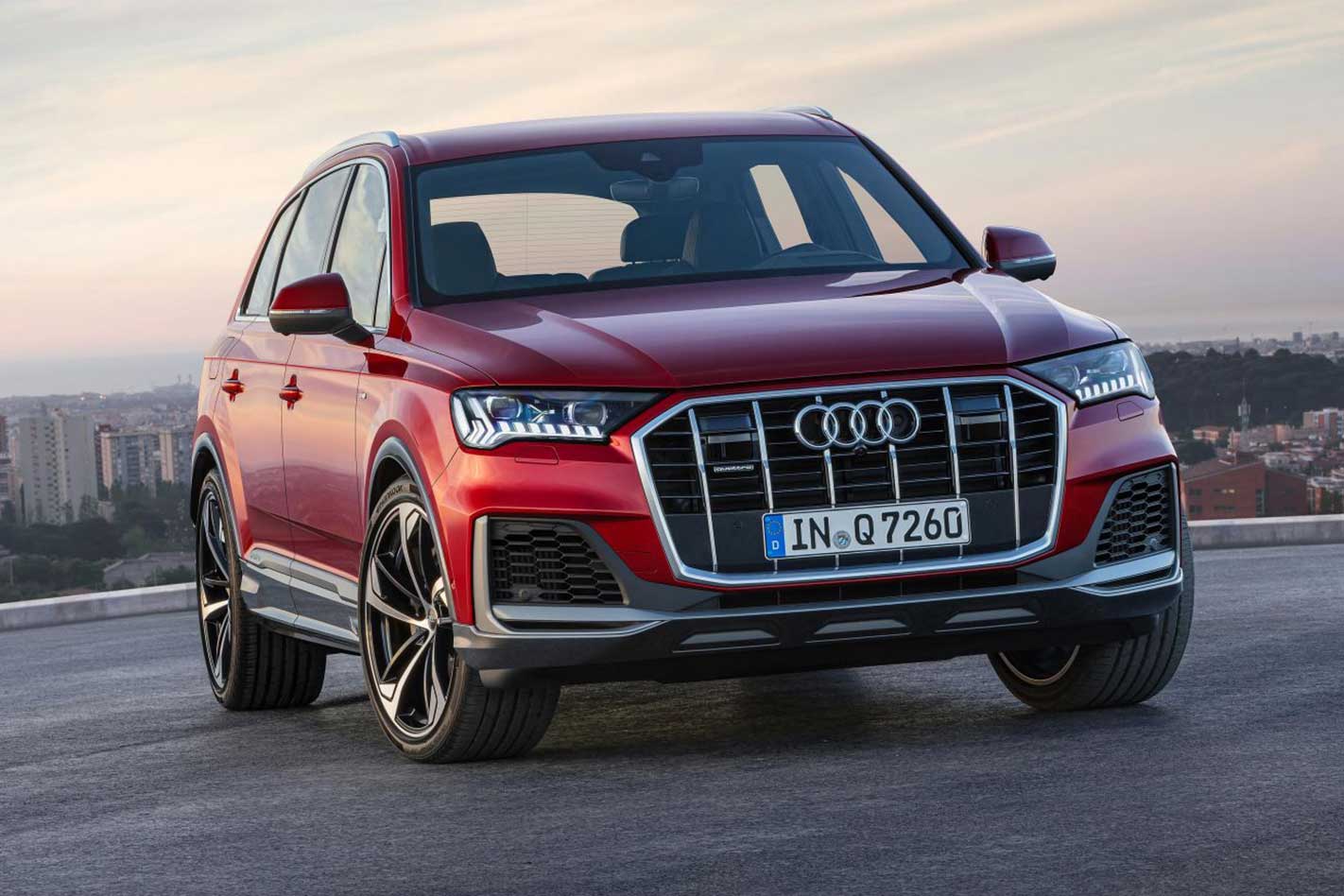
Owners can call Audi Australia on 1800 50 2834 between 8am and 6pm Australian Eastern Daylight Time.
What is the Hyundai N Line Premium?
It seems as if a subgenre of warmed-over compact and small SUVs and crossovers has suddenly become motoring’s hot new ticket.
It stands to solid reason, too, as growing demands for smart tech and safety elevates yesterday’s cheap and cheerless into increasingly accomplished pint-sized quality delivered, of course, at an extra cost. An overtly sporting spin, then, makes a more serious outlay more palatable.
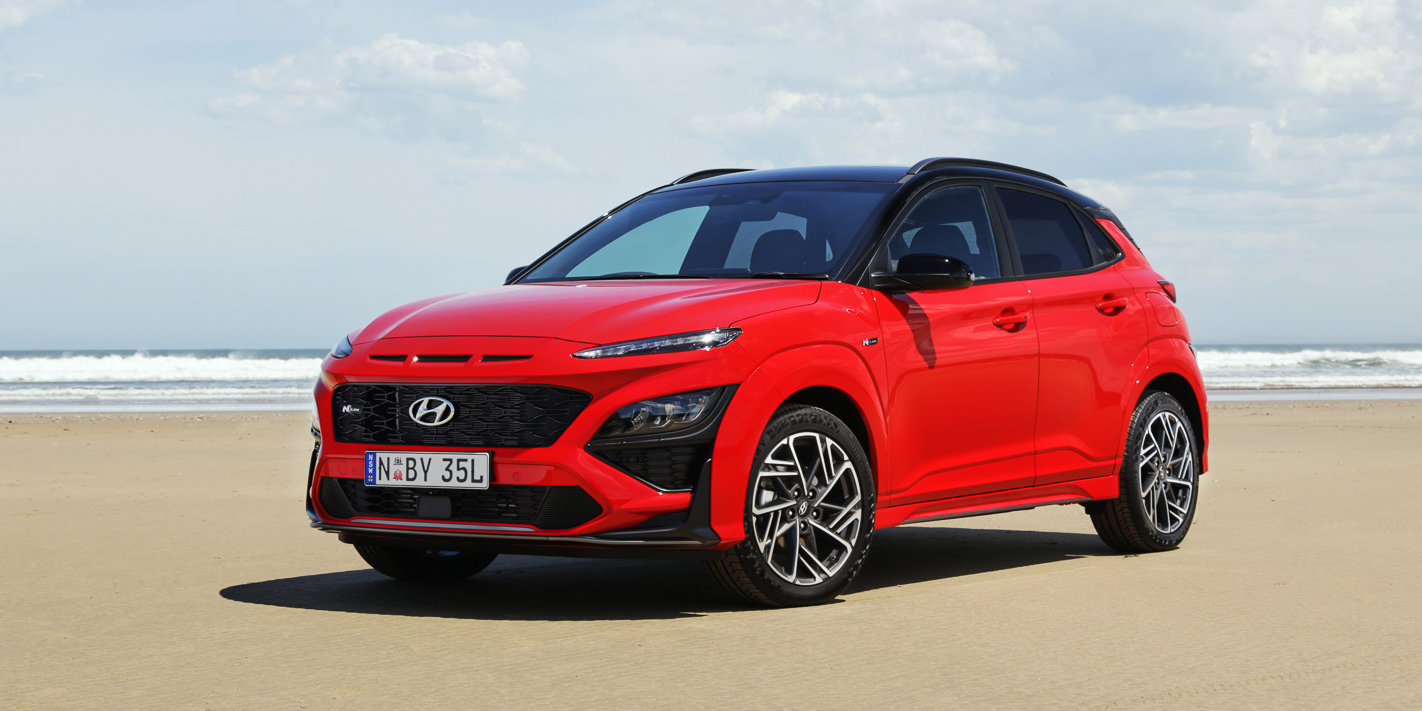
The Kona N Line debuts Hyundai’s carefully cultivated performance N branding in SUV form. It takes on the VW T-Roc, Toyota CH-R GR Sport, Skoda Kamiq Monte Carlo, Audi Q2 and eleventy-thousand other gym-toned urban-centric runabouts since, it seems, Mercedes-Benz dared to affix an AMG badge to its GLA compact crossover.
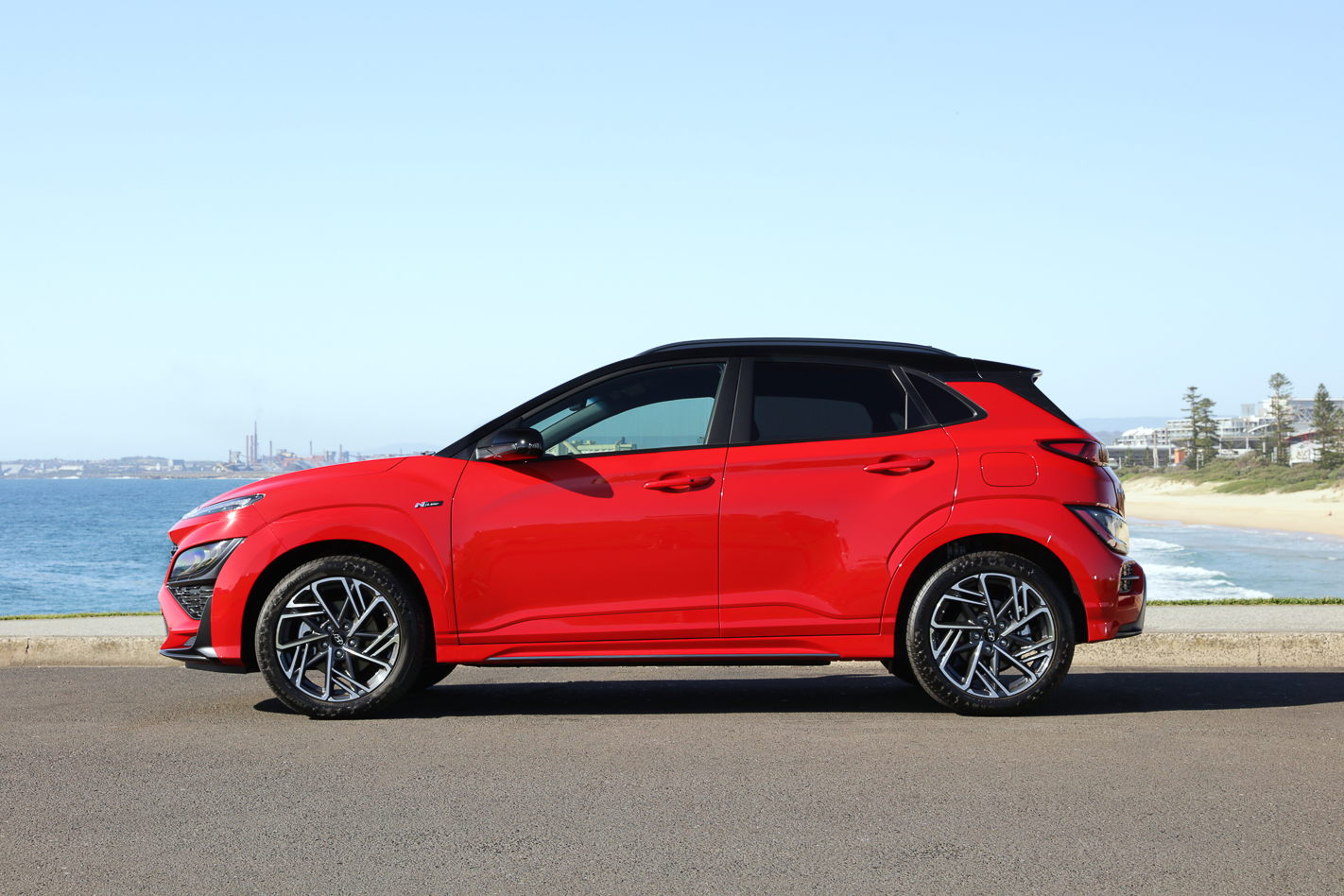
The Korean upstart arrives in sharper facelifted form, festooned with N leisurewear, looking fast standing still and marking the sport-themed versions – regular N Line and flagship N Line Premium as tested here – as the cream of the Kona crop.
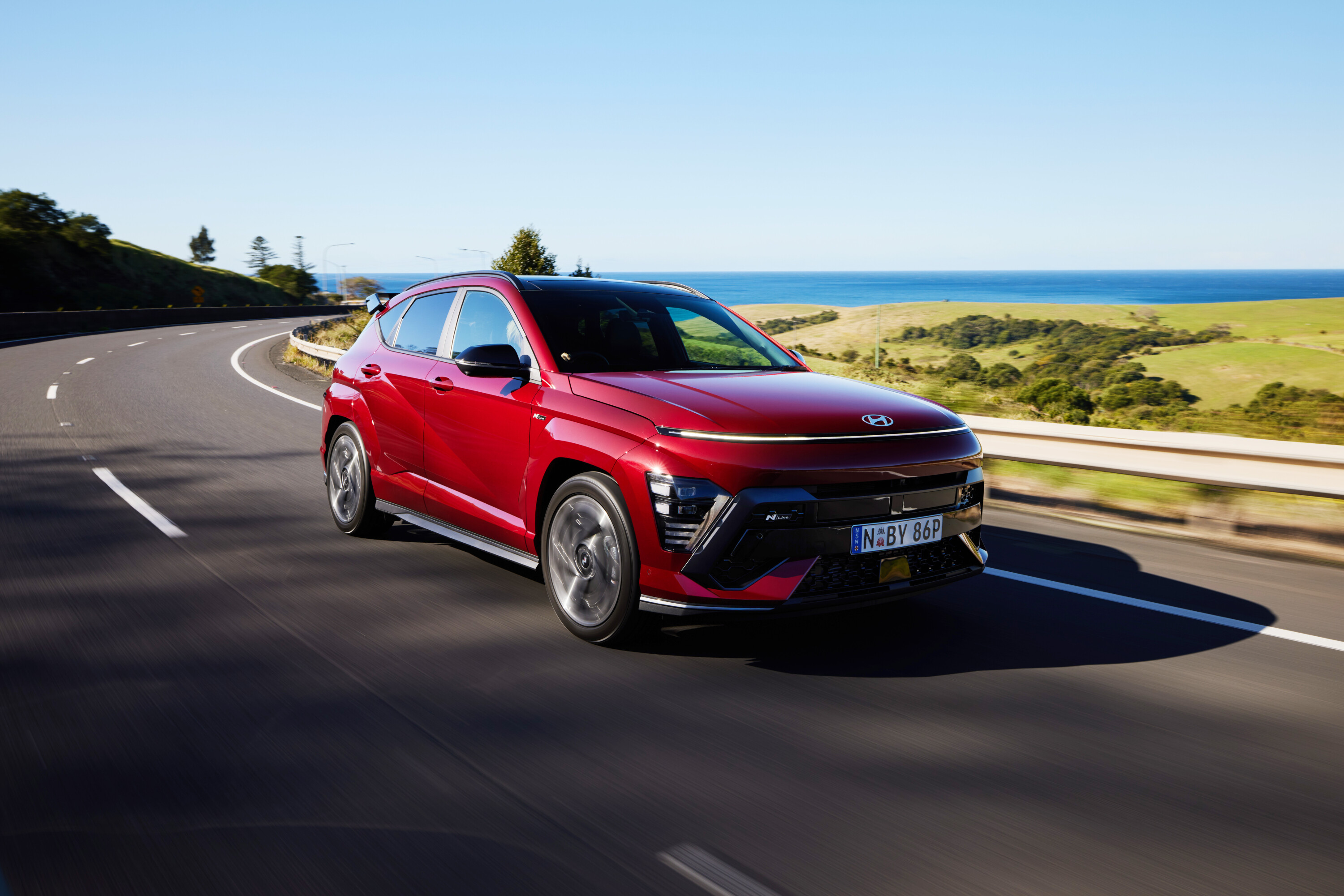
? Hello from the future!
There’s a new-generation Kona in Australia now, and you can find our news and reviews at the link below.
Review continues…
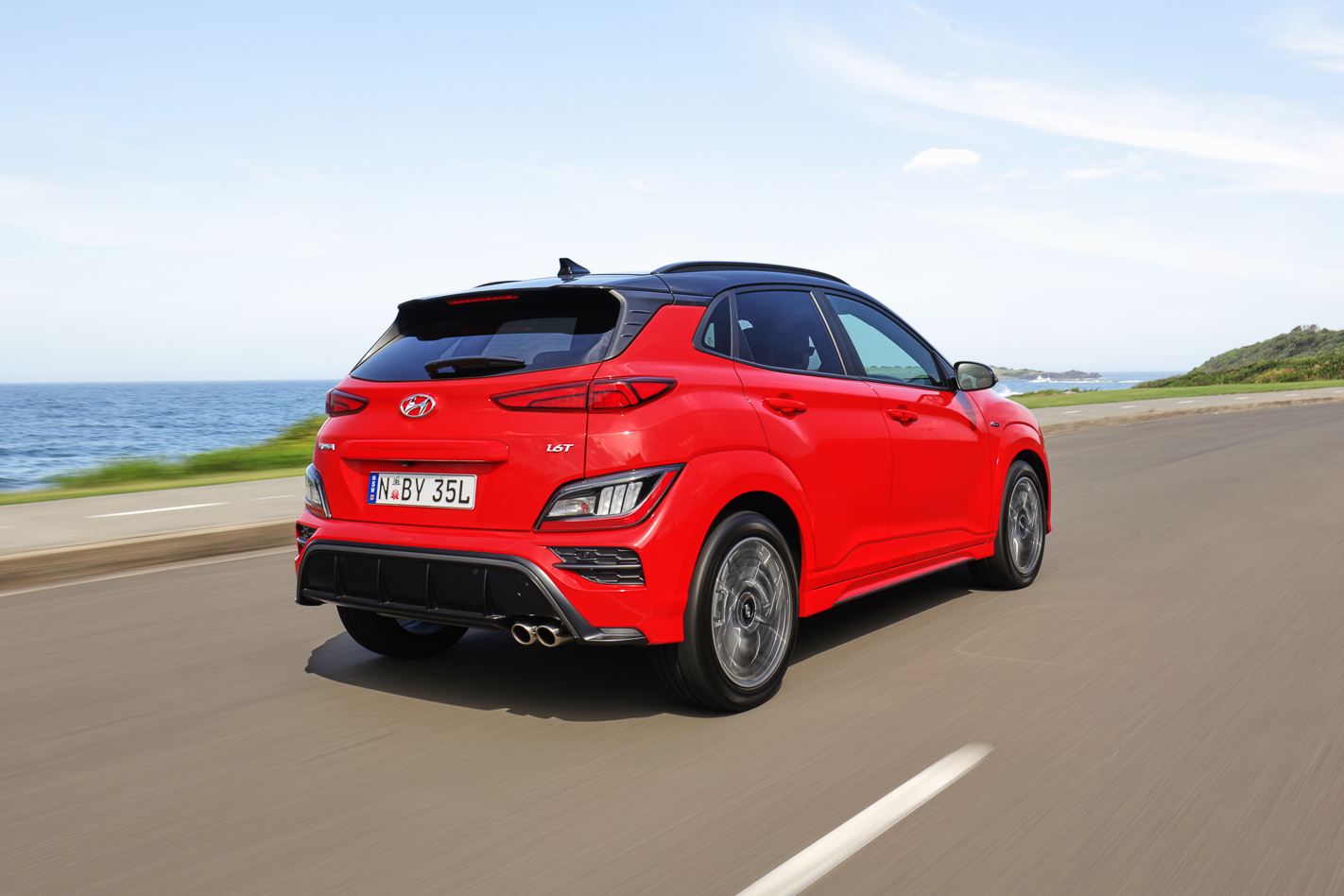
Appearance is nigh on indistinguishable between the two grades and it is easily the best Kona looker to date, which fits its technical superiority over the regular have-not variants.
The N Lines pack 1.6-litre turbo-petrol power, a dual-clutch transmission, all-wheel drive and a multilink rear suspension. And if you’re thinking: hang about, you can get all of that stuff on any of the regular Konas, well, no you can’t. Not anymore, in facelift form.
Range consolidation, as Hyundai puts it, has left the four-tier pedestrian Kona range with what was and remains the lower-grade underpinnings: naturally aspirated engines, front drive, a torsion beam rear end and, now, a CVT transmission.
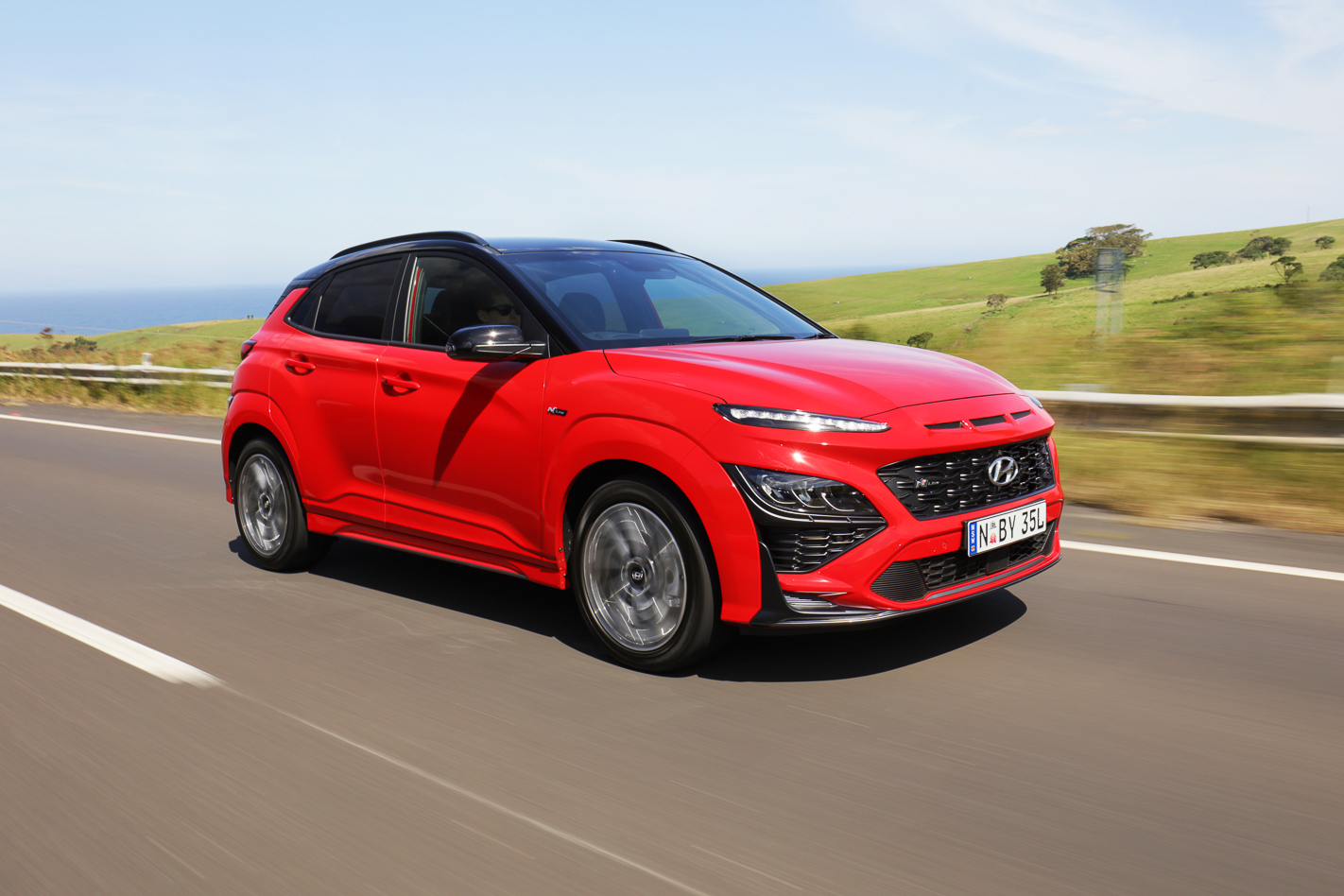
A sceptical glance suggests Hyundai hasn’t so much upgraded Kona to N Line spec but downgraded everything else. And perhaps simply carried over the old technical package dressed in a new tracksuit.
But digging further reveals there are some new tricks with the N Line formula, even if mechanical gems, including a whole new engine, are rarities.
And it carries over from old 1.6 AWD foundations that were quality to begin with and mightn’t have warranted overhauling.
Of course, you could spot in a blizzard that this is no stove-hot i30 N wrapped in more lifestyle flexible packaging, even if it arguably looks the part. The question is whether Kona N Line can blend old and new goodness with enough genuine warmth to not hold back Hyundai’s N brand aspirations.
Price and Value
The N Line Premium sits at the top of the Kona tree at $42,400 before on-roads.
Essentially, it shares identical running gear and other N-spec accoutrements with the regular N Line that’s $8100 more affordable ($36,300 before onroad costs) but includes the full bells and whistles suite as featured on the high-spec Highlander ($38,000 before ORC) as a sort of best-of amalgamation.
That’s the rich fringes of mainstream small SUV-dom. And segment semantics aside, those primarily after a stylised urban runabout big on badge cache can tip into humble-spec, low-hanging Audi and Lexus options.
The Premium fits 18-inch wheels, all-speed AEB with pedestrian and cyclist detection, adaptive cruise control, larger 305mm front brakes, partial leather trim, 10.25-inch sat-nav-equipped infotainment, Apple CarPlay and Android Auto smartphone mirroring and inductive phone charging. But then again, so does the regular N Line, which is based off Elite-grade feature fitment.
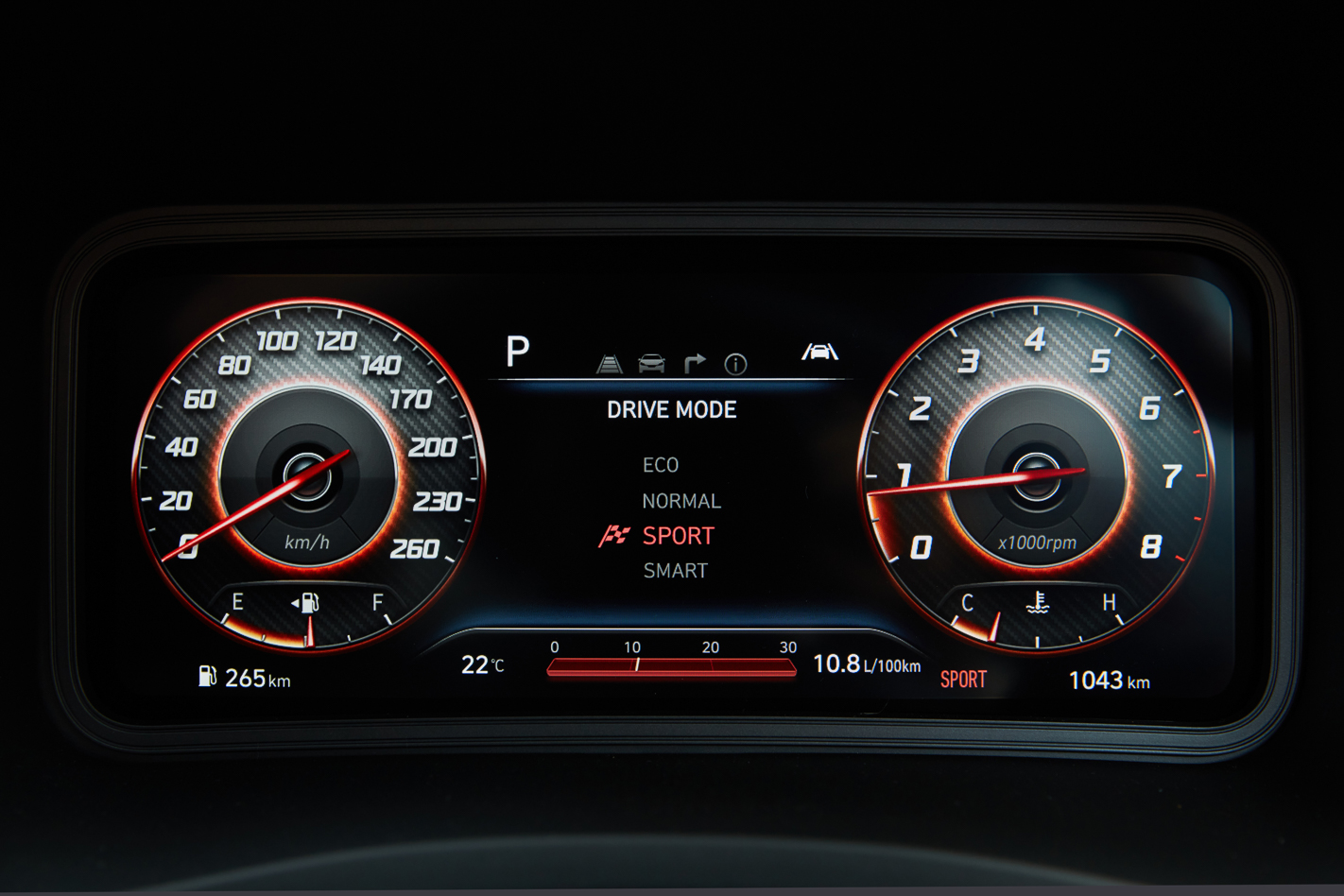
The key lure for the Premium’s $8100 upcharge is the 10.25-inch digital driver’s instrumentation though the high-spec version adds other dangling carrots such as full LED lighting, front parking sensors, a head-up display, ambient lighting, seat heating is both rows plus cooling up front, high-beam assist and glass sunroof, although the last item gets deleted if you opt for two-tone paint that adds a black roof.
In value terms, the more affordable regular N Line is more compelling given that you lose nothing in core goodness and only economise in details such as analogue instrumentation and halogen headlights.
Living with the Hyundai Kona N Line Premium
There’s more to the N Line’s exterior mojo than the Kona family’s wider grille and remodelled headlight treatment.
The colour-matched the wheelarch cladding, side skirts and diffuser-look tail treatment, specific N mesh grille and front end contours all conspire to deliver a more hunkered-down tarmac-friendly stance and the soft-roader aesthetic favoured in the rest of the range. Its look alone is easily worth a decent chunk of the splurge for the sporty variants.
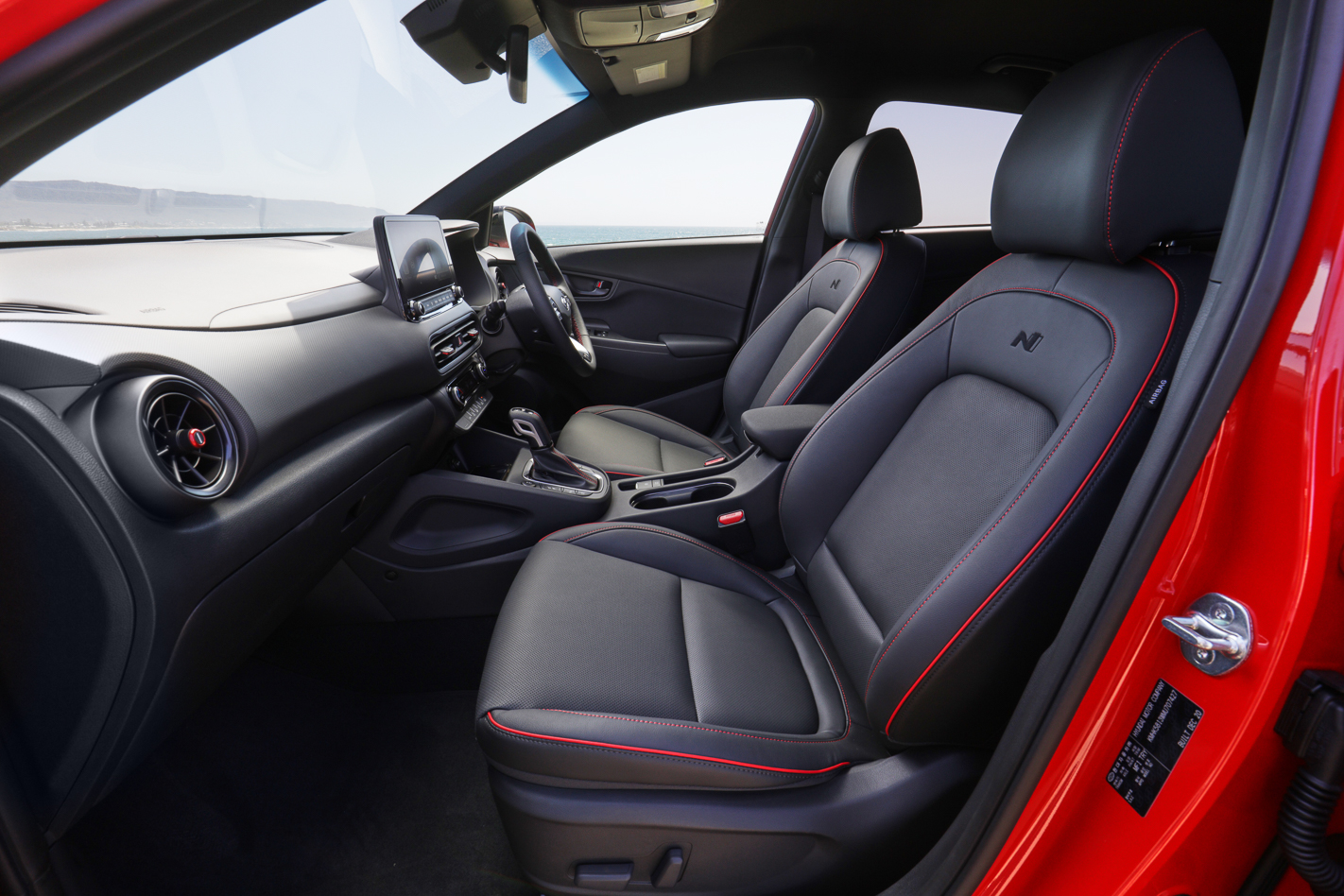
The cabin is less inspired, a design left largely untouched in the facelift process that’s neat and presentable if lacking a sense of adventure, particularly the almost monochromatic grey-out effect with sport-by-the-numbers red striping and stitching.
The sea of plastic, as sturdy and nicely textured as it is, doesn’t exactly do this variant’s flagship status any favours. Hyundai could well invest in bit more colour and materialistic joy in trade for some token appointments such as a rear outboard seat heaters.
Seat contouring, padding and perforated surfacing are decent rather than exceptional, comfort-leaning pews favouring long commuting that could do with a little more lateral support. Driver ergonomics, though, are fine, with a waxy leather wheel rim, quality touch points and natural control location.
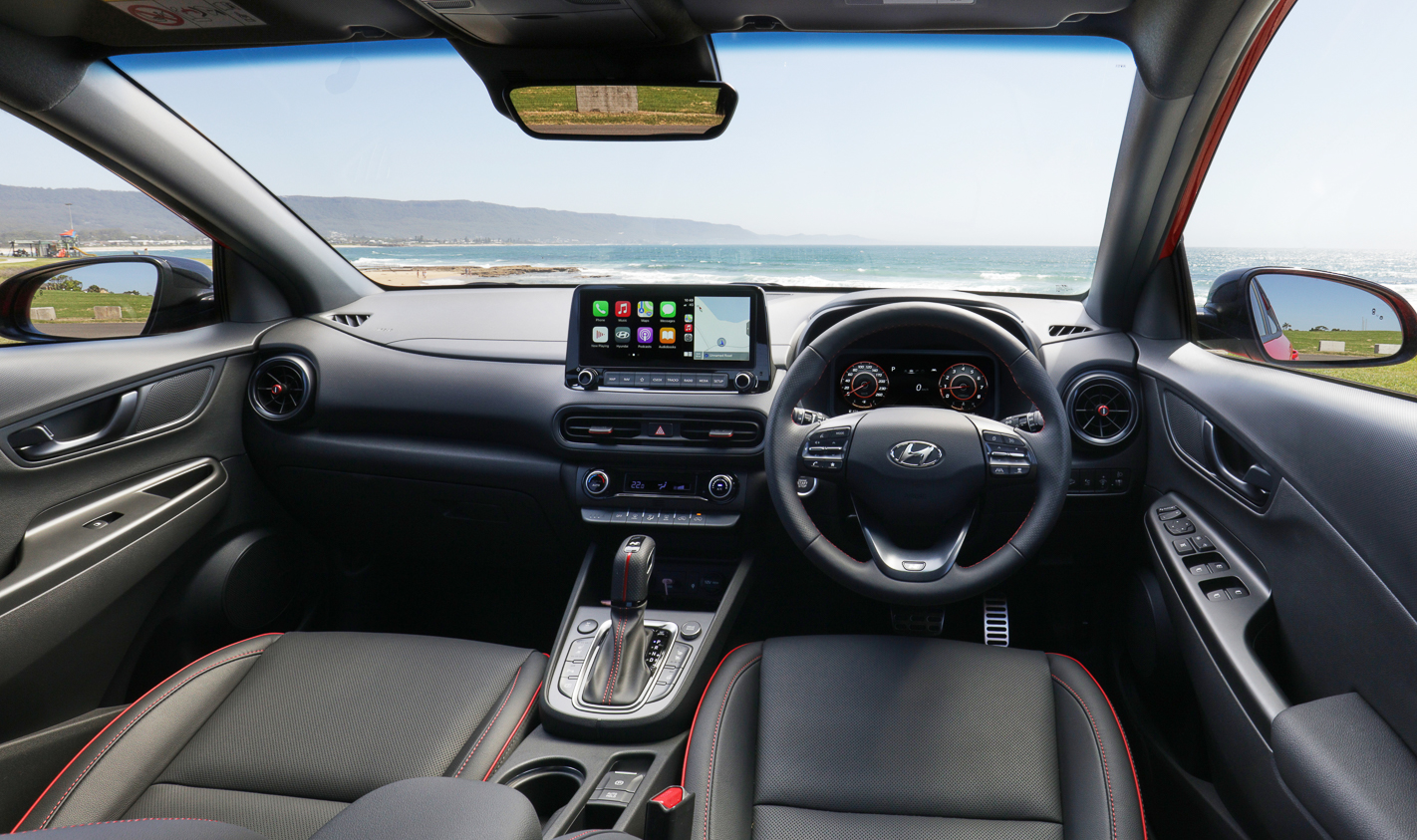
Pride of place is the 10.25-inch digital driver’s screen, and it’s a mixed bag.
It’s sharp in resolution, rich in colour and its trio of distinctively different display skins that swap in tandem with drive modes are all legible at a glance. The downside is that it’s a rectangular screen plonked in a rectangular and weirdly framed aperture with little concession to binnacle stylisation that smacks of afterthought.
By contrast, the identically sized infotainment screen seems much larger and more upmarket simply through more resolved integration. It’s a decent system, with a nifty split-screen option and some landing pages burgeoning to distraction with options if with fine navigation facility and wondrous quirks such as near pointless Sounds Of Nature that pipes ambient tracks into the audio stream – we’re talking footstep through snow, clanging crockery or, even stranger, water through plumbing – as if to coerce you into comfort breaks on long trips.
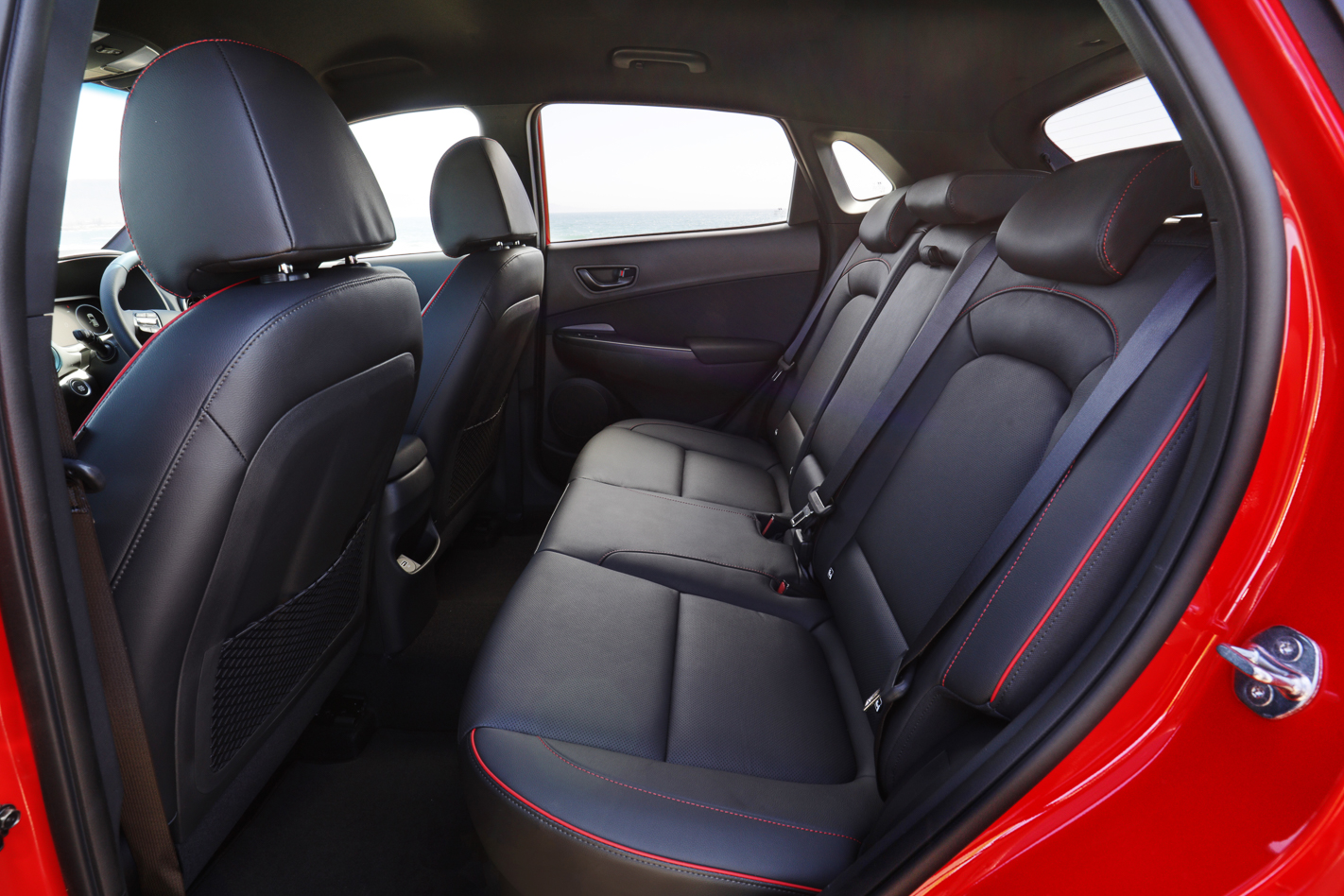
And, yet there are no rear air vents for row two passengers.
Rear passenger space has long been at a premium for Kona and this facelifted and sport-augmented version doesn’t improve things one bit. The lack of cabin depth leaves limited legroom behind taller front occupants, and headroom and elbow room are both merely adequate. If genuine four-adult – let alone five-adult – accommodation is a need, best shop elsewhere. A single USB-A port as the notable creature comfort in the back doesn’t cut it for a small SUV sailing north of the $40K.
Kona’s modest 371-litre boot space is adequate for groceries and small cases but the high-set floor robs some utility. The elasticised net is a nice inclusion though the lack of tailgate power assistance is quite an omission for the coin N Line Premium asks for.
Engine, transmission and driveline
The N Line’s heartbeat is the newest, most substantial addition to the Kona menu.
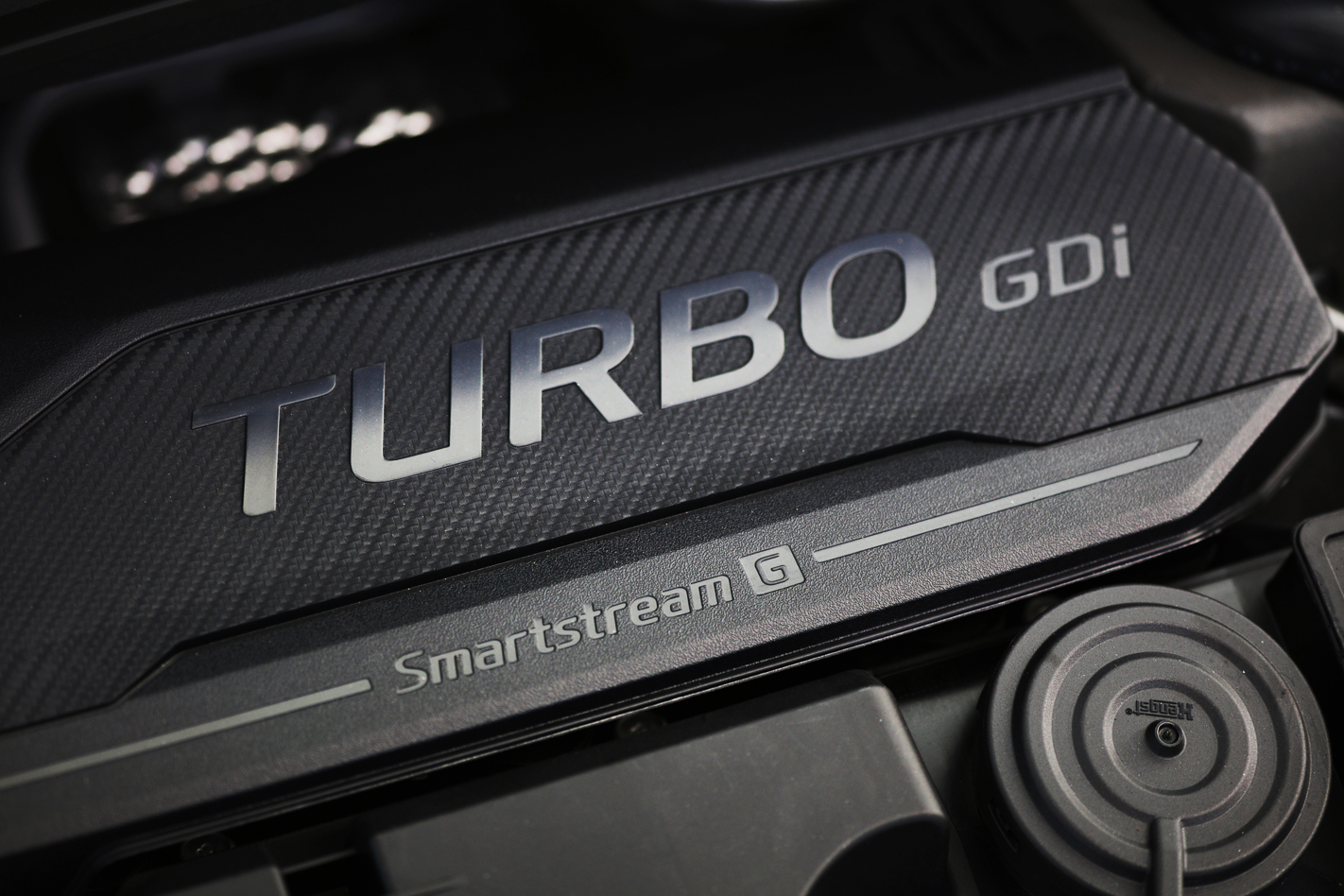
The G1.6T-GDi SmartStream engine is all-new for the range, having only previously been offered in the recently released i30 Sedan N Line and, unlike the old 1.6-litre turbo four-cylinder unit features continuously variable valve duration (CVVD) top-end trickery.
The SmartStream engine ups power to 146kW (at 6000rpm), a 16-kilowatt hike over the unit it replaces, though torque remains at a fairly healthy 265Nm from just 1600rpm through to 4500rpm. According to Hyundai, CVVD doesn’t conspire to liberate higher power in the upper rev-range – though redline is 500rpm up on the old engine – but its mandate is to fatten torque in lower revolutions and return improved fuel economy at theoretical parity horsepower.
Fine, though the upshot of a rough 10 per cent power hike in this new combination nets a slightly thirstier advertised combined consumption (6.9L/100km) that’s 0.2L higher than its predecessor. The good news, though, is that it’ll run on crappy 91RON fuel where many competitors’ small-capacity turbo mills demand 95RON. If you choose, it’s also happy on E10.
Downstream the N Line powertrain is more familiar. The seven-speed dry-dual-clutch transmission is mechanically carryover though it does benefit from new calibration.
Torque is sent through the on-demand all-wheel-drive system that offers a 50/50 front and rear lock mode at speeds under 50km/h at a touch of a button.
N Line’s front brakes are 305mm in diameter, which is 25mm up on regular Kona spec. Handy, too, because in its lightest advertised form the 1.6-litre AWD versions are (at 1395kg) around 115kg heavier than the 2.0-litre front drivers.
Interestingly, according to Hyundai Australia, there has been no change in suspension tune between the N Line and outgoing multilink-rear variants, and the rationale behind it is two-fold. Firstly, there was so much investment in and positive outcome from its Aussie development the first time around that it was ‘right’ out of the box. And secondly, the existing tune worked so well in conjunction with an upgrade to 235mm Continental PremiumContact 6 tyres that no further fiddling was deemed necessary.
Driving the Hyundai Kona N Line Premium
Indeed, those suspension boasts aren’t mere spin doctoring. The hands-down highlight of the on-road N Line experience is the ride and handling balance.
Insider lore is that Hyundai Australia’s local car launch drive programs take few prisoners, particular on the topic of N-related machinery. Memory serves that on i30 N’s debut across the the Snowy Mountain’s finest roads, corner-carving was so relentless and exhaustive that one journalist made himself carsick.
Kona N Line’s curated launch route made a back-road beeline west through regional New South Wales, with big stretches of narrow and unforgiving blacktop blessed with surprisingly liberal speed limits given the scant margin for error and the odd crest that just might’ve separated Continentals form the actual continent below them.
Plus, as a punctuation of sorts, long stints of fast-flowing if only moderately maintained gravel road look lifted from a stage of WRC.
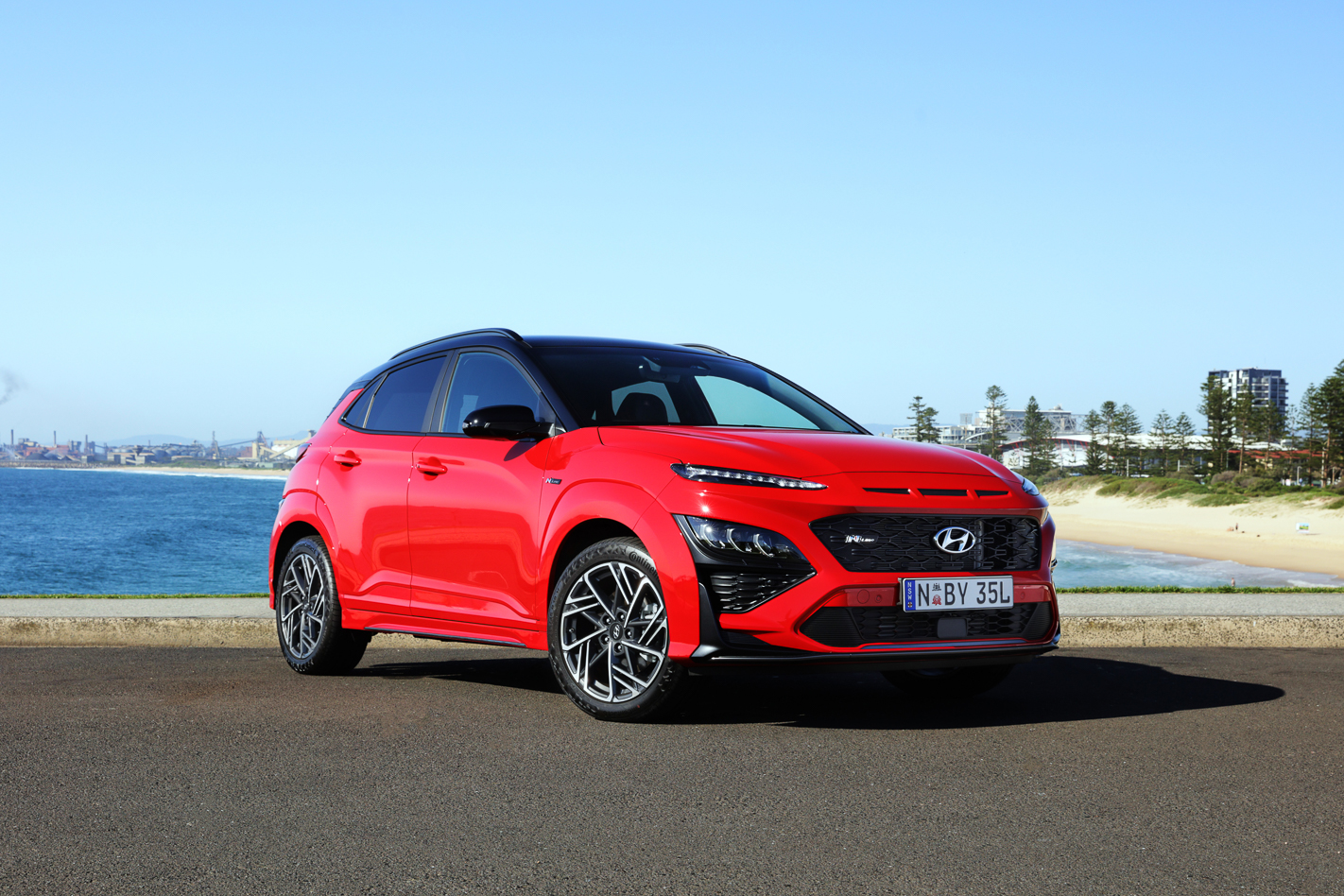
N Line’s natural state is slightly firm with surprisingly pliant compression and fast-settling rebound.
It’s not so evident around town unless you’re careening over speed bumps like a loon but out threading a needle across farmland with a head full of steam and a close eye on the speedo, the wheel control the Kona directs while maintaining flat composure and a firm grip on body control is, at times, miraculous.
There’s nothing brittle or terse about the chassis. In fact, its compliance is such that you seriously doubt it’ll hunker down quite as neatly as it does, loading up its Conti’s just nicely, and hooking through that lumpy off-camber sweeper with the poise and control of a thoroughbred. Steering, too, is crisp, direct and linear, compounding in a machine that flows nicely and carries heady velocity without demanding a lot of driver input or correction.
Okay, it’s not weapons-grade performance, and its dynamic limitations aren’t stratospheric, but as a driving tool it punches very high for what it is: a warmed up crossover. It’s a predictable and cooperative ally if you feel like a decent punt, capable enough that you’ll be enticed to take routes less trodden in the pursuit of grand touring.
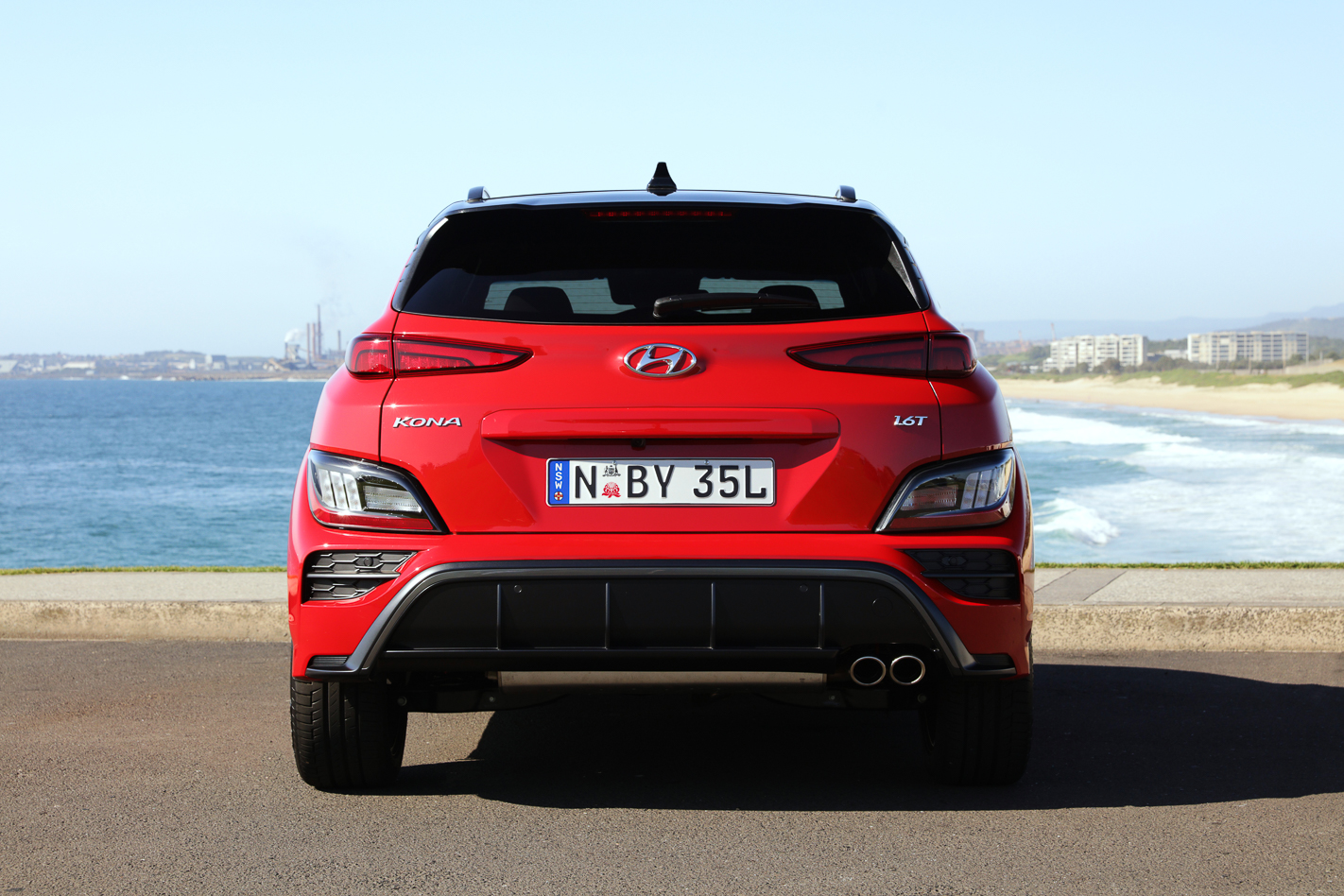
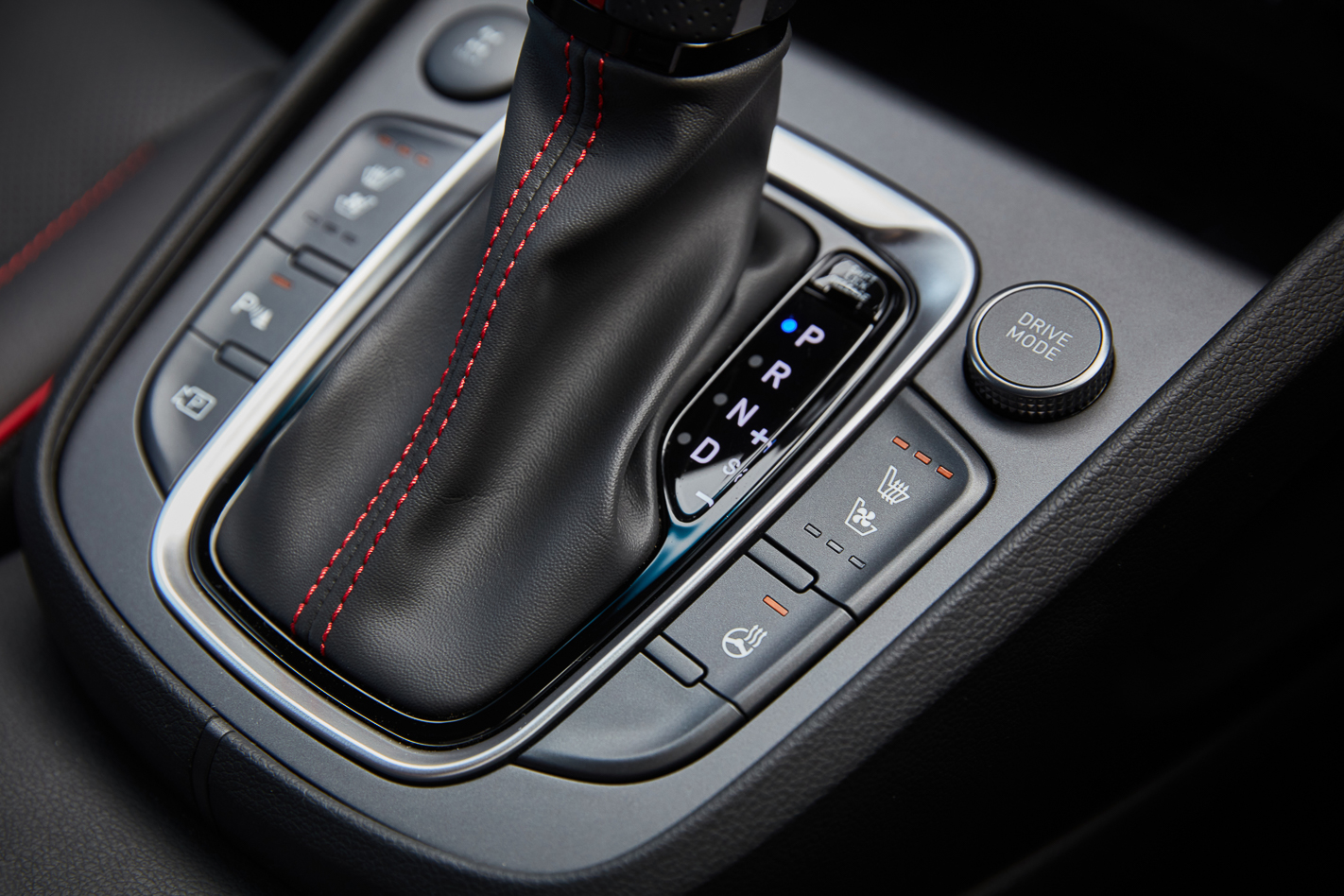
The powertrain, too, is at its fittest on the move with Sport drive mode selected.
Thus set, the turbo four’s torque swells nicely in the mid-range and the dual-clutch transmission is generally cluey enough to hover the engine around its sweet spot. Too many revs and the 1.6’s shove tends to wane a bit and you’re compelled to build pace through the chassis rather than wringing out the last of the engine’s moderate output. Besides, with no paddle-shifters fitted to manually harness the turbo mill’s best, you’re left to negotiate pace with the gearbox ECU.
Tone your enthusiasm down – in Eco, Normal or Smart drive mode, whatever the choice – and the powertrain errs a little too much towards thriftiness, the engine dulling response by some measure and the dual-clutch overly keen to seek high ratios to save fuel. There’s enough muscle in the undertow for generally unflustered progress, but it’s a pusher not a puncher and any call to arms demands you knock the transmission controller in Sport mode for enough of a wake-up call.
Dual-clutch Konas were notoriously grumpy, but this new calibration really slips through ratios cleanly, even at crawling peak-hour pace.
But there seems to be a trade-off in the quest for polished dignity: trounce the loud pedal from standstill and Kona N Line refuses to pluck many engine revs, responding with a moment of pause before it builds into acceleration.
Gearbox self-preservation protocols? Perhaps. But off-the-mark performance isn’t Kona N Line’s strong suit and pulling out of a side street onto a 110km/h motorway into that gap between B-doubles demands precision and a very heavy right foot.
How safe is the Hyundai N Line Premium?
This facelift carries over the Kona’s five-star ANCAP rating from a 2017 assessment.
Hyundai bolstered the wider Kona range’s active safety credentials in this 2021 facelift and the N Line Premium is treated to the full load. Features include camera and radar autonomous emergency braking with pedestrian and cyclist detection, both active lane keep and lane following, blind-spot warning (with braking avoidance if required), rear cross traffic assist, exit warning (when opening doors in traffic) and high-beam assist.
Add driver attention warning and rear occupant alert and the six-airbag Kona certainly offers well-rounded safety credentials.
How much does it cost to run the Hyundai N Line Premium?
Servicing intervals are every 12 months or 10,000km, whichever comes first, which is shorter than the 15,000km cap on the naturally aspired Kona if not unusual for small-capacity turbocharged engines such as the G1.6 T-GDi.
Hyundai Australia hadn’t finalised pricing for its pre-paid servicing packages for MY21 Kona at the time of writing. As a guide, the pre-facelift 1.6 AWD Highlander costs $822 for the first three years (30,000km) and $1430 for a five-year (50,000km) package paid upfront.
The Kona N Line is covered by Hyundai’s five-year/unlimited-kilometre warranty.
During our assessment, the Kona N Line returned consumption of between 6.1 litres and 9.5 litres per 100km, depending on driving conditions, against its advertised claim of 6.9L/100km. That’s decent given a lot of the flying was low and reasonably hard. As mentioned above, official literature states the 1.6 turbocharged four-cylinder will run happily on 91RON or E10 fuel.
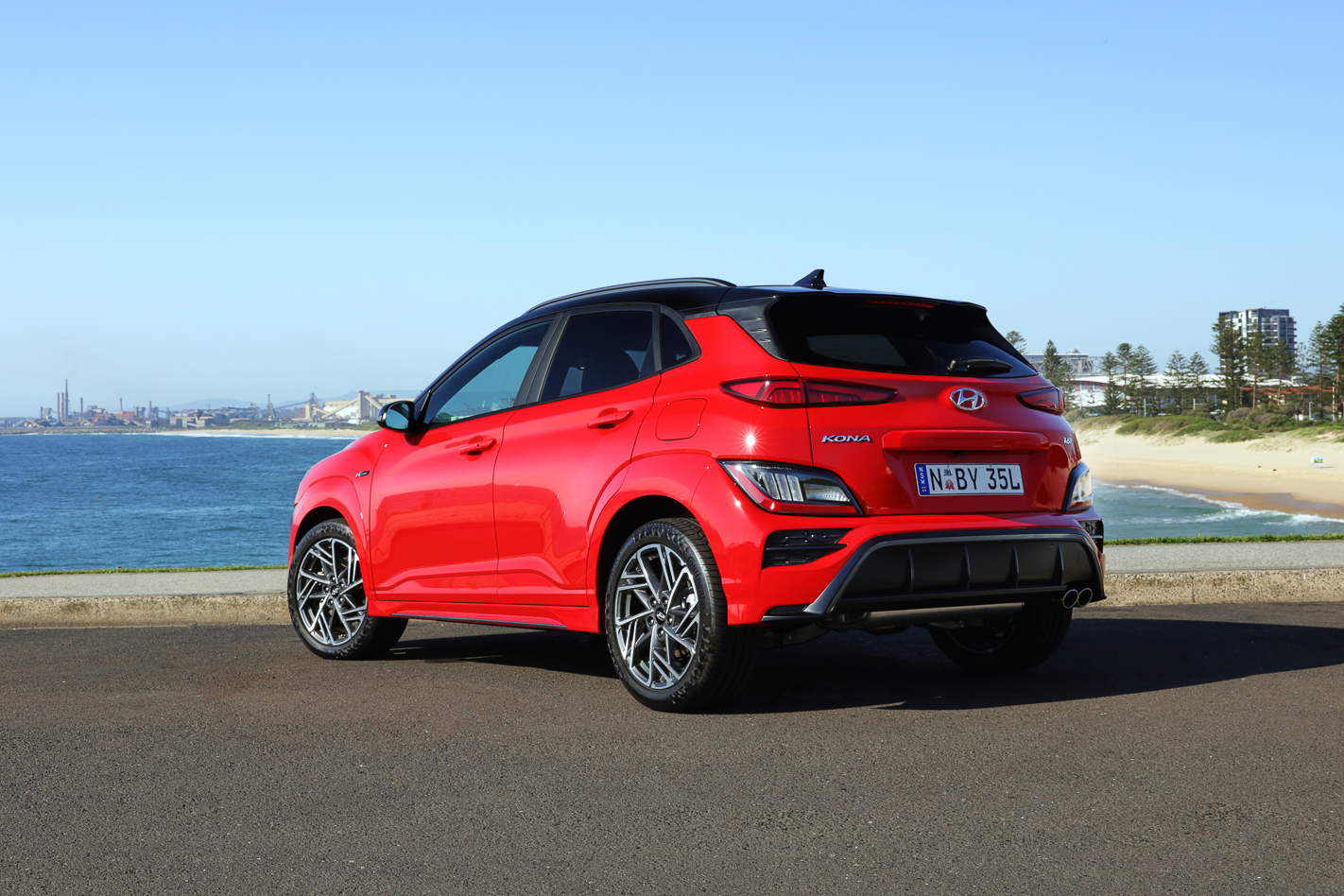
Verdict
While Hyundai offers its luxury-focused Highlander in 2.0-litre CVT front-driven form, the cream of the Kona crop is the N Line Premium for all-in sporting and luxury goodness. On balance, it’s more accomplished in its sporting role, but despite some powertrain lethargy it makes for a damn fine everyday around town prospect.
Pricing is getting up there, but its qualities as a fine all-rounder should certify its place on your short list if shopping for a want-for-little warmed over crossover. Or cool your jets for the forthcoming proper N version if genuine thrills are a major priority.
Rating 4.0/5.0
Rating breakdown
Value 3.8/5.0
Safety 4.3/5.0
Running costs 4.0/5.0
Comfort and practicality 4.0/5.0
On the road 4.0/5.0
What you will like Ride and handling balance, smart looks, decent powerWhat you won’t Powertrain lethargy at a cruise, pricing on the high side
Specifications – Hyundai Kona N Line Premium
Price: From $42,400 pls ORC (7DCT) Engine/transmission: 1.6-litre 4cyl turbo petrol/7DCT, AWD on demand Fuel consumption/CO2/tank size: 6.9L/100km, 156g/km, 50 litres Safety: 5 stars Seats: 5 Warranty/service interval: five years/unlimited, 10,000km/12 months Spare wheel (type): space saver Weight: from 1395kg
Nissan has lifted the covers off the fifth-generation Pathfinder large SUV that brings more space and off-road capability as well as a bold new look that harks back to the original model.
Designed primarily for the US market, but with traits that will appeal to Australian buyers, the Hyundai Palisade eight-seat SUV rival has bold design touches that pay homage to the original WD21 Pathfinder, including the fender blisters, forward-leaning C-pillar, ‘boxed-out’ rear end and even the three slots above the grille.
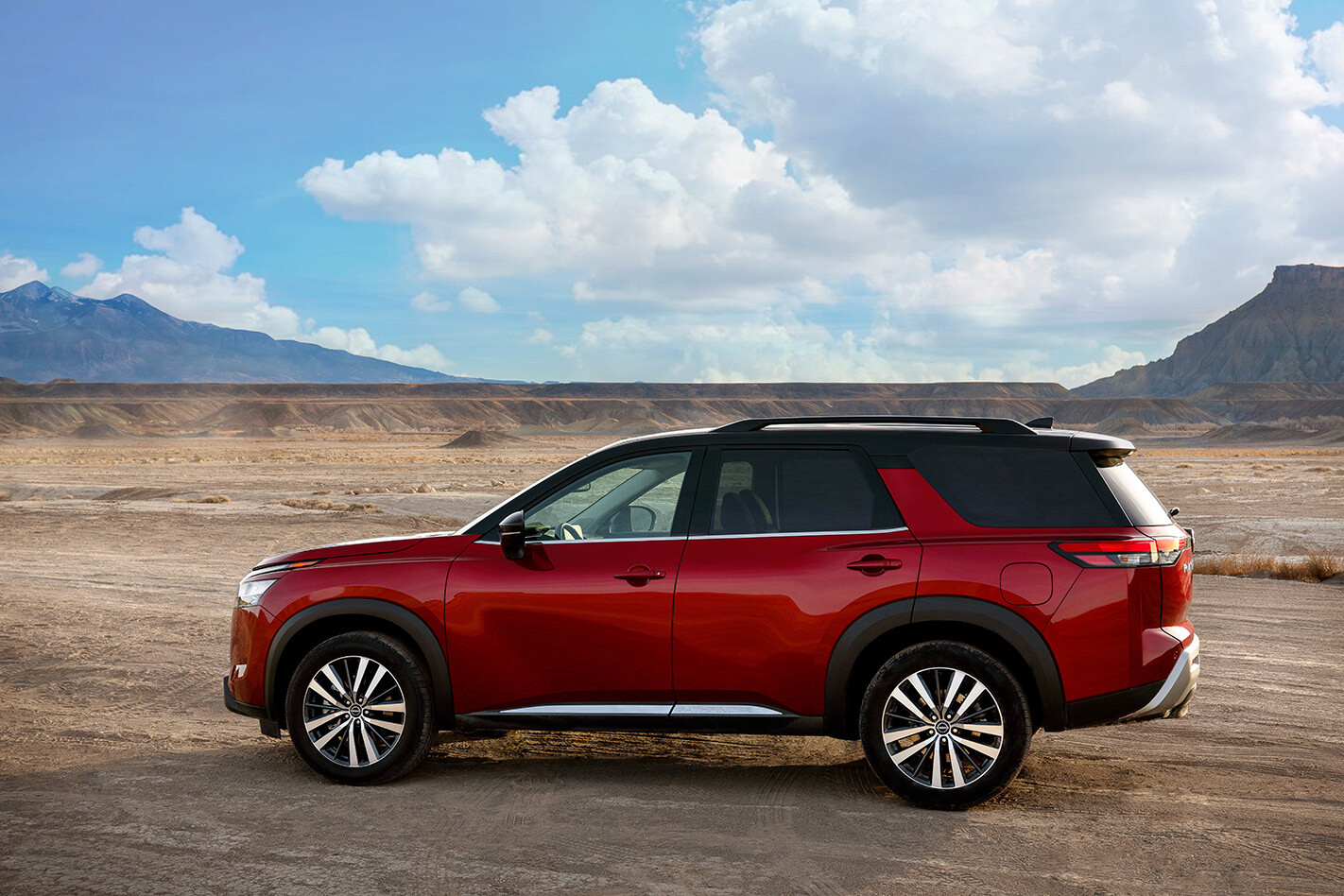
Other design elements come straight from the current Nissan handbook, including the V-motion grille that matches the 2021 X-Trail, C-shaped headlights, floating roofline and slim upper daytime running lights, while the distinctive rear-end is adorned with slim LED taillights and spaced out, bold, satin chrome PATHFINDER branding end to end.
Available in front- and four-wheel-drive options, the Pathfinder will launch in the US later this year with four trim levels – S, SV, SL and Platinum – and will be available with 14 colours/colour combinations including five two-tone treatments.
Inside, the 2020 Pathfinder brings all new materials and a more spacious environment than before.
Upper-spec models receive a 12.3-inch multi-display digital dashboard and 10.8-inch head-up display.
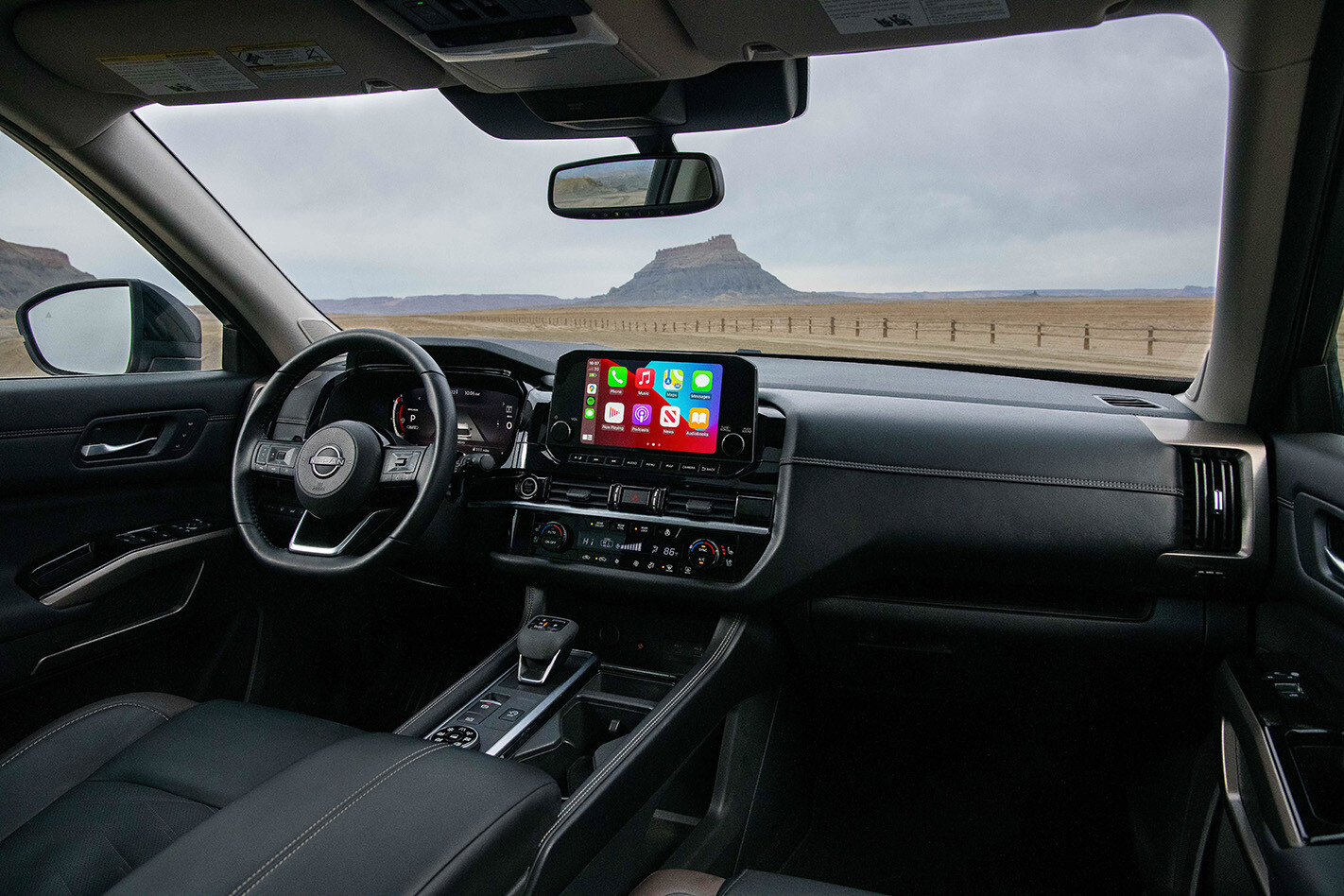
Most versions also come with a 9.0-inch touchscreen that stands high on the clutter-free dashboard and displays the NissanConnect infotainment system featuring Android Auto and Apple CarPlay that’s standard across the range.
Spending more on higher-spec variants will bring WiFi Hot Spot, a wireless phone charging pad, wireless Apple CarPlay, 13-speaker Bose premium audio, SiriusXM navigation, and high-res 360-degree parking monitor.
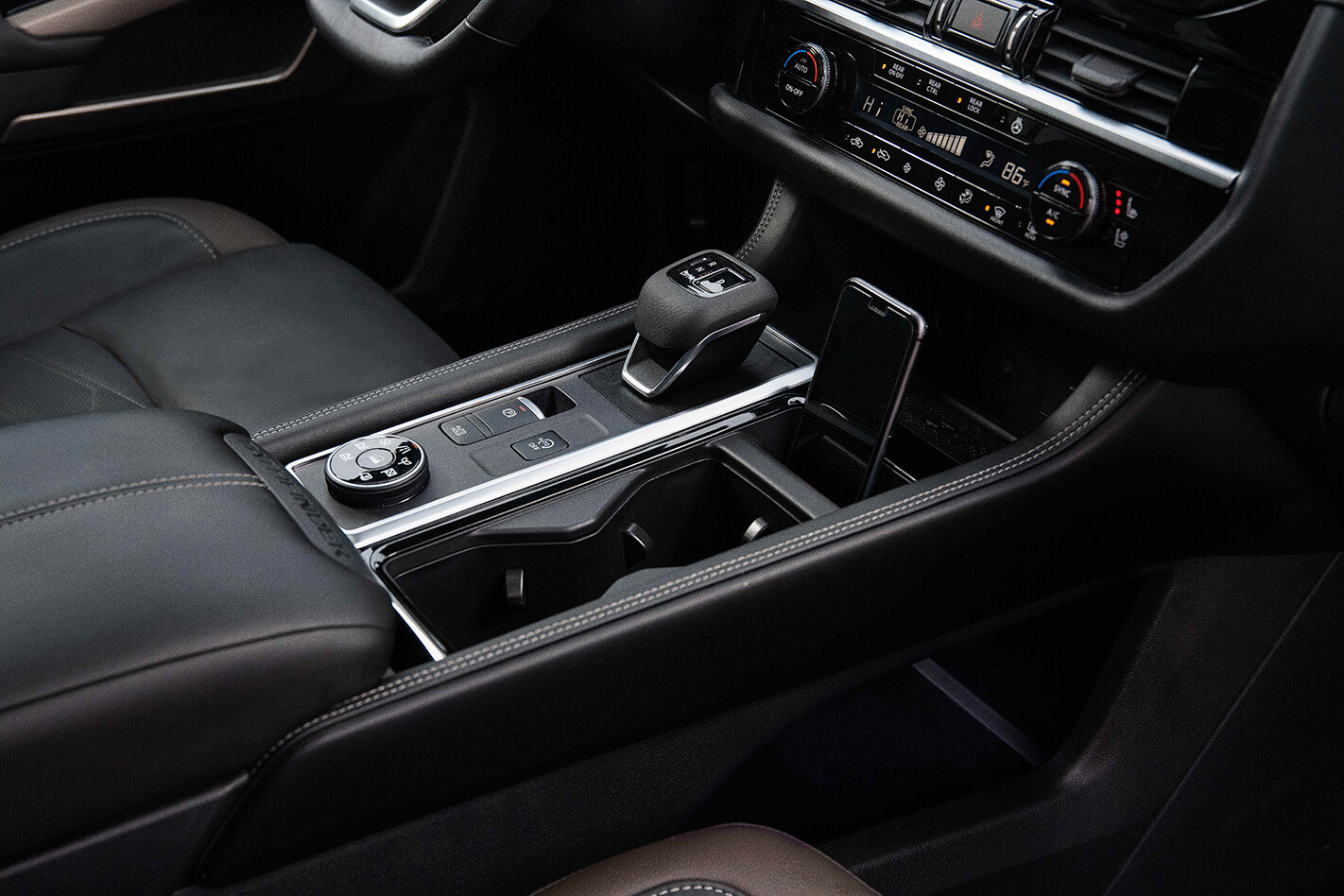
Other available interior features include a 10-way power driver’s seat, climate-controlled front seats, tri-zone climate control and second-row heated seats.
Space and some
The 2022 Nissan Pathfinder’s 5003mm length and 2900mm wheelbase are virtually identical to the current model, but it is slightly wider, which has allowed for a three-seat third row that Nissan claims will accommodate three adults.
The eight-seat interior can be reconfigured to a more spacious seven-seat cabin with optional second-row captain’s chairs that can be fitted without tools.
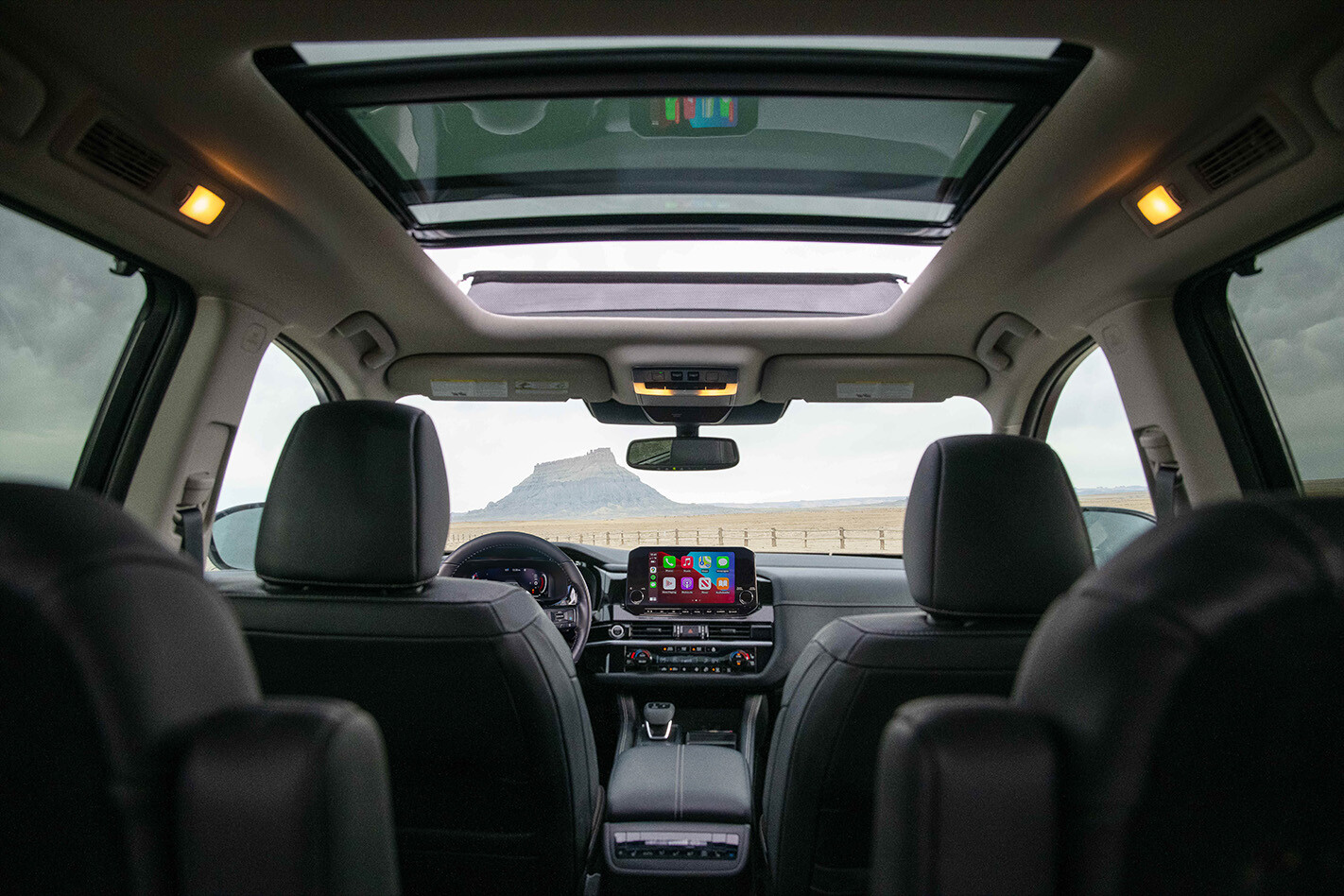
The standard second-row bench seat has ‘EZ FLEX’ one-touch release fold/slide with push-button activation from both the driver and passenger sides, making life easy for parents and backseat passengers alike.
Meanwhile, the third-row bench splits 60:40 to allow for flexibility when carrying passengers and cargo.
With all three rows in use, the Pathfinder has a very handy 470-litre boot space. This is actually 33 litres smaller than the current model, however with the third row folded down the new model can fit 1274 litres of stuff, which is 110 litres more than before.
If you need to carry more, it has a 2700kg towing capacity with trailer sway control.
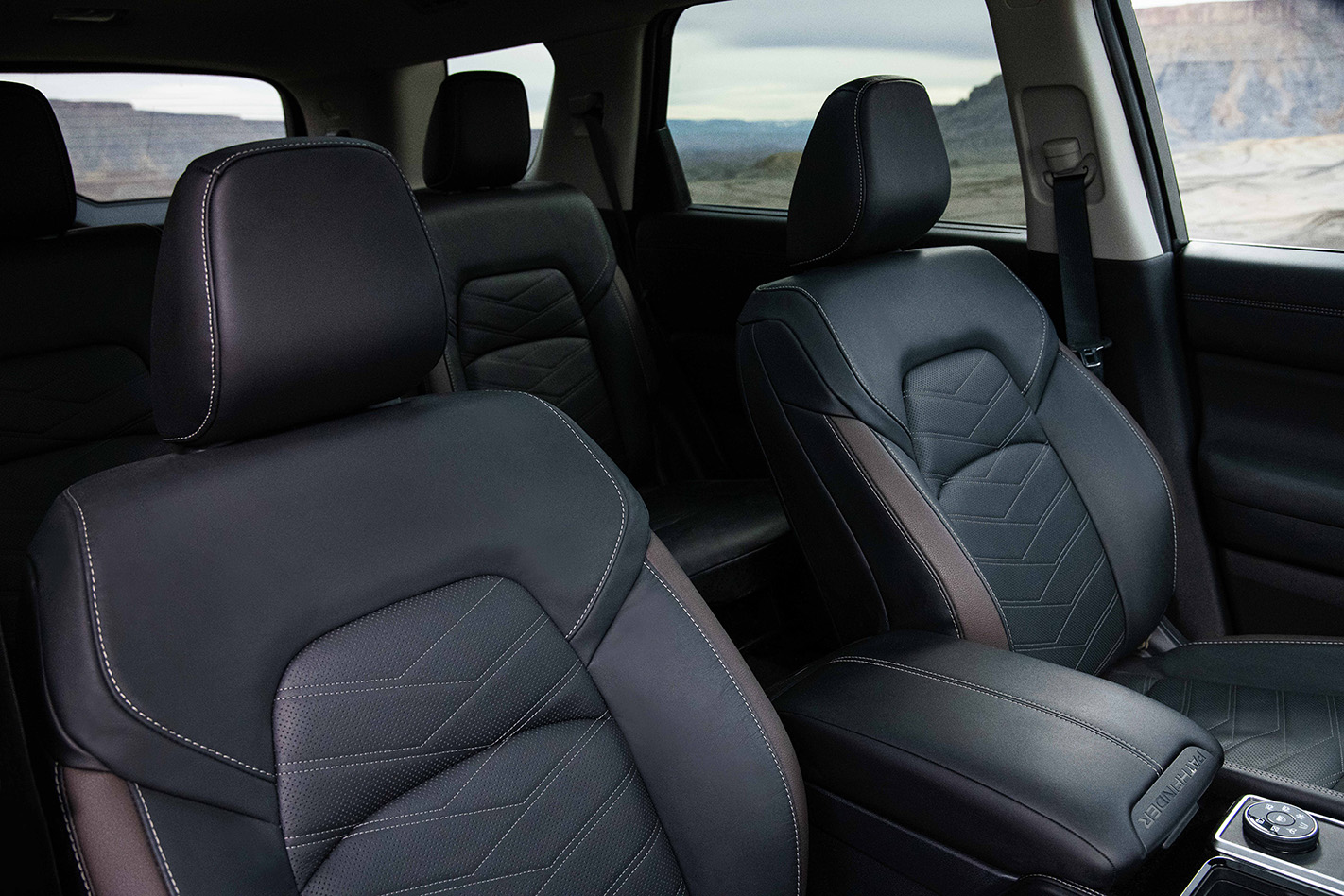
Despite the new rugged appearance, Nissan promises all occupants a quiet ride with the fitting of acoustic laminated front glass, thicker second-row glass, increased door and floor isolation, and a 60 per cent increase in engine noise absorption.
V6 returns, but no hybrid
Speaking of engines, all variants will come with an updated version of the 3.5-litre direct-injection V6 engine found in the current model, coupled with a new nine-speed automatic transmission that Nissan says provides a smoother and more direct throttle response.
Curiously, unlike the current model, there is no hybrid version despite other brands introducing electrified versions of their SUVs, like one of its key rivals, the all-new 2020 Toyota Kluger that launches this month.
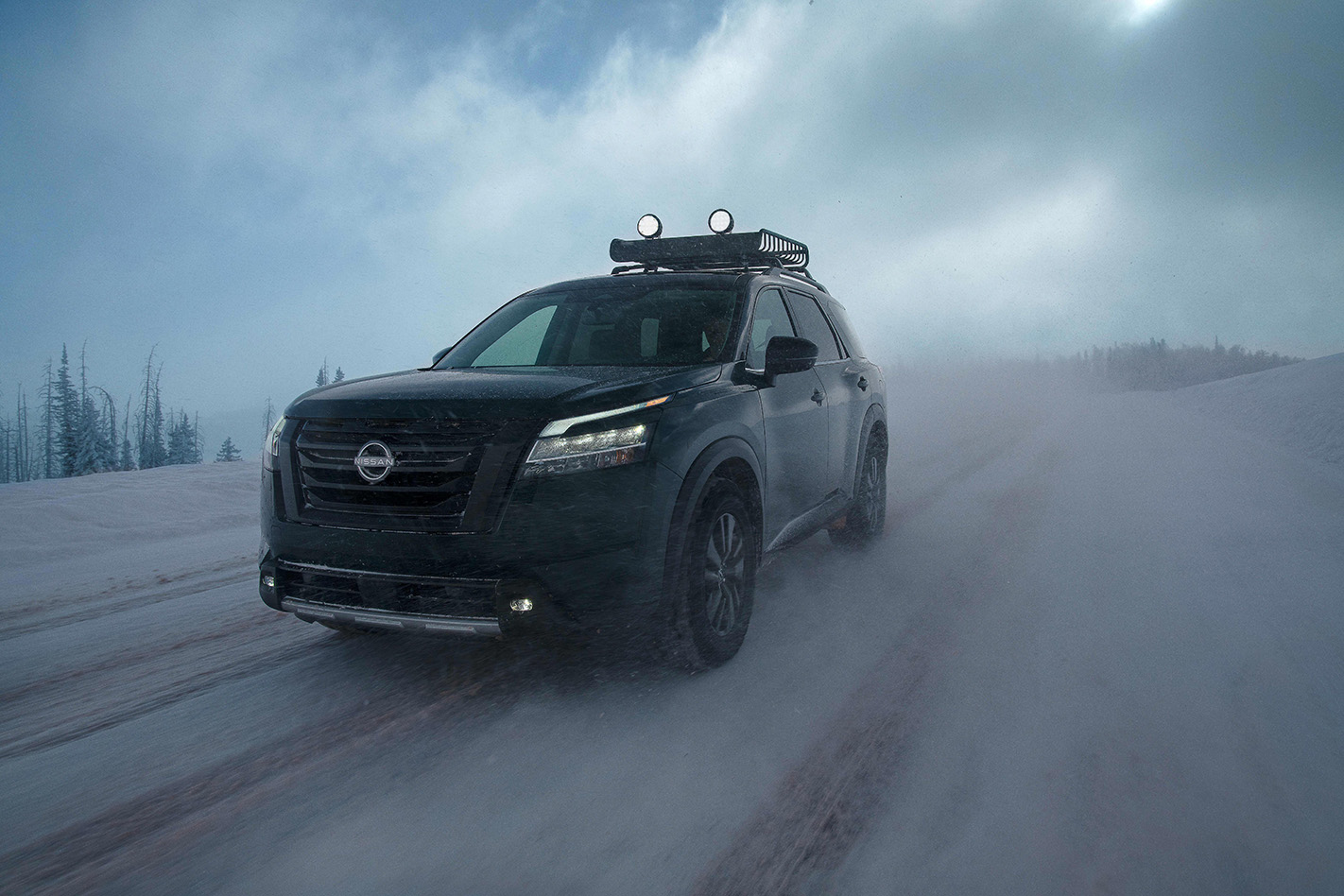
The 4WD models feature an all-new, seven-position terrain-mode selector that directs torque transfer to control traction in a variety of situations. Modes include Standard, Sport, Eco, Snow, Sand, Mud/Rut and Tow and are displayed as a pop-up notification on the meter cluster.
Nissan claims handling has been enhanced with new dual-pinion electric power steering and front strut and rear independent multi-link suspension.
New safety tech
All Pathfinder variants come equipped with ten airbags, autonomous emergency braking with pedestrian detection, blind-spot warning, rear cross-traffic alert, lane departure warning, high beam assist and rear auto braking.
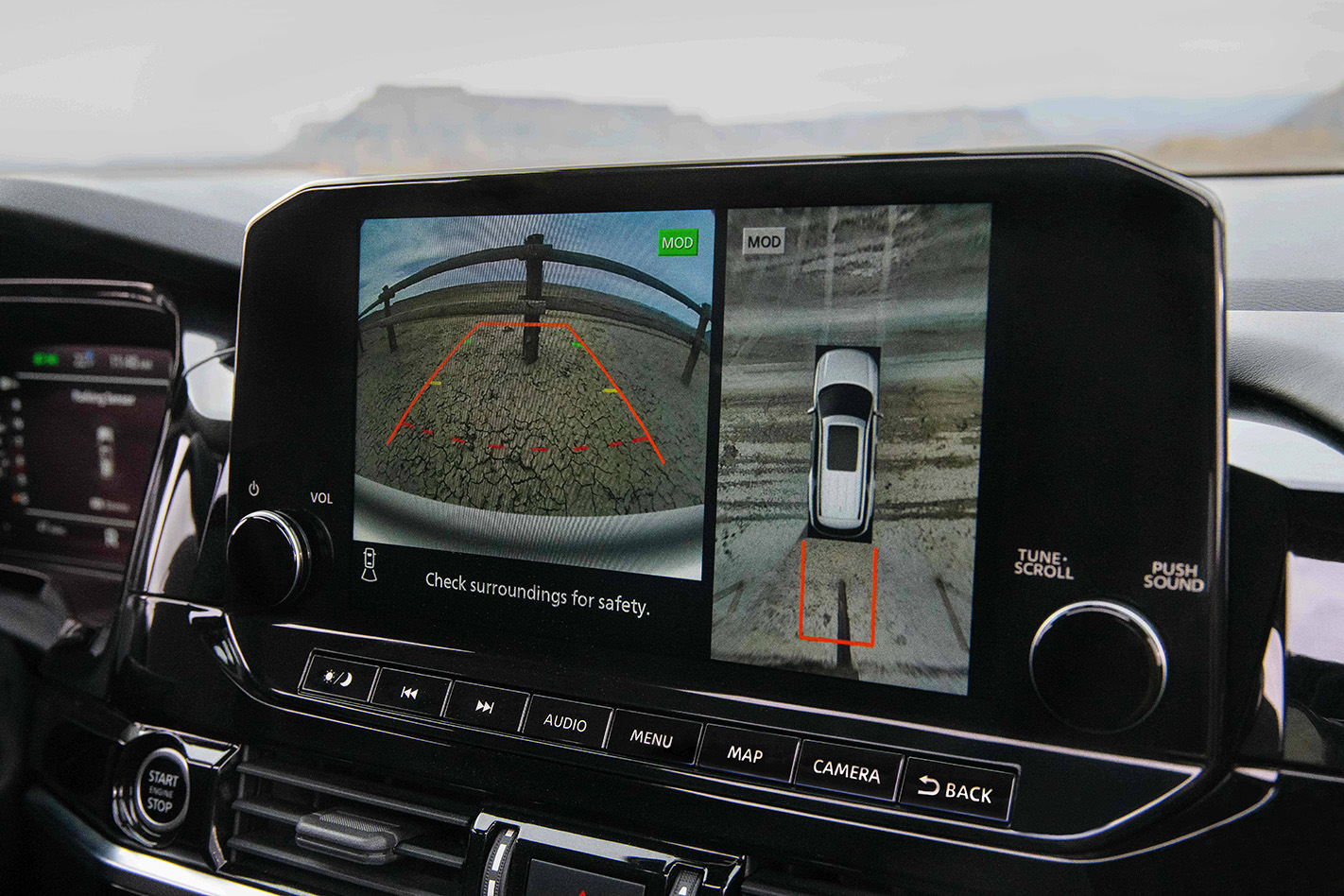
Forward collision warning, driver alert monitor and rear door alert are also standard, while blind-spot intervention, lane intervention and traffic sign recognition are available in higher-spec variants.
Apart from the entry-level S, all versions also come with ProPILOT Assist smart active cruise control that works on the open road and in heavy traffic.
The Platinum grade adds the new ProPILOT Assist with Navi-link that works with the satellite navigation system to proactively reduce speed for upcoming freeway curves or junctions.

The 2022 Nissan Pathfinder will launch in the US around August 2021, with an Australian launch date yet to be confirmed.
Additional details such as pricing and fuel economy will be available closer to launch.
Nissan’s 2022 Australian line-up is coming together
UPDATE, June 30 2021: The refreshed 2022 Kamiq is now on sale in Australia. Read more here.
The stork has flown in to Australia with yet another new baby SUV.
Skoda Australia has confirmed the arrival, as well as pricing and specifications, for its new Kamiq city-sized SUV which is available in showrooms from February and slots into its burgeoning family of soft roaders underneath the mid-sized Karoq and seven-seat Kodiaq.
It bounces into an ever-growing nursery of high-riding hatchbacks, joining the likes of the popular Mazda CX-3 and more recent arrivals such as the Ford Puma, Hyundai Venue, Kia Stonic, Toyota Yaris Cross and the Volkswagen T-Cross.
As Skoda is a part of the Volkswagen Group empire, the Skoda Kamiq shares its fundamental underpinnings with the T-Cross.
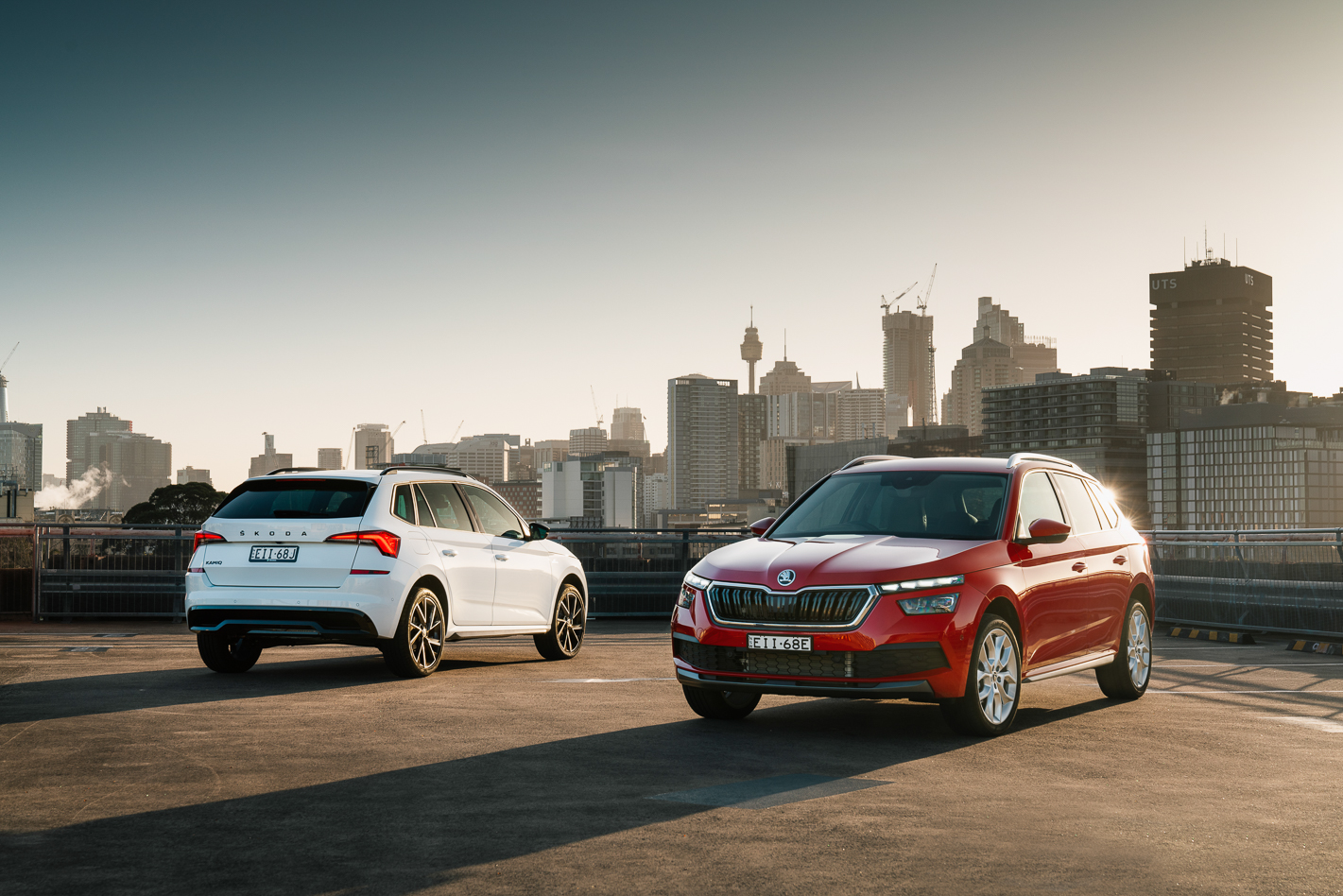
The Skoda Kamiq will be offered in a choice of three model grades with a starting price of $27,990 drive-away for the entry-level 85TSI with a six-speed manual transmission, or $29,990 with a seven-speed dual-clutch automatic transmission.
It will be exclusively powered by an 85kW/200Nm variant of the 1.0-litre turbocharged three-cylinder engine that is said to consume an average of 5.0L/100km (or 5.1L/100km with the auto).
If you need a bit more, Skoda offers the choice of either the Monte Carlo or Limited Edition models – each with an identical $36,990 driveaway sticker price – that are powered by a 1.5-litre turbo four-cylinder petrol engine with 110kW/250Nm and fitted as standard with the seven-speed DSG automatic.
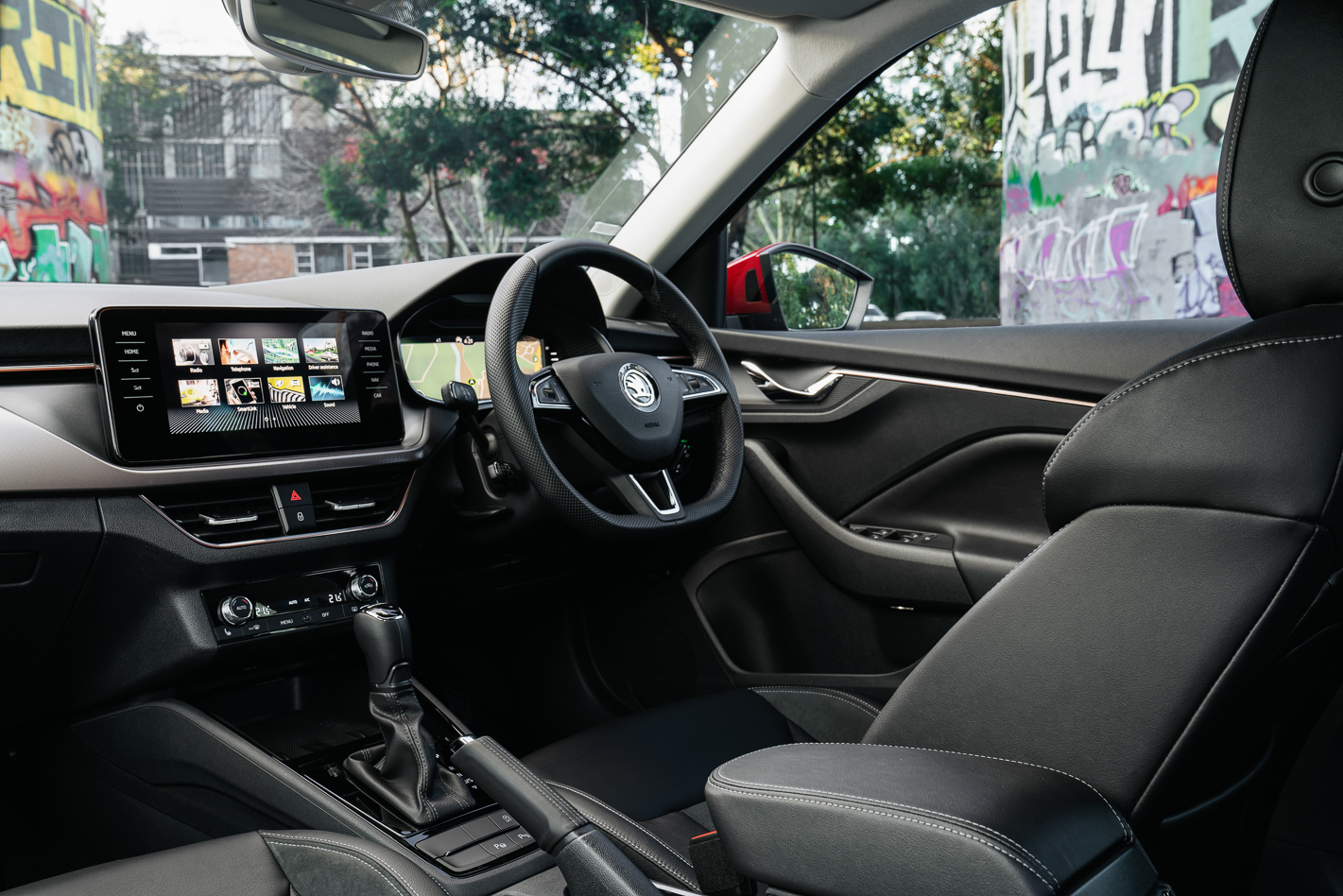
All variants come with a generous list of standard equipment, including 18-inch alloy wheels, keyless entry, dual-zone climate control, auto tailgate, Skoda’s Virtual Cockpit digital instrument cluster and an 8.0-inch infotainment display with Apple CarPlay and Android Auto smartphone mirroring and wireless phone charging.
They also have the latest in advanced crash avoidance safety systems, such as adaptive cruise control, city emergency braking, lane-keeping assist, fatigue detection, reverse camera with parking sensors and rear brake assist on top of the protection provided by seven airbags throughout the cabin.
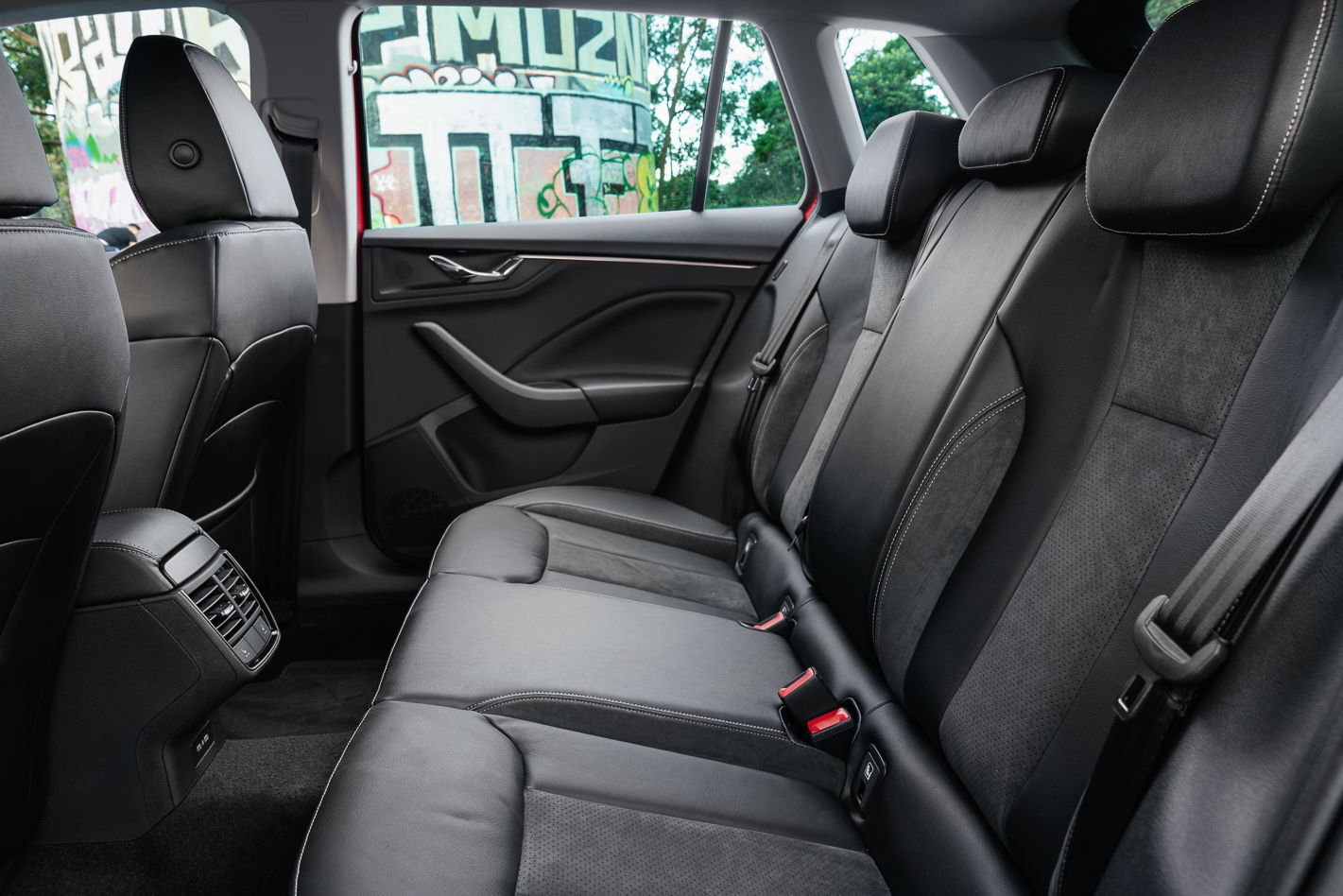
The Monte Carlo brings a sportier character with unique black VEGA alloy wheels and matching exterior highlights, LED headlights, figure-hugging front seats, a panoramic glass sunroof, selectable drive modes and revised suspension settings that has the car sitting 15mm lower than other variants.
The Limited Edition offers a taste of luxury with heated front and rear seats clothed in Leather and Suede trim and with electric adjustment for the driver, as well as its own CRATER design alloy wheels, body-coloured exterior highlights, LED headlamps, automated parking assistance and a larger 9.2-inch infotainment screen with voice-controlled satellite navigation and wireless Apple CarPlay. (Wireless Android Auto will be available later in 2021, according to Skoda Australia.)
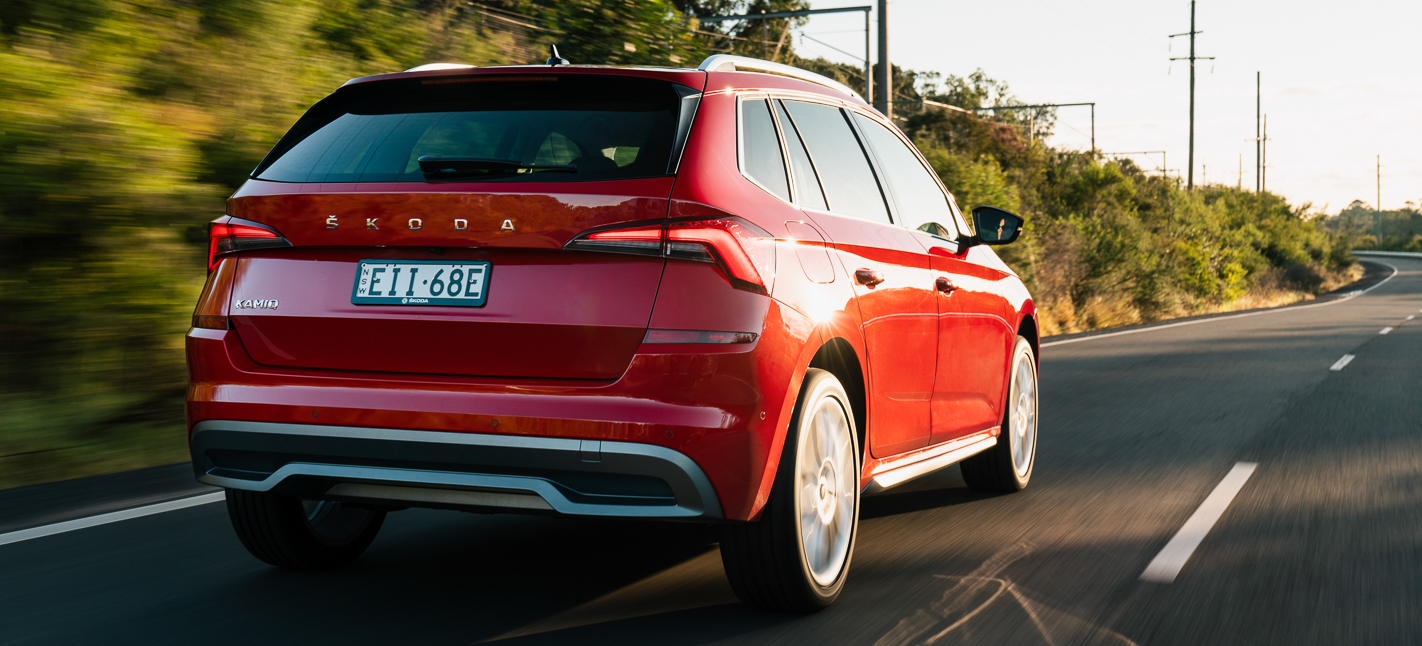
Like all Skoda Variants, the Kamiq is covered by a five-year/unlimited-kilometre warranty, and capped price servicing packages are available for three or five years.
2021 Skoda Kamiq Australian pricing
| Model | RRP | Driveaway |
| 85TSI (man) | $26,990 | $27,990 |
| 85TSI (auto) | $27,990 | $29,990 |
| 110TSI Monte Carlo (auto) | $34,190 | $36,990 |
| 110TSI Limited Edition (auto) | $34,190 | $36,990 |
Toyota has announced the Gazoo Racing Club in Australia, offering special privileges to new GR Yaris and Supra owners with a free 12-month membership.
Each new GR Yaris and GR Supra will grant owners entry to exclusive events, discounts on Caltex/Ampol fuel, a free three-month Kayo subscription and an introductory Gazoo Racing goodie bag.
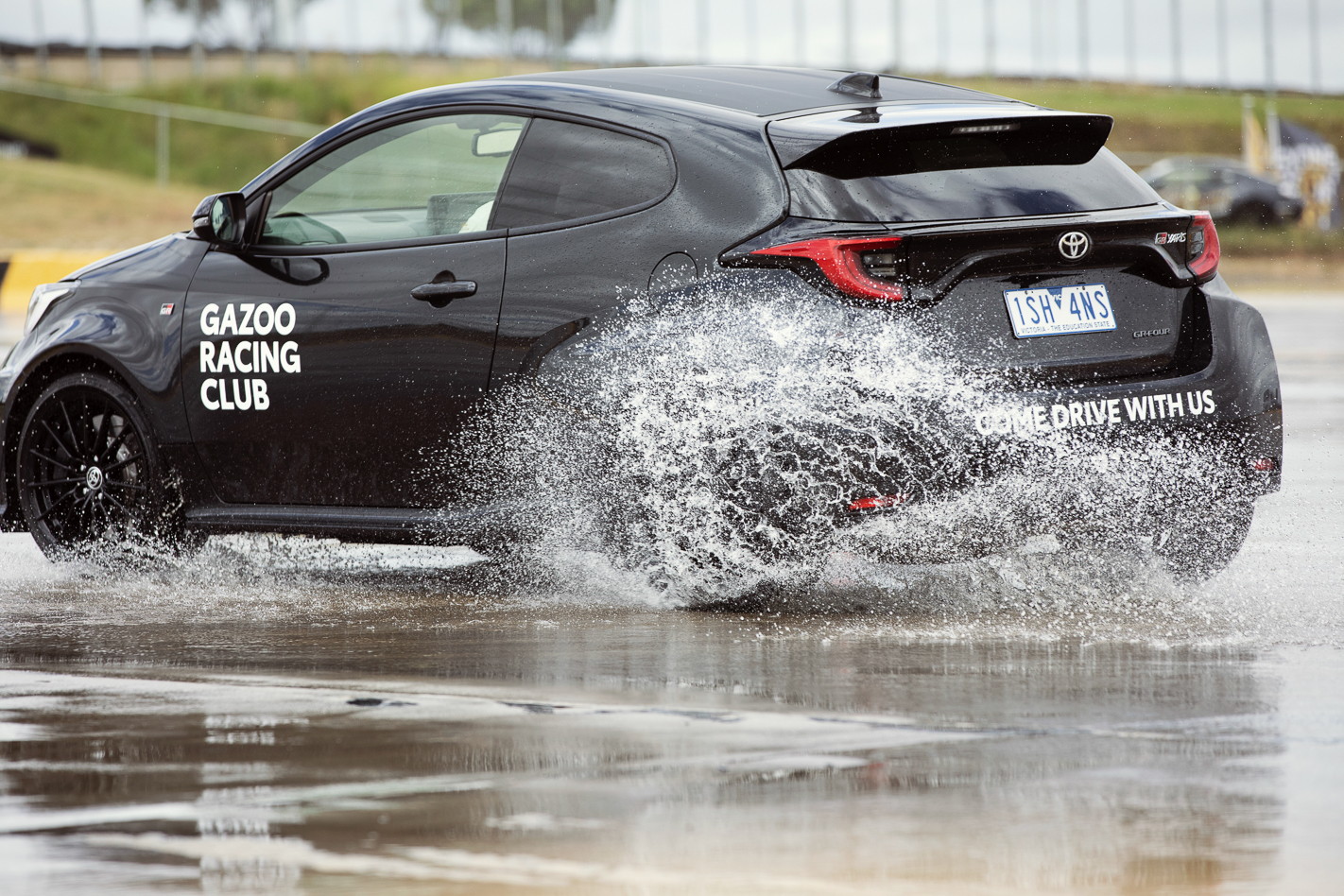
Toyota says the club is designed to bring like-minded enthusiasts together by inviting them to cordoned off GR areas at motorsport events such as the Toyota 86 Racing series and Australian Rally Championship, hosting track days with pro driver guidance, and hosting member events with exclusive experiences and content.
A full calendar of events is still in the making, though the first will involve a webinar with Australian rally royalty, the Bates family. Harry Bates will host his father Neal, brother Lewis and Toyota Australia chief designer Nic Hogios as they talk all things Toyota and its storied rally history, including a walkthrough of the new GR Yaris AP4 rally car.
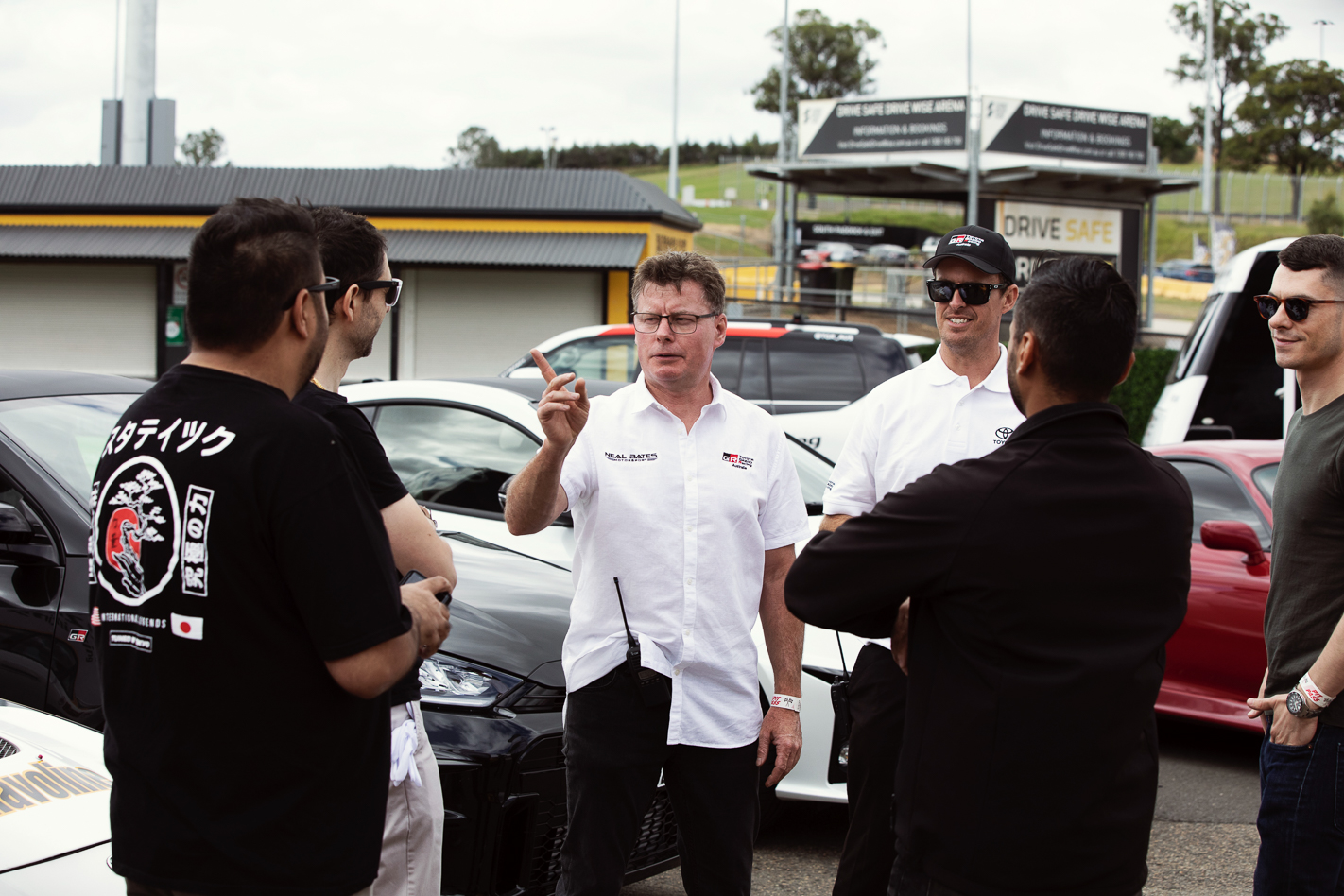
Members will also receive an 8c/litre discount on premium fuel from Caltex/Ampol outlets and a free three-month Kayo subscription (a service which Toyota Gazoo Racing Australia sponsors).
Toyota GR Yaris price and spec details
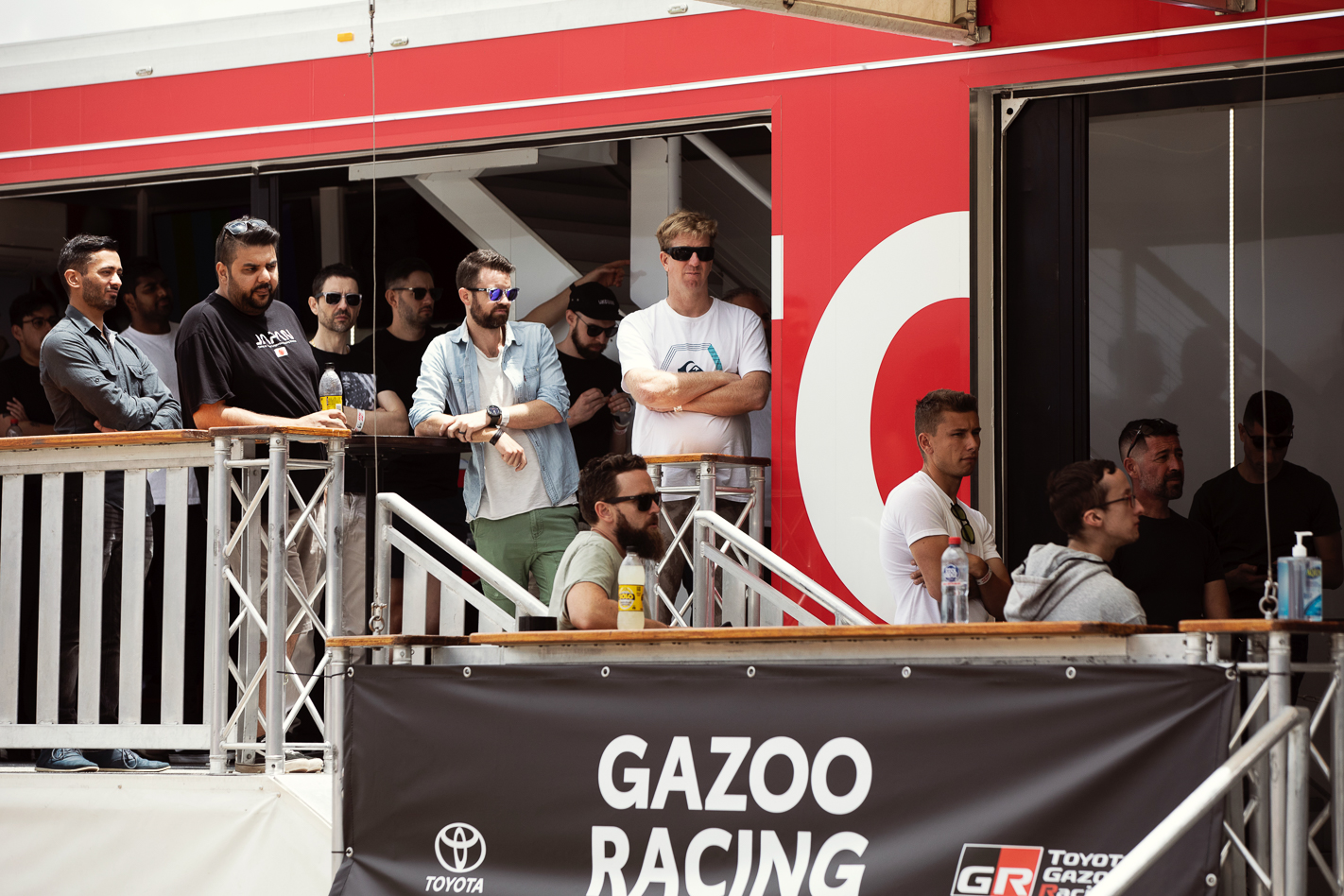
Each member that joins this year will receive a welcome pack with Gazoo Racing Club merchandise.
The club is only open to owners of the GR Yaris and GR Supra at the moment, but Toyota says further memberships will be made available to non-owners at a later date.
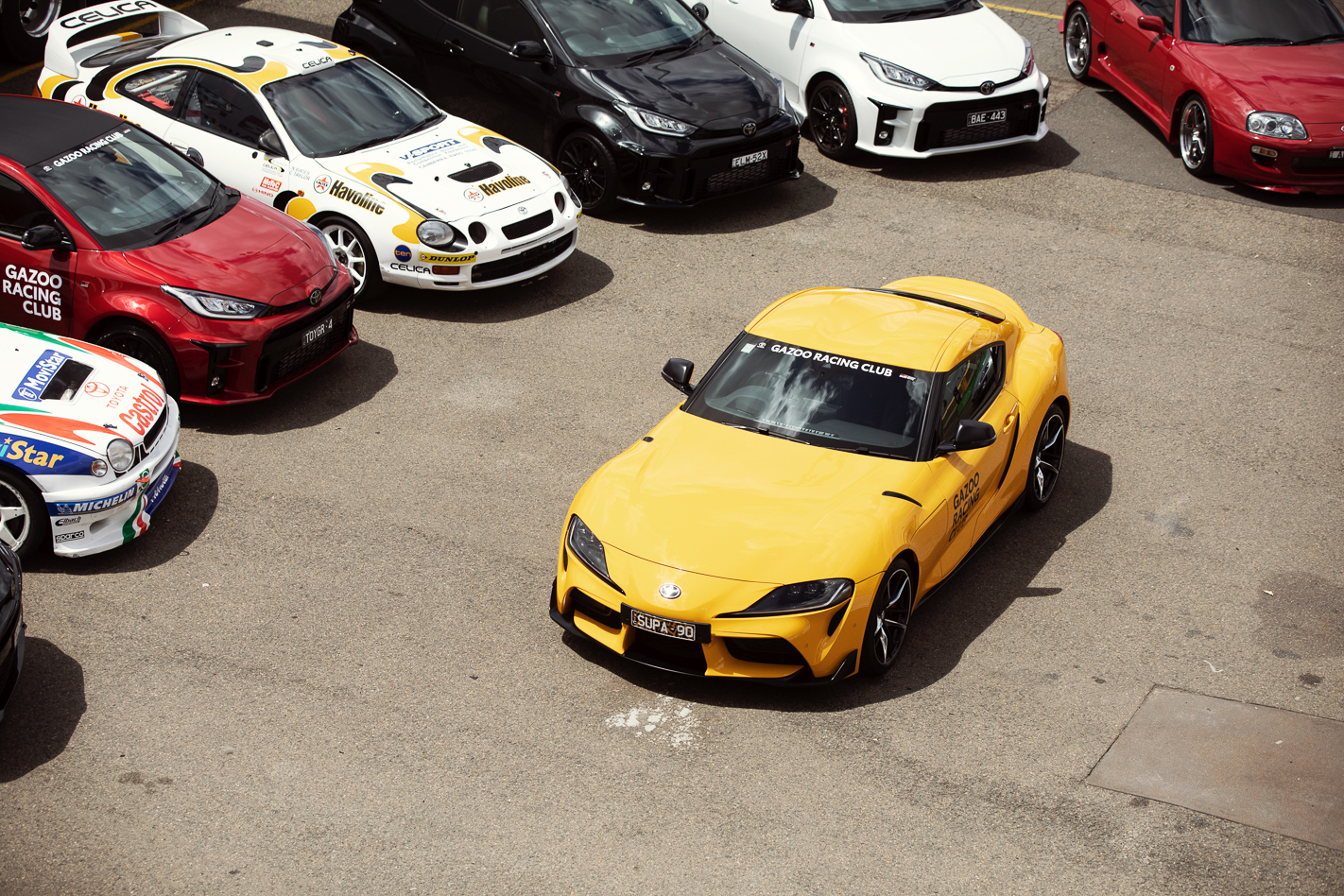
Membership to the Gazoo Racing Club is renewed on a yearly basis, and while the first 12 months of membership are free to GR Yaris and GR Supra owners, Toyota has not said how much a 12-month membership renewal will cost.
“We know our GR owners are a passionate bunch and the formation of the club enables us to give them a deeper experience of the TOYOTA GAZOO Racing brand,” said John Pappas, Toyota Australia chief marketing officer.
“Whether that’s getting tips from pro-drivers at track days to relish in the thrill of driving, exclusive access to VIP areas at motorsport events, or getting the inside line on all things GAZOO RACING from those who live and breathe the brand, it’s all about celebrating their passion for automotive performance,” he said.
Hyundai is pursuing a similar strategy with its N festivals off the back of the Hyundai i30 N‘s success. It recently held its second annual event which saw 250 customers take to Queensland raceway to participate in a one-make track day.
