
What is the Jaguar F-Type P380 First Edition?
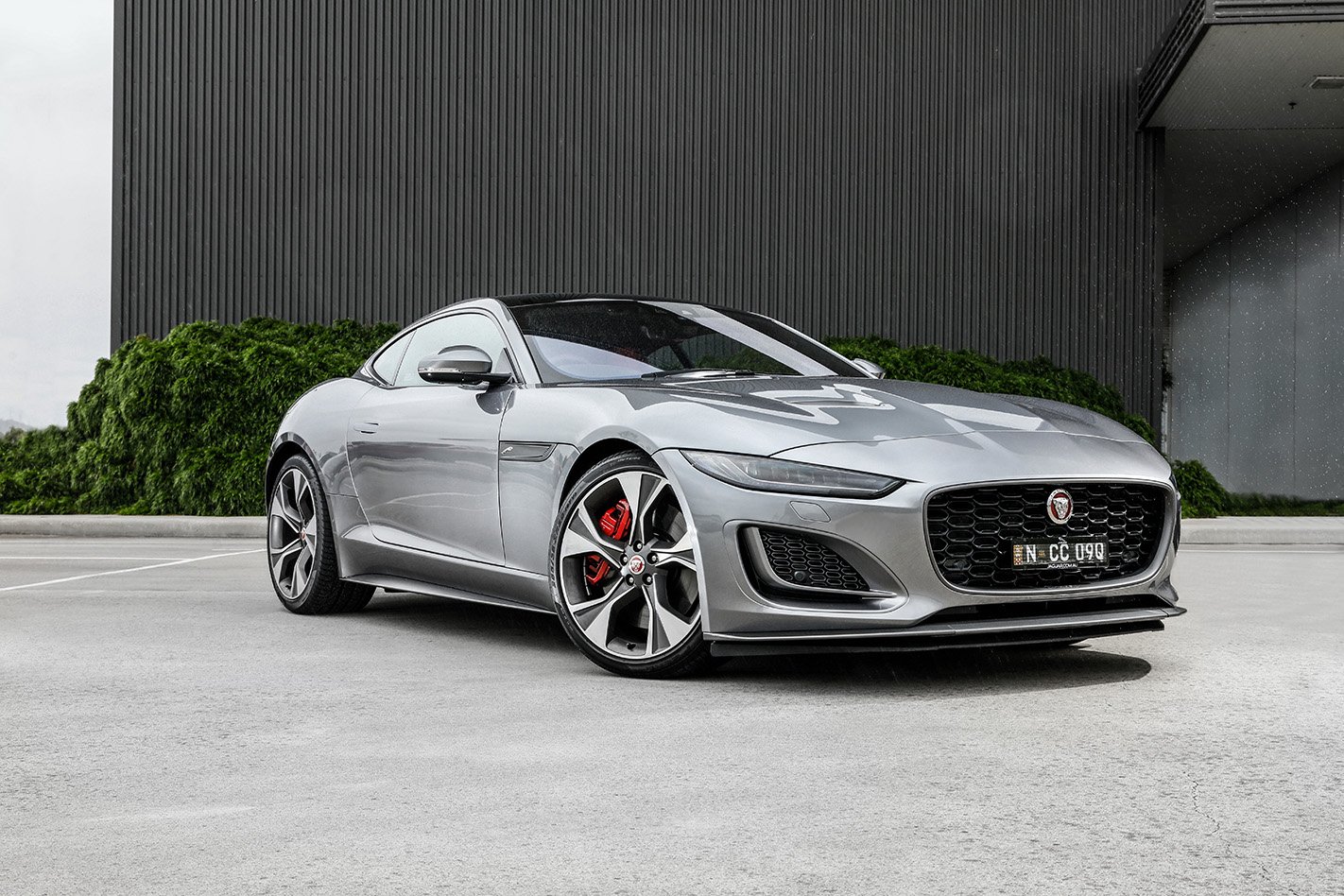
The Jaguar F-Type R casts a long shadow. Despite its sleek looks, the awe and wonder of the supercharged V8 coupe threatens to eclipse a worthy sports car offering from Jaguar’s own stable. We’re talking about the F-Type P380 First Edition, which has landed on Australian shores fighting to break free of its sibling’s wake with a character of its own.
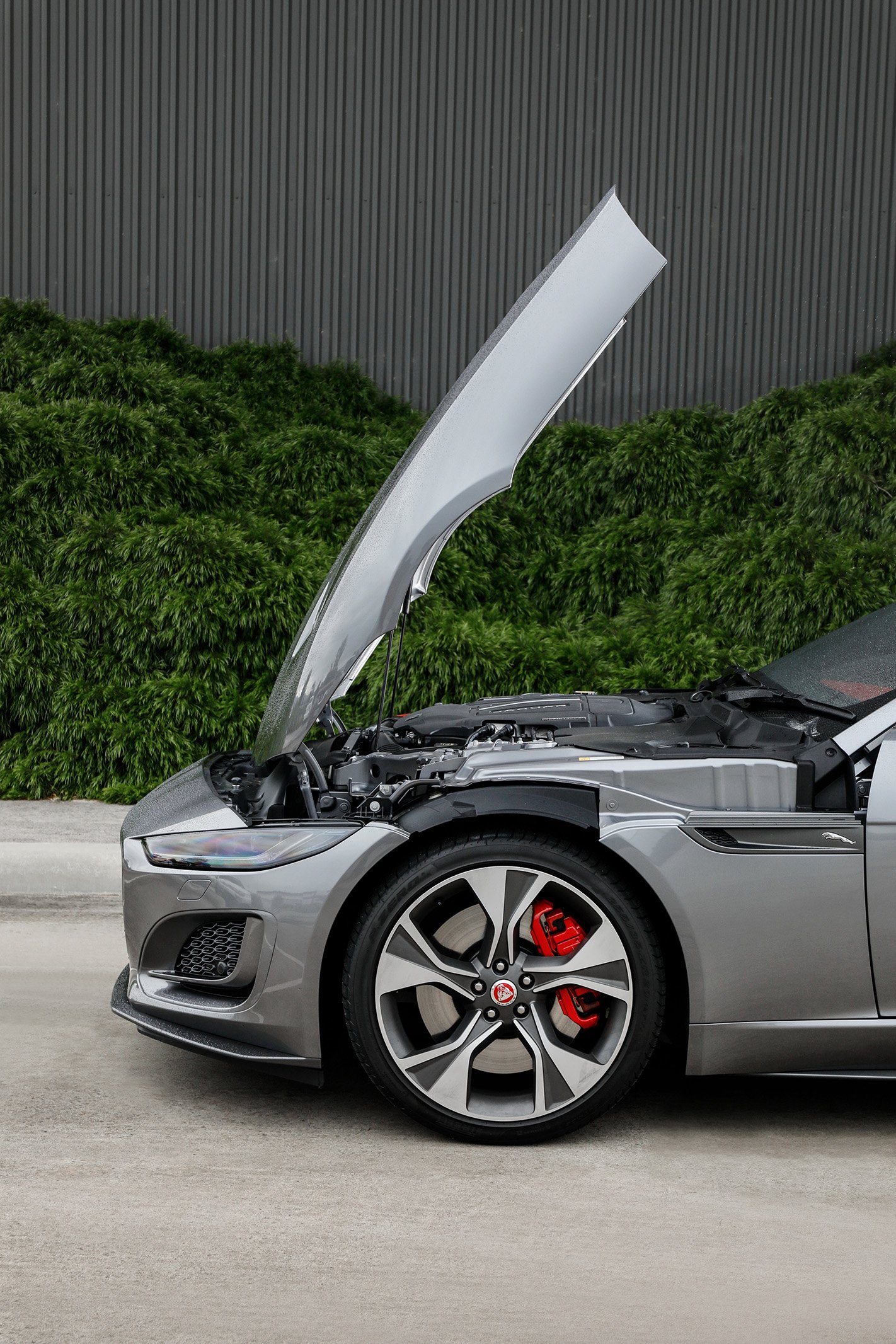
Powered by a 3.0-litre supercharged V6, the P380 First Edition sends its 280kW/460Nm to the rear wheels exclusively, unlike the R variant, though uses the same eight-speed automatic gearbox.
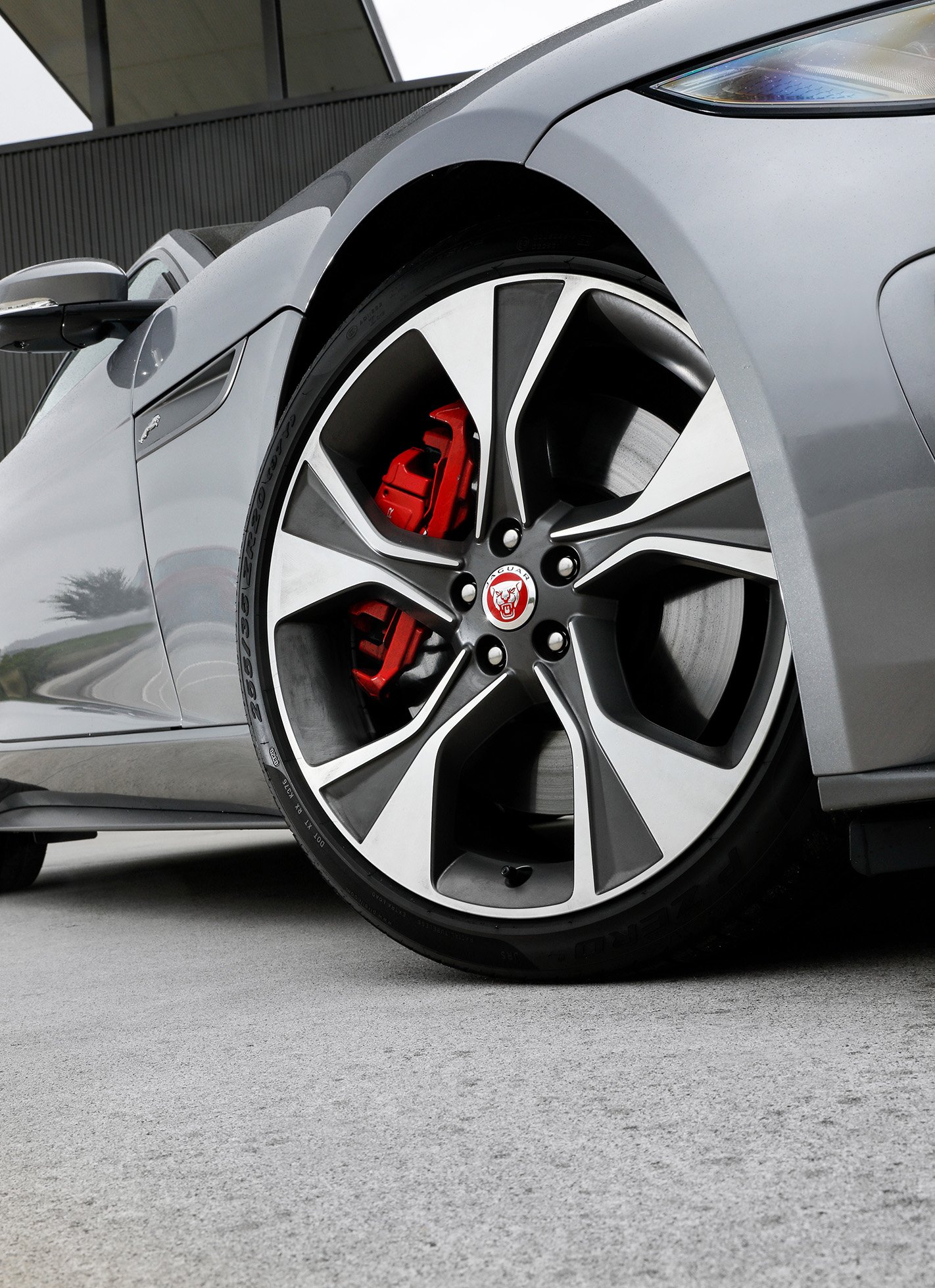
Impressive and grippy Pirelli P Zero tyres wrap 20-inch wheels, of 255/35 under the front quarters, and 295/30 at the rear, while the claimed 0-100km/h time is 4.9 seconds. Quick then, but not concussively so.
How does the Jaguar F-Type P380 First Edition drive?
Much like its more lauded sibling, it’s all about the engine with the P380. However, the main attraction isn’t grunt, it’s the noise.
While power delivery is linear all the way through the rev range, it never fully pins you back in the seat. What it does do is make you grin and laugh like an absolute idiot with its raucous soundtrack.
The supercharged V6 delivers a complex accompaniment all the way through the rev range, and the switchable active exhaust helps elevate the auditory offering with the off-throttle overrun combining staccato machine-gun crackles with grenade-like bassy pops and bangs.
AMG notwithstanding, the F-Type P380 has to be one of the most dramatic-sounding cars in this price range.
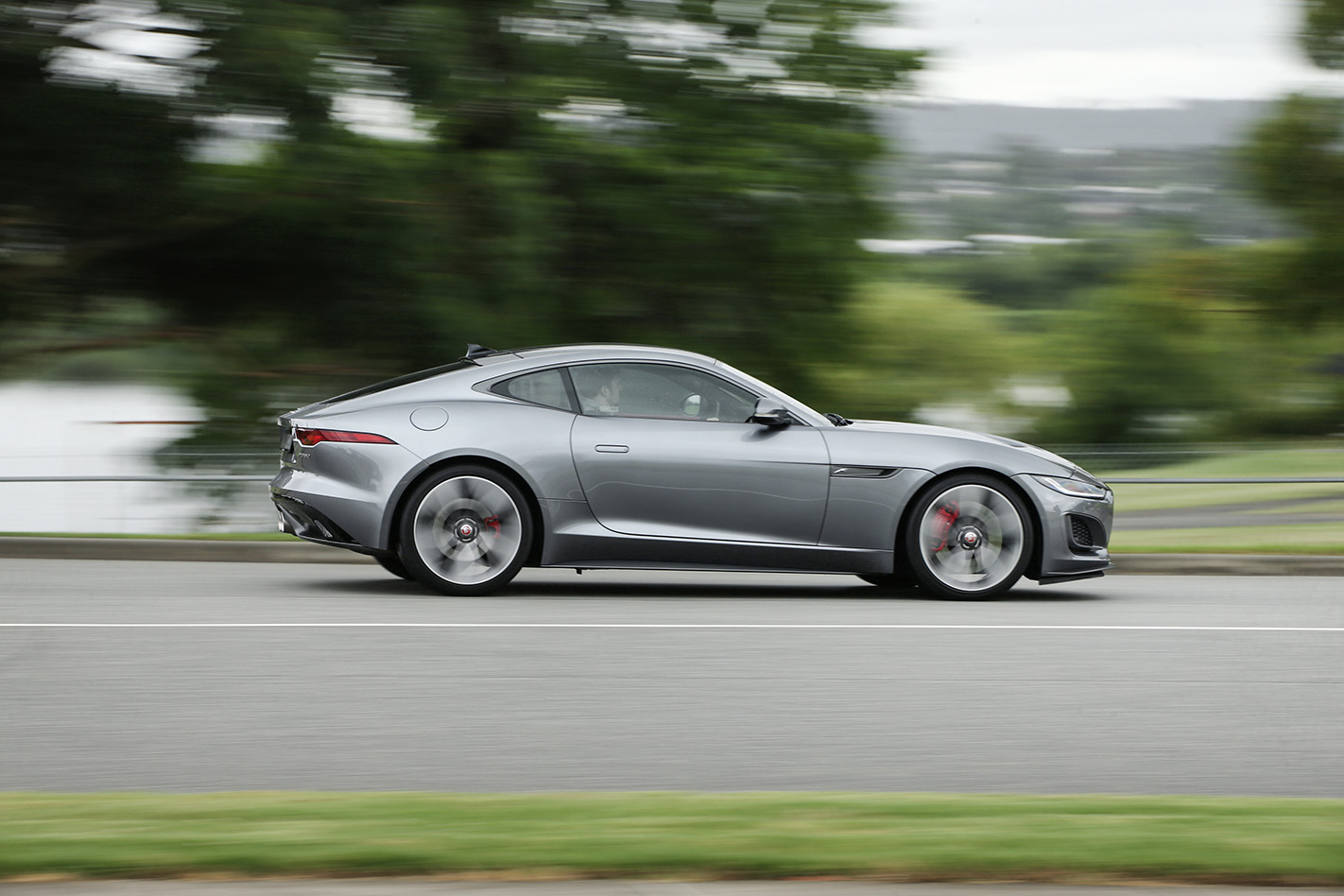
Despite the auditory delights, the six-cylinder F-Type doesn’t become tiring, and you don’t have to go full hooligan all the time. It’s an accomplished grand tourer with a well-judged ride and impressive noise suppression within the cabin when cruising at highway speeds.
However, there isn’t much breadth of talent to the standard adaptive dampers, with the suspension lacking the same twin personality as the engine. A downside to losing the front driveshafts is that corner turn-in lacks bite, and the steering is plagued with a level of numbness that prevents it from being truly involving.
This goes to exemplifying a quirk to the P380 First Edition’s character. It is supremely pleasant around town and on the highway and makes all the right moves on a winding road… right up until the point that you start pushing harder than six tenths. Then the automatic gearbox calibration gets overwhelmed and shifts unpredictably, the steering lacks bite, and the throttle calibration is too jarring.
However, above eight tenths when pushing yourself toward the limit things coalesce again. Manually controlled gearshifts are crisp (if slightly delayed). Push through the vague turn-in and the Pirelli rubber provides impressive grip. The whole car comes alive once again.
Don’t push on for too long though, as the brakes can be overwhelmed quickly. We tested the vehicle during a warm summer day, and after ascending 20km of Victoria’s Reefton Spur the brakes were beginning to feel the pace with a noticeably soft pedal. If you intend on doing regular enthusiastic back-road blasts, the P380’s brakes (with 380mm discs at the front, 325mm out back) will certainly feel the strain.
Price and value
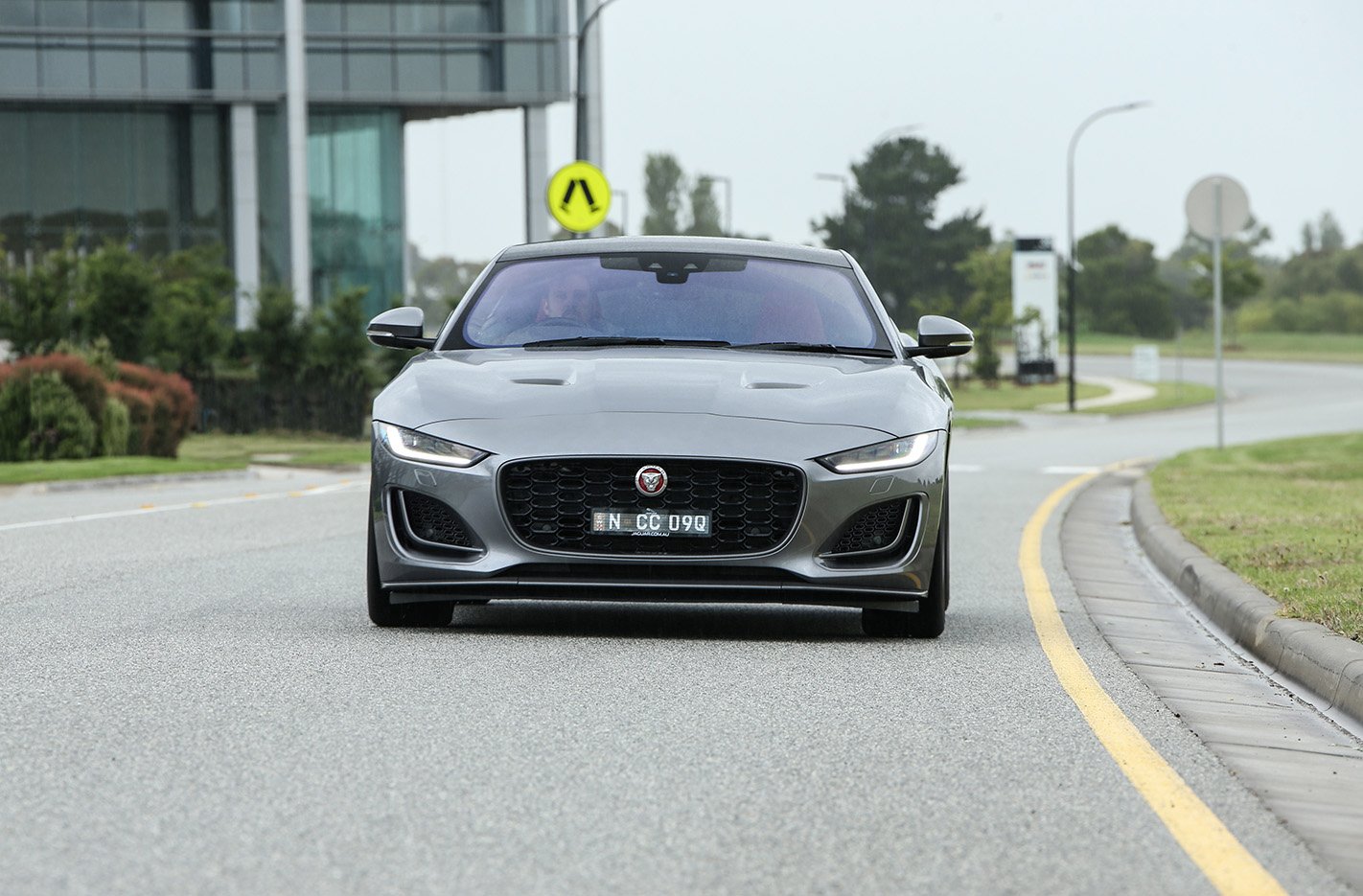
While the P380’s dynamic missteps can be overlooked depending on personal taste, it faces an unavoidable issue when it comes to cost.
Starting at a $204,936 RRP, our test car wears a price-as-tested tag of $225,996 – that’s not including on-road costs such as Luxury Car Tax.
The extra twenty grand is thanks to the Meridian Sound System ($7260), configurable dynamics ($3980), the striking Eiger Grey metallic paint ($2950), a fixed panoramic roof ($2110), powered tailgate ($1160), two-zone climate control ($1040), blind spot assist and rear traffic monitor ($900), and privacy glass ($650).
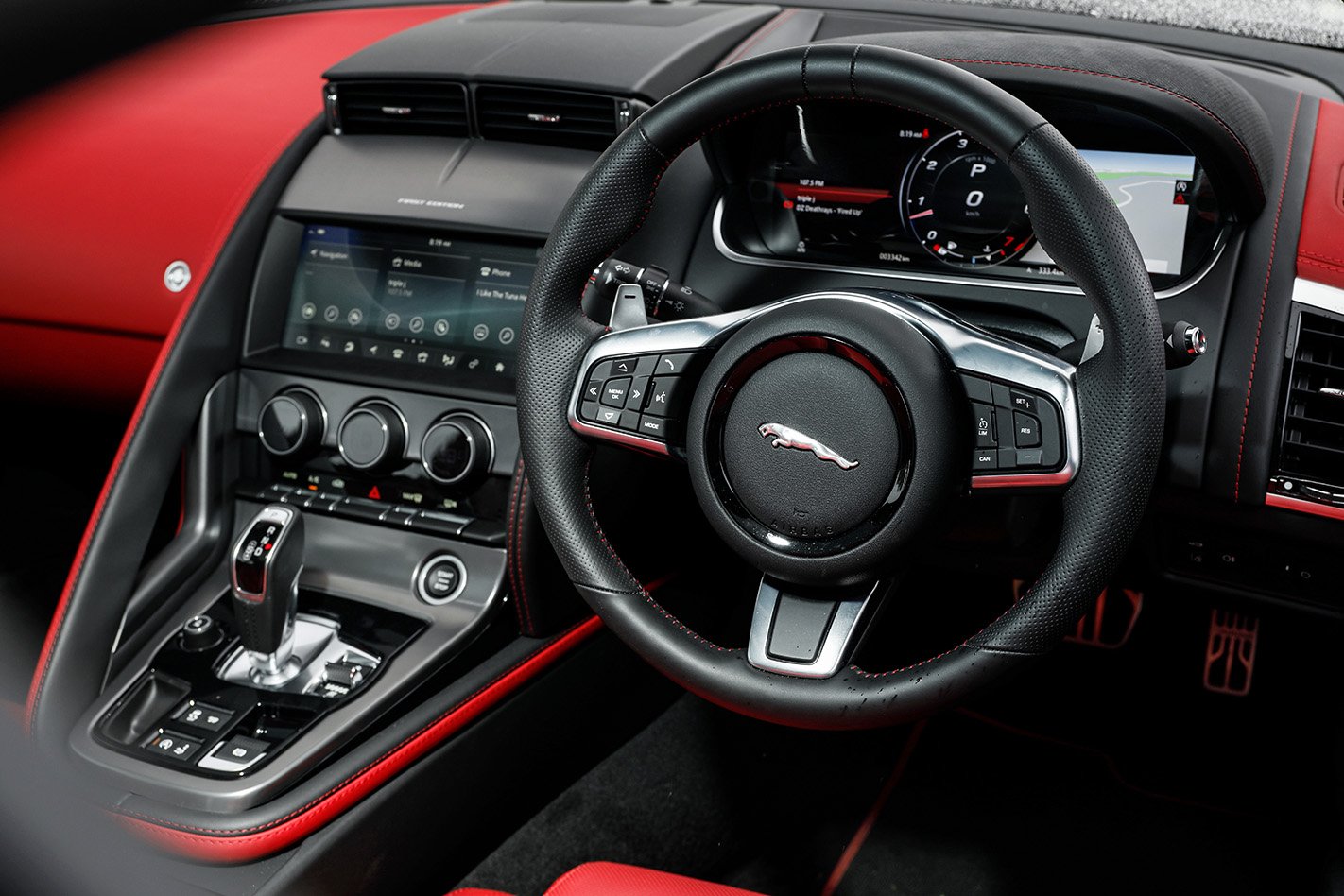
And despite all of that option ticking, the P380 First Edition still has odd equipment omissions, such as no head-up display, active cruise control, or heated seats. For near-enough a quarter-million dollars, is that enough for you?
That price tag also brings into play a sports car product planner’s worst nightmare – the Porsche 911. While there is roughly $30,000 between a P380 First Edition and a base Carerra, it’s not a big enough difference to prevent cross-shopping. The record clearly shows that few have ever set out to be a Porsche 911 rival and been notably successful.
Verdict
That encroachment on Porsche’s territory, plus the existence of Jaguar’s in-house bent-eight sibling, obscures the P380 First Edition’s merits somewhat. But take one for a drive, put the windows down, and it’ll make a full-throated statement of its own just fine.
Rating: 3.5/5
Like: Supercharged V6 sounds like a riot; surprising grand tourer; it’s not a 911
Dislike: Front-end lacks bite; some options should be standard; it’s not a 911
Jaguar F-Type P380 First Edition specs
Engine: 2995cc V6, DOHC, 24v, supercharged
Power: 280kW @ 6250rpm
Torque: 460Nm @ 4500-5000rpm
0-100km/h: 4.9sec (claimed)
Weight: 1647kg
Price: $204,936
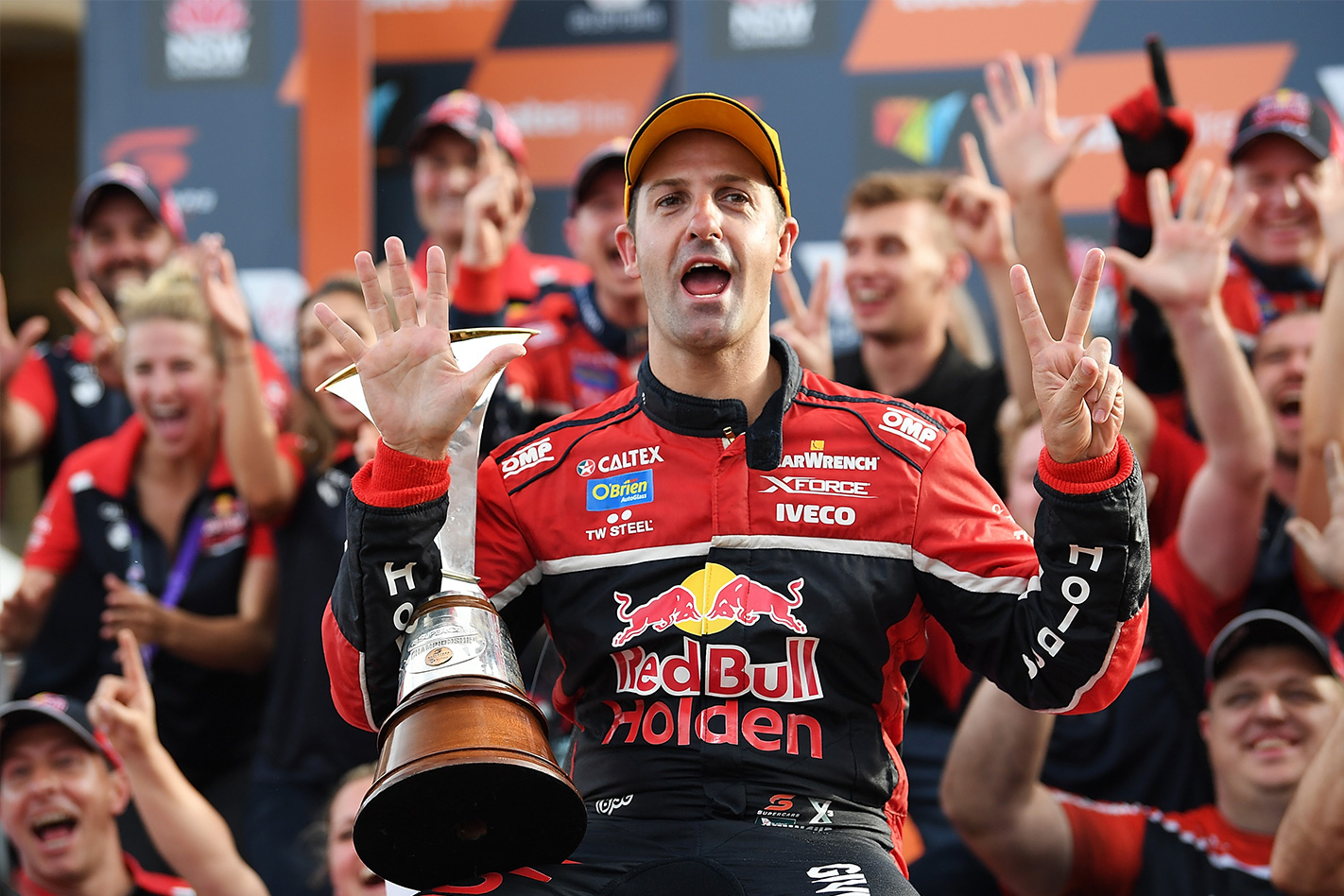
Jamie Whincup will hang up his helmet at the end of the 2021 Supercars season and grab the steering wheel of the powerhouse Triple Eight team instead.
The seven-time Supercars champion and four-time Bathurst 1000 winner today announced his retirement from full-time competition at the end of the 2021 season, while also confirming he will take over from Roland Dane as Managing Director and Team Principal of the Red Bull sponsored outfit from 2022.

“I’ve always said that after I retire from full-time driving, I want to keep going racing and in 2018 I made the commitment for that to be with Triple Eight by becoming a shareholder,” Whincup said.
“I’m honoured that Roland trusts me to lead the family that he’s built here in Australia.
“I’ll certainly maximise every opportunity this year and beyond to learn from him and I’m grateful that he will still be dedicating a portion of his time in 2022 to ensuring the team and I have the best opportunity for success.
“I have to thank everyone who has supported me during my driving career – family, friends, fans and partners. I’ll be giving my all to making sure we deliver the best results possible in 2021.”
Dane, who established Triple Eight Race Engineering in Australia in 2003 after successful stints in British Touring Cars with his partners Derek Warwick, Ian Harrison and Peter Butterly, has sold the majority of his shares in the local operation. He will step back from the day-to-day operations next year to spend time with family and enjoy other motor racing activities, while remaining as chairman of the board of directors to assist in a part-time advisory role.
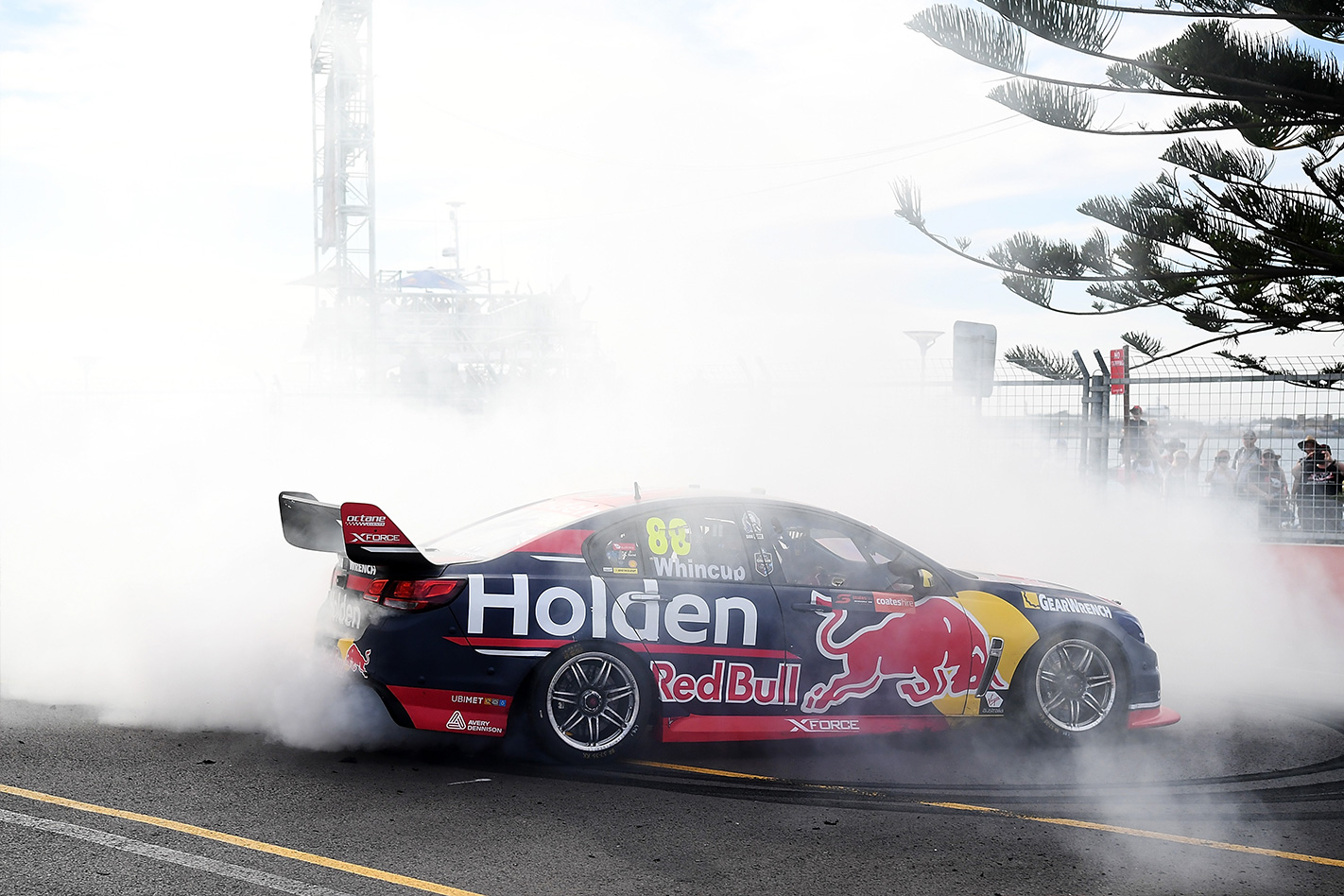
“Since Jamie expressed an interest some years ago in continuing his career in motorsport with Triple Eight after he retires from full-time driving, the plan has always been for him to take the reins,” Dane said.
“He has proven himself to be an integral part of the Triple Eight family during his 15 years here and has absolutely nothing to prove on track.
“I have every confidence that he will approach his new role with exactly the same motivation, diligence and competitive spirit that he brings to the track at every round.
“COVID-19 has reminded me that I’m not getting any younger and I’m looking forward to having more time on my hands to enjoy different forms of motorsport in different capacities and spend more time with my elder daughter in the UK, once the pandemic permits.”
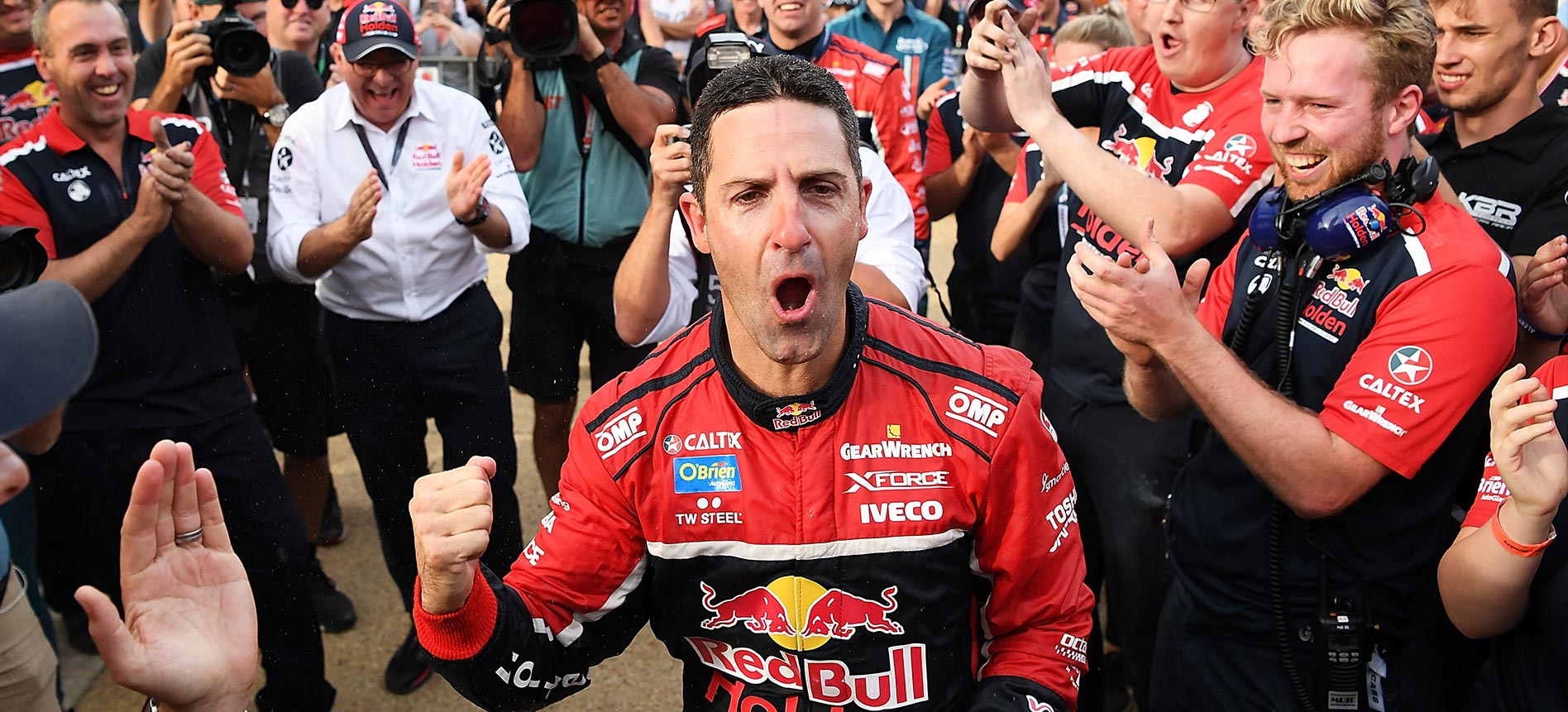
As part of the most significant management shake-up in the outfit’s history, motor racing identity Tony Quinn – the successful Queensland businessman behind VIP Petfoods and the man who revived the Darryl Lea chocolate brand – has become the majority shareholder in Triple Eight, taking 40 per cent ownership. At the same time Whincup will increase his share to 19 per cent and Jess Dane, Roland’s daughter, will hold 30 per cent ownership.
Whincup’s retirement from driving and his move into team management is a massive shift for the 37-year old after 19 years at the top of the Supercars competition.
He was plucked out of Formula Ford by renowned talent scout Garry Rogers to join his eponymous V8 Supercar team in 2003. And yet his career was almost over before it began when he was sacked at the end of his debut season.
Following a stand out performance with Tasman Motorsport in 2005, Whincup joined Triple Eight as an understudy to the legendary Craig Lowndes.
He finished 10th in his first year with the team in 2006, and since then has finished no lower than fifth – winning seven championship crowns (2008, 2009, 2011, 2012, 2013, 2014 and 2017) and four Bathurst 1000 victories (2006, 2007, 2008 and 2012). With 119 outright race wins, Whincup also holds the record as the most successful driver in Australian Touring Car racing.
UPDATE, January 2023: Sony Honda Mobility announce Afeela brand, unveil new prototype EV
Here it is, a first look at the near-production EV concept that will be launched in 2025 under Sony Honda Mobility’s new brand, Afeela. Get all the details at the link below.

The story to here
Released in 1994, the original PlayStation blew apart an industry dominated by Sega, Atari and Nintendo.
The idea of the Walkman creator and electronics giant taking on heavyweights such as Sonic and Mario seemed bizarre at the time – and now Sony is on the cusp of an equally spectacular move.
At CES 2020, Sony revealed the logo of the PS5 – but the fifth iteration of its PlayStation console shared the headlines with the Vision-S, a totally unexpected new EV from the company.
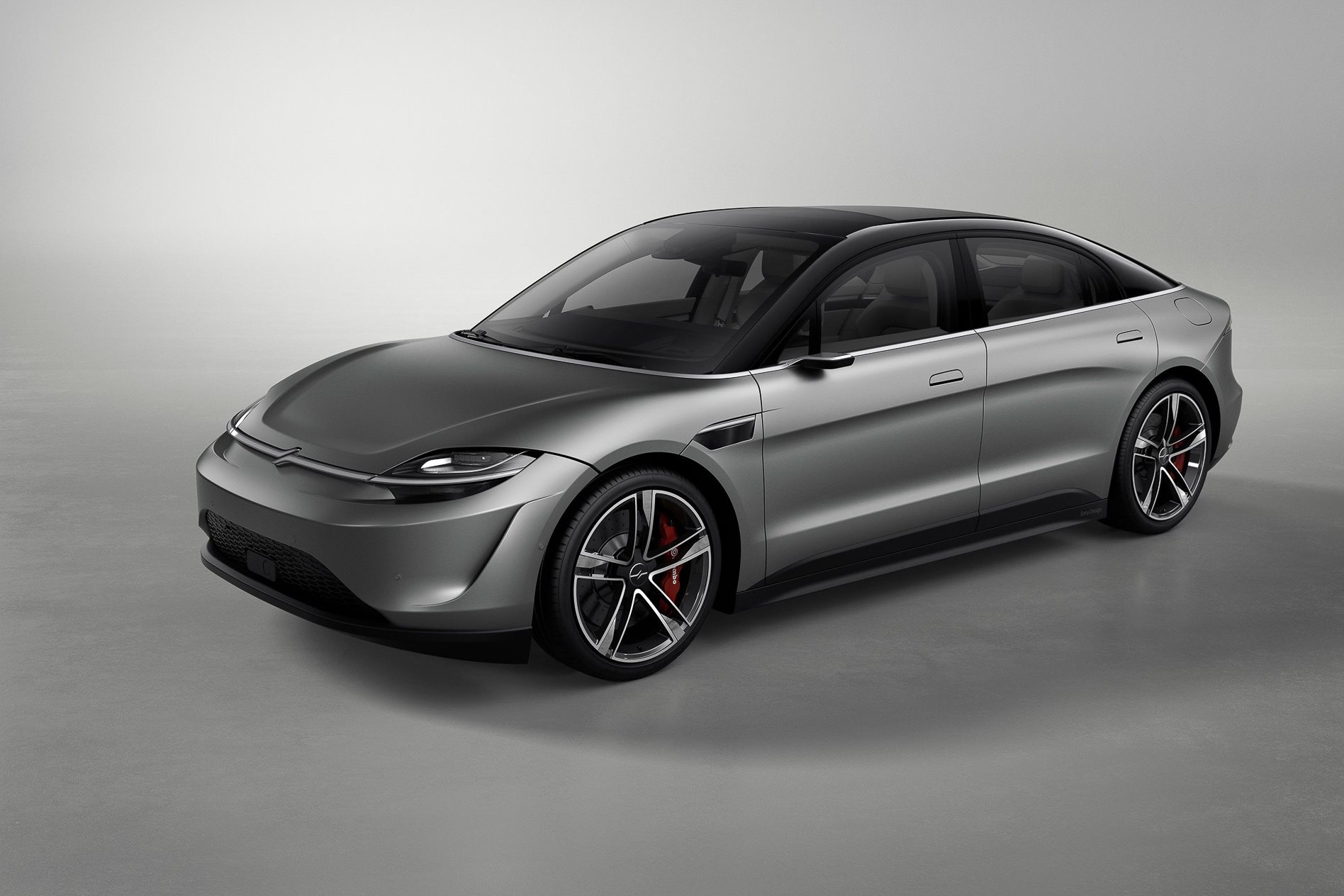
A smart slab of grey and silver, Sony’s Tesla-alike marks the beginning of a new, and very real, push into the automotive space.
To find out the scope of the Japanese giant’s new car-shaped ambitions, and to check if things were going PlayStation or Betamax, we spoke to Izumi Kawanishi, Sony’s senior vice president of AI Robotics Business, to find out more.
“I think we certainly have a lot of opportunity in the automotive space,” Kawanishi explains over video link.
Known especially for his work on Sony’s robotic Aibo dog, Kawanishi’s background in AI Robotics is more related to automotive than you’d first think.
“The industry is moving to electrification… our main purpose is to contribute to the evolution of mobility, utilising our advanced technology.”
Just like the early ’90s, Sony has seen a rapidly changing industry move into its crosshairs and decided to pounce.
“We started a project three years ago, in the spring of 2018,” he explains. “I had a lot of discussion with the management team of how to proceed with this project.”
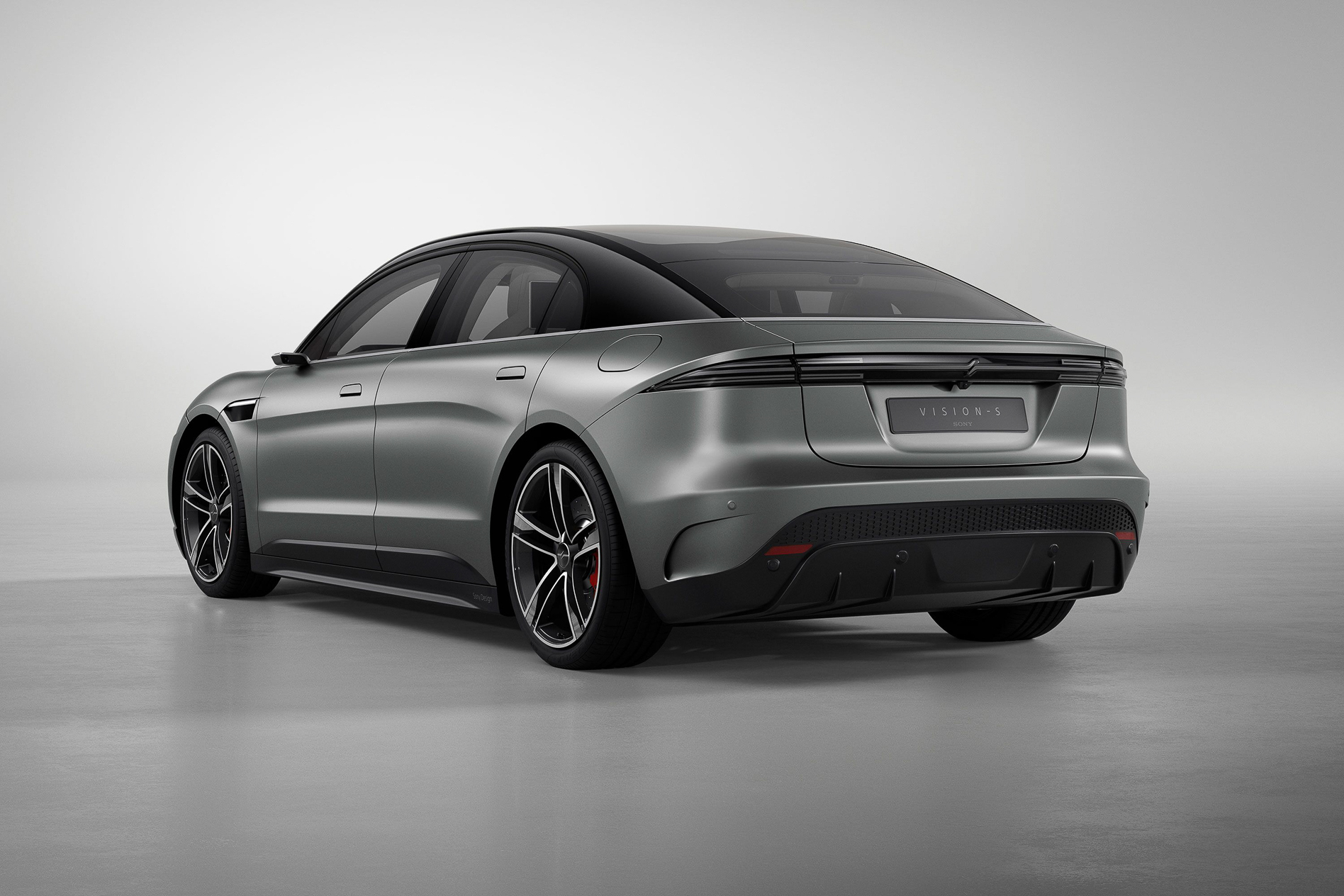
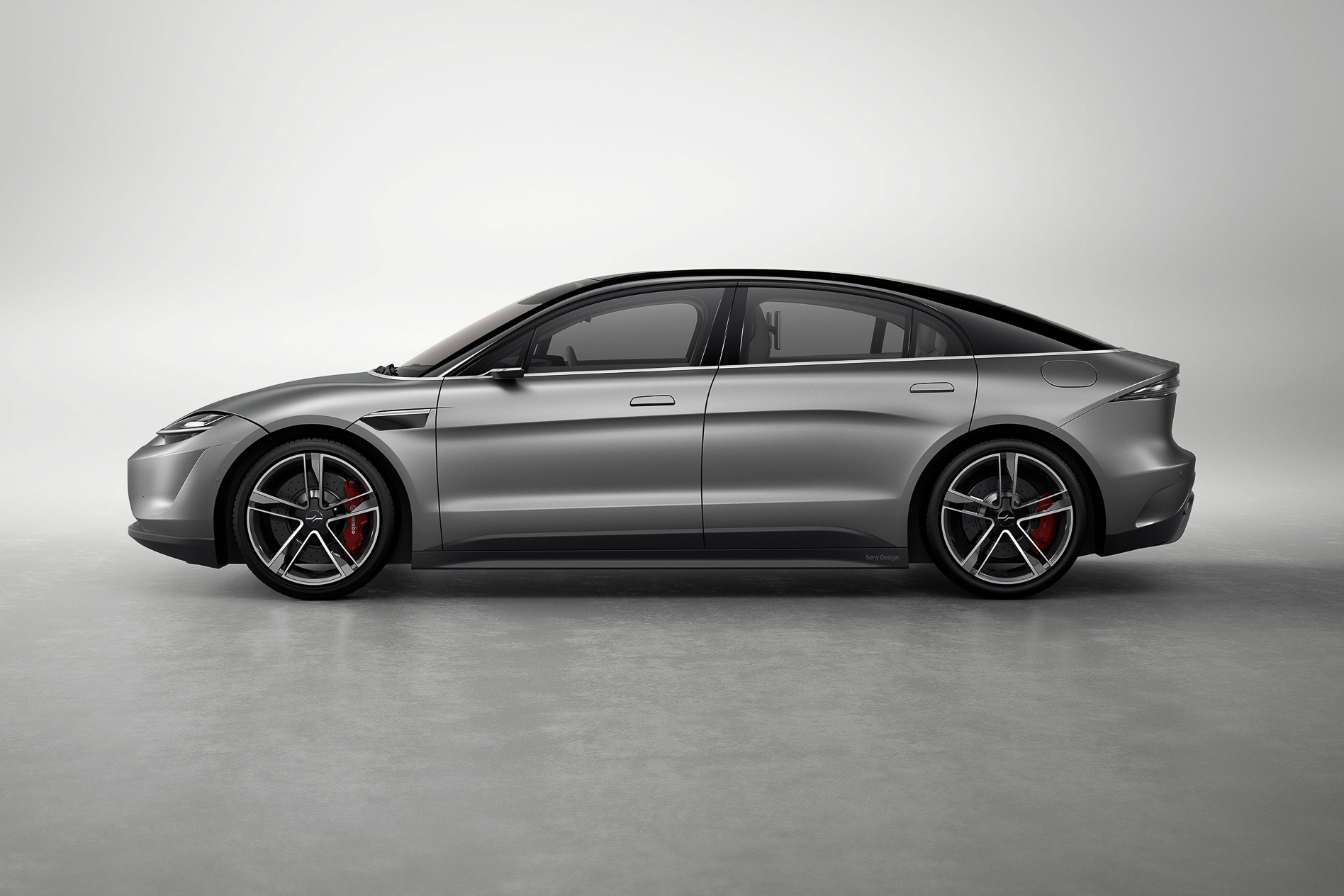
The result of those discussions is the Vision-S. Now testing on public roads, Sony’s first EV is a modest-looking sedan. Finished in the same silver and chrome as – presumably intentionally – an old MiniDisc player or old Wega widescreen, it’s handsome, but not overtly so.
Kawanishi says a coupe was chosen over the more typical SUV shape because of the inherently sportier and more stylish opportunities it brought.
It’s not slow; the Vision-S it’s powered by two 200kW motors (one on each axle) good for 0-100km/h in 4.8 seconds. Top speed is rated at 240km/h.
Underneath, it’s all framed by a Sony-developed, Magna Steyr-built chassis, designed for a saloon first – but with the possibility of being stretched and pulled for other EV types in the future.
But looking at the oily bits is missing the point.
Although the Vision-S looks production-ready in the most recent videos, Sony isn’t about to churn them out, and Kawanishi is quick to recalibrate our expectations.
“It’s just a showcase at this time,” he tells us.
“Frankly, its current status is an R&D base,” he says later on.
The tech
Rather than building a whole car, Sony is flexing its R&D muscles and focusing on autonomous safety technology and interior entertainment; the Vision-S is merely a stylish testbed.
Take a closer look at the EV, and it’s dripping with tech. There are some 40 sensors around the Vision-S: 18 optical devices, 18 ultrasonic radars and four LIDAR.
“We are focusing on safety at first,” confirms Kawanishi. “Second, of course, we will provide our entertainment systems or content.”
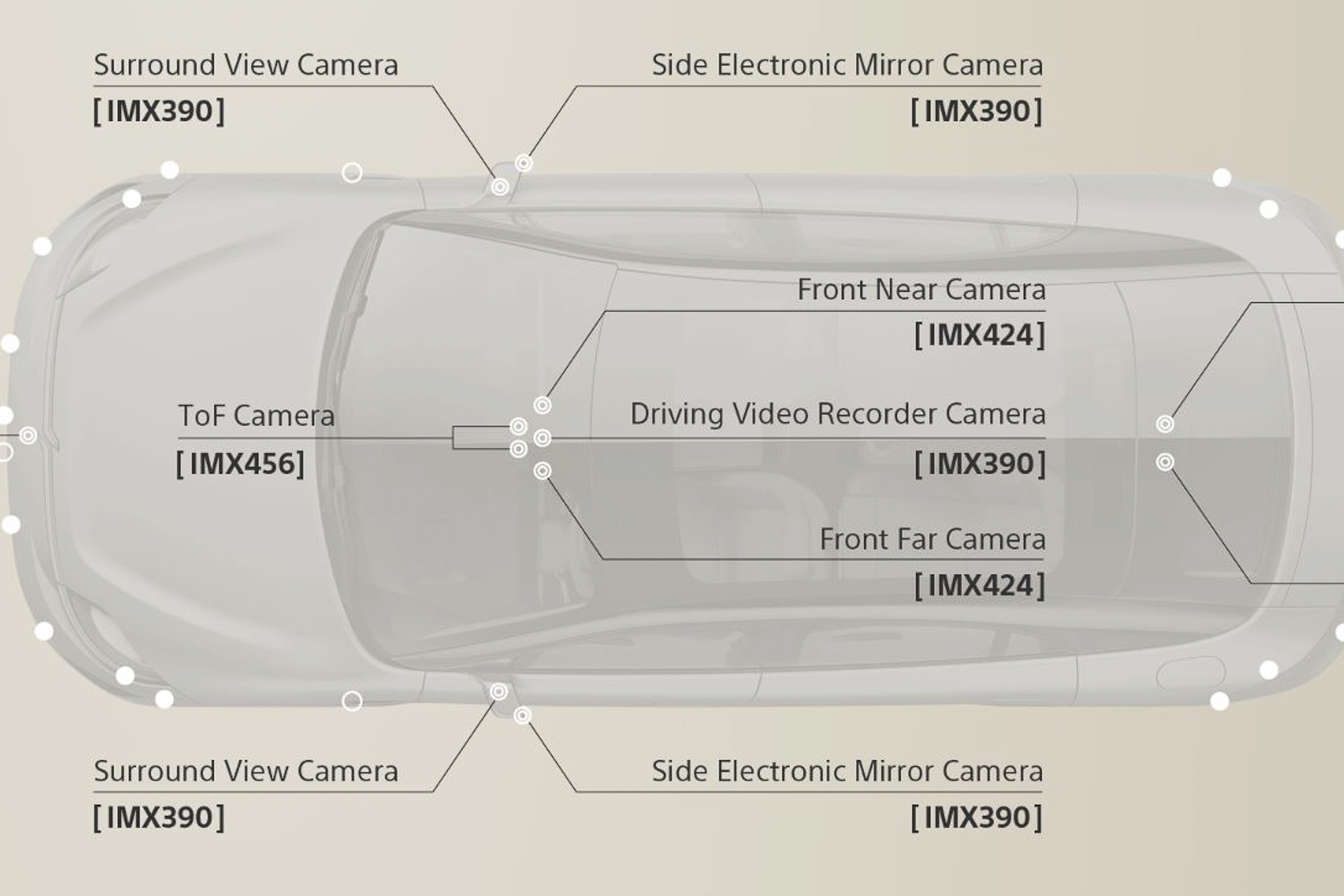
For Sony, safety means autonomous technology – from lane-changing to parking – and it’s not taking the task lightly.
“Automotive technology or automotive quality is completely different from consumer products because we have to secure human life,” he reminds us. “It’s a very big challenge.”
In the same way Sony approached Magna to build the chassis, it’s partnering with AI Motive, a Hungarian-based company specialising in autonomous tech.
And despite its technological might, Sony is setting conservative targets.
“Currently, we are focusing on Level 2+ [the car is able to control certain functions], but for the future we can try Level 4 [fully autonomous in certain areas] or more than Level 4, but currently we are trying 2+,” he explains.
“In the end of this year, or next year, we can show such kind of technology.”
The interior
However, Sony’s strongest suit, and arguably its main reason for entering the automotive space, lies in the Vision-S’s interior.
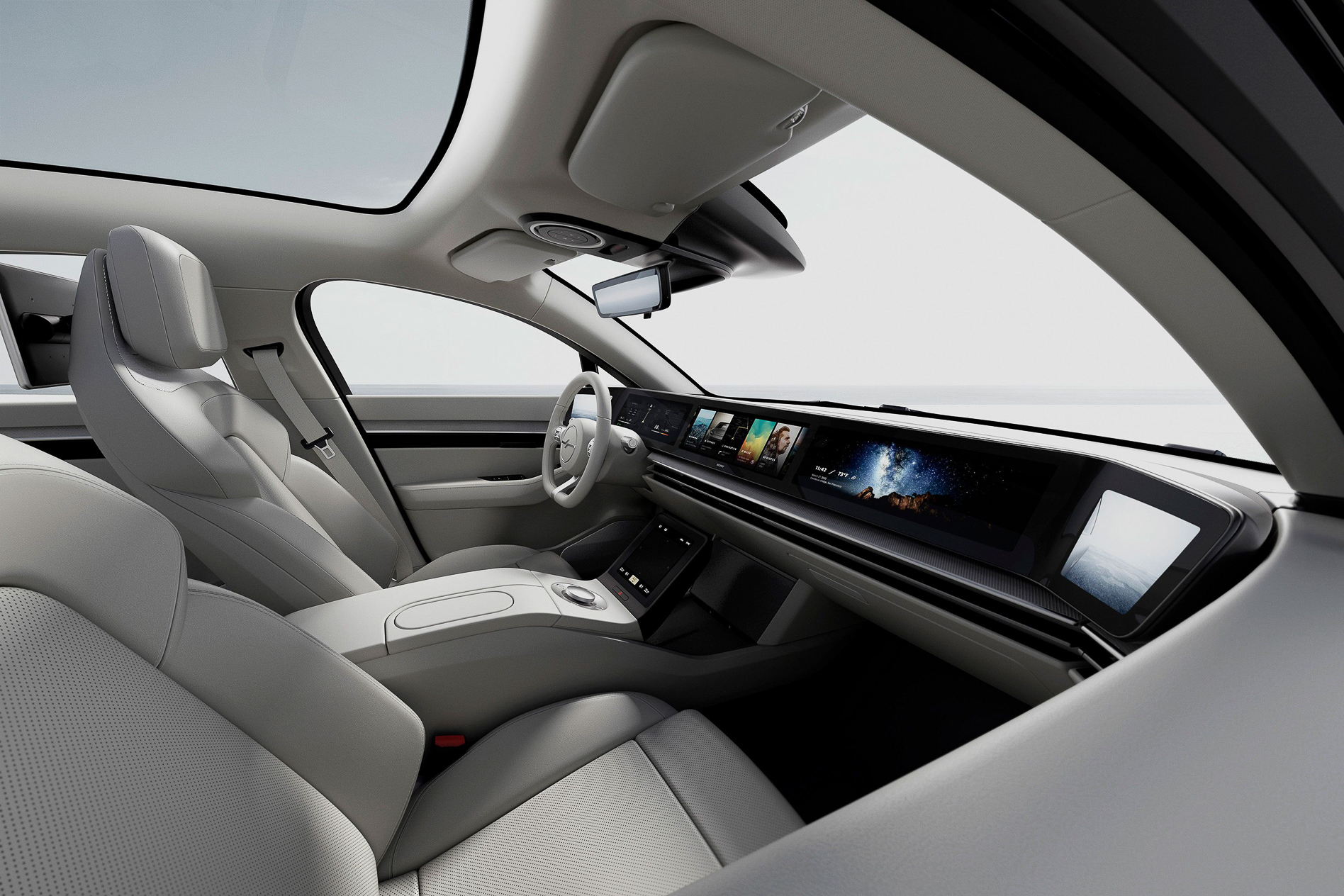
Like most contemporary cars, the EV’s cabin is dominated by flatscreens, audio tech and UI – areas the sprawling Sony empire already has vast know-how.
Here the electronics giant doesn’t need to partner up, as it can simply repurpose and optimise its existing technology; 360-degree sound from the brand’s audio division is present, as is the ability to use PlayStation hardware remotely using 5G. Lip-reading and passenger-sensing tech is also being developed.
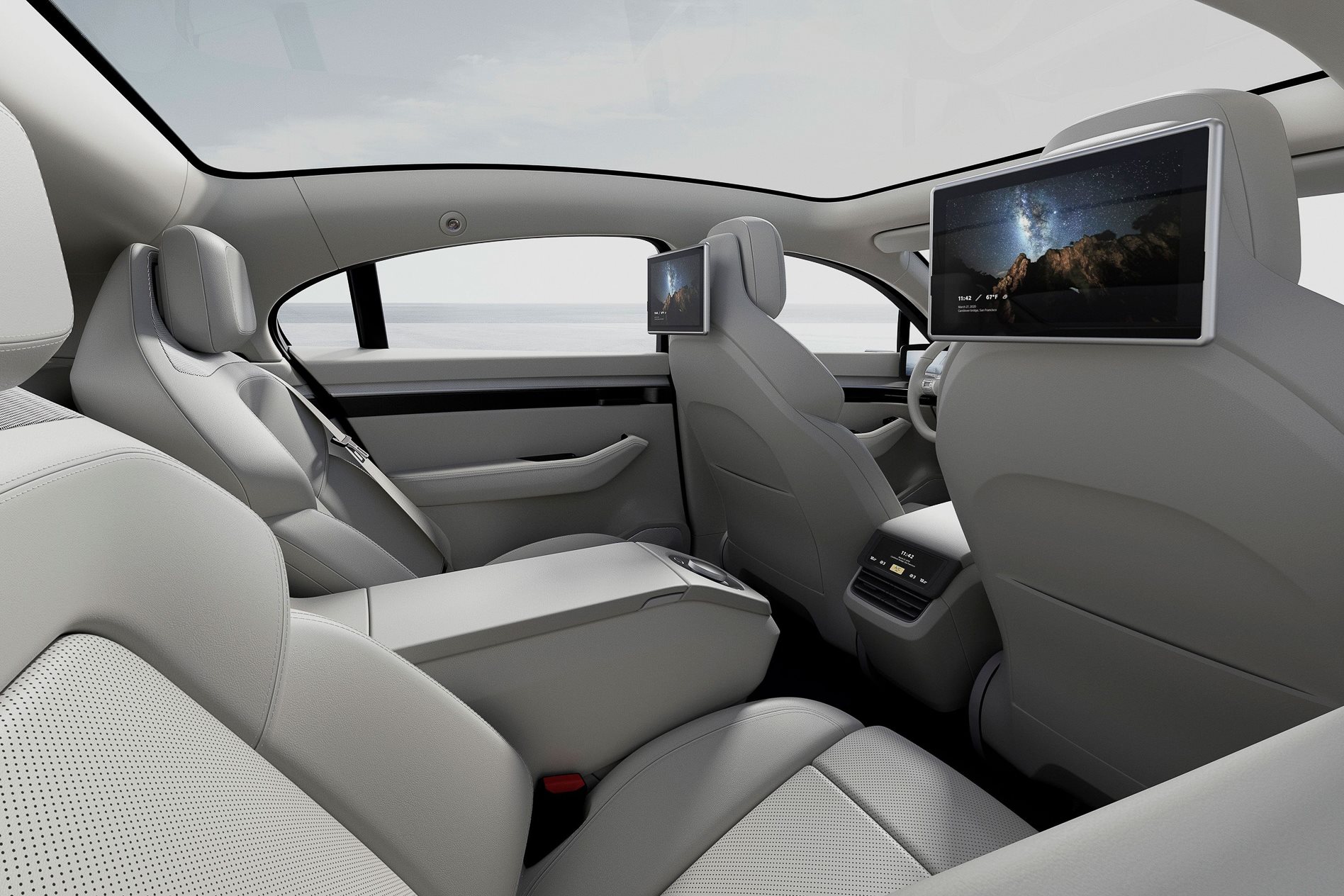
Kawanishi tells us the Vision-S’s voice recognition tech comes primarily from Sony’s range of Xperia phones, as does the crisp UI, and there are Sony-branded displays throughout the cabin.
The Japanese giant’s experience with mobile devices also contributes to Vision-S Link, a counterpart app for the EV.
Sony’s masterplan
Sony’s mission, then, is to jump from the living room to the car, and with the industry’s trend toward larger touchscreens and autonomous tech it’s not the leap it first seems.
Have a glance at the supplied videos, and the idea of a Sony cabin – with UI as good as your smartphone, audio as good as your hi-fi and screens as crisp as your TV – becomes very compelling.
There aren’t many companies that have such strong brand recognition in such as spread of areas, and Sony must hope its wholesome image means it’ll be trusted for car safety tech, too.
Although there are no firm plans as yet, Sony wants to be next to the most expensive boxes on your next car’s options list – if it’s something like a Mercedes E-class or a BMW-5-series.
“We can consider several options, and this is a personal idea,” Kawanishi says. “But a premium car is better.”
Like it did in the early ’90s, Sony has identified a new opportunity and taken a calculated approach, relying on its existing expertise for most areas and partnering up for everything else.
Sony’s slow and steady approach – framing itself first as a supplier of safety and interior tech – doesn’t quite grab the headlines or have the same seismic impact of an Apple car.
But it’s more likely to happen.
This story was originally published at carmagazine.co.uk.
Lexus has dropped two mysterious images of what it’s calling “the future of the luxury driving experience”.
Taking the form of what looks to be a sports-led crossover, the concept is a precursor to a launch of a new electric vehicle from the Japanese luxury carmaker before the middle of the year.
Despite the shadowy pics, it’s obvious the new concept shares little with the radical Lexus LF-30 concept electric car from 2019, which used powerful hub motors as part of its powertrain architecture.
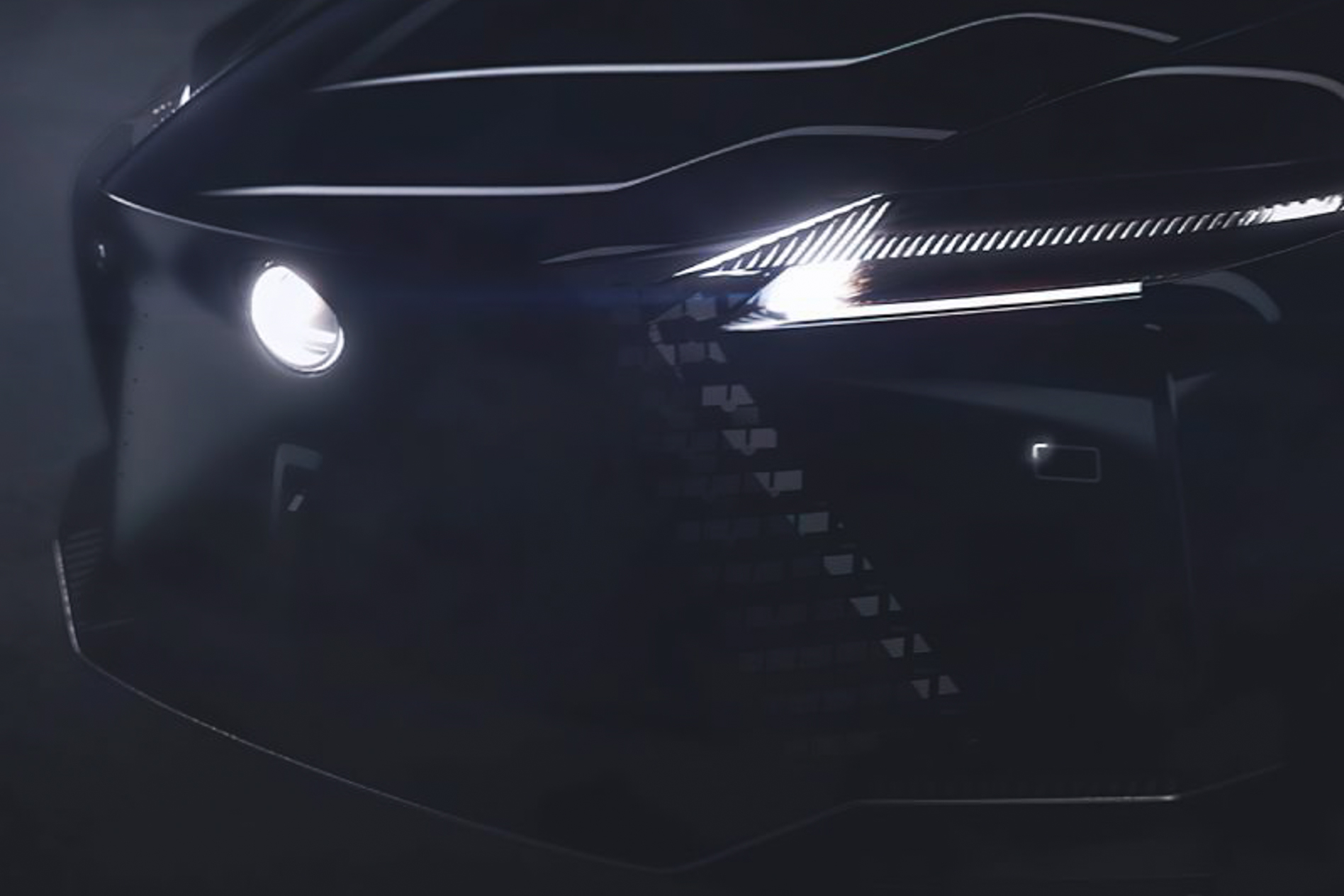
However, it looks as if Lexus won’t retreat from its cutting-edge design language that has manifested itself on cars like the LC coupe.
The new vehicle will be likely built atop parent company Toyota’s new E-TNGA platform, and will introduce a new method of power output that Lexus is calling Direct4.
Put simply, Direct4 is a new way of distributing torque to each wheel in a way that allows for much more precise control of torque splitting, traction and braking outputs.
It’s based on the notion of e-axles, where the front or rear axle is bundled together with an electric motor, transaxle and controller in one unit.
As well, Lexus says that the key to controlling the outputs of the e-axles comes from the fact that both wheels are connected directly to the axle, rather than being filtered through diffs or pinion wheels.
Lexus has also been bullish about pursuing new battery technology, with global CEO Yoshihiro Sawa telling WhichCar in 2019 that solid-state battery technology could power a car for 1000km. However, there is a caveat.
“We are working on the technology, but we cannot release it yet,” he said. “It is possible to go 1000km, but then the charging time could be a very long time.”
Expect the first-ever Lexus ground-up pure EV to roll out as a concept in a couple of months, followed by a reveal of the production version before the end of 2021.
This scheduling suggests we won’t see it in Australian Lexus dealerships before 2023.
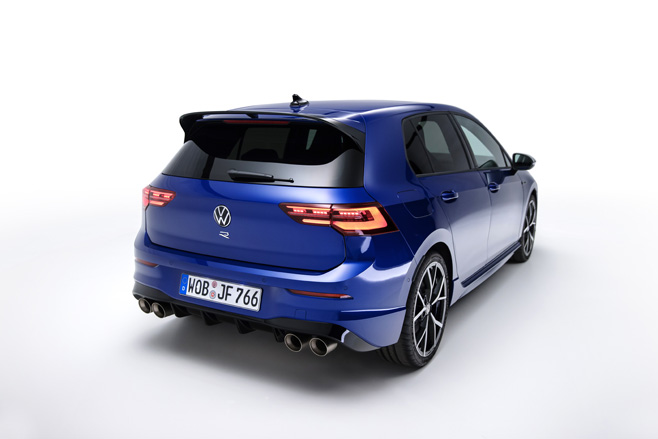
After a seemingly endless number of new eighth-generation Golf models over the past year, the headlining 2021 Volkswagen Golf R has finally arrived to complete the line-up.
It hasn’t landed in Australia just yet, and probably won’t until the second half of the year, but amid all the regulatory controls surrounding COVID right now, we managed to snare one of the first examples to head out of Volkswagen’s headquarters in Wolfsburg for an initial run in frosty German winter conditions ahead of its local debut later this year.
There is tradition here of course. The new model is the fifth Golf in 18 years to wear VW’s (newly restyled) Rennsport badge, and every one has been as memorable as those that went before it. A purebred pedigree.
But with five-door competition that now includes the Audi S3, BMW M135i xDrive and Mercedes-AMG A35 4Matic, the new Golf R will need to be very much at the top of its game to make a lasting impression.
UPDATE: The new Golf R is now on sale in Australia. See our fresh coverage at the links below
The story to here
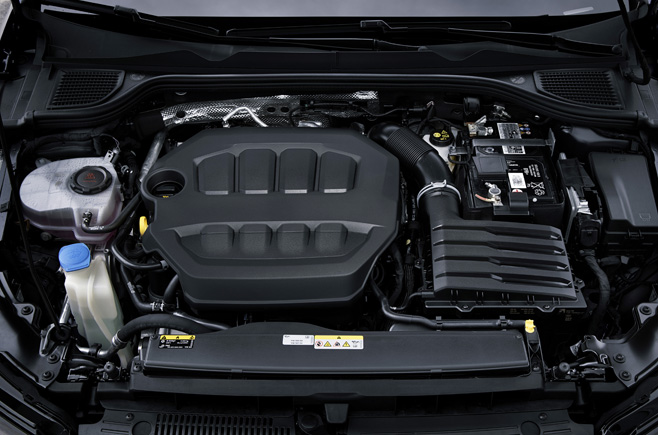
Up front, the latest uber-Golf runs a more powerful version of the familiar EA888 turbocharged 2.0-litre four-cylinder engine. With detailed changes, power peaks at 235kW with torque extending to 420Nm from 2100-5350rpm, making the new 1551kg R the most powerful series production Golf model yet.
By comparison, its direct predecessor offered 218kW and 380Nm, so this is more than just a token increase in reserves, giving the new model a power-to-weight ratio of 151kW/tonne. Of its rivals, it’s the new Audi S3, which runs the same engine in another state of tune, that gets closest to challenging the Golf R’s on-paper figures with 228kW and 400Nm.
Accompanying the reworked engine is an updated version of Volkswagen’s in-house seven-speed dual-clutch gearbox (DSG), which uses an upgraded auxiliary oil cooler and new software mapping for faster shift times. There is no manual gearbox option – Volkswagen says there isn’t sufficient interest in any of the Golf R’s key markets.
It’s the four-wheel-drive system, though, that has seen more significant changes. Produced by BorgWarner, it has been thoroughly re-engineered with the addition of a new central differential that provides a faster and more rear-biased apportioning of drive.
There’s also a new electronic rear differential among myriad other changes, bringing torque-vectoring qualities to the rear axle of the Golf R for the first time.
As before, there is an optional Akrapovic titanium exhaust system, as fitted to our test car. It doesn’t liberate any more power, but it does save 7kg and gives the new model a truly stirring exhaust note that is enhanced by a sound generator in any one of its more sporting driving modes.
Underneath, there’s a reworked MacPherson strut (front) and four-link (rear) suspension. The R rides 20mm lower than the regular Golf and gets Volkswagen’s excellent Dynamic Chassis Control with variable-rate dampers and an additional 1.3 degrees of negative camber at the front.
The chassis is networked with a so-called Vehicle Dynamics Manager (VDM). It aims to provide the new model with a more balanced feel, with less understeer and, thanks to a new driving mode that sends the majority of drive to the rear wheels, proper drift qualities.
Altogether, there are five primary driving modes: Eco, Comfort, Sport, Race and Individual. But in a development also brought to the Golf GTI Clubsport there’s also an additional ‘Nurburgring’ mode, which uses settings developed by Volkswagen on the notoriously demanding German circuit, where much of the new Golf R’s chassis tuning has taken place over the past two years.
The standard wheels, unique in their design, are 18-inch diameter, though our test car wears optional 20-inch wheels with 235/35-profile winter tyres.
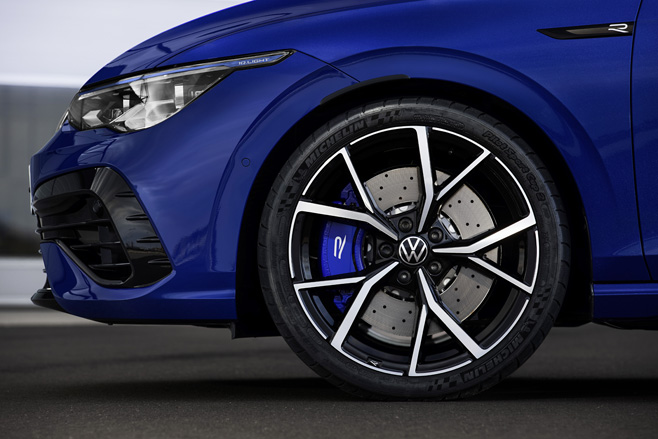
Other changes include a quicker variable-ratio steering rack than before, attached to the same upgraded front aluminium subframe as the Golf GTI, and also larger front brake discs with new two-pot calipers. The brakes also use a new master cylinder and, despite being larger than before, are 600g lighter at each corner.
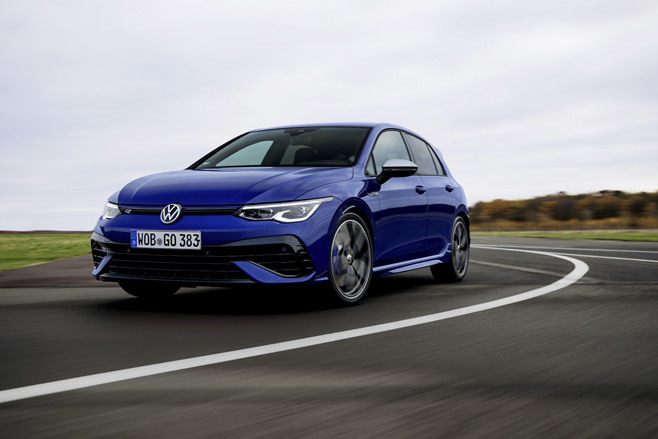
Externally, the new Golf R is distinguished from other Golf models by a uniquely styled front bumper with a front splitter element and large lower cooling ducts. VW has also beefed up the sills underneath the doors, and at the rear there’s a prominent twin-plane spoiler atop the tailgate, plus a large three-channel diffuser bookended by two round tailpipes either side.
Step into the Golf R and you’re confronted by an interior that does its best to reflect the car’s sporting pretensions without deviating much from that of milder Golfs. There are standard-fit sport seats and sports steering wheel, steel-capped pedals and a series of unique digital instrument displays among other bespoke touches.
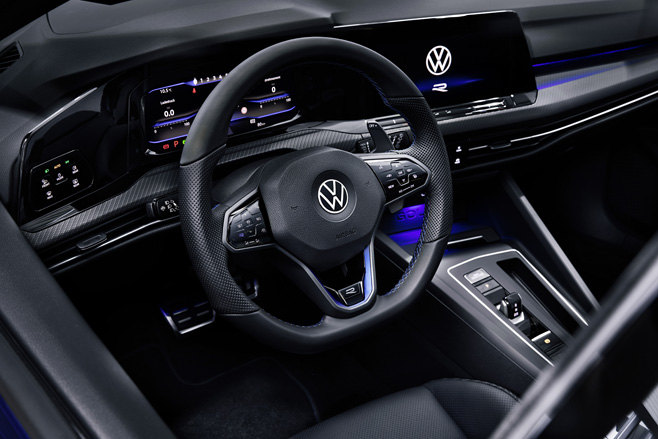
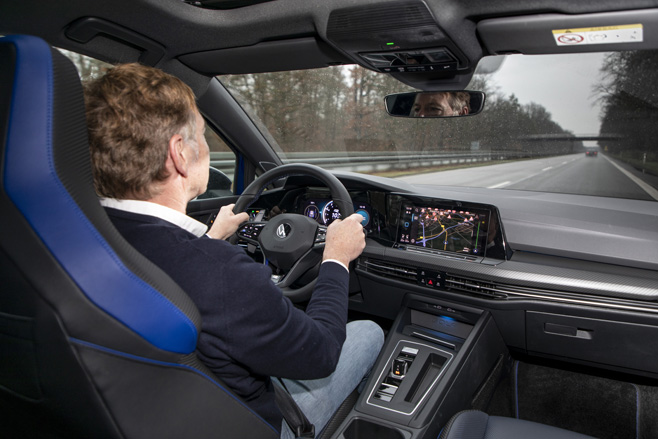
The new seats, with heavily sculptured squabs, are especially snug and quite supportive. They offer a good range of adjustment, allowing you to sit suitably low, and there is also plenty of adjustability in the steering column.
The dashboard is well built, though the shiny hard plastic on some sections does give it a slightly cheap look, despite the inclusion of more agreeable materials elsewhere.
Two digital displays deliver sharp graphics at high resolution, though the central infotainment display in our test car was infuriatingly slow to respond at times.
Which isn’t something you can say for the Golf R’s accelerative ability. With a 0-100km/h time of 4.7sec, the new model doesn’t match the claimed 4.6sec of its predecessor, but it equals the official times quoted for the BMW M135i and Mercedes-AMG A35, and comfortably beats the 6.2sec of the Golf GTI Clubsport.
And the Golf R also feels quicker than the figures suggest. The manner in which it launches from a standing start is nothing short of spectacular. Load it up with revs on the launch-control in Race mode and it explodes away. There’s momentary slip at the front wheels before the drive is properly apportioned, but from then on the driveline is tremendously effective at placing the Golf R’s reserves to the road.
Low-end response from the latest EA888 evolution is quite a bit sharper than before, after which the broad spread of torque makes it hugely tractive. Equally, it now revs more freely as it approaches the 6700rpm cut-out. And you get this breadth whatever the driving mode.
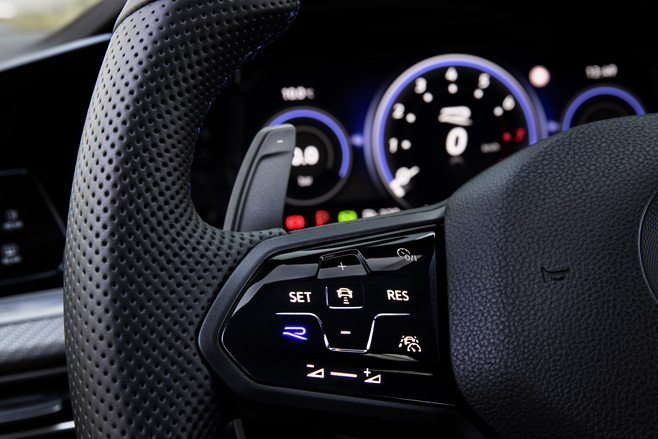
Neither does the process of selecting the most responsive mode feel so laborious. One press of the new R button on the left-hand steering wheel spoke instantly sets all the various functions – engine, steering, gearbox, all-wheel-drive system and dampers – into their most aggressively tuned state, at which the new Golf R feels deliciously responsive and eager.
The added urgency brought by the reworked engine is supplemented by an improved action to the DSG, delivering smoother and faster shifts, most notably on downshifts.
Indeed, the new Golf R delivers a good deal of feel and involvement – more so than in any previous incarnation. It is intense and engaging over any given road in the right driving mode. However, while the variable-ratio steering is very accurate, eager to self-centre and quite communicative, the lightness evident at lower speeds lingers, even when you’re pushing hard out on the open road. As confidence-inspiring as the new car is, it would be even more memorable with some meaningful weight to the helm.
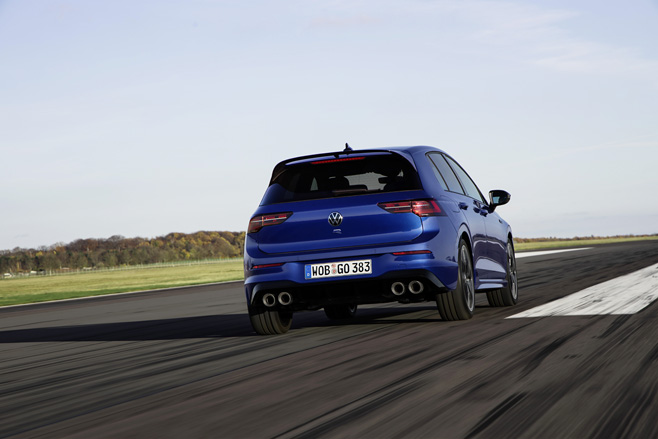
That said, the result of the new chassis tweaks is an almost total absence of understeer, even on winter tyres, for which the torque-vectoring system has to take some credit. There’s a brief moment of push at the front under power into tighter corners, but the Golf R is truly throttle-adjustable and hugely enjoyable to hustle along.
The outstanding grip is backed up by tremendous body control. Late and aggressive turn-in brings just a brief pause for thought before the VDM system nails the right level of damping force. The Golf R resists lean extremely well, remaining flat and eager as it scythes through corners and keeping pitch and dive well under control. It is this overall composure that defines the new model, and brings a more fluid but more agile feel than any previous Golf R.
As for ride quality, while the old R could be a little brittle over less than smooth roads, the new one brings genuine compliance in all but Race mode. This feels the most broadly usable Golf R there has ever been.
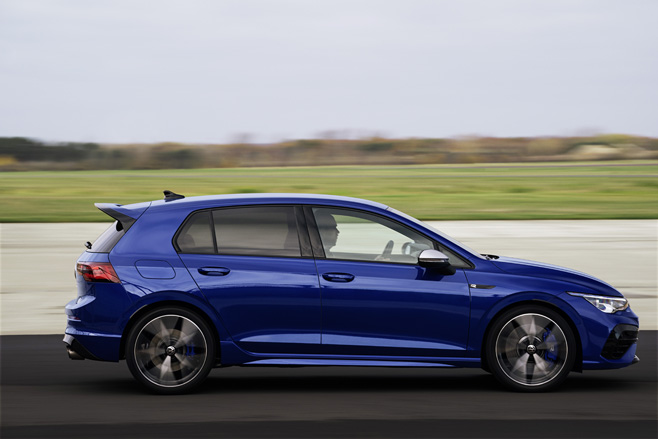
On first impressions, the new Golf R not only lives up to lofty expectations, but exceeds them. It is fittingly quick; perhaps not at the level of the current hatchback king, the Mercedes-AMG A45, but with the accelerative ability and sheer sense of occasion on open throttle to challenge the speed and attraction of all its direct rivals.
It is also a terrifically well-balanced car whose traction and on-the-limit exploitability is every bit as impressive as the tractability and ride. For outright performance and all-season appeal it rises above the new Golf GTI, and comfortably so.
The Golf R’s clever chassis technology brings a broader range of characteristics to the table than before. There’s greater compliance and overall comfort at the more relaxed end of the scale, but added response and even more impressive body control in the more sporting settings than its highly admired predecessor.
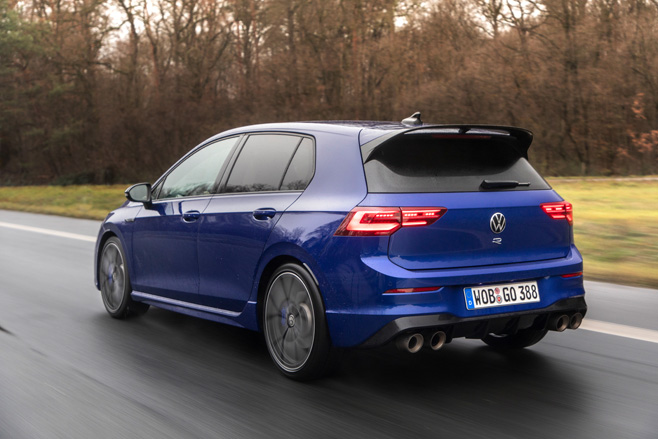
2021 Volkswagen Golf R specs
Engine 1984cc 4cyl, dohc, 16v, turbo Max power 235kW Max torque 420Nm @ 2100-5350rpm Transmission 7-speed dual-clutch Weight 1551kg 0-100km/h 4.7sec (claimed) Price $56,000 (estimated) On sale Late 2021
The consequences of Google potentially pulling out of Australia could be massive, but motorists are unlikely to be left stranded.
The world’s most popular search engine provider is at loggerheads with the Australian Government over a proposed new code of conduct that would force the American company to pay licensing fees to local media organisations in order to display and serve digital content through its search engine.

“Withdrawing our services from Australia is the last thing that I or Google want to have happen – especially when there is another way forward,” she added.
At present, if the new Code is passed without any changes Google has threatened to shut down its search engine functionality in Australia – similar to what it did in Spain in 2014 when it closed its local news service.
However, it has also recently agreed to pay 120 French media companies more than $142 million over the next three years to promote its Google News Showcase product, while Prime Minister Scott Morrison is bargaining with Microsoft to fill any void left by Google’s departure – both of which could reduce the threat in Australia.
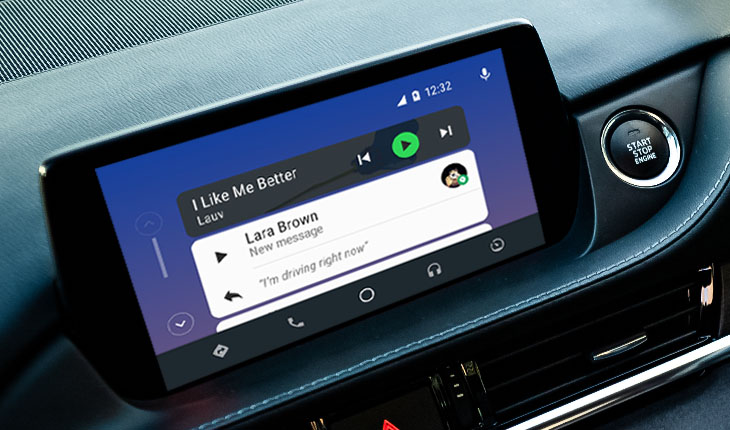
Without its powerful search engine functionality, there may be an impact as to how easy it is to find new businesses, such as cafes and restaurants, within your vicinity while driving or at your destination.
According to consumer data provider Statista, almost 60 per cent of Australians used Android-operated mobile devices in 2020 while less than 40 per cent use an Apple iPhone.
Cadillac has shown off its two newest V-series high-performance sedans in the CT5-V and CT4-V Blackwing twins.
We’ll waste no time by diving straight into the numbers.
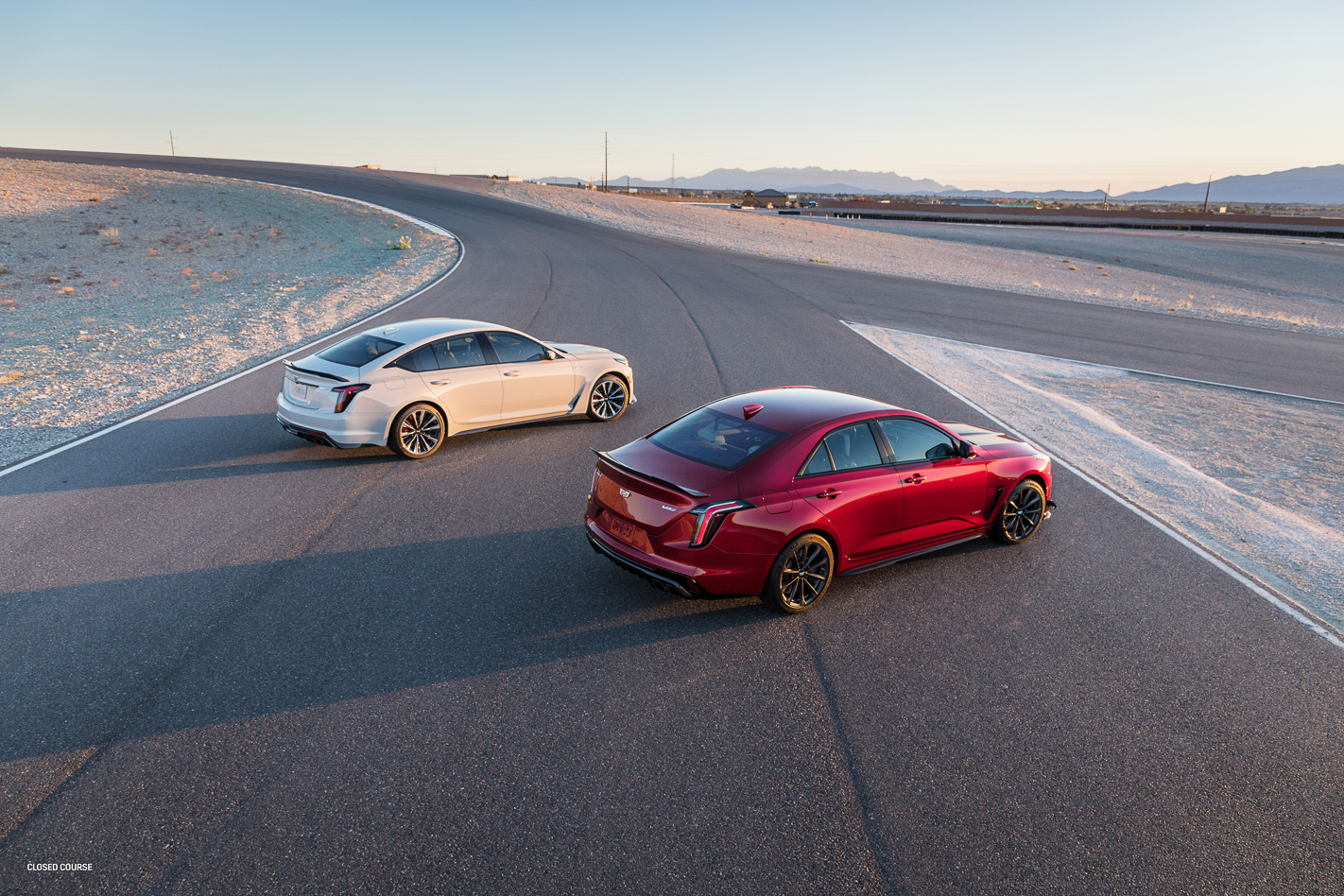
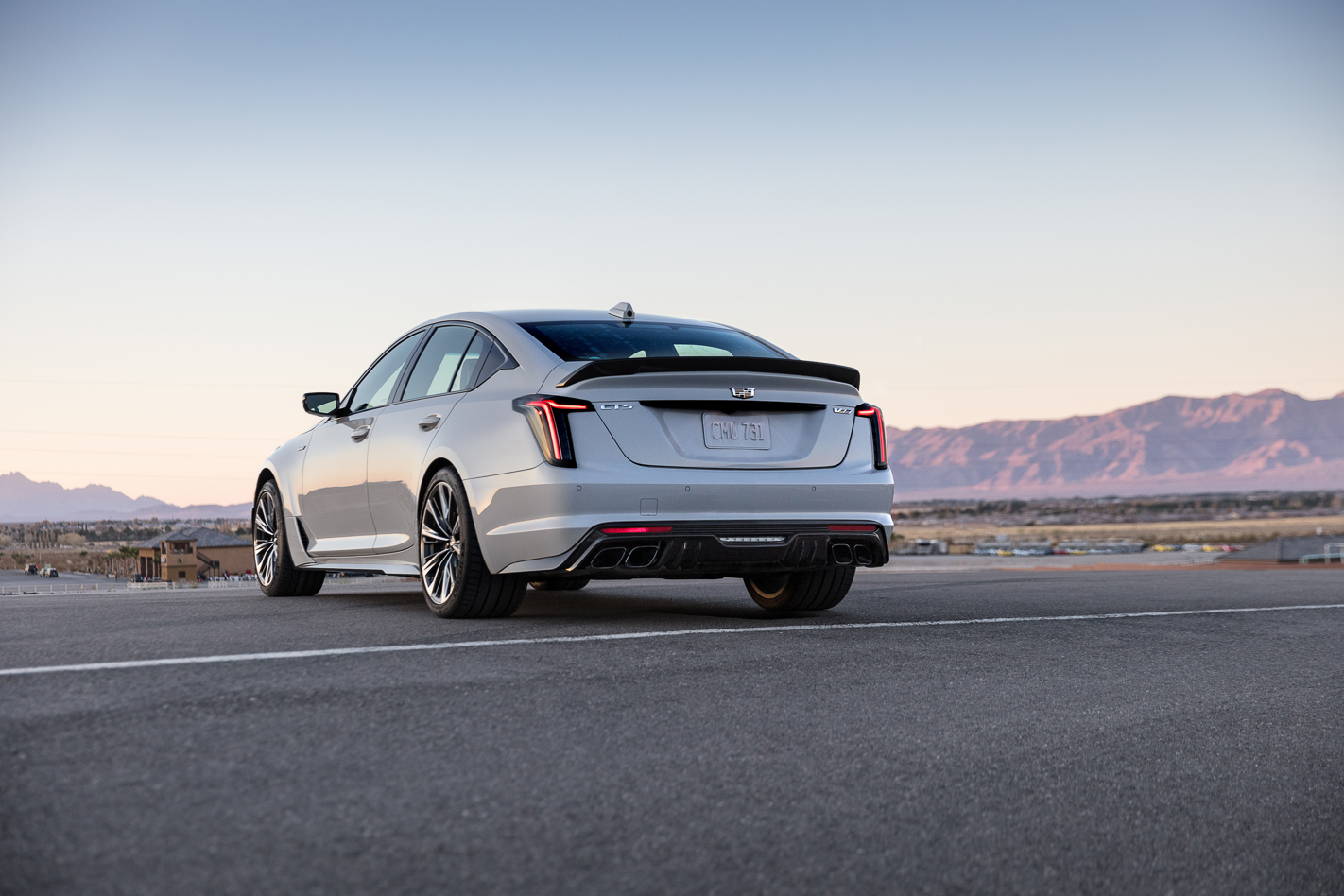
The CT5-V makes its debut as the most powerful Cadillac ever by stocking a 6.2-litre supercharged V8 with 498kW and 893Nm, mated to a six-speed manual transmission as standard.
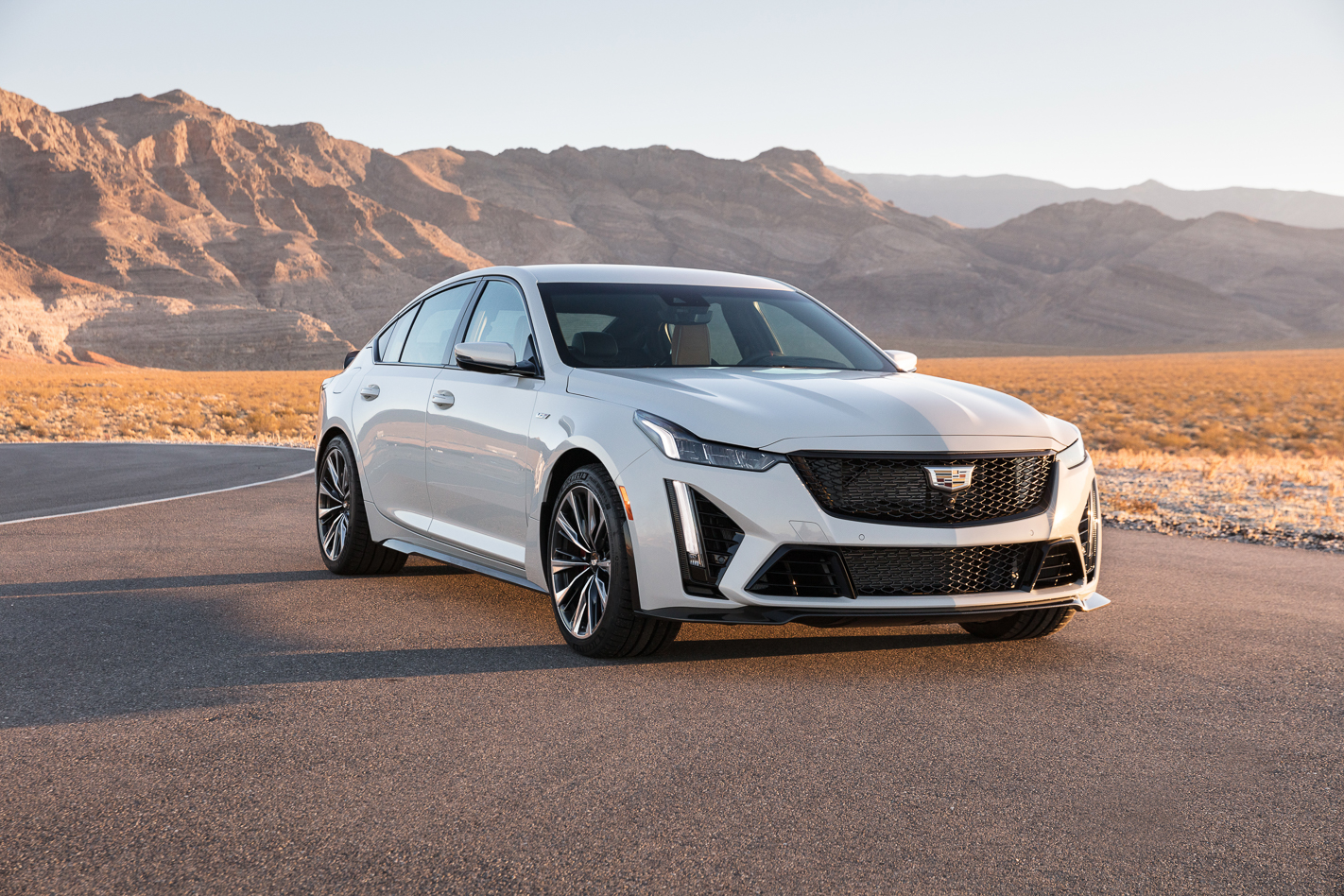
A 10-speed automatic transmission is available which allows the CT5-V to sprint from zero to 100km/h in 3.7 seconds. Cadillac says it’ll run on to a 320km/h top speed.
For the uninitiated, the CT5-V replaces the previous CTS-V large sedan, while the CT4-V replaces the smaller-sized ATS-V sedan.
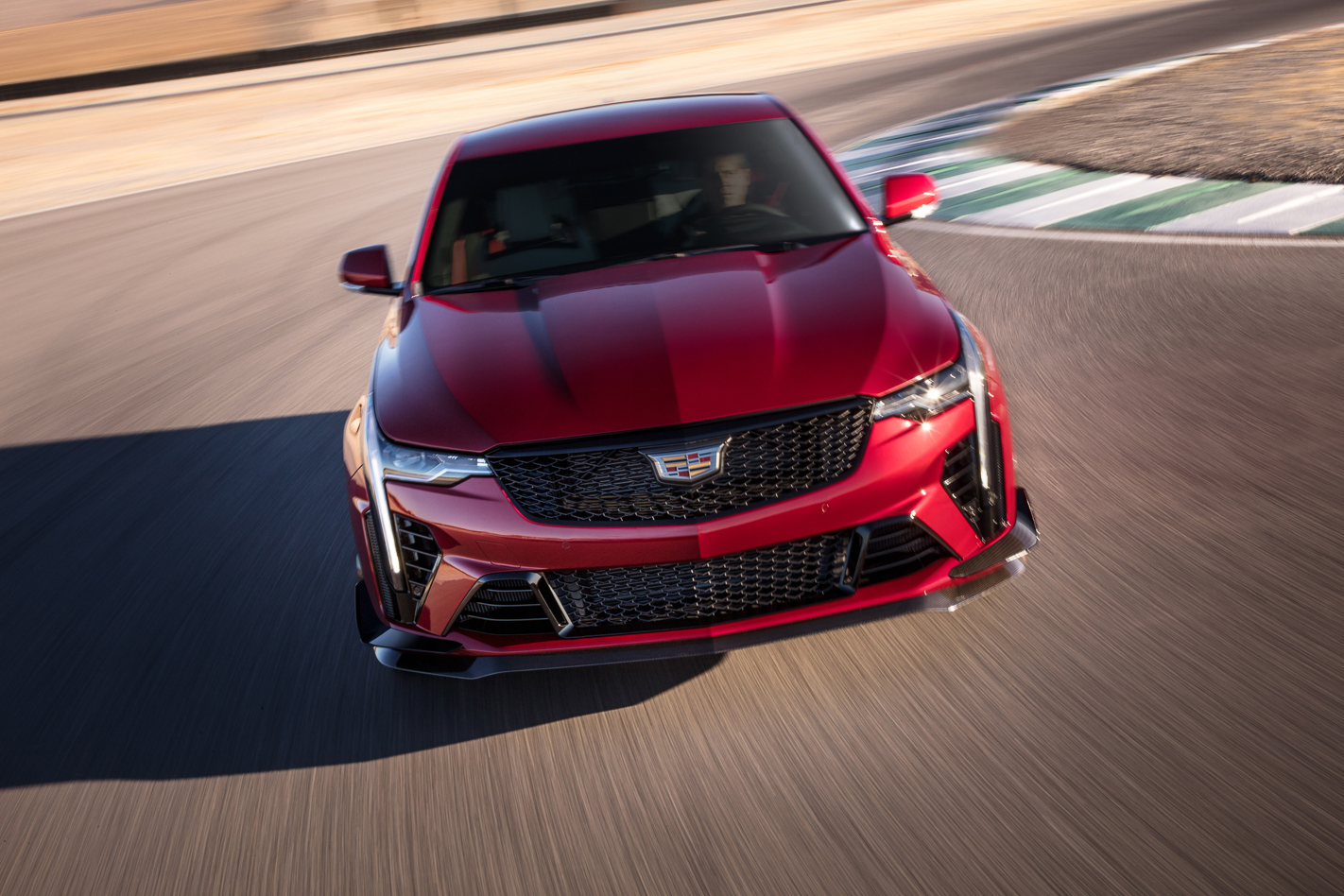
The CT4-V might not boast the same superlative performance as its bigger brother, but it’s still a track-honed super sedan.
It features a 3.6-litre twin-turbocharged V6 engine with 352kW and 603Nm, which Cadillac claims is good for a zero to 100km/h run in 3.8 seconds when mated to an automatic transmission. General Motors estimates the top speed of the CT4-V to be in excess of 300km/h.
Both Blackwings include an electronic limited-slip rear differential, Magnetic Ride Control adaptive suspension system (which Cadillac says is the fastest-reacting suspension system in the world), Brembo six-piston and four-piston calipers and Michelin Pilot Sport 4S tyres as standard.
Brakes are 380mm up front and 341mm at the rear on the CT4-V, and the heavier CT5-V wears 398mm front and 374mm rear stoppers.
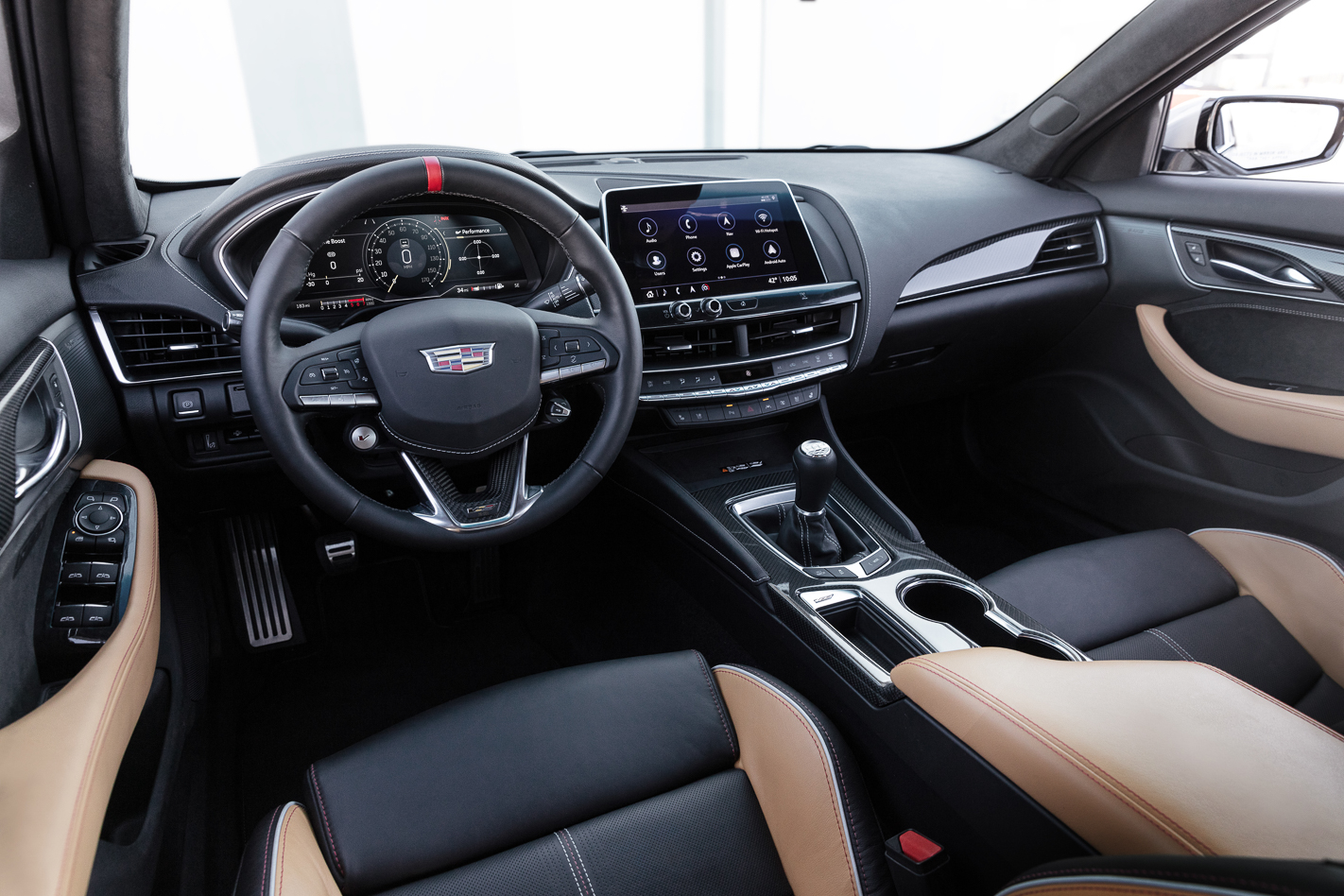
The CT5-V can be optioned with carbon-ceramic discs which reduce unsprung weight by 24kg.
With Cadillac headed towards an electrified future along with General Motors, it’s likely that these will be the last V-series cars with petrol engines.
“While these may be the last petrol vehicles we introduce, I can assure you that Cadillac’s commitment to performance will remain no matter what the propulsion system is,” said Rory Harvey, Cadillac global vice president.
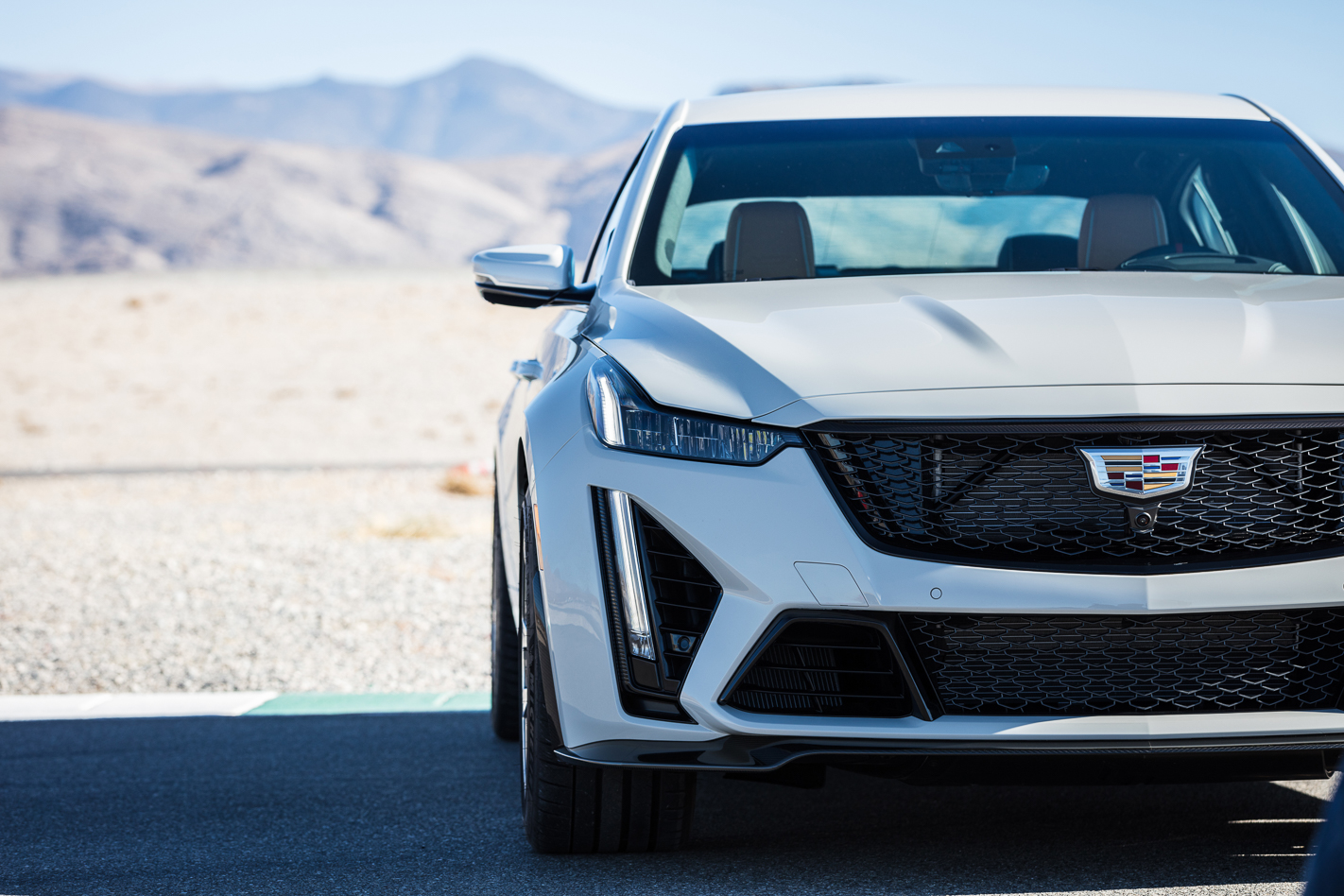
The CT5-V’s LT4 supercharged V8 is borrowed from the previous generation (C7) Chevrolet Corvette Z06, though plenty of new components feature such as a new supercharger, induction system and exhaust.
Its 498kW/893Nm outputs might not be enough to trouble the 534kW Dodge Challenger Hellcat, but instead of being a one-trick-pony at the drag-strip, Cadillac intends the new V-series twins for the race track.
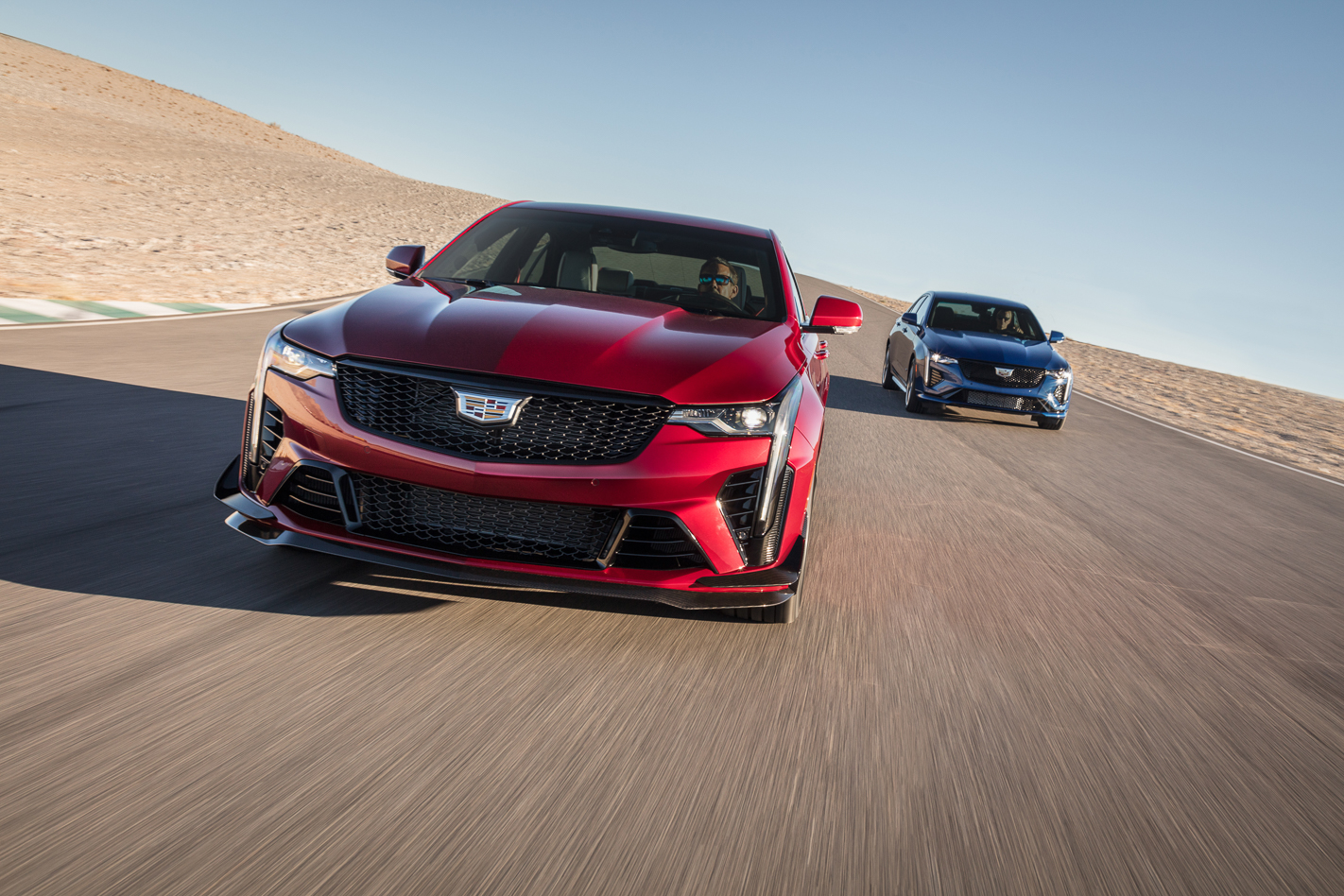
In that regard, Cadillac is aiming directly at German adversaries such as the new BMW M3, BMW M5 and Mercedes-AMG E63.
There were rumours earlier in 2020 that GMSV would begin importing models like these, with GMSV’s Chris Polites saying “they look exciting”.
“That’s all I can really say about them at this point in time. They’re not in our immediate-term plans,” he explained.
GMSV’s current plans involve the Chevrolet Silverado 1500 and the incoming C8 Chevrolet Corvette.
Step aside General Motors’ LS… there’s a new engine swap kid on the block.
Melbourne-based Herrod Performance has announced that the first shipment of Ford Performance 7.3-litre Godzilla crate motors have landed locally, with more on the way.
While the first shipment is already entirely spoken for, head honcho Rob Herrod stresses that there’s another shipment already inbound and selling fast.
Orders can be lodged through Herrod Performance with an expected lead time of six to eight weeks before landing on local shores.
The 7.3-litre Godzilla motor’s natural habitat can be found under the bonnet of the 2020 Ford F-250 SuperDuty, and yields 320kW at 5500rpm and a stout 644Nm at 4000rpm.
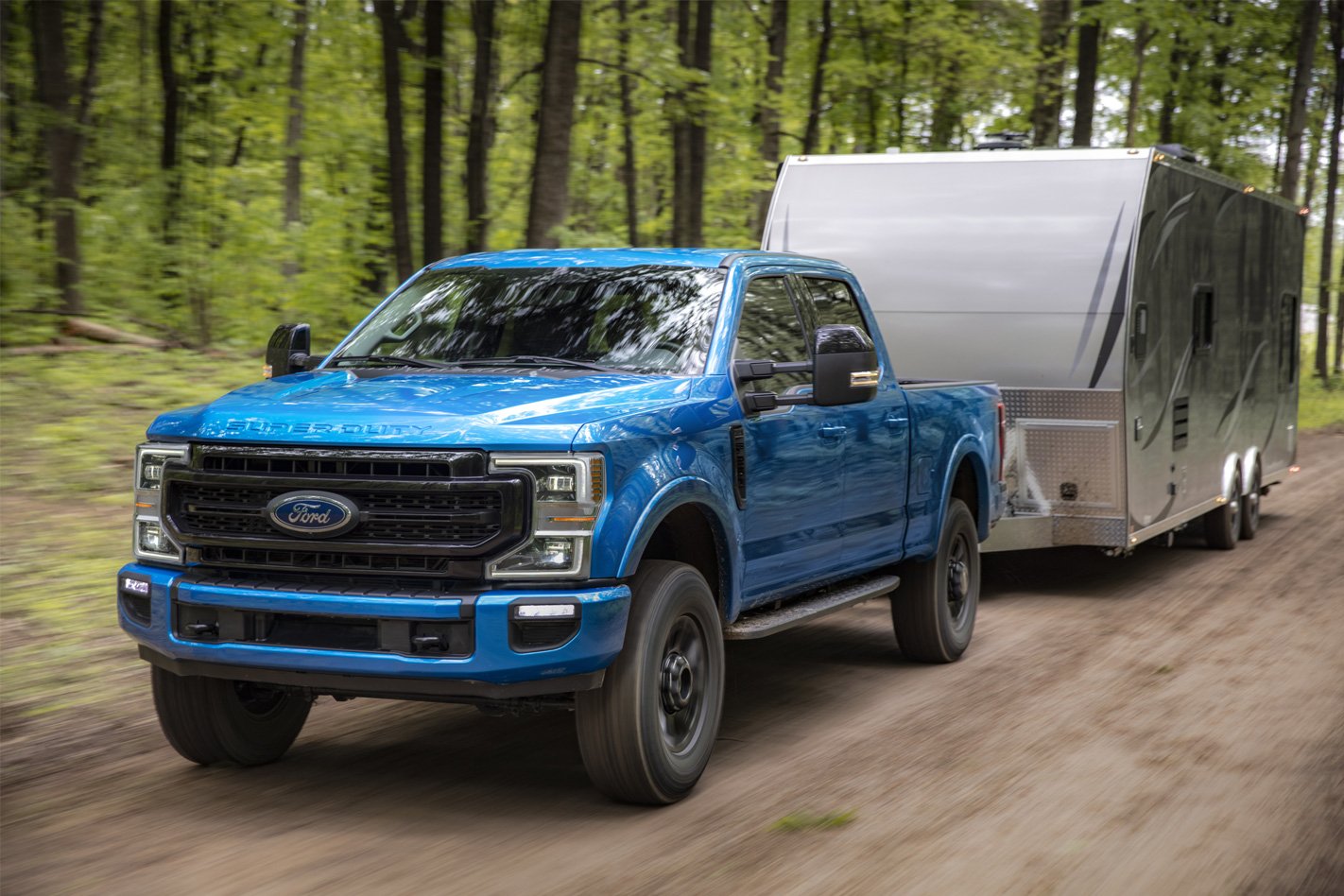
While peak power may seem modest for its size, the Godzilla motor is designed to be a torquey workhorse powerplant capable of towing and hauling with ease and reliability in its OEM configuration.
Dig a little deeper, however, and the Godzilla motor begins to look like a hot-rodder’s dream.
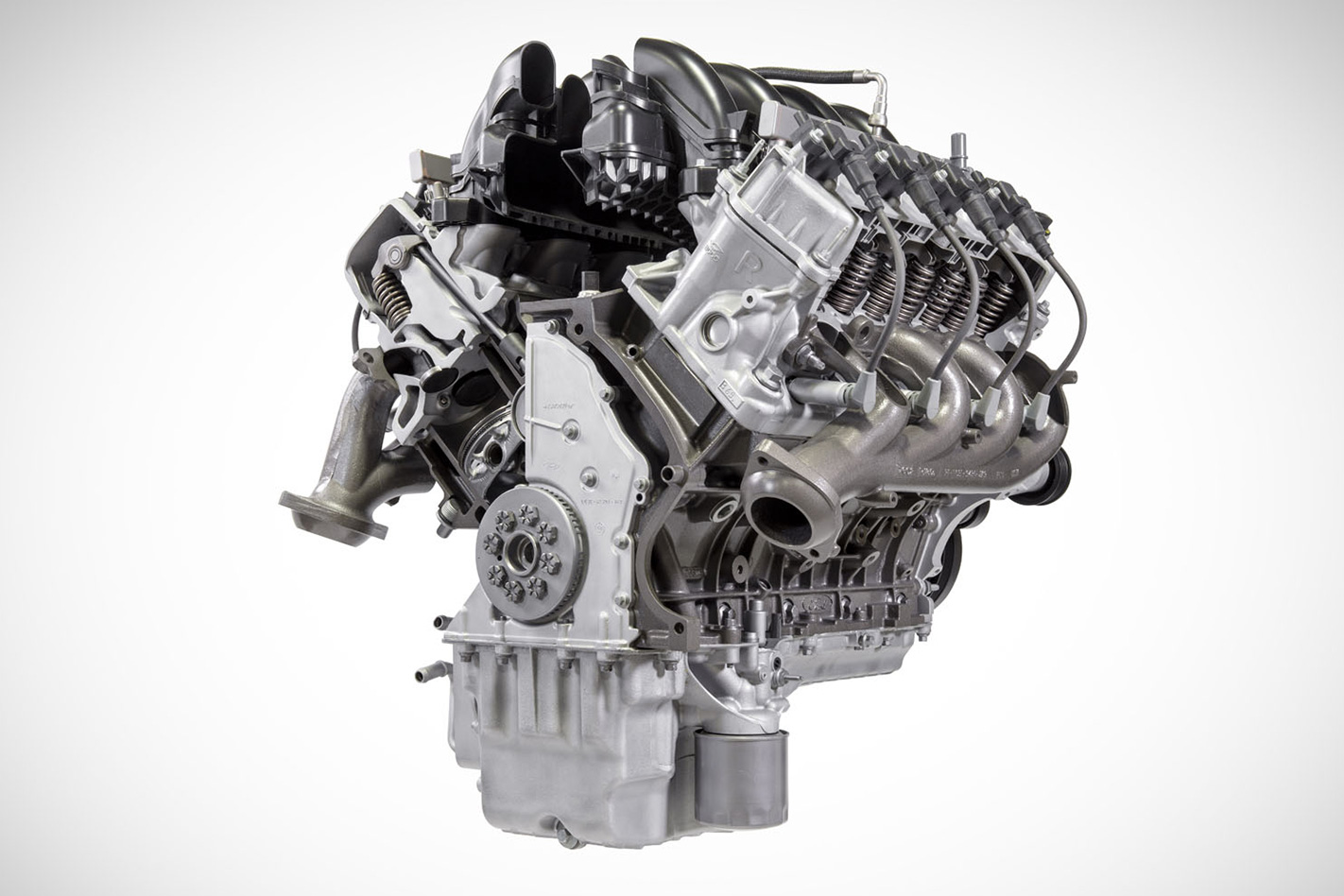
With a durable six-bolt cast-iron block and aluminium heads, the 7.3-litre mill boasts a forged crankshaft from the factory with 107.2mm cylinder bores, a 101mm stroke and 10.5:1 compression.
An ingenious cam-in-block design makes this package far smaller than traditional overhead-cam V8s.
The result? The 7.3-litre package is physically smaller than a 5.0-litre Coyote under the bonnet of the Mustang, despite weighing 61kg more, and more closely akin to the dimensions of a traditional Windsor.
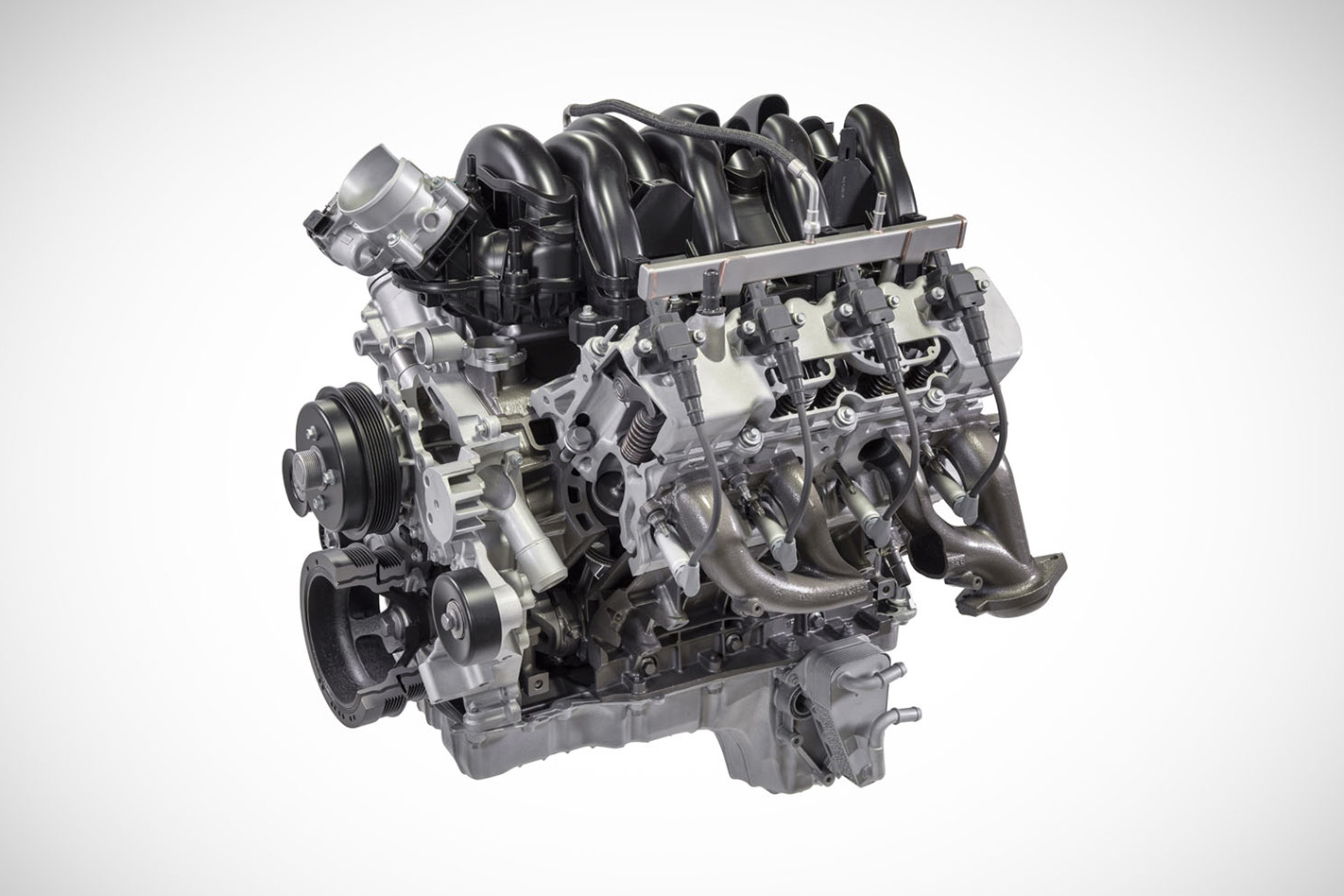
Variable cam timing and an innovative variable displacement oil pump allow for improved fuel economy in low-stress situations, bringing modern tech to a traditional pushrod design.
All Godzilla motors are assembled at Ford Performance’s engine plant in Windsor, in Ontario, Canada, and include a composite intake manifold with an 80mm throttle body, left and right exhaust manifolds, 7.75-litre aluminium oil pan/cooler, ignition coils and wires, production flex plate and factory lift brackets.
An impending Ford Performance Control Pack will allow Godzilla to be fitted in virtually limitless applications and will include throttle and airbox assemblies, powertrain control module and wiring.
The first Control Pack will be configured for Ford’s 10GR 10-speed automatic gearbox, which Herrod expects to be released before the middle of this year.
A manual-compatible Control Pack is also in the pipeline and is expected to be released later this year.
Herrod quotes a landed price of around $14,000, taking into account shipping and applicable duties.
As an official Ford Performance authorised dealer, the Melbourne outpost will also provide welcome local technical and warranty support for buyers, and have direct contact to Ford Performance development engineers such as Mike Goodwin (below).
With full access to Ford Performance’s catalogue of products, Herrod also fully expect to have their hands on the high-performance ‘Megazilla’ version when it’s available, as well as a race-oriented cast-iron block 5.0-litre Coyote, which are expected to arrive later in 2021.
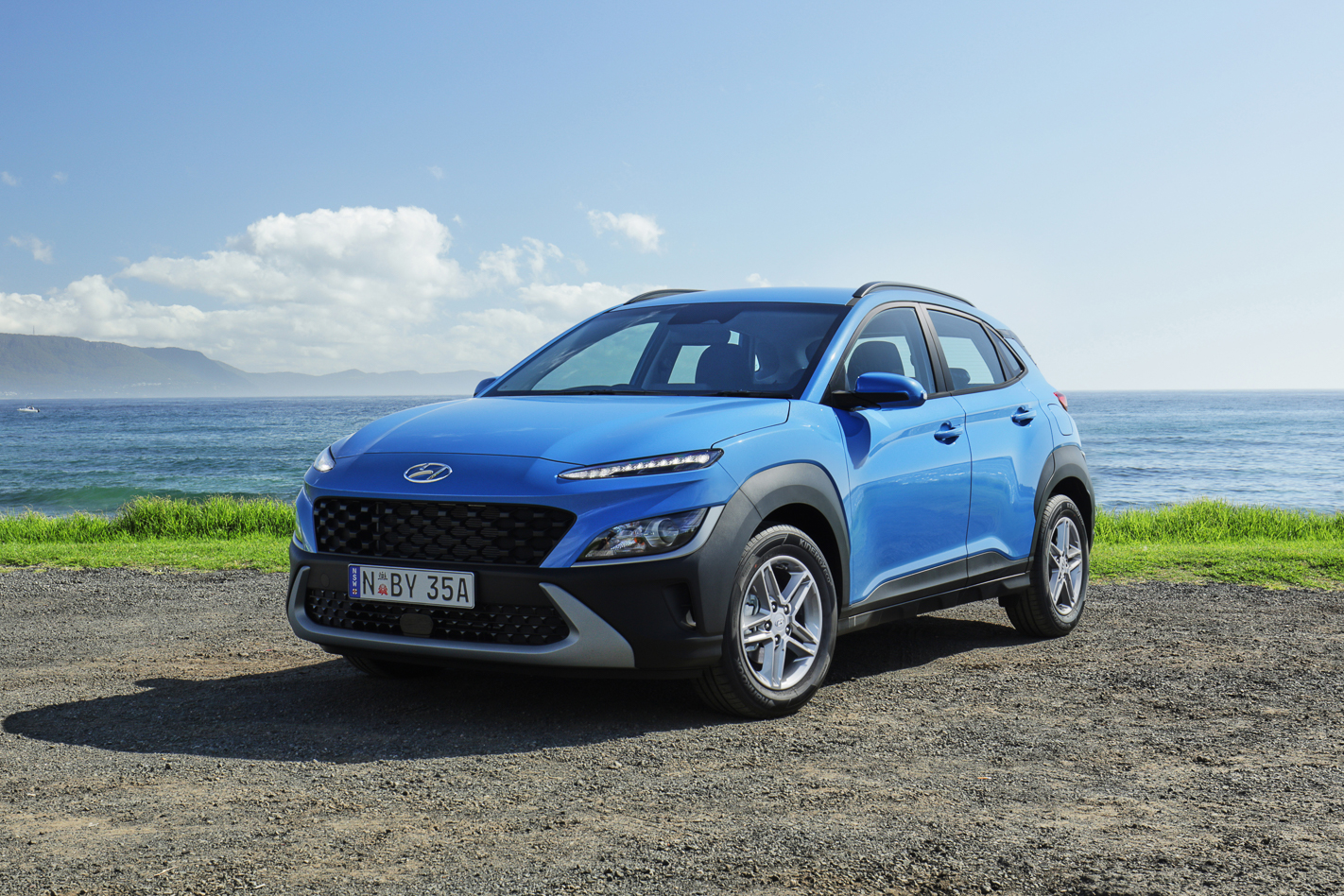
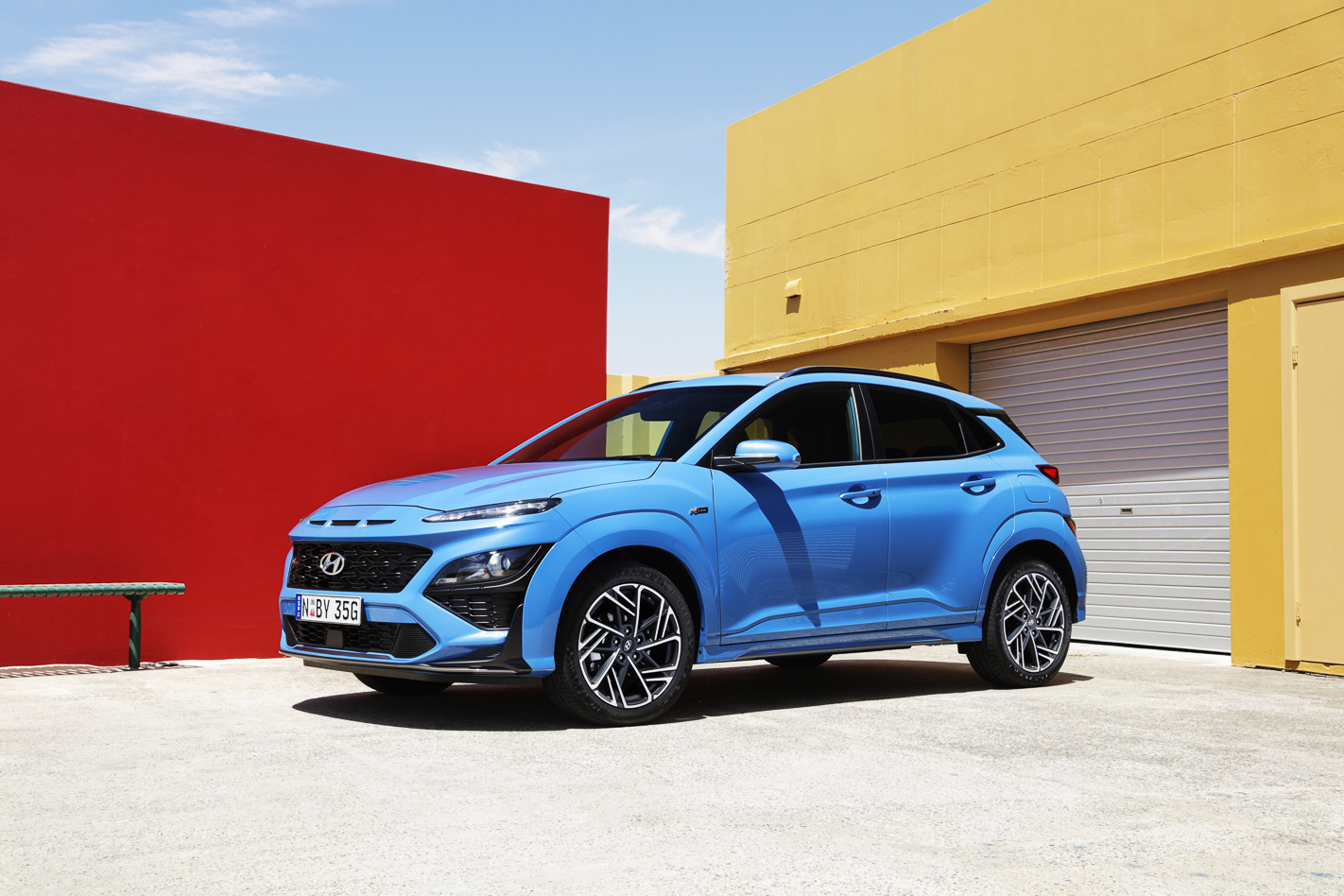
The updated Hyundai Kona range has arrived in Australia boasting new styling, advanced safety features, extra technology and more choice, though prices have risen across the board.
The line-up introduces two sporty N Line and N Line Premium variants to the range in anticipation of a Kona N model arriving in the second half of 2021.
The Kona electric will also rejoin the range with a facelifted design in March.
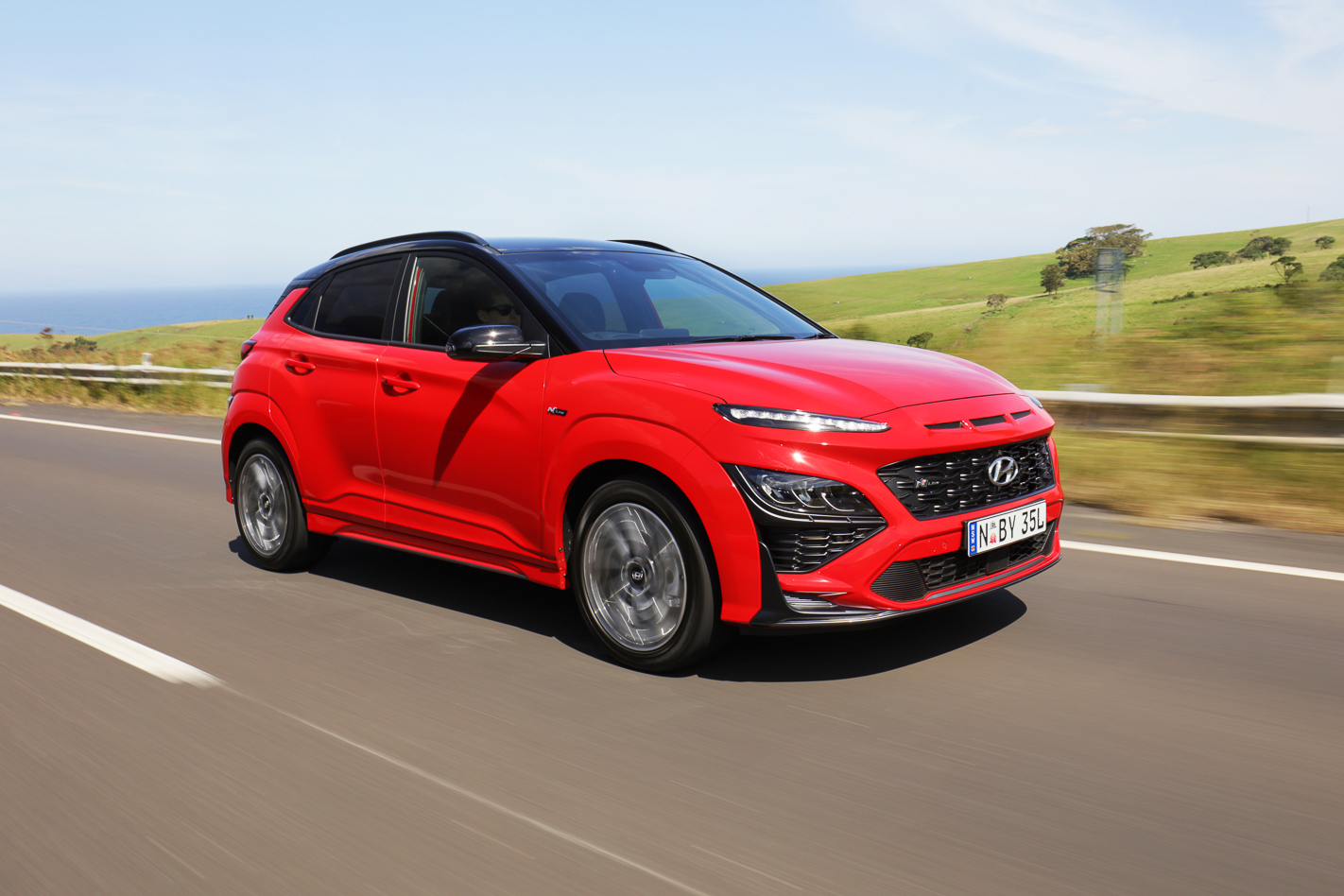
The six-variant Kona range is more expensive than before, starting with the $26,600 Kona (up $2300 over the old Kona Go), $28,200 Kona Active (up $2140), $31,600 Kona Elite (up $1000) and $38,000 Kona Highlander (up $1340).
The new Kona N Line costs $36,300 and the up-spec N Line premium caps off the range at $42,400.
To justify those price increases, extra equipment has been added as standard to every model grade which we will get into below.
Two engines underpin the updated range, with a new 110kW/180Nm 2.0-litre naturally-aspirated four-cylinder petrol engine powering the Kona, Kona Active, Kona Elite and Kona Highlander.
All are front-wheel drive and feature a continuously variable transmission (CVT) with eight simulated ratios that replaces the previous model’s six-speed automatic.
A 146kW/265Nm 1.6-litre turbocharged four-cylinder petrol engine is reserved for the N Line variants, which both feature all-wheel drive and a seven-speed dual-clutch automatic transmission.
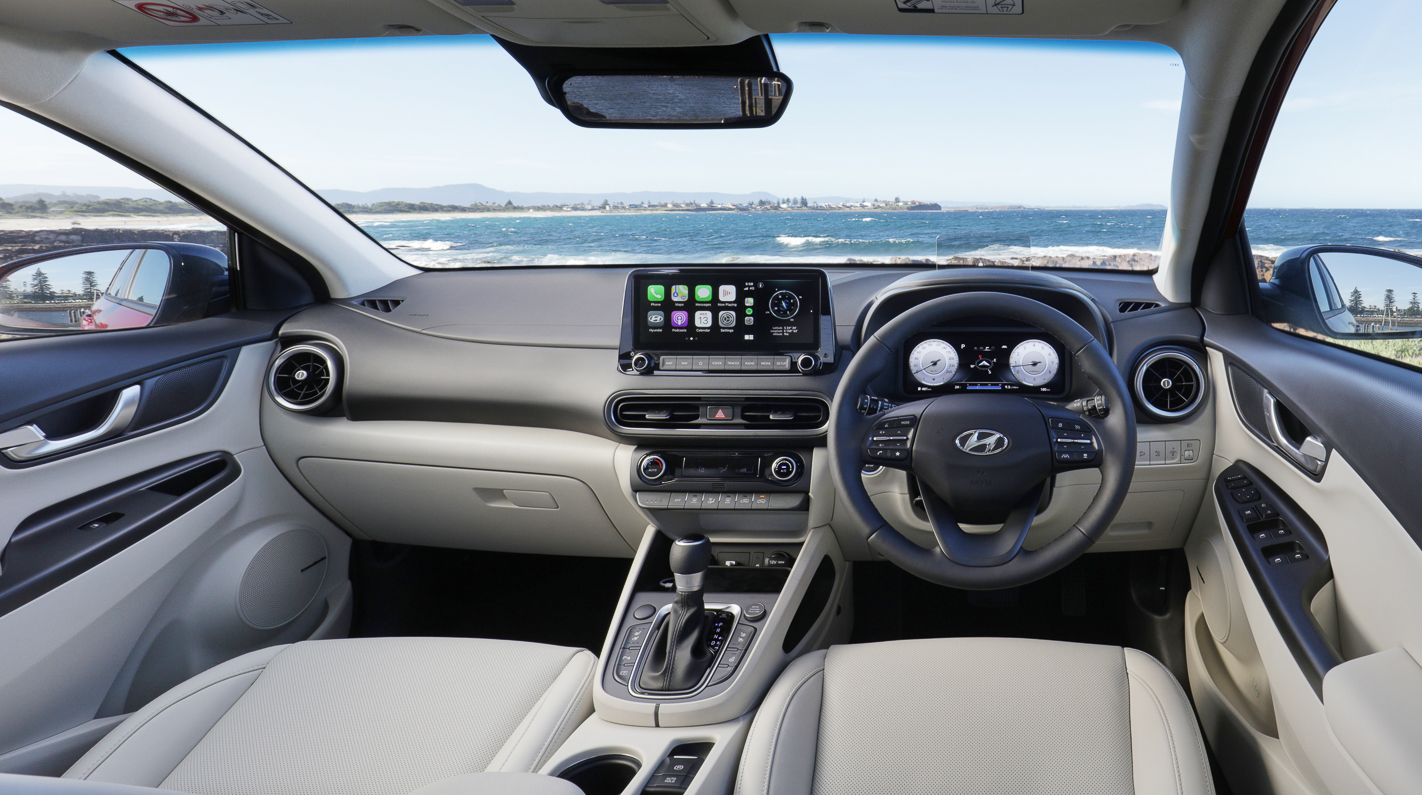
The entry-level Kona kicks off the range with equipment including an 8.0-inch infotainment system with Apple CarPlay/Android Auto smartphone mirroring, reversing camera, 4.2-inch display within the instrument cluster, LED daytime running lights, wireless phone charging, roof rails and an electronic parking brake. The 8.0-inch screen is new for 2021, as is the 4.2-inch instrument cluster display, wireless phone charging and electronic parking brake.
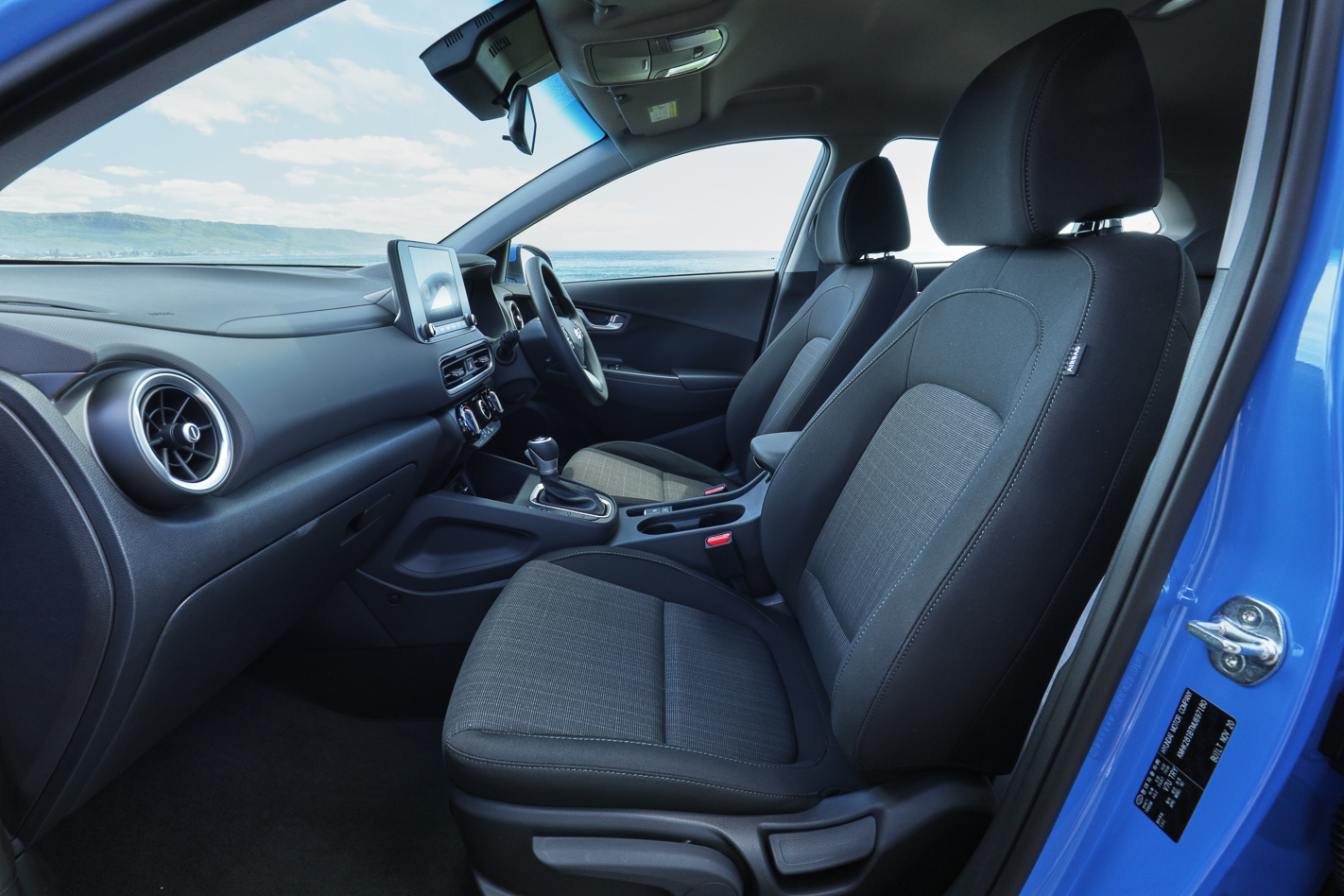
The Hyundai Kona also benefits from range-wide Hyundai SmartSense safety tech, which includes autonomous emergency braking, lane-keep and follow assist, adaptive cruise control with queuing function and a driver attention warning.
This is the first time an adaptive cruise control system with lane following assist has featured on an entry-level Kona variant.
The Kona Active betters the above equipment set with new leather upholstery, leather steering wheel and shifter, rear parking assist system and new 17-inch alloy wheels.
It also adds heated/power-folding exterior mirrors, map pockets and rear privacy glass over its equivalent 2020 variant.
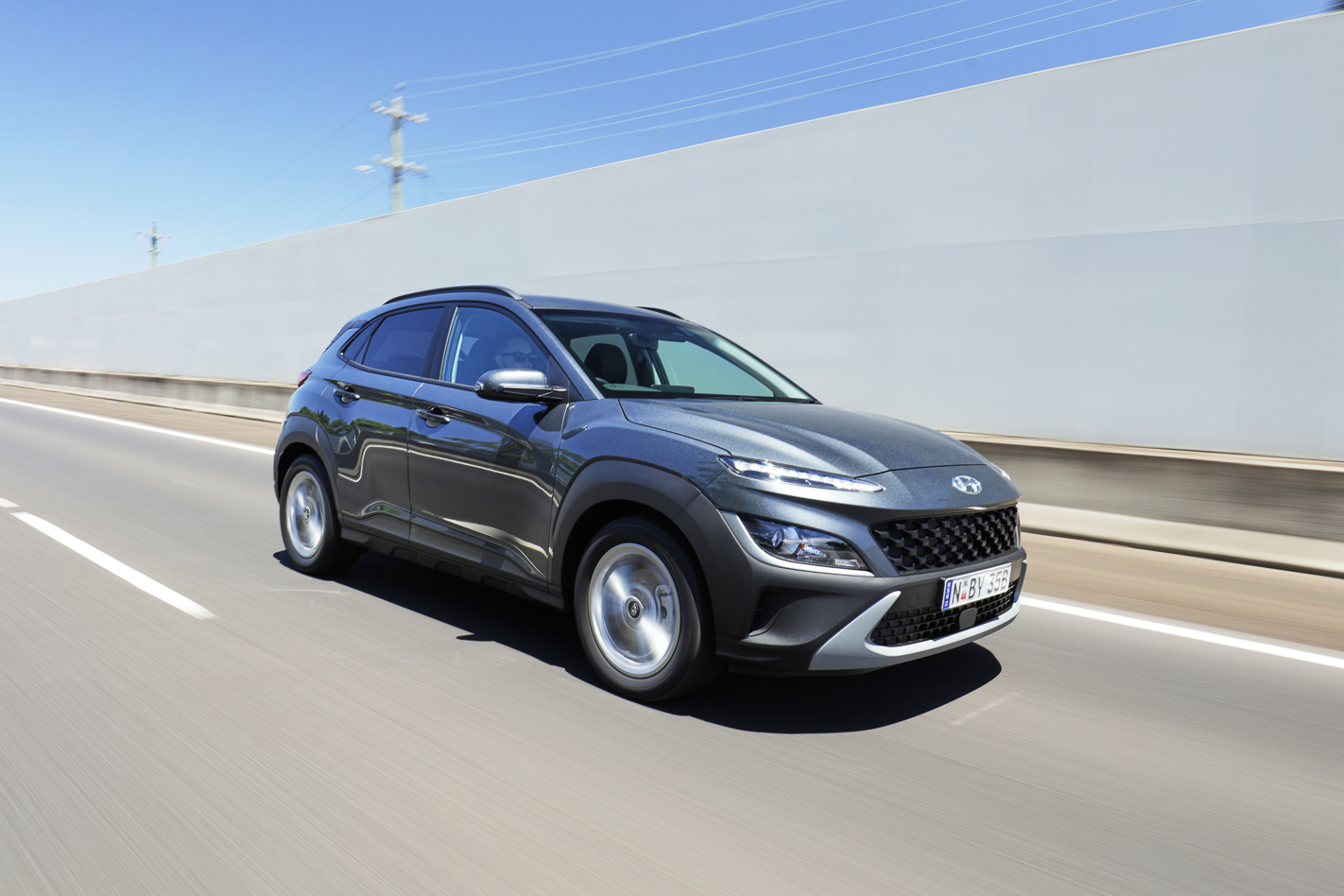
The Hyundai Kona Elite stocks a larger 10.25-inch infotainment screen and Harman Kardon eight-speaker sound system (new for 2021), climate control, smart key with push-button and remote start capability, carbon grey exterior cladding, gloss black grille and front fog lights.
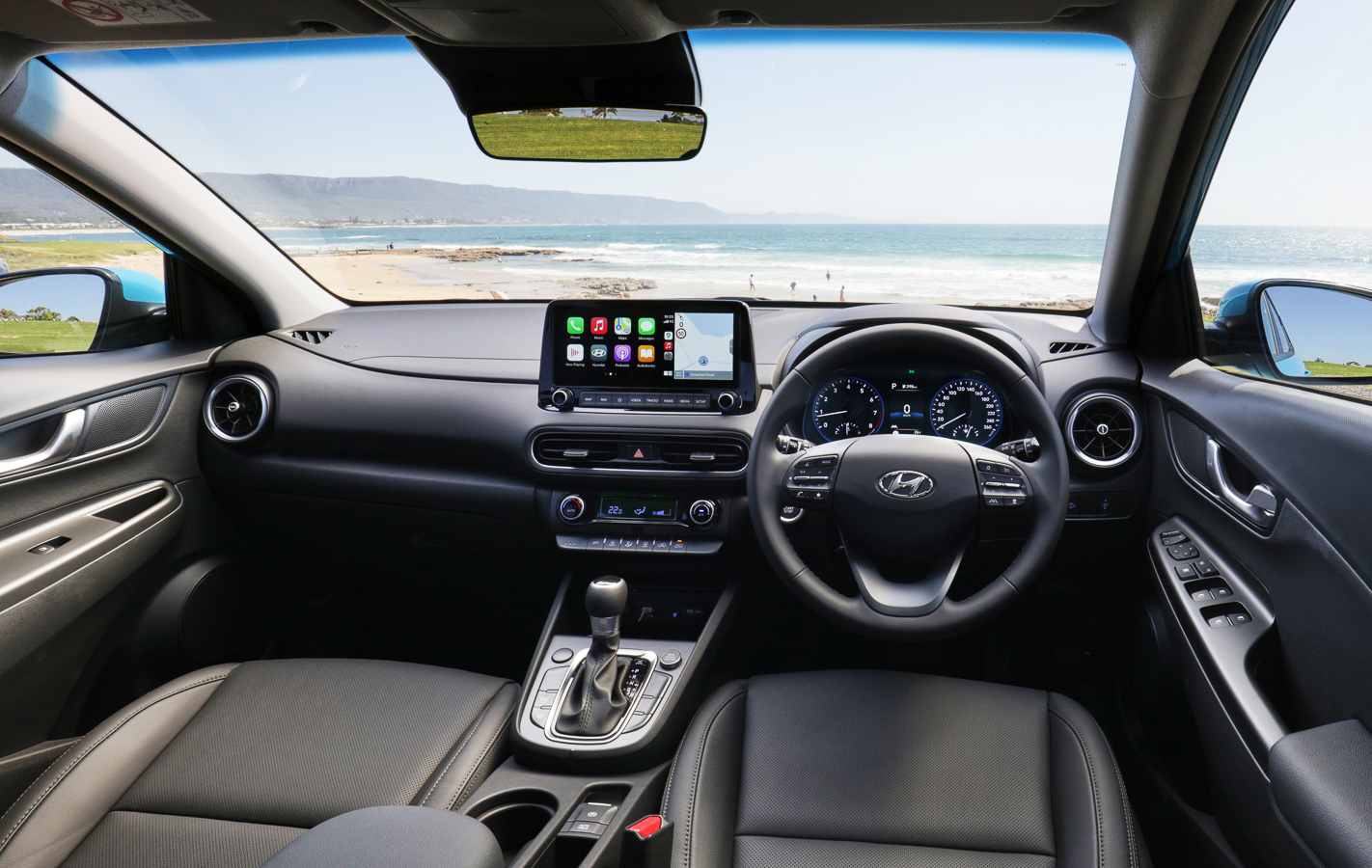
It also adds to the standard safety set with blind-spot collision avoidance assist, rear-cross traffic collision avoidance assist and a safe exit warning system.
These safety items were not previously available on the 2020 Kona Elite specification.
The high-end Kona Highlander features a new 10.25-inch digital instrument cluster, heated/ventilated powered front seats, heated steering wheel, heated outboard seats in the second row, LED headlights, head-up display, sunroof and 18-inch alloy wheels with Continental tyres. A high beam assist joins the safety kit.
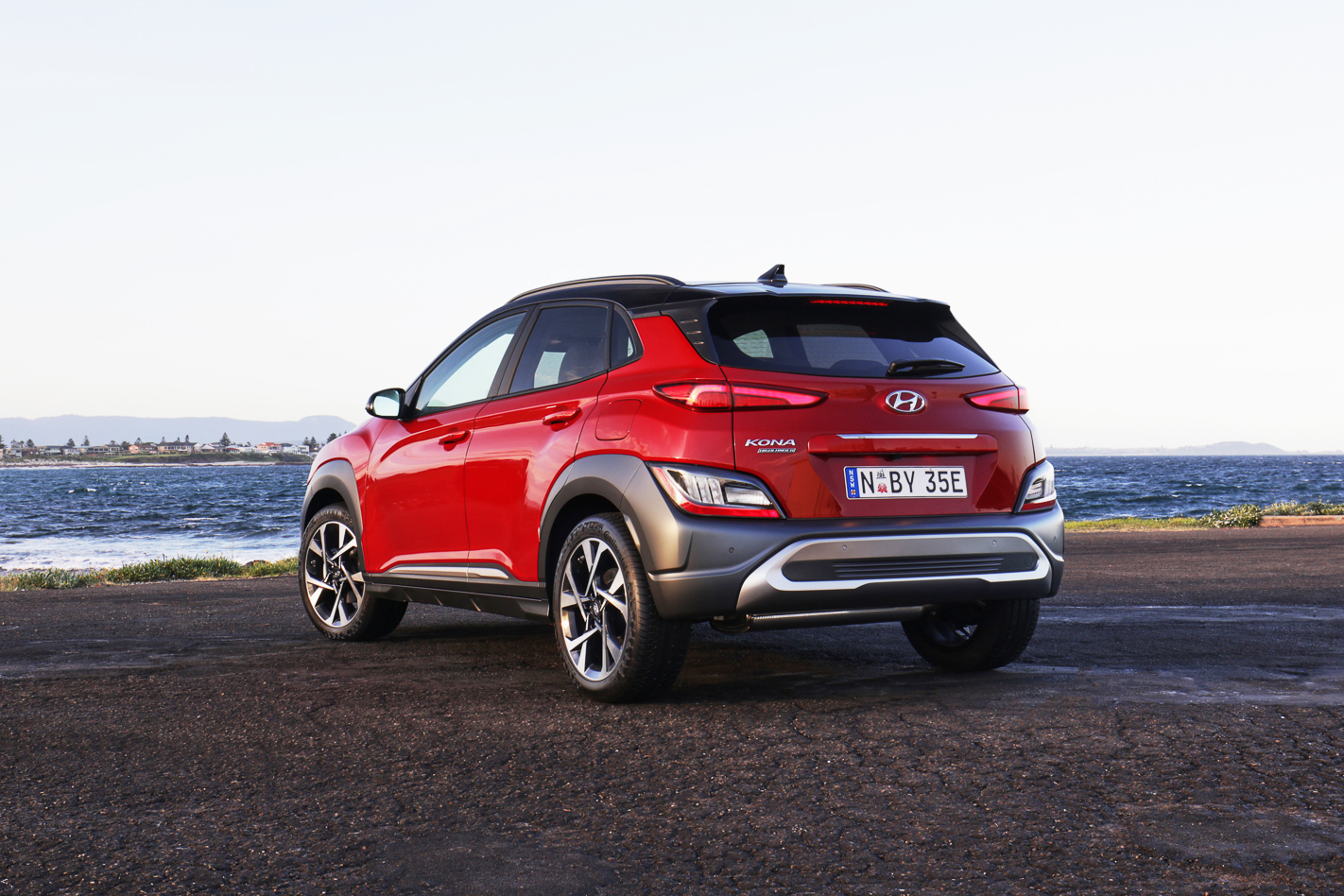
Turning towards the sporty variants, the N Line scores the 146kW/265Nm turbo engine, all-wheel drive, a multi-link rear suspension arrangement and 18-inch sports alloy wheels wrapped in Continental tyres.
Despite stocking the more powerful engine, the Kona N Line mirrors the specification of the Kona Elite. It misses out on the digital instrument cluster, heated/ventilated seats, head-up display and sunroof.
The N Line Premium adds those features back in, mirroring the specification of the Kona Highlander.
N Line variants are designated by exterior styling enhancements, N Line badging, N Line sports seats, red stitching and alloy pedals.
A beige interior can be added to the Kona Highlander for $295, while the two N Line variants are available with a contrasting black roof at no extra cost (the sunroof is deleted with this option).
The new Hyundai Kona range is covered under Hyundai’s five-year/unlimited-kilometre warranty.
It’s the third model as part of Hyundai’s ‘18 models in 18 months’ product offensive, following the facelifted Hyundai Santa Fe and new Palisade SUVs.
The new 2021 Hyundai Kona range is on sale now.
2021 Hyundai Kona Australian pricing
- Kona – $26,600
- Kona Active – $28,200
- Kona Elite – $31,600
- Kona Highlander – $38,000
- Kona N Line – $36,300
- Kona N Line Premium – $42,400
The Mercedes-AMG A45 S and Toyota Supra GTS might not be the most obvious bedfellows.
In fact, while I haven’t checked the entire back catalogue, I’m prepared to bet that this is the first time these two manufacturers have appeared in a comparison test together.
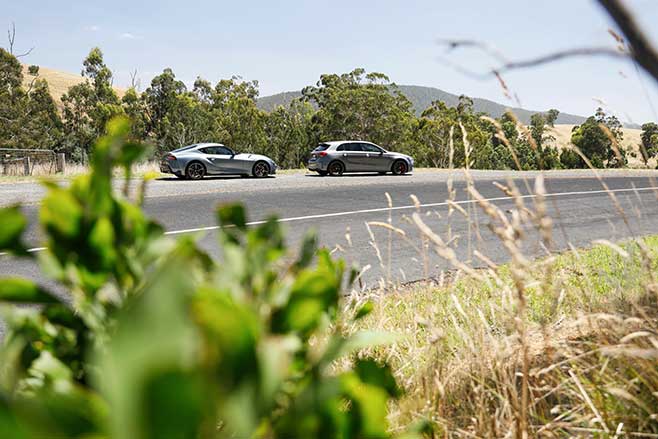
Nevertheless, we have a five-door hatch and a two-door coupe but for the purposes of this comparison we will effectively ignore the A45’s greater luggage and people-carrying capacity – if you need rear doors or seats, there is only one choice for you here.
The only thing we’re concerned with is which is the best driver’s car; after all, these are the two most potent machines you can buy for (just) under $100K but as we’ll discover, while they are within a whisker of each other in outright performance, the way they generate that performance differs dramatically.
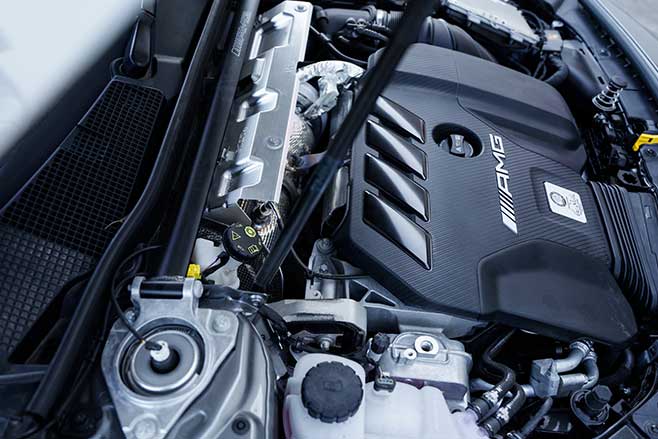
The A45 S is a known quantity but its numbers still require a second take: 310kW and 500Nm from a 2.0-litre turbocharged four-cylinder, allied to an eight-speed dual-clutch gearbox and all-wheel drive, resulting in a 0-100km/h claim of 3.9sec and an electronically limited top speed of 270km/h.
Consider that 20 years ago the Porsche 996 911 Turbo offered 309kW/563Nm and 0-100km/h in 4.2sec. In that context, the A45’s $94,920 price tag doesn’t sting quite so much.It feels like the Supra only appeared last month, but it’s already received its first update, albeit quite a mild one.
The GTS model now has a Supra logo on its red front brake calipers, there are a pair of under-bonnet strut braces to improve rigidity but, most importantly, an extra 35kW has been extracted from the B58 3.0-litre turbocharged straight-six.
Toyota hasn’t just fiddled with the boost, either; the compression ratio has dropped from 11.0:1 to 10.2:1.
Power lifts to 285kW produced between from 5800-6500rpm, and while the torque figure remains static at 500Nm it’s now produced from 1800-5000rpm rather than the 1600-4500rpm of its predecessor.
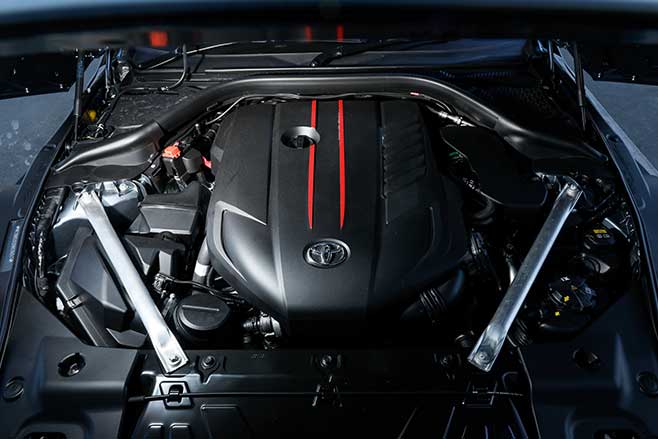
Toyota claims it shaves 0.2sec off the Supra’s 0-100km/h claim, now 4.1sec, while the top speed remains electronically limited to 250km/h.Is the extra grunt really there? From the driver’s seat it sounds the same and feels very quick, but then so did the previous model. Heathcote Raceway will provide the answer.
Our current benchmark Supra figures, recorded at The Bend during Performance Car of the Year 2020 testing, are 0-100km/h in 4.44sec and a 12.62sec quarter mile at 181.16km/h.
The Toyota is not an easy car to launch. Recording consistent 4.6-4.7sec 0-100km/h times is a piece of cake, but edging below that is to walk a Goldilocks tightrope of wheelsmen – not too little, not too much.
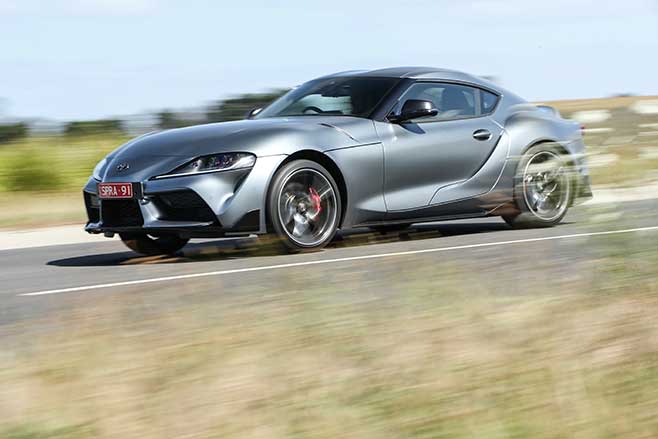
Thankfully, as more rubber goes down, along with some practice, the Supra’s figures start to fall, culminating in a best effort of 4.39sec to 100km/h.
Not a huge improvement, but an improvement nonetheless, and with the scope to shave a couple of tenths from that on a grippier surface.
Beyond 100km/h the Supra’s extra power becomes clearly evident, crossing the quarter-mile in 12.38sec at 188.4km/h, while hitting 200km/h takes 14.04sec.Remember I mentioned these two were close in outright performance? Well, the A45’s best effort to 200km/h was 14.07sec – you can’t get much closer than that.
However, as also mentioned, how the two get to this point is markedly different.
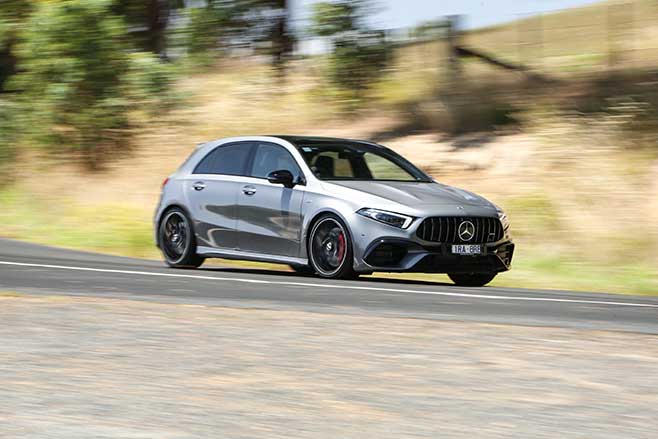
Launch control primed, the A45 bolts off the line and hits 100km/h in 3.94sec and will do so much more consistently than the Supra.
Its advantage has narrowed slightly by the end of the quarter-mile but 12.06sec at 187.03km/h is a clear victory.
Only above 150km/h does the Supra start to claw back ground, which is primarily a function of its shorter fifth gear.Gearing isn’t the world’s most exciting topic – you wouldn’t bring it up at a dinner party – but both these cars take unusual approaches.
Mercedes-AMG figured out a while ago that the secret to blistering acceleration times isn’t just lots of power and all-wheel drive but super-short gearing.
In the A45 first is done at 54km/h, second out of ideas at 77km/h and third only runs to 118km/h, fourth and fifth then stretching out substantially.
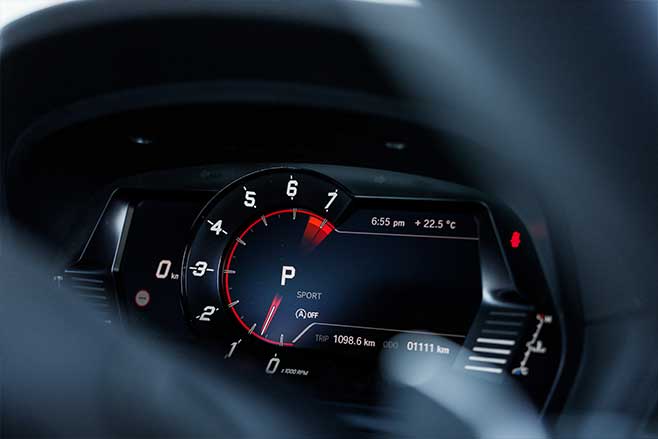
The Supra’s gearing is more evenly spaced but still incredibly short for a car with this amount of grunt: 54km/h (1st), 84km/h (2nd), 130km/h (3rd), 164km/h (4th), 215km/h (5th), and each successive gear running into the 250km/h limiter.On the road, this basically means you’re always a gear higher than you expect to be, but such is the response and power band of these cars that it doesn’t catch them off guard.
This is probably to be expected in the Supra, with its larger engine developing peak torque from just 1800rpm, but the A45’s 155kW/litre and 5000rpm torque peak suggests an overnight stay in lag city before anything meaningful occurs.Thankfully not, for the A45’s M139 engine defies all logic. Of course, 310kW and 500Nm from 2.0 litres and four cylinders isn’t anything new – tuner cars have been doing it for decades – but for such an engine to have normal servicing intervals, a full manufacturer warranty and last the life of the car is unheard of.
Then there’s the power delivery.
Like Porsche with its 911 Carrera models, AMG has mapped the A45 to more closely replicate the feel of a naturally-aspirated engine; there is a slight hesitation while the turbo wakes up at low rpm, but from there power builds progressively through the mid-range before the tacho needle attacks the 7000rpm redline with unbridled ferocity.
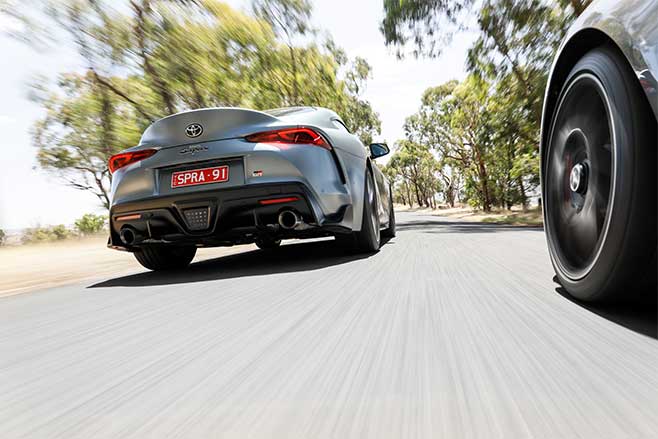
Despite the monstrous outputs, it doesn’t feel in the least bit strained and barks out a hard-edged touring-car style note.
Another area in which AMG has taken a big step forward is transmission programming.
Fast Mercs have historically been lackadaisical in their response to downshift requests but while the new A45 can occasionally feel recalcitrant, that’s more a function of the odd gearing than the gearbox itself – basically, if it can give you a shift it will, zinging the tacho around to 6500rpm on downshifts along with the usual whip-crack upshifts.
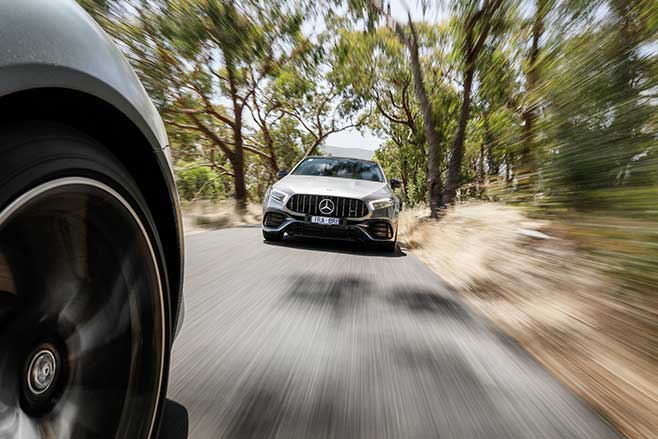
The Supra takes a different tack. Its 3.0-litre six hits hard early and tapers off beyond 6500rpm, but that still leaves almost 5000rpm of useable power to play with.
Its softer, mellower sound is more traditionally pleasing but doesn’t have the same attitude.
There’s little to choose between the two in terms of gearboxes; while the Supra has a traditional torque converter auto instead of a dual-clutch, its shifts are quick enough and though it will occasionally refuse a downshift, like the AMG this is more a consequence of the super-short gearing.On a narrow, winding road the Supra is fun. Obviously there’s a lot of component parts that make up the experience but, in essence, they combine to offer the one thing you want from a sports car.
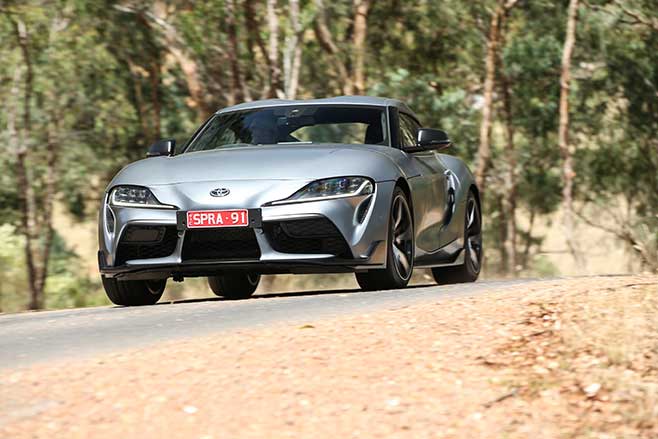
It’s not particularly light at 1505kg, but the weight feels low and centred because there’s an inherent agility in the Toyota.
It rotates very well with strong front-end grip, a process that can be easily assisted with a hefty helping of throttle – it’s classic front-engine, rear-drive dynamics.
The steering is quick at just 2.1 turns lock-to-lock, but it’s very linear in its responses – though selecting Sport adds weight but little else.
Happily, an Individual mode allows the engine, steering and suspension to adjusted separately as road surface or driver preference dictates.It’s very easy to settle into a quick, comfortable flow with the Toyota, though as the pace increases there feels to be a slight disconnect between the steering’s rate of response and that of the chassis, the latter being a fraction of a second behind the former.
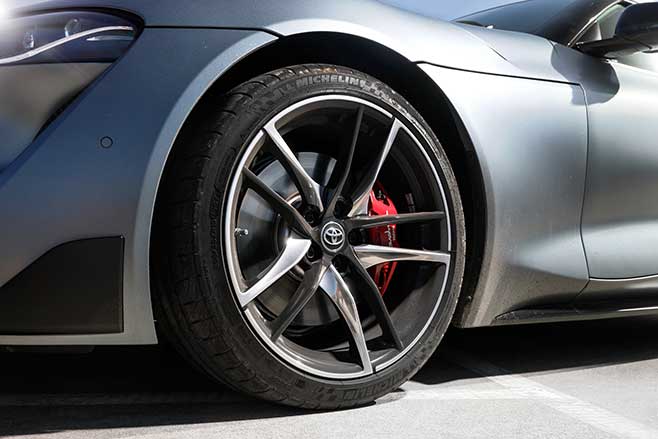
Bumpy roads also require caution as the Supra can be a wild, bucking and bouncing ride, the short wheelbase (almost 300mm less than the A45) keeping the driver busy with a constant need for correction.
Traction is strong, but the extra power has the rear end squirming satisfyingly from a standing start and with the electronics relaxed power oversteer is there for the taking in the first three gears.
On the same narrow, winding road, the Merc’s acceleration is puckeringly brisk, the steering tugging left and right as the front wheels follow ridges and cambers.
Nothing too untoward, but it focuses the mind in something this fast.
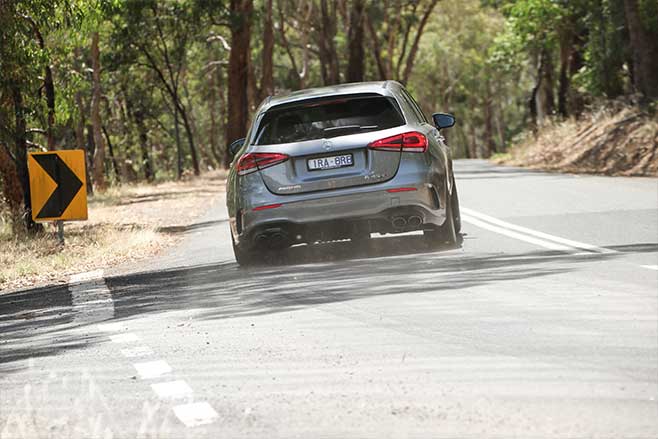
Like in the Supra, bumpier roads can trouble the A45’s short-travel suspension, but all-wheel drive, slower steering and a more substantial footprint means the experience isn’t as frenetic.In fact, in Comfort or Sport at a quick but comfortable pace, Merc’s ultimate hot hatch reveals little of its personality. It doesn’t feel particularly comfortable, either, primarily due to the steering.
After the Supra it feels slow and unresponsive, lacking the same off-centre immediacy, but then there seems to be a sudden jump in response once you pass a quarter-turn of lock.
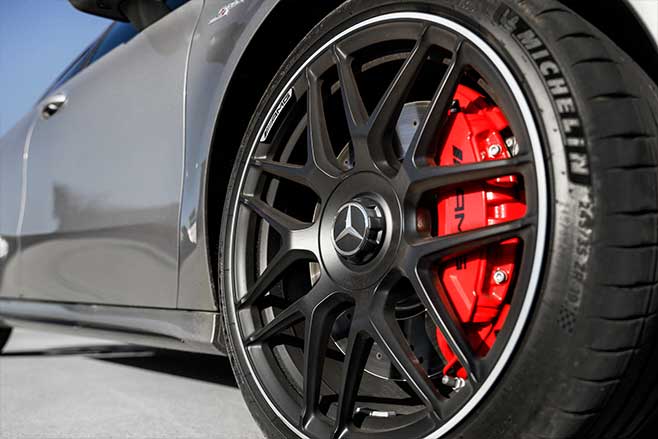
You just need to up the pace. The new A45 expects, nay demands, you drive the wheels off it and in doing so you discover AMG has listened closely to any and all criticisms of the original.
Even in the stiffer damper modes there’s compliance, giving the 245/35 Michelin Pilot Sport 4 S rubber the best chance possible of staying in contact with the tarmac; you soon become used to the larger inputs the steering requires but it’s also far less important than previously thanks to a thorough overhaul of the 4MATIC system.
I’ve never driven an all-wheel-drive car that rotates as quickly as the A45, though. As soon as you apply the throttle it pivots sharply to such a degree that it forces a driving style adjustment; you need to wind lock off much earlier than you expect as the diffs have completed much of the turn for you.
Combine this with a chassis that has the adjustability of a well-honed front-drive hot hatch, and suddenly you have a smorgasbord of cornering options previously unavailable to A45 drivers.
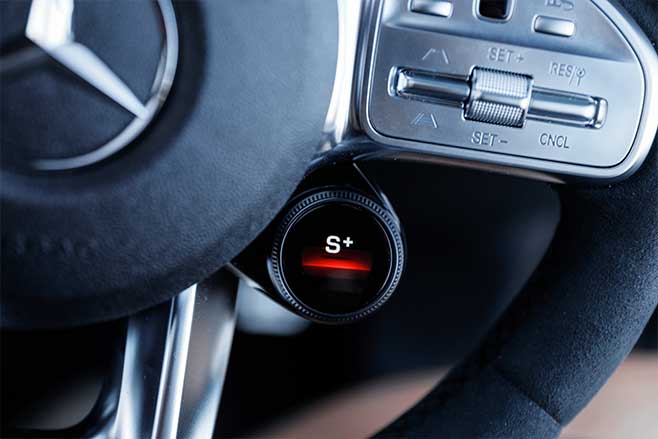
Should the rear end edge wide under brakes, add a bit of throttle to straighten the ship; if the front pushes wide, instead of needing to wait for it to re-connect a dose of accelerator fixes the understeer by rotating the rear; finally, if everything is tidy mid-corner, a hefty helping of power will produce the sort of oversteer that V8 AMG drivers will be familiar with.
The A45 has clearly been set up to behave in this manner and as such it could be called contrived, but when the end result is this enjoyable, does it really matter?It works on track, too. Against expectations, the tight confines of Bryant Park Hillclimb doesn’t suit the A45.
It feels hemmed in and many of the corners sit smack-bang in the middle of second and third gear.
Having also tried the car previously at Winton and Phillip Island on a more traditional circuit the A45 is awesome, its combination of stability and adjustability making it confidence-inspiring yet hugely enjoyable.
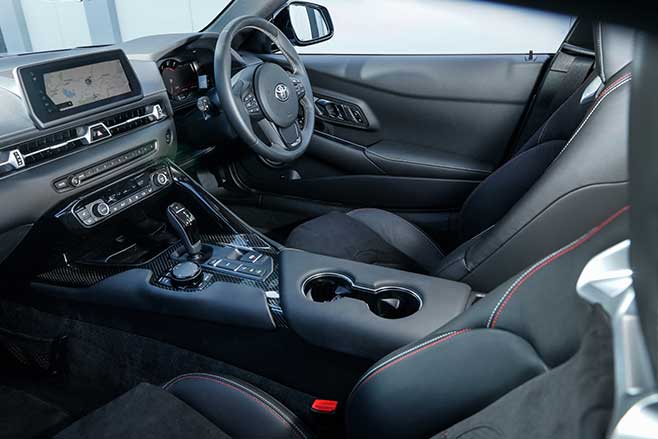
Swap the circuit for the daily grind and, again, there is little to split the two (discounting the A45’s five doors and five seats, of course), though for different reasons.
Both have fairly firm rides with just enough give to prevent complaint but road noise is a price that must be paid for the performance on offer.
The Supra’s driving position is superior, albeit in a much ‘cosier’ interior, and overall quality is of a higher level but storage space is at a premium and there’s no smartphone mirroring.
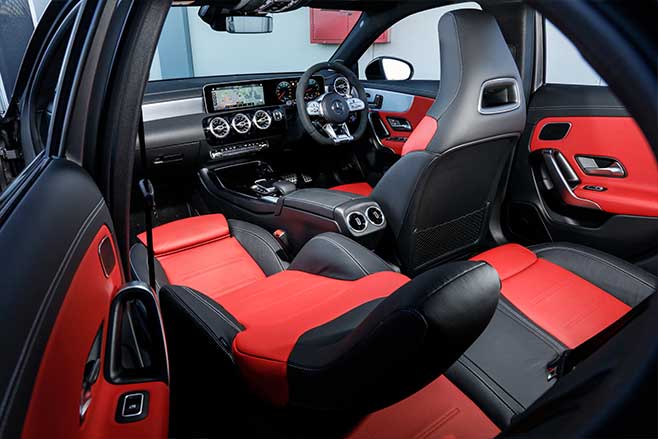
The A45’s highs are higher, particularly in terms of design and equipment, but the proliferation of cheap materials throughout the cabin is disappointing in a $100,000 car.But it’s also forgivable, because the mechanicals must cost a bomb.
If you’ve ever wondered what the ultimate evolution of the Mitsubishi Lancer, er, Evolution would be, then the A45 S answers that question.
It’s a vast improvement on its predecessor; not just faster but much more engaging and enjoyable at the limit.
But then so it should be, as the price tag has increased by almost $20K.
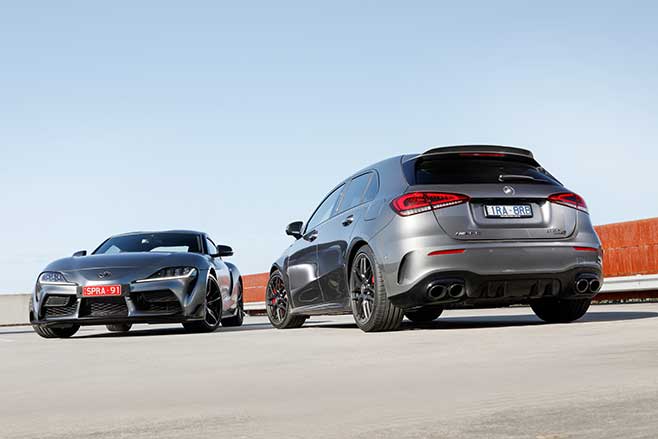
The engine is berserk, the bandwidth is broader and on the right road it’s a riot, but it does need the right road.
In comparison, the Supra works pretty much everywhere and is also more enjoyable when you’re not driving like a maniac.
If you’re prepared to forgo a few fripperies, the lower-spec GT also offers exactly the same experience for $10K less, which is a handy price advantage.
In the end, this test wasn’t so much Germany versus Japan as technology versus tradition.
In this instance, tradition gets the nod by the smallest of margins.SPECIFICATIONS
Mercedes-AMG A 45 S
4.5/5
Pros: Amazing engine; new-found playfulness Cons: Cheap interior bits; road noise
Body: 5-door, 5-seat hatch Drive: all-wheel Engine: 1991cc inline-4cyl, DOHC, 16v, turbo Bore/stroke: 83.0 x 92.0mm Compression: 9.0:1 Power: 310kW @ 6750rpm Torque: 500Nm @ 5000-5250rpm Power/weight: 200kW/tonne Transmission: 8-speed dual-clutch Weight: 1550kg Suspension: struts, coil springs, adaptive dampers, anti-roll bar (f); multi-links, coil springs, adaptive dampers, anti-roll bar (r) L/W/H: 4445/1850/1412mm Wheelbase: 2729mm Tracks: 1579/1558mm Steering: electrically assisted rack-and-pinion Brakes: 360mm ventilated/drilled discs, 6-piston calipers (f); 330mm ventilated/drilled discs, single-piston calipers (r) Wheels: 19 x 8.5-inch (f/r) Tyres: 245/35 ZR19 (f/r); Michelin Pilot Sport 4 S Price: $94,920Toyota Supra GTS
4.5/5
Pros: Agile, natural handling; extra grunt Cons: Road noise; small cabin; GT is $10K cheaper
Body: 2-door, 2-seat coupe Drive: rear-wheel Engine: 2998cc inline-6cyl, DOHC, 24v, turbo Bore/stroke: 82.0 x 94.6mm Compression: 10.2:1 Power: 285kW @ 5800-6500rpm Torque: 500Nm @ 1800-5000rpm Power/weight: 189kW/tonne Transmission: 8-speed automatic Weight: 1505kg Suspension: struts, coil springs, adaptive dampers, anti-roll bar (f); multi-links, coil springs, adaptive dampers, anti-roll bar (r) L/W/H: 4379/1854/1294mm Wheelbase: 2470mm Tracks: 1594/1589mm Steering: electrically assisted rack-and-pinion Brakes: 348mm ventilated discs, 4-piston calipers (f); 345mm ventilated discs, single-piston calipers (r) Wheels: 19 x 9.0-inch (f); 19 x 10.0-inch (r) Tyres: 255/35 ZR19 (f); 275/35 ZR19 (r) Michelin Pilot Super Sport Price: $97,126
