
United States President Joe Biden’s decision to revamp the 645,000-strong US Government fleet with electric vehicles has the potential to boost the total number of EVs in petrol-hungry America by 40 per cent
It’s lead to calls for Australian state and federal governments to do the same.
According to Electric Vehicle Council CEO Behyad Jafari, fleets account for 52 per cent, or about half a million, of Australian annual vehicle sales
Such a move would provide a huge boost to local EV sales and certainty for vehicle manufacturers and investors in related infrastructure, such as charging networks.
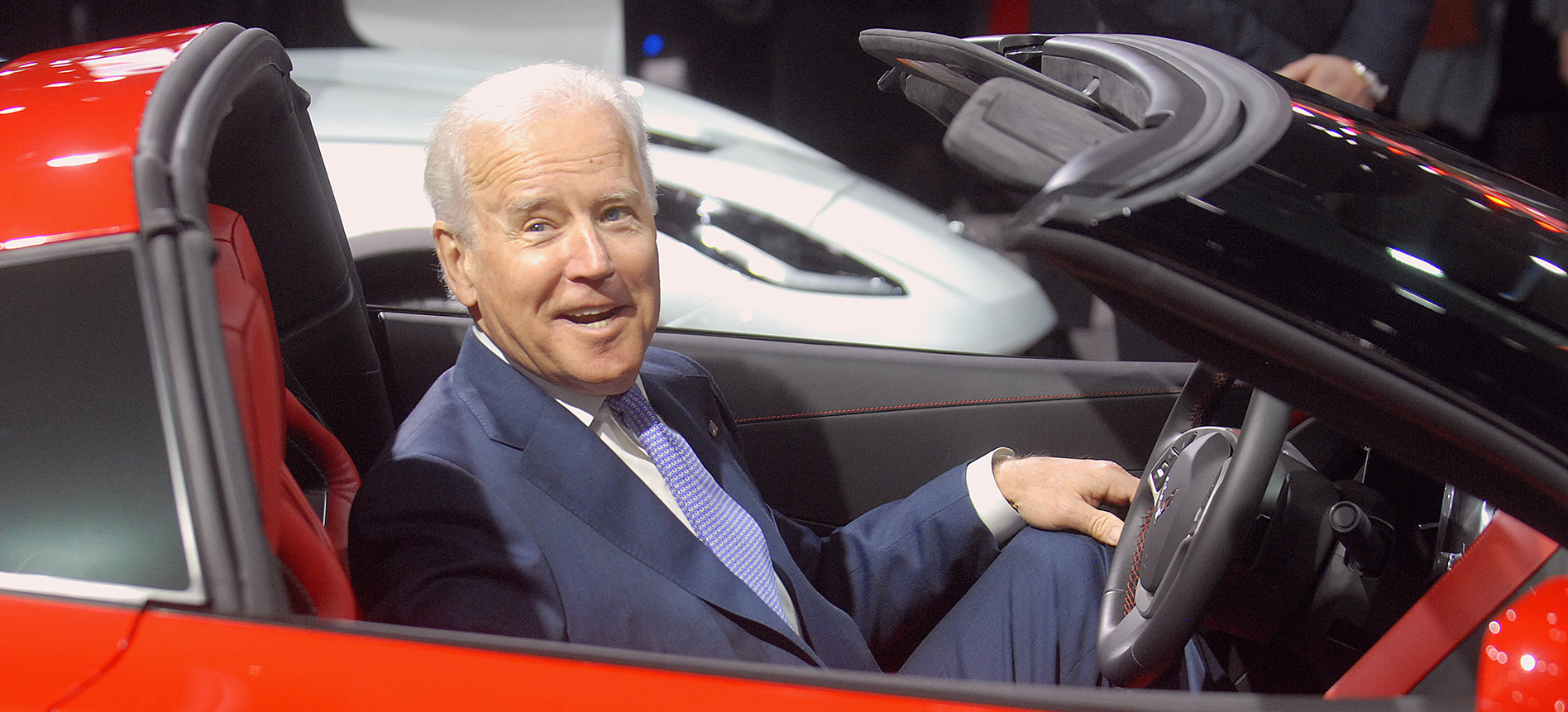
Jafari said it would also encourage corporate fleet buyers to overcome their hesitation to go electric. So far, only the South Australian and ACT governments have committed to electrifying their vehicle fleets.
Federal Chamber of Automotive Industries (FCAI) Chief Executive Tony Weber agrees, telling WhichCar the Biden Administration’s decision will encourage manufacturers to produce more models – thus increasing the economy of scale that should result in an initial drop in EV prices.
He said it would also drive further investment in research and development that will lead to cheaper battery technology and greater range, taking EVs prices into the mainstream.
Weber added that the US and China – the two biggest markets in the world – accounted for 40 million of about 90 million cars sold in 2019, meaning the US’s decision to follow China and Europe down the EV path will have a significant global impact.
“It is inevitable that the world is moving to EVs and such support from the Australian Federal Government will only hasten things here.”
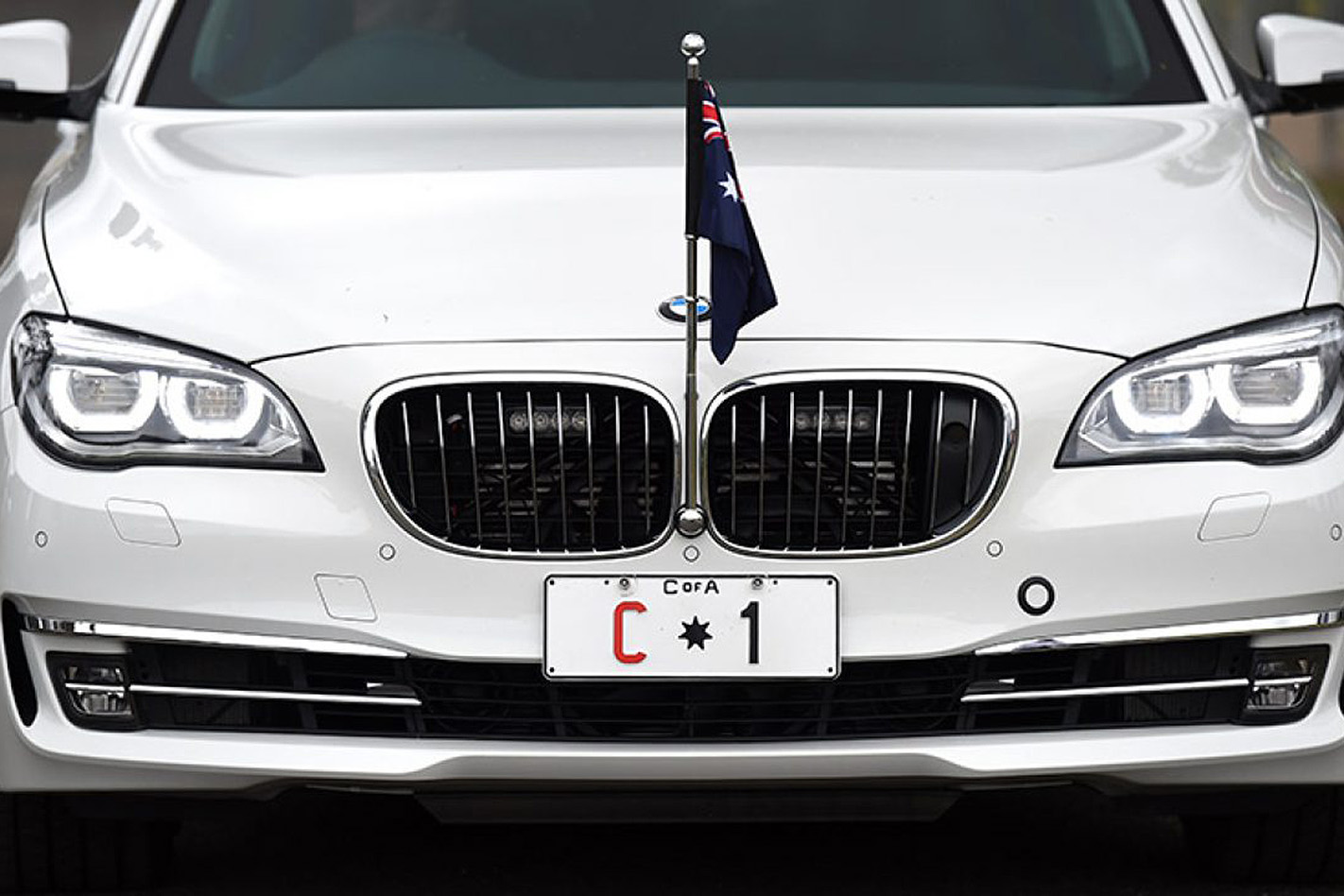
Another benefit of Australian Government fleets going electric is that, within a few years, there will be many more affordable used EVs on the Australian market with plenty of life left in them.
At the moment there are only about 10,000 EVs in Australia, owned mostly by private buyers who are likely to hold on to them for several years.
However, if Australian Governments switched to EVs, it would see many thousands of EVs on the used car market within a few years, offering opportunities for people on lower incomes to embrace emissions-free driving.
Jafari reckons by then there will be a huge demand for EVs in Australia, especially if the Biden administration’s polices see a seismic shift in electrification in the US.
The Biden policy specifies all US government EVs will be locally built, which should benefit start-up brands like Rivian
“Because we share closer cultural ties with the US compared to Europe, China and Norway, moving to EVs will be considered more doable here,” he said.
“It will make the Australian public start asking why it can’t be done here, and encourage governments to make decisions.”
More Biden EV incentives on their way
President Biden is also expected to make good of his election pledge to provide US$400 billion (A$550 billion) to help Americans transition to electric vehicles by supporting the development of advanced battery technology, and assisting states and counties to build a network of 500,000 vehicle chargers across the country by the end of 2030.
He also foreshadowed extending tax credits for EV buyers by extending the scheme that sees the Federal Government subsidise EVs via a US$7500 (A$10,300) consumer tax break for the first 200,000 vehicles a carmaker sells.
Weber said the significance of the President announcing the electrification of the Government vehicle fleet during his first busy week signals the seriousness with which the new Administration takes the need to provide EV incentives.
Mini has given the third-generation hatch and convertible a freshen-up for 2021; a sensible strategy given they are going to be showroom staples until 2023.
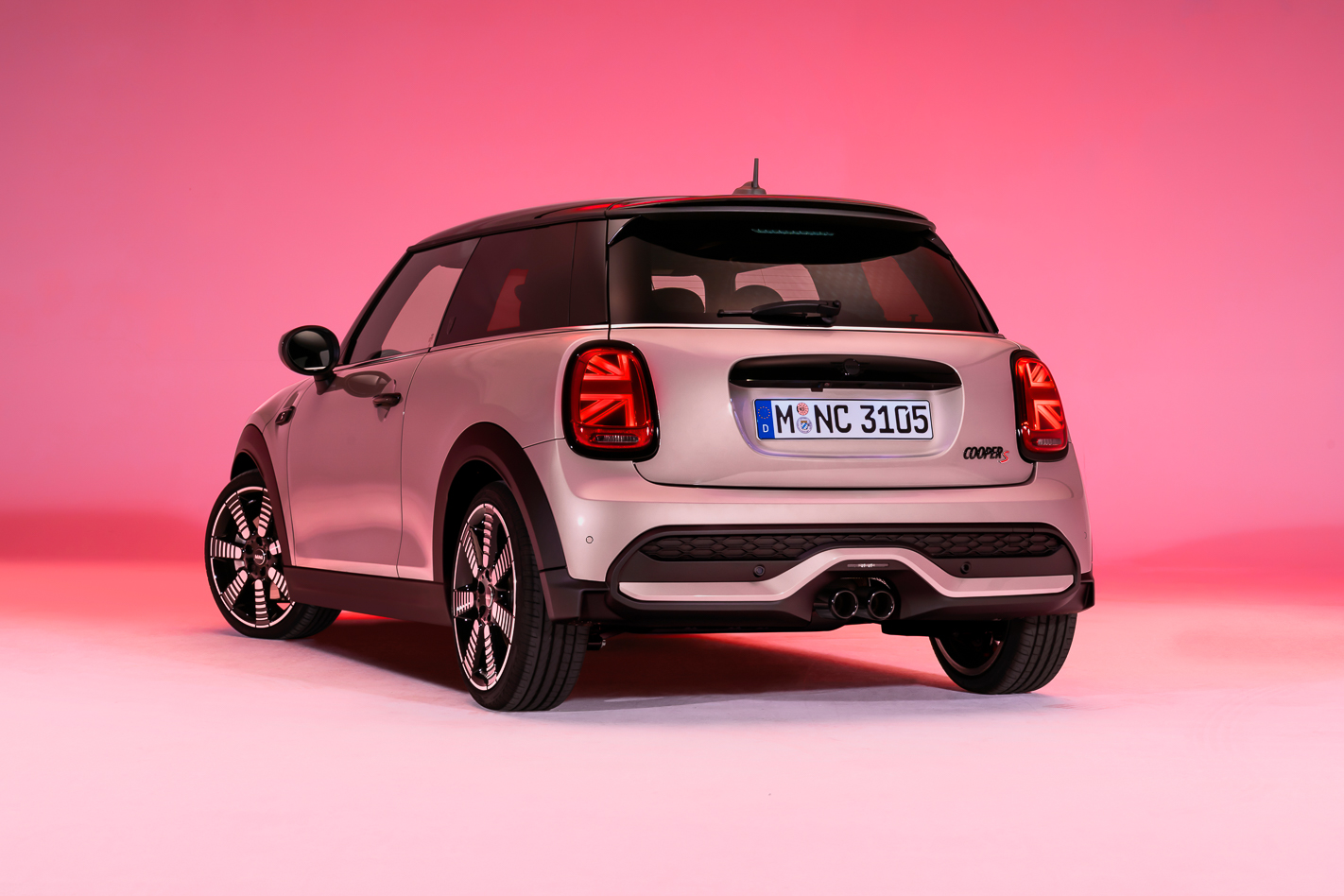
Okay, walk me through the changes
Remember the Mini’s last revamp in 2018? It was a minor titivation, with personalised name badges and whimsical Union Flag tail lamps dialled-up its inherent charm.
Cutesy, chromed curves have given way to more chiselled, aero-efficient planes that appear more generically Teutonic in their application, this time around.
Most obvious at the front is a revised bumper assembly that slots into the unchanged metalwork, grille openings are both smaller and plainer and a body-coloured panel dominating the centre, replacing the gloss black moulding installed previously.
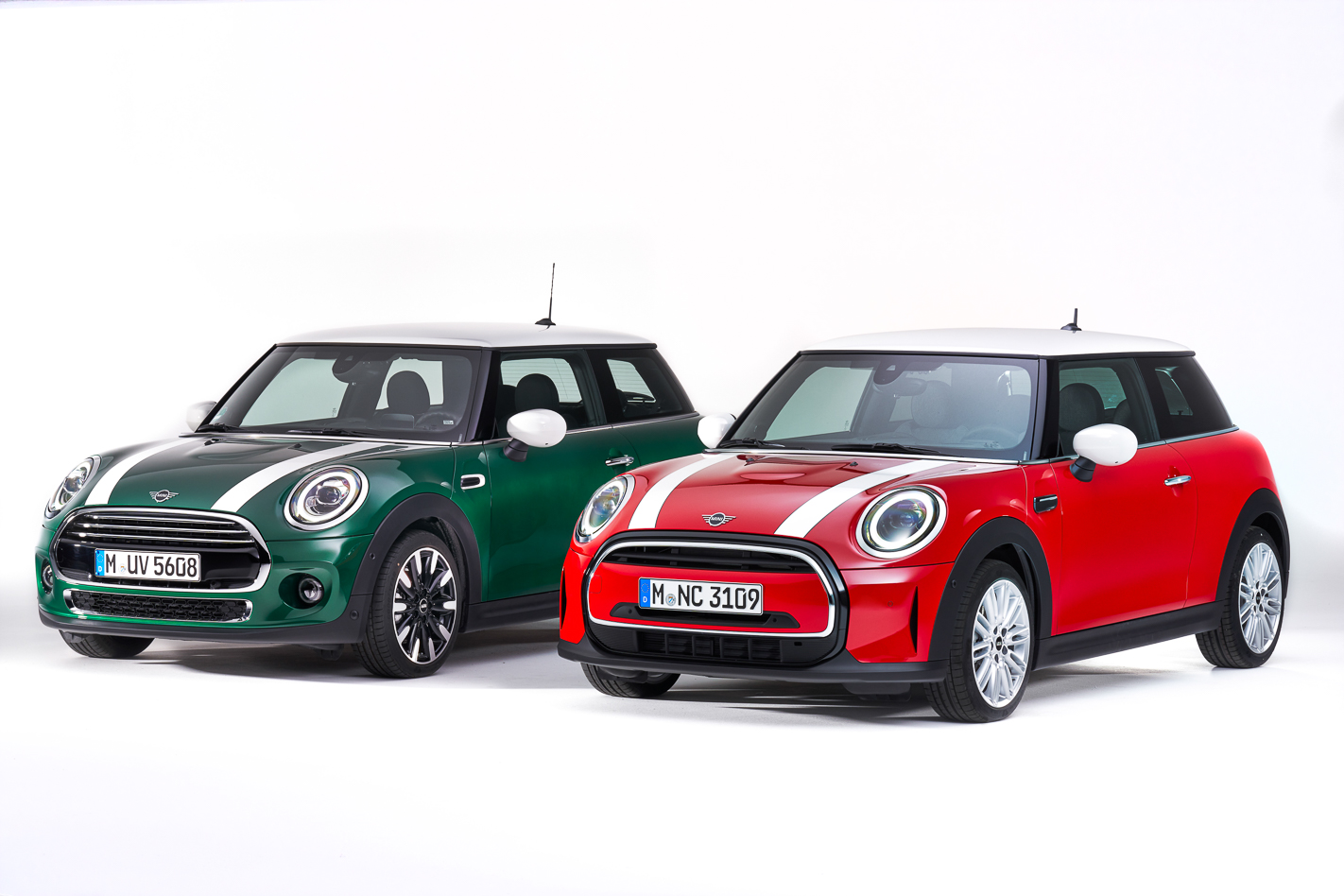
Elsewhere, the front DRL modules have given way to wind-shaping slots on the outer extremes of the bumpers, while the innards of the headlights are now black rather than silver.
Side indicators and the central rear foglamp also now employ a slither of LEDs for their illumination.
Is that it for the outside?
Yes, pretty much, aside from an assortment of new alloys and a refreshed colour palette, the biggest departure is the optional Multitone Roof, available on the Hatch for more of your hard-earned.
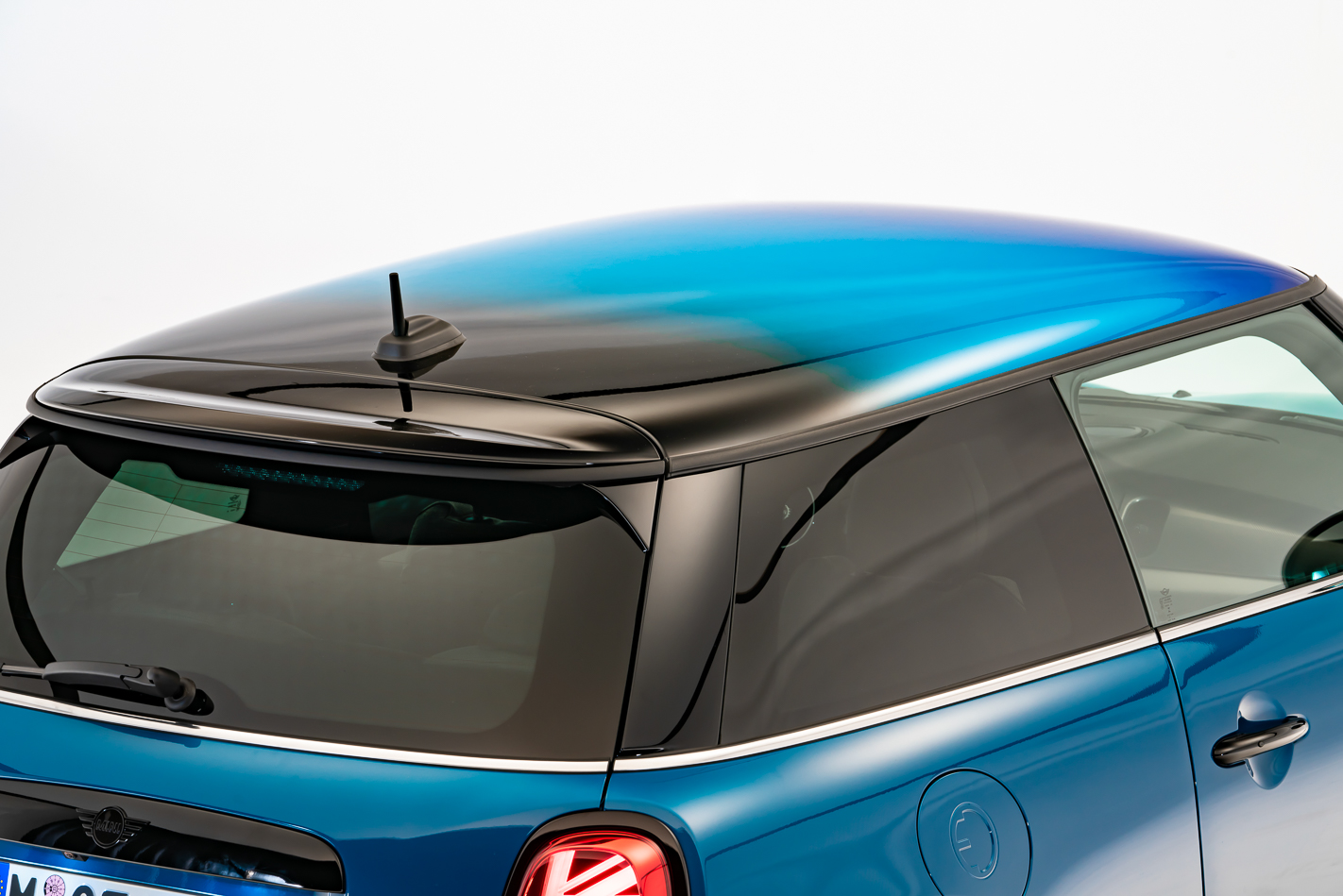
Using a technique dubbed Spray Tech, where different coloured paints are sprayed on before the preceding layer has dried, unique blends between the hues are created.
Starting with San Marino Blue above the windscreen, the central portion is Pearly Aqua culminating in Jet Black as it approaches the rear roof spoiler. We’ll reserve judgement until we see it in the metal.
It’s more of the same inside
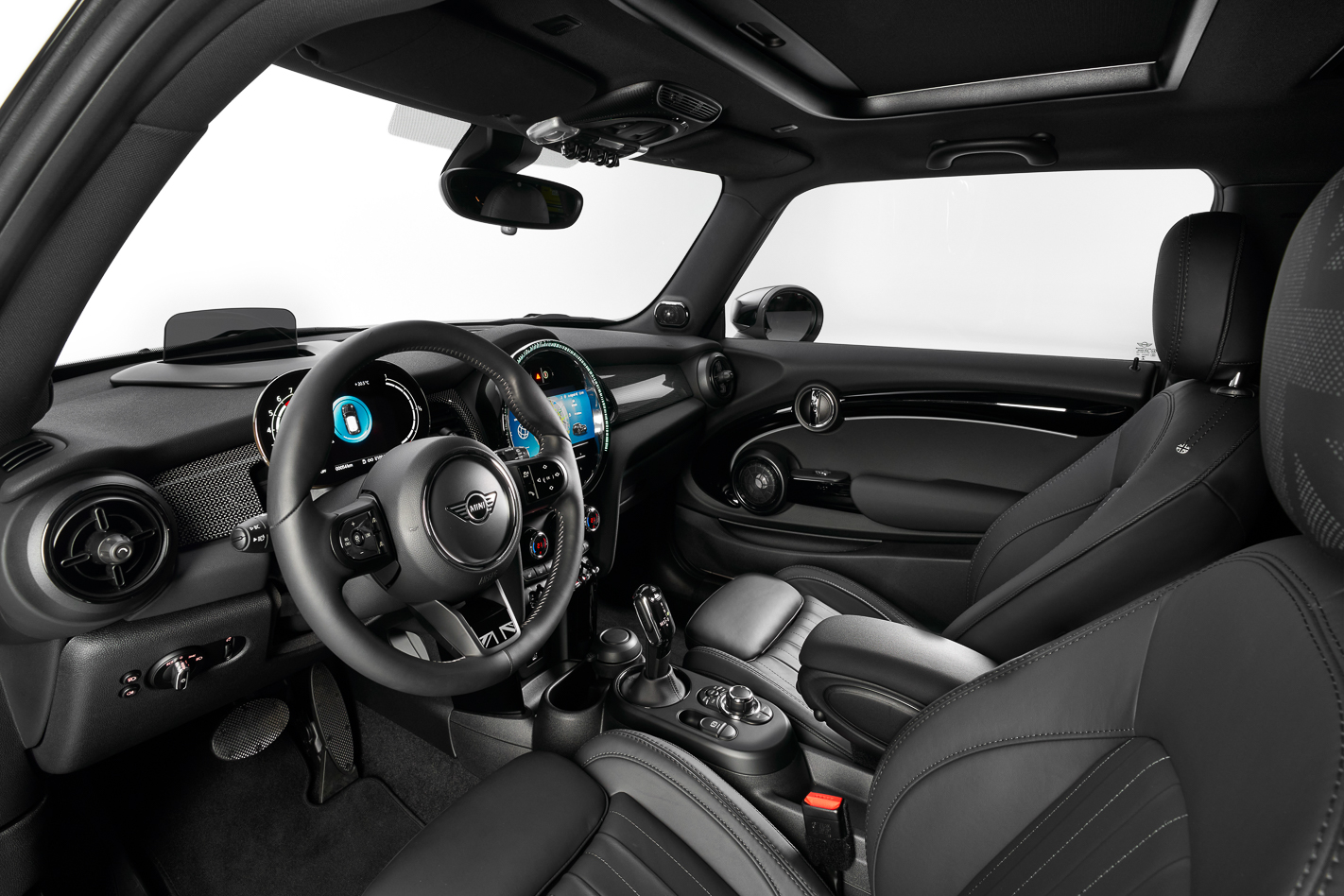
Yet more of the irreverence many associate with Minis has been eroded inside as screens and glossy black switchgear are the order of the day.
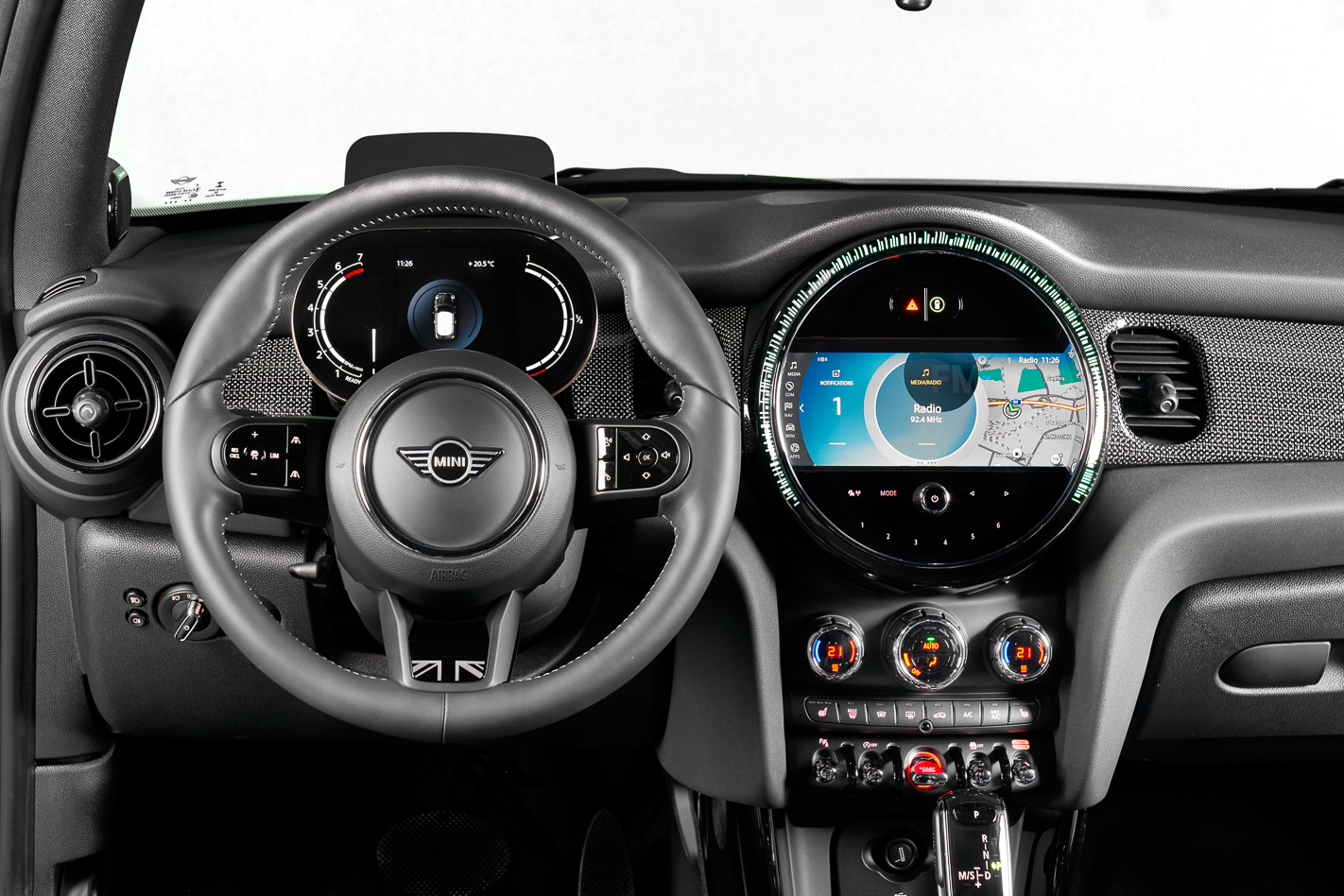
Gone is the analogue instrument pod mounted on top of the steering column replaced by a slicker, horizontal 5.0-inch instrument cluster screen similar to that already seen in the Mini Electric and John Cooper Works GP3. It’s all a far cry from the dustbin lid central speedo of yesteryear.
Flanking the revised 8.8-inch central multimedia display with its box-fresh operating system, spangly graphics and new buttons are a pair of revised air vents, while the ambient LED lighting is further complemented by Lounge (blue) and Sport (red and black) modes for the display screens.
Will the 2021 Mini feel any different to drive?
Possibly, but we’ll know for sure later this year when we get our hands on one of the revised models.
Sport versions now come with a revised version of the adaptive damper system, claimed to deliver a less compromised balance between the poles of ride comfort and go-kart handling.
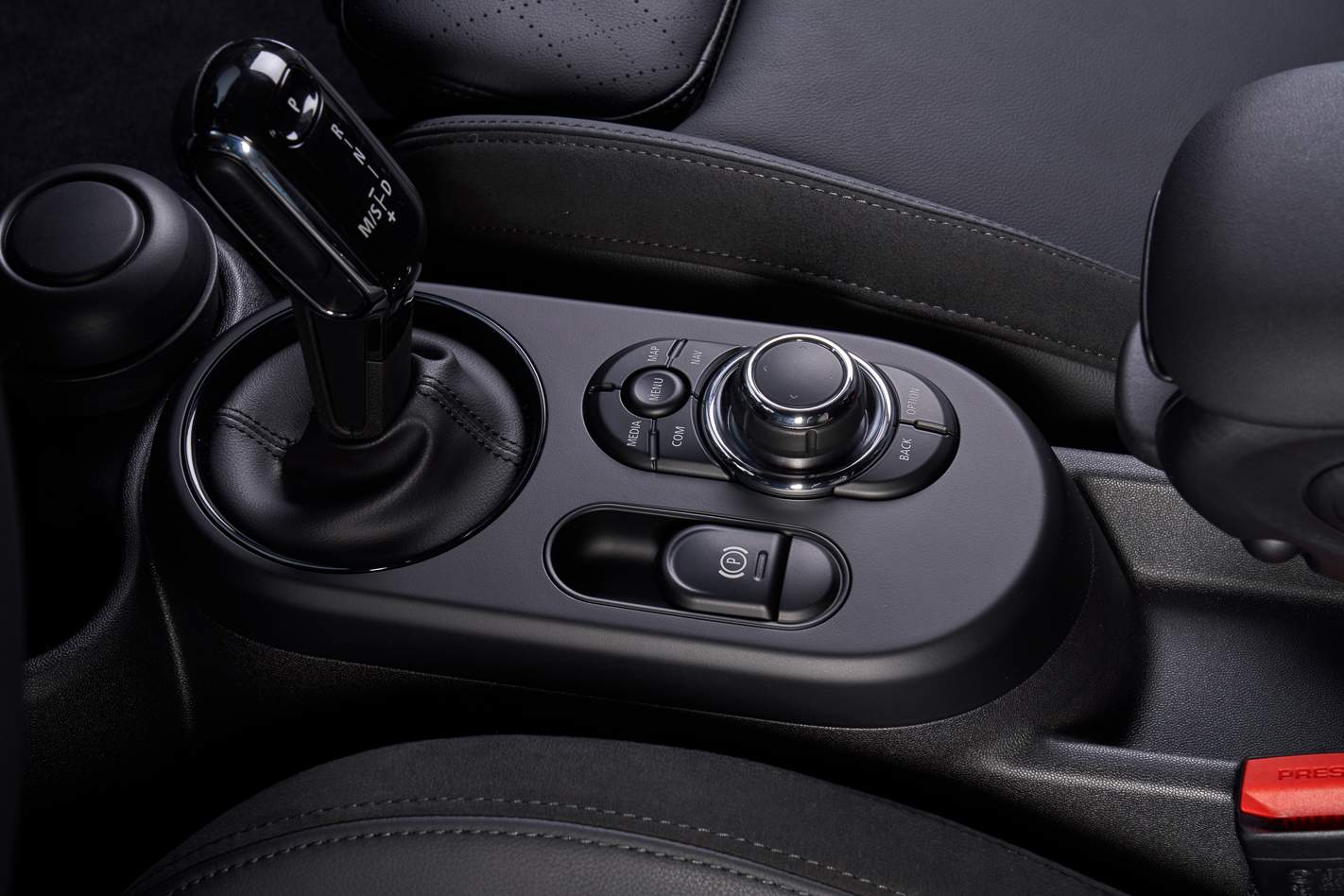
Safety wise, a new lane-departure warning system that vibrates the wheel when you wander makes its debut, as does an adaptive cruise control arrangement that will take automatic versions to a complete standstill until it’s free to proceed again.
Powertrains are essentially as before. The line-up begins with the Cooper, powered by a 1.5-litre three-cylinder turbo petrol engine which sends 100kW/220Nm to the front wheels through a seven-speed dual-clutch automatic.
The Cooper S steps up to 141kW/280Nm outputs with a 2.0-litre four-cylinder turbo petrol engine attached to an eight-speed automatic which powers the front wheels.
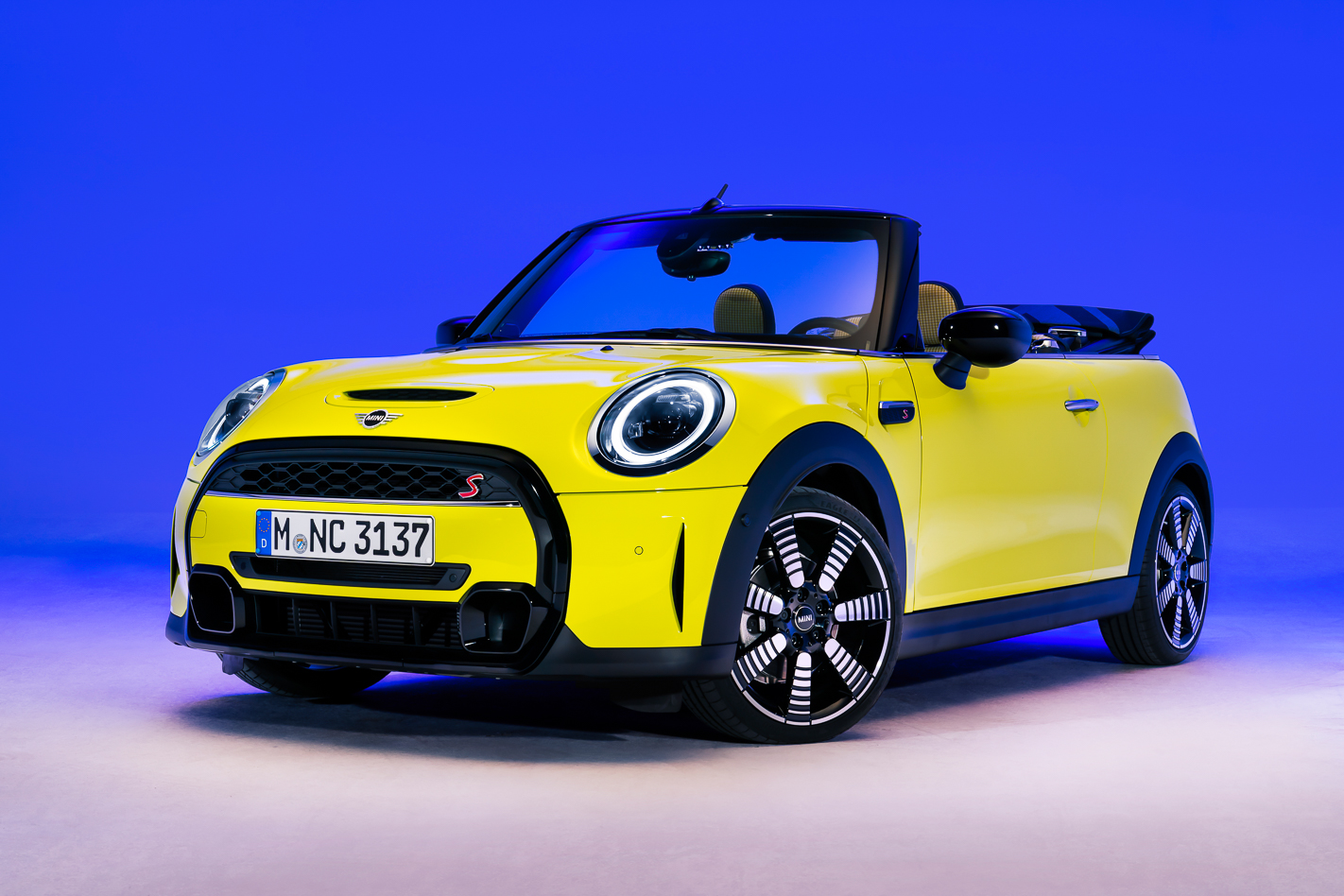
The Cooper JCW is the most powerful Mini of the standard range and features the same 2.0-litre engine, though tuned to deliver 170kW/320Nm.
If you were awaiting more concrete news on the electric JCW, then you’ll have to wait a little longer.
The new Mini range will arrive in Australia in the latter half of 2021, with pricing to be announced closer to the launch.
This article was originally published at carmagazine.co.uk.
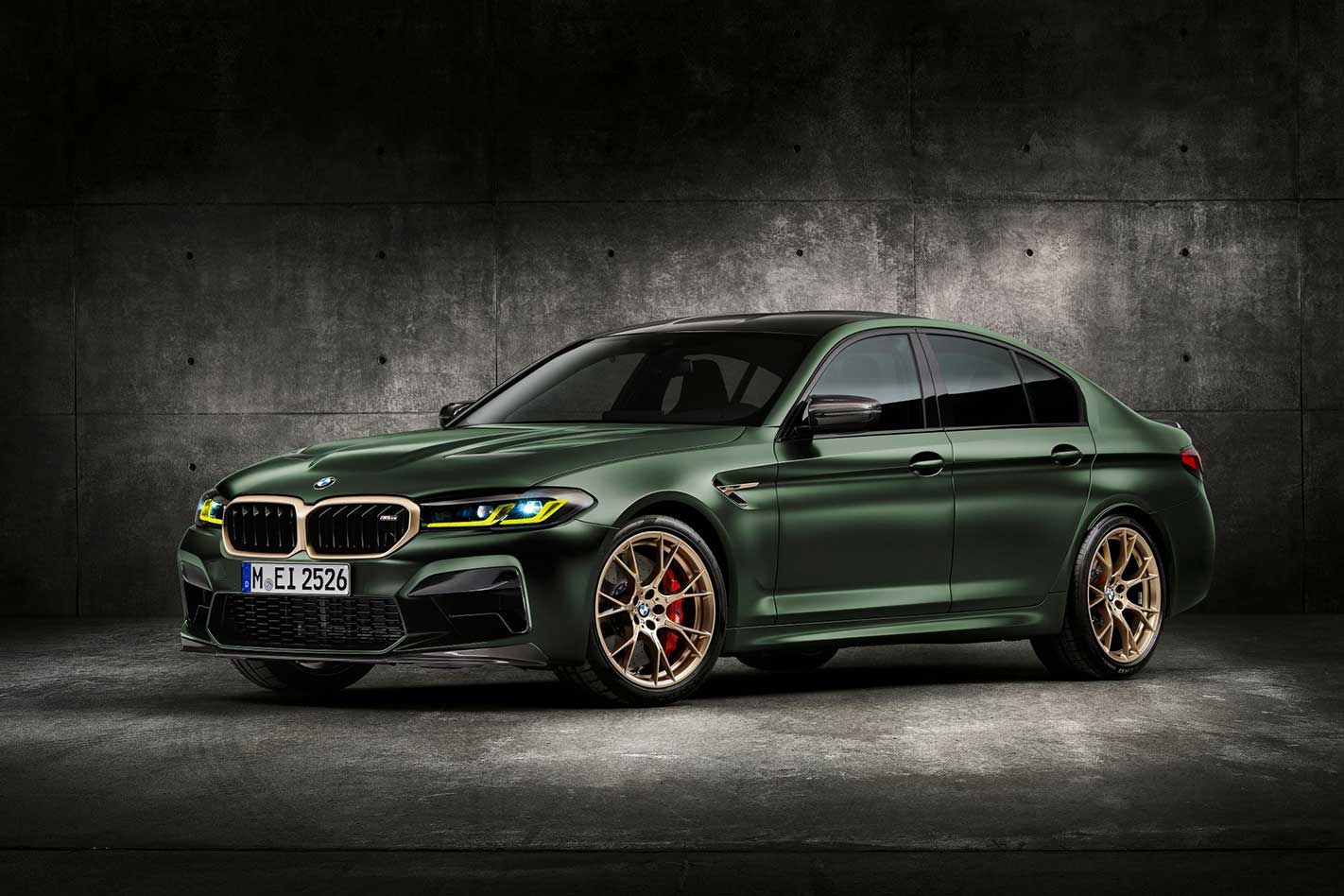
The BMW M5 CS has been revealed, debuting Munich’s quickest and most powerful car that will arrive in Australia by mid-year.
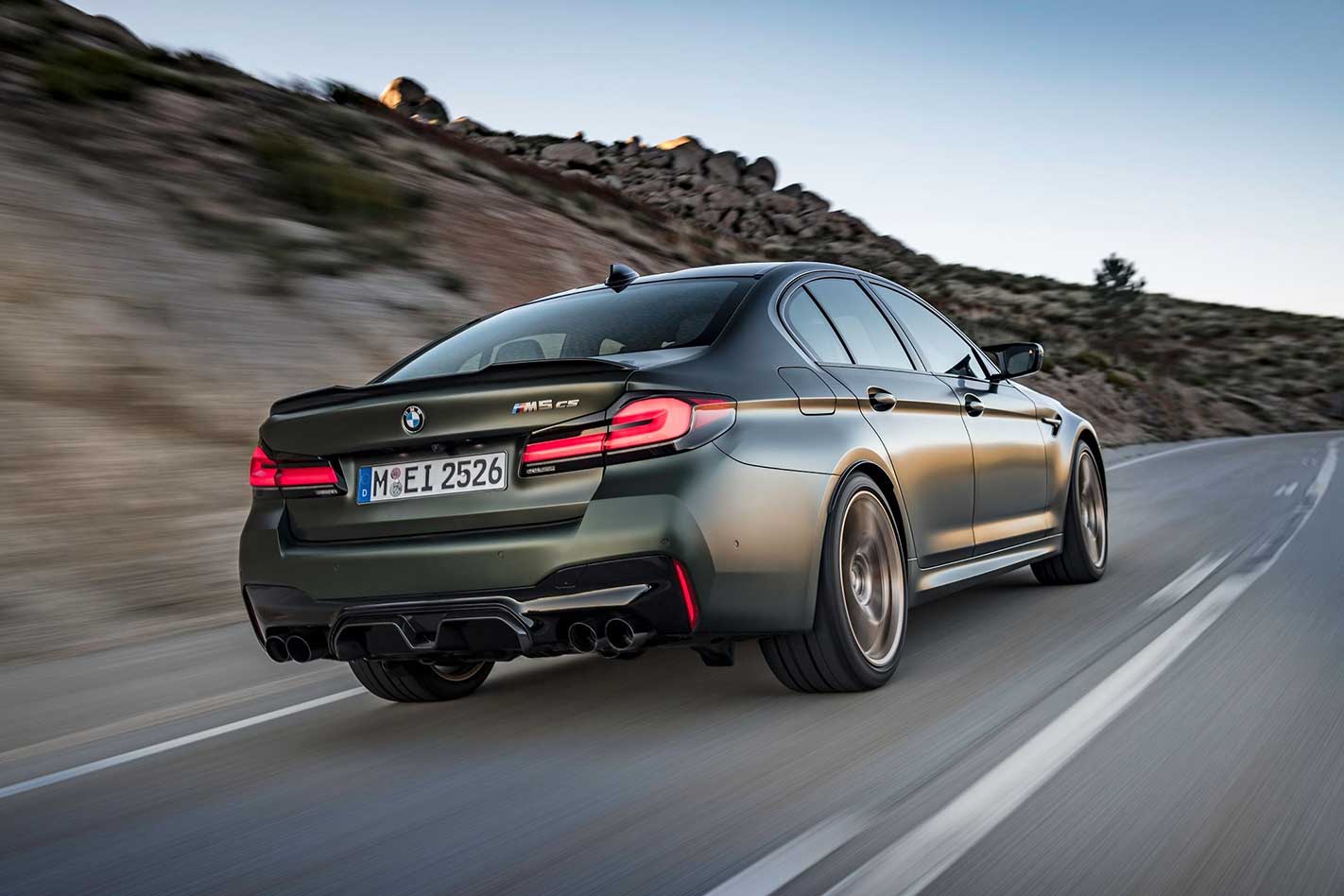
The car’s headline-grabbing statistics begin with a 4.4-litre twin-turbo V8 now delivering 7kW more than an M5 Competition, for a total of 467kW and 750Nm.

That’s also quicker than any BMW road car before it, while it’s also good for 200km/h from rest in 10.3 seconds, and can run on to 305km/h. An eight-speed transmission remains and drivers can still set the powertrain into rear-wheel drive.
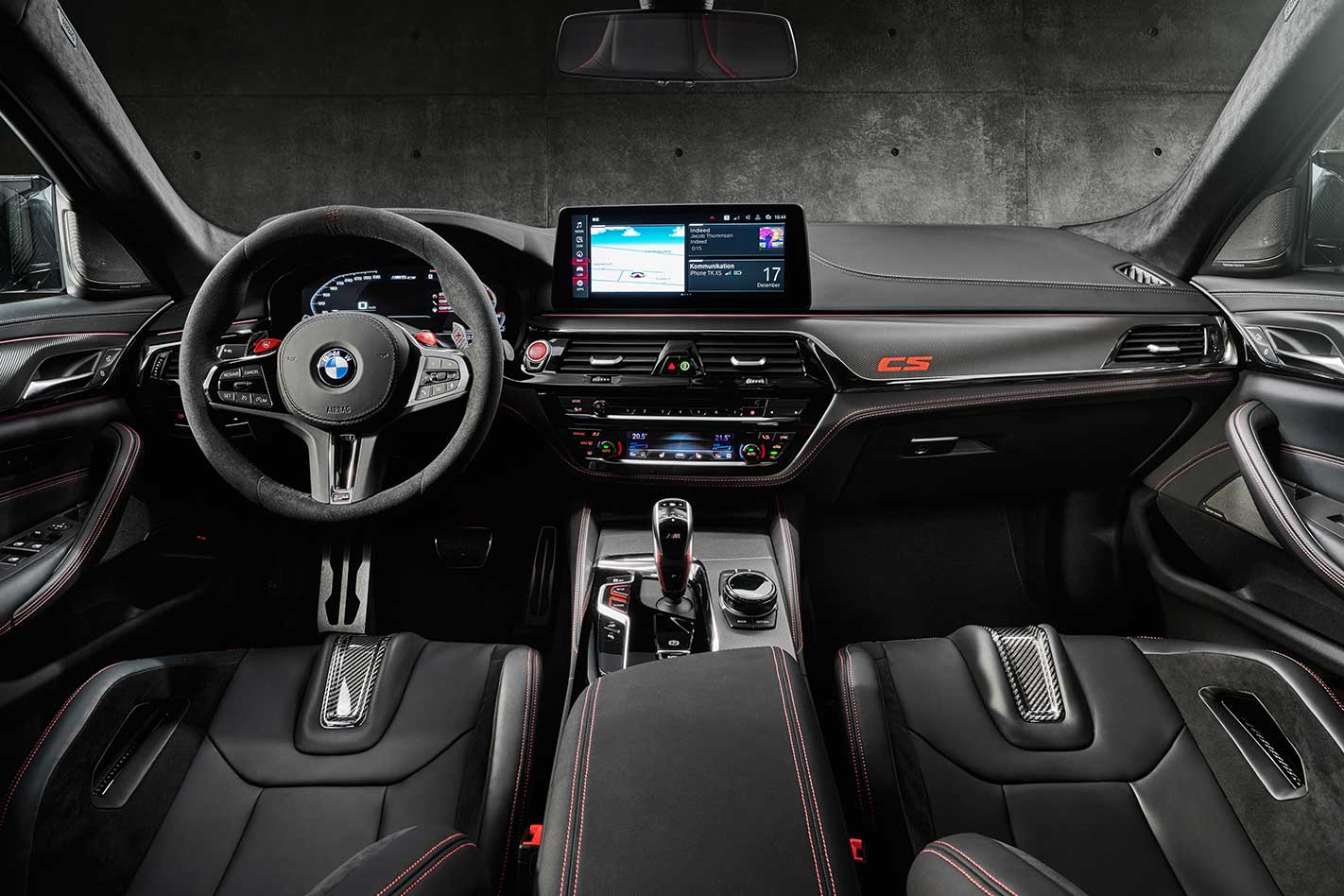
The cabin’s been reconfigured around a four seat arrangement, defined by new carbon-fibre backed front seats and pair of bucket seats for rear occupants.
This complements various other lightweighting measures, such as the carbon fibre reinforced plastic door mirror covers, roof, front splitter, bonnet, rear spoiler and diffuser.
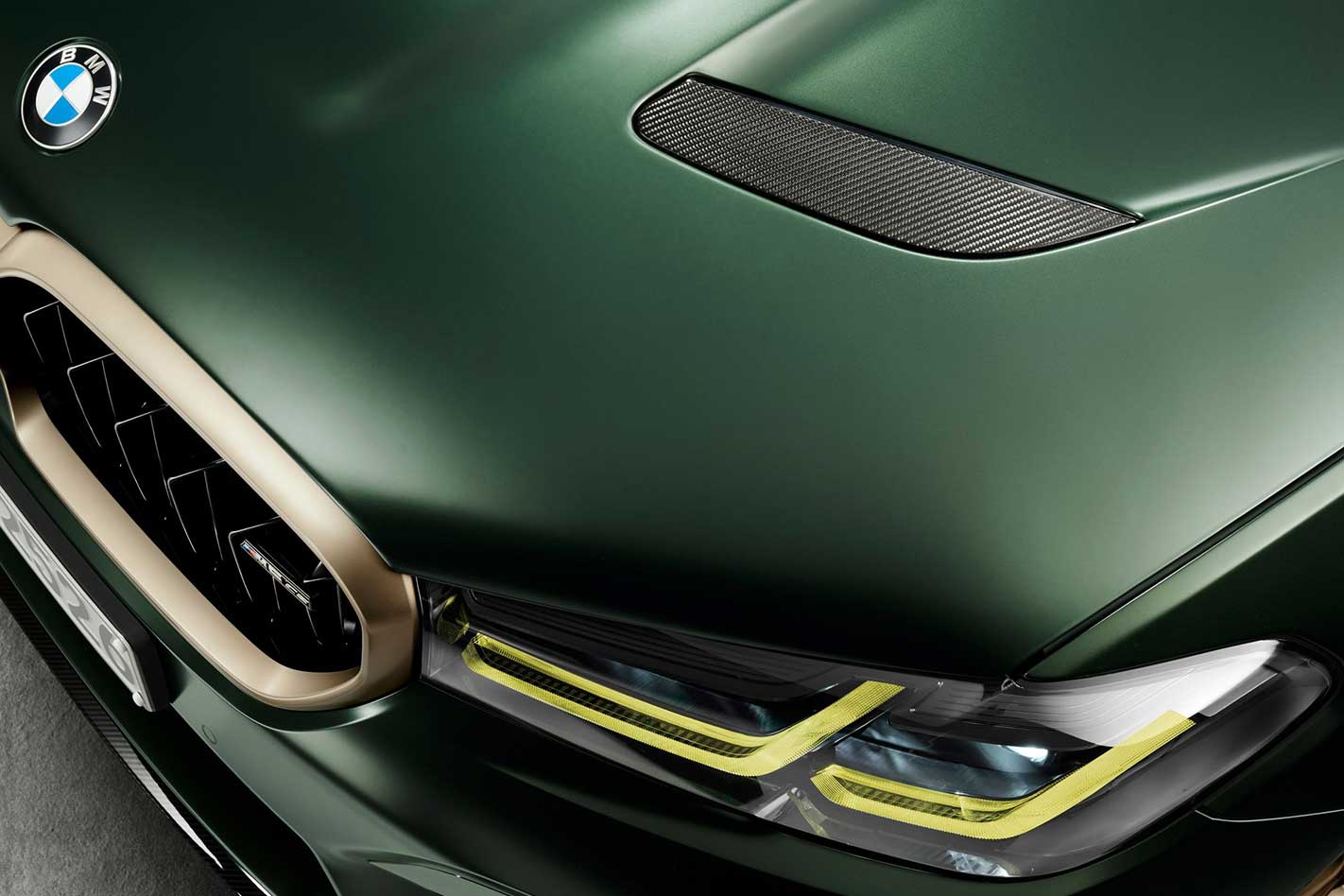
Ceramic brakes are also included, as well as a stainless steel sports exhaust system, while customers can opt the upgraded calipers in gold instead of red as standard.
The gold brakes are one special detail among many, including Gold Bronze shading on different elements as well as the red-stitched alcantara inside. Check the image gallery for more.
Although BMW hasn’t disclosed how many M5 CS sedans it plans to build, it says deliveries in Europe begin this March at 187,700 euros (AU$294K).
BMW has, however, confirmed only 20 will come to Australia, marked at $305,900 drive away. Orders are open now via the company’s BMW Shop service.
What is the Audi e-tron 55
Bridging the size gap between the Audi Q5 and Q7 SUVs, the e-tron brings all the luxury and technology you might expect from each offering and adds emissions-free driving and an enhanced level of ride comfort.
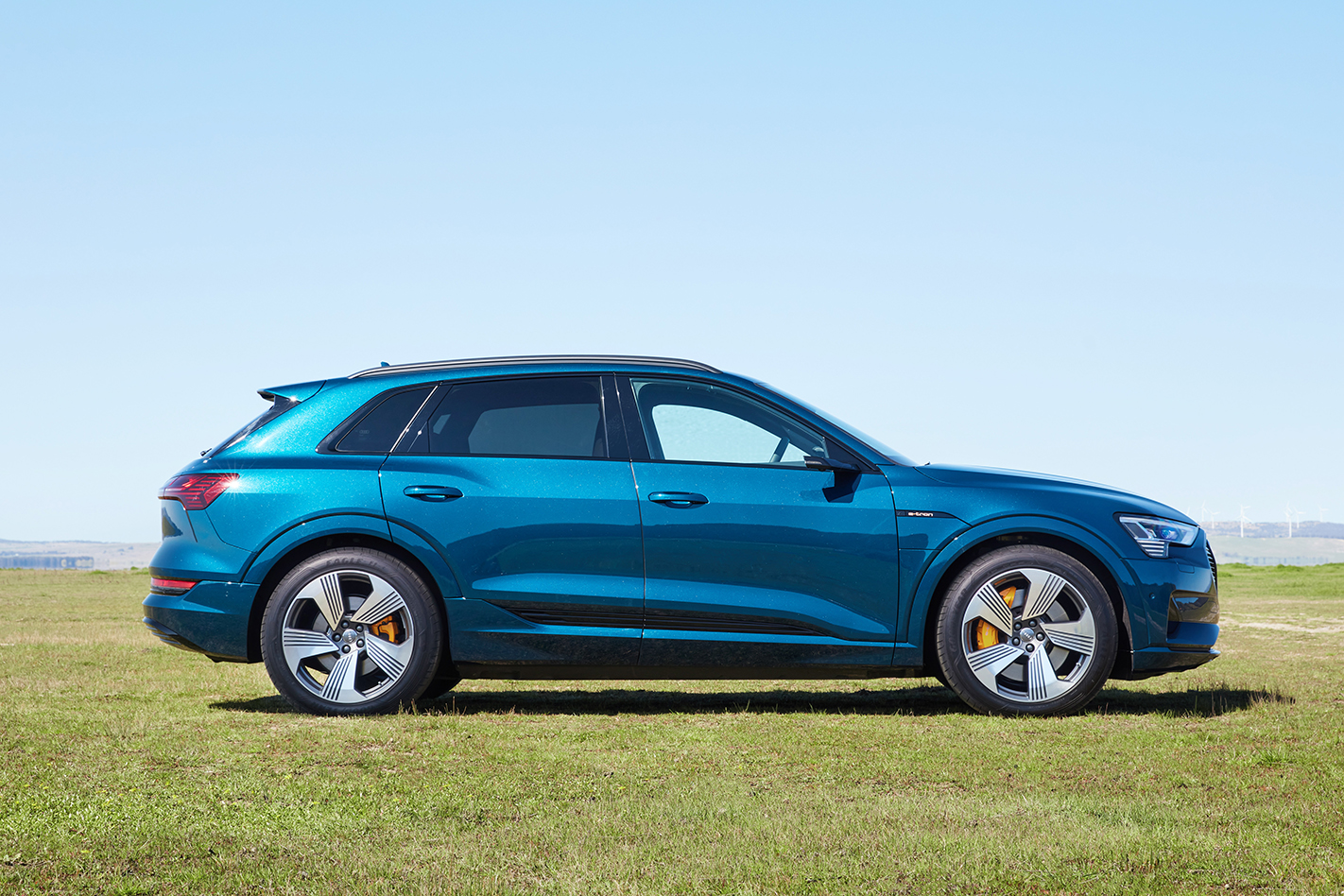
Audi’s new rival to the Mercedes-Benz EQC is available in two main specifications; e-tron 50 and the more powerful e-tron 55 with a choice of SUV and sleeker Sportback body shapes, all of which have quattro all-wheel drive.
Audi e-tron 55 spec details
The e-tron 55 has a relatively big a 95kWh lithium-ion battery that powers a pair of electric motors; with one at the front producing 125kW, while the rear unit has 140kW for a combined 265kW and 561Nm under normal driving conditions.
If for some reason that’s not enough grunt, you can draw on an eight-second boost that turns the output up to 300kW/664Nm and takes the 2490kg SUV from 0-100km/h in just 5.7 seconds.
For comparison, the e-tron 50 has a 71kWh battery and 230kW of combined motor power. Both variants are otherwise the same and share a considerable list of standard features that you’d find in other large Audi SUVs and laid out in almost exactly the same fashion.
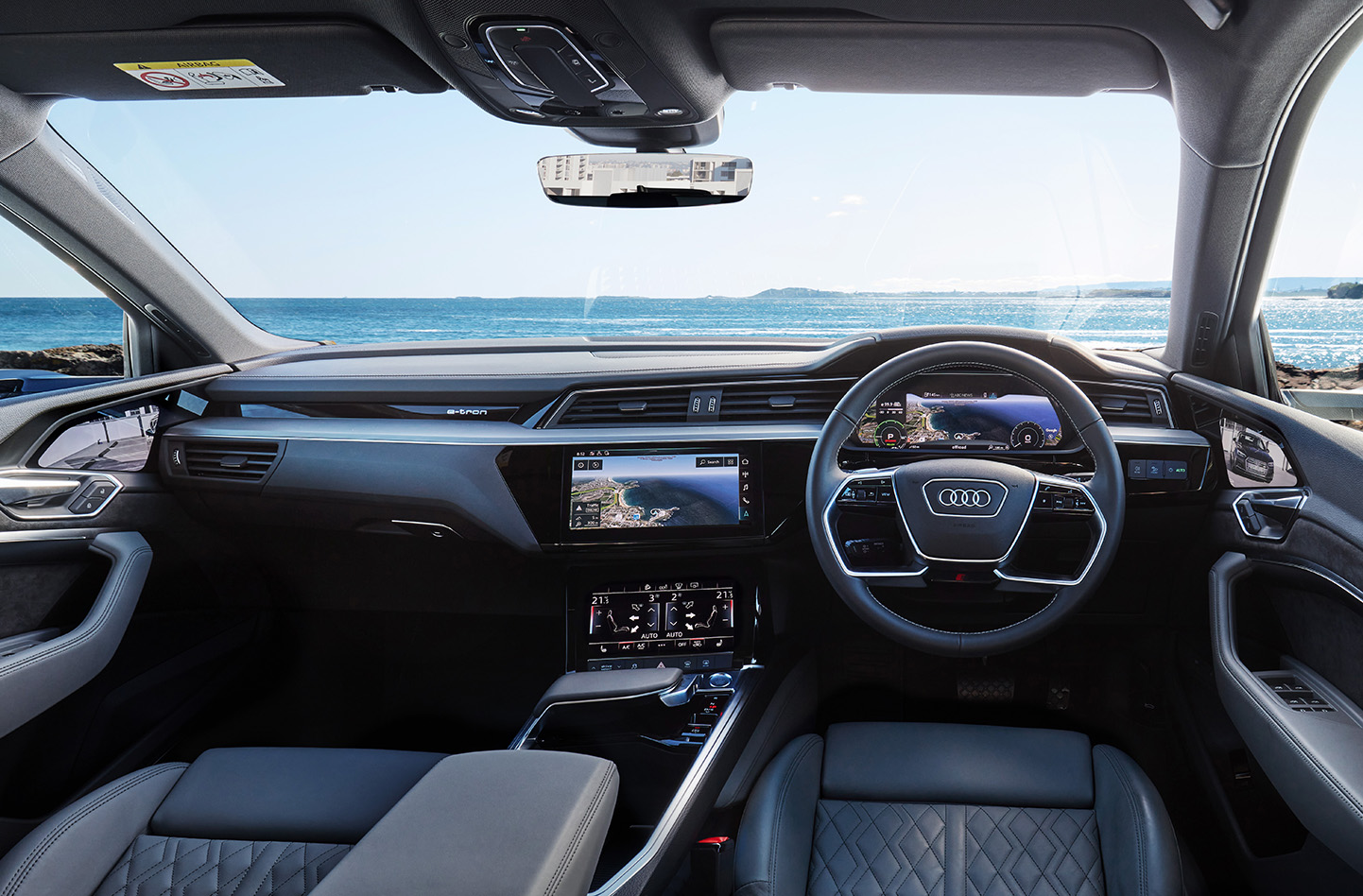
The vehicle we’re testing is the E-Tron 55 First Edition that brings a host of additional features over the standard E-Tron 55, including: Four-way climate control with rear touchscreen display; 21-inch alloy wheels instead of 20s; premium front and rear LED lighting including Matrix headlights; turn indicators; additional leather trim on the dashboard and armrests; Audi S-Line leather sports seats; aluminium door-sill trims; ambient lighting; 16-speaker Bang & Olufsen 3D sound system, head-up display and virtual exterior mirrors.
The First Edition extras add $11,000 to the e-tron 55’s $146,100 price tag. Our test vehicle had metallic paint ($2300) that took the price to $161,900.
What we don’t like about the Audi e-tron 55
Not much. If we’re nitpicking, the fiddly old-school cruise control stalk taken from the Volkswagen parts bin isn’t as user-friendly as steering-wheel-mounted switches.
The MMI navigation’s Voice Command isn’t great at picking up street names either.
Then there are the optional virtual exterior mirrors (that come standard with the E-Tron 55 First Edition) that seem like an unnecessary gimmick. Why have cameras and monitors when a couple of pieces of reflective glass can do the job? If one is damaged while your e-tron is parked in the street you could be up for $2000 to replace it.
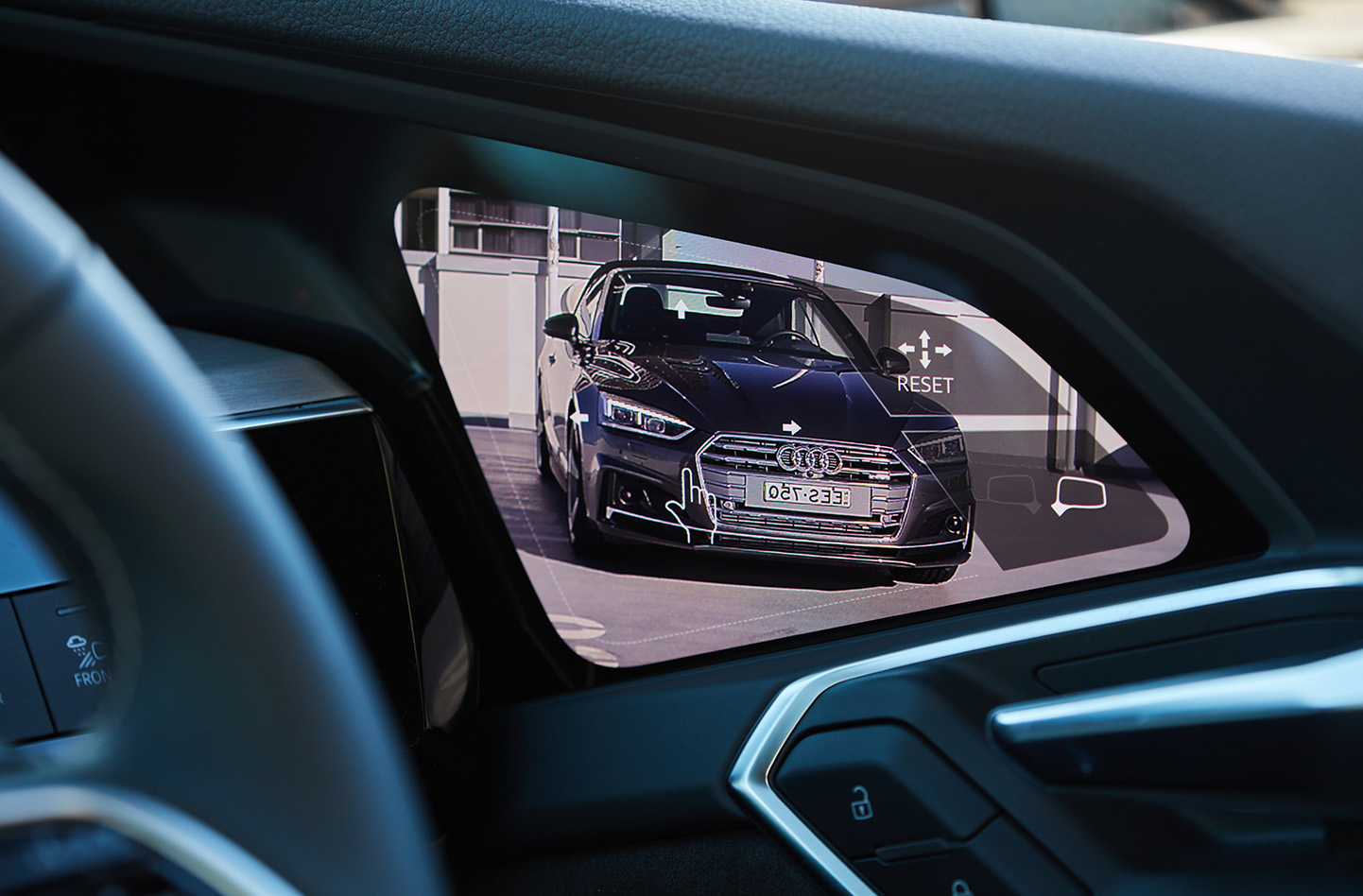
That said, I did start coming around to them. Their streamlined shape helps reduce wind noise, and you get a wider and deeper view of each blind spot through the 7.0-inch OLED monitors mounted inside each front door below the A-pillar.
But while the picture is crystal clear, the screens’ relatively low position means you have to look downwards, which reduces peripheral vision toward the front.
The screens also make reversing more difficult particularly if you’re backing down an angled or curved path. They are angled toward the driver and not facing perpendicular with the side of the vehicle, like mirrors do, which means it can be difficult to tell where the vehicle is actually pointing.
Driving the Audi e-tron 55
Audi has done well to make the e-tron driving experience retain as many of the German car maker’s attributes as possible – regardless of the powertrain. Hop in, and you’ll find little to suggest it’s an EV – even the gear shifter is conventional compared with many other EV models that use buttons.
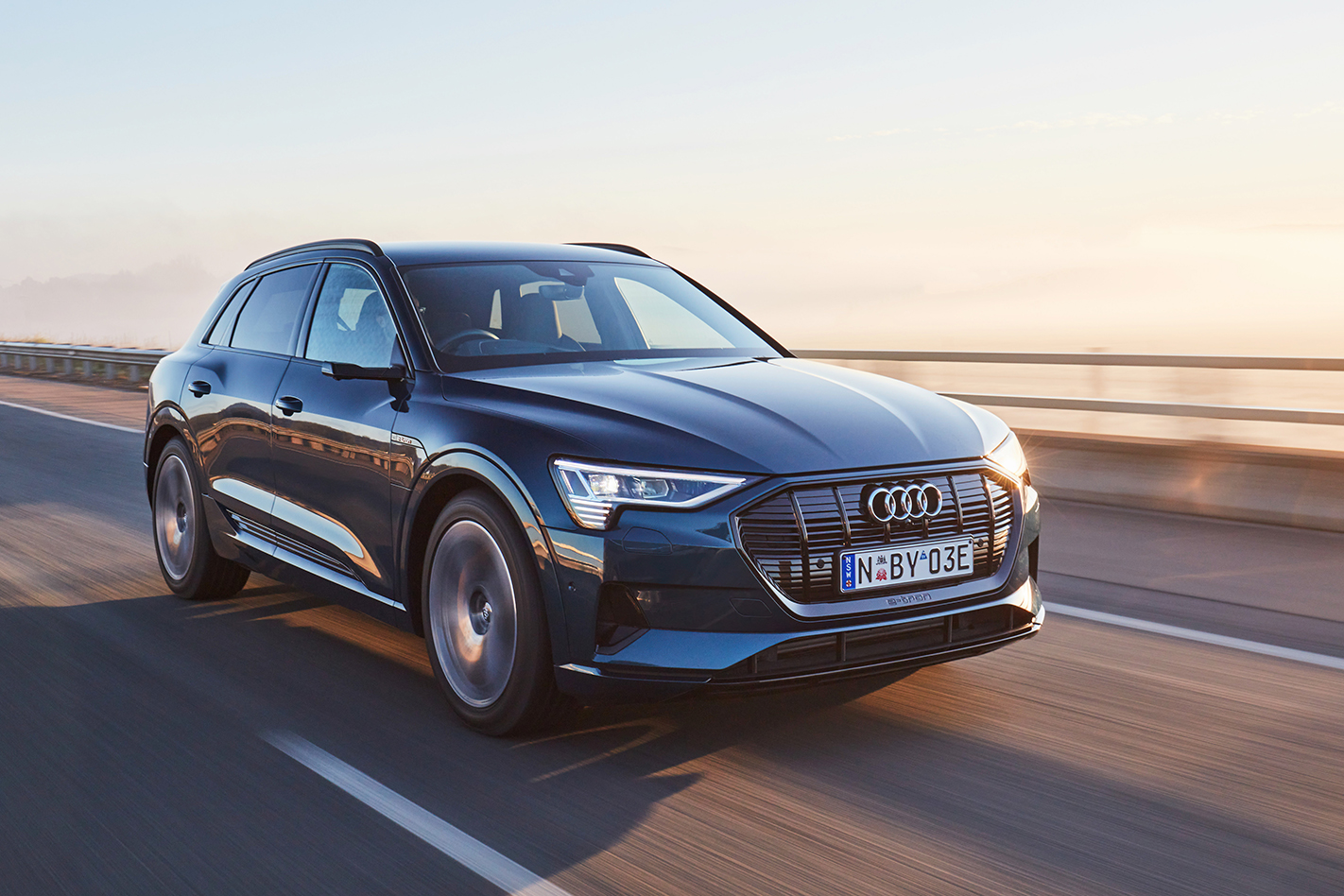
But of course that all changes once you press the start button and, needless to say, it’s all very quiet. Like most EVs, it emanates a futuristic hum at slow speeds, but it remains quieter than most at higher speeds with very little tyre and wind noise, the latter reduced by the streamlined virtual door mirrors.
Even more impressive is the e-tron’s smooth ride. On the pristine blacktop of Melbourne’s Tullamarine Freeway and at the night-time 100km/h speed limit, it’s gentle ride and silence prompted my wife to say it felt like an express train. I had to agree.
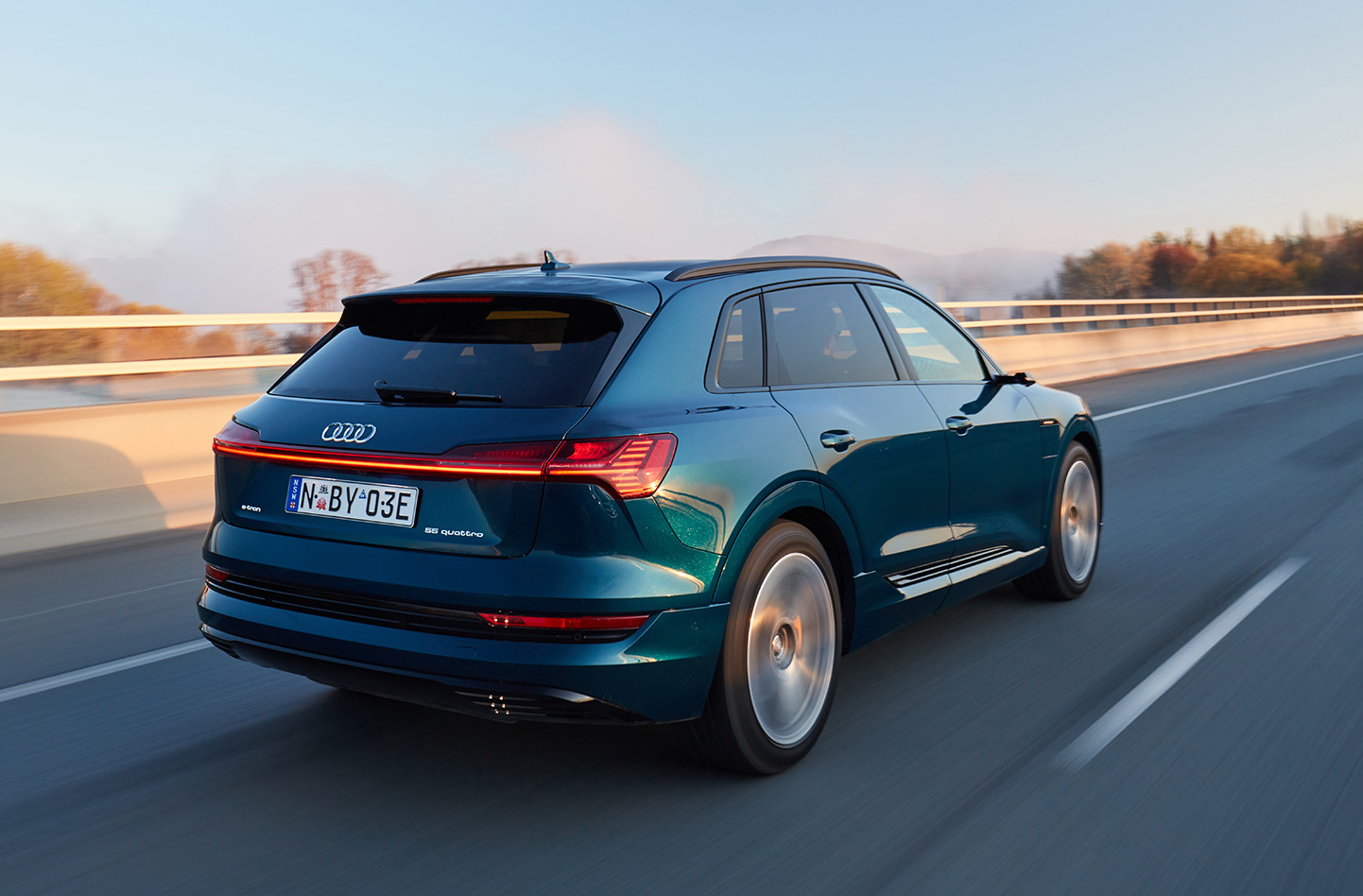
Switching to Dynamic mode firms the ride a little, but it’s still incredibly comfortable.
The e-tron handles rougher roads very well too, thanks to the adaptive dampers. You’d think the 21-inch wheels that are standard with the First Edition spec would compromise ride comfort, but they’re shod with relatively chunky 265/45 Goodyear Eagle tyres that provide good cushioning between road and rims.
The Goodyears are not a specific electric vehicle low rolling-resistance product but do an excellent job minimising drag nonetheless. Also, it’s amazing how far the e-tron will coast on a level road before you have to tap the right pedal.
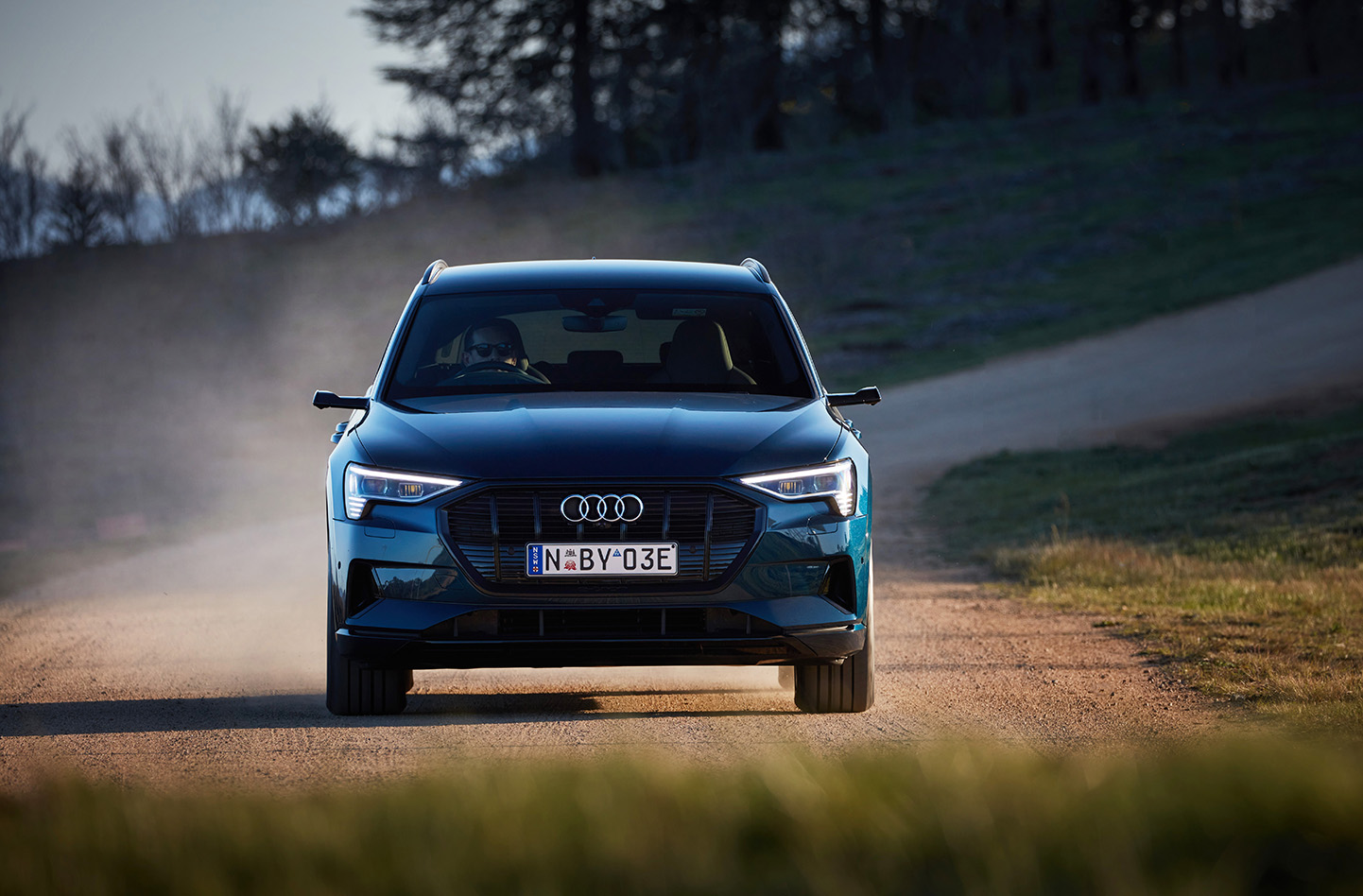
This can actually be a little disconcerting if you’re used to one-pedal EV driving and you enjoy watching the recharging effect on the power gauge whenever you slow down.
It combines to make the e-tron feel ‘normal’ which is why, if you do want to enable regenerative braking, you have to negotiate the main menu in the 10.1-inch infotainment screen and find Vehicle Settings > Charging and tick a box. Once you’ve done that, you can select from three levels of regenerative braking using the paddle shifters, but only when in the Auto drive mode.
Having driven other EV models in recent times I’m accustomed to regenerative braking. But, as with the virtual mirrors, I came around to the principle benefits of coasting. Sure you’re not charging the battery when you take your foot off the accelerator (unless you manually apply the brakes) but you’re not consuming as much energy to maintain speed.
Speaking of speed, the E-Tron isn’t the quickest EV off the mark, but it’s certainly not the slowest either, and you’ll never be short for oomph at higher speeds.
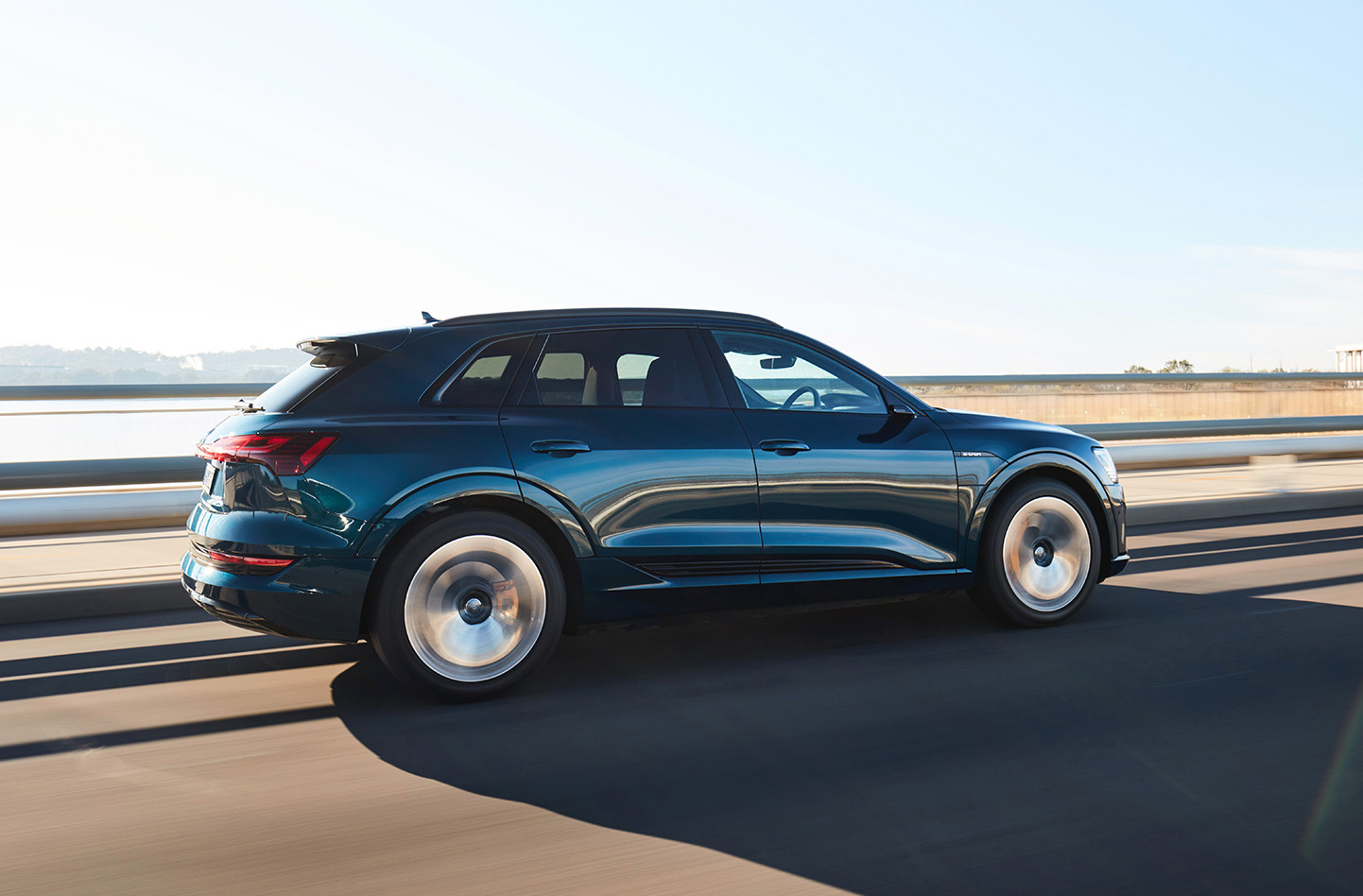
The Dynamic driving mode also ups performance from the twin-motor set-up, though I rarely needed to engage it beyond Comfort mode and, even then, it was for curiosity’s sake or to impress my EV-sceptic mates.
Funnily enough, even though you’re driving emissions-free, you’re more appreciative of efficient driving. So selecting Sport mode seems like an unnecessary indulgence in a stately large SUV like this.
Indeed, the E-Tron feels like a limousine and the interior looks the part, with roomy rear seats offering plenty of leg- and knee-room helped by the lack of a transmission tunnel that allows all three occupants to stretch their legs.
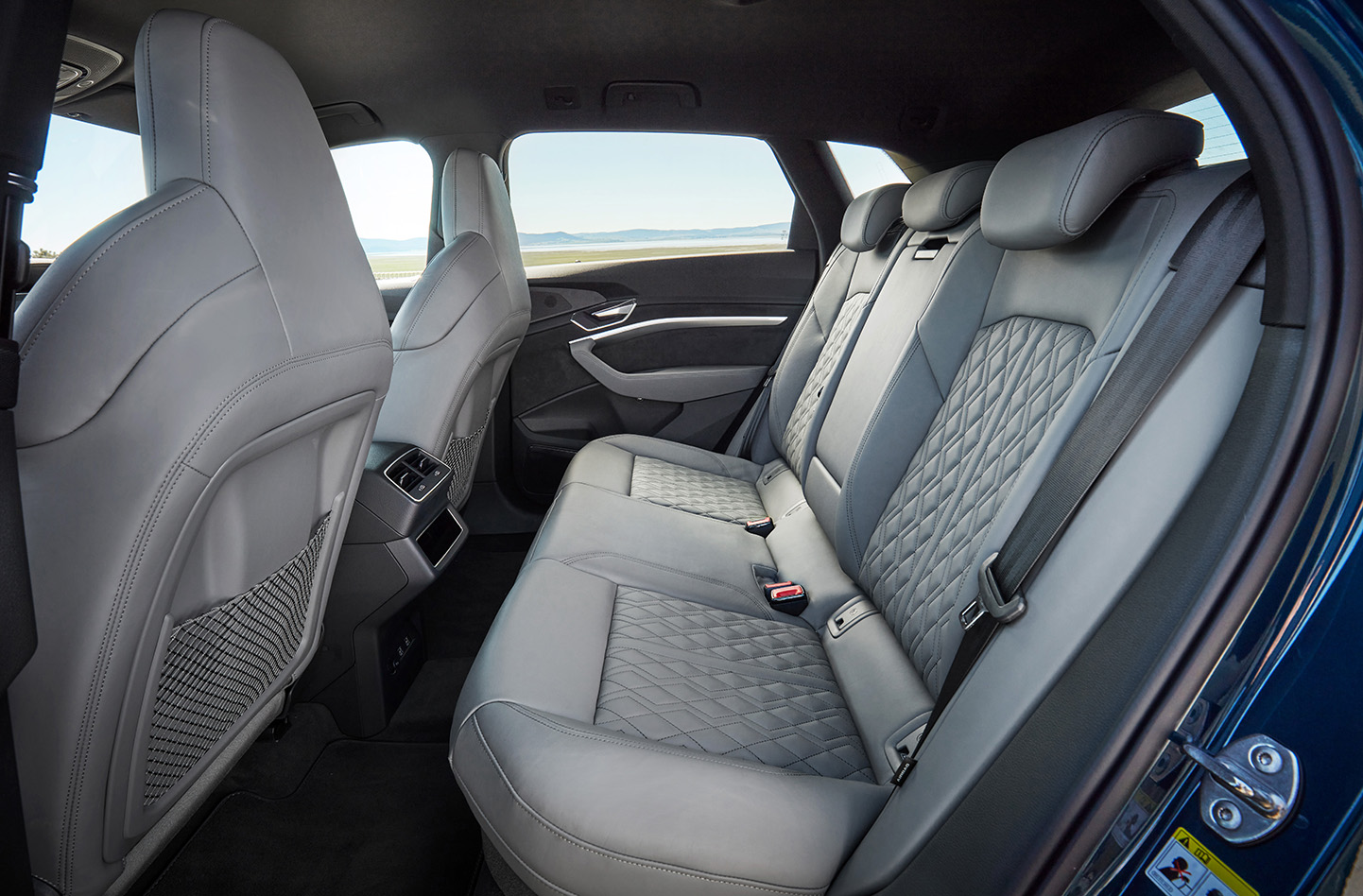
Up front, the leather seats are firm, but not uncomfortably so, and offer excellent back, side and under-thigh support.
Storage space includes a 600-litre boot that extends up to 1725 litres with the 40:20:40 split rear seatbacks folded down. There is also a 60-litre luggage compartment under the bonnet, which is the best place to stow charging hardware.
Range, economy and charging
The e-tron 55 has an official driving range of 436km, though when driving in summer with the air-conditioning blowing, you’re likely to get closer to 350km, which is still plenty for daily urban driving as well as some trips out of town.
Audi claims a combined power consumption of 22kWh/100km for the E-Tron 55. The extra kit and weight in the E-Tron 55 First Edition increases that to 23.1kWh/100km.
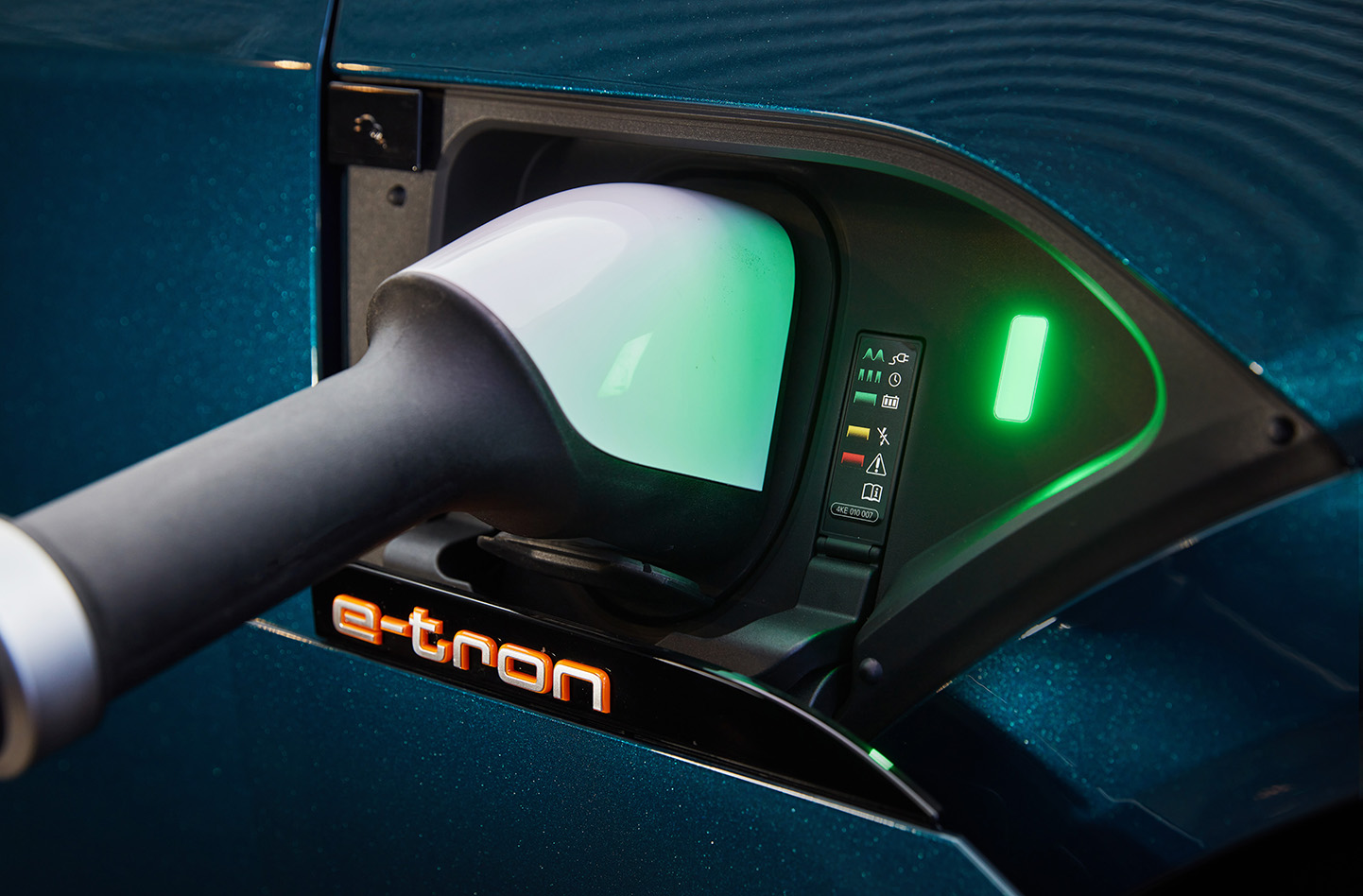
During the week we tested the E-Tron it drove 553km with a mix of freeway and urban driving and averaged 25.1kWh, with the air-conditioning running most of the time.
If you’re charging at home it will take around 42 hours to fully top up the 95kWh battery from a 240V plug. For quicker home charging the e-tron accepts an 11kW AC wall charger than can top the E-Tron 55 from empty in 8.5 hours.
A 50kW DC charger brings the full-charging time down to two hours, or from 20 percent to 80 percent in 70 minutes. This is the more likely scenario for many owners looking for the best balance of range vs time at the plug.
Find a 350kW ultra-rapid public charger and it’s possible to pump the e-tron 55’s battery to full in about an hour or 80 percent in just 30 minutes.
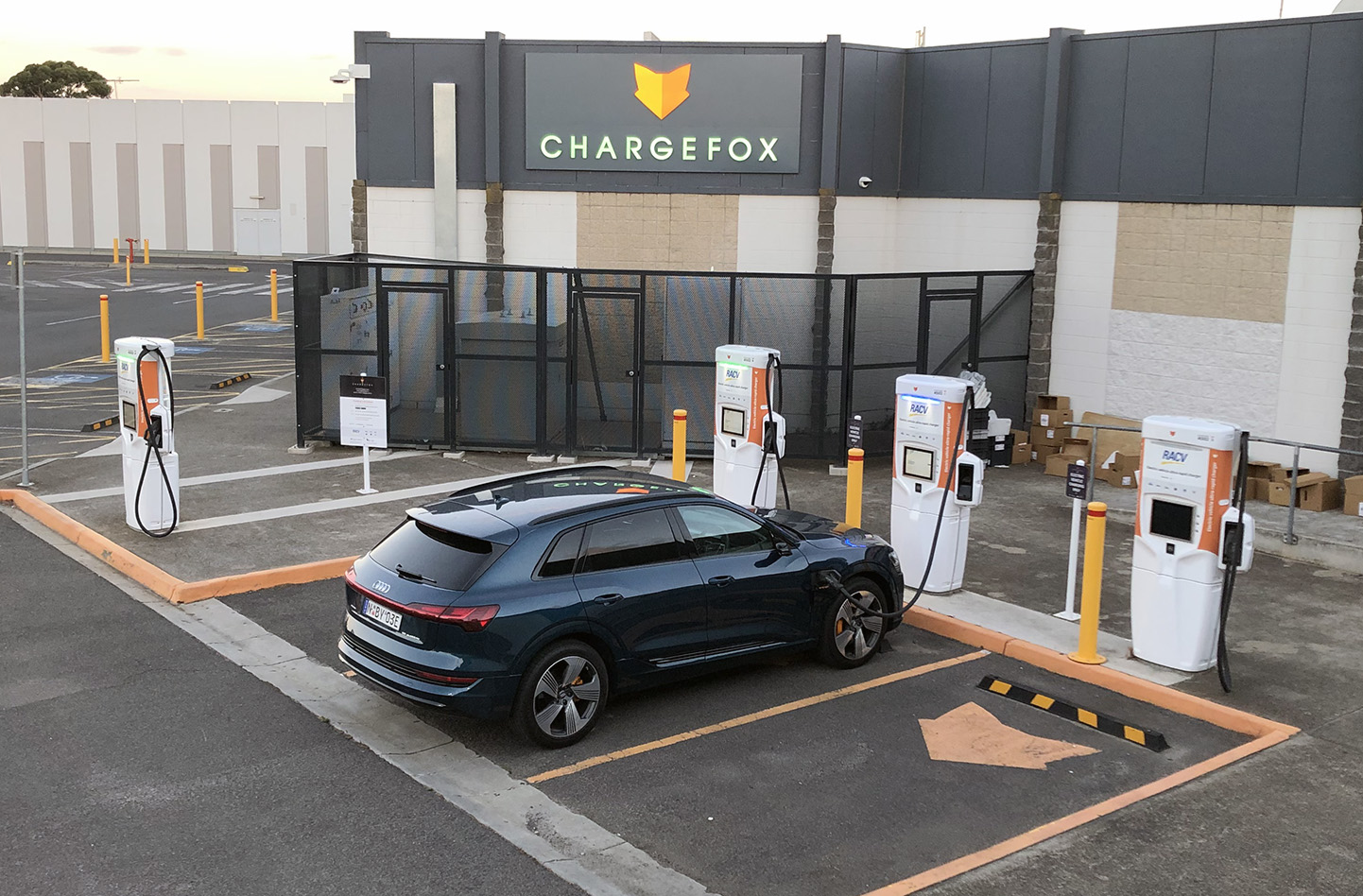
I charged the e-tron at a Chargefox rapid charger where it sucked up the electrons at 141kW, taking the battery from about 20 percent to 80 percent in just 18 minutes, which equated to 10km driving range every 50 seconds.
Chargefox charges 40c per kWh, so a 65kWh top-up from 20 to 80 percent costs about $25. Not that new owners need to worry about that as the e-tron is offered with unlimited Chargefox charging for six years, along with six-years’ servicing and roadside assistance and an eight-year/160,000km battery warranty.
The Verdict
Audi’s aim of making the e-tron appear as normal as possible to lure hesitant EV buyers reminds me of a vegan pub in Melbourne’s northern suburbs. It serves burgers that look and taste like the ‘real’ thing, but are in some ways, actually better.
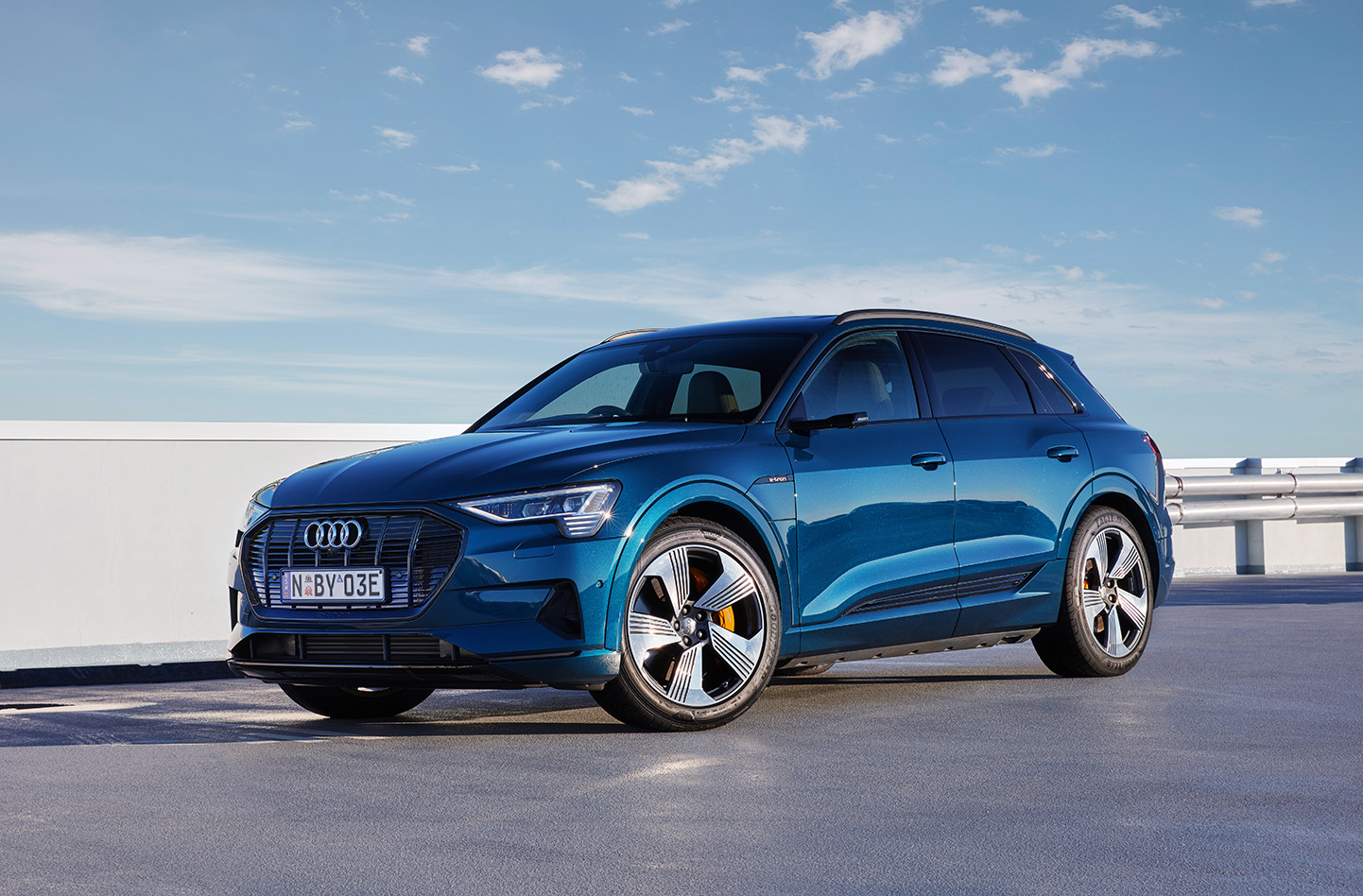
As with most EVs (and vegan burgers) there are compromises, but the E-Tron is no token effort on Audi’s part. It has the style, space, technology and comfort you’d expect from a large German SUV while bringing effortless performance and a sublimely smooth ride to the mix that will have you making up excuses to drive it.
Rating 4/5
PLUS Smooth and quiet ride, 150kW charging capacity, equipment levels, cabin comfort MINUS Dated cruise control stalk, fussy voice command
Specs
Model Audi E-TRON 55 First Edition Motors 125kW Front and 140kW rear Max power 265kW (300kW boost) Max torque 561Nm (664Nm boost) Battery 400v, 95kWh lithium-ion Charging capacity 150kW Economy 23.1 kWh/100km Price $159,600 On sale now
Over their various lifecycles, cars, much like people, tend to get bigger, fatter and more ungainly. But just occasionally, a model will buck the trend as if it discovered the chalice of eternal youth. That’s why the ND-generation Mazda MX-5 is one of the most astonishingly good sportscars in recent memory.
Instead of piling on the pounds and inches and following the lead of the NB and NC, the ND returned to first principles and, despite offering all the safety and convenience features any new car requires, is about the same size and weight as the original NA that launched three generations before it.
The little Japanese hero leaves a lasting impression not with massive power outputs and bone-shattering suspension, but with pure finesse in an admirable demonstration of restraint and minimalism.
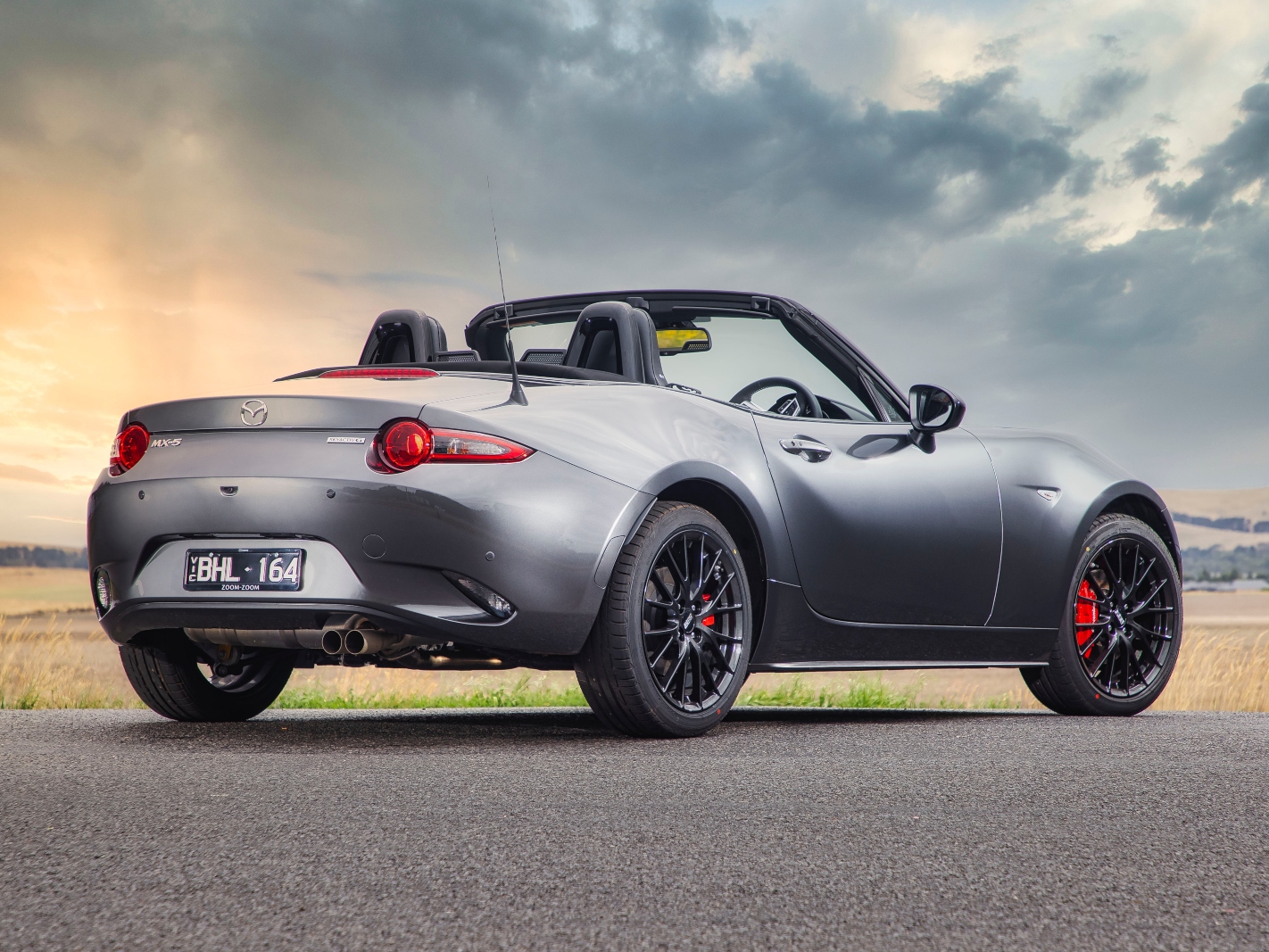
Which is why the addition of a new flagship variant might be cause for concern. It’s called the MX-5 GT RS and it has a number of modifications that, says Mazda, makes it more at home on a racing circuit.
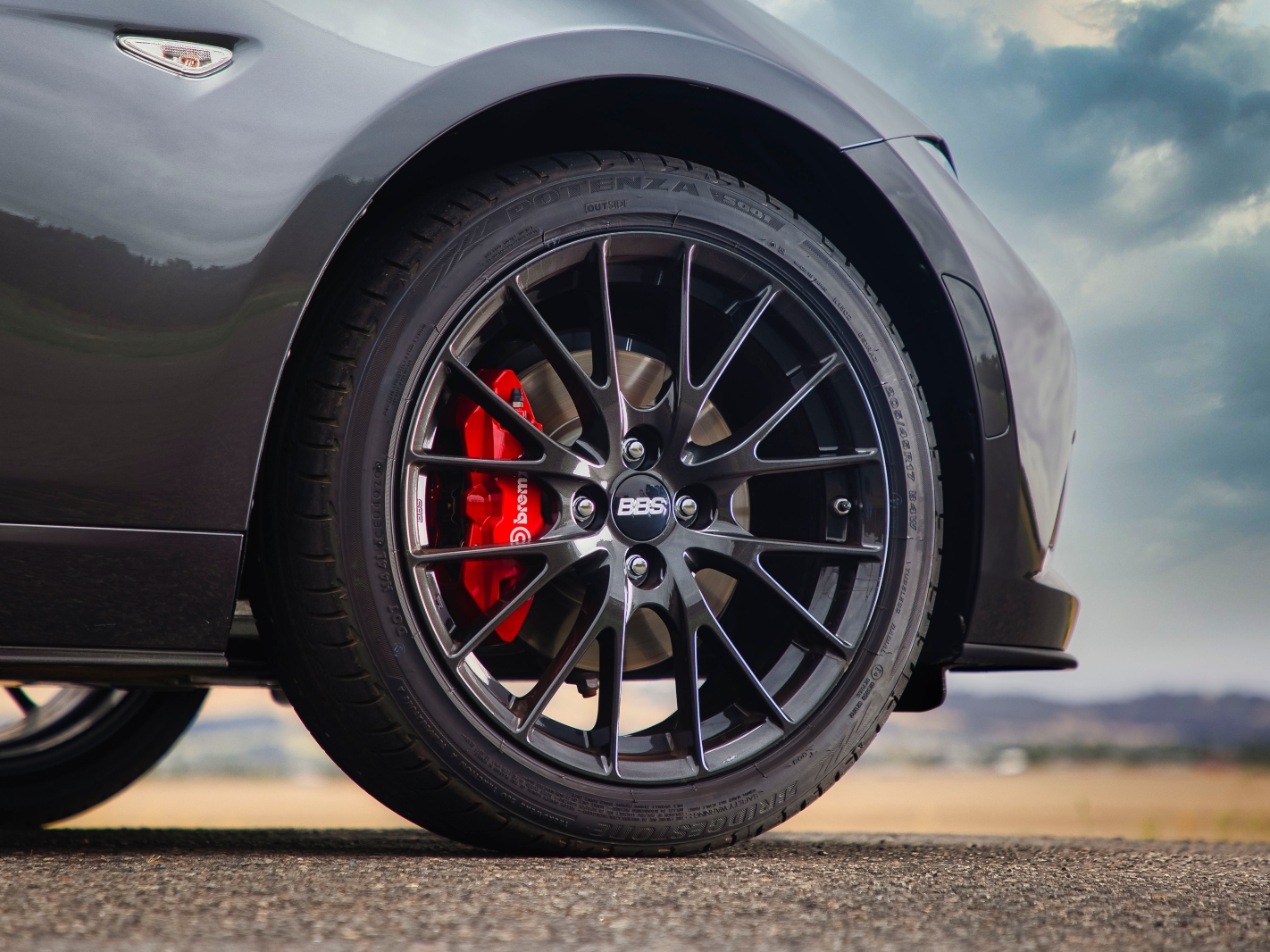
In place of the standard alloy wheel, the RS has BBS forged rims with a new cross-spoke design, there are brembo four-piston brakes on the front axle and, most controversially, stiffer Bilstein dampers and a strut brace.
A more aggressively tuned chassis will doubtless make the MX-5 more adept on perfectly groomed track surfaces, but if it spoils the wonderful road ride, then this version will forfeit a little of the Mazda’s soul.
And then there’s the price. For context, the entry level 2.0-litre manual MX-5 starts from $41,200 and it comes with the RF retractable hard top, the Roadster GT on which the RS is based comes in at $43,820 but the newest addition to the range is a hefty $47,020.
What is the Mazda MX-5 GT RS like to drive on the track?
With an unchanged 2.0-litre under the RS’s bonnet and 135kW on tap, the Mazda is most at home on tighter technical courses where you can find its limits comfortably and its relatively modest power won’t feel breathless. To that end, the Broadford Motorcycle Complex in central Victoria is the perfect match.
Here, the full extent of the RS changes can be exploited and to the limit, and it doesn’t take long to remember why the MX-5 is lauded among driving enthusiasts. Its performance is remarkably accessible and there’s an immediate confidence in its ability.
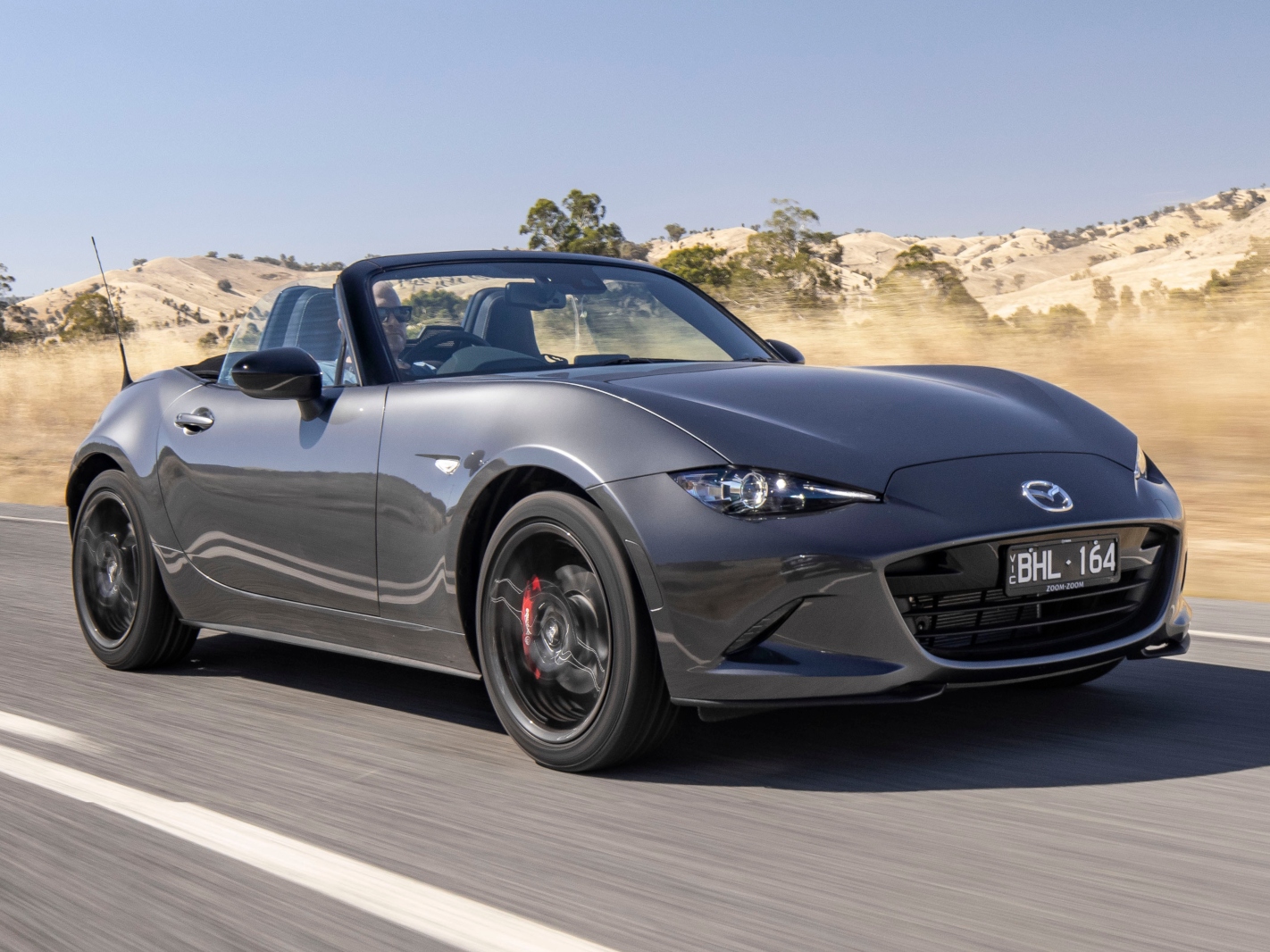
You don’t so much climb into the MX-5 but more slip it on like a perfectly sized brogue. The driving position adds to it with a snug supportive cabin and good view of the surroundings.
But even at low speed the MX-5’s chassis really shines. The skinny steering wheel is beautifully weighted and offers excellent feedback, the nose tips into corners with an obedience that would embarrass a kelpie and the tail end is just as lively.
With so much pliability engineered into the chassis, the MX-5 has a number of personalities. Its tail will step out under hard braking into a corner, it’ll do it again mid corner as the lock is wound on a little too much, and you can have one more oversteer experience on the exit if you keep the accelerator pinned.
That said, with more disciplined control, the MX-5 can carry surprising speed through corners. All the time its multilingual communication keeping the driver fully informed with the reserves of grip in all corners.
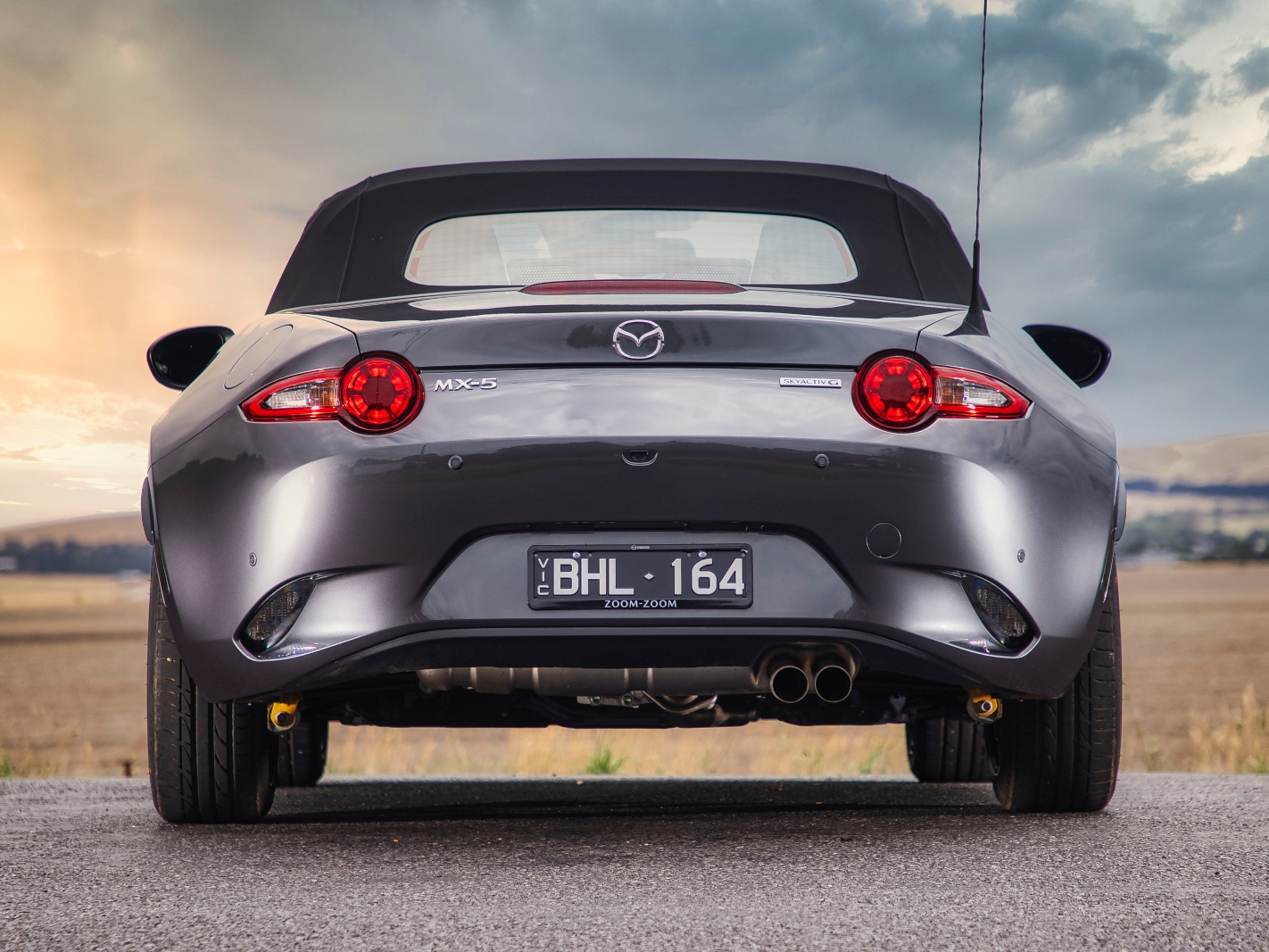
Carry too much speed though a faster bend and a progressive lightness to the steering warns that the limit is near, brake too deep and the front tyres will howl at you, get on the gas too early and the skinny seats feel like they’re plumbed directly to the differential.
But most importantly, the deft chassis tuning has numbed none of the Mazda’s playfulness. In fact, an opportunity to drive the sub-RS version back to back, made the changes stand out.
While the RS still has the same charisma and vitality in corners, the combination of beefier dampers and a strut-brace allows the MX-5 to lock onto a line and hold a more constant course through bends. There’s less correction necessary mid-turn unless you like that kind of drama in which case the sharper chassis enables easier provocation of oversteer.
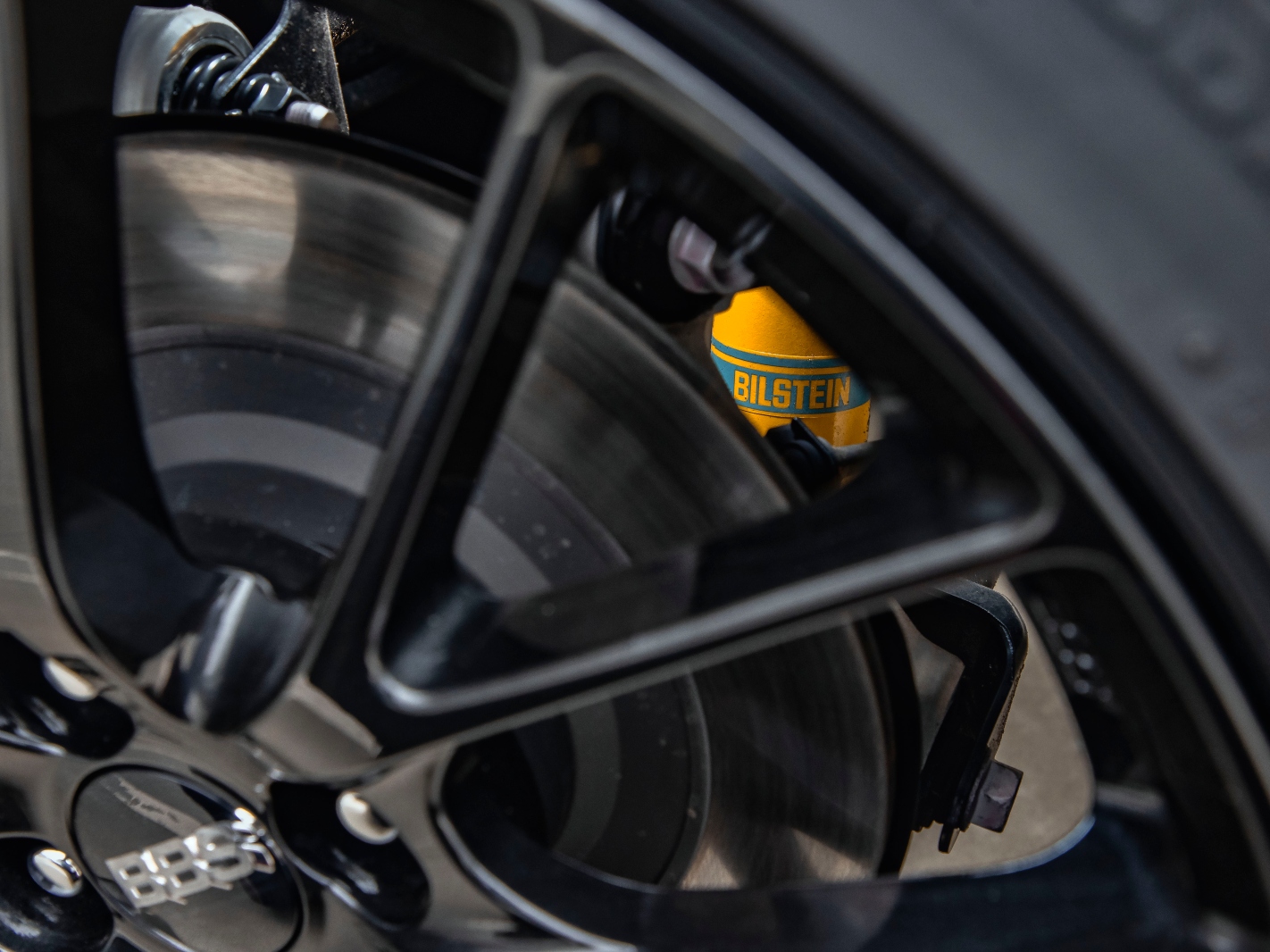
And while the standard brakes were starting to give off the unmistakable scent of tortured graphite by the end of the first lap, the Brembos and special pad compound remained odourless for two or three. A more consistent pedal feel was the most notable performance advantage with neither set up fading under the track conditions.
What is the Mazda MX-5 GT RS like to drive on the road?
Unless you are lucky enough to have regular access to a race track, it’s likely a majority of the MX-5 kilometres will be clocked up on public roads and, while the RS is undoubtedly the favourite for circuit work, if it compromises on-road ability then its purpose is a little flawed.
Thankfully it’s actually a bit of a gem. The combination of firmer ride and reduced body roll makes the RS even more like its mechanically related Abarth 124 Spider. In a word, the new version feels more serious.
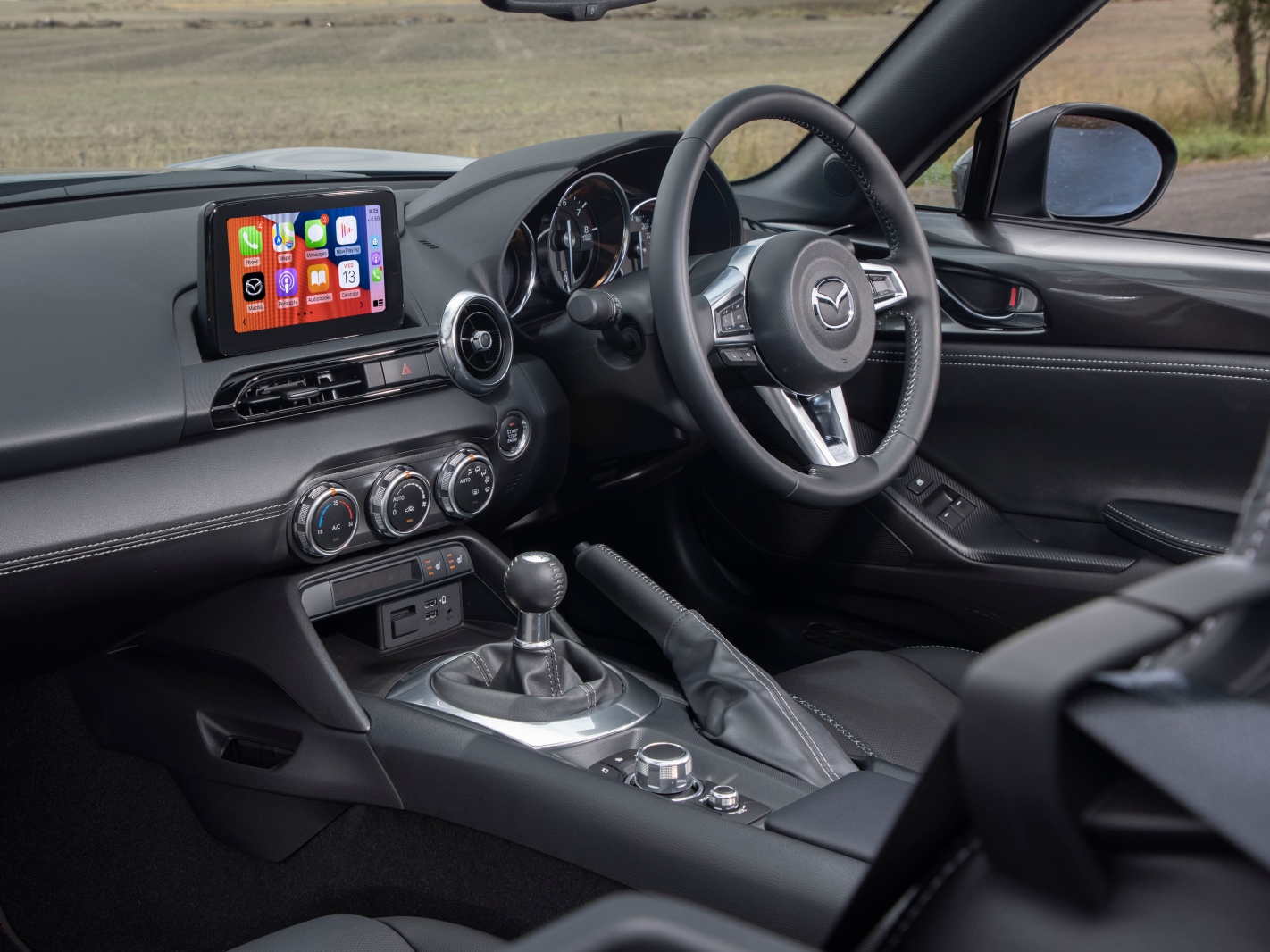
That might not sit comfortably with those purists who love the pitch, dive and roll you get from the unfettled version but neither versions are a clear favourite for road use. It’s very much a matter of taste and choice.
There’s still enough compliance in the springs to be comfortable and the beautiful steering on track translates perfectly to imperfect roads. The odd Armco-lined hairpin also made the big Brembos welcome on the road too.
Thankfully though, the RS still feels like the MX-5 with a strong, free-revving engine, a superb manual gear-shift, and the choice of soft top or RF folding tin-top. Only the auto army will be disappointed with no six-speed automatic available.
Verdict
While its price is a significant step up over some lesser variants, it does represent good value both pragmatically and emotionally. If you wanted to create your own interpretation of the RS with off-the-shelf parts, you certainly wouldn’t find a set of forged alloy wheels, German-engineered dampers, brakes from one of the world’s most trusted brands and a strut brace for $3200.
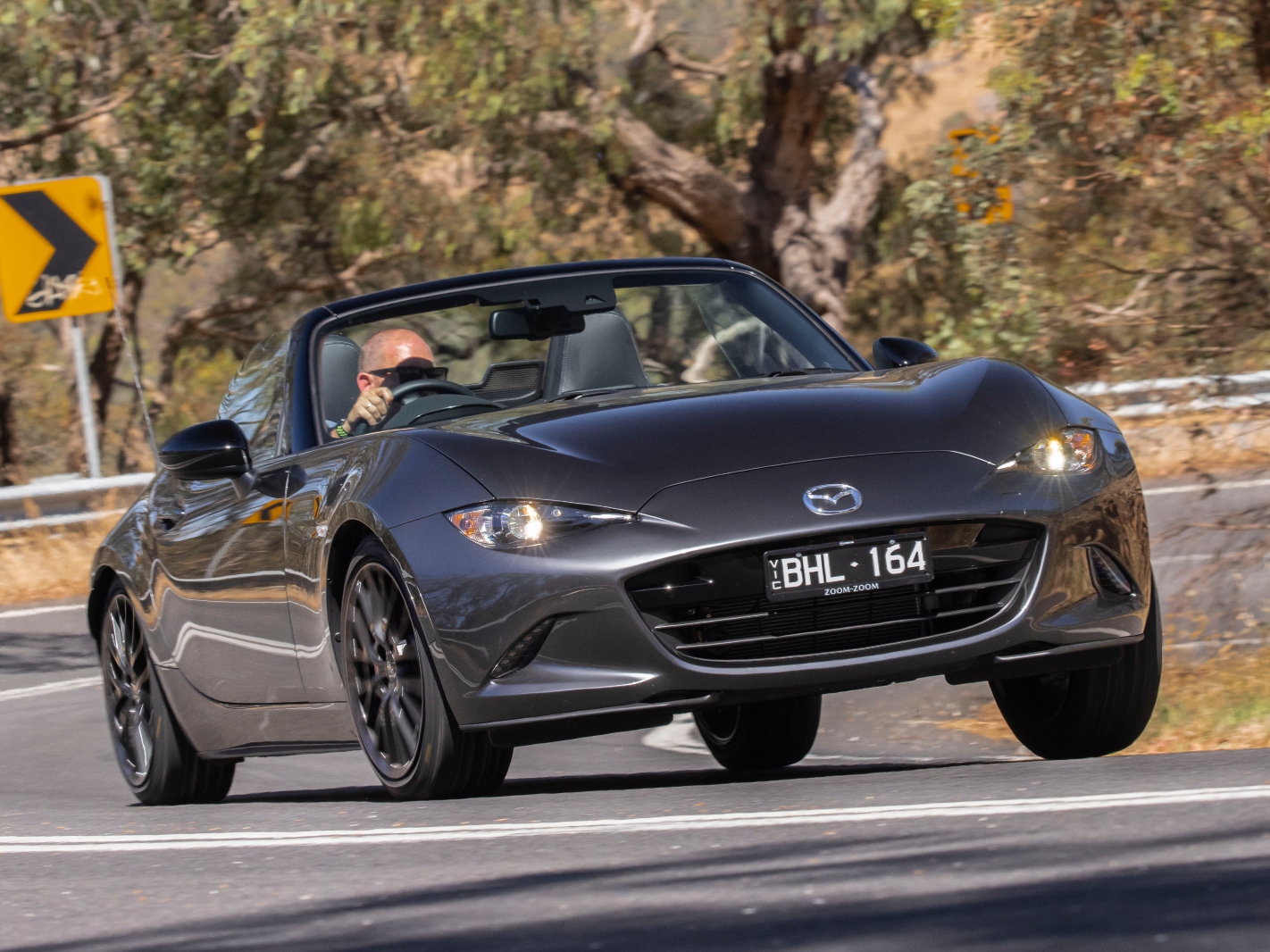
But the value equation makes perfect sense if you intend to spend a majority of your time at the wheel of an MX-5 on either very good roads or a track. The RS proves the theory that a few small changes can make a big difference.
The chassis tweaks have robbed some of the MX-5’s charming nature on more inconsistent roads. However, its firmer ride is certainly not uncomfortable and the resistance to roll not unwelcome so the new RS simply presents a choice.
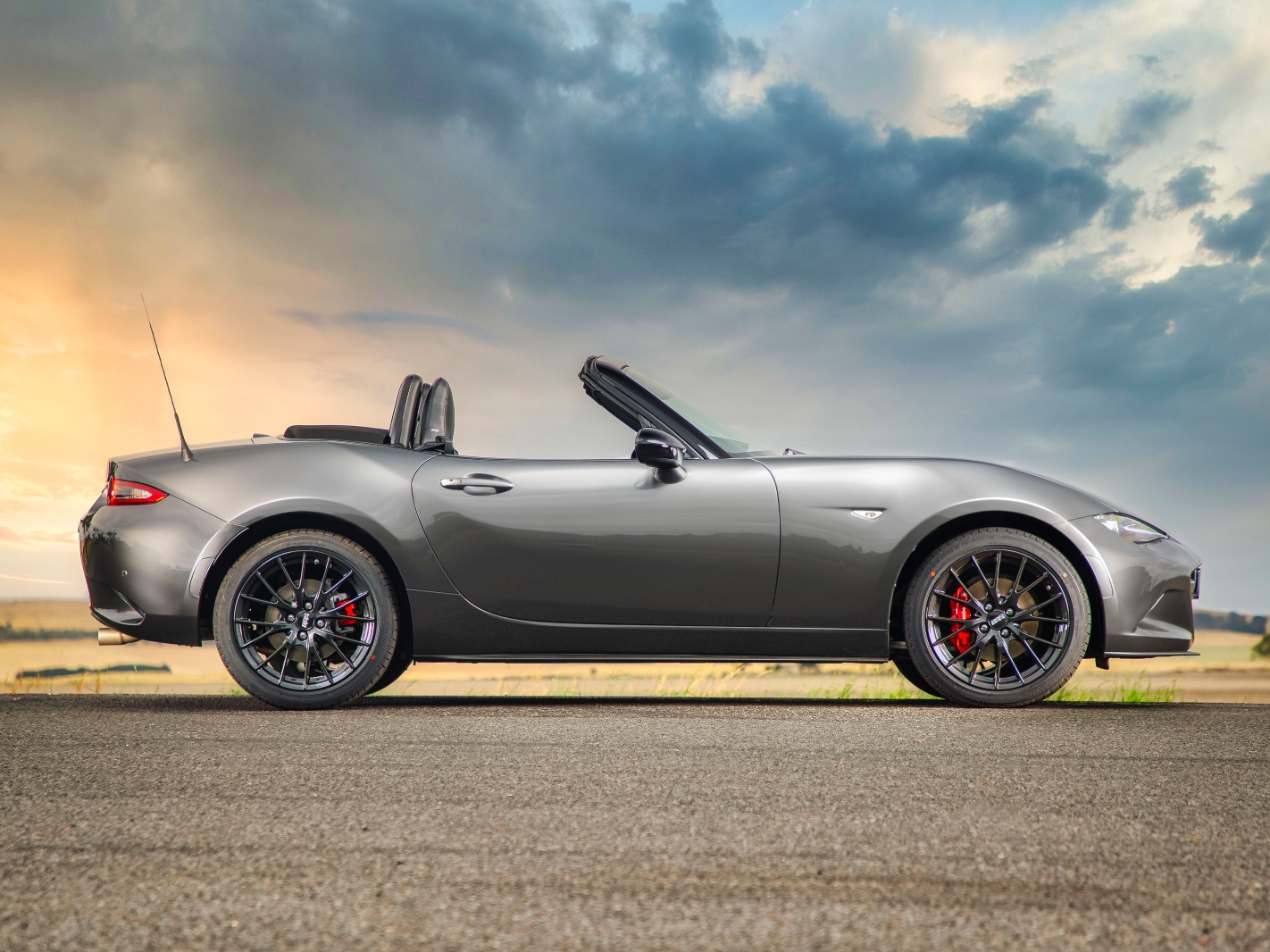
If you prefer the more compliant suspension and animated body control that the ND MX-5 showcased, there are still eight options in the line-up to choose from. But if a sharper, more focused specimen is what you’re after, the RS still offers almost all the attributes that put the MX-5 on the map, but with a little extra sass.
MORE All four generations of the mX-5 tested together
Specs Model Mazda MX-5 GT RS Engine 2998cc 4cyl, doch, 16v Max power 135kW Max torque 205Nm Transmission 6-speed manual Weight 1052kg 0-100km/h 6.5s Economy 6.8L/100km Price $47,020 On sale now
This road was built for timber, gold and snow. Starting in the Warburton Ranges east of Melbourne, it tracks towards the dawn sun for 90km, through the pit of the Little Yarra Valley before pitching sharply uphill, all knotted and gnarled, ultimately terminating at Mt Baw Baw ski resort. It delivers a benign intro with a real sting in the tail; the sort of route that offers a concentrated torture test of a car’s abilities.
To key into this sort of challenge, you need something with torque to tackle the gradients, excellent chassis support to cope with the patchwork forest surfaces and the agility to bob and weave around road debris, collapsing bitumen shoulders and the occasional hard of hearing marsupial. In other words, probably not a Jaguar F-Type R. This is a road for something lighter, more immediate, more wide-eyed, not for something transferring the masses of a mid-sized SUV. The spec sheet lists the weight being ‘from 1818kg’ but further investigation reveals that figure to include a 75kg driver, fluids and 90 per cent fuel. Still, pulling a vehicle beyond its comfort zone remains the most effective way to discover how far that zone extends.
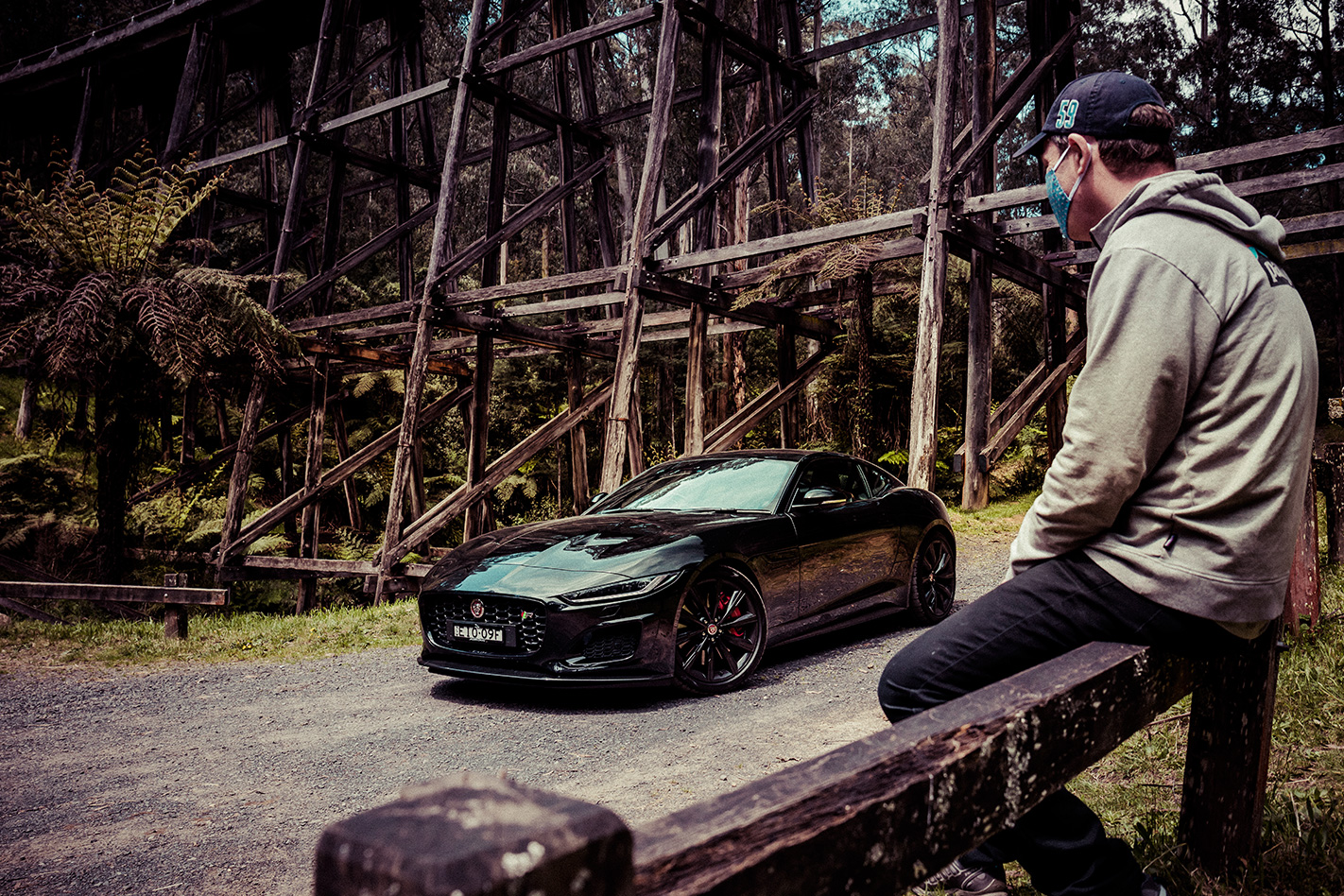
It probably won’t have escaped your attention that this is the facelifted version of the Jaguar F-Type. I tend to experience a little shudder when cars are treated to a mid-life facelift if only because, more often than not, the results aren’t always any great improvement. Indeed, when I first saw press photos of the updated F-Type I wasn’t sold. The front end looked as if it had lost its identity, with the slimmer lights giving it a more generic appearance. I was wrong and while it’s not my job to tell you what looks good or otherwise, the big coupe is now more svelte and modern. Park it next to the old car and the original now seems a little heavy-handed.
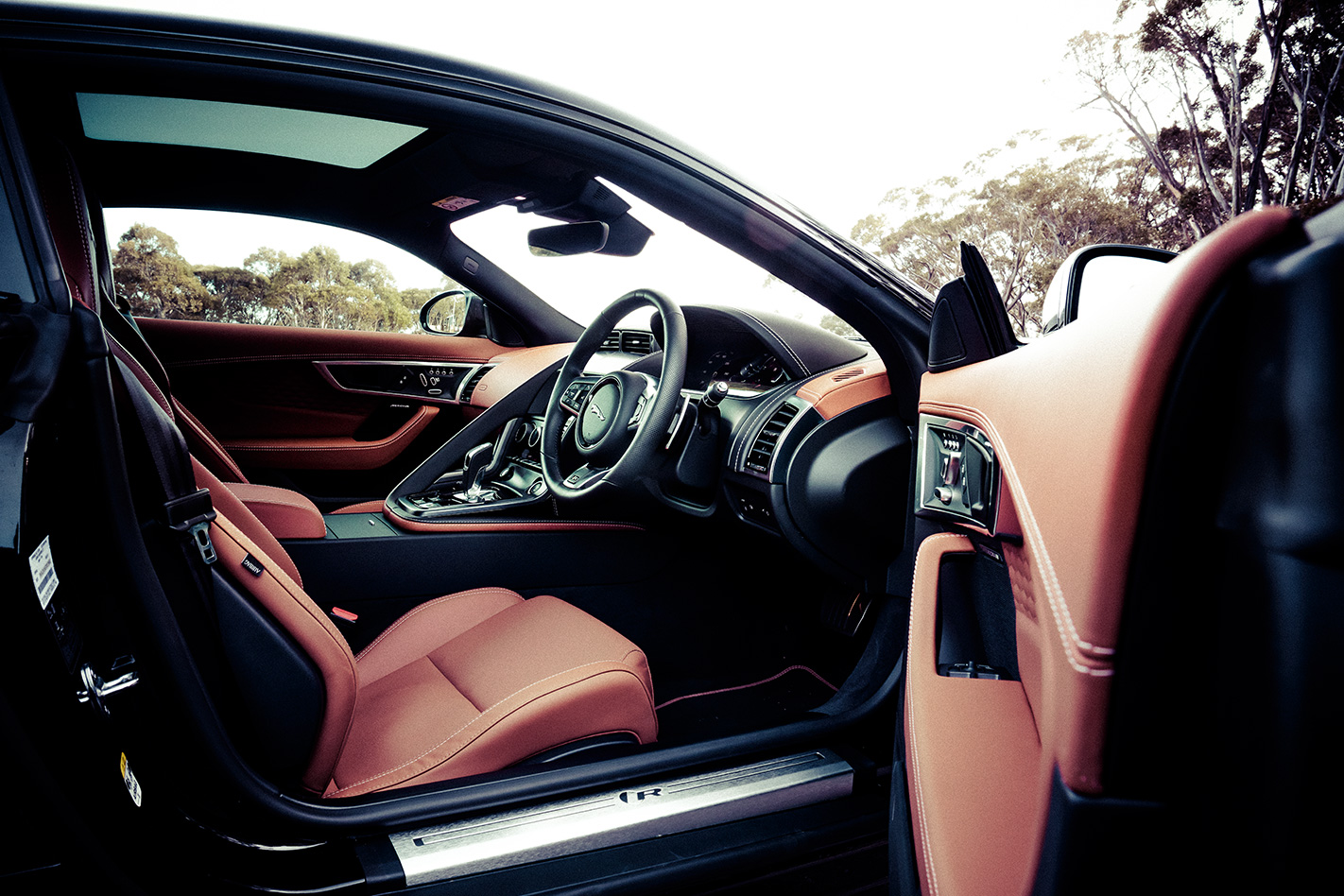
Nevertheless, there’s still something of a throwback vibe about the F-Type. Yes, the cabin now gets an updated infotainment system and a digital dial pack in the binnacle, but you’ll search in vain for a head-up display or adaptive cruise control and, to be honest, I couldn’t care less. It taps into a vein of buyers who actually want something endowed with a certain old-school tactility, something visceral, something analogue, or at least a convincing facsimile of it.
From Yarra Junction, the C425 meanders gently through Gladysdale, originally Slaty Creek but renamed in 1915 after Gladys Pettit, the daughter of the local postmaster. This is the timber trail that leads to Noojee, where lumber was fed onto the three-foot tramway to the Powelltown mill. The locals of the valley have an intimate relationship with the topography, the V-shaped valley offering little in the way of flatlands, with cleared plantations now occupied by fragrant apple orchards.
It’s easy to lope along in the F-Type, the softest setting of the adaptive dampers gently jostling the driver over surface imperfections. At first, it’s easy to come away a little nonplussed, as the ride quality doesn’t have the waft of a top-line GT, yet the steering lacks the feedback of the best sports coupes. You begin to wonder what this thing actually is, where it sits in the market, what case you’d need to make for choosing this over a 911 Carrera. The answers aren’t immediately forthcoming.
Perhaps calling this a facelift sells what Jaguar has done a bit short. This F-Type R gets new rear-axle hub knuckles and ball joints, adaptive dampers, coil springs and anti-roll bars. The transmission benefits from much the same electronic trickery seen in the XE SV Project 8, Jaguar claiming quicker paddle shifts. So there’s some real substance here, too.
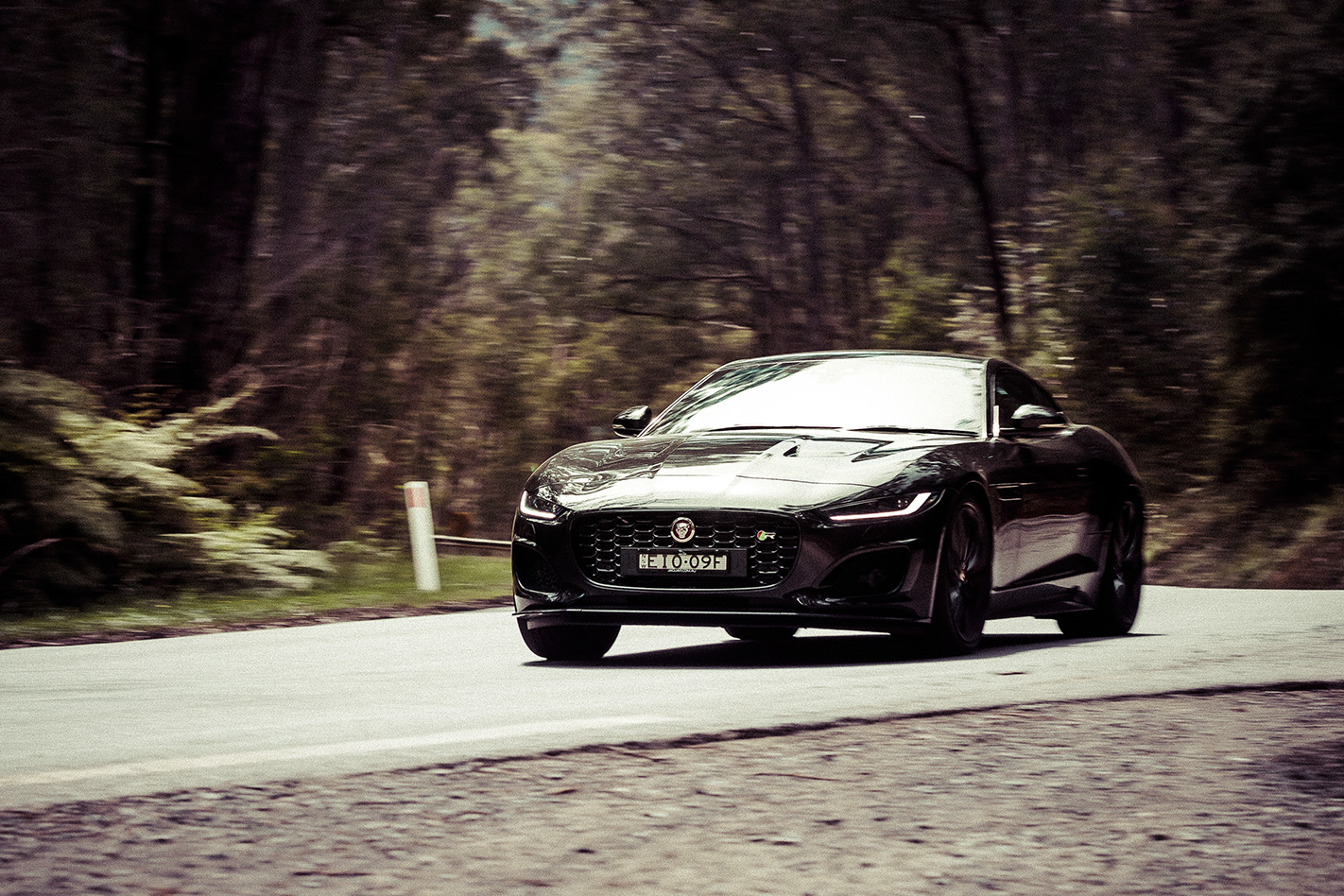
The 5.0-litre supercharged V8 could never be accused of being short on substance. Good for 423kW and 700Nm, the AJ133 unit first saw service in the XE and XJ of 2009 and, with the closure of Ford’s Bridgend plant in Wales in September, production is being brought in-house with a lift-and-shift transfer of staff and equipment to Jaguar’s Wolverhampton factory for the remainder of the engine’s lifespan, which has a hard full stop with the introduction of EU7 regulations in around four years. Thereafter it’ll likely be replaced by a BMW V8 and while there are some great eights hailing from Munich, this is a special engine.
Given the headline figures, it’s surprising that it can feel a little bereft of torque at modest engine speeds. There’s not that bottomless barrel of brawn you get with AMG’s four-litre twin huffer, and the cabin fills with a harsh bass harmonic below 2000rpm. But keep your foot in and the payoff doesn’t take long to materialise. The exhaust butterflies flip open as the needle sweeps through 3400rpm. At 4000rpm, the V8’s found its voice and from there through to the 6800rpm redline is where you’ll want to play. You’ll need somewhere a little remote because discreet it most certainly isn’t, the exhaust crackling with a fusillade of bangs and pops on the overrun.
Unless you want to cultivate a rolling wave of traumatised livestock, it’s best to switch the exhaust into its quiet mode as the road winds into Powelltown. Here the bitumen describes long, lazy parabolas, perfect for leaning into the corners. The seats are great, offering decent support and, for an electrically adjustable chair, a low mount which means that this is a great choice for taller drivers. This car’s fitted with the optional panoramic glass roof, yet I never come close to having an issue with headroom. The driving position is good too, although the pedal placement retains the rather lazy carryover from manual cars of a higher-mounted heel-and-toe focused brake pedal.
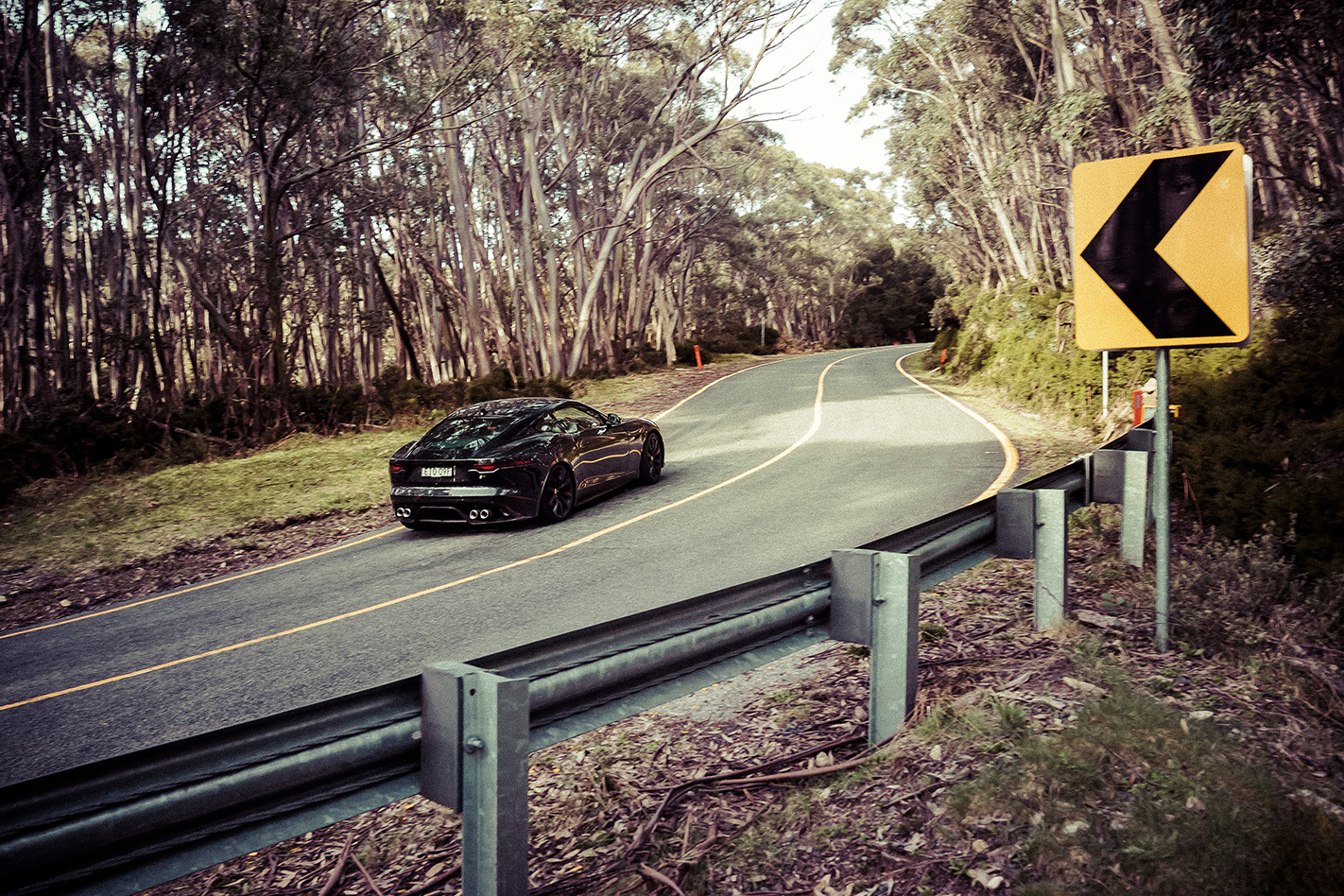
The mountain ash forest off the port bow lifts like a vast tsunami wave over Powelltown. From here the road quickens through the plantations, throwing in fast, never-ending corners punctuated by short straights, where you can click down a couple of ratios and give the engine its head. The shift logic has improved in auto mode, although it’s still far preferable to paddle along yourself, the new software now happier to let you bang in a downshift that takes the needle closer to redline. Like all good performance cars, the F-Type R trips that slight twang of guilt, that something this much fun probably shouldn’t be legal and it’s only as I glance down at the dials that I realise it probably isn’t. Time to ease up.
Photographer Dewar and I stop at the trestle bridge in Noojee for a bite to eat and to grab some shots. A big copperhead snake suns itself behind me, only moving off into the brush after it decides it doesn’t want its picture taken. Noojee’s an old gold rush town, with the boom starting in 1860 and characterised by prospectors like Dick Belpoole, who was so determined to explore the deep gullies choked with thorny blackberry that he built himself a suit made of tin. Only in his final days did Dick agree to show anyone his mother lode on the agreement that he’d be taken out of the old people’s home where he was seeing out his days, but he dropped dead on the walk into the forest and the location of his gold seam remains a mystery to this day.
A railway line was built to Warragul in the south in 1919 which crossed seven trestle bridges and Noojee reinvented itself as a timber town. The line closed in 1954, but there’s still a massive sawmill and lumber yard on the fringes of town, where the road heads off towards Toorongo Falls. These days, it’s all transferred by massive trucks, which not only keep you on your toes if you’re tempted to apex across a sweeper, but also buckle the bitumen on hot days, creating a tramlining effect on the Jag’s big P-Zero tyres not unlike an over-zealous lane-keep-assist system.
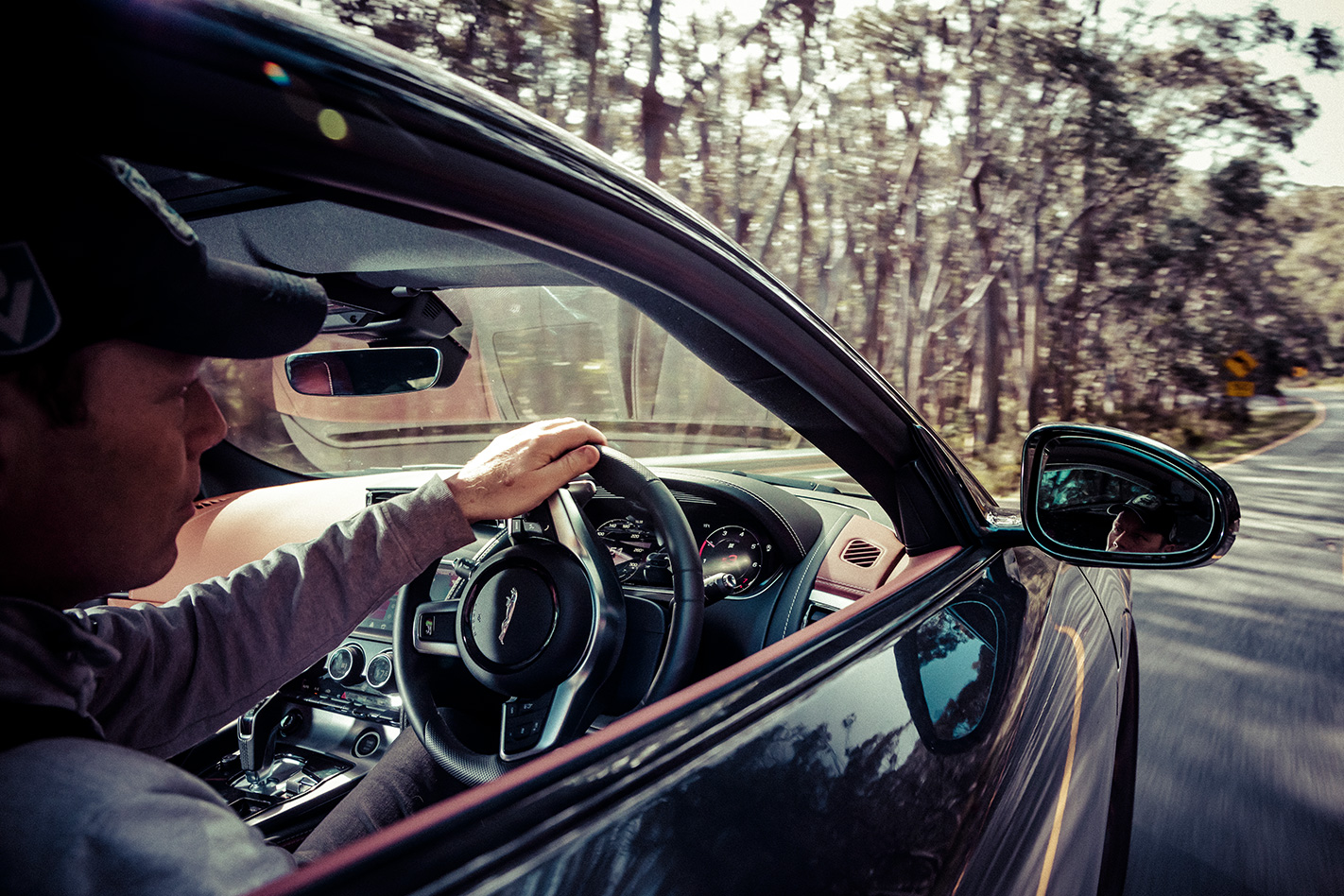
The road changes from here. Gone are the big radius bends and the boundless cerulean arc overhead. The underbrush starts to claw at the narrowing and increasingly bumpy blacktop and you begin to prod at the drive controller to find the suspension setting the Jag’s happiest with. In truth, it makes little difference. Such is the F-Type R’s heft that it steamrollers many surface blemishes regardless of damper setting. It’s never ultra-polished but it also never becomes a handful, even in Dynamic mode. Perversely for such an old-school character, there’s an almost EV-like low-slung heft in the way the Jaguar presents itself to a corner; that implacable feeling of a surfeit of mass carried low.
The brake pedal has a beautiful long-draw modulation to it and the steering is accurate while still remaining somewhat mute. The paddles are a joy to flick up and down, and I muse for a moment whether this is one of those rare powerhouse cars that would be improved with the fitment of a manual gearbox. It would certainly go some way for compensating for the vanilla steering, but after blatting up through three gears in rapid succession I’m not so sure.
Those driveshafts to the front wheels are probably something I could do without though. Yes, they help the Jaguar step off the line savagely, 100km/h coming and going in just 3.7sec, and offer beautifully early throttle pick-up from the apex, but while they undoubtedly make the F-Type R more effective, I’m not sure they make it more engaging. Or adjustable, for that matter. On a couple of passes for Dewar’s camera, where I’d have liked a nudge of steer from the rear, all I got was dogged push from the front. What’s more, it’s not always predictable quite what results the algorithms controlling the electronic active differential and torque vectoring by braking will spit out. It can feel as if you can make two identical inputs and get two very different outcomes.
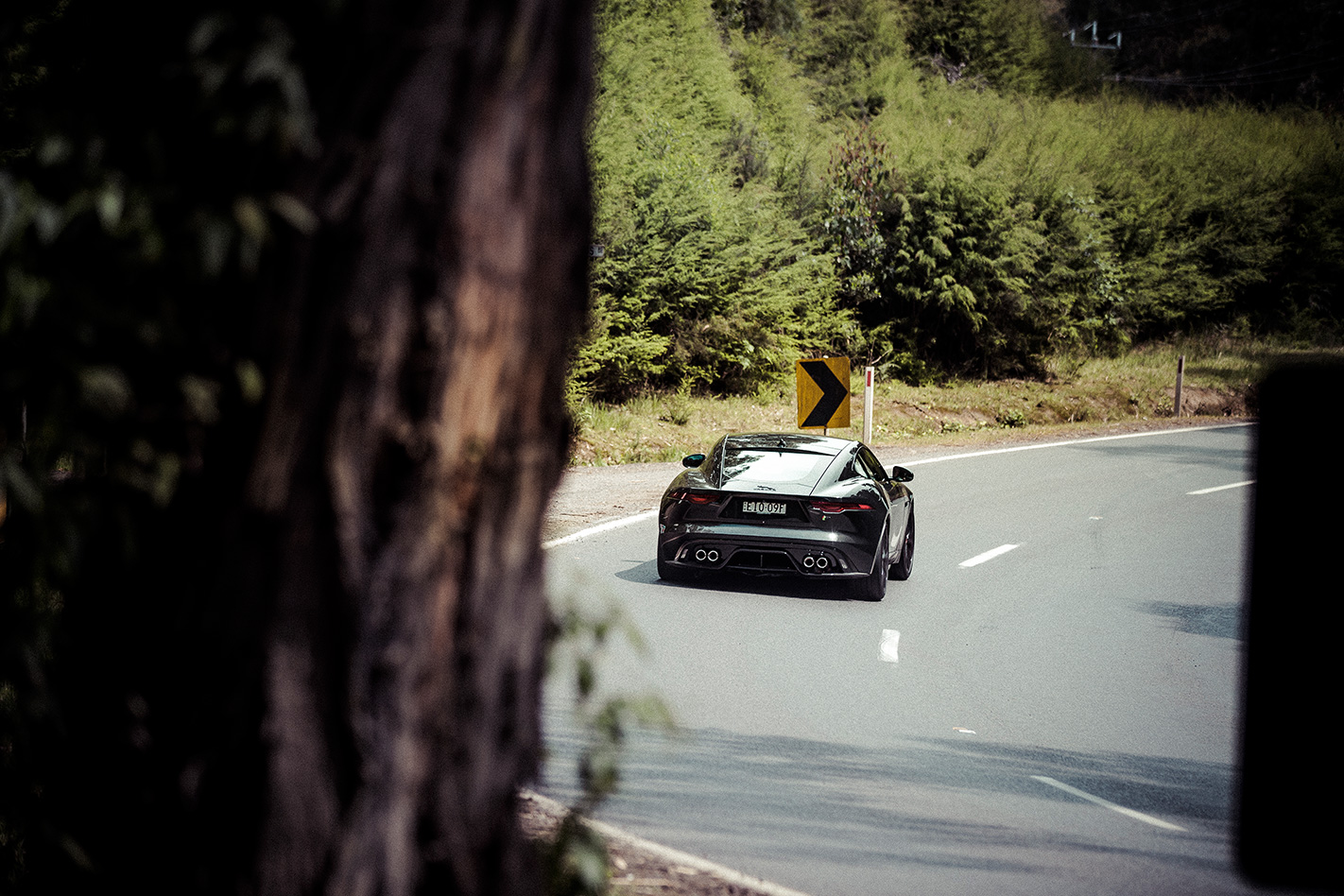
Being reactive is key here, and it’s an integral aspect of driving this road, in anything really. Lyrebirds explode from the verges, all legs, wings, tail plumes and panic while stubby branches drop from the soaring canopy above, like punji sticks aimed at your radiators. The road dips and climbs manically, dropping from one crest to another gully, the fall line teetering from right to left into fading vistas of fuzzy felt trees marching to the horizon. The proximity of the road boundaries creates a dizzying, three-dimensional feeling of speed, aided by the glass roof’s peripheral sensation of blurred and scudding branches knit overhead and the cacophony of the V8 ahead. It’s an intoxicating combination, even if you’re not registering huge numbers on the dials.
At one point, the road emerges from the green tunnel to a land of giants, huge mountain ashes lying prone and naked in a barren clear cut, the odd outsized primordial fern punctuating the destruction. It’s like a mini-Tunguska event, the ruination jarring.
Tanjil Bren is, like Icy Creek before it, deserted, the hunched and weathered shacks advertising snow chains still boarded after the tourist winter that never was. We haven’t seen another vehicle since Noojee, some 32km back, and we don’t see another on the 14km climb up to Baw Baw Village. After a few kilometres of gentle ascent through eucalypts and native ferns, the C426 makes a 90-degree left up to the ski station, with bold yellow alpine road marking and shiny guard rail injecting some jarring modernity. Go straight ahead instead and the bitumen ends and you’re onto the magnificent South Face Road; a story for another time and another vehicle.
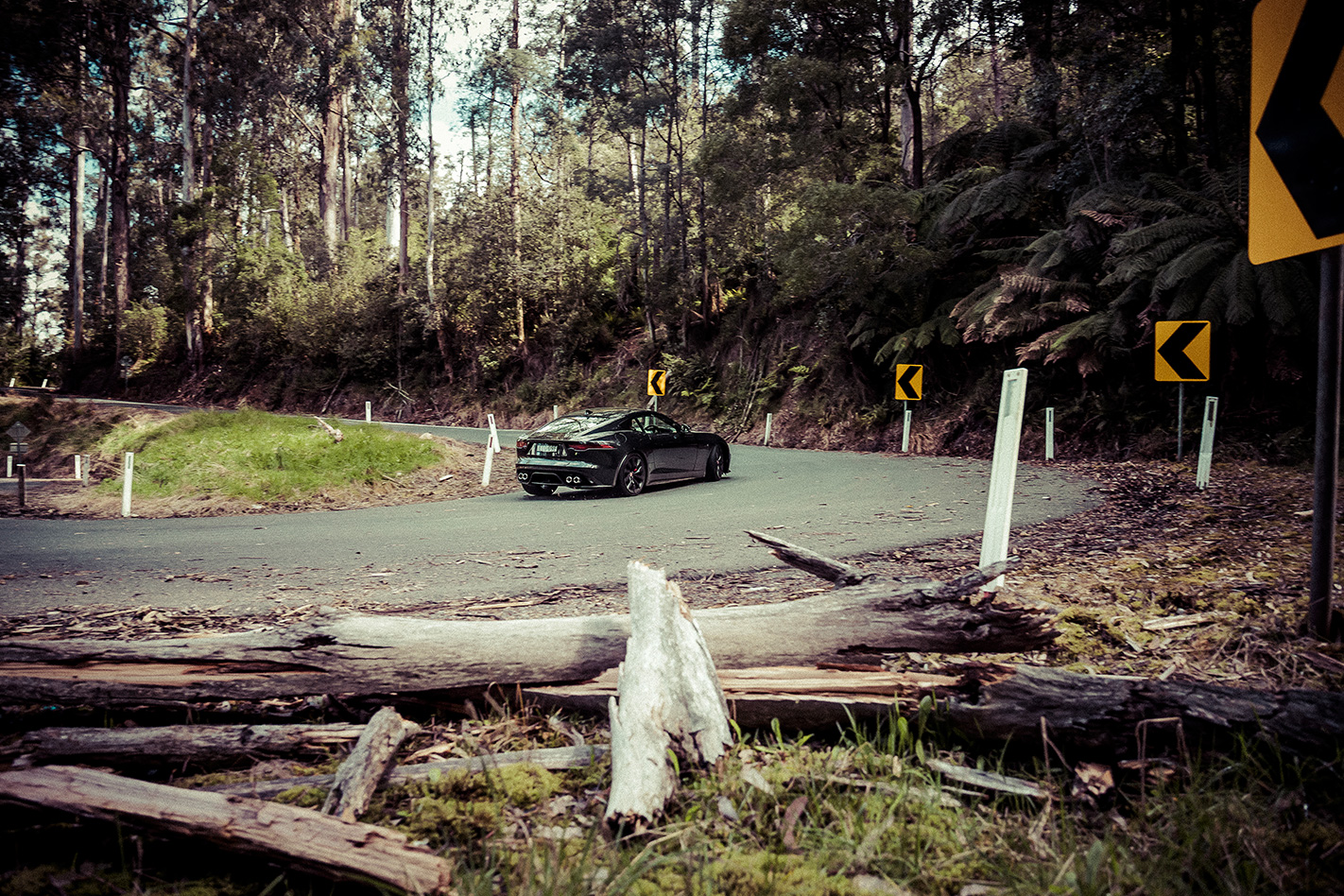
Next comes the steepest part of the drive, if not the most challenging. The F-Type is in its element here, squatting out of tighter corners and charging uphill, and you time your lift-offs and downshifts to coincide with the arrival of the guardrail, for a cacophonous phasing effect through windows cracked an inch or two. It’s symphonic and a little juvenile, but nobody’s here and I’m having a bloody brilliant time, so who’s complaining?
At the left-handed Winch Corner, the gradient steps up to 20 per cent, before flattening to a mere 14, the thinner mountain air being squeezed, mangled and rammed by the gulping supercharger into the eight 625cc cylinders. And then it’s over. Ski chalets materialise and you’re in the vaguely underwhelming, treed-in and largely deserted parking lot of Baw Baw Village. Your destination is reached.
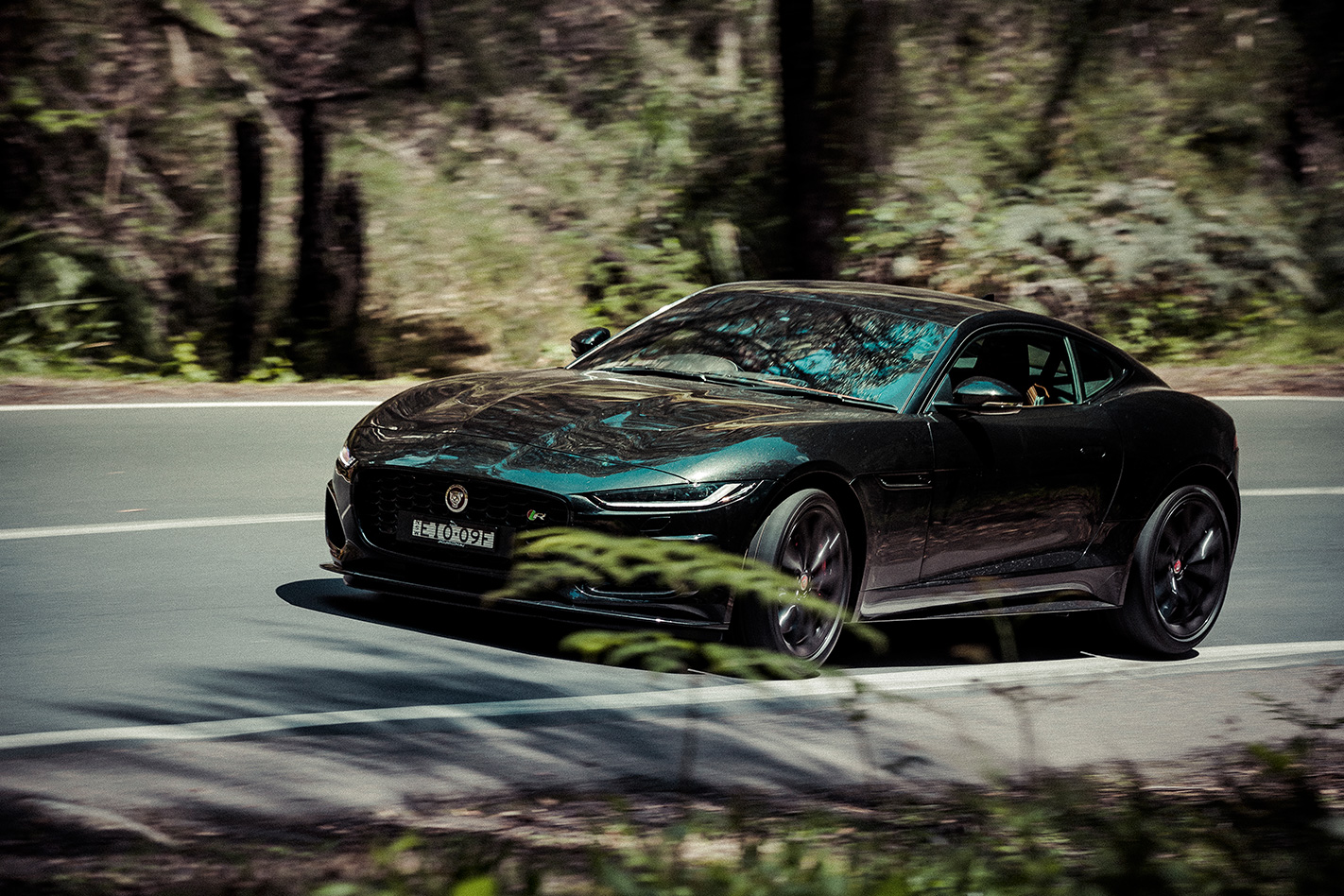
The car ticks cool, coarse chips dropping off the contracting rubber of the Pirellis’ tread blocks. Dewar fusses over how filthy I’ve made the Jaguar, the huge black mirror of bodywork now entombed in a gritty grey epidermis, but that comes with the territory. I can think of cars I’d have been quicker or more comfortable in than the F-Type R, but not a lot springs to mind that I’d rather spend all day doing this in and then tackle a three-hour drive home when tired. The sheer duality of its personality is as extreme as any, its malevolent aesthetic turns heads wherever we go and it’s packed with that attribute the absence of which we so often bemoan these days – character.
I’ve slowly come to the conclusion that cars like this are going to become more, not less relevant, in the near future; that a hardcore of enthusiasts will seek out something ever rawer. The F-Type R is a car for those who want to become supersaturated in the sensations of driving. It’s writ large in the unapologetic expression of its combustion, in the hot tang of oil and the heat soak of roiling air you feel just walking past the car at idle. It feels alive, and should you ever get the chance to drive one on Victoria’s timber trail, so will you. Here’s to timber, gold, snow and sheer force of personality.
HOW TO PLAN YOUR DRIVE
Start at Yarra Junction and there’s an easy in before the tough stuff. Premium fuel is available at the General Store at Neerim Junction. Noojee is the place to stop for lunch, with the Outpost pub and the Little Red Duck cafe both decent options.
JAGUAR F-TYPE R SPECS
Body: 3-door, 2-seat coupe Drive: Four-wheel Engine: 5000cc V8, DOHC, 32v, supercharger Power: 423kW @ 6500rpm Torque: 700Nm @ 3500rpm Power/weight: 233kW/tonne Transmission: 8-speed automatic Weight: 1818kg L/W/H: 4470/1923/1311mm Wheelbase: 2622mm Steering: electrically assisted rack-and-pinion Tyres: 265/35 ZR20 99Y (f) 305/30 ZR20 99Y(r) Pirello P Zero Price: $262,936
Pros: V8 soundtrack; styling; grip; grunt; analogue feel Cons: Weight; lack of mid-corner adjustability; thirst
Star rating: 4.5/5
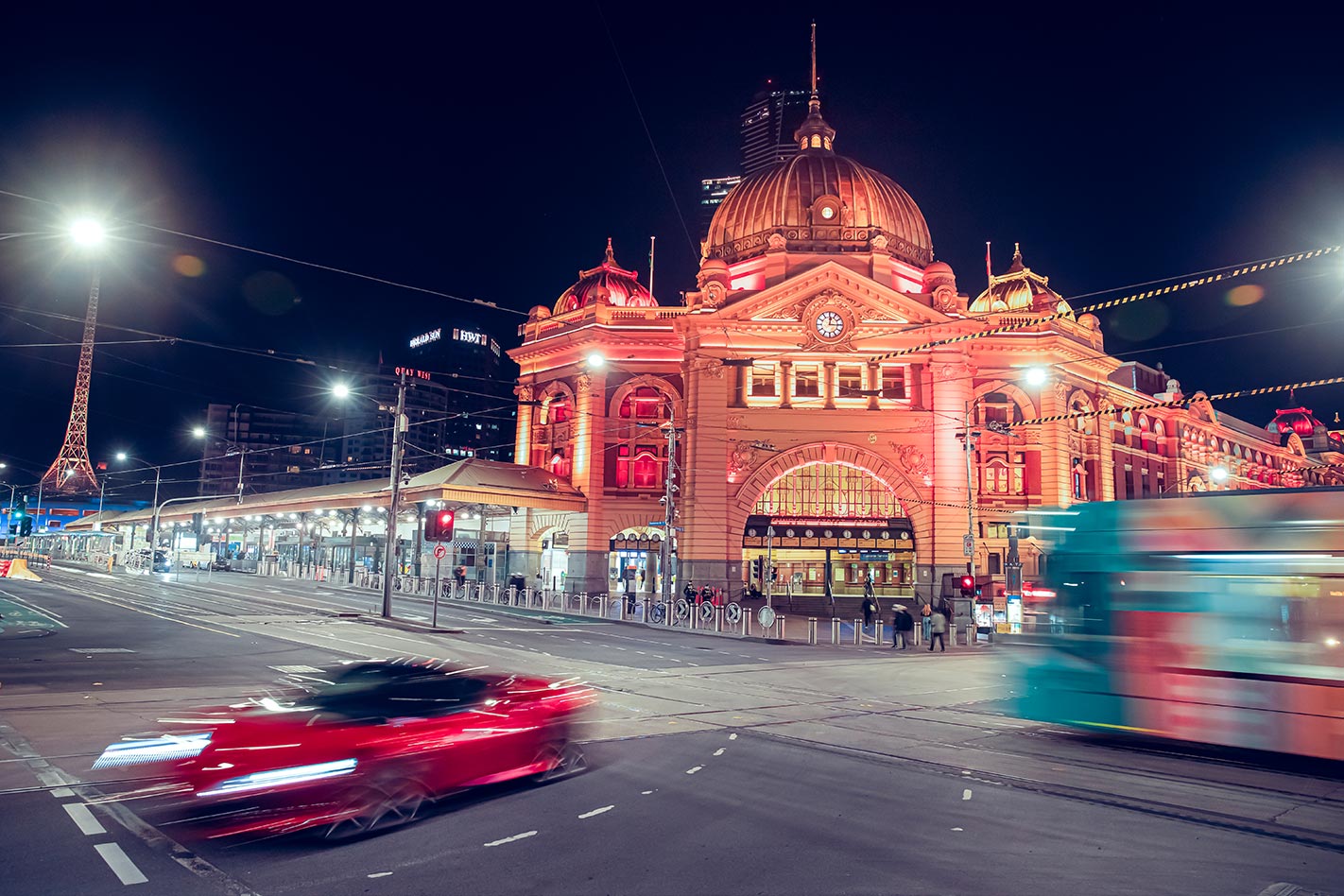
This is going to be the biggest test of the Ferrari’s front-lift system yet. At the end of the heavily graffitied Hosier Lane in Melbourne’s CBD is the most diabolical alleyway entrance you have ever seen.
Its devilish dip is scarred at its lowest depression with the last wincing moments of many a front bumper. I push the button to raise the nose. Brrrrrr. There’s an audible chime and a small graphic in the cluster advises the front is raised. We’re going in.
The clock has just passed midnight, Monday, November 9, 2020. The date and time matters for Victorians, for these are our first minutes of ‘freedom’.
A virus all-but defeated, the ‘ring of steel’ that surrounded Australia’s second-largest metropolis has now lifted, and we may now venture further than 25km afield.
Not that it really matters much in the grand scheme of an awful pandemic, but for the first time in 112 long, often heart-breaking, difficult but mostly just boring days, we can go for a proper drive, on a proper road; not just to Coles and back.
For now, though, there’s a photographer barking orders at me as I find myself in the broken heart of Melbourne itself. Though lit as brightly as ever, the CBD, as it has been for three months, is still. There’s the hiss of a distant street sweeper; the hum of a Camry Uber gliding past.
At one point, a white council van zooms up to a nearby city bin, the anonymous nozzle of a gurney protrudes from the side door, blasts the bin for a few moments, and then zooms straight back off again. Virus fighters.
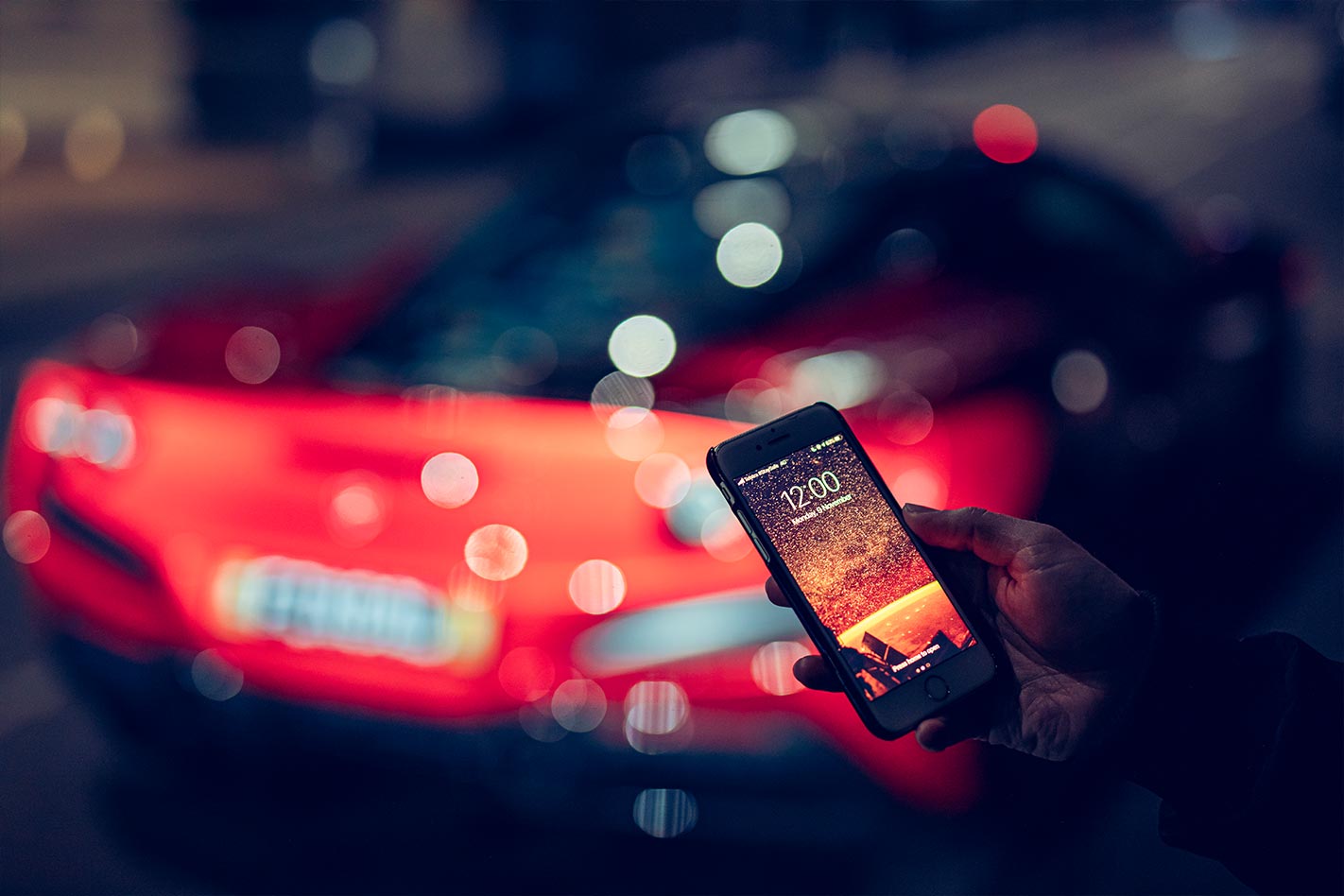
In normal times, it would be a novelty to have Melbourne’s iconic Hosier Lane all to myself, but I recall that a tourist hasn’t set foot here since March, about the time the Australian Grand Prix was cancelled at the last moment.
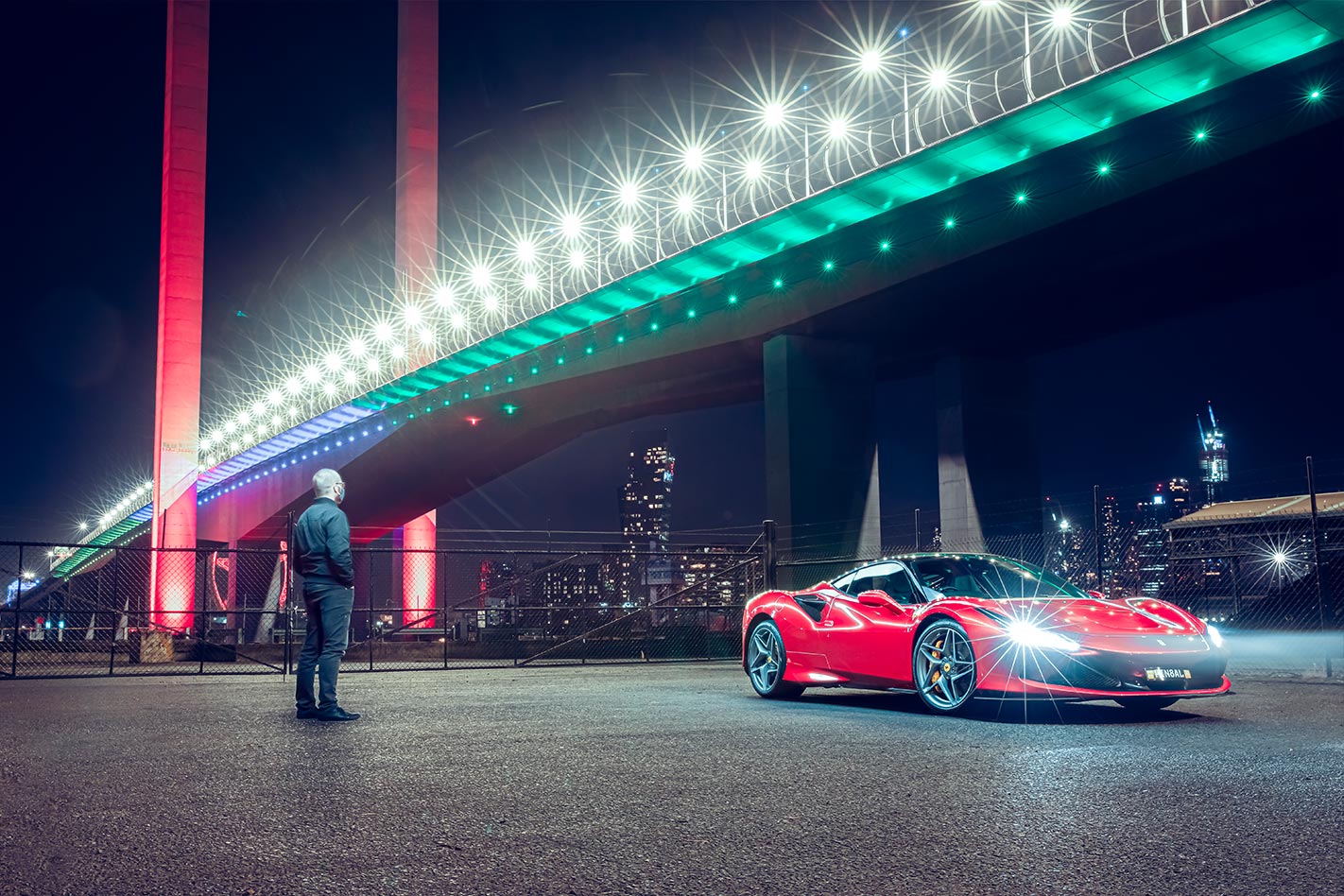
Just weeks ago, too, our $777,000 (as-tested) Rosso-Fucco-red Ferrari F8 Tributo here at midnight would have probably got me being introduced by Tracy Grimshaw as a segment on A Current Affair.
At the very least, I would have attracted every bored constable within a 10-minute radius. The crime? Being more than 5km from my house, past the 8pm curfew, with someone not from my household (a photographer) and outside for longer than my permitted 60 minutes.
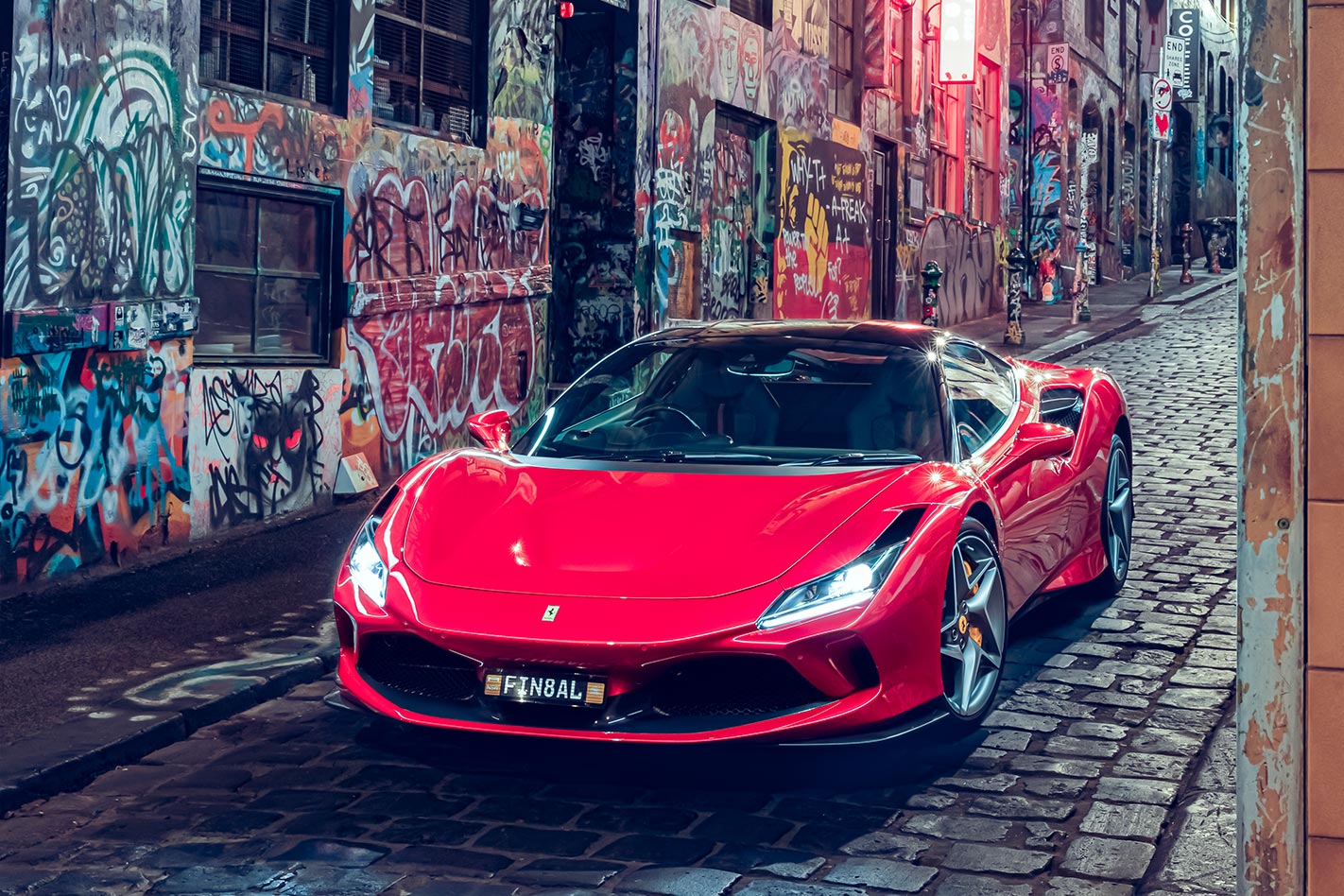
And even in my dingiest exercise garb, and with half a dozen bulging Coles bags in the front of the Fezza, there’d be no convincing The Plod to put the cuffs away, not even for ‘essential work’.
But now, that no longer applies.
“Finball? Fineightal? What do the number plates mean?” asks one passerby, face obscured by a mask. “It sounds a bit rude, doesn’t it! ‘Yeah mate, I bloody fineightalled her good! Until 3am!’” And off into the night he goes, leaving me to wonder if it’s possible to sanitise one’s memory.
The plate is meant to say Final 8, as in Final V8. Not a limited-run car, F8 is basically a 488 facelift with the 530kW Pista engine, and pays tributo to the most powerful production V8 ever fitted to a Ferrari.
And possibly the last, with speculation that a hybrid, twin-turbo V6 is destined to break this previously continuous dynasty of mid-engine V8 Ferraris going back to the 308 of the early 1970s.
While it may yet prove helpful to Ferrari’s marketing department that the mid-engine car that preceded that was the V6-powered Dino, there’s no denying that even with this insanely potent twin-turbo V8, the F8 has been met with some scepticism from existing tifosi, with many customers reportedly preferring to hold on to their current cars than upgrade.
Meanwhile, values of second-hand, naturally aspirated V8 458s continue to rise.
“COVID has meant a lot of clients can’t enjoy their usual annual $150,000 luxury holiday,” said a Ferrari insider. “So they’re wanting to add cars to their collections instead.
“Also, buying a used atmo car means you don’t have to wait a year like you do a new car.”
Some of that, though, is also to do with the reputation the latest twin-turbo supercars have with the people who are lucky enough to be able to afford them, where sound and excitement are more important than performance – with Ferraris especially.
“I’d rather have a 458,” said one buyer of such cars. As for the issue of the price tag, another commented: “Why would I buy an F8 when I can get a second-hand McLaren 720S for $400K, a car that is just as fast but more visually dramatic?” Fair.
Ferrari has recently said it will prioritise excitement, fun and passion for its cars rather than outright performance, which might turn this tide.
How it’ll do that in an emissions-conscious era of heavier hybrids, downsized engines and looming electrification will be interesting to observe, but we should wish them nothing but success.
You could say it’s already started with the F8 Tributo. Completely restyled, this car, to me, is more visually resolved than the 488 (whose front bar, to my eyes, never looked to fit properly around the headlights), and it’s certainly more aggressive, with its ‘fangs’ beneath the headlights like a python ready to strike.
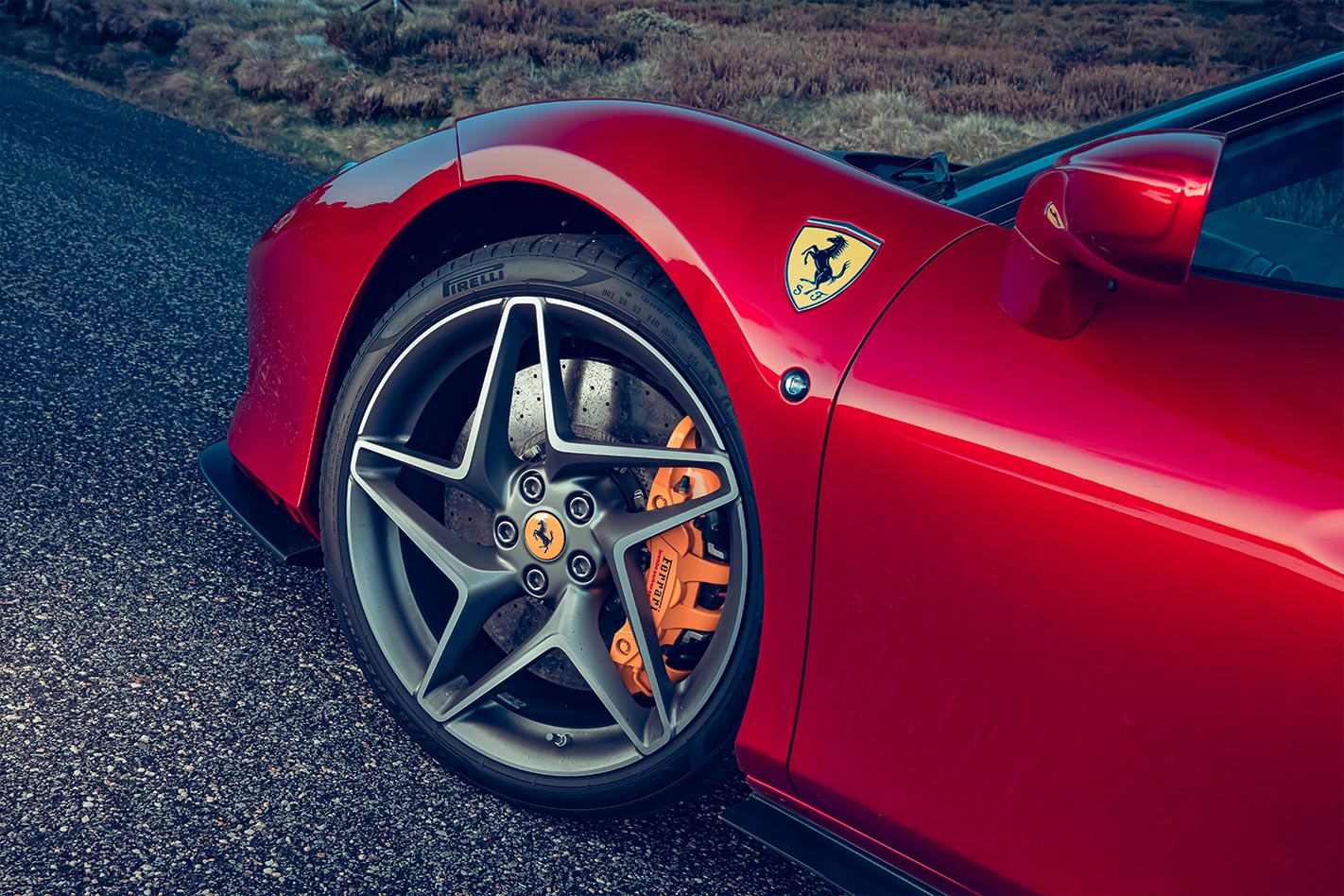
The 20-inch forged wheels front and rear channel the F50 a little, or even invoke the old Globe-style five-spoke star designs of 1980s Ferraris, 308 GTB included.
There’s a bit of LaFerrari about the rear glass and how the beltline rises up, especially on this car with an optional blackened roof.
While the Lexan engine cover with three slats is meant as a nod to F40, there’s something about the rear styling, with the quad tail-lights mounted as high as they are, that doesn’t do it for me. Overall, though, I love it.
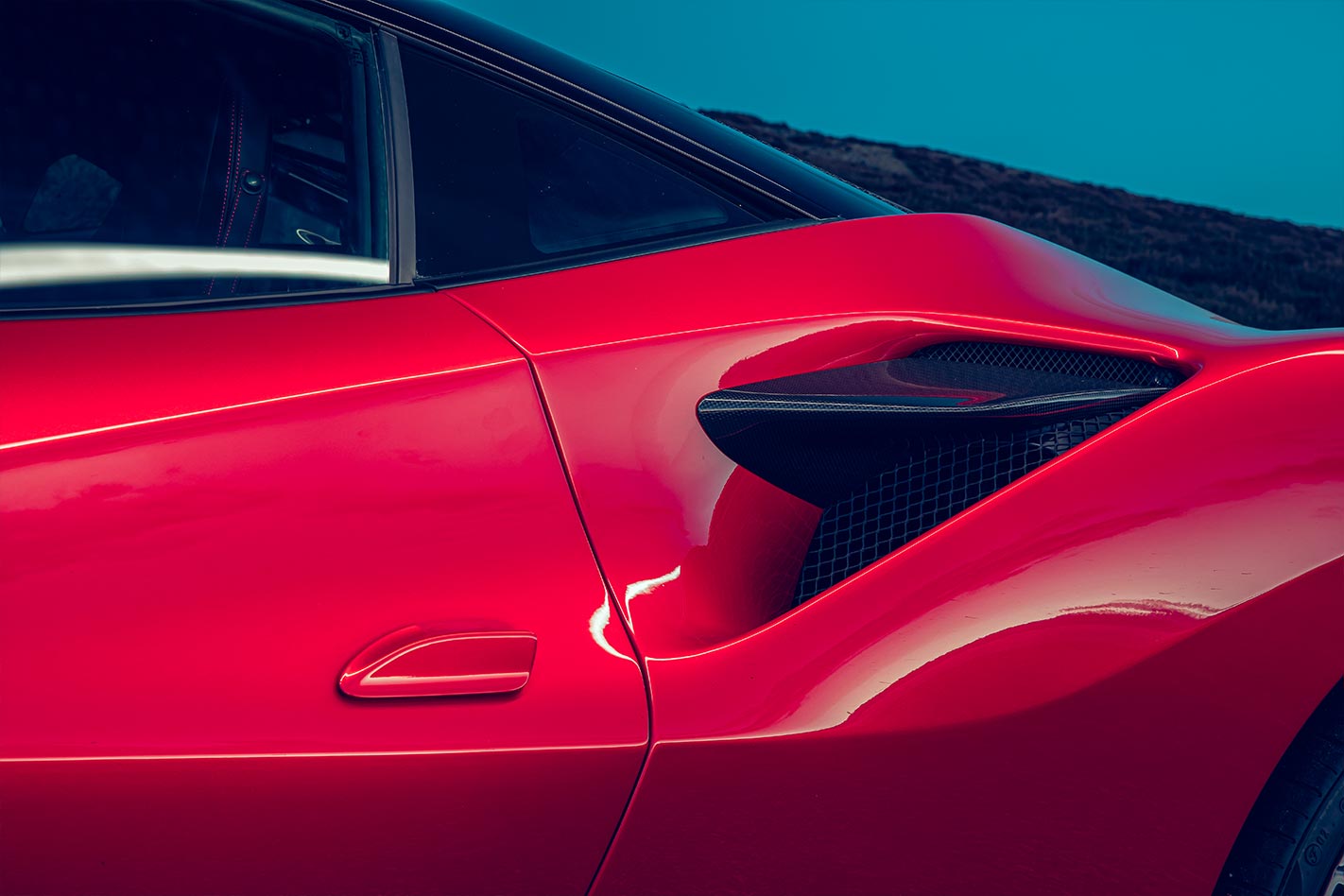
What does do it for me, especially, is the way air has sculpted the F8’s seductive new bodywork. A new ‘S-duct’ in the bonnet, a la 488 Pista, vents air from below the numberplate – you can put your hand up through it, just – presumably reducing front lift.
The radiators, meanwhile, fed by the large front bar apertures, are laid almost flat at the front of the car to reduce drag.
Out back, an enormous carbon fibre diffuser has three small, active flaps, which can focus airflow at higher speeds, also reducing drag. Most of the downforce is created under the car with a flat floor and six vortex generators, three per side, sucking the car to the road.
Rocketing the F8 to speeds where downforce matters is the Pista powerplant – a masterpiece of modern turbocharged engineering.
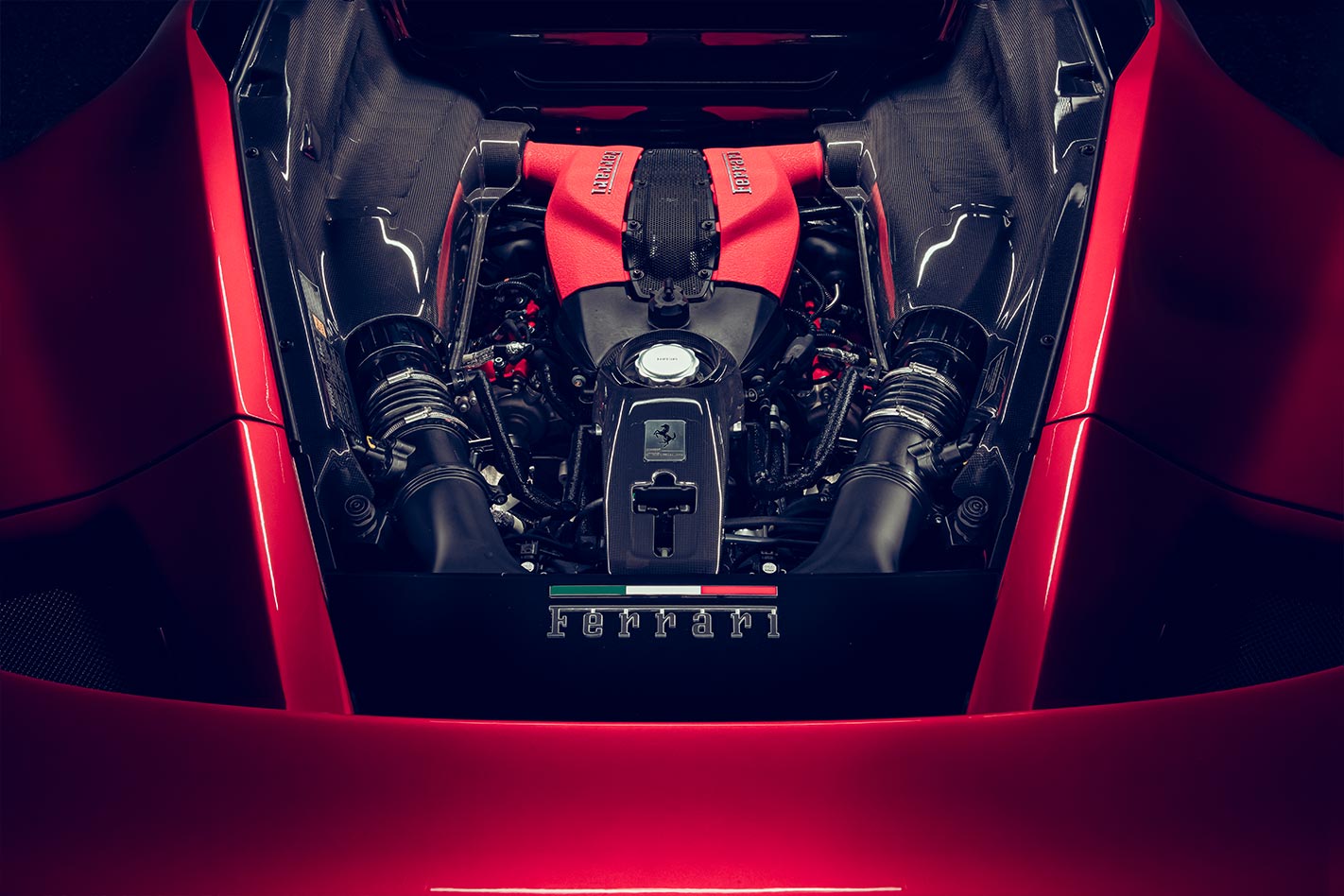
At 3.9 litres, the dry-sump, all-aluminium flat-plane-crank, twin-turbo V8 has 50 per cent new parts compared to the 488’s V8, bringing more power and revviness, and less weight.
There’s a lightened crank, flywheel, and titanium conrods, lowering engine inertia (and quickening eagerness to rev) by 17 percent; there’s a new, much lighter Iconel superalloy exhaust manifold; more aggro cams and shorter inlet runners and a small bump in compression (from 9.4 to 9.6:1).
There are slightly bigger air-to-air intercoolers, too, all bolted to a seven-speed ‘F1’ dual-clutch ’box and ‘E-diff3’ electronically locking diff.
At around 18kg lighter than the 488’s V8, the Pista engine produces 530kW at 7000rpm and 770Nm from 3250rpm, while redline remains 8000rpm – perhaps too low for those still harping on over the heady 9000rpm highs of cars like the sublime 458 Speciale (and I don’t blame them).
Fuel consumption, for anyone who’s curious, remains a claimed combined 12.9L/100km. Kerb weight has also dropped a decent 40kg, from 1475kg to 1435kg.
Of course, it’s faster. Ferrari claims 0-100km/h in 2.9sec, 0-200km/h in 7.8sec, 0-400m in 10.2sec and a top speed of 340km/h; versus the 488’s 3.0sec, 8.3sec, 10.45sec and 330km/h.
All numbers that need contextualising with the right foot, which we’ll get to. (And numbers, it must be said, that in my experience at other magazines, cannot be matched or bested without a jockey who hasn’t eaten, a mate at Pirelli, a dream surface and, possibly, a tailwind.)
Time for us to hit the road proper. I’m a bit stressed. While no, we didn’t jet from our CBD night shoot straight to a driving road, we are up early the next day – the first day of no-25km. But there’s a problem: in the last three months I’ve really only driven 500m to the local supermarket, and in a Ford Transit (for the 2020-sized toilet paper purchases, you see).
Suddenly, I’m in a red Ferrari that’s giving $800K a nudge (its MSRP is $484,888, meaning it’s wearing a lazy $292K of options). One that feels as snug in its lane as I do in my jeans after six months with nothing to do but eat.
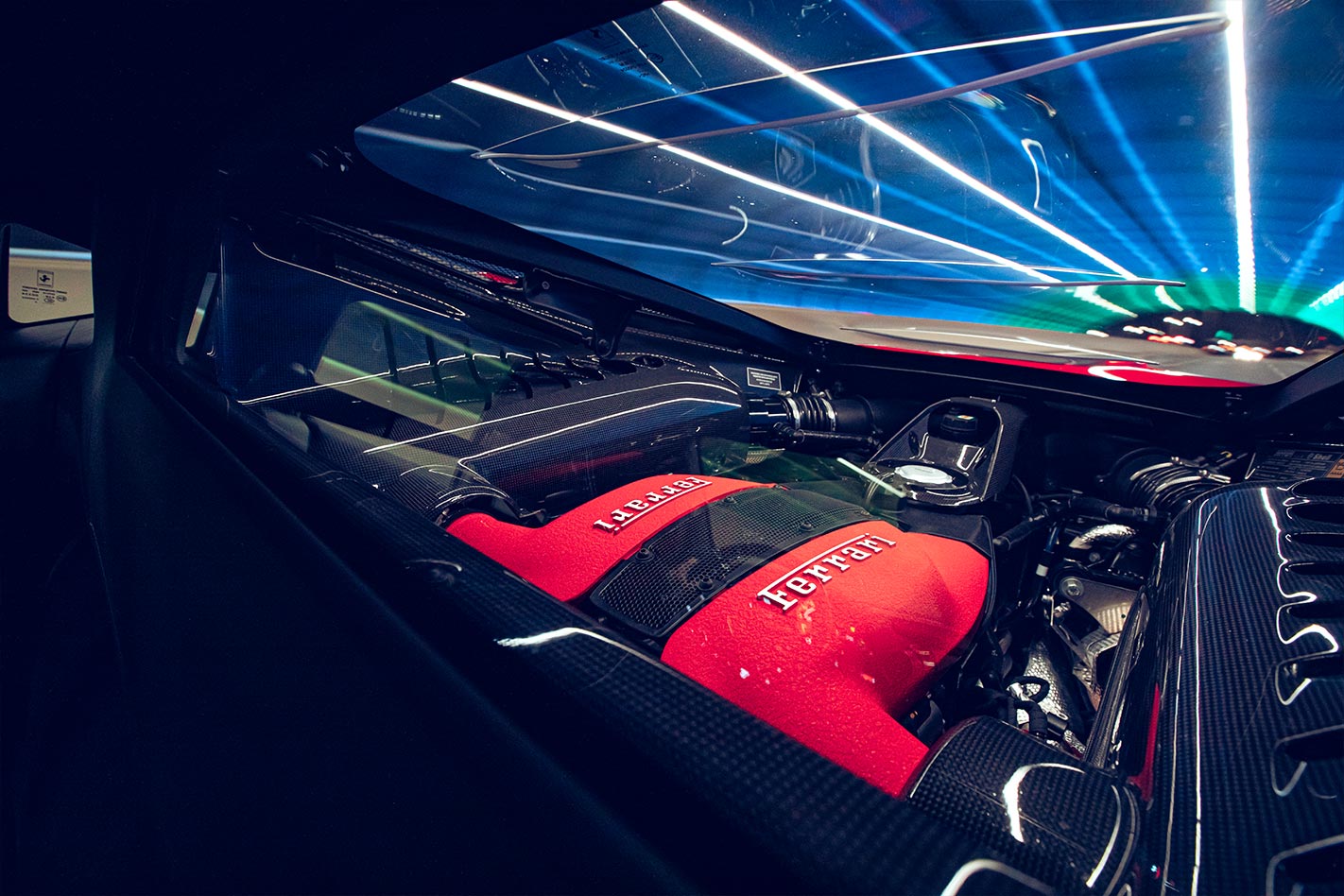
Threading this car in surprisingly heavy traffic (seems everybody in Melbourne is leaving) is tricky given it has all the visibility of an LMP1 car – and nobody lets you in.
But it’s okay, because we are, at last, putting the city in the rear vision mirrors.
Things get better on the Hume Highway, crossing places there were police checkpoints just yesterday – and watching, with glee, as 26km ticks lawfully over the tripmeter.
Having gotten used to some ergonomic oddities – all the major controls, indicators included, are buttons on the steering wheel; fun, but I’d prefer stalks probably – the first thing you are struck by about the F8 is the ride quality.
In Bumpy Road mode, the F8 smooths the road surface with a beautifully supple, long-stroke damper feel. Comfortable? You bet. Speed bumps – where you can get a hit of those high-tech adaptive dampers – are almost a pleasure.
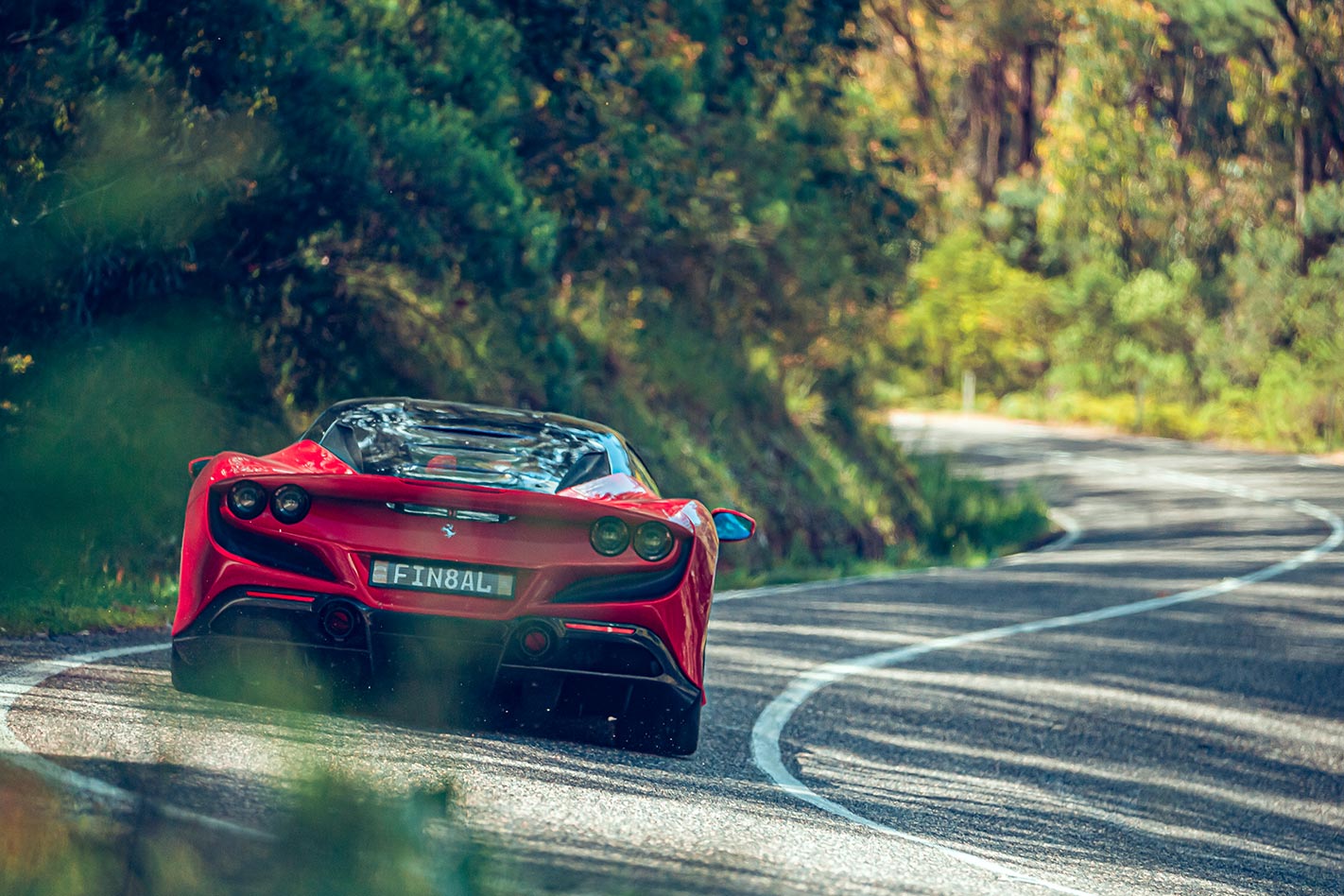
The F8 feels to raise the bar for Ferrari refinement, too, although there’s still room for improvement. Build quality feels better, but there’s a light shunt through the car most times the clutch engages as you tip in the throttle from a standstill.
There’s quite a lot of tyre noise at freeway speeds. The sound system, too, isn’t amazing. All minor things, for sure, but they may be a bother. Until you put your foot down.
Half-throttle in the F8 is enough for a staggering rate of utterly effortless acceleration. There’s audible hissing as the turbos, with their titanium turbine impellers, quickly and effectively cram in their maximum 22psi boost (up 2psi on 488). But full throttle is what you want, and that takes some planning.
It’s out of the city we get our first shot, and the accelerator pedal is not so much a device to adjust speed as it is a very lit wick getting pressed ever closer to an enormous powder-keg.
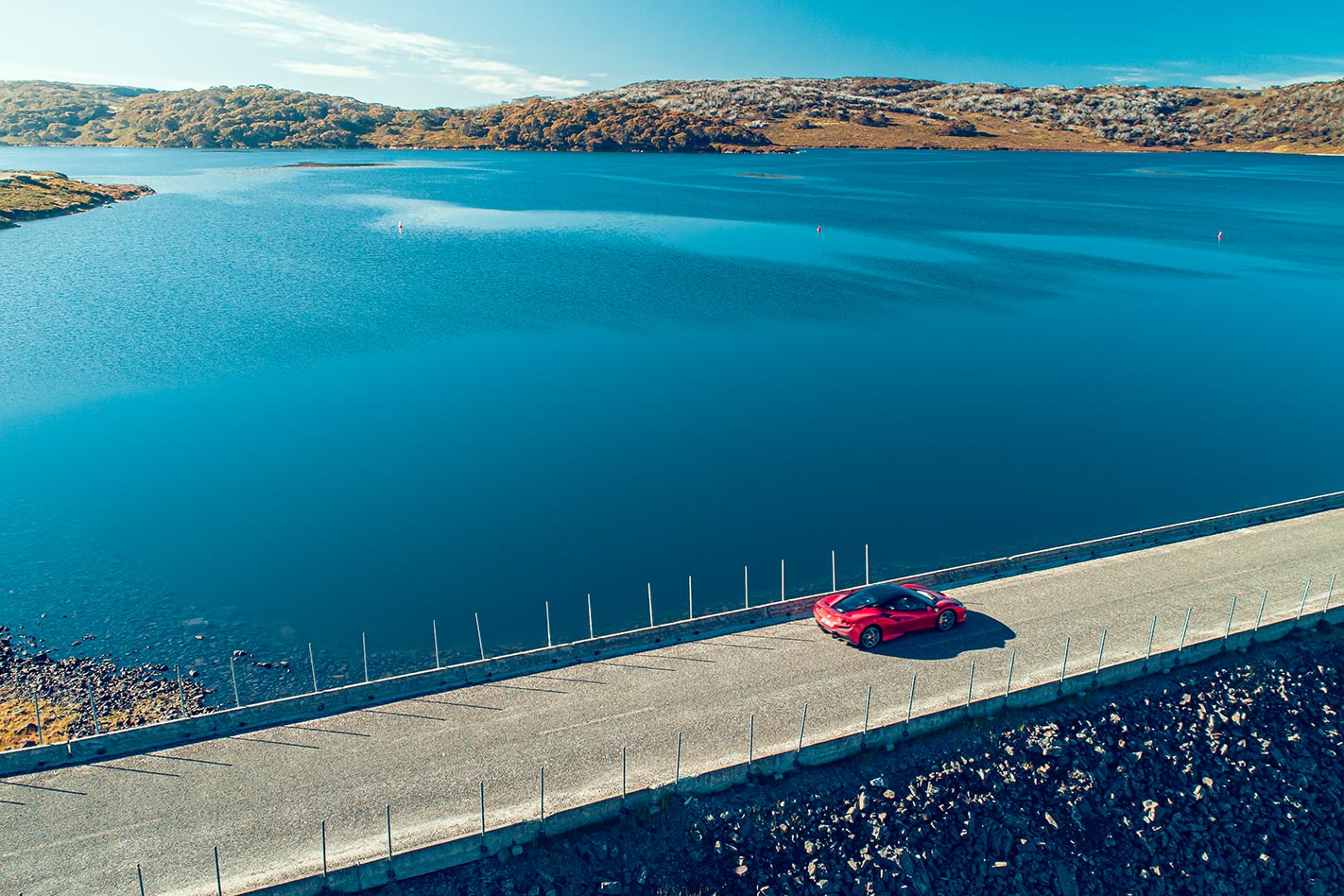
On the manettino, there are five modes: Wet, Sport, Race, CT Off and ESC Off. In Wet and Sport, your throttle input is whatever traction control deems possible, and at times – cold tyres especially – the F8 may as well have 350kW.
In Race and CT Off, it gets a bit more ‘exciting’; power more in your hands, first gear all about applying as much throttle as warm rear rubber will allow.
Second gear, a tiny bit more again, third flat, fourth flat, disappearing quite quickly, at which point you’ll be swearing in a language you didn’t know you knew, followed by a desire to stop to have a lie-down.
For power and acceleration, the F8 has a venom like few cars; it would make an Audi R8 V10 feel like it was towing a drag chute.
What gets you is the brutal torque available instantly almost regardless of where you are on the tacho; and the way the ECU ‘steps’ the torque out as you go up the gears, to give the rear tyres a fighting chance.
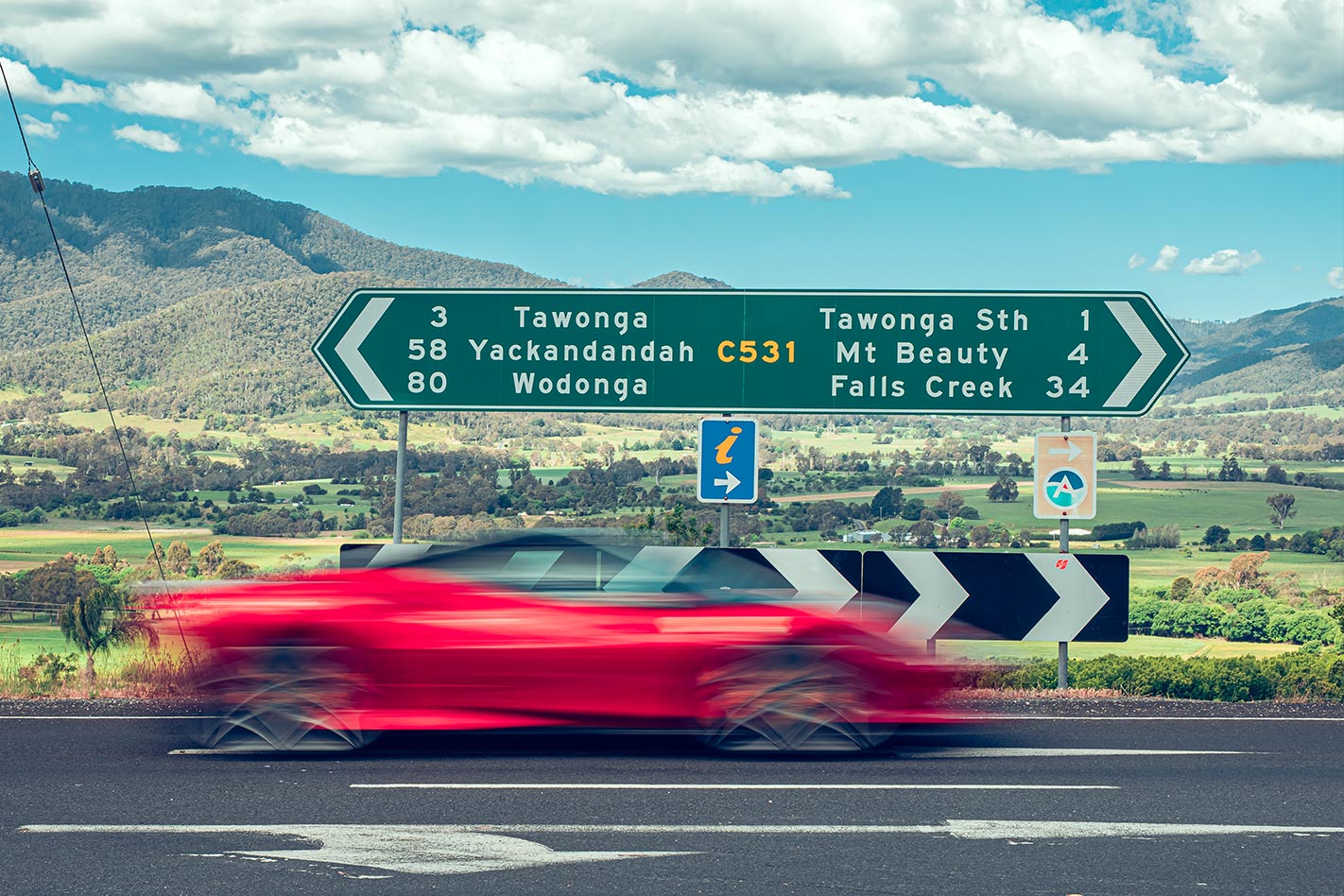
The effect is unrelenting acceleration, no ‘tapering off’; shut off the taps after a prolonged hit and you half-expect your phone and whatever other interior detritus to start floating about like you’ve made low-earth orbit.
Does it sound good? It sounds better than a 488 – the turbos are less vocal – and you’ll want to put the windows down in a tunnel, but it probably won’t have the hairs on the back of your neck standing at attention.
It’s loud and angry, especially at start-up, almost like a sports bike, with an undeniable flat-plane-crank V8 note. But it’s no atmo V12.
In fairness, V8 Ferraris since – and including – the 458 Speciale have been more rock band than symphony orchestra.
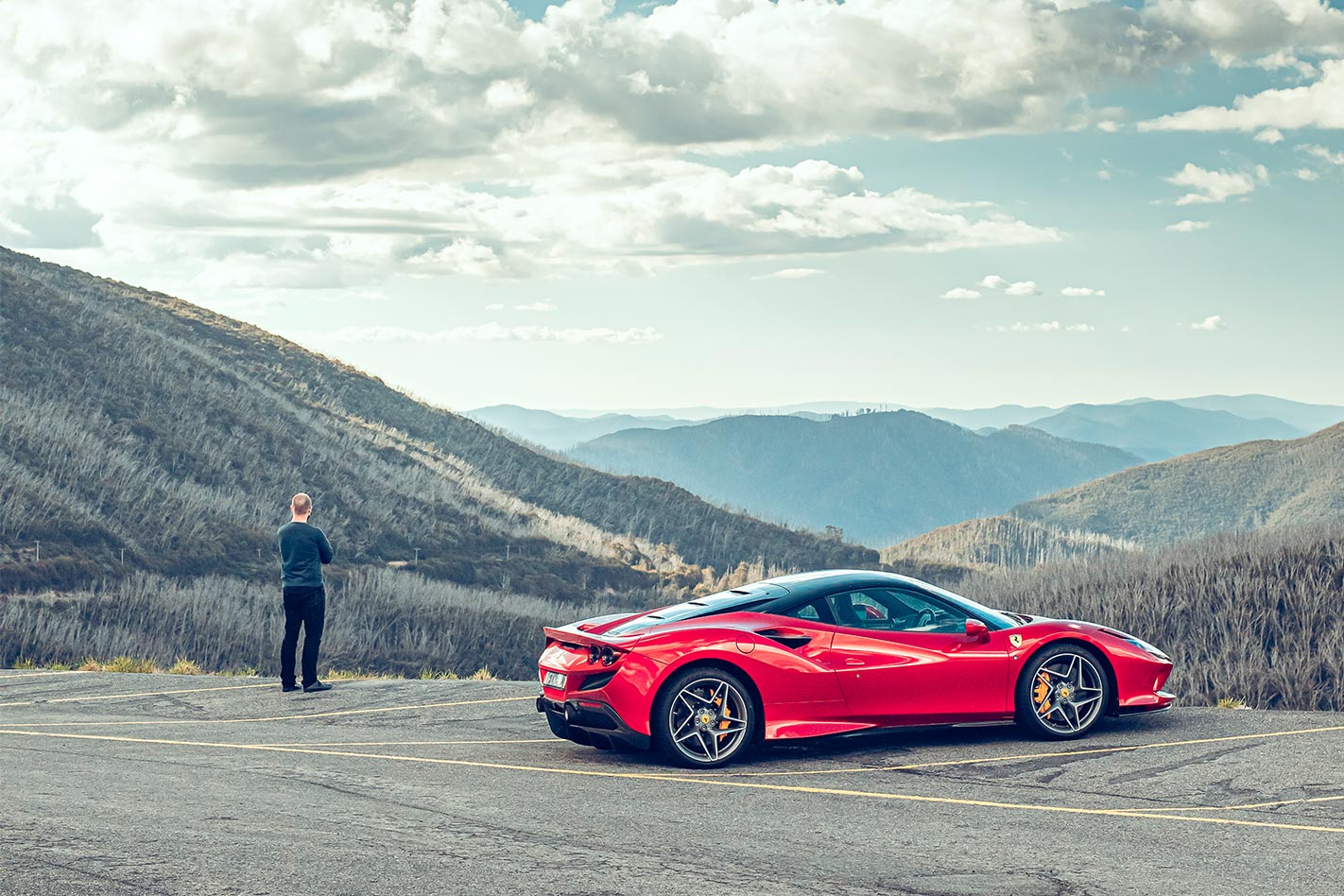
With mountains joyously appearing in the windscreen, we roll through Bright, turning heads like the car is feathered, before getting our first hit of corners on Tawonga Gap Road – 25km of bliss racing up and over a ridge with a view of Victoria’s highest peak.
Having adjusted to the very fast steering – a modern Ferrari trait, with just 1.9 turns lock-to-lock – it’s again the suspension that initially stands out, by being completely unflustered by any bump whatsoever.
No matter the speed, the F8 sits flat and calm, with rock-solid stability. Great for confidence, not a single bump could cause the F8 to lose its cornering cool during our entire test.
The tyres do need some temperature before the F8 can give its best, though. With 530kW hurling those two rears at corners, the F8 feels like it’s on spacesavers with cold rubber, pushing gently into understeer.
But as the P-Zeros heat up, you can carry increasing amounts of speed into corners, the front-end grip letting you clear the brake pedal earlier and earlier and get stuck into the throttle sooner.
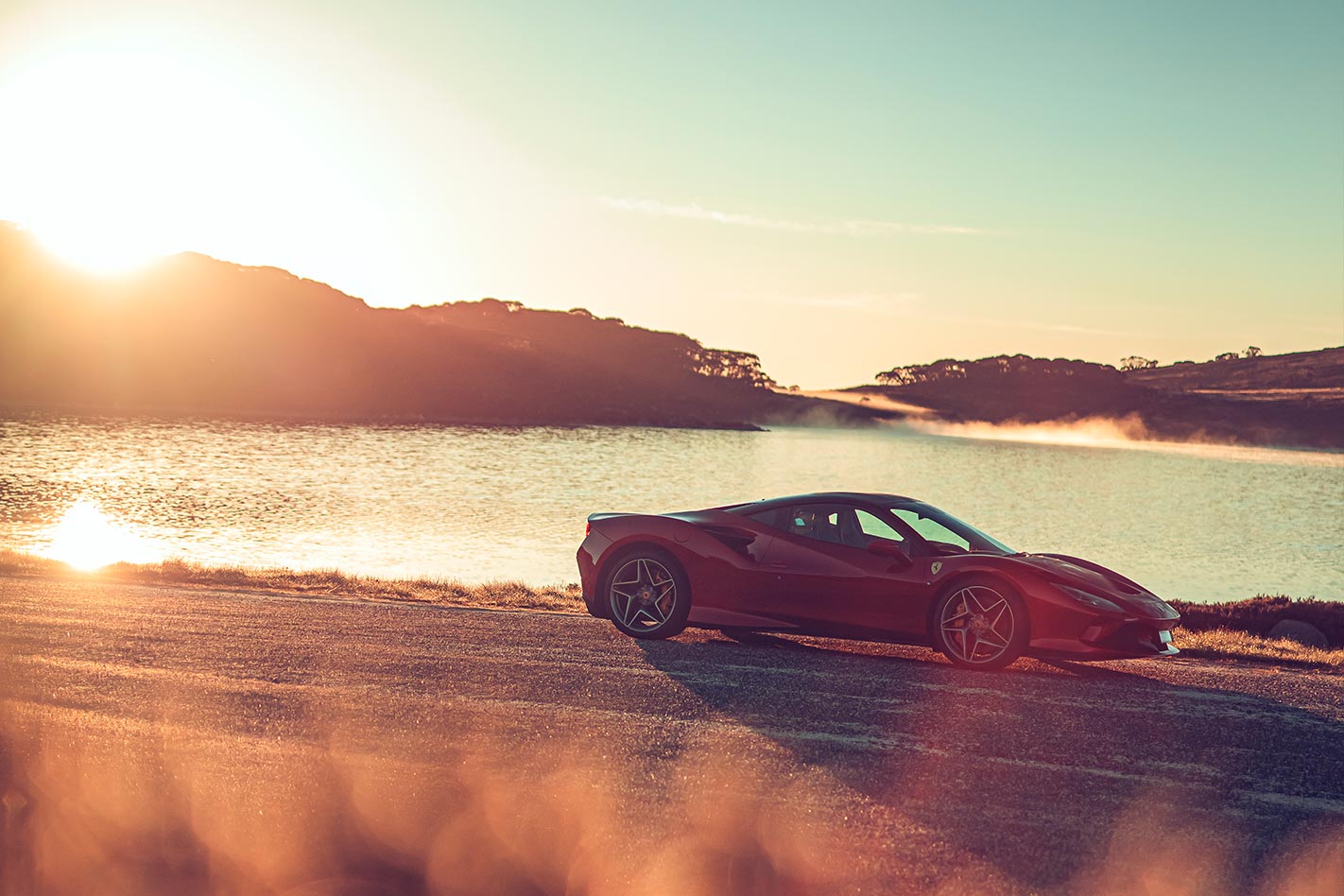
At which point, you’ll want to dial in the half-off ESC mode, CT Off, which permits a cheeky bit of controlled throttle steer out of corners, making you feel like you know what you’re doing.
The brakes, too, with the pedal mounted perfectly for left-foot braking, are mega: a lot of the time it feels like your eyeballs will be swilling around the footwell sooner than you’re able to trigger any ABS.
The engine is as responsive as the transmission is swift, with only the tiniest amount of turbo lag. But while it can rev to 8000rpm, with a Christmas tree of red and blue LEDs atop the steering wheel signalling time to pluck another gear with those tall, column-mounted paddles, there’s no real reason to: you’re not getting much difference at 8000rpm as you are at 7500.
You end up naturally short-shifting most gears, but not feeling really short-changed for it.
Somewhat sooner than we expected, we reach the top of Falls Creek, where we stay until the sun has disappeared. After months of sitting at home, it’s more than a bit overwhelming. I haven’t seen proper stars in a long, long time. Or a lake.
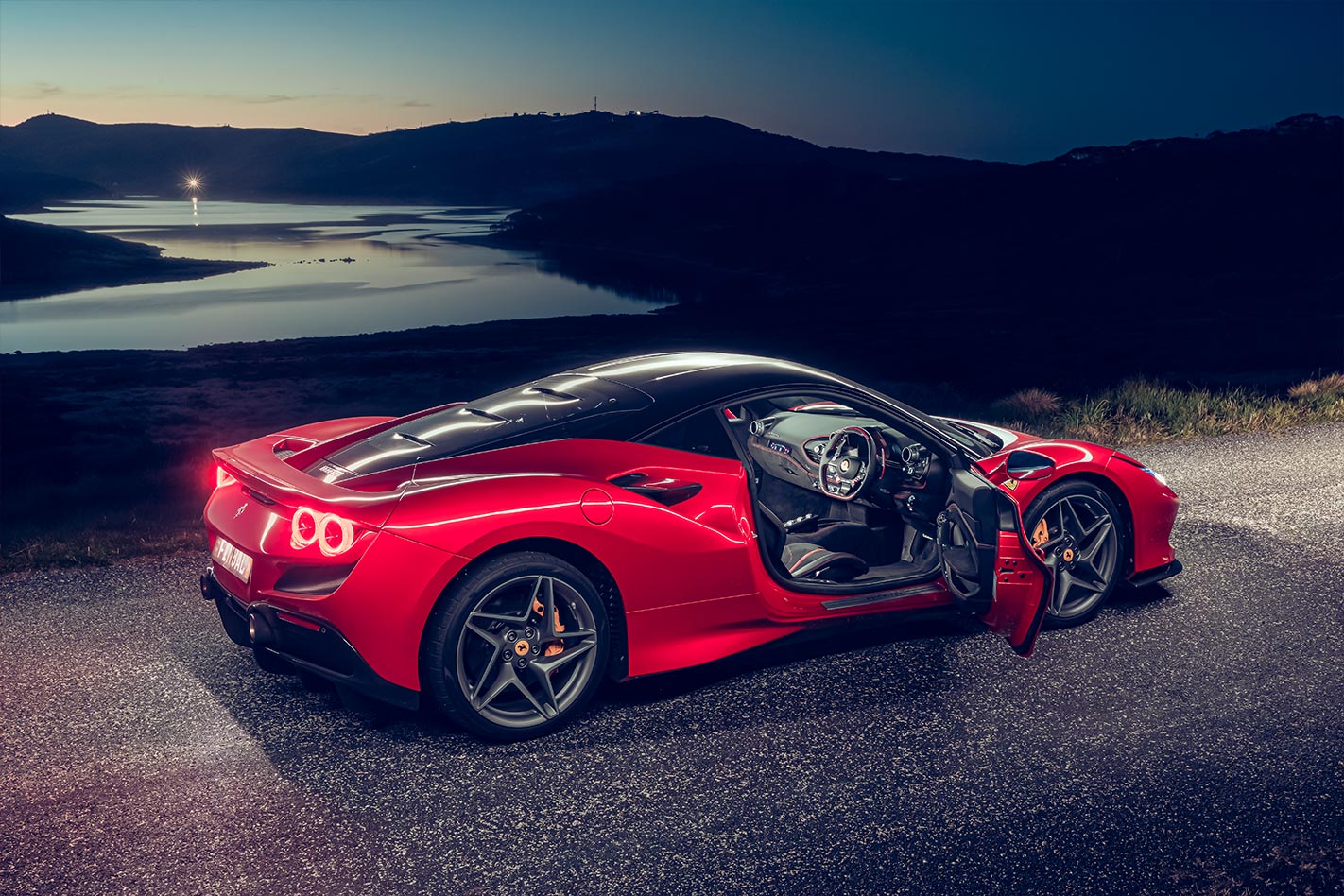
Pootling back to our accommodation in Falls Creek gives me time to consider a verdict on the F8.
No doubt, it’s a masterpiece of sports-car engineering. The suspension has gifted Ferrari’s mid-engine marauder with a new, unexpected touring ability, while its engine, with unbelievable response and grunt, is easily the current pinnacle of turbocharged performance.
In isolation, the F8 earns admiration from me for feeling to provide all the power in the world, and the chassis to match. I love it, although I do wonder what it would be like in the company of a slower, but purer, 458.
But bunking down at Falls Creek village for the night, and knowing we have the return trip the next day, I’d probably still opt for this F8.
Fun, actually quite easy to drive fast, exciting and offering insane performance across the board – and with, it turns out, an ability to tackle the gnarliest driveways you’ve ever seen.
Ferrari F8 Tributo specs
Engine 3902cc V8 (90-deg), dohc, 32v, twin-turbo Max Power 530kW @ 7000rpm Max Torque 770Nm @ 3250rpm Dimensions (L/W/H/W-B) 4611/1979/1206/2650mm Transmission 7-speed dual-clutch Weight 1435kg 0-100km/h 2.9sec (claimed) Economy 15.0L/100km (estimated) Price $777,350 (as-tested) On sale Now
The Lotus Exige, Elise and Evora have officially entered their final production year because today Lotus announced a new sports car series will replace them under its Vision80 business strategy.
In a statement released to the media, Lotus CEO Phil Popham has said the new range will kick off with “a new sports car entering production” in 2021.
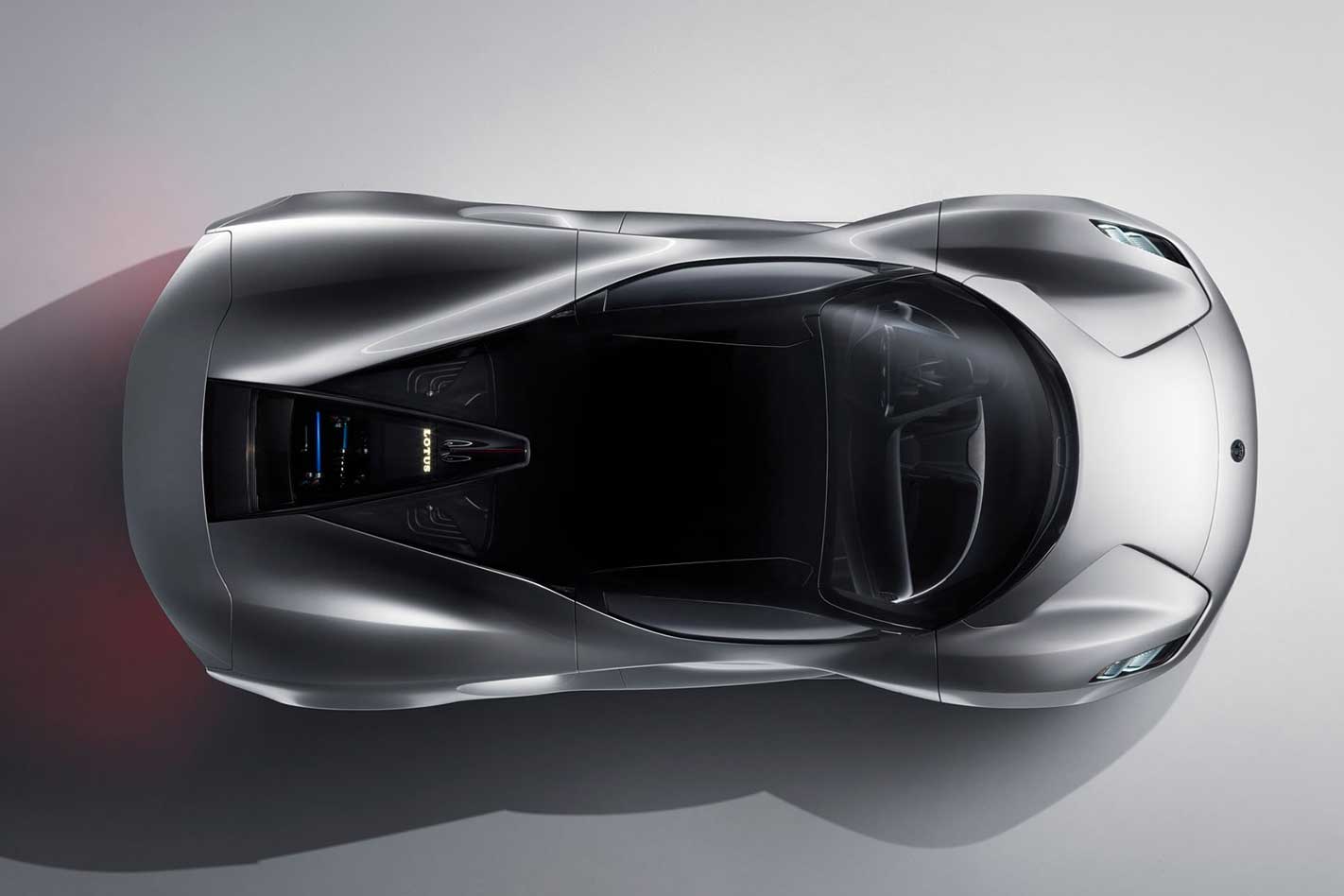
It’ll be the second car released under the company’s forward-looking transformation, joining the Evija hypercar and two other models that remain a mystery.
It’s worth mentioning that the all-electric Evija will also kick off production this year.
Not much is known about the Type 131 except that it will be produced as a prototype first. We also don’t know in what month exactly Elise, Exige and Evora production will end.
Although the 131 marks a crossover point in the company’s model portfolio and philosophy, it is reported that it will reject electrification – at least initially.
Sources believe variants down the line will feature batteries given that the company has claimed that every model will feature a BEV derivative.
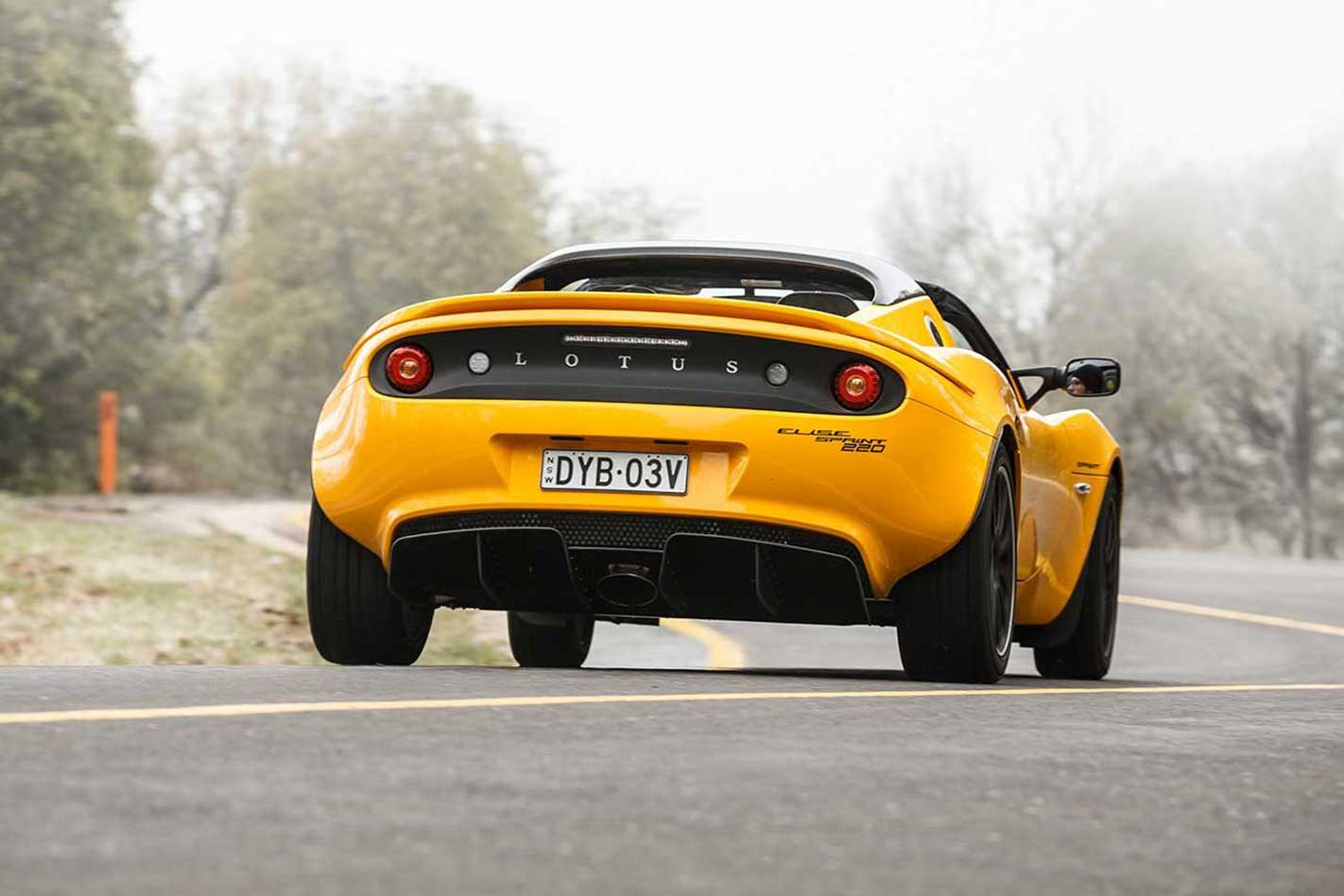
It will also open an Advanced Technology Centre in Warwick later this year for Lotus Engineering.
Finally, it says two sub-assembly sites will be relocated into one “efficient central operation” in Norwich city to cater for the increased volume it expects with the new sports car series.
As for the axed models, the Elise’s end comes after 26 years on sale. The Exige will end 21 years of existence, while the Evora has racked up just 12 years on sale – still a long innings by other carmakers’ standards.
Lotus says that by the end of this year, these three cars will have accounted for 55,000 sales between them.
Lotus Group’s Vision80 business strategy aims to revolutionise the company by the company’s 80th birthday in 2028.
Among a range of objectives is one where “future Lotus products will remain true to the product DNA,” it says, “and embrace Geely group technologies in connectivity, electric propulsion and advanced driver assistance systems.”
Chinese firm Geely Automotive is the controlling shareholder in Lotus, partnered with Malaysian firm Etika Automotive.
First up, let’s remove any confusion. You might think that a BMW M8 Competition Gran Coupe is the more logical rival for this drag race, given the Audi RS7 is a fully blown RS model and is the flagship of its model range.
I’ll admit I did. But actually, when it comes to price and performance for cars sold in Australia, the M850i is the closer competitor. If we’d chosen the M8, the BMW would have been a whopping $125,900 more expensive than the Audi.
As it is, the RS7 and M850i are evenly matched. Both are enormous bahn-stormers built to travel at very high speed in exceptional comfort. Both have twin-turbo V8s, both are all-wheel drive, both have 8-speed automatic gearboxes and crucially, their official 0-100km/h claims are within a tenth of one another: 3.6sec for the Audi and 3.7sec for the BMW.
There are differences, of course, but even here they tend to balance each other out. The Audi is the more powerful of the two, by 50kW/40Nm, despite only having 4.0 litres of capacity versus the BMW’s 4.4 litres. But the RS7 is 175kg heavier. As for price, even though it’s not the full-blooded M8, the BMW is still the more expensive of this pair, by $57,000. The Audi RS7’s sticker price is $224,000 compared with $280,900 for the BMW.
We didn’t just compare these two over the standing quarter using launch control. We also raced them in Comfort mode from a standstill and then had a rolling race from 50-200km/h in their different driving modes.
In cars as quick and as powerful as these, stopping performance is crucial, so we rounded out this Drag Battle with a brake comparison from 100-0km/h. In this exercise, the Audi does hold a distinct advantage as it is fitted with optional carbon-ceramic brakes, but it was interesting to see just how much distance they save.
We’ll be shooting more Drag Battles this year so if you enjoyed the video, subscribe to the MOTOR YouTube channel. We’ll be uploading two new videos every week.
An automotive icon could return this year after design house Italdesign shared a teaser of its modern-day interpretation of the DeLorean DMC-12.
The first half of the image shared to Italdesign’s Twitter page marks the 40th anniversary since the original’s debut. Importantly, a silhouetted sneak peek below shows a modern reincarnation with classic gullwing doors and DMC badge.
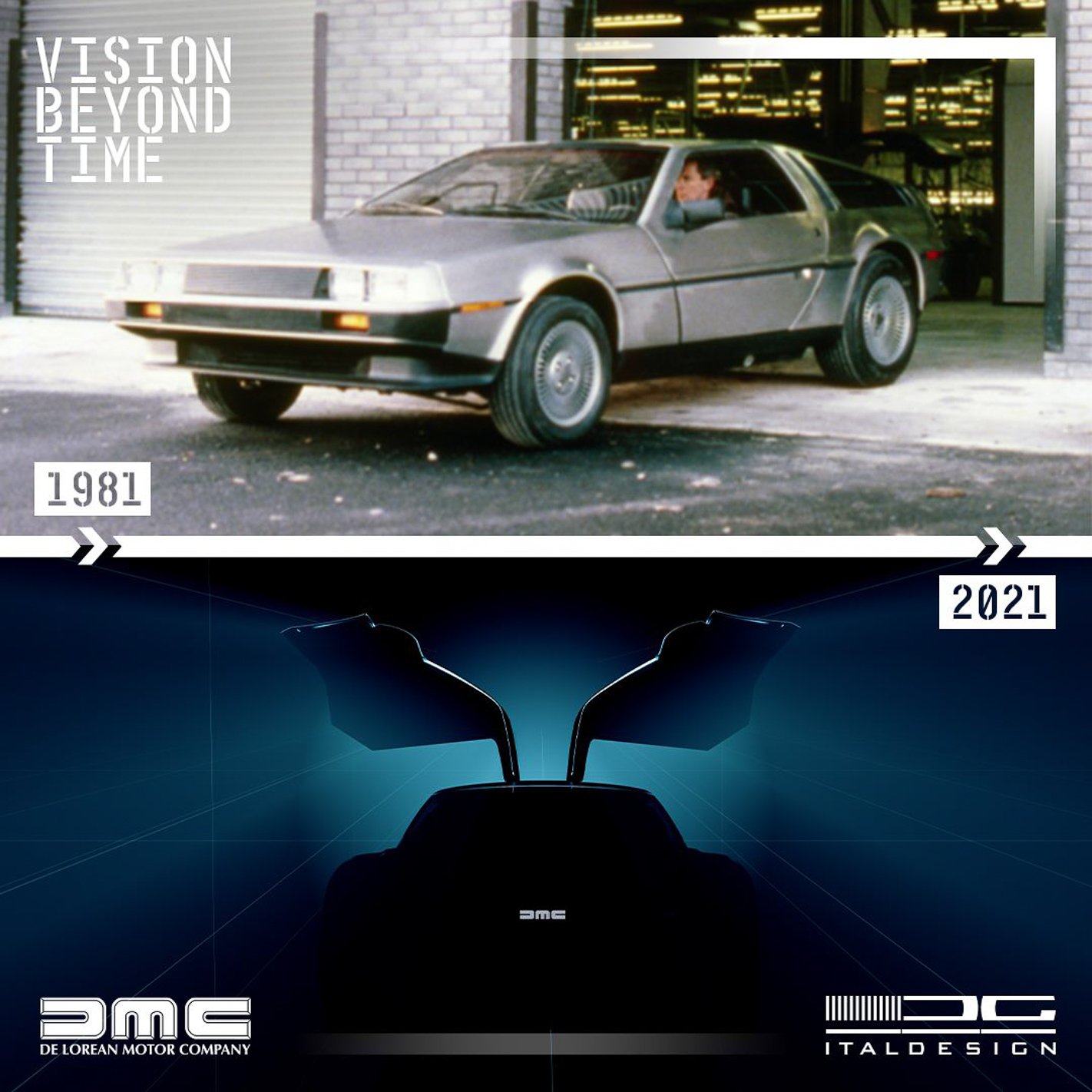
We may not have to wait long for the car’s reveal either. The caption hints at an unveiling in the near future.
“DeLorean DMC-12 turns 40 this year… What a better way to celebrate an icon of automotive history than a sneak peek of the (near) future? Stay tuned for more…” the caption reads.
The original 1981 DeLorean DMC-12 was designed by Giorgetto Giugiaro who co-founded Italdesign – which explains the connection between Italdesign and the teaser. However, the Italian design firm’s finer plans for the remake aren’t as clear.
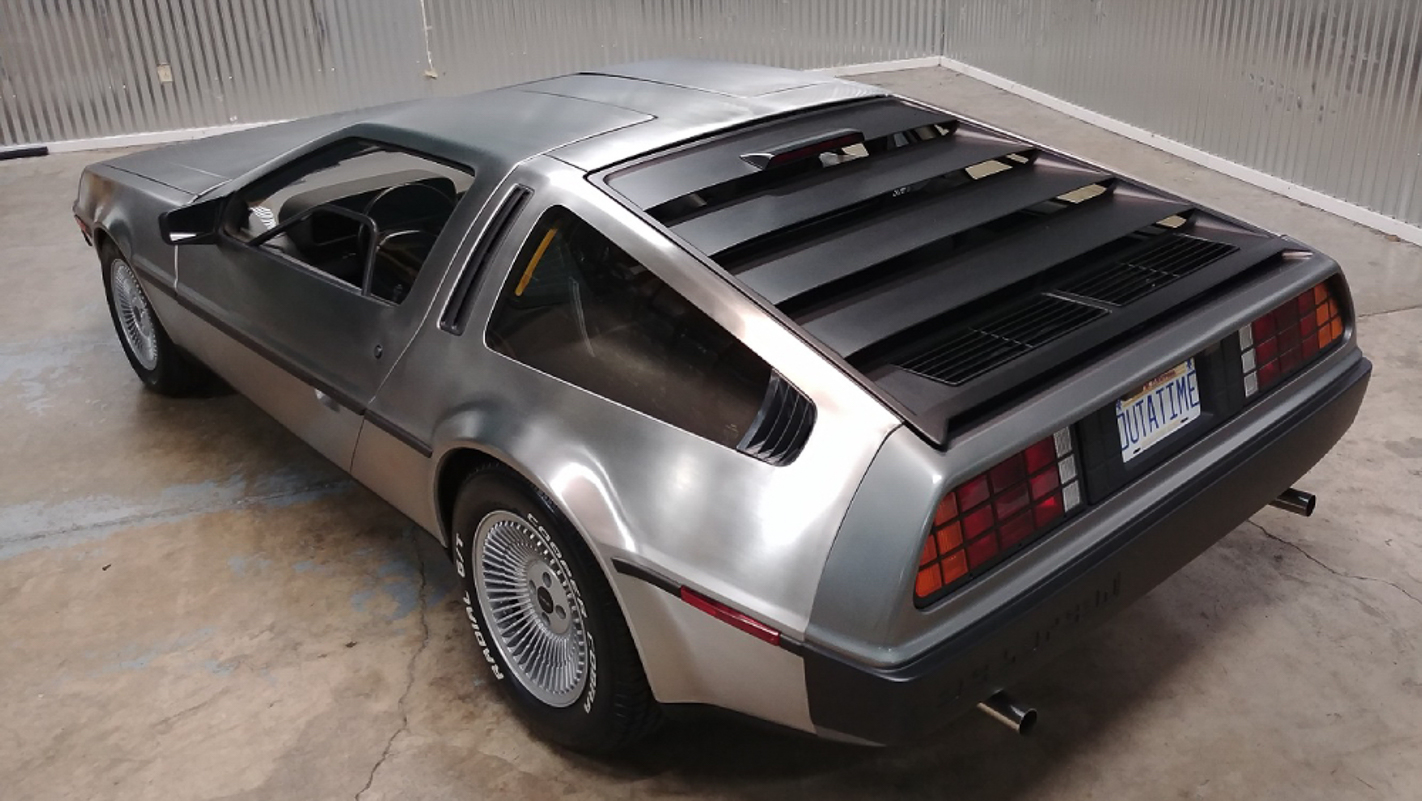
Italdesign is better known for its one-off designs than its work in designing production cars. So we suspect the car teased by Italdesign will be a 40th-anniversary one-off or similar, rather than a series production run.
The DeLorean Motor Company (DMC) has been attempting a comeback in recent years, intent on creating replicas of the original but with modern drivetrains. Its efforts have been hampered by suppliers which weren’t willing to deal with low-volume production.
The DeLorean DMC-12 was a stainless steel sports car that featured gullwing doors and was powered by a 97kW/207Nm 2.85-litre V6 engine.
Despite apparently being an ordinary car to drive and achieving mediocre sales success, the DeLorean DMC-12 shot to fame after featuring in the Back to the Future 1980s film franchise in which it starred as a time machine.
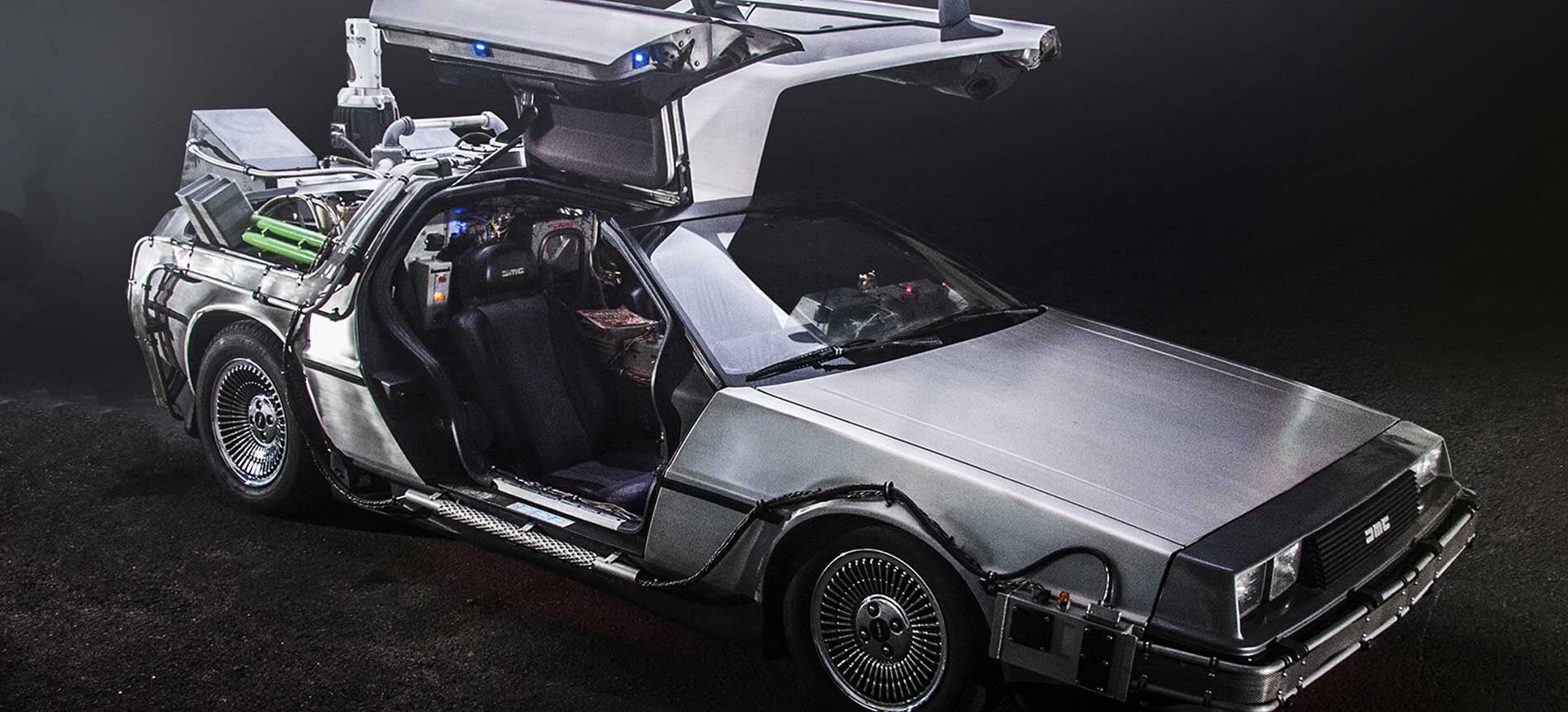
For that reason, the DMC-12 still maintains a cult-following to this day.
The two companies’ planned revivals of the DeLorean appear unrelated, despite the coincidental timing.
