
You might be surprised to learn that, although SUVs account for the majority of new vehicles sold in Australia (more than half), it is not a specific SUV or crossover model that represents the nation’s individual favourite each month.
That title is actually tussled over by two dual-cab ute models.
Instead of the once traditional large sedan or wagon, more Australians are looking to the one-tonne pick-up market to find their next family car, and you might be one of them.
Here’s why Australia loves the dual-cab ute and some of the reasons a tough truck might be your perfect next car.
Dual-cab advantages
Versatility
Today’s dual-cab is not the agricultural one-trick workhorse that it used to be and instead, most of the mainstream manufacturer’s offerings are the Swiss army knives of the showroom.

There’s still the load area for dogs and equipment as well as hefty towing muscle, but the utilitarian function that earned the segment its name is added to with comfortable interiors and cutting edge safety.
That’s why many owners put their dual cab to work as the family car and tradie truck or adventure machine all on the same four wheels.
Off-road ability
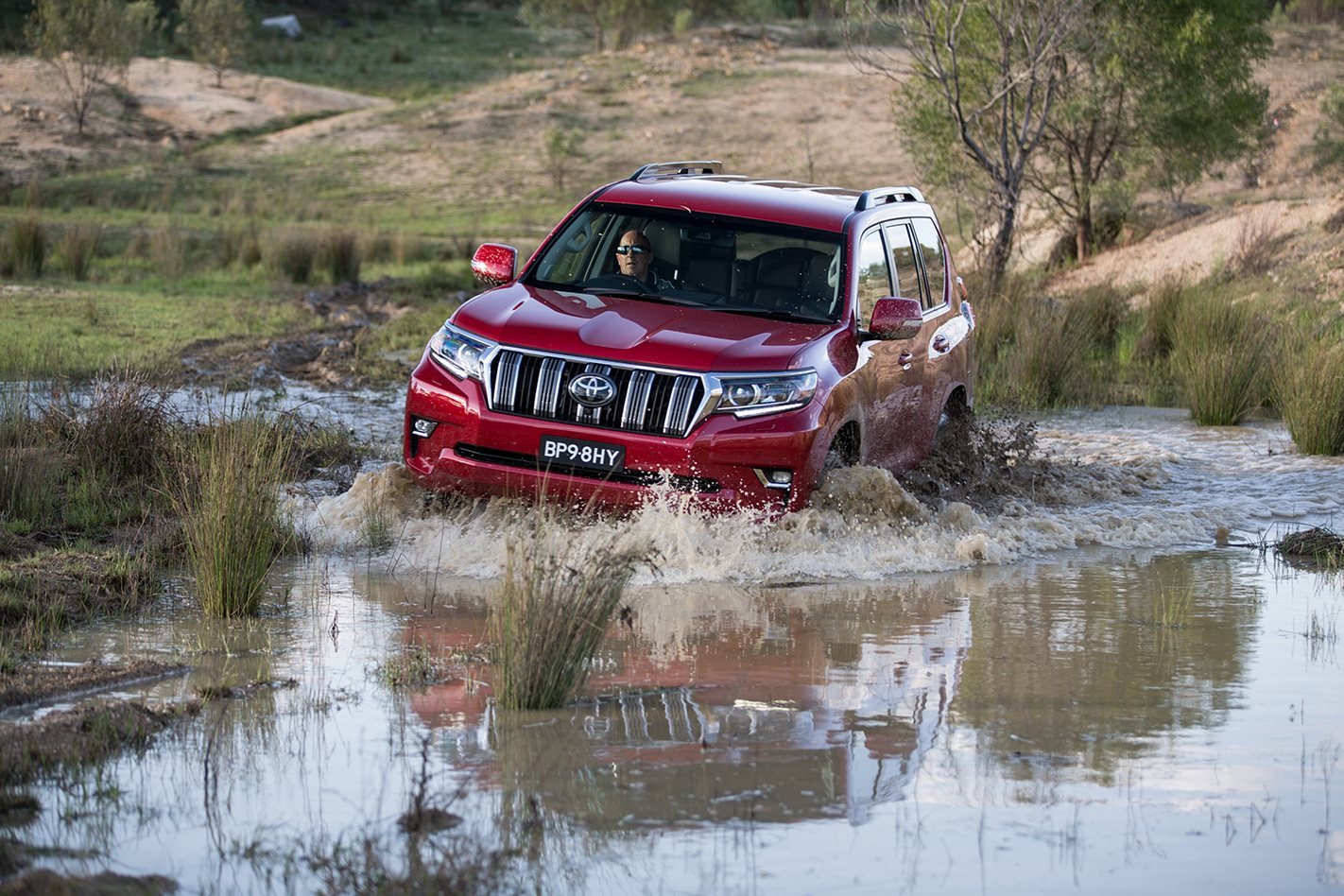
A dual-cab’s high-riding stance and chunky tyres are rarely for show and most models available in the current market offer formidable off-road ability.
While there are two-wheel drive and less hardcore variants on offer, the upper end of the range where dual-cabs duel, is often dominated by four-wheel drive and lots of complementary technology.
Muscle
If you’ve heard the expression ‘one-tonne ute’ it relates to the weight a model can carry in its load tray. It’s not quite that straightforward and not every model will accommodate an even 1000kg, but most will come close if not exceed the load capacity.
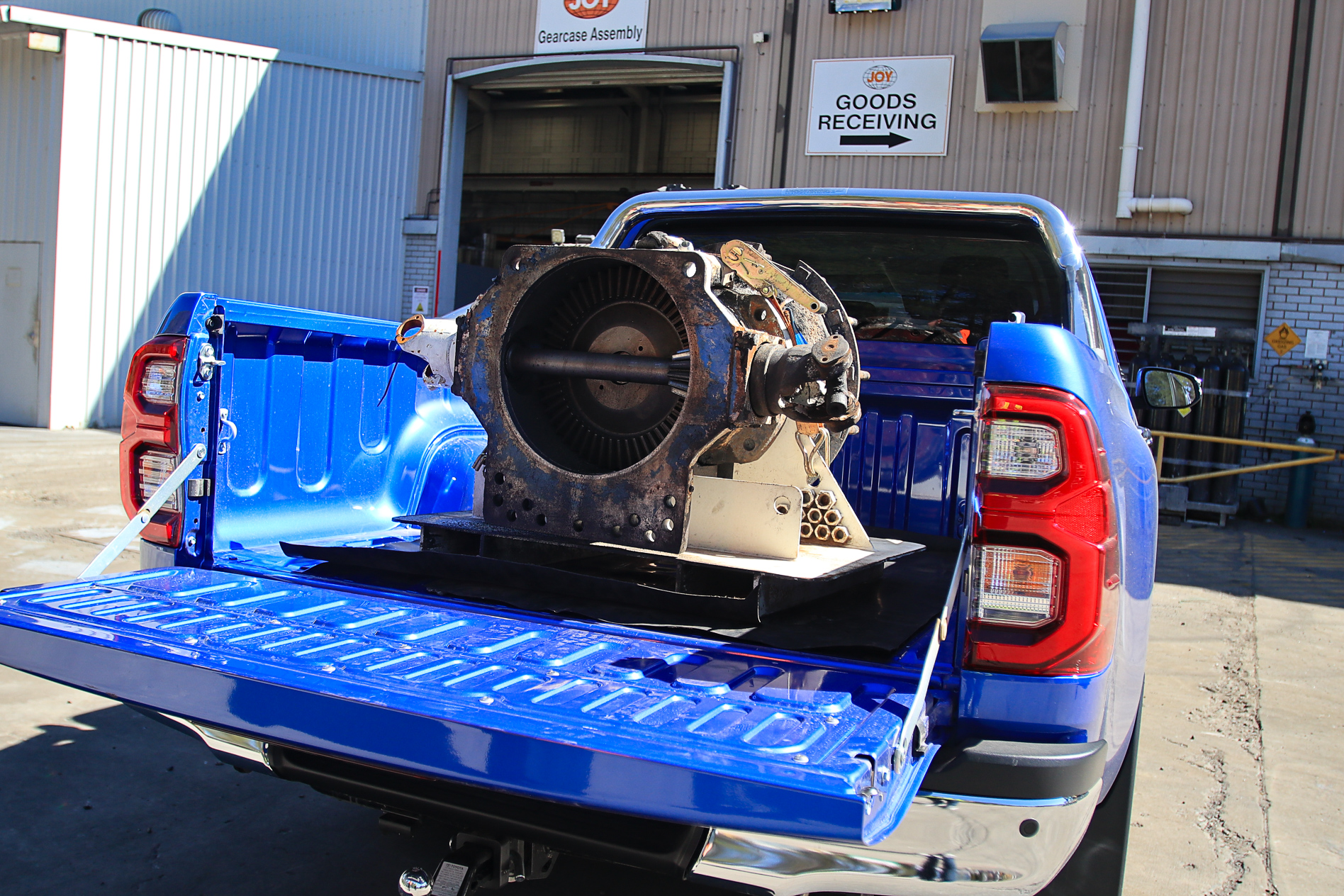
Then there’s the towing capacity. With grunty modern diesel engines under virtually every dual-cab bonnet on sale, 3500kg with a braked trailer is the standard to meet and beat.
Combined with four-wheel drive traction, dual-cabs are for many the towing tool of choice.
Comfort
It might have seemed impossible and perhaps even unnecessary only a few years ago, but modern dual-cab utes are packed full of comfort and convenience features that you would expect to find limited to passenger cars.
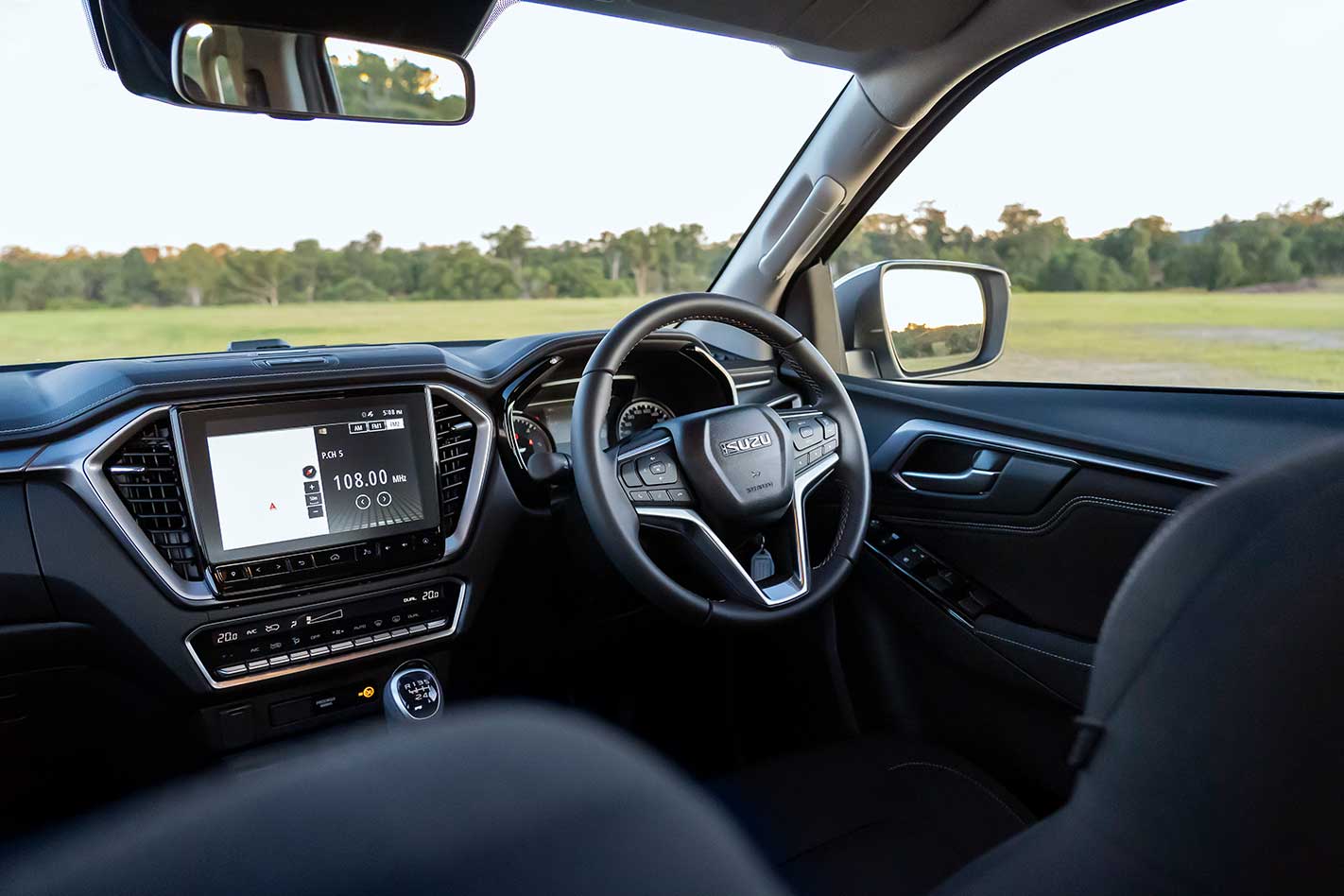
Heated seats, touchscreen information and entertainment systems, electrically adjustable seats with leather upholstery, electric park brake, electric windows, navigation, dual-zone climate control and more – if you’re after any of these features in your next vehicle, you can find them in a dual-cab.
Safety
Dual-cab utes are classed as light commercial vehicles and haven’t always had to play to the same rules as passenger vehicles, including SUVs and sedans. However, Australian consumer demand changed all that and, today, you’ll find an impressive set of driver assistance and active safety technology in many high-end utes.
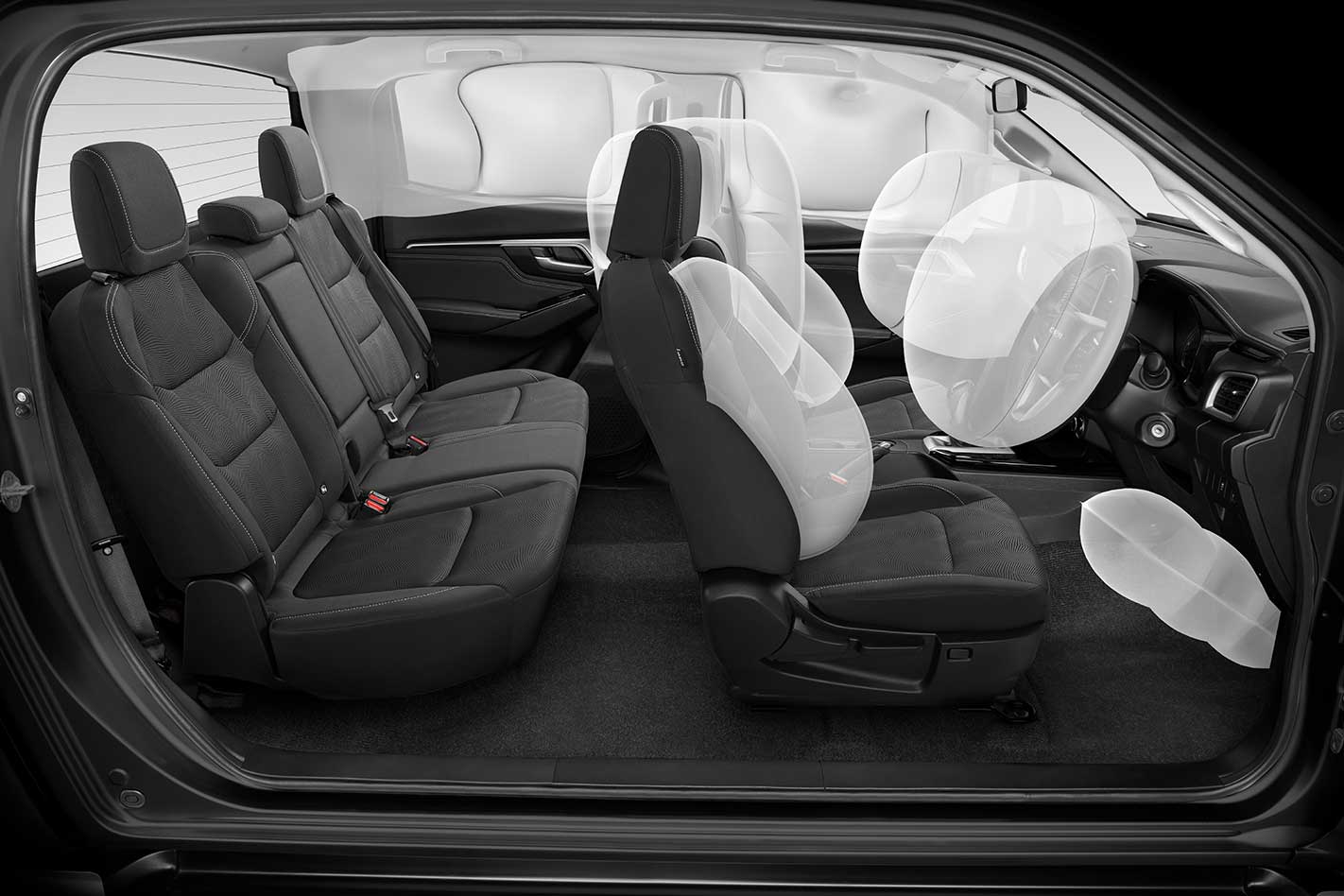
They’re not quite up to the best standards of cars – the new Isuzu D-MAX is the exception to the rule – but there are still offerings that include autonomous emergency braking, lane-departure warning and driver fatigue monitoring if you look for them.
Dual-cab disadvantages
Ride quality
Heavy-duty suspension systems give dual-cab utes their impressive load hauling and all-terrain ability, but the same stiff springs and strong components can also compromise ride comfort for passengers, particularly those in the rear seats.
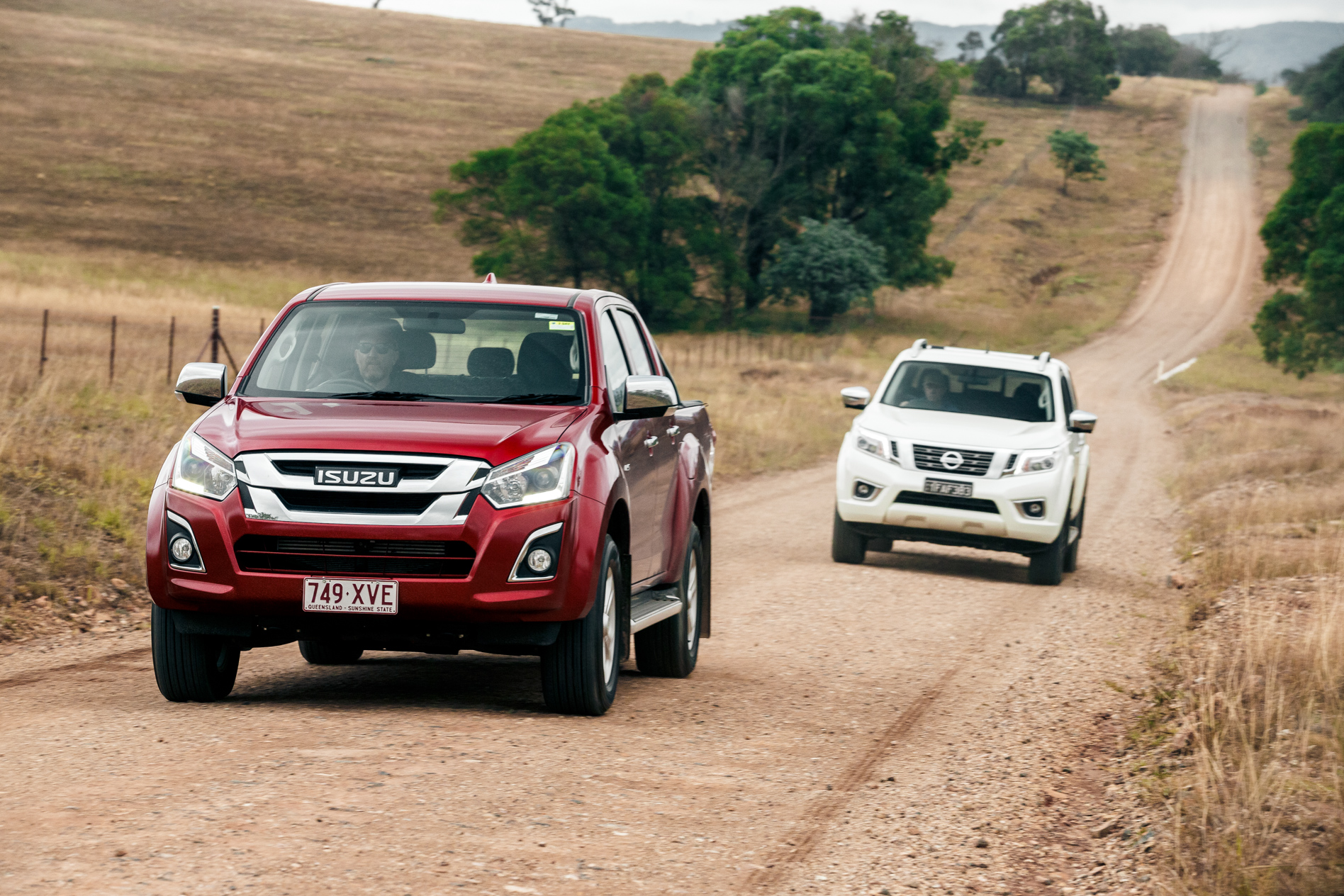
There are a number of models that have been engineered with coil-spring rear suspension including the Nissan Navara and Ford Ranger Raptor but not even they can provide a ride quality as silky as a passenger car.
Running costs
There’s no cheating physics; dual-cabs are big and heavy and with that comes a cost. While the latest diesel engines represent new levels of fuel efficiency, the significant wind resistance of tall bodies, hefty kerb weight and chunky tyres increase fuel consumption and the cost at the bowser.
Light commercial vehicles also command a premium in registration fees and for using some toll roads. That said, if you can fulfill the role of two cars or SUVs with one ute, some of that cost can arguably be offset.
Size
While the generous proportions of a dual-cab ute are, in many cases, the core of their versatility and function, size also has its disadvantages.
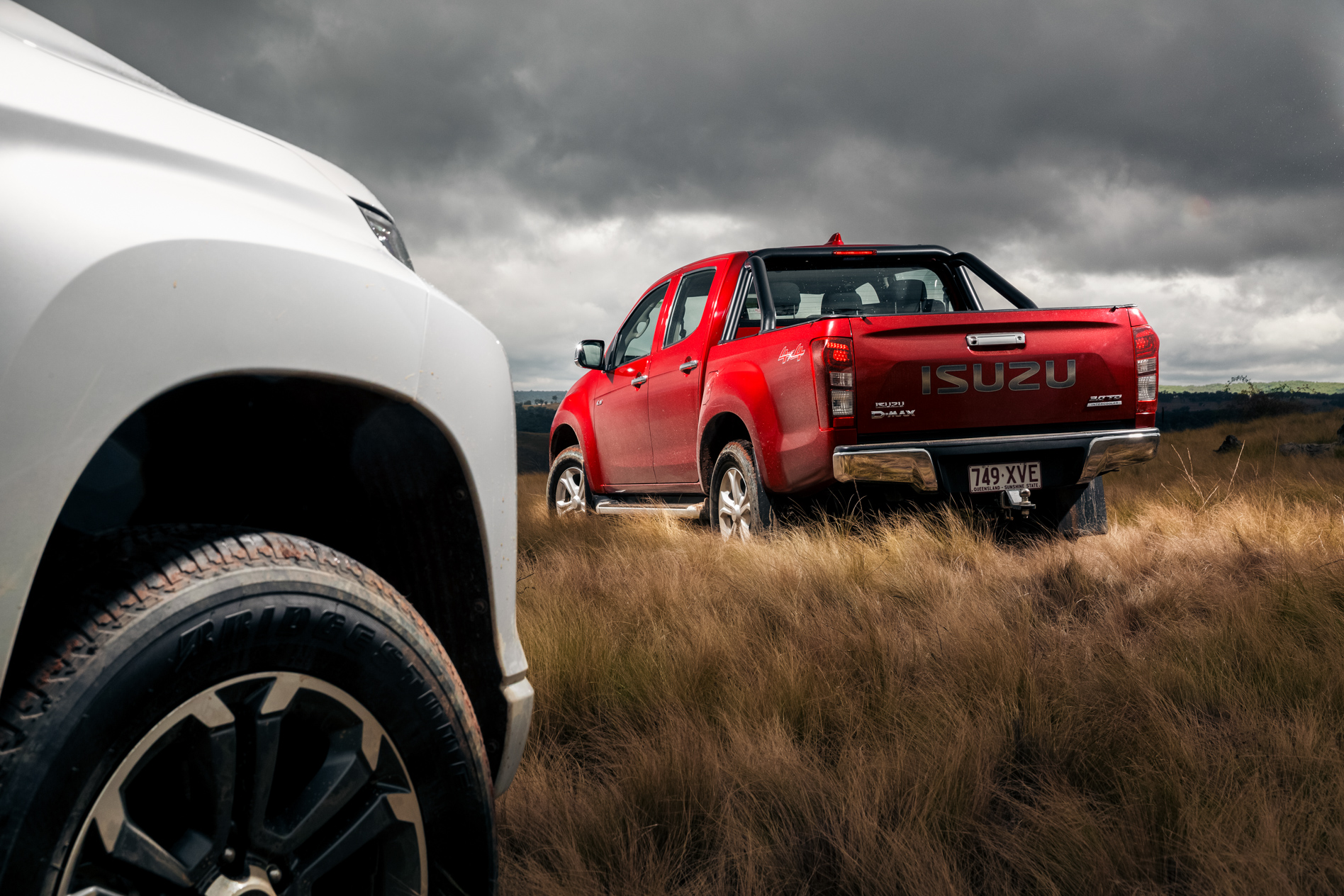
Maneuvering through metropolitan areas may be tricky for less experienced or confident drivers and you’ll need more space to park whether that’s at the supermarket or in your garage.
And don’t expect any dual-cab to be particularly rewarding for the driving enthusiast. While there’s a certain enjoyment to be had at the wheel of your own pick up, lots of ground clearance, slow steering and heavy weight means these machines are most at home on the trail, not the race track.
Whats next?
Still interested? If these unique but flexible vehicles sound like they might be the perfect match for your lifestyle, the next step is to start looking at some of the options.
Research is everything so make sure you square away your budget, draw up a list of ‘must haves’ and ‘nice to haves’ turn the page and start browsing the exciting range of dual-cab utes on offer right now.
If you need a car soon, and you aren’t particularly concerned about its features or style status, you might be wondering what the cheapest new cars in Australia are.
We’ve gathered a list of five decent, honest new cars that won’t break the bank or break your heart by being commuting nightmares while you’re trying to avoid public transport.
Alternatively, if you’re set on spending a bit more but are still keen on a good deal, our new car discount guide might suit you.
Kia Picanto – $14,690
As of October 2020, the Kia Picanto is the cheapest new car for sale in Australia, with its $14,690 entry-level Picanto S Manual variant. The Picanto is a comfortable, compact, and efficient car that’s even got a full five-star rating from ANCAP.
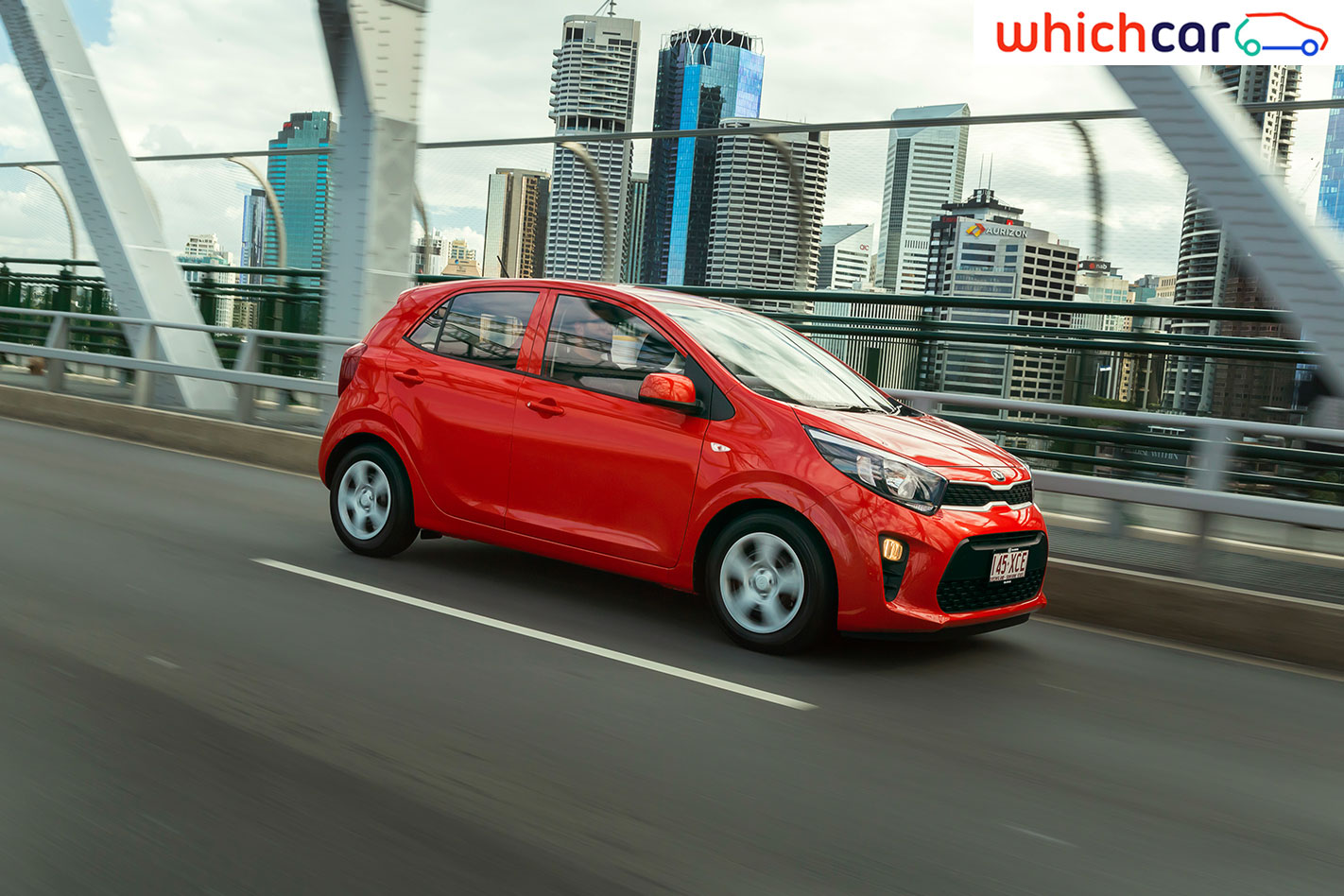
The Picanto also has a clever smartphone mirroring setup with Android Auto or Apple CarPlay, allowing plenty of functionality from the infotainment system.
If you’re concerned you’re not going to enjoy driving a manual day-to-day, the cheapest auto version is only $16,290 for the Picanto S Auto.
Running costs should also be of little concern, as the Picanto’s base models claim a 5.0L/100km fuel consumption rate, and Kia offers a seven-year warranty with unlimited kilometres.
The entire Picanto range, even the sporty Picanto GT, sits below the $19,000 mark.
Mitsubishi Mirage – $14,990
Coming in at a close second-place for Australia’s most affordable cars, the base Mitsubishi Mirage ES Manual costs just $14,990.
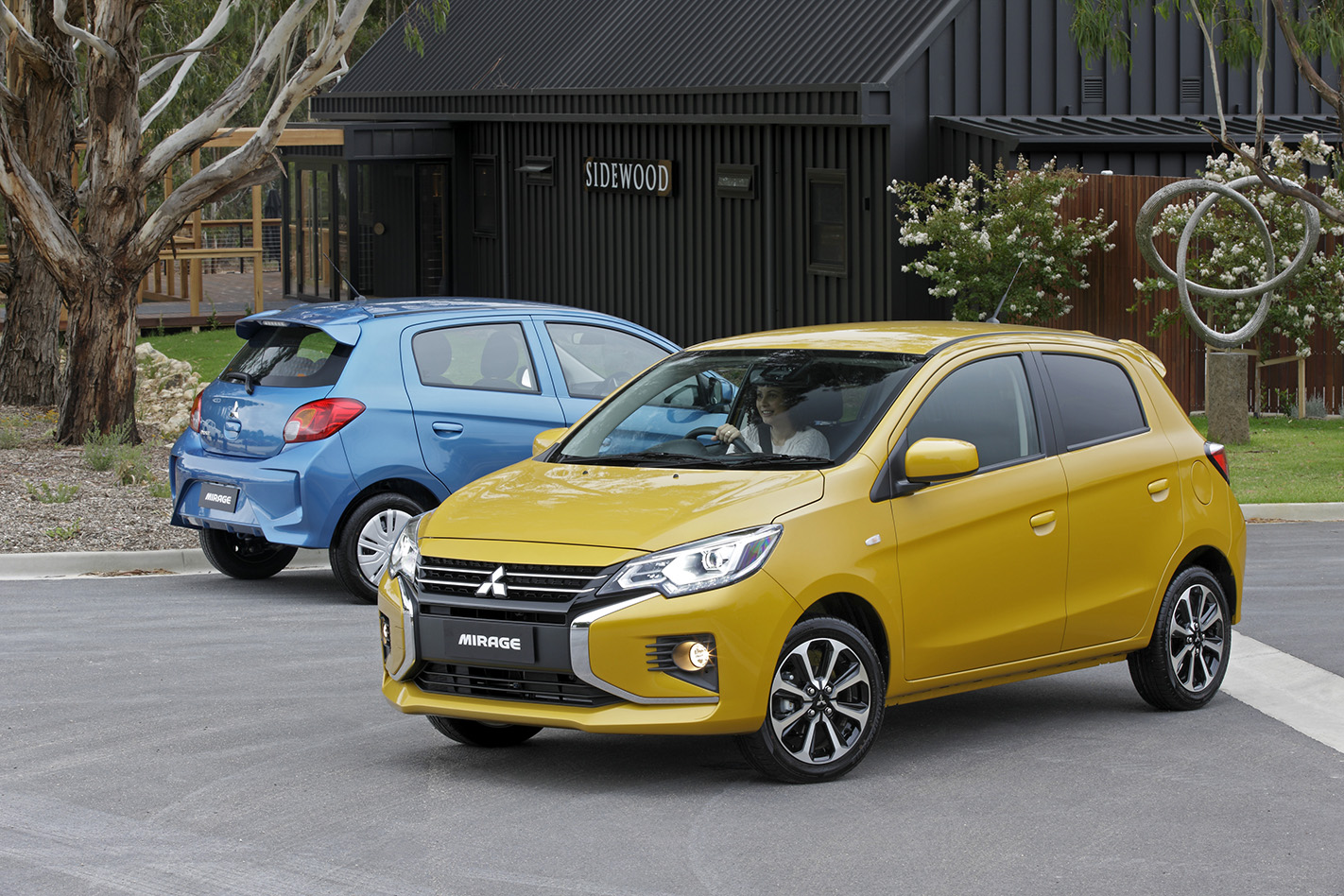
Like the Picanto, it has a small engine and doesn’t use much fuel (Mistubishi claims 4.7L/100km), though its engine can be noisy and its warranty isn’t quite as generous. The Mitsubishi Mirage comes with a 5-year/100,000km warranty.
Safety should still be of no concern, the Mirage has five stars from ANCAP. Additionally, you can spend a little extra for the $16,490 Mirage ES with a CVT gearbox, as an alternative to owning a manual.
MG3 – $15,990
Next up is the relatively new-to-Australia MG3 (or MG 3), with a base price of $15,990 for the MG3 Core.
The MG 3 only comes with an automatic gearbox, and it comes with a slightly larger engine. This also contributes to a higher fuel consumption rate of 6.7L/100km.
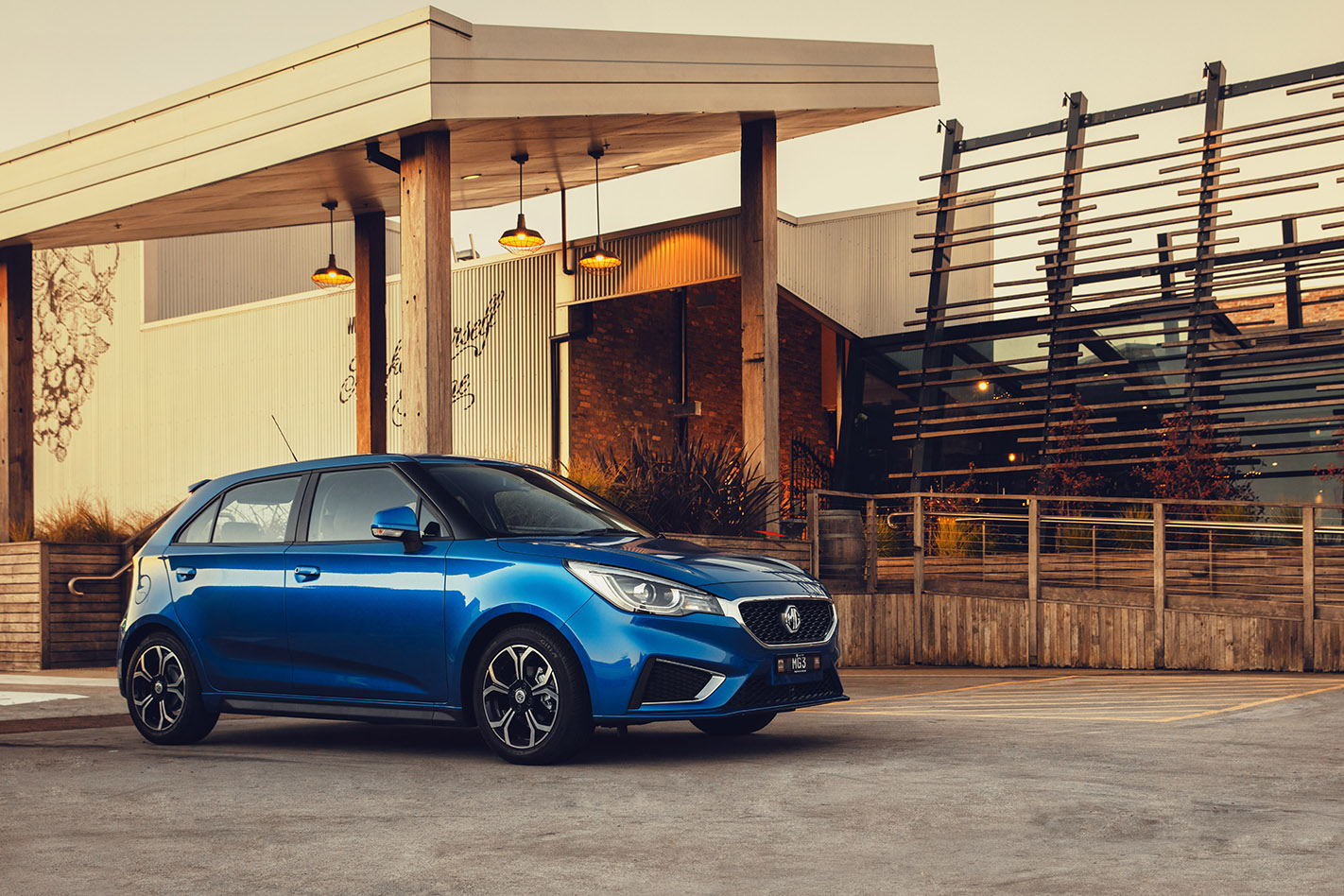
The MG 3 is, by all reports, a decent car to drive (a certain global situation has made it harder for us to get behind the wheel just yet), though one aspect of the car that may be of concern to buyers is its three-star ANCAP rating from 2014.
ANCAP (and Euro NCAP) lists no updated rating for the MG 3 since, though the car is still in the same generation albeit some updates since 2014.
The MG 3 doesn’t have AEB or lane-keep assist, though does have the required basics such as ABS and six airbags.
Honda City – $16,490
At $16,490 for the base Honda City VTi manual, the City is actually cheaper than its Jazz hatchback sibling. This is good news if you’re bargain hunting and would like a sedan over a hatch, but the catch is you’ll need to spend another $2000 for the Honda City VTi fitted with a CVT transmission.
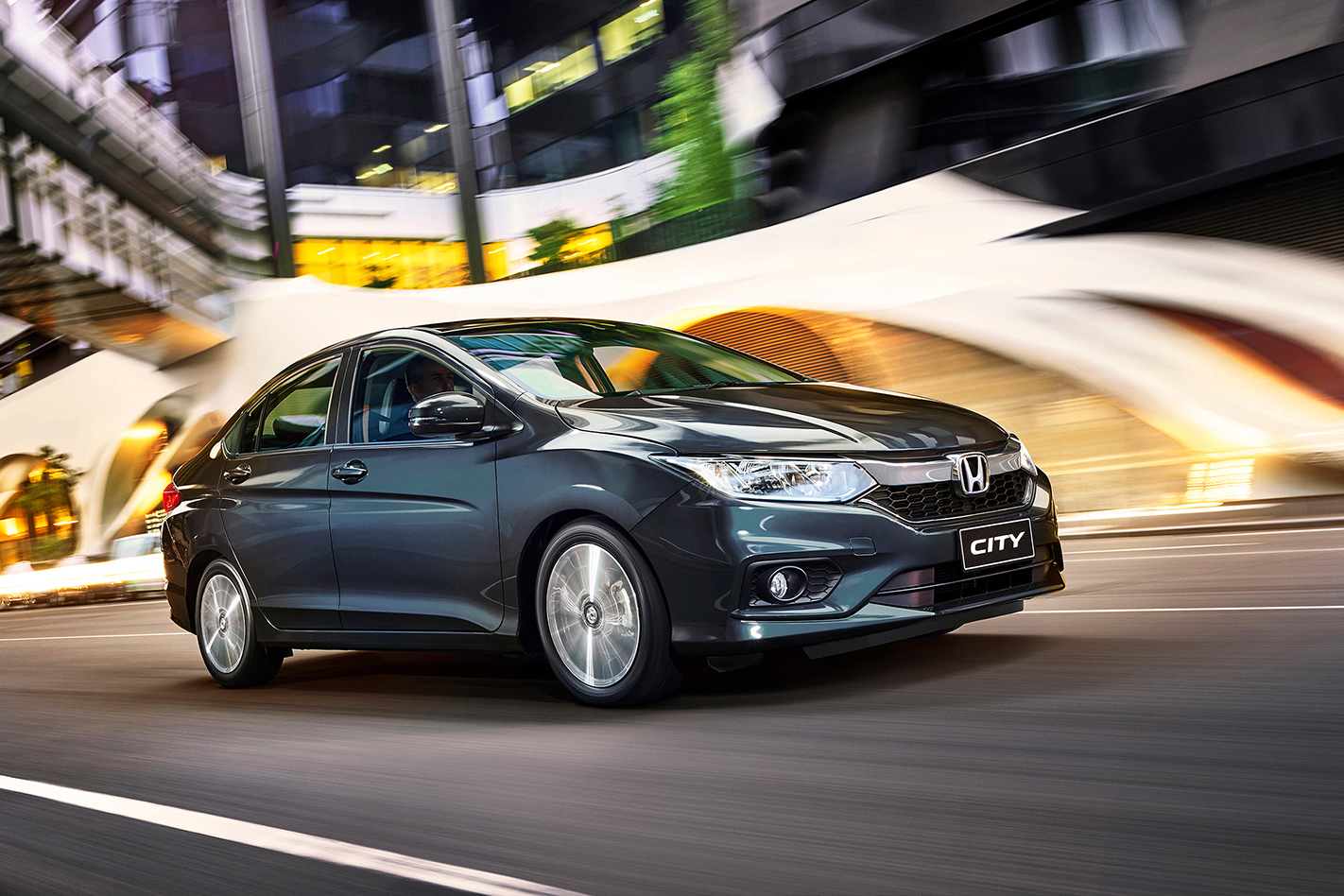
Its 1.5-litre engine is relatively efficient, with a 5.9L/100km consumption claim, plus Honda offers a five-year, unlimited-kilometre warranty.
ANCAP awarded the Honda City five stars for safety in a 2014, though since then its criteria have changed, and the Honda City misses out on active safety features such as AEB.
Suzuki Baleno – $16,990
The Suzuki Baleno GL is the $16,990 entry-level model for Suzuki, though even the brand’s Swift and Ignis have entry variants below the $20,000 mark.
The cheapest automatic variant is $17,990, though it has a higher fuel consumption claim than the manual. It’s 5.1L/100km for the manual, or 5.4L/100km for the auto Baleno.
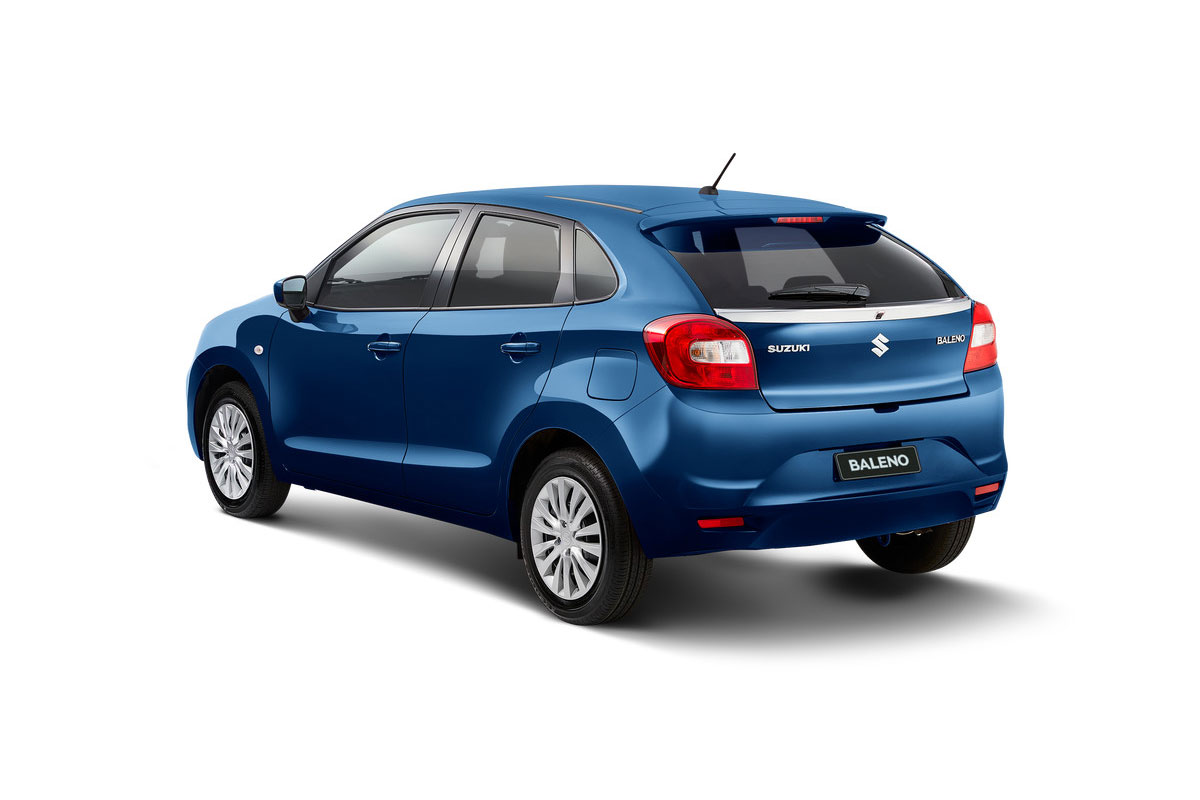
The Baleno is covered by Suzuki’s 5-year and unlimited-kilometre warranty, with a service interval of 15,000km or one year.
Unfortunately, the Suzuki Baleno scored just three stars from ANCAP in a 2014 test and doesn’t have active safety features like AEB.
NOW CHECK OUT The cheapest small SUVs you can buy
As electrified vehicles become increasingly commonplace, so too will ‘regenerative braking’ and you can expect to hear about the technology more and why it’s so important and integral to every hybrid and electric vehicle on the market.
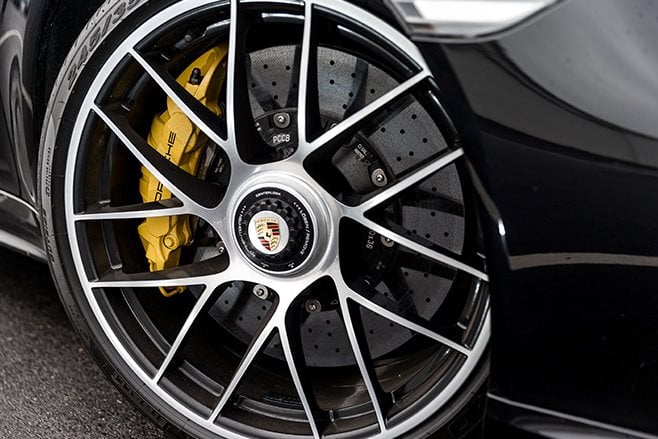
Regenerative braking is one of the key advantages an electrified drivetrain has over a purely combustion-powered equivalent as it enables the car to save energy that would otherwise be wasted by, as the name suggests, ‘regenerating’ electrical power.
Here’s how mild hybrids, plug-in hybrids and EVs capture power, range and efficiency that petrol and diesel-powered cars can’t.
Braking is a waste of energy
Let’s start with a basic principle and how cars have been slowing down for more than 100 years – friction. When the brakes are applied, two or more friction surfaces are forced together converting the energy of the moving car (kinetic) into heat energy and reducing its speed. This is an irreversible process in which the heat is dissipated and lost to the atmosphere around the car.
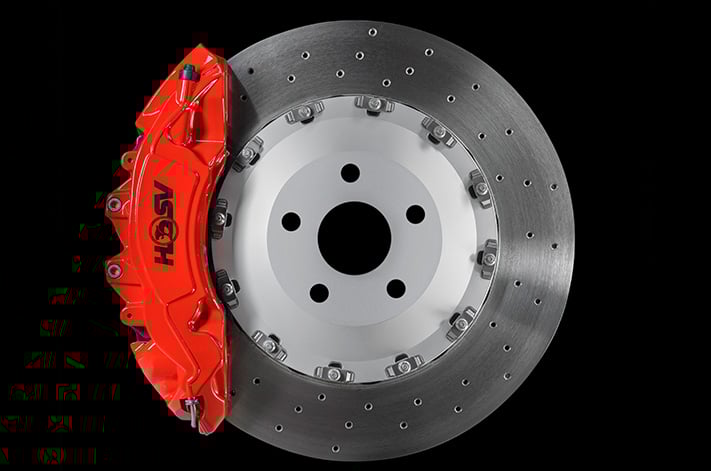
But that heat was once energy you paid for at the fuel bowser. The fuel was taken from the tank, burnt in the engine, used to turn the wheels and move the car, so when the brakes generate heat there’s nothing more you can do with it. It is, quite literally, waste.
Wouldn’t it be good if there was another way? Well, there is.
Harnessing braking energy
Generating electricity is hard work. That’s why power stations need vast resources of energy to power their turbines. Whether it’s coal, wind or some other form of energy, lots of it is required to spin the generators.
It’s exactly this principle at the heart of regenerative braking. Instead of simply forcing friction surfaces together, regenerative braking uses the inherent resistance of an electric generator to slow the vehicle when it is producing power.
And the best part is that the function needs no significant extra hardware to perform the trick. EVs and hybrids are fitted with conventional friction brakes, but when you press the brake lightly the discs and calipers do nothing.
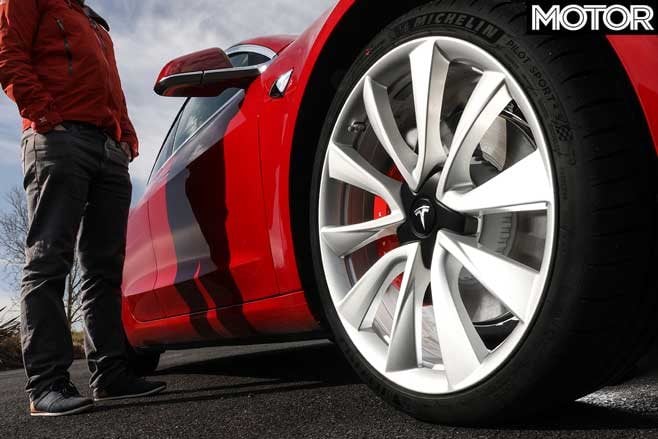
Instead, the same motor that’s used to turn the wheels is temporarily repurposed as a generator and instead of using electricity, it produces or ‘regenerates’ power and the effect slows the car. This freshly generated power is sent back to the battery where it can be used to accelerate the vehicle once again.
Some systems even start the regeneration earlier, without having to press the brake pedal and simply lifting off the accelerator starts regeneration. Many manufacturers call this ‘single-pedal driving’, since the brake pedal is not required to slow down during almost all normal driving.
It takes a little getting used to but the aggressiveness of the effect can be adjusted.
There are, of course, losses in the regen process, but recapturing even a small amount of the energy that either powers the engine in a hybrid or charge the battery in an EV is more efficient than wasting it with conventional brakes.
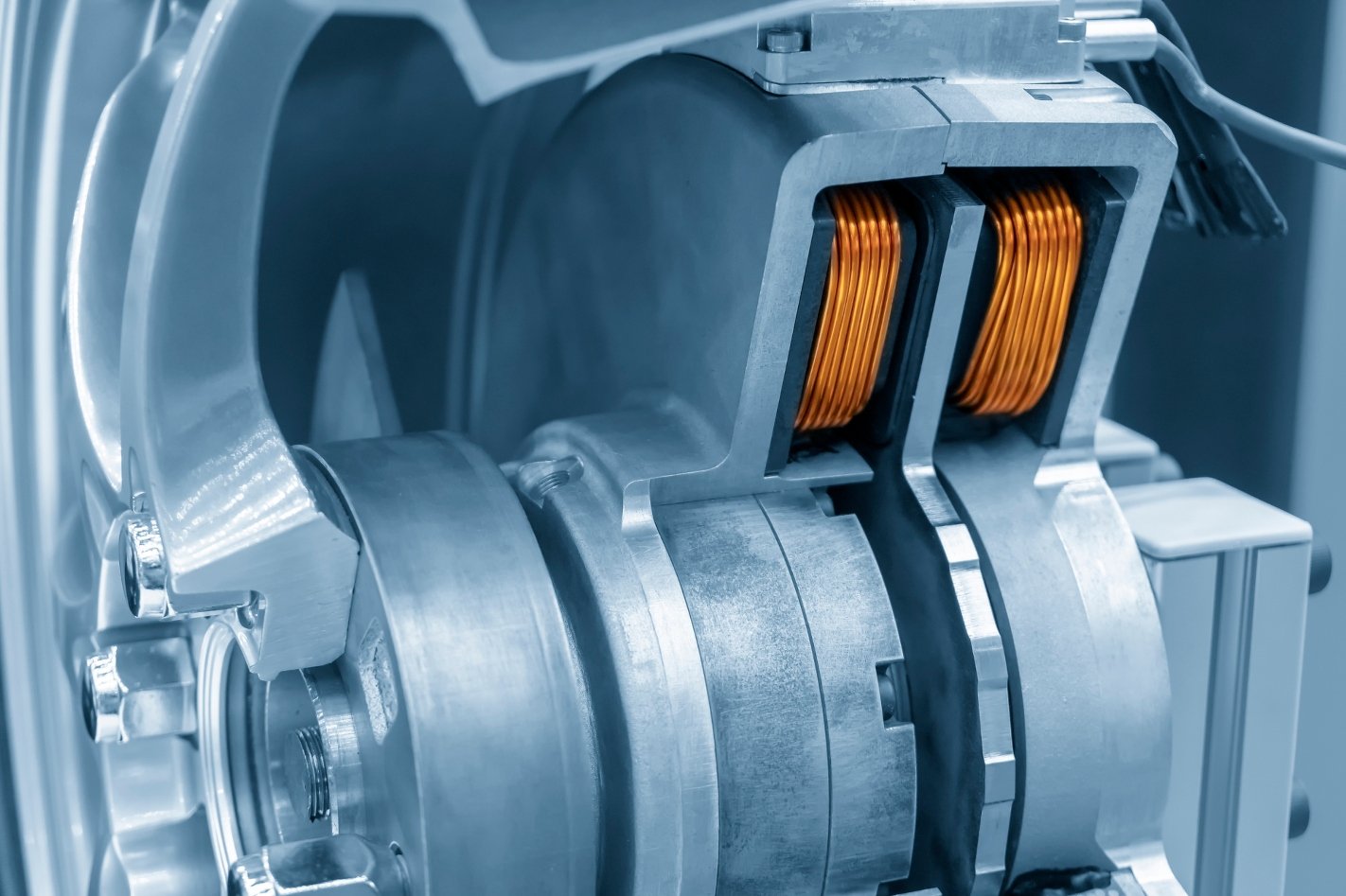
Of course, regenerative braking has its limitations, but when the motor has applied all the force it can, normal brakes are ready to step in and lend a hand for maximum deceleration.
Regenerative braking bonuses
It’s fairly obvious that if you are reducing the amount of energy wasted by normal brakes, the effort put into moving the vehicle will go further. That means hybrids will get more mileage from a tank of fuel and an EV’s battery charge will last longer – particularly if the car is used in lots of stop-and-start driving, when the regen effect is most frequently used.
But if a vehicle is being slowed down by a reversed electric motor, demand on the conventional brakes is drastically reduced. Many service centres report that EV and hybrid braking systems often appear almost new and that means longer brake life and lower maintenance costs.
What’s not to like?
In short, not a lot. Little extra kit is required to enable a vehicle already fitted with a motor and battery to brake regeneratively so the extra cost is minimal.
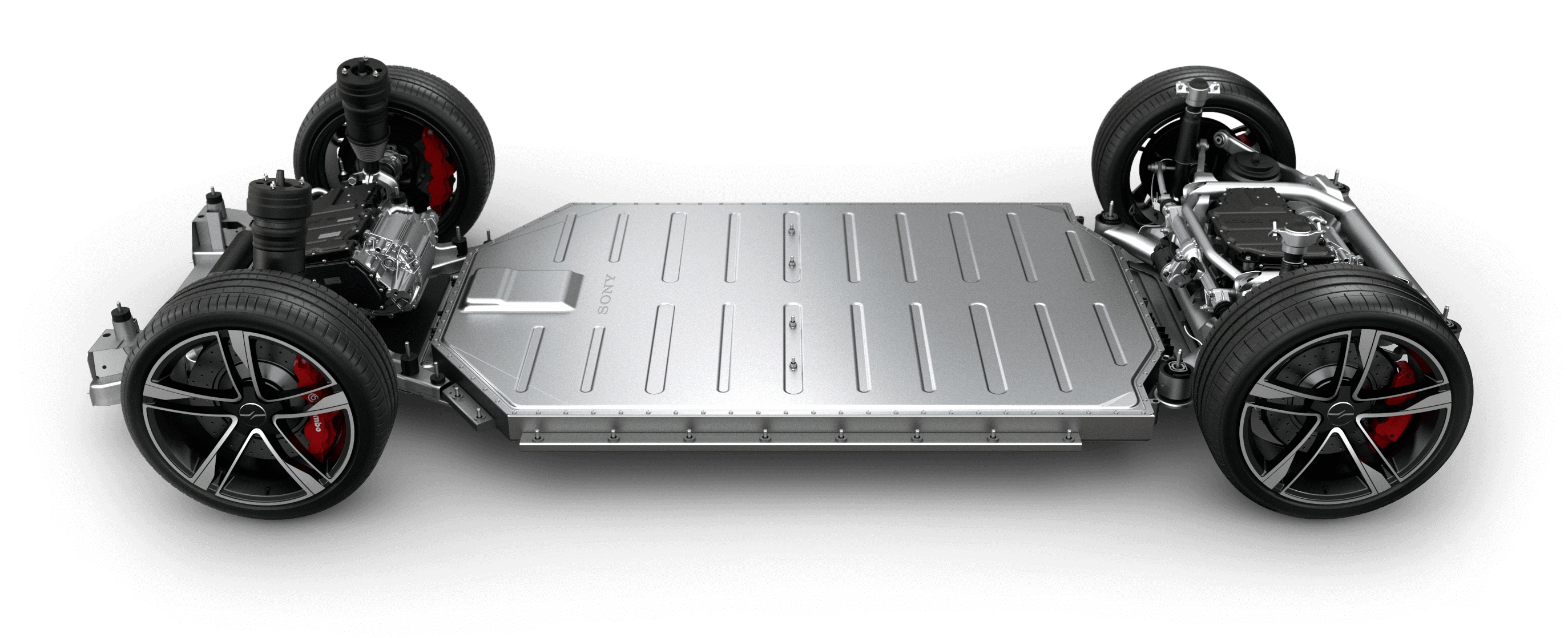
Perhaps the biggest drawback is an odd pedal feel before the brake discs and calipers come into play. Manufacturers are getting very good at hiding the spongy or bouncy brake feel but some drivers still find it a little disconnected and lacking feel.
Nuclear or unclear?
Regardless of the vehicle’s drivetrain, the heat you feel from hot brakes does not originate from chemical energy, kinetic, potential or electrical. To understand the importance and effectiveness of energy transfer a little better let’s follow the heat produced by the brakes back further than the servo.
Petrol and diesel is refined crude oil that was formed by many trillions of sea organisms. These tiny creatures fed on algae, which in turn drew its energy from sunlight. That energy was beamed 150 million kilometres through space from its source where it was made by the sun using nuclear fusion.
While EVs use a very different energy source, electricity can be traced back to the same source. Solar power cuts out a few steps in the process, but even power from coal or gas-fired generation follows the same path – fossil fuel, things feeding on the sun, nuclear energy.
That’s why regenerative braking is so significant. By capturing and making the best use of all energy, we reduce our demand for it and the negative effects on the planet including climate change.
West Australians are being warned to cease using radar detectors within the next two weeks or face a $1200 on-the-spot fine and the accrual of seven demerit points.
The proposed laws were first introduced in June 2020, but will now be passed as legislation as of October 12, meaning all radar detector users must remove their equipment – working or not – before that deadline.
Radar detectors can detect speed cameras operated by the police force from a distance, giving users enough time to reduce their speed and skirt a potential fine.

A radar detector ban has already been in place for years in every other Australian jurisdictions, the last of which banned them over two decades ago.
The threat of seven demerit points will really hit home during WA’s double demerit weekends, which would result in an automatic loss of licence for someone caught using a radar detector.

As well, truck drivers will receive a larger $1,500 infringement and seven demerit points.
The Western Australian government attributes the causes of a majority of deadly crashes in the state to speed, which is part of the reason for the introduction of this new law.
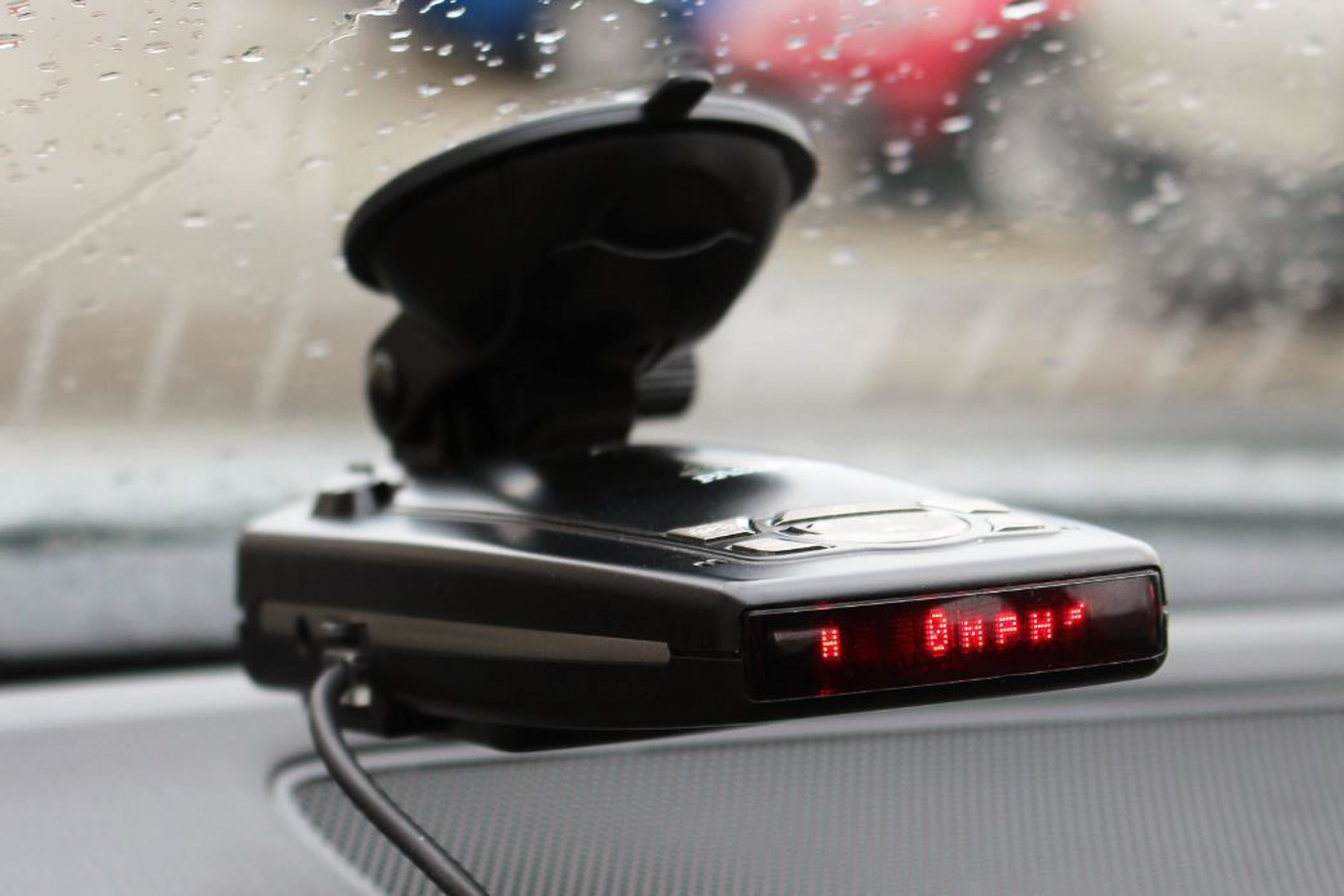
It follows the recent banning of laser jammers and electronic scramblers, which carry the same infringement penalties.
“It’s taken Western Australia 20 years to catch up with the rest of the country, but I’m pleased we have at long last been able to ban radar detectors,” said police and road safety minister Michelle Roberts.
“We are deliberately giving people plenty of warning before these new penalties come into effect. If you’ve got one of these devices on your vehicle, then get rid of it.
“These devices have always been about enabling people to speed without being caught and I’m really glad this Government is putting a stop to it.”
Toyota New Zealand has created a vicious off-road focused special edition of its popular Hilux dual-cab ute, that has its big black eyes on a share of the Ford Ranger Raptor‘s attention and is named after one of nature’s most merciless killers.
Based on the Hilux SR5 that is sold in Australia, The Toyota Hilux Mako is equipped with some serious kit to boost off-road agility and sharpen its on-road presence.
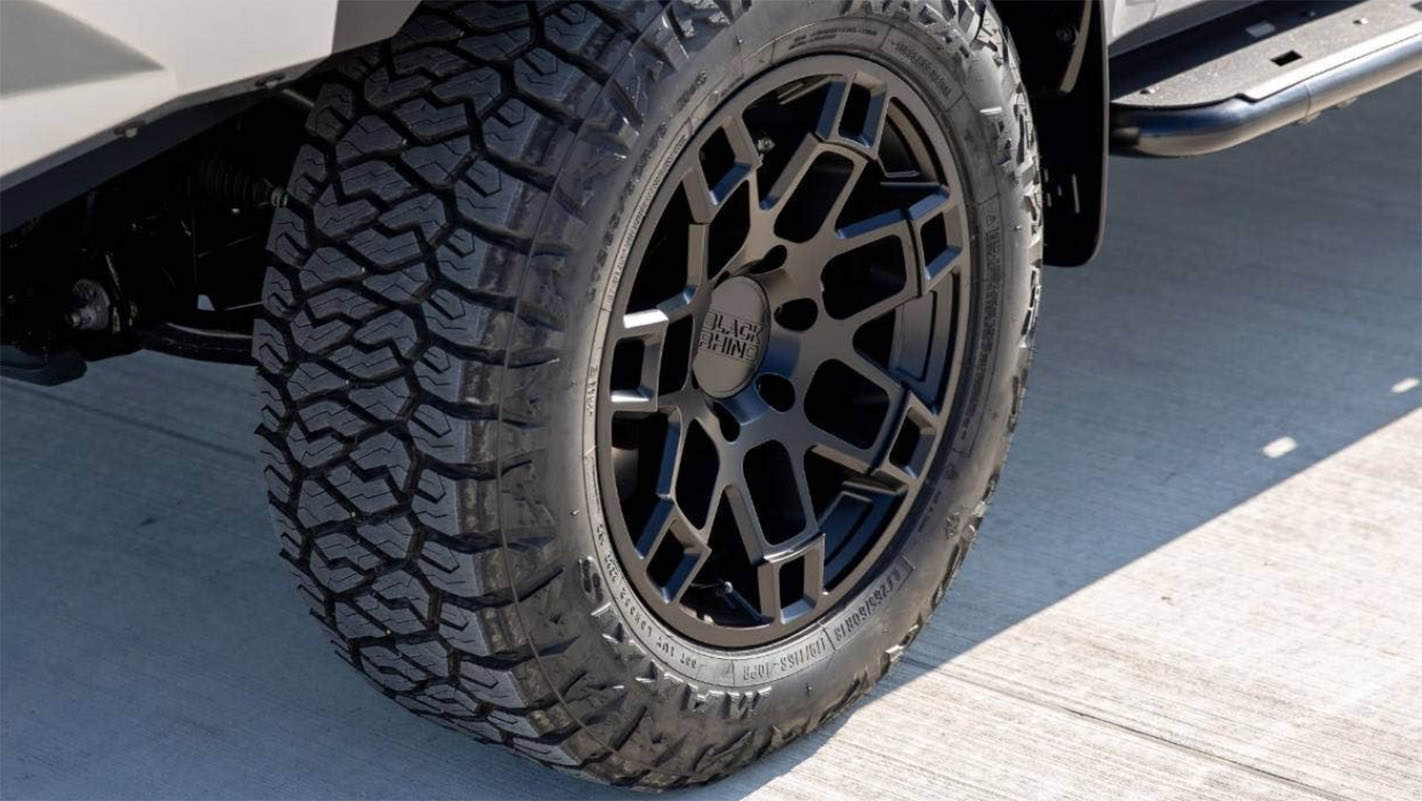
Named after the Mako shark – which can reach up to four metres in length and is the fastest of its species – the highlight of its enhancements include a new lifted suspension set up, black 18-inch Rhino alloy wheels, and meaty 265/60 Maxxis Razr all-terrain tyres.
The suspension tweaks are courtesy of ARB, with an ‘Old Man Emu’ kit lifting the front of the Mako by 40mm compared with the Rugged X, while the rear gets a lift of 50mm.
It doesn’t stop there, BP-50 by-pass dampers allow for the compression and rebound control to be adjusted. Unsure how a by-pass damper works? Just know that it’s the same tech used on Baja race trucks and is built for tackling some of the toughest terrain around.
Helping stop the Mako are uprated brakes lifted from the Fortuner, and braided lines.
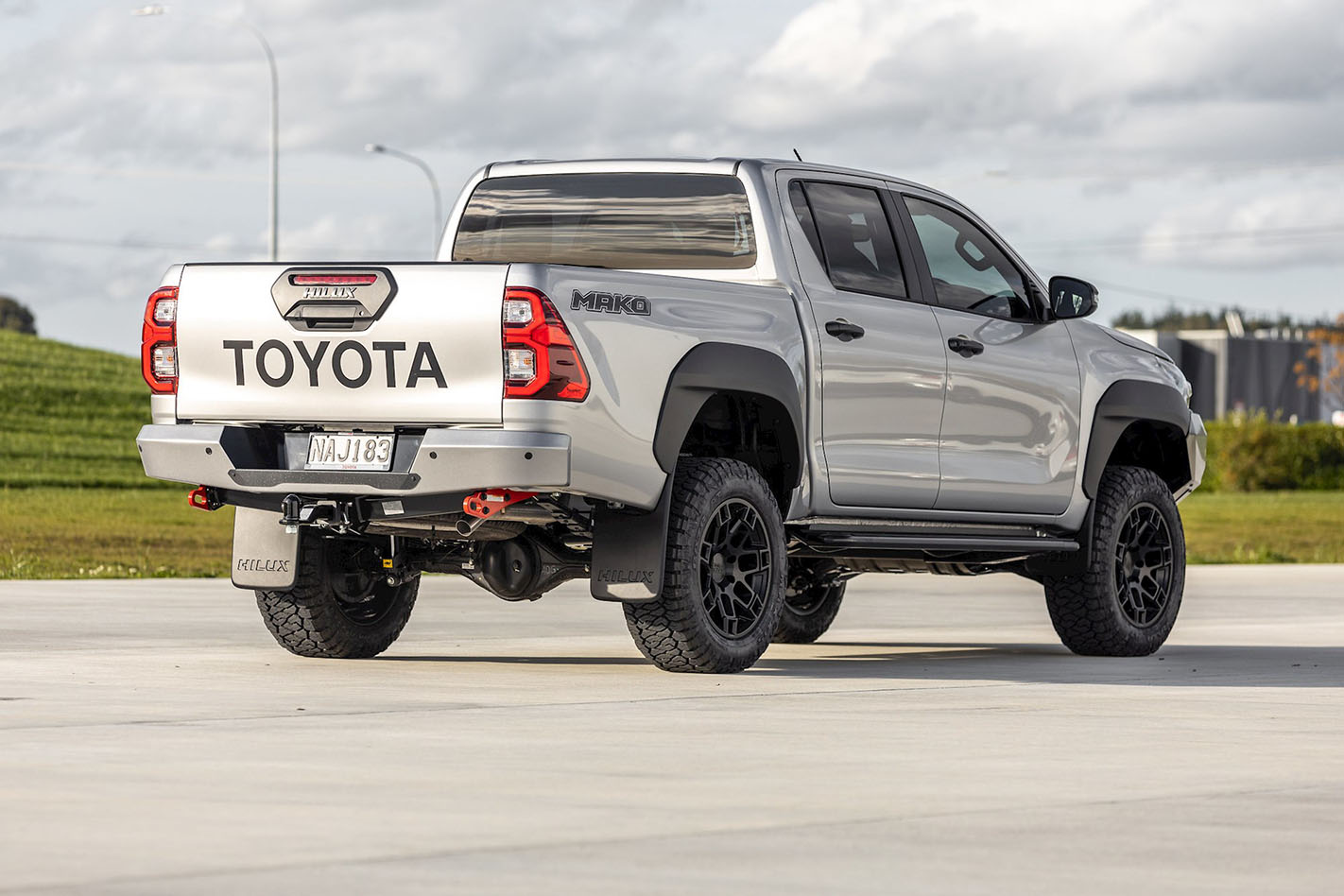
Adding to the Mako’s go-anywhere suspension are some aesthetic enhancements, including a hoopless front bar borrowed from the Rugged X, an LED light bar, bash plates, new fender flares, embossed side steps, and a custom tray with a soft lift and close cover.
Inside the interior gets a light fettling with bucket seats featuring the Mako badge embossed into the leather trim and a sports steering wheel.
Power for the Mako remains unchanged from the regular Hilux range, with the 1GD 2.8-litre turbo-diesel retaining its 150kW/500Nm outputs.
There’s still plenty of reason to pop the bonnet though, with Toyota New Zealand showing some classic Kiwi humour and placing a plaque in the engine bay that reads “Handcrafted by the good buggers at Toyota”.
Maximum braked towing capacity remains 3500kg, with a payload capacity of 940kg.
The transformation turns the Hilux Mako into the closest thing Toyota has to Ford Ranger Raptor Rival (at least until the hardcore GR version is released).
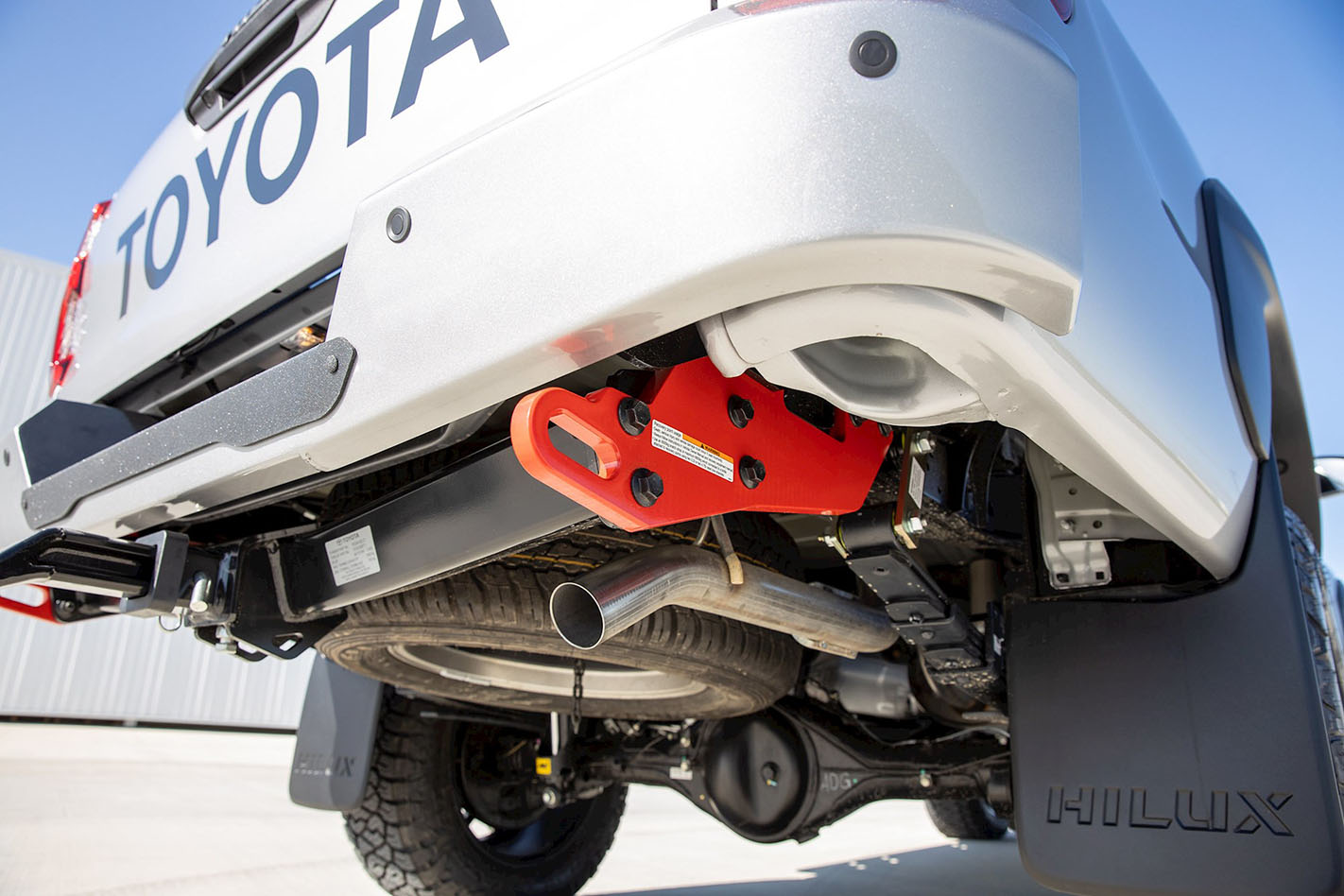
However, don’t hold your breath for the Mako to swim its way across the Tasman and go on sale in Australia – our Hilux range currently tops out with the locally-developed Rogue and Rugged X special editions.
Toyota New Zealand will sell the Mako for NZD$79,990 (roughly A$74,000) and expects to sell 250 units a year (each built at Toyota Thames Vehicle Operations)
Locally, the 2021 Hilux Rogue will cost $68,990 before on-roads, while the Rugged X is priced at $69,990.
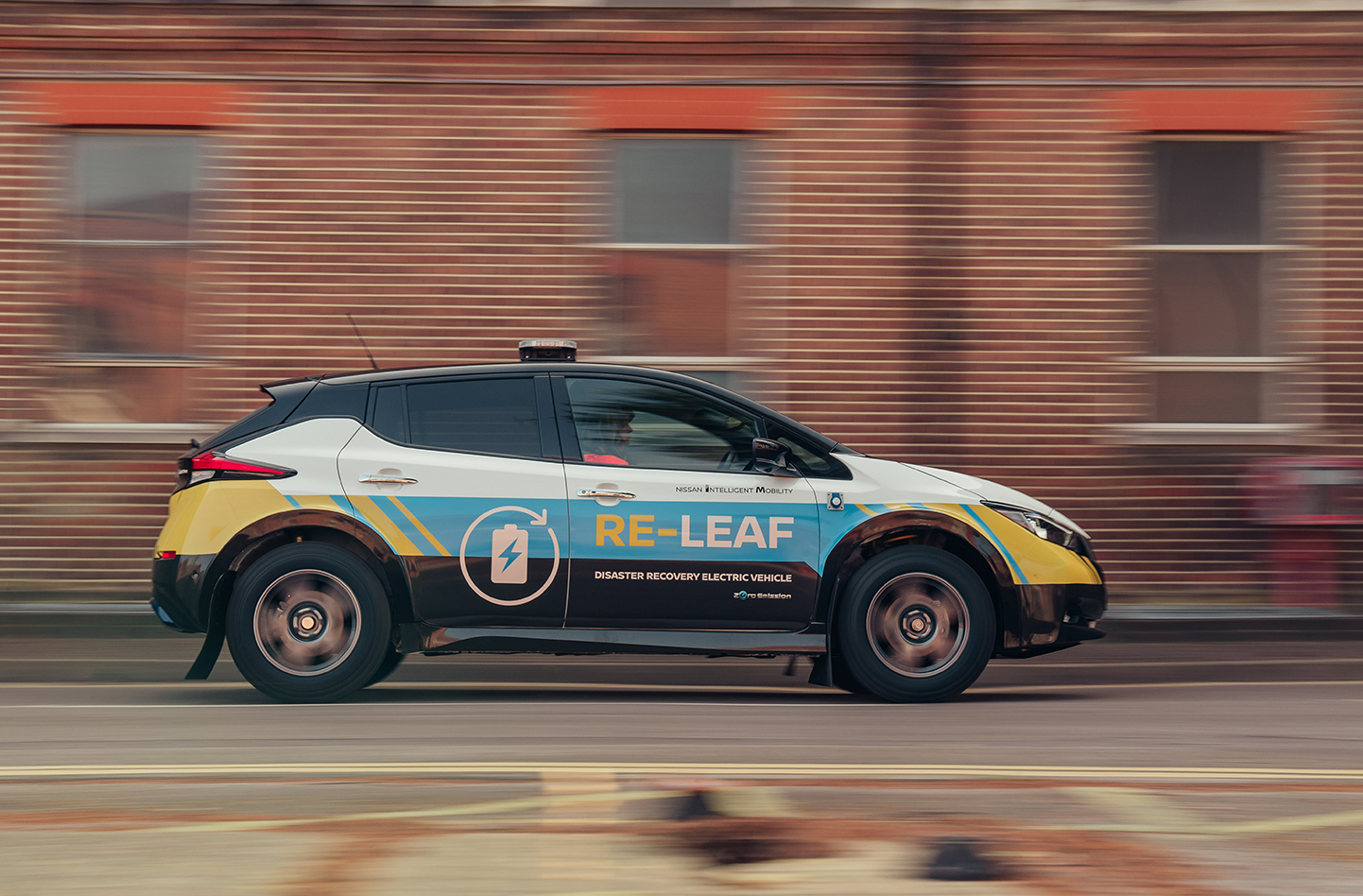
Nissan has revealed a rugged emergency response version of Leaf electric hatchback that’s designed to provide a mobile power supply following natural disasters or extreme weather events.
Called RE-LEAF (get it?) the working prototype is based on the standard Leaf but has a higher 225mm ride height, heavy-duty sump guard, broader wheel arches and 17-inch all-terrain tyres to help navigate debris-covered roads.
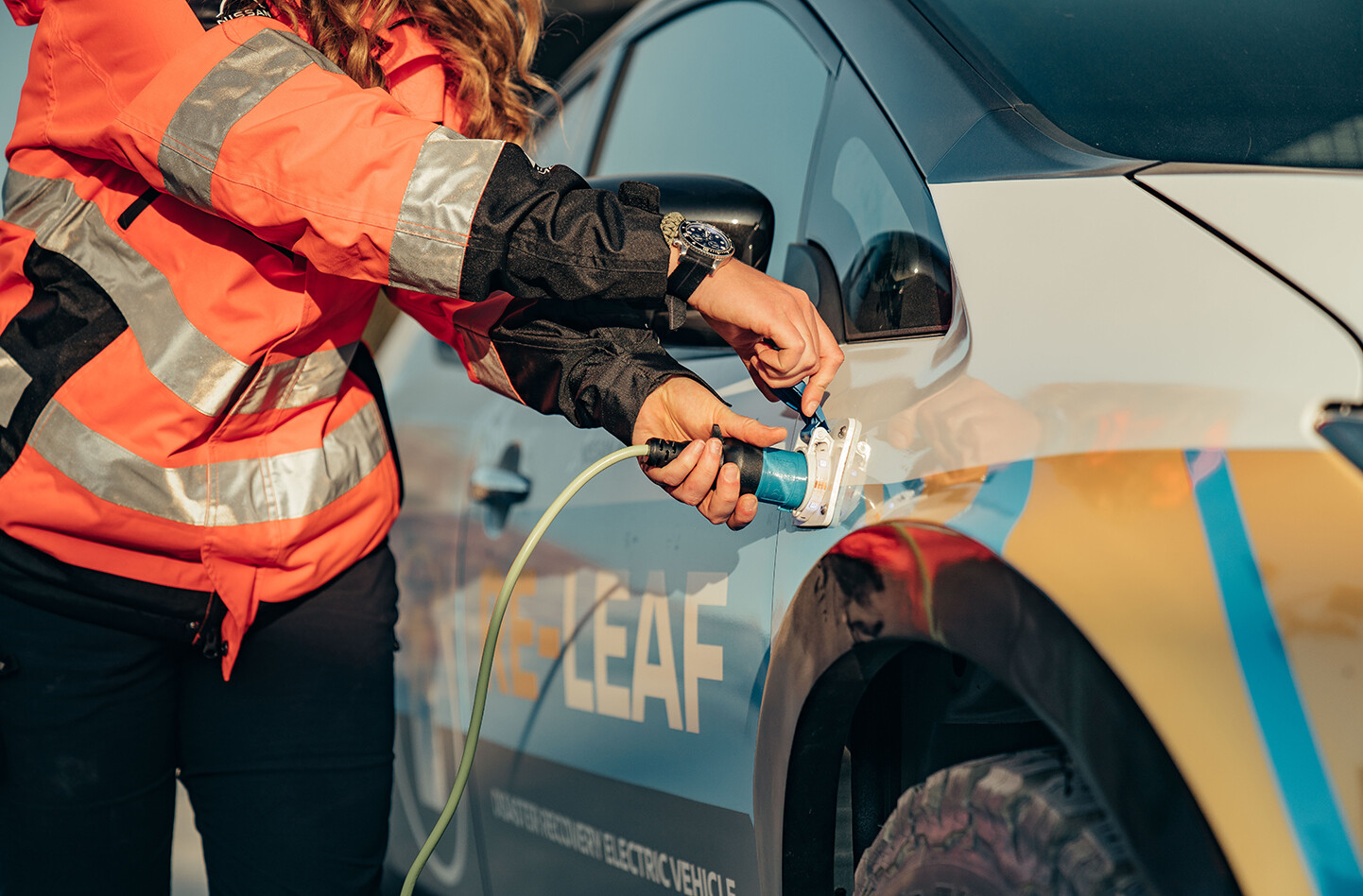
It’s designed to reach disaster zones to provide power to assist emergency services and others on the ground via 110-230v electrical sockets mounted on the exterior powered by the car’s high capacity lithium-ion battery.
Inside, the rear seats have been removed and the floor levelled to provide storage for essential equipment.
Once the RE-LEAF arrives at a disaster zone, a bespoke pull-out desk extends from the boot with a 32-inch LED screen and dedicated power supply to run emergency communications.
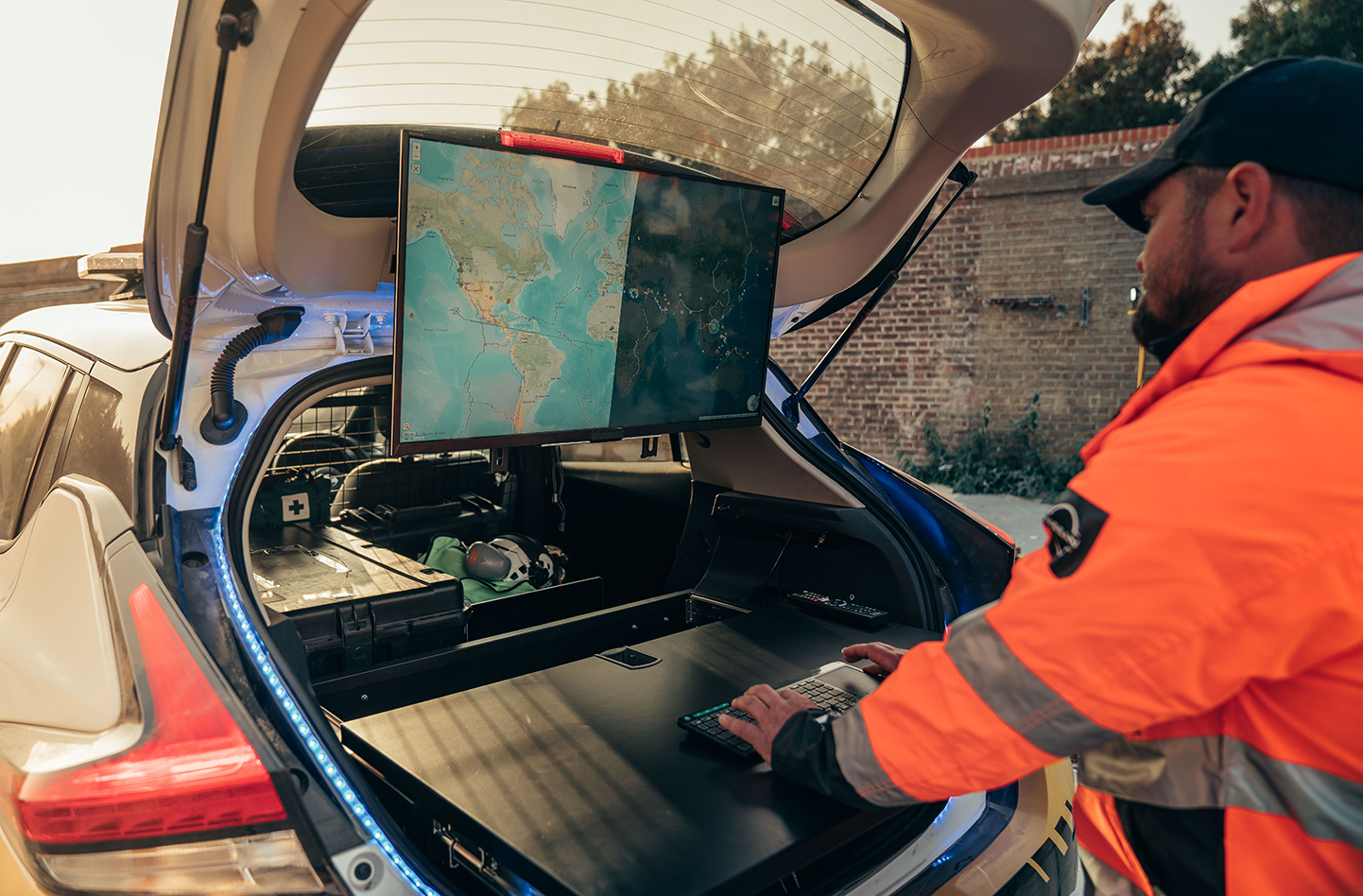
The RE-LEAF’s integrated energy management system can run medical, communications, lighting and other life-supporting equipment before power can be restored to a disaster-hit area.
It does this by utilising the Leaf’s bi-directional charging ability, a standard feature since the first-generation model was introduced in 2010, which allows it to not only pull power to recharge the high-capacity battery, but also ‘push’ it back to the grid through V2G (Vehicle-to-Grid), or directly to electronic devices through V2X (Vehicle-to-everything) technology.
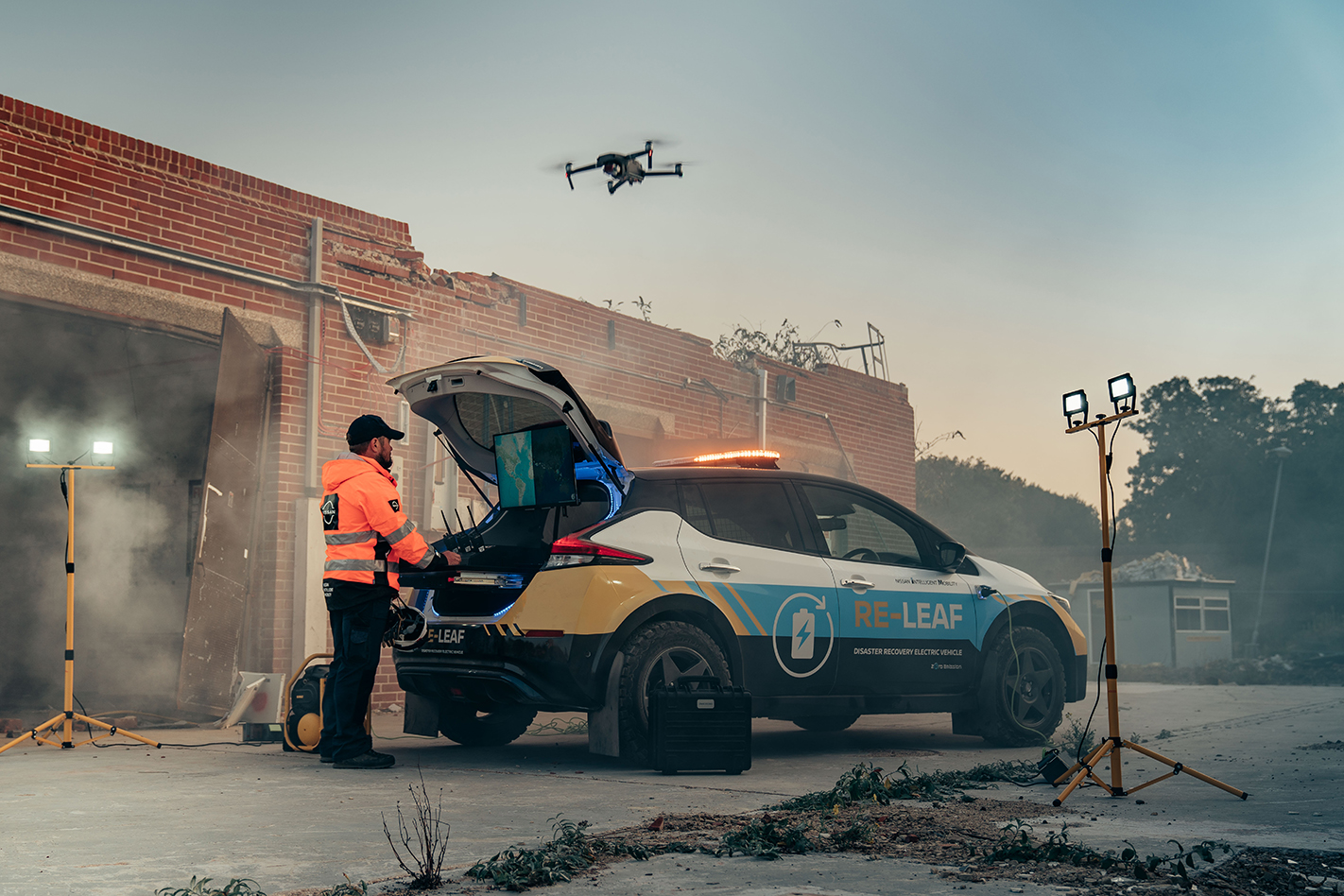
This allows it to act as a portable power station to power multiple appliances simultaneously, including an electric jack hammer, intensive care ventilator, 100w LED flood light and a 10-litre soup kettle.
Once electricity is restored to the area, the EVs can be recharged and provide zero-emission transport, which would be very useful if fuel supplies are also affected.
“Electric vehicles are emerging as one of the technologies that can improve resilience in the power sector,” said Helen Perry, head of electric passenger cars & infrastructure for Nissan Europe.
“By having thousands of EVs available on standby, either as disaster-support vehicles or plugged into the network through Vehicle-to-Grid (V2G), they’re uniquely capable of creating a virtual power plant to maintain a supply of energy during a major outage.”
While this could prove very helpful in emergency situations, such a capability could become handy for everyday uses as battery power becomes more suitable for trade and recreational vehicles.
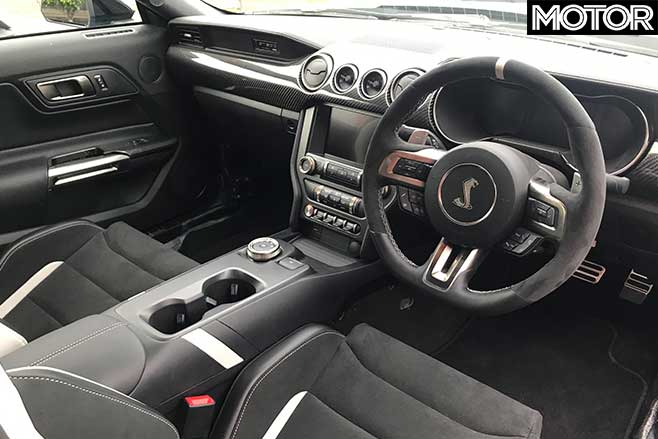
This is a Ford Shelby GT500 with a difference, that difference being the steering wheel is on the right-hand side. It’s the first Australian conversion by Mustang Motorsport who let us have a crawl over the 567kW/847Nm monster.
At first glance the ‘standard’ Shelby GT500 (i.e. lacking the Carbon Fibre Track Pack) looks like a standard Ford Mustang, but on closer inspection the level of modification quickly becomes obvious.
It’s 31mm wider than a standard Mustang GT, allowing the fitment of 305mm-wide front tyres and 315mm rears, necessary to harness the huge grunt of the 5.2-litre supercharged V8, which is linked to a seven-speed dual-clutch gearbox.
Converting a GT500 to right-hand drive – as with any modern car – is no small exercise, the engine having been extracted, a new firewall installed, the brakes and steering relocated, new parts made inside and out in order to mirror the standard left-hook GT500 as closely as possible.
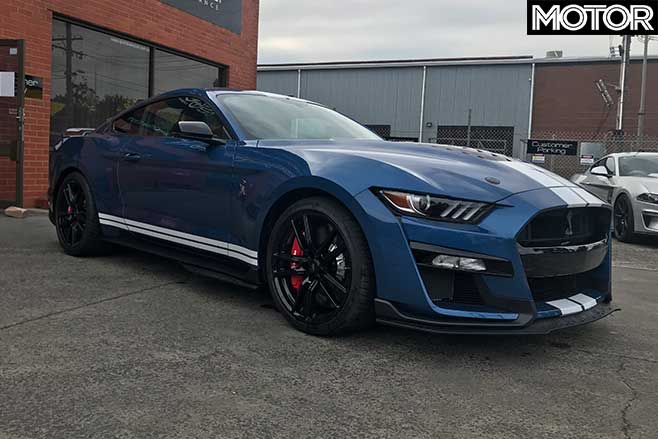
The process also isn’t cheap. Mustang Motorsport has set up a configurator on its website listing all the possible options and the associated costs. The base car is AUD$245,000-$255,000 depending on the exchange rate, which includes purchase, importing, compliance and conversion but not government taxes and on-road costs.
Options include a range of 10 colours, various stripe packages ($2100 for vinyl, $21,200 for painted), $6400 Technology Package while the big-ticket Carbon Fibre Track Pack, consisting of carbon fibre rims, Michelin Cup 2 tyres, rear seat delete, GT4 wing, adjustable strut top mounts, leather Recaro seats and front dive planes, adds $40,500.
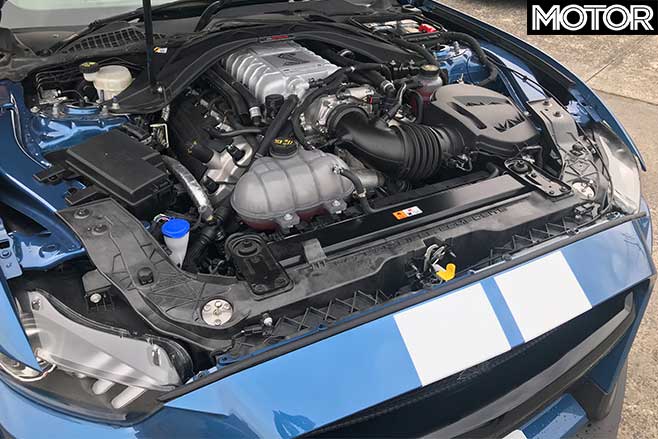
Fully-loaded, pricing pushes towards $350,000 on the road, which is mega money for a mega Mustang, but the performance – 0-100km/h in under four seconds, a mid-11sec quarter mile – is at least competitive with more exotic machinery like the Porsche 911 GT3 and Mercedes-AMG GT R.
Inventing new and increasingly narrow automotive niches within niches has been raised to a high art form, but in the case of Mercedes-Benz, the path back to a more rationalised model lineup has already started in the face of budget cuts.
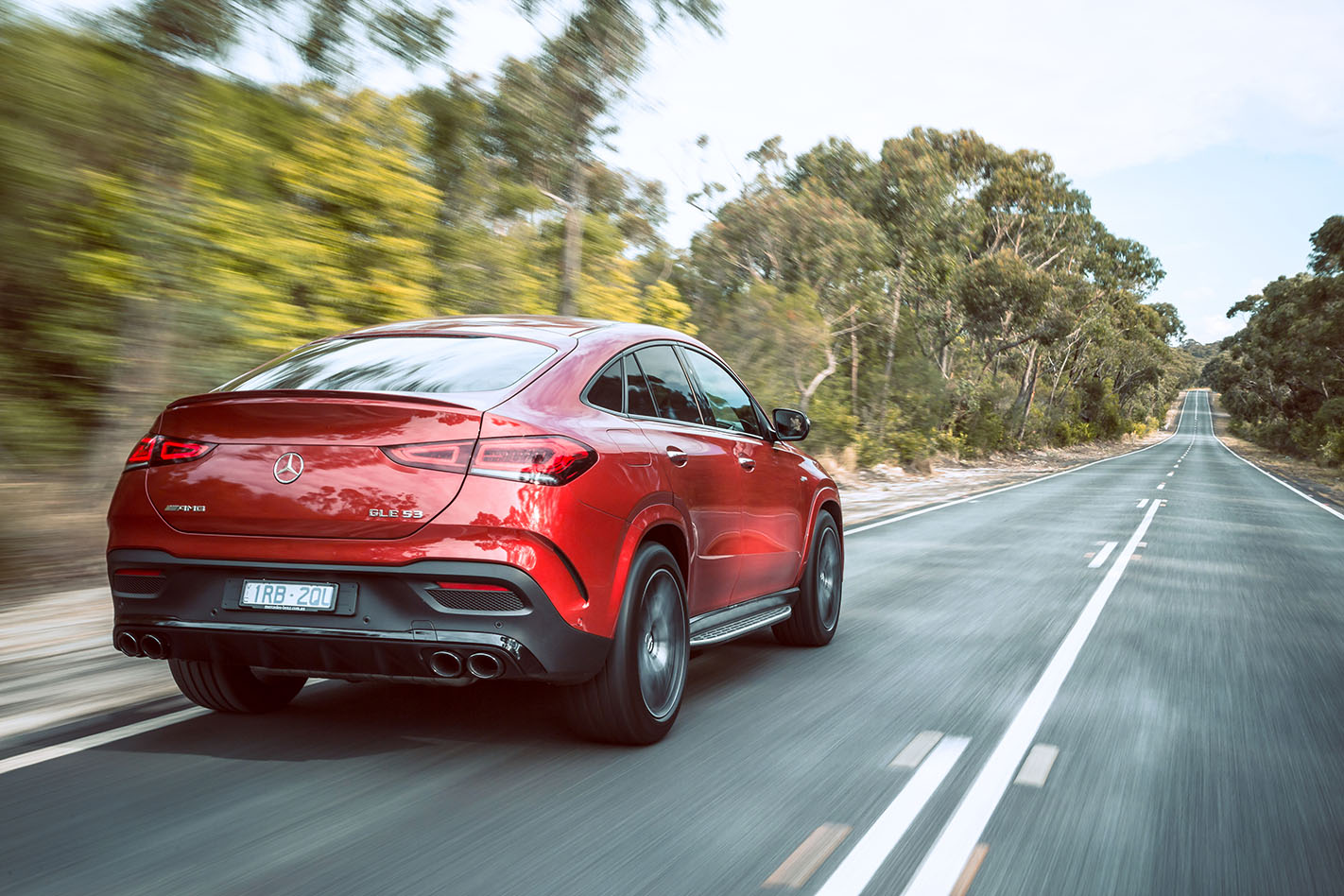
However, there is a bodystyle that has escaped the cull, and which has actually thrived as an outlier. The Merc GLE Coupe was always a definite for a second generation, thanks to its ability to attract a ‘particular type of buyer’. Merc’s words; not mine.
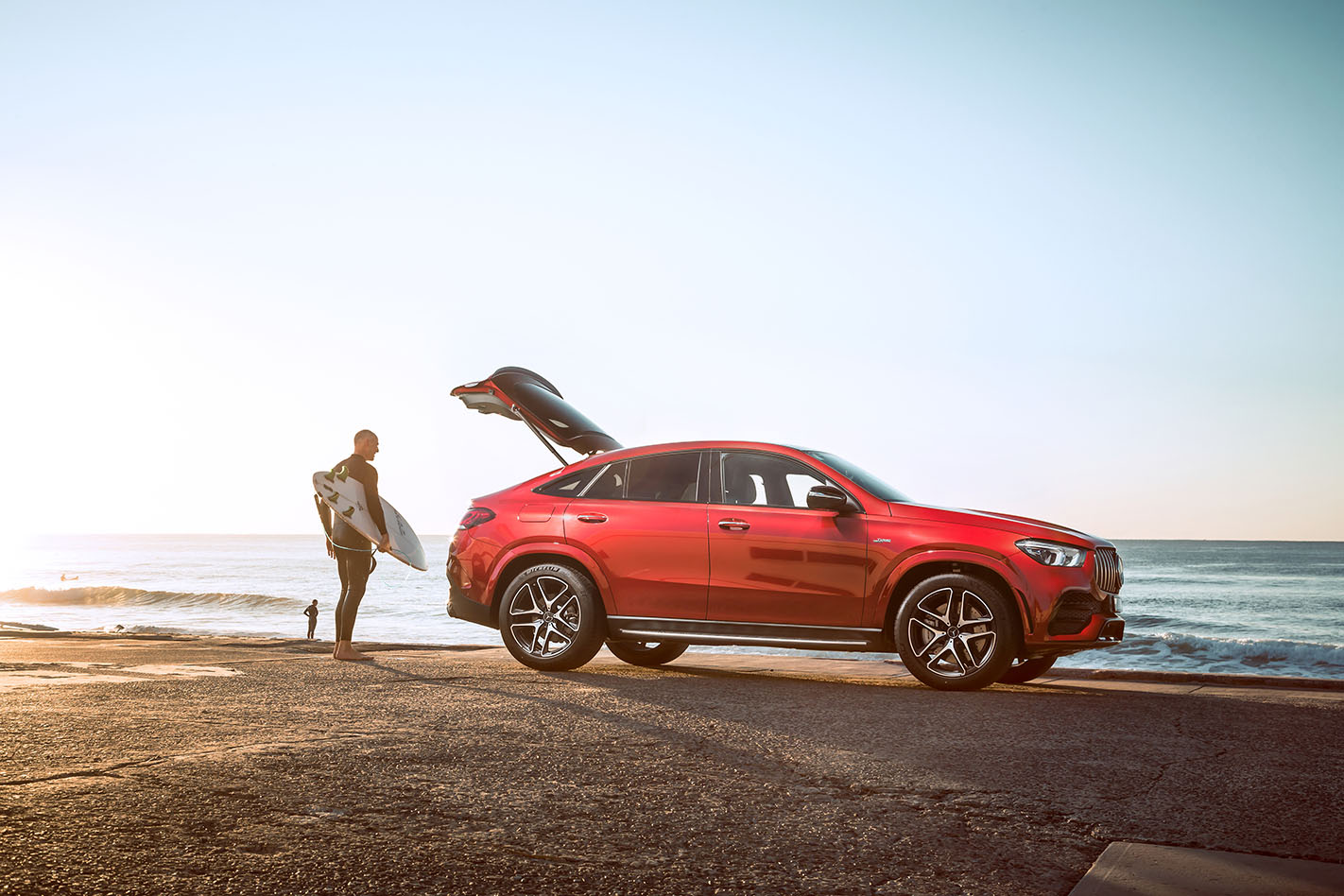
Based on the more affordable GLE SUV, the GLE Coupe is not merely a C-pillar-back restyling job. There’s a revised, more steeply raked windscreen that leads into a new roof skin, while the whole shooting match is slightly bigger than the previous generation GLE Coupe.
It is, however, smaller than the regular GLE in one key area – 60mm has been lopped from the wheelbase, though this doesn’t come at the expense of interior space. As an example, luggage capacity is up a claimed 70 litres over the old car, and the 40/20/40 split/fold seats add practicality.
There are no levers to drop the seat backs, sadly, but there is a powered tailgate and a button in the cargo area to drop the air suspension 50mm to help your Siberian sled dogs hop aboard with no fuss. There’s sufficient space (just) in the rear seats for 185cm adults, though the sunroof lining robs valuable millimetres.
Up front, the $171,800 Mercedes-AMG GLE 53 Coupe is a mix of enticing and frustrating, with a clever multimedia system that still appears to require three separate ways to access it. There is a lot of buttons to contend with, and familiarisation is not the work of a moment.
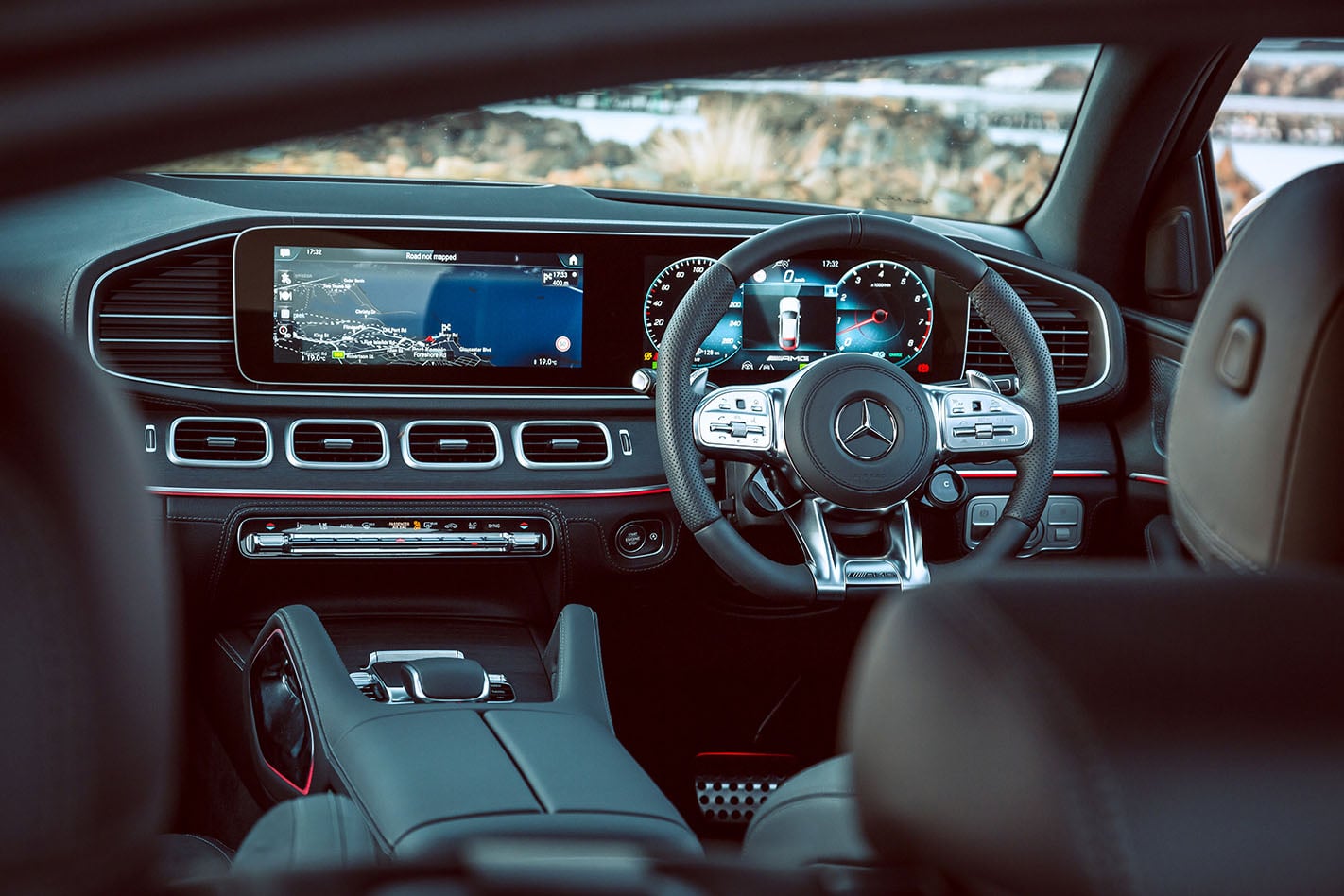
The exterior design is, despite the coupe execution, still quite subtle – well, apart from a three-pointed star the size of a deep-pan pizza dominating the nose.
The GLE 53 Coupe is the middle child of a three-variant range that will include a $137,000 base-model 450 with AMG trimmings and a potent $222,700 63 S version. Using Merc’s clever 3.0-litre turbocharged straight six with an electric compressor and 48-volt electrical system as a support act, the bulky 53 makes good use of the 320kW and 520Nm on offer (not to mention the 16kW/250Nm electric jolt). A sports exhaust adds theatre, while nine ratios send drive to all four corners with impressive alacrity.
Key to the 53’s skill set is the adoption of decoupling anti-roll bars, which work in simpatico with air springs and adaptive dampers to give the big coupe more poise than you’d expect. Its overall demeanour is more flowy than feisty, and it’s a dogged understeerer even at medium velocities, but there’s an abundance of mechanical grip, newfound poise and stability in what could unkindly be dismissed as the regular GLE’s smaller, flashier sibling.
Praise has to be heaped on the GLE 53 Coupe’s around-town skills, though; Merc’s assistance systems are a notch above anything else in the space, and its clever adaptive cruise control can ease to a stop in traffic more smoothly than most taxi drivers.
Vision forward is compromised a bit by the raked windscreen and a lot through the rear three-quarters. If you like the GLE Coupe, though, then you won’t need convincing of its merits, and luckily you’re not giving up much at all to make a style statement.
THE GOOD AND BAD
Plus: Surprising turn of pace; plenty of poise; comfort
Minus: Grille is in your face; plethora of cabin buttons; premium over regular GLE
MERCEDES-AMG GLE 53 4MATIC+ COUPE SPECS
Engine: 2999cc 6cyl, dohc, 24v, twin-turbo, 48v hybrid
Max power: 320kW @ 6100rpm
Max torque: 520Nm @ 1800-5800rpm
Transmission: 9-speed automatic
Weight: 2225kg (estimated)
0-100km/h: 5.3sec (claimed)
Economy: 9.3L/100km
Price: $177,800
On sale: Now
THE RIVAL: BMW X6 M50I ($159,900)
Playing a constant second fiddle to the GLE Coupe must really grate in Munich, given that the X6 essentially invented this whole SUV coupe genre.
Now in its third generation, the X6 has more space inside (particularly rear headroom), and for around $12K less than the Benz, BMW offers the M50i with power and torque outputs from its twin-turbo V8 that shade the GLE53.
We’ve waited a very long time for this. The first time Wheels got to try a prototype version of Mazda’s Skyactiv-X petrol compression ignition engine was in Summer 2017. It was clear that there was potential in the technology, Mazda promising the performance of a 2.0-litre MX-5, which gets to 100km/h in seven seconds, with the fuel economy of a 1.5-litre Mazda 2 diesel – a barely credible 2.8L/100km. It sounded almost too good to be true.
Last year, I got to drive the Skyactiv-X engine overseas again, in a pre-production version of the current Mazda 3. This time, the company seemed to have walked back the economy aspirations for the engine, merely claiming that it would offer a 15-17 percent improvement in efficiency over the existing Skyactiv-G 2.0-litre petrol powerplant.
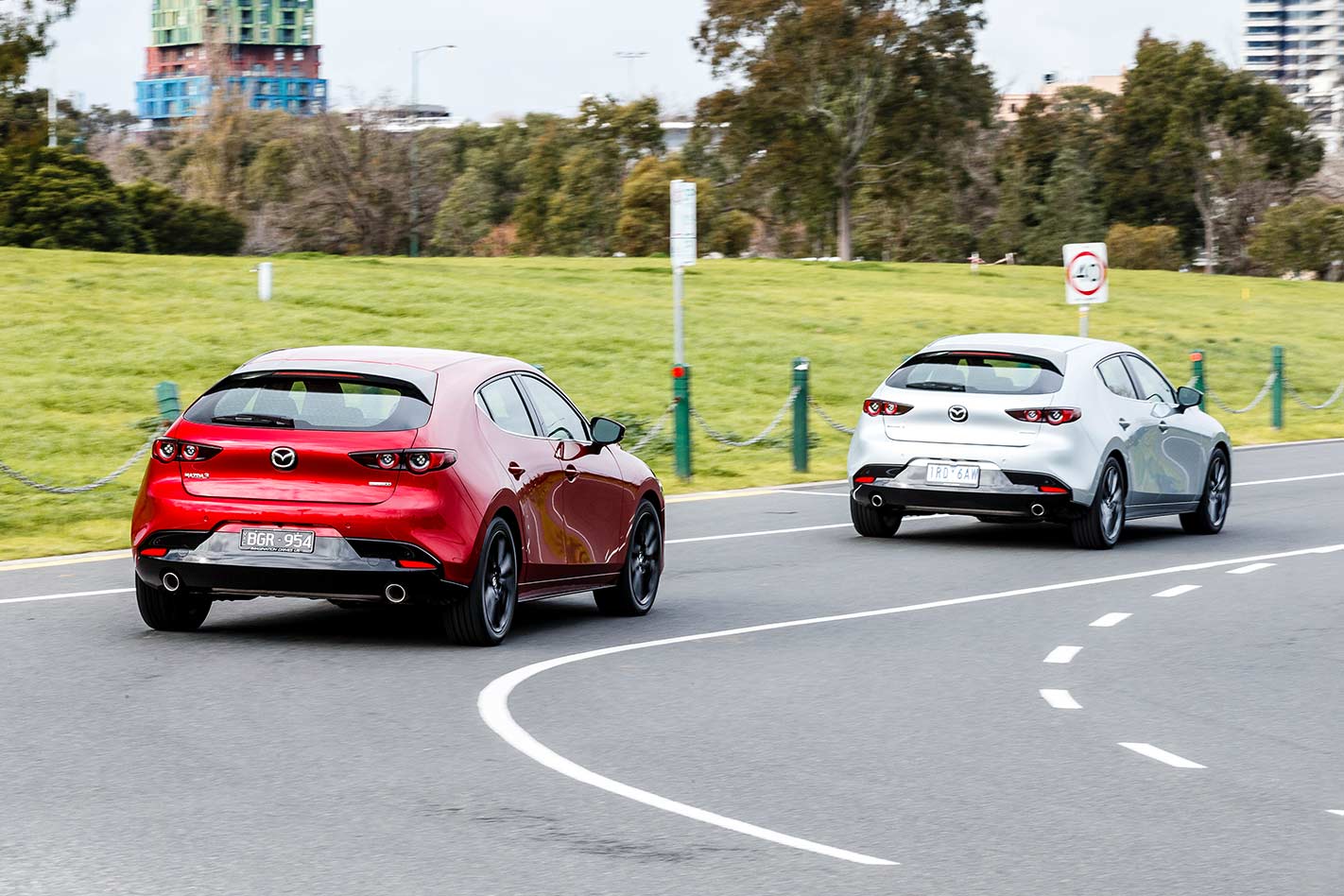
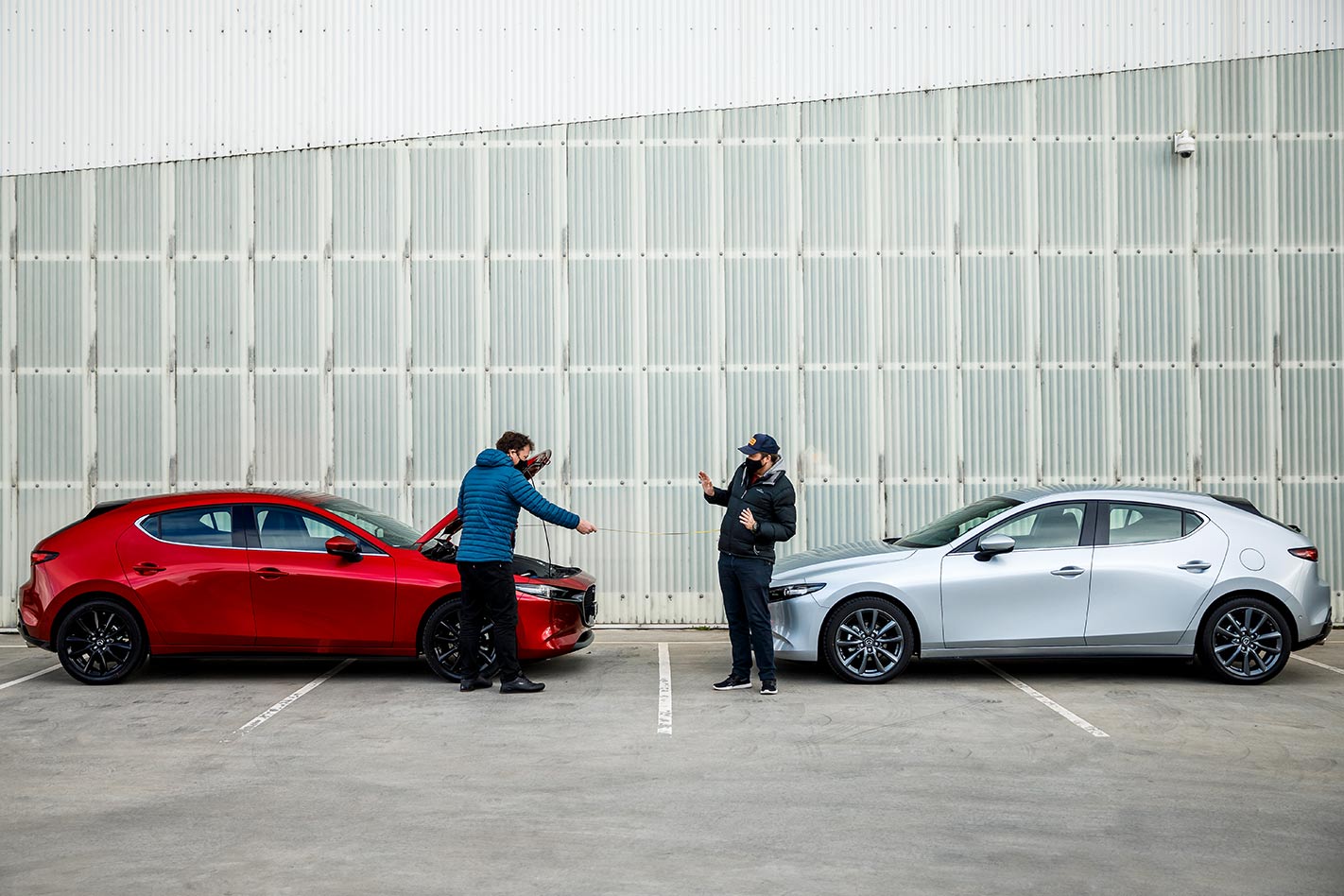
So what we have lined up for you is an objective way to see if Mazda has made good on the claims. Or the latest claims at least. We have a Skyactiv-X for the first time in Australia, and we also have a Skyactiv-G. The pair of them are then subjected to a fuel economy test in both urban and highway environments before we crunch the numbers at the end and see how the Skyactiv-X stacks up.
Before we get into that, what actually is Skyactiv-X tech and why is it important? Squashing an air/fuel mixture until it spontaneously combusts has, until now, been the preserve of diesel engines. In 2008, Mazda started a project to develop a true Homogenous Charge Compression Ignition (HCCI) powerplant but, like Daimler who had tried this before, was defeated by the technical challenges.
Mazda soon came to the conclusion that the HCCI process was impossible to control. In 2015, the company started using a spark plug to control combustion. If the intake air temperature is too high the combustion rate is too high and the engine is very noisy. If it’s too low, the combustion process is unstable. The intake temperature needed to be maintained within a three-degree Celsius window. Nobody knew how to do this so Hiroshima changed the concept.
Putting a spark plug into a ‘sparkless’ engine would appear to be admitting defeat, but the clever thing is that the spark here is used as a control mechanism. In order for this to work, a radical approach to fuelling was first required. The Skyactiv-X uses a Roots-type supercharger in order to force huge quantities of air into the combustion chamber. In most normal forced induction engines, you need to add a commensurately huge amount of fuel (at a stoichiometric ratio), but Mazda realised that in order for compression ignition to occur, the air/fuel mix had to be fantastically lean.
Your car mixes air and fuel in a stoichiometric 14.7:1 ratio. The Skyactiv-X engine, in its lean spark ignition mode, burns in a 29.4:1 ratio, hence the need for the supercharger to get huge quantities of air into the combustion chamber at lower engine speeds. Try to ignite fuel at that ratio and the flame inside the combustion chamber won’t propagate very far and you’d develop a feeble power output.
In such instances, the Skyactiv-X powerplant uses the small fireball from spark ignition as a sort of secondary piston, effectively raising pressure in the rest of the chamber such that compression ignition can kick off.
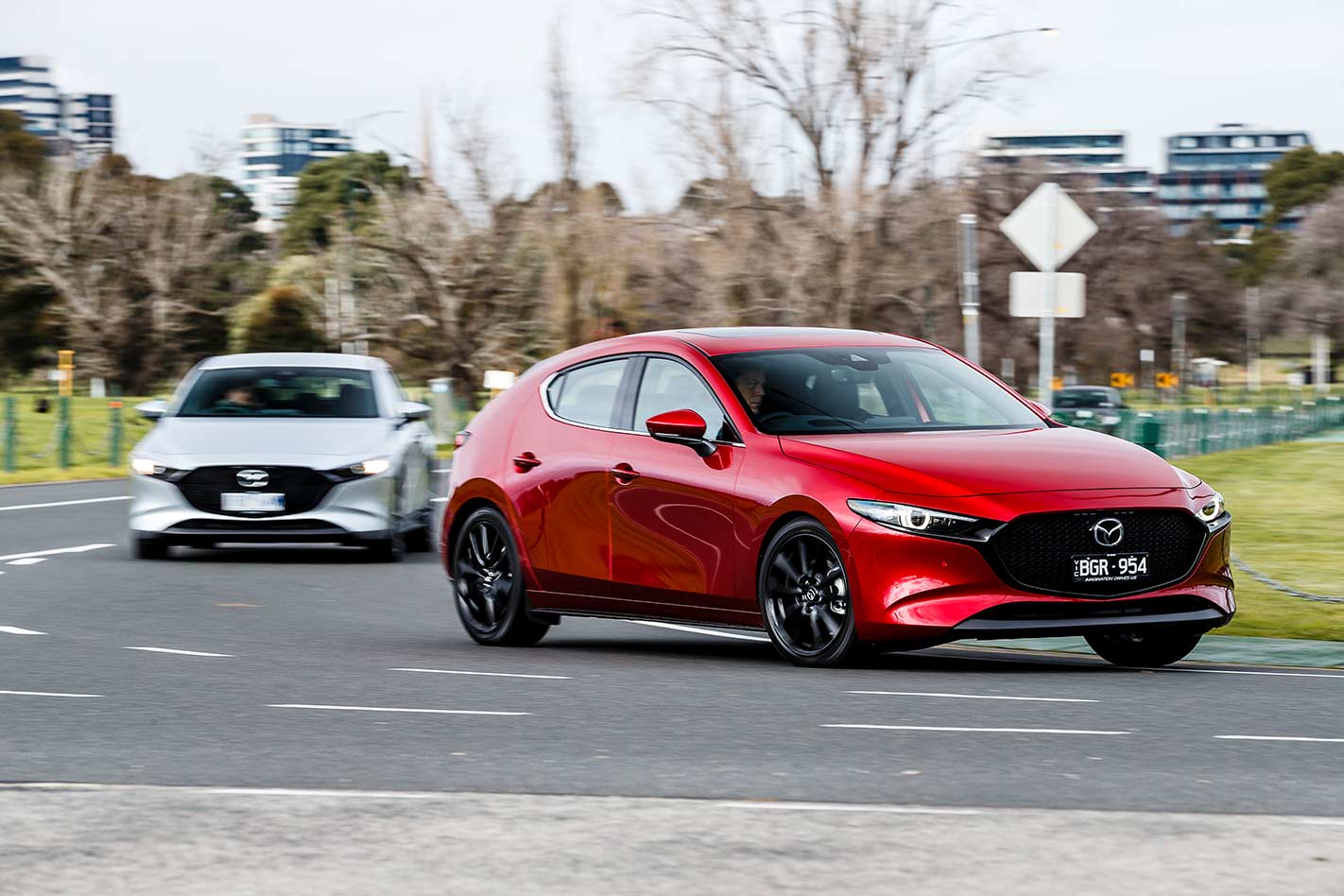
Spark Controlled Compression Ignition (SPCCI) hands over to normal stoichiometric operation during cold starts, initial warm-up phases and at very high load. Developing a stable switching point between the two combustion modes was one of the biggest technical challenges behind the Skyactiv-X engine.
The good news is that it works and it works beautifully. The hesitance and catarrh-like rattle of the prototype engine has been excised and you’ll only hear some strange acoustics if you really go looking for them by labouring the engine when manually selecting a high gear. In normal driving, you’d be hard pressed to notice much in the way of difference between this and the wholly conventional Skyactiv-G lump, which is exactly as it should be.
The engine note is purposeful and has no diesel-like clatter. The needle fairly rips through the rev range between 3000 and 5000rpm, making its peak power figure of 132kW at 6000rpm while the peak torque figure of 224Nm arrives at 3000rpm. In other words, this is anything but a dull lugger. The X likes a few revs on the board and you’ll certainly find yourself making use of the six-speed automatic’s manual mode to exploit its playful nature. It delivers more enthusiast appeal than the bland 2.5-litre 139kW four-pot that’s also offered in the current Mazda 3 range.
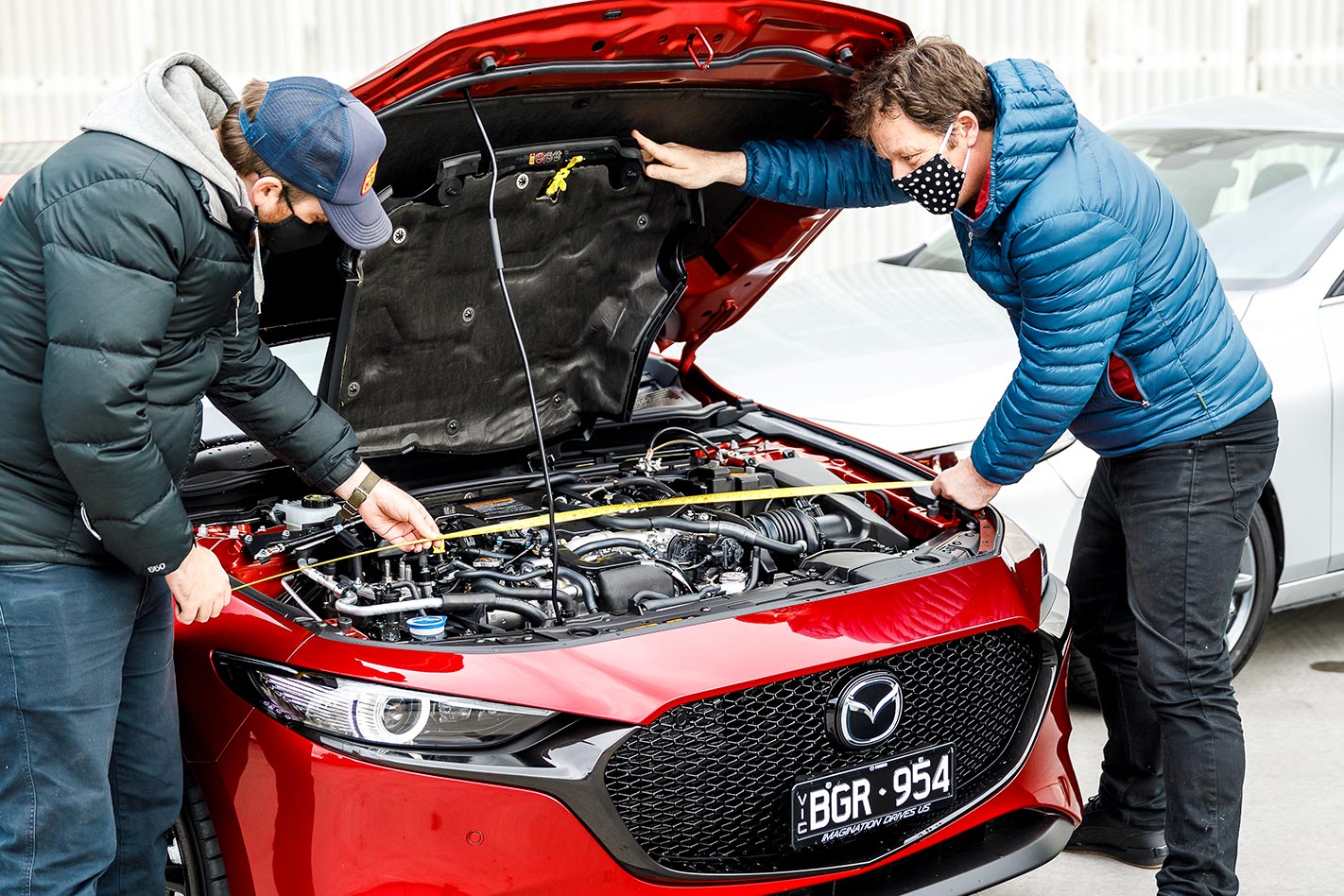
But what of the much-vaunted efficiency benefits? Our fuel test had two separate elements. The first was a 38.2km triangular urban leg through Melbourne, followed by a freeway and country road section of 172.9km. Together these would contribute to a 211.1km combined fuel figure. Elements such as tyre pressures, air conditioning settings, idle/stop actuation and fuel type were normalised across both vehicles.
The Skyactiv-X’s 24v integrated starter-generator means that its idle-stop system helps it eke out better economy in city driving, and while it was quicker and smoother to switch off and on, in some instances, the draw on the system from the air-con would keep the engine ticking over. We’d striven to make this test as real as possible, so we used air conditioning and no arcane hypermiling techniques.
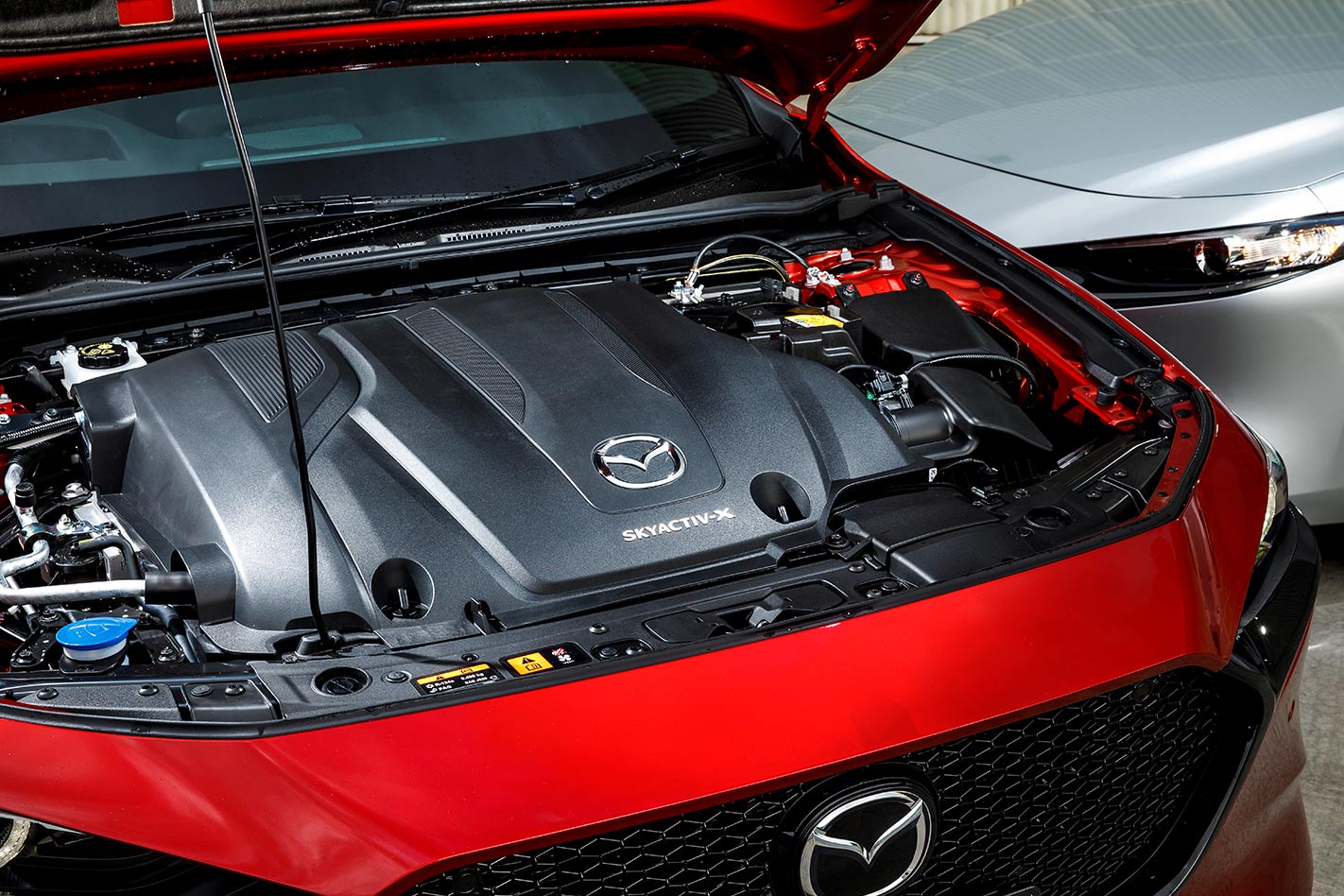
Mazda had claimed that Skyactiv-X would work better with lower-grade petrols, the pre-ignition that this creates in a typical combustion chamber actually being a desirable thing in a sparkless set-up, so we were surprised to open the car’s fuel filler to see an insistence on 95RON juice. That being the case, we fuelled both vehicles with 95RON for consistency, but do bear in mind that the Skyactiv-G unit can run on 91RON fuel which, on the day, was $1.30 a litre versus $1.38 for 95.
And the result? You could barely split the two vehicles. On the urban route, the Skyactiv-X returned 5.65L/100km, while the old-school G engine actually beat it at 5.26L/100km. Out on the open road, the tables were turned, with the Skyactiv-X managing 5.75L/100km against 5.87L/100km for the conventional unit. Crunch the numbers into an overall figure and over the 211.1km route, the Skyactiv-X used 12.1 litres of petrol. The Skyactiv-G drank 12.16L. In other words, the Skyactiv-X sipped 60ml less fuel, realising a fuel saving of 8.3 cents over the three-hour test drive.

Now that may initially seem underwhelming. What’s the point of all that high-tech if the Skyactiv-X unit can’t make any significant saving over Skyactiv-G? Well, consider this.
The compression ignition engine makes 15.8 percent more power. That efficiency gain is effectively coming for ‘free’, in engineering terms at least. Suddenly Mazda’s claim that the engine is between 15 and 17 percent more efficient than the Skyactiv-G is objectively borne out. You may well look at the comparative prices of these engines and wonder whether it’s all been worth it, but as a proof of concept, Skyactiv-X clearly works. Given that this is just Mazda’s first step with this tech, the company certainly has our attention.
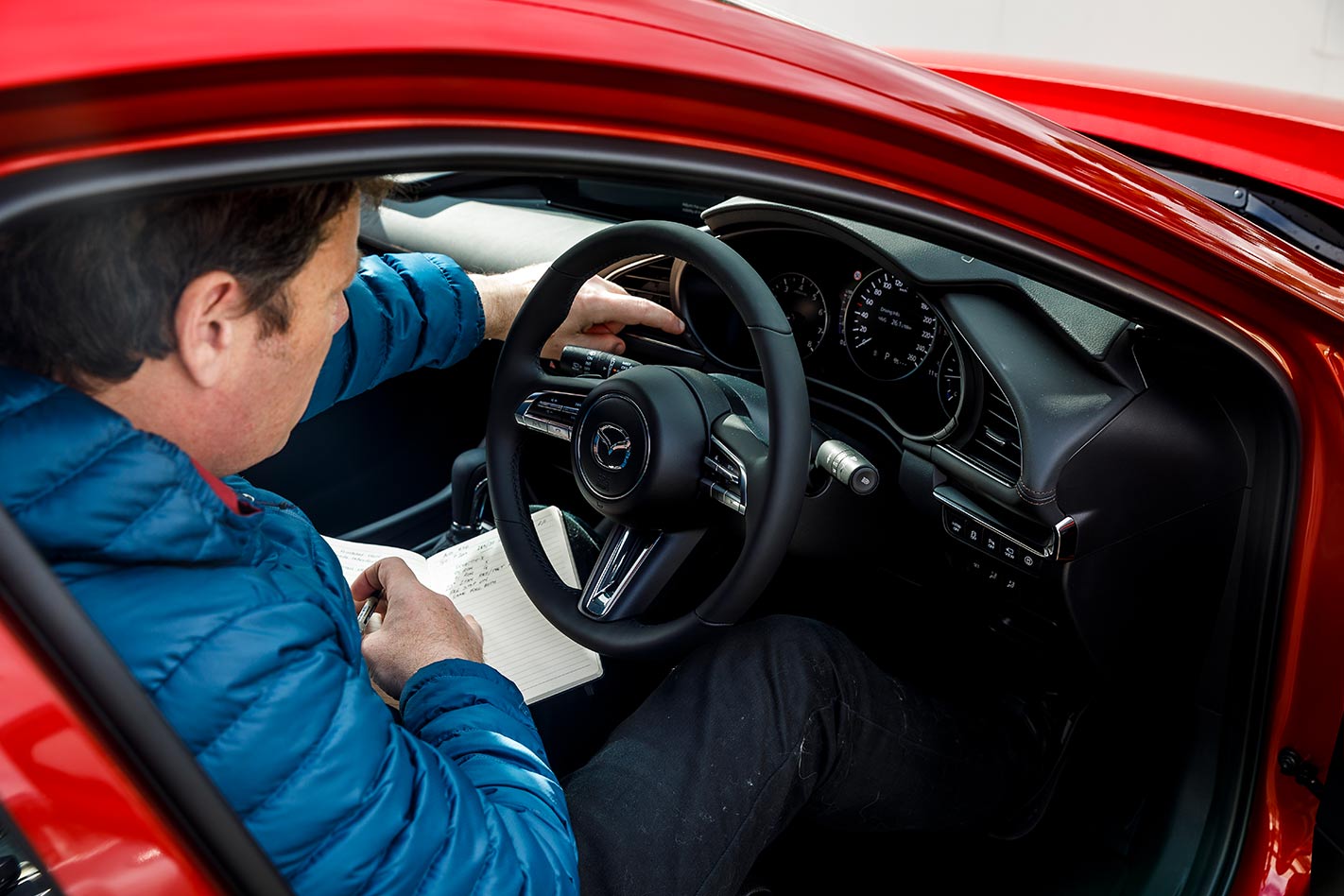
THE GOOD AND BAD OF THE 2020 MAZDA3 SKYACTIV-X
Plus: Verve; real world economy; ingenuity; interesting acoustics
Minus: Not the second coming we’d been promised
MAZDA 3 SKYACTIV-X ASTINA HATCH SPECS
Engine: 1998cc 4cyl, dohc, 16v, supercharged
Max power: 132kW @ 6000rpm
Max torque: 224Nm @ 3000rpm
Transmission: 6-speed automatic
Weight: 1416kg
0-100km/h: 8.2sec (claimed)
Price: $40,590
On sale: Now
What stands out?
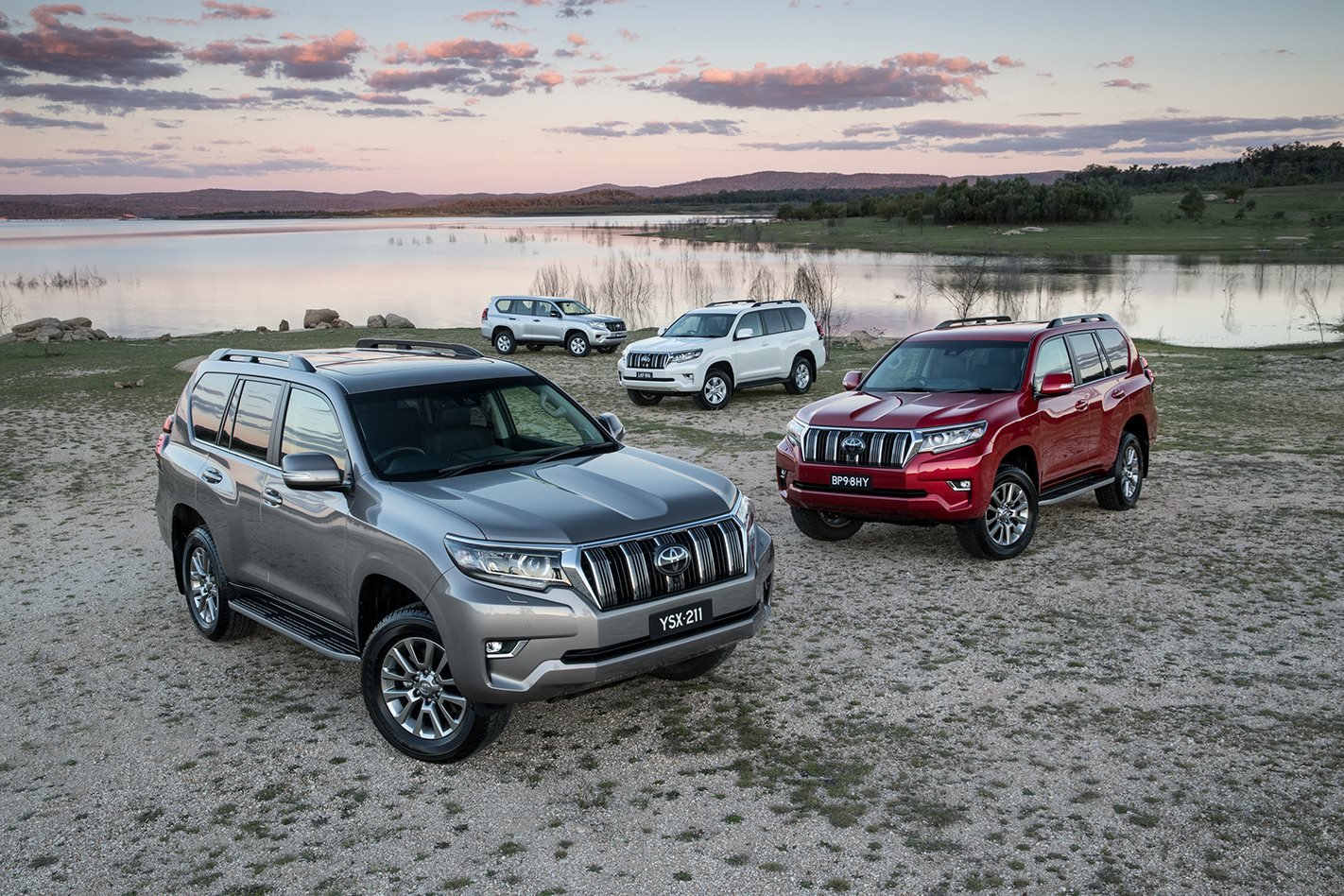
The big-selling Toyota LandCruiser Prado is a large SUV-type wagon with a seven-seat cabin, proven reliability, and peerless service back-up. For a big 4WD vehicle it is very comfortable as a day-to-day family car, but it is also built extra tough and is one of the best choices for long outback trips.
All Prado versions are equipped with a six-speed automatic gearbox and autonomous emergency braking
What might bug me?
Modest overtaking performance. The 2.8-litre turbo diesel engine, first introduced in September 2015, is not significantly quicker than its predecessor.
This engine received a power boost in October 2020 for the MY21 model, so we will be keen to see how much of an improvement there is once we get to test it.That some other big wagons can legally tow more. The Prado is rated to tow up to 1000kg less than the Jeep Grand Cherokee and Land Rover Discovery. (Which means you can’t match their ability to tow another big 4WD vehicle on a car trailer, for example.)
What body styles are there?
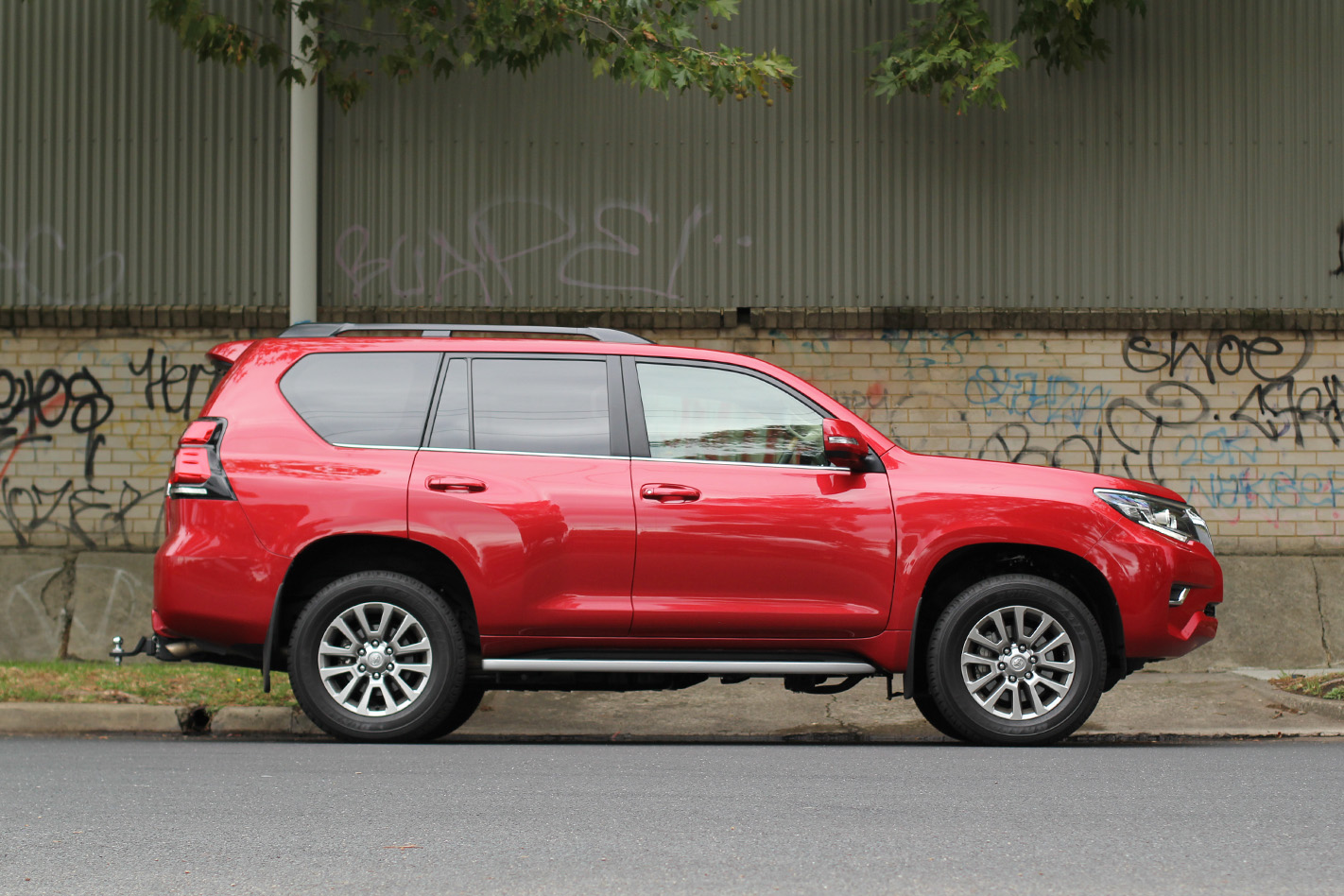
Five-door wagon only. All but one version has seven seats. The exception is the least costly, the GX, which offers a five-seat option.All Prados have dual-range, full-time four-wheel drive. The Prado is classified as a large SUV, lower priced.
What features do all Prados have?
- A 9.0-inch touchscreen, with Apple CarPlay/Android Auto smartphone pairing and MyToyota which adds third-party apps such as Waze, AccuWeather and Stitcher.
- A rear-view camera, satellite navigation, cruise control, air-conditioning, Bluetooth phone connectivity, tilt and reach steering wheel adjustment, audio and phone controls on the steering wheel, and a USB port.
- Toyota’s Pre Crash Safety System, which incorporates autonomous emergency braking with pedestrian and cyclist detection.
- A six-speed automatic gearbox – the six-speed manual versions were deleted from the range from October 2020 for the 2021 model year.
- On all models, the doors can be opened as long as you have the key in your pocket or bag. To start the engine, you push a button. Toyota calls this Smart Entry and Smart Start.
- Rain-sensing windscreen wipers.
- Aluminium alloy wheels and a full-size spare.
- Cooler box.
- Floor mats.
- Heated power-folding door mirrors.
- Cargo blind.
- Electronic stability control, which helps the driver control the vehicle in a skid. This is mandatory on all new cars.
- Electronic traction control, which helps prevent wheel spin in slippery conditions and is a great help off-road.
- Trailer sway control.
- Downhill and Hill-start assist control.
- Polished aluminium-alloy wheels, which are generally lighter and look fancier than steel wheels.
- Seven airbags. Anti-lock brakes, and electronic stability control – which helps you control the vehicle in a skid. (For the placement of airbags, and more on Prado safety features, please open the Safety section below.)
- All Prados come with a five-year, unlimited-kilometre warranty.
Which engine uses least fuel, and why wouldn’t I choose it?
The 2.8-litre turbo-diesel is now the only engine option, with the more powerful, but thirstier, V6 petrol deleted from the range in November 2017 due to a lack of customer demand.
It received a power boost in October 2020 for the 2021 model year. In the official test (printed on the windscreen sticker) the updated engine uses 7.9 litres/100km with the six-speed automatic gearbox. In real-world driving expect to use about 10 litres/100km.
It is designed for touring but is known for lacking a little power for everyday driving and doesn’t overtake strongly. We look forward to seeing how the power increase improves performance.The six-speed manual that available in the least costly GX, and GXL was dropped from the range from October 2020. With the manual gearbox, 2017-2020 Prados had an official combined fuel consumption of 7.9 litres/100km.(Power outputs and all other Toyota Prado specifications are available from the Cars Covered menu, under the main image on this page.)
What key features do I get if I spend more?
The entry-level Prado GX, comes with 17-inch alloy wheels, rubber floor mats, manual air-conditioning and a cool-box in the centre console that uses the air-conditioner to chill food.
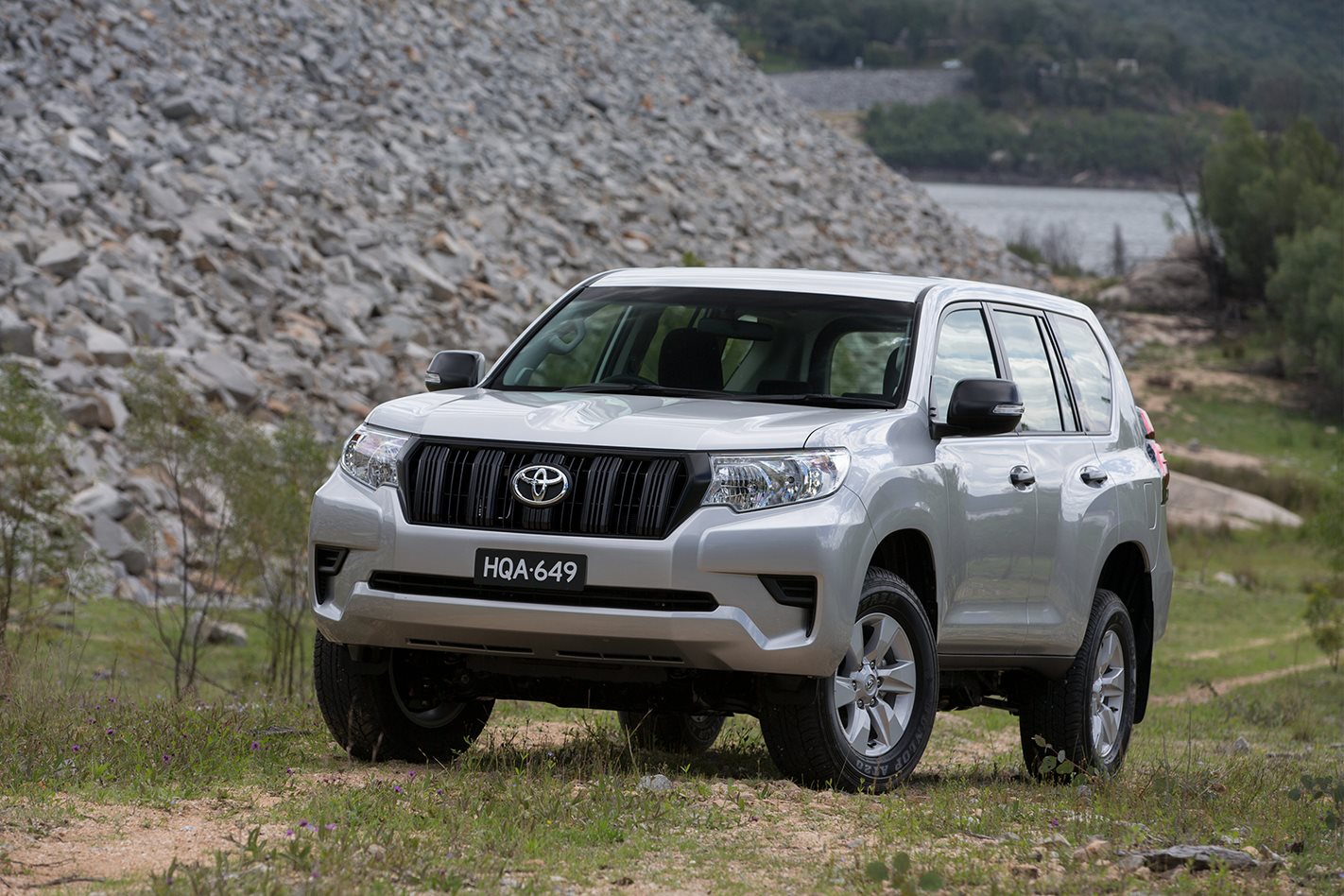
It also comes standard with five seats, but you pay about $2550 for a third row of seats, and extended curtain airbags for their occupants, as options.
Upgrading from the GX to Prado GXL also brings seven seats as standard along with:
- Side steps, which make it easier to get in and out of the car.
- Roof rails for mounting luggage systems.
- Long-lasting LED headlights, LED daytime running lights and LED front fog lamps
- Rear parking sensors.
- Three-zone climate control air-conditioning, which lets the driver, front passenger and rear-seat passengers separately set their desired cabin temperatures.
- A driver-switched lock for the rear differential, which can help you go further in difficult 4WD conditions.
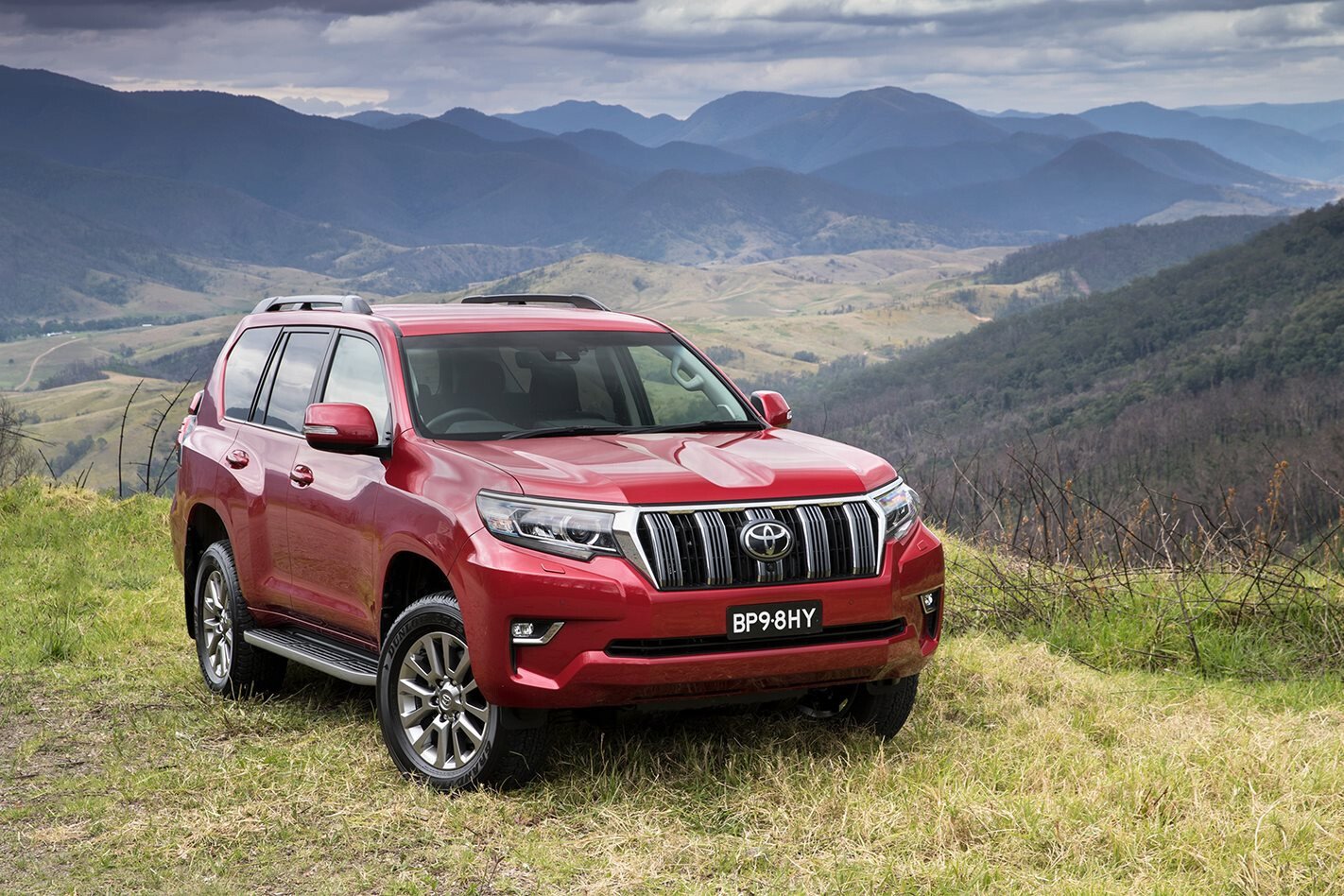
- Bigger 18-inch alloy wheels.
- Leather-trimmed seats.
- Heated and ventilated front seats with lumbar support.
- Third-row seats that retract with the flick of a switch.
- Refrigerated centre-console cool box.
- 14-speaker JBL premium sound system.
- Headlights that switch on automatically when it gets dark.
- Blind-spot warning and a rear cross-traffic alert.
- Front and rear parking sensors.
- Multi-terrain monitor that uses front, rear and two side cameras to allow the driver to check vehicle blind spots and confirm their surroundings. This includes a panoramic view that enables the driver to check for other vehicles at blind intersections.
The Kakadu also features Crawl Control, which automatically controls the accelerator and brakes through very rough terrain at a speed you select: all you have to do is steer.
Multi-Terrain Select allows you to tailor stability control and traction control for different off-road conditions. The Kakadu also has self-levelling and height-adjustable rear suspension, and the driver can change suspension settings for a softer ride, or sportier handling.
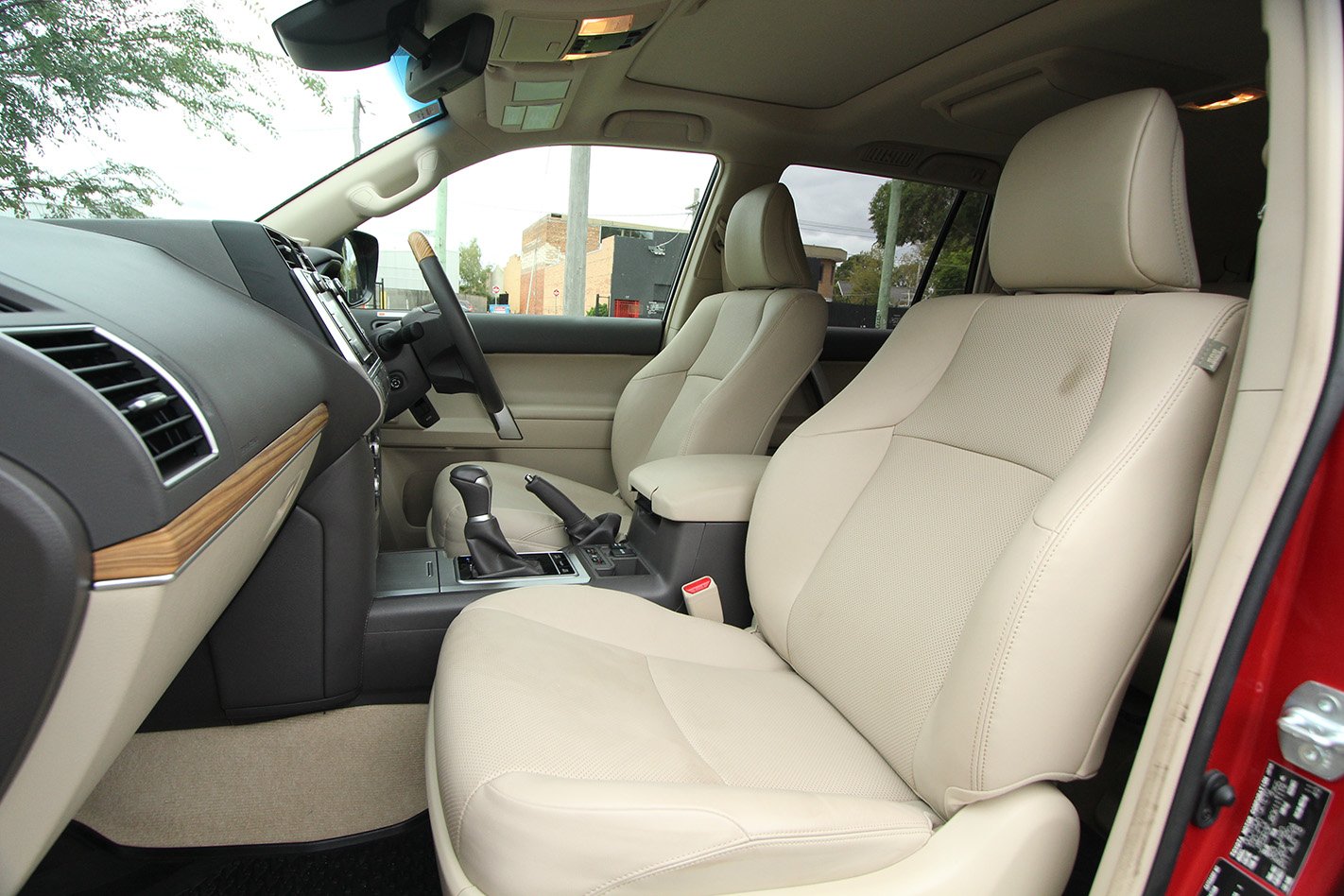
On the luxury side, the Kakadu has a sunroof and driver’s seat that remembers settings for two different drivers. And a rear-seat DVD entertainment system can help keep children occupied.
Does any upgrade have a down side?
Although many people will like the look of the VX and Kakadu’s 18-inch wheels and their accompanying lower-profile tyres, they don’t ride as comfortably as the standard 17s and are more damage prone and less effective off-road.Glacier White and Ebony (black) are the only two standard colours. All the rest are extra-cost options.
How comfortable is the Prado?
The Toyota Prado is roomy, well finished and very user-friendly. All the switches and knobs are large and easy to identify, while the major controls are light and easy to use. The only challenging aspect is the complexity and sheer number of switches on the top-spec Kakadu model.
Otherwise, this is a very easy car to operate and drive.
At the time it went on sale the 2021 Prado was at the time the latest Toyota to receive Apple CarPlay/Android Auto as part of its infotainment package. It also has the MyToyota which adds third-party apps such as Waze, AccuWeather and Stitcher via the 9.0-inch touchscreen.
Seats in the Prado are supportive and comfortable, and nice places to be for even the longest trip. Compliant, soft-riding suspension and low road-noise levels on all surfaces, even gravel roads, make this a car that can eat the kilometres without fatiguing the driver or passengers.
The 2.8-litre diesel engine is also very quiet and smooth by diesel standards, and hardly sounds or feels like a diesel engine at all.
What about safety in a Toyota Prado?
All 2021 Prados feature Toyota’s Pre Crash Safety System, which incorporates autonomous emergency braking. If it concludes that a collision with another vehicle, cyclist or pedestrian may be imminent, it triggers an audio-visual warning, pre-tensions the front seatbelts, and if necessary adds brake pressure. If you don’t press the brake pedal, the system will brake for you
The VX and Kakadu also warn you of vehicles lurking near your rear corners that might not appear in your mirrors. A rear cross-traffic alert warns you of approaching cars when you are backing out of a parking spot.
All Prados have anti-lock brakes, stability control, seven airbags, and a reversing camera.
There are two airbags directly in front of the driver and passenger; an airbag for the driver’s knees; chest-protecting side airbags immediately outside the driver and passenger; and curtain airbags extending down each side of the car that protect at head level.
Where third-row seats are fitted, the curtain airbags protect those rearmost passengers also.The Prado GXL, VX and Kakadu also have rear parking sensors. When reversing, these may alert you to the presence of hazards behind that you have not noticed in your mirrors or rear-view camera.The Australasian New Car Assessment Program (ANCAP) has awarded all Prados its maximum five stars for safety. The five-star rating was re-issued in August 2015.
I like driving – will I enjoy this car?
The Prado is not for drivers who like a car with responsive steering and nimble handling. It’s too high-riding and heavy for that, and the soft, long-travel suspension only adds to the body roll – which passengers won’t like, even if the driver doesn’t mind.The Kakadu’s KDSS suspension is much better in this regard as the body roll is reduced.
The Prado is not for people who like lots of acceleration. The 6th ratio added to the automatic gearbox doesn’t help, as it’s merely an additional and taller overdrive.What everyone will enjoy about the Prado is its comfort and quietness on even the worst roads.
How is life in the rear seats?
The Prado is a big car and that is reflected in a spacious rear seat that can adjust fore and aft, for either more legroom or more luggage space. However, it’s still tight across the shoulders for three adults.
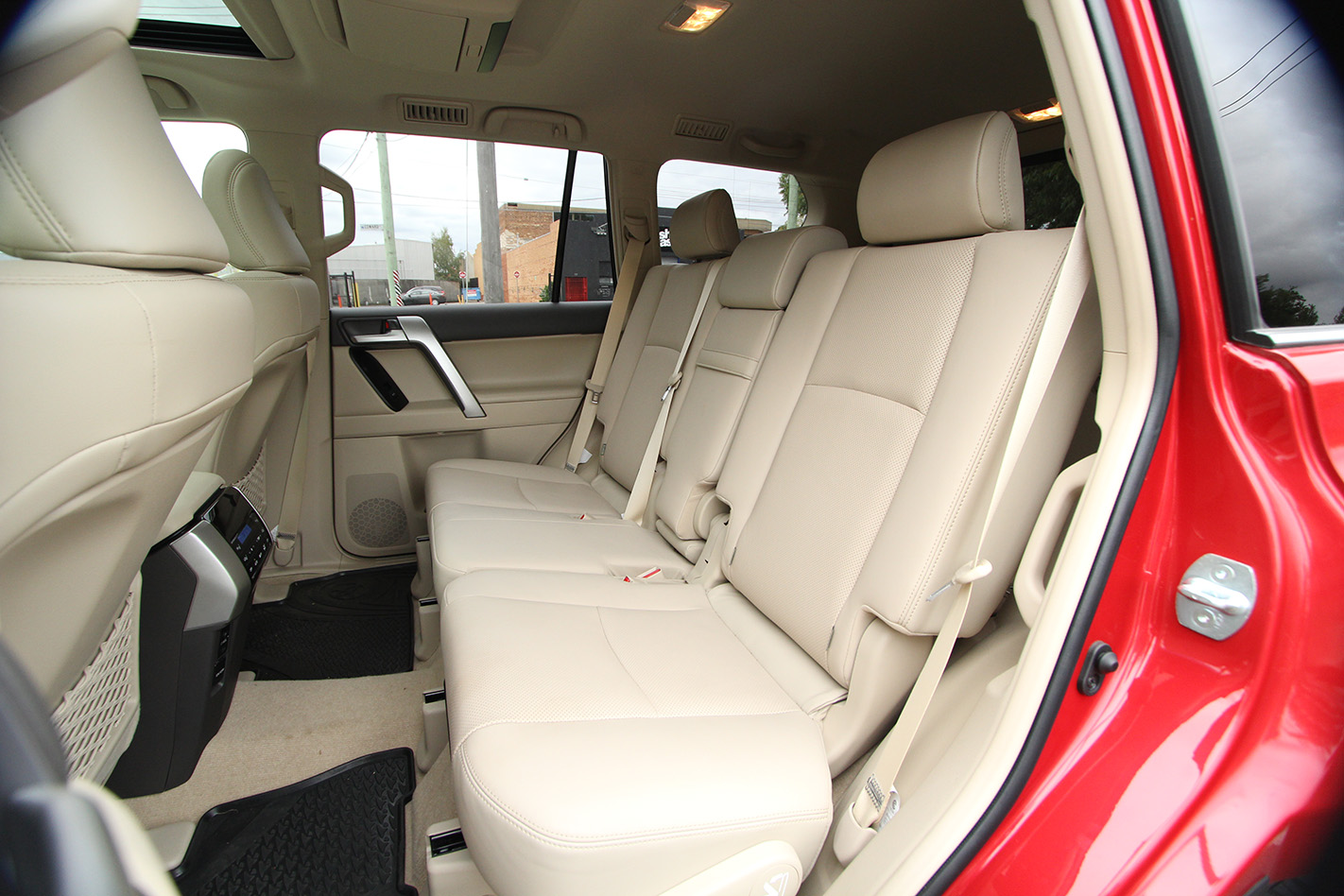
Given the Prado’s height and big doors, getting in and out of the rear seat is a breeze.
Likewise, access to the third-row seats is good. As is often the case, the third-row seats are suitable only for children or smaller adults.
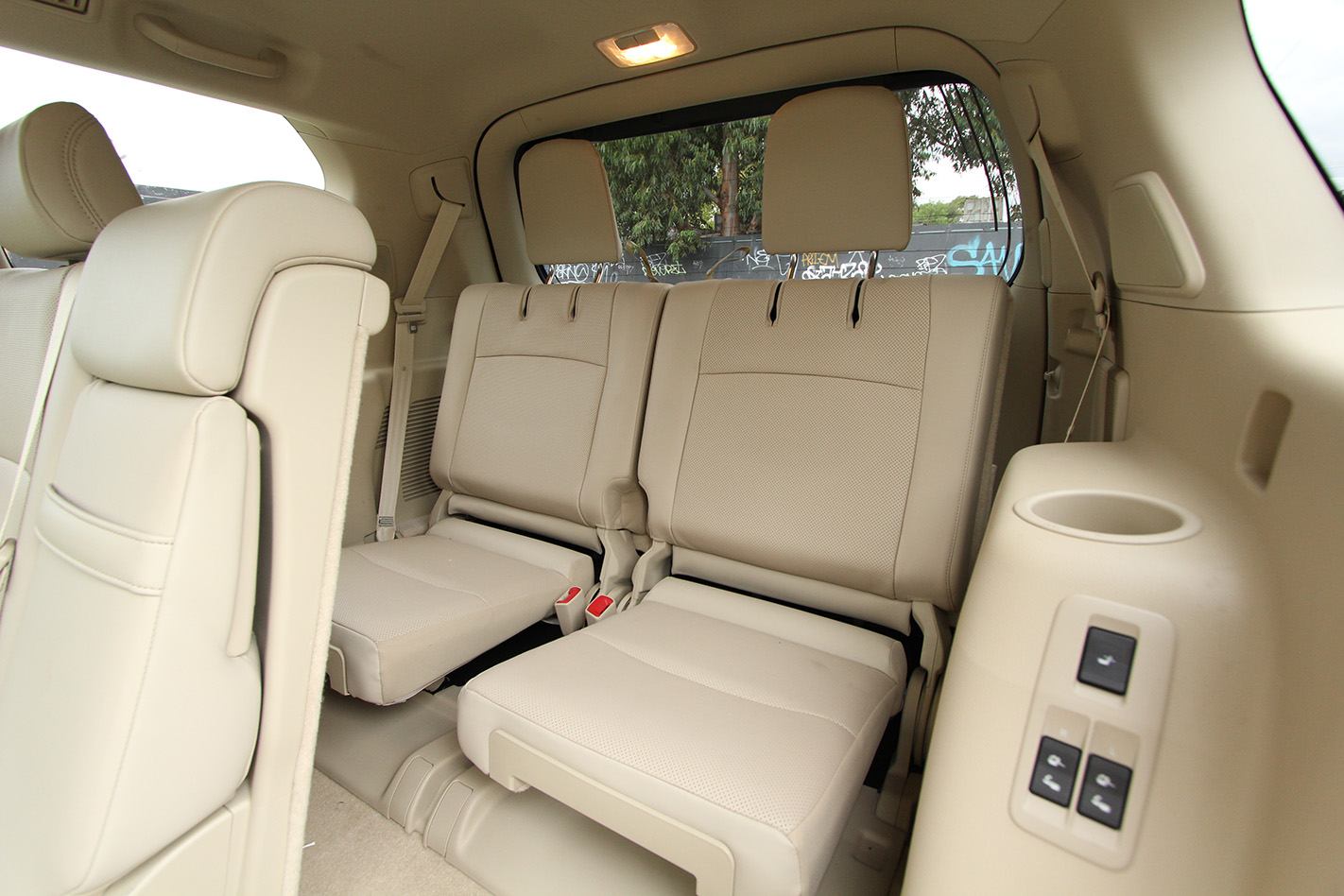
All models have air-conditioning vents for rear-seat passengers.
How is it for carrying stuff?
The Prado has a big luggage area, but third-row seats that fold down into the floor do eat into the overall cargo volume.
With five seats use the boot space holds 620 litres of stuff, but with the third row in play that’s reduced to 120 litres. Folding down the third and second rows increases capacity to a very handy 1833 litres.
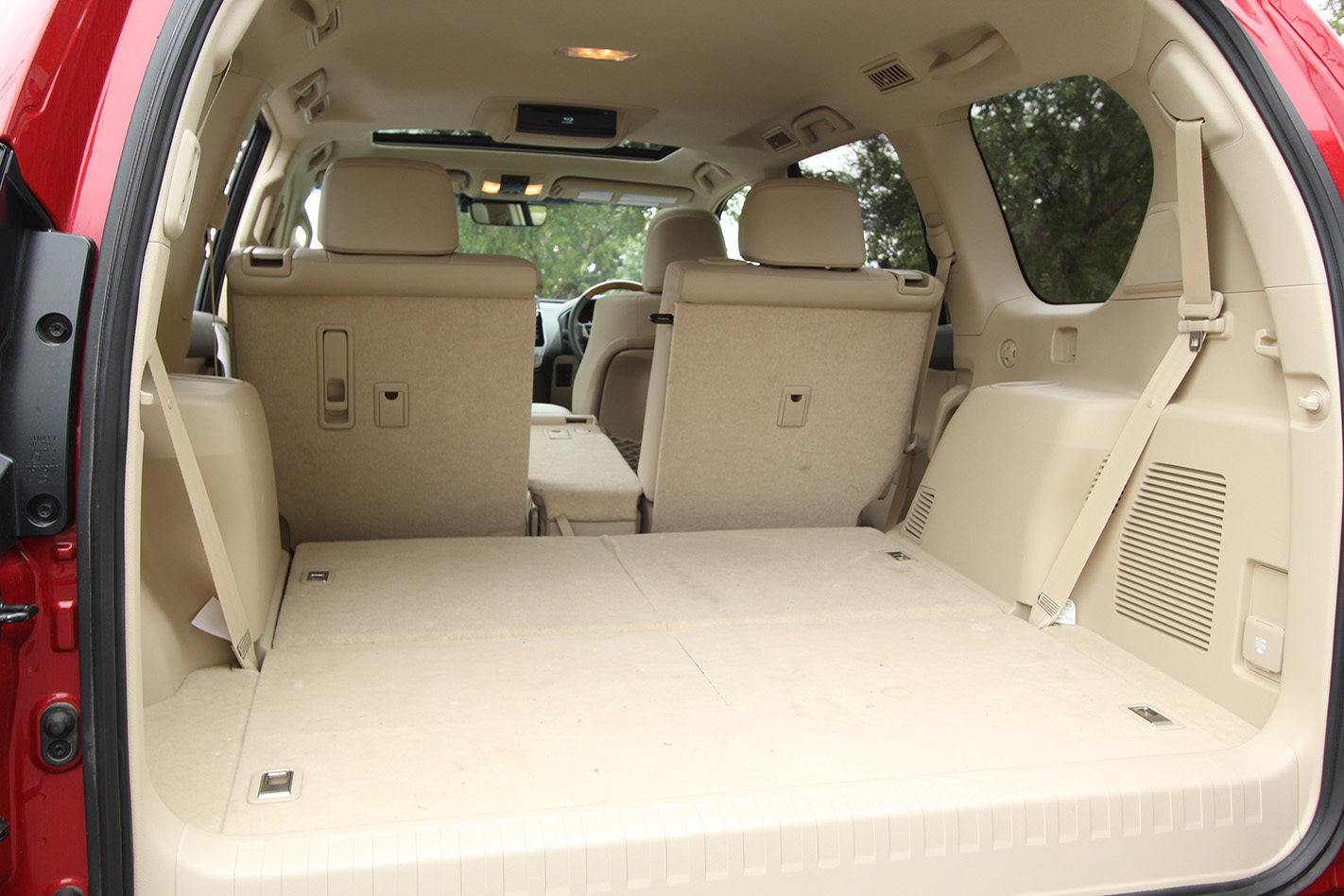
The single rear door opens sideways and can be heavy to handle when the vehicle is on a slope.The GXL, VX and Kakadu versions with the optional under-body mounted spare tyre model is more convenient here, as the rear door is lighter and the rear-glass opens separately.The Prado’s towing capacity of 3000kg (braked trailer) is sufficient for most long-distance towing needs.
Where does Toyota make the Prado?
All Prado models sold in Australia are made in Japan.
What might I miss that similar cars have?
More power from a diesel engine, for swifter overtaking and easier towing. Toyota’s own LandCruiser 200 offers a much bigger V8 turbo-diesel, for example. The Land Rover Discovery and Jeep Grand Cherokee offer diesel engines with more power than the Prado’s, and eight-speed auto gearboxes.The Discovery and Grand Cherokee also offer sportier on-road handling. (The Grand Cherokee is not as comfortable off road, however.)
Among other vehicles you might consider are the seven-seat 4WD wagons developed from utes, among them the Ford Everest, Toyota Fortuner, and Mitsubishi Pajero Sport.Alternatively, if you want seven seats and all-wheel drive but do not intend to stray far beyond good gravel roads, you might consider more car-like alternatives such as the Toyota Kluger, Mazda CX-9, Nissan Pathfinder, Hyundai Santa Fe, and Kia Sorento.
RESEARCH: WhichCar SUV Buyers Guide
I like this car, but I can’t choose which version. Can you help?
Unless you must have a manual, go for the automatic for the active safety and increased towing capacity.
The GXL spec has everything most people want, and even if you don’t need the third-row seats they will help with resale value. And you can get a leather interior for $3500 without having to upgrade to the VX, which has some good extras, but with a big price hike.The GXL is the most popular variant by a good margin, and for good reason.
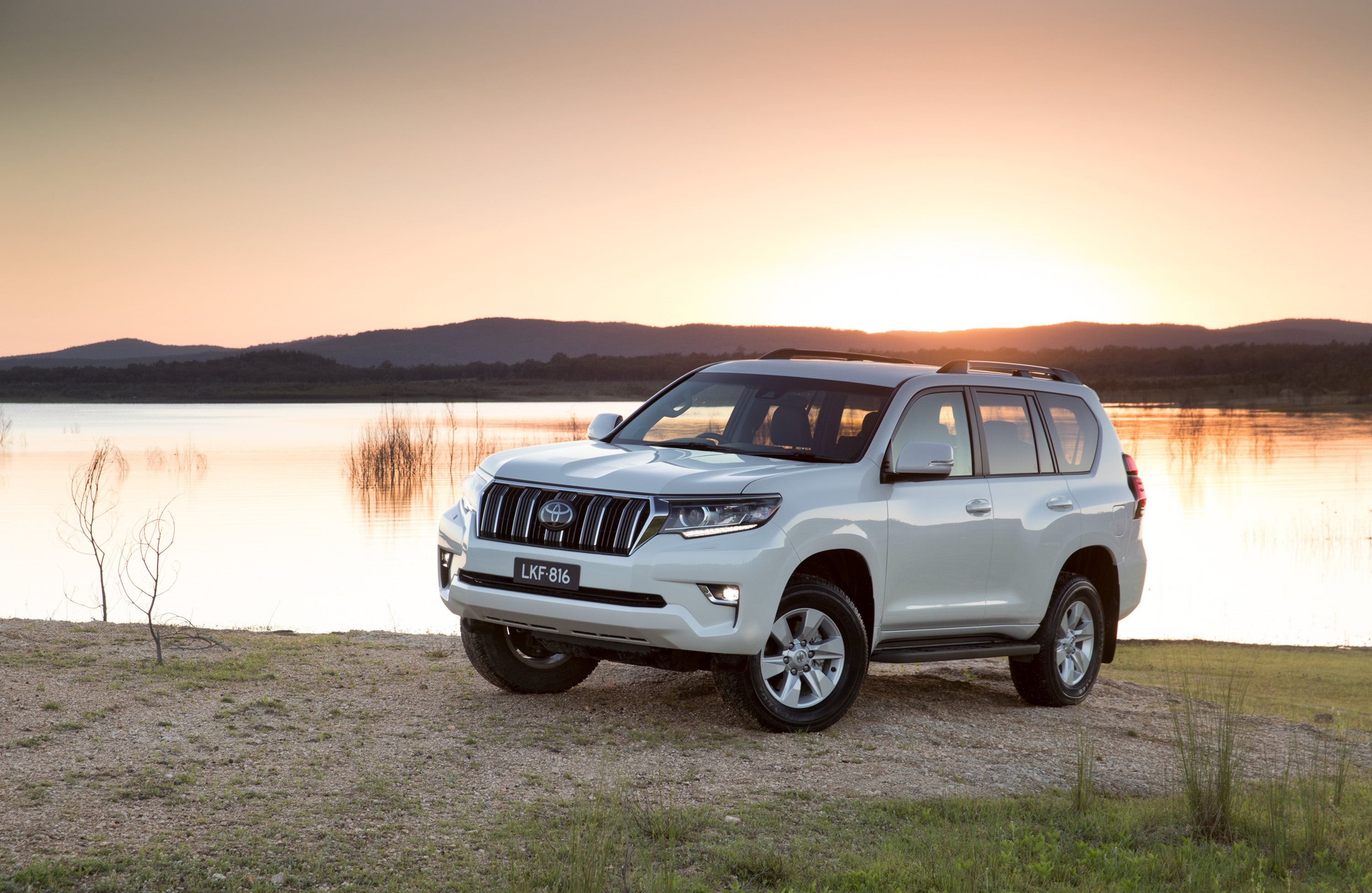
Are there plans to update the Prado soon?
The 150 Series Toyota Prado was released in late 2009 and updated in November 2013 with new exterior styling, a new dash and some additional features.In September 2015 it gained an all-new, 2.8-litre diesel engine and an automatic gearbox with six ratios, replacing the previous 3.0-litre diesel and five-speed automatic.
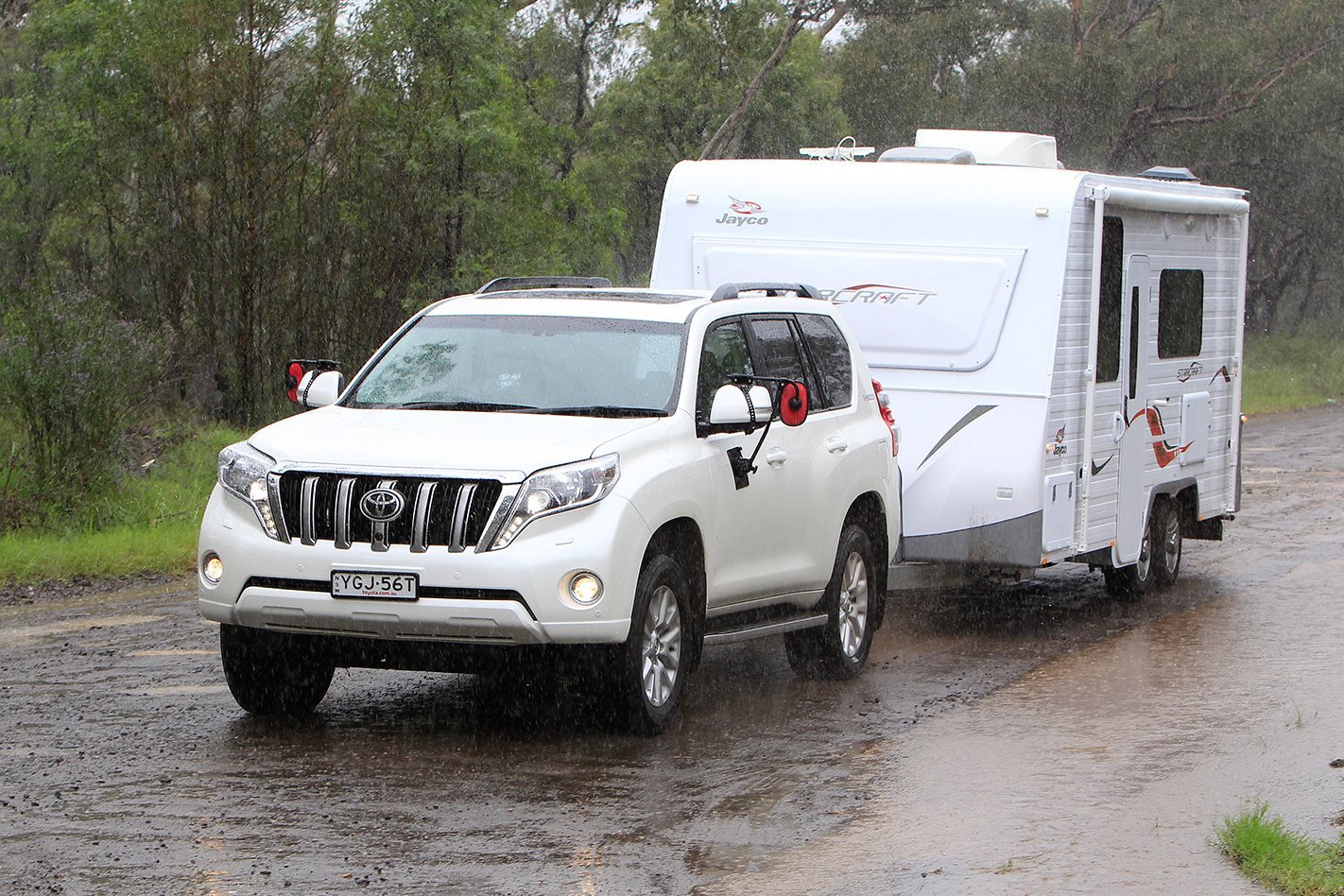
About that time Toyota dropped the special-edition Prado Altitude variant, on which the spare tyre was relocated under the car. The Altitude returned, with the new engine, in April 2017.
The Prado received a long-overdue facelift in November 2017 for the 2018 model year, which brought a reshaped bonnet and headlights, and a redesigned dashboard and instruments. The V6 petrol versions were axed and the GX and GXL automatics gained the Pre Crash Safety System, which was previously only available in the VX and Kakadu.In August 2018 Toyota added a no-cost option of having the spare wheel and tyre stowed underneath the Prado GXL, VX and Sahara variants rather than on the tailgate, which proved popular with the limited edition Altitude versions.
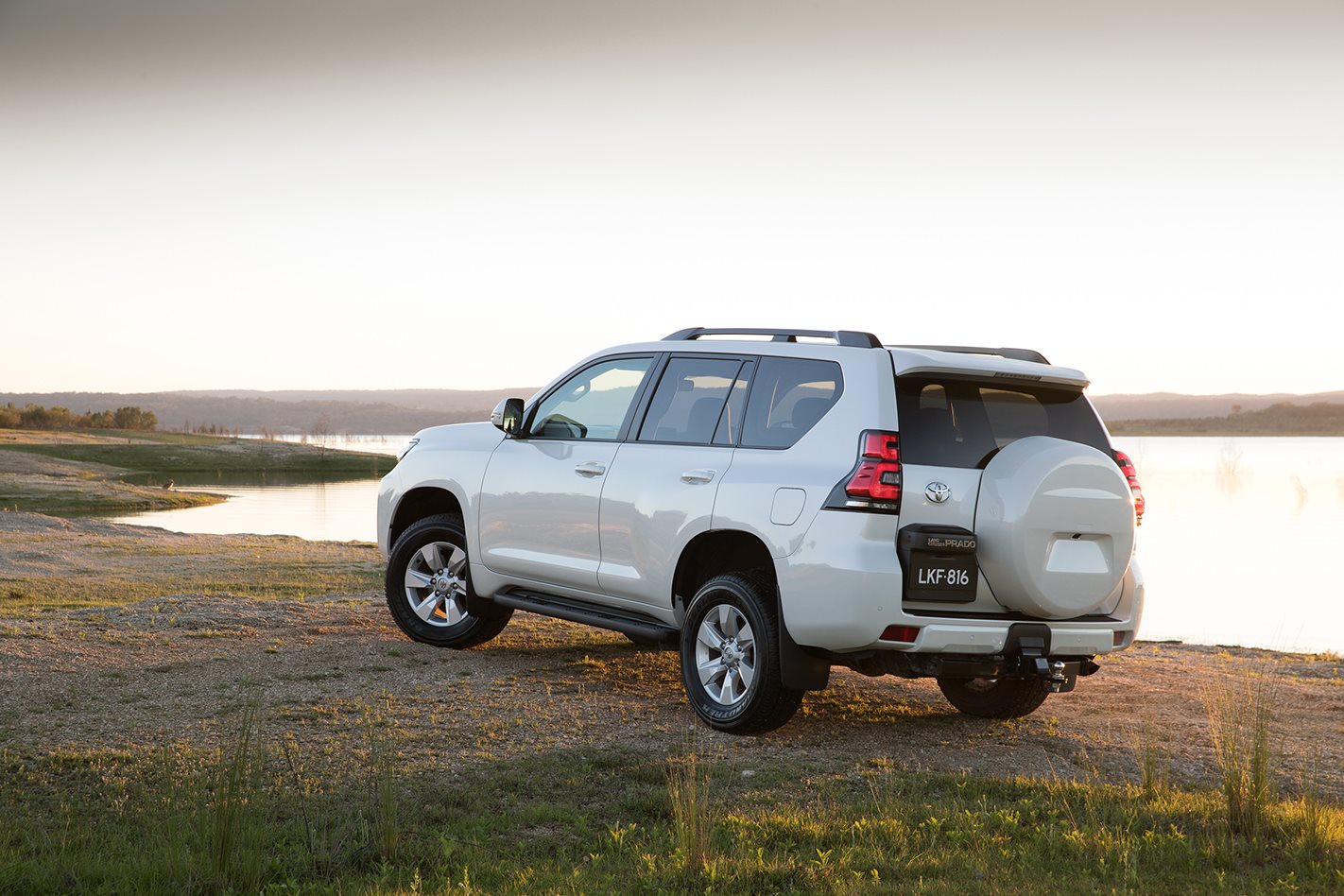
In March 2020 it introduced a Prado Kakadu Horizon special edition featuring a number of exterior styling enhancements including a front bumper spoiler, chrome side moulding, illuminated front scuff plates and clear rear combination lights.
In October 2020 Toyota dropped the manual versions from the range and added 9.0-inch infotainment screen with Apple-CarPlay and Android Auto. It also increased power to the 2.8-litre turbodiesel engine and added pedestrian and cyclist detection to the AEB system.
It is unclear when the Prado will be next updated or replaced.
