
The October 2020 issue of MOTOR Magazine is on-sale now and below you’ll find a quick preview of what you’ll find between its covers!
You can find MOTOR at retailers around Australia. Or you can subscribe and save yourself some cash, there’s even a (cheaper!) digital subscription option.
Subscribers often receive their mags earlier, so you’ll get to see what MOTOR has to offer before anyone else.
Follow us on Facebook, Twitter, and Instagram to interact with us, give us feedback, and get a peek behind the scenes.
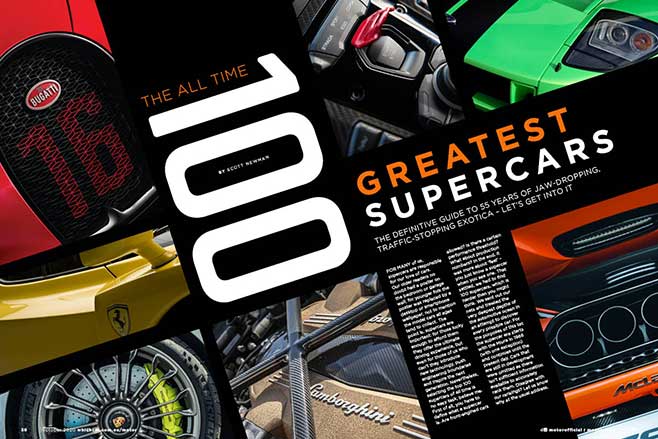
As you’ll probably have noticed from the cover, our lead story this month is a countdown of the 100 greatest supercars, a comprehensive examination of the world’s most exotic metal.
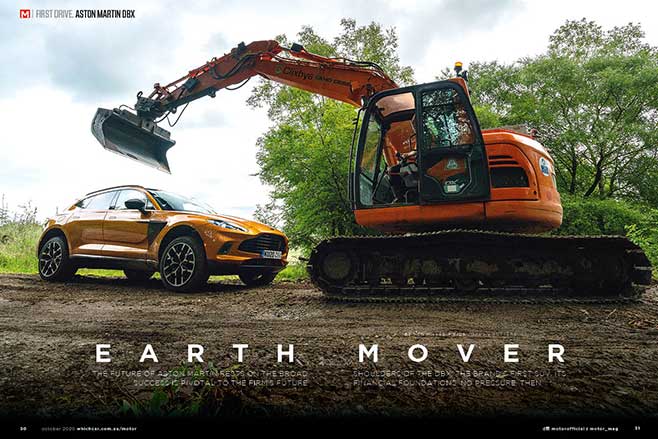
A first drive of the new Aston Martin DBX SUV, the most important car in the company’s history.
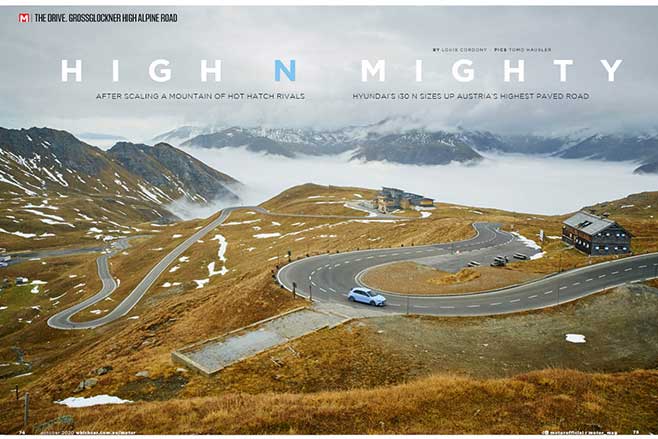
The Grossglockner Pass is one the world’s most epic roads with stunning scenery and curves galore and we tackle it in a Hyundai i30N.
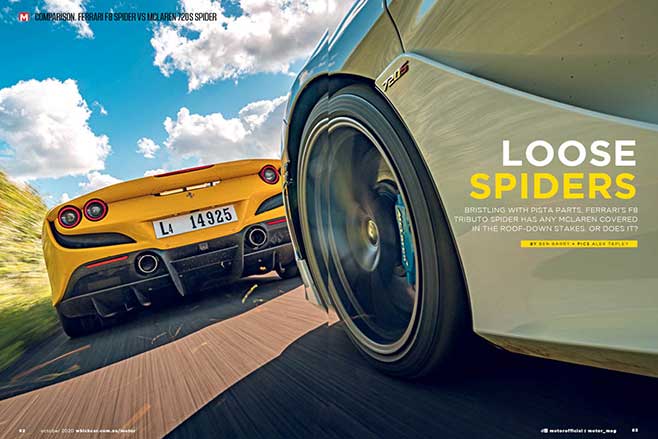
Arachnophobes look away, it’s a couple of Spiders, the Ferrari F8 Tributo taking on the McLaren 720S in a 1060kW battle.
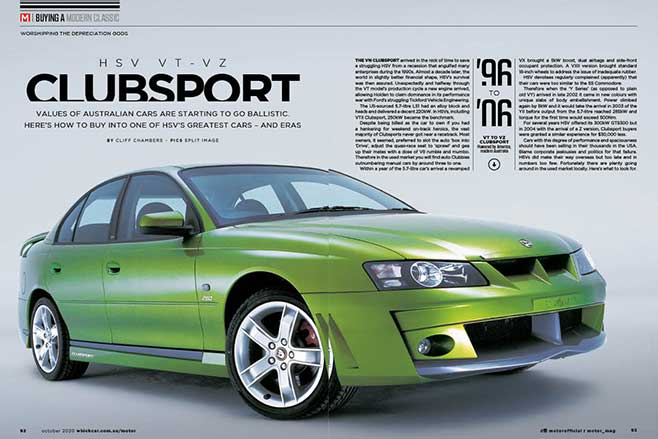
Want to buy an HSV Clubsport between VT and VZ? This is everything you need to know.
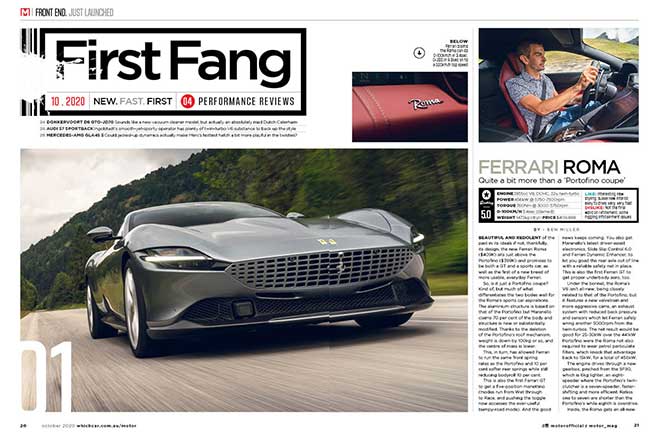
First drives of the Ferrari Roma, Donkevoort D8 GTO, Audi S7 Sportback and Mercedes-AMG GLA45 S.
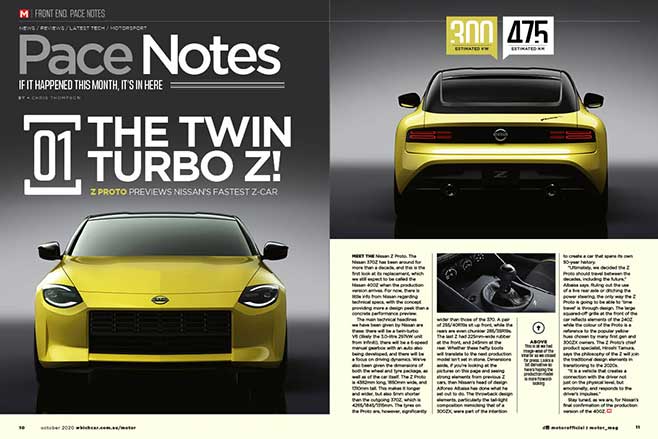
In news it’s the Nissan Z Proto, Maserati’s Trofeo models and Fernando Alonso’s return to F1.
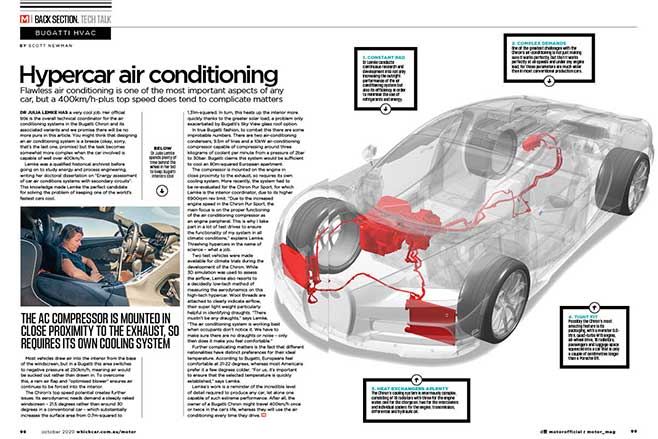
This month’s tech piece covers off the engineering challenges of air-conditioning one of the world’s fastest cars, the Bugatti Chiron.
Get your free weekly MOTOR report!
Unless you’ve been living under a rock you would be well aware that BMW has finally revealed the 2021 BMW M3 to the world.
All anyone seems to be able to talk about is the, ah, striking, new front bumper treatment – it has prompted a wave of criticism from industry pundits and motoring fans alike.
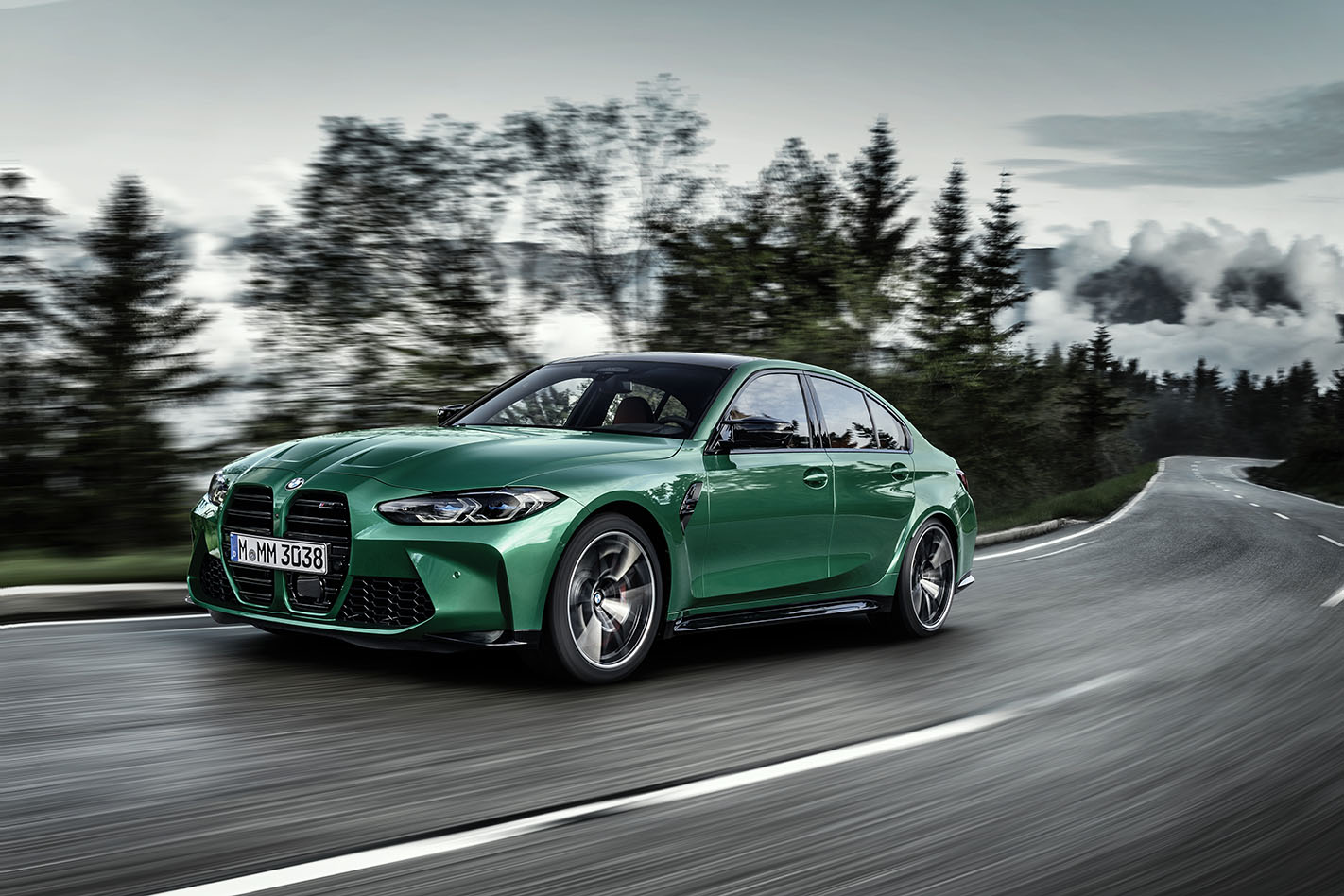
Admittedly, there are those that appreciate the new design language, namely M division head honcho Markus Flasch.
“I wouldn’t change it if I could,” he told media.
“I haven’t received any negative comments anyway.”
Well, Mr Flasch, you may not have been paying close enough attention.
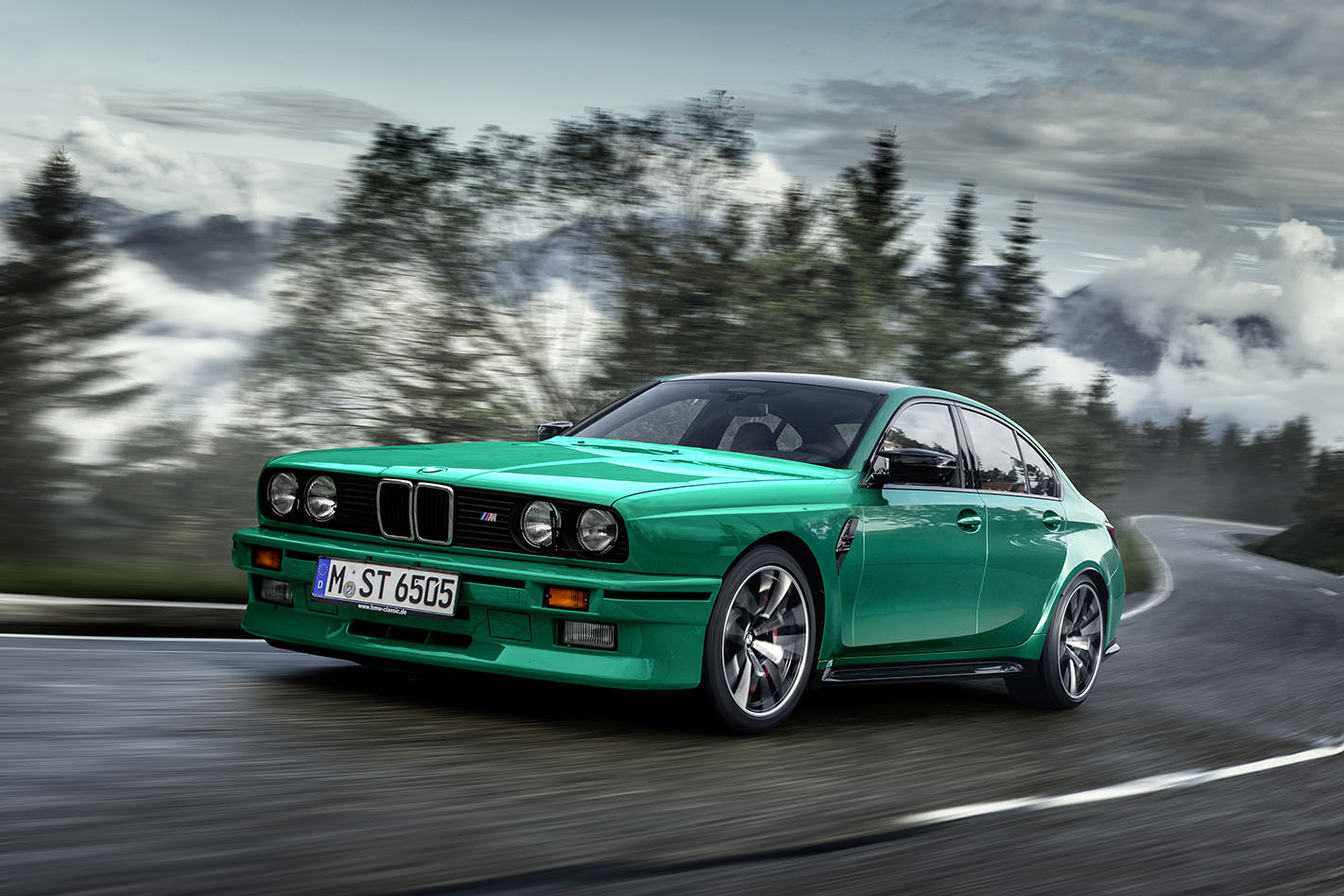
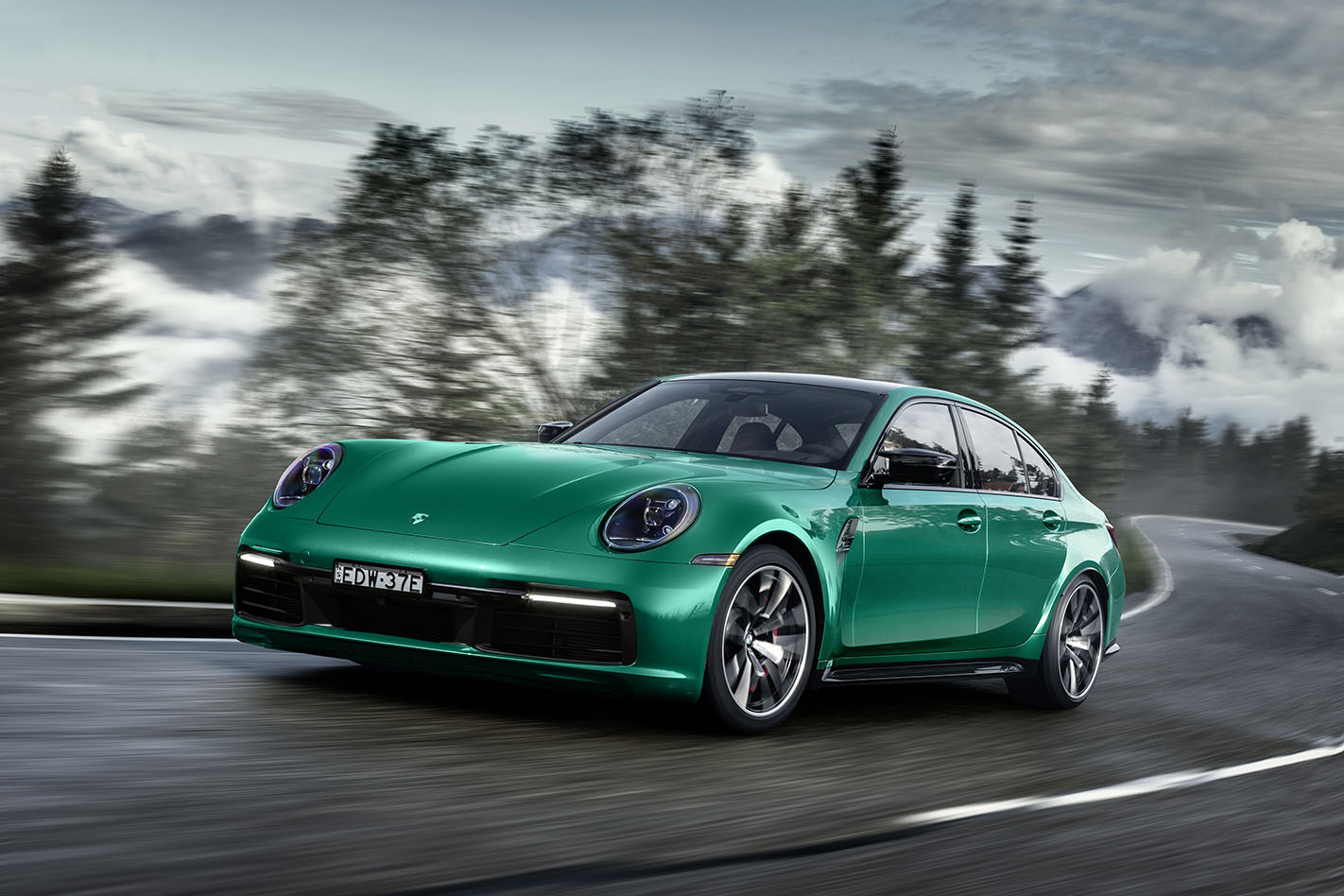
If the new toothy design isn’t to your liking, the graphic design department here at WhichCar HQ have attempted to ‘fix’ the divisive grille treatment. By ‘fix’, we mean graft the front ends from completely different vehicles onto the M3 body in photoshop.
The result? Well, not all of them are fantastic, but they are starting from a low base.
BMW M3 SEDANS DOING INCREDIBLE THINGS
Words can’t really do justice to the natural grace and beauty of this fine creation.
Credit for the photoshop legwork goes to MOTOR’s chief crayon twirler, Damien Pelletier.
When the AU was revealed to the world its design was derided, much like the current M3.
That backstory makes this pairing poetic in a way. It brings a single tear to our eye.
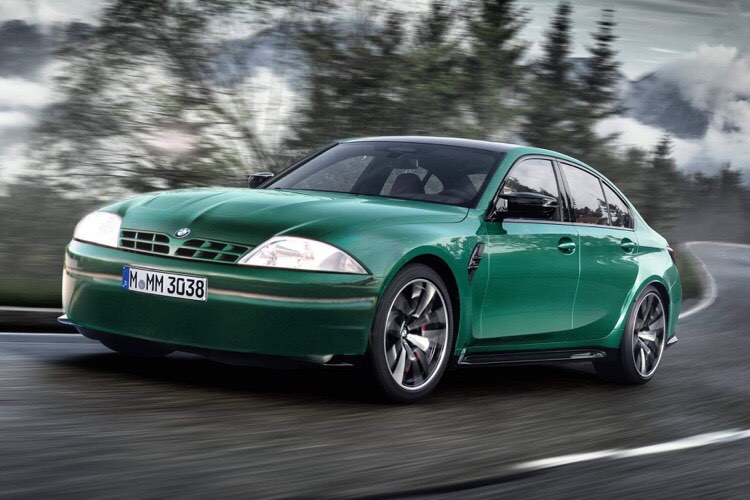
BEHOLD, THE M3STANG
Wheels’ Art Director Felipe Ubilla is responsible for merging the (digitised) metal of the remaining cars.
The AU was a nice start, but what if we tried something a bit more modern. Enter the snout of the current Ford Mustang GT.
It’s not the cleanest merging of design languages but does provide us a glimpse at an alternate reality that almost came to fruition.
The Mustang was meant to spawn its very own sedan variant, which would have been mechanically related to the Ford Falcon we know and love.
If that car had been built, it could have looked a little something like…this.
But, hey, at least it looks better than the current Ford Mustang Supercar race car.
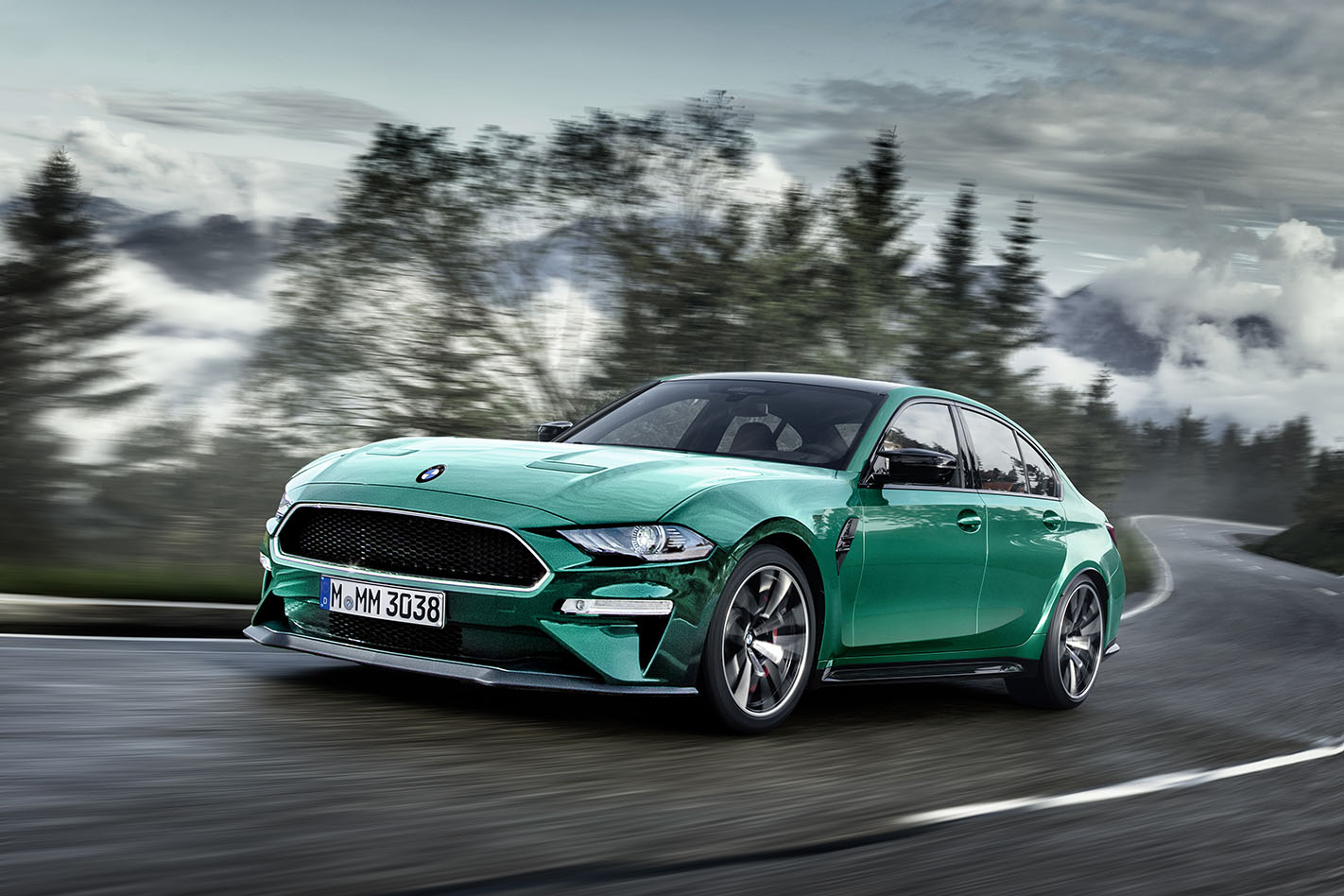
A BILLION DOLLAR M3 BABY
With two iconic Ford front ends already submitted, it was only fair that we tried a Holden as well.
Stepping up to the plate is the bumper of the VE Commodore – Australia’s very own billion-dollar baby.
The VE has aged handsomely since it was first revealed, and this creation just cements that viewpoint.
And look, the BMW badge even fits nicely!
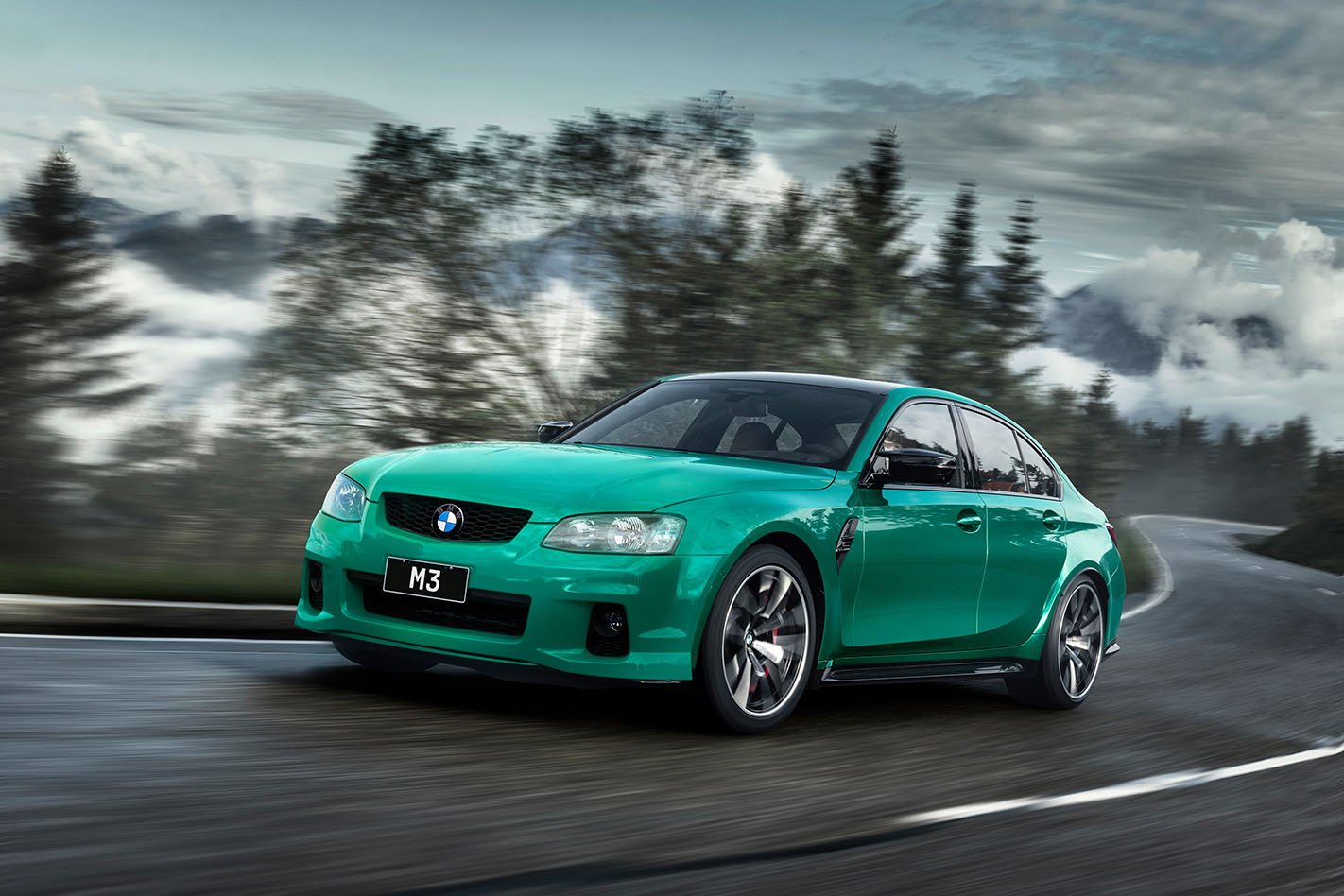
BACK TO THE FUTURE
The vertical design of the M3’s bulging kidney grilles is a drastic departure from the more horizontal look used by non-M G80 3 Series models.
However, it does hark back to the iconic look of the E30 M3.
With that lightbulb ignited, it was time for Felipe to pair arguably the most iconic and beloved M cars, with one of the most divisive.
Being from the same family, this pairing got the most emphatic seal of approval from the WhichCar team.
There is something more than a little Alfa Romeo GTV about it, though.
TRY NOT TO STARE FOR TOO LONG
Okay, we’ll readily admit this wasn’t the best idea.
Turns out trying to graft a Porsche 992 911 nose onto a sedan just results in a misshapen hall of mirrors-esque Panamera impersonation.
Please forgive our sins.
So, which M3 ‘fix’ was your favourite? Are there any other designs you’d like us to try? Let us know in the comments!
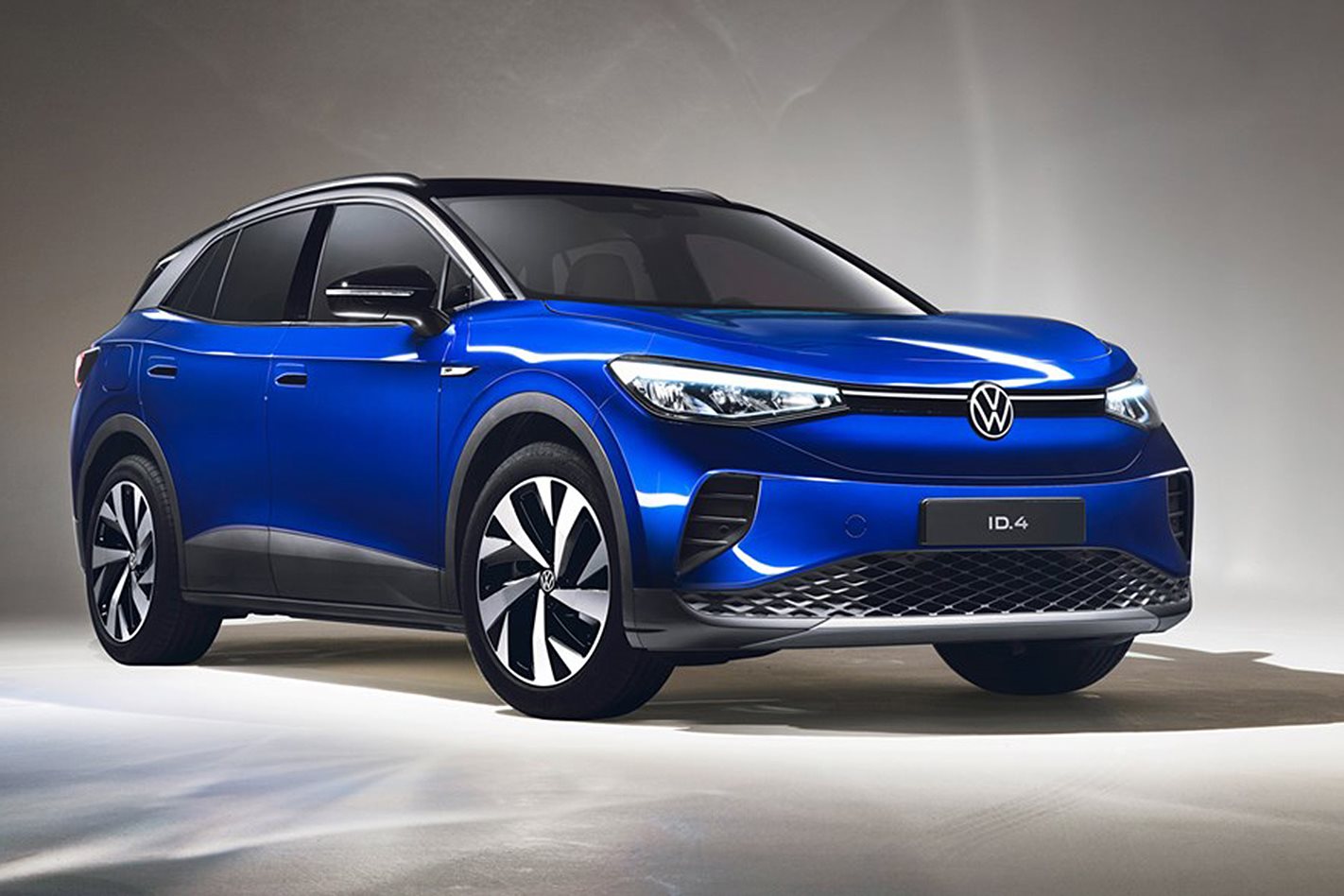
Volkswagen has provided the first proper look at the new ID.4 SUV, which is designed to be a roomier and more practical model to the ID.3 hatch, with the same powertrain options underneath.
While technically a crossover it’s longer than a Tiguan medium SUV and has a longer wheelbase which Volkswagen says gives it as much room as a full-size SUV.
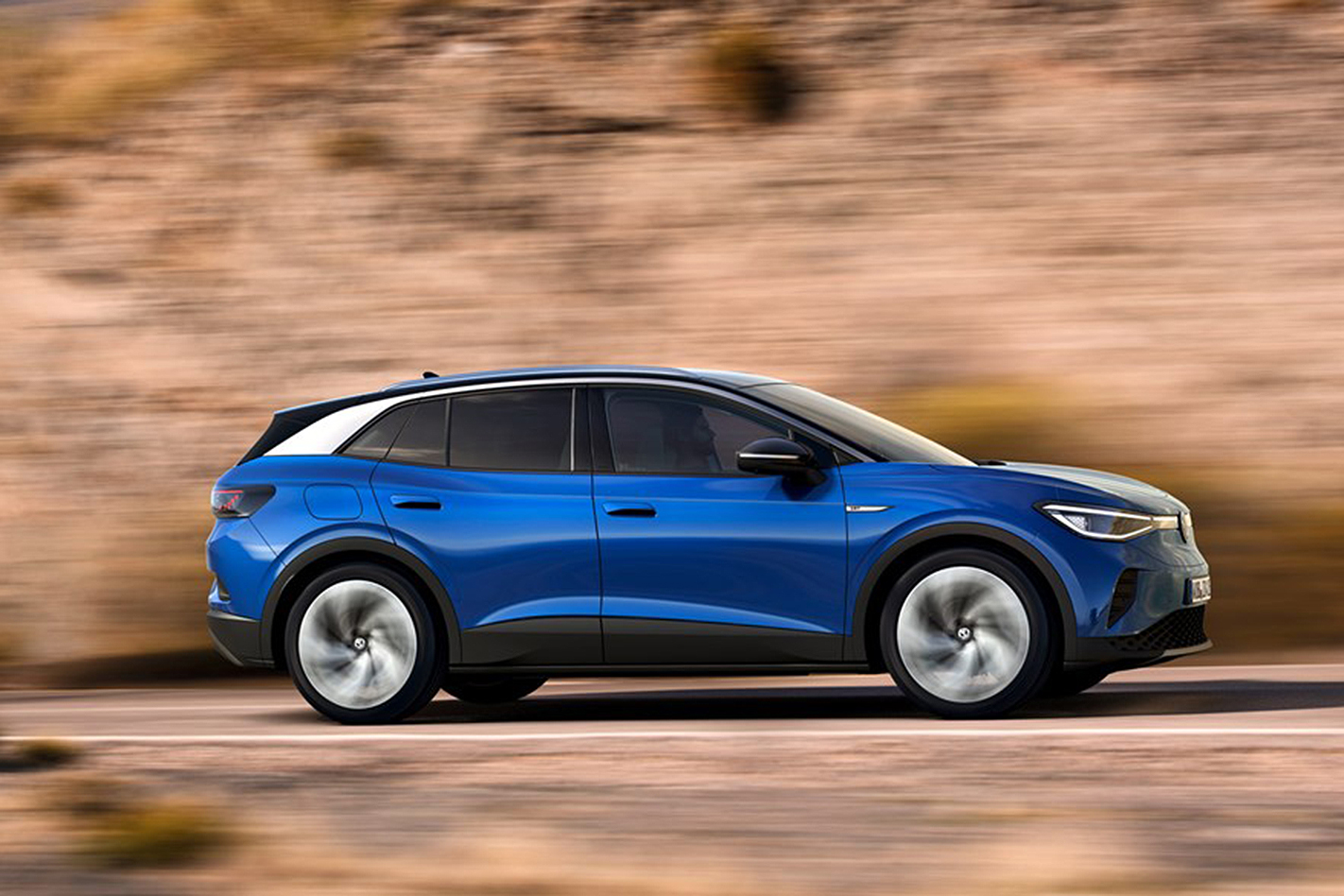
The overall look hasn’t changed a great deal from the concept on which it’s based; there’s almost a shooting brake-like swept-back silhouette to the car, with a bluff front end. VW says the ID.4 can be had with LED Matrix lights with 3D-effect rear lights as an option (pictured on the yellow car).
The ID.4 uses the same basic platform and drivetrain as the ID.3. To ensure as much power and range as possible, the SUV has the 150kW version of the ID.3’s electric motor driving the rear wheels, kept spinning by a 77 kWh battery pack. It’s capable of a 0-100 km/h sprint in 8.5 seconds, and VW claims a maximum range of 520 kilometres.
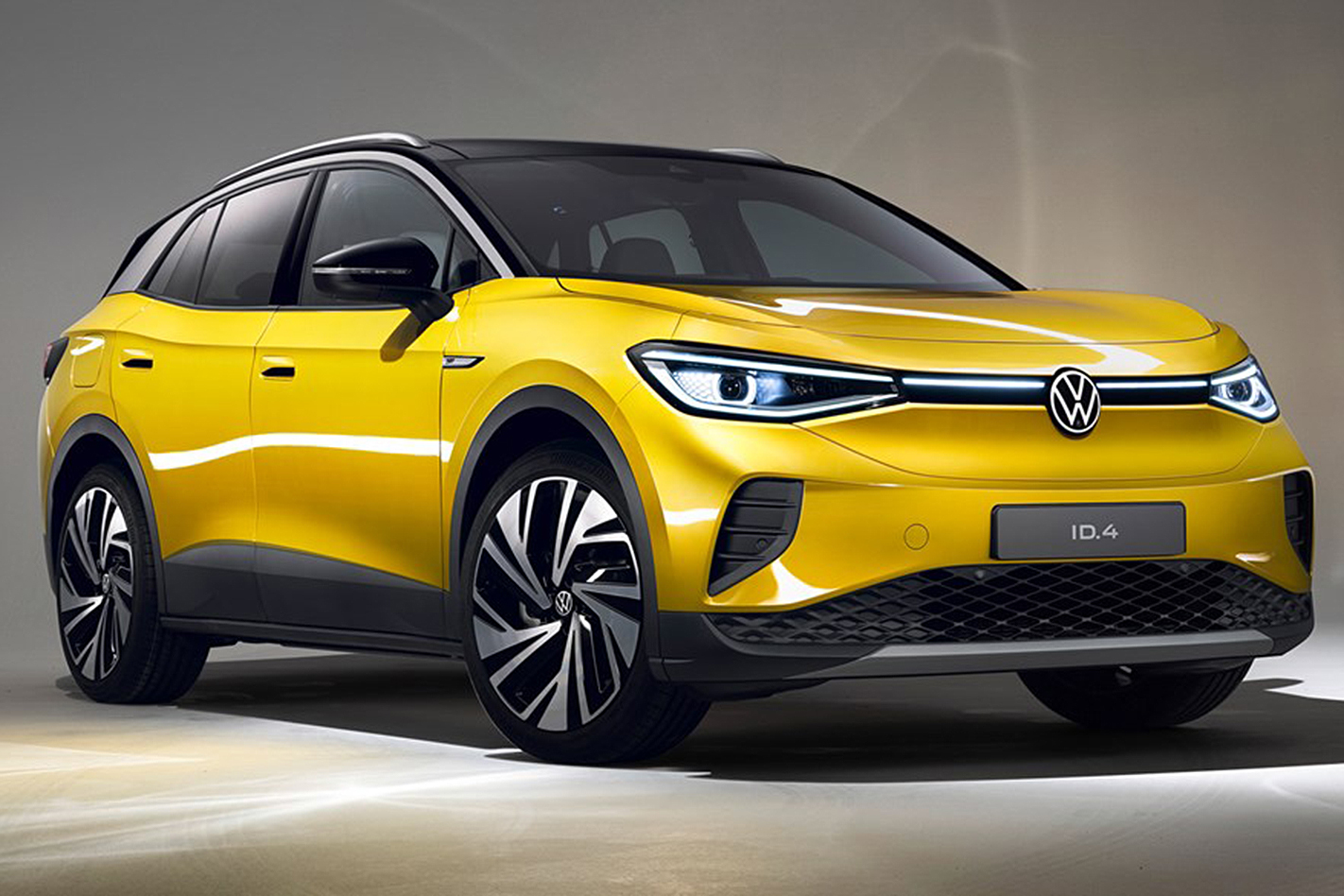
All-wheel drive and a larger-capacity battery pack will become available in 2021.
The ID.4 has else that isn’t already available on the ID.3. The five-seat interior concept is essentially the same, even if there’s more space inside than the hatchback. It has a clean cockpit with a twist-action gear selector attached to the drivers’ instruments and storage cubbies in the centre console.
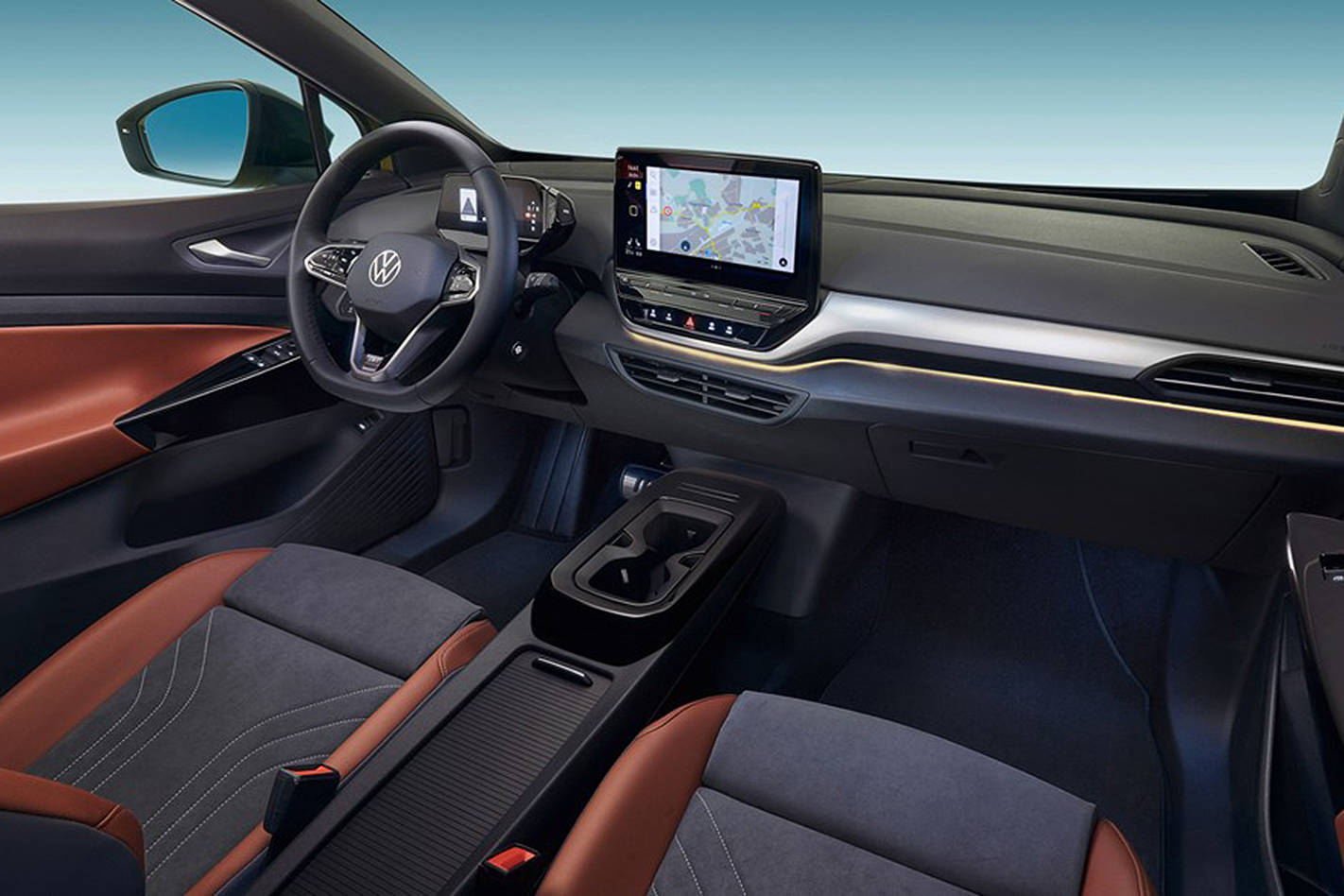
An augmented-reality head-up display is on the options list – something VW managed to get out of the door before Mercedes did with the new S-Class – and the connected infotainment system has real-time traffic data, live updates on the state of nearby chargers and the ability to pre-condition your car via a phone app.
It naturally has a much larger boot area than the ID.3 – 543 litres as opposed to the hatchback’s 385 litres.
Special edition models
The ID.4 will first go on sale in Europe this year but isn’t expected to arrive in Australia until 2022. It will launch overseas with two limited editions: 1st and 1st Max. The 1st version has 20-inch wheels, heated seats, parking camera, two-zone climate control, adaptive cruise, navigation and more.
In Germany, VW says this version will cost €49,950 (A$85,000).
The 1st Max is even pricier, with the spec list topped up by the aforementioned LED matrix headlights and 3D rear lights, 21-inch wheels, adaptive dampers, a panoramic glass roof and a powered, hands-free tailgate, augmented reality head-up display and more safety tech. It could be yours for €59,950 (or just under A$100,000).
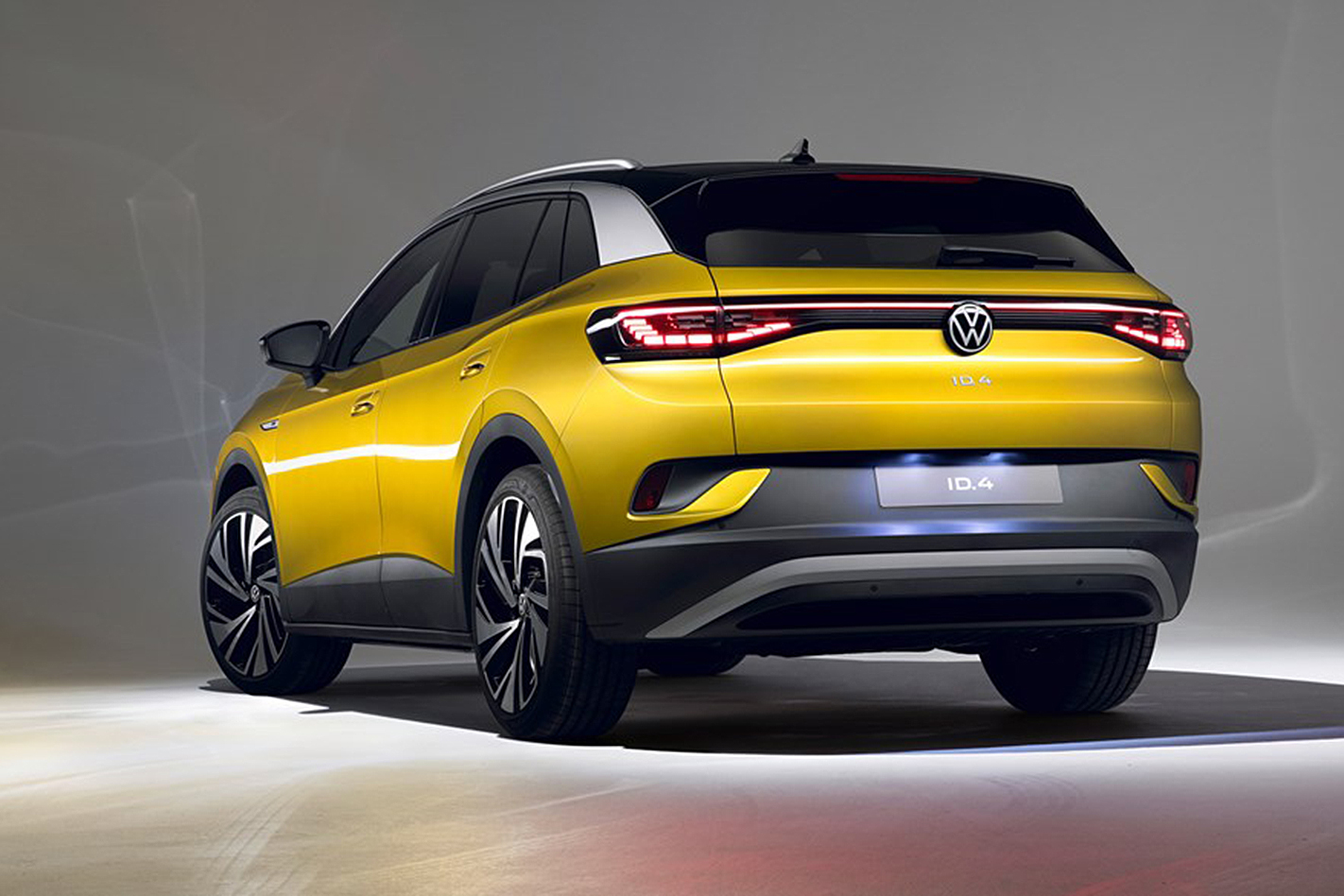
These aren’t exactly mainstream prices, but the good news is more powertrain options and regular specifications will be introduced next year which will hopefully see more affordable options for Australian buyers the time it arrives in 2022.
What stands out?
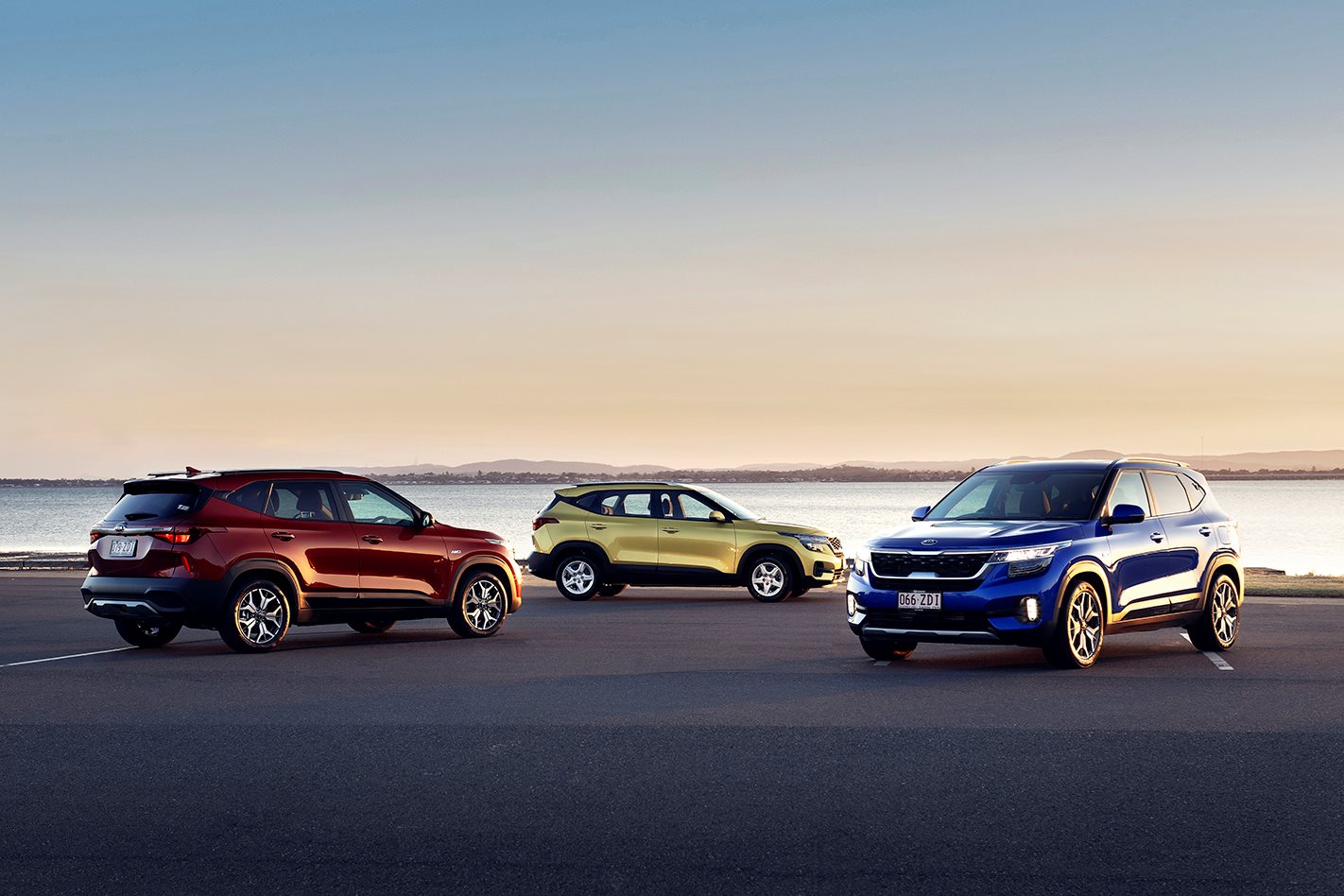
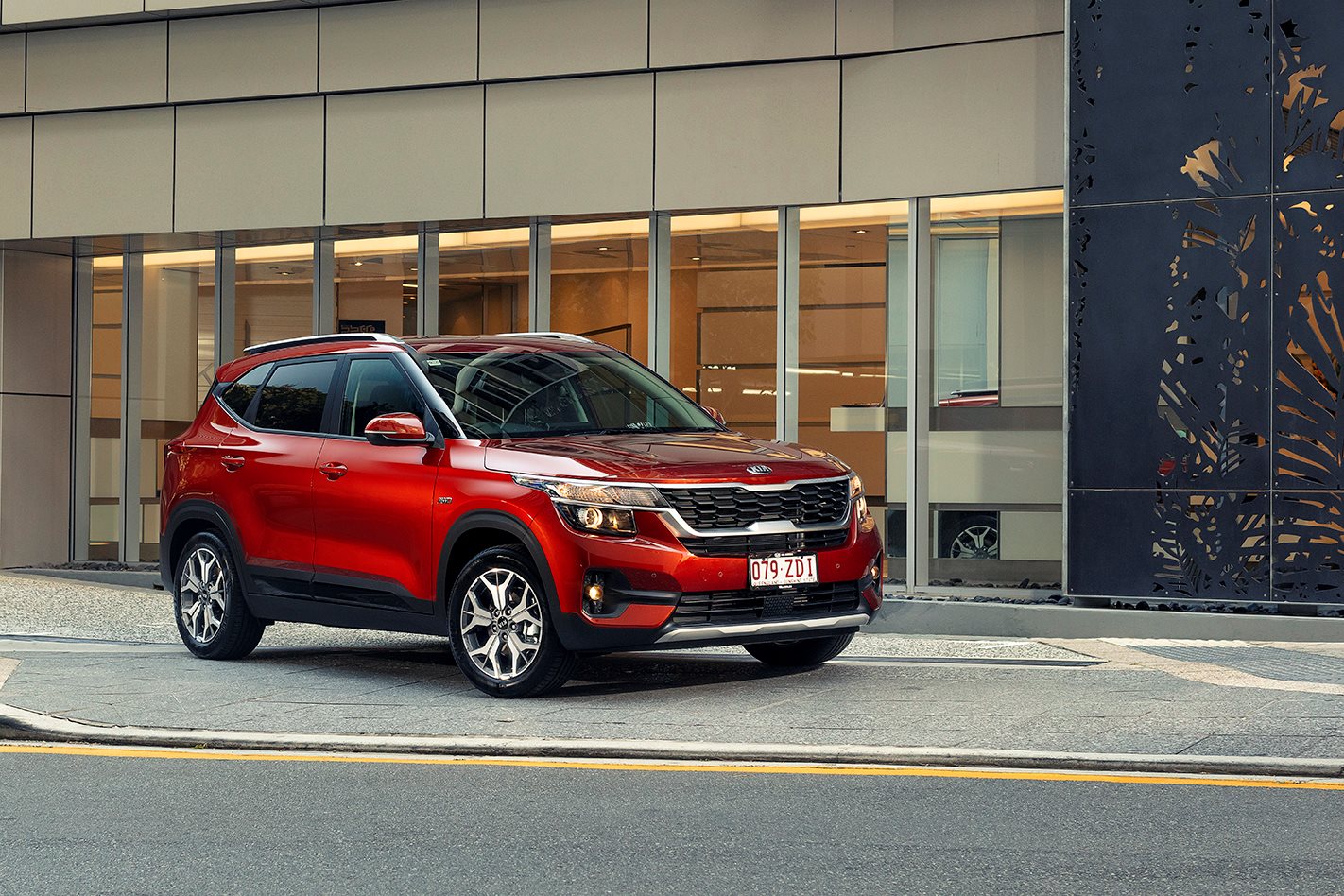
The Kia Seltos is an attractive small SUV that is comfortable and quiet to ride in and fun to drive thanks to its suspension that has been tuned to suit Australian conditions. Turbocharged, all-wheel-drive versions have more than enough power and autonomous emergency braking is standard across the range. Kia’s seven-year warranty is one of the best available.
What might bug me?
You might wish for more grunt in a 2.0-litre petrol version – especially if you have driven the turbo.
What body styles are there?
Five-door wagon only.The Seltos drives either its front, or all four, wheels depending on the version. It is classed as a small SUV, lower priced.
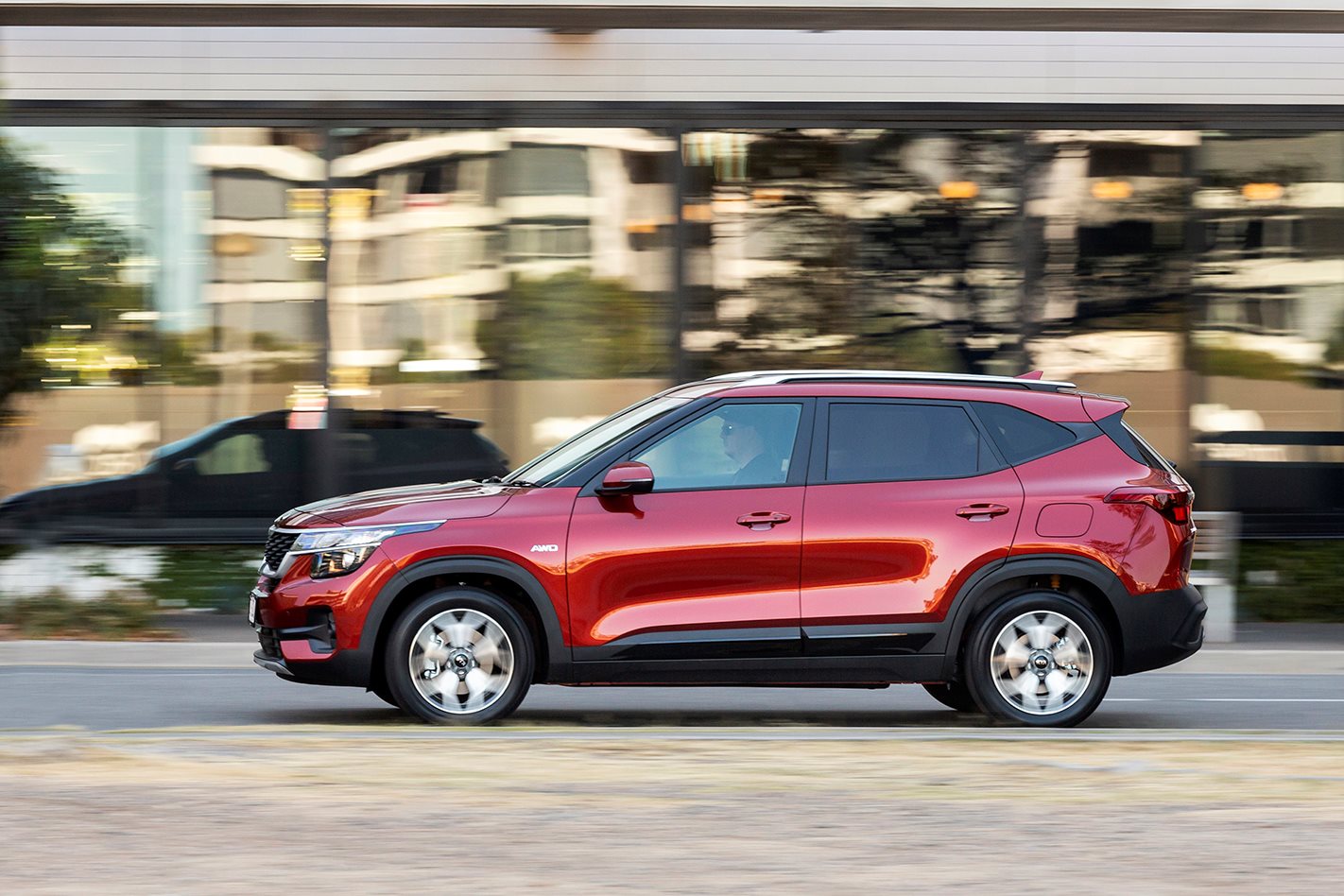
What features do all Seltos versions have?
- Colour touchscreen, auxiliary and USB input sockets.
- Bluetooth connectivity for phone calls and audio streaming, and Android Auto/Apple CarPlay that lets you display smartphone apps on the touchscreen and control them from there (or by voice).
- Sound system with at least six speakers.
- Reversing cameras with dynamic guidelines that predict your path, and rear parking sensors.
- Active safety features including autonomous emergency braking, forward collision warning, driver attention alert and lane keeping assist.
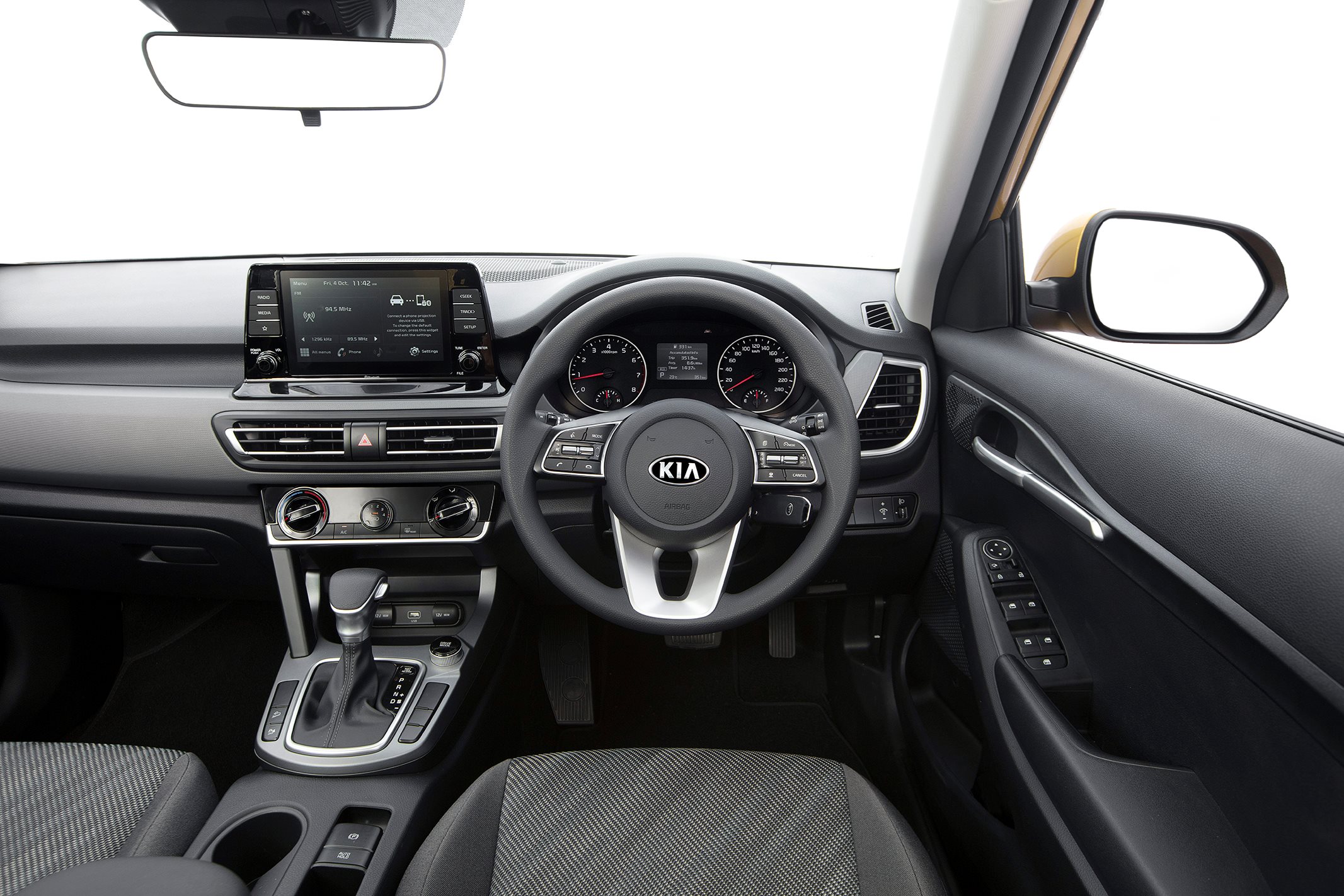
- Controls on the steering wheel for operating the cruise control, the sound system and phone calls.
- Daytime running lights, headlights that switch on automatically when it’s getting dark, rear fog lights.
- Air-conditioning.
- Roof rails, which make it easier to attach luggage systems.
- Shark fin antenna.
- An automatic transmission, and a trip computer that presents fuel use and distance information.
- Hill-start assist, which controls the brakes automatically to help you start from rest on an uphill slope.
- Downhill brake control, which can regulate speed automatically on steep down slopes when driving off-road.
- Six airbags: two directly in front of the driver and front passenger; one alongside each front occupant to protect the upper body; and a curtain airbag on each side protecting the heads of front and rear occupants.
- Seatbelt warnings that chime and illuminate when someone is sitting in a seat and not strapped in.
- Electronic stability control, which helps the driver to control an out-of-control car. All new cars must have this feature.
Which engine uses least fuel, and why wouldn’t I choose it?
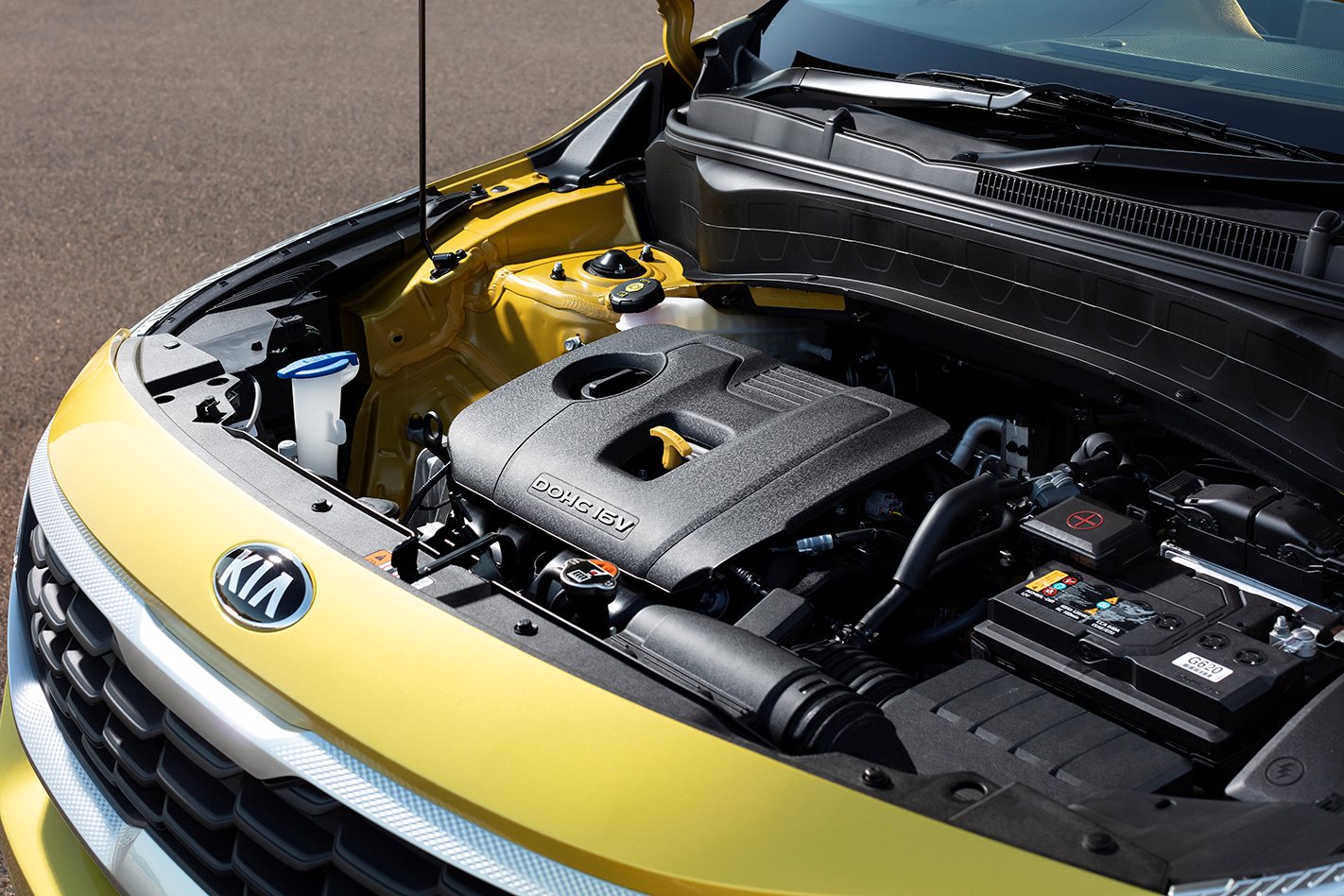
The 2.0-litre four-cylinder engine has an official economy rating of 6.8 litres per 100km (city and country combined) through its continuously variable transmission (CVT) automatic gearbox.The 2.0-litre is a flexible engine that performs well in the city and cruises comfortably on the highway. The Seltos is the first Kia to come with a CVT, which helps make it more efficient.
What key features do I get if I spend more?
The least costly Seltos, the Seltos S, has cloth seats, 8.0-inch touchscreen, 16-inch steel wheels with plastic hubcaps, space-saving spare wheel, one USB socket at the front, manual air-conditioning and the features of every Seltos.It comes with the 2.0-litre petrol engine with CVT auto as standard.For extra features, you could spend more on the Seltos Sport which, like the S, comes with the 2.0-litre petrol with front-wheel drive but adds:
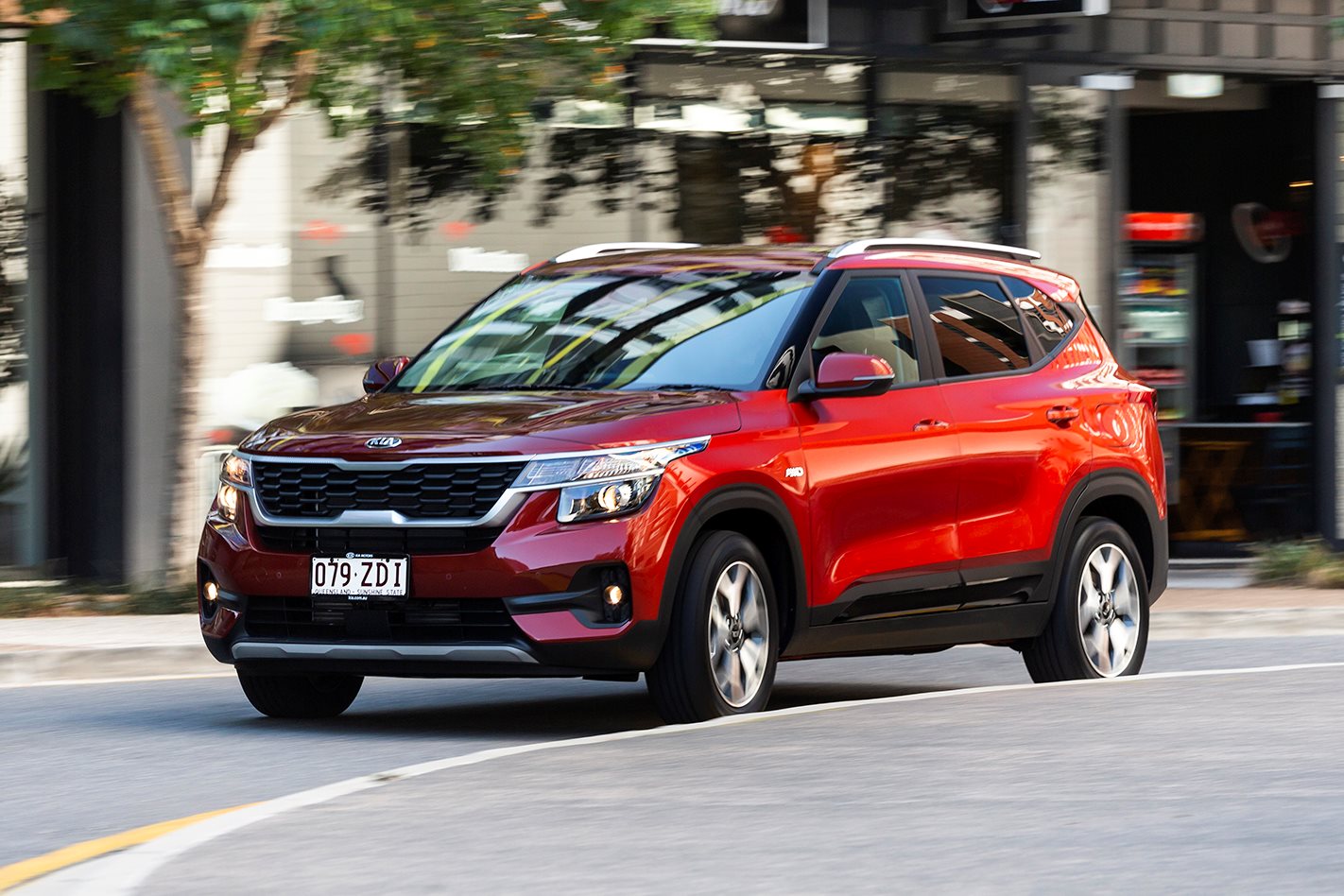
- A bigger 10.25-inch touchscreen with satellite navigation.
- Digital radio (DAB+).
- Additional USB socket.
- Air-conditioning that can be set so you have a constant temperature in the cabin.
- Tinted windows are tinted.
- Leather appointed steering wheel and gear shifter.
- Power-folding door mirrors.
- Front fog lights.
- 17-inch wheels made from lighter and more attractive aluminium alloy, and there is a full-size spare wheel in the boot.
- Smart key with push button start that lets you open your Seltos and drive away without getting your keys out of your pocket.
- Smart remote start.
- Heated side mirrors.
- LED Interior lights.
- Auto-dimming rear-view mirror.
- Front parking sensors.
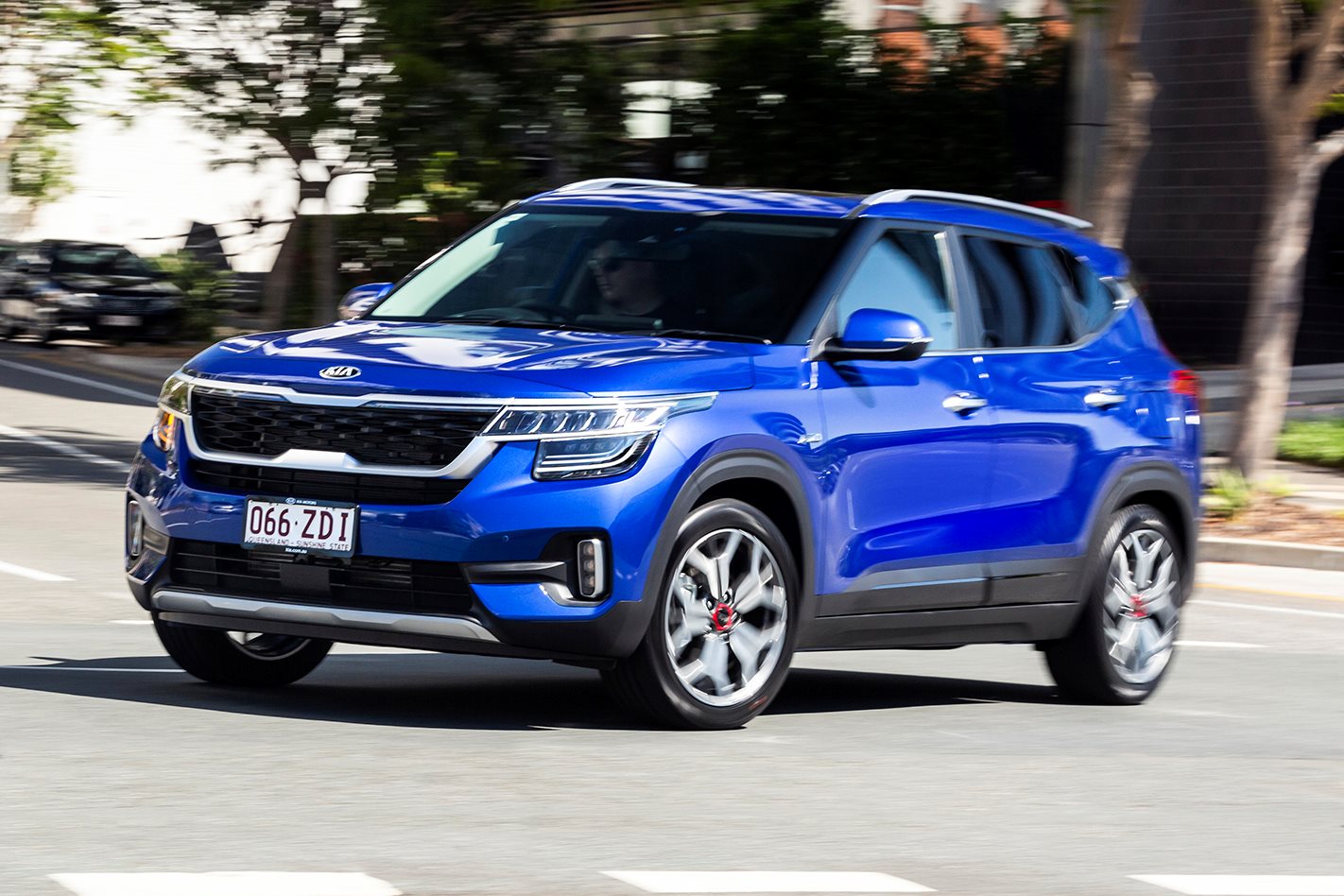
- A panoramic sunroof.
- Eight-speaker BOSE premium sound system.
- Interior sound mood lighting that changes with your chosen music.
- Fast wireless phone charger.
- Head-up display, premium (artificial leather) seats.
- Powered 10-way driver’s seat.
- Powered eight-way front passenger seat.
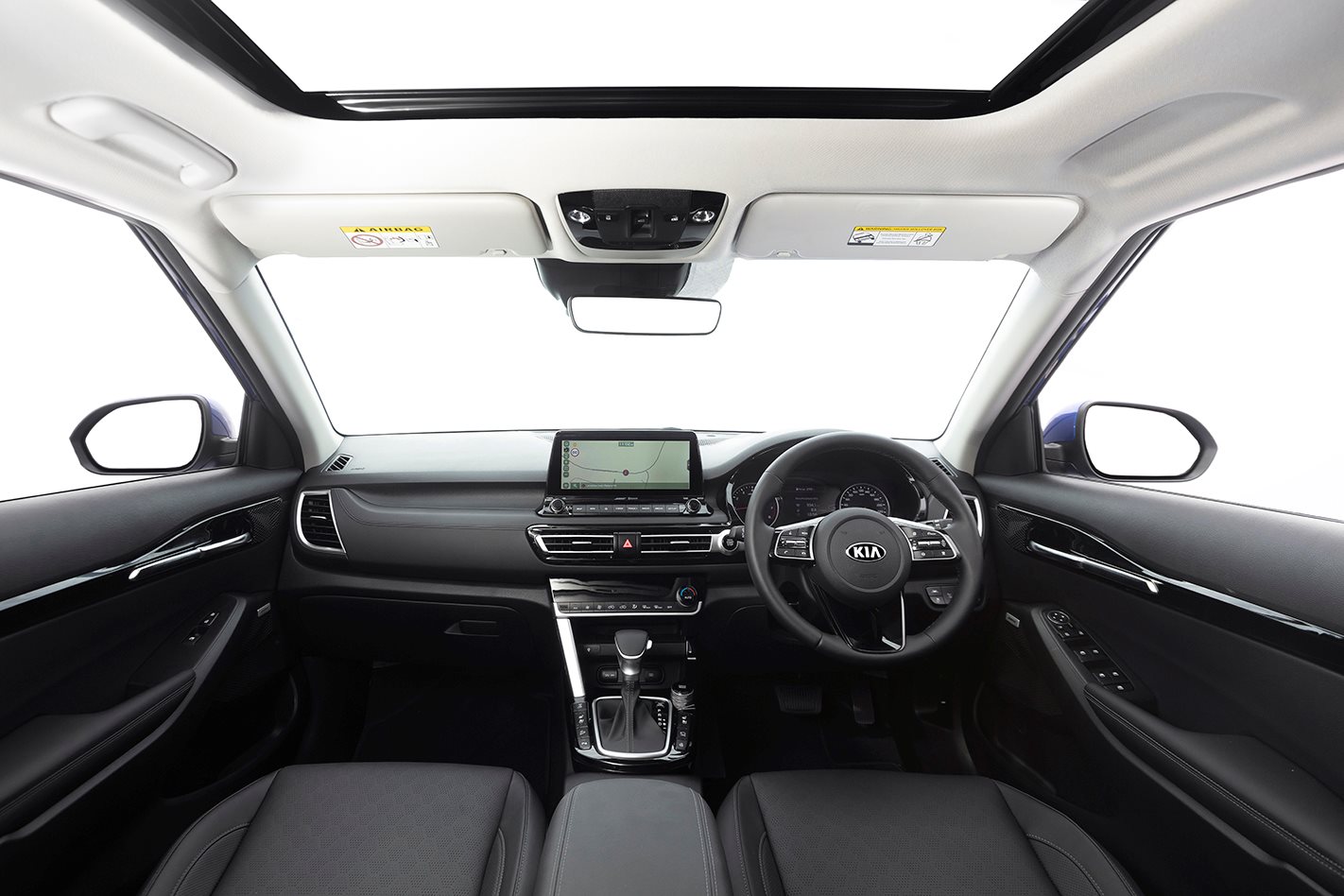
- Heated and ventilated front seats.
- 18-inch alloy wheels.
- LED exterior lighting including headlights, daytime running lights and front fog-lamps.
- Rain-sensing windscreen wipers.
- Additional safety technology including safe exit alert that will warn if there is any traffic or bicycles approaching from behind when the Seltos is stationary, and lane following assist that can track vehicles and road markings ahead to keep the car in-lane and a safe distance from any cars in front.
Does any upgrade have a down side?
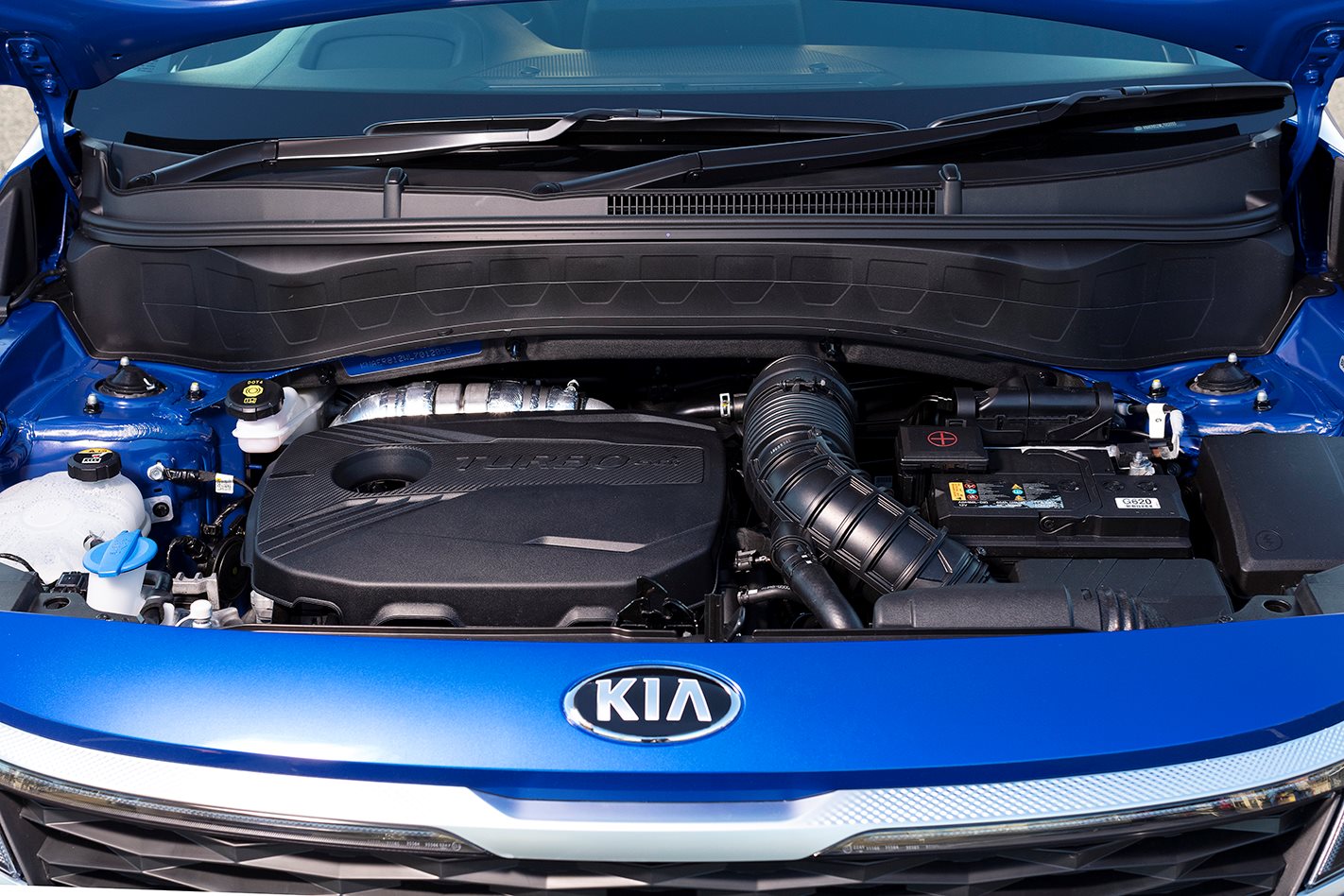
Ride quality can suffer over road imperfections on the GT-Lines bigger 18-inch wheels, which use lower-profile tyres with less sidewall flex to cushion you from bumps on the road.You’ll spend more time at the petrol bowser with the 1.6-litre turbocharged engine in a Sport+ or GT Line.Starbright Yellow is a standard colour on the Seltos. The other shades carry a premium paint charge of about $520.
How comfortable is the Seltos?
The Seltos’ cabin is roomy with instruments and controls laid out neatly and intuitively. The interior is well put together, but the build quality is let down a little by the hard plastic dashboard in the S and Sport versions.Ride comfort is excellent for a small SUV. Drive a Seltos in Korea and the ride is soft and floaty, however this would result in plenty of bounce and body roll on Australian roads so Kia Australia has retuned the suspension to suit local conditions and the result is a good compromise between comfort and handling.
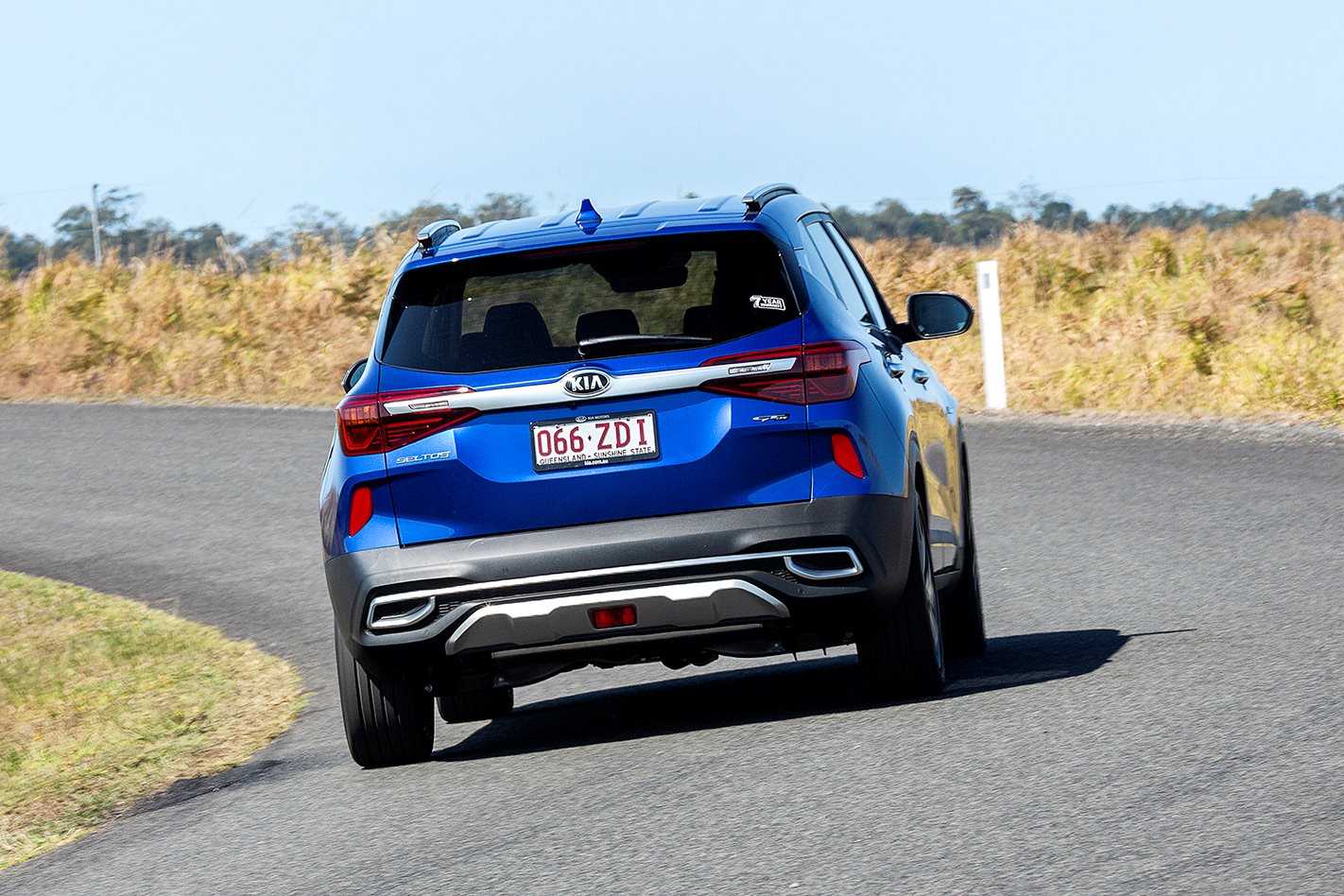
MORE: Kia Seltos S reviewAs well as the bigger rubber, the 2.0-litre front-wheel drive versions provide a more comfortable ride because their suspension isn’t as firm as the all-wheel-drive versions.The Seltos’ cabin is quiet, with little suspension, tyre or wind noise intruding.The infotainment system is very user friendly, with all but the entry-level S coming with a large 10.25-inch screen. That said, you’ll have no problem viewing the S’s 8.0-inch display. The system allows for a split screen to view and operate different functions at once, while Android Auto and Apple CarPlay allow for easy, and legal, operation of music, podcast and navigation apps.
MORE: Kia Seltos GT-Line reviewThe Seltos also allows two phones to be synced via Bluetooth at the same time. This means you can have your phone connected to receive phone calls while a passenger can play music through theirs.
What about safety in Seltos?
The Seltos arrived in Australia with the most advanced safety tech in any Kia.The standard autonomous emergency braking (AEB) in the S and Sport can initiate a full emergency stop automatically from speeds up to about 80km/h if the system senses you are in danger of driving into something. First it sounds a warning; if you ignore that, it applies the brakes partially; and if you do not intervene it applies maximum braking. (At speeds between 80 and 180km/h it warns and brakes partially, but it will not brake as hard as possible on its own.)Driver attention alert that detects and warns you if you’re driving a little erratically (a sign of fatigue) is also standard. As is lane-keeping assist, which can detect the lines on the road and help steer the Seltos within them is also standard.
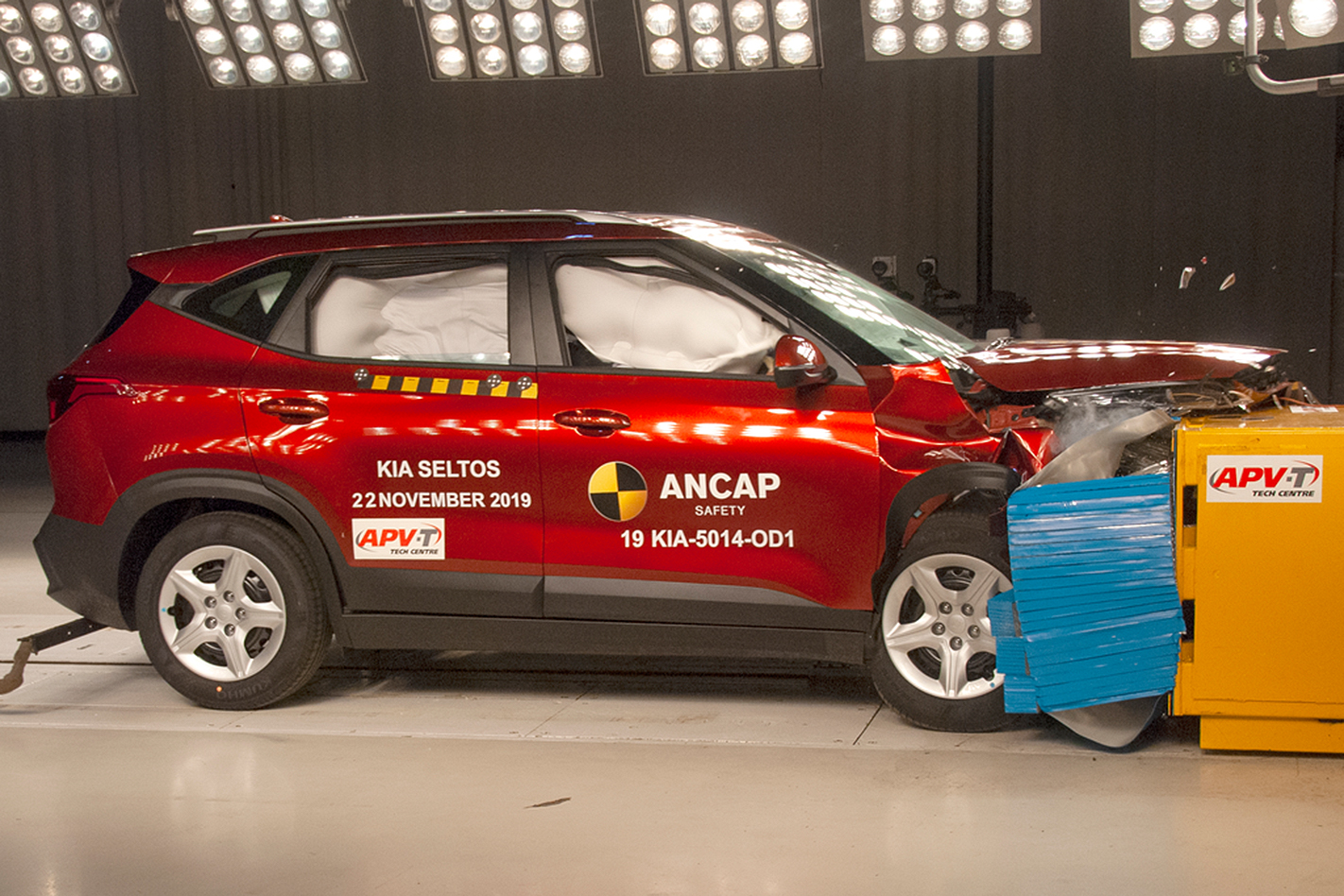
Every Seltos has six airbags: two directly in front of the driver and front passenger; one alongside each front occupant to protect the upper body; and a curtain airbag on each side protecting the heads of front and rear occupants.
There two ISOFIX child restraint anchor points at the rear and three top-tethers.
You also get a reversing camera and a seatbelt warning for every seat – a simple but valuable feature for those with children old enough to unfasten their belts. Dusk-sensing headlights, and the mandatory stability control complete an excellent standard package.Both the S and Sport are available with an optional Safety Pack that for $1000 adds the higher grade, radar and camera-based ‘Fusion II AEB’ with pedestrian and cyclist detection. This system is standard in the Sport+ and GT Line and also includes advanced smart cruise control that slows to a stop in heavy traffic, electronic parking brake, and 15-inch rear disc brakes.
The Sport+ and GT-Line come with the Safety Pack as part of price along with blind spot detection that alerts you to a vehicle approaching from behind in the next lane via a light in the door mirror. If you indicate to change lanes an audible warning will sound so you don’t cut the vehicle off.Both versions also get rear cross-traffic collision avoidance assist, which detects a car coming from the side when you’re reversing and automatically stops the Seltos if necessary. Driver Attention Alert+ detects signs of fatigue and alerts the driver if the vehicle in front moves away from a stop situation, such as a set of lights.The GT-Line also has safe exit alert, which warns occupants of traffic (including bicycles and motorcycles) before they open their door into the road, and lane following assist that controls acceleration, braking and steering and can track vehicles and road markings ahead to keep the car in-lane and a safe distance from any cars in front.The Australasian New Car Assessment Program (ANCAP) awarded the Kia Seltos a five-star rating in October 2019.
I like driving – will I enjoy this car?
Yes. The Kia Seltos is among the most enjoyable compact SUVs available.The electrically assisted power steering feels just right. It’s easy to steer but brings you a good sense of connection with the road, which is satisfying and inspires confidence.
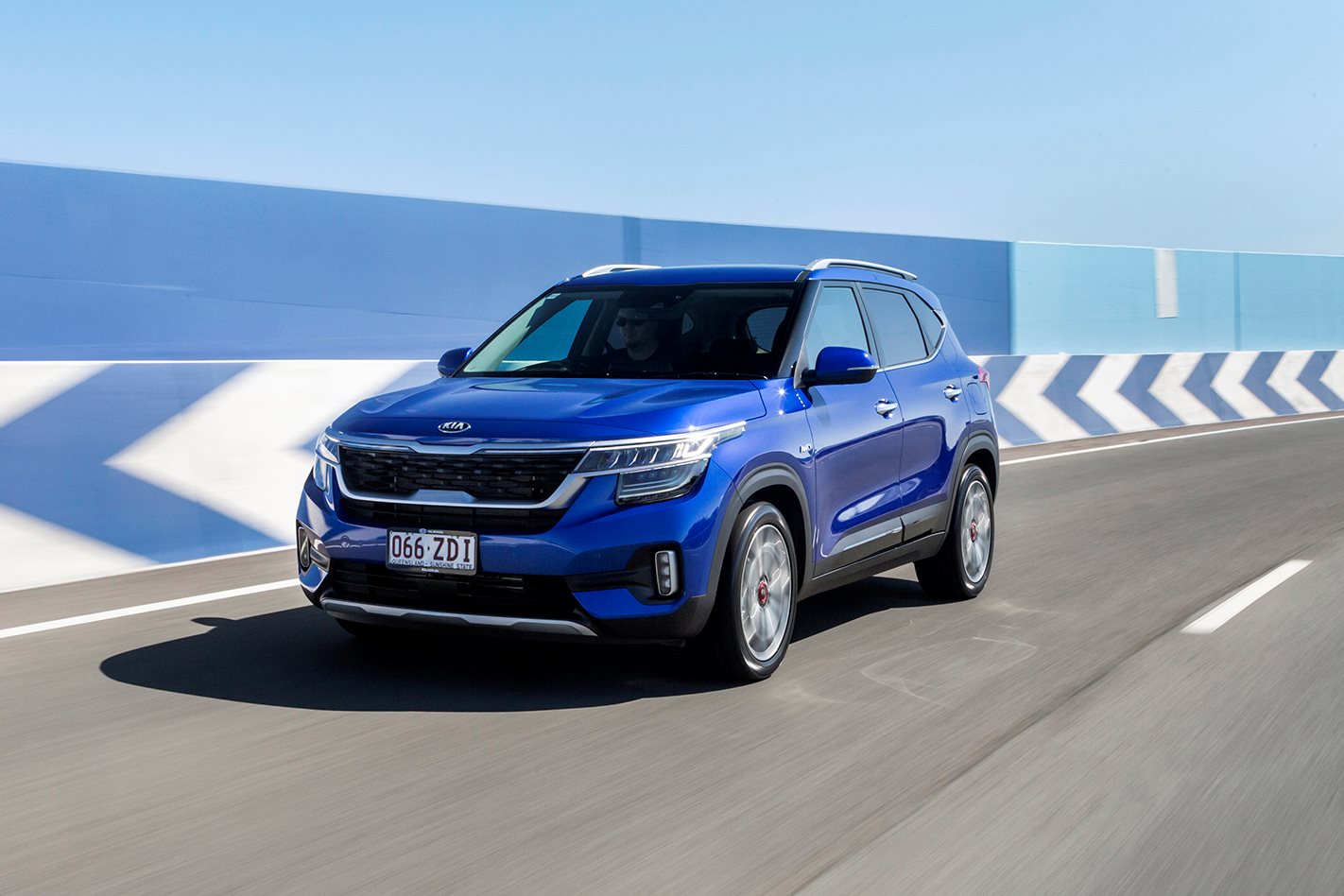
A three-step Drive Mode Select system lets you adjust the weight of the steering. It also adjusts how immediately the car reacts to your pressure on the accelerator pedal, through the engine and auto gearbox. There are relaxed Normal and Eco modes, and an aptly named Sport mode.The Seltos has firm but comfortable suspension, which helps it respond quickly to steering inputs and to corner with relatively little body roll. The firmness also prevents the body from bobbing on the springs after the car hits a big bump on the road.
MORE: Kia Seltos Wheels reviewThe 1.6-litre turbocharged petrol engine has more grunt than the 2.0-litre petrol, but the 2.0-litre engine still provides more than enough power for highway driving. Its CVT auto does a good job in distributing power, however, as is the case with such transmissions, it can be a little thrashy when accelerating through higher speeds or coming down hills.
How is life in the rear seats?
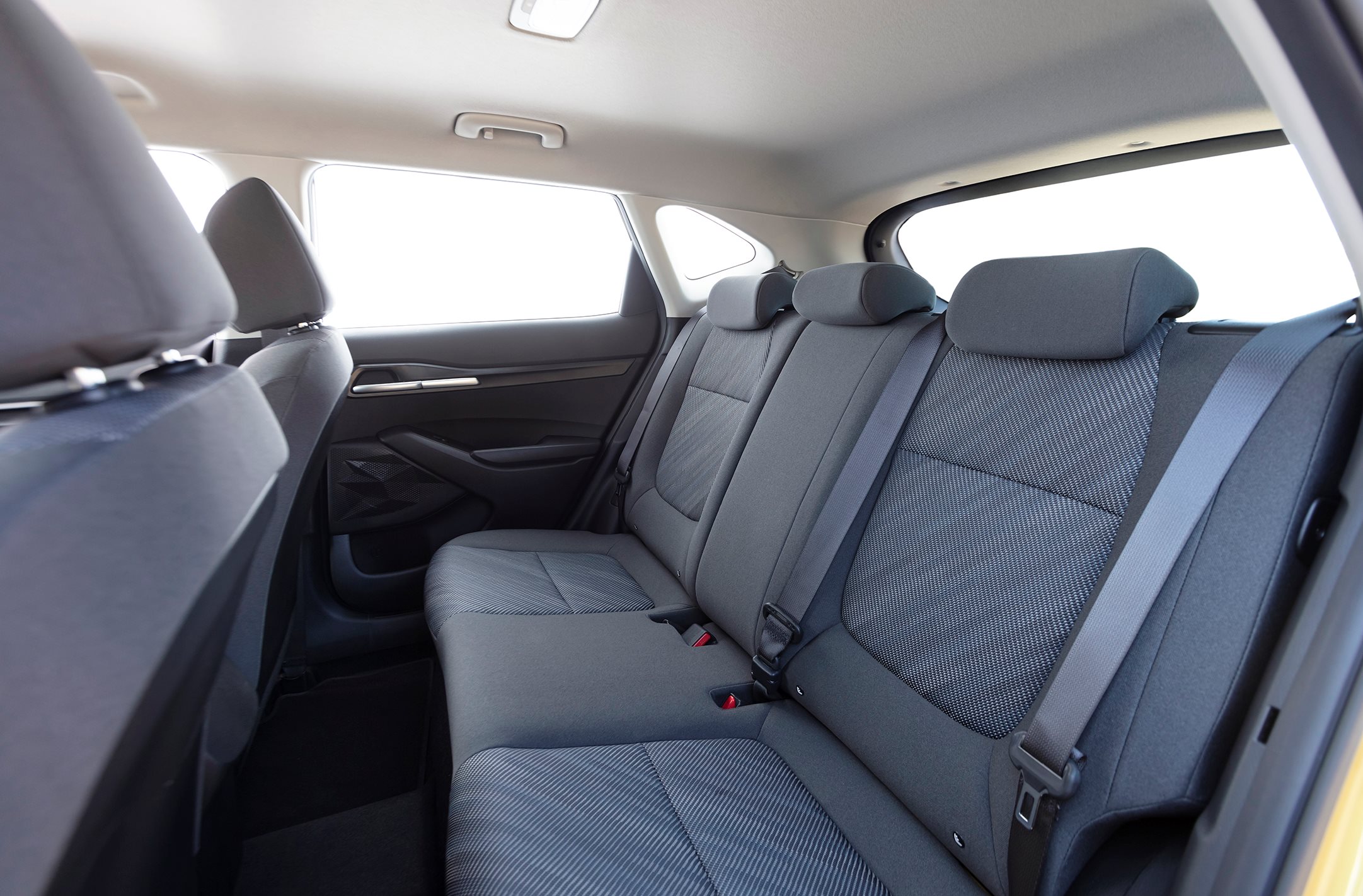
The Seltos has generous 965mm of legroom, which is 30mm more than the Hyundai Kona.The seats offer good back, under-thigh and lateral support, with enough headroom even for adults. Cushions are comfortable, and the backrest can recline slightly.
How is it for carrying stuff?
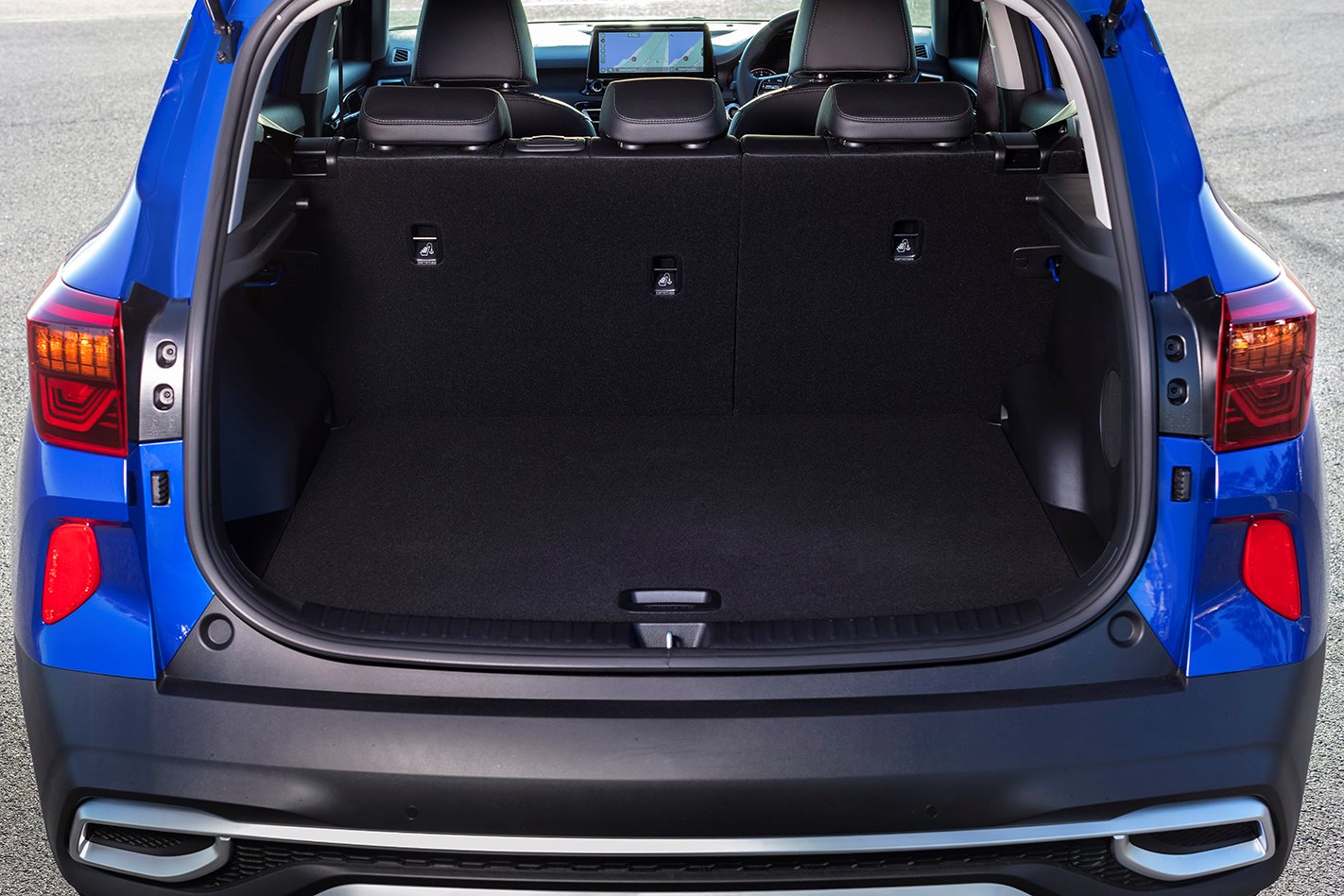
The Seltos S, which comes with a narrow space-saving spare wheel under the boot floor, has a class-leading 498-litre boot that’s bigger than the cargo area in most medium SUVs including the Kia Sportage’s 466 litres.
The Sport, Sport+ and GT Line have more convenient full-size spares, the trade-off being boot space is reduced to 433 litres that’s still above average for a small SUV.
The 2.0-litre front wheel drive Seltos versions have a handy 1100kg braked towing capacity, with the 1.6 litre AWD versions able to tow a 1470kg braked load. Towball weight for each is 130kg.
Where does Kia make the Seltos?
All Australian Kia Seltos versions are built at Kia’s Gwangju factory in South Korea.
What might I miss that similar cars have?
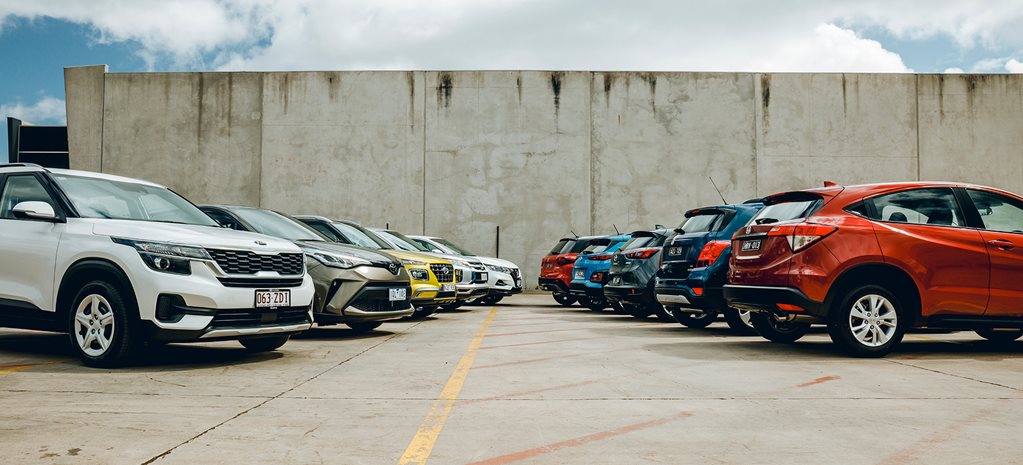
Not much, aside from the option of more fuel efficient diesel powertrain. Diesel versions of the Jeep Compass and Mazda CX-3 consume less than 6.0L/100km. Or maybe an electrified version as available with the Toyota C-HR Hybrid and Hyundai Kona Electric.
Perhaps more off-road capability like you get with a Subaru XV or Suzuki Jimny.Other comparatively priced and equipped small SUVs worth considering include the Citroen C3 Aircross, Honda HR-V, Mitsubishi ASX.
I like this car, but I can’t choose which version. Can you help?
We think mid-priced Seltos Sport+ with the 2.0-litre FWD drivetrain is the pick of the bunch. It costs about $2500 more than the Sport with the Safety Pack, which seems good value when you think of the additional features it brings.
Are there plans to update this model soon?
The Kia Seltos arrived in Australia in October 2019 as Kia’s newest model featuring equipment that we’ve yet to see in the brand. So don’t expect to see any updates until 2021 at the earliest.
What’s on WhichCar TV this week?
It’s our season finale!
We reach a lofty milestone this Sunday, marked by the season finale of our second season. While it might be sad to see out WhichCar TV for the year, let’s look back at some of the wild ideas we brought you over the past 30 episodes and wonder: ‘What were we thinking?!’
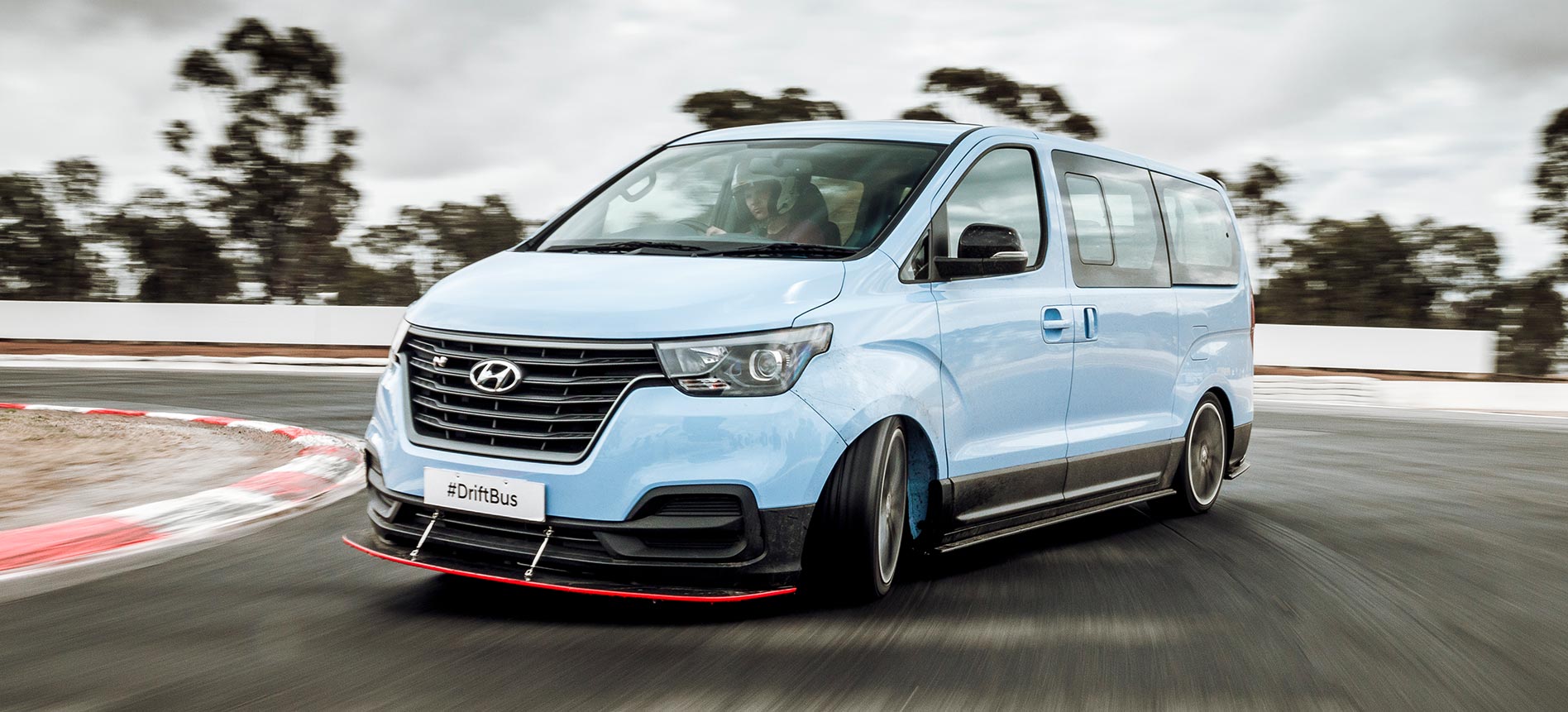
Hyundai iMax N Drift bus
When we caught wind that Hyundai Australia was working on a Kia Stinger-powered drift van, we immediately put our hands up for a test drive. Hyundai finally granted us access to the one-off creation at a rainy Winton raceway which made for some great television, but it wasn’t as positive an outcome for Hyundai’s tyre budget…
That wasn’t part of the plan!
It’s no surprise that things don’t always go according to the script. And while we’ve got a boat-load of bloopers sitting on the cutting room floor (which hopefully the producer lets us share at some point!), here’s just a couple of stuff-ups we caught on camera during filming.
Lending a helping hand
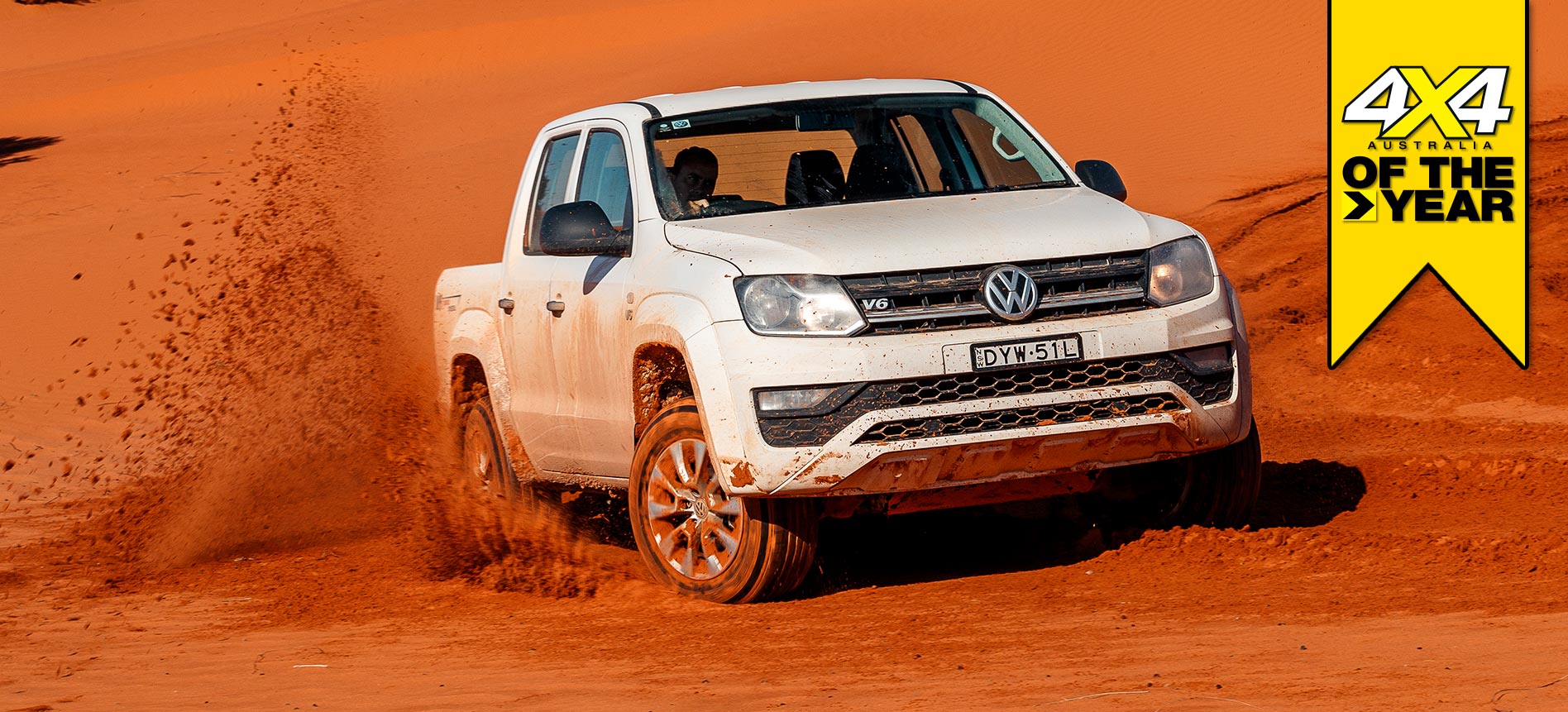
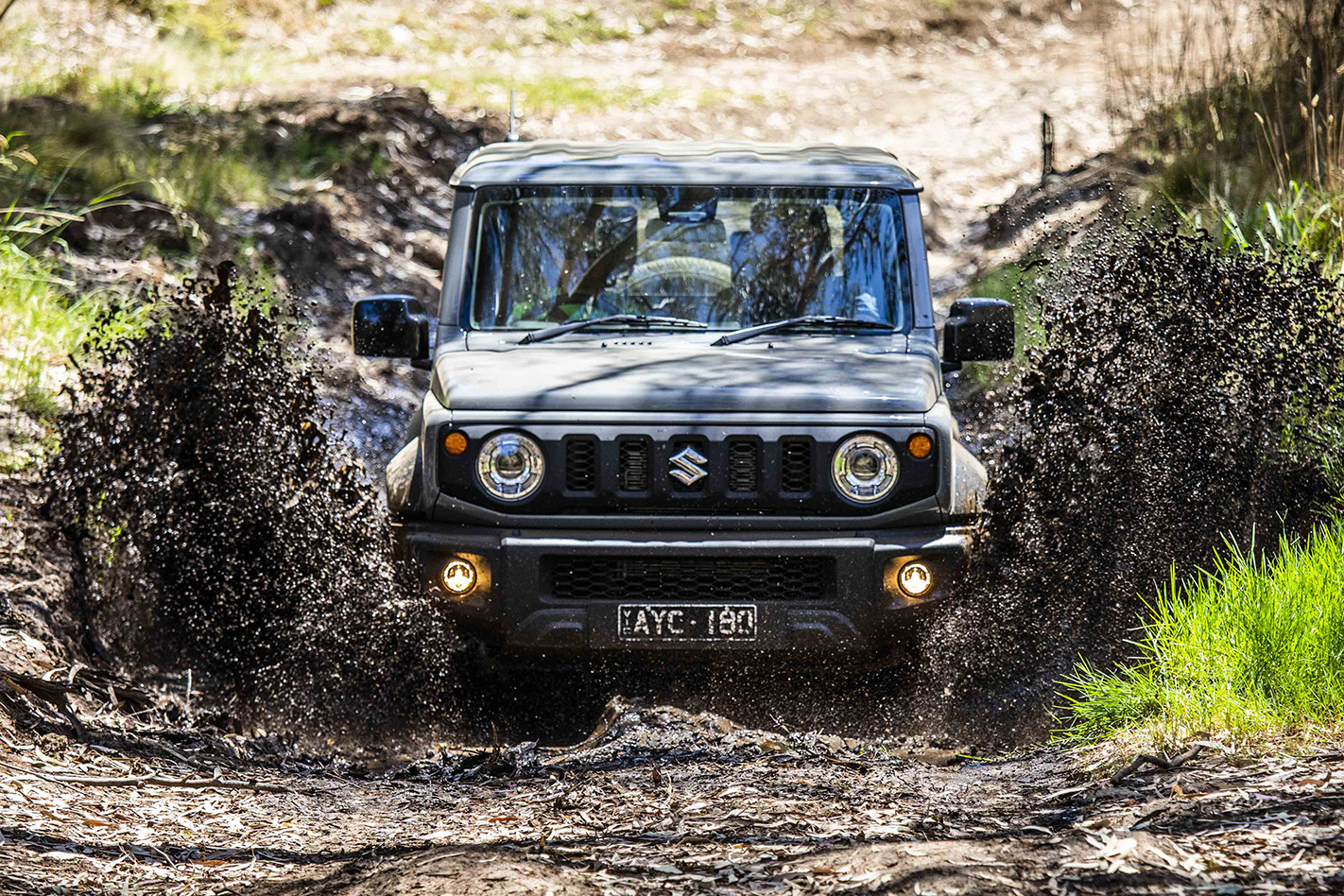
The Jimny is a happy-go-lucky off-road go-getter that’s always keen to lend a hand. But it seems this time around that ambition has outweighed ability.
The only car we crashed
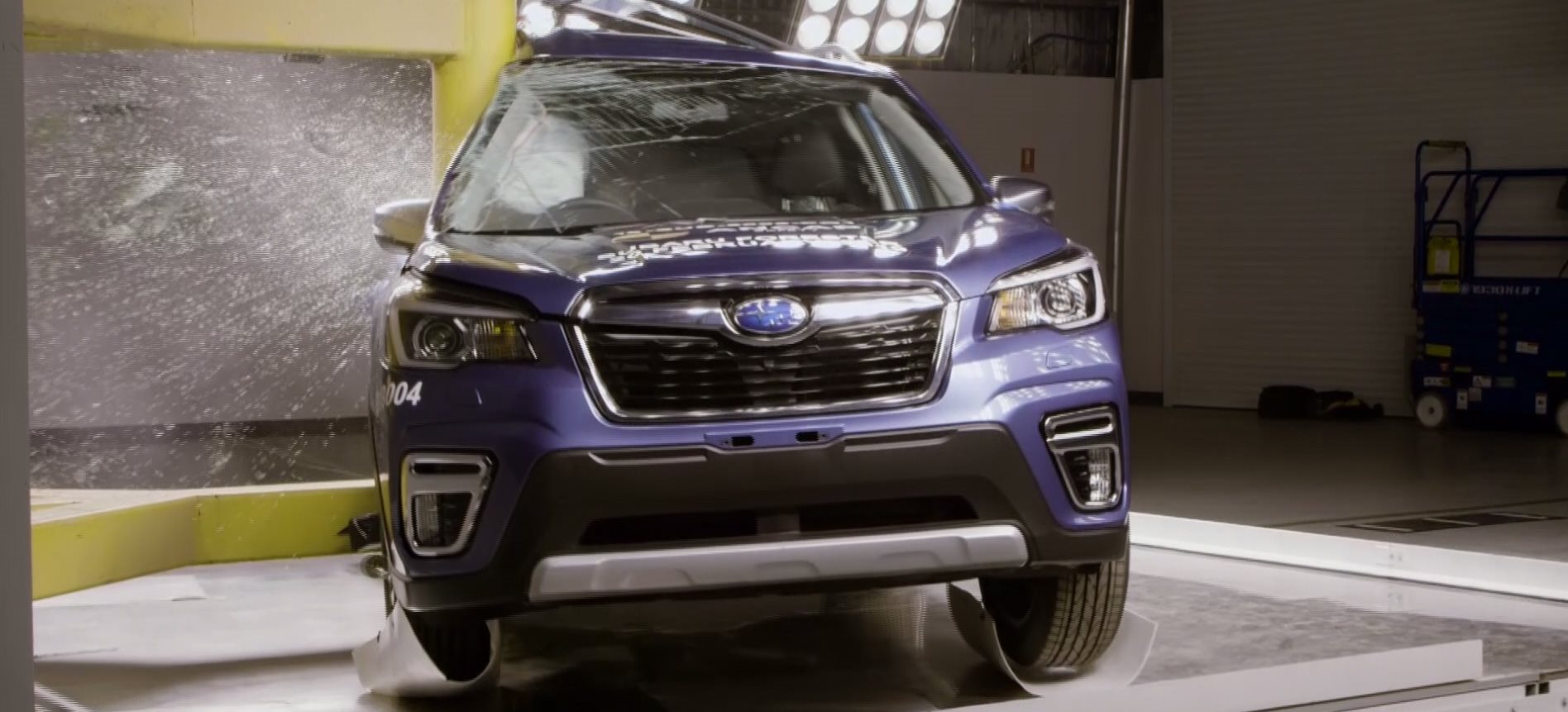
Crashing a car is an inevitability. That’s why we thought we’d get it out of the way with the help of our friends at the Australian New Car Assessment Program. We crash-tested a brand-new Subaru Forester to get a look at how valuable crash safety data is recorded.
Continental Car Lab
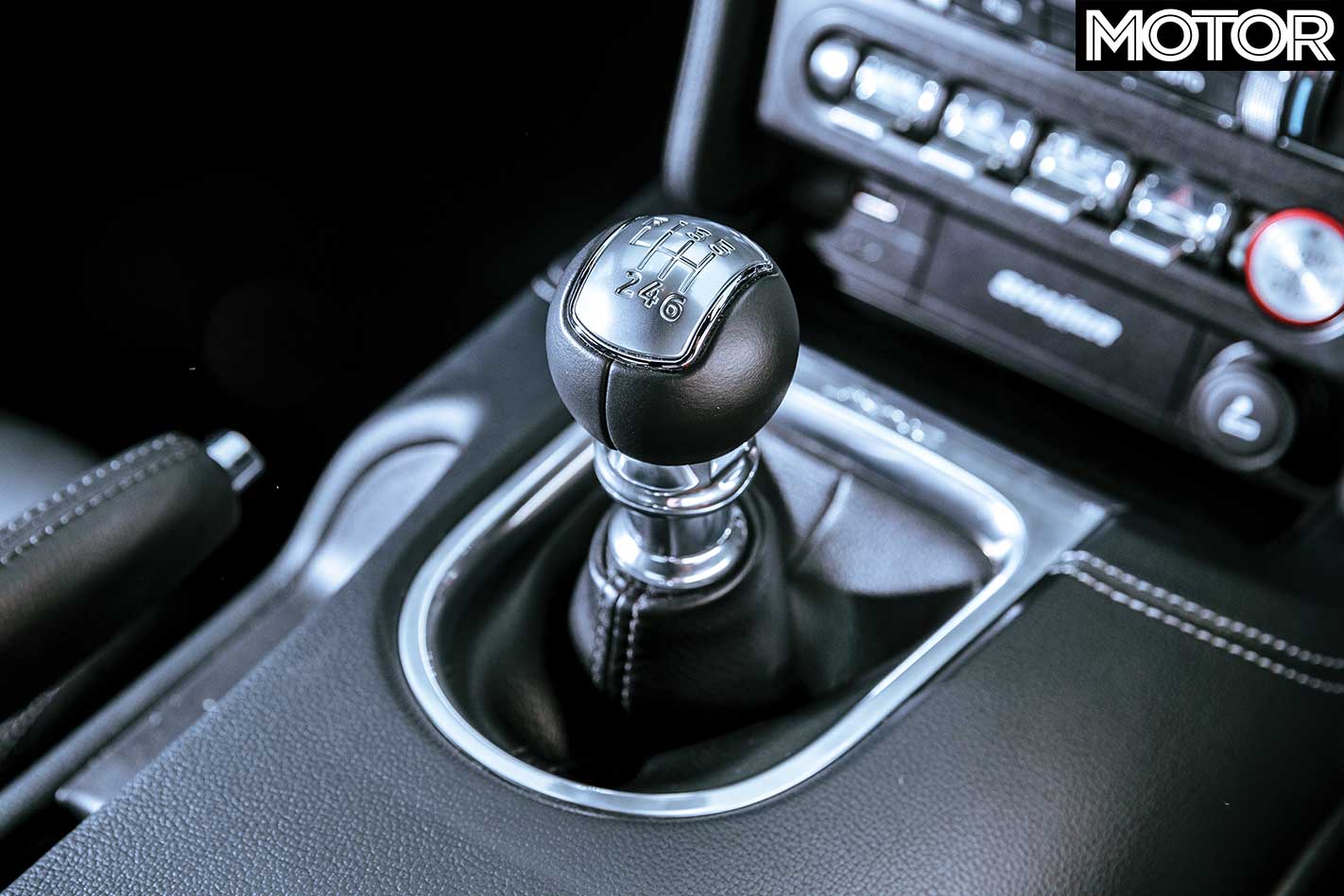
Manual or automatic. It’s a debate for the ages that the WhichCar office dives into all-too-easily. But which is the better buy?
Toppling a lap record
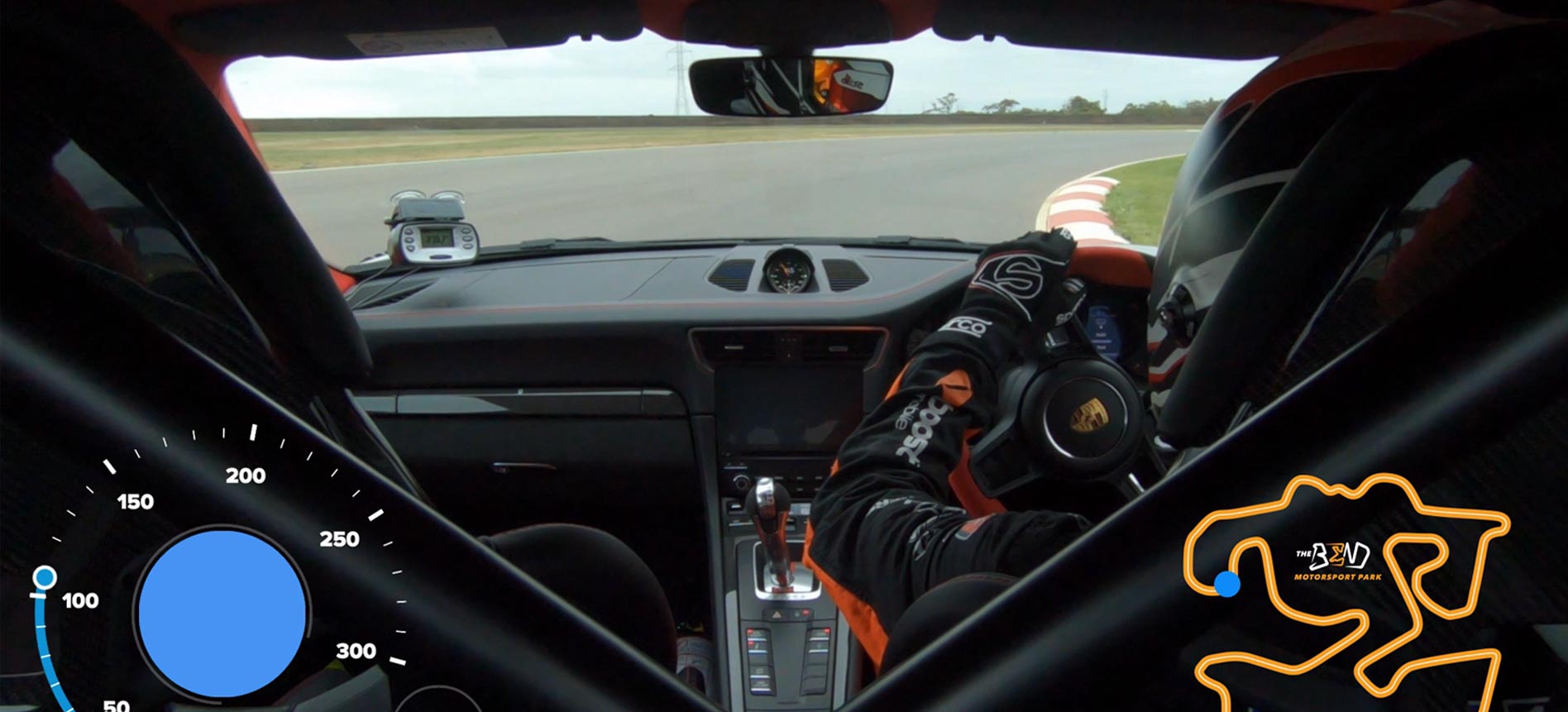
Back when the Porsche GT2 RS was unveiled, it was taking track records all over the world. We saw the perfect opportunity to take a record of our own with the new Porsche 911 GT2 RS at the newly-built Bend Motorsport Park. Watch on as Warren Luff wrestles the Porsche toward a production car lap record at the second longest circuit in the world.
That about wraps us up for Season 2 of WhichCar TV! Thanks for your support over the past year and we hope to see you again for the next season coming in 2021.
WhichCar TV Season Two Episode 30
3:30pm Sunday September 27, Channel 10
WIN A TRIP TO THE MALDIVES WITH WHICHCAR
For season two, we’re also offering an amazing prize for our viewers. How does a trip to the Maldives sound? Pretty awesome, right?
The competition is open NOW so make sure you tune into WhichCar TV on Channel Ten at 3:30pm Sunday AEDT.
And, if for some reason you can’t (and it had better be a good reason!) then there’s a host of ways to catch up on the show, check out behind-the-scenes stuff and find out more about the cars Aussies want to buy.
For example, our weekly podcast, our Facebook page and our YouTube channel are standing by 24/7.
MISSED THE SHOW? Catch up at Ten Play
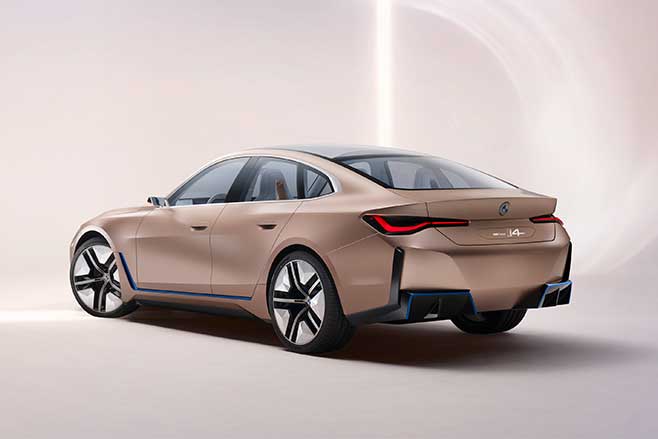
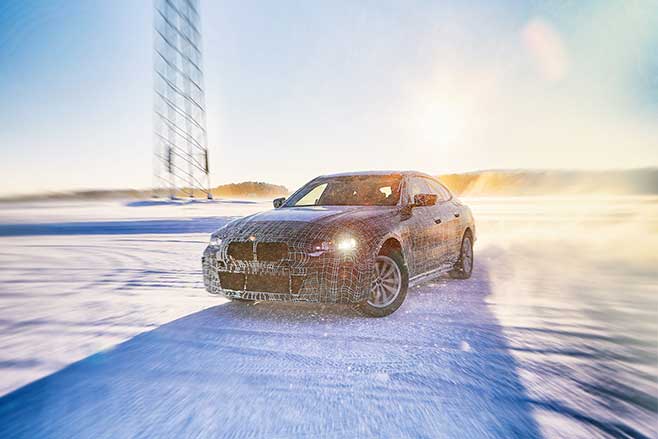
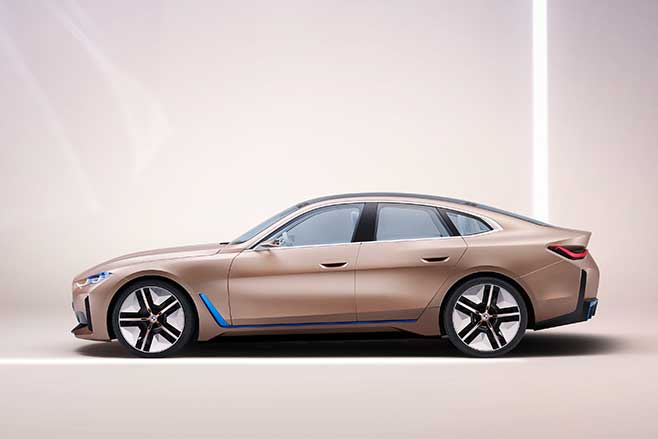
It’s a bold new era for the BMW M Division with the go-fast brand’s first all-electric model to appear next year in the form of the 2022 BMW i4 M Performance.Speaking to Australian media, M boss Markus Flasch confirmed the hot i4 will make its debut in 2021 while also providing more detail around how the brand will incorporate electrification into its future.
“No mistakes in our EV strategy” says BMW “It’s not a big secret that next year we will launch the first battery electric M car in the performance segment based on an i4,” said Flasch, “And then we’re working on hybrid, electric [and] electrified performance and high performance cars [but] it’s too early to disclose which models are going to be.”
BMW reveals its first all-electric SUV the iX3 BMW M has yet to dip its toe into the hybridisation waters with even a 48-volt system, Flasch explaining that such a system was considered for the new M3 and M4 but the desire to retain a manual transmission was one of the reasons that prevented it.“At BMW M we will pick the appropriate technology for a segment of the market,” he said. “The question for us is: when can we combine the power of the electric systems that we develop in the company and bring it into an M package? Steering wise, lateral dynamics wise? It’s not just about power output and longitudinal performance. And sounds, of course, is another one.
“The technology we’re looking at on the high performance side will take some more years to come. You can imagine that weight will play a significant role. Driving dynamically, there are opportunities within electrified powertrains in the control systems and this is something that needs further development.
- Three-tier Puma range arrives in Australia
- Priced from $31,990 driveaway
- Replaces unloved EcoSport in local range
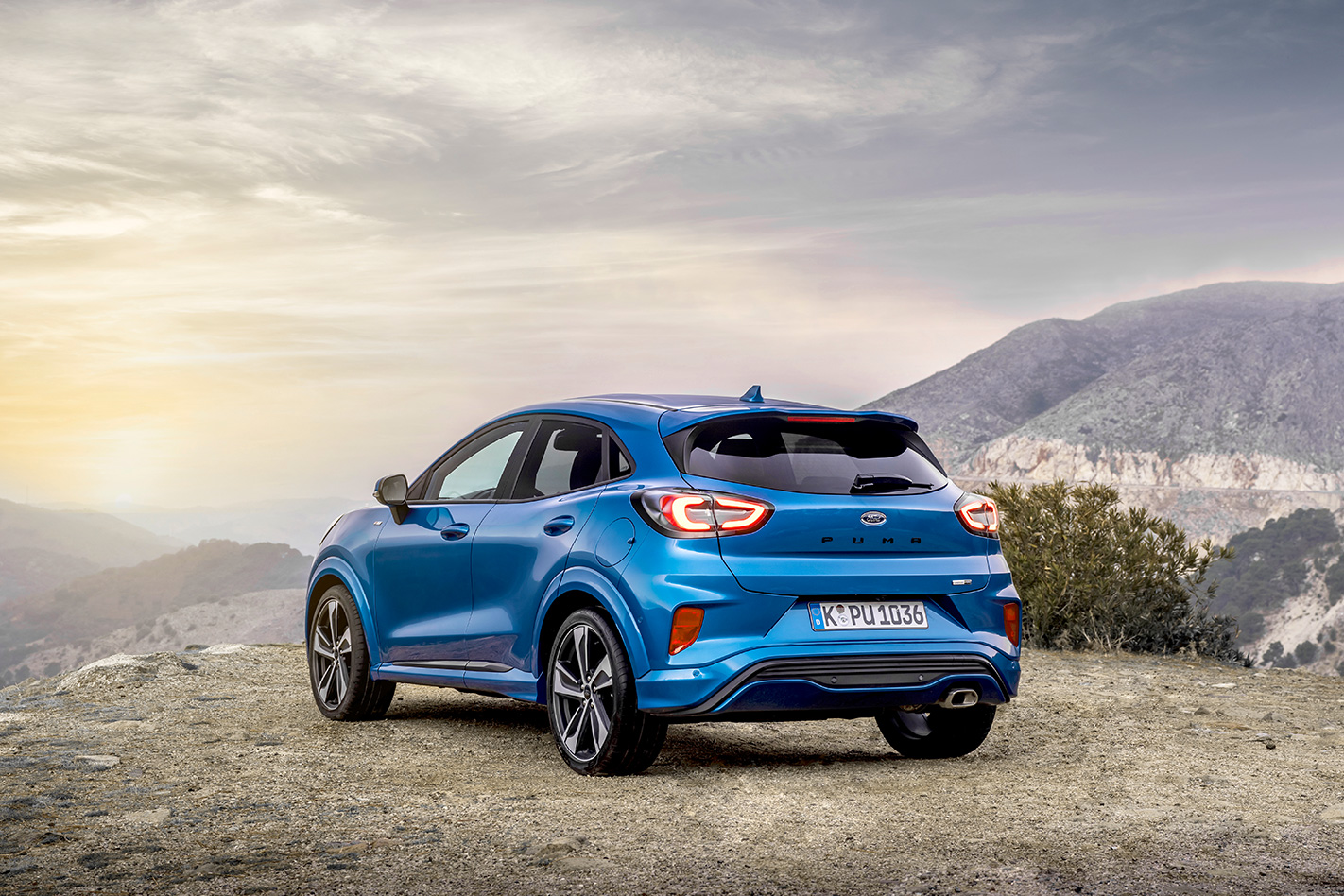
The Ford Puma is an all-new model for Australia, with cars arriving into Australian dealerships in late September.
It’s a space that Ford has dabbled recently with minimal success, withdrawing the unloved EcoSport last year after it failed to ignite interest.
Ford Puma prices and specs
Ford will offer the new Puma in three grades.
An entry-level car simply named Puma will kick off the range from $31,990 driveaway, before stepping up to the sporty-styled ST-Line for $33,990 driveaway. Capping off the three-strong range is the ST-Line V which will cost $36,990 driveaway.
Ford’s small/mid SUV product manager Lionel Santaso told WhichCar that the driveway pricing would be offered until the end of the year. “We have every intention of remaining competitive as long as we can,” he said. “We’re always monitoring the market and we’ll react accordingly.”
The driveaway pricing has been added as part of a ‘Desk Drive’ program which will also see Ford displaying the new Puma via Ford Australia’s Facebook page to prospective shoppers.
Its arrival should be a boon for Ford’s fortunes in the commercially critical SUV market. The Puma will go a long way to providing Ford customers with a more up-to-date and technologically-minded replacement for the unloved Ford Ecosport, which is the company’s previous contender in the light SUV segment.
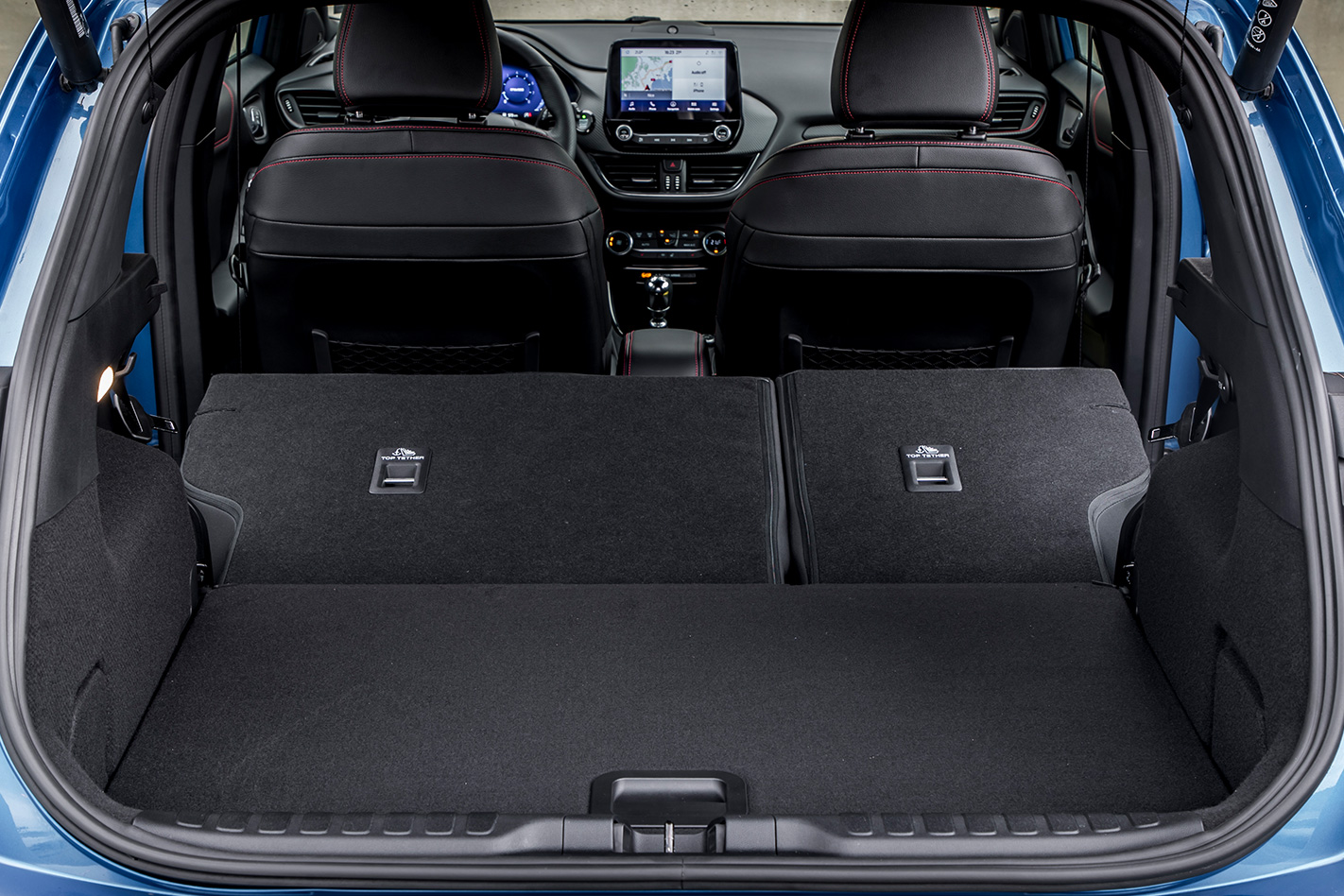
The Puma is based on the same platform as the Fiesta, and features a low, tapered roofline that slopes back toward the boot, which offers 456 litres of cargo space.
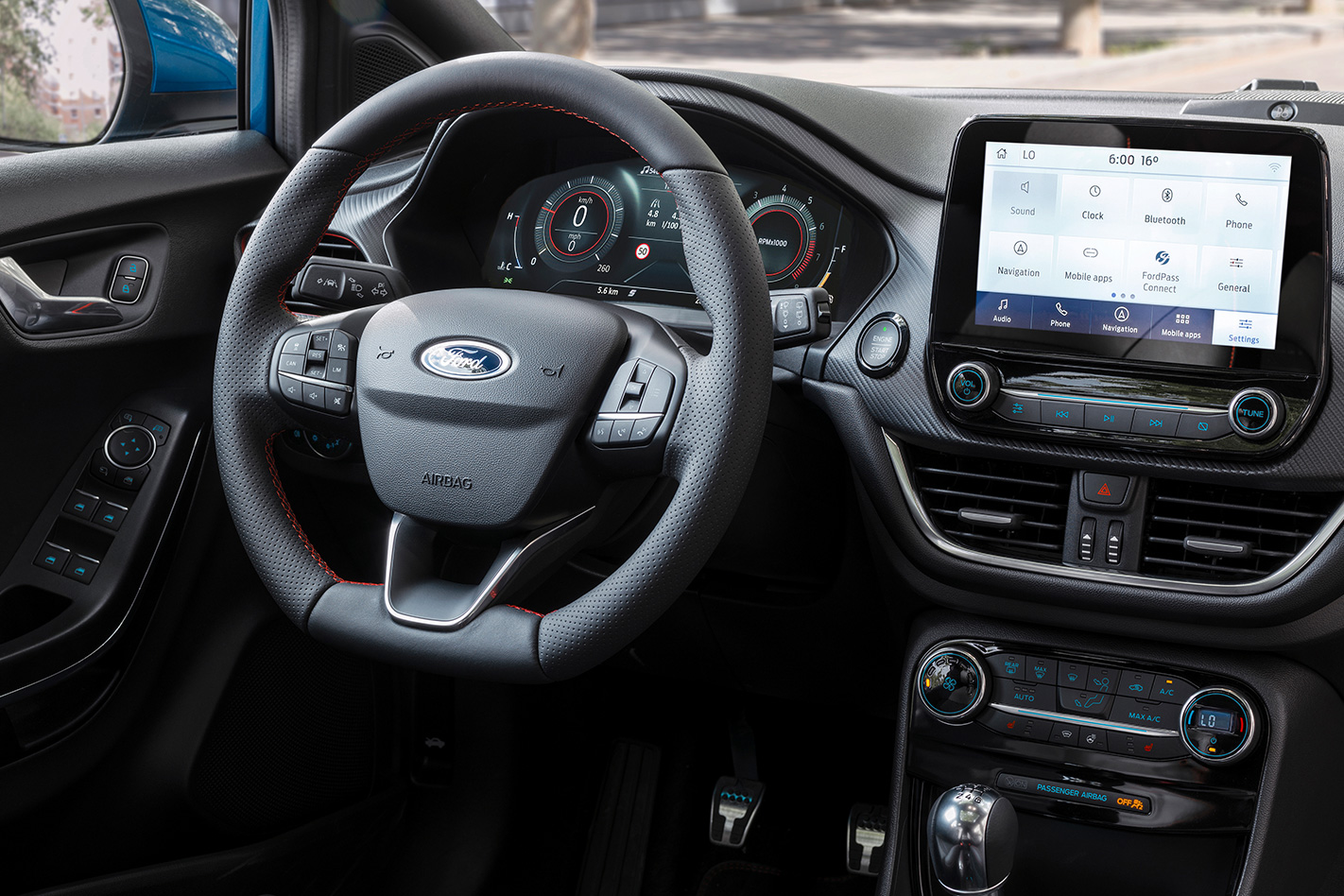
The interior borrows a number of design cues from the new Fiesta (which is only available in ST spec) and Focus, like an 8.0-inch touchscreen infotainment system and adds a fully-digital instrument cluster.
Ford’s SYNC3 infotainment system will feature with Android Auto and Apple CarPlay connectivity, wireless smartphone charging is standard and all cars will receive a reverse camera.
Step up to the ST-Line mid-tier specification and you’ll get a sporty-styled front fascia, 17-inch alloy wheels, sports suspension, and red-stitched interior trim.
The top-of-the-tree car is new to Ford and will be called Puma ST-Line V (V for Vignale).
The premium sports variation will feature chrome window surrounds, privacy glass, 18-inch 10-spoke alloy wheels, keyless entry, leather-accented seats, automatic climate control, a powered boot hatch and a Bang & Olufsen 10-speaker audio system.
Available at extra cost on all grades is a $2000 panoramic sunroof, $250 black coloured roof rails, $750 powered boot hatch (standard on ST-Line V), the aforementioned $1500 Park pack, $650 prestige paint, and a $500 black painted roof option.
Ford Puma safety specs
The Puma has been awarded a five-star ANCAP rating in Australia, using data sourced from European NCAP testing.
The rating has been applied under 2019 rules; the latest 2020 regulations are more stringent, with faster, harder frontal and side impacts, as well as tests to measure what’s known as far-side occupant protection.
These tests are designed to encourage the addition of measures like centre-front airbags, which can help prevent occupants from hitting each other in a crash.
Safety equipment and driver-assist technologies in the Puma make up a strong base of standard equipment and include autonomous emergency braking with pedestrian detection, lane departure warning, rear parking sensors, traffic sign recognition, and a driver impairment monitor. A park package is available across the line-up which brings adaptive cruise control, active parking assists, front parking sensors and blind-spot detection.
Ford Puma engine and gearbox
The Puma is powered by a 1.0-litre turbocharged three-cylinder engine. Australian cars will get a 92kW/170Nm tune with cylinder deactivation technology, with a claimed combined fuel economy figure of 6.3L/100km. All cars are front-wheel drive.
Built in Romania, the Puma is also offered with a 48-volt mild-hybrid system in overseas, but only in combination with a manual transmission.
The Puma will only be specced with a seven-speed automatic transmission for Australians, which also rules out any chance of a diesel Ford Puma, which are also manual-only.
No Ford Puma ST for Australia, Puma EV being developed
It also cruels the chances for the just-previewed Ford Puma ST coming to Australia, thanks to its manual gearbox-only 1.5-litre three-cylinder powertrain that’s lifted from the Fiesta ST.
Interestingly, a Ford spokesperson alluded to plans for an all-electric Ford Puma that are currently in train.
“We do have plans for the battery-electric vehicles on the Puma,” said the spokesperson.
“Stay tuned, we are working on that indeed, along with a sister model, a commercial model, so-called V769, the Courier successor that the Ford Design team is developing, which is also desperately asking for battery electric vehicles.
“So the platform is prepared for that.”
The Courier referenced is not the Ford Ranger‘s 1980s ute predecessor, but a small commercial van that was sold in the UK and Europe in the 1990s.
Ford Puma competitors
The Puma will drop into a competitive space currently dominated by the Mazda CX-3 and Mitsubishi ASX which start at $22,710 and $23,990, respectively.
However, the Puma sports a higher level of safety spec than the base ASX, while Mazda has shifted the new CX-30 – which starts at $29,990 – into the small SUV space and bumped the CX-3 down to light SUV status.
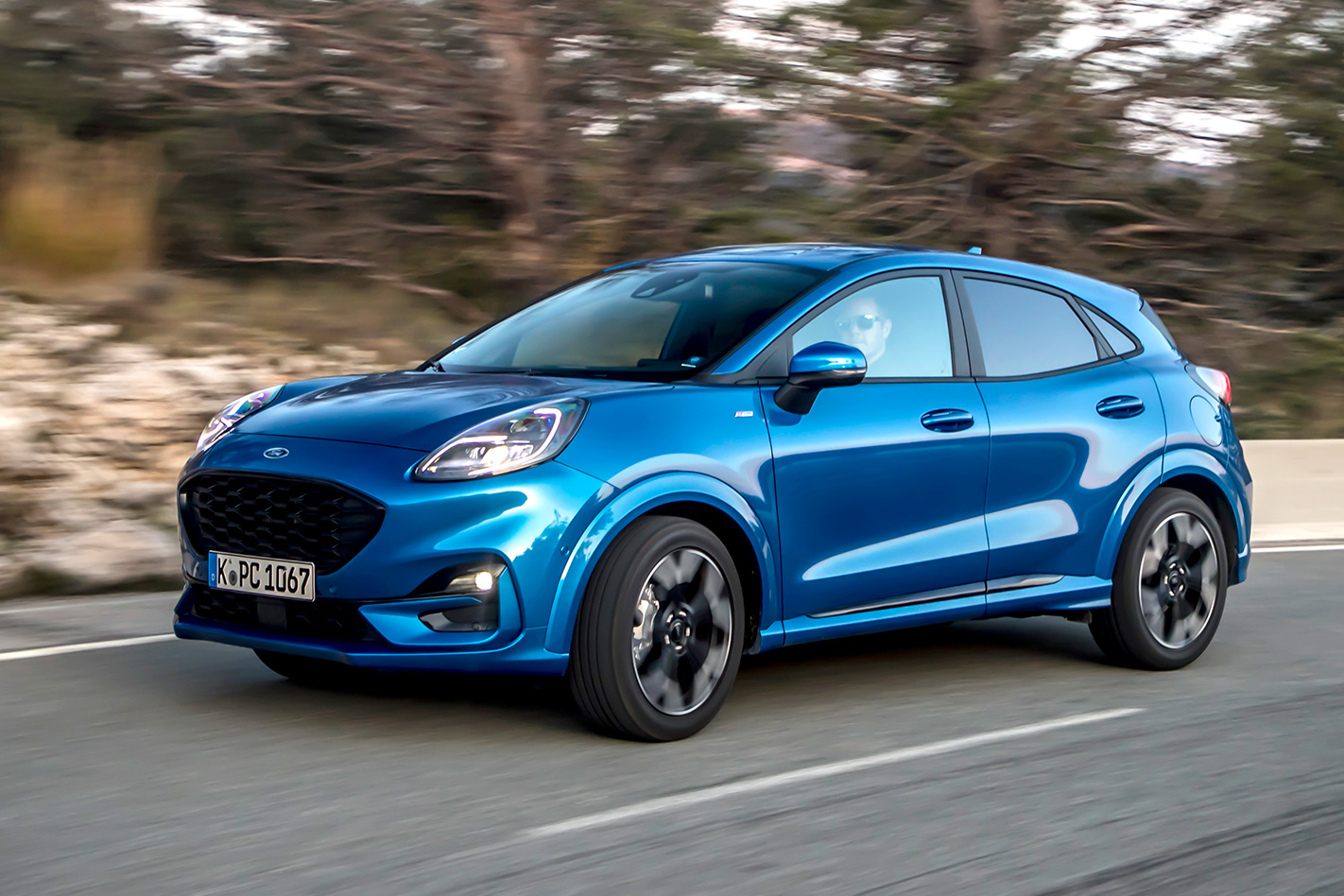
“The all-new Puma is a cutting-edge, sharply designed and smartly packaged urban SUV that strengthens customer choice in Australia,” said Andrew Birkic, the new CEO of Ford Australia.
What do you think of the Ford Puma? Let us know below!
2020 Ford Puma pricing*
- Puma – $31,990
- Puma ST-Line – $33,990
- Puma ST-Line V – $36,990
Tesla’s Elon Musk still staunchly believes his dream of full self-driving autonomy will become a reality before year’s end, insisting that the upgrades are coming to Autopilot in about a month.
At Tesla’s annual stakeholder meeting – which also broached topics including the Cybertruck, Tesla Model S Plaid powertrain and battery improvements – Tesla CEO Elon Musk revealed that the EV manufacturer is currently preparing a beta-testing version which will be privately tested within a number of months.
Musk revealed that he was currently driving a ‘bleeding edge version’ of Autopilot and while he didn’t mention specifics on what it could do, he hinted that owners will get a chance to experience it soon through a private testing beta program.
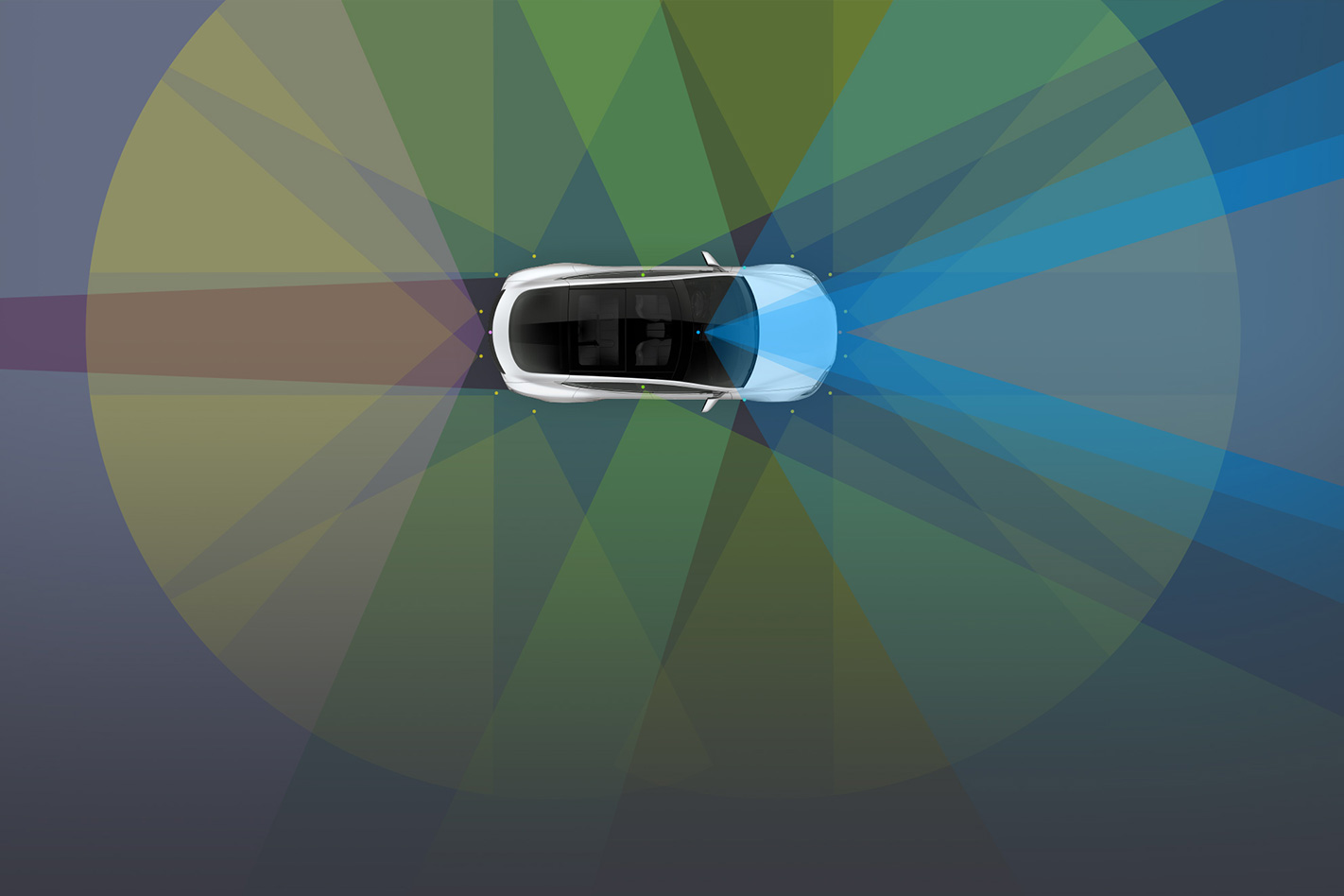
“I think we’ll hopefully release a private beta of Autopilot (the full self-driving version of autopilot) in, I think a month or so. And then people will really understand the magnitude of the change,” said Musk.
Musk explained that Tesla engineers have overhauled the way Autopilot sees the world, which can now label different objects in 3D video rather than 2D images.
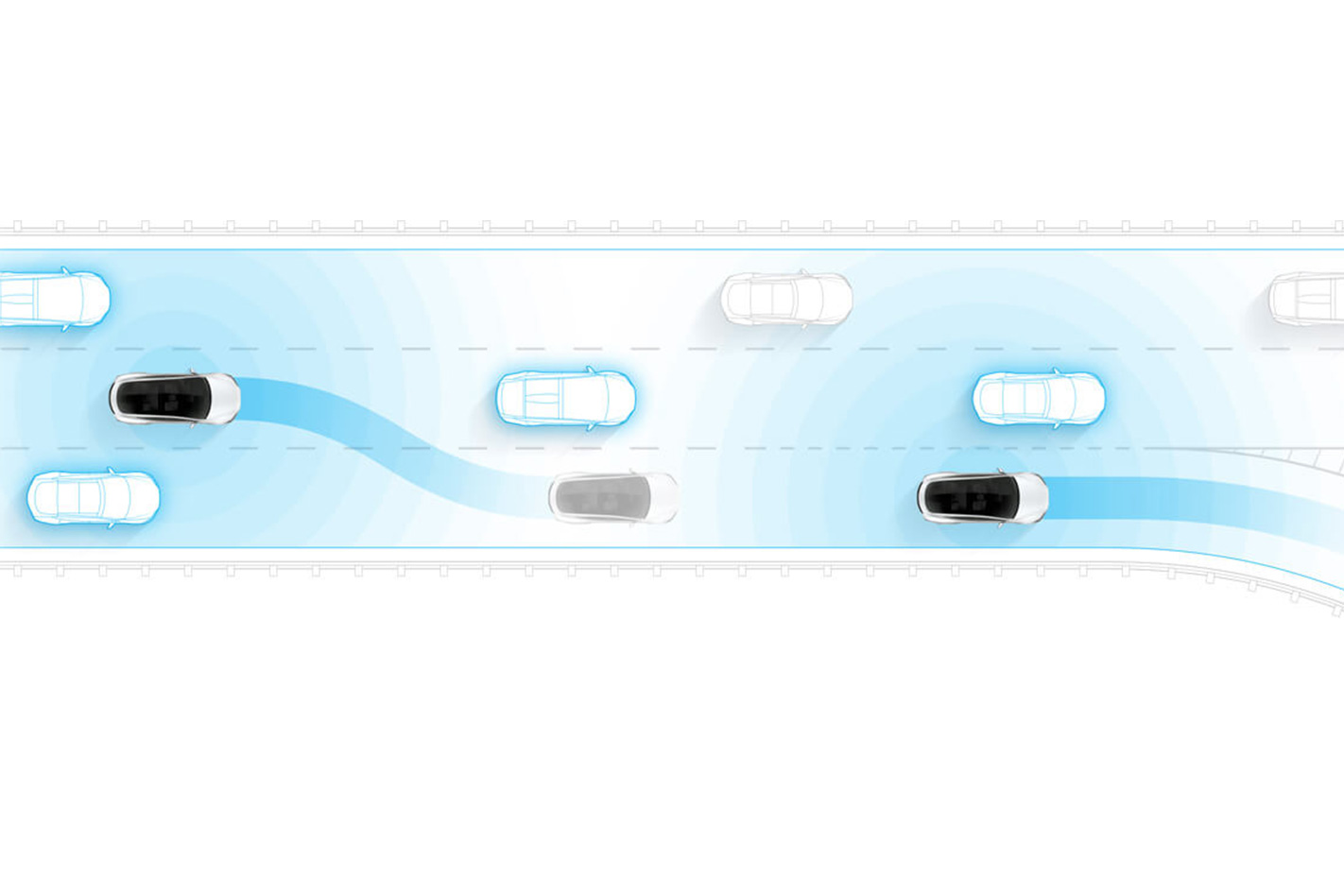
Others aren’t so sure about the real-world viability of the self-drive tech, as evidenced below in the original story.
ORIGINAL STORY PUBLISHED 24/07/2020
It’s been quite the week for Elon Musk. Tesla recorded its fourth straight quarter of profit in a row despite the coronavirus’s impact on the automotive industry, while Musk himself came into a potential US$2.1b ($4b) windfall after the company hit another market capitalisation goal that released to him a new tranche of discounted Tesla shares.
He also announced that Texas would be the base for Telsa’s third so-called Gigafactory, where the company plans to build the forthcoming Tesla Cybertruck, as well as Model 3, Model Y and its proposed semi-trailer.
However, his recent doubling-down on claims that Tesla vehicles will be capable of level five autonomous driving – the level at which a car would not even require a steering wheel – as soon as this year has been slammed by industry experts as “not being on a plane of reality”.
“I remain confident that we will have the functionality, or the basic functionality, for level five autonomy complete this year,” Musk told the World Artificial Intelligence Conference in Shanghai early in July. “I think there are no fundamental challenges remaining for level five autonomy.”

Getty Images
He did suggest, however, that there are still bumps in the road ahead.
“There are many small problems, and then there’s the challenge of solving all those small problems and putting the whole system together,” he said.
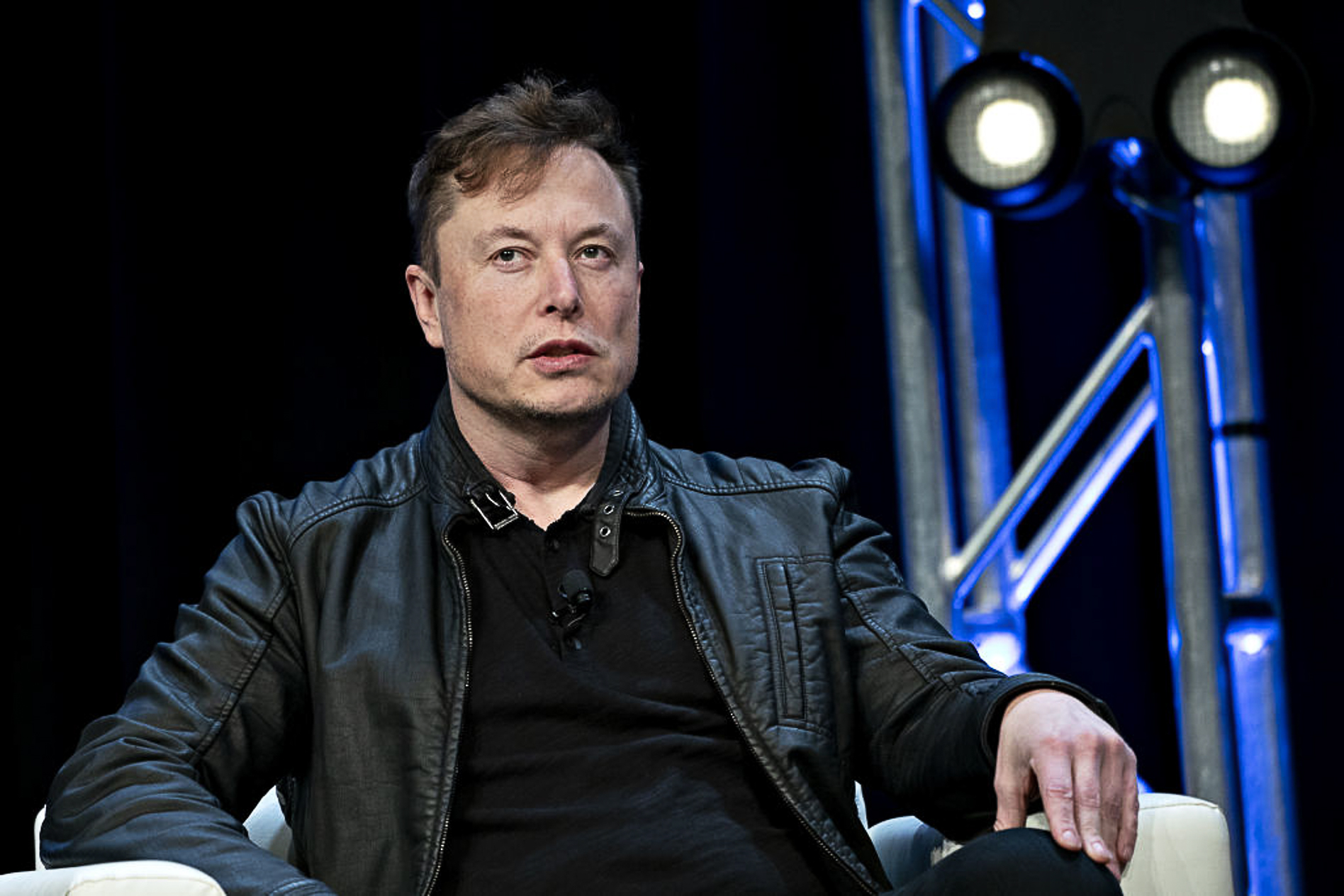
Musk in San Francisco last year/Getty
Despite the disclaimer, several US experts from various fields have lambasted the claim.
“None of this is on a plane of reality,” Jason Levine, the executive director of the US-based Centre for Auto Safety and a former communications director who has worked for Ford and Chrysler, told US site Automotive News [paywall].
“It’s an absurd idea at this point in time with the technology available and infrastructure available and complete unwillingness of Tesla to acknowledge its mistakes.”
Other experts, like Sam Abuelsamid, the principal analyst at Guidehouse Insights, are even more pointed.
“The cars they are building will never be level five, period,” he said. “It’s nonsense. He needs to shut up until he can deliver something.”
Abuelsamid, among others, suggests that Tesla’s reliance on camera- and radar-based systems will prevent it from ever reaching Musk’s lofty goal. Camera systems, in particular, are easily affected by adverse weather conditions.
Tesla’s Autopilot system is, despite its name, equivalent to level two autonomy, where steering assistance and advanced braking is able to provide limited automated control of a vehicle under the supervision of an active driver.
The system has been found wanting in certain situations, with multiple incidents involving Teslas reported to US authorities.
Most recently, a Taiwanese Tesla owner smashed into an overturned truck on a freeway after wrongly believing that his Model 3’s Autopilot system would prevent such a crash.
German authorities have also given Autopilot the thumbs-down, forcing Tesla to rename the system.
Musk went on record last year saying that one million Teslas would roll out as driverless robo-taxis in 2020, but nothing has been announced since.
Even before the slowdown effects of COVID-19 on the industry, most major automakers have wound back on previous claims about autonomous tech in their vehicles.
- Tesla to produce batteries in-house
- New battery design will boost range by 16 percent
- Cobalt to be eliminated from battery production
Speaking at the highly-anticipated Battery Day presentation at the Tesla Gigafactory in Freemont, California, Tesla co-founder Elon Musk said the company plans to significantly increase battery production to make its electric vehicles more affordable.
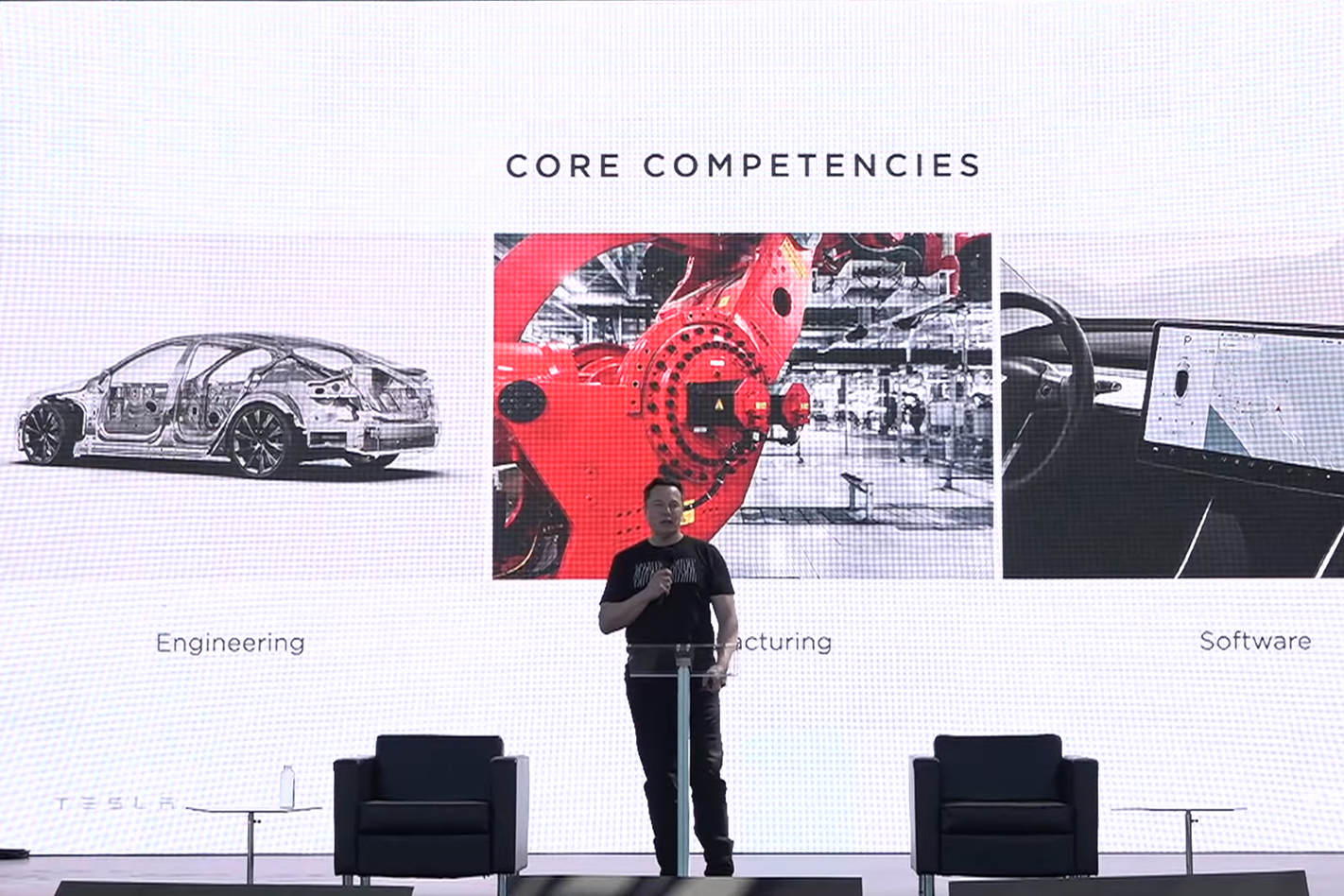
“About three years from now, we’re confident we can make a very compelling (US) $25,000 electric vehicle that’s also fully autonomous,” he told socially distanced Tesla shareholders and owners sitting in their cars drive-in style at the event, which was also streamed live around the world on YouTube.
He did not say if an affordable new Tesla model was actually under development, though, or even if it had a name.
Musk had previously predicted Tesla would reduce the costs of production of its vehicles to produce a US$25,000 EV back in 2018, also giving that a three-year deadline, but this time he says it will be possible through the company’s ambitious plan to produce more batteries more efficiently. If the plan comes off, the company will make the cheapest Tesla to date… and it won’t hurt the Tesla share price, either.
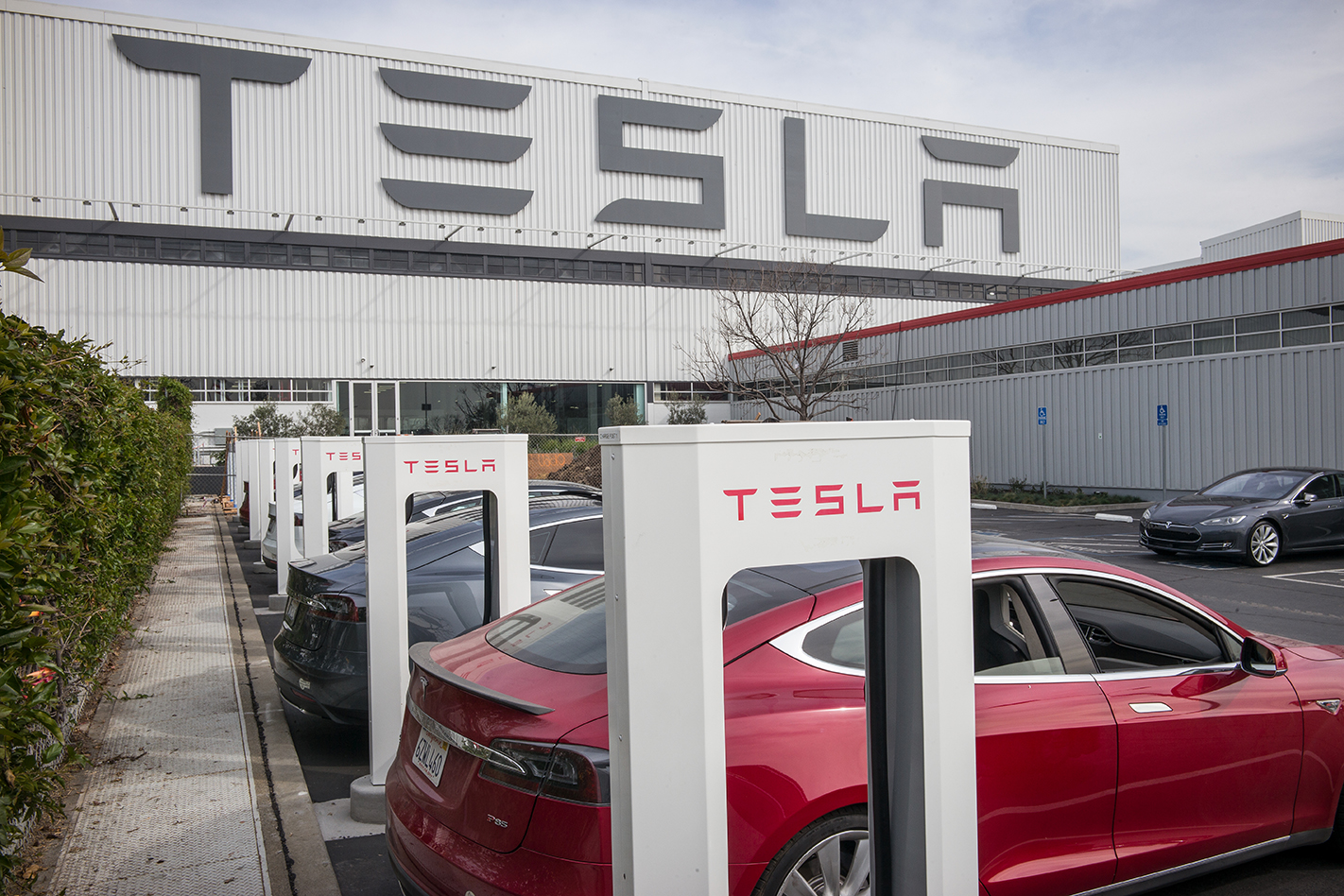
This includes producing its own newly-designed lithium-ion batteries from the ground up and increasing annual total battery output from 100 gigawatt-hours (GWh) to 3.0 terawatt-hours (TWh) by 2030 without having to build more factories – a GW is a million watts, a TW is one million, million watts.
He said producing cheaper batteries in bigger numbers was the best way to reduce the cost/kWh curve to make EVs more affordable, adding it was no point making cars that people desired if they could not afford them.
“It’s super critical we make cars that people can afford,” he said.
New battery design
One of the ways Tesla is working to bring costs down is by producing its own redesigned ‘tabless’ lithium-ion batteries from the ground up.
The new batteries will be bigger but more thermal-efficient by doing away with the tab or strip that connects the cells and slows the flow of electrons.
It’s anticipated the tabless batteries will produce six times more power and increase range by 16 percent – this would give a Tesla Model S a range of around 750km.
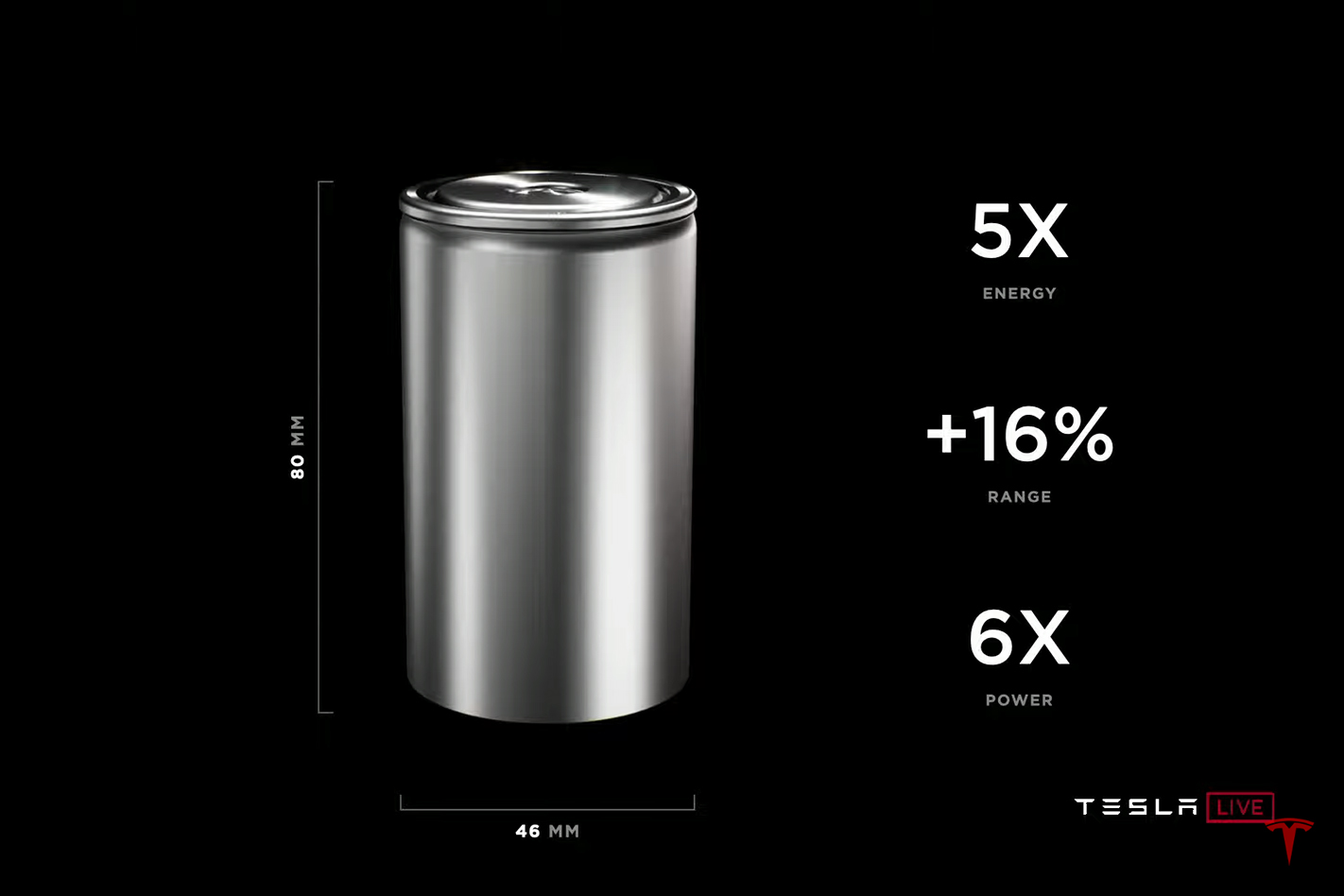
Tesla is also working on a new dry-cell that eliminates the need to apply a wet film on the electrode, which is one of the most energy-intensive stages of the battery-making process. However, the solution, which involves applying a dry Nickel film is not yet suitable for large scale production.
It is also looking to eliminate the use of cobalt in the battery cathodes in favour of nickel. As well as making batteries cheaper, this will do away with the cobalt mining process that is plagued by human rights issues such as child labour and hazardous working conditions.
The battery and vehicle manufacturing process is also being streamlined by reducing the number of stages and components required to speed up production.
Musk said this would allow one factory to produce what five could currently do.
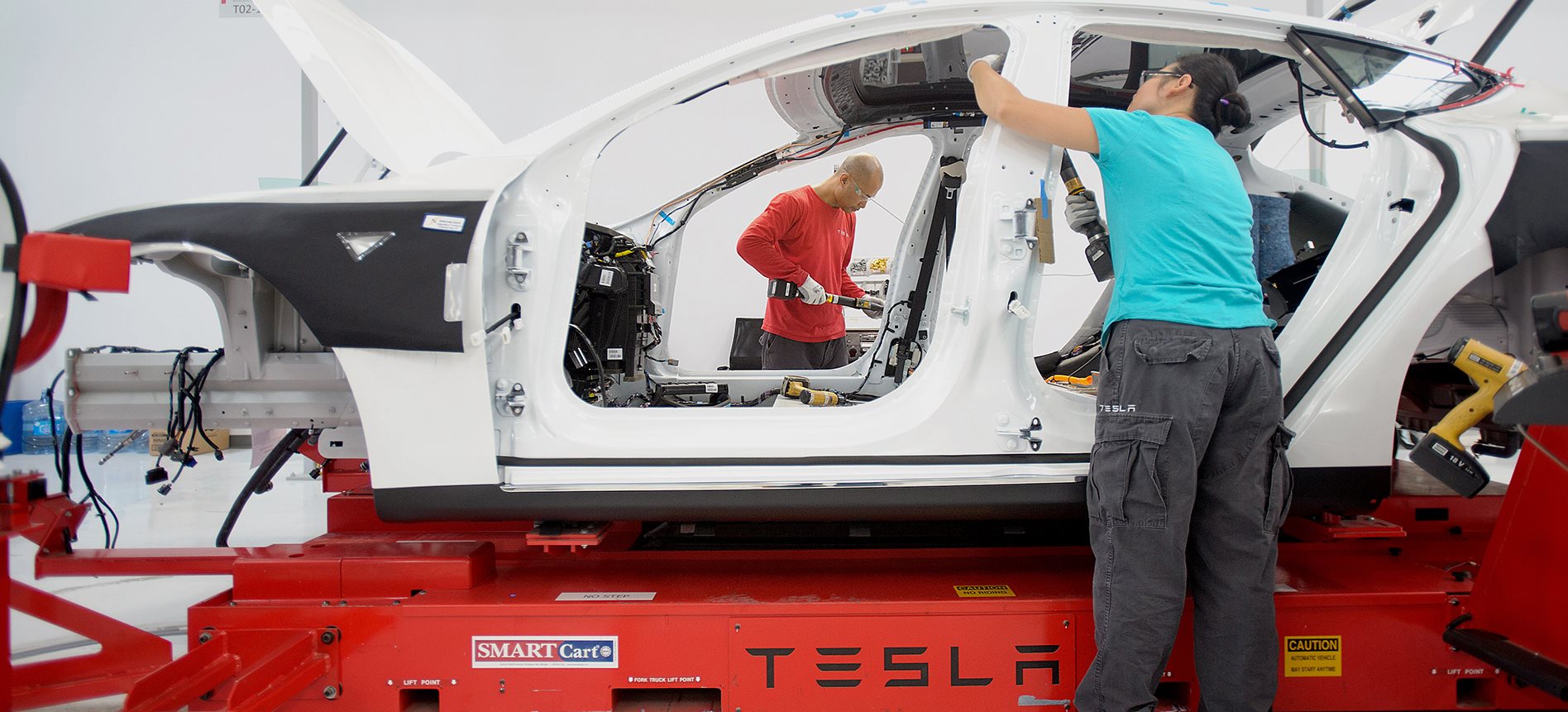
“Tesla is aiming to be the best at manufacturing of any company on earth,” he said.
“Every car company will have long-range electric cars, every company will have autonomy but not every company will be great at manufacturing.
“Tesla will be absolutely head and shoulders above everybody in manufacturing. That is our goal.”
Tesla has said the order books are open on the Model S Plaid, a car it claims will be the quickest-ever production car in more ways than one.
When it arrives in late 2021 Tesla CEO Elon Musk is claiming that the Plaid, which we’ve already spied testing around the Nurburgring Nordschleife and California’s Laguna Seca Raceway, will lap the latter track faster than anything else before it.
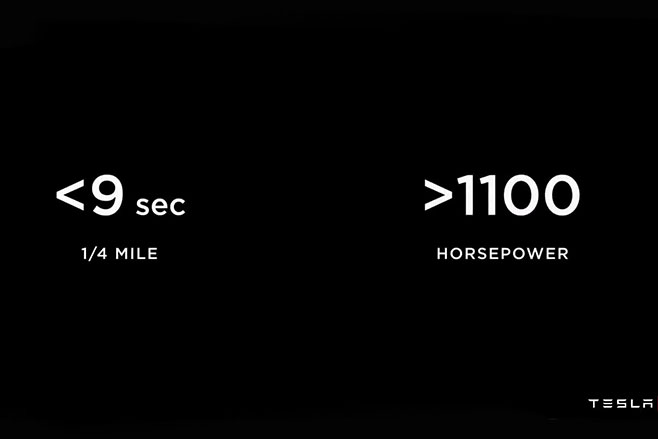
Key to this will be its three-motor Model S powertrain sucking juice from a battery Musk says will be rated at over 100kWh and allow it to produce over 820kW.
Not surprisingly he’s mentioned acceleration figures to go with that output figure, saying that the Plaid will hit 97km/h from rest in less than 2.0sec and blitz the quarter-mile (402m) in less than nine seconds.
Oh, and it can reach a claimed 320km/h.
Full details are yet to be revealed, so we’re left to deduce that this much power (combined with the sticky tyres we’ve seen on the prototype before) as well as the big brakes and enhanced aerodynamics is how it’s officially set a 1min 30.3sec lap at Laguna Seca Raceway.
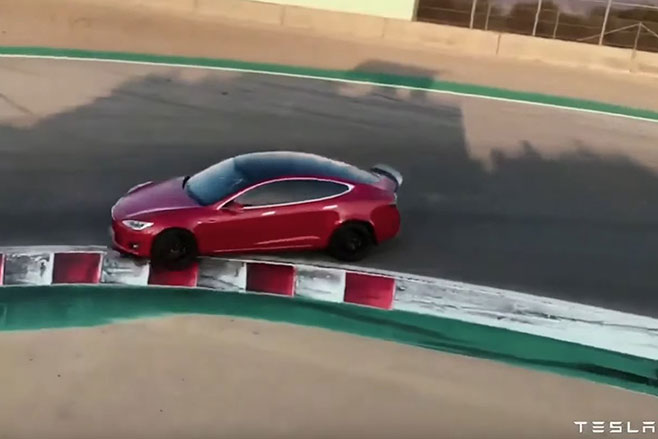
That’s impressive. Already the Plaid has shaved six seconds (!) from its previous efforts. But to take home the production car lap record it’ll need to find another three seconds to beat the 1min 27.2sec lap the McLaren Senna set in the hands of US publication Motortrend.
“We’re confident the Model S Plaid will achieve the best track time of any production vehicle ever. Of any kind. Two-door or otherwise,” Musk said.
But the Plaid’s set to stun on driving range as well, with the new car promised to offer over 840km.
The news has emerged from Tesla’s Battery Day event today in the United States, which involved updates on manufacturing processes and improvements in battery technology for Tesla models, including an announcement for a new ‘Super Battery’ and the Musk clarifying important information on the Cybertruck.
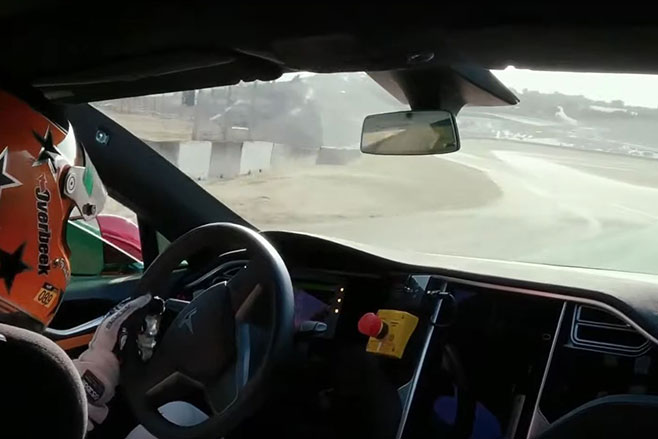
A local Tesla spokesperson has told MOTOR the Plaid is coming to Australia, pointing to the fact pricing has been revealed on its local website at just over $207,990 before on roads, while options like 21-inch wheels, interior and exterior finishes, and Tesla’s AutoPilot option are also available.
Musk has said the Model S Plaid will be available at the end of next year overseas.
