
At the risk of reading from the Captain Obvious handbook, it’s clear that plenty of 4×4 ute buyers do not work from same priority list as car buyers. If strong fundamentals of the driving experience, and inclusion of the latest multimedia and safety tech were 4×4 prerequisites, then the outgoing Isuzu D-Max would have never achieved the level of sales success it has.
No, it’s clear that to regularly nudge the overall top 10 best sellers in the country, the D-Max had to be appealing to buyers with a different set of must-haves: a reputation for rugged unburstablity, a six-year warranty, affordable servicing schedule, and keen drive-away pricing.
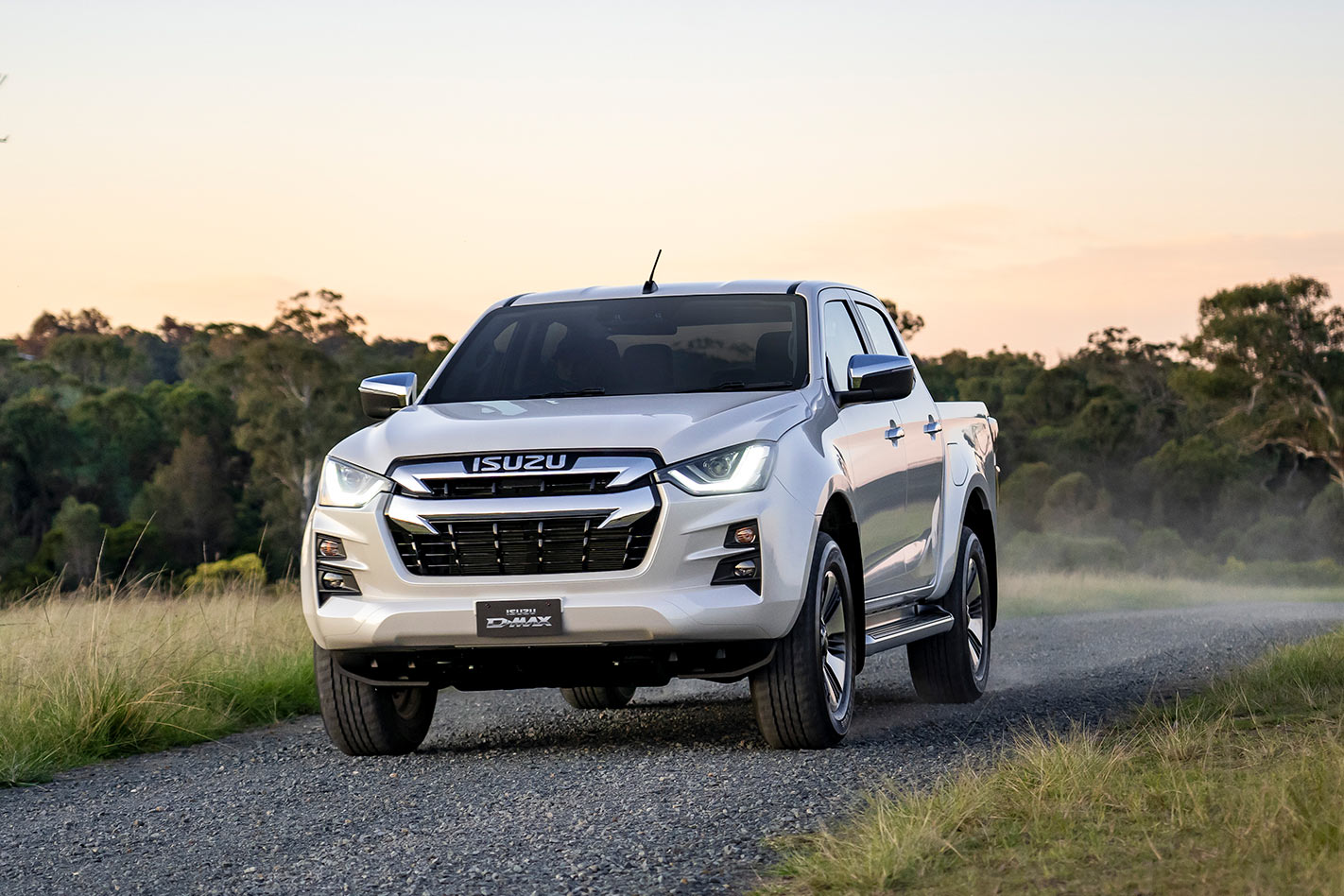
So does where does the new third-generation set it sights? We drove the mid-spec LS-U, noting that it leaps ahead of segment rivals in terms of safety and assistance tech, improves enough on the driving fundamentals to claw its way into a more competitive position against them and retains most of the virtues that were clearly always on its side. The only question will be value, as the price rises are not insignificant.
The safety/assistance list reads like what you’d reasonably expect from a well-equipped hatch or SUV, but is big news for this segment. There are now eight airbags (including a centre bag between the front occupants), while the AEB system is more sophisticated than that of rivals, using twin 3D cameras mounted in the windscreen, enabling the system to more precisely detect vehicles, pedestrians or cyclists, as well as curb you from trying to turn across traffic in front of an oncoming car. Lane-keep assist, blind-spot monitoring, and speed-sign recognition (linked to the radar cruise) all feature.
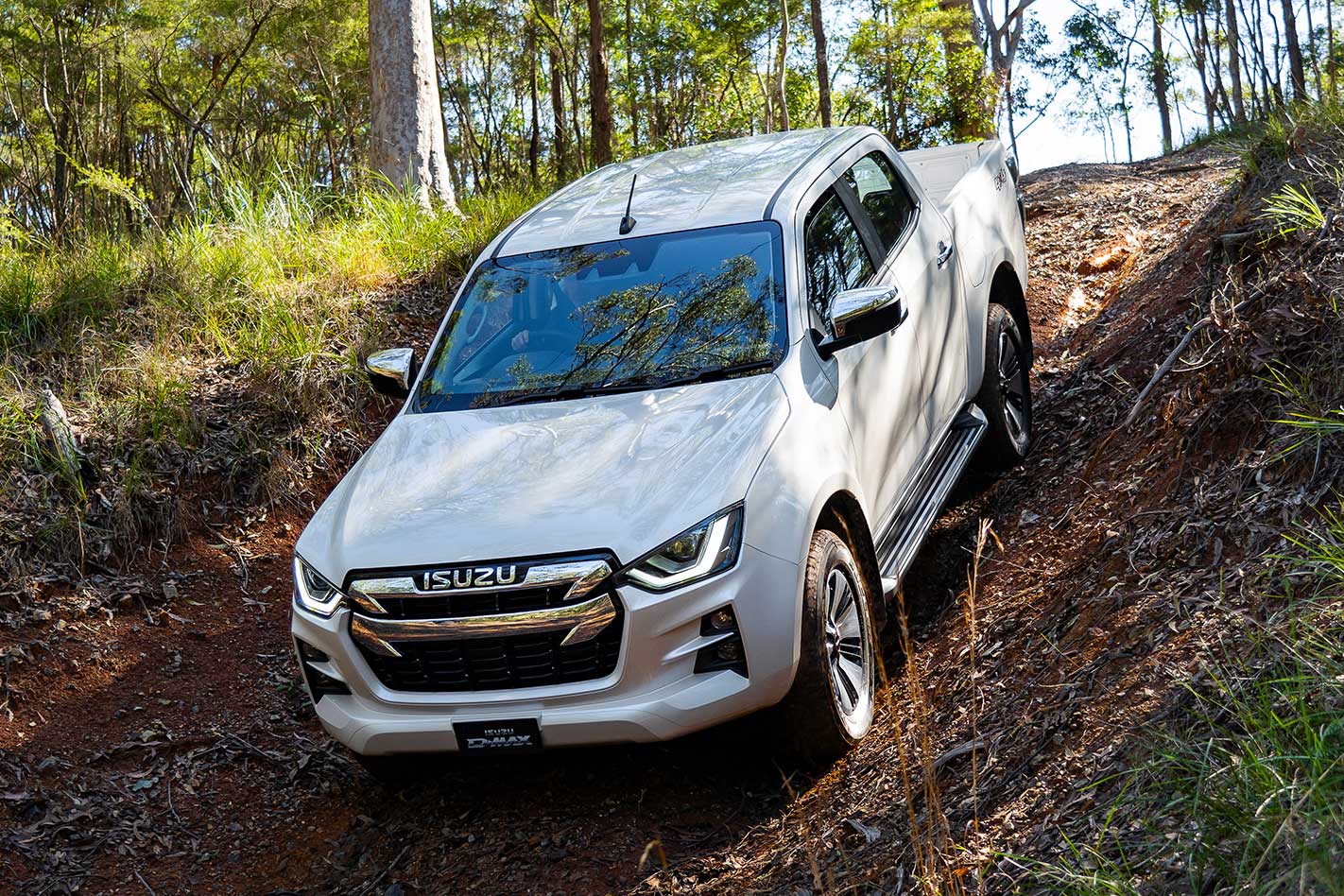
The new 4JJ3-TCX engine is an evolution of the old unit, not a clean sheet design. Developed specifically for the Australia and Thailand markets (the latter where the vehicle is built, and where it outsells Toyota HiLux and Ford Ranger), it still displaces 3.0 litres from the same bore and stroke, but features a new block, head, pistons and fuel injection system to achieve modest bumps in both power and torque. Its peaks of 140kW and 450Nm are gains of 10kW and 20Nm respectively.
There’s noticeably better suppression of NVH than in the outgoing D Max, but that’s faint praise, and the new rig doesn’t doesn’t set any class benchmarks for smoothness, quietness, or response. It’s now approaching par with Hilux and Ranger, but well short of the refined muscularity of the now-ancient VW Amarok in V6 guise.
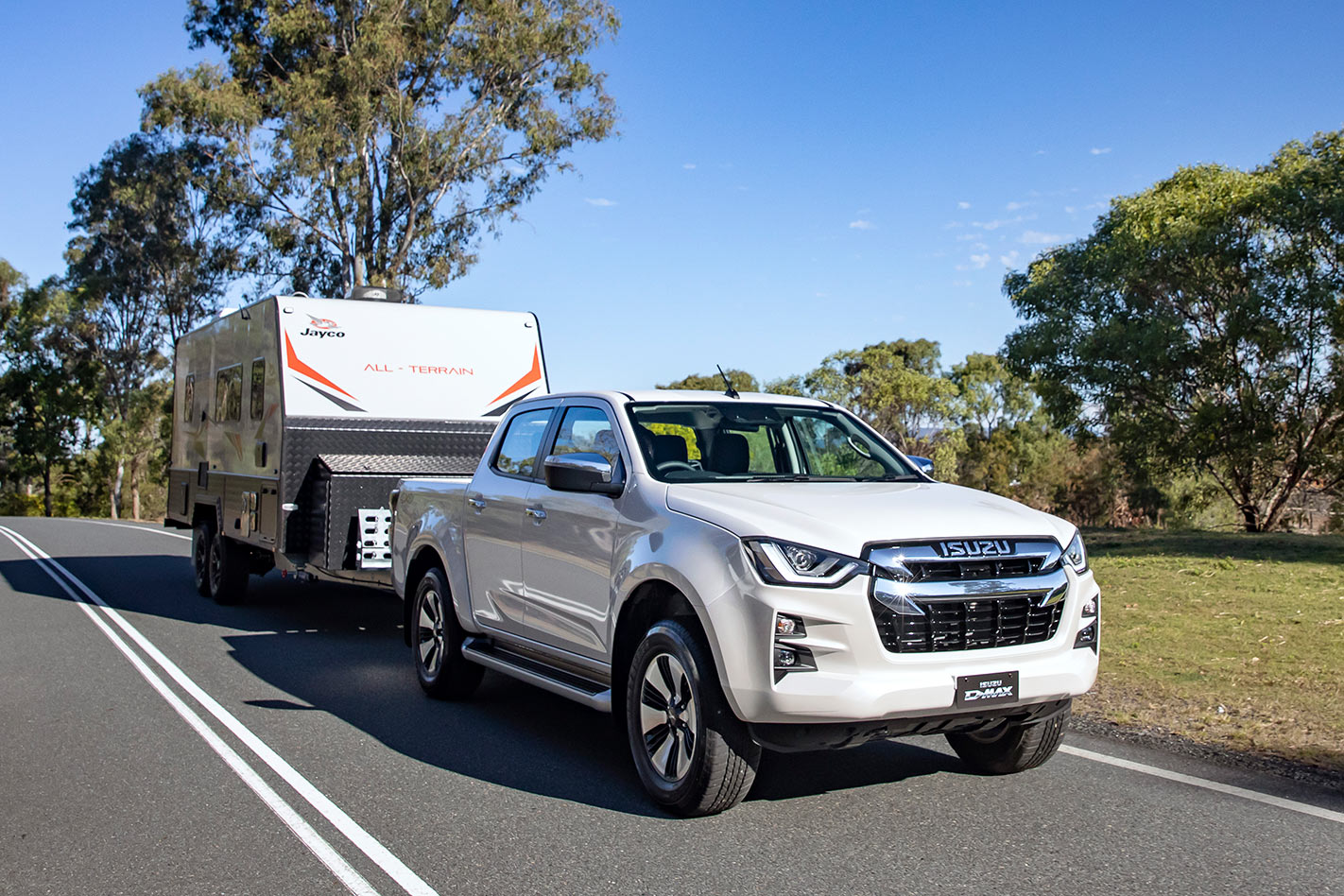
The Asin six-speed auto is also updated, now with an improved cooler (relevant for towing), and 0.2-second faster shift speeds. Despite first gear being a little taller, it still feels short, so there’s more revs and freneticism than ideal when moving away from rest or exiting intersections at low speed. No paddles to give you control, either, so you find yourself accelerating then lifting to initiate an upshift and better surf the substantial torque curve.
The new chassis features an additional (eighth) crossmember, while greater use of high-tensile steel trims weight and brings a claimed 20 percent increase in rigidity. The wheelbase has grown – up 120mm to 3125mm – but overall length is 15mm shorter. Ground clearance is marginally better(up by 5mm, to 240mm for models on 18-inch wheels) but significantly for this segment, the new chassis allows a higher overall GVM of 3100kg for all 4×4 models. That means in the heaviest model (top-spec X-Terrain at 2130kg), you’ve still got a generous 970kg of payload allowance.
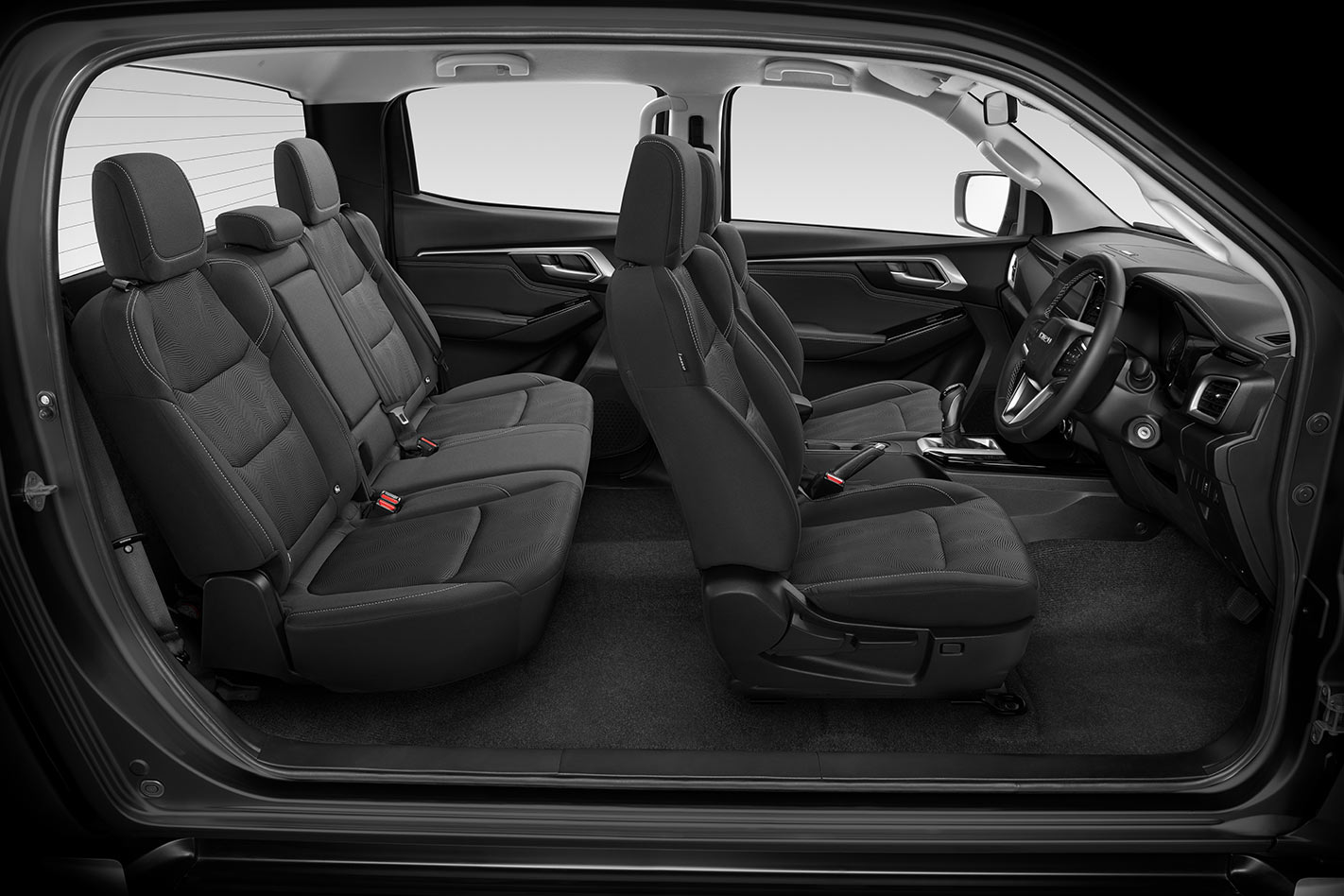
On the road, the new EPAS rack has been tuned for a soft off-centre response, quite distinct to the more alert, eager calibration of, say, the Ranger’s steering. The extra wheelbase helps composure, but the driving experience has not transformed into some kind of magic-carpet ride. There’s still the constant restlessness and incessant head-toss on typical Aussie roads that’s largely endemic to this segment. And despite the move to larger front discs, the rear still runs drums, which is disappointing.
At least owners can expect appreciably better off-road performance. In a much-needed first for D-Max, all 4×4 models are fitted with a locking rear diff (operable in low range only) while Isuzu also claims the off-road traction control system is retuned and improved; a full forthcoming off-road test will revealby how much.
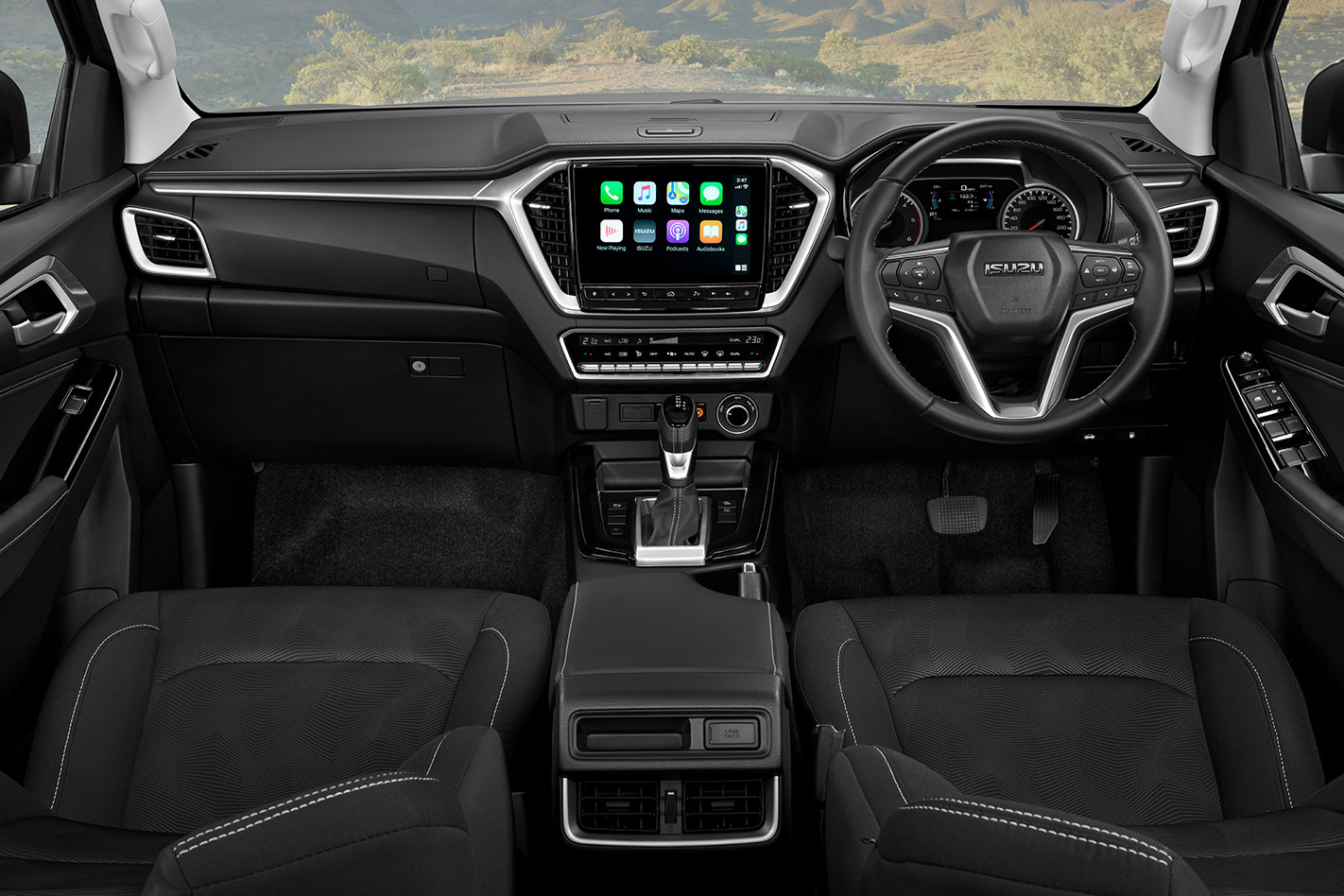
Prices have increased by between $2000 and $4000 across the four spec grades, but expect drive-away offers on some variants. Overall, Isuzu has made the shrewd move in a segment where dynamic mediocrity is no impediment to profitability. D-Max makes its biggest leap with safety and assistance, and does just enough elsewhere to not lag behind. Top 10 sellers’ list? Here it comes…
ISUZU D MAX LS-U SPECS
Engine 2991cc 4cyl, dohc, 16v, turbo diesel Max power 140kW @ 3600rpm Max torque 450Nm @ 1600-2600rpm. Transmission 6-speed automatic Weight 2045kg 0-100km/h 10sec (estimated) Economy 7.7L/100km Price $56,900 On sale Now
Plus: Advances the class for safety, assistance and connectivity; still tough as old boots underneath Minus: Doesn’t advance the class for NVH or ride comfort; rear drum brakes; prices up
If there’s a gene that predisposes a person to like the original Land Rover Defender, I’m afraid I don’t have it. I appreciate that people are sentimental about these things, but really, the previous Defender was – and still is – the worst car I’d ever reviewed on a public road.
The third-generation Defender – code-named L663 – thankfully comes from different stock, and is tasked with the hardest job of all; placating the cynical faithful while attracting an entirely new audience.
We’ve already sampled the Defender’s bush-bashing chops, so let’s concentrate on the terrain where most Aussie Defenders will spend their lives – on the tarmac.
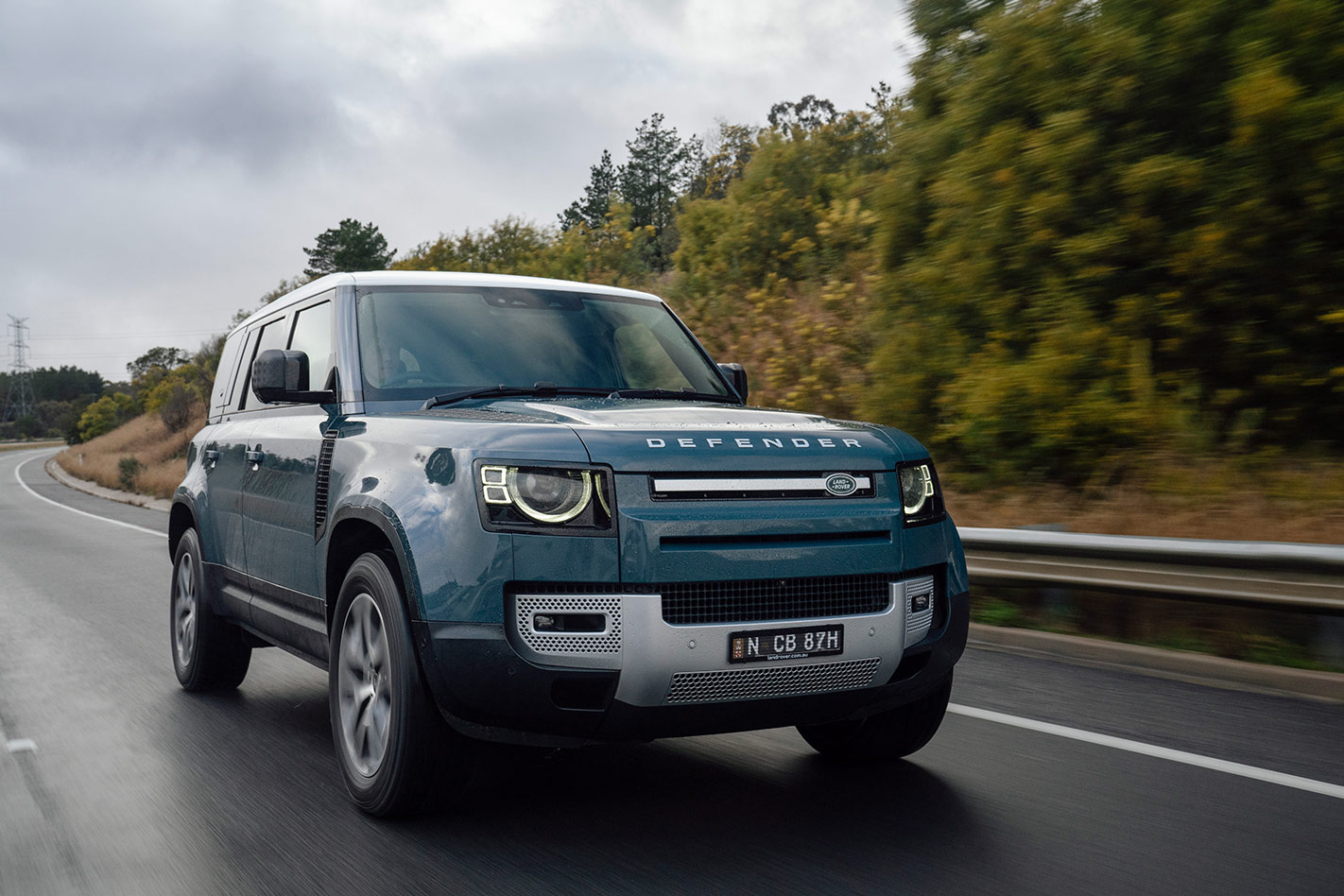
Long-wheelbase 110 and short-wheelbase 90 variants will make up the Australian mix, with two diesels and one petrol engine across four grades.
The D200 and D240 diesels are, however, already sold out for 2020, leaving just the Ingenium straight-six powered P400 – tested here – for now.
Retailing for $95,335 in its most basic S form, the 110 P400 takes the vaunted Ingenium 3.0-litre straight-six, combines it with an eight-speed automatic and delivers it on a heavily revised version of JLR’s D7x (the x is for extreme, naturally) platform.
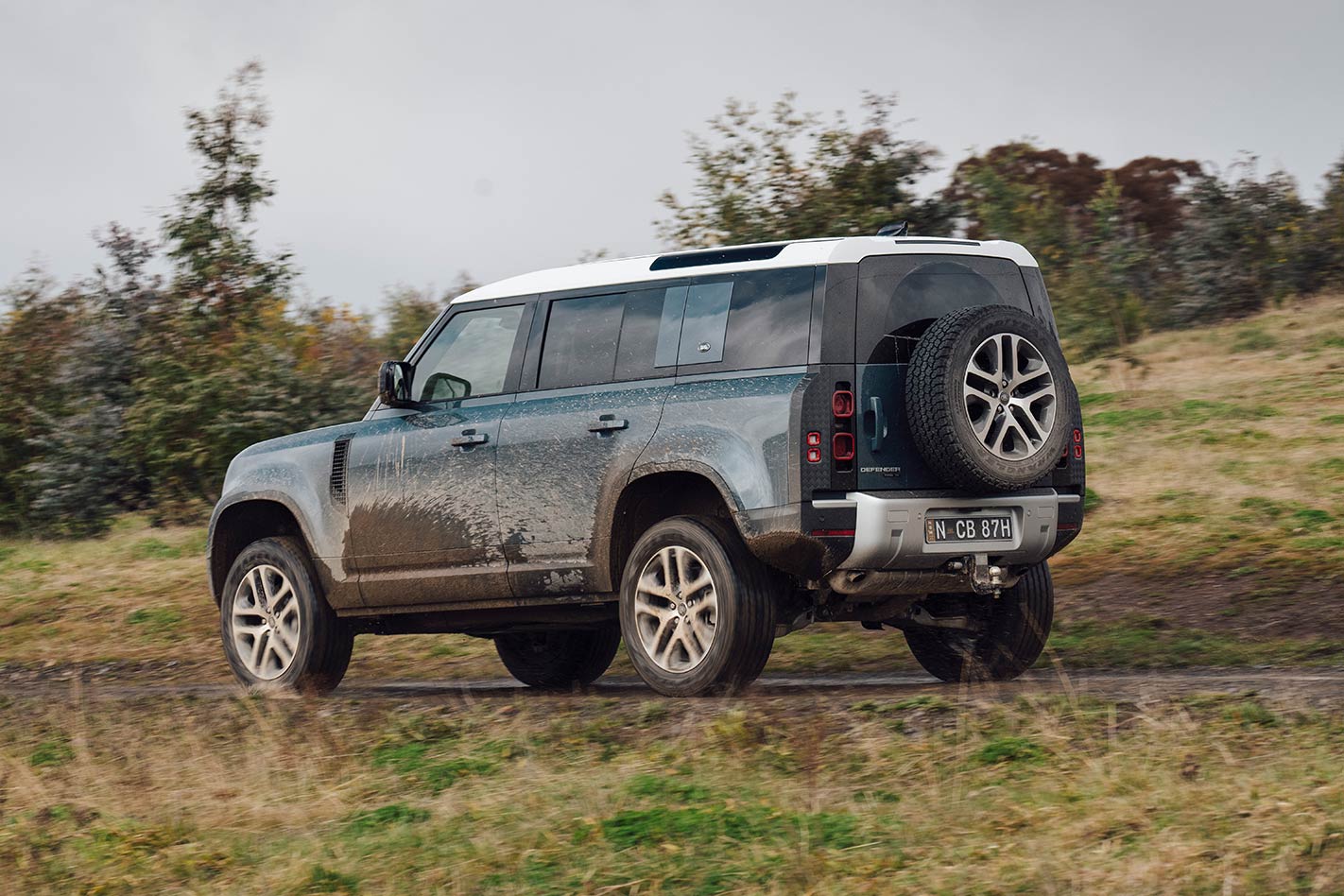
That dollar figure climbs north with the $102,736 SE and the $112,535 HSE, and is topped by the $136,736 X, which wraps up a lot of the brand’s extensive pack catalogue into one. A lot, mind you, but nowhere near all; the Defender inexplicably continues Land Rover’s irksome and bewildering tradition of offering a metre-long options list that is far too confusing. Isn’t the point of the Defender not to be that kind of car?
The interior is a curious blend of robust retro detail and earnest modern tech, but it’s not as overtly outdoorsy as, say, a Jeep Wrangler.
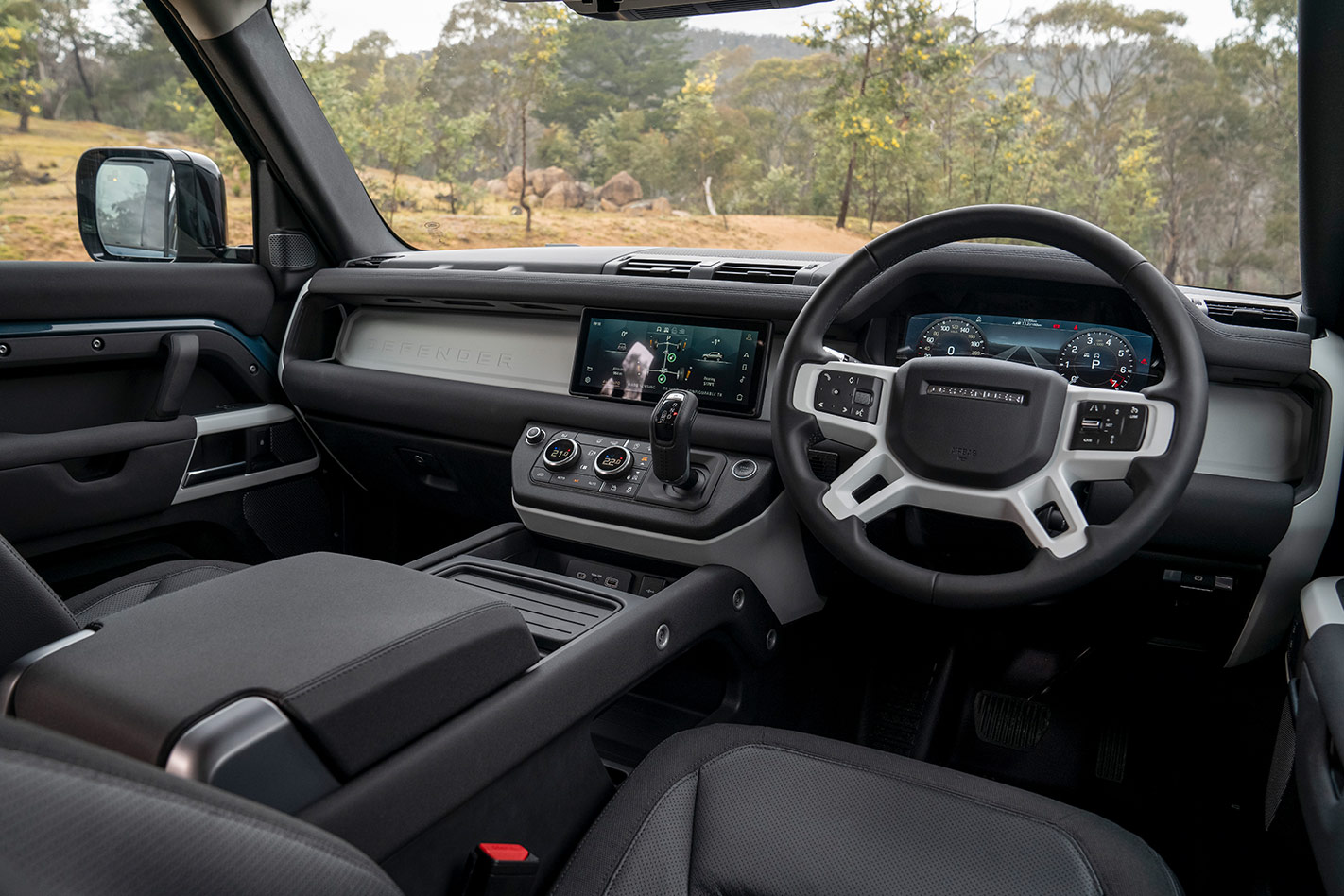
Packing 294kW and 550Nm thanks to its analogue turbo and digital supercharger, the 2400kg-odd P400 (depending on specs and number of seats) hustles from 0-100km/h in 6.1 seconds – surprising given it has the aero frontage of a corner shop. And given that pace, its official 9.9L/100km consumption isn’t terrible.
An off-road loop around Lithgow proved an absolute doddle for the Defender, though the newer, more complex terrain management interface takes some getting used to; it’s no longer as easy as twisting a dial. It’s easy to see that the Defender’s heart and soul lies in the dirt.
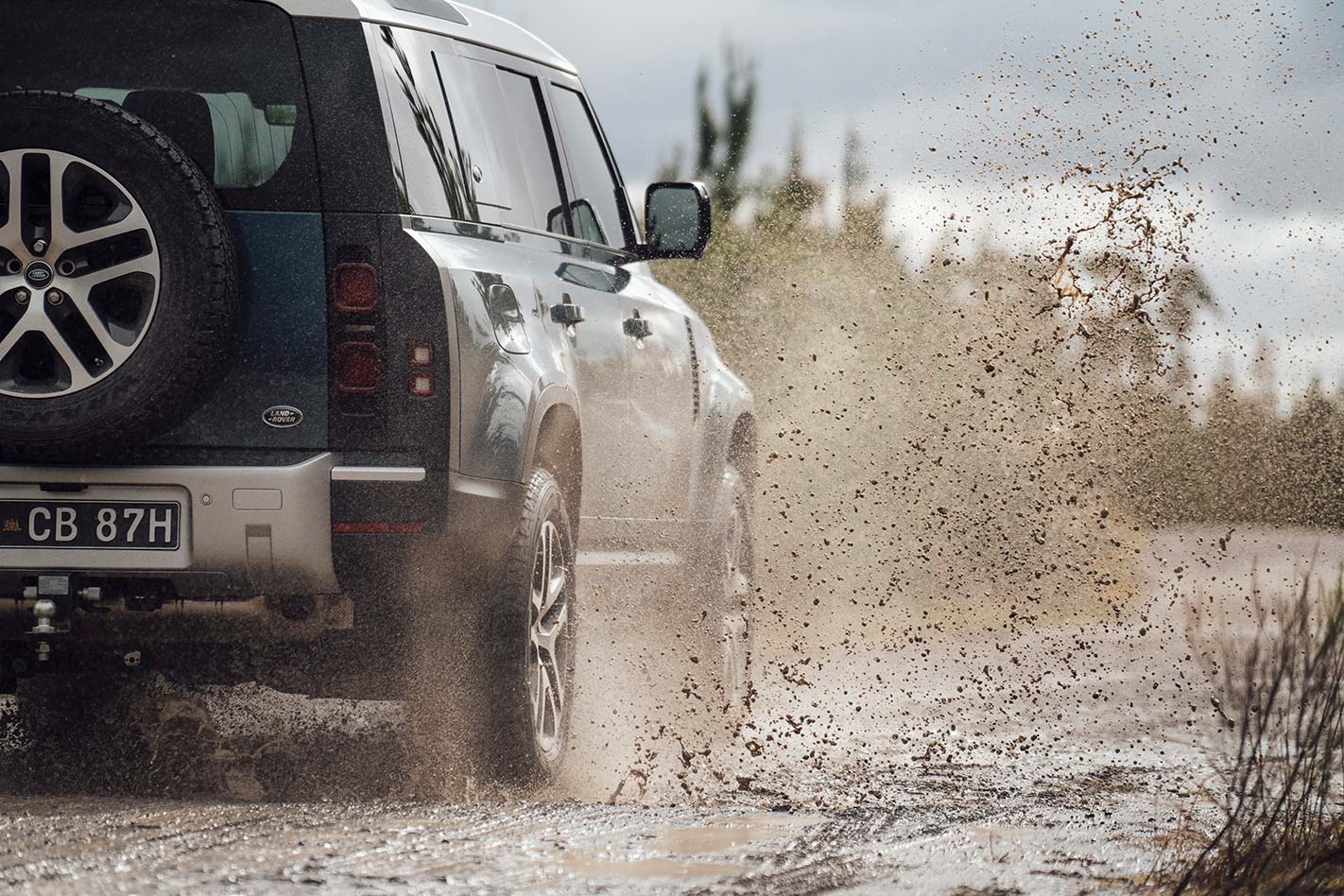
On road, the big 110 is a pussycat. Noise suppression is admirable, given the huge frontal area and the mixed-terrain tyre spec of our tester. The straight six’s oomph is blunted by the Defender’s mass, but torque delivery is straight, true and plentiful.
It steers with surprising authority and accuracy, too, though its off-road oriented suspension tune meant that body control is less than ideal when the pace ratchets up. There’s an easy solution to that, though; ease off the gas and enjoy the spacious interior, clear instruments, powerful multimedia and the novelty of revisiting a true automotive legend.
Though we’ll need to sample the diesel-powered cars to get a complete picture, it looks like I might have to reset my Defender dislike meter.
LAND ROVER DEFENDER P400 SE SPECS
Engine 2996cc 6cyl, dohc, 24V, 48v mild hybrid Max power 294kW @ 5500rpm Max torque 550Nm @ 2000-5000rpm Transmission 8-speed automatic Weight 2418kg (seven-seat) 0-100km/h 6.1sec (claimed) Economy 9.9L/100km Price $102,736
Plus: Crazily capable off-road; amenable around town; torquey petrol six Minus: As heavy as the moon; mile-long options list; complex terrain management system
THE RIVAL: JEEP WRANGLER RUBICON – $70,950
If you look at the cheapest diesel Defender (a shade under $70K), then the similarly priced Jeep Wrangler Rubicon four-door feels like its natural rival. Both seat five, both can crush the toughest dirt tracks and both make a virtue of being overt. The Jeep does much more with its legacy angle, though. A cheaper petrol V6 version of the four-door can be had for $65,450, or the dual-cab ute Gladiator version for $76,490.
Mercedes-Benz’s highly flexible compact car architecture has dramatically simplified the process of creating and developing new models, opening the door for more members of the A-Class, GLA and CLA families.
Most significantly, though, the all-new platform also supports electrified models and the likelihood of a zero-emissions companion alongside the, as yet, only confirmed compact EV – EQA.
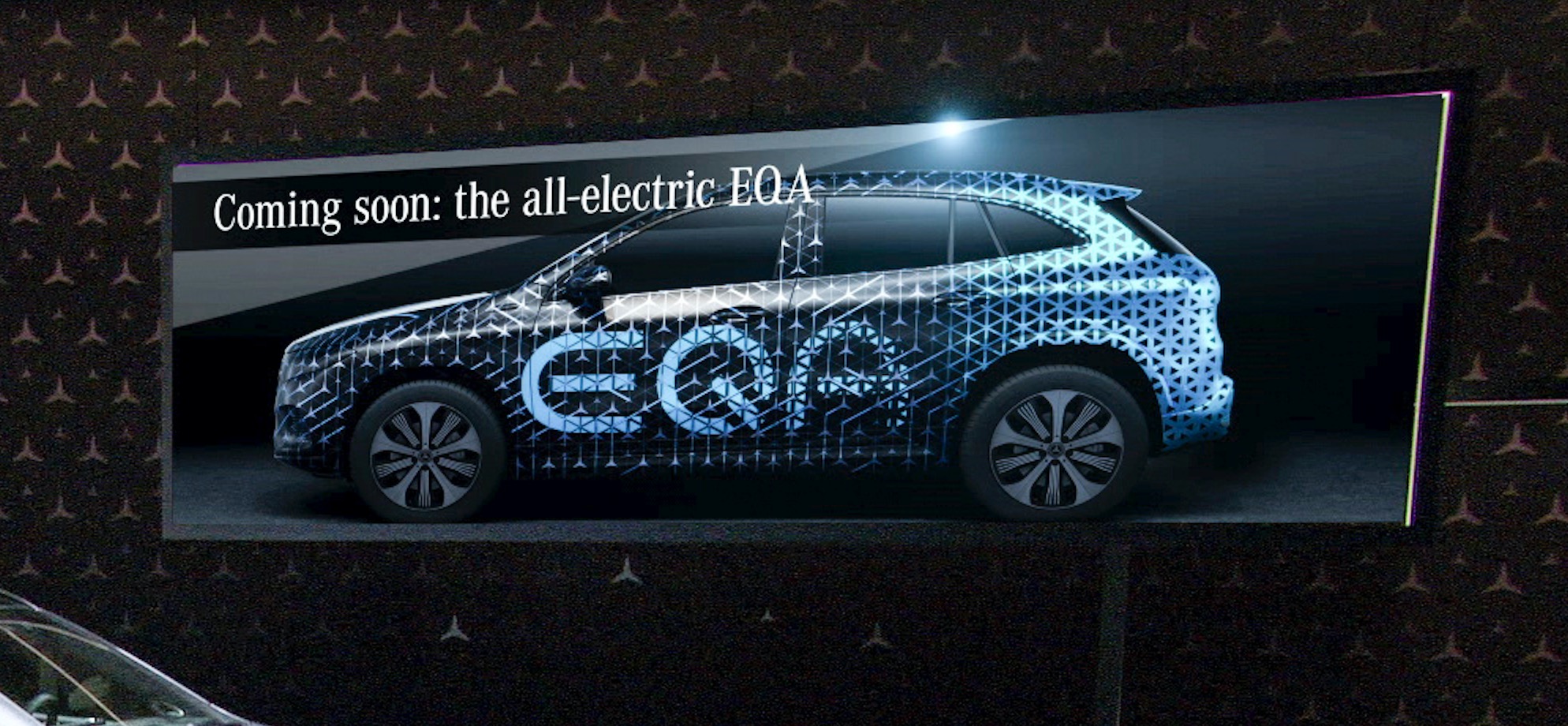
Speaking to journalists, Mercedes compact vehicle chief development engineer Axel Heix and head of overall vehicle testing Johen Eck said the new MFA platform allowed the relatively simple creation of more small vehicles and the electrification of others.
“It’s clearly a huge help to have a fully developed platform that’s capable of carrying alternative drivetrains so we don’t have to worry about all the bases such as suspension, body-in-white, interior, exterior that’s all well developed and we can ‘simply put an alternative drivetrain in it’.”
That new flexibility could result in two equally exciting outcomes.
Retro electro
Firstly, the electrification of existing models is a possibility without having to go through the prohibitively expensive process of ground-up development.
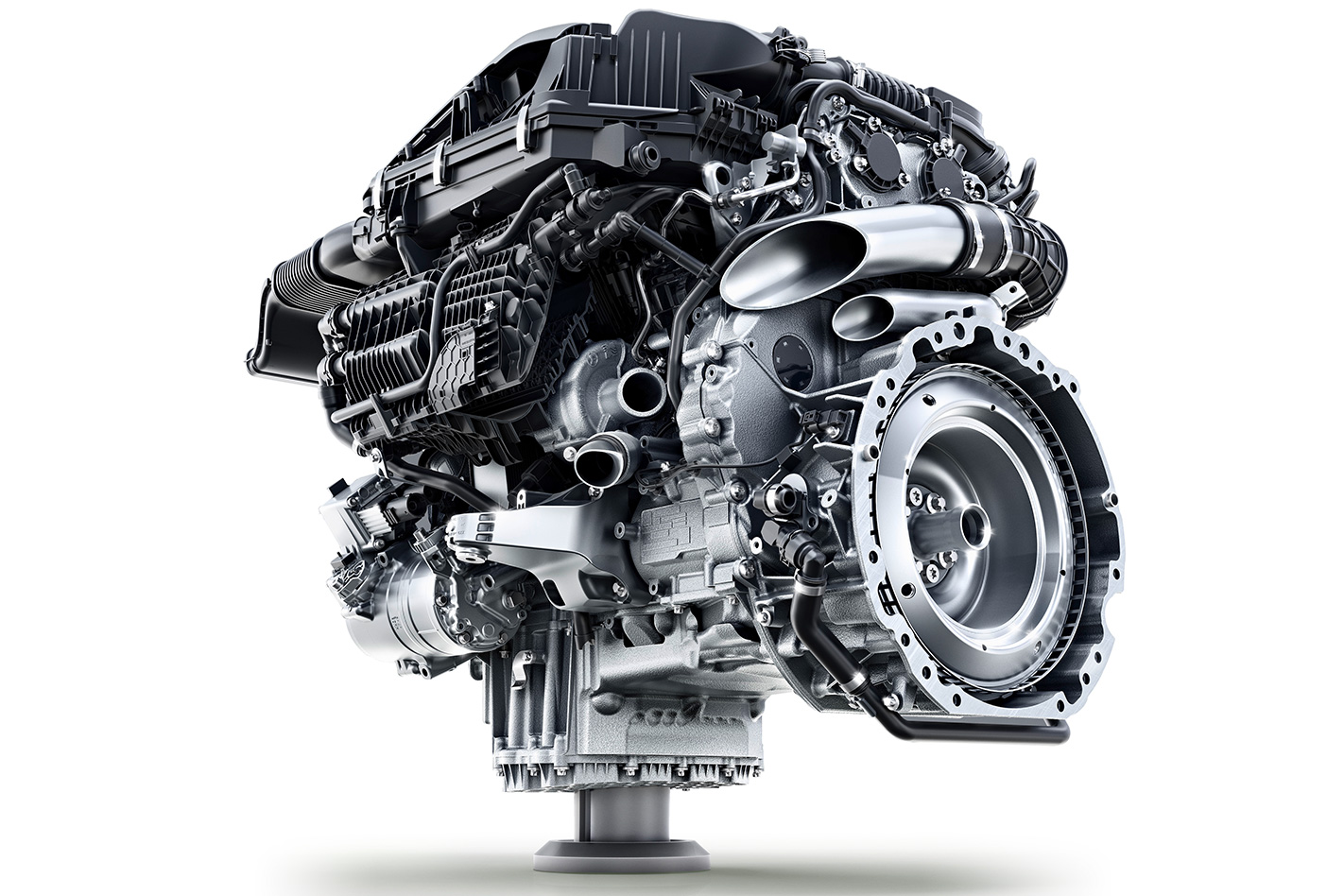
Anything from one of Mercedes’ mild-hybridised EQ Boost petrol engines, through plug-in hybridisation, to full battery electrification of an existing model is theoretically possible.
Mercedes has revealed that by 2022 it intends to have a family of 50 electrified models on offer including a number of mild hybrids and plug-ins but at least 10 will be full electrics, it says.
It would be a safe bet that a majority of the 40-odd hybrids will be slotted into existing model line-ups including its extensive small family which includes hatchbacks, SUVs and a sedan.
Join the EQ queue
Secondly, an all-new full-electric model could join the EQ compact family alongside the imminent EQA. While the production model is now known to be a small SUV (positioned under the already launched EQC midsizer), a hatchback or sedan version of Mercedes’ EQA is one possibility.
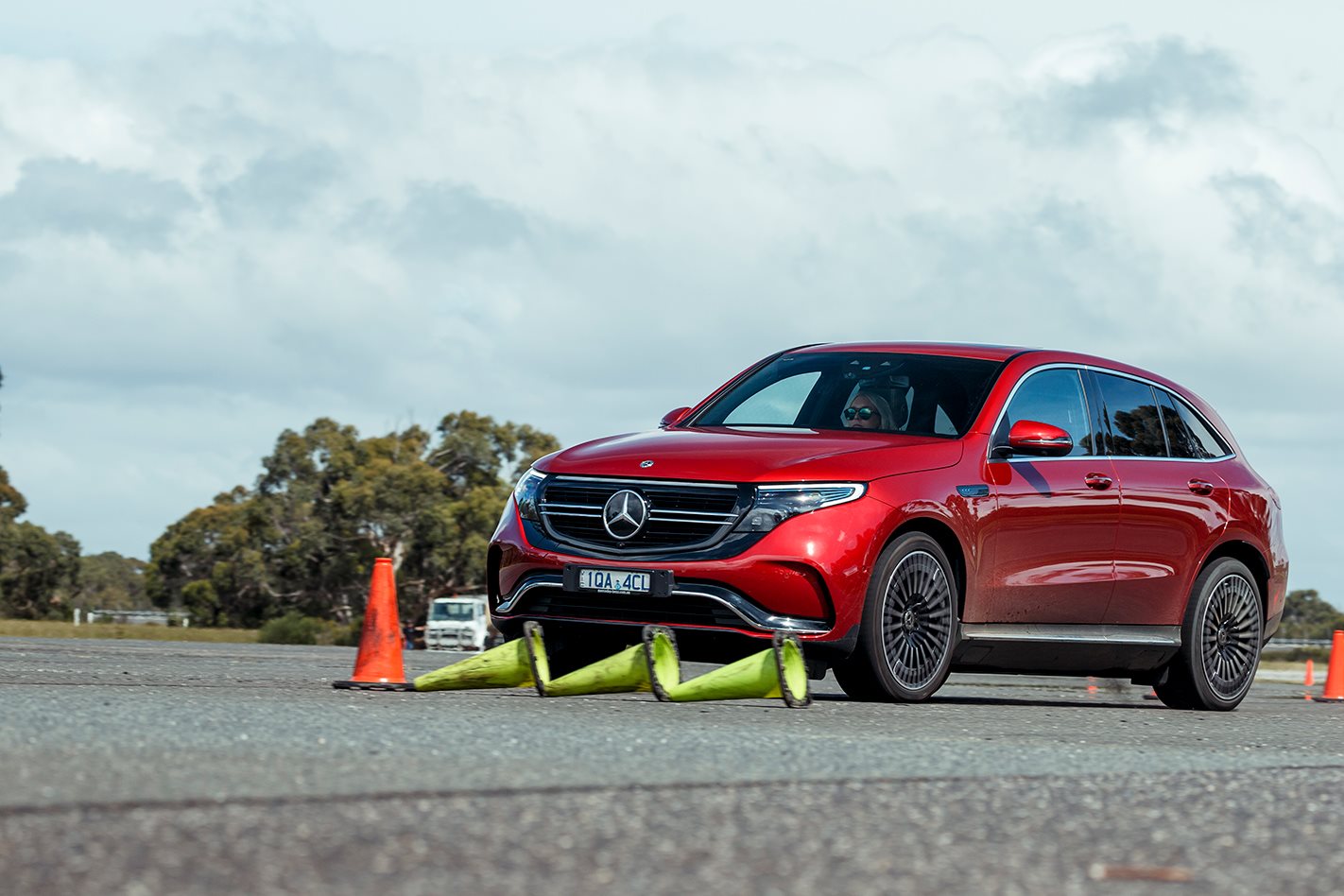
It’s worth noting that the first concept to wear the EQA boot badge was indeed a small hatch revealed at the 2017 Frankfurt motor show, so the German carmaker has been close to flicking the switch on an EQ hatchback before.
But while the process from inception to sign-off has been streamlined, Mercedes explained that developing a new car is not now an overnight exercise and still requires exhaustive testing and design stages, with a deliberate emphasis on inverted commas around the word ‘simple’.
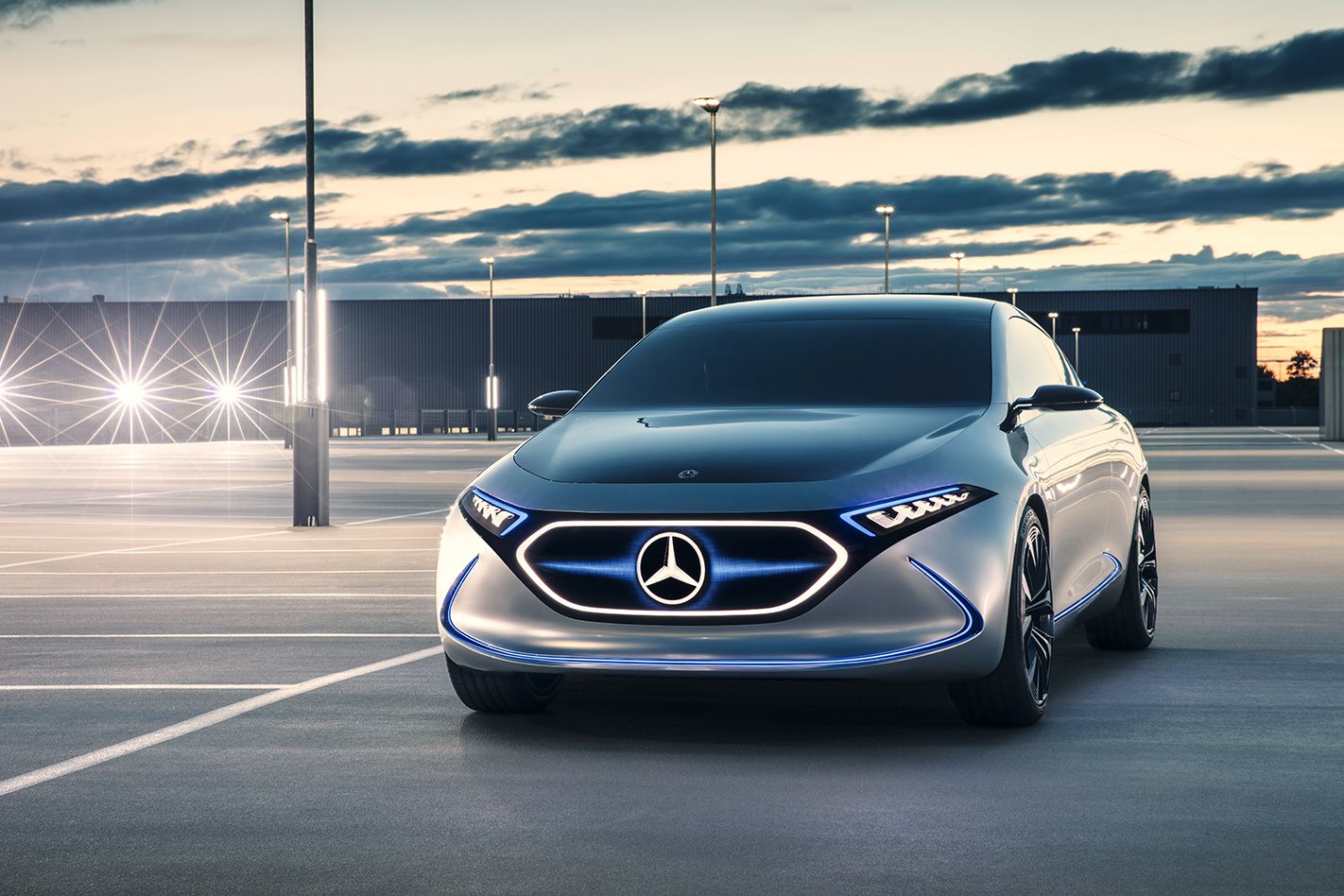
“We’ve still applied the full development force testing force and maturity level assurance on each new derivative that comes up and that includes also the potential alternatives coming up,” said Heix.
“There’s no simple plug-and-play but it certainly helps to have the platform that’s capable of doing it.”
What’s so not?
Versatile MFA architecture is looking likely to spawn more electrified compact Mercedes options but what’s less likely is a use of the flexible building blocks to slot niche cars into the range.
The Mercedes executives dowsed any hopes for esoteric versions of the GLA and sibling models, including a convertible SUV to fight topless versions of the Land Rover Evoque and Volkswagen T-Roc.
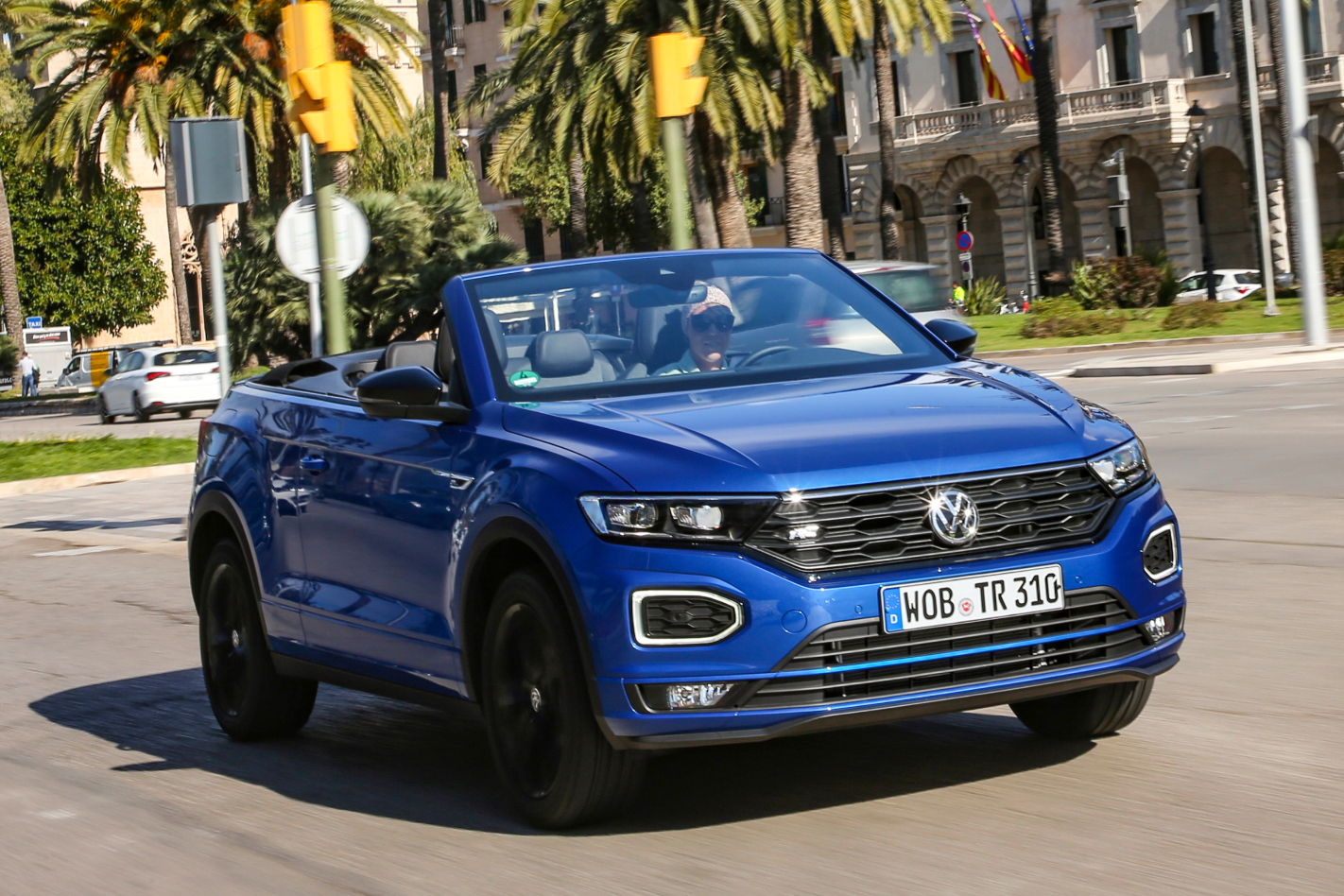
“You consider everything but the line-up is pretty efficient for the customers you can reach in our opinion that’s why there’s no demand in our customer’s feedback,” said Heix.
More surprisingly, the same goes for a coupe version of the new GLA, bucking the trend set by its larger GLC and GLE who have both evolved into more elegant (and more exclusive) Coupe models.
“No actually there is no plan to put a coupe on that one. We don’t see demand for a car like this.”
“I don’t think you reach every customer with one car but I think we have a really appropriate spread of customers that we can reach. There are always holes in the portfolio but the question is does it make sense to fill every little hole?”
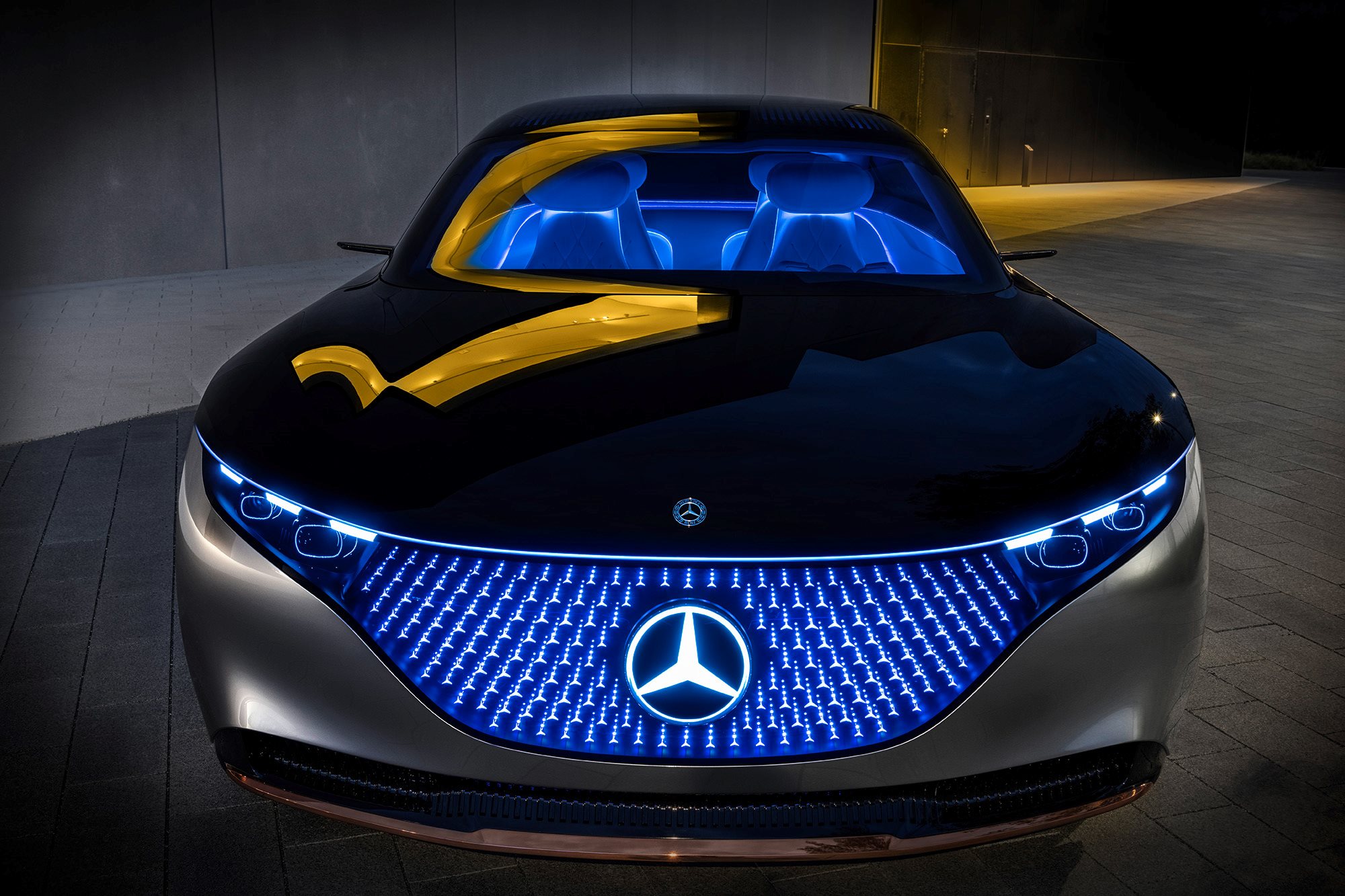
Beyond the compact end of Mercedes’ family, the process of model diversification is also ongoing with more EQ models due to check in with their respective classes including a production version of the EQS concept and a steady roll-out of electrified vehicles in the next two years and beyond.
The original GLA copped a bad rap. Roundly panned by the press, it was criticised for the simple fact it wasn’t very convincing. It lacked room and ability, plus it couldn’t shake the perception that it was merely an A-Class in stilettos.
Of course, none of this really mattered. It still sold remarkably well, though now we have a second-generation GLA. And Mercedes has moved to address the original’s shortcomings with more space, smarts and a better driving experience.
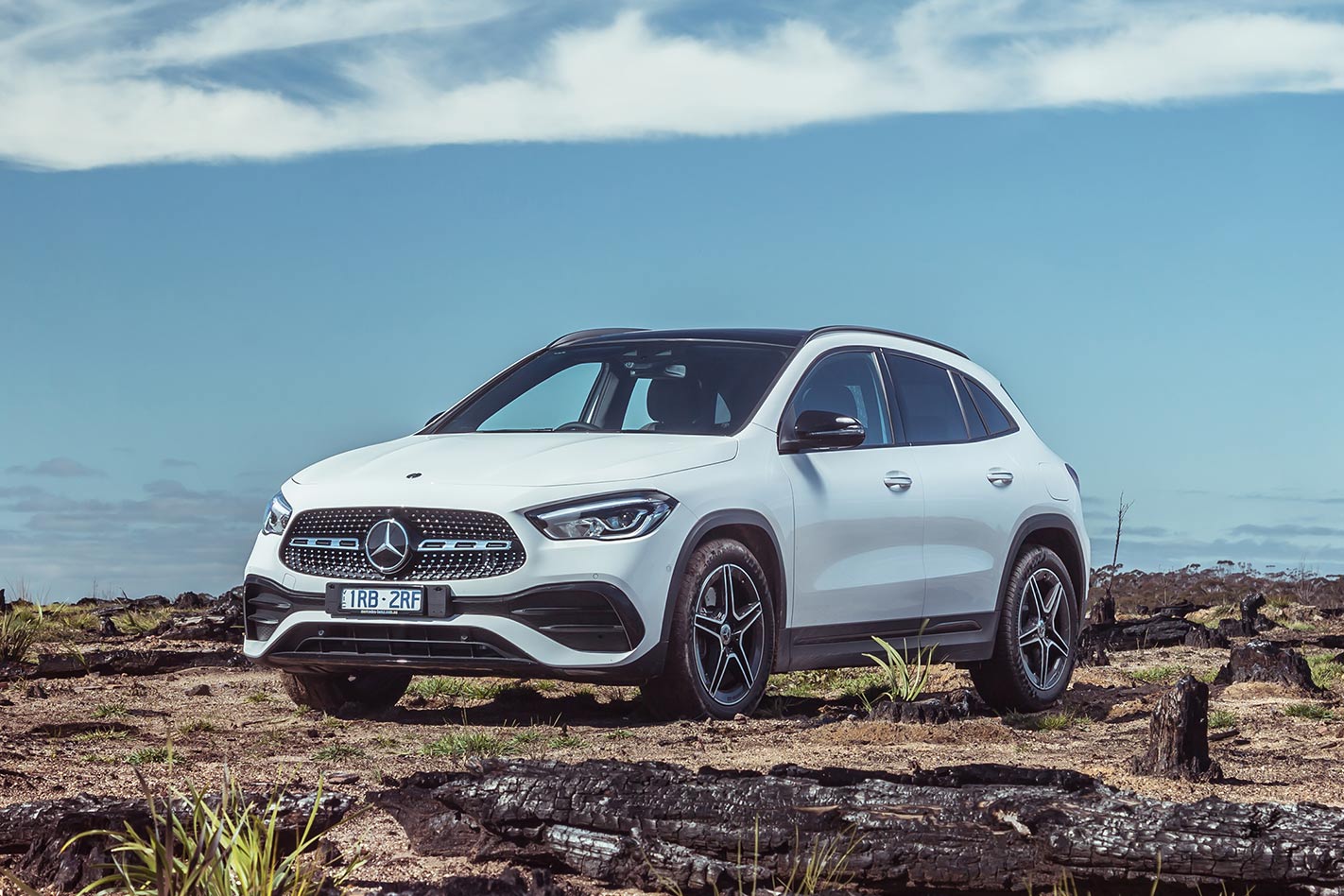
The GLA is now 14mm shorter in length, but it’s grown in width and wheelbase by a crucial 30mm, and it’s 140mm taller as well. This liberates much more rear legroom – 116mm with the sliding second row in its most rearward position – as well as more boot space, a key criticism of the first GLA. It grows from 421 litres with the seats up to 435 litres.
While there is flexibility to the cargo area with the 40:20:40 split seats, it’s a bit hard to access; there are no levers on top of the rear seats, leaving you to fish for a pull tag to drop the backs manually.
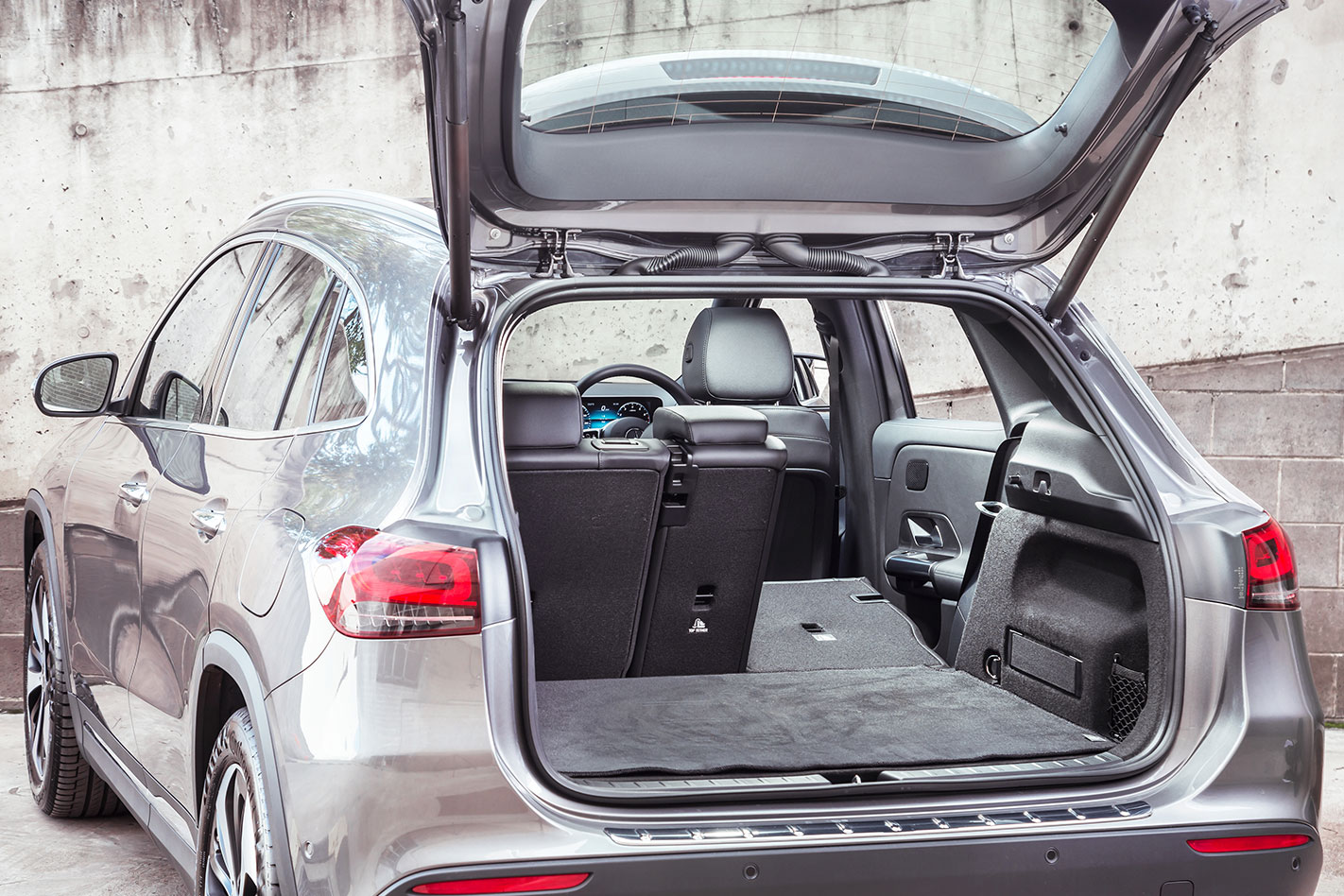
It’s also disappointing to see a can of goo and a compressor under the boot floor, given the GLA’s pitch towards rugged independence, although it is possible to add a space saver spare.
The interior is very similar to the A-Class, with a dual-screen display housing both dash and multimedia systems, while the standard Comfort seats offer separate headrests, as opposed to the one-piece units in the A-Class. There’s a slab-sided and spacious feel to the interior, with plenty of glass to keep things light and airy. The standard sunroof robs some headroom, but it’s still roomy in the rear for taller passengers. Knee- and toe-room are also plentiful.
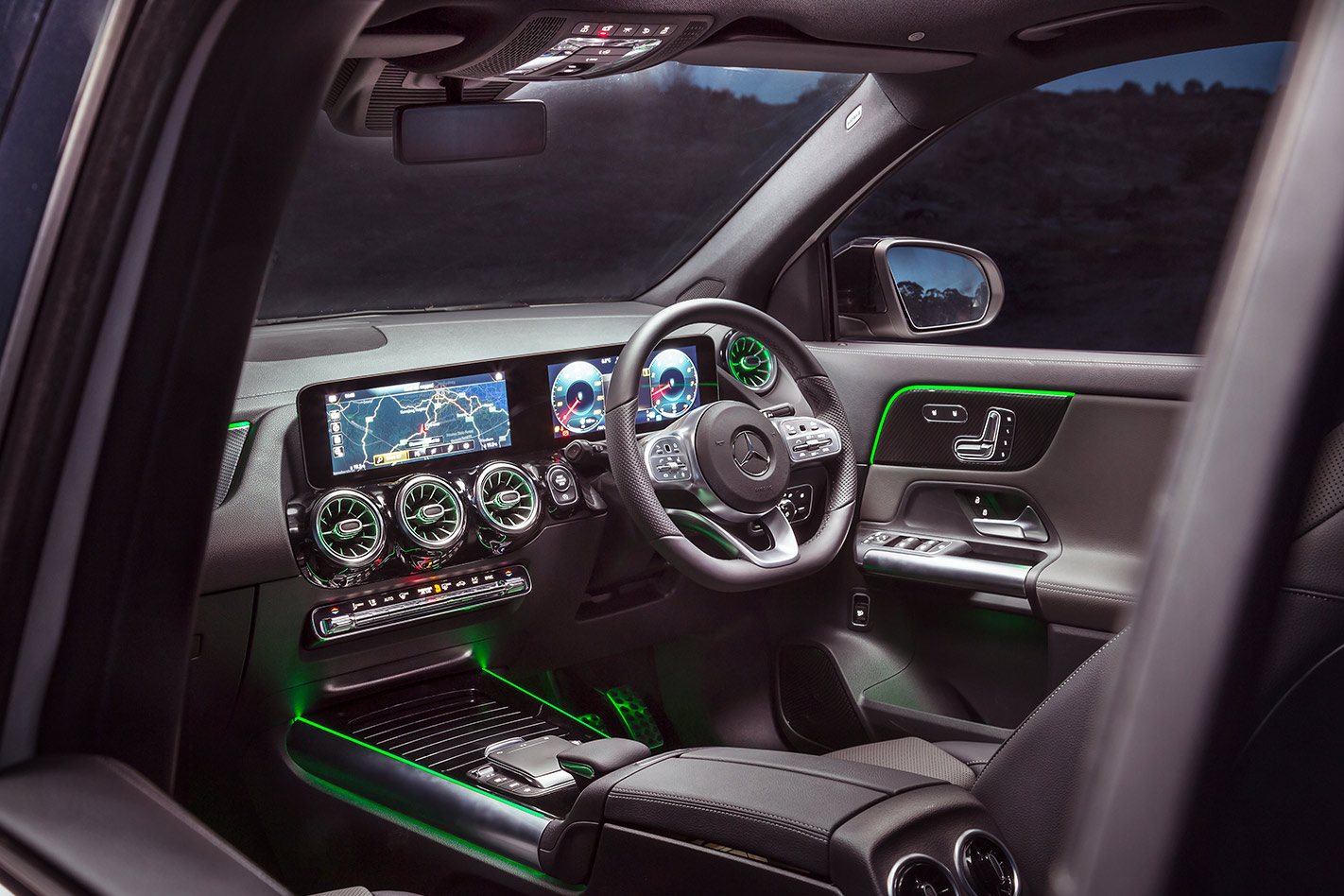
The driving position is very good, with the typically excellent Merc steering wheel in front of you, those gorgeous turbine vents and the twin-screen arrangement, which is legible and reasonably simple to comprehend. A leather dashpad with exposed stitching extends around the door card tops, below that, however, things aren’t as convincing. The fake carbon trim inserts of our test vehicle and hard plastic of the glovebox lid seem a little conspicuous in a $66,500 car.
Equipped with a 2.0-litre four-cylinder turbo petrol, the GLA 250 marks the debut of Merc’s eight-speed dual-clutch transmission in the GLA-Class, and it’s mated to a front-biased AWD set-up. With 165kW and a healthy 350Nm, response is spirited and instantaneous, though is accompanied by an industrial, uninspiring soundtrack. Against a combined economy claim of 7.5L/100km, our 300km test returned 7.9L/100km over varied terrain.
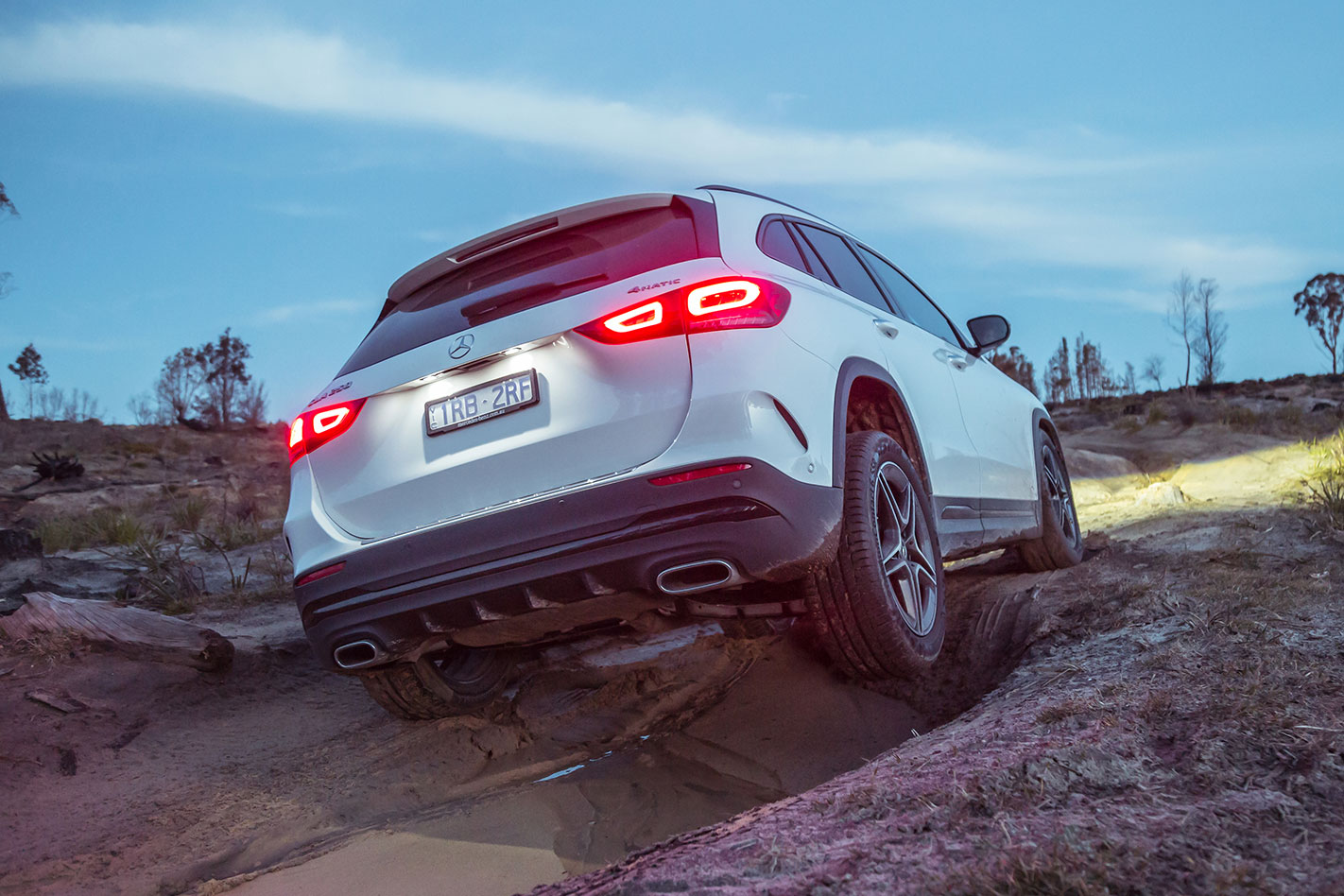
Its strut/multi-link layout is softly sprung – surprisingly so, given the shallow sidewalls of the optional 235/45 R20 Bridgestone Alenzas on the Edition One tester – while the assisted steering can be artificially weighted via a drive mode toggle.
There’s a battalion of safety aids on the GLA, though the initial level of intervention is annoyingly high, requiring the driver to tune out or turn down the strength of lane-keep assistance and AEB sensitivity to suit. A broad road tunnel with multiple markings and long, sweeping curves really tweaked the GLA’s high-viz vest, slowing the car markedly despite no hazard in sight.
This attractive, sizeable and very safe GLA will tick a few boxes with younger families, especially those looking to add a second three-pointed star to the fleet.
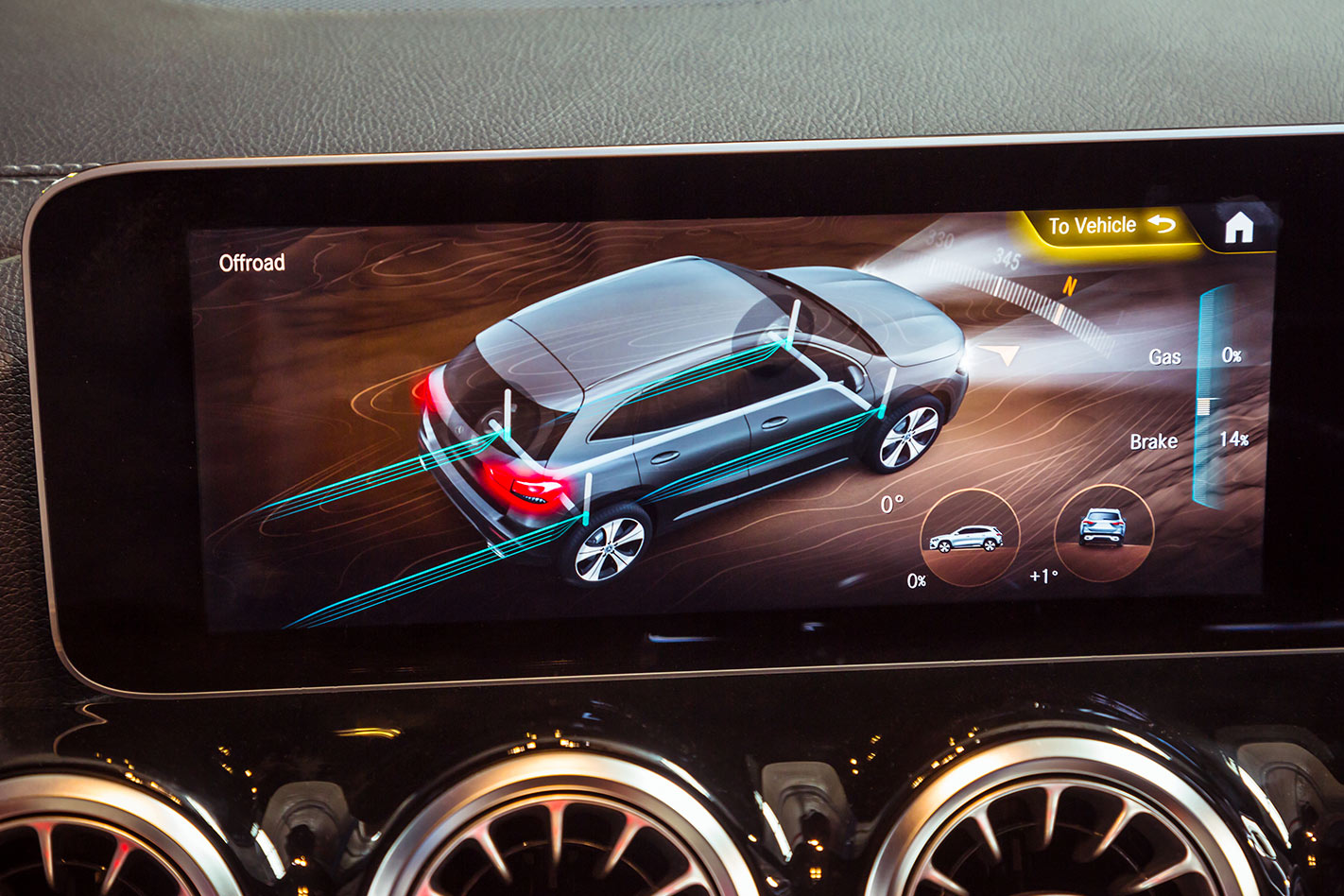
MERCEDES-BENZ GLA 250 4MATIC SPECS
Engine: 1991cc 4cyl, dohc, 16v, turbo Max power: 165kW @ 5500rpm Max torque: 350Nm @ 1800-4000rpm Transmission: 8-speed dual-clutch Weight: 1668kg 0-100km/h: 6.7sec (claimed) Economy: 7.5L/100km Price: $66,500 On sale: Now
Plus: Much better packaging than first gen; zesty performance Minus: Tuneless sounding engine; over-zealous driver aids
THE RIVAL: AUDI Q3 40 TFSI QUATTRO – $53,900
The second-generation Audi Q3 launched in Australia early last year, offering a single entry-level, front-wheel-drive variant known as the 35. Now, Audi has upped the ante with a more powerful, all-wheel-drive version of its Goldilocks-sized SUV. The Q3 40 TFSI quattro sells for just under $54,000, or around $7500 more than the 35 – but a hefty $12,600 less than the GLA 250.
Despite being a country that built its global automotive reputation on bulletproof V8s and straight-six engines, Australia very nearly gave the world an almighty V12 gift in the mid- to late-2000s.
Masterminded by General Motor’s product guru Bob Lutz, the idea was to mate a pair of ‘Alloytec’ V6s into a giant 7.2-litre V12 monster that would be fitted to a secret Cadillac flagship sedan to rival the likes of the Mercedes-Benz S-Class.
Despite the hero product being distinctly American, the V12 engine program would have a very Australian heart, with engineering and testing conducted on these shores by Holden.
News of Holden’s secret V12 project was first broken by Lutz as he spoke to media at the opening of a Hummer dealership in the UK in 2007.
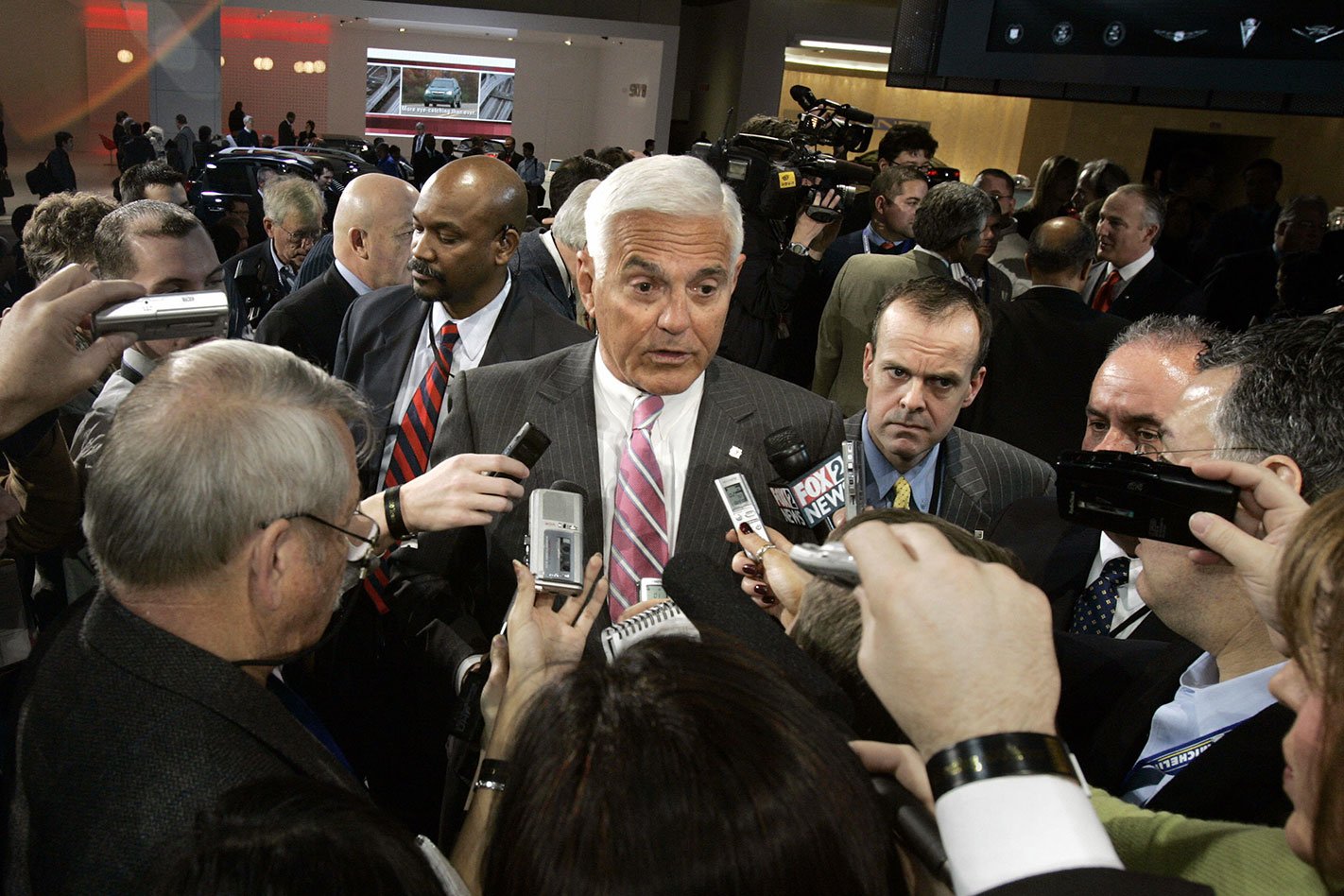
Lutz reportedly told the assembled media that the engine project was set to be fitted to a car like the Cadialliac Sixteen concept, that Tom Stephens (then the group vice president responsible for GM’s powertrain division) would lead the project, and Holden would take care of the engineering as the Australian brand had spare development capacity.
The idea was simple. Mate two of GM’s 3.6-litre V6s to a single crankshaft, ensuring the flagship V12 could be produced using existing factory tooling.
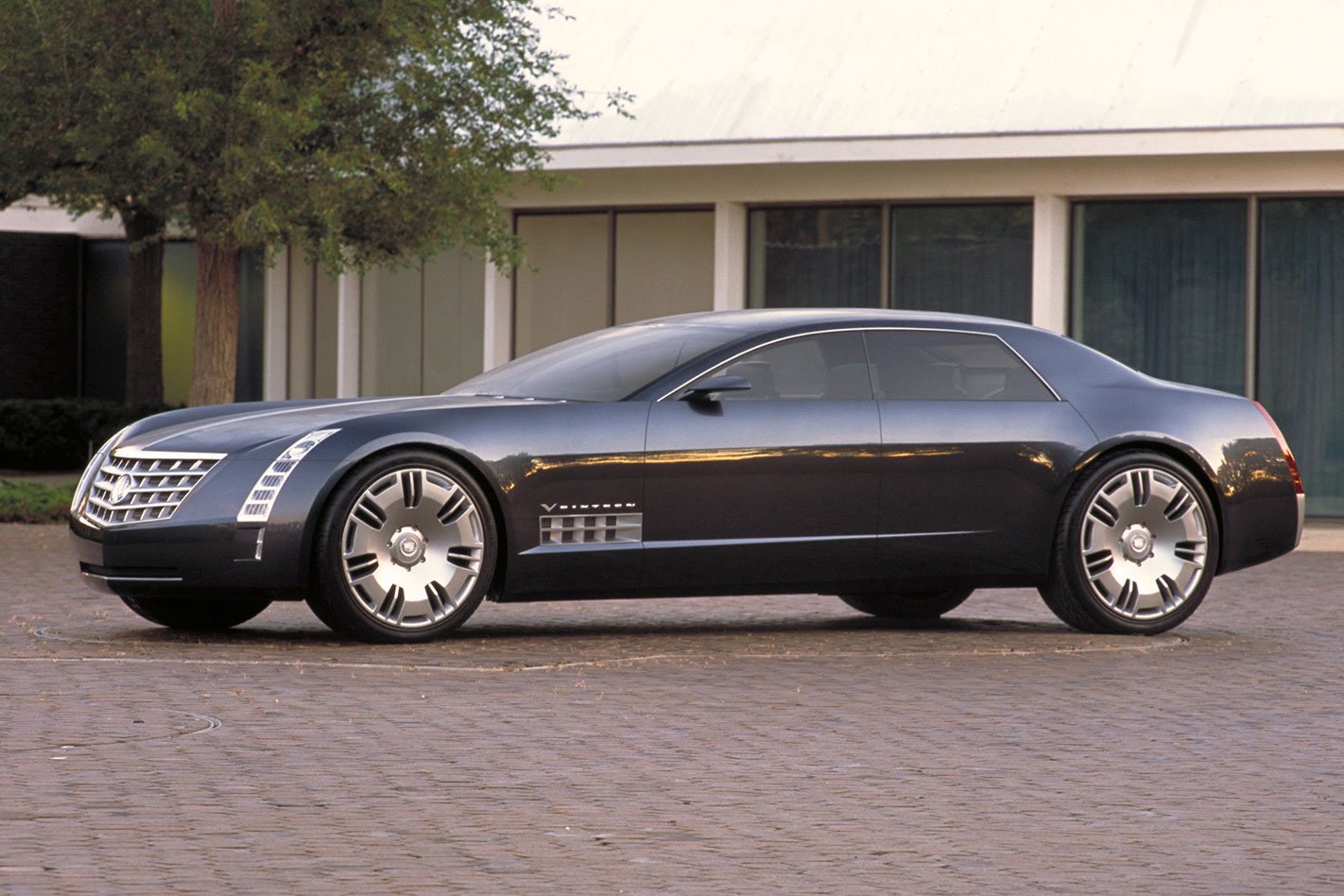
It was expected the 7.2-litre V12 would feature direct injection and cylinder deactivation technology.
“We mighty need a big engine and we’ve got to find out if and how we can do it”, Lutz told Julian Rendell.
Reports from the period estimate the V12 would produce anywhere from 390kW, all the way to 450kW. Torque was estimated to be circa 700-730Nm.
Bob Lutz is quoted by Just Auto as telling journalists “The power? Double what the 3.6 makes.”
At the time, the GM High Feature V6 was produced at Holden’s engine plant in Melbourne.
In 2007, the time of the reports, the most powerful version of the V6 was fitted to the GMC Acadia and Saturn Outlook, with claimed outputs of 205kW and 340Nm.
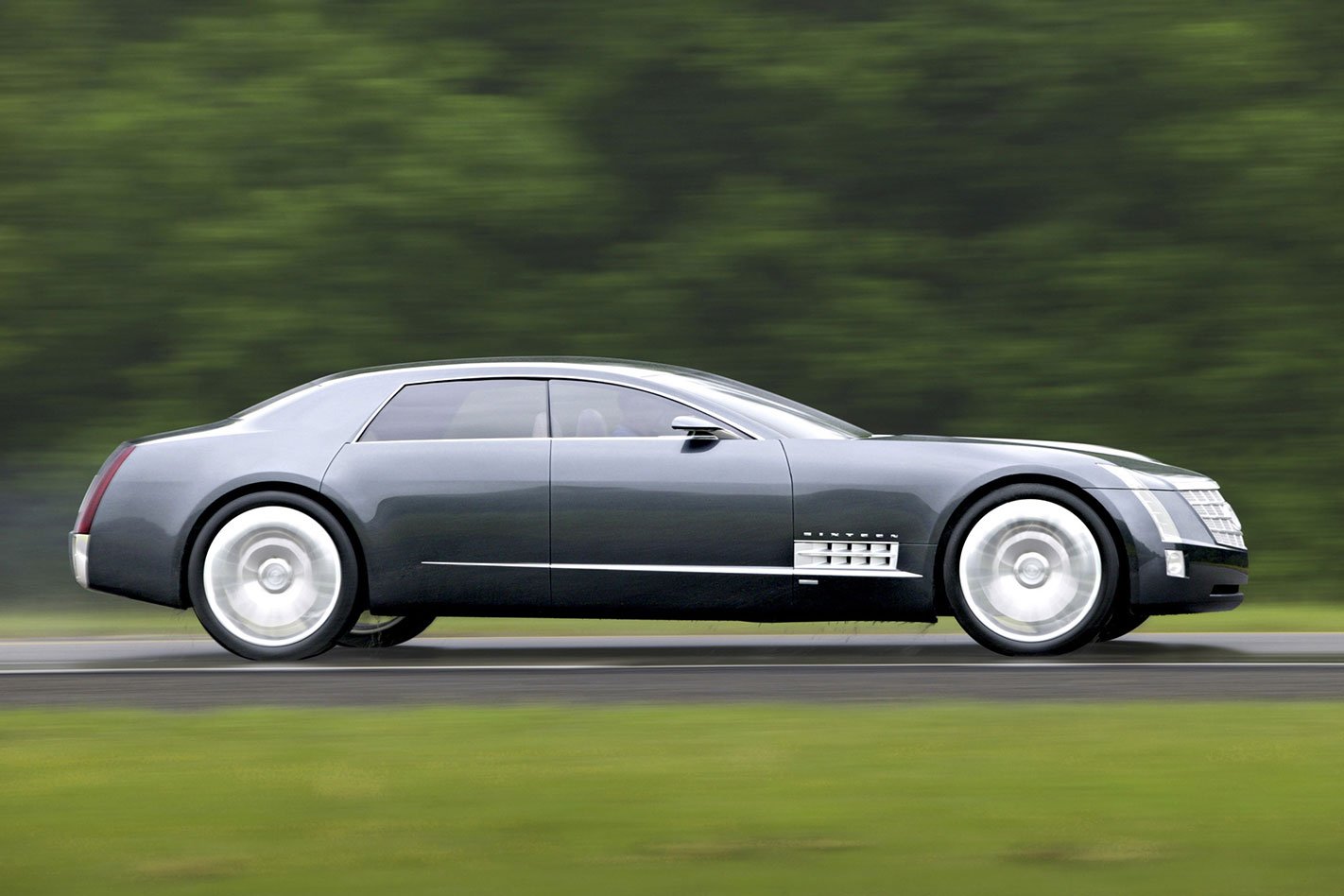
Ultimately, a twin-turbocharged iteration, dubbed LF4 would become the zenith for the design. Fitted to the 2016 Cadillac ATS-V it was rated at 346kW and 603Nm.
Following a flurry of excitement from Australian media, Holden’s then-executive director of engineering Tony Hyde was forced to make staunch public comments denying the existence of a locally developed V12 engine program.
“We are definitely not doing it,” he told GoAuto. “It might be possible to join two V6s, but we are not doing it.
“None exist in our part of the world and we are certainly not testing anything like that at Lang Lang.”
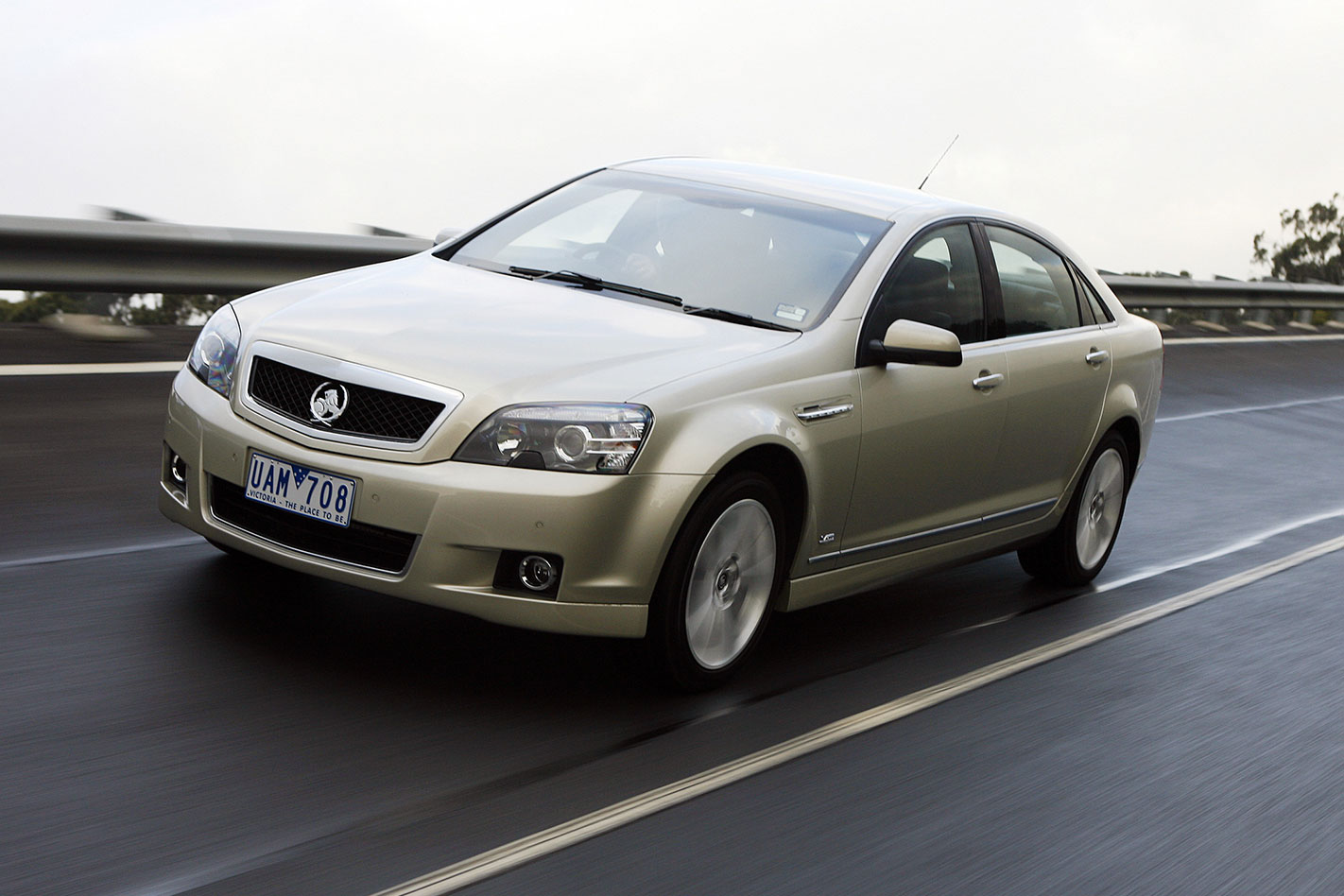
However, Wheels has spoken to Holden insiders that confirmed the project had been discussed internally, with the idea to build a Caprice-based mule for testing.
It is unclear if a running 7.2-litre V12 test engine was ever built, as by August 2008 development of the car it was meant to debut in, the XLS sedan, had been halted.
Known internally at GM as DT7, the cancelled model was set to use a stretched version of the Australian-developed Zeta platform that had made its debut in the VE Commodore.
With another Zeta-based project canned, the death-knell for the Holden Commodore crept ever closer.
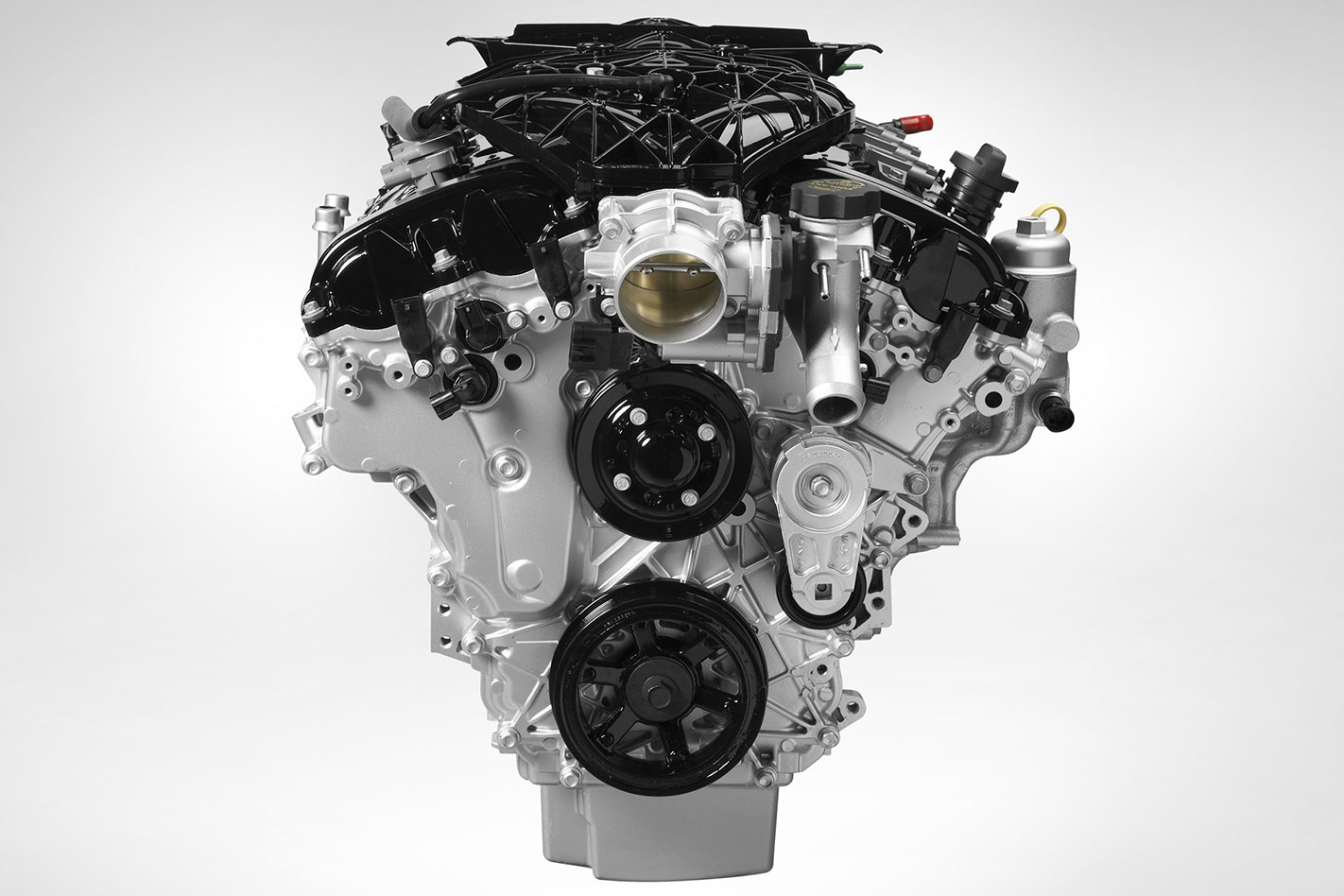
If the Holden V12 had made production it would have become the most powerful Australian-designed engine, even by the most conservative power estimates.
Ultimately, it was Ford that engineered, designed, and built Australia’s most powerful engine with the Barra.
In its final 325T form (for the FG-X XR6 Sprint), the 4.0-litre turbocharged straight-six engine produced 325kW @6000rpm, and 576Nm @ 2750rpm, lifting to around 370kW in transitory overboost.
Do you think Holden should have put the V12 into production?
Whether it’s hot hatches, supercars, race cars, or even old cars you’re interested in the new issue of MOTOR has something for you.
You can find MOTOR at retailers around Australia. Or you can subscribe and save yourself some cash, there’s even a (cheaper!) digital subscription option.
Subscribers often receive their mags earlier, so you’ll get to see what MOTOR has to offer before anyone else.
Follow us on Facebook, Twitter, and Instagram to interact with us, give us feedback, and get a peek behind the scenes.
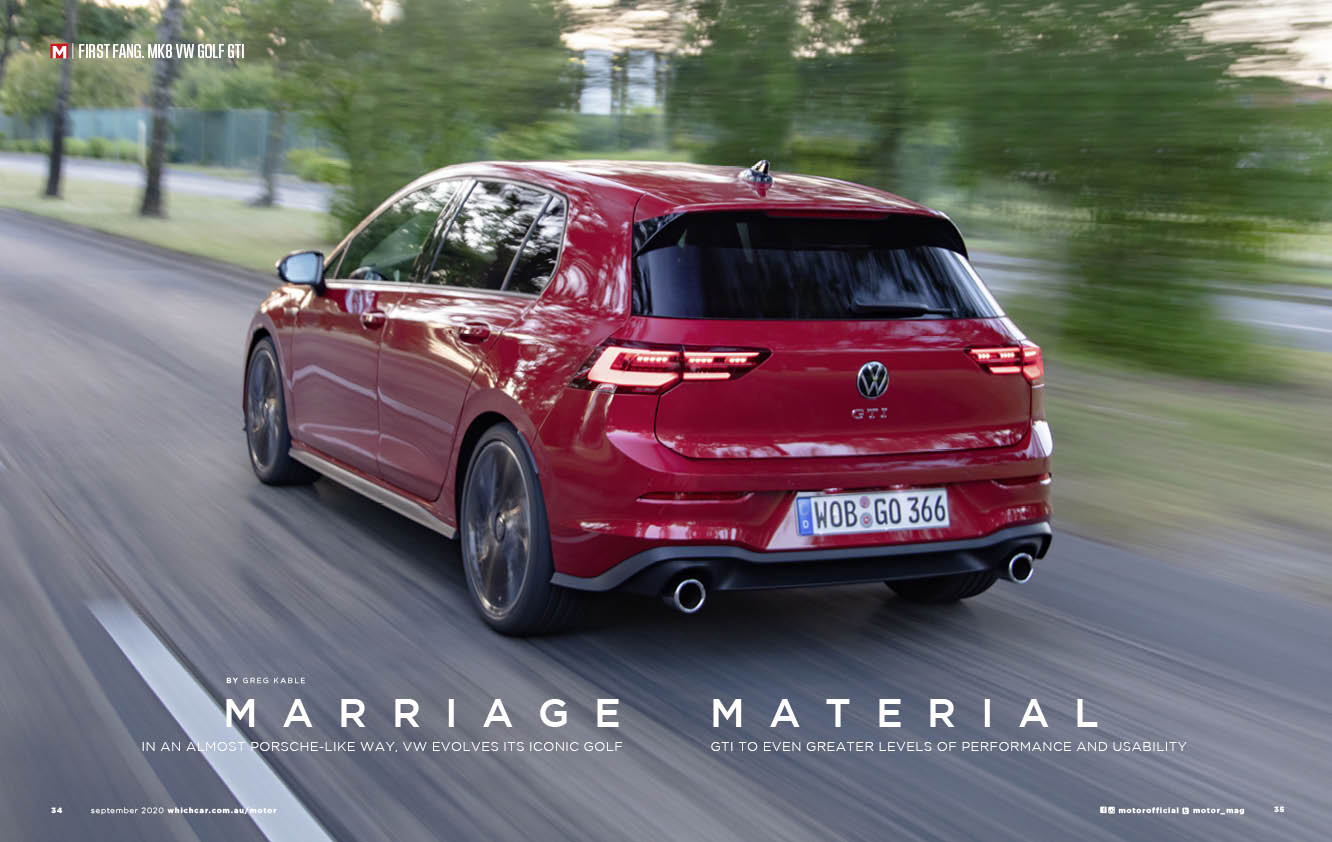
VW Mk8 Golf GTI driven
Is this the best-driving VW Golf yet? Let’s find out.
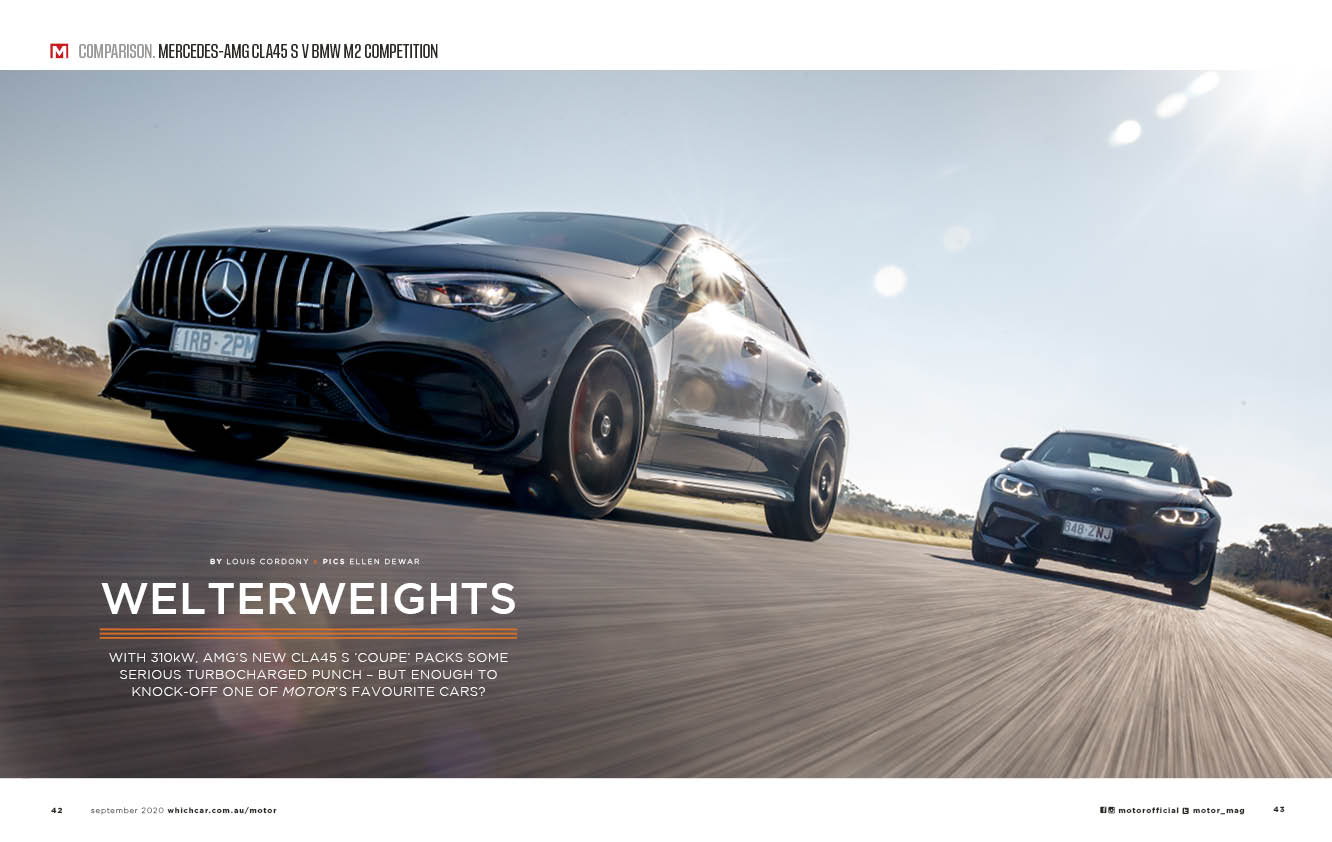
AMG CLA45 vs M2 Competition
Two ‘baby’ muscle cars with different approaches to going fast.
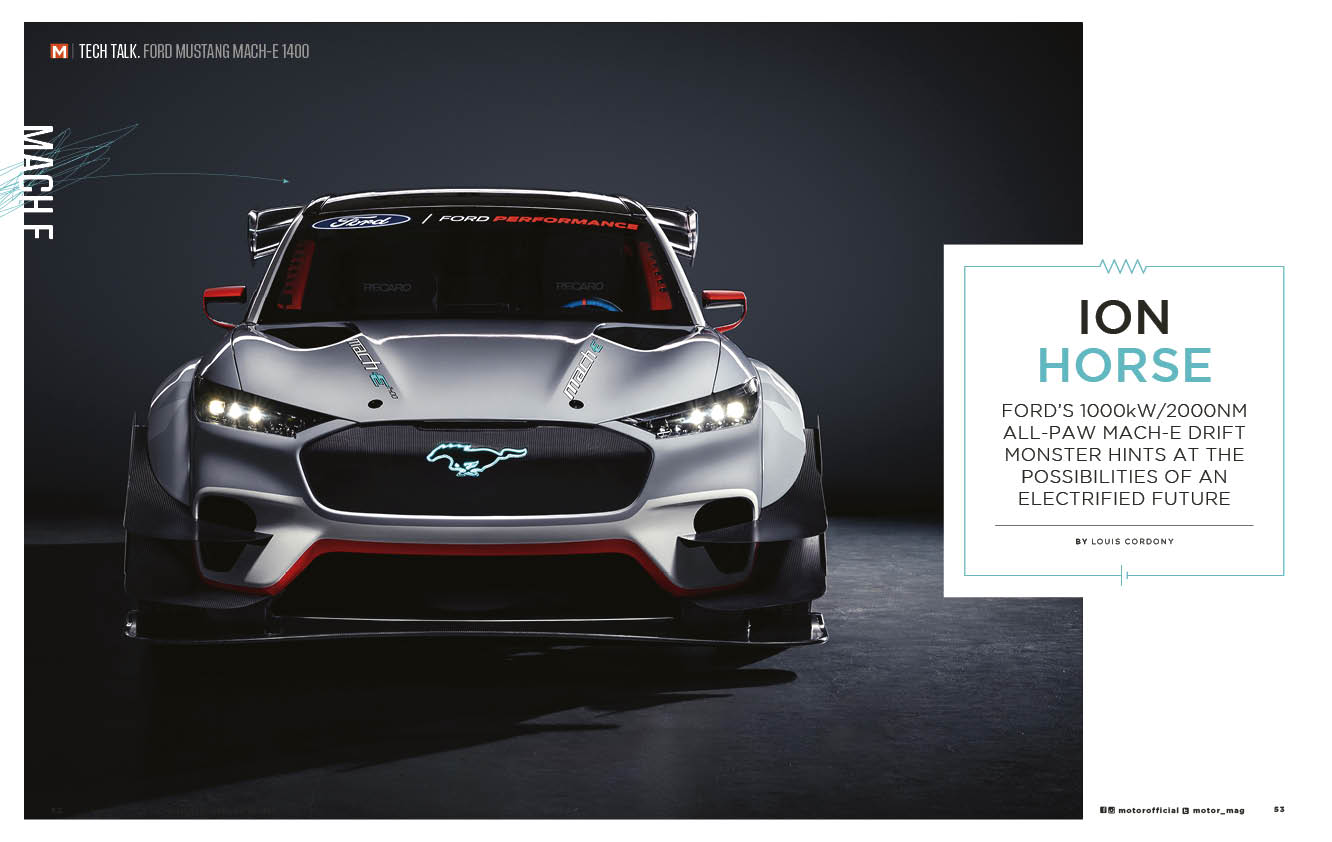
Ford Mustang Mach E 1400 tech feature
Sounds like one giant supercharger, but this Pony’s running on batteries.
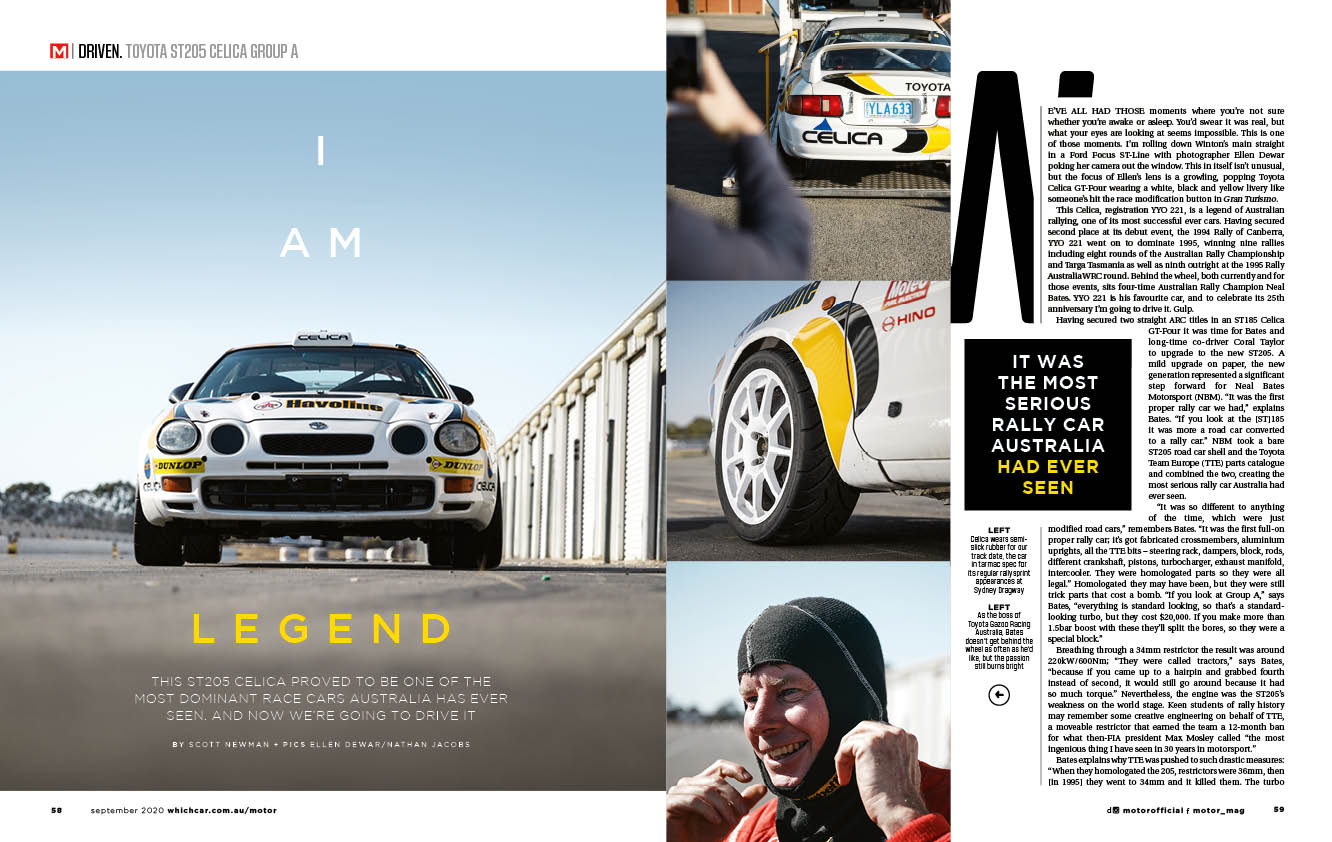
Driving the Bates Celica GT-Four Group A
Associate Ed. Scott Newman lives one of his dreams in one of Australia’s greatest rally cars… by driving it!
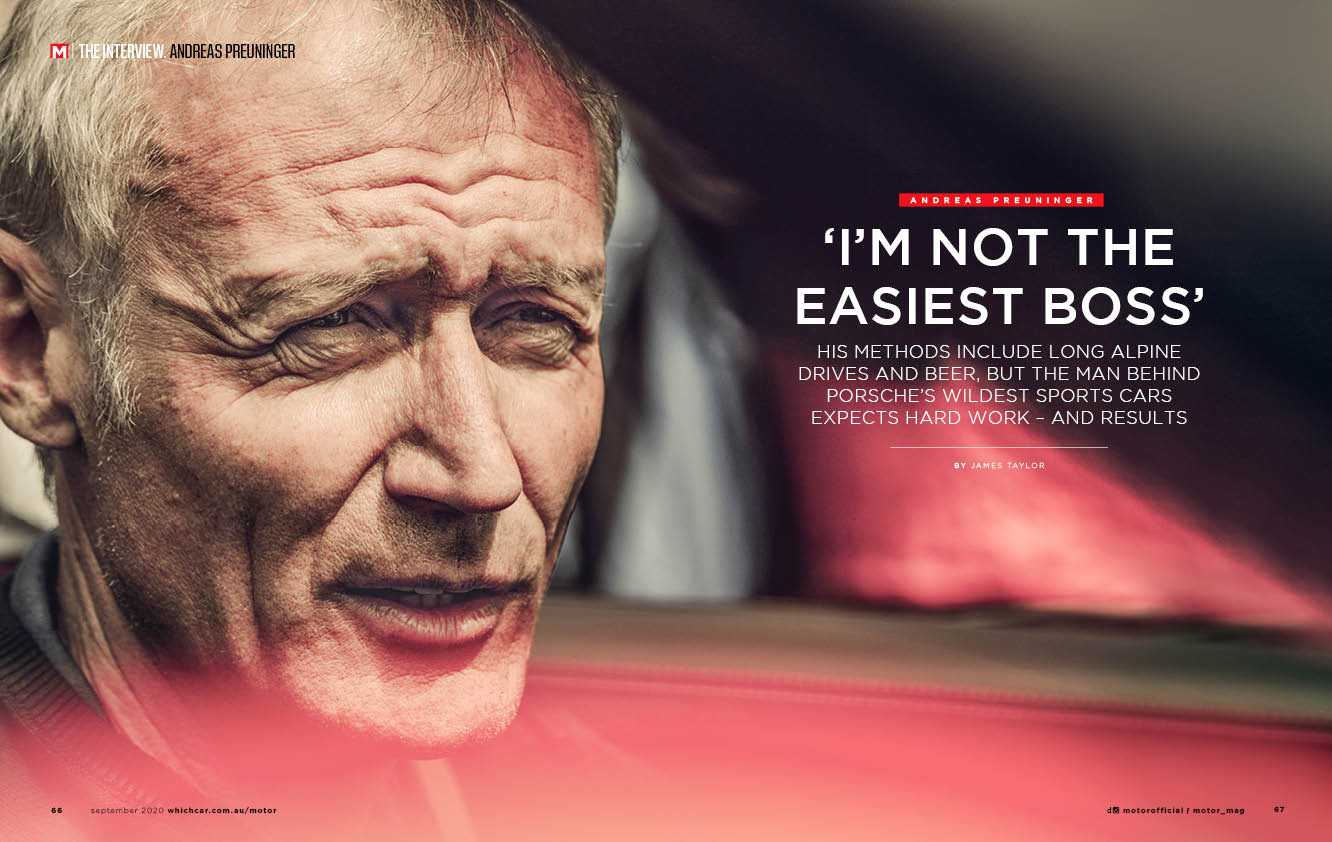
Andreas Preuninger interview
The man in charge of Porsche’s ‘GT’ cars is a hard taskmaster, but the results speak for themselves.
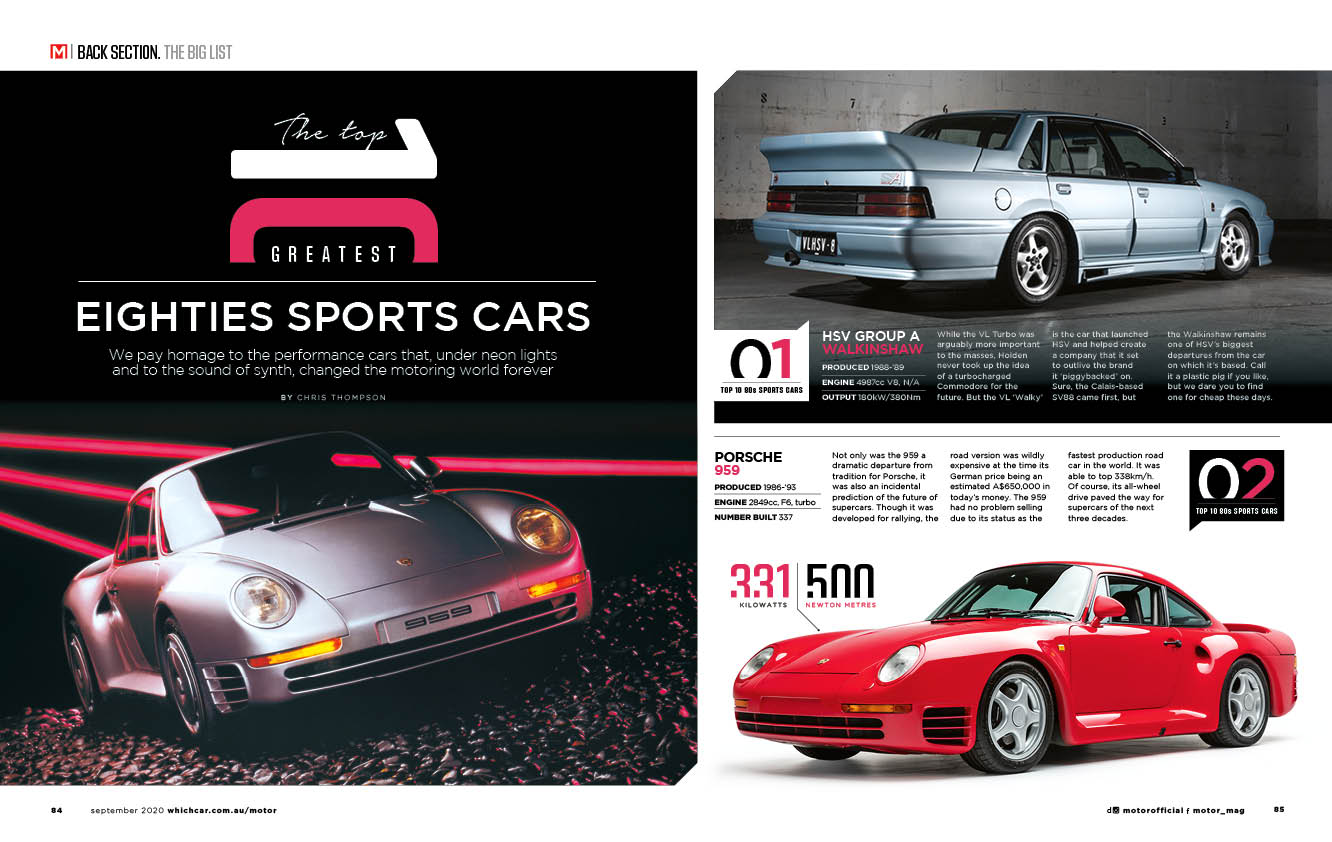
The most important 1980s sports cars
These are the cars born under neon lights and traces of a mysterious white powder. And they changed the world forever.
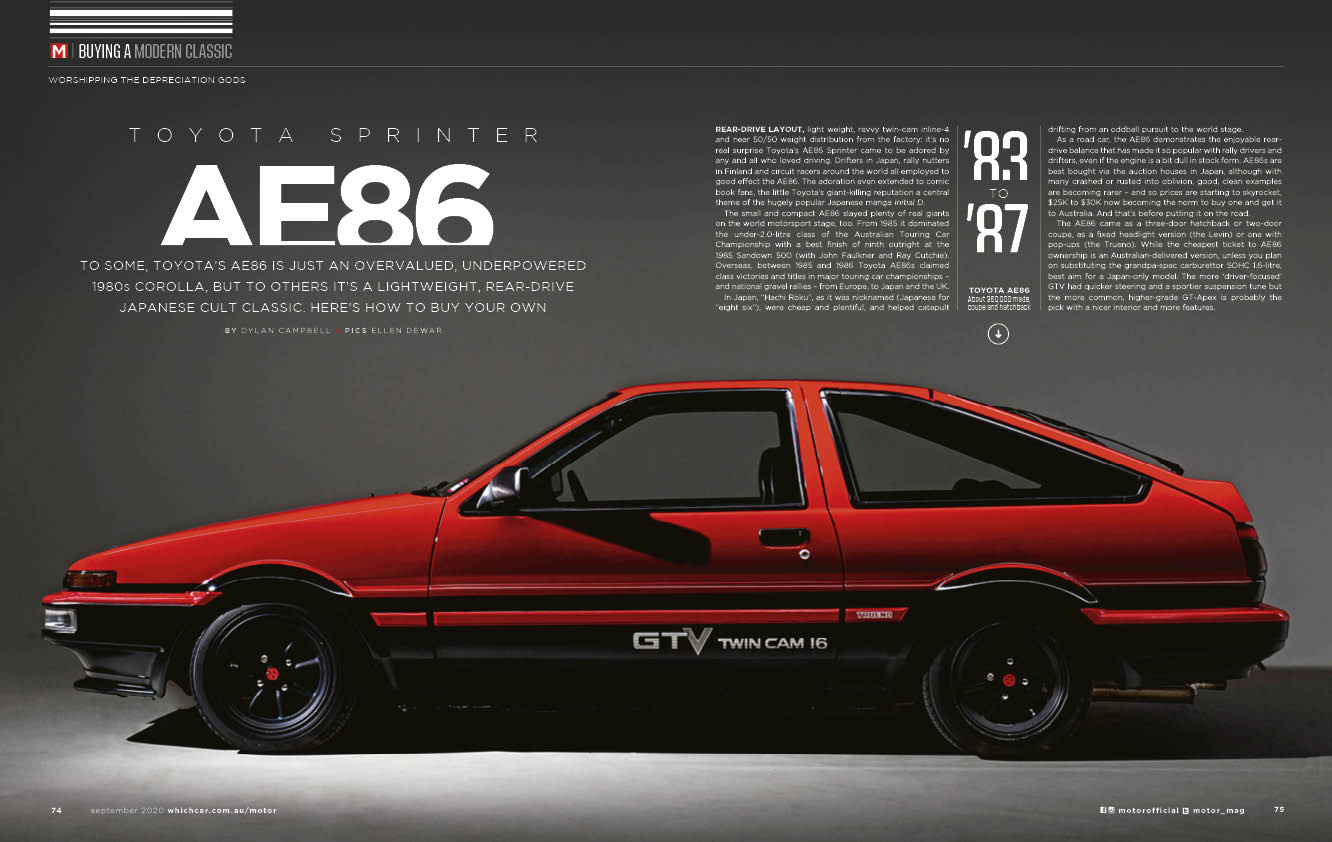
Toyota AE86 buyer’s guide
Been watching too much Initial-D during lockdown and have a hankering for a hero car?
And more!
Tesla-taunting EV start-up Lucid Motors has continued to build the hype and anticipation ahead of its first model launch on September 9, with the Air luxury sedan’s record-breaking battery now detailed.
Earlier this month, the Californian EV challenger revealed that its first car would offer both single-charge range and charging speed in excess of established manufacturer Tesla’s, but the company has now explained how it achieves more than 830km and the benefits that come with it.
It should perhaps come as no surprise that a company initially founded (under the name Atieva) to focus purely on developing batteries and EV drivetrains should develop a class-leading system at the heart of its first model.
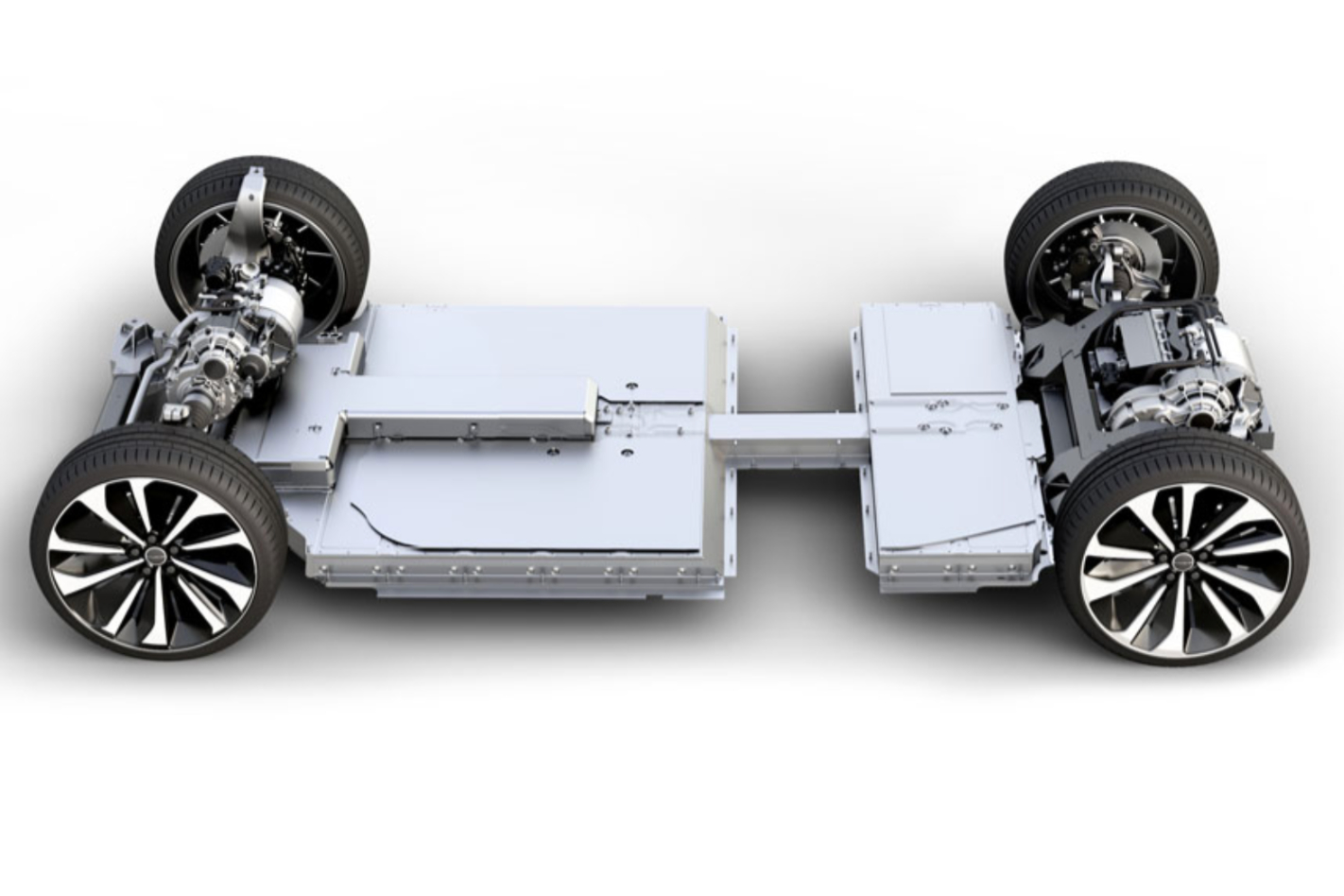
For a start, the Air has a 900-volt main electrical system compared with the more widespread 400-volt standard used by many other EVs including Tesla. In fact, only Porsche comes close with its 800-volt Taycan.
And while the largest capacities of any EV battery on the current market (pun intended) are about 90 to 100kWh, Lucid’s battery is rated at 113kWh. The larger capacity means it can hold more energy and the higher operating voltage is the key to both fast charging and the high-performance enabled by fast discharging.
Unless Tesla can substantiate its 1000km battery range claims for the forthcoming (but delayed) Roadster, or a Model S replacement, it’s likely Lucid will be the longest range and largest battery capacity EV on the market when it rolls out early next month.
But Lucid’s battery design has made steps forward in crucial energy density which means it can squeeze in more electricity without increasing dramatically in size or weight. Lucid calls it its Space Concept.
Battery chemistry is the same lithium-ion used by almost all other vehicle battery manufacturers but Lucid’s designers enabled the battery to be more compact and shaped to conform with the design of the Air.
The result is a long-range battery that doesn’t intrude into passenger or luggage compartments. While a majority of the battery is positioned under the vehicle floor, a portion extends up into space behind the centre console and dash, while another ‘sculpted’ section makes room in the floor for rear passenger’s feet.
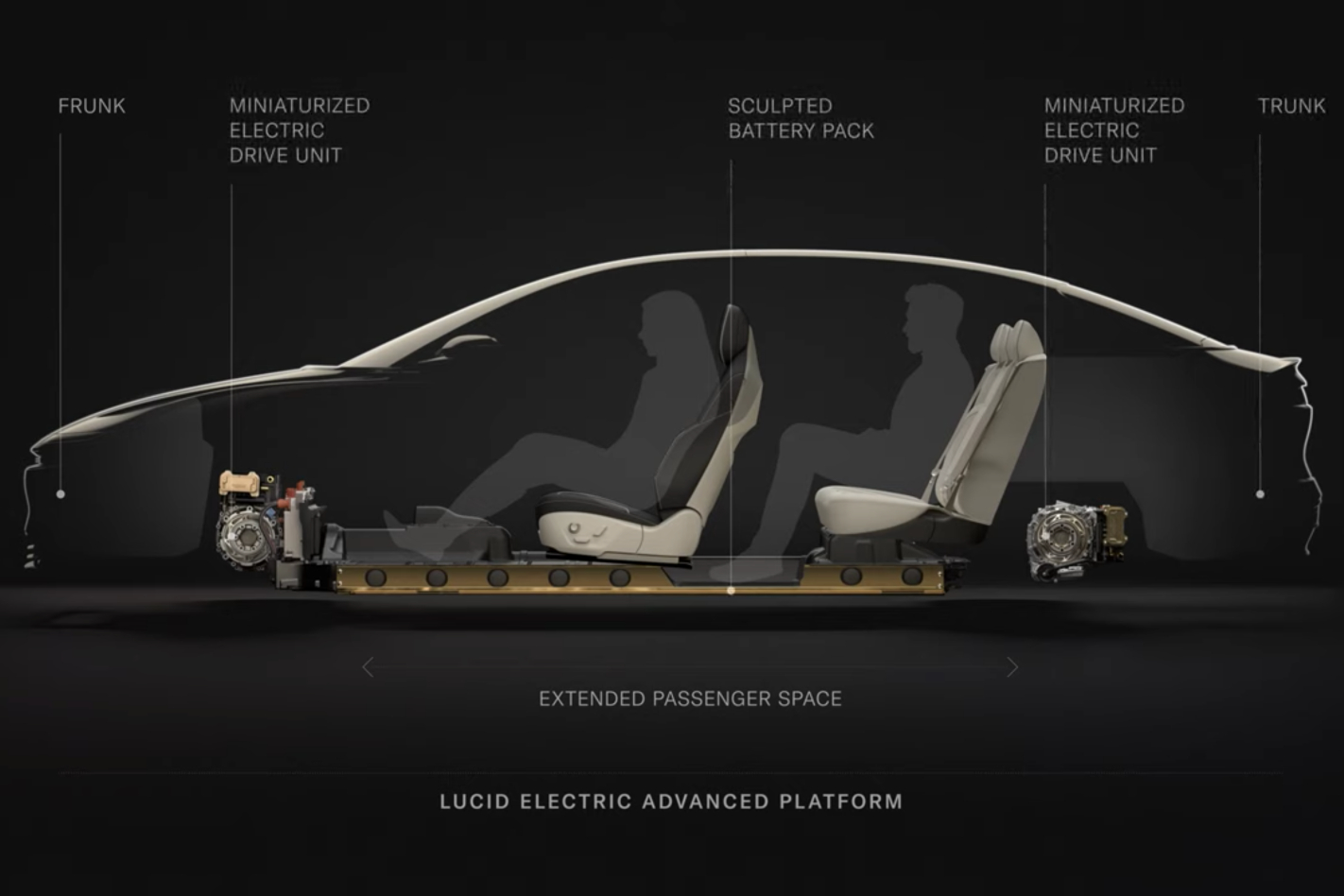
With no engine to occupy the under-bonnet space, the Lucid Air offers 280 litres of storage up front and another 460-litre boot at the back. For context, the Lucid’s front luggage area is the same as a Toyota Yaris boot, while the combined total is the same as an Audi Q7’s.
All this from a sedan that, on the outside, is about the same size as a Mercedes E-Class.
“It’s relatively easy to achieve more range by adding progressively more batteries, but gaining ‘dumb range’ that way increases weight and cost, and reduces interior space,” said Lucid Motors CEO Peter Rawlinson.
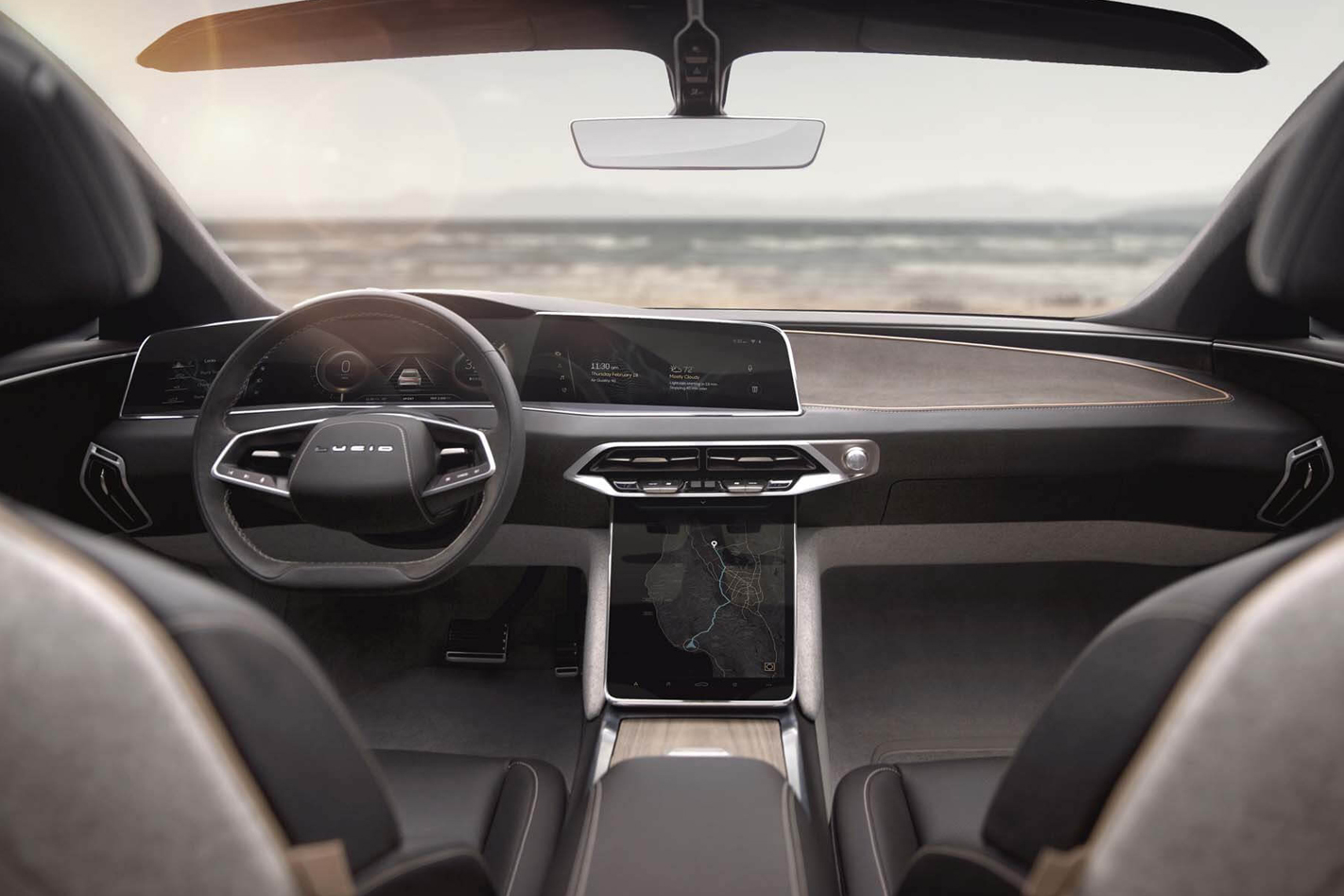
“Lucid Air has achieved its remarkable range whilst also reducing battery size through its in-house technology, resulting in a breakthrough in overall vehicle-level efficiency.
“By pursuing this ‘smart range’ approach, Lucid shall not only be able to offer the Air with this unprecedented absolute range, but also offer future models that achieve competitive range from proportionately smaller battery packs, thereby saving cost, weight, and space.
After a little bit of teasing and a Nurburgring lap record claim, the new 2021 Porsche Panamera has finally been revealed in all its limousine glory.
With a broad launch model range, the new Panamera builds upon the previous model with extensive updates, upgrades, and facelifts.
Porsche has no less than 12 variants of the new Panamera from launch, accounting for different drivetrains and body styles, from the base ‘Panamera’ model though to the Turbo S and 4S E-Hybrid variants.
Australia will receive eight variants of the Panamera, starting with the base model, moving up to the AWD Panamera 4 and its Executive and Sport Turismo (wagon) variants, then to the electrified 4S E-Hybrid, the more sporting-focussed GTS and GTS Sport Turismo, and finally the big daddy Turbo S, which takes over from ‘Turbo’ as the Panamera flagship.
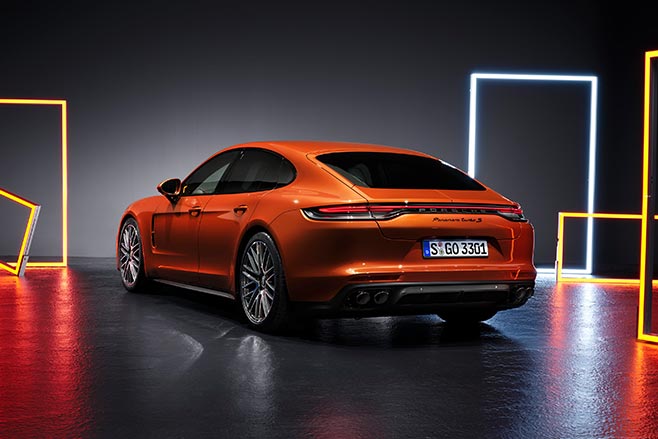
Though details of the mechanical changes that have created the new Panamera range are relatively vague, we know plenty of attention has been paid to the suspension and chassis of the model, creating a more capable drivers car as proven by its Nürburgring lap time and comments from Porsche test driver Lars Kern, who said the previous model wouldn’t physically have been able to achieve what the new one does.
Watch the 2021 Porsche Panamera set its Nurburgring lap record
Porsche Australia says the new Panamera is available to order now, though deliveries will begin to take place from December 2020.
So, without further ado, we’ll start from the top of the range with the details.
2021 Porsche Panamera Turbo S
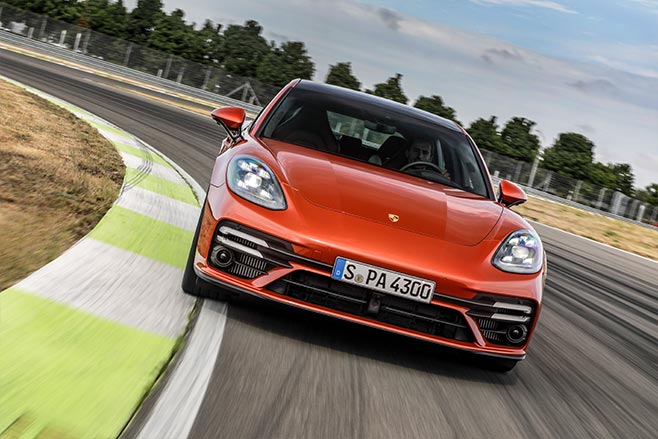
Porsche Australia has confirmed the Turbo S will start at $409,500.
With a 4.0-litre twin-turbo V8 under the bonnet putting 463kW and 820 Nm to all four wheels, the Turbo S is claimed to hit 100km/h in an astonishing 3.1 seconds. Astonishing especially as it weighs 2080kg. It’s able to carry on to top out at 315km/h. Porsche’s Sport Chrono Pack is standard on Turbo S, as with GTS and E-Hybrid.
By comparison, the previous Panamera Turbo was down 59kW and 50Nm on the new Turbo S.
All variants of the Panamera use Porsche’s 8-speed PDK, with tuning dependant on drivetrain.
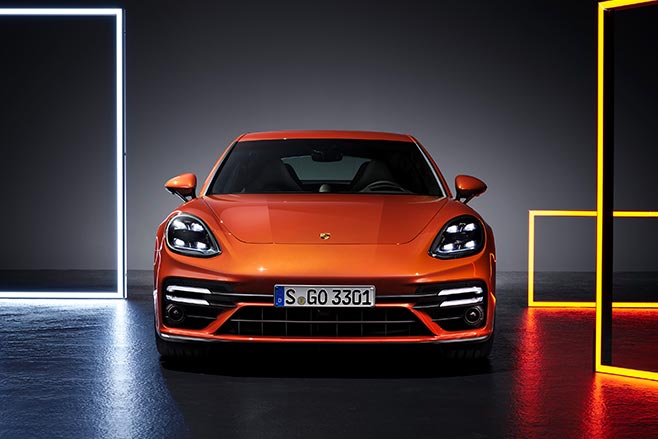
The Turbo S is the only variant to receive Dynamic Chassis Control Sport and Torque Vectoring Plus as standard, as well as ceramic brake discs (420mm front; 410mm rear) with yellow 10-pot aluminium monobloc fronts with 4-pot rears. These brakes sit behind 21-inch 911 Turbo Design wheels, wrapped in 9.5-inch rubber at the front, but 11.5-inches at the rear.
Rear-axle steering is standard on the Turbo S, but a $3750 option on the rest of the range.
2021 Porsche Panamera GTS
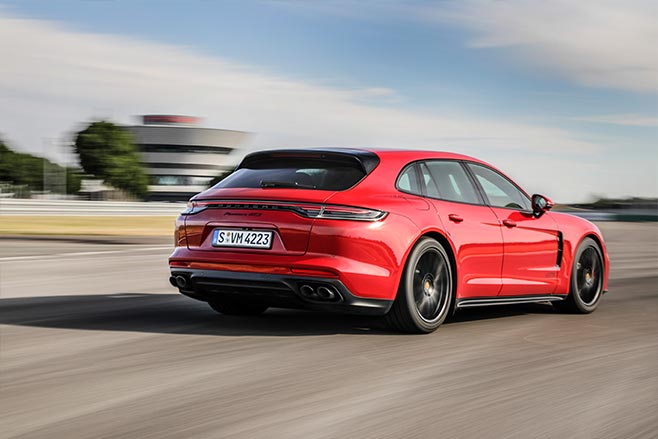
Stepping down, but not necessarily getting less focused than the Turbo S, is the Panamera GTS. Porsche Australia will hand you the keys if you’ve got $309,500 in your wallet, or $316,800 for the Sport Turismo wagon.
Though it’s not as powerful, a few details of the GTS make it the ‘driver’s choice’ of the range, including its air suspension (with PASM, Porsche Active Suspension Management) being tuned for spirited driving and therefore also 10mm lower than the rest of the Panamera range.
2019 Porsche Panamera GTS review
Its engine is the same 4.0-litre twin-turbo unit as the Turbo S, but without the twin-scroll turbochargers and tuned for a lower 353kW and 620Nm. Its 0-100km/h time is still a respectable 3.9 seconds, and the car itself is lighter at 2020kg (2040kg for the Sport Turismo, but same time claim!), though its top speed is a slightly lower 300km/h (292km/h for Turismo).
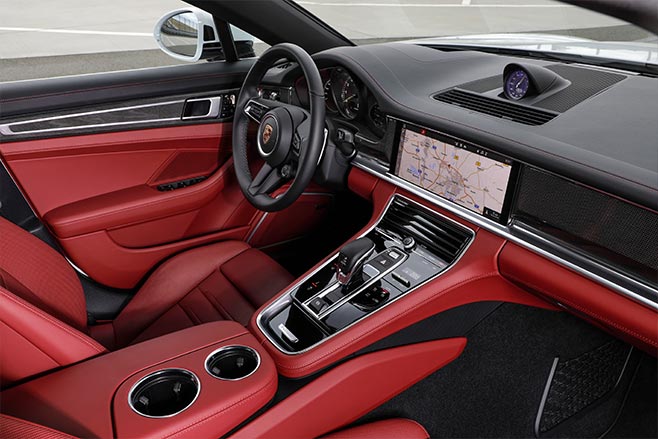
A sports exhaust with black tailpipes is standard on the GTS, though it’s $7100 if you want it for another Panamera model.
As you’d expect, the chassis and suspension have had a proper revamp, with Porsche focusing on making the PASM system more conducive to hard driving without sacrificing comfort.
The steering and Dynamic Chassis Control Sport systems have also been overhauled.
Tyre widths are the same on the GTS as the Turbo S (9.5-inch at the front, 11.5 at the rear), but on 20-inch wheels. Brake callipers for the GTS are the same as the rest of the range below it, 6-pot fronts and 4-pot rears, though disc sizes vary. GTS scores 390mm fronts and 365 rears.
2021 Porsche Panamera 4S E-Hybrid
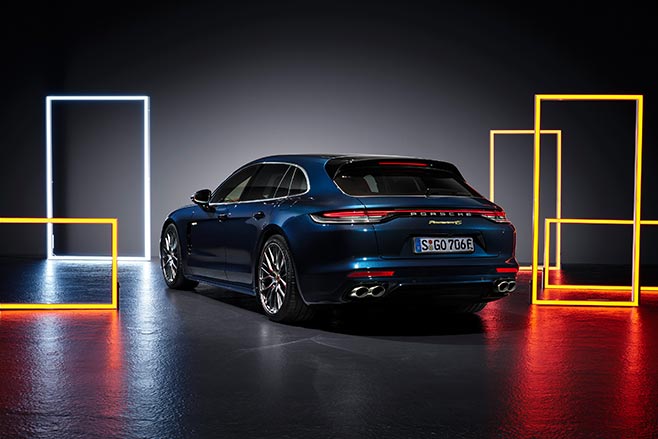
If you’ve got a green thumb, and $292,300, you can grab Porsche’s Panamera 4S E-Hybrid, available only in ‘sedan’ form here for now. Pictured above is a Sport Turismo.
Its 412kW and 750Nm are drawn from a 2.9-litre V6 twin-turbo engine, helped by an electric motor integrated into the eight-speed dual-clutch which contributes 100kW to the total. It’s a plug-in hybrid, which means the 17.9 kWh battery (up from 14.1kWh in the previous version) can be juiced from your wall at home.
The E-Hybrid is able to hit 100km/h in 2.7 seconds, hit a top speed of 298km/h, though it’s the heftiest of the range at 2225kg thanks to electrification and the associated batteries.
Brake discs on the E-Hybrid are 410mm at the front to accommodate its bulk, with 365mm at the rears.
2021 Porsche Panamera 4 and base model
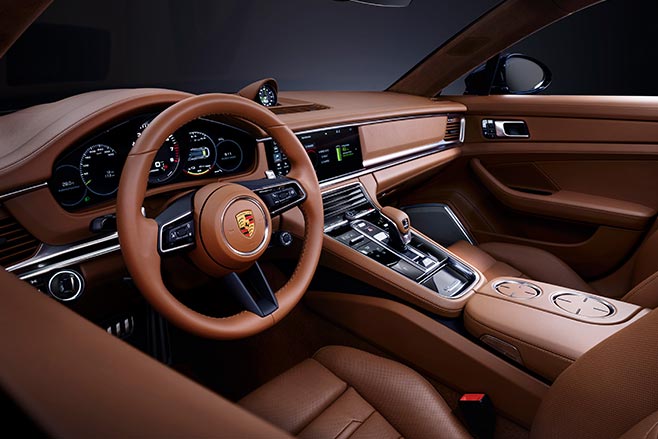
The base, rear-drive Panamera ($199,500) and the three 4 variants, the 4 ($209,700), 4 Sport Turismo wagon($217,000), and 4 Executive($219,200) all feature the same 243kW/450Nm 2.9-litre twin-turbo V6, focusing more on the comfort of the Panamera and less on hard driving.
Times for 0-100km/h are claimed at 5.3sec for the 4 and its Sport Turismo bro, a slightly slower 5.4 for the 4 Executive, and 5.6sec for the rear-drive base model, though the Sport Chrono pack knocks two tenths off each of these times if optioned.
The primary difference for the 4 is the options and features on the Executive, which includes a host of comfort options such as individually adjustable seats with heating all round and ventilation at the front, plenty of gloss silver and brushed aluminium trim.
Brakes for all variants here are 350mm discs at the front and 330 rears, except the 4 Sport Turismo which cops 390mm and 365mm discs from the GTS.
Get your free weekly MOTOR report!
In its stock state, the AMG G63’s M178 twin-turbo V8 engine has 430kW and 850Nm. You might think that’s plenty for an SUV, but not German tuning company Posaidon.
The company has plenty of options for tuning AMG’s various engines, including one that can grant the M178 a stonking 647kW and 1000Nm.
But now Posaidon has taken that a step further again, with a 701kW/1278Nm tuned G63, called the G63 RS 830+.
It takes the stock 4.0-litre M178 V8 and ports the cylinder heads, upgrades the valves, installs a new exhaust system, and most importantly replaces the stock turbos with two custom units.
Posaidon also puts its electronic tuning and mapping expertise to use to extract every last kiloWatt and Newton metre it can before getting to the point where the engine will start to fail.
And, lo, you have a G63 with 271kW and 428Nm more than stock. That’s basically a Porsche Boxster S worth of power and torque.
AMG G63 vs Lamborghini Urus vs Range Rover
Posaidon says the G63 RS 830+ will hit 60mph (97km/h) in just 3.6 seconds, almost a full second faster than stock, while top speed is up to 280km/h.
Of course, Posaidon is no stranger to ridiculous power outputs, as in the past it has created an AMG E63 with 750kW and 1400Nm.
Want to know who Australia’s next global motorsport star is likely to be? Well, there’s a high chance it is going to be one of the youngsters listed in this article.
While Daniel Ricciardo’s 2020 F1 season appears to be another brutal mid-field scrap with Renault, there is a group of Aussies in global junior categories winning races, scoring regular podiums, and fighting for outright champion status.
These are the names to pay attention to as they make their way to F1. Each is competing in either F3, which feeds into F2 and then F1, or Porsche’s global Supercar championship. Both categories are a part of the F1 support billing, with the biggest names in motorsport paying close attention to the on-track action.
Oh, and take it from us. If you find yourself with some extra time on the weekend, it is well worth your time tuning in via Foxtel or Kayo to watch these guys race – the competition is some of the fiercest you’ll see all year.
Oscar Piastri

Competing in the FIA Formula 3 championship, Oscar Piastri had a ripper 2020 season, claiming the prestigious Formula 3 crown.
Piastri moved to F3 after winning the Formula Renault Eurocup title last year and joins the team to beat – Prema.
The Italian squad is a dominant force in F3, with its drivers locking out the top three championship positions last year.
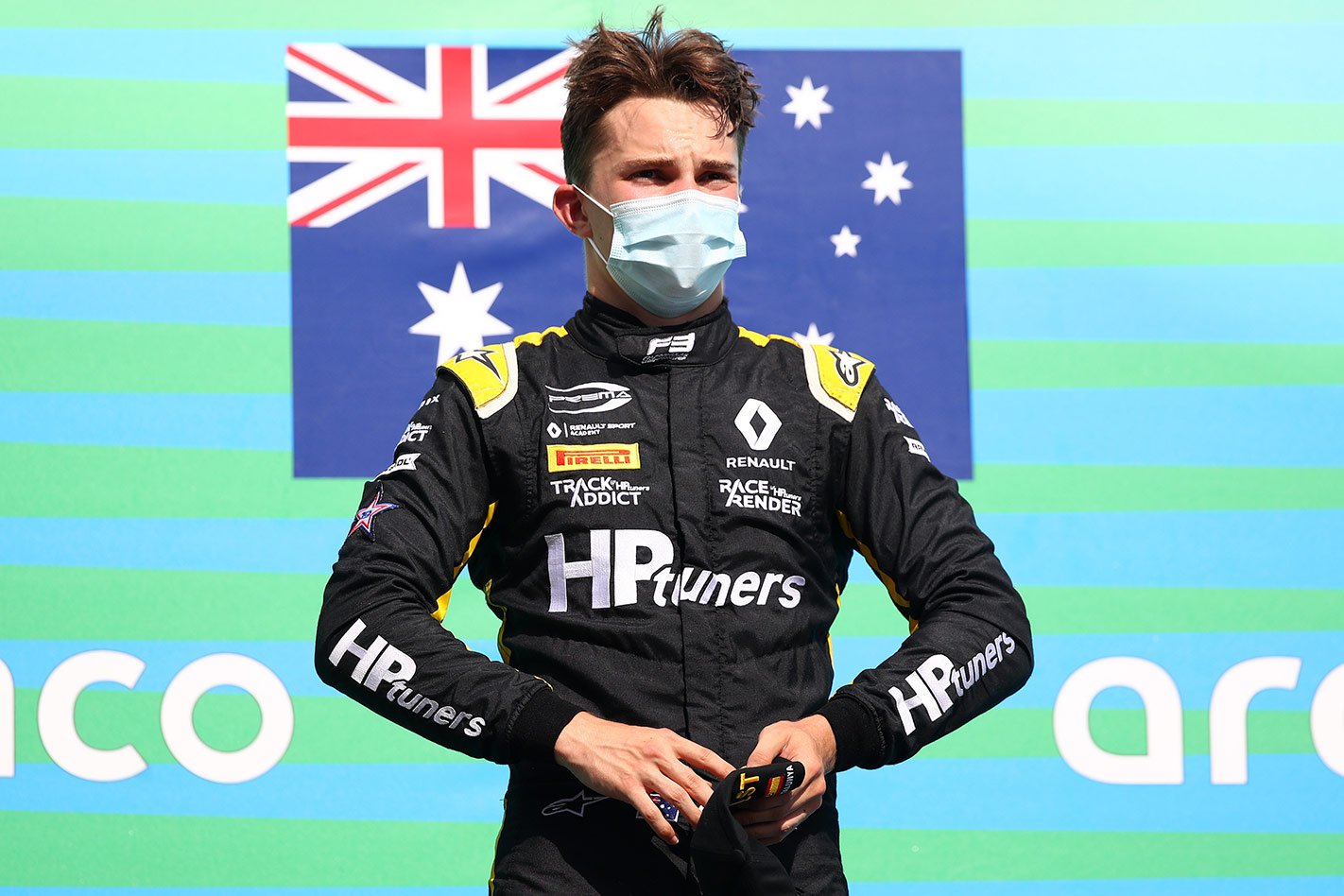
A seventh-place finish at the Mugello round secured the young Victorian the title, ahead of American teammate Logan Sargeant.
It was a brilliant season; Piastri won on debut, scored a trio of second-place finishes in the middle of the season, and added a second victory to his tally before clinching the title.
There are big things to come from this 19-year old from Melbourne.
Alex Peroni
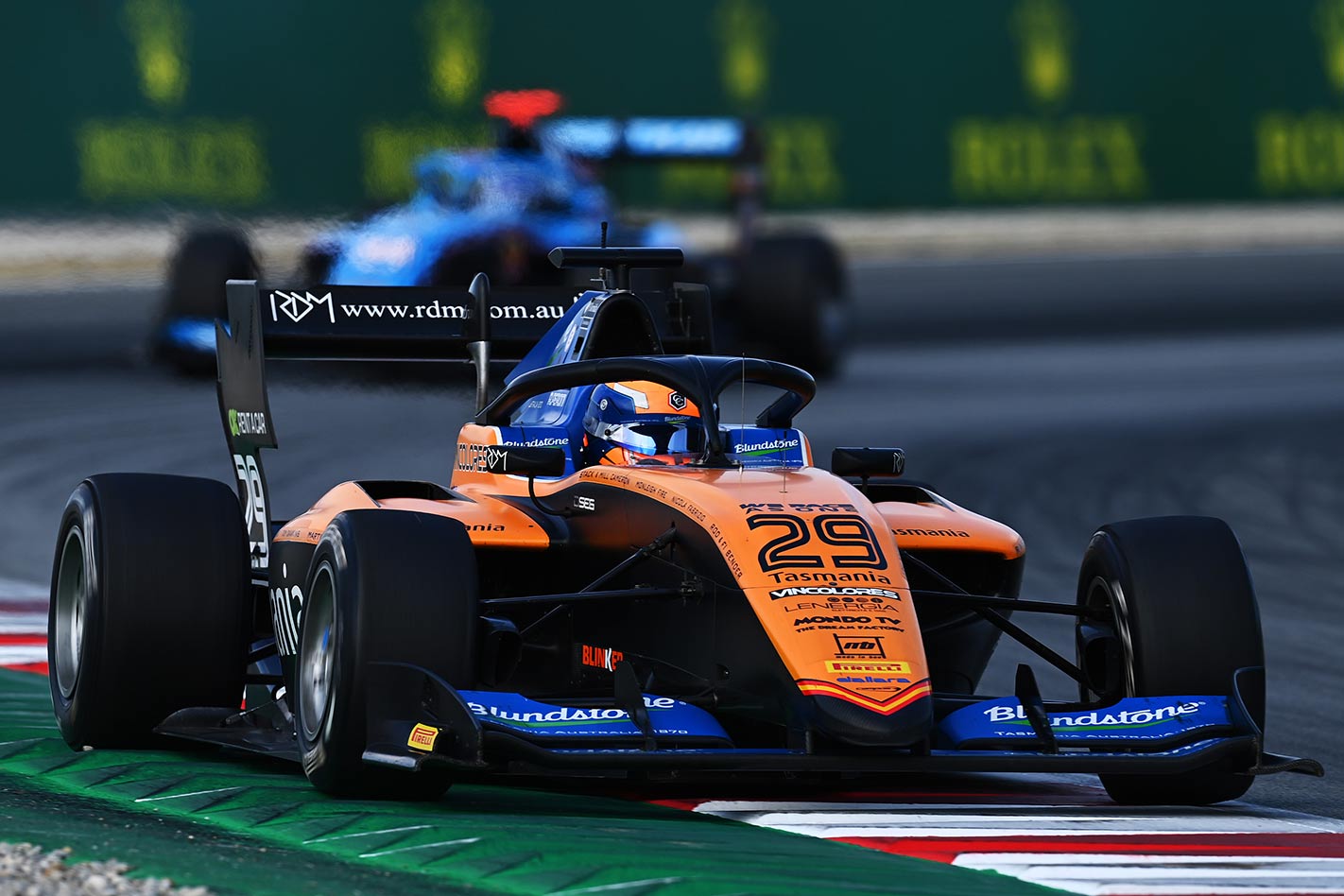
If the name Alex Peroni sounds familiar, that’s because this 20-year-old Tasmanian suffered a monumental crash that ended his 2019 season early.
Footage of the shunt went viral, with Peroni suffering a fractured vertebra as a result.
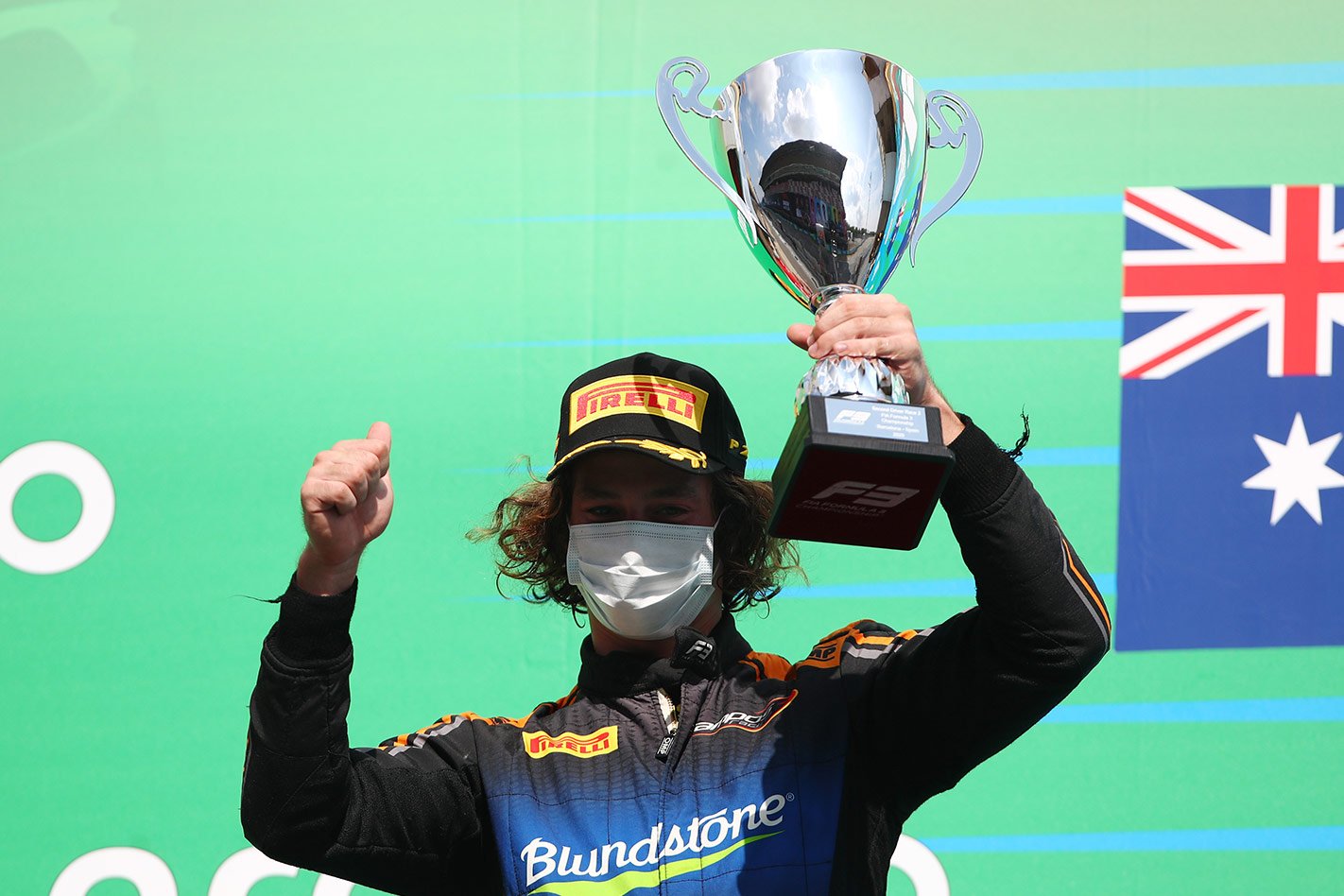
However, the Aussie is back at it for 2020, competing for Campos Racing in F3.
Peroni started the year with a podium in Austria and has finished on the rostrum another couple of times this season.
His first F3 race win remains evasive for now, but it’s only a matter of time before Peroni is spraying the victory champagne.
Jordan Love
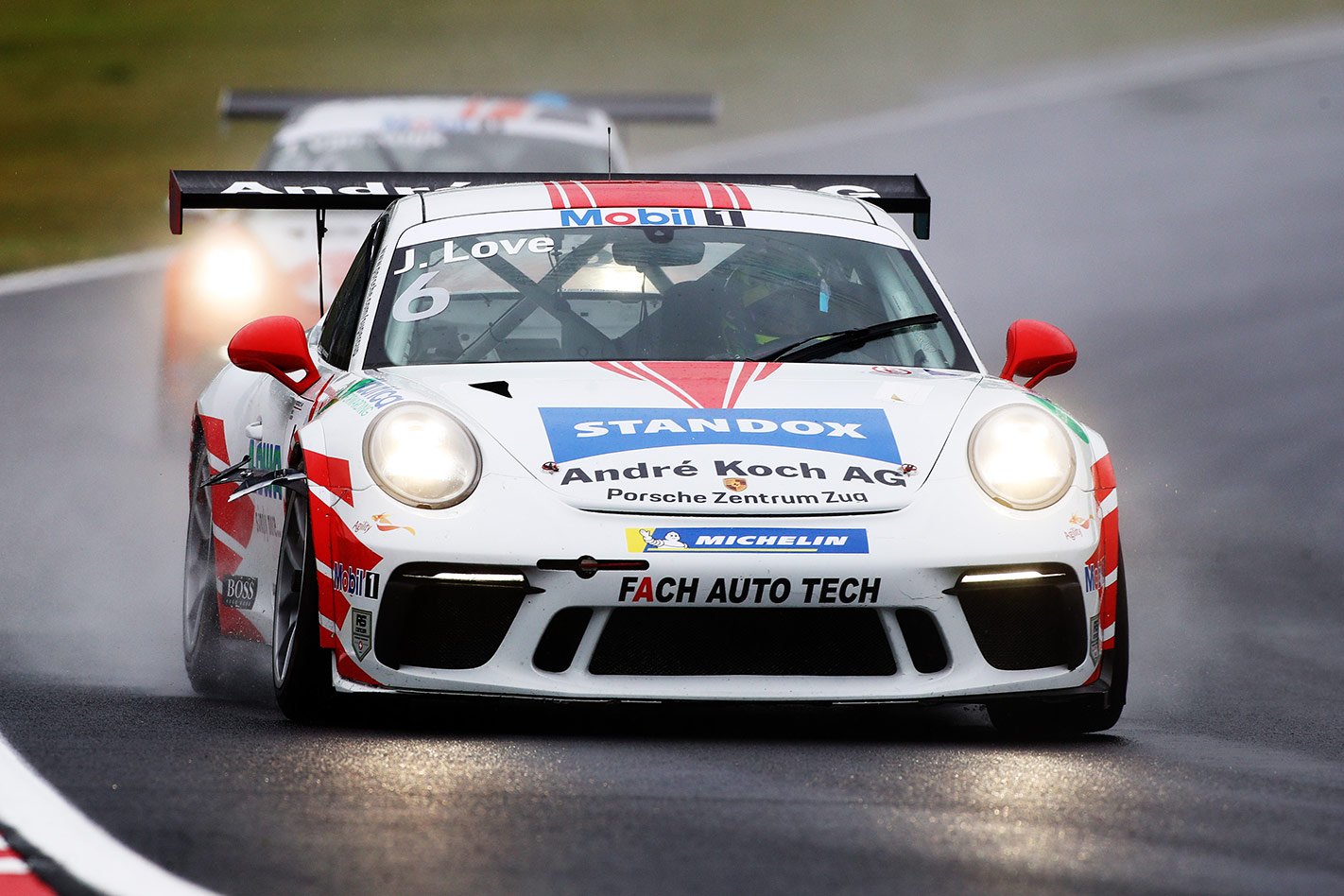
Stepping away from open-wheel racing for a moment, Australia’s global tin-top hopes are being carried by Perth native Jordan Love.
The reigning Australian Porsche Carrera Cup champion, Love is competing in the Supercup series for Fach Auto Tech – the same team Matt Campbell drove for when he finished third in the series in 2017.
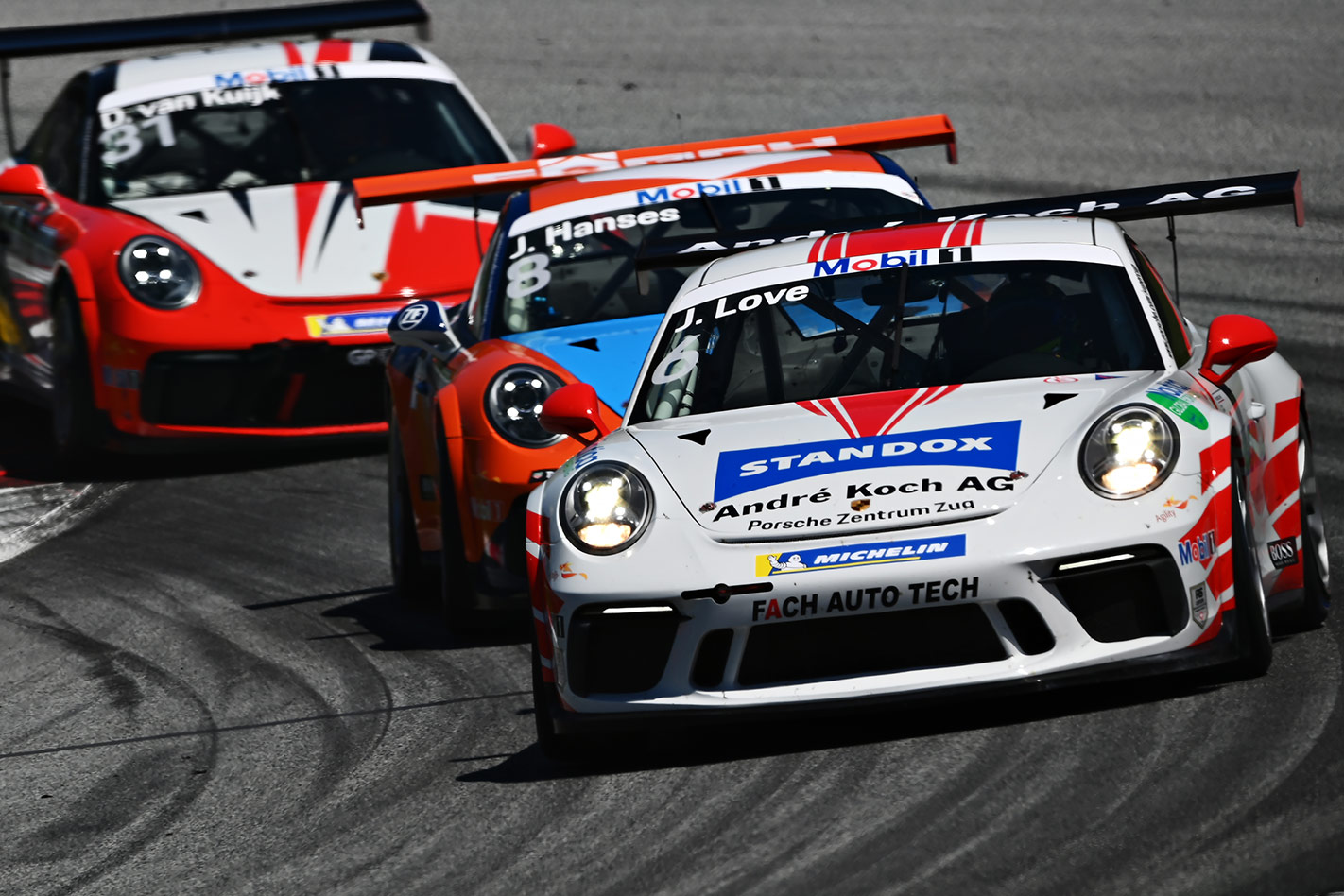
At 21 years old, Love is yet to win a race in the tightly contested one-make category in 2020, with his best finish so far being eighth in Hungary.
However, it is early days, and there is plenty of potential to come from Love.
Jack Doohan
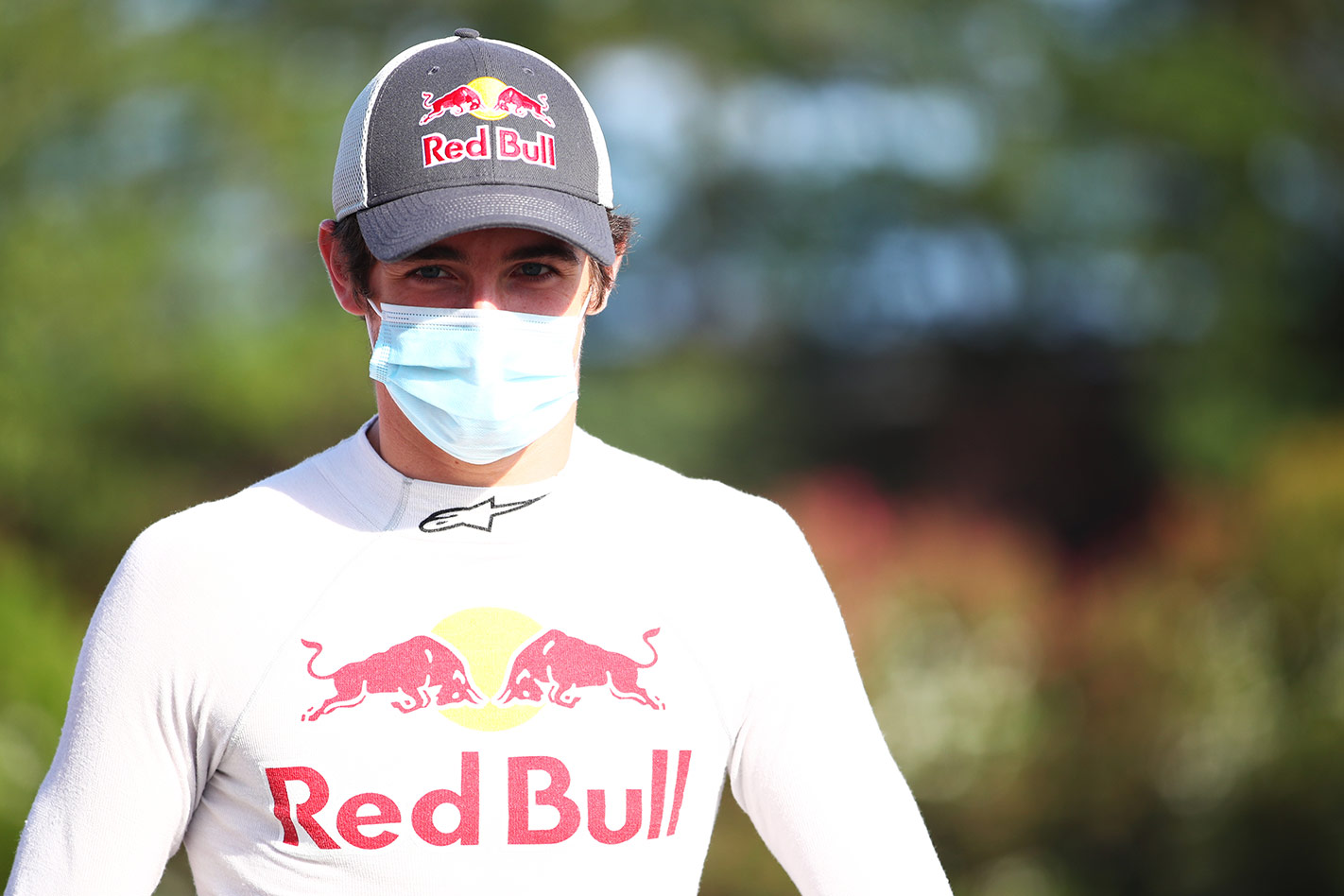
You may not know who Jack Doohan is, but you most certainly know about his father, five-time MotoGP champ Mick Doohan.
Doohan the junior is just 17 years old, and already a member of the Red Bull program, competing in F3 in 2020 for HWA Racelab.
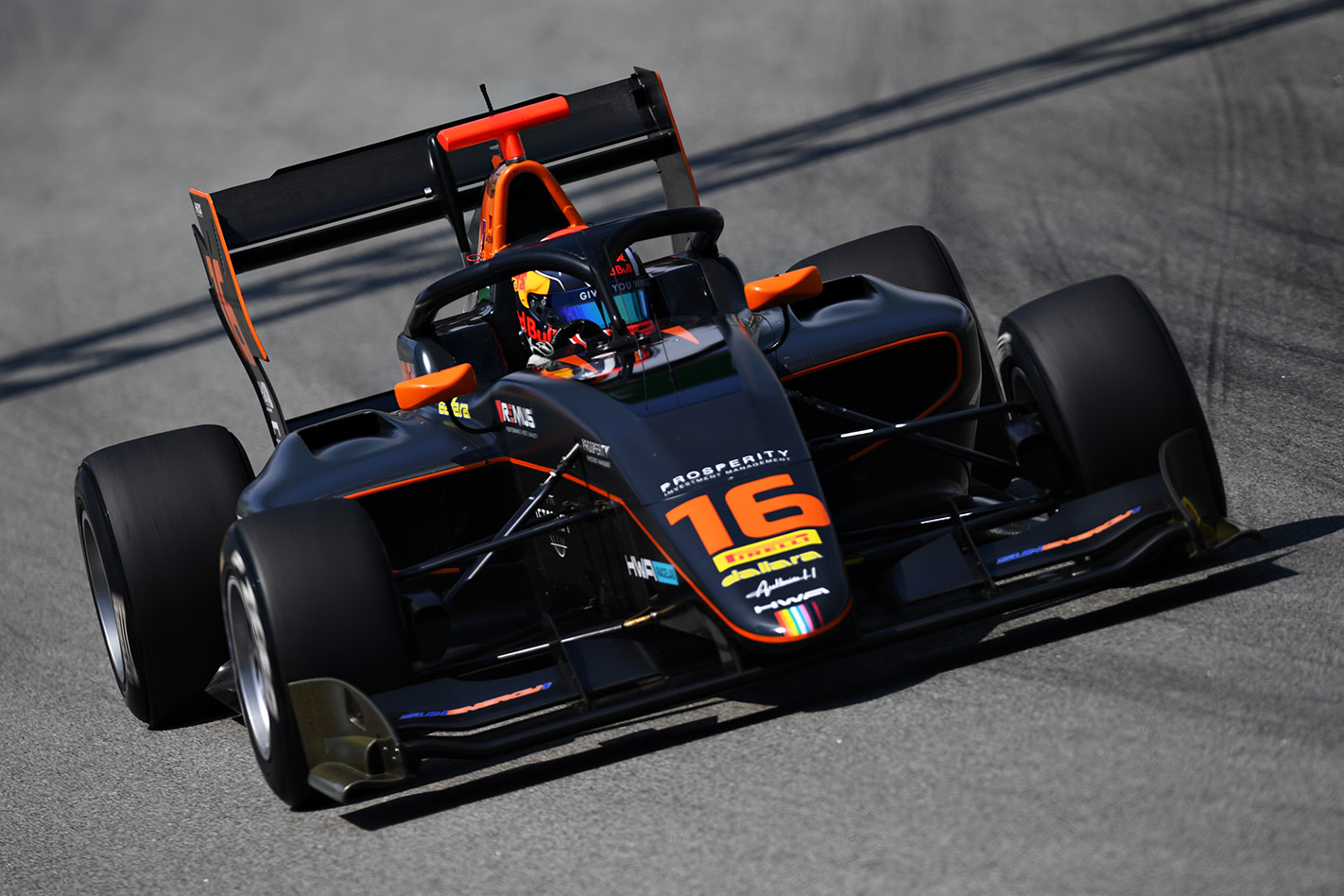
His debut season has been tumultuous so far, with a best result of 14th, but it is still incredibly early days in Doohan’s career, and he has some big names supporting him.
Expect the Doohan legacy to have a new chapter written soon, with success on four wheels instead of two.
Calan Williams
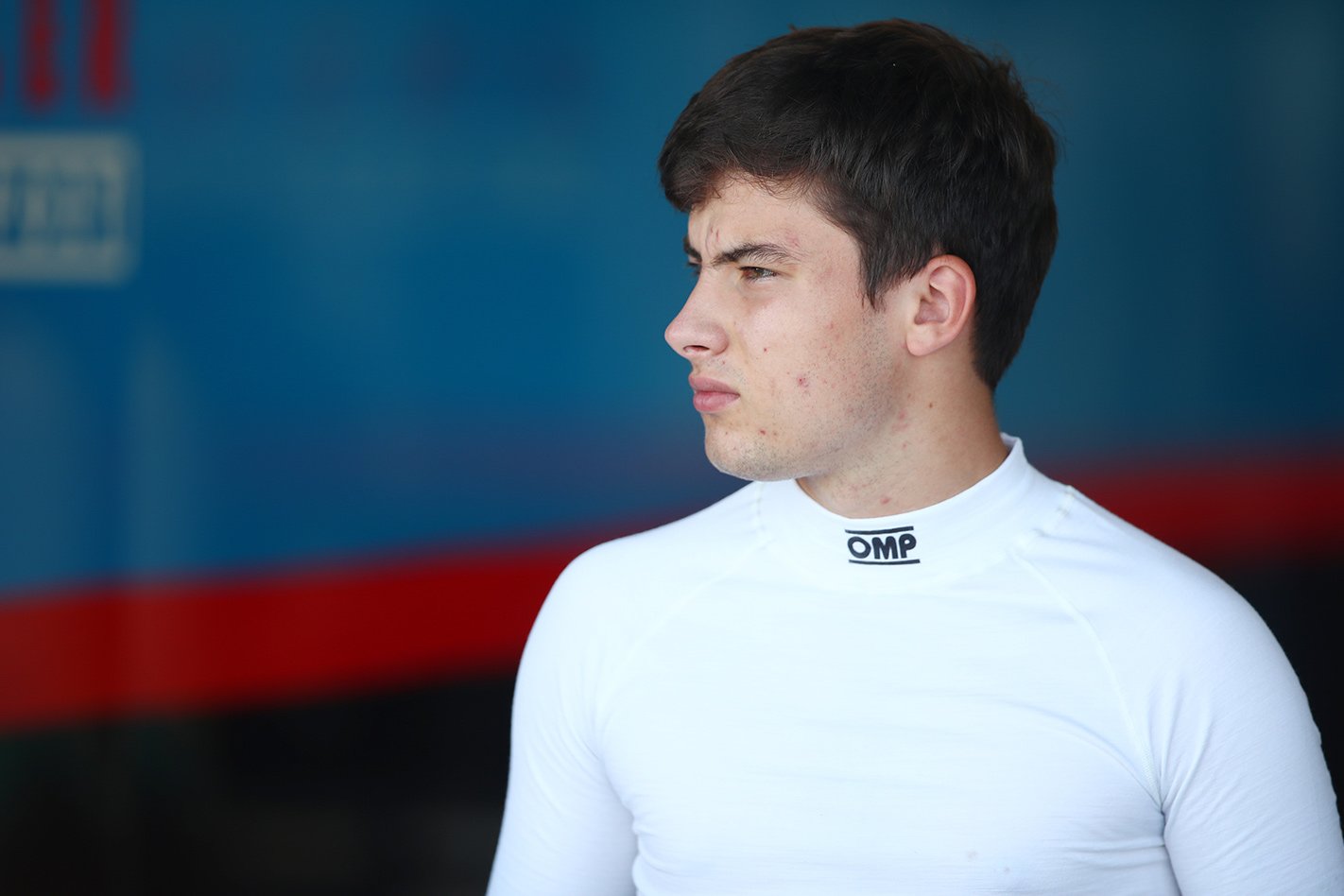
The final Aussie competing in F3 this year is Calan Williams.
The 20-year-old Perth native is making his debut in the category in 2020 with the Jenzer Motorsport team.
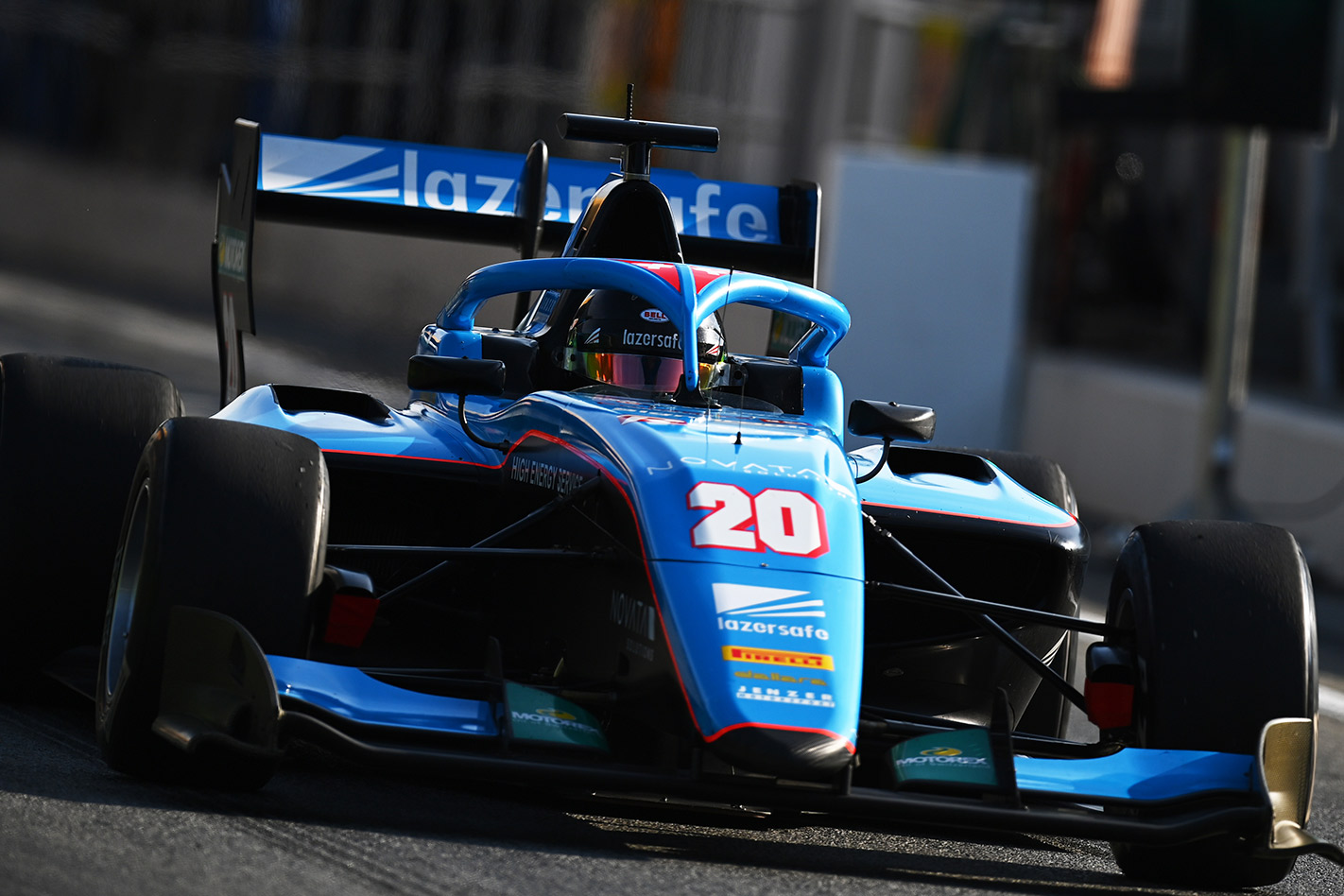
An Australian F3 champion, Williams shows potential, but will need to make rapid progress to secure his long-term future on the international stage.
WHAT ABOUT THE KIWIS?
It’s not just Australians racing up a storm in 2020, with our mates across the ditch having plenty to cheer for. And hey, we’d rather the Aussies be beaten by a Kiwi than one of those snooty Europeans, if they must.
Liam Lawson
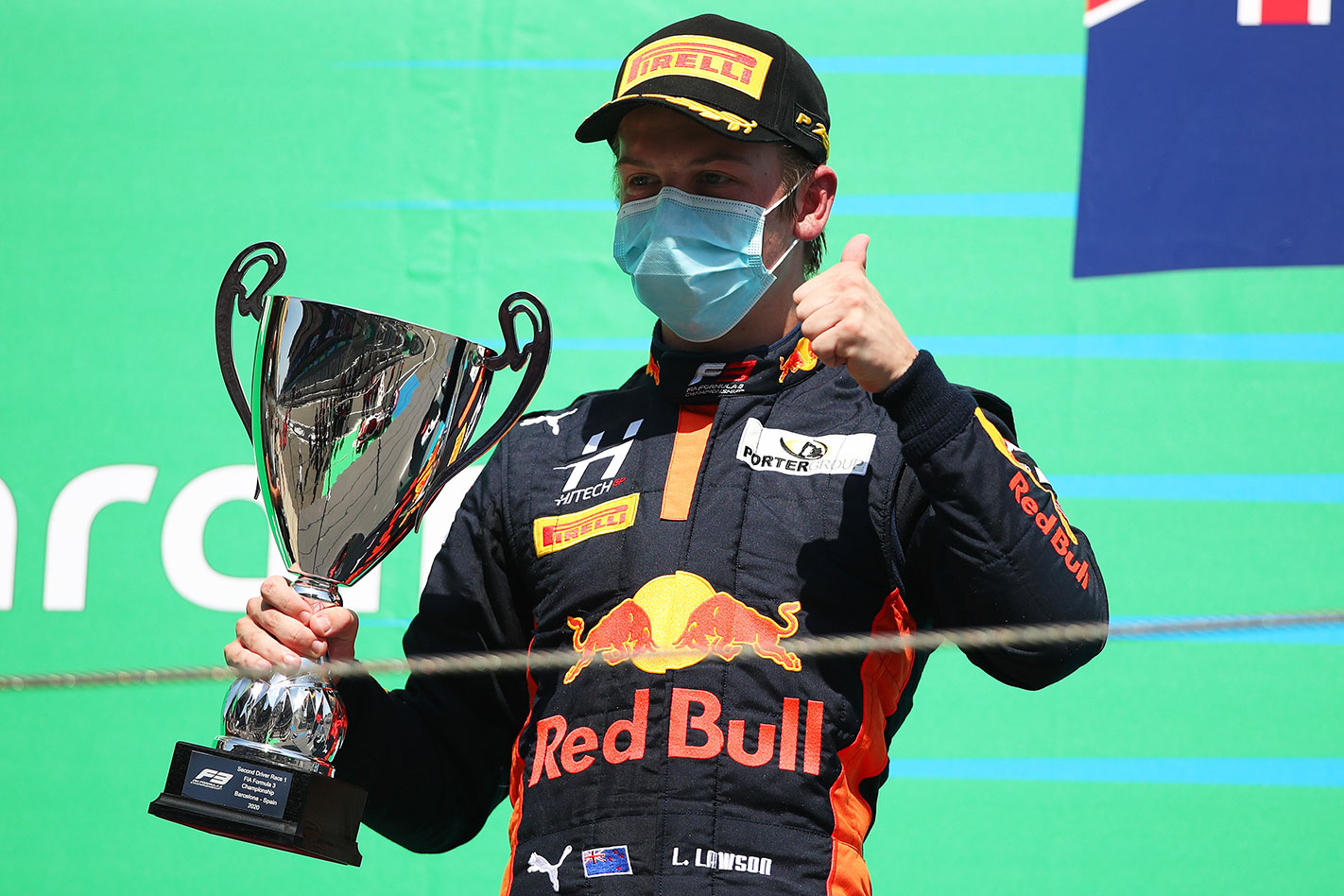
A Red Bull junior driver, New Zealander Liam Lawson is in his second F3 campaign.
Winning two races already in 2020, Lawson is fielding a Hitech Grand Prix car and has been nipping at Piastri’s heels all season.
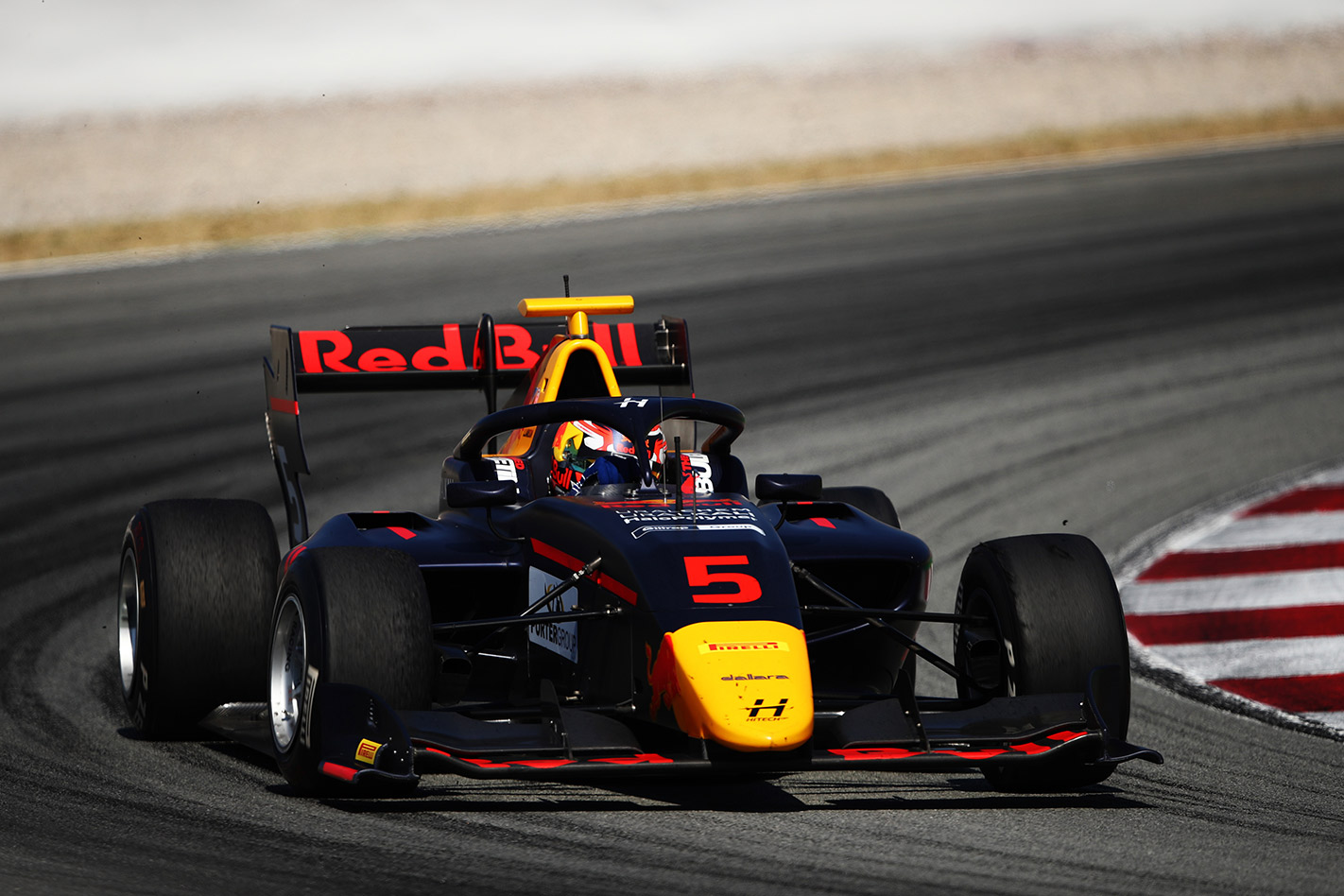
The 18-year-old has a long future in open-wheel racing if he continues his current trajectory.
Jaxon Evans
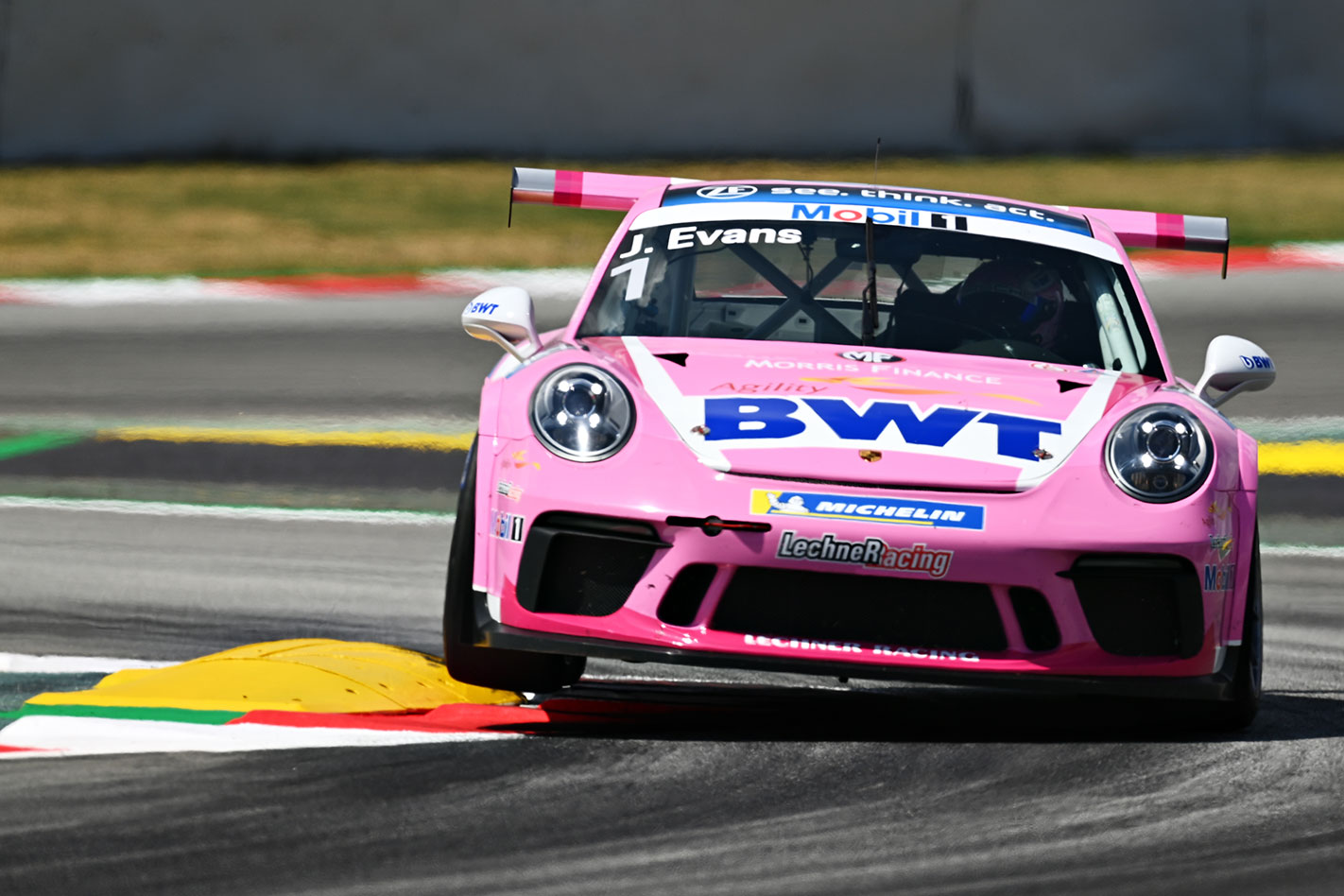
Joining Jordan Love in the Porsche Supercup series, Kiwi Jaxon Evans is an official factory junior development driver for the German manufacturer.
The best performing Supercup rookie in 2019, Evans opened 2020 with a maiden victory after scoring two podiums last year. He has followed up with a third and second place finish and looks set to follow in the footsteps of Aussie Porsche factory GT ace Matt Campbell.
Marcus Armstrong
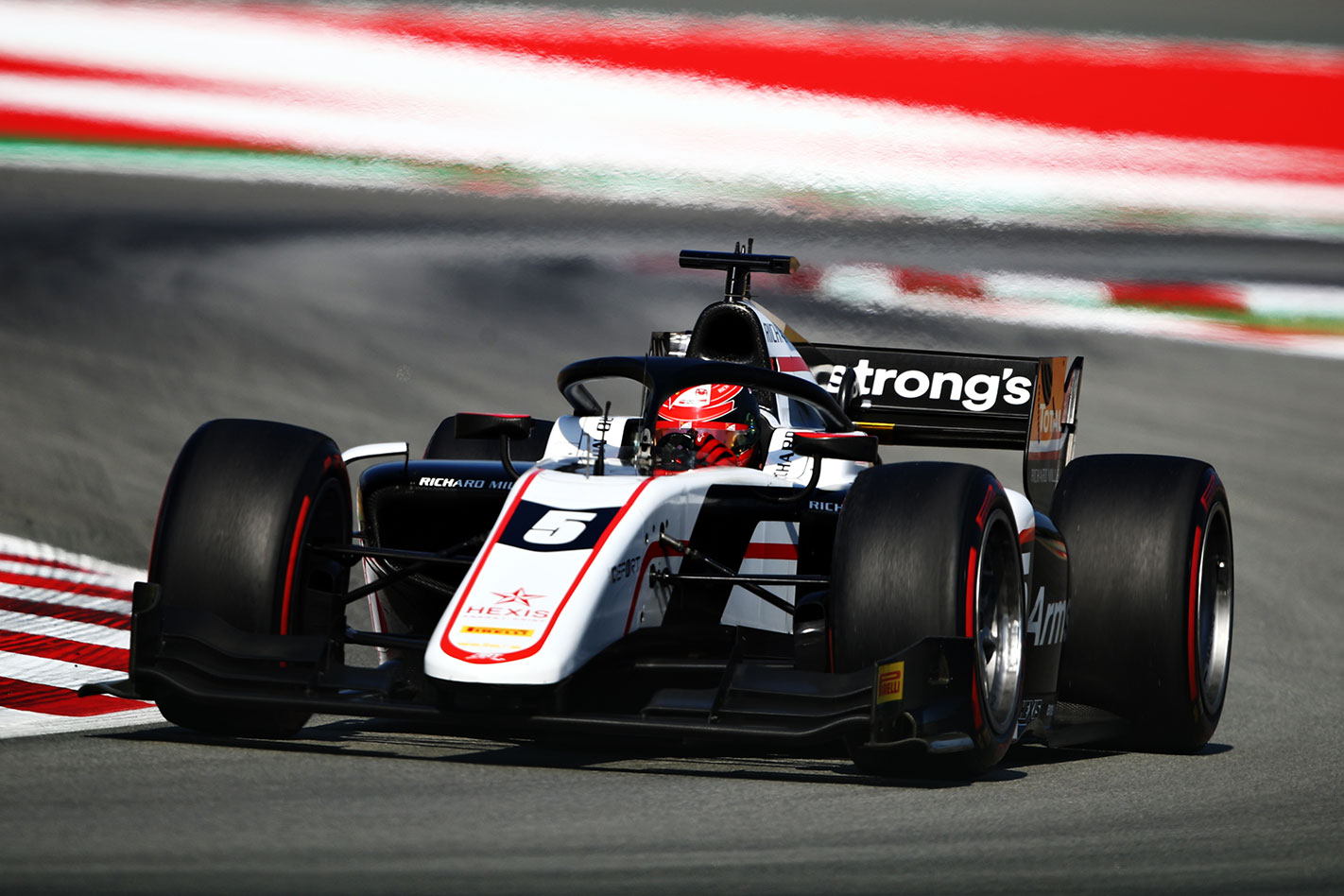
Unlike others on this list, the 20-year-old Marcus Armstrong is competing in F2, which is the direct feeder series for Formula 1.
Armstrong finished runner-up in F3 with Prema last year, before graduating to F2 with powerhouse squad ART Grand Prix.
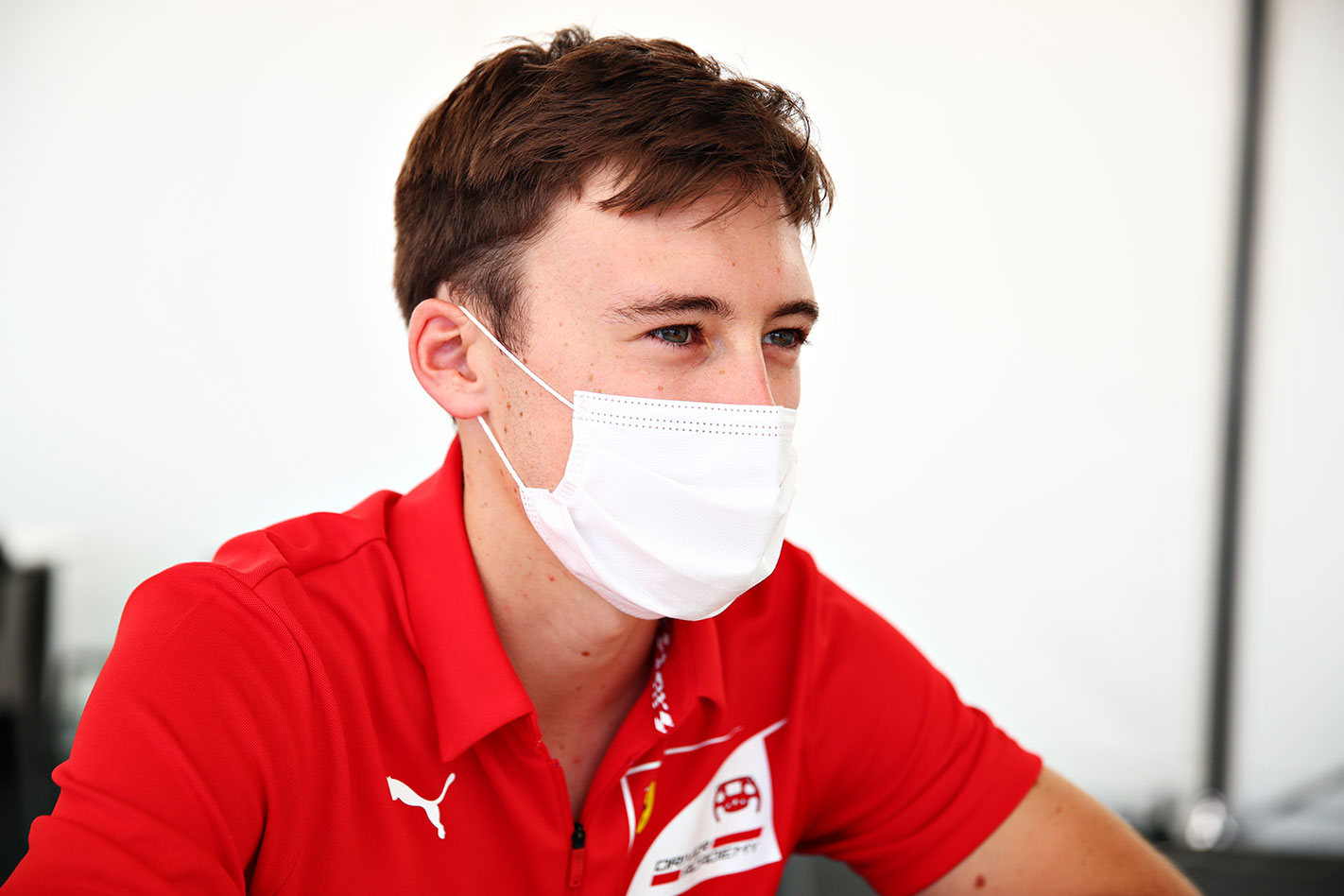
The New Zealand driver started his rookie season strongly, finishing second on debut, and scoring another podium in his fourth race. However, he has failed to finish in the points since then.
His mid-season slump will need to be rectified, and quickly, if he wants to keep the bosses of the Ferrari Driver Academy happy.
