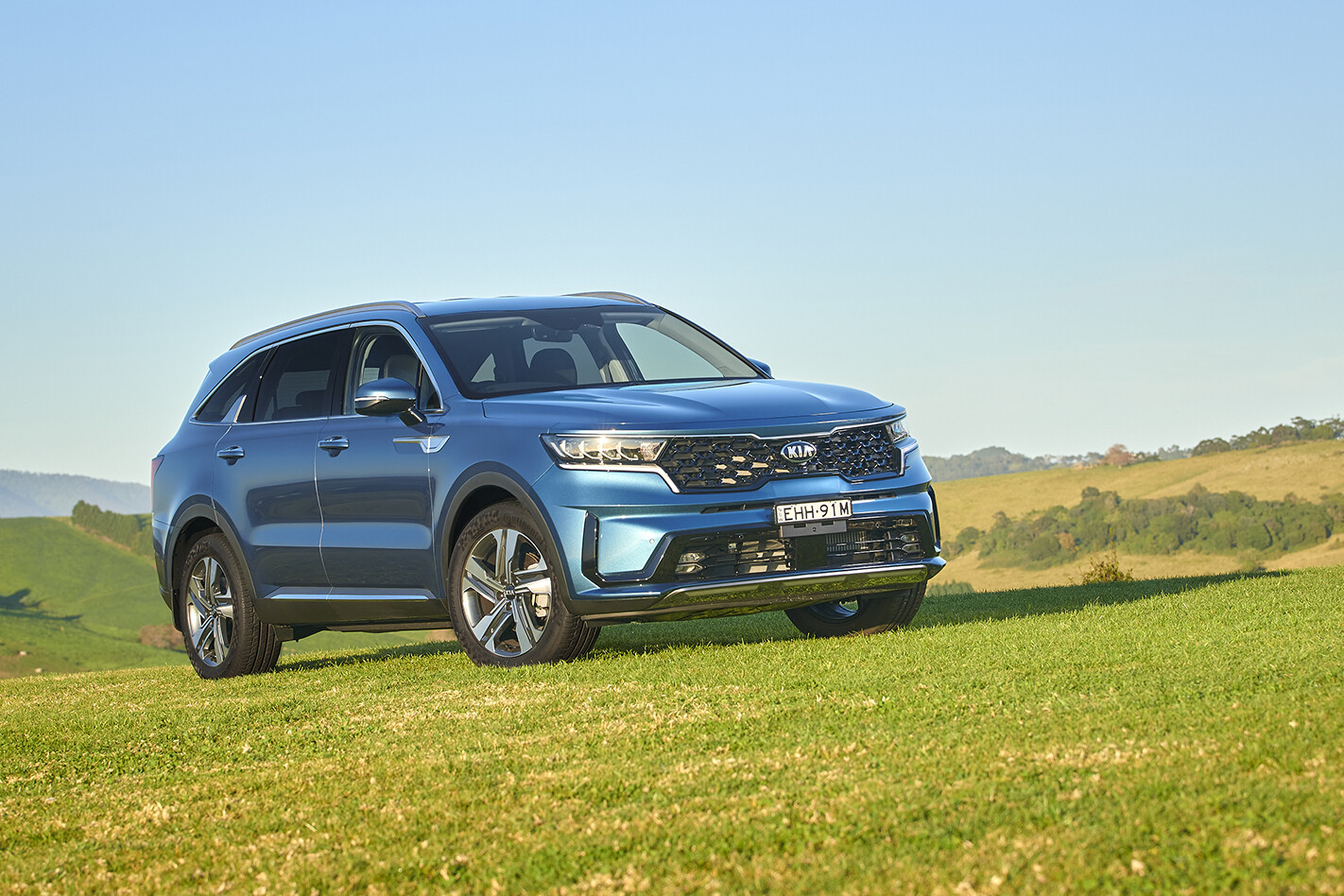
Do you know who Matt Becker is? The 48-year-old Englishman looks more like a school headmaster than someone with an intimate knowledge of performance cars, but Becker is Aston Martin’s ‘chief of vehicle attribute engineering’. This makes him responsible for how its range of cars go, stop and handle. He joined Aston Martin after 26 years at Lotus, where his late father Roger served in a similar capacity for almost 44 years from 1966-2010, and Becker Jnr was the chief architect of cars like the Series 2 Elise and Evora.
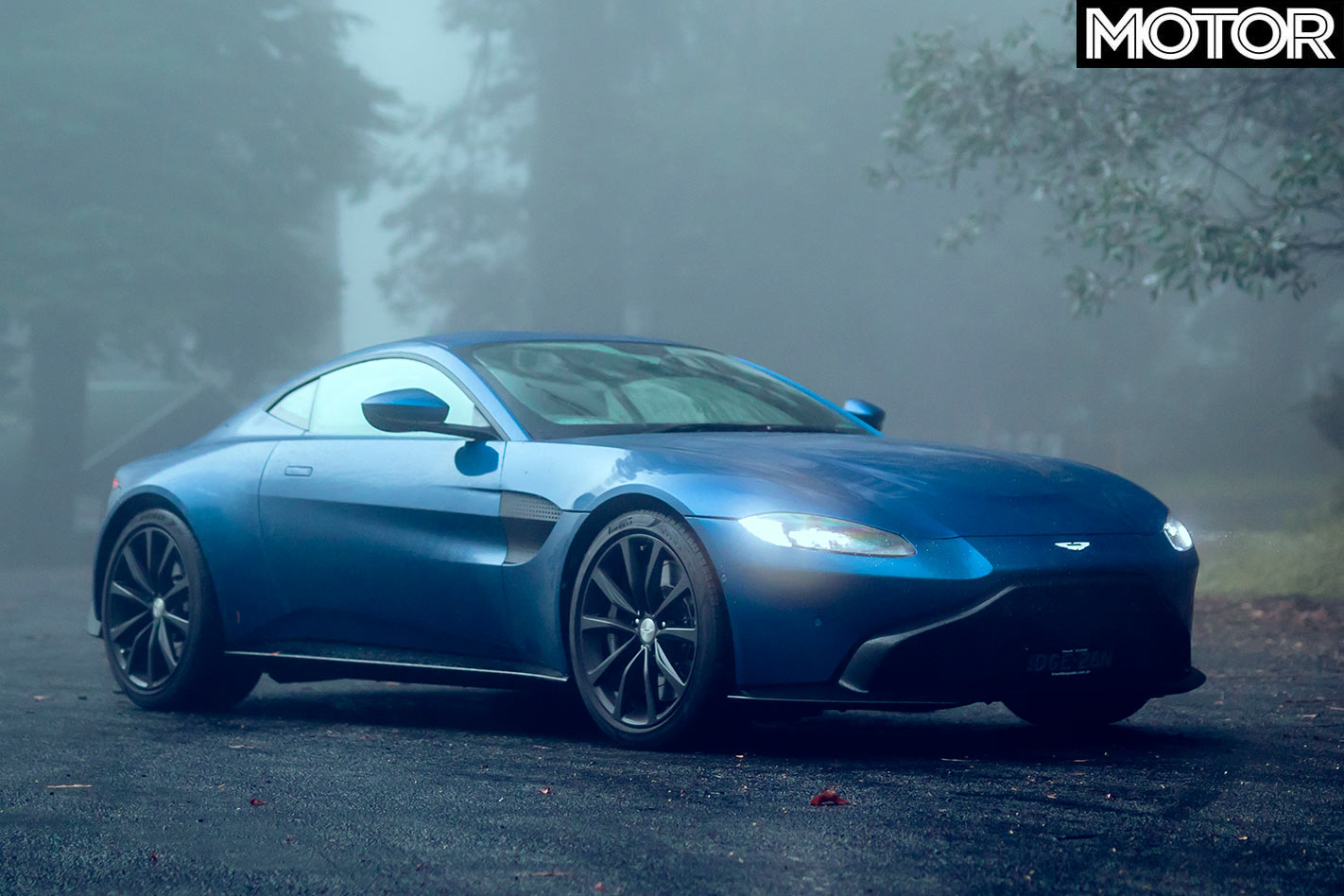
Given his resume, it’s unsurprising Becker is regarded as one of the finest exponents of his craft, and to drive a recent Aston Martin is to understand why: the DB11 AMR is beautifully judged, the DBS Superleggera a fine grand tourer, and then there’s the Vantage. We’re a little late to the Vantage party, though not through a lack of trying. Press cars have been few and far between on local soil, but persistent badgering has finally paid off with the keys to this Solara Blue example in our hot little hands. We’ve persevered because the Vantage is an important car, the cornerstone of Aston’s sports car range and intended to sell in much greater numbers than the more expensive and exclusive DB11 and DBS models. It occupies the same market as the Porsche 911, so it needs to be good to tempt buyers.
And good it is. Very good, in fact. Once again Becker’s touch is apparent; yes, he no doubt has a talented team working beneath him, but philosophy (and sign-off!) comes from the top. The steering, for instance, feels beautifully natural in its weighting and rate of response. A mark of good steering is that you don’t give it a second thought for it behaves exactly as you’d expect, and the Vantage sits in this category. Well, almost, as the bizarre ‘squircle’ steering wheel does occasionally give the mind pause, but a more conventional wheel is available. It isn’t razor sharp in its responses at 2.4 turns lock-to-lock, but is the better for it, with no hint of nervousness on turn-in.
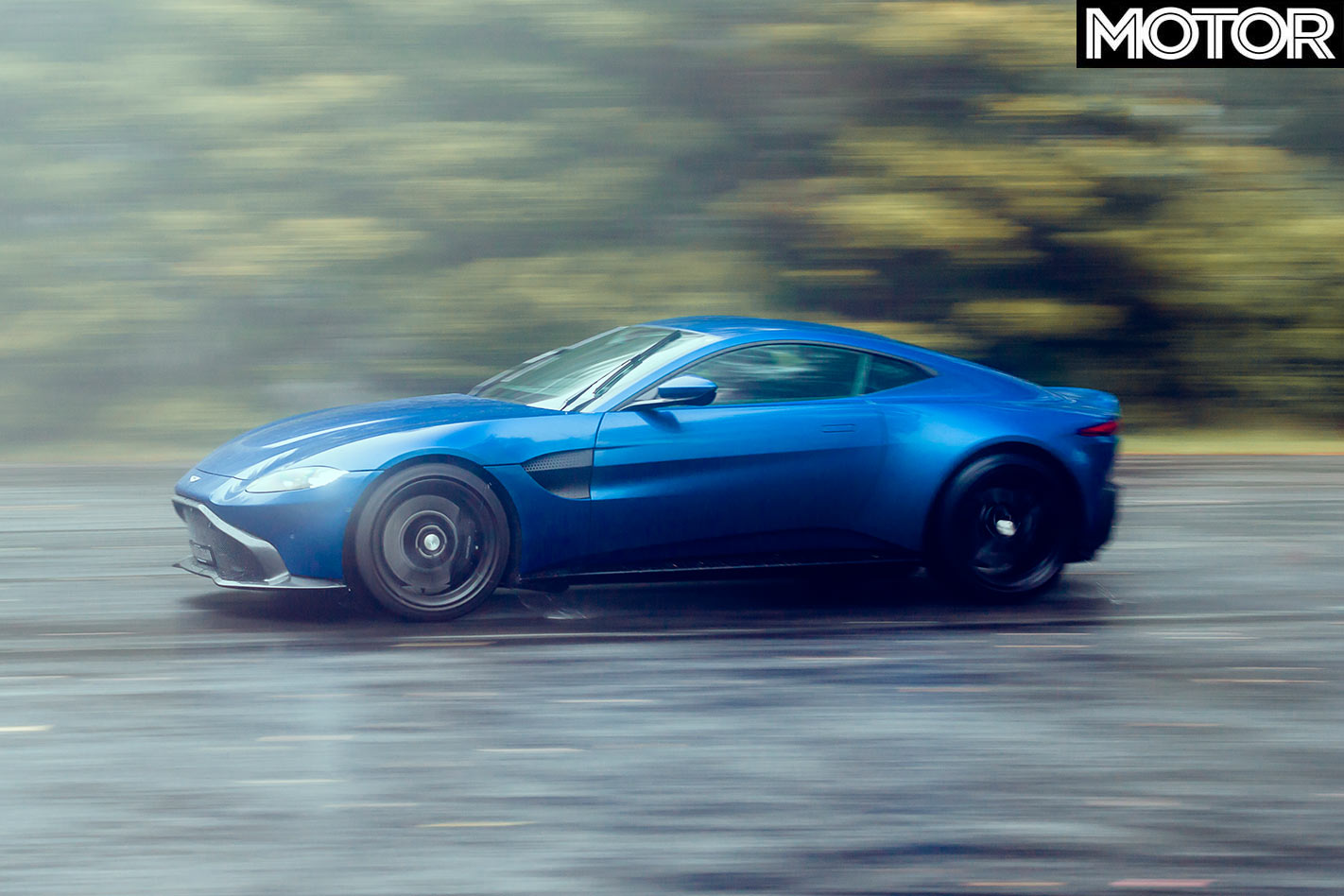
A similar level of polish is exhibited by the Vantage’s suspension. It’s firm, with a sport car’s focus on controlling body movements, but with the three-stage adaptive dampers set to Comfort it soaks up bigger bumps rather than springing out of them. This compliance is the difference between exiting the car content or cursing after a long trip. While the DB11 is the true grand tourer of the Aston range, the Vantage makes a decent fist of it, with a surprisingly capacious 350 litres of luggage space under the rear hatch. The driving position is low and comfortable, but the rest of the interior is sadly a reminder that, in global terms, Aston Martin is a tiny company.
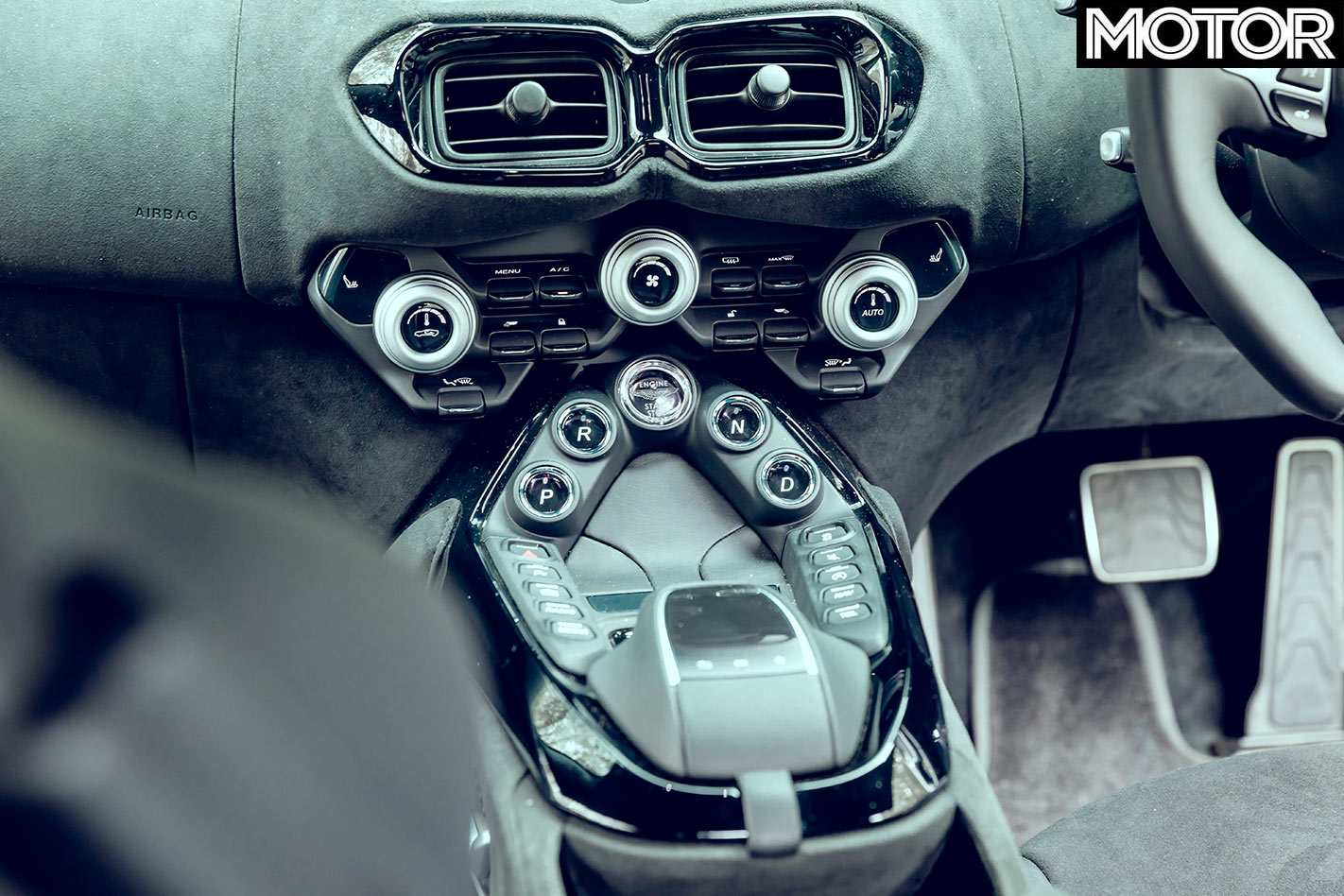
Elements will be down to personal preference. For example, snapper Alastair thinks the black suede dash is an appropriately sporty touch, whereas I’ve seen way too many similar treatments in home-built racecars for it to ever be considered premium. Thankfully, an all-leather dash is an option. The button-fest centre console is a throwback to the early 2000s, but the one benefit of Aston’s old-school approach is that once all the various function locations are learned operation becomes second-nature – a place for everything and everything in its place, as my mum would say.
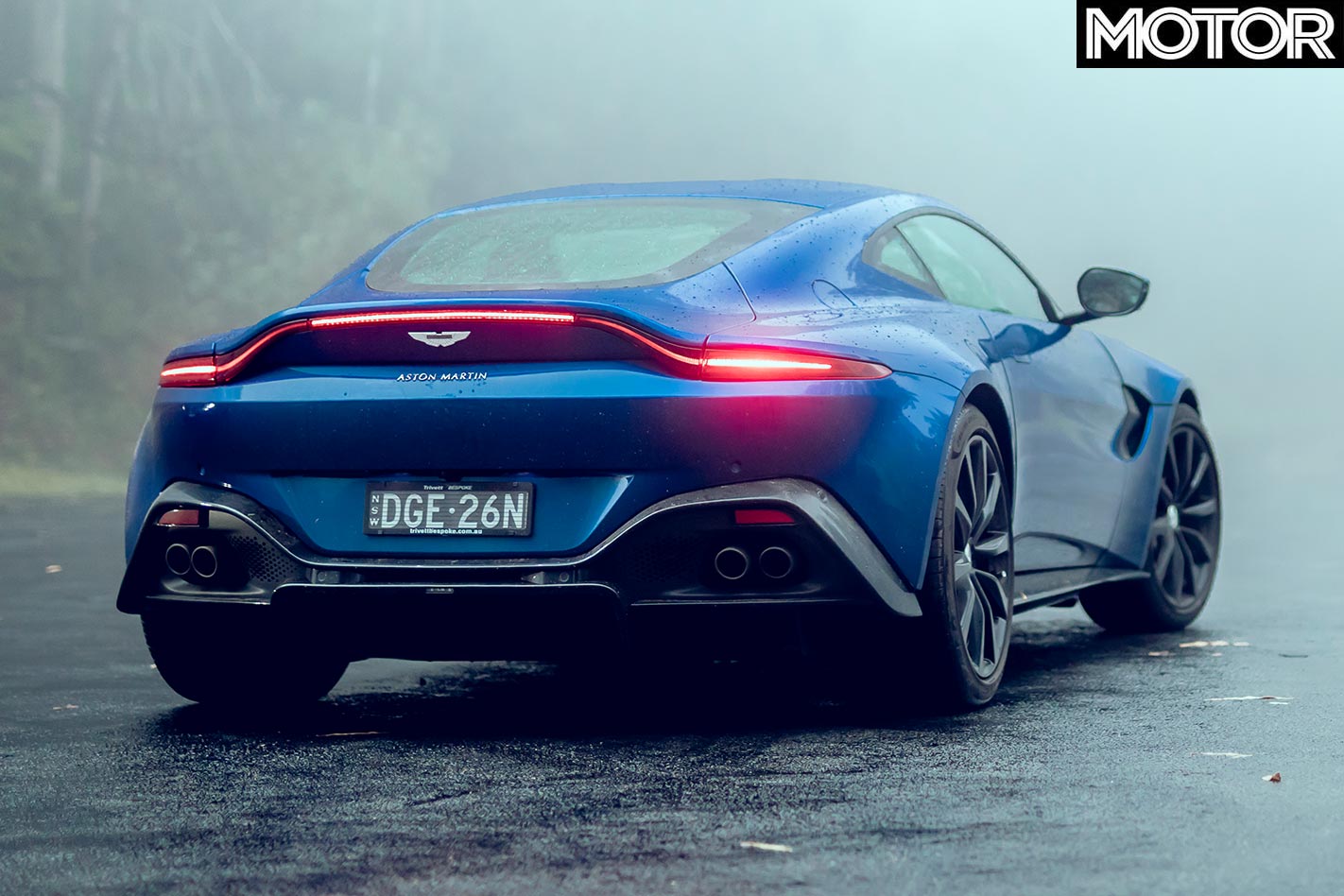
Less contentious is the sub-standard build quality. A number of trim pieces were ill-fitting in our brand-new test car, which is tough to accept in something costing near $300,000. The Mercedes’ COMAND infotainment wasn’t the slickest unit around when new, and hasn’t improved now that’s it’s last-generation tech – the updated system in the new DBX SUV would be a welcome upgrade.
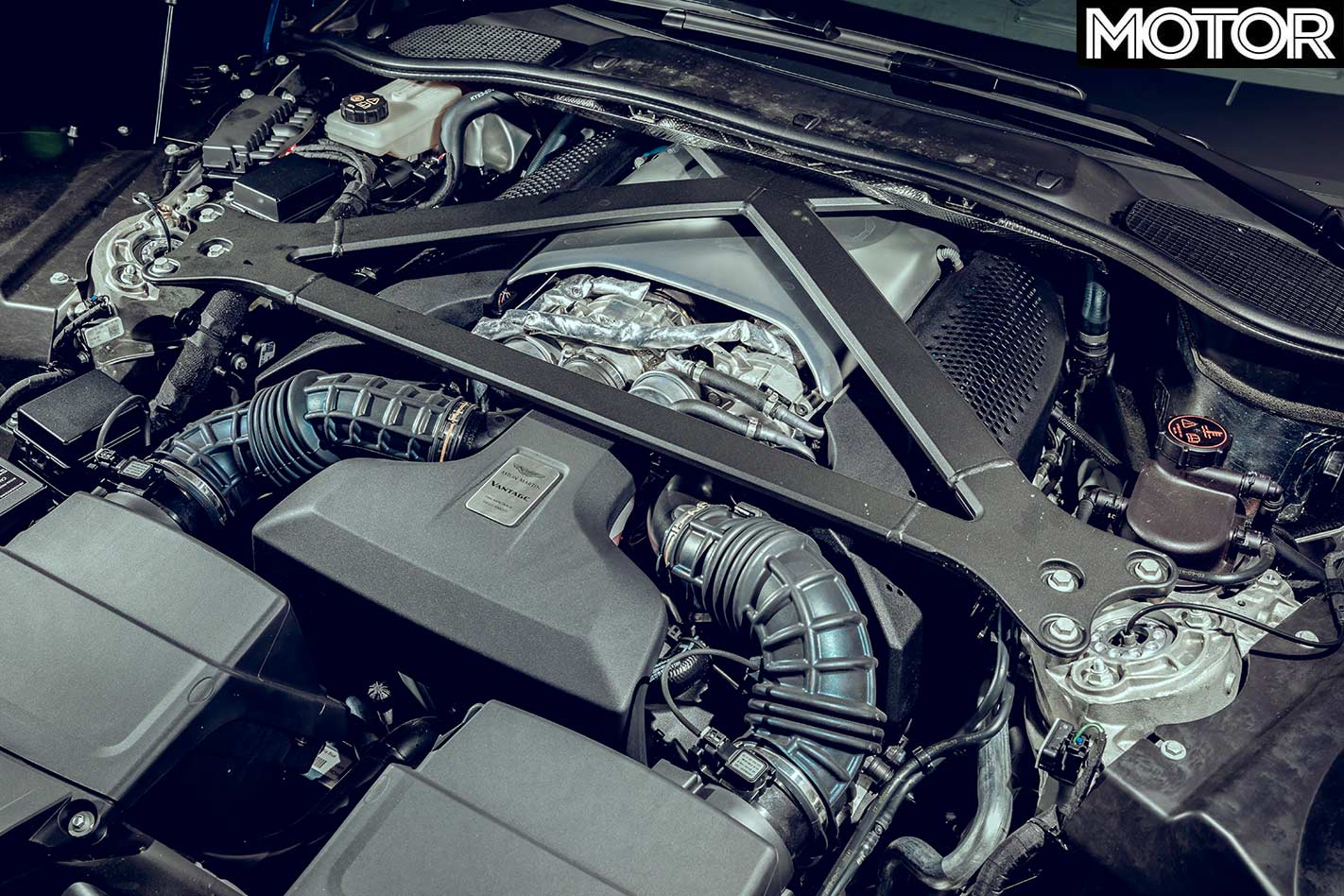
No complaints, however, about the other bit of borrowed Mercedes hardware. The 4.0-litre twin-turbo V8 is AMG’s M177 from the C63 et al, rather than the dry-sumped M178 found in the Merc’s own GT sports car. It essentially comes ready to go from Affalterbach, but Aston fits a slimmer sump and fiddles with the mapping, the result being 375kW at 6000rpm (matching the C63 Coupe) and 685Nm from 2000 to 5000rpm (15Nm less but over a 500rpm-wider span). The Vantage is 45kg lighter, and as such Aston Martin claims (a heavily traction dependent) 3.6sec from 0-100km/h, while the top speed is an impressive 314km/h.
Whether intentional or coincidental, the level of speed is very well judged. Make no mistake, the Vantage is an extremely rapid machine, but not to the level of being intimidating or a handful. Even in the cold, sodden conditions of our shoot, a sensible right foot ensures full traction in second gear. Aston’s M177 installation also has its own personality, the exhausts emitting a crisper, sweeter sound, more hard rock than the C63’s heavy metal. The only downside to the engine’s massive hit of torque is that the top end can feel a little soft in comparison, but that’s the price to pay for such tremendous flexibility.
With so much grunt and such close gearing, most corners can be effectively tackled in third, fourth or fifth. The gearbox is where the Vantage differs most from the AMG with which it shares its powerplant, and it’s an inspired change. Instead of the C63’s wet-clutch auto or the GT’s Getrag dual-clutch, Aston sticks with the tried and tested ZF eight-speed torque converter automatic. As a result, low-speed behaviour is vastly superior, the Vantage smoothly accelerating from rest instead of lurching and thumping, yet ultimate shift speed seems virtually unaffected. This is especially the case with the powertrain set to Sport, which sharpens the otherwise lazy throttle.
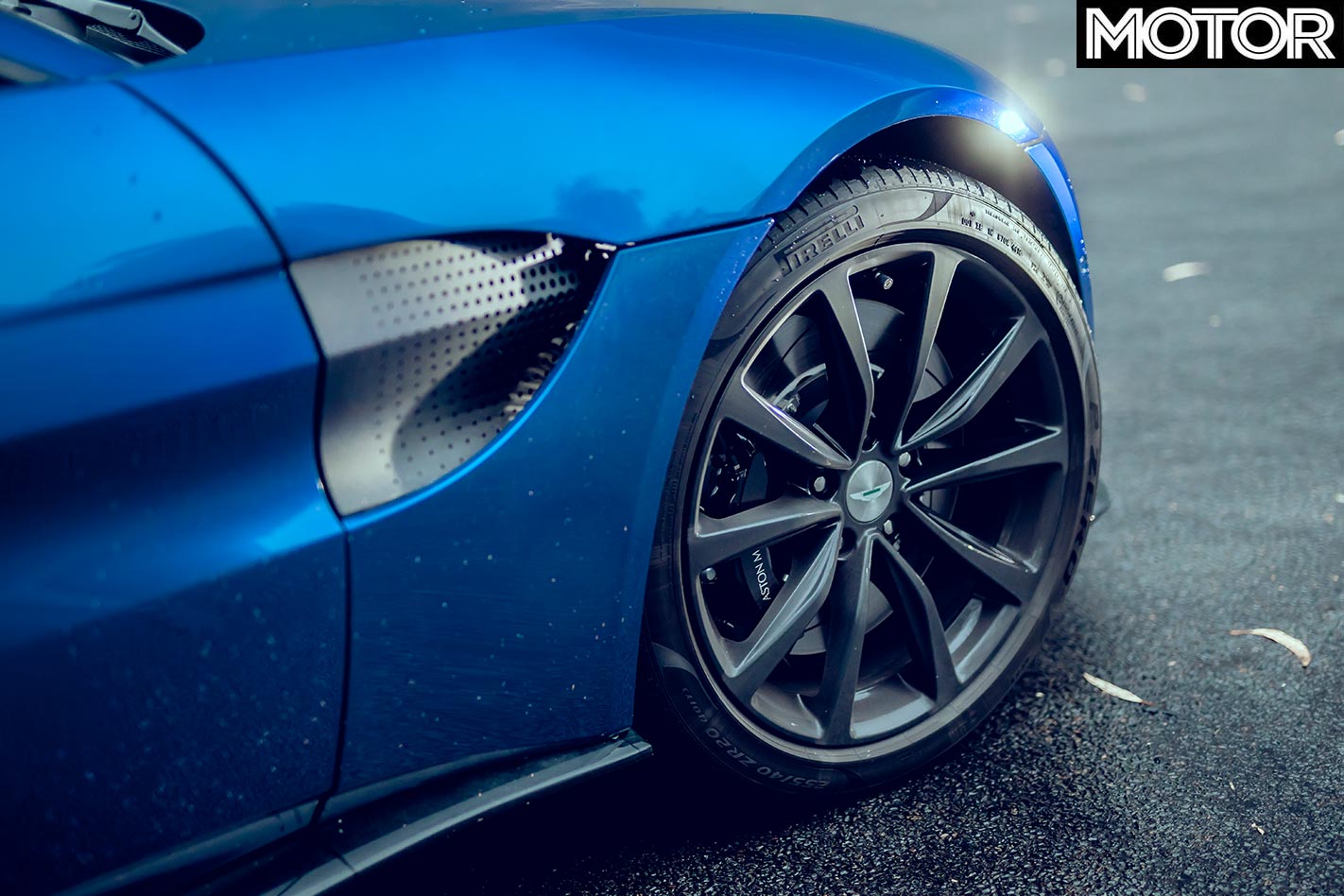
Another Aston Martin masterstroke is to allow the driver to individually manage the powertrain and chassis settings. It’s not necessarily a novel approach, but the Vantage makes it particularly easy, a button on each steering wheel spoke cycling the damping (left) or engine (right) through the Comfort, Sport and Sport Plus modes independently on the fly. Sport chassis and Sport Plus powertrain engaged, it’s time to evaluate Becker’s work in the environment that matters most. All the raw ingredients are there: the Vantage is 54mm shorter and 90mm wider than a 992 911 with an extra 250mm of wheelbase, which gives it a tremendously broad stance and a wheel at each corner. There’s plenty of weight (1680kg) but it’s distributed 50:50 and suspended by double wishbones at the front and a multi-link setup at the rear; Pirelli rubber (255/40 front; 295/35 rear) provides a substantial footprint and there’s an electronically controlled limited-slip diff with torque vectoring, a first for Aston Martin.
The Vantage actually feels very similar to the latest Toyota Supra, only turned up a few notches. Both have impressive steering, more lateral grip and quicker responses than you’d expect, while working with the road instead of fighting it. Likewise, if the grip runs out mid-corner (unlikely in the dry, fairly common in the wet), it’s the rear that goes first and does so quickly. Aston’s sports car demands quick reactions to match its own and in these conditions feels a little edgy and nervous, but the Track Mode ESP does a great job of allowing slip yet righting the ship when it needs to. It’s more resolved than AMG’s GT, much sharper than an F-Type SVR and more playful than a 911; basically, it’s a bloody good sports car.
In summary, the Aston Martin Vantage is entertaining to drive with a character of its own and a surprising breadth of ability. It looks and sounds great, too, with a badge that still carries a lot of cachet. Whether this is enough to forgive the odd quality issue at this price point will be a question for each individual buyer. Personally, the answer is yes, I love the quasi-muscle car attitude of the Vantage, its brutish styling and the almost endless specification possibilities. Bravo, Mr Becker.
The specs
| u00a0 | Aston Martin Vantage | u00a0 |
| Body | 2-door, 2-seat coupe | u00a0 |
| Drive | rear-wheel | u00a0 |
| Engine | 3982cc V8, DOHC, 32v, twin-turbo | u00a0 |
| Bore/stroke | 83.0 x 92.0mm | u00a0 |
| Compression | 10.5:1 | u00a0 |
| Power | 375kW @ 6000rpm | u00a0 |
| Torque | 685Nm @ 2000-5000rpm | u00a0 |
| Power/weight | 223kW/tonne | u00a0 |
| Transmission | 8-speed automatic | u00a0 |
| Weight | 1680kg | u00a0 |
| Suspension | double wishbones, adaptive dampers, anti-roll bar (f); multi-links, adaptive dampers, anti-roll bar (r) | u00a0 |
| L/W/H | 4465/1942/1273mm | u00a0 |
| Wheelbase | 2704mm | u00a0 |
| Tracks | 1665/1664mm (f/r) | u00a0 |
| Steering | electrically assisted rack-and-pinion | u00a0 |
| Brakes | 400mm ventilated/drilled discs, 6-piston calipers (f); 360mm ventilated/drilled discs, 4-piston calipers (r) | u00a0 |
| Wheels | 20.0 x 8.5-inch (f); 20.0 x 9.5-inch (r) | u00a0 |
| Tyre sizes | 255/40 R20 (f); 295/35 R20 (r) | u00a0 |
| Tyre | Pirelli P Zero | u00a0 |
| Price | 299950 | u00a0 |
| Pros | Well-judged speed; great gearbox; ride and handling | u00a0 |
| Cons | Sub-par interior presentation; option sensitive | u00a0 |
| Star rating | 4 out of 5 stars | u00a0 |
Been feeling a little trapped lately? As travel restrictions lift, we’re all able to hit the road and take in the sights and sounds of our local states at least.
We’ve searched the country to give you the very best driving roads around. These are the stretches of bitumen where you and your car can become one, with sweeping curves, breathtaking views, and great rest houses.
So to kick off, we are starting with the most populous state in Australia to put to the driving test, NSW.
PUTTY ROAD
Well within driving distance of Sydney, this twisting 174km stretch links the northwestern suburbs with the Hunter Region. Narrow and winding, particularly in the more northern sections, the Putty road is a favourite with motorcyclists and driving enthusiasts.
There are a number of rest stops along the road, in particular the Grey Gum Café. The final stretches of the Putty have been recently repaved, resulting in a fantastic, smooth, driving surface.
It should be noted the Putty Road can be treacherous during wet weather, but if you drive to the conditions you can still enjoy yourself.
OLD PACIFIC HWY
This classic piece of highway just north of Sydney stretches from Hornsby to Calga, and is one of the shorter segments of bitumen on the list.
Intersecting the current M1 Pacific Highway, the winding Old Pacific Highway takes in some fantastic views, and is paved with butter-smooth bitumen.
This is an incredibly popular motorcycle riding spot, and is heavily trafficked (but rarely congested). You can often count on a police presence, both with speed cameras and roaming patrols.
GRAND PACIFIC DRIVE
This is the route down through Royal National Park south of Sydney, ending at Stanwell Tops. If you keep following this gorgeous forest drive, it will continue over the picturesque Sea Cliff Bridge into Wollongong.
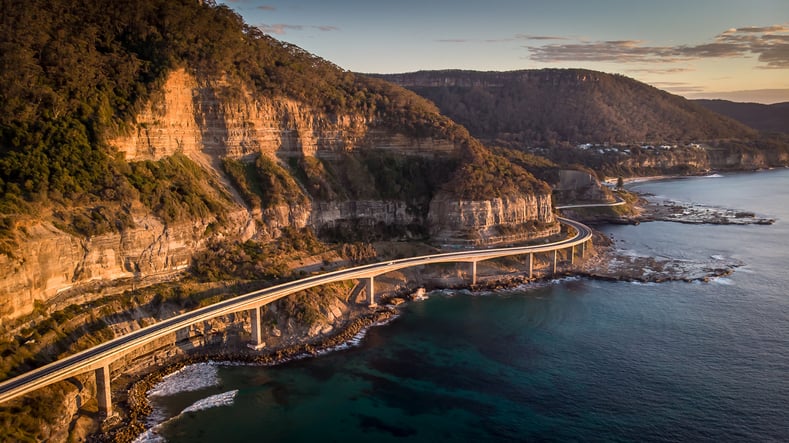
A favourite with Supercar drive experiences, this route makes for a great day trip if paired with a picnic in the National Park.
Make sure to pack the camera, as the Grand Pacific Drive is seriously beautiful.
OXLEY HIGHWAY
Winding inland from Port Macquarie, the Oxley Highway is one of the finest driving roads in Australia. In total, the Oxley stretches 653 kilometres into central NSW, taking in arid plains, fertile farmland, luscious forests, and much more.
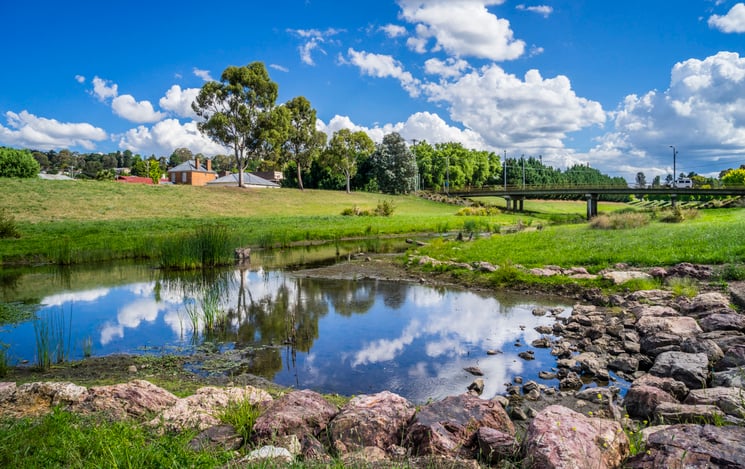
The rural road is fantastic for testing yourself and your car on a fun, twisting route. If based in Sydney, it is well worth making a weekend of driving the Oxley, staying overnight in one of the many pubs and homestays which dot its path.
THUNDERBOLTS WAY
Although sections of the Thunderbolts Way are in a poor way in terms of maintenance, you cannot go past this stretch from Goondiwindi to Port Stephens for its fantastic Australian scenery and history.
Named after the famed bushranger Captain Thunderbolt, it winds its way through a number of sleepy towns and for a great weekend away.
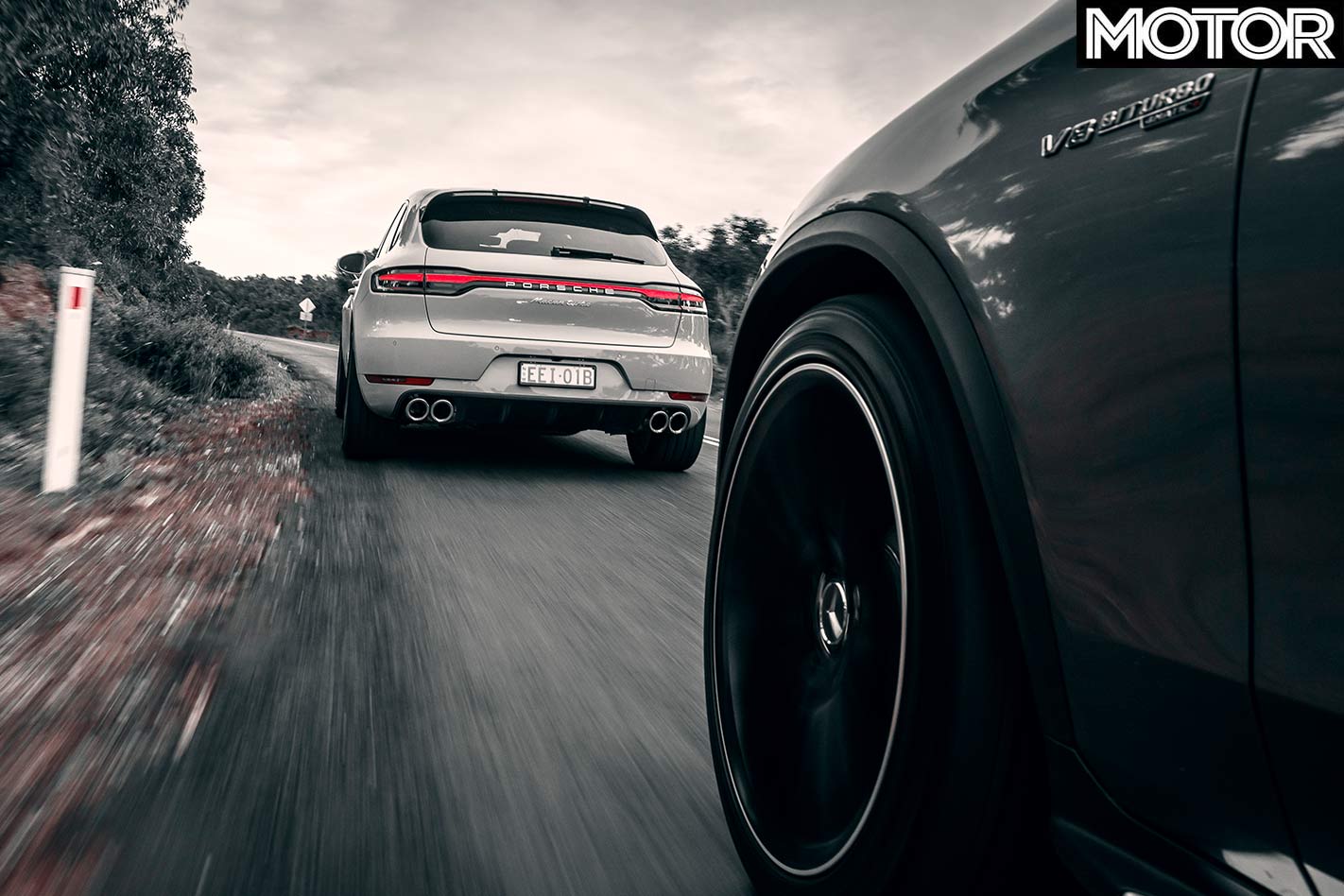
THERE IS GOOD reason we find ourselves here. And I’m not talking about where I am standing, which is before a long drag strip and between two souped-up Germans with enough performance technology to dazzle your revhead uncle. I mean, how did we get to the point where $150K and the desire for a fast medium-size SUV summons a long list of choices, all capable of frightening any muscled-up rear-drive sedan? Or where the record for the fastest SUV Nurburgring lap is something you can even recall? It’s 7:42.2, by the way, for an Audi RS Q8.
Wind time back a couple of decades and the overlap between performance driving and SUVs stood separate as black and white. Buying habits have changed that. The SUV’s popularity has forced manufacturers to mix the historically exclusive concepts in chase of the status-seeking or speed-craving niche. And as this test is about to prove, the results are still fanning out in many shades of grey.
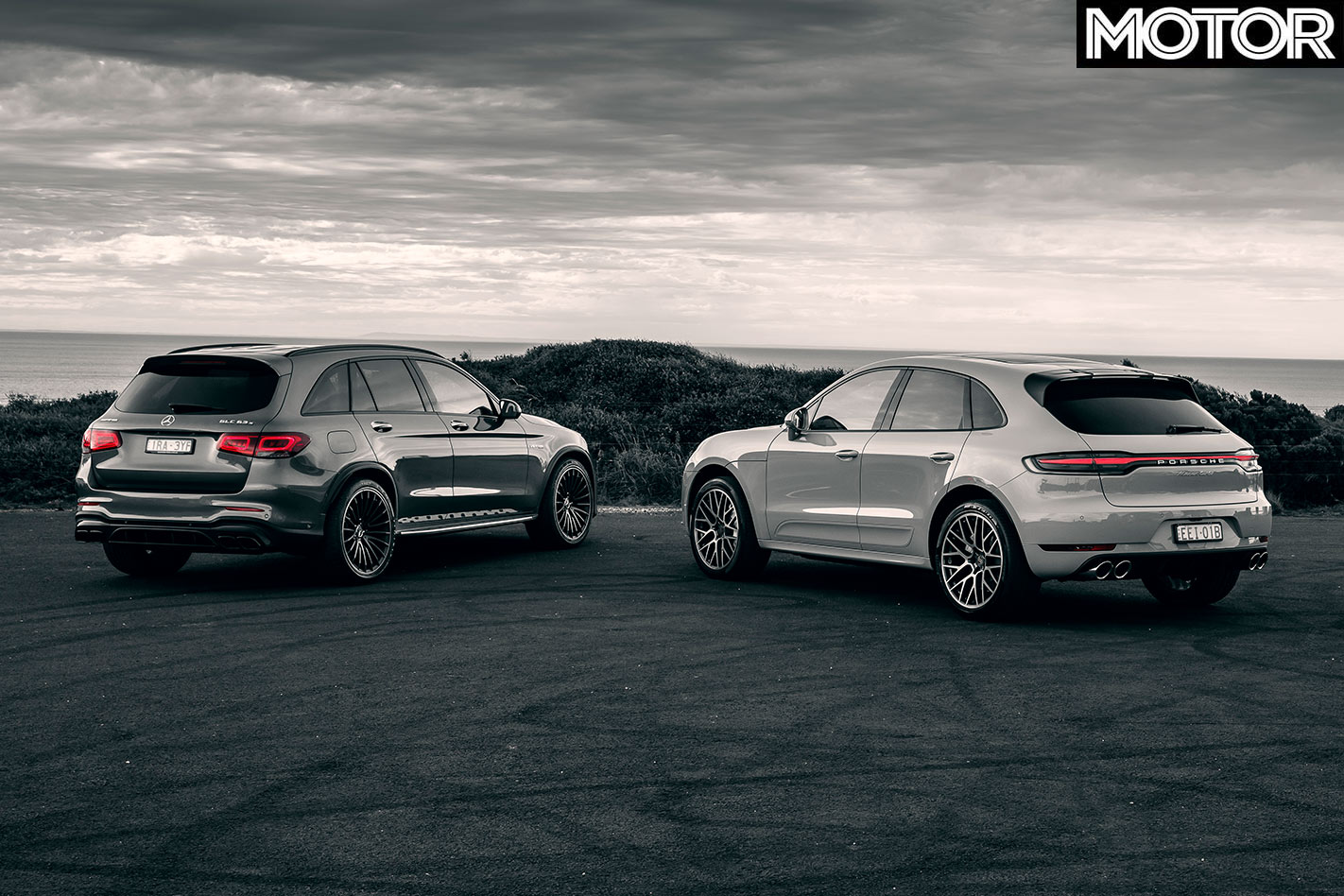
Within that spectrum are the newly updated Mercedes-AMG GLC63 S and Porsche Macan Turbo. Admittedly, we hoped a third contender would join them. BMW’s X3 M was due to weigh in after clobbering the Jaguar F-Pace SVR and Alfa Romeo Stelvio Q in a recent comparo, but we were told none were available at the time of test. So word on the segment’s true champ will have to wait.
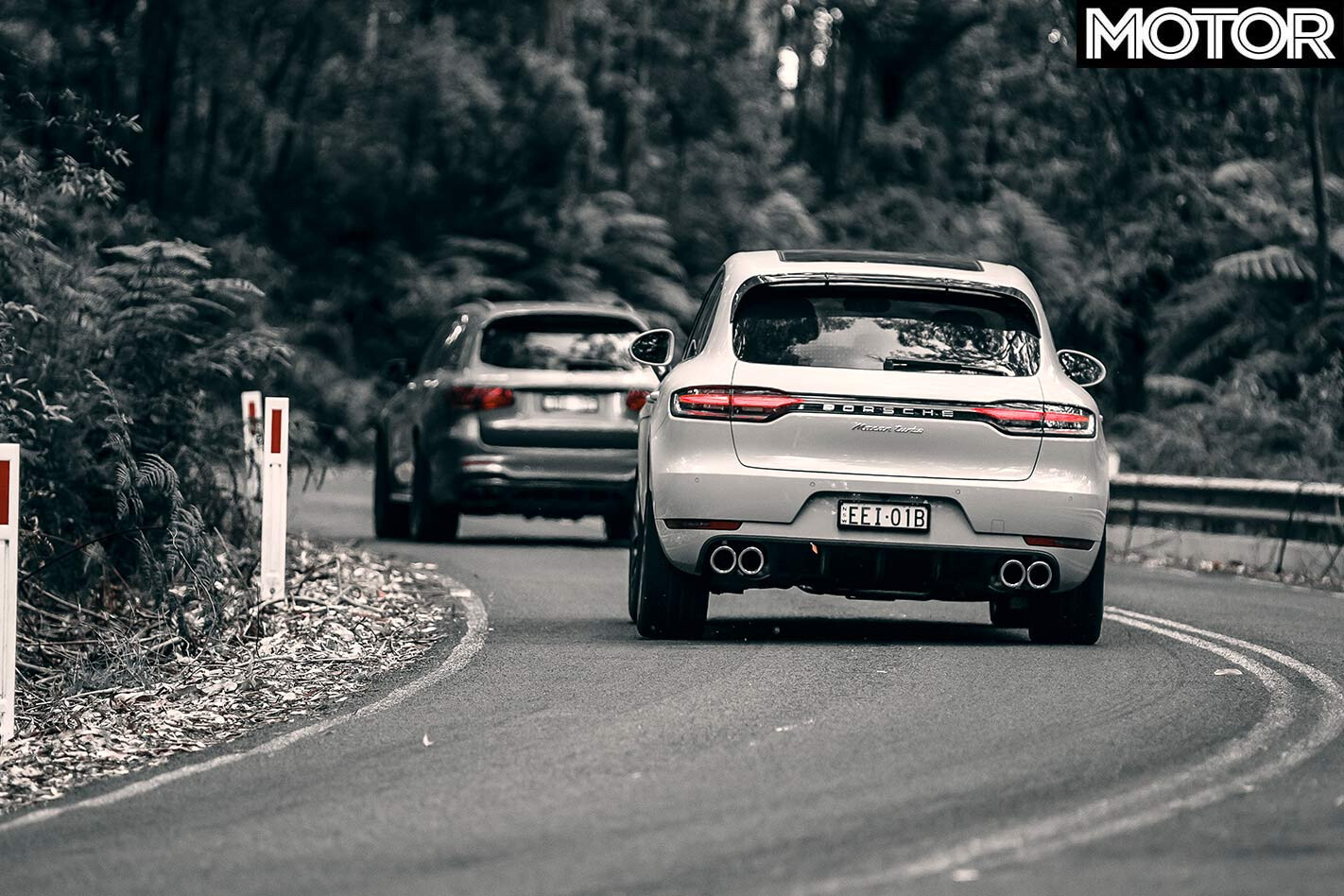
We’re still in for fireworks. Yes, watching an SUV romp around the Nurburgring is still unnerving, a bit like watching a tamed lion put out its paw for a human to shake. However, the GLC63 S did just that after seven tense minutes and 49.3 seconds in 2018, claiming the then-record lap for an SUV.
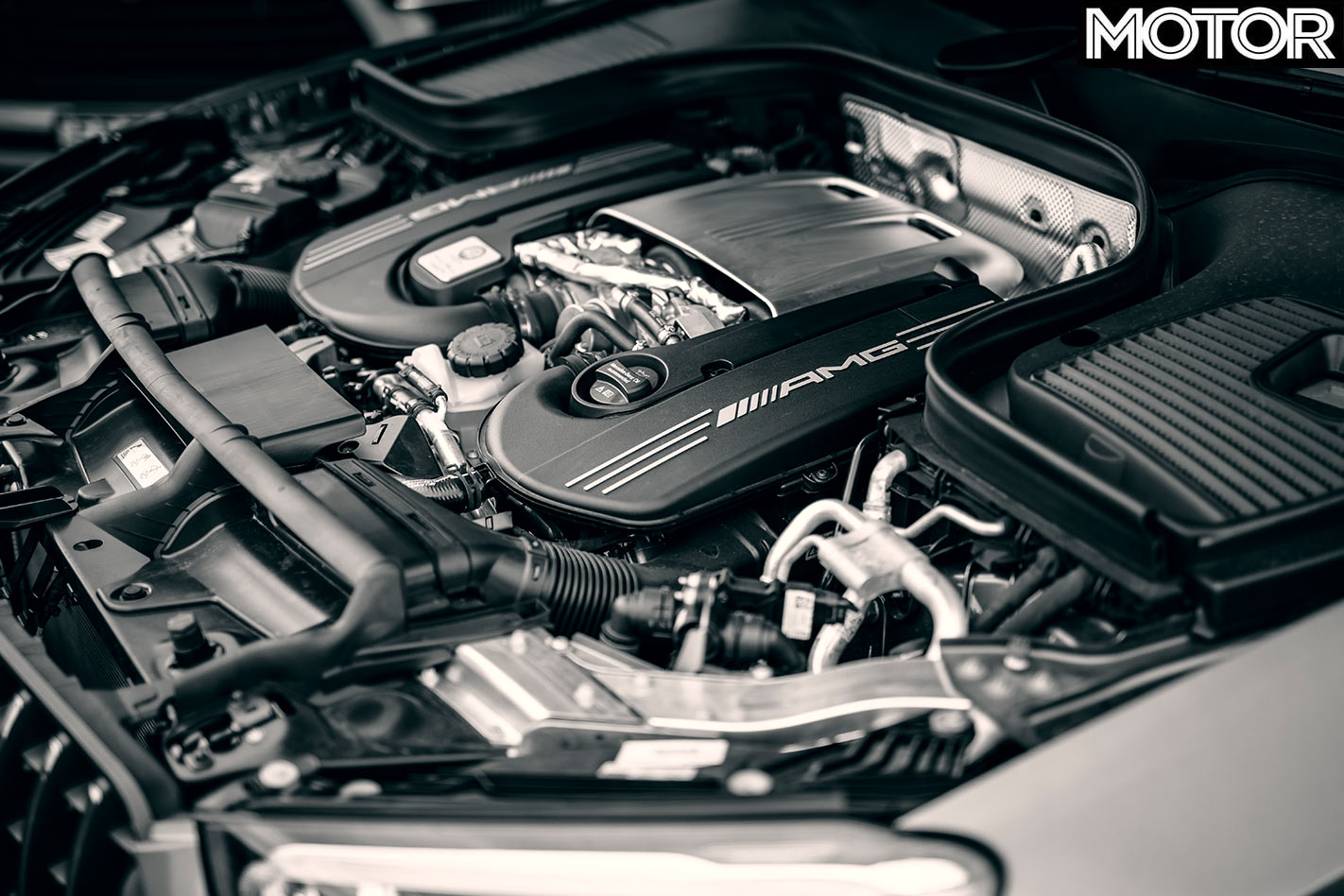
Powering it to such fame was, of course, the veritable twin-turbo V8 that AMG dishes out in all its uber-muscle cars. It comes in the C63 S’s M177 wet-sump guise, with single-scroll BorgWarner turbos helping push 375kW and 700Nm through its 4.0 litres. A nine-speed wet-clutch automatic transmission manages the grunt, assisted by the E63’s all-wheel drive system (sans rear-drive Drift Mode, sadly – or possibly sensibly).
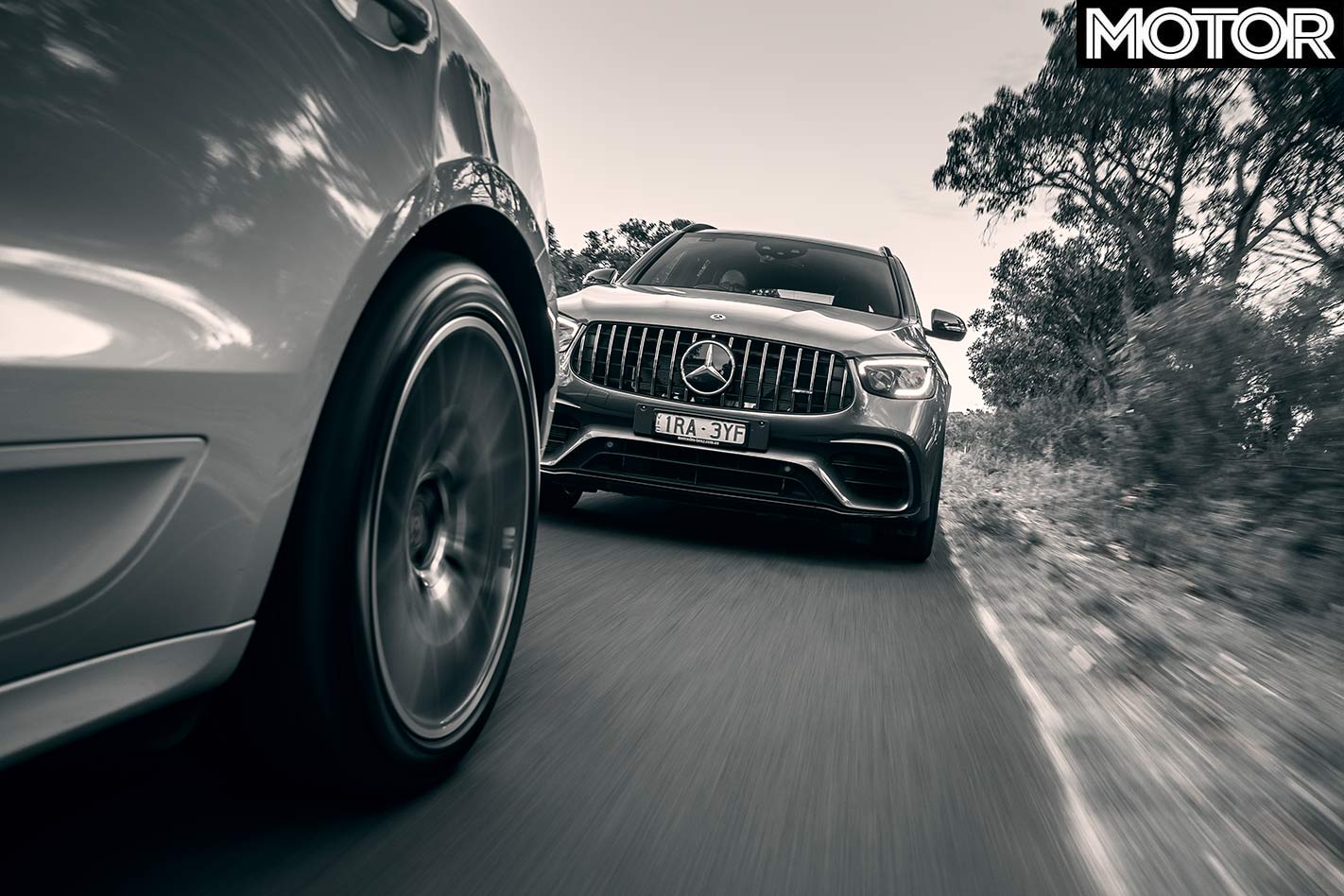
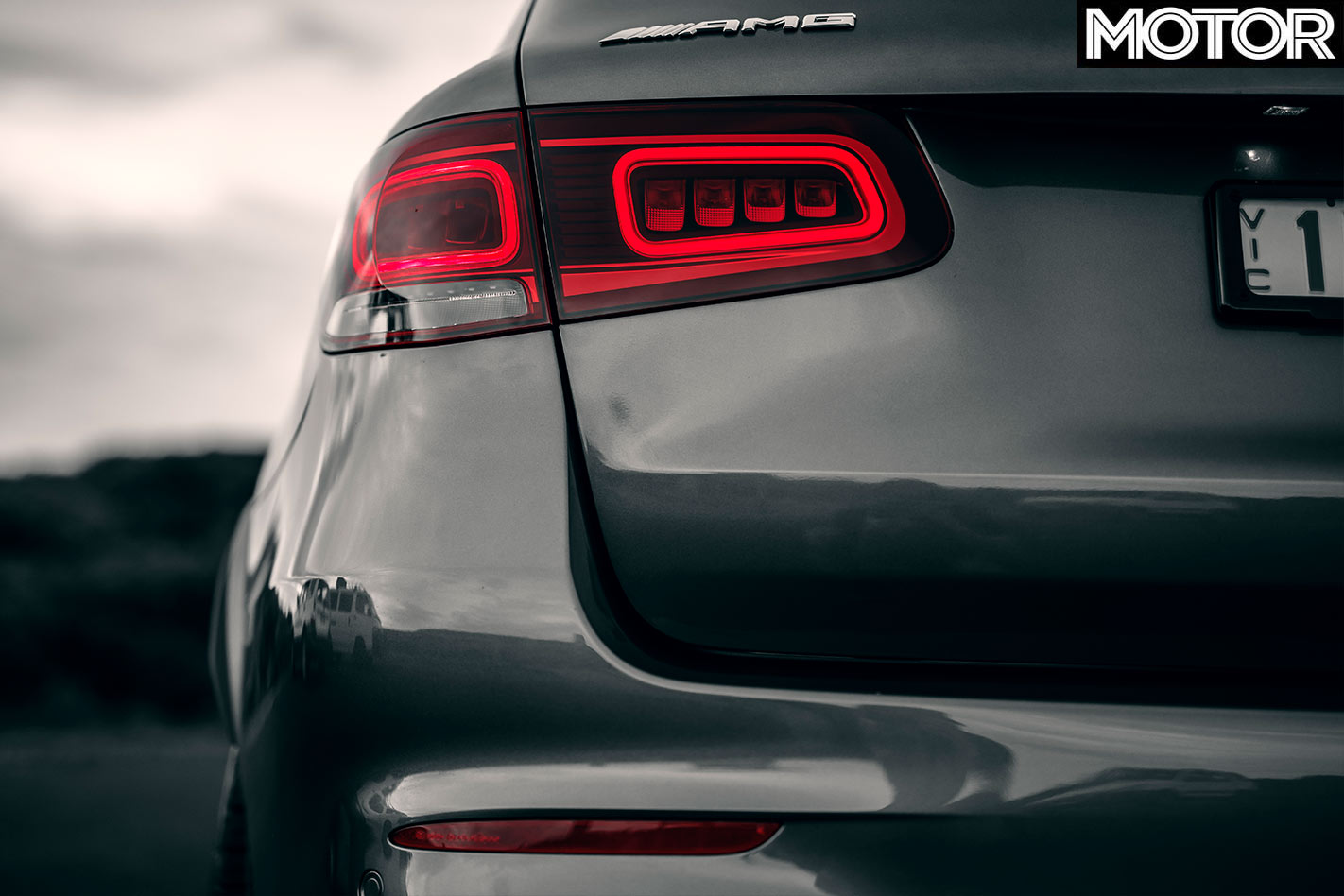
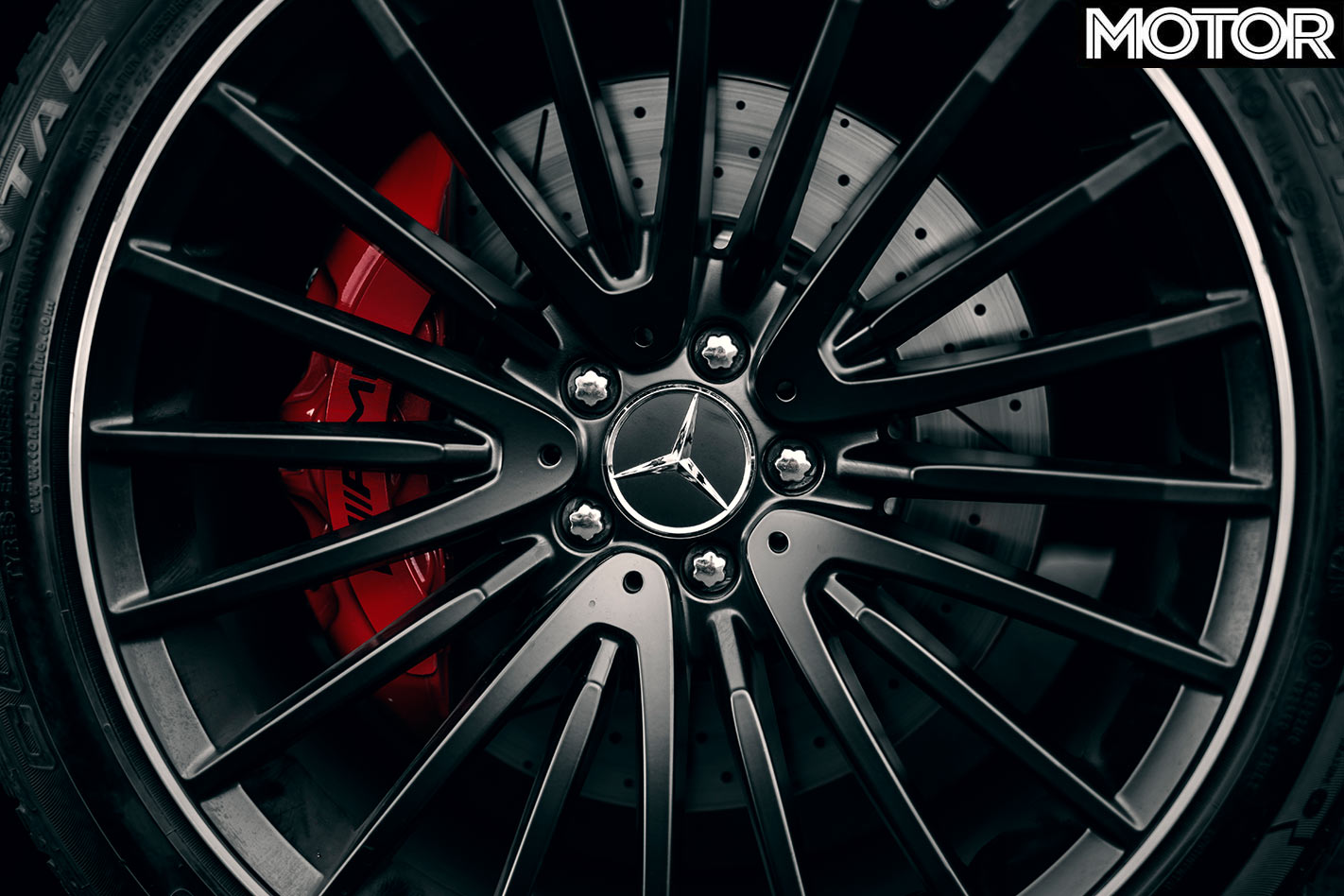
AMG’s tweaked the exterior for 2020 with relatively minor changes. It has ditched its old C-Class-like headlights for newly shaped units that hug a gaping ‘Panamericana’ grille. Then, on top of a new colour and wheel design, there’s a fresh infotainment system inside while new AMG Dynamics chassis electronics watch your every step. And/or misstep.
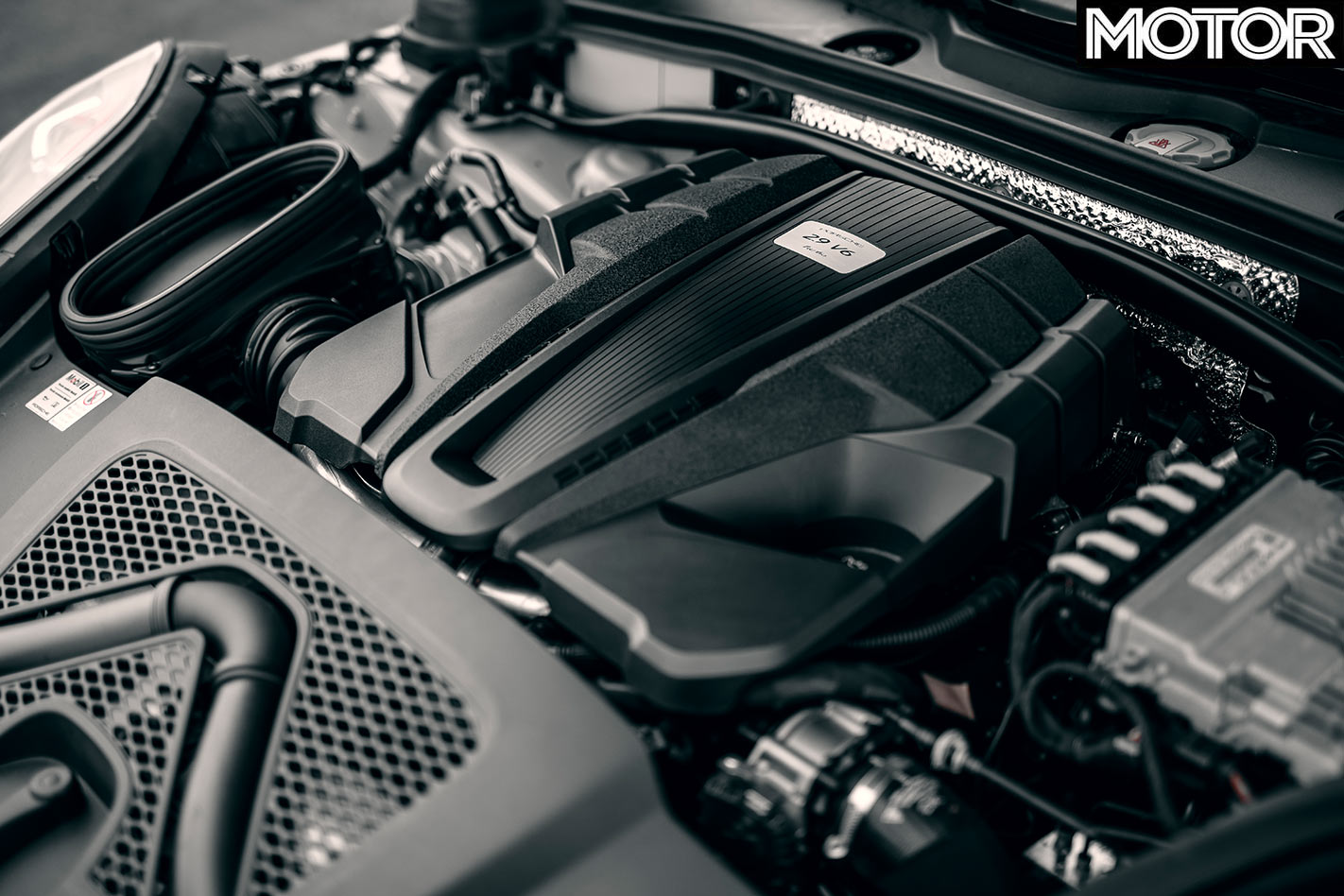
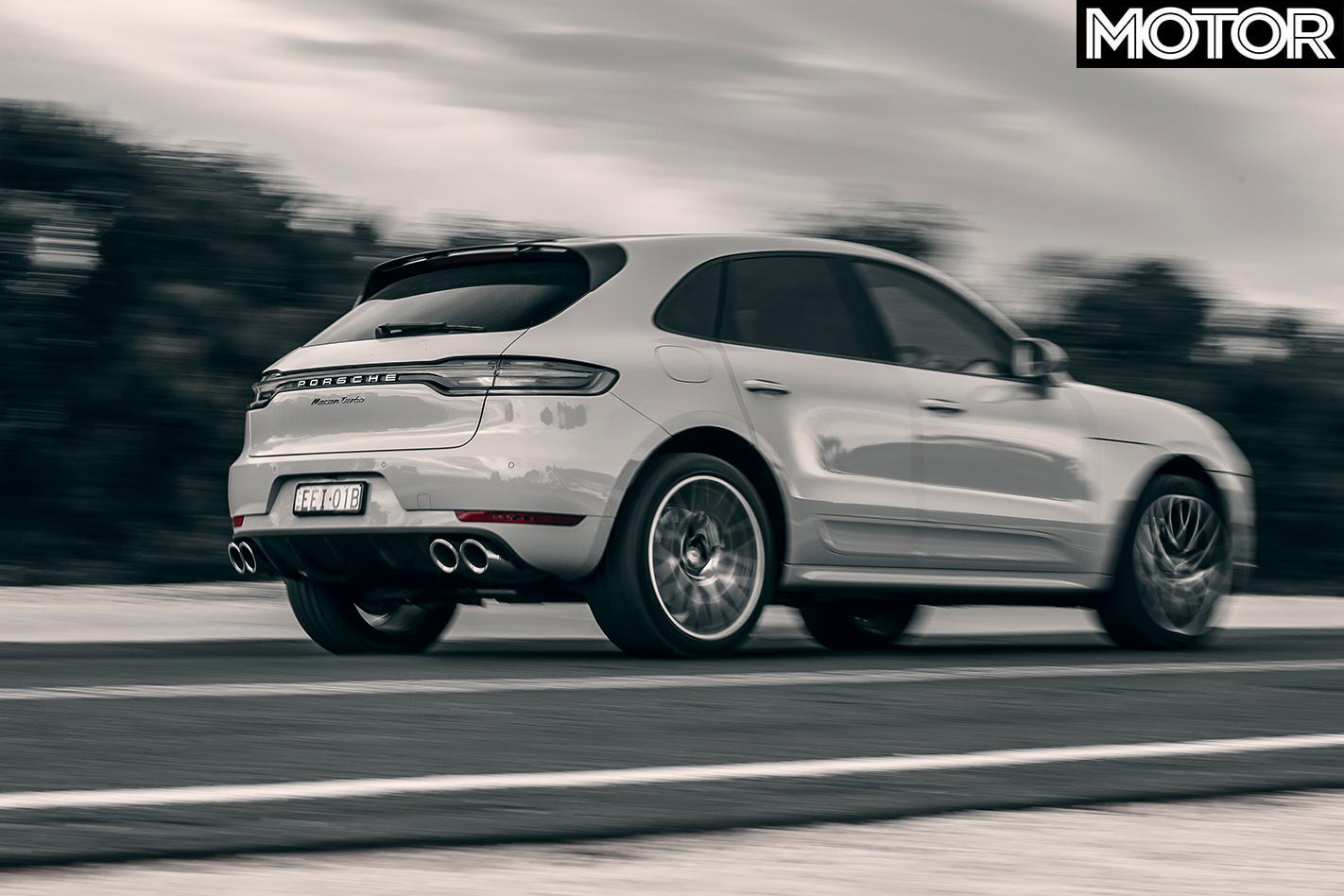
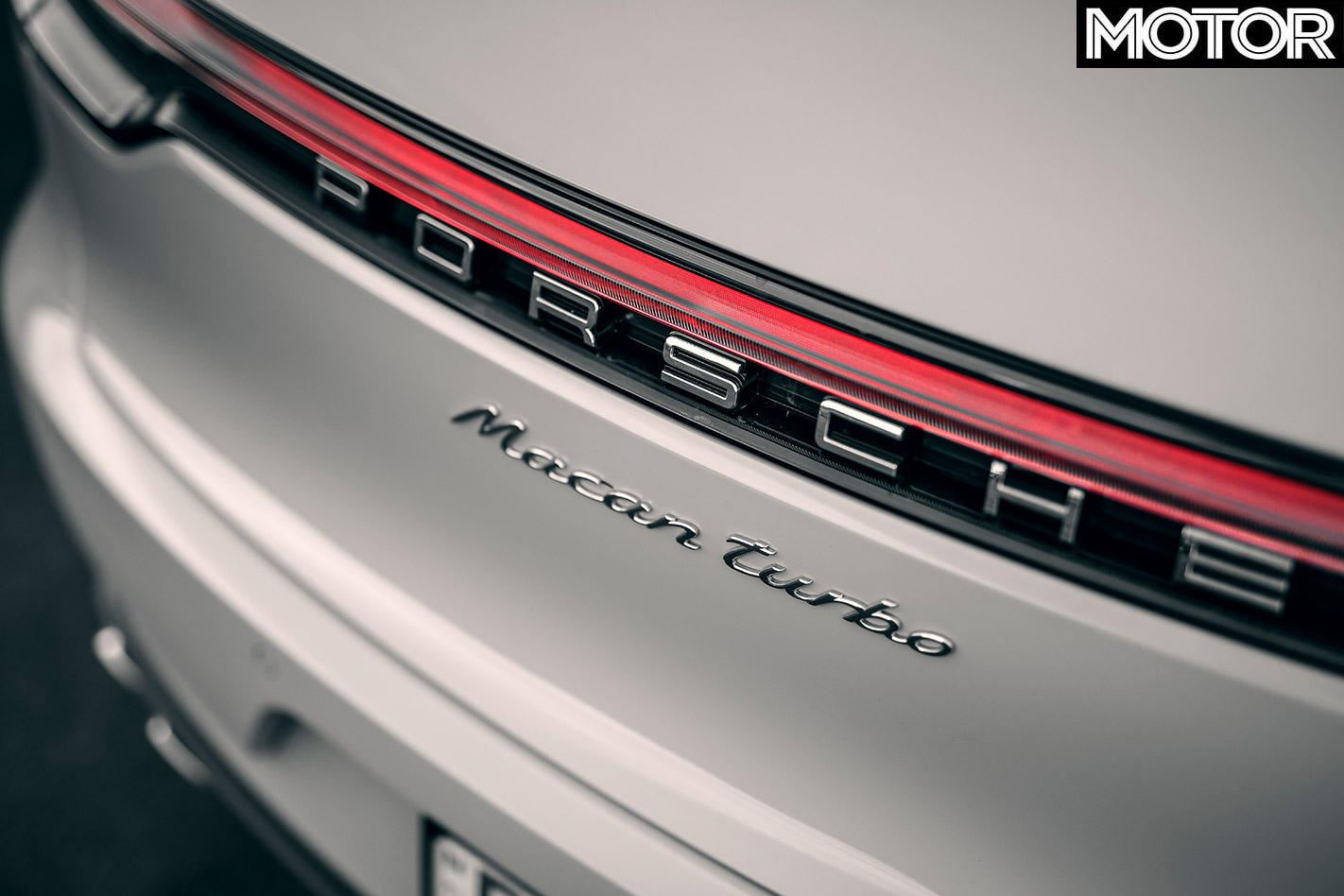
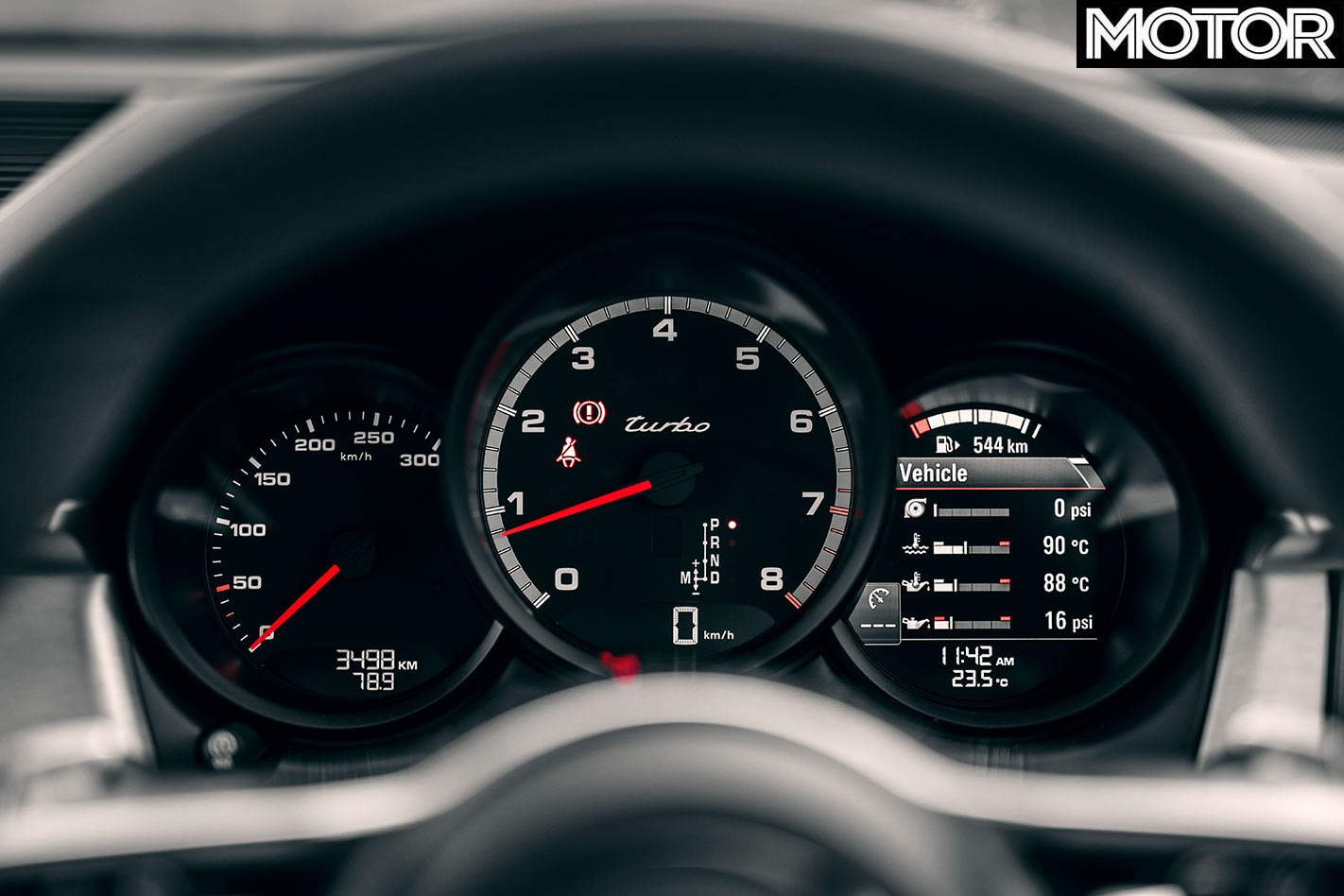
There is one more, and very important, change we’ll mention later, but first let’s meet Porsche’s updated Macan Turbo. The big news here is the Turbo has welcomed a 2.9-litre twin-turbo V6 pinched from the Panamera range. It’s best known in Audi’s RS4 and RS5 models, but as far as Porsche is concerned, it’s its own engine. It’s smaller, though the turbochargers are coupled within the vee, boosting response and helping extract 30kW more than the original 3.6-litre twin turbo V6.
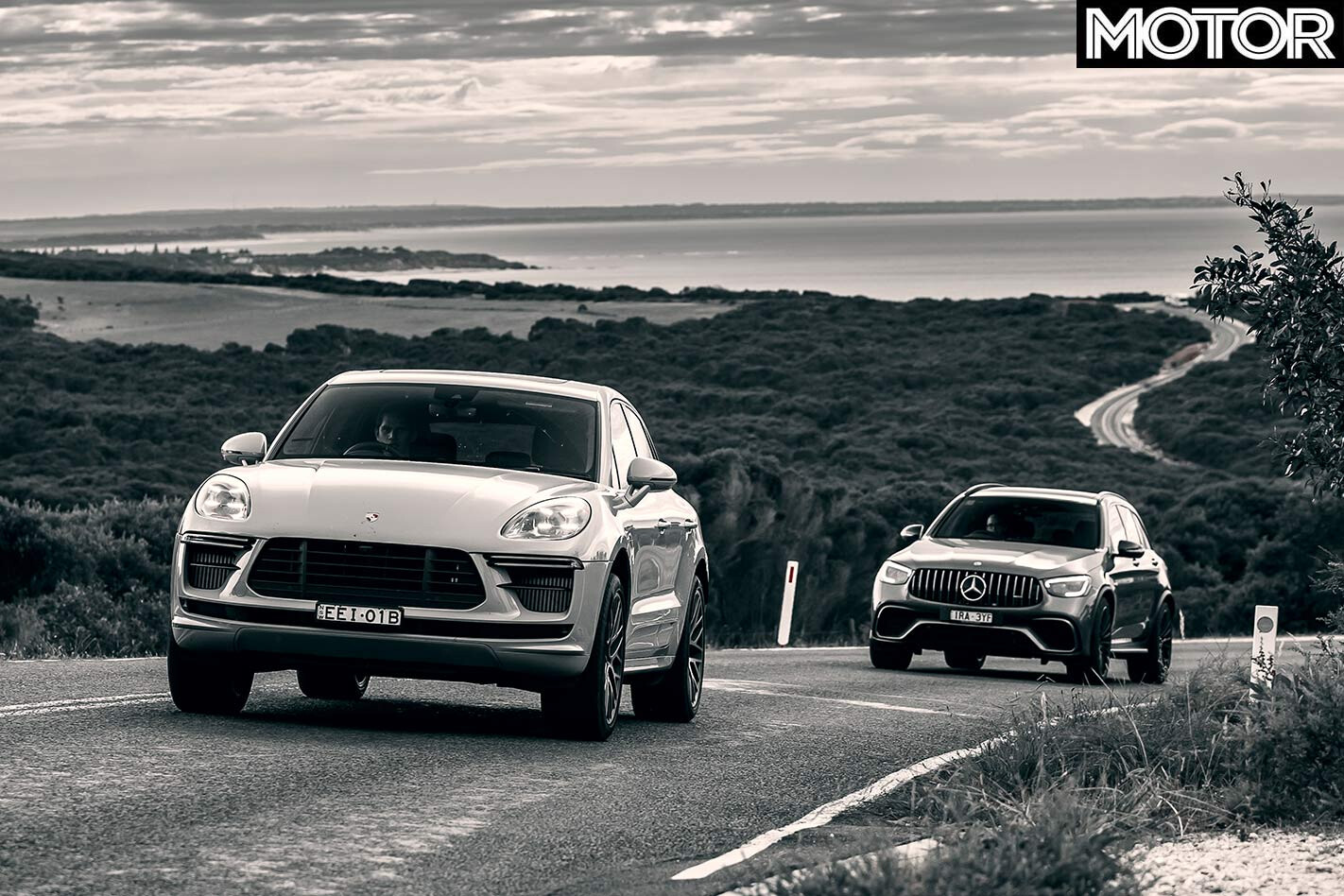
Porsche has added some tweaks to bolster its appeal, like whopping 390mm/356mm brake discs that feature a tungsten carbide coating said to quicken response and reduce wear. The front and rear ends are also remodelled. But there’s a feeling, still, that even with 324kW and 550Nm in total the Macan is outgunned in this company.
Porsche claims the Macan Turbo hits 100km/h in 4.5 seconds from rest, while a $2390 Sport Chrono package, that gifts its powertrain a ‘sport plus’ mode and the seven-speed PDK transmission more aggressive gear shifts, cuts that down to 4.3 seconds with launch control. Let’s see about that.
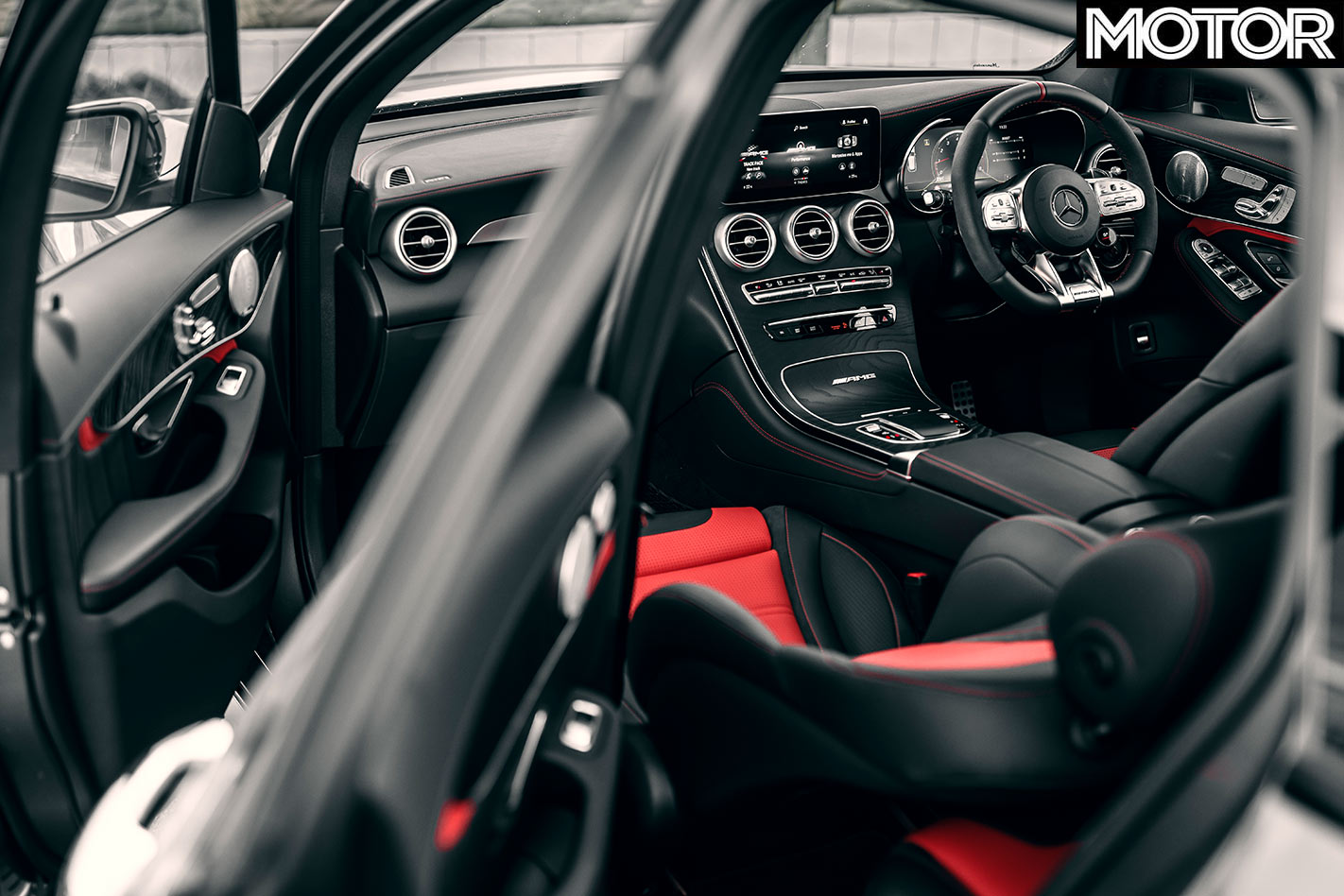
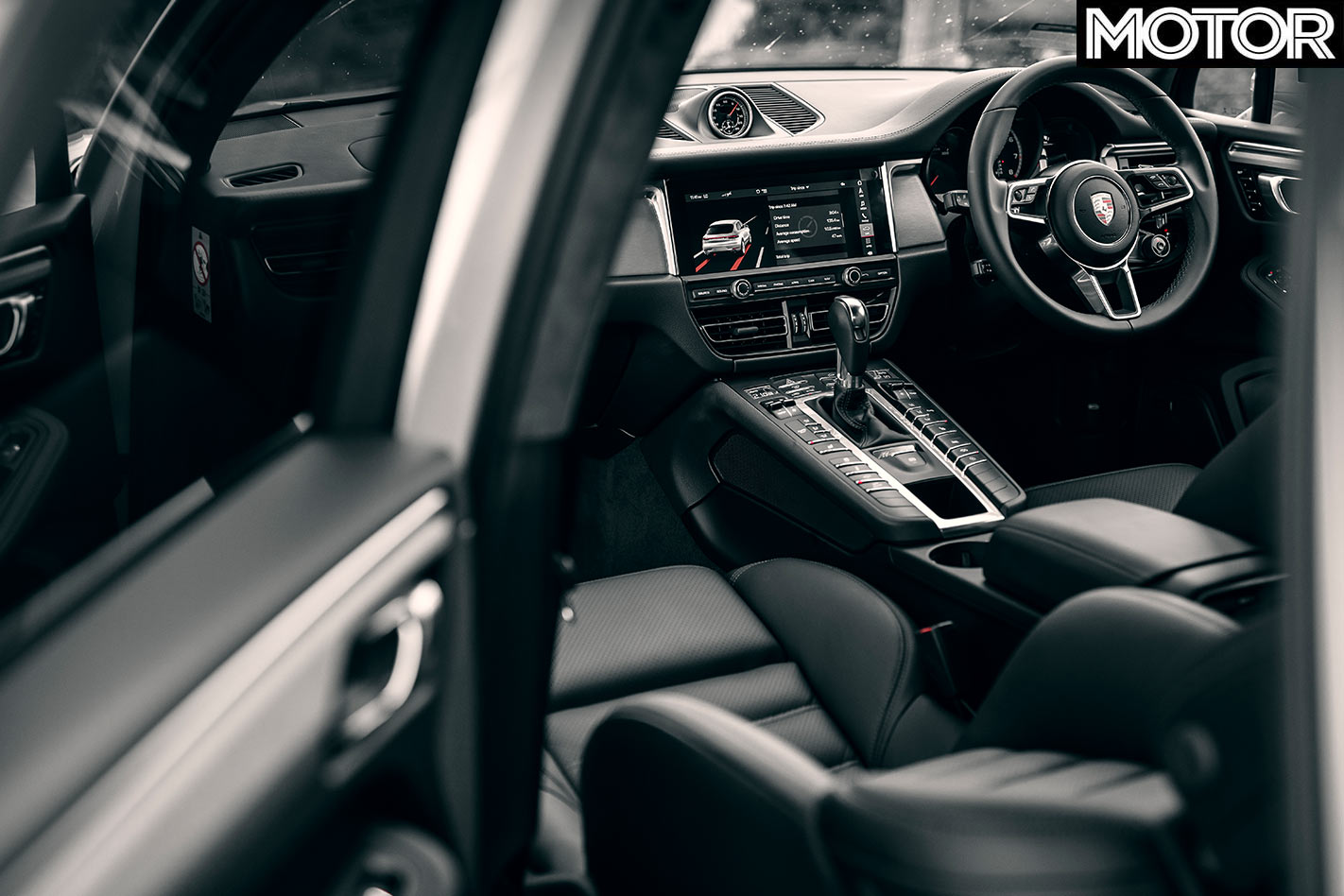
Sliding on to its smooth leather driver’s seat, the seating position welcomes you aboard in a nice posture. And as you turn the ‘key’, the engine fires to life with a gravelly rort to remind us that while it’s smaller, and all Macans are turbocharged, this particular variant badge deserves respect.
Grasp the lever, slot it into ‘D’. Find the rotary dial on its steering wheel and spin it to ‘S+’. Load the brake. Build the revs. The rev needle pings off a 5000rpm stall as the engine wails in anticipation. Release the brake and then… whack! Its 550Nm hits like a comet that’s crashed into the back of you.
Even with an electronically controlled multi-plate centre clutch metering the 2.9-litre’s grunt between the front and rear axle, the Macan Turbo bucks as it shoots forward as if it’s missing a metre from its wheelbase.
Nevertheless, its V6 spins free and the 6800rpm redline looms fast in first gear. The PDK swiftly shifts at 6500rpm or can hold until 6900rpm in manual mode and bounce the revs off the cut-out.
Sonically the Turbo sounds as racy as the old 3.6’s hard-edged howl, and it should with a $5050 Sports Exhaust as installed on our test car, but in practice the engine’s delivery doesn’t punch as hard in the low-to-mid range. And that’s where the Macan needs it most given it’s packing 1950kg, or an extra 20kg around its hips since the refresh.
But Heathcote Raceway reinforces Porsche’s increasingly well-known modesty when it comes to claimed acceleration figures. Although the Turbo’s V6 needs a wind-up, its strong top-end develops the pace to nail 100km/h in 4.09 seconds. And while that’s two tenths quicker than claimed, it more astonishingly smashes the previous-generation Turbo Performance Pack’s 4.4sec 0-100km/h claim, even when its 3.6-litre packed 50Nm more than this car and equal power.
An extra short first gear is the new Turbo’s secret to levering itself off the line. Rather than soar to 62km/h at 6700rpm as the old 3.6 could, the Turbo now reaches 55km/h at 6800rpm. Again, third is also significantly shorter, wrapping up at 144km/h instead of 162km/h.
It’s no surprise, then, that the Turbo’s short-legged acceleration eventually tapers off to 179.35km/h when it crosses the line in 12.35sec. That’s certainly quick, but as we’re about to find out, not quick enough.
Switching into our Selenite Grey AMG GLC63 S brings a different theatre, even if there are some similarities between these Stuttgart exports. After you thumb the glass-look start button the bonnet erupts with a deep, energetic throb that shakes you in its leather seats.
Spin the wheel’s rotary dial a few clicks until the LED-screen displays ‘S+’. Then slacken the ESP mode, pull down the transmission stalk behind the wheel and burble to the start line. Load the brake and throttle, revs will then snarl as they bounce off 3500-3600rpm, then release.
In that first moment, as 700Nm hunts for the path of least resistance, you can feel the forces trying to wring the chassis into a knot. The left front wheel lifts, and as the steering errs to the left you’re suddenly adding right lock to keep straight.
After the chassis steels itself, during a moment where the Porsche would nudge itself ahead, the powertrain’s brute force takes over. The AMG’s torque-laden rpm range could easily work with four gears, let alone nine. Still, the wet-clutch auto makes good use of the entire 7000rpm, crisply up-shifting at 6900rpm with a little kick in your back as if the car’s digging in its spurs as it continues to explode forward.
The twin-turbo V8 growls on an octave lower than the Turbo and belts the AMG along to 100km/h in 3.9sec and past the finish line in 12sec. Sure that there’s more in it, I soften the dampers, turn the ESP off completely, and line up for another shuttle launch. It works. And the AMG logs a 3.76sec/11.96sec pass with 185.49km/h on board, convincing me that with some torque control in first gear it could go even faster.
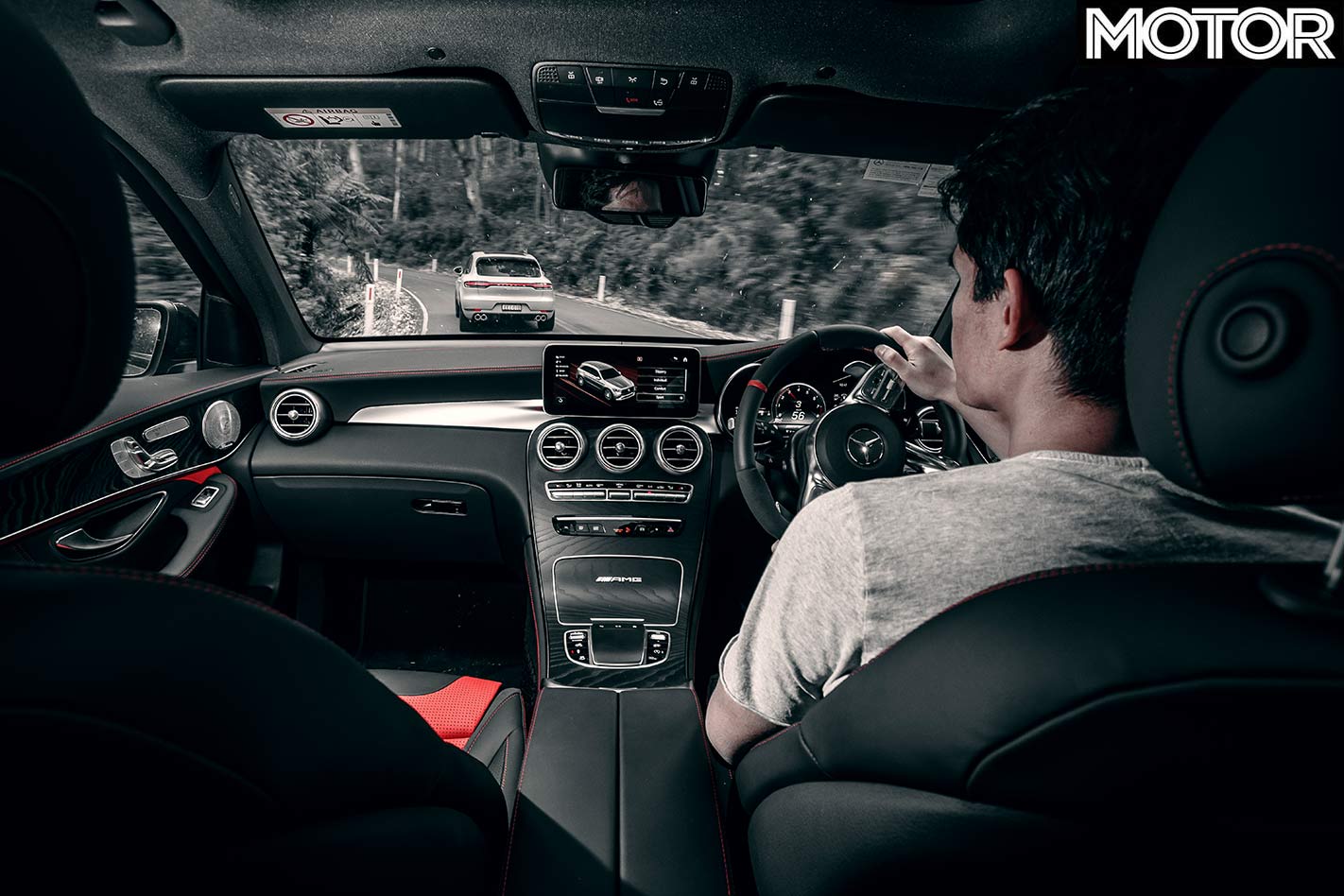
And not only on the drag strip would this help the AMG’s case. After breaking free for the hills it wobbles on the way into its first corner. It’s surprising given the car’s sharp steering and direct feel off centre. The air suspension, too, is well judged to offer absorbency and control.
It’s these attributes that encourage you to press on in the AMG, hustling its 265mm- and 295mm-wide respective front and rear paws to a point where you’re confident enough to rush the throttle. And then the ESP steps in. We know the AMG is big, but we didn’t think a former lap record holder would be this unsure of itself. It happens again in the next corner. As it turns out, new Continental CrossContact rubber might have something to do with it, since we had no such issue with the 2018-spec GLC63 S coupe that wore Michelin PS4 S tyres.
Even the new AMG Dynamics’ ‘Master’ mode can’t unlock the cornering speeds the AMG should achieve, and it won’t allow more entry-speed either. The ESP distrusts the tyres so much, it intervenes even when the system is supposedly off.
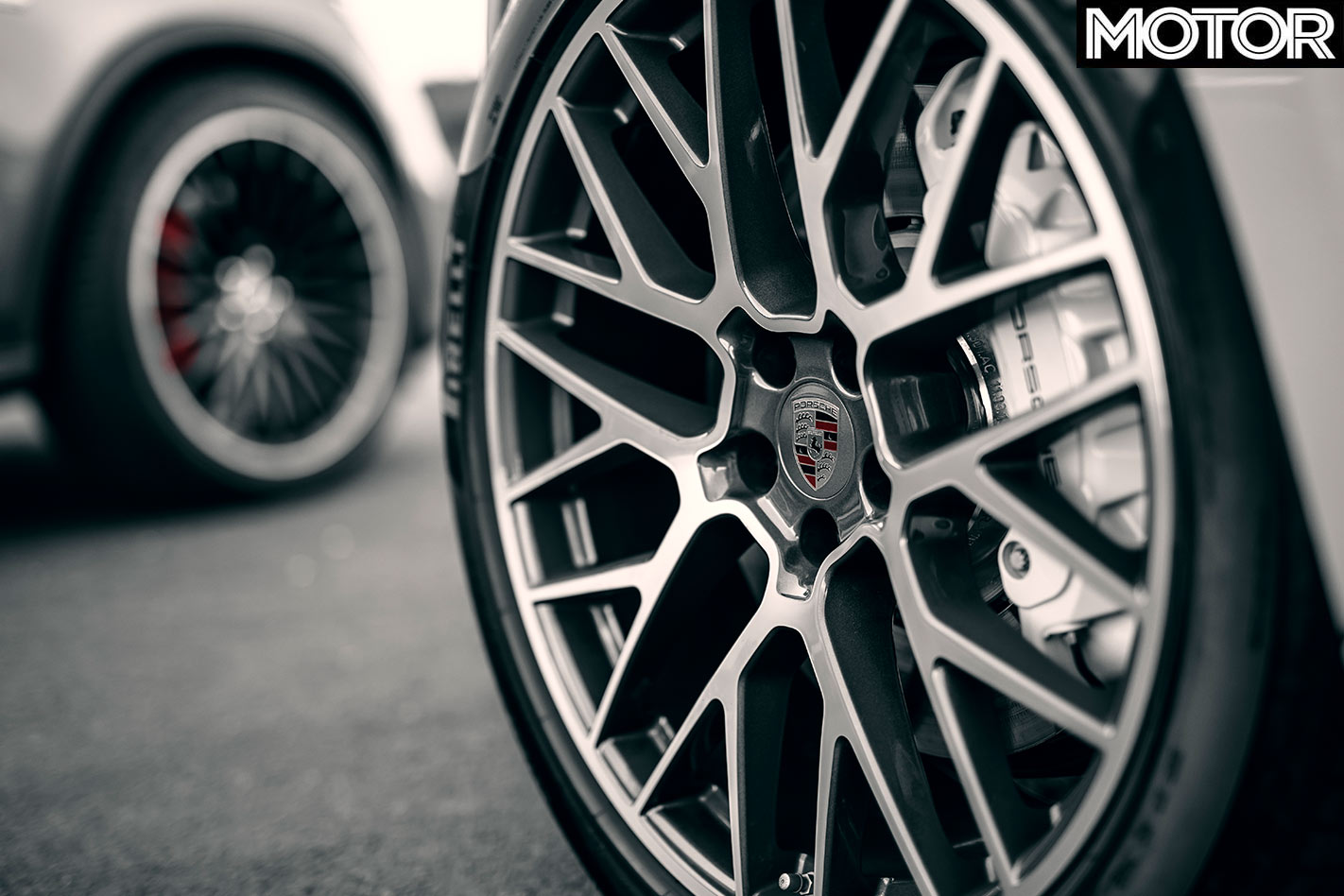
The Turbo and its open rear differential score a more-relaxed ESP and grippier Pirellis. The extra grip’s concerning at first, exaggerating the roll after tipping in on its soft steel spring setup. The speed-sensitive steering fails to add any reciprocal feedback weight, either.
But if you trust the Turbo’s ability you’ll find a more dynamically rewarding car. The way its steering, suspension balance and grip come together when you commit produce a more fluid handling SUV, transitioning from one input smoothly into the next until you’re brimming with enough confidence to drive it on the outside rear tyre.
Still, you’ll pick the Turbo for winding roads only to avoid the AMG’s pedantic ESP system, because the AMG otherwise works brilliantly. The nine-speed wet clutch transmission offers instant throttle response and assuring shifts under load. It will smoothly drop into low gears as well.
The damping, too, backs off nicely in comfort when you’re loping along. But the car’s whole structure tends to thuds as its wheels glance off potholes – revealing the downside to the AMG’s sharp responses. Other driveability gripes? The nine-speed can sometimes be cranky when taking off, spoiling the great throttle feel on tip-in supplied by a torquey V8.
As for the Turbo, its PDK is faultless in all conditions. Yes, the V6 can feel a bit lethargic under foot while cruising as 550Nm works harder to motivate its mass, but it’ll sip 12.6 litres per 100km compared to the AMG’s tested 13.8 litres.
While the Turbo lacks the AMG’s damping travel, it’s more comfortable over gnarled roads because of a more forgiving primary ride. It’s not as a nice place to sit, though, and the AMG’s brakes offer finer modulation.
Where the Turbo makes a stronger case is on value. At $142,200 before on-roads, even with options like this example’s ‘Crayon’ paint ($4970) and Power Steering Plus ($550) it still undercuts the AMG at $156,520 all-up. Yes, the AMG’s equipment list leaves you wanting for little, but it also leaves you with less, since it costs $164,600 before on roads.
Despite that, this contest washes out in the AMG’s favour. While it’s expensive and wanting for grippier tyres, there’s still brutal speed on offer and that V8 powertrain is undeniably endearing. We love its gangster vibe.
Meanwhile, without all-vanquishing straight line punch and dynamics, the Macan never really lives up to its namesake by Porsche standards, leaving the AMG a more defined and attractive shade in this competitive spectrum of grey.
Fast facts
| u00a0 | Mercedes-AMG GLC63 S | Porsche Macan Turbo |
| Body | 5-door, 5-seat SUV | 5-door, 5-seat SUV |
| Drive | All-wheel | All-wheel |
| Engine | 3982cc V8, DOHC, 32v, twin-turbo | 2894cc V6, DOHC, 24v, twin-turbo |
| Bore x stroke | 83.0 x 92.0mm | 84.5 x 86.0mm |
| Compression | 10.5:1 | 10.5:1 |
| Power | 375kW @ 5500-6250rpm | 324kW @ 5700-6600rpm |
| Torque | 700Nm @ 1750-4500pm | 550Nm @ 1800-5600rpm |
| Power/weight | 192kW/tonne | 167kW/tonne |
| Transmission | Nine-speed wet-clutch automatic | Seven-speed dual clutch |
| Weight | 1950kg | 1945kg |
| Suspension | Multi-links, adaptive air dampers, anti-roll bar (f); multi-links, adaptive air dampers, anti-roll bar (r) | Multi-link, adaptive dampers, anti-roll bar (f); multi-links, adaptive dampers, anti-roll bar (r) |
| L/W/H | 4682/1890/1625mm | 4684/1926/1624mm |
| Wheelbase | 2873mm | 2807mm |
| Tracks | 1663/1653mm (f/r) | u00a0 |
| Steering | Electrically assisted rack-and-pinion | Electrically assisted rack-and-pinion |
| Brakes | 390mm ventilated drilled discs, six-piston calipers (f); 360mm ventilated discs, single-piston calipers (r) | 390mm ventilated discs, six-piston calipers (f); 356mm ventilated discs, single-piston calipers (r) |
| Wheels | 21.0 x 9.5-inch (f); 21.0 x 10.0-inch (r) | 21.0 x 9.0-inch (f); 21 x 10.0-inch (r) |
| Tyres | 265/40 R21 (f); 295/35 ZR21 (r); Continental CrossContact UHP | 265/40 R21 (101Y) (f); 295/35 R21 (103Y) (f/r); Pirelli P Zero |
| Price | $164,600 (as tested) | $156,620 (as tested) |
| Pros | Thunderous noise; insane acceleration; sharp feedback; nicely damped; brilliant front seats | Cushy ride; sweet steering; high grip limits; driving position; premium cabin; flexible power |
| Cons | Harsh secondary ride and auto engagement; under-tyred; questionable ESP smarts | Feels a bit tubby; engine needs a wind-up; bland front seats; feminine looks |
| Star rating | 4 out of 5 stars | 3.5 out of 5 stars |
The strip
| u00a0 | Mercedes-AMG GLC63 S | Porsche Macan Turbo |
| 0-10km/h | 0.32 | 0.23 |
| 0-20km/h | 0.56 | 0.48 |
| 0-30km/h | 0.83 | 0.72 |
| 0-40km/h | 1.12 | 1.08 |
| 0-50km/h | 1.4 | 1.47 |
| 0-60km/h | 1.77 | 1.84 |
| 0-70km/h | 2.13 | 2.34 |
| 0-80km/h | 2.64 | 2.85 |
| 0-90km/h | 3.16 | 3.42 |
| 0-100km/h | 3.76 | 4.09 |
| 0-110km/h | 4.38 | 4.84 |
| 0-120km/h | 5.07 | 5.63 |
| 0-130km/h | 5.88 | 6.47 |
| 0-140km/h | 6.78 | 7.43 |
| 0-150km/h | 7.71 | 8.58 |
| 0-160km/h | 8.72 | 9.75 |
| 0-170km/h | 9.83 | 10.98 |
| 0-180km/h | 11.14 | 12.25 |
| 0-190km/h | 12.65 | 13.79 |
| 0-400m | 11.96 sec @185.49km/h | 12.35 sec @ 179.35km/h |
| 100-0km/h | 37.96m | 38.05m |
| u00a0 | u00a0 | u00a0 |
| SPEED IN GEARS | u00a0 | u00a0 |
| 1st | 56km/h @ 7000rpm | 55km/h @ 6800rpm |
| 2nd | 92km/h @ 7000rpm | 94km/h @ 6800rpm |
| 3rd | 133km/h @ 7000rpm | 144km/h @ 6800rpm |
| 4th | 182km/h @ 7000rpm | 197km/h @ 6800rpm |
| 5th | 247km/h @ 70000rpm | 257km/h @ 6800rpm |
| 6th | 270km/h @ 6330rpm* | 270km/h @ 5695rpm* |
| 7th | 270km/h @ 5450rpm* | 270km/h @ 4700rpm* |
| 8th | 270km/h @ 4550rpm* | N/A |
| 9th | 270km/h @ 3800rpm* | N/A |
It’s almost lunchtime and only a handful of corners have been taken in anger. Storm clouds brood above as the boss man, editor Inwood, and I serve as lighting gofers. Our resident snapper, Ellen Dewar, captures it all through the camera lens. The storm is getting closer; single heavy drops start to fall. With key fobs in hand but no authorisation to use them, the skies above seem as agitated as us. Yet we’re under strict orders to get the ‘hero shot’ before Mother Nature unleashes her fury.
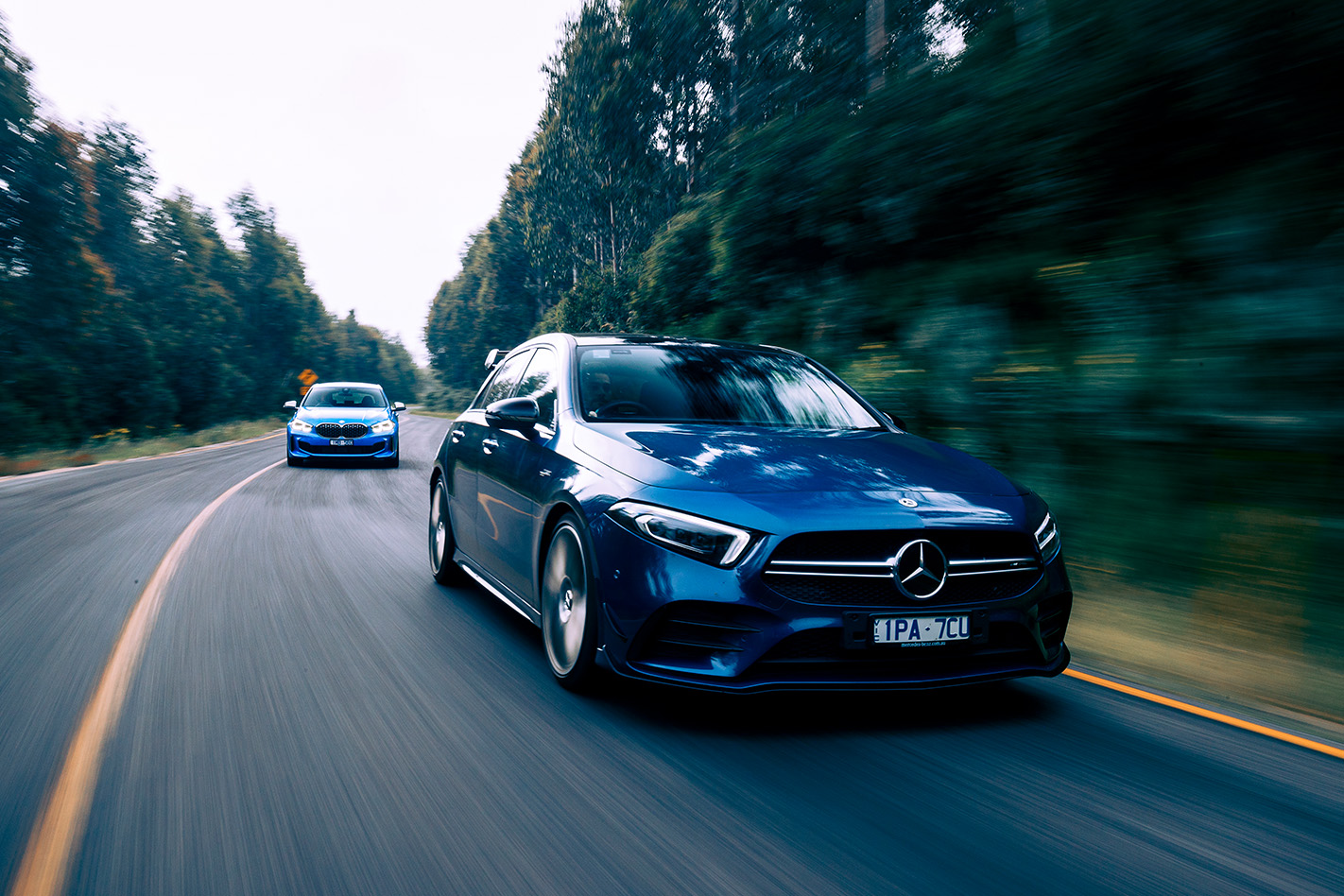
The downtime allows a moment to consider this duelling pair. Both the Mercedes-AMG and BMW five-doors are among the premium hot hatches of the moment yet they already carry unique baggage. Simply put, the $69,300 A35 could be perceived as somewhat of a halfway house; a car built solely to plug the narrow gap between the A250 Mercedes and the unhinged A45 S from AMG. View it this way and you could write it off simply as a cash-grab concocted by cynical marketers. It takes all of two corners to realise this isn’t the case. Throw the A35 at an apex and it’s immediately apparent that we’re dealing with an AMG-lite here, not a tarted up A250. Phew.
The allure of the BMW is less obvious. It too can be viewed more as a marketing exercise than an engineering one, given it seems to place so little weight on tradition. Where the previous M135i (and the 140i that followed it) stayed true to BMW’s iconic formula of rear-drive with straight-six power, this new car is much more controversial. All-wheel drive and four cylinders is the new recipe, and there’s also the sobering realisation that while AMG is still to offer the feral A45 S, BMW fans have no such hardcore variant to look forward to. When it comes to the M Performance-fettled 1 Series, this is it.
“All right, I’m done – have at it boys,” says photographer Dewar. And there it is, the green light we’d been waiting for. After all, we’re atop Lake Mountain in Victoria’s Yarra Valley, an area adorned with great driving roads. If these hatches can’t prove their worth here, then neither backstories will mean a thing. The threatening rain is mercifully holding off.

Slide into the heavily bolstered AMG Sports seats and the A35’s sporting intent instantly comes into focus. Large screens consume your peripheral vision, while the perfectly formed steering wheel is festooned with useful controls. Press the starter button and the M260 powerplant comes to life with a raspy exhaust note. Keen aficionados will pick up on the fact that the engine code belongs to an A250, and not the unhinged M139 assigned to the A45.
However, this is more than an A250 engine with the boost wound up. It’s been significantly fettled with a freer-flowing exhaust, water-to-air intercooling, bigger valves and, crucially, a bigger twin-scroll turbo. So while the internals and block remain the same, it’s a significant upgrade. And it’s noticeable, too. After all, 225kW and 400Nm from a 2.0-litre four-cylinder turbo is nothing to be sneezed at. Nor is a 0-100km/h claim of 4.7 seconds, which feels utterly feasible. While peak power is made at 5800rpm, the strong 2.0-litre four-pot encourages you to search for the redline as it continues to make meaningful grunt throughout the rev range. There is a meaty mid-range torque window to access, too, between 3000-4000rpm.
Newton metres are where BMW’s 2.0-litre four-cylinder turbo claims top trumps thanks to 450Nm, and also has a greater torque bandwidth of 1750-5000rpm to play with. However, despite equalling the Merc on power, the B48’s identical 225 kilowatts (4500-6250rpm) don’t feel as strong as the A35’s. The party is over after 5000rpm, so shifting up a gear early provides the best results. While its 0-100km/h time of 4.8sec is a tenth behind the A35, option the $1900 Performance Pack (which includes an overboost function and lighter 18-inch alloys) and the marker falls to 4.7sec.
In terms of acoustics, the AMG takes the win. Its theatrical overrun and upshift blurts pervade the cabin, creating more aural excitement than the BMW, which has a soundtrack that can verge on artificial. So while these two are comparable in terms of on-paper performance and straight-line pace, the reality is their dynamic talents diverge.

The A35 has a serious demeanour, right down to the simple things like its lower driving position. The AMG is tied down, with the Michelin Pilot Sport 4S tyres offering high levels of grip. The front-end denies understeer vehemently and power-down traction past the apex is immense. There’s a delicacy, too, with an underlying neutral balance that affords a small, playful squirm from the rear as the razor-sharp front axle arrows into a corner. This is possible thanks to the beefed-up A250 chassis, which gains stiffened springs, dampers and anti-roll bars. The uprights have also been changed and the rear subframe is now solidly mounted. With the adaptive dampers set to Comfort mode, the ride quality is acceptable with only a slight body-control compromise. However, Sport and Sport+ need to be reserved for smooth roads given the taut nature of the A35’s chassis tune.
The AMG also gets the nod over the BMW when it comes to its gearbox. While the BMW’s eight-speed auto is smoother around town, it isn’t as quick on the run as the seven-speed dual-clutch found in the A35. In its sportiest mode, the A35’s shifts aren’t only faster, but have a positivity and immediacy lacking in the BMW.
Despite both hot hatches being able to send up to 50 percent of drive to the rear wheels, it’s the BMW that behaves distinctly more front-driven, even with its Torsen limited-slip differential. The M135i’s nose pushes wide earlier under hard acceleration and the front wheels, wrapped in Continental PremiumContact 6 tyres, will tug at the thick-rimmed tiller. It isn’t as willing to lock onto an apex, then rotate and fire out the other side of a corner as the AMG.
The fixed-rate suspension set-up does an impressive job in providing a ride quality advantage over the A35. However, you have to pay $400 on top of the Performance Pack, and cop smaller 18-inch wheels, to option adaptive dampers. The Merc is the most affected by road noise and tyre roar, which is quite intrusive, giving the BMW an edge in refinement levels.
In terms of steering, there is a vagueness on-centre that continues through to the initial stages of lock that makes the M135i hard to place on corner entry. Jump back into the A35 and the steering has a cohesive and meaty nature. The AMG’s brakes also feel more positive, with an immediacy to the pedal that’s reassuring in relation to the M135i’s initially soft response.
Summiting Lake Mountain one last time, it’s hard not to notice the M135i struggling to keep up. It’s just not as confidence-inspiring or tactile enough near its limits to deliver a dynamic attack on the A35. The Merc carries more speed through corners with greater precision – it’s the one you want to keep driving just for fun.
As we arrive at the cafe for a final debrief, the rain finally falls. And it’s torrential. Both hatches remain in view through the window as Inwood and I muse over the exterior designs. Admittedly, the Misano Blue M135i looks better in the metal than it does in pictures, its subtle mongrel revealed in its finer details. But it’s the A35 that makes the greater visual statement, especially in this bewinged Edition 1 guise (a $5377 premium). Yes, you can have an A35 sans the winged paraphernalia should you wish to live a more stealth-like existence, but shouldn’t an AMG be a bit brash?
So the AMG is the better driver’s car, but the return journey to Melbourne sees the BMW salvage some points on the practical front. Its cabin feels more tightly screwed together, and the AMG does display some lower-rent materials if you go looking for them. Plus the 1 Series’ shift to the UKL2 front-wheel-drive platform has brought packaging advantages including a 380-litre boot that’s 10 litres bigger than the A35. Strangely, though, it’s the AMG that has greater rear seat knee- and headroom.
Ultimately, the F40 M135i isn’t without newfound advantages. The problem is it will forever be haunted by what it once was to enthusiasts who champion the Bavarian brand. There’s a sense there should be a rung above to come – but there isn’t one. Therefore the AMG-honed A-Class claims the premium hot hatch honours here. It’ll make you smile more when you really want it to. And the true revelation is that the A35 isn’t a halfway house at all. Its credentials and performance render the A45 S’s baby brother more than worthy of its Affalterbach address.
VERDICT
1st – Mercedes-AMG A35 (8.5/10)
2nd – BMW M135i (6.5/10)

MERCEDES-AMG A35 SPECIFICATIONS
- Price: $69,300 ($76,792* as tested)
- Engine: in-line 4cyl, dohc, 16v, turbo
- Layout: front engine (east-west), AWD
- Capacity: 1991cc
- Power: 225kW @ 5800rpm
- Torque: 400Nm @ 3000-4000rpm
- Transmission: 7-speed dual-clutch
- Body: steel, 5 doors, 5 seats
- L/W/H/W–B: 4436/1797/1405/2729mm
- Track (F/R): 1573/1570mm
- Weight: 1480kg
- Boot: 370 litres
- Fuel/tank size: 95 octane/51 litres
- Economy: 16.2L/100km (test average)
- Front suspension: struts, A-arms, adaptive dampers, anti-roll bar
- Rear suspension: multi-link, coil springs, adaptive dampers, anti-roll bar
- Steering: electric rack and pinion
- Turn circle: 11.5m (2.5 turns lock-to-lock)
- Front brakes: ventilated discs (350mm)
- Rear brakes: ventilated discs (330mm)
- Tyres: Michelin Pilot Sport 4 S
- Tyre size: 235/35ZR19 91Y
- Safety: 5 stars (ANCAP)
- Options*: Edition 1 Package: Denim Blue metallic paint, AMG multi-spoke 19-inch alloys, AMG Performance seats ($5377); Driver Assistance Package ($1454); Vision Package: multi-beam active headlights, 360-degree camera ($761)

BMW M135I SPECIFICATIONS
- Price: $64,990 ($69,960* as tested)
- Engine: in-line 4cyl, dohc, 16v, turbo
- Layout: front engine (east-west), AWD
- Capacity: 1998cc
- Power: 225kW @ 4500-6250rpm
- Torque: 450Nm @ 1750-5000rpm
- Transmission: 8-speed automatic
- Body: steel, 5 doors, 5 seats
- L/W/H/W–B: 4319/1799/1434/2670mm
- Track (F/R): 1560/1563mm
- Weight: 1525kg
- Boot: 380 litres
- Fuel/tank size: 95 octane/50 litres
- Economy: 14.2L/100km (test average)
- Front suspension: Front: struts, A-arms, coil springs, anti-roll bar
- Rear suspension: multi-link, coil springs, anti-roll bar
- Steering: electric rack and pinion
- Turn circle: 11.4m (2.4 turns lock-to-lock)
- Front brakes: ventilated discs (360mm)
- Rear brakes: ventilated discs (330mm)
- Tyres: Continental PremiumContact 6
- Tyre size: 235/35R19 91Y
- Safety: 5 stars (ANCAP)
- Options*: Comfort Package: lumbar support for driver and front passenger, seat heating, steering wheel heating ($1200); Enhancement Package: Metallic paint, Panorama glass roof, active cruise control with stop & go function, automatic tailgate, luggage compartment package and storage net, through-loading system ($3770)

It started as one of those strange things that pop up on the internet from time to time – something that makes you think ‘wow, that’s a bit crazy’ and you never think of it again.
But when I saw my third video of a car jumping a roundabout, I started to wonder what the heck was going on.
And when a woman jumped her Nissan Pulsar over a large roundabout just a kilometre from my home, I knew… we were in the midst of a Roundabout Jumping Epidemic.
The 55-year-old driver had to be cut out of her car and suffered a minor back injury, but no one else was hurt and no other cars were damaged, despite a 40m flight followed by a 100m slide after landing.
“I have never seen such thing in real life, only in movies,” said the gobsmacked service station attendant who witnessed the crash, which happened during the day.
“I was thinking, what is happening? Is it real or not?”
A scan of the internet quickly revealed the breadth of the epidemic.
The most recent ‘full send’ effort came from Poland, where our hero travelled more than 100m through the air only to land – somewhat ironically, given that the driver escaped relatively uninjured – in a cemetery.
And how’s the speed? There’s almost no chance that this was accidental, right? Well, there’s no surprise to learn that Polish police arrested the 41-year-old for high-range drink driving.
In fact, he was so pickled that there was probably more risk of a fire started by his blood than by the car.
Given the state of his car, though, that’s a pretty light get-off.
Another truly ‘oh crap’ moment involving a roundabout came from the UK.
At first glance, we’re going to say that road rage – or at the least, some seriously inconsiderate driving – led to the moment where the driver (pilot?) of a VW Caddy was not cleared for takeoff, but took off anyway.
There was so much hang time, in fact, that many pundits doubted the veracity of the video. It was indeed real, though, and our 18-year-old pilot was fined with dangerous driving.
What’s more astonishing, though, even though it looked like a real-life mod for GTA 5 is the fact he was able to be charged with anything at all, on account of not being dead.
He and his passenger were, in fact, unharmed, but they did miss out on the music festival they were travelling to.
Less speed, more grace was the mantra for this UK-based leap, with an extra style point for landing directly in the puddle.
It’s this vid that gives us a lot of understanding as to why cars are jumping over roundabouts – the facing side of the traffic island is shaped like Evel Kenevel’s driveway.
Civil engineers are tasked with creating traffic-controlling devices that inflict as little damage to wayward vehicles and their hapless occupants, and so while these jumps look spectacular, the impact is actually far less than if the car ran directly into a wall.
In fact, the landing was probably more uncomfortable than the initial impact. Still, our victim here was extracted unscathed from the wrecked car to fly another day.
Out of our entire crazy collection, this one is the least fun, only because the TRULY AWFUL woman behind the wheel had her 19-month-old kid in the car with her.
Thankfully, the child escaped this sizable shunt completely unharmed, and she – thanks to a blood alcohol reading three times the UK legal limit – only copped a handful of abrasions after disobeying every roundabout rule known to humanity.
And hopefully she also copped a solid mouthful from the presiding judge.
Our final capture comes from the beautiful town of St Lucia in Malta, and it’s probably the most graceful of all.
It’s got everything – speed, distance, pinpoint landing and an uninjured occupant. Apparently, even the damage to the roundabout was inconsequential.
“Kindly note that the police went on site and after all investigations were carried out, no breaches were found,” Malta police told local media. “Also, you may wish to note that no other vehicles were damaged.”
Now that’s what we call a great escape.
There’s good news if you were disappointed that V8 engines started disappearing from Porsche’s SUV range.
The new 2020 Porsche Cayenne GTS is getting an engine upsize as the powerplant sitting in the engine bay is now once again a V8, rather than the 3.6-litre twin-turbo V6 it was replaced by.
Now with the 4.0-litre V8 twin-turbo unit in both standard SUV and SUV Coupe styles, the Cayenne GTS makes 338kW from 6000rpm and 620Nm from 1800rpm respectively.
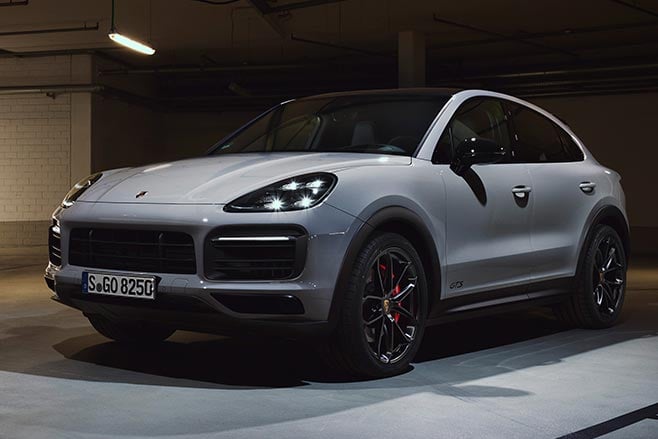
Porsche says this, thanks to all-wheel drive and the Sport Chrono package, results in a 0-100km/h sprint taking just 4.5 seconds for the 2145kg unit.
Porsche Australia has already confirmed availability for the new Cayenne GTS, which will be available locally in both body styles.
Available to order now but with deliveries expected for Q4 this year, the asking prices are set at $192,900 for the Cayenne GTS and $198,200 for the Cayenne GTS Coupé.
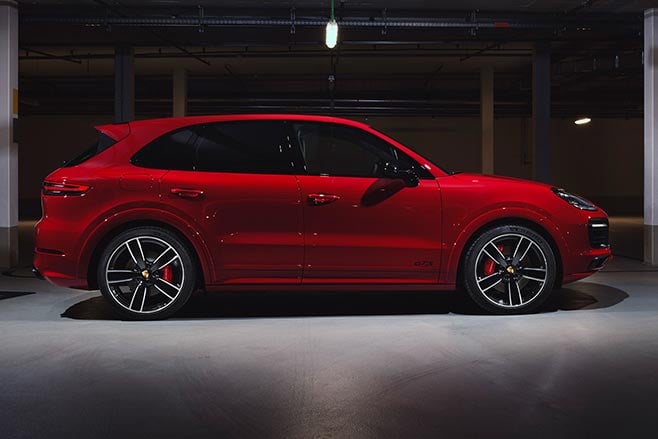
Australian-delivered versions will be highly specified, with a long list of inclusions as standard ranging from adaptive air suspension to a Bose surround sound system.
Further to that, a 90-litre fuel tank, 20-inch collapsible spare wheel, metallic paint, privacy glass, auto-dimming mirrors, driver memory package, side airbags in the rear, front seat heating, comfort access (keyless entry), Lane Change Assist, Surround View, Head-Up Display, and digital radio are all included in the base price also.
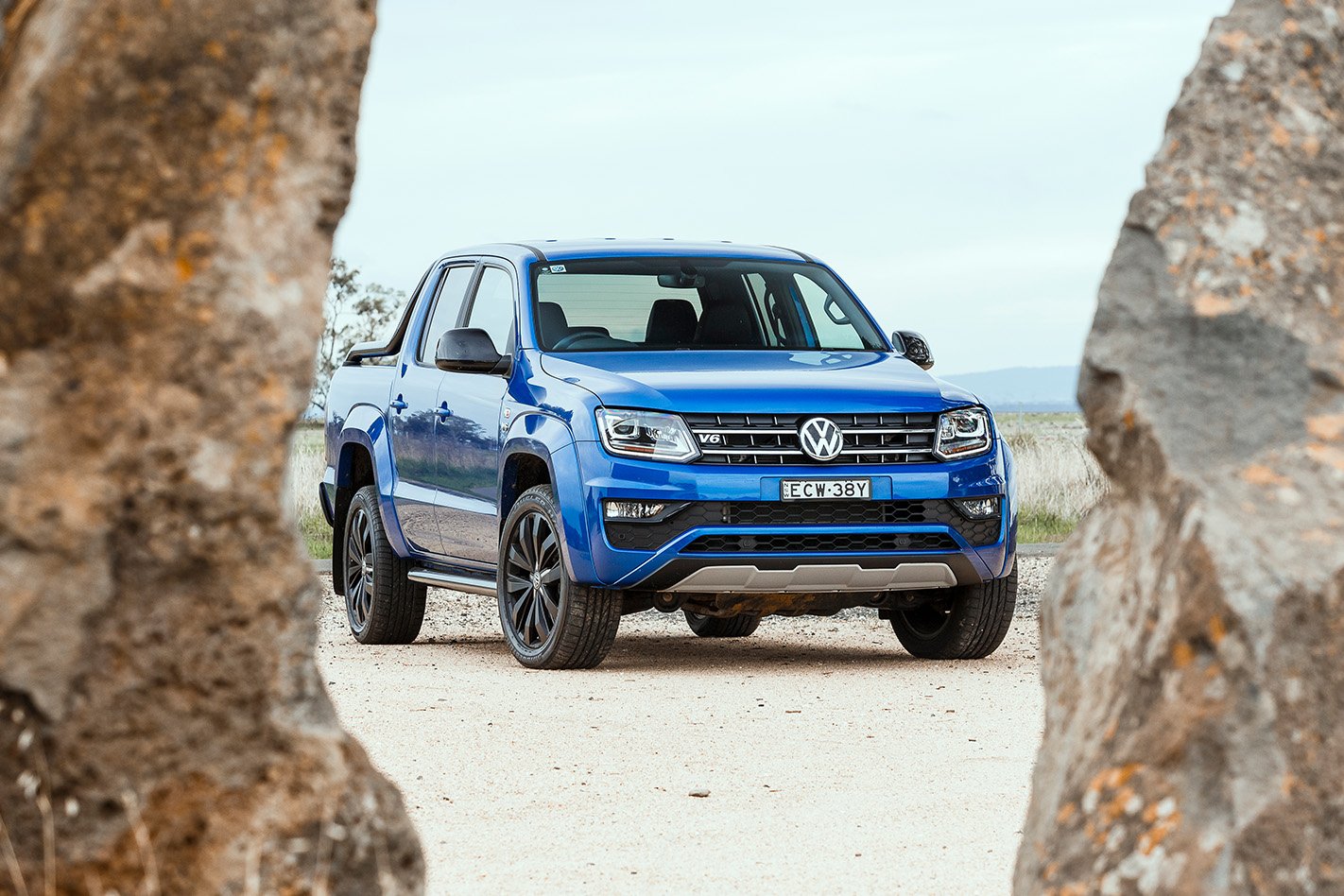
The Volkswagen Amarok 580 Ultimate is the most powerful (and most expensive) diesel-powered dual-cab on the market.
With a sticker price of $72,790, the Amarok 580 utilises a 3.0-litre turbocharged diesel engine to send 190kW and 580Nm to all four wheels via an eight-speed automatic gearbox.
Volkswagen says that the turbo-diesel engine is able to produce an extra 10kW when an overboost function is activated, allowing the Amarok 580 to crack 100km/h from a standstill in a claimed 7.3 seconds.
We decided to put that claim to the test, taking the Amarok’s flagship model to Heathcote Raceway to find out exactly how quick the ultimate diesel dual-cab can go.
During our independent testing, the best figure we could get out of the torquey VW was 7.7 seconds to 100km/h. While that’s not as fast as the brochure may claim, it’s nothing to be sneezed at.
The best figure we’ve achieved from a 130kW/450Nm Toyota Hilux is 11.2 seconds to 100km/h, while the twin-turbo 2.0-litre Ford Rangers can only manage in the high-nine second bracket.
It’s also 0.2s quicker than the claim for the recently departed Mercedes-Benz x350d Power, so it’s fairly clear that the Amarok has earned its bragging rights in this corner of the market.
The only vehicles that offer the same utilitarian practicality as the Amarok with more performance are the much more expensive (and far larger!) Ram 1500 and Silverado 1500 American pick-ups. However, those behemoths are powered by big petrol V8 engines, so we’re not really comparing apples with apples there.
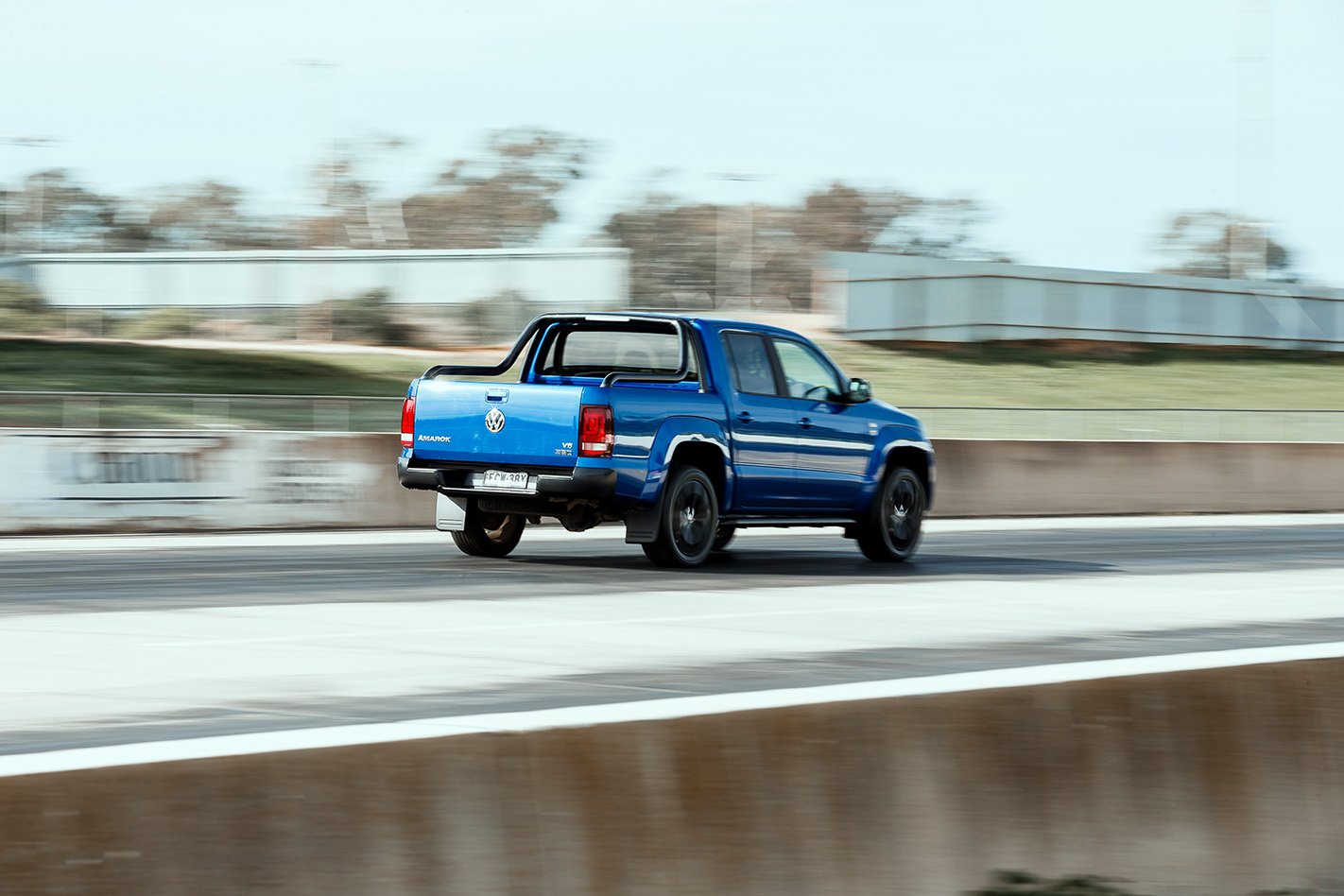
While the VW isn’t as heavy as those American powerhouses, it does still weigh just north of two tonnes. However, it utilises more road-focused Bridgestone Dueler H/T rubber, in 255/50R20 specs on all four corners.
While you aren’t going to be winning many drag races, if you do decide to take an Amarok to the ‘strip, you can expect an ET of 15.6 secs @ 143.8km/h. You can say that the Volkswagen is just as quick as $100k worth of Ford Mustang R-Spec and you wouldn’t be wrong. Only when pushed volunteer the information that this measure is from standstill to 20km/h!
For a full rundown of how the Amarok performed, check out our data below:
- 10 km/h: 0.4 sec
- 20 km/h: 0.9 sec
- 30 km/h: 1.5 sec
- 40 km/h: 2.1 sec
- 50 km/h: 2.9 sec
- 60 km/h: 3.6 sec
- 70 km/h: 4.5 sec
- 80 km/h: 5.4 sec
- 90 km/h: 6.5 sec
- 100 km/h: 7.7 sec
- 110 km/h: 9.1 sec
- 120 km/h: 10.8 sec
- 130 km/h: 12.6 sec
- 140 km/h: 14.6 sec
- 150 km/h: 17.6 sec
- 160 km/h: 21.6 sec
- 170 km/h: 26.5 sec
- 0-400m km/h: 15.6 sec @ 143.8km/h
- Braking 100-0km/h: 37.5m / 2.7 sec
- Tyre: Bridgestone Dueler H/T
- Tyre size: 255/50 R20 109H
- Turns Lock to Lock: 2.8
- Redline: 4600rpm
- Cutout: 4700rpm
- Speed at 100: 97km/h
The long-awaited next instalment of the decades-old Gran Turismo franchise, has been announced.
Polyphony CEO and Game Designer Kazunori Yamauchi announced Gran Turismo 7 early this morning as part of Sony’s ‘PS5 – The Future of Gaming’ showcase: an hour-long livestream event which outlined a number of big-title releases destined for the next-gen console.
While the online-focused Gran Turismo Sport was released in 2017, GT7’s true predecessor, Gran Turismo 6, was released back in 2013.
Gran Turismo 7 goes back to the future
Yamauchi hints at a nostalgic return to form, stating “this new Gran Turismo should make fans very happy, especially with the campaign mode.”
A minute-long cinematic sizzle reel ensued, offering reflections aplenty, and promising stunning visuals thanks to the PS5’s 4K and 120Hz HDMI 2.1 capabilities.
Frame-rate seems like the most likely graphical innovation, as current-gen technology already offers near photorealistic visuals.
Yamauchi had stated earlier this year that ‘time resolution’ would be more of a focus than simple ‘spacial resolution’ in regards to next-gen technical capabilities.
EVERYTHING WE NOW ABOUT THE PLAYSTATION 5 SO FAR
We also expect Sony’s new DualSense controller and its haptic feedback feature to provide better surface and vehicle feedback in the hands of gamepad racers.
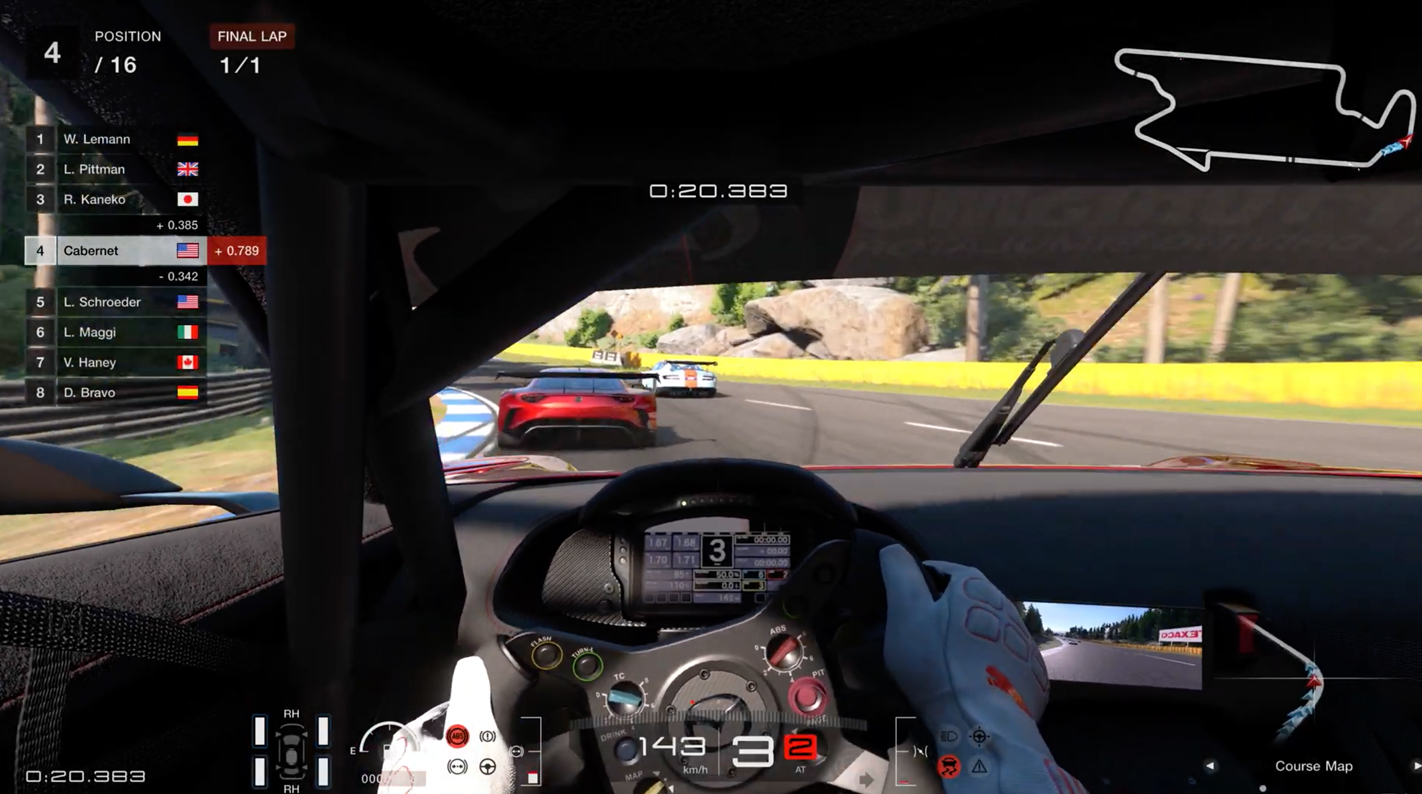
Beyond the tech, there’s plenty of nostalgia on offer as well: after the cinematic trailer, we were treated to a few minutes of gameplay (a rare instance throughout the whole livestream).
MATT SIMMONS’ TIPS TO BECOMING A PRO GAMER
A view of the campaign map harks back to earlier titles, allowing the player to travel between their home garage, the car dealership, tuning shop, or the driving school.
Used Car Dealership and Trail Mountain are back!
Fans will also be happy to see the Used Car Dealership make a return after its absence in Gran Turismo 6.
A new-look upgrade shop is also featured in an extended announcement trailer.

Oh, and long-time fans will be glad to know that Trial Mountain is back!
The iconic fictional circuit backdrops a few minutes of in-game in-car footage, where a player battles a Porsche 917 from behind the wheel of Mazda’s RX-Vision GT3.
Playstation 5 Gran Turismo 7 release date
On that front, we’re still scant on details, unfortunately. Sony has yet to publish a release date for Playstation 5, with no word on Gran Turismo 7’s release date, either.
But it’s been seven years since Gran Turismo 6, and with the franchise’s position as a cornerstone legacy title for the console, we’re expecting this automotive blockbuster to be ready and waiting at the launch of the next-generation Playstation 5.
NOW CHECK OUT all of our gaming content!
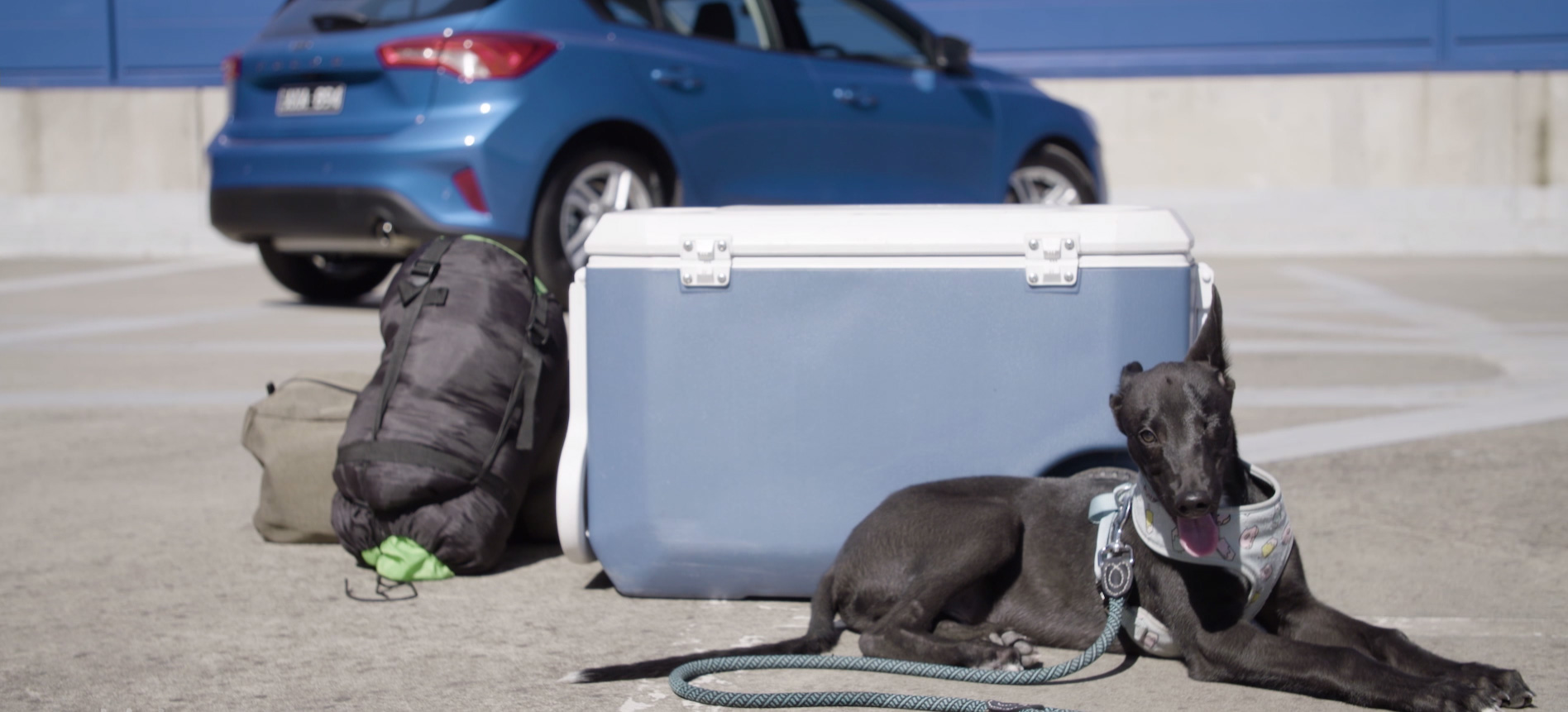
After months spent at home social-distancing, it’s almost time to jump back in the car and hit the road for that dream regional or interstate trip. Road trip snacks? Check. Perfect Spotify playlist? Check. Destination? Check. Tyres? Get them checked!
To that end, we chatted to Mitchell Golledge, managing director at Continental Tyres, to find out everything you need to know about checking your tyres and getting your car ready for your getaway.
Move it!
Tyre flat-spotting is common after a car has been parked for a prolonged period. This happens when the tyre area in contact with the ground creates a flat spot in the rubber due to lack of movement.
There are two types of flat-spotting: temporary and semi-permanent. The severity of the flat spot is determined by things like tyre size, load, internal structure, ambient temperature and the amount of time the car has been stationary.
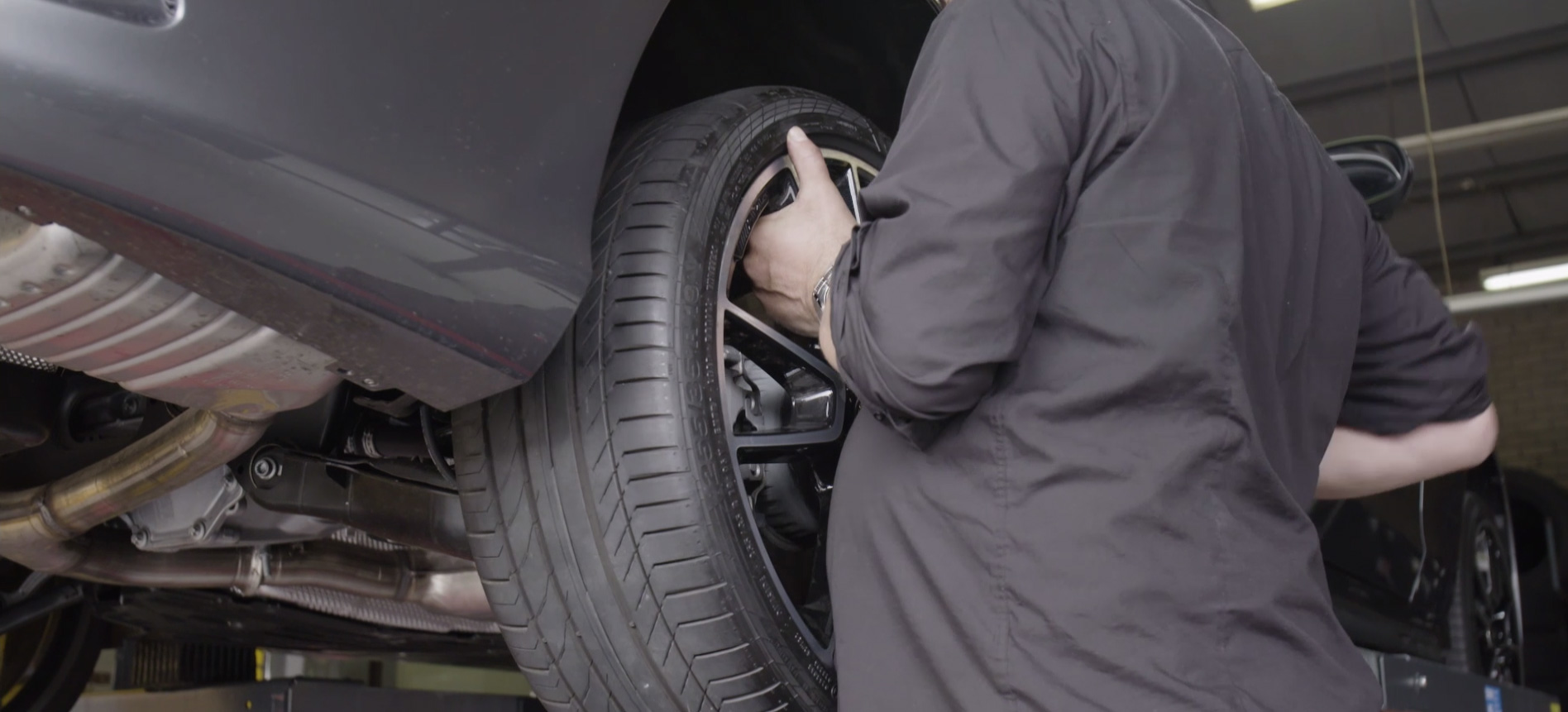
A temporary flat spot may cause a vibration that will typically disappear after a few kilometres. But if it doesn’t, the flat spot may be semi-permanent, so make sure you have your car inspected by a professional.
If your car is going to be parked for a prolonged period, regularly re-parking it so that the tyres spin to different positions will help avoid flat-spotting.
Pressure test
Ahead of a big trip, check your tyre pressure – this is paramount to vehicle safety. Having the correct tyre pressure is also a simple way to maximise fuel efficiency and mileage before you hit the road.
Tyres are best checked while they are cool, so before you get going, check your vehicle handbook to locate the recommended tyre pressures. Alternatively, this detail can be found inside the fuel filler flap and on the driver’s doorpost. Once you’ve got that sorted, head to your nearest service station to pump your tyres up with air – and before the tyres get hot.
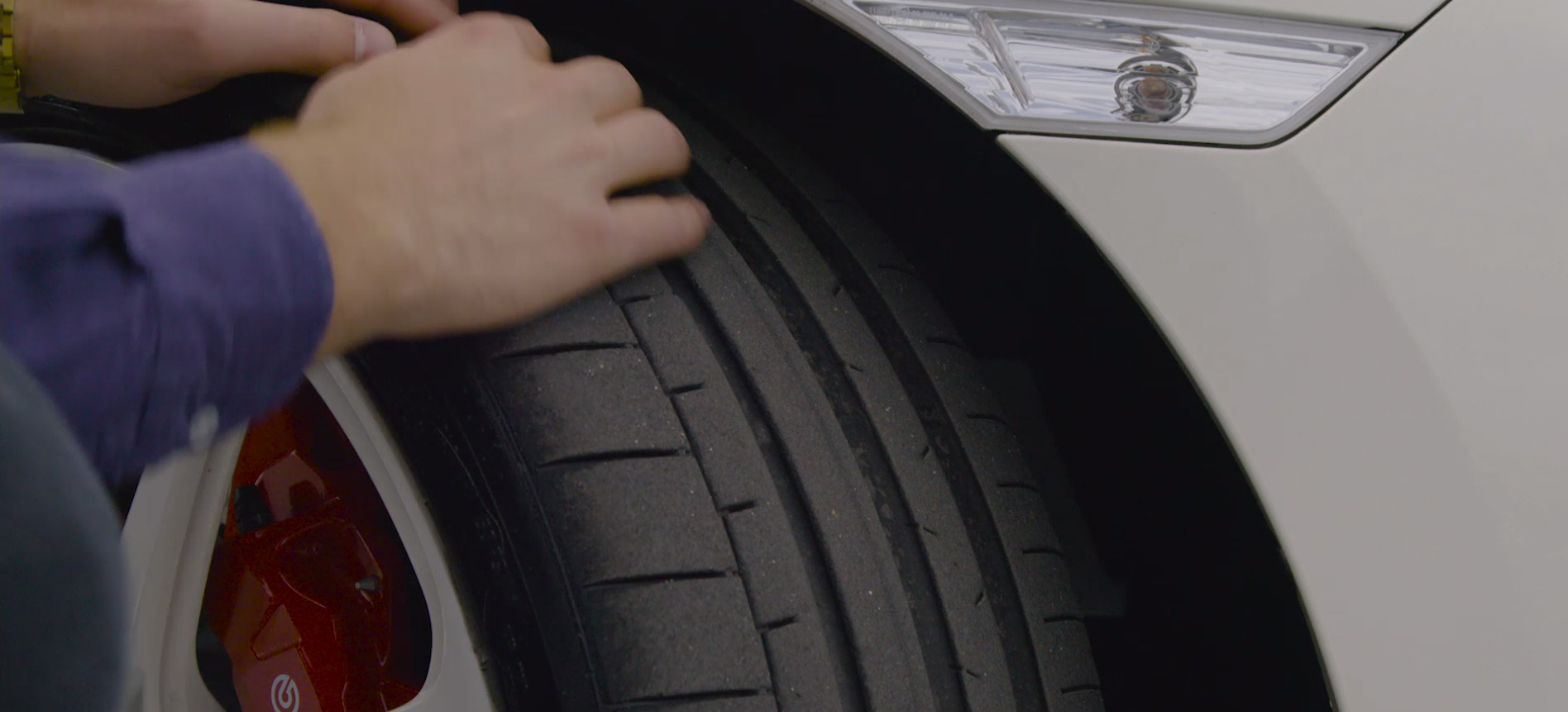
That said, it’s important you check your tyre pressure every month – not just before you’re headed on a lengthy drive. Tyre pressure is directly linked to vehicle performance, driving comfort, cornering, braking grip, handling behaviour, directional stability and longevity.
Alignment and rotation is key
Tyres should be rotated every 10,000km and wheels should be aligned every two-to-three years.
Having your tyres regularly maintained by a professional will extend their lifespan significantly, and save you money down the track. Having your wheels aligned, rotated and balanced will lead to a much smoother drive, improved fuel efficiency and reduced stress on your engine. This process takes only a short time and will dramatically increase your vehicle’s safety and performance.
To encourage your tyres to wear evenly, have them rotated and balanced every 5000km. Tyres showing unevenly worn tread are unsafe and more likely to slip in wet conditions – not ideal as we head into winter. If you’re overdue to have this done, make sure you book your car in with a professional ahead of your road trip.
Check your spare
Tucked away and out of sight, it’s easy to overlook your spare tyre – that is, of course, until you need it. As mentioned earlier, tyre pressure is so important to overall vehicle safety, and in the event of an emergency, you want your spare tyre to be able to perform just as well as your original tyres.
Before you head off on your journey, check the tyre pressure on the spare and inspect for any visual damage. There is nothing worse than needing to use your spare tyre in an emergency and it not being up to the job.
Time to upgrade?
Sometimes adequate tyre maintenance will mean more than checking, aligning, rotating and pumping with air. Continental recommends that tyres are changed when the remaining amount of tread is at 3mm. If the tread depth falls below this measurement, it will hugely affect your vehicle’s safety. Tyres should be changed immediately should they fall below the Australian legal tread depth limit of 1.66mm.
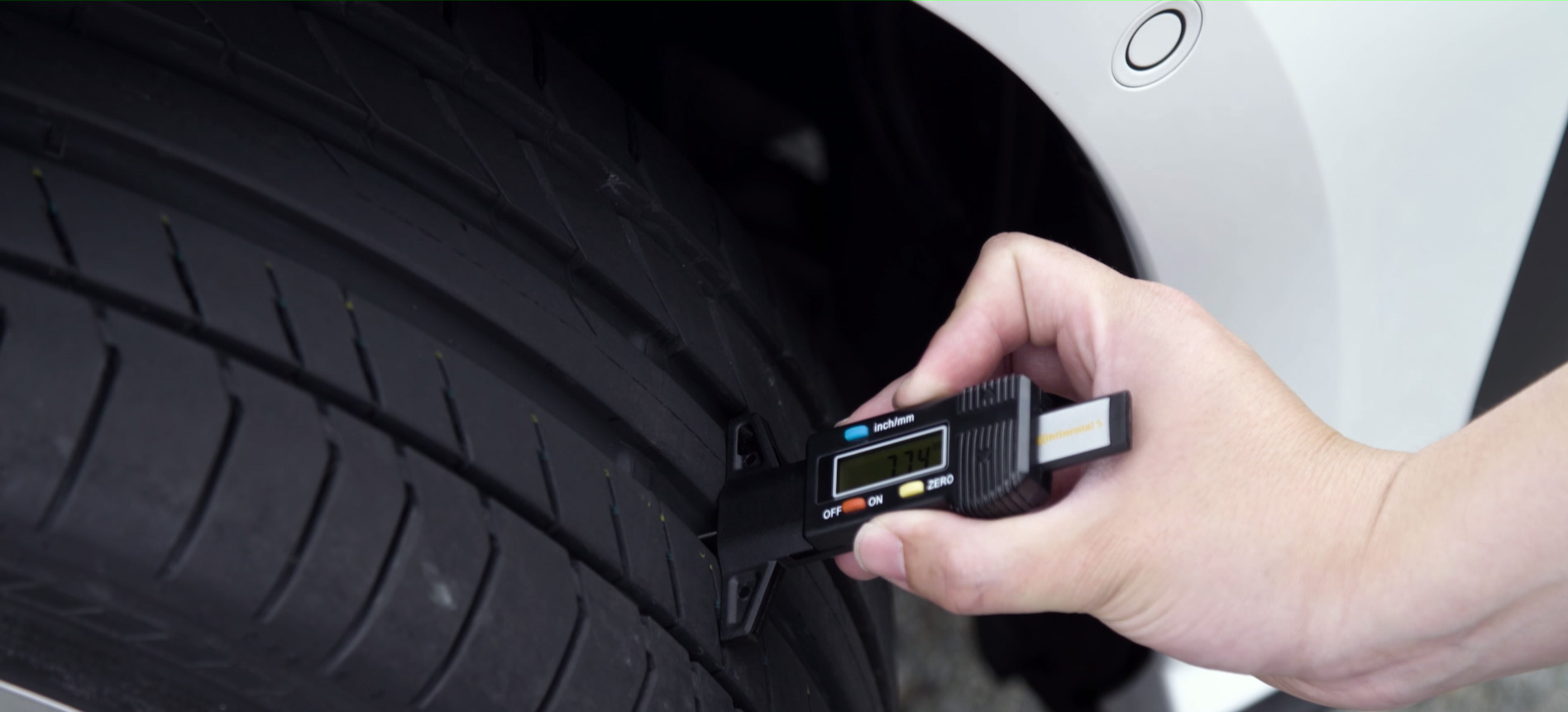
A great way to check this yourself is via the ‘20c coin trick’. Place a 20c coin into the tyre tread; if it doesn’t reach the bill of the platypus, it means there’s less than 3mm of tread remaining.
Also, keep an eye out for any signs of visual damage to your tyres – cracks, cuts, impacts and punctures are all reason enough to have the tyre checked out by a professional.
What stands out?
The fourth-generation Kia Sorento seven-seat SUV is the most advanced Kia model to date and, like its predecessor, is beautifully finished inside, generously equipped, and enjoyable to drive. The optional diesel engine is refined and powerful, and a suite of active safety features and Kia’s seven-year warranty bring peace of mind.
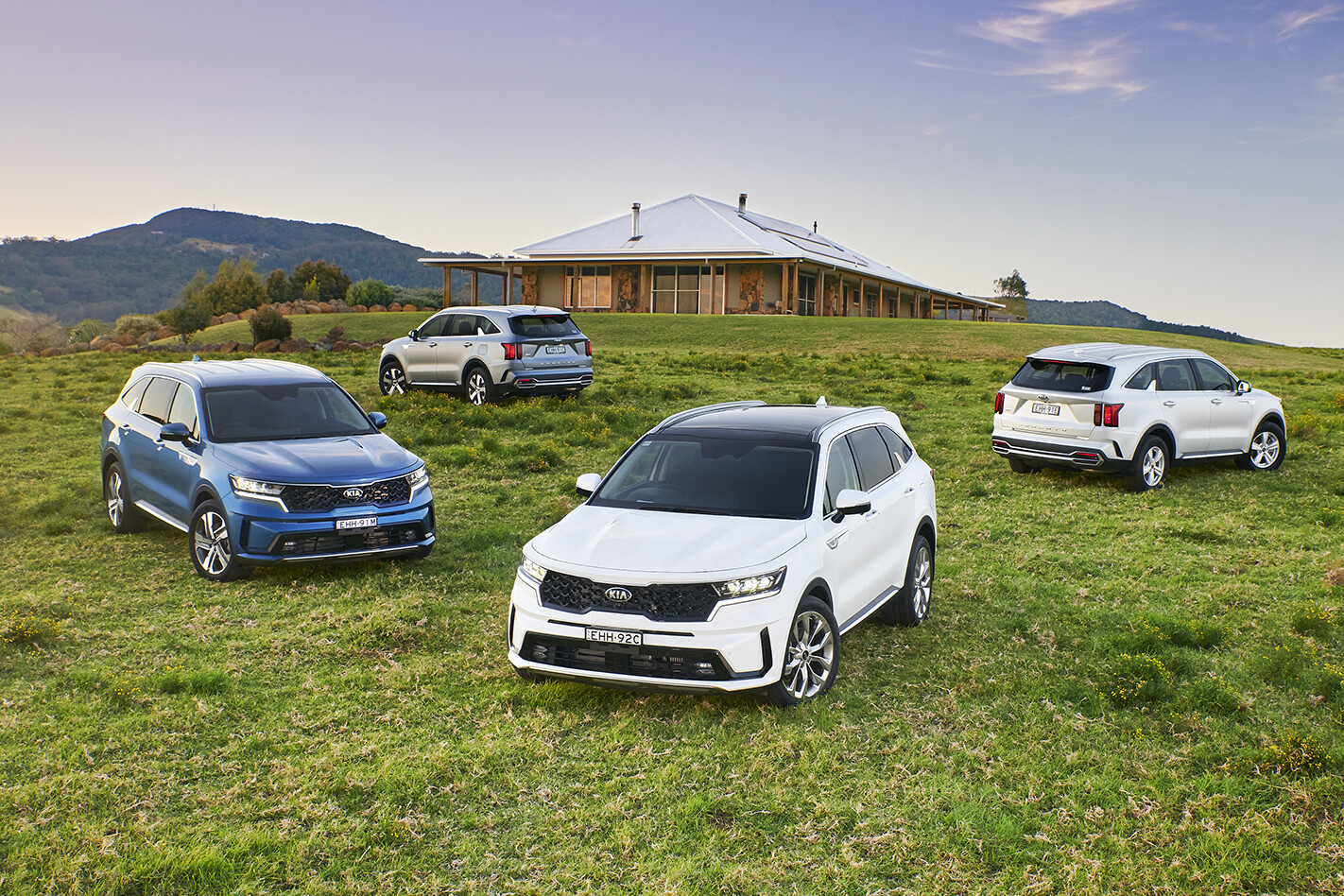
You can also read our review of the Sorento this all-new model replaced in September 2020.
What might bug me?
Not much, perhaps not having an all-wheel-drive option if you want a petrol Sorento.
Being concerned that third-row passengers, who are most likely to be children, are not protected by airbags. The curtain airbags in a Sorento only protect the first two rows.Otherwise, what you see is pretty much what you get with the Sorento – it’s not likely you’ll be ambushed by annoying surprises. It even has a full-sized spare wheel and tyre, and the rim is aluminium alloy like the others on the car.
What body styles are there?
Five-door SUV-style wagon only.The Kia Sorento drives either its front wheels or all four wheels. It is classed as a large SUV, lower priced.

What features do all Sorentos have?
- A colour touchscreen, for controlling the infotainment system and other cabin functions.
- Support for Apple CarPlay and Android Auto, which lets you display apps from compatible smartphones on the central screen and control them from there.
- An MP3-compatible sound system with AM/FM and digital radio (DAB+), Aux and USB inputs, Bluetooth connectivity for phone calls and audio streaming, and audio controls on the steering wheel.

- Reversing camera with guidelines.
- Front and rear parking sensors.
- Digital gauges.
- Active safety including autonomous emergency braking with pedestrian, cyclist and junction detection, lane-keeping assist, rear-cross traffic alert, blind-spot collision avoidance, driver attention alert.
- ‘Smart’ adaptive cruise control with stop and go function that works in slow traffic.
- Full LED lighting including headlights, daytime running lights, front and rear fog-lights.
- Rain-sensing windscreen wipers.
- Wheels made from aluminium alloy, which are usually lighter and better looking than steel wheels with plastic covers. A full-size spare tyre, on an alloy wheel.
- Auto-folding door mirrors.
- Roof rails.
- Sliding and reclining second-row seats.
- Every Kia Sorento carries a seven-year, unlimited-kilometre warranty.
Which engine uses least fuel, and why wouldn’t I choose it?
All front-drive Sorentos use a petrol engine, and every all-wheel drive Sorento is powered by a turbo diesel.
The Kia Sorento range will also gain hybrid and plug-in hybrids powertrains built around a 1.6-litre petrol turbo engine in early 2021. The plug-in hybrid will be the most economical, but until then it is the 2.2-litre four-cylinder turbo diesel that uses the least fuel, consuming 6.1 litres/100km on the official test (city and country combined).
In many respects, an AWD diesel Sorento is preferable to its front-wheel-drive petrol alternative. The diesel accelerates the car with powerful ease from low speeds, offering about 40 per cent more urge than the petrol engine in most driving conditions. And AWD is nice to have for its extra traction on slippery surfaces.
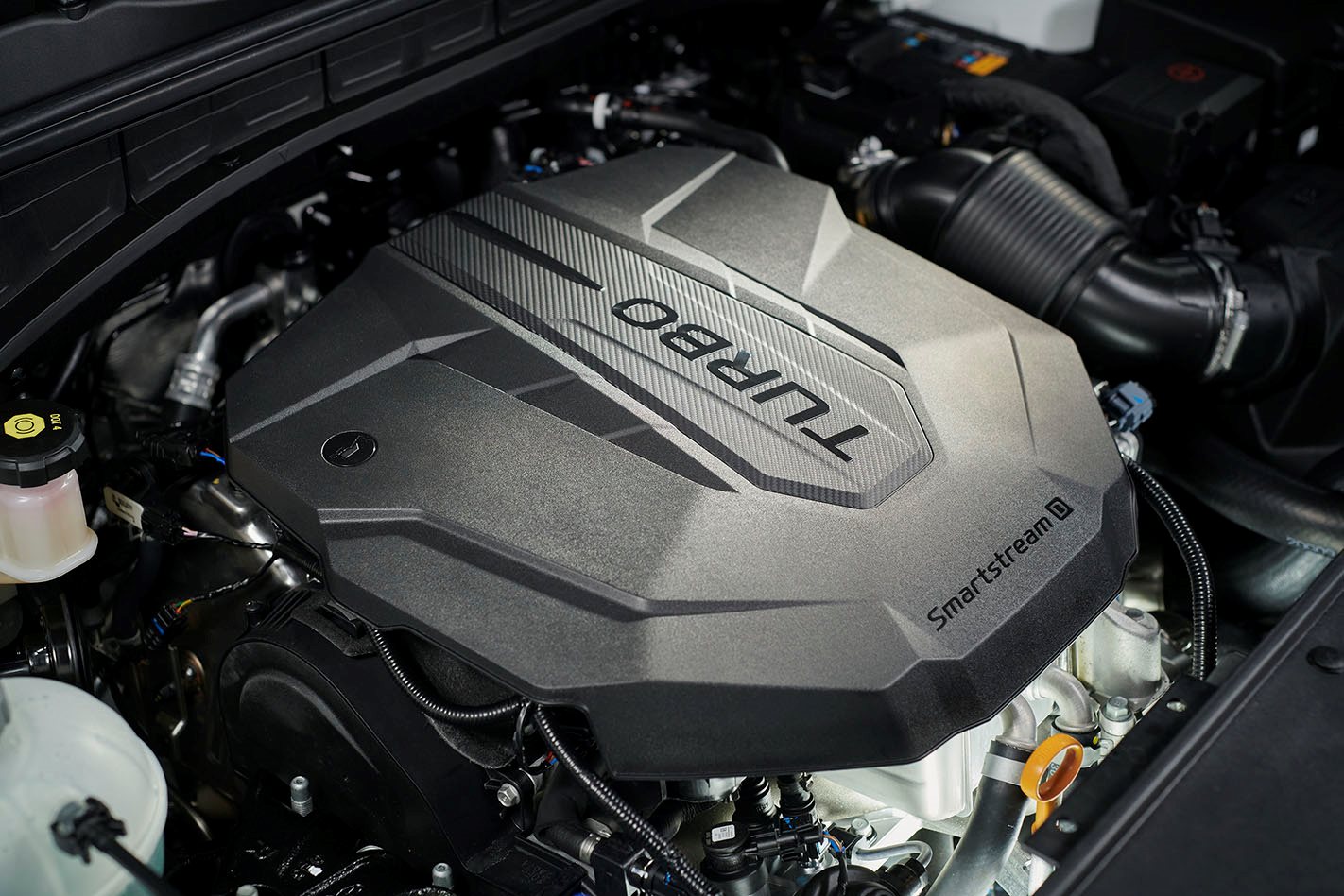
The main reason you might not choose a diesel is that you want to pay less for a Sorento.
The petrol engine, a 3.5-litre V6, drinks substantially more fuel than the diesel, at 9.7 litres/100km on the same official test. However, it does produce more power if you work it really hard.
The petrol Sorentos have an eight-speed conventional automatic gearbox, and the diesels an eight-speed dual-clutch auto.
You can have either engine with any Sorento spec grade.
Power outputs and all other Kia Sorento specifications are available from the Cars Covered menu, under the main image on this page.
What key features do I get if I spend more?
The least costly variant is the Sorento S, which has cloth upholstery, an 8.0-inch touchscreen, 17-inch wheels, and the features common to all versions.
Stepping up to the Sorento Sport sees the touchscreen size increase to 10.25 inches and the alloy wheels to 19 inches.

Other extras include:
- Satellite navigation with 10 years of traffic information and map updates.
- Dual-zone climate control air-conditioning.
- Auto-dimming rear-view mirror.
- 10-way powered drivers’ seat settings.
- Leather-appointed seats.
- Heated front seats.
- Heated steering wheel.

- Smart keyless entry and push-button and remote-engine start.
- Heated door mirrors.
- Hands-free powered tailgate.
- Privacy glass.
- 2nd and 3rd row USB sockets
- Smart key with remote smart parking assist.
- 12.3-inch high-resolution digital instrument cluster.
- Head-up display.
- In-car intercom.
- 360-degree parking camera.
- Parking collision avoidance (auto-braking) which works in reverse.

- Dual-projection LED headlights.
- Blind-spot monitor.
- Quilted Nappa leather seats.
- Heated front and outboard rear seats.
- Ventilated front seats.
- 14-way power-adjusted driver’s seat.
- 10-way power-adjusted front passenger seat.

- Panoramic sunroof.
- Paddle shifters.
- Interior mood lighting.
- Alloy sports pedals.
- Wireless fast phone charging.
- BOSE premium sound system.
- 20-inch alloy wheels.
Does any upgrade have a down side?
The Sorento S, on its 17-inch wheels, rides more comfortably than the Sport, Sport+ and GT-Line, on their 19s and 20s. The lower-profile tyres on the bigger wheels have less rubber and air cushioning the wheels from the road. The difference is most pronounced at city speeds.
The GT-Line’s bigger wheels and panoramic sunroof can lead to more road and wind noise, too.
How comfortable is the Sorento?
So far we’ve only driven the most expensive Kia Sorento, the turbo-diesel GT-Line, but it’s obvious this model is a further improvement over the very good previous generation. It imparts a feel-good factor thanks to the use of quality materials and cool design; higher pricing feels reasonable given what it delivers.

The Sorento feels spacious, upmarket, and intelligently designed, with evidence of comfort and convenience equipment everywhere you look. It’s hard not to stop and admire the crisp resolution and cool graphics of the big 10.25-in touch screen and the way (in the GT-Line) it seamlessly merges with the 12.3-inch digital instruments.
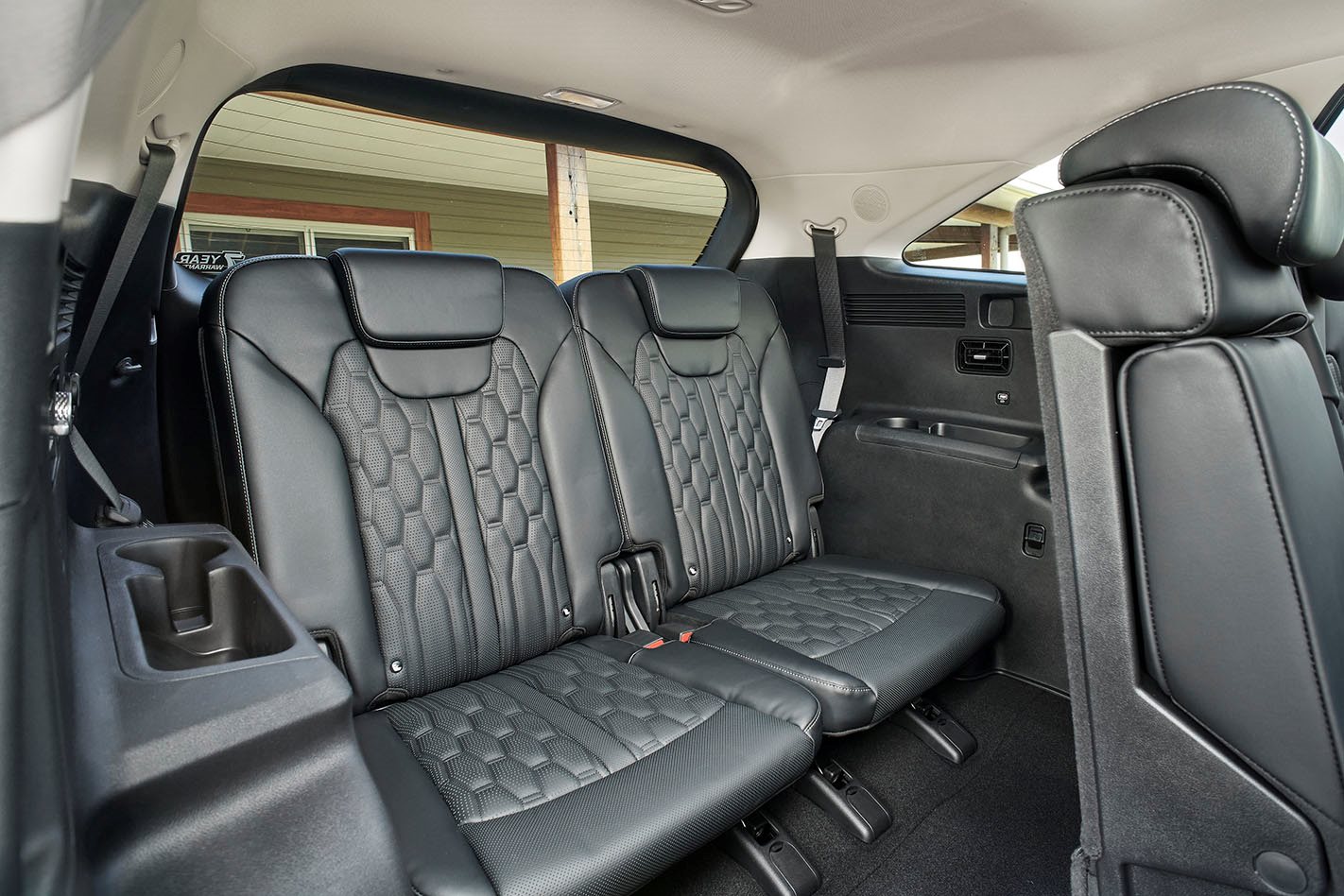
Space and comfort for those in the second and third rows is excellent. Second-row seats are able to slide 45mm further, creating the option for more legroom, and providing a wider point of entry to the third row. In terms of ventilation, storage and access for passengers, it’s all hard to fault.
On the road there’s palpable composure and confidence in the way it tackles bumps and turns into bends, again marking a new high for an Australian chassis tune from Kia.
One thing we really like about the GT-Line is how, if you’ve parked it in a tight space hindering door opening, you can extract it with the driverless ‘remote park assist’ function while standing outside using the key fob.
What about safety in a Kia Sorento?
Anti-lock brakes, stability control, a strong body structure, eight airbags, LED running lights, a reversing camera, and seatbelt warnings for all positions, are fine safety fundamentals in all Sorentos.
There are two airbags directly in front of the driver and front passenger; one alongside each front occupant to protect the upper body and two more that pop up between the front seats to prevent occupants colliding with each other during impact.
A curtain airbag down each side protects the heads of those riding in the front two rows, but does not cover the occupants in the third row of seats.
All Sorentos have autonomous emergency braking (AEB) that brakes the car automatically to prevent or mitigate an impact with an obstacle in front (typically another car that has slowed suddenly). The Sorento’s system works at highway speeds, and at slower city speeds where it can detect and brake for pedestrians and cyclists.
The Sorento’s AEB also has Junction Detection that can sense a vehicle entering an intersection in front of you and apply the brakes if necessary.
Each Sorento version is equipped with lane-keeping assist, which helps keep the vehicle between the white lines should you become distracted, and a driver attention alert, which produces a visual and audible alarm if it senses wayward driving that could be caused by fatigue, and front- and rear- cross-traffic alert warns you if something is crossing your path when travelling forward or in reverse.

There is also intelligent speed limit assist, and smart adaptive cruise control with Stop & Go function and traffic sign recognition.
The Sorento GT Line also has a Blind spot monitor, which warns you when a vehicle is alongside out of view and displays a camera image in the instrument panel when the indicator is activated.
The Australasian New Car Assessment Program (ANCAP) awarded the diesel Sorento its five-star rating in December 2020 based on its excellent Euro-NCAP results.
It performed well across a variety of physical crashes and bolstered that performance with a ‘very strong’ Safety Assistance score of 89 per cent – the highest score achieved to date under ANCAP’s 2020’s new stringent assessment criteria.
However, the ANCAP rating only applies to the diesel versions of the car, and not the petrol-powered variants.
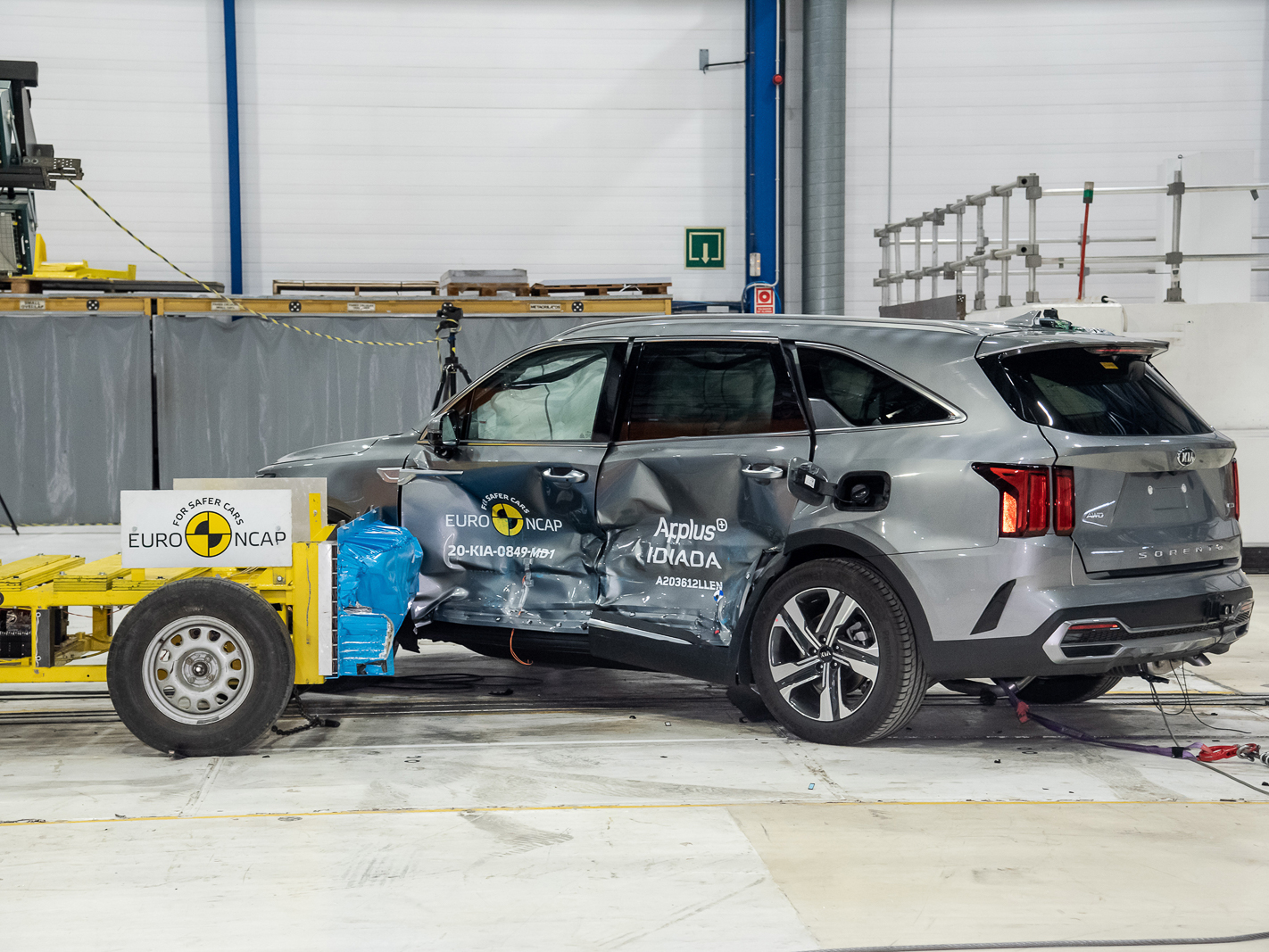
It’s worth noting that five-star safety rating is only applicable to diesel versions of the Kia Sorento as no petrol versions are sold in Europe (therefore no petrol cars on-test). This means the petrol versions remain unrated, but we doubt very much, based on how well it scored across impact and crash-prevention categories, that the engine would make a difference.
Click here to see the full ANCAP overview.
I like driving – will I enjoy this car?
So far we’ve only driven the GT-Line AWD diesel, but there are obvious improvements to ride, handling and noise levels compared to the previous model, which was one of the better-driving large SUVs
On the move, the diesel powertrain feels eager and lively and the eight-speed dual-clutch automatic doesn’t have the jumpy lag at slower speeds you expect from such transmissions. It also has drive modes including Comfort that sees it respond instantly to a light foot, and Sport that grabs gears up or down with near-perfect intuition.
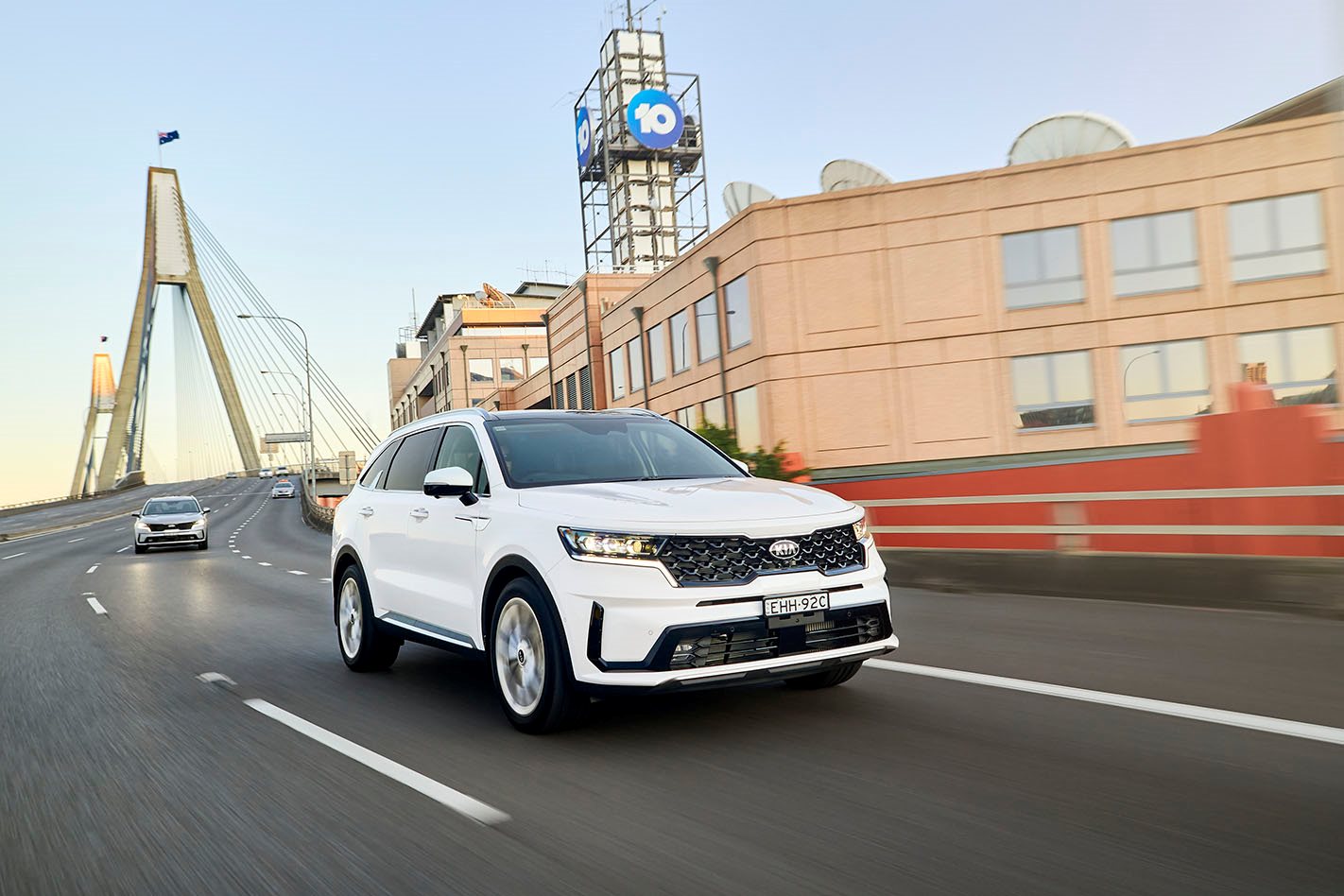
The electric power steering was always excellent in the Sorento, and the new version provides even more direct response. Selecting Sport mode adds additional weight to the tiller for more precise cornering.
Like all Kia’s, the suspension has been recalibrated in Australia to suit rougher local roads resulting in a better ride, and less body roll in corners.
Turbo-diesel Sorentos surge forward when you press the accelerator. You will love the effortless oomph the engine provides – it’s a big part of what makes it so satisfying.
The petrol car isn’t quite so potent at low engine speeds but offers similar shove at medium engine speeds.
How is life in the rear seats?
Second-row passengers have it good in the Sorento. The seat is supportive, and the rear compartment is roomy. Each version has a centre armrest (with twin cupholders) and a 12-volt socket, and air-conditioning vents.
The Sport+ and GT-Line have two rear USB sockets for charging electronic devices, while the GT-Line also has handy roll-up sunshade blinds and heated outboard seats.

The third row is a little cramped to be comfortable for adults on long trips, but it’s roomy enough for children. The second row seats can slide forward up to 45mm for a little more third-row legroom.
Third-row conveniences include air-conditioning vents and fan controls (except Sorento S), and a good view forward and out of the side windows. The Sport+ and GT-Line also has two USB sockets back there.
The third-row does however miss out on curtain airbag protection.
The Sorento is also quite the baby bus – the second and third rows each have two ISOFIX child seat anchor points and there are top tethers for all five rear seating positions.
How is it for carrying stuff?
The Sorento’s space is up from 605 litres in the previous model to 821 litres with the third row of seats folded down. With the third row in use, available cargo space is up 32 percent to 187 litres.
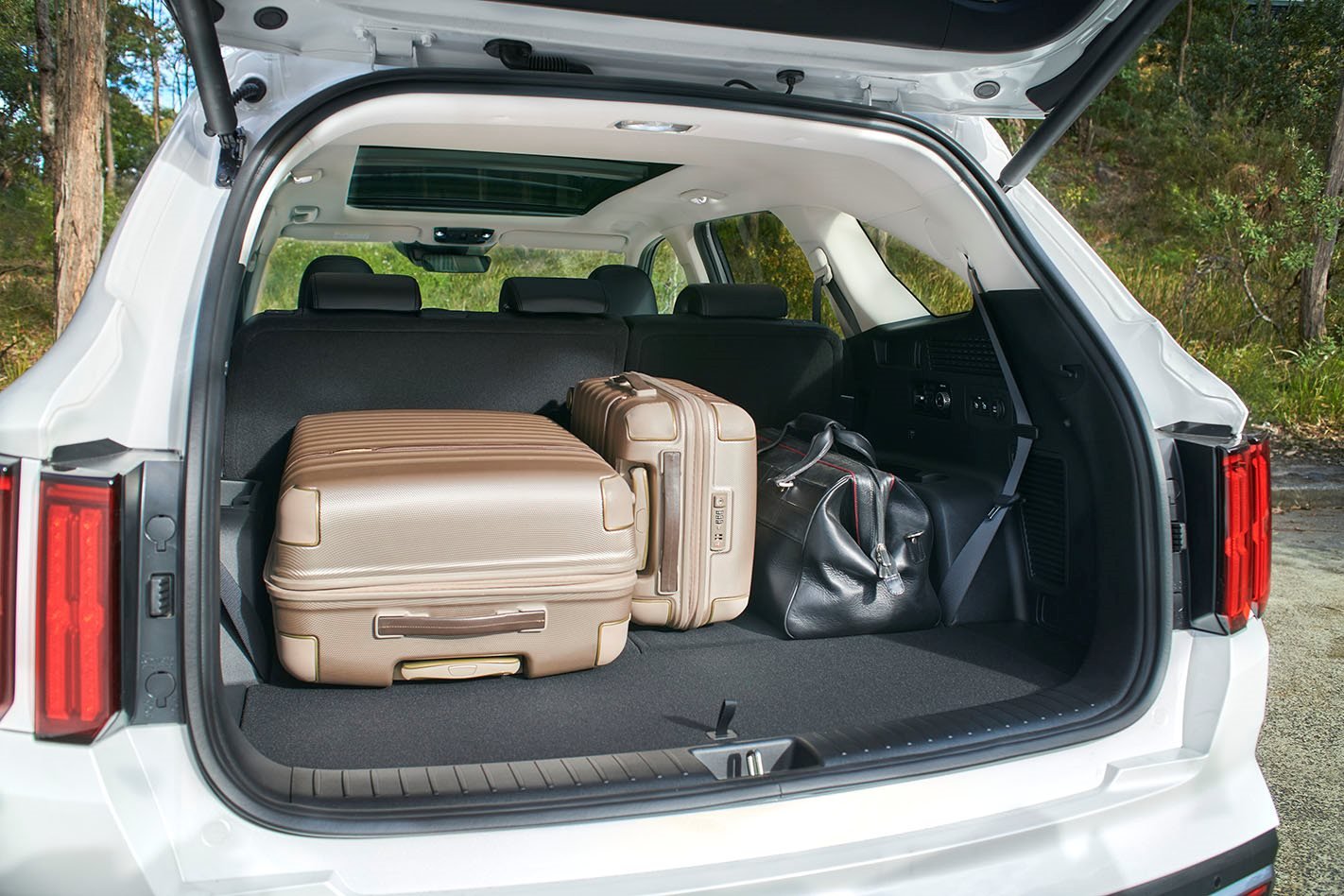
The hands-free powered tailgate in the Sport+ and GT-Line versions opens when you walk up to it with the car’s key in your pocket. That eases loading when you have your hands full.
Both petrol and diesel Sorentos have a braked towing capacity of 2000kg and 750kg unbraked. The maximum towball down-weight is 200kg.
Where does Kia make the Sorento?
The Kia Sorento is made in South Korea.
What might I miss that similar cars have?
Not much. The Sorento is very-well equipped.Perhaps for now a hybrid version as available with the Nissan Pathfinder, though hybrid and plug-in hybrid versions are due to join the range in early 2021.
MORE: The cheapest seven-seat SUVs on sale right nowComparable large seven-seat SUVs you might consider include the Mazda CX-9 or CX-8 if you prefer diesel, Toyota Kluger, Skoda Karoq and Hyundai Santa Fe.If comfortable travel for seven is more important than getting off the beaten track, perhaps consider the Kia Carnival, which has more room in the third row and easier access to it.

Are there plans to update the Sorento soon?
The fourth-generation Kia Sorento replaced the third-generation model in September 2020 for the 2021 model year, with the initial line-up featuring S, Sport, Sport+ and GT-Line spec grades each with FWD petrol and AWD diesel versions.
Hybrid and plug-in hybrid versions are expected to arrive in the first quarter of 2021.
An update is not expected until late 2023.
I like this car, but I can’t choose which version. Can you help?
We like the Sorento Sport+, because it strikes a pleasing balance of price and equipment. Ultimately, the diesel is a better bet than the petrol, because it has more grunt and uses less fuel. If the extra fuel use and absence of AWD are not drawbacks for you, the petrol is worth a look, too.