Porsche and Gran Turismo recently revealed the Porsche 917 Concept would be coming to Gran Turismo Sport, and now we’ve got new pictures that suggest the project is well on its way.
The new pictures are actually renders from the German patent office. Found by Car and Driver, they show the mid-engined concept in 3D-form, with a few minor tweaks.
This is just one of three Porsches coming to the PlayStation’s flagship racer; the Taycan has already arrived, but there’s also a more extreme Vision Gran Turismo in the pipeline, too.
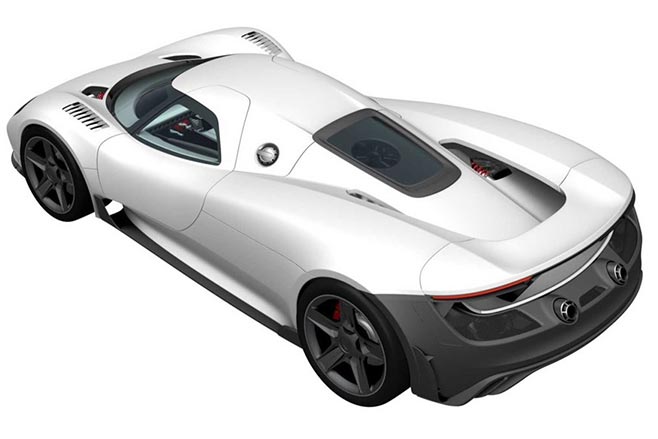
And why don’t we think this is a production car? A spokeperson told Car and Driver it wasn’t related to any production car, and Stutgartt also filed this patent under ‘Automobiles, Vehicles [Toys].’ Oh well.
What you need to know
Porsche has also recently revealed more pictures of its 917 concept racer. Finished in the red and white livery of the 917KH Coupe and first Le Mans winner, the new design study marks 50 years of the 917; the original was shown at the 1969 Geneva motor show.
Stuttgart celebrated the original car – which won a total of 19 gold medals at the famous Le Mans 24 Hours – with a special exhibition in the Porsche Museum last year, with 10 original 917s as well as the concept study.
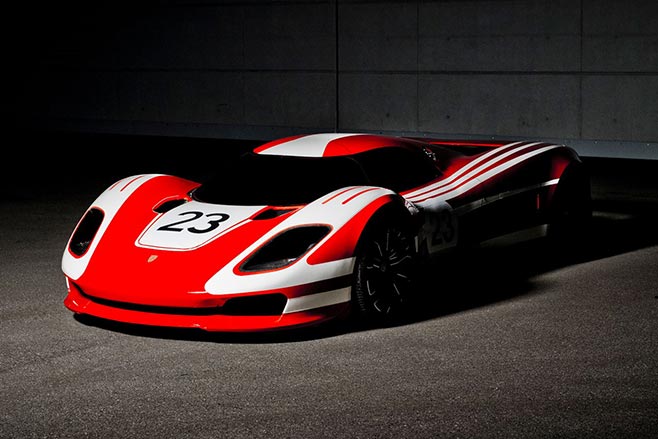
According to Porsche, the concept was actually made before the brand’s entry into LMP1 – something it’s since pulled out of – but recently was finally shown to the public.
Like most of these projects, it was the work of a small team of engineers within the company.
This article was first published by CAR Magazine.
This article first appeared in the March, 2014 issue of Wheels magazine. Since then the Cannonball Run record has been lowered to below 26 hours, and Ed Bolian has become a pseudo-adjudicator of record attempts.
Meet Ed. He’s a tall, slow-speaking 27-year-old from Atlanta who used to breed albino lizards, teaches Sunday School with his wife and makes a living selling Lamborghinis.
Oh, and Ed Bolian is also the quickest man in America.
Yep, this gangly, goofy-looking used-car salesman is the fastest man on four wheels across the States, a title he earned after driving the breadth of the country – some 4527km – in a record-shattering, eyeball-searing, police-dodging 28 hours and 50 minutes.
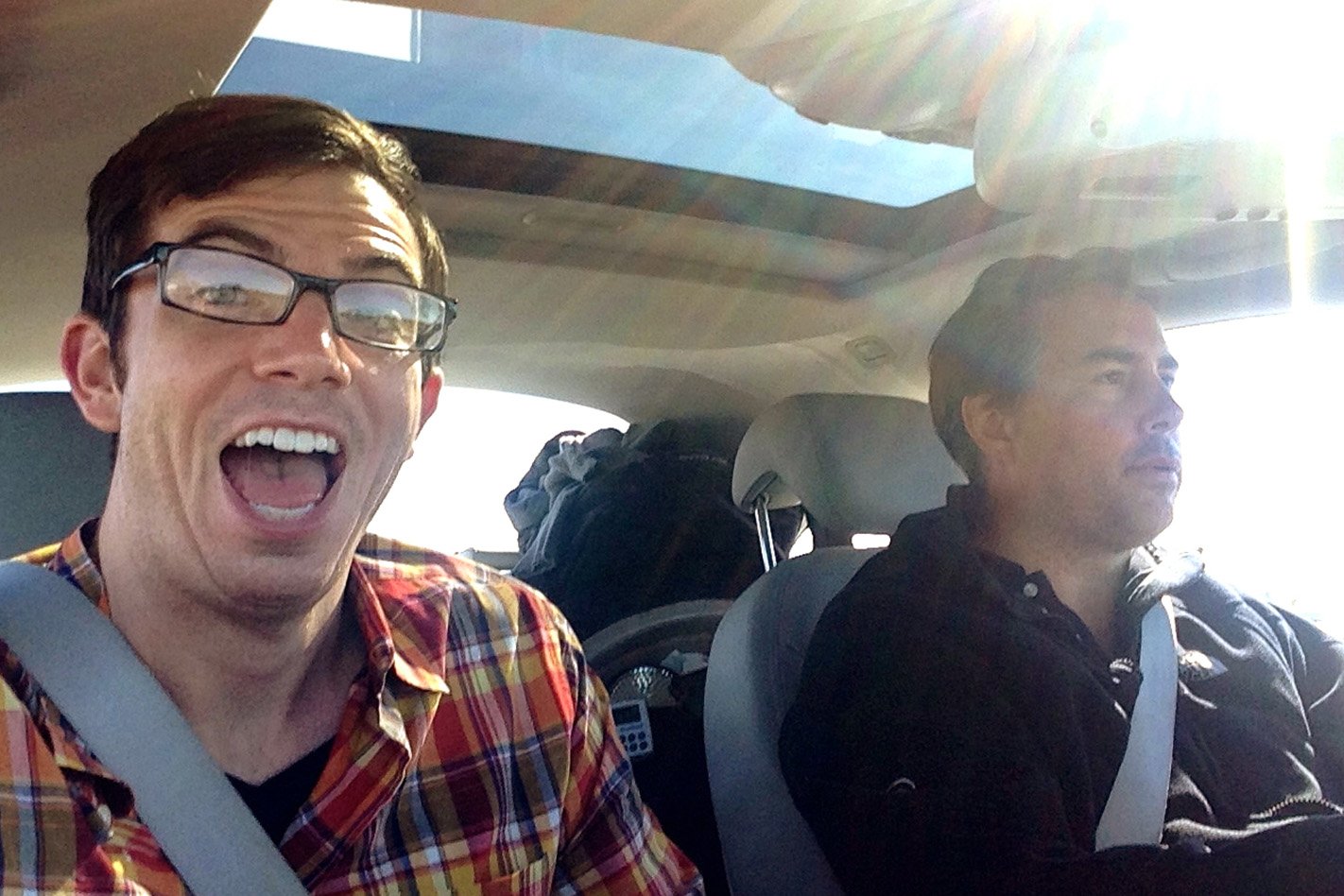
Above: Bolian and co-driver Dave Black.
It’s an effort that’s made him a superstar in the underground world of outlaw cross-country road racing – think Dom Toretto without the muscles – but we’ll forgive you if you’ve never heard of Ed.
In Australia, the world of American transcontinental racing is largely unknown, but to the Yanks, racing from New York to Los Angeles, or chasing the sun from the Atlantic to the Pacific, is big news. It’s their version of the Redex Trial, with American gearheads pointing modified GT cars from one city to another since the 1930s.
But before we get into the who, how and why of Ed’s record, one needs to appreciate the magnitude of his achievement. If he’s to be believed, he didn’t just break the old transcontinental yardstick of 31hr, 4min set in 2006, he shattered it by a staggering two hours and 14 minutes. Putting that into perspective, Google Maps says the journey should take 40 hours.
And the best thing? Ed didn’t write himself into the history books by piloting a state-of-the-art supercar. Instead, he, his co-driver Dave Black and navigator Dan Huang, strapped themselves to a 2004 Mercedes-Benz CL55 AMG that they picked up for 18 grand.
So how’d he do it? How did Ed and his team average 158km/h, stay awake for 30 hours and, more importantly, avoid getting pinched by the cops and thrown into jail? Or worse, crash?
It dates to Ed’s formative years.
“I’ve wanted to do this trip since I was in high school,” he told Wheels. “I just thought it’d be an awesome thing but then I found out people have been doing it for decades. So, after thinking about it for years, it wasn’t until about 18 months ago I decided it was time to knuckle down and really go for it.”
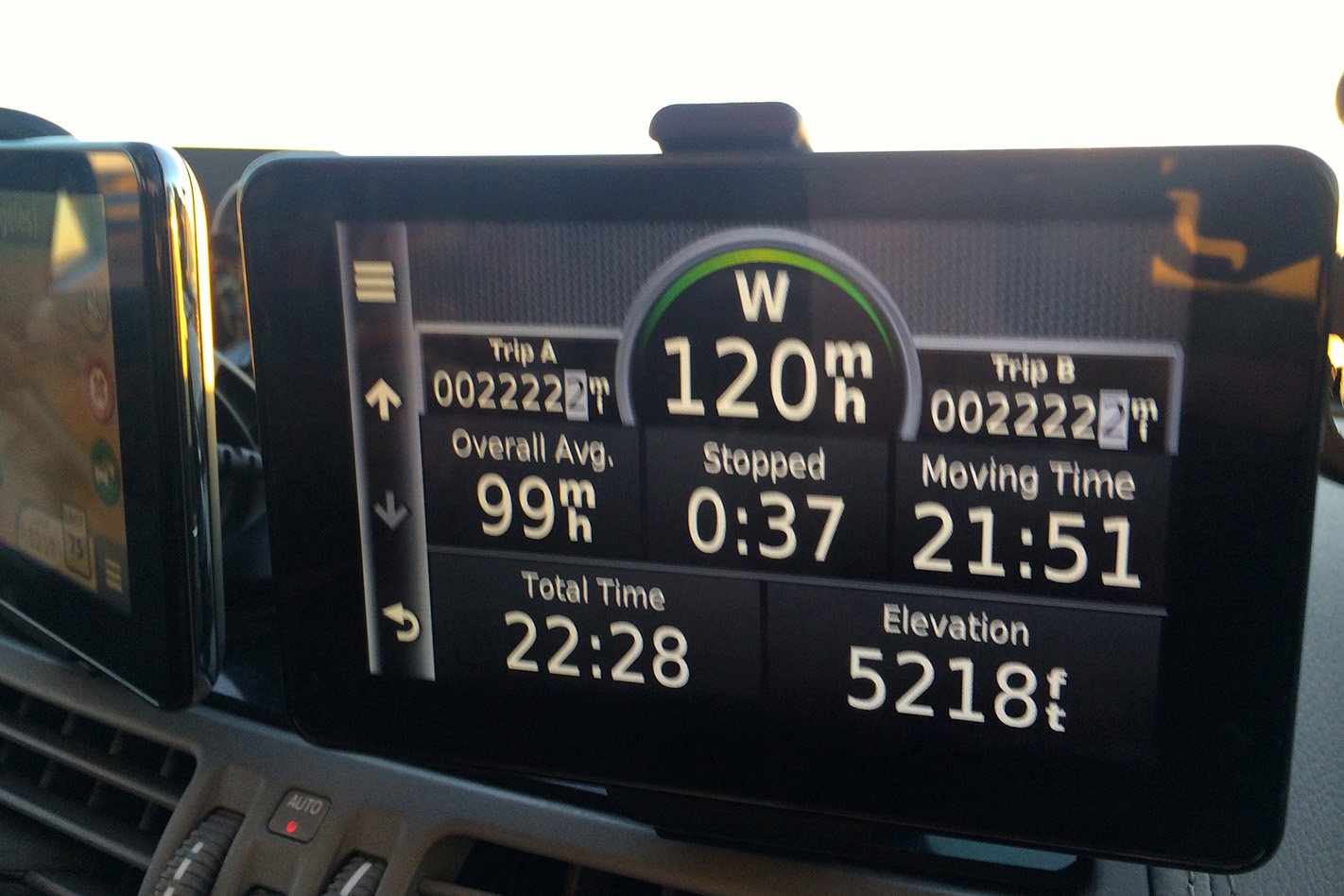
Above: The GPS used by Bolian on his record run
But one doesn’t simply ‘decide’ to race 4500km at 255km/h and expect to live or avoid jail time. Preparation was needed, with the most crucial decision being the choice of car.
“We looked at everything, and I mean everything,” Ed explained. “I wanted to do it in something more exotic because I figured it’d be a car that I’d be tied to for a very long time. We talked about Lamborghinis and Ferraris – a Bentley would have been perfect. But none of these could carry the amount of fuel we needed.”
And don’t think Ed is being self-indulgent here with all this talk of supercars. He has a long history with expensive metal, having started his own supercar hire company during college, “before the economy got bad and a 20-year-old kid without any proof of income could get a loan for a Lamborghini”. His personal cars have included “a few Ferraris and Gallardos and a couple of Porsches. Right now I’ve got a Lamborghini Murcielago LP640 roadster.”
Impressive, sure, but despite his penchant for the rare and expensive, Ed says the CL55 made the most sense.
“It was built to go fast for a very long time, it has lots of cooling, it’s supercharged so it makes lots of power and they’re generally reliable,” he said. “It also has active suspension, which we needed to level out the fuel tanks.”
Yes, fuel tanks – plural. To get his desired fuel range of 1335km, Ed bolted two 83-litre tanks into the CL’s boot, giving it a total capacity of 253 litres. That meant the whole trip could be completed with just three fuel stops. The additional tanks were even able to be fuelled simultaneously, to save time. But cramming all that fuel into the CL has its drawbacks.
“It smelt pretty bad,” Ed laughed. “The car still had all its fire protection so we felt pretty safe and I don’t think there’s much of a flame risk, but it stinks pretty bad. The fumes would accumulate when we were stationary, so it wasn’t bad during the trip, but since then it’s become insufferable.”

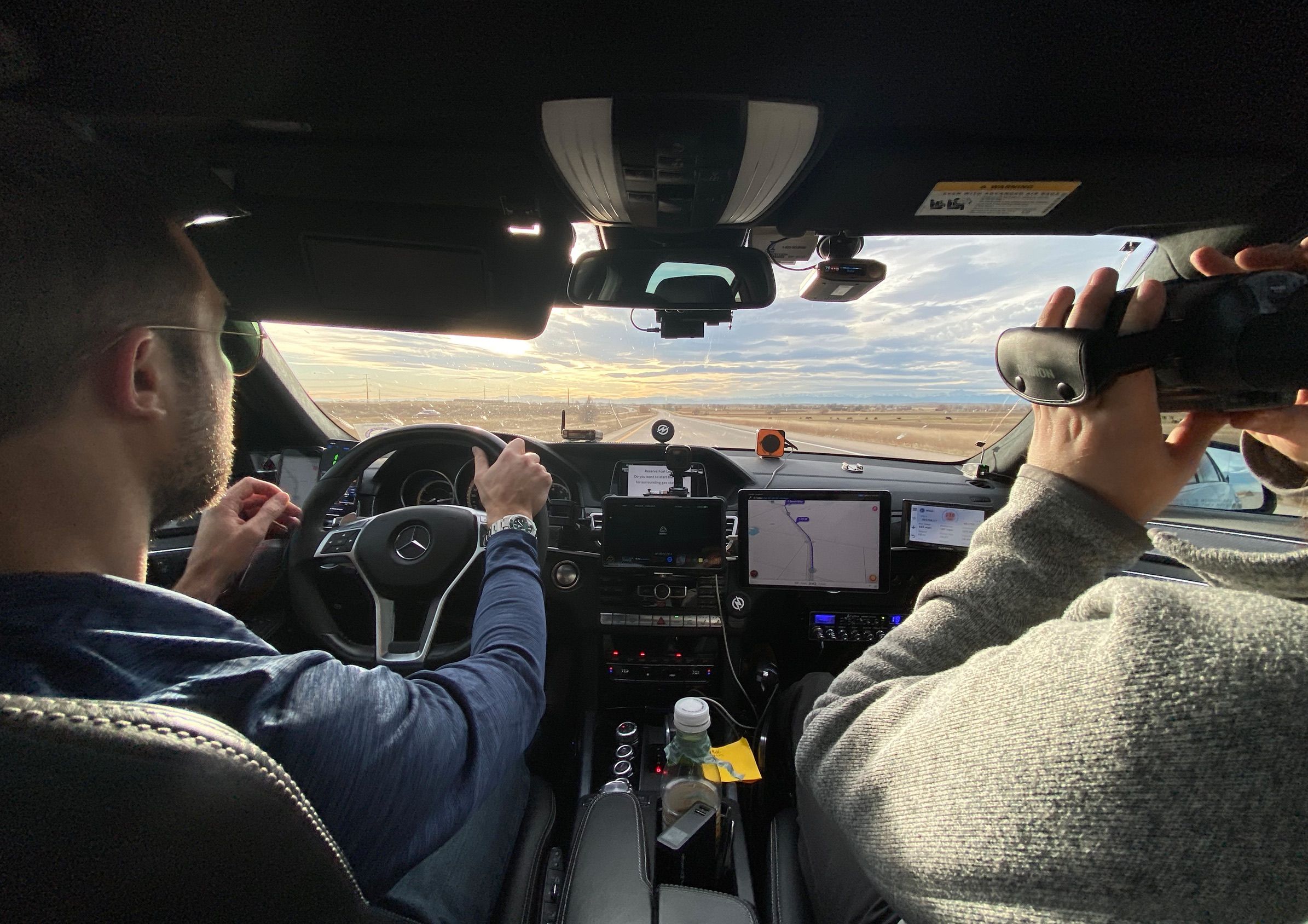
Above: This modified Mercedes-AMG E63 was used to break the Cannonball Run record in 2019.
So what about cost? Well despite initial protestations that he “tried not to keep count,” Ed reckons he dropped US$15,000-20,000 on parts and modifications, on top of the CL55’s 18-grand purchase price.
“It was quite expensive,” he admitted. Given he was considering Ferraris and Lamborghinis, it could have been much worse.
With the car sorted – “Of course we gave it a major service and replaced every fluid, every filter, sparkplugs, wires, suspension and fuses” – Ed turned his attention to the next biggest hurdle: the police.
“This trip wasn’t about saying that police are inadequate or speed limits should be abolished or anything like that,” Ed stressed. “We just wanted to do something interesting and, like the fuel range, reliability and navigation, policing was simply another variable to contend with.”
To combat the cops, the CL was fitted with every “countermeasure protection” Ed could get his hands on. Radar detectors, laser jammers and police scanners on the dash. Even a pair of binoculars. They also roped in friends to act as sweep cars in several states, driving at the speed limit 150-200km ahead to warn of traffic issues or cops.
“And honestly we only had one close call,” Ed said. “We passed one cop in Ohio and he wasn’t shooting radar or using laser so none our of systems picked him up. I wasn’t driving at the time and screamed: ‘Brakes! Brakes! Brakes!’ We did slow down from about 210km/h to 150km/h but we still passed him going way too fast. He just didn’t seem to notice.”
Several state-of-the-art navigation systems took care of the route and avoided traffic while also electronically logging the car’s progress – crucial data when it comes to proving the record – but there was one delicate issue Ed was yet to tackle: number twos.
“We had some onboard facilities – urine bottles and bedpans – but they went out the window pretty quick,” he laughed. “We decided it wasn’t worth the indecency; we went when we stopped for gas.”
Above: Arne Toman and Doug Tabbut performed an extremely well-prepared Cannonball Run in 2019, lowering the record to 27 hours and 25 minutes.
So with the essentials sorted, all that remained was to point the car at the horizon and pin the throttle. With no official start line, Ed’s team decided to follow the original Cannonball route and set off from Manhattan at 9:56pm. Astonishingly, despite the distances, the speeds and the fatigue, Ed says the actual trip was the easiest part of the whole record attempt.
“The preparation was the hardest for sure. The trip itself was really good and even though we’d heard of people hallucinating on previous attempts we didn’t encounter any of that. We wanted to be able to sleep, but I probably only got a bit less than an hour for the whole trip. You can never predict what the adrenalin will do to your body and we didn’t even use a lot of energy drinks or stimulants. We were going so fast and staying so plugged in it was like a natural high. When we got into LA at 11:46pm we were still so pumped we didn’t even go to bed. We went to an all-night breakfast diner and had some food.”
Despite his bravado, Ed admits there were a few nervous moments, like blasting past that Ohio cop at go-directly-to-jail speed and one near-death experience where two of the CL’s wheels left the road at 210km/h.
“A truck I was coming up on tried really late to pass another truck,” Ed explains, “so he didn’t see me coming and basically merged on top of me. Somehow I managed to regain control.”
And then there were the speeds. Ed left the CL55’s speed limiter intact (the trade-off of speed against fuel economy wasn’t worth it) so top speed was 246km/h, with the average number for the whole trip being just shy of 160km/h. When you take out 46 minutes of stationary refuelling time, that means most of the driving was spent on the far side of 200km/h.
So, what about speeding tickets? Ed is yet to receive any in the mail and remains reluctant to publish his GPS data for fear of being fined after the fact, but says without any hard evidence it’s virtually impossible for the cops to cuff him.
“In reality, claiming we averaged 100mph over all these states doesn’t say where we actually sped, so it’s very difficult for the police to say with any confidence that I was speeding at a specific point or who was actually driving.”
So what now? Has shattering one record sparked an insatiable thirst for more? Or is Ed content to simply retire with his stinky CL55 and regale his grandchildren with tales of his, umm, achievement?
“I’ve never really been one to hold on to cars or things for very long but it’s going to be very hard to get rid of this one, so I think I’ll probably have to keep it forever and show the grandkids.
“You know, we’ve talked about other records and other benchmarks that are out there like the Pan America Highway, going from Alaska to the southern tip of South America. There’s been some talk of a record from London to Cape Town, Beijing to Paris, or even a lap of Australia but nothing has stood out. Yet.”
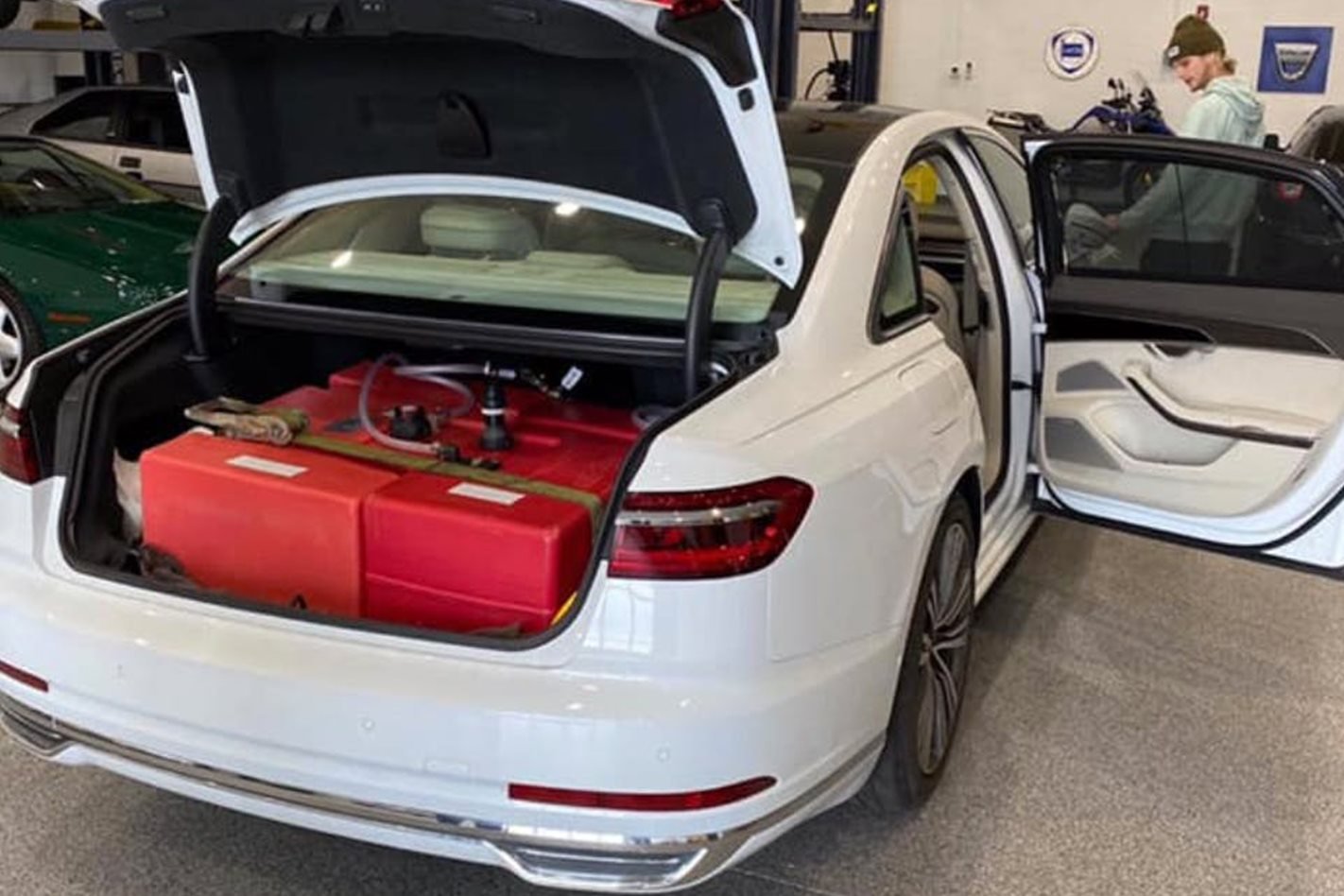
Above: This lightly-modified Audi A8 performed a 26 hour and 38 minute run at the start of the COVID-19 pandemic in 2020.
The wild numbers of Ed Bolian’s record run
- 4527km: distance covered
- 158km/h: Ed’s average speed
- 246km/h: Top speed of Ed’s C55 AMG
- 2 hours 14 minutes: How much Ed slashed off the existing record
- 40.5 hours: How long Google Maps says the trip should take
- 46 minutes: Amount of time Ed’s Merc was stationary
- 1: near accident
- 1: police scare
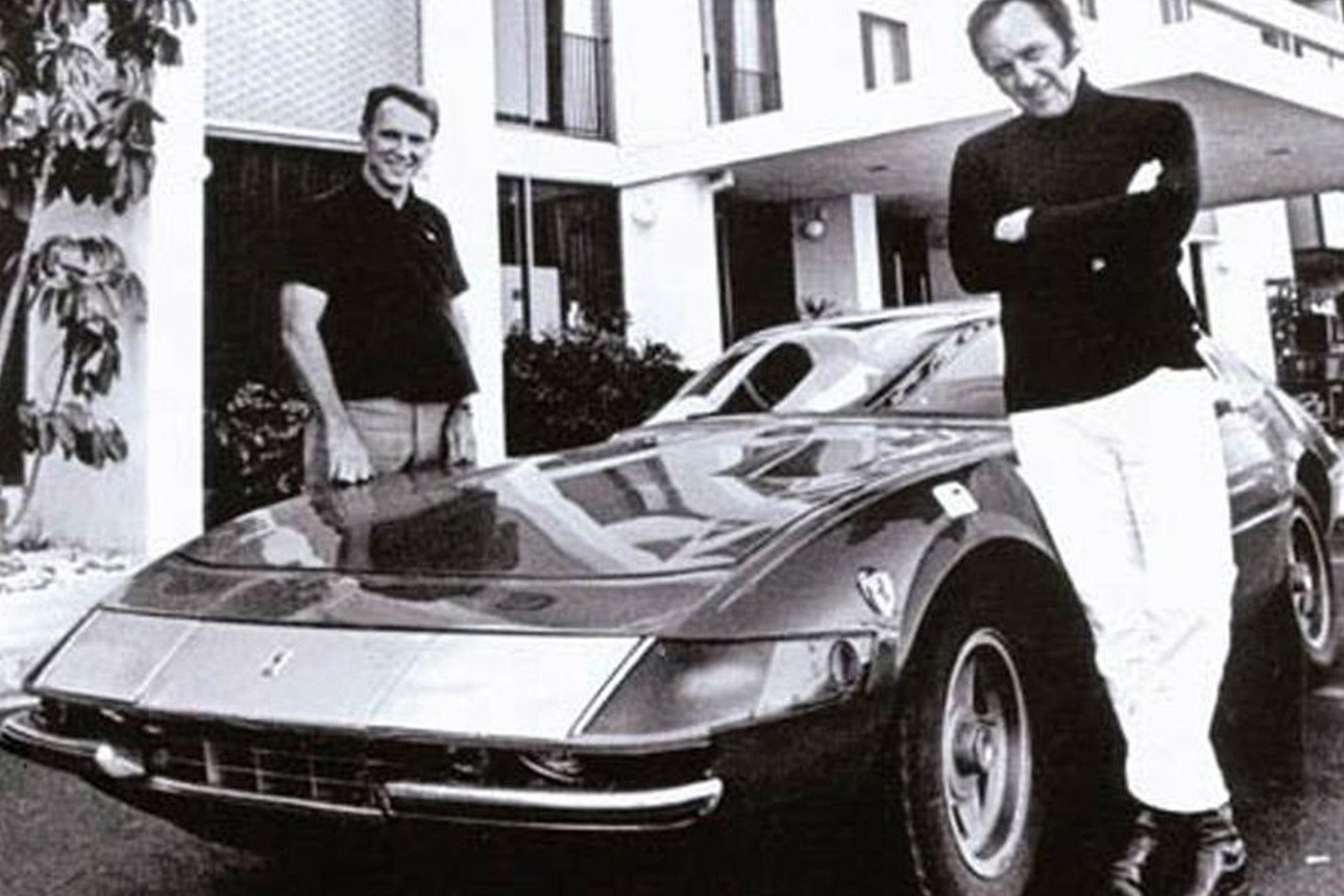
History of the Cannonball Run record
Never heard of American transcontinental racing? Well it’s nothing new – Yankee gearheads have been racing from New York to LA since 1933.
Edwin ‘Cannonball’ Baker set the original benchmark, in a car called Blue Streak, at 53 hours 30 minutes – a record that stood for 40 years.
In Ed’s honour, Car & Driver journalist Brock Yates established the Cannonball Run in the 1970s to protest highway speed limits, with the record steadily improved until 1979 when Dave Heinz and Dave Yarborough made the trip in 32 hours 51 minutes in a Jaguar XJS.
That mark was beaten again in 1983 by Doug Turner and David Diem who raced a Ferrari 308 across the States in 32 hours 7 minutes – a yardstick that lasted more than 20 years.
Alex Roy and Dave Maher bettered it again in 2006 with a time of 31 hours 4 minutes in a BMW M5.
And then Ed arrived.
What is the Audi S7?
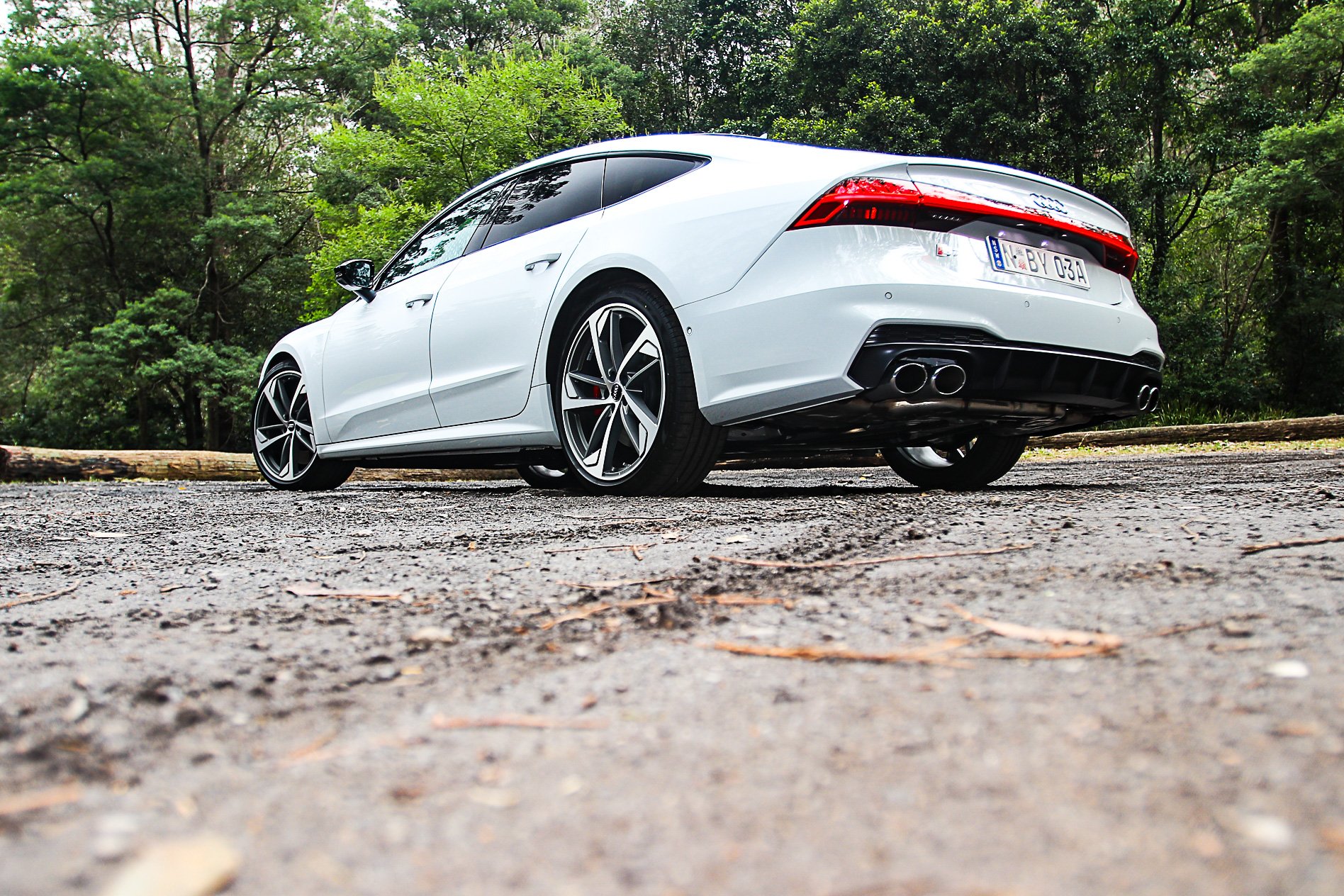
The world has gone mad for the SUV and that’s a crying shame, because it puts luscious machines like the 2020 Audi S7 under more pressure than they need to be.
I mean… just look at it! Sharp yet subtle, stern yet sensuous… the S7 is a blend of sensible and sass that puts the boxy dimensions of a typical SUV – even the sporty ones – in sharp contrast.
It doesn’t hurt, either, that the five-seat, five-door S7 Sportback coupe is a technical tour de force that happens to pack a punch under the bonnet. A new V6 twin-turbo engine and 48v electrical system are just the start of it, too.
Is the Audi S7 worth the money?
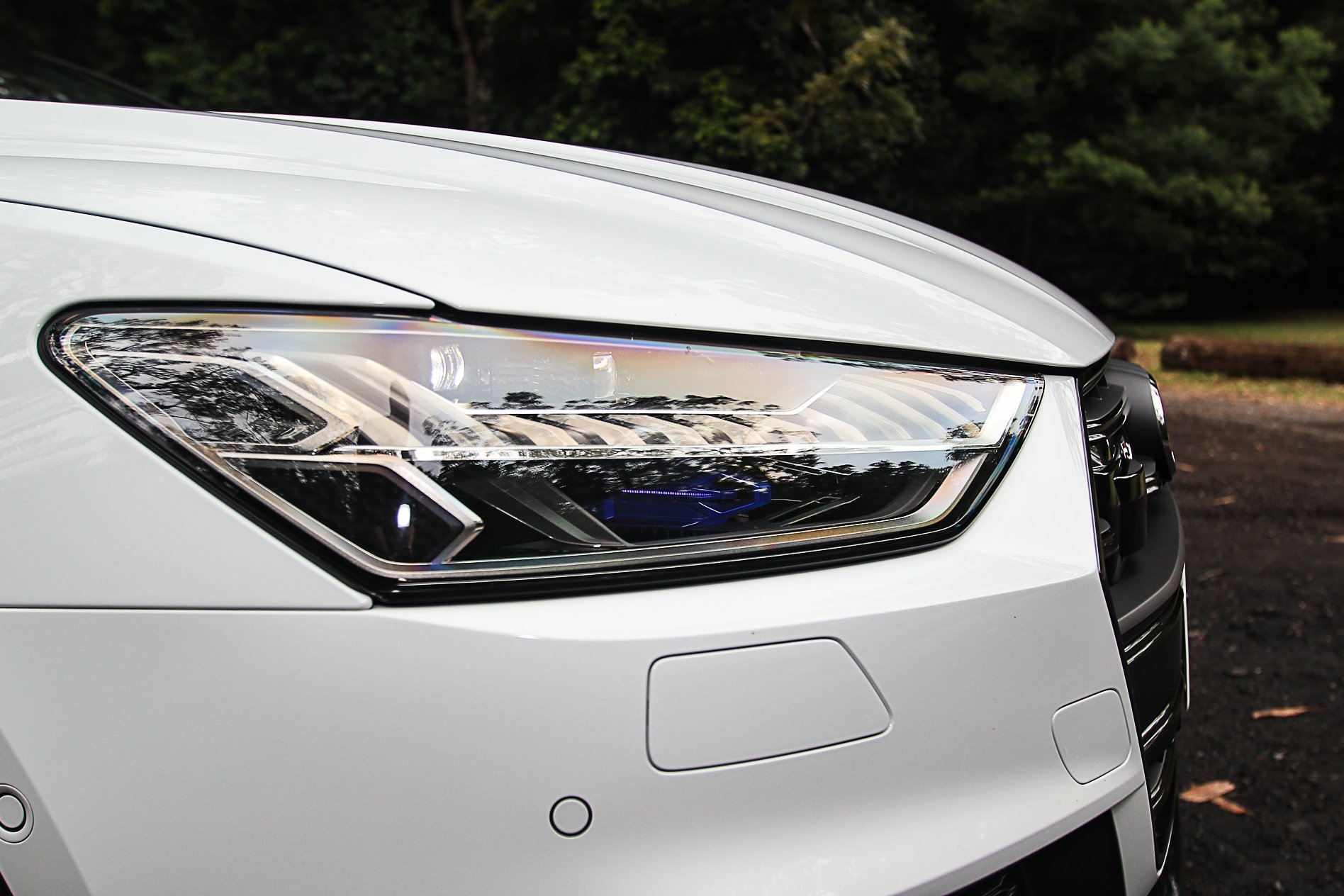
At a ticket clip of $159,500 before on-road costs, the S7 isn’t what you’d call cheap. Every time I get up close to one of Audi’s A6/A7 family, though, no matter the price point, I always catch myself thinking ‘hmm, that’s not a bad price.”
On raw looks alone, the sharp lines of the S7 are something to behold, with lots of reward for the eyes.
Audi Australia reckons it’s tipped every spec it can get its hands on into this new-gen S7 – some $20,000 worth of extra gear they say – and it shows. On the outside, high-spec matrix LED headlights team up with an LED strip taillight array, while 21-inch alloy wheels, metallic paint and a panoramic glass sunroof are standard.
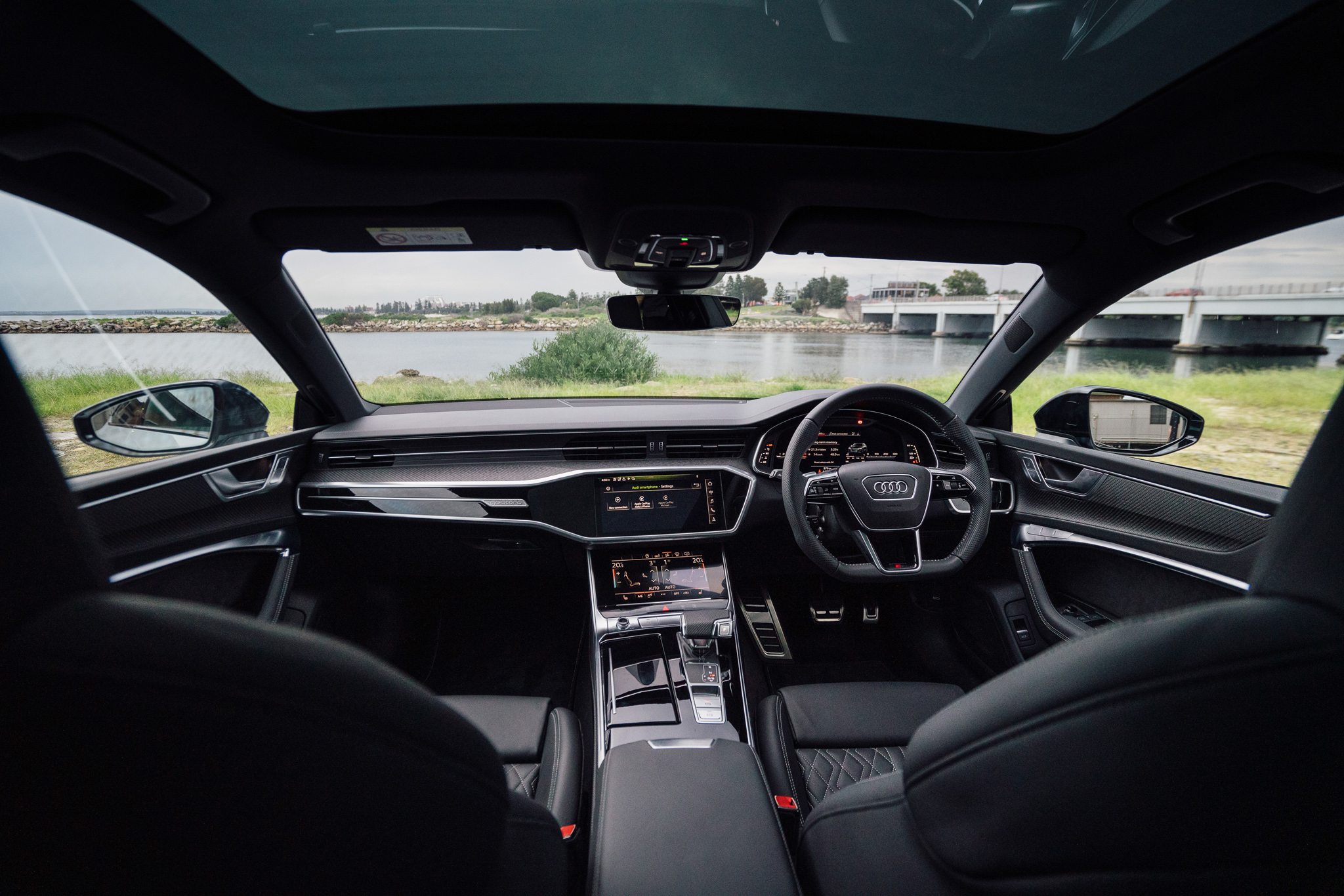
Inside, the S7 follows the lead of the A6 with a double-screen approach to a new multimedia array, which combines well with Audi’s digital dashboard.
Other niceties that come standard with the Audi S7 include wireless Apple CarPlay, inductive phone charging and four USB ports that double as media access points – so if the back seaters want to play angsty teen pop through the S7’s Bang and Olufsen speakers, they can.
What’s the Audi S7 like to live with?
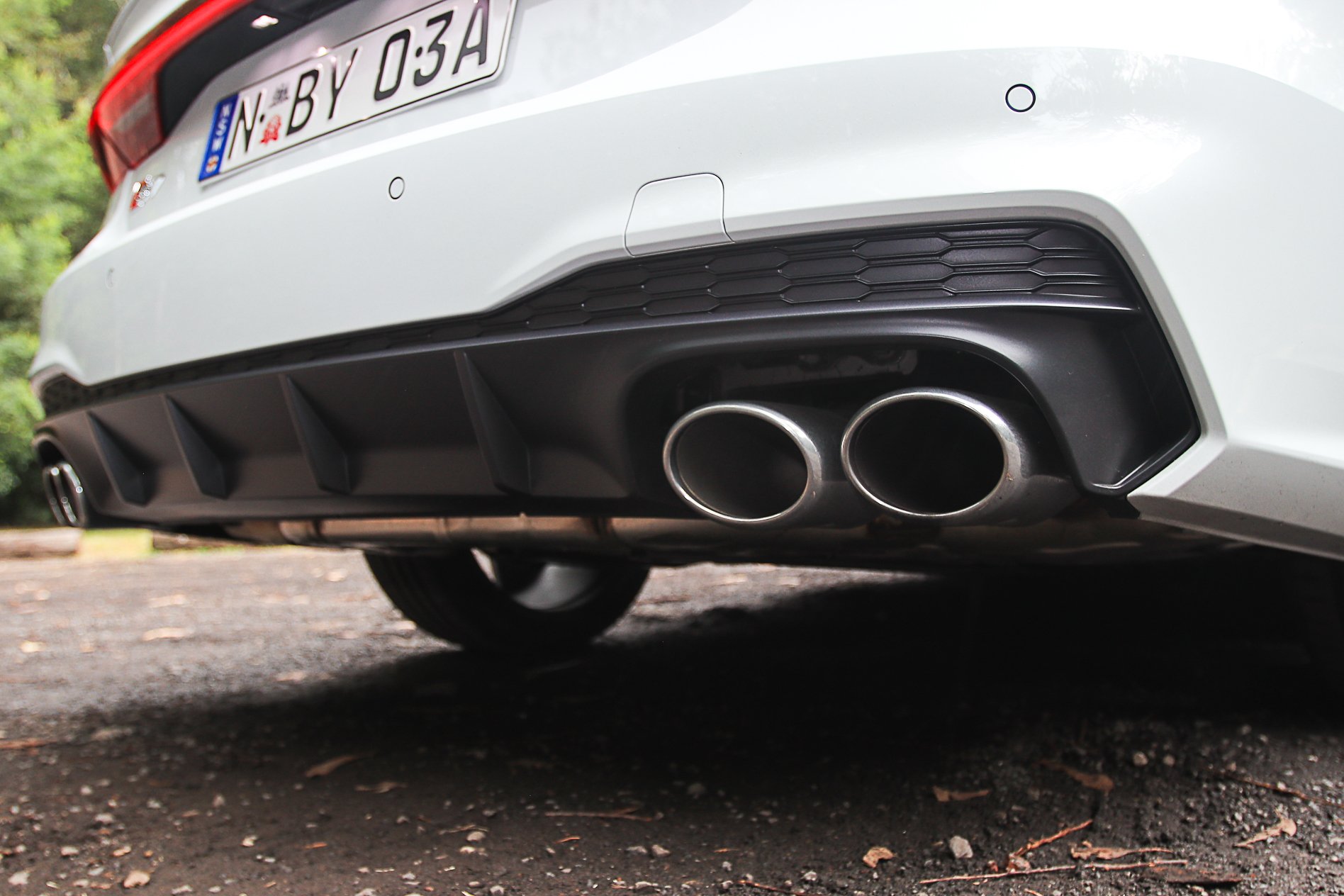
It’s worth pointing out upfront that the S7 Sportback is now a proper five-seater, in contrast to the 2+2 arrangement of the model before. This imbues the S7 with a bit more practicality – though there’s an argument that the four-seat layout better matches the typical user group of the car.
The Valcona leather seats look pretty nice and are comfortable, but could use more support in the bolsters. The dash is clear and easy to navigate, though it takes a little time to get familiar with the control-free layout of Audi’s new multimedia interface.
Previously managed by a scroll wheel and hard buttons, I struggled a little with accessing certain functions as quickly as I would have liked – but that would improve with familiarity.
The generous cargo area is a point of difference between the S7 and its S6 sedan sibling, too, with 525 litres of boot space versus 520 for the sedan… and a massive 1305 litres when the seats are dropped.
The space itself is a little compromised by the roofline, but the S7 can haul a bit of gear for a fancy pants exec express.
In terms of refinement, the S7 is sublime at pedestrian speeds. Virtually no noise gets back into the cabin when the drive mode select button is in auto or comfort modes, and that includes road noise from the 21-inch rims.
‘Blissful silence’ is scribbled in my notebook, and that’s pretty accurate.
What’s the Audi S7 like to drive?
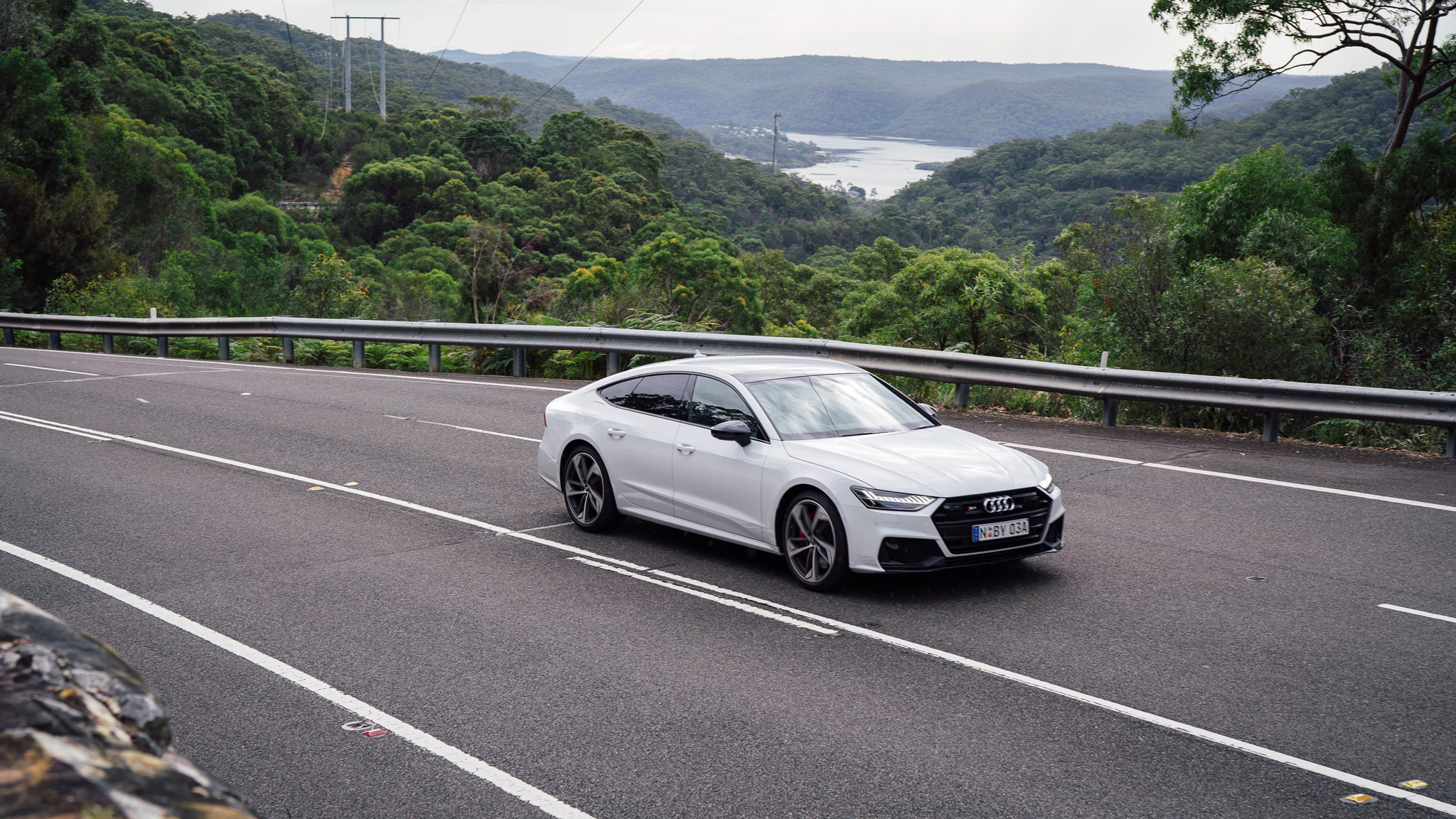
The Audi S7 needs to do two jobs well. It will spend a lot of its time commuting into the heart of big cities, but it will also have to cut the mustard doing the quick bolt out to the country. Thankfully, it covers off both with aplomb.
Its ride quality in bumpy, slow terrain is exemplary despite those narrow-band tyres, while its turn of pace on a country back road is worth celebrating. The all-wheel-drive S7 is much less intense than an RS model by design, and I reckon it really hits the sweet spot between silly quick and entertaining.
The new 2.9-litre V6 twin-turbo is silken smooth and strong, thanks in part to a new electric compressor that keeps the two main turbos filled and ready to spin at a millisecond’s notice. Its 331kW headline number is underpinned by 600Nm of torque that fills the engine’s cup to overflowing.
It also sports adaptive dampers, a variable-ratio steering rack and don’t-mess-with-me 400mm brake rotors and six-piston calipers up front. And it actually needs that much stopping power, too, because the S7 at its lightest comes in 5kg under two tonnes.
https://www.instagram.com/p/CAM8Y82HqfC/?utm_source=ig_embed&utm_campaign=loading
That mass makes itself felt on sequential direction changes, and the S7 asks a lot of its tyres and brakes when the urgency is ratcheted up. Likewise, its claimed fuel economy number of 8.9L/100km goes right out the window when you dip time and again to the well of delicious torquey goodness.
Verdict
The Audi S7 will fly under almost everyone’s radar, and that’s a real shame… because it’s a genuinely entertaining car that offers most of the good points of the bigger RS Audis without the high price of entry.
If you lean on it too often, it’ll cost you more to own, but the S7 Sportback does a lot of things right.
Pros: Stunning good looks, great drivetrain, gorgeous interior Cons: Heavy, likes a tipple
Rating: 4/5
On this week’s WhichCar Weekly episode, we welcome Mark Allen for a peek behind Jeep’s global design centre doors in Detroit.
With more than a quarter of a century with FCA, Chrysler and Jeep under his pencil, the head of design at Jeep offers a fascinating insight into the way seven-slot grille models have evolved.
We delve into decades of experience and find out Mark’s proudest moments, where Jeep design will go from here, and the things he’d go back and have another crack at.

And the master designer reveals the biggest challenges when it comes to creating the next generation of one of the world’s most celebrated and recognisable models.
Oh… and we couldn’t resist dropping in a question about that crash test too.
Rounding out the conversation we find out some of the story behind the emerging tradition of ‘easter eggs’ hidden about the Jeep line-up and, of course, what’s in Mark’s garage…
You can find WhichCar Weekly on all manner of podcast apps including iTunes and Podbean. Please rate, subscribe and leave a review!
And if you want yet more WhichCar action whether it be behind the scenes insights or the very latest from the automotive front line, follow the day-to-day happenings of the WhichCar team on Facebook, Twitter and Instagram @whichcar
Listened to or watched the WhichCar weekly podcast? Help us out!
- Leave a note in the comment section below
- Leave a review on Apple Podcasts/iTunes
- Subscribe to our podcast
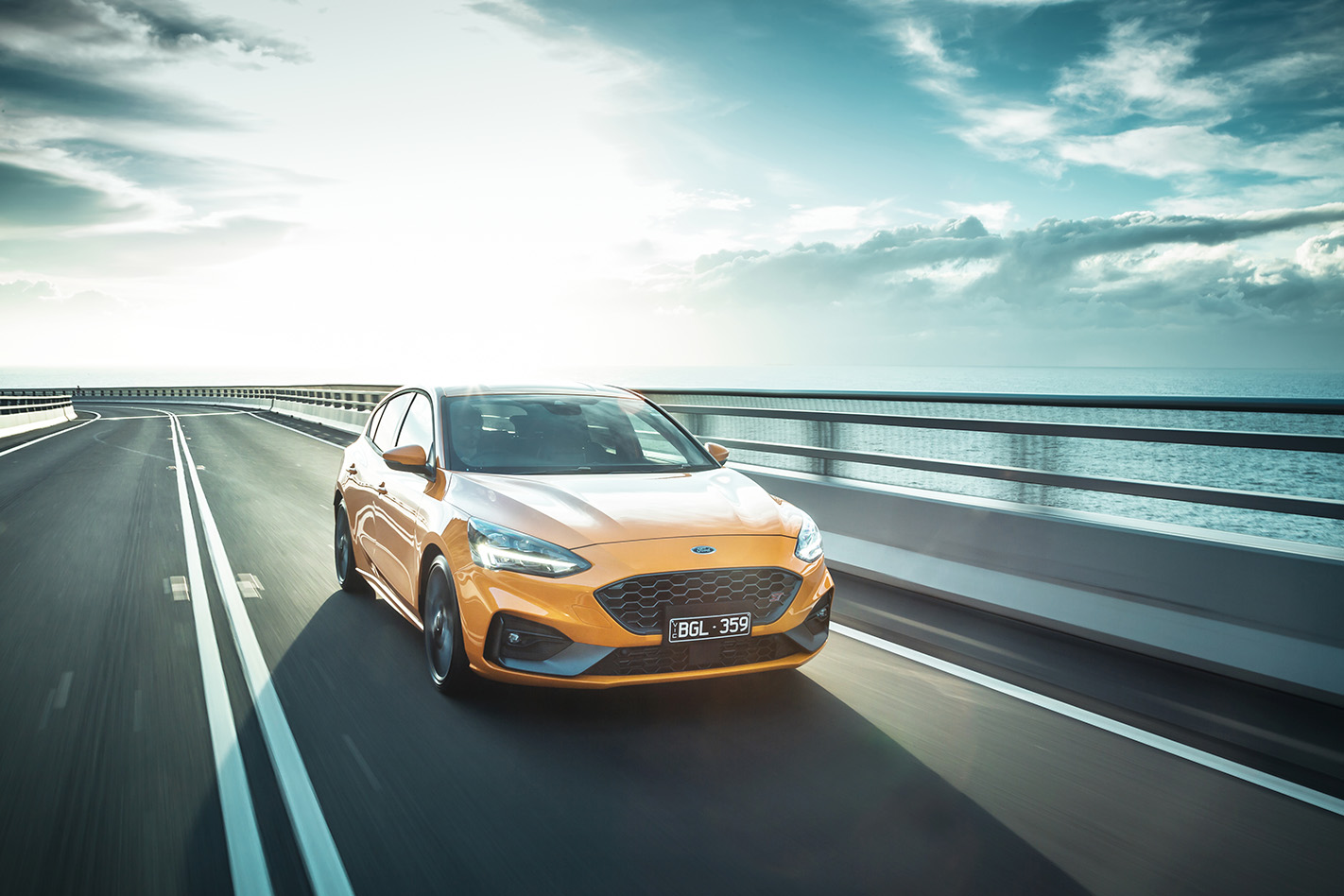
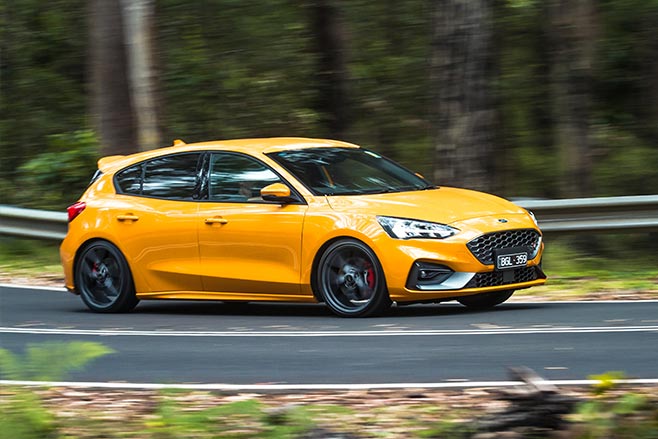
There’s no point trying any harder than this. The four fat rings of Michelin Pilot Sport 4S underneath the Ford Focus ST are keyed into the road so tightly, the commitment needed to push them into screeching understeer would, surely, put us into the scrub.
But the ST’s steadfast composure taunts you. Stop yourself from braking into blind hairpins and it barrels through, prodding your chest, asking if that’s really all you’ve got.
Pin the nicely sprung throttle pedal into the firewall and there’s no wheelspin or frantic brake intervention. The driven tyres hold purchase as you shoot from the corner, ready to size up the next bend.
Right here it hits us that the third-generation ST has arrived at a critical time for the Focus. That Ford has cut the RS from the range in a bow to incoming emission rules has stunned even those with only a passing interest in the hot-hatch game.
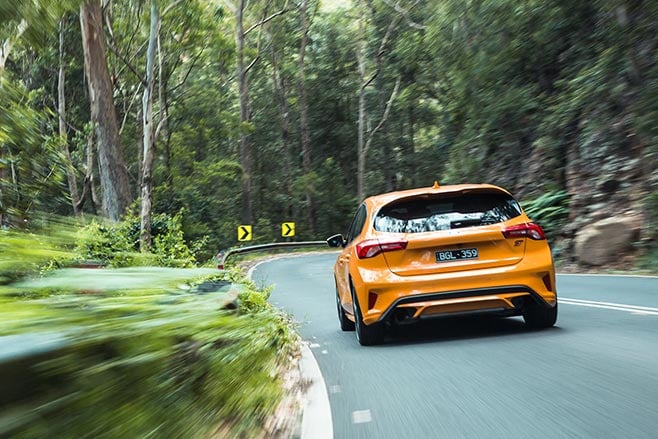
So while the Focus ST has long played sidekick to the RS, the newcomer must step into the spotlight as the range’s top-dog. Whether Ford wanted that to be the case or not.
On top of this, it still needs to nail the ST’s original ideals and deliver an accessible performance package. It must also succeed its predecessor which, frankly, was a scary car, with handling brilliance offered in snippets between snaps of turn-in oversteer and power wheelspin. But, importantly, the ST was relatively cheap.
So it’s a bit stressful to learn the price has rocketed up from the old car’s $38,990 before on-roads to $44,690 for the new Focus ST. Is it justified? Before we can judge whether it seals the deal on the road, there’s a fair bit to get through about what’s changed, since Ford’s truly clean-sheet overhaul accounts for a chunk of that price increase.
Production is again based in Saarlouis, Germany, where the plant rolls out wagon and even diesel ST variants. Oz only scores the petrol five-door hatch, and Ford’s new C2 architecture at its core lays a solid base. It’s torsionally 20 per cent stiffer. It’s also managed to squeeze a 52mm longer wheelbase into a body that’s only stretched 16mm in length.
While a torsion-beam setup has never penalised the Fiesta ST’s performance, engineers took advantage of the structure’s independent rear suspension capability and deployed multi-links on the Focus ST. Strut suspension endures at the front, but its steering rods are pushed forward and higher, while the rack ratio has been quickened to just two turns lock-to-lock.
Ford’s switched the brake booster to electric power as well, claiming improved feel and fade characteristics. It controls bigger brakes: twin-piston sliding calipers at the front chomping 330mm ventilated discs, while single-piston calipers at the rear bite 303mm items.
REVIEWED: The entire Ford Focus range
They’re tasked with handling the big-block inside the ST’s nose. Ford’s managed to squeeze in there its ubiquitous turbocharged 2.3-litre inline four-cylinder. It spins a twin-scroll turbine that relies on an electronic wastegate for boost control and helps the four-banger punch out 206kW at 5500rpm and 420Nm between 3000 and 4000rpm. That’s less than what the late RS managed with the same capacity, yes, but it’s well up on its competition. It’ll even out arm-wrestle a Honda Civic Type R, for instance.
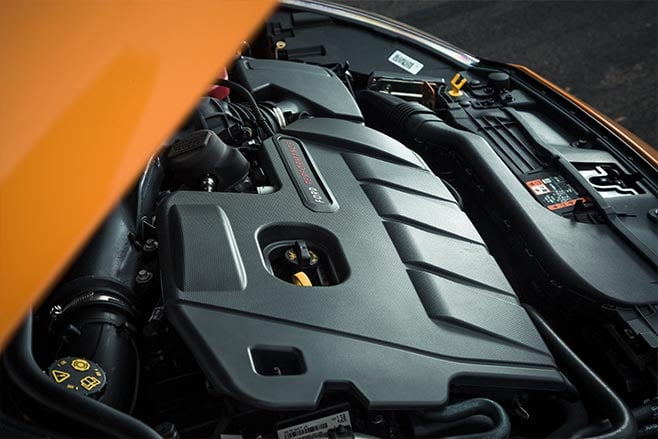
But it won’t be a wild torque-steering beast with what’s been devised for the drivetrain. Ford’s employed an electronically controlled front LSD like the Hyundai i30 N.
The BorgWarner-developed technology, Ford says, relies on a hydraulic clutch that can fully lock on the front axle. The ABS system also chips in when braking the inside front wheel.
And if Ford’s intentions to dominate the segment weren’t clear enough, this eLSD has been designed to work with either a six-speed manual or seven-speed auto, which is half a second slower from 50 to 100km/h at 4.6sec in fourth.
RIVALS: The cars the Focus ST must beat
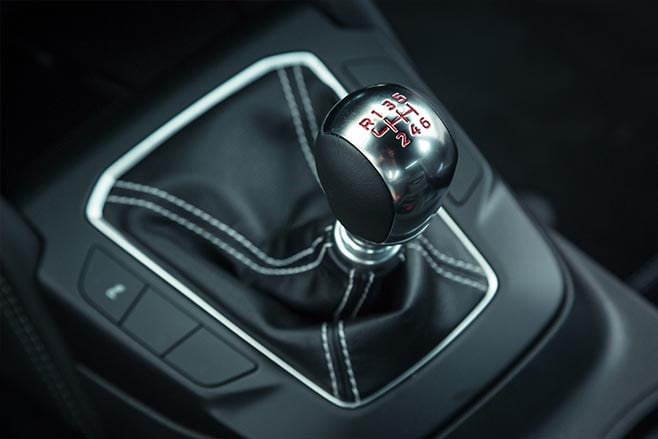
We’re only in the manual today, which Ford says reduces throw by seven per cent compared to the regular Focus and packs its own gear ratios. And something tells us, after settling into the spacious cabin and finding the gearknob placed only a short reach from the chunky, softly-padded steering wheel, that someone at HQ prefers it this way.
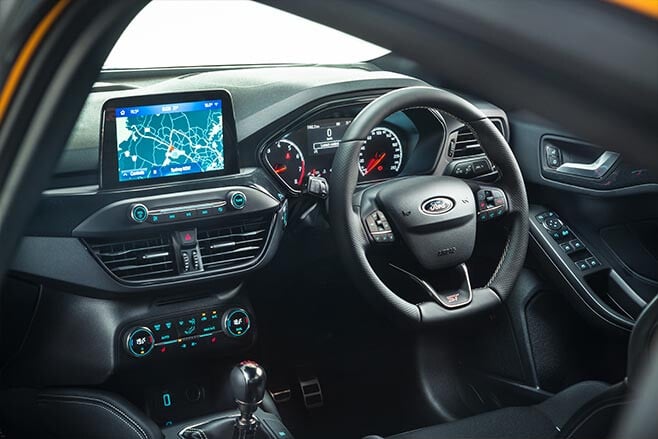
Thumbing the starter button summons a hoarse growl from the tuned dual-tip exhaust system. After pressing the well-weighted clutch, it’s an easy thing to coax along at a slow pace. The cabin is hushed and Ford’s made the clever call to fit the ST with adaptive multi-mode damping.
Make it faster: Mountune’s 243kW Focus ST tune
Given 19-inch rims are standard and team with firmer roll bars, bushings and lowered springs, the ride on 30-profile rubber is still firm. Even in Normal mode the chassis is constantly transmitting information. However, there’s an underlying absorbency that, after a while, fades the talkative ride into background noise.
The upside to that is you can always tune into that frequency when needed. Or, better yet, you can engage Sport mode and amplify it. Accessed through a one-touch button on the steering wheel that brings the damping, electric steering, powertrain, amplified noise and brake booster tune to life, it also switches on a rev-match system.
The rev-match comes with a Performance Pack Aussie cars score as standard, which includes Launch Control as well. When you hit the steering wheel’s ‘OK’ button on the right keypad when stopped, two flags appear either side of a big ‘zero’ in the cluster screen to set the stage. Pin the throttle and the tacho needle slowly bounces off 3250rpm. Pop the clutch and the ST launches clean, holding traction and tearing away with little fuss.
Switch off ESP, though, and you’ll learn how hard the computers are working to keep the torque in check. As revs near 5000rpm the front axle breaks into chattering axle tramp, demanding an early shift into second.
On the way through the gears, the six-speed feels slick enough in action and rowing it is only a chore from second to third when the shift needs care to avoid baulking. There’s a neat ‘ST’ shift indicator light on the tacho (it’s in the Performance Pack) that flicks from green to yellow once you’ve passed the ideal shift point.
That’s because not much happens in the last couple of thousand revs approaching its 6500rpm redline, but if you’re chasing Ford’s 5.7sec 0-100km/h claim then you’ll need to hit the 6625rpm cut-out to pass 100km/h in second. Just.
During all this, Ford also says you can keep the boot in on upshifts, essentially to ‘flat-shift’ (which we didn’t try), while there’s also an ‘anti-lag’ system. And while that’s a slight stretch since it doesn’t inject fuel into the exhaust manifold to spin the turbine when you come off-throttle (like anti-lag in rally cars), it instead holds the throttle plate open to sustain the compressor wheel’s speed – and reinforces the lengths to which Ford has gone to try to maximise response.
Still, under 3500rpm there’s still a pause before you really get going, revealing the real benefit here is a more refined delivery. Combine it with the brilliant front limited slip differential and the Focus ST makes for a serious point-to-point weapon.
Lined up: Ford Focus ST-Line review
That’s obvious back on the roads that originally introduced this story. Whereas the old ST would aggressively rotate into corners so it could straighten early and reduce the burden on its open front diff, the ST’s front-end is loaded with unshakeable grip.
While it might not dance around like before, and that’s partly down to its tubbier spec, you can hold your intended line while applying power or add a surprising amount of extra lock into decreasing radius bends. There’s only occasional assistance from the car’s anti-torque steer software compromising the sweet steering weight.
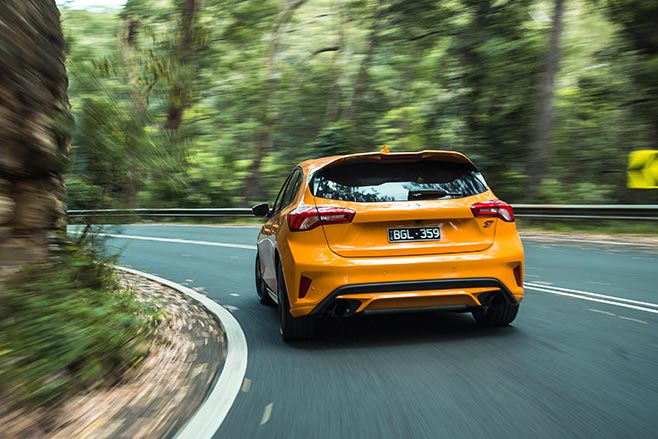
Yes, the longer wheelbase can render the handling somewhat inert. But stiffen the dampers in Sport and the car comes alive, hinting at its deep reserves of talent by either adopting a slow-in, fast-out approach or lightening the inside rear wheel to get on its tippy-toes.
Throw in some ruffled surfaces and it’s almost unflappable. While each wheel works the road, the ST’s body remains steadfast and only the rudest mid-corner bumps question the rear-end’s purchase. The steering, meanwhile, remains locked on course and is laser-accurate, even if it lacks reassuring feedback.
While the ST felt set to earn four and a half stars, we must say the electronic brake booster masks the true pressure in the system and sometimes leaves you second-guessing yourself. And then there’s the noise. Try as the ST might with an amplified engine and exhaust note for true theatre, which adds a hint of likeable warble, the 2.3-litre’s workman-like character is obvious.
And the price? Ford Australia’s obviously wised up to the fact that the sub-$50K hot-hatch segment’s no playground sandpit and equipped the ST to the hilt with weapons-grade stuff for a fighting chance.
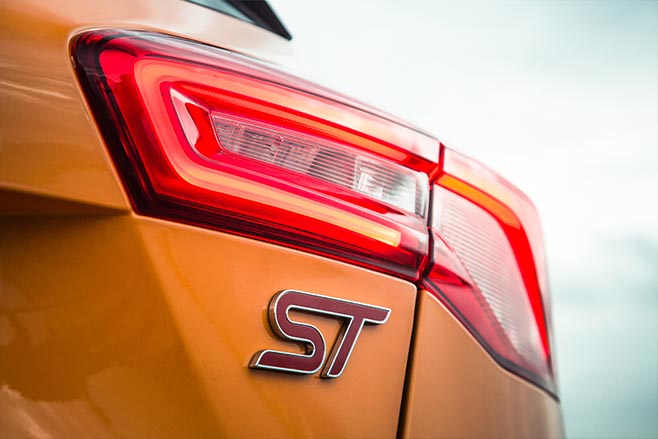
Still, $45K is a lot. But, thankfully, it’s more obvious where your money goes this time around in a cabin that feels and looks more expensive, even if it now only seems equal with the outgoing Golf GTI. At least the equipment list is full-fruit, leaving the sunroof and prestige paint (like our car’s Orange Fury) as the only options available.
Crucially, though, the ST’s overall package represents the most value. The way it gives you options in the heat of battle reminds us of the RS, and while the ride’s not perfect, it’s a damn good compromise that is tolerable even after six hours of driving and a good-hearted fang. It should leave a Hyundai i30 N for dead – but we’ll have to compare them to confirm.
While the old version was a reverse-cap wearing hooligan, the new ST has accepted its role as the Focus’s new leader in its stride, with all the maturity and close to all of the talent that requires.
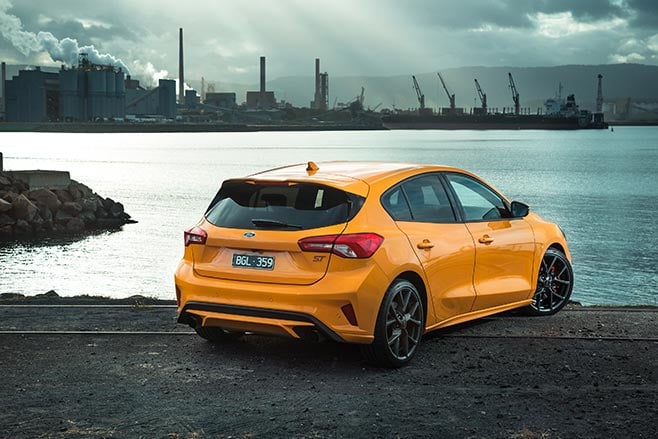
2020 FORD FOCUS ST SPECS
Body 5-door, 5-seat hatch Drive front-wheel Engine 2261cc inline-4cyl, DOHC, 16v, turbo Bore/stroke 87.6 x 94.0mm Compression 10.0:1 Power 206kW @ 5500rpm Torque 420Nm @ 3000-4000pm Power/weight 144kW/tonne Transmission six-speed manual (seven-speed auto optional) Weight 1526kg Suspension struts, adaptive dampers, anti-roll bar (f); multi-links, adaptive dampers, anti-roll bar (r) L/W/H 4388/1825/1458mm Wheelbase 2700mm Tracks 1567/1556mm (f/r) Steering electrically assisted rack-and-pinion Brakes 330mm ventilated drilled discs, two-piston sliding calipers (f); 302mm solid discs, single-piston sliding calipers (r) Wheels 19 x 8.0-inch (f/r) Tyres 235/35 ZR19 (91Y) XL (f/r); Michelin Pilot Sport 4 S Price $45,340 (includes optional prestige paint Orange Fury)
PROS Tenacious front-end; mid-range grunt; crisp handling CONS Climbing price; iffy brake feel
Rating: 4 out of 5 stars
What’s on WhichCar TV this week?
Skoda Kodiaq RS
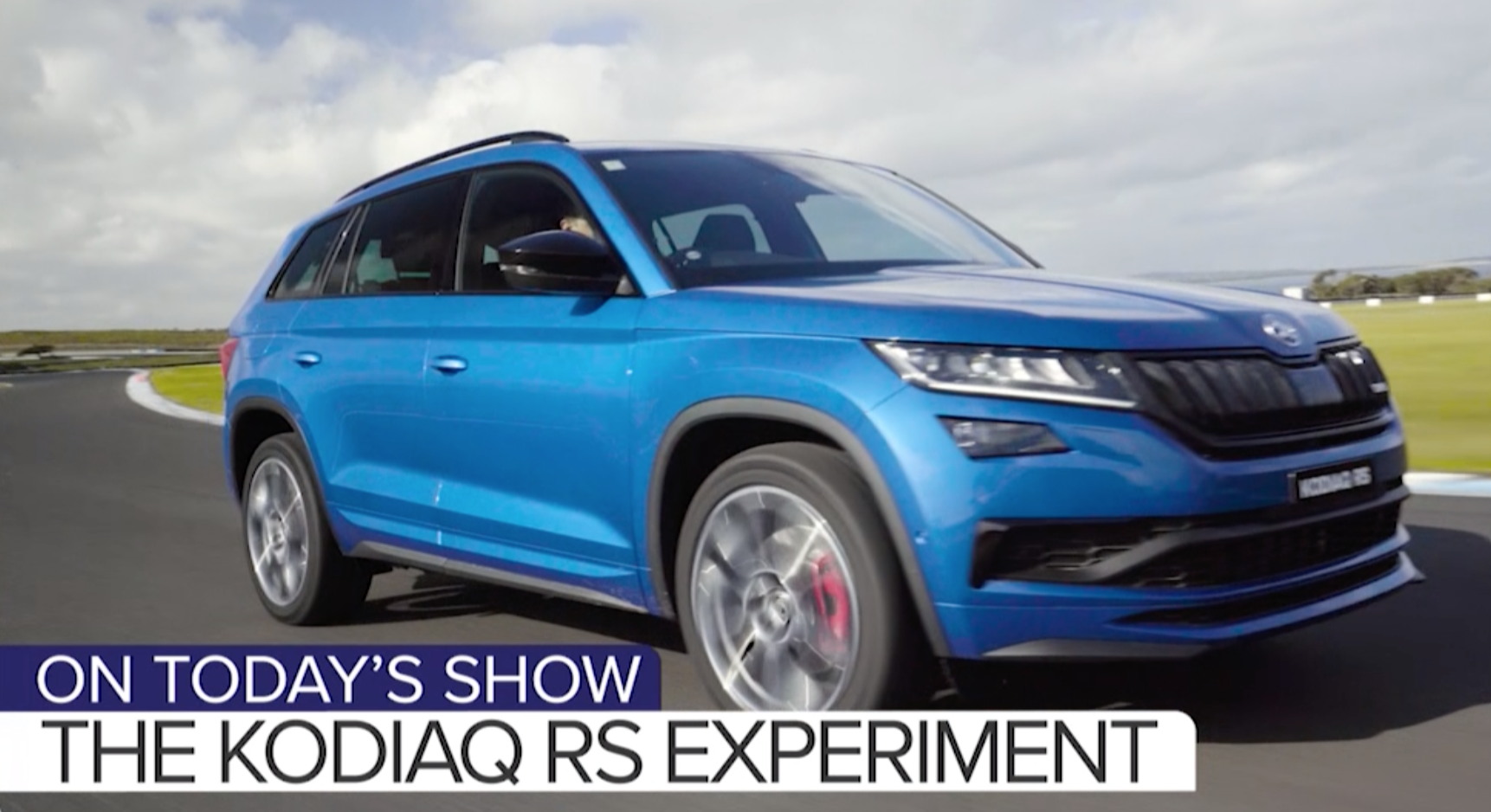
Daniel Gardner gets his essential oil fix as he track tests the brand new Skoda Kodiaq RS at the magnificent Phillip Island.
Along came a Spider
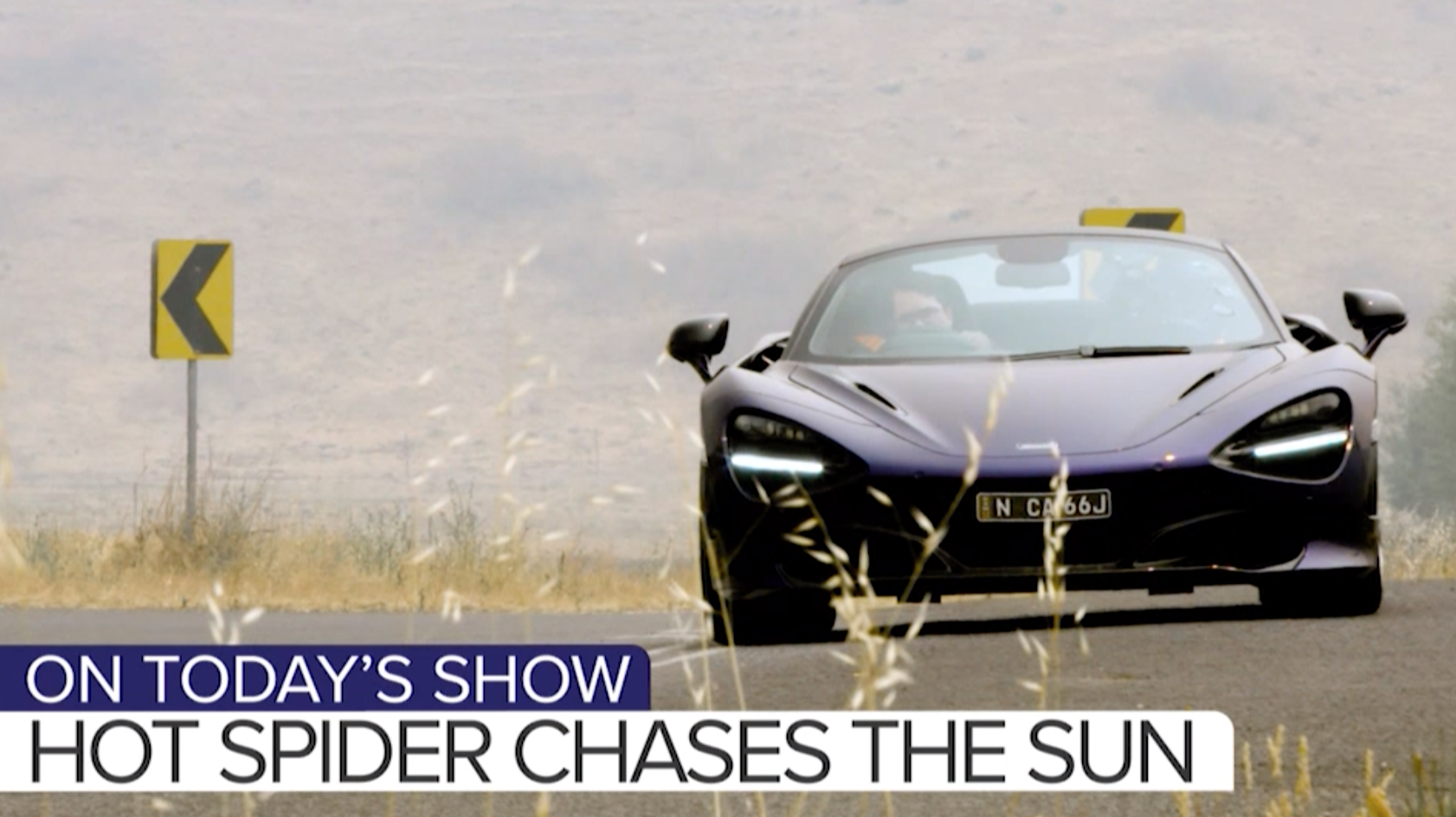
Tony O’Kane hops aboard McLaren’s 720S Spider for a road trip with a difference across NSW”s fire-scarred landscape.
Editor’s review – Mitsubishi ASX

This is the best selling SUV in the country, and it’s one of the oldest cars on sale today – here’s the inside scoop on the Mitsubishi ASX with Wheels editor Alex Inwood.
The Continental Car Lab – driving distracted
Emma and Chris try their darndest to distract each other while driving a motorkhana course with hilarious results.
WIN A TRIP TO THE MALDIVES WITH WHICHCAR
For season two, we’re also offering an amazing prize for our viewers. How does a trip to the Maldives sound? Pretty awesome, right?
The competition is open NOW so make sure you tune into WhichCar TV on Channel Ten at 4pm Sunday AEDT.
And, if for some reason you can’t (and it had better be a good reason!) then there’s a host of ways to catch up on the show, check out behind-the-scenes stuff and find out more about the cars Aussies want to buy.
For example, our weekly podcast, our Facebook page and our YouTube channel are standing by 24/7.
WhichCar TV Season Two Episode 14
4:00pm Sunday May 24, Channel 10
FIND THE HOSTS ON INSTAGRAM
Daniel Gardner @octanedan
Tony O’Kane @tony2000gtx
Emma Notarfrancesco @emmanotarfrancesco
Alex Inwood @thealexinwood
Chris Thompson @chrisjthompson
MISSED THE SHOW? Catch up at Ten Play
What was once a Nissan Skyline R32 GTS4 has appeared as a ute on Facebook marketplace.
Surfacing in the “Modified Cars ONLY Buy/Swap/Sell New Zealand” group across the ditch, this R32 ute has been posted for sale in hopes of finding someone keen on a project, as it’s missing a few things.
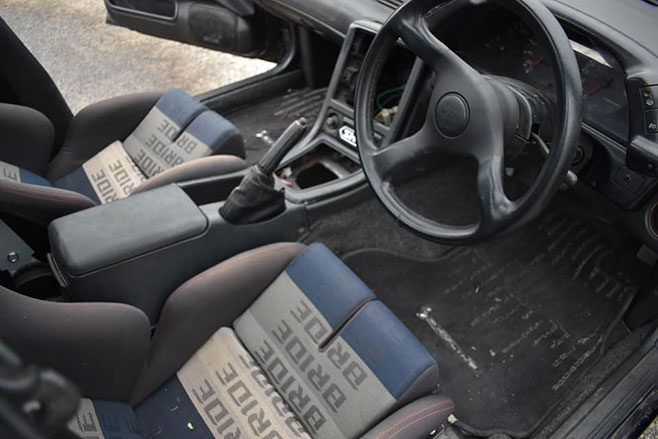
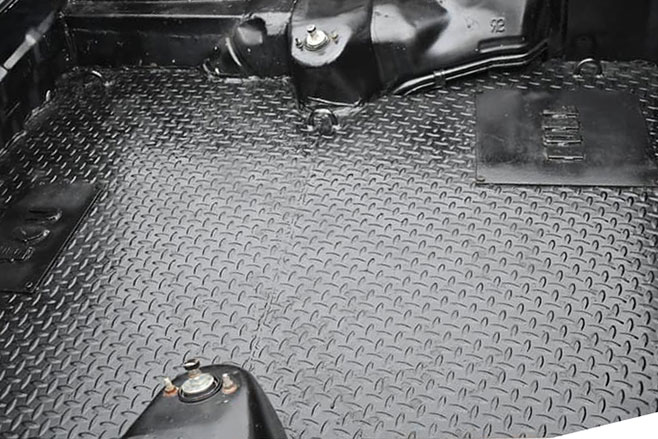
As the photos reveal there’s no engine, drivetrain, front bumper or guards and ECU included. The seller seems to have removed what was previously installed and kept that for themselves.
We don’t blame them. After a quick YouTube search for an R32 ute we found footage (above) of an identical looking car wearing the same number plates and rear windscreen sticker being tuned on a dyno.
At the end of the footage you’ll notice an RB26-looking inline-six hooked up to a rather large turbo when the camera ventures underneath the bonnet, proving this ute’s former life was lived as very much the Japanese version of a Ford Falcon XR6 Turbo ute. Only if there was such thing an all-wheel drive XR6 Turbo. The seller has told us it was being tuned in RWD mode.
The description implies the car was built with serious driving in mind as it rattles off a list of suspension modifications included with the shell.
Adjustable suspension, adjustable suspension arms, 10-inch wide wheels, 4-piston front brakes and a genuine Nissan Skyline R32 GT-R steering wheel are thrown in the deal. Currently the seller writes they’ve been offered as much $7K for the rolling shell.
The aftermarket Japanese Bride seats pictured, though, are available for an extra fee.
Fancy an M3 ute instead? Maybe not…
As for the car itself, it was a runaround for someone before the current owner bought it for the drivetrain. They’ve also said that the body’s “straight”, save for some paint problems, and that it’s travelled 178,000km.
They also claim that the R32 ute has been formerly “certed” with an “RB26” should someone have plans for legitimately driving the thing around.
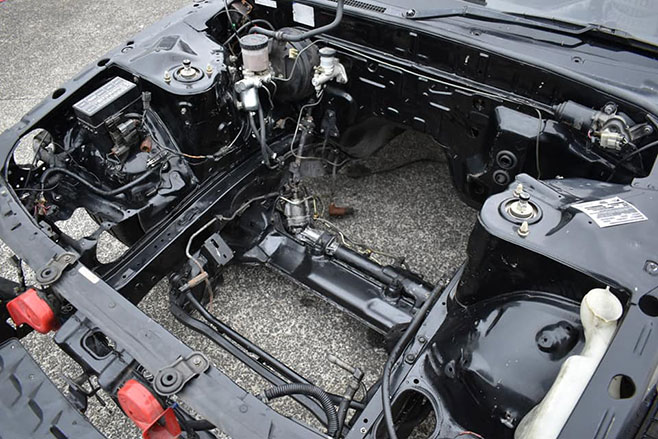
You’ll obviously need a bumper before you get to that stage, though, after the seller writes they sold the GT-R spec front-end for good money.
Golf pro Stuart Appleby owns a custom M5 ute!
While the automotive world has adopted the ute concept in a range of odd applications, from as much as a great April Fool’s joke between BMW engineers, to a front-wheel drive experiment for a man in America with an Integra ute, this is something we’ve seen before.
Before the C8 Corvette was revealed to the world, it lived as a ute, sort of. A Holden Commodore ute was the test mule for the mid-engined ‘Vette. Honda even turned the new Civic Type R into a ute.
You can check out some footage of an R32 drift ute in Japan in all its shockingly vintage grain here. Enjoy.
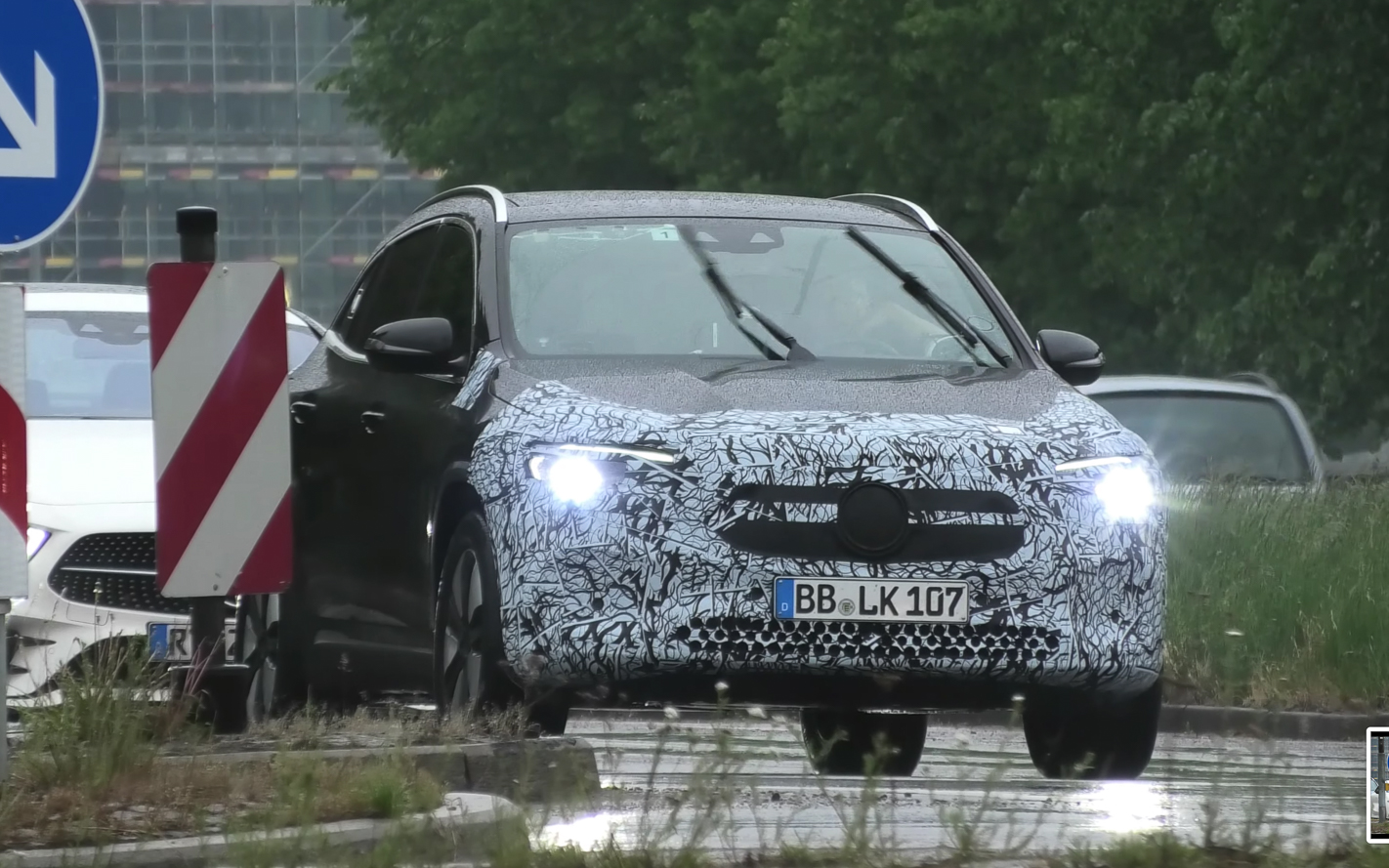
The Mercedes-Benz EQA has been spied in Germany in almost-production guise.
The electric EQA SUV is set to be the second full EV from Mercedes-Benz and was initially imagined as a sexy hatchback at the 2017 Frankfurt Motor Show.
Since then, it has morphed into more of a crossover shape, and based on the MFA platform that services the GLA compact SUV.
In the video captured by spy photographer walkoART, the EQA now features a more specific SUV stance and incorporates some of the EQC’s humpy design into its rear end.
The rest of its looks don’t seem to stray too far from the GLA’s, but that last little bit of disguise will have to come off to properly see the differences.
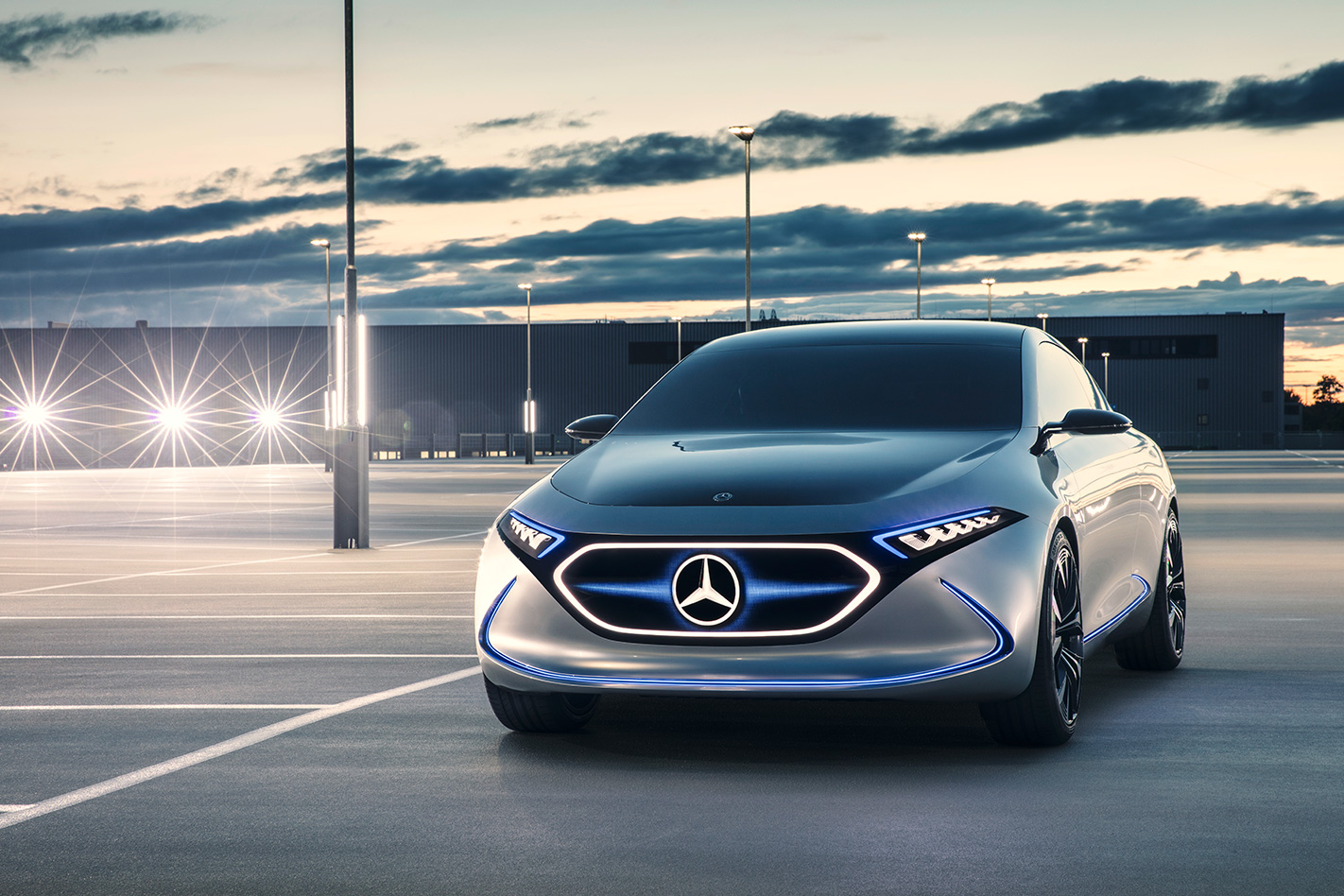
At its reveal, the EQA was said to contain up to a 60kWh battery pack for a ‘real-world range’ of 400 kilometres. However, it should be noted that those figures are based on the NEDC test scheme rather than the current WLTP industry standard.
Fast DC charging systems were also touted, with a short 10 minute charge time netting a claimed 100 kilometres of range.
Mercedes was also aiming at a sub-five-second 0-100km/h time, courtesy of two electric motors that could send more than 200kW to all four wheels.
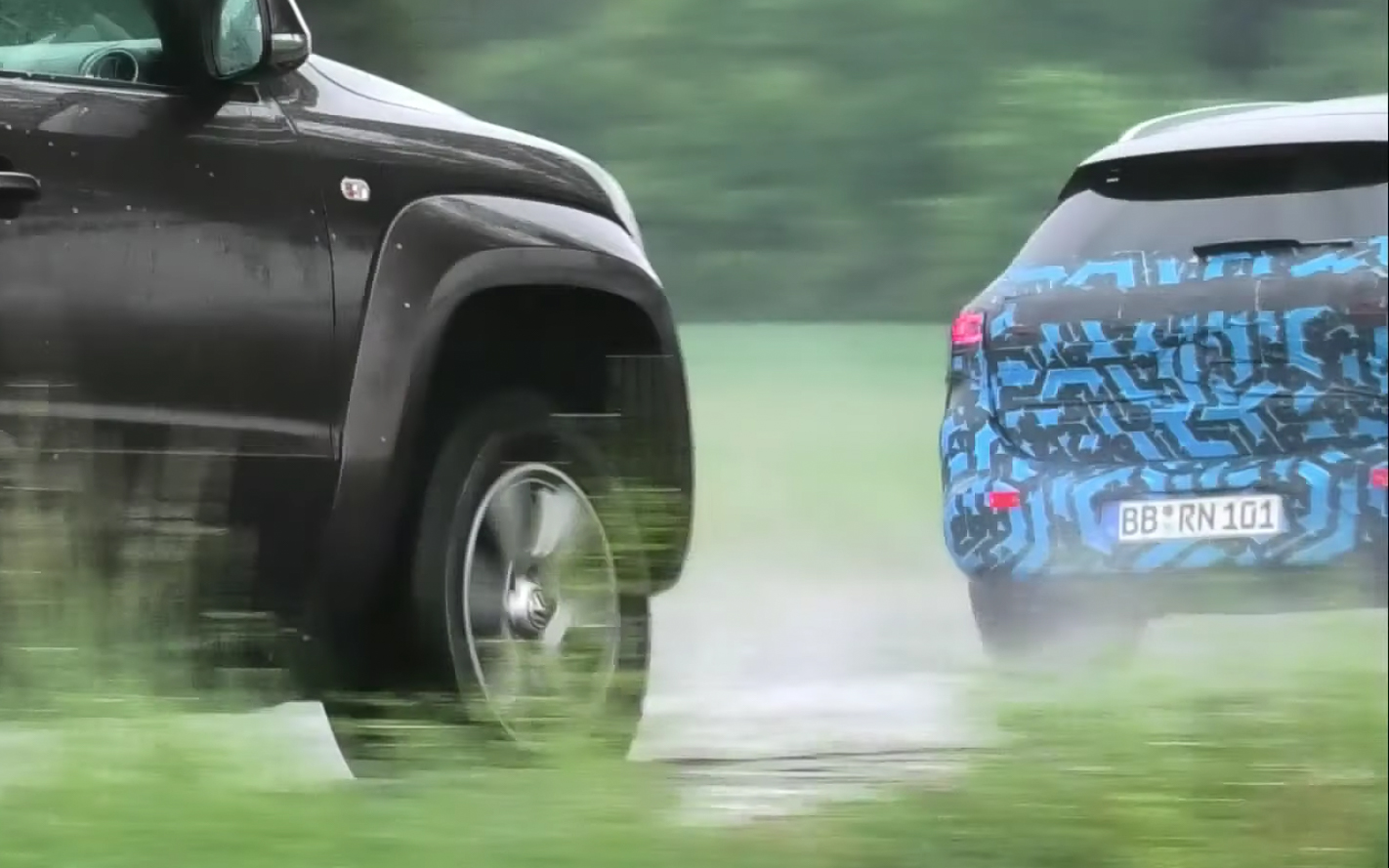
Mercedes-Benz has kept relatively quiet about how its EQA has changed its shape and its outlook, releasing a single teaser photo (below).
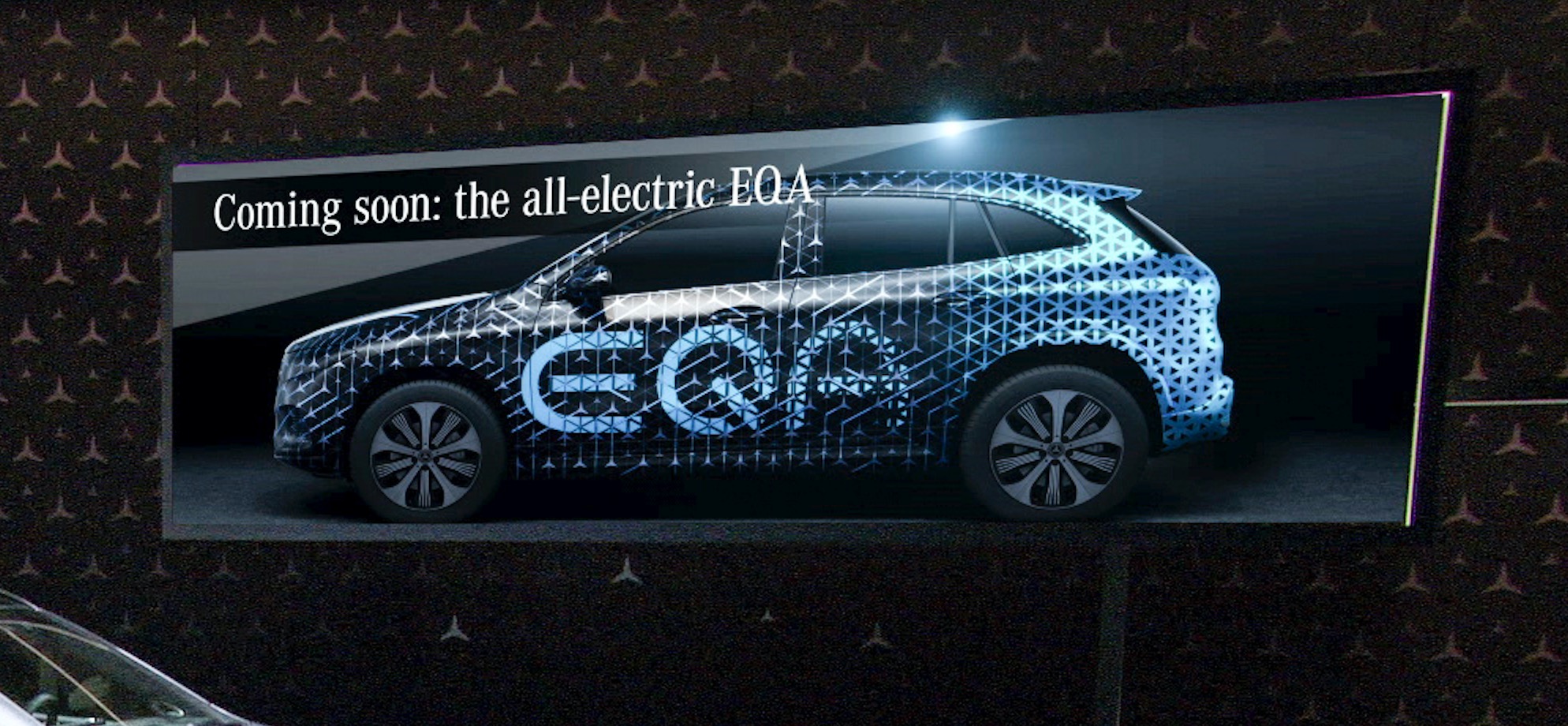
The EQA program is backed by a hefty $900 million investment in its Hambach plant in France, which once produced the Smart FourTwo.
At the moment, Mercedes-Benz’s plan to unveil the production EQA in 2020 still stands, with European deliveries to start shortly thereafter.
After many years and decades of struggling for attention, battery electric vehicles are now very much a part of the automotive landscape and gaining traction fast, with an increasing number of options for people looking to ditch combustion power.
Less publicised, however, is a type of electric vehicle that is still quietly emerging as a feasible alternative alongside battery-powered EVs, but a recent federal government investment into hydrogen infrastructure, fuel-cell cars have been brought to the forefront.
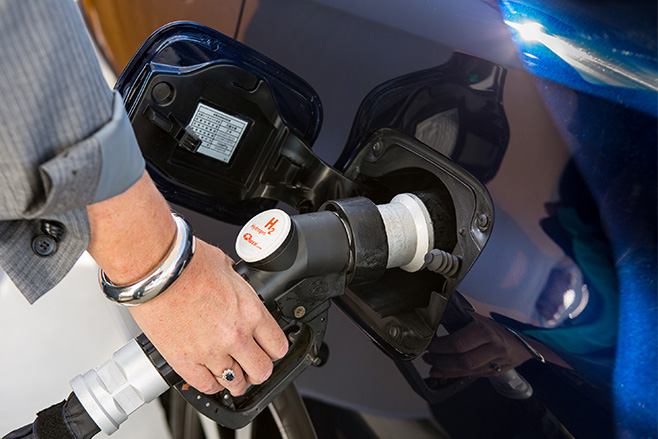
If you’ve noticed the blip of hydrogen power appear on your alternative energy radar then you might be wondering what options are open to drivers or fleets looking to cut emissions with a more sustainably powered vehicle, and where battery power doesn’t quite fit.
How do hydrogen cars work?
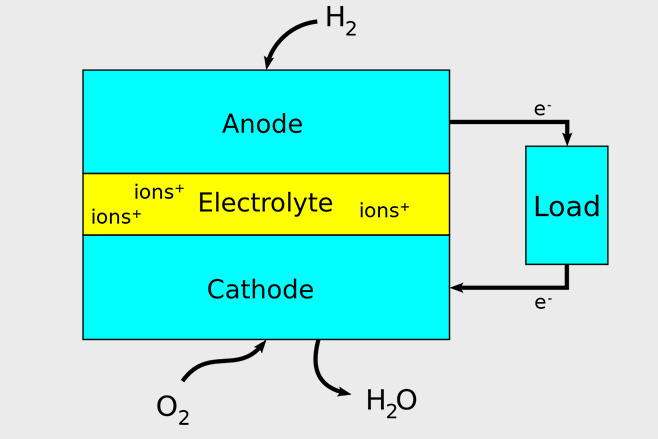
Essentially, a hydrogen fuel-cell car is an electric vehicle but its key difference compared with any EV currently on sale in Australia is that, instead of drawing power from pre-charged batteries, the hydrogen car produces its electricity as it’s required – in-house, so to speak.
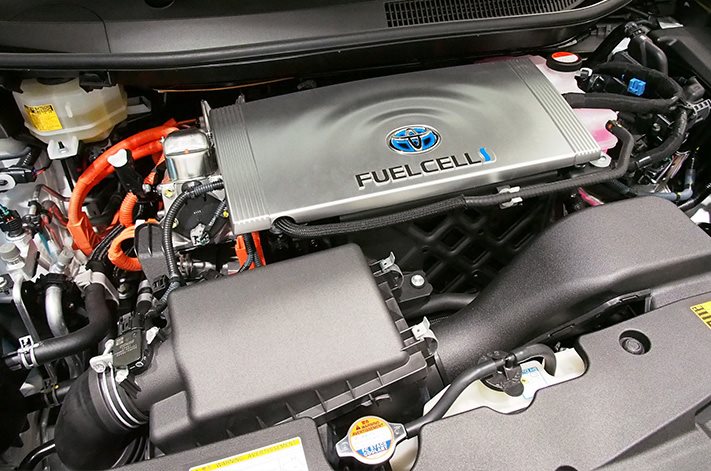
It does this using a fuel cell – a clever device that introduces hydrogen gas into a ‘stack’ of cells where it combines with oxygen drawn in from the atmosphere to produce electricity and just one byproduct – pure water.
This electricity is then sent to an electric motor or motors which drives the vehicle – just like any other EV.
Compared with battery EVs, hydrogen-fuelled electric cars have one particular advantage when it comes to refuelling. While even the best batteries take about 20 minutes for an 80 percent charge, a fuel-cell car’s hydrogen tank can be fully topped up in about the same time it takes to fill a petrol tank.
As well, the energy density of hydrogen – the amount of energy that can be liberated from each kilogram – is far higher than the energy density of a battery.
In other words, the amount of electricity that can be generated with a given mass of hydrogen is greater than the amount you can store in a battery of the same weight.
Put simply, hydrogen fuel-cell cars can go further between top-ups, and take less time to refuel when you do eventually have to stop. Does that sound compelling?
Hydrogen on the horizon
At this stage, there are no fuel cell-powered cars available to buy or lease in Australia in the same way you might purchase a battery EV (or any other car for that matter). But there are a few examples in the country, and that’s significant.
Over the last few years, both Hyundai and Toyota have been working hard to pave the way for Australia’s hydrogen options by bringing in a fuel cell electric vehicle or two, and the company collaboration has accelerated the cause.
Hyundai Nexo
Hyundai’s latest hydrogen-powered car was revealed at the 2018 Consumer Electronics Show and is a full series-production model, which means it has been developed, tested and built to be owned and used like any of the company’s models.
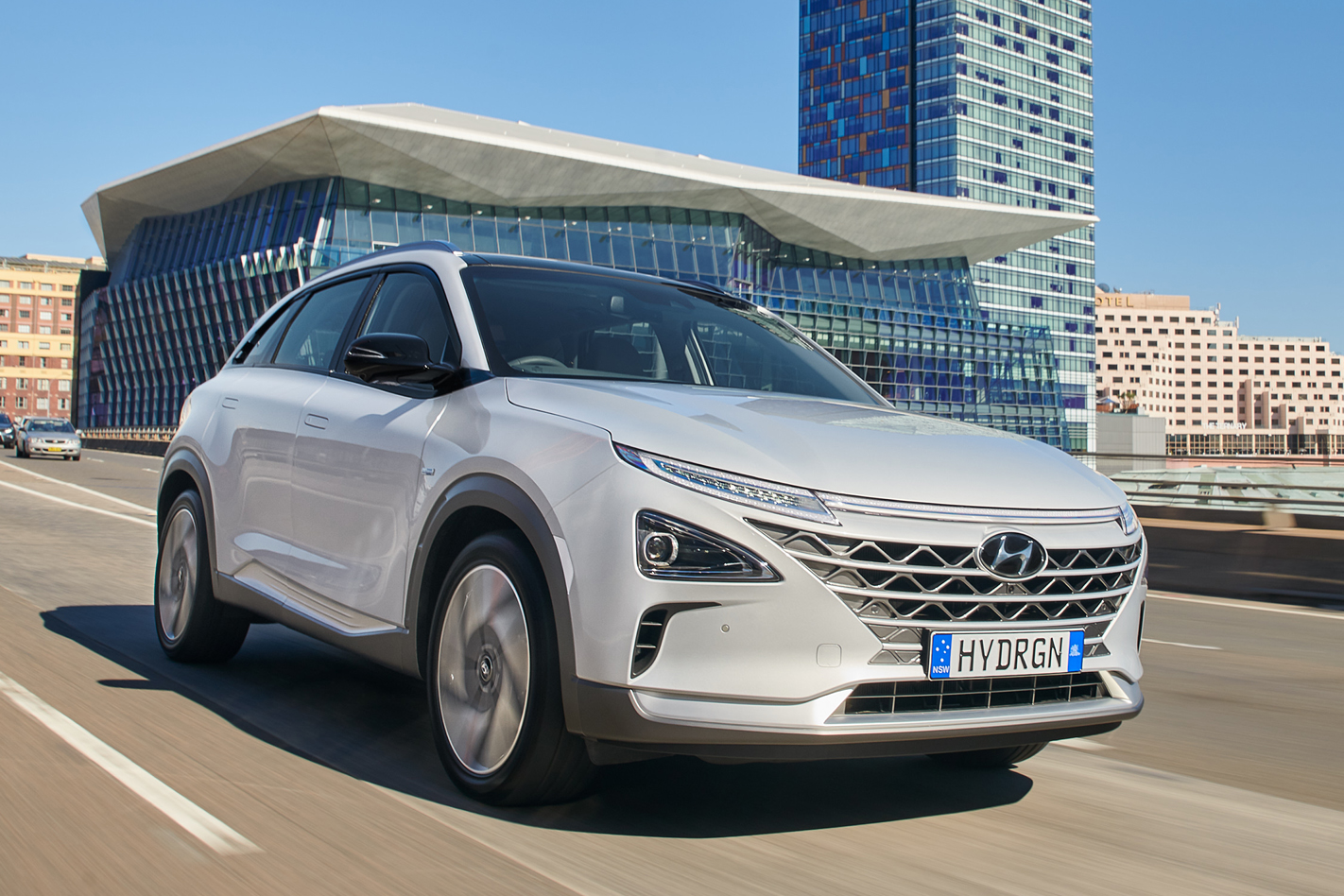
While it packs revolutionary technology under its skin, the Hyundai appears to be nothing more than a large SUV about the same size as a Santa Fe with sharpened styling – something that’s likely to boost its appeal with large-SUV-loving Aussies.
The Nexo supersedes the company’s first production hydrogen car – the ix35 Fuel Cell but, as with any model successor, it took a couple of big steps forward, including a new platform that was specifically designed to accommodate fuel-cell hardware and larger fuel tanks that hold just over six kilograms of hydrogen – enough for between 650km and 800km of driving.
Hyundai Australia has 20 Nexos already in the country but these pioneers are not for sale just yet. Instead, they are being loaned to various organisations including government bodies to evaluate their feasibility.
If the outcome of the real-world assessment is positive, the Nexo will be only a few steps away from Hyundai dealerships said Hyundai Future Mobility and Government Relations senior manager – and the Australian Hydrogen Council director – Scott Nargar.
“We’re about to launch the Hyundai Nexo in Australia and then we will look at other opportunities for the future, but Hyundai global is really focused on that hydrogen transport.”
Toyota Mirai
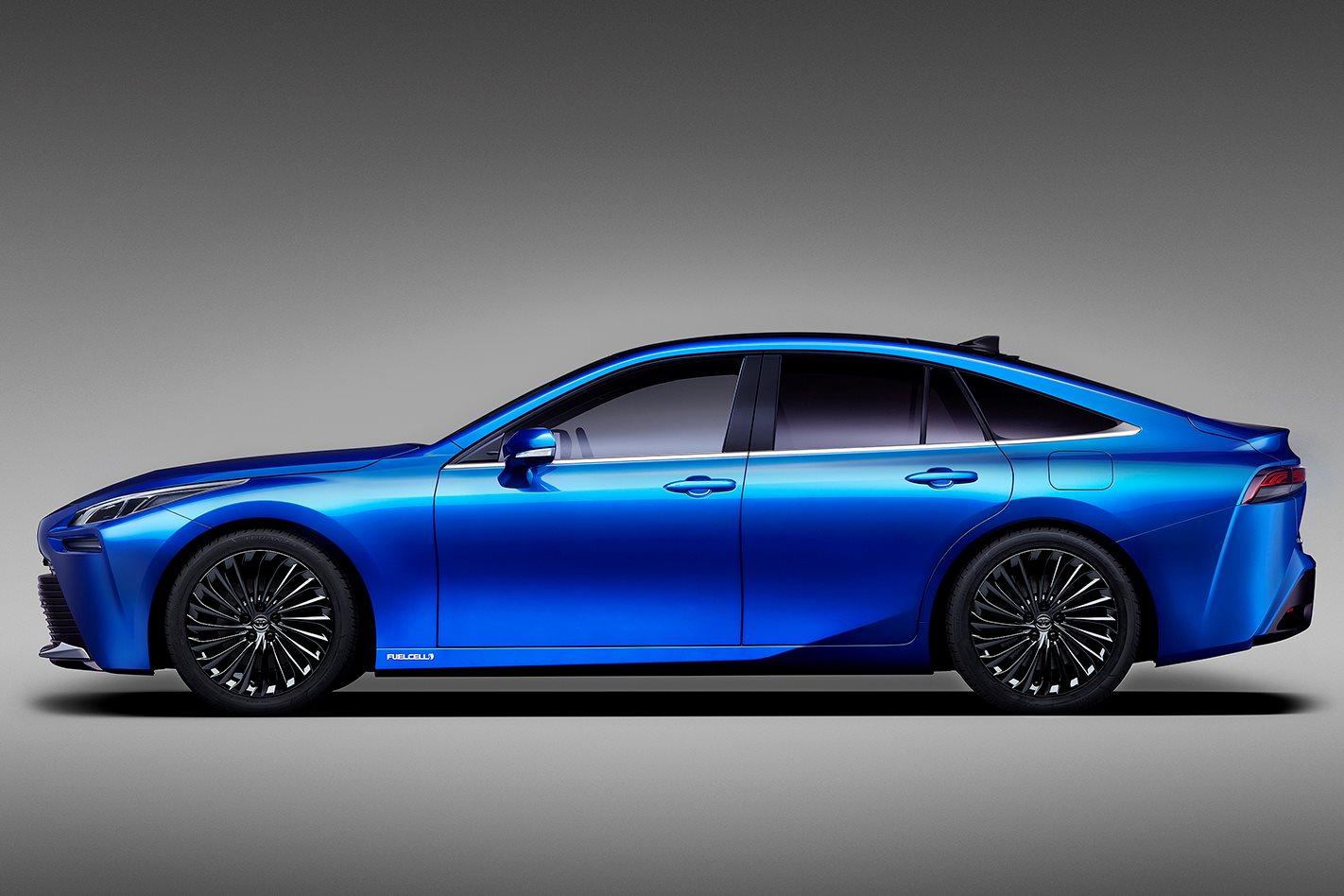
Like the Nexo, Toyota’s Mirai is also a full production hydrogen model, and is now into its second generation.
It’s also tantalisingly close to making an Australian retail debut, explained Toyota Australia senior public affairs specialist Orlando Rodriguez
“There’s a reason we’re investing all of this money bringing Mirais into the country and setting up a hydrogen fuelling station. We do think it’s a key part of the future make up of cars in this country,” he said.
“We clearly want fuel cell cars to form part of the mobility landscape here in Australia.
“If and when everything is appropriate to do that, there’s no reason we wouldn’t bring in hydrogen fuel cell vehicles to Australia.”
Unlike the Nexo, Toyota’s offering is in sedan form and, with rear-drive it’s more focused on driving dynamics than SUV practicality, but it delivers similar range and efficiency proposition.
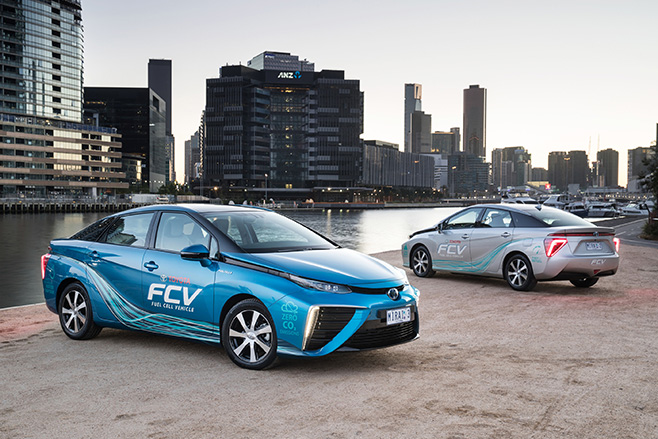
Toyota has a number of Mirais in the country performing similar duties to Hyundai’s Nexo, building the profile of the hydrogen vehicle and raising public awareness Down Under.
One development that might push the Mirai closer to Australian showrooms is its appearance on the list of vehicles you may be able to privately import directly from Japan.
Recent changes to the Specialist and Enthusiast Vehicle Scheme will allow private importers to bring in a Mirai independently of Toyota.
What’s the hold-up with hydrogen?
Until now, hydrogen power has suffered two major stumbling blocks in Australia.
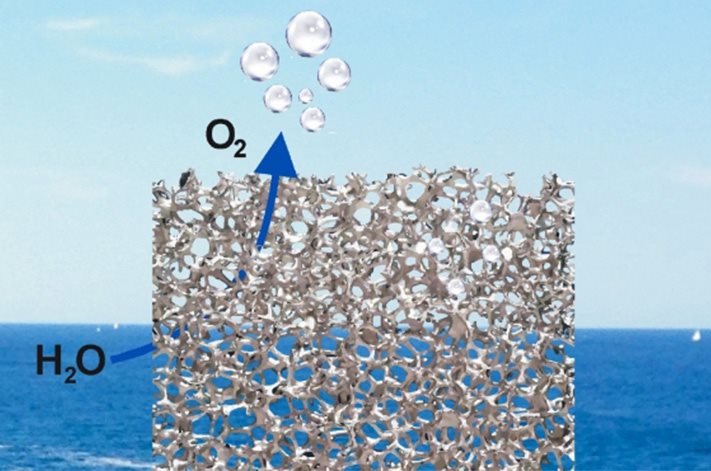
Firstly, current Australian hydrogen production, while prolific and abundant, is produced using relatively dirty fossil fuels as the primary source of energy, which neutralises any environmental and carbon reduction benefits in cars when the entire equation is considered.
But that problem appears to have a solution at last with a massive pledge of cash from the federal government that will pump $300 million into advancing the clean production of hydrogen in Australia and the industries to support it.
Secondly, refuelling infrastructure has been all but nonexistent… and you wouldn’t buy a tin of baked beans if no one in Australia sold a can opener, would you?
Here too, the combined efforts of Toyota, Hyundai and the government are initiating the network of hydrogen refuelling stations that will allow fuel cell vehicles to be driven between capitals and topped up conveniently.
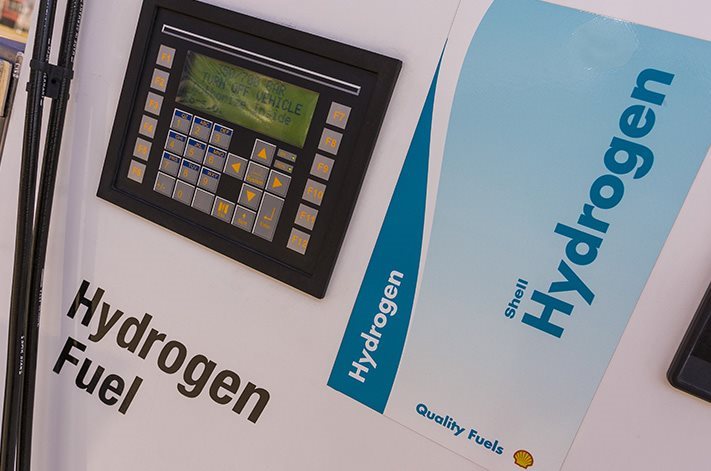
Hyundai has been pumping gas at its Sydney headquarters since 2016, and Toyota is working on its first permanent facility in Altona Victoria to replace its current truck-mounted solution, but neither are yet officially accessible to the public.
However, the first public station will open its pumps for business in the third quarter of this year and it will be followed by facilities in Western Australia and Brisbane. With funding from the new government investment, more will follow.
“In Australia we have huge solar resources and a lot of land and we have a lot of the capability to make that product,” said Nargar.
“we have the CSIRO cracker turning Ammonia into Hydrogen for transport allowing us to ship green Australian energy around the world that can be crack it into hydrogen at the entry port of other countries”.
“For ourselves, we are looking at the opportunities to generate renewable hydrogen, which is not done in any big way in Australia right now. Whether it’s energy used to power transport; cars, buses, trucks, trains, trams and ferries or whether it’s going into grid or being exported, it’s the same product, and molecule, and quality.”
The lightest element suits the heaviest vehicles
Perhaps most encouragingly, hydrogen fuel cells have the potential to solve an even bigger problem – quite literally.
While battery electric vehicles are convincingly proving their capability in light and privately owned vehicles, heavy and plant machines still rely almost exclusively on diesel engines for power.
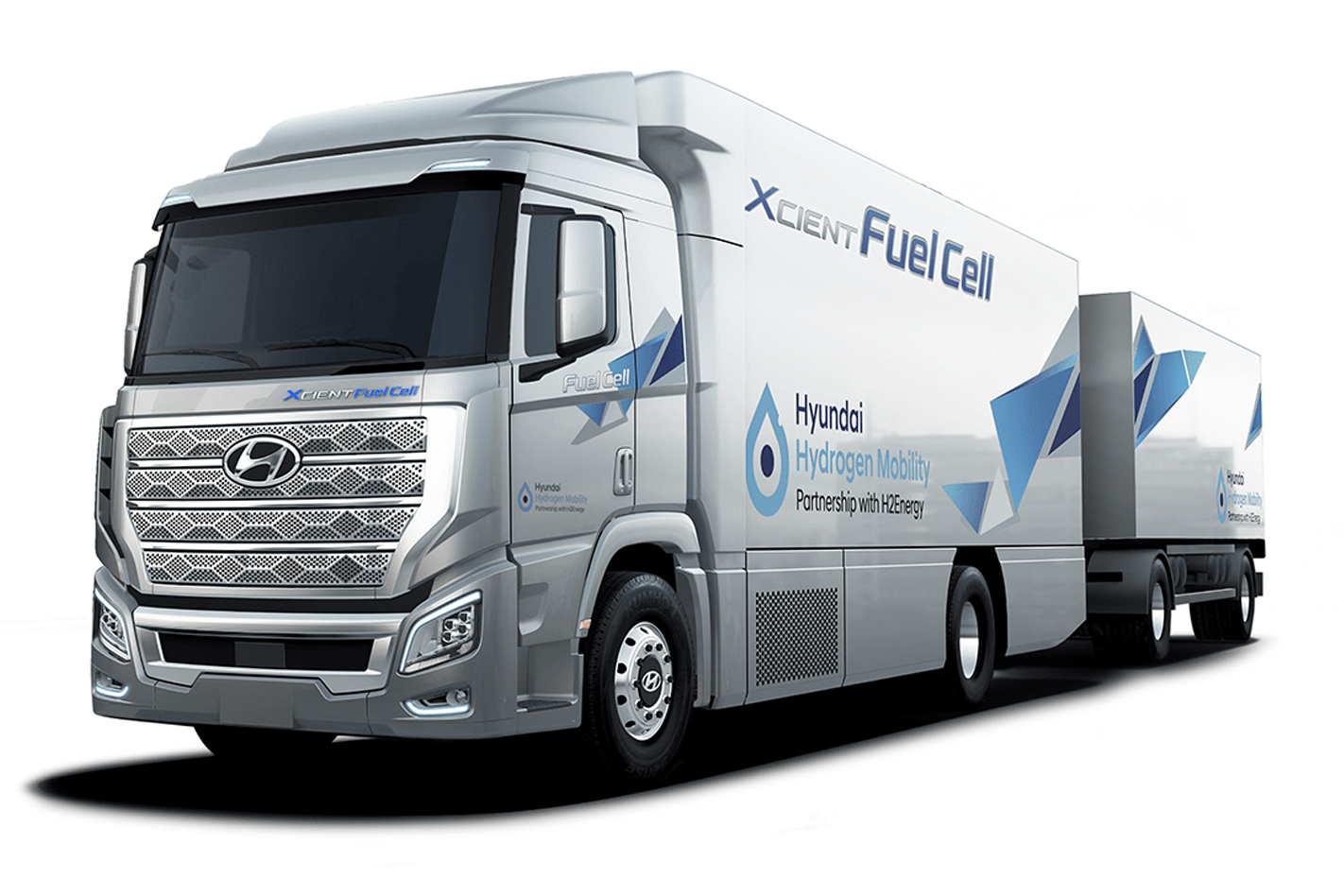
“Battery electric vehicles are, generally speaking, better as little city runabouts but something like a truck? I’m not sure how Tesla is going to make a semi truck that runs on batteries, whereas that’s the perfect place to be putting fuel cells,” said Rodriguez.
“Would you rather carry around 100kg of hydrogen or six or seven tons of batteries?”
Once again, energy density and the ability to produce more power from less weight lends itself to large vehicles that need big pulling power and long range.
It’s an application also highlighted by Nargar, who said hydrogen fuel cells make perfect sense for heavy machinery operating in remote locations as well as potentially connecting the entire East coast.
“Heavy mining trucks – why not manufacture your hydrogen on-site from renewables and power your trucks and use stationary fuel cells to power your sites rather than shipping in all that diesel?” he said.
“Heavy vehicle applications are huge. If you can get the Eastern seaboard right with a really good robust link, there are some really good opportunities there. For heavy vehicles, hydrogen is the fuel of the future.”
Strength in numbers
The alliance between Toyota and Hyundai is set to continue long beyond the point that the first hydrogen cars go on sale locally, with both brands agreeing that fuel cell power prospects are better with more companies vying for the same goal.
“We don’t want to dominate the market; we want competition, we want people to have choice. We’ve got a great SUV, they’ve got a good-looking sedan,” said Nargar.
With the end of the Lion vs Blue Oval automotive battle, Rodriguez said a new high-tech rivalry could result in similarly mutual gains when Hyundai, Toyota and others eventually get to compete on the forecourts.
“Take the sportscar segment, for example,” he said. “If you’re the only one making a certain vehicle in a certain segment it’s better if you have a good strong rival – a Ford vs Holden or a Camaro vs Mustang.
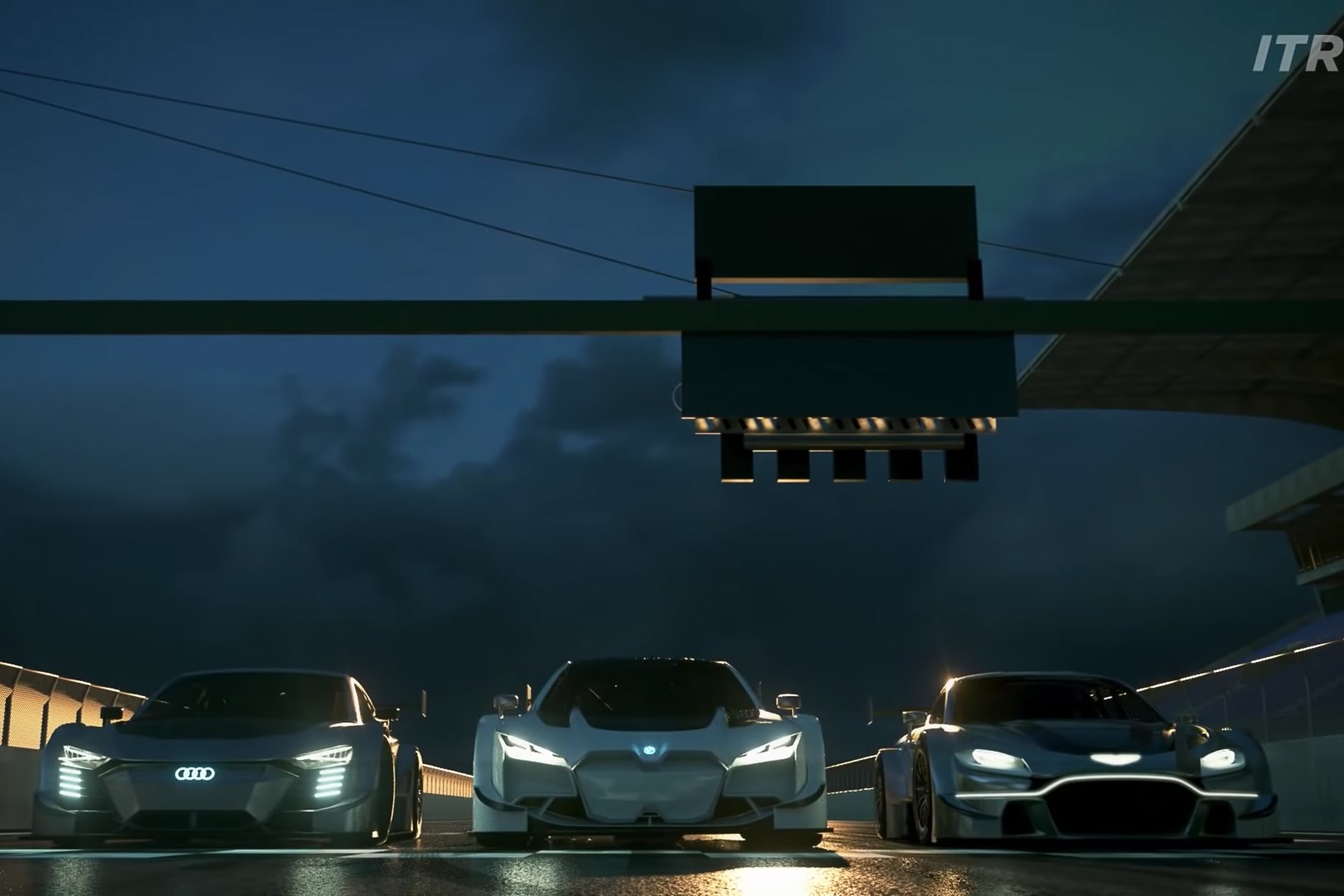
“It builds excitement for people to want to get into those cars. The same thing makes sense in hydrogen fuel cell cars as well”.
The Wheels Verdict: Ford is on a roll with its latest generation of hot hatches. The Focus ST sits at the top of the family tree, with a chassis that screams of quality engineering, and a manual gearbox that true driving enthusiasts can relish. There are foibles though, like interior presentation foibles, and an engine that fails to really thrill. The Focus ST is good, but falls short of greatness.
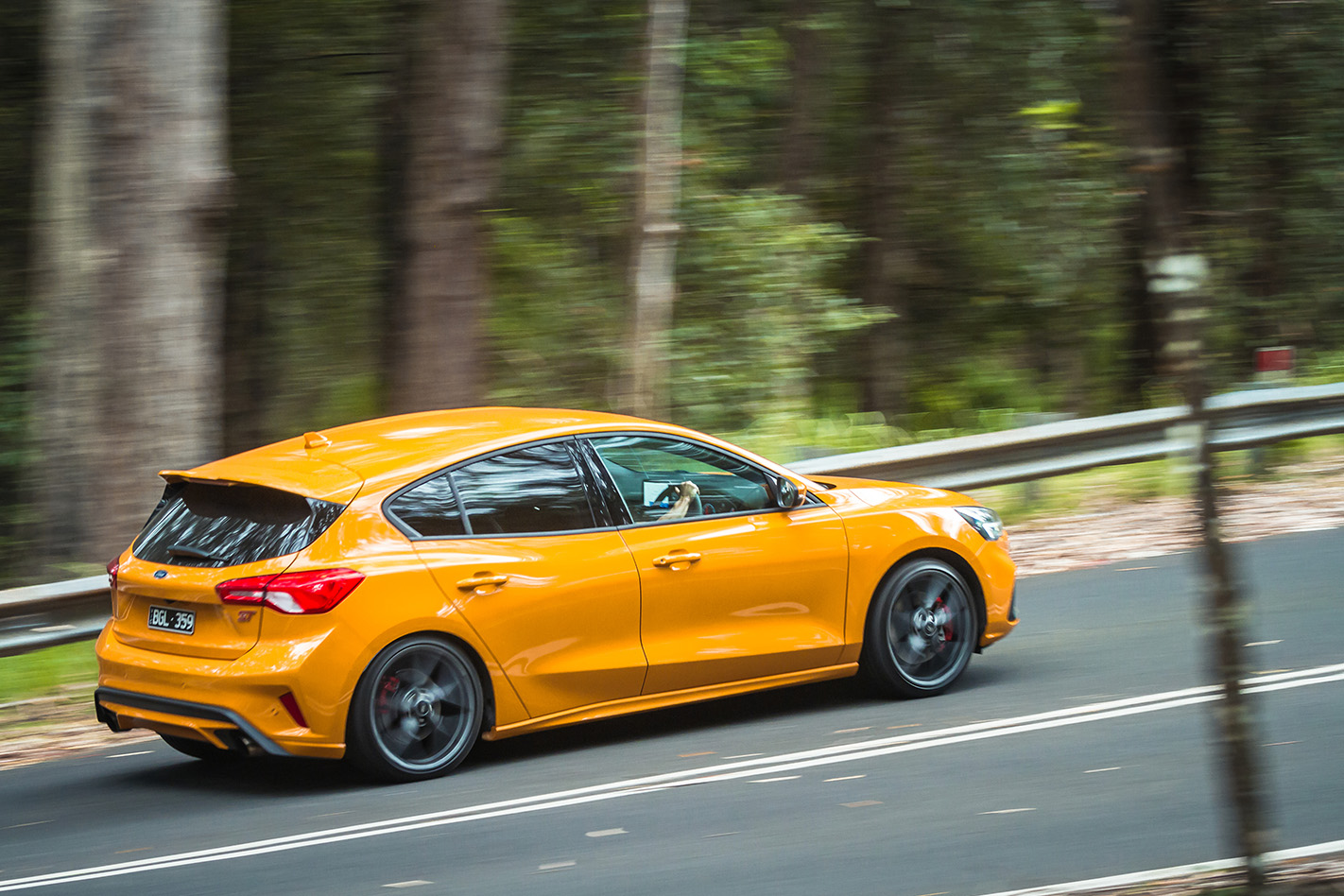
WHAT IS THE FORD FOCUS ST
Traditionally the entry-level performance-orientated Ford Focus, the ST is what happens when the Blue Oval’s performance division is let loose on a family hatchback. With the engine lifted from the four-cylinder Mustang, power is delivered to the front wheels via a six-speed manual. Poised as a rival to the traditional hot hatch cohort, the Focus ST has plenty of tough opposition to beat.
WHY WE’RE TESTING IT
With news out of Europe that the Focus RS has been axed, the ST has been given the responsibility of leading Ford’s hot hatch assault. Sitting atop the range, the ST needs to prove that the fastest Focus you can buy doesn’t need all-paw traction to excel. The smaller all-new Fiesta ST sibling stunned in its recent Australian debut, so it’s time to find out if brilliance runs up the family tree.
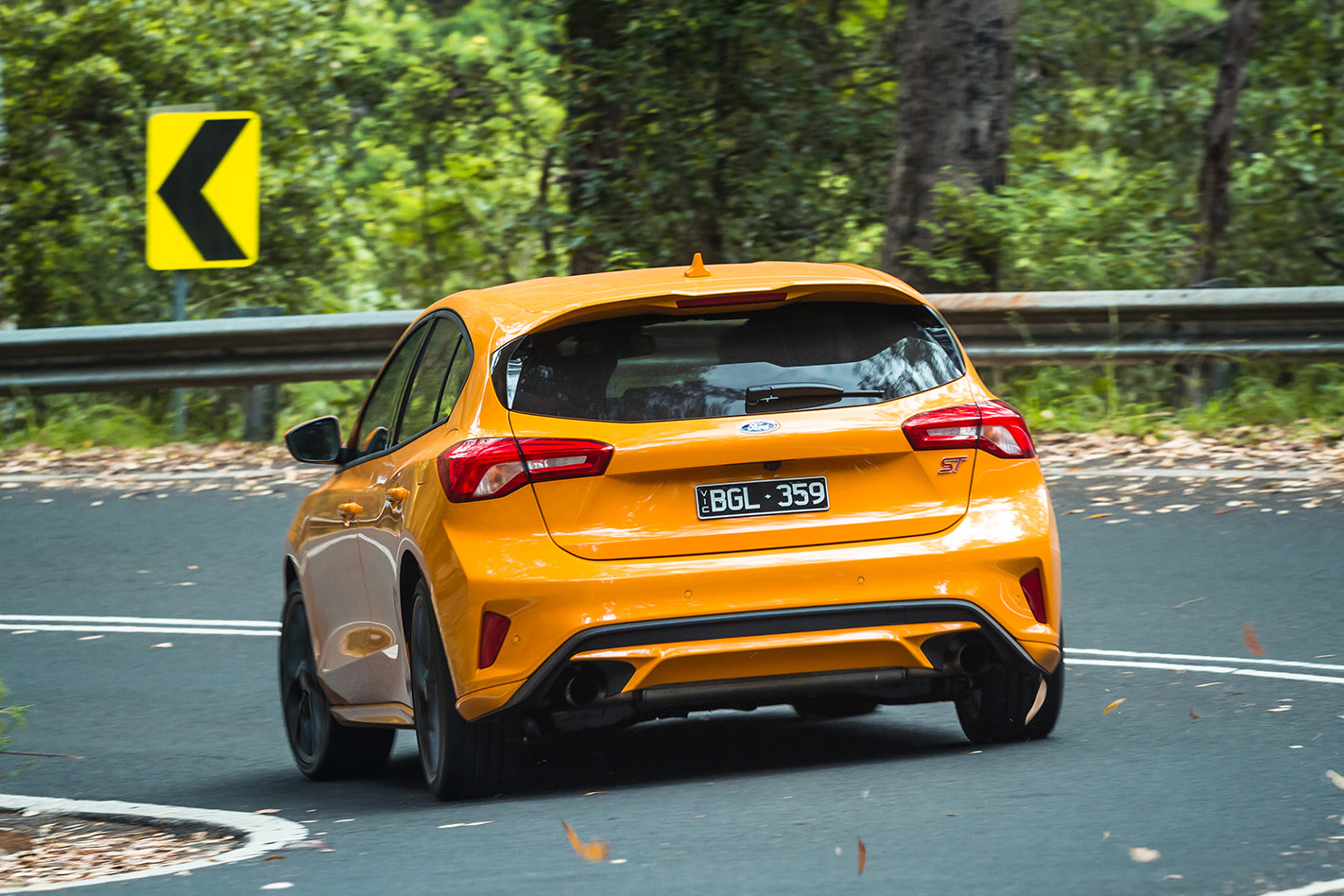
THE FORD FOCUS ST REVIEW
Have you ever attended a christening and a wake on the same day? Okay, me neither, but I imagine the emotions involved may be a little like those felt here. The celebratory part is the local arrival of the $44,690 Ford Focus ST hot hatch, but its launch coincides almost exactly with news that the overlord of the semi-affordable hot-hatch segment, the Focus RS, has copped a bullet to the heart.
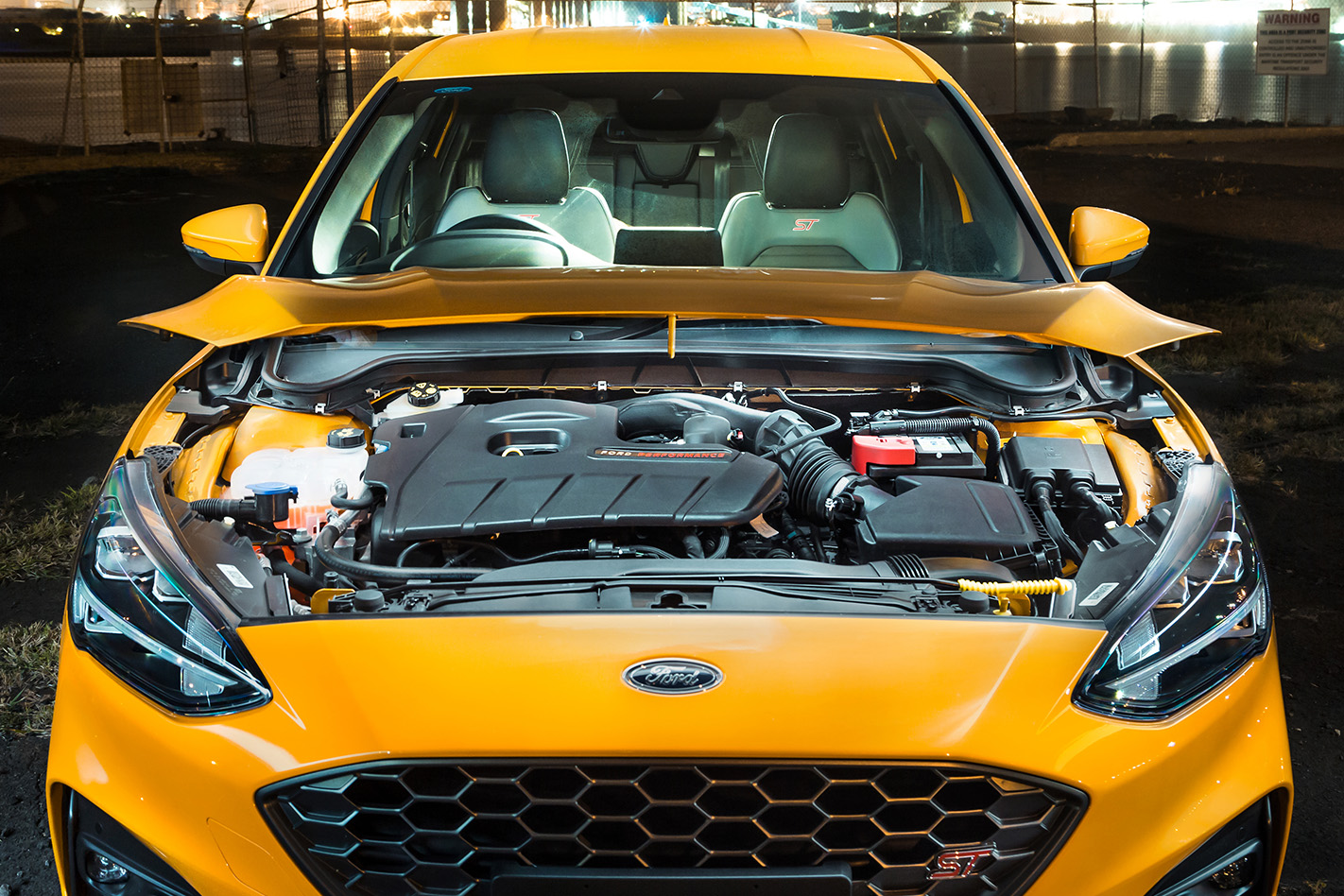
When Ford delivered the news that its revelatory, drift-capable all-paw hero would not be renewed in fourth-gen form, a few of us (okay, only me) whimpered like small girls. But it raises the question: is this new ST any sort of cut-price conciliation? After all, its 2.3-litre turbo four is a detuned version of the 257kW/440Nm unit that powered the previous $51K RS (and the 236kW/448Nm version in the Mustang High Performance). Here it makes 206kW and 420Nm – significantly higher than the previous Focus ST’s 2.0-litre turbo four-cylinder’s outputs of 184kW and 360Nm.
But is it enough? Well, it’s ample for letting you know these outputs are being funnelled through the front wheels only – there’s angry axle tramp if you get wilful with the throttle on damp roads, and a bit of tweaking torque steer out of tight exits from the electronically controlled LSD. But the chassis tune and tyres, which we’ll get to in a second, are so capable you’ll almost certainly wish for a bit more.
This is a very good turbo four, just not a brilliant one. The twin-scroll turbocharger boosts early and with nice progression, giving the flexibility to pull from under 2000rpm, accompanied by a gruff snarl that’s mostly exhaust with a light overlay of induction. But it’s a shame the exhaust is not switchable, as the sound can get a bit much when you’re trying to just drive swiftly but stealthily.
Commendably, the EcoBoost four makes good use of the extra 300cc it packs over rivals like the Hyundai i30 and Civic Type R, with a 20Nm advantage over the latter, and fully 67Nm over the Korean. And it is smooth, and mostly pretty willing. But there’s typical turbo flattening of the rate of urge as it nears 6000rpm, and by the 6400 redline, it’s properly tapped out and hollering for another ratio. It’s not an engine that headbutts the limiter hungry for more.
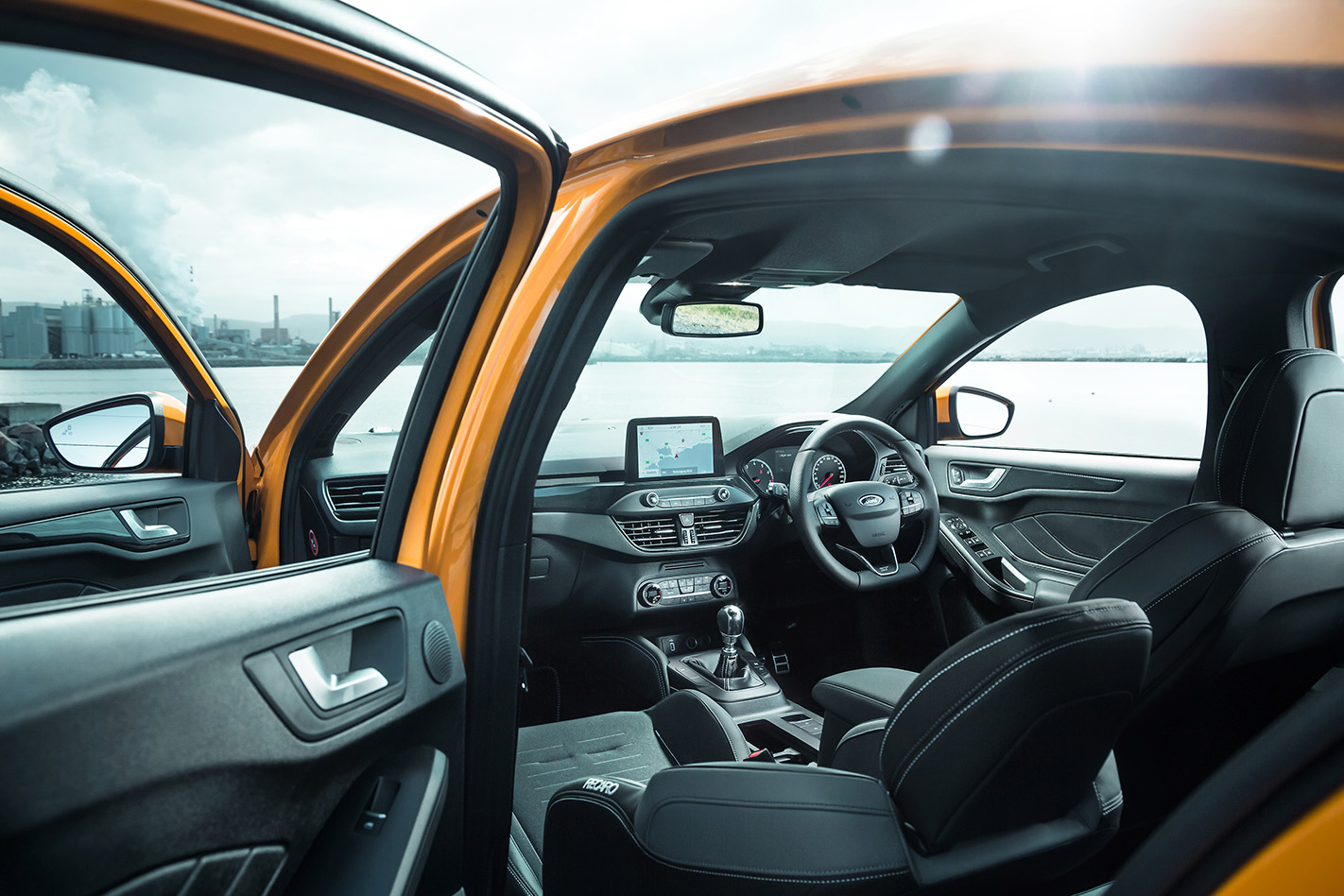
Speaking of upshifts, this is the first Focus ST to be offered with an automatic transmission, which will put this car on the radar for a load more buyers. We’ll reserve judgement until we try the seven-speed (no-cost-option) auto, but gut instinct says stick with the manual if you have a functional left leg and haven’t lost the zest for life. The manual is a good one; the throw is acceptably short, with an oily, lightly knuckled feel, well-spaced ratios, and teamed with a clutch that’s light and positive.
As for the chassis, it feels to be the product of real finessing, giving fine body control teamed with perfectly judged ride compliance in the softer of the two damper modes. The Sport mode (labelled Ford Performance) ties the show down tighter than the Pulp Fiction gimp in his bondage chair, and only works on super-smooth roads. This mode also adds a chunky helping of steering weight; not to my taste, and can’t be separated from the stiff damping and more aggro engine mapping. Not allowing any of these three parameters to be individually adjusted may be noble in theory, but it’s annoying in practice.
The lighter steering has real hyper alertness and turn-in eagerness, with a near-perfect self-centring return rate, even if true road feel is not quite there. The heavy mode just loses the nuance. Stacks of grip from the 19-inch Michelin Pilot Sport 4 S rubber, though, and a nice rotational inclination from the rear with the ESC in Sport mode if you’re prepared to try properly hard to unstick it. Brakes, too, are brilliantly strong, with ample pedal feel.
To justify the hefty $5700 price hike over the previous model, Ford has loaded the ST with the works. Standard equipment includes LED headlights and tail-lights, auto-dipping high beam, wireless phone charging, a 10-speaker Bang & Olufsen sound system, Apple CarPlay/Android Auto, DAB radio, and sat-nav accessed via a slightly dinky-looking 8.0-inch high-resolution touchscreen. Wonderfully supportive Recaro front seats, too, and the wheel feels great in the hands. Just a shame the instruments look so budget, even if their legibility is fine. But the faux carbon trim is naff, and the overall cabin presentation, compared to the forthcoming Mk8 Golf, is like what a McDonald’s dining room is to the Qantas Business Class lounge.
So the ST is too hamstrung by a few of the donor Focus’s presentation weaknesses, as well as its bundled drive-mode parameters, to be a hot hatch of holistic brilliance. But it is a great drive, and that’s worthy of celebration, if not quite a rousing ovation.
RIVALS
Honda Civic Type R, Hyundai i30 N, Volkswagen Golf GTI
2020 FORD FOCUS ST SPECIFICATIONS
- Model: Ford Focus ST
- Engine: 2261cc 4cyl, dohc, 16v, turbo
- Max power: 206kW @ 5500rpm
- Max torque: 420Nm @ 3000-4000rpm
- Transmission: 6-speed manual
- Weight: 1508kg
- 0-100km/h: 5.7sec (claimed)
- Economy: 7.9L/100km
- Price: $44,690
- On sale: Now