
Following our story of other Japanese carmakers struggling this week, Nissan has emerged as a brand in need of a lifeline as it struggles for its future.
Reports from Bloomberg News state that the ailing Japanese manufacturer is going to make 300 billion yen (AUD$4.3 billion) in cuts, which will see one existing unnamed production line shut, as well as the death of the Datsun brand for a second time.
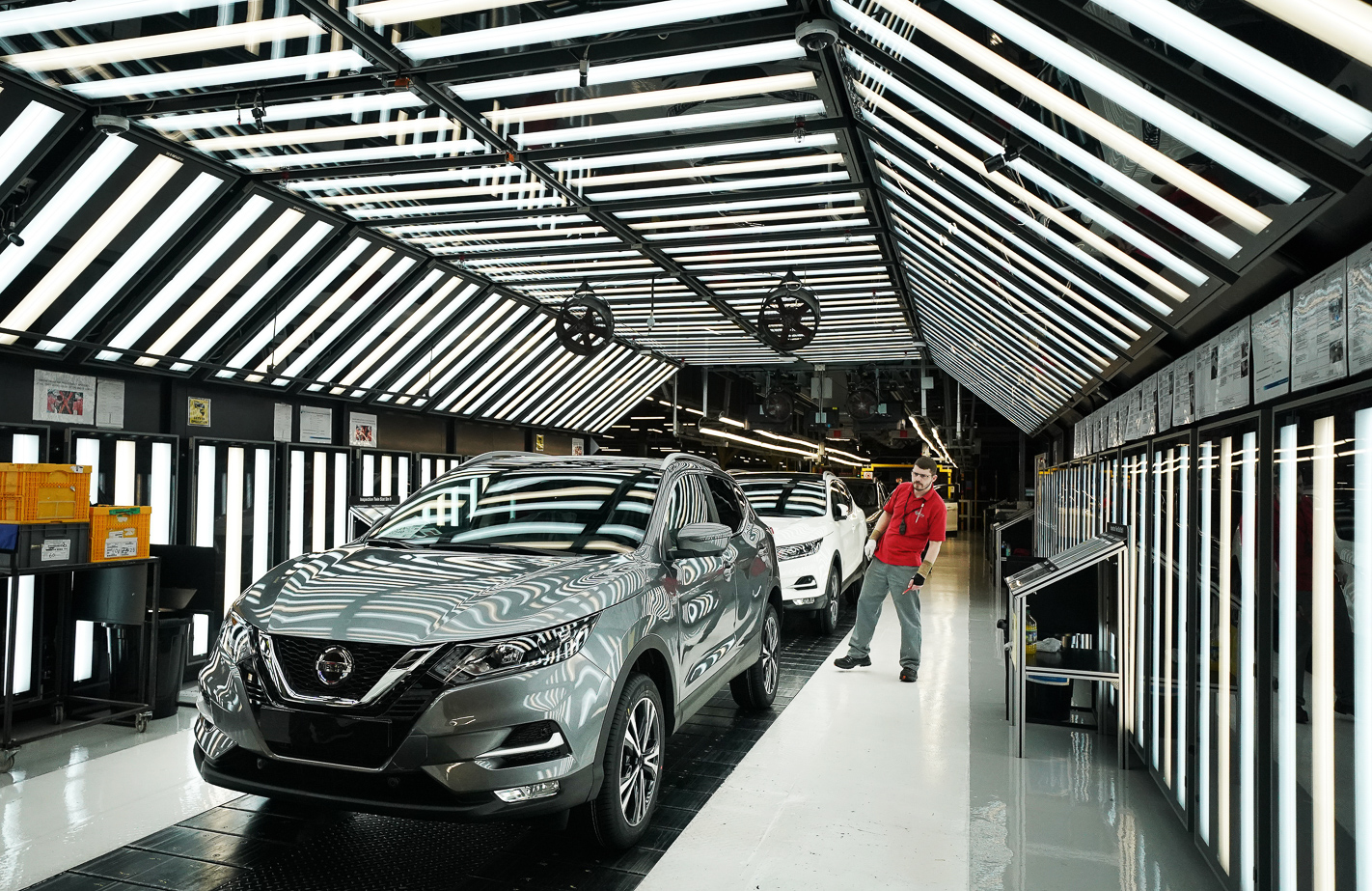
Research and development, marketing and other costs are set to be trimmed as well, in order to hit the reduced spending target which will be outlined as part of a three-year plan announcement on May 28.
Datsun as a brand was previously retired in 1986 but was revived in 2013 as a budget-focused entity for emerging markets like India, Russia and Indonesia.
It sold cars like the $10,000 Go which was largely based on the Micra, but included minimal niceties like infotainment to keep prices low.
The resurgent brand struggled in Asia in recent years, before Go factories in Indonesia were shuttered late last year before the closure of the nameplate yet again.
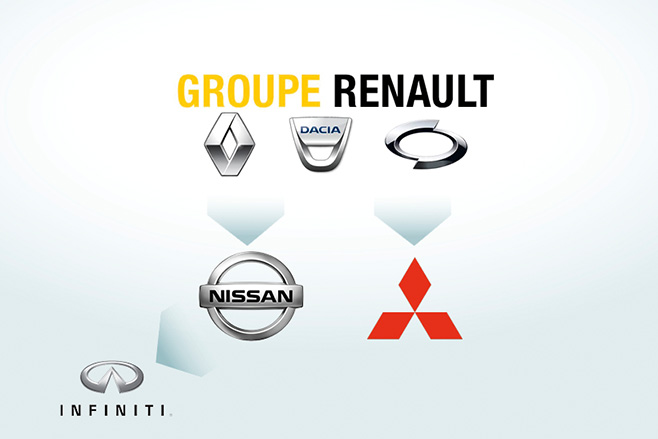
Nissan could potentially lean on Renault’s established budget sub-brand Dacia to supply cars in markets where the Nissan name is strong, but this is yet to be decided.
Nissan hasn’t had the most enjoyable past few years, with profits sliding for the past three years in a row, an ageing line-up and turmoil within its ranks due to the Carlos Ghosn scandal hurting its market standing.
Speaking of the great Ghosn escape, it’s been revealed that seven people will be charged in Turkey with aiding his escape to Lebanon, including four pilots and two flight attendants who work for a private Turkish airline that smuggled Ghosn out of Japan in a large box.
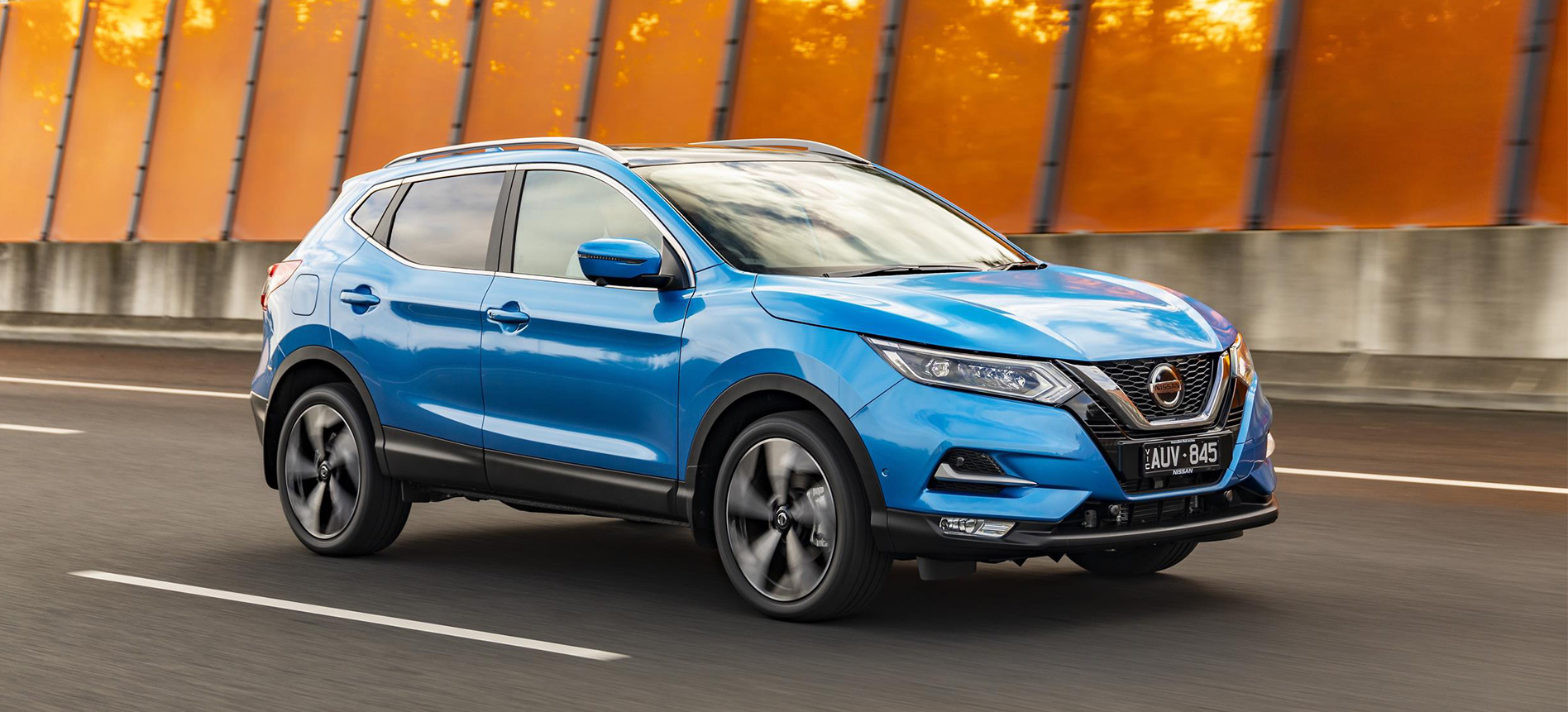
Nissan – along with other Japanse carmakers – has sought 500 billion yen (AUD$7.2 billion) in financing from Japanese lenders in order to weather the coronavirus crisis, but it’ll take more than money to set the brand on the straight and narrow for its future.
We’ll know more about the company’s plans late this month.
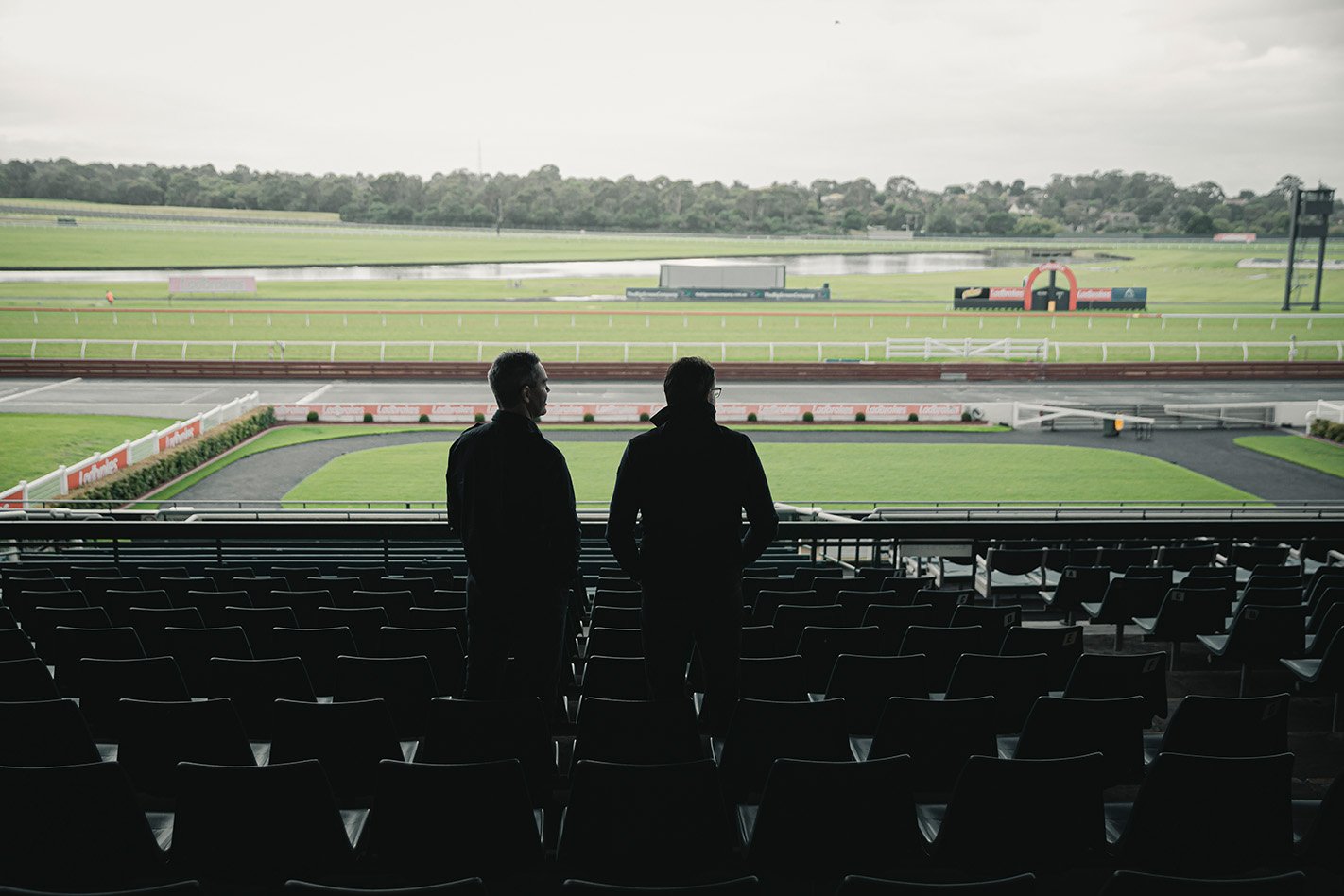
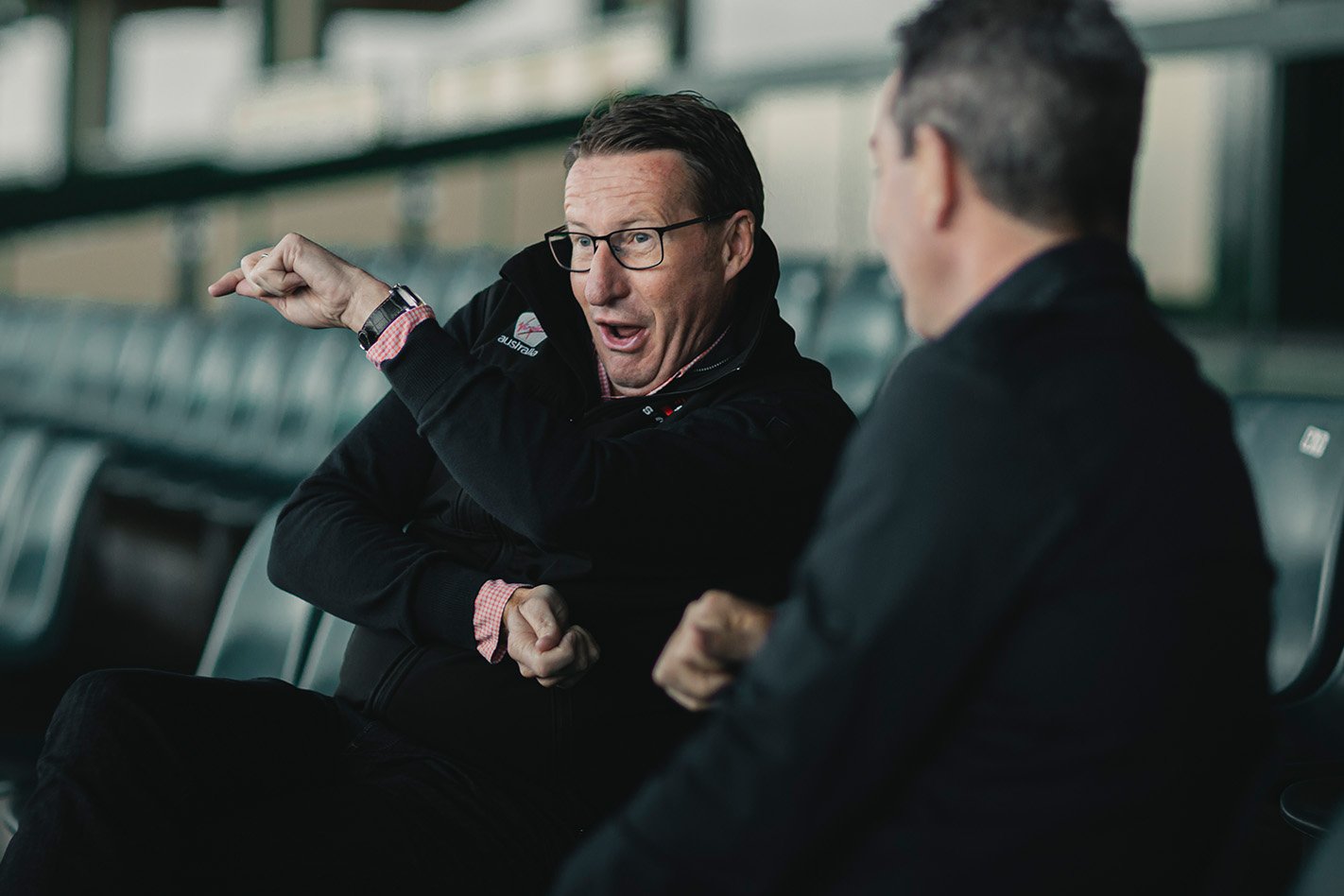
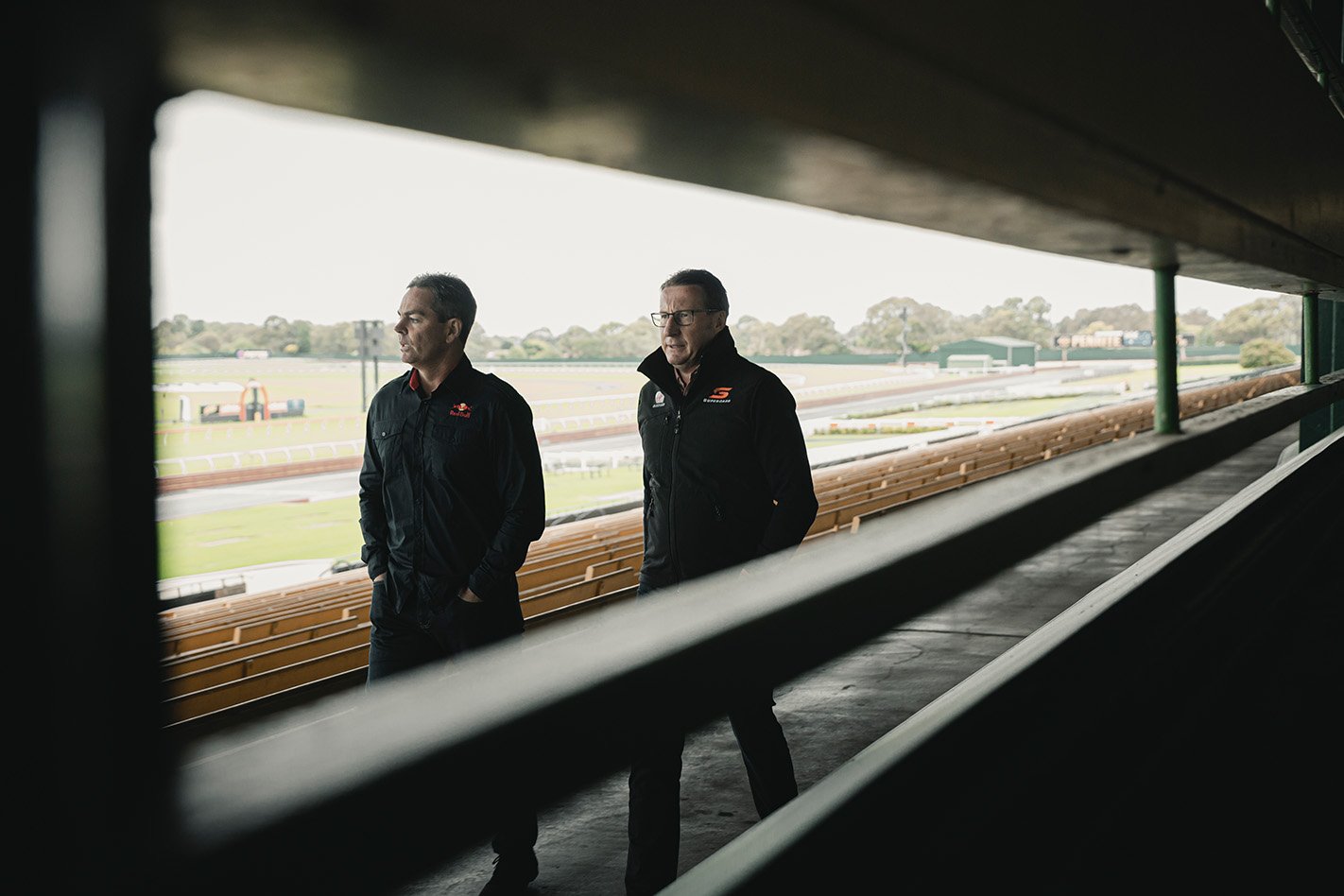
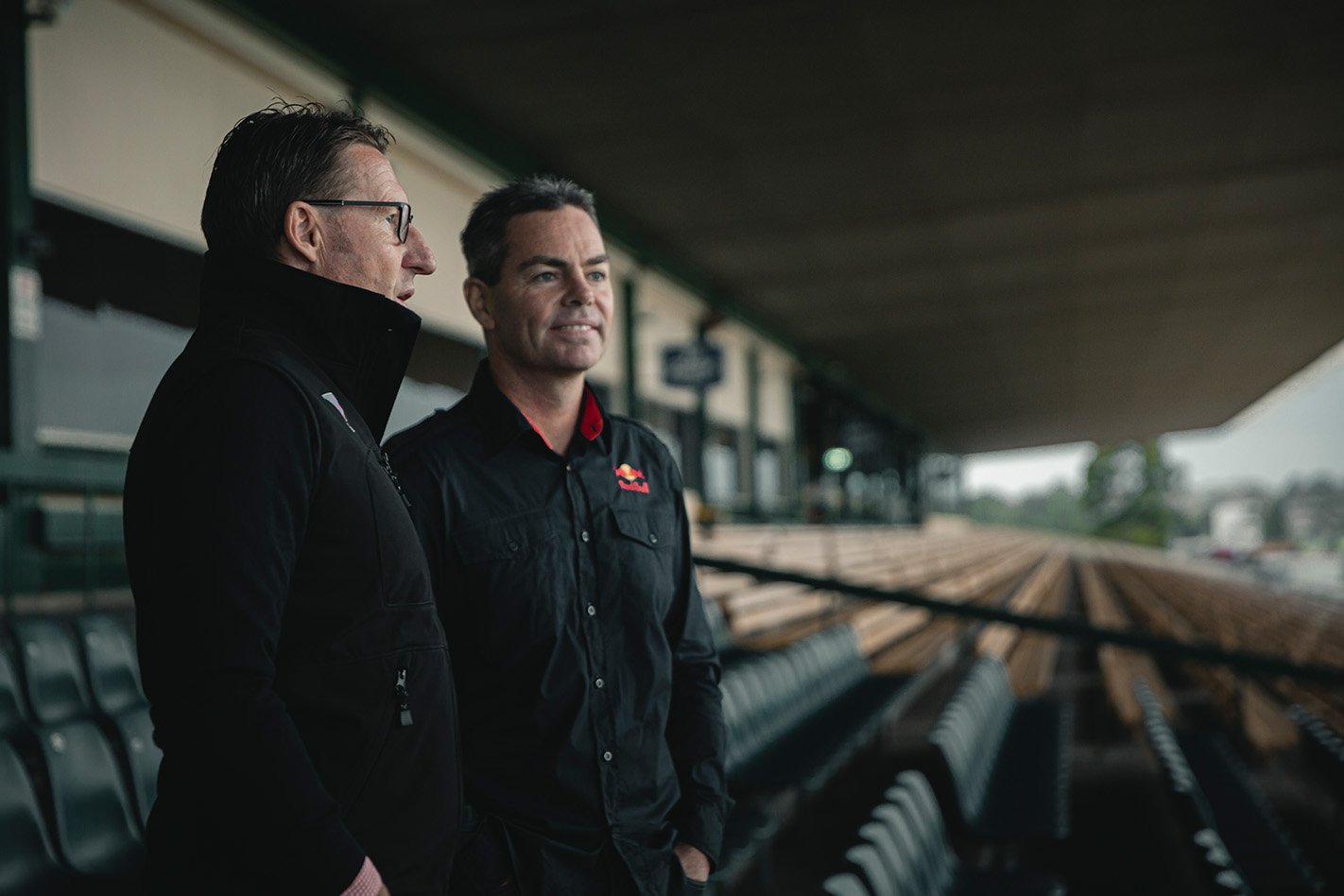
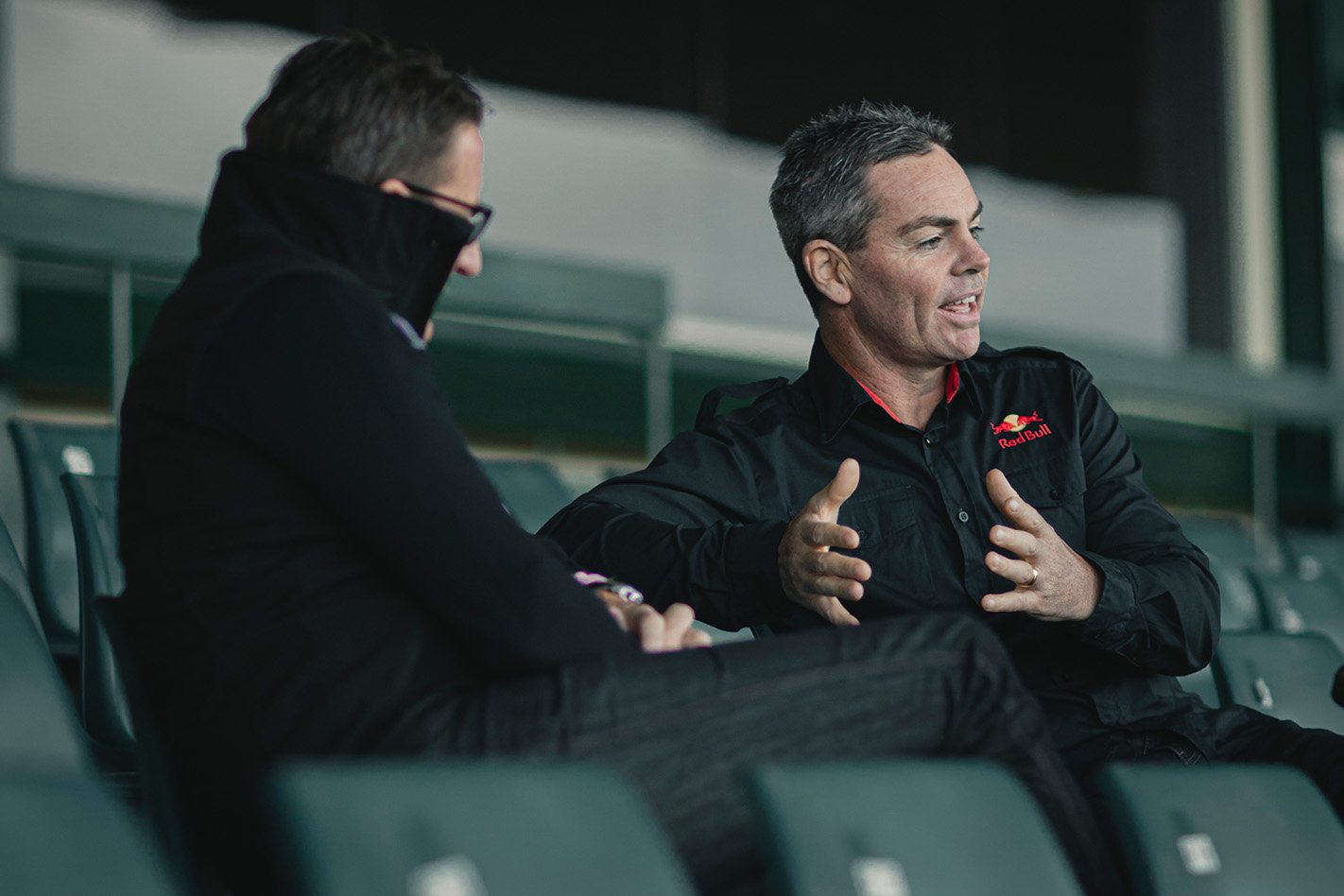
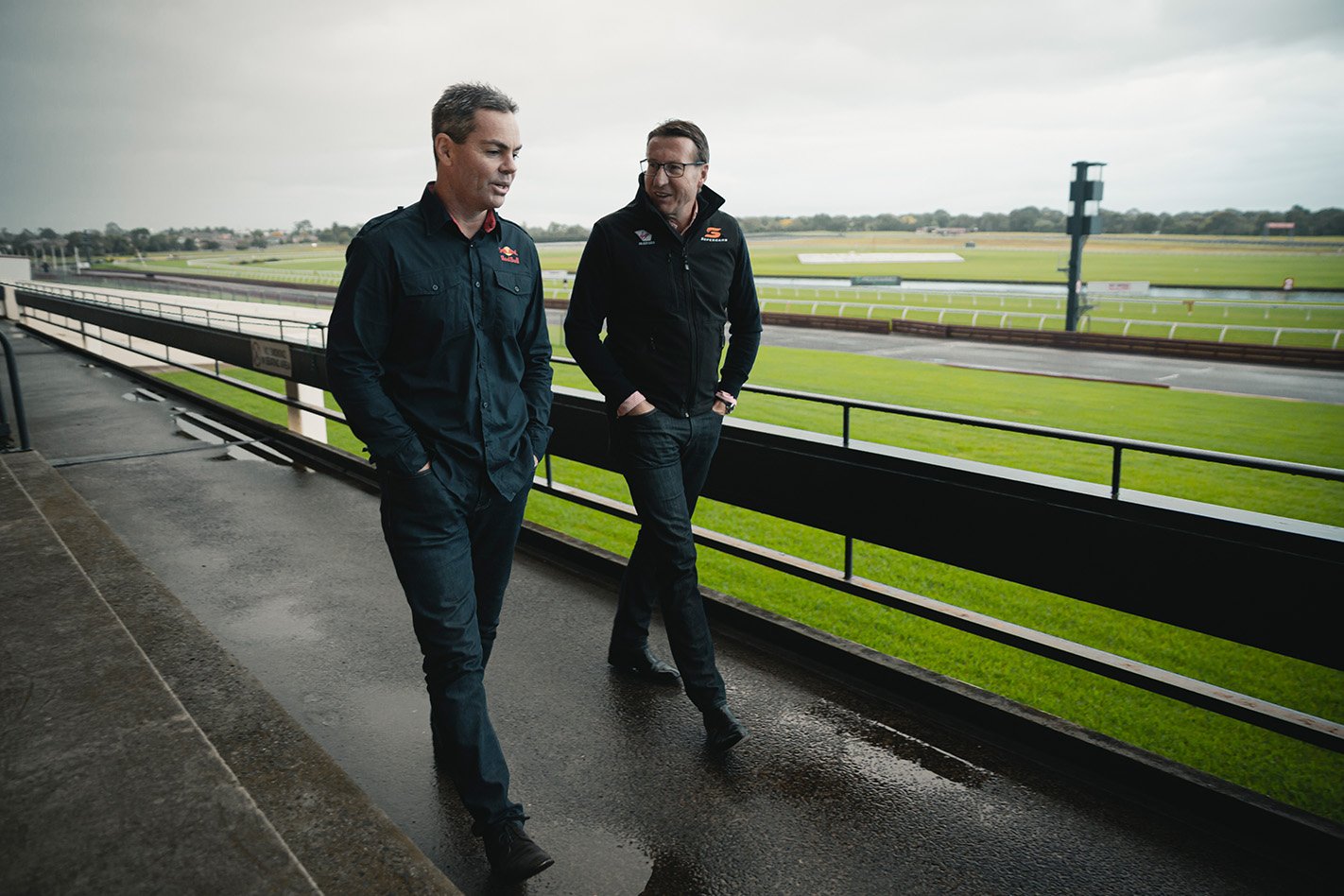
It’s a grey Friday morning at Melbourne’s Sandown International Raceway. Already, at 7:30am, the mowers are out trimming the lawns ahead of a coming horse race meeting. But we’re here to talk about a different kind of horsepower with Mark Skaife and Craig Lowndes, two true greats of Australia’s touring car and Supercars wars.
Sitting here in the famous main straight grandstand they do what motor racing people tend to do when they get together. They remember.
“One of my most vivid memories of this place is when Fangio did the exhibition that time,” Skaife says. “I was standing in the pit area and he came out of turn one sideways fully gassed up. It was brilliant!”
Skaife cracks that crooked smile, then laughs in that distinctive giggling way of his. He has such a serious, intense persona that it comes as a shock when you hear it. Lowndes, well he’s smiling and laughing too. No surprise there. The most popular driver in Supercars is renowned for his cheer, even though it camouflages a deeply competitive instinct.
Skaife, 52, made his touring car debut here in 1987 in a 2.0-litre Nissan Gazelle and won his class. Lowndes, 45, debuted here in 1994 in a Holden Racing Team Commodore, which he shared with Brad Jones to finish fifth outright.
“I knew my way around here really well because I was doing a lot of driving instructor work and doing lots of laps in road cars,” Lowndes says. A few weeks later at Bathurst he passed John Bowe for the lead late in the race and a star was born.
We’re not only here for a happy steer down memory lane though. Our subject is the demise of Holden. As much as that impacts almost everyone in Australia in some way, its departure won’t be felt anywhere more keenly than in our most important motorsport category.
Ever since the first one was made in 1948, Holdens have been raced. Since 1969 the company has continuously been involved in touring car racing directly or indirectly. No other brand – not even greatest rival Ford – can boast that connection to the category, that much influence or that much return from the many millions it invested.
The immortal cars: Monaros, Toranas, Commodores. The legendary drivers: Brock, Skaife, Lowndes, Whincup, Perkins, Tander, Murphy, van Gisbergen, Richards, Harvey, Morris, Grice. The great bosses: Firth, Sheppard, Gibson, Walkinshaw, Crennan, Dane.
Holden’s success is written large in the record books; more Bathurst wins, more drivers’ championships, more of just about everything. But, from 2021, nothing.
“I was shocked,” Lowndes admits. “We knew the Commodore was going to be phased out, but I didn’t think a brand like Holden would leave the shores of Australia.”
Adds Skaife: “The vividness and harshness of that decision… Bang! Holden gone. I don’t think anyone in Australia ever really thought that Holden, as an iconic ingrained brand, would ever not be part of our psyche.
“There’s this family, cultural heartland DNA about Holden that embodies Australia. The power of a decision to say ‘that’s not part of us anymore’ is a really powerful, emotional thing.”
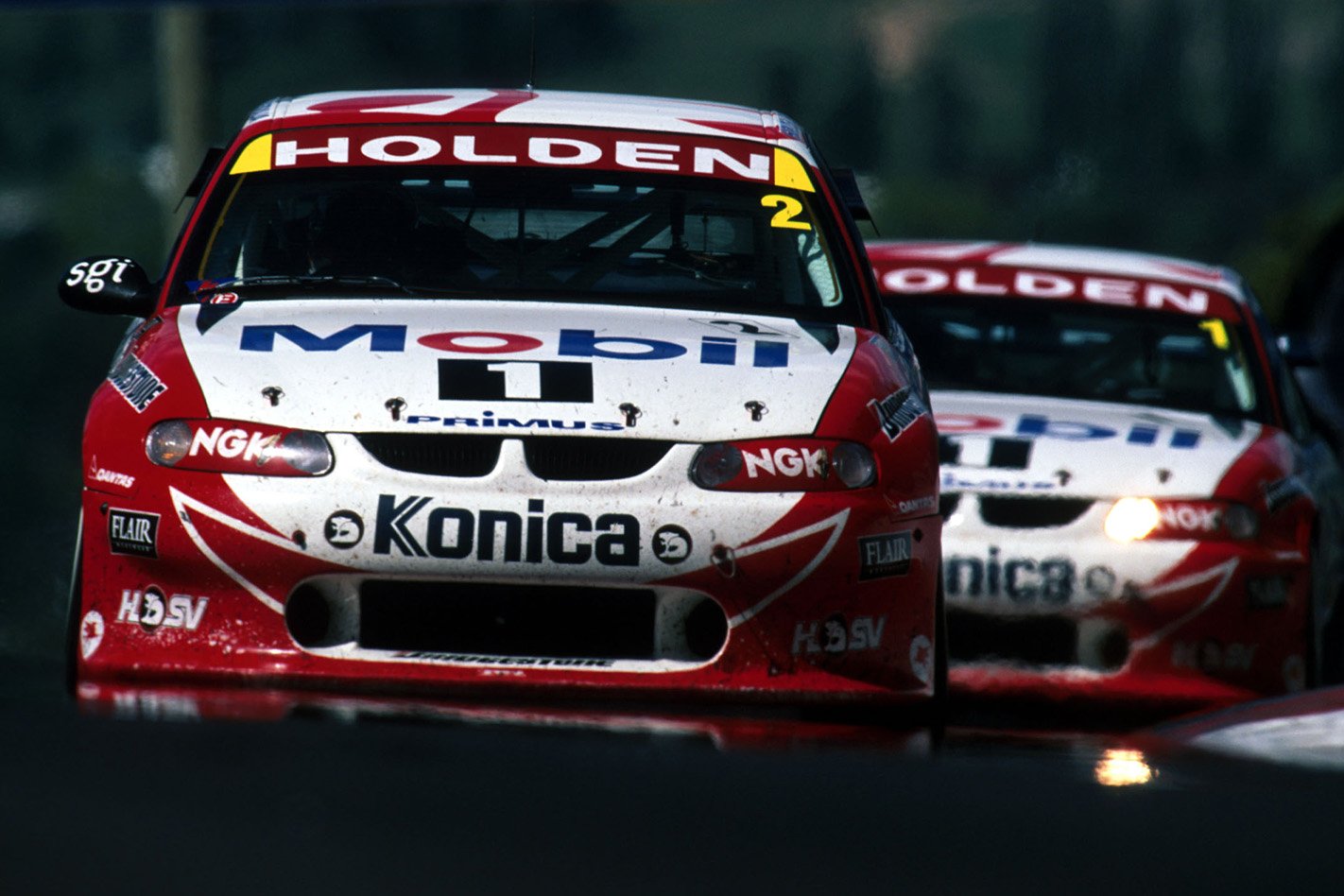
When Holden was last at its peak in the late 1990s and early 2000s, selling nearly 100,000 Commodores annually and leading the market, Lowndes and then Skaife were dominating the circuits of Australia in their Holden Racing Team Commodores. They were the two best drivers in the two best cars, Australia’s equivalent of the Ferrari Formula 1 team, and they were followed by an equally fanatical ‘Team Red’ support base. Apart from the great Peter Brock, no Holden driver has ever been more feted or recognised than these two.
Those were the days when Holden and Ford were each tipping about $15 million into the category each year. Drivers’ salaries were headed for the $1 million per annum mark, they flew at the front of the plane, and they stayed at five-star hotels.
HRT and its sister teams were based just down the road from Sandown, in the south-eastern Melbourne suburb of Clayton, alongside the HSV high-performance road car business.
It was a virtuous circle of promotion for Holden, HSV and HRT.
“We’d have open days in Clayton at HRT and up to 30,000 people would show up,” remembers Lowndes.
“It was unbelievable, career-defining,” adds Skaife. “When you think about Holden and their consistency of messaging, from their Monaro days in the late 1960s right through to the factory team as HRT, those days were profound.
“The factory team status means everyone owns it. The dealers think it’s theirs, the Holden factory thinks it’s theirs, the workers at the factory think it’s theirs, anyone who owns a Holden thinks it’s theirs. There’s this incredible level of patronage and support that comes as a factory team.”
In that era from 1996 to 2002, Lowndes, Skaife and HRT won three Bathurst 1000s and six drivers’ championships in seven years.
But Lowndes and Skaife also experienced the dark side of the factory glory story.
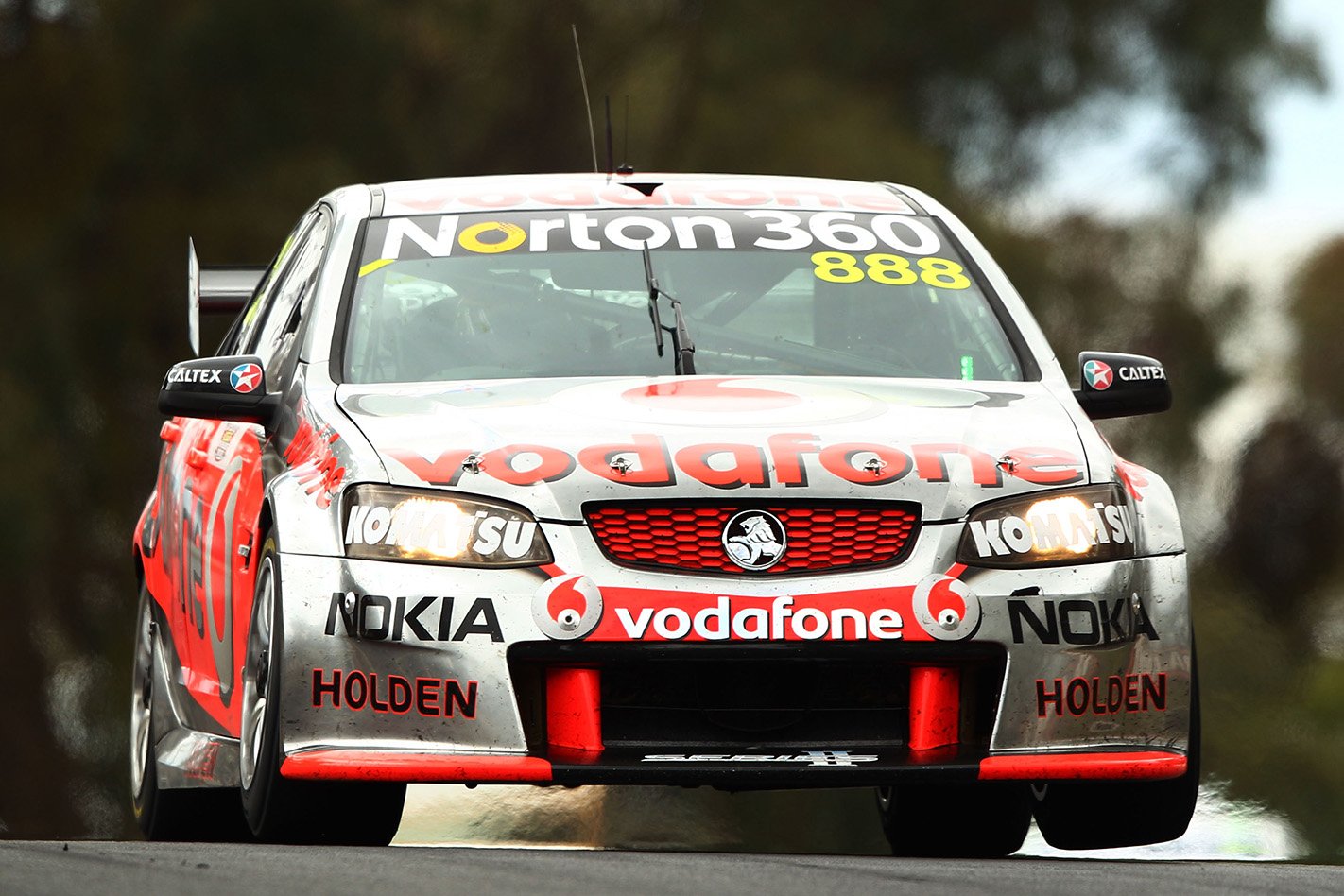
Lowndes created national headlines, even triggered death threats, when he split from Holden in 2000 and went to Ford. He was in the wilderness until he settled with Roland Dane’s Triple Eight squad. Eventually he would become a Holden factory driver once more. He’s still co-driving, Brock’s record nine Bathurst wins now just two away.
“Moving to Triple Eight extended my career,” Lowndes says. “If we didn’t come back to Holden and have some success, I think my career would have ended earlier.”
Skaife became the owner of HRT in 2003 after Tom Walkinshaw’s TWR business went broke. By 2008 he had sold it back to Walkinshaw and by the end of the same year he had retired from full-time driving.
Skaife got a blunt lesson in the politics, the multimillion-dollar costs, the ruthlessness of it all. Supercars is a hard-nosed business most of the week and a sport for only a few hours each weekend. Holden was not immune to this.
“If I had my choice, I would do it again,” Skaife insists. “But it did take the fun out of it for me and in a weird way it probably did shorten my full-time racing career because the demands around it were pretty intense.”
Skaife is more forensic about Holden’s rise and decline. It is his way. He’s always worked the room, networked, enjoyed the off-track powerplays and the rewards these carefully cultivated personal relationships deliver. Skaife gave Holden many fabulous wins and a lot of promotional tools, but he also got a lot back in terms of understanding how big business – especially the automotive business – works.
“One of the things we miss in this whole debate about the local car industry and what’s actually involved, so much of it is just about people,” he says. “They make such a difference. It’s not necessarily what the factory means. If you have a dud managing director at the time, it’s not that great.”
To back up his point, Skaife recounts the story of his first meeting with Holden’s then marketing chief, the late Rob McEniry, when Gibson Motorsport was tossing up its post-Nissan future in 1992.
“I wanted to go with Holden just because of Rob. He was this powerful, all-encompassing, massively motivated, incredibly clever, absolute car bloke.”
And it wasn’t only McEniry. Other Holden executives such as sales and marketing director Ross McKenzie and MDs including Peter Hanenberger were fierce competitors who relished beating Ford as much on the racetrack as in the sales charts.
When Lowndes shifted to Ford he found the different culture remarkable.
“Holden was more of a go-getter. They would just go and do something, do an activation or something, and hopefully get a reward from it. Whereas Ford would do the research and development to see what they could get from it, and by the time that had come back it had already moved on.
“That was a real eye-opener for me. Ford was really conservative, whereas Holden was blazing through like a bulldozer and trying to create and control everything.”
But in more recent times – as Commodore sales waned, as the factory closed, as it searched for a new identity and as one MD after another revolved through the corner office – Holden even considered withdrawing from racing altogether.
It didn’t, but the factory investment, reduced to no more than a couple of million dollars, was stripped from Clayton and awarded solely to Triple Eight in Brisbane. Instead of being integral to Holden, racing was merely an add-on.
Ford did pull out for a few years – as it did a number of times over the decades – although it is back in now. Who would have thought it would be last man standing in the Australian touring car war?
As far as Lowndes and Skaife are concerned, the Supercars fan base is still tribal. Sure it’s been diluted by drivers and teams changing loyalties, but the fan reaction they encountered at the opening 2020 Supercars event in Adelaide was stark.
“It’s still red and blue out there,” Lowndes says. “You go out in the crowd and there’s no doubt about that.”
Skaife agrees: “I had people coming up in tears. ‘What are we going to do? Who are we going to go for? I just bought a car.’ ”
So what happens now? A foundation stone of Australian racing has been wrenched away. What will the impact of Holden’s departure be?
“The category will evolve,” Lowndes insists. “I remember watching a film of Minis and Cortinas running around, then it became Group A and the Godzilla era with turbos and four-wheel drive. Since then we’ve gone full circle back to V8s with rear-wheel drive.
“Not that long ago there were five manufacturers and this year we are back to two. The category will evolve and we just have to keep it an entertaining package and make sure other manufacturers are tempted into the sport.”
Skaife argues Supercars will survive because it has become more popular in an era where Holden’s market share has declined.
“Our television audience has gone up, our attendances have gone up, our government support has increased. The metrics, the business itself, is very strong and robust. It makes good money.
“My single thing is you have got to take those Holden fans on the journey with you. It’s much easier to keep a current customer than it is to find a new one.
“So take those people on the journey, and hopefully GM has got a product you can do that with.”
He’s talking about the Chev Camaro coupe. If the new Gen3 technical rules can be finalised in time, its introduction could happen as soon as 2021.
The timing is loaded with historical significance. In 1971 Bob Jane won at Sandown, starting from pole in front of this very grandstand on his way to the 1971 ATCC in a Camaro ZL1. Reintroducing the Camaro to Australia’s premier series 50 years on from such a landmark moment would invoke a certain symmetry.
Skaife motions to the empty seats around him as he makes his final point. Whatever replaces Holden, the essentials of the Supercars show must be retained.
“Sit right here and watch these things blaze past and people go ‘wow!’ It’s wow, the DNA of what we have got is wow. And that’s what is really important about the next generation of cars.”
RED-BLOODED RIVALRY
The connection to Holden for Skaife and Lowndes runs deeper and earlier than their tin-top racing days.
Craig’s father, Frank, worked for Brock at the Holden Dealer Team and the young Lowndes spent his childhood scampering around the pits at places like Sandown. At age 19 in 1994 he was testing for HRT, by 1996 he was locked in alongside Brock with a full-time drive. That year he swept the triple crown – the championship, Sandown 500 and Bathurst 1000 – a 22-year-old thinking about nothing else but going fast.
“The development of the car back then was just unbelievable and it was basically, whatever you wanted to dream up they would create,” Lowndes recalls.
Skaife also grew up around Holdens: his grandfather religiously purchased Holden utes for his tyre businesses; father Russell’s first race car was a Torana XU-1; his own first car was a WB ute; and his first race car was an XU-1. Skaife came to prominence in a Ford Laser and joined the factory Nissan team, but he was back in a Holden from 1993. Skaife won Bathurst that year with Jim Richards and in 1994 delivered Holden’s first touring car title since Brock in 1980. He moved to HRT full-time in 1998 to drive alongside – and against – Lowndes.
“On each side of the garage there was an incredible intent to win, which kept driving the whole thing the whole time,” says Skaife, whose arrival at HRT was one of the reasons Lowndes eventually left for Ford.
Lowndes and Skaife reunited at Triple Eight to win the Bathurst 1000 in 2010. Today, they commentate together on Supercars for Fox Sports.
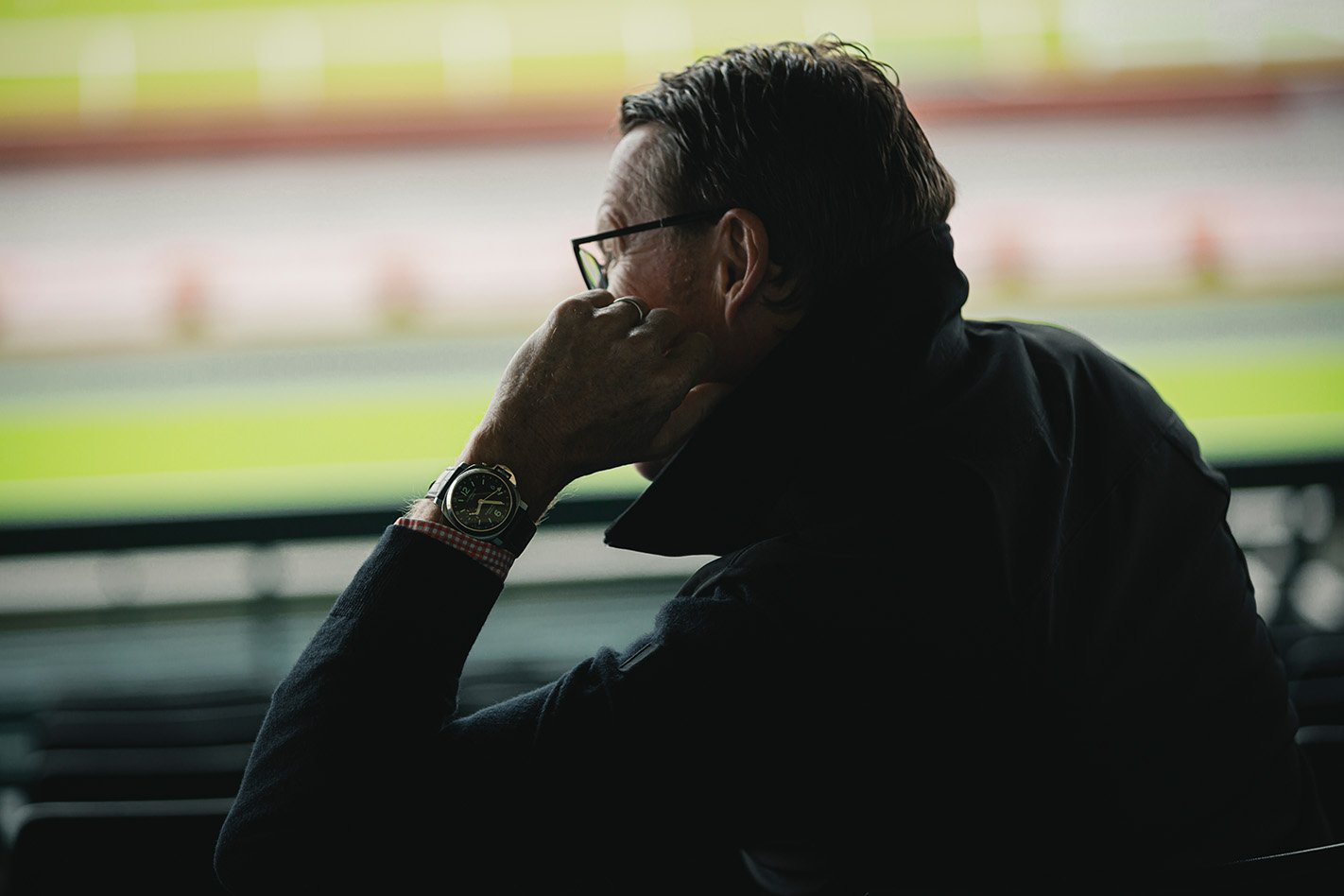
Get to know Mark Skaife
- Age: 52
- Born: Central Coast, NSW
- Lives: Melbourne, Vic
- ATCC/Supercars championship wins: 5
- Bathurst 1000 victories: 6
Best Holden race: 2000 Clipsal 500 Leg 2. Last-to-first in the wet started Skaife’s drive to his first championship with HRT. “It was a pretty wild day. It was raining all day and I think there were 38 cars on the grid. It was a good race and I was having a great battle with Craig through the course of it. I got a drive-through penalty as well that day, so put that down as one of my best wins.”
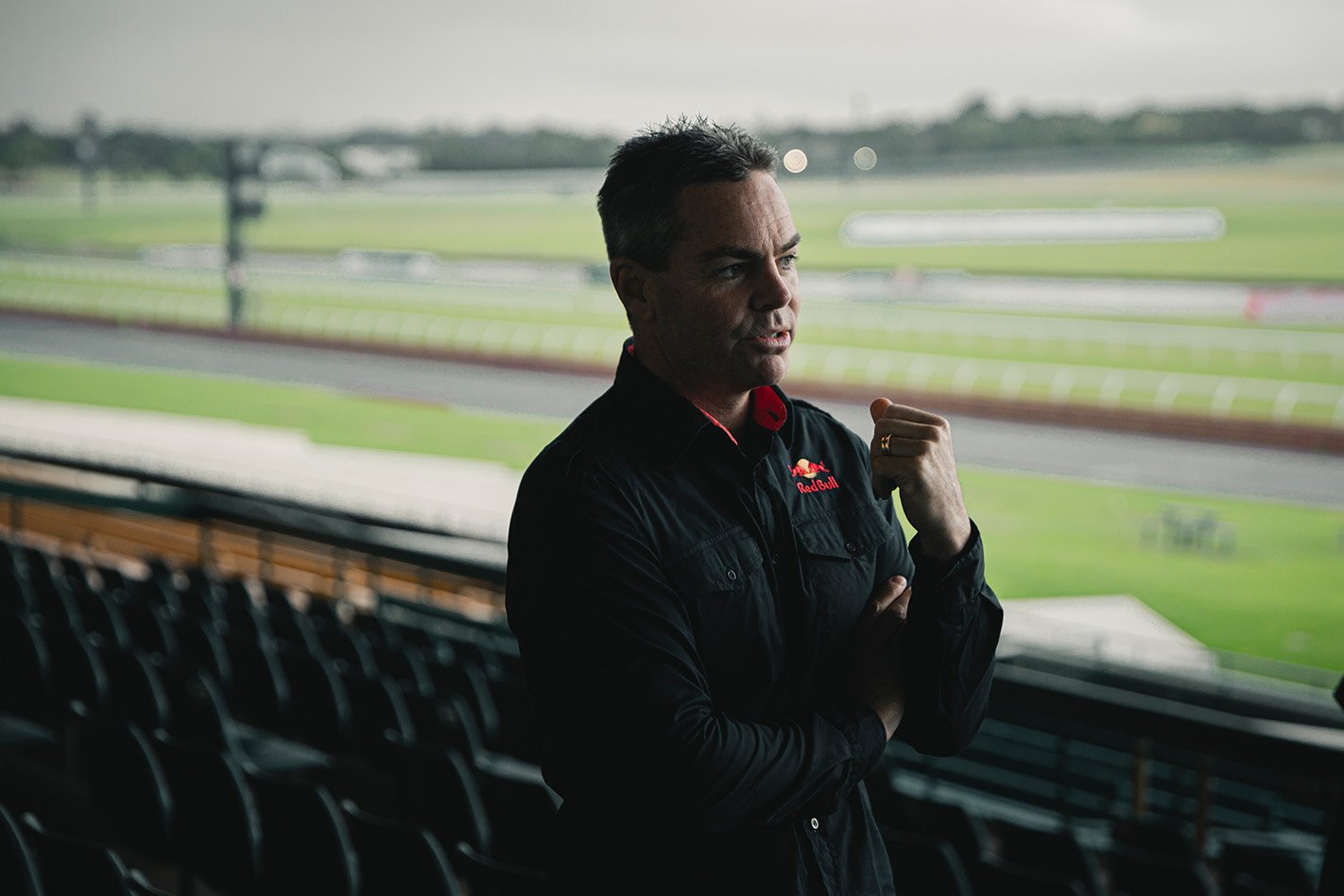
Get to know Craig Lowndes
- Age: 45
- Born: Melbourne, Vic
- Lives: Brisbane, Qld
- ATCC/Supercars championship wins: 3
- Bathurst 1000 victories: 7
Best Holden race: 2010 Bathurst 1000. Lowndes drove a huge 79-lap stint to lead home a Triple Eight 1-2 after co-driver Skaife suffered a back injury mid-race. “That was one of the biggest challenges mentally, just to keep going for each stint.”
An affordable electric Volkswagen could follow in the Beetle’s tyre tracks as the ‘people’s car’ for the 21st Century, following reports the German giant could launch a VW-branded zero-emissions range available to the masses.
The company’s Spanish marque SEAT had been earmarked to spearhead a new family of cheap electric compact cars into the Chinese market, but global turmoil has lead to that strategy’s scrapping and room for a new one in its place.
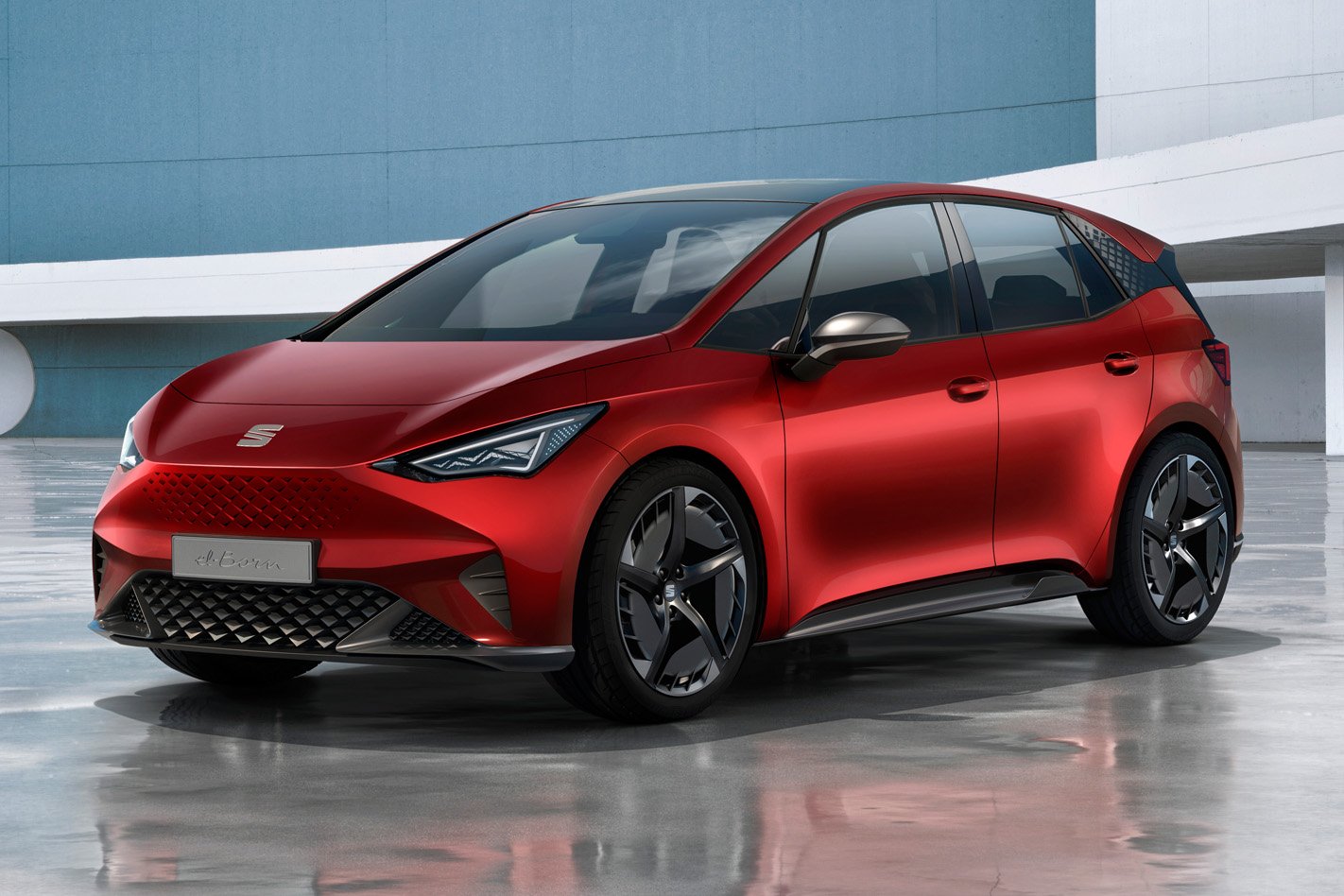
In partnership with JAC Automotive low-cost manufacturing, China’s lucrative electric vehicle arena was the obvious place to introduce an affordable electric-only range, but a looming recession caused by the coronavirus crisis, coupled with recently reduced EV incentives put a nail in SEAT’s big moment.
Now, it seems Volkswagen itself has been muscled to the front of the line as the most likely brand to carry the new low-cost EV mantle into a new era, and that could mean the advent of electric motoring for everyone.
While it would have been highly unlikely to ever see a range of EVs rolling out in Australia wearing the continentally esoteric SEAT badge, it’s far more probable Australians and the rest of the world will get a piece of the electric action as part of the popular VW wheelhouse.
Volkswagen will continue to partner with the Chinese state-owned manufacturer in development and manufacturing projects, but if the models will be produced in other parts of the world is unconfirmed – that crucial element will decide where the cheap VWs are made available as well.
If the line-up also originates outside China, showroom prices are unlikely to come in at the rumoured sub-€20,000 mark (less than $35,000), but there’s every chance base models will better the current cheapest EV in Australia – the MG ZS EV that’s priced from $46,990.
Charged with battery
Whatever the new VW looks like, it will certainly thank a small battery for its more affordable price. While Tesla and other premium offerings continue to boost range toward the milestone 1000km mark and circa-$100k price tags, largely urban-confined EVs require a fraction of that range.
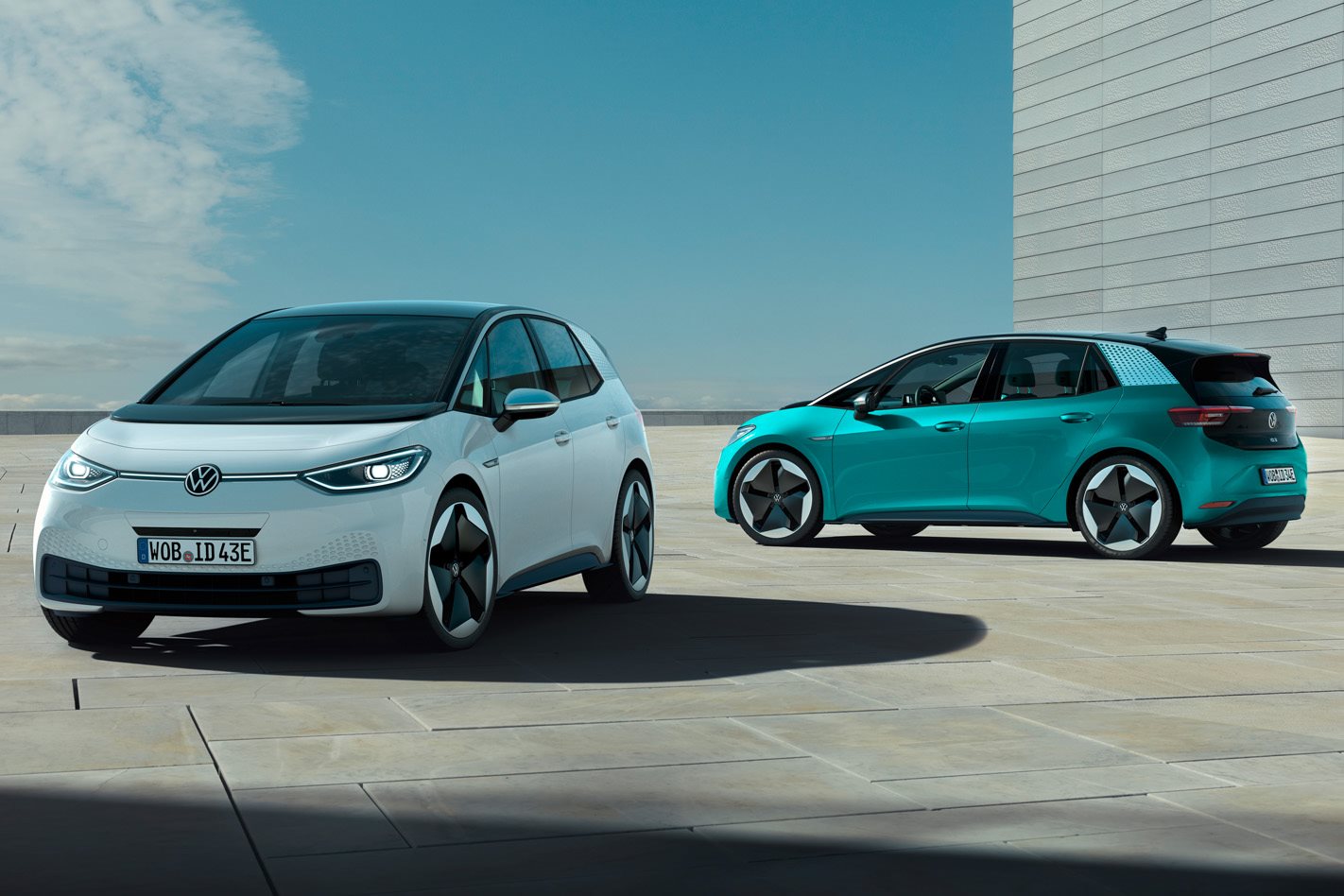
Coupled with more compact, energy dense battery technology rolling out on a regular basis, growth in the small car market has great potential particularly in mass markets. You can expect smaller, lighter, cheaper EVs to find a foothold whether it’s badged a VW or not.
And those smaller options that don’t break the bank will offer between 150km and 300km in the ‘tank’.
For the German manufacturer’s baby, extra production outside of Chinese borders will almost certainly indicate build quality and manufacturing standards to satisfy more demanding markets. And that scenario certainly fits with Volkswagen’s own grand plan and vision.
The 3 found in the company’s first pure electric car name – the ID3 – represents the third volume hero model in its history, getting in line behind the Beetle and the Golf.
Although whether the new range of bargain basement EVs will be marketed under the growing ID family remains to be seen.
As a global automotive group, Volkswagen has a generous number of brands to chose from but the list is dramatically shortened when it comes to fitting a budget persona. It’s hard to imagine anything other than the now ineligible SEAT, Skoda or the Volkswagen brand itself supporting the new line of EVs for the people.
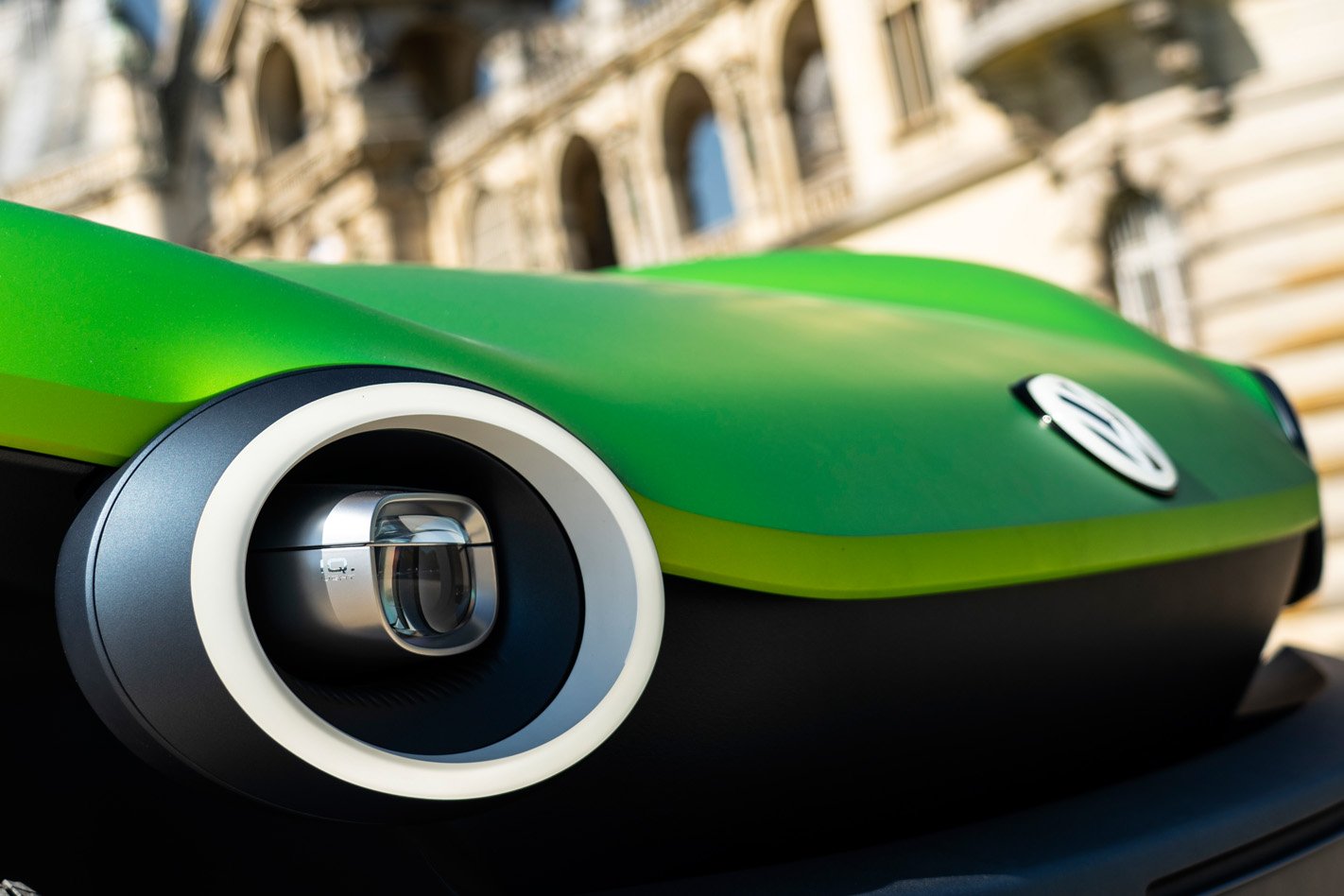
Unless, that is, the company is planning to forge an all-new brand as part of the venture.
Australian F1 driver Daniel Ricciardo will jump ship from Renault to McLaren, in the wake of the confirmation of Ferrari driver Sebastian Vettel’s departure from Ferrari.
He has signed a multi-year deal that kicks off in 2021.
“Signing Daniel is another step forward in our long-term plan and will bring an exciting new dimension to the team, alongside Lando. This is good news for our team, partners and of course our fans,” said team principal Zak Brown.
“I also want to pay tribute to Carlos for the excellent job he has been doing for McLaren in helping our performance recovery plan. He is a real team player and we wish him well for his future beyond McLaren.”
Vettel’s announcement triggered a tsunami of driver movements, with Spanish racer Carlos Sainz, whose departure has now been confirmed after two years at McLaren, to join young Monegasque ace Charles LeClerc at Ferrari on a two-year deal.
There’s a certain irony here – Sainz was forced to vacate his seat for Ricciardo to join Renault in 2019.
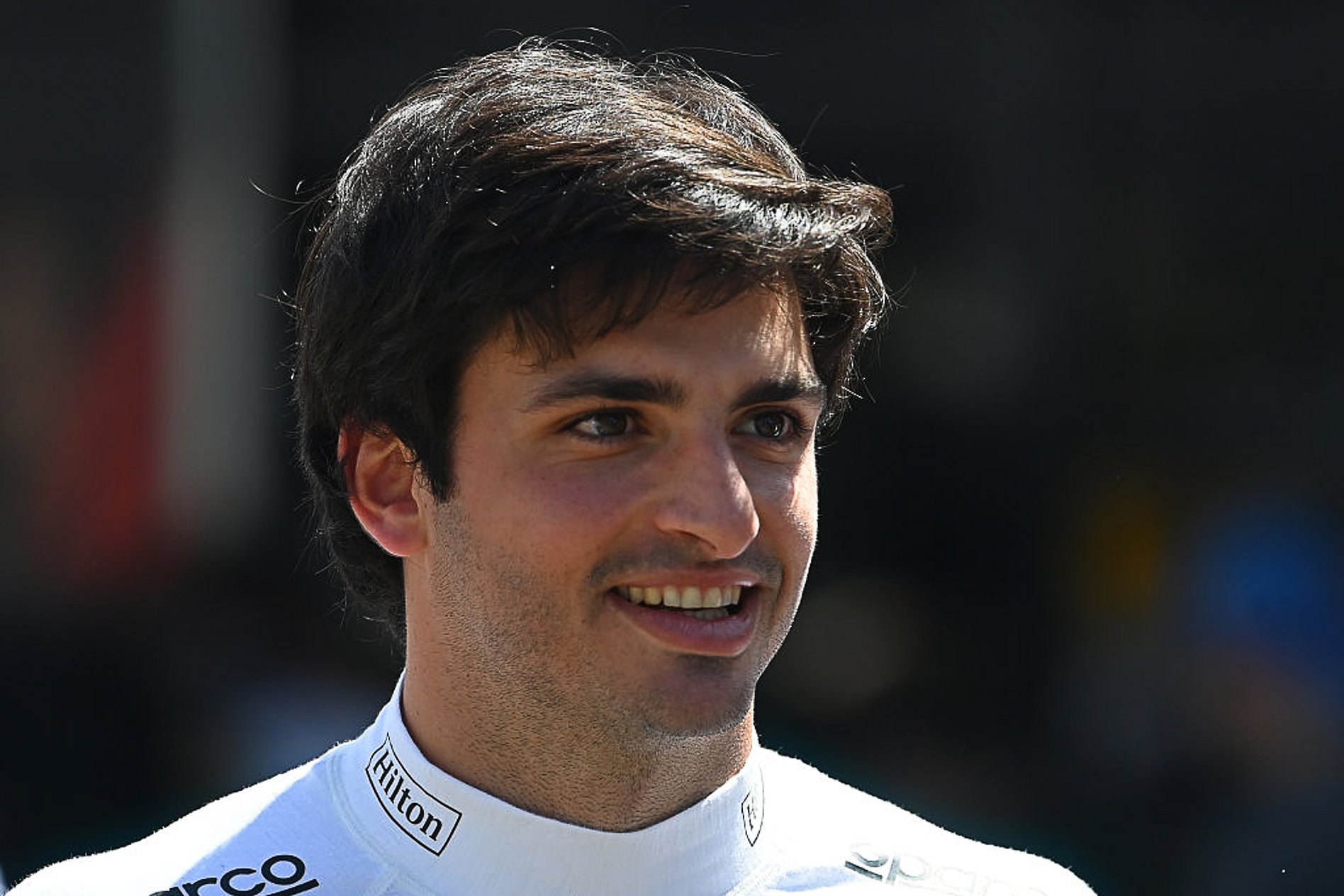
With Sainz supposedly bound for Maranello this, in turn, has freed up a seat at a revitalised McLaren, which is finding success after a period in the doldrums.
It’s this success that has attracted Western Australian Daniel Ricciardo, whose switch from Red Bull to Renault in 2019 has – unsurprisingly to some – netted nothing in the way of results.
It’s well known that McLaren courted Ricciardo in 2018 as the Aussie F1 ace, with seven wins to his name, struggled to decide on a future away from the Red Bull team he’d called home for a decade.
Ricciardo signed for the French powerhouse team under the illusion that Renault would produce the pace that has carried it to multiple world titles during its time in F1.
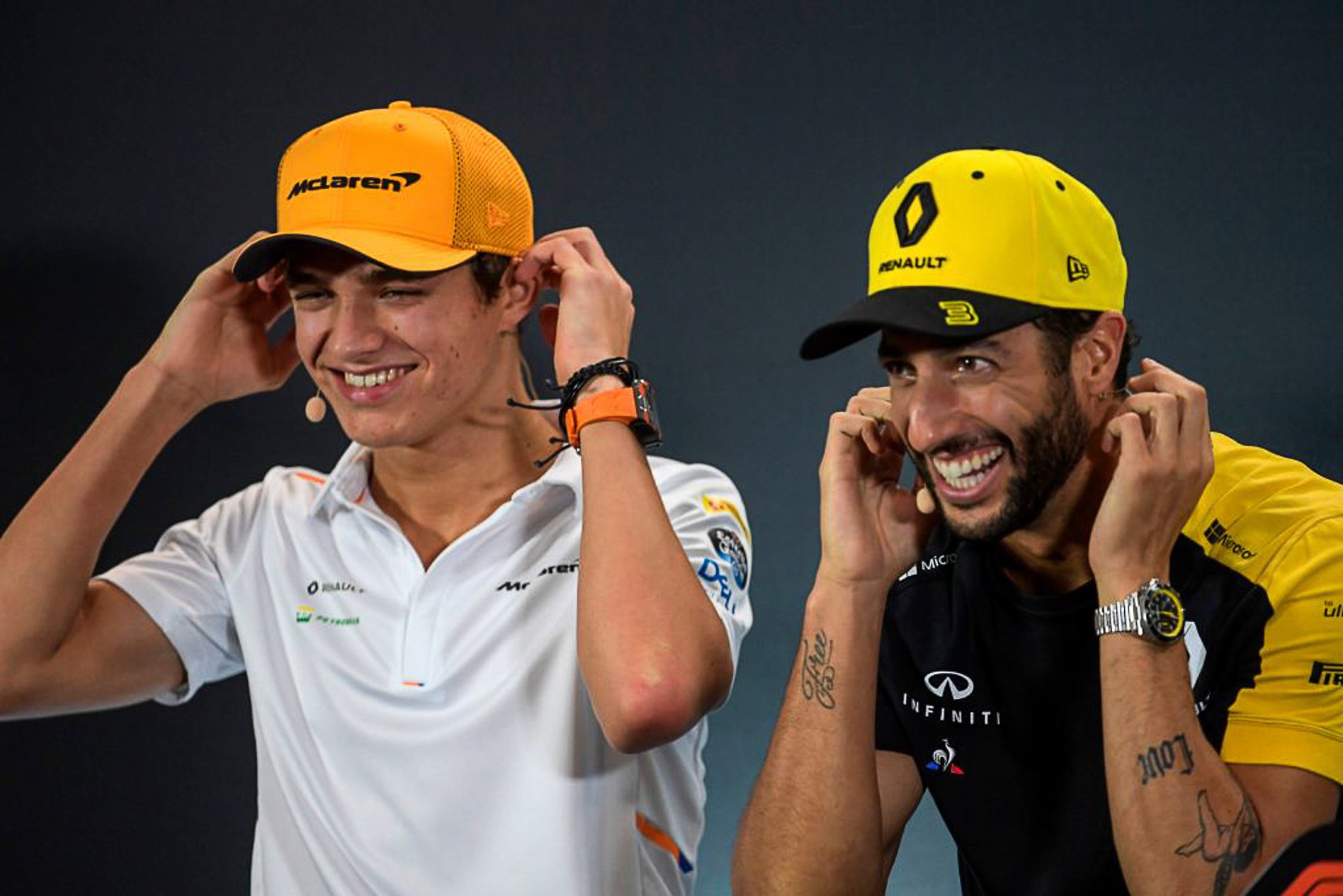
Lando Norris will partner Ricciardo in 2021
However, Ricciardo’s best place in 2019 was fourth, suffering an ignominious self-inflicted wing failure in his first Australian Grand Prix with the team.
And in F1, you are only as good as the car you find yourself in – as Mark Webber can attest.
His two-year contract – while a good one for Daniel Ricciardo’s net worth – hasn’t heralded a return to fortune for Renault.
And the split appears to be less than harmonious.
“Within the unprecedented context of the 2020 season, discussions held with Daniel Ricciardo concerning a renewal of his contract beyond the end of 2020 have not been successful,’ reads a terse press release from Renault
“In our sport, and particularly within the current extraordinary situation, reciprocated confidence, unity and commitment are, more than ever, critical values for a works team,” said Renault managing director Cyril Abiteboul, in an unsubtle dig at Ricciardo.
“I am confident that the 2020 season will allow us to accomplish even more together. Our ambitions and the strategy of Renault DP World F1 Team remain unchanged.”
By contrast, McLaren’s fortunes could not have gotten any lower at the end of 2017, after an acrimonious split with engine supplier Honda pushed the famed UK team into the hands of – somewhat ironically for Ricciardo – Renault to supply its power units.
Since then, the Woking-based team has come on in leaps and bounds, and is now the fourth-best team in pit lane behind Mercedes, Ferrari and Red Bull.
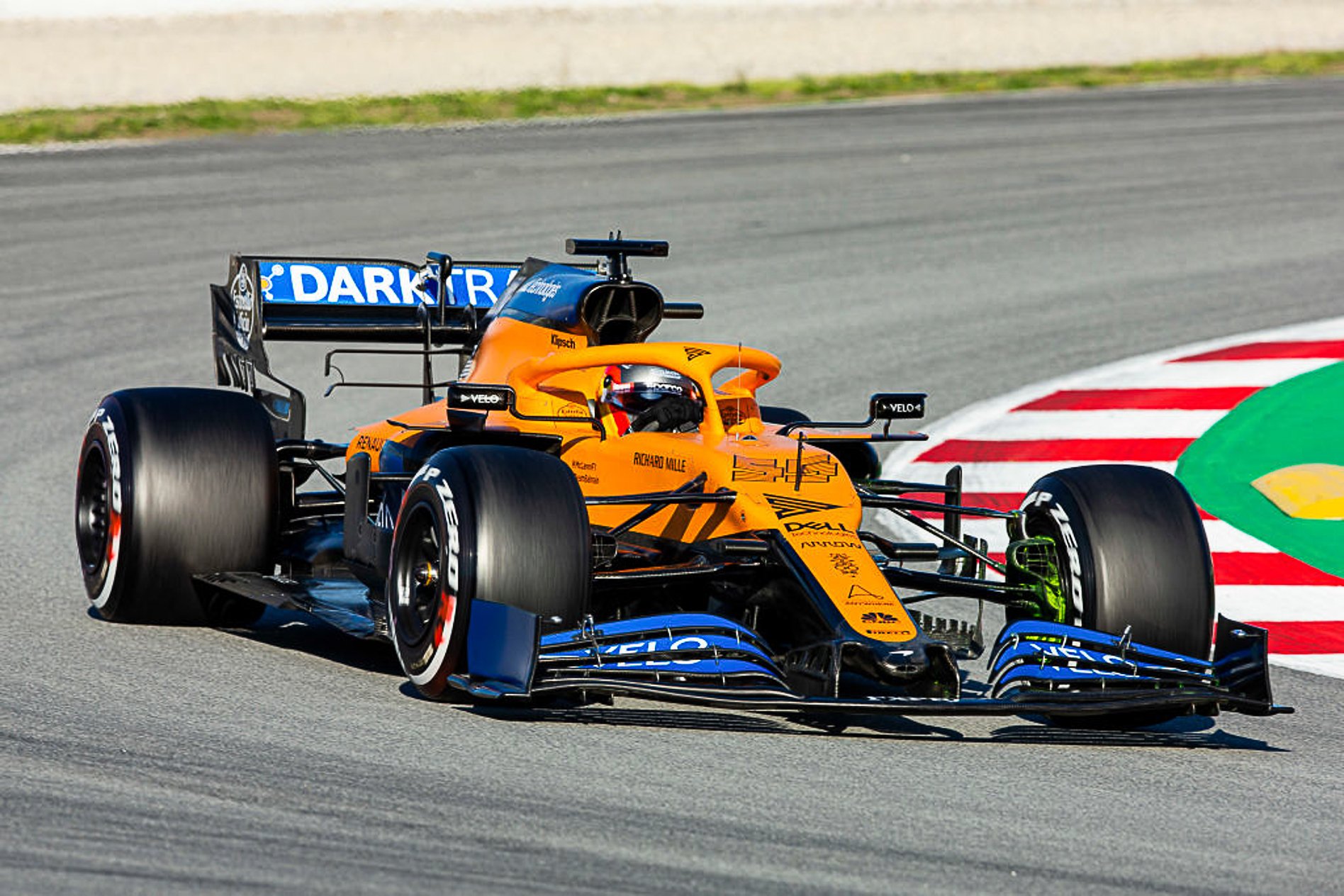
Ricciardo will join the McLaren team at a time where it’s about to switch from Renault to Mercedes power.
McLaren-Mercedes formed one of the most dynamic partnerships in the modern F1 age before Mercedes acquired the Brawn F1 team to form its own squad in 2014.
In the wake of the COVID-19 crisis and the crushing effect that it’s had on new car sales, though, there is a very real possibility that Mercedes will announce that it’s pulling out of F1 at the end of 2020.
After a lengthy period of absolute domination, Mercedes may well consider its time in F1 as a manufacturer is up, and it may roll back its efforts into simply supplying other teams with engines on a customer basis.
Looks like 2022 could be a very good year for a certain lanky Aussie with a Cheshire-cat grin.
Old ANCAP safety ratings could be misleading consumers as to which cars are safest, due to changes in the independent crash test authority’s testing protocols and an increased focus on crash avoidance technologies.
Five-star ratings earned up to a decade or more ago are in many cases outdated because they were awarded before the advent of crash avoidance systems that have since become commonplace in the new-car market.
It’s not helped by ANCAP claims such as “the more stars, the better the vehicle performed across ANCAP tests”, even when qualified with a statement suggesting newer cars are tested to more stringent criteria.
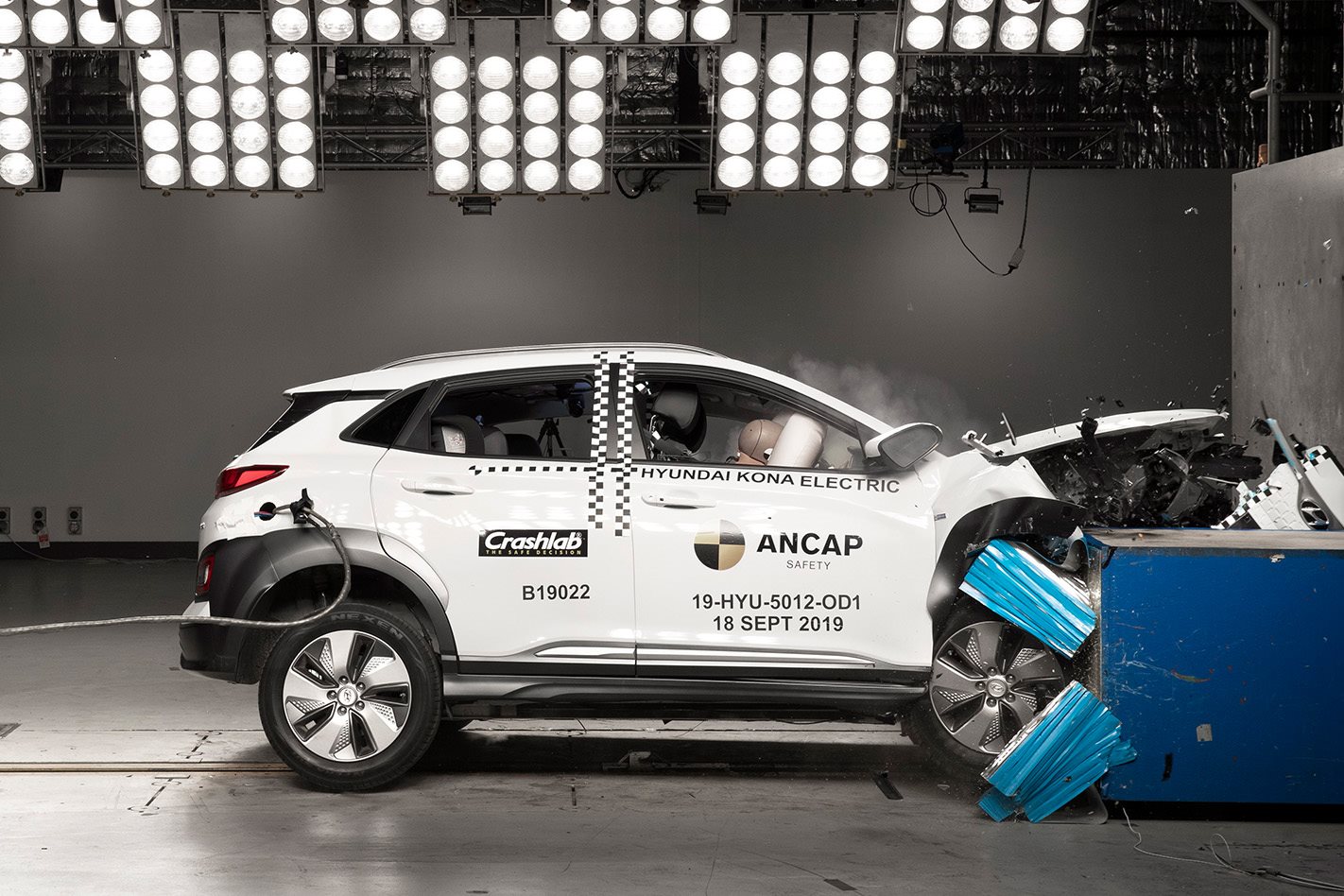
Even the NSW government’s Centre for Road Safety appears confused by the ANCAP requirements, incorrectly stating on its website that all vehicles receiving a five-star ANCAP rating “achieve the highest standards in all tests and feature advanced safety assist technologies”.
In a statement to Wheels, the executive director of the Centre for Road Safety, Bernard Carlon, did not address the issue of safety assist technologies, instead reiterating that “ANCAP ratings should be used for purchasing new vehicle models”.
It’s easy to understand the source of confusion. ANCAP’s current protocols span 21 documents and 604 pages, a tome unlikely to be digested by any prospective car buyer.
Some of the most popular cars on the road – including the Toyota LandCruiser 70-Series ute, Mitsubishi Pajero, Volkswagen Amarok, Toyota Prado and some versions of the Hyundai i30 and Honda Civic – get the maximum safety score but don’t get the latest active safety technology. They were tested between 2011 and 2017.
Some of those features are required for a modern five-star ANCAP rating; ANCAP standards have increased annually since 2011.
In the case of the Amarok ute, which received its ANCAP rating in 2011, it also doesn’t get airbag protection for rear occupants, something that would rule it out of receiving a five-star ANCAP rating if tested today.
One of the key technologies missing on various older cars is autonomous emergency braking (AEB), something commonplace on even mainstream new models but rare just a few years ago.
Manufacturers often appear unwilling to invest in engineering new safety aids into vehicles approaching the end of their lives, instead preferring to await the rollout of all-new models. And there is little incentive to invest in such tech if the existing five-star ANCAP rating can still be used.
While ANCAP now has policies in place to reassess cars that don’t meet modern five-star requirements – potentially downgrading their rating – they were only introduced in 2017. Cars tested before that can maintain their five-star ratings beyond the new six-year limit.
Kia Australia managing director Damien Meredith says comparing old ANCAP ratings with new is confusing for consumers and car makers.
“With the goalposts moving all the time, it’s confusing,” Meredith says. “The reality is that there are some four-star cars in 2020 that have more safety than a five-star car from a couple of years ago.”
Meredith is in part defending the four-star rating awarded to some variants of the Kia Cerato. While all models come with AEB, the S and Sport variants lack pedestrian and cyclist detection systems, marking them down in the ANCAP safety assist criteria.
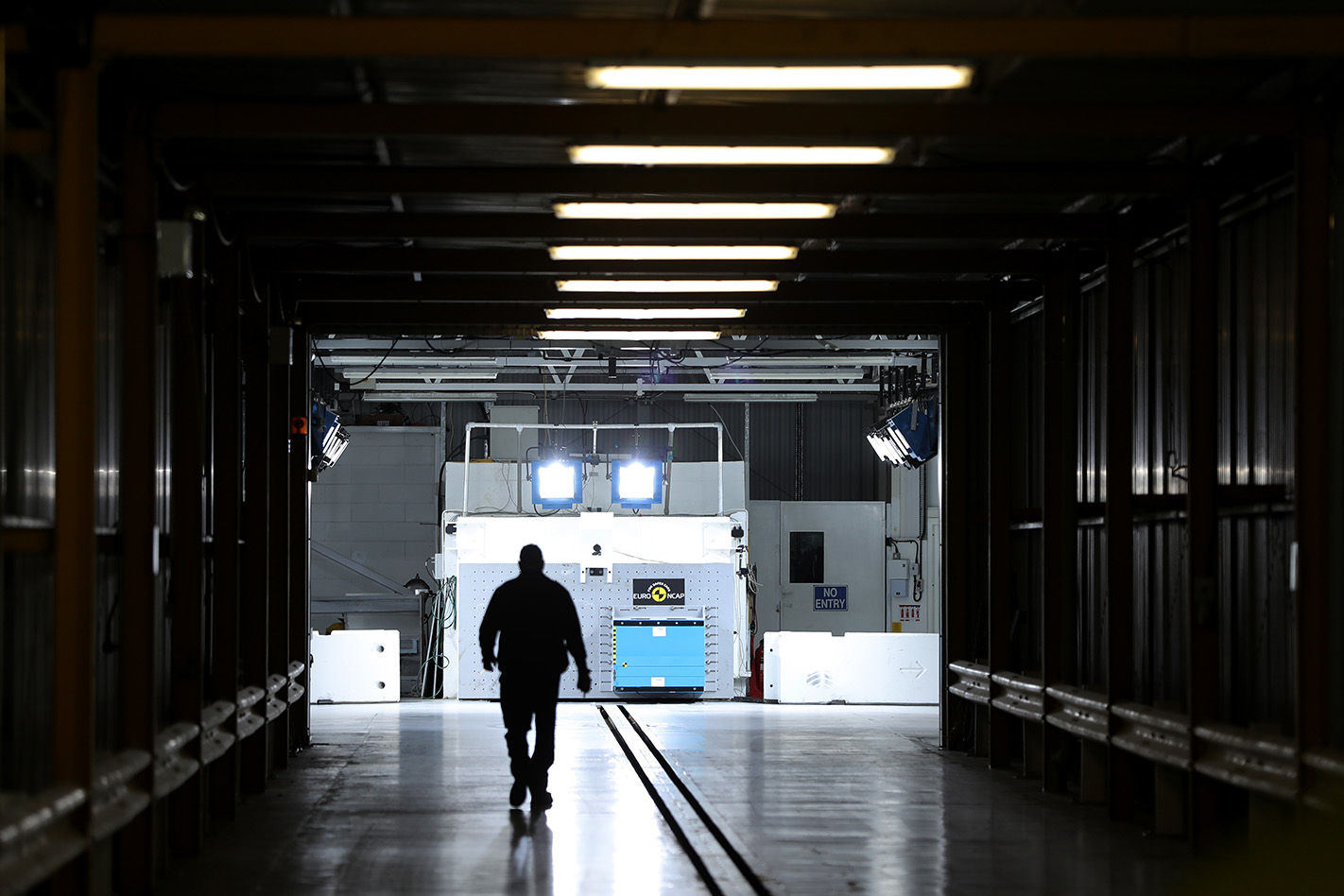
It means the two most affordable versions of the Cerato are left off the shopping list of many buyers because of their four-star ANCAP rating. Had Kia released the car the year before, it would have scored five stars.
Meredith is critical of the ANCAP influence with fleet and government departments, many of which now stipulate a five-star policy for new-vehicle purchases.
“The issue from our point of view … is that government departments, big fleets won’t buy a car unless it’s five-star [ANCAP],” he said. “It’s very, very difficult to explain to them that, for example, a Cerato might be four-star but it’s safer than a five-star car from 12 or 24 months ago.”
The issue is compounded for ride-share giant Uber, which provides many rides in older cars.
Uber simply insists drivers have a vehicle less than 11 years old with a five-star safety rating. That opens it up to dozens of examples that would not meet modern five-star safety ratings.
In the case of the Kia Cerato, it means versions of the current model are not eligible for Uber duties, yet the older model with fewer safety features and inferior occupant protection would be eligible because it has a five-star rating.
Uber drivers are free to select 2010-2015 models of the Toyota Corolla, Mazda 3, Mitsubishi Lancer, Honda Civic and more – none of which have those active safety assist systems.
The now departed ANCAP chief executive James Goodwin admits there are some new-car “outliers” and that “a handful of examples … are just starting to reach the point where they’re not quite up to the current expectations”. But he says they are rare. “Ninety-one percent of all new cars on sale have a five-star rating, so we’re dealing with a very small issue.”
Yet that small issue deals with some big sellers.
Many older cars have far inferior safety assist and crash avoidance systems to cars being manufactured today.
The Mitsubishi Pajero misses out on those advanced safety assist technologies – such as AEB, something that is now required in order for a vehicle to achieve the maximum ANCAP score.
The Toyota Prado, one of Australia’s most popular family SUVs and much loved for country touring, achieved its five-star rating in 2011. But it was rated as ‘marginal’ for pedestrian protection, something that would see its score dropped to four stars or lower by today’s ANCAP standards. The Prado also misses out on seatbelt reminders for all seats, which also is required for a modern five-star ANCAP rating.
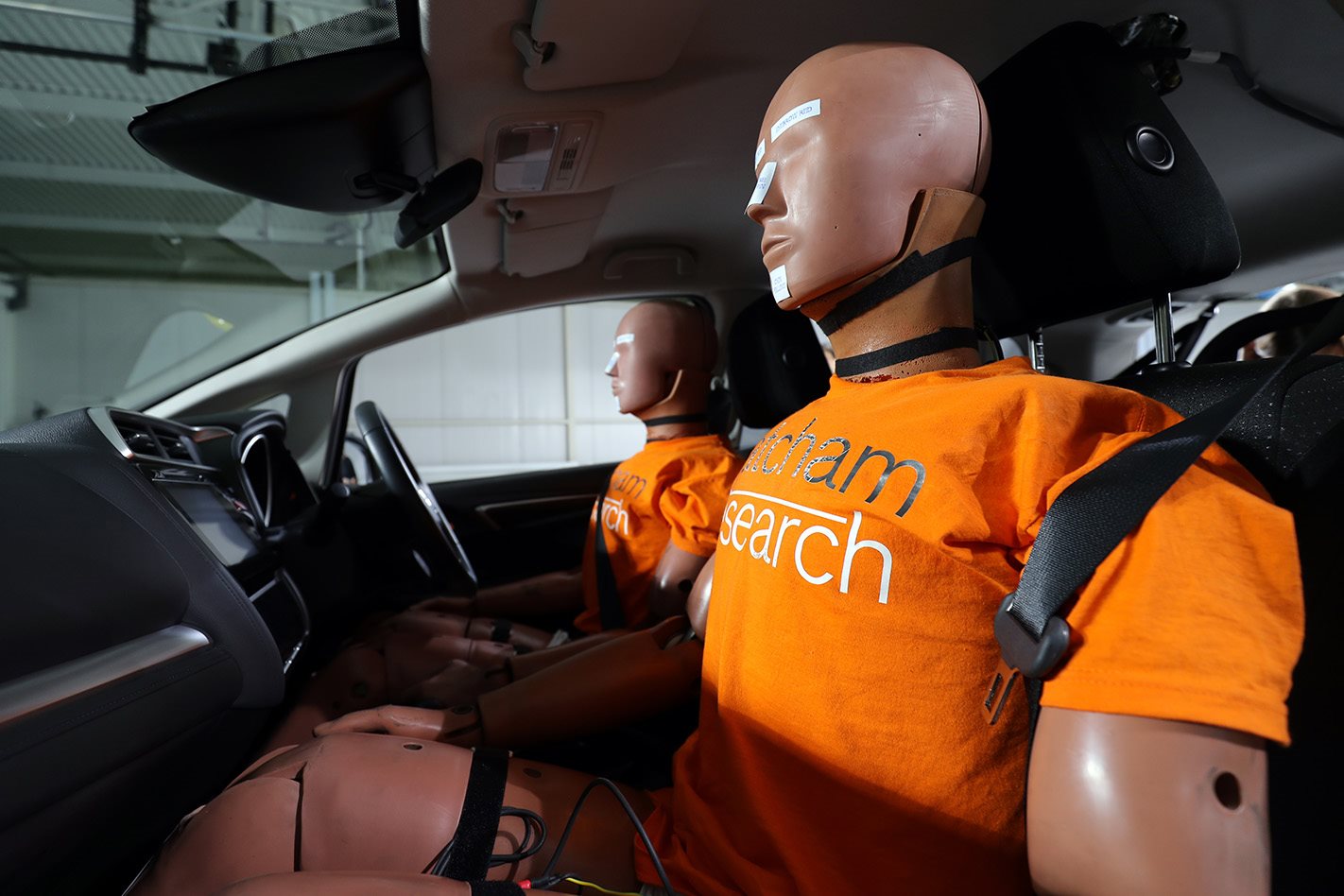
Goodwin – who has now left ANCAP for his new role as CEO of the Australian Airports Association – is threatening to tackle the issue of those older cars still on sale with five-star ratings by retesting them. “I would put the vehicle brands on notice and say, ‘You should start looking at some of those older designs you’ve got that you’re still selling new. You should be doing some of those in-house assessments to see (if) they stack up to the 2020 protocols’”.
That said, there’s unlikely to be blood drawn, with Goodwin saying he would rather collaborate with manufacturers – which now contribute more to ANCAP’s funding than the 23 subscription members – than create a “gotcha situation” with a surprise retest.
Goodwin points to the date stamps that have since been applied to older ANCAP ratings, theoretically giving buyers who delve deeper than the star rating a better idea of how the car avoids a crash and protects its occupants. The longer ago it was tested, the less rigorous the protocols it was tested to.
ANCAP’s advertising requirements now insist car makers include the date stamp on any advertising material and brochures, although not all comply. The Pajero, for example, is simply listed as being ANCAP tested with a ‘maximum’ rating. “What we have had to do from time to time is inform a manufacturer they are not being compliant with those brand guidelines,” Goodwin says, suggesting Mitsubishi may receive a phone call.
He also pushes the onus onto car dealers to effectively dob in their rivals.
“I need help from people on the ground in dealerships. Don’t just learn about what you’re selling – what about the competitors? Bring the date stamp discussion into the sales pitch.”
Goodwin encourages buyers to look beyond the star rating at the features and crash performance of the car across the four latest ANCAP pillars: adult occupant protection, child occupant protection, vulnerable road user protection (pedestrians and cyclists) and safety assist.
His advice to buyers is to seek the most stars in a car tested within the past three years. “Go for the safest car that you can afford with the newest date stamp,” he says. “The easiest way is for people to be asking for a modern five-star vehicle.”
While Goodwin insists shoppers are increasingly aware of ANCAP date stamps, some fleet buyers appear unfazed. Mining companies such as BHP and Rio Tinto still buy Toyota 70-Series LandCruisers in big numbers, relying on an ANCAP five-star rating awarded in 2016. The rating only applies to the single-cab ute – not four-door models able to carry more people – and doesn’t account for the lack of key safety assist technology such as AEB.
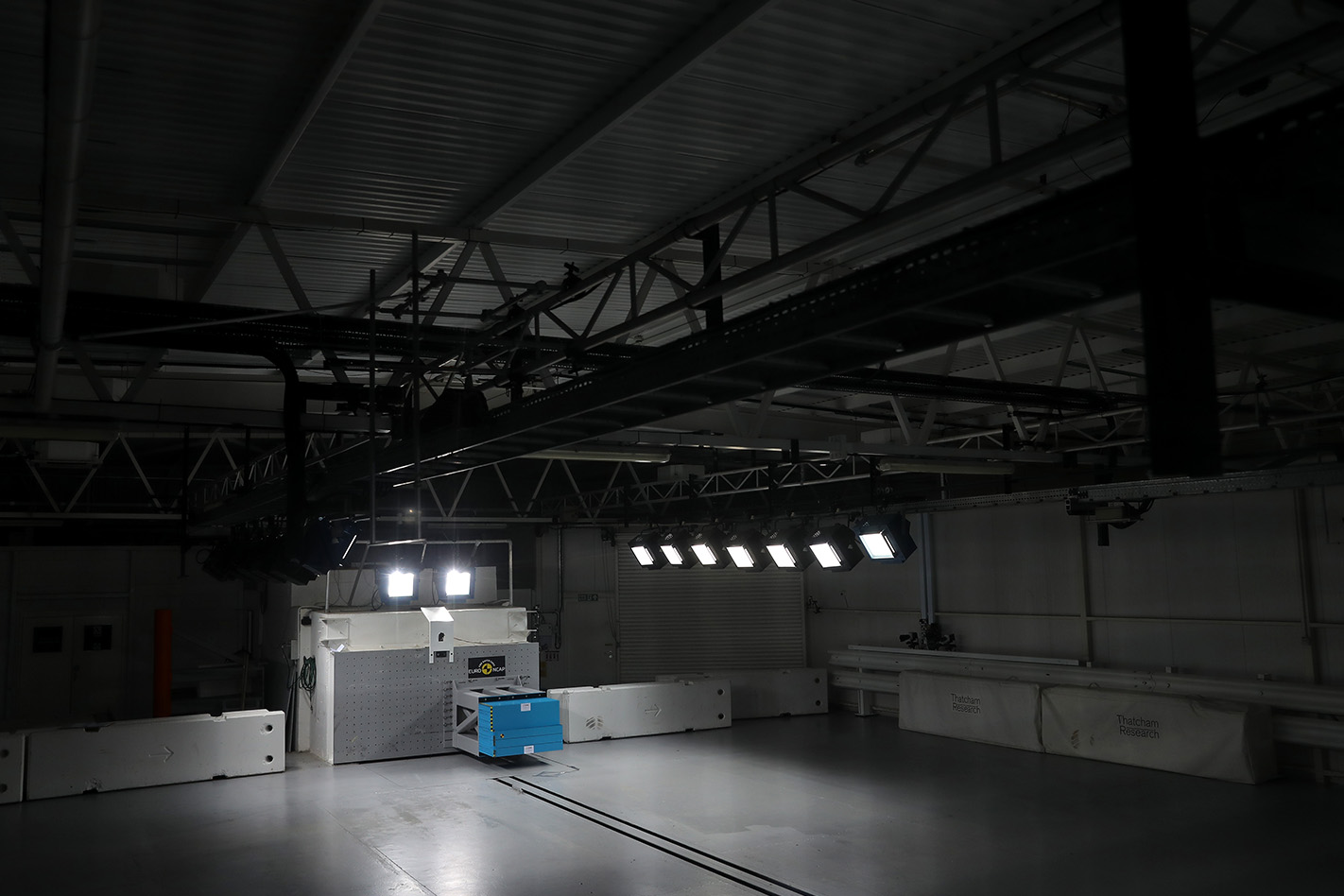
State and federal governments – all of which pay annual subscriptions to help fund ANCAP – have policies stipulating that vehicles used for company business must have five-star safety ratings.
Goodwin says that 52 percent of new-vehicle purchases are by corporate and fleet buyers, who are “very, very well informed”.
“They are the ones who have the big influence on cars entering the marketplace,” he says.
Small businesses are less likely to be as well versed in the nuances of ANCAP ratings, although fleet companies such as LeasePlan – which manages almost 100,000 cars – ensure their customers are aware of new technologies and their impact. “We recommend an annual review of company vehicle policies, with safety as a top priority,” says Paul Scully, LeasePlan’s national marketing communications manager. “We do try to educate our customers on what the latest safety features do and what their benefits are.”
The confusion around current ANCAP ratings is compounded by regular changes to testing protocols – something likely to accelerate in coming years.
In aligning testing in 2018 to its European partner, Euro NCAP, the Australasian New Car Assessment Program has markedly changed its ratings, making for apples-versus-oranges comparisons between old and new tests.
In 2020 the physical crash barrier tests, which hadn’t changed for decades, were modified to better reflect common crashes and look to address a common complaint of ANCAP ratings: that the individual tests do not account for compatibility differences between cars. A 2.7-tonne Toyota LandCruiser, for example, will typically inflict much more damage on a city hatchback.
However, the confusion about the comparative safety merits of cars is set to remain as more new cars go through ANCAP in 2020 and beyond while older vehicles retain their outmoded safety ratings.
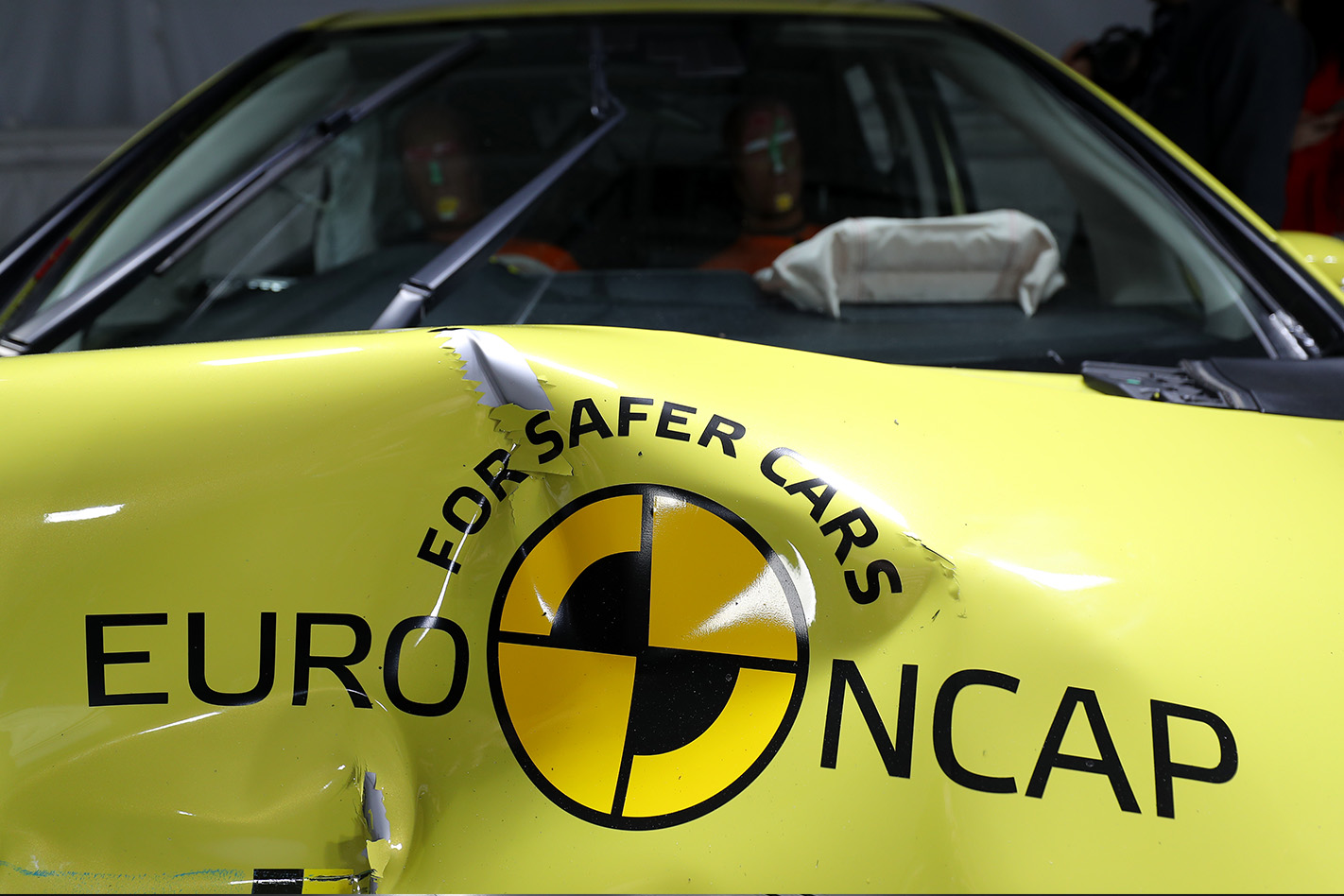
SIDE-IMPACT SAFETY’S IN THE BAG
Centre airbags to protect front-seat occupants from impacting each other will soon become more common. From this year, ANCAP is measuring the potential for injury between front-seat occupants in a side impact. It’s part of broad changes to the ANCAP testing criteria that also revises the barrier tests that have been in place for decades. A new side-impact test increases the weight of the sled (simulating an approaching car) from 1300kg to 1400kg. And the frontal offset test now includes a 1400kg trolley impacting the test vehicle head-on with a 50 percent overlap.
STAR BREAKDOWN: TOP-RANKED FOR SAFETY, BUT WHERE’S THE KIT?
This selection of six popular vehicles – as much as nine years old yet still available as new models in Australian showrooms – are being sold here as five-star vehicles for safety, despite lacking vital technology (as common as rear airbags and autonomous emergency braking) essential to scoring the top rating under current ANCAP testing criteria.
2011: Mitsubishi Pajero
- Missing autonomous emergency braking, lane-departure warning, lane-keep assist, and blindspot monitoring.
- Missing rear airbags, autonomous emergency braking, lane-departure warning, lane-keep assist, and blindspot monitoring.
- Missing seatbelt reminders for all seats.
- Missing autonomous emergency braking, lane-departure warning, lane-keep assist, and blindspot monitoring.
- Missing autonomous emergency braking on some variants.
- Missing autonomous emergency braking on some variants.
Hi WhichCar,
I want to buy myself a bit of a ‘treat’ car now I’m (almost) retired, and I’ve always wanted a Lexus IS350.
The IS350 F-Sport version is right on my budget at $72,500 or so, and I’ve had Lexus cars before and love the aftermarket service they provide.
However, the Genesis G70 has also caught my eye, and the 3.3T Sport is within $100 of the price of the Lexus.
The only real worry I have about the Lexus is how old it is, but I’m also worried that the Genesis might not be on the same level as the Lexus. What do you think? Would I regret buying the Genesis?
Thanks
Gerard, Potts Point NSW
G’day Gerard,
Oooh, interesting question. You are right – these cars are brothers from another mother in many ways. Both the G70 and the IS350 are rear-wheel-drive, both are medium in size and both have good old-fashioned longitudinal engines.
One could even argue that they look pretty similar!
They are also both products of their respective parent company’s notion to make a good thing better. Lexus has been a long-burn success for Toyota based largely on – as you’ve experienced and we can attest to – exemplary levels of customer service, while Hyundai has similar dreams for the fledgling Genesis marque.
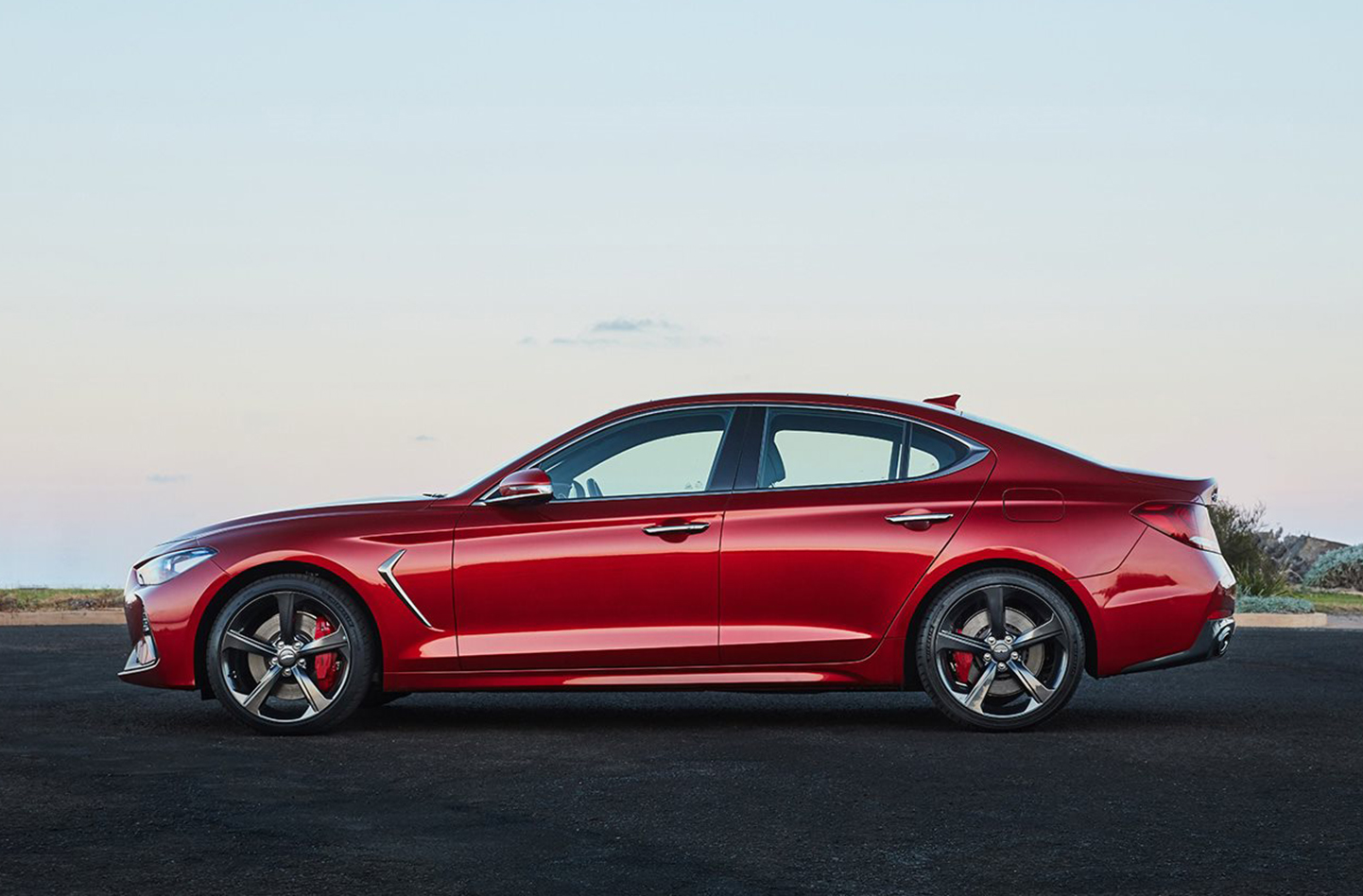
For me, the answer isn’t entirely straightforward. In the Genesis’s corner (above) is its amazing 3.3-litre twin-turbo engine, packing a wedge more power (272kW) and torque (510Nm) than the 233kW/378Nm 3.5-litre naturally aspirated V6 in the Lexus.
Its base level of equipment, too, is pretty impressive, with Nappa leather, electric everything, LED headlights and taillights and more besides.
It does miss out on cool modern touches like a digital dashboard, and some people can’t look past the hints of Hyundai in the cabin… but a more-than-leisurely drive soon reveals its latent charms.
The IS350’s biggest bugbear is, as you point out, its age. It’s more than six years old now, and it’s long overdue for replacement. Compared to the turbo lump in the G70, the atmo six is nowhere near as responsive, though the ride quality of the Lexus is pretty great.
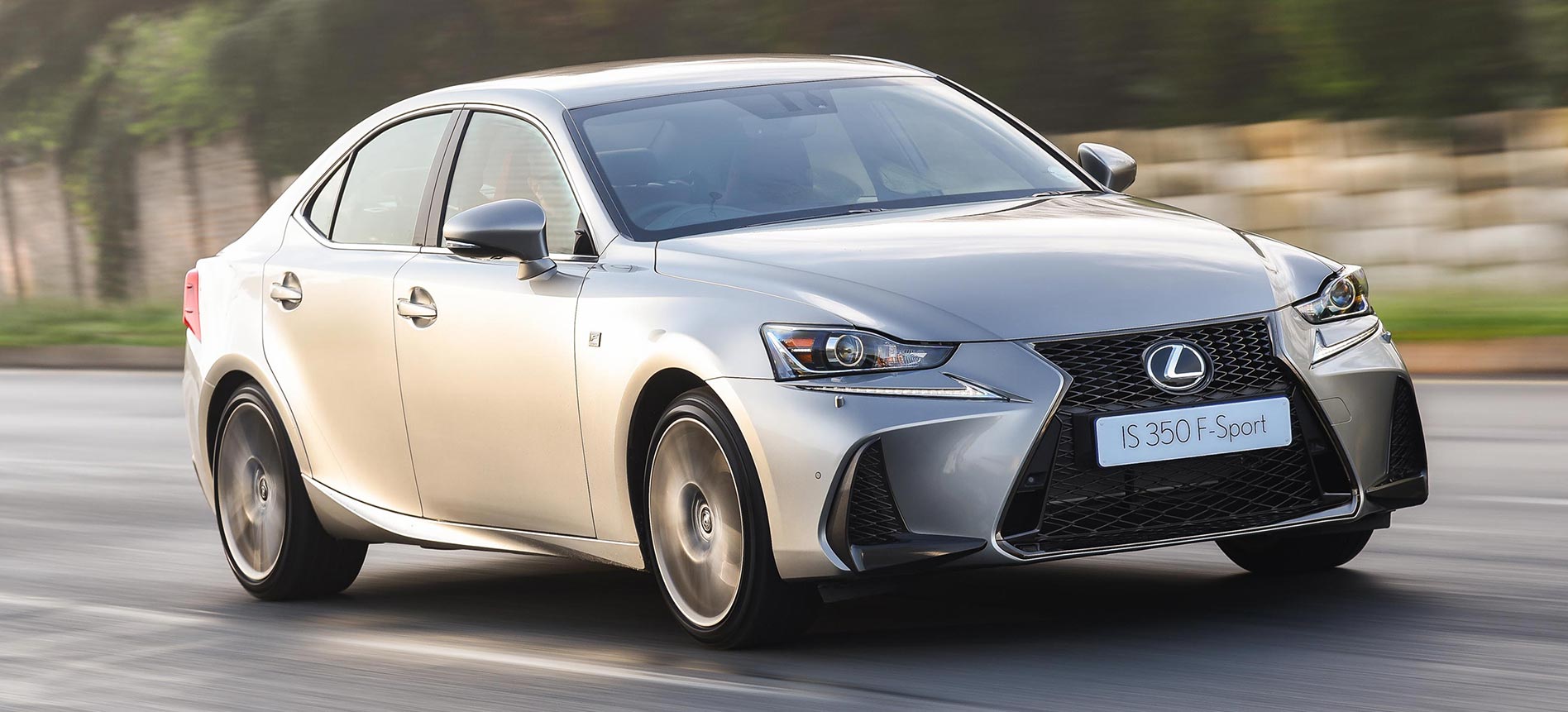
I’ve always detested Lexus’s clunky multimedia interfaces, though, and the G70 is a much easier car to live with day-to-day in that regard.
As a Sydneysider, you’ll be able to take advantage of the fact that your ‘dealer’ (Genesis doesn’t like that word) is close by, which means you can have your car delivered to you, as well as its servicing looked after (and free for five years, too!).
However, running a Genesis into the countryside might prove troublesome should the worst happen, simply because there are no dealerships anywhere.
You already know how amazing Lexus service can be… but is it enough to invest in what is quite an old car?
But since you’re asking for a call, I’d take a punt on the Genesis G70. Neither car will look after you if you’re thinking of selling it after a couple of years, the G70 has a markedly better driveline and fresher safety technology, and it’s easy to live with day-to-day.
Sure, it hasn’t got the cachet of a Lexus badge quite yet – but Genesis is pretty committed to changing that.
Reckon you’ve got dramas with home-schooling your little sweethearts? Spare a thought for the parents of this posse of pint-sized car thieves who’ve been busted in the US after stealing not one, not two, but 46 cars.
Police in North Carolina have confirmed that 19 children between the ages of nine and 16 have been involved in a car theft racket that netted the thieves more than $2 million in metal, with 46 cars stolen from 12 dealerships in the Winston-Salem region.
Now, given that the younger ones would struggle to see over the steering wheel, how in the heck did they manage to pull off this high-horsepower heist?
A dealership manager has told automotivenews.com that the kids were telling dealer staff that they were waiting for their parents in the service department… but in fact the little shi… err, cherubs were actually pinching keys from the desks of unsuspecting – and now potentially unemployed – sales staff.
Once the keys were in the pockets of the young ‘uns, it simply turned into a game of break into the dealership after hours, beep-and-look, hop into the hapless victim and drive away.
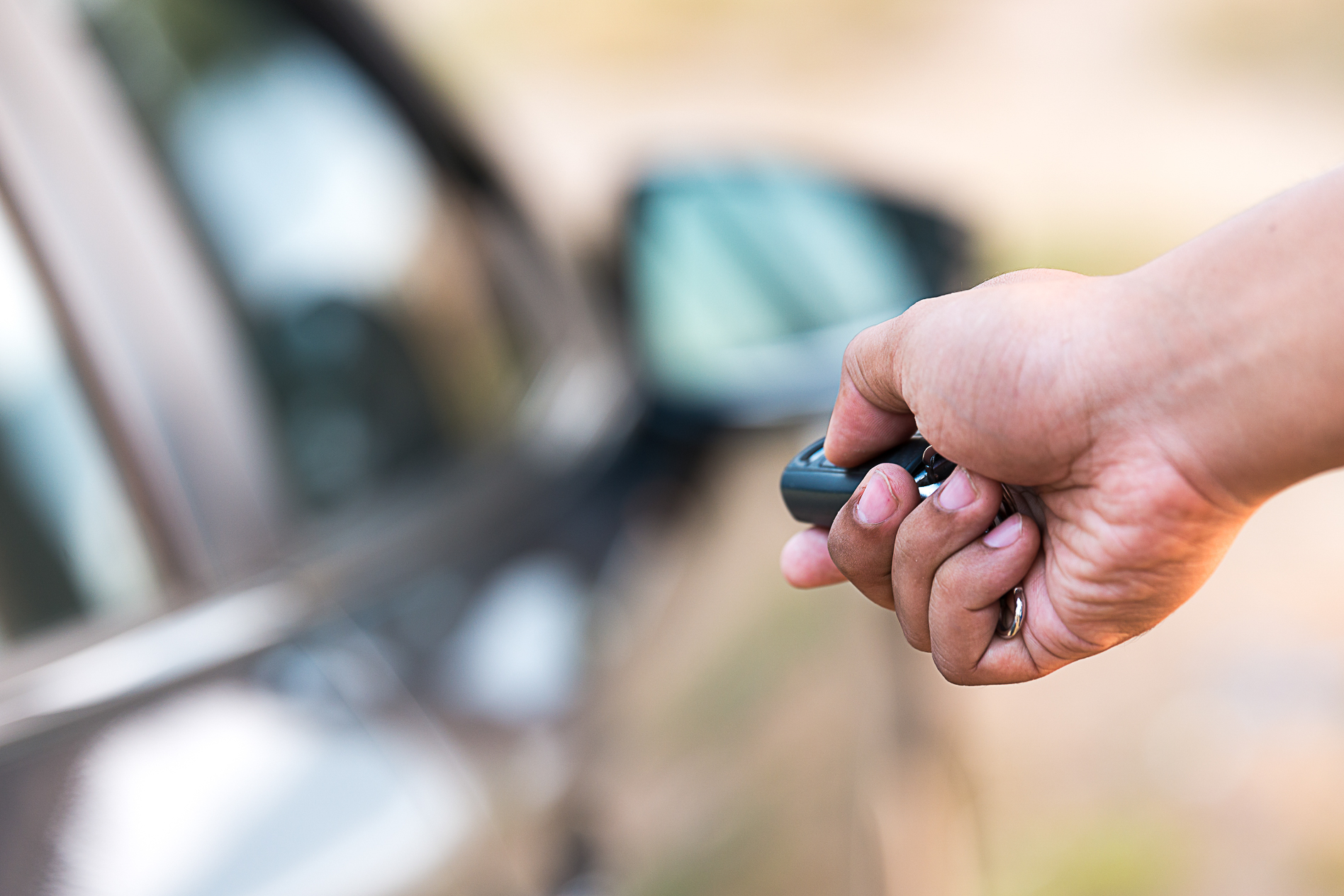
Here’s the kicker, though… even though the thieves were caught, and all but six of the cars recovered, none of the kids are old enough to be charged with a crime.
The only person to be sent up the river, so to speak, is a 19-year-old who’s been charged with being in a possession of a stolen car.
“Detectives have identified nineteen juveniles known to be involved in these thefts,” read a news release from the Winston-Salem Police Department.
“Those juveniles range in age from 16 to nine years of age. Detectives have sought, and thus far have been denied, secure custody orders from the Forsyth County Department of Juvenile Justice for the involved juveniles.”
Hopefully, those little ratbags all get detention at least.
Sydney motorists have already given up $7 million in fines issued in the first two months of operation of the mobile phone detection cameras – and that’s during COVID-19 imposed travel restrictions.
According to reports, there was a 1500 per cent increase in fines between February and March this year for drivers who were caught their mobile phones while driving, thanks to 11,790 camera-detected fines.
In April, a further 9000 drivers were caught, bringing the two month total to just under 21,000 drivers fined from just two mobile phone camera locations in NSW, and a smaller number of undisclosed NSW mobile phone camera locations.
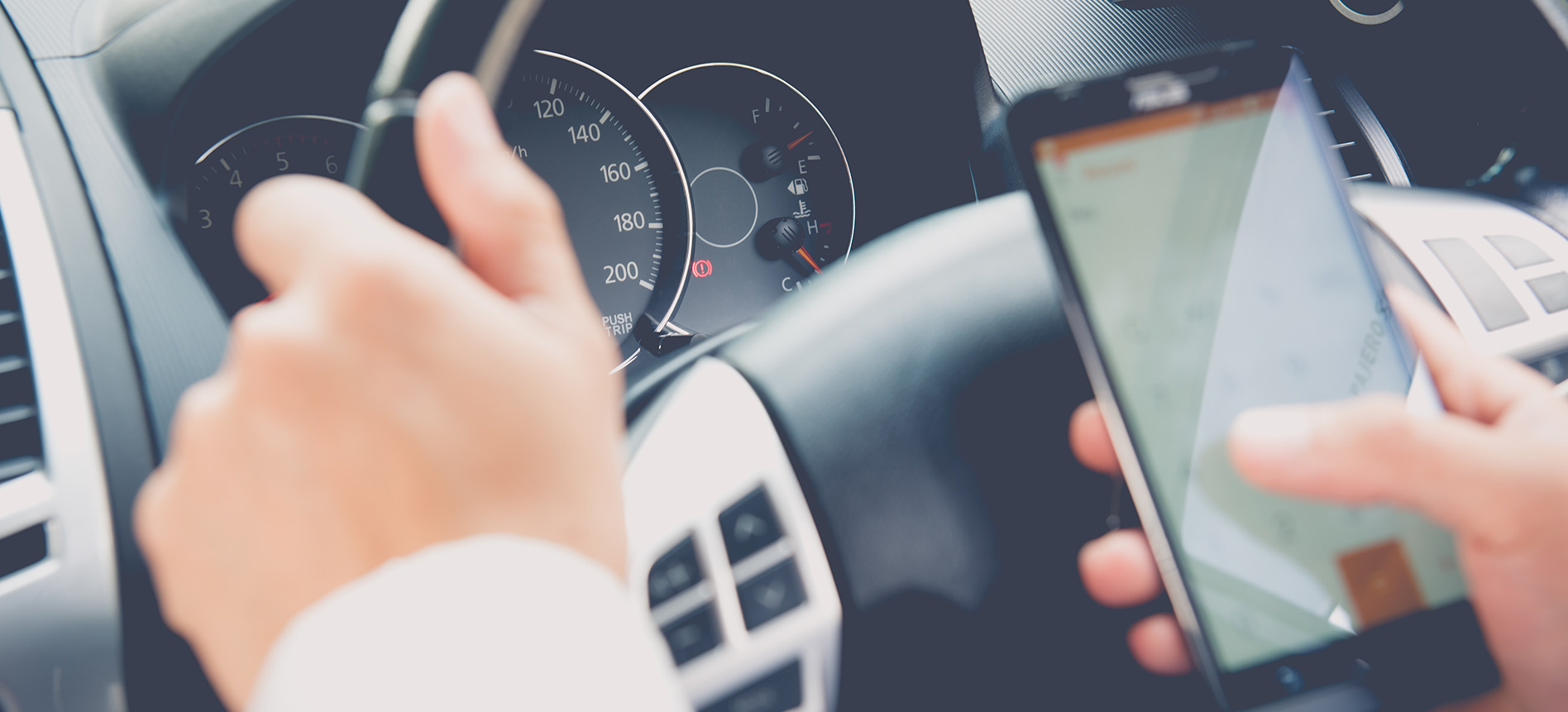
Keep in mind, the first month of operation for the detection cameras was during the coronavirus lockdowns that saw Sydney traffic reduced by 40 per cent.
With restrictions now cautiously being lifted in a number of states, we can expect this income to skyrocket.
Each fine from cameras that detect mobile phone use nets the NSW government $344 (or $457 if caught in a school zone) and drivers accrue five demerit points out of 12 for using a mobile phone while driving.
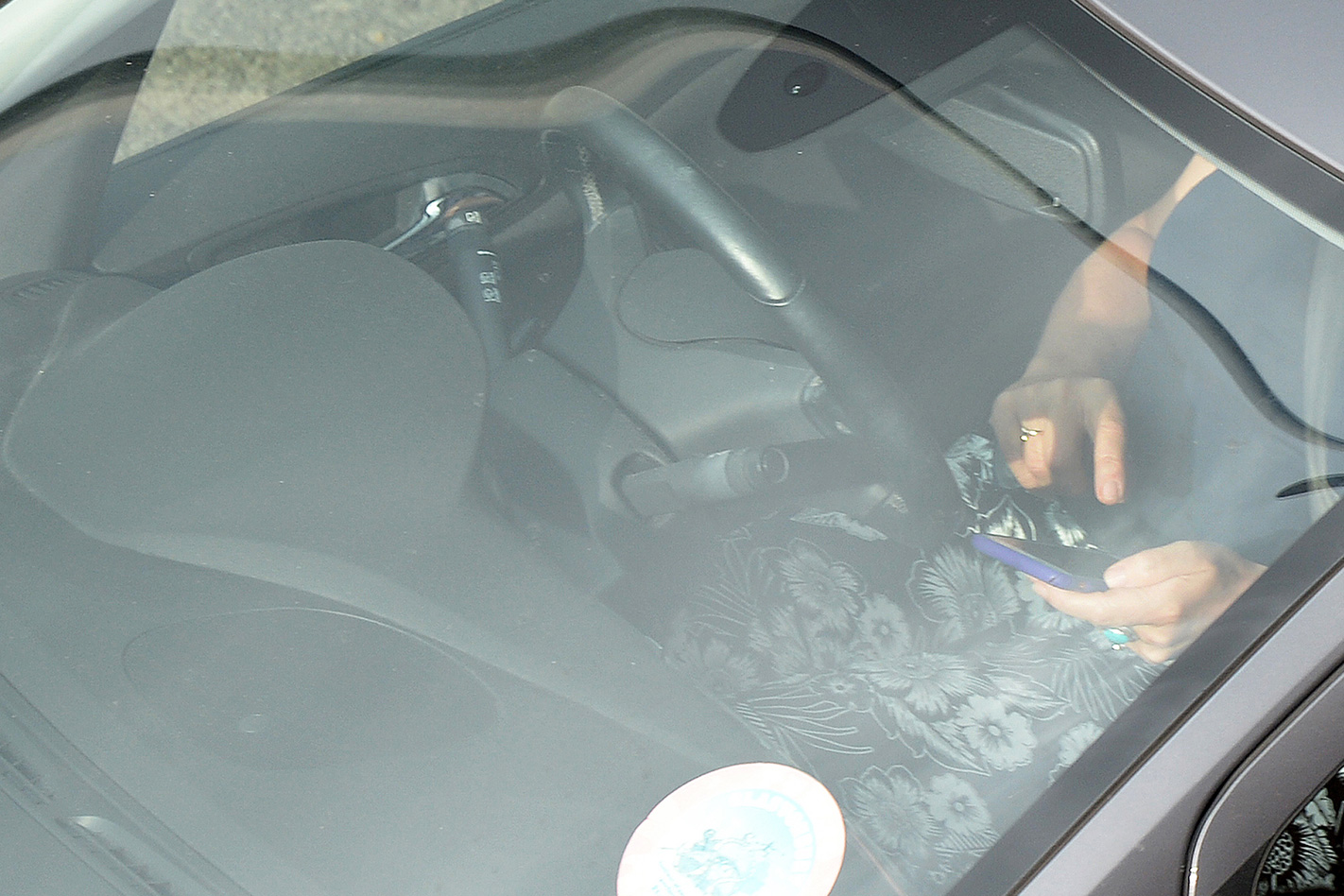
As a quick refresher, the law states that you can’t use a phone to browse social media or respond to text messages while driving, even if you’ve got the phone in a cradle.
The only circumstance in which you’re allowed to use a mobile phone while driving is to answer a call or make one, as long as you’re using the car’s controls to initiate it.
Some have called for warning signs to be placed ahead of the camera locations to deter drivers from using their phones, much like how mobile speed camera locations are forewarned.
But NSW Transport Minister Andrew Constance has flatly rejected the idea.
Toyota’s North American arm has been a little cheeky.
Its website features a section called “upcoming vehicles” which now includes a model referred to as “GR hot hatch.”
We know this isn’t in reference to the GR Yaris, which Toyota also confirms, and there’s really only one other hatch in the Toyota range suitable to become the next target for Gazoo Racing.
A Toyota GR Corolla hot hatch is pretty much confirmed to be on the way, in that case.
“GR Yaris dominated the 2020 Tokyo Auto Salon, stirring up an outcry in North America over its absence. And it’s easy to see why.”
The Yaris won’t be heading to America, though Australia’s thankfully getting the baby hot hatch with its three-cylinder 1.6-litre turbo donk and the 200kW that brings with it.
“While GR Yaris isn’t coming to the U.S., perhaps it’s time the U.S. got a Toyota hot hatch to call its own. One that continues to push the boundaries of performance. And one that can only come from Toyota Gazoo Racing. Are you with us?”
We drive the GR Yaris Prototype!
Given Toyota developed the three-pot 1.6-litre for the Yaris, it wouldn’t be a surprise to see that engine make its way into the Corolla, especially since 200kW is approximately average in Hot Hatch Land these days.
The VW Golf GTI makes less, Honda’s Civic Type R makes more, and cars like the Hyundai i30 N land in the middle.
Until Toyota makes a more specific announcement, details about the GR Corolla will be limited to speculation, however well-educated.
Stay tuned.
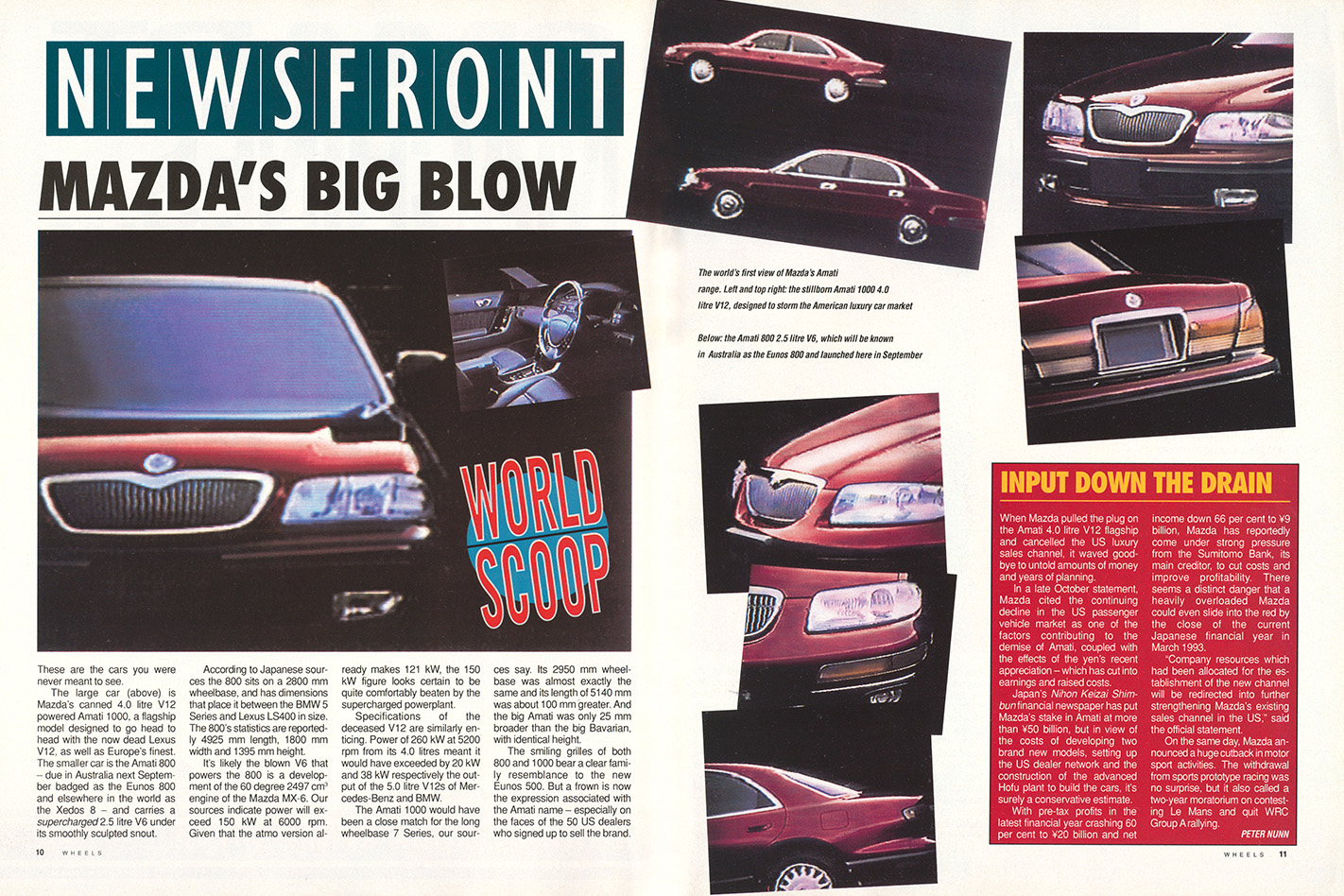
Where were you in December 1992?
If your first answer is, not reading Wheels magazine from that month – specifically pages 10 and 11 – you may have never learned about the best Japanese V12 that never was: the one destined to power a flagship sedan badged Amati, and aimed to go head-to-head with the best from BMW, Mercedes, Lexus and Cadillac.
Amati was the highly ambitious plan to take Mazda – a small, independent car company determined to punch well above its weight – into the premium segment.
The project was codenamed Pegasus, headed by up Dick Colliver, a 20-year Mazda veteran. It was officially announced to the world at an August 1991 press conference, with Mazda claiming it would launch its bold new premium-segment contenders in the first quarter of 1994.
The division was going to be headquartered at Mazda North American Operations in Irvine, California, and unlike its rivals, Mazda planned to sell the vehicles within its existing dealerships.
It was a bold, brilliant plan – right up until the Japanese yen imploded, the financial bubble burst, and the whole program tumbled like a near-finished high-rise tower razed with demolition dynamite.
The flagship V12-powered model from the new premium brand was to be called the Amati 1000, and the car itself was clearly aimed to be a similarly luxo but better-value alternative to a long-wheelbase E32-generation BMW 7 Series, as its 2950mm wheelbase was almost the same, and its overall length of 5140mm about 100mm longer. The Amati was actually 25mm wider than the big Bavarian, with identical height.
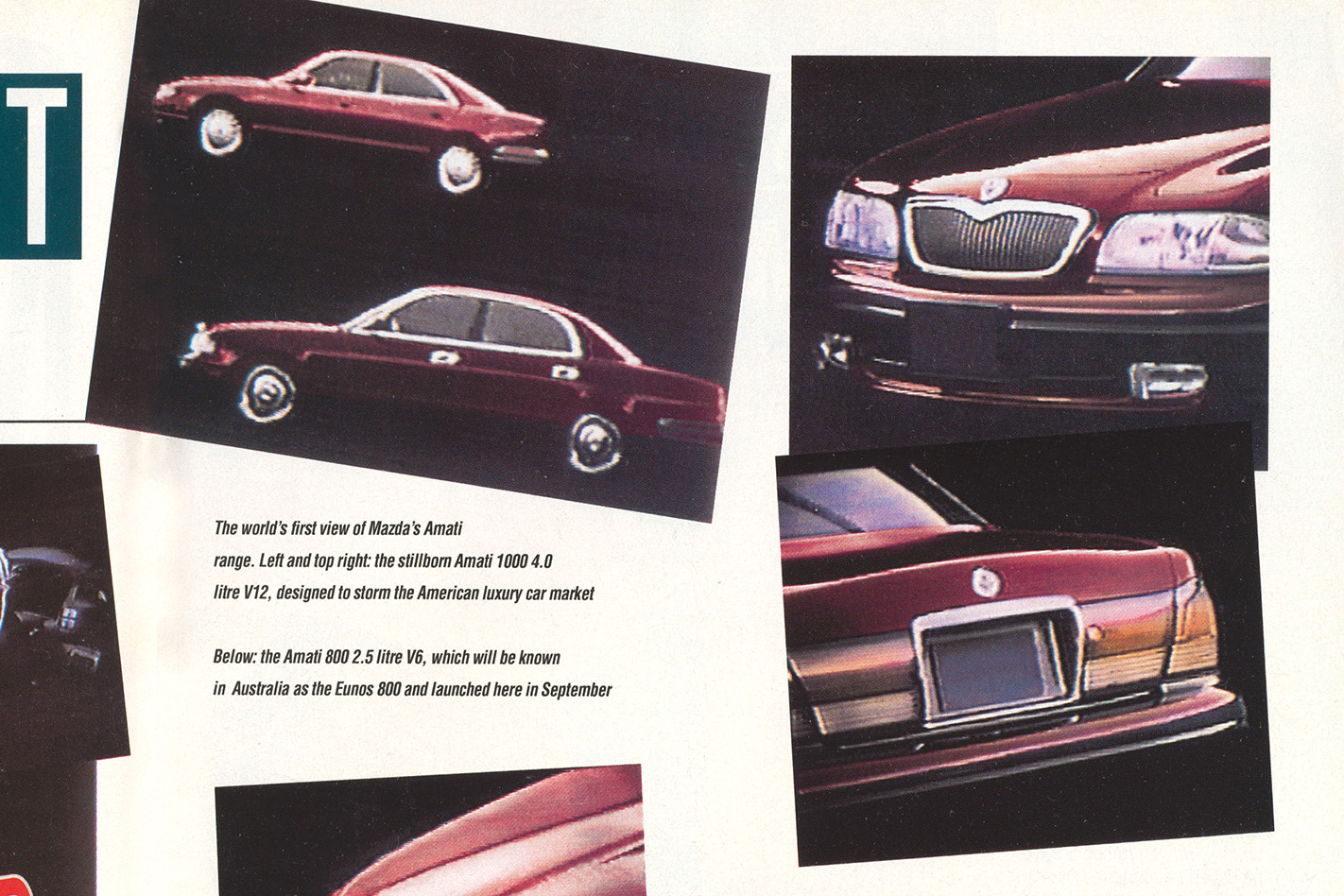
Only a select number of Mazda employees directly involved with the Amati program at the time have ever laid eyes on the 1000.
There are no images of it on any Mazda site; no prototypes preserved for corporate prosperity. There are only glimpses of it within brochures printed, but never distributed.
Wheels managed to secure a couple of spy shots a few months after the program was officially cancelled.
What we know about the V12 itself comes from Bob Hall, a product planner who worked on the program (and who would go on to join Wheels as a journalist later in the ’90s).
Hall explained to Jalopnik in 2018 that, as is so often the way with V-banked engines, this one was created using components sourced from an existing architecture: in this case, Mazda’s V6 program.
The design of the new block drew from mating two K-series V6s end-to-end, and used the rotating assemblies of the K-series engine. Even the valve train was lifted from the V6, according to Hall.
Wheels reported at the time in December 1992 that the V12 was a 4.0-litre unit producing 260kW at 5200rpm, but we now understand that was not accurate. While the block was engineered to be capable of a 5.0-litre displacement, early prototypes were actually 4.6 litres, intended for the North American market, and were officially rated at 209kW, due to the power-cap agreement at the time, but certainly made more.
According to Hall, prototypes of the 1000 were benchmarked against the Lexus LS400, the debut luxo sedan built by Toyota’s then-new premium brand, producing 186kW from its 4.0-litre V8.
Apparently, the Amati 1000 was marginally slower accelerating from 0-100km/h but delivered swifter acceleration in passing manoeuvres from 100-130km/h.
Alas, it was all a huge amount of work and vast amounts of yen that would come to nothing.
In a press conference in October 1992, in a very different economic climate than that in which the whole thing had been conceived, it was announced that the Amati program had been cancelled. From that moment, it was never officially spoken of again.
Mazda’s company-sanctioned museum in Hiroshima has no artefacts or mention of the Amati project; nor does the brand’s archive in California.
Despite the passage of over 30 years since the original proposal was green-lit, it’s been often reported that Amati remains an ‘open wound’; one Mazda views as ‘mentsu wo ushinau’ – ‘loss of face’.
