
Where were you in December 1992?
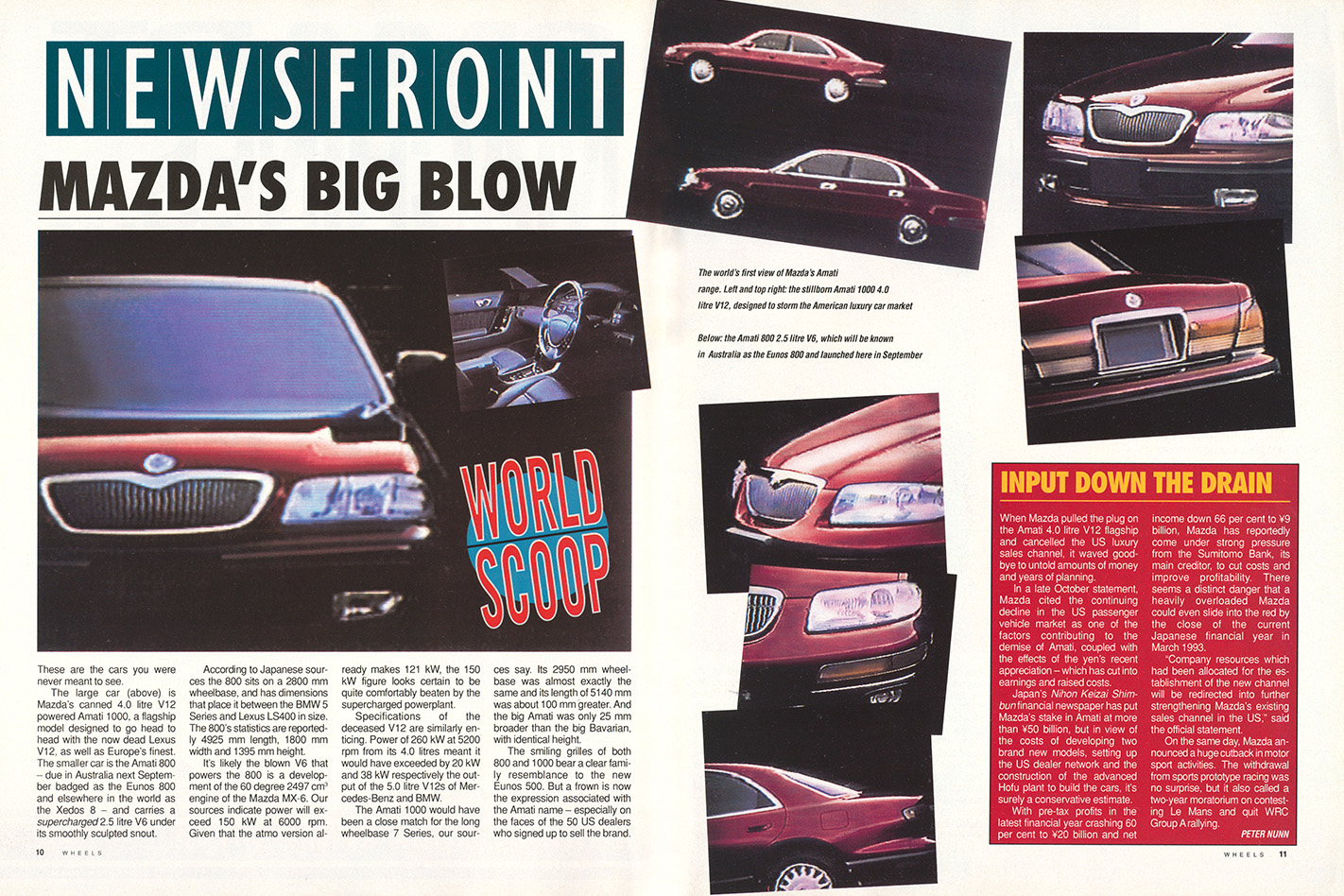
If your first answer is, not reading Wheels magazine from that month – specifically pages 10 and 11 – you may have never learned about the best Japanese V12 that never was: the one destined to power a flagship sedan badged Amati, and aimed to go head-to-head with the best from BMW, Mercedes, Lexus and Cadillac.
Amati was the highly ambitious plan to take Mazda – a small, independent car company determined to punch well above its weight – into the premium segment.
The project was codenamed Pegasus, headed by up Dick Colliver, a 20-year Mazda veteran. It was officially announced to the world at an August 1991 press conference, with Mazda claiming it would launch its bold new premium-segment contenders in the first quarter of 1994.
The division was going to be headquartered at Mazda North American Operations in Irvine, California, and unlike its rivals, Mazda planned to sell the vehicles within its existing dealerships.
It was a bold, brilliant plan – right up until the Japanese yen imploded, the financial bubble burst, and the whole program tumbled like a near-finished high-rise tower razed with demolition dynamite.
The flagship V12-powered model from the new premium brand was to be called the Amati 1000, and the car itself was clearly aimed to be a similarly luxo but better-value alternative to a long-wheelbase E32-generation BMW 7 Series, as its 2950mm wheelbase was almost the same, and its overall length of 5140mm about 100mm longer. The Amati was actually 25mm wider than the big Bavarian, with identical height.
Only a select number of Mazda employees directly involved with the Amati program at the time have ever laid eyes on the 1000.
There are no images of it on any Mazda site; no prototypes preserved for corporate prosperity. There are only glimpses of it within brochures printed, but never distributed.
Wheels managed to secure a couple of spy shots a few months after the program was officially cancelled.
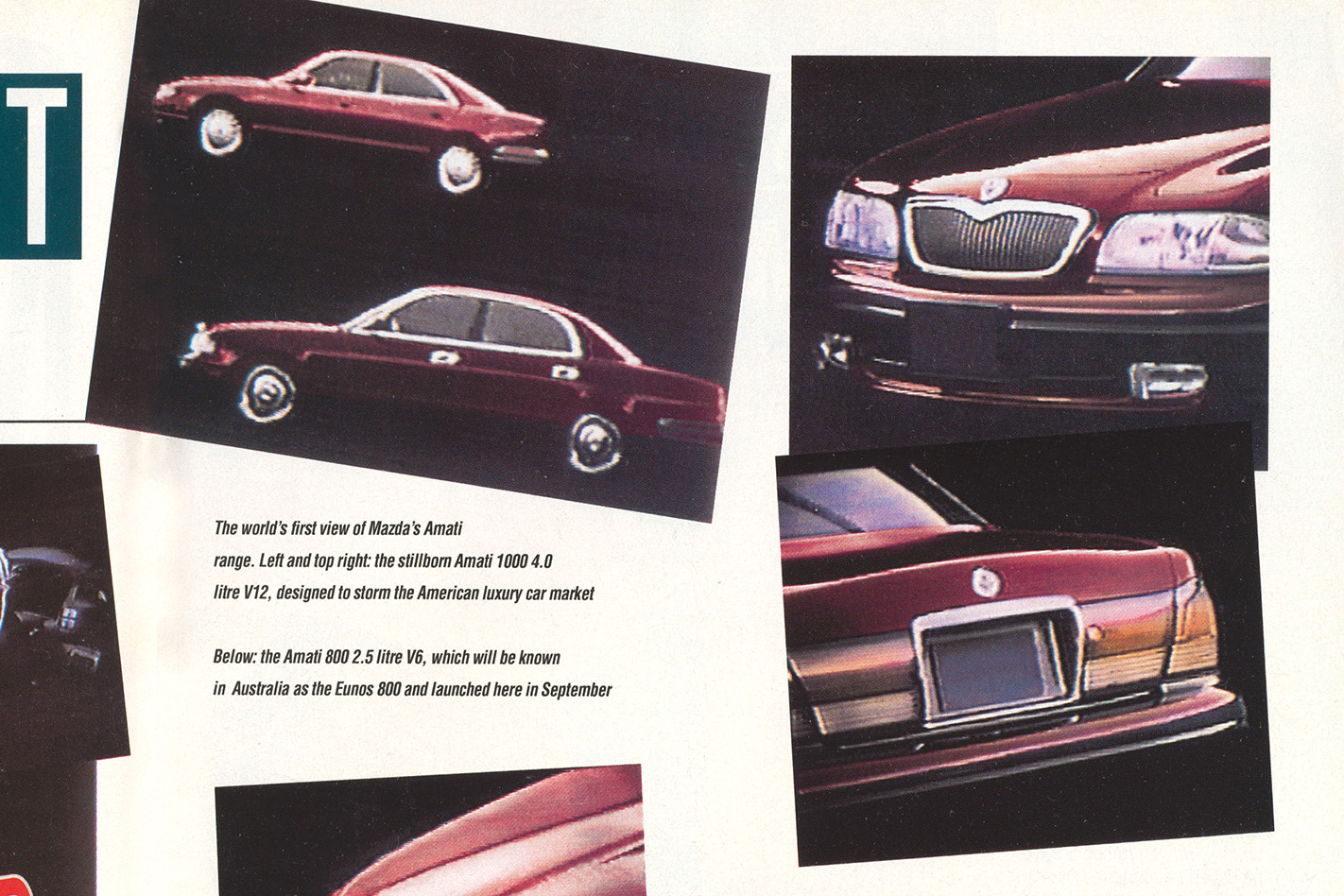
What we know about the V12 itself comes from Bob Hall, a product planner who worked on the program (and who would go on to join Wheels as a journalist later in the ’90s).
Hall explained to Jalopnik in 2018 that, as is so often the way with V-banked engines, this one was created using components sourced from an existing architecture: in this case, Mazda’s V6 program.
The design of the new block drew from mating two K-series V6s end-to-end, and used the rotating assemblies of the K-series engine. Even the valve train was lifted from the V6, according to Hall.
Wheels reported at the time in December 1992 that the V12 was a 4.0-litre unit producing 260kW at 5200rpm, but we now understand that was not accurate. While the block was engineered to be capable of a 5.0-litre displacement, early prototypes were actually 4.6 litres, intended for the North American market, and were officially rated at 209kW, due to the power-cap agreement at the time, but certainly made more.
According to Hall, prototypes of the 1000 were benchmarked against the Lexus LS400, the debut luxo sedan built by Toyota’s then-new premium brand, producing 186kW from its 4.0-litre V8.
Apparently, the Amati 1000 was marginally slower accelerating from 0-100km/h but delivered swifter acceleration in passing manoeuvres from 100-130km/h.
Alas, it was all a huge amount of work and vast amounts of yen that would come to nothing.
In a press conference in October 1992, in a very different economic climate than that in which the whole thing had been conceived, it was announced that the Amati program had been cancelled. From that moment, it was never officially spoken of again.
Mazda’s company-sanctioned museum in Hiroshima has no artefacts or mention of the Amati project; nor does the brand’s archive in California.
Despite the passage of over 30 years since the original proposal was green-lit, it’s been often reported that Amati remains an ‘open wound’; one Mazda views as ‘mentsu wo ushinau’ – ‘loss of face’.
Hyundai Australia is recalling almost 100,000 vehicles built between 2005 and 2011 for an electrical fault that can cause the car to catch fire, even when parked with the ignition off.
The fault affects previous-generation models of the i30 small hatchback (68,765) built between 2006 and 2010, Elantras (18,734) manufactured between 2005 and 2011, and the Santa Fe large SUV (9393) built between 2005 and 2009.
Current-generation models are not affected.
In affected vehicles, an ABS control module manufacturing error can cause a short-circuit following exposure to moisture, leading to a fire in extreme circumstances. As the component is constantly connected to power, the fault can occur even when the ignition is off.
Subsequently, Hyundai is advising owners of vehicles that are subject to the recall to park away from confined spaces such as a garage or near flammable materials, to minimise the risk of fire spreading in the worst case.
The manufacturer is not advising disconnection of the battery when the car is unattended (though if you have an affected car that can’t be driven at all, removing the battery would be an extra safeguard, in our opinion).
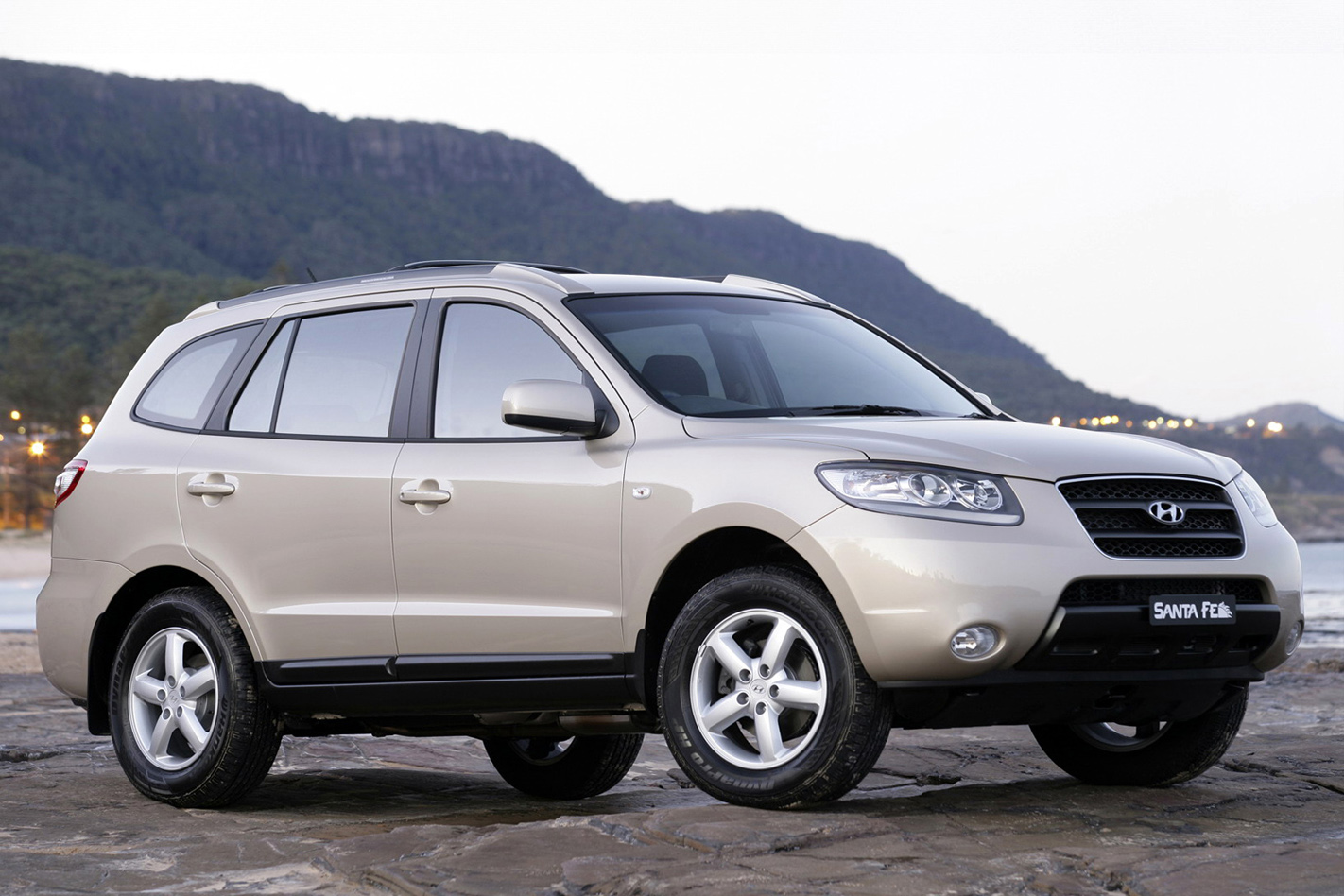
Hyundai Santa Fe
While the problem poses a notable fire risk to vehicle occupants or other road users where present, the fault does not affect normal brake operation.
Currently registered keepers of the affected vehicles will be contacted by Hyundai to arrange an appointment at the most convenient authorised service centre or dealership.
If identified as needing repair, a new relay kit will be installed at no cost to the customer.
Proactive customers can find out if their vehicle is on the list of impacted vehicles by contacting Hyundai Australia directly or alternatively, the complete list of cars can be found at the Australian Competition and Consumer Commission (ACCC) website productsafety.gov.au.
Make sure you have your vehicle’s VIN noted for accurate and easy identification.
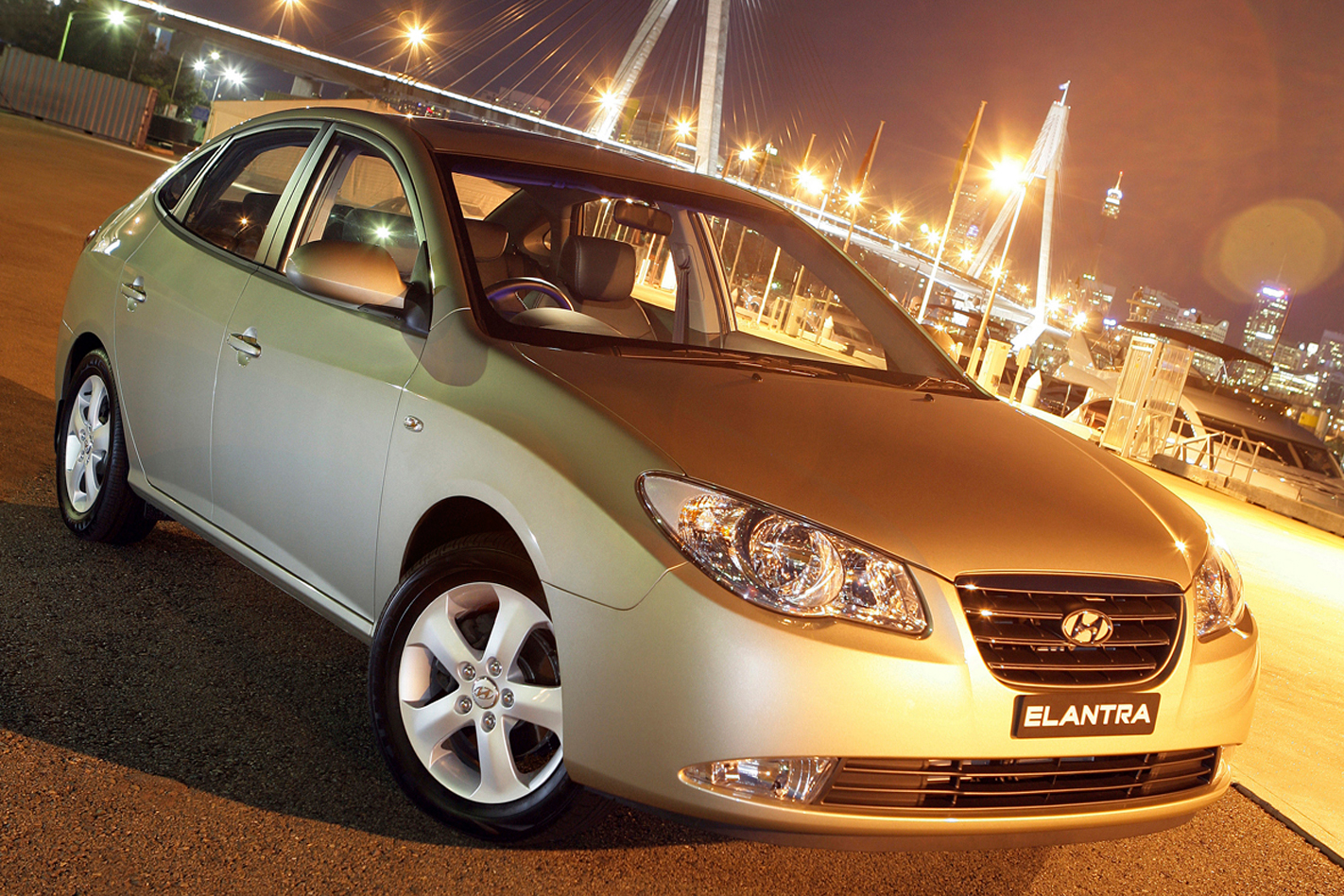
Daniel talks to Radio 2DU about the Hyundai recall
Find the nearest Hyundai dealer at hyundai.com.au/dealer or the customer care centre can be contacted on 1800 186 306.
Reports are circulating that Sebastian Vettel is poised to leave the Ferrari F1 team at the end of this year, in a shock move that will free up one of the hottest seats on the grid.
The German four-time world champion joined Ferrari in 2015, after being upstaged by his then Red Bull Racing teammate Daniel Ricciardo.
However, well-respected German media outlets Bild and Auto Motor und Sport are both reporting Vettel’s departure from the Maranello team is expected to be announced on Tuesday in Europe.
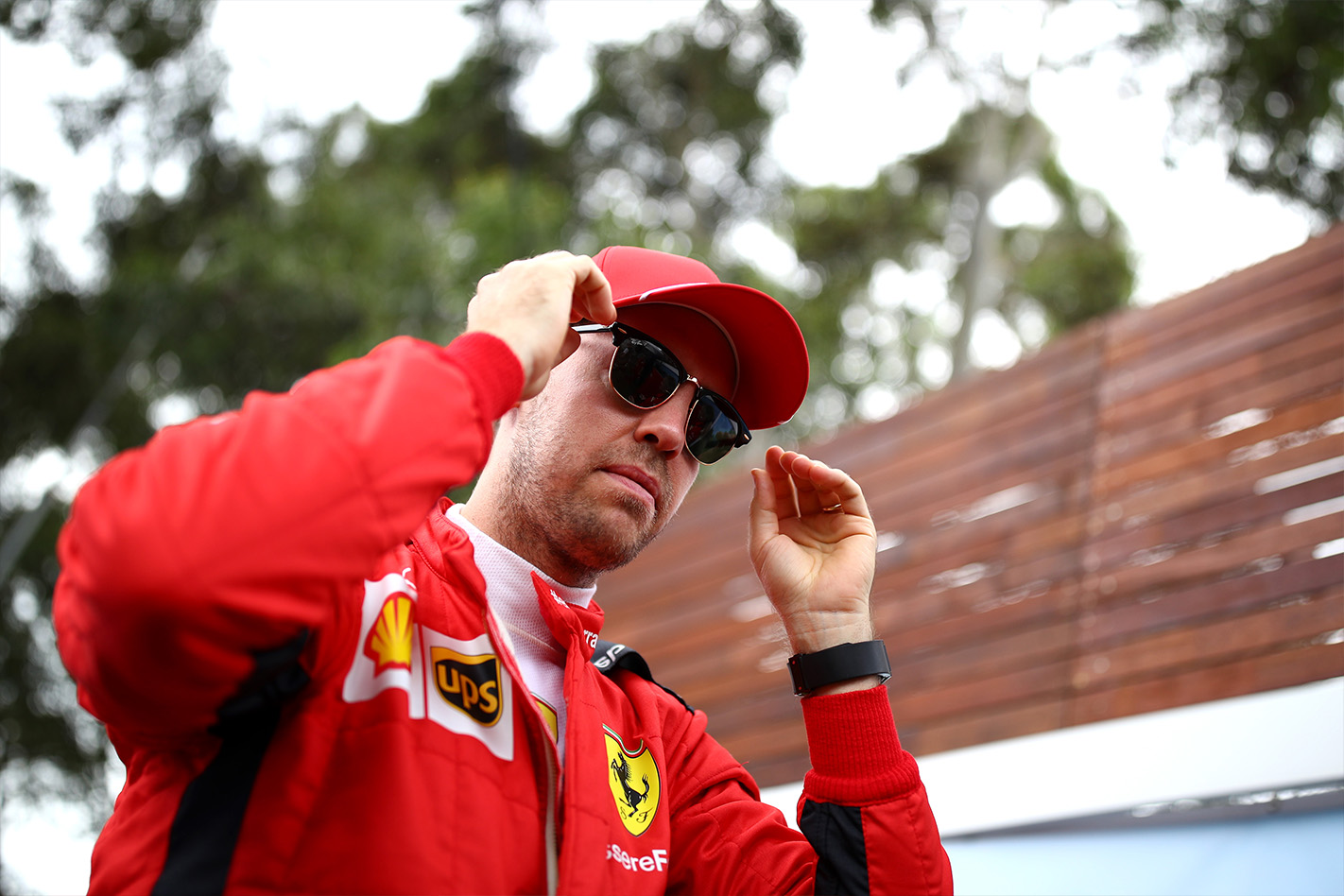
Currently, the 32-year-old is signed to Ferrari as part of a three-year contract, which expires at the end of 2020.
It is understood that Vettel was offered a one-year contract for 2021, with a reduced salary.
Meanwhile, his teammate Charles Leclerc – viewed as a golden child within Maranello – is contracted to the team until the end of 2024.
Intra-team tensions rose within the Ferrari squad, with Vettel’s number one status being threatened by the young, fast, and talented Leclerc.
Vettel’s departure will be the beginning of a complicated silly season of driver transitions for Formula 1, as the four-time champion will have to either find a new seat, or potentially retire from the sport.
Ricciardo is believed to have signed a pre-contract to join Vettel at Ferrari in 2019 before Leclerc was parachuted into that seat at the behest of the late-FCA head honcho Sergio Marchionne.
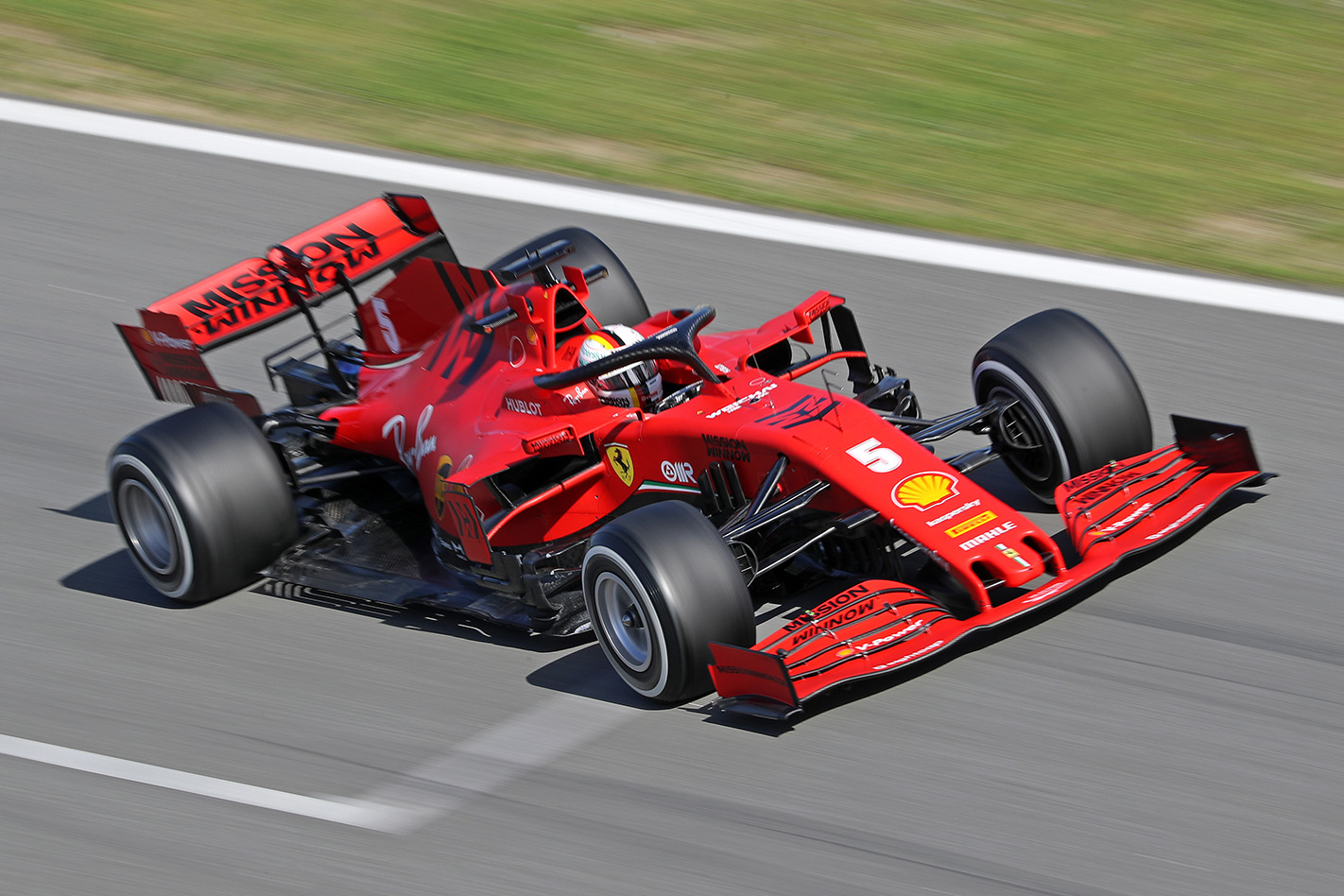
Instead, Ricciardo moved to Renault, where despite the Australian’s sizeable pay packet, positive results have yet to become apparent.
European media have reported that Ricciardo is looking for an out from the French squad, and the Aussie has even admitted he wouldn’t rule out a return to Red Bull Racing if possible.
If Ricciardo’s relationship with the Ferrari team remains intact, and the cards fall his way, the Aussie could finally join the Scuderia in 2021.
Another option for Vettel’s vacant seat is Carlos Sainz, who has a contract with McLaren until the end of 2020. Often overlooked, the young Spaniard has established himself as the best of the mid-pack, leading McLaren’s recent rebuilding phase from the driver’s seat.
Another tantalising option to consider is where Lewis Hamilton ends up. He has a contract with the dominant Mercedes-AMG team until the end of 2020, and has not confirmed his future plans.
A move to Ferrari would be risky for the six-time world champion, but a seventh title, with a third manufacturer, would seal his position as the greatest F1 driver of all time in the eyes of many fans.
With no ‘real-world’ racing for another couple of months, prepare for the 2020 silly season to begin in earnest very soon.
Toyota has confirmed that its popular seven-seat Kluger will come with hybrid power – but not until 2021.
After debuting in the US last April, the fourth-generation Kluger was slated to arrive this year, but Toyota now says it won’t arrive for another year at best.
Built on top of Toyota’s latest modular platform, the Kluger will be built in the Princeton, Indiana. It’ll join a burgeoning array of Toyota hybrid products that stretches from the incoming Yaris Cross baby crossover, the small C-HR, RAV4, Corolla and Camry.
The Kluger offers 30mm more interior length compared to its predecessor, with legroom in the second and third rows a priority.
A longer rear overhang results in 60mm growth in overall length and 455 litres of luggage space. And even third-row passengers will have access to bottle holders and air vents.
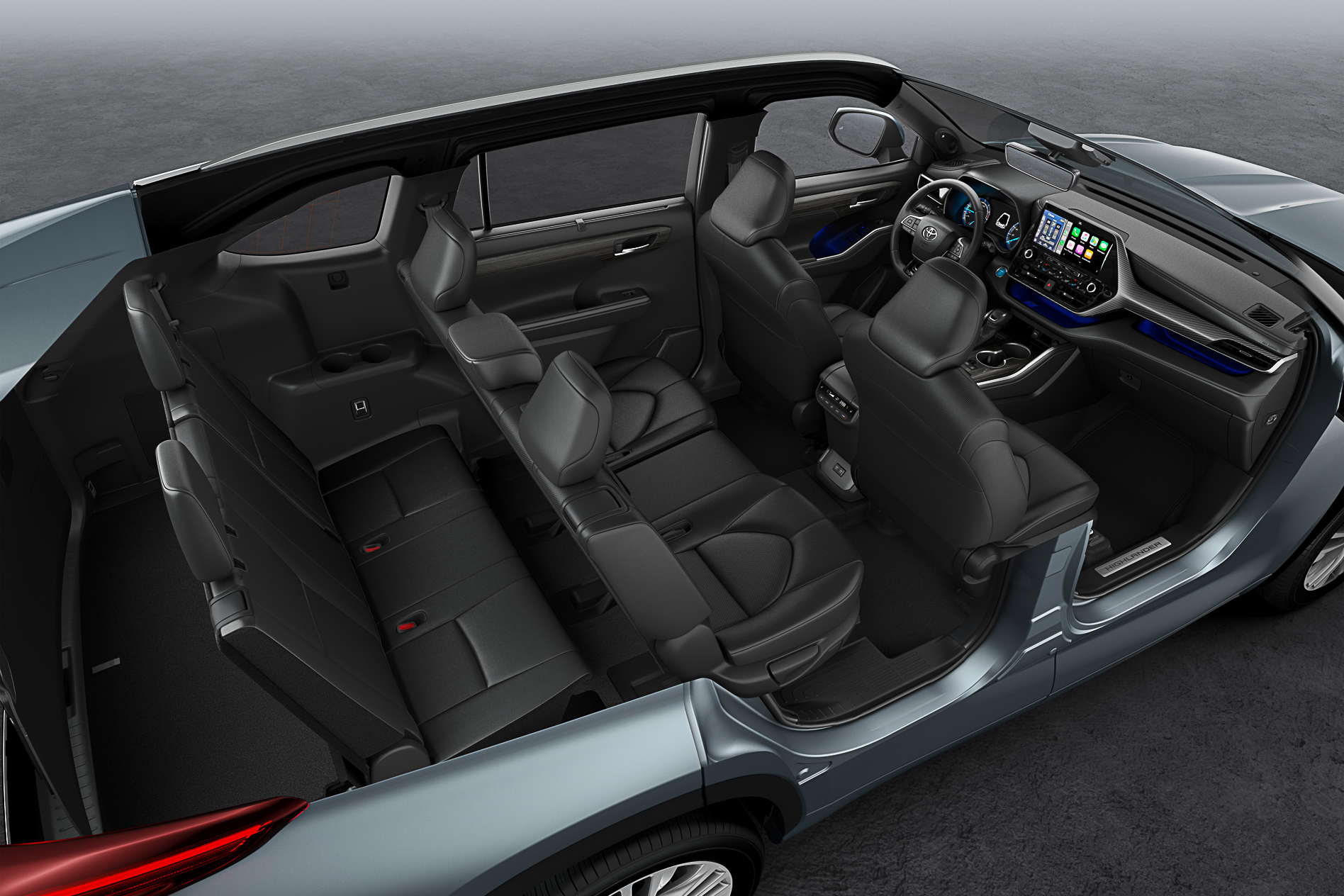
Inside, the all-new Kluger is roomier, airier and better equipped, with a large-format multimedia screen set to offer Apple CarPlay and Android Auto – something not possible in the current Kluger unless you add it aftermarket.
If you’re looking for a digital dashboard, though, you’ll be disappointed.
Those Kluger fans who are fond of a big six-cylinder engine need not worry, though, for Toyota has you covered.
Available in both front- and all-wheel-drive, the 2GR-FKS 3.5-litre V6 petrol engine will carry over from the current car, and will be backed by the same eight-speed automatic transmission.
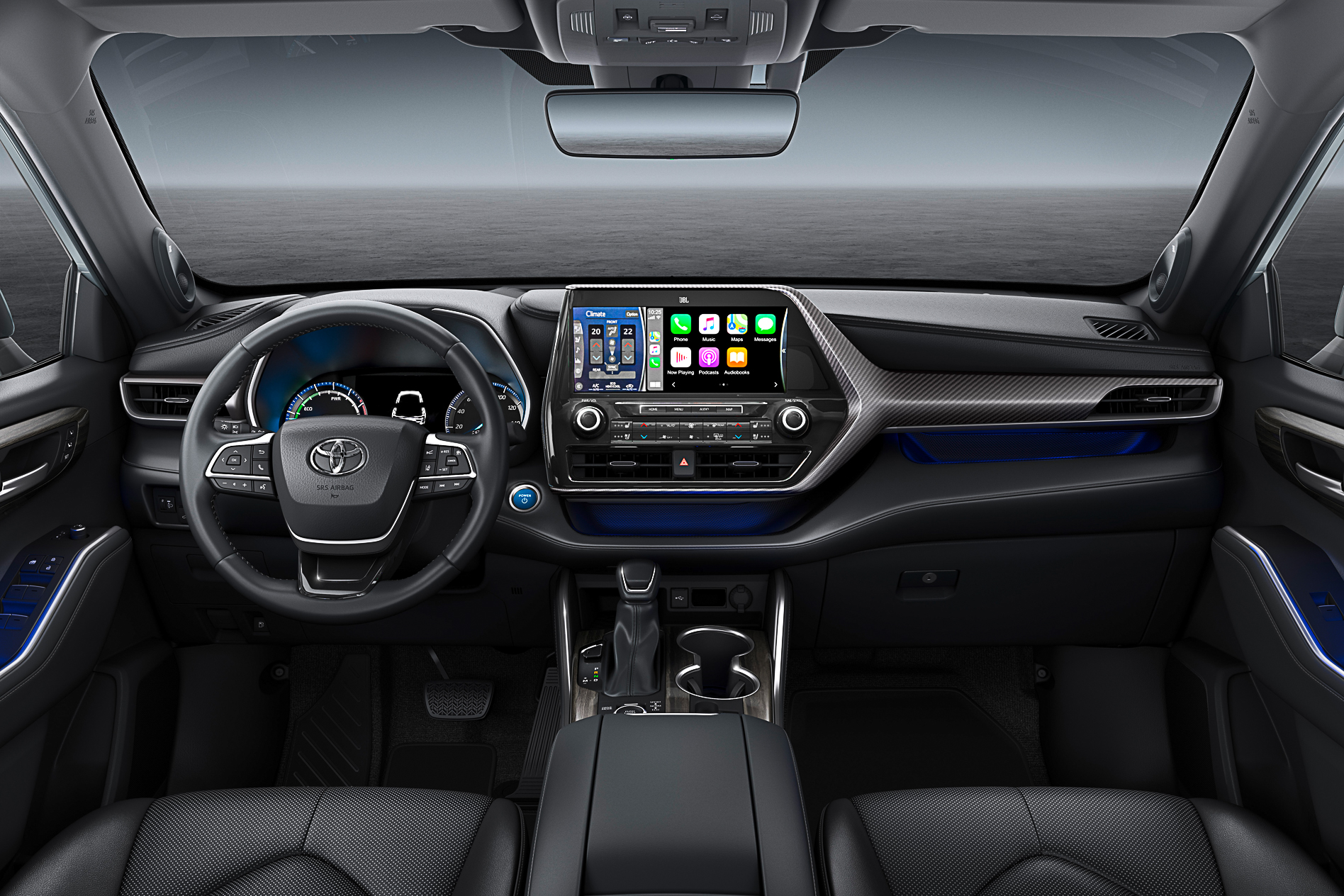
The 2.5-litre four-cylinder Atkinson-cycle petrol engine used in the RAV4 and the Camry will form the basis of the hybrid system, which will combine with two electric motors to produce a combined 179kW, according to Toyota.
It sports a continuously variable transmission and all-wheel-drive as standard.
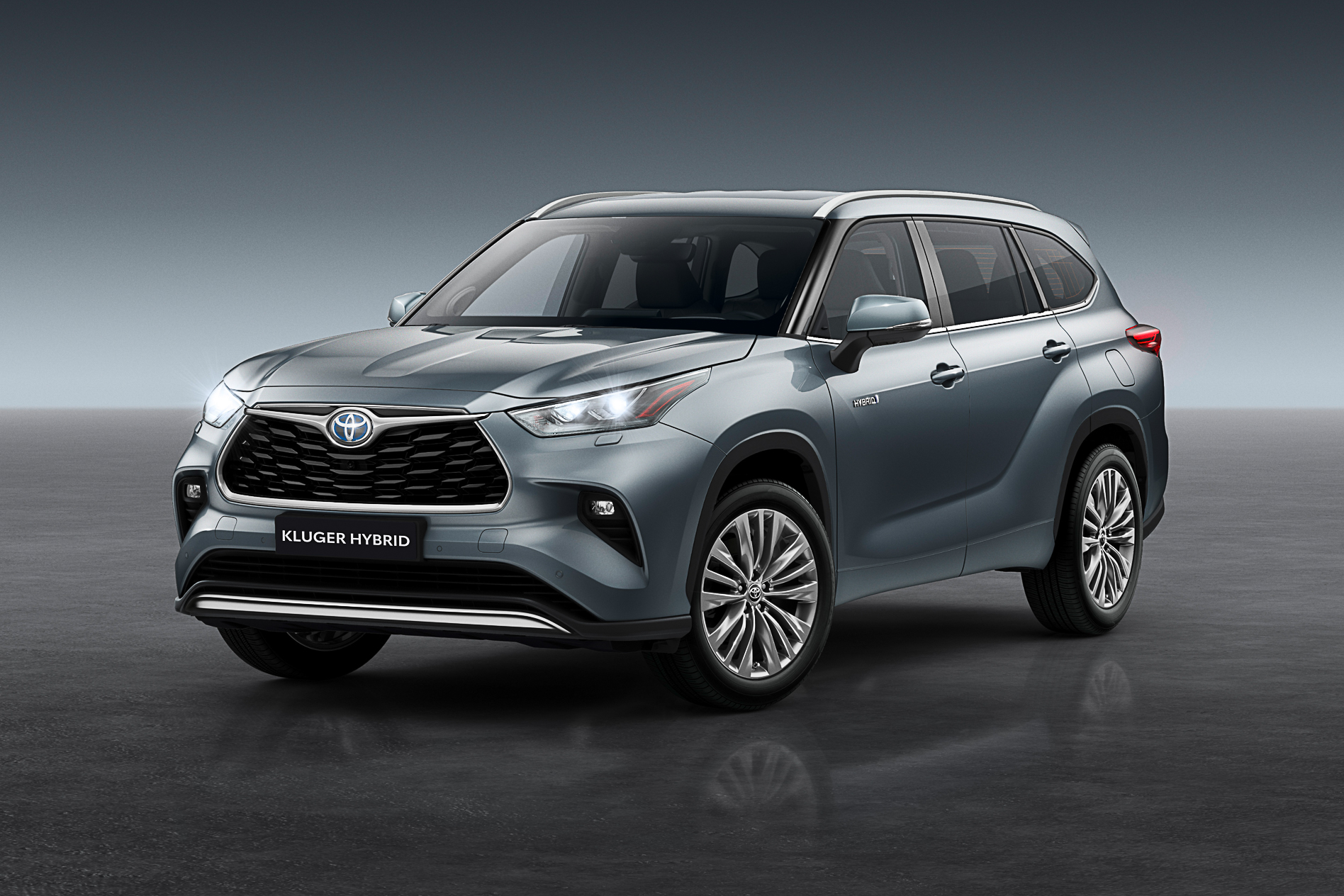
“The all-new hybrid Kluger is the result of combining Toyota’s hybrid leadership with extensive experience in SUVs, along with an unrivalled reputation for quality, durability and reliability,” Toyota Australia Vice President Sales and Marketing Sean Hanley said.
It’s not so much an elephant in the room as dinosaurs in the driveway.
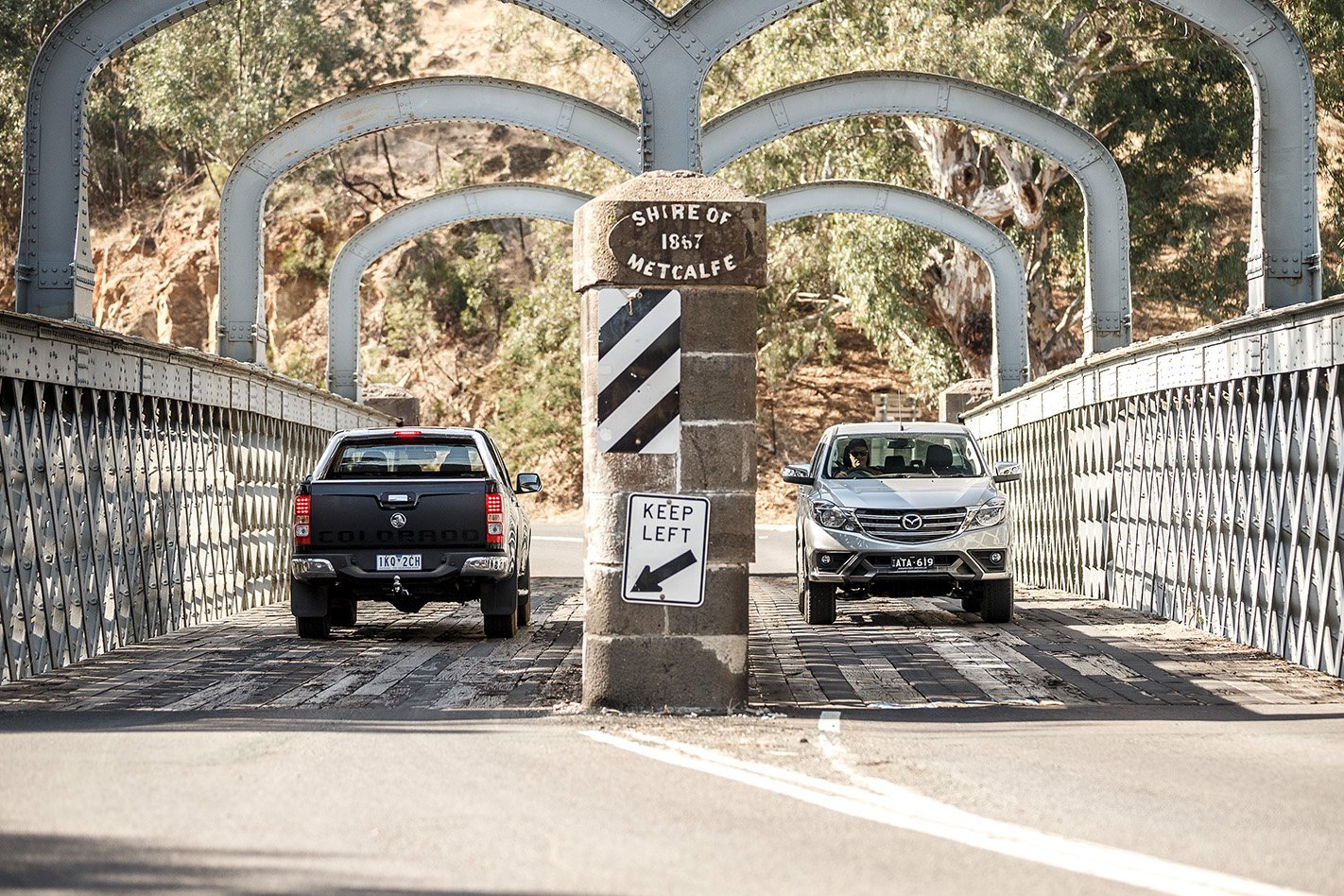
Anywhere you look, our roads are choking with dual-cab utes. Always popular, they now dominate, to the point where the best- and second-best sellers wear Toyota Hilux and Ford Ranger badges.
Celebrated and lately even feted, they’ve become ingrained in our national psyche, in much the same way Holden and Ford utes (and for a brief period during the 1970s, panel vans) once were.
Transcending workhorse origins, the once-humble ute is now everything from a $100K status symbol to a rite of passage for P-platers seeking to break away.
Plus, car companies love them, too. More than one insider has revealed that they can be a licence to print money.
So, here’s my beef. The dual-cab ute’s newfound status reflects Australia’s slide from progressive to prehistoric.
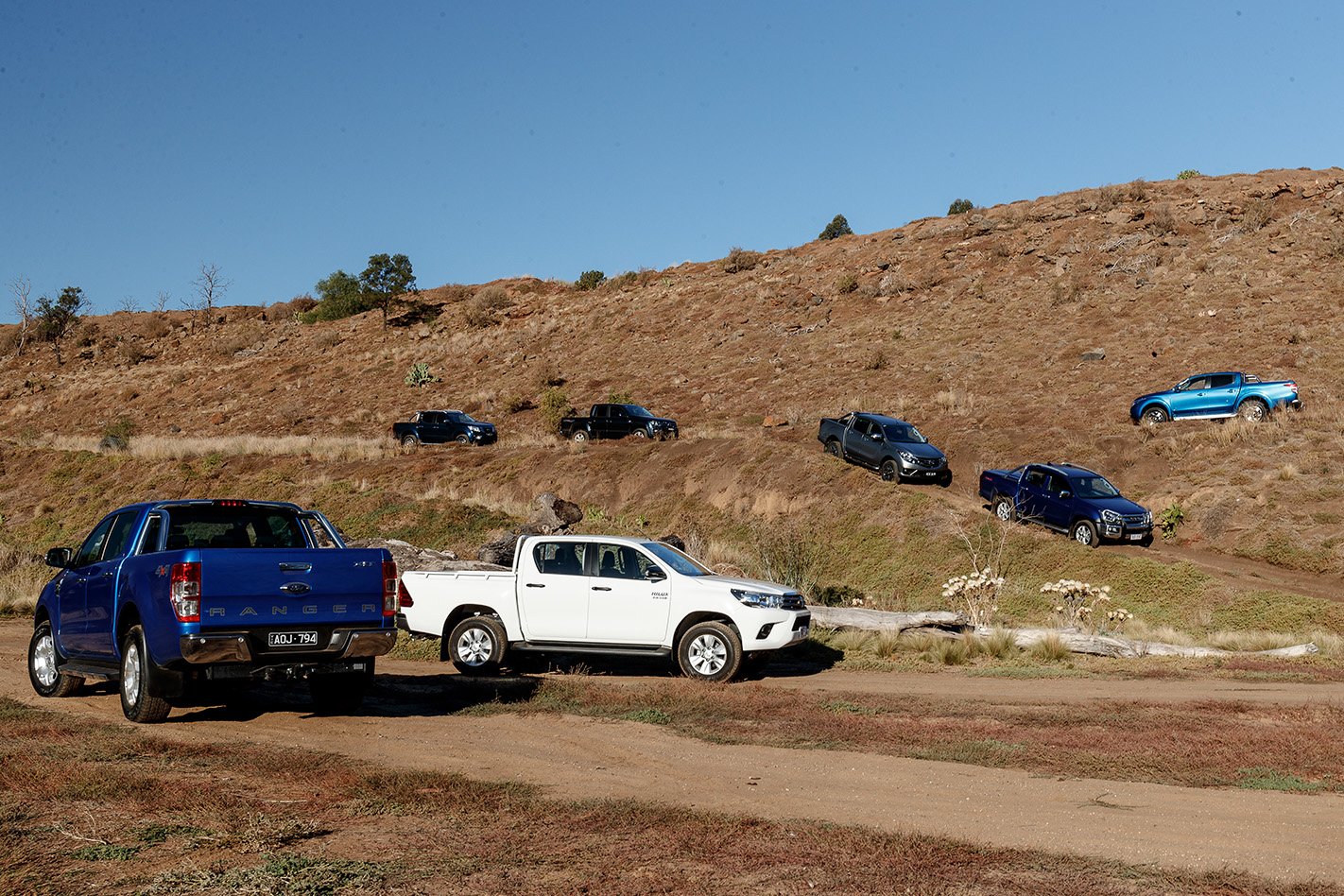
So far this year, Hilux, Ranger and Mitsubishi’s Triton make up three of the top 10 chart busters. All are comparatively big, heavy, thirsty and dirty, with a high centre of gravity, ladder-frame chassis, diesel engines and – in most cases – cart-spring rear ends. We’re talking pre-WWII tech.
Unsurprisingly, compared to any contemporary car, they’re ponderous dynamically, slow to stop in a hurry, and difficult to control in an emergency. Wheels’ exhaustive 2018 dual-cab ute megatest exposed this.
It bothers me that the winning VW Amarok was already eight years old. Had there been no advancement in that time?
What’s worse, there’s a toxic power-pissing contest going on within the segment, which only exacerbates the dual-cab ute’s comparative lack of safety and control. And don’t forget, folks, we’re taking about brand-spanking models with fresh tyres and new brakes.
After a hard life as tools of trades, used examples will be bought by kids with little driving experience. The laws of physics don’t exclude jacked-up Hiluxes on massive balloon rubber being hooned through narrow streets by dickheads feeling invincible. The potential for carnage when they’re careering out of control is sobering.
In contrast, in 2011, with our first female PM in the Lodge, and a climate-change agenda, our bestselling car had a lightweight monocoque body, efficient and economical powertrain choices, a multi-link rear, deft handling and five-star safety.
The correlation between today’s prime sellers and prime minster cannot be a coincidence, surely?
But nowadays, nobody lusts after a hatchback in the way thousands seem to over the prospect of a V8-powered Raptor. Even (comparatively) urbane editor Inwood understands the people-pulling power of the pick-up: they sell magazines nowadays, when small cars, frankly, don’t.
My fear is that the dual-cab ute will turn Australia into a redneck wonderland, where engineering and sophistication take a back seat to size – be it of the donk up front or the junk in the trunk (er, tray) – while our country burns, chokes and/or drowns. Bottom line, our national car park is devolving.
Where does it leave us car lovers? Stuck behind meandering early-20th century tech in traffic, that’s where. We ought to be revolting.
If you, like me, were raised on a diet of Radial Tuned Suspension-equipped Holdens, that dinosaur analogy feels all too real.
Tesla founder Elon Musk has finally admitted the ambitious Tesla Roadster has been delayed – and sits at the back of what is now a long product development queue.
Talking on a podcast with US comedian Joe Rogan, Musk confirmed that the Roadster will be prioritised last, after the Cybertruck pick-up and Semi truck, not to mention refreshes for the ageing Model S and Model X range-toppers.
‘Roadster is kind of like dessert,’ Musk said. ‘We gotta get the meat and potatoes and greens and stuff.’
Tipped to be the fastest electric car ever made, the open-topped EV was first revealed in 2017, but apart from a brief concept model shown in Grand Basel, Tesla hasn’t said much about it. Musk has already bragged about its performance, suggesting it’d be able to complete a quarter-mile in around eight seconds. To put that in perspective, most supercars can manage the task in around 10-11 seconds.
The reason for the Roadster’s prestigious speed is partly from its EV powertrain, but mainly from compressed-CO2 thrusters the car will borrow from Tesla’s SpaceX cousin, according to the billionaire. In a tweet, Musk claimed the Roadster would use a, ‘SpaceX cold gas thruster system with ultra high-pressure air in a composite over-wrapped vessel in place of the two rear seats.’
When asked if that meant a sub-8 second quarter-mile time Musk replied ‘no problem,’ adding that, ‘you can basically accelerate at the limit of human endurance.’
Tesla Roadster: everything else you need to know
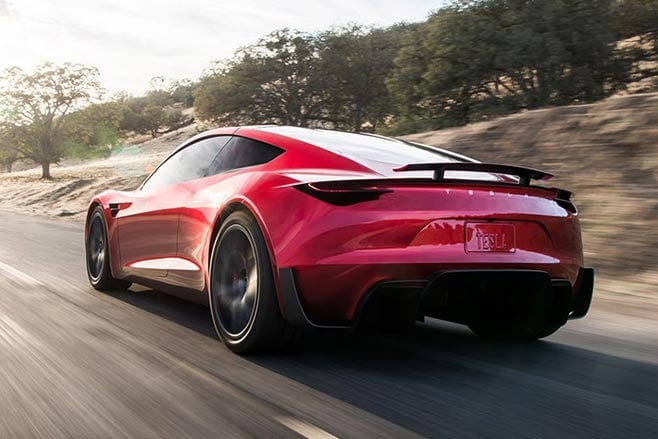
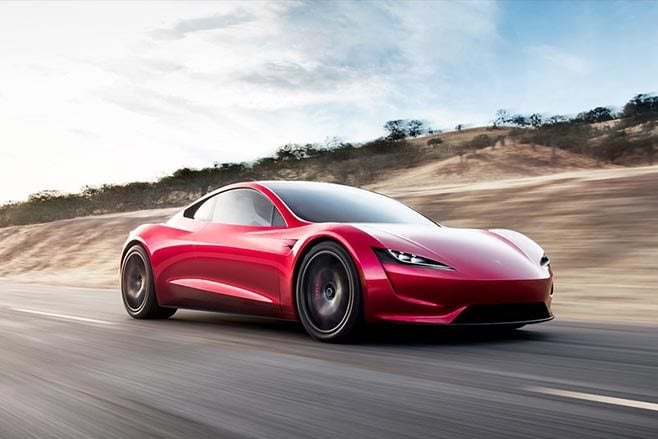
For the last few years, Tesla has been building up its own, unique design language, and if the new Roadster is anything to go by, the EV maker has completed its mission. Take one look at the new Tesla Roadster, and you can tell it’s a Tesla – but a faster more aggressive one.
The front end is sharper, with narrow, incisive lights – while the rear is more aggressive, too. Clean lines mimic that of the Model 3, but minimal overhangs and a squat low stance remind you this is an altogether different beast.
The original 2008 Tesla Roadster was based on the Lotus Elise, but this has its own distinct personality.
It looks more like a coupe than a roadster?
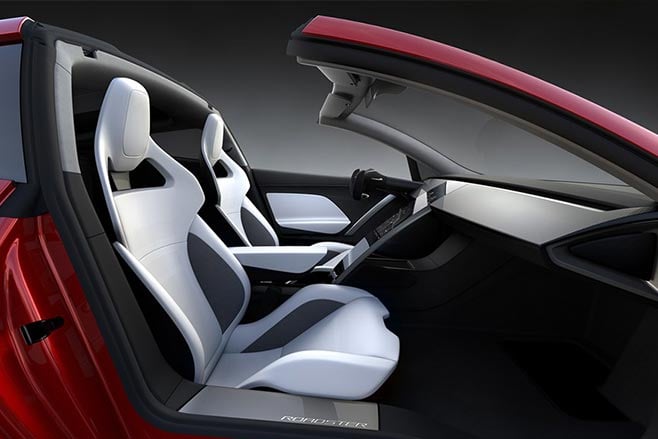
It’s really more of a Targa than a Roadster, the roof a removable glass panel that can be stowed in the boot. Unusually for a car of this type it seats four, although the rear seats are small +2 occasional style seats.
What about the performance?
Tesla claims a top speed in excess of 250mph, an incredibly high speed for an electrically driven car – or a conventionally powered car, for that matter.
With 7300lb ft of torque available at the wheels, projected acceleration figures are similar startling: 0-60mph in 1.9sec, and 0-100mph in 4.2sec.
The powertrain?
Three electric motors, one driving the front wheels and two driving the rears. A 200kWh battery pack provides the juice, and Tesla claims a 620-mile range – presumably at speeds lower than 250mph.
Booster jets?
If those figures aren’t enough, Elon Musk has floated the idea of using booster jets to increase the car’s 1.9 second acceleration time. In a post on twitter, Musk said Tesla could use COPV thrusters usually found on the SpaceX Falcon 9 jet to help propel the car.
The theory goes that by blowing highly compressed air in different directions, the Roadster will be able to respond even faster – whether it’s slowing, turning or acceleration.
‘The air exiting the thrusters would immediately be replenished whenever vehicle pack power draw allowed operation of the air pump, which is most of the time,’ continued Musk in the tweet.
The Tesla CEO also said the boosters will take the place of the two rear seats – which is probably a good idea for both safety and weight distribution reasons.
When’s it out?
If you fancy a spot on the waiting list, start writing a USD$50,000 deposit cheque now. Full price will be around the USD$200,000 mark, with the first ‘Founder Series’ cars off the production line costing USD$250,000.
Australian pricing is hard to estimate based on US figures, but a direct conversion puts the car north of AUD$300K.
Originally, the plan had been for production to start in 2020, but that is now firmly off the table. No new production date has been forthcoming, so for now the Roadster remains on the wishlist, rather than a definite launch.
One or two have been seen in the wild, though. Tesla chief designer Frankz Von Holzhausen took the new Tesla Roadster out a spin soon after it was first unveiled and he was inevitably photographed by a few members of the public.
As you’d expect from Tesla, a photograph of Von Holzhausen’s test drive of the Roadster prototype was also posted on Twitter.
This story was originally published on CAR Magazine’s website.
Sign-up here for your free weekly MOTOR report
In this very special WhichCar Weekly podcast episode, we welcome race ace and thoroughly decent chap Karl Reindler for an awesome insight into his colourful and inspiring career.
The former Formula 3 champion and long-time Supercar driver steers us through nearly 20 years of competitive driving, from his early years growing up in Western Australia to the joy of passing on experience and knowledge through teaching.
Along the way, Karl talks about his introduction to motorsport through the medium of karting before transitioning rapidly to F3 single-seaters.
Later, Karl recounts the evolution to racing overseas and all the excitement, challenges and potential that competing on foreign asphalt brings, as well as his experience in A1 GP and the Daytona 24-Hour.
And of course, we couldn’t leave a chat with this racing great without asking about THAT crash.
You can find WhichCar Weekly on all manner of podcast apps including iTunes and Podbean. Please rate, subscribe and leave a review!
And if you want yet more WhichCar action whether it be behind the scenes insights or the very latest from the automotive front line, follow the day-to-day happenings of the WhichCar team on Facebook, Twitter and Instagram @whichcar
Listened to or watched the WhichCar weekly podcast? Help us out!
- Leave a note in the comment section below
- Leave a review on Apple Podcasts/iTunes
- Subscribe to our podcast
Mazda is reportedly in talks to secure 300 billion yen ($4.3b AUD) in loans from three Japanese ‘megabanks’ in order to endure the fall-out from the coronavirus pandemic.
According to Reuters, the three banks were close to completing the deal over the weekend, with some funds already provided to the struggling Japanese carmaker.
Like many other manufacturers, Mazda was forced to cease production of some cars at its factories due to the outbreak of coronavirus.
It was already coming off a rough first quarter, having scaled back sales targets in Japan and North America (the latter makes up nearly a third of its global unit sales).
The manufacturer now looks to bolster its cash reserves with this new injection in order to hunker down and wait out what it expects to be a prolonged sales decline.
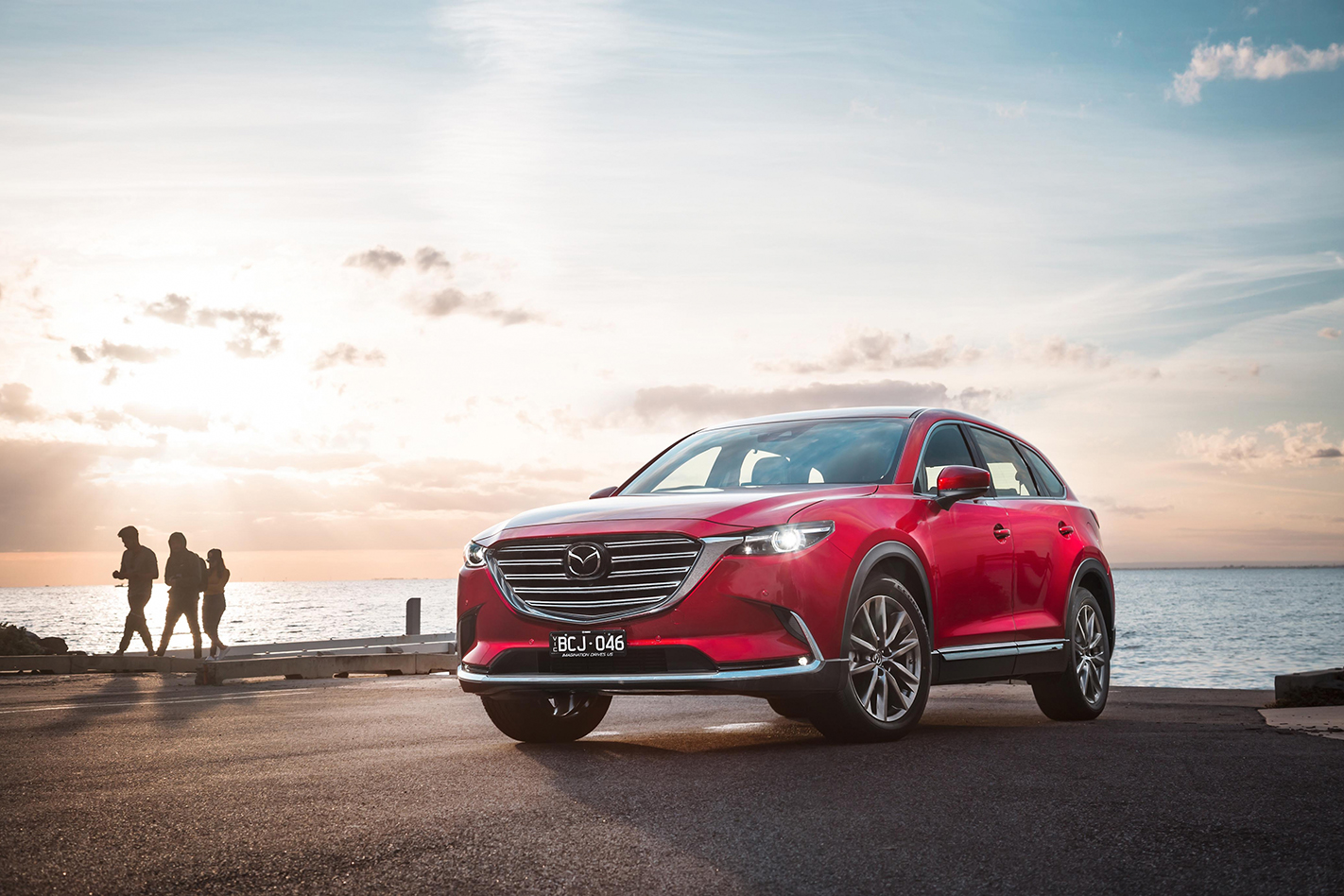
While Mazda seems big to Australians it is a relatively tiny outfit in other markets, so when it started cutting costs by limiting dealer incentives and boosting the price of core models in the US, the company quickly entered a sales downturn.
Mazda isn’t alone in asking for help to endure the coronavirus pandemic, with Toyota requesting a 1 trillion yen ($14 billion) credit line, and Nissan is after 500 billion ($7 billion) in financing.
American manufacturers Ford and GM have secured US$15.4 billion ($28b) and US$16 billion ($29b), respectively.
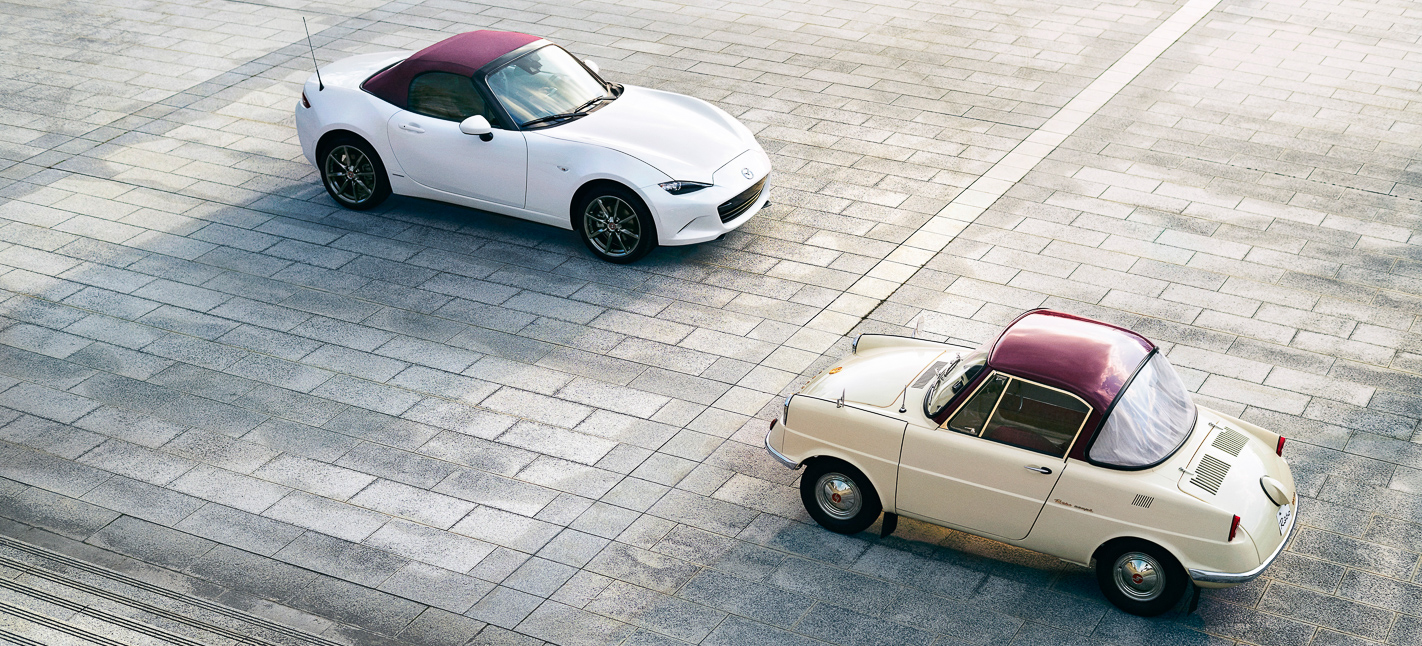
Things are starting to look up in some markets that have eased back restrictions, but there’s no doubt the road ahead is a very long and arduous one for carmakers across the globe.
Victorian Premier Daniel Andrews conducted a press conference this morning to announce eased coronavirus restrictions, which will also mean recreational drives are allowed.
The main take-away for most from the announcement is that small gatherings will be allowed in private residences among family and friends – no more than five visitors – and outdoor recreational activities are set to resume with a limit of 10 people.
“Under the new directions, you are able to go for a drive,” a statement from the government says.
“Practice driving is now permitted, as well as attending driving lessons. Victorians are being asked to use common sense when it comes to travelling. If you can walk or exercise near your home, you should.”
Opinion: Keep calm even as restrictions begin to ease
With the rules set to tick over on Tuesday May 12 at 11:59pm, Wednesday will be the first time in several weeks Victorians have been allowed to get out for reasons other than essential shopping, work, health reasons, or exercise.
“From 11:59pm tomorrow night, Victorians will be able to have five guests to their home,” Andrews announced.
“They should be family and friends. I think that’s where it’s really hurt, people not being able to connect with the people that are most important to them.”
“From the same time… groups of 10 – no more than 10 – will be able to participate in outdoor activities. Sports activities, recreational activities, whether it be hiking, fishing, playing golf, going for a walk, or kicking a footy. No more than 10, and there will be physical distancing and hygiene arrangements. Common sense, basically.”
The full set of travel restrictions in Australia
National parks will also open, and there is reportedly no limit on the distance Victorians will be able to travel from their homes within the state, meaning drives from Melbourne to mountainous regions are to be kosher.
More to come as updates arrive.
The idea that the human race is its own worst nightmare has been a cerebral scratching-post of mine for many years. The concept started with the realisation that for millennia we’d looked to the sky and dreamed of soaring with the birds. Then, when we finally develop the necessary tech, we turn it into check-in queues, airline food, security hassles and your luggage visiting places you never will.
The same sort of technological hijacking has clearly taken place on the interweb, where our ability to access information quickly has led to a dumbing down of the process and, inevitably, the results.
I was searching for a part number for an old car recently. So I tapped in the make, model and a description of the bit in question. As well as a link to an au-pair agency that surely didn’t have the bearing I wanted, three links to jockey-porn pages and a hook-up to a foreign language site that could have been selling anything, I was also offered a list of related questions asked by other browsers. And from the butchered verbs and bogan syntax, it was obvious that the algorithm was simply riffing off the dumbest 20 per cent of keyboard zombies and presuming that was humanity covered off. Tick.

But it’s happening everywhere. Even in cars. Look at some of the potentially brilliant tech buzzing down the CAN bus right now, then compare that with what it’s actually being used for. It’s depressing.
Take lane-keeping assistance. By looking at the lane markings, a modern car knows where it is relative to where it should be. So, when the average (and I mean average) driver is suddenly blinded by the act of picking his nose and rubbing his eyes, the lane-keep gizmos can ensure he or she doesn’t hurtle into the mulga or cross into the next lane between the axles of a B-Double.
But what if this very same tech was used properly and given its correct name: Apex Identification Assistant? Now we’re talking. Instead of guessing where the fast line is through a corner, the AIA could gently guide you to the correct entry point, use its tactile abilities to show you the clipping point and then sweep you gracefully through the turn to the correct exit point. Pretty soon, you’d have the hang of it and could turn AIA to a setting where it only intervened if you were on a trajectory to miss the apex by a set distance. Eventually, you’d turn it off altogether because by then you’d be a proper driver.
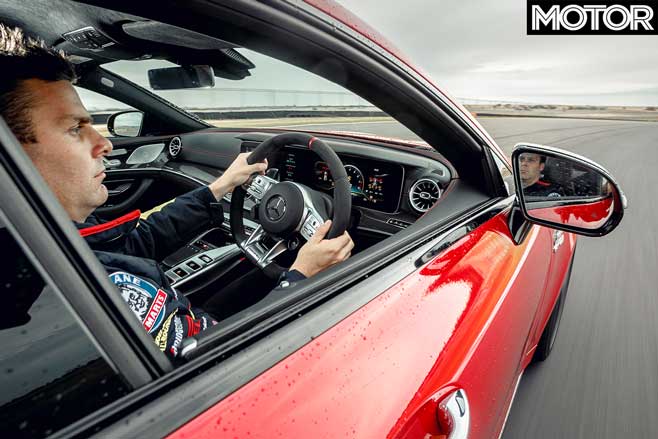
Next, autonomous braking and active cruise-control. At the moment, this could-be-fabulous tech duo is being wasted on preventing people who shouldn’t be driving from arriving at speed, doggy-style, mirrors-deep into the car in front. But what it is really capable of is reducing traffic congestion to a huge degree.
If we all set the AEB/ACC gap for the car in front at one car-length, an entire lane of traffic could step on the coal the instant the light turns green and all move off as one giant caterpillar. At the moment, the first driver puts down his bowl of cereal and goes. Then the driver of the second car looks up from his laptop and goes. Then the third driver selects a gear from neutral, checks his reflection in the mirror and goes.
By now, the light is orange again, allowing just another three cars through. But if we adopt the caterpillar strategy – and ALGOWI (Autonomous Let’s-Get-On-With-It) as I like to call it, would make it totally possible – we’d get anything up to ten times as may cars through an intersection every green light.
Scientists and engineers go to great lengths to develop this stuff for us. For goodness sake, pay them their due respect and use it properly.
