
- New Toyota Harrier debuts in Japan
- Virtually identical to RAV4 under the skin
- Will it come to Australia?
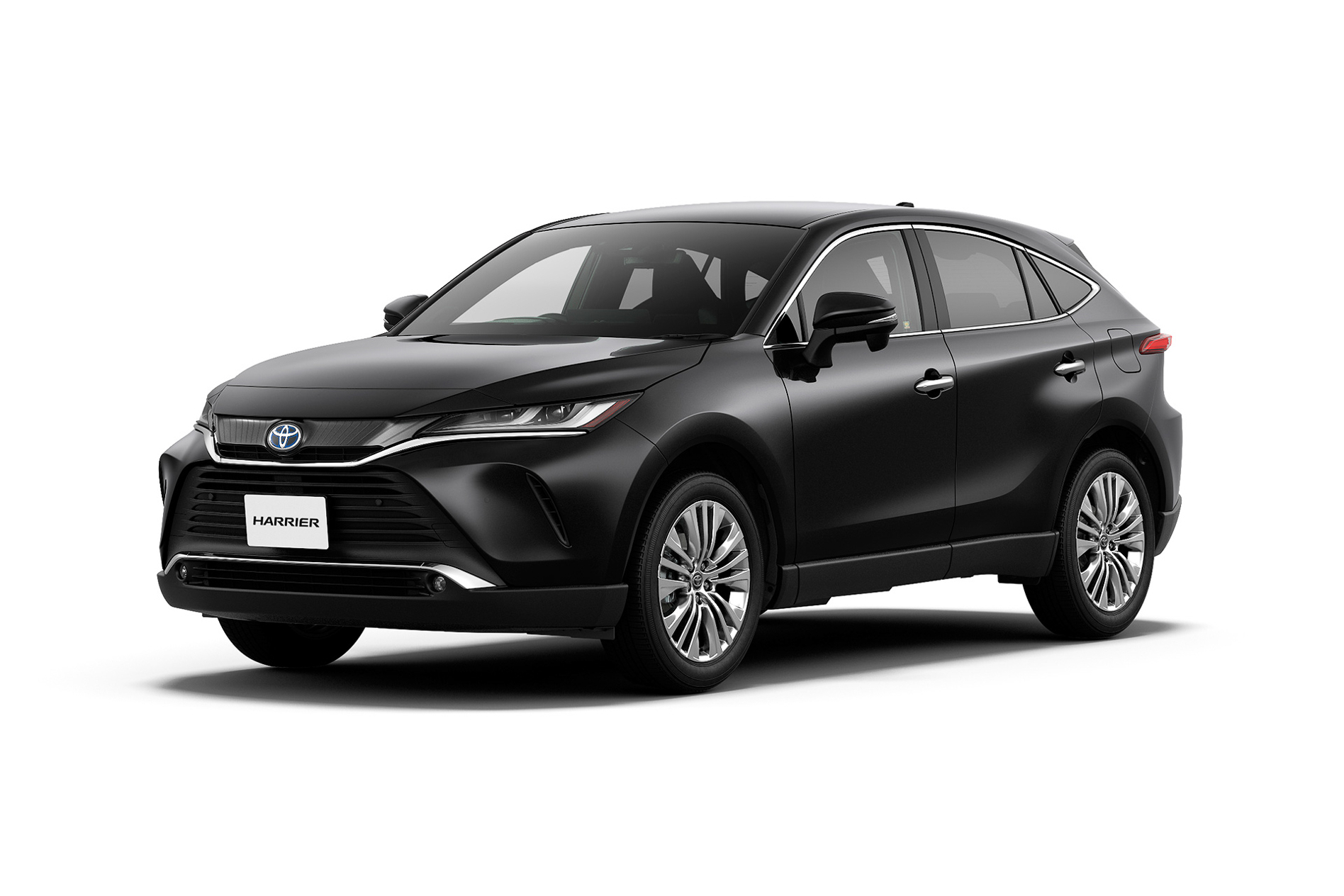
Details on the Toyota Harrier dropped this week, and the more we look at it, the more that we’re convinced that it could have a lot of potential fans outside of its home market of Japan.
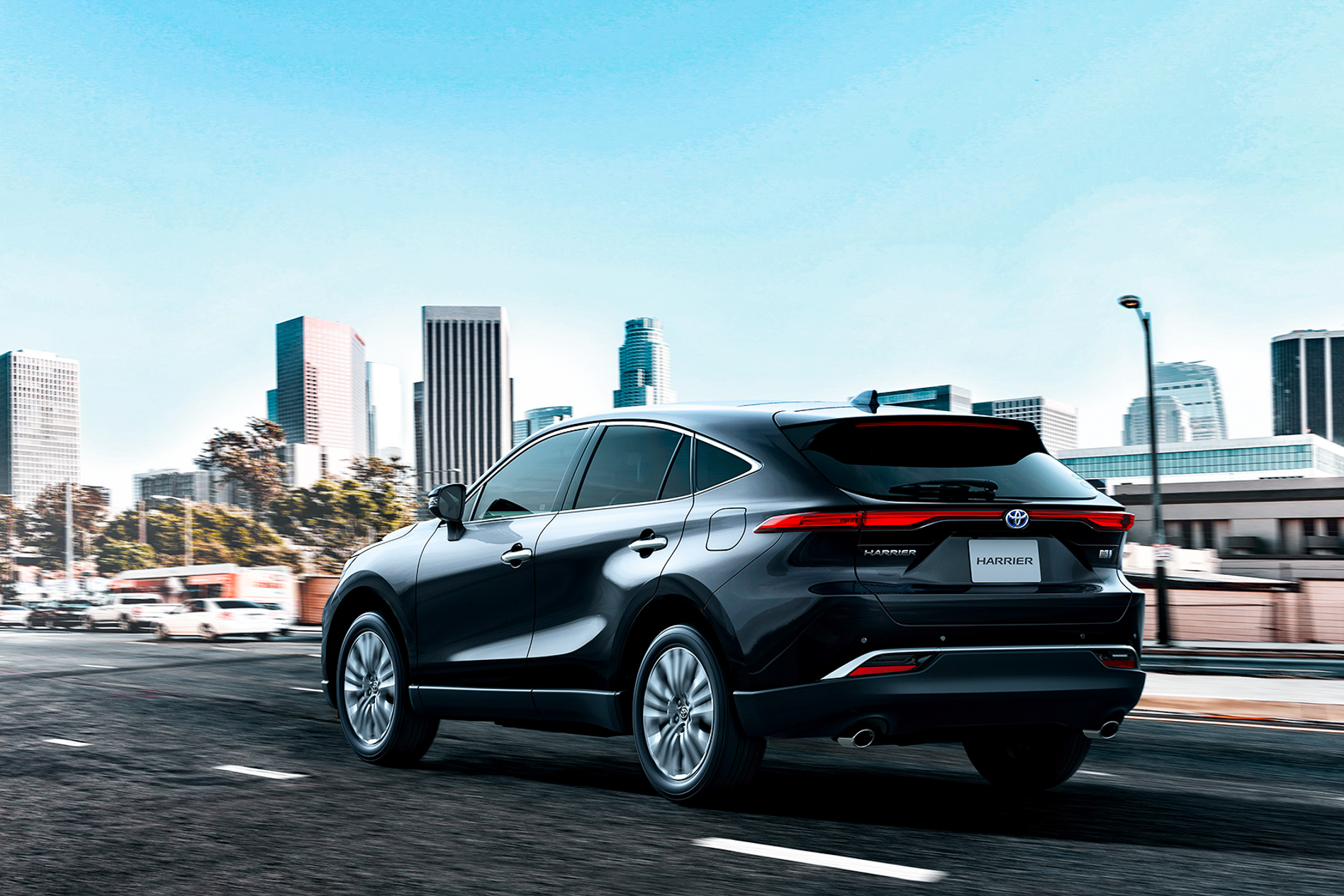
The Harrier is the latest Toyota product to move over to the car giant’s all-encompassing global platform, the TNGA-K, which has imbued the Toyota line-up with a new sparkle when it comes to driving dynamics. It’s the same platform that sits under cars like the Camry, too.
At 4740mm long, it’s 140mm longer than a RAV4 and 210mm shorter than a Kluger, but measures the same width-wise as a RAV. Thanks to that new, swoopy roofline, though, it sits 25mm lower than the more boxy RAV4.
In terms of powertrains, the Harrier is almost a carbon copy of the RAV4, offering either a 131kW hybridised 2.5-litre four-cylinder petrol engine backed by a CVT transmission or a conventional 126kW 2.0-litre four-cylinder petrol engine using the same kind of gearbox.
The hybrid version can be had in electrically-assisted all-wheel-drive or conventional front-wheel-drive, while the 2.0-litre motor appears to have lost its turbocharger from the previous iteration of the Harrier. Interestingly, the hybrid Harrier offers a 100v/1500w outlet that uses the car’s battery as a power supply.
Styling-wise, the Harrier stands in obvious contrast to its boxier RAV4 sibling, with a curvier, more sensual design language that looks more Lexus than the big T. This is no coincidence – the Harrier is a snapshot of the next-generation Lexus NX SUV, at least when it comes to technology.
Speaking of new technology, the Harrier debuts a number of updated active safety measures for Toyota, including a pre-collision safety system that detects pedestrians day and night, as well as cyclists during the day. There is an Intelligent Clearance Sonar system that detects stationary objects, which will stop the Harrier before you biff a parking pole.
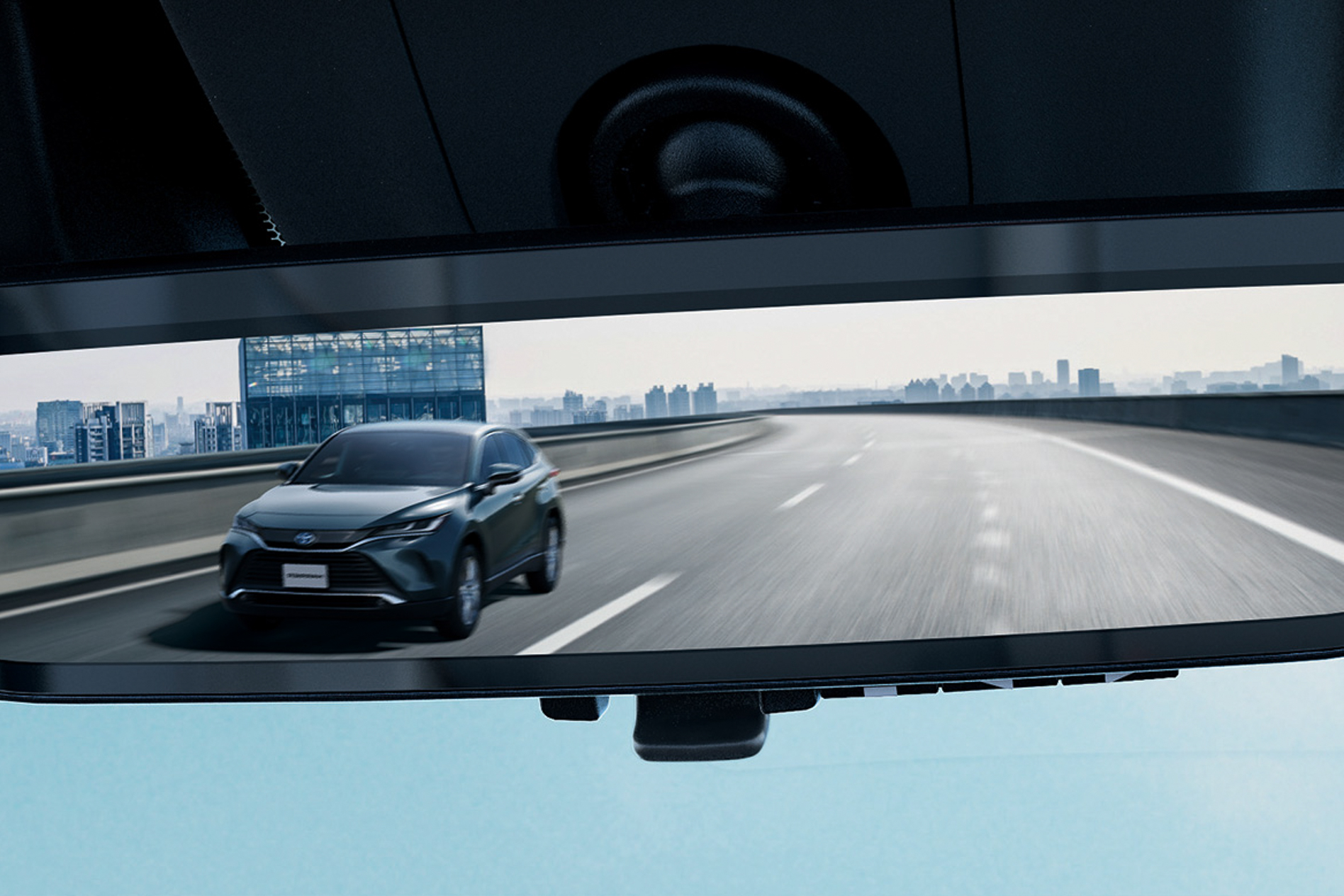
A new Digital Inner Mirror system is a factory-fitted dashcam set-up, too, which will enable the Harrier to record images both in front of and behind the car.
Other new and updated systems include torque-vectoring at the front wheels, a revised MacPherson strut front/multilink rear end and new dampers.
A 12.3in central touchscreen takes pride of place in an interior that’s more elegantly curved than the hard-edged RAV4, and it offers satellite navigation, smartphone mirroring and digital radio.
There is a lot of leather and faux wood grain going on in the Harrier, which also features the first-ever panoramic glass roof offered by the company. The roof is equipped with both photo-chromatic shading and electric sun visors.
Is the Toyota Harrier coming to Australia? We reached out to Toyota for an official answer, and it’s unexpected.
“The Harrier is not a vehicle that has traditionally been available in Australia and is currently not in our plans for introduction here,” a Toyota spokesperson told us.
The company is currently selling every RAV4 it can get its hands on, and even though the Harrier would present little in the way of logistical barriers, the costs of bringing it to market here need to be weighed against potential sales volumes.
If the Harrier pushes through the $60,000 barrier – and given the RAV4 Edge tops out at around $48,000 before on-road costs – it starts to intrude on stablemate Lexus’s territory, as well.
Interest in American-sourced pick-ups is growing – and Aussie buyers are willing to pay for it.
Pricing for the Chevrolet Silverado 1500 LTZ Premium Edition launched in March has been detailed, with the single variant coming in at $113,990 – as long as you opt for Summit White paint.
All other hues are an additional $1250.
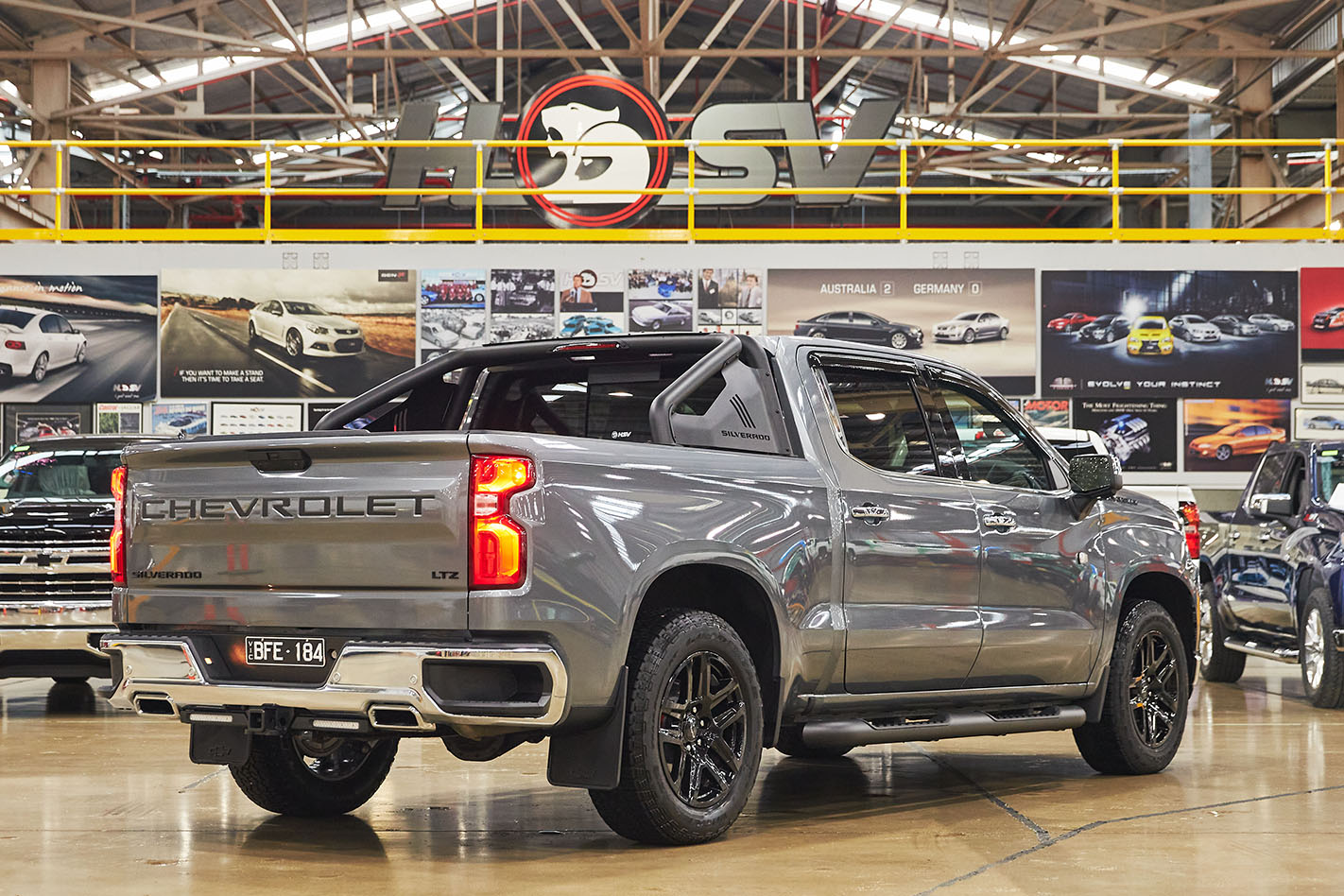
Included in that price is the cost of converting the Silverado to right-hand drive, which is carried out by HSV in Clayton, Melbourne.
The initial batch of converted American pick-ups is due to land in HSV dealerships by April 20.
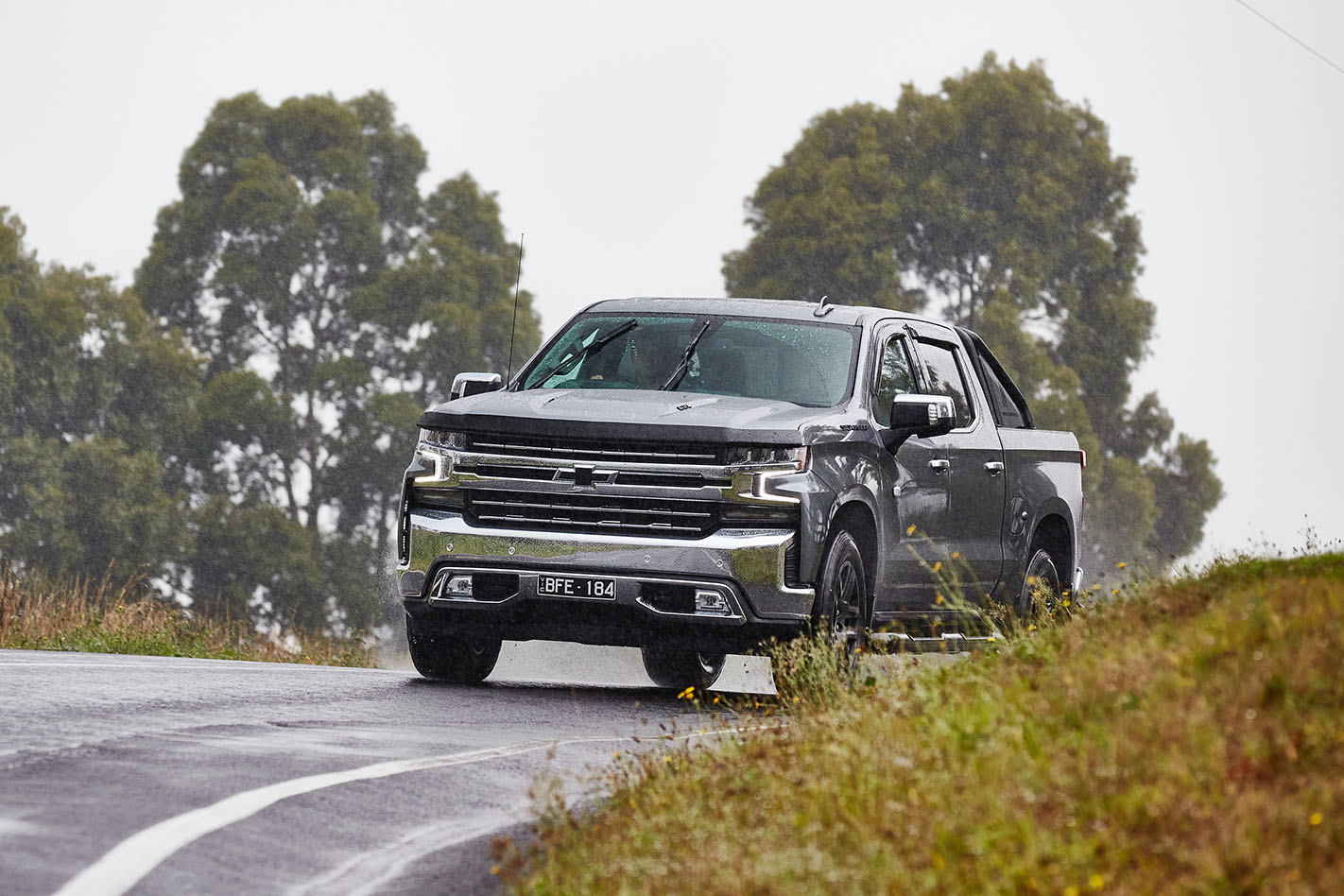
According to HSV there is “strong interest in the vehicle”, with dealers already holding orders. The company says demand has increased since the Government announced its changes to tax treatment for vehicle purchases, which ends June 30.
Supply-chain constraints could limit production, but HSV believes it will still sell this year’s allocation of vehicles.
So what do you get under the, ahem, hood for your $113,990?
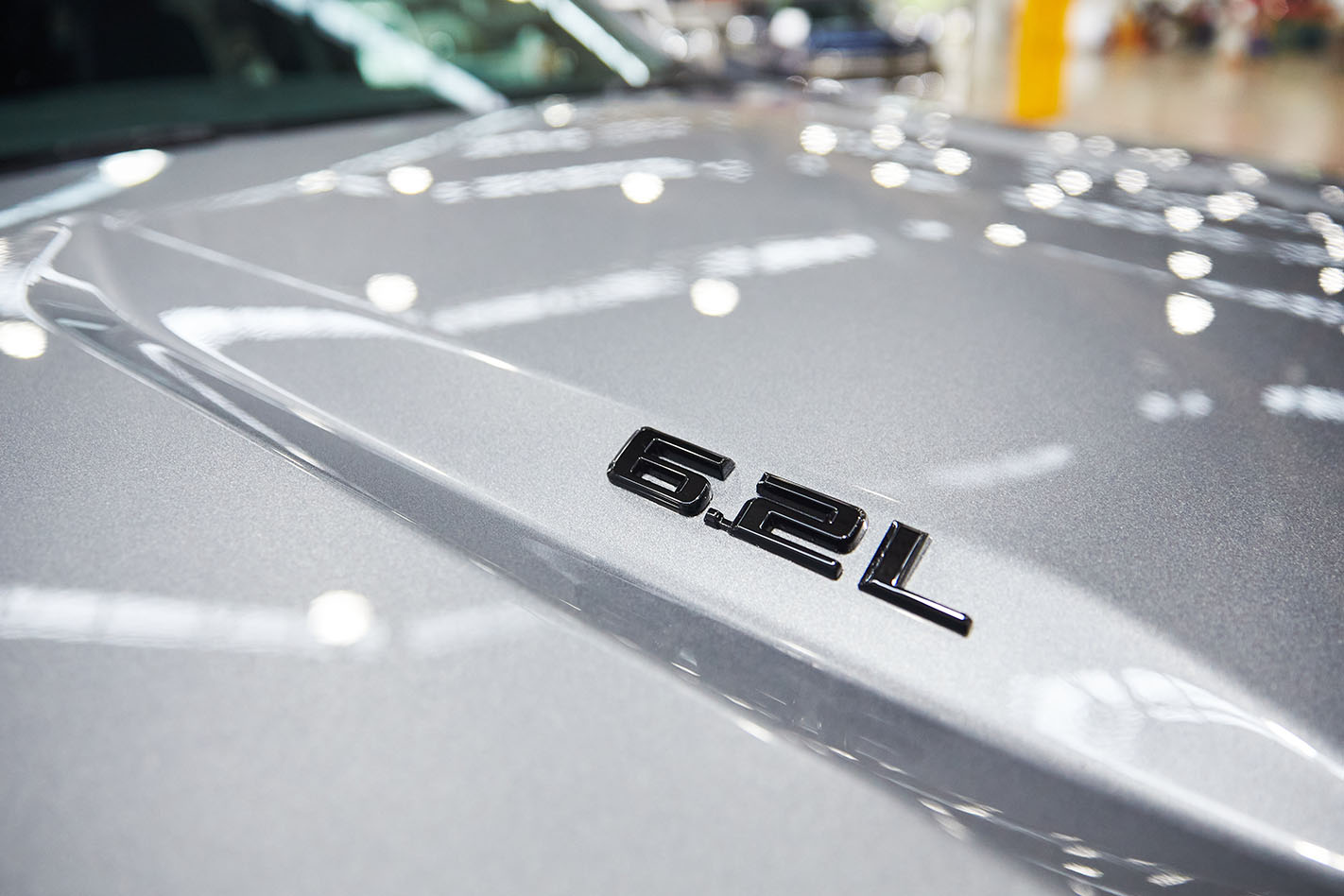
The Silverado 1500 LTZ Premium Edition is endowed with a 6.2-litre V8 petrol engine producing 313kW and a substantial 624Nm. The EcoTech3 bent-eight comes with cylinder deactivation and returns a combined fuel consumption figure of 12.3L/100km.
To put the $113,990 figure into perspective, the Ram 1500 starts at $89,950 and punches out 291kW/556Nm from its petrol V8. The twin-turbo diesel four-cylinder Ford Ranger Raptor serves up 157kW/500Nm via its 2.0-litre donk from $76,490, and the $72,790 Volkswagen Amarok Ultimate 580 offers 165kW/550 from its 3.0-litre V6 turbo-diesel.
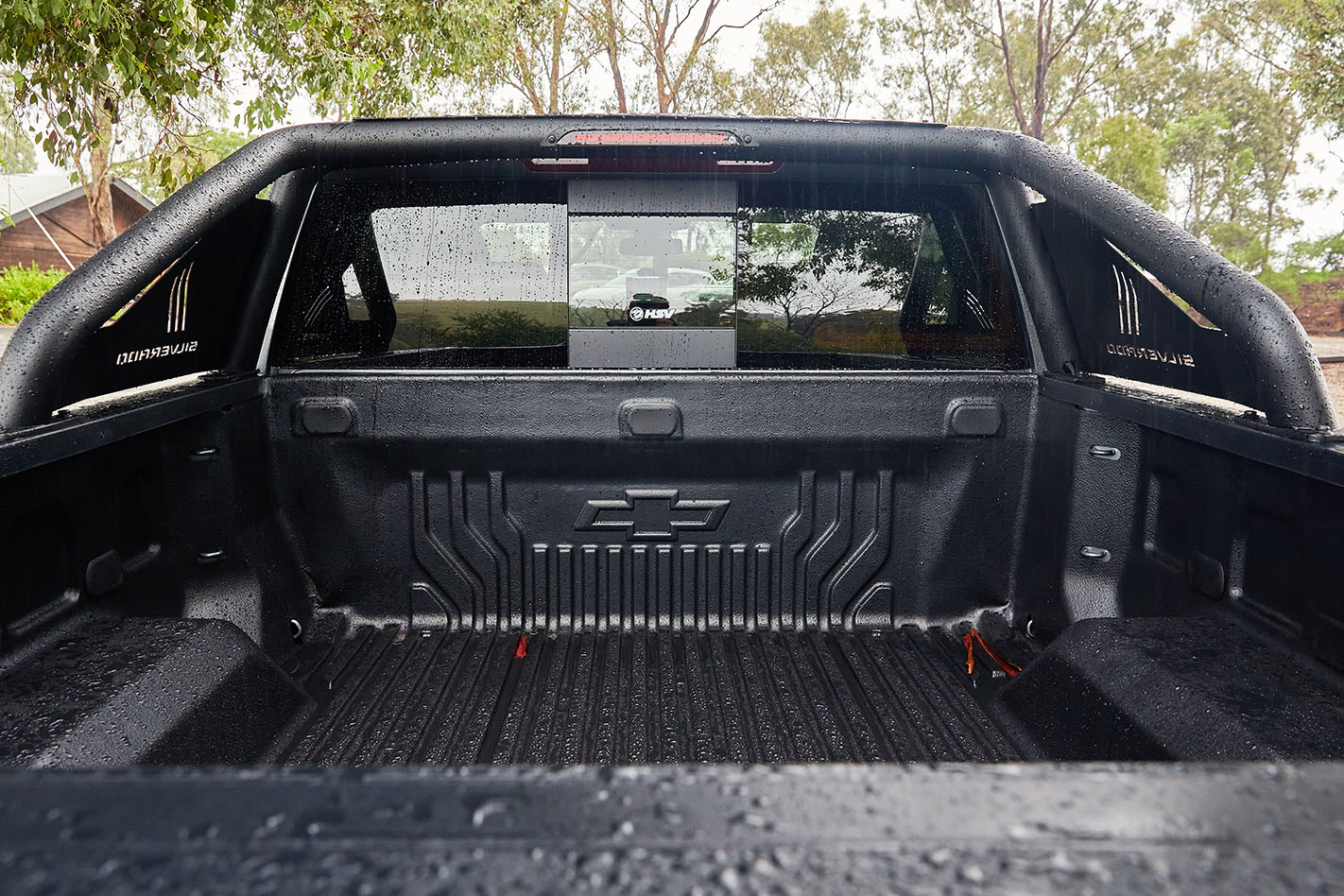
The highly specified LTZ Premium Edition, with its dual-cab-style four-door body and petrol V8 engine, is the only offering available.
Different form factors and turbo-diesel power are options to be assessed in the future.
Despite tipping the scales at 2588kg the 1500 shifts, with the 10-speed auto offering smooth and intuitive responses. (Read our first drive for full driving impressions.) Power is sent to all four wheels, and there is also a two-speed transfer case and a heavy duty locking rear diff.
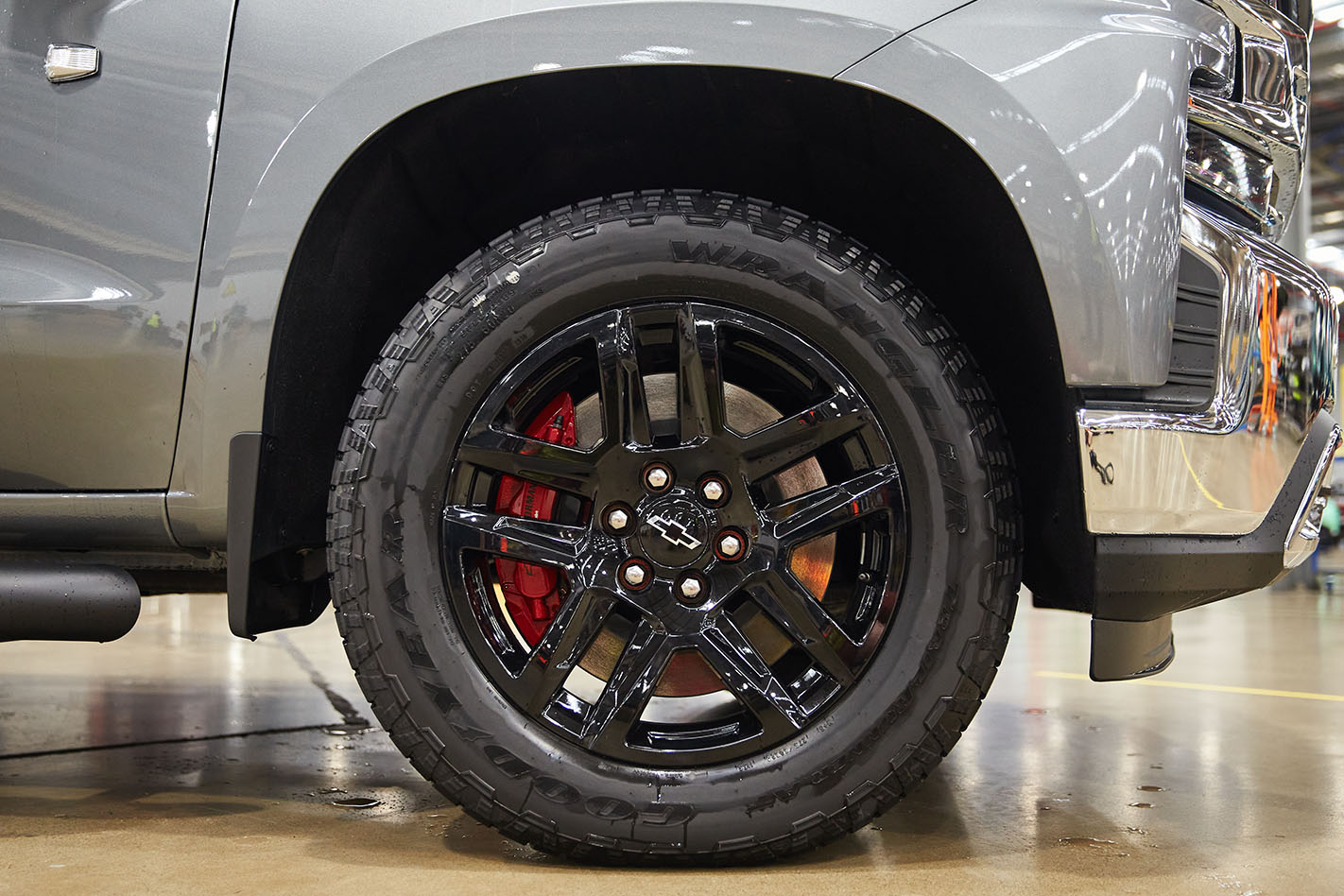
HSV is offering upgrades to the Silverado 1500. There are between 30 and 40 accessories you can ask to be fitted to make your LTZ look even tougher, but performance isn’t being overlooked. An air intake and a 3.5-inch exhaust system will up the outputs by 9kW and 10Nm. HSV is also working on its own bespoke suspension set-up, but it’s yet to be signed off.
However, buyers in this market want towing capacity – and the Silverado doesn’t disappoint with a braked towing capacity of 4500kg. The gross combined mass is 7160kg and the maximum payload is 712kg. Safe to say that while the 1500 might be the ‘smallest’ in the range, it’s still very capable.
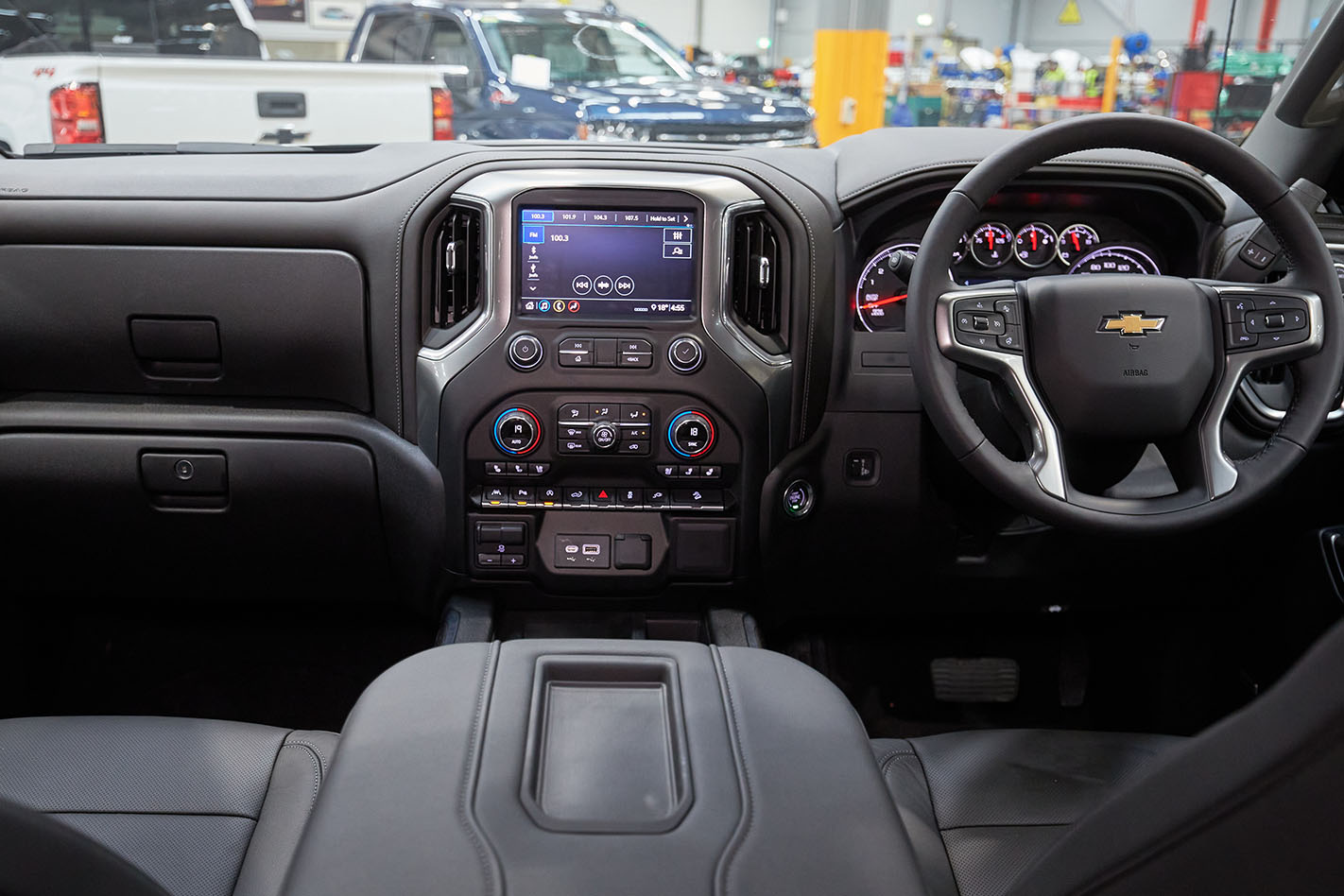
The cabin is vast with ample seating room for five. The list of standard features is long, too, with enough cow hide to cover Texas, heated/cooled electric leather seats, head-up display and smartphone mirroring to name just some of the kit.
Tell us what you think. Would you pay $114K for a big hunk of American-sourced pick-up?
Fiat Chrysler Automobiles (FCA) has announced the winners of its Design Sketch Battle competition, in which fans of the brand were invited to submit their wildest interpretations of the “wickedest and most outrageous designs for a Ram truck”.
And if the results are anything to go by, the generation of amateur car designers that have posted their creations via Instagram could make our future roads a very colourful place to drive. That future could even include a reborn version of Australia’s beloved car-based ute.
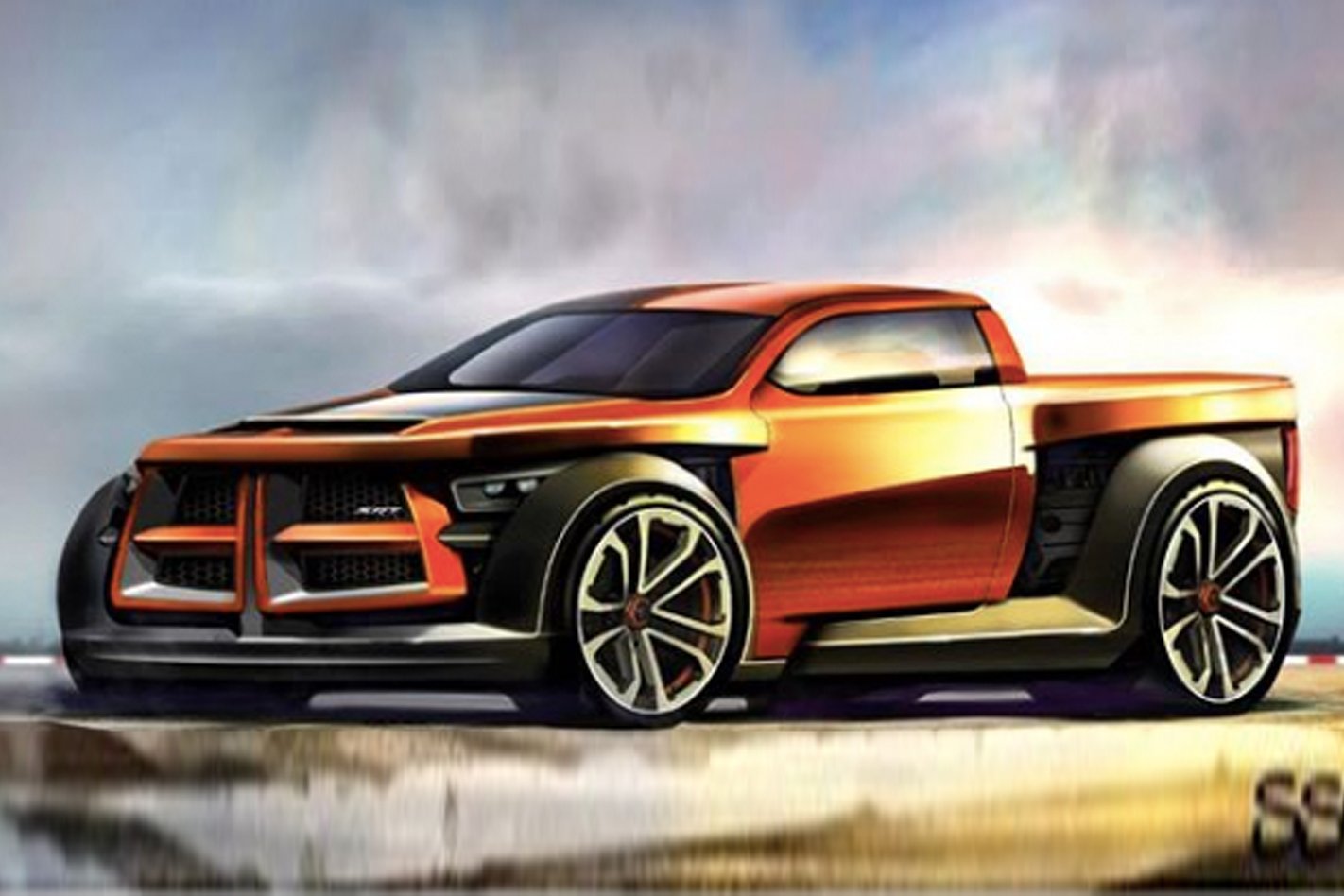
Entrants were given just 24 hours to come up with their best material with the designs both submitted and judged via the social media platform. FCA’s top designers Ralph Gilles and Mark Trostle announced the winning Design Sketch Battle concepts after sifting through more than 200 entries from around the world.
The virtual comp was launched to promote FCA’s main annual Drive for Design contest, which concludes in 15 days. This year, high school students were asked to design ‘the ultimate Ram truck of the future’ for a chance to win big prizes – and perhaps even kickstart a career.
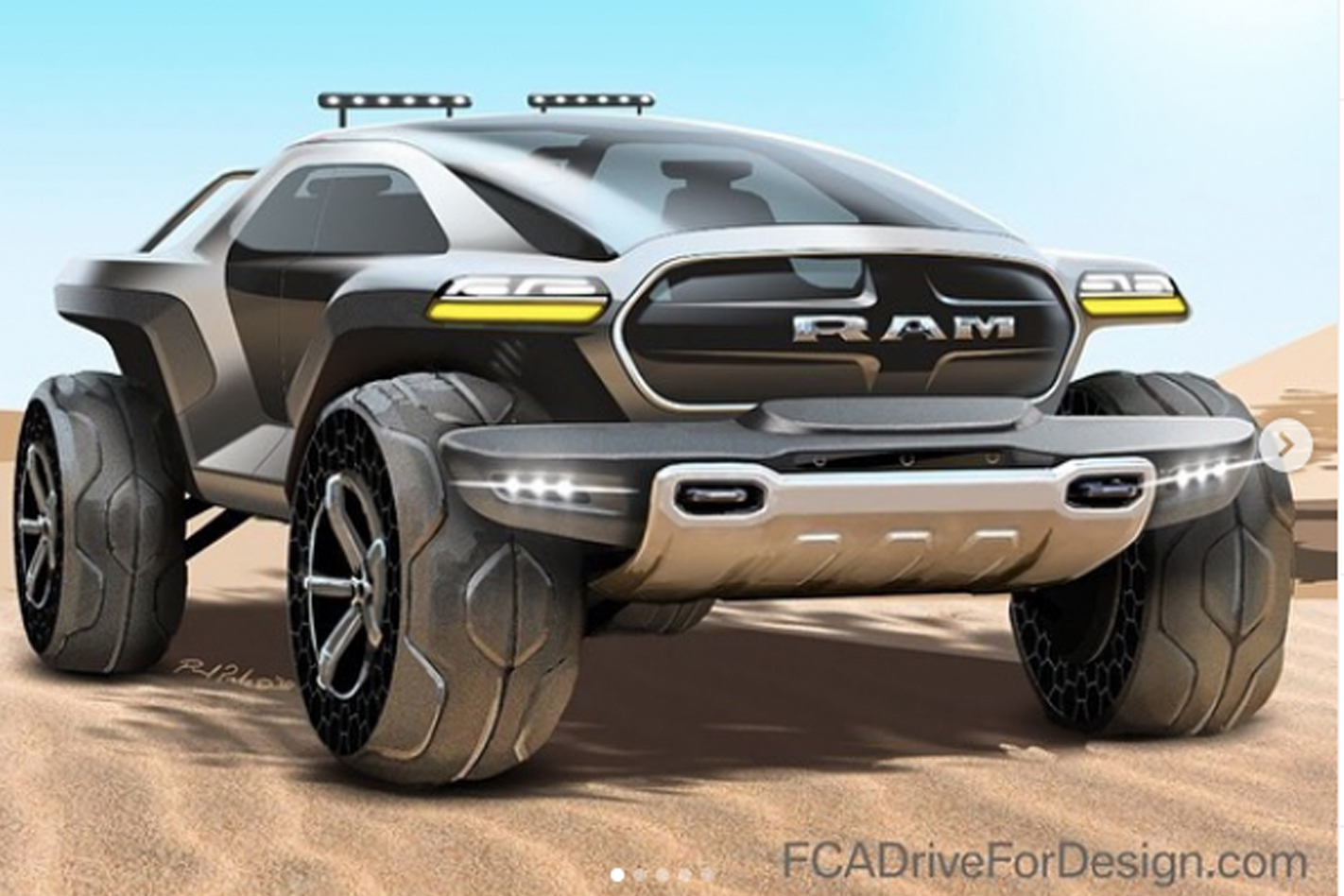
For the warm-up comp, Gilles and Trostle nominated their top five designs with an incredibly diverse range of concepts that showcased retro revivals, far-reaching future evolutions, advanced alternative powertains and some innovations that are every bit as mind-blowing as the technological concepts you’d expect from the professionals.
The Power Wagon is lightyears into the future but still manages to take inspiration from the original 1946 version, and a majority of entrants embraced a high-riding, go-anywhere aesthetic. However, we particularly liked the low-slung, road-only concept that took a Dodge Challenger Demon as its basis and converted it into a ute that follows the car-based template set by our dearly departed Ford Falcon and Holden Commodore utes (top).
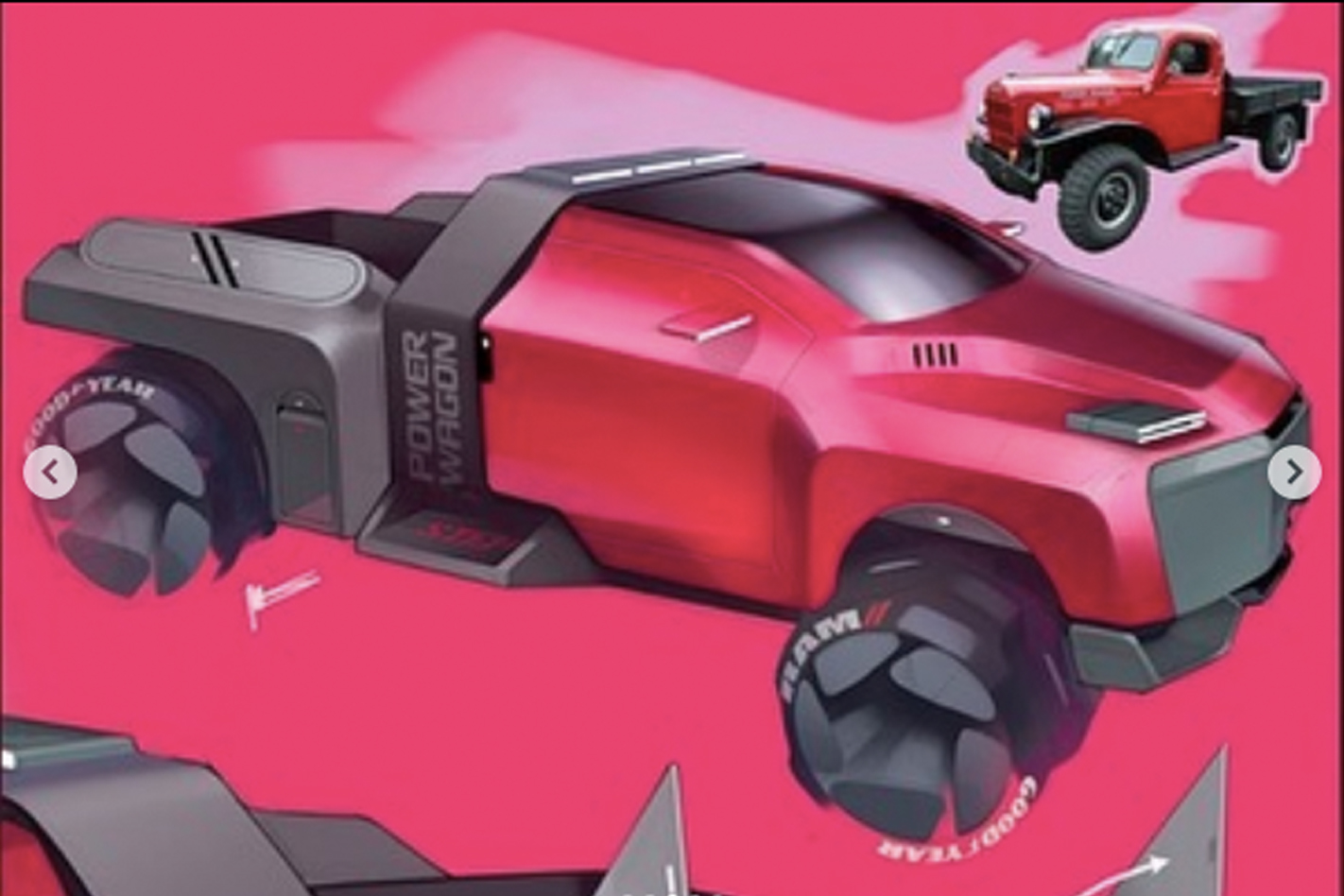
Accompanying his top-five announcement post, Trostle said the competition had been fun to judge and he was surprised at the quality of the entrants.
“What an awesome turn out we had for our #FCADriveforDesign Ram sketch battle,” he said. “We had over 200 submissions from all over the world, of which 120 were eligible! @ralphgilles and I split up our favorites, so be sure to go check out his page. We loved seeing the creativity and fun everyone had with it.”
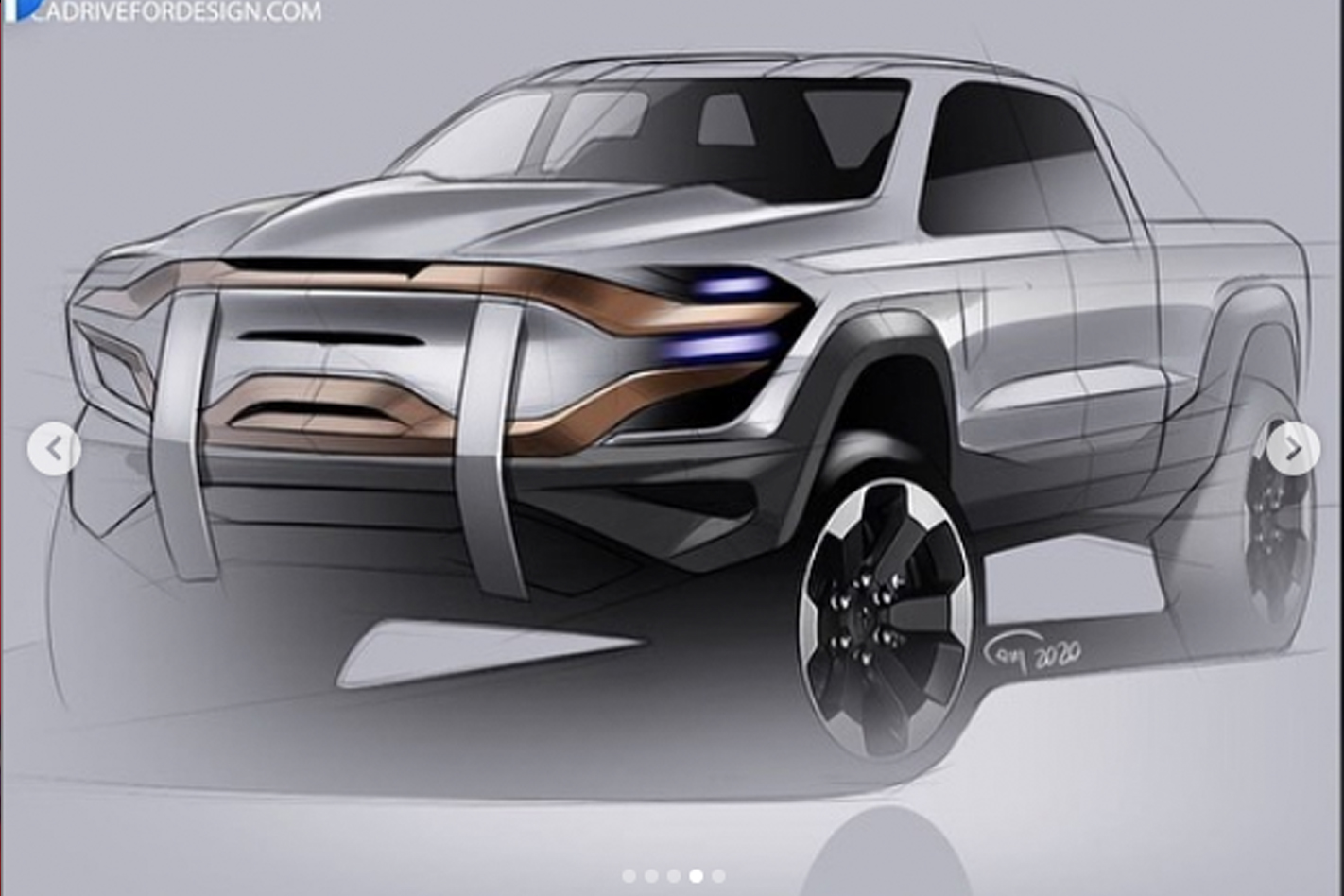
In his reveal post, Gillies thanked the ‘friends’ for the impressive submissions and said Trostle and he had fought over which would be their respective winning clutch.
Have a browse through our winner’s gallery and enjoy the amazing creativity, vision and skill of the top-10 designs. And who knows, maybe you’ll see a production version rolling on the road in a few decades time?
Wheels review
Overall Rating

5 0 5
Plus & Minus
The Wheels Verdict: It was a long time coming, but we knew the changes had to be made, and now the M135i has dropped two cylinders and gained drive to the front wheels. Luckily, the news is nowhere near as melancholy as first thought. Ultimately you can wax lyrical about the new F40-generation M135i – it’s just not as easy to do so in comparison with its hard-to-forget predecessor.
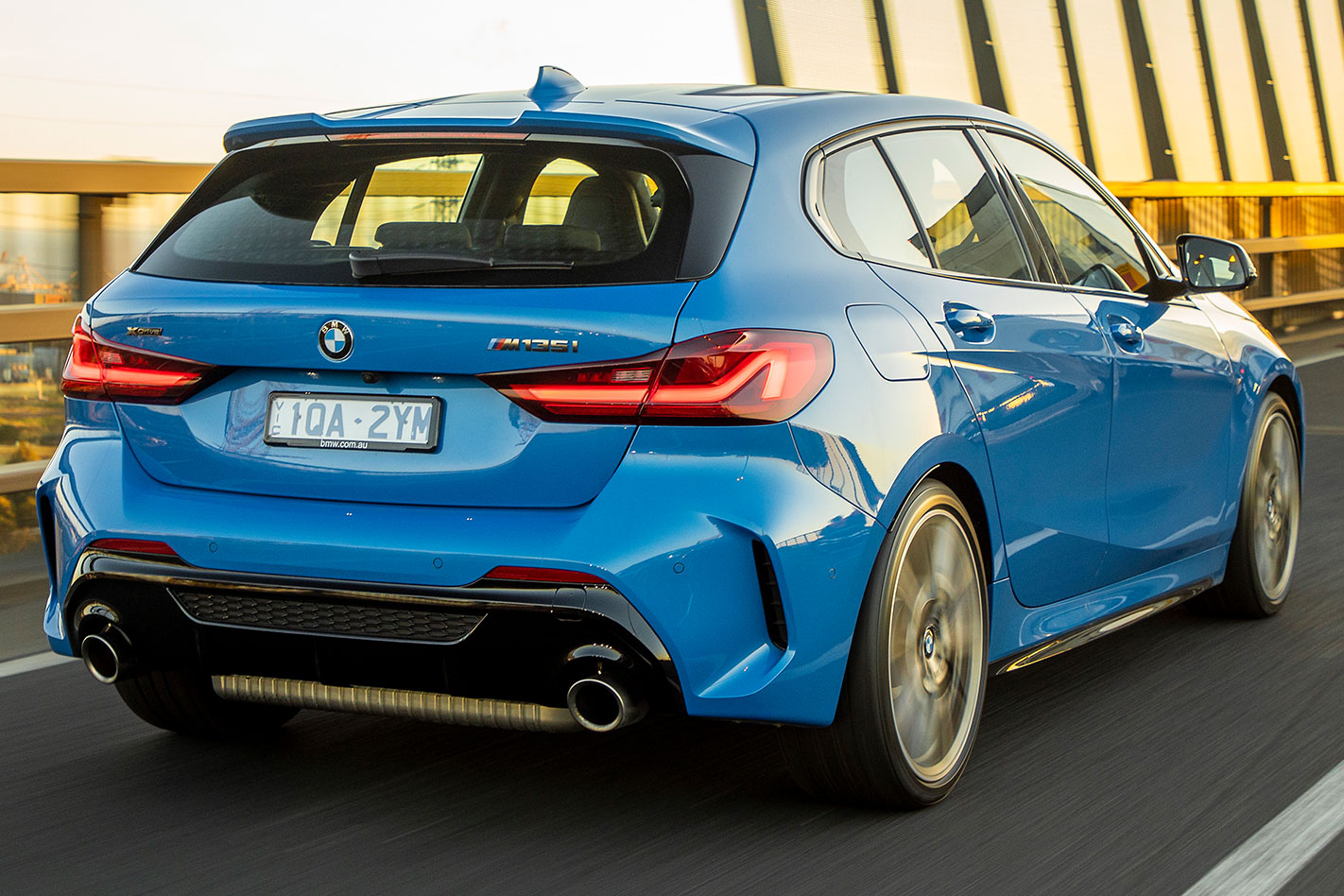
WHAT IS THE BMW M135i?
Like its competition, BMW’s hot hatch is now powered by a four-cylinder turbo engine and drives all four wheels. It sits on the UKL2 platform (shared with Mini), which has liberated interior space and added extra cargo capacity. Essentially, it’s the $63,990 Bimmer primed to take on the likes of the Mercedes-AMG A35, Audi S3 and Volkswagen Golf R.
WHY WE’RE TESTING IT
This is our first chance to sample the M135i on Aussie roads – which are vastly different to the smooth country roads and autobahns of the international launch route in Bavaria. It’s a bold move for BMW to step away from its rear-drive, inline-six roots, so we’re keen to see if it works down under.
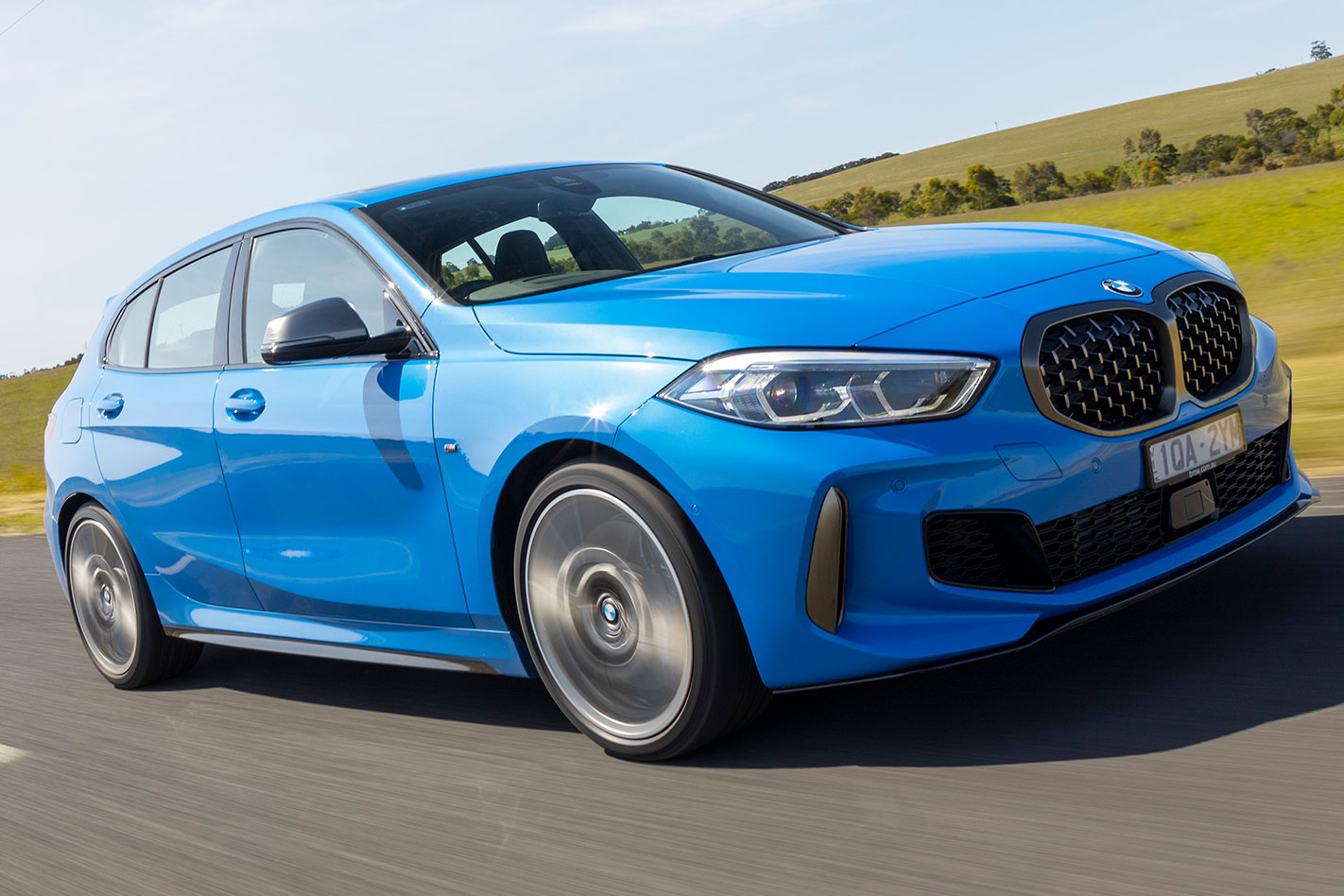
Review
Niches are rife in the automotive landscape. They tend to generate specific cars that appeal to certain people – and those buyers usually become dedicated enthusiasts. The problem is niches generally don’t garner volume sales. And that’s an issue for the bean counters. Growing profit margins leaves little room for heartstrings and tradition.
Enter the third-generation F40 BMW 1 Series in its hottest guise, the M135i. The venerable B58 engine exits. Gone, too, is the playful rear-drive chassis. In its place is a boosted 2.0-litre powertrain – and with 225kW and 450Nm, it’s the most powerful BMW four-pot in its history – and a front-biased xDrive all-wheel-drive system. With a 0-100km/h time of 4.8 seconds, performance hasn’t suffered. And despite the AWD system, weight has actually dropped by 30kg to 1525kg.
From the get-go, the change in personality is apparent. The power delivery is smooth, with the ultra-linear delivery resulting in deceptively fast progress. It’s not neck-snapping pace, but the M135i is swift point-to-point, while the four-cylinder has a distinctively Mini Cooper JCW soundtrack – just one with the volume turned down to seven. The eight-speed torque-converter automatic ties in well, too, and there are steering wheel-mounted paddles to play with to generate myriad pops and bangs.
With the new xDrive’s front-biased set-up you’ll have more chance of wiggling the rear under brakes on corner entry than you will during power down past the apex. A rather conservative maximum of 50 percent of drive can be sent rearwards at one time. A Torsen mechanical limited-slip differential helps translate grunt to grip, while a tricky anti-slip system works in conjunction with the DSC to keep understeer at bay. Branded ARB, it’s taken from the i3s and can detect wheel slip 10 times faster than the set-up it replaces.
If you want adaptive dampers, you can’t keep the standard 19-inch alloys due to an engineering requirement with the suspension –essentially, it won’t fit. Instead, you have to option the smaller 18-inchers and hand over and extra $400. This is interesting given that the bigger wheels, with fixed-rate suspension, result in a firm, not harsh, ride quality. Some softening, with a dedicated Comfort damper mode, could help.
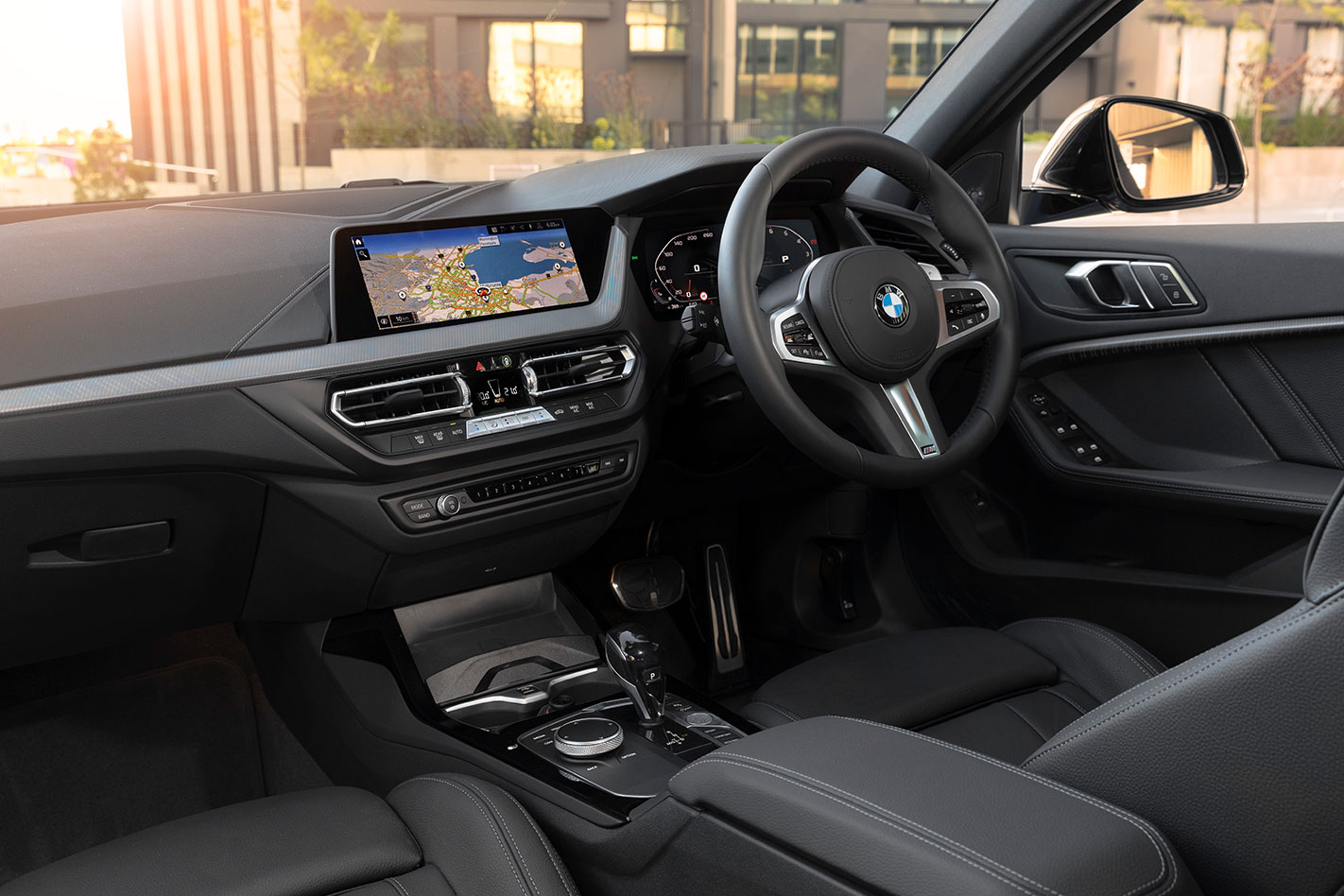
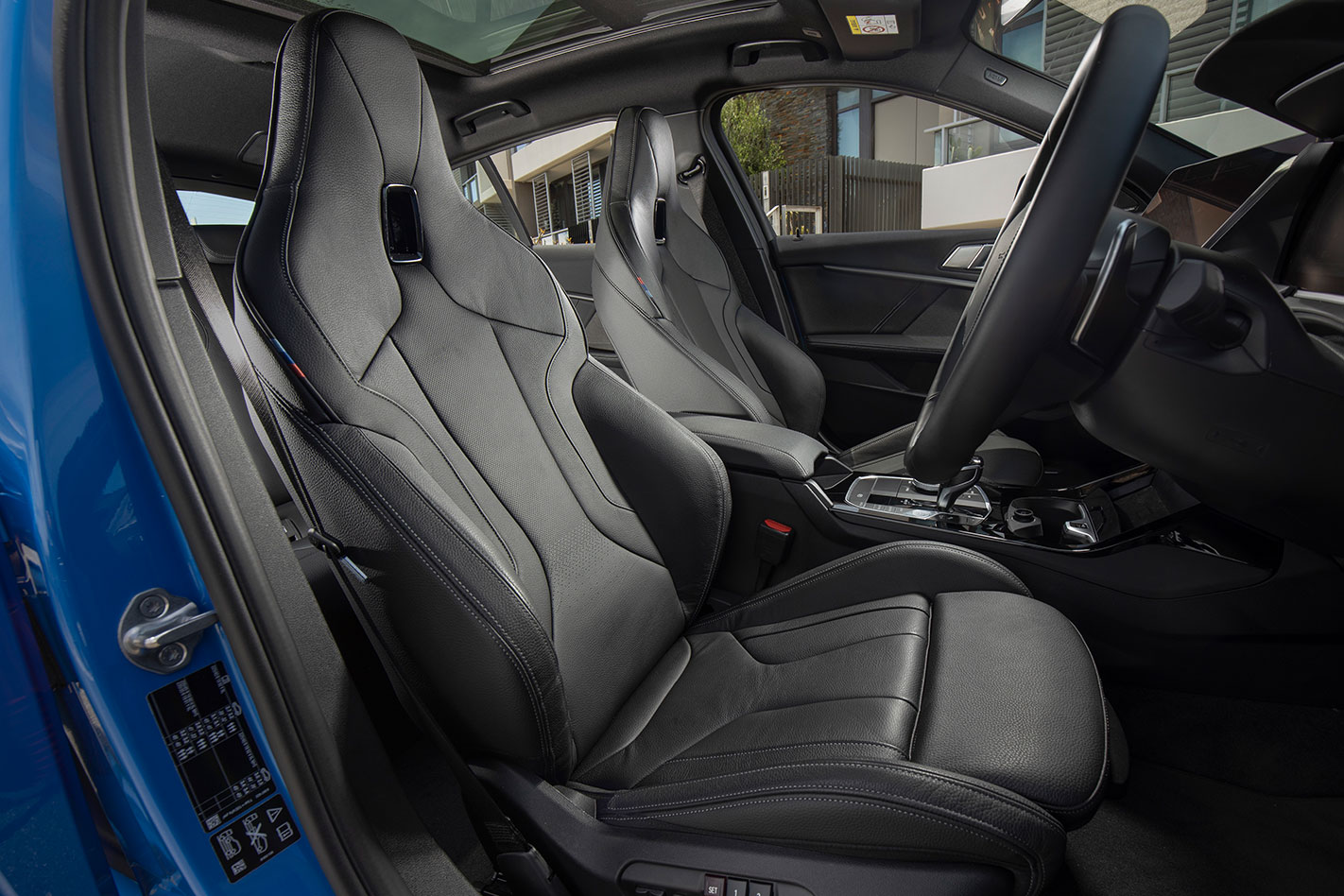
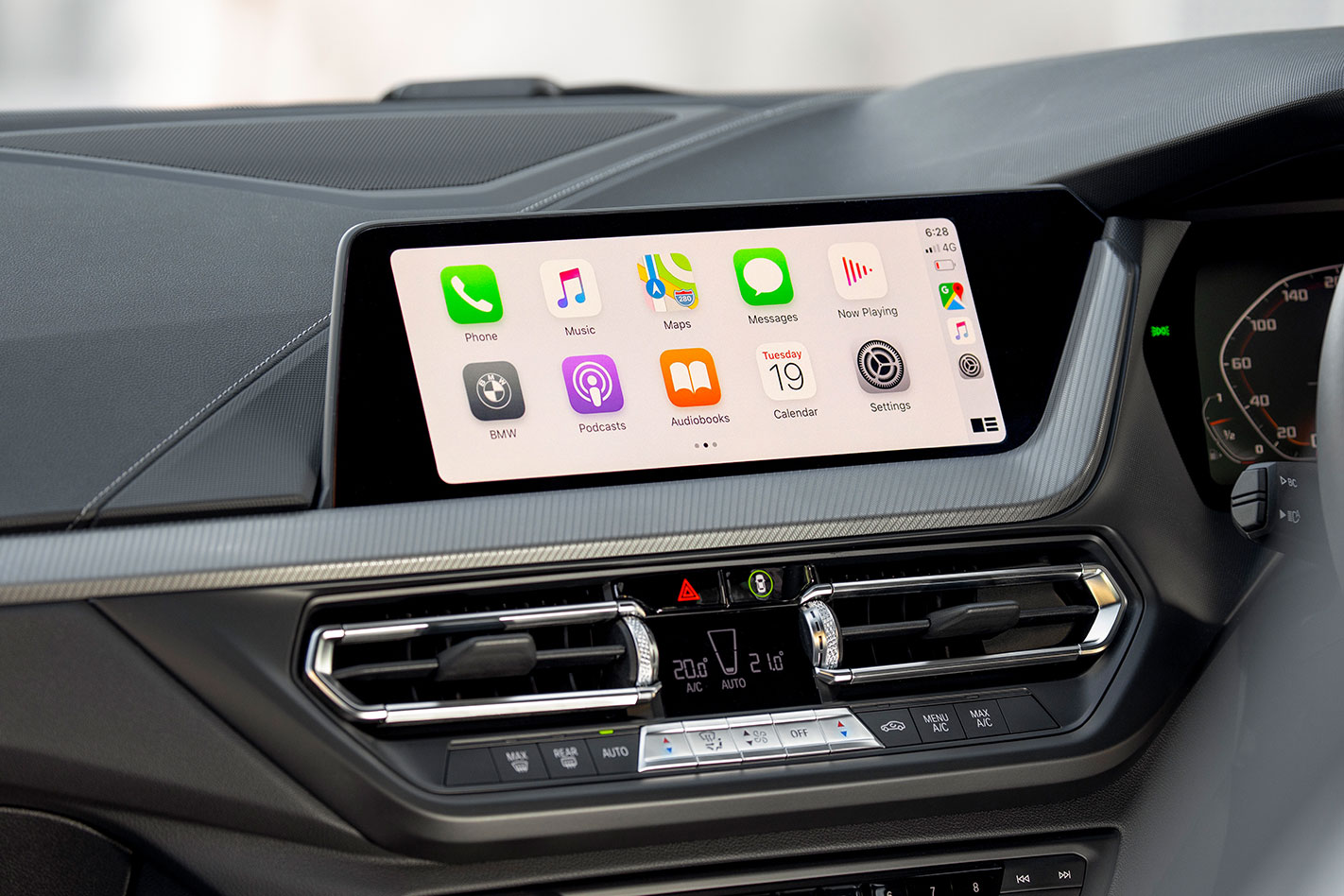
Inside, the 1 Series has taken a massive step forward. The F40’s design and quality has increased demonstrably, so much so that it has mini-me 8 Series vibes. A 10.25-inch central takes care of the infotainment. Screen. A second 10.25-inch screen is used for the instrument cluster. Wireless Apple CarPlay (which is now no extra cost) and BMW Intelligent Personal Assistant are the highlights. The latter allows you to perform various tasks via voice activation; you just say “Hey, BMW” for it to work.
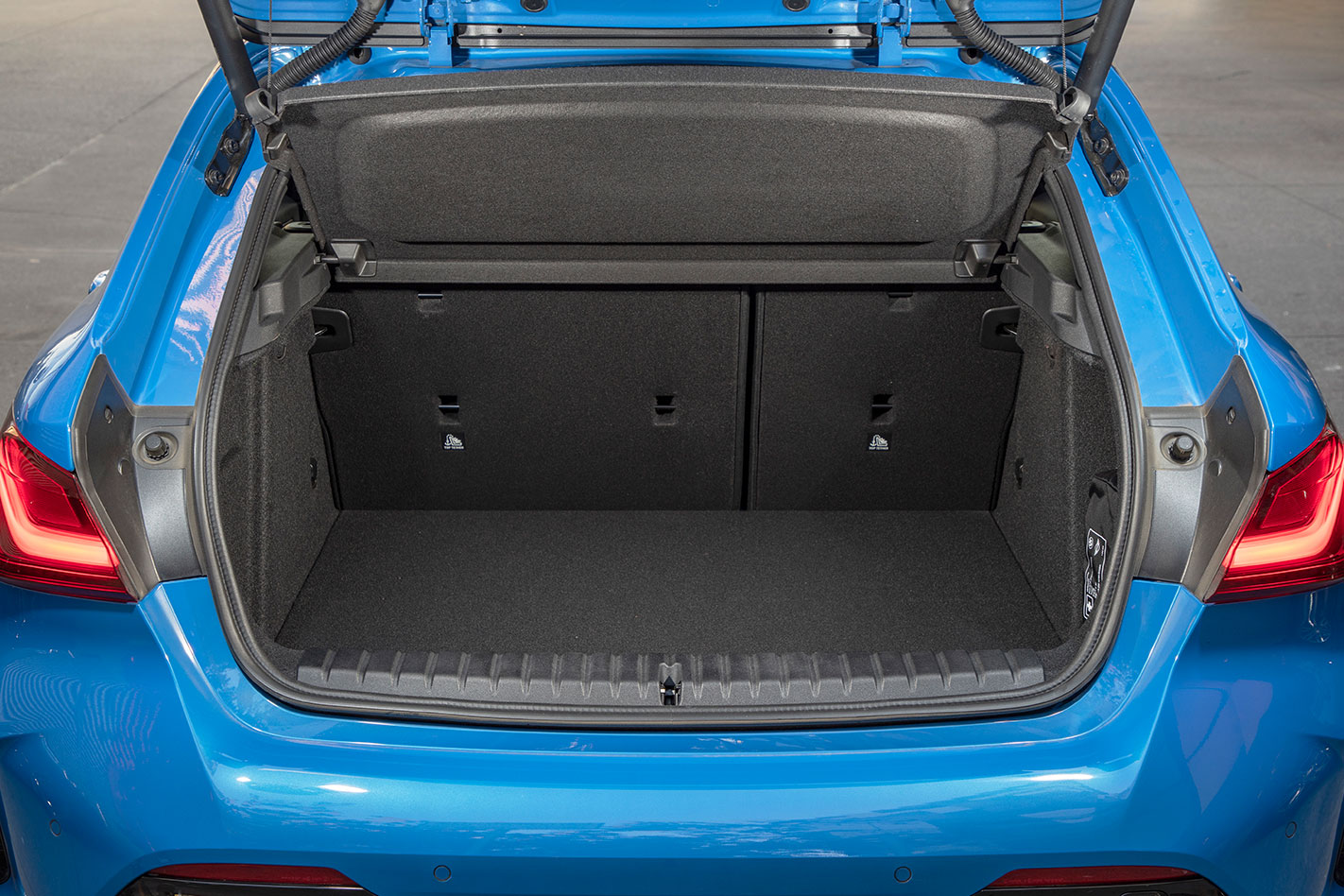
Not only does the 34mm wider (1799mm) and 13mm higher body (1344mm) offer more room for heads, shoulders, knees and toes – particularly in the rear – the boot space has increased by 20 litres to 380 litres. Overall length has actually shrunk by 5mm (4324mm).
The M135i is a very capable and competent hot hatch, it’s just not as exciting as the one it replaces. But niches don’t balance the books. And with a much broader breadth of attributes, the M135i’s mass appeal outweighs holding onto the past.
RIVALS
Mercedes-AMG A35, Audi S3, VW Golf R
BMW M135i SPECS
Model: BMW M135i
Engine: 1998cc 4cyl, dohc, 16v, turbo
Power: 225kW @ 4500-6250rpm
Torque: 450Nm @ 1750-5000rpm
Transmission: 8-speed automatic
Weight: 1525kg
0-100km/h: 4.8 seconds
Economy: 7.5L/100km
Price: $63,990
On sale: Now
Sign-up here to get the weekly Wheels highlights
Second opinion: MOTOR review

Motor focuses exclusively on high-performance cars, offering a heart-stopping, hair-raising blast into the world of prestige and performance culture.
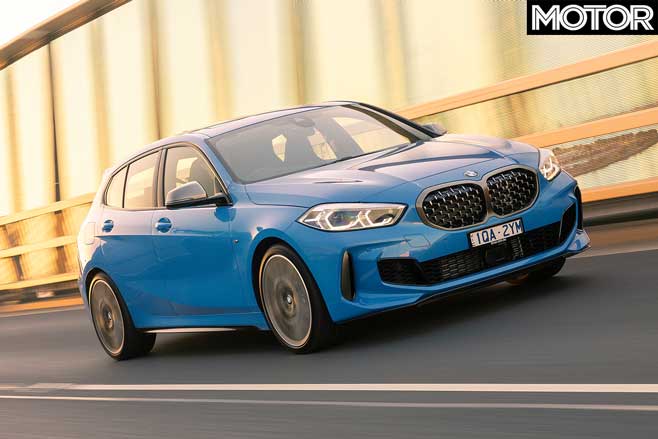
Munich’s new hottie misses the mark By:Scott Newman
It’s always tough to follow a successful act. Imagine the nerves Mark Nicholas had replacing Richie Benaud in cricket’s central commentary position, or how Sammy Hagar felt stepping into David Lee Roth’s shoes in Van Halen. The new BMW M135i faces a similar situation in having to replace the beloved M140i.
An all-time hot hatch great, it was always a MOTOR favourite, but it’s an apples and oranges comparison with the newcomer. The M140i was rear-wheel drive with a 3.0-litre turbocharged straight-six in the nose, whereas its successor is all-wheel drive and powered by a 2.0-litre turbocharged four-cylinder.
There’s a very good reason for this. The attributes that made the M140i such a great hot hatch compromised the basic versions that sold in much greater numbers. An engine bay large enough for a 3.0-litre six compromised cabin space, as did the need for a transmission tunnel running down the middle of the car, while the rear differential ate into boot space. The intent was to solve these issues by switching the boggo 1 Series to front-drive and smaller engines.
Strange, then, that the everyday benefits seem marginal. The extra shoulder room is mainly due to the new 1 Series being a wider car and headroom is identical in the front and less in the rear. Boot space has increased 20 litres to a Golf-matching 380 litres, though with the rear seats folded it’s an identical 1200L.
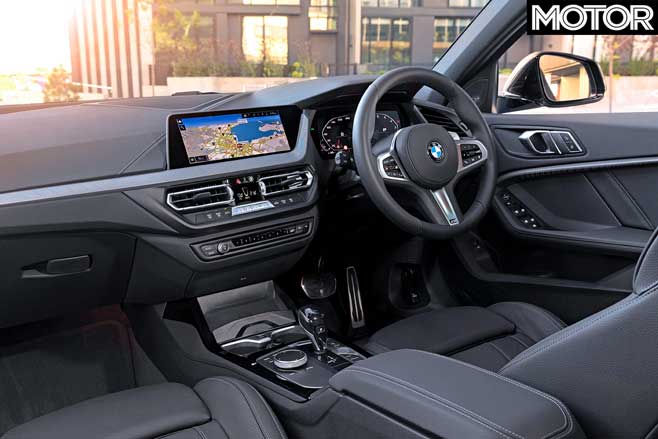
The interior lacks the outright flash of the Mercedes A-Class but will be comfortingly familiar to anyone currently driving a BMW, and it’s filled with toys: twin 10.25-inch digital screens, M Sport seats, head-up display, keyless entry and 16-speaker Harman Kardon stereo to name a few.
Of most importance, though, is the driving experience; it’s what set the previous 1-Series apart and, while the new M135i is a very different kettle of fish mechanically, history has shown the new layout is no handicap.
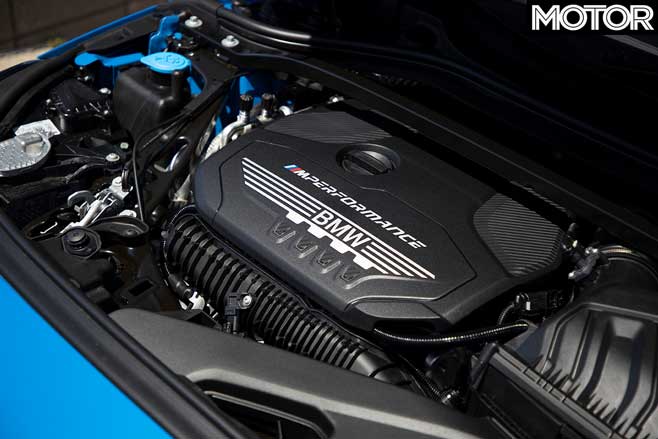
Unsurprisingly, given the engine is a third smaller, outputs have shrunk, but not by much. BMW’s most powerful ever four-pot produces 225kW/450Nm, though weight has also risen 50kg.
Despite this, the 0-100km/h sprint is a respectable 4.8sec, or 4.7sec if you option the M Performance Package, but we’ll come back to that. To be honest, that time is helped markedly by the M135i’s all-wheel-drive traction and extraordinarily short gearing (first runs to 43km/h, second to just 75km/h), which fire it off the line post-haste. Nevertheless, it’s a strong engine with plenty of torque that’s happy to rev to its 6000rpm redline, the only real issue being that the super-short second gear makes third the only option for all but the tightest of bends.
Sadly, where the M135i falls down badly is its chassis. The decision to offer 19-inch wheels as standard precludes the inclusion of adaptive dampers; in order to pass the kerb-strike test, larger struts are required and the adjustable suspension doesn’t fit. As such, you’re left with a firm ride that rarely settles, though body control is reasonable until really big questions are asked of it.
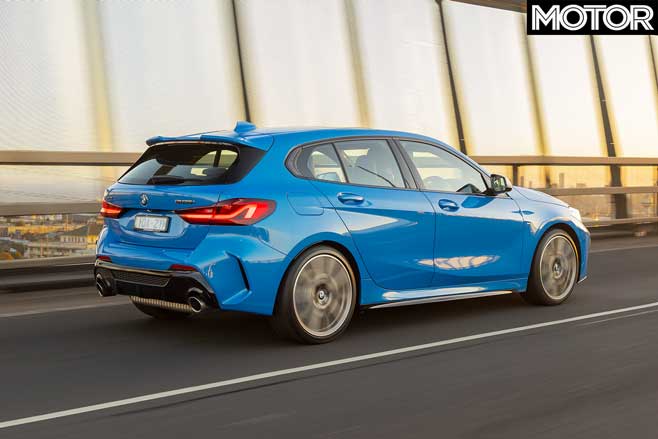
A bigger issue is the handling – it’s completely inert. It doesn’t matter what you do with the brakes, steering or throttle, the M135i steadfastly refuses to do anything but understeer at the limit. It’s reasonably quick, sure, and safe, but ultimately unsatisfying. This nose-led balance is evident in the heavy toll paid by the front tyres, which quickly show significant wear after sustained enthusiastic driving (15-20 minutes or so). But worst of all is the steering: it’s overly heavy, syrupy in feel, lacking communication and somehow corrupted under power (isn’t this thing all-wheel drive?). It’s a poor showing.
There is hope. The aforementioned $1900 M Performance Package drops the wheels to 18s (and adds some black exterior garnish) and allows the fitment of adaptive dampers – a snip at $400. That should alleviate the ride concerns at the very least. If it can help the handling and steering, even better.
The M135i isn’t a bad car; it’s quick, practical and looks good – much better in the metal than in pictures. Trouble is, it’s not a good one either. Forget filling the M140i’s shoes, in almost every area BMW’s new hot hatch fails to trouble VW’s seven-year-old Golf R. That is a tough situation.
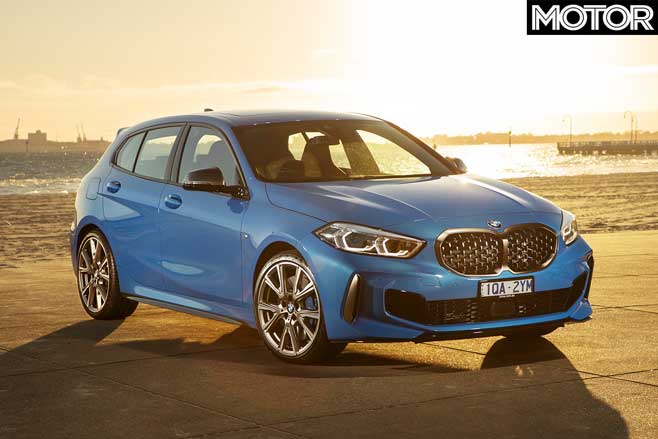
2020 BMW M135i xDRIVE SPECS Engine: 1998cc inline-4cyl, DOHC, 16v, turbo Power: 225kW @ 4500-6250rpm Torque: 450Nm @ 1750-5000rpm Weight: 1525kg 0-100km/h: 4.8sec (claimed) Price: $64,990
Likes: Punchy engine; equipment levels; good looks; reasonably quick Dislikes: Awful steering; jittery ride; inert chassis; local specification
Rating: 3 out of 5 stars
While voice chatrooms in online games aren’t known for their politically-correct discourse, American race driver Kyle Larson has been suspended from racing by both his team and NASCAR management for uttering a racial slur during an esports event yesterday.
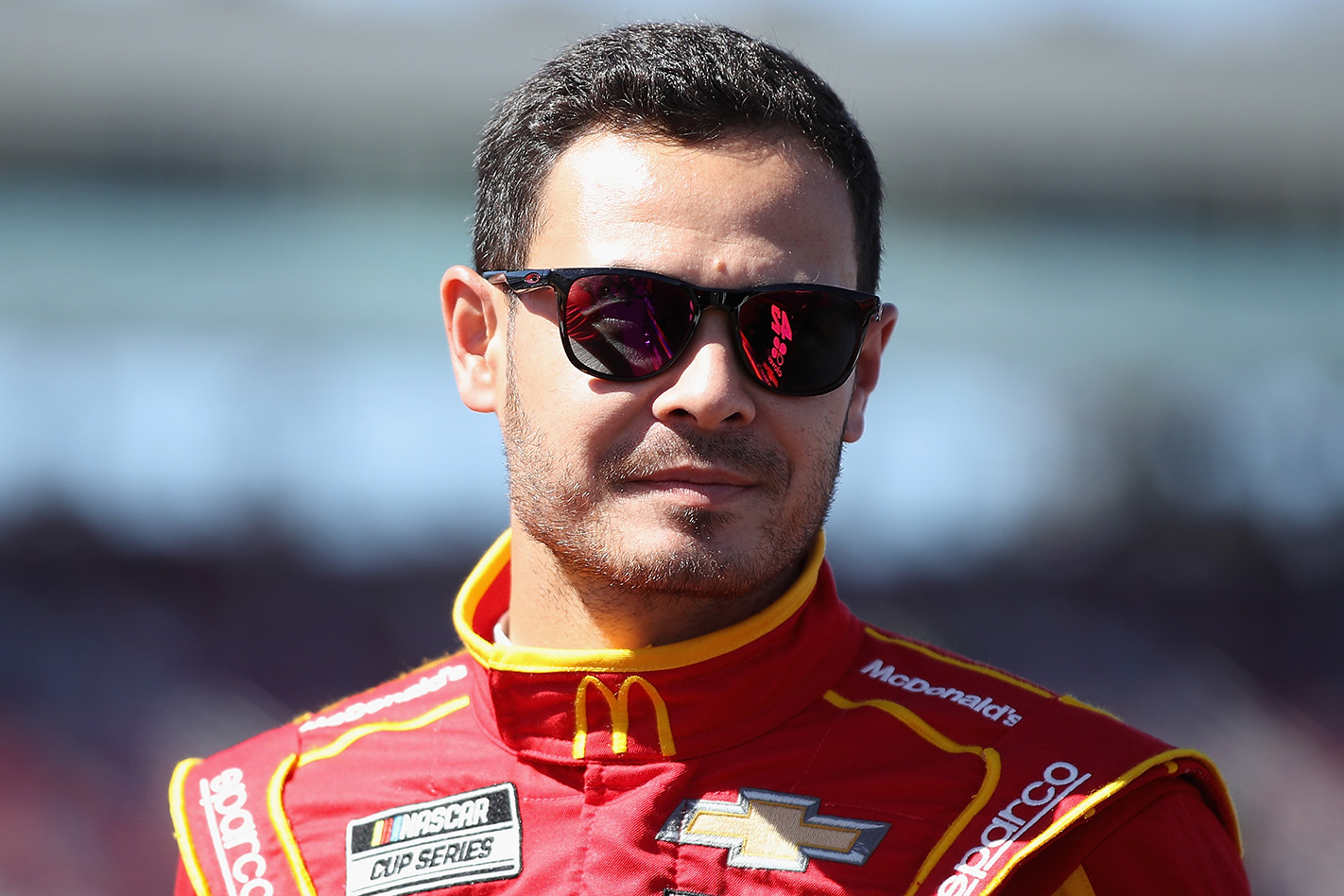
Larson, who was attempting to re-establish a voice channel with his spotter (anyone who’s tried to get voice chat going with a few friends will no doubt relate), dropped a casual N-bomb in the process, not realising he was actually broadcasting in the main voice channel and thus the race’s live Twitch feed.
“You don’t hear me at all? I can see it, you can’t hear me? Hey N*****.”
The reaction from other drivers was fast. IndyCar racer Josef Newgarden visibly cringed on his video feed, while fellow racer Anthony Alfredo got on the mic to say “Kyle, you’re talking to everyone, buddy.” Other comments included “yep, we heard that”, “wow”, and simply, “yikes”.
Once he’d realised his mistake, Larson asked the other drivers not to tell anyone.
The fallout was almost instant. Larson was put on suspension by his team Chip Ganassi Racing shortly thereafter, while NASCAR slapped their own suspension on him as an individual.
His mistake also cost him the sponsorship of McDonald’s and Credit One Bank – a big deal, considering the Golden Arches literally cover Larson’s real-life racecar.
“We were extremely disappointed and appalled to hear about this incident,” McDonald’s said in a statement. “The comments made by Kyle Larson are insensitive, offensive and not reflective of our inclusive values and will not be tolerated. McDonald’s is taking immediate action to terminate the relationship with Larson.”
It’s understood that the sponsors will stay with the team, though.
For his part, Larson quickly apologised. Accepting that the damage is “probably unrepairable”, his remorse was obvious and acknowledged he had let down his family, team, sponsors and fans via a Twitter post.
It’s so far the second big example of online slip-ups having big real-world consequences for NASCAR’s real-world race drivers.
NASCAR has been one of the most enthusiastic adopters of virtual racing as a substitute for real-world events – even before the arrival of the COVID-19 pandemic – and so far its management, teams and sponsors are treating it with great seriousness.
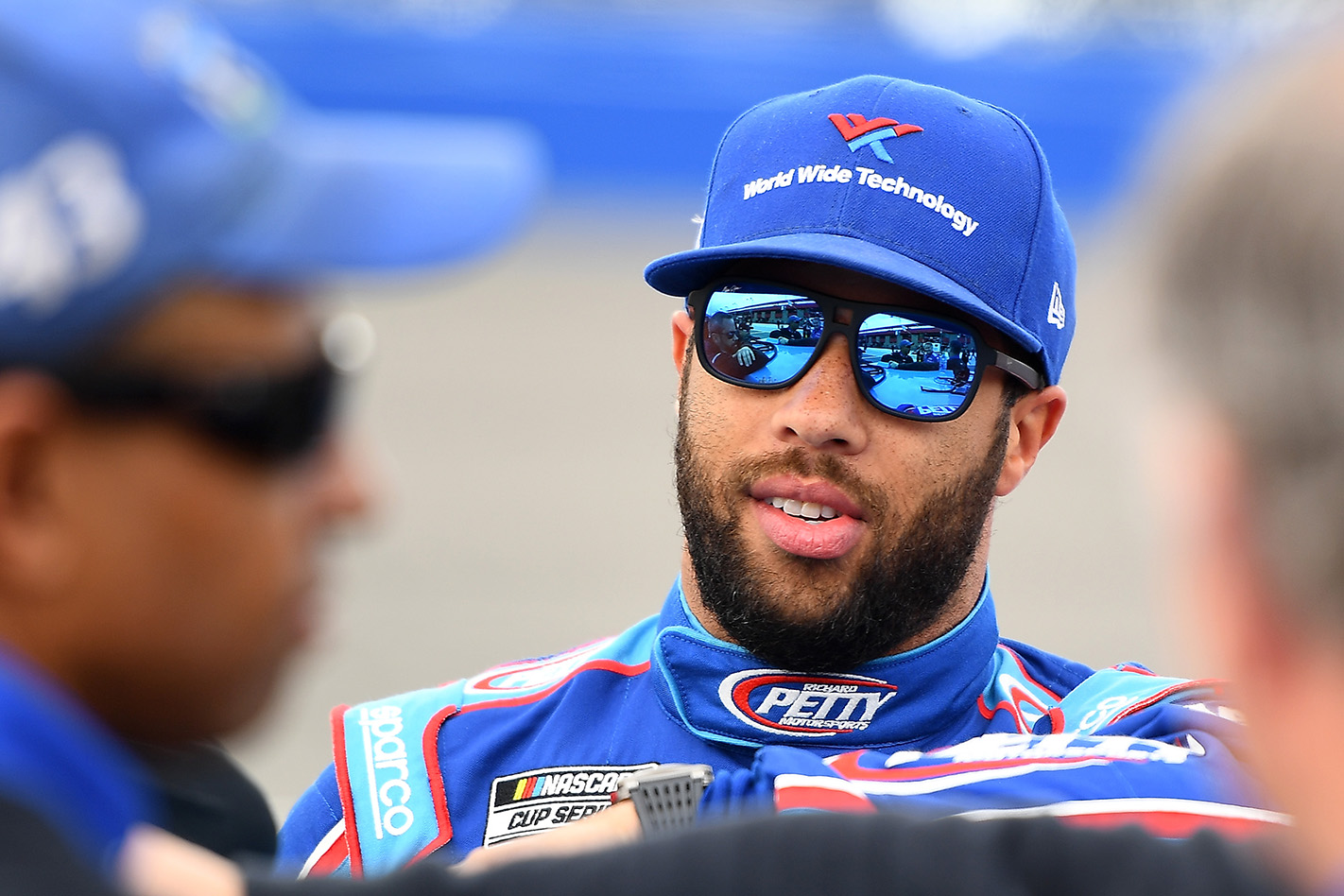
Case in point – just a week before Larson copped his punishment for using racist language, another NASCAR driver decided to ragequit his race after enduring multiple collisions.
Bubba Wallace, who was hit one time too many in the Food City Showdown round of the eNASCAR series, pulled his car off the track, said “Y’all have a good one. That’s it. This is why I don’t take this shit serious. Peace out”, and logged off.
But while the round, played on motorsport simulator iRacing, might have felt like a game to Wallace, his sponsors felt differently. Major backer Blue Emu pulled their support for Wallace and fired him publicly on Twitter, saying they were “interested in drivers, not quitters”. Ouch.
Were they overreacting? Considering the race was being watched live by around a million people and only a tenth of the laps had been completed at the time Wallace chose to quit, that’s a significant amount of exposure that Blue Emu subsequently lost out on.
Wallace’s attitude towards e-sport also didn’t help his cause. With virtual competition literally being the only way NASCAR (and every other motorsport) can keep viewer numbers up during the COVID shutdown period, drivers who aren’t interested in temporarily becoming professional gamers are potentially shooting themselves in the foot.
Those of you with long memories will remember Eunos, the ill-fated premium brand launch by Mazda in 1989 and shuttered only seven years later in 1996.
It remains historically significant for one reason – it showed, even as far back as the late ‘80s, Mazda had ambitions to compete in the premium segment, and clearly believed that only the slightly humdrum Mazda brand name, attached to everything from light runabouts to pick-ups, was holding the company back.
Well, if our information on the next-generation 6 is correct, Mazda’s ambitions have not dulled, and the company appears to believe that no rebranding will be necessary to reposition the flagging mid-sizer into a much more upmarket space.
Think: a spacious mid-size rear-driver, powered by an inline six, and ready to go head-to-head with the likes of the Lexus ES, Genesis G70, and even to be a more affordable, better-equipped, swifter alternative to an entry-level Mercedes-Benz C-Class, BMW 3 Series, or Audi A4.
The source of this leak was an investor presentation uncovered by Jalopnik last year, in which the Japanese manufacturer delivered a comprehensive outline of future initiatives that it plans to implement between 2020 and 2025. This included a new “Large Architecture”, with all indicators pointing to it being rear-drive.
The presentation also confirms that two inline-six engines are under development; one Skyactiv-D diesel and the other featuring Mazda’s Skyactiv-X Spark Plug Controlled Compression Ignition (SPCCI) technology. Electrification is also part of the plan, as 48-volt mild-hybrid and plug-in hybrid systems are mentioned.
There’s further credence to the theory that the first car to featuring the new platform and engines will be the next 6, due in late 2022.
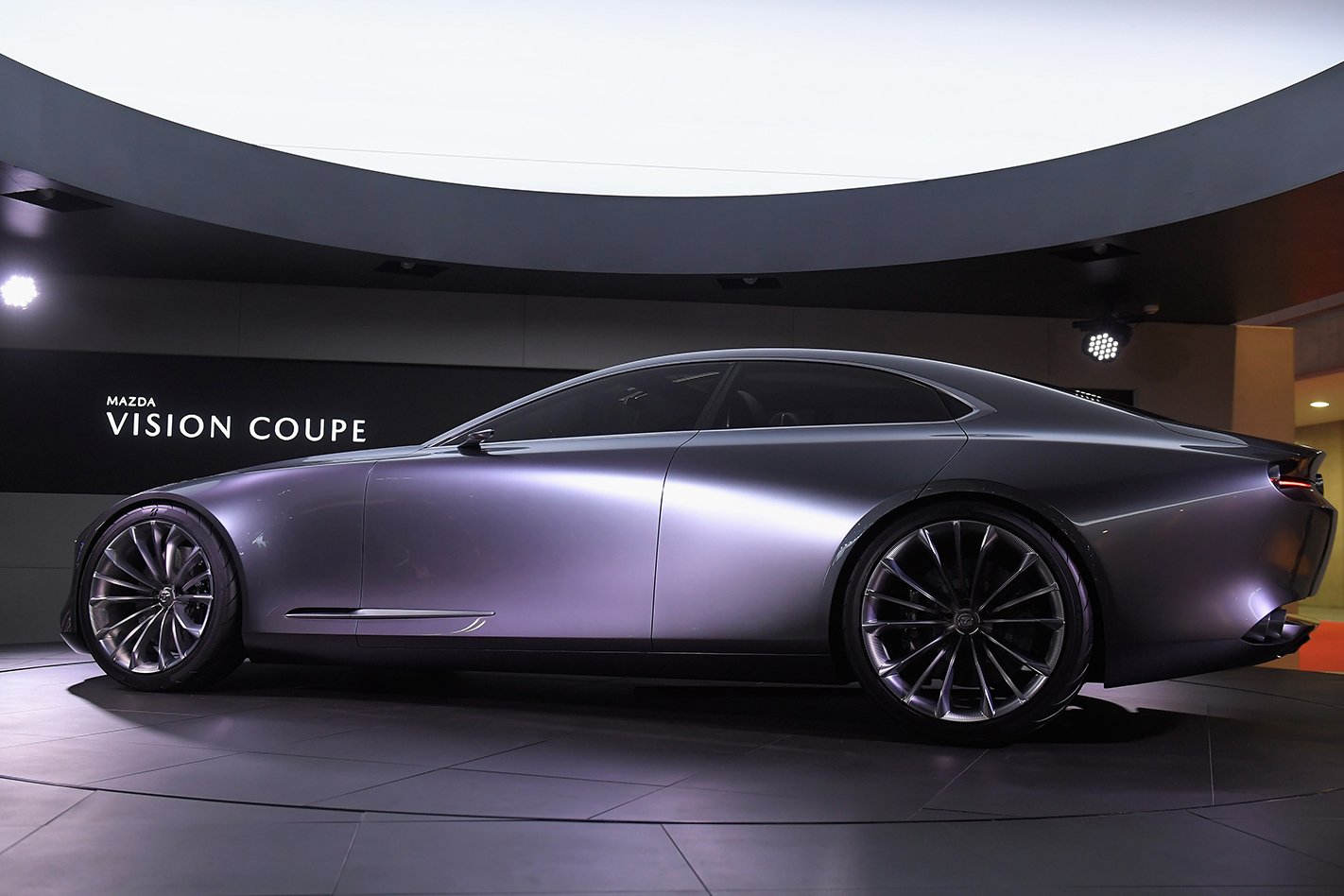
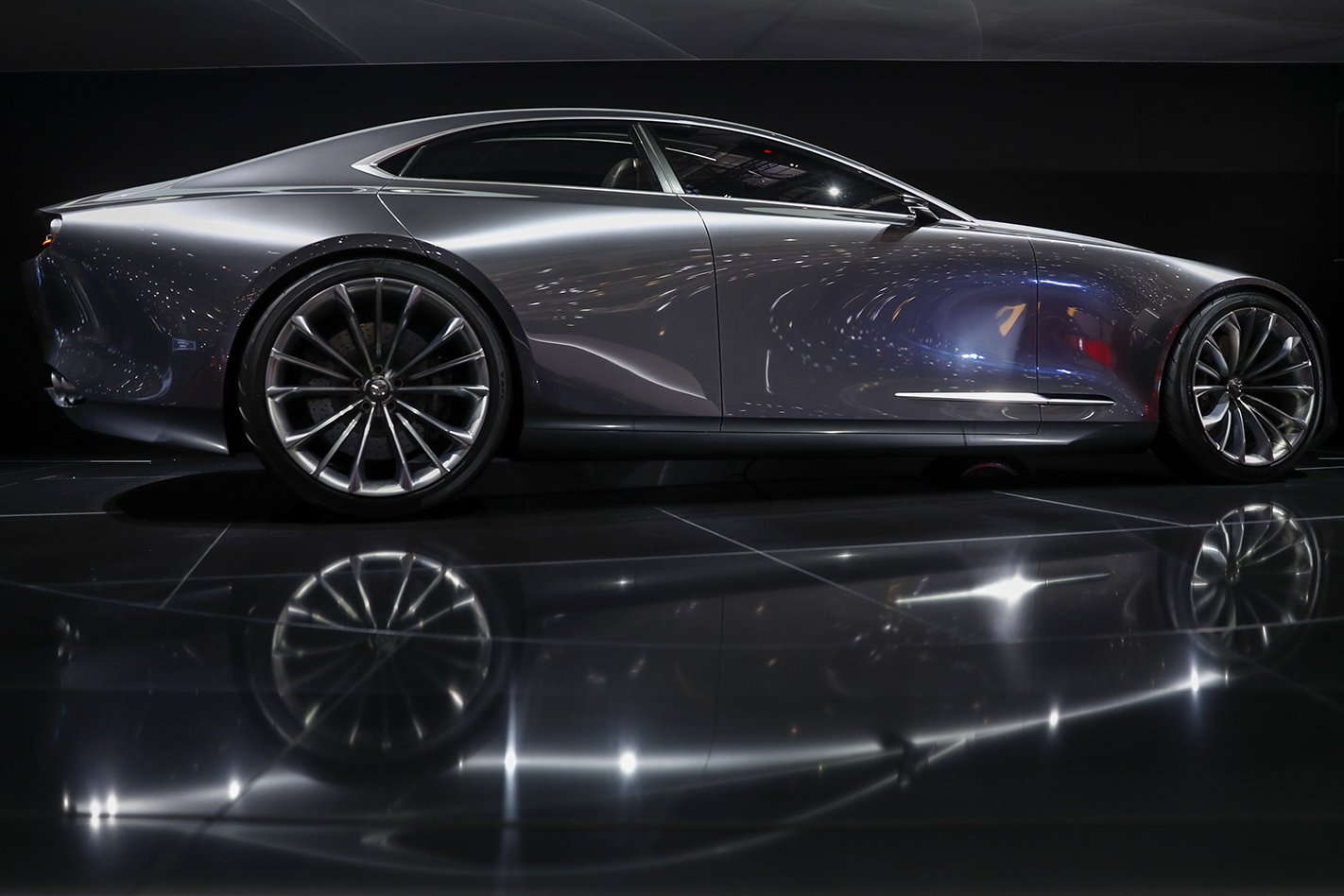
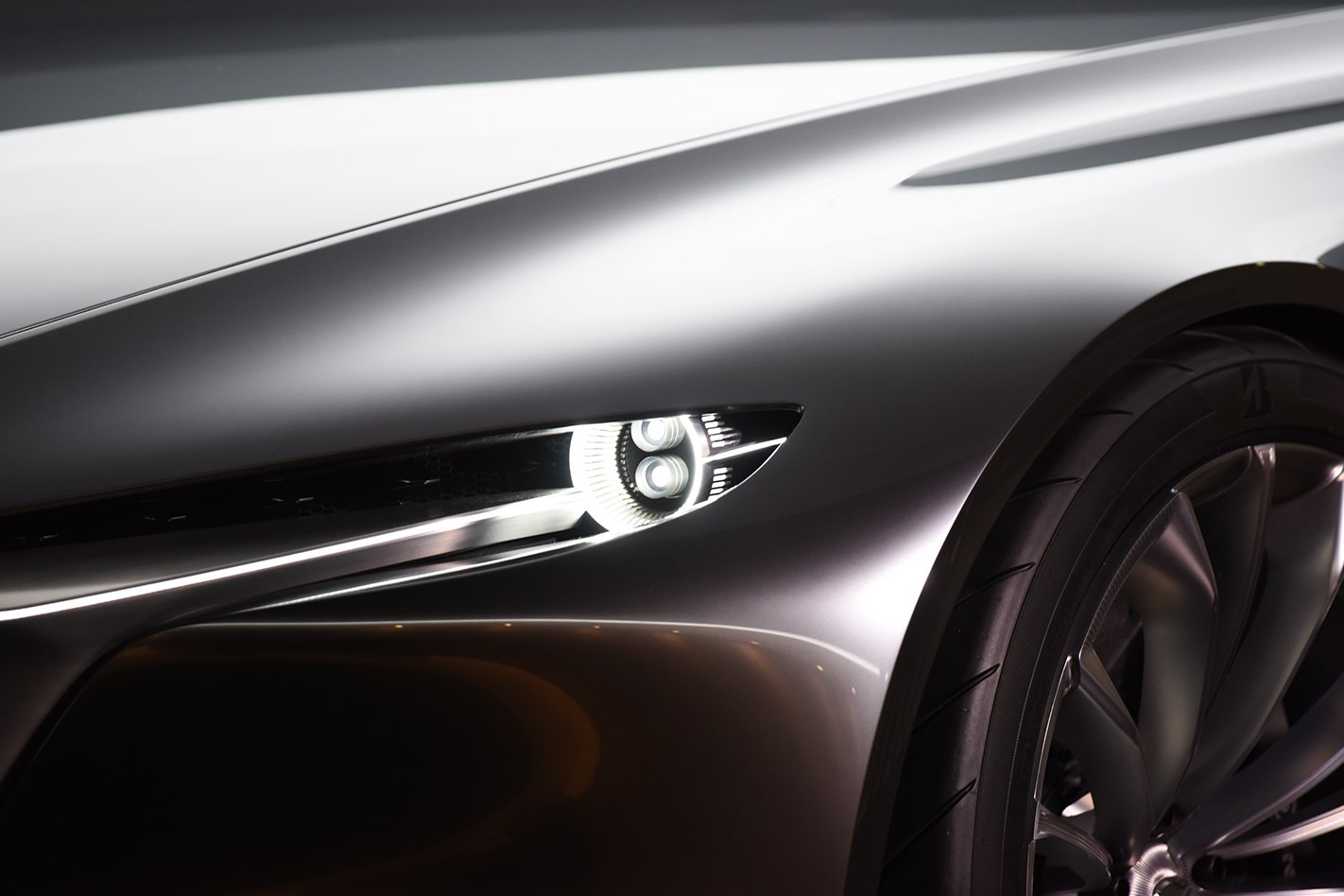
Mazda has recently confirmed that it will continue to evolve its Kodo design language, as displayed on concept cars such as the Mazda Vision Coupe (pictured) that give an idea of what the next-gen 6 could look like, with the cab-rearward, long-bonnet proportions being suited to packaging an inline six driving the rear wheels.
And if you’ve already spotted the sports-car possibilities that could be opened by a new rear-drive platform at Mazda, well done, give yourself a bonus point.
Suddenly, the design language of the RX Vision concept (first shown in 2015) takes on a whole new significance, and even if a production version was built with an inline-six instead of a rotary engine, surely that would still be a car worthy of celebration.
Fact is, Mazda needs the new 6 to reverse the slumping fortunes of the current car. In the USA, for example – by far Mazda’s largest market – the 6 shifted 33,400 units as recently as 2017. In 2019, that figured had dropped to 21,500, and this year the decline seems set to continue.
Here in Australia in 2019, the 6 was down around 13 percent compared to 2018 in the shrinking mid-size class.
Mazda has made no secret of its ambitions to push its models further upmarket, with USA CEO Masahiro Moro confirming to media on several occasions that the company has set its sights on a “path to premium”, while retaining its core philosophy of driver involvement.
Naturally there’s no official confirmation on details on the replacement for the 6, and it’s possible that development could be delayed by disruption from the COVID-19 pandemic, but the signs are compelling.
The view was utterly beautiful. Standing at the top of Mount Hotham in the Victorian alps, with the Great Alpine Road feeling reassuringly solid through the thin rubber soles of my shoes, little mountains struggled up from vast valleys and gullies all the way to the horizon, tinted a shade of smoky blue.
Large cumulus clouds, brightly lit by the sun, hung motionless in a richly blue sky. A slightly chilled wind reminded that winter was on its way, and this place would soon be blanketed beneath a thick layer of snow. But for now it was still a relatively warm 15 degrees and the sun, through the clouds, was felt as it warmed the black hoodie I was wearing.
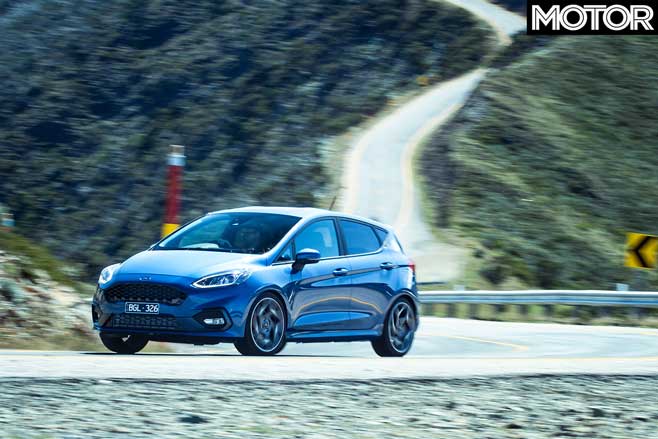
For the first time in a few weeks, my mind was still. I had just clambered from a Ford Fiesta ST (the new one, which is utterly brilliant – read Scott Newman’s review here) and had that satisfying feeling you sometimes get after a really decent drive in a really good car. I felt absolutely keyed into it, perfectly aware of its weight, width, responses, right down to steering rack speed, power band and gear ratios. Mind still sharp, I felt like I’d taken some sort of calming drug.
And I thought to myself, everything is going to be okay.
Obviously, s**t’s pretty real right now. I can’t tell you what the world looks like as you read this because it’s possible it’s completely changed again, as it had in the week or two since I originally wrote this. Hopefully it’s changed for the better! This is a very surreal and odd time, affecting one and all. I can only hope that you haven’t been too affected, and that there is a very bright, warm and inviting light at the end of all this. Like anything the world has faced, obviously we will get through it, if not without a fairly large and lasting change.
What that means for the car industry, it’s too early to tell and a bit scary to predict. Factories are idling all around the world and cars are not being built. The Australian new car market was already a bit crook and now, well, that’s history. Economies are hurting; plans to buy expensive sports cars are being parked. Which will mean casualties – many of the cars you’ve been reading about for the last year or so that are ‘coming’, will be delayed, possibly for a very long time, possibly permanently. It’s too early to know.
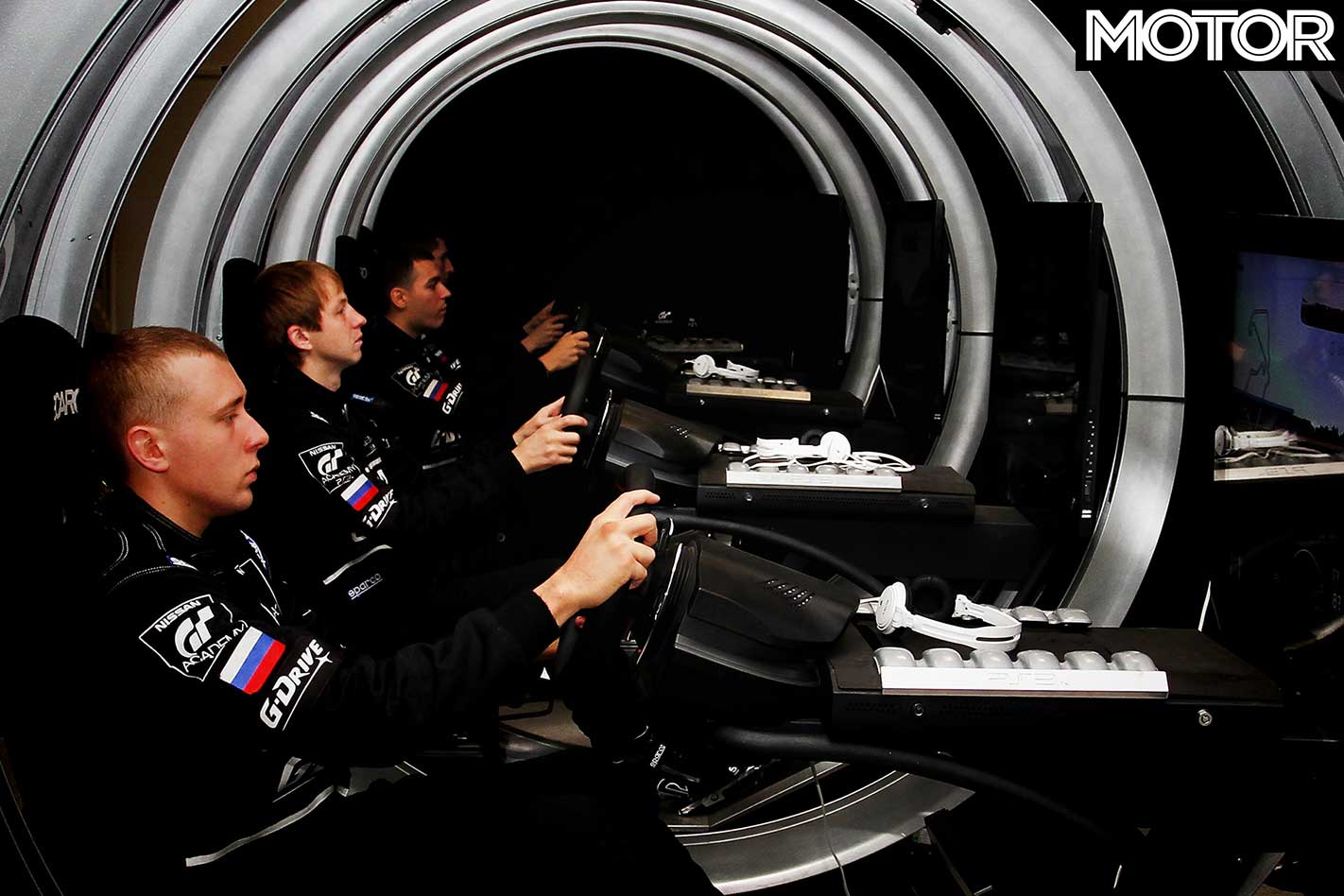
On the flip side, among other positive things, it could mean an explosion in the popularity of driving sims and games. An office iRacing laptime challenge has emerged at MOTOR HQ, one I’ve not yet joined (to give everyone a fighting chance, of course). But given that people who’ve not had anything to do with driving games since Gran Turismo 3 have messaged me asking what’s the best one, and set-up, to buy, says much. For virtual full-berry-giving, it could be a new golden age.
And that’s part of our public service announcement at MOTOR in these weird times. Quite beyond washing your hands properly and not sneezing on people, start thinking about the next drive – to somewhere like Mount Hotham, Victoria.
Digital ed’s Note: Our pals at Wheels have started a specific campaign for this very thing, the #driveafteriso movement. Check it out! -CT
The Adelaide Hills; or Thunderbolts Way, NSW; and wherever it is that people in Queensland, NT or WA go for long drives (I don’t actually know). But it has to be a long one; one that has you giddy at the start and sick at the end (of your car; not from a thing that happened because a dude in China ate a pangolin for last year’s Christmas dinner) because, as the Buddha said, nothing is better for the soul than driving a car until you can’t wait to get the hell out of it.
This story was originally published August 12, 2014.
When Wheels dyno-tested the HSV GTS and FPV GT-F in July 2014 in an attempt to award the title of Australia’s most powerful car, controversy followed.
Both cars completed three runs at VCM Performance in identical conditions on the same day, and it was the HSV that triumphed, producing a maximum figure of 330kW to the FPV’s 311kW. FPV wasn’t happy, and neither were Ford fans.
To settle the argument, we devised a definitive re-test.
The same cars were used, both were run on two separate dynos, in the same conditions on the same day, and both cars were six-speed automatics. But we went even further to ensure accuracy.
FPV and HSV had engineers on hand, both companies officially confirmed their cars were standard specification and Wheels even employed a qualified and independent engineer to oversee both tests, and both manufacturers.
Every variable was controlled by professionals, from tyre pressures to strapping to ambient air temperature.
The tests took place at two of Australia’s most reputable chassis dynos, Herrod Motorsport and Dyno Dynamics, and to extract a maximum power figure, each car was run until its performance peaked, plateaued and dropped.
In short, without ripping the engines out, this test was as accurate and fair as possible. And it’s a test that produced some surprising results.
On both dynos, the FPV decimated the HSV, producing a peak figure of 323.7kW at Herrod and 343.3kW at Dyno Dynamics. The HSV produced 306.7kW and 322.1kW respectively.
These numbers flaunt the HSV’s paper advantage, showing the FPV is Australia’s true power king, by a clear average margin of 19.1kW.
So why the different result compared to the first test?
Even though they’re both V8s, the two cars produce their power in very different ways. Where the big 6.2-litre supercharged HSV hit its peak power almost immediately on both dynos, the smaller 5.0-litre FPV needed twice as many runs to produce its maximum figure.
The reason for this is the GT-F’s temperamental transient overboost, which can provide an additional 15 percent of power, but only when the engine is in its optimal operating window.
“For transient overboost to be effective, it runs off manifold temperature, so we need consistent temps of about 50-60 degrees,” GT-F project manager Justin Capicchiano said.
“The GT-F is always between 351 and that additional 15 percent, but how much depends on the conditions.
“So you’re always in transient overboost, but you’ll never go below that 351kW figure, which is why we put 351 on the side of the car.”
In the earlier test at VCM Performance, both cars were run just three times, meaning the GT-F didn’t tap into its overboost function.
As for any conspiracy theories about FPV or HSV boosting or tuning their cars to produce more power, forget it. Both Herrod Motorsport and Dyno Dynamics agreed the cars were completely stock.
Watch the video above to see how it all unfolded.
What stands out?
The new-generation Suzuki Swift packs a lot of driver appeal into a short, lightweight hatchback, bringing some fun to your commute and handling country drives capably. Most Swifts are very well equipped and make a lot of your smartphone and autonomous emergency braking is available across the range.
What might bug me?
That short children can’t get into the back without help – the exterior door handles are mounted almost at roof level. And once inside, the panels that house the handles make it harder to see out.Wishing you had longer arms in the GL Navigator models because the steering wheel doesn’t have a reach adjustment.Driving at 80km/h on your space-saver spare tyre, until you can fix your full-sized flat.
What body styles are there?
Five-door hatchback only. (Camouflaged rear door-handles make it look like a three-door.)The Swift drives its front wheels, and it is classed as a light car, lower priced.
What features do all Suzuki Swifts have?
A 7.0-inch touchscreen, a reversing camera, and built-in satellite navigation. The screen can play movies from the USB port or an SD card, and there is support for Apple CarPlay and Android Auto, which let you display smartphone apps on the touchscreen and control them from there (or by voice).A sound system with AM, FM and digital (DAB+), Aux and USB inputs, Bluetooth connectivity for audio streaming and phone calls, and six speakers.Daytime running lamps are illuminated by extremely long-lived, and energy-efficient, LEDs. Hill-hold control makes it easier to take off on uphill slopes, by operating the brakes automatically.Aluminium alloy wheels – which do not need plastic trim.A sound system with a radio, Aux and USB inputs, Bluetooth connectivity for audio streaming and phone calls, and six speakers.Height adjustment for the leather-wrapped steering wheel, from which you can operate the cruise control, the audio system, and your phone (via Bluetooth). Height adjustment for the driver’s seat.Air-conditioning, and power-adjustable door mirrors. Power windows on all four doorsDaytime running lamps, which make it easier for other drivers to see you. Windows tinted against sun penetration.A space-saver spare wheel, with speed and distance restrictions.Six airbags. Anti-lock brakes, and electronic stability control – which can help you avoid a skid. (For the placement of airbags, and more on Swift safety features, please open the Safety section below.)The Suzuki Swift is covered by a five year, unlimited kilometre warranty.
Which engine uses least fuel, and why wouldn’t I choose it?
Two fresh engines arrived with this model, neither of which consumes much fuel. On the official test, the 1.2-litre, direct-injected, four-cylinder petrol that powers the less costly Swifts is a narrow winner, using 4.8 litres/100km in auto form.This is an engaging, revvy little engine that works beautifully in the lightweight Swift.The alternative engine is a 1.0-litre, three cylinder, turbocharged petrol, available only in the Swift GLX Turbo. It offers you about 30 per cent more grunt in most driving conditions, while consuming about five per cent more fuel on the test.In the real world, you can expect the 1.0-litre GLX Turbo to just about match its official figure. WhichCar reviewers averaged 5.5 litres/100km over a week of mainly suburban driving.The 1.2-litre engine is available with an extremely well matched five-speed manual transmission (in the Swift GL) or a CVT auto (Swift GL Navigator). The 1.0-litre engine comes only with a six-speed conventional auto.A CVT (continuously variable transmission) adjusts the gear ratio steplessly to the conditions and your demands, rather than relying on the fixed ratios of a conventional auto. In principle, a CVT improves acceleration and saves fuel.The Swift Sport hot hatch is powered by a 1.4-litre four-cylinder turbocharged engine taken from the Suzuki Vitara. While relatively modest in terms of power compared to rivals such as the Volkswagen Polo GTI, its performance is aided by the Swift’s light weight. It comes with a choice of six-speed manual or six-speed automatic transmission. The manual is particularly delightful to drive.The boost in performance doesn’t have a dramatic impact on fuel economy, with an official combined fuel-consumption of 6.1 litres, though this is likely to be higher in real-world conditions if driven in the spirit with which it is intended.
What key features do I get if I spend more?
The least costly Swift, the GL Navigator, comes with fabric covered seats, manually controlled air-con, a manual gearbox as standard, and the 1.2-litre engine described above.Spending more will get you get CVT auto transmission as standard, and a Safety pack that brings you Adaptive cruise control – it will slow you to the speed of a car in front on the highway, resuming your pre-set speed when the way is clear. In addition, the Safety pack provides you with three active driver aids: autonomous emergency braking, lane departure warning, and a weaving alert.Spending more again for a Swift GLX Turbo gets you the more powerful, turbocharged, engine, and a six-speed conventional auto gearbox. Climate-control air-conditioning maintains a set temperature, and you can unlock the car and drive away without removing the smart key from your pocket or bag.The steering wheel adjusts for reach as well as height. Headlights use very bright LEDs, which light up by themselves when it’s dark, and switch between high and low beam when required. Tyres are slightly wider and lower again in profile, for more grip and sharper steering. And the GLX Turbo comes with all the features of the GL Navigator, as well as those of the Safety pack.Upgrade to the Suzuki Swift Sport and you gain a huge boost in performance and handling thanks to the more powerful 1.4-litre turbocharged engine, improved suspension and electronic power steering over the conventional mechanical rack and pinion set up.It is styled accordingly with a sports body kit, bolstered sports seats, bigger 17-inch alloy wheels and a three-spoke leather sports steering wheel.The air-conditioning can be set to maintain a particular temperature.
Does any upgrade have a down side?
The Swift Sport loses some of the features in the GLX Turbo including active cruise control, dusk-sensing headlights, and it has a tyre repair kit instead of space-saving spare wheel available in the other Swifts.The Swift comes standard in white. Other external colours cost extra.
How comfortable is the Suzuki Swift?
The new Swift brings a sporty feel to the cabin, seating the driver behind a mildly flat-bottomed, three-spoke steering wheel and big round dials for the major instruments. They comprise an analogue tachometer (which lets you know how fast the engine is spinning) and speedo, placed either side of a small display that can show the time, the temperature outside, current fuel consumption, and your range till you need to refuel.Storage for odds, ends, and drink containers has been nicely thought through, and in general the cabin feels classy (for the price), if somewhat monochromatic. Big ventilation outlets dominate the top of the dash in the centre. Below them is the media interface (a colour touchscreen on all but the manual-gearbox GL), with ventilation controls under that.This Swift rides on a 20mm longer wheelbase than its predecessor, allowing a bit more space for those in the back, but it is also wider and has a lower roofline. There is more space than previously between the front seats, and these have been placed lower in the car to keep tall people out of the roof lining. So you have more space, but the Swift still feels cosy – in a good way.The ride is on the firm side of cushy but on the flipside there is enough control that you feel well looked after, with nippy steering that nevertheless remains reassuring.The 1.2-litre engine and CVT auto in GL Navigators supply plenty of can-do urge at suburban speeds with no obvious quirks, working hand-in-glove with the all-new chassis to endow this cheery little car with a sense of integrity.
What about safety in a Swift?
Every Swift comes with anti-lock brakes, stability control, six airbags, pretensioners on the front and outer rear seatbelts, and daytime running lamps (which help other drivers see you). It is a safety package that emphasises your control of the car, and your protection in a collision.There are airbags in front of the driver and front passenger, and another two immediately outside the driver and passenger to protect you at chest level from side impacts. In addition, a curtain airbag on each side extends past both seat rows at head level, protecting all outer occupants from side impacts.Optional on the GL Navigator, and standard on the GLX Turbo, are auto cruise control (which can reduce fatigue on long journeys) and three other active driver aids: Autonomous emergency braking, Lane departure warning, and a Weaving alert.The auto braking uses laser and camera sensors to monitor the road ahead, and Suzuki says it is effective at speeds up to about 100km/h. If it recognises a collision risk – typically because a car ahead has slowed suddenly – it will trigger a warning buzzer and an alert on the dashboard. If you ignore the warning and it concludes a collision is imminent, it will apply the brakes automatically, with the aim of avoiding the crash or reducing your speed at impact.The lane-departure warning monitors your position in relation to highway lane-markings, looking for signs you are drifting into another lane without indicating (possibly from distraction or fatigue). It attracts your attention with a visual warning on the dash, and by vibrating the steering wheel.The weaving alert looks specifically for signs you might be falling asleep, comparing how steadily you are steering the car over time. If your behaviour indicates you are weary, it will trigger audible and visual warnings.The GLX Turbo (only) also looks after the headlights for you when you are driving at night. Its self-levelling LED headlights switch themselves on in poor light, and at speeds over 40km/h will switch to low-beam where there is street lighting, or where there is a risk they might dazzle a driver you are following or someone driving towards you.Forward vision is very good in a Swift, but the design of the rear doors (with high-mounted handles) and rear roof-pillars expands the usual blind spot when checking over your shoulders for nearby cars behind.The Australasian New Car Assessment Program (ANCAP) awarded the Swift GL Navigator and GLX Turbo five stars for safety, its maximum, in September 2017. The least costly Swift, the GL, received four stars. The GL was rated lower only because it had too few of what ANCAP calls safety-assist features: for example, unlike the other Swifts it did not have a reversing camera.
I like driving – will I enjoy this car?
Yes you can expect to enjoy the Swift, and in whatever form you elect to accept it. The GL Navigator’s five-speed manual mates so blissfully to the free-spinning engine that some might feel sorry for those going auto.Except in stop-start conditions, of course, which the GL Navigator CVT (continual variable transmission) makes light of.Neither transmission lets you command exciting levels of thrust from the 1.2-litre engine, and brisk overtakes at highway speeds will require planning. But either of the less costly Swifts spins along happily while you take in the scenery, helped by Suzuki’s trademark low weight – the new car is lighter by a passenger and a half than the car it replaces (it is lighter also than most near alternatives), and it slips through the air more easily too.It is becoming something of a cliche to say of new-generation cars about this size that they hold the road like a bigger car, and to say so captures only part of the point. The Swift still drives like a very small car – compact and lightweight and easily mastered. What you can say more precisely is that it rides and handles like a more expensive car, with better and more attentively tuned rolling-chassis bits than have been the norm in the past. The Swift still points crisply into corners but it holds a line more serenely than its predecessor, allowing a less watchful attitude to heaves and lumps in the road.The GLX Turbo pulls about 30 per cent harder when you press down on the accelerator. That is more go than you need around town, but it is welcome once outside city limits, giving you more opportunities to exploit the Swift’s biddable nature. The Turbo generates progress in a more relaxed fashion, reserving some muted but effervescent commentary for when you loosen its leash.You can’t get the GLX Turbo with a manual gearbox, but shift paddles mounted on the steering wheel give you some manual control over its six-speed convention auto.The true driver’s car among Swifts is the Sport, which provides spirited acceleration and less body roll, while also serving as a relaxing daily driver around town. The manual gearbox is the pick for driving enthusiasts, but the six-speed auto shifts well and comes with paddle shifters for a little hand-on gearing.
How is life in the rear seats?
Suzuki says it has added about 20mm of knee room for rear-seat passengers, expanding the tight dimensions of model it replaces, and it has also lowered the seat to add about that much headroom. A pair of adult passengers could sit comfortably in the back.There are lap-sash belts for three rear passengers.It is likely you will have to help small people open the rear doors, as the handles are positioned very high near the top of the window frames. The consequent shrinking of the rear windows also constrains the ability of rear passengers to see out.
How is it for carrying stuff?
The boot on the new Swift is bigger than on the car it replaces, offering 240 litres behind the rear seats. That is still a little on the small side for a light hatchback – it is about as much space as you get in a Mazda2 – and you can squeeze a lot more into a Kia Rio or (especially with the rear seats tucked away) a Honda Jazz.The rear seats on the Swift fold 60-40, which adds flexibility for carrying long objects, but they do not fold flat with the boot floor.In-cabin storage extends to bottle-holders front and rear, and a pocket behind the front passenger seat.
Where is the Swift made?
Swifts sold in Australia are made in Japan.
What might I miss that similar cars have?
Possibly some extra help when changing lanes or backing out of a parking spot. Some Mazda2s, for example, supply a blind-spot alert, which lets you know when an adjacent vehicle is travelling near your rear corner – in a place that your mirrors don’t cover. They also have a rear cross-traffic alert, which looks behind you to either side when you are reversing – reducing the chance you will back into the path of a crossing vehicle.The Mazda2 and some other light cars such as the Kia Rio also offer rear parking sensors, which help you judge how close you are to hard objects behind you.More versatility for carrying cargo. The champ here in a car of similar size is the Honda Jazz.Among other light cars you might consider are the Volkswagen Polo, Renault Clio, Toyota Yaris, and Hyundai Accent. Suzuki also makes a very small SUV, called the Ignis.The Suzuki Swift Sport is more in the realm of the Volkswagen Polo GTI, Ford Fiesta ST and Renault Clio RS and matches them for driver enjoyment despite the lower price tag.
Are there plans to update the Swift soon?
This Swift arrived as a new-generation car in June 2017, with the performance-orientated Swift Sport added to the range at the beginning of 2018.The sparsely equipped Swift GL was deleted from the range in October 2018 and replaced by a manual version of the better-equipped GL Navigator. This means all Swifts now feature touchscreen infotainment, reversing camera and a 5-Star ANCAP rating.Suzuki upped its warranty from three years/100,000kms to five years/unlimited kilometres for all cars registered from October 1, 2019.Updated Series II versions are expected in 2020 including the Swift Sport Series II that’s due in May with a slight facelift and additional active safety features including blind spot monitoring, rear cross traffic alert, plus a handy digital speedometer. It will launch with an eye-catching new orange/black two-tone colour option.Suzuki is yet provide details or an arrival date for the updated Swift GL and GLX versions.
I like this car, but I can’t choose which version. Can you help?
It’s hard to single one version out as they all have a lot to offer depending on your budget and driving tastes.For an affordable, feature-rich, all-round good drive, with auto transmission for easy progress in heavy traffic, the GL Navigator is the value bet. This is also available with the safety pack for an extra $1000 or so, which is worth considering for the additional peace of mind and active cruise control.For keen drivers, the GL Navigator manual and the stirring and well specified GLX Turbo satisfy – albeit in different ways, and at divergent prices.The Swift Sport takes that driving pleasure another step, with genuine, but affordable hot hatch performance.
Mention ‘Toyota’ to the average person and you won’t garner more than a shrug. Besides the hot-ticket 86, to most the Camry sedan, Corolla hatch and Hiace van are Toyota’s more widely known conquests. Of course, more recently, the comeback of the Supra will be known to many enthusiasts too.
This feature was originally published on 17th February 2015 and was updated on 14th April 2020
However, to the motorsport aficionado, the marque’s name packs a lot more weight. Toyota’s racing curriculum vitae features everything from a lengthy run in Formula One to multiple wins in the World Rally Championship. Then there’s the thirty-year war it’s waged on sports car racing where it developed the obsession to win Le Mans.
Toyota’s also battled various championships at home in Japan, in America, and even began its rally career right here at the 1957 Around Australia Trial Rally.
With such a storied past, we’ve revisited the company’s motorsport roots with a gallery of nine unbelievably cool Toyota race cars.
01 | WRC Toyota Corolla
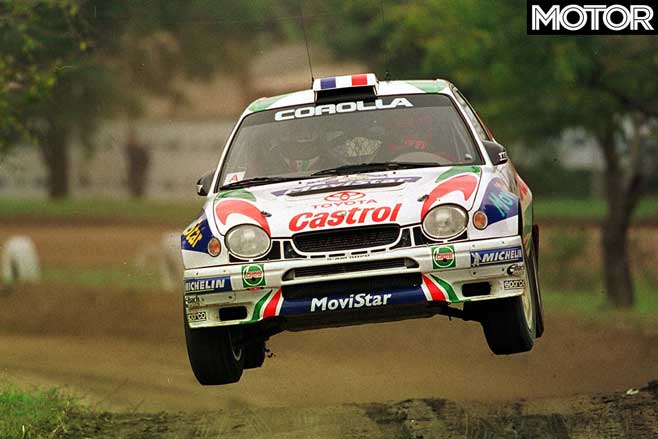
After years of pleading Toyota for a hatch-based rally car, Ove Andersson and TMG finally were granted the Corolla WRC in 1997. It utilised Toyota’s venerated 3S-GTE race engine and in 1999 brought Toyota its third and final manufacturer’s championship. It also took on the ARC from ’98 to ’01 in Neal Bates’s hands.
02 | Toyota TS010
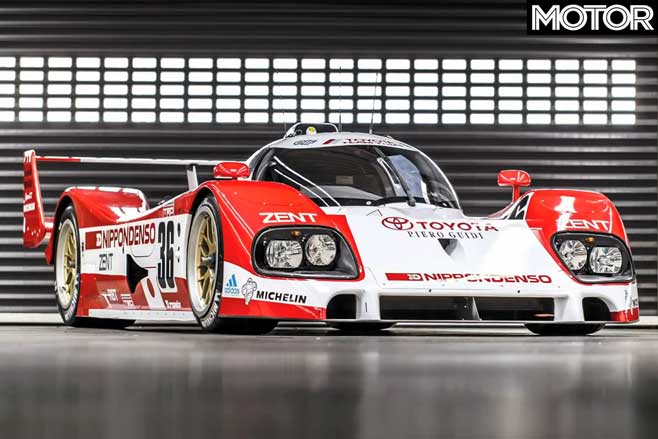
Designed by sports car genius Tony Southgate, the appropriately named TS010 marked Toyota stepping up efforts in endurance racing. And to match its superior aerodynamics Toyota built it a ballistic five-valve 3.5-litre V10. It came second, however, to Peugeot’s 905 at the 1992 Le Mans 24 Hour.
03 | Toyota TS020
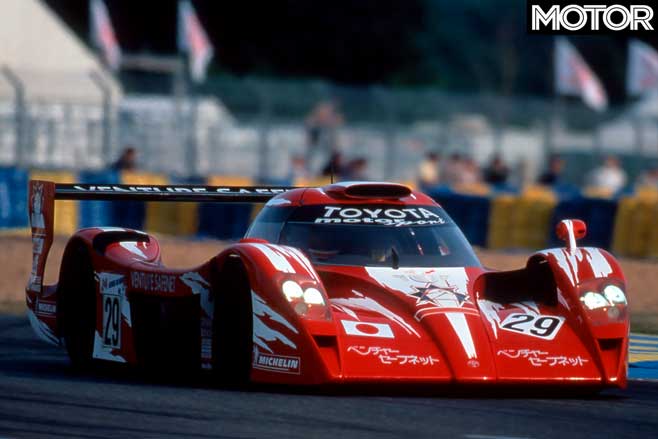
Toyota returned to Le Mans in 1999 with the TS020. Stunningly designed by Andre de Cortanze who believed everything should perform as it looks, the TS020 certainly lived out that notion: It took pole position, set the fastest lap of the race, but had its win smothered by a tyre puncture.
04 | Castrol TOM’s Supra
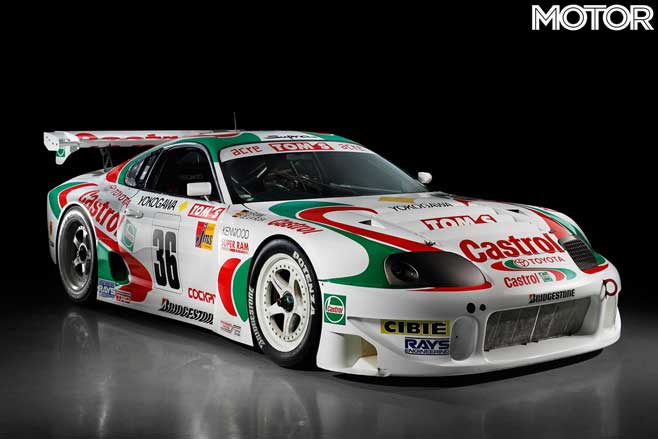
Rearing a generation of gamers with its entrancing green and red livery, the Castrol TOM’s Supra is iconic for good reason. Not only did it us a heavily boosted version of Toyota’s 3S-GT instead of the road car’s six-cylinder 2JZ, it won both the GT500 driver and manufacturer Japanese Gran Touring Championship in 1996.
05 | Toyota 7
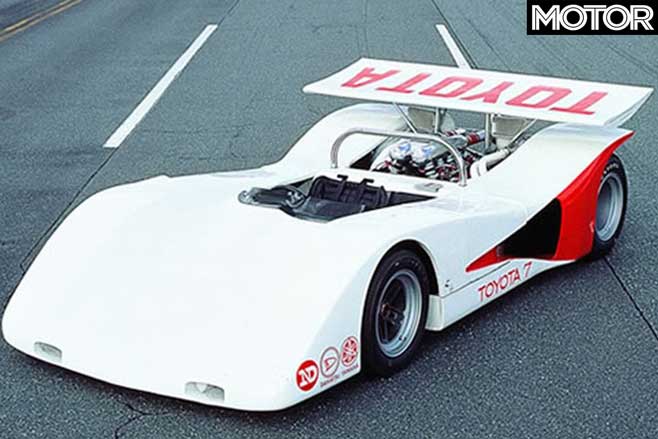
Before the Supra, before the TS010, Toyota’s first real racer was the Can-Am ready 7. A couple of versions were built; kicking off with a 3.0-litre version in 1968, but the stillborn turbo 7 that never made it to Can-Am was the craziest.
06 | IMSA Toyota Eagle Mk III
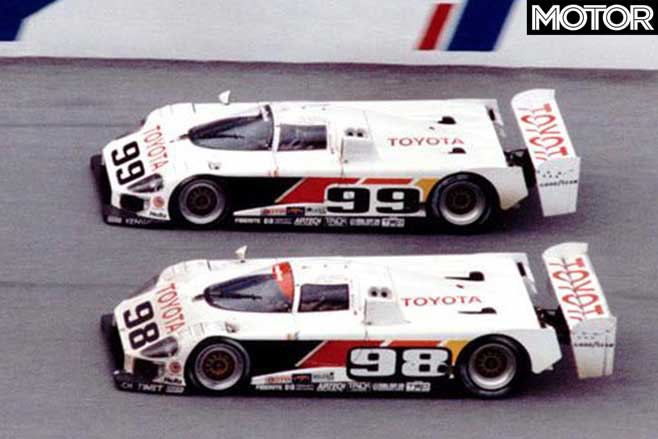
While Toyota’s first global sportscar championship only came last year, its endurance efforts in America have gone much better rewarded. The 600kW Eagle MkIII dominated the IMSA GTP class in 1993, winning both the driver’s and manufacturer’s championship.
07 | IMSA Toyota Celica ST162
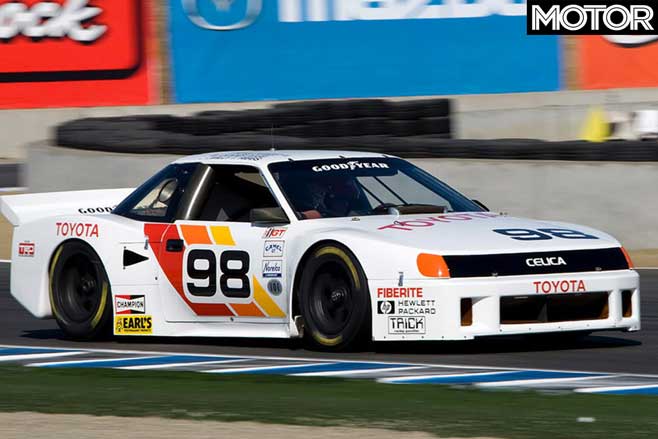
Developed for the IMSA’s GTO class the four-cylinder mid-engine 444kW ST162 Celica gave Toyota the honour of being the first Japanese manufacturer to win the GTO class championship in 1987.
08 | Toyota Celica ST185
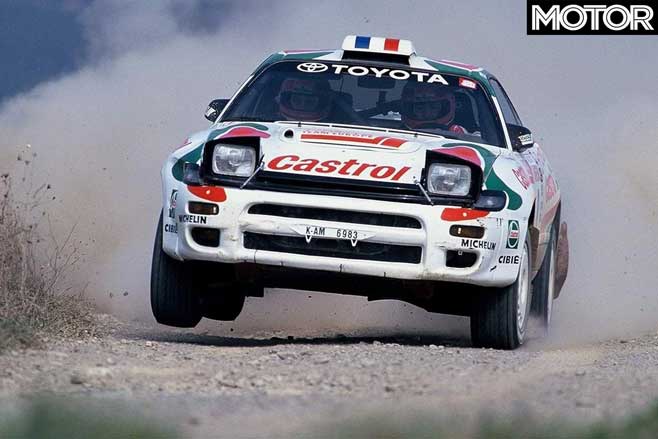
The most significant car in Toyota’s WRC campaign was the Celica. It brought it three WRC manufacturer titles and four driver titles in the 90s. Of the three WRC Celicas that lived, the ST185 was most successful, claiming the constructer’s titles in ’93 and ’94.
09 | V8-powered Supra GT
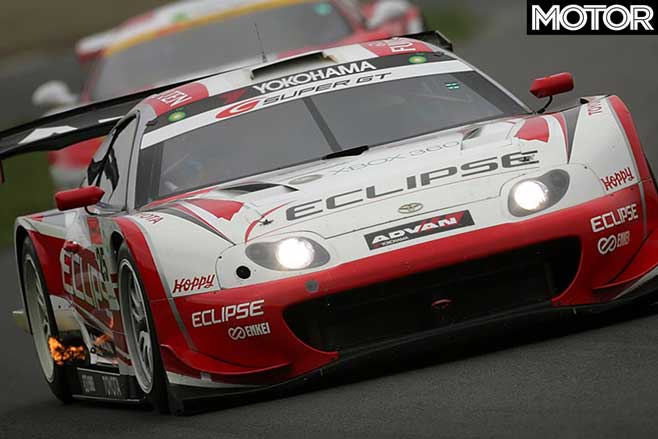
In 2003 Toyota swapped the Supra GT’s four-cylinder for a naturally aspirated V8. It also featured an updated aerodynamics package and took out the Japanese Super GT driver’s championship in 2005.
