
Electric cars… people love them, hate them or completely ignore them. But what if there were more electric cars like the Volkswagen e-BULLI? Would that change your mind about electric cars?
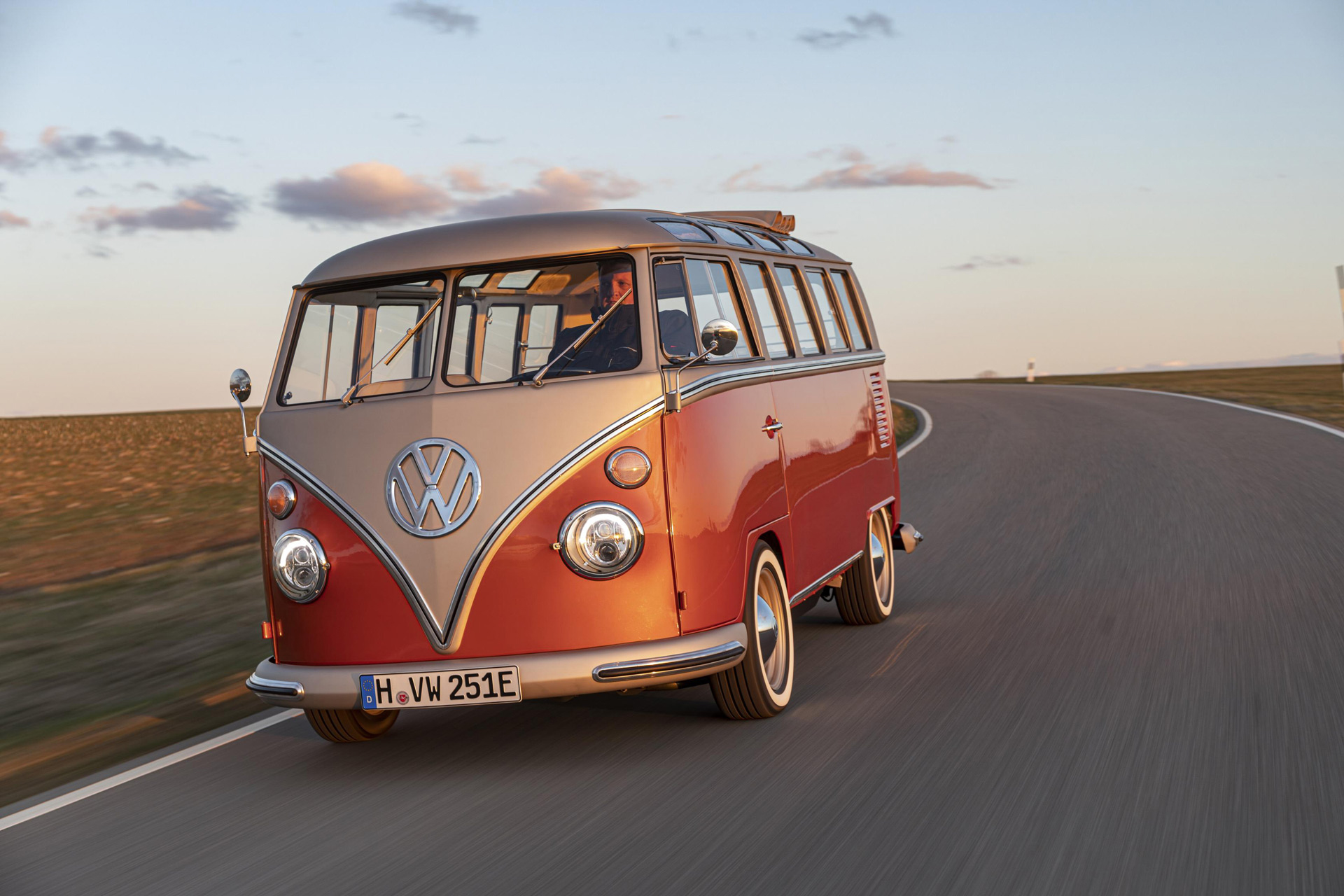
Concocted on behalf of Volkswagen by a company called eClassics, the e-BULLI combines cutting-edge EV tech in a classic shape that’s adored the world over. It’s not just a quick motor swap, either… the old T1 has been thoroughly worked over in order to keep it in line with modern motoring standards.
The split-window T1 – sourced from the US where it was known as a samba bus – loses its asthmatic old 1.5-litre flat-four petrol engine in favour of an electric motor which makes 61kW and 212Nm – or more than twice the output of the old engine.
It’s combined with a 45kW lithium-ion battery which can provide 200km of range, while 50kW fast-charging tech can provide an 80 per cent charge in 40 minutes.
The battery array easily fits along the floor pan of the generously sized Kombi, while the tiny electric motor and its associated gubbins – including a one-speed gearbox to drive the rear wheels –nestle under the vented rear engine hatch.
To keep that prodigious (not really) output in check, eClassics gave the T1 independent front and rear suspension, better brakes and – thankfully, as anyone who’s driven a T1 can attest – rack-and-pinion steering and better tyres.
Inside, the e-BULLI (not the town in Wollongong, NSW, but the original name for the Transporter in its home market of Germany, and an abbreviation of the German words for bus and van) is a triumph of blending old and new world tech.
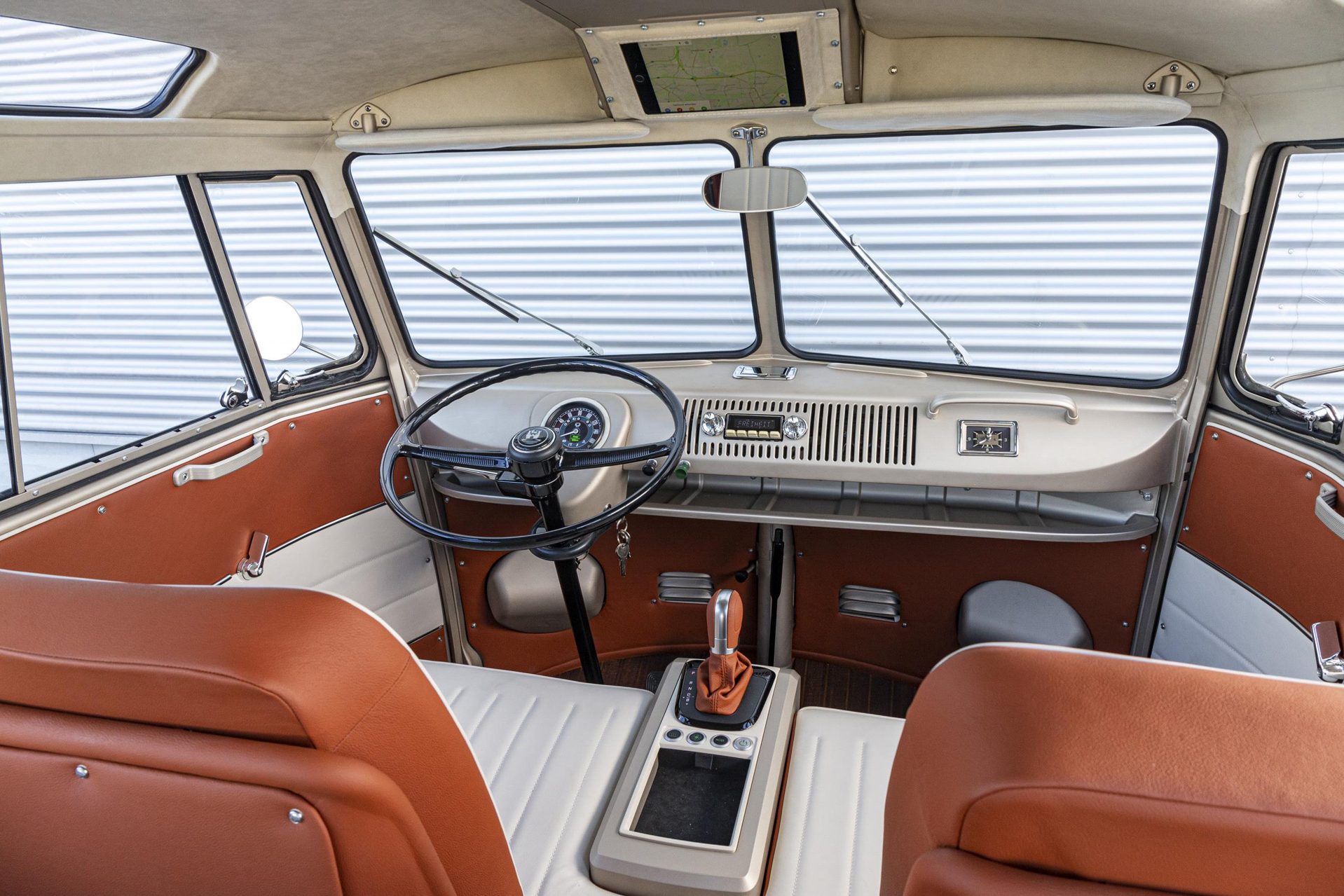
The spindly steering wheel remains as does the central speedometer, but a modern shifter and a digital battery gauge have been tastefully integrated into the leather-trimmed cabin.
The retro-styled radio, too, is DAB+ compatible and can stream music via Bluetooth.
And as for its wooden-deck floor… Just wow.

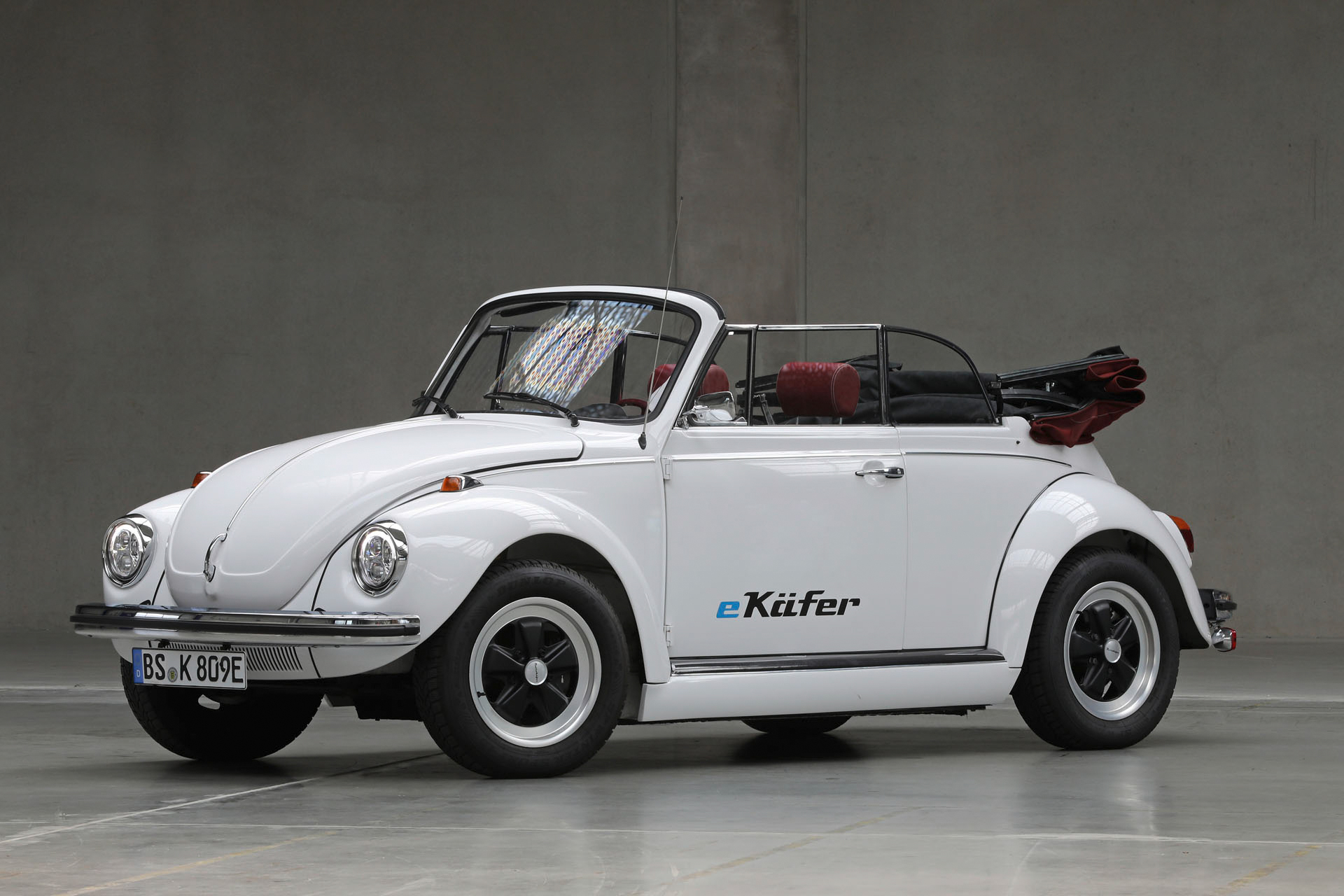
The e-BULLI follows another eClassics special done for VW in the shape of a late-1970s convertible Beetle, which was built for last year’s Frankfurt Motor Show.
The electrified bug – which uses the same powertrain matched to a slightly smaller battery – was shown next to a new e-Beetle built on top of VW’s new MEB electric car platform, which is set to underpin a range of EVs from the German carmaker.
The e-BULLI is not just a one-off job, either, with eClassics offering conversion kits starting at around A$120,000. Not only that, but the Hannover-based company can also convert T2s and T3s, too.
Form an orderly queue right behind us, folks…
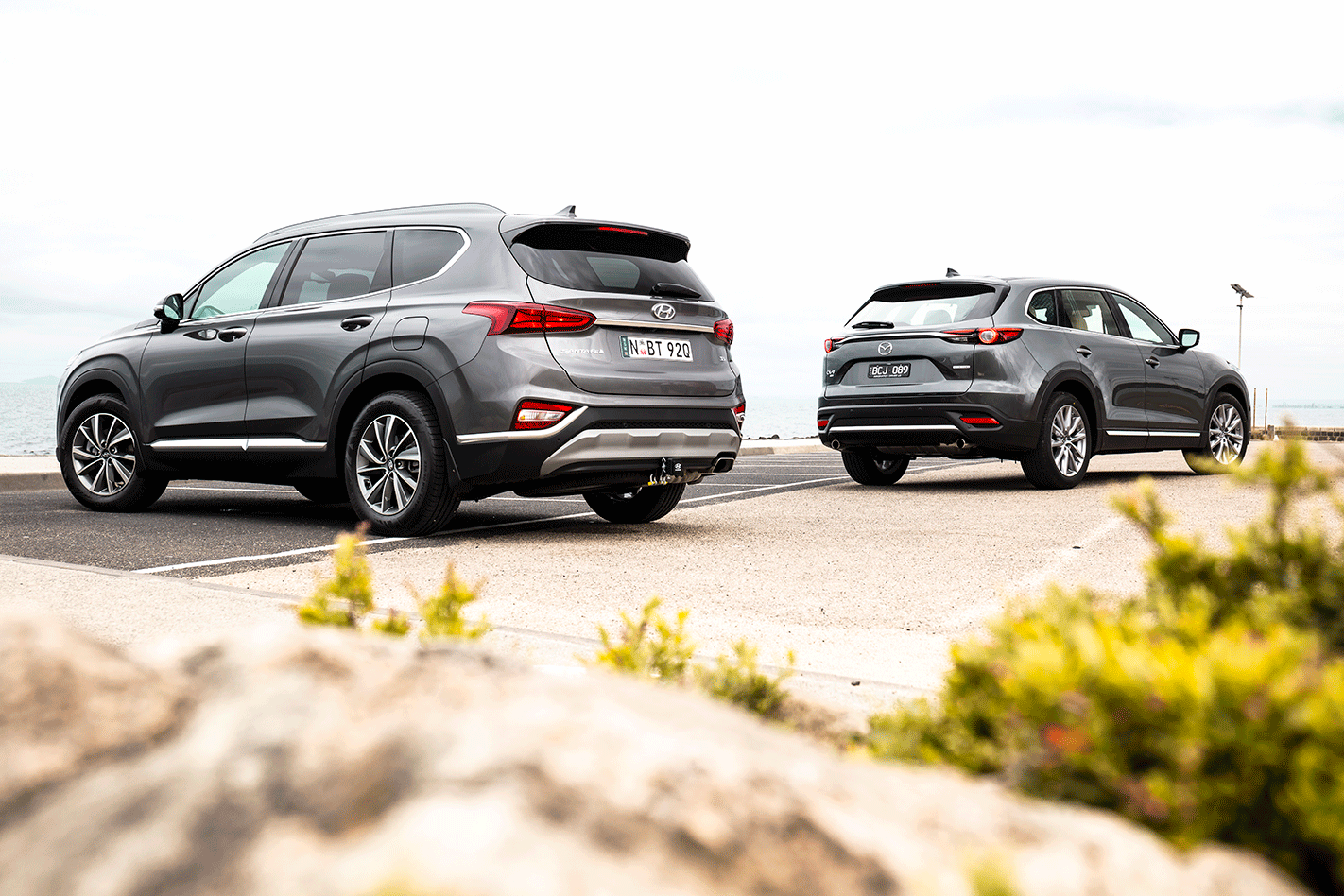
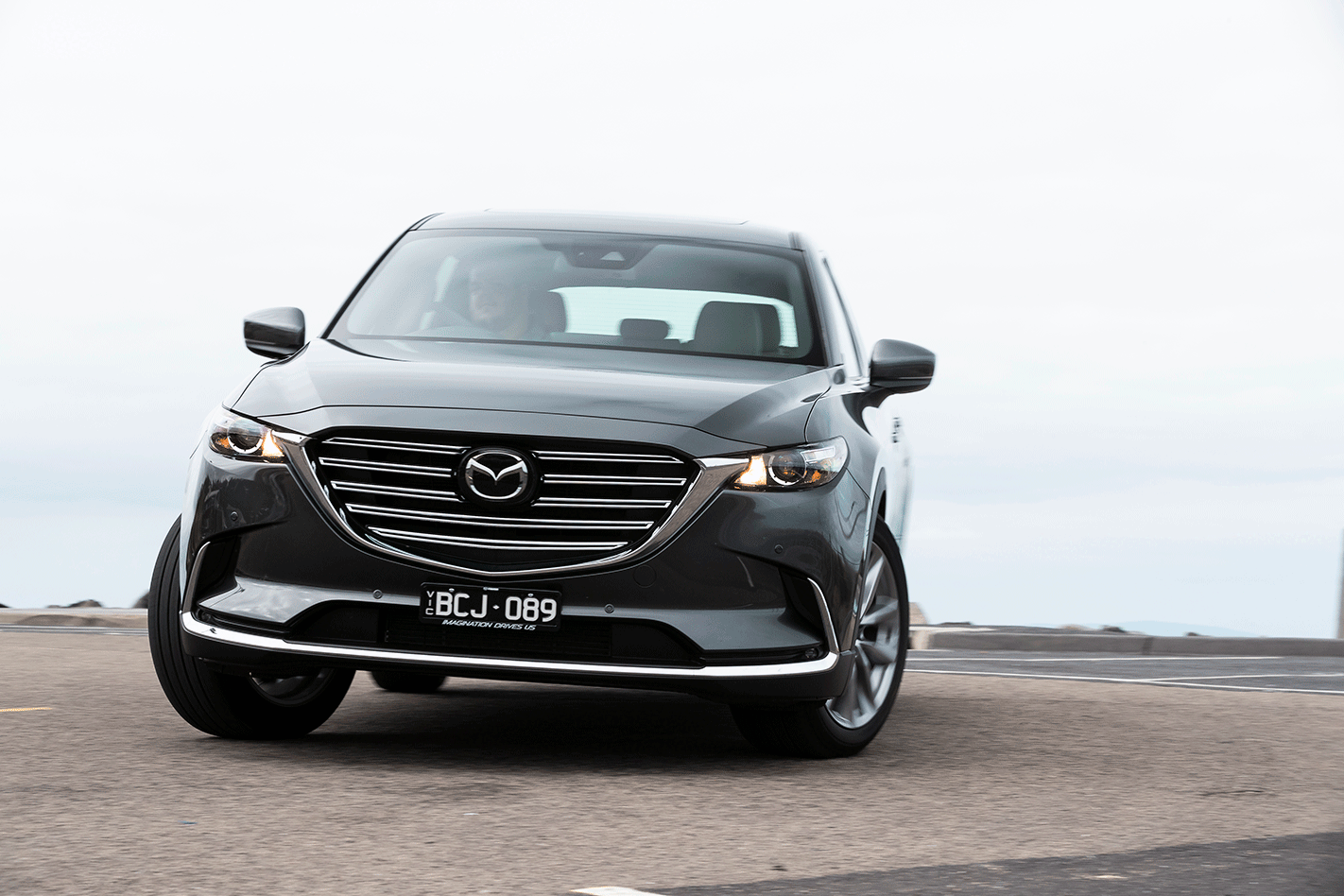
The Mazda CX-9 is a favourite in the Wheels office. It wouldn’t be a Car of the Year winner if it wasn’t. However, the latest generation Santa Fe presents as strong competition – and now it’s endowed with 206kW of V6 power to take on the benchmark. So, which is best?
EQUIPMENT AND VALUE
At $51,000, the Elite designation renders this Santa Fe V6 variant the middle-ground, value-for-money proposition within the range. Still, it’s decked out with kit such as AEB, driver attention warning, blindspot warning, lane-keep assist, rear cross-traffic alert, radar cruise and auto high beam. The Santa Fe V6 is covered by a five-year/unlimited-kilometre warranty (with one-year roadside assist), and you’ll need to get it serviced every 12 months or 15,000km.
Yes, the GT AWD is a higher spec level than the Santa Fe Elite, hence its price tag sits at $65,720. Still, the GT is well equipped for the coin, and the 2020 update sees the AEB system add night-time pedestrian protection. The CX-9 is also covered by a five-year/unlimited-kilometre warranty with roadside assist, but you could be frequenting your dealer more often, with 12 months/10,000km service intervals.
WINNER: Hyundai Santa Fe
SPACE AND COMFORT
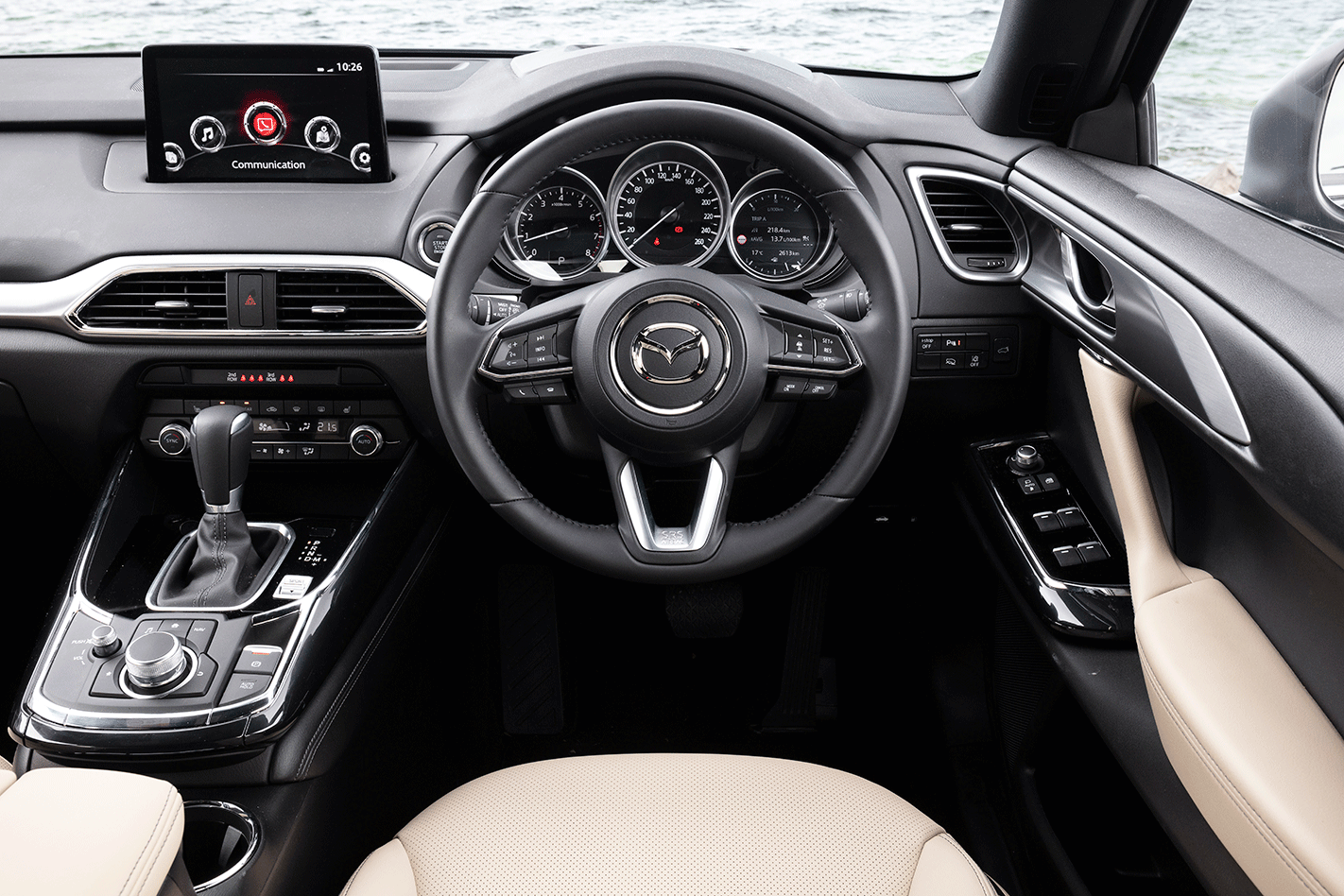
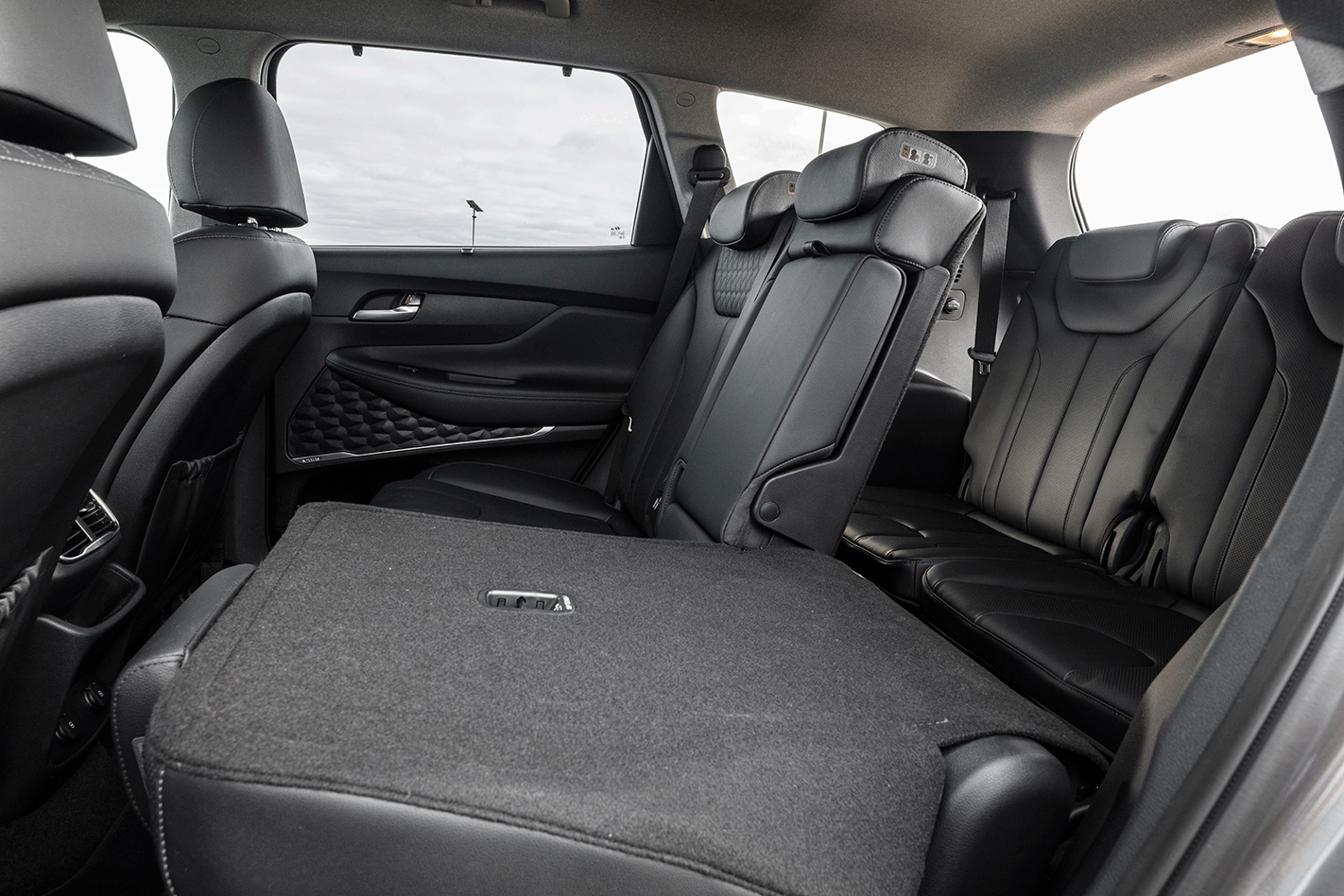
The materials used and build quality are of a high standard, while both SUVs have Apple CarPlay and Android Auto. The Hyundai’s infotainment system is better, though. Handily, there is dedicated air-con for the third row, a 12v power source, plus buttons in the boot to stow the middle row. Cabin space is generous, with the third row just for kids, like the CX-9. Cargo capacity is 130 litres with all seats in place and 547 litres in five-seat mode.
Interior quality is top-notch, but the MZD Connect system is old. Neither car is as simple as an MPV for accessing the third row, and once there both have comparable head- and legroom. The same goes for the sliding middle rows. The CX-9 gains USB charging points in all three rows, but lacks dedicated air vents and climate control for the third row. Boot space is 230 litres as a seven-seater and 810 litres (to the roof) with 50/50-split third row stowed.
WINNER: Dead heat
RIDE AND HANDLING
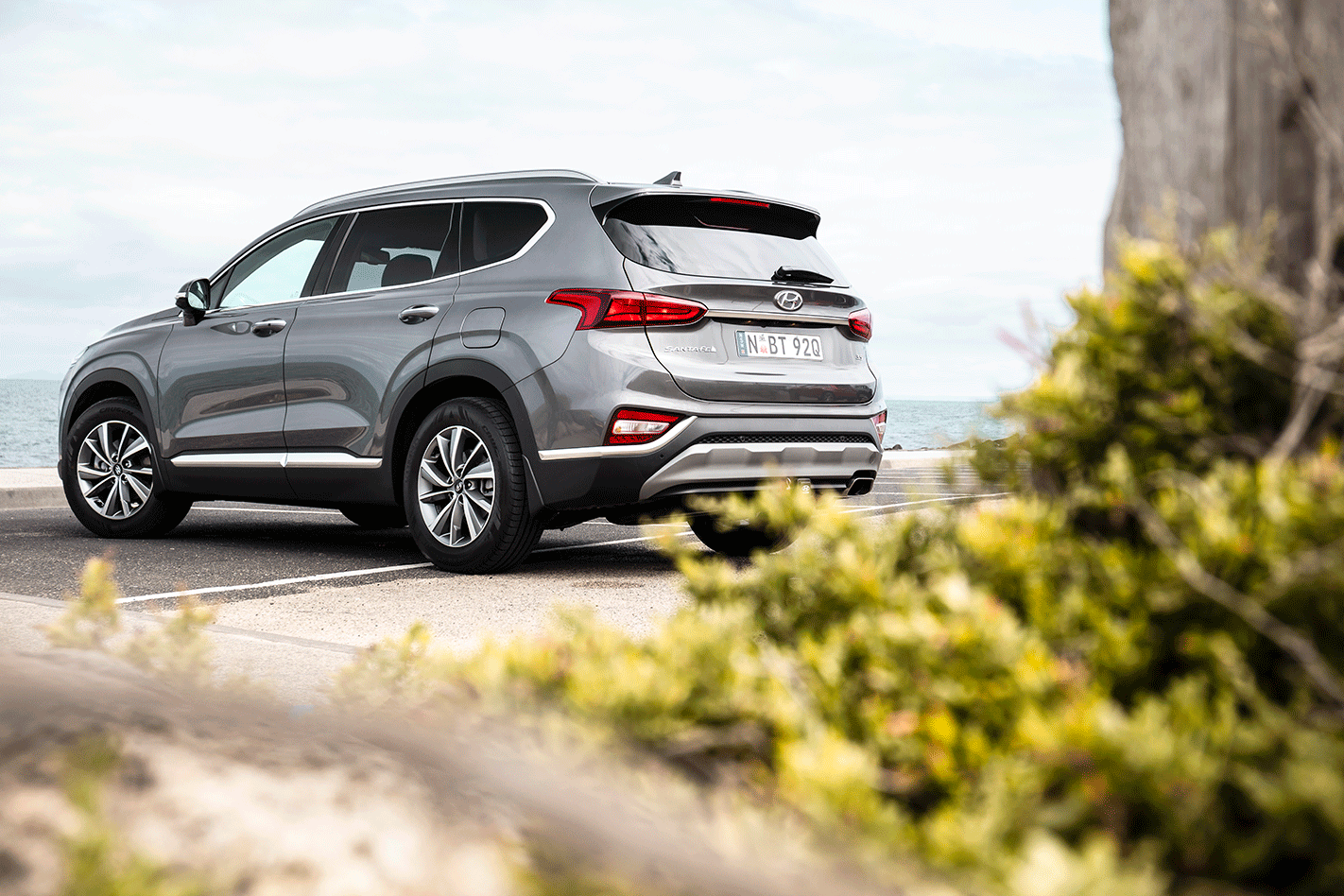
Hyundai hasn’t just bolted a heavier bent-six in the front and left the suspension alone. The springs and dampers have been retuned to suit the new powertrain, meaning the Santa Fe V6 retains a comfortable ride quality and rewarding dynamics (riding on 18-inch alloys). It’s a shame the V6 isn’t offered with all-wheel drive. The cabin is noticeably louder than the Mazda’s, with the Santa Fe recording 63.8dB at 80km/h on the same road.
Not that you buy a seven-seat SUV for cornering prowess, but if you find yourself on a twisty road, the CX-9 has driver appeal. The 2020 update incorporates G-Vectoring Plus to help stability. The system aims to pull the car into a straight line past an apex – it’s quite noticeable and needs an acclimatisation period. The ride quality is supple, despite 20-inch wheels, while body control is kept nicely in check. It’s quieter too, at 60.9dB.
WINNER: Mazda CX-9
PERFORMANCE AND ECONOMY
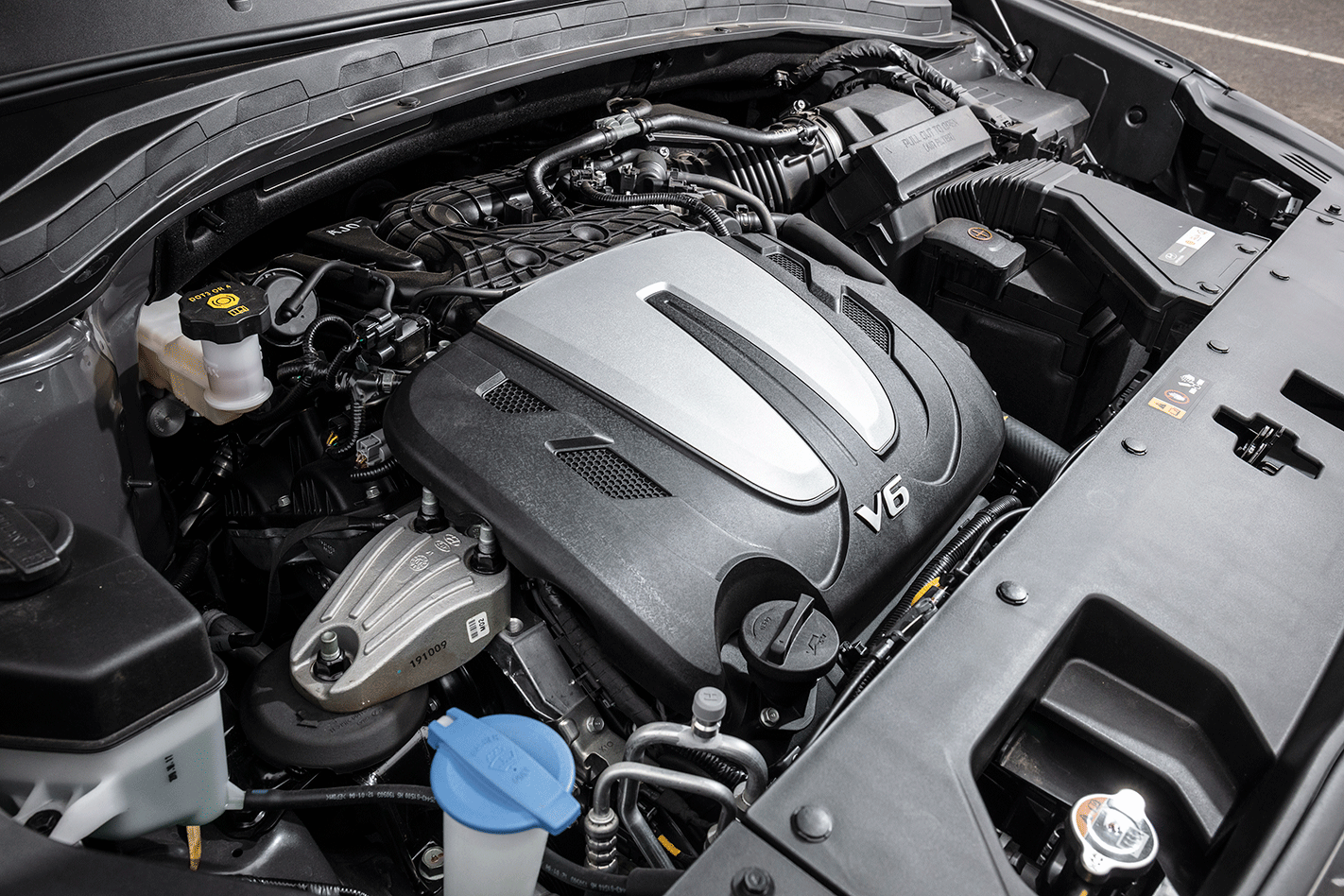
Out goes the lethargic 2.4-litre four, in comes the trusted 3.5-litre atmo V6 with 206kW and 336Nm. That’s a 68kW/95Nm jump. And it’s noticeable behind the wheel, as the front can sometimes struggle with the extra grunt being sent to the front wheels alone. All-wheel drive is saved for the 2.2-litre turbo-diesel four. It sounds great with a bent-six growl entering the cabin. It feels a little punchier than the 2.5-litre CX-9, but it’s also thirstier, at 10.6L/100km.
Despite being down two cylinders on the Santa Fe, the turbo 2.5-litre four in the CX-9 delves into its 420Nm of torque from as low as 2200rpm. Its meaty mid-range response is easy to access and perfect for city driving. In the GT model tested, power is sent to all four wheels via a six-speed automatic, which can’t quite match the slick eight-speeder in the Hyundai – although the CX-9 wins the economy race with a figure of 9.0L/100km.
WINNER: Mazda CX-9
VERDICT: WHEELS FAVOURITE DEFENDS ITS HONOUR
The Mazda CX-9 is our 2017 Car of the Year winner for a reason. And that’s despite surviving on a few nips and tucks since its COTY crown. Even if the Hyundai Santa Fe V6 featured in a comparable Highlander spec ($57,500), the CX-9 would still have claimed this test. But the Santa Fe is far from embarrassed here. The addition of the V6 powerplant provides the extra verve that was lacking in the four-cylinder petrol-powered variant, and the car is feature-packed for the price. Yet the CX-9 remains a benchmark and continues to be as compelling as the day it launched in 2016.
SPECS
Model: Hyundai Santa Fe V6 Elite Engine: 3470cc V6, dohc, 24v Max power: 206kW @ 6300rpm Max torque: 336Nm @ 5000rpm Transmission: 8-speed automatic Weight: 1720kg 0-100km/h: 7.8sec Economy: 10.6L/100km Price: $51,000 On sale: Now
Model: Mazda CX-9 GT AWD Engine: 2488cc in-line 4cyl, dohc, 16v, turbo Max power: 170kW @ 5000rpm Max torque: 420Nm @ 2200rpm Transmission: 6-speed automatic Weight: 1924kg 0-100km/h: 7.6sec Economy: 9.0L/100km Price: $65,720 On sale: Now
With more wings than a genetically-modified chook and bulges like a gym rat’s arms, these hot hatches were (or are) ahead of their time.
This feature was originally published on 28th May 2015 and was updated on 23rd March 2020
2017 Honda Civic Type R
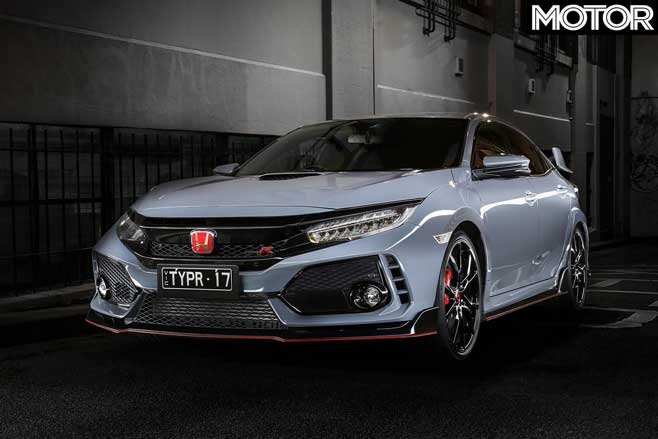
There’s only one car to have ever won MOTOR’s Performance Car of the Year and Bang For Your Bucks trophies. It’s Honda’s return to hot hatch glory, a car that spiritually (and in terms of driving ability) takes the mantle from the DC2 Integra Type R of old. It has retained the front-driver crownthough the hot hatch golden age of the late 2010s, so let’s see what the 2020s bring us.
2010 Ford Focus RS500
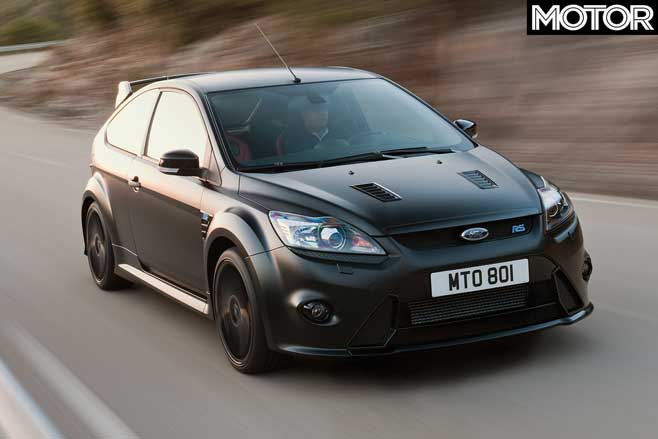
When the Mk2 Focus RS climaxed with the sinister ‘RS500’ version, its matte black paint and matching 19-inch wheels properly suited the buff hatch’s personality. Unfortunately, the badge signified the amount Ford intended to build rather than its production horsepower. The pinnacle of the latest (Mk3) Focus RS, the Limited Edition, sated our hunger for a big bad RS… but now we wait for version four.
2008 Renault Sport Megane R26R
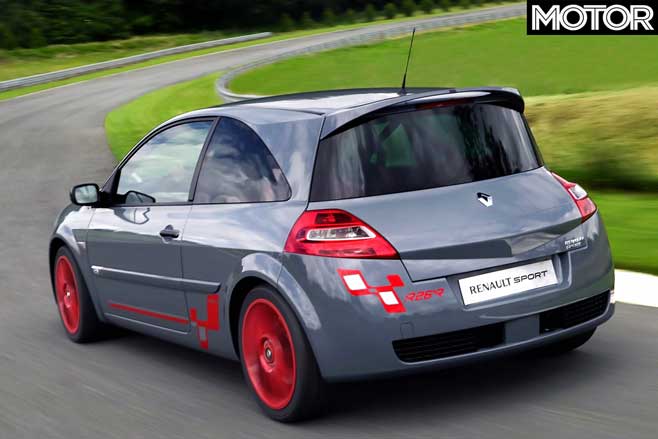
Not the quickest in terms of outright speed, but unapologetically hardcore in its pursuit of grip and performance. Over 120kg lighter than the Megane RS it was based on, the R26R featured a carbon fiber bonnet, a bare-bones interior with a roll cage and lightweight bucket seats with six-point harnesses and its rear windows were plastic. Back in its day the R26R was the quickest front-drive production car to lap the Nürburgring with a 8min 17sec.
2013 Mercedes-AMG A45
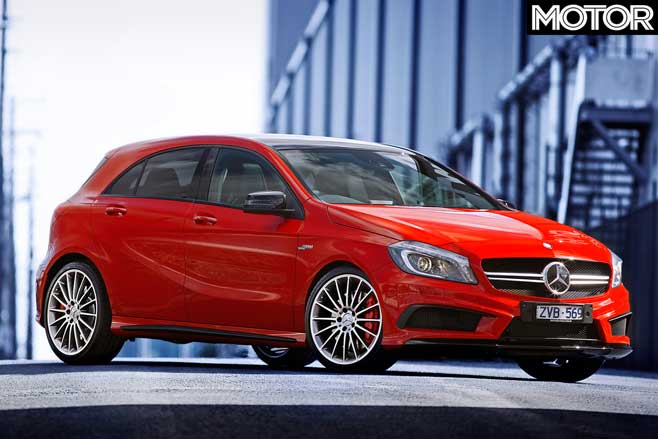
Not only did Mercedes’ foray into the performance hatch world wow us with its ferocious all-wheel drive performance, the car’s speed and exhaust crack, coupled with its carbon aero pack, made it the perfect personification of hell on wheels. Its successor has since come along to once again raise the bar, but this one did it first.
2007 Subaru Impreza WRX STI
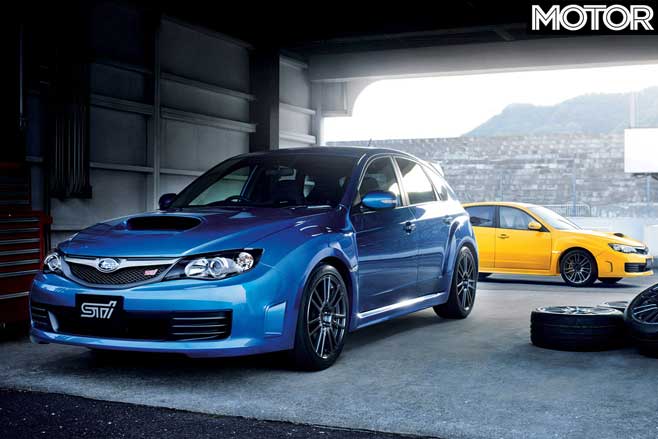
Subie’s side-step from tradition to make its STI a hatch-only model was slightly frowned upon, but consoled by the fact it was one bad-looking mutha. Reviving the 22B’s wide-body proportions made sure it wasn’t mistaken for any fanboy’s boggo 2.0-litre Impreza. Outdated today, but an instant revelation at the time.
2003 Renault Clio V6
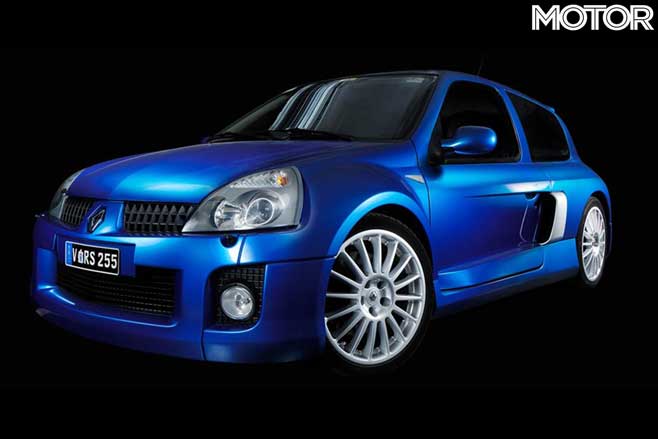
For the Clio V6 sold from 2001-’05, the madness of stuffing a 3.5-litre V6 in the middle of a mini-hatch was exaggerated by its intimidating looks – mainly its fat guards and intake snorkels at each door. Spun 180-degrees at the drop of a hat.
1985 Lancia Delta S4
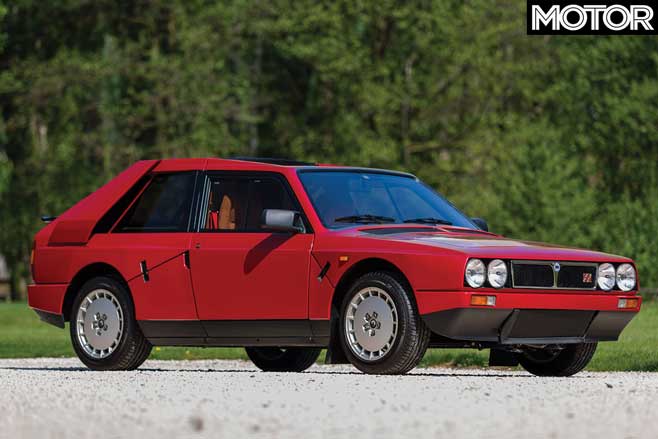
The Delta S4 might’ve looked like a pregnant hatchback to average folk, but those clued in to its evil knew the twin-charged all-paw Delta S4 was the most extreme Group B monster. Those C-pillar gills are just a hint at its speed potential.
1984 Peugeot 205 T16
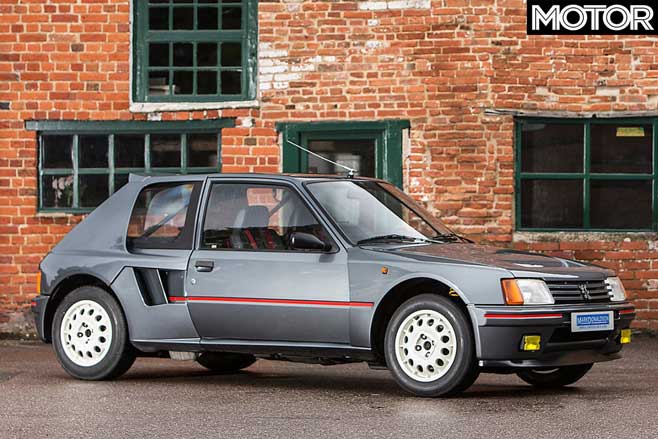
Sharing only its headlights, windscreen and doors with the regular 205, the road-going T16 wore its WRC-crushing pedigree on its bulging sleeves. Although its turbo four was watered down to 149kW, it’s still revered as ‘the’ 205.
1985 MG Metro 6R4
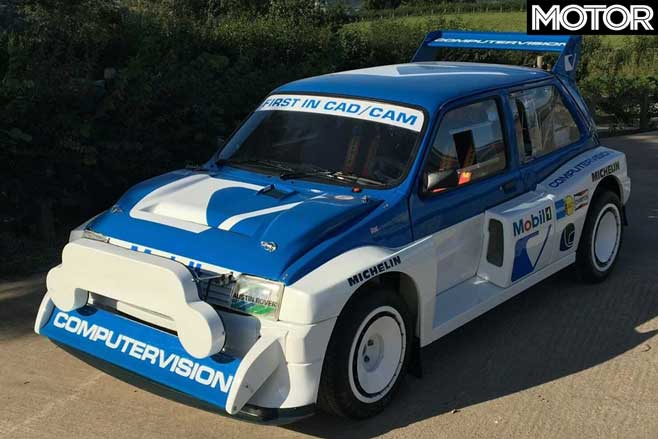
While its lack of turbocharging meant it wasn’t the most powerful of the Group B ‘road’ cars, it was just as advanced. It had a tubular frame chassis, rear mounted V6 (300kW at 9000rpm!) and a Ferguson all-wheel drive system. Most memorable, though, were its steroidal looks.
1983 Renault 5 Turbo
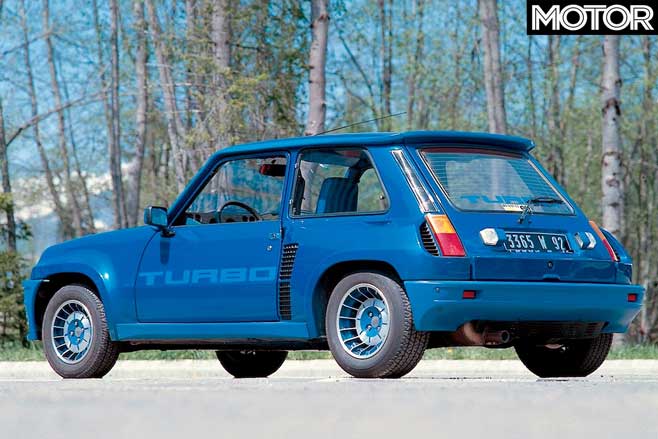
Thanks to its rear-mounted turbocharged four (which shared bits with the engine of Renault’s F1 car) only driving the rear wheels, as much tyre as possible was stuffed under the 5 Turbo’s rear guards. This resulted in a hatch which looked just as outlandish as any of the others listed here.
2011 Audi RS3
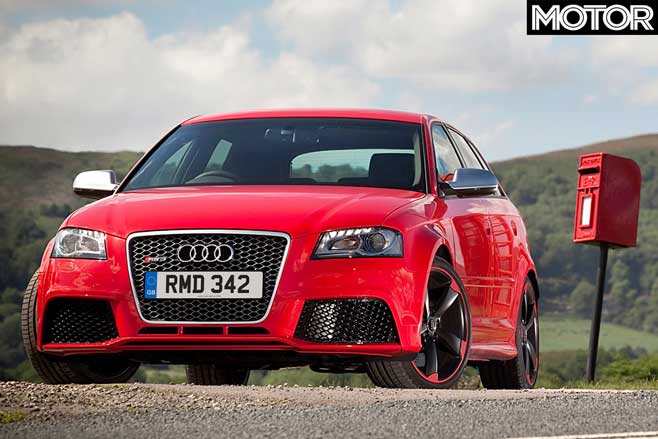
The RS3 was built in a belated attempt to silence other serious hot hatches rather than win world championships. Speed came from the TT RS’s legendary turbo five-pot, while its huge front intakes and widened carbon front guards gave it real road presence. It’s been updated a few times since its inception, though a new A45 S-fighting generation of RS3 would be welcome…
Since MOTOR started way back in 1954 we’ve seen the humble car evolve into a masterpiece of technology and engineering. But don’t think there weren’t a few sneezes along the way. Here are the top 10 fails in car tech.
This feature was originally published on 10th December 2014 and was updated on 23rd March 2020
01 | Aquatic Cars
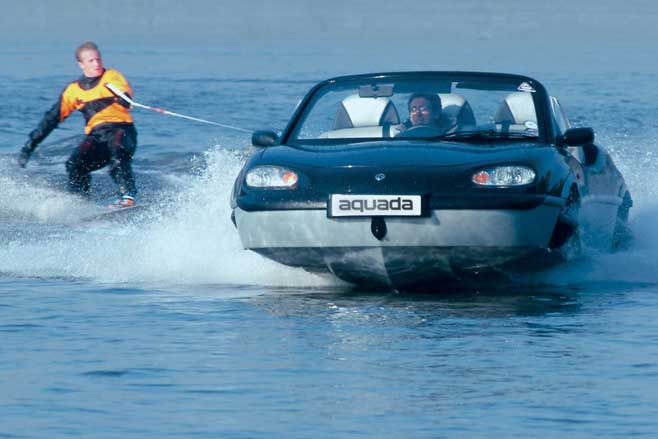
There’s been a few, but we best remember the MX-5 butchered into the 2004 Gibbs Aquada you see here. For just $240K (ish) it came as a three-seater, like a McLaren F1, and could do 50km/h on water. It was the first MX-5 able to tow a wakeboarder. Pray be it the last.
02 | Hydrogen Combustion
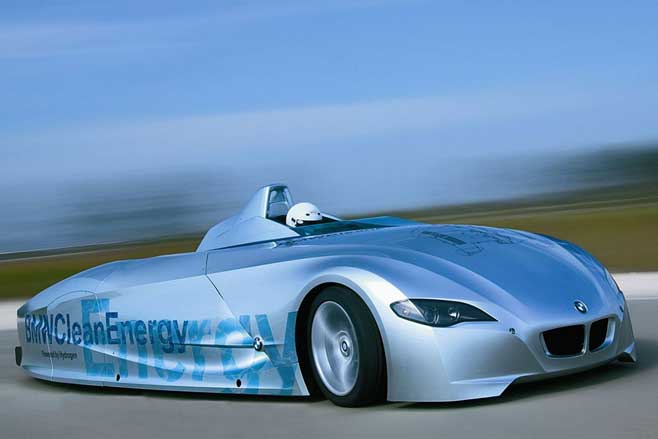
Though hydrogen-burning rockets got us to the moon, burning hydrogen in a reciprocating engine didn’t get us very far, as BMW demonstrated with its experimental hydrogen-fueled cars of the early-2000s. The 6.0-litre V12 in the 300.175km/h H2R concept might sound mighty, but it only produced a mere 210kW.
Not only that, for hydrogen to be stored in a practical density for a car, it requires either compression to 810 bar (11,748psi) or chilling it to a liquid at minus 253 degrees. Even then an experimental Hydrogen 7 BMW could only eke out 200km from its 8kg tank of hydrogen. Yikes, thank goodness scientists are working on more efficient and less bombastic fuel cells.
03 | Jet-powered Cars
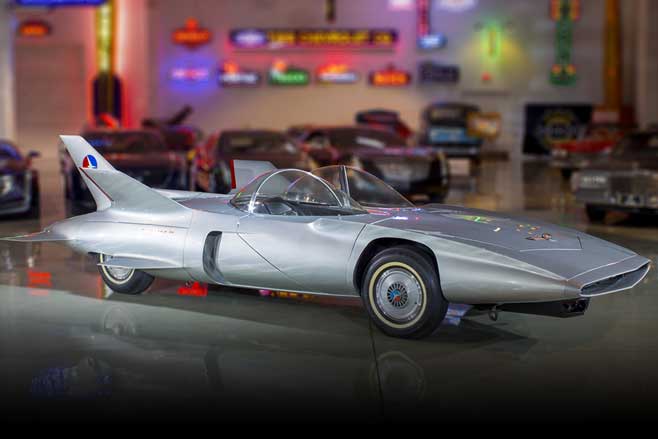
Chrysler spent 30 years toiling on a jet-engine car and has spent the last 50 trying to forget it. The 1963 Turbine Car’s small, under-bonnet jet engine made 97kW/576Nm and could burn through anything flammable. Which unluckily included pedestrians walking past its exhausts.
The idea of turbine engines would resurface decades later as a compact and smooth-running power-generator alternative for plug-in hybrids to the conventional piston engines, as seen in the initial version of Jaguar’s sensational CX-75 concept car. Unfortunately challenges such as putting such an engine into production and noise levels saw the concept being grounded once again.
04 | Carbon-fibre mainstream cars
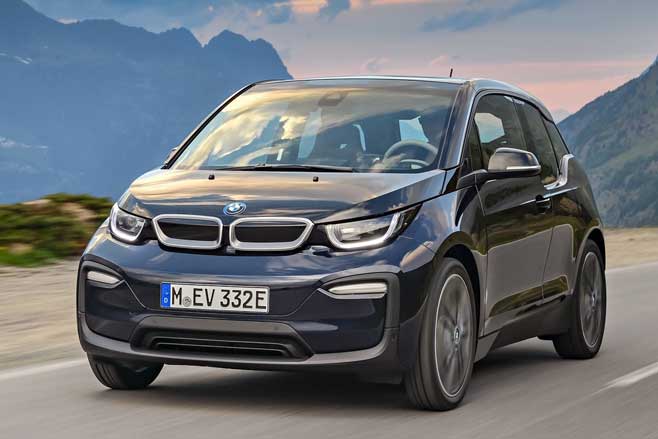
2013 was an exciting time for coveters of carbon fibre, as the arrival of the realistically-affordable Alfa Romeo 4C and BMW i3 – with its carbon-fibre monocoque construction – was thought to have heralded the arrival of the black weave as the future of car construction. Soon, the futurists would have you believe, even your mom would be able to commute in a space-age lightweight car.Sadly, that dream never materialised as building a car out of carbon-fibre remains hugely time and labour intensive in a business where volume and automation matters. Recent advancements in metals and engineering too have whittled away any cost/weight advantages carbon-fibre promised, leaving the possibly of its widespread usage as intangible as the weight of the material itself.
05 | Nuclear-powered Cars
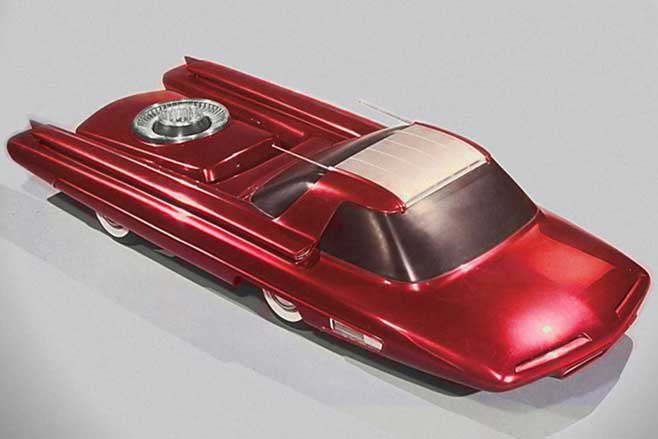
The 1958 Ford Nucleon concept was like a ute with a nuclear reactor in the tray. Ford imagined its core could last 10,000km and be swapped at a servo like a Gas ’n’ Go cylinder. Spent fuel rods? They didn’t imagine that bit. Or accidents.
06 | Cars that Talk
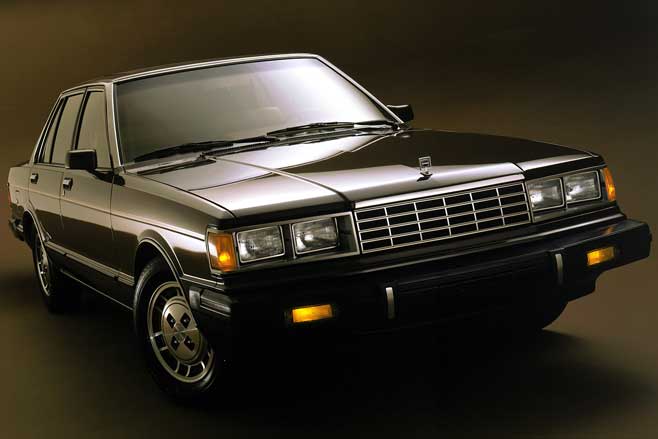
The 1981 Datsun 810 Maxima came inbuilt with a female American voice that would announce six maddening messages like “fuel level is low” and “left door open”. Soon owners learned the only feature they cared for was the off switch.
07 | Rotary-powered Cars
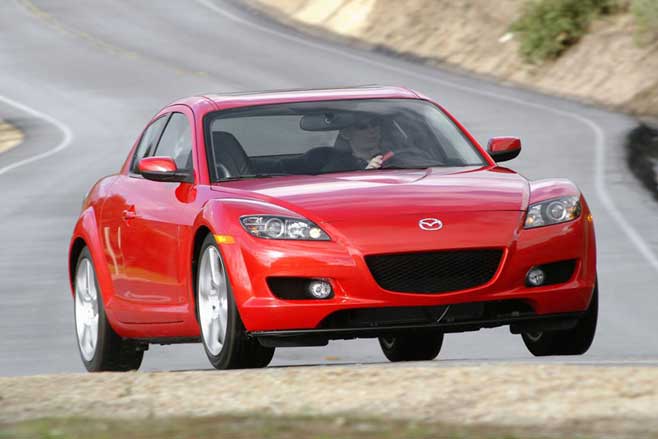
Good on Mazda for putting fingers in its ears and pushing on in the face of all logic. The rotary, bless it, won Le Mans and powered some of Japan’s greatest performance cars. But we’re unlikely to hear an angry wasp fire up again given the emissions serpent has strangled it, it seems.
08 | Cars with Toilets
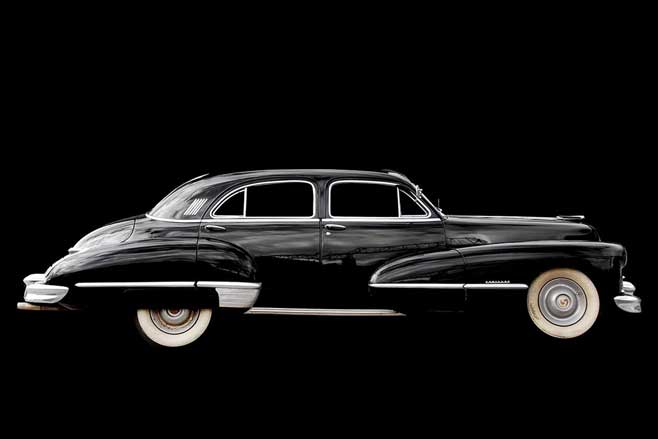
We’re still waiting for a car with a functioning flusher but about the same time MOTOR was launched, long-distance driver and unwitting futurist Louie Mattar managed to drive his 1947 Cadillac 10,000km non-stop thanks to, in part, its innovative onboard throne.
09 | Hovering Cars
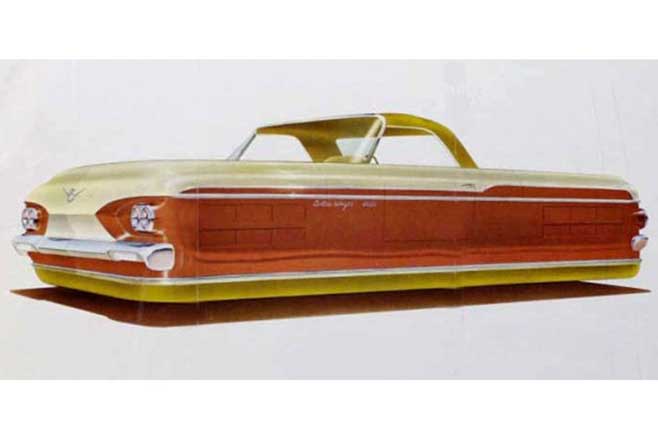
All that time and money wasted on the S-Class’s Magic Body Control. Merc could’ve just made it hover on a curtain of air. Looking like a slipper and with all the manouvreability of a hockey puck, the 1959 Curtiss-Wright Air-Car proved it could be done. Sort of.
10 | Cars that Tilt
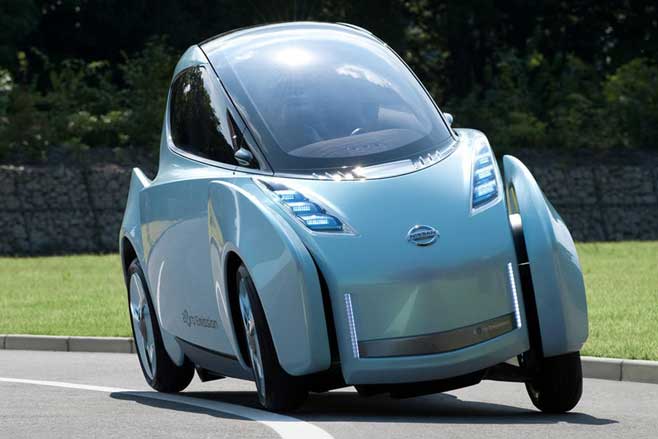
Seems like a good idea right? Cars that lean offer all the sensations of riding a motorcycle without the fear, grave danger and peril generally associated with two-wheeled transport. However, the whole idea is extremely complicated, ridiculously expensive and a bit weird.
We’ve all done it. Downloaded an update to our phone or laptop that actually made the thing worse than before, that is.
Whether the new functionality was loaded with bloatware we didn’t need, removed features that we valued, surreptitiously inserted additional controls or just wouldn’t run adequately on creaky old devices, it’s always a bit of a gamble that the good will outweigh the bad. Now imagine that happening to your car.
A Californian Tesla owner experienced exactly this issue after buying a used Tesla Model S in November. It turns out that a number of Teslas were fitted with Autopilot and Full Self Driving functionality despite the original owners not having asked for it or having paid the USD$8000 for it. Put that down to a glitch in Elon’s matrix.
Anyway, Tesla subsequently performed an audit on cars that had unbilled Autopilot functionality and unceremoniously switched it off, that despite subsequent used buyers having paid a premium for their cars in good faith due to Autopilot/FSD functionality being included. Tesla, predictably, offered to sell the functionality back to the owner and it was only after months of public back-and-forth that Tesla finally relented and reinstated the owner’s Autopilot/FSD functionality.
Granted, Tesla has no responsibility to support functionality that hadn’t been paid for, but to remove it from an innocent party who had paid for it doesn’t sit comfortably. And that will be a problem for many car manufacturers henceforth. There are a number of questions that need to be resolved.
If owners are to pay for that sort of expensive functionality that can be switched on and off quite easily over the air, is it reasonable to expect those features to be attached to them and not the car? For example, if somebody were to buy a new Tesla Model 3 and then replace it after three years with another, should they be able carry that Autopilot functionality across to their new car, retaining its value? They may not want that particular investment to depreciate by 43% along with the rest of the vehicle.
We’re obviously singling out Tesla here, merely due to the facts of the original case, but it could equally apply to any manufacturers that can deliver over-the-air updates. For example, how thrilled would you be if somebody at headquarters decided that your new car should sound an insistent alarm should your vehicle creep over the speed limit by 1km/h? Or that an infotainment system that you’d become comfortable with was, upon getting into your car in the morning, an unintuitive mess? Windows 8 anyone?
Over-the-air updates aren’t anything new, so it’s perhaps surprising that car manufacturers haven’t reached a broad consensus on how to manage them yet. The Mercedes-Benz SL could accept updates to its Mbrace2 infotainment system back in 2012. Volvo’s XC90 followed in 2015 and FCA was able to patch a vulnerability in Jeep’s network security with an over-the-air fix in 2015.
Teething problems remain. In 2018, SiriusXM issued an over-the-air update for its Uconnect infotainment systems in 2017 and 2018 Jeep and Dodge Durango models which resulted in an endless cycle of reboots for the central screen, effectively disabling the infotainment and, with it, the emergency assistance services.
Likewise, Lexus delivered an update to its Enform infotainment system in 2016 and killed it stone dead. That ‘enhancement’ required a trip to the dealer to rectify.
Jaguar has been a little more circumspect, with its I-Pace electric SUV being designed to continue to run its existing software if an update fails. Owners can decline an update and also need to opt-in to over-the-air updates, and when they do, they retain the ability to schedule updates, which can take up to an hour to download and install, effectively immobilising the vehicle temporarily. It’s not clear if an update can be rolled back to a previous iteration.
But while some manufacturers remain a little wary of changing safety-critical systems, over-the-air updates can have a massive safety benefit. Even after repeated contact attempts, only around 62 percent of new car owners respond to recalls and repair their vehicles. The facility to rectify issues over-the-air would help boost that reach.
On the whole, over-the-air updates are a good thing, but need to be managed very carefully. There’s a very different level of consequence between a laptop giving you the blue screen of death and your vehicle’s critical safety functions going on the fritz due to a bodged line of updated code.
And the other side of the updates is that the data pipe also feeds back to the manufacturer. They can monitor the vehicle’s usage patterns and troubleshoot issues before they even happen, as well as gain a better understanding of how their vehicles are used: critical for future model development. The future is bright. But you might have to wait an hour for it to arrive.
What’s about to happen is incredibly rare. In fact, it’s almost unheard of. And if we’re being totally honest, that’s what makes it so damn terrifying.
You find Wheels deep in the heart of chaotic Tokyo, staring open-mouthed at the Mercedes-Benz Vision EQS, the futuristic EV saloon that had, only weeks before, rolled onto the stage of the Frankfurt motor show.
We were in Germany for that moment, too, but our mouths then had remained firmly shut even as the EV answer to the Mercedes-Benz S-Class slinked silently onto the stage, accompanied by all the hype and fanfare typical of any major motor show reveal. It had looked special, sure, but pressed up against that glitzy and glamorous backdrop, not exceptional.
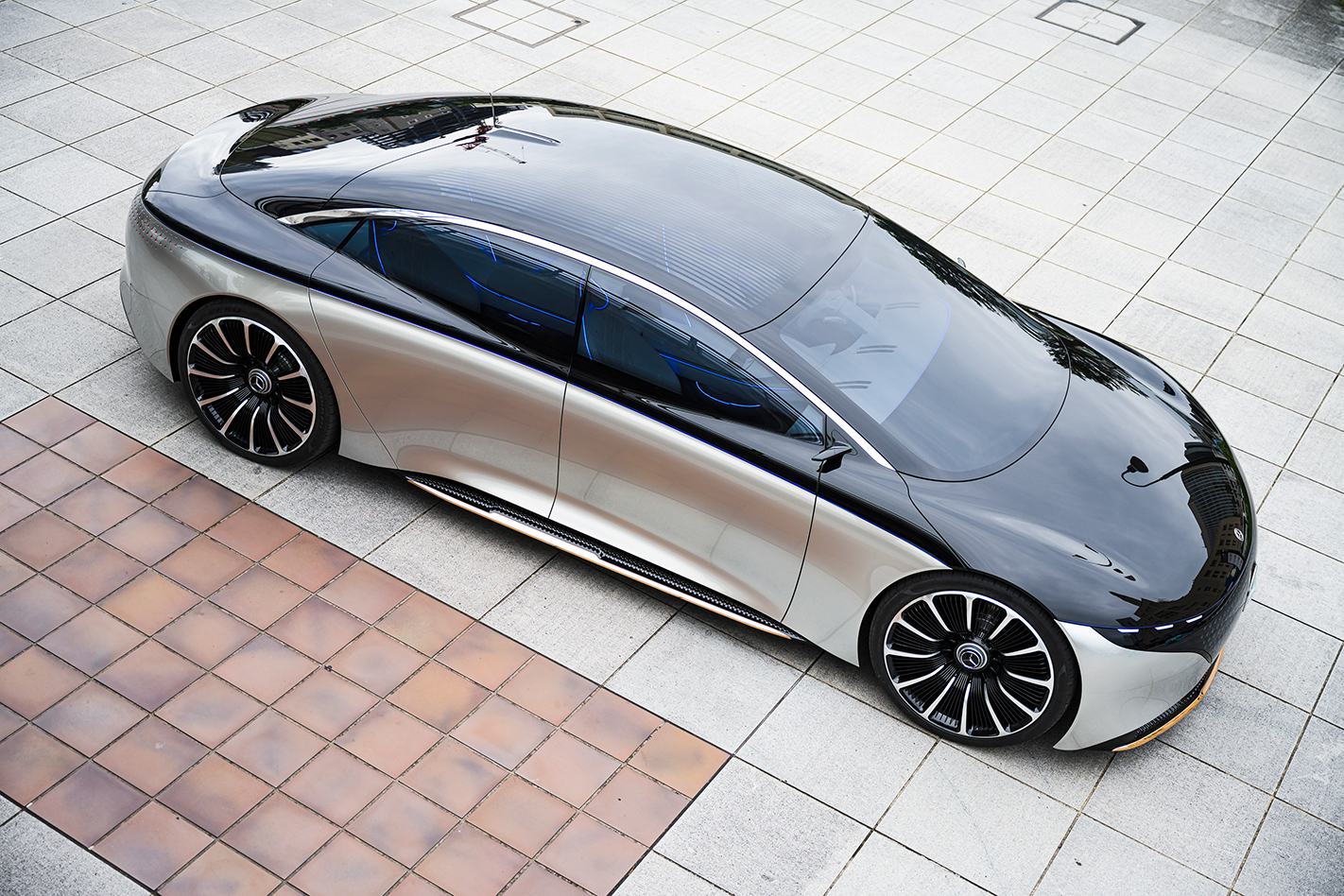
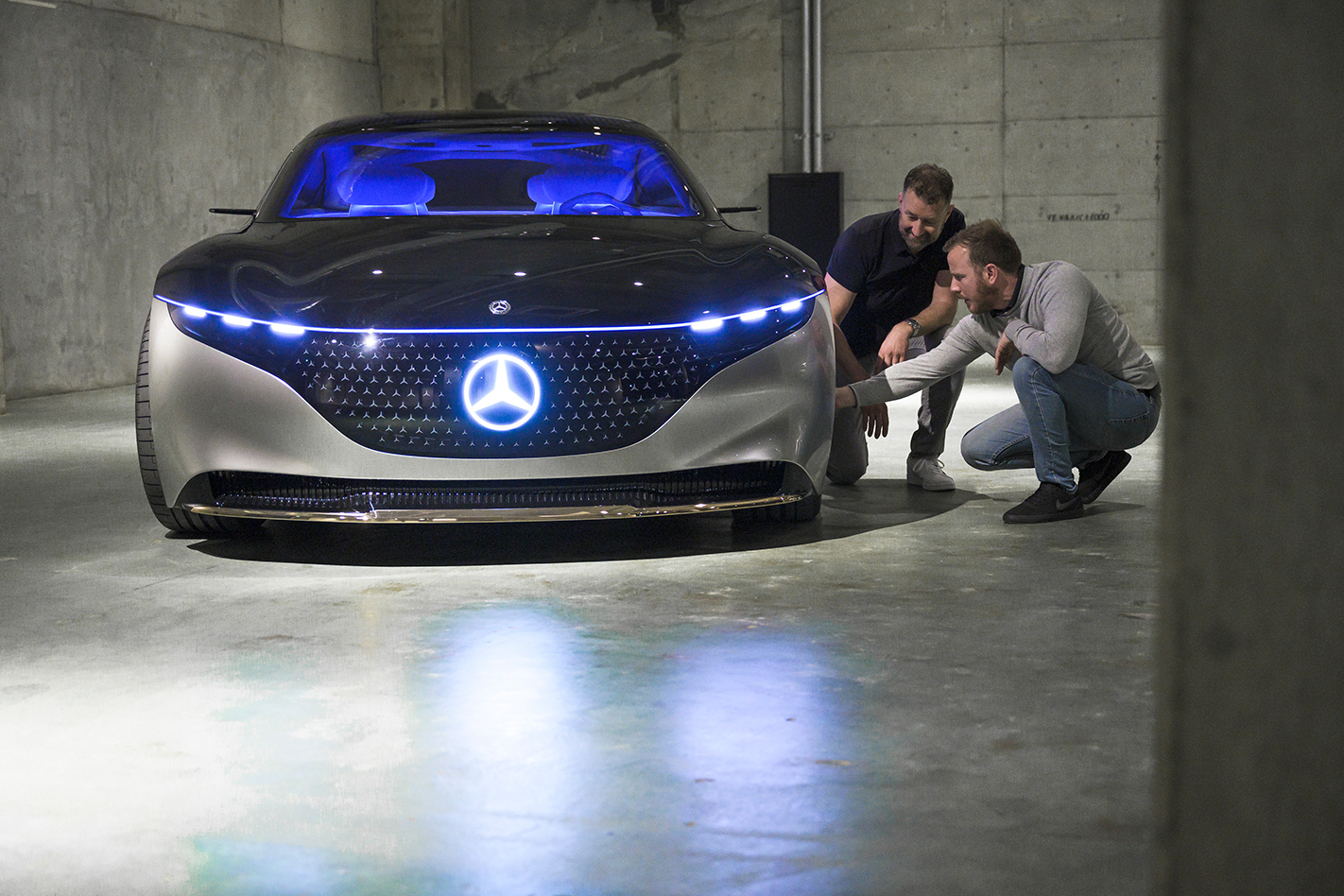
But this? This is different, because now the EQS is parked in a grimy downtown warehouse, its bright fluorescent interior lighting bouncing off the walls, giving the cavernous space a kind of Christmas-tree glow. It looks massively out of place. Despite sharing its dimensions, more or less, with an S-Class, it also looks just plain massive. And it’s breathtaking.
That it’s now in Japan isn’t the rare bit. The Tokyo motor show is days away at this point and Benz, hoping to extract maximum bang from the huge bucks that went into creating this one-of-just-one EV, will again display the EQS on its stand. Nope, the rare bit is that, nestled in my increasingly sweaty palm, is the key to Benz’s one-off creation. And I’ve just been told to jump into the driver’s seat.
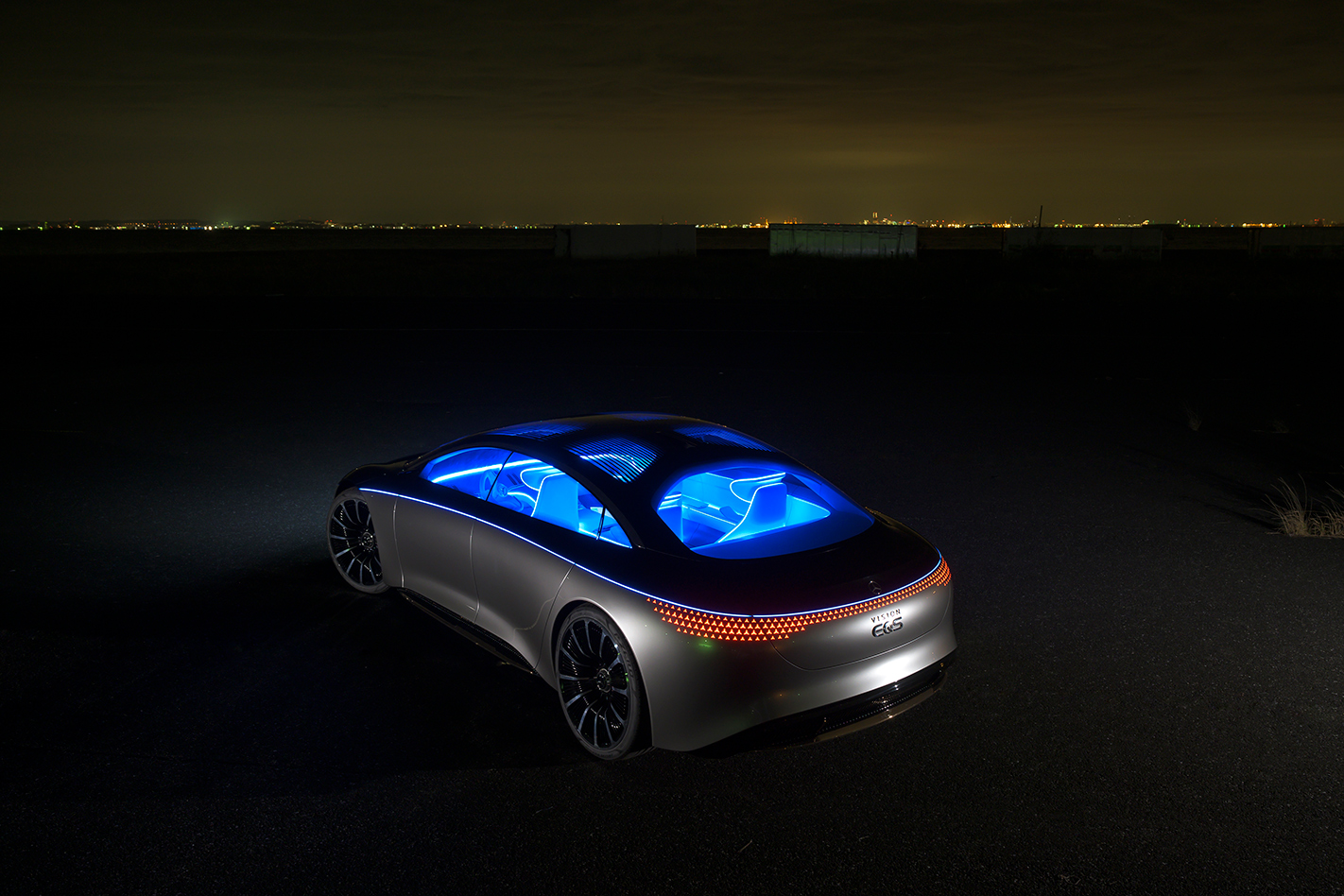
What would it be worth? Theoretically, it’s priceless. But when pushed for a ballpark manufacturing cost, Benz’s design team will only answer that it was “several million euros”, and that’s without fully tallying up the many, many man hours that have been sunk into its construction.
All of which explains the small army of people travelling with the vehicle, a thick blend of engineers to ensure things continue to run smoothly, and no-nonsense minders there to make sure nervous Australians don’t ruin Mercedes’ Tokyo show plans by driving the brand’s prized concept into an unforgiving wall.
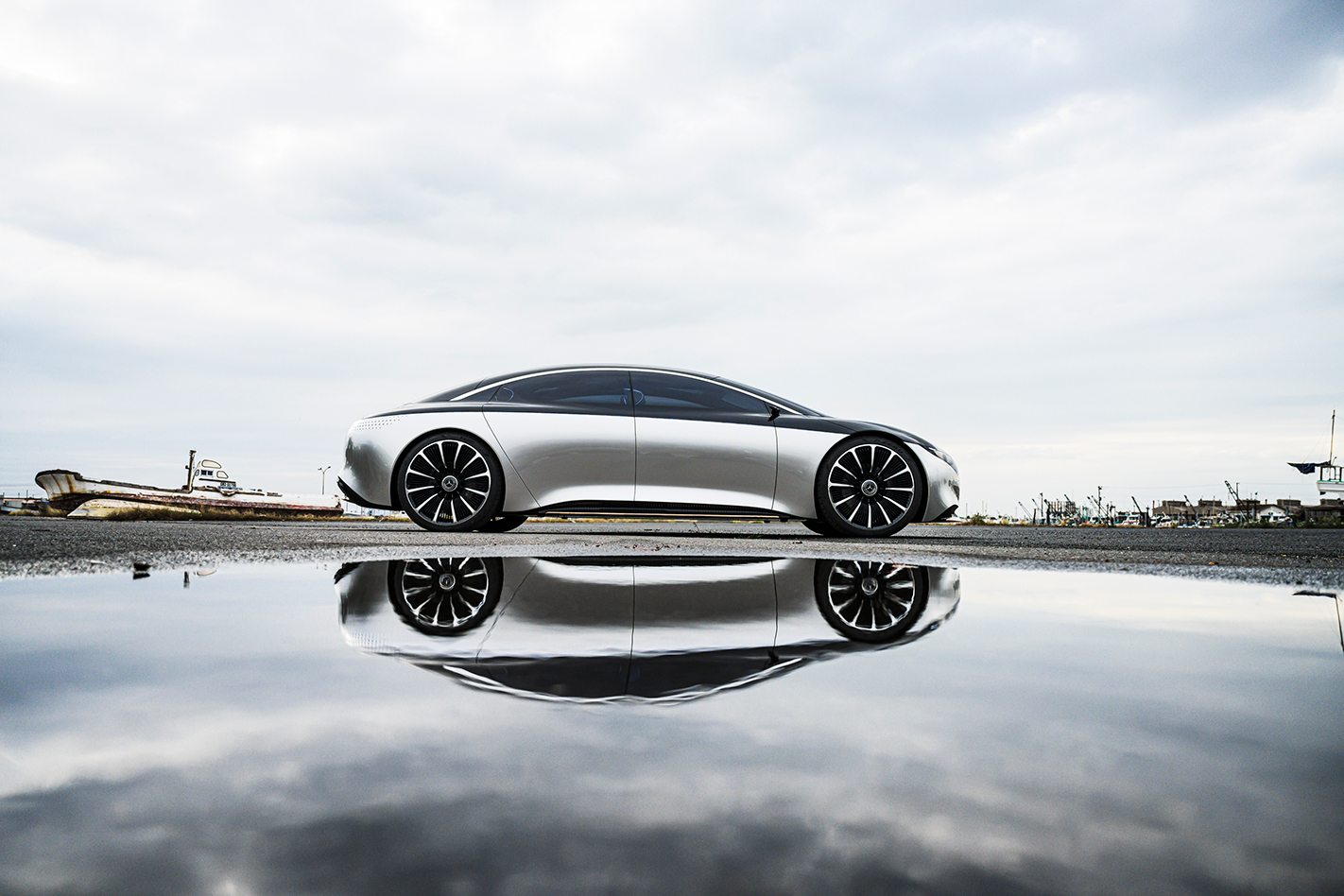
Parked as it is now, away from camera-wielding media types, velvet ropes and overzealous security guards that will surround it at the show, you can’t help but be struck by a point that somehow slipped past us in Frankfurt; that, arresting though it might well be, this glimpse at the future of Mercedes-Benz motoring still looks an awful lot like a car.
Remember the early days of the EV revolution, when car companies would talk about how electric drivetrains would change design so much that the vehicles of tomorrow would look nothing like the cars of today?
“We were watching that trend, too,” says Holger Hutzenlaub, senior manger of the Mercedes-Benz advanced design team. “And more importantly, we were watching customer reaction to that trend.”
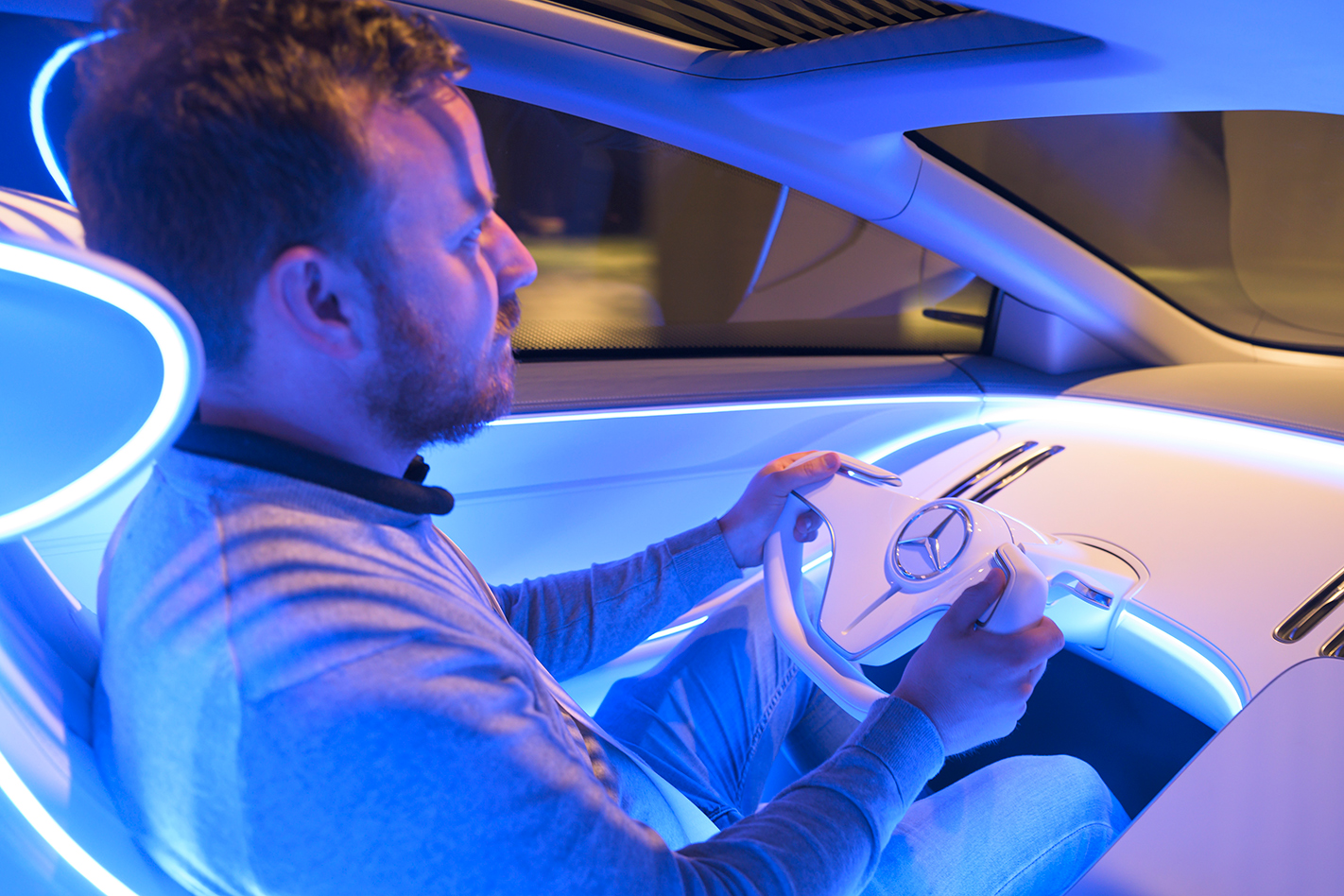
In other words, people still want cars, not spaceships, no matter what is used to drive the wheels. It’s a view manifested perfectly in the EQS, which pushes the boundaries of current vehicle design, but never breaks through them.
“The car still has to integrate itself into modern traffic,” Hutzenlaub says. “We can’t overload our customers by exaggerating the design. If we design something that looks like it belongs out in space, they’ll never find it. Basically, people are more shy than we think, so with that [in mind], this design is digestible.”
Digestible, sure, but more degustation than schnitzel and chips. The grille of this EQS, for example, is made of 940 individual LEDs mounted as strips of five (there’s another 229 at the rear, with the two nests linked by a light strip that encircles the vehicle), giving the front cluster this tangible 3D depth that, in a production model, will brighten as you approach the car, feed back charging information and otherwise communicate wordlessly with the owner. Or take the 24-inch wheels that took a month of man hours to complete. At a glance, they look like a simple 12-spoke design, but closer inspection reveals 80 black slivers designed to hide behind the shining silver spokes, and each milled then hand-painted before being slotted delicately into place.
But the real ‘miracle’ moment arrives with the headlights, which whir into life like an old-world cinema projector, a 500-LED matrix housed on fast-spinning plates, creating a 3D holographic image that flickers like a candle on each side of the grille.
“It’s putting technology on a stage,” Hutzenlaub says. “This is what design does – it’s not just taking a piece of technology and saying ‘here it is’. Design helps technology really shine on stage. This is what people expect of a futuristic, progressive car. They want technology that fascinates. They’re looking for a miracle, really.”
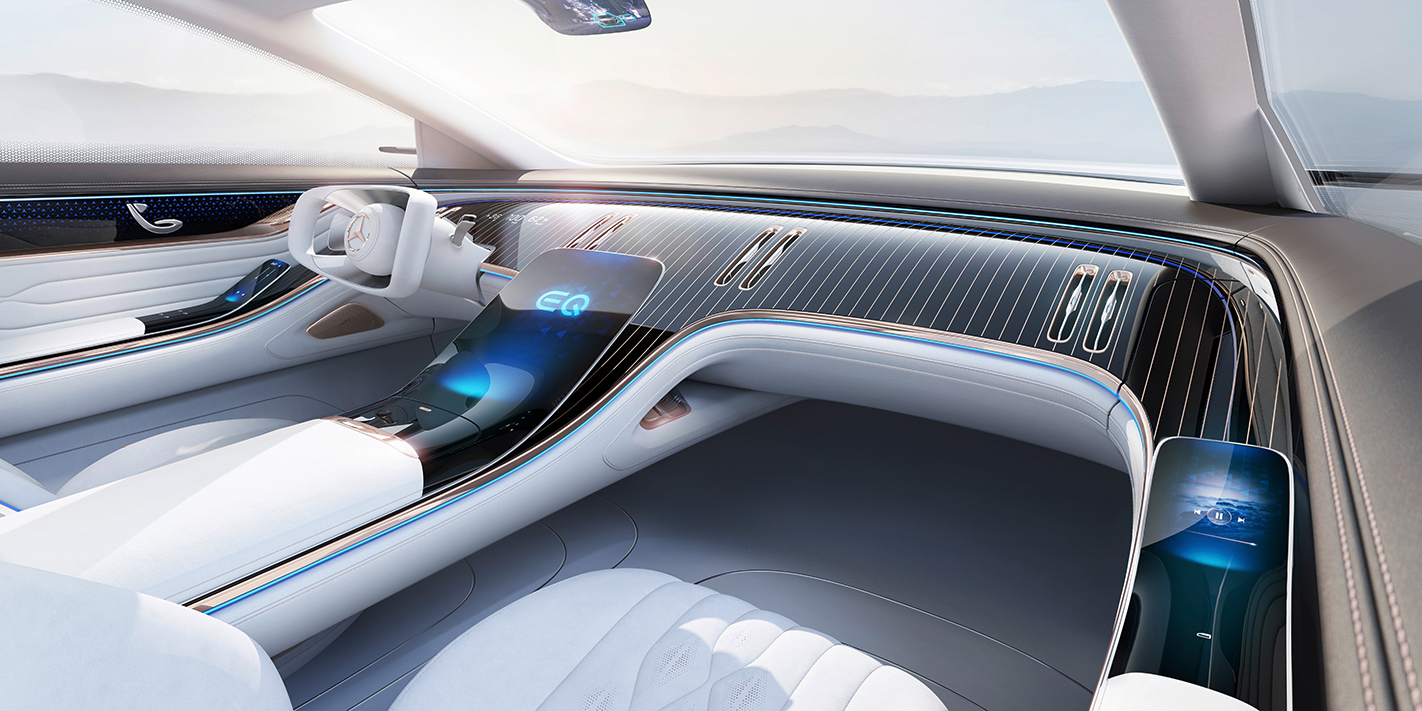
Some of that technology is firmly rooted in reality, as Hutzenlaub explains: “We’re not talking 25 years into the future. We didn’t want to irritate people. We wanted to focus on what a future electric S-Class could look like.” Other tech elements remain a fantasy … for now. That stunning curved glass, for example, that flows so seamlessly from the roofline into the door panels, isn’t glass at all, but a polycarbonate that’s easier to bend. Or the digital-screen-free cabin that magically displays all your driving information, navigation instructions and even new design flourishes (the car features wood panelling inspired by that of a boat’s deck) on whatever surface you happen to be looking at, essentially transforming the entire interior into a blank digital screen that comes to life on demand.
“The whole car gets a display, no matter what element is visible to you, and whether you’re in the front or the back, you get information. Whenever you reach towards the car, a camera watching your movement registers that, and so buttons or controls appear as you reach towards it, and then vanish as it moves away,” Hutzenlaub says.
The only downside, of course, is that while a production car would somehow feature a digital display neatly weaved through its cabin materials, the technology doesn’t currently exist. For now, then, the effect is simulated by a projector housed in the roof lining that uses the creamy-white dash elements as a kind of screen. The cabin is refreshingly minimalist as a result, all vegan-trim materials and a roof lining sourced from salvaged ocean plastic; largely free of the bling that would adorn a petrol-powered Benz limo. “I think the S-Class, even though it’s being modernised, will still express modern luxury,” Hutzenlaub says, “but our target here is to invite people to a more progressive luxury. People might find they feel more comfortable in something that is more progressive than in the world they’ve been living in before.”
Sink into the ferociously uncomfortable driver’s seat (the concept was never meant to be driven, and so the budget clearly didn’t stretch to cushioning) and you find a steering wheel, essentially chopped in half so that nothing obscures your view out of the windscreen. Yes, a concept with an actual steering wheel; further evidence that the future for this car is of the not-too-distant variety.
The result is an airy-feeling space that’s no wider than the S-Class but feels it, thanks to A-pillars 20cm further forward than in the limousine, adding to sense of unencumbered room in the cabin.
There’s always a little Wizard of Oz in concepts like this, and the peek-behind-the-curtain moment comes when you engage Drive or Reverse with a set of clunky old-school buttons that look ripped off an ancient VCR hidden beneath a folding lid in the centre console. Push the ‘D’ button and there’s a gentle thud as the EQS settles into gear, before gliding silently forward as soon as you release the brake.
Benz pegs outputs of a production model’s twin-motor (one at each axle, bookending a skateboard platform that pushes each wheel to the furthest corner, allowing for the body’s ‘bow’ styling) at a combined 350kW, of which I reckon I’d have called on about seven (see sidebar p63). The claimed sprint to 100km/h? Just 4.5 seconds – about what it took me to get to one tenth of that speed.
But make no mistake, Wheels has driven the future. And if there’s one important take-away from all of this, it’s that in Mercedes’ view of a not-too-distant tomorrow, cars might well be electric, but they’ll also have steering wheels. And drivers.
And what a glorious Vision that is.
The Future seems bright
The cabin of the EQS is dazzling, not least because of its staggeringly high light levels. This is just one of the moments when you realise a car like this is designed to glow like a beacon on a show stand, not actually be driven on the road. Those interior lights are close to blinding, making you feel like you’re sitting inside a bright blue Dolphin torch and turning what’s outside the windows – and exactly where it is – into more guesswork than is traditionally comfortable when driving. It’s one reason we never considered planting it when we had the chance. That, and the desire to maintain cordial relations with the Benz staff running alongside the car like the Secret Service in a Presidential motorcade…
Hey Big Speeder
Mostly, car companies spend millions on concepts to preview future tech and design language, gauging public reaction to ensure they’re on the right course. Other times, like with the EQ Silver Arrow shown at Pebble Beach in 2018, they just want to pay homage to a glorious past and slacken the jaws of onlookers. The spectacular 5.2m-long single seater is a tribute to Mercedes’ W125 Rekordwagen, a teardrop-shaped prototype powered by a 541kW 5.6-litre V12 that was driven to a public-road record speed of 432.7km/h on a stretch of autobahn by German racer Rudolf Caracciola in 1938.
Now, that’s dedication for you. On the eve of the Australian press launch of Volkswagen’s fastest, most powerful Golf ever, one of the 300 people who’ve laid down hard currency to get into a Golf R32, found out through his Brisbane dealer the cars would be at the Phillip Island racetrack the next day.
This review was originally published in MOTOR’s September 2006 issue
That’s a bit of me, he thinks, and promptly hopped on a bomber bound for Melbourne, then made the two-hour trek to the Island the next morning and peered through the fence until a VW employee politely asked what he was doing there. A couple of hours – and a couple of hot laps with ace racer Alex Davison – later, this happy customer departed the Island, even keener to get into his new ride.
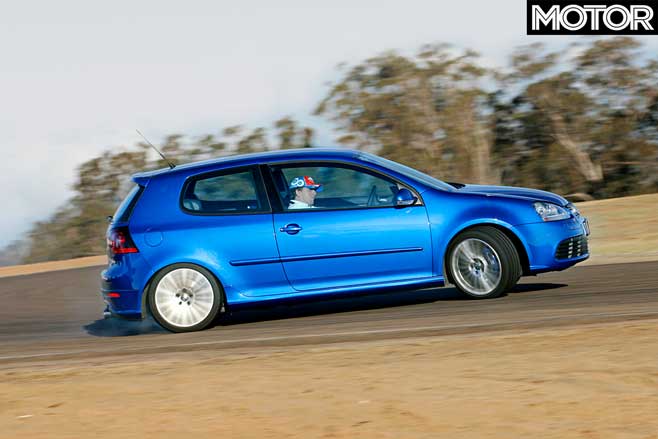
VW is getting used to the increased attention in its hot hatch range; worldwide demand for the fifth-generation GTI led to delivery delays down under that still has senior execs fidgeting with their pens when the subject’s broached. That’s all under control now and, with the R32 having been out in Europe since late last year, the feeling is that the supply chain will get back to normal.
The Wolfsburg-built R32 is, on paper, a nice bit of kit. Powered by the sweet little 3189cc 15-degree VR6 and driven with VW’s 4Motion AWD drivetrain, it’s good for 184kW at a stratospheric 6300rpm (redline is 6500rpm), and 320Nm of twist at a high-ish 4000-4500rpm. Pushing along 1510kg of hatch – 1530kg if you’ve opted for the four-dour variant – it’s claimed to stop the clocks to 100km/h in 6.5 seconds. That’s a reasonably unimpressive number, but with a longish first and a sticky AWD set-up to overcome, it’s not all that unexpected.
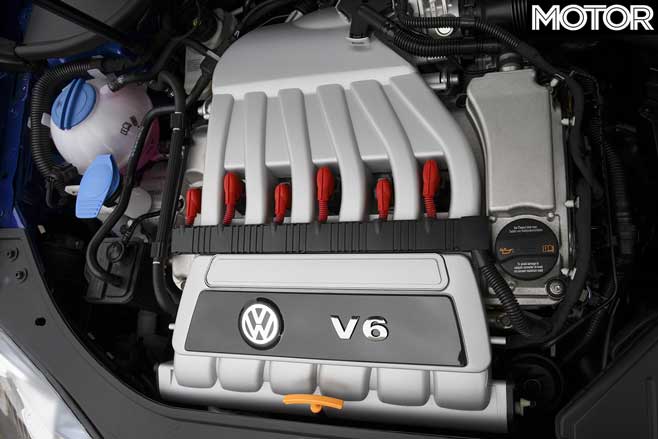
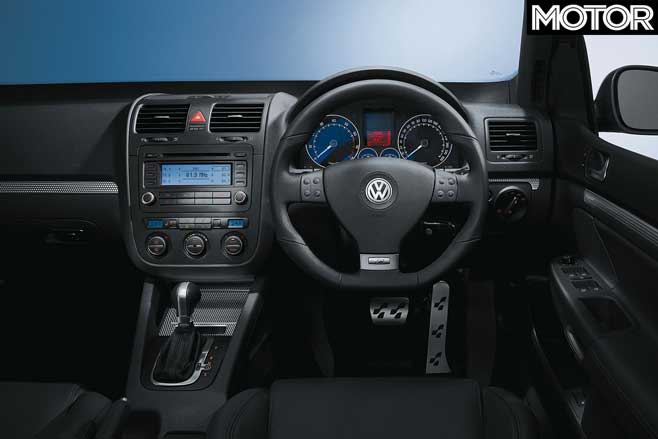
What is really unexpected is the price. At $54,990 in three-door manual guise, it’s terrific value. lt’s loaded to the hilt with nice little odds and sods like lit footwells, dual-zone aircon, trick heated leather seats, and a chillable centre bin. You’ll struggle to find that level of spec on many hot all-wheelers at the price point.
The luxuries point straight to the R32’s primary function in life – grown-up hot hatch. It’s got a presence all of its own, yet it’s not a mug lair plaything. Especially in four-door guise, it’s almost a sensible car.
The chassis is solid and stable, with little flex. It’s forgiving right up to the limit, too, and it’s a chassis that’s happy to be manhandled. Steering is meaty if a little muted thanks to the 4Motion set up; a tighter front diff would allay the tendency for the front not to tuck in at the apex.
Lighten the throttle and the front will stay elevated, keeping the nose away from the inside of the corner. Get more aggressive on the brakes, though, and push the weight over the nose and the car responds better, with its Haldex coupling doing its best to shuffle the drive across all four wheels. It’s a pretty committed understeerer, all told.
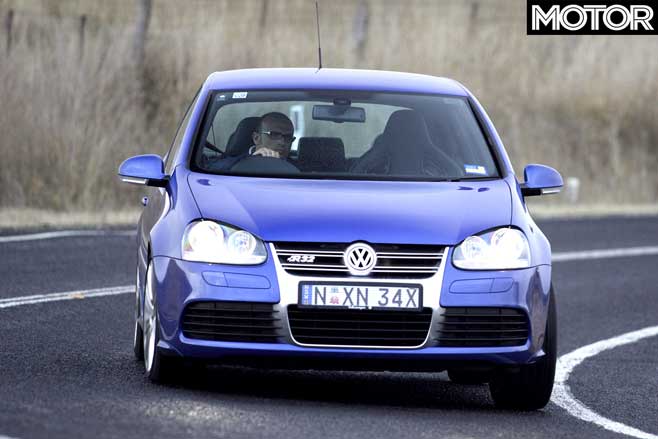
lt’ll wag its bum under hard braking, and the rear end responds with alacrity to a larger loss of accelerative force, hunching down, stepping out and drifting the car through to the exit. In hard, brake late and firm, turn in with authority and it’ll fire out the outside on the corner like a right good ‘un, especially if you stay off the noise till the corner exit looms large.
Initial throttle response is great, announced with a throaty, metallic yowl that’s more muted from within the cabin than the previous iteration. Doesn’t sound half bad on the flyby, though. It runs out of puff as the 6500rpm rev limit approaches, and its torque delivery comes later rather than earlier; it needs to be kept in the zone to keep it bubbling, but its poise, balance and levels of grip give it a sense of urgency that is unmistakable.
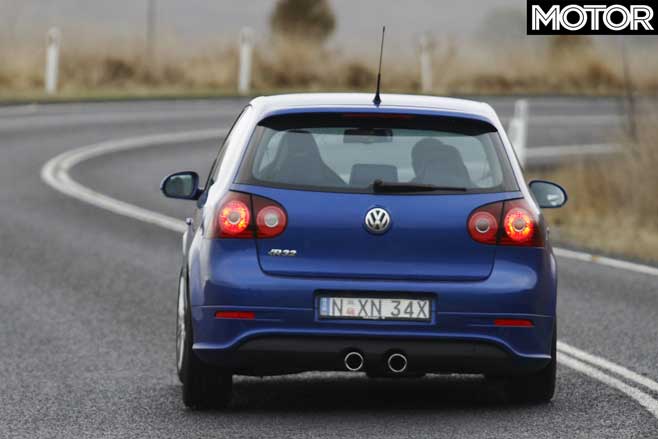
Its ESP is very unobtrusive on the road, despite a series of savage mid-comer bumps and edges on our extended road loop, and brake feel is top notch, with awesome levels of modulation. It’s a good miler masher, though its 18-inch wheel/tyre package is perceptively crashy on square-edge road joins.
Coupled with the R32’s poise, beautifully resolved roll control and well-balanced springing and damping, it presents a great middle ground between racecar stiffness and real-world compliance. Haven’t driven a manual version yet – we hear not ’til next year, in fact – but the DSG isn’t that keen to either swap down a cog close to the limit, or hold onto the limit once it’s encroached. Shifts from the twin-clutch ‘box are fast and fluid, especially in the automatic ‘sport’ mode, but it still wants to hang onto a gear that’s one higher than the one you really need.
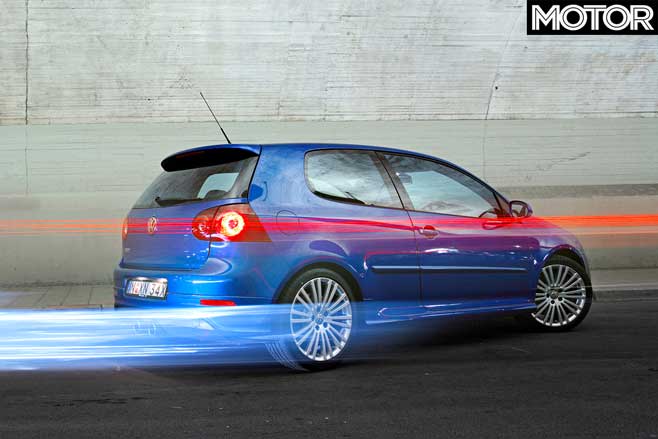
The deeply bolstered seats are supportive, but are still mounted too high in the interior. VW interior types should go and sit in a New Beetle RSI, which has one of the most sensational driving positions ever found in any VW product.
Where is it in relation to its nearest sibling and MOTOR fave, the Golf GTI? It’s more substantial on the road in its presence, both in perceived and aural quality. Its presentation is sufficiently sexier to differentiate VW’s sporty intent, too. Is it worth the extra spend? Yep – they’re sufficiently different cars in their layout and intent that there’s a place in the hot hatch universe for both of them.
2006 VOLKSWAGEN GOLF MK5 R32 SPECS Engine: 3.2-litre V6, DOHC 24-valve Power: 184kW @ 6300rpm Torque: 320Nm @ 2500rpm Compression ratio: 10.9:1 Weight: 1510kg Power/Weight: 122kW/tonne Transmission: Six-speed manual L/W/h: 4246/1759/1465mm Wheelbase: 2578mm Track: 1533/1515mm (f/r) Suspension: MacPherson strut, A-arms, anti-roll bar (f); multi-link, coil springs, anti-roll bar (r) Brakes: 345mm vented and cross-drilled discs, twin-piston calipers (f); 310mm vented and cross-drilled discs, twin-piston calipers (r) Tyres: Continental ContiSport Contact; 225/40 ZR18 (f & r) Price: $54,990 ($57,290 DSG)
Volkswagen’s early mark
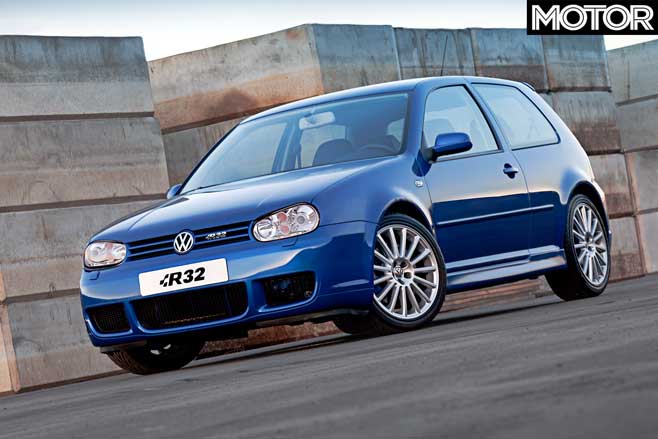
The new R32 carries on from the Mk4 version of which only 200 were imported into Oz in early 2004. Most of them were snapped up before the ship left Wolfsburg, such was its popularity. It boasted 177kW and 320Nm from the then-handy VW 3.2-litre V6 and reached 100krn/h in 6.6 seconds. The glorious engine blare you hear from the new R32 was also a hallmark of the Mk4, though the old duck was a lot louder.
It was also held up by VW’s 4MOTION all-wheel drive platform; a Haldex coupling also diverted drive as necessary. The Mk4 R32 went for $63k, roughly $8000 more than the new Mk5.
AWD bad ass Golf, you say?
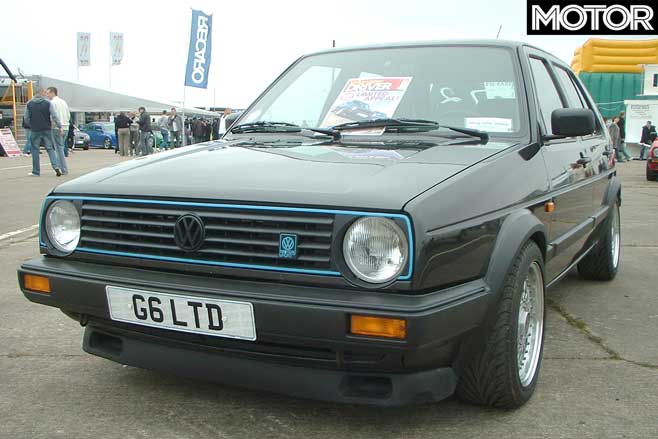
Allow us to introduce you to one of the meanest Golf variants ever made. Based on the Golf II, it’s called the Volkswagen Golf II G60 Limited, and there’s only ever been 71 of them (69 four-door, two two-doors) made. All in black, too.
Only ever made in a left-hook three-door variant, its 16-valve GTI engine copped a supercharger and made a not-inconsiderable 155kW and 220Nm. Well, that’s not inconsiderable for 1989; it was certainly the most powerful Golf until the original R32 lobbed in 2003.
Matched to a Synchro all-wheel drive system, the G60 fetched big bucks; try about $75,000 back in 1989! The majority of cars were sold into VW’s corporate honcho fleet in Germany, though some made it to Ye Olde Englande.
It went like a cut snake, but the G-Lader supercharger needed watching, lest it blow and take the motor with it. Big brakes and unique blue grille trim and single lights (not the red trim and quad lamps of the GTI) also set it apart from the rest of the pack.
The Apocalypse
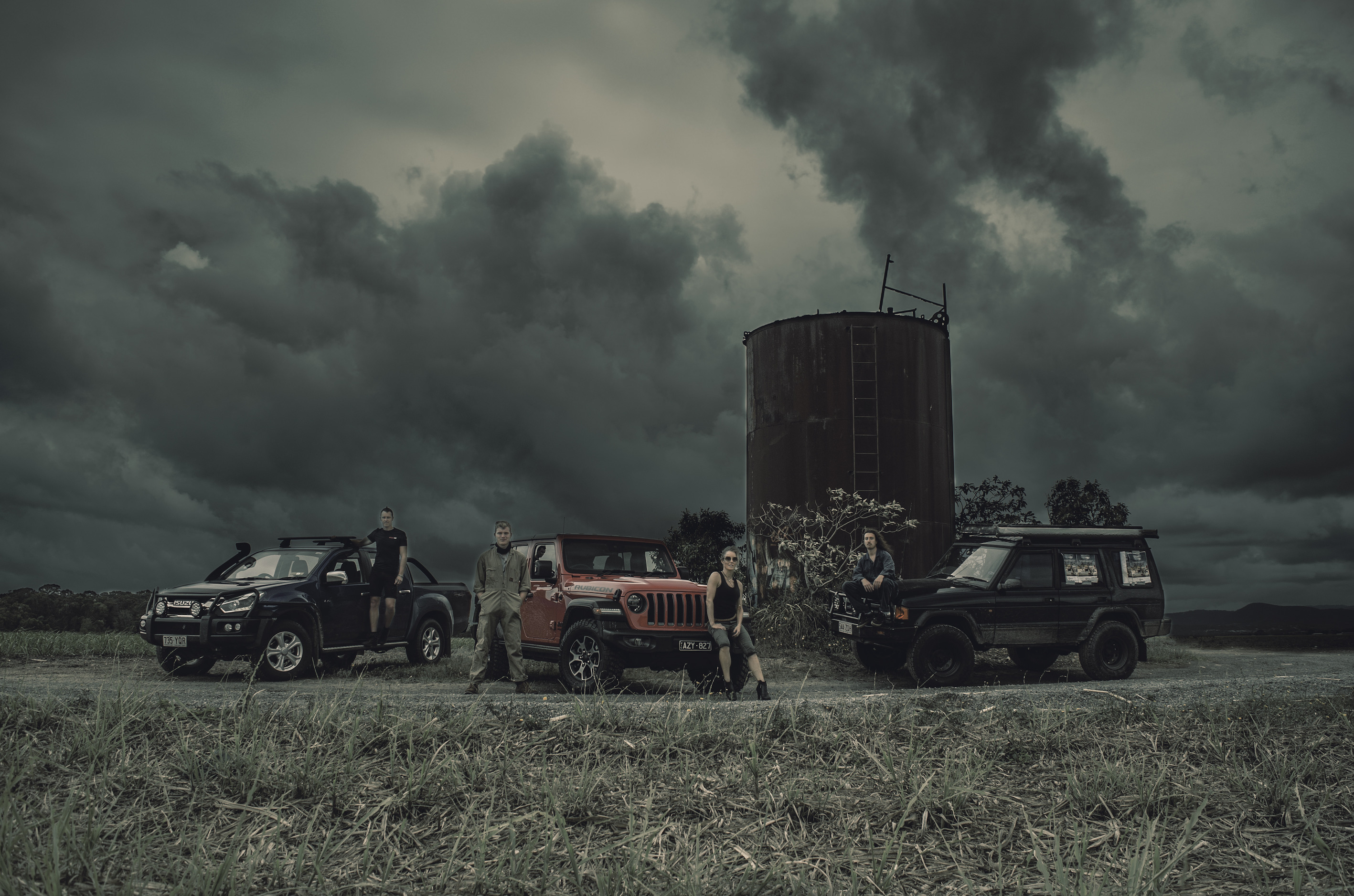
Dan and Elise test two tough off-roaders to see if they can survive the end of the world! Take out your notepad, you might need some tips to combat coronavirus.
Ford Falcon GT-HO Phase IV
Just imagine getting your hands on a muscle car so rare that all Australians recognise it by name. Well, Guy Allen of Unique Cars magazine found two of them and their owners so we spent some time on track with the legendary Ford Falcon GT-HO Phase IV.
Wheels Editor Review
What does Wheels Editor Alex Inwood think of the Toyota RAV4 Hybrid? This week he gets behind the wheel to give us his verdict.
For season two, we’re also offering an amazing prize for our viewers. How does a trip to the Maldives sound? Pretty awesome, right?
The Maldives competition is open NOW!
And, if for some reason you can’t (and it had better be a good reason!) then there’s a host of ways to catch up on the show, check out behind-the-scenes stuff and find out more about the cars Aussies want to buy.
For example, our weekly podcast, our Facebook page and our YouTube channel are standing by 24/7.
WHAT
WhichCar TV Season Two Episode 7
WHEN
4:00pm Sunday March 22nd
WHERE
Channel 10
FIND THE HOSTS ON INSTAGRAM
Daniel Gardner @octanedan
Elise Elliott @eliseelliott_media
Alex Inwood @thealexinwood
You’ve pored over the brochure, picked your paint colour, engine, drivetrain and body style and now all that’s left to do is sign on the line and wait for your shiny new car to arrive. But wait. There’s more – says the sales consultant.
Virtually all dealerships will have a range of options you can add to the bottom line to either customise, enhance practicality or protect your new car before you pick it up on delivery day, but are any worth considering or simply a deal-sweetener for the dealer?
Here are some typical options you may be offered when ticking the boxes on a new car order form and whether they are worth the extra investment of your hard-earned cash.
Paint and upholstery protection
Gone are the days when non-metallic colours oxidised and faded in the harsh Australian sun with all modern paint now adopting the ‘clear over base’ method. This means all paint should last fresh from the factory with nothing more than normal care.
Optional paint protection packs differ from one dealership to another but most claim to apply a protective treatment that adds an extra layer of defence from dirt and abrasion. Without an exhaustive test of each, it is impossible to establish the benefits but with a visit to your local car care store and a little elbow grease, you can achieve the same results yourself.

Ask how the preparation works and see if similar products exist off the shelf and you could save yourself a few hundred dollars.
It’s a similar story with leather and fabric protection. Modern upholstery should stand up to daily use and wear for the life of the car but some extra lustre can be applied with aftermarket products if you are prepared to do the legwork.
The important thing to remember is that paint and interior finishes are covered by the vehicle’s warranty and any degradation not related to damage is covered, which neatly brings us on to the next item.
Extended warranty
On the face of it, an extended new car warranty can only appear to be a good thing right? But it comes down to the details that you must examine carefully before handing over extra cash.
A warranty is only as good as the items it covers and while the mandatory new car warranty is comprehensive, the extension may not cover as much. Make sure you find out what is covered for your extra cash but as a general rule, an extended factory warranty is worth more than a dealer warranty. More often than not, the extended warranty is covered by dealerships themselves, not the manufacturer.

Some dealer warranties require your car to be maintained by the dealer who provides the extension which will be voided if you choose to have your car serviced elsewhere, whereas a factory warranty is more flexible and allows you to have the car looked after by any authorised dealer or workshop.
Read the terms and conditions carefully and consider if the extension is worth it, especially as so many brands now offer five- and seven-year warranties as standard.
Floor and boot mats
In almost all cases, adding a set of protective floor mats for the passenger and boot areas is a great idea. Not only do they make cleaning the vehicle an easier task but will keep the fitted carpets looking like new.
Aftermarket mats are an option for a lower price but they rarely fit as well as the original equipment and the real deal is always a better match – especially when it comes to selling the car down the line.
Paint protection film
If you intend to cover a lot of highway or unsealed road kilometres, paint protection film (PPF) and a bonnet shield might be worth considering. The special clear film wrap is almost invisible but applies a durable layer that can prevent a surprising amount of damage to your pristine paint. When you sell the car or simply want it looking like new again, the film is simply peeled off revealing the untouched paint below.
Some dealers will offer the option but it is rarely applied in house, with a nearby specialist enlisted to complete the work. With a little research you can get the same work carried out and often for a lower price. But be advised, PPF can be quite expensive. Depending on how much of the car you want wrapped, the cost can stretch to several thousand dollars.
As for tailored headlight or bonnet leading edge guards, the same applies as with floor mats. It’s best to stick to original accessories for the best fit and finish, and that’s where the dealer can help you out.
Tow bars and roo bars
Unlike some other accessories including roof bars and dog cages, tow bars and roo (or bull) bars can be a little different thanks to Australia’s unique automotive environment.
In some cases, the original equipment tow bar might not comply to Australian standards and a local supplier will be contracted to produce the uprated version. If this is the case, you might be able to shop around and find the same kit from the supplier at a reduced cost. It’s a similar story for roo bars.
Aftermarket 4×4 specialists can often offer a wider range of options compared with a dealer, giving you more choice for your exact requirements.
Tinted windows
Window tinting is another service available from specialists and if you don’t mind doing your own research, you might be able to save yourself some money here.
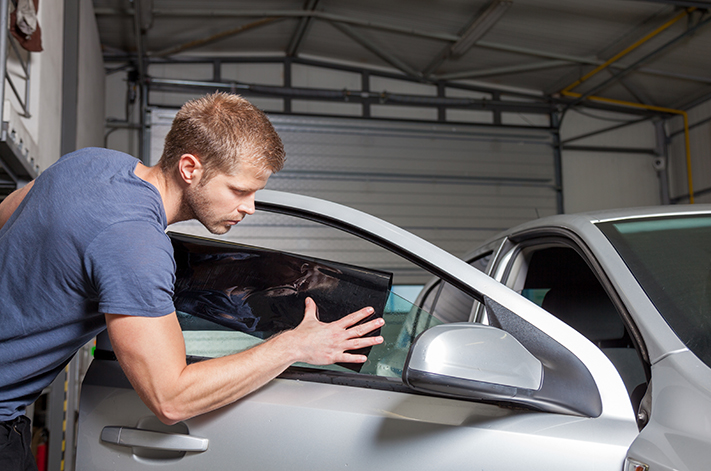
If you do decide to go it alone however, make sure you ask for all of your options including the correct colour options to match your car and personal preference – not to mention the right level of UV protection – and always make sure you are not asking for a shade darker than is legally permitted for road cars.
Should you buy a new or used car?
Top tips
If you are buying a high value or prestige car subjected to luxury car tax, all additional accessories will be added to the purchase price and you will pay LCT on these as well. However, if the dealer agrees to allow you to return and have the parts fitted after you take delivery of the car, you will not pay LCT on the extras.
Don’t be afraid to use dealer options as a bargaining chip. If you have your eye on a couple of big-ticket extras such as a larger set of wheels but the sales consultant is driving a hard bargain, it’s worth asking for a couple of options to be thrown in to help close the deal.
Whatever options you are considering, always do your homework and be sure you know exactly what the dealer is offering in return for extra payment.
- Introduction: The Dual Citizen
- Update 1: Training the Eye
- Update 2: The Italian Job
- Update 3: Come out and play
- Update 4: United Nations
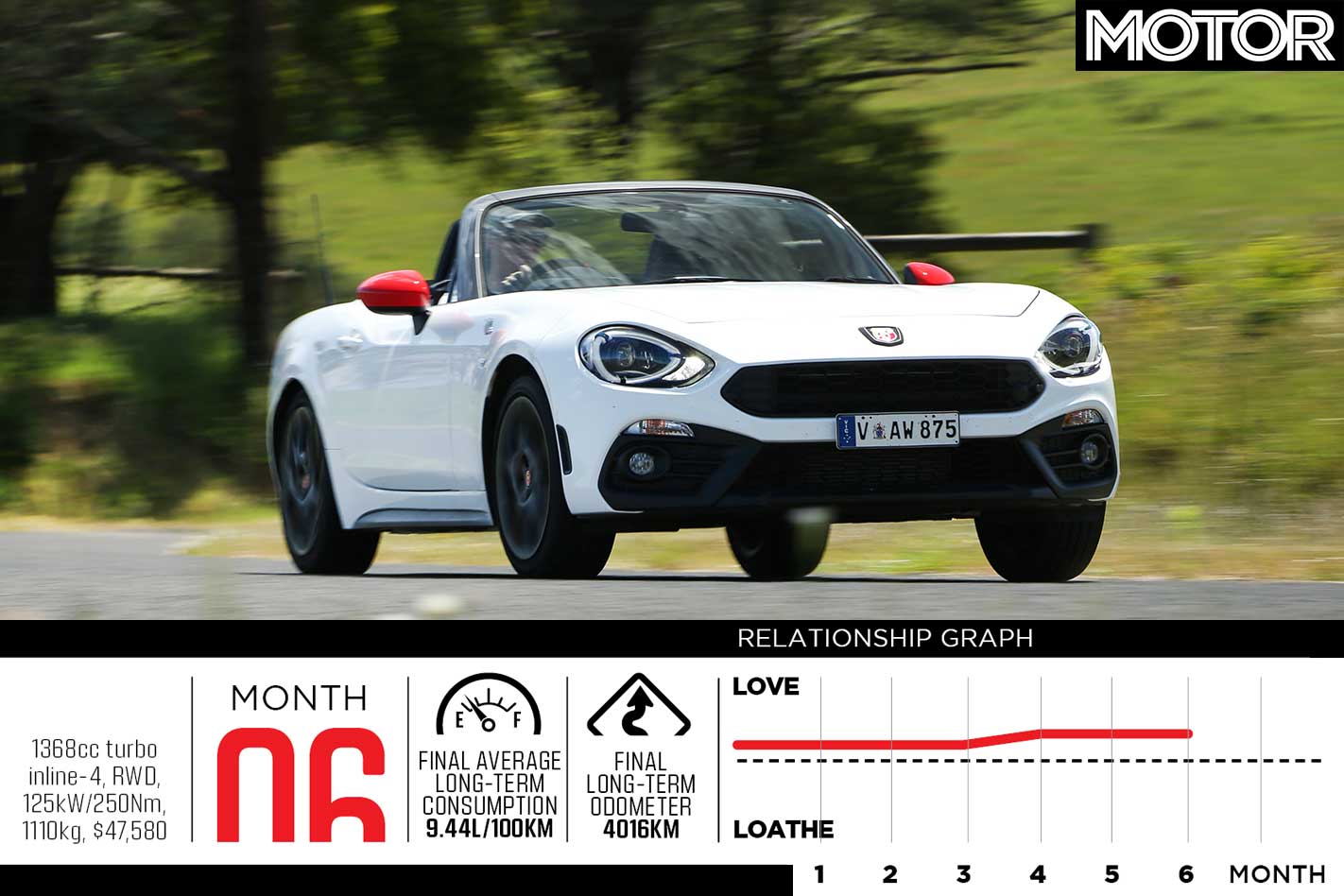
- Update 5: Ciao for now
Introduction – The Dual Citizen
Not everyone is a fan of the growing trend of jointly developed sports cars. It’s a hot topic at the moment due to the arrival of the Toyota Supra, itself a product of collaboration with BMW, but it’s been going on for a while now and will only become more prevalent.
The reasons why are obvious – globally, the sports car market is shrinking, making it difficult to justify investing in a bespoke platform; far better to hop into bed with another manufacturer and work towards a common goal.
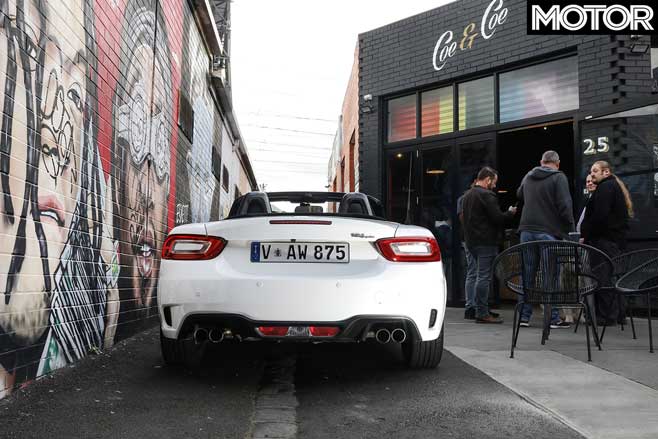
There are a number of ways to go about this, each of which has been illustrated in recent times. The easiest is to simply make the same car and switch the badges, like with the Toyota 86 and Subaru BRZ; then there’s the approach of taking the same box of bits but developing them separately, like Toyota and BMW have done with the Supra and Z4 respectively. The third way is to change certain parts in the hope of imbuing a unique personality, which is the tack taken by Mazda and Fiat with the MX-5 and our new long-termer, the Abarth 124 Spider.
These two cars share a chassis and are built in Mazda’s Hiroshima plant, a fact that played a major role in the 124’s gestation. Originally, the partnership was between Mazda and Alfa Romeo, with the ND MX-5 set to provide the basis for a new Alfa Spider, but following the late Sergio Marchionne’s dictate that Alfas must be built in Italy, a new partner within the FCA fold was sought. Enter Fiat.
The original Fiat 124 Spider was built between 1966 and 1985 and was surely one of the cars that provided inspiration for the original MX-5 in 1989 – lightweight, rear-wheel drive and with a highly tuned four-cylinder engine under the bonnet.
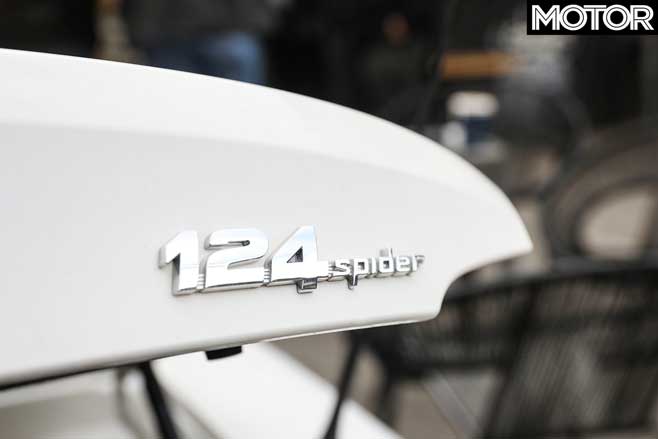
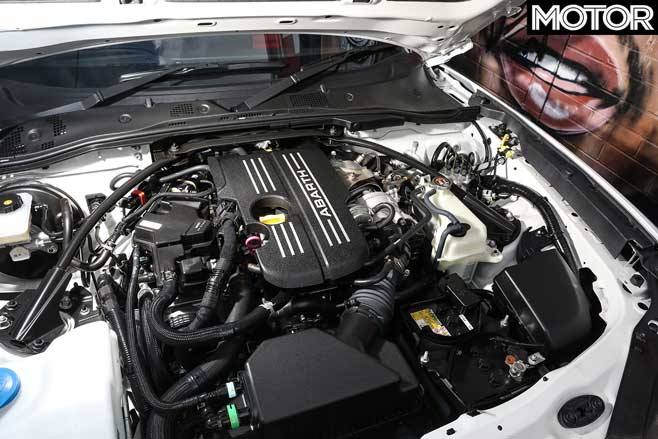
It’s a recipe the new 124 Spider adheres to, though it actually uses a smaller engine than any of its predecessors. The 124’s four-pot displaces just 1368cc, but a turbocharger provides plenty of extra punch.
Overseas markets have access to a Fiat 124 with 103kW/240Nm, but Australia scores only the hotter 125kW/250Nm Abarth variant. In addition to the extra grunt, which drops the claimed 0-100km/h time from 7.5 to 6.8sec and lifts the top speed from 215km/h to 232km/h, the Abarth scores Brembo four-piston front calipers, Bilstein suspension, a limited-slip differential, exterior makeover and a much shoutier soundtrack courtesy of the Monza exhaust.
The standard 124 Spider starts at $41,990 for the six-speed manual (before on-road costs) or an extra $2000 for the auto. However, until October you could put your bum behind the wheel from just $38,750 drive-away, which strikes us as a bit of a bargain.
Our new garage occupant, though, is one of 30 Monza Editions. This is essentially a fully loaded 124, including the two-tone leather seats and Visibility Pack – adaptive LED headlights, rear park assist, blind spot detection and rear cross traffic alert – which are cost options on the standard car.
It retails for $47,580 (again, an extra $2K for the auto), but if you’re quick you might be able to nab one for $44,340 drive-away. If you’re curious, the warranty is three years or 150,000km, though you’ll be doing well to hit the latter before the former.
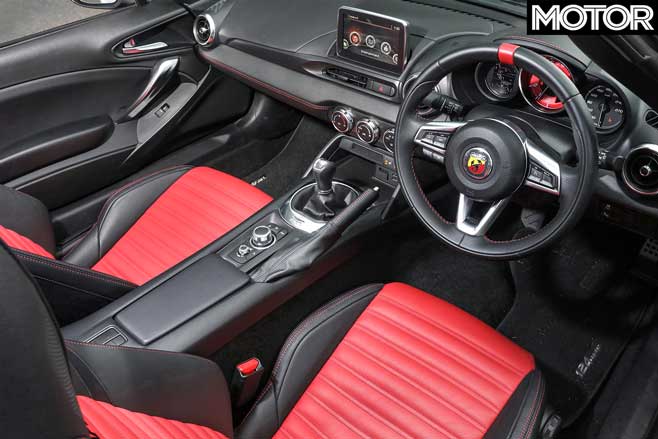
Over the next five issues we’ll examine the case for buying the Abarth. The default choice in this segment is the car on which it’s based, the Mazda ND MX-5, which outsells the ‘Italian’ at a rate of about six-to-one.
In the case of the mechanically identical Toybaru twins, buying one or the other is likely to simply be a case of badge preference, but by replacing a high-revving naturally aspirated engine with a torquey turbocharged one, the case in this instance is likely to be less clear cut. On first impressions, it should be fun finding out either way.
2019 Fiat Abarth 124 Spider Pros & Cons
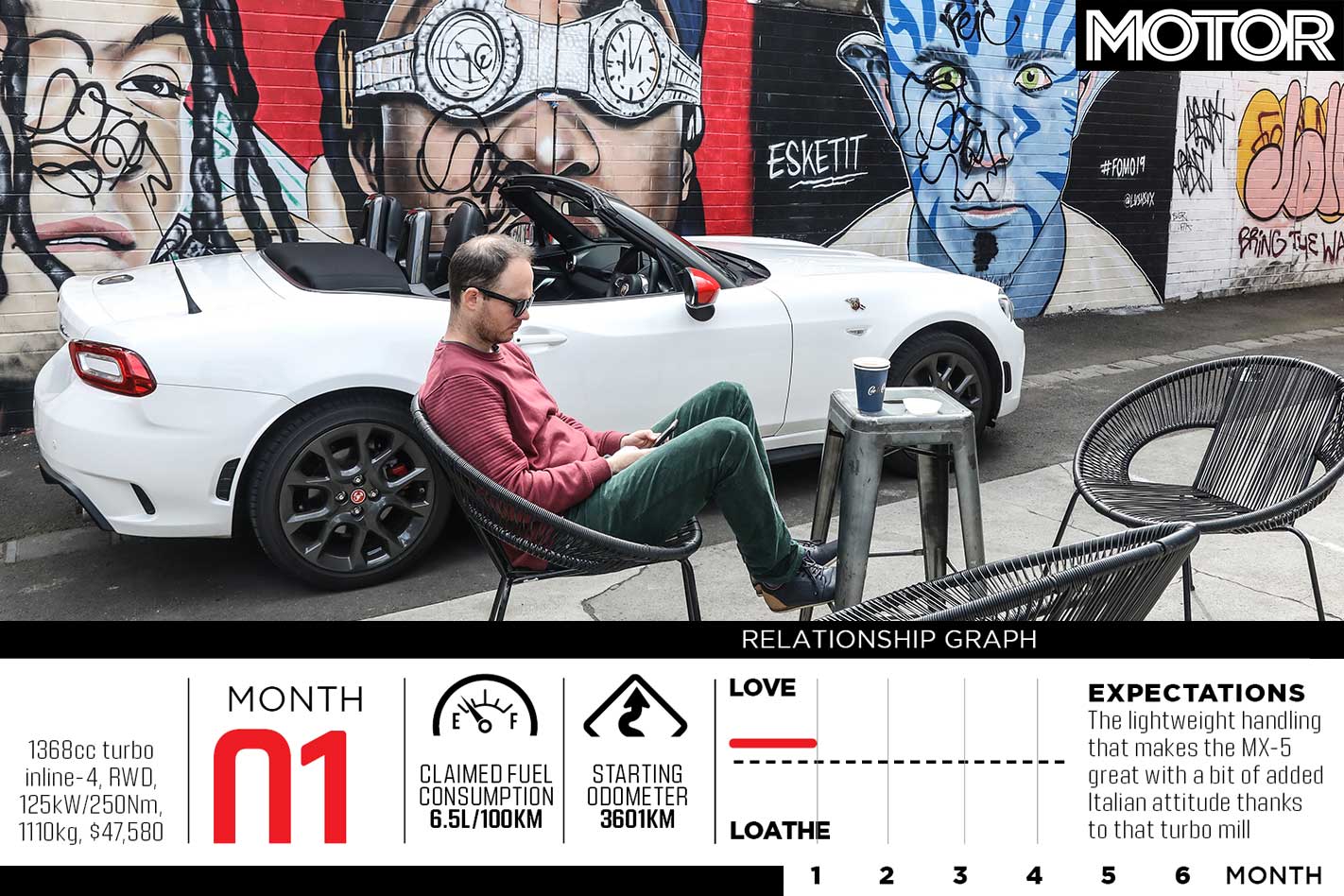
Things we rate 1 – Fruity exhaust 2 – Slick gearshift 3 – Torquey engine
Things we hate 1 – Ride isn’t great 2 – Doughy throttle 3 – Blind spot beeper
Update 1: Training the Eye
A closer look at the Abarth’s, err, looks
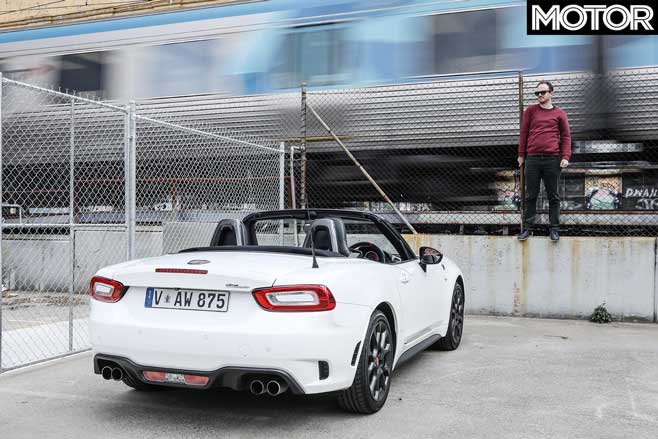
Place the Abarth 124 Spider and the Mazda MX-5 side by side, remove the badges and ask someone unfamiliar with the parentage of each car to identify which is Japanese and which is Italian and I suspect that most would get the answer wrong.
Consider the evidence: one is a smoothly sculpted, shrink-wrapped roadster powered by a high-revving, naturally aspirated engine, while the other is aggressively styled with a heavily turbocharged downsized donk. Tradition would suggest the former would be Italian and the latter Japanese, but the reverse is true.
Of course the MX-5 now has more than three decades of history and the ND doesn’t stray markedly from that, but it’s interesting that Fiat felt the need to change the recipe. After all, retaining the MX-5’s zingy engine as well as its platform would have provided a clear link to the original Abarth 124 Rally from the 1970s, which used a 1.8-litre DOHC four-pot with twin Webers to produce 94kW and 159Nm. But we’ll focus on the Abarth’s mechanicals in a future update; for now, it’s back to the styling.
The 124 Spider is the work of Fiat’s ‘Centro Stile’ studio in Turin and it doesn’t share a single body panel with the Masashi Nakayama-penned ND MX-5. According to Fiat, the 124’s styling is “classically beautiful with well-balanced proportions and a sporty cabin-to-hood ratio”. Hmmm.
Personally, I think the 124’s bold design looks like it has fallen out of a Japanese comic book. Back to my earlier point, not only does the Fiat not look Italian to my eyes, it looks distinctly far-east. Its unusual looks are growing on me, but I certainly wouldn’t call it classically beautiful.
Centro Stile tacked on a massive 139mm in length, though it appears to have divided this roughly equally between front and rear, which is perhaps what Fiat means by “well-balanced proportions”.
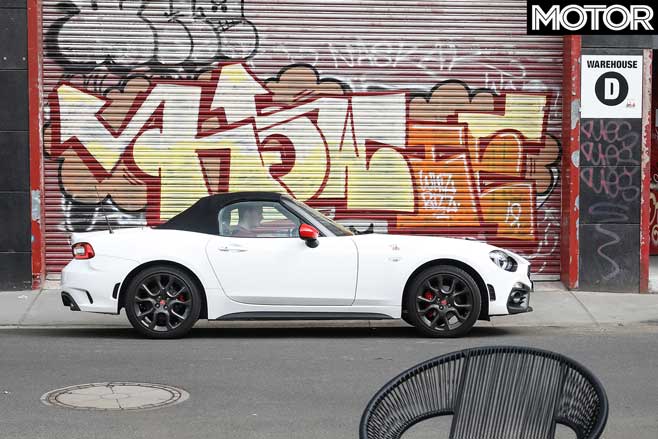
This might sound like I have a bit of a downer on the 124’s looks; perhaps initially, but its unique styling is growing on me. Others too, it seems. Last month’s update generated a few comments from readers who unequivocally preferred the Abarth to the Mazda purely from a design perspective, though they may be a vocal minority, as a highly unscientific social media poll had 75 per cent of respondents favouring the MX-5.
There’s much less to quibble about on the inside, for the two cars are virtually identical aside from the seats and some cosmetic differences. One thing I don’t understand is why the 124 Spider hasn’t adopted the reach-adjustable steering column introduced in the MX-5 at update time – the cars are produced in the same factory with bits from the same suppliers. The Abarth’s driving position isn’t too bad, but the wheel is a little low and far away for my tastes, forcing a Stirling Moss-style straight-arm technique.
Future updates will cover off proper performance driving, so it’s probably a good idea to discuss what the 124 is like day-to-day, coping with the tasks it will complete for the vast majority of its life.
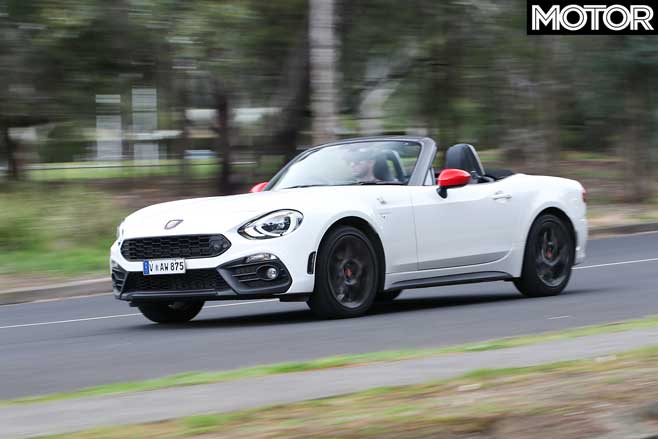
It’s a lot of fun, primarily because of that 1.4-litre turbo engine. With the quad-tip Monza exhaust, the noise it emits is truly ludicrous, a bassy, almost flatulent note that’s redolent of a Group N Mitsubishi Evo. From behind the wheel it’s great fun, especially as every now and then it releases a vicious crack on an upshift, but if you start early or finish late, your neighbours might not be so chuffed.
There’s plenty of torque on tap, the maximum 250Nm produced at 2500rpm, but selecting Sport is key if you wish to avoid substantial turbo lag. On a few occasions I’ve pulled out into traffic, spoiled by the response of most modern engines, only to be left with another motorist approaching rapidly and my foot on the floor, willing those little impellers to spin up quicker. Sport sharpens throttle response markedly, but adds unwelcome steering heft.
The ride can be pretty sharp, though a recent stint in an MX-5 2.0 proved there isn’t much difference between the two, and now the weather is getting better, being able to drop the roof in a matter of seconds with one hand is proving handy. It really is a brilliantly clever piece of design: quick, easy and intuitive.
Next month, a decent drive with a fellow platform-sharing Italian sportster.
2019 Fiat Abarth 124 Spider Pros & Cons
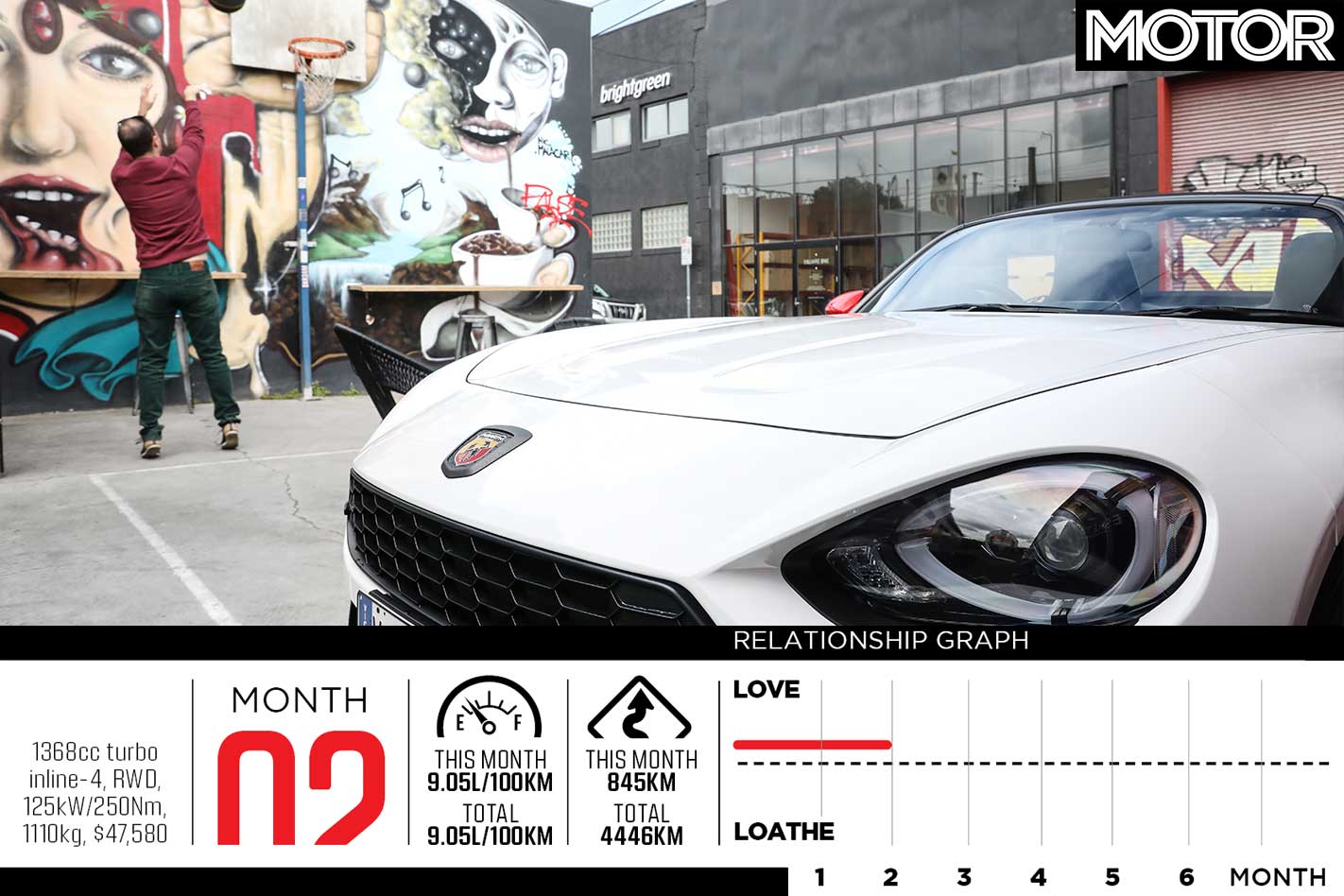
Things we rate 1 – Unique styling 2 – Fuel economy 3 – Droptop motoring
Things we hate 1 – No reach adjust 2 – Turbo lag 3 – Blind spot beeper
Update 2: The Italian Job
Abarth tries its hand at running with the bulls
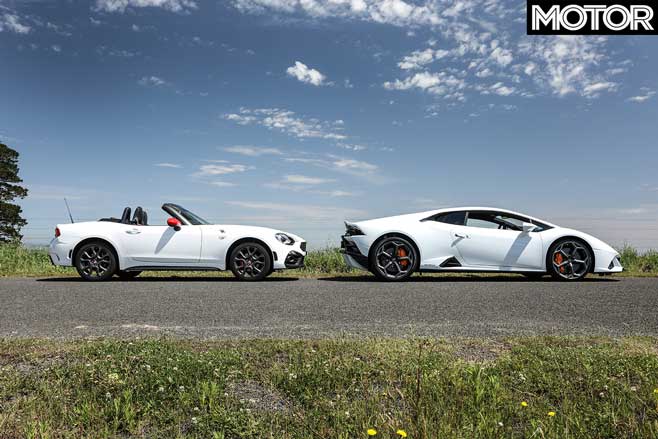
Two italian sports cars roll into the carpark of Warrugal Woolworths, yet only one of them is attracting any eyeballs. The Abarth 124 Spider shouldn’t too feel slighted though, as it’s competing for eyeballs against one of the first Lamborghini Huracan EVOs in the country. Presumably MOTOR is the first outlet to drive it, as the glamorous white wedge has just 146km on its odometer.
Editor DC will be providing a full feature drive next issue, but in the meantime its presence provided an opportunity to tag along in the 124 to not only act as a camera car – tracking shots are a lot easier with a convertible – but also to answer an important question: what is Italianness (apart from a word I just made up)?
Y’see, like the Abarth, the Huracan EVO carries a pair of passports. Just as the 124 Spider shares plenty of DNA with the Mazda MX-5, the Lamborghini is a close relative of the Audi R8. Are there any shared traits between these two very disparate cars that are quantifiably Italian?
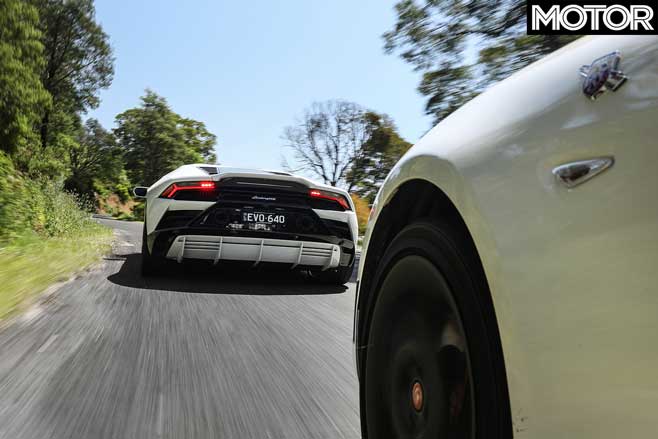
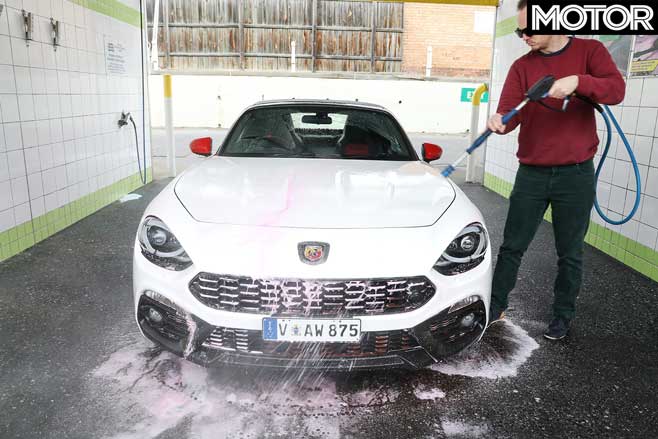
One trait of the author is that he’s an idiot. No sooner had we reached our photography location than the fuel light in the Abarth blinked on, thanks to me having forgotten the crucial latter half of the wash-car/fuel-car combo.
Not to worry, the nearest town isn’t too far away. However, a few quick passes for Brunelli’s camera eats into the range like Cookie Monster let loose in the biscuit tin and I’m quickly in dire straits. My maths isn’t brilliant, but it’s good enough to realise that a sat-nav saying 19km to destination and a fuel readout displaying 7km doesn’t add up, particularly when I’ve already been driving as economically as possible for the past 15km.
As it turns out, the Abarth is incredibly pessimistic. Arriving at the servo with beads of sweat on my brow, having looked at a big, fat zero for the past five minutes, the 124 swallows just over 37 litres, well short of its quoted 45L capacity. Still, better pessimistic than optimistic.
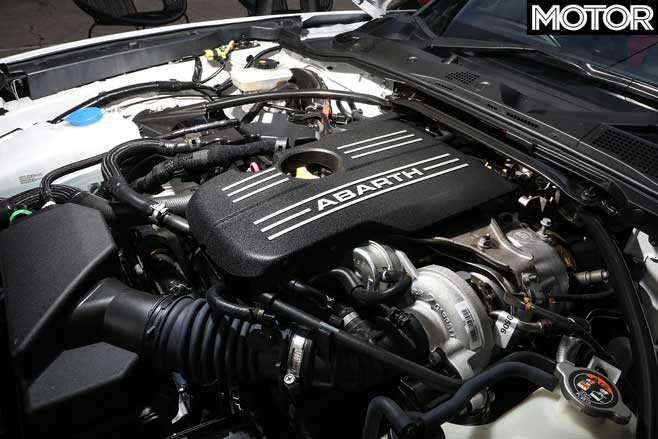
With a full belly of 98RON, the run back up our photography road is a lot more enjoyable than the journey down.
Attempting to keep the 470kW Lambo in sight is a fool’s errand, but enjoyable nonetheless; every ounce of pace the Abarth has is required to stick with a cruising DC, but I’m arguably having more fun, especially as the beautiful V10 music washes over me with the roof down.
The 124 isn’t a particularly easy car to drive quickly. It might be firmer than the MX-5, but there’s still a lot of body movement that requires deft inputs to manage; there’s j-u-s-t enough torque to be able to steer the car on the throttle in slow corners, but more often than not you can just mash the right-hand pedal on exit. All-wheel drive traction means you can generally adopt a similar approach in the Huracan, but your wits need to be somewhat sharper, as the rate it screams down the road is a little more brisk.
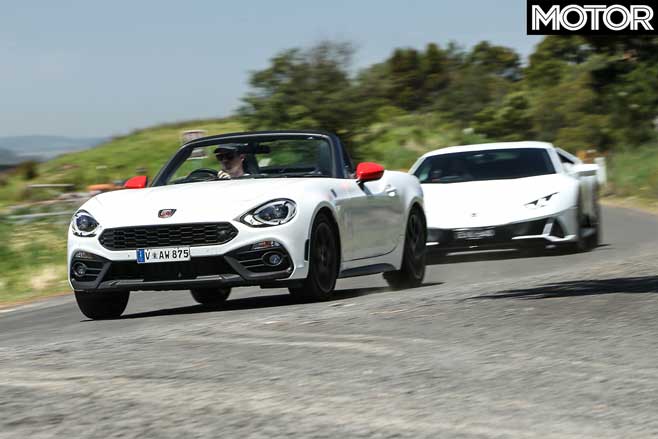
Once the automotive world has finally switched to electricity, an example of the Huracan’s powertrain needs to be displayed in a museum somewhere, preferably with one of those little buttons you hit so it makes a noise. It has gobs of torque, revs to the heavens, has power to burn and the gearbox is sensational. The EVO is also a sharper handler than its predecessor.
It might sound trite, but there is an attribute that the Abarth and Lamborghini share, one that gives them a little extra Italian flavour: attitude. Particularly under the bonnet.
Compared to the R8, the Huracan is louder and more aggressively mapped, while the Abarth mightn’t be any quicker than an MX-5 – it’s actually slower, which we’ll get to next month – but the conspicuous blare from that Monza exhaust ensure it’s never going to pass unnoticed. Unless, of course, it’s tailed by a brand new Lamborghini Huracan EVO.
2019 Fiat Abarth 124 Spider Pros & Cons
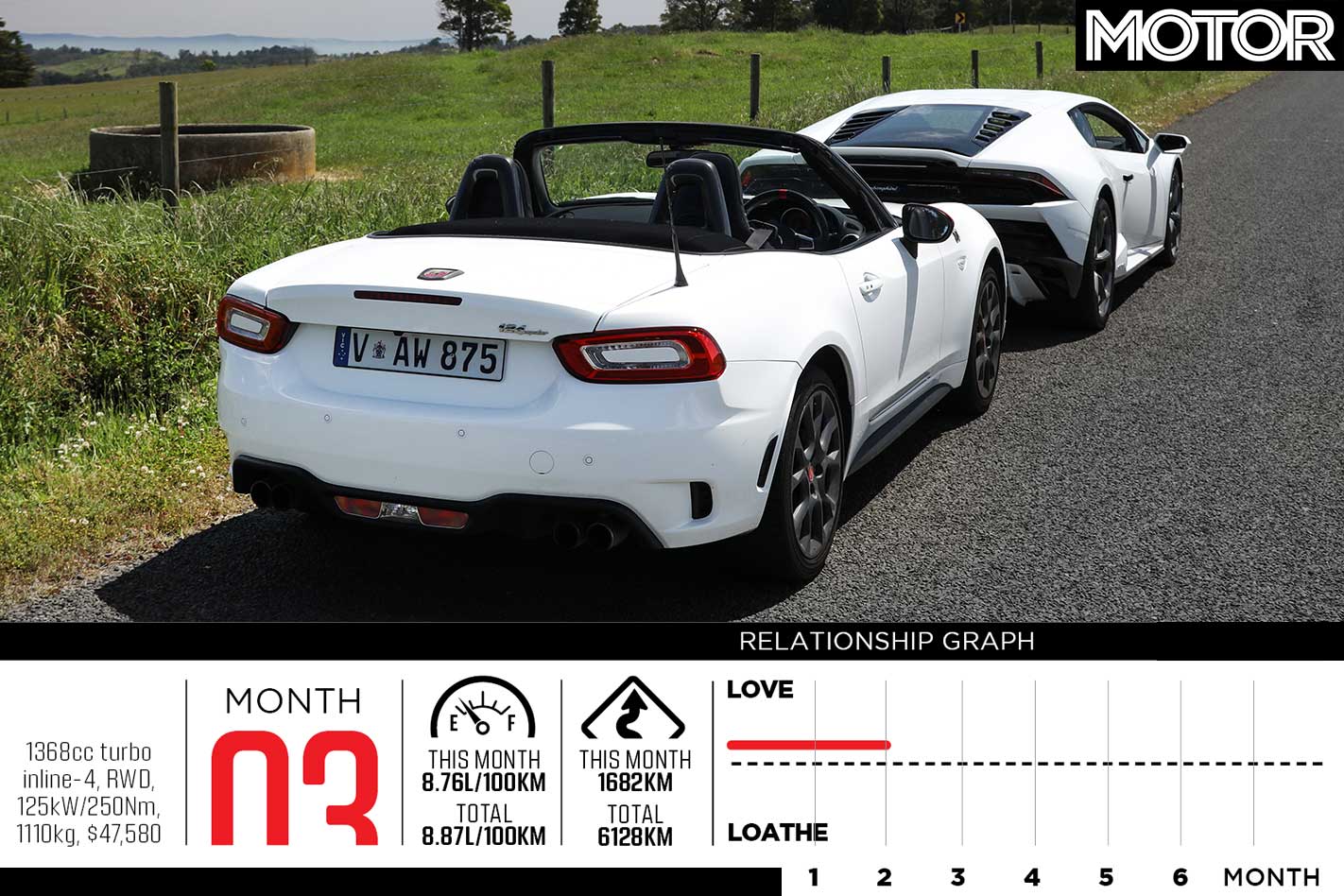
Things we rate 1 – Dropping the roof 2 – Adequate grunt 3 – Matching claims
Things we hate 1 – Forgetting fuel 2 – Steering modes 3 – Sunburn
Update 3: Come out and play
Sporty little Fiat hits the long and winding road
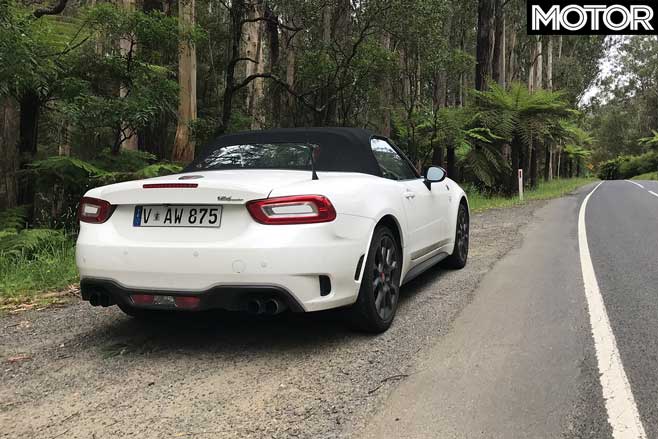
First week of an Australian summer, the perfect opportunity for a top-down foray into the countryside. Or so you’d think. Even putting aside Melbourne’s notoriously fickle weather, the fact that a number of Australian states are simultaneously under snow/on fire makes the arrival of a new season feel somewhat irrelevant.
Still, every cloud has a silver lining, and the raindrops falling from the ones overhead should make this drive in the Abarth even more entertaining.
Plenty of kilometres have passed beneath the 124 Spider’s wheels over the past three months, but they have largely been incidental – time for a day-long, just-for-the-hell-of-it drive. Six hours, 400km, innumerable corners and all manner of road surface, a solid litmus test for any car.
Will I be begging for it to end, or keen to turn around and do it all again?
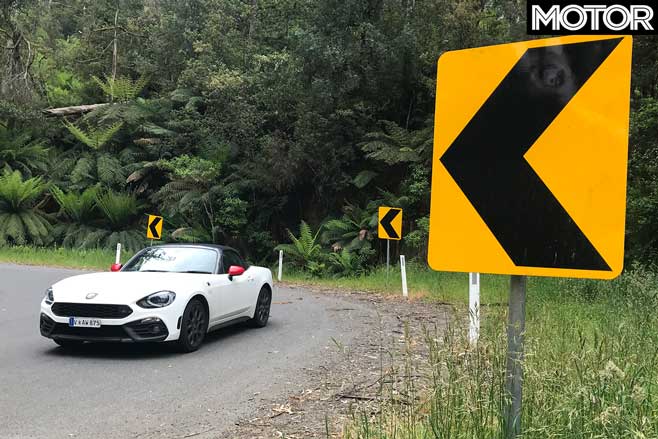
The route should be familiar to most Victorian enthusiasts; if not, it should be. Head east through Melbourne’s rapidly developing urban sprawl, turn north at Pakenham and continue through Gembrook; the road to Launching Place is a cracker, though if it’s been raining, like it has today, certain corners are diabolically slippery. The Abarth’s rear-end wiggles as the 205mm-wide Bridgestones try and fail to contain 250Nm of torque.
Hang a right at Yarra Junction and from here you delve ever deeper into the Loch Valley along the C425, the road becoming interesting after the small timber hamlet of Powelltown. There’s a good pub at Noojee, but there’s no time for a parmy or a photo at the historic trestle bridge. If you’re short of time, turn right at the C465; you’ll be back on the M1 in 30 minutes and have a lot of fun in the process.
Continue on and for the next 40km the road is rarely straight for more than a couple of hundred metres, a narrow ribbon of often bumpy tarmac, with lush greenery leaning in on either side. If it sounds like the perfect environment for a tarmac rally, you’d be right – the Mt Baw Baw Sprint uses this road each year and the prospect of it closed to other traffic is a tantalising (though daunting) one.
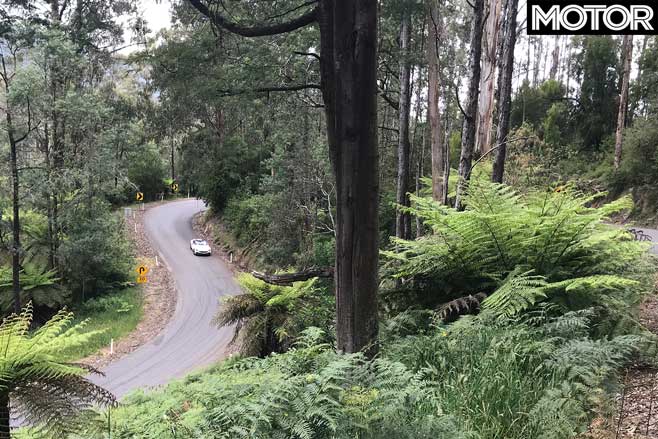
Plenty of caution is needed because many of the corners are blind and it only takes one log truck to come the other way, but the Abarth thrives in this environment. At higher speeds the 124 Spider can feel a bit edgy as you approach the limit, the relatively soft set-up and quick responses resulting in occasional moments of nervousness. On a road like this, though, constantly switching between second and third gears, the Abarth’s agility, torque-rich engine delivery and slick gearchange make it extremely enjoyable.
Appropriate levels of care mean you’re usually well within the tyres’ grip capabilities, but every now and then there’s a well-sighted hairpin and you can turn in abruptly and get hard on the power, the rear end slowly rotating as boost builds; it’s not oversteer per se, just a little throttle steerability.
The ESP is pretty well calibrated, not killing the fun completely, but as the road gets bumpier it becomes more of a hindrance, tripping the Abarth up even in a straight line.
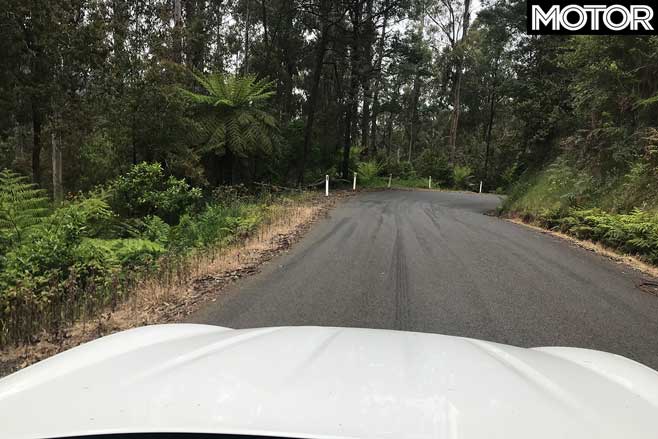
The 124 Spider isn’t particularly fast, but it’s fast enough. In contrast to the MX-5, which thrives on revs, you short-shift the Abarth like a Group N rally car, changing up at 5500rpm to cannonball back into the pool of torque.
Drop the roof and not only do the gorgeous smells of the surrounding rainforest fill your nostrils, all manner of noises become apparent that are usually stifled by the fabric roof: the suction of the turbo, the crisp exhaust note, the scuff of the tyres on the road. It certainly adds to the experience and, should it start to rain, you aren’t soggily sitting there waiting for the electric motors to do their thing – three seconds and the roof is clasped.
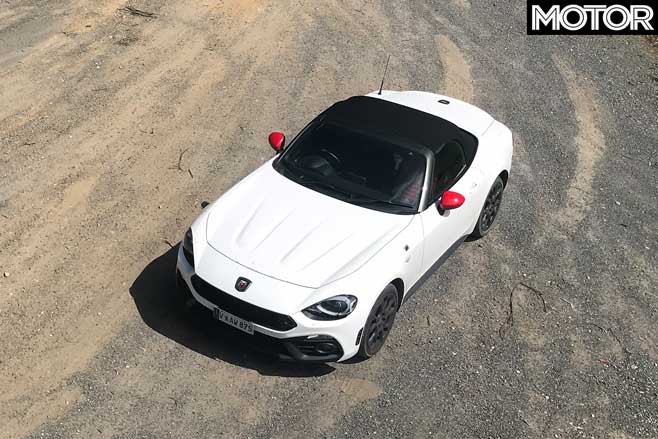
The ascent to the Mt Baw Baw summit is outrageously steep, even the gutsy 1.4 struggling to add speed once third gear is selected. Don’t hang around too long at the top in warmer weather, as the Alpine-spec tarmac will literally melt to your shoes and tyres, and it’s a pain to remove.
As entertaining as the drive has been, the idea of doing it all again to get home is a bit much. Thankfully, there’s another way, if you’re feeling adventurous. Turn left at the base of Baw Baw and you’ll be faced with 25km of some of the best gravel road you’ll ever find. It’s wide and well maintained; in fact, it’s probably smoother than the tarmac route! Abarth sells a 124 rally car in Europe, the 221kW R-GT, but even the road car will put a smile on your face a mile wide. Next month, we’ll see if it can do the same thing on track.
2019 Fiat Abarth 124 Spider Pros & Cons
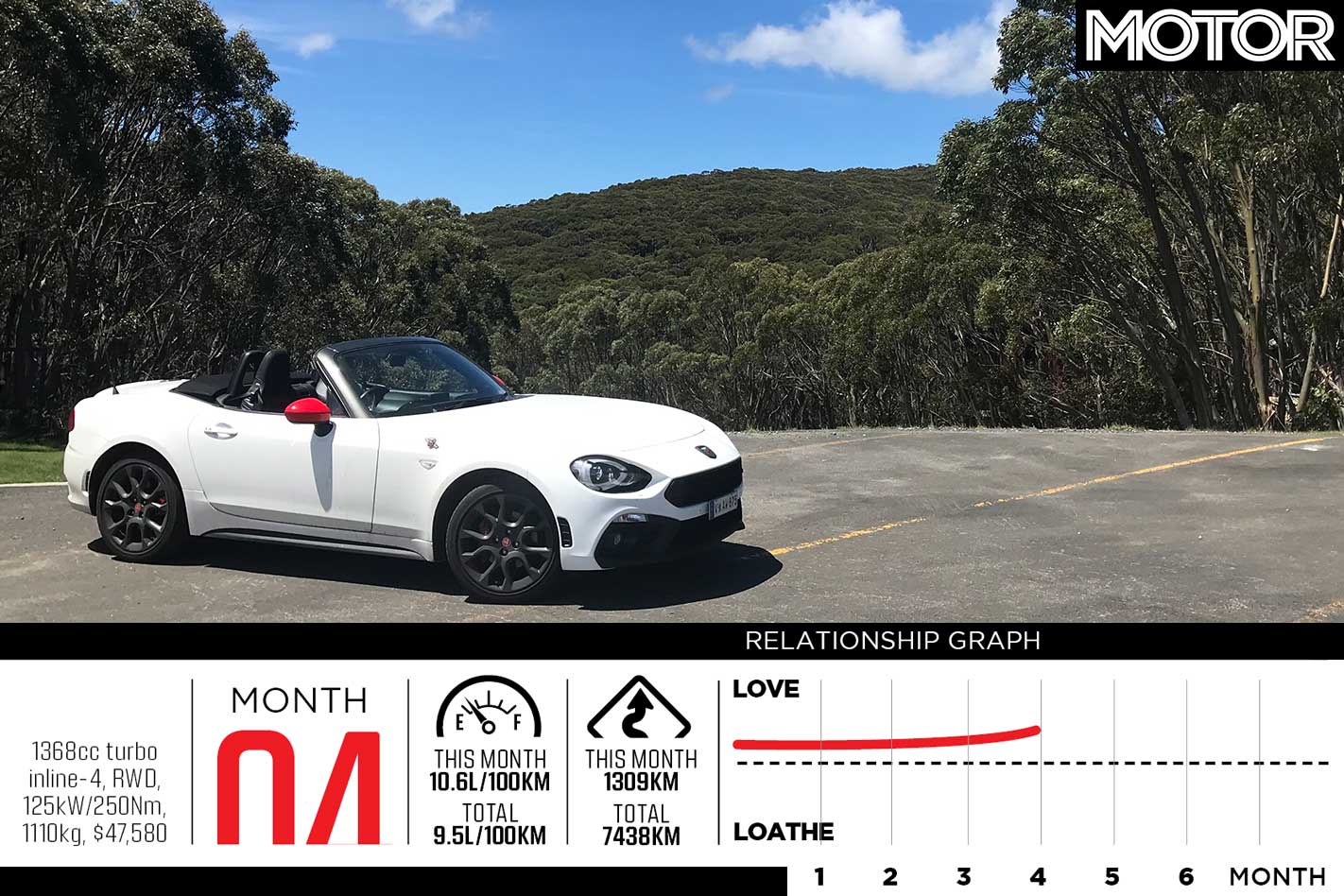
Things we rate 1 – Long drives 2 – Slippery surfaces 3 – Hardy brakes
Things we hate 1 – Bumpy roads 2 – Sticky tarmac 3 – Dawdling drivers
Update 4: United Nations
Hitting the track with a selection of European friends
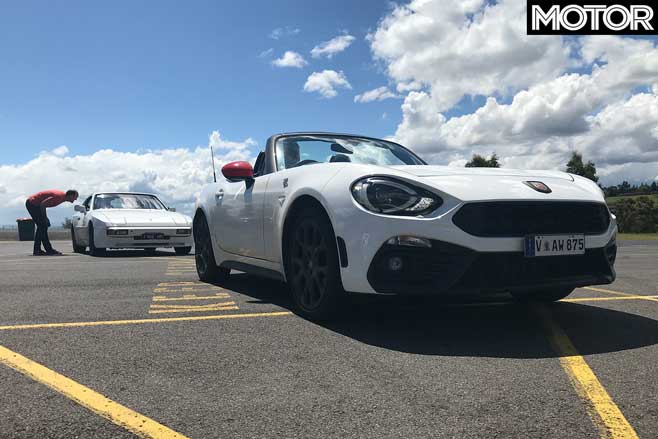
What better track day to take an Abarth to than one run by Pilota Sportiva? Any more Italian and Pavarotti would be singing Nessun Dorma with prosciutto in one hand and a prosecco in the other. The man behind Pilota Sportiva is Steve Pizzati, race driver, driver trainer and former Top Gear host. Every track day is subtly different and Pizzati’s is more casual than most, each driver able to do as many or few laps as they please.
A motley crew assembles, primarily machinery of various vintages from the European Union. There’s a new Audi RS4, Porsche 911s old (G-series Carrera) and new (Carrera T) as well as a 944, a Toyota Supra (of Austrian birth), a Lotus Elise Cup 250 (still in the EU as of writing…) and Alpines. So many Alpines (what is the collective noun for Alpines? A rally? A rally of Alpines…). A tenth of all the A110s currently sold in Australia, in fact, including a new Legende edition with its sexy wheel design and added luxury.
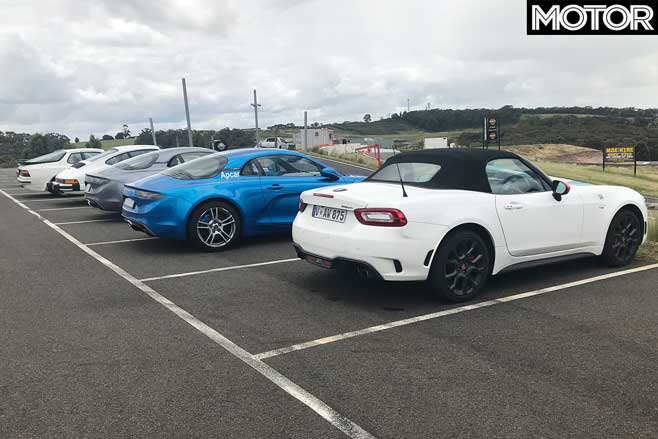
The venue is Bryant Park Hillclimb, colloquially known as Haunted Hills, which should be familiar to you from our numerous magazine and video shoots there. It’s a fantastic facility. The slow-speed nature of the course makes it relatively easy on standard road cars, yet there’s nary a moment’s rest thanks to the constant barrage of lefts and rights. What’ll really bake your noodle, though, is the constant change in the vertical axis. As Pizzati succinctly puts it: “If you laid it out flat, it would probably be quite boring but the undulation is a big challenge.”
It’s the perfect playground for cars like the Abarth 124 Spider. The relative lack of under-bonnet urge matters little as there’s only one brief straight worthy of the name and the adjustable chassis not only helps with the constant direction changes but tests the driver at the same time. The Abarth is a fairly simple proposition; if you want to find out what happens at the edge of adhesion, you have to deactivate the ESP (one quick press is all it takes) and sort the rest out yourself. There is no Sports ESP mode to flatter your mistakes or cover your blushes.
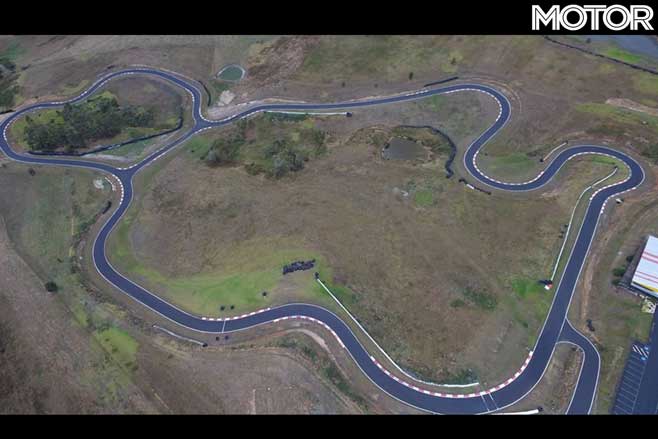
To keep things simple we’re not running full laps, making it more akin to an actual hillclimb, and nor is it timed. Fun is the only goal here. Leaving the pits with a chirp of wheelspin it’s full throttle and a quick change to second through the first right-hander and then a short shift to third before the first left to avoid an awkward change on the exit. It’s a tricky corner, completely blind on exit, so best be confident about your line before flooring it.
The run down the hill is steep and fast, the approaching right-hander taken at around 100km/h. It’s the scariest part of the track, for the surface is off-camber and there’s a braking zone directly after it; there’s time to be gained if you’re brave, but this is not the day for heroics. The following left is annoying as gravity conspires to drag you away from the correct line, which is extremely important to carry speed over the infamous Oh S*** crest.
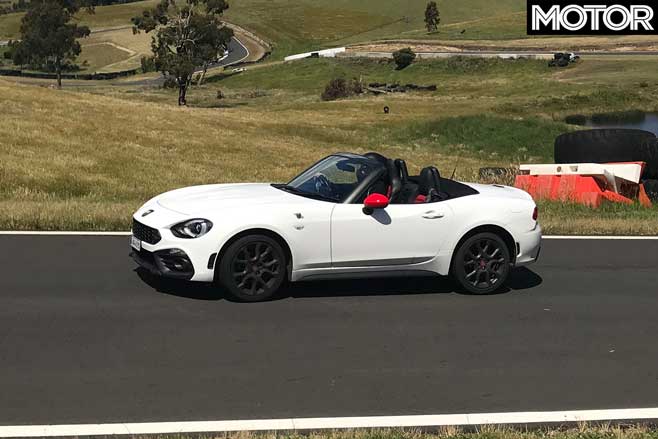
Responsible for more accidents than any other bit of Bryant Park, Oh S*** is blind, fast and no matter how many times you tackle it, the fear that the road has somehow moved since last time is guaranteed have your knees weak, arms heavy and palms sweaty. The car goes light and wobbles slightly but keep the steering steady and there’s little cause for concern as the next braking zone is steeply uphill and speed washes off quickly.
The following right-left-right complex rewards patience and heavy use of the kerbs, unless it’s wet in which case the red and white strips offer all the grip of polished ice. The Abarth has just enough grunt to power into oversteer over the crest on exit, the rear end continuing to wander under brakes as the track again plunges downhill into a tight left, before once again steeply climbing over yet another blind crest.
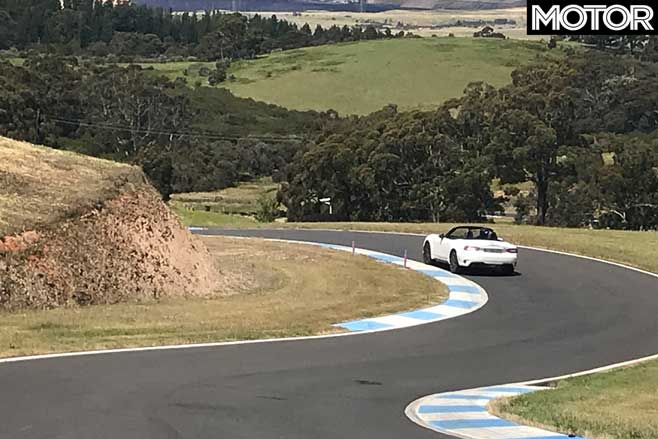
Finally, a straight(ish) section, but the respite is brief. The next corner, a long downhill right-hander, reveals everything you need to know about the Abarth’s handling. It’s all about what I personally find is the hardest part of driving, the release of the brake pedal on the entry to a corner. If the speed of both the car and brake release is right, you’ll peel beautifully into the bend, the rear-end edging just wide of the front, ready to accept the power once again. Too much speed and not enough brake pressure will create understeer; too much brake pressure and you’ll be catching oversteer, time ebbing away while you wait to accelerate again.
It’s also, of course, a massive amount of fun and keeping the accelerator buried will have the 124’s tail swinging from side to side. The Abarth’s light weight means its tyres hold up well to such immature antics, especially when sheets of rain slick the surface. In moments like this, it’s hard to imagine how a faster car could possibly result in more fun. Light weight, modest power and modest grip – is this the future of performance motoring?
2019 Fiat Abarth 124 Spider Pros & Cons
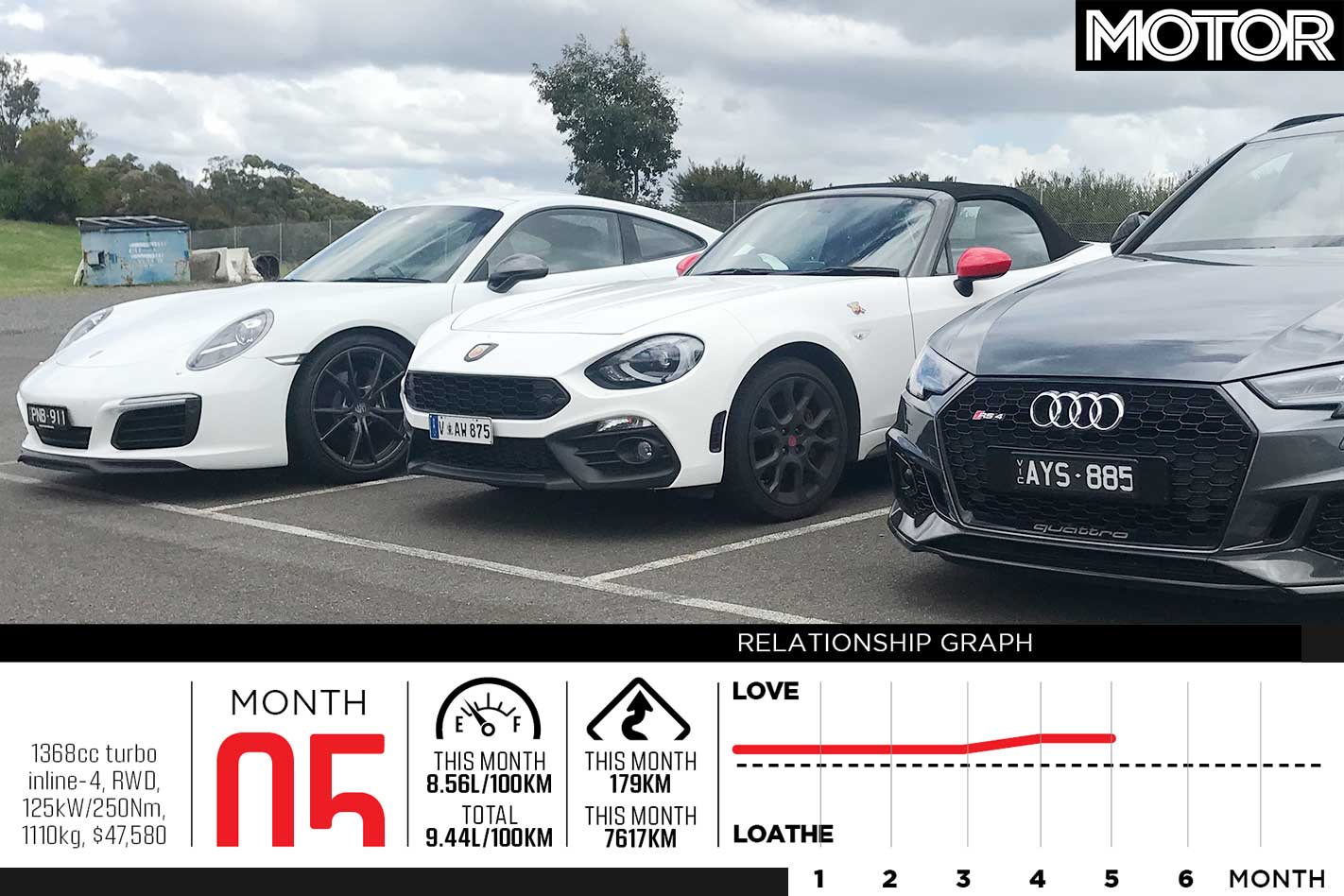
Things we rate 1 – Driving on track 2 – Unlimited laps 3 – Light cars
Things we hate 1 – Tyre wear 2 – End of track day 3 – Lack of top end
Update 5: Ciao for now
Sporty little Fiat hits the long and winding road
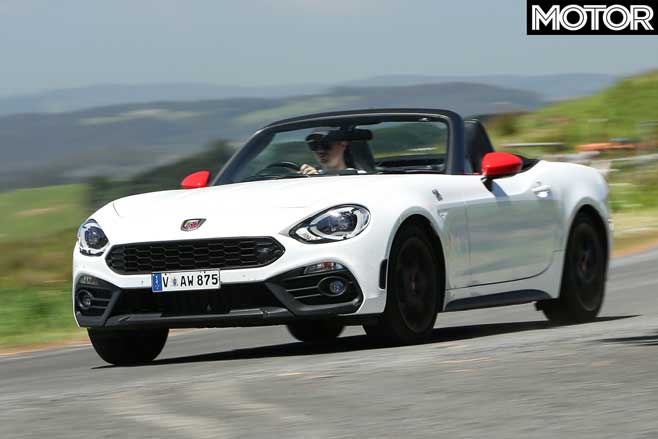
BEFORE WE delve into the business of bidding farewell to MOTOR’s long-term Abarth 124 Spider, let’s cover off some facts and figures I forgot to include in previous updates. The drag strip is not where the Abarth does its best work, but the numbers it generates do provide some context. You see, drive the 124 Spider back-to-back with an MX-5 or 86/BRZ and you’ll swear it’s the Abarth that is the quickest car, but the numbers don’t back this up.
Strange as this may sound, you can almost ignore our best figures of 6.77sec to 100km/h (0.03 quicker than the claim – yes! Victory!) and 14.81sec for the quarter mile. Unless all the planets perfectly align you’re looking at 7.0sec and 15.0sec respectively all day long. At least it’s consistent. Those times are good enough to be virtually lineball with the Toybaru twins, if not a shade quicker, and used to be good enough to be snapping at the heels of the 2.0-litre MX-5.
That is until the MX-5 scored its engine upgrade from 118kW/200Nm to 135kW/205Nm. When we last strapped the timing gear to the latest iteration of Mazda’s roadster it clocked 0-100km/h in 6.37sec and rattled off 14.54sec at 155.12km/h over the quarter mile, putting clear distance between it and its Italian cousin. So why is it at first acquaintance the Abarth feels like the punchier of the two? Easy. Torque.
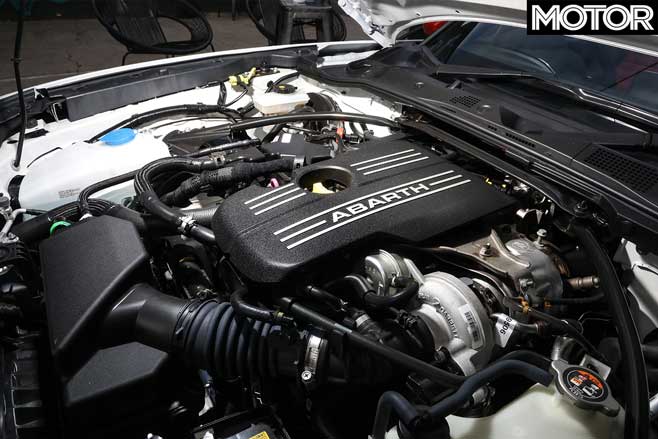
Whereas the Mazda produces its peak twist at 4000rpm the Abarth grunts out an extra 45Nm (a total of 250Nm) from just 2500rpm. The effect of this can be seen in the in-gear acceleration numbers. The two are neck-and-neck when accelerating from 80-120km/h in third at 4.6sec, but in each successive gear the 124 just walks away from the MX-5 at an ever-increasing rate. In fourth 80-120km/h takes 5.3sec (MX-5, 5.8sec), fifth 6.6sec (8.1sec) and sixth 8.5sec (11.8sec). This flexibility makes it feel quicker as when you put your foot down at anything other than maximum rpm, the Abarth surges forward whereas the Mazda takes time to build.
The other side of this is while the MX-5 sings to a crescendo, the 124 badly runs out of puff above about 5500rpm when its tiny turbo reaches the limit of the air it can flow. If there was one thing Abarth could do to improve its open-top sportster, it would be to fit the 177kW/350Nm 1.75-litre turbo four from the Alfa Romeo Giulietta/4C. It fits just fine, for it does duty in the R-GT rally car, and would not only endow the 124 with a serious turn of speed, but it’s a more satisfying engine to exploit producing maximum power at 6000rpm with peak torque available from just 2200rpm.
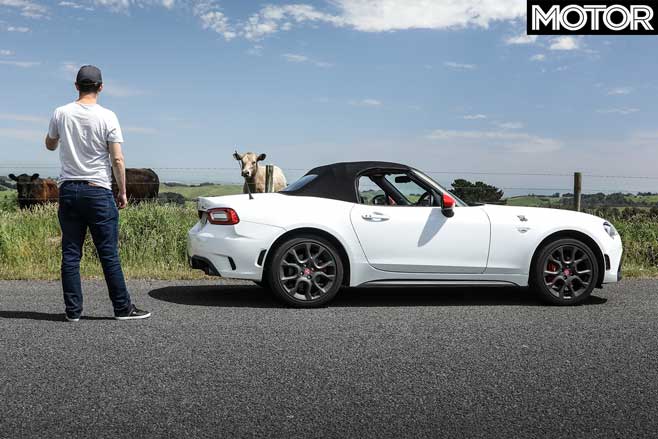
Still, at the beginning of this long-term odyssey the question we most wanted to answer was: is there a case for buying the Abarth over the vastly more popular Mazda with which it shares its underpinnings? The answer is yes, but it must be said that the 124 is only a better car for a very specific sort of customer.
Paradoxically, for a car that’s supposedly focused on top-down driving escapism, I most enjoyed the 124 Spider during the day-to-day commute. That Monza exhaust makes a rude noise, you’re always in the meat of the torque band, the engine flexibility is useful in plugging traffic gaps and it’s not too painful to get in and out of. Just make sure you drive it in Sport mode all the time as it can be painfully sluggish when off boost in Normal. More than once I pulled out of a junction with what I thought was plenty of time to spare only for a car to bear down on me as I had my foot welded to the floor, desperately willing that snail to spool up.
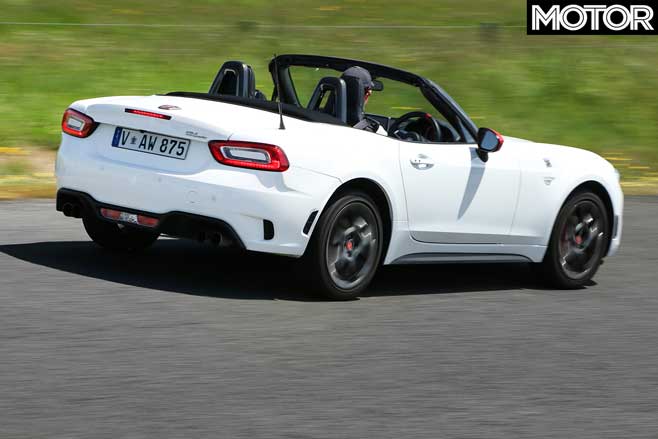
Venture out into the hills (or on track), however, and the Abarth will definitely put a smile on your face – how could a lightweight, rear-drive roadster not? Its stiffer suspension setup with Bilstein dampers gives it a little extra control when cornering hard without robbing it of its inherent playfulness but, sadly, engaging Sport mode – a necessity, as just mentioned, to wake up the engine – adds unnecessary and annoying weight to the steering. It feels like it was added just for the sake of doing so. That said, with space to play it has the grunt and balance to happily swing its rear end around and the brakes hold up well.
The other case for buying the Abarth is if you’re the tuning type. A little extra investment in the 124’s 1.4-litre turbo mill can lift it to 170kW or so with basic bolt-ons (according to the internet), which would result in a very different driving experience. However, in standard guise, the 124 Spider is fun, but its differences over the MX-5 on which it’s based don’t really add anything. It’s just… different. Hopefully Abarth sticks with the formula as the world needs more fun cars, just give it a little more power!
2019 Fiat Abarth 124 Spider Pros & Cons
Things we rate 1 – Attitude 2 – Everyday torque 3 – Light cars
Things we hate 1 – Needs more grunt 2 – Sport steering 3 – Strong rivals
