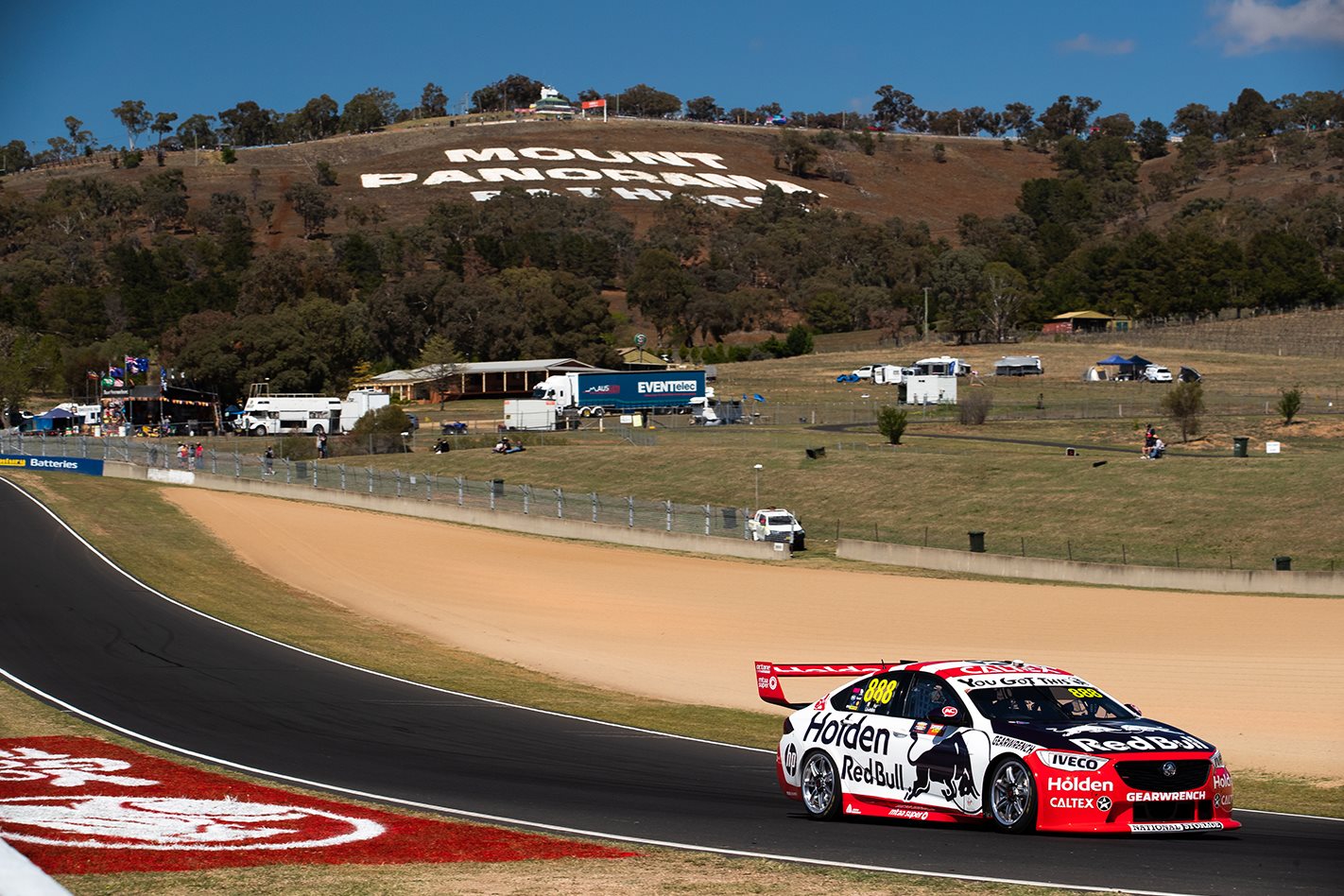
Want the no-frills, straight-to-the-point info on the ten best selling cars in Australia* but don’t want to wade through pages of road tests? Look no further. Let’s count ‘em down
10. Mitsubishi ASX
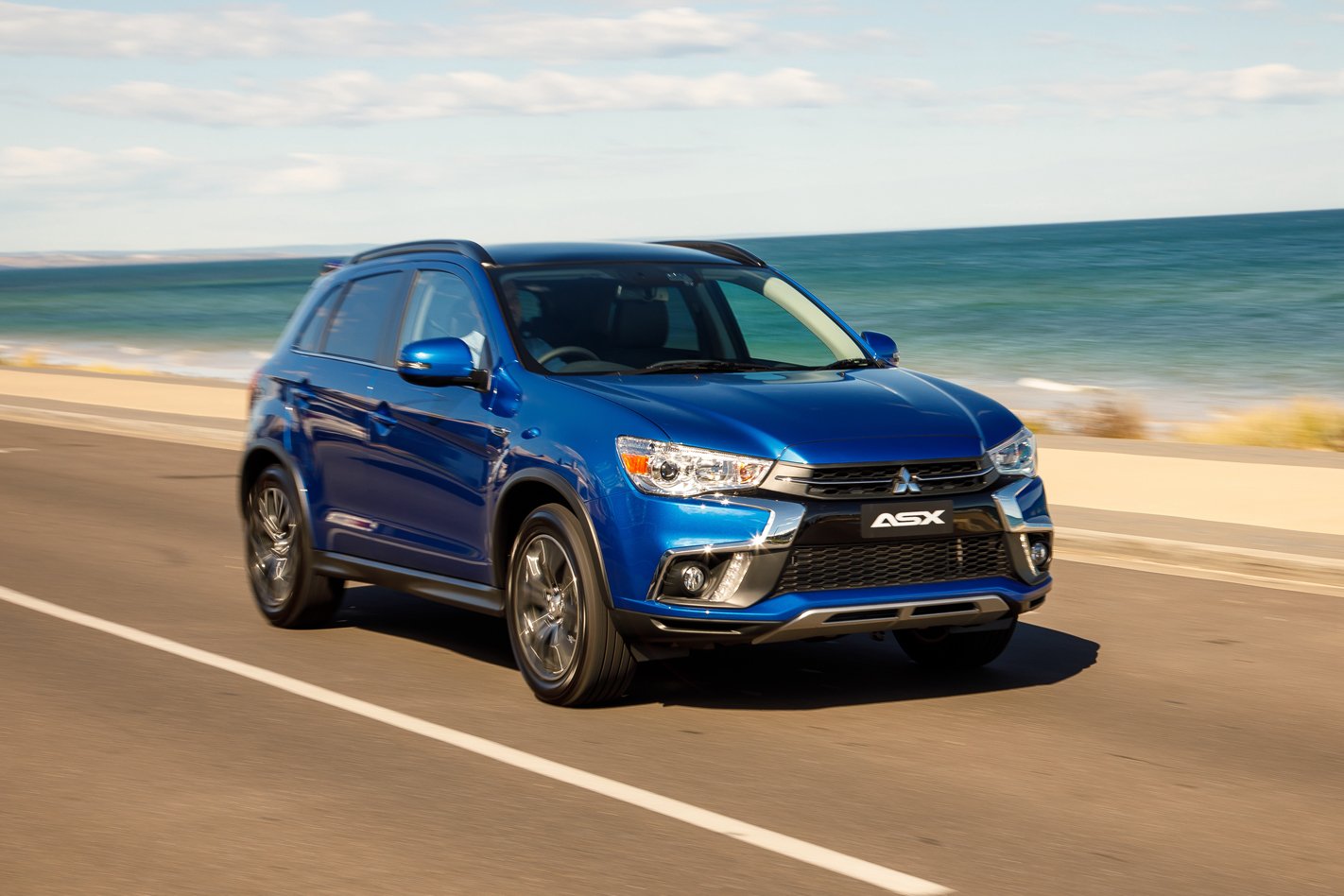
VERDICT: A compact SUV of decidedly modest talent, but don’t underestimate the pull of something that’s reliable, fairly spacious and extremely cheap. Walk into a Mitsubishi dealer with cash and you’ll get an outrageous deal. PICK OF THE RANGE: Going large on an upspec ASX defeats the point. The $25,490 CVT ES model is the go.
IN A WORD: Worthy
9. Nissan X-Trail
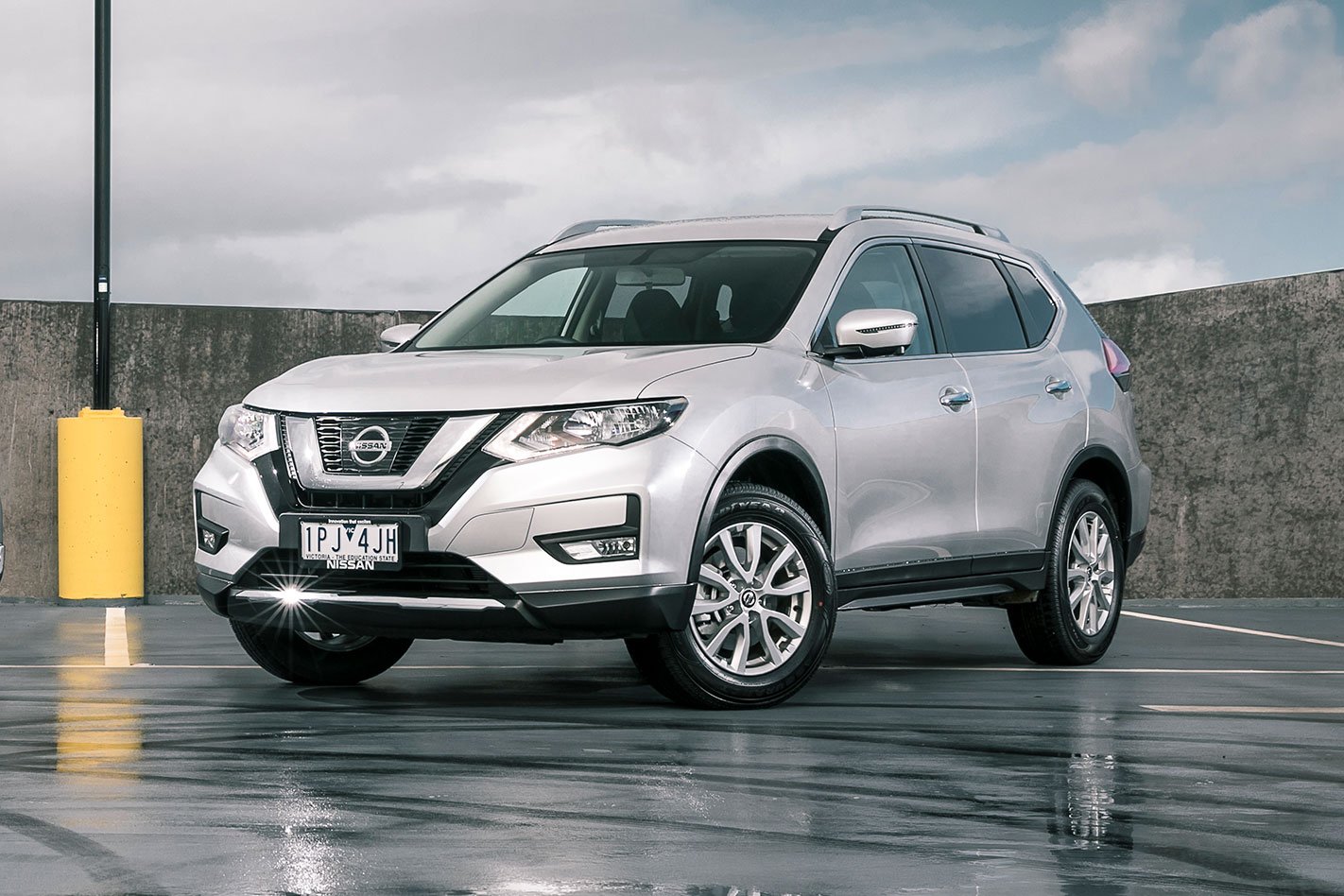
VERDICT: Big, clunky and almost bulletproof, this seven-seater isn’t the last word in slick detailing, but it does all of the basics well. Keen drivers or those who appreciate a modern interior aesthetic might want to look elsewhere. PICK OF THE RANGE: Avoid the base 106kW manual model. It’s just there to get footfall into dealers with its sticker price. Instead step up to the $32,490 ST 7-seat. Even if you don’t think you need seven seats, a lot of used buyers will.
IN A WORD: Competent
8. Mitsubishi Triton
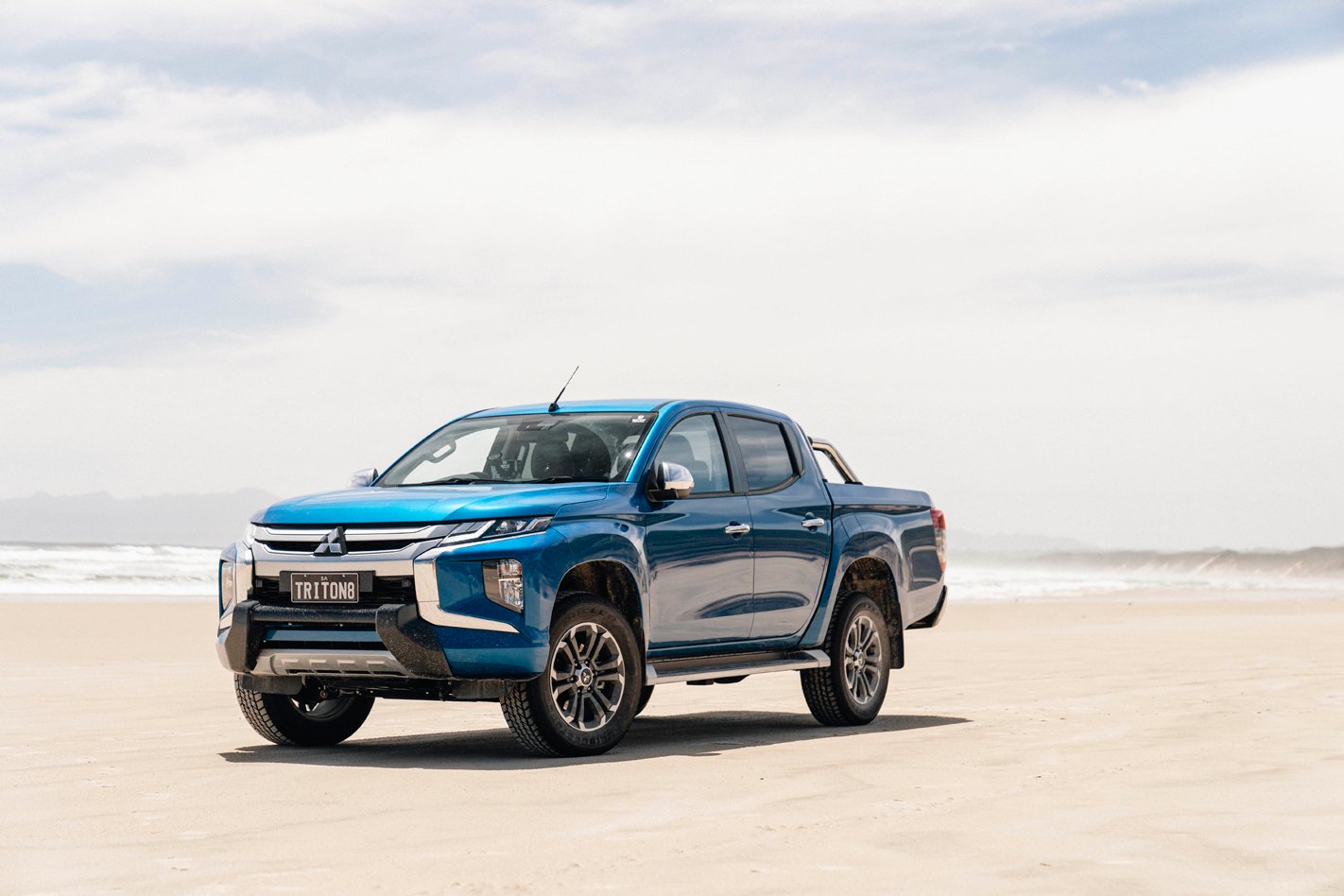
VERDICT: This one’s cheap for a reason. Driven back to back with something like a Ranger or an Amarok it feels a generation behind. Added safety a welcome inclusion and 2.4-litre diesel is tough as old boots. PICK OF THE RANGE: The $40,790 GLX ADAS is the one to pick. Just don’t even think about paying forty grand for one.
IN A WORD: Basic
7. Mazda CX-5
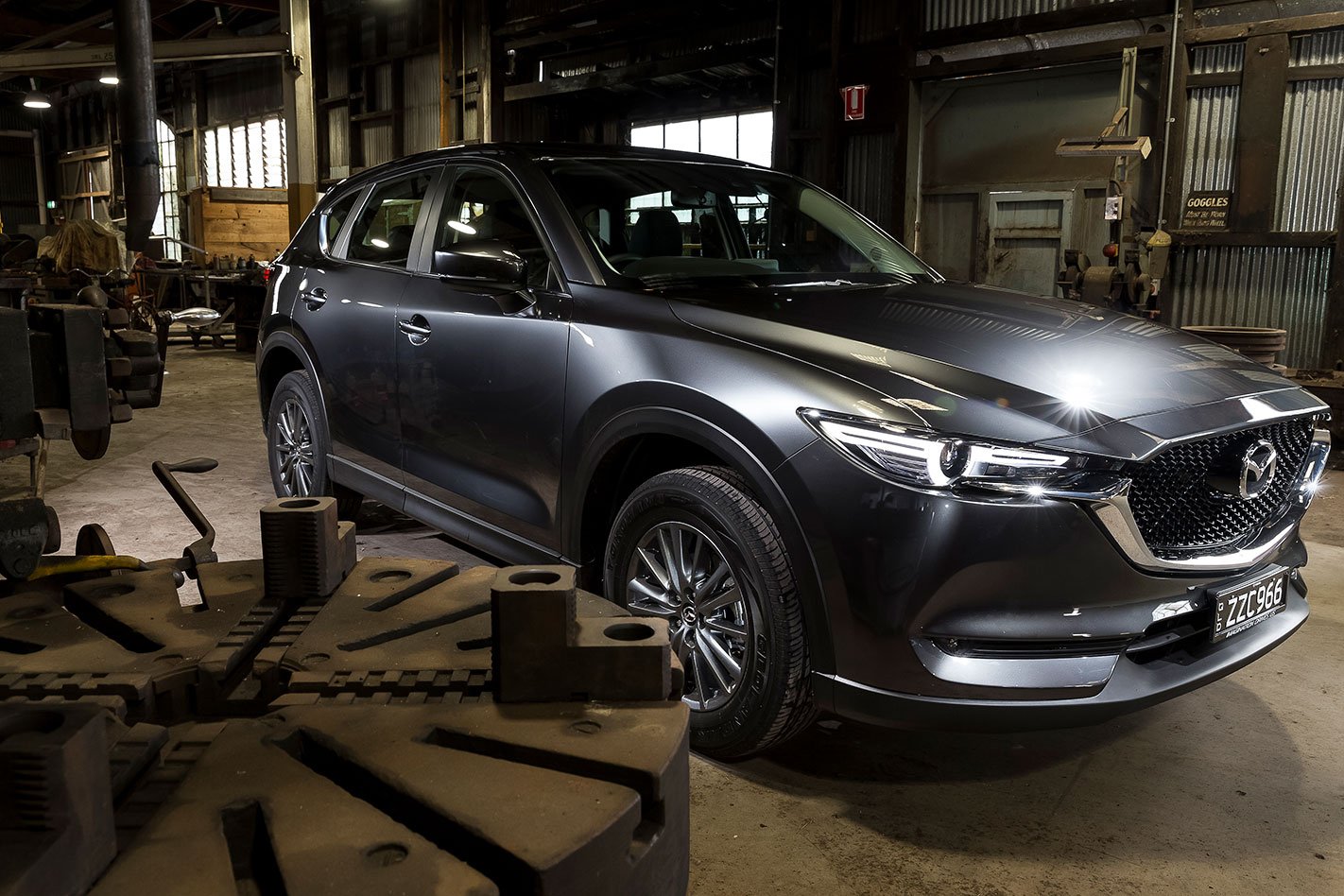
VERDICT: Finally, we come to the first car on this list that’s there or thereabouts for class honours. The CX-5 has long been a Wheels favourite and there’s not a bad one in the whole range. More space and gear with this generation car and the interior shames some vehicles at twice the price. PICK OF THE RANGE: The 2.5-litre Maxx Sport at $37,870 is a lot of car for the money. The 140kW turbo engine, all-wheel drive and a slick auto ‘box make a winning combo.
IN A WORD: Polished
6. Mazda 3
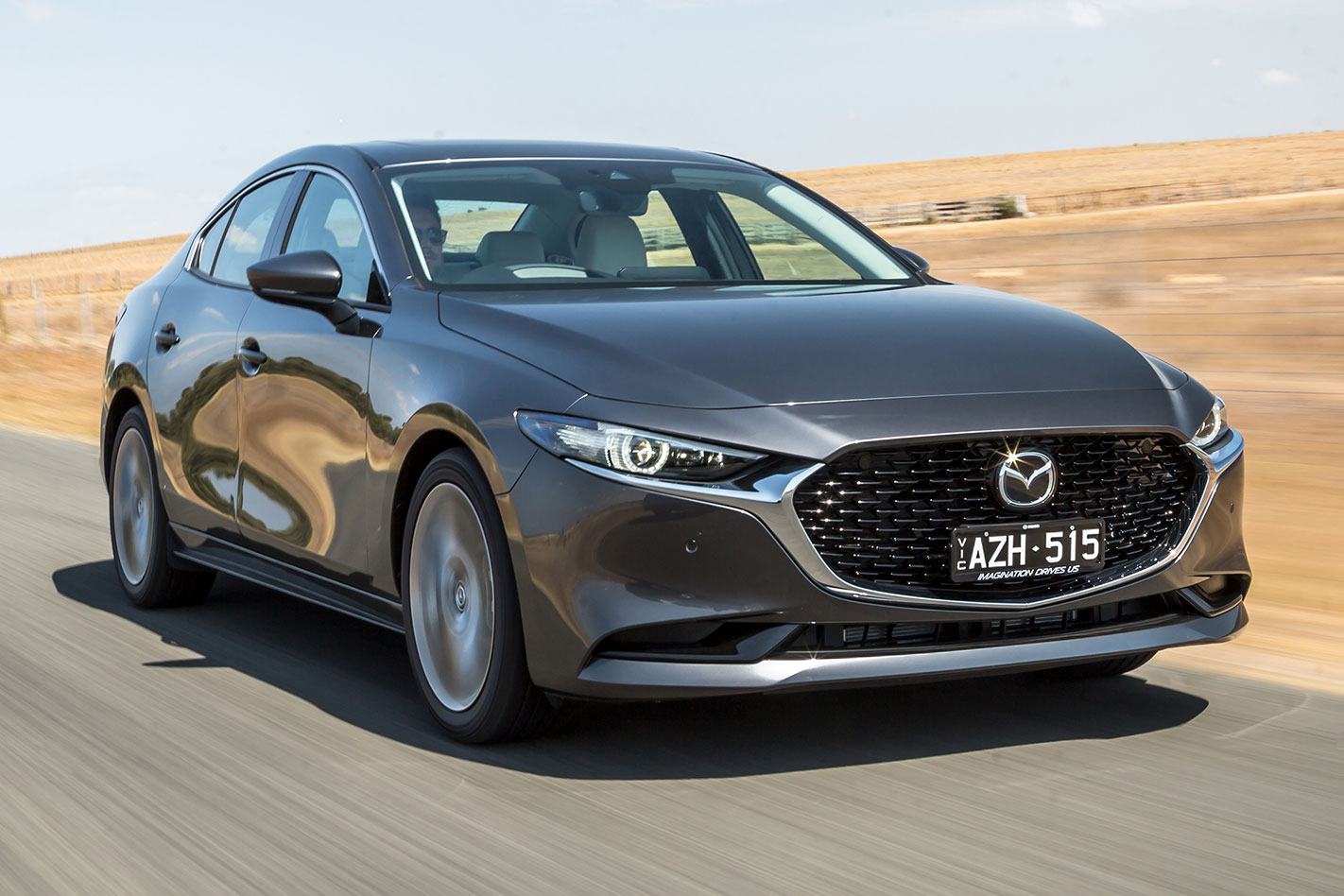
VERDICT: Mazda has pushed the 3 upmarket and sales are nosediving as a result. That doesn’t make it a bad car; it makes it a different car and will appeal to a more select crowd. The styling has proven surprisingly divisive though.
PICK OF THE RANGE: Sit on your cash and wait for the all-new SkyActiv-X engine to make its debut.
IN A WORD: Intriguing
5. Toyota RAV4
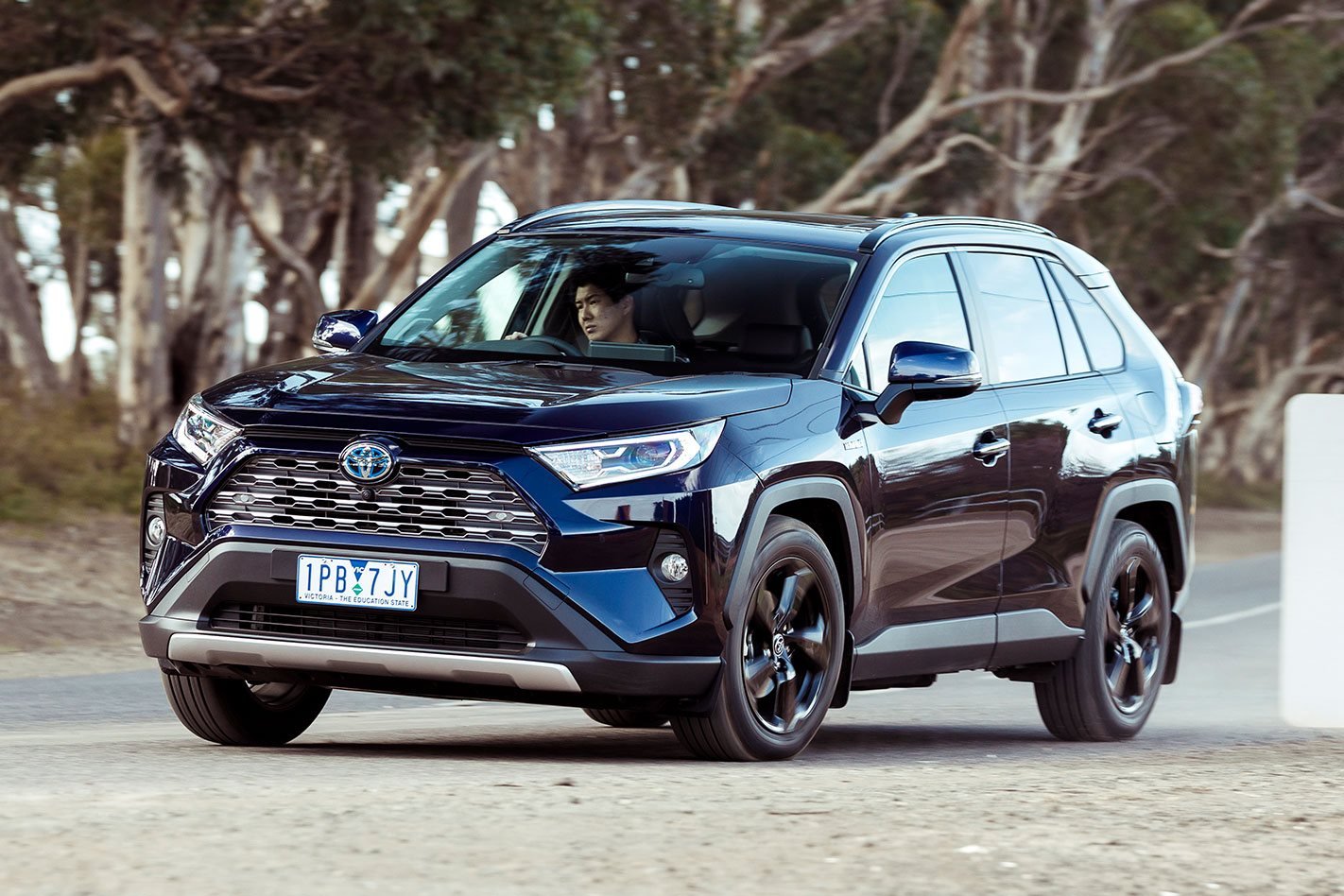
VERDICT: The RAV4 was, for a very long time, the exemplar of bland competence. This latest model is genuinely impressive and the Hybrid models earn a solid recommendation from us. A class act and more than deserving of the top-selling SUV spot.
PICK OF THE RANGE: $35,140 for the GX 2.5 hybrid is money very well spent. With 155kW on tap it’s almost hot hatch quick yet still returns 4.7L/100km. Champ.
IN A WORD: Resurgent
4. Hyundai i30
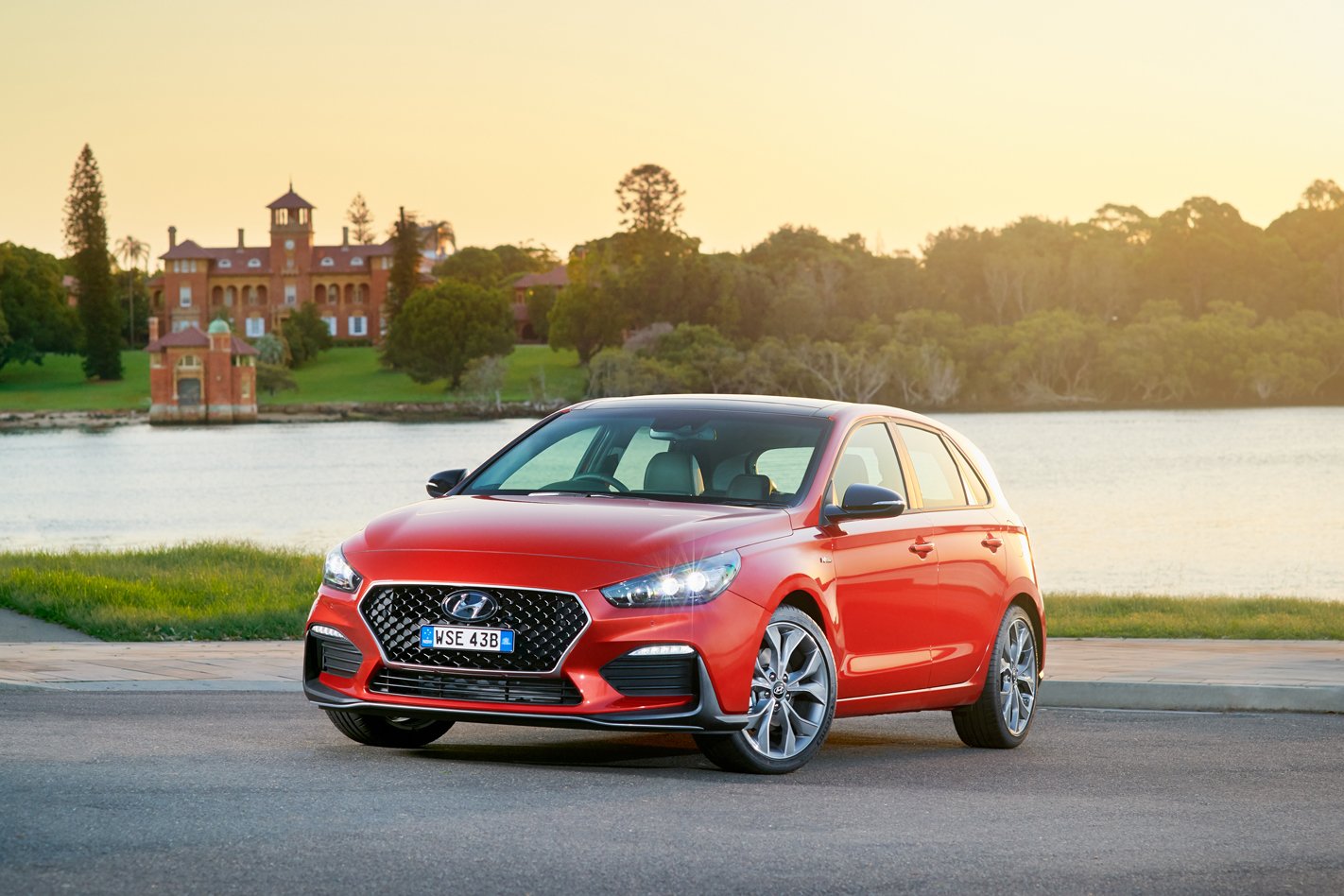
VERDICT: We’ve got a lot of time for the Hyundai i30. It barely puts a foot wrong, although only the rocketship i30 N is truly tinged with greatness. The i30 has a solid five-year warranty, is easy to drive, has a much bigger boot than a Corolla and, if reliability surveys are anything to go by, is right up there amongst the most well-built hatches sold in Australia.
PICK OF THE RANGE: The base models do a job as basic transport but the 150kW N Line auto at a nick under $30K is a genuinely delightful thing to drive.
IN A WORD: Foolproof
3. Toyota Corolla
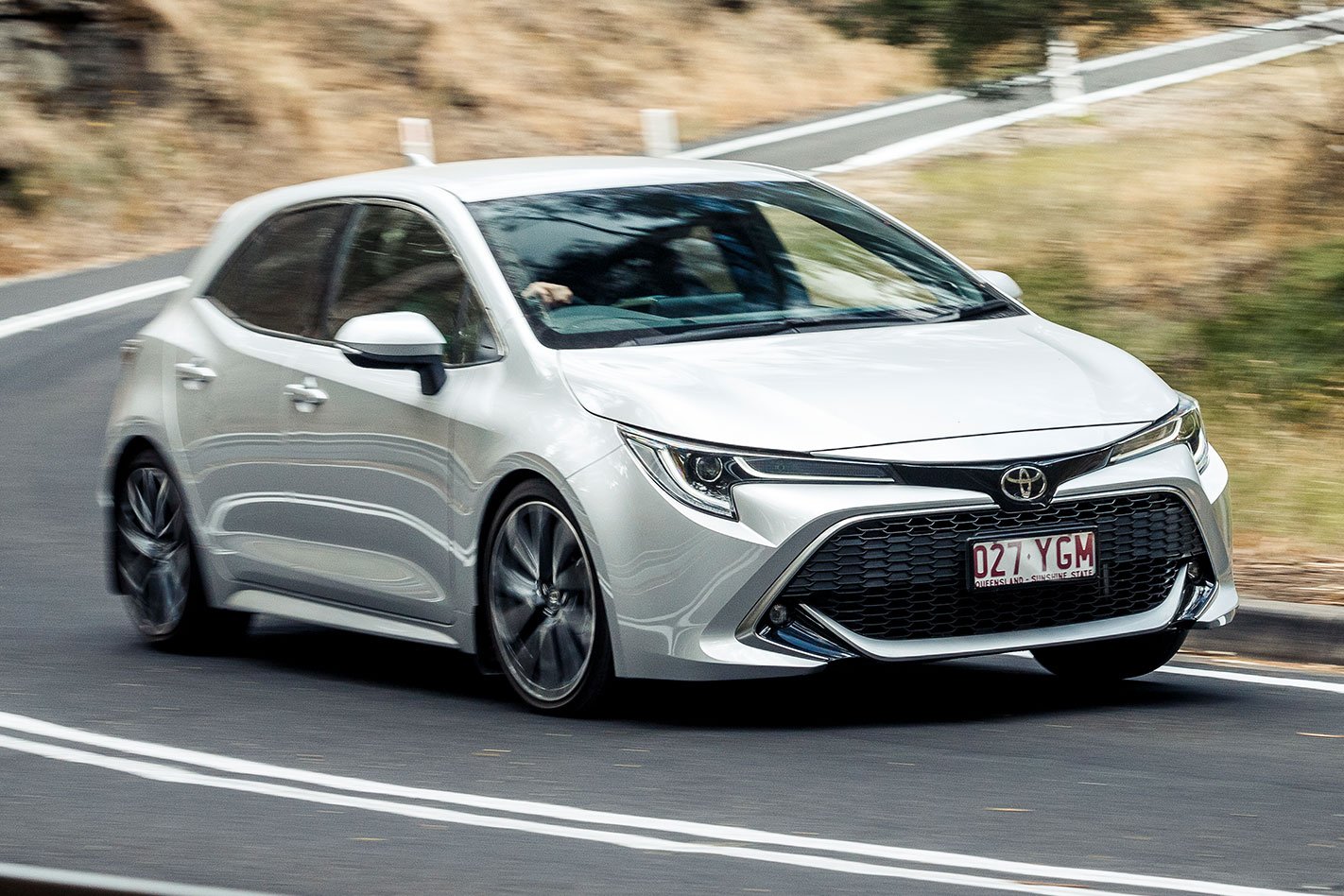
VERDICT: Further evidence of Toyota abandoning its lowest common denominator product development strategy. The latest Corolla is engaging to drive, looks great and is packed with safety gear. The boot is small though and the hybrids don’t really set our trousers on fire.
PICK OF THE RANGE: A $30,370 ZR-spec hatch features decent cabin appointments. Whatever you do, don’t let the dealer talk you into one of the previous-gen sedans.
IN A WORD: Sharp
2. Ford Ranger
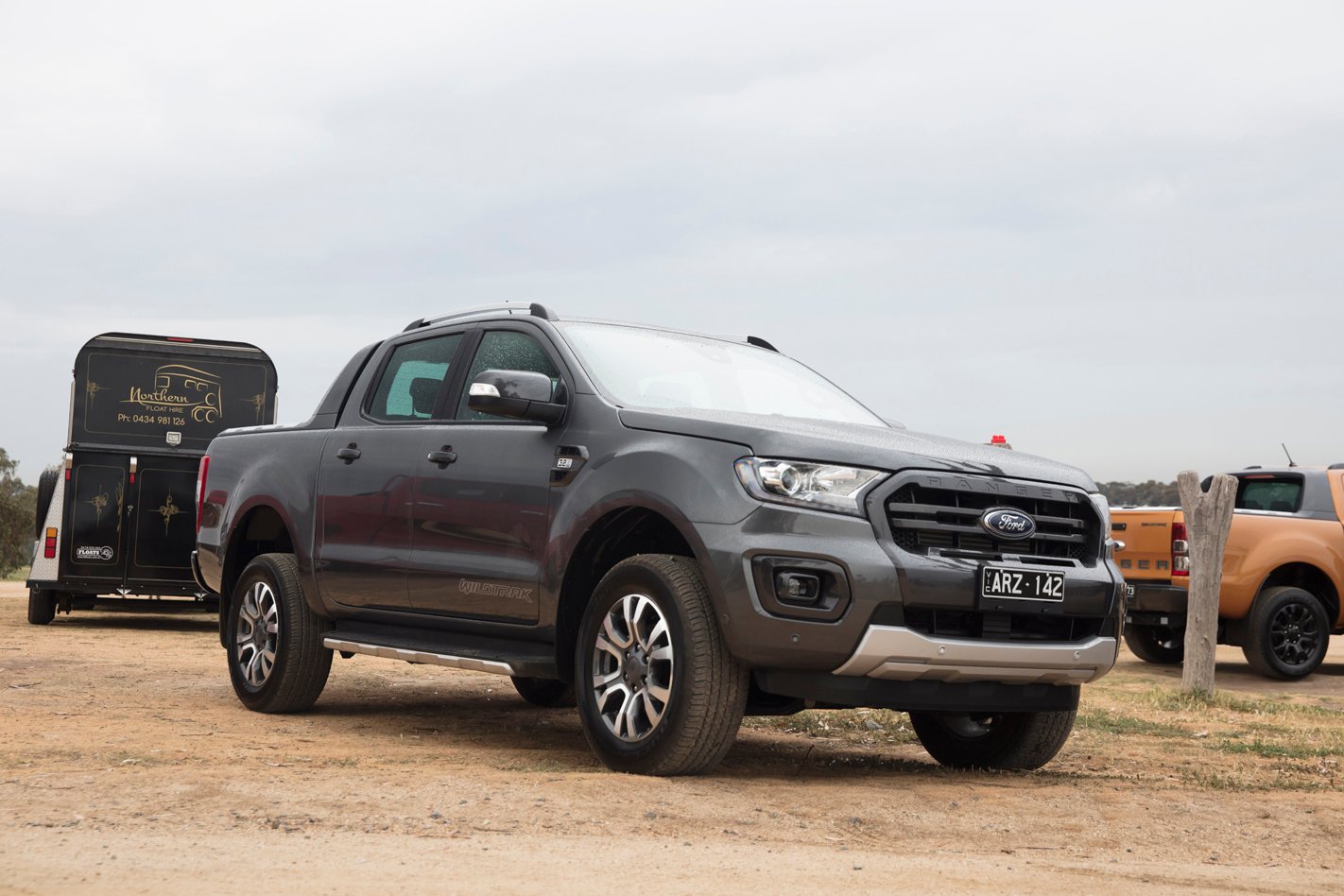
VERDICT: It’s hard to believe quite how good the latest Ranger is. The Raptor is a thing of genius but it’s seriously heavy. If you’re not willing to fork out over $70K for this Baja-buster, there’s a lot of talent elsewhere in the range. The interior is typical unsexy Ford, but it all works and works well. And don’t turn your nose up at the 2.0-litre diesel – it’s notably punchier than the old 3.2-litre five. PICK OF THE RANGE: A Raptor obviously. But in the real world, a 2.0 XLT at $59,390 would be our target.
IN A WORD: Underrated
1. Toyota Hilux
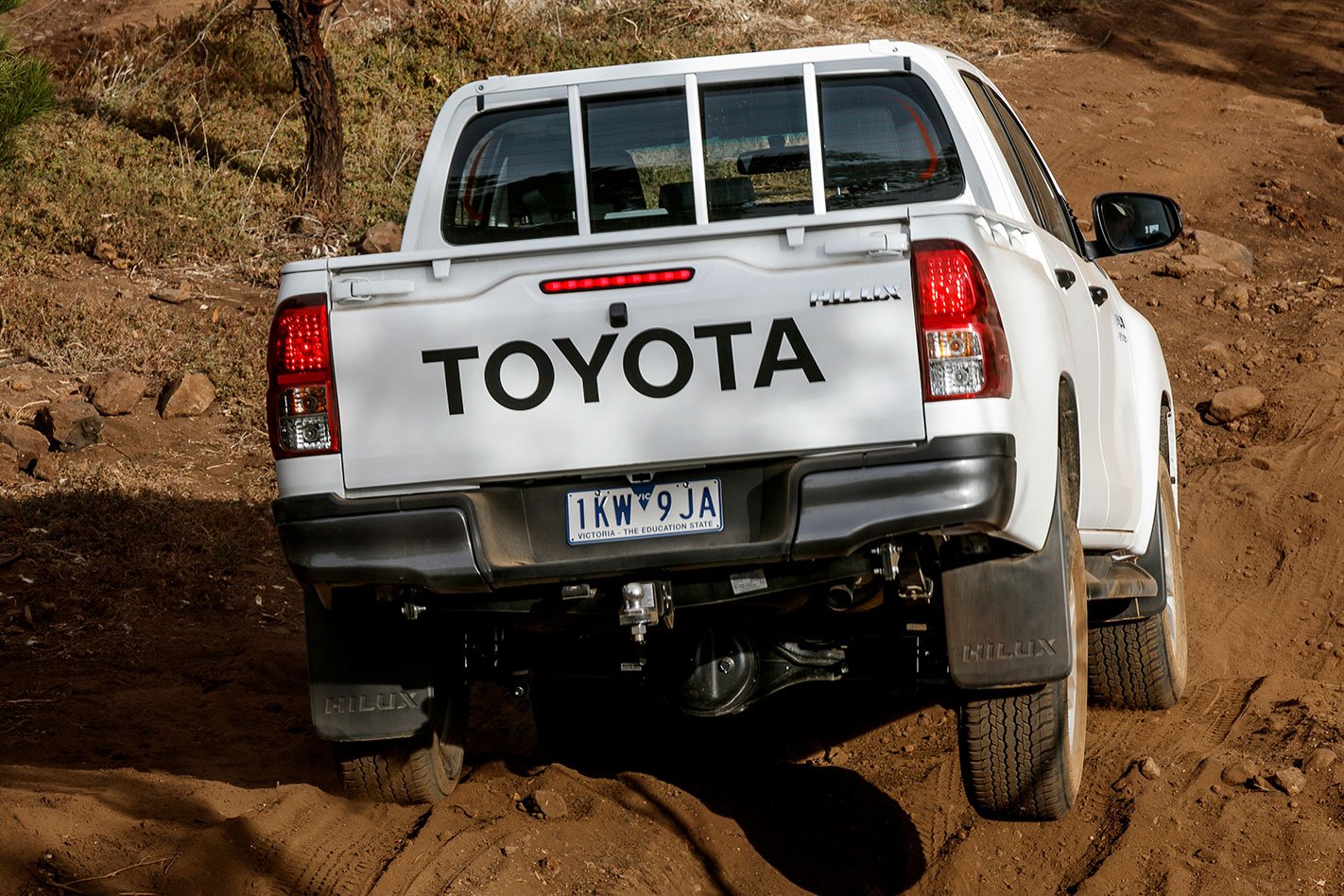
VERDICT: Toyota’s ‘unbreakable legend’ is doing something very right to hold a clear lead in the #1 spot in August’s figures. Put simply, this is a nameplate that people trust. If you’d never heard of a Hilux, however, you might wonder what the fuss was all about. The interior’s nothing special, the engines are ho-hum and the ride quality is vexing. It’s certainly not a bad ute, but it’s certainly wouldn’t make the podium if we were compiling a list of the best dual cab contenders. PICK OF THE RANGE: You’re not going to go too far wrong with an automatic SR at $48,640. But you’re certainly not going to be driving home with the best ute that $48,640 will buy.
IN A WORD: Resolute
*Based on VFACTS data for 08/19
When all-wheel drive made its cross-species transmission from off-road agricultural and military applications to the world of passenger cars, it first landed in the premium performance coupe market.
Audi gets most of the credit by creating the rally-revolutionising Ur-Quattro – and rightly so, to a degree – but 14 years before that, British company Jensen introduced the FF, a four-seat luxury GT that added a powered front axle to harness the 242kW/576Nm produced by its 6.3-litre V8. It was a complete flop – just 320-odd vehicles are believed to have been built between 1966-’71 – but the seeds were sown.
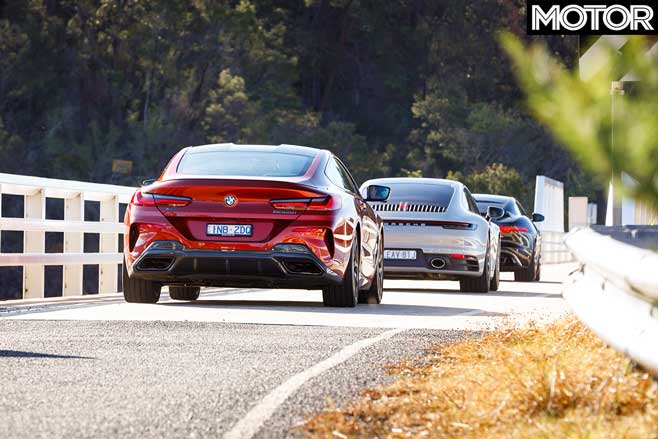
Five decades on, the BMW M850i proudly carries the torch first lit by the FF, a huge – and hugely expensive – four-seat grand tourer that deploys its massive V8 firepower to the ground through an automatic gearbox and all-wheel drive. If you need to travel long distances in comfort at high speed, the M850i, theoretically at least, is the car for you.
Despite the revival of the 8 Series badge that adorned BMW’s flagship coupe from 1990-1999, it’s essentially a successor to the F13 6 Series; the two cars are extremely similar in size, range and market positioning, though the M850i’s $272,900 starting price ($40K more than the previous 650i) vaults it into competition with the likes of the Mercedes S-Class Coupe and, yes, the Porsche 911.
All-wheel drive has been a staple of the 911 range since the 964-generation of 1989, which actually launched in Carrera 4 guise, the traditional rear-wheel drive Carrera arriving a year later.
The benefits of four driven wheels are less obvious in a car with the inherent traction advantage of a rear-mounted engine, but for the latest 992-generation, Porsche has revised the front-drive system with water-cooling for the front clutch and differential unit and reinforced clutch discs to handle extra torque.
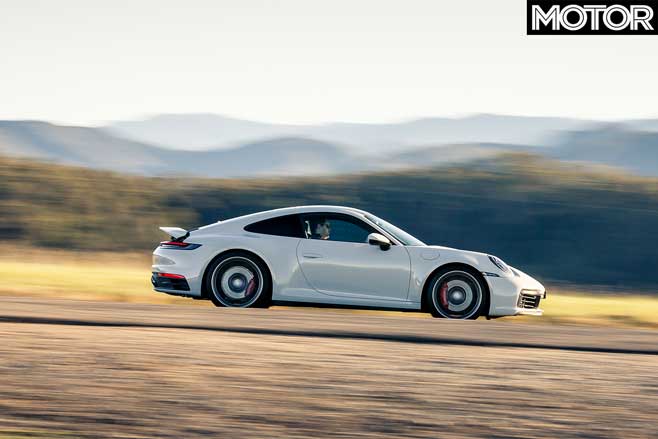
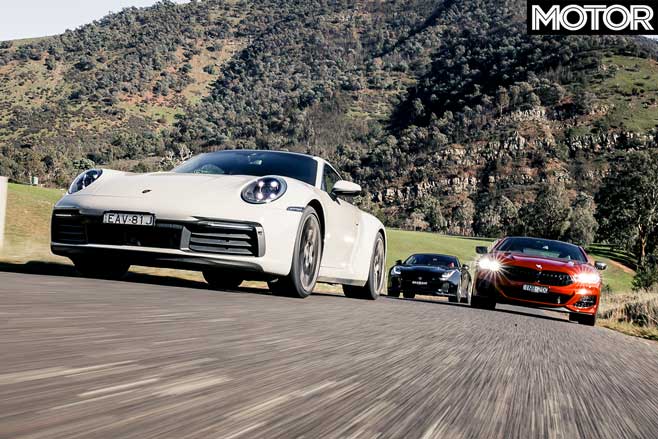
Parked side-by-side, the 911 and M850i might not leap out as natural rivals, but as their abilities have expanded the two have converged: the Porsche has the manners to be a legitimate grand tourer and the BMW’s performance gives it plenty of skin in the sports car game.
The outlier of this trio is the Jaguar F-Type SVR. Of the three, it’s the only one without back seats, the Ian Callum-penned bodywork pulled tightly over its mechanicals. The packaging eliminates any pretence of two-plus-two family friendliness, but it nevertheless inhabits a similar ecosystem to its German foes in price and performance, costing around $300,000 and using all-wheel drive to put its prodigious power to the ground, yet also offering sufficient comfort and convenience to make long-distance travel a pleasure, not a pain.
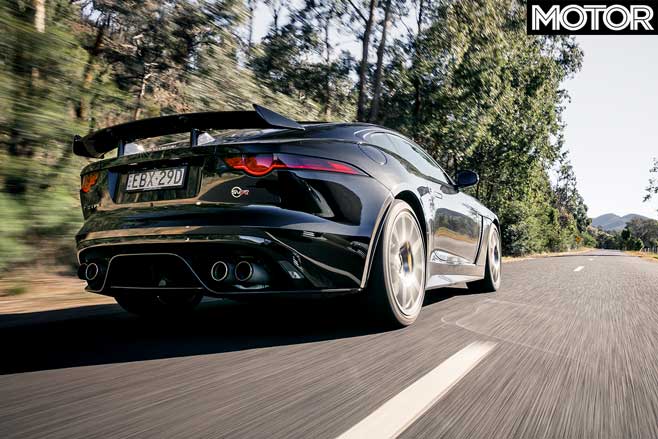
The F-Type furthers distances itself from its cross-channel competitors by eschewing new-age turbocharging for old-school supercharging. Combine forced induction with easily the largest engine here and it’s little wonder the Jaguar’s 423kW is the most on offer. In terms of power-to-weight, the SVR is head and shoulders clear of its rivals, offering 248kW/tonne to the Porsche’s 212kW/tonne and the BMW’s 206kW/tonne, though at 1705kg (25kg lighter than the regular F-Type V8) the Jaguar must be the densest all-aluminium two-seater going around.
Extracting its best in a straight line could not be simpler: load as many revs as possible against the torque converter before releasing the brakes and attempt to press the accelerator through the firewall.
The SVR lifts its nose and bolts away with zero wheelspin but a whole lot of noise, the 5.0-litre V8 producing a dry, crisp snarl, while each upshift sounds like the air is being ripped apart. Power continues to build right to the 6600rpm redline – the joy of a supercharged engine – and it’s fast. Really fast.
The sprint to 100km/h takes just 3.6sec, besting its claim by a tenth, and the entire quarter mile is completed in 11.55sec at a stonking 199.21km/h. Find a long enough road and you’ll hit 322km/h. Stopping is equally impressive, the monster optional carbon-ceramic brakes arresting the F-Type from 100km/h in 33.4m.
Launch the Beemer in the same manner as the Jag and it will clock 3.7sec to 100km/h, matching its claim, but activating the basic launch control system – it merely allows a few more revs to build prior to launch – shaves a few hundredths off for an incredible 3.63sec result.
Remember, this isn’t a full-on M-car and weighs two tonnes with driver and fluids, yet it will show a clean pair of heels to a first-generation Audi R8 V10 Plus. And not just to 100km/h, either. The M850i uses its 390kW/750Nm to good effect, continuing to pile on speed to cross 400m in 11.68sec at 194.24km/h.
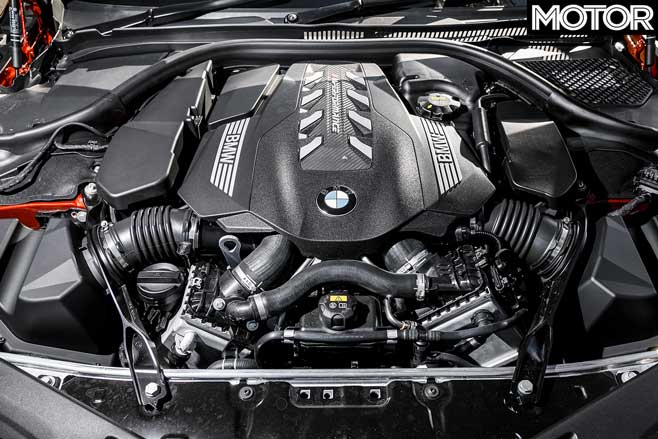
The 4.4-litre twin-turbo V8 is an absolute monster, providing effortless, relentless acceleration, the thrust only tapering off over the last 500rpm or so. It sounds much angrier than you’d expect, too, the wet, gurgly growl a stark contrast to the Jag.
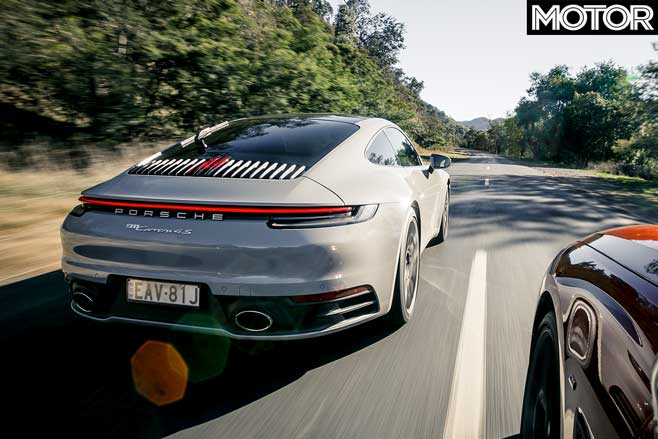
In the face of this V8 onslaught the 911 looks a little outgunned, offering just 331kW/530Nm from its 3.0-litre twin-turbo flat-six. Two things help the Porsche: its 1565kg undercuts the Jag by 140kg and the BMW by 325kg, and the kilowatts in Stuttgart tend to be particularly potent.
Launch control sets the tacho to 5000rpm before the clutches are dumped; the revs flare as the wheels scrabble for purchase, which suggests the 992 is struggling to get going. Apparently not, for 100km/h flashes by in 3.42sec and the quarter mile disappears in 11.43sec at 198.66km/h.
The Porsche and Jag are neck-and-neck all the way to 200km/h, the 911 holding a 0.08sec advantage over the SVR (11.66), the pair putting distance between themselves and the heavier BMW (12.45sec) as speeds increase. The 992 matches the F-Type for in-gear punch, bolting from 80-120km/h in just 2.1sec (the BMW a tenth slower), while it also stops the best, pulling up from 100km/h in just 31.19m.
Possibly the Porsche’s greatest trick is when you leave the drag strip and flick the new steering wheel-mounted drive mode dial – a retrograde step in style compared to the 991.2’s, if you ask me – from Sport Plus to Normal. Instantly, the suspension softens, the exhaust hushes and the engine relaxes, the 992 offering a greater level of comfort and refinement than any 911 before it.
Road noise is still a bugbear – it probably always will be – but the ride is outstanding for a sports car. There’s still an underlying firmness, but enough compliance to ensure most bumps are dealt with long before they reach the occupants.
This provides a moment to appreciate the new 911’s interior, which brings with it a huge step in technology and connectivity. In general, it’s excellent: there’s more room front and rear, the driving position is perfect, the infotainment touchscreen is easy to use, and the twin digital screens flanking the iconic central tacho is a nice melding of tradition and today.
However, some of the plastics feel a bit cheap and it’s unclear why Porsche abandoned its habit of locating buttons either side of the gearlever – as per Panamera and Cayenne – and moved them to the dash, leaving large expanses of blank black plastic.
The Jaguar is snug. Its dash faces the driver, a giant grab handle cordoning off the passenger. The InControl infotainment has its critics, but is easy enough to navigate and all major controls are located within easy reach, while having the central air vent rise out of the dash never fails to impress.
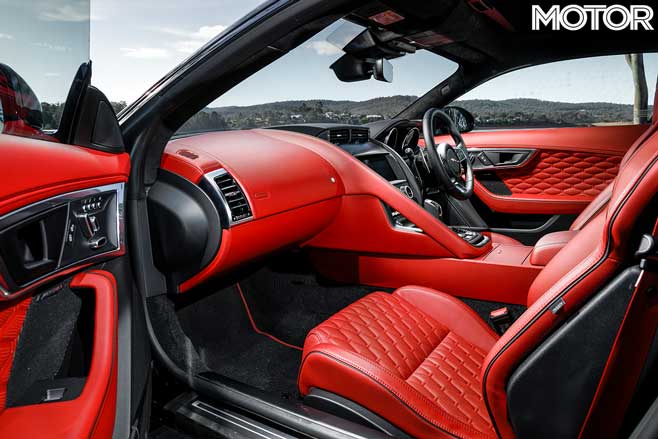
For an interior that’s six years old, it’s holding up well. Given the way it looks and sounds, you’d be forgiven for assuming the SVR chassis has all the subtlety of a Jason Statham fight scene, but it’s remarkably well judged.
Former JLR chassis engineer David Pook once explained that the SVR performed better in all ride metrics than the standard F-Type, and its ability to cushion bumps suggests he didn’t make this up. It gives the Jaguar a long-distance cruising ability that you might not expect from its vents-and-wings styling, but one that feels entirely fitting for the brand. Presumably, we can thank the fact that a lot of Britain’s roads are as crappy as Australia’s for this.
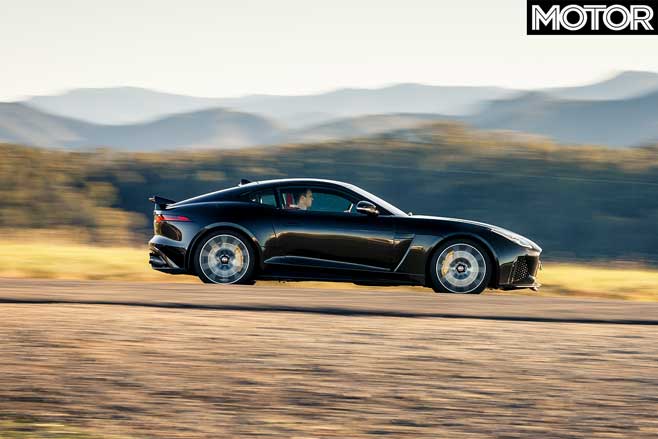
German roads, in general, are not, and you can feel this influence in the M850i. If you have a long distance to drive on smooth roads and the speed limit signs have black crosses on them, the BMW has a lot to commend it.
It has that special quality of making virtually all speeds feel the same; there’s little difference in its behaviour at 50km/h or two or three (or, presumably, four or five) times that. It remains extremely quiet and generally very comfortable. I’ll get to the qualifier in a moment, but first the interior. The materials are great, as is the design, befitting a premium grand tourer, but there are problems.
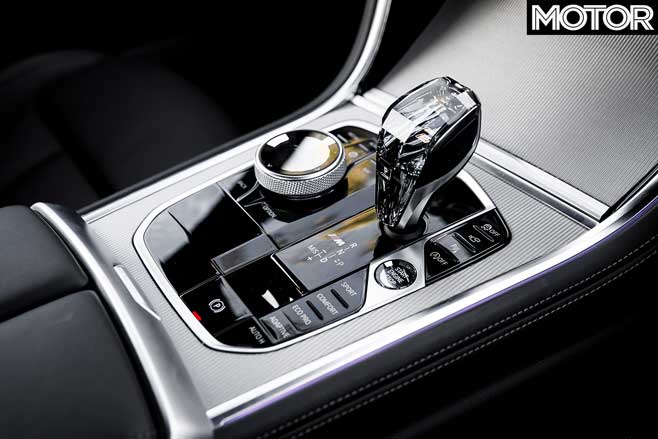
First is the packaging, a legacy from the 6 Series. It remains a mystery how a 4 Series Coupe can comfortably seat four adults yet the larger 8 Series struggles to qualify as a two-plus-two. Having virtually perfected iDrive, the latest version seems to be a step backwards in terms of intuitive use, likewise the drive mode selection buttons. On a more personal note, I deeply miss BMW’s old analogue instruments and would happily delete the Swarovski crystal gear lever, though others may disagree.
Returning to an earlier point, on a smooth, gently undulating road, the M850i is exceptionally comfortable, but introduce a few potholes and ridges and an element of choppiness appears, taking the shine off the grand touring experience.
Thankfully, BMW’s flagship two-door (at least until the M8 arrives) has the handling chops to somewhat justify the sportier ride. For a car of its size and weight, it’s truly remarkable what the M850i is capable of on a twisty road, aided as it is by a comprehensive suite of chassis technology: variable ratio steering, all-wheel steering, active anti-roll bars and all-wheel drive with an electronically controlled rear diff.
It proves its worth in tight bends, with sharp turn-in from the quick-ratio rack, the rear-wheel steer helping rotate the car; the active anti-roll bars prevent excessive weight transfer and the rear-biased all-wheel drive allows the throttle to be applied early and eagerly. There’s even power oversteer available if you’re prepared to find it.
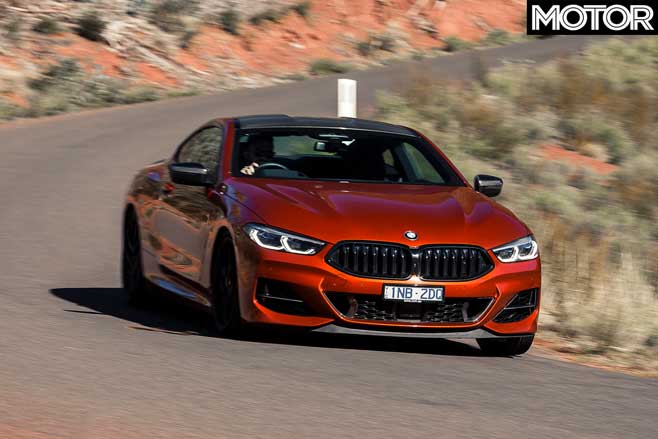
It’s undoubtedly effective, but the technology does feel to put another layer between the driver and the road. The driving position is quite high – at least compared to the other two – which only exacerbates the sensation, and it’s brought to the fore in faster turns. The absence of roll makes it difficult to feel how hard you’re pushing, while the quick steering offers accuracy but not a lot of communication.
Once you’re set in a long, quick corner it’s great, but getting there takes a small leap of faith. Make no mistake, the M850i is genuinely enjoyable to drive, for its beastly engine as well as its handling talents, but it does feel aloof – the technology no doubt enhances its abilities, but it diminishes the experience.
The Porsche can also be optioned with all manner of similar chassis gizmos, but none are fitted to our test 4S and it’s no worse off for it. To say the 992 911 does nothing wrong is accurate, yet also sells it short. It’s really only when you drive it in comparison with two other – extremely competent and capable – rivals that you realise what an incredibly high level it’s operating at.
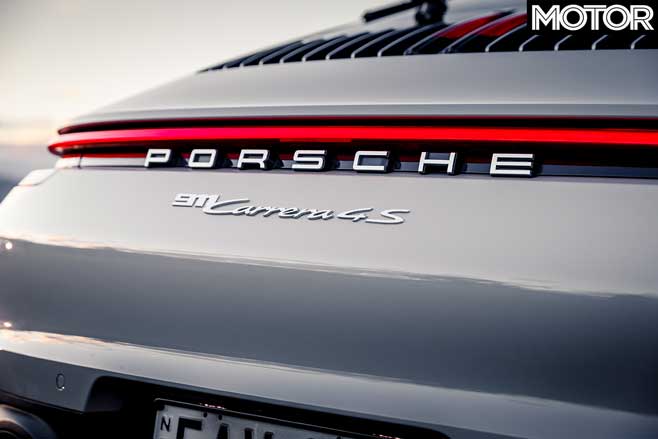
It goes without saying that it has outstanding grip and is capable of insane speeds, but it’s the details where the Porsche separates itself. There’s feedback from the steering and a connection to the chassis the BMW can only dream about, partly thanks to the 911’s new-generation adaptive dampers, which are actually softer in normal mode than their predecessors. It allows the 992 to soak up bumps, the body bobbling slightly and leaning in corners, sensations that give the driver a sense of what the car is up to at any given moment.
Consequently, it still feels like a 911. Yes, the quirks are nothing like what they used to be – driven in a conventional fashion, the 992 is outrageously quick – but understeer will punish impatient throttle applications. There’s too much grip to unload the rear under brakes on the road, but hit the accelerator at the right time and it neutralises beautifully under power.
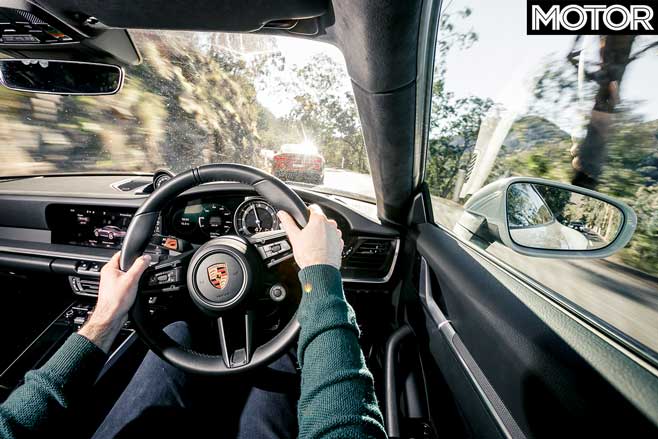
The brakes are brilliant, the transmission telepathic, and it never, ever feels like it’s getting tired, regardless of how hard you thrash it. It even sounds good, doing an uncanny air-cooled impression for bystanders under heavy load at low rpm, morphing in a more cultured howl with plenty of over-run histrionics.
But if it’s theatre you want, the F-Type SVR is the car for you. The supercharged V8’s throttle response is so sharp it makes the BMW feel flaccid and even the 911 a bit lazy. It’s matched by a hyper-responsive chassis that takes time to gel with.
Drive the Jaguar after the Porsche and it feels to be all over the place, constantly reacting to bumps and irregularities in the road, the darty steering then resulting in an over-correction. Inputs need to be small and carefully measured in order to use the F-Type’s agility to your advantage.
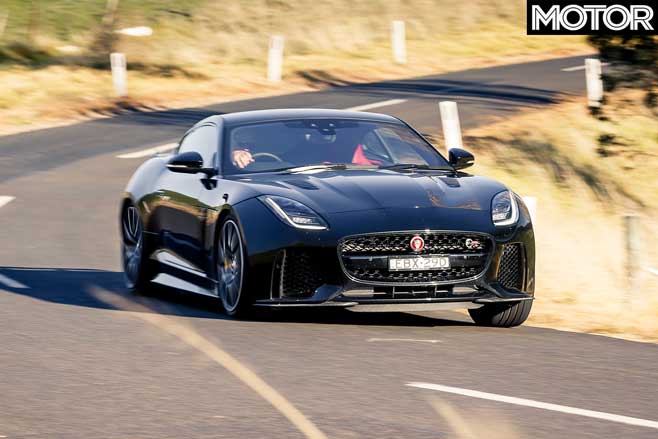
It pivots sharply around its middle; unlike the 911, it’s no trouble to unstick the Jag’s shapely posterior under brakes – excellent carbon-ceramic items, since you ask – and picking up the throttle holds it there. The all-wheel drive system is extremely well judged, offering enough power oversteer to entertain but total traction. As much as I miss the wonderfully mad (and now discontinued) rear-drive F-Type R, which had as much rear grip as wet soap, it is nice to be able to exploit the engine’s enormous reserves.
Sync with the Jaguar’s unique rhythm, give it a long enough leash to move around, and it can cover ground at an astonishing rate, inducing a face-splitting grin while doing so. It also looks amazing, sounds incredible and in some respects makes the Porsche feel a bit serious, like it hasn’t quite understood the joke.
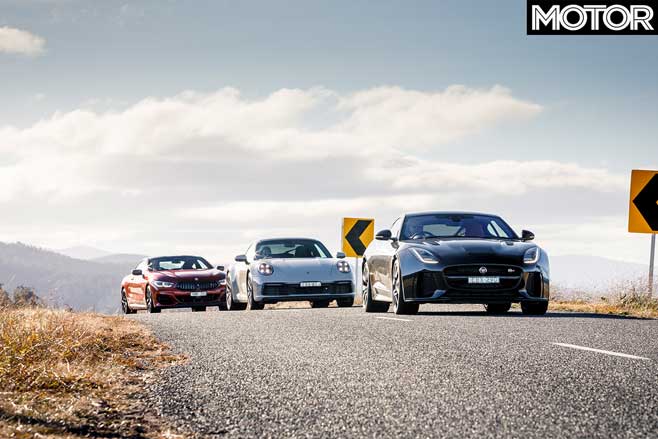
It would be interesting to drive a ‘true’ F-Type SVR: for instance, ditch the electric seats and solid glass roof and you’d save 100kg or more. The same could be said of the 911, but then the German doesn’t weigh more than 1700kg. Nevertheless, the Jag is an intoxicating machine that has the character to gloss over its flaws.
There’s much to commend the BMW: imposing looks (especially with the optional carbon pack fitted to our test car), incredible performance, surprisingly deft dynamics and a level of refinement beyond its sportier competitors. However, the M850i does feel a bit too clever for its own good. The chassis gizmos undoubtedly help defy physics, but I’d happily trade 10 per cent of its handling nous for more feedback and greater ride comfort; a week in a 740i following this test shows how plush BMW can make a car when it wants to.
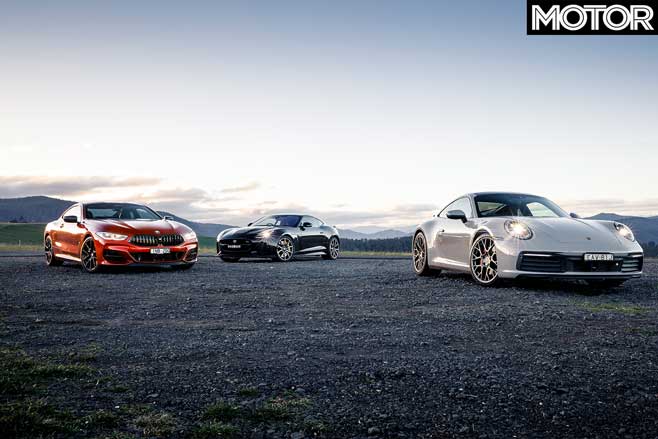
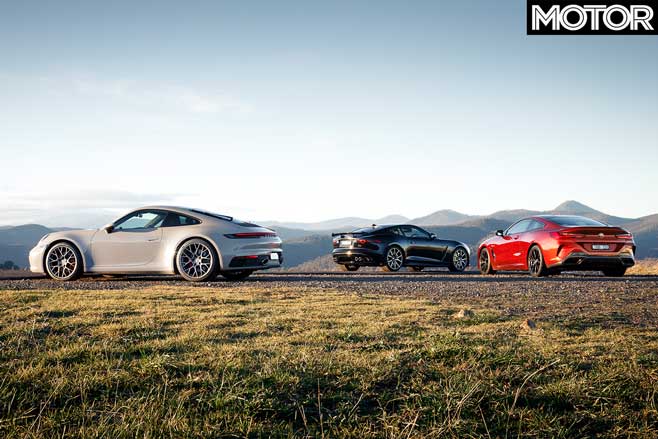
Which just leaves the Porsche. We realise a 911 victory is a boring verdict, but it’s an unavoidable one when they remain so damn good. It’s the quickest and most capable car here when driven hard and more than happy to tackle a racetrack, yet is the most comfortable and economical in day-to-day use. A kerb weight of 1565kg will shock the purists and an as-tested price of $326,020 seems a lot, but in real terms the C4S is cheaper than it was a decade ago. The 992 is a masterpiece, improving in areas we didn’t even realise needed improving. It’s a simply exceptional sports car.
Fast Facts
| u00a0 | Porsche 911 Carrera 4S | Jaguar F-Type SVR | BMW M850i |
| Body | 2-door, 4-seat coupe | 2-door, 2-seat coupe | 2-door, 4-seat coupe |
| Drive | all-wheel | ||
| Engine | 2981cc flat-6, DOHC, 24v, twin-turbo | 5000cc V8, DOHC, 32v, supercharger | 4395cc V8, DOHC, 32v, twin-turbo |
| Bore x Stroke | 91.0 x 76.4mm | 92.5 x 93.0mm | 89.0 x 88.3mm |
| Compression | 10.2:1 | 9.5:1 | 10.5:1 |
| Power | 331kW @ 6500rpm | 423kW @ 6500rpm | 390kW @ 5500-6000rpm |
| Torque | 530Nm @ 2300-5000rpm | 700Nm @ 3500-5000rpm | 750Nm @ 1800-4600rpm |
| Power/Weight | 212kW/tonne | 248kW/tonne | 206kW/tonne |
| Transmission | 8-speed dual-clutch | 8-speed automatic | |
| Weight | 1565kg | 1705kg | 1890kg |
| Suspension | struts, coil springs, adaptive dampers, anti-roll bar (f); multi-links, coils, adaptive dampers, anti-roll bar (r) | double wishbones, adaptive dampers, anti-roll bar (f/r) | struts, coil springs, adaptive dampers, anti-roll bar (f); multi-links, coils, adaptive dampers, anti-roll bar (r) |
| L/W/h | 4519/1852/1300mm | 4475/1923/1311mm | 4851/1902/1346mm |
| Wheelbase | 2450mm | 2622mm | 2822mm |
| Tracks | 1589/1557mm (f/r) | 1585/1611mm (f/r) | 1627/1642mm (f/r) |
| Steering | electrically assisted rack-and-pinion | ||
| Brakes (f) | 350mm ventilated/drilled discs, 6-piston calipers | 398mm ventilated/drilled carbon-ceramic discs, 6-piston calipers | 395mm ventilated discs, 4-piston calipers |
| Brakes (r) | 350mm ventilated/drilled discs, 4-piston calipers | 380mm ventilated/drilled carbon-ceramic discs, single-piston calipers | 398mm ventilated discs, single-piston calipers |
| Wheels | 20 x 8.5-inch (f); 21 x 11.5-inch (r) | 20 x 10.0-inch (f); 20 x 11.0-inch (r) | 20 x 8.0-inch (f); 20 x 9.0-inch (r) |
| Tyre Sizes | 245/35 ZR20 (f); 305/30 ZR21 (r) | 265/35 ZR20 (f); 305/30 ZR20 (r) | 245/35 ZR20 (f); 275/30 ZR20 (r) |
| Tyres | Goodyear Eagle F1 | Pirelli P-Zero | Michelin Pilot Super Sport |
| Price | $281,100 ($326,020 as-tested) | $297,242 ($329,012 as-tested) | $275,900 ($283,900 as-tested) |
| Pros | Speed; precision; brakes; stamina; almost everything | Supermodel looks; playful handling; V8 noise | Remarkable performance and handling; refinement |
| Cons | Some iffy interior details; weighs quite a lot for a 911 | Can feel darty and disturbed on poor roads | Tech overload; ride on poor surfaces; packaging |
| Rating | 5 out of 5 stars | 4 out of 5 stars | 4 out of 5 stars |
The Strip
| u00a0 | Porsche 911 Carrera 4S | Jaguar F-Type SVR | BMW M850i |
| 0-10km/h | 0.25sec | 0.23sec | 0.21sec |
| 0-20km/h | 0.54sec | 0.55sec | 0.53sec |
| 0-30km/h | 0.84sec | 0.85sec | 0.89sec |
| 0-40km/h | 1.15sec | 1.16sec | 1.21sec |
| 0-50km/h | 1.48sec | 1.52sec | 1.54sec |
| 0-60km/h | 1.81sec | 1.85sec | 1.89sec |
| 0-70km/h | 2.13sec | 2.27sec | 2.22sec |
| 0-80km/h | 2.54sec | 2.71sec | 2.67sec |
| 0-90km/h | 2.96sec | 3.15sec | 3.10sec |
| 0-100km/h | 3.42sec | 3.60sec | 3.63sec |
| 0-110km/h | 3.96sec | 4.22sec | 4.17sec |
| 0-120km/h | 4.56sec | 4.86sec | 4.78sec |
| 0-130km/h | 5.18sec | 5.49sec | 5.46sec |
| 0-140km/h | 5.88sec | 6.13sec | 6.25sec |
| 0-150km/h | 6.58sec | 6.79sec | 7.05sec |
| 0-160km/h | 7.48sec | 7.65sec | 7.90sec |
| 0-170km/h | 8.41sec | 8.52sec | 8.94sec |
| 0-180km/h | 9.38sec | 9.42sec | 10.02sec |
| 0-190km/h | 10.42sec | 10.38sec | 11.15sec |
| 0-200km/h | 11.58sec | 11.66sec | 12.45sec |
| 0-400m | 11.43sec @ 198.66km/h | 11.55sec @ 199.21km/h | 11.68sec @ 194.24km/h |
| 80-120km/h (Drive) | 2.1sec | 2.1sec | 2.2sec |
| 100-0km/h | 31.19m | 33.40m | 35.36m |
| Speed in Gears | |||
| 1st | 66km/h @ 7500rpm | 71km/h @ 7500rpm | 53km/h @ 6500rpm |
| 2nd | 102km/h @ 7500rpm | 107km/h @ 7500rpm | 83km/h @ 6500rpm |
| 3rd | 151km/h @ 7500rpm | 159km/h @ 7500rpm | 133km/h @ 6500rpm |
| 4th | 208km/h @ 7500rpm | 201km/h @ 7500rpm | 170km/h @ 6500rpm |
| 5th | 275km/h @ 7500rpm | 261km/h @ 7500rpm | 223km/h @ 6500rpm |
| 6th | 306km/h @ 6640rpm | 322km/h @ 6330rpm* | 250km/h @ 5540rpm* |
| 7th | 306km/h @ 5380rpm* | 322km/h @ 5310rpm* | 250km/h @ 4570rpm* |
| 8th | 306km/h @ 4310rpm* | 322km/h @ 4220rpm* | 250km/h @ 3550rpm* |
Heathcote Raceway, 15˚C, dry. Driver: Scott Newman *Manufacturer’s claim Official timing supplier: www.vboxaustralia.com.au
AWD Curiosities: 1988 BMW 325ix A winter wonder rather than street fighter
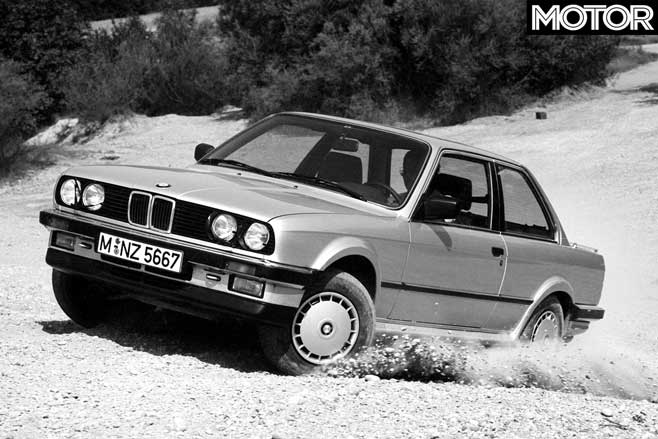
Missed under the (justified) furore of the E30 M3’s giant-killing race results, the four-wheel drive BMW 325ix also received FIA homologation, though in practice its system was more focused on year-round traction than increased performance.
Powered by the smooth 2.5-litre inline-six of the 325i, the 325ix was predominantly sold in Europe and North America and used a Ferguson transfer box and two viscous couplings – one each for the rear and centre differentials. Drive split was rear-biased to 63:37, the front drive using an open differential mounted in the engine’s sump.
Heavier and slower than the rear-drive 325i, the ix wasn’t popular among enthusiasts, though it paved the way for the modern, highly variable xDrive system seen today. – Adam Davis
AWD Curiosities: Porsche 953 Taking four to the fore in 1984
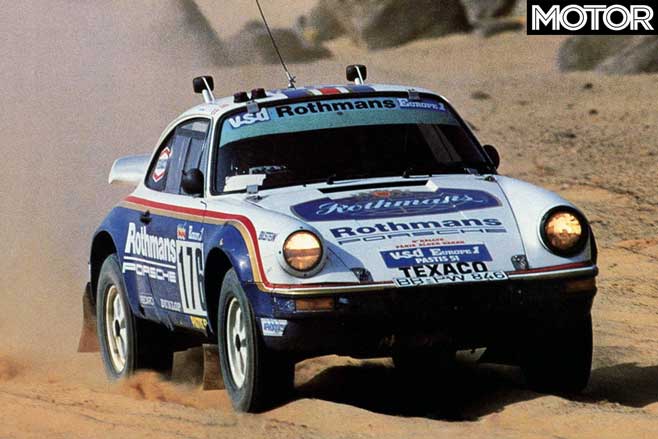
With all its on-track success, you could be forgiven for forgetting that the Porsche 911 also has a strong multi-surface motorsport history. Early 911s were as much about rallying as racing, with three successive Monte Carlo Rally wins to prove it.
Maximising the power of Group B regulations, Porsche then developed a four-wheel drive 911, coded 953, to tackle long-distance desert events, winning the Paris-Dakar outright in 1984 with the 911 SC-based machines. The 953 featured a ‘switchable’ mechanical four-wheel drive system that could be engaged via a cockpit-mounted switch as the driver required.
Learnings from the 953 program were adopted into the 959 supercar, and from the 964-series 911 in 1989, Porsche has always offered a four-wheel drive 911 variant – a trend that continues with the current Carrera 4S. – Adam Davis
AWD Curiosities: Jaguar XJ220 Concept When compromise overcomes purity of spirit
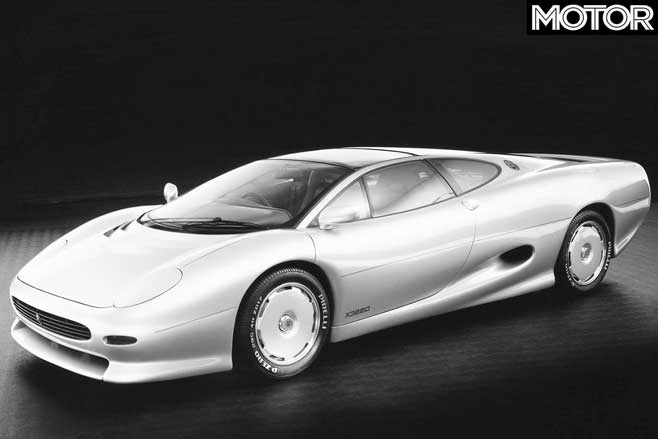
Even if the production Jaguar XJ220 was (briefly) the fastest car in the world, the public – not to mention the early depositors – were massively disappointed. But why?
The XJ220 Concept’s original specification included a Le Mans-bred atmo V12, as well as Jaguar’s first take on a four-wheel drive system.
With expert guidance from Tony Rolt’s FF Developments (think Jensen FF and the 1961 Ferguson P99 F1 car), the concept team developed a mid-engine-friendly drive system. Front wheels were driven off the rear transaxle via a shaft that was ingeniously mounted through the engine’s vee, finally being split between the fronts via an inverted differential.
Alas, complications, weight, time and cost were against the concept ever seeing the light of day… but its spirit is present in today’s F-Type SVR. – Adam Davis
Wagon or SUV? If it were up to the buying public there is no contest, with SUV sales growing year on year at an incredible rate.
But the buying public also meant the Minions movie grossed $1.16 billion US in 2015, so they have a proven record of poor decisions.
For me, if there is an equivalently sized and priced wagon, I don’t see any good reason to opt for the SUV.
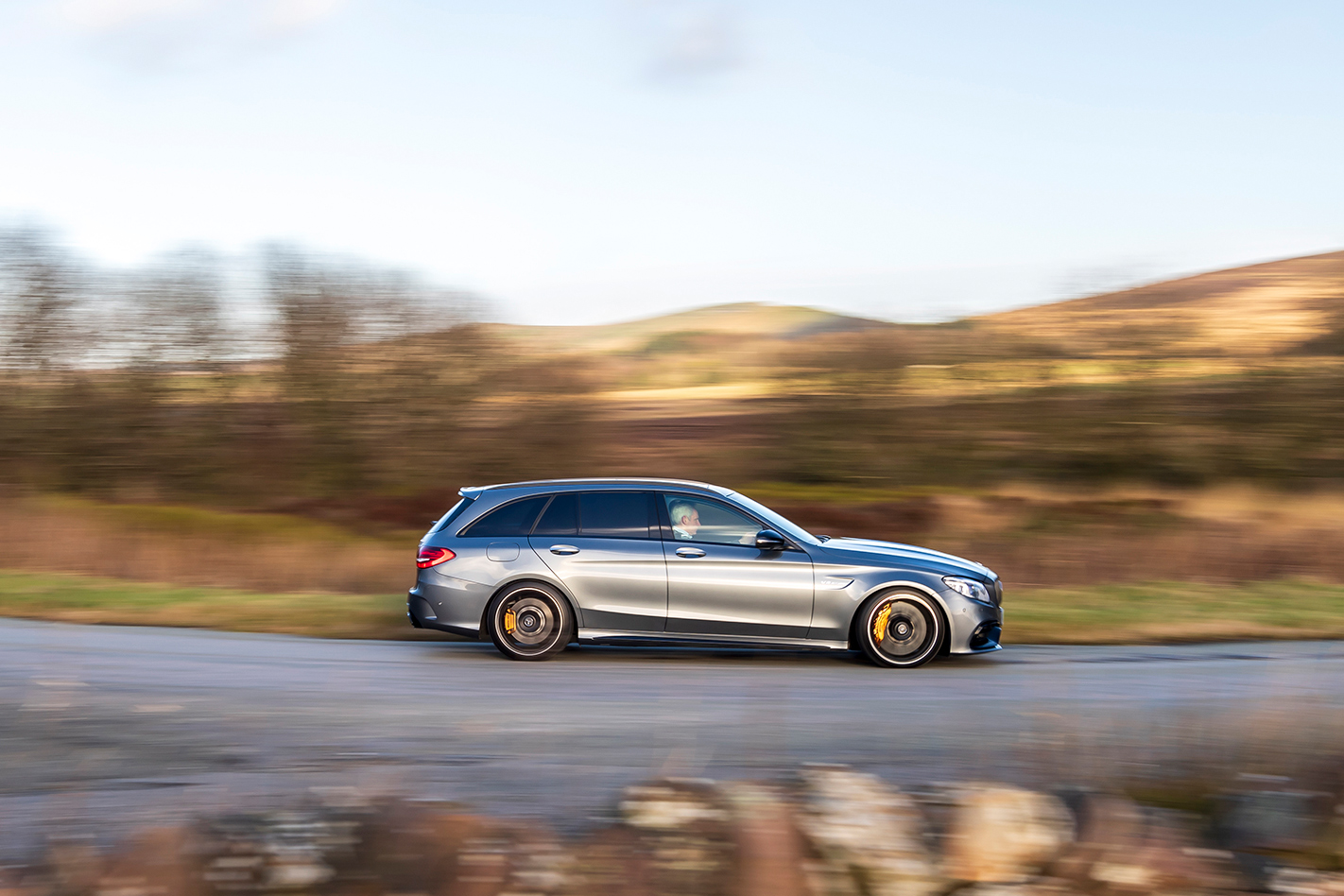
Don’t get me wrong, there are good SUVs, the Wheels Car of the Year Volvo XC60 is just about the pinnacle for the genre, but I’d personally rather a V60 in the garage any day of the week.
Importantly, not everyone in the Wheels office agrees with me – namely Andy Enright. Before I explain why he is wrong, I’ll give Andy a chance to defend the honour of the SUV.

Andy Enright
Deputy Editor
Wagon or SUV? It’s a perpetually vexed question and, from a strictly philosophical point of view, wagons have a certain fundamental rectitude. They’re lighter, more agile, more efficient, yada yada. We know this but we still buy SUVs. Why? Because of a number of practical reasons.
Research has shown that drivers often feel safer if they sit higher. What’s more, they feel safer driving something that feels substantial. Who are these drivers? They’re usually the least confident drivers on our roads. Anything that can make these modestly-skilled drivers less nervous and pressured at the wheel is a good thing in my book.
Let’s not ignore the fact that the hip point in the most common SUVs is at a near-perfect height to get in and out of more easily. It’s not an enthusiast thing to point out but we’re looking at measures of success here and you can’t argue with the data. Population projections for Australia suggest that there will be four million people aged between 65-84 years by 2022 with rapid acceleration of some age groups (over 65, over 85) in the next ten years.
We’re also getting fatter. More than six million Australians aged 18 and over are overweight (BMI of 25.0kg/m2 to 29.9kg/m2), so bigger people want bigger passenger cells and the airier cabins of SUVs also find favour with those who can no longer slip into skinny jeans.
Other lifestyle choices also mean that SUVs are ‘better’ for some. The ability to negotiate dirt roads and unmade tracks without fear of grounding the vehicle, the prevalence of AWD drivetrains to facilitate off-road excursions, and merely the fact that sitting higher often makes journeys more pleasant for passengers can’t be discounted.
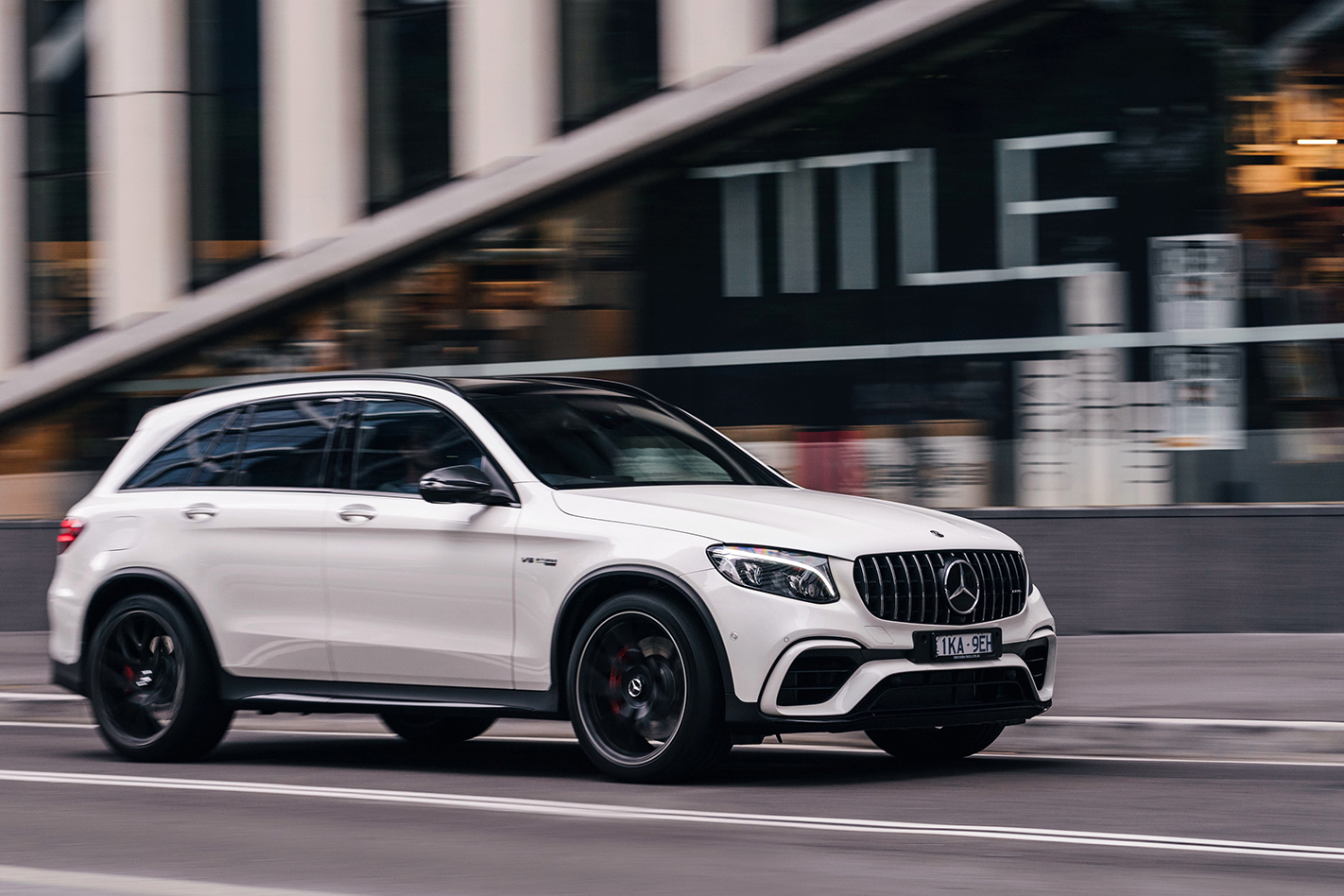
I’d certainly choose a Merc GLC43 AMG over a C43 AMG Estate. Not only is it nine grand cheaper, but the tailgate loading height is higher so you’re not going to slip a disc lifting gear out, it looks better to me, you can specify air suspension for it, it can carry more, it’s happier on dirt roads and headroom in the vehicle is better for taller guys like me. And if you can find the edge of the handling envelope where a C43 can do things that the GLC can’t, you’ll likely be deep into custodial sentence territory on road anyway. I’m probably not about to lose any sleep over the extra 600 millilitres of fuel the SUV will use every 100km because its resale value is significantly higher than the wagon (4 percent according to Glass’ guide).
There’s a reason why so many Australians prefer SUVs to wagons and it’s both patronising and insulting to dismiss this vast bloc of SUV converts as sheep, ill-informed or gulled by marketers. It’s a form factor that works for more people more of the time, a natural evolution of the traditional wagon. You could almost describe that as being, I don’t know, better?
Some might argue that the people-carrying ability of an SUV makes it the logical choice, particularly for those that might need to carry seven people. But those that are regularly moving seven people on a regular basis have only a small number of high-riders to seriously consider, and they don’t hold a candle to a proper people mover.
So then we move into the realms of moving inanimate objects, and our four-legged friends.
To make my point I’ll compare the Mercedes-Benz GLC and C-Class. While the SUV has a larger official capacity of 550 litres, in the real world the estate’s 510-litres is more useable, with less height, but more floor space. How often do you really fill a car above the rear seat line? The lip of the boot is also lower, which makes life easier when loading the space.
A higher hip point to make entry and egress easier is of no great desire, as what I sacrifice there I make up with the often smaller physical dimensions of a wagon which make parking and urban driving easier.
I’m not going to fall into clichés and say all SUVs drive like they are riding on stilts made of jelly, often quite the opposite. But they still can’t match a wagon for driving enjoyment, even when well within the legal limits
Then there is performance and fuel efficiency. A wagon is lighter, and will often have the same power levels as a SUV sibling, giving it a livelier character. Less weight and a smaller frontal area will also improve real-world fuel economy.
Plus, a wagon’s silhouette is a more refined and handsome thing than those of a SUV or crossover. And with SUV sales booming, picking a wagon means you’ll stand out from the crowd instead of being another member of the Toorak Tractor club.
So a wagon offers a better driving experience, is more fuel efficient, better looking (to me), and stands out from the crowd compared to an SUV. Why would I want to compromise?
Who are you backing on this one, Kirby or Enright? Hit up the comments and let’s get this settled once and for all!
Ayrton Senna’s death, Nigel Mansell’s return and the Schumacher era begins. Court cases, massive fines and driver bans. An FIA safety drive, knee-jerk reactions and the reintroduction of refuelling.
Rumours, accusations and scapegoats. Drivers in comas, mechanics on fire and a wreckage in the crowd. Regulation changes, calendar changes and the Grand Prix Drivers’ Association’s renaissance. The death of Lotus. Debatable hi-tech software and debatable planks of wood. It’s all wrapped up by one of the most controversial title-deciders in Formula One history… through the tragedies, bickering and technical complexities, Formula One’s 1994 season was both one to forget and also utterly unforgettable.
This story was first published in 2004
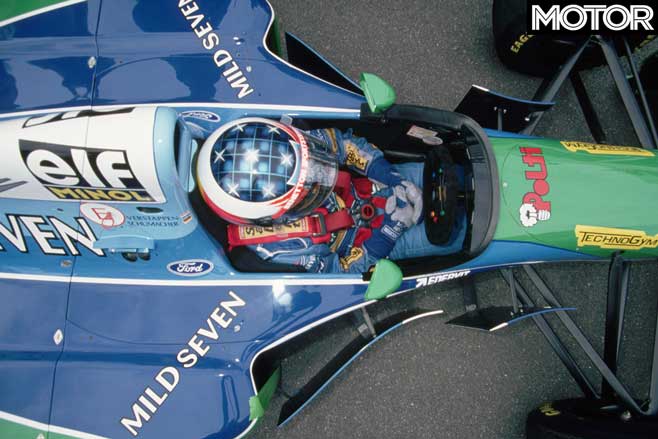
In the ’70s, ’80s and ’90s the F1 world title usually passed between McLaren, Williams and Ferrari. Only in 1994-’95 did another team get a look-in. For a short period Benetton had everything in place. The colourful leadership of Flavio Briatore was balanced by the take-no-prisoners approach of Tom Walkinshaw. The oft-maligned Scot’s contribution has been overlooked; it was he rather than Flavio who pulled all the key elements together to win.
It was Tom who gunned for Michael Schumacher’s services after the German’s impressive GP debut, and it was Tom who brought Ross Brawn with him from TWR’s sportscar squad, so creating the dynamic duo with chief designer Rory Byrne which would go on to even greater things at Ferrari.
In 1994, though, all these guys had to fight their way through what was perhaps the most dramatic season in the sport’s history, eventually overcoming a stream of controversies to claim the ultimate prize.
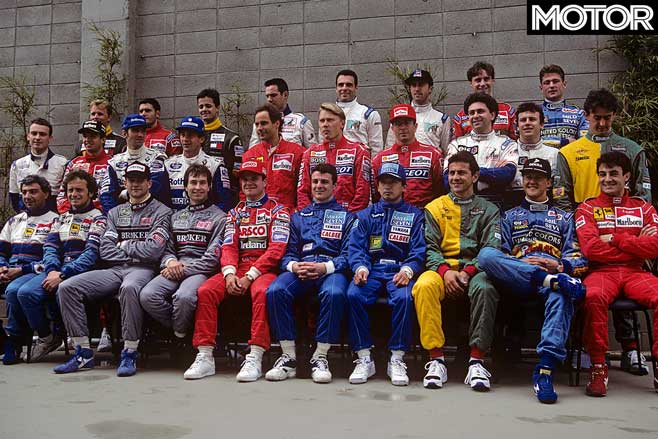
“It really started in 1993,” Brawn recalls. “We realised that we needed to make a big step if Benetton was to become a serious contender. As soon as we had the ’93 car I said to Rory and the guys, ‘Let’s just forget this car for the rest of the year. I want you to start on the ’94 car now. We need to make a quantum leap in our performance, and we’re not going to do it if we spend all our time trying to improve the ’93 car’. It’s a philosophy we still have today, but it was the first time anyone had really approached F1 in that way.”
“We ensured that Cosworth took the same approach. We wanted 1994 to be a leap for them as well. Their strengths were not in power but in driveability, size, packaging. It was a lovely little engine.”
There were good reasons to put extra effort into the 1994 car. The banning of driver aids such as traction control and active suspension meant teams had to start with a clean sheet of paper, and search for grip from aero and mechanical developments. In addition the introduction of refuelling created a whole new set of opportunities.
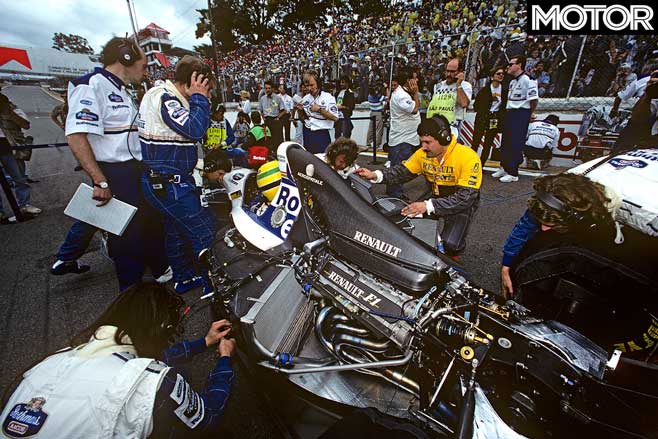
“Over the winter it became clear that we had a very, very good car,” says Brawn. “I don’t think we ever believed we’d win the championship with it, but we knew that we’d made the leap required to make Benetton a serious contender. It was after an Imola test, just before the season, that I began to believe we could win races in 1994. But it was a surprise when we went to the first three and won them all.”
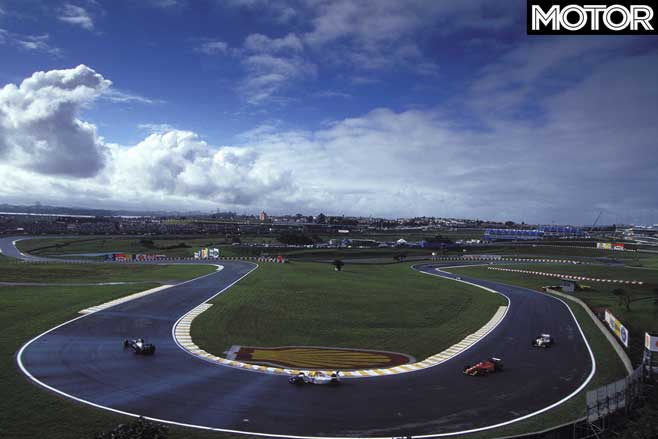
Ayrton Senna took pole position for Williams at Interlagos, Aida and Imola, and his death in the latter event shook the sport to its core; Schumacher was affected by it more than he ever let on. The expected battle with the Brazilian would not now happen, and Michael could only be defeated if Damon Hill stepped up to spearhead a Williams revival.
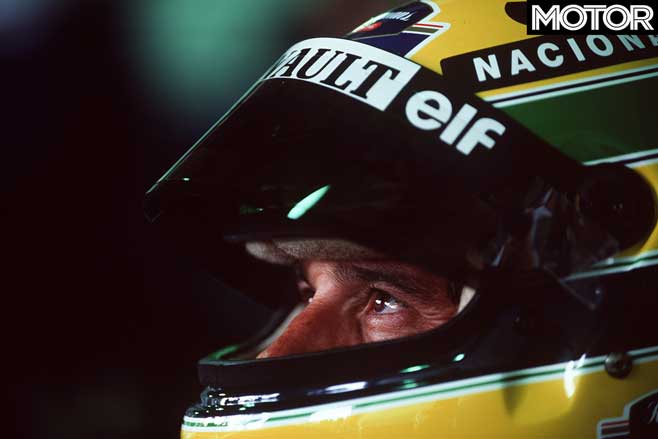
Brawn was not the only one surprised by Benetton; Senna had his private doubts about the legality of the B194, and others in the paddock agreed. A whisper campaign began. The FIA made its own stand by sampling software taken from Benetton, Ferrari and McLaren – the top three at Imola; this was the first time any such checks had been made. It was then analysed by Alan Prudom of LDRA, the company hired to help police the new rules.
Brawn: “It was a terrible period, obviously, and it became very highly charged politically. In that environment I think we became focused on for all the wrong reasons. Here we were, a T-shirt manufacturer, beating McLaren, Williams and Ferrari, who felt they had a God-given right to win GPs. That went against the grain. They had to explain to their sponsors and boards why they were being beaten by someone so inconsequential. The easy reason was that we were supposedly using traction control, doing this, doing that.”
Meanwhile, the sport endured yet more serious accidents. The FIA rushed to introduce measures to slow the cars; the teams had to respond. Briatore’s response was to write a critical letter to Max Mosley, which was circulated to the media.
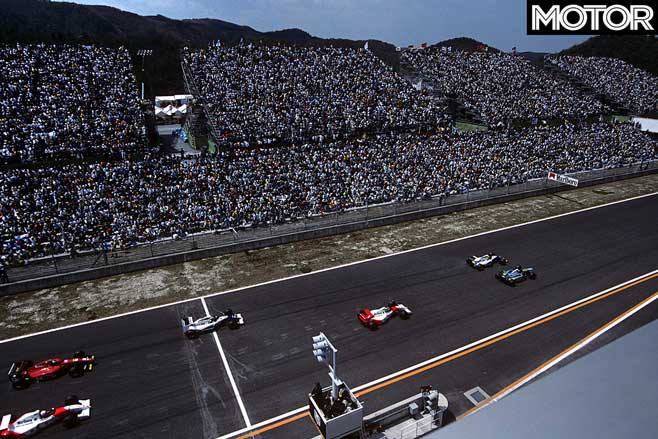
FIA technical delegate Charlie Whiting also took a personal broadside. It all got very messy, to the extent that private meetings between Benetton and FIA people were allegedly taped by the team and transcripts distributed to interested parties.
“Tom and Flavio were behind that famous letter which suggested Max wasn’t fit to run F1 and, as an engineer, I saw that we were getting our payback,” says Brawn. “There was no discretion being shown in any way, shape or form towards us. We were given no leeway at all. We only had to stray out of line a fraction and we would get hammered.”
The most celebrated example of this occurred at Silverstone. Damon beat Michael to pole, but on the formation lap the German tried a bit of gamesmanship by leading the pack away from the grid. It was not an unprecedented move, but it contravened a little-known rule which stated that only the pole man could pace the field. To compound the situation Schumacher did exactly the same thing before the restart.
Brawn: “Again it was all wrapped up in the hysteria that was going on. By his own admission, to intimidate Damon, Michael was messing about on the warm-up lap. The stewards decided to penalise him. We had this scrappy bit of paper handed to us on the pitwall – half a piece of A4 which had ‘10-second penalty’ scribbled on it [it actually read 5sec]. Tom said, ‘We’ve got a penalty. Michael’s going to have to push on and we need to allow for it.’ So we carried on, assuming that they’d add it at the end [of the race].
“Then we got a black flag, and we said, ‘What the hell’s that for?’ They said we should have done a stop-and-go penalty. We showed them the piece of paper and they said, ‘Oh, you’re right, we screwed up. Do it now and you’re okay.’ So we did the penalty. But we still got penalised because the black flag is sacrosanct: even if it was unjustified, we had to respect it.” Despite the stop-and-go, Michael finished second. But subsequently he had the result taken away – and was also handed a two-race ban. He would miss his home race, news that left his countrymen in a fury.
“We weren’t going to appeal the Silverstone decision,” says Brawn. When you have got a Cosworth V8, Hockenheim is probably the least competitive race of the year.
“But then there was a huge uproar from the German public. We had pleas from lots of important people in F1 to appeal so we could at least race in Hockenheim and appease the fans. So we did, because it was indicated that the appeal would be looked upon favourably. We raced at Hockenheim, where we blew up. Then we were completely stitched up – the appeal went through and nothing was done.”
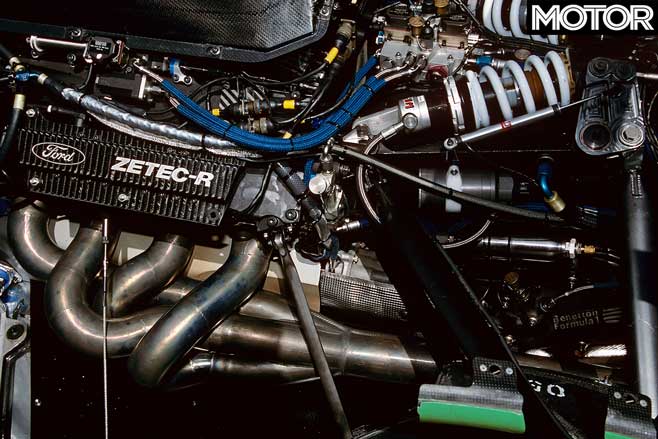
A lot more drama had unfolded before that particular hearing, however. The results of the FIA’s Imola software tests finally became known at Hockenheim, and in his official report Whiting claimed Benetton had been using a launch control. It had been found listed in a menu as the 13th option, following an empty space coming after numbers one to 10. Benetton vehemently protested its innocence.
“We were probably naive,” says Brawn. “We were a team which had not been in the spotlight before, and suddenly we were winning races, against the form book. We had no issues with the FIA in terms of them seeing what we’d created, but Ford did. They refused to give the FIA the source codes, as they considered them to be their intellectual property. We were stuck in the middle for a long time.
Eventually we found a compromise with the FIA, and when they were studying the software they discovered a discarded portion of the infamous Option 13; it has been reported many times that it was a traction control, but actually it was a launch control.
“We were then able to demonstrate that there was a broken chain of software: it was impossible to use Option 13. But, of course, we got dragged through the courts, I think for other reasons. Eventually the FIA said there was no proof that we used Option 13. But in the hysteria that was going on, it was portrayed badly. I was very frustrated because it tainted a fantastic achievement.”
While the software issue rumbled on, there was even more trouble for Benetton. Jos Verstappen’s pit fire at Hockenheim opened a whole new can of worms when it was revealed that the team had removed a filter from the fuel hose (1994 saw the return of refuelling during races), although Brawn claimed that the FIA had given permission to do so.
That row continued to Hungary, where Schumacher won. He scored another great victory after a spin at Spa, only to fall foul of post-race checks. The 10mm ‘plank’ under his car, recently introduced to control ride heights, was deemed to be worn too thin, the implication being that the B194 had been running too low. His victory was scrubbed, handing Hill the 10 points.
Just two days after Spa an earlier appeal against the Silverstone penalty was heard. The two-race ban was upheld, so Michael now had to miss Monza and Estoril. Hill won them both. The title battle was closing up, and Schumacher was under assault from all sides.
“It was very stressful. He was still a very young and relatively inexperienced F1 driver, who was achieving a huge amount,” says Brawn. “He didn’t need that extra pressure. He felt it, and I’m sure it did have some influence on his performance.”
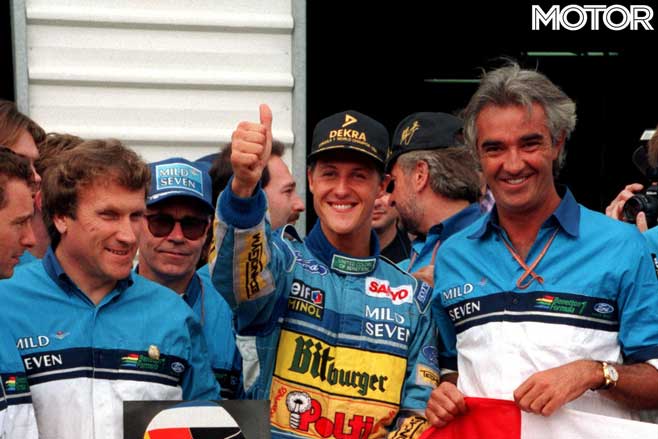
The crunch came at a wet Suzuka, where Hill scored a brilliant win. He was now just one point behind.
It all boiled down to Adelaide – and it turned out to be one of the most dramatic conclusions to a title race. Hill harried his German rival into a mistake – only for the crippled Schumacher to put them both out when he made a desperate lunge towards the Brit.
Ross: “It was despair at first when he hit the wall – and then when he bounced off and collected Damon there was a glimmer of hope! The championship was very tight, but we thought that very unjust, because we should have won in a quite straightforward fashion. We were feeling badly done by. You can argue about Australia, but I think it would have been a serious injustice if we hadn’t won the title: we had the best car, the best driver, the best team. We just didn’t have the best political position. We learned from that.”
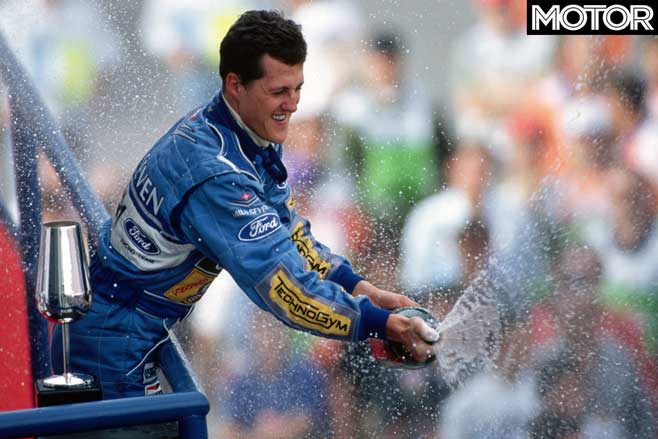
Considering that he was docked 16 points, and banned from two further races, it was hard to begrudge Schumacher the title. He’s proved in subsequent years how good he is, but a decade on there still remains a cloud over that first success.
“There was a high level of paranoia in every direction,” says Brawn. “It was a very unpleasant year. When I joined Ferrari I had a long talk with Jean Todt about his approach, and he said truly he believed that we were doing something wrong, because there was no easy excuse. But he said now he’d seen the people involved – Rory, myself, Michael and others – he understood what 1994 was about.
“But in the hysteria, the tragedies of Imola and all the other factors, it was whipped up. Jean has changed his mind, but there are certain people, whom I don’t respect, whose opinion will always remain the same. And I don’t respect them because they’re not willing to be logical.”
Saturday salutations on this big motoring weekend, friends of WhichCar.
It’s also been significant week for Aussie car lovers, capped off by the unveiling of the Australia-exclusive supercharged Ford Mustang R-Spec that’s set to arrive in early 2020 for around $99,980, with its circa 520kW/820Nm blown V8 backed by a full five-year factory warranty.
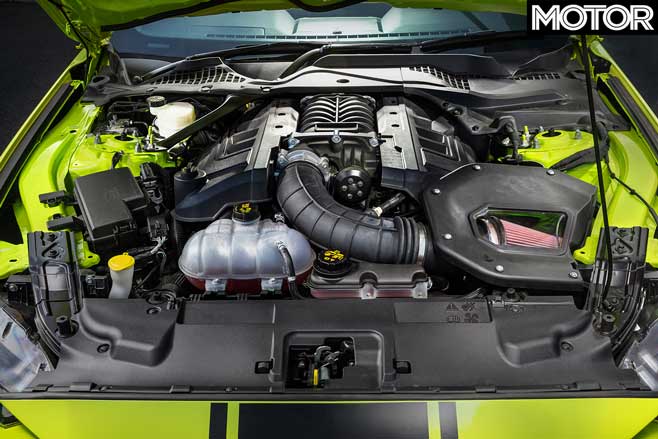
The team at Motor has dug deep present everything known so far about this incredible muscle car, including pricing and features, the engineering work behind it, and why this overnight sensation has been years in the making.
Another home-grown performer was revealed this week too, with Nissan announcing it’ll be bringing out a new top-spec Navara called the N-Trek Warrior to do battle with other tricked-up 4×4 utes such as the Ford Ranger Raptor, Toyota Hilux Rugged-X and the HSV SportsCat.
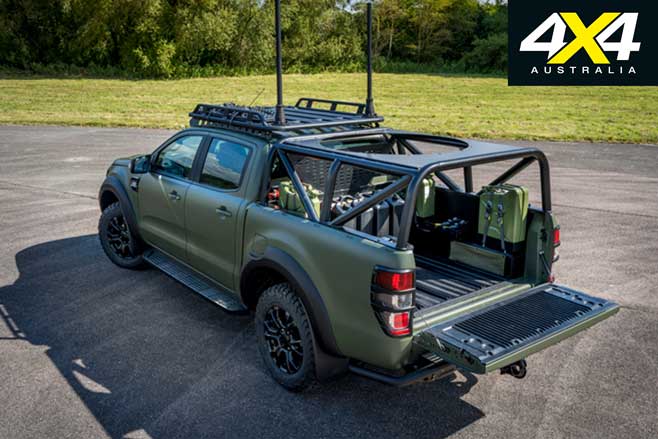
Speaking of battle utes, one pickup that received plenty of interest this week was the military-spec Ranger by Ricardo, the UK company responsible for the design and construction the British Army’s attack Land Rovers.
And while we’re still in 4X4 land, it turns out Aussies are turning to big-American pick-up trucks like the RAM 1500 in droves, Isuzu teased its all-new 2020 D-Max … and would you pay $150,000 for a meticulously restored 1981 Toyota LandCruiser FJ40?
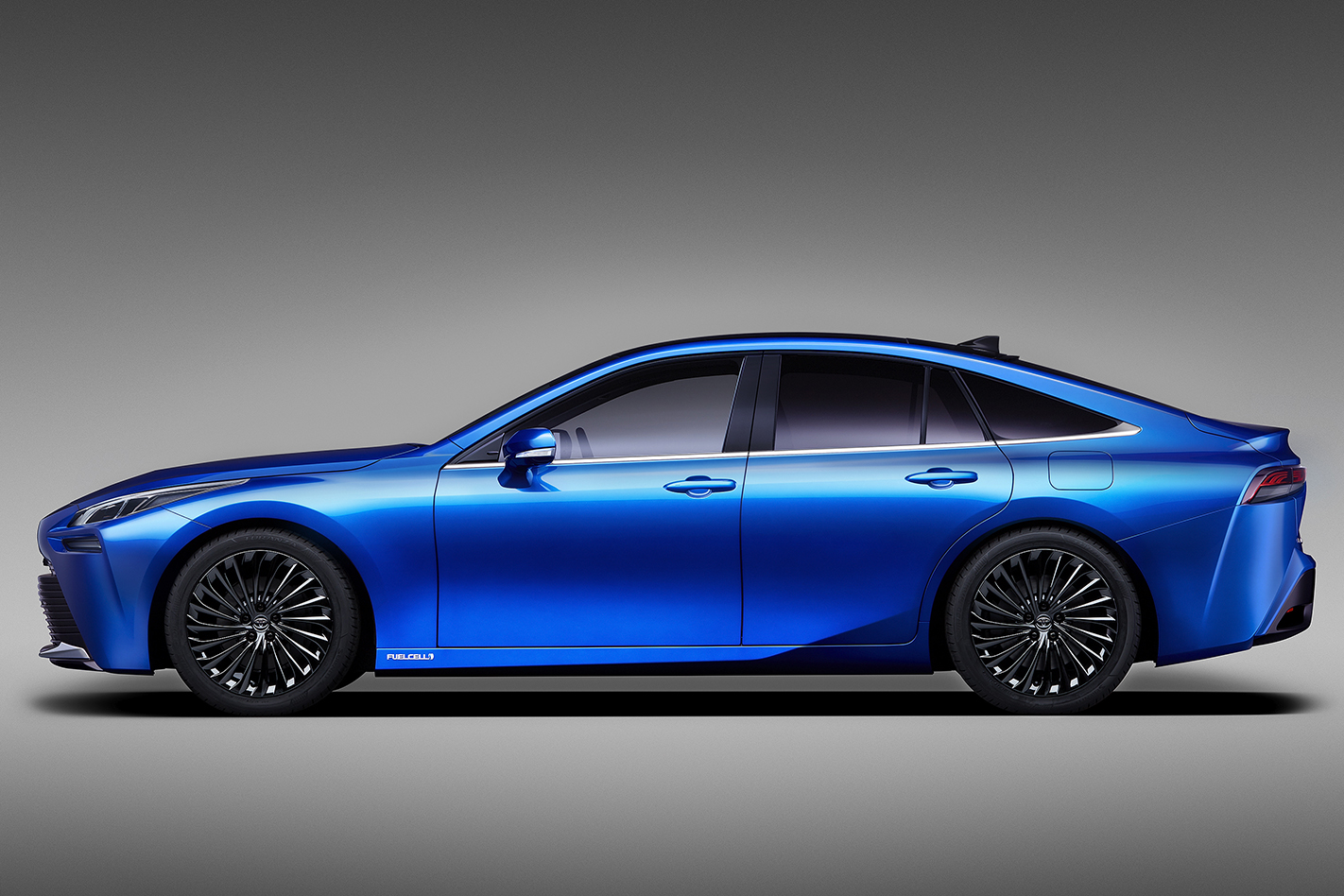
Toyota also dropped a bombshell this week, revealing a “concept” version of its second-generation Mirai hydrogen huffer that boasts some seriously sexy sheetmetal. Is it cool to be into hydrogen now? Toyota’s certainly doing its best to make it so.
On the general news front, alarming video shows autonomous emergency braking isn’t very good at avoiding pedestrians, the legendary Autobahns might get speed limits, and there’s been another Toyota recall, with the hugely popular Prado SUV having fuel leak issues.
It was also a big week for us at WhichCar with our first outside broadcast of the WhichCar Weekly podcast, where yours truly joined Dan, Scott and Andy at the legendary Espy hotel in St Kilda to chew the fat over some of the big topics mentioned in this email.
Meanwhile we reviewed an eclectic range of vehicles including the revolutionary Porsche Taycan EV, the Porsche 911 Turbo-crushing BMW M8 Competition, Audi Q3 TFSI 35, Renault Megane RS280 hot hatch, updated Lexus RX, and Tony O’Kane bid farewell to our Hyundai Ionic Electric long termer.
We’ve also previewed this weekend’s big motoring events, Motorclassica in Melbourne and of course the Bathurst 1000 to arm you with everything you need to know. Our Motorsport section will feature more Bathurst news as it happens.
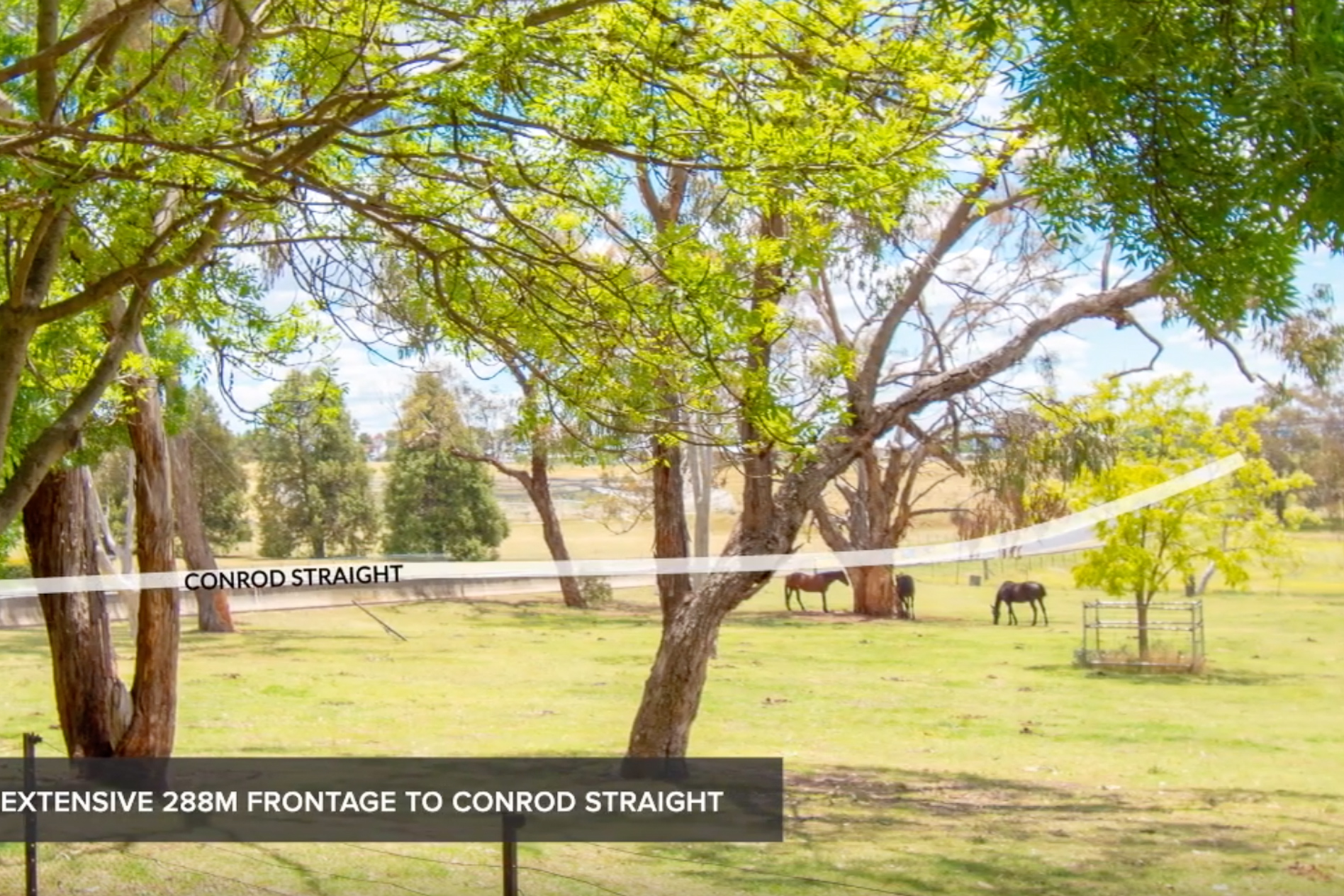
Oh, if you’re tired of watching the Great Race on TV, you can buy a house at Mt Panorama on 40 hectares with 288m long stretch of absolute frontage right onto Conrod Straight. Prefer to drive on race tracks yourself? Tony O’Kane paid a visit to the fearsome Nurburgring Nordschleife to have a stab at the world’s most famous race track, but not after spending plenty of time getting some virtual practice in first – here’s why.
To keep in touch over the weekend, make sure you follow the WhichCar and 4×4 Australia Facebook page, the Wheels and MOTOR Instagram accounts and Street Machine’s amazing YouTube channel.
As the start of the 2019 Bathurst 1000 nears, we take the chance to look back at the highs and lows of the past decade at Mount Panorama.
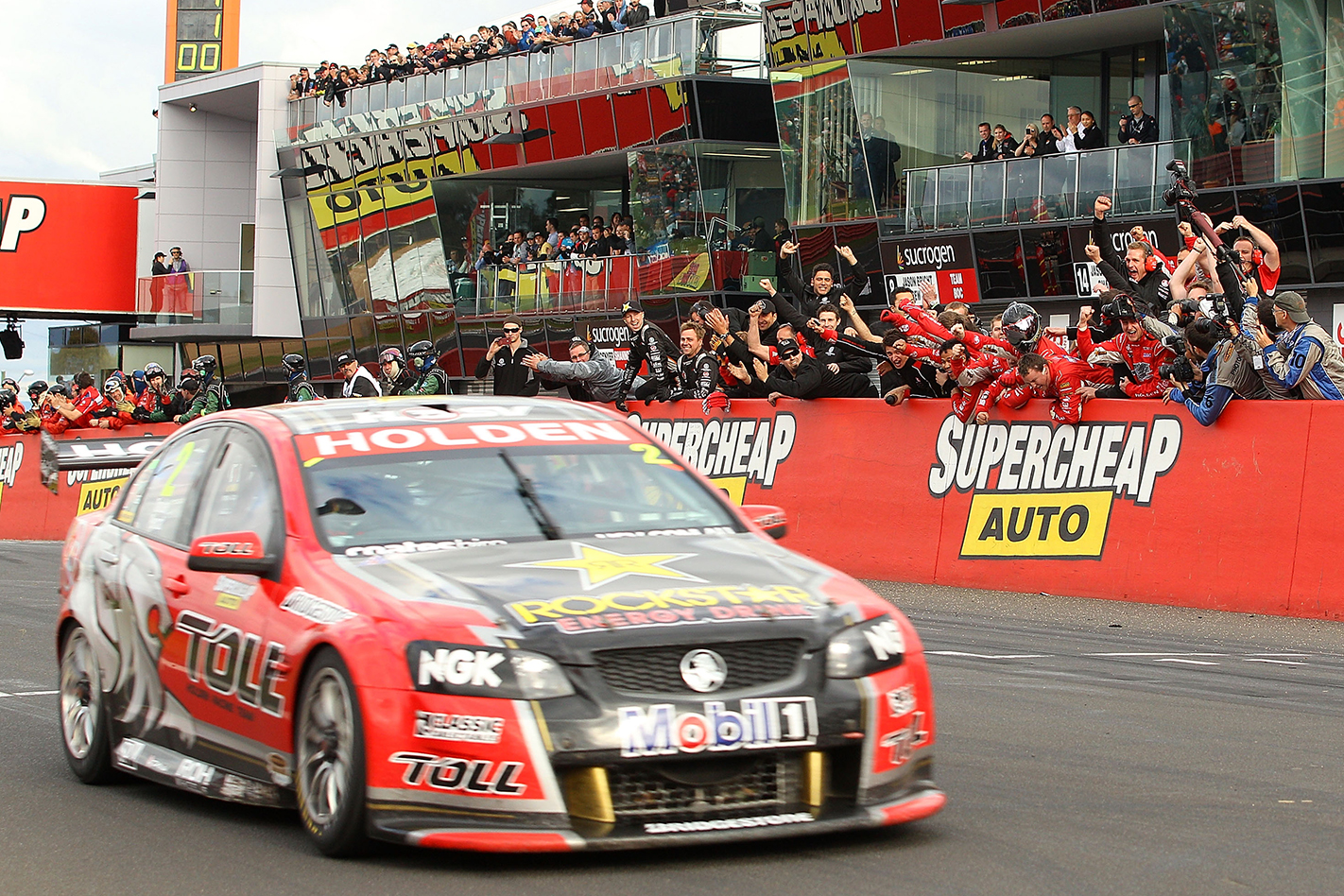
The master and the apprentice (2011)
The 2011 Bathurst 1000 will be remembered as the year of the master and his apprentice.
Nick Percat wasn’t even a main-game driver when he was selected to suit-up beside Garth Tander. Signed as a Walkinshaw driver back in 2007, Percat progressed through Formula Ford to Super2 under the guidance of the hero Holden squad. He’d never raced in the Bathurst 1000.
Tander qualified fastest for the Shootout, but rain fell with the final three drivers yet to complete their laps, meaning Greg Murphy claimed an unlikely pole, with Tander/Percat to start ninth. Throughout the day the pairing drove their HRT Commodore to the front, with Percat impressing with his pace and level-headed driving.
In the end, Craig Lowndes harassed the back of Tander in the final stages, but the master (Tander) crossed the line 0.3 seconds ahead of the Vodafone Commodore. The unlikely duo claimed the win, with Percat crowned Bathurst champion in his first attempt.
The race was marred by a serious crash at Griffins Bend where David Besnard’s DJR Falcon went into the tyre barrier backwards, creating a spectacular fire ball. He walked away from the crash, but Steven Johnson’s Jim Beam Falcon was destroyed.
Last-lap battle (2013)
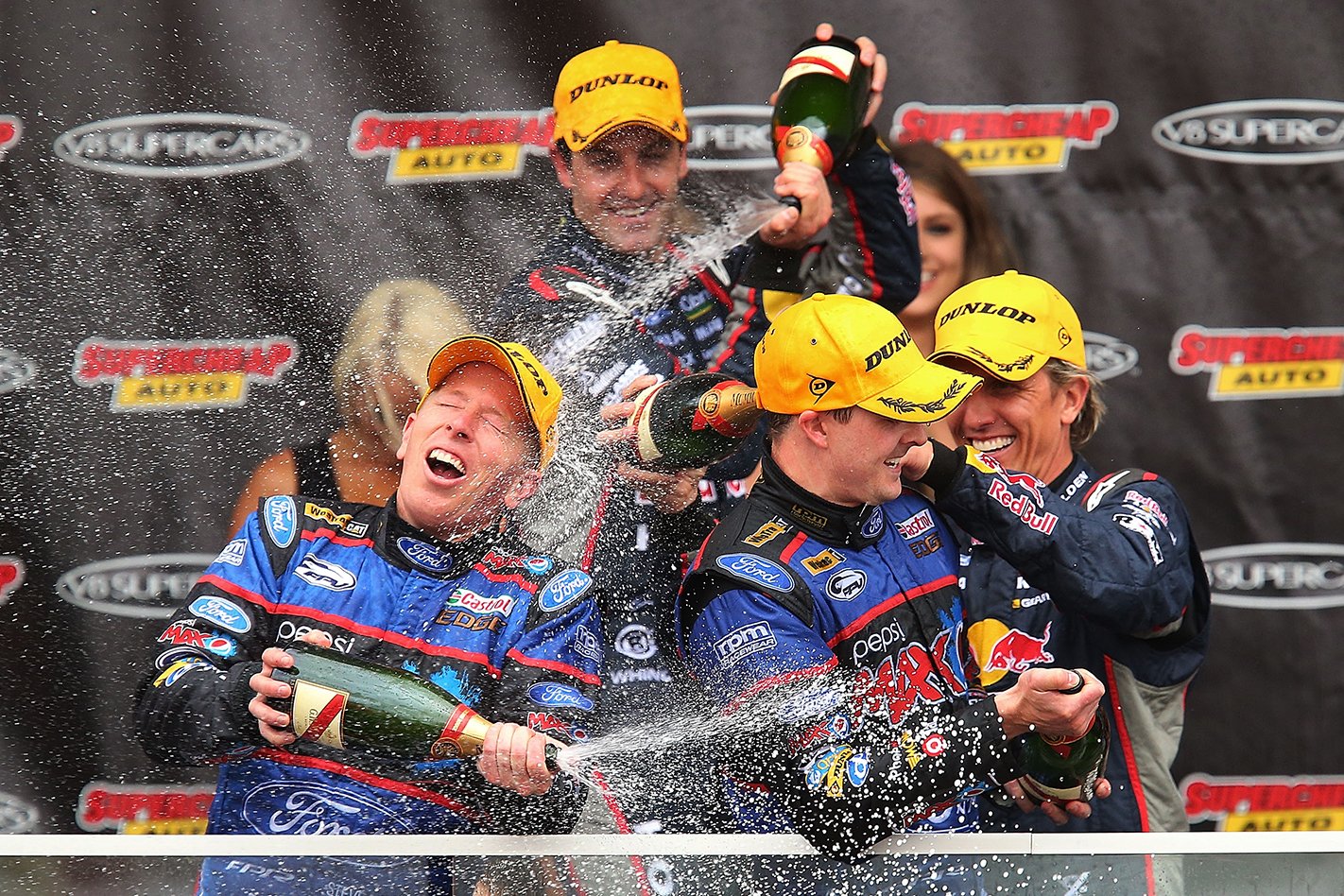
Ford versus Holden – Mark Winterbottom versus Jamie Whincup. Media beat up or not, there’s no denying the rivalry between these two ignited at the Mountain on that second Sunday in October 2013. And it all came down to Griffins Bend on the last of 161 laps. It’s a true Blue and Red nail biter that put punters on the edge of their seats. After a full day of racing, only one side could win.
Whincup got a better exit out of Hell Corner, gaining a slipstream from Frosty up Mountain Straight. The FPR driver covered the inside line, braking late into Griffins Bend and edging the Triple Eight VF wide. Whincup struggles for grip, sliding up onto the outside kerb. The poor corner exit would prove his undoing.
Winterbottom held his nerve across the top and down Mount Panorama before claiming his first and only 1000 win to date.
From last to first (2014)
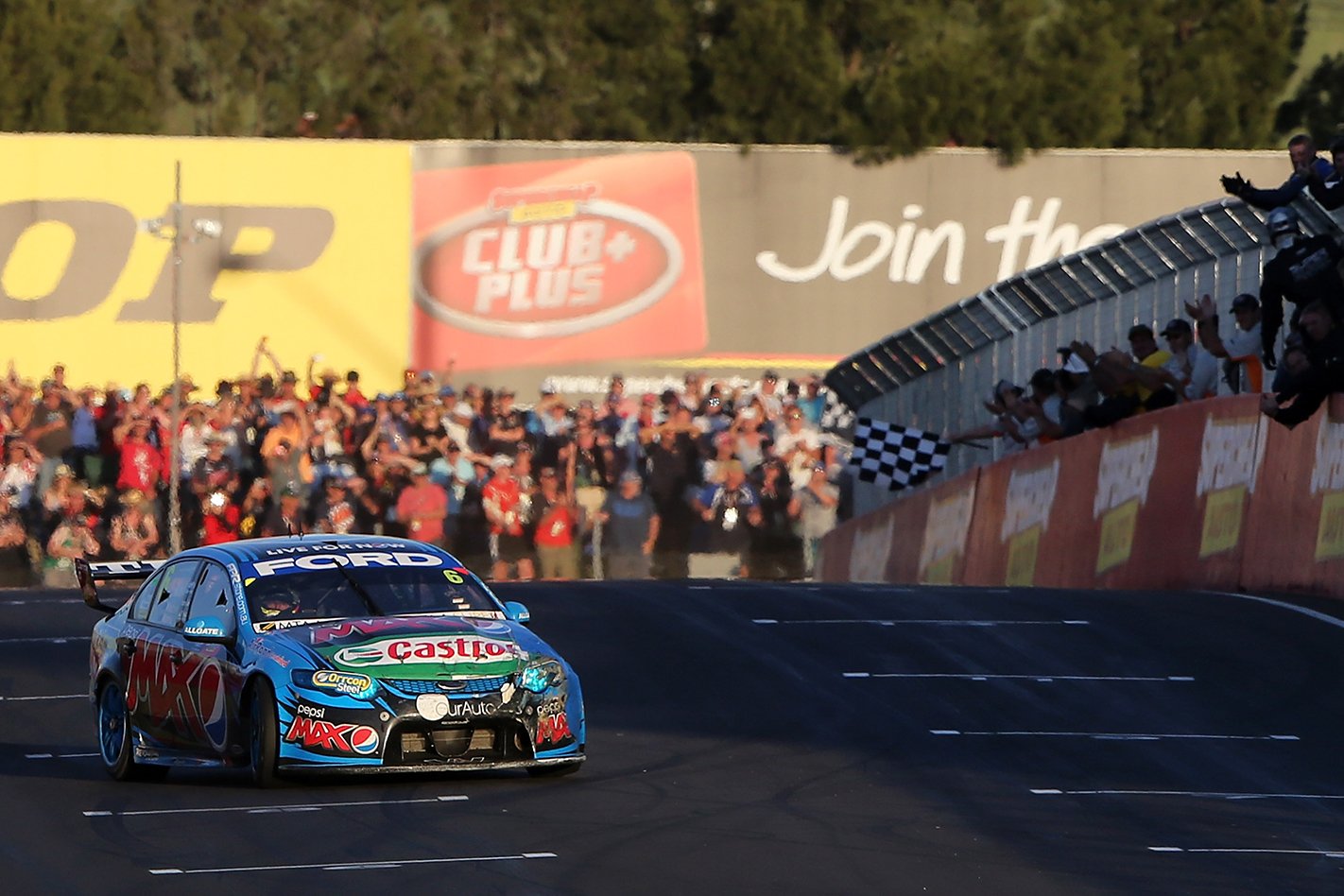
Chaz Mostert and Paul Morris didn’t lead a single full lap of the race after starting last on the grid – that’s the craziest fact of the 2014 Bathurst 1000. Proof that to finish first, first you must finish.
Add in the drama of the track breaking up, the ‘half-time break’ that would make it the longest race in history and Jamie Whincup refusing to listen to his team’s pleas to conserve fuel, and you can see why this Great Race is rated as one of the best in history.
On lap 61, the race was red flagged to repair tarmac at turn two that was breaking up. Most of the field was held on the start/finish straight. But not the number 6 Pepsi Max Falcon – it pulled into pit lane, allowing the FPR crew to work on the damaged car Morris had put it in the wall earlier in the day.
From then on, once the race resumed, the aim of the game was to pit as often as possible for fuel without going a lap down.
Eventually, Mostert’s pace and FPR’s strategy saw the outfit rise to second position for the final stages of the race.
Whincup, who with co-driver Paul Dumbrell, had started the day second last, was now leading. However, his lack of fuel soon became apparent, with Triple Eight demanding he save as much of it as possible.
Eventually, only after being told he only had a lap of fuel left with one-and-a-half laps to go, did Whincup reply, “copy”. But by then it was too late. Mostert closed in, Whincup’s Commodore coughed and the youngster bumped the champ aside at Forrest’s Elbow, charging down Conrod Straight to unlikely win.
Whincup chugged over the line, slipping to fifth. Nissan made the podium for the first time in its return to Supercars, while the FPR triumph (going back-to-back from ’13) is also the Blue Oval’s last win at Bathurst to date. The 2014 Bathurst 1000 remains the longest race in history at 7:58.53 seconds.
‘The Readdress’ (2016)
On lap 150, the race took a very controversial turn. Then Volvo driver (GRM) Scott McLaughlin is leading the race with an ever-present Jamie Whincup behind him with Garth Tander in third. McLaughlin is in fuel-conservation mode when Whincup dives down the inside into The Chase. The two touch, sending the S60 off into the grass. McLaughlin proceeds to keep his right boot stuck in while Whincup backs up Tander in an effort to readdress the failed overtake. A bottleneck follows.
McLaughlin fires back onto the track exiting The Chase. Tander, with nowhere to go, pulls out to overtake the slowing Whincup, but it’s straight into the path of the Volvo. All three collide, leaving both Tander and McLaughlin with massive damage. The Triple Eight Commodore continues on, crossing the line first at the chequered flag, but Whincup/Dumbrell fail to claim the title as car 1 is issued a time penalty. Will Davison, and co-driver/team owner Jonathan Webb, cross the line second, but claim the win.

McLaughlin’s record-breaking lap (2017)
There’s Murphy’s Lap of the Gods, and then there’s McLaughlin’s record-breaking Top 10 Shootout lap. While a 2:06.859 second lap was epic in 2003, the 2:03.831 set in 2017 received just as much praise – and rightly so. In many ways, it was McLaughlin emulating his child-hood hero.
The side story is the fact that McLaughlin had to go all-out. David Reynolds, in his Erebus Commodore, had already blitzed the time sheets with a low 2:04sec lap, meaning it was going to take a monumental effort to usurp him. And that’s exactly what happened. Even dropping two wheels off the black stuff across Skyline wasn’t going to hamper the young Kiwi star.
Of course, the race turned out to be a disaster for the rapid Shell V-Power Falcon, succumbing to a mechanical failure. However, it was to be Erebus’s coming of age, with Reynolds (and his co-driver Luke Youlden) keeping a level head in mixed conditions to claim the 2017 crown.

Lowndes’ fitting main-game win (2018)
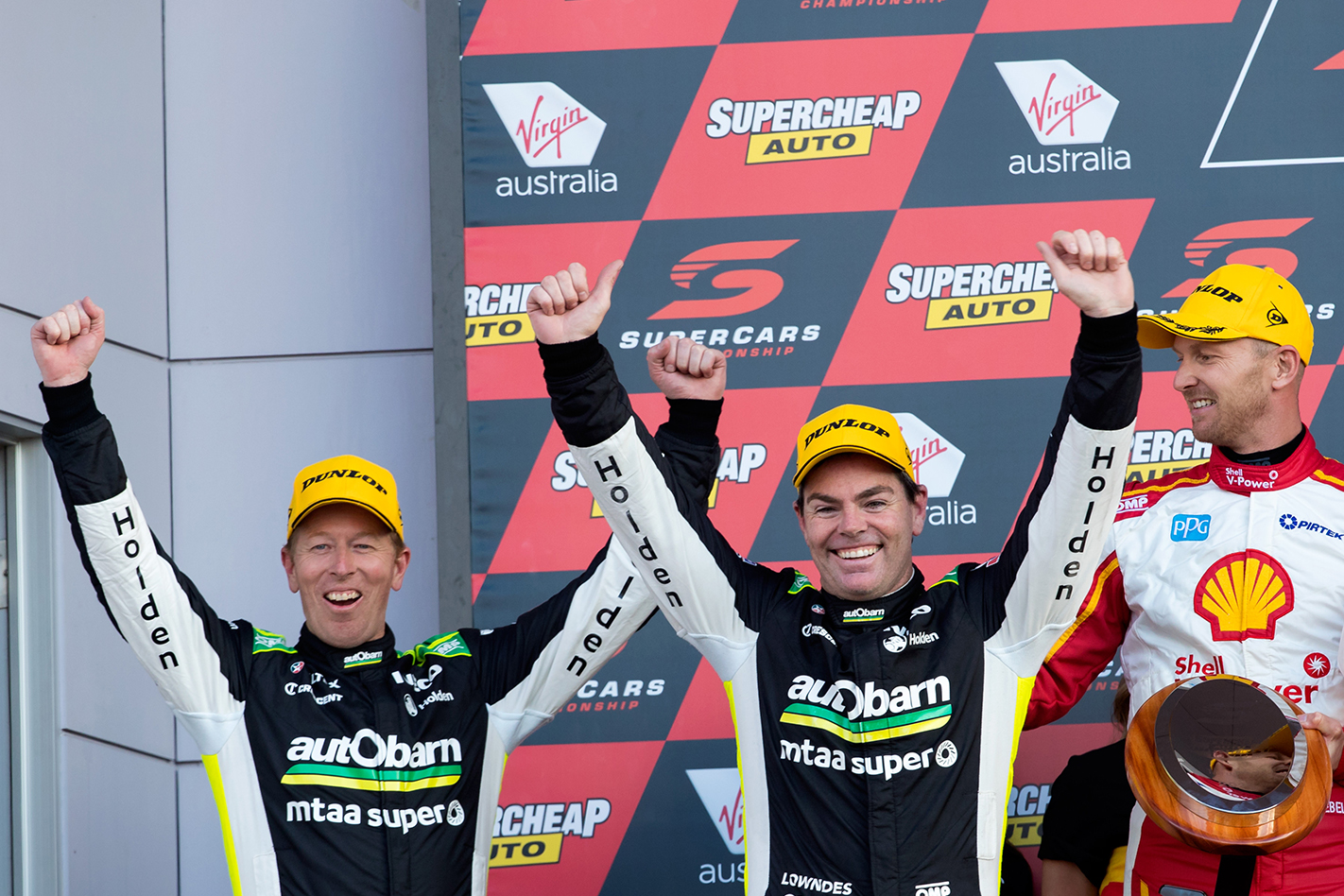
Announcement made, the 2018 Bathurst 1000 was a fitting end to Craig Lowndes’ career as a full-time driver. The result is further evidence that you can’t count out Lowndes at Bathurst. Teaming up with good mate Steven Richards, Lowndes’ Bathurst tally now sits at seven (five for Richards), just two wins shy of his mentor, Peter Brock.
Although the reality is it should have been Erebus’ day, with car 9 leading for 112 laps of the race before Lowndes tracked down an ailing Reynolds – both of whom were triple-stinting. Whincup and Dumbrell fought their way back to tenth position after going a lap down due to a bizarre wheel-nut issue. It was also Scott McLaughlin’s first Bathurst podium, with the 2018 series champion and co-driver Alexander Premat sneaking onto the third step of the podium behind Scott Pye and Warren Luff.
Read next Second Bathurst track: rendering revealed
Of course, there are other big moments of the past decade like Fabian Coulthard’s car-destroying crash in the chase, David Reynolds succumbing to physical exertion and Mark Skaife’s last win in 2010. We’re sure 2019 will add to the highlights package. What is your favourite Bathurst 1000 moment of the past decade?
Update: Queensland Police investigated the man’s claims and say a fine was never issued to the motorist in this story.
A Queensland motorist says he was issued a $173 fine and penalised one demerit point by police for drinking from a 600ml water bottle while driving home on a 39-degree day.
The driver, who was driving a car with no air-conditioning, had bought the bottle of water on his way home from a 12-hour shift and was intercepted by police as he turned into his street. According to him, he was issued the fine for ‘not paying due care’ due to drinking from a bottle while driving.
“If it is against the law then I’ll pay the fine, but it’s not compassionate to fine someone on a 39-degree day [for trying to] stay hydrated,” said Brock Harris, of Beaudesert, to ABC Radio.
“The policeman told me there was nothing I could do and he was doing his job — but I am going to challenge the fine.”
However according to Queensland Police, a fine was never issued to the man. However, the police did caution that eating or drinking behind the wheel may still find motorists on the wrong side of the law.
While the act of consuming a non-alcoholic beverage while behind the wheel isn’t illegal in itself, there exists a grey area around whether or not that act results in distraction to the driver. In most circumstances, it’s entirely down to the police officer’s discretion as to whether distraction occurred.
Did Harris take a particularly long sip? We don’t know.
According to Queensland Police Superintendent David Johnson, of Road Policing Command, drivers needed to be vigilant about what activities might distract them from the core task of driving a vehicle safely.
“Having a pet on their lap, driving the car with your knees, putting make-up on or getting changed at the wheel are all ways of being distracted at the wheel,” he said to the ABC.
“If I saw someone drinking out of a bottle with a straw and they were staying in their lanes observing what was happening around them and had a quick drink and continued on that would be fine.”
Day two of Targa Tasmania 2019. Lotus Exiges occupy four of the top five places, including a comfortable outright lead for Steve Glenney. Before us and our Lotus Exige Sport 410 is 45km of one of the best tarmac rally roads in the country.
Sadly, though, the Mansfield-Whitfield road is in Victoria, not Tasmania, so instead of race suits, timing gear and marshals, we have speed limits, cyclists and crabby locals who view taking photos by the side of the road as a threat to the neighbourhood.

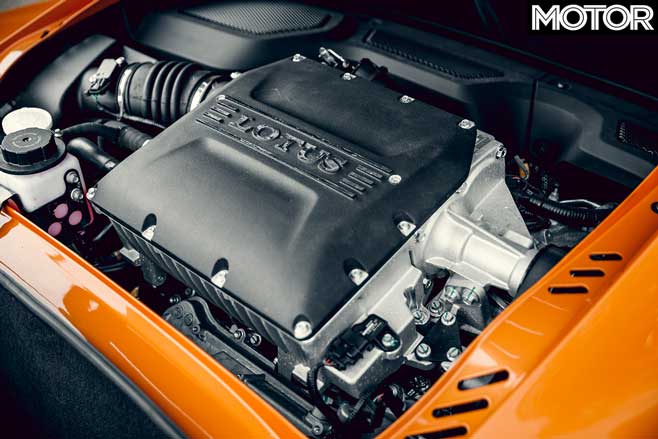
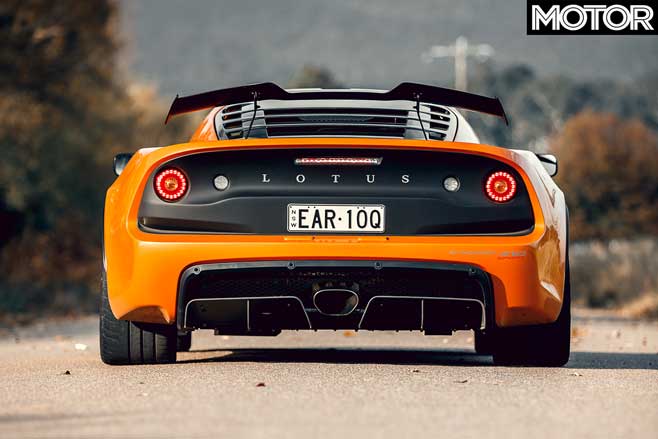
Nevertheless, the happenings across Bass Strait suggest we’ve chosen an appropriate route to test Hethel’s latest supercharged circuit star. In layman’s terms, it’s a harder, faster Exige – no mean feat – created by incorporating components and lessons from the ultra-hardcore Exige Cup 430. The recipe is tried-and-tested: more power, more grip, less weight.
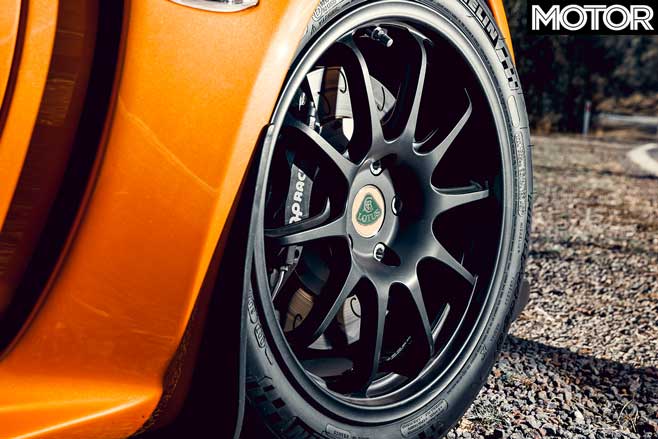
Stripping kilograms from an Exige isn’t easy, but ultra-lightweight forged alloys (staggered 17s front, 18s rear) do their bit, as does the increased use of carbonfibre for the rear hatch and front air duct, while optioning a titanium exhaust sheds a further 10kg. The difference isn’t huge – at 1108kg, the Sport 410 is just 17kg lighter than the standard 350 – but every little bit helps.
Combine this with an extra 49kW thanks to an “engine recalibration” of the 3.5-litre supercharged V6 and the all-important power-to-weight ratio skyrockets from 228kW/tonne to 276, superior to the likes of the Porsche 911 GT3 and Nissan GT-R Nismo. A six-speed manual is the only available gearbox, but 0-100km/h is claimed to take just 3.4sec, while top speed is an impressive 290km/h.
British sports car makers can be a little optimistic in their performance claims, but the Sport 410 gets in the ballpark with an impressive 3.72sec to 100km/h and an 11.82sec quarter at 192.52km/h, the fat 285mm Michelin Pilot Sport Cup 2s providing excellent drive when the clutch is dropped at just over 3000rpm. Second gear is required almost immediately, but the shift doesn’t like to be rushed; matching the official claim would require a suspension of mechanical sympathy.
What’s most impressive about the Sport 410’s pace is not its hare-like getaway – light weight and lots of grip helps here – but its sustained acceleration. For an illustration of its potency, consider the figures we recorded back in 2011 in a similarly hardcore rear-drive, manual track car, the Porsche 997.2 911 GT3 RS: 0-100km/h 4.06sec; 0-400m 12.07sec at 191.96km/h. As is often the case with supercharged engines, it doesn’t feel as quick as the numbers suggest, primarily because of the ruler-straight torque delivery, the maximum 420Nm produced from 3000-7000rpm.
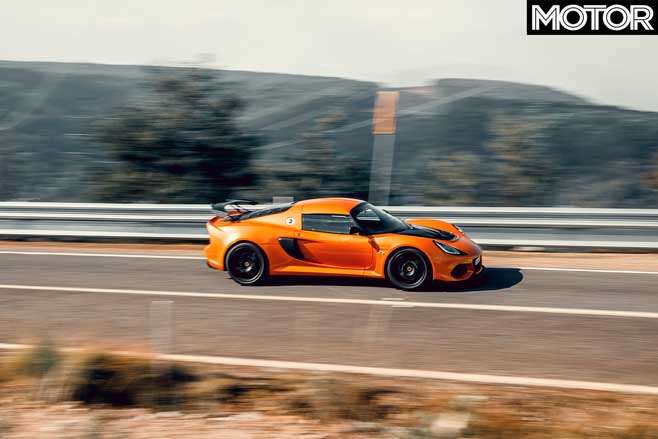
It sounds twice as fast, though. It’s common knowledge that the 2GR-FE is Toyota-sourced, but it’s come a long way since it sat under the bonnet of a Camry, Aurion or RAV4. In Normal mode, it emits a muted hum with an accompaniment of supercharger whine, but select Sport and floor the throttle and as the needle swings past 4000rpm the exhausts open and bellow a soulful howl like Pavarotti singing Iron Maiden.
Find a rock wall, drop the windows and revel in one of the best-sounding engines money can buy. Yes, really.
The noise makes every drive a potential event, but in any Lotus, even one as quick as this, the engine only exists to power the chassis. Three-way adjustable Nitron dampers, tweakable Eibach anti-roll bars, grooved AP Racing brakes and those sticky Michelin Cup 2s are lifted from the Cup 430, the fastest production car to ever lap Lotus’s Hethel test track, though the Sport 410 winds the downforce back from the Cup’s 220kg to 115kg at its 290km/h top speed (45kg at the front and 70kg to the rear).
With Australia’s speed limits, the wings are more valuable for their form than their function, so the Exige looks every bit the mini supercar. Despite its appearance, it makes a decent grand tourer. Getting in and out is a massive pain thanks to the small apertures and sizeable side sills, which also force driver and passenger into close quarters.
The lack of any infotainment – it can easily be fitted, but Australian Lotus distributor Simply Sports Cars allows each customer to choose a unit to their own preferences – forces shooter Nathan and I into the lost art of conversation, but road noise isn’t sufficient to require raised voices to overcome it.
The ride is remarkably compliant for a car of this nature – certainly less fatiguing than a 911 GT3 RS driven recently – and while the seats look skeletal they offer excellent support, making the 200km schlep to Mansfield much less of a chore than you might imagine. It’s during this humdrum motoring that the engine’s mundane origins are of benefit, the V6 ticking away unobtrusively and reasonably efficiently, though the tiny 40-litre tank limits range.
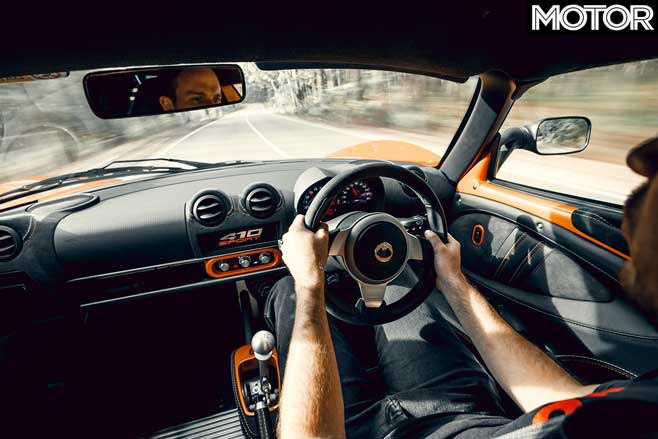
Mansfield-Whitfield Road is a key component of Targa High Country. It’s split into three stages, each with its own unique character. Attacked in an easterly direction, it begins with smooth-surface corners of varying radii snaking their way uphill. Unlike many modern performance cars, you don’t immediately attack in an Exige, primarily due to the unassisted steering. Cornering quickly requires considerable physical effort, particularly at the speeds this Sport 410 is capable of, and is only made worse initially as your body tenses in response to the unusual sensations.
The corners open as the road winds through Tolmie before tightening and narrowing; as the kilometres pass, you learn to trust the Exige, the front-end wiggles over bumps and cambers no longer eliciting a reaction. Relax and the lack of power assistance begins to make some sense thanks to the flow of unfiltered information from the front tyres.
Selecting Race mode slackens the stability control; it can be turned off, but there’s little point, as it’s not a car that you’d provoke out of shape without plenty of space to gather it up. Especially because, if ever it did get out of shape, it would be going at a serious rate of knots.
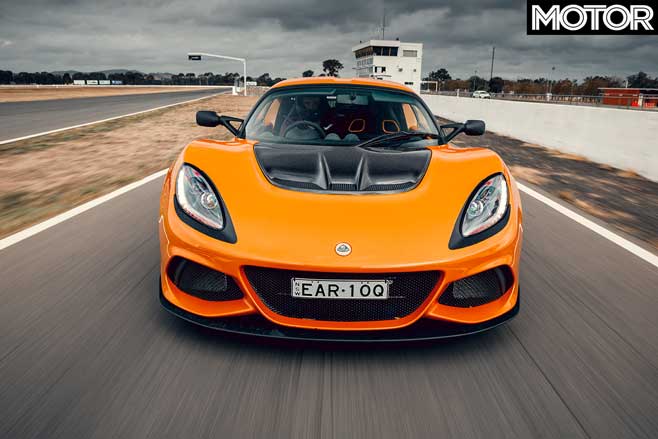
The final blast into Whitfield is a succession of downhill, high-speed sweepers with random bumps and the odd hairpin thrown in for good measure. It’s a rapid descent, the Exige possessing acceleration, deceleration and lateral grip in abundance. It’s not difficult to see why Exiges are occupying the pointy end of Targa competition, though those behind the wheel must be pedalling awfully hard.
The biggest bugbear concerns the brakes. Certainly not their effectiveness – 100-0km/h takes just 32.48m – but the pedal is set quite high. There is a sponginess to its initial travel that makes heel-and-toeing relatively easy, but the difference in height between accelerator and brake is such that quick swaps between the two require concentration. The pedal set-up is actually ideal for left-foot braking, but you’re left with the conundrum of two feet and three pedals – not impossible, but you don’t want to mess it up.
Winton Raceway is the perfect playground to let the Exige do what it’s designed to, and bring that downforce into play. Or it would be, if it didn’t currently offer all the grip of a greasy smartphone. Even with Race mode engaged (retaining the ESP safety net), the Sport 410 is lively, wiggling its hips under braking and power, but with each passing lap temperature builds, the track dries and the Lotus reveals layers of ability.

It has little interest in flattering your skills (or lack of). For better or worse, it will precisely obey your commands; get lazy with your brake release on corner entry and the rear will step smartly sideways; accelerate too aggressively and the nose will push wide; fail to focus on that quick gearshift and it won’t necessarily just slide into place. It requires focus, and the steering requires muscle as well.
Lotus purists will no doubt be aghast, but the Exige would be a more enjoyable car with power steering. The trouble lies in the fact that you’re scared to push the ultimate limits because in the back of your mind you know you’ll never be able to catch it if it does let go.
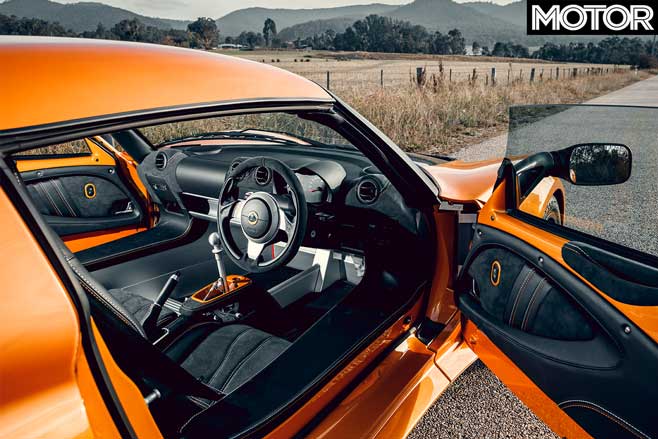
Resident hot-shoe Warren Luff agrees: “It’s not an easy car to drive on the limit. You’ve got to be so incredibly smooth, otherwise it wants to break into massive understeer or snap oversteer. It doesn’t compensate for any possible mistakes of the driver. You’ve got no confidence to tip it in with any speed for fear it’s going to break away [because] you know that when it lets go there’s no coming back.”
Seriously, how much can power steering weigh? The Evora shows what Lotus can achieve with assisted steering.
On a dry but still slippery Winton, his Luffster manages a best of 1:35.16, a somewhat disappointing time given we’ve previously clocked a Porsche 718 Cayman S at 1:33.1. Mark O’Connor from Simply Sports Cars says customers have recorded mid-1:32s, so it’s possible track conditions were simply far from ideal for hot-lapping.
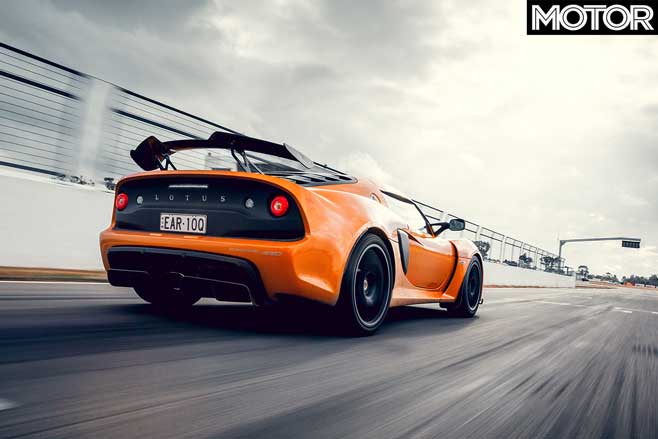
It must be said that up to nine-tenths or so the Exige is excellent: stable, fast, grippy and doesn’t even begin to break a sweat. Accessing that final 10 per cent, however, takes an extremely high level of skill. The difference between a good driver and an average one in the Exige would be wider than in most cars.
But where there is challenge there is also reward. Because the Sport 410 doesn’t flatter to deceive, you know that whatever lap time you have achieved is the work of you alone. Extracting its best isn’t easy, but nothing worthwhile ever is; put the work in and the Exige will make you a better driver. And if you’re already a brilliant driver, there’s the knowledge that the sky’s the limit – even the top step of the Targa Tasmania podium.
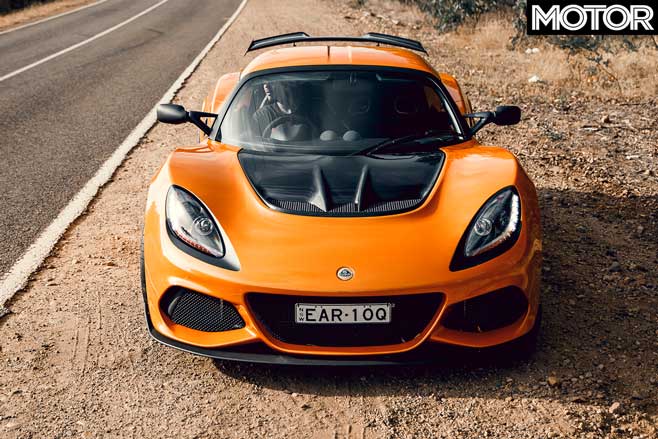
FAST FACTS 2019 Lotus Exige Sport 410 BODY: 2-door, 2-seat coupe DRIVE: rear-wheel ENGINE: 3456cc V6, DOHC, 24v, supercharged BORE/STROKE: 94.0 x 83.0mm COMPRESSION: 10.8:1 POWER: 306kW @ 7000rpm TORQUE: 420Nm @ 3000-7000rpm WEIGHT: 1108kg POWER-TO-WEIGHT: 276kW/tonne TRANSMISSION: 6-speed manual SUSPENSION: double wishbones, coil springs, anti-roll bar (f/r) L/W/h: 4084/1802/1129mm WHEELBASE: 2370mm TRACKS: 1499/1548mm (f/r) STEERING: unassisted rack-and-pinion BRAKES: 332mm ventilated/grooved discs, 4-piston calipers (f/r) WHEELS: 17.0 x 7.5-inch (f); 18.0 x 10.0-inch (r) TYRES: Michelin Pilot Sport Cup 2, 215/45 R17 (f); 285/30 R18 (r) PRICE: $159,990 ($165,515 as tested)
PROS: Outright speed; looks; track ability; what a noise! CONS: Getting in and out; tricky at the limit; compromised RATING: 3.5 out of 5 stars
The Strip
| Lotus Exige Sport 410 | |
| 0-10km/h | 0.22sec |
| 0-20km/h | 0.51sec |
| 0-30km/h | 0.78sec |
| 0-40km/h | 1.07sec |
| 0-50km/h | 1.40sec |
| 0-60km/h | 1.74sec |
| 0-70km/h | 2.38sec |
| 0-80km/h | 2.78sec |
| 0-90km/h | 3.25sec |
| 0-100km/h | 3.72sec |
| 0-110km/h | 4.23sec |
| 0-120km/h | 5.10sec |
| 0-130km/h | 5.75sec |
| 0-140km/h | 6.43sec |
| 0-150km/h | 7.14sec |
| 0-160km/h | 8.38sec |
| 0-170km/h | 9.36sec |
| 0-180km/h | 10.39sec |
| 0-190km/h | 11.56sec |
| 0-400m | 11.82sec @ 191.52km/h |
| 80-120km/h (3rd-6th) | 2.5/3.3/4.6/5.3sec |
| 100-0km/h | 32.48m |
| Speed in gears | |
| 1st | 62km/h @ 7000rpm |
| 2nd | 115km/h @ 7000rpm |
| 3rd | 156km/h @ 7000rpm |
| 4th | 201km/h @ 7000rpm |
| 5th | 264km/h @ 7000rpm |
| 6th | 280km/h @ 6600rpm* |
Winton Raceway, 12˚C, dry. Driver: Scott Newman *Manufacturer’s claim Official timing supplier: www.vboxaustralia.com.au
Merely built to saunter along motor show floors, most concept cars aren’t built for the open road, but not the Bertone Mantide, which has recently gone on for sale in The States with 16,000km on the odo.
Built by the-now-defunct Bertone in 2009 for the Shanghai Motor Show, the Mantide concept was originally meant to be a precursor for a limited-production run of just 10 examples.
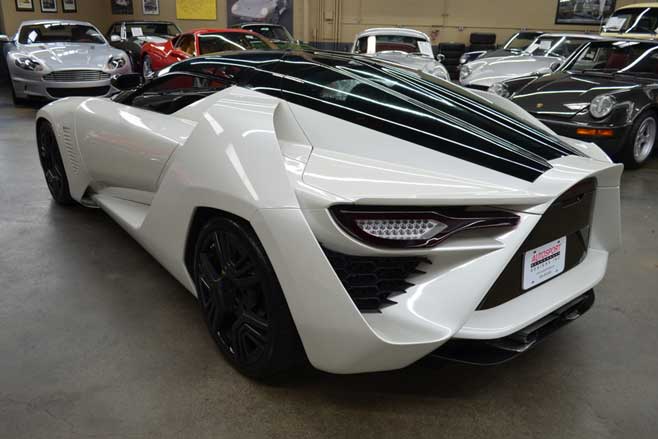
Unfortunately for the Italian design house, production plans fell through and this concept is the sole survivor of what might have been.
While the Mantide’s outlandish styling might not be to everyone’s tastes, its Chevrolet C6 Corvette ZR1-underpinnings will whet certainly whet everyone’s desires.
The Mantide not only sports the same 476kW 6.2-litre LS9 supercharged V8 as the ZR1, its carbon fibre body and lightened interior made it especially quick.
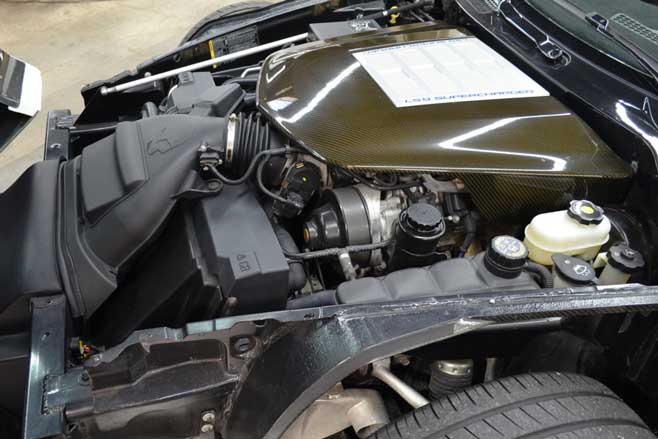
Despite conceived as a design concept, Bertone tested the Mantide at the Nardo ring and managed to squeeze out a claimed performance figure of 0 to 100km/h in 3.2sec and a top speed of 350km/h, surpassing its donor by 0.3sec and 20km/h respectively.
Since its debut in Shanghai, the Mantide had a brief and prolific tour, participating in the 2009 Goodwood Festival of Speed’s headclimb event, a cross-country jaunt to the 2009 Pebble Beach Concours d’Elegance, and entered into the 2010 The Quail “A Motorsports Gathering” where it took top honours in the Super Car Class.
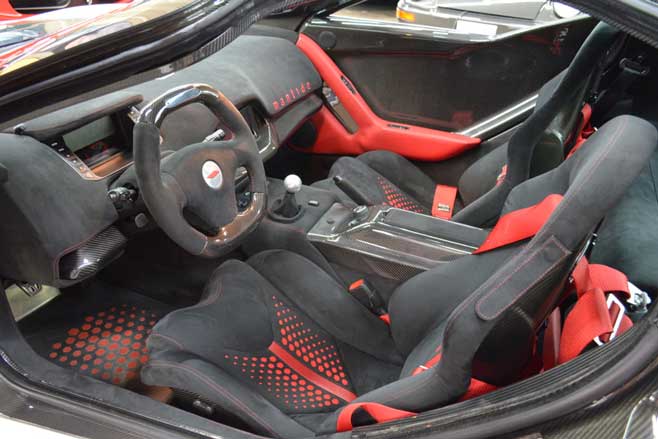
The Mantide was repainted in white and its interior reupholstered in Alcantara leather shortly after its 2009 appearances, and spent much of its time kept in the owner’s collection.
Currently the car is up for sale on the Autosport Design’s website, a classic and exotic car dealership in Long Island, with pricing available upon request. Considering its one-off status, history and performance potential, expected it to be anything but reasonably priced.
Want to know why this year’s Bathurst 1000 is worth watching? Here are four storylines to get you excited.
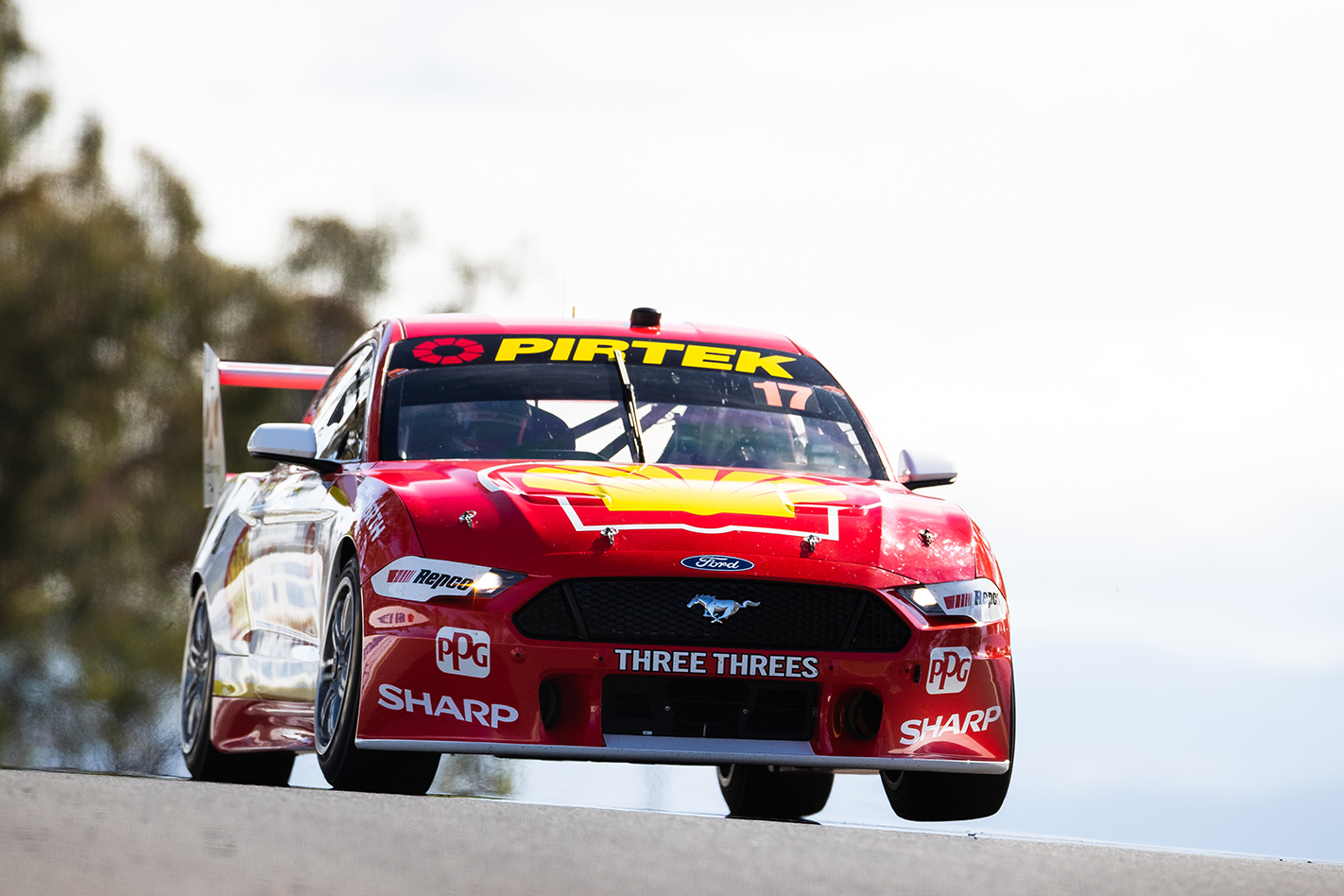
Scott McLaughlin throws caution to the wind
Scott McLaughlin is sitting pretty in the 2019 Supercars championship heading into Bathurst. His nearest rival is Shane van Gisbergen, 598 points adrift of the DJR Team Penske driver.
Both the Bathurst 1000 and following Sandown 500 events award 300 points to the winner, meaning McLaughlin could crash out of both, and only relinquish the lead of the championship if van Gisbergen has the good fortune to win each race.
Why is this important? Well, traditionally the championship leader going into Bathurst will keep things on the conservative side, because they don’t want to give up all-important points. McLaughlin is having the most dominant season in Supercars history, meaning he can go all-out to win his first Bathurst title.
The 2017 Supercars champion has already given his Bathurst rivals an ominous warning in the first day of running for the 2019 race, lowering his existing lap record from two years prior.
Ford fans will be supporting McLaughlin, with the Mustang having zero Bathurst 1000 victories against its name in the record books, despite having raced at The Mountain multiple times throughout history.
Instead of playing it safe, expect McLaughlin and his co-driver Alex Premat to adopt a ‘win it or bin it’ mentality on Sunday, in order to give Ford fans their first Bathurst win in five years
David Reynold’s redemption
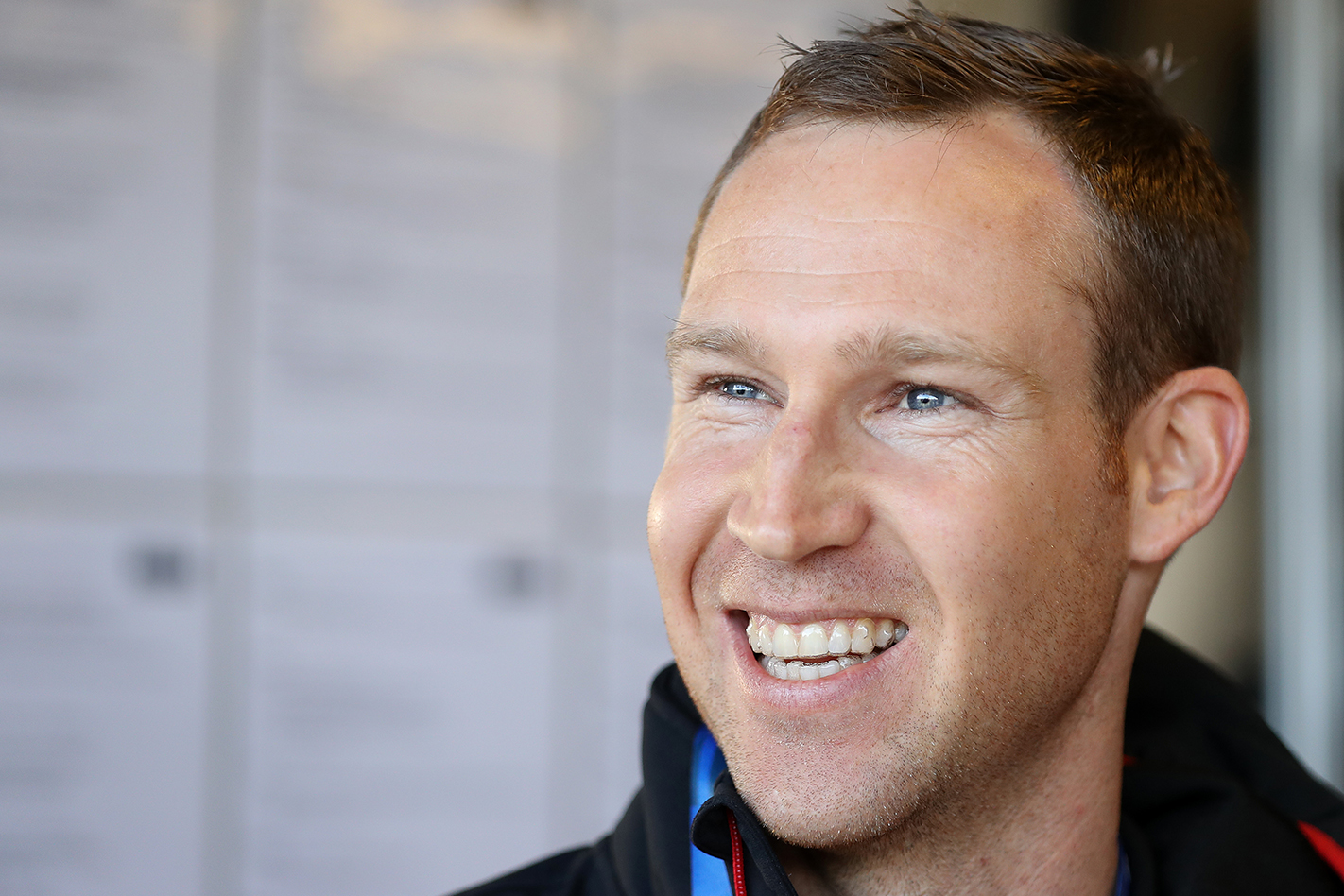
Erebus Motorsport is named after the Greek God of Darkness, and has somewhat fittingly become the dark horse of the Supercars paddock.
It hasn’t had the consistent success of the big two teams Triple Eight and DJR Team Penske, but Erebus consistently punches above its weight and keeps the front runners looking over their shoulders.
In 2017, Erebus claimed victory in a rain-soaked race with their star driver David Reynolds. It was one of the most popular victories in recent history.
It looked like the Little Team That Could was set to go back-to-back last year, with Reynolds starting the race in pole position, and running at the front of the pack for most of the race.
However, in the closing stages, things took a turn for the worse, with Reynolds suffering from severe exhaustion and cramps. He was forced out of the car, with his co-driver Luke Youlden finishing the race instead. The footage of the obviously distressed and disoriented Reynolds as he sits in the pits is harrowing to see.
This year, the pit lane joker will be looking for redemption, and his early weekend pace looks promising!
The Dream Team is back together
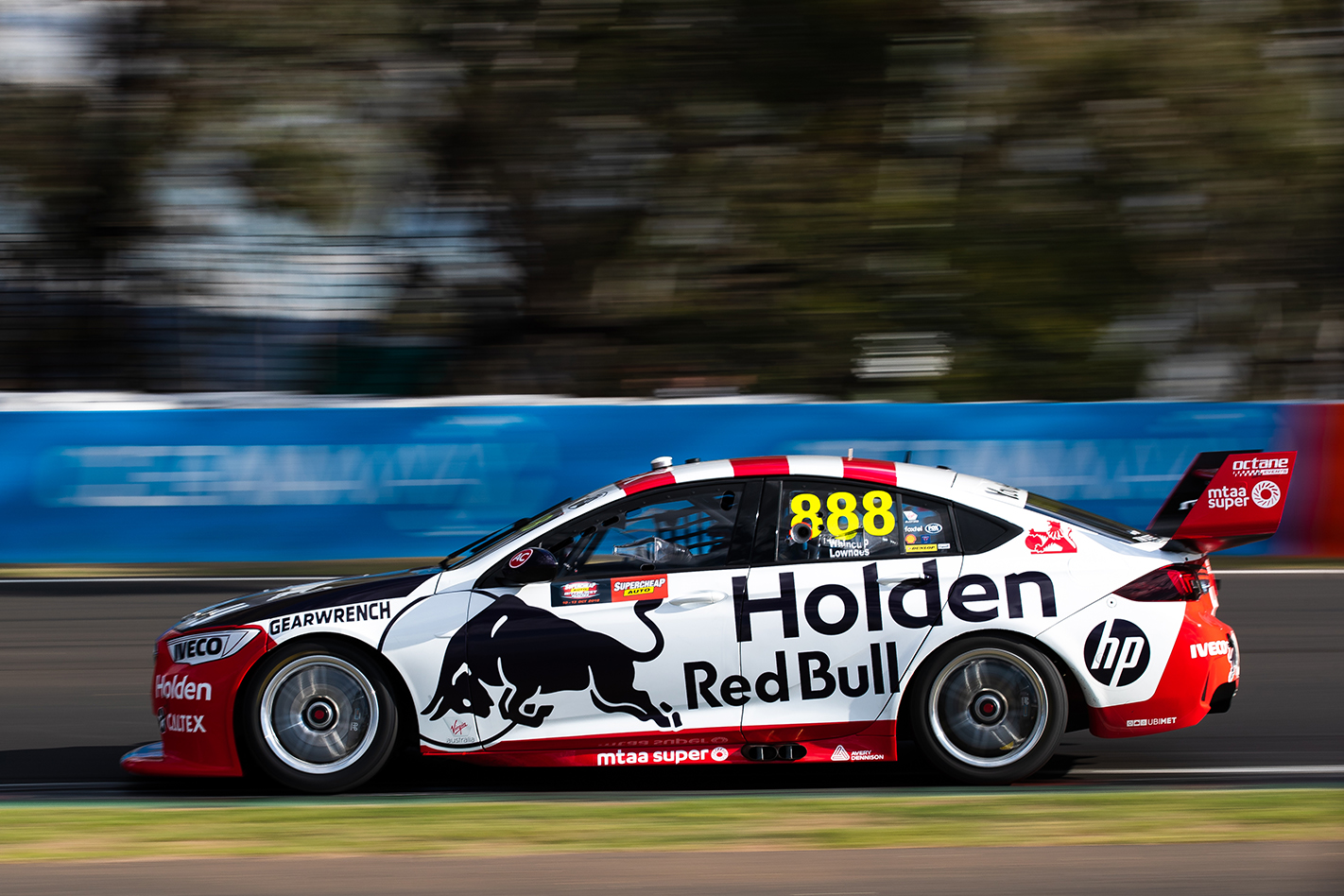
One of the most successful driver pairings in Bathurst 1000 history is Jamie Whincup and Craig Lowndes.
The duo spent four year’s racing together between 2006 and 2009. In that period they won the first three in a row, and never finished outside the top five.
Now, with Lowndes retired from full-time racing, the Dream Team are back together. Lowndes is the reigning race winner, while Whincup hasn’t tasted victory at The Mountain since 2012 following a series of blunders in recent years.
Pre-race favourites? You bet.
Record book writers to be busy
This year’s Bathurst 1000 looks set to be one for the ages, with a number of key stats and records being threatened.
The race is forecast to be run in clear conditions, and the early pace indicates last year’s record for the quickest Bathurst 1000 could be usurped. Currently standing at 6 hours and 1 minute, 44 seconds, if the race record is beaten it could be the first time a Bathurst 1000 is completed in under six hours.
Practice pace has also indicated that a 2:02 lap in a Supercar could happen this weekend, which was once thought impossible.
Historic stuff. Make sure to watch all the action on Sunday.