
As performance cars get heavier, require stiffer springs, more rubber, more power and more electronics to make the heaving mass all work, those who love driving can take solace in the fact you can still buy modern sports cars that gun for more of a classic driving experience.
And it’s interesting that many are forgetting as much. Lots of people are losing their minds over the new Alpine A110 and so they should be, it’s a delightful driver’s car. However, its lightweight feeling and softer suspension set-up – one that breathes with the road – won’t be the slightest bit novel to anyone who regularly drives a Lotus Elise.
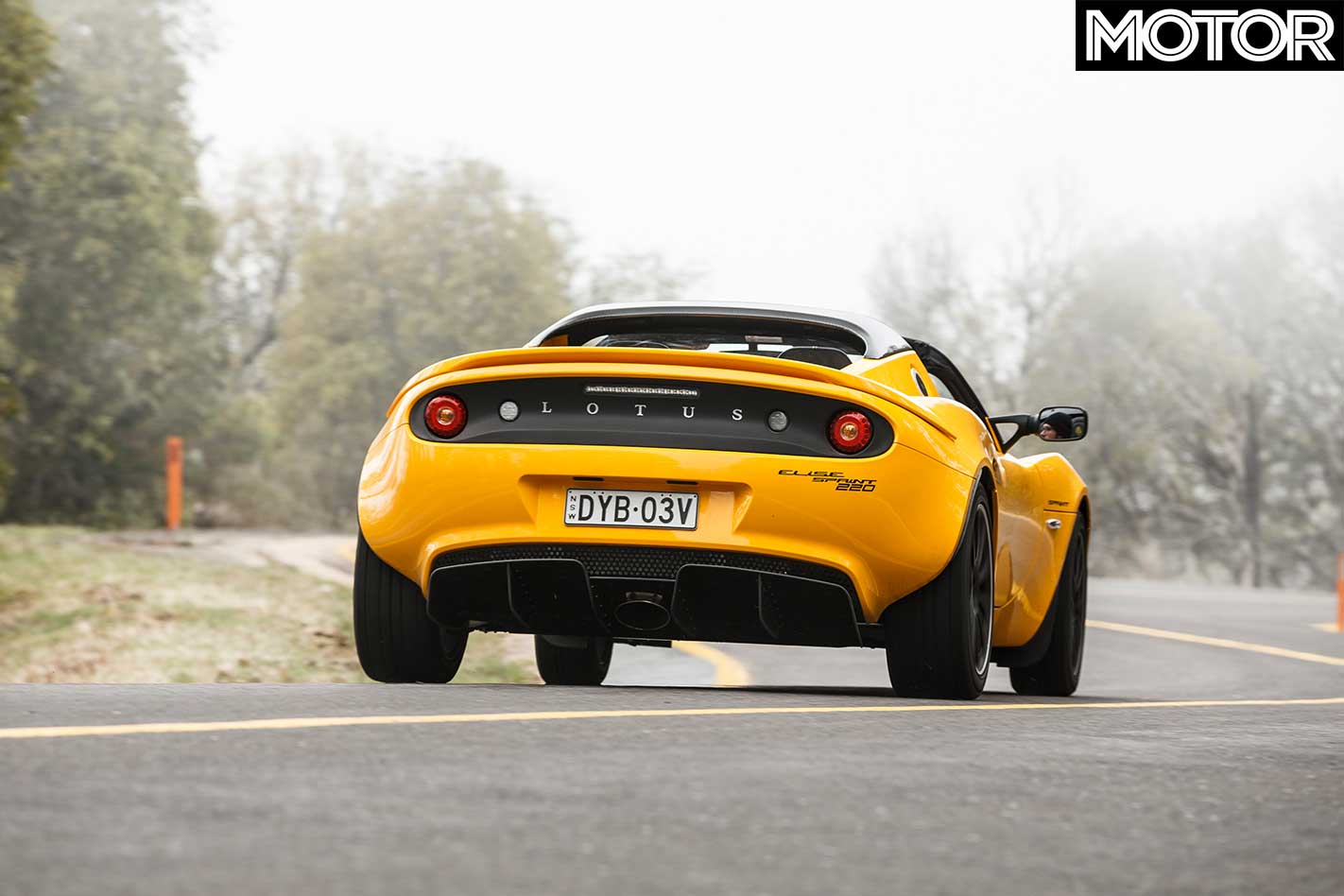
Perhaps it’s no coincidence that the development driver for the A110, Rudy Thomann, worked in Lotus’s ride and handling department during the inception of the original baby modern Lotus. Released in 1996, there have now been three series of the cult classic Elise which offers a raw driving experience low on power, but crucially, also weight.
For those who might find an entry-level Elise a little bit too ‘nice’ to drive, there is now this: the Sprint 220. Reviving a classic Lotus nameplate seen on models like the Elan, the Sprint channels an even more focused lightweight philosophy and thins further again from the Sport 220 donor Elise – a car that itself boasted a 40kg weight saving over its previous model.
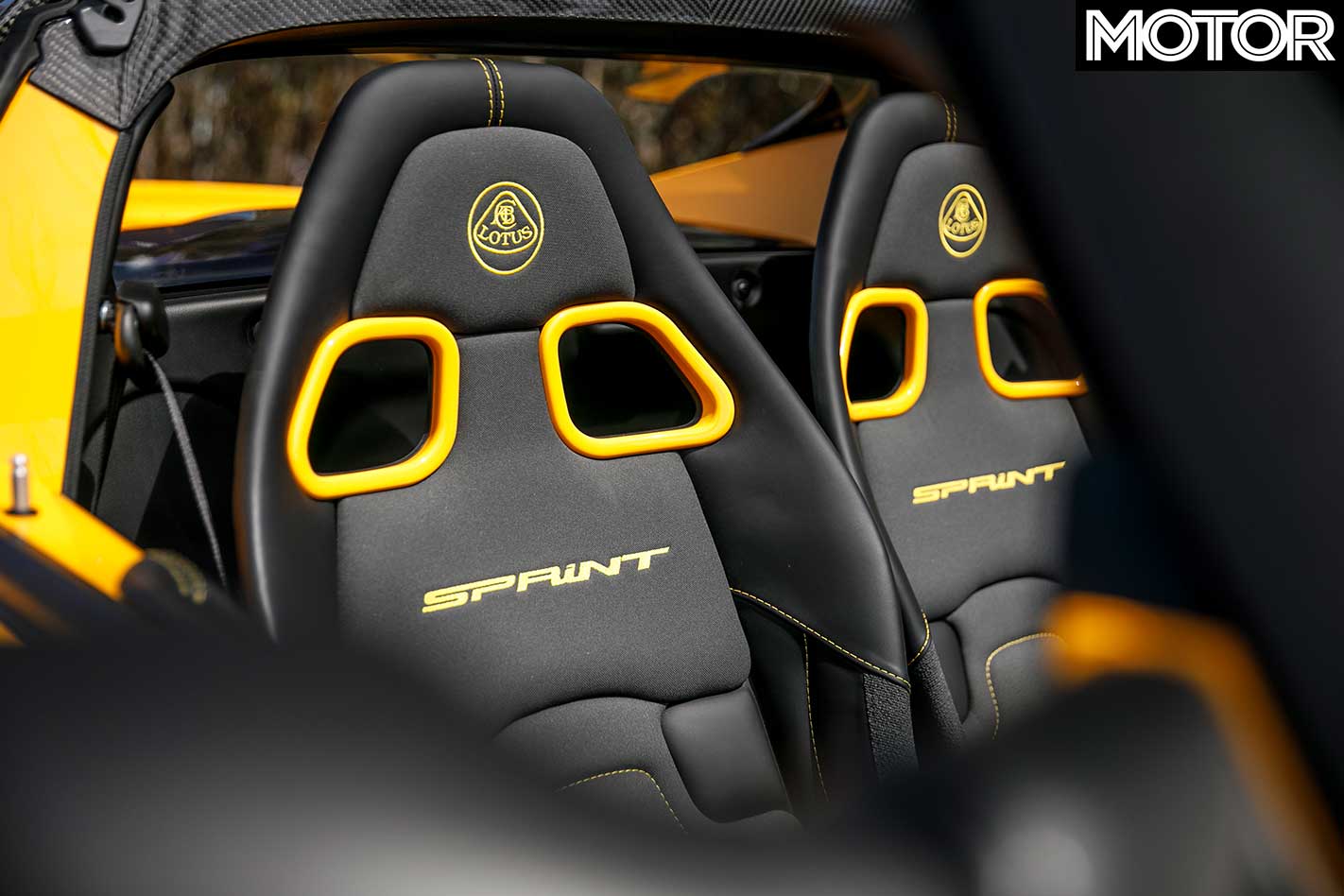
Thanks to a lithium-ion battery (9kg), carbon seats (6kg), forged wheels (5kg), carbon-fibre panels and polycarbonate rear screen (6kg), the Sprint cuts another 26kg over the Sport 220 for an incredibly lithe 878kg kerb weight.
In the back there’s the rorty, energetic Toyota-supplied 2ZR-FE supercharged 1.8-litre four-cylinder, its 162kW giving the Sprint 220 a power-to-weight ratio better than a Mercedes-AMG A45 – and reflected as much by its claimed 4.5sec 0-100km/h time. Power is sent to the rear wheels via a Toyota-derived six-speed manual and an electronically locking diff.
Basic is the word that comes to mind as you clamber into the tight Sprint 220, your heels resting on the exposed metal floor, not far from the passenger’s, two bulges over the front wheels visible through the windscreen over the top of the relatively small steering wheel.
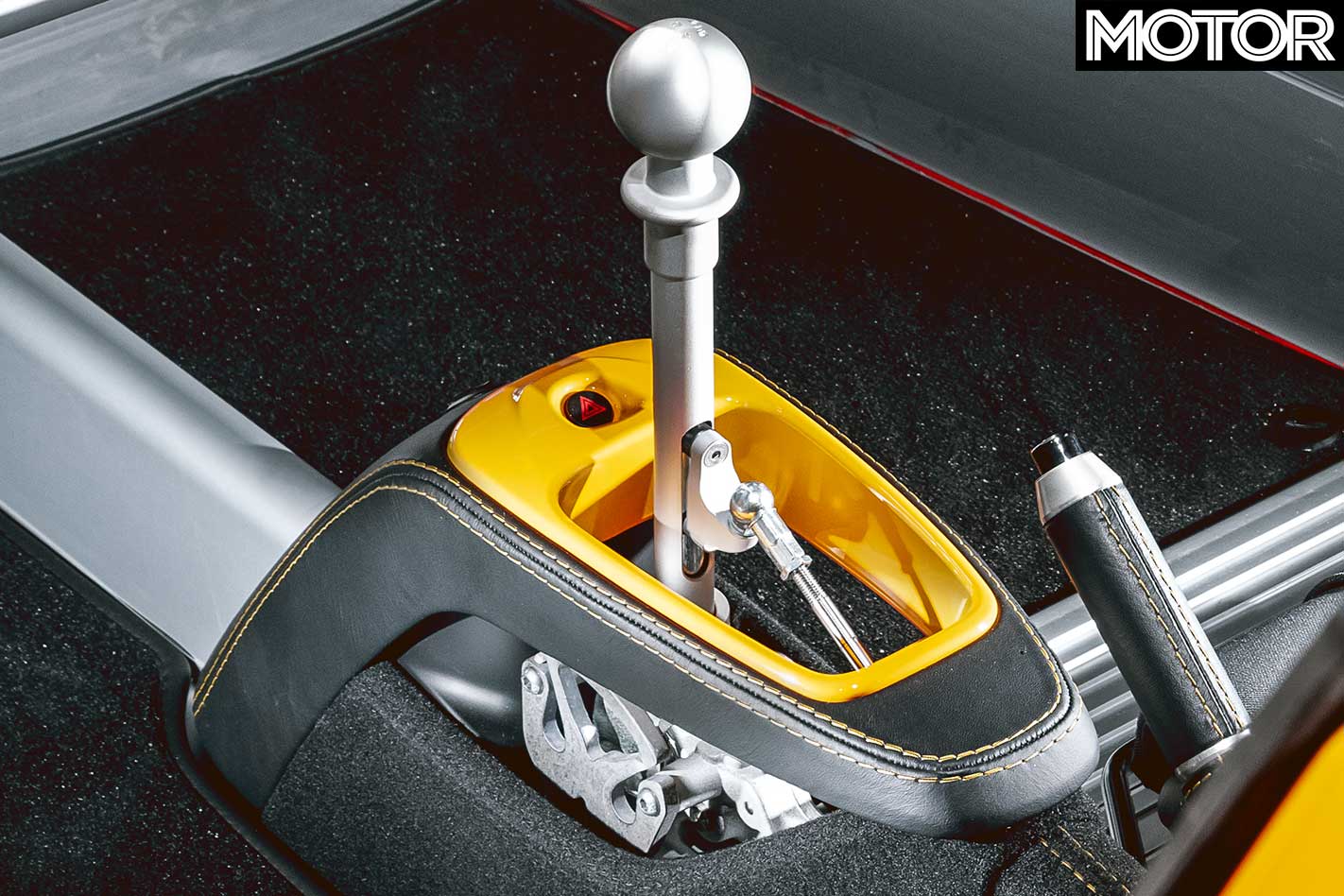
Compact also describes the 220’s interior. A highlight is the skeletal, exposed linkage of the manual transmission proving fantastic function can absolutely also make for great form.
There is the sense that there is not much between the engine’s sound and your ears and that’s because it’s true. The supercharged four-cylinder idles loudly and crisply and when unleashed has very much a bit of angry wasp about it. Acceleration is surprisingly brisk, power delivery linear.
Through corners, the Sprint 220’s unassisted steering and all-round double wishbone suspension deliver raw, joyfully classic handling. However, as you start to ramp things up, you notice that the Sprint 220 asks something specific of you as its driver and until you figure out what exactly, you might find the true Elise magic eluding you.
What the Sprint 220 wants is to be flowed a bit like a momentum car, with thoughtful inputs given the gentle bodyroll that moves through lovely arcs. However, with its sticky Yokohama Advan Neova AD07 tyres you will be flowing quite a lot of speed through corners indeed.
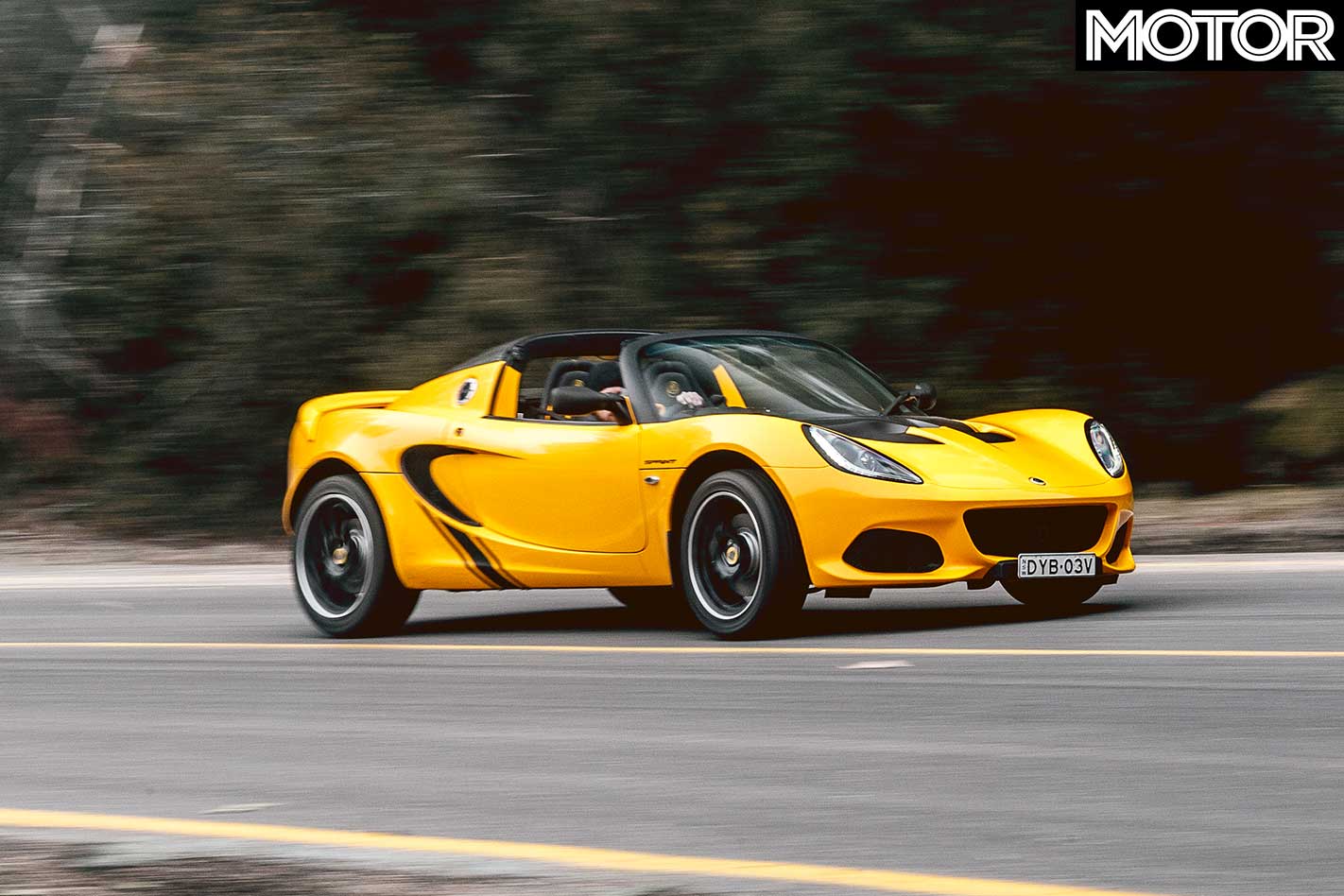
Driving the Sprint 220 becomes a game of minimising inputs and maximising entry speed – get it right, and it’s incredibly satisfying. While the 175-section front tyres offer great grip, with the 225-section rears, the balance is also the driver’s to manage – and carefully, as classic mid-engine dynamics do lurk.
It’s during this process you realise that the Elise magic is revealing itself. In the universe of driving there’s no experience that satisfies as uniquely. The Alpine A110 is making what is old, new again – ask anyone who drives an Elise.
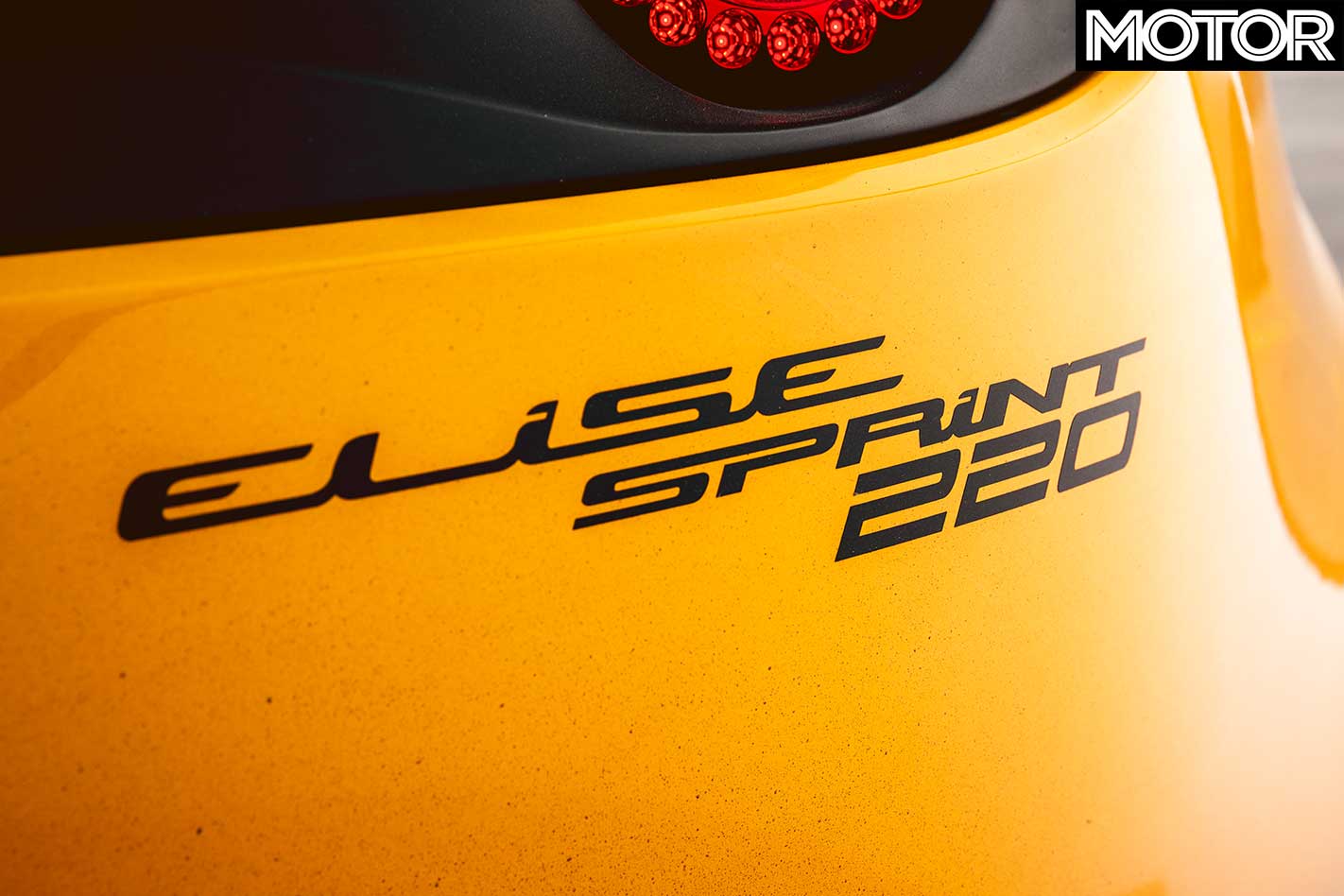
FAST FACTS 2018 Lotus Elise Sprint 220
BODY: 2-door, 2-seat coupe DRIVE: rear-wheel ENGINE: 1798cc inline-4, DOHC, 16v, supercharged BORE/STROKE: 80.5mm x 88.3mm COMPRESSION: 10.0:1 POWER: 162kW @ 6800rpm TORQUE: 250Nm @ 4600rpm WEIGHT: 878kg POWER-TO-WEIGHT: 184kW/tonne TRANSMISSION: 6-speed manual SUSPENSION: double wishbone, coil springs, anti-roll bar (f); double wishbone, coil springs, anti-roll bar (r) L/W/h: 3785/1719/1117mm WHEELBASE: 2300mm TRACKS: 1457/1506mm (f/r) STEERING: unassisted rack-and-pinion BRAKES: 288mm ventilated/drilled discs, twin-piston calipers (f); 288mm ventilated/drilled discs, single-piston calipers (r) WHEELS: 16.0 x 5.5-inch (f); 17.0 x 7.5-inch (r) TYRES: Yokohama Advan Neova AD07; 175/55 ZR16 (f), 225/45 ZR17 (r) PRICE: $97,990
PROS: Surprising acceleration; raw driving experience CONS: You gotta be in the mood; not the most practical car RATING: 4 out of 5 stars
THIS is the transport revolution. It’s going to disrupt things beyond the way we travel. Industries might cease to exist, others will be born. This is where innovation will breed real value and add to our society.”
Professor Hussein Dia paints vividly with his words, his gentle deportment energised by a vision of the autonomous future. He speaks from a depth of knowledge gained over 25 years as a civil engineer and academic.
Dia leads the Future Urban Mobility program at Swinburne University of Technology in Melbourne and is a member of the Smart Cities Research Institute. His primary interest is intelligent transport systems, or, how technology enhances the way we use our infrastructure, and he is considered one of Australia’s foremost authorities on autonomous vehicles (AVs). In his mind, there’s no alternative.
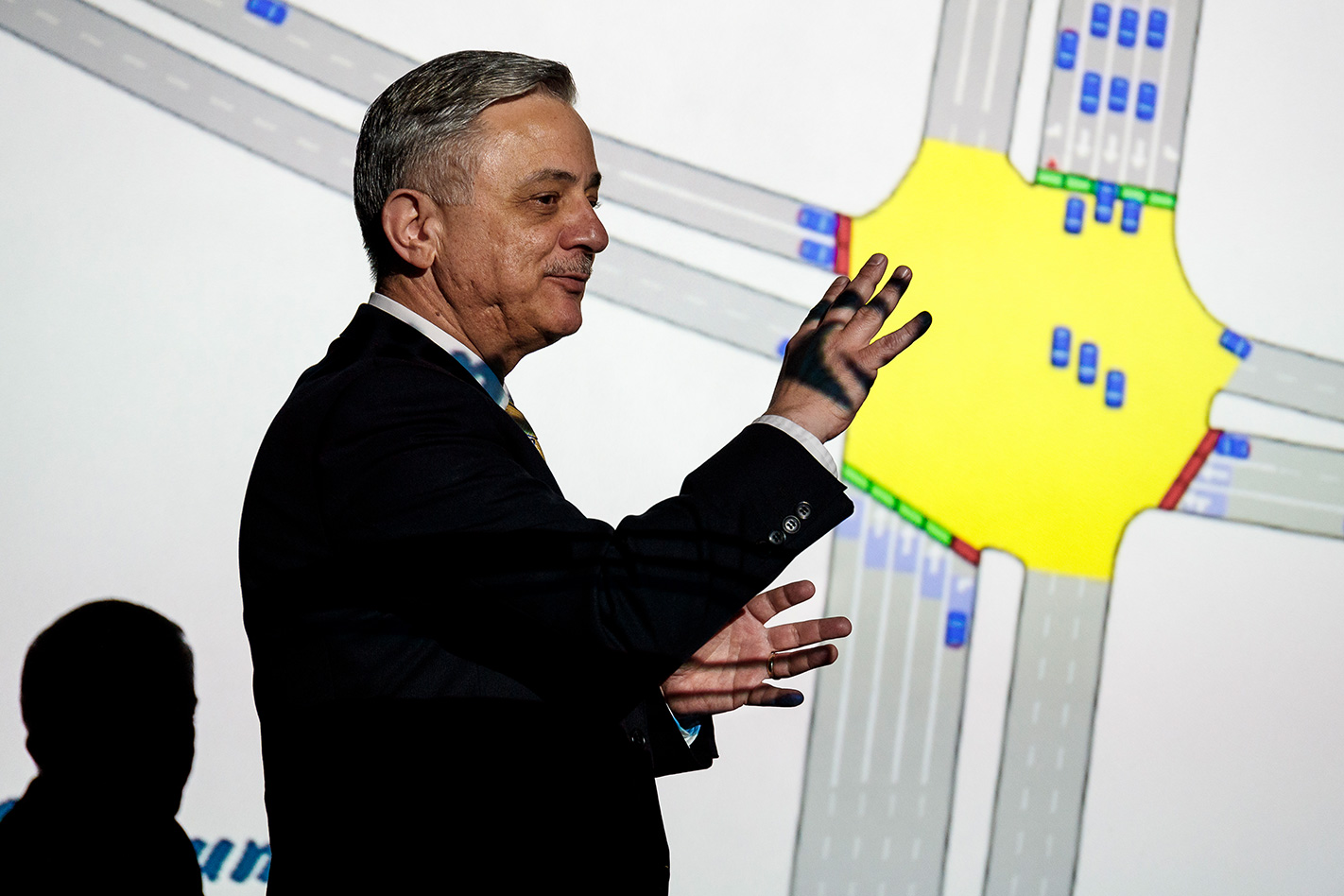
“The main reason is to cut the number of fatalities. Around the world we lose 1.2 million people to road traffic crashes every year. That’s about 15 aircraft carrying 200 passengers falling out of the sky every single day. We don’t accept this in air travel. It’s shocking that we accept it [on our roads]. The human driver is responsible for 90 percent of these accidents.”
In Dia’s broader picture, electric AVs are the environmental saviours we need. They address issues beyond our immediate concerns like the road toll and air pollution, including the reactive road building that’s choking our cityscapes.
“Over the past 50 years the mentality has been that if you have congestion you build out of it, you add more capacity. That might actually be a nightmare scenario when freeways are already 11 lanes wide. That’s not sustainable. When we do surveys people tell us they want low carbon mobility; they want sustainable transport solutions. They want things that won’t make climate change worse.
“Vehicles are going to be autonomous and they’re going to be on-demand. One of the striking things for a city like Melbourne is we can achieve the same mobility needs during peak hours and over the duration of the day using only 20 percent of the current vehicle fleet.
“You can reduce the number of vehicles on the road substantially if people are willing to share. They need to be shared, otherwise we’re doing exactly what we do now – 1.1 passengers per vehicle, and that’s not going to cut it.
“Some people might not want to share, but the research is showing this is a minority. Younger people are not getting their licences, they identify more with a smartphone than a vehicle and they prefer to be driven while doing other things. Owning a vehicle is an expense that’s parked for 90 percent of the day. If the surveys we’re doing translate to reality, people are no longer interested in owning a vehicle.”

Dia believes his utopian vision is achievable by 2040. By then, the shape of our cities will have begun transforming.
“Fewer vehicles on the roads would reduce the need for parking by 90 percent. Jungles of parking spaces would disappear. To me, that’s exciting because one lane of the existing road can also be removed and made for active transport [cycling/running/walking], or turned into public spaces.”
This idealistic vision is easier to comprehend when looking at the multi-purpose, high-density developments happening in Australia’s largest cities.
“We’re seeing more densification – people in apartments near the city rather than outer suburbs. A good example is Melbourne Central where you have a train station at the base, then retail, offices, and residences. A lot of people living in these areas don’t need a car.
“Melbourne and Sydney are going to reach the 8 million [people] mark in time. Imagine if everybody decided to bring a car with them.”

Dia believes ride sharing AVs will play a major role in relieving pressure on infrastructure, but says investment in the mass public transport systems pioneering autonomous technology, like buses, will be important for easing people into a new way of travelling.
“Melbourne is trialling autonomous minibuses in Carlton and other places. These are perfect initial rollouts of these systems. When you have a fixed route you can easily map it. You can train the artificial neural network program with thousands and millions of examples. The suburban bus even has its own lane so it’s not interacting with other traffic.
“We need to have more pilot studies on the road. We’ve done a lot of theoretical work but now it’s time to take it to the field. How are we going to feel comfortable in the future ordering one of these in the morning and asking our primary school children to hop into it? How are we going to achieve that level of trust?”
One building block is CBD exclusion zones for vehicles without autonomous functionality, ring-fencing areas of high pedestrian activity where autonomous infrastructure is more easily integrated. This is a good intermediate step toward the wider introduction and acceptance of AVs, according to Dia.
Outside of the city centres, and for car enthusiasts, the future of mobility looks a little different.
“Instead of owning a car, or a second car, you subscribe to a mobility service provider. There, you specify your needs and set a budget per month. Families can keep one vehicle and sell the rest. The expectation is that the number of vehicles over the next 40 years will reduce.”
Today, car ownership is cheaper than ride sharing. Dia believes change will come with the reduced expense of EV maintenance and driverless AVs.
“We need to bring the price to the level of owning a car, and without a driver in the front seat that could become a reality. Uber in its latest report said 70 percent of a ride cost is for the driver. Even if you eliminate 50 percent it would bring it down to parity with owning a vehicle.”
Forward thinkers are only beginning to understand the wider practical implications associated with the envisioned transport revolution, and progress is set to come at some cost to the community.
“A lot of people are going to be out of work. In Germany they predict losing 600,000 jobs by 2040. Those are immediate people working in the industry. This is going to have massive impacts, but it’s going to create new types of jobs for people to consider. The cars will travel maybe three times the normal distance per year, up to 100,000kms depending on how many vehicles fleet companies put on the road. You will need to replace them every three to five years for battery wear.”

Supporting infrastructure faces imminent stress given the predicted influx of energy-hungry EVs.
“It is going to be an issue for utilities to balance the supply and demand. One positive is EVs as mobile chargers. If you drive and park one somewhere, it can be plugged in to supply battery electricity to the grid. It’s a complex problem because you need very smart algorithms and infrastructure for metering, but it is possible to instruct the vehicle to charge itself during off-peak hours and monetise your asset during peak hours.
“But we need to look at how we diversify energy sources. What’s the point of having a vehicle plugged to a wire that stretches all the way to a coal mine? That’s useless.”
Data-hungry AVs also threaten to swamp connectivity systems with their huge bandwidth requirements for live mapping and Vehicle-to-Everything communication.
“There’s a lot of hope now on 5G data because that’s mobile. These vehicles of the future generate unbelievably huge amounts of data, gigabytes per second sometimes, and if this needs to be transferred to the cloud, current connectivity isn’t going to be sufficient.
“Governments need to be convinced the demand is coming and invest to expedite the rollout of infrastructure. We need public/private partnerships. It impacts all our lives and it’s too big for one entity to take ownership.”
How the revolution will be supported by government is a question looming large considering revenue from the sale of fuel has a finite timeline.
“At the moment the government gets $11bn each year from the fuel excise. If 80 percent of the vehicle fleet is EVs by 2040, that’s under threat.
“Economists have started to look at what’s called road pricing, or congestion charging. We’ve tried before to suggest it, but no politician wants to come near it. What I like about it is; instead of paying a registration fee, stamp duty and fuel excise, the charge would be user pays per kilometre. There’s going to be more EVs and they will travel more. So even though there’s no fuel tax, the government still makes money.
“It’s government policy that’s going to have the big impact. In China the incentive for the government is to be a world leader in the EV space, and they’re responding to citizen pressure. The pollution is overwhelming. In Europe and India the regulations are due to communities voting.
“In Australia our cities are not as polluted, but we can’t wait until they are. Things are only going to get worse. I’m not a fan of bans, I think that we should leave some choice for people, but it’s those sorts of interventions that might encourage change.”
Hands up if your family is normal? Didn’t think so. Every family is unique, right? And every family has specific needs when it comes to getting around during the week, and on weekends. That’s why there are dozens of different family cars on sale in Australia, each tailored to meet the unique needs of the typical Australian family.
Some aspects are non-negotiable, though. Like safety. We all want to keep our loved ones as safe as possible every time we’re on the road. Comfort, that’s big too, otherwise the kids will scream blue murder at the mere thought of a road trip. Practicality is high on the agenda; after all, life comes with a lot of accessories. And connectivity, that’s crucial for Mum and Dad’s sanity, and to keep back seat passengers entertained.
Here’s WhichCar’s list of the top-five new cars coming in 2019 that meet the needs of the average Australian family.
MG HS
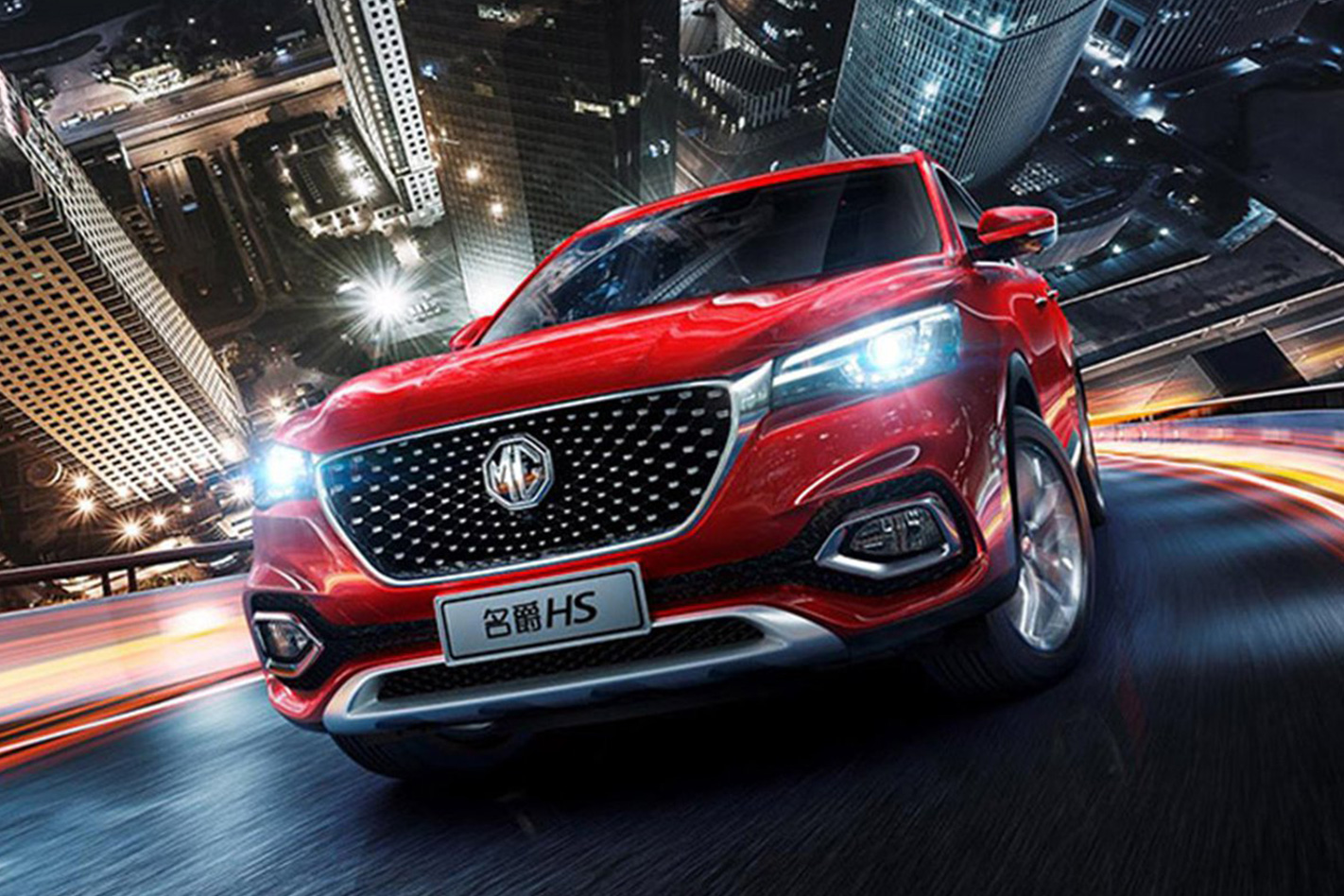
MG hopes to boost sales in Australia with its premium-equipped new-generation medium SUV.
Price range: $27,000 – $37,000 (estimated)
Due date: Late 2019
Rivals: Mazda CX-5, Toyota RAV-4, Hyundai Tucson
Based on the X-Motion concept revealed at the 2018 Beijing Motor Show, the MG HS’s attractive lines appear to have been penned to directly take on the Mazda CX-5, with state-of-the-art driver assistance tech and German-rivalling upmarket cabin appointments to sweeten the deal. The latter includes a 12.3-inch digital instrument cluster, 10.1-inch infotainment screen, soft-touch surfaces and eight-speaker Bose sound system. A gutsy 2.0-litre turbocharged petrol engine will be one of the engine options, with all-wheel-drive also available.
Mitsubishi Triton
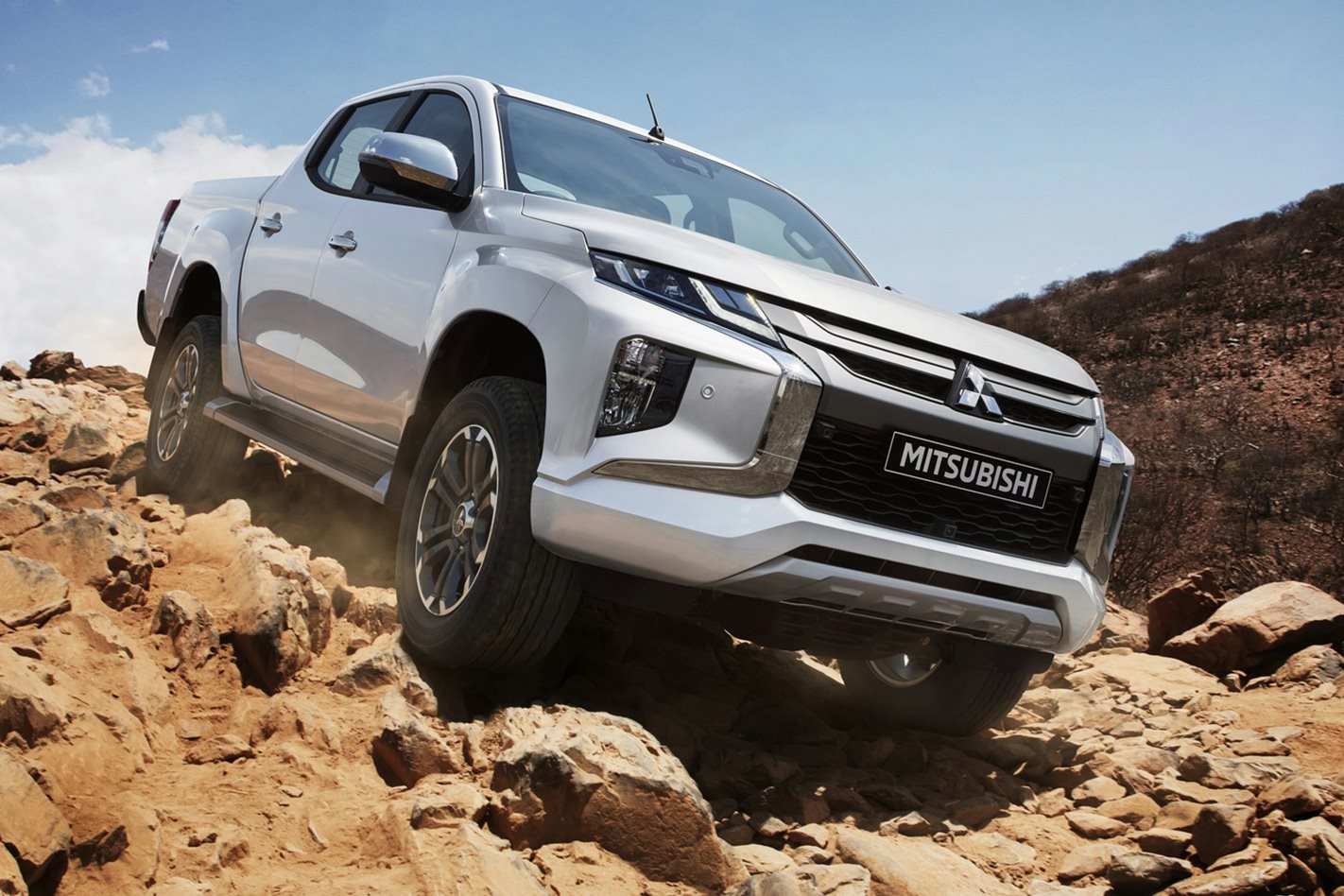
Significance: A major update and facelift of the fifth-generation ute.
Price range: $25,000 to $50,000 (estimated) Rivals: Toyota Hilux, Nissan Navara, Isuzu D-Max, Ford Ranger, Holden Colorado, Mazda BT-50 Due date: January
One of the most popular dual-cab utes for private buyers, the Triton has undergone a significant facelift making it even more family friendly than before, with more than 2400 changes from its predecessor including new sheet metal, updated six-speed auto, more cabin equipment and safety tech. A new flagship is also expected at a later date bringing a tough truck rival to the Ford Ranger Wildtrak and HSV Sportscat.
Peugeot 508
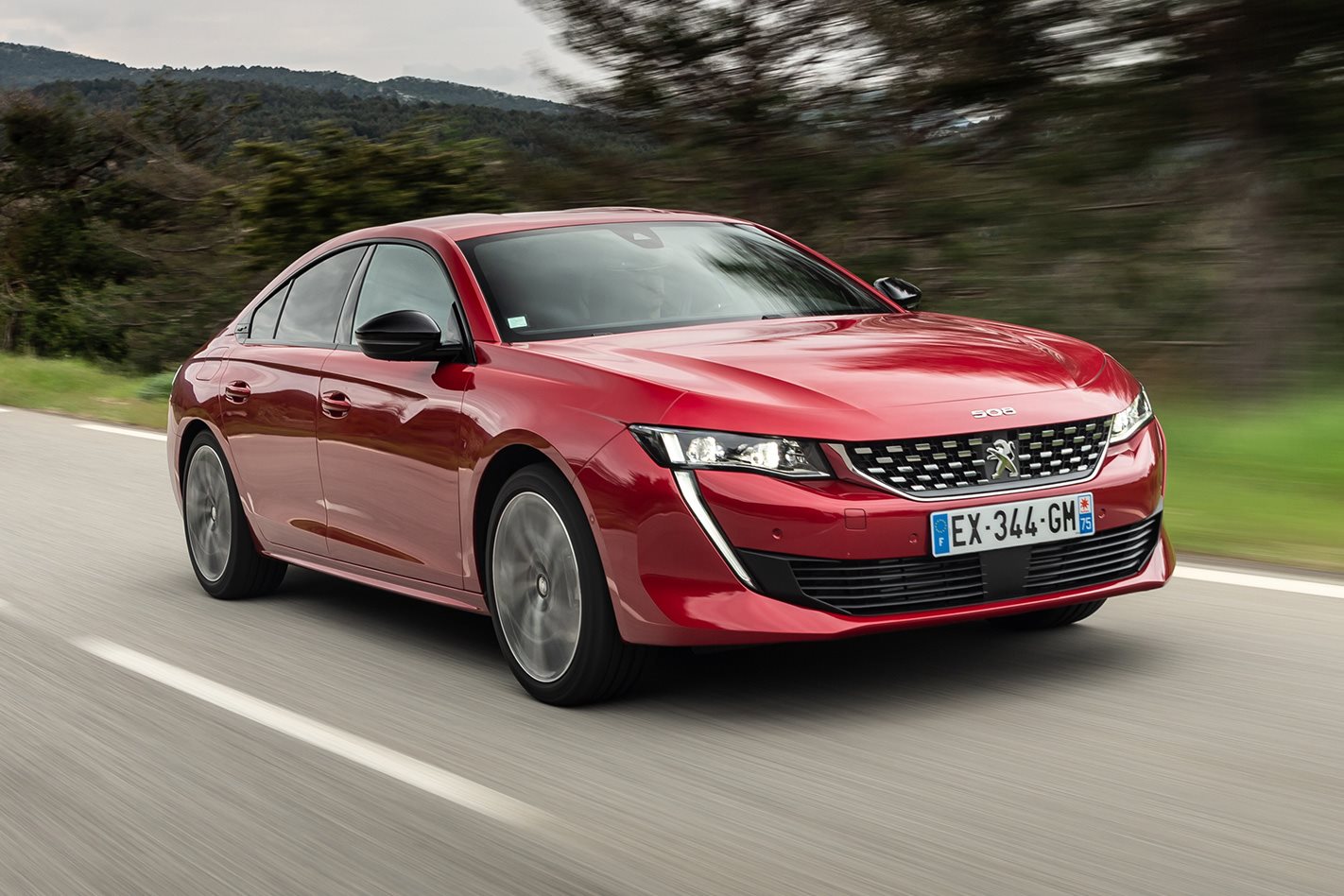
Significance: Ooh la la! Who knew a mid-size sedan could look this good?
Price range: $40K+
Rivals: Volkswagen Passat, Toyota Camry, Mazda 6
Due Date: June 2019
After a couple of generations of extraordinarily soporific 508s, Peugeot has shaken off whatever ailment afflicted its design department and released a stunning mid-size pair in the form of the 2019 Peugeot 508 sedan and wagon.
Strong visual links with the Peugeot 3008 and 5008 are in evidence both inside and out (a very good thing), and the new 508 looks modern, dignified and flaunts a far more premium aura than most would expect of the French brand. Lightweight engineering also promises more than a skerrick of dynamic aptitude as well. Translation: it’ll drive like a dream when it gets here in mid-2019.
Toyota RAV4
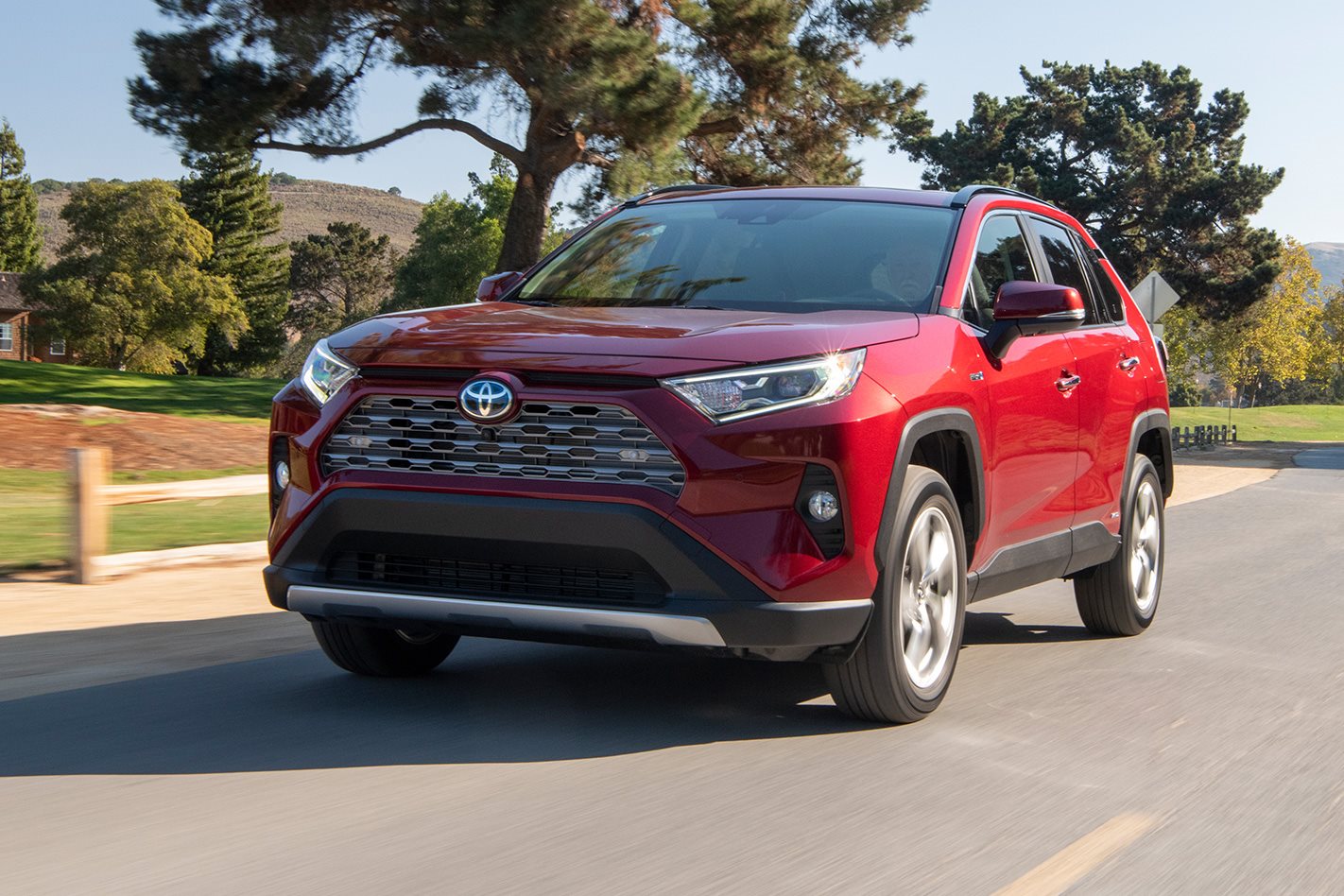
Significance: Toyota’s mainstay medium SUV has been totally redesigned and offers more comfort and technology than ever before
Price range: $30,000 – $55,000 (estimated)
Due date: April 2019
Rivals: Mazda CX-5, Subaru Forester, Jeep Cherokee
One of the most significant new cars for 2019, the all-new Toyota RAV4 promises to shake up the highly competitive medium SUV market by setting new benchmarks in terms of standard features and modern powertrains, including a petrol/electric hybrid. It will have the option of torque-vectoring AWD and multi-terrain drive modes to help it grip all roads, and spawn a more off-road focused version called the ‘RAV4 Adventure’. The new RAV4’s bigger exterior dimensions will result in significantly more interior space and comfort, while the interior design will be more upscale than the current model.
Volkswagen Touareg
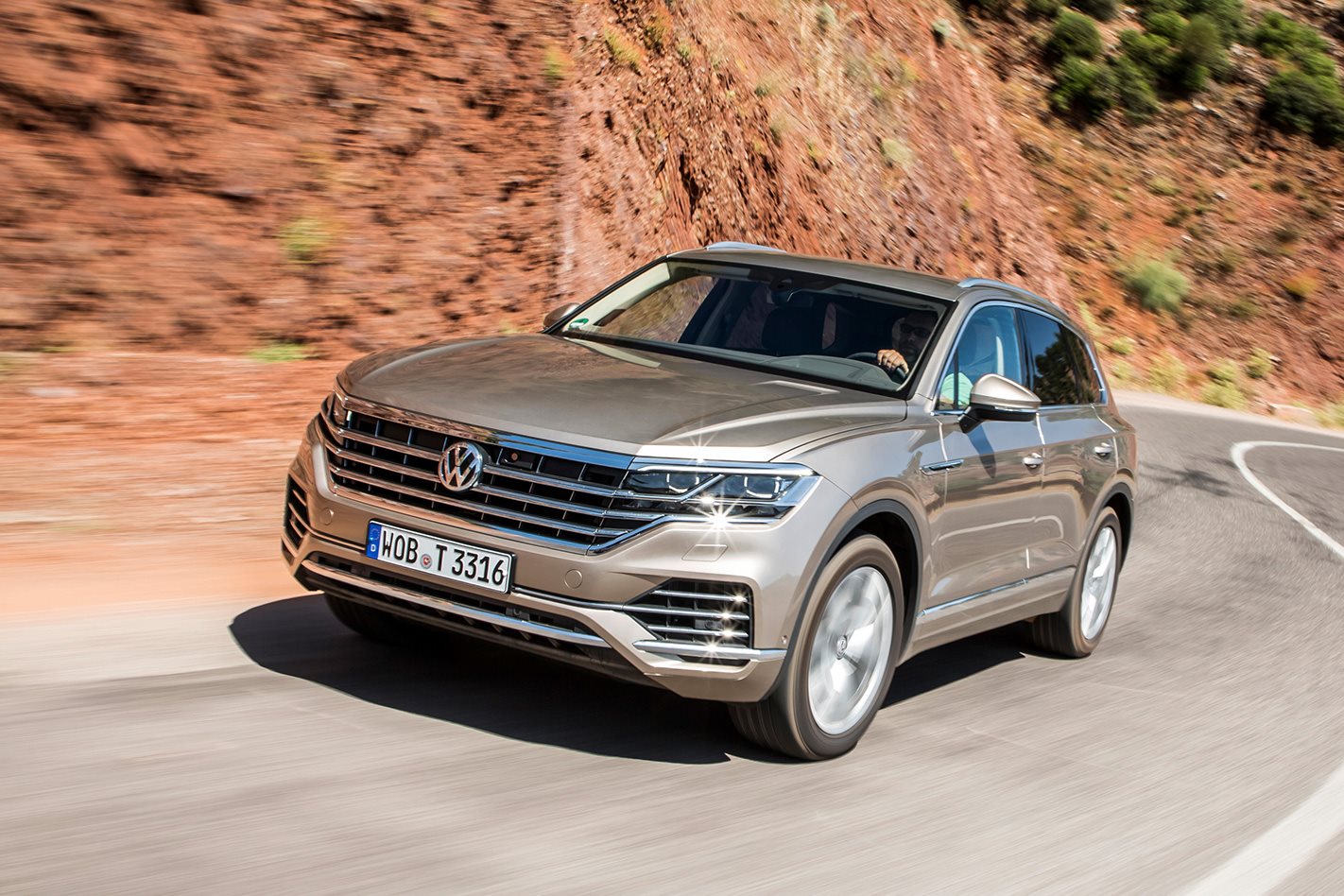
Significance: VW’s large SUV is now a truly premium offering that’s dripping with comfort and technology that rivals its Audi Q7 cousin
Price range: $83,000 – $120,000 (estimated)
Due date: May 2019
Rivals: Audi Q7, BMW X5, Lexus RX
The first all-new Touareg since 2010 is the most luxurious and technologically advanced Volkswagen SUV yet and is built on the same platform as some of the world’s fanciest high-riders including the Bentley Bentayga, Porsche Cayenne and Lamborghini Urus. Featuring interior trim levels that range from lounge-like to the sporty R-line, creature comforts will include VW’s biggest panoramic sunroof yet, 18-way electronically adjustable seats with high-quality leather detailing for families that appreciate, and can afford, the finer things.
If you’ve not been properly excited about an M car since the pugnacious 1M, we don’t entirely blame you – they’ve all been existing somewhat in the long shadows cast by cars like the atmo V8-powered E92 M3, howling straight-six E46 M3, right back to E39 V8 M5 and beyond. It seemed M Division’s golden era was one in the past. However, time to get excited again – the new M2 Competition is utterly, surprisingly brilliant.
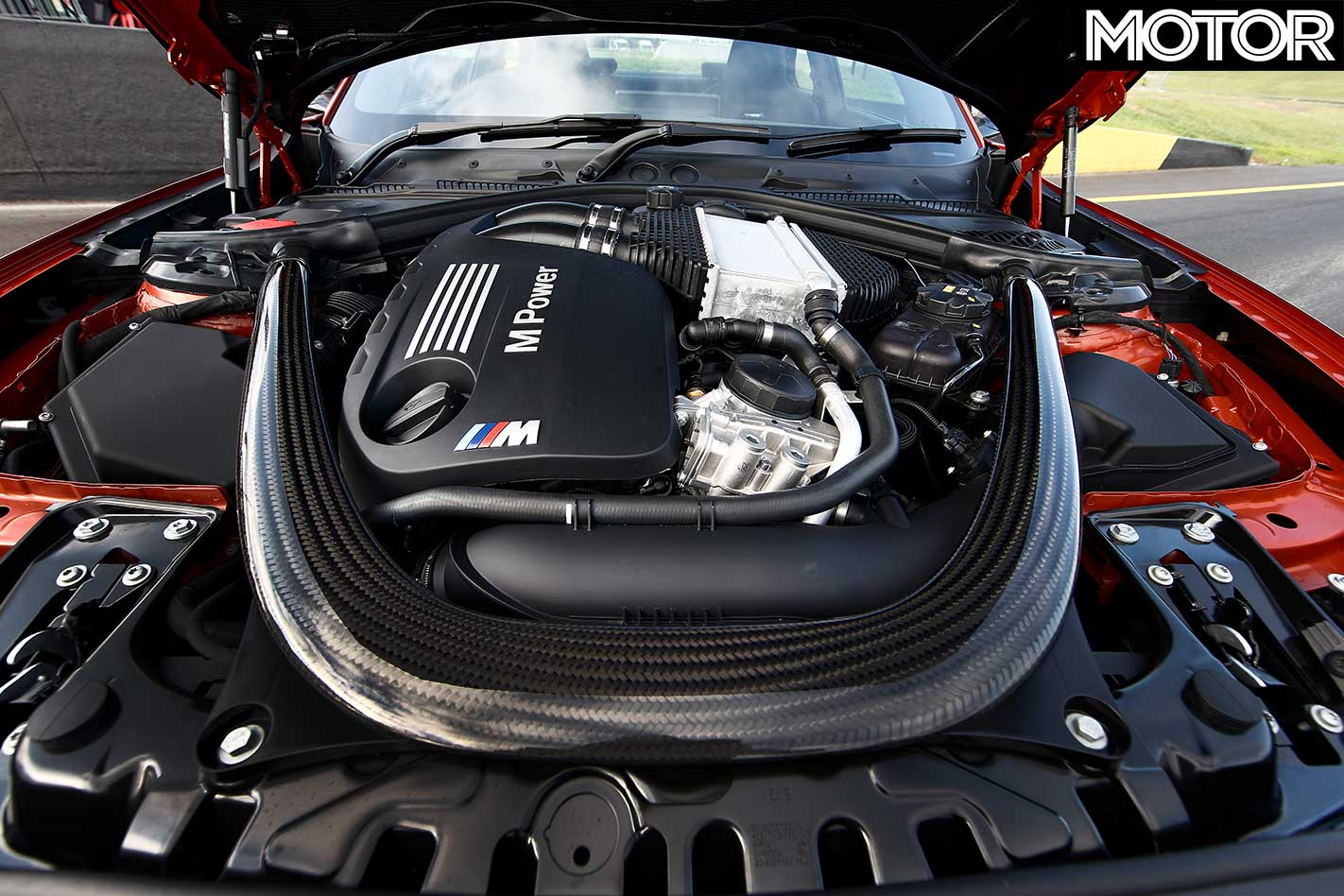
Effectively replacing the ‘base’ M2 in the range – the N55 hasn’t survived the new WLTP fuel economy regulations – the Competition is not a new variant, it is the new M2. There’s an even greater quantity of parts from its bigger brother M3/M4.
The single twin-scroll turbo N55, supposedly nearing its limit for output and efficiency (it has been around for nearly 10 years after all) is out, replaced with the twin-turbo 3.0-litre S55 from M3/M4, slightly detuned to 302kW/550Nm (compared to the 317kW/550Nm of the very first F80/F82 M3/M4s). This represents a 30kW/85Nm increase over the outgoing ‘base’ M2; claimed 0-100km/h time improves, in the case of the DCT anyway, by ‘just’ 0.1sec, 4.3 to 4.2.
With its closed-deck block, lightened crankshaft, strengthened pistons and track-optimised oil system, the S55 is very much a step-up for the baby M car, the Competition more of a 1M on paper than the M2.
To cope with extra cooling requirements of the water-to-air-intercooled S55 – the DCT M2 Competition has four heat exchangers excluding the air-con condenser – there is a new front bar with bigger kidney grilles and lower openings.
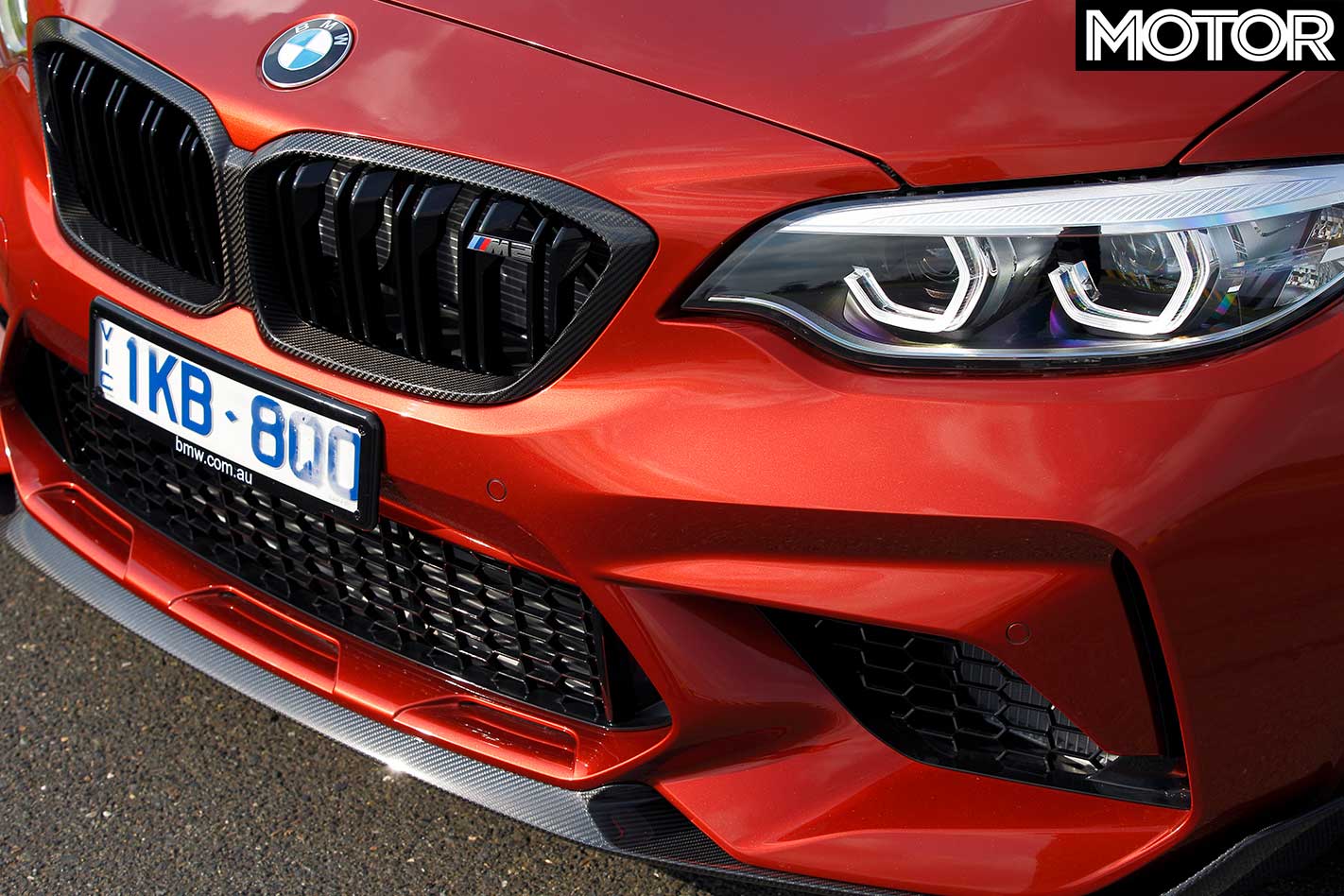
Rear bar, incorporating quad exhausts, remains the same. The new engine nestles in the same hoop-shaped carbon-fibre strut brace of M3/M4; there is also extra bracing in the front, said to improve steering response and feel. Solid lateral suspension joints also promise improved driver connection, if at potential cost to refinement.
There is a brand new bi-modal exhaust system and new software for DCT, computer-controlled locking differential and electric steering. Lastly, the Competition scores the M3/M4 seats – with a neat illuminated M2 logo – and the same, classic M ‘double arm’ side vision mirrors.
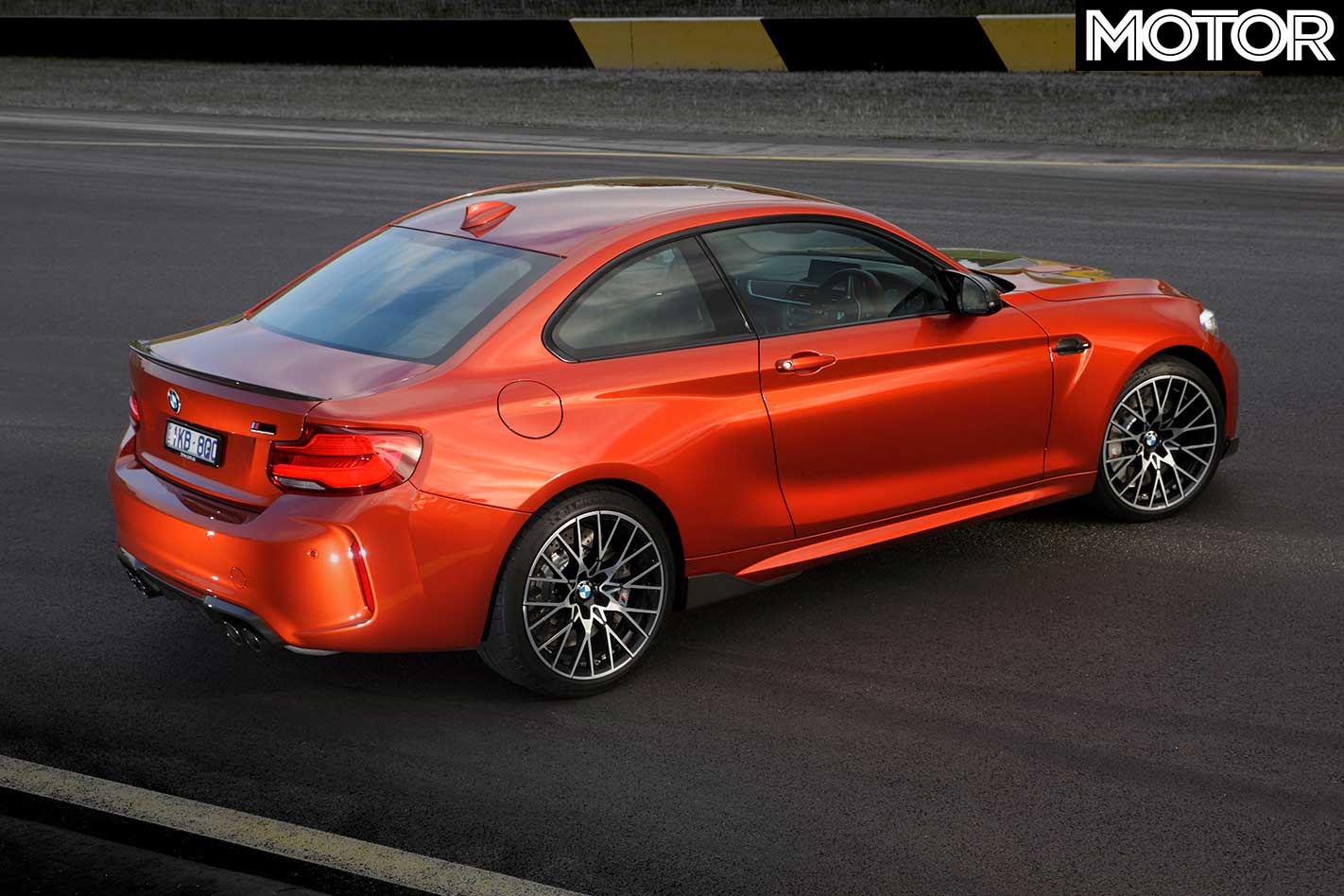
The M2 Competition is available in both six-speed manual and seven-speed dual-clutch auto, for the same price, $104,900 – about $5K more than the base M2 it replaces, although there’s also a simpler-spec Pure model for $99,900. Tyres are Michelin Pilot Super Sports, 245/35 ZR19 front, 265/35 ZR19 rear.
Driving around at low speeds, you’d think the Competition was just an M2 with more grip and more power. Ride from the passive dampers (unlike M240i, the M2 has never been offered with adaptive dampers) is sporting but not unbearable. The interior would feel old if not for the fitment of the latest iDrive6 and 8.8-inch touchscreen. There are M1/M2 buttons on the steering wheel for the first time for the M2.
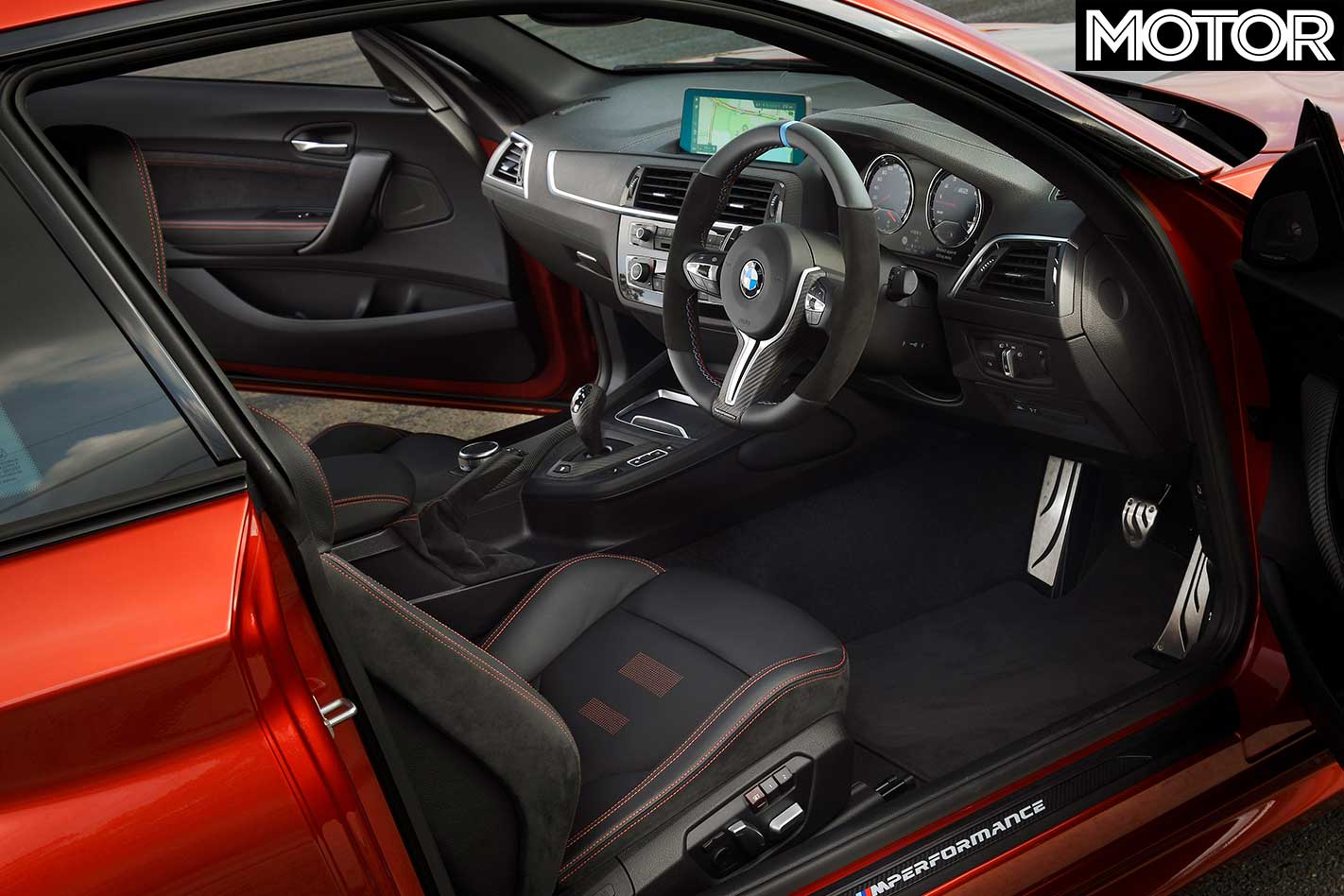
Much like the M3/M4, you are initially blown away by the giant invisible hand of torque that seems to pick up the car and peg it down the road. The DSC light flickers away as the rear Pilot Super Sports do their best, conjuring up scary memories of the old twin-turbo 1M.
The twin-clutch DCT of our test car is satisfyingly responsive up and down the gears, the 3.0-litre straight-six emitting a meaty snarl to its 7600rpm redline. The S55 somehow sounds better in the M2 than it does the bigger cars, replacing a weird flat technical acquired-taste noise with something a bit more conventional.

It’s not until you start really uncorking the M2 Competition that you have your first ‘aha’ moment. The front end of the M2/M3/M4 has always been plentifully direct, and extremely tenacious, however, now in the case of the M2 Competition there’s actually some decent feel. The steering wheel itself remains a little too chunky and large in diameter for my taste, but at last pointing the M2 is a bit of a joy.
Push on again and you wonder if you’ll ever find the limits of those wide Michelins, the car leaning harder and harder into its passive dampers, like you’re both looking at each other and shrugging as to when the tyres are going to give.
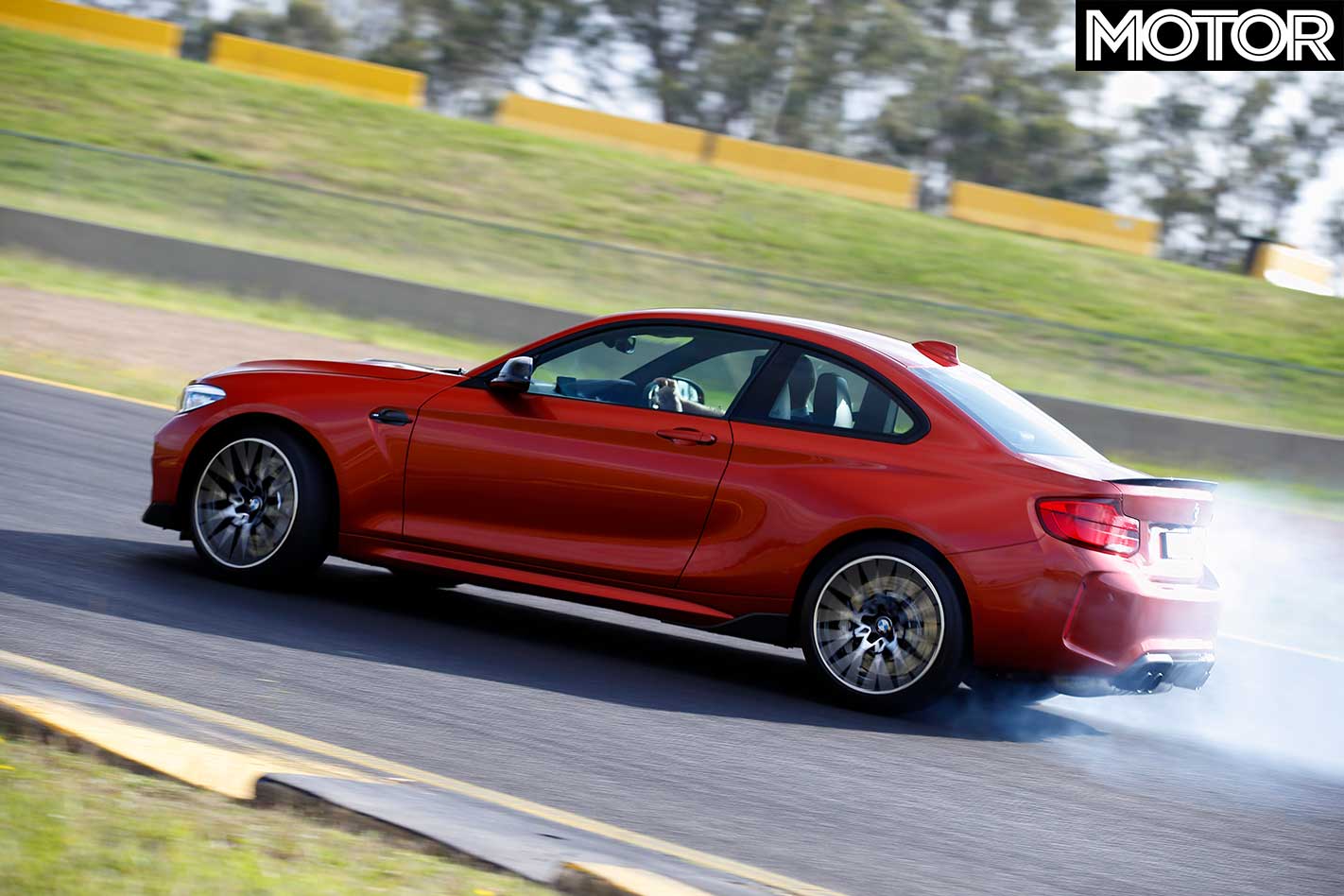
Lateral grip, and traction, are impressive. As are the brakes – just be sure to grab the optional $3000 jobbies which, on paper, share identical dimensions (400mm six-pot front; 380mm four-pot rear) to that of an M4 GTS, although not carbon ceramic.
On a track, things improve yet again – the M2 Competition’s on-limit handling is utterly magic, inviting you to back it in to every corner on the brakes with clean, predictable oversteer defying the wheelbase. Post-apex, you can then plumb the huge reserves of turbocharged torque within the throttle for seriously easy and smoky power slides on exit. It’s a total hoot.
The recalibrated MDM halfway electronic setting is also slack to a welcome degree, almost leaving you entirely alone in first gear, giving a quarter turn corrective lock in second gear and then sensibly only allowing flashes of excitement beyond that as it deems safe. It lets you enjoy the car.
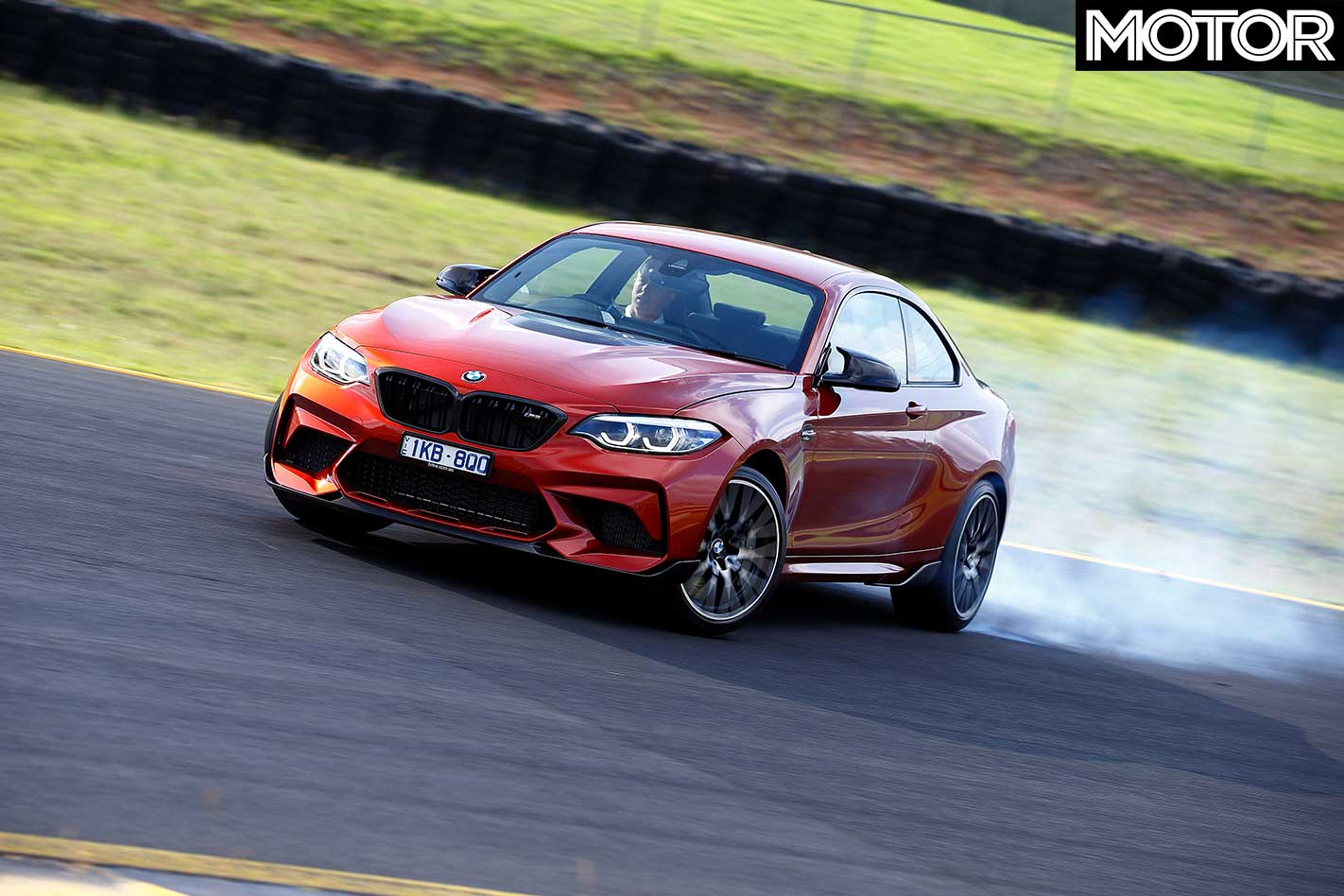
On the whole, the M2 Competition is so surprisingly good, it has elevated itself to the plane of cars that miss out on perfection by the most annoyingly slim of margins – if only the steering wheel rim was a bit thinner, if only the pedals were better placed for left-foot brakers in the DCT car, if only it had adaptive dampers and rode a bit better around town… but then you recall it’s offering almost M4 levels of performance for $35K less.
In fact, better-than-M4 performance, as the M2 Competition has a character and friendliness to it that has infamously eluded its larger siblings.
We really like this car, don’t we? Yes, indeed – we can’t quite believe just how good an application the S55 is in the 2 Series Coupe body. We wonder if one day it may be included in the same breath as E46 M3, E39 M5, E92 M3. Time will tell, but based on our early, relatively short first experiences with the M2 Competition, it’s certainly being included in the same thoughts. And that gets us properly excited.
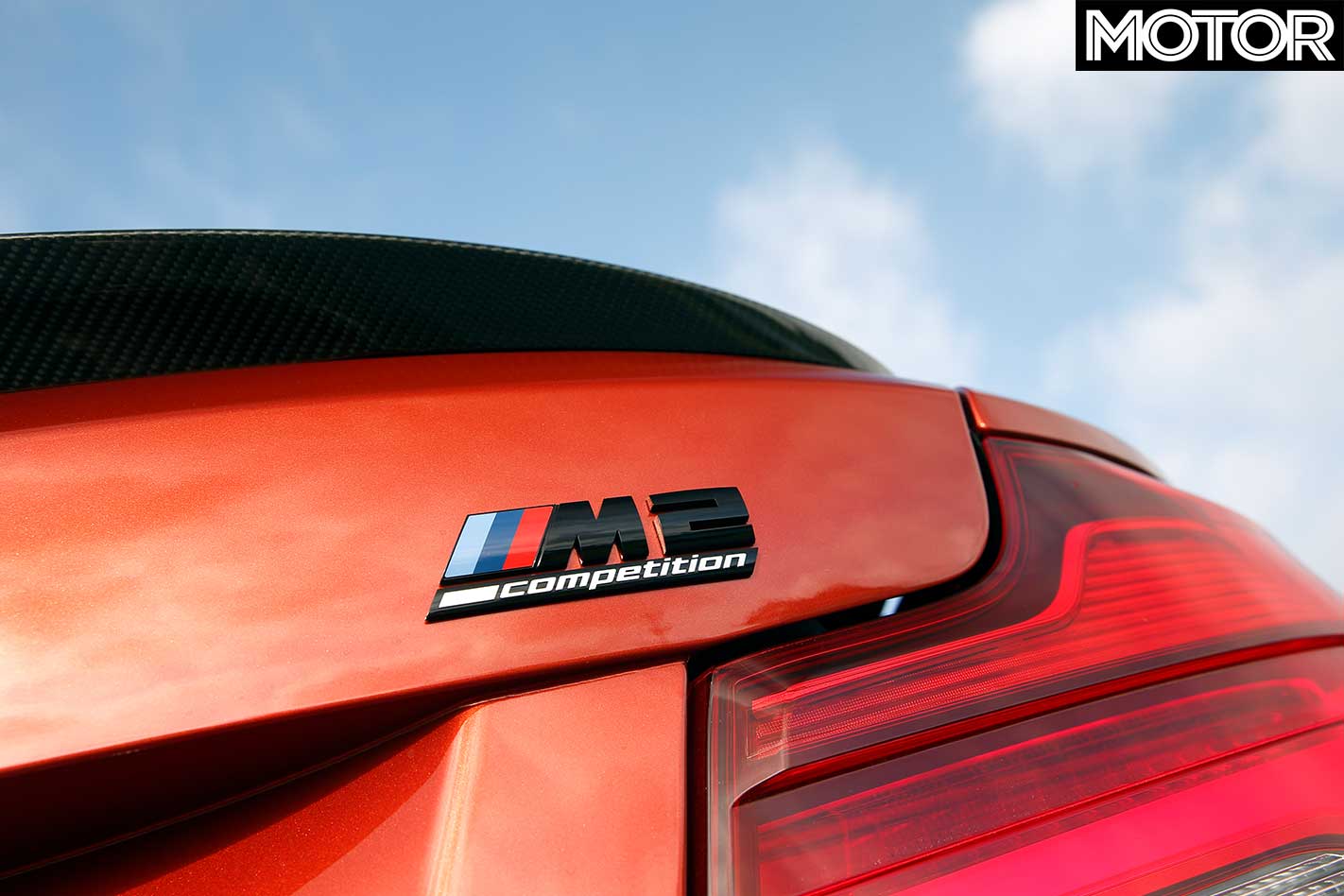
2018 BMW M2 COMPETITION SPECS: Engine: 2979cc inline-6, twin-turbo, DOHC, 24v Power: 302kW @ 5250–7000rpm Torque: 550Nm @ 2350-5200rpm Weight: 1575kg 0-100km/h: 4.2sec (w/ DCT; claimed) Price: $104,900
Like: S55 and M2 go together very nicely; huge grunt; magic on-the-limit handling; value Dislike: ‘Sporting’ ride; slightly drab/dated overall interior; DCT pedal placement
Rating: 4.5 out of 5 stars
The Nemesis
2019 Alpine A110 1.8-litre turbo inline-4; RWD; 185kW/320Nm; 0-100km/h 4.5sec; 1103kg; $106,500
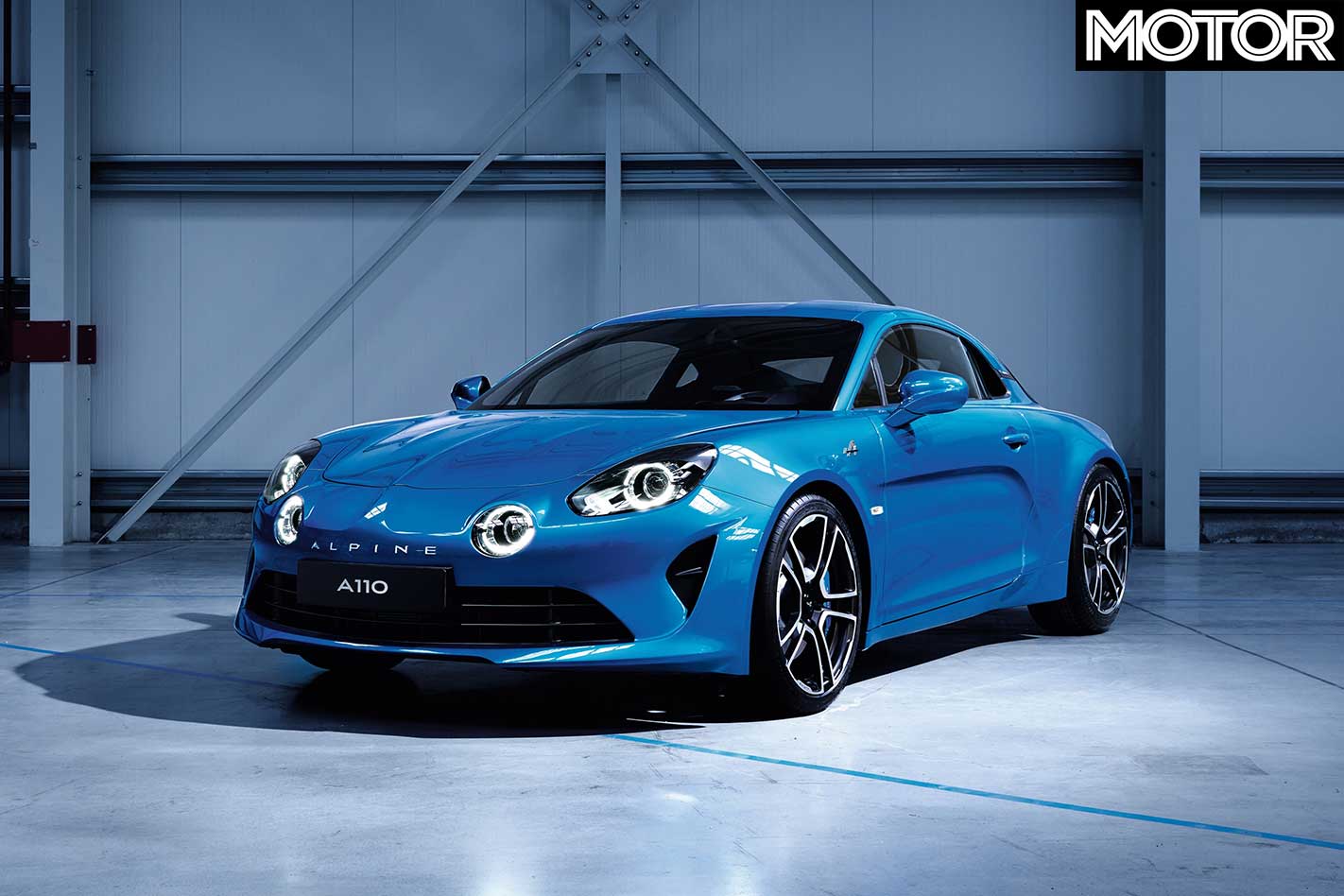
We could have put a Porsche Cayman here but it’s a fair bit pricier. A110 offers similar acceleration to M2 Comp but completely different handling. Both are compared at the imminent PCOTY 2019
Each year our staff photographers, Ellen Dewar, Nathan Jacobs, and Alastair Brook, capture tens of thousands of frames as we motor around the country in search of driving excellence.
We’ve picked the top ten (plus a few fine examples that were shortlisted in the gallery above) shots from the year, presented in roughly chronological order (because why not?).
So, without further ado…
PCOTY group shot, by Ellen Dewar (Feb 2018)
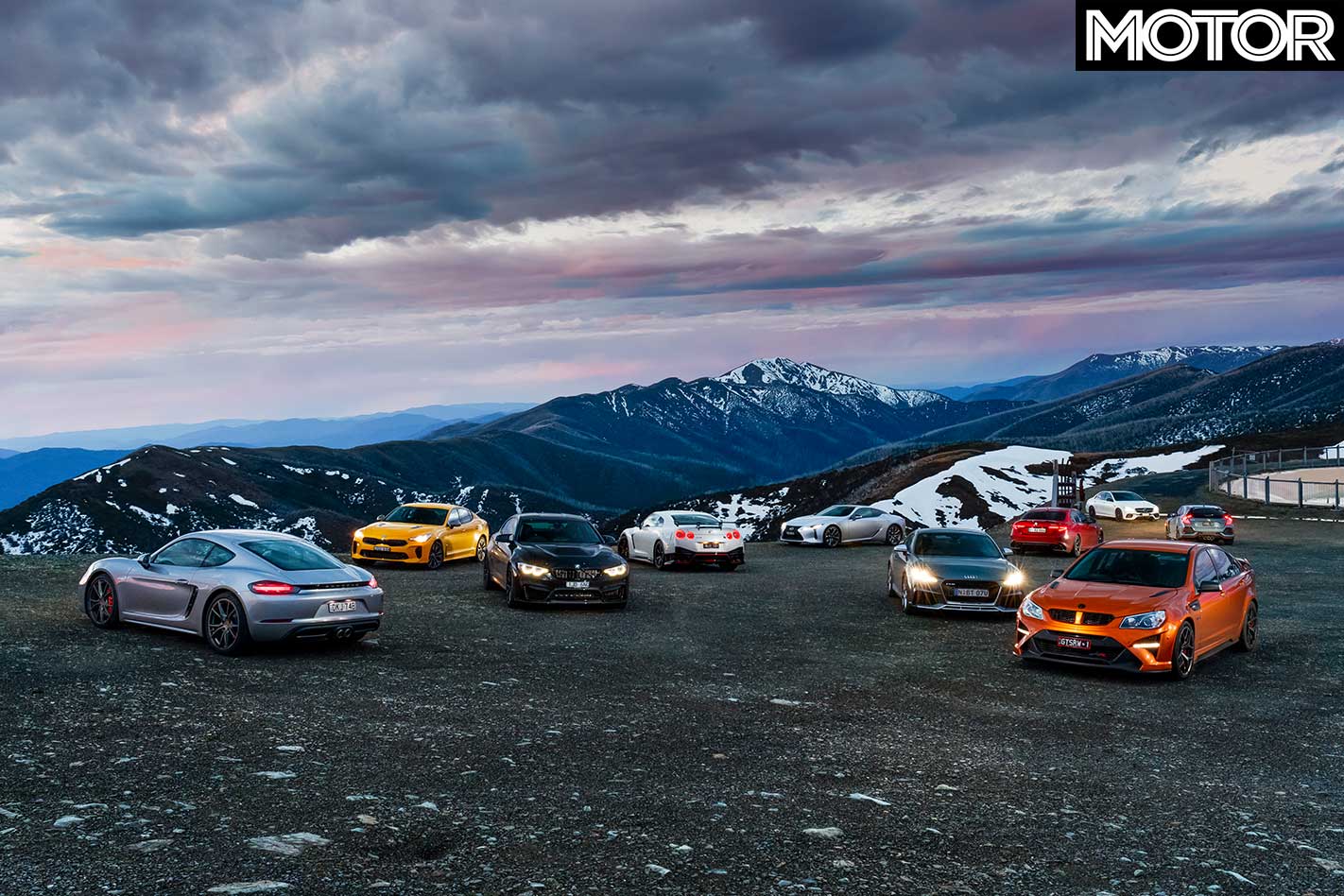
It took Ellen more than an hour to devise the perfect layout for these PCOTY competitors, which meant plenty of running around in the cold (atop Mt Hotham, VIC) for us…
Porsche 911 GT3 in Victorian High Country, by Alastair Brook (April 2018)
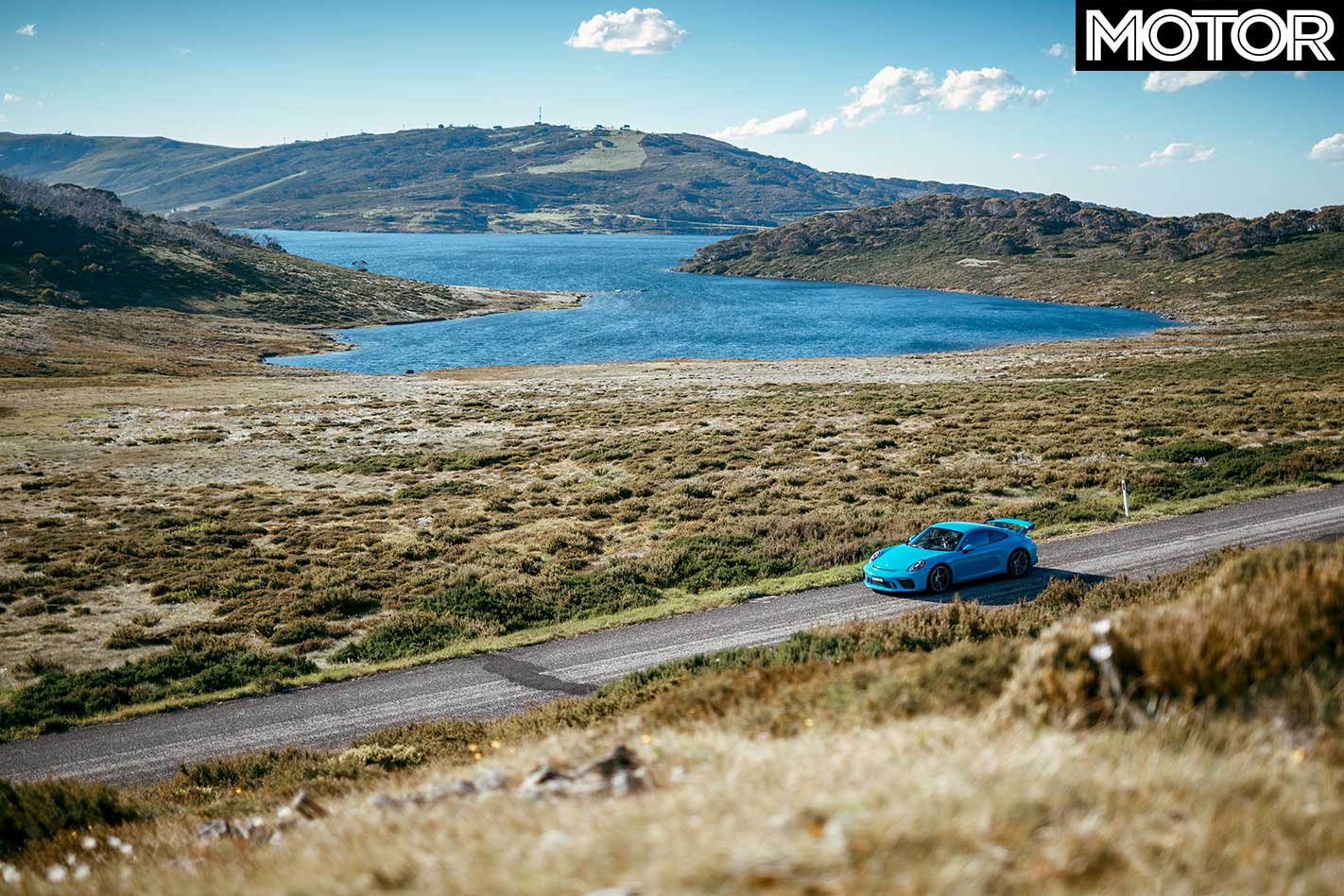
Alastair was tasked with a tricky one here, as this shoot was destined for the first redesigned issue of MOTOR back in April. The part he didn’t mind was riding shotgun in a GT3 while Editor DC gave it a good belt across Victoria.
McLaren 720S at Albert Park, by Nathan Jacobs (May 2018)
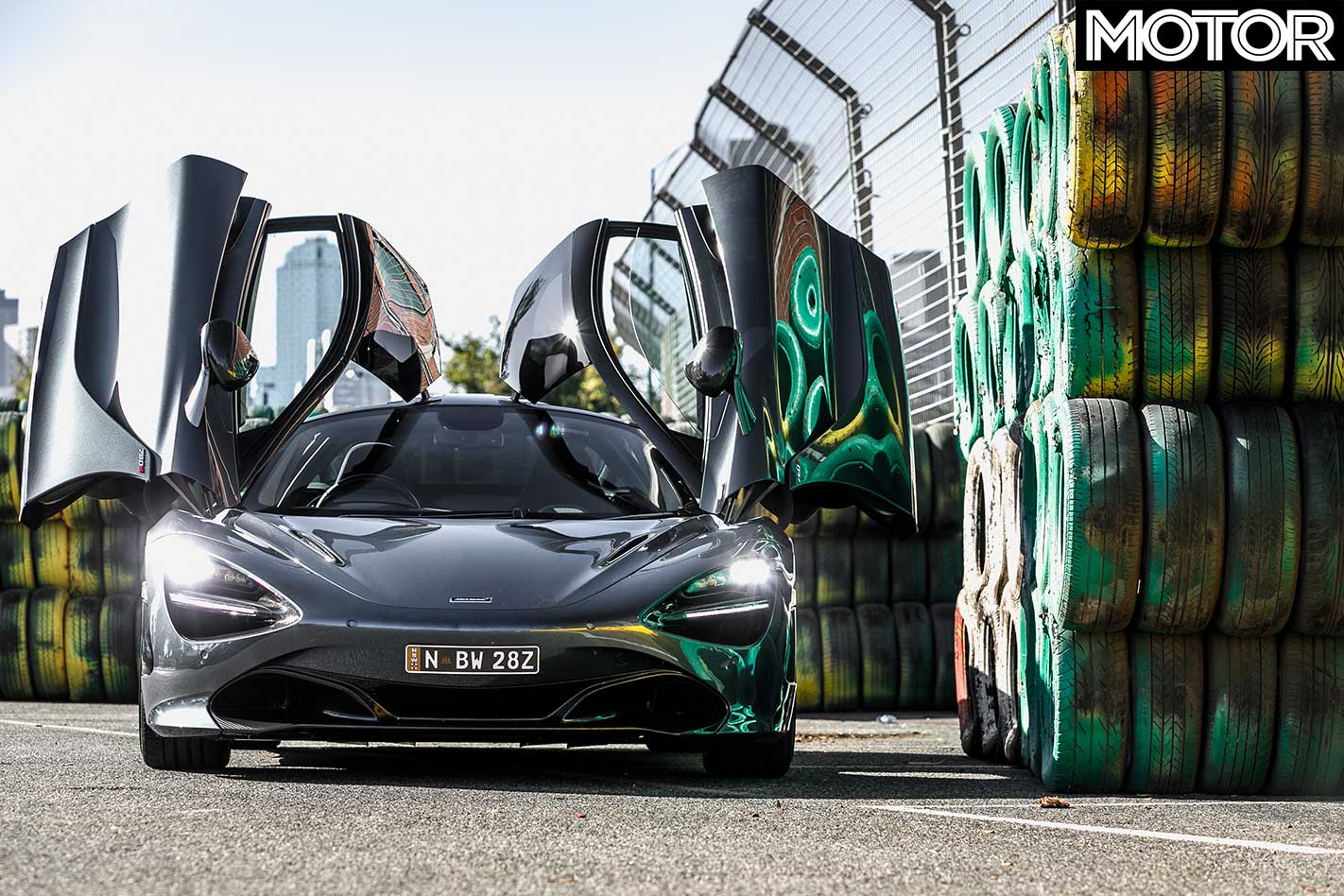
Nathan’s ability to make a car look amazing while sitting still never ceases to impress, and this shot of the Big Mac at Albert Park during the F1 Australian GP week is proof.
Audi R8 RWS, by Alastair Brook (June 2018)
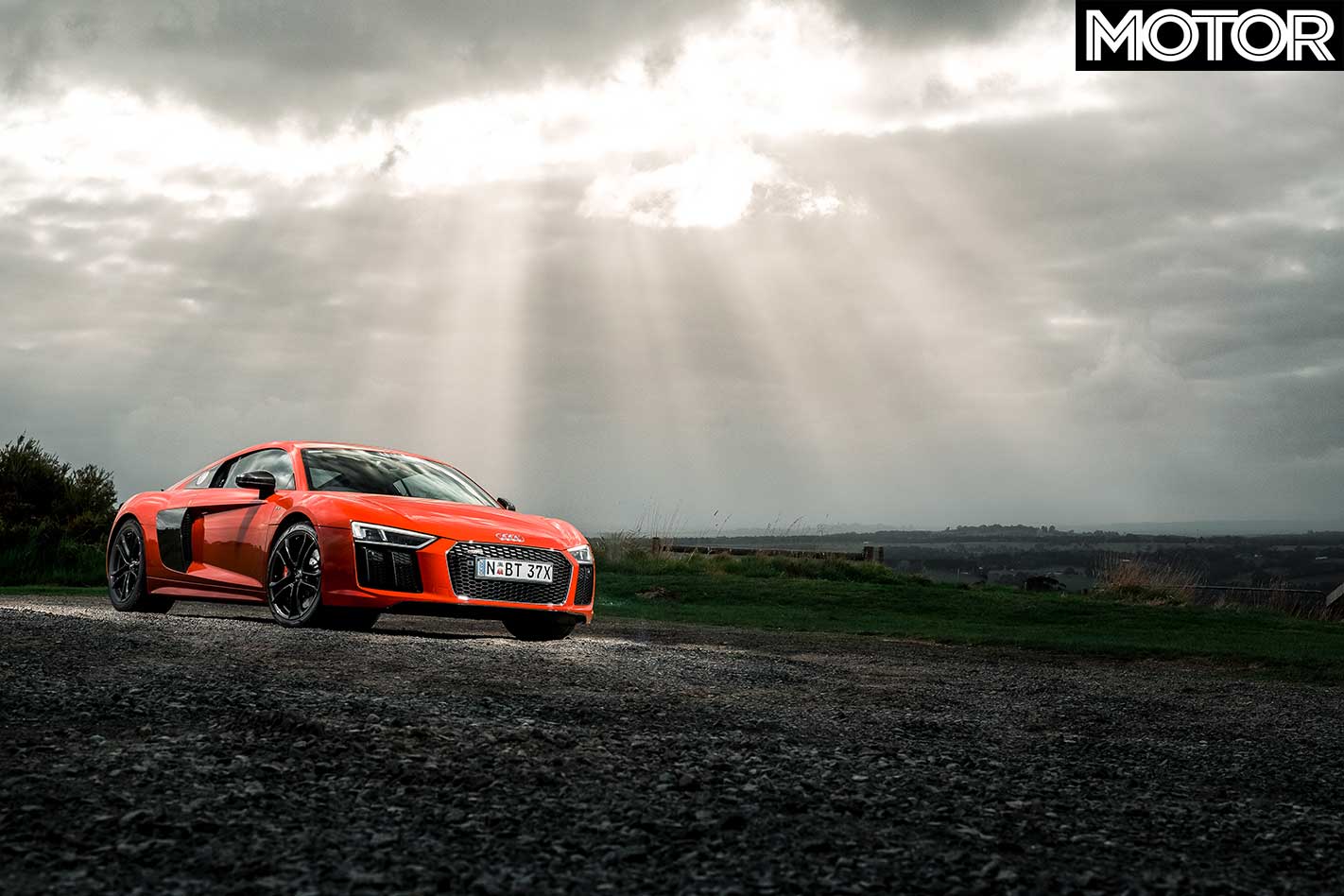
Scott Newman, rather a fan of oversteer, drove the rear-drive Audi supercar and called it heaven-sent. It’s poetic that Alastair was able to illustrate that point so effectively.
Porsche 911 GT2 RS at The Bend Motorsport Park, by Nathan Jacobs (July 2018)
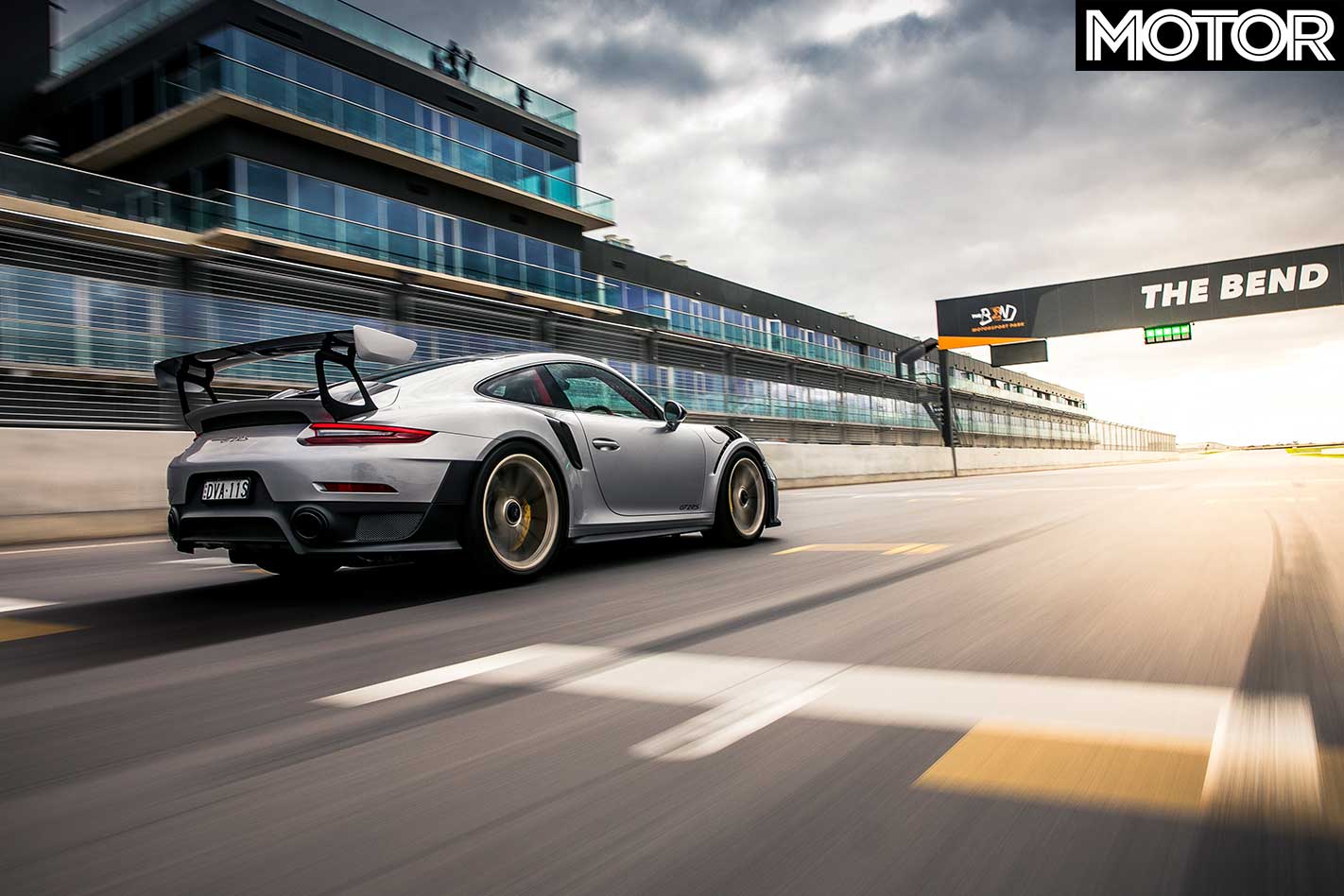
Porsche’s fastest road car was the obvious choice for our (successful) attempt at a lap record of Australia’s newest race track. With Luffy driving and Nathan snapping, there was no way it couldn’t work out perfectly. Awesome car, awesome place, awesome photo.
Honda NSX at Gordon Dam, Tasmania, by Ellen Dewar (Sep 2018)
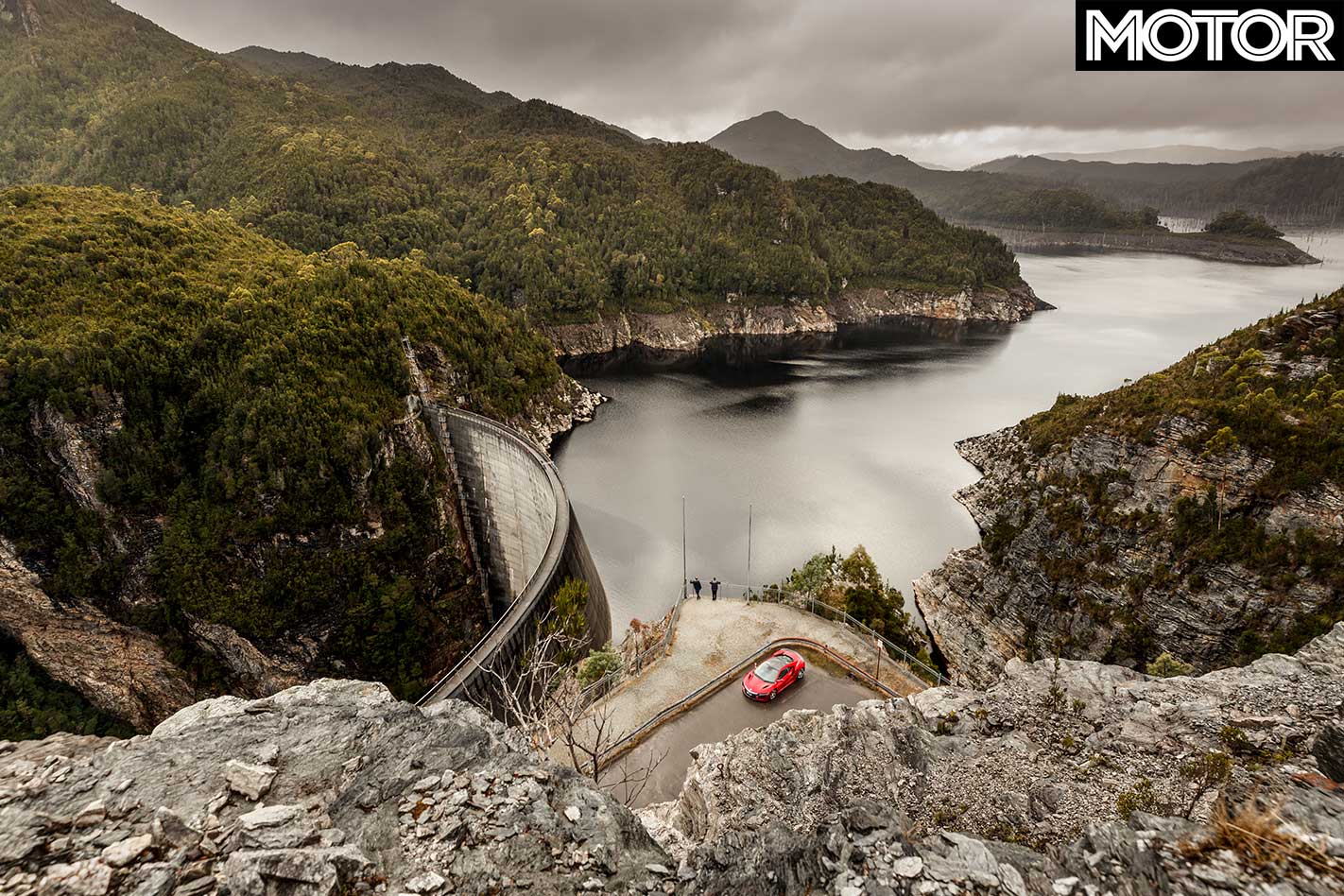
Ellen had to climb a cliff to get this photo. Enough said!
Audi RS4 Avant, by Nathan Jacobs (Aug 2018)
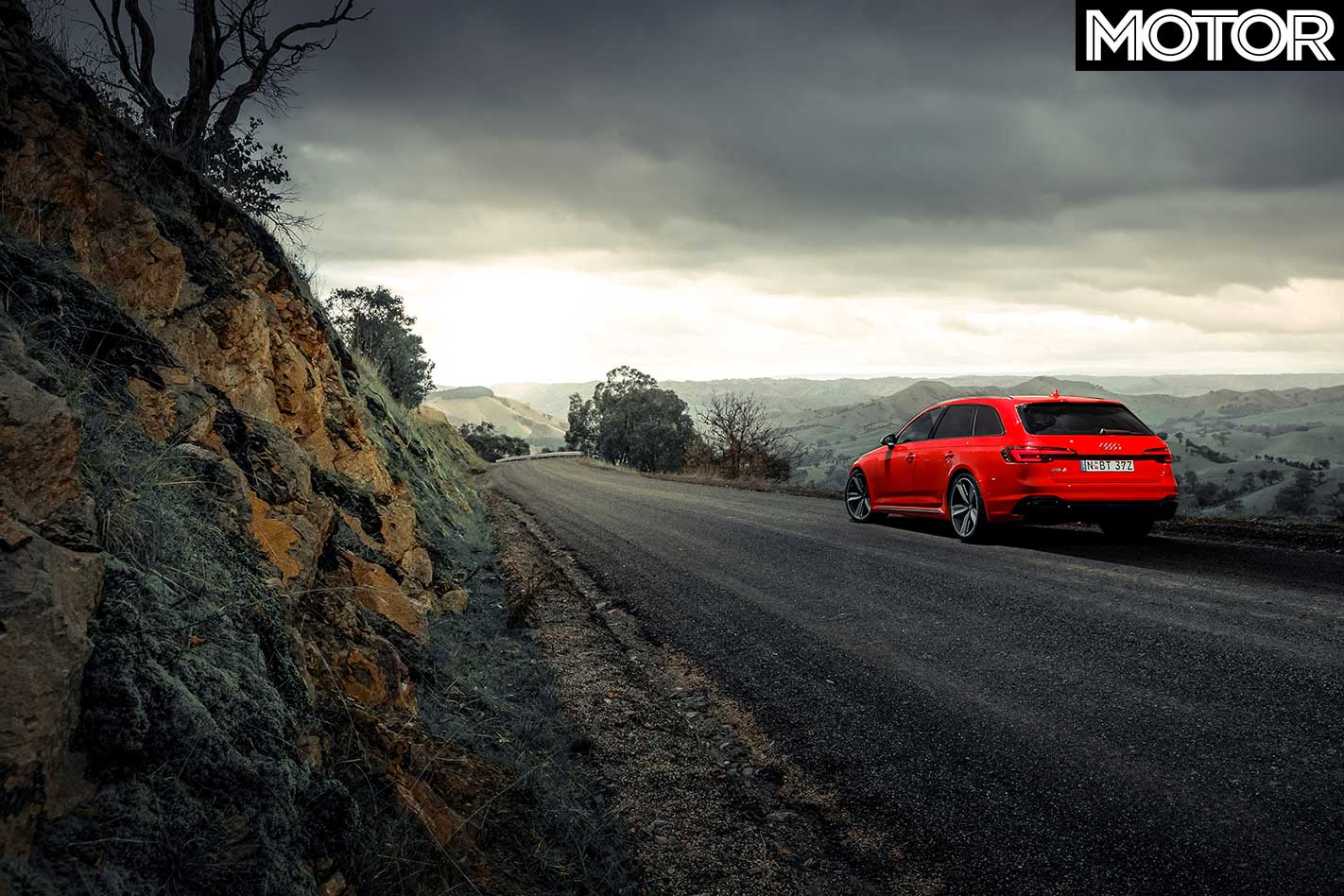
It can’t all be supercars at MOTOR… sometimes it’s superwagons. Audi’s RS4 looks violently contrasted to the moody setting chosen by Nathan.
Ferrari 812 Superfast at Lake Eildon, by Ellen Dewar (Oct 2018)
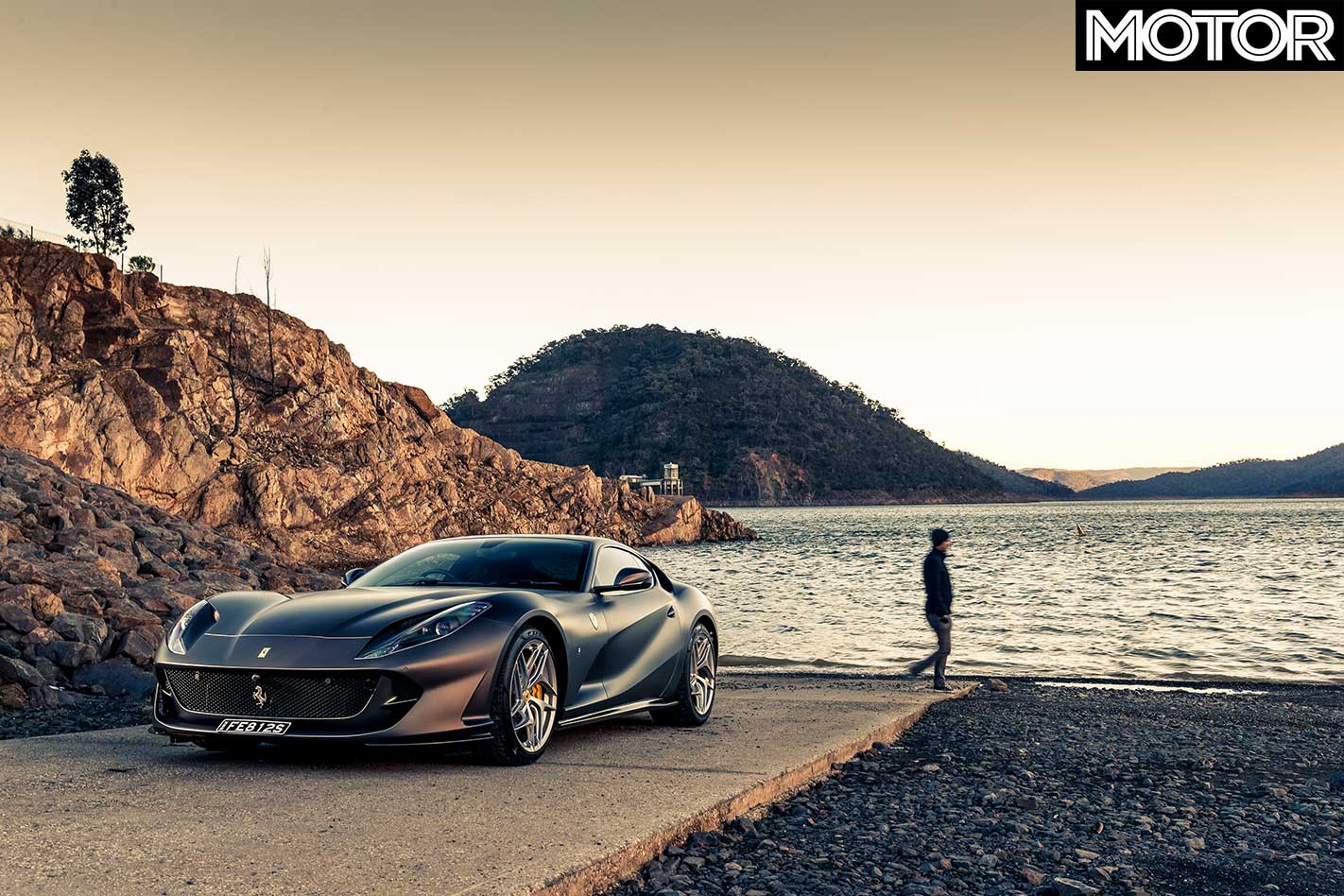
This is actually Ellen’s favourite shot of the 812 Superfast, with Associate Editor Scott Newman providing the silhouette. It didn’t make it into the magazine however, as it didn’t suit the ‘mood’ of the feature. Or at least that’s what our designer Damo said.
Ford Ranger Raptor and Holden/HSV Colorado SportsCat, by Alastair Brook (Dec 2018)
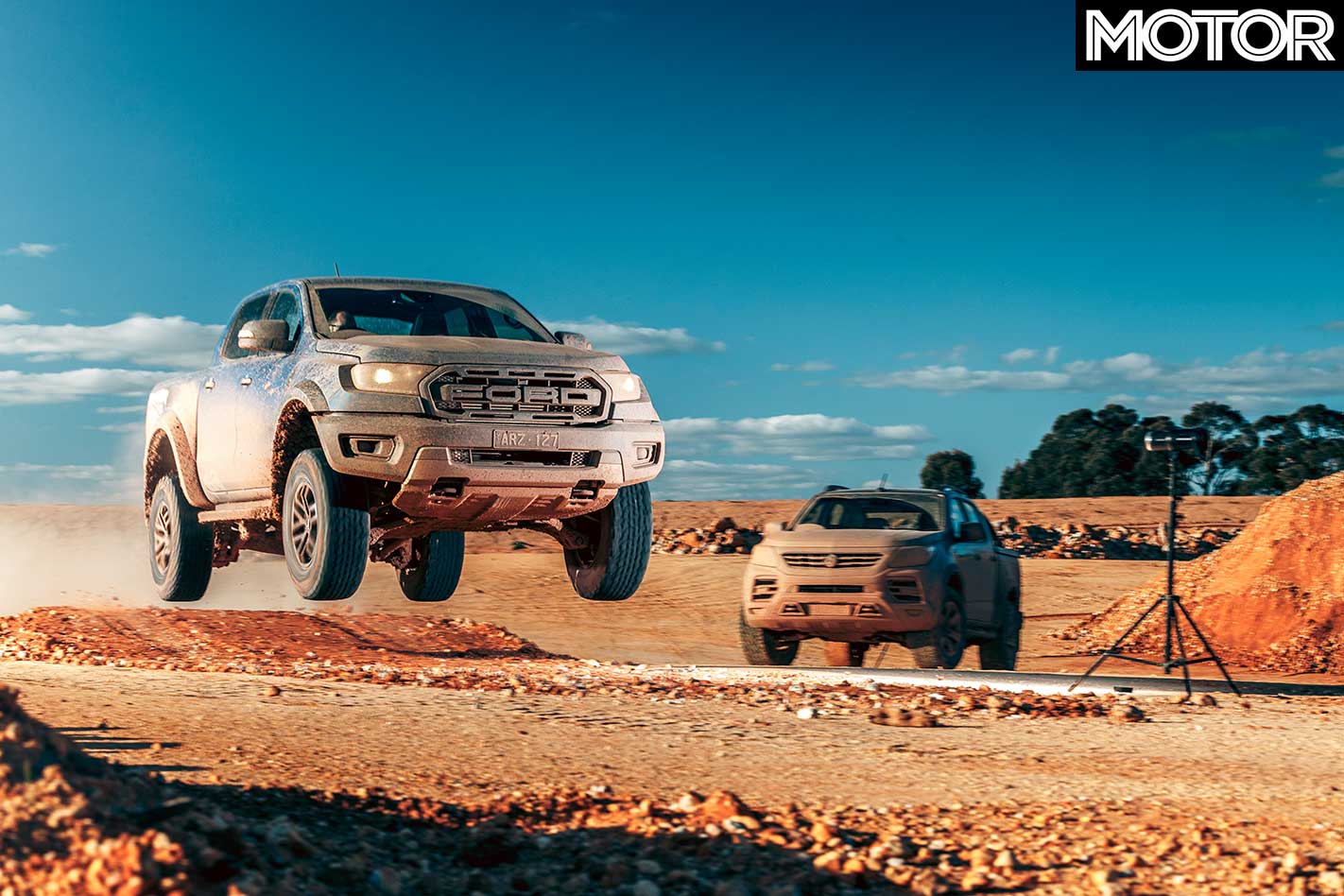
This comparison ruffled some feathers among the MOTOR faithful, but how were we supposed to hand down the verdict on ‘performance’ utes if we didn’t test them? Besides, Alastair’s photos have made it look properly awesome.
Warren Luff driving Hammerhead at WTAC, by Alastair Brook (Dec 2018)
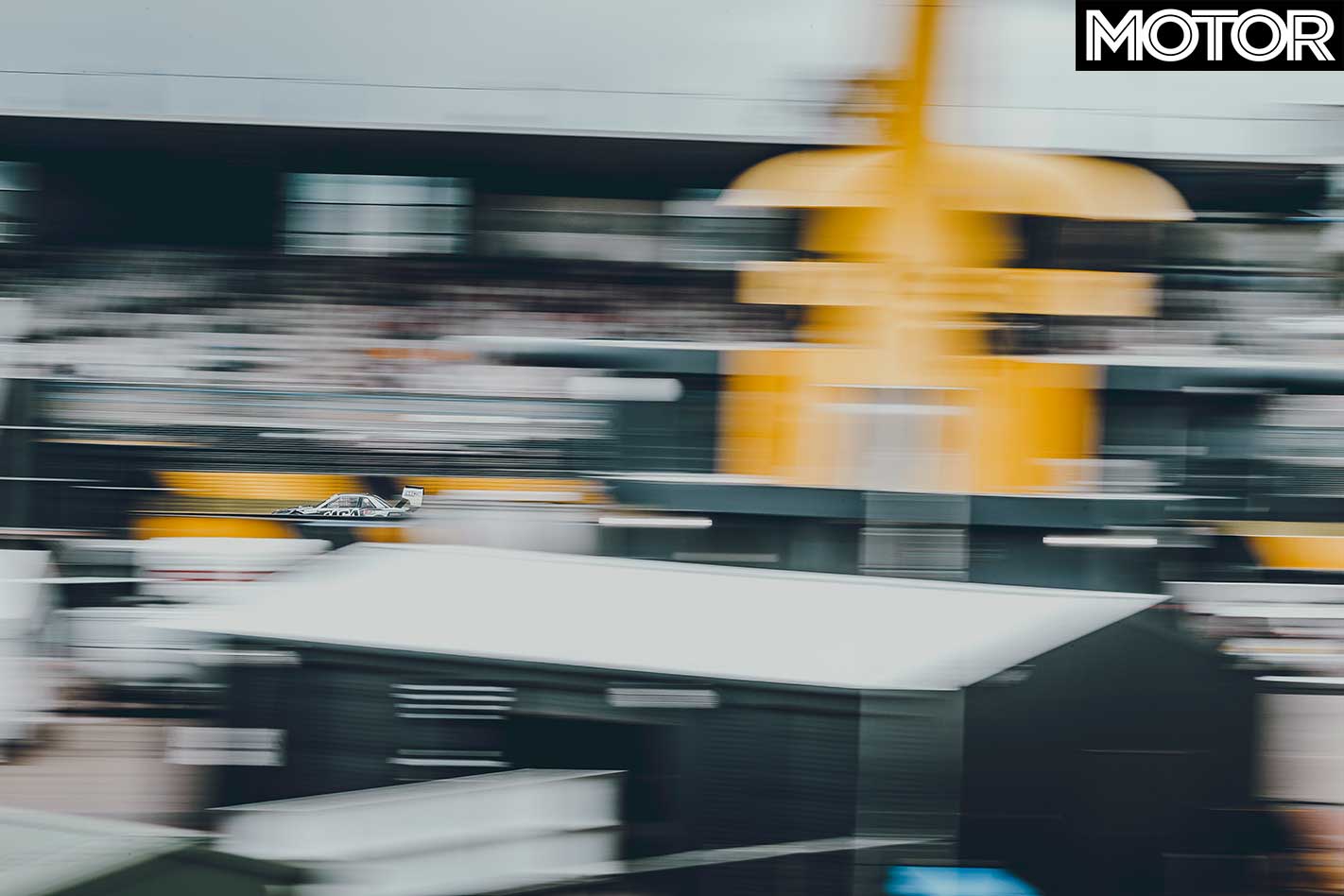
From the other side of Sydney Motorsport park and with a fraction of a second to get the shot, Alastair managed to snap the legendary WTAC car driven by MOTOR’s gun driver Luffy through a gap in the SMSP pitlane building.
Timing really is vital.
WIND-whisked rain falls from grey clouds hurrying across the sky near Gundagai. This day is not one to linger for a look at the Dog on the Tuckerbox. The modest monument to Australia’s pioneering spirit was once the chief reason to stop at this place between Sydney and Melbourne, but a small bronze dog isn’t what the driver of the white Model S seeks. It’s the row of six Tesla Superchargers, all of them vacant, he needs. He connects his car and then, hunched against the weather, hurries into the nearby Oliver’s Real Food.
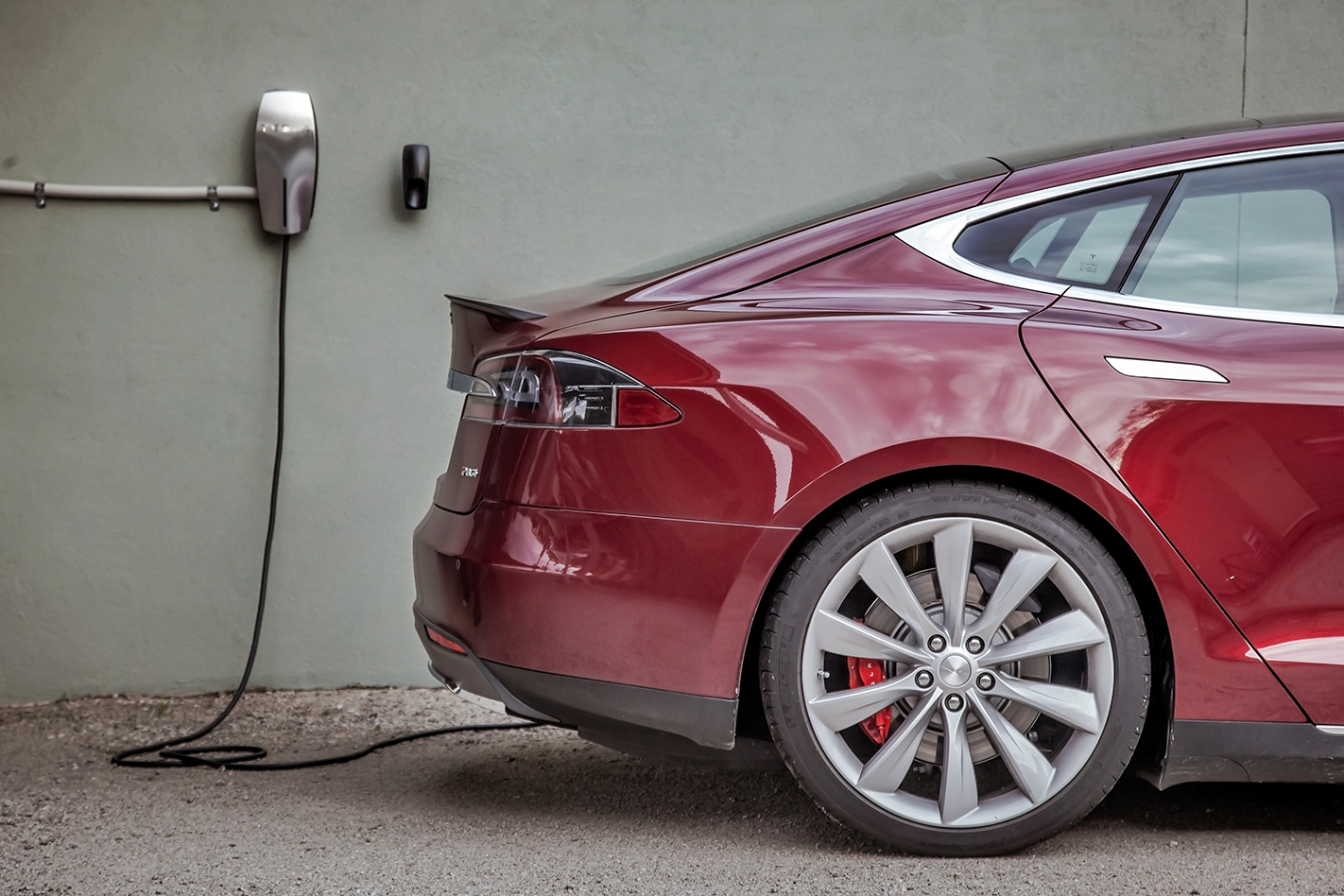
Except for one detail, it’s an utterly routine scene. Countless drivers make comfort stops at places like this all across rural Australia every day. But how many top up with electricity while stretching legs, emptying bladders and sipping second-rate country coffee? One in a million?
Tesla drivers today are true pioneers, but it’s not going to stay this way forever. We’re about to see the beginning of what you could call a Volt Rush…
Right now only Tesla can offer the kind of driving range and recharging infrastructure that makes driving from A to B via places like Gundagai possible. Tesla’s cars can cover 300km-plus on a full battery and the company’s Supercharger network makes driving Adelaide to Brisbane, via Melbourne and Sydney, feasible. But, as Tesla founder Elon Musk always intended, established car makers are preparing to follow his company’s lead with equally able and in many cases less costly EVs.
Over the next three years Audi, BMW, Jaguar, Hyundai, Mercedes-Benz, Mini, Nissan, Porsche and VW all plan to introduce EVs able to meet the everyday needs of many drivers. Most, maybe all, will come to Australia.
Technological advances explain mainstream manufacturers’ imminent move to large-scale EV production. The breakthroughs will make EVs less costly and more convenient.
Leading lithium-ion battery manufacturers like LG Chem and Samsung SDI have next-generation cells ready to go. These have better energy density than existing lithium-ion technology. This means they store much more energy, with an equivalent increase in driving range, without any change in battery-pack volume.
They’re building massive, multi-million Euro factories – LG Chem in Poland and Samsung SDI in Hungary – to supply the new and improved cells. It’s no coincidence that Europe’s forthcoming flood of EVs, with predicted driving ranges typically between 400 and 600km, are all scheduled to launch soon after the Korean battery makers’ ramp up production at their brand-new plants.
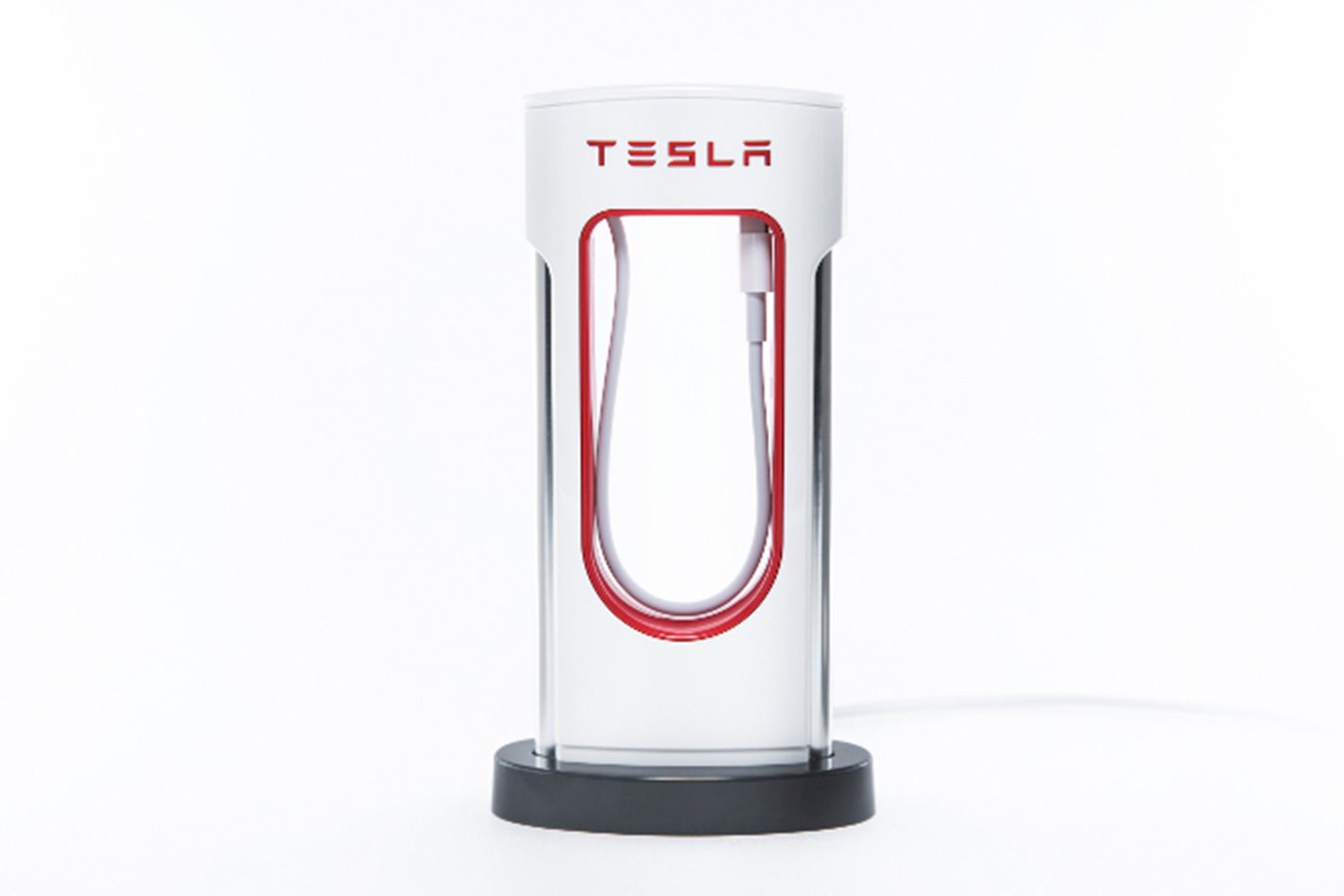
Meanwhile, Tesla’s Gigafactory in the USA is being built, in partnership with Japanese battery supplier Panasonic. Now more than 30 percent complete, this facility outside Reno in Nevada will cover a greater area than any other building on the planet when finished in 2020. According to Tesla, the Gigafactory will cut the cost of battery packs for its cars by around 30 percent. This strategy is key to the success of the new Model 3, the medium-size hatchback that Tesla believes will vastly increase its sales. Large-scale production should bring similar economies of scale for other battery manufacturers.
These big investments mean lithium-ion is sure to remain the dominant EV battery chemistry for at least the next decade. Lithium-sulphur is one promising potential replacement in the EV energy storage role.
Though the cost of lithium-ion is being driven steadily down, the time when EVs can compete on price against the most affordable small conventional cars remains distant.
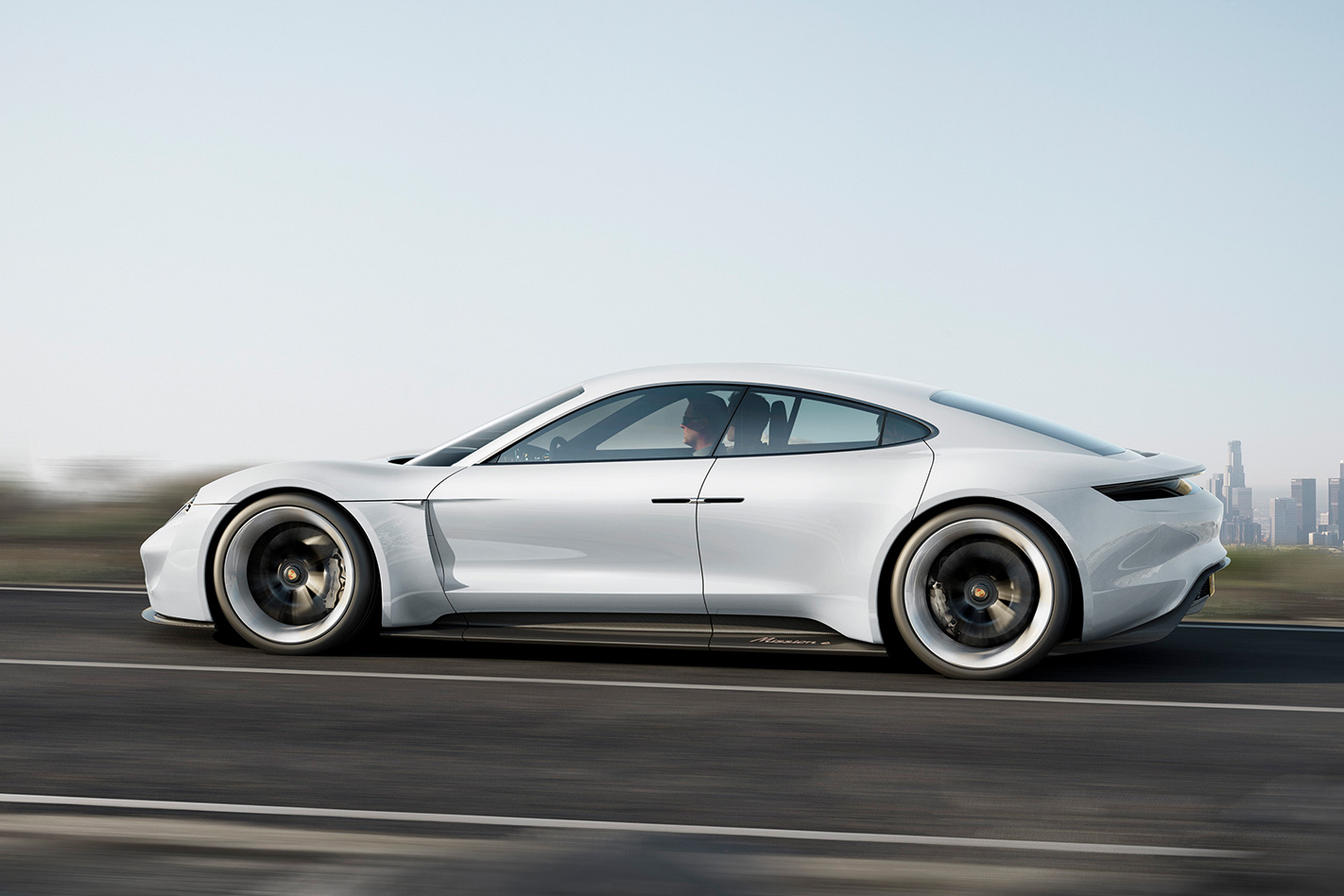
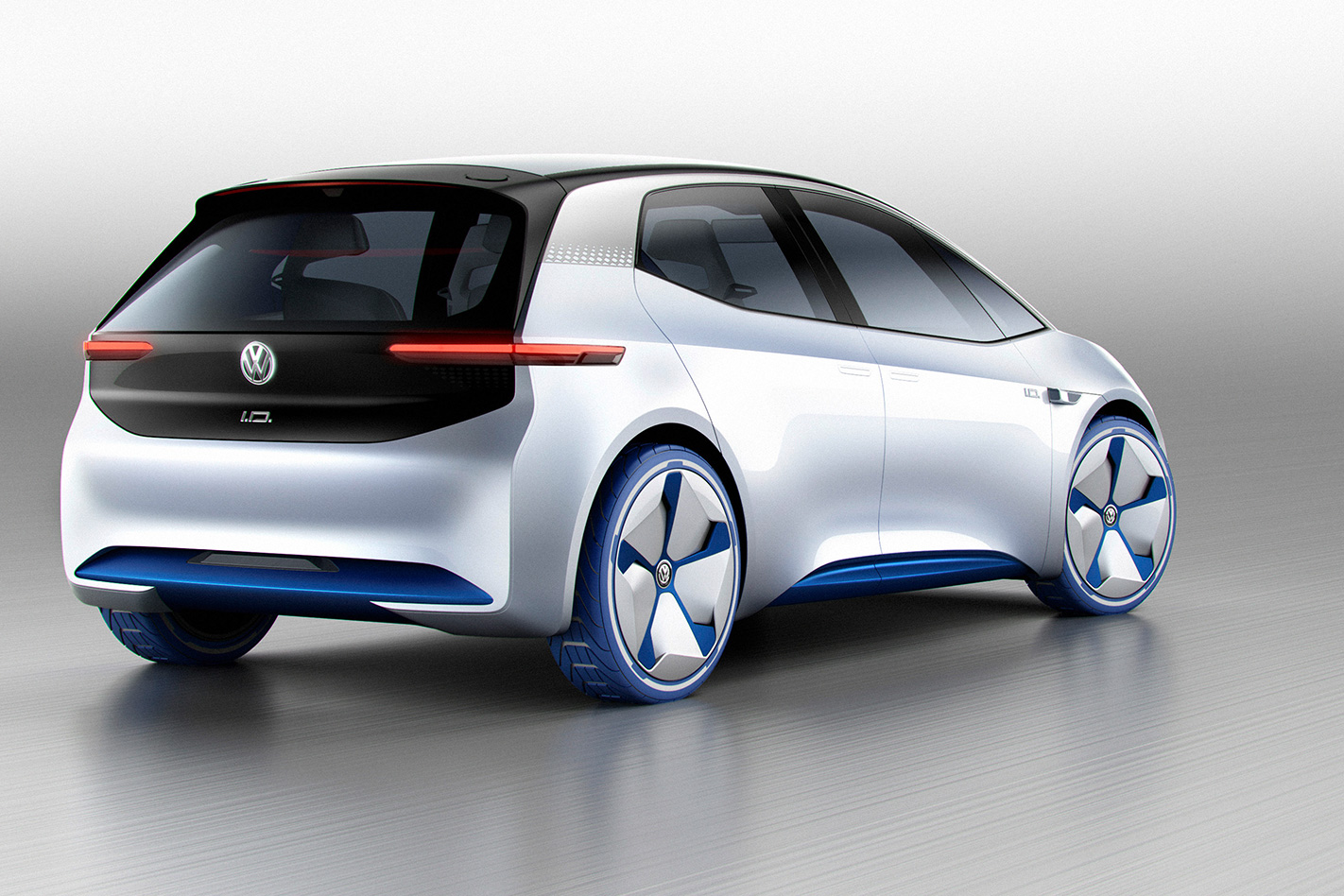
It’s for this reason that many of the new-wave EVs on the way from Europe are aimed at segments where there’s sustained demand for highly profitable premium products. This mainly means top-end SUVs like the Audi e-tron and Mercedes-Benz EQ, both due in Australia in 2019, the EV version of the new BMW X3 that will follow, and even Jaguar’s hard-to-classify I-Pace. The production version of Porsche’s Mission E, due early next decade, stands out in this simply because it’s not an SUV. What unites these brands is that they can afford the luxury of lower profit margins to make their EVs price-competitive with conventional models.
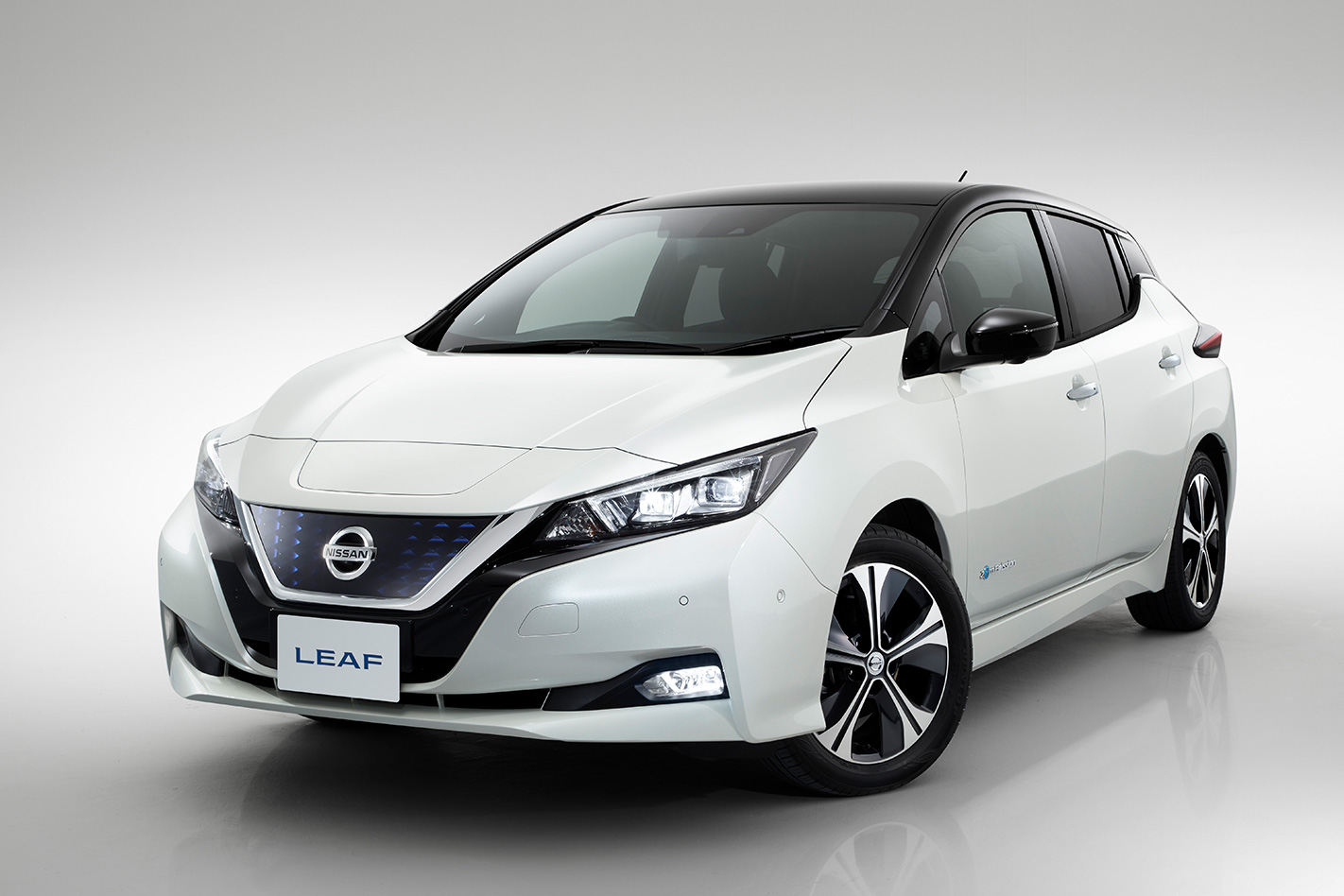
For non-premium car makers it’s tougher. The Nissan Leaf is the world’s most popular EV ever, with around 250,000 sales since 2010. The second-generation Leaf unveiled in Japan last September, and headed for Australia in 2018, has a greater range – its battery can store 67 percent more energy than the 2010 original, Nissan claims – has more power, a much larger boot and is much more attractive. But the price will be close to the $40,000 of the car it replaces. Hyundai’s Ioniq EV will possibly cost even more.
But non-premium brand EVs will benefit most from the falling price of lithium-ion energy storage, simply because the battery pack represents a higher proportion of their total cost. VW aims to price the first EV based on its new electric-only MEB platform – the ID hatch – similarly to a mid-grade Golf. Mainly, according to company experts, because it expects the price of lithium-ion to halve between now and 2020 when production begins. And the prices should go on falling.
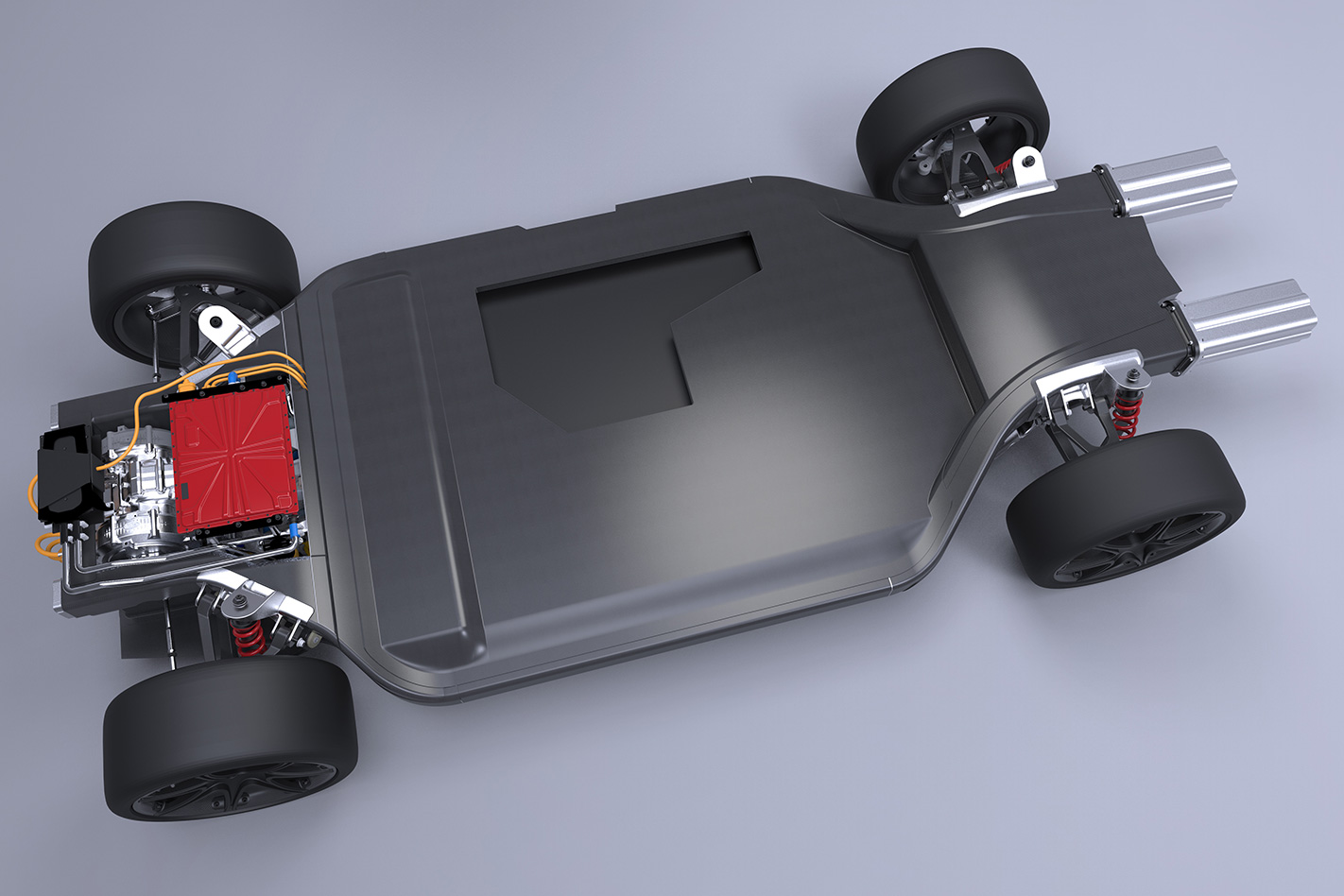
Less costly lithium-ion energy storage will, in the meantime, power an explosion in EV diversity. Today, in Australia, EVs are either short-range city cars like the BMW i3 and first-gen Nissan Leaf or potent long-range luxury models like Tesla’s Model S and Model X SUV.
The coming wave of EVs will bring, essentially, more of the same. But, over time, EVs will arrive to fill a much broader variety of roles.
The Renault-Nissan Alliance already makes electric vans like the e-NV200 and Kangoo Z.E. Daimler-owned Thomas Built Buses has an electric version of America’s classic yellow school bus ready for production.
Tesla has signalled its intention to add an electric pick-up to its range, a choice that makes sense for an American manufacturer. Smaller outfits in the USA and Canada may beat them to it. The proto pick-ups being developed by Bollinger, Havelaar and Workhorse are butch-looking, big-battery trucks that are also able to power electric tools. It’s not hard to imagine Australian tradesmen making the switch from Hilux to high voltage once the price is right.
While lower lithium-ion costs make EVs easier to buy, advances in recharging technology will at the same time make them more convenient to use.
Inductive charging will make the overnight or working-hours battery top-up much easier. Simply park over the charging pad and walk away. Another pad must be installed on the bottom of the car to enable inductive charging, but BMW has a system ready for market and component maker Continental is developing an off-the-shelf inductive charger any car maker will be able to buy. Both systems provide aids to parking in exactly the right position above the charging pad.
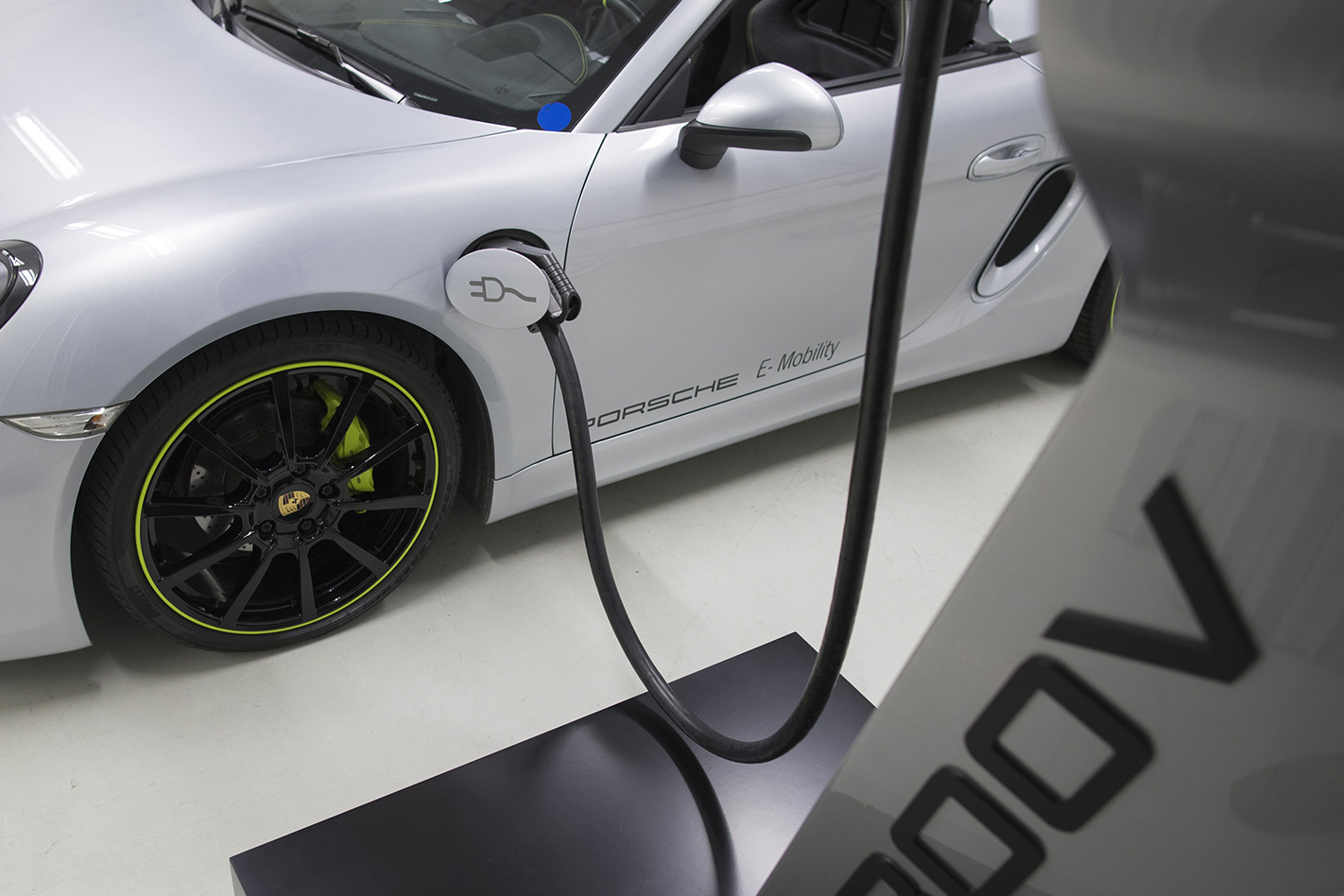
But inductive charging can’t deliver the big power for a really quick recharge. There are practical limits to the amount of electricity that can be safely and efficiently pushed across the air gap between charge pad and the vehicle above it. Around 20kW is what engineers say is possible. Still, this is enough to greatly reduce the frequency with which an EV driver has to connect a cable.
Really fast DC charging, which does require plugging in, is about to make a great leap forward. The Tesla Supercharger delivers a 120kW maximum charge rate, but this will soon seem sluggish. A consortium that includes BMW, Daimler (owner of Mercedes-Benz and Smart), Ford and the VW Group, along with European power and electrical engineering companies, has developed a 350kW DC fast charger, which will cut recharge times – for EVs equipped with the hardware to handle so much power – to mere minutes.
The first 350kW chargers have already been installed, and the consortium’s plan is to create a network of 400 that spans Europe. At around $300,000 each they’re costly, but carefully sited DC fast chargers have the potential to make EVs a go (almost) anywhere proposition.
None of the coming changes will be sudden. But, brick-by-brick, the barriers to EV acceptance are being demolished.
It’s impossible to predict the precise moment when a driver stopping near Gundagai to recharge an EV while taking a coffee break ceases to be remarkable. There are simply too many variables. How quickly will EV prices come down? How fast will the recharging network grow? Will governments in Australia introduce policies to speed the adoption of EVs, or not?
It could take as little as a decade. Or, more realistically, two. But the time is surely coming when an EV will be able to do everything you want at a price you can afford.
Frustratingly, things don’t always go to plan. If they did, we wouldn’t have the all-new BMW Z4 parked next to a Porsche 718 Cayman. And it also wouldn’t be endowed with the meagre 2.0-litre four-cylinder turbo. It is half-a-litre short on capacity and sans the essential topless ability we asked for when trying to secure a Boxster S for this comparison.

Before pressing a starter button, this all seems a bit of a mismatch on paper. However, stats and figures can often mean little out on the open road and, ultimately, the body styles presented don’t tell the full story.
Why would BMW allow us to bring a Porsche Boxster (that was the original aim, remember) to the launch of the new Z4? It’s certainly not as a favour. The red carpet was rolled out for our rival because BMW knew that the G29 Z4 has evolved into a proper sports car.
The original Z4 was an abomination from the Bangle design era, while the second generation was pretty, yet dynamically flawed with the retractable hardtop aimed squarely at the Mercedes-Benz SLK. Although the reality is that this line of ancestors might as well be from another family, because the third generation is a completely different animal.
Want proof? The boosted, 3.0-litre straight-six-powered M40i we have here blitzes the Nordschleife in 7:55.41sec, which is faster than the N55-powered M2 by a decent margin. Additionally, with 250kW and 500Nm, the claimed 0-100km/h time of 4.5sec is as plausible as it is impressive.

It’s no surprise, then, that BMW can’t wait for the M40i to throw down the gauntlet to the 718 Porsche, even if its 220kW/380Nm outputs leave it looking unfairly outgunned (its 4.7sec 0-100km/h time – with Sport Chrono fitted – is further proof). Yet, Stuttgart’s horses are traditionally stronger and more effective than they initially seem, and while the Z4 is limited to 250km/h, the Cayman will push on to 277km/h.
Essentially, the Cayman is to the Boxster what the Toyota Supra is to the Z4. Also developed in Europe, the Supra breathes down the Z4’s neck much harder than is comfortable for the venerable German marque. Not surprisingly, the Cayman does the same thing to the Boxster. So unless you regularly lower the roof, the coupe should always be the driver-orientated choice over the roadster.
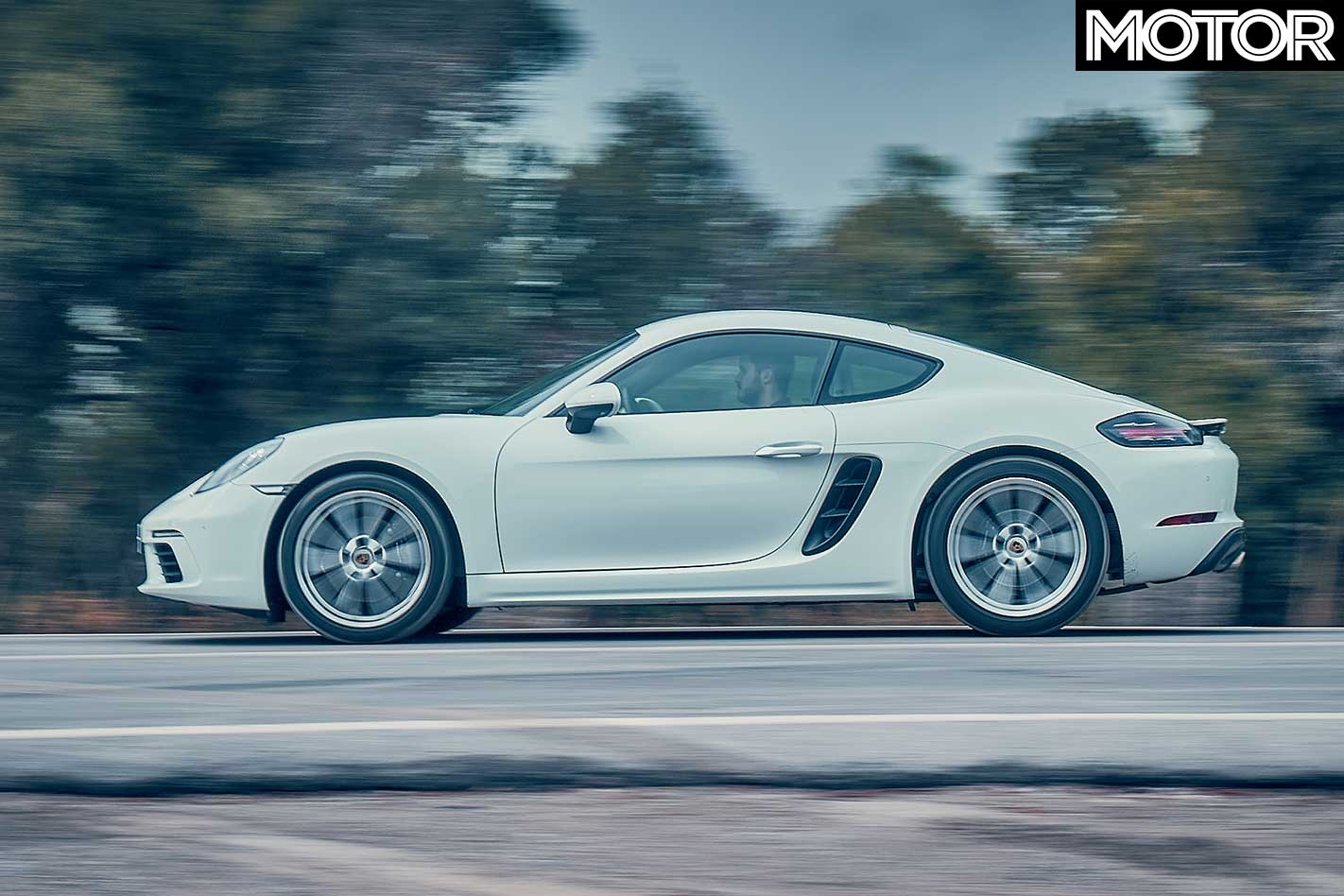
Well, that’s the theory, but in reality the Z4 is much closer to its Japanese counterpart than most would have predicted. “The new Z4 is more puristic, dynamic and progressive than the outgoing model,” says the project leader, Michael Wimbeck. “There is no better roadster to explore empty B-roads early on Sunday morning than the new Z4.” With that said, it’s time to get in the cars and drive.
While the location of Lisbon is idyllic, the weather decides not to play ball. Dense sheets of rain persist as the seemingly drought-breaking precipitation transforms the parched surface into an ice rink. Grip becomes an entertaining illusion as both rear-drive steeds demand to be driven.
Given half a chance the Z4 will fishtail away from the apex, while the Cayman offers a broader scope of understeer and oversteer. Still, the buffer zone between bravery and bad luck can be brutally narrow in these conditions.
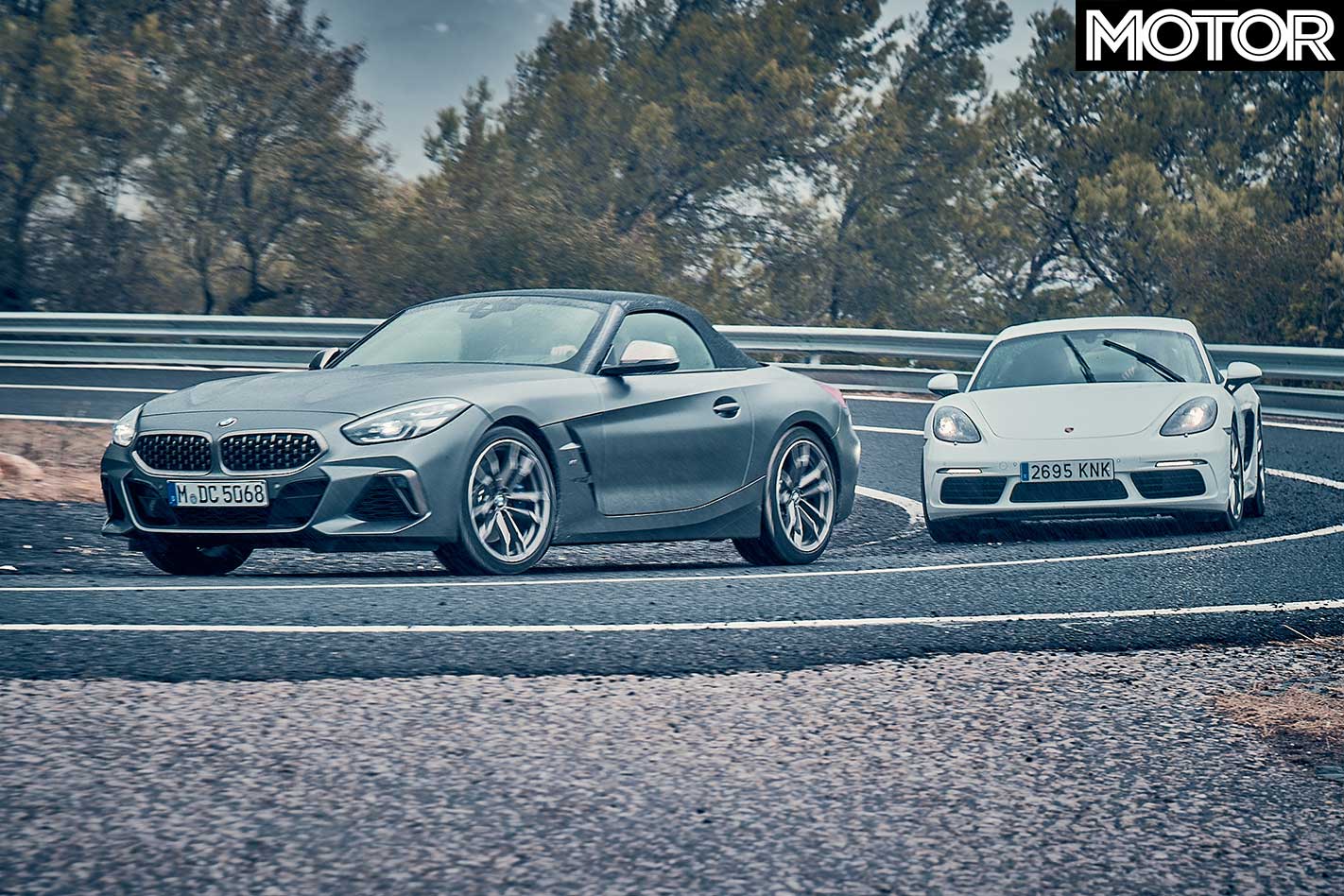
As the rain mercifully clears and the strong winds dry the tarmac, the BMW starts pulling away from the Porsche in small, but quantifiable increments. Its main assets are a torquier and more powerful engine and the commendably rapid eight-speed automatic transmission.
However, it weighs in excess of 1500kg, whereas 1365kg is listed for both the base Cayman and Boxster (the coupe still outperforms the drop-top for torsional rigidity and overall stiffness).
The BMW power unit delivers its 250kW between 5000 and 6500rpm, while the 500Nm torque peak is available from 1600-4500rpm. The flat four needs 6500rpm to churn out its 220kW and the Porsche maintains 380Nm of twist between 2150-4500rpm. You need every extra Newton metre of grunt to take off quickly in the Z4 before pulling away like lightning.
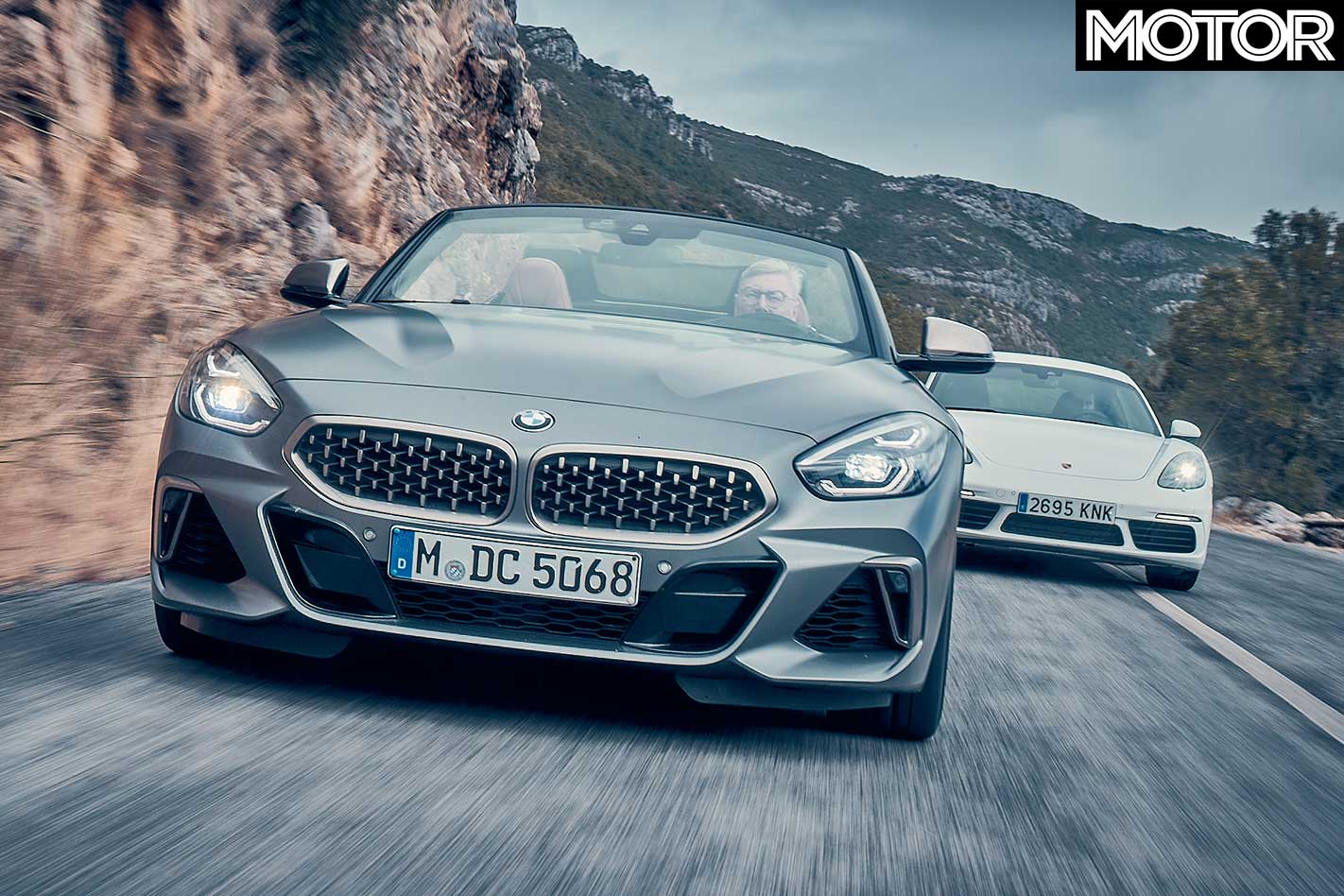
The standard eight-speed auto makes it easy to climb the torque mountain, but it isn’t as quick or as sharp as the optional seven-speed PDK transmission in the Cayman. Without the dual-clutch ’box, the Z4 would easily embarrass the Cayman.
That controversial flat four, the smaller of the two, is better than its questionable reputation. Yet it relies on high revs to deliver and it doesn’t muster quite the same linear punch as a flat six – and it sounds more like an air-cooled Beetle on steroids than a detuned M1. The 220kW, mid-engined Porsche is blatantly entry-level instead of cream of the crop.
For acoustics, the M40i has this comparison licked. Like the lead singer of a metal band, the six-pot melodically intones its trademark theatrics between a bassy low-end to a high-revving crescendo. And it can be enjoyed even more so when topless.

When we first drove an early prototype Z4 at the BMW proving grounds, the roadster impressed with a variety of talents. It worked well as an open-top GT, but we could already feel the potential of what’s underneath.
Blending the relaxed mastery of a cruiser with the hardcore handling of a bruiser is something the M40i is proving extremely capable of. Throttle response, transmission setup, damper variation, steering weight and the electronically controlled diff lock can be tweaked in five different modes. Sport Plus is okay for track use, but Sport is more compliant and, as a result, better suited out on the road.
Fitted with the optional 19-inch alloys, just like the contender from Munich, the Porsche does not ride quite as well as the BMW in Sport mode. In Comfort, things can get a little mushy and undefined. It’s tangibly brittle in Sport Plus, while the steering becomes noticeably heavier and the diff lock trades smoothness for bite. Ultimately, there’s a lot at play, here.
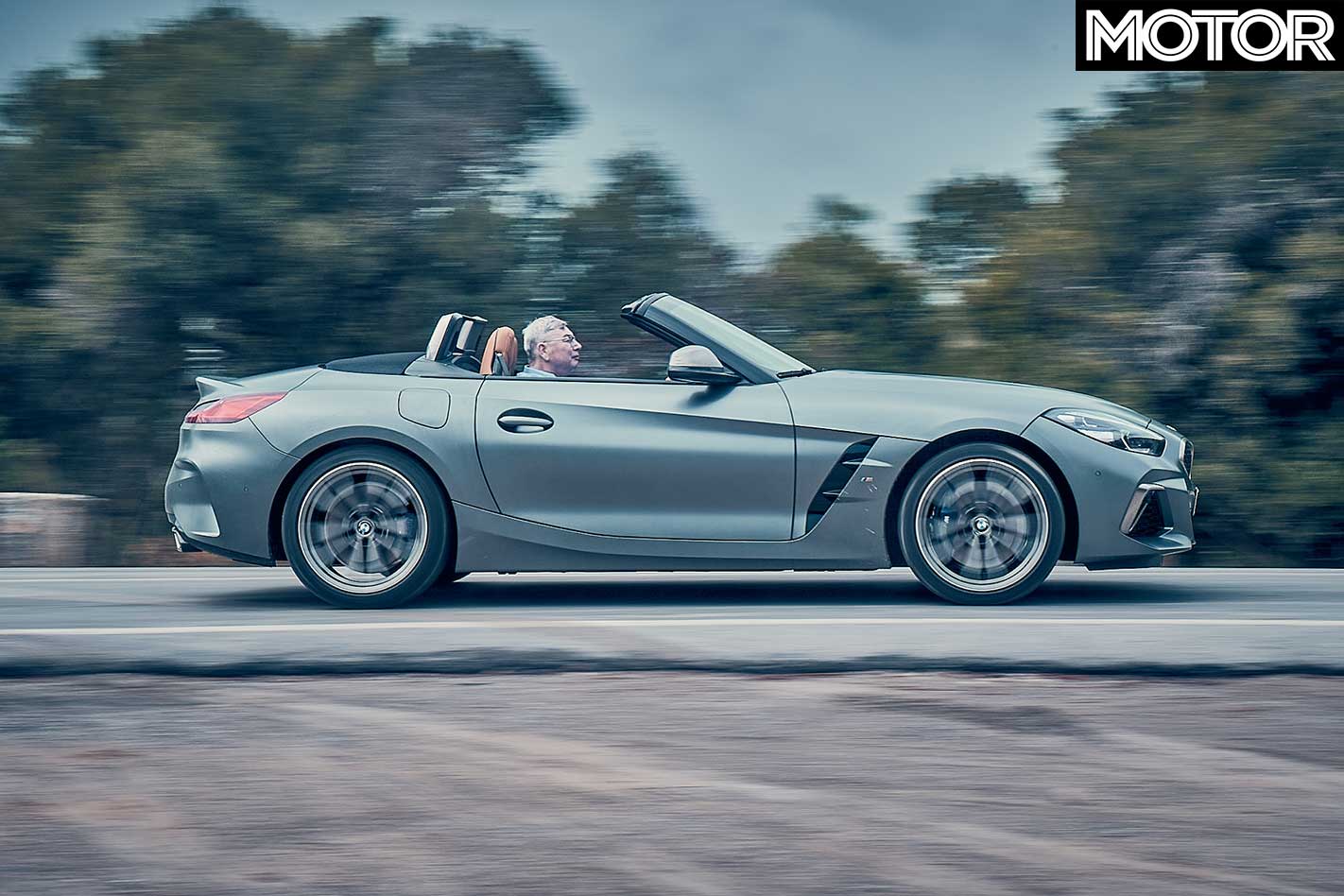
While the overall length has grown, the wheelbase of the new Z4 is actually shorter. It’s a compact drop-top with a sportier DNA, while the Cayman, even in base form, looks and feels like a baby 911. The BMW is easier to drive most of the time. It is fast in a straight line, brakes with proficiency and follows the road accurately. It’s an emotional and exciting bit of kit that also builds confidence quickly.
Helping this is a front-end that sticks like glue, quick turn-in speeds, massive amounts of grip and a rear axle which controls all forces with proficiency and aplomb. BMW has developed a new front axle for the Z4, which will later reappear in the next M4.

What sets the roadster apart from the coupe is the new variable-rate sports steering, which boasts a reassuring meatiness on-centre. There’s more feedback on turn-in and a quicker response during rapid changes of direction.
The 718 Cayman still feels about as competent and challenging as the Z4. Its steering is lighter and even more responsive, while there’s a distinct lack of weight over the engine-less front axle. Grip is its forte, and the heft it saves over the rivalling two-seater adds a dash of nimbleness and agility.
Interestingly, despite the lack of grunt over the twin-scroll turbocharged B58, the flat-four Porsche is every bit as fast as the Z4 through a mountain pass. It allows you to brake a little later and get on the loud pedal earlier, with all the electronic systems seeming to work with you, not against you.

Understeer, and to a lesser degree, oversteer, are potential issues. But no matter what the conditions, the Cayman hangs on vehemently as the amazing turn-in and docile torque delivery aids progress. The Cayman’s steering feels slightly more involving, its brakes are grabbier and a tad stronger, while the uncompromising roadholding prefers smooth surfaces to really shine.
On the inside, the dashboard of the Cayman is starting to look a little dated when pitted against the new Z4. The latter has colourful displays, a practical iDrive controller and sound ergonomic functionality.
The difference between the two infotainment systems seems insurmountable at first – one is more digital (BMW), while the other remains staunchly analogue (Porsche). The Z4’s tech-focused cabin isn’t at the expense of intuition, and in fact, it’s easier to get along with than the old-school buttons in the Cayman.

Still, in the Porsche’s favour are more legible displays, logically arranged buttons and a more advanced voice-control system. Both sorely lack a large display showcasing which gear you’re in, but remain pleasing places to be.
At an estimated $135,000, the 250kW Z4 M40i is about $17K less expensive than the PDK-equipped, 257kW Boxster S we tried to get for this comparison. The 2.0-litre Cayman featured here is $117,132 in base form.
If you’re looking for other options, the Jaguar F-Type V6, Mercedes-AMG SLC43 and the Audi TT RS Cabriolet offer the badge and pace, if not the outright handling prowess, for around the same coin. If a folding roof isn’t a must-have item, then waiting for the new Supra (or indeed the Alpine A110 – which you can buy now), due next year, could be a worthwhile option.
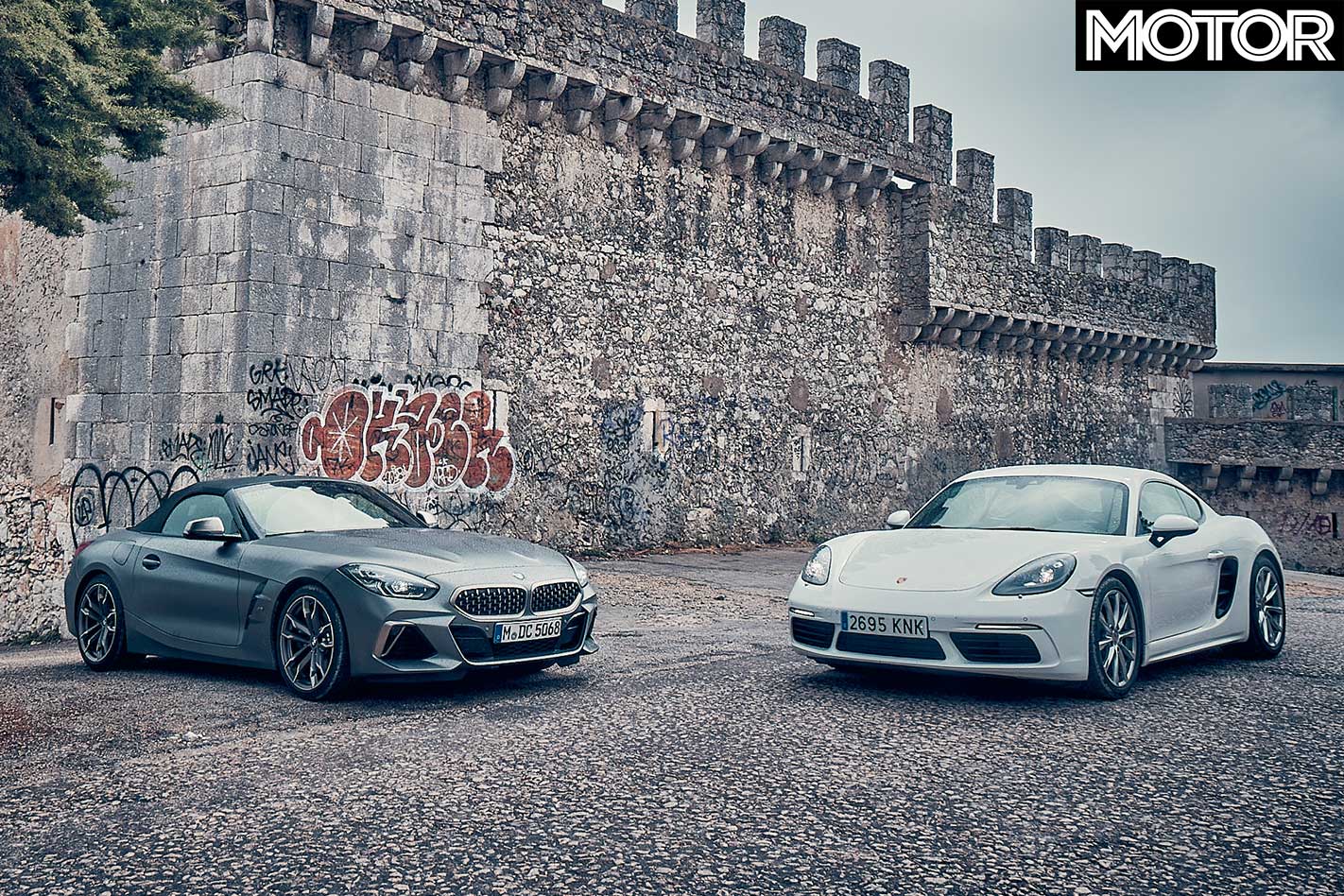
If you fancy the over-styled exterior (to some) and the new interior design, then the Z4 will reward you with a legendary engine, a remarkable chassis and performance that outguns many in this class. It should have been branded a Z5 to underline the model’s transition from poser to professional. A Z4M that’s easily able to outgun an M4 Cabriolet is also a tasty proposition, too.
Shortening the wheelbase and extending the overall length compared to the second-gen car doesn’t seem to make sense until you actually drive the new model. It’s less twitchy at speed, yet more switched on through the twisties. On slippery terrain it’d be nice to override the DSC and power into oversteer, but on dry roads, the grip, traction and roadholding are beyond reproach.
The Cayman has the nicer steering – it’s lighter, quicker and more involving. It also scores with handling characteristics that are more entertaining with an uncanny ability to connect steering, throttle and suspension movements into one compelling experience.

What the Porsche lacks in this company is the extra helping of torque to shove the Cayman forward with vengeance rather than needing to wring its neck for every extra engine revolution. Having less fat and an overall sportier setup, with a rowdier Sport Plus calibration, helps. However, four cylinders and 1988cc simply don’t create as many fireworks as a 2998cc inline-six.
At the end of the day, the Z4 M40i is the faster car. And more often than not, it matches the Cayman for tactile excellence and palpable interaction. For Porsche, the BMW Z4 is now frustratingly close to toppling a car many have regarded as unbeatable. Now that’s certainly going against the plan.
Fast Facts

| u00a0 | Porsche 718 Cayman | BMW Z4 M40i |
| Body | 2-door, 2-seat coupe | 2-door, 2-seat roadster |
| Drive | rear-wheel | |
| Engine | 1988cc flat-4, DOHC, 16v, turbo | 2998cc inline-6, DOHC, 24v, turbo |
| Bore x Stroke | 91.0 x 76.0mm | 94.6 x 82.0mm |
| Compression | 9.5:1 | 11.0:1 |
| Power | 220kW @ 6500rpm | 250kW @ 5000-6500rpm |
| Torque | 380Nm @ 1950-4500rpm | 500Nm @ 1600-4500rpm |
| Power/Weight | 161kW/tonne | 163kW/tonne |
| Transmission | 7-speed dual-clutch | 8-speed automatic |
| Weight | 1365kg | 1535kg |
| Suspension (f) | struts, adaptive dampers, coil springs | |
| Suspension (r) | multi-links, coils, anti-roll bar, adaptive dampers | |
| L/W/h | 4379/1801/1294mm | 4324/1864/1304mm |
| Wheelbase | 2475mm | 2470mm |
| Tracks | 1515/1532mm (f/r) | 1594/1589mm (f/r) |
| Steering | electrically-assisted rack-and-pinion | |
| Brakes (f) | 330mm ventilated discs, 4-piston calipers | 348mm ventilated discs, 4-piston calipers |
| Brakes (r) | 299mm ventilated discs, 4-piston calipers | 345mm ventilated discs, single-piston calipers |
| Wheels | 19.0 x 8.0-inch (f); 19.0 x 10.0-inch (r) | 18.0 x 9.0-inch (f); 18.0 x 10.0-inch (r) |
| Tyre Sizes | 235/40 ZR19 (f); 265/40 ZR19 (r) | 255/40 ZR18 (f); 275/40 ZR18 (r) |
| Tyres | Pirelli P Zero | Michelin Pilot Super Sport |
| Price | $117,132 | $135,000 (est) |
| Pros | Dynamic brilliance; steering response; ample grip; quick-shifting PDK | Newfound pace and handling ability; updated cabin; strong front-end |
| Cons | Controversial soundtrack; needs more grunt; it isnu2019t an S; cabin feeling dated | Weight compared to Cayman; ride quality hard to get right; will be pricey |
| Rating | 4.5 out of 5 stars | 4.5 ouf ot 5 stars |
It seems that Subaru’s once-hallowed STi badge has lost the last vestiges of its bright pink lustre. Formerly adoring the noses of fearsome, rally-bred machines like the revered WRX STi, and gracing a brace of some of the fastest and most desirable Subies ever conceived, it appears that the Japanese company’s trudge towards the staid side of the automotive ledger is all but complete.
One by one, Subaru has eradicated many of the elements that gave it a quirky edge and won it a host of fans over the last 40 years. For example, it’s arguably the first mainstream Japanese carmaker to all but eradicate the manual transmission; if it weren’t for its BRZ sports car, there wouldn’t be a single self-shifter across its entire range. And this is the company who championed simple, robust, utilitarian machinery like the Brumby ute and Adventure Wagon, the spiritual parents of the Forester.
As well, it flew in the face of convention with its range of all-wheel-drive turbocharged small cars in the late 1990s, the most famous of all being the WRX. Australia embraced the notion wholeheartedly, and Subaru responded by building, amongst other things, a Forester XT that used the same powerplant and won a lot of fans.
Those heady days, however, appear to be behind it. This is the Subaru Forester STi Concept that will be displayed at the Tokyo Auto Salon next week… and it’s pretty underwhelming, if we’re honest.
The Forester now plays in the same space as the Mazda CX-5, Kia Sportage and any number of other medium-sized SUVs, and the latest generation was launched in Australia in 2018 with a new naturally aspirated 2.5-litre four-cylinder engine and CVT transmission across the range.
Fans of the formerly format-busting boxy SUV have bemoaned the demise of the previous generation Forester’s 2.0-litre turbocharged drivetrain, and if they were waiting for salvation via the brand’s Subaru Technica International arm, they are set for a disappointment.
Sure, this Forester concept has a set of high-quality OZ 19-inch forged alloys, as well as six-piston Brembo calipers on larger front rotors, and the body kit suits the boxy style quite well. The bespoke Fighter Gray paint is offset by those flouro yellow calipers and pinstriping on the bodykit, while the unseen interior is also lightly made over, according to Subaru.
The irony of presenting the car at the Auto Salon – home to some of Japan’s maddest and baddest performance machinery – isn’t lost on us, either…
The Forester STi Concept has a different drivetrain to the 2.5-litre naturally aspirated Forester that Aussies can buy… and it’s one we’ll see here before the end of 2019. Subaru’s e-Boxer system combines the company’s 2.0-litre naturally aspirated flat-four engine with a small electric motor that nestles in with the CVT gearbox, all backed up by a small lithium-ion battery array under the floor.
The system can run in full-electric mode at light throttle, and while no range figures are out there, it would be around 30km at speeds under 40km/h. It will, according to official reports, reduce the claimed combined fuel economy figure to 5.2 litres per 100km. However, it makes less power than the Australian-spec 136kW 2.5-litre engine… a lot less, actually, at 115kW.
Subaru Australia tells us that there are no plans to replace either the tS or to introduce STi versions of the Forester yet. “It’s very early in its lifecycle to be thinking about limited editions,” our Subie source confirmed.
The Tokyo Auto Salon kicks off next week.
What do you think of the Forester STi Concept? Should Subaru bring sexy fast back?
Bonding with a car, particularly one you want to drive quickly, is every bit as important as simply ‘wanting’ it. A relationship needs to be formed. Achieving equilibrium between car and driver is paramount.
Given the notoriously spiky nature of early F80 BMW M3s, it was somewhat calming to learn that the hardcore CS version we’d taken delivery of hadn’t been run in. Our instructions were clear: no high, sustained rpm and no pushing the limits. This relationship had to get off to an amicable start. Our chance to properly exploit the CS’s wares traversing Lake Mountain would come on a solo run weeks later.
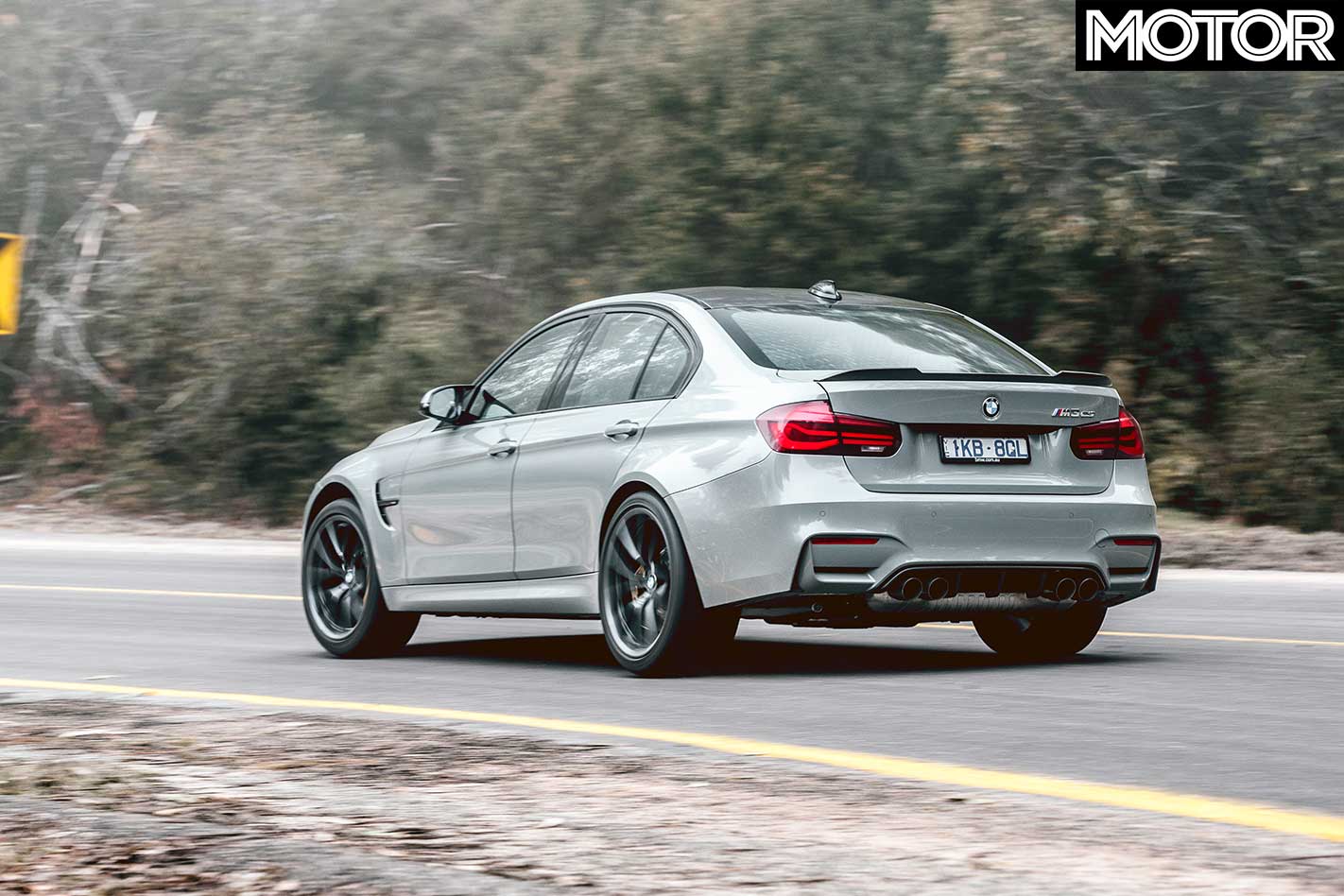
Such is the reputation of some F80s that it seemed the M3 was keener to make you an ex rather than a plus one. The CS is different, though. Its remapped twin-turbo 3.0-litre inline-six is not only more powerful (up 7kW) and more muscular (up 50Nm), it’s also less peaky, with the 600Nm coming on strong in a linear fashion.
Then there’s the weight saving (10kg) with carbon fibre-reinforced plastic used on the bonnet, roof, front splitter and rear diffuser, which lowers the centre of gravity.
Other additions include Michelin Pilot Sport Cup 2 rubber with a chassis tailored to optimising the extra grip, as well as tweaks to the stability aids and electronically controlled adaptive dampers to utilise the extra traction. It’s a serious bit of kit, one that wouldn’t look out of place at a racetrack.
The muscular exterior silhouette, staggered wheels and all (19 inches up front, 20 at the back), induces animalistic grunts of approval from onlookers. The stance is just right and the bulging rear guards are amply filled.
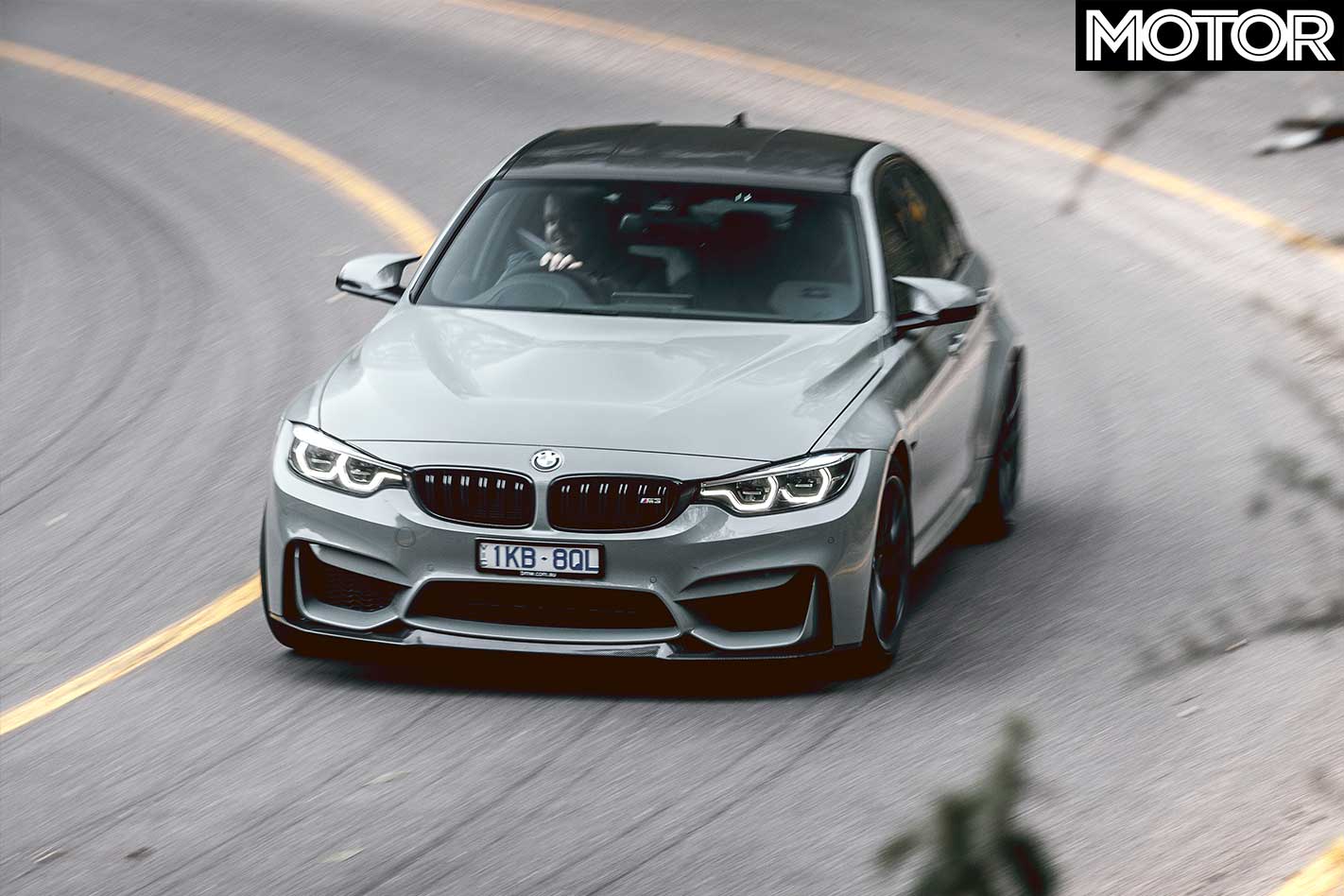
Fast forward, and a bedded-in CS returns to MOTOR HQ. Now it’s time to see what the more focused M3’s really like. Such is the unrelenting nature of the power delivery, the verdant Lake Mountain surroundings flash by at an alarming rate – 338kW tends to do that when hauling 1585kg.
The robust torque curve results in staggering pull out of tight bends, with the S55 revving cleanly to more than 7000rpm. Its sound, bolstered by a CS-specific exhaust, is polarising. Yet its raspy nature alludes to E46 ancestry and the overrun burbles induce child-like chortles. It’s far from forgettable.
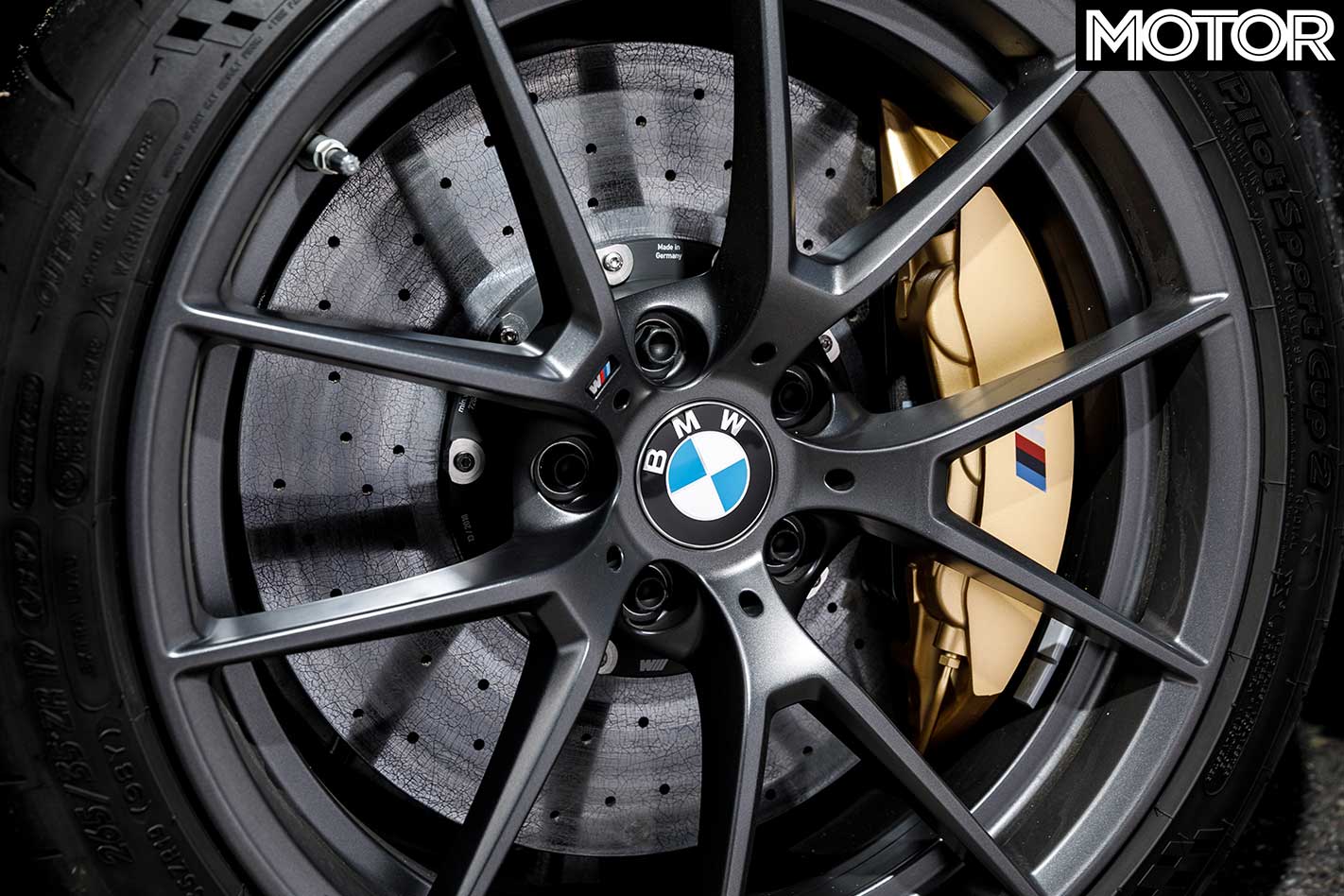
When hot, the semi-slick, track-focused Cup 2s savage the tarmac. The back axle hunkers down and digs in its heels as the Active M differential and 285-section rear boots find astounding amounts of purchase.
MDM mode – essentially the fun button, which slackens the electronics – allows for progressive yaw movements and myriad reassurances that it isn’t going to snap into oversteer. Up front, turn-in is sharp as ever and the chassis feels taut, tied down and immediate. It’s not all solely down to the grippy Michelin boots.
Ramped up to its most aggressive mode, the seven-speed DCT is brutal. Full-throttle upshifts whack you in the back while the gold calipers clamp the carbon discs with alarming force. Driving the CS quickly is as engrossing as it is theatrical.
It all sounds like a ticket to a Diamond anniversary, but there’s prenup fine print. Those sticky Michelins have a narrow operating window – precipitation isn’t your friend.

The ride quality, while surprisingly compliant for what the CS is, can be far from supple in the CBD, meaning this M3 doesn’t quite make the perfect daily despite its four-door practicality and 445-litre boot. The steering also never truly returns natural tactility and, well, there’s that $179,529 bill… sans options.
However, those who make the CS commitment probably won’t see these limiting factors. As a driving tool it makes an emphatic statement: it pushes you to drive it well and keeps you on your game. You’re never going to tire of figuring it out… the reward for merely trying to is the icing on the cake.
The M3 CS is as good as the F80 gets – a true driver’s car with a sense of occasion that renders it a fitting farewell to the generation.
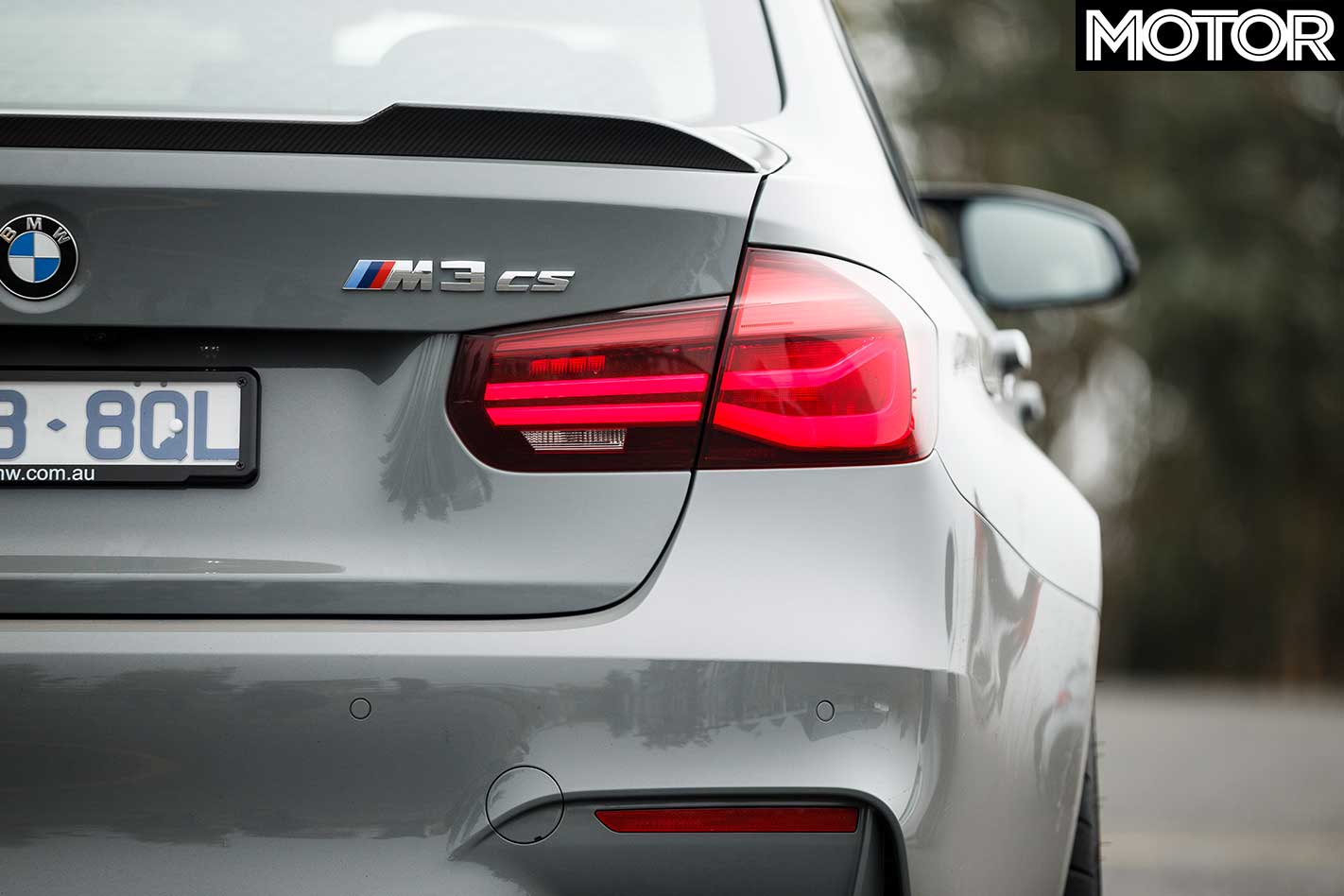
FAST FACTS 2018 BMW M3 CS
BODY: 4-door, 5-seat sedan DRIVE: rear-wheel ENGINE: 2979cc inline-6, DOHC, 24v twin-turbo BORE/STROKE: 89.6mm x 84.0mm COMPRESSION: 10.2:1 POWER: 338kW @ 6250rpm TORQUE: 600Nm @ 4000-5380rpm WEIGHT: 1585kg POWER-TO-WEIGHT: 213kW/tonne TRANSMISSION: 7-speed dual-clutch SUSPENSION: struts, coil springs, adaptive dampers, anti-roll bar (f); multi-links, adaptive dampers, anti-roll bar (r) L/W/h: 4671/1877/1424mm WHEELBASE: 2812mm TRACKS: 1579/1604mm (f/r) STEERING: electrically assisted rack-and-pinion BRAKES: 400mm ventilated/drilled carbon-ceramic discs, 6-piston calipers (f); 380mm ventilated/drilled carbon-ceramic discs, 4-piston calipers (r) WHEELS: 19.0 x 9.0-inch (f); 20.0 x 10.0-inch (r) TYRES: Michelin Pilot Sport Cup 2; 265/35 ZR19 (f), 285/30 ZR20 (r) PRICE: $198,929 (as tested)
PROS: Impressive performance; high grip levels; engaging dynamics CONS: Needs the ‘right’ conditions; price over M3 Comp; steering RATING: 4.5 out of 5 stars
What is it?
The latest version of Mercedes-Benz’s variable-spark ignition system for petrol engines. While many ignition systems rely on a single spark to ignite the mixture of fuel and air in the combustion chamber, the Multi-Spark Ignition (MSI) can fire the spark plug up to five times per power stroke.
Many of the German manufacturer’s engines are adopting the sophisticated system including its hero hand-built AMG 4.0-litre twin-turbo V8, which powers a wide range of potent machines across Mercedes’ passenger and SUV line-up.
How does it work?
In all petrol engines, as the piston rises to the top of the compression stroke, the ignition system fires a spark to initiate a controlled burning of the air/fuel mixture. This means the spark plug has just one chance to start a good combustion process, which, under normal conditions, is a relatively simple process. However, under certain conditions, such as when the mixture is lean or the engine load is light, the vaporised fuel can be more difficult to ignite, so the MSI has five shots at it. With each spark, the combustion ‘kernel’ grows, allowing the flame front to spread to a greater area of the combustion chamber for more efficient and consistent combustion. If a single-spark system is like trying to start a damp camp fire with a flint, the multi-spark ignition is the equivalent of using a Zippo. With more conventional systems, the ignition coils have two entire engine revolutions to recharge for the next spark, but the MSI coils must be able to deliver all five sparks in one millisecond, which requires an incredibly high-energy system and specialised components.
Why does it matter?
For optimum combustion and power, a petrol engine prefers to burn a mixture of fuel and air at a ratio of 14.7 parts of air to every one part of fuel – known as the stoichiometric ratio. But in the quest for ever-more efficient engines, manufacturers have been experimenting with far leaner ratios, where there is less fuel for each part of air. Typically, lean mixtures are difficult to ignite and can cause potentially damaging ‘detonation’ where the combustion is violently fast, but the five sparks allow mixtures as lean as 23:1 – less fuel for the same power. At full-throttle and under high engine loads, stoichiometric is still king but the MSI system is allowing Mercedes’ high-output engines to sip less fuel during low-load conditions, boosting fuel economy and lowering emissions, without compromising peak performance. Fuel savings of two percent might sound like small fish, but that figure can be doubled in conjunction with the company’s stratified charge and direct fuel injection, says Mercedes. As ever-tightening emissions regulations loom, every drop counts.
