
Turbochargers might be shaped like snails, but they’re disrupting the performance-car world with the force of a cyclone.
As they boost engine outputs to new highs and compress emissions to planet-saving lows, they’re also sucking the soul out of icons once worshipped for their atmo hearts. Porsche, BMW, Audi – some of Germany’s most revered brands have failed to convince us the change is for the better, especially when it comes to their sharpest sports cars priced under Two Hundred Large.
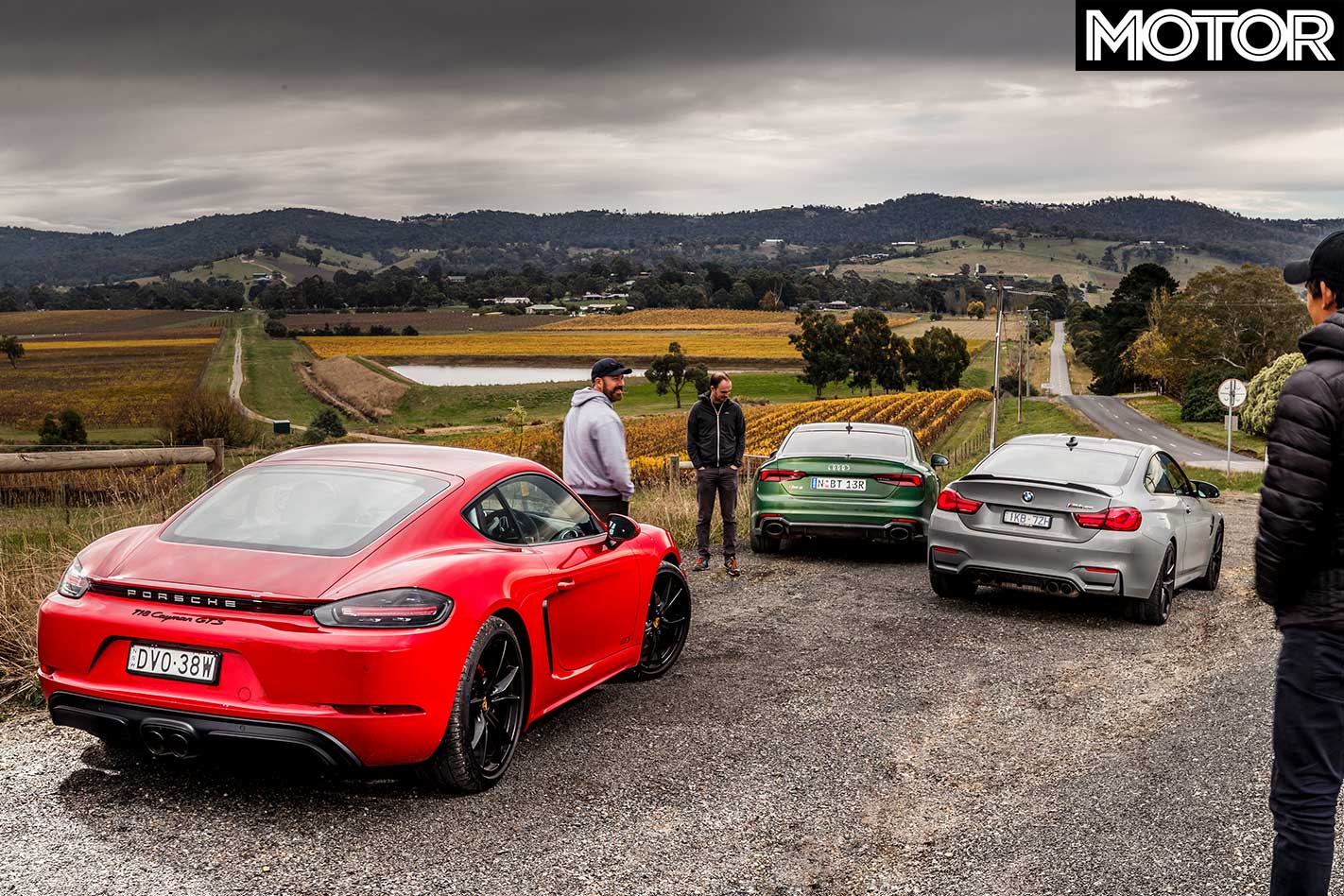
When Porsche last updated the Cayman, it borrowed the turbo 911’s engine block, lopped off two cylinders, and bolted the remaining four into the two-seat coupe. More power and torque injected it with the courage to take on its big brother, but the absence of a wailing flat-six was sorely felt by your ears. It was clear charisma sacrificed for the gain in performance.
That was a few years ago and Porsche has since sharpened the renamed ‘718’ Cayman for a GTS version. At $179K, it commands almost $30K more than an S variant, but our hopes rest on the fact engineers have used the GTS to enhance this model’s best traits.
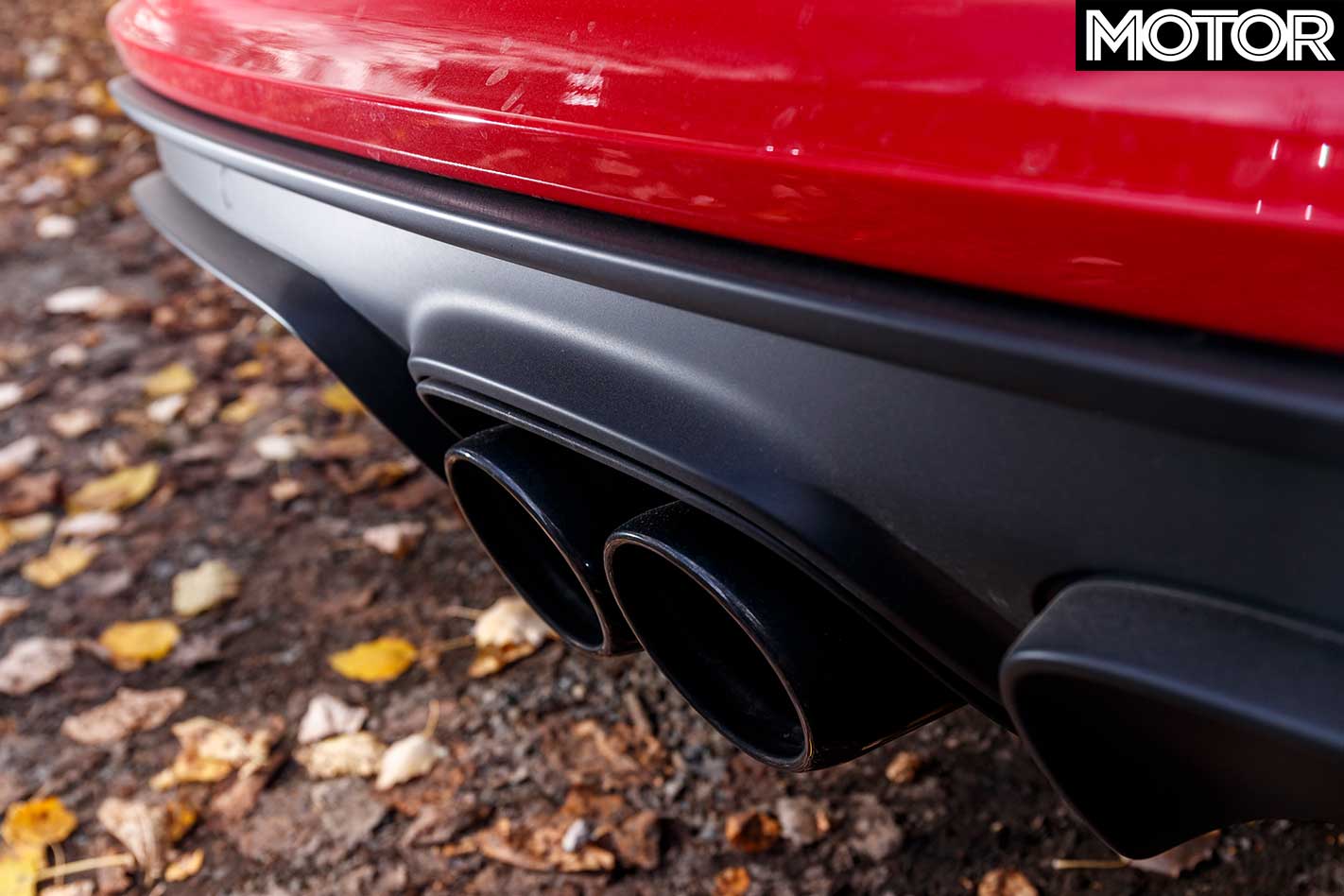
The treatment begins with extra power. Its variable vane turbo exhales a little more boost, adding 12kW to its flat 2.5-litre four. Meanwhile its standard Sport Chrono pack bumps torque by 10Nm when you option the seven-speed PDK, helping our tester belt out 267kW and 430Nm of boxer burble through its standard-fit sports exhaust.
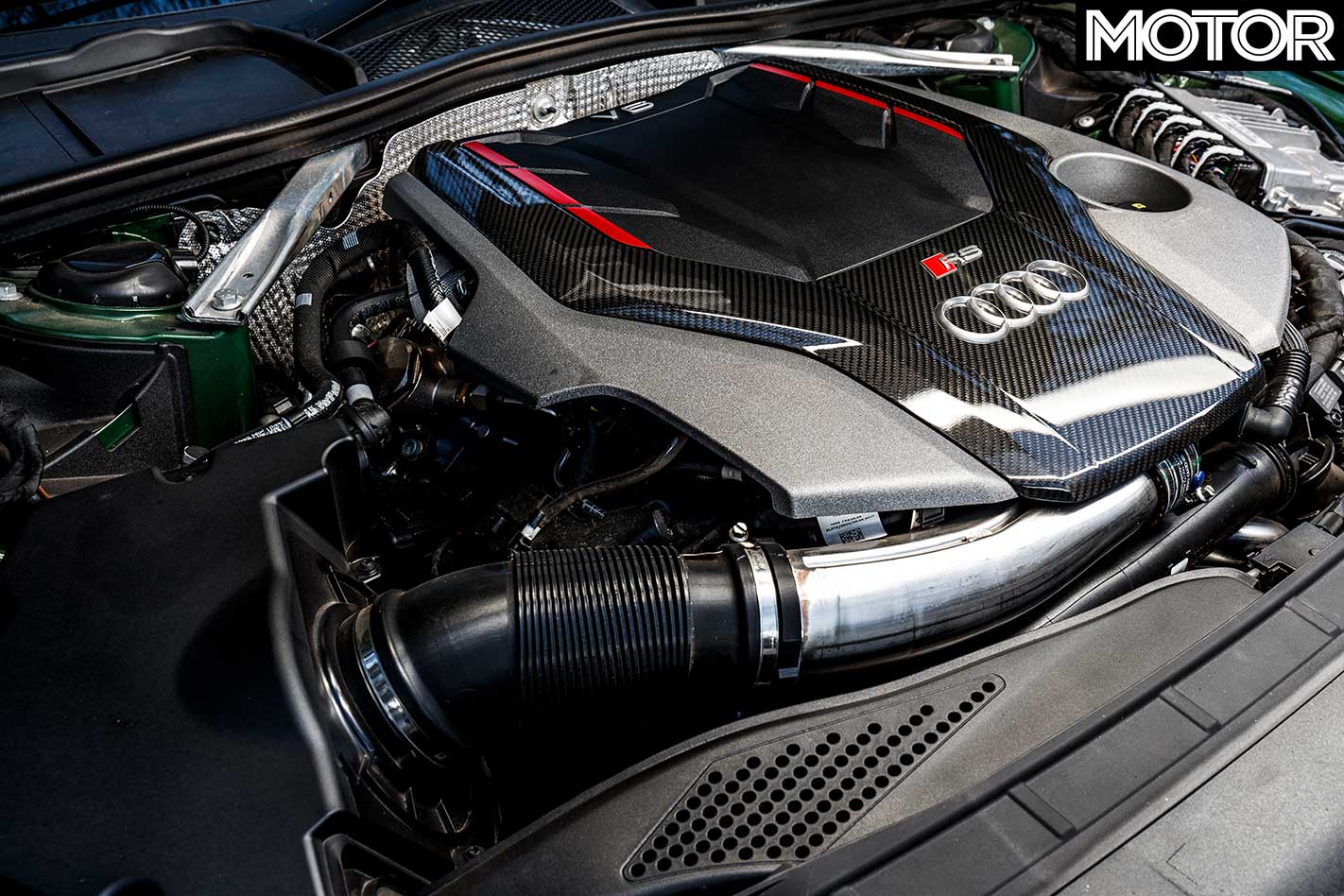
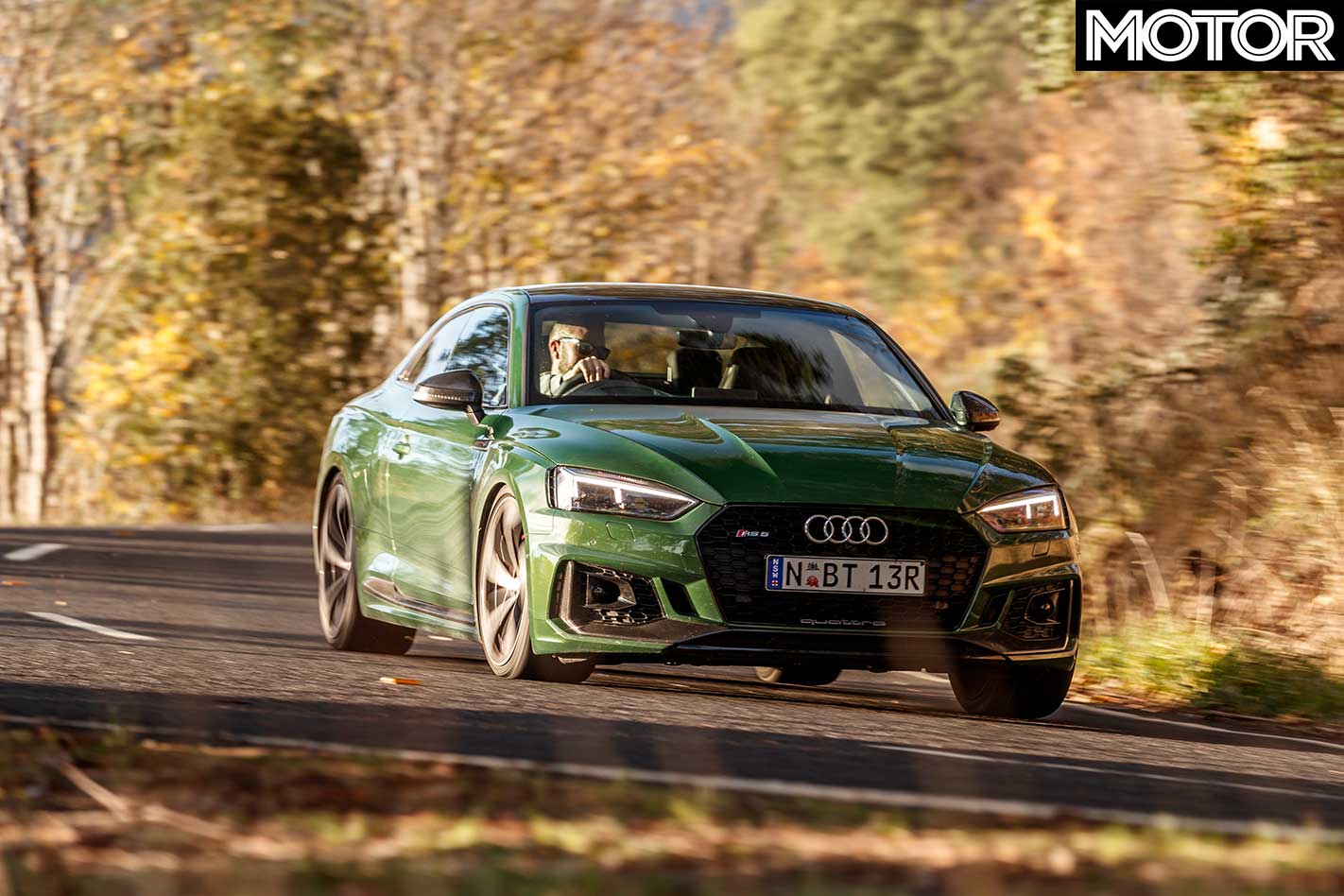
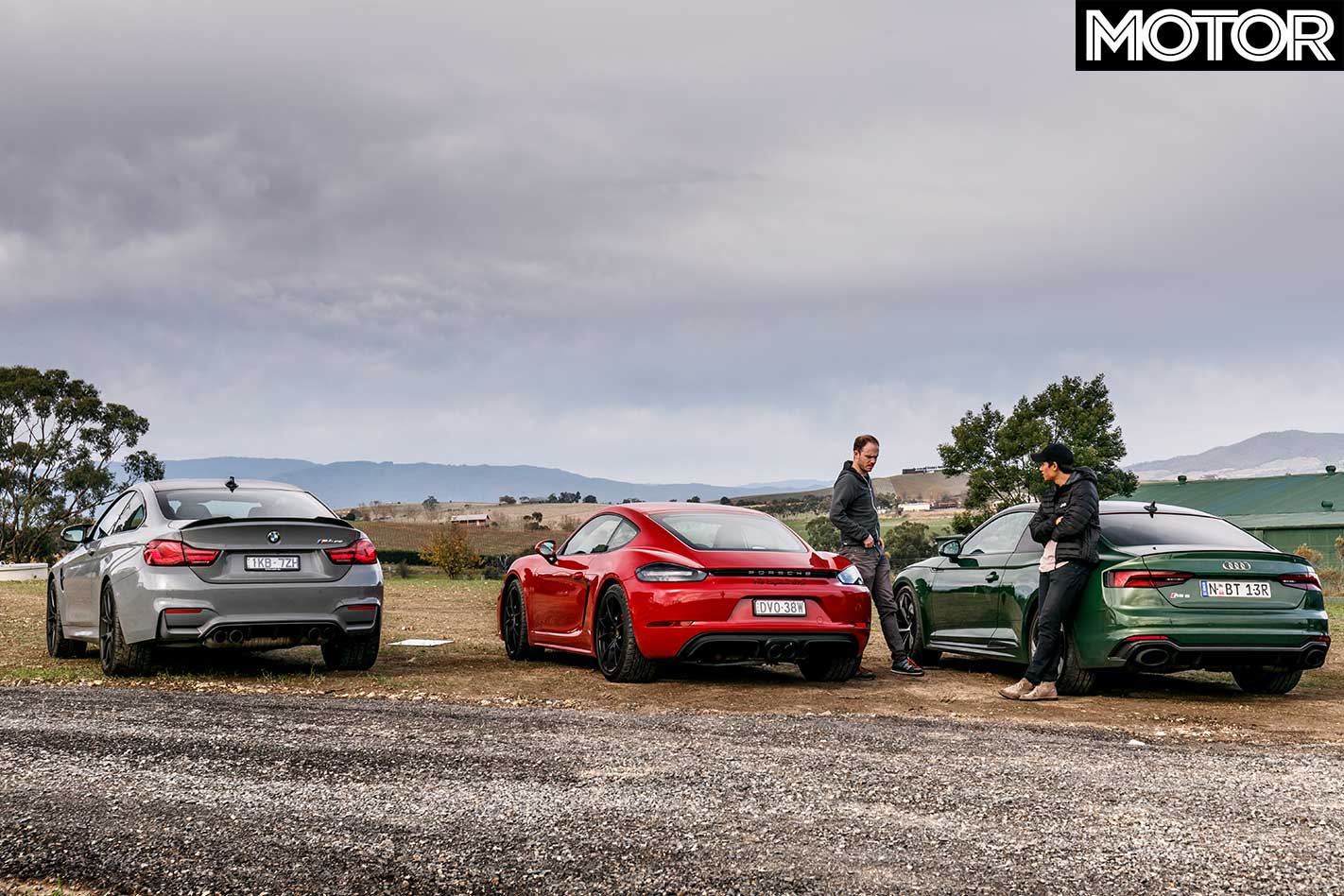
Over in Ingolstadt Audi has also been scratching its head trying to figure out how to unlock the magic in turbocharging. The new RS5 swaps out the old screaming 4.2-litre V8 for a V6, a Porsche-developed unit that nestles two turbos within its valley, just like the V8 in an RS6 Avant Performance. Our test car is in a curious, deep Sonoma Green.
On paper, its displacement drops 1.3 litres, to 2.9 litres in total, while its rev limit tumbles from 8250rpm to 6750. Power plateaus at 331kW, but torque swells by 170Nm. So 600Nm drives its four wheels to 100km/h from rest in a claimed 3.9sec, two tenths faster than the Cayman’s claimed 4.1. It offers the speed for much cheaper, too, with the auto-only RS5 starting from $156K.
The BMW M4 has wrestled with forced induction for a much longer time. The current turbocharged version arrived in 2014 as a huge surprise after its V8 predecessor. And although it added serious speed into the car’s package, the power’s sudden delivery and the suspension’s inability to cope made it intimidating. But Munich’s engineers slaved to fix the M4’s relationship with boost, and delivered the honeymoon phase with the arrival of the CS.
Pegged somewhere between the M4 Competition and raw-as-bones GTS, the CS extracts 338kW (up 7kW) and 600Nm (plus 50Nm) from its tweaked 3.0-litre twin-turbo six. It’s claimed to do 0-100km/h as fast as the Audi with two-wheel drive, so you know it’s potent. BMW was so proud of the result it initially released the M4 CS at $210K, but quickly lowered it to a more palatable $190K.
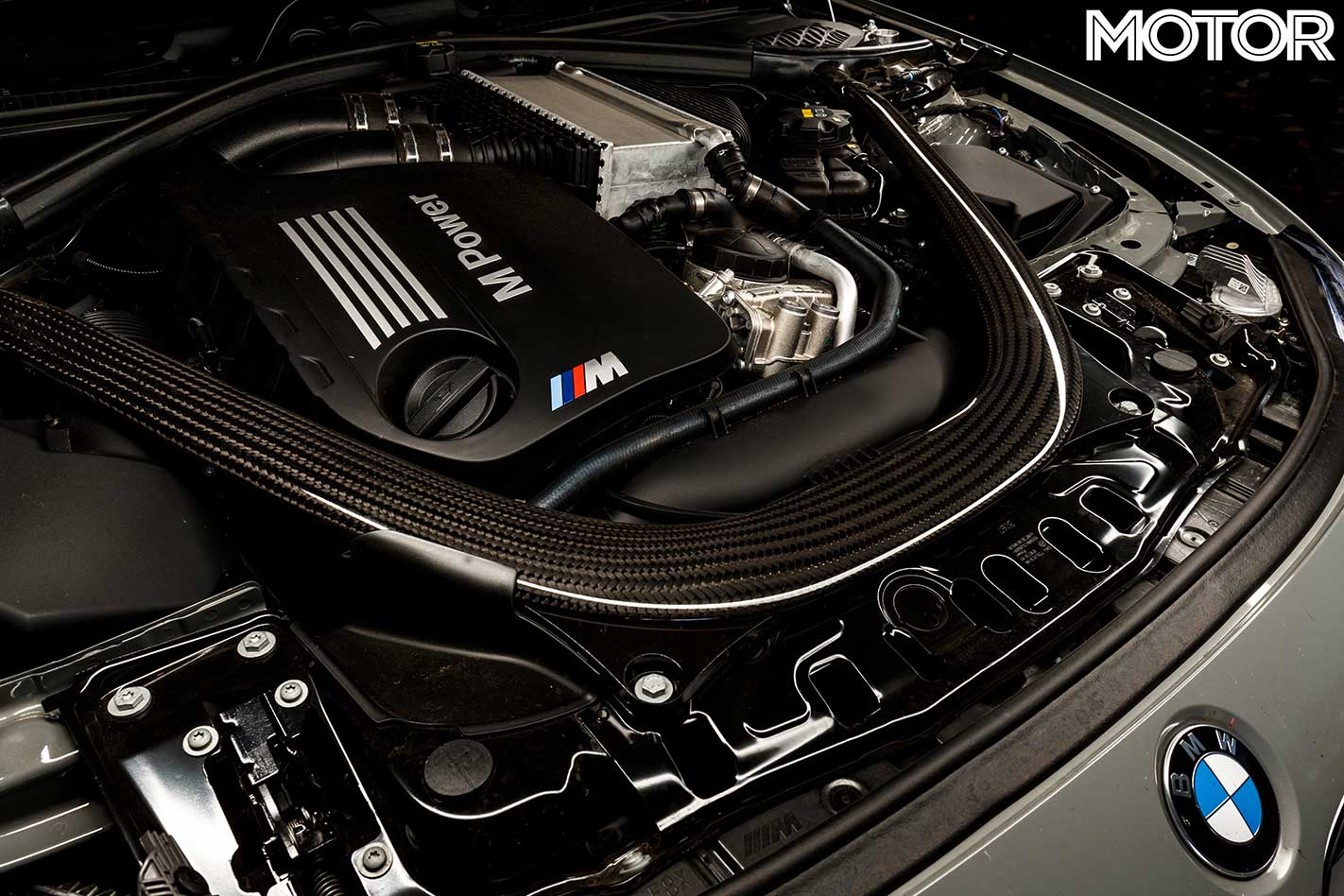
As well as spending more time under the squat rack, the CS has also undertaken singing lessons. Fire it up and the titanium exhaust crackles on over run, as if drops of fuel are igniting in the turbine. Under throttle, though, it almost sounds like half a McLaren F1 V12. The S55 now howls with an atmo-like crispness that breaks into a scintillating, yet guttural, rasp as it spins towards a 7500rpm rev limit.
Things are less orchestral in the RS5. Since it doesn’t share an engine with an R8 supercar anymore, its 2.9-litre V6 has disowned the old car’s musical legacy and decided on a muted, bassy soundtrack.
The undersquare block whirs with a high-tech buzz that gains character as the revs climb, but at redline it sounds muffled, as if it’s afraid to brag about how strong it is. It’s matched to an eight-speed torque converter, and although it is slower than the other dual-clutch gearboxes, it pushes a deep belch from the RS5’s oval tips on upshift.
Comparisons between the 718 Cayman GTS’s note and any Subaru WRX’s are inevitable. It throbs on idle, ticks with a Porsche-like clatter, and roars like its wastegate is open. But the noise thrummed into the cabin is so similar to a BRZ’s you’ll quickly drop the windows to drown it with the exhaust system’s tasty crackles and turbo hiss.
You’ll forget about that when the 718’s engine starts puffing, though, as you’ll arrive where you’re going fast. It makes 17kW and 50Nm more than the old Cayman GTS, which hints at the flexibility on offer. Turbo lag is minimised by turbine fins that actively move to better catch exhaust gases, while the PDK is always ready to downshift.
The Cayman’s tricky to launch because it unearths more grip than a gecko clinging to a rock. Between its mid-engine layout, grippy tyres, and low outputs, the Cayman needs huge revs (about 6000rpm) to help it lunge from a standstill. But that won’t release its rear tyres on Heathcote Park Raceway’s prepared surface. The 718 GTS bogs its first run, reaching 100km/h in 4.35sec and 400m in 12.4sec.
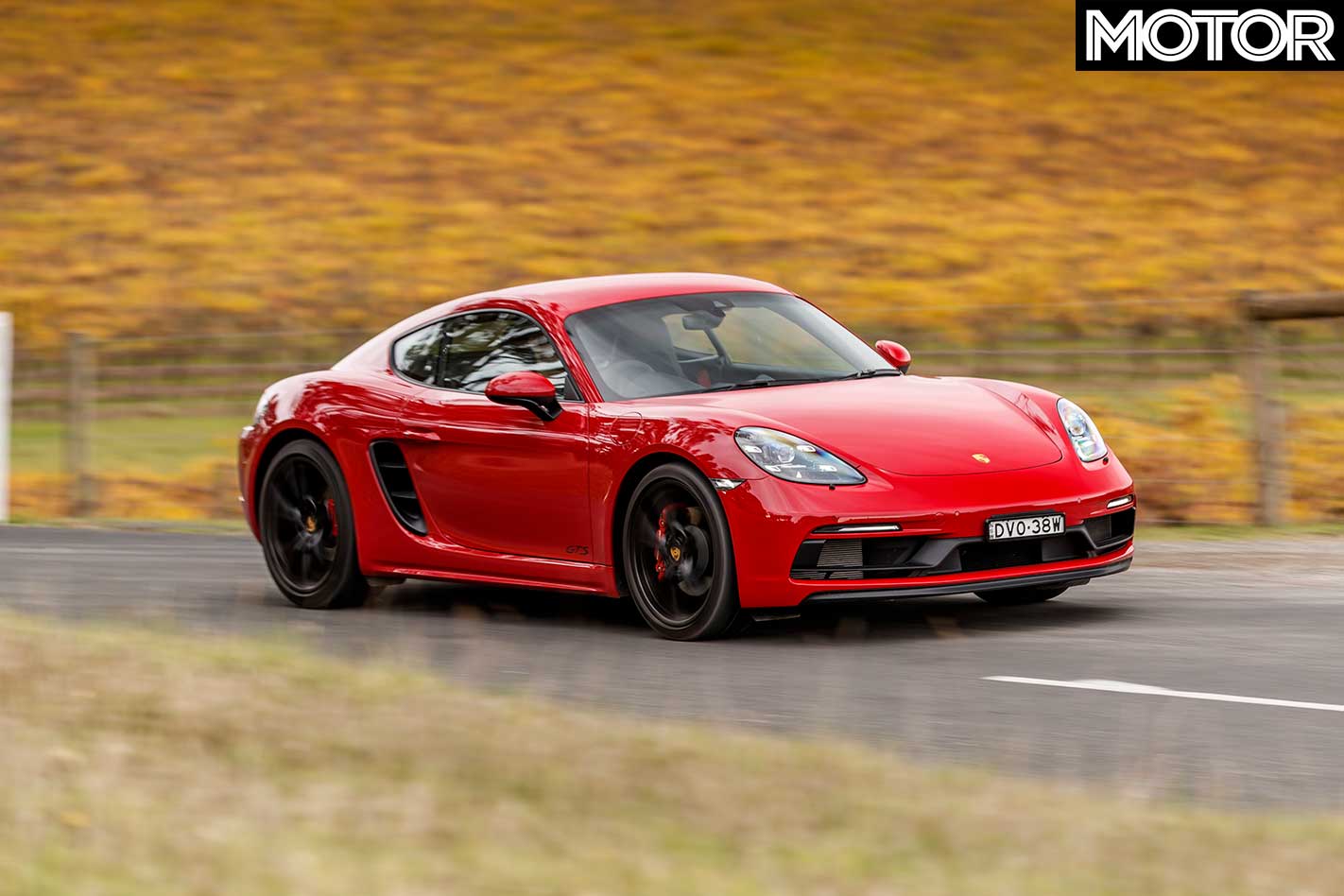
A gravelly surface helps it slingshot forward at furious speed. The PDK shifts up to keep the engine in its mid-range, as the GTS winds out to 7500rpm and charges forward to triple figures in 3.94sec and 400 metres in 12.04sec. It could go faster, but it works with such efficiency we’re convinced it does the best it can with what it’s given.
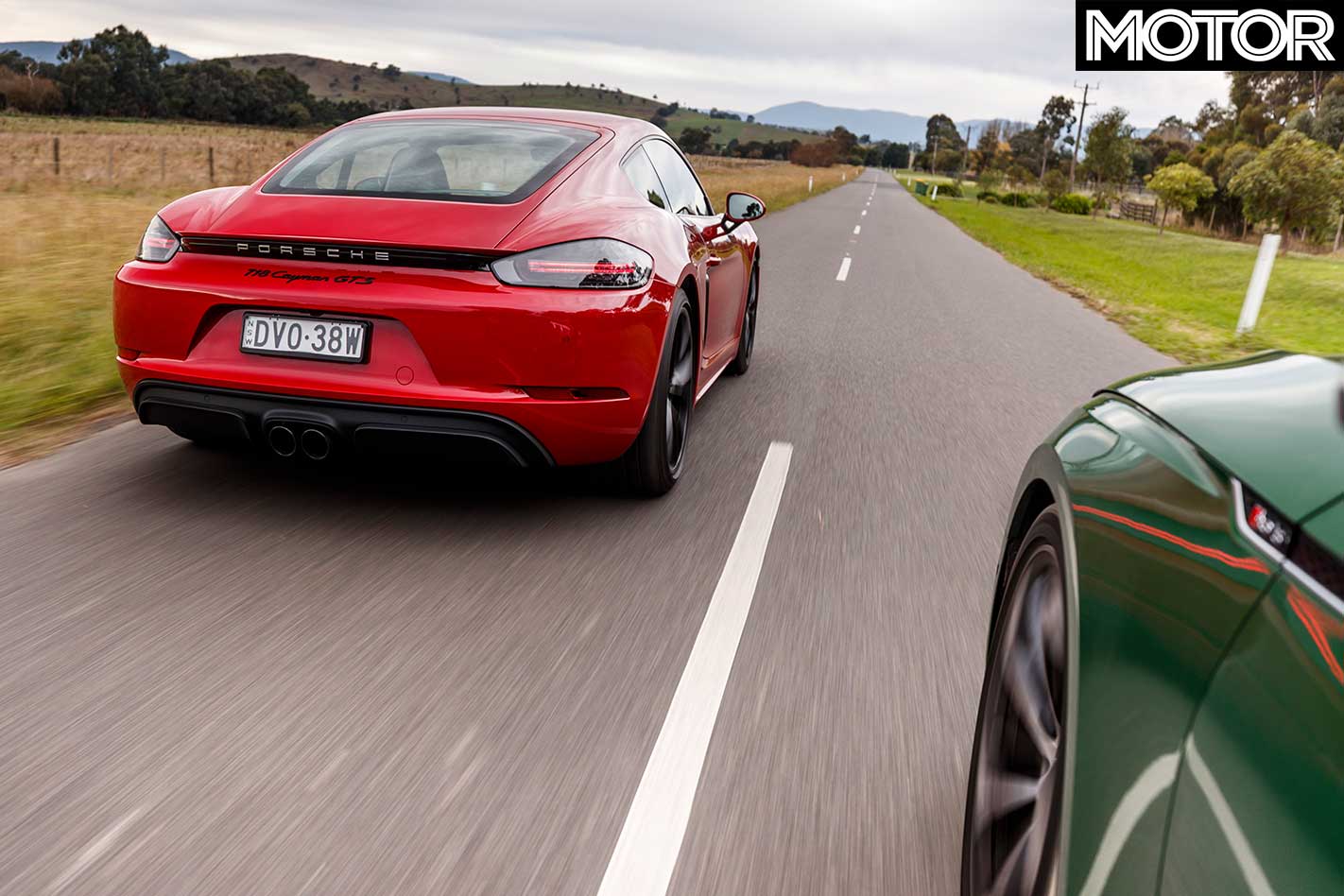
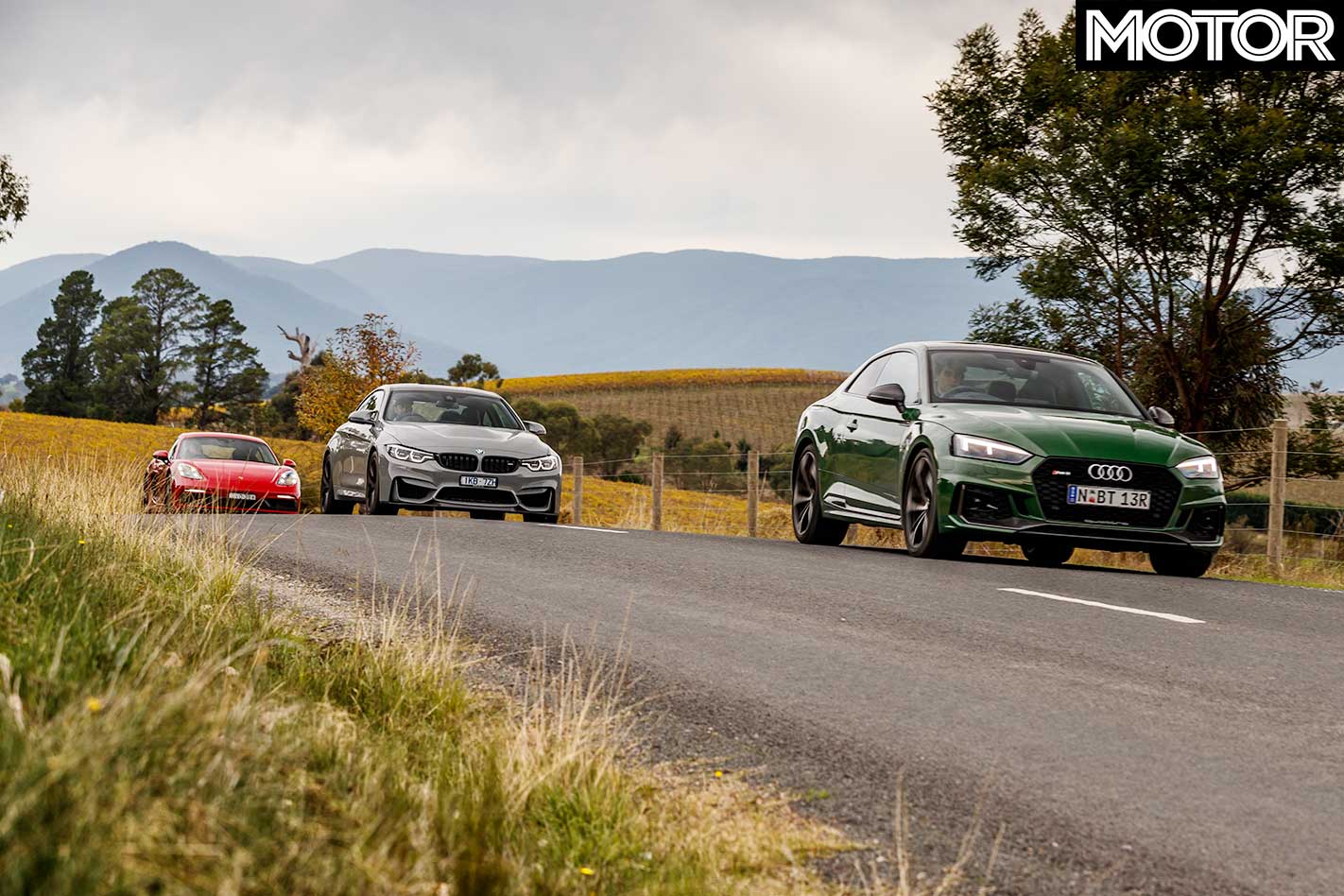
For now, though, the surprise is how the RS5 delivers supercar-scaring figures in any environment. Load up the torque converter and it fires out of the hole faster than the Cayman, nudging ahead until short gearing forces an upshift at 53km/h, then 84km/h, to hand an small lead back to the Porsche.
They’re neck and neck as the Audi passes through triple figures at 3.96sec then the timing beam at 12.04sec – an identical figure to the Cayman despite lugging another 400kg.
In complete contrast to them, trying to launch the M4 CS in damp conditions is like trying to lasso a rampant bull. Yes, the turbochargers now swell more discretely in the mid-range, but pregnant clouds and icy winds cool our Michelins faster than we can warm them. Since we can’t load its twin-clutch gearbox on the brake, our only option is to spin through the first couple gears, while it bucks sideways down the drag strip.
With launch control, and a bit of tyre temp, times drop from 5.03sec to 100km/h and 12.88sec across 400m to 4.56sec and 12.45. But we stop there to preserve its oily bits, even though more launches would have zeroed in on the CS’s 4.05sec/12.01sec times at PCOTY 2018.
As we switch Heathcote’s scenery for a place with roads more winding, a powered-up M4 should have us grasping rosary beads and begging the oversteer gods for mercy. The CS, however, sneaks more tyre width under its broadened guards. It features retuned suspension, sits on staggered 19-inch and 20-inch wheel diameters, and drops its centre of gravity with an M4 GTS carbon-fibre bonnet.
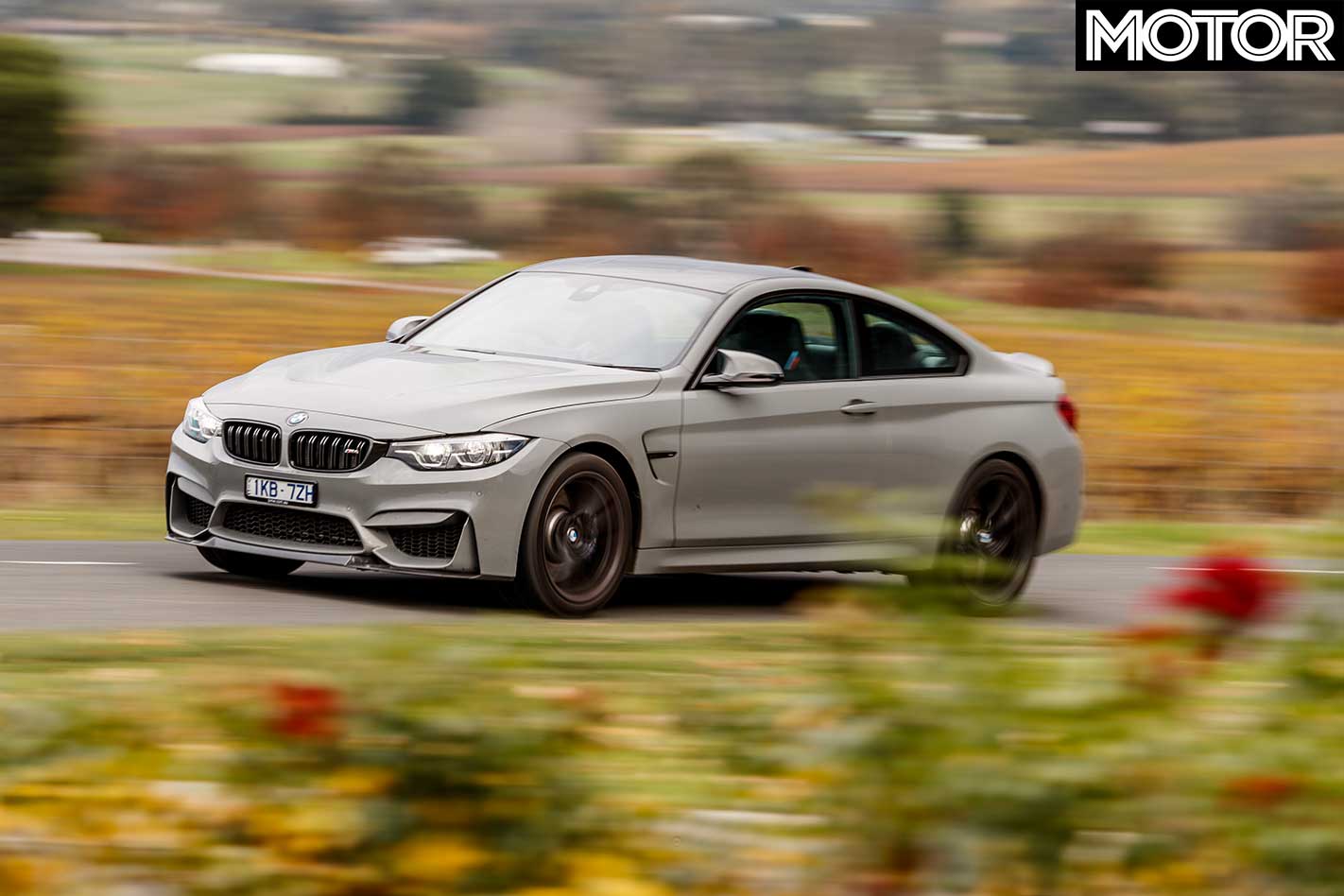
They’re useless, like we learned at the drag strip, until you’ve warmed its Michelin Pilot Sport Cup 2s. Inconsistent when cold and frightening on damp surfaces, you awaken the Cup 2s by stringing corners together at half pace until the ESP stops blinking in third gear. If your confidence remains high then you’ll find this M4 properly engaging.
Its dyno charts reveal it won’t vaporise the rear tyres on corner exit. The regular M4’s torque peak (550Nm) appears about 500rpm higher, letting the rear tyres to dig in and push you to warp speed from corners.
The M4 CS also shrinks around you like a morph suit. At a faster pace its firm damping irons out poor roads, controlling its big contact patches over lumps and keeping its weight in check. The steering’s largely unchanged, in that it feels wooden in anything but Comfort mode, but the front-end is devastatingly sharp and obeys your every command. The speed the M4 CS can carry through corners defies belief.
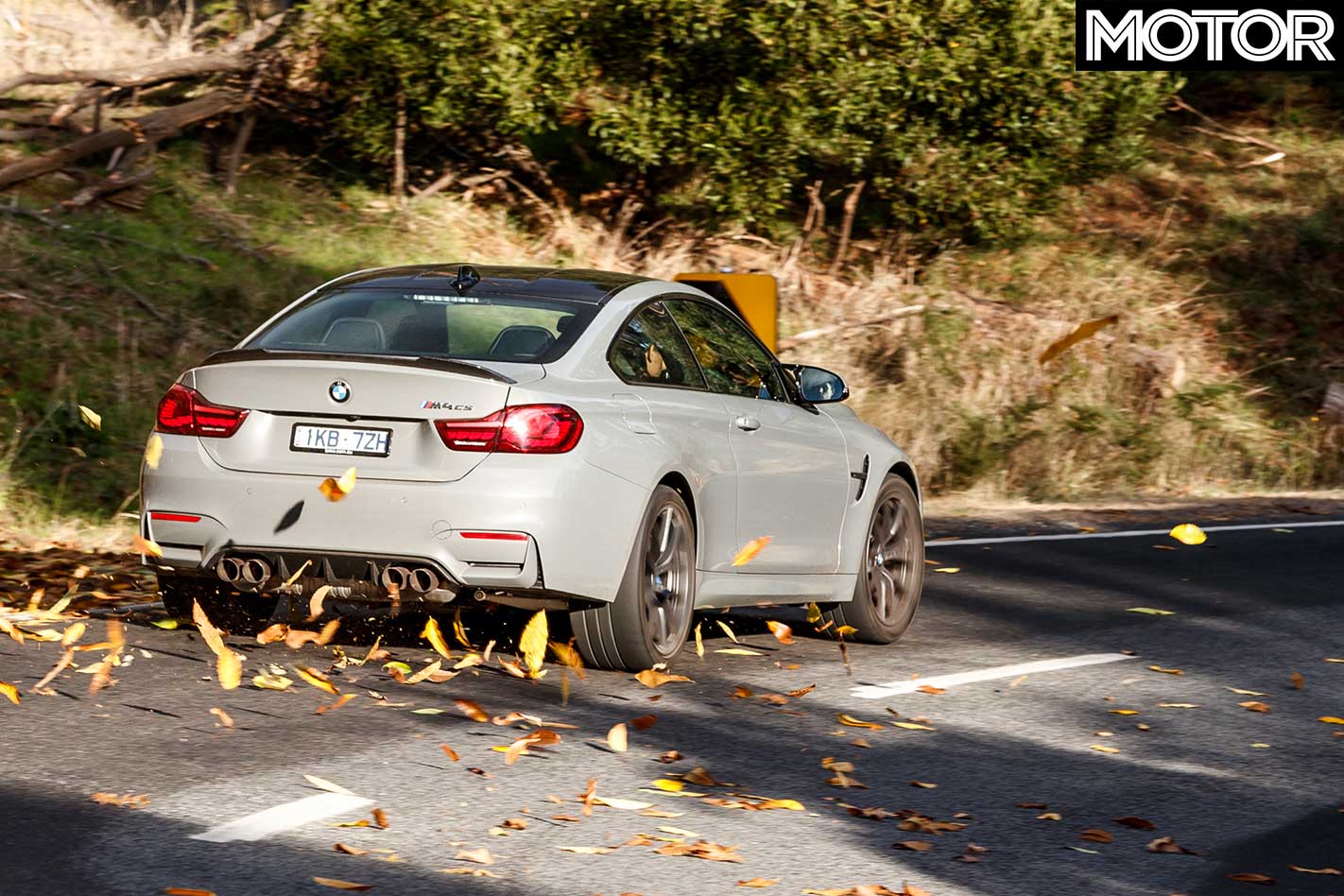
Porsche has tuned the Cayman’s chassis in a less inspired way. It’s simply added options available to the S, like adaptive damping, a lower ride height, and a torque-vectoring rear diff. Sure, that’s been the agenda with previous GTS models, and those Michelin Pilot Sport 4 S tyres are new, but for a line that’s meant to link Porsche’s road models to the GT cars with a platter of cherry-picked upgrades, the brand hasn’t gone to lengths here like it did on the 997.2 series 911 GTS.
That said, it’s not like the Cayman’s handling has any fundamental issues to fix. Swapping into the Porsche from the BMW is like changing the television channel from UFC to gymnastics.
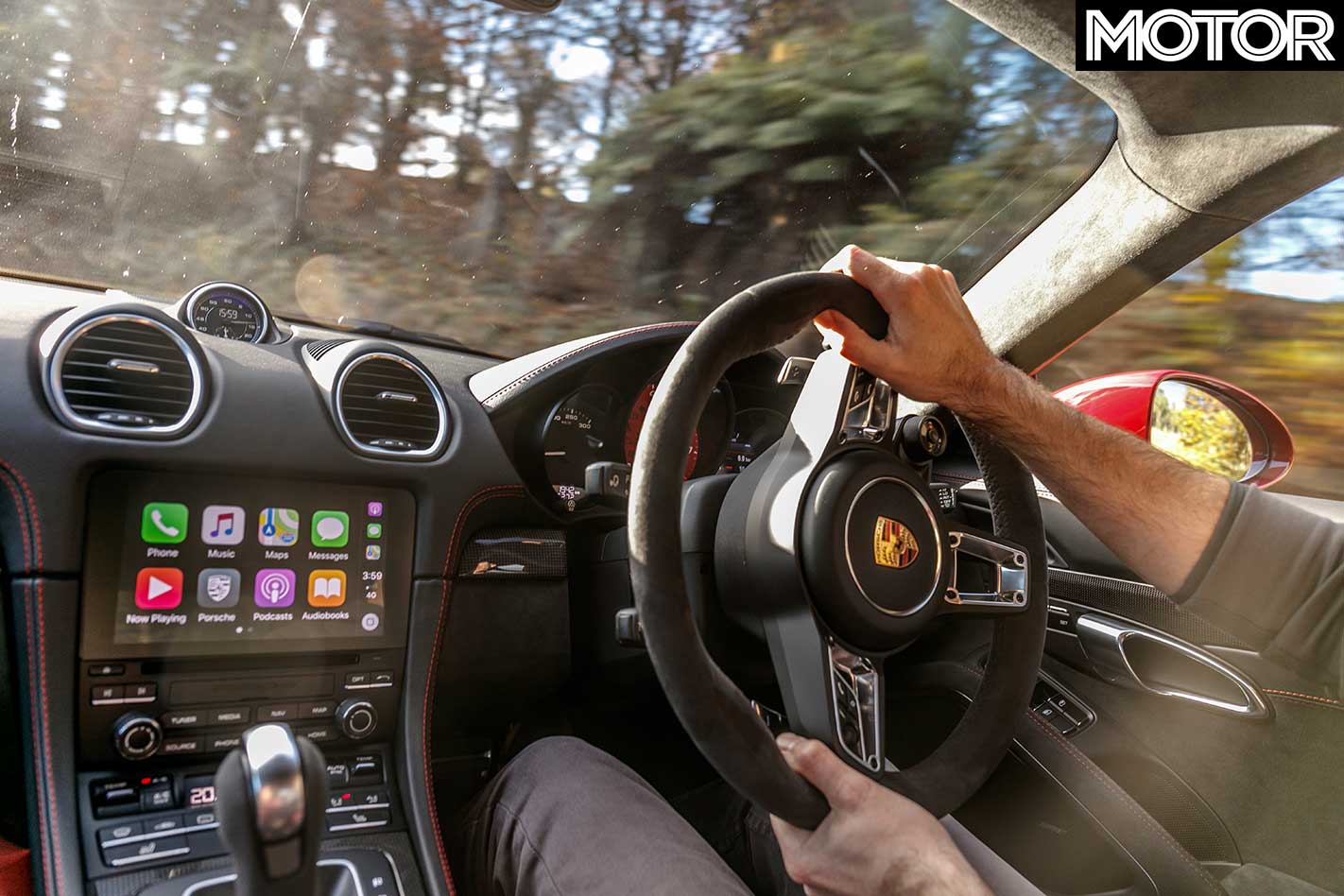
While the M4 bullies its way into corners on big, grippy tyres, the Porsche relies on momentum, balance, and its lowered stance to sustain pace from smaller contact patches. It drives with sophistication and grace, but never fails to remind you of its powerful athleticism.
The GTS’s variable steering ratio feels linear and lets you guide the nose at clipping points with sniper-like accuracy. The electric assistance is so well judged, loading with weight as you add lock, lightening as you unwind, it makes multi-mode racks seem disastrously complex.
You don’t need virtuous skills to extract its brilliance, either. There’s no waiting for the tyres to switch on, or a need to steel your nerves. You just hop in, toggle its drive mode to Sport or Sport Plus, and rack off. You can sense yaw movements almost before they happen. So when grip breaks at the outside rear, with the friendliest kiss of oversteer, the Cayman always keeps one foot on safe ground.
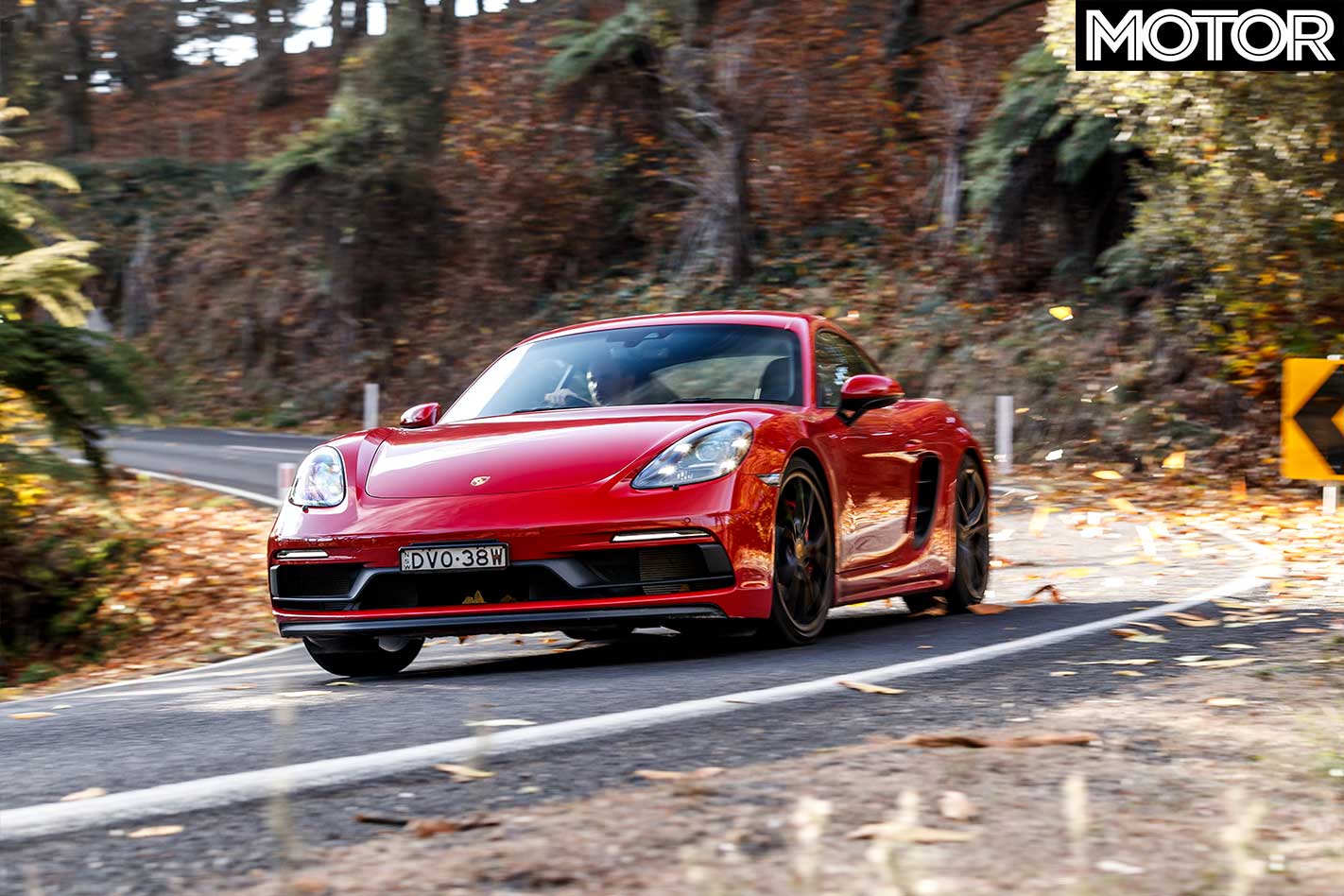
Around the Audi, though, you might have to hush words like ‘safe’ to avoid hurting its feelings, as it’s been tarred as inert and understeering in the past. So the brand has widened the RS5’s tracks and stretched its wheelbase on the new MLB Evo platform. It’s also bolted in a locking rear differential, and its body shell is propped by hydraulically linked suspension dampers.
The new car is lighter. More aluminium helps slash its kerb weight by 60kg. And although it weighs 100kg heavier than its rivals, thanks to all-wheel drive, the extra traction helps it harness its meaty torque and thrust it from corners with alarming pace. It’s largely neutral and body roll helps you exploit the strong rear-drive bias in its drivetrain, or provoke oversteer on trail brake.
They’re small moments of fun, and it’s far from a dull experience, but because it steers with a vagueness around centre and can’t relay wheel direction as precisely as the others, you never become as involved. It just doesn’t rotate like the other two. Its mass seems to multiply on tighter roads, robbing it of turn-in and the pace to keep up.
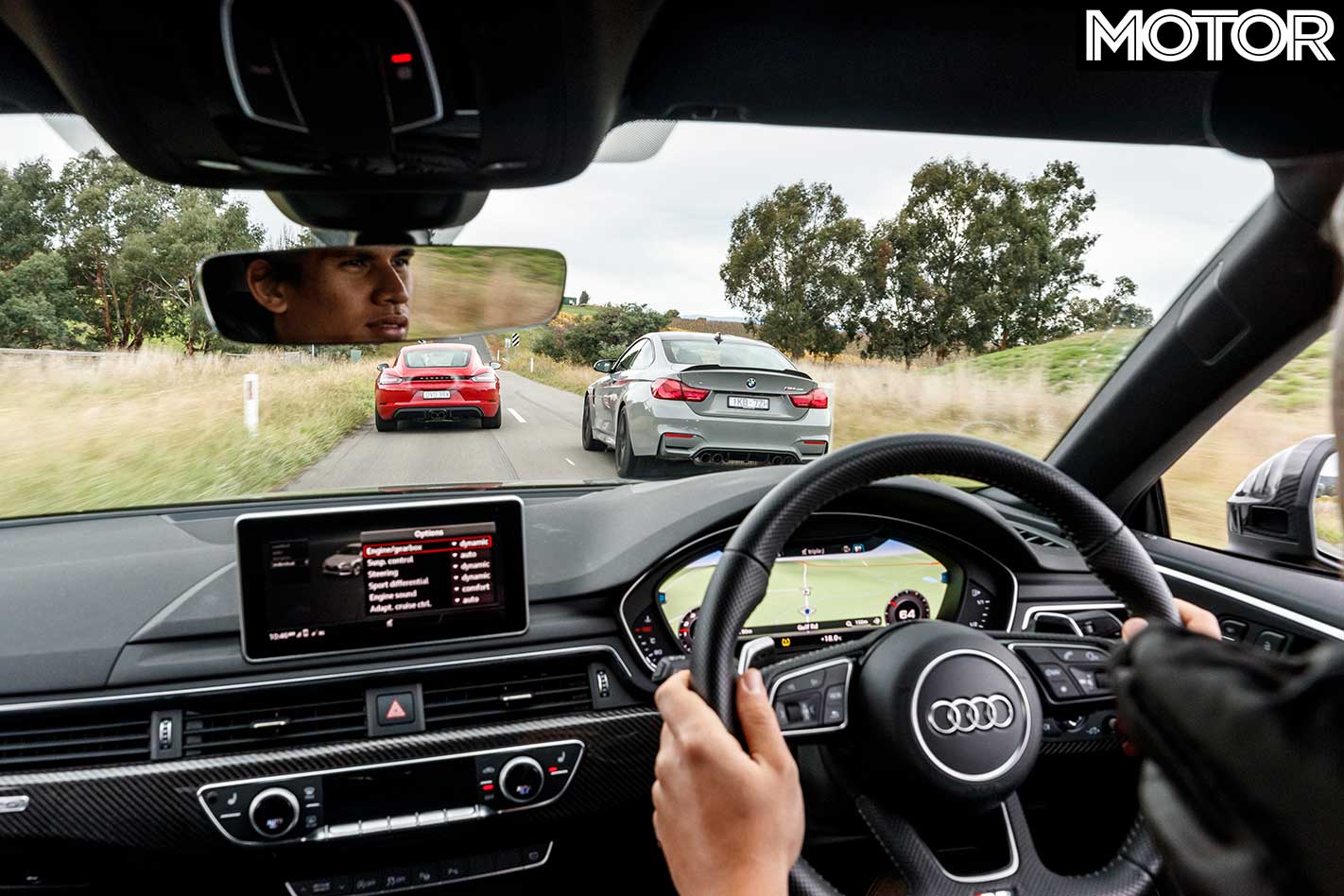
But it feels more first-class inside. The RS5 has worked hard on a resolved interior, accessible performance, and everyday manners. Even though its cabin is basically an S5’s with different badging, the tactile controls and nice surfaces add luxury and superb refinement.
What the RS-tuned eight-speed automatic lacks in shift speed, it redeems with a smooth creep function and great mapping. The RS5 also floats along like it’s on a giant blob of oil, even if its ride can’t match the Porsche’s long-stroke feel and lets its 20s thud into holes every so often.
Ultimately, the RS5’s high-tech goodies afford it a party trick or two, but it doesn’t thrill like the others. It feels more like a roided-up S5 than something inherently different, which is what an RS badge should deliver.
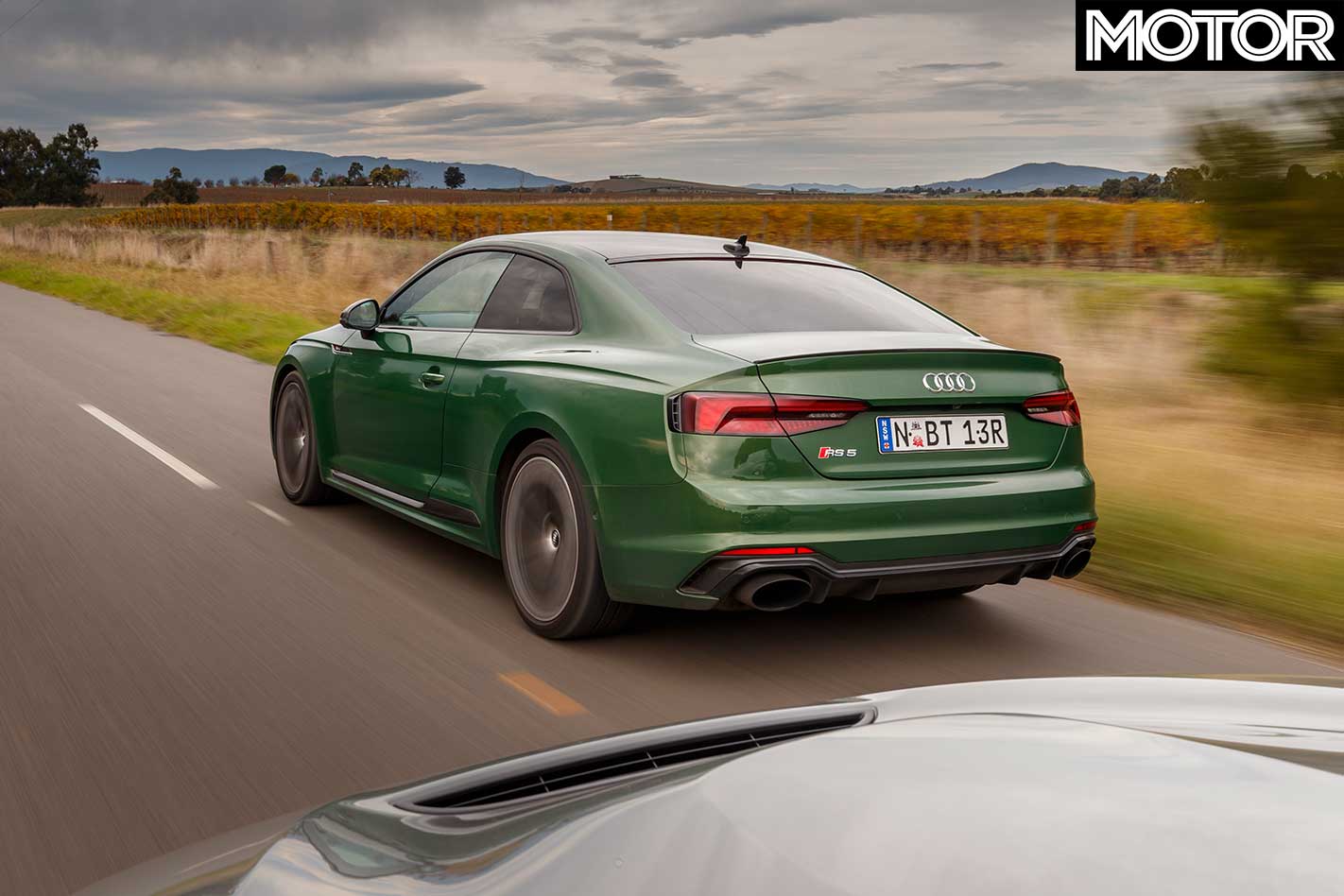
If you’re looking for a well-rounded daily steed, the RS5 is always a nice place to crawl into, especially for longer drives, but you’ll never manage the same focus on your favourite corners or racetrack. So we’ve placed it equal with our next runner-up.
If the RS5’s driving experience stimulates you like sugar, then the M4 CS will send you to caffeine-induced highs. Whatever BMW engineers have done, it’s worked. The CS transforms the M4. It’s grippy, friendly, involving and as sharp as a samurai sword. It now wields forced induction as a weapon, rather than a burden, by squeezing more power and noise from its engine, while making it more accessible. Just look at the roll-on performance figures for proof.
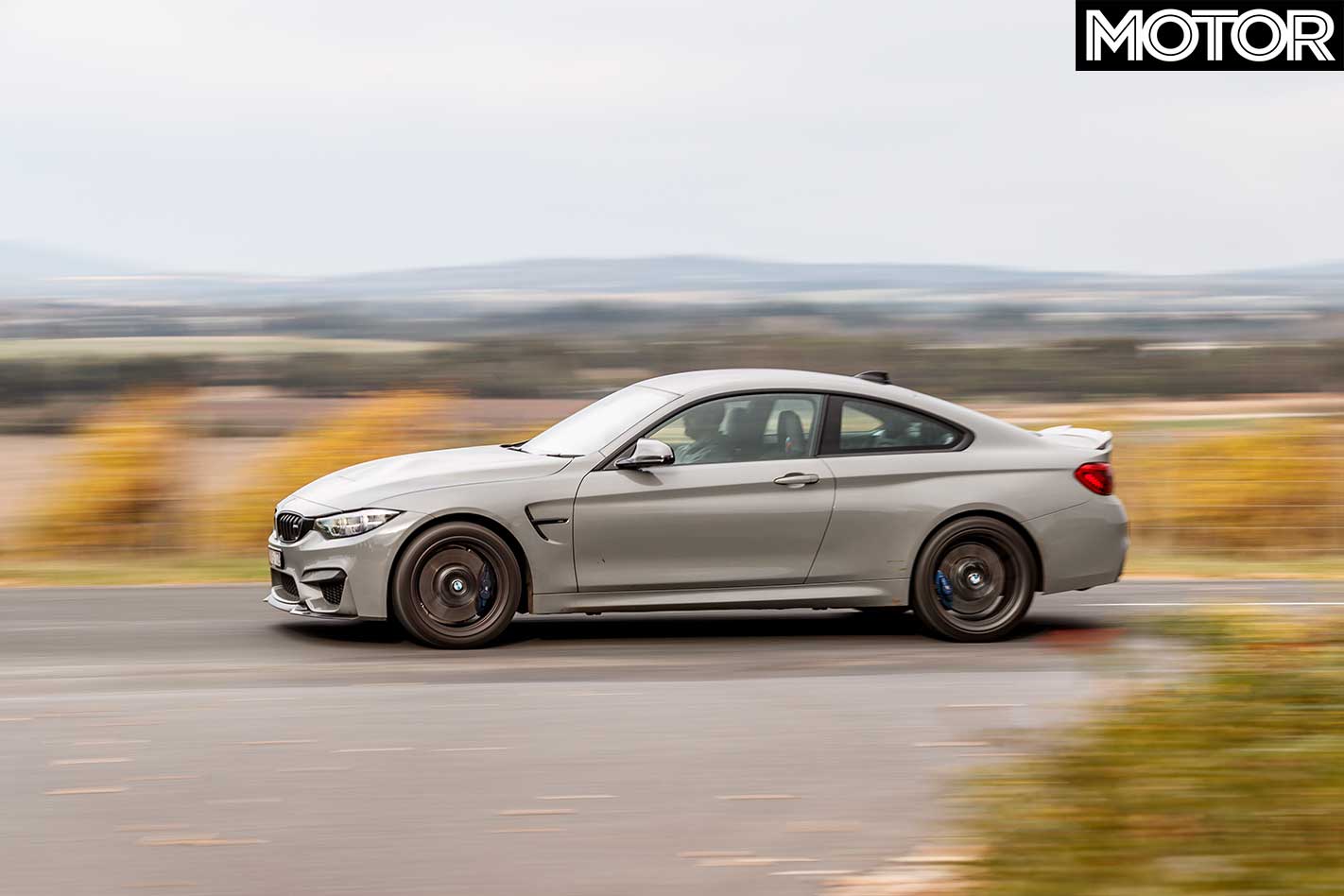
On the flipside of that, it’s also the only car in which you’d suspiciously watch the clouds while driving. And there will be days you leave it in the garage for no other reason than ‘not feeling up to it’. You will never really tame it, either. Its brilliance exists in a small window that’s dependent on its Michelin tyres. And while they deliver other-worldly grip, we’d trade some of that for more accessibility.
Beyond that, the CS’s real problem concerns the rest of the car. Those door cards and centre console pinched from an M4 GTS add more impracticality than weight they save. And if the CS was really trying to squeeze into smaller jeans, why does it come with bulky powered and heated seats? BMW has chosen the wrong interior components to make the CS feel as special as its price demands. Two-piece bucket seats and metal pedals would go much further to doing that without compromising its functionality.
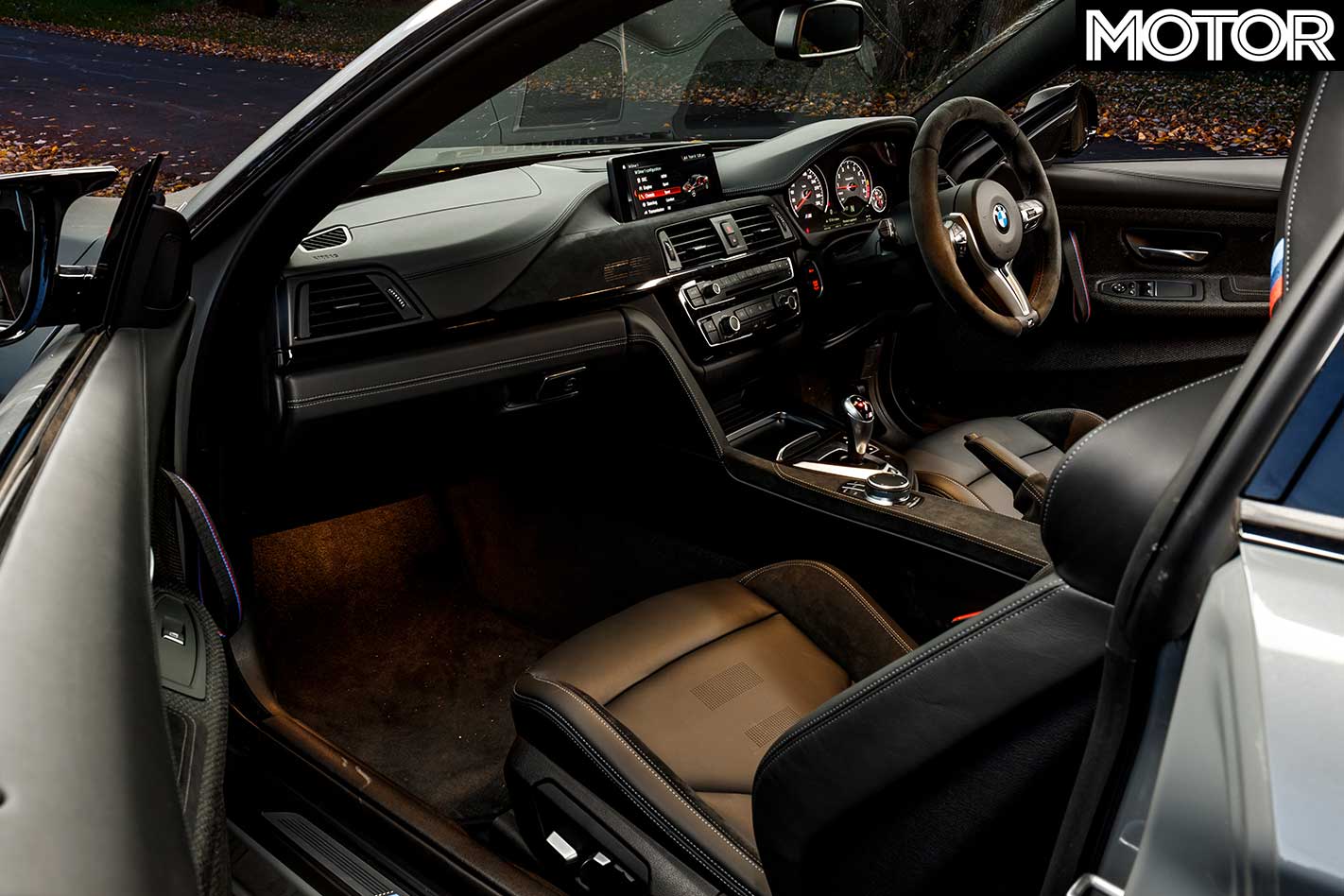
Ultimately, when an M4 Pure offers 80 per cent of the performance for almost 65 per cent of the price, the CS doesn’t stack up.
That leaves us with the 718 Cayman GTS. Sure, if we’re nit picking, its rear-vision is poor and its seats may challenge to fit even average sized builds. It also can’t carry more than a couple of bags for a weekend. Nor will its throbbing engine note, that constantly competes with tyre noise, prick the hairs on your nape. But you wouldn’t care about that if this is the first Cayman you’ve driven.
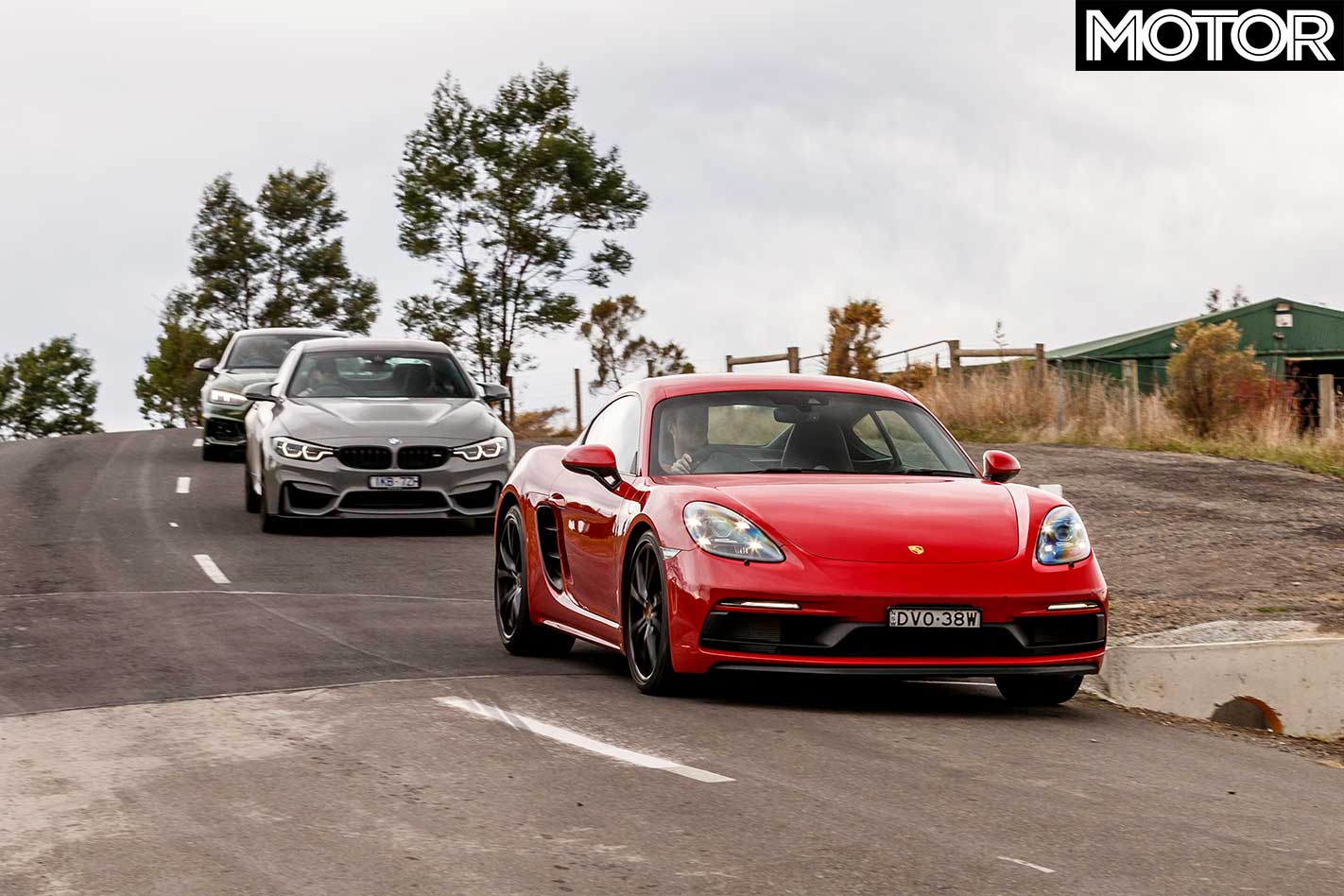
The 718 GTS can blitz the drag strip, enchant you in corners, and offer a cosseting ride on the way home to justify those other criticisms. Its brakes, too, are strong yet delicate, much like the rest of the car.
Make no mistake, it hasn’t unlocked a war cry like the M4 CS, or nailed the grand-touring vibe of the Audi, but the Cayman GTS could win almost on dynamics alone. It might not have quite mastered the art of turbocharging yet, but it’s only a matter of time. After all, that’s all that’s left for it to do.
Fast Facts
| u00a0 | BMW M4 CS | Porsche 718 Cayman GTS | Audi RS5 |
| Body | 2-door, 4-seat coupe | 2-door, 2-seat coupe | 2-door, 4-seat coupe |
| Drive | rear-wheel | rear-wheel | all-wheel |
| Engine | 2979cc inline-6, DOHC, 24v, twin-turbo | 2497cc flat-4, DOHC, 16v, turbo | 2894cc V6, DOHC, 24v, twin-turbo |
| Bore x Stroke | 89.6mm x 84.0mm | 102mm x 76.4mm | 84.5mm x 86mm |
| Compression | 10.2:1 | 9.5:1 | 10.0:1 |
| Power | 338kW @ 6250rpm | 269kW @ 6500rpm | 331kW @ 6400rpm |
| Torque | 600Nm @ 4000-5380rpm | 430Nm @ 1900-5000rpm | 600Nm @ 4600rpm |
| Power/Weight | 214kW/tonne | 191kW/tonne | 200kW/tonne |
| Transmission | 7-speed dual-clutch | 7-speed dual-clutch | 8-speed automatic |
| Weight | 1580kg | 1405kg | 1655kg |
| Suspension | struts, adaptive dampers, anti-roll bar (f); multi-links, adaptive dampers, anti-roll bar (r) | struts, adaptive dampers, anti-roll bar (f/r) | multi-link, adaptive dampers, anti-roll bar (f/r) |
| L/W/h | 4675/1870/1392mm | 4393/1801/1286mm | 4723/1861/1360mm |
| Wheelbase | 2812mm | 2475mm | 2766mm |
| Tracks | 1579mm (f); 1604mm (r) | 1527mm (f); 1535mm (r) | 1598mm (f); 1588mm (r) |
| Steering | electrically assisted rack-and-pinion | ||
| Brakes (f) | 380mm ventilated discs, 4-piston calipers | 330mm ventilated discs, 4-piston calipers | 375mm ventilated discs, 6-piston calipers |
| Brakes (r) | 370mm ventilated discs, 2-piston calipers | 299mm ventilated discs, 4-piston calipers | 330mm ventilated discs, single-piston calipers |
| Wheels | 19.0 x 9.0-inch (f); 20.0 x 10.0-inch (r) | 20 x 8.0-inch (f); 20 x 10.0-inch (r) | 20.0 x 9.0-inch (f/r) |
| Tyre Sizes | 265/35 ZR19 98Y (f); 285/30 ZR20 99Y | 235/35 ZR20 92Y (f); 265/35 ZR20 99Y | 275/35 R19 98Y (f/r) |
| Tyres | Michelin Pilot Sport Cup 2 | Michelin Pilot Sport 4S | Continental SportContact 6 |
| Price | $189,900 | $179,000 ($208,890 as tested) | $156,000 ($179,346 as tested) |
| Pros | Pace; grip; howling sound; friendlier torque curve | Balance; feedback; finesseu2026 the list goes on | Comfortable; accessible; looks; ride; thrust |
| Cons | Stupid interior; baffling price; narrow focus | Two seats; industrial engine note | Heavy; less involving |
| Rating | 4 out of 5 stars | 4.5 ouf ot 5 stars | 4 out of 5 stars |
The Strip
| u00a0 | Audi RS5 | BMW M4 CS | Porsche 718 Cayman GTS |
| 0-10km/h | 0.32sec | 0.45sec | 0.31sec |
| 0-20km/h | 0.59sec | 0.87sec | 0.61sec |
| 0-30km/h | 0.85sec | 1.24sec | 0.90sec |
| 0-40km/h | 1.14sec | 1.78sec | 1.21sec |
| 0-50km/h | 1.47sec | 2.24sec | 1.53sec |
| 0-60km/h | 1.91sec | 2.66sec | 1.92sec |
| 0-70km/h | 2.34sec | 3.08sec | 2.37sec |
| 0-80km/h | 2.81sec | 3.51sec | 2.86sec |
| 0-90km/h | 3.41sec | 3.99sec | 3.38sec |
| 0-100km/h | 3.96sec | 4.56sec | 3.94sec |
| 0-110km/h | 4.56sec | 5.17sec | 4.57sec |
| 0-120km/h | 5.22sec | 5.77sec | 5.25sec |
| 0-130km/h | 6.02sec | 6.44sec | 6.00sec |
| 0-140km/h | 6.82sec | 7.19sec | 6.78sec |
| 0-150km/h | 7.69sec | 8.00sec | 7.65sec |
| 0-160km/h | 8.76sec | 8.88sec | 8.75sec |
| 0-170km/h | 9.82sec | 9.86sec | 9.78sec |
| 0-180km/h | 11.01sec | 10.91sec | 10.92sec |
| 0-190km/h | – | 12.11sec | – |
| 0-400m | 12.04sec @ 187.69km/h | 12.45sec @ 192.88km/h | 12.03sec @ 186.24km/h |
| 80-120km/h (Drive) | 2.41sec | 2.17sec | 2.39sec |
| 100-0km/h | 33.6m | 36.31m | 32.58m |
| Speed in Gears | |||
| 1st | 53km/h @ 6750rpm | 58km/h @ 7500rpm | 69km/h @ 7500rpm |
| 2nd | 84km/h @ 6750rpm | 107km/h @ 7500rpm | 118km/h @ 7500rpm |
| 3rd | 125km/h @ 6750rpm | 163km/h @ 7500rpm | 164km/h @ 7500rpm |
| 4th | 155km/h @ 6750rpm | 217km/h @ 7500rpm | 208km/h @ 7500rpm |
| 5th | 204km/h @ 6750rpm | 277km/h @ 7500rpm* | 251km/h @ 7500rpm* |
| 6th | 250km/h @ 6325rpm* | 280km/h @ 6400rpm* | 263km/h @ 6400rpm* |
| 7th | 250km/h @ 5200rpm* | 280km/h @ 5075rpm* | 290km/h @ 4975rpm* |
| 8th | 250km/h @ 4040rpm* | N/A | N/A |
Heathcote Raceway, 14˚C, dry. Driver: Louis Cordony *Manufacturer’s claim
The nutbag Dutchman in the driver’s seat next to me is tipping into second- and third-gear corners with no grip left and he’s off-line. By some margin. Even so, the nose heeds his sharp, misguided calls and aims for the chosen apex, somewhere about two metres inside the cliff face, on the wrong side of the road.
This feature was originally published in MOTOR’s December 2006 issue
From my seat, I’ve already figured out which tree the spitback will bounce us into and I’m hoping it’ll be on his side. He’ll deserve it. Bastard.
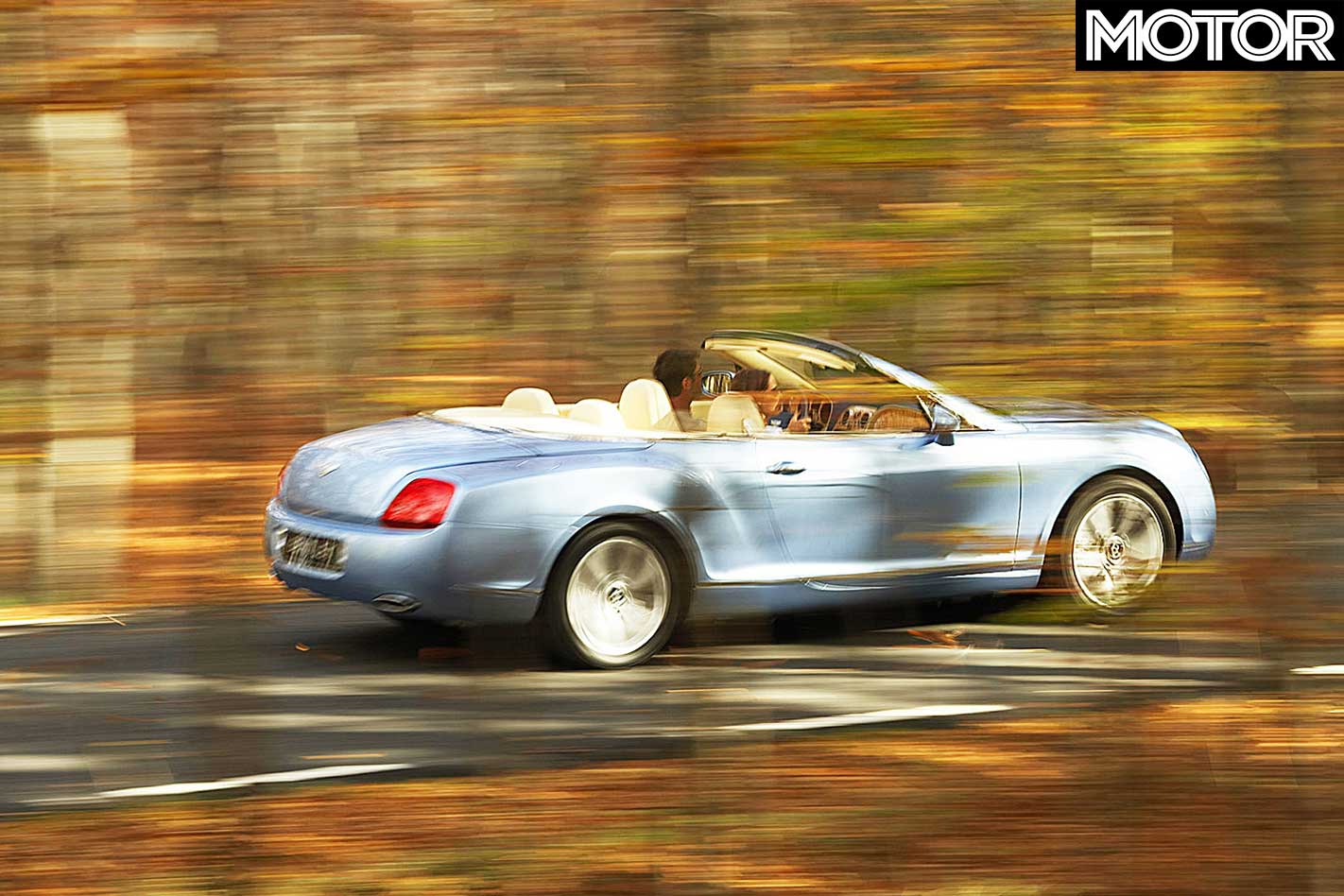
Then he starts sawing savagely at the wheel, ripping left and right for reasons nobody with a basic understanding of weight transfer could fathom – certainly not the chassis and definitely not the ESP which, to his utter disgust, translated this bewildering exercise into staccato tyre howl.
Somewhere amid all the sawing, though, the convertible has avoided the cliff and emerged, still completely on the wrong side of the road, to find a black Dodge Ram maybe 30 metres too late to put the GTC’s structural rigidity to the ultimate test.
There are two lessons here: never entrust yourself to a driver whose country has neither corners nor hills, and; the GTC is a stupidly fast, disturbingly serene bullet.
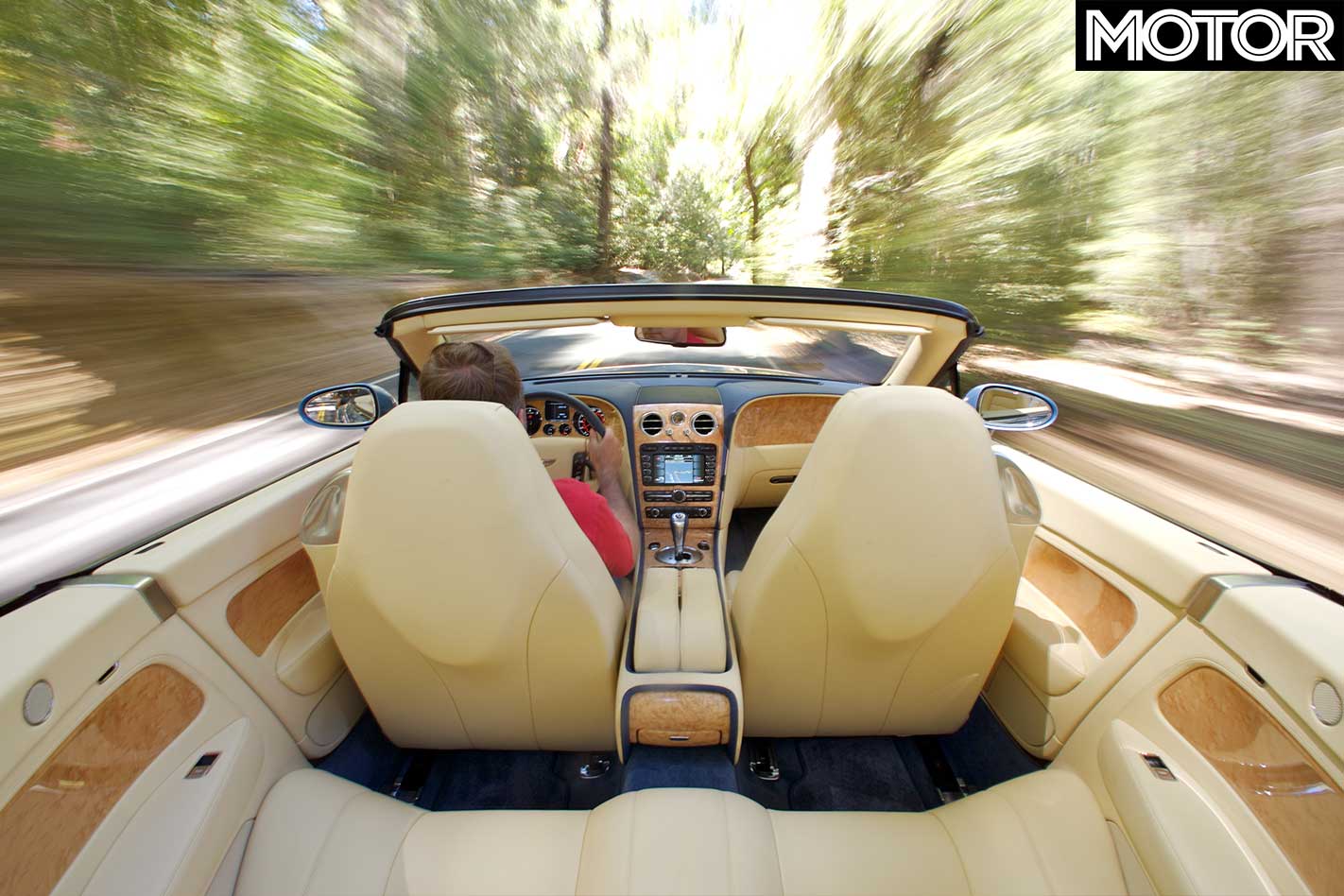
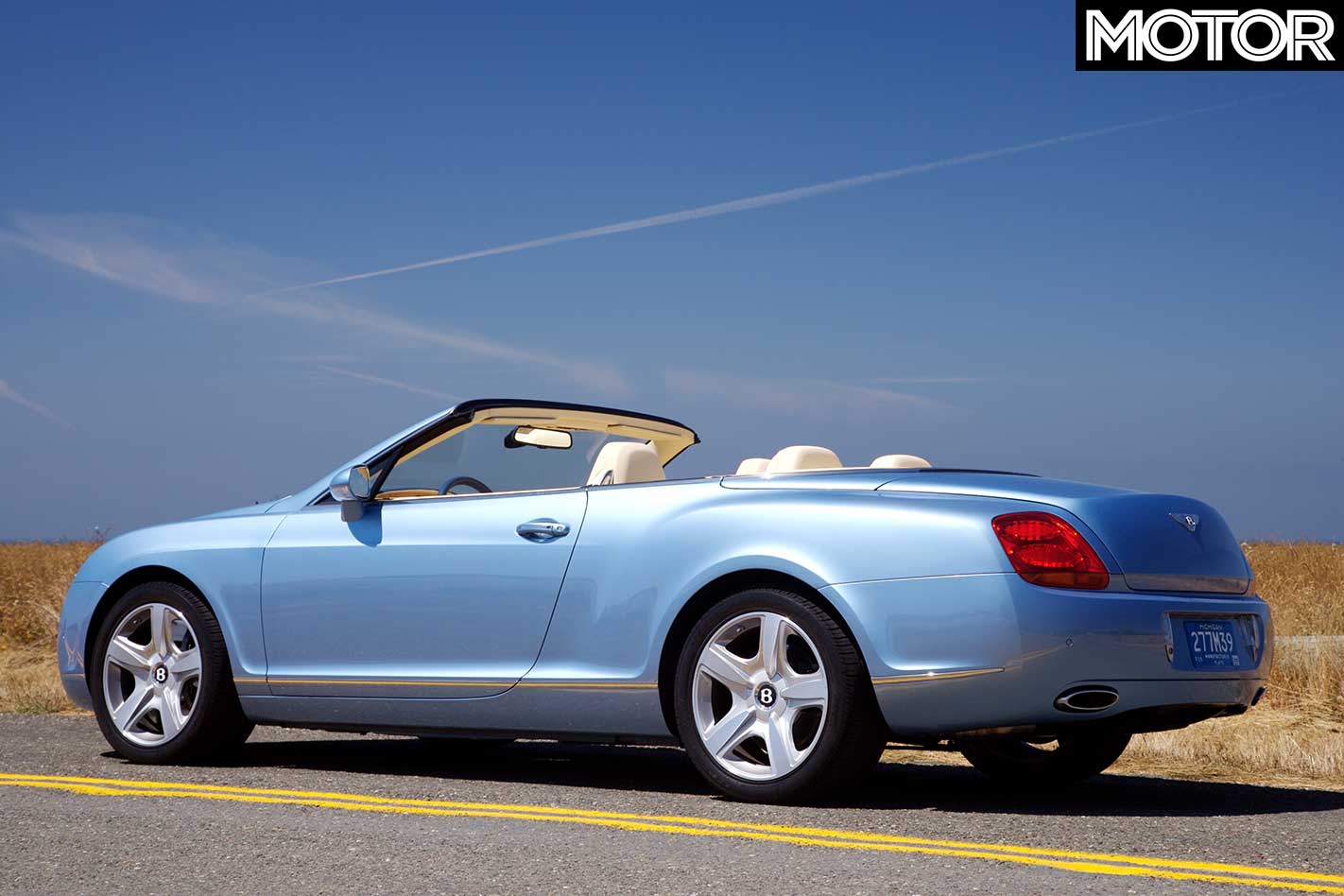
Capable of hitting 100km/h in 5.1 seconds and bursting to 306km/h even with the roof down, the GTC is the last and best car off the Continental program – the one that finally shows what the body was meant to look like all along.
Twelve cylinders, two turbochargers, 411kW and 650Nm are enough to make it legit MOTOR territory. But it’s also bloody heavy, bloody composed and have I mentioned already that it’s crushingly, disdainfully fast? It even has bucketloads of mid-corner grip and sounds better than either of its siblings, with which it shares about 70 per cent of its doings.
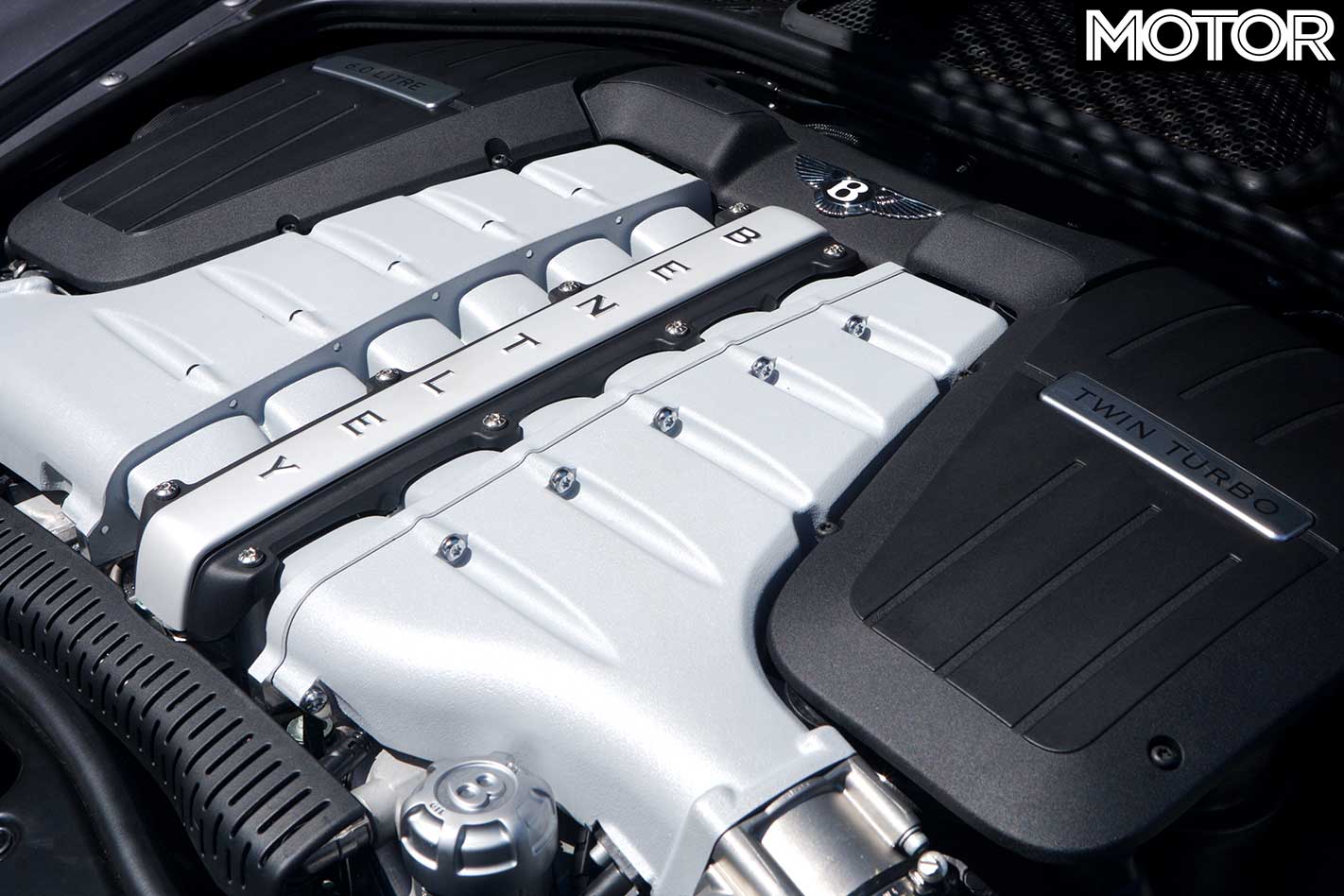
The rest – around 700 parts in all – is there either to keep the rain out or to make the whole thing stiffer. Bentley claims a bending stiffness of 22,500Nm per degree, but what the hell does that really mean?
Well, according to engineering director Ulrich Eichhorn, you can attach a one-metre bar to any corner of the GTC, hang another 2495kg GTC off it, and it will only bend by one degree – and then bend back when you remove the load. It’s impressive stuff, and the whole diagram of the additional stiffening looks like a Mecchano set gone wild. In stupidly expensive Boron.
So, right about now isn’t when you want to know about a six-layer, seven-bar roof system, but the really cool piece of theatre is that it can be either opened or closed while driving up to 30km/h. I know. I tested it at 25 seconds up, and 25 down.
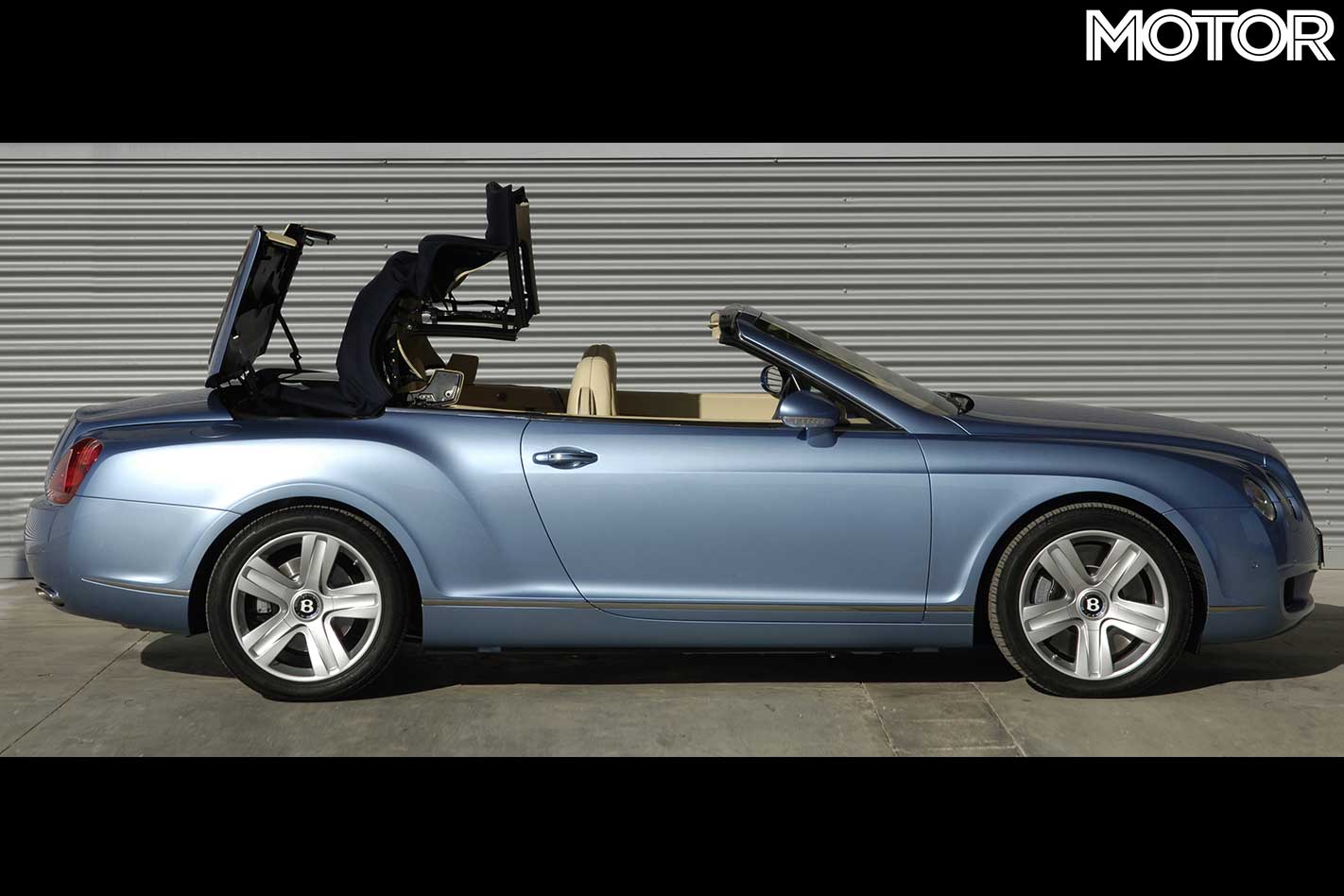
Where Aussie road gangs would call you a wanker if you did it rolling past them, the Americans want to cheer you and clap. Unless you’re Dutch, and you’re flinging past them at 100 kays, in which case they’d happily call you a wanker – if they knew what it meant.
While the convertible adds 110kg to an already stupidly heavy motor car, there is some good to come out of it, and especially for the GT. A little left out of the latest engineering pushes, the GT will get the GTC’s new front end which, in the interests of rigidity, does away with little comfort niceties like bushes between the chassis and the subframe.
It makes a huge difference to the speed and accuracy of the front end, especially under hard cornering. Its turn-in bite is hard, and it feels much better to drive than the hardtop GT. It’s certainly more direct, and it doesn’t hurt that it inherits the upgraded, feedback-oriented steering Bentley introduced on the Flying Spur. This front end needs to find its way into the GT, and fast.
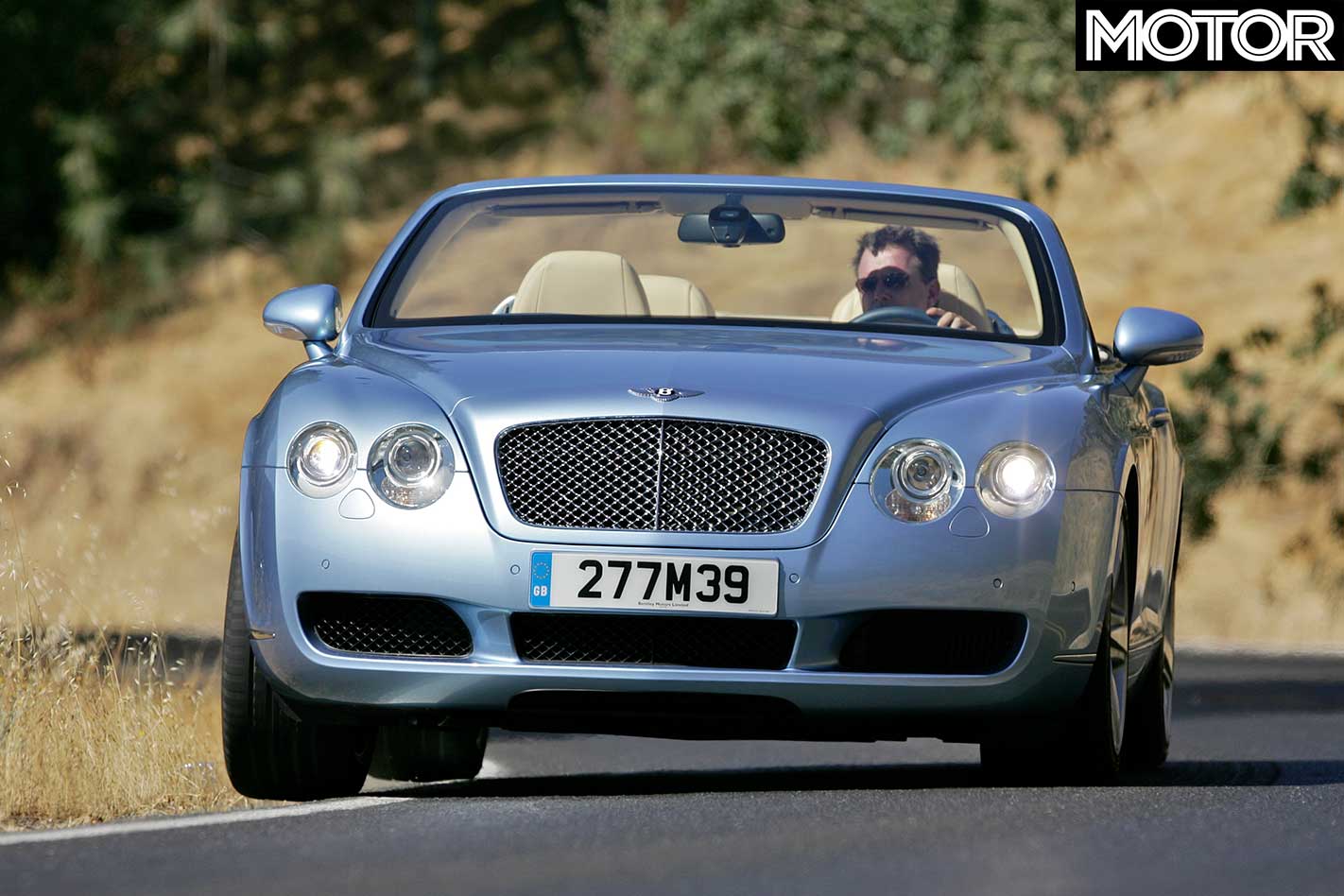
The GTC bites harder in fast corners than slow ones, even though it’s pretty good in them, too – certainly better than the GT is. There’s more feedback from the front through the wheel and pedals, and it’s a very sharp, very composed car.
However, in the slower corners, its turn-in bite is harder than its static-state grip seems able to sustain – and there’s always 2495kg arguing with the helm about the direction of travel, especially if you’ve flicked it across a change of direction to make it bite in the first place.
The only issue is that, after it tips in flat and clean, it can waft into understeer as the weight takes over and the ESP won’t give you the throttle to correct it. The GTC’s slightly different in faster corners, where it whisps through and is ridiculously flingable for a car this heavy.
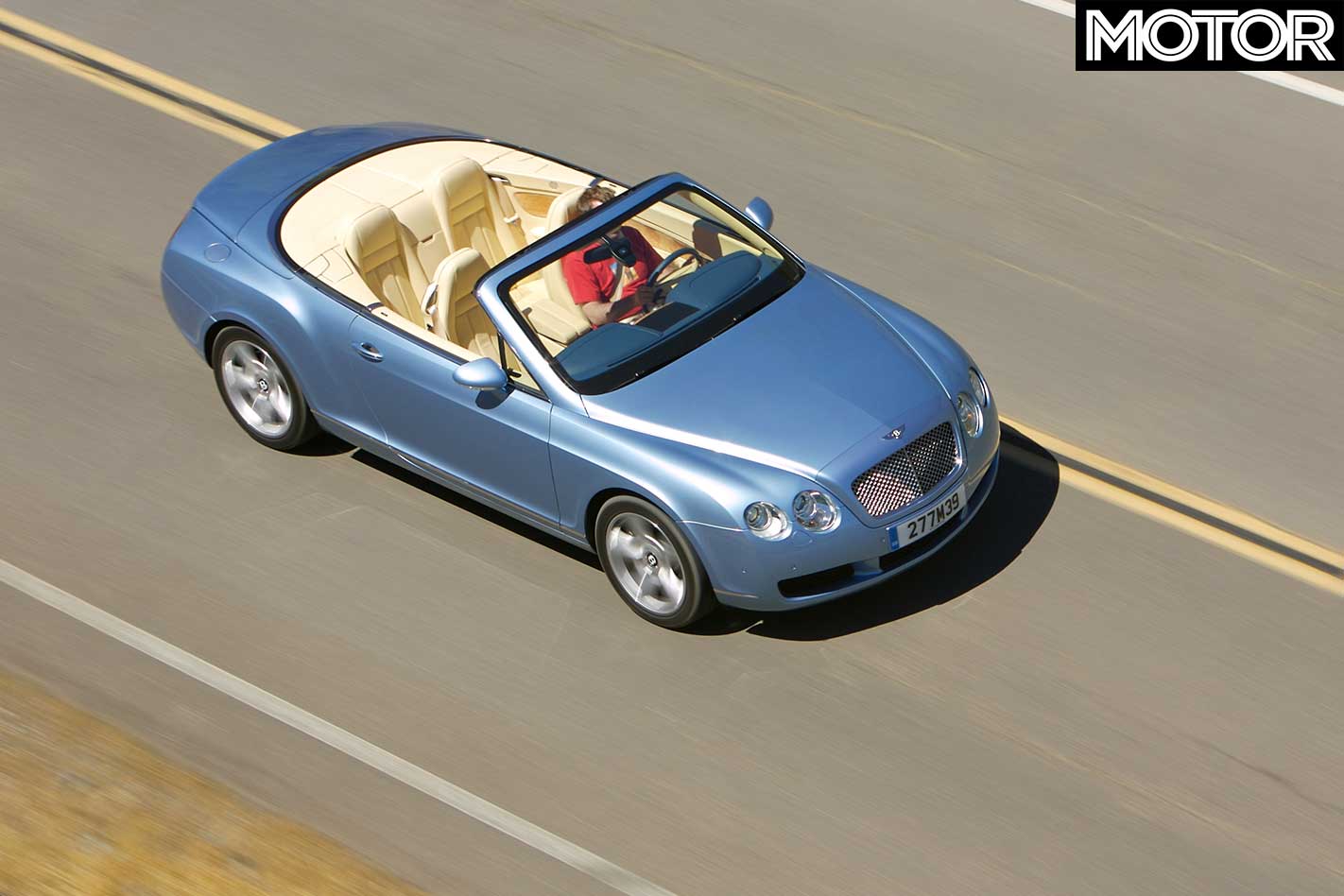
Until you get behind the front seats, the GTC is visually identical inside and out to the GT, but from there it gets all quirky. There’s about 110mm less shoulder room (though, curiously, more headroom when the roof is up) in the back. But it will still carry two golf bags which, for Americans, is very important.
The burble of the W12 is very familiar, and with the roof down, playing with the bubbling overrun is even more fun, leaving a light, trailing throttle for it to pop through the exhaust. But light throttle is a bit silly when you’ve got this much potency under management, and the drivetrain is fabulously stable and assured, regardless of when you want to bury the welly.
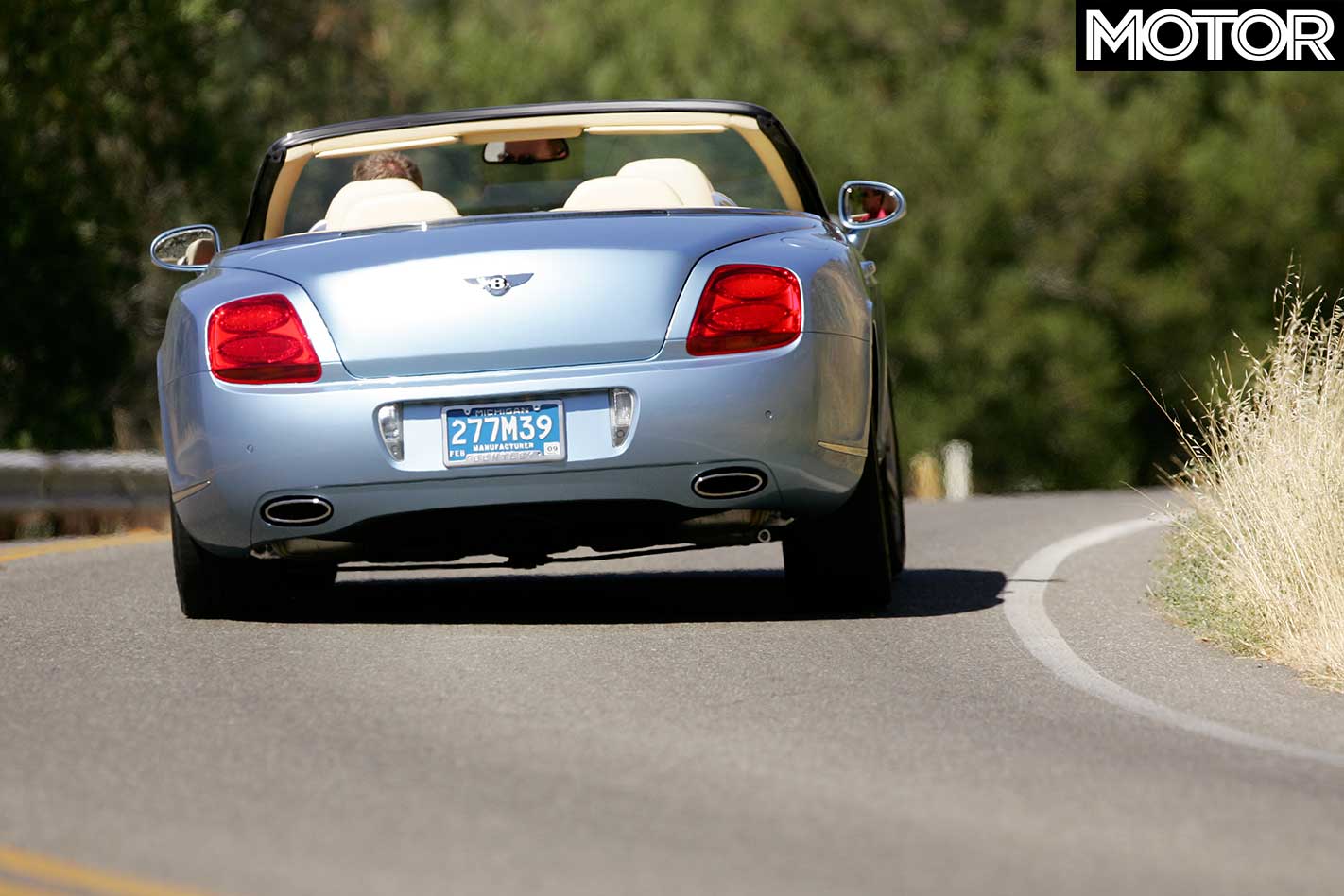
The GTC has a superb ride quality. Brilliant, even. There are four air-suspension settings and, while most Australians will find the softest a bit marshmallow, the Seppos seem to enjoy it. The middle two settings are the go, because the sportiest setting seems a bit hard for the real world, and the middle ones let the driver push firmly with some suspension compliance to keep rubber on the road.
The stiffness is not a numerical illusion. We only provoked any sort of shaking with extreme aggravation over heavily-cambered, flip-flop esses. Even when deep into its bump rubber, the GTC only momentarily shook with rack rattle and scuttle shake, the tyres never lost contact with the road and the car never altered its line. Impressive, especially with the forces being punched through by the inertia that 2495kg generates.
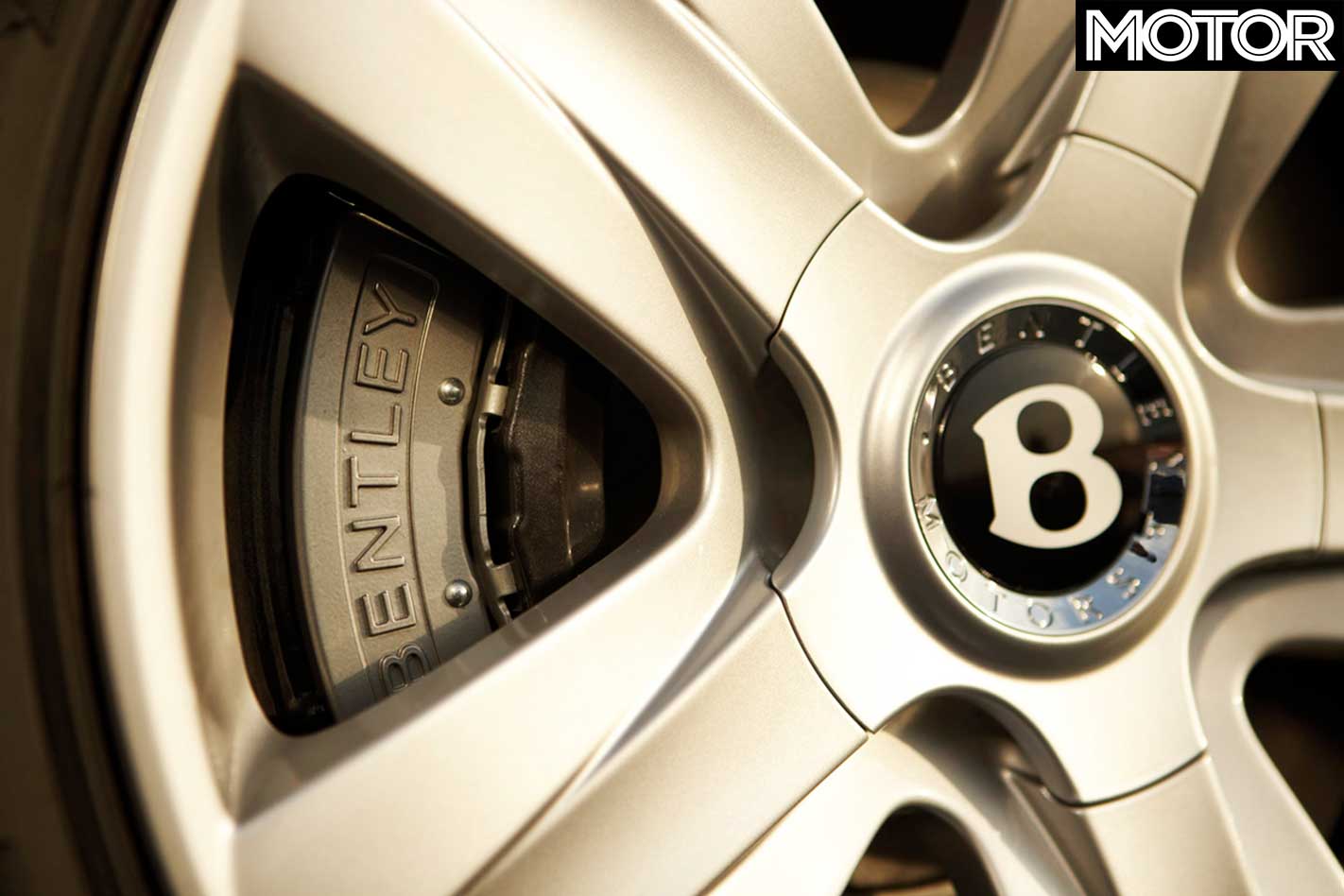
The biggest production-car brakes going around don’t seem to struggle with the GTC on public roads, and at 405x36mm up front, squished by eight pistons worth of caliper power, you’d hope not.
Push hard, though, and it’s not the weight or the body rigidity, but the gearbox that lets the GTC down first. Left in Drive, it’s as though the brain is engaged in a constant race to get into sixth gear as quickly as possible, giving each cog a cursory spin before it reaches the tallest one, and trying like buggery to stay there. Bentley thinks it can justify that by having its torque peak arrive at 1600 revs. It can’t. It’s annoying, not smooth or serene.
The transmission will hold gears in Sport mode, but it drives best in Manual, when you change gears with the lever or (preferably) the paddles.
That way you can just let the computer figure things out, keep pulling down gears on your way into corners (because it won’t let you go too low), and playing with the surprising throttle delicacy to keep the car on line through corners.
The Bentley’s got the torque for high-gear potency, but it lacks for fine throttle control, so it’s better to keep it at high rpm. All the while, it’s blasting out a slightly off-beat 12-pot warble, echoing off the trees and soaking the cabin in its meaty goodness.
Even in manual mode, the tranny will upshift without you asking if it’s about to hit the limiter. But what’s worse is that it will jump down anywhere up to four gears if you nail the throttle hard enough to push through the détente. Is this manual or isn’t it?
According to CEO and Chairman Dr Franz-Josef Paefgen, this is US liability law at work. The rest of it is part of Bentley’s constant philosophical debate about how far to push the sport while maintaining grace, composure and an unruffled interior feel.
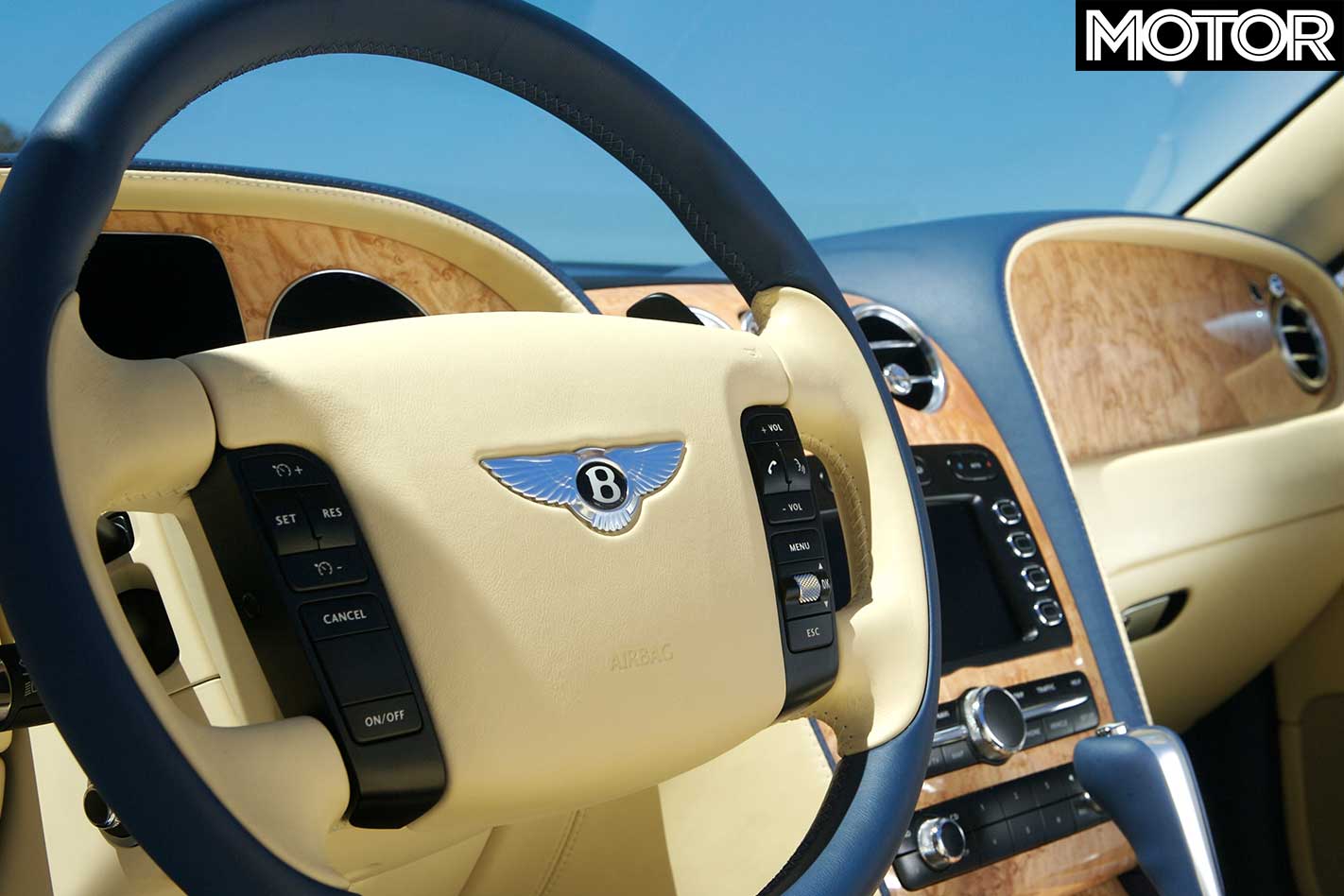
This car is undoubtedly Bentley’s masterpiece so far in its rebirth. The Spur is terrific, but ugly and lacks visual integration in its hindquarters. Not so the GTC – it looks and drives like the Continental was meant to all along.
FAST FACTS 2006 Bentley Continental GTC
BODY: 2-door, 4-seat convertible DRIVE: all-wheel ENGINE: 5998cc DOHC 48-valve twin-turbo W12 POWER: 411kW @ 6100rpm TORQUE: 650Nm @ 1600-6000rpm BORE/STROKE: 84.0mm x 90.2mm WEIGHT: 2495kg POWER-TO-WEIGHT: 165kW/tonne TRANSMISSION: 6-speed automatic 0-100KM/H: 5.1sec (claimed) TOP SPEED: 312km/h SUSPENSION: four-link independent, air springs (f); multi-link, air springs (r) BRAKES: 405mm x 36mm ventilated discs, eight-piston calipers (f); 335mm x 22mm ventilated discs, six-piston calipers (r); ABS, EBD WHEELS: 19-inch alloys TYRES: 255/35ZR19 PRICE: $400,000 (tbc)
Brace Position
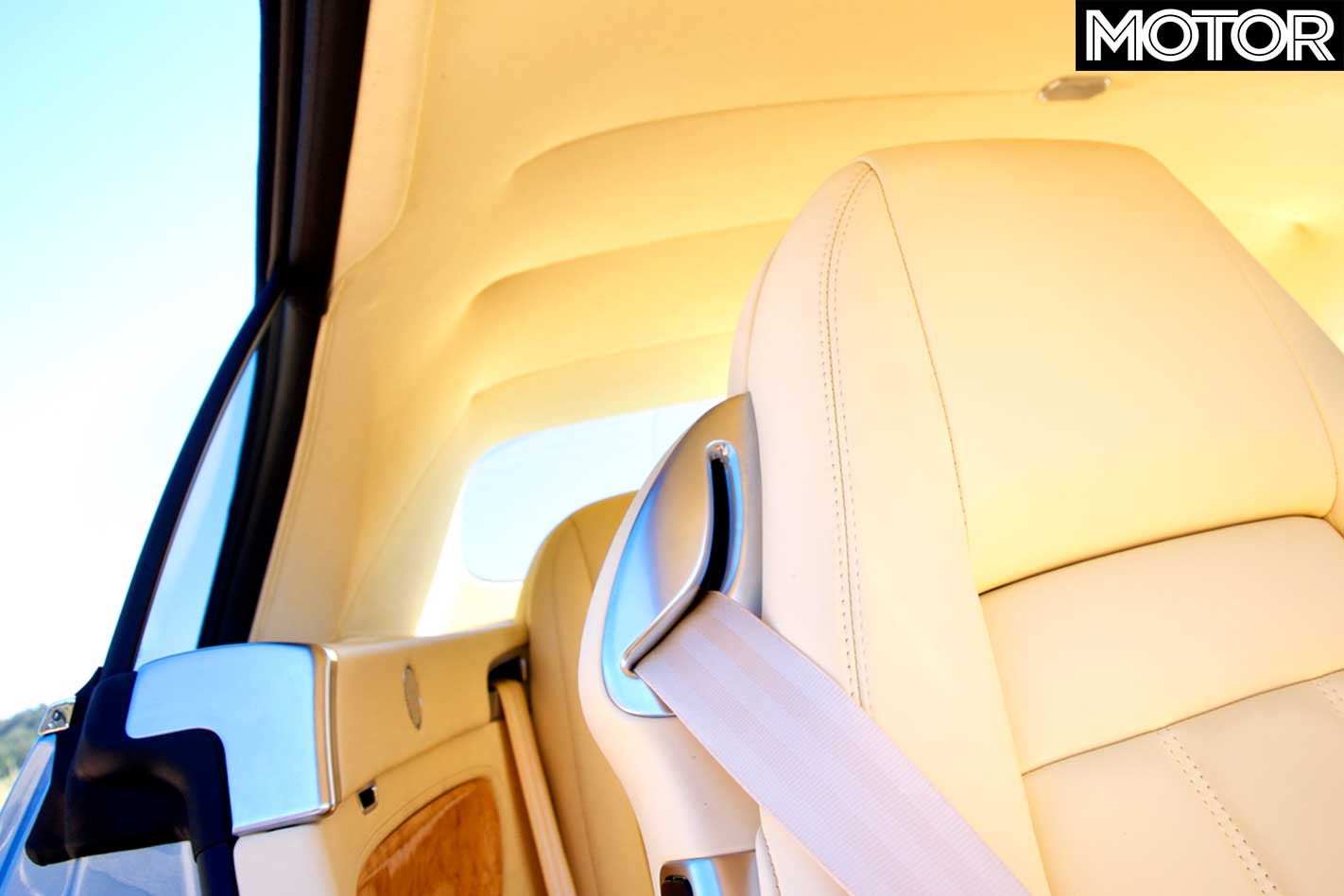
Stiffness is the name of the game when you cut a hole this big out of a car this heavy. The GTC gets massive diagonal cross braces beneath the cabin, tacked-on bracing underneath the door sills, and windscreen pillars cut from a tougher cloth. There’s also some extra bracing around the roof’s hidey hole and all of that roughly accounts for most of the 110kg weight gain.
EVERY motor show in recent memory has served up outlandish, lounge room-on-wheels-type concept cars that allegedly preview the future of mobility.
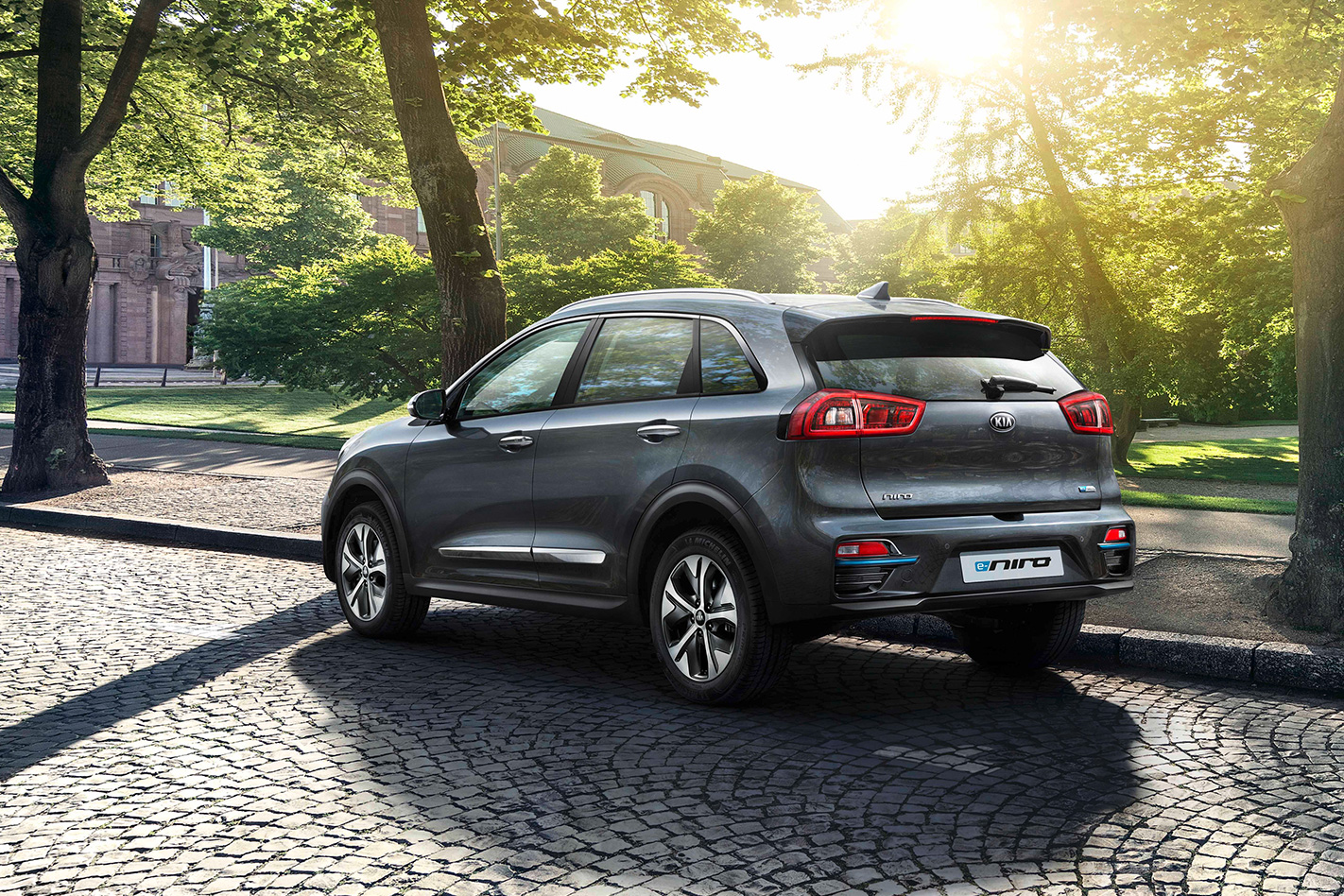
But even as the technology necessary to make such cars a real-world reality becomes available, the unconventional form factors we’ve been told to get excited about are unlikely to find their way to the road. That’s according to the man in charge of design at Hyundai Group.
“I think there’s a lot of interesting concepts, but if you look at the Tesla, it’s still a normal car,” says Peter Schreyer. “I think this is probably the reason for its success.
“The packaging is different – it has some boot space in the front, and it is quite roomy [inside] – but from the exterior design it is not differentiating that much. This is probably the reason why people buy it.”
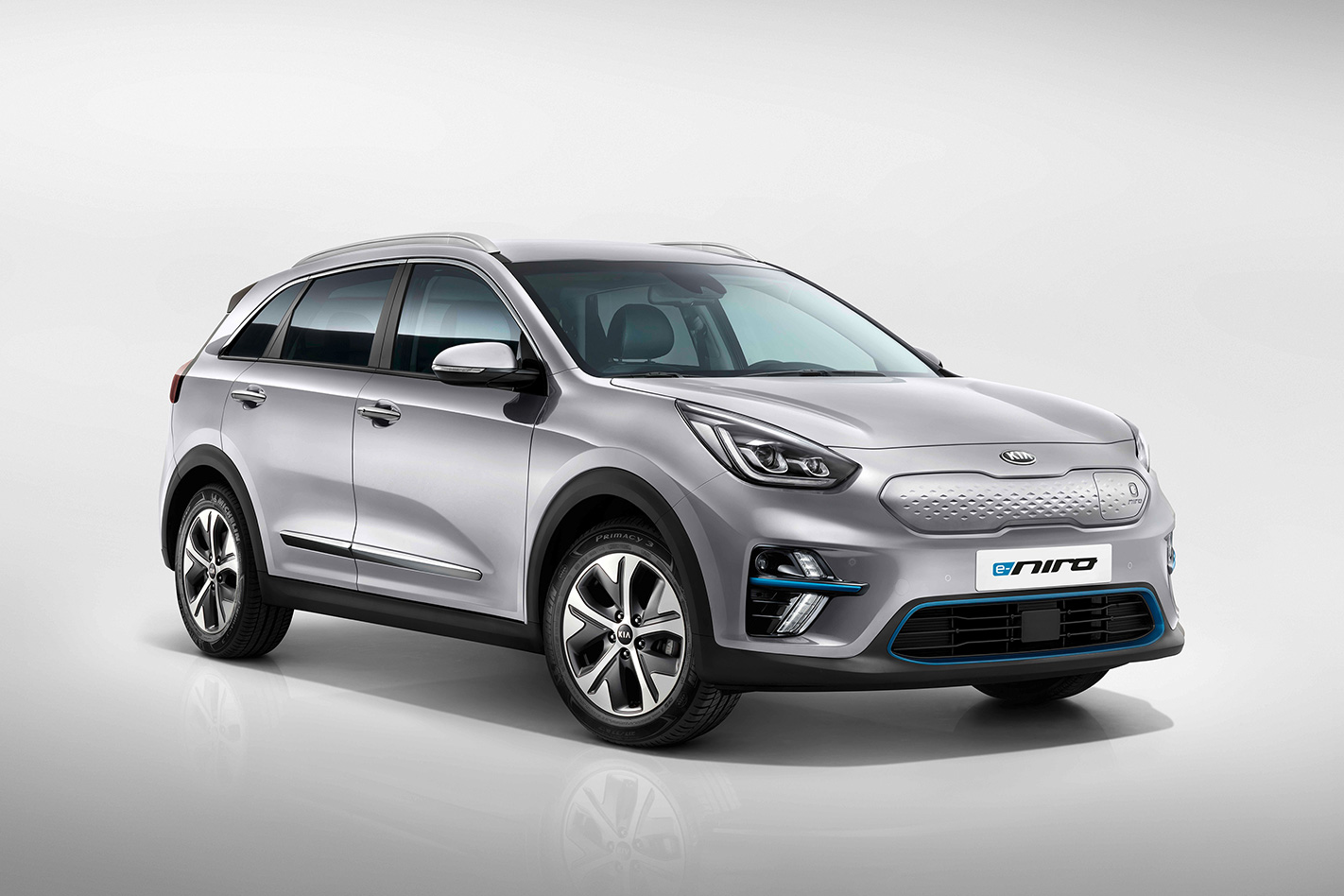
Schreyer says any EV should look ‘normally different’.
“It should show what it is, but never something that looks different for the sake of being different. If you buy a suit that is made from a very environmentally friendly fabric you don’t necessarily have it in bright green.”
Without a combustion engine to package, EVs offer designers a unique opportunity. But there are practical considerations and safety rules applicable to all cars that make many autonomous pod concepts unfeasible – in the medium term at least.
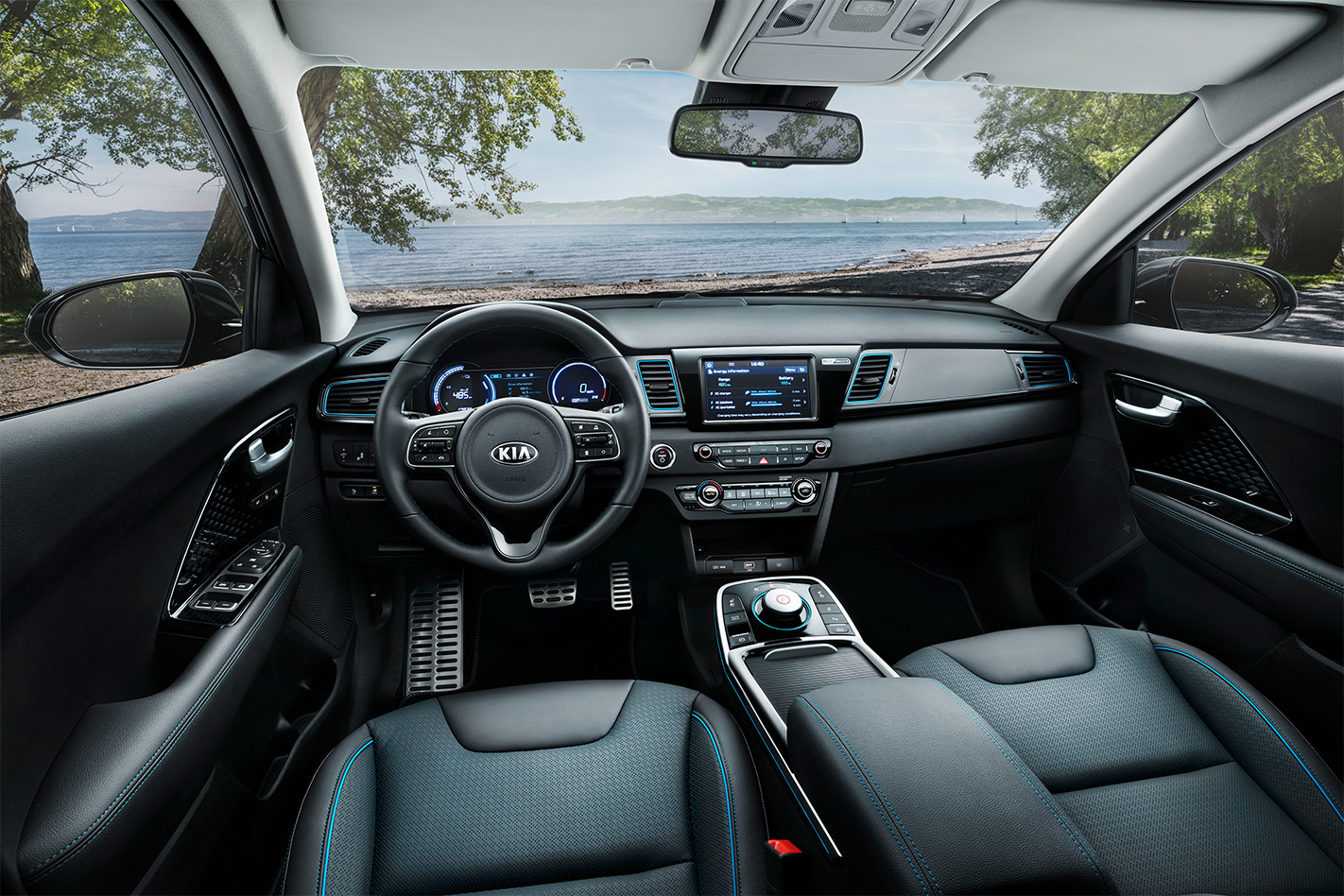
“At the end of the day there are still a lot of regulations set upon us,” says Kia’s chief designer Gregory Guilliame.
“You still need a certain amount of volume in front of the occupants to absorb all the energy in case of a crash. It’s not like from one day to another cars can look completely different. Regulations are still there.”
Even small-scale changes using modern equipment bring potential risks, such as the replacement of wing mirrors with cameras as seen on the next-gen Lexus ES and Audi E-Tron.
“You always have to be careful with new technologies,” Guilliame warns.
“You have to ask yourself, are you doing it because there’s a wow factor, a cool factor? But actually the benefit for the driver is not that great, and could even be a negative one.
“I will have to see what happens with all the cameras. We are now so used to getting information in a certain area, in a certain way that automatisms have been built up in us.
Guilliame then turned his attention to the gesture controls found in vehicles from other manufacturers.
“We’ve had knobs for so long. They’re just good. You’ve got to wonder why this [gesturing] is better. I’m not sure. I question it. Yes, when they did it every single magazine wrote about it, and everybody wants to go and see it, but do you want to be in traffic [gesturing]?
“It’s always a balance between being innovative, capturing attention, yet not pushing people.”
Price and Equipment
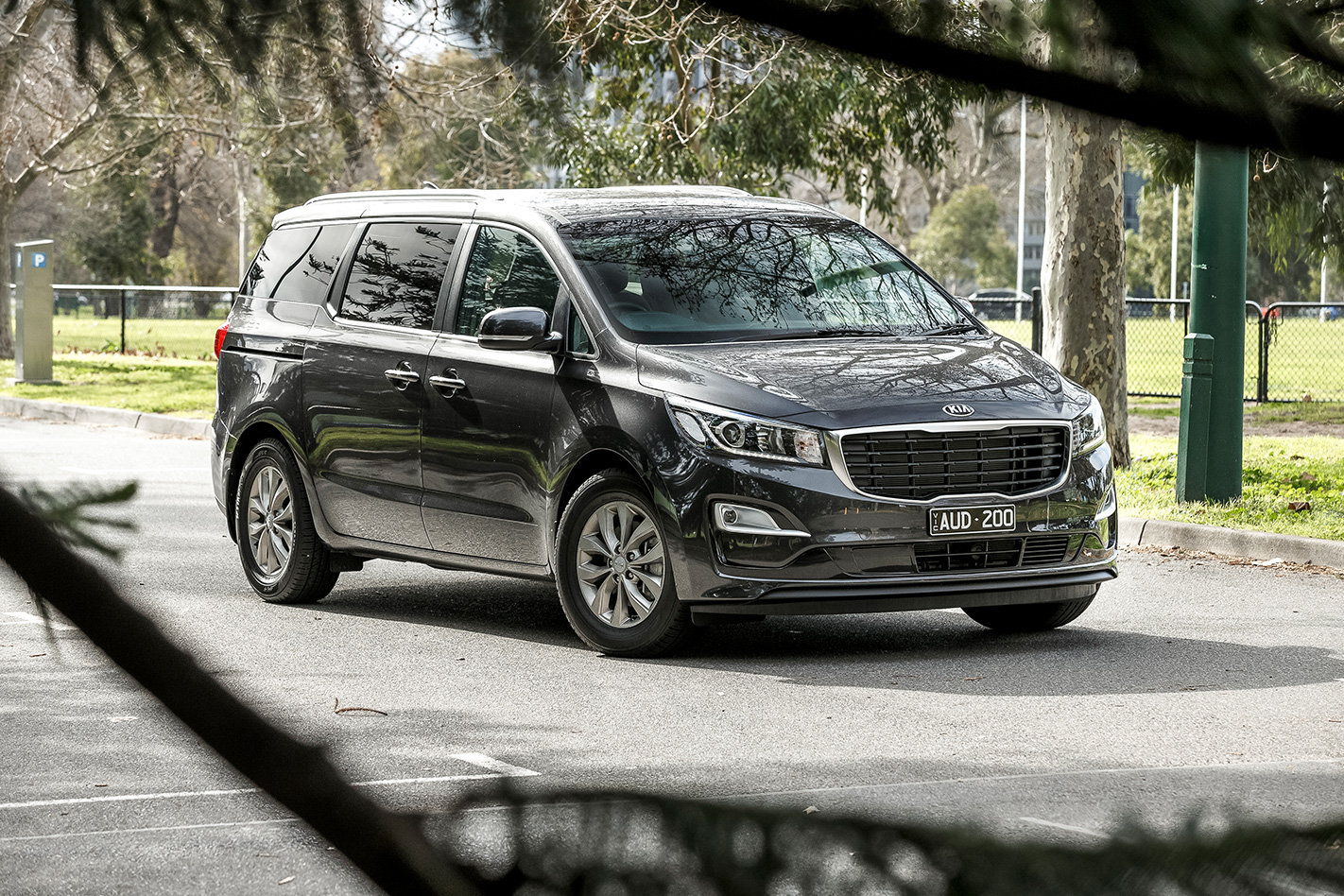
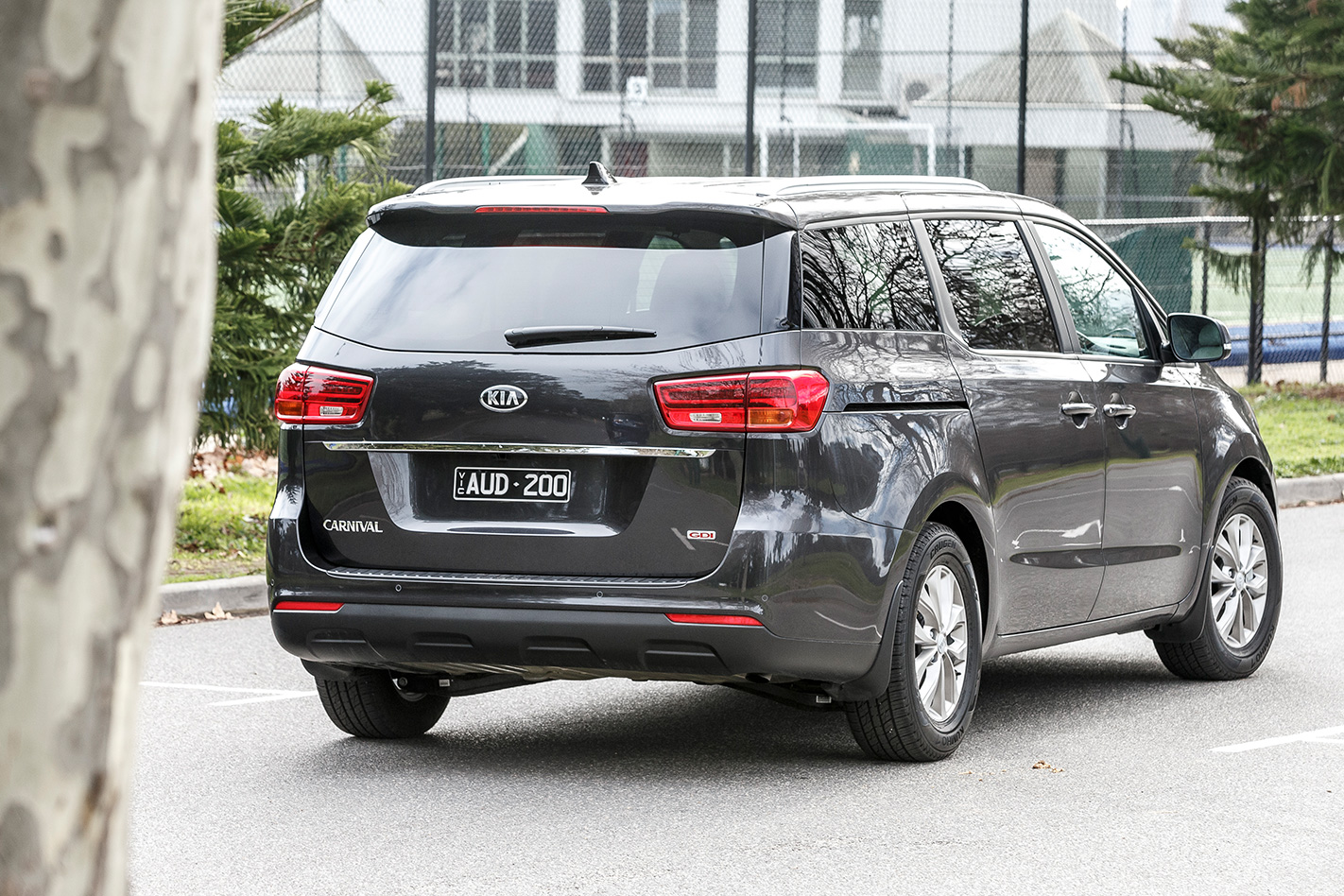
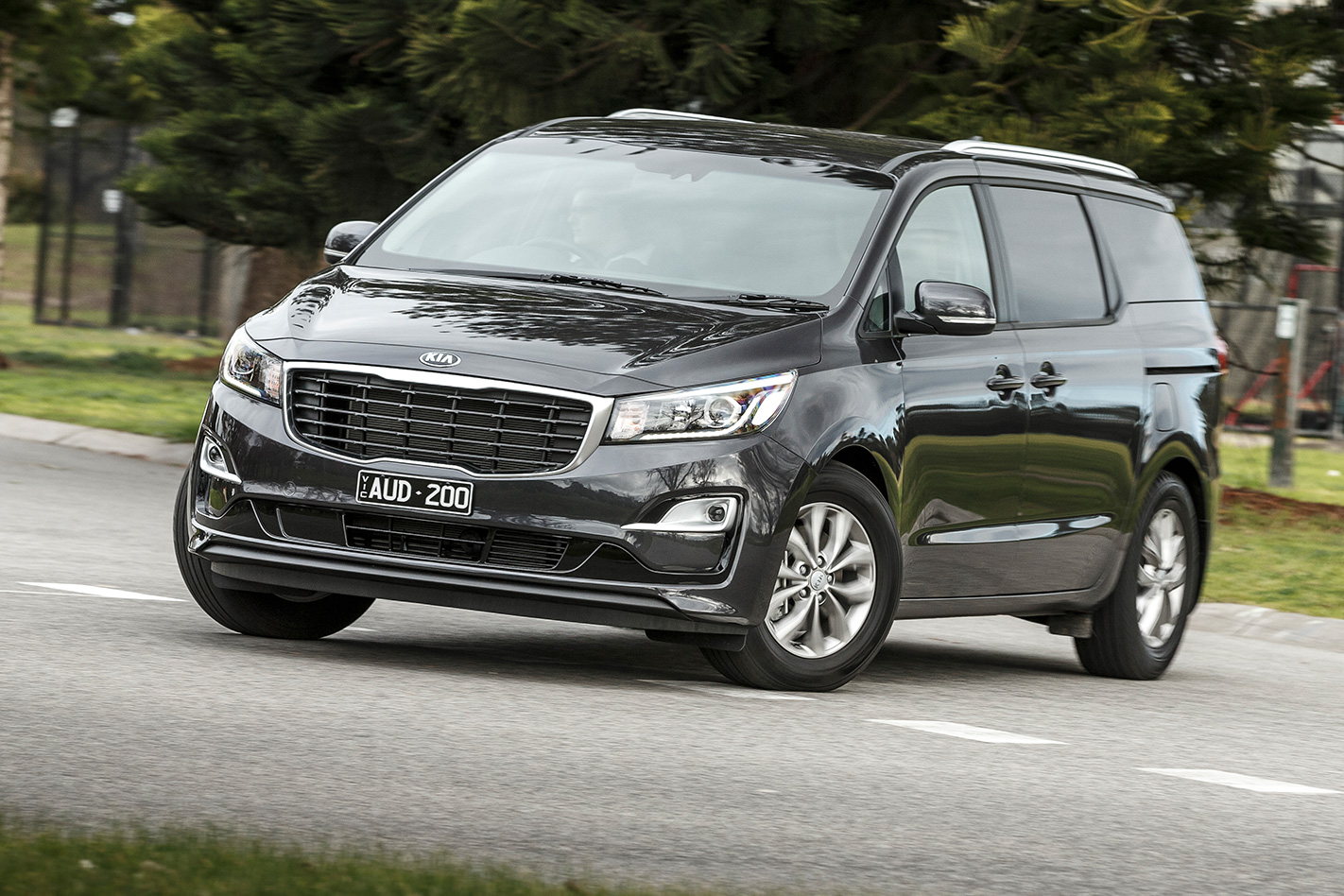
Kia Carnival: Kia’s big bus starts off on the back foot, with a pricetag-to-equipment ratio that’s not quite as sharp as the Honda’s. Just shy of $48K, the spec list covers the basics, but the only real standout features are sat-nav, tri-zone climate control, active cruise control, lane-departure warning and AEB – features also boasted by the Odyssey VTi-L. Instead, the Carnival’s value lies in its size and power. 16/20
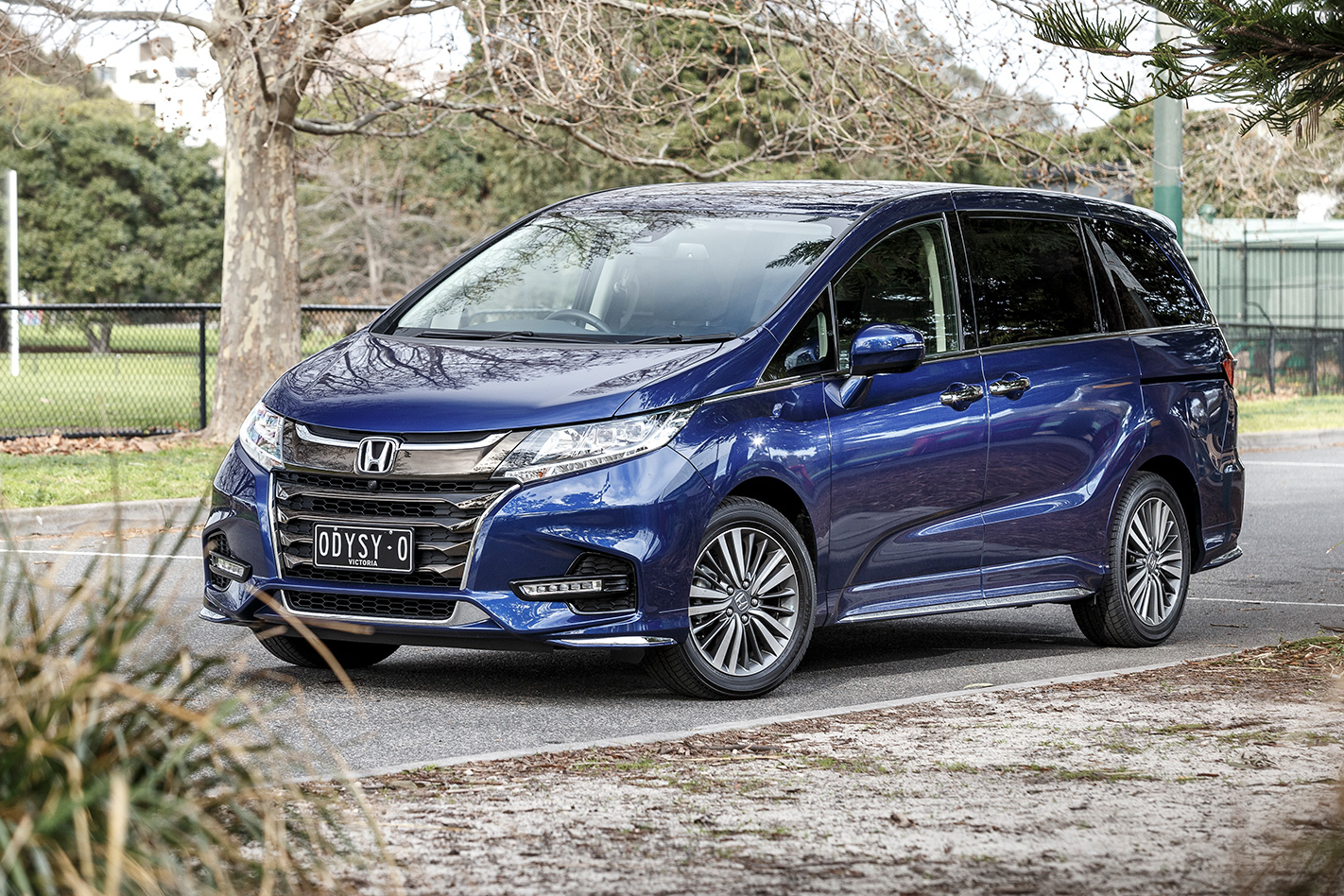
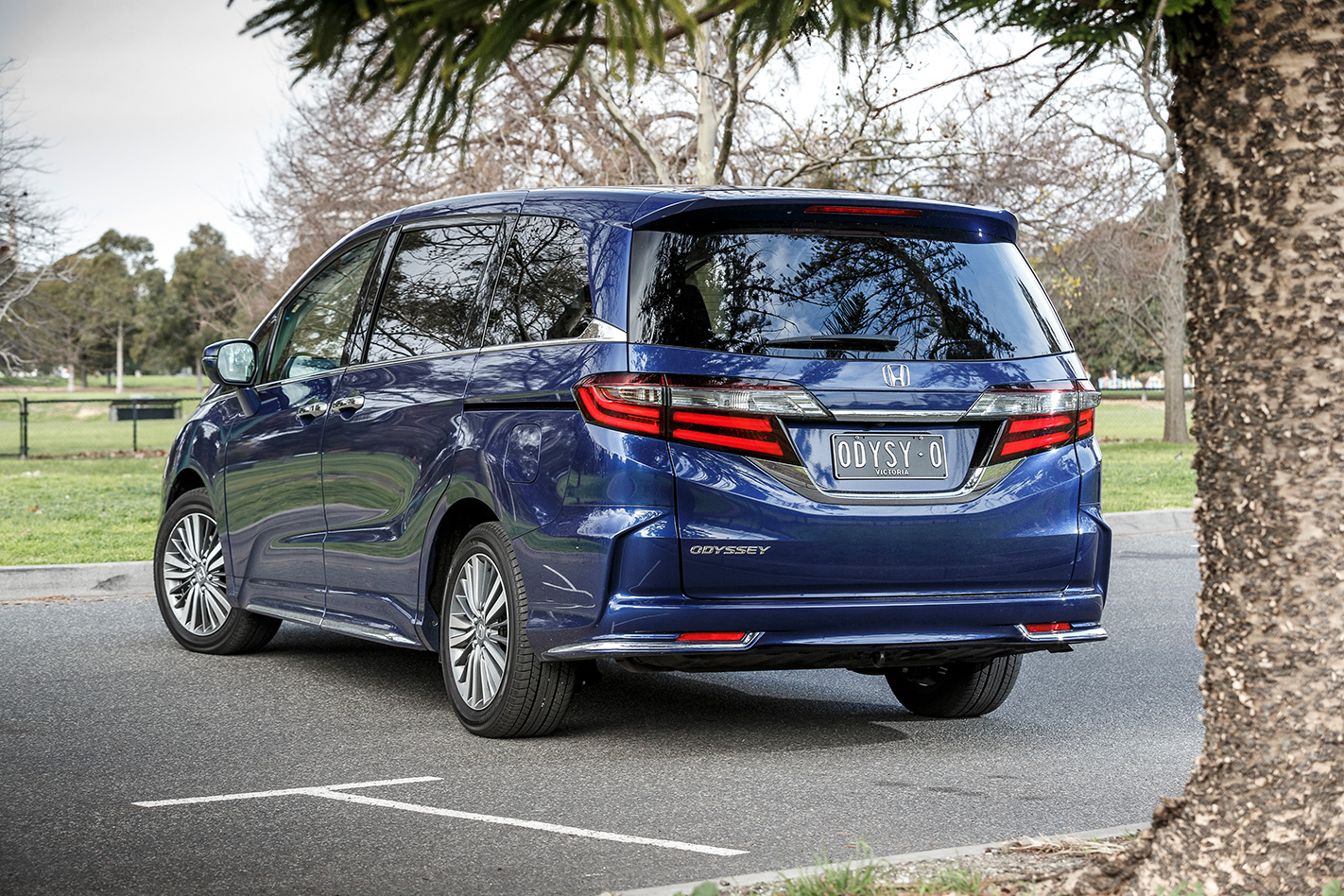
Honda Odyssey: Honda packs in plenty of equipment into the VTi-L for the money, bringing standard-issue leather, power-operated rear sliding doors, 360-degree camera view, blind-spot monitoring, active cruise, AEB and lane-keep assist for a lower outlay than Kia’s mid-spec Carnival. The trade-off is four-cylinder rather than six-cylinder power and a cabin that’s not as roomy as that of its Korean rival. 18/20
Interior and Connectivity
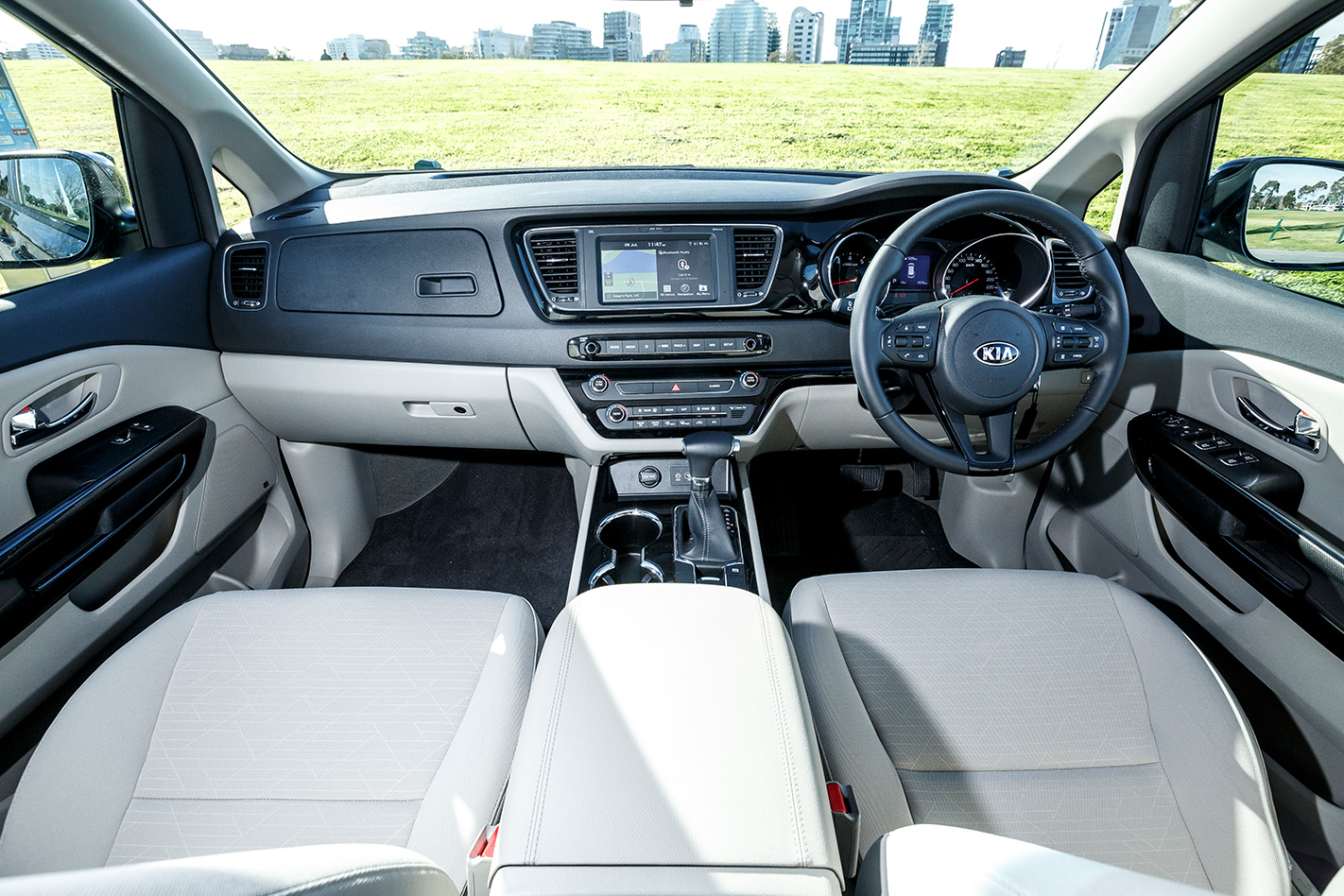
Kia Carnival: Carnival’s interior is cavernous, placing its passengers at SUV height and delivering ample leg and shoulder room for eight people – with a fair amount of cargo on board. Infotainment needs are well catered to, with a large and responsive 8.0-inch touchscreen, three USB charging ports and standard Android Auto and Apple CarPlay. In fact the only real downside is the basic beige cloth trim. 17/20
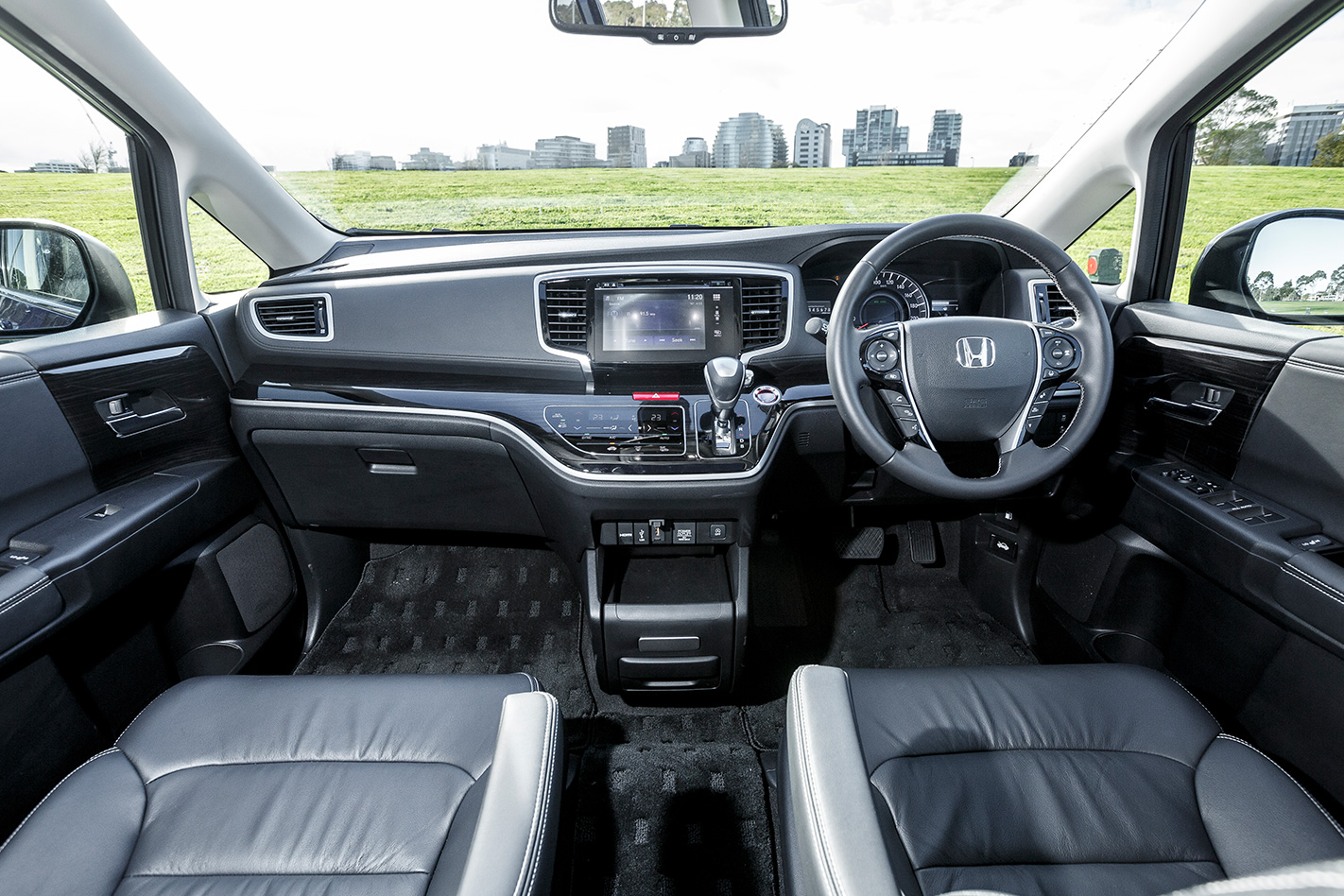
Honda Odyssey: VTi-L flagship brings captain’s chairs in the middle for seeming luxury, but the cushions are flat and there’s not enough foot room. Comfort in other seats is sub-par too, and fitting three across the third row will prove squeezy for adults. Poor cabin storage further hurts its score in this category, as does the absence of smartphone mirroring on the slow-responding 7.0-inch touchscreen. 12/20
Ride and Handling
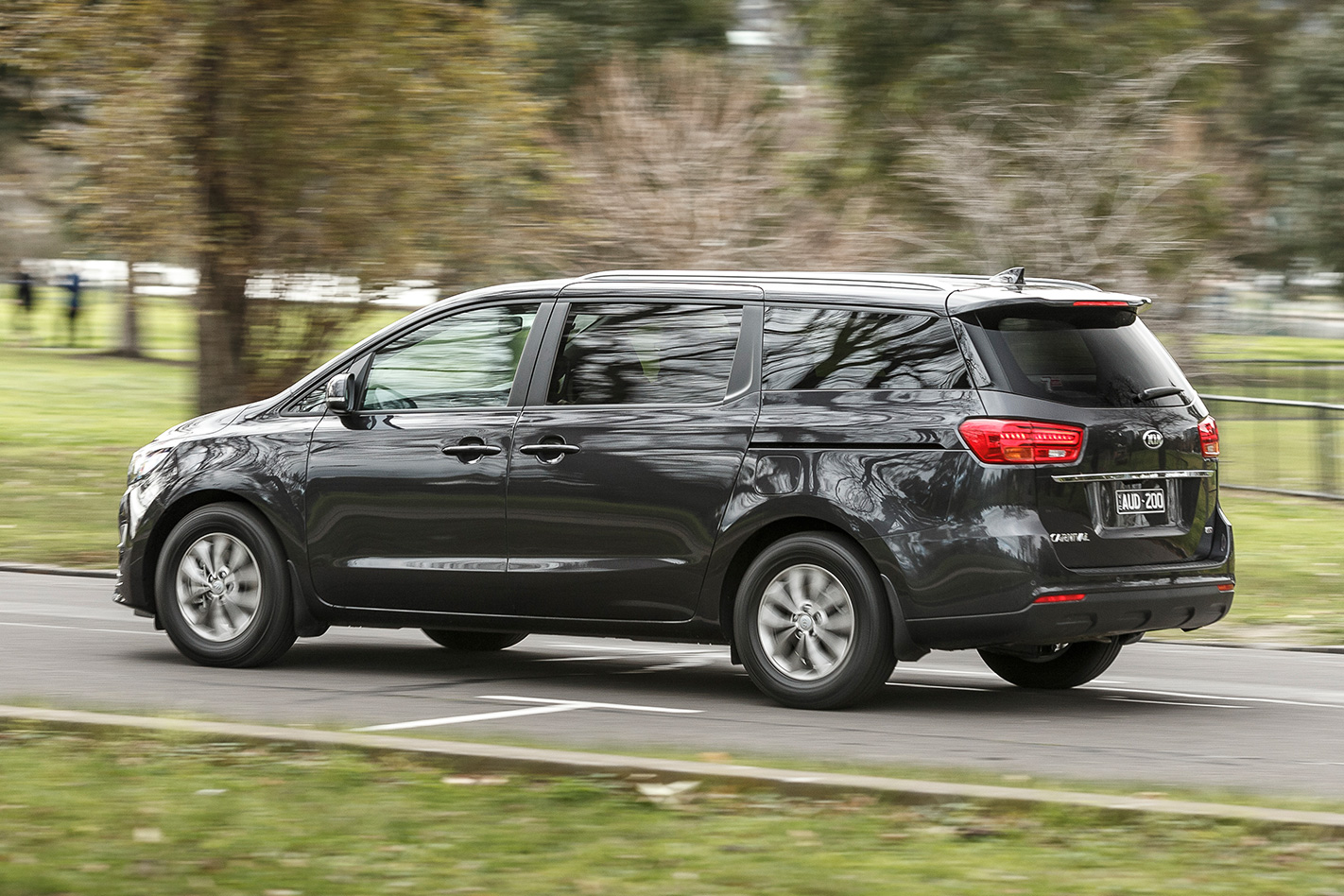
Kia Carnival: The Carnival is big, and it certainly feels it from behind the wheel. Plenty of steering assistance makes for easy parking, but the penalty is completely remote feedback through bends. Not that you’d really be attacking curves in a five-metre-long van that weighs over two tonnes, but if you do the Kia reponds with planted and faithful handling, while the ride is decidedly plush. 16/20
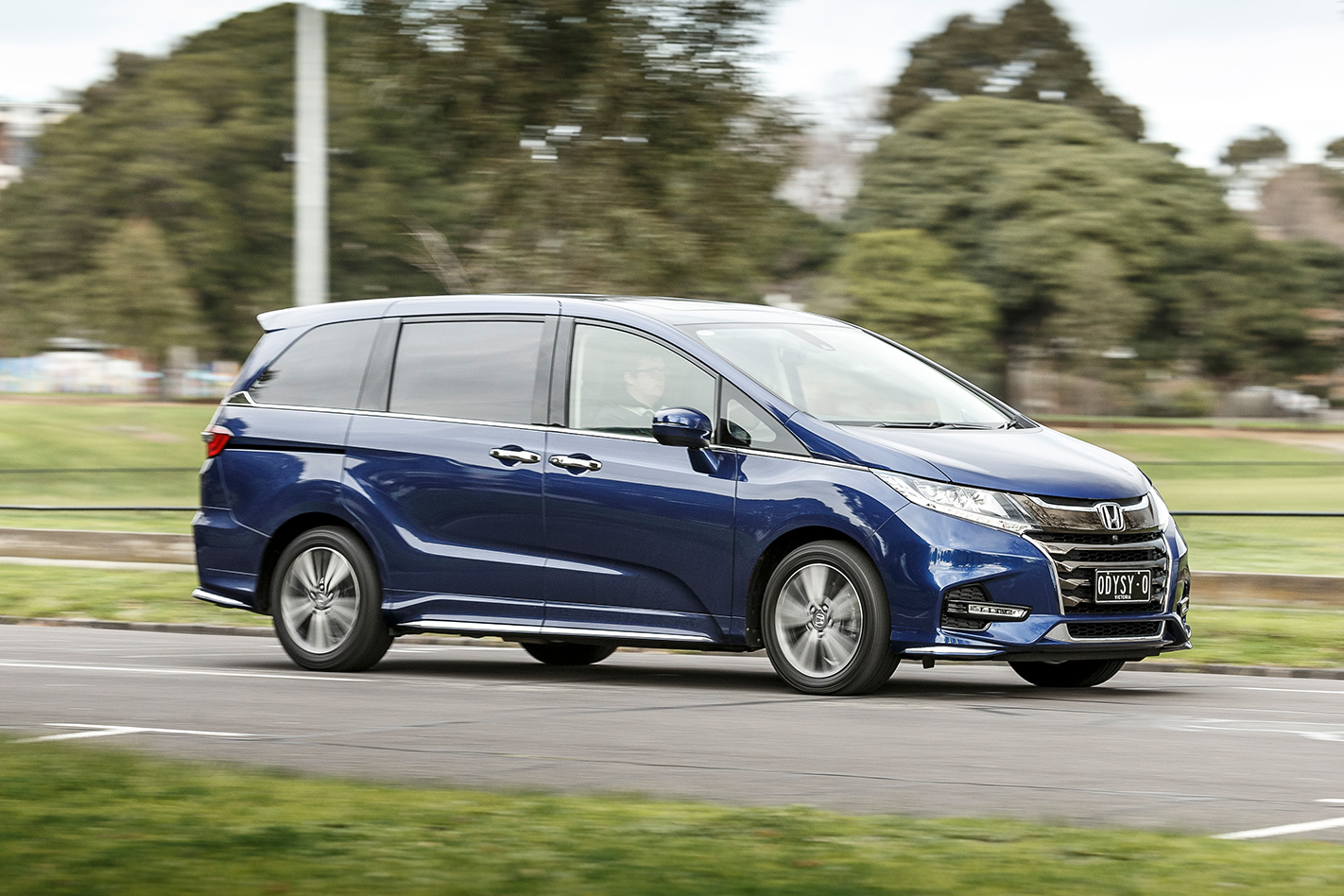
Honda Odyssey: The Odyssey feels (is) notably smaller than its rival, and it’s actually decently dynamic for a people mover with a torsion-beam rear end. While ride comfort is decent, however, there is a lack of depth and sophistication to its set-up. Where the Carnival drives like a tall but lush passenger car, this can seem like a van with seats beyond the suburbs, a point reinforced by the excessive road noise. 12/20
Performance and Economy
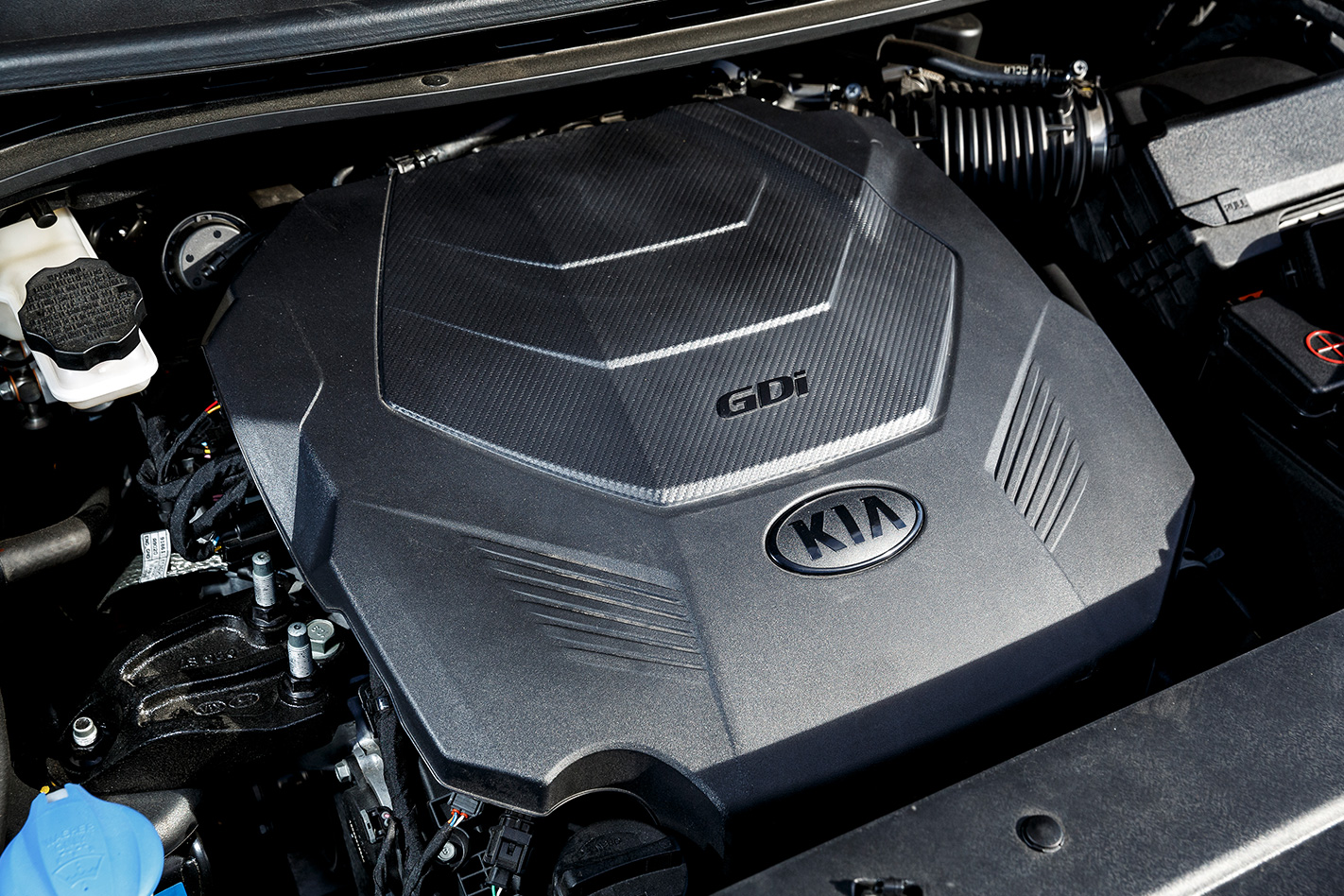
Kia Carnival: Power is most definitely a Carnival strength, thanks to the 3.3-litre V6 lurking in the snout. The 336Nm output easily outguns the Odyssey’s meagre 229Nm, and compensates handily for the Kia’s weight. The predictable downside is thirst. The official consumption figure is 10.8L/100km, but you won’t even do that well if most of your driving is in the suburbs. 15/20
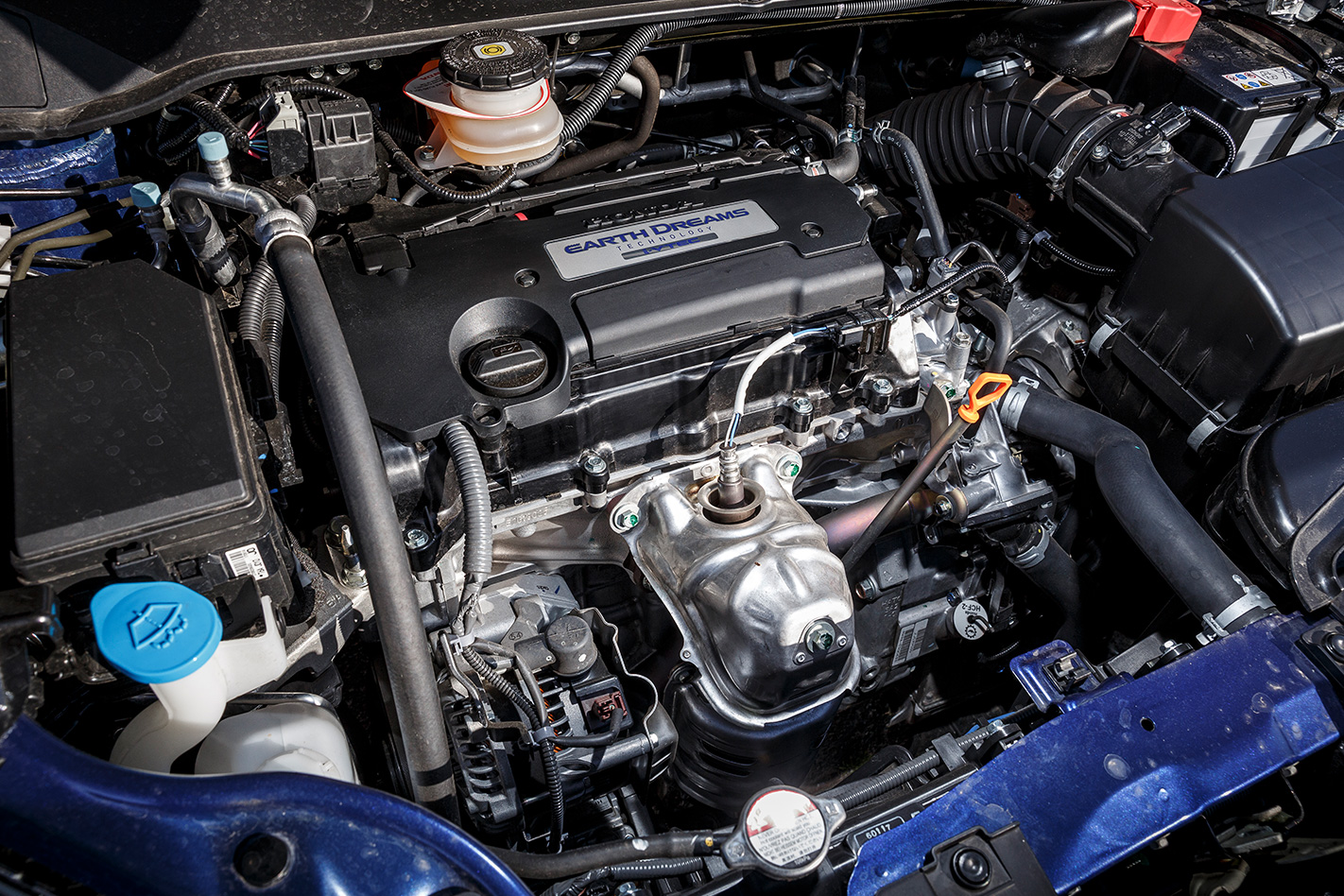
Honda Odyssey: The Honda’s powertrain story is one of efficiency. The Odyssey lacks muscle (it’s softened further by its CVT) and with a full load of seven on board, it will no doubt segue from a bit slow to gutless when faced with hilly terrain. It has a 160kg-odd weight advantage compared with the Carnival, though and combined with that smaller engine, it officially burns 1.1L/100km less. 15/20
Warranty and Servicing
Kia Carnival: As warranties go, the Carnival is unbeatable. At seven years/unlimited kilometres, Kia’s factory warranty brings supreme peace of mind for owners. Service intervals are scheduled for every 12 months or 15,000km, which gives the Carnival a further edge over the Honda, and service prices range between $356 and $689 per visit, for a five-year service tally of $2428. 19/20
Honda Odyssey: The Honda fares quite well in the after-sales category with a decent five-year, unlimited kilometre warranty. But that’s still two years shy of the Kia. A bigger handicap, however, is Honda’s six-month/10,000km service interval. Service prices that alternate between $267 and $305 per visit (except for a $291 service every 30 months/50,000km) see the five-year service cost total $3234. 16/20
Overall winner: Kia Carnival Si
INTRODUCTION
It’s fair to say BMW invented the unorthodox coupe-profiled SUV, at least at the luxury end of the spectrum, when it introduced the X6 in 2008. Harsh critics said a version of the X5 which sacrificed a rear seat and some boot space but cost more couldn’t possibly make sense, but a strong customer base proved them wrong.
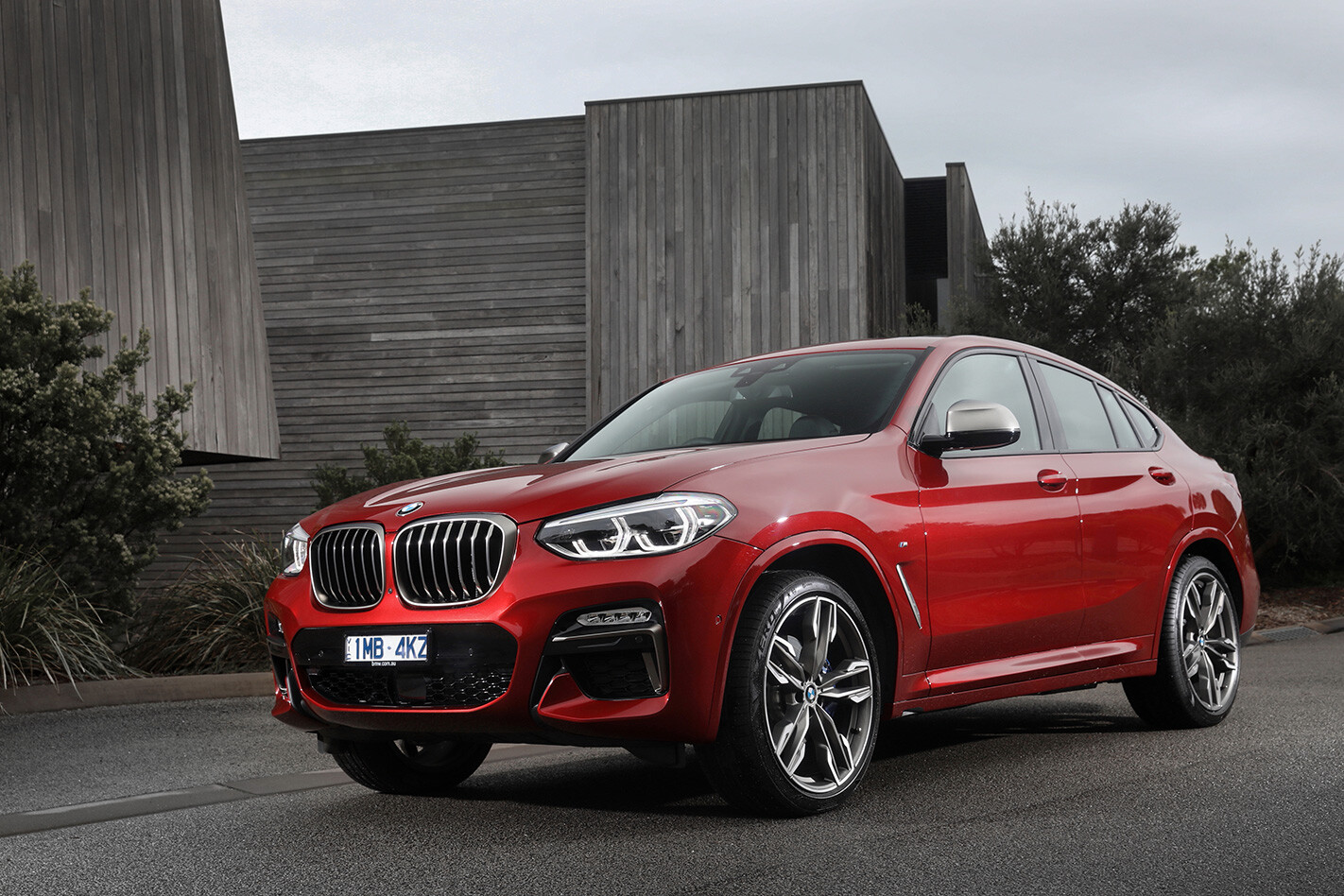
The surprisingly warm reception prompted other brands to follow suit, but BMW was determined to stay ahead of the field, introducing a coupe version of the X3 dubbed the X4 and most recently, the X2, which takes its underpinnings from the X1.
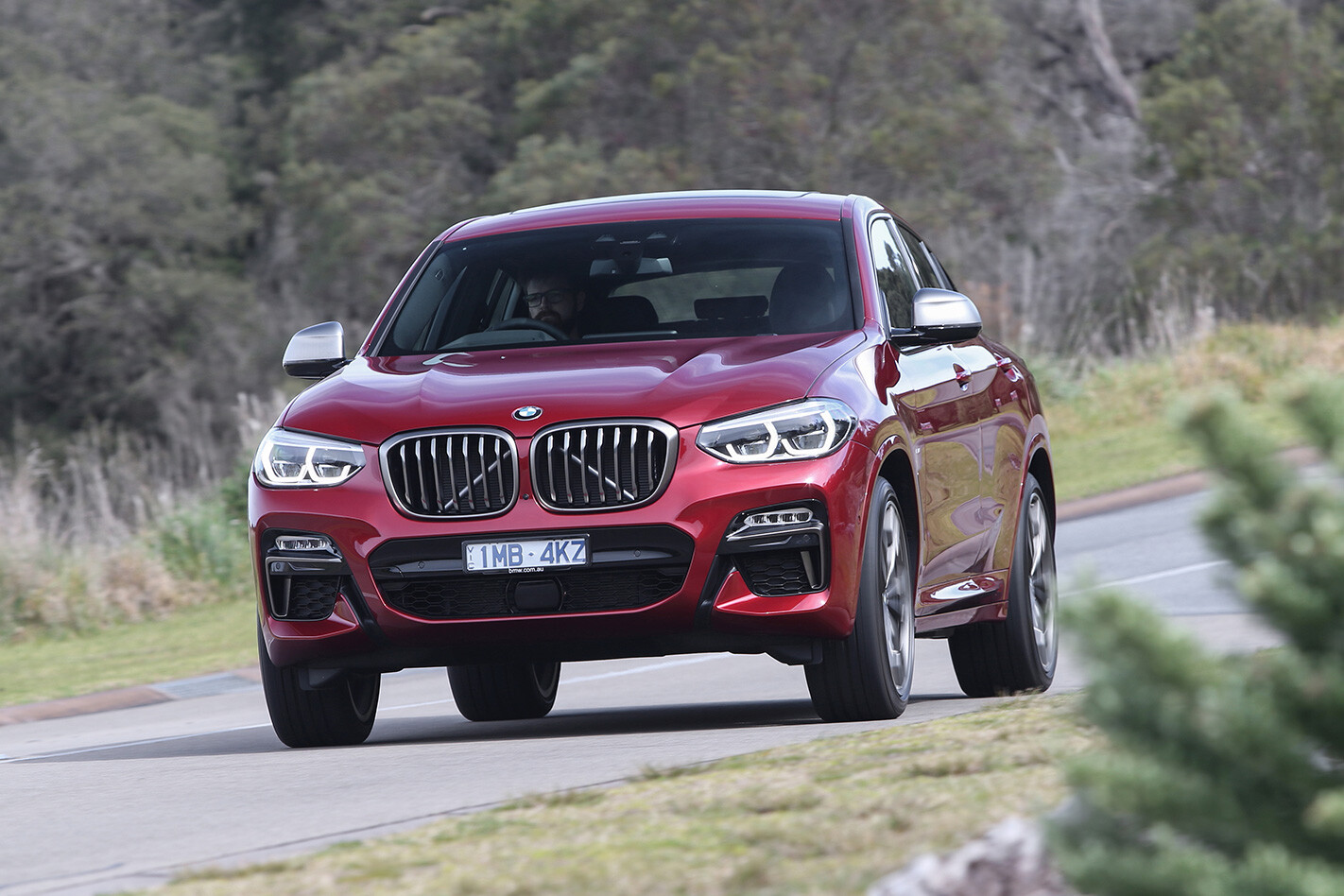
Four years after the first-generation X4 arrived, it’s now time for an update to freshen the line-up with a revised range and a new high-performance halo. Just don’t call it an SUV. According to BMW, its innovation is a Sports Activity Coupe, or SAC.
VALUE
As before, four X4 variants are on offer with the continuation of the entry 2.0i petrol turbo and 20d diesel which both have 2.0-litre engines and share specification priced from $76,900 and $79,900 respectively, however, the previous six-cylinder diesel is no more, replaced by a second higher-performance turbo 2.0-litre petrol dubbed the 30i.
Compared with the previous range, all equivalent variants have increased in price. The entry versions have increased by $4290 and $2900 respectively. The new $83,900 30i is more affordable than the outgoing 35d to the tune of $7300, but is hardly an equivalent.
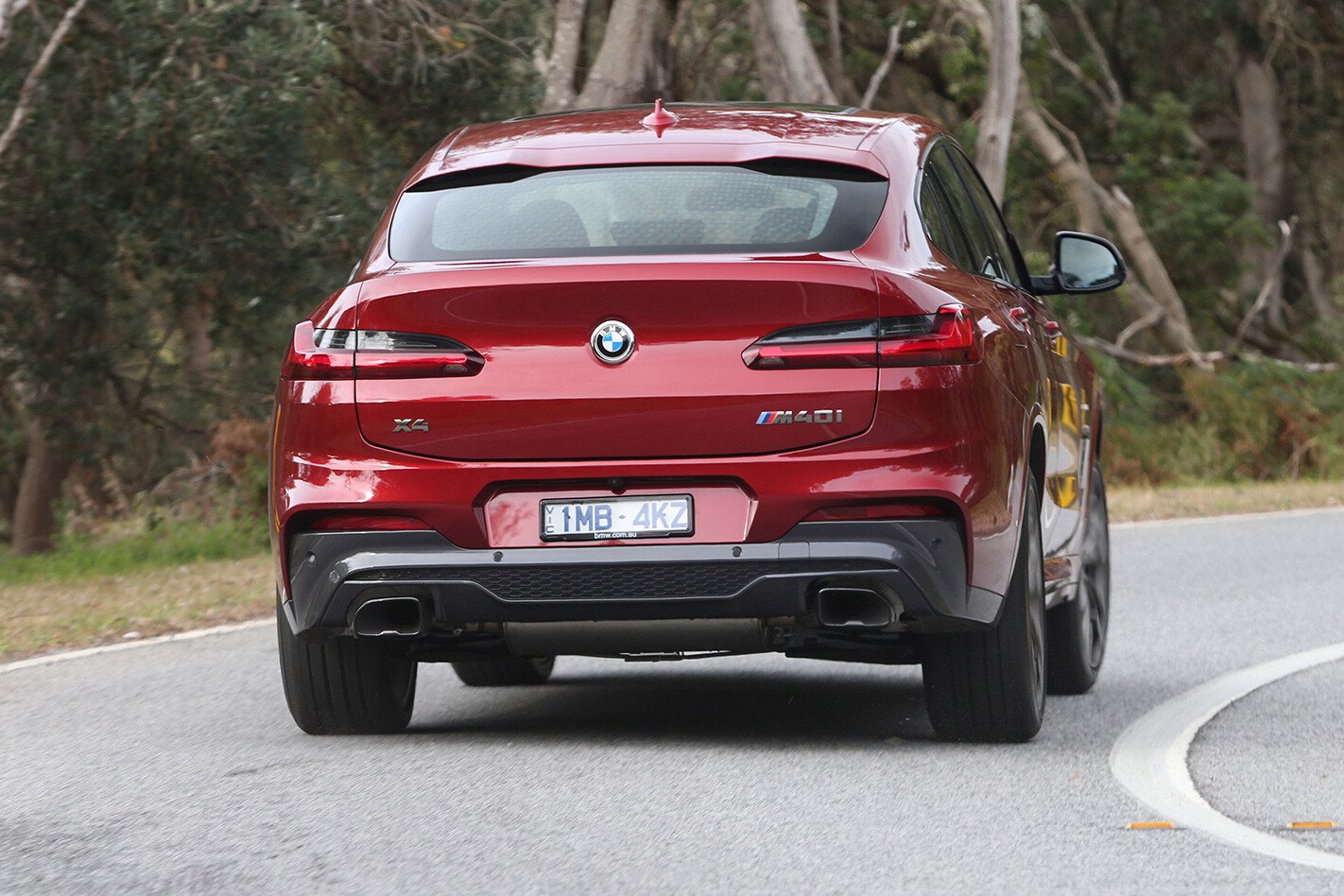
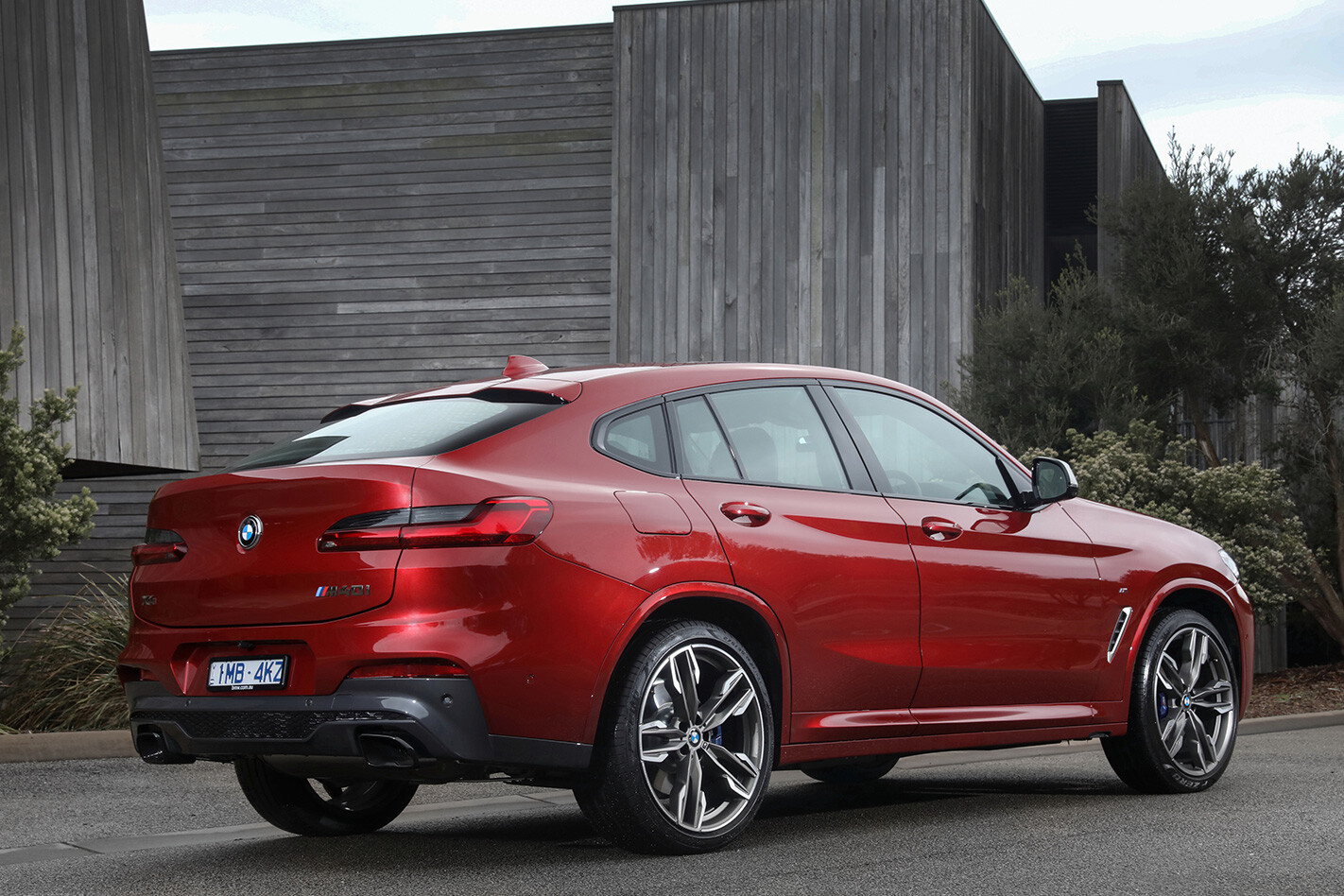
The final range revision regards the previous 35i performance flagship, which is superseded by a new 40i as the first M Performance version of the X4 to be offered in Australia. It still uses a 3.0-litre turbo six-cylinder petrol, but boosts power to 265kW and 500Nm and, at $109,900, costs $18,990 more than the previous performance hero.
If you’re after the most fuel efficient X4, BMW claims the new 20d uses 5.8 litres of diesel per 100km, which represents an increase of 0.6L/100km over the previous version, but this is likely to be attributed to a change in European fuel economy testing procedures since the first X4 was introduced.
At the opposite end of the spectrum, the 40i uses a claimed 9.2L/100km, which is commendable given its performance potential.
STANDARD FEATURES
It shouldn’t come as a surprise that there are more affordable ways to get into a mid-sized SUV, but the X4 targets a customer that is prepared to pay a premium for German engineering, European styling and all the trappings that are associated with the luxury segment.
Even at the entry level, the X4 has an eight-speed automatic transmission coupled to all four wheels, suspension that can be switched through different modes according to desired driving style, a head-up display, adaptive cruise control, LED headlights, 19-inch alloy wheels, combination cloth and leather upholstery, sports front seats, navigation, digital radio, smartphone connectivity and a high-quality stereo.
That’s a lot more kit than you get in the entry-level X3, which starts at $65,900 and thanks largely to a standard M Sport Package across the range, which X3 customers would be asked extra for.
Step up to the mid-range 30i and you’ll get a power boost to 185kW/350Nm (up from 135kW/290Nm in the petrol), full leather, larger central touchscreen, uprated brakes, more driver assistance systems including an extension of the cruise control that works down to stop-start traffic and 20-inch wheels.
At the top of the pack, the 40i may represent a significant price premium over the outgoing 35i, but it is the first M Performance variant to join the X4 range and that brings a heap of performance enhancing gear.
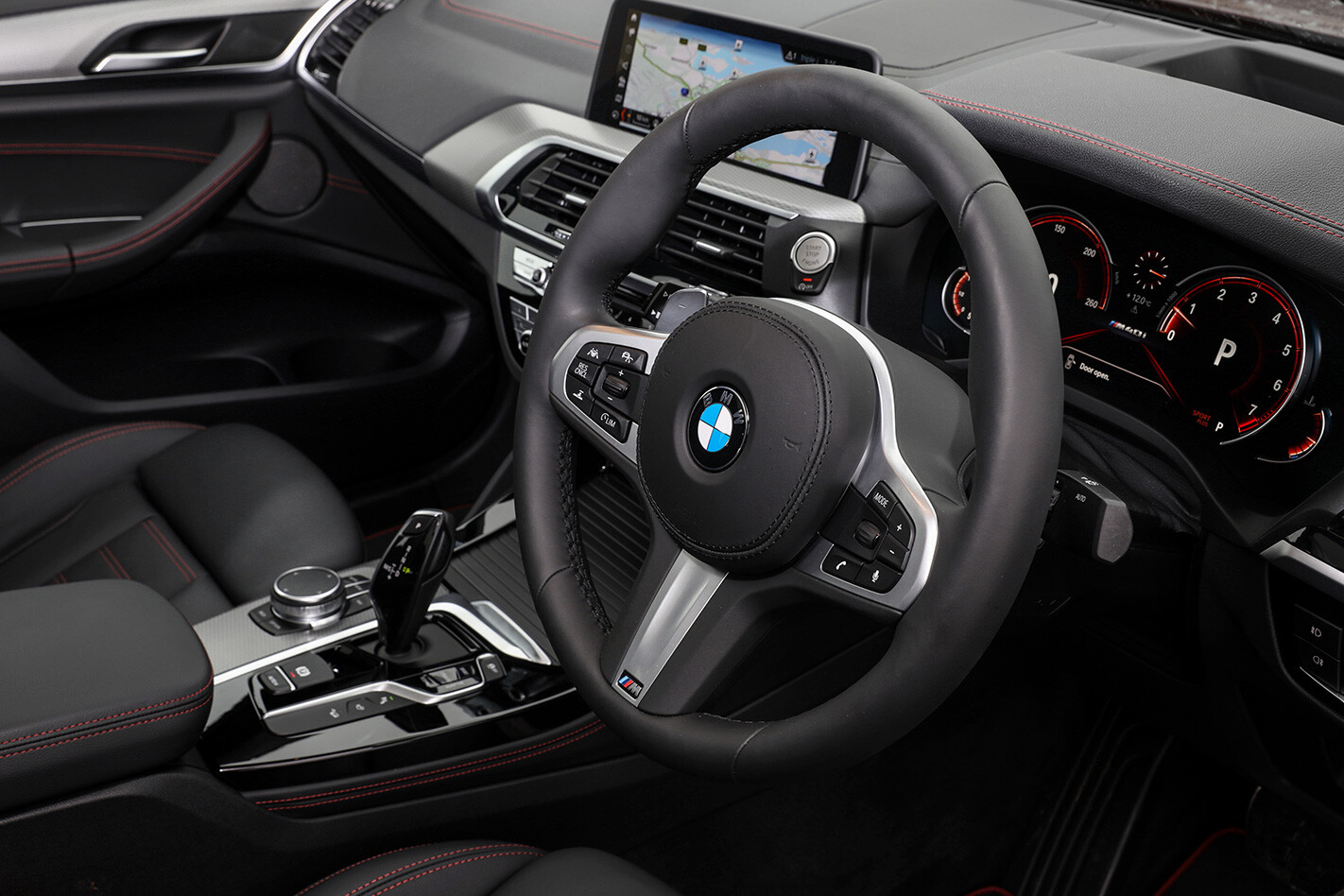
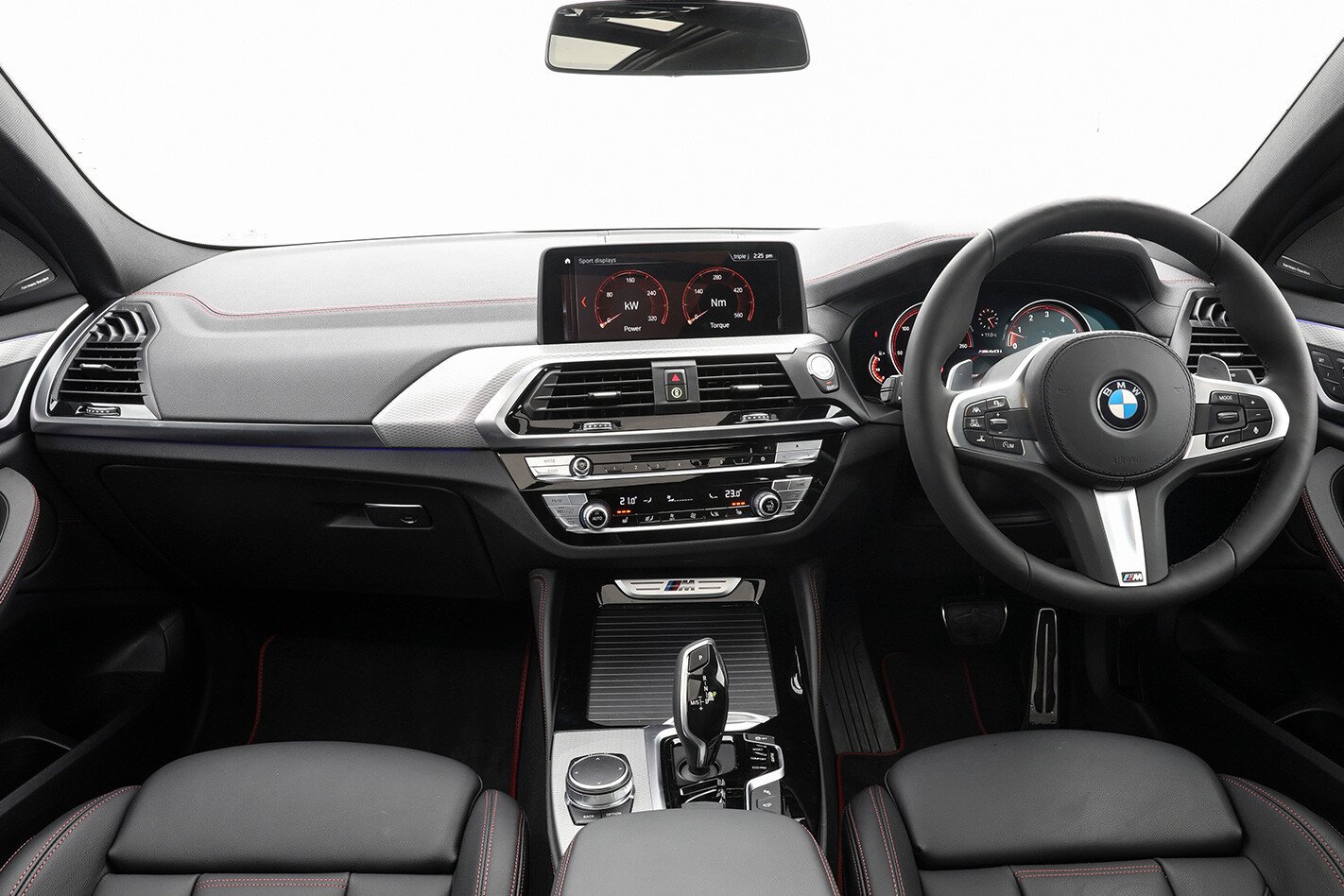
Adaptive M Suspension with M Sport differential helps the performance flagship get all its power to the road, wheels grow to 21 inches, a large panoramic sunroof is standard fitment, the stereo system gets upgraded to top-spec Harman Kardon and the front seats gain heating and adjustable lumbar support. The dashboard also gets upholstered with imitation leather to enhance cabin luxury.
SIZE
For the updated version, the X4 has grown slightly. With a 4.8-metre length, 1.9-metre width and 1.6-metre height, it is approximately the same size as its X3 sibling but has been altered for a sportier stance, sitting slightly longer, wider and shorter than the more wagon-like X3.
Despite its diving rearward roofline, there’s still adequate headroom in the second row for adults, but the centre fifth seat is only suitable for shorter journeys – BMW describes the capacity as 4+1. Surprisingly, boot capacity is only reduced by 25 litres from 550 in the X3 to 525 in the X4. With the seats folded there is a greater difference – 1600L vs 1430L.
SAFETY
Like standard equipment levels, the X4 also scores well in safety, with autonomous emergency braking, lane departure warning, parking assistance with front and rear sensors and 3D view and 360-degree camera, automatic parking, a full suite of airbags including driver’s knee and curtain bags, and head-up display for all variants.
COMFORT
The latest generation X3 received some criticism for its ride, which has been tuned on the firm side in the name of driving dynamics and a small sacrifice to comfort. But for a model like the X4, which is clearly targeting a customer that is seeking the sportier end of the market, a stiffer ride is a far better match.
That more dynamic chassis tune is not jarring however, and the X4 rides commendably on a variety of road surfaces. Despite its large wheels, little road noise is transmitted to the cabin and occupants, and the suspension has been well matched to the skinnier run-flat tyres, which are typically less absorbent to potholes and large imperfections.
Surprisingly, the flagship 40i offers the best balance of comfort and responsiveness. Flicking through the various driving modes, the M Performance version is the firmer of the range but that brings a solidity that is pleasant to live with.
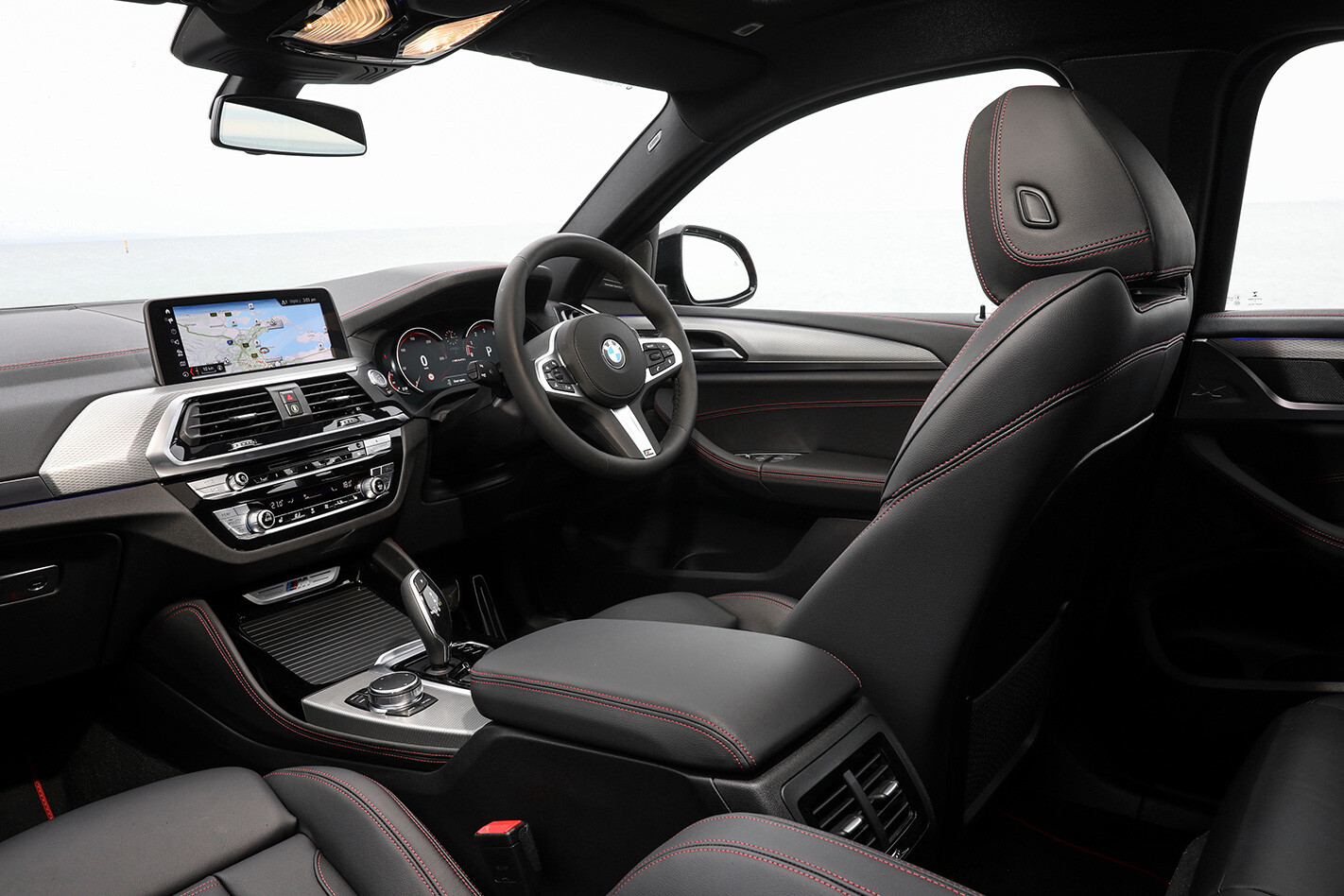
A lower roofline has not greatly impacted occupant headroom and even in the back row, passengers are offered a cosy but accommodating space. Indeed, many SUVs have lofty roof spaces that appear to be excessive, but not in the case of the X4.
ON THE ROAD
Even in the most affordable versions, the updated X4 exudes a sporty charisma but its manner on the road honours the promises made by the redesigned exterior. Firstly, the driver’s seating position is more like something from the passenger range of vehicles. The standard sports seats have adjustable side bolsters and tilt for a snug, moulded fit, while the leather steering wheel extends to allow a purposeful long-leg, short-arm position.
The view out over its long bonnet also speaks more a coupe’s language combined with a steeply raked windscreen. The result is a deceptive ambience and even when you peer behind you, the diving roof line makes it hard to believe you’re not at the wheel of a coupe.
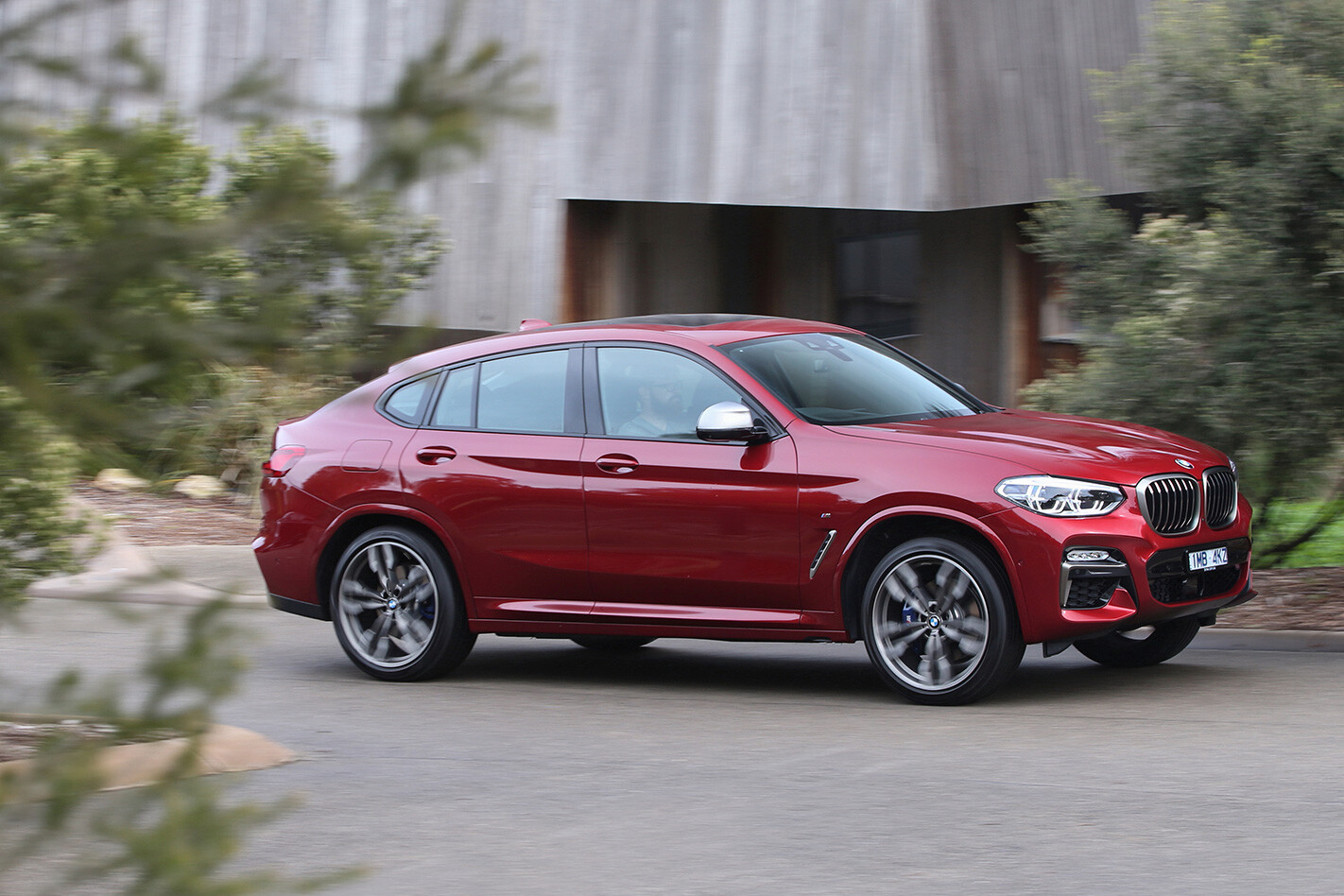
That deceptive nature continues out on the road with a beautifully flat body through corners and steering that offers feel without being exhausting.
Under diesel power, the X4 20d runs out of breath if revved and it’s hard to resist the temptation to wring the engine to its limiter, but restraint is what the diesel prefers. It’s the pick about town though with ample pulling power off the line for effortless progress at lower speeds.
Much better for a spirited country blast is the 30i, which is more rewarding to push to the red line and click through the closely-bunched gear ratios.
It would be satisfying to say that one of the more affordable variants is all you need from the X4 range with enjoyable dynamics, but once you have sampled the 40i performance package, it’s hard to forget.
It’s slick six-cylinder is quiet and well behaved while eating up kilometres of freeway, but takes little provocation to show its other more energetic side. Acceleration feels faster than the claimed 4.8s zero to 100km/h figure, but the most potent X4 has the chassis to match.
It’s delightful to feel the xDrive four-wheel drive system working closely with the M Sport differential in real time, as you push hard through corners. The effect of individual wheel power distribution feels a little like the 40i has a steering rear axle as it corrects heavy-handed instructions or early application of acceleration mid corner.
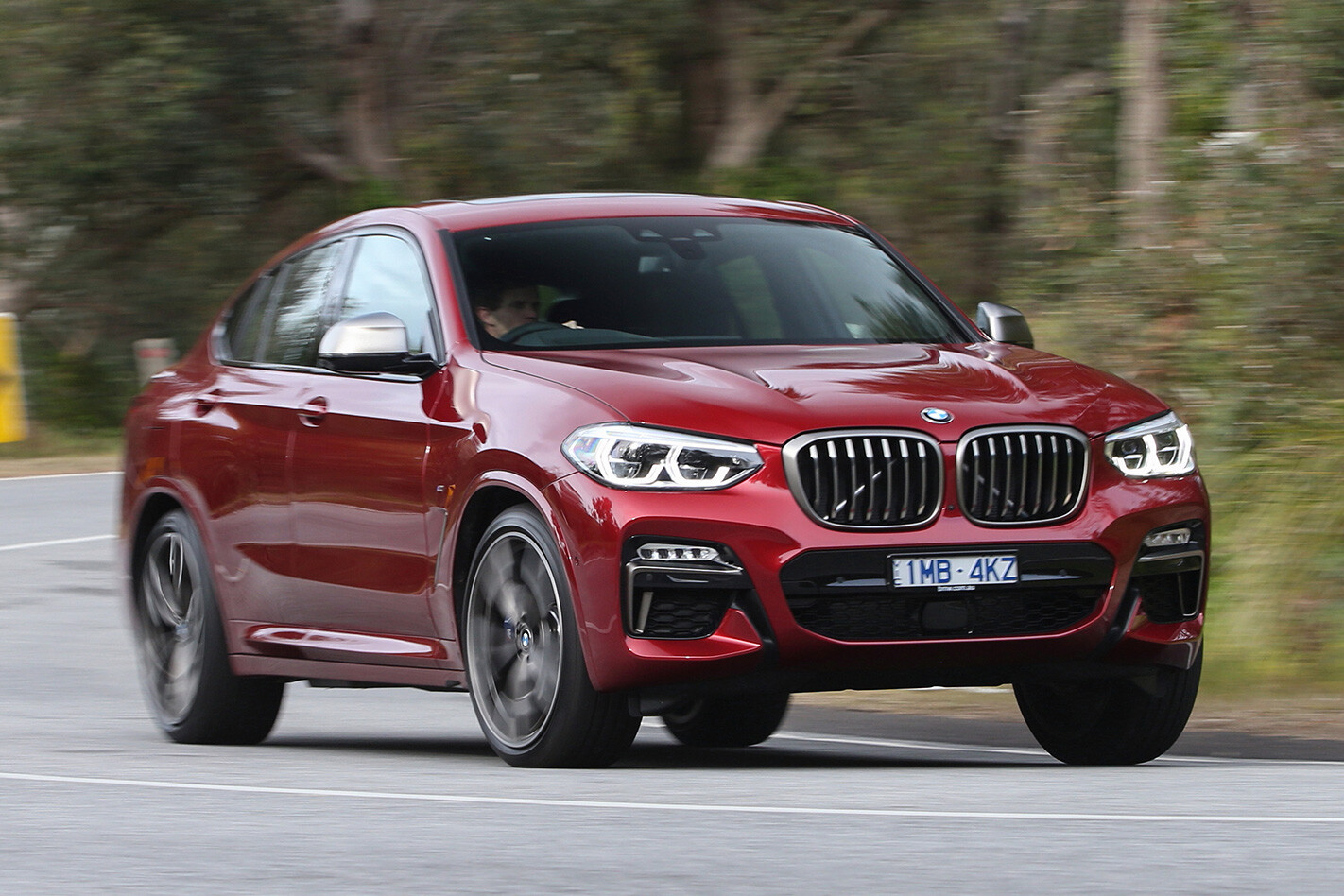
Some of the six-cylinder’s soundtrack is piped through to the cabin via the speakers, which is a shame because the very real exhaust pops and crackles on overrun are honest and amusingly loutish.
VERDICT
On first inspection, BMW’s SAC invention seems to be somewhat of a folly. It’s part SUV but doesn’t really want to leave the road. It’s also part sportscar, yet it has to crouch to get through a doorway.
Surely the cheaper entry-level X3 with more space, sensible front wheel drive and choice of efficient engines makes perfect sense for a BMW fan in the market for an SUV? Or why not simple opt for one of the German car maker’s many actual coupes?
But when you combine that seemingly nonsensical X4 body shape with a mighty turbo six powertrain that’s just as nutty, the converging madness suddenly makes sense.
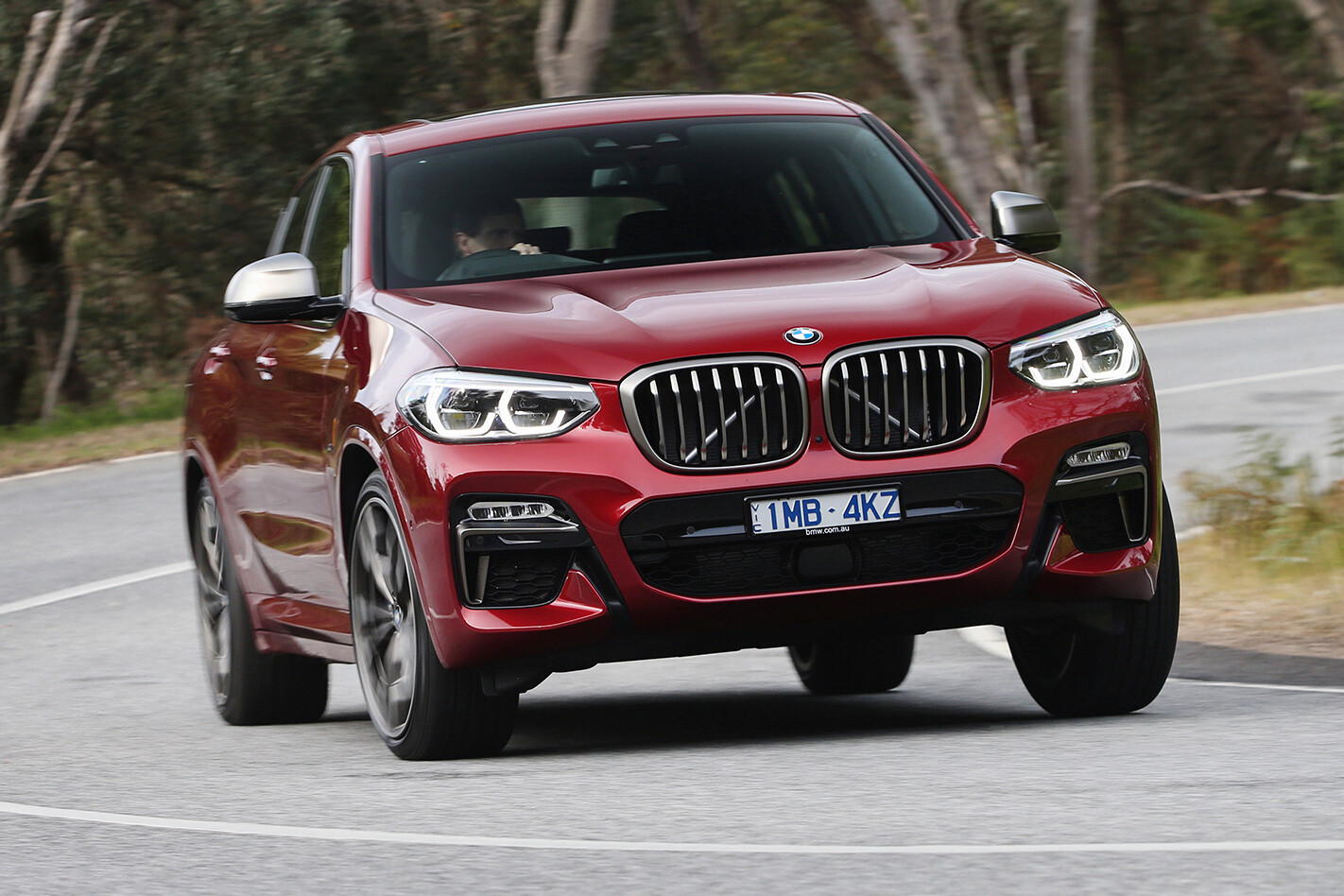
There was a time BMW was faltering from the reputation it had built with passenger vehicles as the ‘ultimate driving machine’, but vehicles like the X4, X2 and X6, are steering the brand back onto a path of genuinely great driver’s cars. This time they have packed for the journey.
Fifteen car-making giants listed among the Top 100 highest value global brands, according to rankings published by global brand specialist Interbrand.
Toyota and Mercedes-Benz were the only car brands to make the top 10, at seventh and eighth respectively, behind Apple, Google, Amazon, Microsoft, Coca-Cola and Samsung, and ahead of Facebook and McDonalds.
According to the prestigious rankings, Toyota’s brand value rose six percent in 2018 to A$75.6 billion, after a dip last year, falling short of its $83 billion high in 2016. The Japanese carmaker, whose Corolla, Camry and Hilux dominate markets around the world, has doubled in value since 2010.
Mercedes-Benz has also seen steady growth since 2010, when it was worth $35.6 billion, to its $69 billion current value. Mercedes-Benz is 2.0 percent from last year, enough to overtake Facebook which enjoyed 48 percent growth in 2016 and 2017, but fell by six percent in 2018.
Volkswagen Automotive Group’s main brands Volkswagen (41), Audi (42) and Porsche (52) held up the middle of the list, a sign that they’ve put the Dieselgate scandal well and truly behind them. Volkswagen is now worth $17.7 billion, still shy of its $19.4 billion high in 2014, but six percent up from 2017.
BMW again held down 13th place, between IBM and Disney, and was the only brand to record a drop in value since last year, down one percent to $41 billion.
Interestingly, the fastest growing automotive brand was Ferrari, which rose by 18 percent to $8.2 billion. The Italian supercar maker re-entered the list last year at 88, after dropping out in 2014, and now sits in 80th position.
Hyundai also continues to grow from strength to strength since it leapt into the top-100 list in 2005 in 84th place worth $4.9 billion. It’s now the sixth-biggest motoring brand, placed 36th on the list and valued at $19.1 billion.
Ford has enjoyed more modest, but steady, growth since the 2008 Global Financial Crisis where its worth dipped to from $51.5 billion in 2000 to $9.9 billion in 2008. It’s now valued just under $20 billion and sits a place above Hyundai, but behind the likes of Budweiser ($22.1), fashion house Hermes Paris ($23.2b) and Pampers nappies ($23.5b).
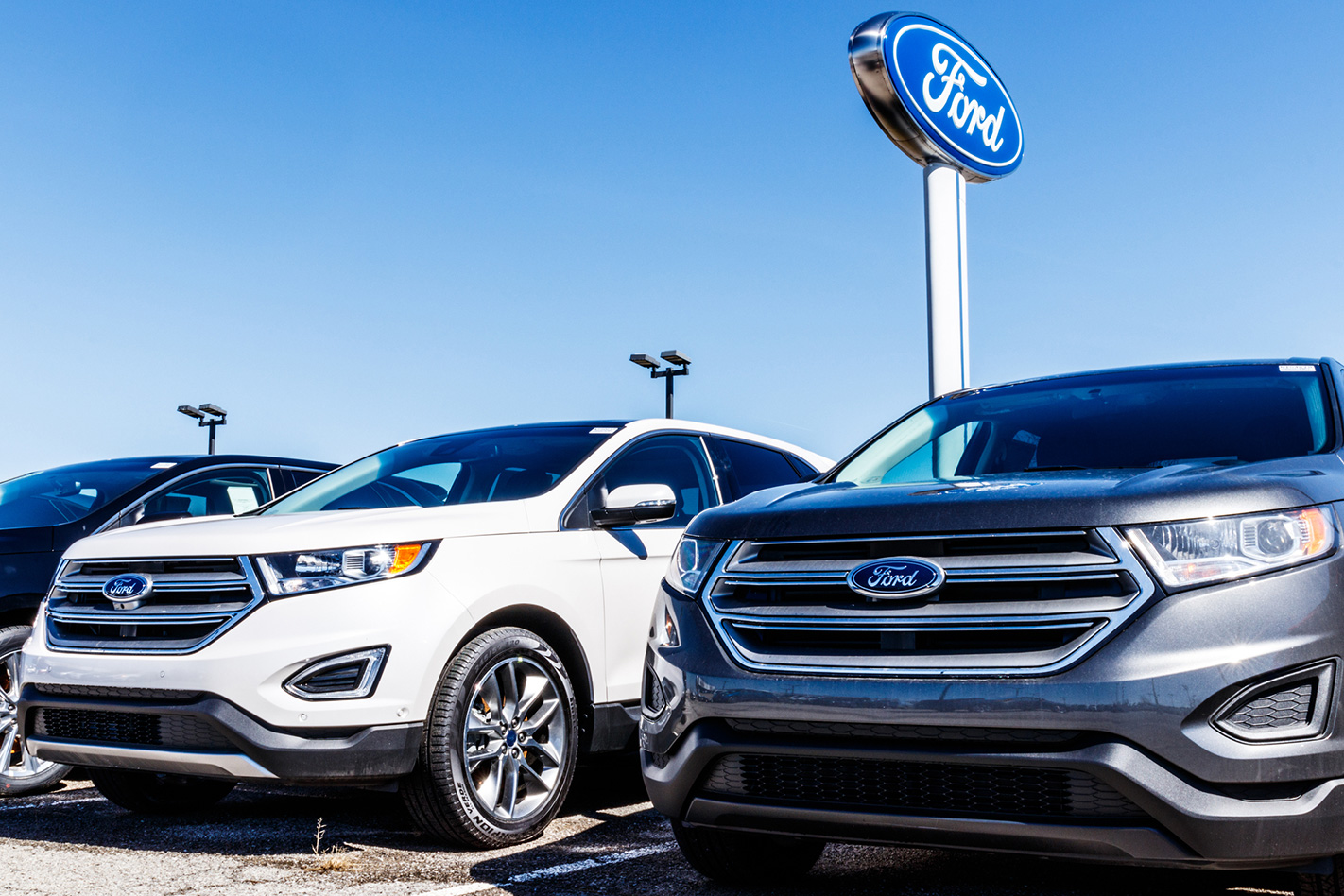
Other brands to make the list include Honda in 20th place, Nissan (40), Kia (71), Land Rover (78) and Mini (90). Subaru snuck into the list for the first time to be the 100th most valuable global brand, worth $5.9 billion.
Notable omissions include Tesla, which defied the overall rise of tech companies to drop out of the list after two years in the top 100. None of General Motors’ brands made the cut either, which suggests that while brands like Chevrolet and Cadillac are big in America, they are not significant global players.
For all their history, bricks-and-mortar assets, intellectual property, and tangible high-value products they produce, even the most successful motoring brands are worth a fraction of the tech giants, not least Apple whose value rose by 16 percent compared to 2017 to $303.5 billion.
Google’s $220 billion is 10 percent up from last year, while Amazon was the top growing global company during the past 12 months, rocketing up 56 percent to $142.6 billion, to overtake Microsoft ($131.2b) and Coco-Cola ($93.9b) for third spot.
The Interbrand rankings rate brands based on financial analysis, their role, and their strength and recognition. Factors such as corporate governance and responsiveness to market changes are also assessed, as are how the brands are perceived externally for things such as relevance, customer engagement and consistency.
Only companies with a truly global presence, with at least 30 percent of revenue generated outside their home market, are assessed.
Top carmakers according to Interbrand 100
- 7. Toyota – $75.6b +6% (compared to 2017)
- 8. Mercedes-Benz – $68.8b +2%
- 13. BMW – $58b -1%
- 20. Honda – $33.5b +4%
- 35. Ford – $19.8b +3%
- 36. Hyundai – $19.1b +3%
- 40. Nissan – $17.3b +6%
- 41. Volkswagen – $17.3b +6%
- 42. Audi – $17.2b +1%
- 52. Porsche – $15.2b +6%
- 71. Kia – $9.8b +4%
- 78. Land Rover – $8.8b +2%
- 80. Ferrari – $8.6b +18%
- 90. Mini – $7.4b +3%
- 100. Subaru – $6.0b New to list
THE HERO of Hiroshima has a new heart!
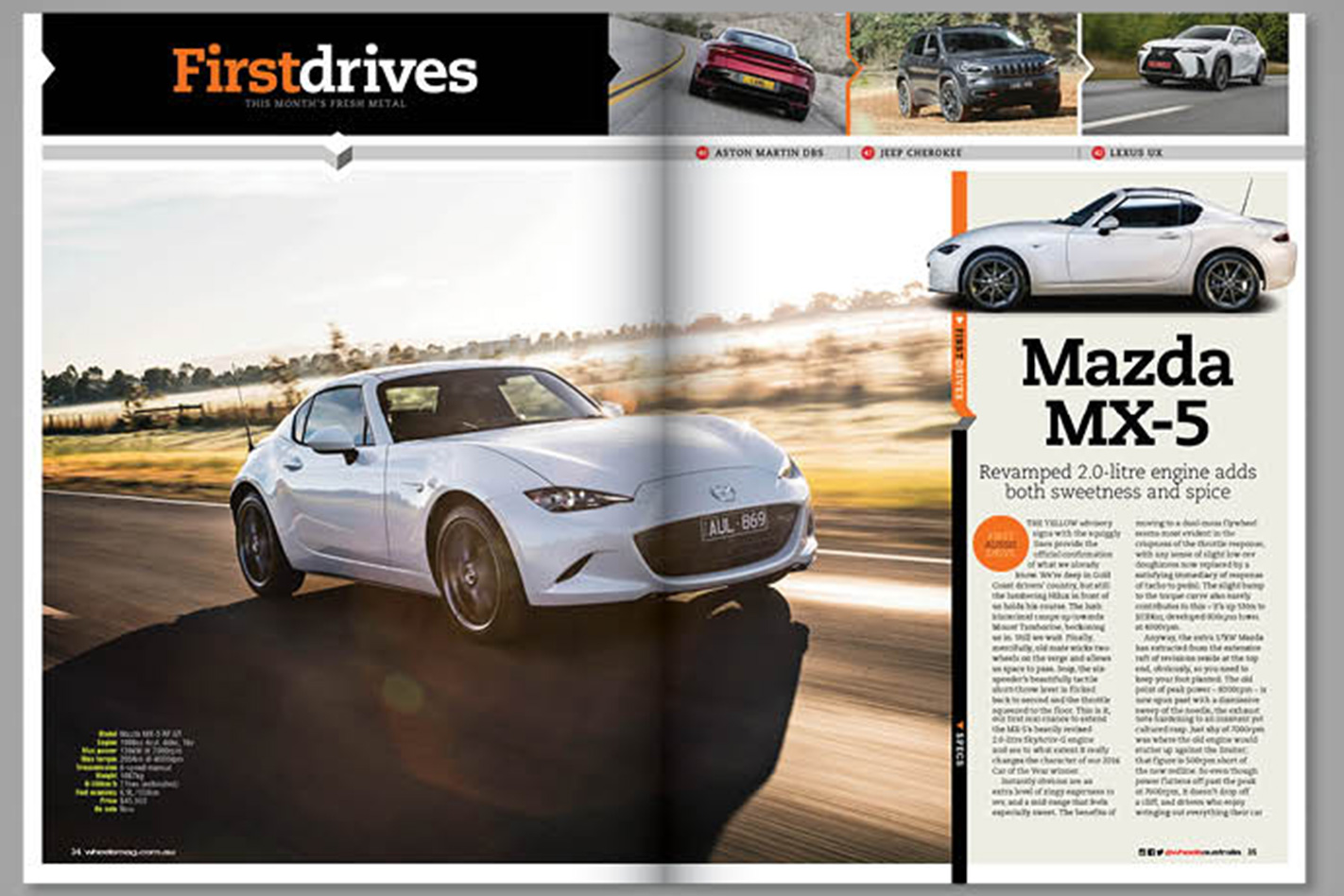
Mazda has updated its MX-5 sports car, and the result delivers a major win for driving enthusiasts. There’s more power, more revs, and more fun. Pick up the latest issue of Wheels, on sale now, to read our full verdict on the improved 2016 COTY winner.
Need more? Well also in this issue we’ve got the brilliant McLaren 600LT, which Deputy Editor Andy Enright thrashed on an F1 track in Hungary.
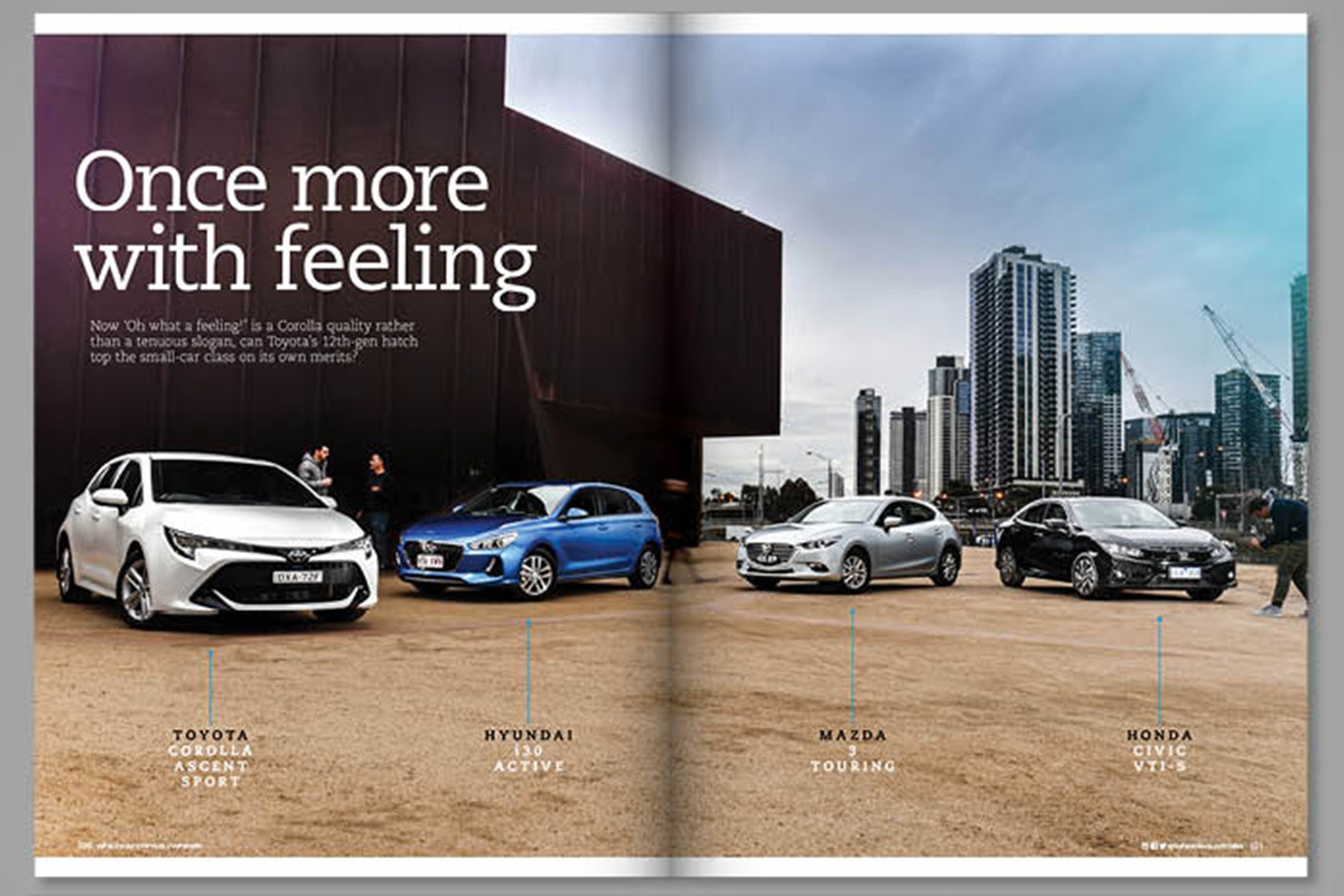
Toyota’s box-fresh Corolla is one of the most important new cars to go on sale this year, and for its first comparison we brought three of the strongest cars in the small-car field – the Hyundai i30, Mazda3, and Honda Civic. This four-way stoush for supremacy between some of the country’s best-selling cars brings a surprise result.
An all-new Jeep Wrangler is on its way, so we went to America for an early taste. A simple bitumen drive wasn’t going to cut it, so the venerable icon was put to the test on the very same trail its most off-road-capable model takes its name from – the torturous Rubicon Trail.
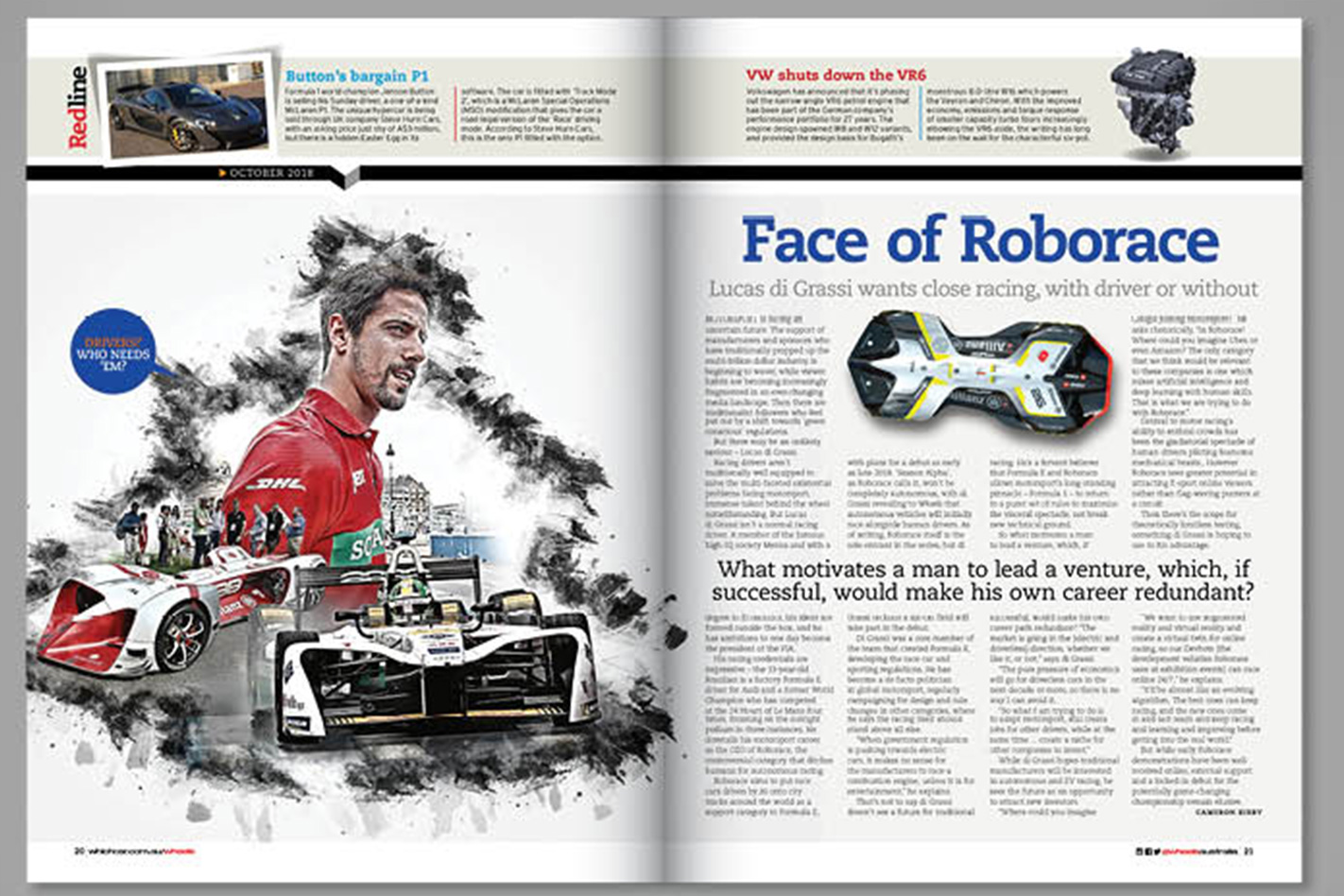
We also got chatting with Lucas di Grassi, the world-champion racing driver who is the CEO of Roborace, to better understand what drives a man to pioneer a concept which could make his own career redundant.
Fans of American muscle will be keen to read the news that Cadillac could be coming to Australia. We’ve spoken to the men in charge, who reveal some tantalising details.
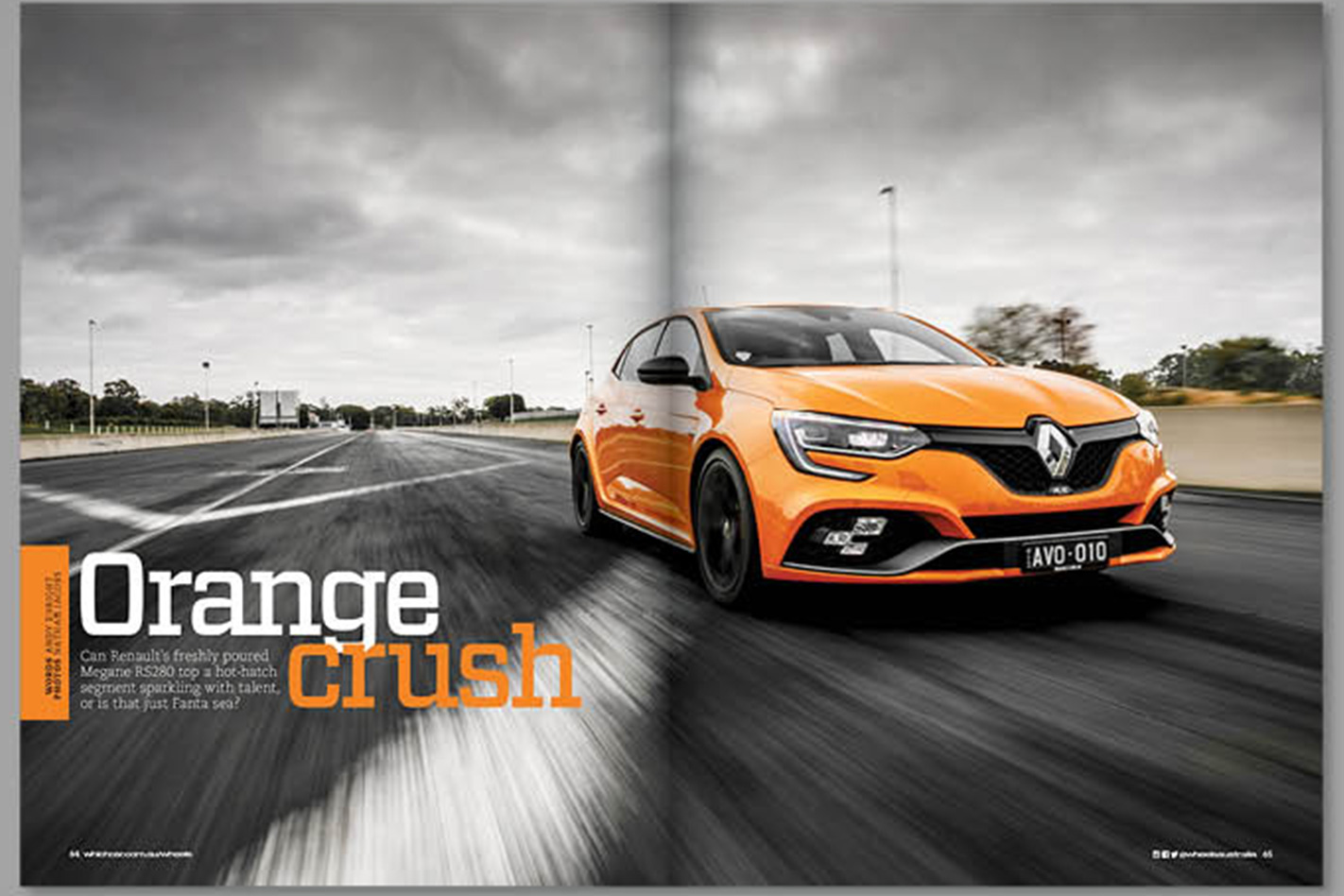
The Renault Megane RS280 has arrived in Australia, so we gave it a very Wheels welcome, immediately pitting it against our current hot-hatch hero, the Hyundai i30 N. Both send over 200kW to the front wheels, but only one can power away as the victor.
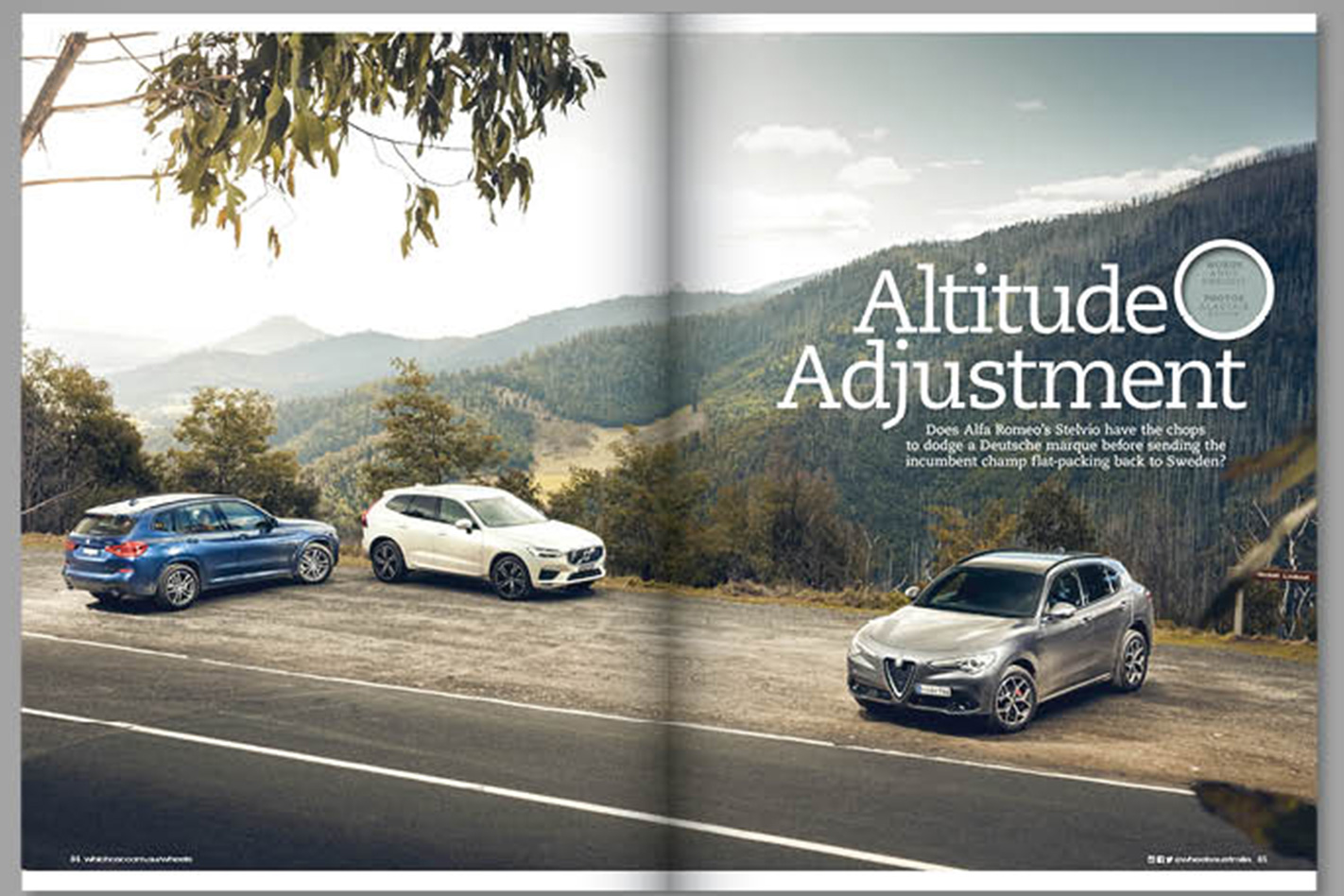
Alfa Romeo’s Stelvio SUV shares its DNA with the Giulia, which was a finalist at last year’s Car of the Year testing. It seemed only fair then that the Stelvio would face off against our 2018 COTY winner, the Volvo XC60, for its first Wheels comparison, with segment stalwart the BMW X3 joining the pair.
All that, plus our usual selection of in-depth first drives, opinion, long-term test reports, and all the facts and figures that matter in Showroom.
The issue is available now at your local newsagent, or online at Magshop.com.au.
Here’s a handful of lesser-known bits of trivia to help you be the smartest cookie at the pub on race day.
Only two men have won the race driving solo
As an endurance race the Bathurst 1000 is traditionally run with a pair of drivers sharing duties behind the wheel. However, there have been a number of drivers who have attempted ‘ironman’ races, where they complete the entire race on their own.
Only two drivers have won the race driving by themselves, and they are none other than Bathurst legends Allan Moffat and Peter Brock.
Moffat did so twice in 1970 and ’71, the latter behind the wheel of the iconic Ford XY Falcon GT-HO Phase III. Brock won on his lonesome in ’72, with a Holden LF Torana GTR XU-1.
Both men took their victories when the event was run over a slightly shorter 500 mile (804 kilometre) race distance, or 130 laps.
No Bathurst 1000 has been shorter than five hours
For most fans, Bathurst is an all-day affair, with the race sometimes stretching to seven hours in length. Even the quickest Bathurst 1000, run in 2013, was still over five hours long.
Mark Winterbottom and Steven Richards won that race, crossing the finish line 6 hours and 11 minutes after the race started. The pair’s average speed during the event was a stunning 161km/h.
Chaz Mostert won the race, before qualifying
Chaz Mostert has a unique record at Bathurst, having won The Great Race two years before having ever properly qualified for the event. It wasn’t until 2016 that Mostert was able to complete a qualifying lap at Mount Panorama, despite having already won a Bathurst 1000 in 2014.
In his debut in 2013, Mostert crashed his FG Falcon in practice. The damage was so severe it wasn’t repaired in time for qualifying, but he was still able to take part in the race.
In 2014, Mostert was excluded from qualifying for passing under red flag conditions. It didn’t hold him back from winning that particular race.
A year later, and he suffered an almighty crash before being able to complete qualifying, which ended up breaking his leg and destroying his car.
Finally, in 2016 Mostert officially qualified for the Bathurst 1000 for the first time. Who says you need to a good qualifying result to be successful at The Mountain?
Keeping it in the family
In 1997 two brothers claimed outright victory at the Bathurst 1000. Geoff and David Brabham, the sons of Australia’s first F1 champion Jack Brabham, won the ’97 event in a BMW 320i Super Tourer. It is the first and only time siblings have won the Bathurst 1000.
There were actually two Bathurst 1000 events that year, as part of the controversial split between race promotors the ARDC and V8 Supercars. Larry Perkins and Russell Ingall won two weeks earlier in the V8 Supercar sanctioned event.
Brothers Will and Alex Davison will be hoping to emulate the Brabhams this weekend as they share the #230 FG X Falcon.
Brock’s two-car shuffle
Two of Peter Brock’s race victories (‘83 and ’87) occurred when the King of the Mountain raced two different cars in the same race.
In 1983, Brock’s teammates John Harvey and Phil Brock had qualified the winning car, but Peter Brock’s #05 VH Commodore’s engine blew on lap 8, prompting himself and co-driver Larry Perkins to be transferred into the sister entry, which they drove to victory.
Interestingly, the car Brock, Perkins, and Harvey won in was the same chassis which took victory a year prior, updated to the current regulations. The back-to-back victories make it the only chassis to win the Bathurst 1000 twice.
A similar situation occurred in ’87, when Brock took his ninth and final Bathurst 1000 victory. Originally driving alongside David Parsons, the pair’s HDT Racing Commodore gave up the ghost on lap 34. Brock and Parsons then shifted into the sister car being raced by Peter McLeod and Jon Crooke, crossing the line in third place.
It wasn’t until well into 1988 that Brock was officially declared the winner, with the Eggenberger Ford Sierras which finished in first and second on the day eventually disqualified for illegal wheel arches.
If part of what makes up strong resale value is exclusivity, then the manual transmission should become only more sought after in the coming years and decades. Some believe that buying a third pedal would make for an unwanted loner come sell-time, but read on…
In 2016, the BMW M2 launched in $90K Pure manual or $100k seven-speed dual-clutch auto form, but in the two years since that $10K surcharge has dissipated. The cheapest manual currently advertised is $68K with 33,000km, while the cheapest auto is $72K with 25,000km.
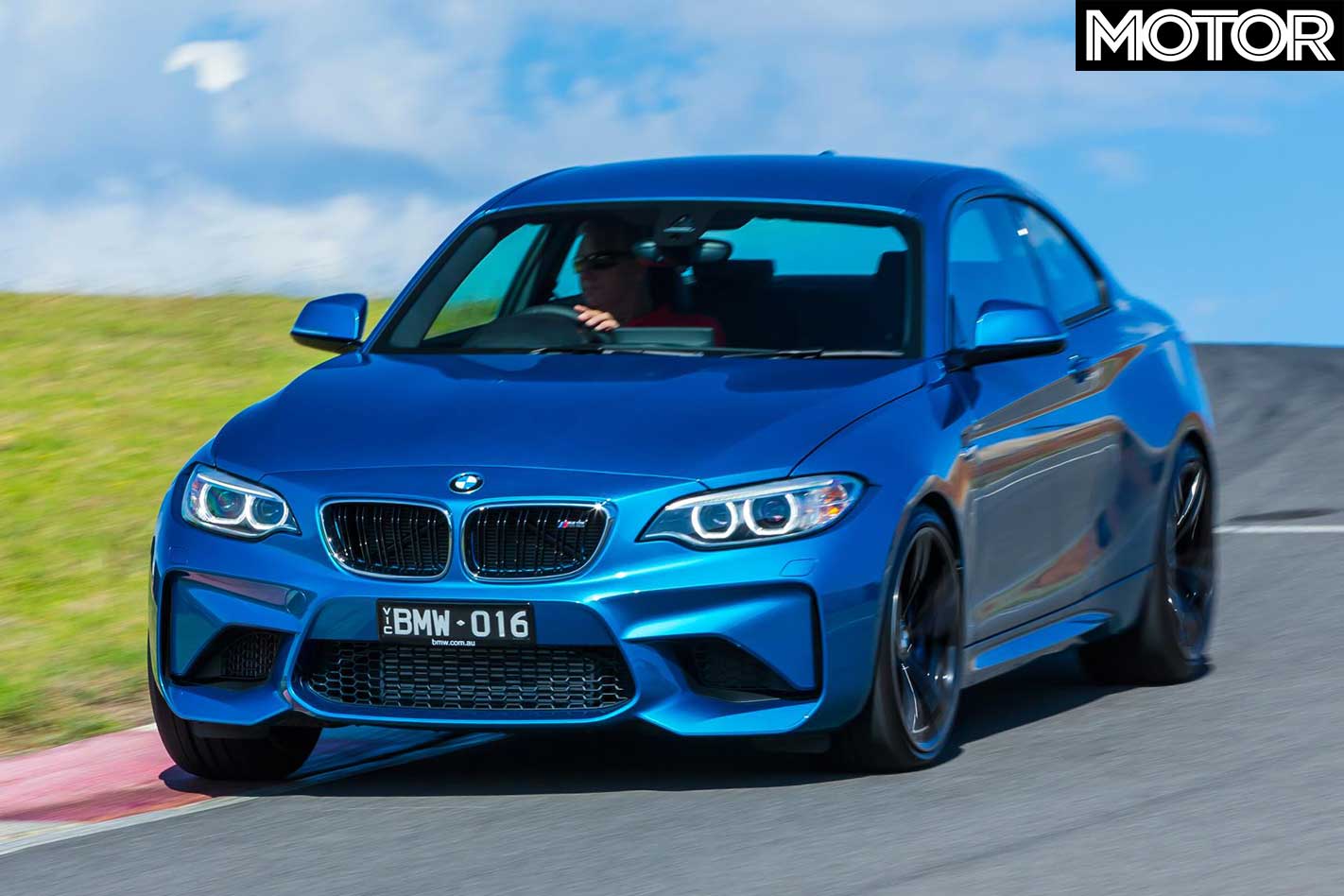
These aren’t outliers, either. The top 5 most attainable M2 manuals are all sub-$80K. The equivalent-kilometres M2 autos, some 10 of them, all fall under $78K in the classifieds.
It’s a similar story for the BMW M4, with a 2014 manual coupe presented with 53,000km for $85K – while a duo of 58,000km-to-65,000km autos all lob for under $79K. Go back to the previous-generation BMW M3 sedan from 2008, and good luck finding a manual for less than $50K, despite a plethora of autos cropping up from under $40K. Exclusivity is key…
Porsche is another lingering bastion of the DIY-shifter, and those who purchased a 981-generation Boxster manual in 2013 could now reap the rewards. A duo of the five-year old roadsters with between 25,000km and 42,500km are advertised from $82K to $105K.
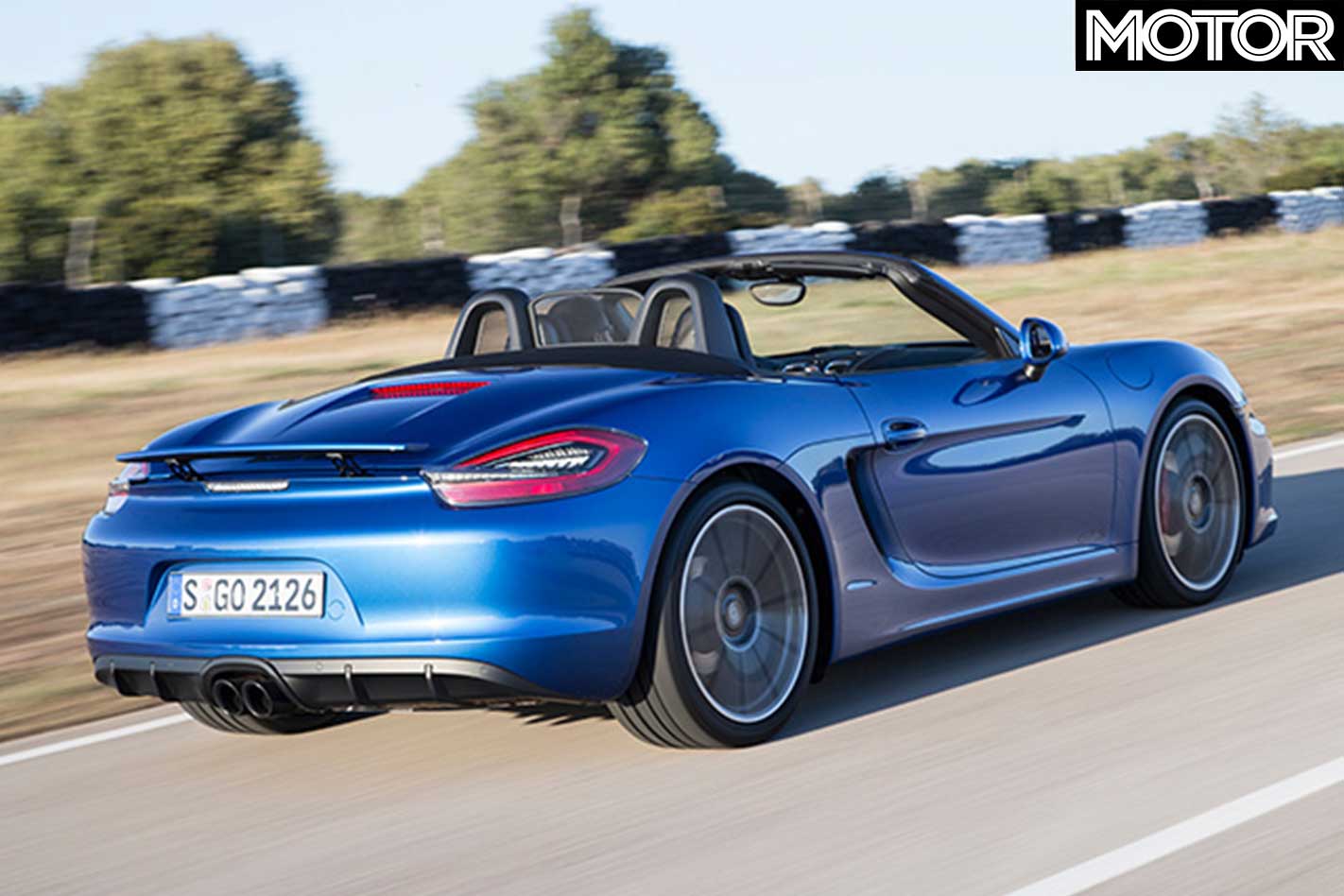
Two equivalent ‘PDK’ dual-clutch autos each with 46,000km are selling from $74K, while a duo with 8800km and 37,700km are each online for $80K, with the former being least optioned.
But you don’t have to spend big bucks for manual resale to hold up at least evenly. In the case of the ND-generation Mazda MX-5, three-year-old 1.5-litre manuals are selling with between 25,000km and 50,000km showing, for between $22K and $25K.
Pick that same baby engine mated in the rear-wheel drive roadster with an automatic, however, and from 33,000km to 66,000km showing the equivalent asking prices range from $20K to $22K.
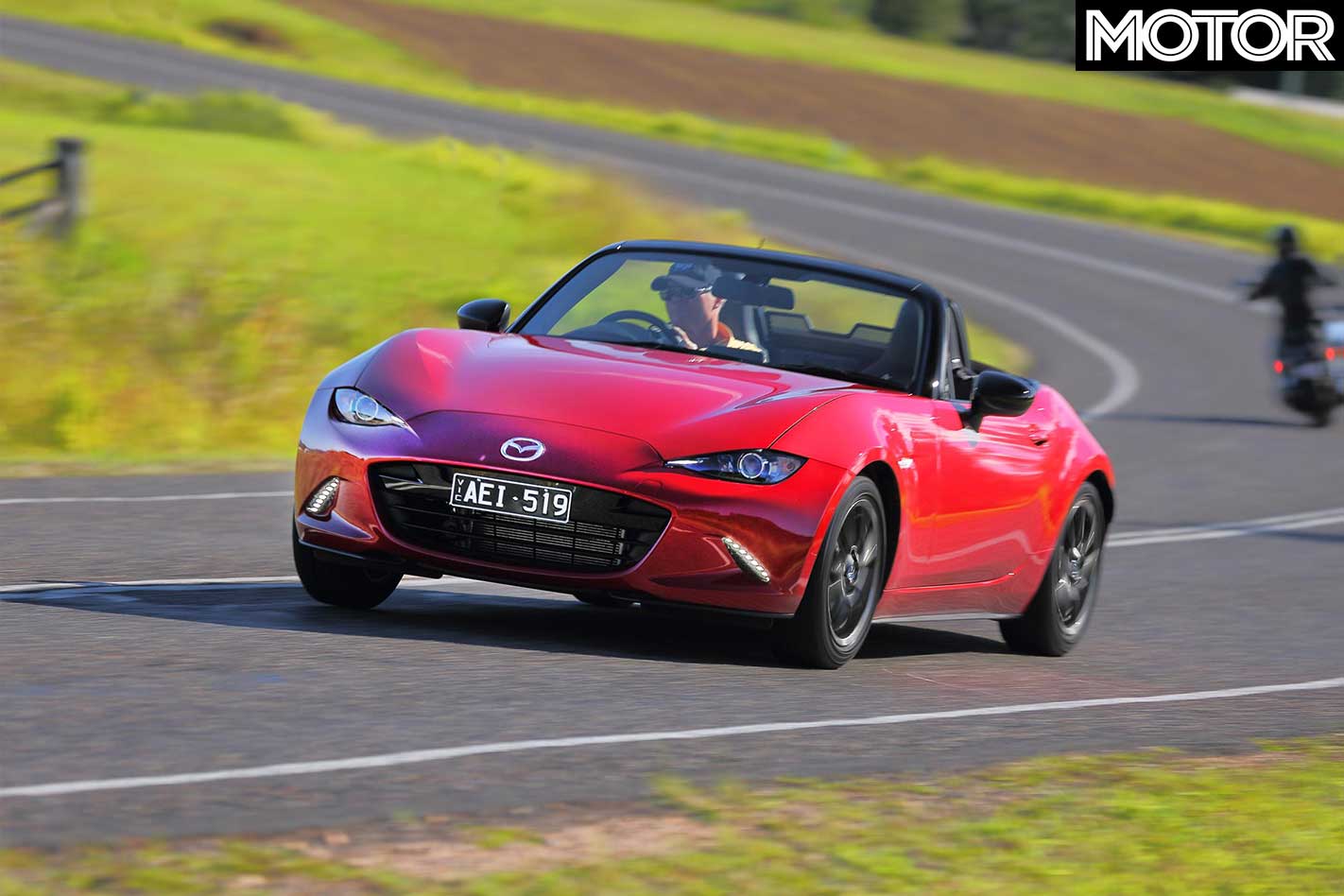
Indeed, according to resale value guide Redbook, and in each case comparing equivalent manual versus auto retained values, a Boxster’s $5000 surcharge for the auto transmission when new now retains $3000.
Meanwhile, an M2’s circa-$10K impost now holds half that, a decade-old M3’s $7300 premium for the then-fancy dual-clutch is reduced to $1000 in the used market now, and the $2000 charge for an MX-5 auto has halved on the classifieds.
In the case of a 2015 Holden Commodore SS V Redline, the $53,990 manual now retains up to $33,800 on the trade-in market, whereas the $56,190 auto is now Redbook-rated at $33,500 – or $2500 in the pocket of someone who has used three pedals for as many years.
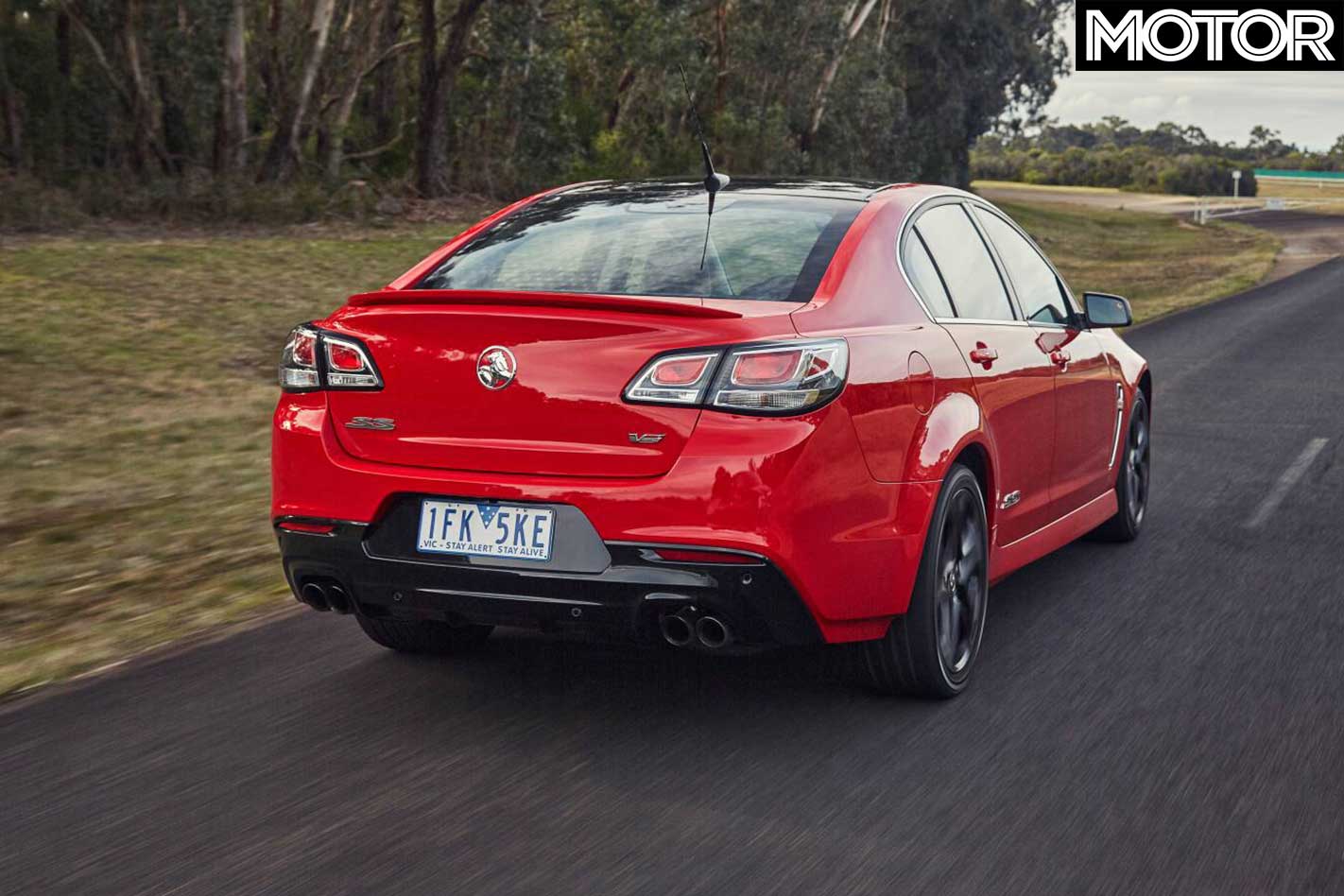
That sounds like good-value manual labour to us.
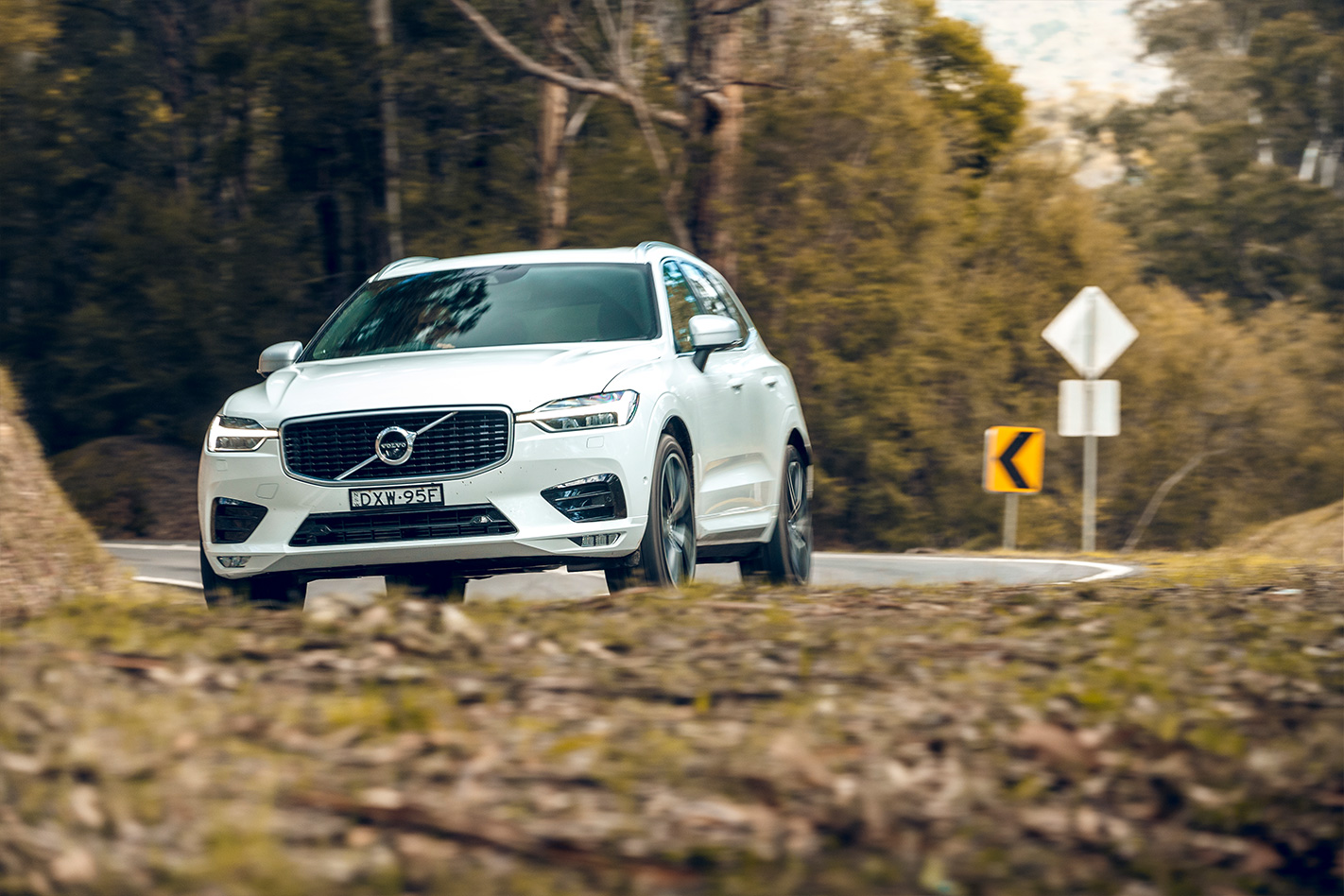
The BMW X3 and Volvo XC60 medium SUVs are great Jacks of all trades, offering comfort, safety, practicality and driveability in one neat package. Their 2.0-litre diesel versions add economy to that list of virtues, and while they lack the oomph of bigger-engined variants of their respective ranges, they’re still enjoyable for everything from the daily drive to interstate touring.
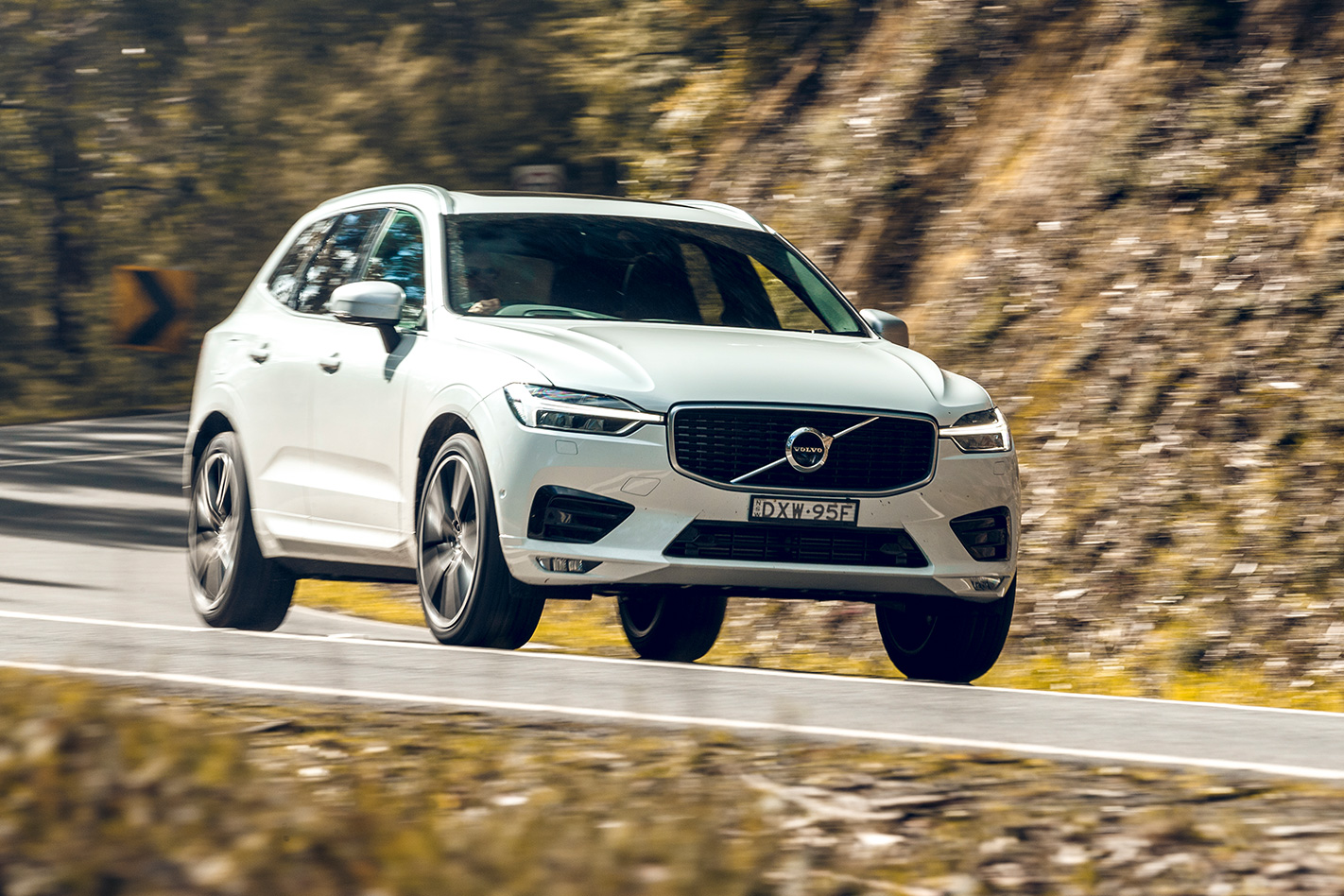
The BMW X3 xDrive20d is the smaller of two diesel powertrains in the X5 family, and generates 140kW of power and 400Nm of torque. Our test car features the M Sport Package which adds sporty embellishments both inside and out, as well as adaptive suspension.
We drove it head to head with the Volvo XC60 D5 R-Design, whose turbodiesel unit pumps out 173kW/480Nm. Volvo has a less-powerful diesel variant, the XC60 D4, which produces the same 140kW/400Nm output as the BMW, however it’s significantly cheaper which means the XC60 D5 R-Design is a much better match for the BMW when it comes to styling, equipment and price.
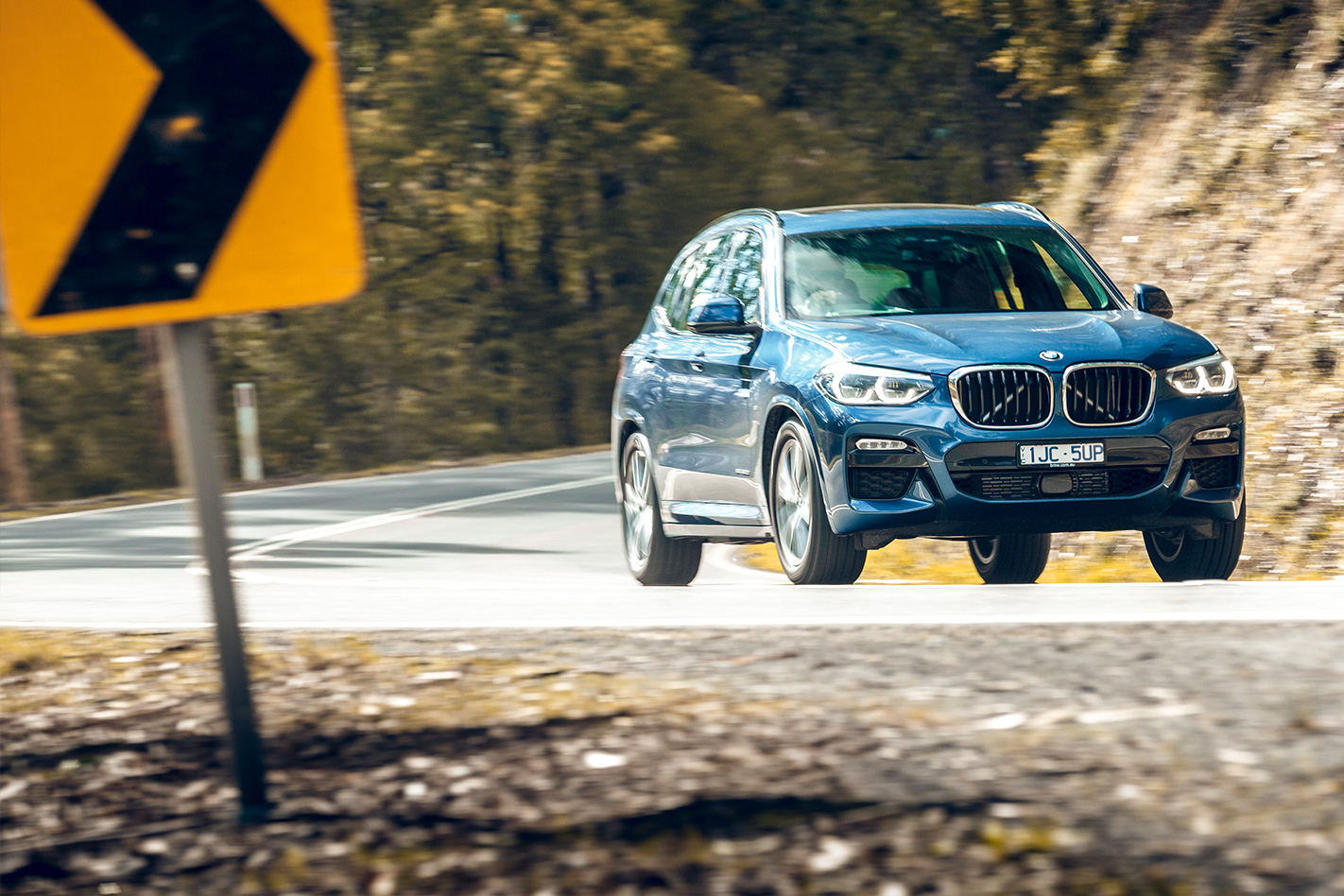
So how does BMW stack up against its similarly equipped Swedish rival, which has a Wheels Car of the Year trophy in its cabinet?
HOW AFFORDABLE ARE THEY?
BMW X3
Priced at $69,900 the xDrive20d is similarly equipped to the entry-level sDrive20i, with its torquey diesel engine and all-wheel-drive system attracting a $3000 premium. It’s $15,000 cheaper than the more powerful xDrive30d diesel, which gains a host of additional features on top of the power boost, many of which are available to the xDrive20d as extra-cost options.
Much of these found their way in to the xDrive20d we tested, which sent its retail price soaring to $88,650.
The 2.0-litre diesel engine has a frugal official combined fuel consumption rating of 5.7L/100km.
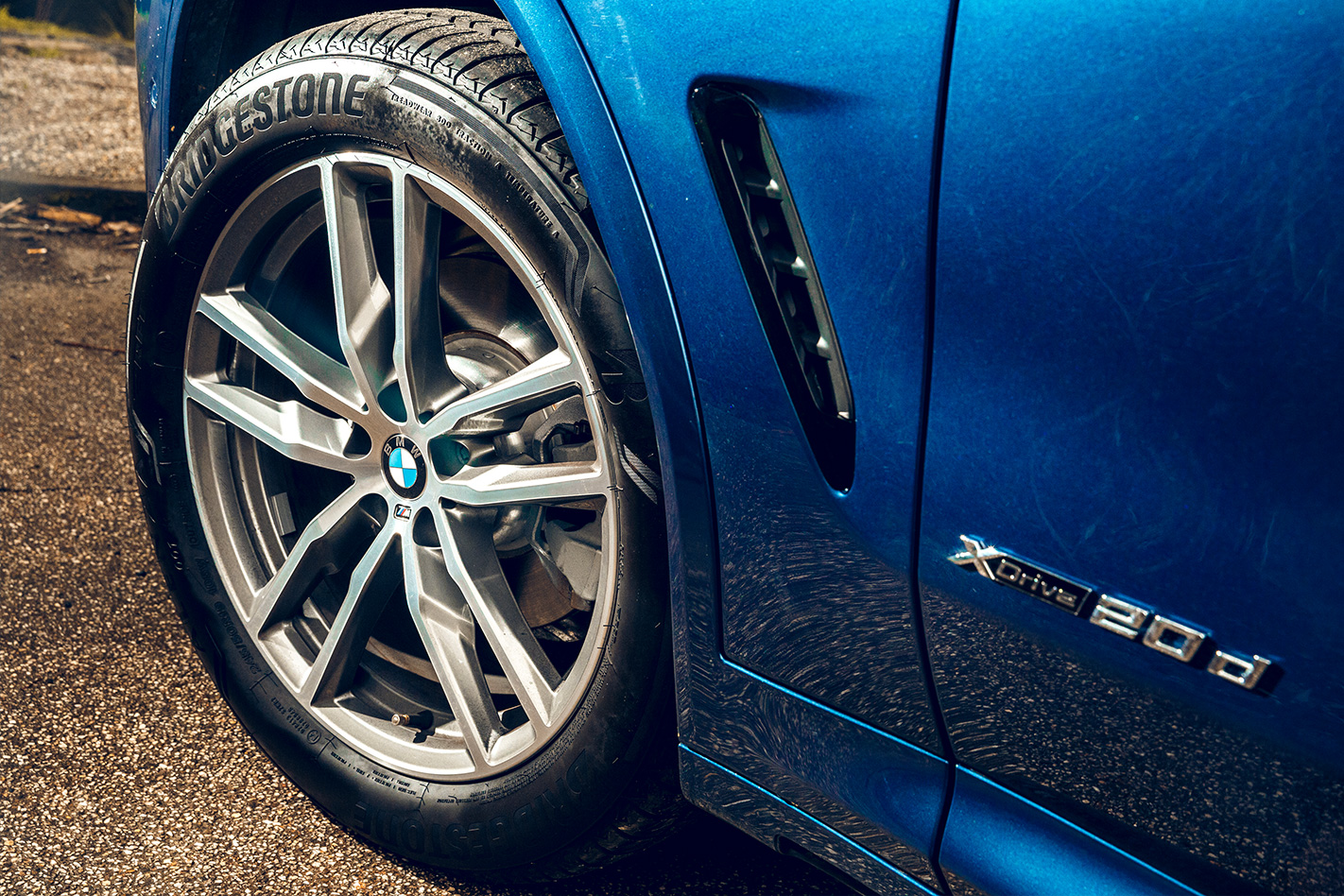
BMWs don’t have a set servicing schedule based on kilometres or time. Instead they work on ‘condition based servicing’ which lets the car’s systems decide when a service is required based on oil levels and wear and tear on individual components. Drivers are alerted that a service is due via a dashboard notification.
BMW owners can take out a prepaid Inclusive Service package which covers basic service costs, including filter replacements and fluid top-ups for the first five years or $80,000km. This costs $1495 for the X3. There’s also a $4400 Service Plus package that includes the replacement of brake pads and discs, wiper blade rubbers and clutch and disc plates.
Volvo XC60
The D5 is only available in the sporty R-Design spec that tops the XC60 range, with a corresponding heftier price. If you want the most powerful diesel, you’ll have to fork out for the more generous features that it’s supplied with as standard. The retail price starts at $75,990 before options, which is considerably more than the D4 in entry-level Momentum, and Inscription spec which start at $61,990 and $68,990 respectively.
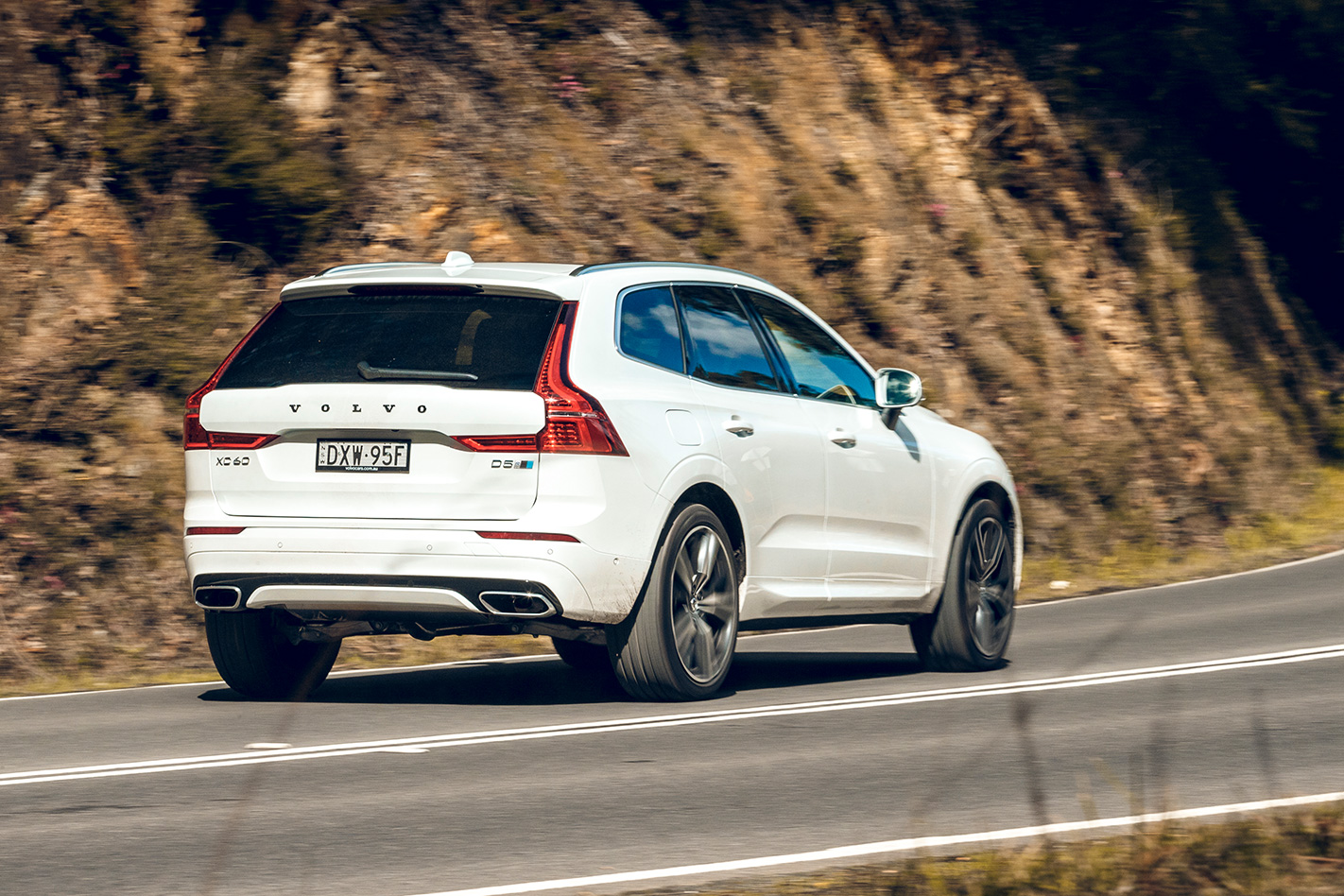
The XC60 D5 R-Design we tested starts at $75,990 had a few optional extras including the $2500 Lifestyle Pack with heated front seats, panoramic sunroof, and tinted rear glass, along with powered front seat side bolstering ($450) and Crystal White Pearl premium paint ($1900) – only one colour, Ice White, doesn’t attract a premium. All this brought the retail price up to $80,840, which still represents good value against similarly equipped and performing rivals such as the BMW X3 xDrive20d and Jaguar F-Pace 20d R Sport. AWD.
The D5 powertrain is economical, with official combined fuel consumption rated at just 5.6L/100km, which is excellent for an almost 2.0-tonne luxury SUV. Our real-world driving saw that stretch to a still-respectable 7.5L/100km according to the trip computer.
The XC60 requires servicing every 15,000km. There is no capped servicing, with pricing varying between dealer networks. Hourly labour costs apply, with each service taking between 1.5 and 2.1 hours.
WHAT FEATURES DO THEY HAVE?
BMW X3
The X3 xDrive20d comes with a broad list of features that you’d expect from a $70,000 SUV, including automatic tailgate, LED headlights, front and rear parking sensors, head-up display, speed-limit info, adaptive cruise control, autonomous emergency braking, digital radio (DAB+), six-speaker sound system, satellite navigation, parking assistant that automatically steers the X3 into a parking spot, sports seats and Connected Drive with real-time traffic info, intelligent emergency call and BMW apps.
All the optional features in the xDrive20d disguised the fact that the standard equipment list is missing quite a few features found in sub-$50k mainstream SUVs, such as Apple CarPlay/Android Auto, seat warmers, panoramic sunroof, multi-element LED lighting, adaptive cruise control with stop and go, and lane-keeping assist.
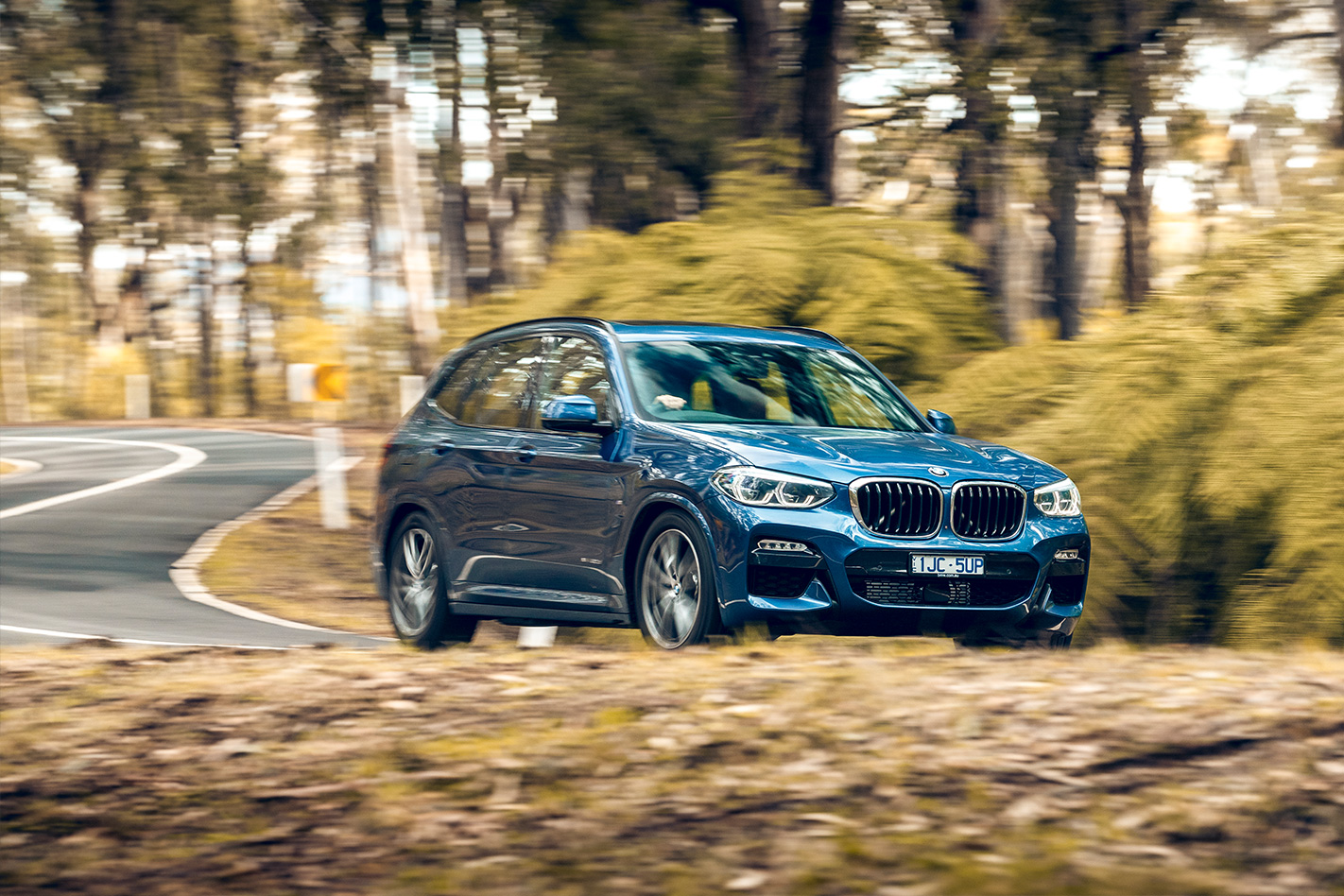
The vehicle we tested had almost $10,000 worth of optional extras, including:
- M-Sport Package that added sporty exterior embellishments, adaptive suspension, LED fog-lights and leather sports steering wheel with paddle shifters ($4550)
- Metallic paint ($1950)
- ‘Vernasca’ leather upholstery with decorative stitching ($2500)
- Panorama sunroof ($3000)
- Ambient interior lighting ($700)
- Driver Assist Plus, with active cruise control with stop and go function, front cross traffic alert, lane keeping assist, and side collision warning ($2800)
- Innovations Package, which includes a 12.3-inch touchscreen, 3D surround view parking camera, adaptive LED headlights, and multifunction digital instrument display ($3250).
Volvo XC60
The R-Design spec brings a scrolling list of standard features to the Volvo XC60 D5 starting with active safety suite that includes autonomous emergency braking, adaptive cruise control, lane keeping assistance, driver alert, and adjustable speed limiter and cross traffic alert.
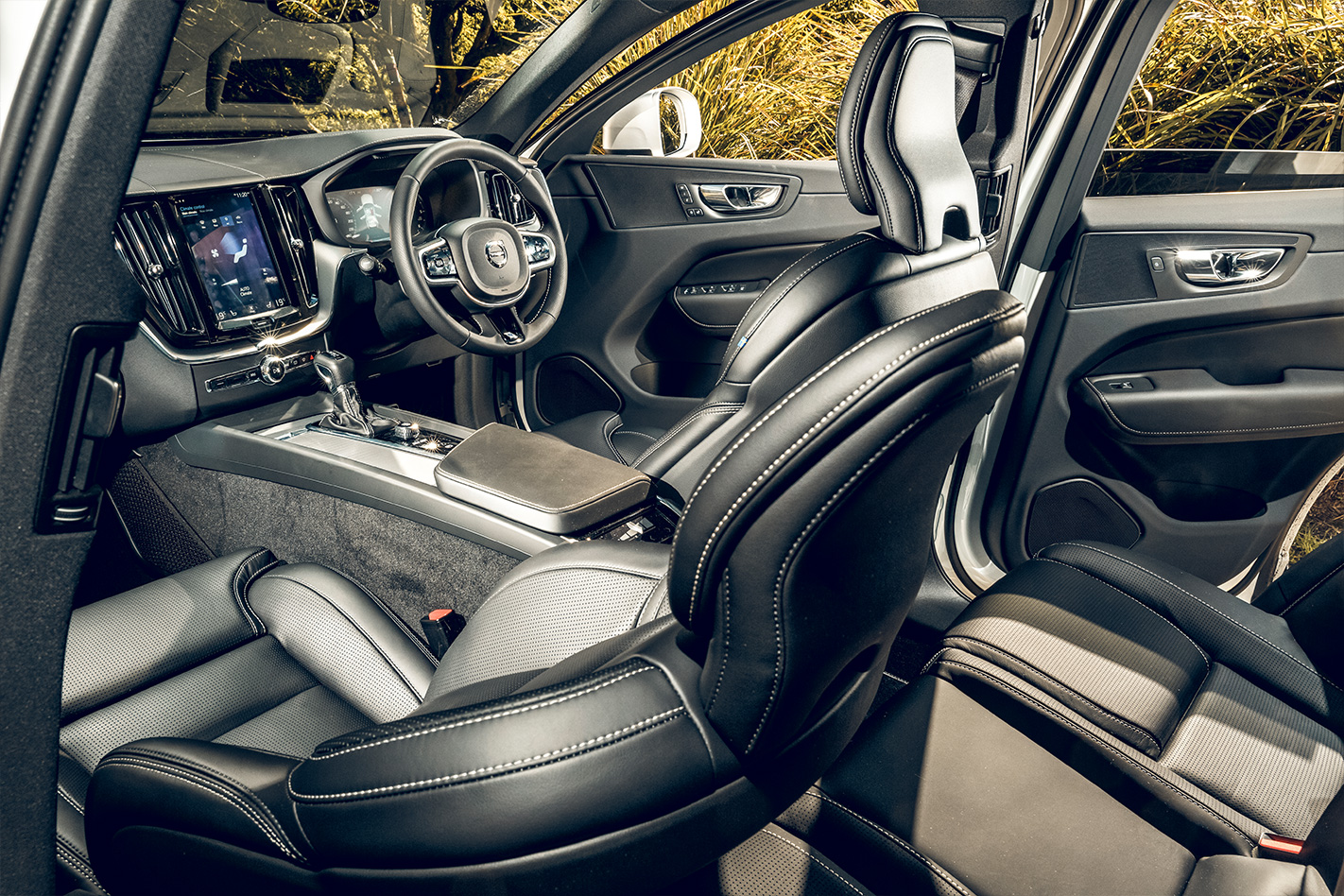
Step inside and you’ll find a 12.3-inch portrait orientated touchscreen, Nubuck leather upholstery, metal mesh décor inlays, power adjustable front seats with cushion extensions, three-spoke R-Design leather steering wheel with paddle shifters, four-zone climate control, and ambient lighting.
You also get front and rear parking sensors, a 360-degree reversing camera, rain-sensing windscreen wipers with integrated washers, LED active bending head-lights that help you see into corners, LED daytime running lights, puddle lights, high-pressure headlight washers, hands-free powered tailgate, keyless entry and plenty of sporty R-Design interior and exterior embellishments.
HOW PRACTICAL ARE THEY?
BMW X3
The BMW X3 is a five-seater medium SUV.
At 4.71m long, it’s 54mm longer than the previous model and is actually bigger than the original X5 large SUV. There’s plenty of rear legroom and its 1.89m width ensures there’s a heap of elbow room up front, and comfortable seating for three adults in the second row.
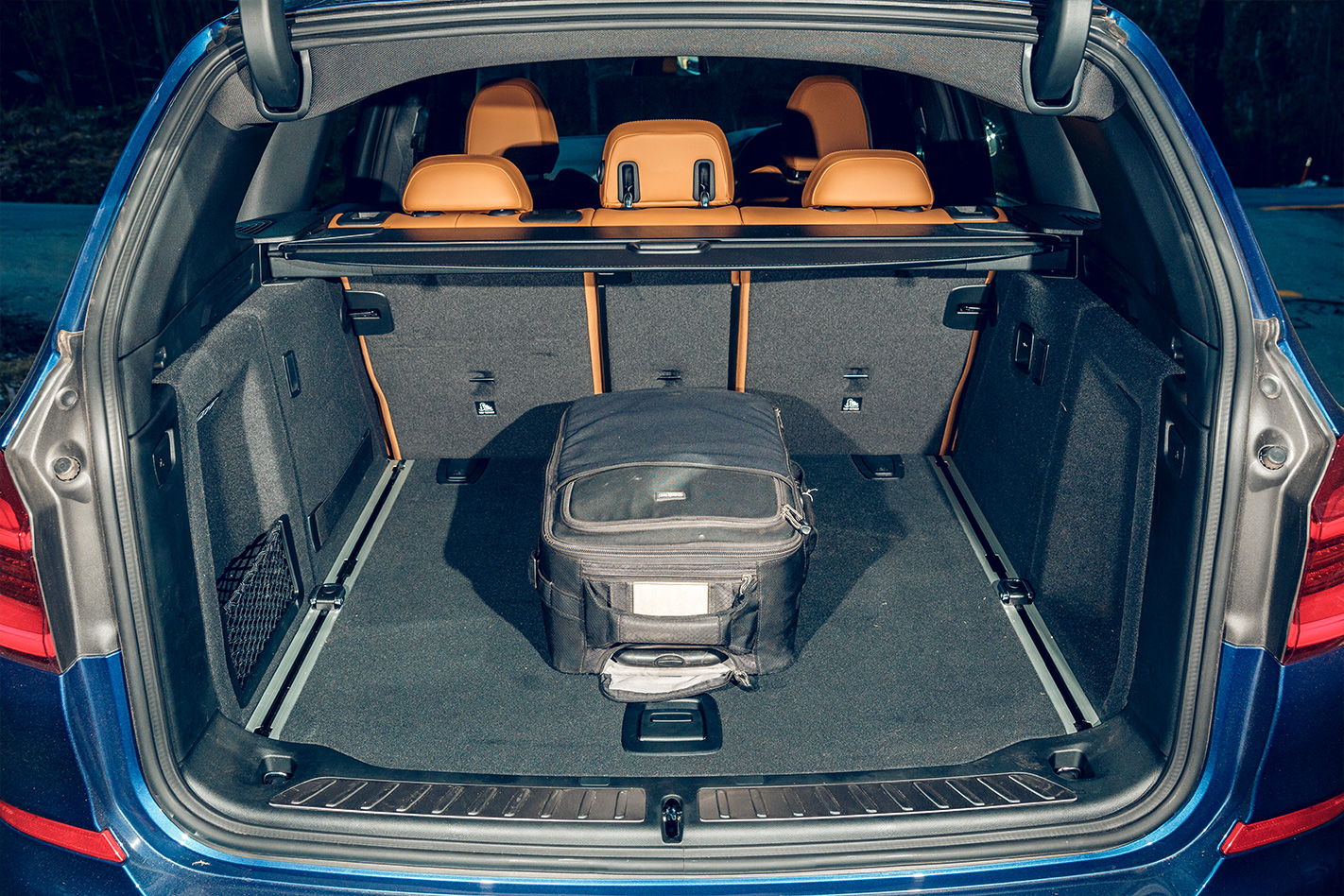
It can swallow 550 litres of luggage behind the back seats, which is the same as the previous model, which extends to 1600 litres with the 40:20:40 split-folding backrests folded down.
Volvo XC60
The Volvo XC60 is a five-seater medium SUV.
Measuring 1.66m long and 1.90m wide, it’s deceptively big with its gangly 1.9m height and 21.6cm ground clearance making it look narrow – which you realise it isn’t the case when trying to park, though the 360-degree parking camera does make things easier.
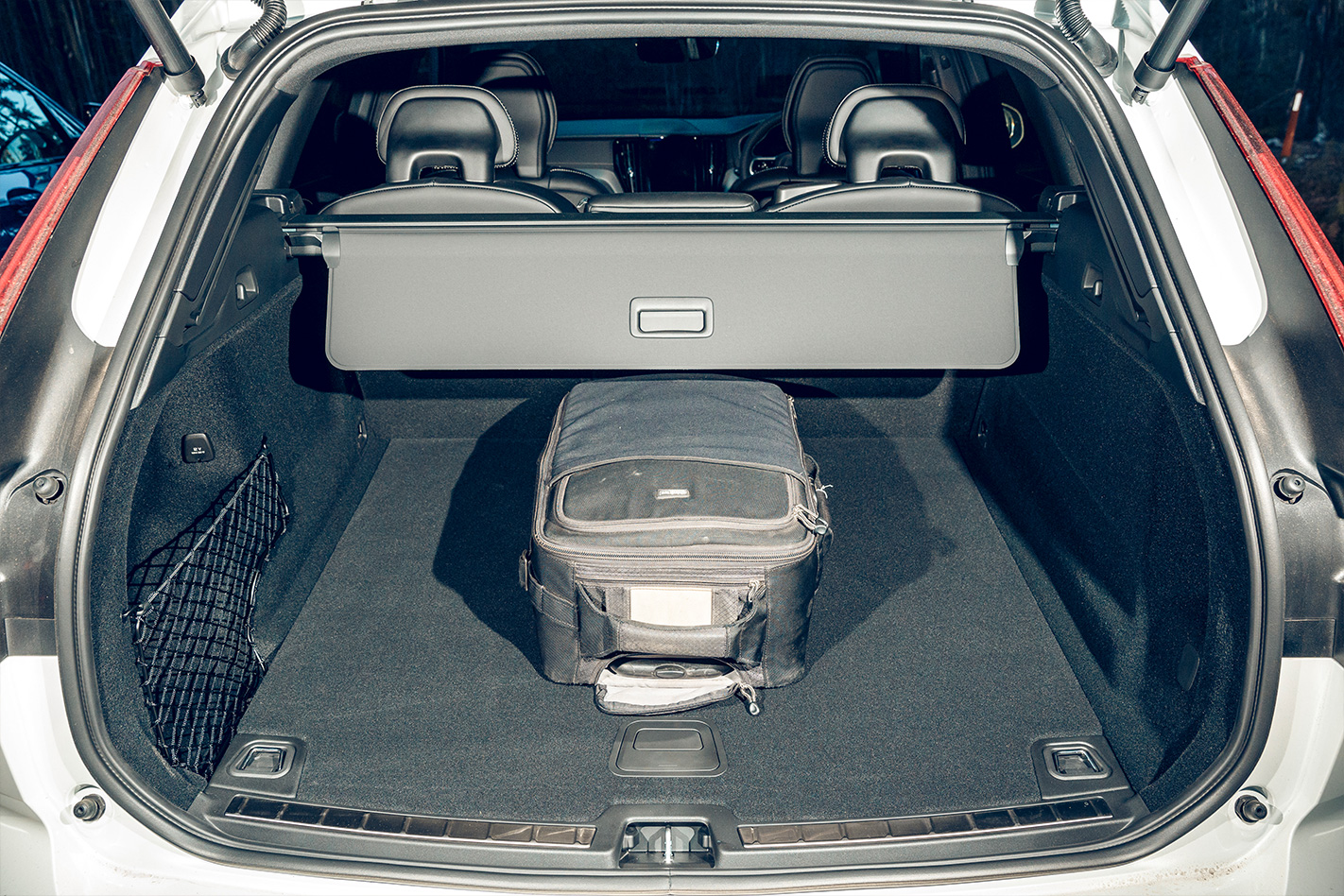
Inside there’s plenty of leg and shoulder room, and the boot space is 505 litres, which is average for medium SUV, but there’s a wide opening that helps fit bulky loads. Fold the rear seats flat and capacity expands to 1432 litres.
The Volvo XC60 D5 weighs in at 1918kg and has a decent braked towing capacity of 2400kg.
HOW SAFE ARE THEY?
BMW X3
The Australasian New Car Assessment Program (ANCAP) awarded the BMW X3 five stars for safety, its maximum, in November 2017.
The X3 xDrive20d is equipped with seven airbags: two directly in front of the driver and passenger; one on the outer side of each front occupant to protect the upper body; driver’s knee airbag, and two airbags on each side to protect the heads and chests of front and outer-rear occupants.
It also comes standard with BMW’s Driving Assistant which includes a camera-based autonomous emergency braking, lane-departure warning and blind-spot monitoring.
Volvo XC60
The second-generation Volvo XC60 took the Swedish brand’s excellent reputation for safety a step further when the European New Car Assessment Program (EuroNCAP) awarded it the highest crash rating in 2017. It excelled with “almost-perfect 98 percent” for the way it protected adults in a simulated crash. The Australasian New Car Assessment Program (ANCAP) also gave the Volvo XC60 the maximum five-star safety rating in October 2017.
It has seven airbags: two in front of the driver and front passenger; side airbags to protect front occupants from side impacts; a driver’s knee airbag; and head-protecting curtain airbags down each side that protect even the third-row passengers. There are also ISOFIX child seat anchors for the outward rear seats.Among the active safety aids on every XC60, there’s autonomous emergency braking that detects other vehicles, pedestrians, cyclists and even large animals. As well as stopping, the system will help try and steer around the object ahead of the vehicle.
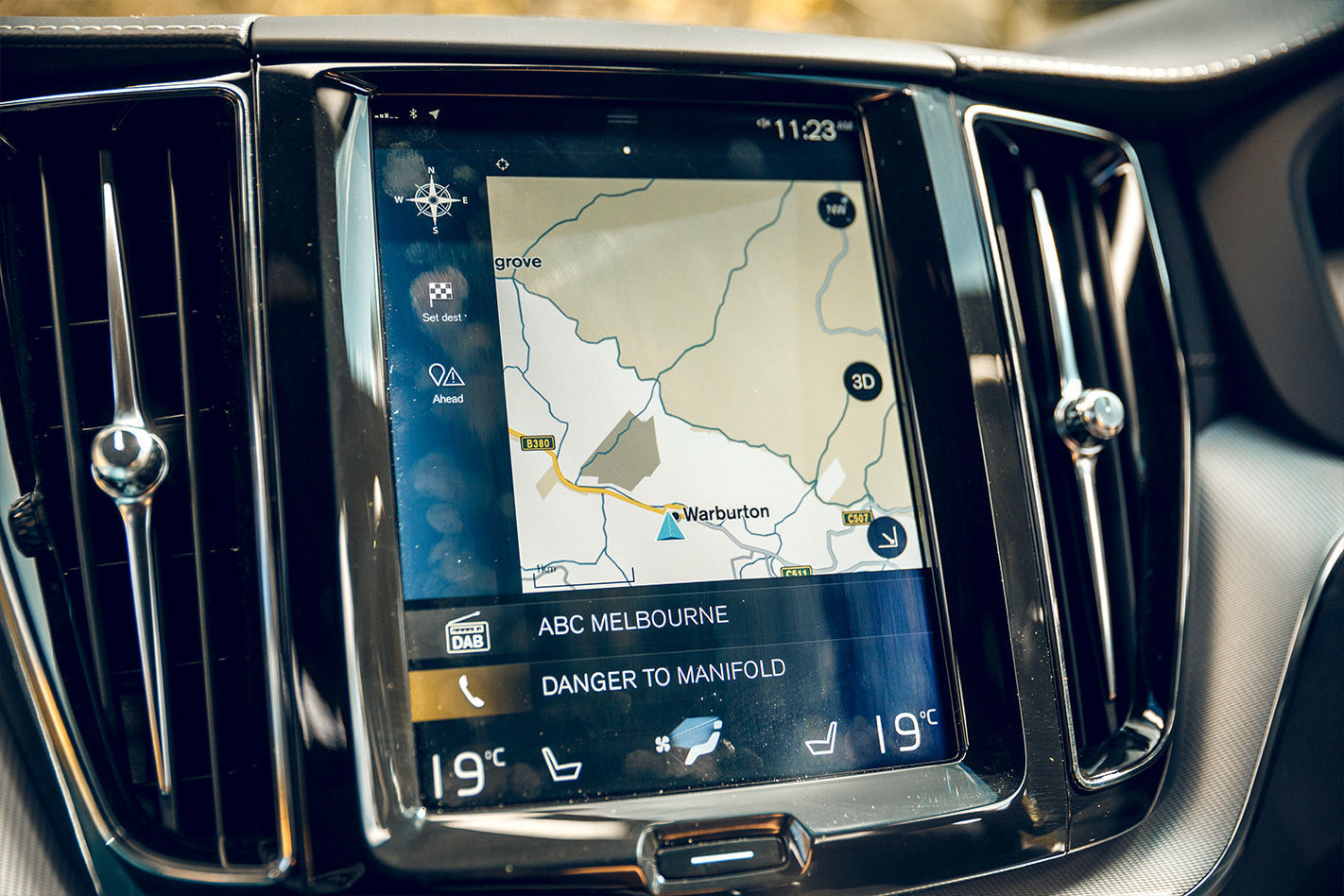
Driver fatigue alert, lane-keeping assistance, blind Spot information, and cross traffic alert are also standard, as is rear collision warning that detects if you’re about to be rear-ended and tensions your seatbelts and applies the brakes after impact.
HOW COMFORTABLE ARE THEY?
BMW X3
The cabin quality is excellent even before you start ticking option boxes. Buttons and controls are intuitively placed, easy to use and pleasant to touch thanks to their metallic coating.
The driving position is good and comfortable over long distances, and the instrument panel is neat and clearly presented – as is the head-up display.
The cabin is practical and spacious with plenty of headroom across both rows, even with the optional panoramic sunroof.
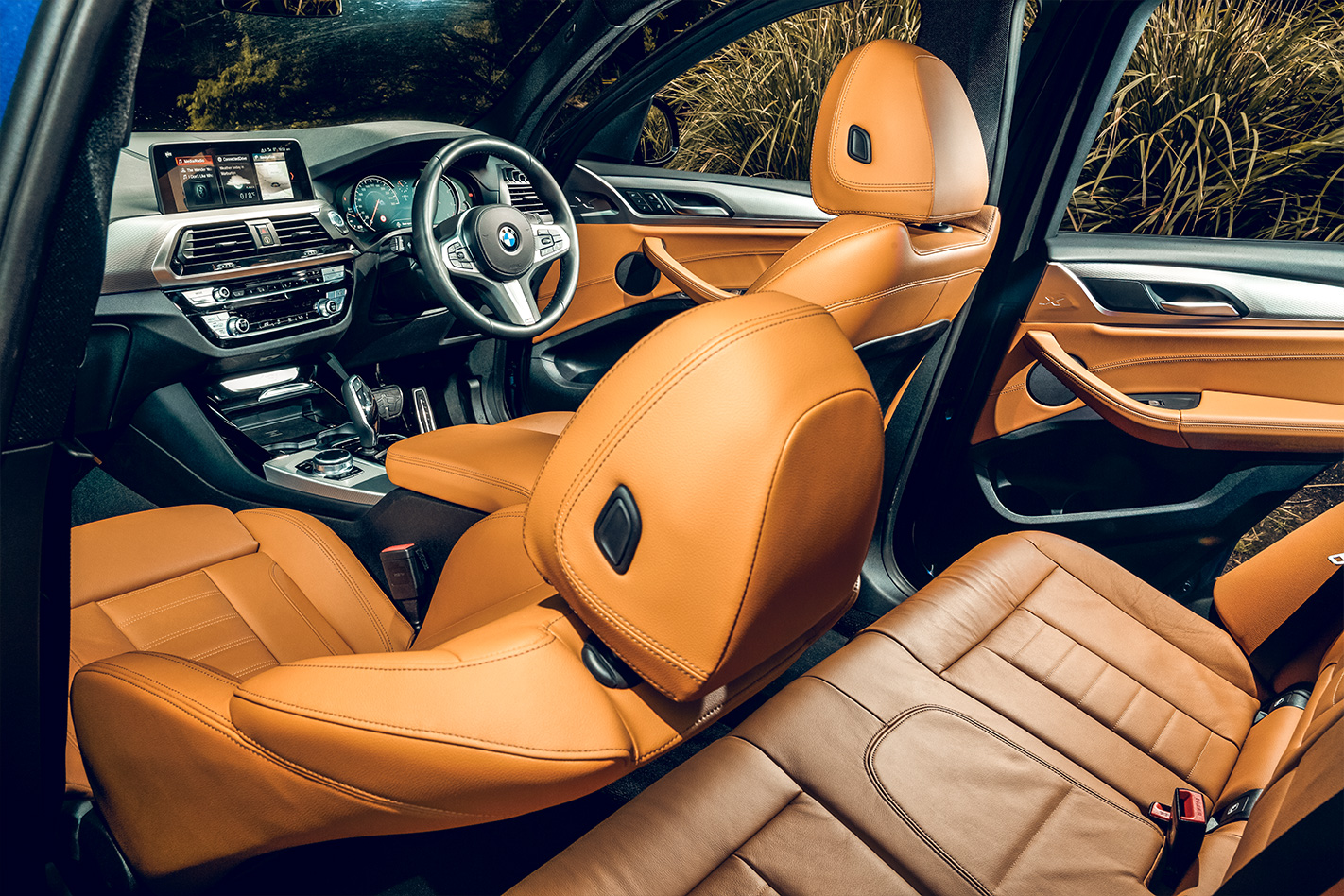
The rear compartment offers good legroom even behind taller drivers and comfortably seats three adults. The rear seat is low, which helps with headroom but hampers forward vision, though the low rear window line nevertheless affords good side vision even for kids. Rear seat passengers have their own air-conditioning vents and controls and a 12-volt socket to charge their devices.
The ride in the standard X3 is taut to the point of being jarring on all but newly laid roads. Our test car was fitted with adaptive suspension that comes with the optional M-Sport Package, which takes the edge off sharp bumps and eases the body’s vertical motion.
Cabin noise is refined with barely perceptible engine noise – an achievement for a diesel – with the din from 19-inch tyres only becoming noticeable beyond 80km/h.
Volvo XC60
The XC60 is very comfortable, with a quiet, roomy and uncluttered cabin that looks more premium than many pricier German rivals. Front seats provide excellent support on long trips. The driver is treated to a comfortable seating position, forward vision, and pleasant touch points including the leather gear shifter and steering wheel, with the latter featuring intuitively laid out controls for phone, audio and cruise control.
The control and infotainment system has multiple layers and modes via the swipe-and-push 12.3-inch portrait touchscreen. It’s is a little confusing at first, but once you’re accustomed you’ll find it is a decent mix of functionality and design. Most vehicle and climate control settings can only be operated via the screen. While, this has reduced clutter around the dashboard and centre console, it can prove troublesome on rougher roads where you’ll be wishing there were more physical buttons.
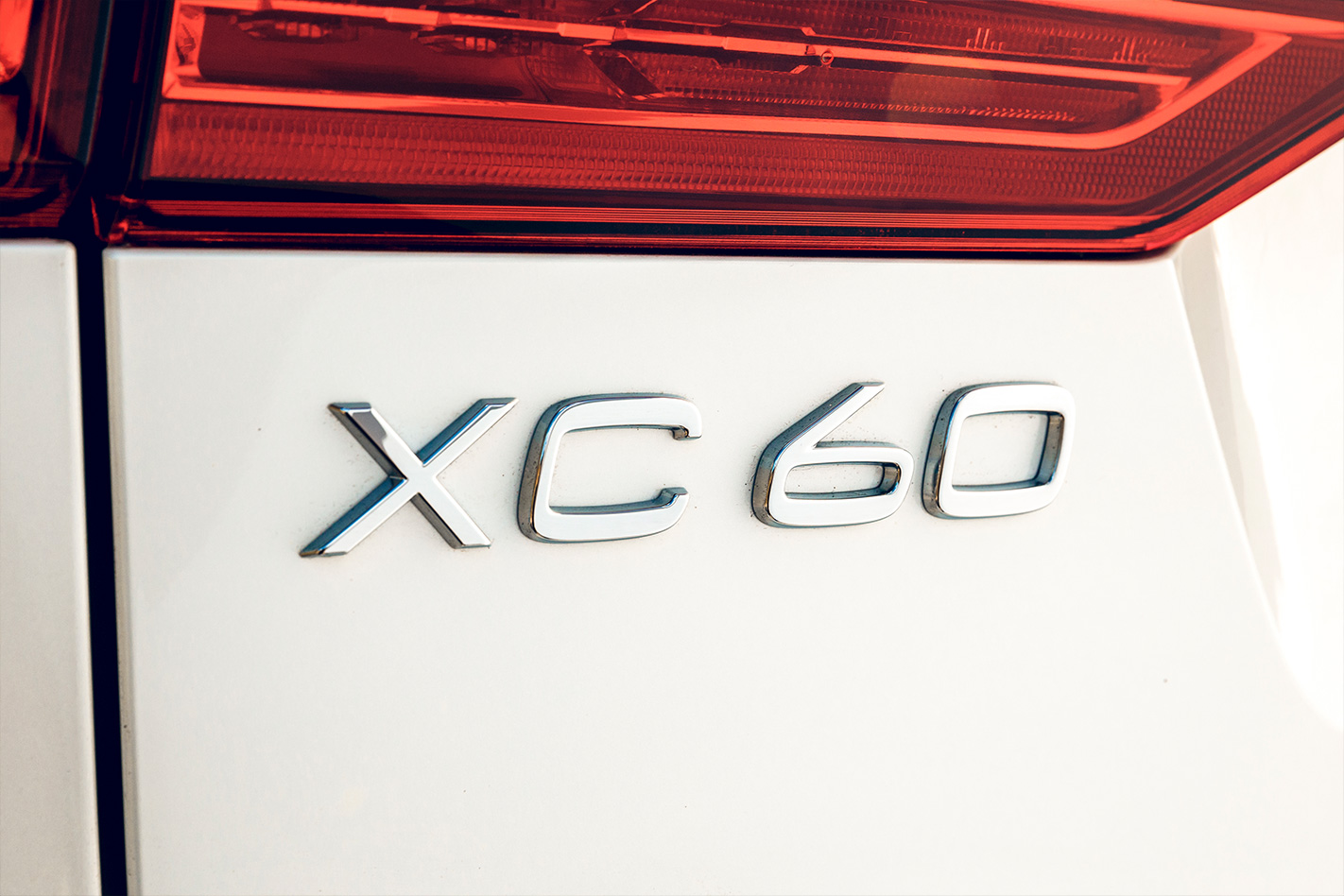
Second-row seating is also very comfortable but legroom is limited for taller people who’ll find their shins touching the front seats. The low window line and good forward vision helps children feel less hemmed in.
The rear has its own digital climate dual-zone control display with air vents situated on the door pillar, and there’s a 12v socket for charging devices or powering auxiliary equipment.
The cabin refinement is undermined a little by standard steel suspension springs that, along with the big 21-inch wheels, lead to a ride that’s firmer than you’d expect, or want, from a luxury SUV.
WHAT ARE THEY LIKE TO DRIVE?
BMW X3
The BMW X3 xDrive20d’s 140kW/400Nm turbodiesel engine is no bolter, but provides enough thrust for urban and highway driving, It has adequate power reserves to keep up with most traffic when asked to climb hills, though there can be a moment’s hesitation when you put the foot down.
The eight-speed automatic gearbox does a good job keeping up with pedal inputs, and if you feel like contributing to the shifting you can flick the gear shifter into manual mode (or use paddle shifters if you have the M-Sport Package fitted).
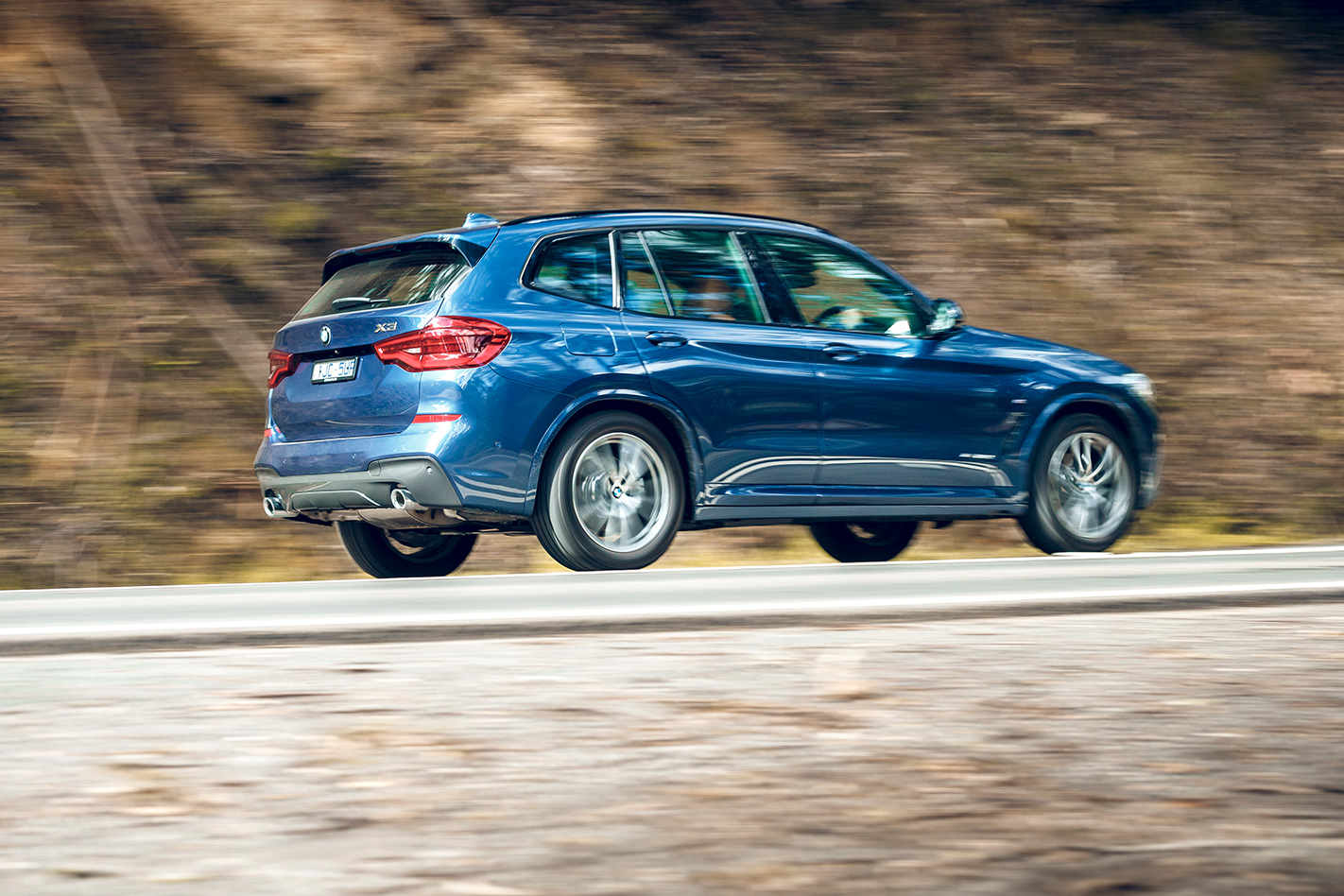
With the adaptive dampers the ride feels composed even on rougher surfaces. It rides particularly well in Comfort mode, and while switching to Sport makes for a firmer ride, it still absorbs bumps well with minimal jarring.
The steering has a nice fluid feel to it in Comfort mode, but in Sport mode it’s unexpectedly more inconsistent meaning you lose feedback on sharper turns. Fortunately you can tailor the driving settings to come to a compromise between Sport’s sharper handling and Comfort’s direct steering.
The xDrive20d is also handy on rougher tracks, with effective all-wheel-drive and a hill-descent control system as standard.
Volvo XC60
Apart from the raised driving position, the Volvo doesn’t make you feel like you’re behind the wheel of an SUV.
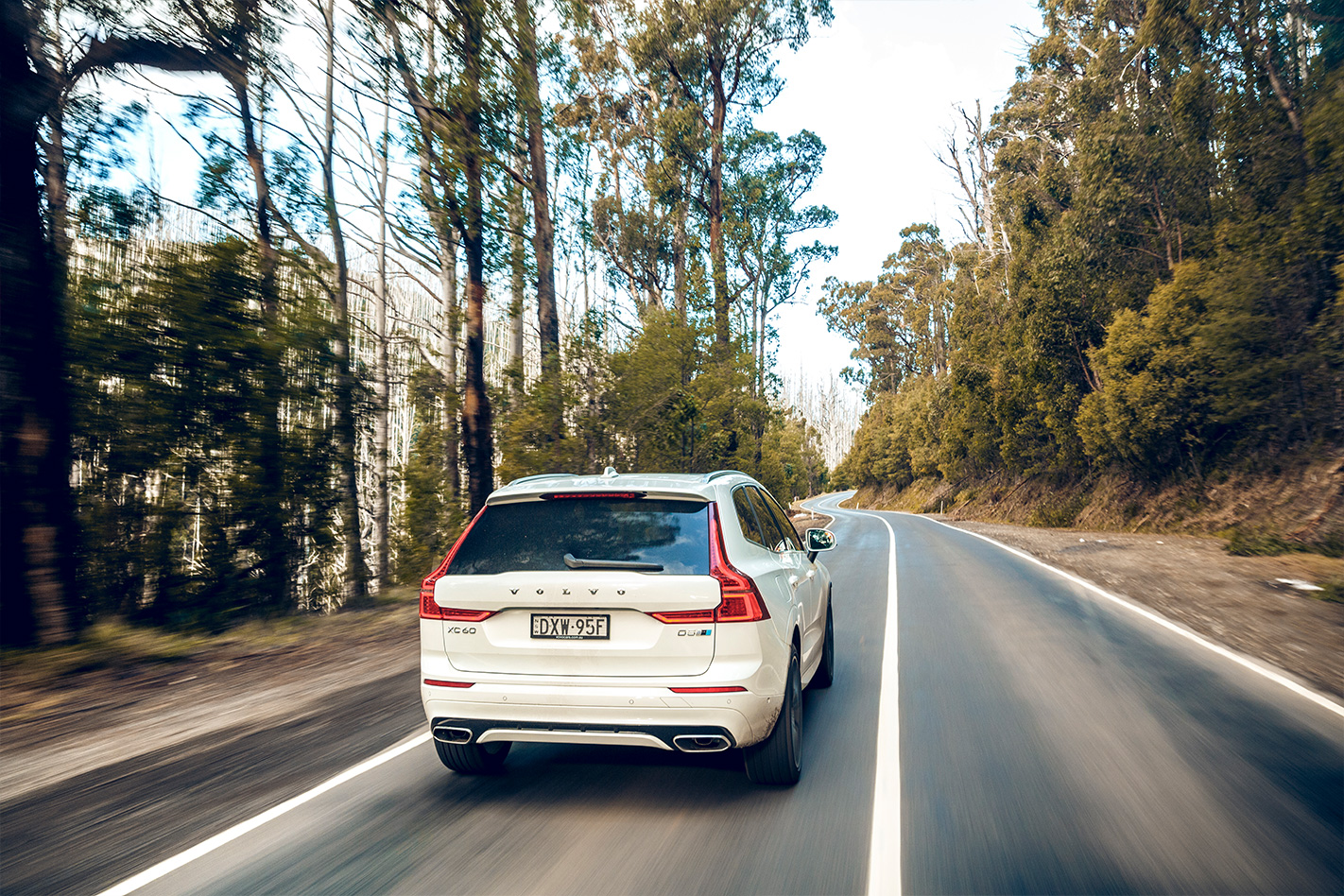
Apart from some inevitable turbo lag, the twin-turbo D5 has plenty of shove, with excellent acceleration, particularly in the Dynamic driving mode. It sits comfortably at higher speeds, with plenty of power in reserve to make quick overtaking a doddle.
The steering can feel a little disconnected though. It’s accurate and consistently-geared but doesn’t offer much in the way of feedback which can sap confidence a little when entering tighter corners.
You also feel every pothole with the standard steel suspension, not helped by the wagon-wheel 21-inch rims with skinny rubber. The ride is choppy on country backroads, but reasonably composed on freeways or around town. If there’s one option box you should tick on any XC60 it’s the Active Chassis with Air Suspension, which offers a far more complaint ride and adapts to different road and driving conditions.
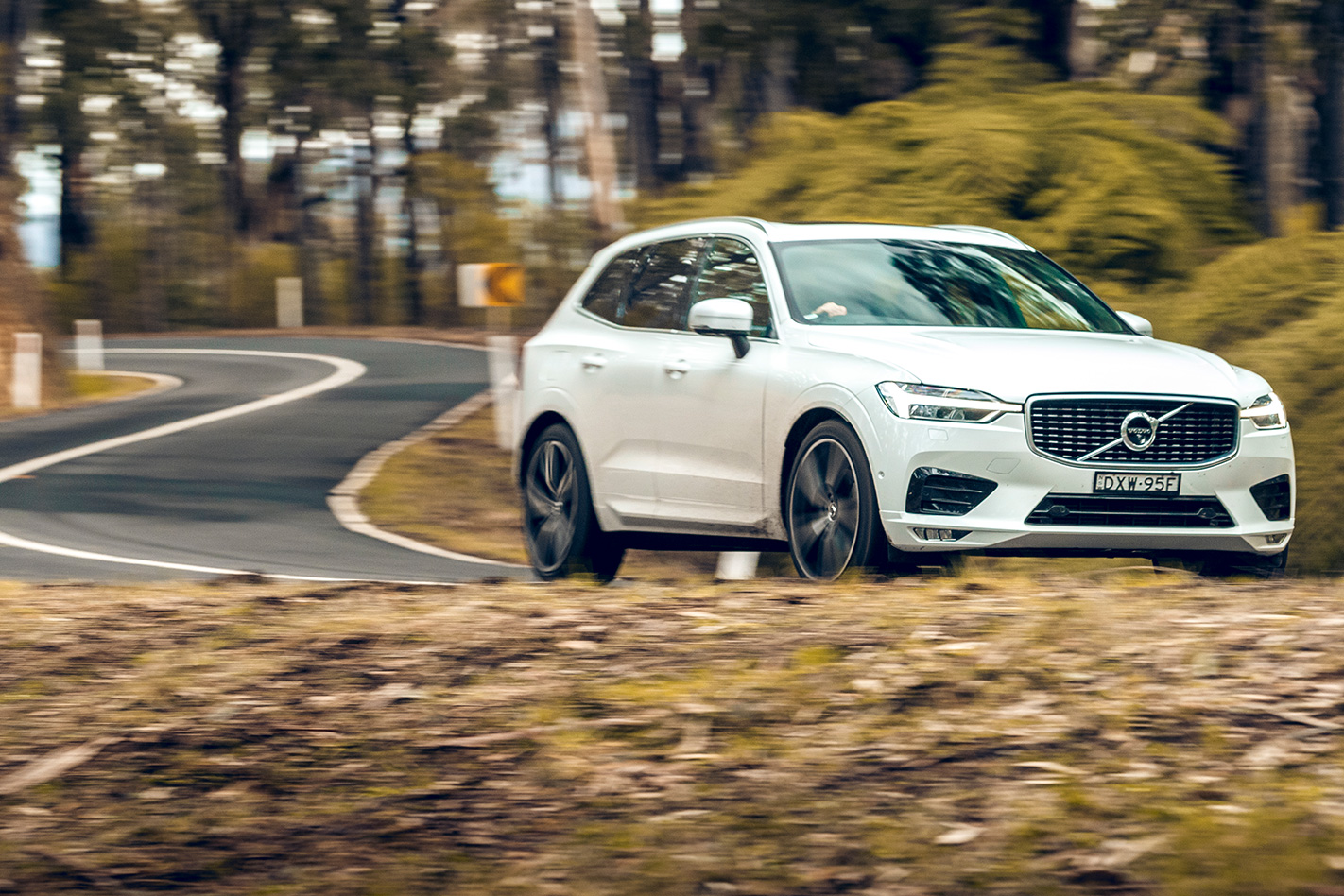
The XC60’s all-wheel drive helps it maintain drive on snowy or otherwise slippery sealed roads, on gravel roads and reasonably intact tracks. That said, if you were to get a flat tyre while off the beaten track, you would have to struggle home on the skinny space-saver spare.
OUR OPINION
There’s a reason the Volvo XC60 has a bevy of trophies to its name. It does almost everything well and has managed to steal the title of “luxury SUV benchmark” away from BMW and its German compatriots.
Furthermore, the Volvo XC60 D5 R-Design is one of the stand-out variants in the range, ticking most premium SUV boxes including elegance, safety, build quality, economy and performance. The ride and handling sections of the scoresheet aren’t as impressive, but this can be ticked off by investing $2490 in the Active Suspension Air Suspension option that transforms this very good luxury SUV into a great one – and will still bring you about $5000 from the similarly optioned X3.
The BMW X3 Drive20d’s emphasis on comfort and family practicality is aimed squarely at the average luxury SUV buyer and hits the spot. It’s enjoyable to drive too, with enough power for everyday driving, and the optional adaptive dampers – available separately or as part of the M-Sport Package – bring an enhanced ride quality that approaches that of the best alternative premium SUVs.
Both are excellent premium SUVs, and while the Volvo has the edge in terms of all-round capability and value for money, there’s certainly not much to be lost with going for the BMW option, should your heart desire it more.
