
MELBOURNE’S freeways are encouraging automated cars to break the speed limit, confusing them to the point where they don’t think there is one, according to the results of a country-first trial.
The results, published by toll road operator Transurban, relate to more than 4900km of testing clocked up behind the wheel of 12 different vehicles from six different manufacturers.
The stage one trial was intended to see how well the technology, which is mostly being developed overseas, translates to our roads. In summary, it struggled.
Of note, the Sound Tube, a skeleton-like structure built over the Tullamarine Freeway in inner Melbourne to deflect road noise away from residential towers, confused cars so much that instead of reading the posted speed limit as 80km/h, some cars interpreted it as 110km/h, and in some instances as an open speed limit.
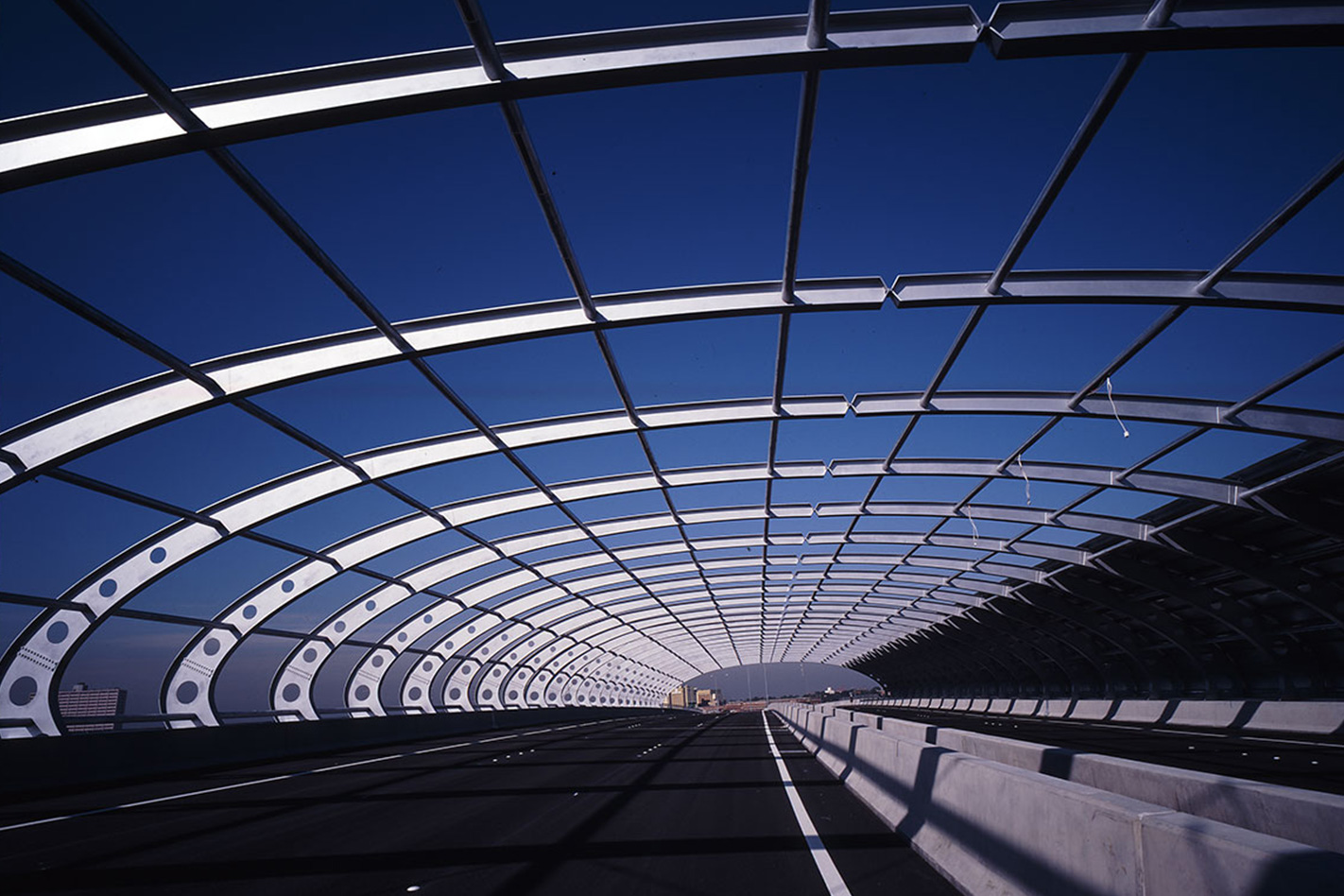
The report, which details the results of trials based on the ability for drivers to take their hands from the wheel for short periods of time, found the cars were confused by bits of roadside furniture that human drivers would ordinarily have little to no trouble dealing with.
Of note, electronic speed signs proved the most difficult to manage, with signs mounted on the wall of the Burnley and Domain tunnels rarely read correctly. Strangely, if the signs were flashing, there was more likelihood that the signs would be recognised by the car.
The cars had more chance with static speed signs, but at times they would pick up lower-speed signs posted on off-ramps, and incorrectly recognise that as the limit.
Transurban said none of the cars in the trial had earned a speeding ticket. “The speed sign recognition feature in the vehicles were tested to see how they interacted with our road – it did not automatically adjust the speed of the vehicles,” the toll road operator said in a statement. “The drivers had control of the vehicles at all times, so there were no occasions when the vehicles were speeding.”
There were more confusing elements, though. The cars favoured solid lines over broken ones, the report said, even following them on to off-ramps instead of following broken lines to stay on the toll road.
The cars also struggled to see other vehicles that had stopped because they had crashed or broken down, debris lying on the road surface, or traffic cones related to roadworks.
The trial report also notes vehicles travelling to the side of the test cars, such as those merging from on-ramps, “may not be detected”. It noted that trial vehicles also failed to make space for merging cars to filter into the lane.
Australia’s struggles with automated and self-driving technology come as Tesla chairman Elon Musk confirmed the California-based car maker was looking to build more aggro into its products to make them behave more like human drivers than robots.
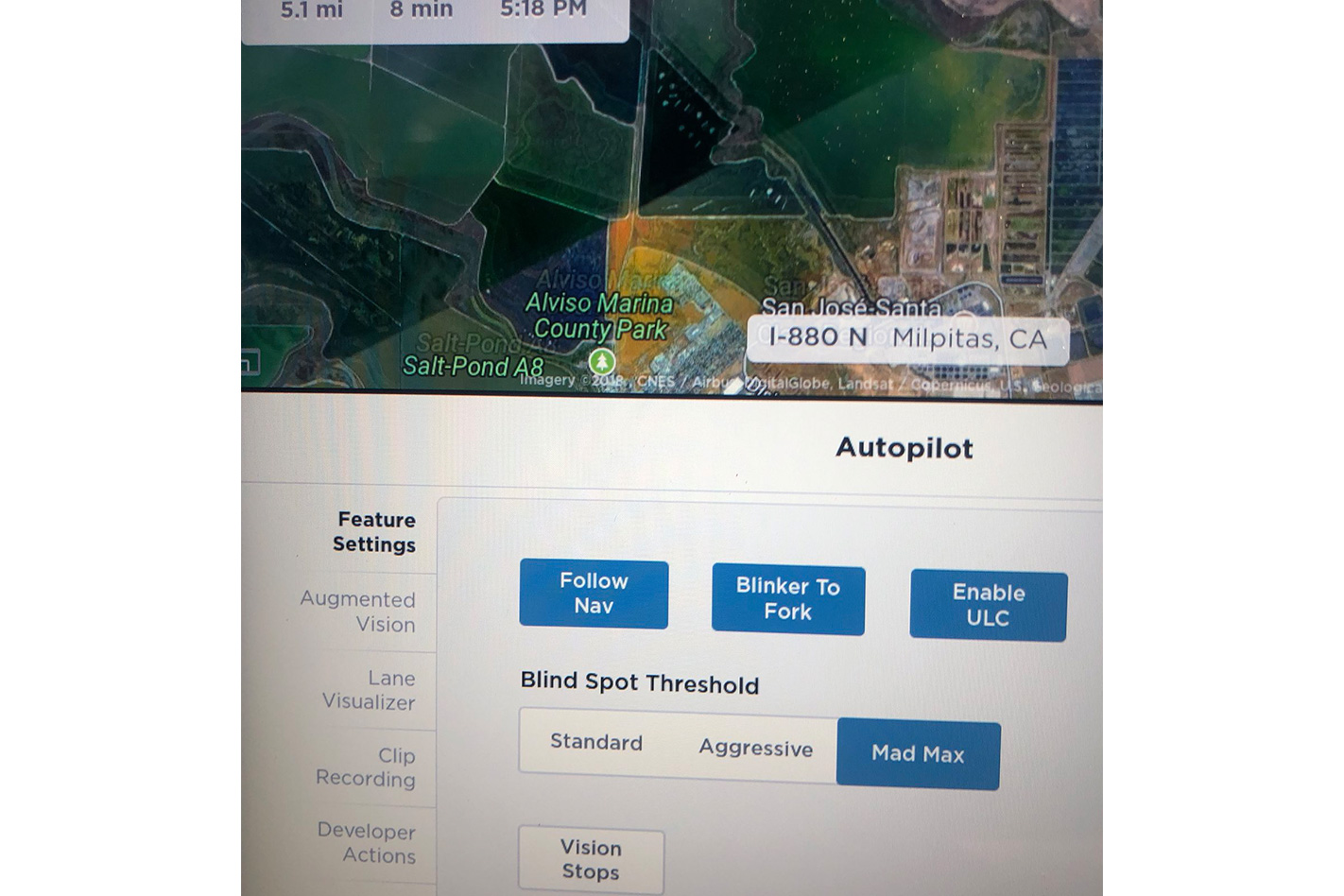
In its more aggressive form, the software mode that helps the Tesla automatically change lanes by pushing in is tagged the Mad Max mode.
“It’s real,” Musk posted on Twitter alongside an image of the mode on what is believed to be the central touchscreen developed for the electric prime mover revealed late last year.
As to what it all means, Musk provides a clue. Asked how Tesla would allow drivers to activate the mode, Musk replied “Reality is that it will be pretty easy to bully a self-driving car, as it will always yield. Will prob have a manual override that requires continuous press for hardcore lane changes.”
So there’s your problem. Self-driving cars will be so gun-shy of offending other cars on the road that Tesla feels the need to build in a more aggressive driving mode that make the machines it builds exhibit traits that are more like humans.
This struggle is not new. Google has been working on the problem of how to barge its self-driving architecture in front of a human driver since 2015. And in 2016, a survey of drivers found that most believed autonomous cars would be easy prey on the roads, allowing humans to chop in on machines and bully them into submission.
Car components supplier Delphi has already developed a system that allows drivers to dial up the amount of enthusiasm that a self-driving car integrates into the world around it. Tests showed the donor car, and Audi Q5, could flick lanes through just as skilfully as a human driver, and easily keep pace with the vehicles around it.
Italy didn’t qualify for the soccer (sorry, football) World Cup, but some national pride can be salvaged with their automotive fortunes at least here in Australia.
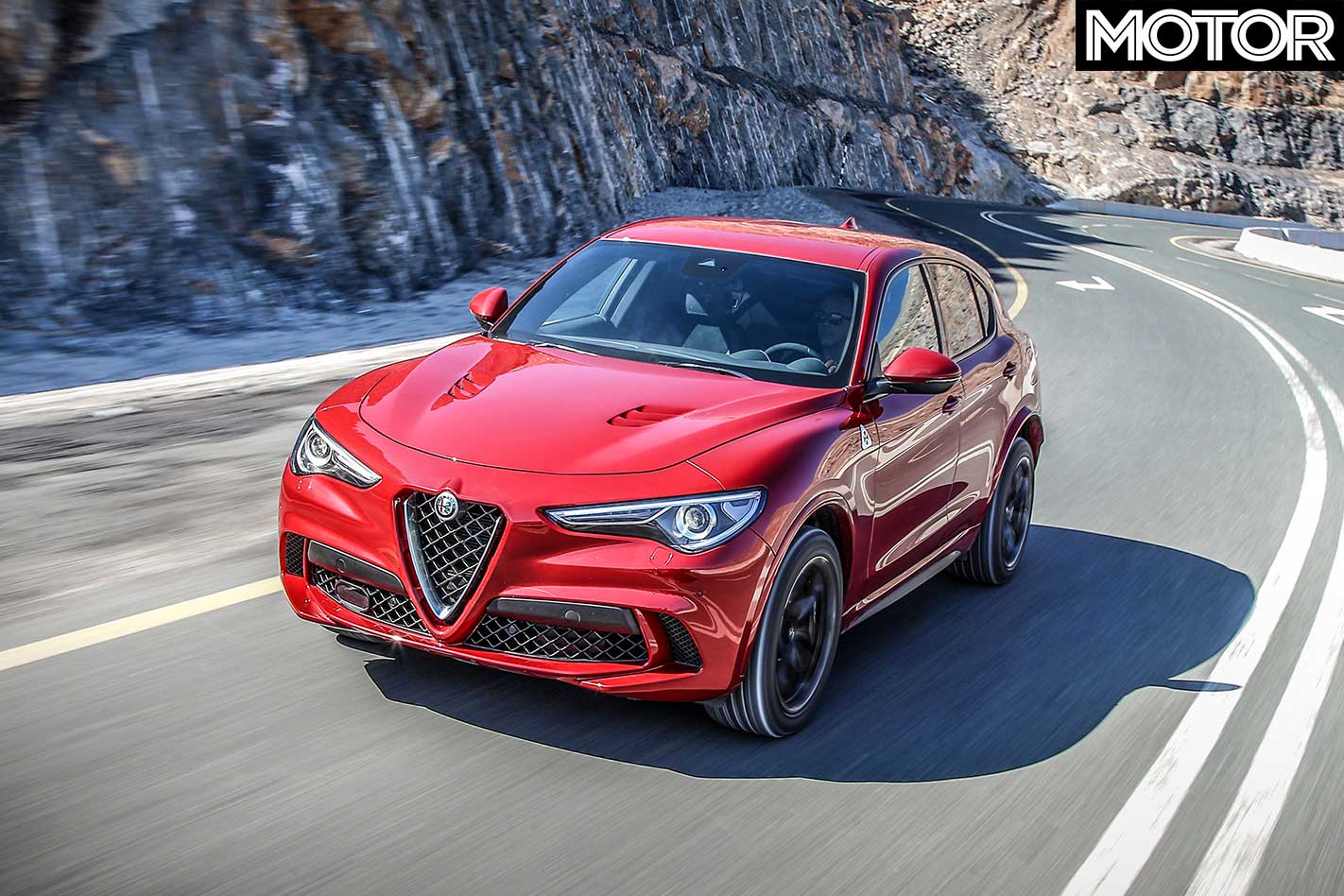
According to May year-to-date sales data, Alfa Romeo is up 36.1 per cent to 509 units. Of that, 248 Giulias are backed by 114 Stelvios – and that medium SUV’s stonking Q variant is still to come. Ferrari has sold 98 cars, up 24.1 per cent, while Lamborghini has shifted 55 units, up 10.0 per cent and with Urus to come.
Only Maserati has let the Italian side down, although its 323 sales have only slipped 4.7 per cent, with increased Ghibli (up 30.5 per cent to 107 units) offset by decreased Levante (down 24.3 per cent to 168 units).
In something of a tri-nations battle, however, Italy is comfortably leading German and (especially) British opposition for growth.
Audi, BMW and Mercedes-Benz have stalled this year, despite a new model onslaught, while Porsche is down 14.8 per cent. The Giulia is selling at almost one-third the rate of the better-known Audi A4 (down 34.7 per cent to 635 sales), while Ghibli is just on that rate of BMW 5 Series sales (after a huge 2017, it has plummeted 49.7 per cent to 601 units).
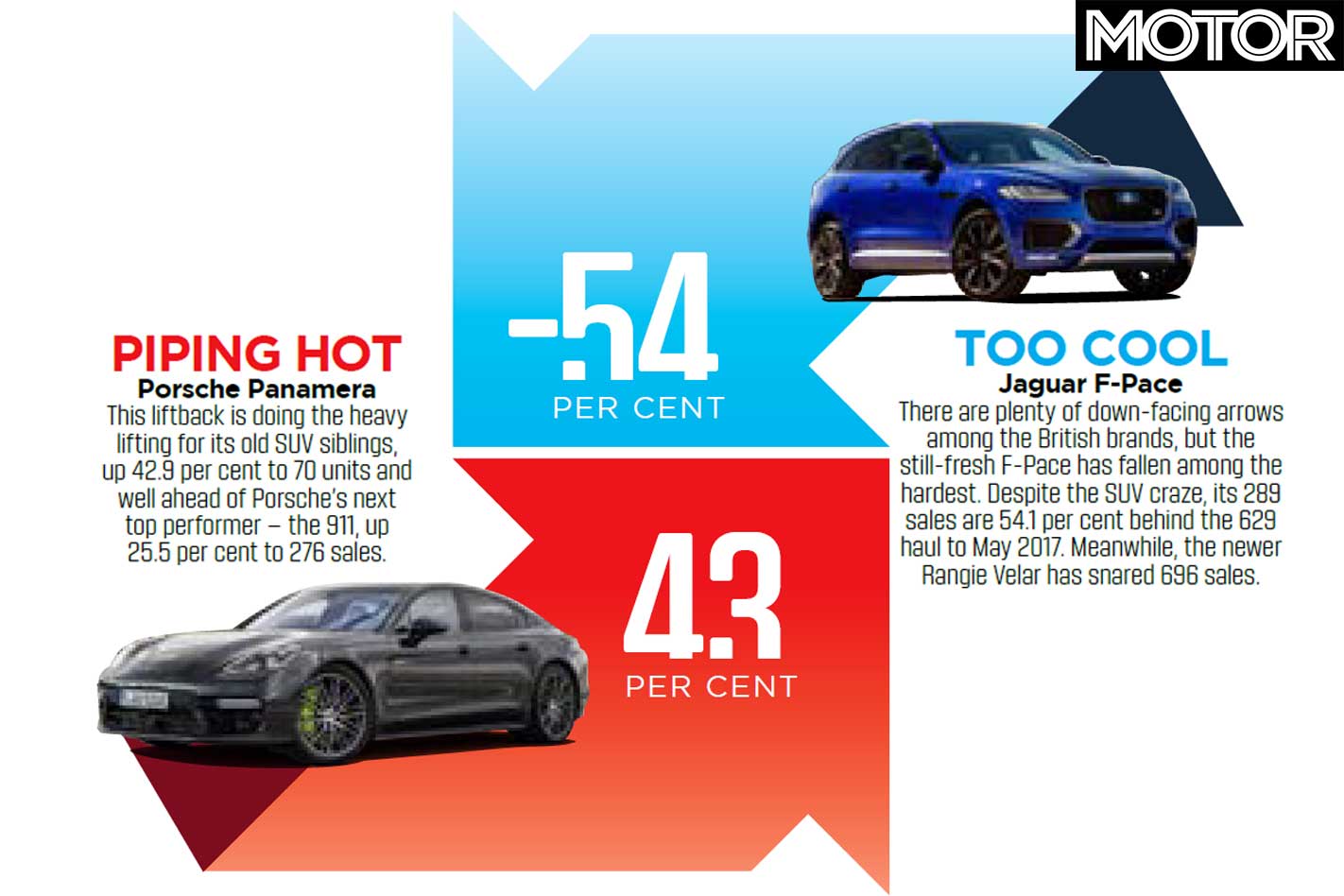
Jaguar won’t be as happy as Harry (and Megan), either, with its 890 sales down 26.4 per cent. It is now – despite improving its brand for a decade since the XF of 2008 – only 381 ahead of Alfa overall.
McLaren’s miniscule 38 sales are a quarter behind this time last year, while even Land Rover isn’t riding the SUV boom like it should, down 26.4 per cent to 890 sales. Even new Velar (with 696 sales) isn’t quite enough to offset the hugely off-the-pace Evoque (down 57.6 per cent to 597 sales) and Range Rover (down 44.2 per cent to 111 units).
INTERNET super-sleuths have uncovered what appears to be the Forza Horizon 4 car list and leaked it online overnight, well ahead of the video game’s scheduled launch.
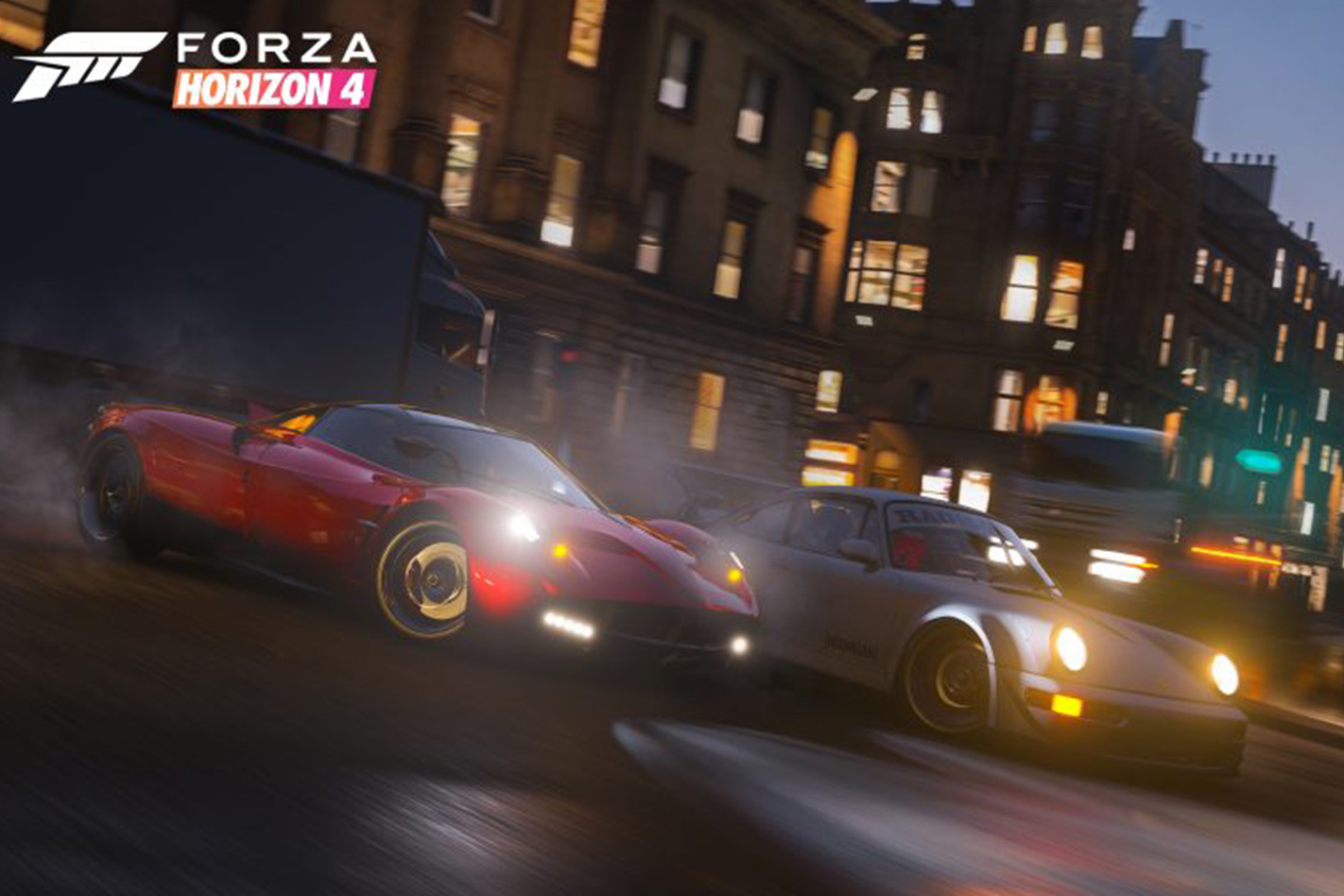
Revealed at the Electronic Entertainment Expo (E3) in Los Angeles earlier this month, Forza Horizon 4 is the latest instalment of Microsoft’s open-world racing game for Xbox, and will be set in the British countryside.
At the announcement developers confirmed the game would feature 450 cars and more than 100 vehicle manufacturers.
However, this leaked list includes 456 unique cars (482 if you include ‘Forza Editions’) from 87 manufacturers. With the numbers not adding up, some fans and experts have suggested the leaked list is provisional, and will be subject to change before the game is released on October 2.
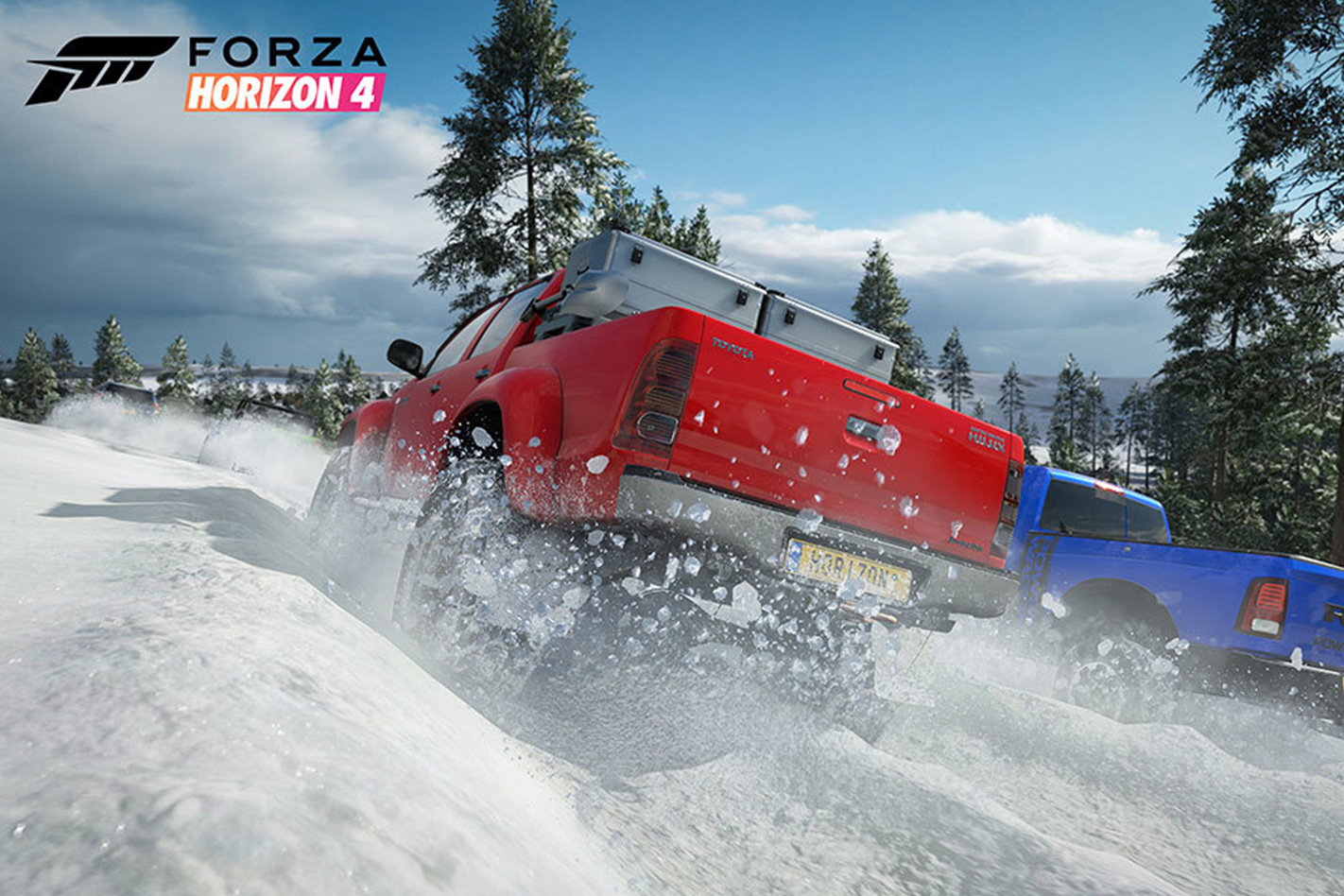
At this stage the list includes a handful of Aussie icons such as the 2014 HSV GTS and 1972 Ford Falcon XA GT-HO, though a large selection of local metal that featured in Forza Horizon 3 – which was set in Australia – has been omitted.
Those facing the chop are the 1985 HDT VK Commodore Group A, 1996 HSV GTSR, 1967 Ford Falcon XR GT, 1992 Ford Falcon GT, 1971 Ford Falcon XY GTHO Phase III, 2015 Ford Falcon XR8, and all Holden and Ford V8 Supercars do not appear on the leaked list.
Let’s hope these fantastic Aussie ambassadors make their way back into the game come October, so we can thrash the Poms on their (virtual) home turf.
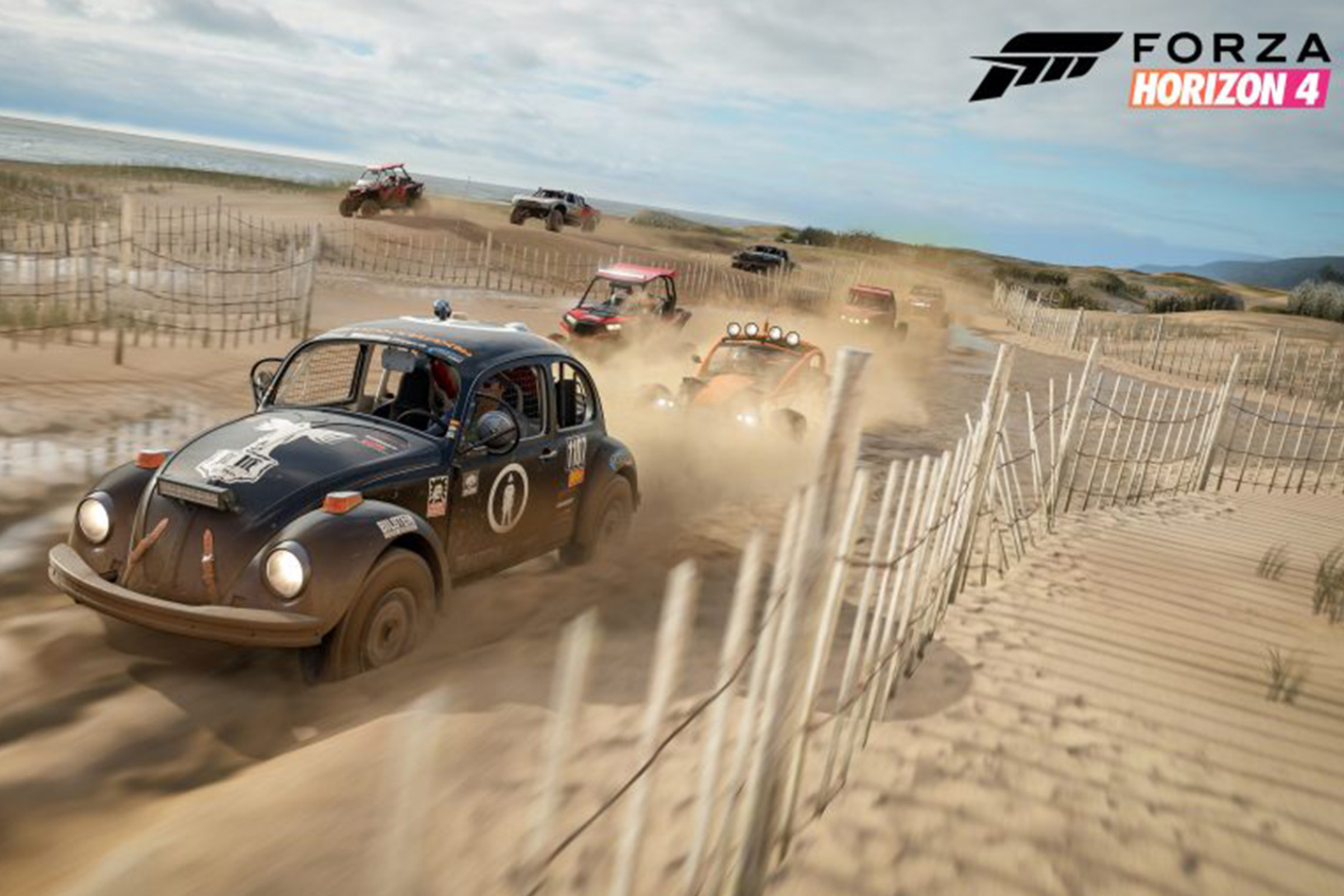
Interestingly, some other cars appeared in gameplay demos of Forza Horizon 4 at E3 but aren’t included in the list, such as the 1955 Morris Minor and 1971 Plymouth GTX 426 Hemi. Stay tuned for more on this one.
The full leaked list is included below:
Abarth – 3 1968 Abarth 595 esseesse 1980 Abarth Fiat 131 2016 Abarth 695 Biposto
Acura – 3 2001 Acura Integra Type-R 2002 Acura RSX Type-S 2017 Acura NSX
Alfa Romeo – 9 1934 Alfa Romeo P3 1965 Alfa Romeo Giulia Sprint GTA Stradale 1965 Alfa Romeo Giulia TZ2 1968 Alfa Romeo 33 Stradale 2007 Alfa Romeo 8C Competizione 2007 Alfa Romeo 8C Competizione “Forza Edition” 2014 Alfa Romeo 4C 2017 Alfa Romeo Giulia Quadrifoglio 2017 Alfa Romeo Giulia Quadrifoglio “Forza Edition”
Alumi Craft – 2 2015 Alumi Craft Class 10 Race Car 2015 Alumi Craft Class 10 Race Car “Forza Edition”
AMC – 1 1971 AMC Javelin AMX
AMG – 1 2554 AMG M12S Warthog CST
Ariel – 2 2013 Ariel Atom 500 V8 2016 Ariel Nomad
Aston Martin – 10 1958 Aston Martin DBR1 1960 Aston Martin DB4GT Zagato 1964 Aston Martin DB5 2010 Aston Martin One-77 2012 Aston Martin V12 Zagato 2012 Aston Martin Vanquish 2013 Aston Martin V12 Vantage S 2016 Aston Martin Vantage GT12 2016 Aston Martin Vulcan 2016 Aston Martin Vulcan “Forza Edition” 2017 Aston Martin DB11
Audi – 17 1983 Audi Sport quattro 1983 Audi Sport quattro “Forza Edition” 1986 Audi #2 Audi Sport Quattro S1 1995 Audi RS2 Avant 2001 Audi RS4 Avant 2003 Audi RS6 2006 Audi RS 4 2009 Audi RS6 2010 Audi TT RS Coupé 2011 Audi RS 3 Sportback 2011 Audi RS 5 Coupé 2013 Audi R8 Coupé V10 plus 5.2 FSI quattro 2013 Audi RS 4 Avant 2015 Audi RS 6 Avant 2015 Audi S1 2015 Audi TTS Coupé 2016 Audi R8 V10 plus
Austin – 1 1964 Austin FX4 Taxi
Austin-Healey – 2 1958 Austin-Healey Sprite Mk I 1965 Austin-Healey 3000 Mk III
Auto Union – 1 1939 Auto Union Type D
BAC – 1 2014 BAC Mono
Bentley – 5 1931 Bentley 4½ Litre Supercharged 2013 Bentley Continental GT Speed 2013 Bentley Continental GT Speed “Forza Edition” 2016 Bentley Bentayga 2017 Bentley Continental Supersports
BMW – 25 1957 BMW Isetta 300 Export 1973 BMW 2002 Turbo 1981 BMW M1 1988 BMW M5 E28 1988 BMW M5 E28 “Forza Edition” 1991 BMW M3 E30 1995 BMW M5 E34 1997 BMW M3 E36 2002 BMW Z3 M Coupe 2003 BMW M5 E39 2005 BMW M3 E46 2008 BMW M3 E92 2008 BMW Z4 M Coupe 2009 BMW M5 V10 E60 2011 BMW 1 Series M Coupe 2011 BMW X5 M 2011 BMW Z4 sDrive35is 2012 BMW M5 F10 2013 BMW M6 Coupe 2013 BMW M6 Coupe “Forza Edition” 2014 BMW M4 Coupe 2015 BMW i8 2015 BMW X6 M 2016 BMW M2 Coupé 2016 BMW M4 GTS
Bowler – 1 2012 Bowler EXR-S
Bugatti – 4 1926 Bugatti Type 35 C 1992 Bugatti EB110 Super Sport 2011 Bugatti Veyron Super Sport 2018 Bugatti Chiron
Buick – 1 1987 Buick Regal GNX
Cadillac – 3 2013 Cadillac XTS Limosuine 2016 Cadillac ATS-V Coupe 2016 Cadillac CTS-V Sedan
Caterham – 2 2013 Caterham Superlight R500 2013 Caterham Superlight R500 “Forza Edition”
Chevrolet – 23 1953 Chevrolet Corvette 1955 Chevrolet 150 Utility Sedan 1957 Chevrolet Bel Air 1960 Chevrolet Corvette 1964 Chevrolet Impala Super Sport 409 1966 Chevrolet Nova Super Sport 1967 Chevrolet Corvette Stingray 427 1969 Chevrolet Nova Super Sport 396 1969 Chevrolet Nova Super Sport 396 “Forza Edition” 1969 Chevrolet Camaro Super Sport Coupe 1970 Chevrolet Camaro Z28 1970 Chevrolet Chevelle Super Sport 454 1970 Chevrolet Corvette ZR-1 1970 Chevrolet El Camino Super Sport 454 1979 Chevrolet Camaro Z28 1988 Chevrolet Monte Carlo Super Sport 1990 Chevrolet Camaro IROC-Z 1995 Chevrolet Corvette ZR-1 2002 Chevrolet Corvette Z06 2009 Chevrolet Corvette ZR1 2015 Chevrolet Corvette Z06 2015 Chevrolet Camaro Z/28 2017 Chevrolet Camaro ZL1
Datsun – 1 1970 Datsun 510
Dodge – 10 1968 Dodge Dart Hemi Super Stock 1969 Dodge Charger Daytona HEMI 1969 Dodge Charger R/T 1970 Dodge Challenger R/T 1999 Dodge Viper GTS ACR 2008 Dodge Viper SRT10 ACR 2015 Dodge Challenger SRT Hellcat 2015 Dodge Charger SRT Hellcat 2016 Dodge Viper ACR 2018 Dodge Durango SRT
Eagle – 1 2011 Eagle Speedster
Ferrari – 32 1948 Ferrari 166MM Barchetta 1953 Ferrari 500 Mondial 1957 Ferrari 250 California 1957 Ferrari 250 Testa Rossa 1962 Ferrari 250 GT Berlinetta Lusso 1962 Ferrari 250 GTO 1965 Ferrari 250 LM 1967 Ferrari 330 P4 1968 Ferrari 365 GTB/4 1969 Ferrari Dino 246 GT 1984 Ferrari 288 GTO 1987 Ferrari F40 1989 Ferrari F40 Competizione 1992 Ferrari 512 TR 1994 Ferrari F355 Berlinetta 1995 Ferrari F50 1996 Ferrari F50 GT 2002 Ferrari 575M Maranello 2002 Ferrari Enzo Ferrari 2003 Ferrari 360 Challenge Stradale 2007 Ferrari 430 Scuderia 2009 Ferrari 458 Italia 2010 Ferrari 599 GTO 2010 Ferrari 599XX 2011 Ferrari FF 2012 Ferrari F12berlinetta 2013 Ferrari 458 Speciale 2013 Ferrari LaFerrari 2014 Ferrari California T 2014 Ferrari FXX K 2015 Ferrari 488 GTB 2015 Ferrari F12tdf
Fiat – 2 1980 Fiat 124 Sport Spider 2017 Fiat 124 Spider Abarth
Ford – 44 1932 Ford De Luxe Five-Window Coupe 1940 Ford De Luxe Coupe 1946 Ford Super Deluxe Station Wagon 1956 Ford F-100 1965 Ford Mustang GT Coupe 1964 Ford GT40 Mk1 1966 Ford GT40 Mk II 1966 Ford Lotus Cortina 1969 Ford Mustang Boss 302 1972 Ford Falcon XA GT-HO 1972 Ford Falcon XA GT-HO “Forza Edition” 1973 Ford Capri RS3100 1973 Ford Capri RS3100 “Forza Edition” 1973 Ford Escort RS1600 1973 Ford XB Falcon GT 1975 Ford Bronco 1977 Ford Escort RS1800 1981 Ford Fiesta XR2 1985 Ford RS200 Evolution 1986 Ford Escort XR3I RS Turbo 1987 Ford Sierra Cosworth RS500 1992 Ford Escort RS Cosworth 1993 Ford SVT Cobra R 2000 Ford SVT Cobra R 2003 Ford Focus RS 2005 Ford GT 2009 Ford Focus RS 2010 Ford Crown Victoria Police Interceptor 2011 Ford Transit SuperSportVan 2011 Ford Transit SuperSport Van “Forza Edition” 2011 Ford F-150 SVT Raptor 2013 Ford Shelby GT500 2014 Ford #11 Rockstar Energy Trophy Truck 2014 Ford Fiesta ST 2014 Ford FPV Limited Edition Pursuit Ute 2014 Ford Ranger T6 Rally Raid 2015 Ford Falcon GT F 351 2016 Ford GYMKHANA 9 Focus RS RX 2016 Ford Mustang GT350R 2017 Ford #14 BFGoodrich Fiesta ST GRC 2017 Ford F-150 Raptor 2017 Ford Focus RS 2017 Ford GT 2019 Ford Mustang GT
GMC – 1 1983 GMC Vandura G-1500
Hennessey – 1 2012 Hennessey Venom GT
Holden – 3 1973 Holden HQ Monaro GTS 350 1974 Holden Sandman HQ panel van 1977 Holden Torana A9X
Honda – 9 1991 Honda CR-X SiR 1992 Honda NSX-R 1997 Honda Civic Type R 2004 Honda Civic Type-R 2005 Honda NSX-R 2007 Honda Civic Type R 2009 Honda S2000 CR 2015 Honda Ridgeline Baja Trophy Truck 2016 Honda Civic Type-R
Hoonigan – 6 1955 Hoonigan Chevrolet Bel Air 1965 Hoonigan Ford “Hoonicorn” Mustang 1972 Hoonigan Chevrolet “Napalm Nova 1978 Hoonigan Ford Escort RS1800 1991 Hoonigan Rauh-Welt Begriff Porsche 911 Turbo 1992 Hoonigan Mazda RX-7 Twerkstallion
HSV – 2 2014 HSV GTS 2014 HSV Limited Edition GEN-F GTS Maloo
HUMMER – 1 2006 HUMMER H1 Alpha
Infiniti – 1 2014 Infiniti Q50 Eau Rouge
International – 1 1970 International Scout 800A
Jaguar – 12 1954 Jaguar XK120 SE 1956 Jaguar D-Type 1961 Jaguar E-Type S1 1967 Jaguar Mk II 3.8 1990 Jaguar XJ-S 1993 Jaguar XJ220 2012 Jaguar XKR-S 2015 Jaguar F-Type R Coupé 2015 Jaguar XE-S 2015 Jaguar XFR-S 2015 Jaguar XKR-S GT 2016 Jaguar F Type Project 7 2017 Jaguar F-PACE S
Jeep – 5 1945 Jeep Willys MB 1976 Jeep CJ5 Renegade 2012 Jeep Wrangler Rubicon 2016 Jeep Trailcat 2018 Jeep Grand Cherokee Trackhawk
Koenigsegg – 3 2011 Koenigsegg Agera 2015 Koenigsegg One:1 2016 Koenigsegg Regera
KTM – 1 2013 KTM X-Bow R
Lamborghini – 16 1967 Lamborghini Miura P400 1986 Lamborghini LM 002 1988 Lamborghini Countach LP5000 QV 1997 Lamborghini Diablo SV 2008 Lamborghini Reventón 2008 Lamborghini Reventon “Forza Edition” 2010 Lamborghini Murciélago LP 670-4 SV 2011 Lamborghini Gallardo LP470-4 Superleggera 2011 Lamborghini Sesto Elemento 2012 Lamborghini Aventador LP700-4 2012 Lamborghini Aventador LP700-4 “Forza Edition” 2013 Lamborghini Veneno 2014 Lamborghini Hurácan LP 610-4 2014 Lamborghini Urus 2016 Lamborghini Aventador LP750-4 SV 2016 Lamborghini Centenario LP770-4
Lancia – 7 1968 Lancia Fulvia Coupé Rallye 1.6 HF 1974 Lancia Stratos HF Stradale 1975 Lancia Stratos HF Group 4 1982 Lancia 037 Stradale 1985 Lancia Delta S4 Group B 1986 Lancia Delta S4 1992 Lancia Delta HF Integrale EVO
Land Rover – 5 1970 Land Rover Range Rover Classic 1972 Land Rover Series III 1972 Land Rover Series III “Forza Edition” 1997 Land Rover Defender 90 2015 Land Rover Range Rover Sport SVR
Local Motors – 1 2014 Local Motors Rally Fighter
Lola – 1 1969 Lola #6 Penske Sonoco T70 MkIIIB
Lotus – 10 1956 Lotus Eleven 1971 Lotus Elan Sprint 1997 Lotus Elise GT1 2000 Lotus 340R 2002 Lotus Esprit V8 2005 Lotus Elise 111S 2009 Lotus 2-Eleven 2011 Lotus Evora S 2012 Lotus Exige S 2016 Lotus 3-Eleven
Maserati – 6 1939 Maserati 8CTF 1953 Maserati A6GCS/53 Pininfarina Berlinetta 1961 Maserati Tipo 61 Birdcage 2004 Maserati MC12 2004 Maserati MC12 “Forza Edition” 2010 Maserati Gran Turismo S
Mazda – 7 1990 Mazda Savannah RX-7 1994 Mazda MX-5 Miata 1997 Mazda RX-7 2005 Mazda Mazdaspeed MX-5 2011 Mazda RX-8 R3 2013 Mazda MX-5 2016 Mazda MX-5
McLaren – 7 1993 McLaren F1 1997 McLaren F1 GT 2013 McLaren P1 2015 McLaren 570S Coupé 2015 McLaren 650S Coupe 2017 McLaren 720S 2018 McLaren Senna
Mercedes-AMG – 3 2015 Mercedes-AMG GT S 2016 Mercedes-AMG C 63 S Coupé 2017 Mercedes-AMG GT R
Mercedes-Benz – 14 1939 Mercedes-Benz W154 1954 Mercedes-Benz 300 SL Coupé 1955 Mercedes-Benz 300 SLR 1990 Mercedes-Benz 190E 2.5-16 Evolution II 1998 Mercedes-Benz AMG CLK GTR 2009 Mercedes-Benz SL 65 AMG Black Series 2009 Mercedes-Benz SL 65 AMG Black Series “Forza Edition” 2011 Mercedes-Benz SLS AMG 2012 Mercedes-Benz C 63 AMG Coupé Black Series 2012 Mercedes-Benz SLK 55 AMG 2013 Mercedes-Benz A 45 AMG 2013 Mercedes-Benz E 63 AMG 2013 Mercedes-Benz G 65 AMG 2015 Mercedes-Benz #24 Tankpool24 Racing Truck 2017 Mercedes-Benz Unimog
Mercury – 1 1949 Mercury Coupe
Meyers – 1 1971 Meyers Manx
MG – 3 1958 MG MGA Twin Cam 1965 MG MGB GT 1986 MG Metro 6R4
MINI – 4 1965 MINI Cooper S 2009 MINI John Cooper Works 2012 MINI John Cooper Works GP 2013 MINI Monster Energy All4 Racing X-Raid Countryman
Mitsubishi – 6 1992 Mitsubishi Galant VR-4 1995 Mitsubishi Eclipse GSX 1999 Mitsubishi Lancer Evolution VI GSR 2004 Mitsubishi Lancer Evolution VIII MR 2006 Mitsubishi Lancer Evolution IX MR 2008 Mitsubishi Lancer Evolution X GSR
Morgan – 2 2010 Morgan Aero Supersports 2014 Morgan 3 Wheeler
Nissan – 24 1969 Nissan Fairlady Z 432 1971 Nissan Skyline 2000GT-R 1973 Nissan Skyline H/T 2000GT-R 1987 Nissan Skyline GTS-R (R31) 1992 Nissan Silvia CLUB K’s 1993 Nissan 240SX SE 1994 Nissan Silvia K’s 1993 Nissan Skyline GT-R V-Spec 1995 Nissan Skyline GT-R R33 NISMO LM 1995 Nissan Skyline GT-R R33 NISMO LM “Forza Edition” 1997 Nissan Skyline GT-R V-Spec 1998 Nissan R390 1998 Nissan Silvia K’s 2000 Nissan Silvia Spec-R 2002 Nissan Skyline GT-R V-Spec II 2003 Nissan Fairlady Z 2010 Nissan 370Z 2012 Nissan GT-R Black Edition 2016 Nissan Titan Warrior Concept 2016 Nissan Titan Warrior Concept “Forza Edition” 2017 Nissan GT-R
Noble – 1 2010 Noble M600
Oldsmobile – 1 1969 Oldsmobile Hurst/Olds 442
Opel – 1 1984 Opel Manta 400
Pagani – 5 2009 Pagani Zonda Cinque Roadster 2010 Pagani Zonda R 2010 Pagani Zonda R “Forza Edition” 2012 Pagani Huayra 2016 Pagani Huayra BC
Peel – 1 1964 Peel P50
Penhall – 1 2011 Penhall The Cholla
Peugeot – 2 1984 Peugeot 205 T16 1984 Peugeot 205 T16 “Forza Edition”
Plymouth – 1 1971 Plymouth Cuda 426 HEMI
Polaris – 1 2015 Polaris RZR XP 1000 EPS
Pontiac – 4 1969 Pontiac GTO Judge 1973 Pontiac Firebird Trans Am SD-455 1977 Pontiac Firebird Trans Am 1987 Pontiac Firebird Trans Am GTA
Porsche – 23 1955 Porsche 550A Spyder 1957 Porsche 356A Speedster 1960 Porsche 718 RS 60 1970 Porsche 914/6 1973 Porsche Carrera 2.7 RS 1982 Porsche 911 Turbo 3.3 1987 Porsche 959 1989 Porsche 944 Turbo 1995 Porsche 911 GT2 1998 Porsche 911 GT1 Strassenversion 2003 Porsche Carrera GT 2004 Porsche 911 GT3 2012 Porsche Cayenne Turbo 2012 Porsche 911 GT2 RS 2012 Porsche 911 GT3 RS 4.0 2014 Porsche 911 Turbo S 2014 Porsche 918 Spyder 2015 Porsche Macan Turbo 2015 Porsche Cayman GTS 2016 Porsche 911 GT3 RS 2016 Porsche Cayman GT4 2017 Porsche Panamera Turbo 2018 Porsche 911 GT2 RS w/ Weissach Package 2018 Porsche Cayenne Turbo
Radical – 1 2015 Radical RXC Turbo
Ram – 1 2017 Ram 2500 Power Wagon
Reliant – 1 1972 Reliant Supervan III
Renault – 8 1973 Renault Alpine A110 1600S 1980 Renault 5 Turbo 1980 Renault 5 Turbo “Forza Edition” 1993 Renault Clio Williams 2010 Renault Clio RS 2010 Renault Clio RS “Forza Edition” 2010 Renault Megane RS 250 2013 Renault Clio RS 200
RJ Anderson – 1 2016 RJ Anderson #37 Polaris RZR-Rockstar Energy Pro 2 Truck
Saleen – 1 2004 Saleen S7
Shelby – 2 1965 Shelby Cobra 427 S/C 1965 Shelby Cobra Daytona Coupe
SRT – 1 2013 SRT Viper GTS
Subaru – 9 1990 Subaru Legacy RS 1998 Subaru Impreza 22B STi 2004 Subaru Impreza WRX STI 2005 Subaru Impreza WRX STI 2008 Subaru Impreza WRX STI 2011 Subaru WRX STI 2013 Subaru BRZ 2015 Subaru WRX STi 2016 Subaru #199 WRX STI VT15r Rally Car
Talbot – 1 1979 Talbot Lotus Sunbeam
Toyota – 3 1993 Toyota #1 T100 Baja Truck 2007 Toyota Hilux Arctic Trucks AT38 2016 Toyota Land Cruiser Arctic Trucks AT37
Triumph – 1 1962 Triumph Spitfire
TVR – 3 1998 TVR Cerbera Speed 12 2005 TVR Sagaris 2005 TVR Sagaris “Forza Edition”
Ultima – 1 2015 Ultima Evolution Coupe 1020
Vauxhall – 4 1990 Vauxhall Lotus Carlton 2005 Vauxhall Monaro VXR 2012 Vauxhall Astra VXR 2016 Vauxhall Corsa VXR
Volkswagen – 16 1963 Volkswagen Beetle 1963 Volkswagen Type 2 De Luxe 1963 Volkswagen Type 2 De Luxe “Forza Edition” 1970 Volkswagen #1107 Desert Dingo Racing Stock Bug 1981 Volkswagen Scirocco S 1983 Volkswagen Golf GTI 1992 Volkswagen Golf Gti 16v Mk2 1995 Volkswagen Corrado VR6 1998 Volkswagen GTI VR6 Mk3 2003 Volkswagen Golf R32 2008 Volkswagen Touareg R50 2010 Volkswagen Golf R 2011 Volkswagen Scirocco R 2014 Volkswagen Golf R 2015 Volkswagen #551 El Cachoron Offroad Racing Baja Bug 2017 Volkswagen #34 Rockstar Energy Drink Beetle GRC
Volvo – 4 1983 Volvo 242 Turbo Evolution 1997 Volvo 850 R 2015 Volvo V60 Polestar 2016 Volvo “Iron Knight” Racing Truck
Zenvo – 1 2016 Zenvo ST1
Volkswagen is thinking big when it comes to the next Jetta. The 330km/h type of big.
Okay, that’s not entirely true. Only one Jetta is going to have that number in its sights, and it’s had a little bit of work done. VW’s not saying just how much power it makes.

That record currently sits at 335.4km/h, which is some way north of the capability of most inline four-cylinder turbo engines.
The Jetta is to be modified by a company called THR Manufacturing, which specialises in preparing cars to take to the Flats.
The major factor in VW’s efforts? A lack of drag. The Jetta is said to have a drag coefficient of 0.27.
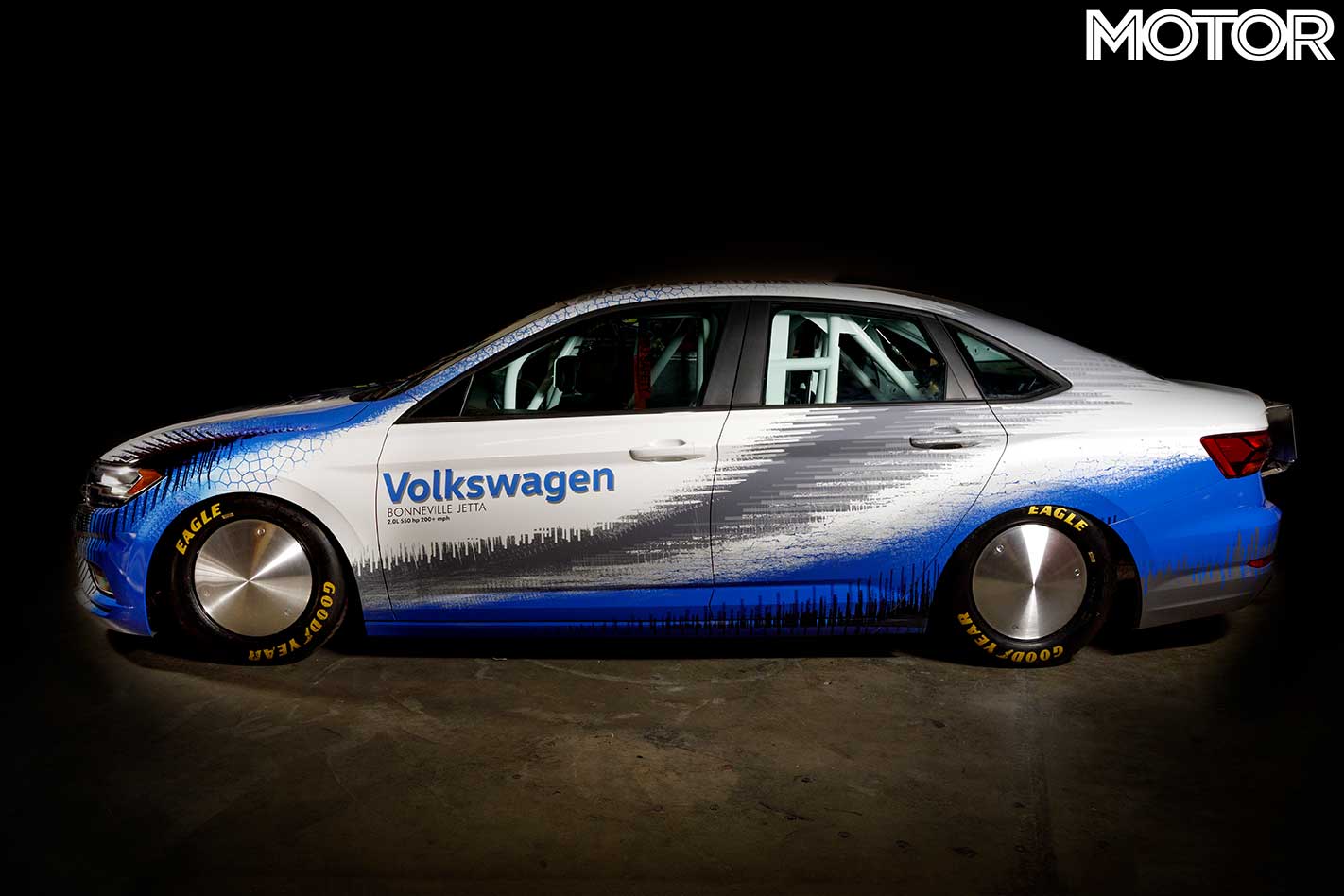
This particular car has also been lowered, been fitted with special tyres just for the salt, and had its wheels swapped for chrome ‘discs’.
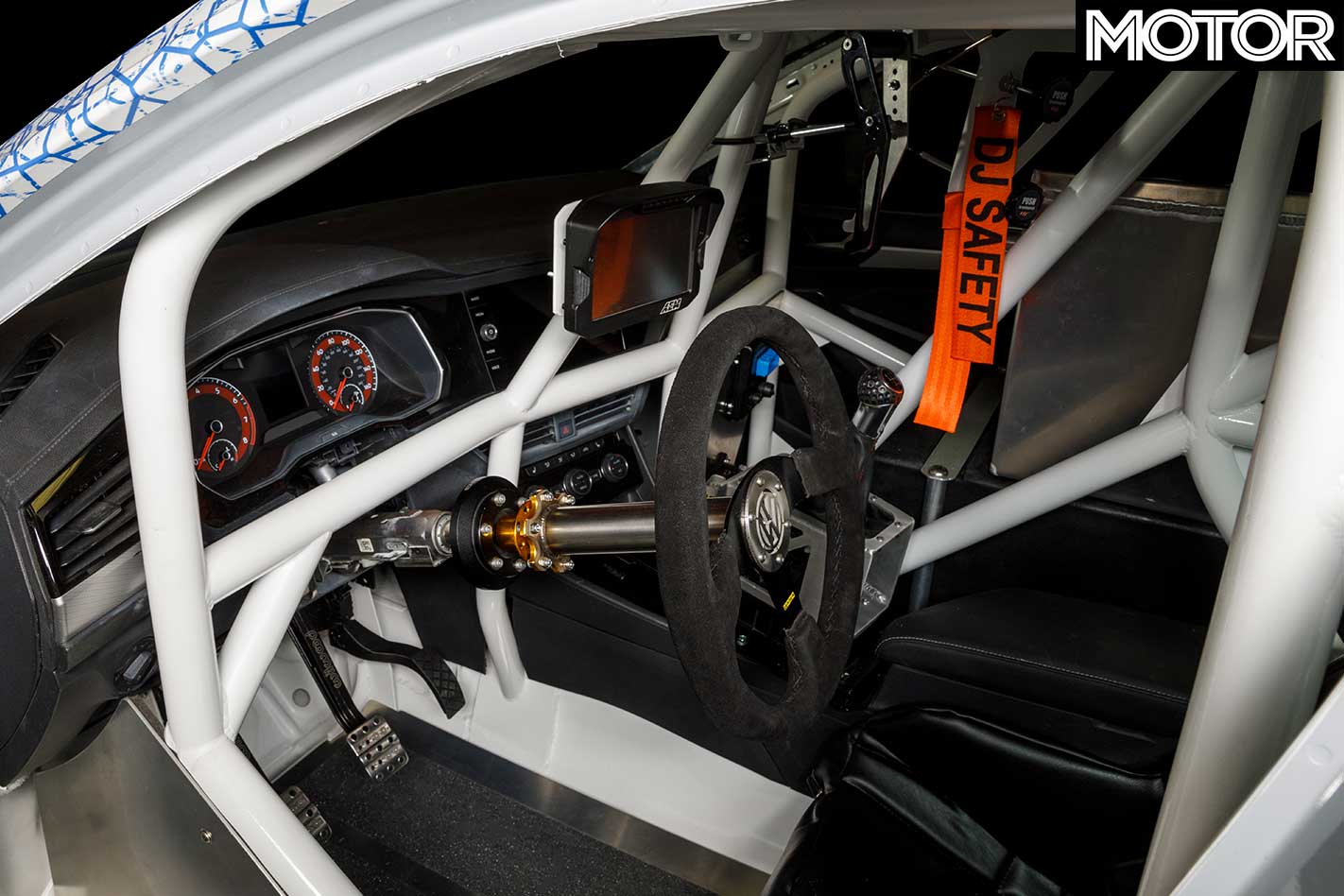
Underneath, a limited-slip differential had been installed for traction. It’s also now sporting a roll cage and fire suppression, as well as a parachute to slow it down.
“This was a truly fun project to be involved in,” says Reto Brun, director for the Volkswagen Design Center in California.
“We wanted to highlight the sporty nature of the Jetta and give the car design graphics that would make it really stand out on the alien-like environment of the Bonneville Salt Flats.
“We wish the team luck as they attempt to make this the fastest Jetta—and the fastest production-based Volkswagen—ever seen!”
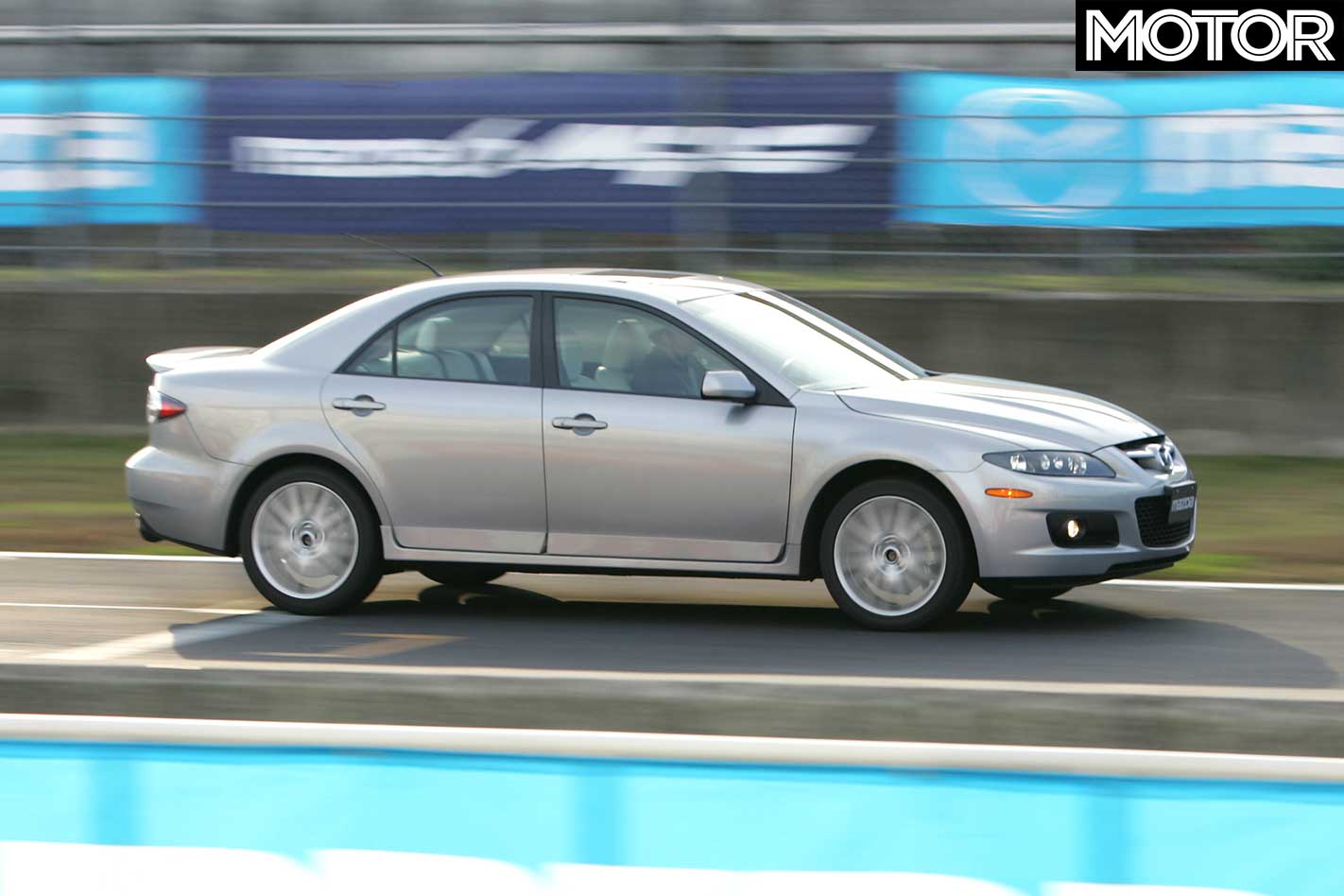
I’m confused. I’ve got Mazda engineers in one ear, including MPS project chief Joe Bakaj, whispering about the drifting abilities of the new Mazda6 MPS. I’ve got marketing bods telling me the new MPS is sophisticated and not in the same gene pool as rally weapons from Subaru and Mitsubishi.
This feature was originally published in MOTOR’s February 2005 issue
Then there’s talk that this all-paw, turbocharged sports sedan is a real driver’s car and will even allow you to pull handbrake turns. But the design team went to great pains to style a subtle car, even hiding the air scoops for the top-mounted air-to-air intercooler within a false bonnet, so the bodywork would not be punctured by ugly vents or scoops.
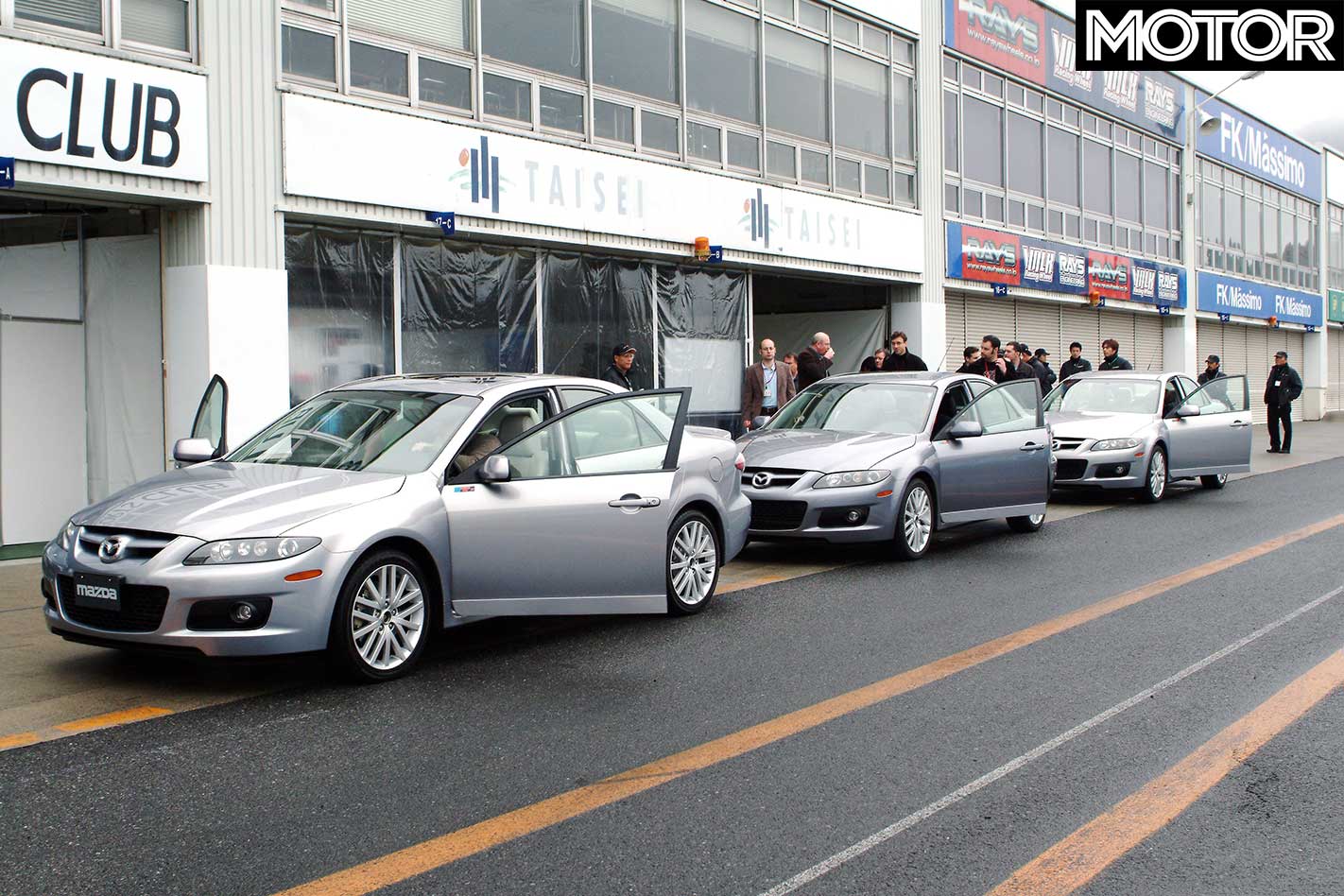
The Mazda6 MPS is not a bold new direction, but rather a continuance of what Mazda started three years ago with the regular 6. Since then, the once wayward company has revamped its product line-up with cars like the 2, 3 and of course, the rotary-powered RX-8.
And later this year, Mazda will add the new generation MX-5 to the forecourt. Plus there’s talk of a new RX-7 and a hotter version of the RX-8.
But the 6 MPS is Mazda’s current performance king and the fastest sedan ever produced by the company with performance boasts of 0-100km/h in 6.4-seconds and a top speed around 250km/h.
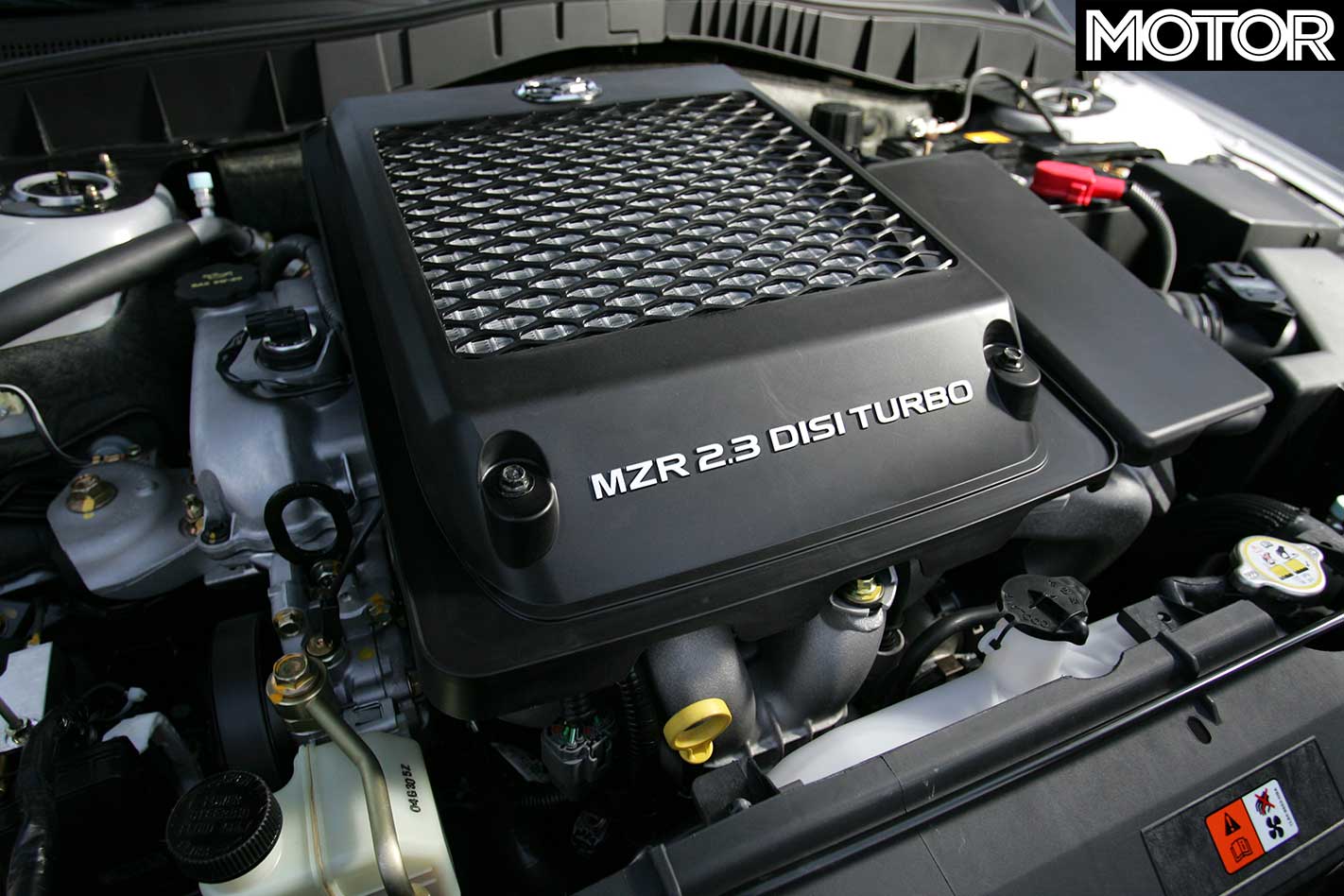
It’s easy to think of the engine as a stock motor with a turbo flung onto the side. But it ain’t so simple. The 2.3-litre block remains, but nearly every other part has been breathed on in the transformation to forced-induction. There’s a new cylinder head and forged pistons with a drop in compression ratio from 10.6:1 down to 9.5:1. Then there’s the Hitachi turbo and intercooler.
The MPS engine is also the world’s first direct injection turbocharged petrol engine, just beating VW’s effort to market. And it’s the combined effects of direct injection and the reasonably high static compression ratio, that gives the MPS excellent throttle response and all-but banishes turbo lag.
In fact, it’s so linear, you’re left wondering if there really is 190kW at 5500rpm. But there’s no doubting the 380Nm at 3000rpm.
Drive is taken off the gearbox via a water-cooled coupling, and a propshaft feeds up to 50 percent of the available torque to the rear wheels.
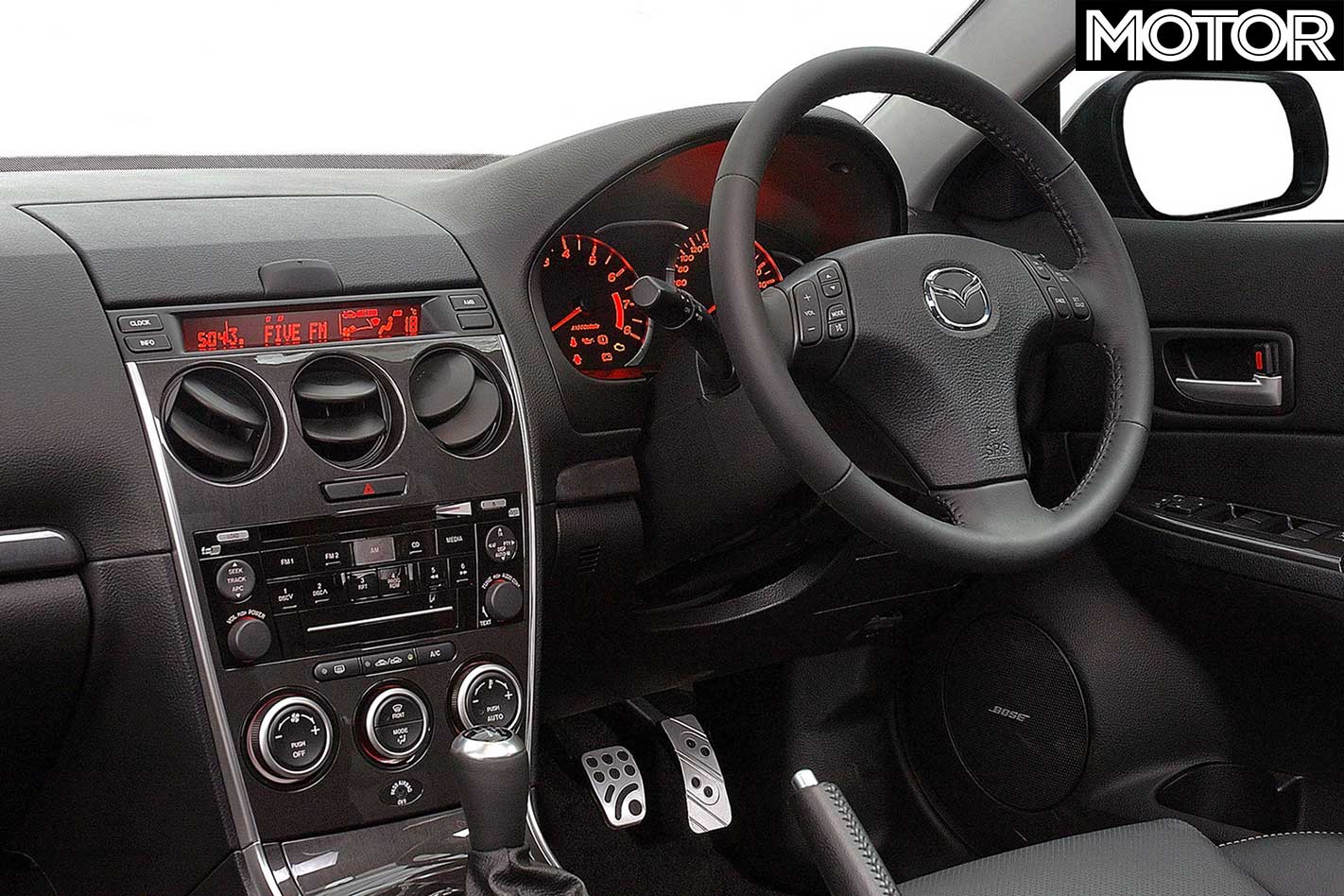
At first glance the MPS looks little different from a top spec Mazda6 (which it now is). On my second lap of the car, however, I notice the bulging bonnet, which is 45mm taller to accommodate the top-mounted intercooler. Lift the bonnet and there’s twin scoops – similar to the fake nostrils on the outside of a Monaro’s bonnet – feeding air to the intercooler.
Under the subtle skin, there’s additional bracing and welded-in plates, helping improve torsional rigidity by 50 percent over the standard Mazda6. The MPS is only available in sedan form, as it was the stiffest of the 6’s three body styles.
But all this extra bracing and the all-wheel drive hardware pushes the mid-sizer to a seriously fat 1650kg. That’s heavier than a Commodore, and about 200kg tubbier than a Subaru Liberty GT.
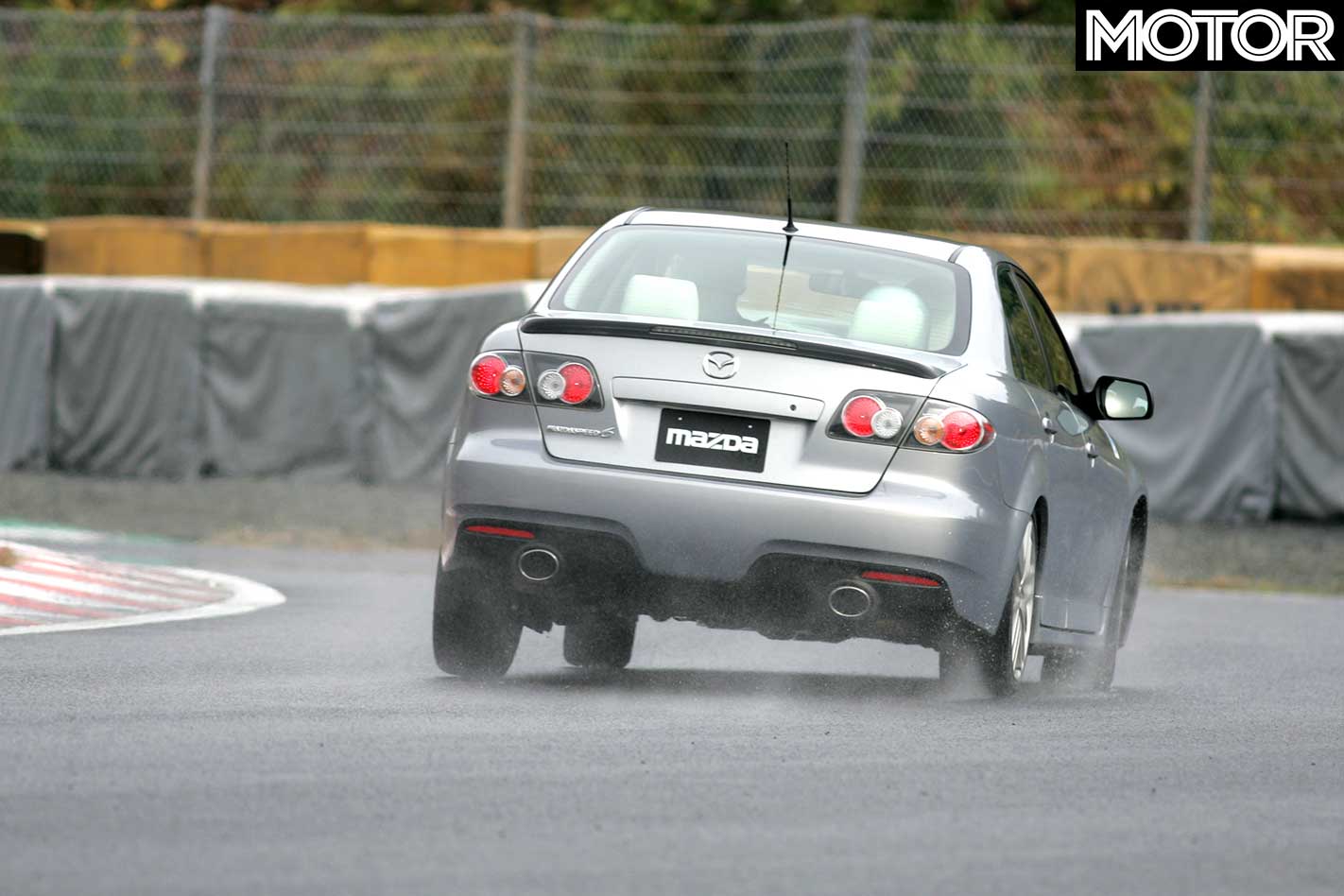
The track is still wet from the morning rain, with standing water just off the racing line – an ideal test for the all-wheel-drive grip. Out of pit lane, we join the main straight only a few hundred metres before the tight right at turn one.
Then it’s a short squirt through second and into third gear, before the circuit’s trickiest part; a tightening radius left, leading into a fourth gear left, right change of direction. The MPS turns in well offering reasonably sharp feedback through the wheel – it’s essentially the standard rack with a higher viscosity oil in the pump.
On the wet track, understeer is only present on turn-in if you misjudge your entry speed or throw too much steering angle at the MPS. But it can build if you’re too quick or eager on the throttle or if the corner goes on for a bit.
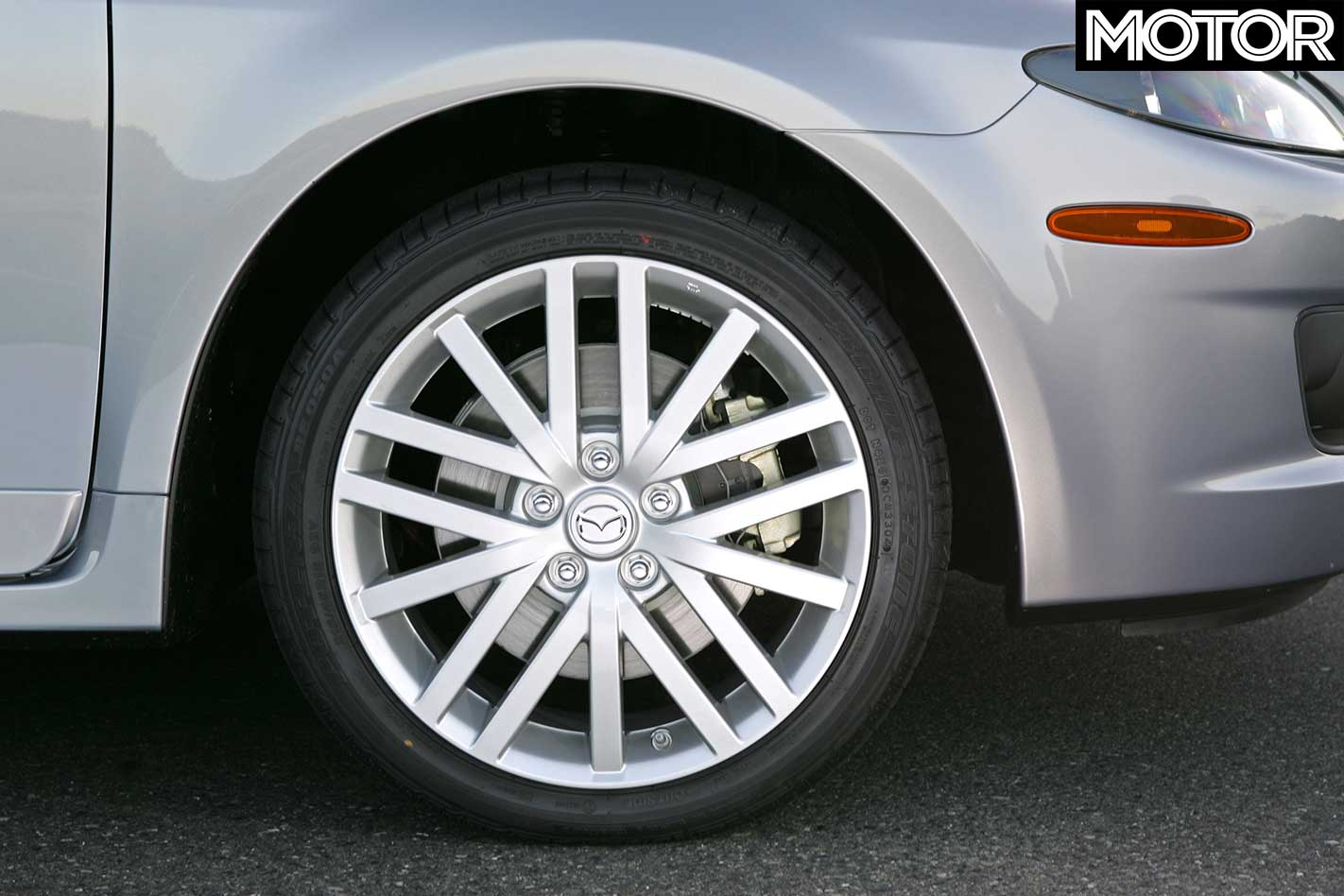
It needs to be pointed out that these are not production fresh cars, but hard-worn test mules and we’re not the first group of journos to have pounded them around the track. So some of this push is obviously down to the worn 215/45 R18 Bridgestone Potenzas.
The change of direction spits you out on the correct line for the uphill right. On the first lap I pick the second of six available gears in the light-shifting gearbox, only to have the tacho plunge into the red before the exit. Next time round, I grab third and let the torque of the engine pull the 6 up the hill and onto the back straight.
The engine does its best work in the mid-range, punching hard from around 2000rpm but it gets breathless from six grand. There’s bugger all turbo lag, but there’s also a lack of engine or exhaust note, and there’s no sudden kick in the slats. But it’s a tough call to mark down a turbo engine for not being peaky.
About two-thirds of the way down the back straight, our hosts have set up a witches hat chicane in an attempt to rein in our speed on the approach to a downhill second gear hairpin. Of course, the Aussie contingent of journos just sees this as another challenge, and the chicane is taken flat in fourth at about 170km/h, much to the dismay of the track official stationed at the adjacent marshal’s post.
Once the Mazda is straight and settled on its springs – the front is 25 percent stiffer while the rear is a full 33 percent firmer – the brakes are squeezed hard for the hairpin. And it’s here, by lap two of our allotted three, that the brakes start to protest.
There’s a shudder through the steering wheel and a howl from the front right rotor. The brakes (sizeable rotors measuring 320mm front and 314mm rear) still stop, but the pedal gets longer and more lifeless with each big application.
The much talked about oversteer is only brought on through provocation. A combination of favourable camber, a sharp lift of the throttle, or a quick tug of the handbrake will get the tail into play. Once the bum is out, there’s just enough power to keep it out there for few seconds.
This ability to oversteer (however mild) is brought on by the torque split. Though a nominally even split front to rear, the front diff is open while the rear is an LSD, meaning more than 50 percent of available drive can be fed to the rear wellies.
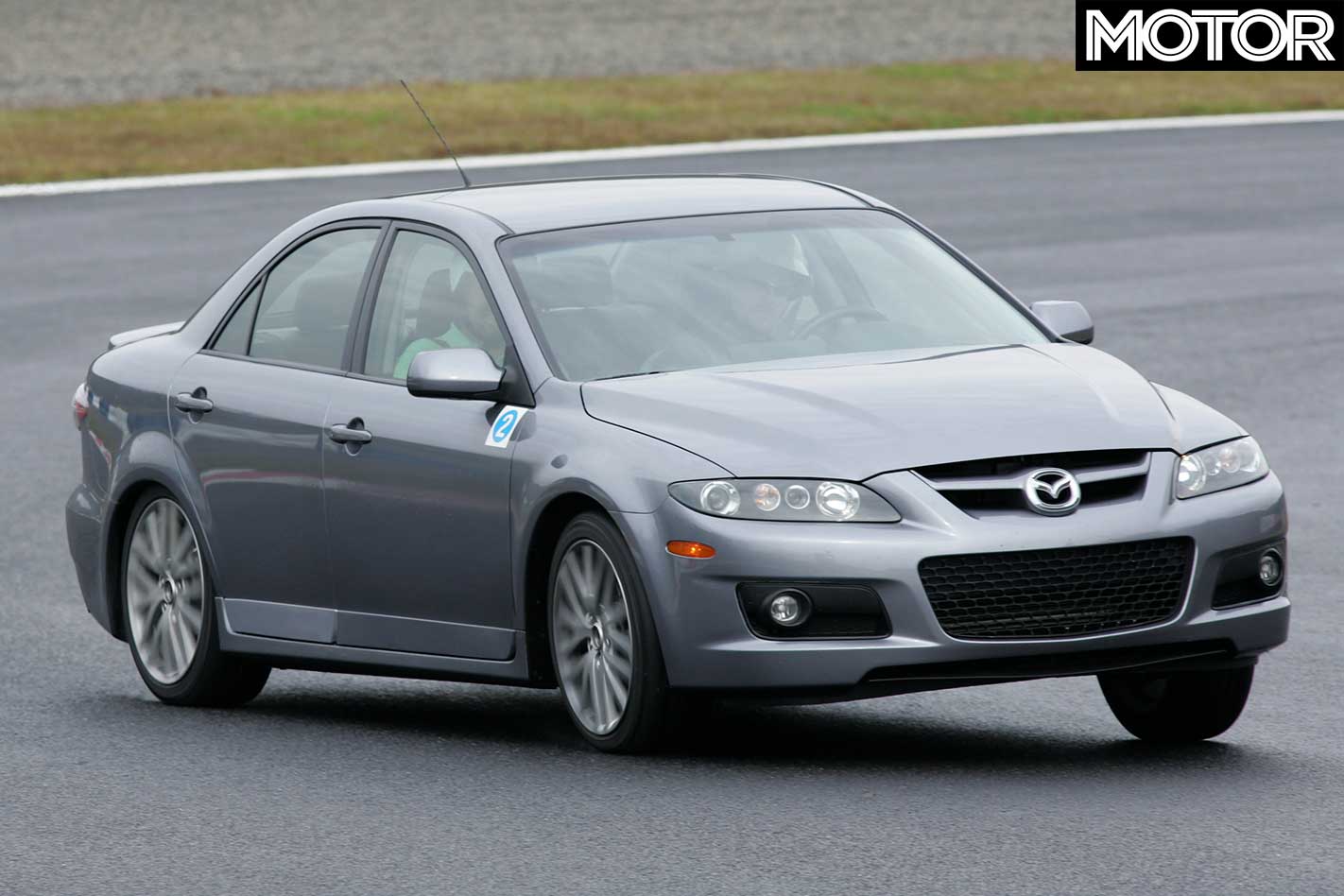
The second session is on a drying track, and while the speed is a bit sharper, the extra grip actually reveals more understeer as the tortured rubber struggles with turn-in. And the higher speeds bring bigger stops and stress the brakes that little bit more.
Final dynamic assessment will need to wait until we get the MPS on Aussie roads – it’s due mid-year at an expected $55,000. Away from the harsh glare of a race track, the Mazda6 MPS should make a very fast and accomplished road car. The understeer and brake dramas highlighted at the racetrack will be very difficult to replicate in road driving. Just don’t expect it to be an Evo or STi fighter.
Our Backsides Trackside Playing Schumacher at TI Aida Grand Prix circuit
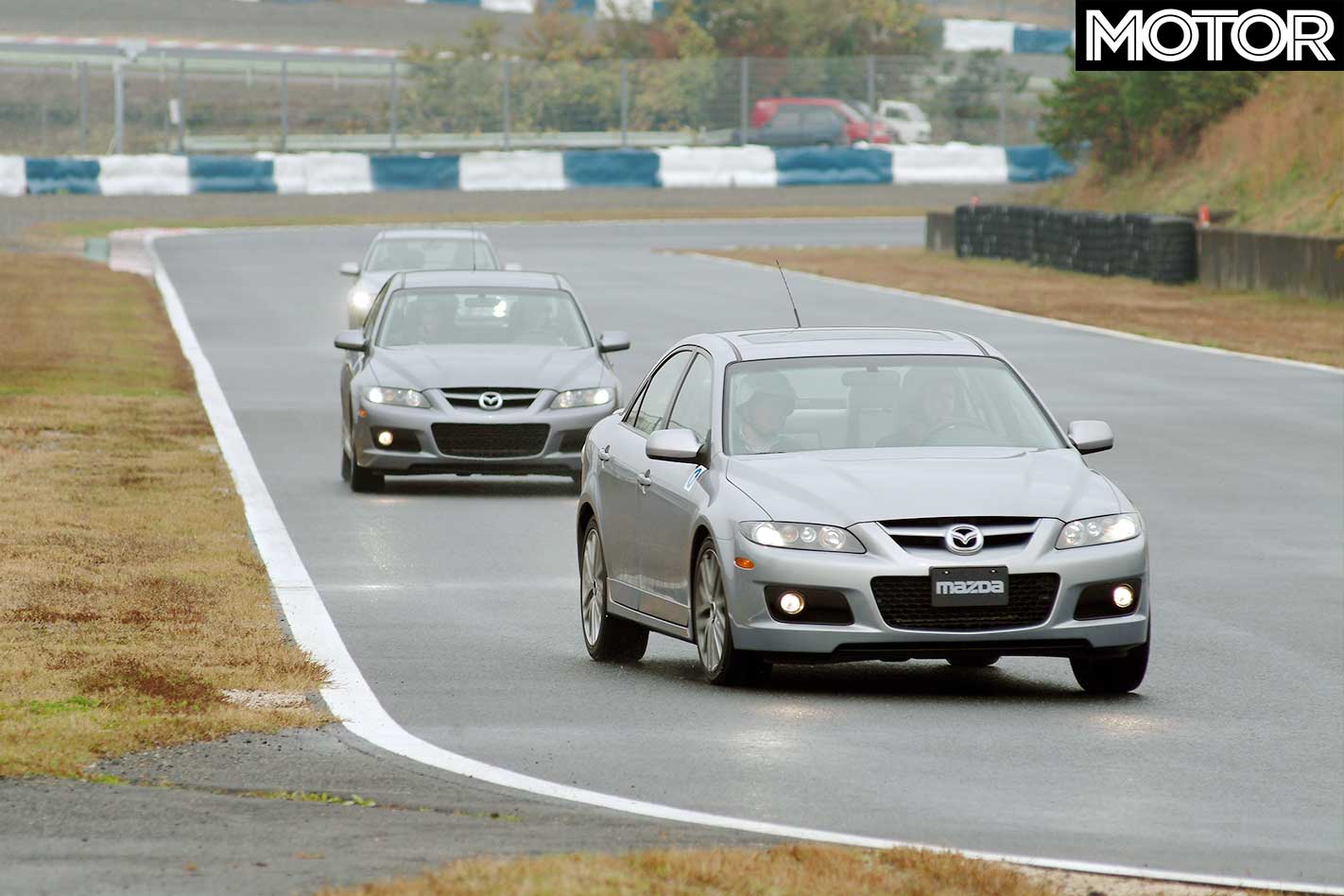
The track we’ve been let loose on is the Tanaka International Circuit at Aida. Built in 1990 and active as a track from 1992, TI Aida played host to two Grands Prix (the Pacific Grand Prix in both 1994 & 1995), as the Japanese Grand Prix was held at Suzuka.
Michael Schumacher was victorious on both occasions in his Benetton on his way to his first two World Driver’s Championships. Schumacher holds the official lap record (set in 1994) with a time of 1:14.023 seconds at an average speed of 180km/h.
The qualifying record is held by Aryton Senna with a time of 1:10.21 seconds. In fact, the 1994 Pacific Grand Prix was Senna’s last race before his fatal accident at Imola just two weeks later.
Unfortunately, the remote location of the circuit caused major inconvenience for teams and spectators with huge delays on the one access road. The experiment ended after just two races, and the track is now used for various club and domestic races.
Driving around TI Aida in an all-wheel drive road car throws the lack of run off areas into sharp focus, so imagine the challenge of threading an 800hp Formula One car through here.
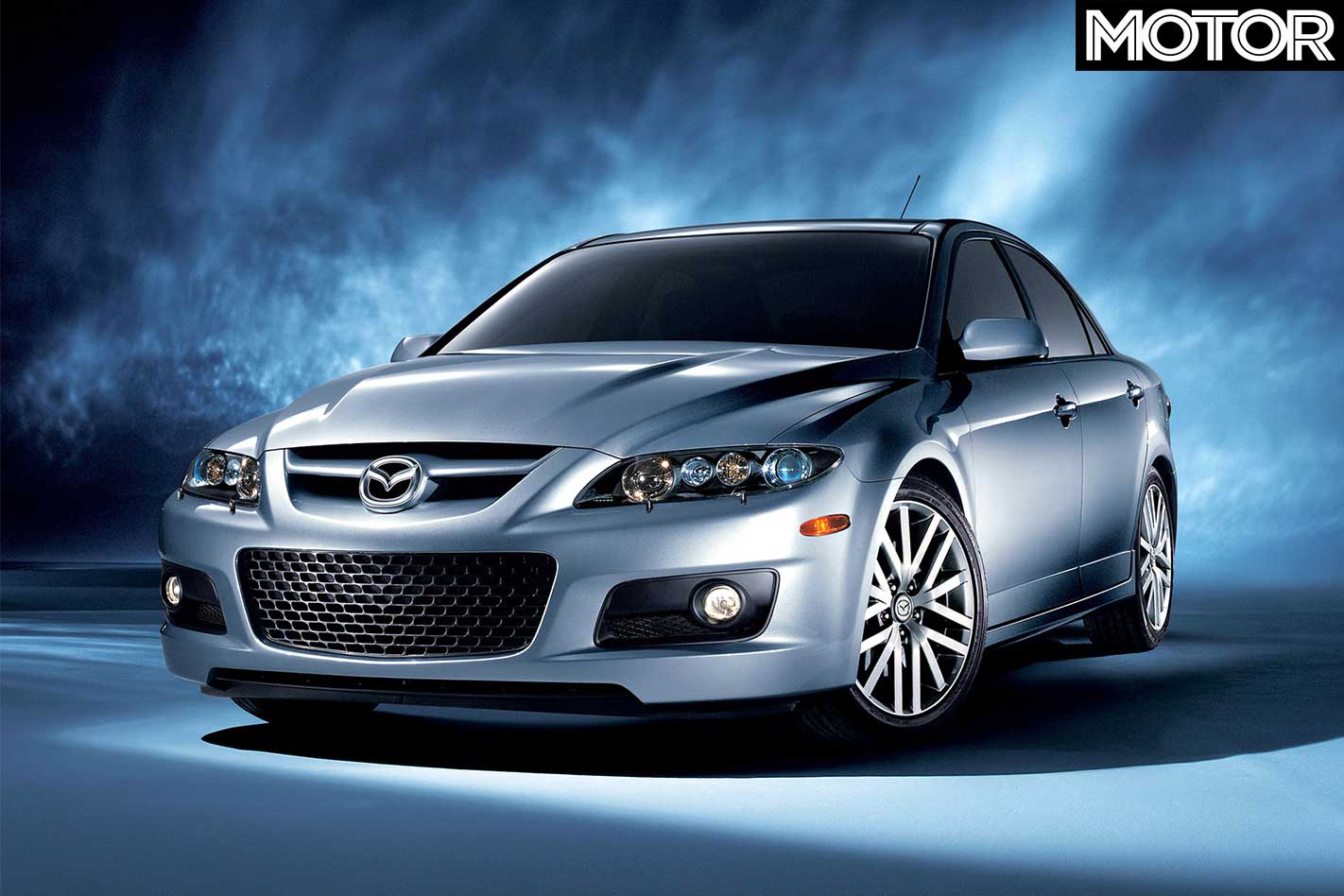
FAST FACTS 2005 Mazda6 MPS
DRIVE: all-wheel ENGINE: front-mounted, 2.3-litre, 16-valve, turbo four BORE/STROKE: 87.5mm x 94.0mm COMPRESSION RATIO: 9.5:1 POWER: 190kW @ 5500rpm TORQUE: 380Nm @ 3000rpm WEIGHT: 1650kg POWER-TO-WEIGHT: 115kW/tonne TRANSMISSION: 6-speed manual SUSPENSION: double wishbones, coil springs, anti-roll bar (f); multi-link, coil springs, anti-roll bar (r) L/W/H: 4670/1780/1430mm WHEELBASE: 2675mm TRACK: 1540mm (f); 1540mm (r) BRAKES: 320mm ventilated discs, single-piston calipers (f); 314mm ventilated discs, single-piston calipers (r), ABS WHEELS: 18 x 7.0-inch, alloy (f/r) TYRES: Bridgestone Potenza; 215/45 ZR18 (f/r) FUEL: 64 litres, PULP PRICE: $55,000 (est)
Being unable to drive in your own country would be rough – particularly if you’re a racing driver. Aseel Al-Hamad, until the 24th of June, was living just that reality.
In Saudi Arabia, women have only just been allowed to drive after a ban lifted, meaning Aseel Al-Hamad – an experienced racer – was unable to race in her home country.

To mark the lifting of the ban, Jaguar put her in the driver’s seat of an F-Type and pointed her at a racetrack.
“Having loved cars since I was a child, today is highly emotional for me. This is the best driving moment of my life,” she said.
As the first female member of the Saudi Arabian Motor Federation, and a member of the FIA Women in Motorsport Commission, it should be no surprise that this wasn’t the only way she marked the ban lifting.
At the 2018 French F1 GP, the Renault Sport Formula One Team offered her a lap of honour in the 2012 RS27 Formula 1 which Kimi Raikkonen drove to a victory in Abu Dhabi that year.

“I have loved racing and motorsport from a very young age and to drive a Formula 1 car goes even beyond my dreams and what I thought was possible,” Al-Hamad said.
“It is a genuine honour to drive the Renault Sport Formula One Team E20 car in front of the crowds at its home Grand Prix in France.
“I hope doing so on the day when women can drive on the roads in the Kingdom of Saudi Arabia shows what you can do if you have the passion and spirit to dream.”
The 2018 World Cup in Russia got us thinking in the WhichCar office about who is paid more: soccer superstars of F1 drivers?

The figures used for this story comes courtesy of Forbes, which calculates the highest-paid sports stars in the world each year.
Sporting contracts can be a secretive and convoluted business – with drivers and players understandably wanting to keep exact figures secret, and base salaries being topped up by performance bonuses and sponsor contracts. But sitting at the top of the tree for our showdown is Argentinian footballer Lionel Messi, who brings home a reported $149.5 million each year as striker for Spanish juggernaut FC Barcelona.
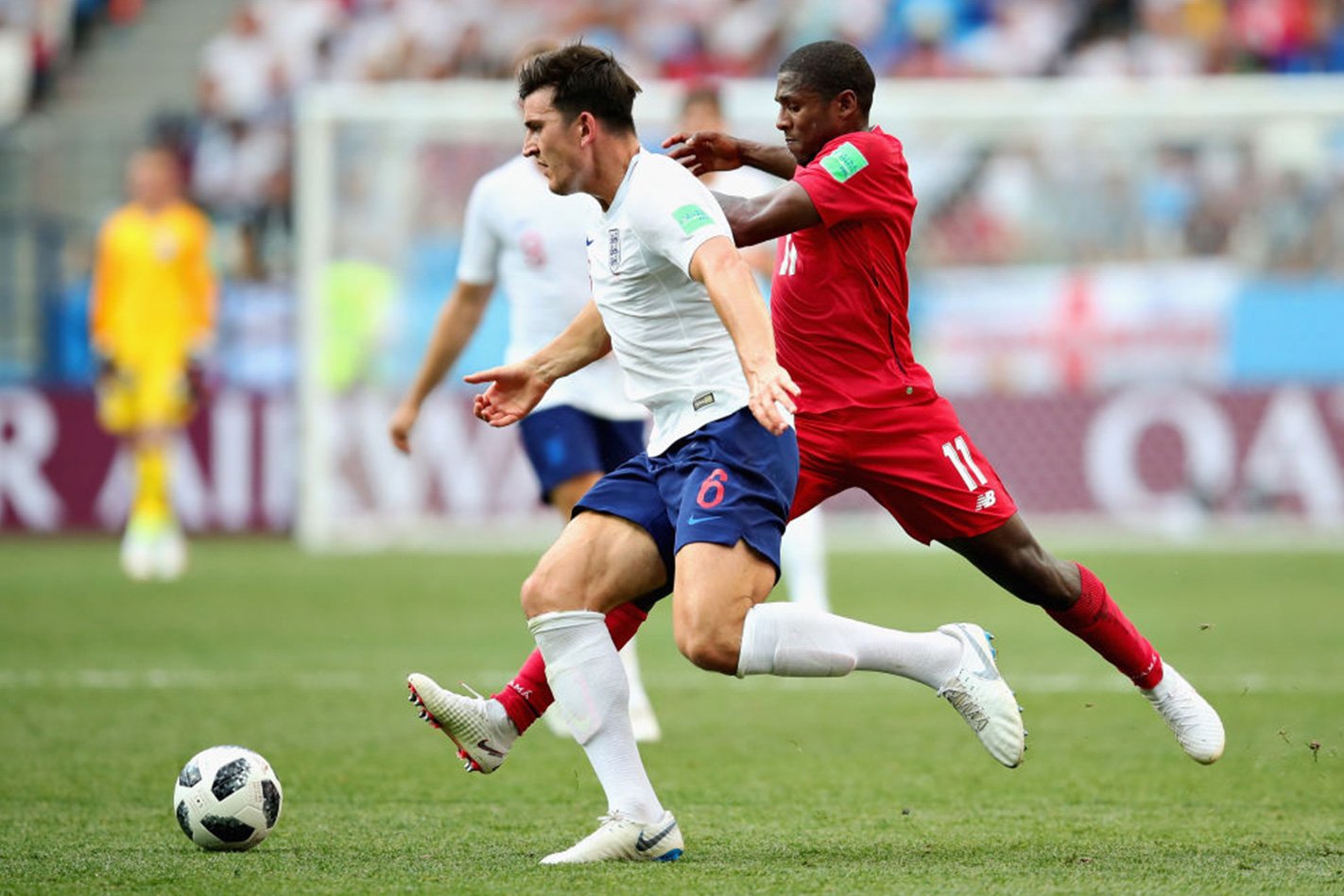
While arguably the biggest sports star in the world, Portuguese forward Cristiano Ronaldo is just the second-highest paid soccer star according to Forbes, with a $145.5 million base salary at Spanish rival Real Madrid. However, it’s believed Ronaldo’s supplementary deals with sponsors such as Nike elevates his total earnings above even Messi.
Either way, Ronaldo’s payroll eclipses that of the highest-paid Formula 1 driver, Sebastian Vettel, who pockets $67 million per year thanks to Ferrari.
Arch-rival Lewis Hamilton might soon overtake Vettel with a rumoured $72 million a year contract being negotiated. That would see the current World Drivers’ Champion receive a hefty pay rise over the $41.7 million currently afforded by his Mercedes-AMG team.
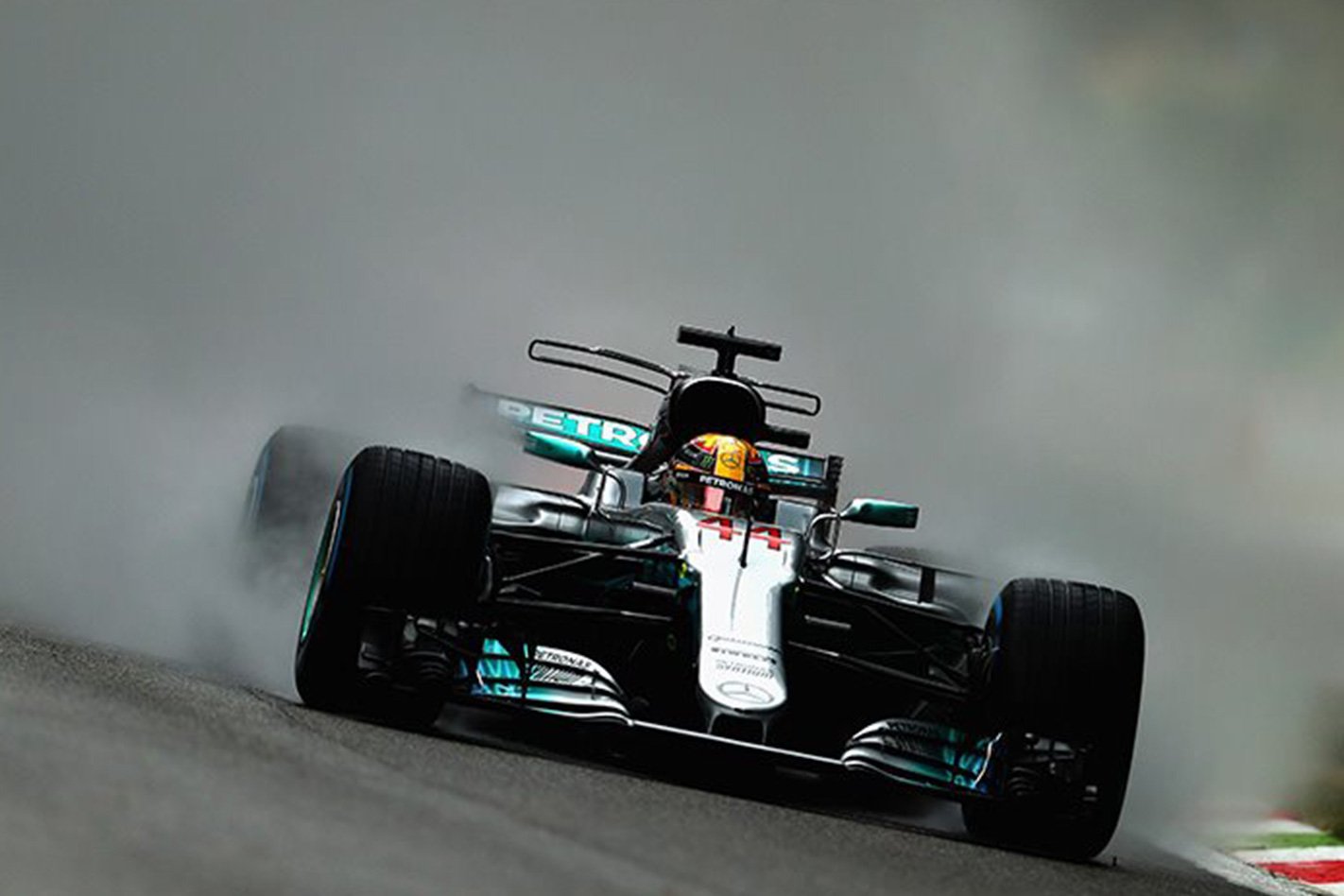
The third-highest paid Formula 1 driver is Fernando Alonso, with McLaren dropping a reported $40.4 million into his bank account each year.
As far as local boys go, Socceroo Aaron Mooy earns $20 million at Huddersfield Town in the English Premier League, making him the highest-paid member of the Australian national squad. Surprisingly, that’s more than double the amount paid to the only Aussie on the Formula 1 grid, Daniel ‘the Honey Badger’ Ricciardo, who earns a comparatively paltry $8.7 million a year at Red Bull Racing.
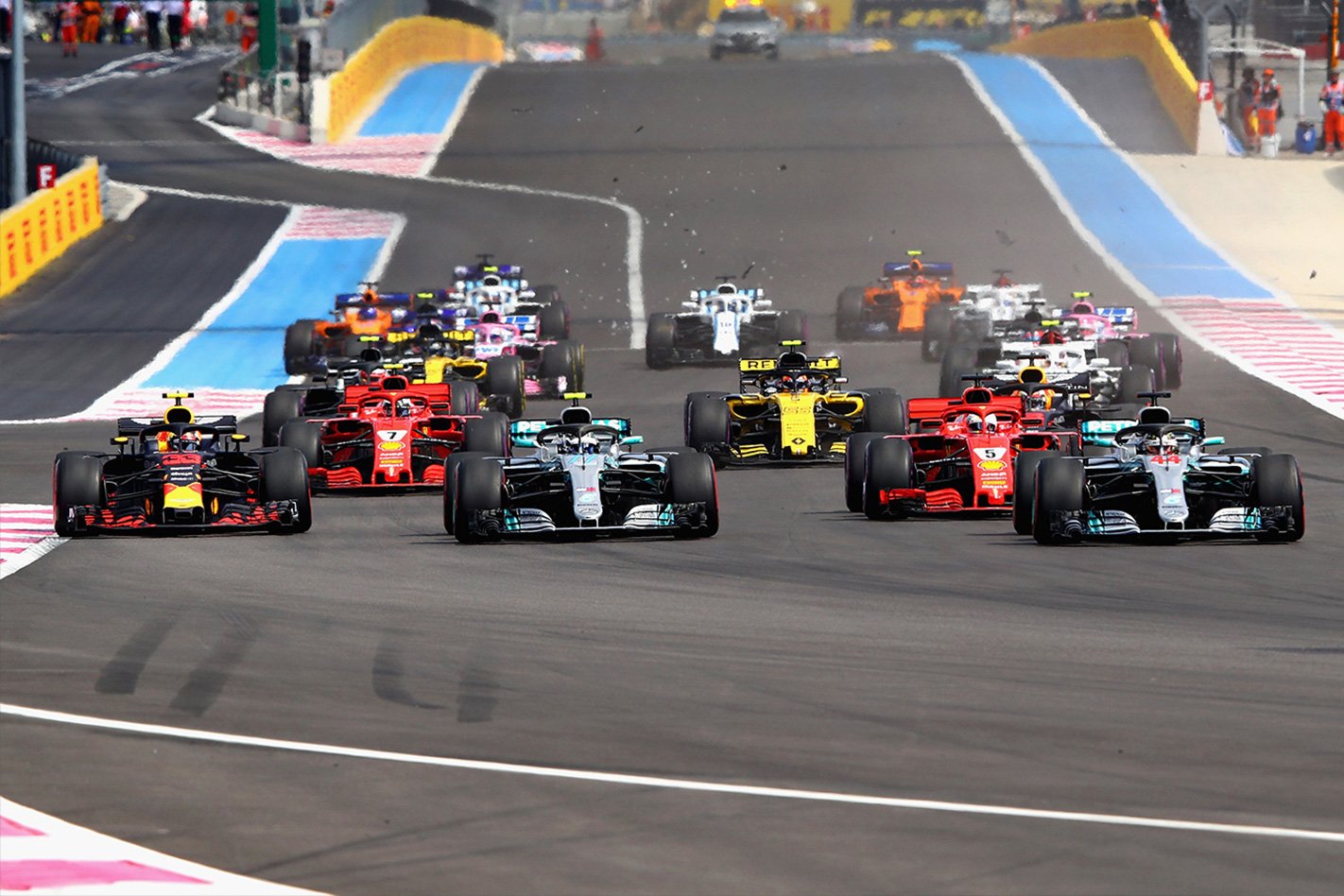
Soccer stars vs F1 driver salaries
- Lionel Messi – FC Barcelona, Argentina – $149,500,000
- Cristiano Ronaldo – Real Madrid CF, Portugal – $145,500,000
- Neymar da Silva Santos – Paris Saint-Germain FC, Brazil – $121,000,000
- Sebastian Vettel, Ferrari – $67,000,000
- Gareth Bale – Real Madrid CF, Wales – $46,600,600
- Lewis Hamilton – Mercedes-AMG – $41,700,000
- Fernando Alonso – McLaren – $40,400,000
- Paul Pogba – Manchester United, France – $39,700,000
- Oscar dos Santos Emboaba – Shainghai SIPG FC, Brazil – $37,000,000
- Wayne Rooney – Everton FC, England – $36,300,000
- Luis Suarez – FC Barcelona, Uraguay – $36,200,000
- Aaron Mooy – Huddersfield Town AFC, Australia – $20,000,000
- Valtteri Bottas – Mercedes-AMG – $11,500,000 million
- Kimi Raikkonen – Ferrari – $9,400,000
- Daniel Ricciardo – Red Bull Racing – $8,500,000
- Nico Hulkenberg – Renault Sport F1 – $4,000,000
- Max Verstappen – Red Bull Racing -$4,000,000
- Sergio Perez – Force India – $3,400,000
- Romain Grosjean – Haas – $2,000,000
- Kevin Magnussen – Hass – $1,300,000
Suzuki is ditching the lowly equipped Swift GL from its Swift light-hatch range, which lacked features such as a reversing camera that robbed it of the five-star ANCAP safety rating awarded to the other variants.
The Swift range will soon be headed up by a new five-speed manual version of the GL Navigator, which is equipped with a reversing camera and other desirable features such as a 7.0-inch touchscreen with multimedia satellite navigation with Apple CarPlay/Android Auto smartphone pairing, 16-inch alloy wheels, daytime running lights and privacy glass.
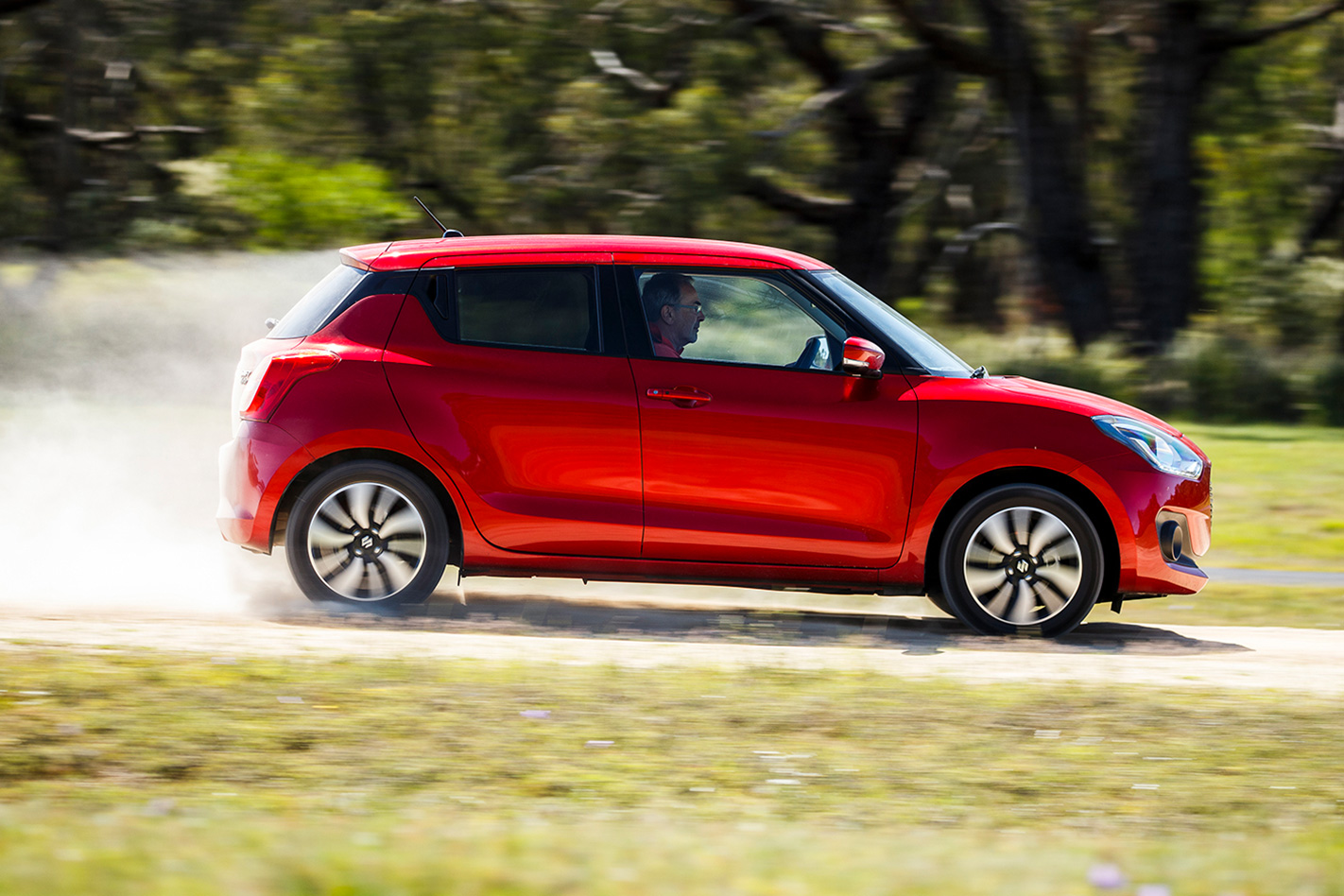
The manual Swift GL Navigator’s $16,990 retail price means the Swift’s entry-level pricing jumps by $1000, however it brings all the GL Navigator’s handy features and a five-star ANCAP rating for $1000 less than the existing CVT auto version, which is the most popular Swift variant.
The five-speed manual also provides a zippier ride, which will arguably make the new variant the pick of the Swift bunch in terms of value, features and driveability.
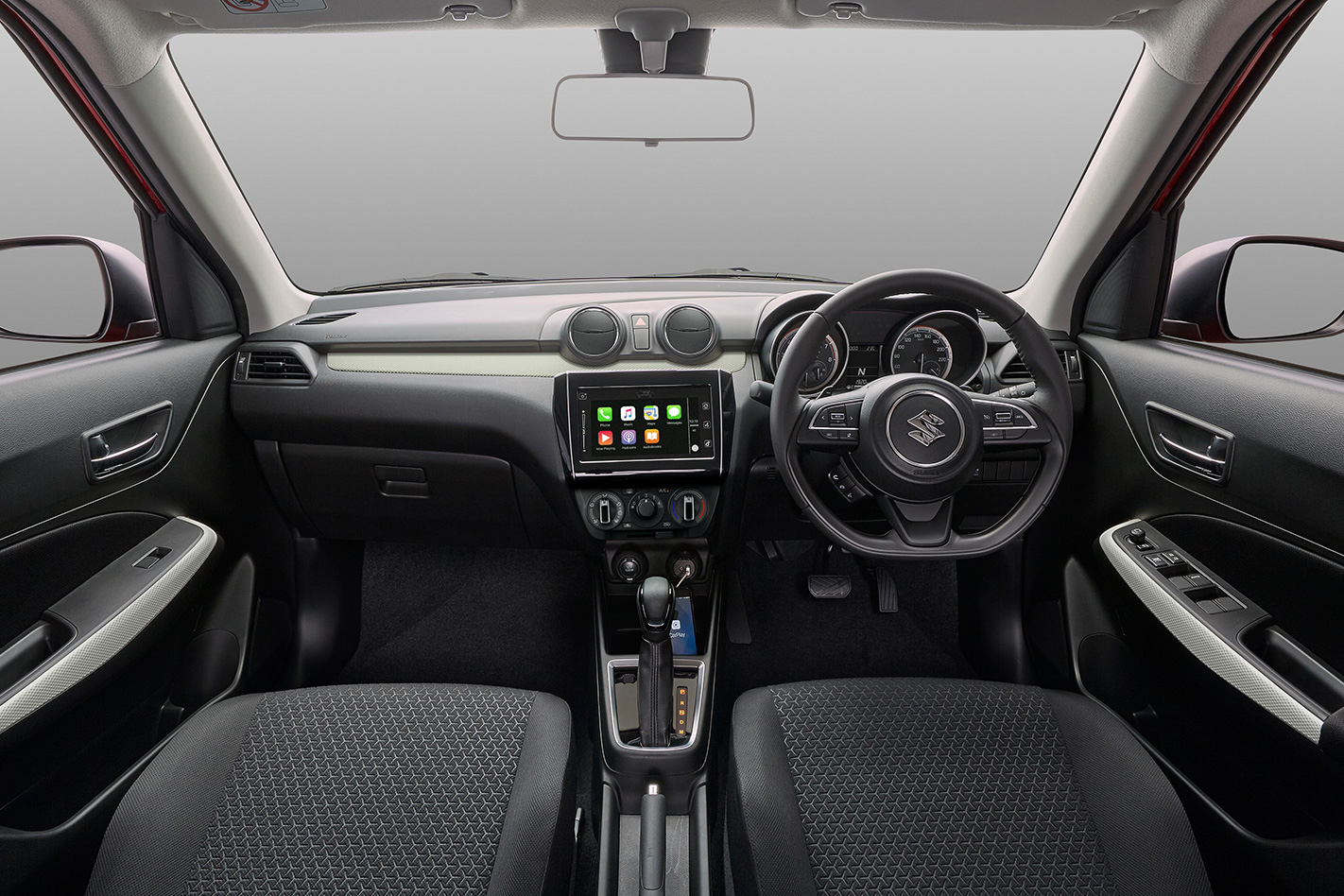
That said, if you want the $1000 Safety Pack, which adds autonomous emergency braking, adaptive cruise control, lane departure and weaving alert, you’ll have to settle for the CVT.
The Swift GL Navigator with manual transmission is expected to arrive at Suzuki dealerships around October, with production orders to take place from August 2018.
The Swift GL will be available until this time, for $15,990.
Don’t let the ‘A7’ badge fool you, this is the 2020 Audi RS7 having its pedals tested at the Nürburgring.
As implied by the audio track, MOTOR’s European editor Georg Kacher expects the next RS7 to show up powered by Audi’s 4.0-litre twin-turbo V8 or a more powerful evolution of it. He reports the same expectation for the next RS6, as well as the incoming RS Q8.
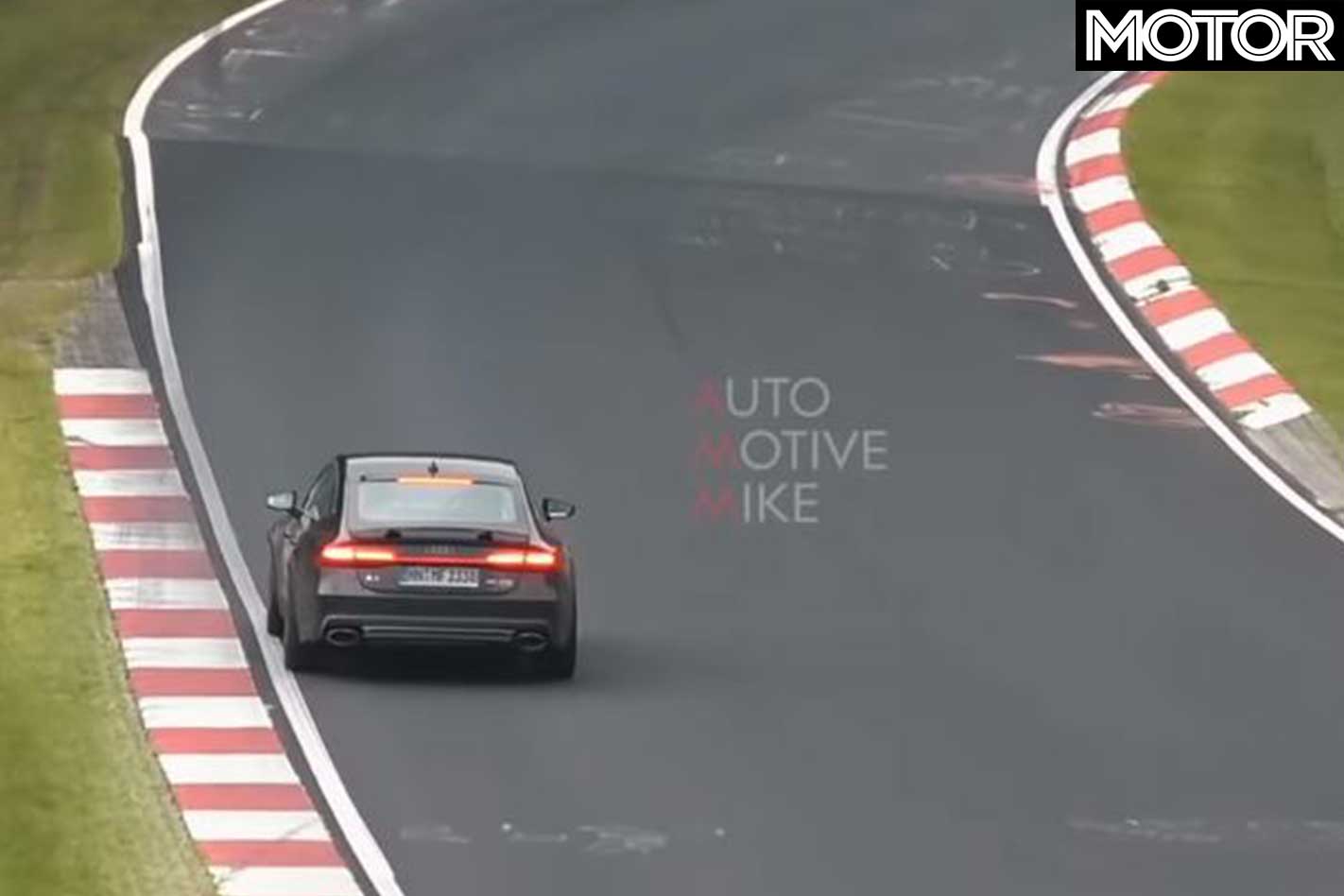
Whether the engine will have a similar output to the current 445kW/750Nm RS7 Performance or something more powerful is uncertain, but Kacher tells us not to hold our breath for a plug-in hybrid version of the V8.
It would be counter-productive for Audi to release an updated version of the RS7 if it wasn’t as capable as its predecessor, so expect performance figures to best 3.7 seconds to 100km/h.
For reference, in the RS7 Performance, MOTOR managed to hit 100km/h in just 3.37 seconds and run the quarter in 11.29sec at 202.79km/h.
In terms of future development of the RS7’s drivetrain, Kacher tells us the V8 might not be the only thing powering high-performance ‘7’ models by the end of its next generation.
Audi and Porsche are jointly developing three versions of a new all-electric matrix dubbed PPE.
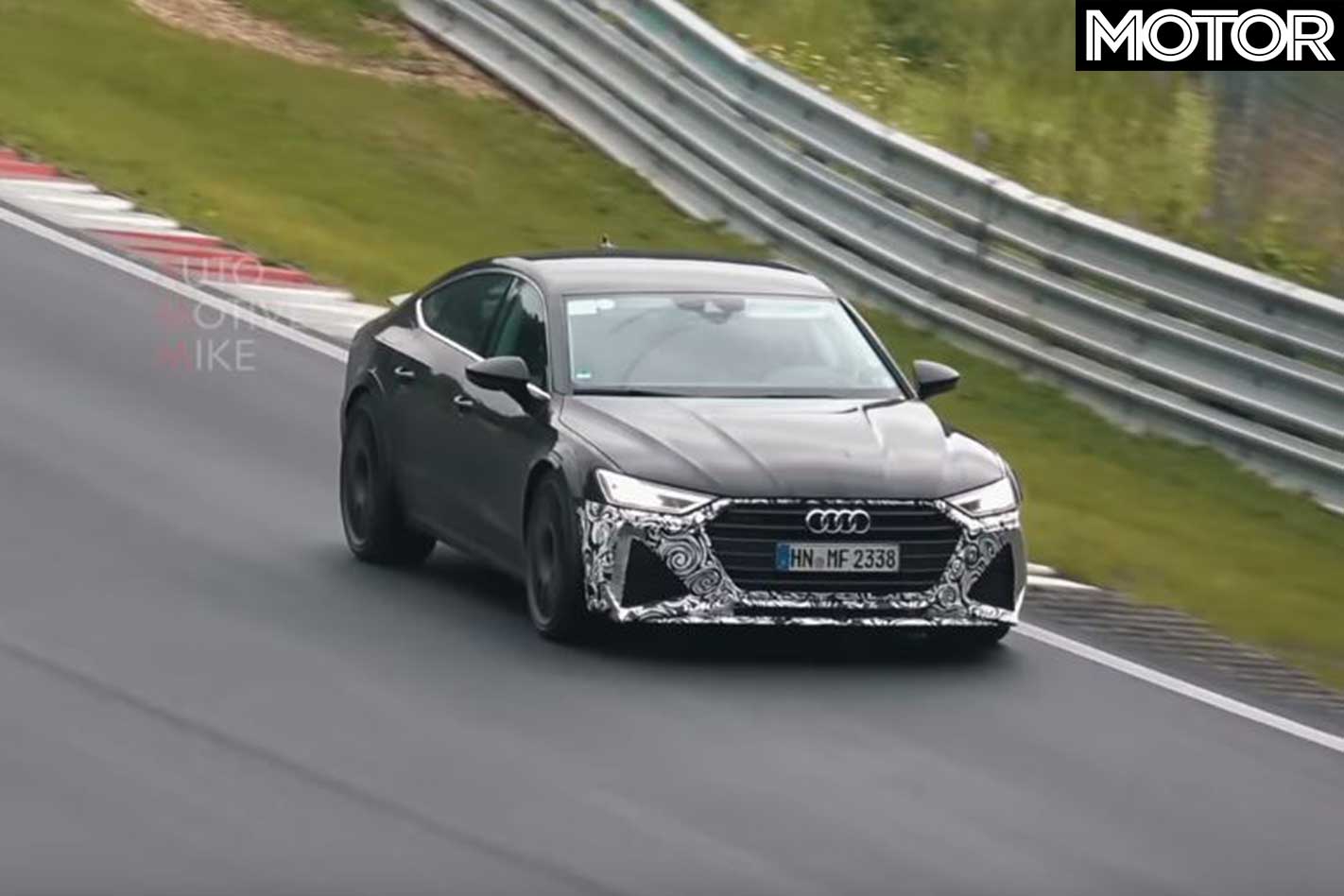
Insiders expect this portfolio to include S and RS versions of E7 (four-door coupé, A7 Sportback-sized) and EQ5/6/7/8/9 (all of them crossovers).
Not surprisingly, the power boost that must come with every RS offering is fuelled (err, or not fuelled) by high-performance batteries and more potent E-motors.
If the spy video is anything to go by, we’re not going to be disappointed by the initial V8 offering.
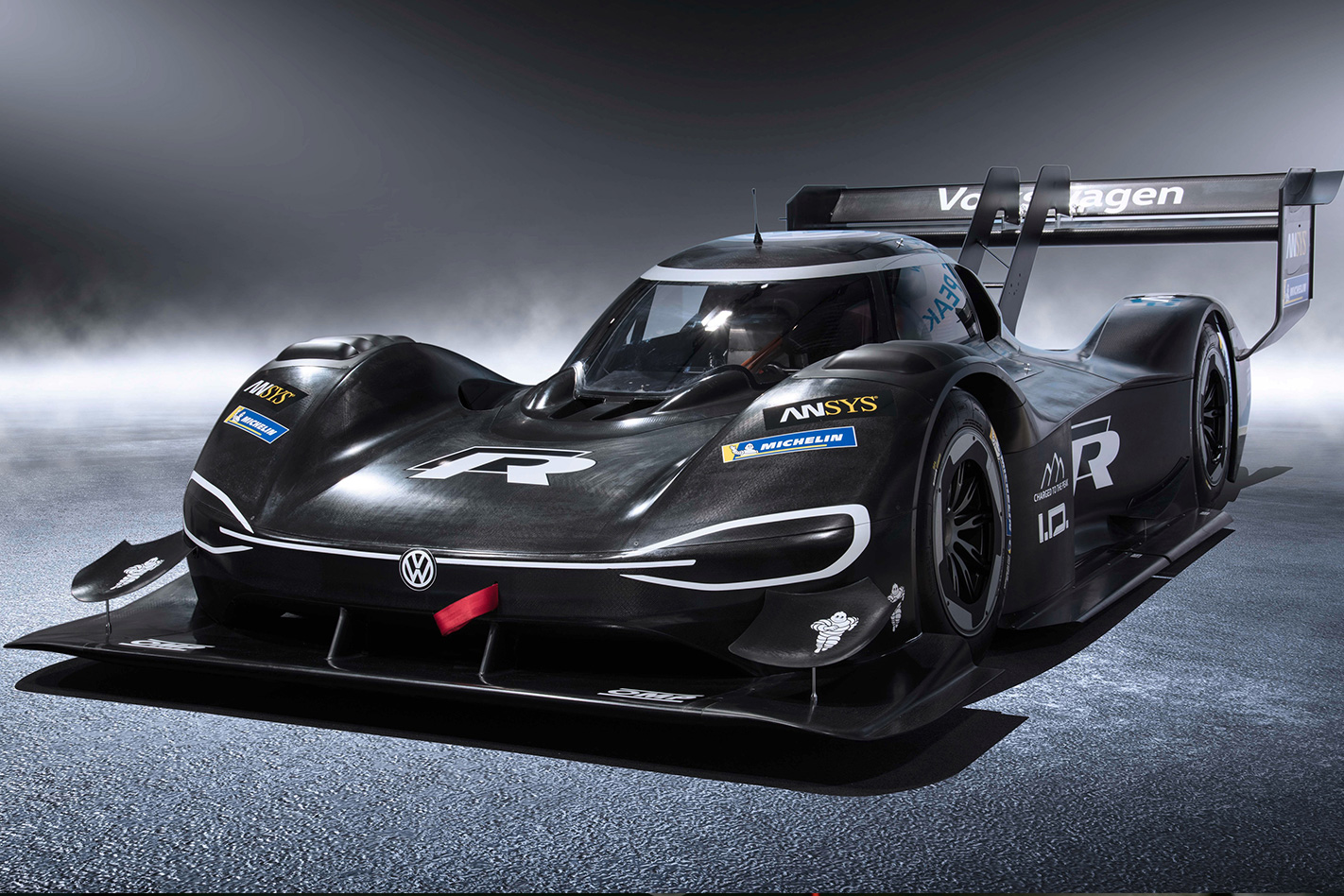
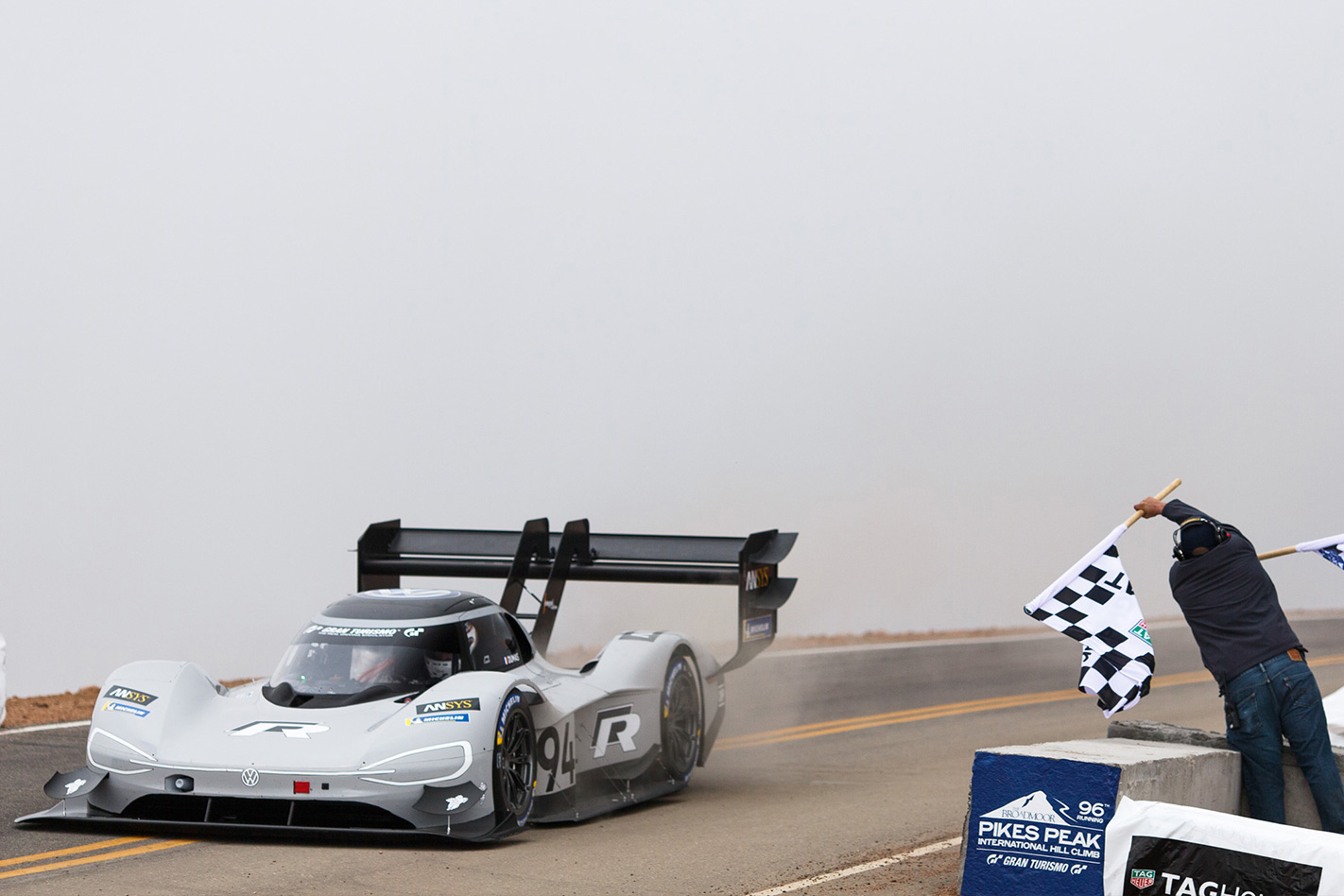
VOLKSWAGEN has unequivocally slam-dunked the Pikes Peak International Hill Climb record, blasting up the Colorado mountain in its purpose-built I.D. R, in a jaw-dropping 7:57.148, and it did it without burning a single drop of fuel.
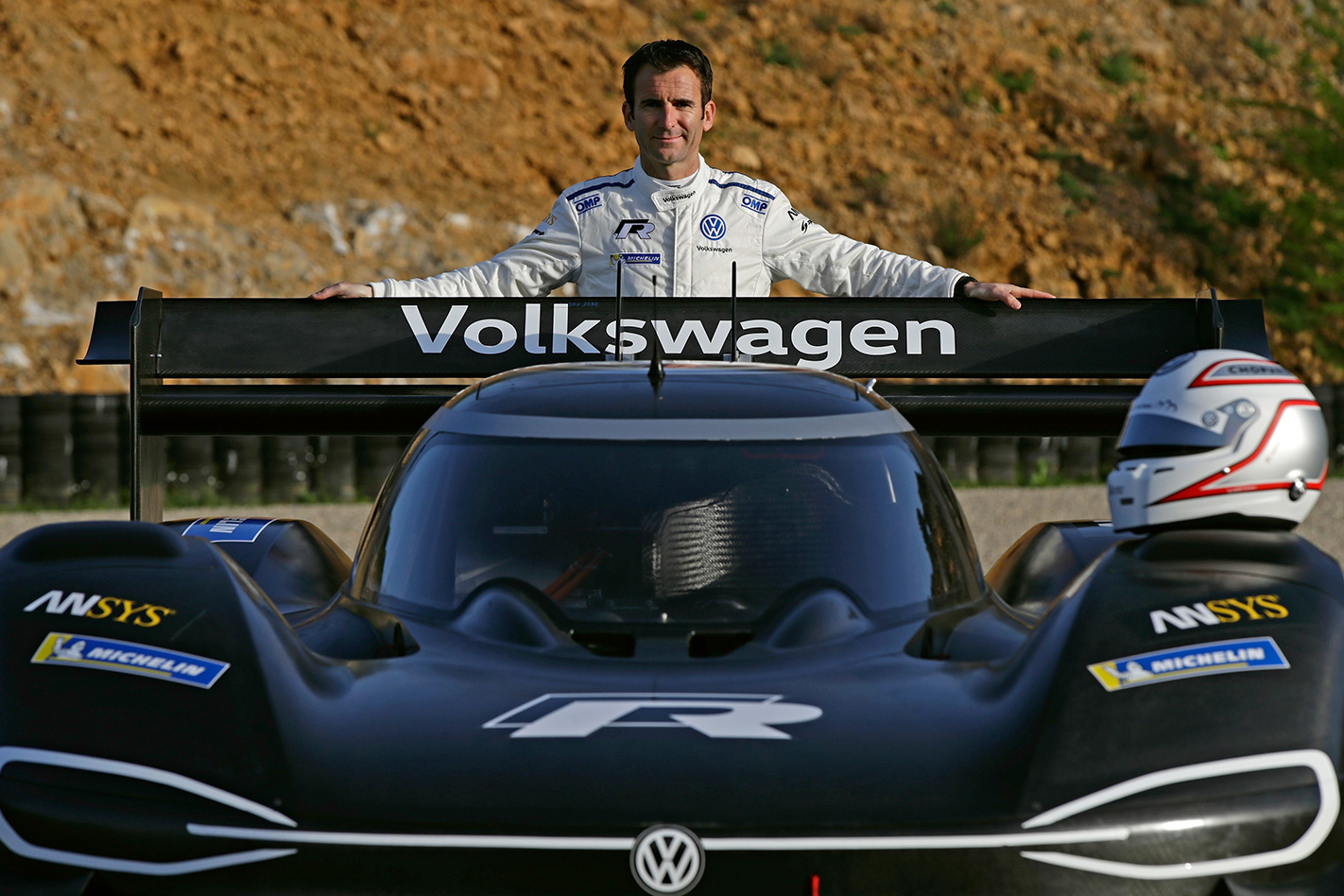
Piloted by Romain Dumas, the pure electric ‘Dub cleaved an astonishing 16 seconds from the previous record, which was set by Sebastien Loeb in 2013 with a Peugeot that burned petrol – lots of petrol.
For more than 100 years, racers have been heading to the iconic and perilous contest to try their luck against the 20km course that rises to a lung-busting 4300m through 156 turns, but the mountain has never staged a more significant milestone than this year’s feat.
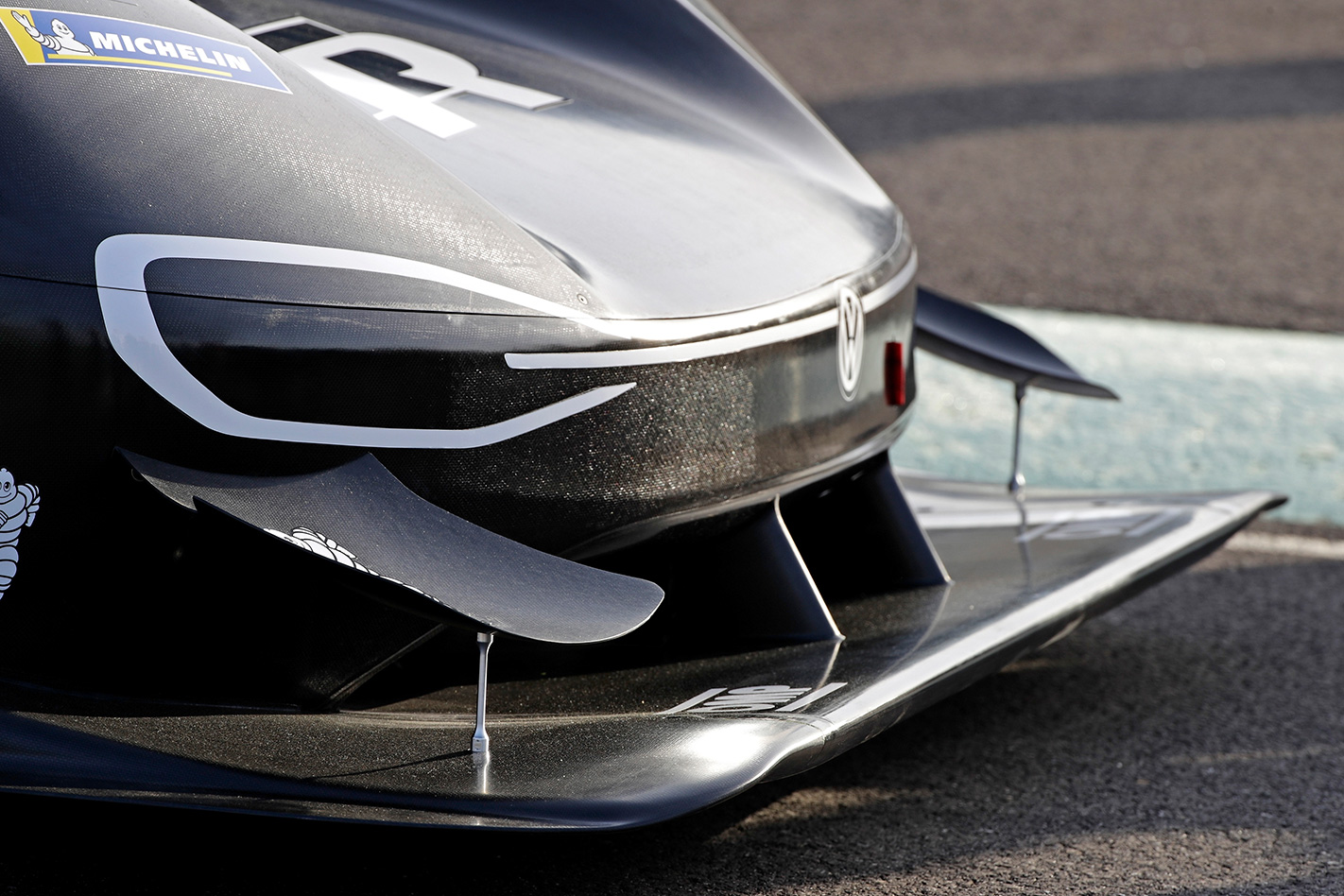
Electric cars have been hunting the title with increasing potential and many will be surprised to see a battery-powered car flashing under the famous chequered flag in a faster time than any combustion-propelled vehicle could manage, but actually, the neon writing has been on the wall for some time.
Pikes Peak is unique in the challenges it presents for engineering teams trying to complete the ‘Race to the Clouds’. Not only must a vehicle endure all the stresses and forces of any pedigree racer, it needs to overcome all the problems that occur when the atmosphere drops to almost half the pressure at sea level.
Primarily, the biggest problem for combustion engines is the available oxygen – or lack of it. Massive turbochargers mitigate the problem, blowing harder as the altitude rises and compensating for the dropping atmospheric pressure, but it’s a Band-Aid on a busted hose and any air-breathing engine starts to suffer above the tree-line.
But as the air thins so does its specific heat capacity, and each cubic centimetre of air can carry less energy. That causes problems for anything that needs to be cooled. Engine cooling systems, brakes and tyres that are already pushed to their limit start to struggle and fail.
The problem is exacerbated by falling boiling points. At the beach, water boils at 100 degrees but crack out your billy at the summit of Pikes Peak and it will boil at 85 degrees, causing more problems for the already punished engine cooling system.
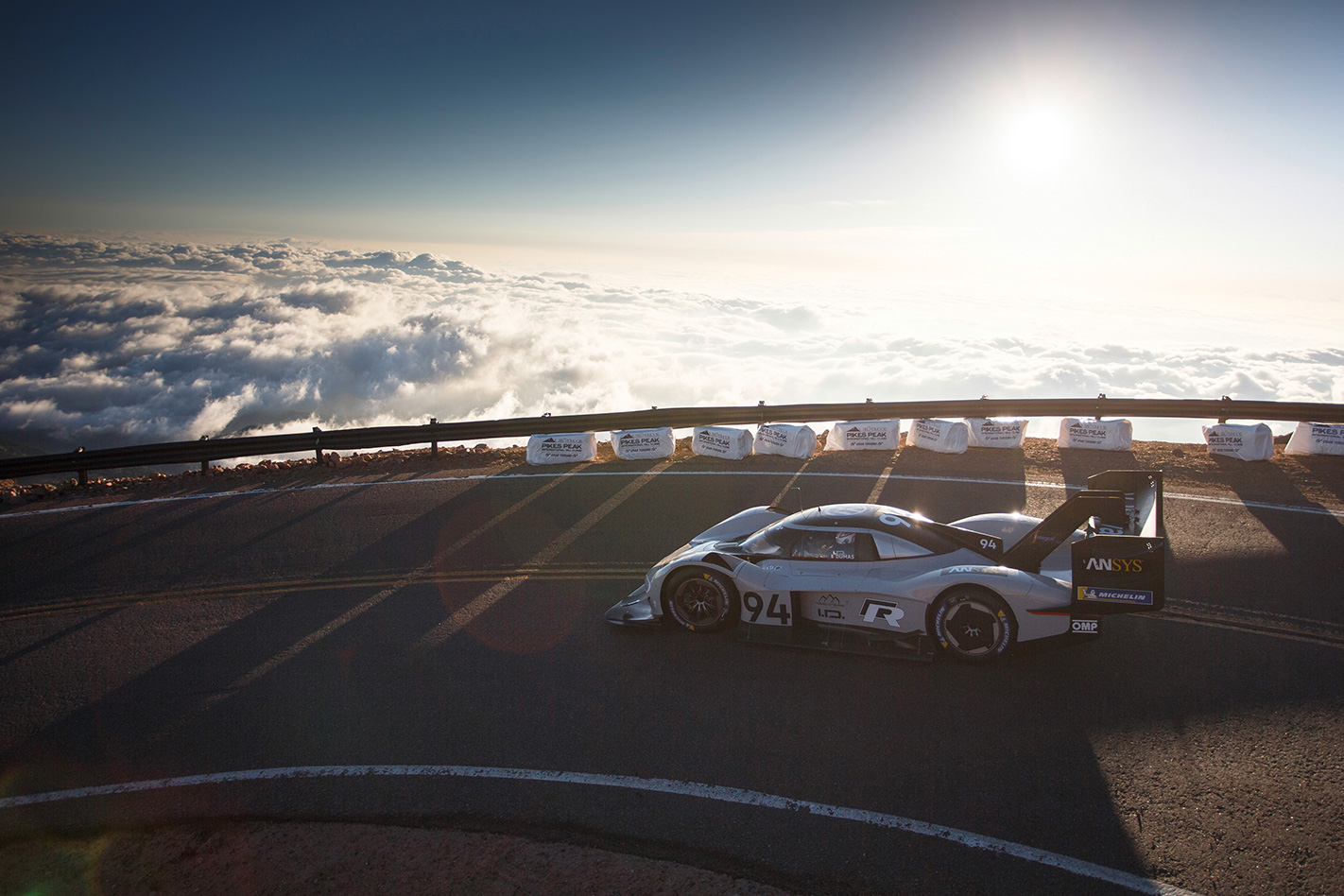
It’s the same for hydraulic brake systems which will also vapour-lock at a lower temperature. Not a good situation when the average speed of VW’s record run was 150km/h.
As if that wasn’t enough to deal with, lower oxygen levels start to punish the driver as well with exhaustion setting in faster under the physically demanding ordeal of huge g-forces. Many modern racers will have their own oxygen supply when attempting a Pikes Peak run.
If only there was some kind of vehicle that didn’t need to breathe air to produce massive horsepower, didn’t have such a dependence on cooling systems, and could use some other kind of force other than friction for braking. Hmmm.
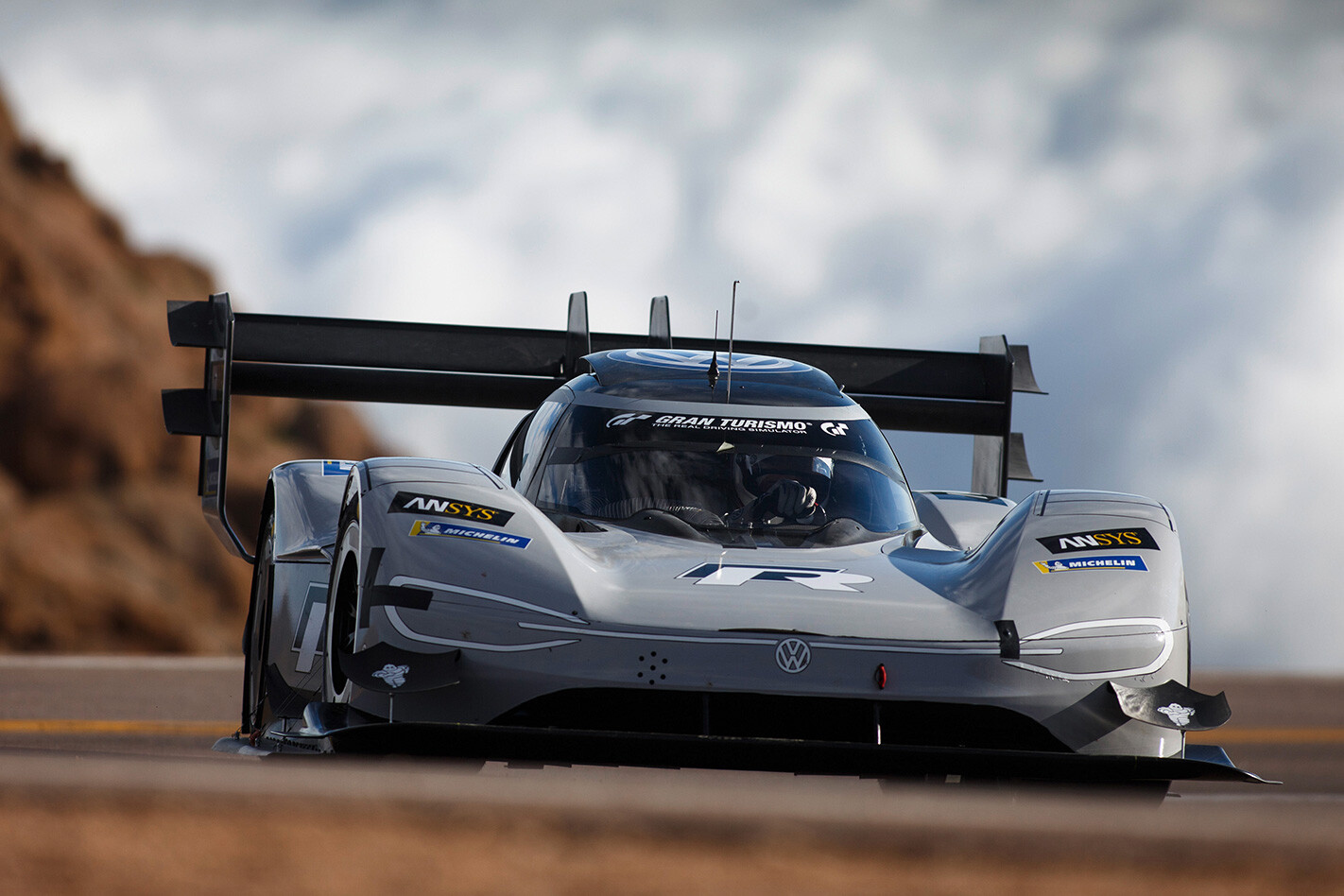
Obviously VW’s I.D. R doesn’t need to ingest air and its 500kW comes from two electric motors and a specialised lithium ion battery. Scrubbing speed is handled partly by regenerative braking which produces less waste heat than conventional discs and calipers, and its power management hardware runs far cooler than a combustion engine.
This is exactly why an electric vehicle blew a petrol rival off the mountain last weekend and why the dominance of EVs at Pikes Peak was inevitable.
There are problems a move to electric drive doesn’t avoid however, and you are always going to see the unmistakable massive wings and splitters that are necessary to create downforce from air that isn’t as viscous.
Weight minimisation is also paramount to gain height quickly without overloading the drivetrain, and this is where relatively heavy EV batteries still have room for improvement, but it’s undeniable that the EV era is upon us.
Pikes Peak is a hyperbolic example of EVs excelling over the traditional giants but it’s just the start and from 2020, the FIA World Rallycross Championship will switch to pure electrics as the obvious application in a race that is short enough for current battery technology.
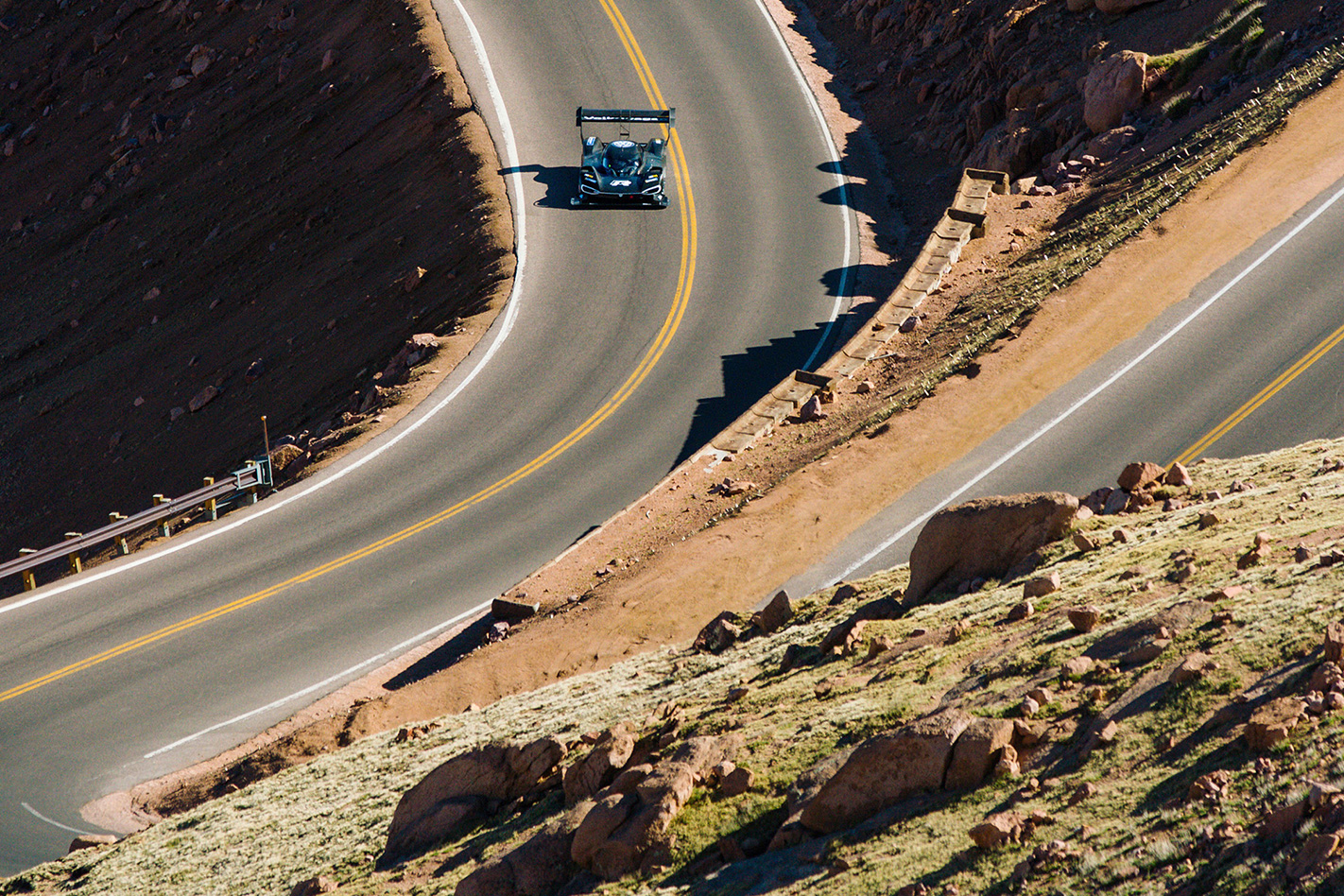
The high-torque, instant response of the cars also lends itself to the tight and complex courses.
Energy density is still the Achilles heel of any battery-powered car but constant development by all the mainstream manufacturers is allowing EVs to go further and faster each day, and as the phenomenal Volkswagen achievement has demonstrated, electric cars are on the rise.
If you want to take that pun further, the benefits of advancing EV technology will cascade down from the dizzying heights of motorsport, to road cars you will one day be able to own.
