
This is the Ferrari SP38, and it’s the only one there will ever be.
Built by the Ferrari One-Off team, the car was ordered by one of Ferraris “most dedicated customers” with inspiration being drawn from the likes of the F40 and the 308 GTB.
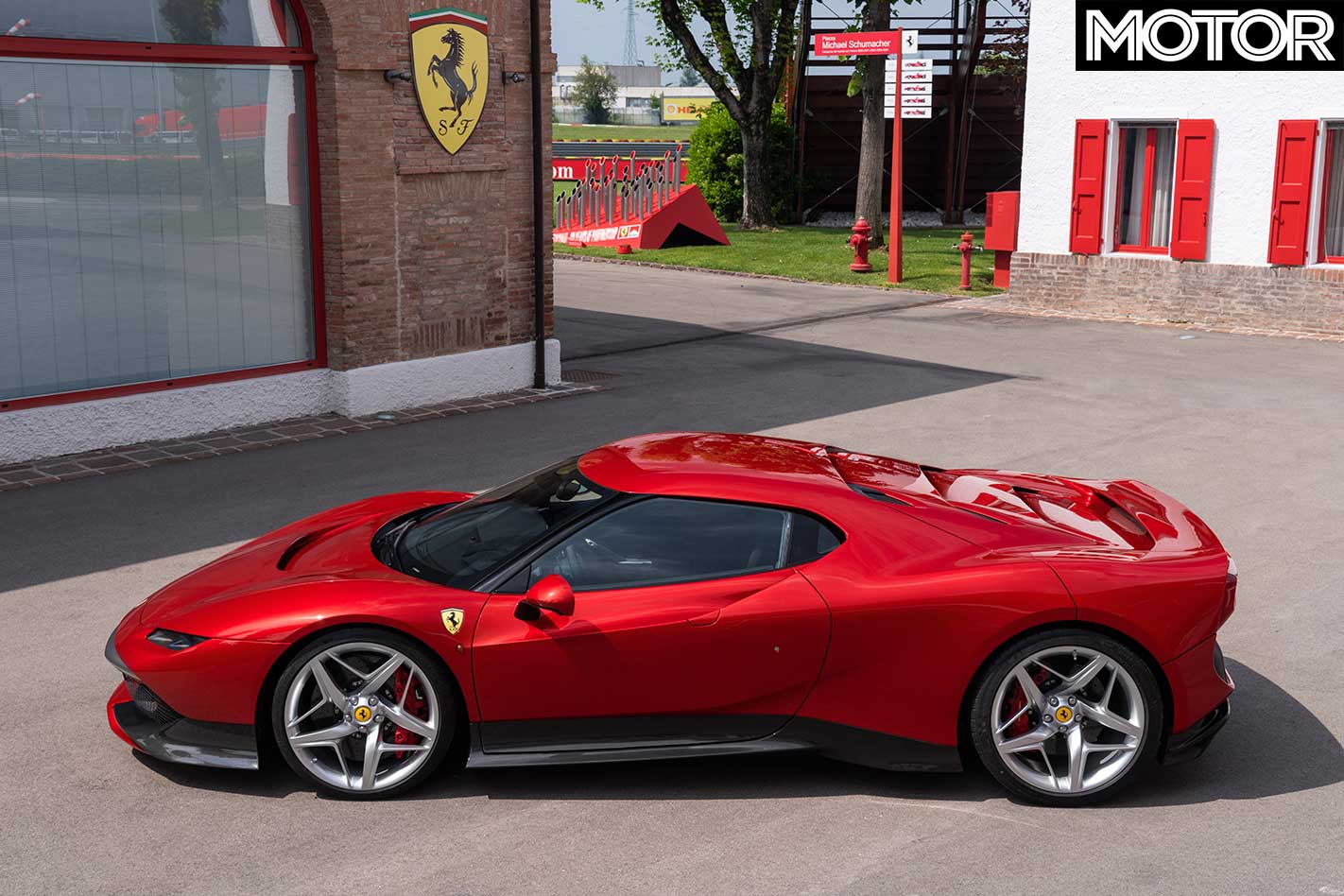
The car itself is built on the platform of the Ferrari 488 GTB, with a 3.9-litre twin-turbo V8 powering the rear wheels.
Ferrari says the use of this drivetrain is what inspired the design team to work in a few elements of F40, such as the rear wing (albeit in a far more subtle manner than the car which inspired it) and the engine cover.
Another iconic ‘Red Car’, the Ferrari 308 GTB appears in a few details at the front of the car, and down the sides.
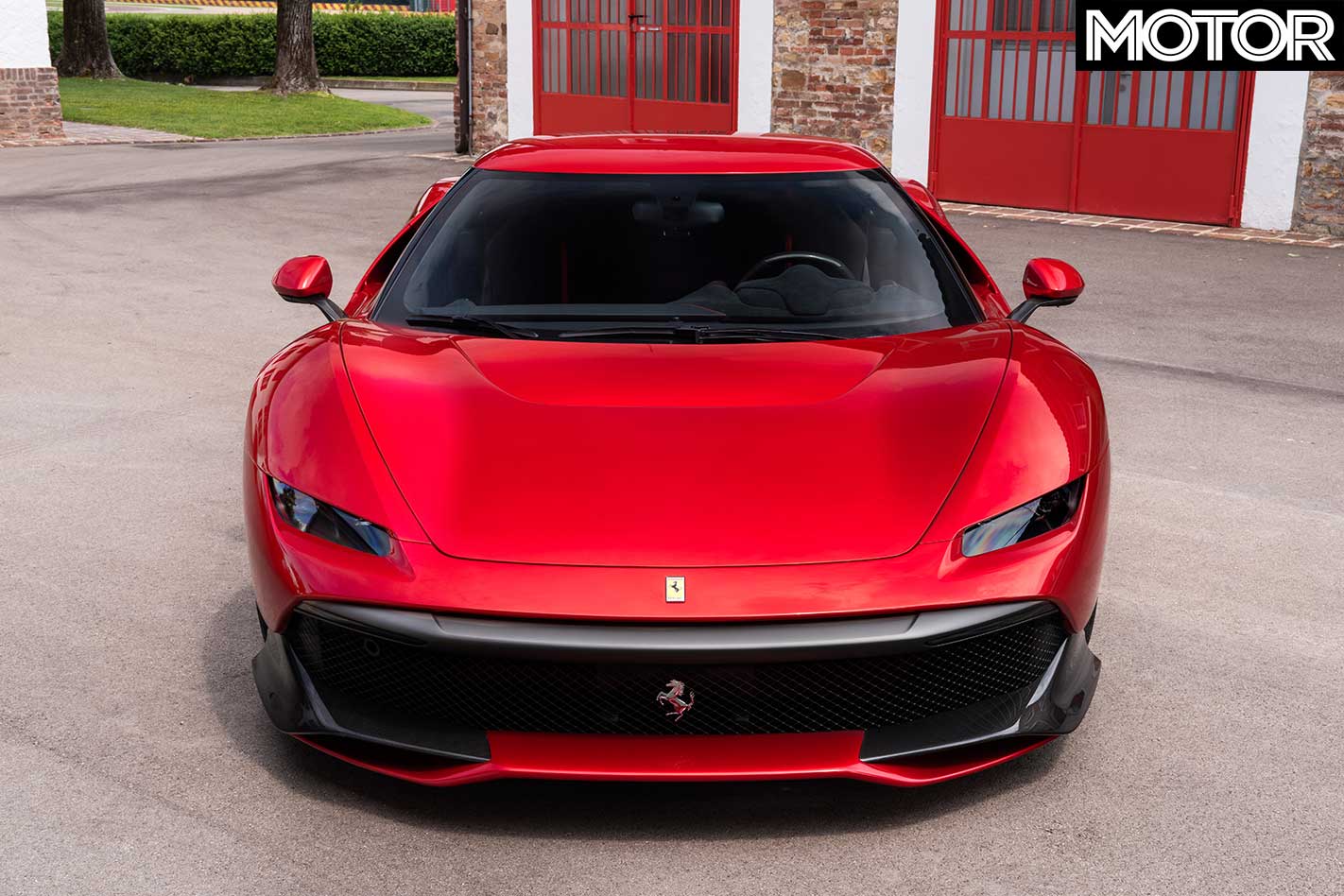
A small black lip across the top of the intake grille houses the DRLs, reminiscent of the black bumper on the 308 which housed its indicators above the grille.
Air intakes are also found near the rear of the doors, with a flowing curvature starting from near the wing mirror – another 308 GTB and F40 reference point.
The Ferrari SP38 was reportedly given a good breaking-in immediately after being handed over to the owner, meaning this might not turn into a private museum exhibit after all.
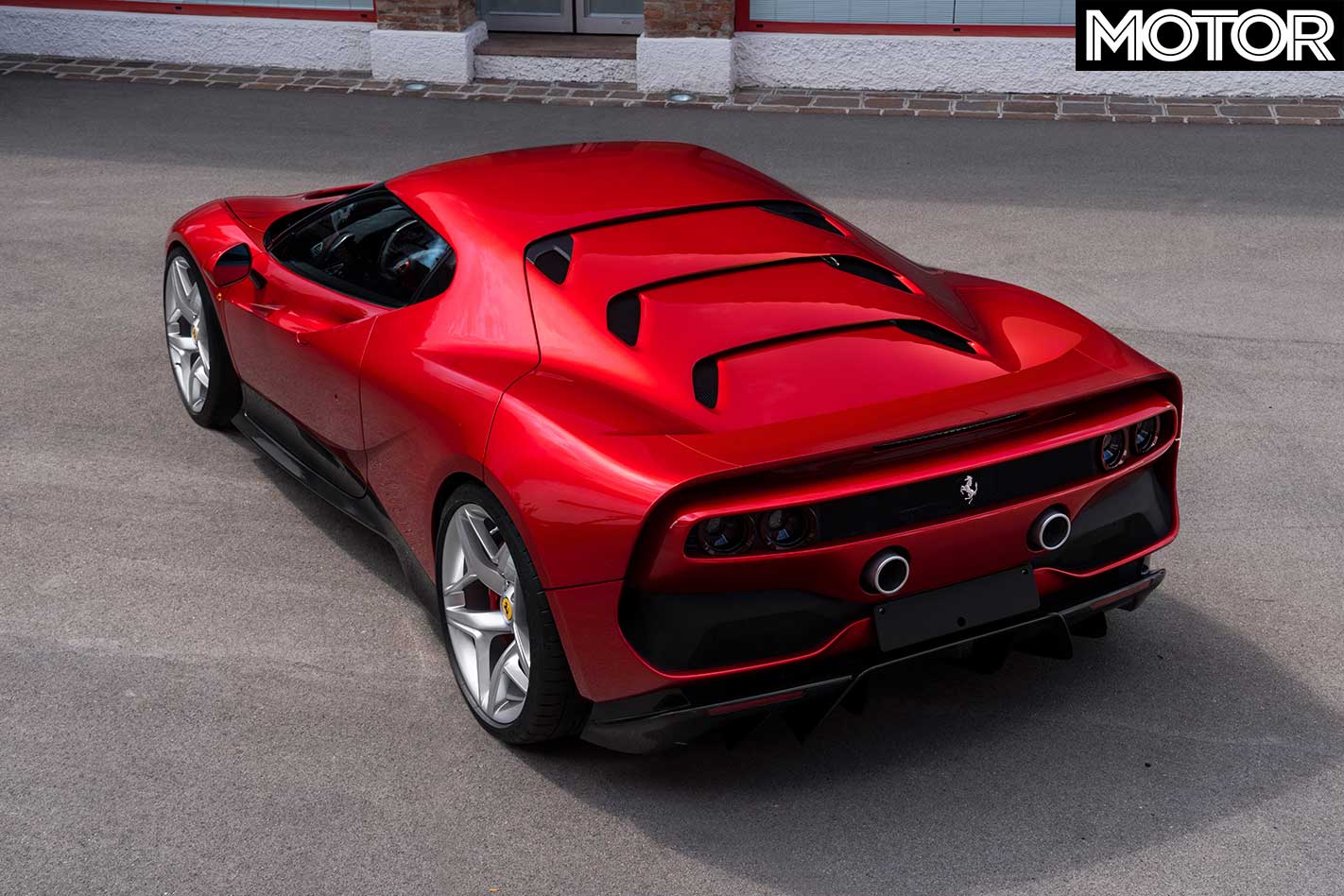
“After the ceremonial handover to one of Ferrari’s most dedicated customers, the car was immediately put through its paces in a series of hot laps,” says the Maranello brand.
“Designed by the Ferrari Design Centre on the chassis and running gear of the 488 GTB, this unique car reflects the specific vision of a client with a deep passion for racing.
“The result is a model that can be driven both on road and on track, while at the same time expressing all the beauty and innovation inherent in Ferrari’s road cars.”
Ferrari says the car will be on display at the upcoming Concorso d’Eleganza Villa d’Este in late May.
THE 2018 Kia Sportage will gain a range of updates to keep it firmly in front of buyers’ eyes when it arrives in July, but a frugal new diesel-electric hybrid drivetrain won’t be among the surprises.
The fresh look, revealed last week but now teasing a raft of extra technology including active cruise control that will even come to a complete stop, and take off again when the traffic resumes moving, includes redesigned front and rear bumpers, restyled headlights and tail-lamps and five extra colours to choose from.
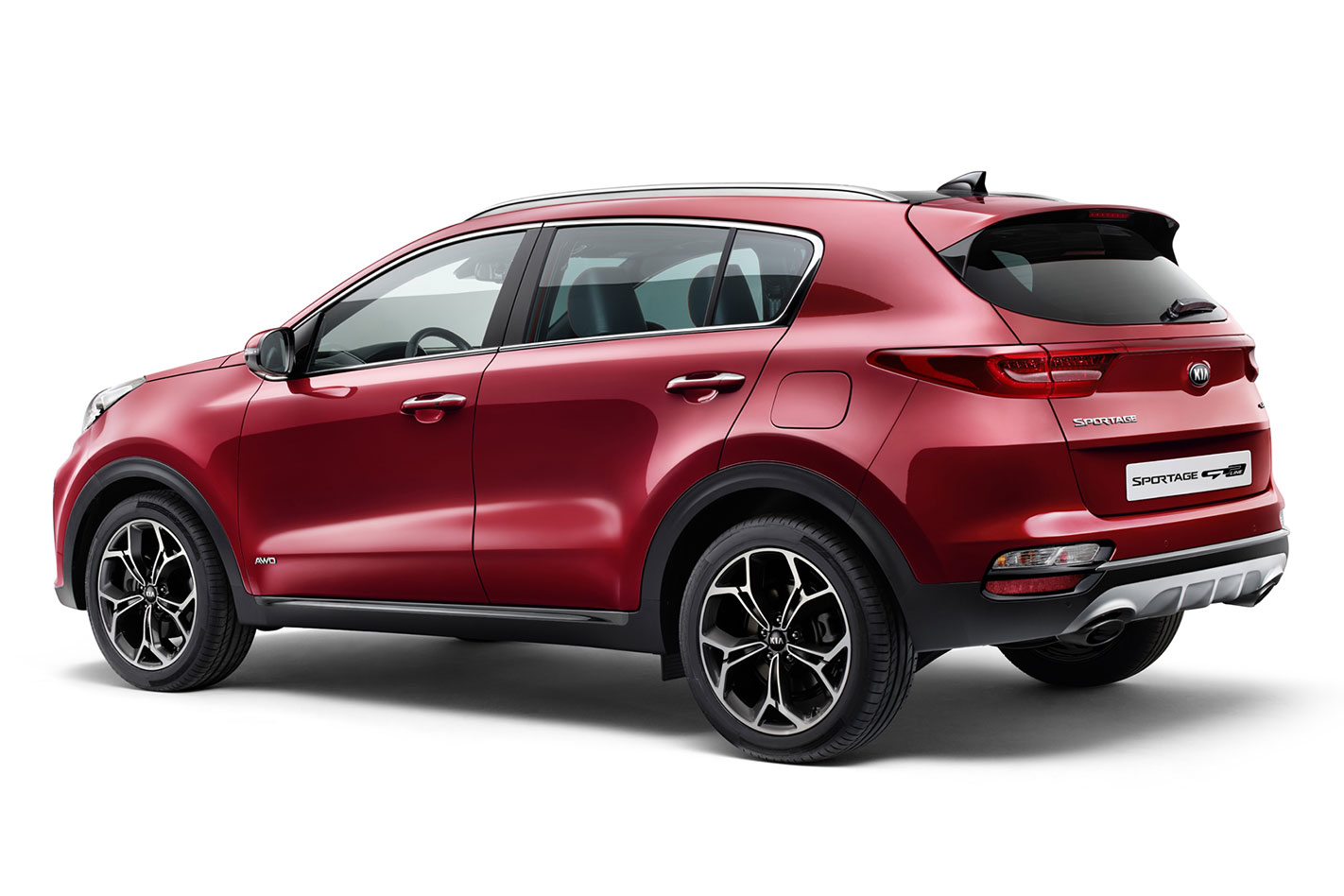
Kia said the hybrid system will sit behind the 2.0-litre turbo-diesel engine that’s already used in a number of Australian-delivery variants of the model.
Of more interest is a new seven-speed dual-clutch transmission being introduced to some European versions of the Sportage – Australian versions currently use a traditional torque converter six-speed automatic.
Kia’s reticence to introduce a hybrid model to the Australian market is believed to be part of a wider strategy for the carmaker to bypass the technology in favour of fully electric vehicles, the first of which is expected to arrive as part of a global roll-out of up to 16 “advanced powertrain” vehicles the company says it will bring to its showrooms by 2025.
This includes five hybrid models – we can potentially discount those straight away – but of more interest to us are five new plug-in hybrid models that will be able to run for extended distances on battery power alone. The Korean carmaker has also flagged it will also have five battery-electric vehicles in its line-up.
The first electrified Kia-badged cars to come to Australia are likely to be volume models; one, a sedan, is likely to feature in the next-generation Optima given that has already had a plug-in version developed for China, and the other a small SUV, which is likely to go under the bonnet of whatever Kia spins out of the Hyundai Kona and potentially wearing the Soul badge.
The Sportage’s update is also likely to include improvements to the more sports-honed GT-Line models, which in Europe will gain a gloss black hot-stamped radiator grille, a gloss black and silver skid plate, and dark chrome inserts on the side sills and rear tailgate. These models also gain better integration of dual exhausts, and “ice cube” LED daytime running lights.
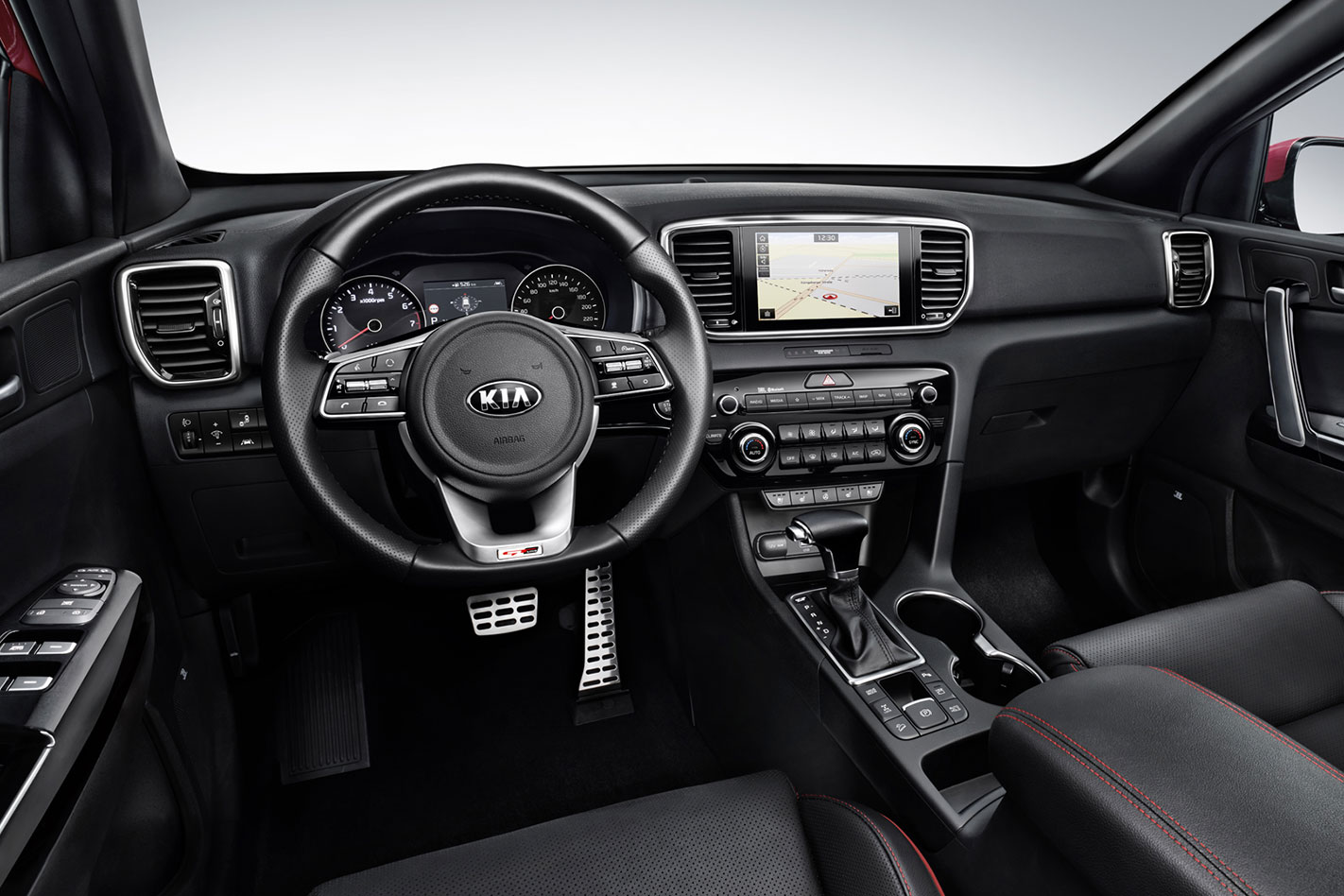
Inside, buyers will notice a new steering wheel and revised instrument cluster, as well as different-look black and grey two-tone upholstery. GT-Line cars can option black leather tri with red accents.
Other technology making its way into the Sportage includes a surround-view camera system, driver fatigue monitor, and the option of a “frameless” 8.0-inch infotainment system that replaces the default 7.0-inch touchscreen.
Australian specification and pricing are expected closer to the Sportage’s July arrival.
The Audi Q5 3.0 TDI, a diesel V6-powered range-topper for the German luxury brand’s midsize SUV, is coming to Australia.
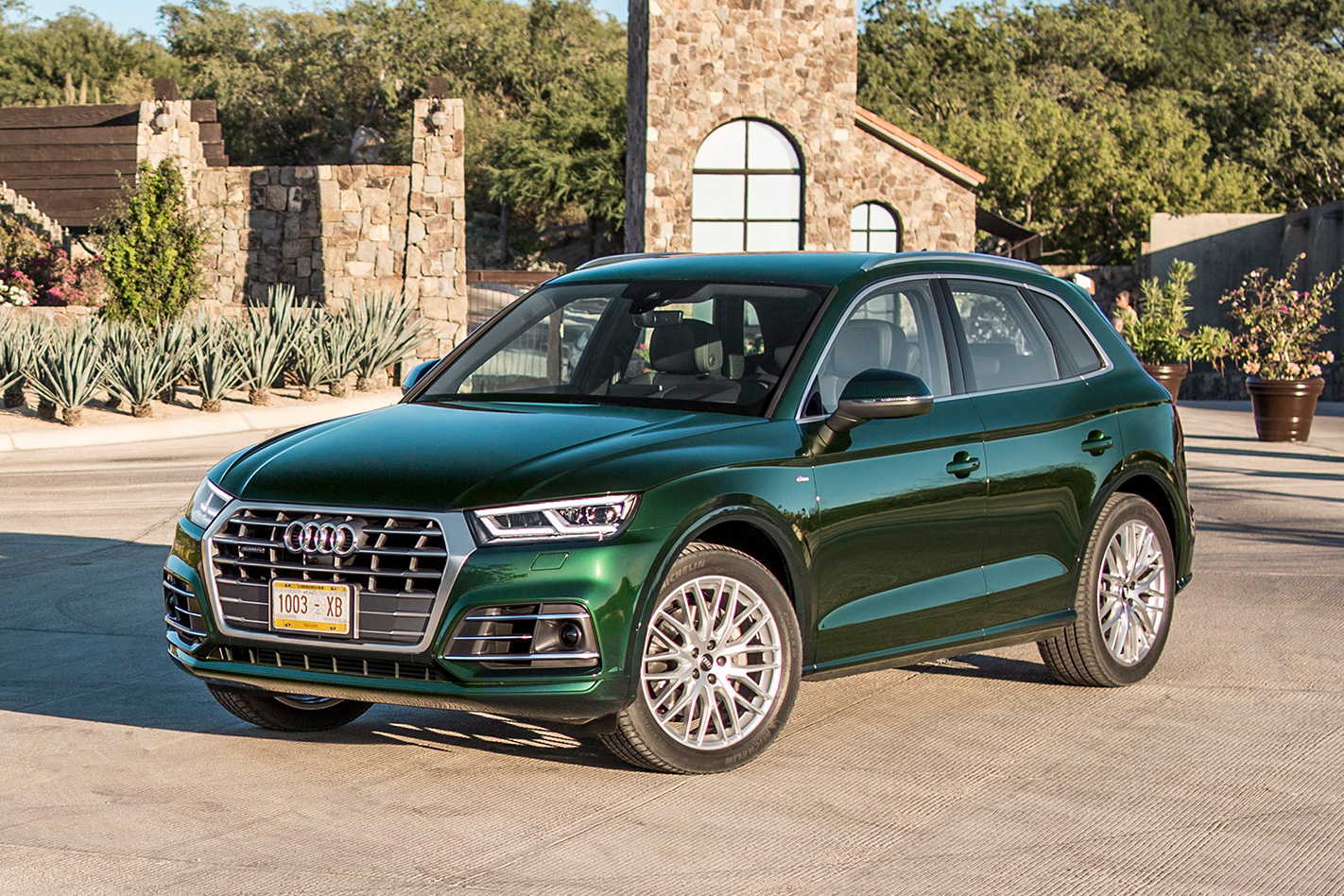
Audi says the BMW X3 and Mercedes-Benz GLC rival will sit atop Ingolstadt’s Q5 range.
Powering the Q5 3.0 TDI is a 3.0-litre turbo-diesel V6 sending 210kW/620Nm to all four wheels (split 40/60 front to rear) via an eight-speed automatic. It will be priced from priced at $83,990.
Audi Australia has already opened its order books for the only V6 model in the Q5 line-up other than the turbocharged petrol V6-engined SQ5 ahead of its September arrival.
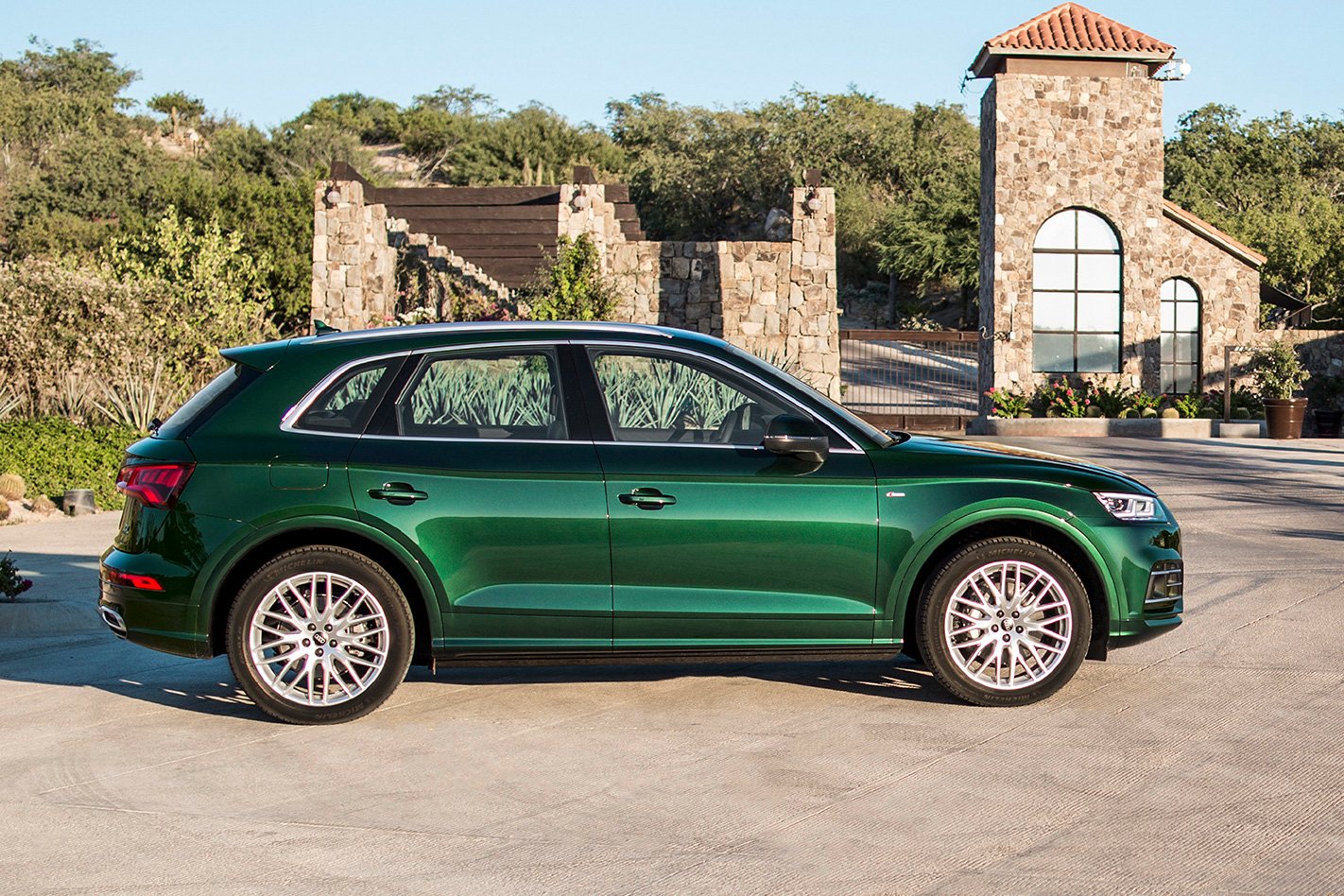
This Q5 model shares its body and styling with its established siblings, meaning up to 610 litres of boot space with the adjustable rear seats moved forward.
The 3.0 TDI Q5 will sprint to 100km/h from a standstill in 5.8 seconds – that’s quicker than a VW Golf GTI hot hatch – with a claimed combined fuel use of 6.3L/100km. The most powerful Q5 not wearing the SQ badge is the 185kW/370Nm 2.0 TFSI turbocharged four-cylinder, with a 0-100km/h sprint of 6.3 seconds.
The Q5 3.0 TDI will be fitted with 20-inch alloy wheels as standard, along with adaptive LED headlights, leather-trimmed seats, keyless entry and start, tri-zone climate control with a digital rear display, and a 10-speaker, 180-watt sound system.
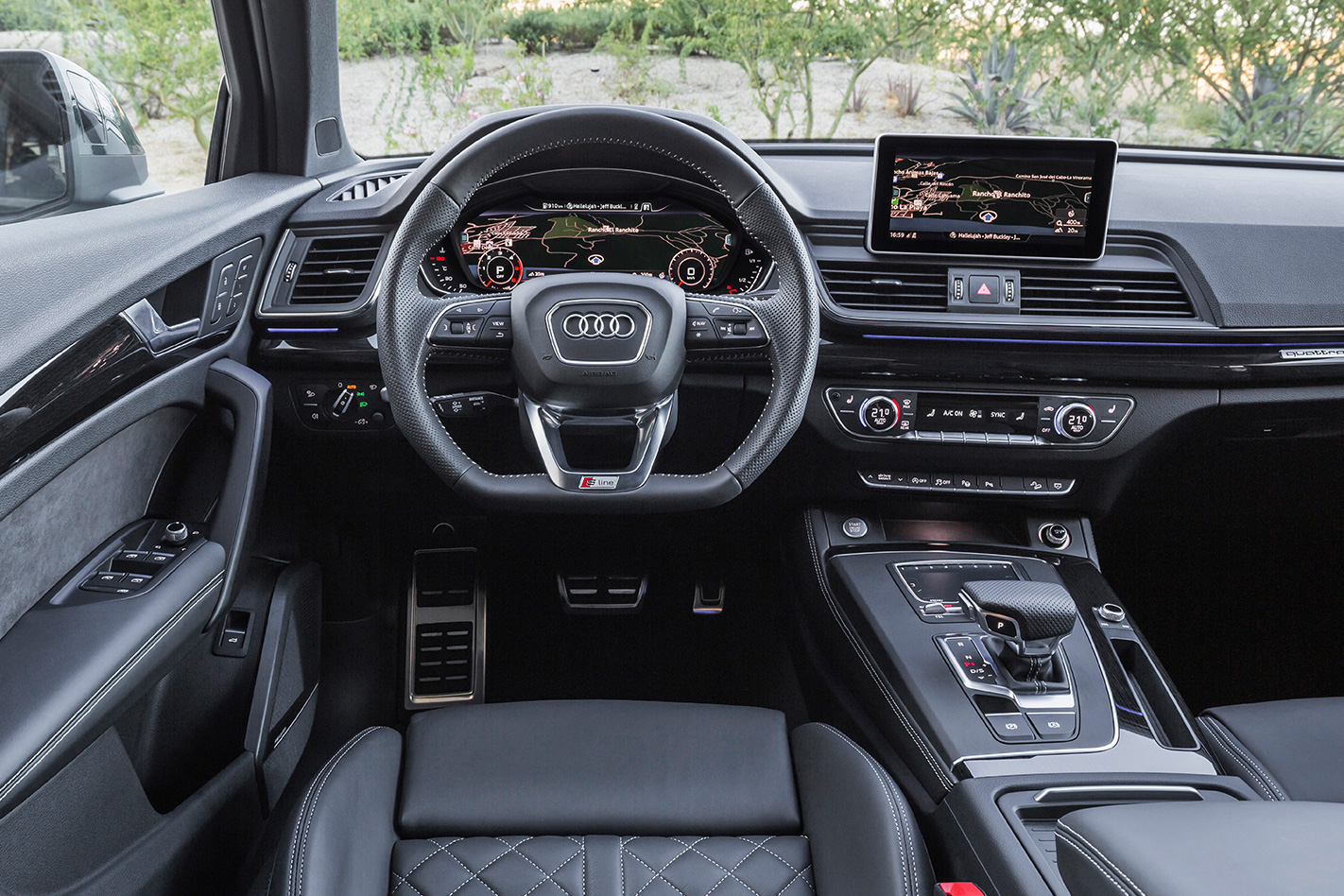
Audi’s 12.3-inch virtual cockpit will also be standard, along with its MMI Navigation Plus system that includes an 8.3-inch infotainment unit, DVD player, 3D maps and live traffic information. Audi Connect is also standard, which uses a mobile phone network SIM card to activate a Wi-Fi hotspot in the car for Google Earth and Search functions. Android Auto and Apple CarPlay are also standard.
Audi Australia has been generous with the standard equipment, adding a 360-degree parking camera and parking assistant, driver’s seat memory function, an electronically adjustable steering column and heated front seats over and above standard Q5 fare.
Safety features include AEB, exit warning, cross traffic assist, blind spot warning, active lane assist, pre-sense front and rear, adaptive cruise control, turn assist, collision avoidance assist, and predictive efficiency assist.
An Audi Australia spokesperson told WhichCar the company expected the 3.0-litre TDI to make up 15 percent of total Q5 sales once it is available locally.
Audi now has a Q5 for the owner who loves performance but doesn’t want to shout about it.
WHAT IS IT?
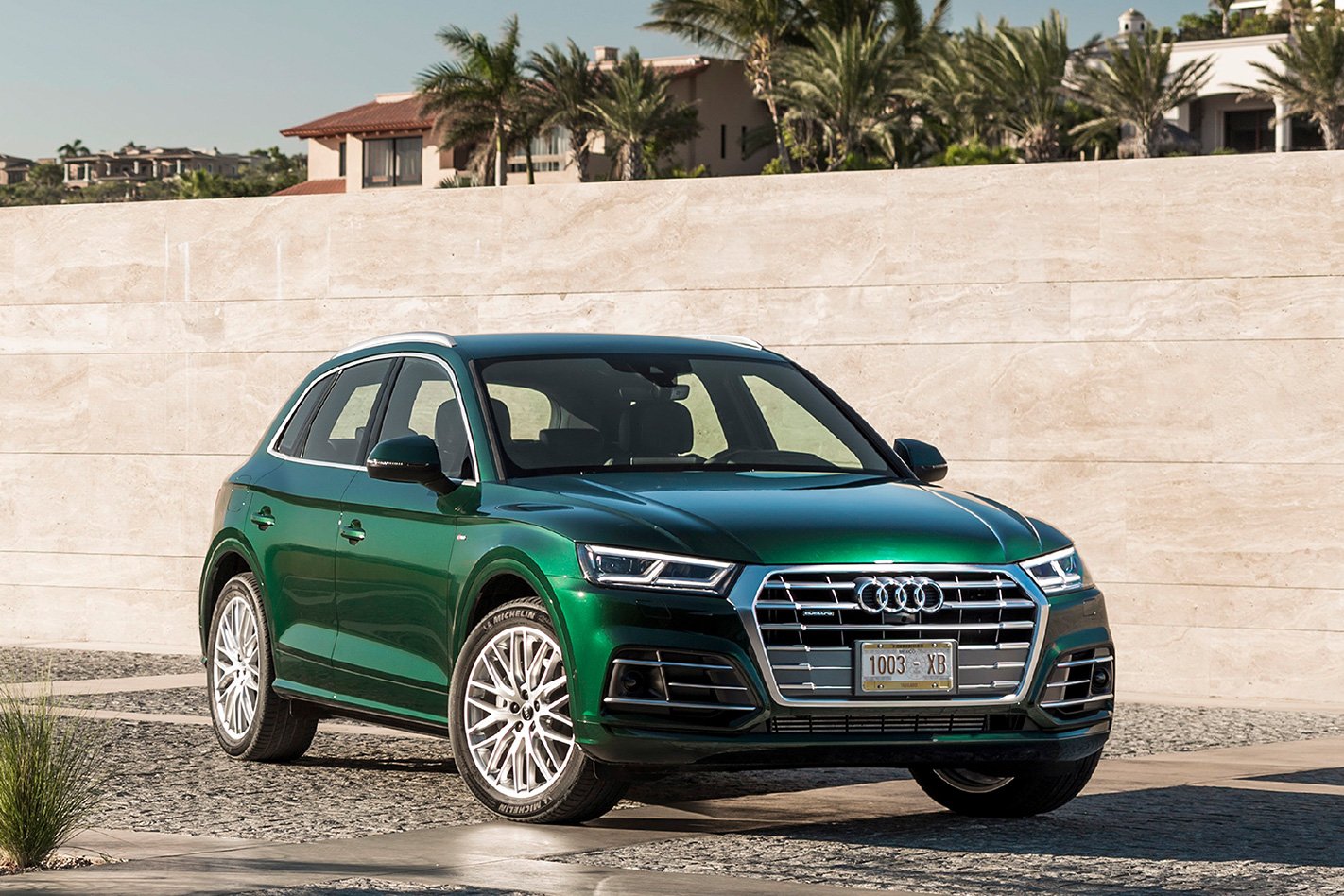
The most powerful non-Audi Sport model in the Q5 range. With an uprated 3.0-litre turbo-diesel V6 under its handsome snout, this is Ingolstadt’s mid-size SUV for buyers with a penchant for understated grunt.
WHY WE ARE TESTING IT?
Orders are already open for the sportiest diesel Q5 in Australia, so Audi let us loose on a German Autobahn ahead of the SUV’s arrival here in September. We wanted to find out if there’s still a reason to buy a performance-diesel Q5, given the SQ5 is now a turbo-petrol.
MAIN RIVALS:
BMW X3, Jaguar F-Pace, Mercedes-Benz GLC, Porsche Macan, Volvo XC60, Range Rover Velar
THE WHEELS VERDICT:
The Q5 TDI V6 has always been a bit of a performance dark horse, underpinned by uncharacteristic diesel refinement. This new-generation version continues the tradition with ample torque and a tea-totalling appetite for fuel. It’s sleeper styling and cop-baiting grunt is a nice birthday present as the Q5 range celebrates its first birthday locally.
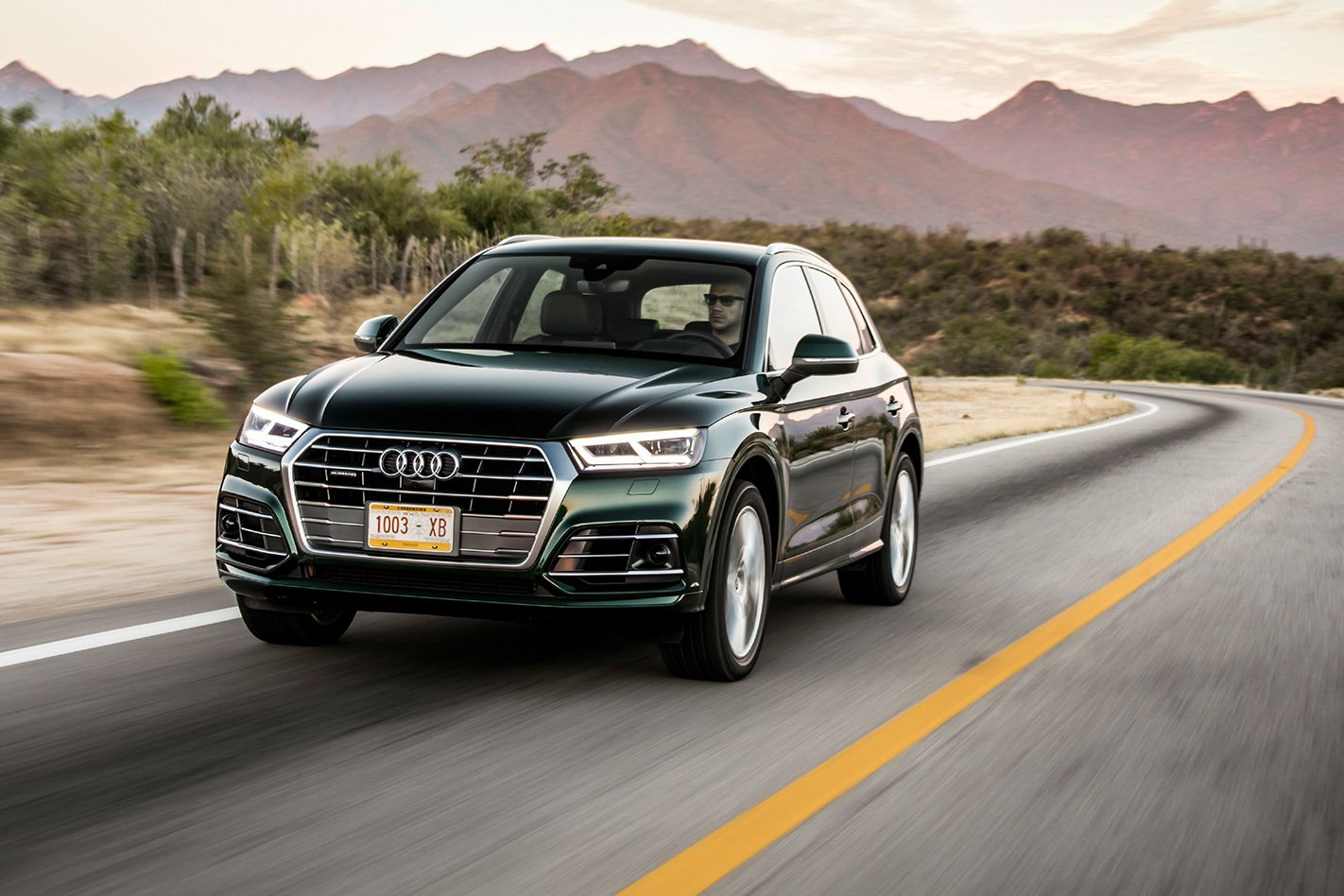
PLUS: Slick and powerful engine; smart infotainment; dynamic engagement MINUS: Adaptive dampers or air suspension are expensive options; tyre roar on low-profile rubber
WHEELS REVIEW:
AUSTRALIANS love to brag, and we’ll often pay for a badge which’ll do the talking for us.
Audi’s new Q5 3.0 TDI subverts this cultural peacocking, by packing serious punch with an understated badge. Picking up where the previous-gen SQ5 diesel left off, the Q5 3.0 TDI is a performance V6 diesel without the S-version’s boastful visuals.
For $83,990 customers are treated to 210kW and 620Nm (up from 180kW/580Nm of the previous generation). This positions the latest addition to the Q5 range above the 2.0 TFSI turbo-petrol four-cylinder, which produces 185kW/370Nm for $73,211, but below the SQ5 flagship which puts down 260kW/500Nm for $99,611.
The major change is the 3.0-litre turbo-diesel now nestled behind the Q5’s snout. Paired with the same eight-speed automatic gearbox found in the SQ5, power is sent to all four wheels with a 40:60 split front to rear under normal driving conditions.
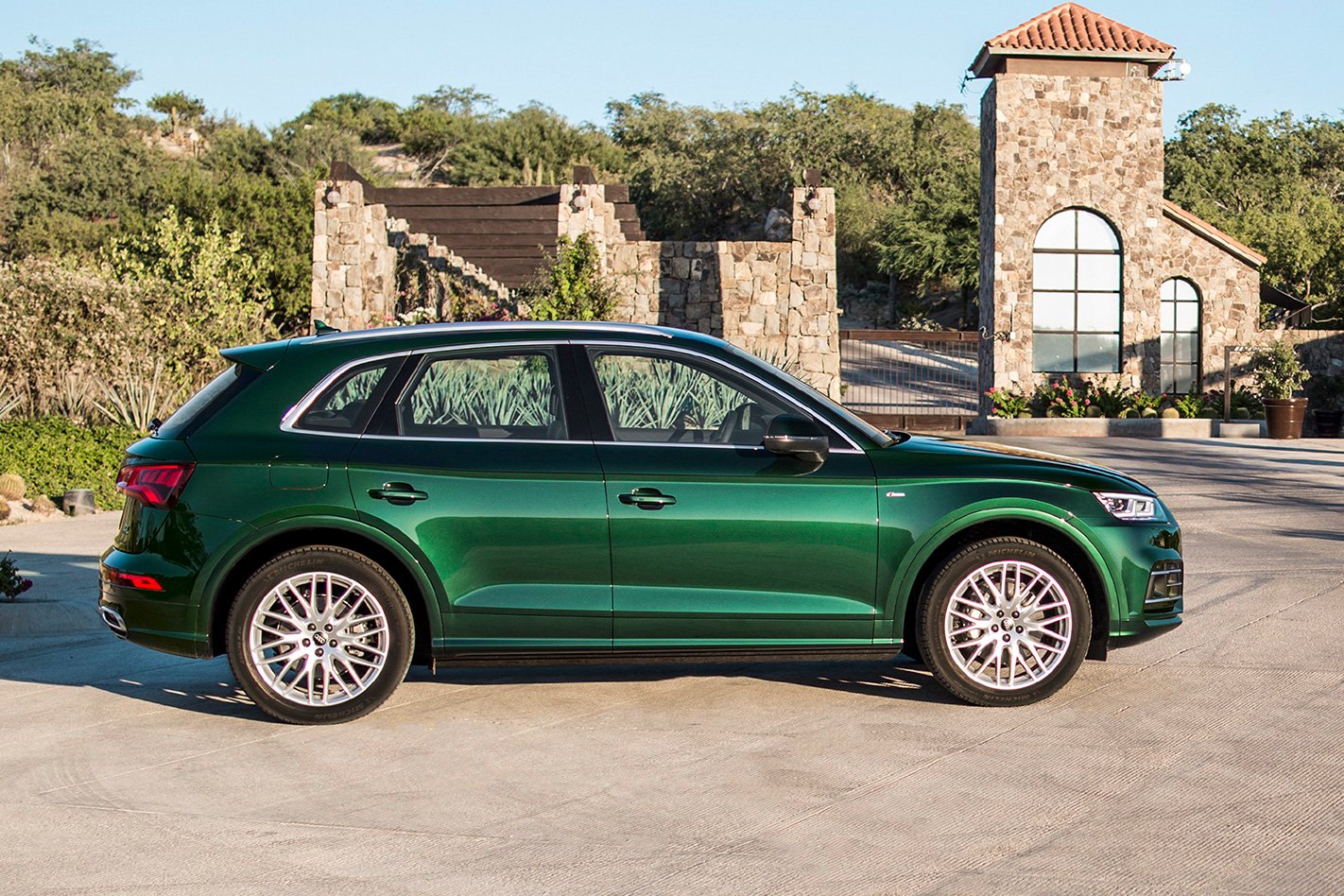
However, the eight-speed auto can become flustered under acceleration – with the , prompting a frustrating pause while it searches for the right ratio, before lurching forward as 620Nm does its job as prescribed.
Audi’s 3.0-litre diesel is remarkably refined like previous generations before it. Even at idle, there is minimal ‘rattle’ typical to an oil-burner, and engine noise is subdued unless prompted to life with a push of the right foot. When called to action there is a throaty induction noise which belies the engine’s diesel diet.
Peak torque is available at just 1500rpm and continues through to 3000rpm. The 3.0 TDI has a meaty powerband, with great globs of torque at your disposal off the line and when overtaking, but power tops out at 3000rpm, meaning the engine feels the best in the heart of the rev-range. Short-shifting will net the most enjoyable results during spirited driving.
There’s plenty of performance to appease an enthusiast, with a claimed 0-100km/h time of 5.8 seconds. That’s just 0.4 seconds slower than the SQ5, which costs almost a full $16,000 more.
Top Speed? Tested on the Autobahn the Q5 3.0 TDI’s speedo easily cruised to an electronically limited indicated 243km/h. But you’ll never achieve this in Australia on a public road unless you want to know what the inside of a jail cell looks like. Above 200km/h the front end of the Q5 3.0 TDI begins to feel floaty, with the steering lightening up. Wind noise doesn’t become annoyingly intrusive until 180km/h.
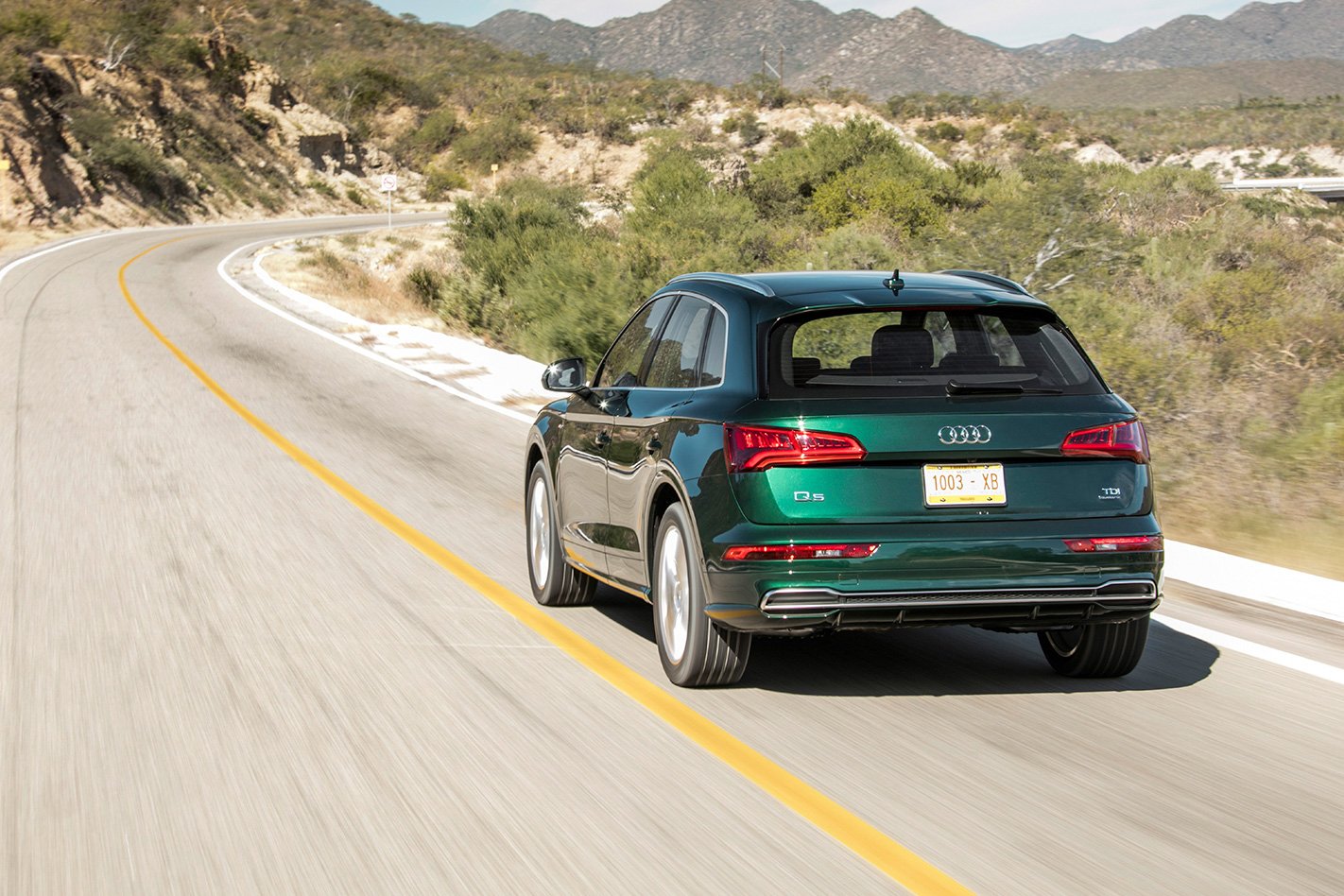
Audi claims an ADR combined fuel consumption of 6.3L/100km, compared to the SQ5’s 8.7L/100km. After 500km of Autobahn driving which averaged 130km/h and included numerous vmax runs and long, comfortable periods above 180km/h, the trip computer reported 9.7L/100km.
While our test vehicles were fitted with air suspension, in Australia the Q5 3.0 TDI will feature steel springs as standard. Adaptive dampers (a must-have option) are an extra $2150, while the air set-up we tested will require the ticking of a $3990 box on the options list.
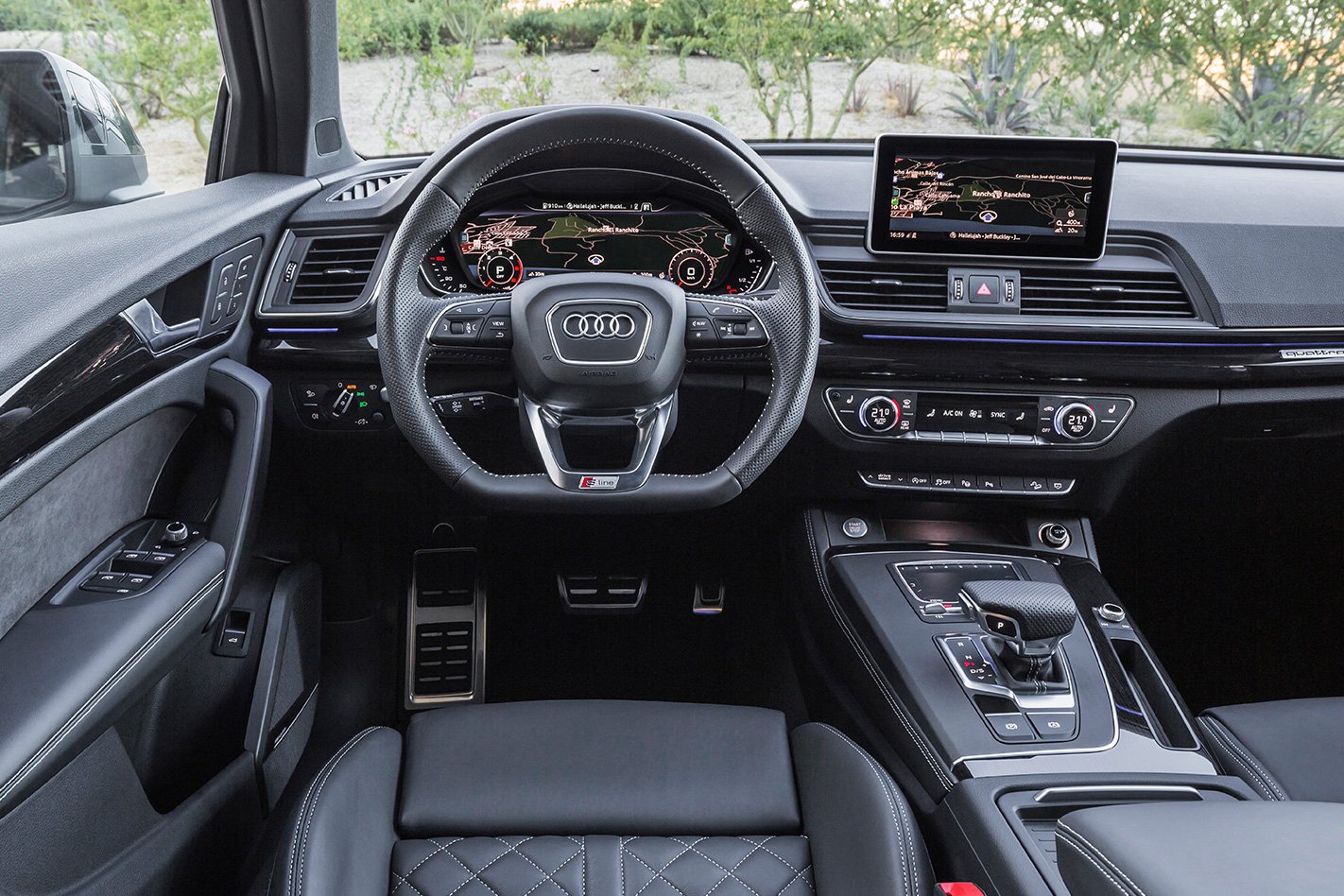
Riding on 255/40R21 Pirelli P Zero rubber, there was some intrusive tyre roar at acceptable Australian highway speeds. As we discovered driving the Q5 range in Australia, larger rims and standard steel springs make for a busy ride. On air these issues are stamped out, with a refined, velvety ride in comfort. Select dynamic and it stiffens up, but still offers more supple damping than the standard set-up.
Audi has fitted its full suite of safety features to the Q5 3.0 TDI as standard, including AEB, adaptive cruise, and the slick predicted efficiency assist system. Inside, the Q5 V6 TDI gets Audi’s 12.3-inch virtual cockpit system in lieu of the base TDI four-pot’s traditional analogue instruments, working in conjunction with Audi’s MMI navigation system. Audi connect is fitted as standard, enabling 4G wi-fi hotspot, along with Google Earth and Google Search functionality, which is intuitive and easy to use. Apple CarPlay and Android Auto are standard.
Audi Australia expects the 3.0 TDI will make up roughly 15 percent of total Q5 sales, offering a sweet middle ground for buyers, who want SQ5 performance and capabilities, without requiring the extra dosh – it just requires a bit of box ticking to really nail the brief. Even with the air-suspension fitted, the Q5 3.0 TDI is $10K cheaper than its SQ5 sibling, offering staunch performance and enjoyable dynamics that, for most customers, could render the more expensive variant obsolete.
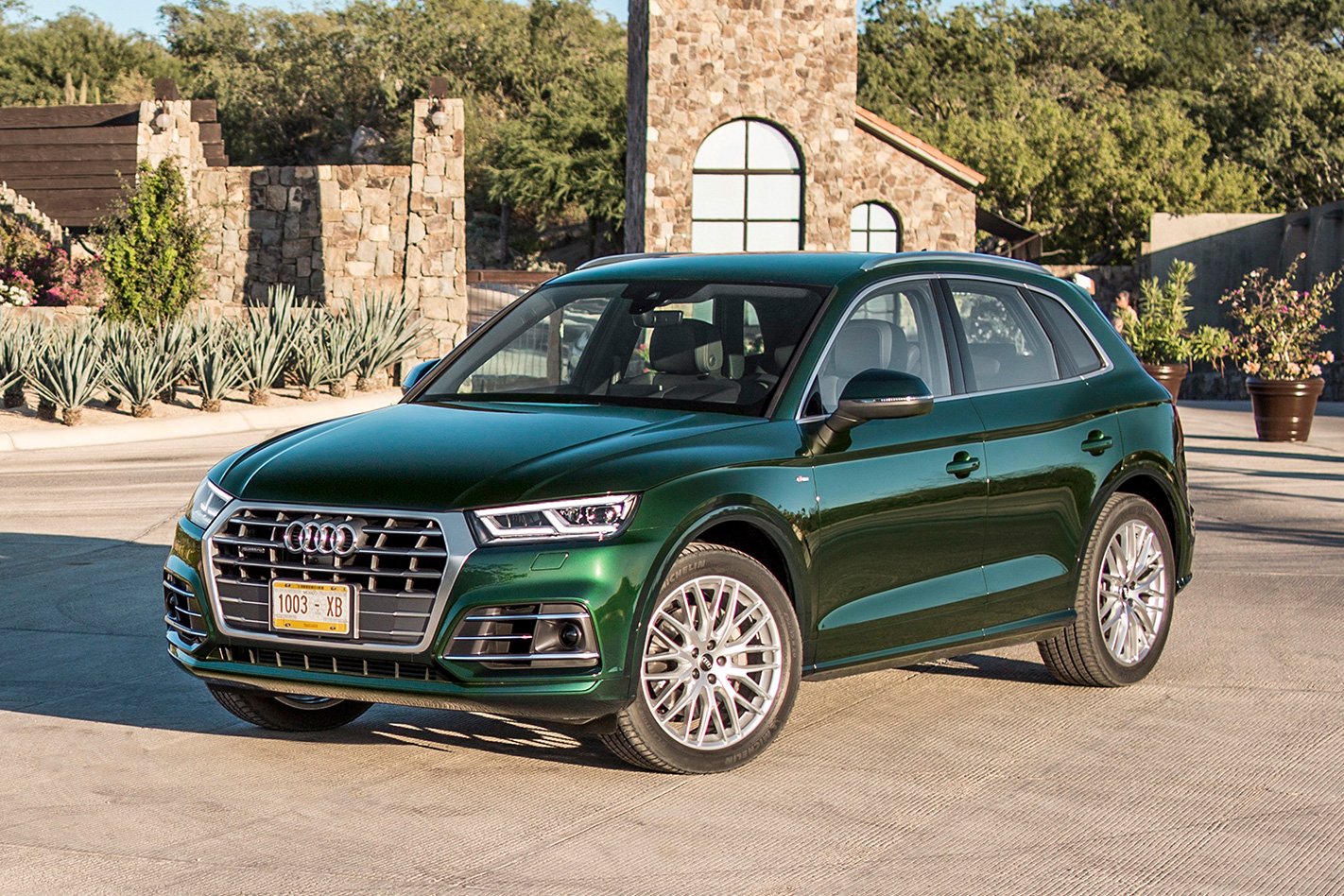
2018 Audi Q5 3.0 TDI specifications
Model: Audi Q5 3.0 TDI quattro Engine: 2967cc V6 (90°), dohc, 24v, TD Max power: 210kW @ 3000rpm Max torque: 620Nm @ 1500-3000rpm Transmission: 8-speed automatic L/W/H: 4663/1893/1659mm Wheelbase: 2819mm Weight: 1870kg 0-100km/h: 5.8sec (claimed) Economy: 6.3L/100km Price: $83,990 On sale: Now
WHILE it may not seem like the kind of event which would be enjoyed by car spotters, the Royal Wedding had a subtle but undeniable appeal for automotive enthusiasts.
Outside the Mercedes-Benz V-Class (which delivered the groom and his brother to the ceremony), and numerous blast-proof Range Rovers which escorted the procession, there was some seriously cool metal involved in the Royal Wedding.
Here are three of the best:
Bentley Golden Jubilee
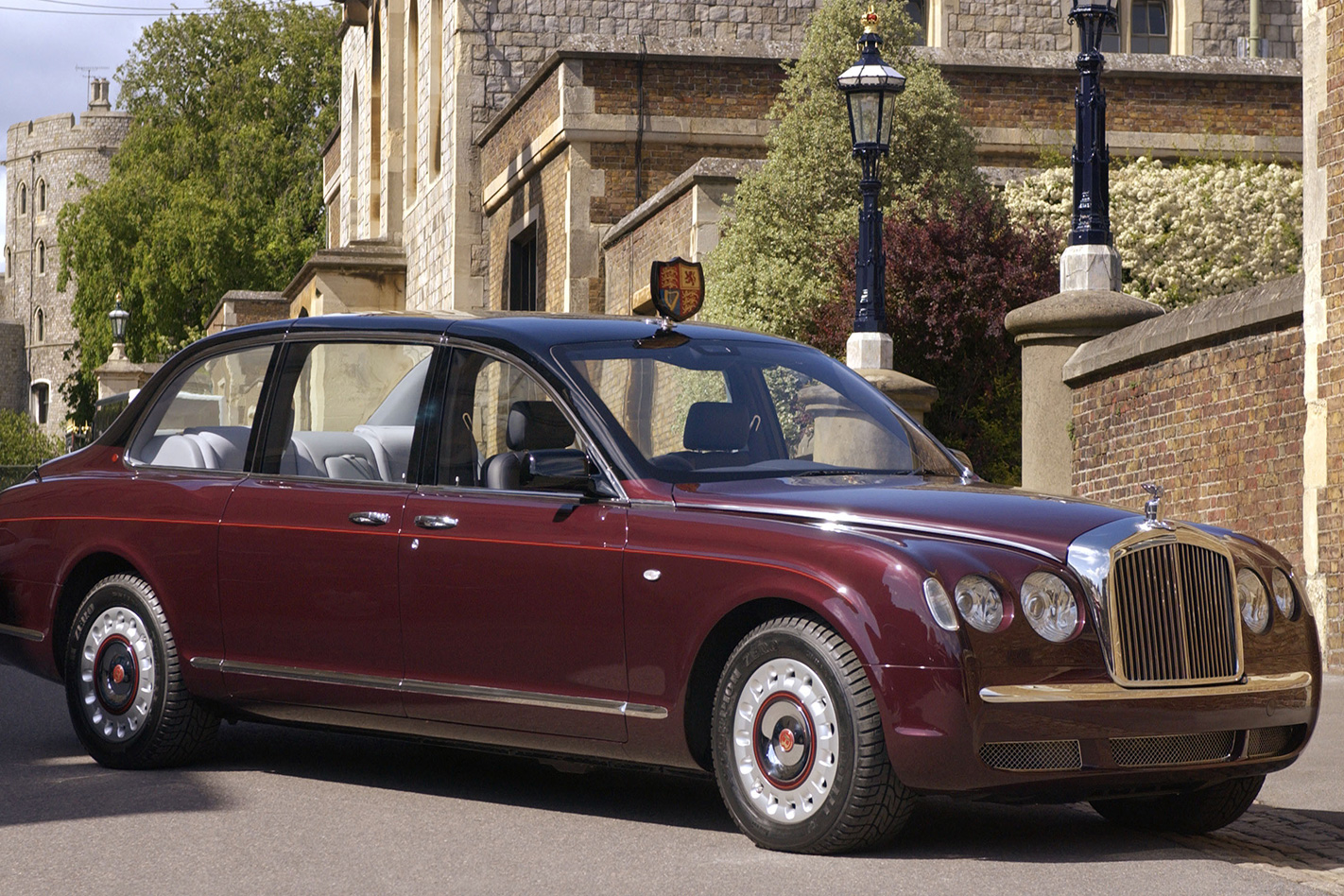
What would a British Royal Wedding be without a coach-built tribute to the monarchy? Enter Bentley’s Golden Jubilee. This behemoth was originally gifted to Queen Elizebeth in 2002 to celebrate, you guessed it, her golden Jubilee.
Based on a Bentley Arnage R, the Golden Jubilee is armour-plated and the cabin can be sealed with its own oxygen supply.
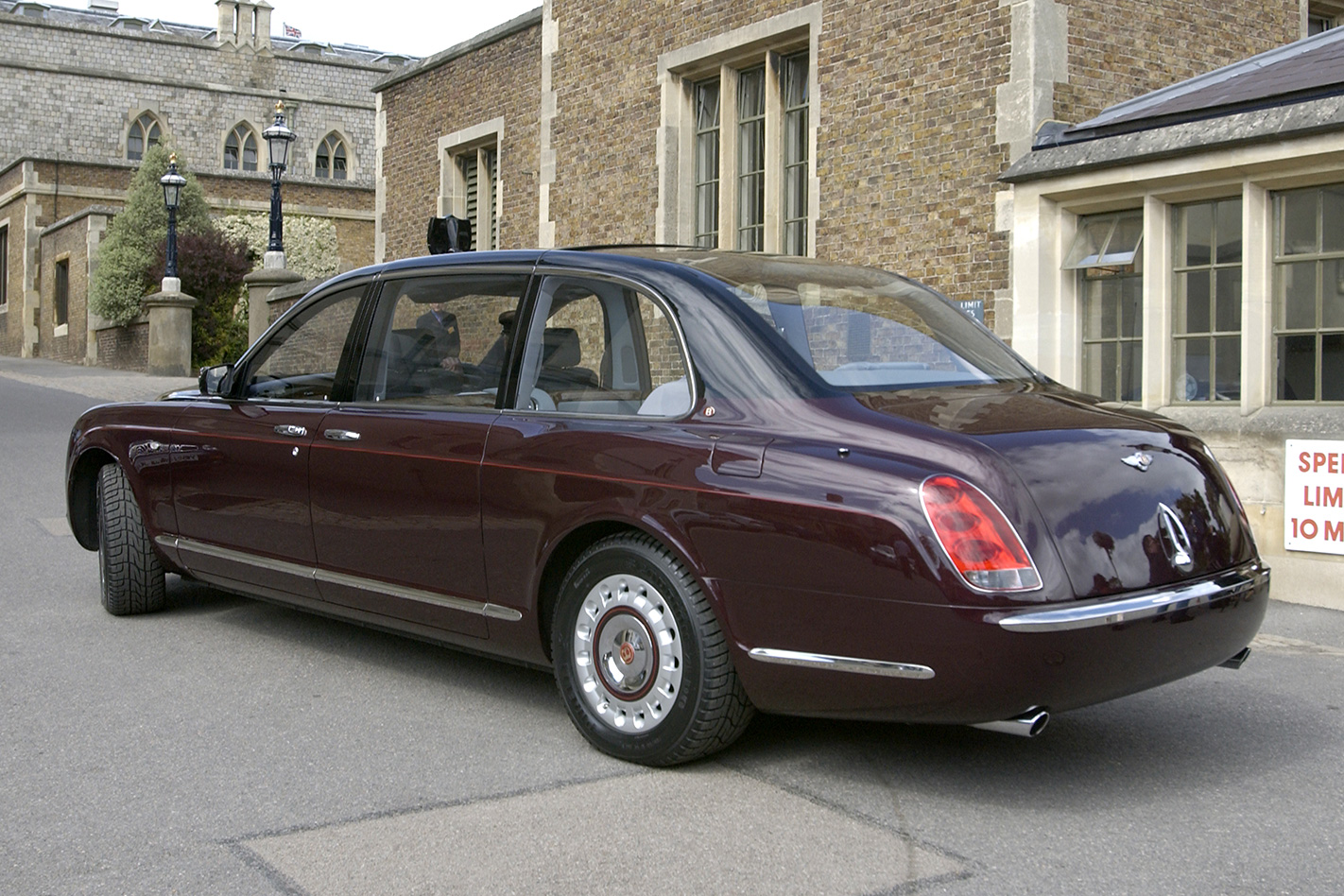
It’s one of two Bentleys in the Queen’s personal fleet. Handbuilt, and measuring in at 6.22 metres long, the Golden Jubilee is almost a metre longer than a standard Bentley Mulsanne.
The doors are rear-hinged to allow for elegant entry and egress, and the roofline is tall enough for the Queen to be able to stand up as she leaves the vehicle.
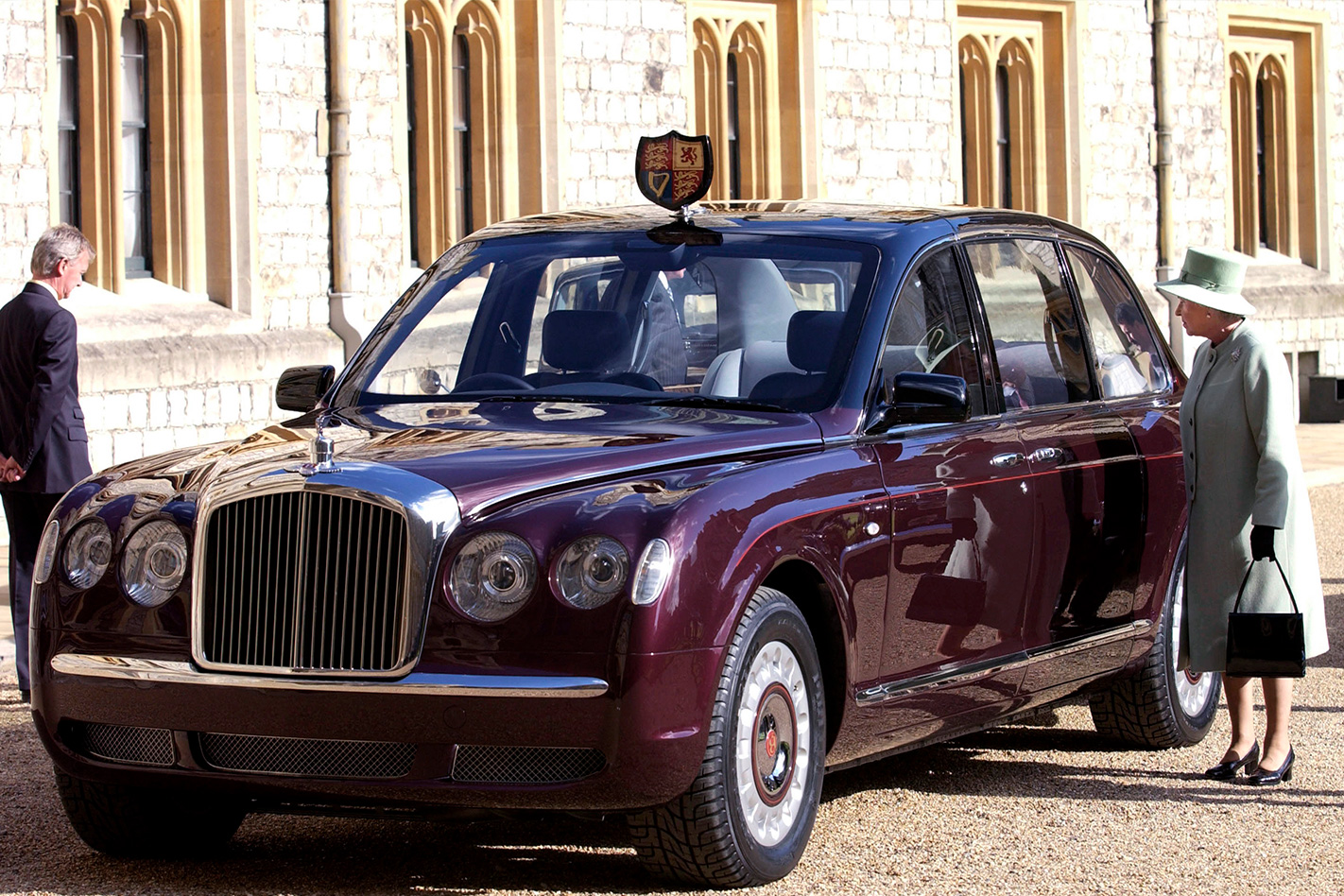
Power comes courtesy of a modified 6.75-litre V8, which seems excessive given the car spends most of its time crawling at 15km/h during official duty. The back seats are trimmed in Hield Lambswool Sateen cloth, while the rest of the interior is finished in light grey Connolly leather.
Jaguar E-Type Concept Zero
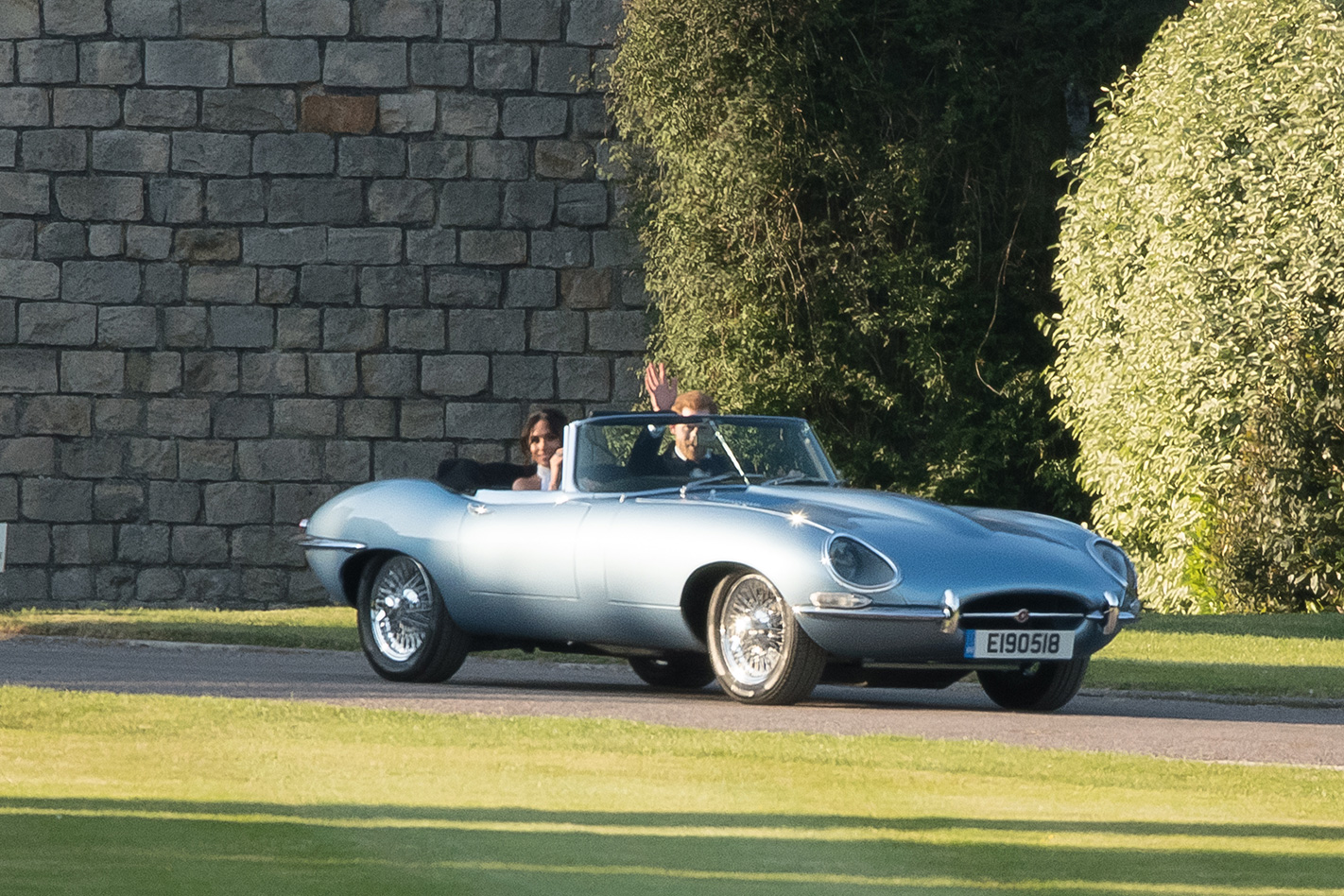
While the Duke and Duchess of Cambridge (William and Kate) used Prince Charles’ Aston Martin DB6 Volante during their wedding day – famously gifted to William’s father by the Queen on his 21st birthday and later converted to run on bioethanol fuel made from wine – Harry and Megan opted for a silent E-Type Jag.
Renowned as one of the most beautiful cars ever designed, this drop-top E-Type had been converted by Jaguar to run purely on electrons and is a one-off creation.
The Concept Zero ditches its original six-cylinder engine for an all-electric powertrain, capable of propelling it to 100km/h in 5.5 seconds. Sadly, that capability was not on display as bride and groom departed Windsor Castle.
1950 Rolls-Royce Phantom IV
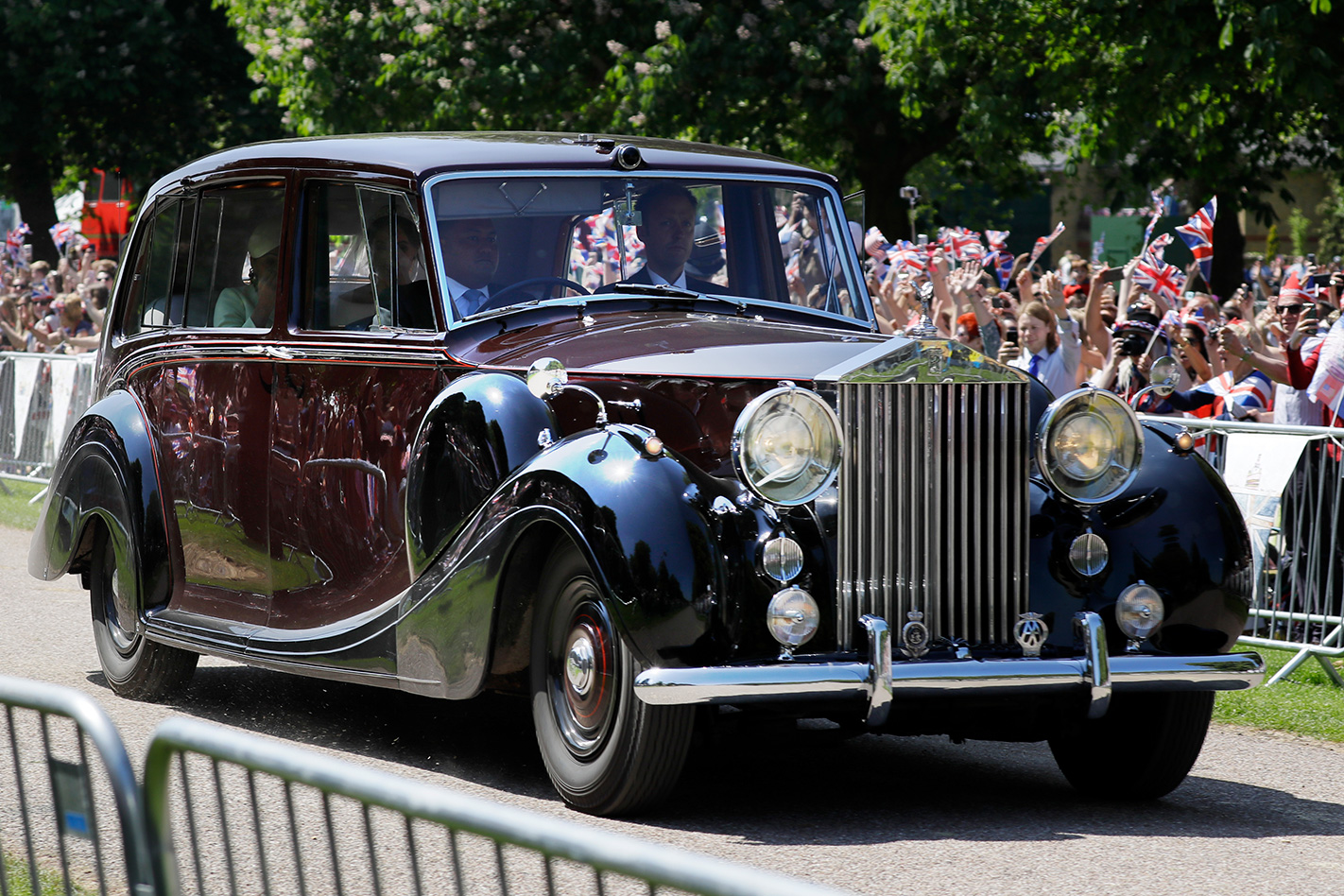
Another vehicle from Queen Elizabeth’s personal collection, this 1950 Rolls-Royce Phantom IV was used to transport the now Duchess of Sussex from Clivedon House to St George’s Chapel.
This particular model is the first of just 18 ever built, is powered by a 5.7-litre straight-eight engine, with a body hand built by H.J Mulliner.
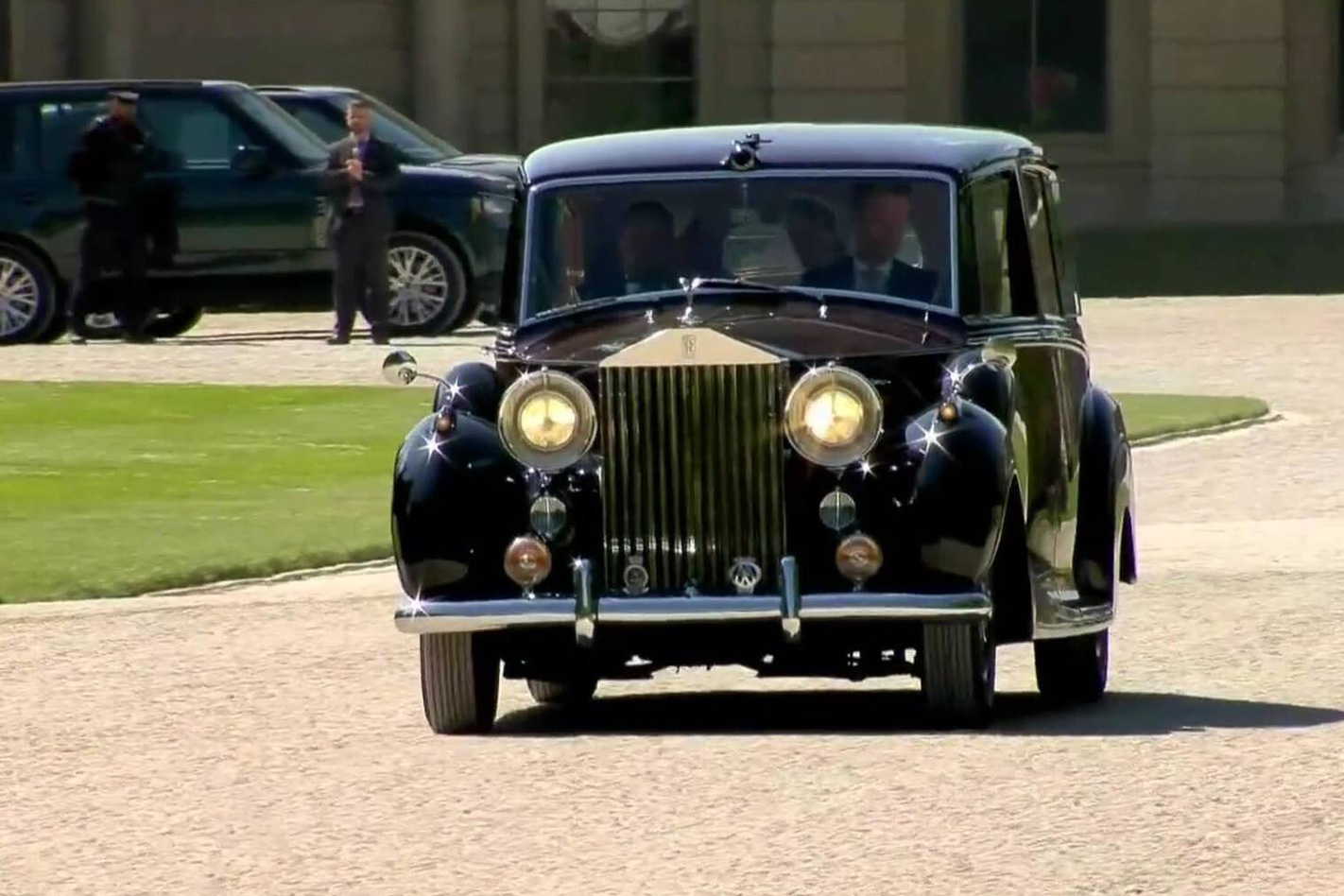
Queen Elizabeth is particularly fond of the Phantom, reportedly purchasing it when she was a princess before using it as a state limousine for her 1952 Coronation.
KIA Australia is re-entering warm-hatch territory, with a GT version of its fourth-generation Cerato on the cards for early next year to rival the Hyundai i30 SR and Mazda 3 SP25.

A locally tuned Cerato GT would be a big tick for Kia Australia’s wish-list, as that spot in its line-up has sat empty since late 2015 when the brand’s previous dabble in the performance hatchback space – the short-lived, Europe-sourced ProCeed GT – was axed.
It’s now closer to reality than ever thanks to the Hyundai i30 N project that has opened up a broader parts bin for Kia to access through the parent company’s supply chain.
Kia Australia’s general manager for product planning Roland Rivera says because the new Cerato shares a platform with the i30, it will be able to utilise chassis components used in Hyundai’s halo hatch.
“If there was no N all the hard parts like springs and sway bars would only be developed for a run-of-the-mill hatch, but because of the N we’ve got a bigger basket of parts to play with that are more performance oriented.”
That’s good news for Kia Australia engineering consultant, Graeme Gambold, who will most likely be charged with tuning the Cerato GT for local conditions.
“[Kia’s] GT line of models has probably now got an opportunity to step a bit closer to what’s been established by N brand over at Hyundai, now the parts window has opened a little bit,” Gambold told Wheels.
Gambold, who led the Stinger’s Aussie chassis tuning program and had also taken the reins for the ProCeed GT’s local assimilation, said Kia Australia pushed the hatch’s development beyond the version that went to market to the prove to the suits in Seoul that a better version was possible.
“When we did ProCeed we were very constrained by componentry and the parts available out of the Slovakian plant; all the hard parts like springs and stabiliser parts. There were no new parts on the line so we were trying to build a warm hatch from standard car components so the damping rates were pretty extreme to get it to where it was.
“We understood that the parts weren’t in the system, but we proved to KMC [Korean Motors Corporation] that with freedom this is how hot it could be.”
Though somewhat hamstrung at the time, development of the ProCeed GT in Australia did yield valuable lessons that will transfer across to local tuning of the next-gen Cerato GT, when it arrives from South Korea.
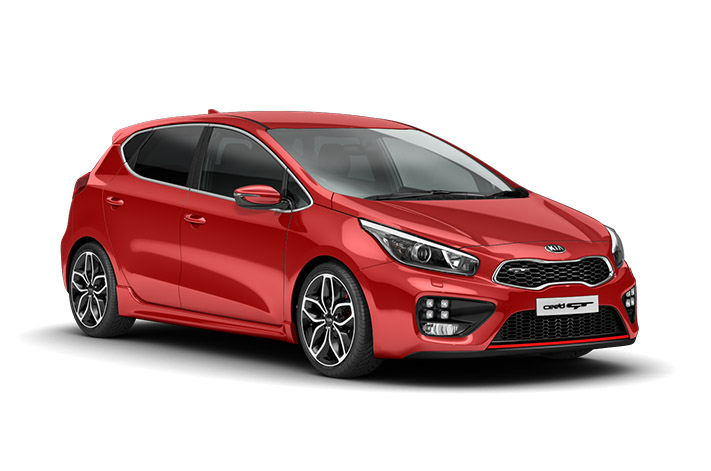
Gambold didn’t discuss powertrain specifics for the Cerato GT, but it is expected to share the 150kW/265Nm 1.6-litre turbo engine with its European Ceed GT identical cousin (pictured) and the Hyundai i30 SR.
Timing is also uncertain. The sedan version of Kia’s next-generation small car launches in Australia next month, but hatchback production has been delayed until at least the end of this year, with the GT expected a few months later.
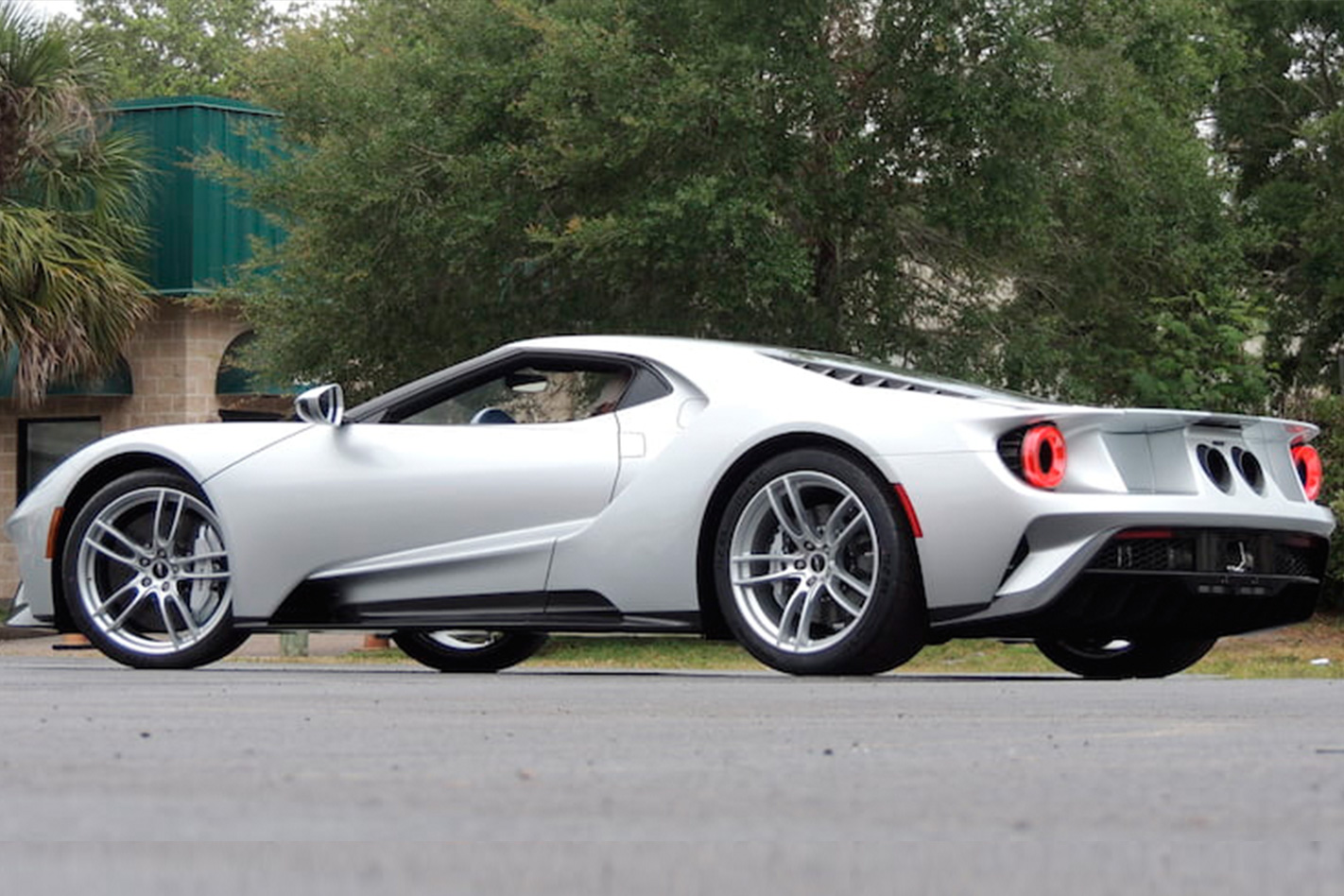
Ford Motor Company includes a clause in the purchase contract of its 2017 Ford GT supercar preventing buyers from selling it within their first two years of ownership.
But that hasn’t prevented Mecum from selling one for more than four-times its original RRP.
The idea behind the contract was to avoid a Porsche 911 R, or HSV GTSR W1-style situation in which a ‘small-batch’ car skyrockets in value due to demand.
John Cena famously landed in hot water recently, when Ford took legal action against him for allegedly ‘flipping’ his own GT.
At the Indy 2018 auction, Mecum Auctions president Dana Mecum spoke to the crowd before bidding kicked off on a 7-mile example of Ford’s supercar.
“I want you to just be assured to bid openly on this car and feel comfortable,” he told the crowd.
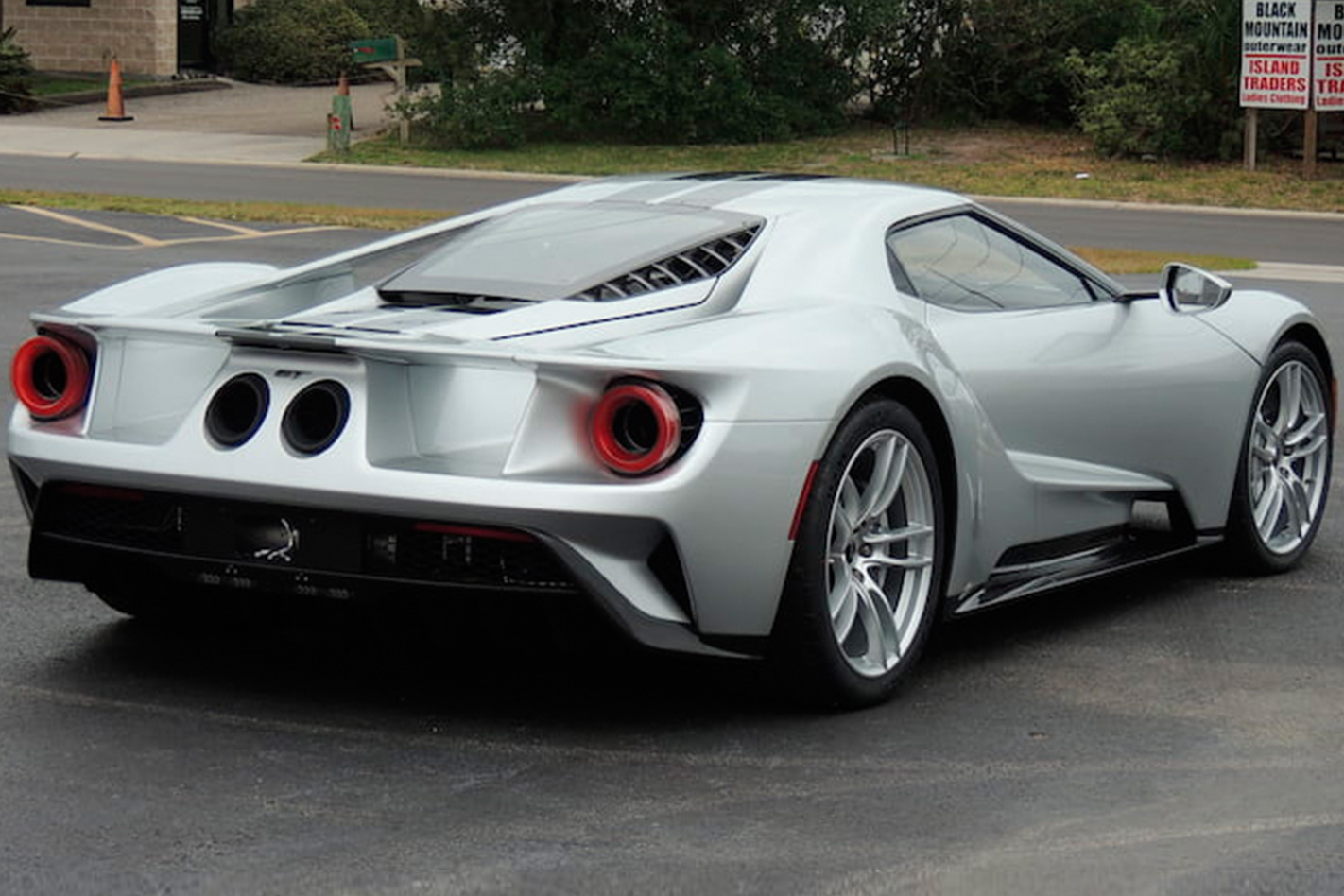
“There have been a lot of rumours and so on, because of the ‘restrictive choice plan’ on these cars when they’re sold new.
“We had a little issue in the court house about this, and the judge did rule in Mecum’s favour. We can sell this car, and if Ford wanted it back they were welcome to come here and bid on it.
“So it is a publically legal sale of a Ford GT… there are no repercussions… you bid on it, you buy it, and it’s yours.
“It’s America, you can buy and sell what you want!”
Rather optimistically, Mecum started the bidding at USD$2 million (~AUD$2.65), but dropped to USD$1.5 (~AUD$1.99) as no one had jumped in. It then dropped again to USD$500,000 before things finally got going.
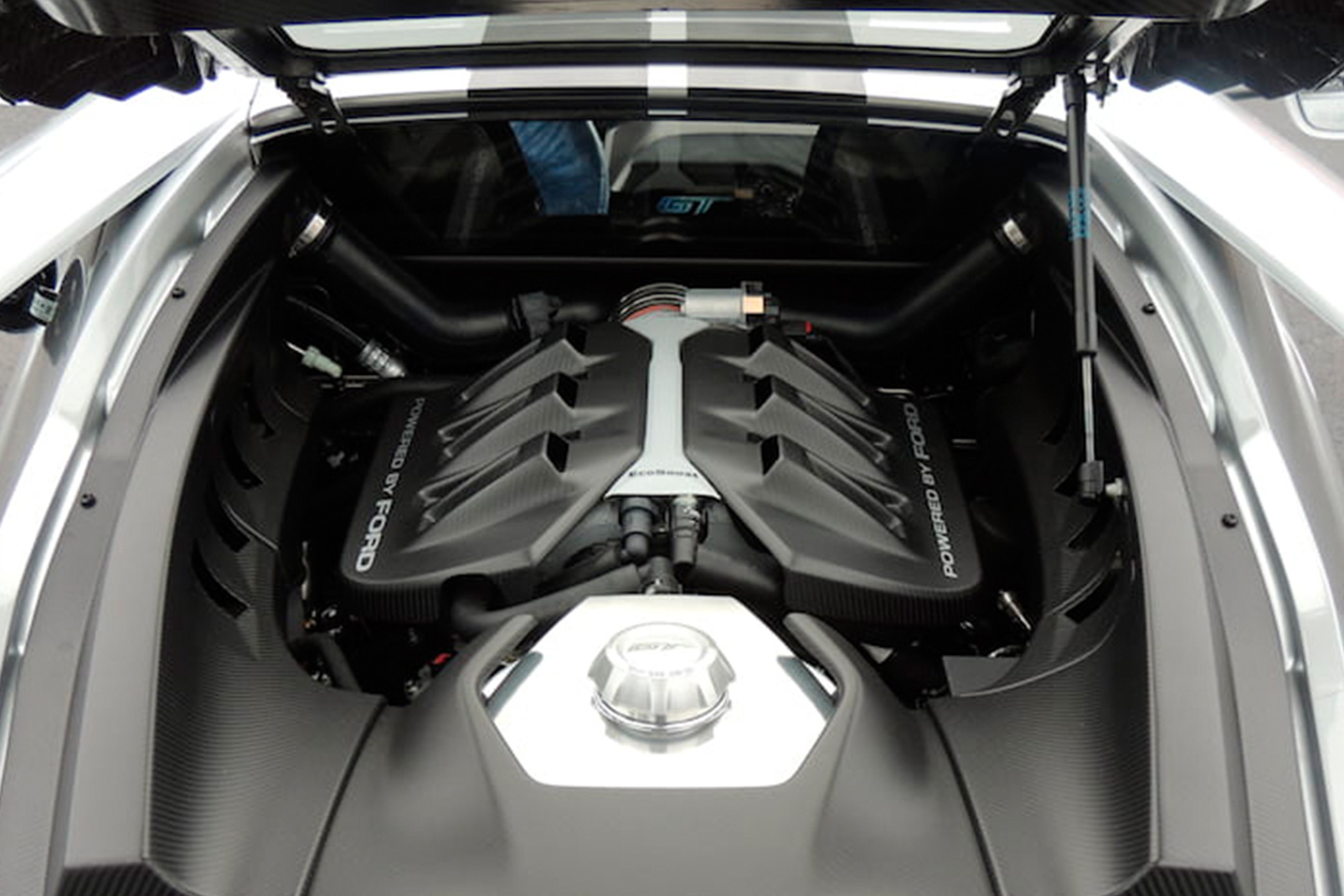
Within two minutes from that point, someone had spent USD$1.65 as the hammer fell, with extra charges bringing the price to USD$1,815,000, or AUD$2.4 million.
Given its original starting price of roughly USD$400,000 in America (we estimate it’d cost around $600,000 here, plus optional extras and on-road costs), this GT’s value has increased by more than 450 per cent from the ‘showroom sticker.’
It goes some way to explaining why the clause was introduced in the first place, but sets a precedent that means this might become a more frequent occurrence.
You can watch the full day’s auction (almost 12 hours!) below, or skip to the 4:26:36 mark to see the GT cross the block.
HONDA Australia has announced it will bring the tenth-generation Accord sedan to local showrooms – though delays for right-hand drive examples have pushed the arrival of its largest four-door sedan back to late 2019.
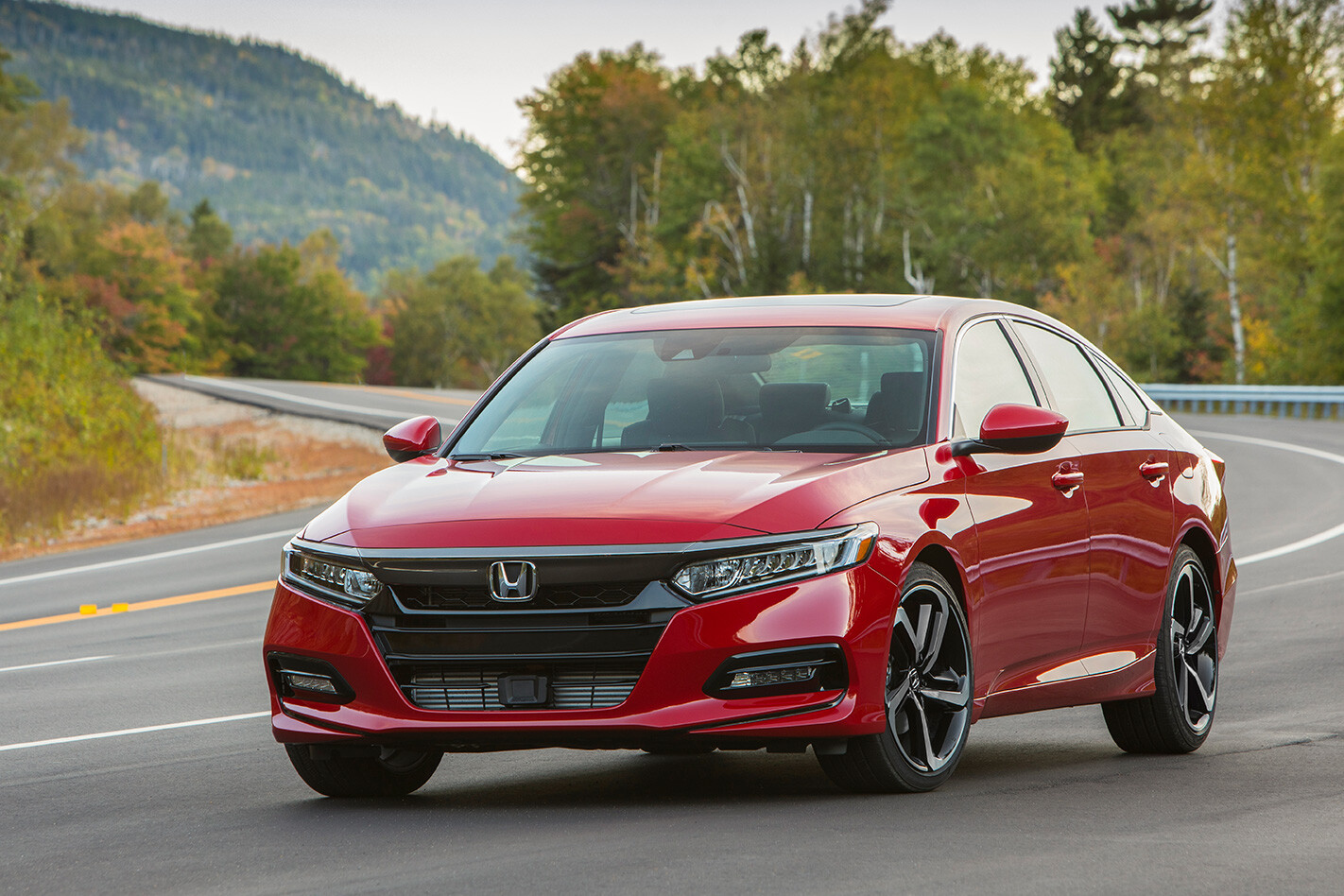
The timing means the new Accord won’t be quite so new by the time it rolls onto Australian soil. The tenth-gen Accord was revealed in the USA in July 2017 and went on sale in North America a few months later, meaning the Accord will already be a third of the way through its lifespan when it gets here. That delay, coupled with declining sales in the midsize passenger car segment, means Honda might find the Accord a tough sell in Australia.
But the company is positive that repositioning the Accord as a tech-driven flagship model will give it a crucial point of difference in a shrinking – yet still heavily populated – segment. Even so, the company remains realistic about sales volume.
“The Accord is a global nameplate so it’s pretty important to the Honda brand, but it’s also been here for 40 years,” said Honda public relations manager Neil McDonald.
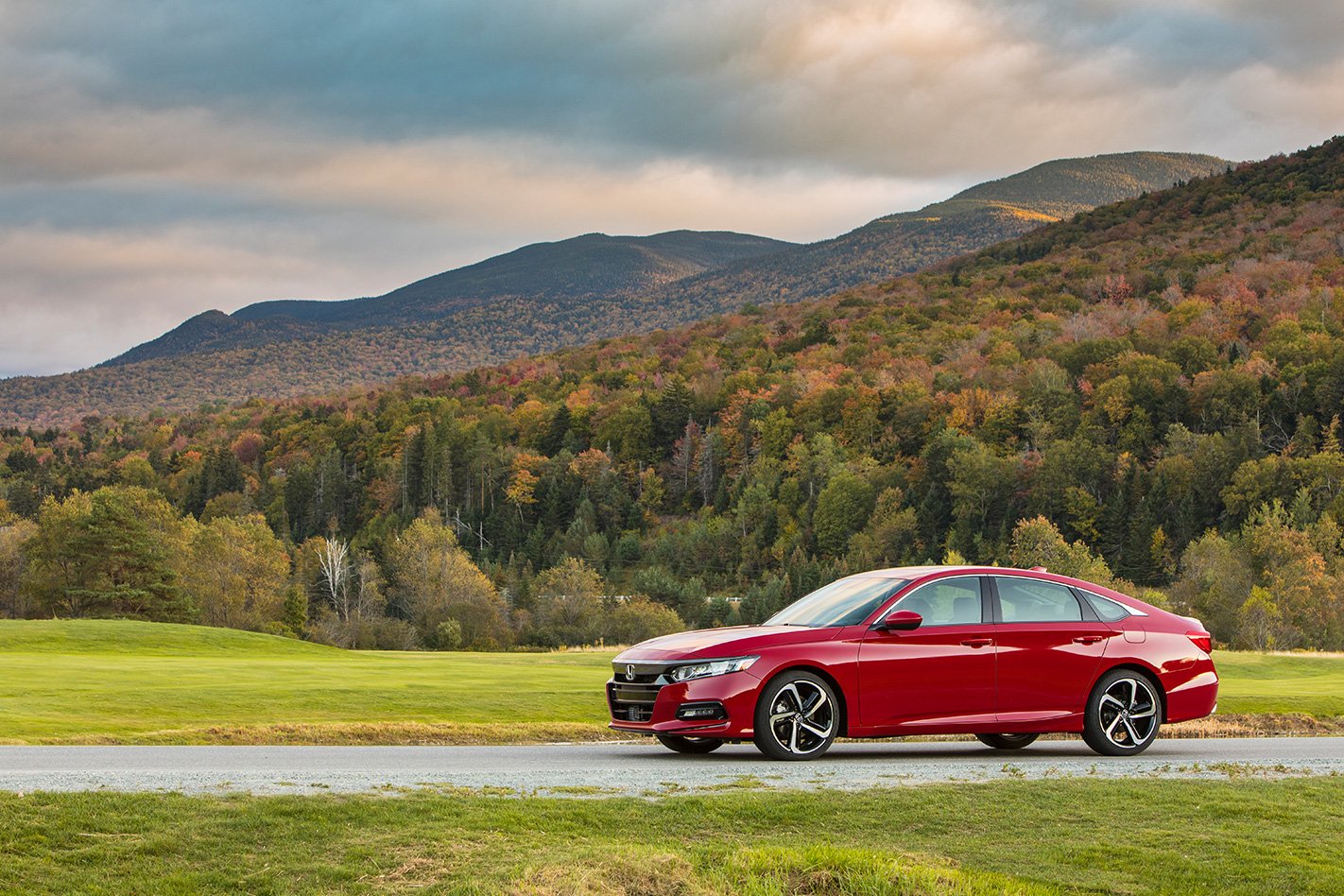
“There are customers that still want that car so even though the volume we expect won’t be huge numbers, there is still a loyal customer base that still love that car.”
It’s understood that Honda will try a different plan of attack with the new Accord. Chasing a high-grade strategy will reduce range complexity and remove the need to sell high volumes of low-spec cars, but the specifics of exactly what features and equipment we’ll receive are still yet to be ironed out.
If the US market is any indication, there’s plenty of potential. The Accord is available in the USA with three powertrains – a 1.5-litre turbo, 2.0-litre turbo and a naturally aspirated 2.0-litre hybrid – with the latter two seemingly having the strongest chances for our market.
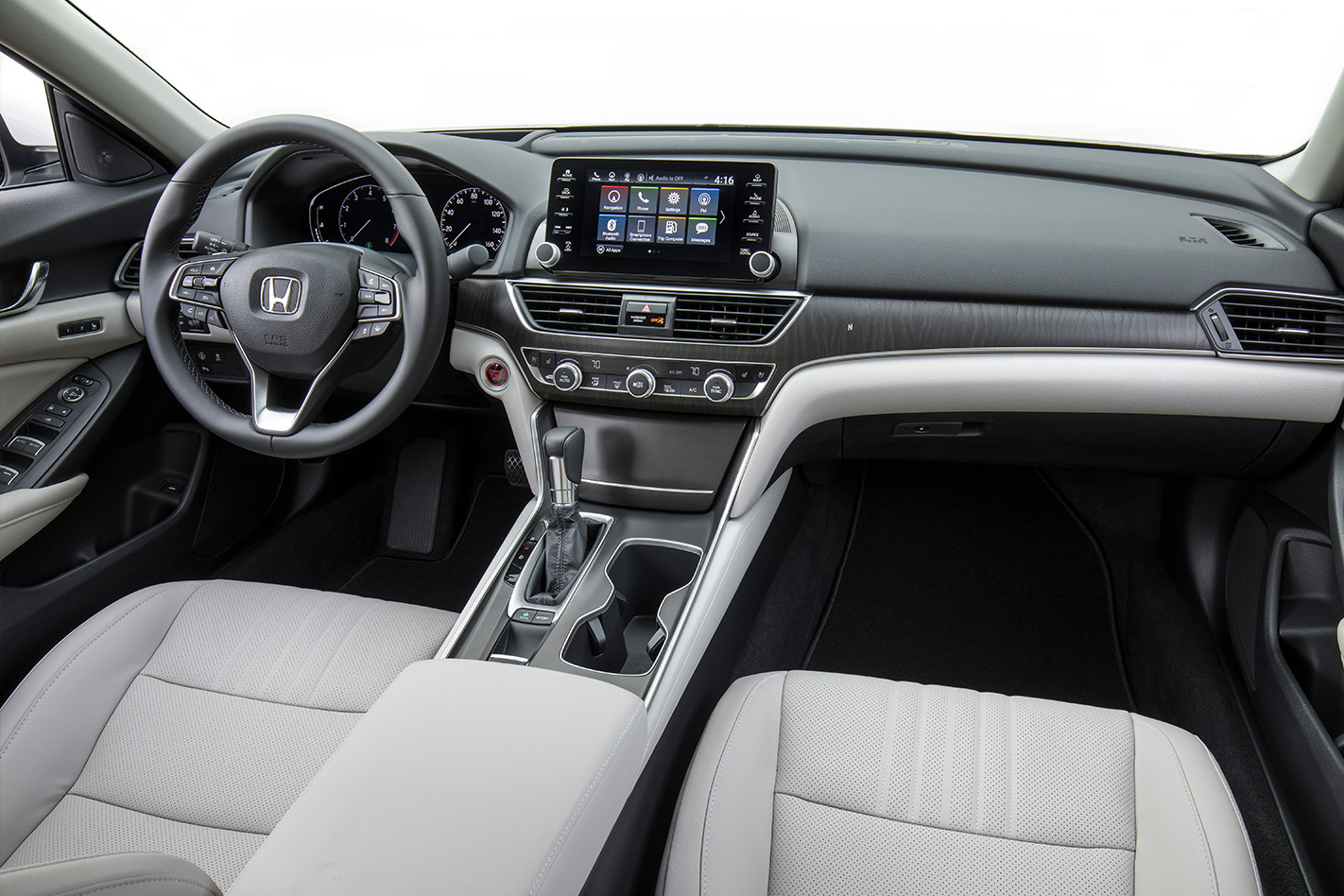
The 2.0-litre turbo is a particularly enticing package, boasting commonality with the Civic Type R’s turbo 2.0 but detuned to 188kW/370Nm and hooked up to a 10-speed automatic – Honda’s first. If Honda is chasing the “flagship technology” angle, it’s this powerplant that makes the most sense.
The hybrid option may also have a tech-forward sheen, but with just 158kW of system output, a CVT and no plug-in capability it lags behind more advanced hybrids presently on the market.
With 143kW and 260Nm the 1.5-litre option is at the lower end of the midsizer scale as far as output is concerned.
Equipment-wise, expect the full suite of ‘Honda Sensing” safety aids such as adaptive cruise, AEB, blind spot monitoring and lane-keep assist. Navigation and an 8-inch screen would be likely standard inclusions as well, while other top-spec gear that could be pinched from the US-market Accord Touring flagship includes a head-up display, wireless phone charging, heated and ventilated front seats, heated rear seats, moonroof, remote engine start and an on-board data Wi-Fi network.
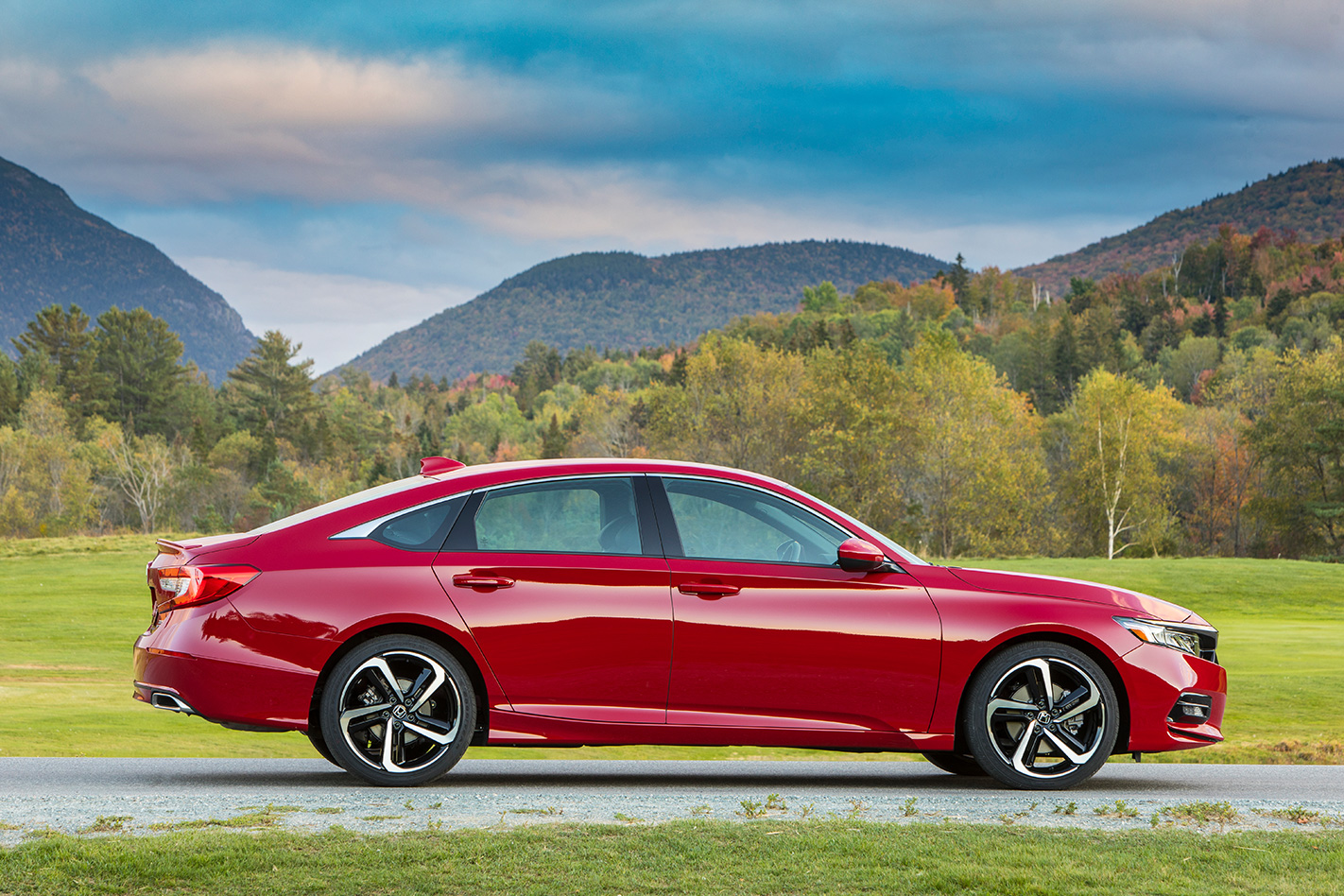
“The product guys are working on it at the moment,” said McDonald. “The pricing discussion and content and features and things are still some way off for us. We’re still in the early stage of working out scheduling and stuff so it’s probably a bit early to be talking about price.”
Production of the new Accord kicked off last year in Honda’s Ohio assembly plant however, other locations closer to Australia are tipped to be the most likely source for our market. A production source has yet to be officially confirmed for Oz-bound cars, but Honda’s factories in the USA, Thailand, China and Japan are all tooled up to build the tenth-gen Accord.
SANJEEV Gupta, the Indian-born British multimillionaire who tried to buy Holden’s now shuttered carmaking factory, has claimed Australia will be making cars again in the next few years.
Gupta told delegates attending the Australian Energy Storage Conference in Adelaide today – coincidentally it’s also the five-year anniversary of Ford Australia announcing it would quit manufacturing – which he believed the industry would soon be back on its feet.
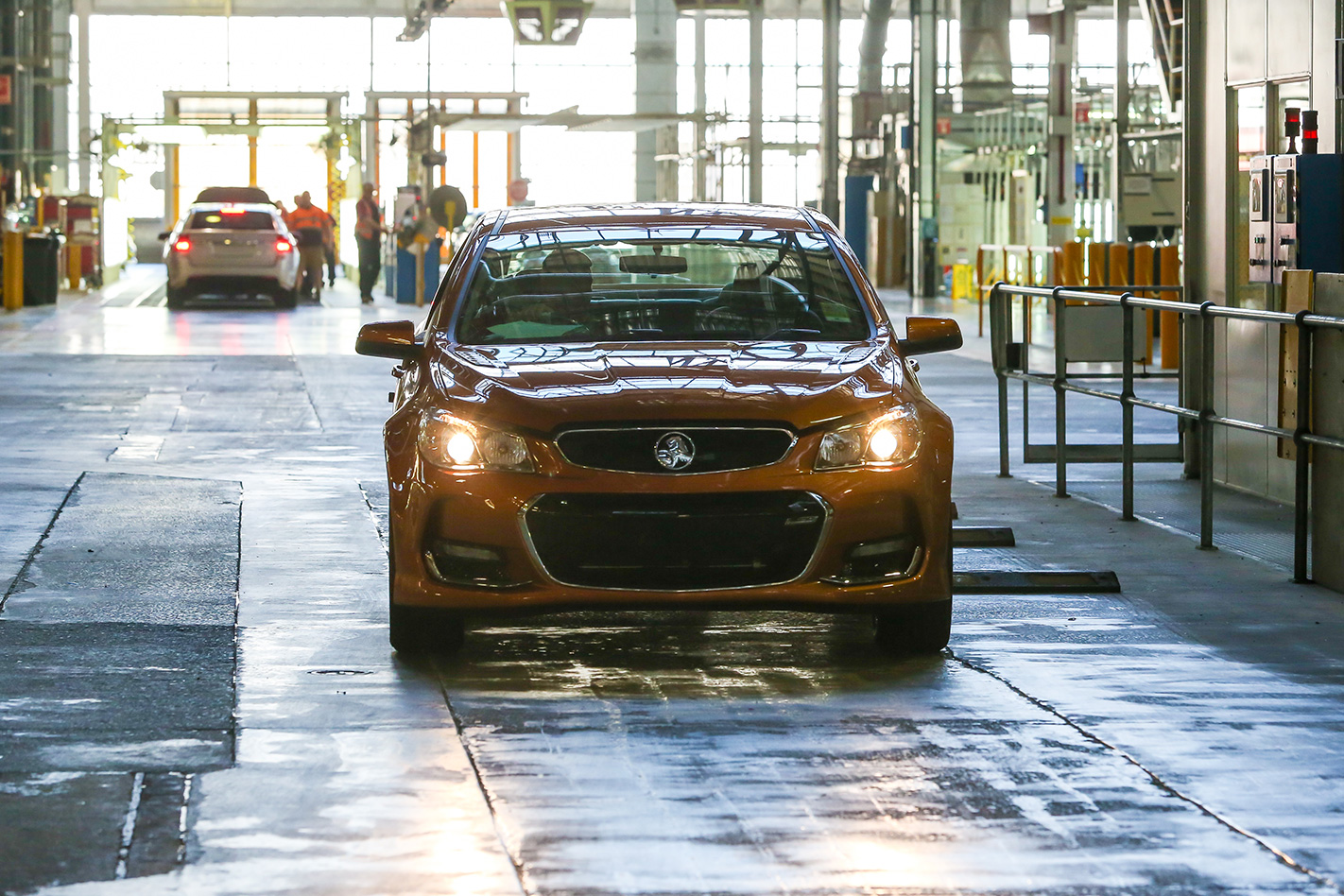
Australian Associated Press has reported that the industrialist, who has already flagged his intent to build a mass-market electric car, told the conference: “We will definitely in the next two or three years have a car production in Australia.”
No further context is provided.
Gupta heads up GFG Alliance, an investment company that bought out the Arrium Steelworks at Whyalla, saving the industry from closure and protecting the jobs of about 5500 workers. It is believed the steelworks were integral to Gupta’s more widely-held plans to kick-start vehicle manufacturing.
However, in January this year a deal being negotiated between GFG Alliance, the South Australian government and Holden was scuppered after failing to strike favour.
“Mr Gupta and the GFG Alliance already manufacture motor vehicles in the United Kingdom,” now former South Australian Treasurer Tom Koutsantonis told the ABC as the talks were progressing.
“What Mr Gupta is realising, like the rest of the world, is that electric vehicles … are the way of the future.
“We think we can manufacture a number of high-tech goods [but] if we could get back into automotive manufacturing that would be great. Ultimately this is a question between Sanjeev Gupta and General Motors-Holden.”
As it turns out, Holden’s owner, US carmaking giant GM, appears to have said no.
Half the former Holden site at Elizabeth in South Australia was bought by Melbourne-based development company Pelligra Group, which will develop it into a business park. Separate parts of the site will be retained by Holden, which will use it for several functions including spare parts storage, a conference and catering centre, and a museum to house its collection of culturally significant cars.
Holden is also slowly selling off its Elizabeth-based assets. The latest parts of the carmaking line to go up for sale to the highest bidder include the plastic injection moulding machines and robots that produced body parts for the VF II Commodore.
Gupta is tied in with Gordon Murray, a former F1 designer who plans to launch his own range of lightweight, affordable electric cars. Murray has even flagged his intention to build a battery-powered supercar.
Gupta’s optimism for reinvigorating Australia’s car manufacturing industry comes in the wake of Brabham Automotive announcing its ground-breaking BT62, a track-only race car, will be built in Adelaide and sold to the world.
When the new 2018 Ford Mustang is launched locally in Australia, it won’t be long before tuners start playing with its engine and chassis to change the way the Pony plays.
Melbourne-based tuner Herrod Motorsport is one of the better-known in Australia’s professional tuning scene, and has a particularly good reputation when it comes to Mustangs.
For the previous-gen car, he developed a 507kW/730Nm ‘Compliance Pack’ which added a Roush supercharger and plenty of other goodies.
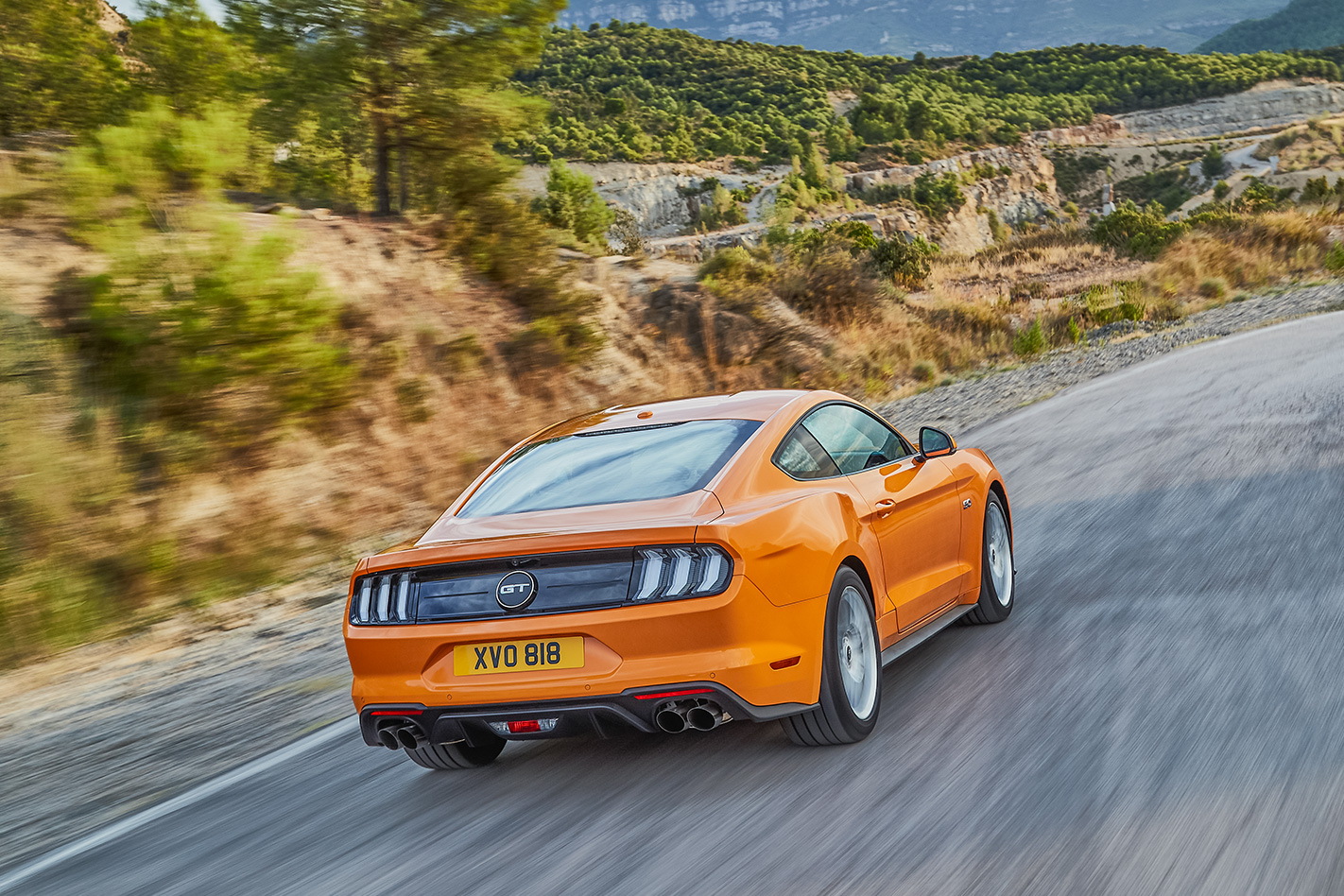
Managing director of Herrod Performance Rob Herrod tells MOTOR he’s planning something similar for the next Mustang.
“The bottom line for us [with the new Mustang] is that we want to build a Compliance Pack like we did for the last one,” he says.
Expect a lot of similar tweaks to those on the previous-gen Mustang, such as the addition of a supercharger and changes to the suspension and exhaust, but more power will come with this new version.
“We’re expecting it to have around 700 horsepower at the crank… the last one we did was around 670.”
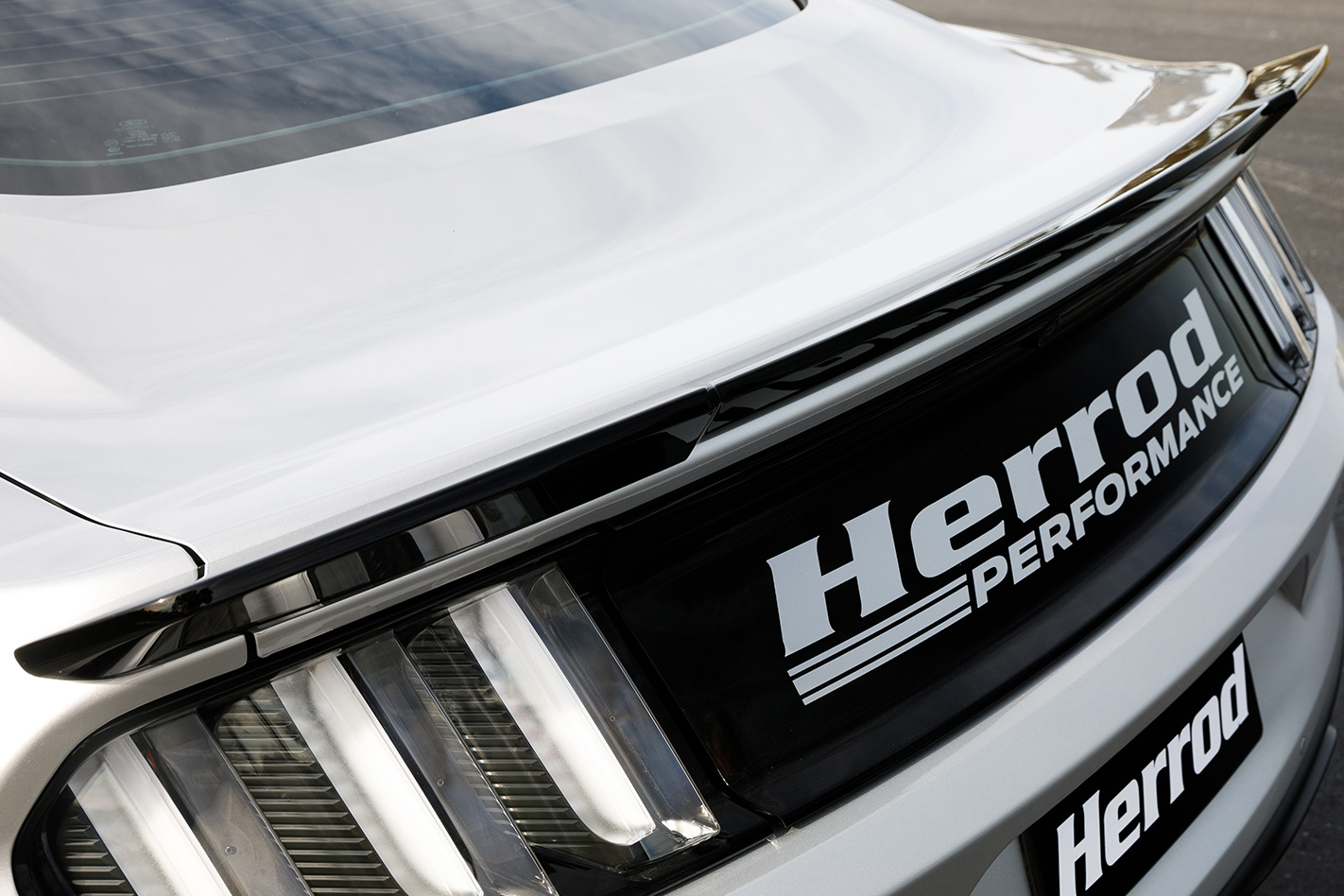
In metric, that’s 522kW, and in a car that has reviewed as being sharper than its predecessor overseas.
Better still, he reckons it’s not going to take much longer to be ready.
“We’re aiming to have it ready in a couple of months so that it’s not too long after the local launch.”
Helping out has been the American team at Ford Performance, who have been working with the new mustang for some time, and are able to give advice from across the Pacific.
“We’ve been working closely with the Ford Performance guys in the US,” Rob Herrod says.
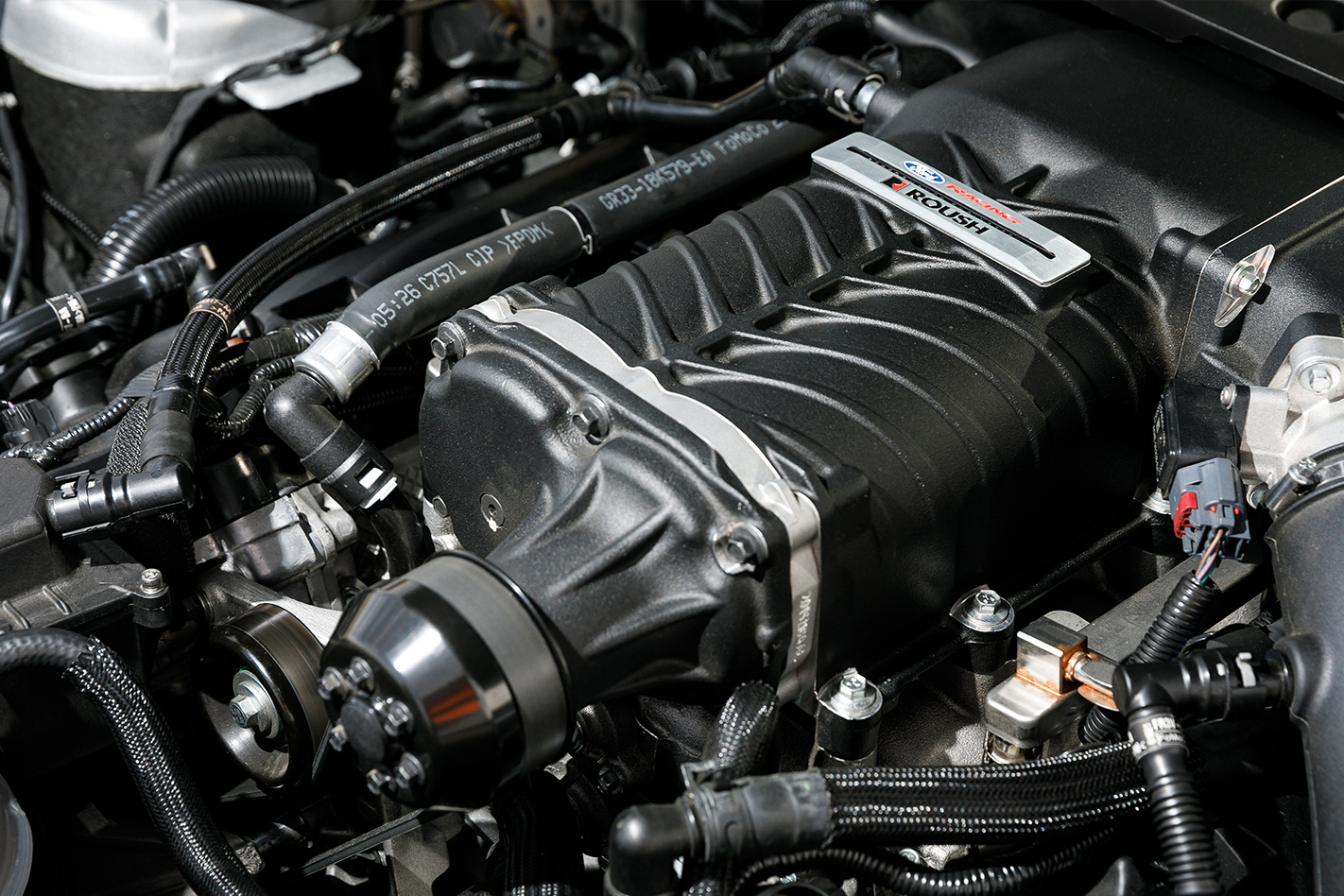
“We’re always learning, and it’s good having that relationship with Ford Performance because we can call up and say ‘we’re having trouble with this, what do you think?’”
Finally, as with Herrod’s previous work, the new pack will be fully complied with regulations here in Australia.
He says if there’s anything that’ll hold development of the new pack back, it’ll be the ADR approval process.
But Herrod Motorsport, as a partner of Ford Performance, wants its cars to be totally legal to stay in everyone’s good-books.
“We go through the proper channels [to get compliance] and that takes time.”
Watch this space.
