
IN THE early 1980s Australia’s automotive industry was struggling for survival. Hit by a plummeting Aussie dollar and struggling with the rescue plan devised by then industry minister John Button, glimmers of optimism were everywhere.
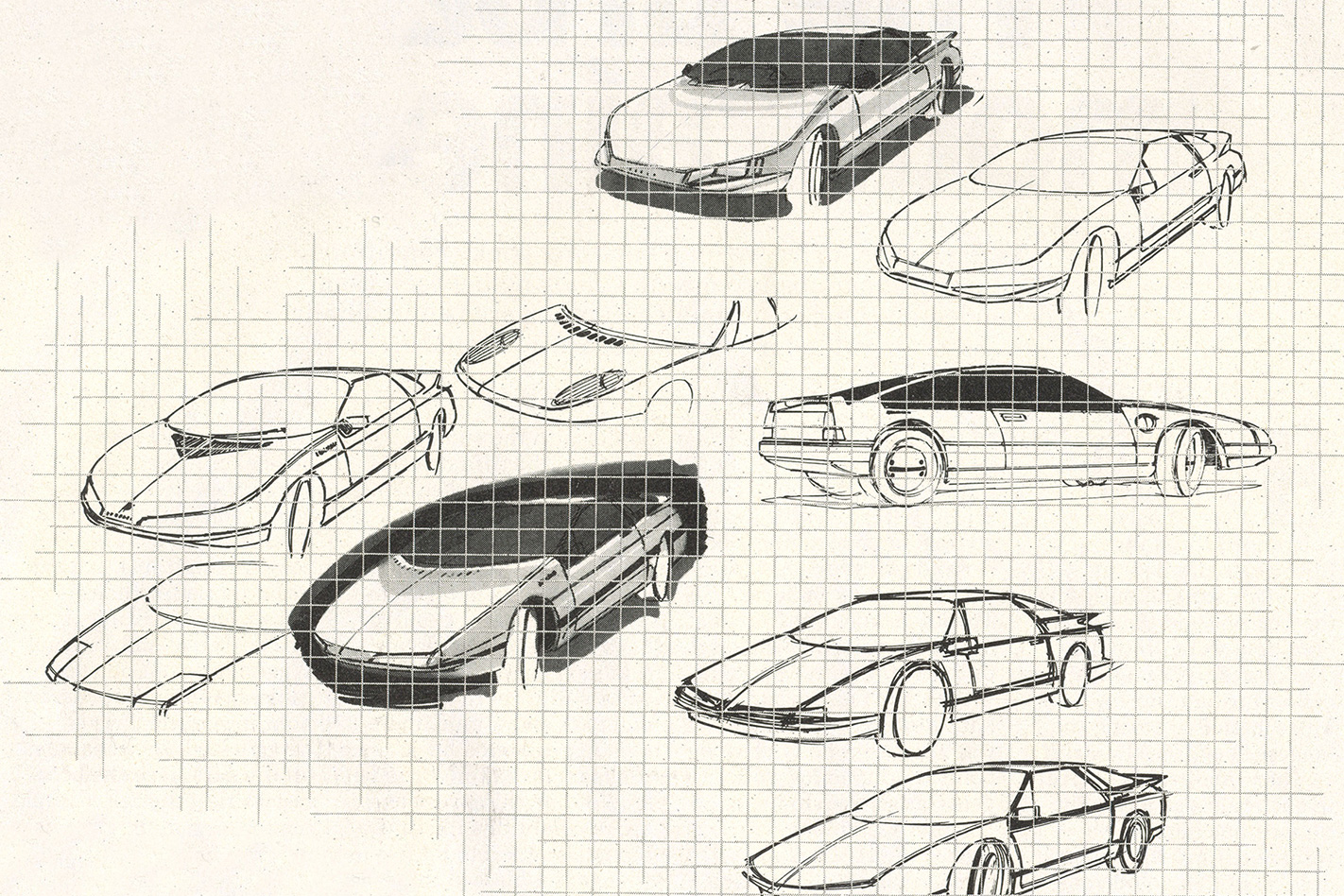
In 1985, a Sydney consortium vying for research and development grants under a new federal scheme revealed plans for a home-gown grand tourer wearing Ford Laser tail-lights and Austin Kimberly door handles. This is that story.

“IT HAS to be front engined.” Sir Jack Brabham pauses, then drives the point home. “It has to be front-engined because it’s going to be a practical car. Practical. For four people and luggage. It couldn’t be mid-engined. There isn’t one of them I’d buy. They’re too cramped, too noisy, too complicated.”
That’s the Brabham philosophy all over, of course – practical. It’s a characteristic that helped make him three times World Champion in Grand Prix racing; and still the only man to win the title driving a Formula One car of his own design and manufacture.
“The art of the practical” was first published in the October 1985 edition of Wheels magazine.
These days that same practical approach is Brabham’s stamp on an exciting new venture: an all-Australian Grand Touring car to challenge the world’s best. And, no doubt, to beat them if Sir Jack can have his way.
We spoke with him by phone while he was in England during one of his fairly frequent trips overseas. Even at that distance there was no mistaking his enthusiasm for the concept and for the project as he warms to the subject of this promising, practical design.
The working brief calls for a high-performance four-seater, a true Grand Touring express. It’s to be a straightforward car with conventional layout. That is, front engine and rear drive. While in no way revolutionary the design isn’t simplistic either and lends itself to the use of modern materials and techniques throughout. Above all else it’s to be a proper car capable of being fully developed as a workable and producible product.

The design – code-named Ozcar – includes a large and healthy engine up front, teamed with either five-speed manual or four-speed overdrive automatic transmission to choice. There’ll be power rack and pinion steering, all-independent suspension and four-wheel disc brakes.
Fabricated from sheet steel, the cabin-capsule chassis is to be clad with bolt-on panels, some of them aluminium pressings, others Kevlar mouldings. The body has two doors and a large rear hatch, plus detachable targa-type roof panel.
The deep, steeply raked windscreen is sited farther forward than usual to optimise A-pillar placement and maximise effective cabin length, though this means the engine, probably a V8, will fit back into the recessed cowl and firewall. Even so, engine accessibility is not expected to be a problem, because the bonnet and front fenders form a single section above the bumper and side relief line, and tip forward en masse.
Since the deeply recessed firewall leads to a broad centre tunnel which acts as the chassis spine, it might be thought that narrow footwells must result. In fact they’ll be more than adequate because the body is fully 1905mm wide. That’s almost 50mm wider than the Falcon, over 180mm wider than the Commodore.
Yet with just 1219mm overall height the Ozcar is much lower than the Ford and Holden. And in spite of its reasonably long (2749mm) wheelbase, which falls between that of the two family sedans, the Ozcar’s 4673mm overall length is about 40 mm less than the Holden’s.
Inside, the cabin will offer first-class accommodation and a host of features, not least the fold-down rear backrest; that practical thinking again. But perhaps the interior’s main feature, particularly from the conceptual aspect, is that the facia and instrument pod are designed for easy transpositioning for either left- or right-hand drive. In the same vein the vertical centre console, with its sound system and other secondary controls, pivots to face either the driver or the front-seat passenger.

Touches such as those show that even at this fairly early stage the Ozcar avoids esoteric flights of fancy and instead concentrates on sound, sensible issues. Brabham, involved with the Ozcar concept and general planning from the outset, leaves no doubt that it’s developing “… a very practical concept. It’s new but quite feasible… the sort of thing that can and should be done in Australia… there wouldn’t be any real rivals because this sort of car doesn’t exist at present, but there’d be a market for it, not just in Australia. Future exports could be a big part of it.”
Those sentiments are echoed by others connected with the Ozcar project, at the centre of which is the Sydney-based Hi-Tee Car Co with its three principals: Cliff Trefry and the Hadley brothers, Wally and Bob. If they sound familiar it’s because they’re the team that built the impressive Triad mid-engined coupe reported in WHEELS, November 1984.
It was through the Triad that Brabham became associated with the Ozcar project. Asked to give an opinion during a Triad test session, Brabham found room for improvement in some of its dynamics but was so impressed by its high quality construction and immaculate finish that when the Ozcar was mooted he agreed to be design/engineering consultant.
Then there’s Ken Mathews, the project’s marketing man. No stranger to high performance cars and other anti-ordinary models (WHEELS July 1984), Mathews knows better than most that it’s one thing to develop a good product, but something else to produce it properly and something else again to sell it.
He runs a very successful Honda/Saab dealership and has previous associations with Lamborghini, de Tomaso and Maserati agencies. Though used to dealing in big numbers, Mathews has lost count of the exotics he has owned. Enough that the list has covered several Lambos up to the Countach, several Ferraris up to the Boxer, and several Porsches up to his current Carrera cabrio.
Besides knowing cars, and what makes good ones and bad ones, Mathews also knows how and where to sell them. He too is convinced of the Ozcar’s sales potential; he says there’ll always be a demand for a good-looking, good-handling road runner with a fairly big engine in a well-developed chassis. He believes that demand has been left unsatisfied since some makers moved up-market with very exotic mid-engine designs while others switched from amply endowed V8s to smaller turbocharged fours and sixes.
“But really,” Mathews says, “you only have to drive a Brock Commodore to realise that the front-engine V8 chassis is alive and well and gives a big kick without compromising practicality. That’s why we’ve gone that way with our design. We’ve very purposely avoided making it radical or unconventional. But we’re very deliberately including proven modern features and top equipment. And we’re very conscious of the fact that the project gives a remarkable opportunity for developing and employing the latest technologies.”
Shades of the Ilinga you might think, recalling the ill-fated venture that proposed to manufacture an Australian ultimate-GT in the early ’70s. But other attempts aren’t a factor in Hi-Tee’s project. Instead the basis of success is seen in the likes of the Jensen Interceptor, Aston Martin, Iso Rivolta and particularly the Lamborghini Espada, which Mathews holds in high esteem.
“That’s pretty much the starting point, the aim: an updated Espada.”
If you look at it another way you perhaps see something of the Rover 3500 in the V8 hatchback idea. Brabham quickly dispels any suggestion of such an influence: “No, nothing like the Rover – except for having the engine at the front and a hatch at the tail.”
Mathews leaves no doubt that the conventional aspect is as important to the marketing as to the car itself. It means the car is easier to design, easier to develop, easier to produce, easier to service and ultimately easier to sell.
How many could he sell?
“We’re talking of a car costing $40,000 in today’s money. I’d be looking to sell, say, 20 a year in Australia but many more overseas. There’s almost no limit to how many could go overseas with the right kind of marketing. Y’know it takes only five on one market and 10 on another, and 10 on yet another and so on and soon they add up to a few hundred a year. Asia and the Middle East and the US west coast, even California alone, are ripe for this car. Get things rolling and the limit would be not how many we could sell but how many we could make.”
So far, of course, the score stands at zero because the project amounts to five men’s enthusiasm, a sheaf of drawings, a one-eighth scale conceptual model and a full-scale side elevation cross section drawing. lt’s called having-to-start-somewhere, and it’s a long way from there to the end of a production line and sales showroom.
How far away is that? “About two million dollars and two years,” says Trefry. Which is why Hi-Tee has applied for a slice of the Motor Vehicle and Components Development Grants Scheme. Announced late in 1984, the Grants Scheme will distribute a maximum of$150 million over the five years to 1988/89.
The financial assistance is intended to “encourage the development of Australian-designed motor vehicles and automotive components”. Eligible applicants will be limited to Australian incorporated companies engaged in (or intending to become engaged in) the manufacture in Australia of vehicles of a kind covered by the Passenger Motor Vehicle Manufacturing Plan, or components for these vehicles or components which could be used in these vehicles.
Contrary to some popular opinion the big companies won’t necessarily get all the cream. There’s ample scope for small companies’ projects which satisfy the Automotive Industry Authority’s criteria. Hi-Tee believes its Ozcar project fulfils both letter and spirit of the scheme’s objectives.
“Two million sounds a lot, and it is,” agrees Trefry. “But that’s what we’ve applied for to do the job properly. Realise that it’s not a lump sum in the hand. Whatever grants are given are paid in instalments over so-many years. And the money’s taxable, so you might actually get only half what you’re granted.”
It also has to be realised that grants aren’t being allocated for the manufacturing of suitable products; they’re intended for research and development. In Hi-Tee’s case that means building, testing and developing the Ozcar prototype, getting it from the drawing board to production-ready stage. It would involve setting-up in suitable premises, adding staff, initiating the thousand and one aspects of creating a prototype from the ground up, and all the while keeping future production considerations in mind.
Trefry and Mathews are already quite well versed in that aspect. Between them they’ve visited every worthwhile low-volume and specialist maker in the UK, including Panther, Lotus, TVR, Auto kraft and Morgan. Mathews also has manufacturing connections in Italy, England and Korea.
At a pinch, he says, some parts could be produced overseas; the Koreans especially are always willing and able to participate. But that’s only a last resort because there’s unanimously firm resolve to keep the Ozcar virtually all-Australian.
They know that even with a grant behind them the job is far from easy. Otherwise everyone would do it. If Hi-Tec gets only part of the grant applied for, or if its submission is rejected, then the whole thing becomes that much more difficult and slow with the need for private funding and perhaps some compromises. But whatever it takes, the commitment is there.
Though the one-eighth model hasn’t been wind-tunnel tested the Ozcar crew is confident that the aerodynamics are essentially sound. The contours have been kept smooth and clean, and the body in plan view follows a good rule by tapering off slightly from front to rear.
The full-size body will enable Hi-Tee to expand its experience with Kevlar and other advanced laminates, and to produce resilient bumper/nose/tail sections. It will also be a medium from which to develop dies for pressing the aluminium panels; not prohibitively expensive steel dies, but affordable special epoxy dies suitable for low-volume production runs.
Other aspects of the design are already firming-up too. “We’re hoping to use the five-litre Holden V8 of course,” says Mathews. “It’s local and strong and even in Brockified form it gives the sort of performance we’re after. On the other hand, while it is · good enough to get the prototype going and practical enough to see the car into production, it still leaves plenty of scope for further development.”
He leaves our suggestion of fuel injection and single-cam heads hanging. Trefry adds: “Then consider the transmissions. We want the best five-speed available, even if it has to be imported; either a ZF or Getrag unit. The automatic – Jack insists on an automatic, a four-speed it has to be – isn’t decided as yet.”
There’s plenty time enough for that, of course, because the project still has a way to go before the first Ozcar fires in anger. And it would be even further down the road before production could begin, by which time it mightn’t be called the Ozcar at all.
“It’s not all cut and dried yet of course,” says Sir Jack. “But, yes, if things pan out, if everything falls into place as we reckon it should, then this car will be a Brabham.”
THE BIG THREE Japanese car manufacturers are set to collaborate in the research and development of solid-state battery technology. Toyota, Honda and Nissan are partnering with battery giants Panasonic and GS Yasua to form The Consortium for Lithium Ion Battery Technology and Evaluation Centre, referred to as Libtec.
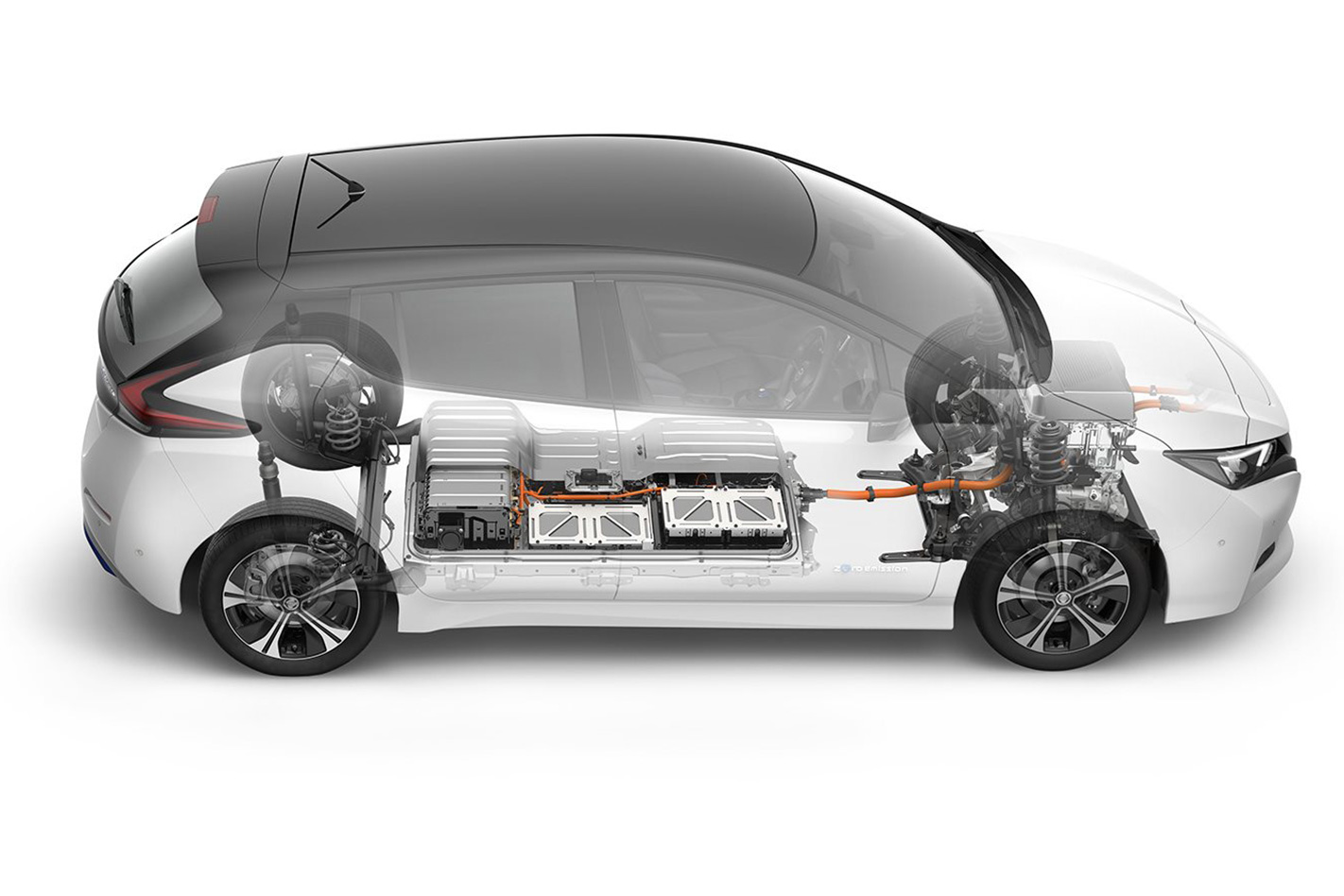
The recipient of a $20 million support grant from Japan’s Ministry of Economy, Trade and Industry, Libtec plans to fast track the power source for the next generation of electric vehicles.
A solid-state battery replaces the liquid or gel-form electrolyte found in today’s lithium-ion batteries with a solid, conductive material. As well as offering more capacity density, a solid-state battery is inherently safer thanks to a lower operating temperature. It is however, far trickier to build cost effectively, which is the major hurdle that needs to be overcome.
“There are a few next-generation battery technologies we’re looking at, and the most promising is an all solid-state battery,” Toyota Chairman Takeshi Uchiyamada said in an interview at last year’s Tokyo Motor Show. “We’re scrambling to finish developing this technology, but a few issues still remain as we try to mass produce this,” he admitted.
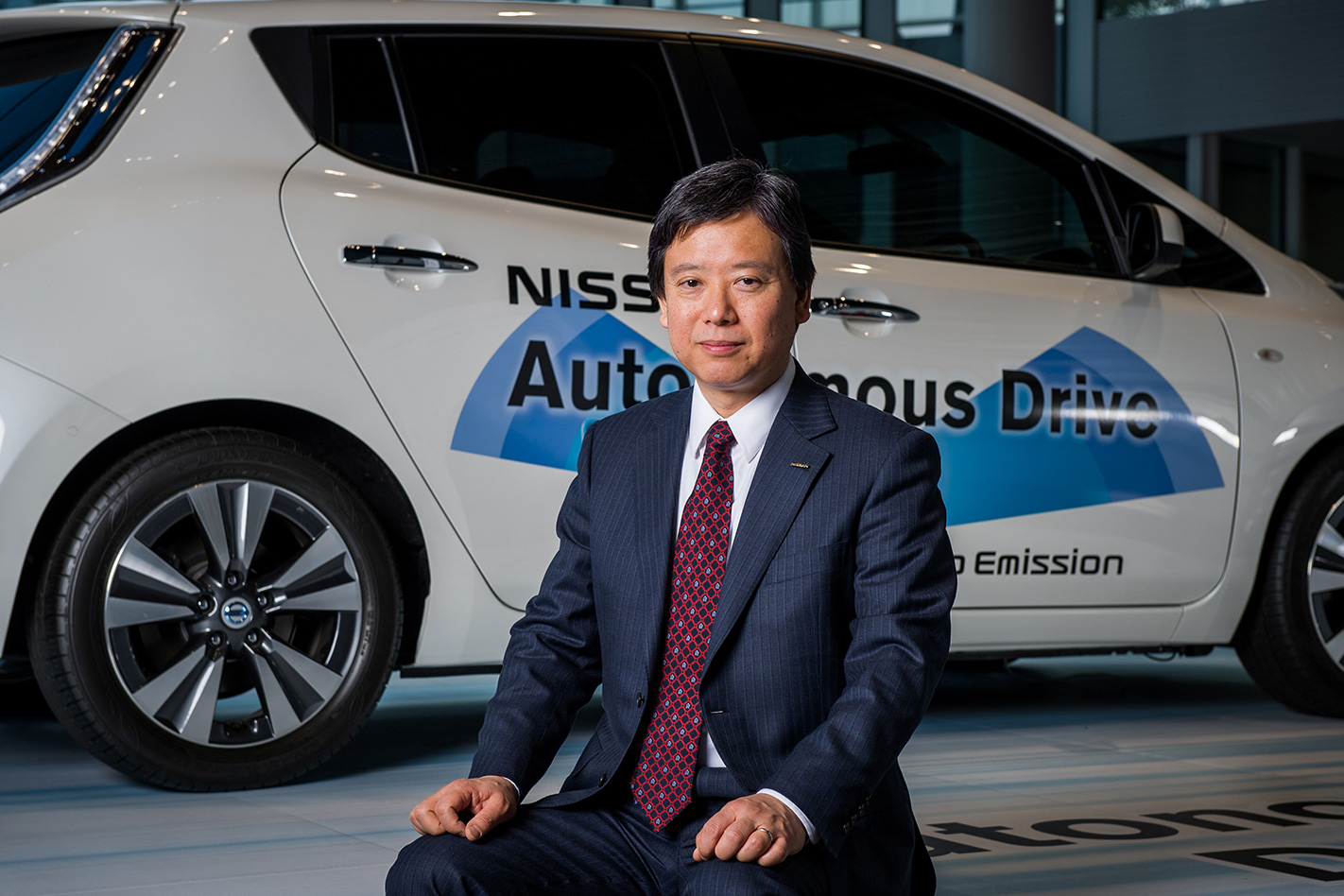
Nissan is nothing like as bullish, expecting production-ready solid state batteries to only reach the market halfway through the next decade. Takao Asami, Nissan’s senior vice president for research and advanced engineering, has said that there are still several obstacles to be overcome.
“All solid-state batteries, roughly speaking, are still in the initial phase of research. So according to my feeling, it’s practically a zero at this stage,” Asami said. “It’s working in the lab,” Asami admitted.
“But if we make it bigger and put it in a vehicle, drive for several kilometres and ensure safety and cost performance, compared to a lithium ion battery, we don’t have a comparable scenario yet. We still need several breakthroughs.”
That’s where Libtec could pay dividends, pooling the R&D expertise for the common good. Libtec’s two-stage goal is to first produce a 550km-capable battery pack by 2025 with the endgame being an 800km pack by 2030. So don’t hold off your next EV buying decision just yet. Asami reckons there’s plenty of life left in the traditional lithium ion tech. “We have a goal for two more generations or so.”
Libtec hopes to stem the flow of battery production from Japan to China and Korea, a move that has seen Japan’s share of the global EV battery market slip from 70 percent in 2013 to 41 percent just three years later. In that same period, Chinese companies expanded their combined global share from three percent to 26 percent.
This isn’t the first time that traditional Japanese rivals have collaborated to drive R&D into a higher gear. The same three car manufacturers have recently created a company to build hydrogen fuel stations in the country for fuel cell vehicles. Prior to that, the businesses put their heads together to boost the number of Japanese EV charging stations.
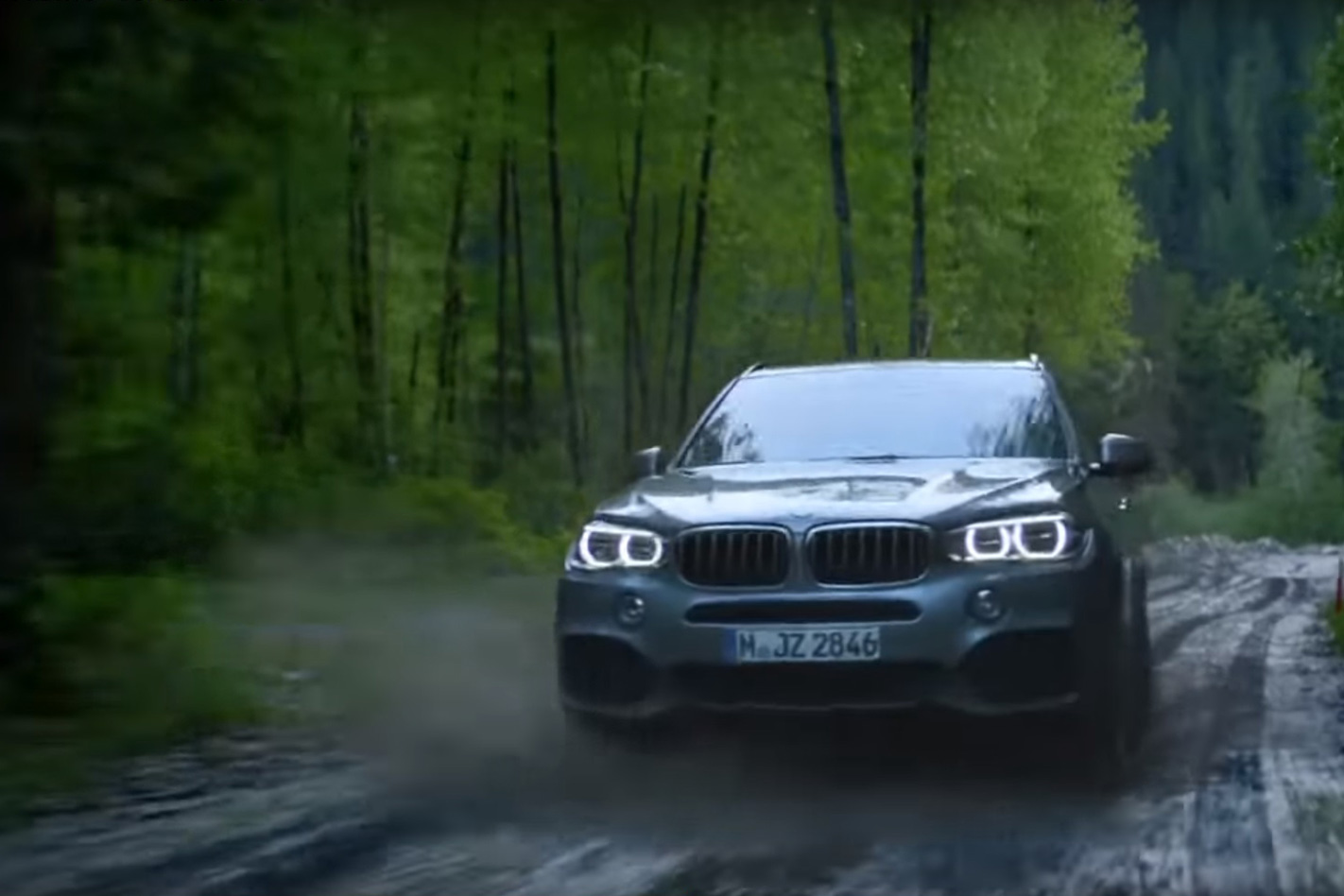
THE ADVERTISING fun police are at it again, this time in the UK where a BMW ad showing cars driving on straight roads has been banned from television screens after receiving just one complaint, because it “gave the impression that the cars were being driven at a considerable speed”.
The 60-second ‘Get Out There’ commercial, which showcases the German carmaker’s xDrive all-wheel-drive system, shows different BMW models ploughing through various road conditions including dirt, snow and mud, with Blur’s Song 2 providing the raunchy soundtrack.
While the cars are obviously going quick, they always appear in control despite the conditions – which is kind of the point of the ad.
But that all seemed lost on the Advertising Standards Authority (ASA), which, while acknowledging some of the scenes were shot off public roads, reckoned “the demonstration of the capability of the xDrive system condoned faster, dangerous and irresponsible driving … presented in the context of excitement”. It also took offence to an X5 “appearing to skid on a dirt trail.”
According to Auto Express, BMW contested ASA’s interpretation of the ‘skid’, arguing the X5 demonstrated “a slight reduction in traction”, as the technical ability of the xDrive system was highlighted.

BMW also argued the cars were driven in a safe and responsible manner, and that the Blur anthem was selected to appeal to its target audience, and was unlikely to imply the cars were driven at a high speed.
The ASA ignored BMW’s defence and deemed the ad breeched three advertising codes, despite the fact just one person, out of the estimated 9.3 million who viewed the ad (and all had better things to do) complained.
The ban seems even more ludicrous Australia’s Advertising Standard Bureau banning of a YouTube video showing a Bentley Continental GT clocking 330km/h on the Northern Territory’s Stuart Highway under controlled conditions.
The ASB ruled that while the Stuart Highway had unrestricted speed limits at the time, the video breached rules which state a car cannot be promoted driving at greater than the speed limit in any state where the ad was published.
And late last year, the ASB banned a Lexus LC500 commercial because it showed the rear wheels spinning momentarily. According to the ASB the Lexus ad “clearly depicts speeding and rapid acceleration, which is illegal, dangerous and against the advertising code”.
Even the battery-powered BMW i3 wasn’t immune from the fun stoppers, who last year banned its ad for portraying “unsafe” and “reckless” driving” because another vehicle is shown spinning its wheels.
Meanwhile, in America …
With the unveiling of the Volkswagen Golf GTI TCR concept at the Wörthersee GTI meet in Austria, the Golf GTI range gains a new fastest member.
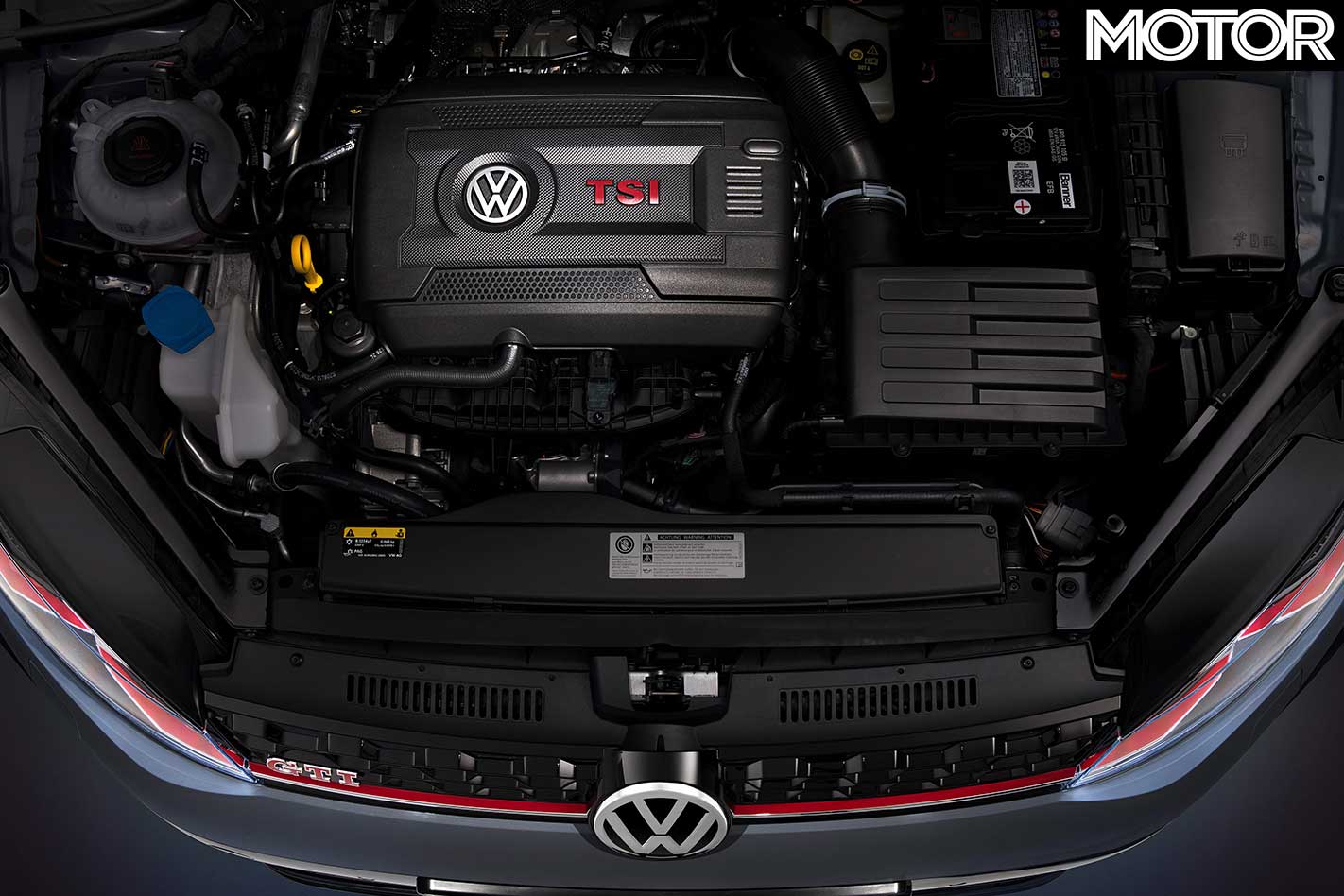
With a top speed of 264km/h and 213kW/370Nm – coming from a VW 2.0-litre turbo four – the GTI TCR is a front-driven weapon which could be set to take on the likes of Mégane RS and Civic R-Type.
But it gets better. Volkswagen’s local arm says it’s going to try very hard to bring the TCR to Australia.
“It’s very much our wish that it does [come to Australia],” VW Australia communications manager Paul Pottinger told MOTOR.
“We’re doing all we can to get our hands on it.”
He adds that VW Australia will be making announcements regarding its performance range in the near future, though it won’t necessarily be TCR-related.
When the GTI TCR does eventually become a production car, it’ll be fitted with a 7-speed DSG and a locking diff between the front wheels, which will be able to distribute all 370Nm from just 1600rpm.
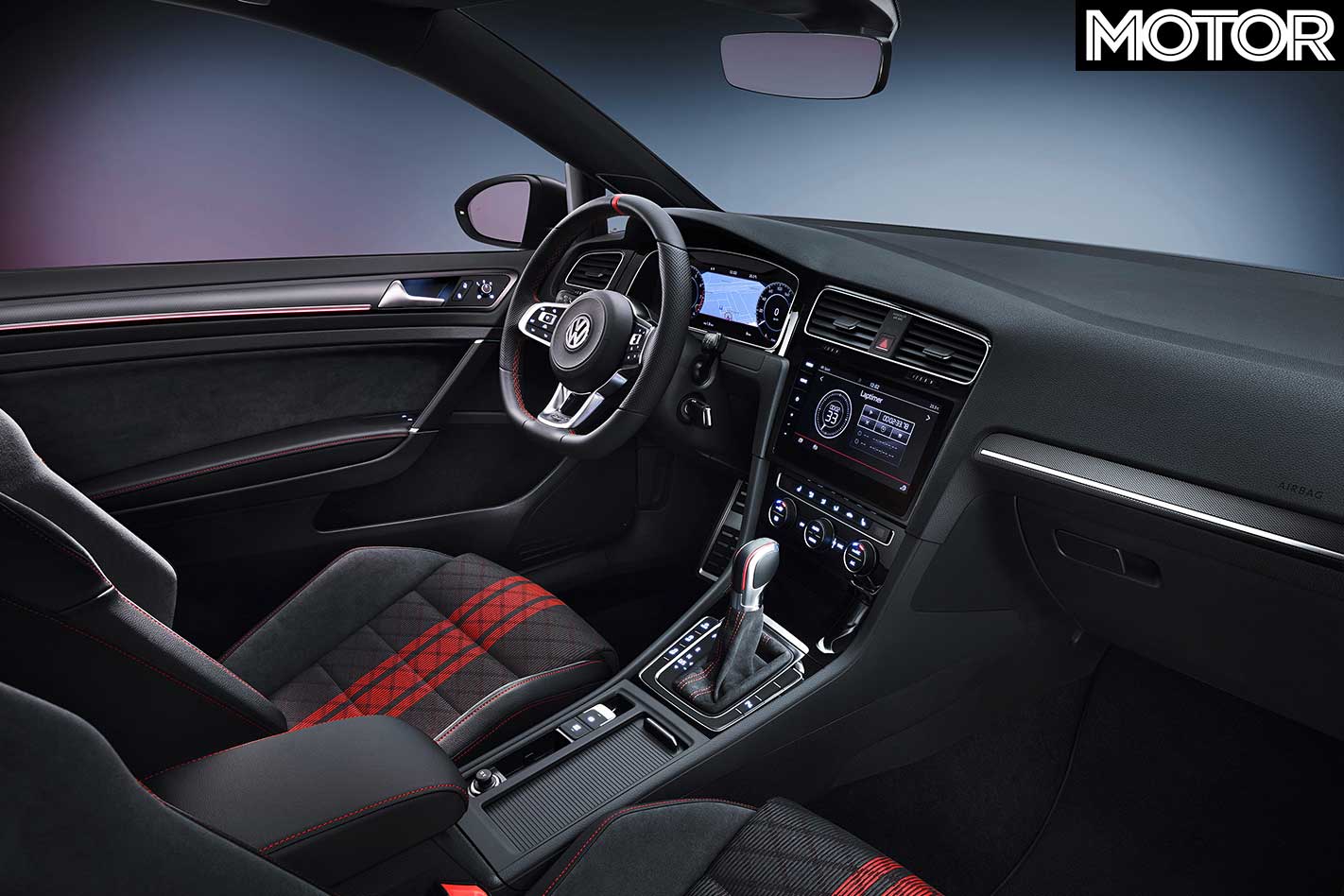
The pack which can be ordered to allow the GTI TCR hit its top speed (rather than the 250km/h limiter) also includes a sports chassis tuned for harder driving, and adaptive chassis control.
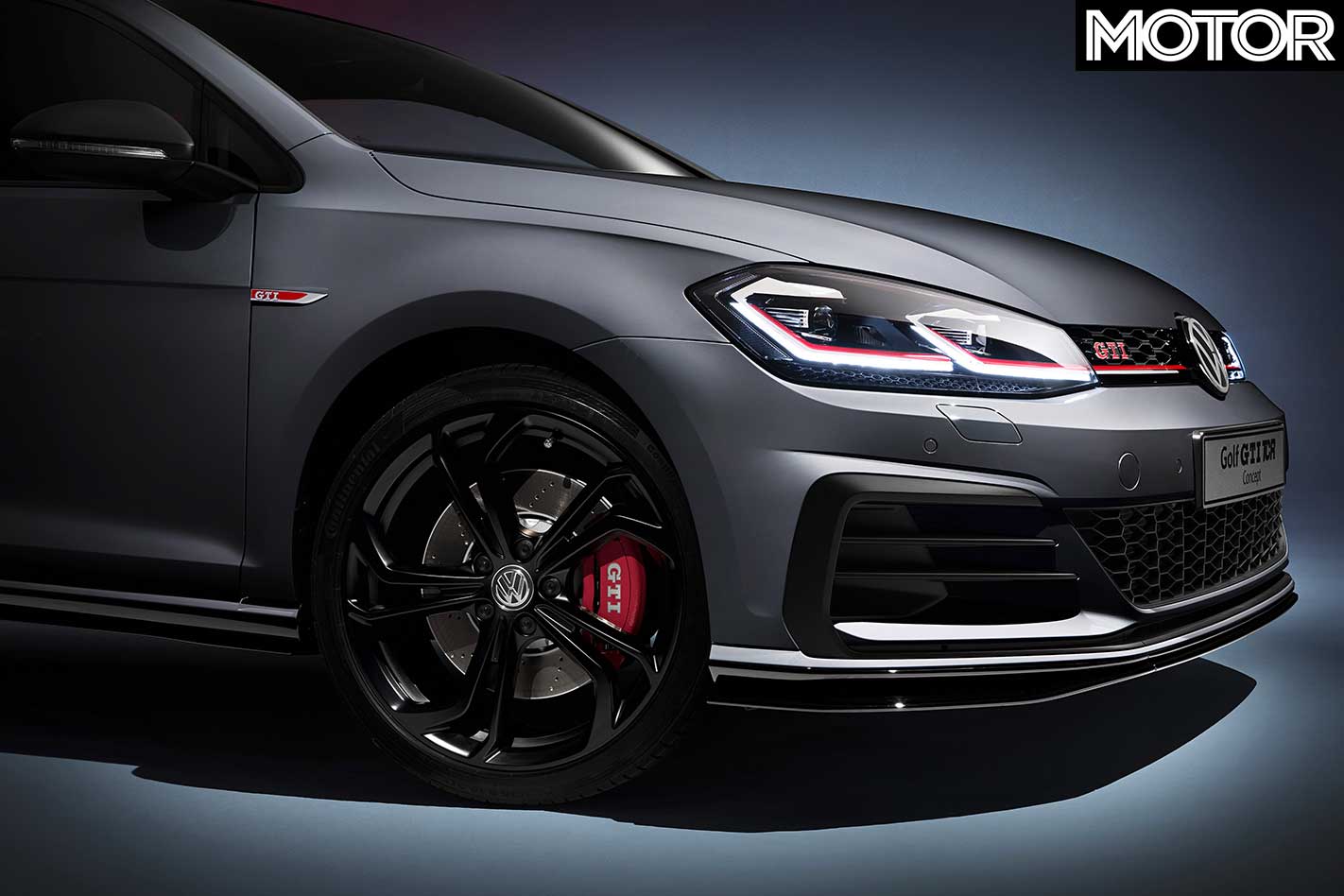
Behind 19-inch forged wheels, perforated brakes stop the road-going TCR “just as effortlessly as the TCR racing car.”
Two extra radiators are fitted to the GTI TCR to keep the high-output engine cool, behind a redesigned front bumper, with a TCR-specific front splitter.
Fans of Chevrolet’s Camaro will only have one transmission choice and potentially less power than its US siblings when it is sold locally.
A HSV spokesperson confirmed to Wheels no manual transmission will be available when the company begins selling converted Camaros later this year, despite HSV management saying at the time of the Camaro announcement that a manual gearbox option would also be offered.
The sole gearbox will be an eight-speed automatic. Australian-spec Camaros may also cop a minor drop in power compared to what is available in North America once the LT1 engine is complied to ADR requirements.
HSV will convert Camaros in its Clayton factory, with just a sole spec grade – 2SS – expected to be offered. Rumours persist of the flagship ZL1 variant being offered locally in the future following a trademark application earlier this year.
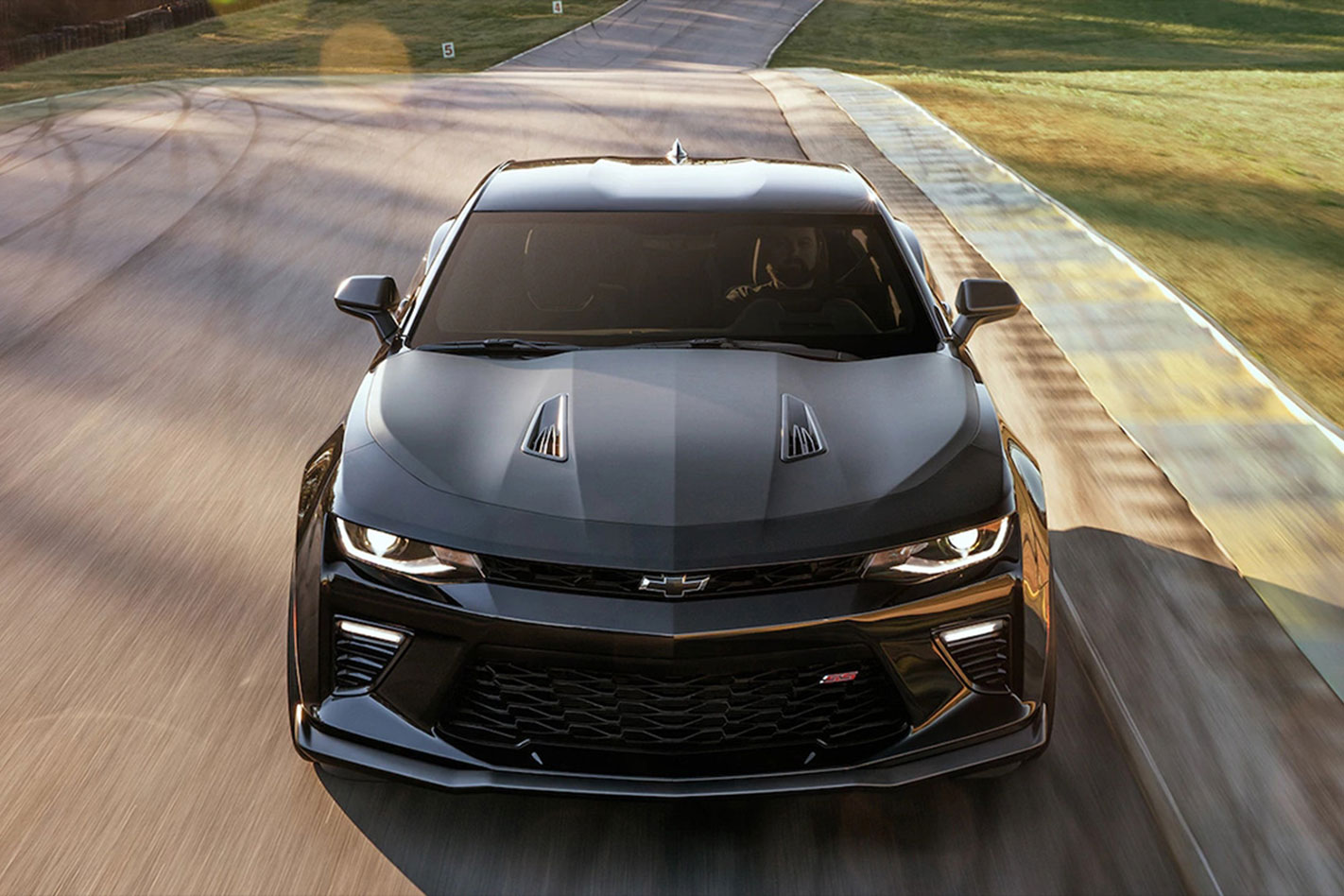
Powered by a 6.2-litre LT1 V8, the Australian-spec Camaros will produce “over” 330kW and 600Nm according to HSV’s website. The final outputs are yet to be confirmed, with “official certification pending”. Camaros sold in the US produce 340kW and 615Nm.
The Camaro will roll on 20-inch, five-spoke machined-face alloys, wrapped in 245/40ZR20 Goodyear Eagle rubber at the front and 275/35ZR20s out back. Stopping duties will be taken care of by four-piston Brembo brakes front and rear, with fixed calipers.
A bi-modal exhaust system will be finished with dual-outlet tips, while the rear of the Camaro will also feature a stanchion spoiler.
Inside the cabin the 2SS will feature power-adjustable heated and ventilated leather-trimmed bucket seats, a leather-wrapped, flat-bottom steering wheel, nine-speaker Bose premium audio system, and dual-zone climate control.SV spokesperson declined to shed further light to the Camaro’s local pricing, however Wheels understands it’s likely to carry a $30,000 premium over the rival Ford Mustang V8, putting it in the region of $90,000.
RENAULT has wound back the factory warranty for its high-performance RS models.
While the rest of the Renault range is sold with the factory five-year, unlimited kilometre warranty, including the warmed up Megane GT variants, the more hardcore RS hot hatches will only be available with a three year warranty from the factory.
Until the new Megane RS arrives later this year, the only RS models on sale in Australia are Clio variants the RS200 Sport, RS200 Cup, and RS220 Trophy (priced at $30,990, $32,490, and $38,990 respectively)
Hyundai’s i30 N offers the most comprehensive warranty in the hot hatch segment, with the Korean manufacturer guaranteeing coverage for five years, including non-competitive race track use.
It is believed Renault will match the circuit-friendly offer and provide owners of the forthcoming Megane RS 280 track coverage in some form, but it is not yet known if the small hatch will be covered for three or five years.
Sitting at the top of the RS family tree, the Megane RS 280 is powered by a 205kW/390Nm 1.8-litre turbocharged four-cylinder sending power to the front wheels via a six-speed manual or dual-clutch automatic.
Australian pricing for the Megane RS 280 has not yet be revealed, but expected to be in the region of $45,000, competing with other strong competitors in the segment, including the i30 N, Honda’s Civic Type R and the iconic Golf GTI.
Six years ago, I decided to fix the Morley family lawnmower.By lunchtime I’d reduced an otherwise useful Victa to its component parts. Oh, and lost interest. Five years and 11 months ago, I went out and bought a new lawnmower.
This feature was originally published in MOTOR magazine’s May 2004 issue
Also six years ago, a bloke called Matthew Thomas was dreaming up an Aussie supercar. But unlike my very useless self, young Matt didn’t give up on the dream.
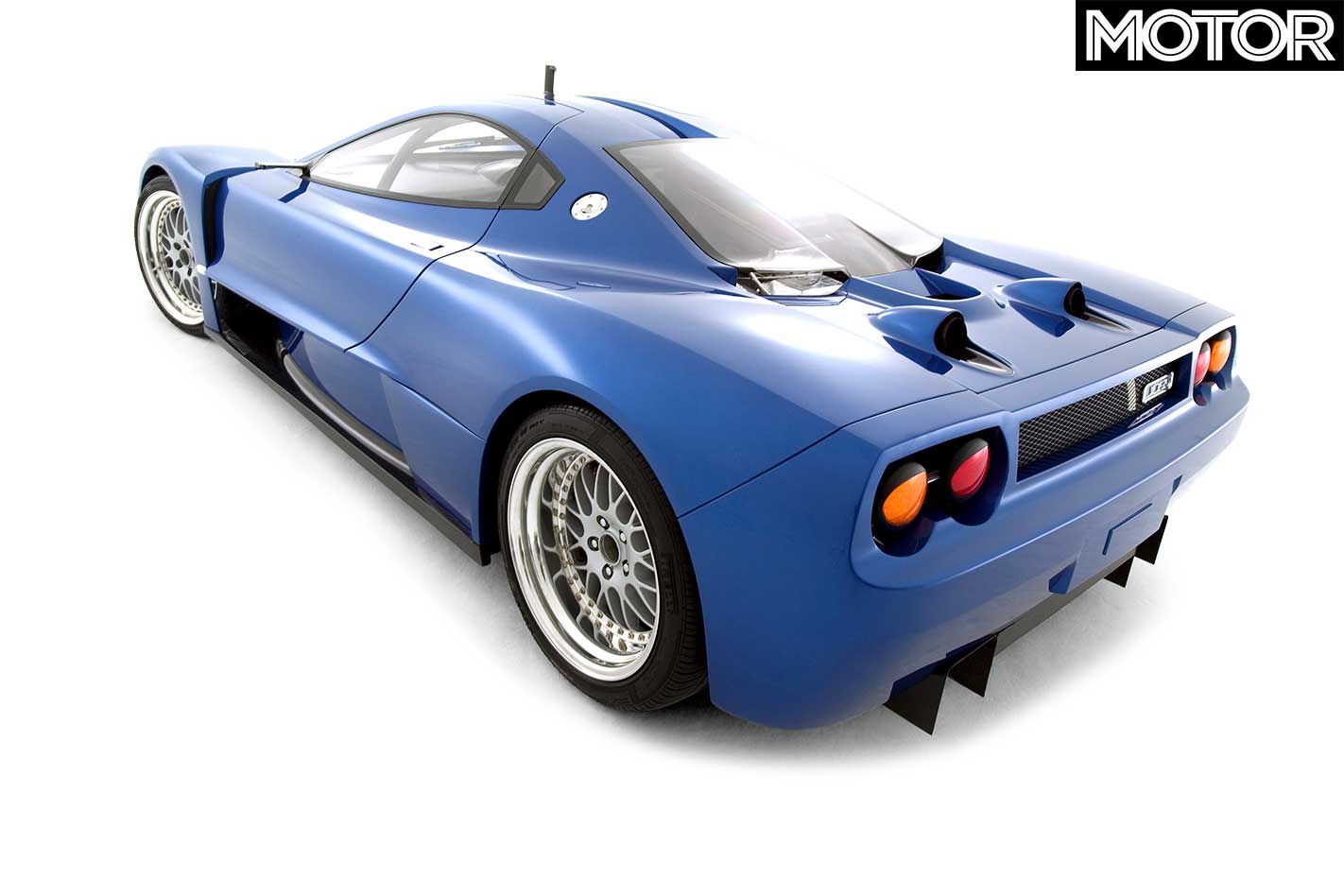
For the moment it’s a one-off prototype, but should Joss Developments attract the financial backing it so richly deserves, we could see production versions in showrooms in 18 months’ time. Ambitious, true, but that’s a word that accurately describes the whole project, and it’s impossible to sit in the Joss and for some of that enthusiasm not to rub off on you.
Since he started working on the car on weekends back in 1998, Matt has since gathered about a dozen skilled people around him, all of whom spend whatever time they can spare turning the Joss from inspired dream into carbonfibre reality. Some of the other members of the team work with Matt at Ford (where he’s a clay modeller), others are from elsewhere, but they’re all committed.
Matt’s mission statement, meanwhile, is simple: he wants to build Australia’s first supercar.
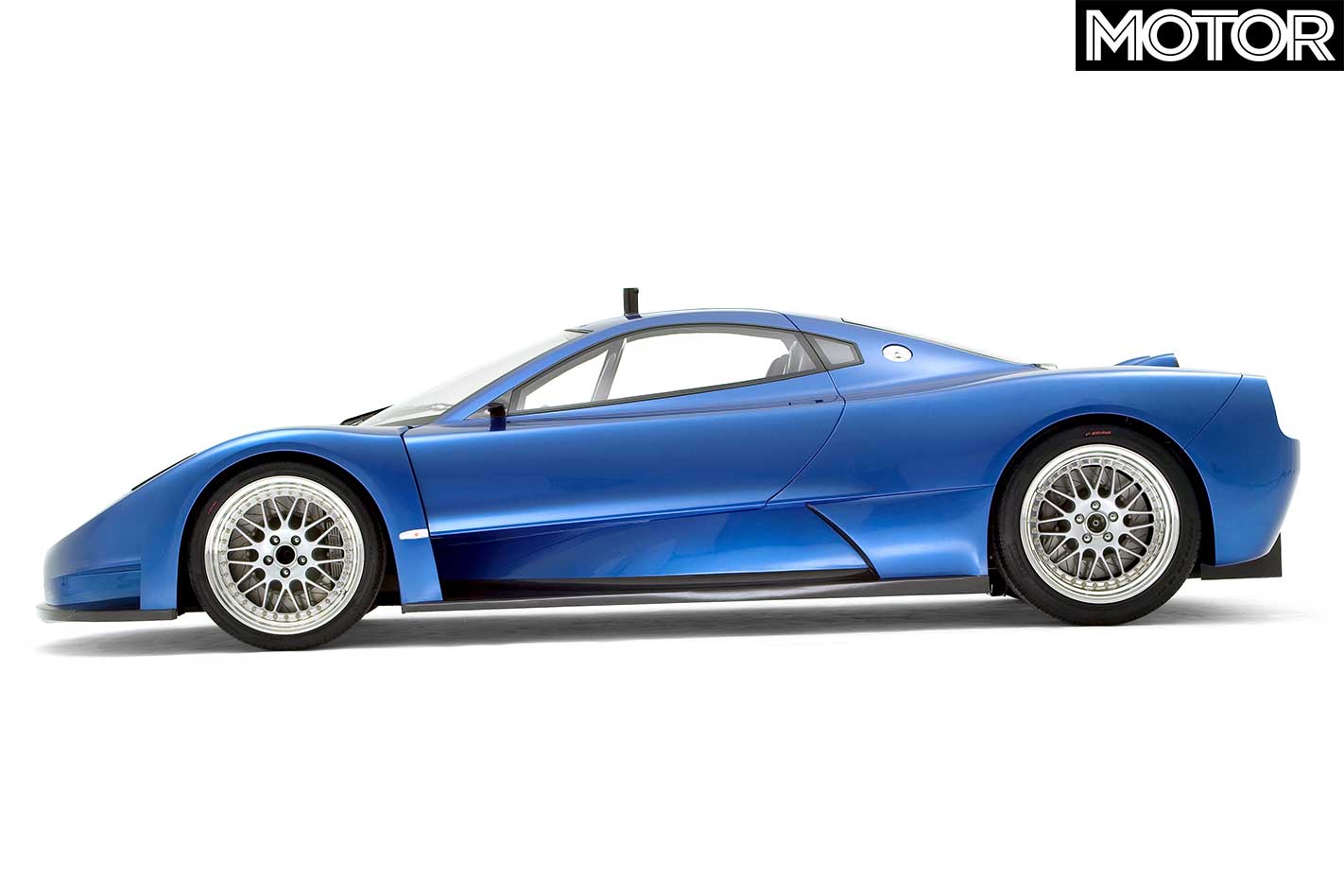
“To do that, we need to be strong as a company, and able to stay up and running,” he says. “I also want to go racing. A designer/driver has won a world championship [Sir Jack Brabham, no less] but the same combination has never won Le Mans.” Jeez, this bloke clearly thinks big.
Then he drops the ‘F’ word. Yep, Ferrari is not a name Matt’s afraid to list as a performance target, along with Pagani as a yardstick of low-volume build quality. But, if he’s as serious as the prototype, then maybe the bloke is on to something.
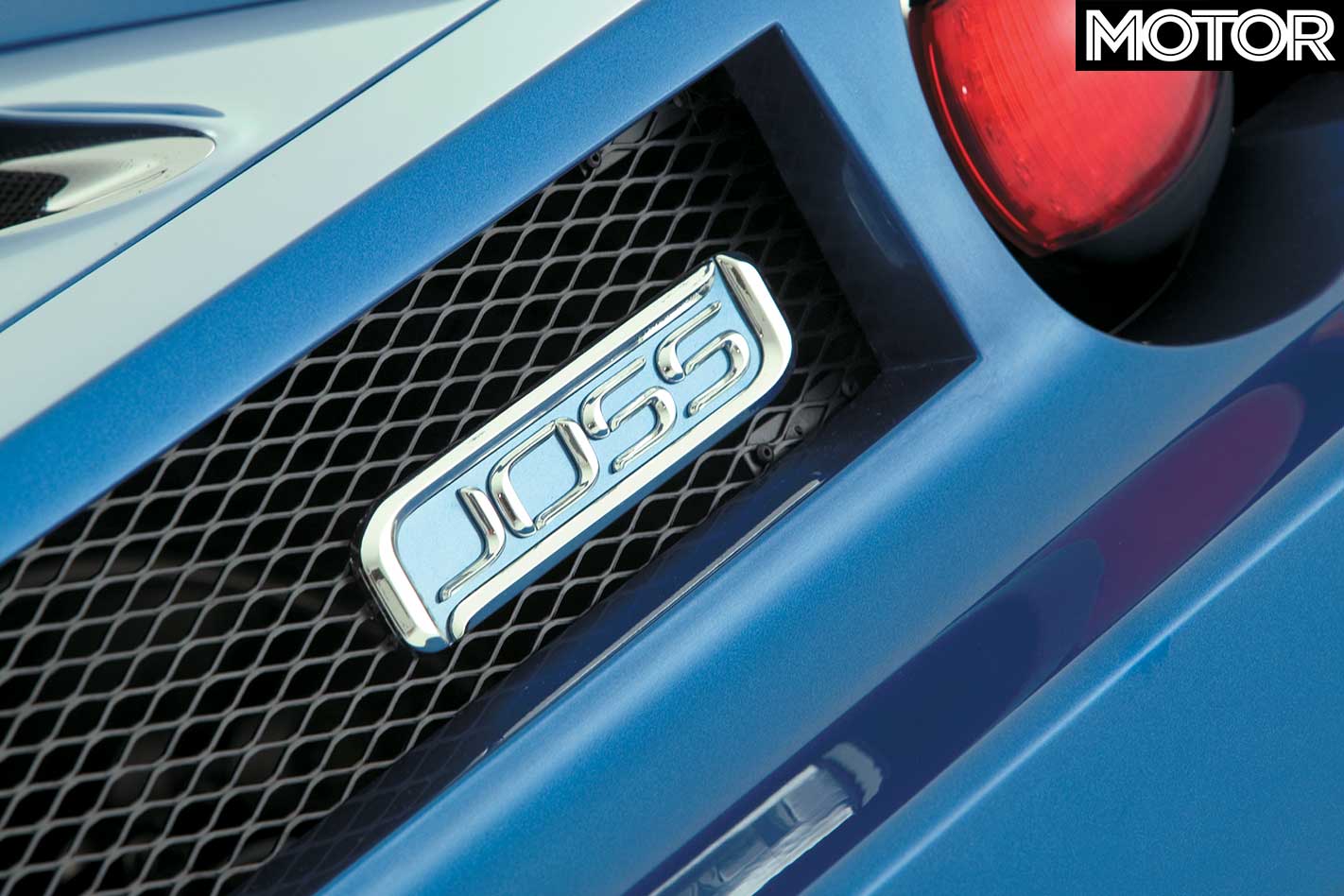
Then again, the mule is a long, long way from production-ready, even though it’s already swallowed better than $300,000 of Matt’s own gold and is worth about $2 million if you factor in the man hours.
But the basics are there and the performance is said to be shattering, with 0-100km/h in comfortably under four seconds and a standing 400-metre time of around 11 seconds flat. And that, kids, is firmly in McLaren F1 territory.
So what makes it tick? Well, the chassis for now is a welded steel spaceframe with unequal length, fully adjustable double wishbones at each corner. The body is a combination of kevlar, carbonfibre and glass fibre, with a little bit of aluminium honeycomb thrown in for good measure.

In the production version, the plan is to use a carbonfibre tub construction with a suspension setup that Matt says will be a true revolution in the science of suspending a car. More than that, however, he won’t say — can’t say, actually, due to contractual obligations. Frustrating perhaps, but we’ll just have to wait.
Then there’s the issue of using established technology to make the Joss a real boat-rocker, versus making it a kind of guinea pig for somebody else’s big ideas. I mean, you’d be kicking yourself if you’d designed a pukka supercar and then offered up the production version as a test bench for the latest in tartan vinyl upholstery.
Matt is similarly cagey about the origins of the engine, but know this: this is not an off-the-shelf motor retuned for supercar duties. It is, in fact, all-Australian: designed and made in Melbourne, to be precise, and for now at least, exclusive to the Joss, a situation Matt hopes to perpetuate.

An all-alloy V8, the engine has a capacity of 6.8 litres, but surprisingly uses pushrod valve actuation and a humble two valves per cylinder. Injection is an in-house setup for now, but Matt says the production car could well use a Motec unit or something similar. Designed to run on pump PULP, the mill uses a 10:1 compression ratio.
Depending on a few variables, output will vary, but for now it’s 360kW and a beefy 650Nm of torque, which Matt is smart enough to acknowledge is a more meaningful figure than a peak horsepower number any day of the week.
Matt has driven the mule at Calder and reckons he has never, ever driven anything with torque like the Joss. But then he would say that, wouldn’t he? I’m still inclined to believe him, however.
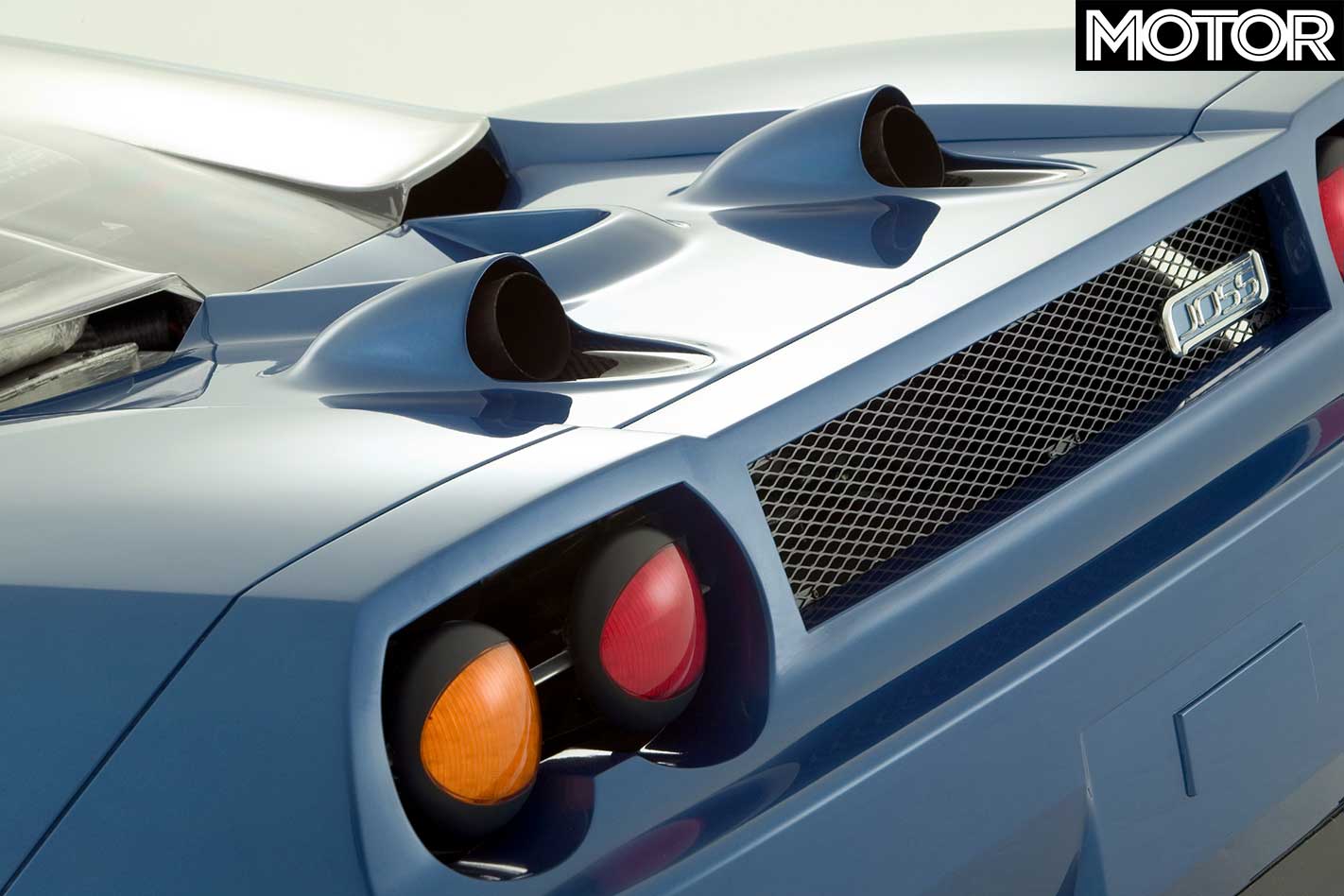
Its gearbox is the Porsche G50 unit that was used in the 911 from 1987 onwards in 3.2-litre form, but the production version is likely to use a clutchless manual with a sequential paddle shift.
Brakes are monster Harrops with six-pot calipers up front and four-potters out back, and the whole plot weighs in at just 940kg. A Jenny Craig-beating 800kg fully wet kerb weight is the target for the production version, and if it’s achieved, the Joss would have a vastly superior weight-to-power ratio (try 2.2kg/kW) to even that legendary McLaren F1. Getting the idea, here?
Look, I don’t know whether Joss Developments will ever get off the ground as a manufacturer of production cars. Plenty of similar projects have been still-born in the past, but if enthusiasm counts for anything, the Joss is already a winner. And there are at least four other people who are inclined to agree, because that’s how many orders Joss Developments is already holding. Not deposits, mind you, but firm orders just the same.
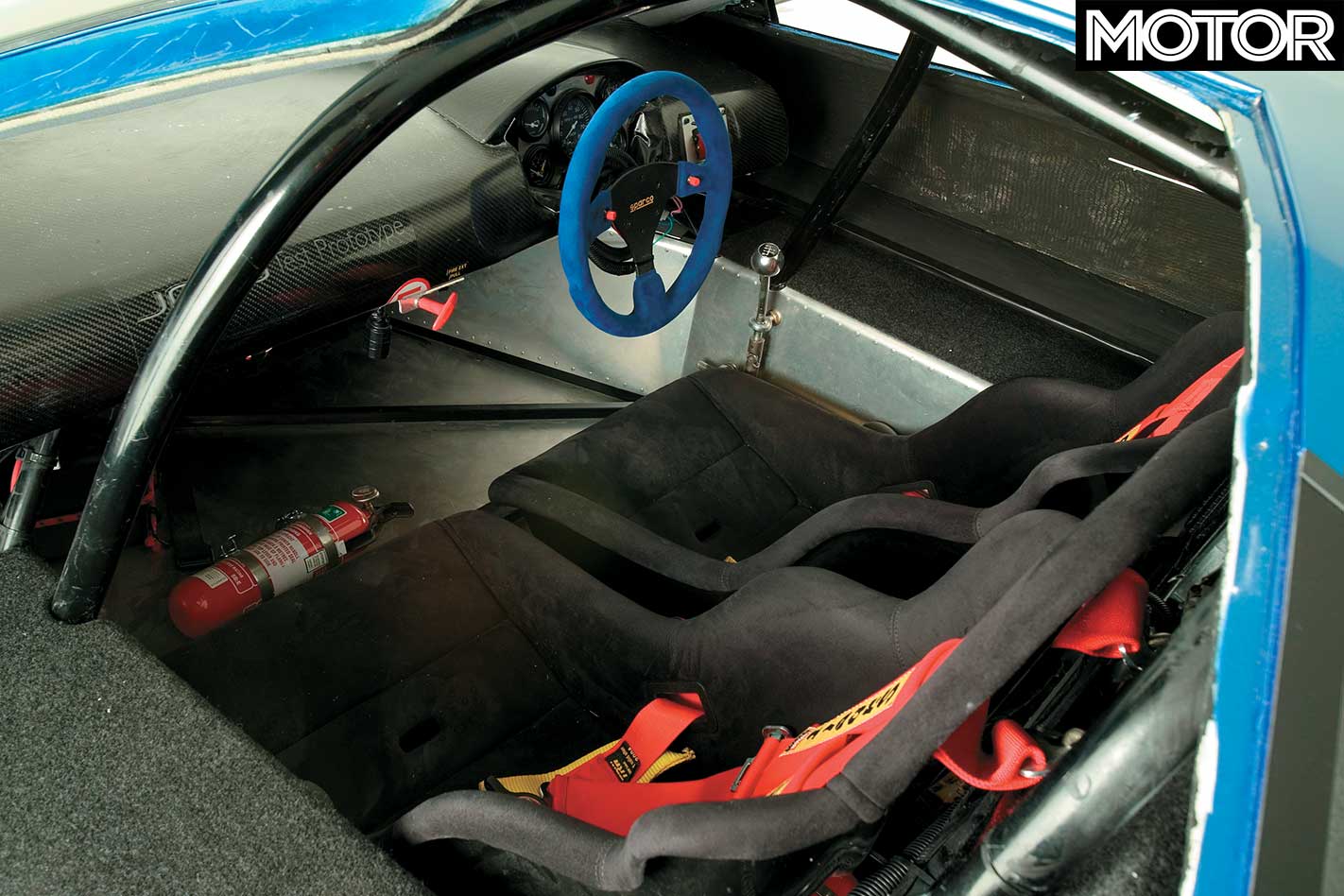
But there’s a long way to go. The interior is anything but resolved, and I mean totally. There’s a carbonfibre dashboard, some proprietary instruments, and a whole bunch of barely finished, untrimmed bits and pieces.
The windows don’t open, the door inners aren’t trimmed at all, and even the interior door handles don’t exist beyond a crude lever. Oh, and the dominating piece of interior equipment is an exposed roll cage that forms an integral part of the spaceframe.
Clearly, Mr Thomas is going to have to continue to surround himself with talented people with special skills if a saleable car with a projected price tag of around $500,000 is to be the end result. That matter, though, seems to be partly in hand, and Matt reckons he has a few of the key people from Europe teed up to drag their swags over here as soon as the finance is in place.

In a lot of ways, the Joss throws up more questions than it answers — things like, what gearbox it will use; will people shopping in the high-tech aisle go for a car with pushrods; and will anybody stump up half a mill for an unknown brand when they can score a Ferrari for the same money?
And then there’s the small matter of finding a backer to provide the cubic bucks that such a project will consume quick-smart.
There’s also a final question: does Australia need its own supercar? Dumb question. Of course we do. You know it makes sense.
The Voice of Experience
Exactly what makes a 34-year-old clay modeller think he’s got what it takes to design a true world-beater? “I don’t know, but I was always a dork at high school, always drawing cars when I should have been doing other things. And I always wondered why we [Australia] didn’t have our own supercar.”
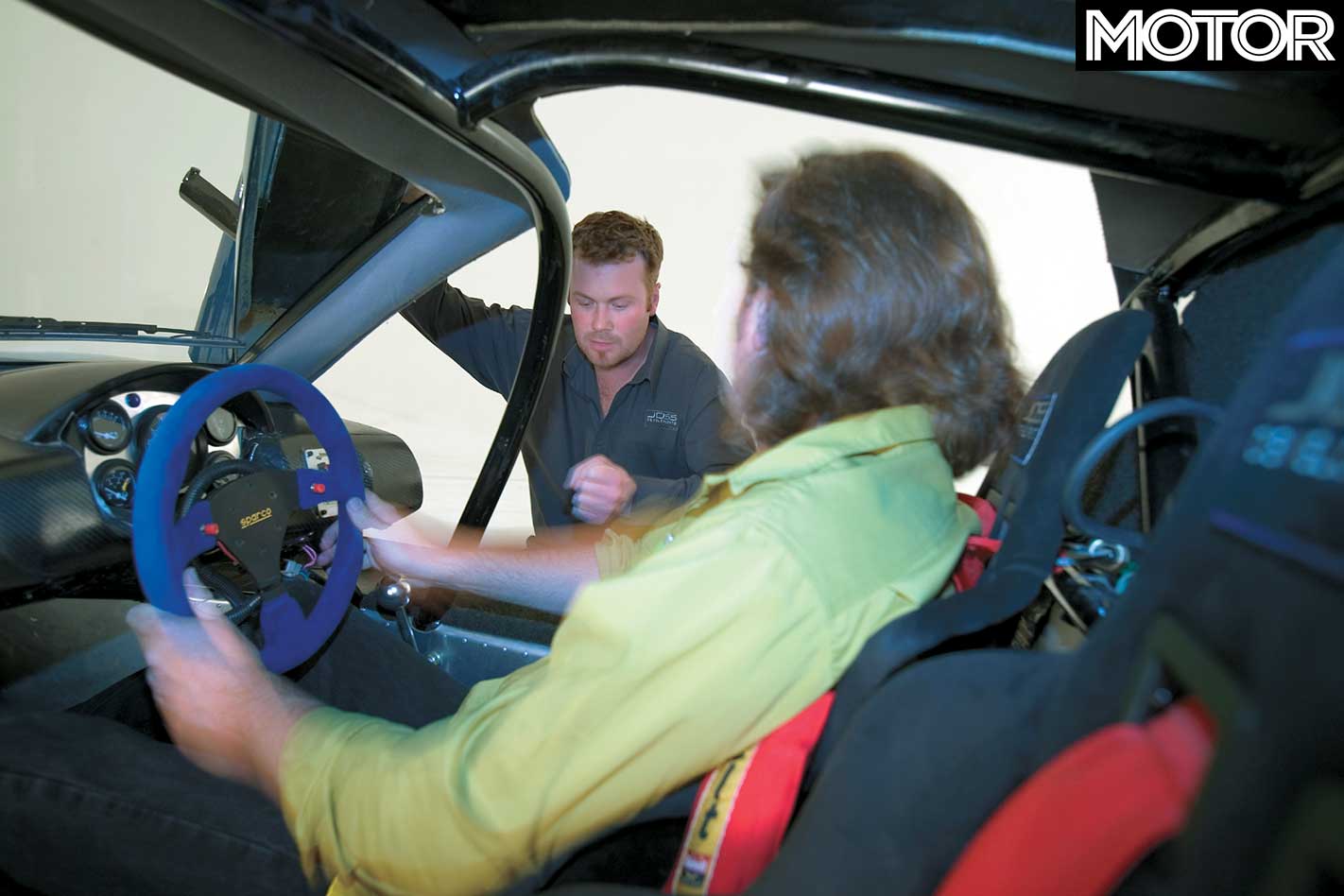
Matt also has a few runs on the board when it comes to getting off his jacksie and putting in the hard yards. For a start, he’s been talking to the right people, including Jackie Stewart and McLaren F1 designer Gordon Murray.
After leaving high school, Matt decided he needed experience in Europe, where he worked as a clay modeller for British design house Futura and then at Stewart Grand Prix, making wind-tunnel models.
FAST FACTS JOSS SUPERCAR PROTOTYPE
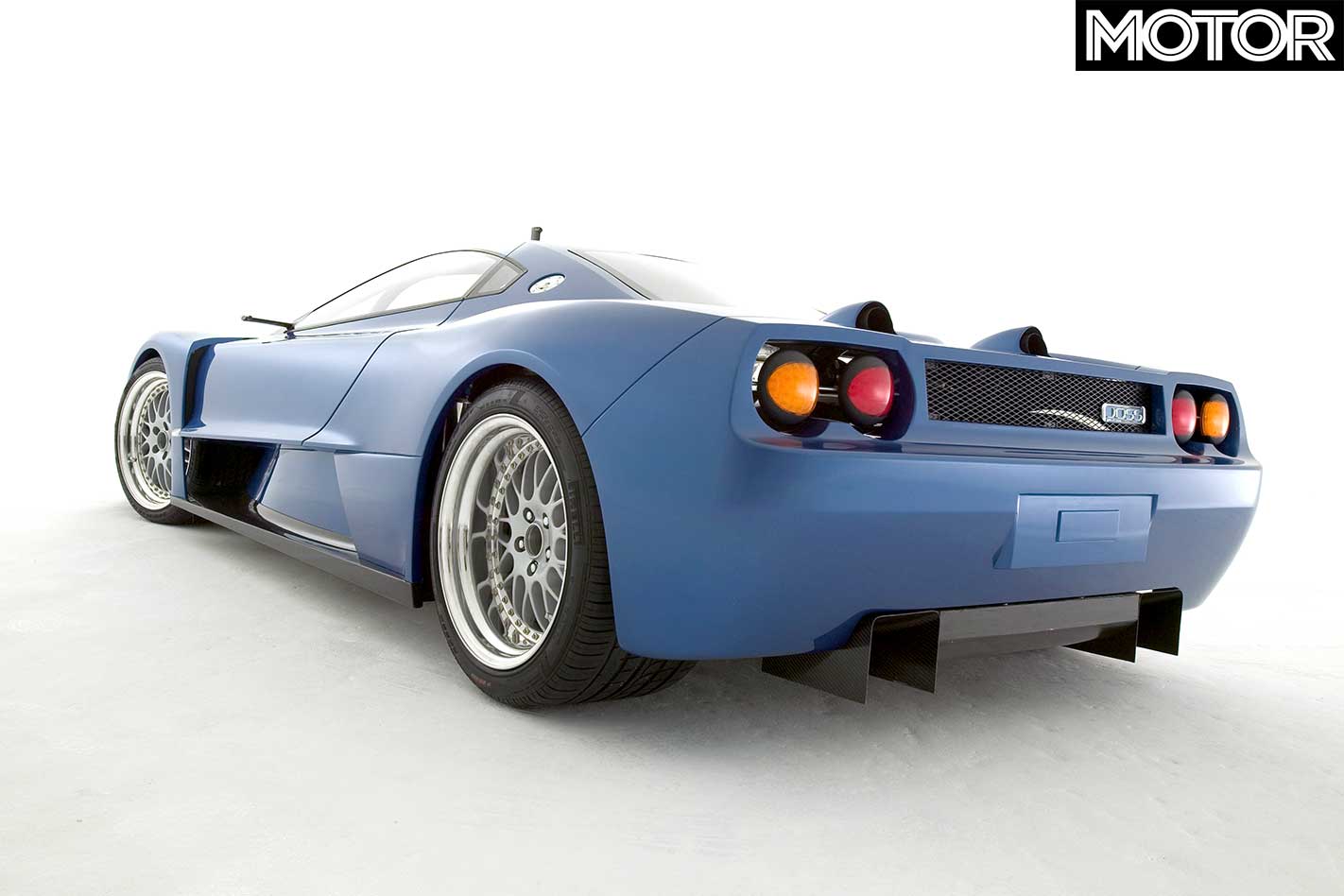
BODY: 2-door supercar DRIVE: rear-wheel ENGINE: mid-mounted all-alloy, dry-sump 6.8-litre pushrod 16V V8 POWER: 360kW @ 5750rpm TORQUE: 650Nm @ 2800rpm COMPRESSION RATIO: 10:1 BORE X STROKE: 104.78mm x 95.25mm WEIGHT: 940kg POWER-to-WEIGHT: 383kW/tonne SPECIFIC POWER: 52.9kW/litre TRANSMISSION: five-speed manual transaxle SUSPENSION: double unequal length wishbones, coils, adjustable dampers (f & r) L/W/H: 4150/1860/1050mm WHEELBASE: 2560mm FUEL: not confirmed, PULP BRAKES: 380mm Harrop discs, six-piston calipers (f); 360mm Harrop discs, four-piston calipers (r) STEERING: power rack and pinion WHEELS: 18 x 9.0-inch Simmons (f); 18 x 13.5-inch Simmons (r), alloy TYRES: Pirelli P-Zero Rosso, 245/35 ZR18 (f); 335/30 ZR18 (r) PRICE: $500,000 (estimated)
AUDI has announced plans to tap into the time owners spend sitting behind the wheel of the products it will one day build, selling them services that will also swell its ability to make money.
The carmaker announced this week that it would develop what it called an “integrated IT platform” for “vehicle connectivity and digital services”. It has flagged this will allow the carmaker to carry the driver’s in-car settings and content across to any other of the wider Volkswagen Group products they jump behind the wheel of, but also open the door to more commercial opportunities.
“We want to have premium electric cars and digital services that are also attractive in economic terms,” Audi Finance, IT and Integrity board member Alexander Seitz told Audi’s annual general meeting. “That is our clear ambition for the mobility of the future. To that end, we are utilising [Volkswagen] Group synergies significantly more effectively and are releasing resources for strategy projects with our action and transformation plan.”
However, what that means is that Audi also plans to charge its customers for time-saving measures; think finding the nearest parking space, or pushing advertising that sells anything ranging from clothing and takeaway food to services such as dry cleaning or en-route coffee stops.
It has announced the formation of a special skunk works tasked with the job of steering the “planning, implementation and operation of digital products, and is thus establishing digital value-added organisationally at the same level as the existing core business”.
The moves will help it earn what it aims will be more than €1 billion ($A1.5 billion) in profit by 2025 – the same year it expects to be selling 800,000 hybrid, plug-in hybrid and electric cars a year. Last year, Audi sold almost 1.9 million cars.
Audi is not alone in exploring what it can do to fill in the time drivers are stuck behind the wheel. General Motors has already proposed a similar idea; late last year the US carmaker said it would roll out software it called Marketplace that would tap into the multimedia screens of millions of cars sold in the US and allow drivers to “order food, find the closest gas station to save on fuel, and make dinner reservations on the go”.
“This means Marketplace gives drivers of eligible Chevrolet, Buick, GMC and Cadillac vehicles the opportunity to more safely interact with a growing number of their favourite brands in retail, fuel, hospitality, food, hotel and transportation through the in-vehicle touchscreen,” it said.
It has invited retailers to jump on-board the virtual venture, even suggesting it can push their ads in front of people to gain attention.
Porsche, likewise, has hinted that it may one day start charging owners wanting to get more from their ride, suggesting it could offer temporary performance boosts if the car visits a racetrack, or even place a virtual Mark Webber in the dashboard to help the driver cut a fast lap of the circuit.
Volvo has said it will look at micropayments – small cash transactions – for some of its more popular future services, such as having a courier drop a parcel off by leaving it in the boot of the owner’s vehicle.
ROLLS-ROYCE has finally wound up a protracted, three-year hype campaign with the reveal of the Cullinan – the first vehicle from the British car-maker to slip on a pair of Hunters and Barbour and take its quintessential pleasantries off the beaten trail.
But since Rolls announced it would stop kicking against the relentless riptide of SUV sales and offer its own interpretation of the posh off-roader, it has been at pains to recycle any of the existing terminology already coined by segment pioneers.
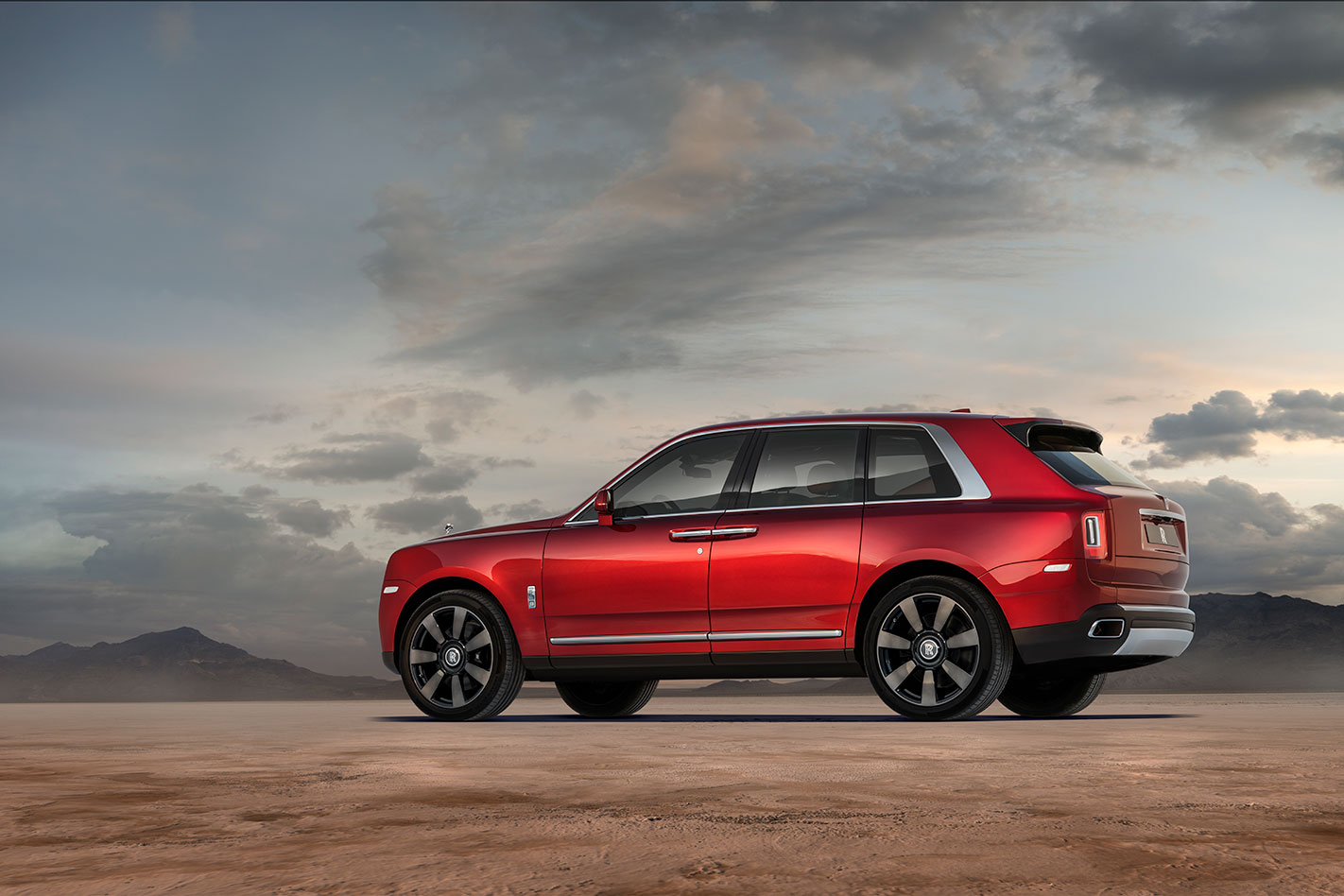
What confusingly started as a ‘High-Sided Vehicle’ (HSV), became a ‘high bodied car’ (HBC), but with the official reveal this week the company appears to be leaning toward more commonplace terminology.
But if you were thinking Rolls-Royce might be preparing to take a slice of humble pie with its afternoon tea, think again because the “Cullinan is the most versatile, family oriented, fun-to-drive … technologically advanced and only purpose-built super-luxury SUV in the world” it says.
So Rolls thinks it’s good then.
Allow us to cut through the marketing speak and give you the layman’s lowdown on the latest luxury SUV to bump gloves with Bentley’s Bentayga, Lamborghini Urus and the Maserati Levante to name a few.
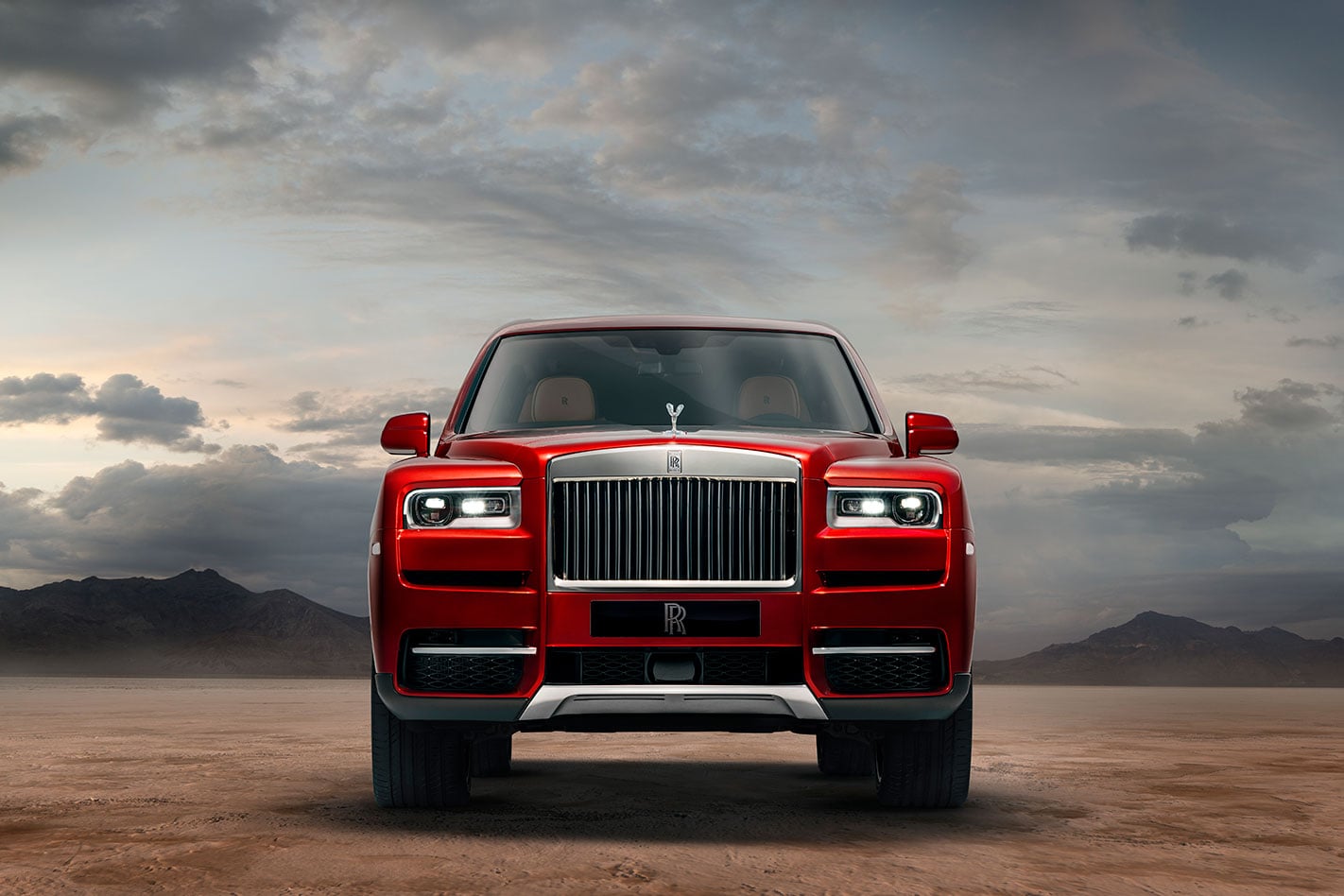
Under its massive bonnet lies an equally massive 6749cc twin-turbocharged V12 that Rolls likes to say displaces six and three quarters, but we’ll stick with 6.7-litre if that’s okay. The monstrous donk, which is related to the unit that powers BMW’s M760Li, pumps 420kW and 850Nm to all four wheels – a first for the brand.
Complemented by four-wheel steering, Rolls says the system can “overcome any challenge” and all one needs to do to unleash the full off-road potential is simply press the ‘everywhere’ button, which begs the question – why does such a mode need a button? Or perhaps there is a second ‘nowhere’ button Rolls isn’t telling us about.
The Cullinan rides on air suspension that performs a number of party tricks including a function that allows the car to curtsy by 40mm allowing easier boarding, and then raises for maximum ground clearance when off road and a wading depth of up to 540mm – class-leading, says Rolls.
Draw your own conclusions about the Cullinan’s styling. A high-riding Phantom may be a simplistic angle but the Cullinan shares its ‘Architecture of Luxury’ aluminium platform. Either way, we’ll spare you Rolls-Royce’s lengthy description in which it talks about the commanding stance of a warrior and Saxon spears.
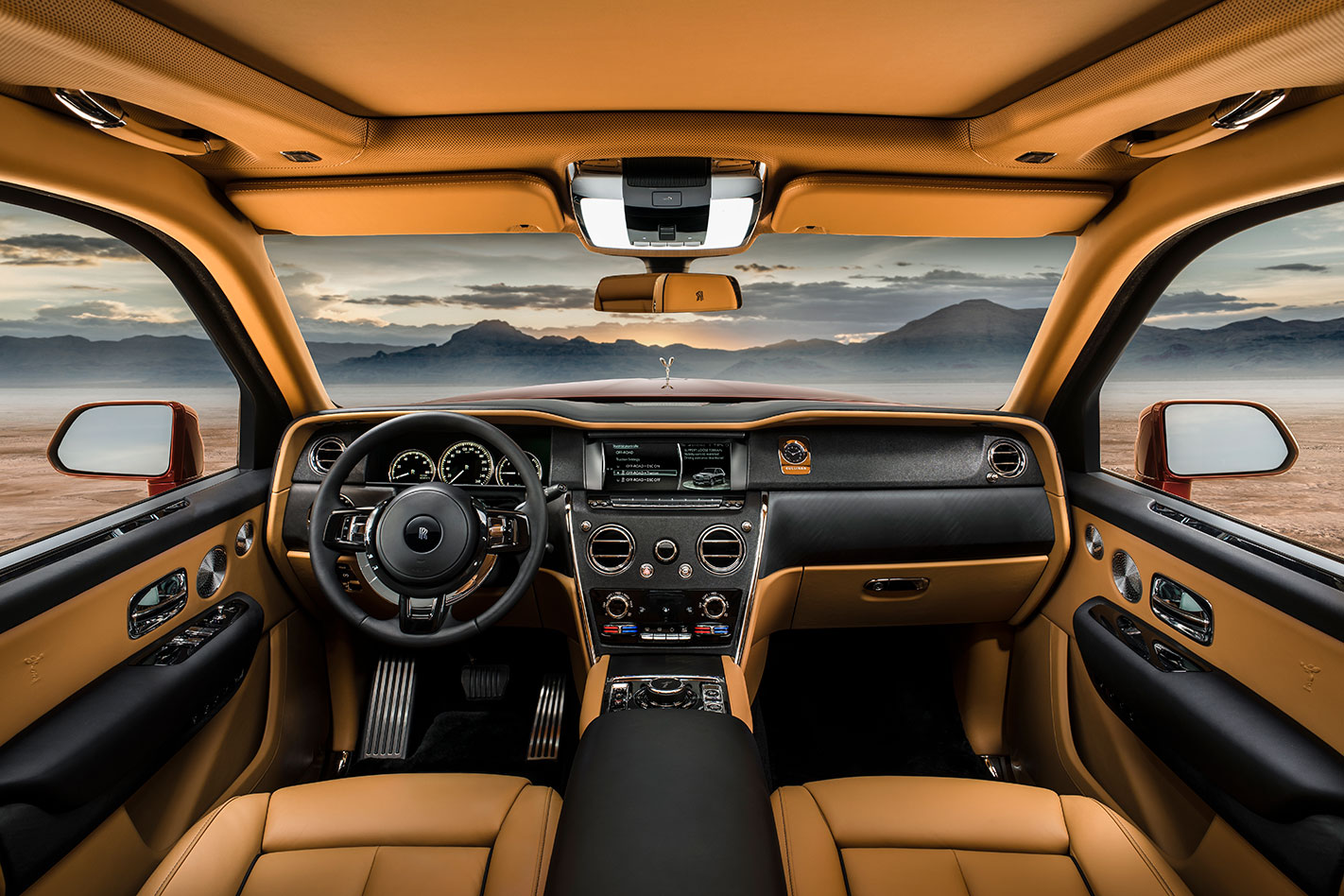
Once again, Rolls was not happy adopting the conventional ‘two-box’ description for its design and insisted on referring to the Cullinan as a ‘three-box’ vehicle. With the optional glass divider between the boot space and cabin, Rolls says the vehicle creates “an inner ecosystem for the occupants” in a similar fashion to a ute equipped with a wagon canopy.
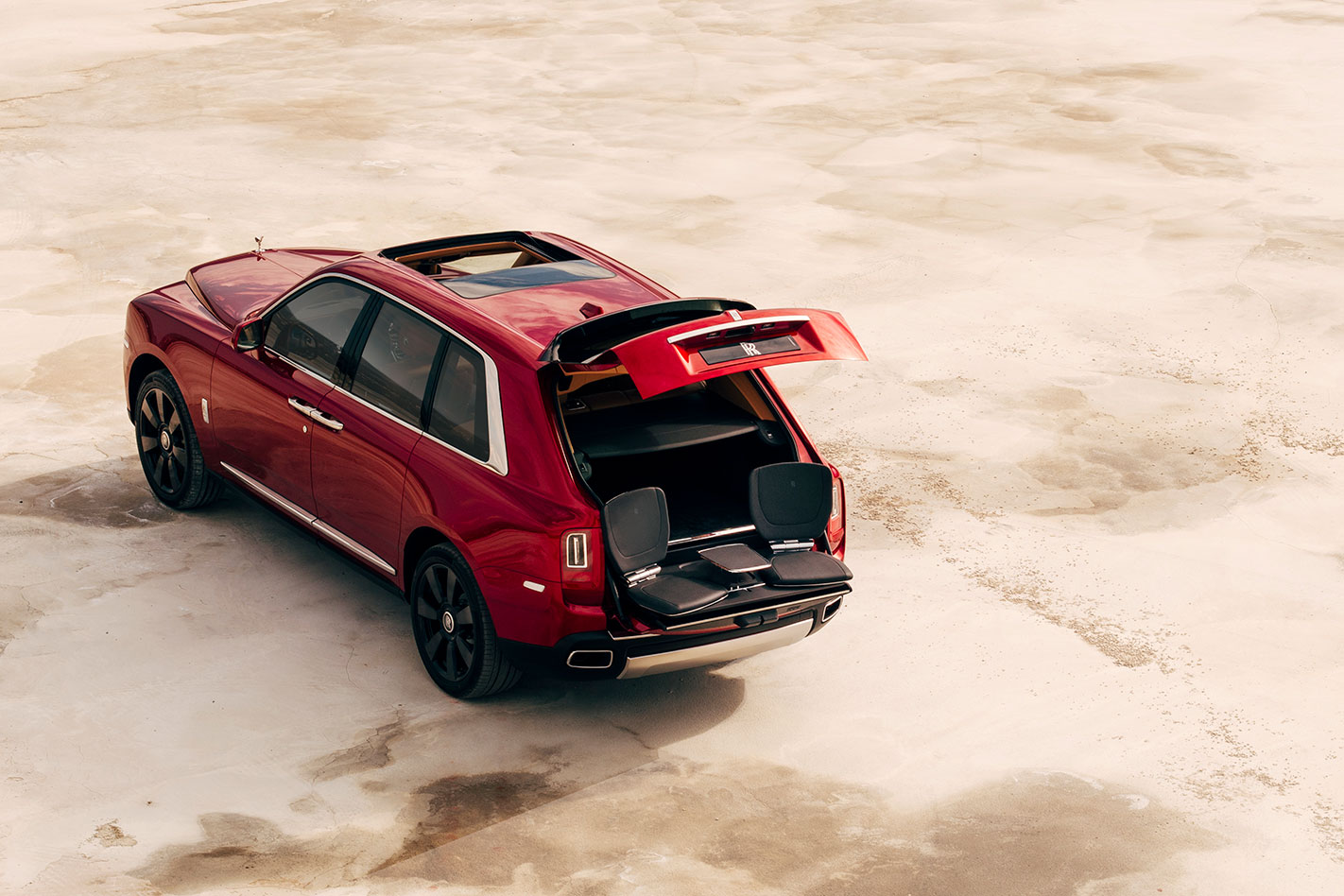
Owners inspired by Rolls-Royce’s suggested uses for the accommodating boot should familiarise themselves with local laws surrounding items discovered during excavation of private land, but there should be no legislative issues regarding the most likely use and something flat packed from Ikea.
“for those wishing to carry a long item back from their trip – whether it be a Mark Rothko from the Art Gallery or a newly discovered artefact from the latest archaeological dig – a loading length of 2245mm and load capacity of 1930 litres is accessed by electronically (electrically) raising the boot floor to meet the seat base.”
Where all SUVs before it enable access to the load area via a bootlid, the Cullinan has a “clasp” which is Rolls-speak for a tailgate and hatch combo.
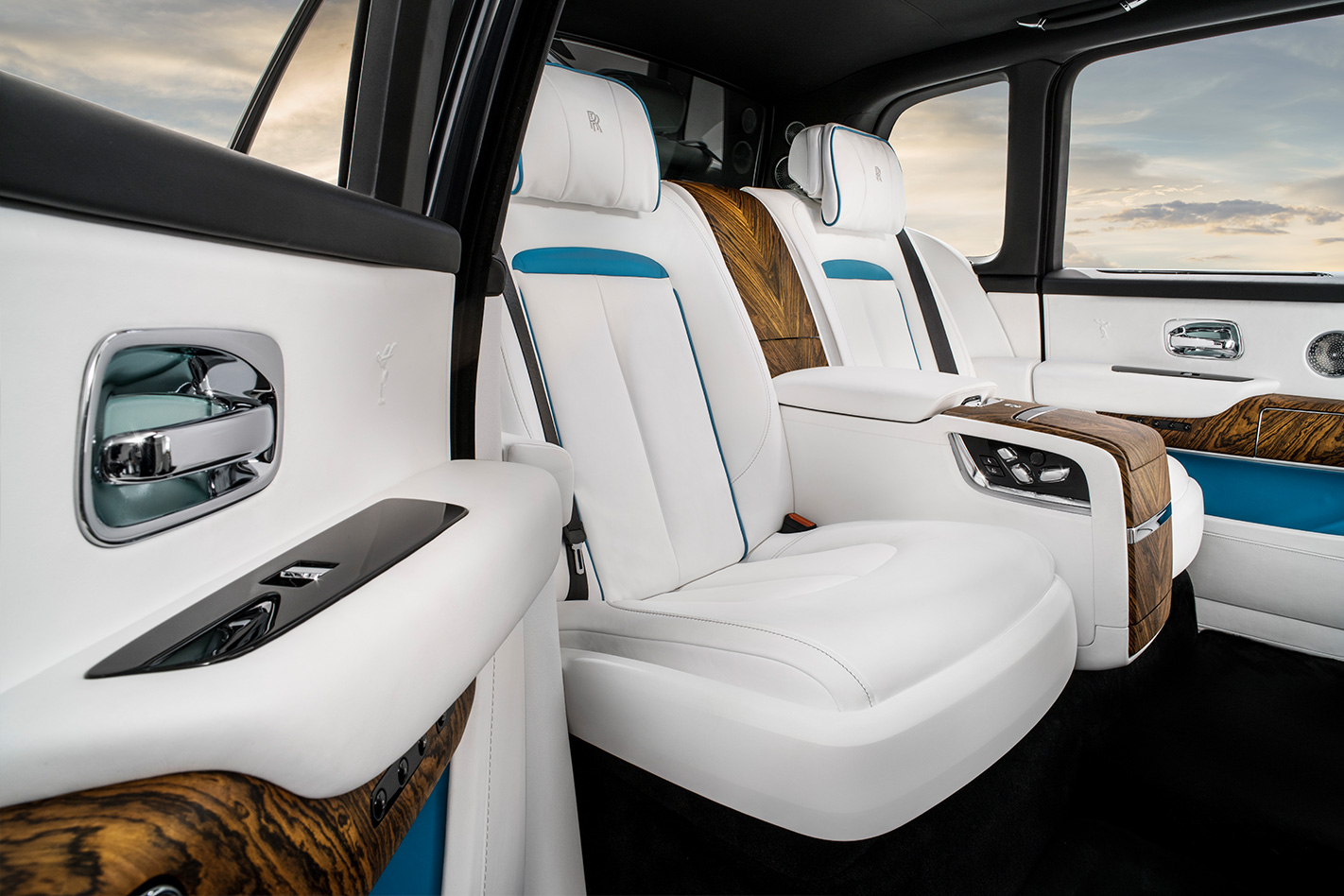
With the second row optioned in three-seat Lounge Seat configuration, the boot can be boosted with split electrically folding back rests – another first for the brand.
Opt for the special Individual Seat however, and customers get a second row with just two seats and a fixed centre console that houses a drinks cabinet, fridge and bespoke decanter with matching whisky glasses and champagne flutes.
There’s also a two-seat with table attachment that can be specified and emerges from the boot floor on to the tailgate, allowing two persons to spectate a spot of light polo, fox hunting or pheasant shooting, for example.
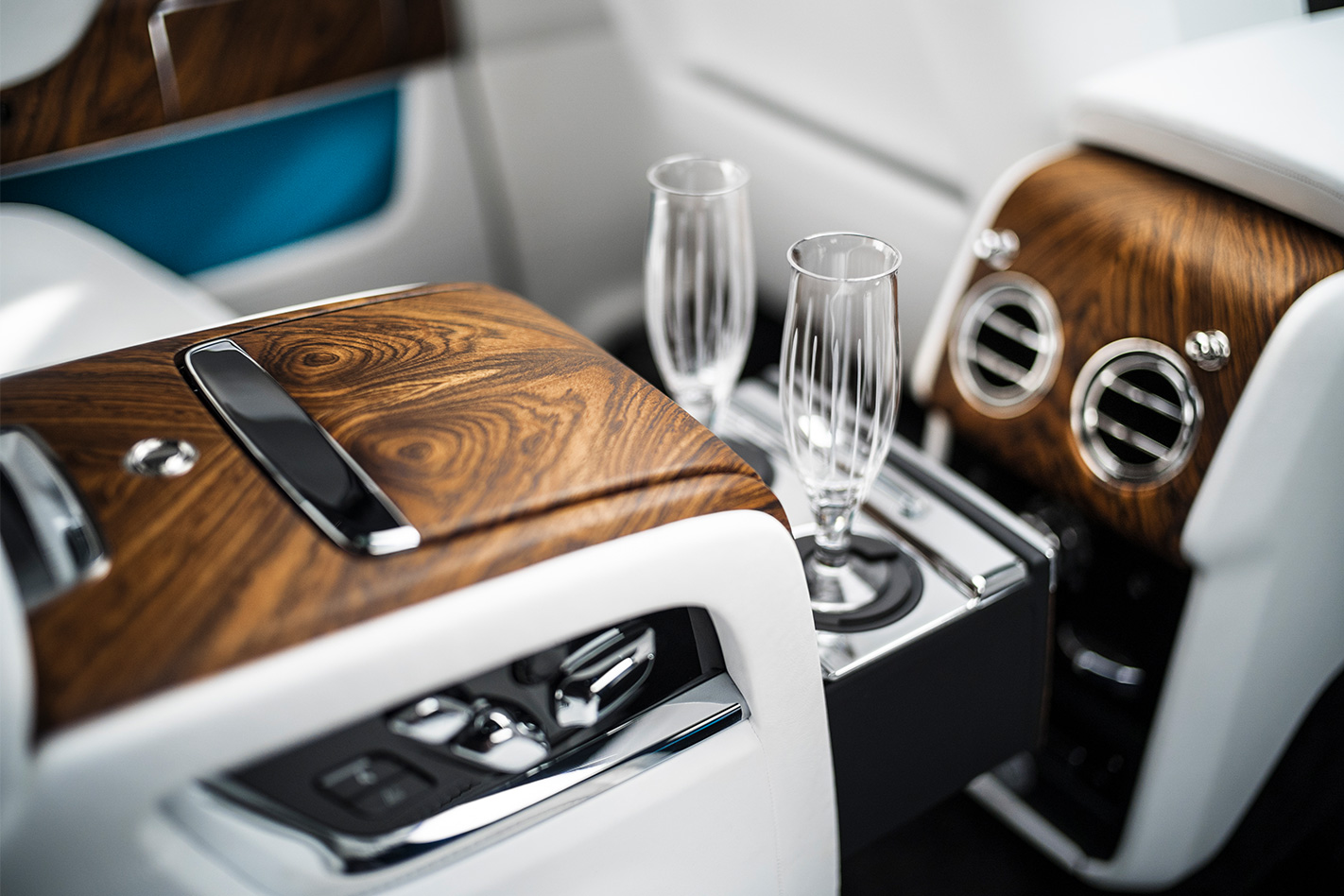
Adding to the list of highly customised extras, Cullinan customers are offered a number of Recreation Modules.
According to the company, and in an unorthodox departure from tradition, even participants of peak millennial sports are accommodated by the feature.
“Jason, we’re going to go drone racing today,” imagines Rolls-Royce. “Can you load the Drone Module into the Cullinan?”
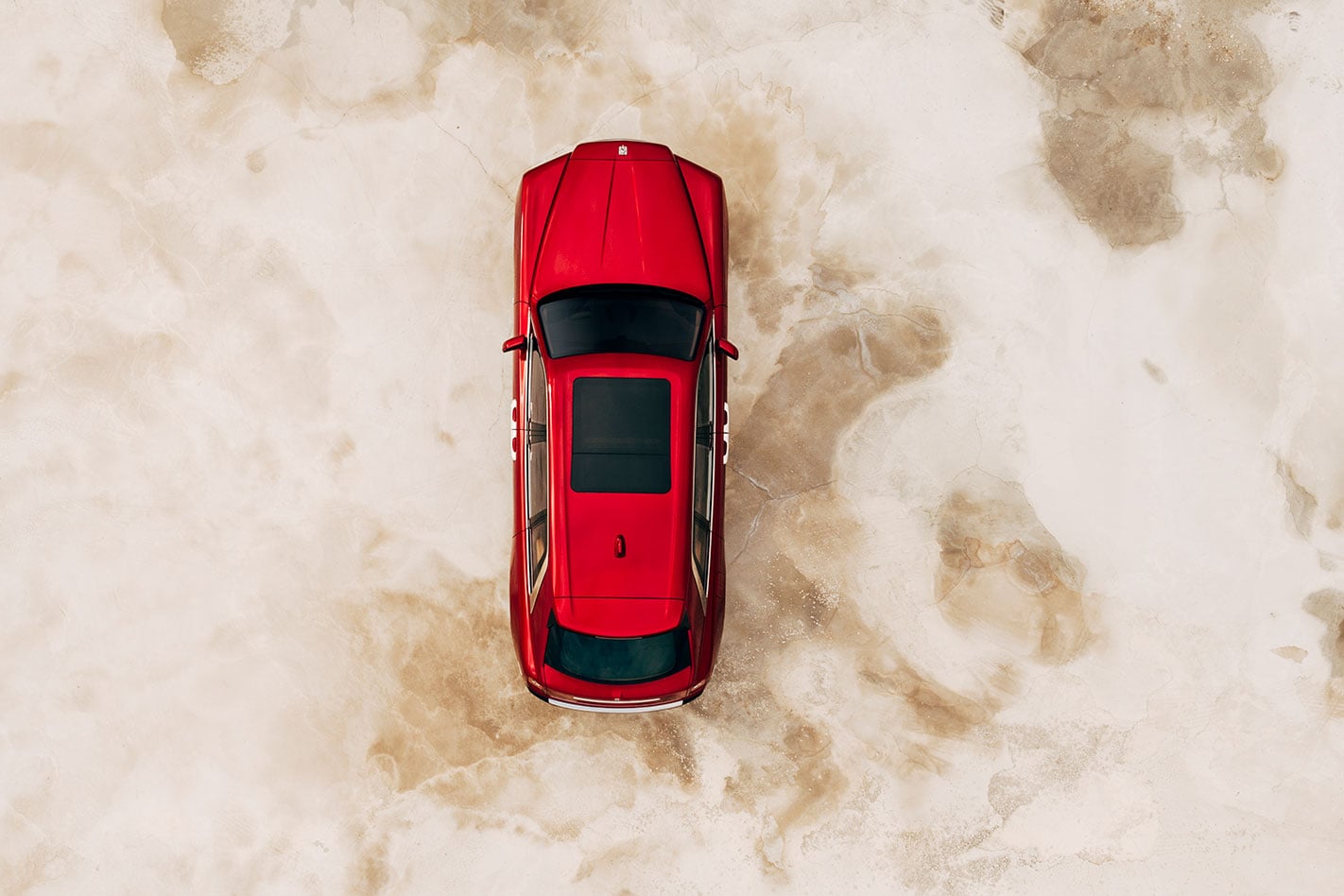
With the specially tailored kit boxes, it is a simple process for Jason to load the equipment via a motorised drawer, although the company has not specified if Jason is supplied as part of the option.
The versatile modules are not limited to any particular pastime and can be tailored for the owner’s sport of choice, including “Fly fishing, photography, rock climbing, snowboarding, parascending, kite boarding, base jumping, volcano boarding,” which will come as no solace to Rolls-Royce customers in Hawaii.

At the annual Lake Wörthersee VW GTI meet In Austria, Volkswagen has made a tradition of revealing projects built by its teams of apprentices each year.
This year was no different, with VW pulling the covers off a Golf GTI built by a team of 15 Wolfsburg up-and-comers.
Dubbed the ‘Golf GTI Next Level’, it sports a look as wild as its claimed output of 302kW and 511Nm.
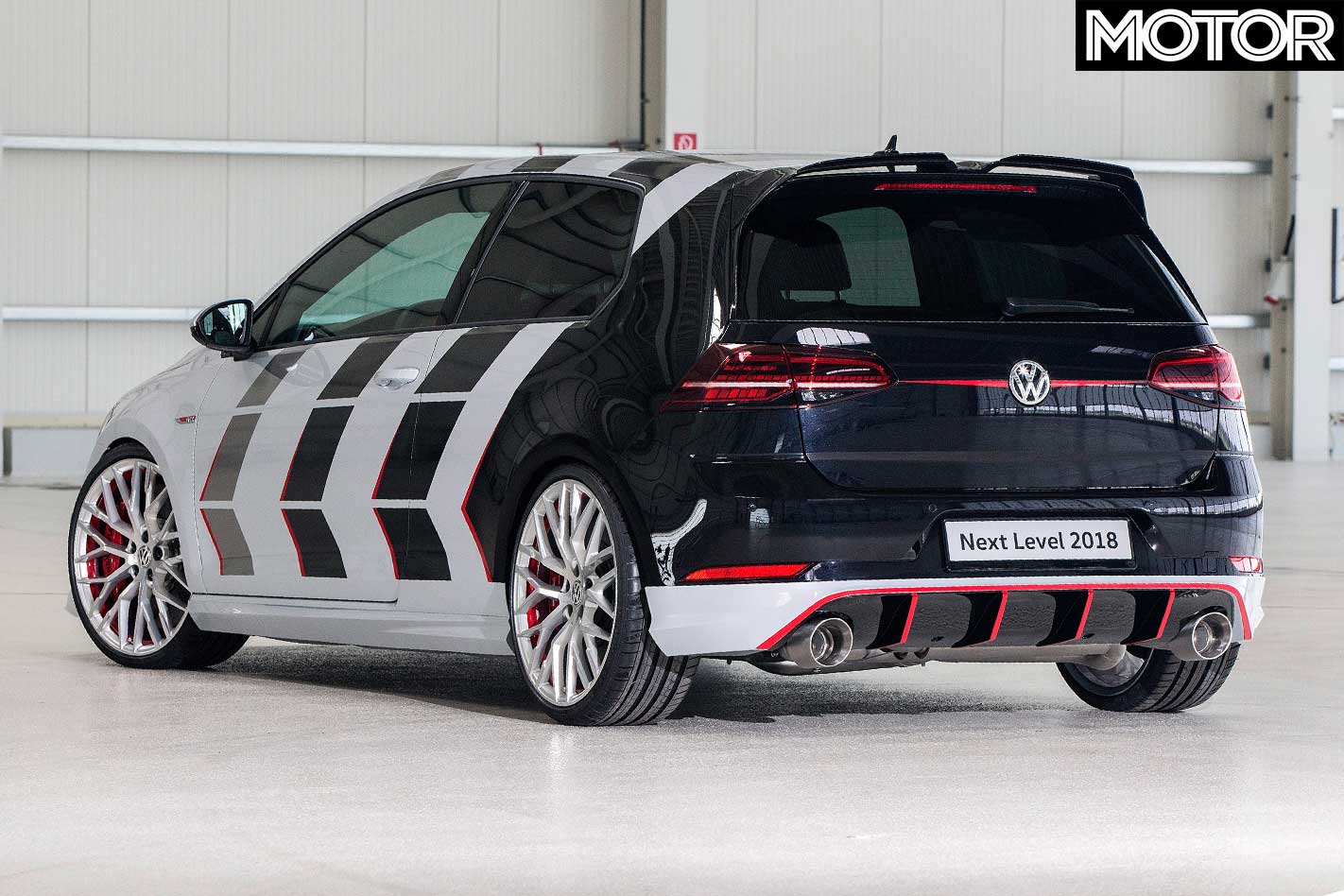
The GTI Next Level, like the TCR, has a 7-speed dual-clutch transferring power from a turbo 2.0-litre engine to, we assume, the front wheels.
The apprentices developed the GTI Next Level though the use of computer design programs and 3D printing, though components such as the rear diffuser and the interior strips of the forged aluminium wheels (from an Audi R8) were actually painted by hand.
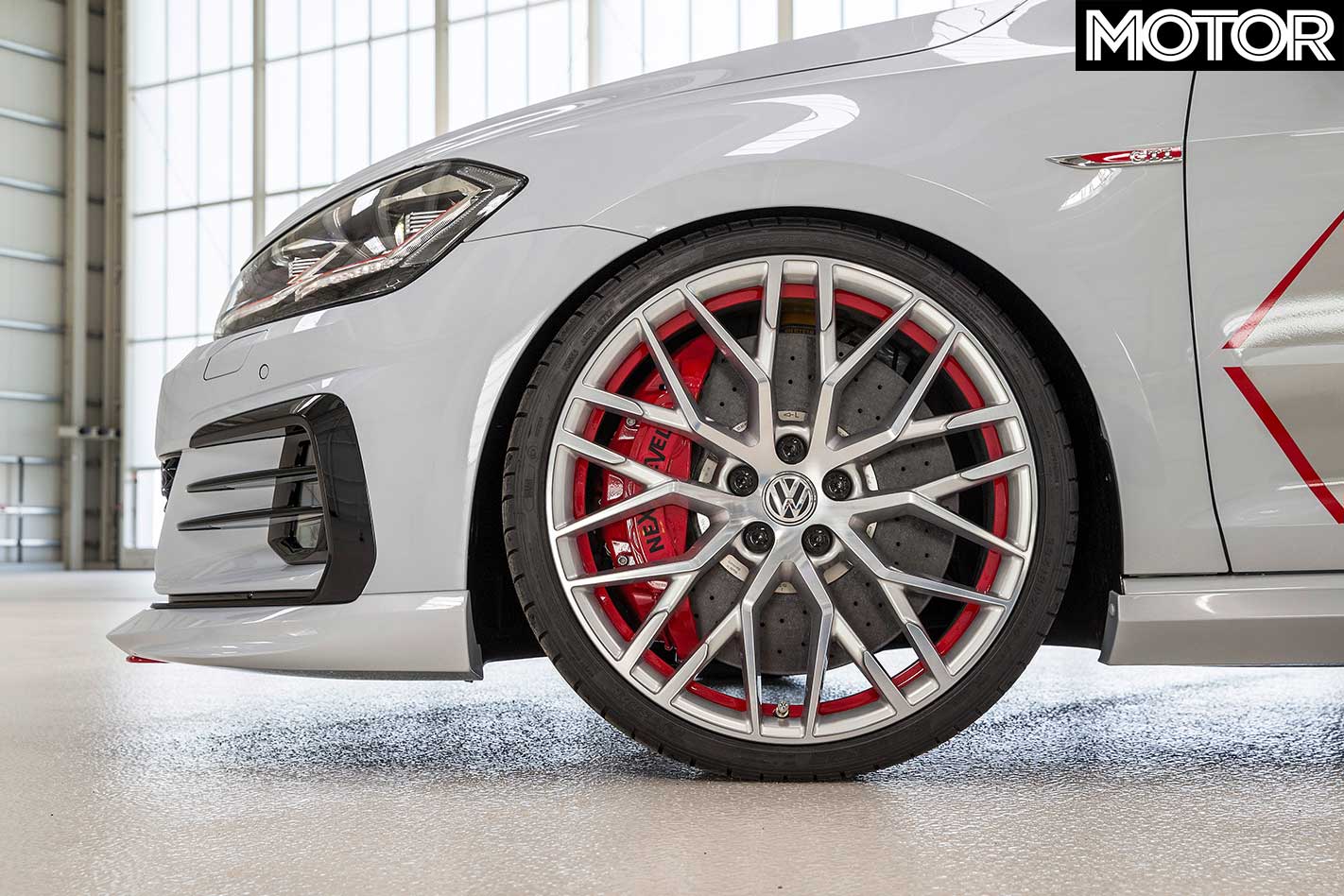
The Next Level is also fitted out with special equipment and features such as a video game integrated into the car via screens and a controller.
Volkswagen’s head of training and education Andreas Strutz says the project is supported by various departments throughout the VW brand.
“During the creation of their dream Golf, our apprentices learn about the complexity of automobile production and many future-oriented topics,” says Strutz
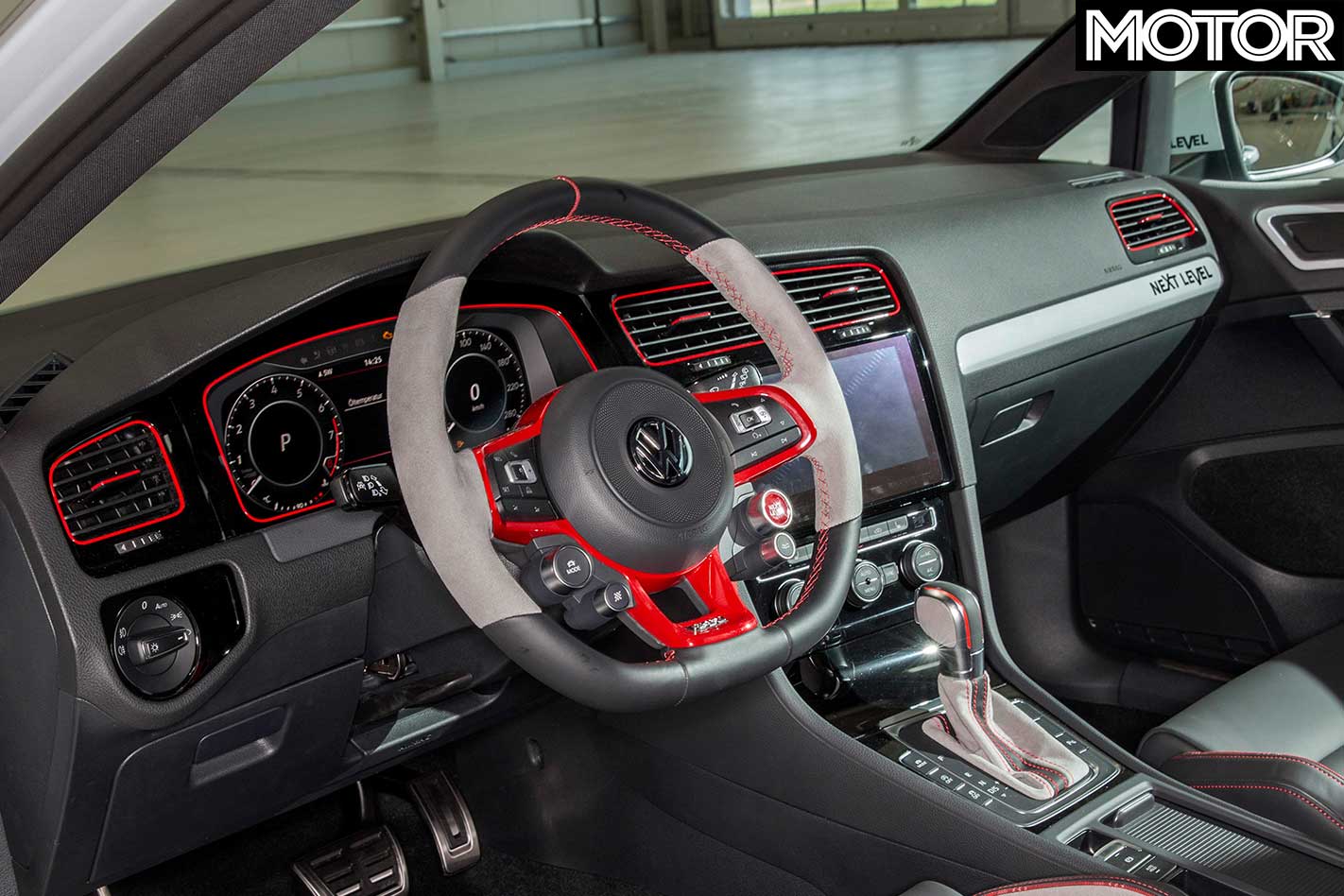
“They also gain practical experience in the application of digital technologies, control and systems technology and the networking of vehicles with the Internet.
“For this unique vehicle project, we select especially committed young talents and give them the opportunity to learn from experienced colleagues at an early stage.”
