
NO HILL climb is as feared or revered as Pikes Peak, and Volkswagen is coming to dominate it – silently.
The German manufacturer overnight revealed its ID R, a purpose-built race car poised to take part in the 2018 running of the Race to the Clouds.
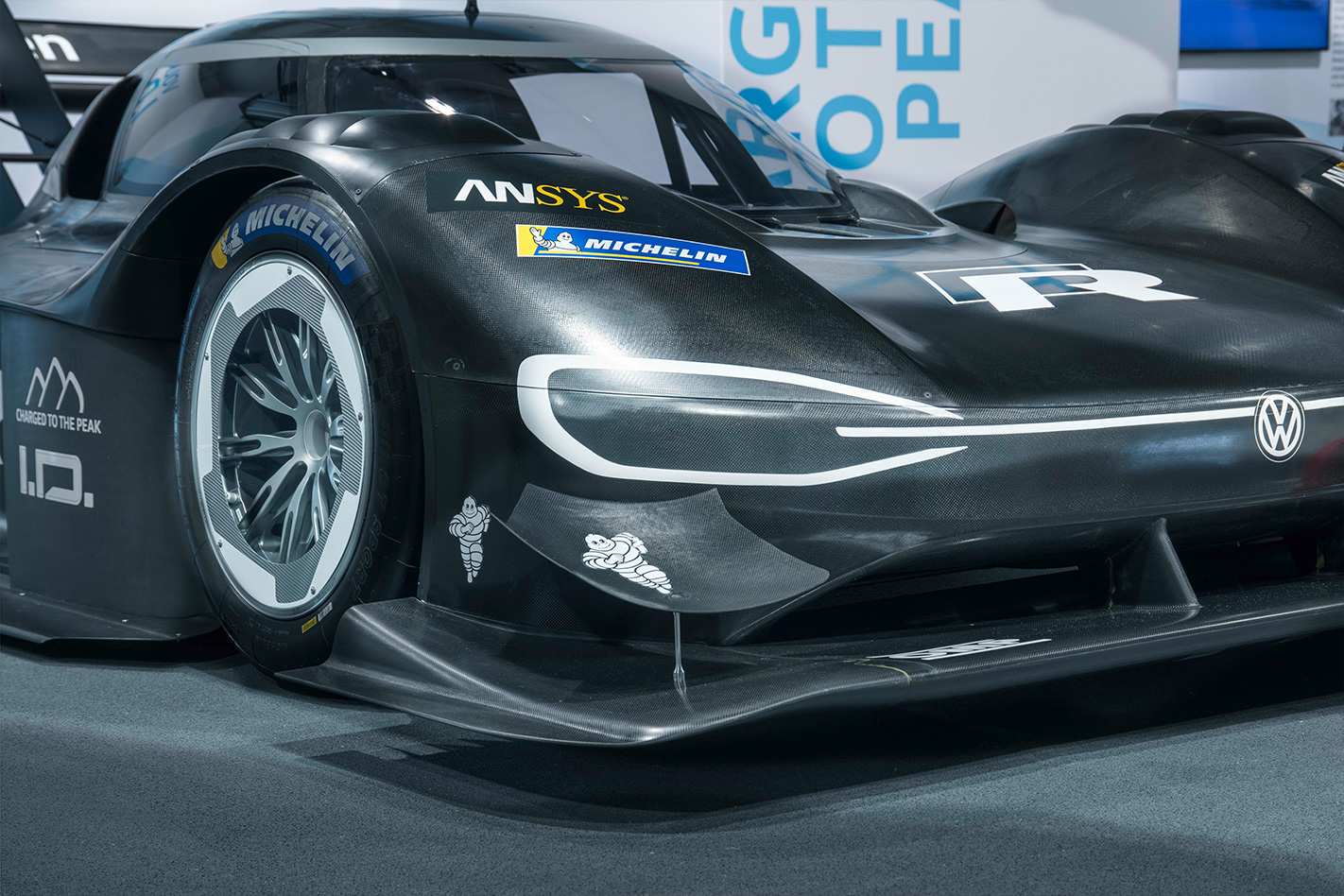
Looking like something ripped straight from the World Endurance Championship grid, the ID R is part marketing exercise, part engineer’s plaything.
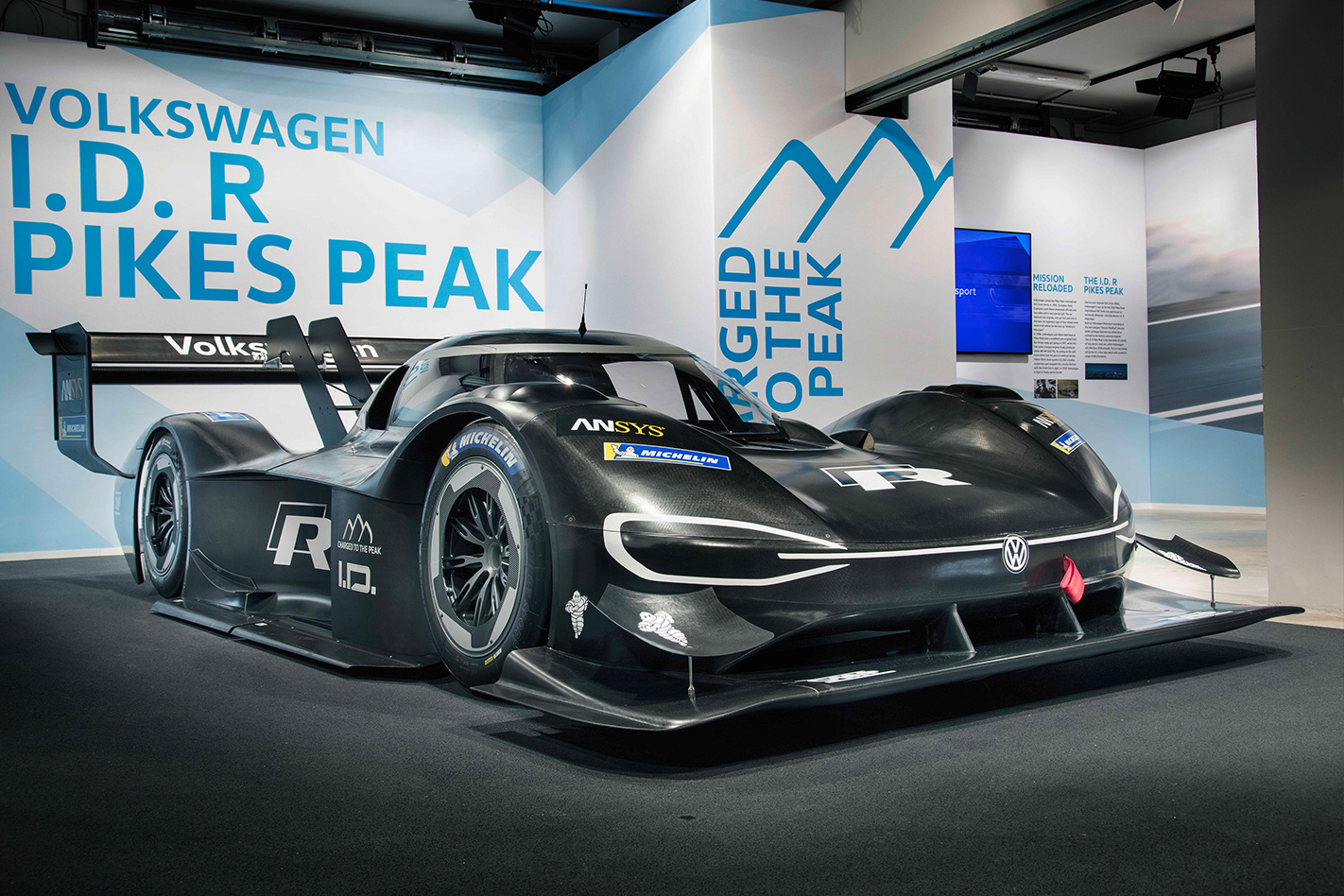
VW’s lithium-ion batteries, designed for 500kW and 650Nm of peak performance and not range, feed power to all four wheels via a pair of electric motors with active torque distribution.
That, paired with what are sure to be fat, sticky Michelin slick tyres, ensures the ID R can sprint to 100km/h in a scarcely believable 2.25 seconds on the way to a 240km/h top speed. Not even Formula 1 or Formula E can match those brutal acceleration figures.
The racer has a carbon monocoque chassis with a steel roll cage for safety (which comes in handy when tackling corners with well-earned names such as Devil’s Playground), and double wishbone suspension front and rear.
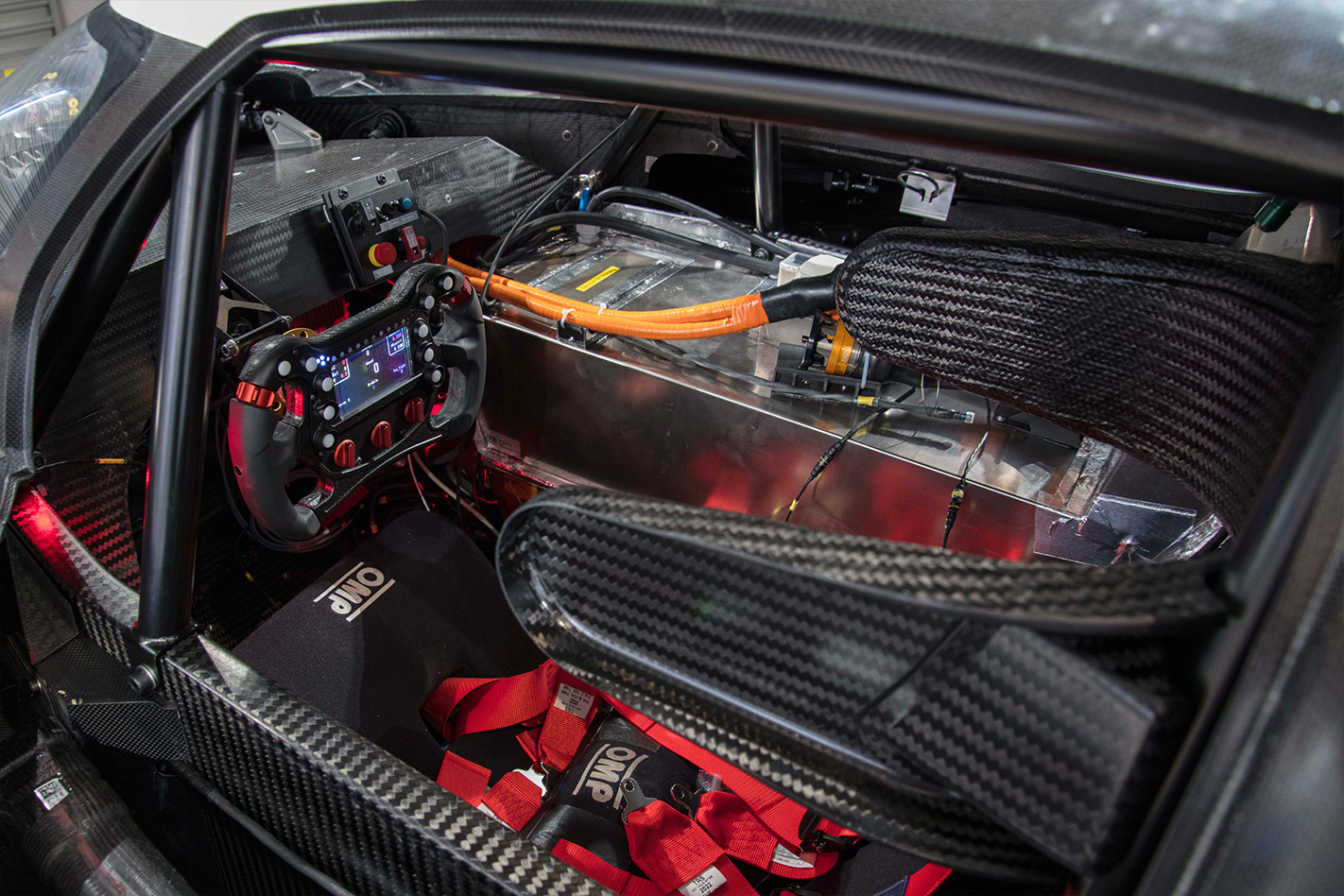
Around 20 percent of the energy required to complete the 2.86km, 156 corner climb will be generated from energy recovery systems when braking.
Compared with traditional combustion powered racers, the ID R holds the advantage of having all its power available for the entire run.
Starting at an elevation of 2862 metres above sea level, and climbing an extra 1440 metres, the Pikes Peak hill climb can leave conventionally powered cars gasping for air by time they reach the summit – there’s a reason turbocharged cars reign supreme here.
Batteries have no such issues, with power delivered in the same quantity at the end of the run as is available at the start line.
“Customers have always benefited from the findings made in motorsport,” VW board member Frank Welsch said. “We expect to take these findings and use them as a valuable impetus for the development of future ID models.
“The hill climb on Pikes Peak will definitely be a real acid test for the electric drive.”
Thankfully for VW, they’ve got Romain Dumas at the wheel, who knows a thing or two about conquering Colorado’s most famous stretch of road – he is the reigning PPIHC champion.
The Pikes Peak International Hill Climb will be held in June, with VW afforded just a single attempt at the mountain and the title.
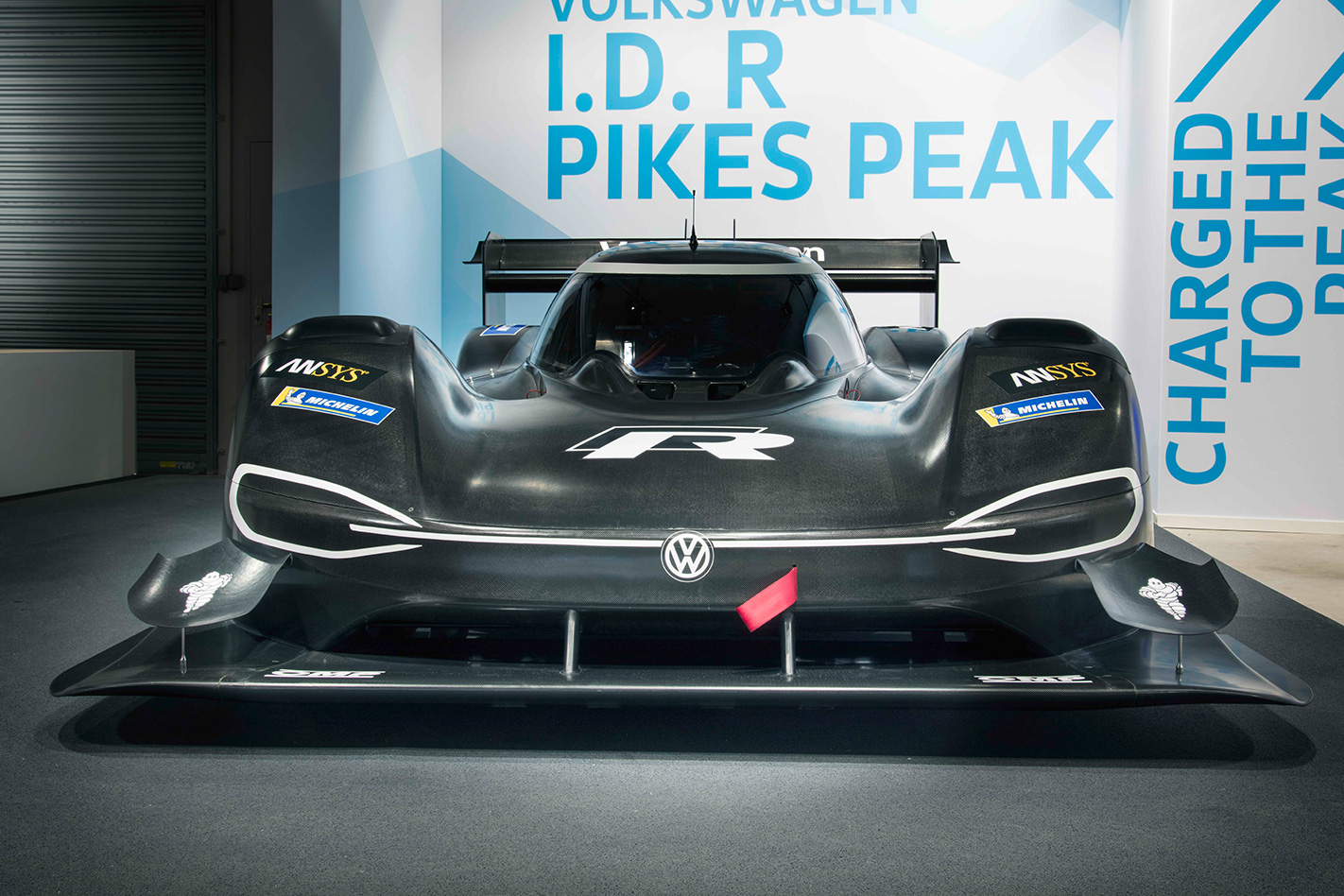
With testing on Pikes Peak extremely limited, the ID R will undergo continued development before the race on traditional dedicated race tracks.
Maybe VW Group can minimise costs and run the ID R at the same time as Porsche’s 919 Evo, which is touring the world this year on a glory run attempting to reset various lap records at iconic tracks?
SUPERCARS’ dirty word, parity, has been banished for another year as Scott McLaughlin and his Ford FG X Falcon hosed the opposition at Phillip Island over the weekend.
The young Kiwi picked up the broom to sweep the event, claiming two poles and two race victories – he now leads the championship by 60 points over David Reynolds.
McLaughlin’s qualifying prowess is unquestioned; with Sunday’s pole his sixth in a row at Phillip Island, and 37th of his career.
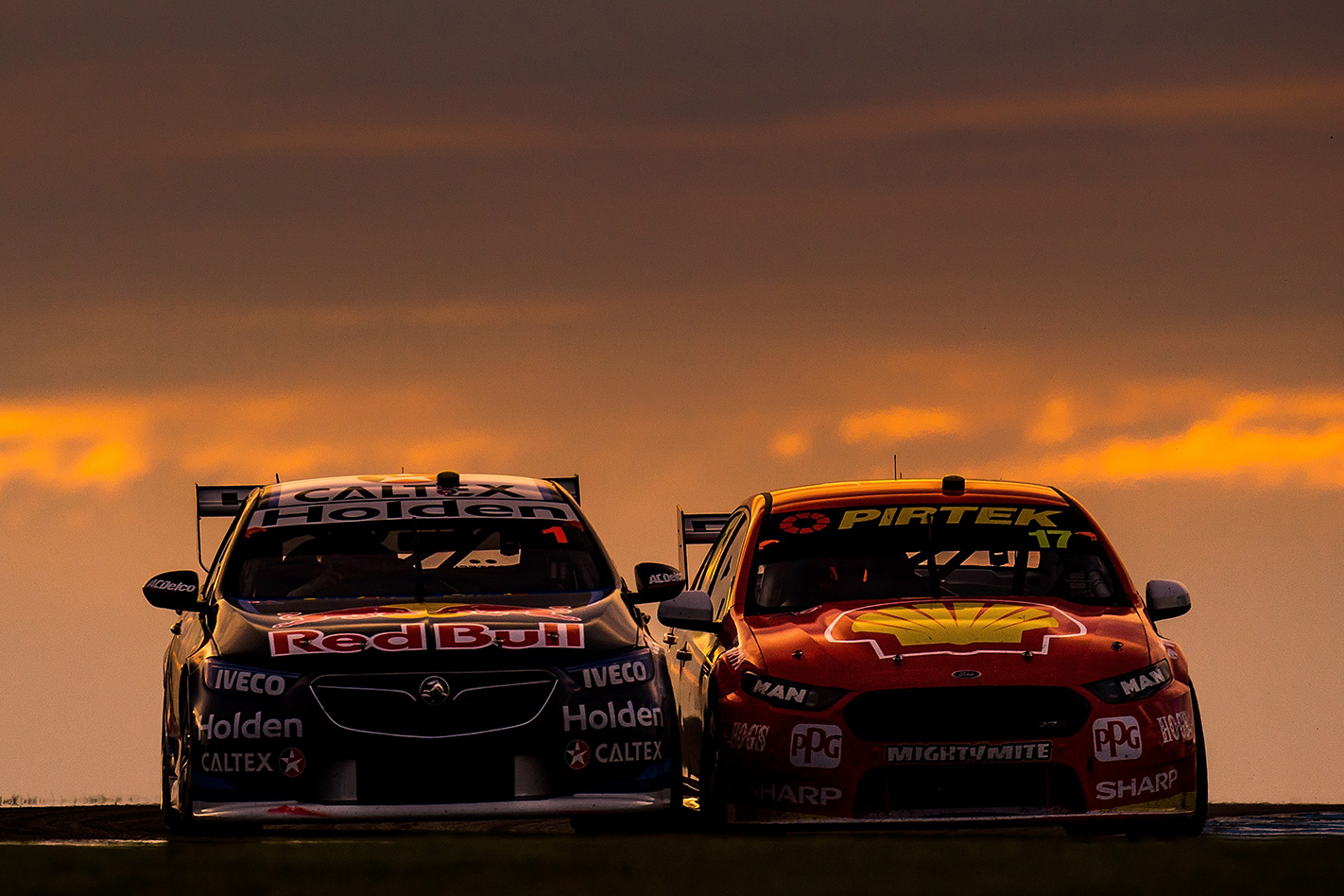
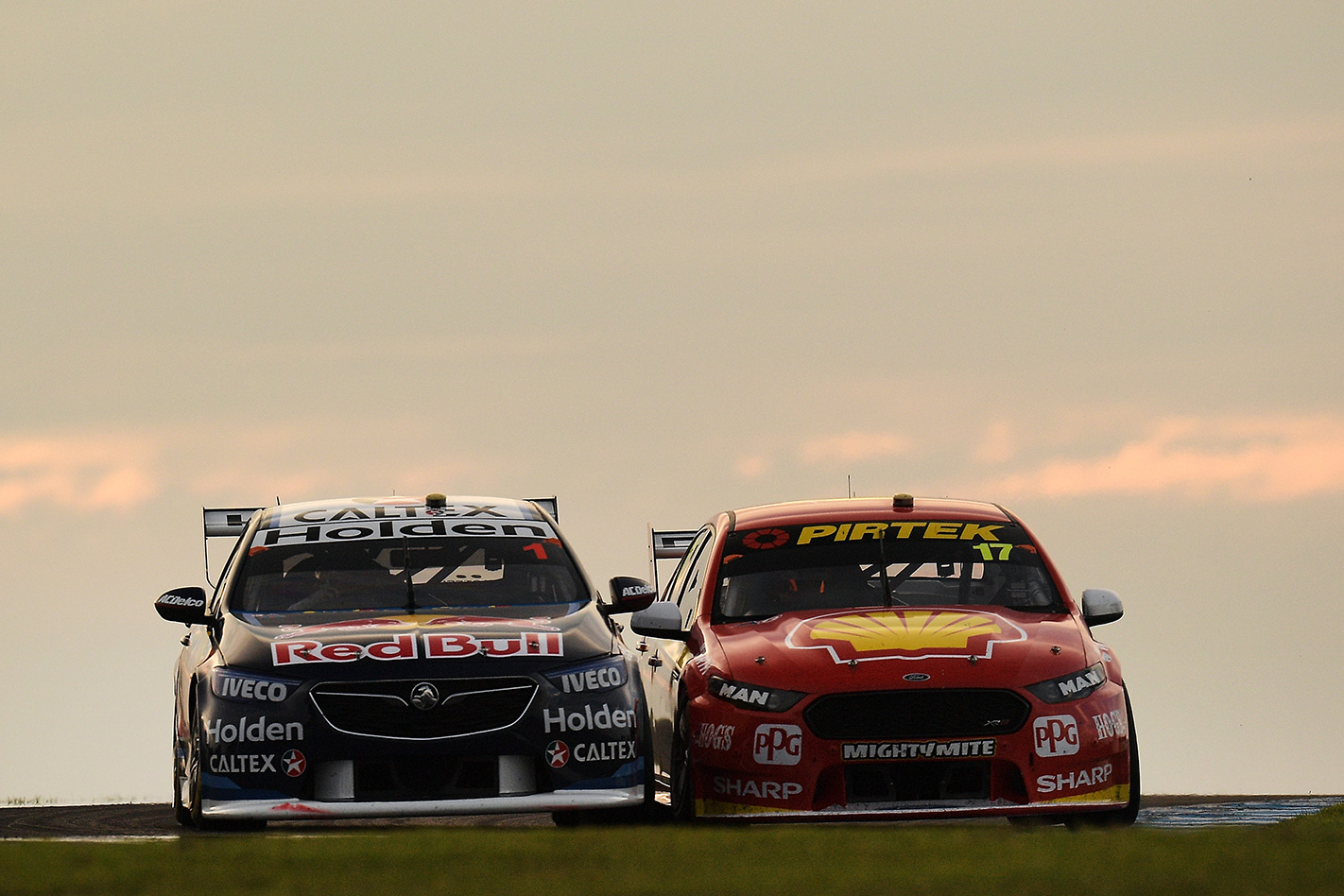
In the first stoush of the weekend, defending champion Jamie Whincup mugged McLaughlin off the line.
Whincup and McLaughlin left the line evenly, with the ZB Commodore driver holding strong around the outside of Phillip Island’s sweeping first turn to claim the lead.
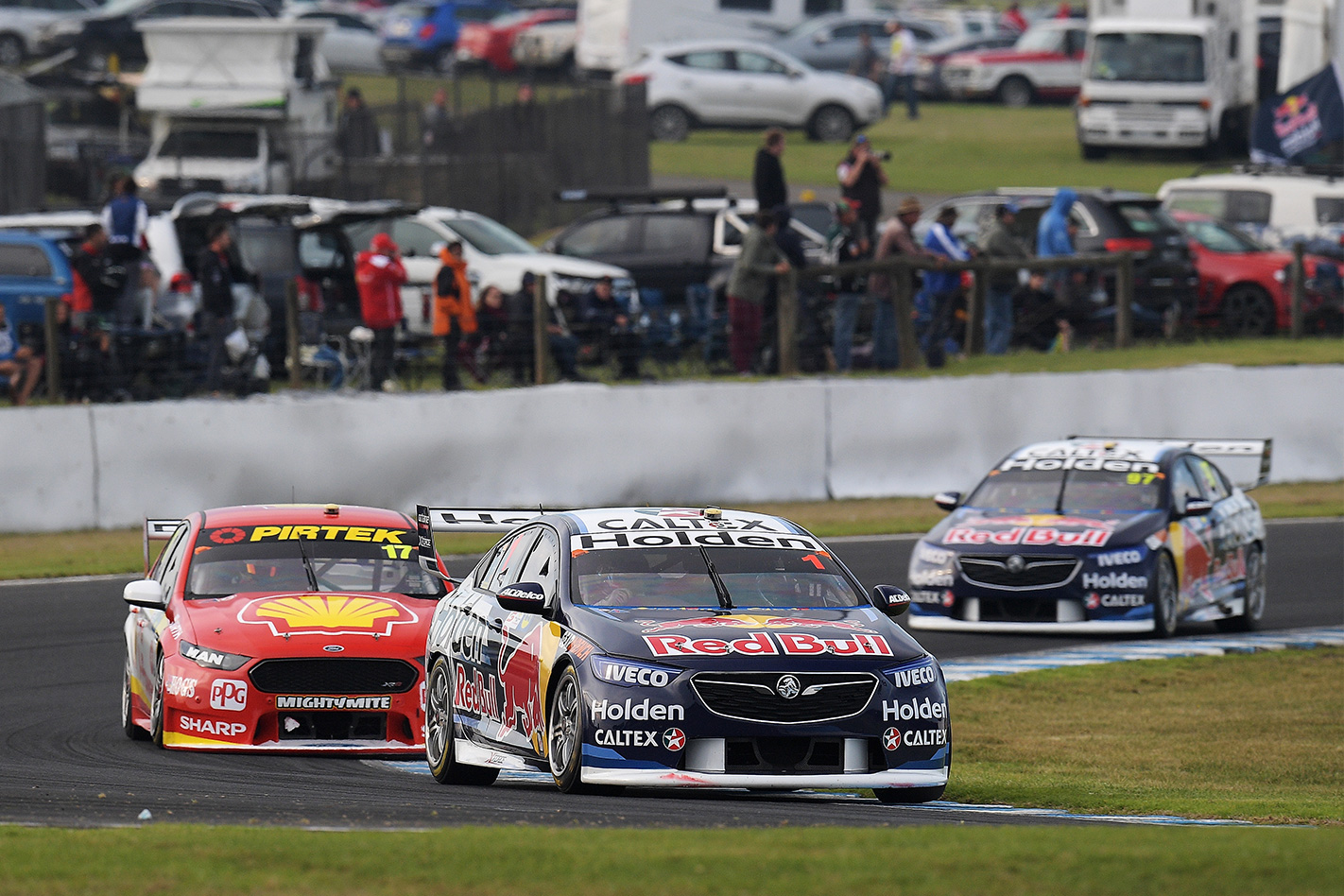
Whincup stayed in the lead until the final stages of the race, where McLaughlin’s raw pace would not be denied.
Through the seemingly never-ending Southern Loop McLaughlin saw his opportunity, diving underneath the Commodore. The race victory was his, and any parity debate from earlier in the year about the new ZB Commodore having an unfair advantage was vanquished.
Whincup held on to cross the line second, but was eventually demoted to 14th with a post-race penalty.
During the first pit stop the seven-time champion deactivated his pit lane speed limiter by mistake at the merge cone near the end of pit lane. Realising the slip-up, he reactivated the limiter before the pit exit, but the damage was done.
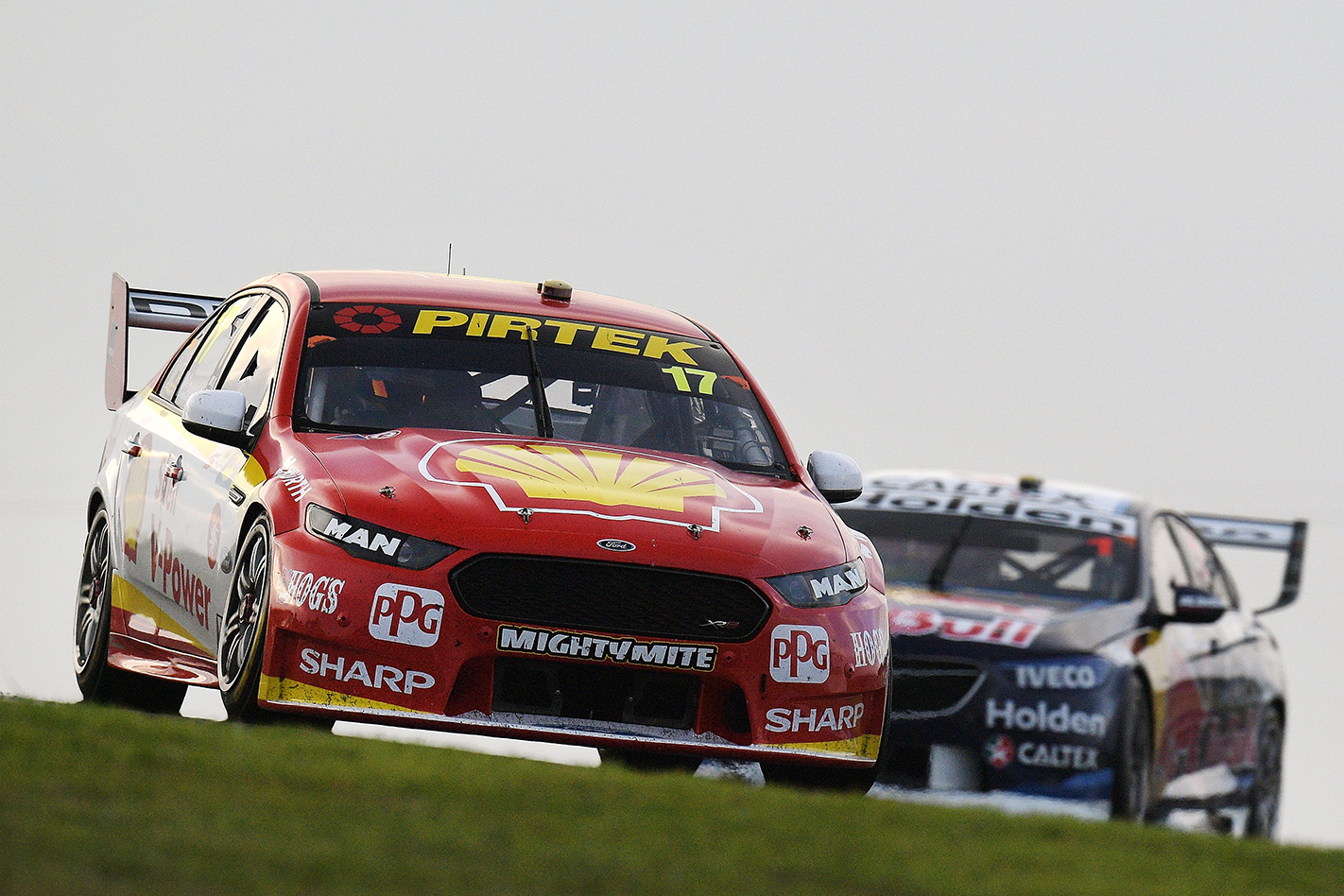
The second race followed a similar trend, with McLaughlin once again second behind a Commodore late in the race. This time it was Erebus Motorsport’s David Reynolds who held the lead.
Lambasted for not being aggressive enough at the opening round of the championship in Adelaide, Reynolds doggedly held off McLaughlin following their final pit stops.
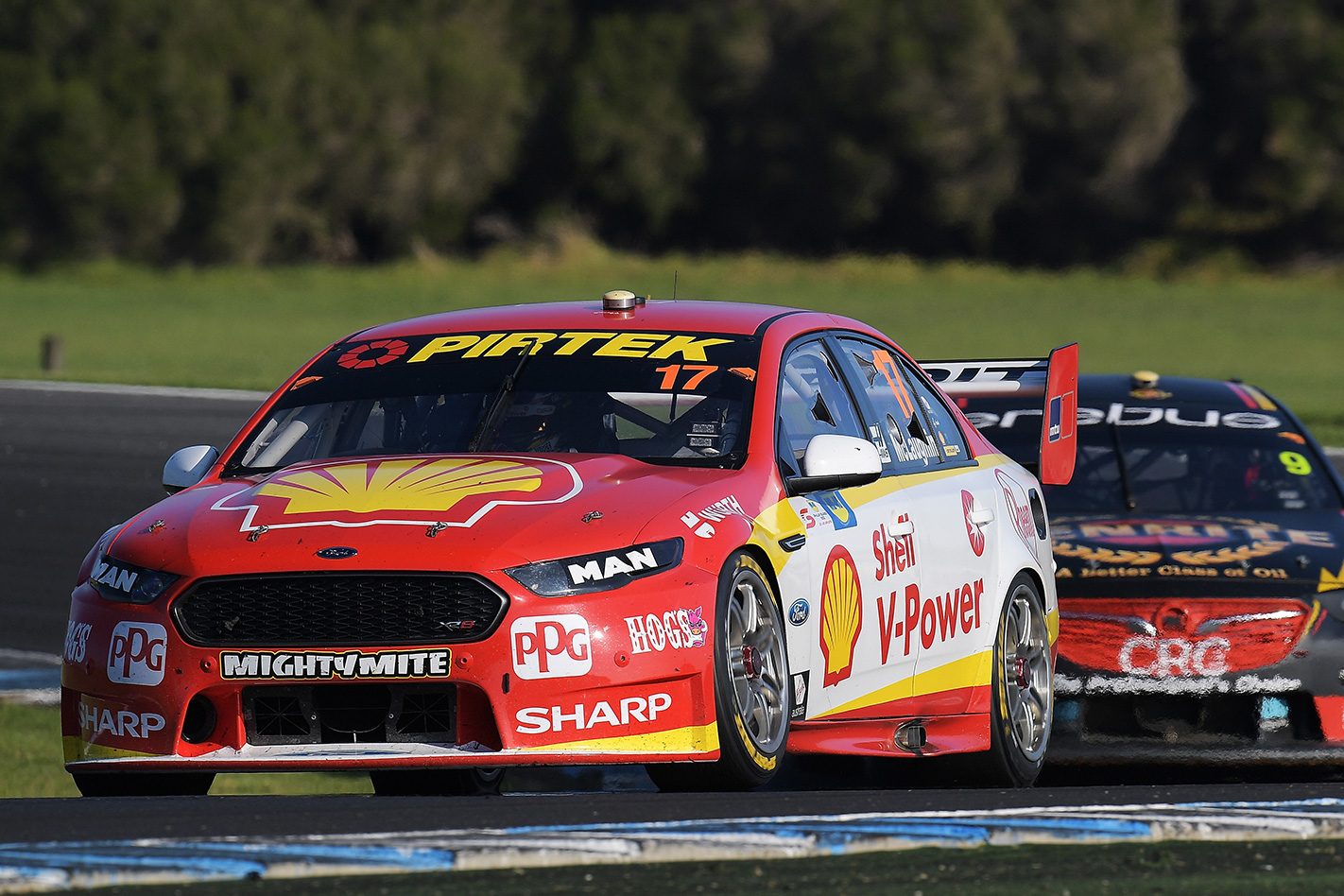
The race-winning move came in almost identical fashion to Whincup’s dismissal a day prior, with McLaughlin muscling his way inside at the Southern Loop.
It was a well-executed end to a near-perfect weekend for McLaughlin and DJR Team Penske.
Rick Kelly, who started the weekend thinking his Nissan Motorsport team’s schnitzel night would be the highlight of his weekend, left the island with plenty to smile about.
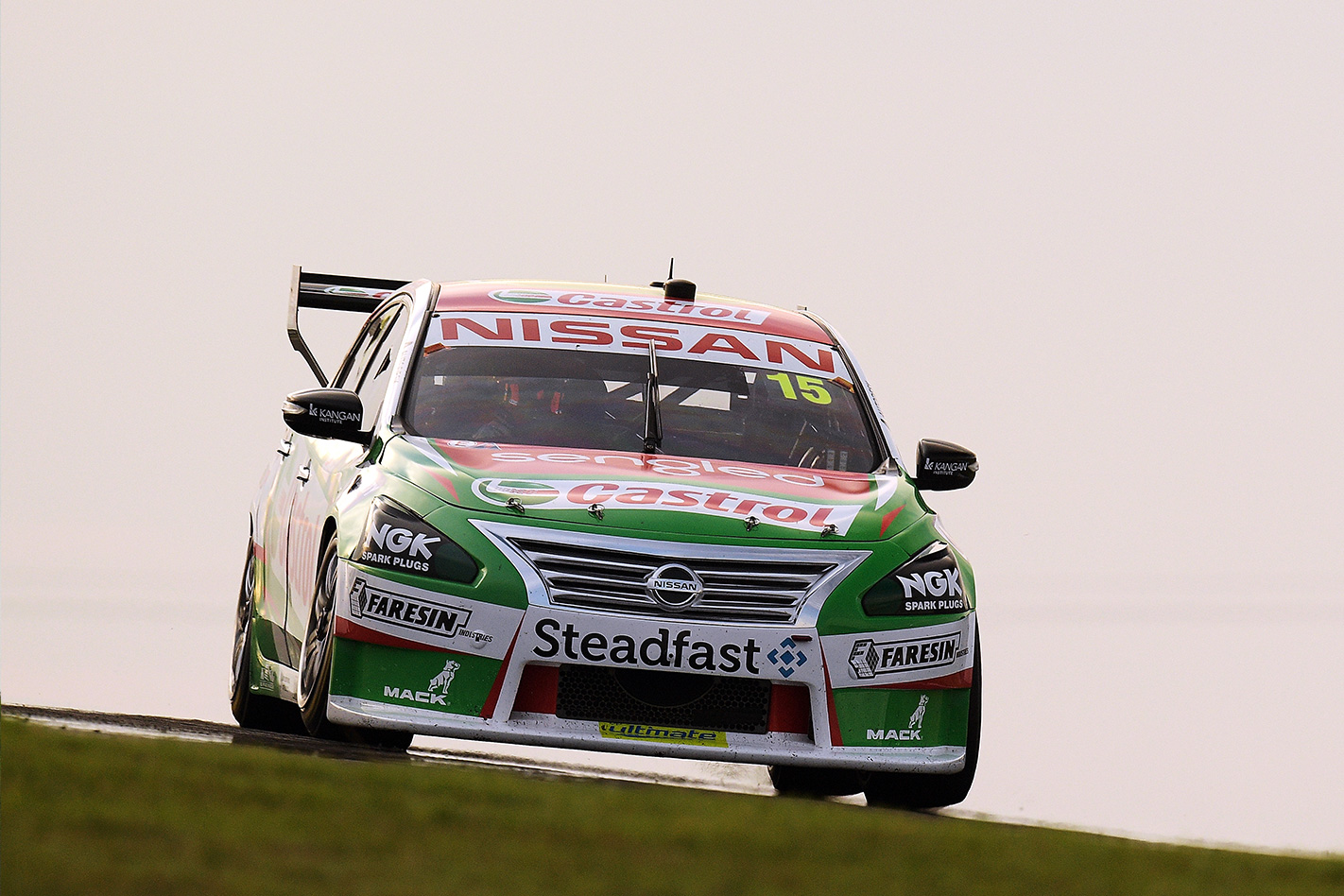
There was trouble in paradise at Triple Eight, with Shane van Gisbergen and Craig Lowndes having unpleasant interactions in both races.
In the opening battle van Gisbergen (who put in a herculean effort to battle power steering troubles throughout the race) handed Lowndes fourth place late in the race to allow the veteran a chance to hunt down Kelly for third. Team orders called for the pair to again switch places on the final lap, which eventually promoted van Gisbergen to third, and left a sour taste in Lowndes’ mouth.
The next race of the Supercars championship is at Perth’s Barbagallo Raceway in two weeks’ time
IMAGES of the concept car have leaked online, showing a strange portmanteau of sedan and SUV that’s loaded with creature comforts – including a teapot.
The pictures, published on Chinacarnews.com, reveal what looks like a high-riding fastback sedan that displays strong SUV cues. Mercedes has teased the concept ahead of its Beijing reveal this week.
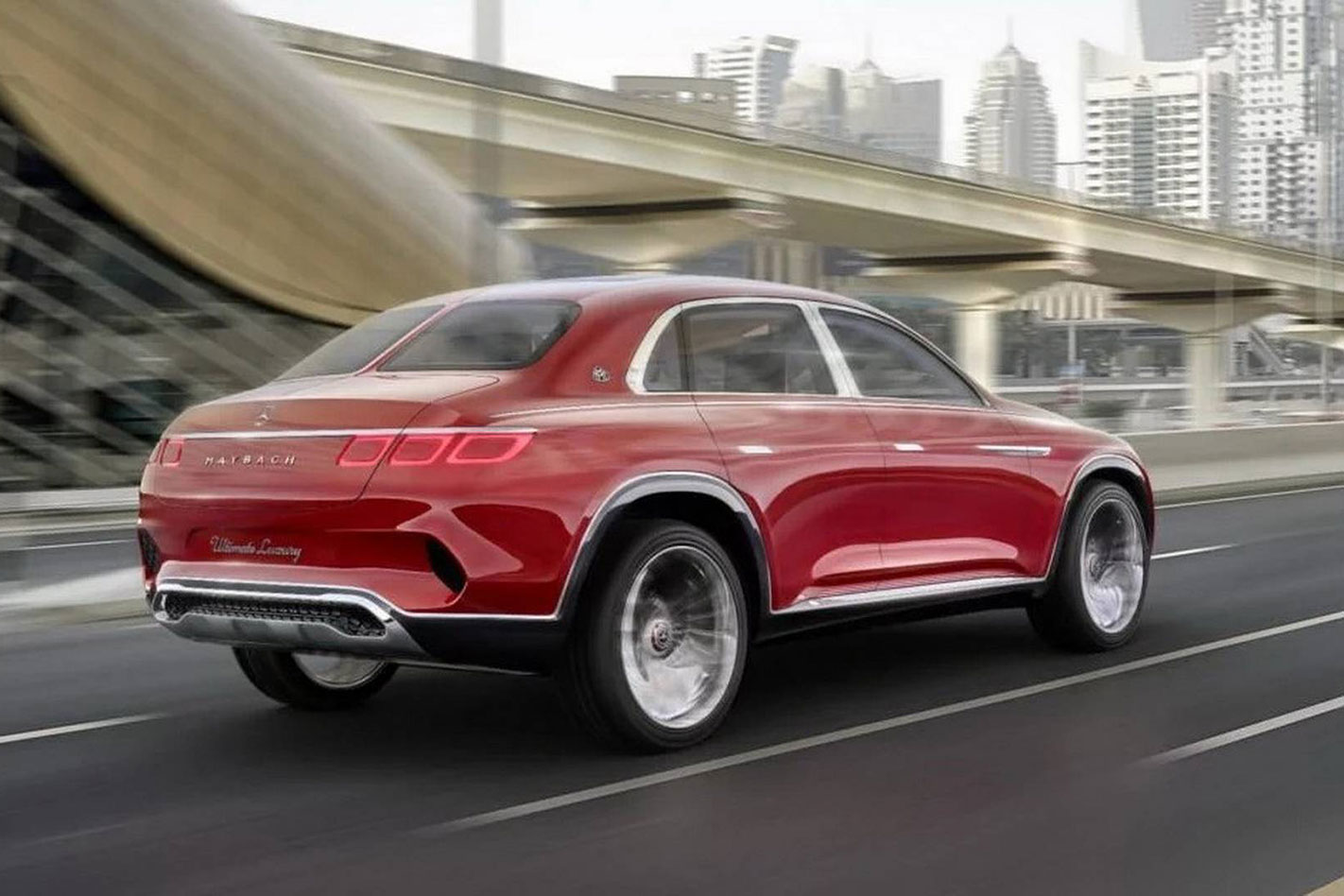
The Rolls-Royce Cullinan competitor shows a simple, flowing design featuring an extremely high waistline and a small glasshouse framed in chromed trim that exaggerates its proportions. Up front, there’s the Mercedes-Benz three-pointed star in front of the leading edge of the bonnet, while the Maybach name is embossed at the top of a highly chromed, straked grille framed in slimline LED headlights. Beneath it, a chrome-capped splitter trails into a thin chrome surround that circles the concept car. The rear, with its high-set bootlid and shallow, almost coachlike rear window, apes the front’s styling, apart from the gaping chrome maw.
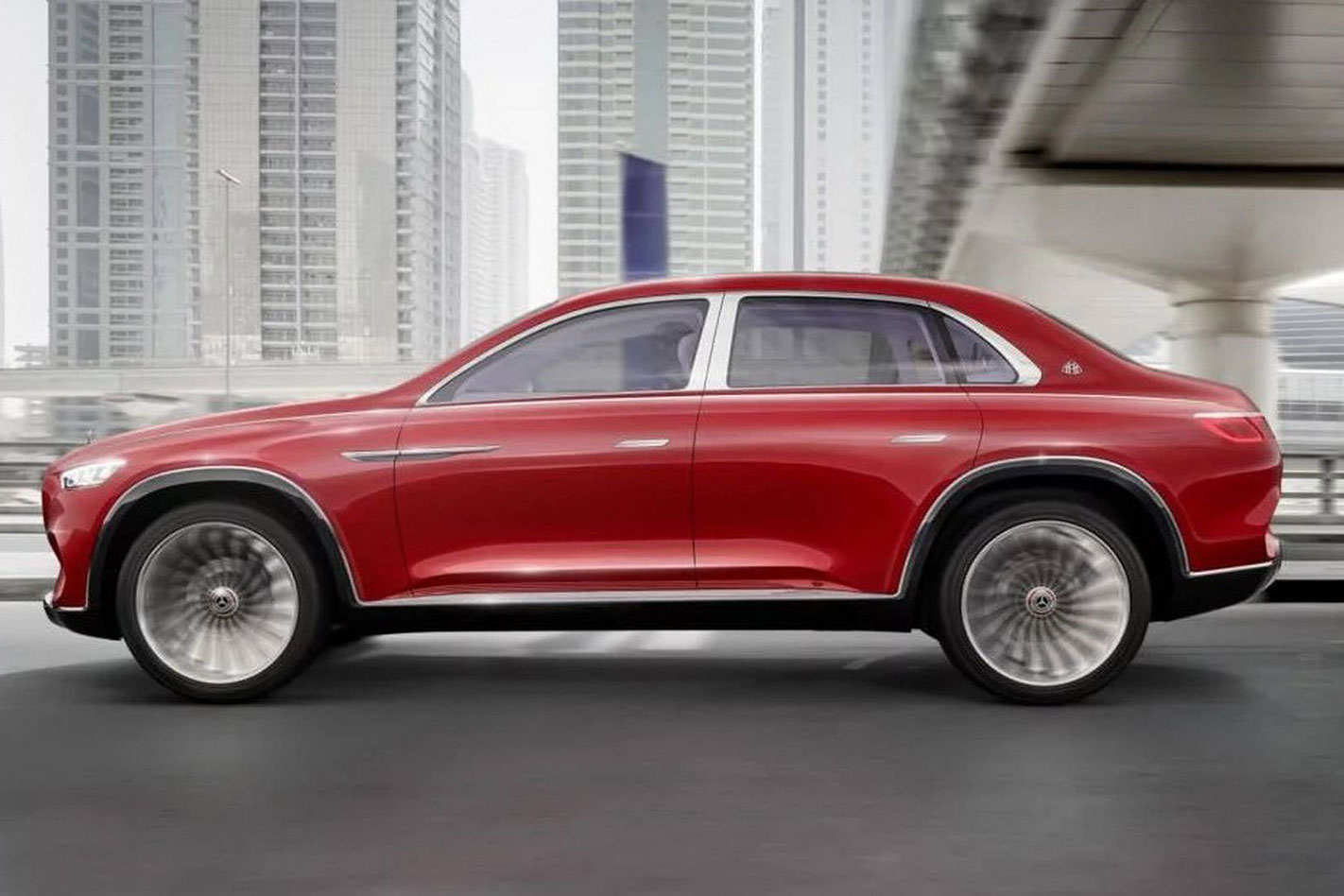
There’s the traditional SUV-style design cue that adds a sense of height – a black strip running up over each eccentrically-shaped wheel arch and across the rockers – while Tesla-style recessed door handles add to the sleek look. Big, turbine-style wheels add a jetset feel.
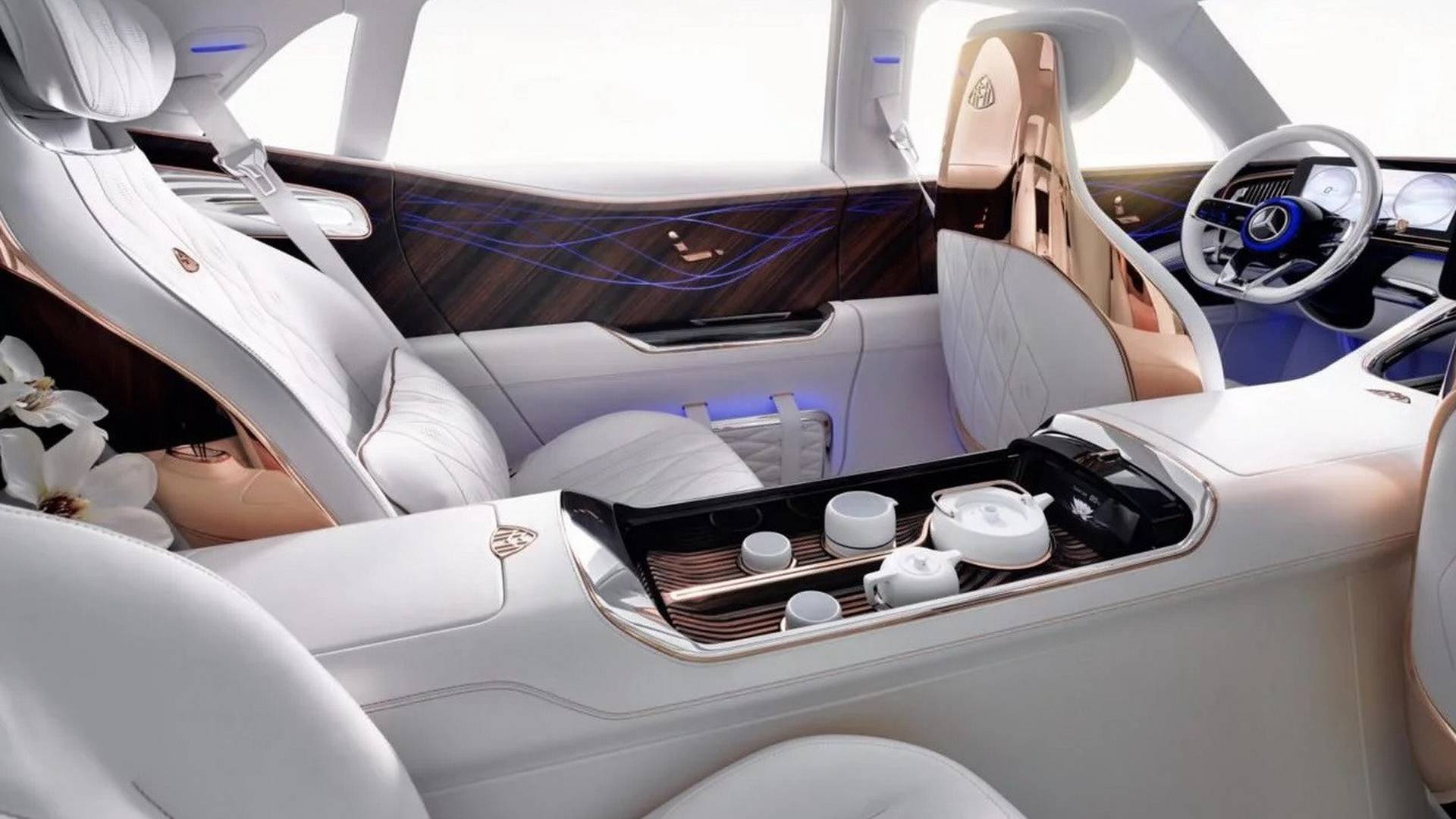
The back seats, though, are something special. The concept car is shown with a tea set in the centre console that cascades down from the dash, splitting the Vision Mercedes-Maybach Ultimate Luxury into two distinct halves. Rose gold trim on the rear of the quilt-patterned front seats, which are also built into the back of the rear seats, adds a sense of occasion, while separate pillows for rear-seat occupants add comfort.
The Vision Mercedes-Maybach Ultimate Luxury will be officially unveiled at the Beijing Motor Show, which starts on Wednesday.
In the beginning, ‘Black Series’ was probably a pricey men’s razor, or one of those seedy service-station magazines wrapped in plastic. But now that the SL65 AMG Black Series exists, the name will forever be associated with the butchest, baddest, boldest sports car ever conceived by the Affalterbach power brokers.
This review was first published in MOTOR magazine’s February 2009 issue.
The beast simmering before you is the third iteration of the Black Series theme, following 2006’s SLK55 Black and 2008’s CLK63 Black.
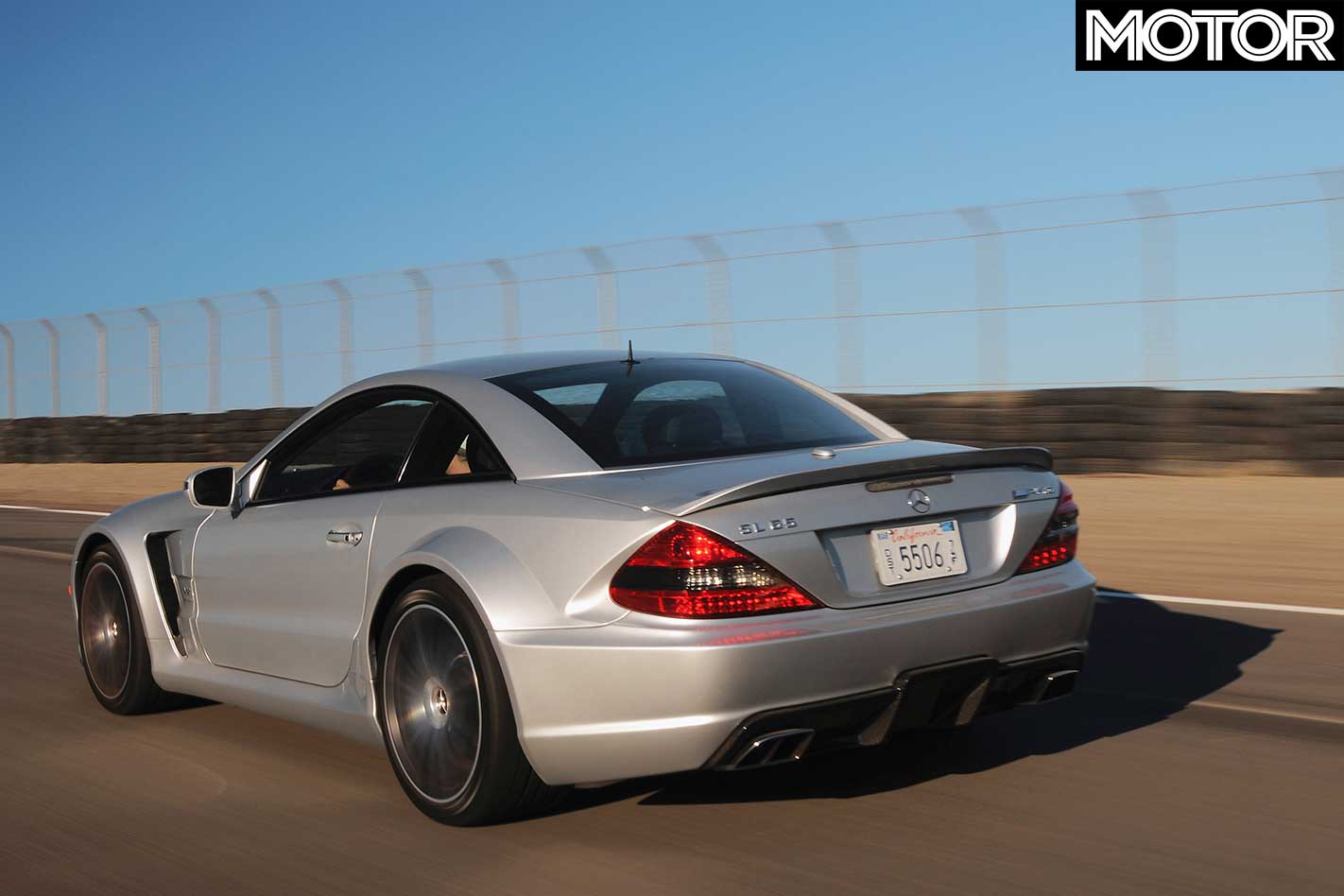
At $680,000, this awesome SL easily eclipses the pricey standard SL65 and makes the wonderful SL63 seem comparatively affordable. But is it worth the extra dough?
On real roads, in real traffic, in really bad weather conditions, the Super SL is a must-have for rich hooligans, but it’s almost too much of a good thing for mere mortals. If you ever wanted to know how quickly your licence can be stripped of your possession, take this fire-breathing tarmac-peeler out for a few carefree hours on public roads.
Sure, speed costs. But why is the SL Black so bloody expensive? Because it is practically an all-new vehicle.
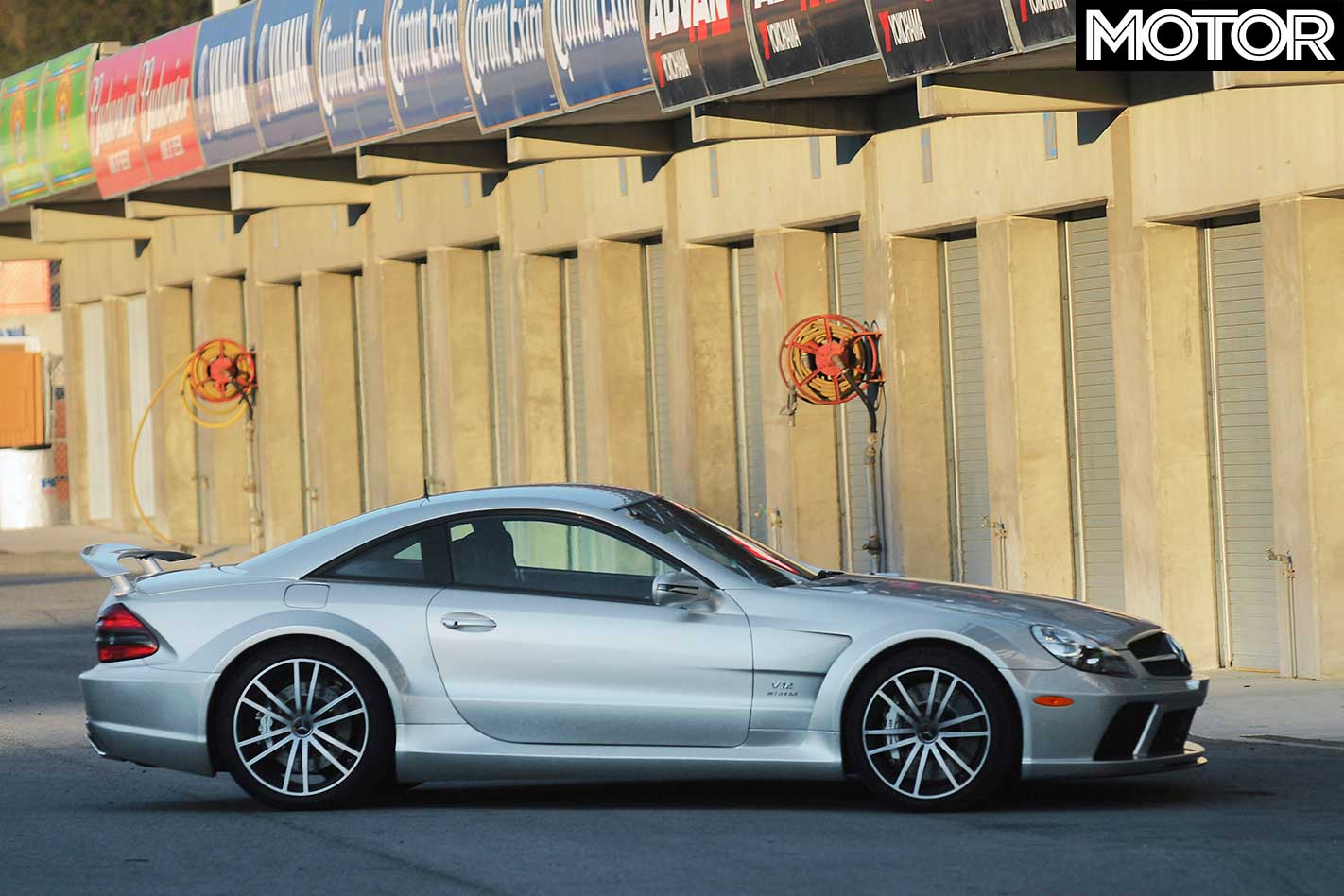
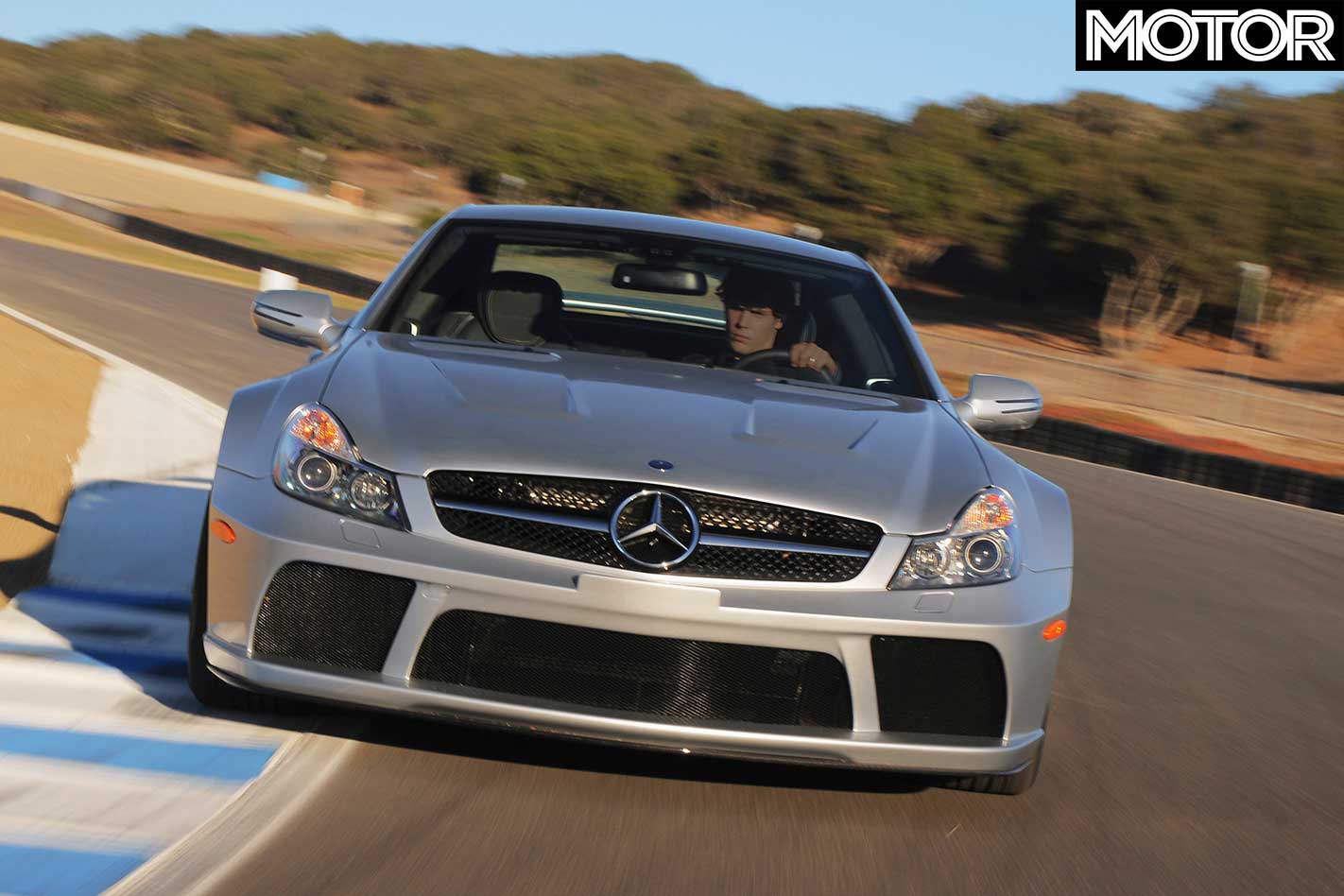
For instance, every single body panel has been redesigned and restyled to measure. Gone is the folding roof, the slim wings, the subtle bumpers, and the run-of-the-mill doors. The new outfit is fabricated entirely of carbonfibre, its eye-catching shape looking like a fusion between a two-door German taxi and Lewis Hamilton’s race car.
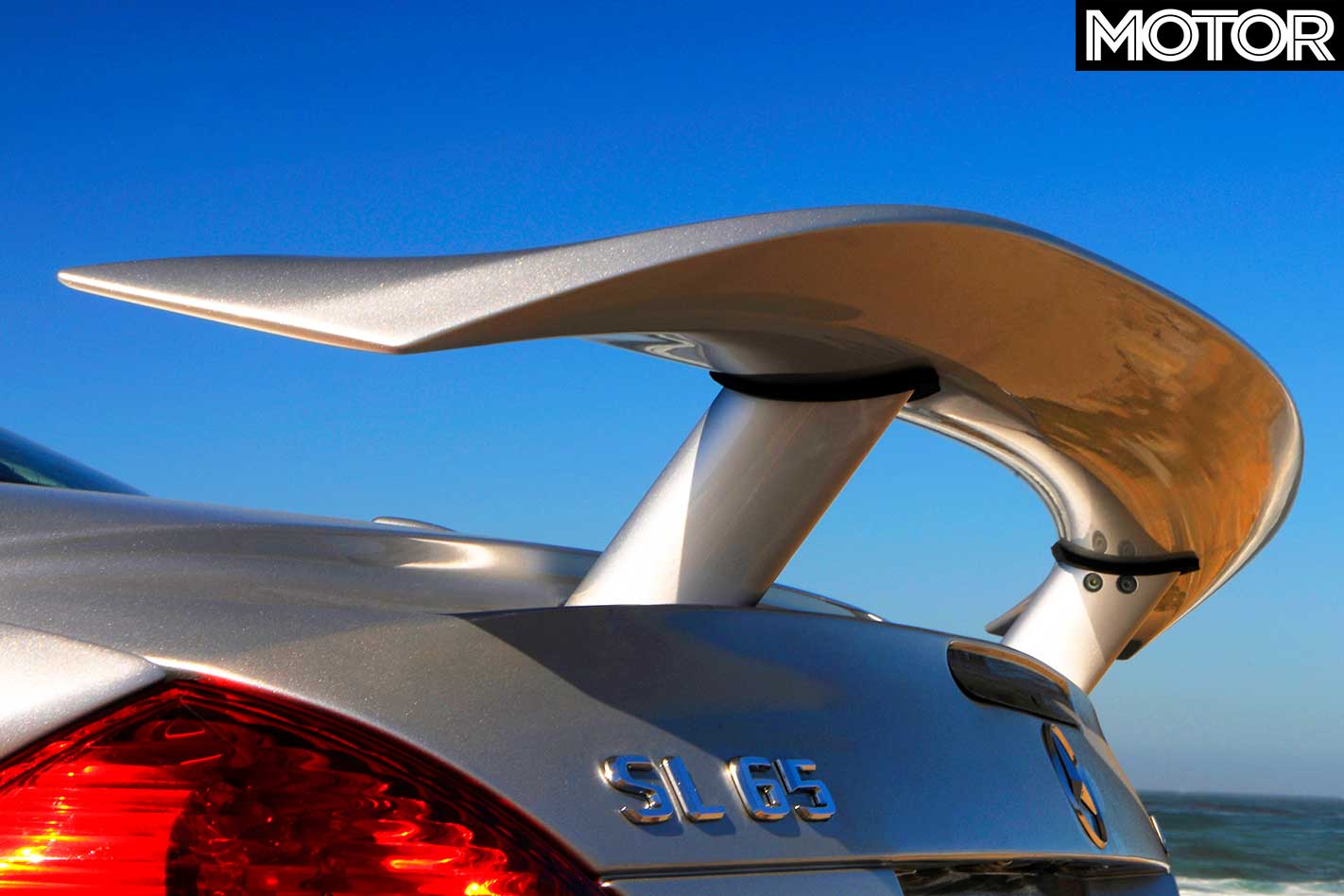
Beauty is in the eye of the beholder, but according to AMG, its clientele loves wildly flared wheel arches, blacktop-scraping spoilers, cartoon-size wheels, XXL air intakes and the full range of spats, ducts and winglets. There is no doubt that the SL Black looks Darth Vader-menacing in the rear view mirror of the car ahead, but there is also no doubt that this brick-wall-like frontal area counteracts every wind tunnel effort.
The SL Black is 140mm wider than the SL65, but what really matters is that it is also a significant 250kg lighter. And that’s largely due to the aforementioned Carbonfibre Reinforced Plastic (CFRP) body panels, the stripped-out cabin that looks like a sombre mirror cabinet because of the shiny, omni-present carbonfibre claddings, and the heavily revised, aluminium-intensive chassis.
Gone are the softish SBC brakes, the standard suspension layout, and the modest tyre size. Instead, we find fully tweakable race suspension with adjustable dampers, ride height, toe-in/toe-out and camber settings.
Both axles had to be developed and fabricated from scratch, and this includes wheel carriers, struts, tie-rods – the whole kit and caboodle. Since the kinematics were revised at the same time, the carry-over steering is now eight-percent quicker and the response to steering inputs is much more prompt.
A few years back, AMG had planned to develop a turbocharged version of the 6.2-litre eight-cylinder as a replacement for the heavier and thirstier V12. But then this engine was canned, replaced by a state-of-the-art twin-turbo 5.5-litre V8 which is still in the making and is due see the light in 2011 at the latest.
The old three-valve V12 (M275) should’ve been superseded by a new direct-injection four-valver, dubbed M295, in 2010, but when the economy went sour, this engine bit the dust, too. As a result, the old V12 will live on longer than expected in a modified form that meets the Euro 5 emissions standard.
Despite its age, however, the V12 is still a brawny and charismatic kraftwerk that comes in 380kW 5.5-litre guise (in the SL600), a 450kW 6.0-litre (in the SL65 AMG) and, now, this beast – the 493kW SL65 Black.
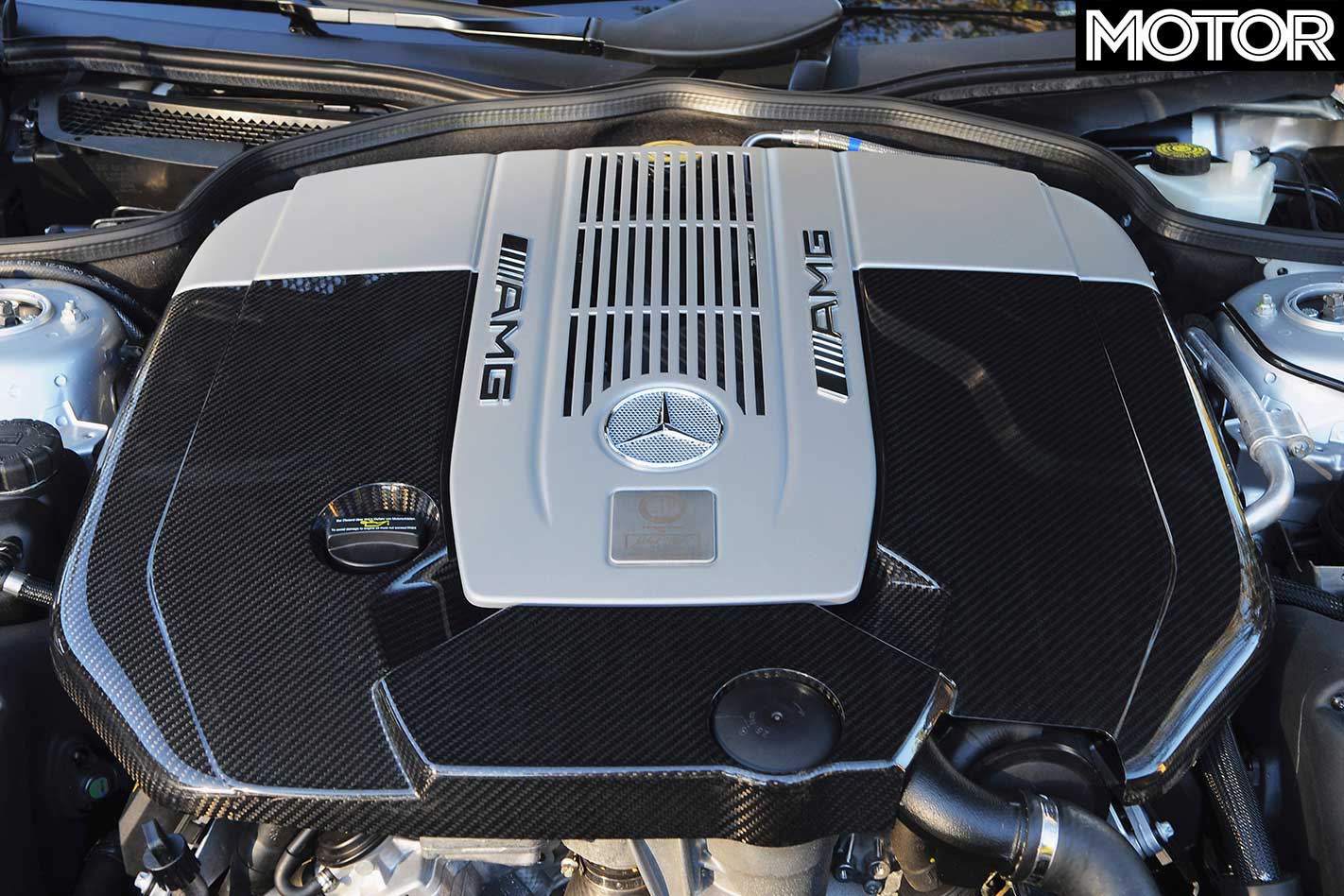
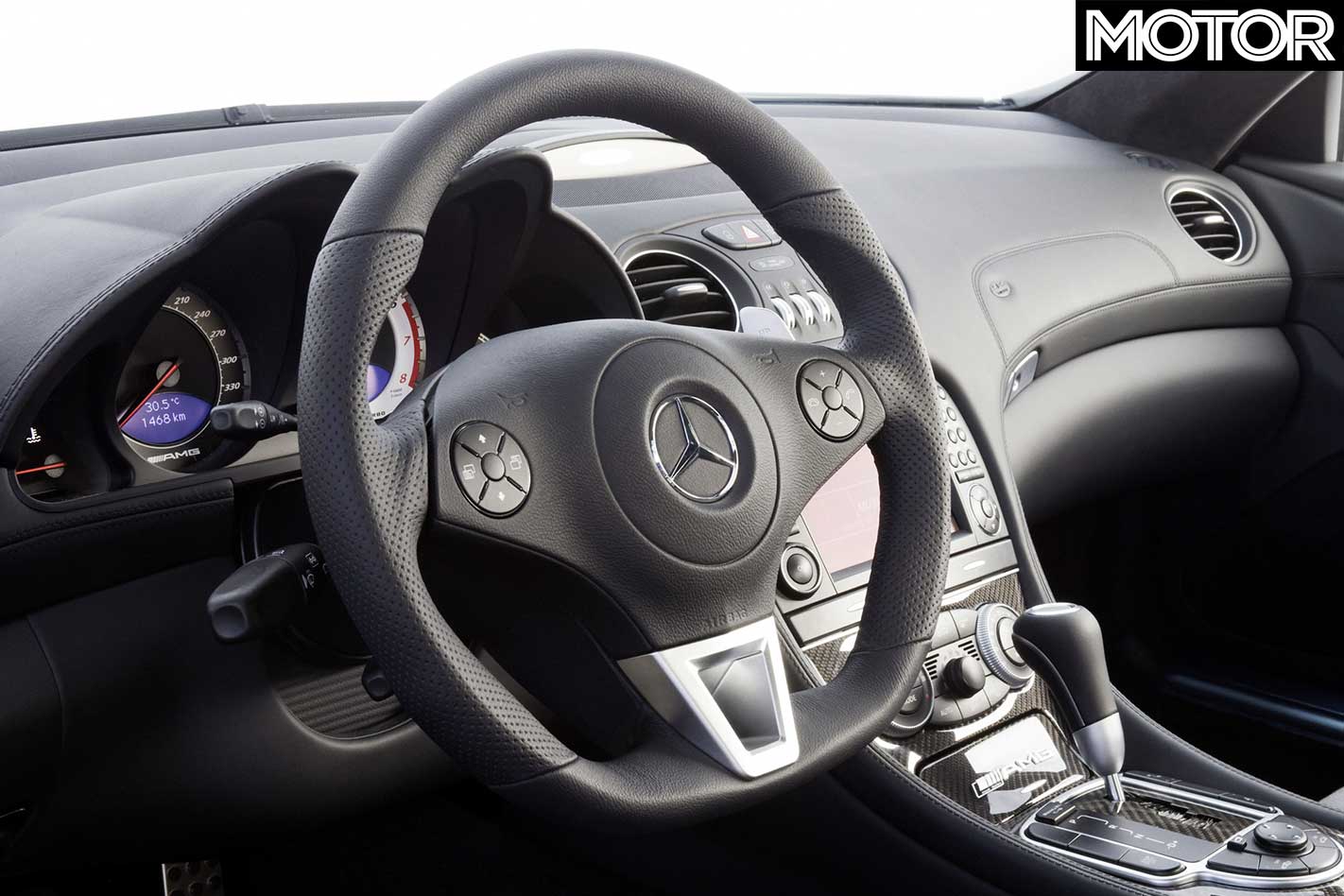
Consumption? On paper, an acceptable 14.4L/100km. In real life, a frightening 30.5L/100km. The automatic gearbox is still the ancient five-speeder, chosen for its sturdiness and reliability, but when AMG mated the old cogworks to the latest Speedshift electronics, it took the opportunity to add the convenient paddle-shift operation and a choice of four driving modes.
Comfort and Sport are self-explanatory; M1 indicates manual, and M2 quickens the shift action by a further 20 percent. In either manual mode, the black box will blip the throttle during downshifts, and it will hold the chosen ratio no matter what, which is worth remembering when you begin that touch-and-go second-gear overtaking manoeuvre.
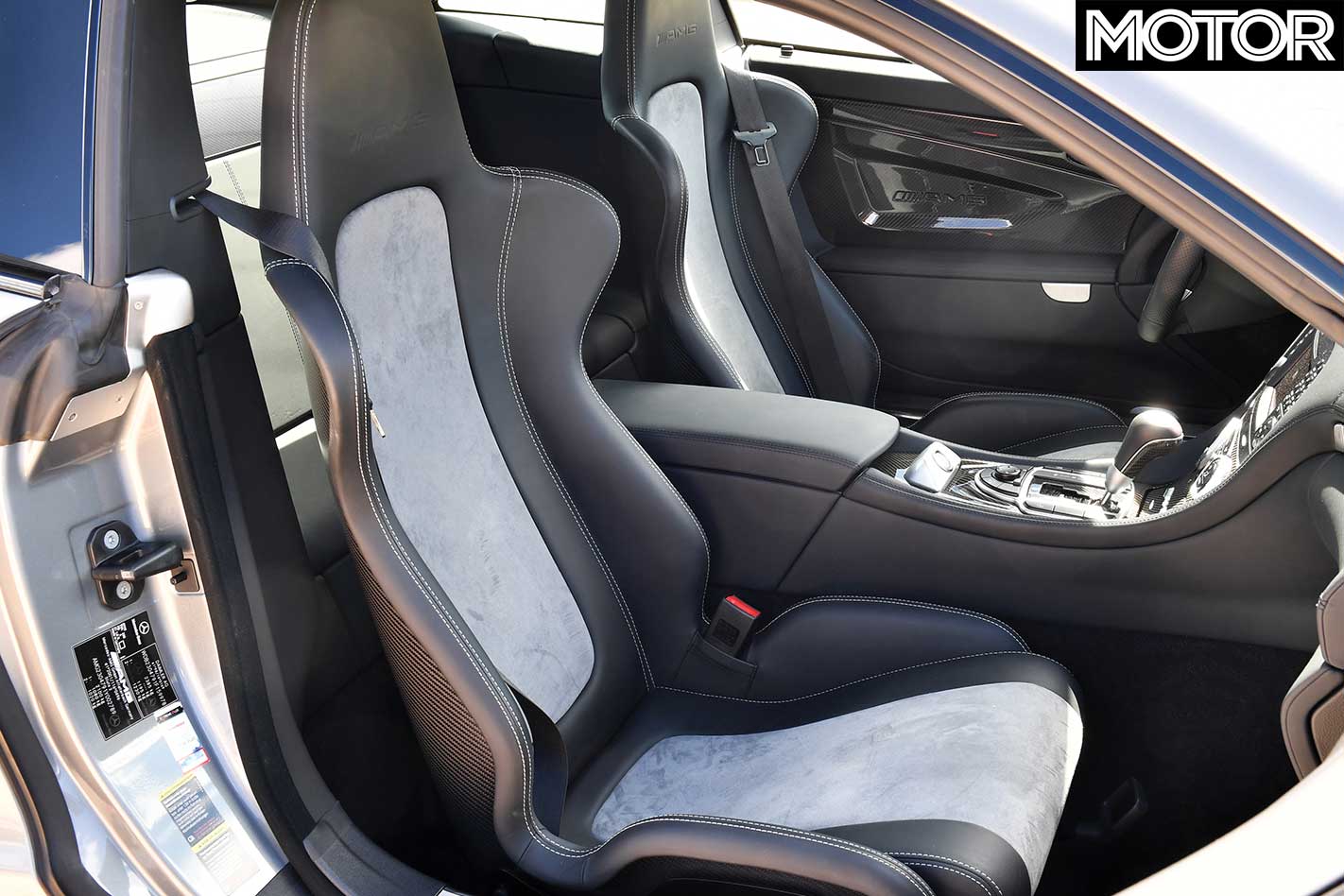
Inside, the SL Black is definitely more track racer than street racer. While export models (including the Australian-bound batch) are equipped with singing-and-dancing power seats, the Euro-spec version is fitted with rock-hard Nappa leather-trimmed CFRP buckets.
These strong, lightweight fixed-back items are indecently body-hugging and are fine for most frames, but taller drivers could probably do with longer seat runners, some sort of height adjustment, more easily accessible safety belt buckles and reclining backrests.
A true nuisance is the squared-off bottom of the steering wheel. In a race car, where legroom comes at a premium and where the rack is go-kart-like direct, this approach can work. But in a road car, an oddly shaped tiller makes steering during humdrum driving annoyingly awkward. Still, it is 15mm smaller in diameter, with perforated sides for better grip.
The pedal layout is another area for criticism, as the brake and throttle are positioned too closely together and at different heights, making it easy to get big feet tangled up down there at the worst moments.

Unfortunately, the black beast was shod with shaved Dunlop Sport Maxx GTs, tyres that need to be worked pretty hard to make the transition from slippery to sticky somewhere more suitable than an autobahn ice-rink. And this was despite the size of the available footprint – a hefty 265/35ZR19 up the front and fat-slabbed 325/30ZR20 rears.
With the three-setting ESP activated, the 493kW Benz makes you feel like an old woman in this weather. The coupé ac-cel-era-tes as if its transmission was in stutter mode, and even when you have gathered enough speed to frighten fast-lane regulars, every bump and every transverse ridge will trigger the electronic watchdog and its flickering warning candle.
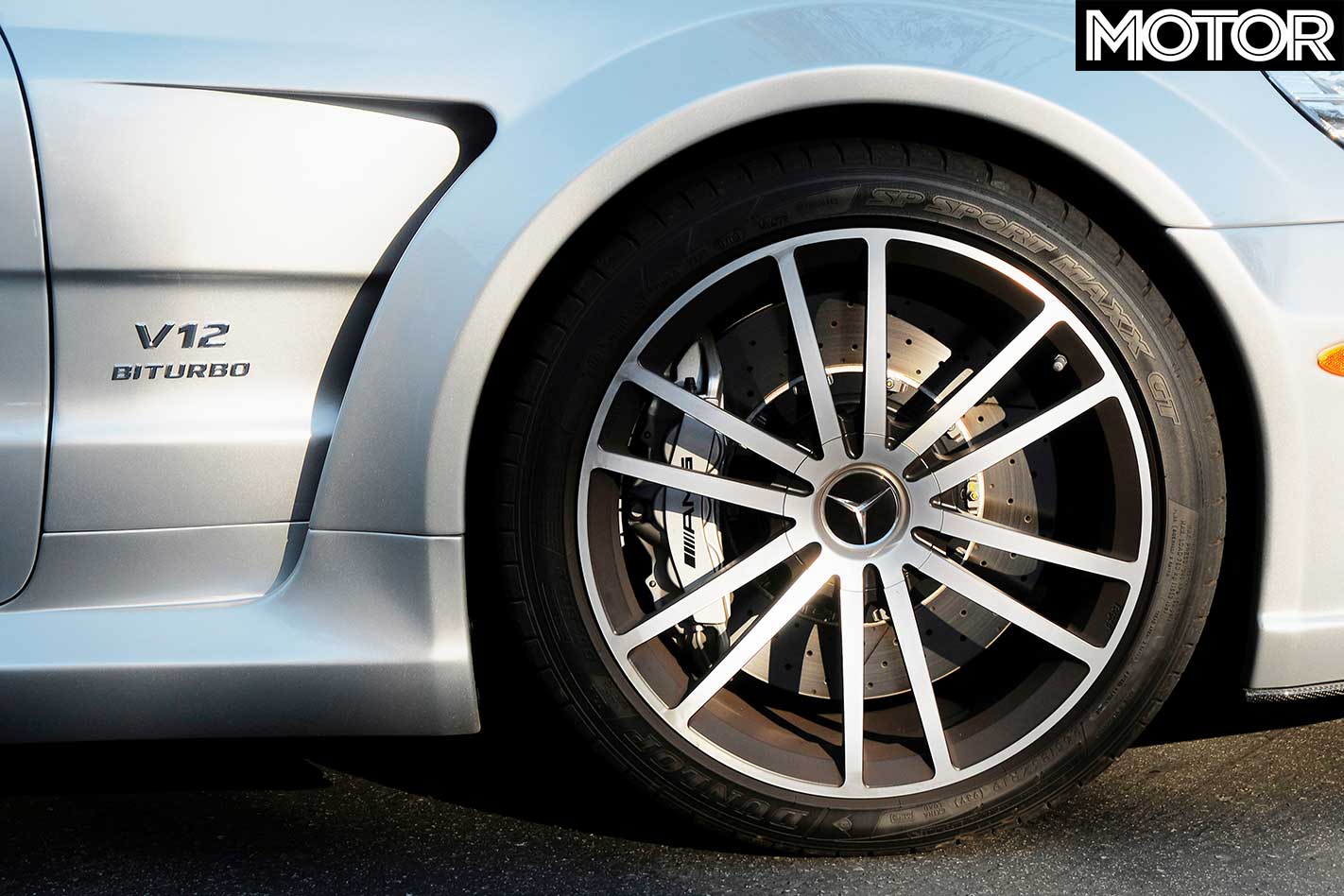
On the winding back roads towards the Swabian Alb, the SL Black calls for a quite specific driving style. Heeling and toeing would help, but since the automatic won’t let you do that, it’s best to change down as you brake for a bend. The extra oomph helps to momentarily destabilise the mighty winged tail, but ideally only so much that you can still massage it past the apex with a minimum of throttle action and a maximum of grip-to-sliding balance.
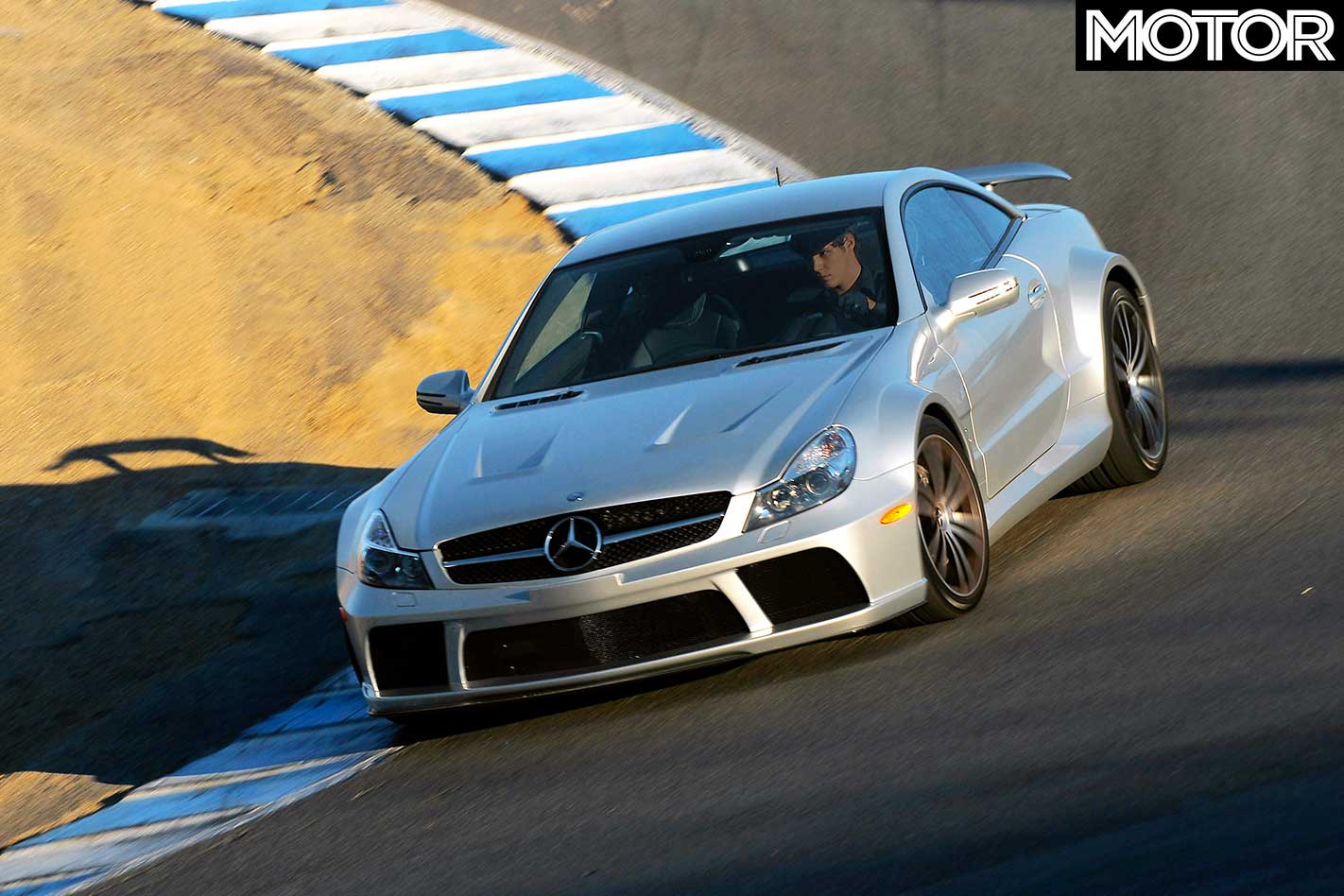
On the motorway, ESP does come to the rescue through those courage-testing ultra-high-speed kinks, even in Sport mode, but despite plenty of aero aids (like that motorised rear air dam), stability is always an issue in the back of your mind.
What helps is the extra dose of compliance AMG has engineered into the suspension. It cushions pitch, yaw and roll, and it makes it easier to respond to classic vices like tramlining and lift-off rear-end vagueness.
The confidence required to exercise total control at nine- or ten-tenths is provided primarily by the steering and the brakes. Quick and accurate, the direction-finder is also well damped and, therefore, well prepared for all irritations, from expansion joints to crosswind attacks.
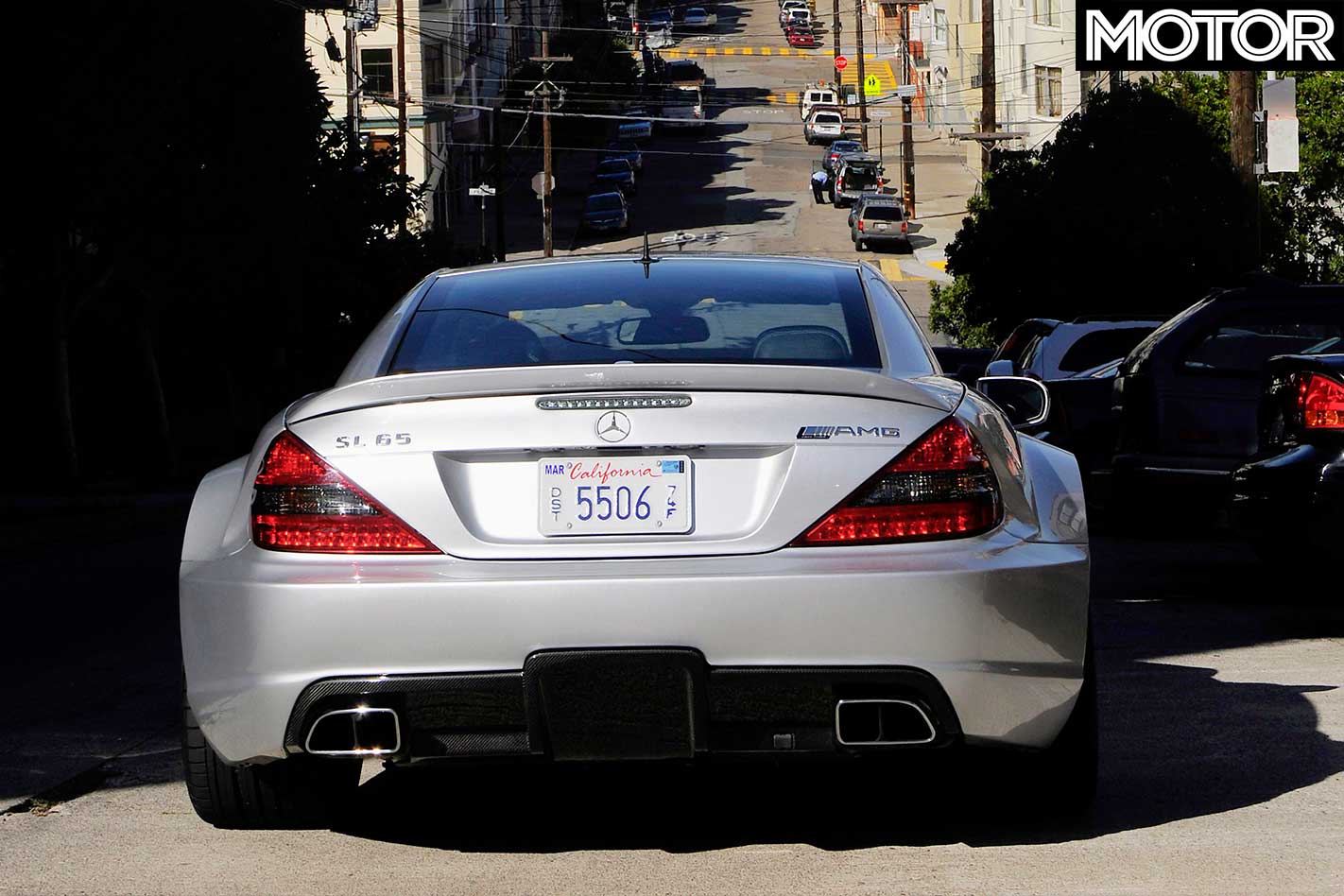
Since the decontented SL Black still weighs 1795kg, it’s good to know that the rack’s responses are sports-car quick, not coupe-style relaxed, and that the stopping apparatus is equally competent.
The brakes bite instantaneously but, thankfully, that reassuring initial bite doesn’t affect the three-dimensional modularity that follows. Deceleration is so brutal that one wishes for a four-point harness instead of the Black’s inertia-reel belt, and the sensational stamina does repeatedly upset the law of physics, as demonstrated by whiffy pads and noisy rotors. So far, so good.
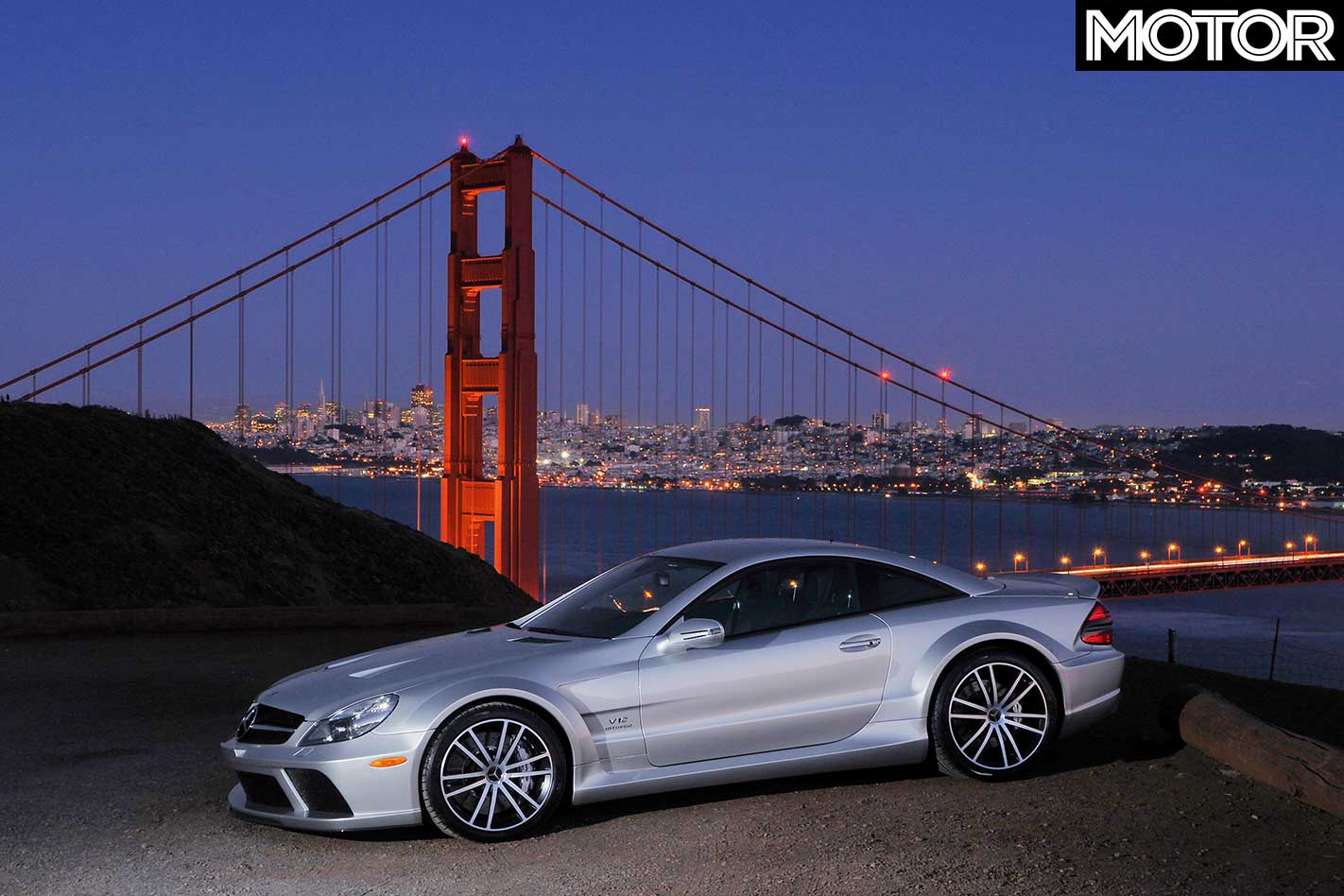
As an over-sexed highway cruiser and over-powered boulevardier, the SL65 Black Series is way too extreme, too raw, and almost wasted. But that only justifies the credentials of the monster Mercedes to rise as the new king of the slidemeisters. And to establish itself as Europe’s ultimate contemporary muscle car this side of the Bugatti Veyron.
Material World
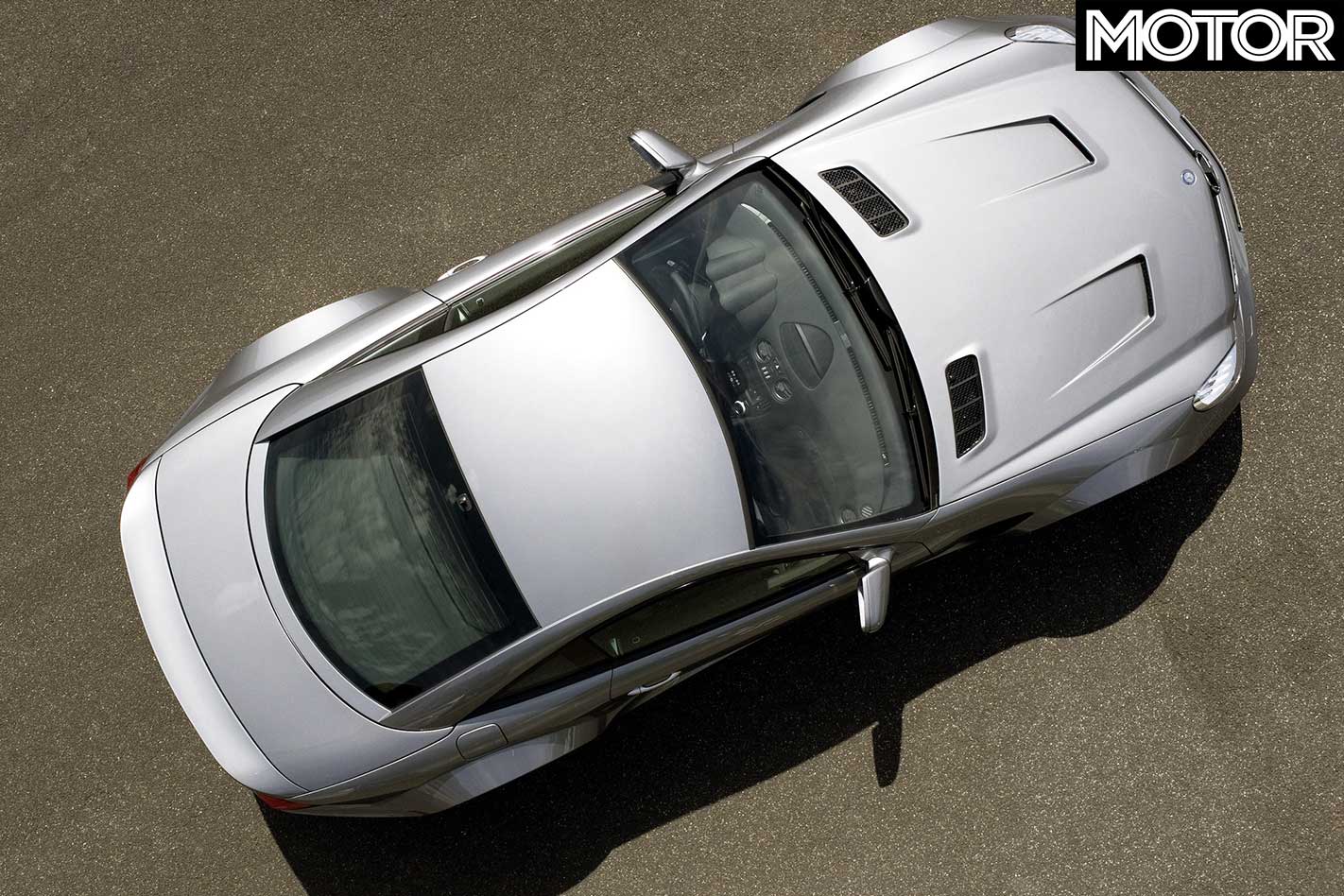
CFRP is much more rigid, impact resistant and dense than glass-fibre reinforced plastics. In the SL Black’s case, this means that AMG was able to produce a roof that sits flatter than the standard SL’s, while the rear window is now more upright and has actually increased in size.
The Black’s retractable rear wing is also made from CFRP, as are the 140mm-wider front guards, the bonnet and bootlid. All up, this helps reduce weight by 250kg over the SL65.
FAST FACTS Mercedes-Benz SL65 AMG Black Series
BODY: 2-door, 2-seat coupe DRIVE: rear-wheel ENGINE: 5980cc 90-degree V12, SOHC, 36v, twin turbochargers COMPRESSION RATIO: 9.0:1 BORE X STROKE: 82.6 x 93.0mm POWER: 493kW @ 5400rpm TORQUE: 1000Nm @ 2200-4200rpm 0-100KM/H: 3.8sec (claimed) TOP SPEED: 320km/h (limited) WEIGHT: 1795kg POWER-TO-WEIGHT: 275kW/tonne TRANSMISSION: five-speed automatic RATIOS: 3.60/2.19/1.41/1.00/0.83 FINAL DRIVE: 2.65 SUSPENSION: double A-arms, coil springs, anti-roll bar (f); multi-links, coil springs, anti-roll bar (r) L/W/H: 4589/1960/1286mm WHEELBASE: 2560mm STEERING: power rack and pinion BRAKES: 390mm ventilated/drilled composite discs, six-piston calipers (f); 360mm ventilated/drilled composite discs, four-piston calipers (r); ABS, BA, ESP, TC WHEELS: 19 x 9.5-inch (f), 20 x 11.5-inch (r); alloy TYRES: Dunlop Sport Maxx GT; 265/35ZR19 (f), 325/30ZR20 (r) PRICE: $680,000LIKE: Immense torque, traffic-stopping presence, exclusivity DISLIKE: Pricier than a Ferrari 599 GTB Fiorano; a little unresolved RATING: 8 out of 10 stars
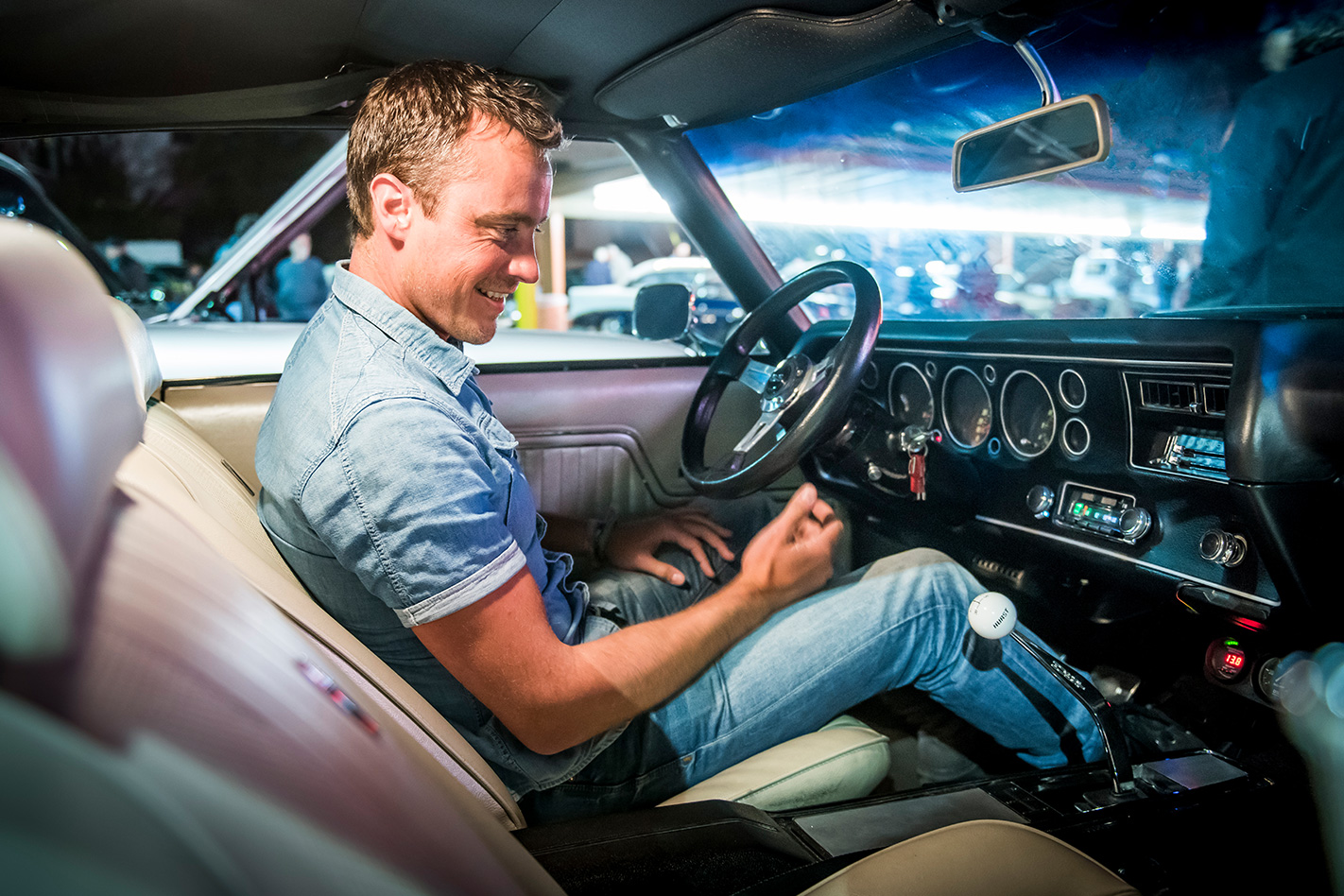
There are cars that enter your consciousness and just refuse to bugger off. The Mark 2 Escort RS2000 was just such a thing in my world.
In fact, I can recall an advert for the Esky on the back cover of Wheels magazine when I was about 14 or 15. The ad featured an orange RS2000 with the tag line “Street Legal”. Man, I was a shot dog right there. Episodes of Minder and The Professionals didn’t help one bit.
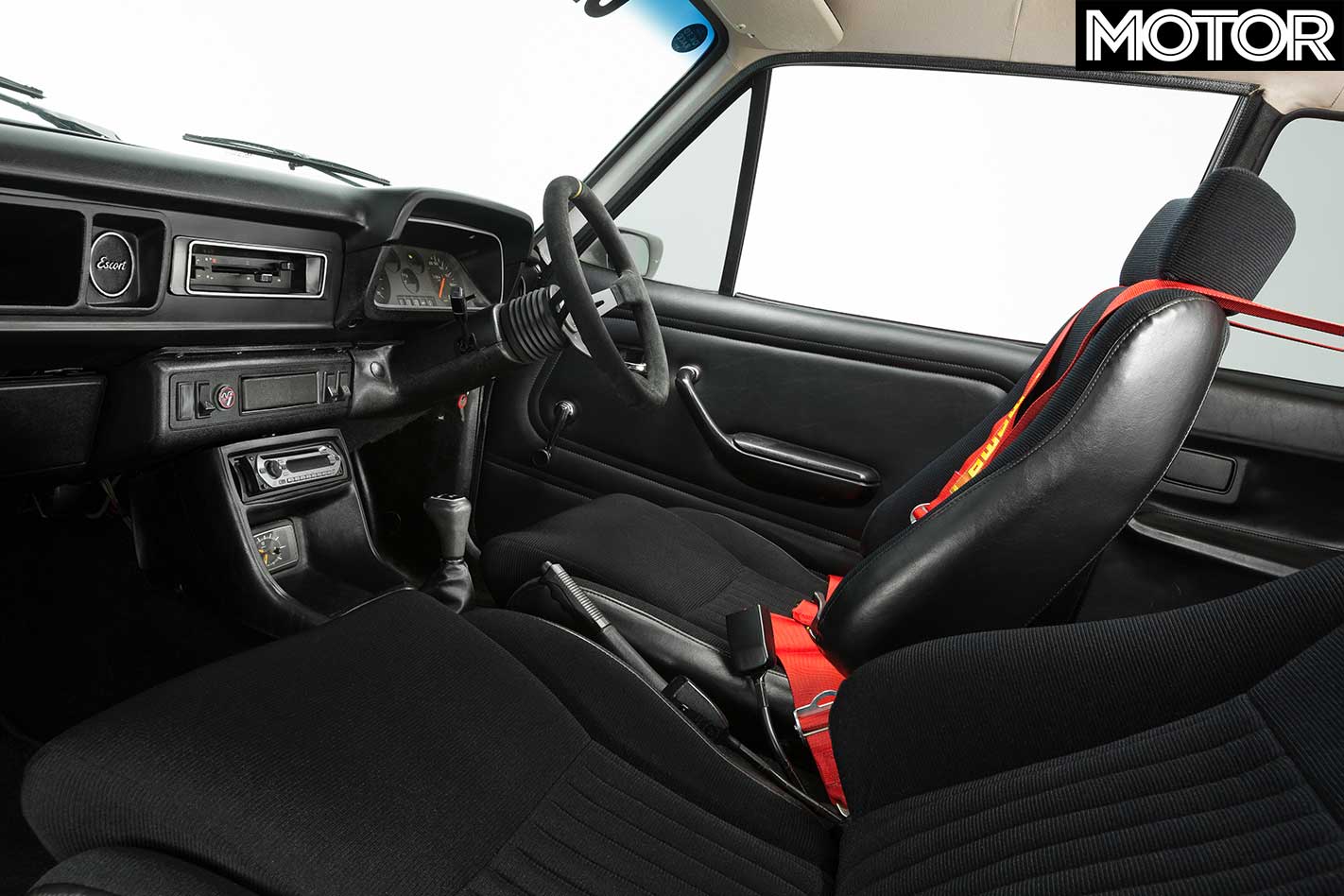
For me, the little Esky in its RS form represents all those pimply desires, those raging-hormone urges and I can almost taste 1980 (I can certainly smell it) when I jump in and turn the key on that little Pinto four-banger that has, under my stewardship, seen a few tweaks.
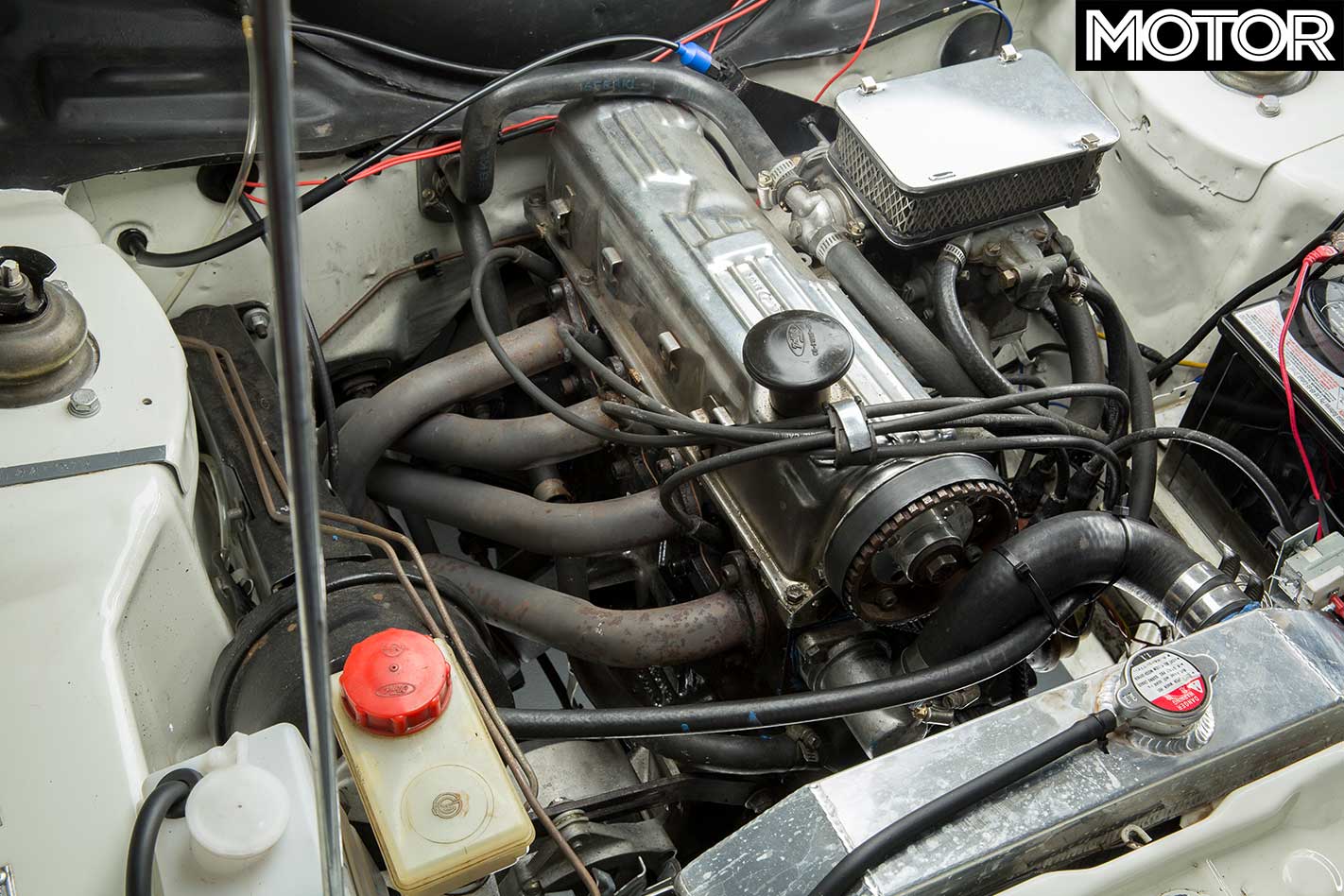
It now has a lot more compression, a stupid-big camshaft and a rorty zorst. The single carb remains and the suspension is most of the way to the deck with just a set of Minilite copies in the period-correct 13 x 6.0-inch size. Oh yeah, there’s a Sierra five-speed, too, to give it some legs on transport stages.
The other gripe is that lunkheaded, cart-sprung rear-end which has all the compliance of a jailhouse riot.
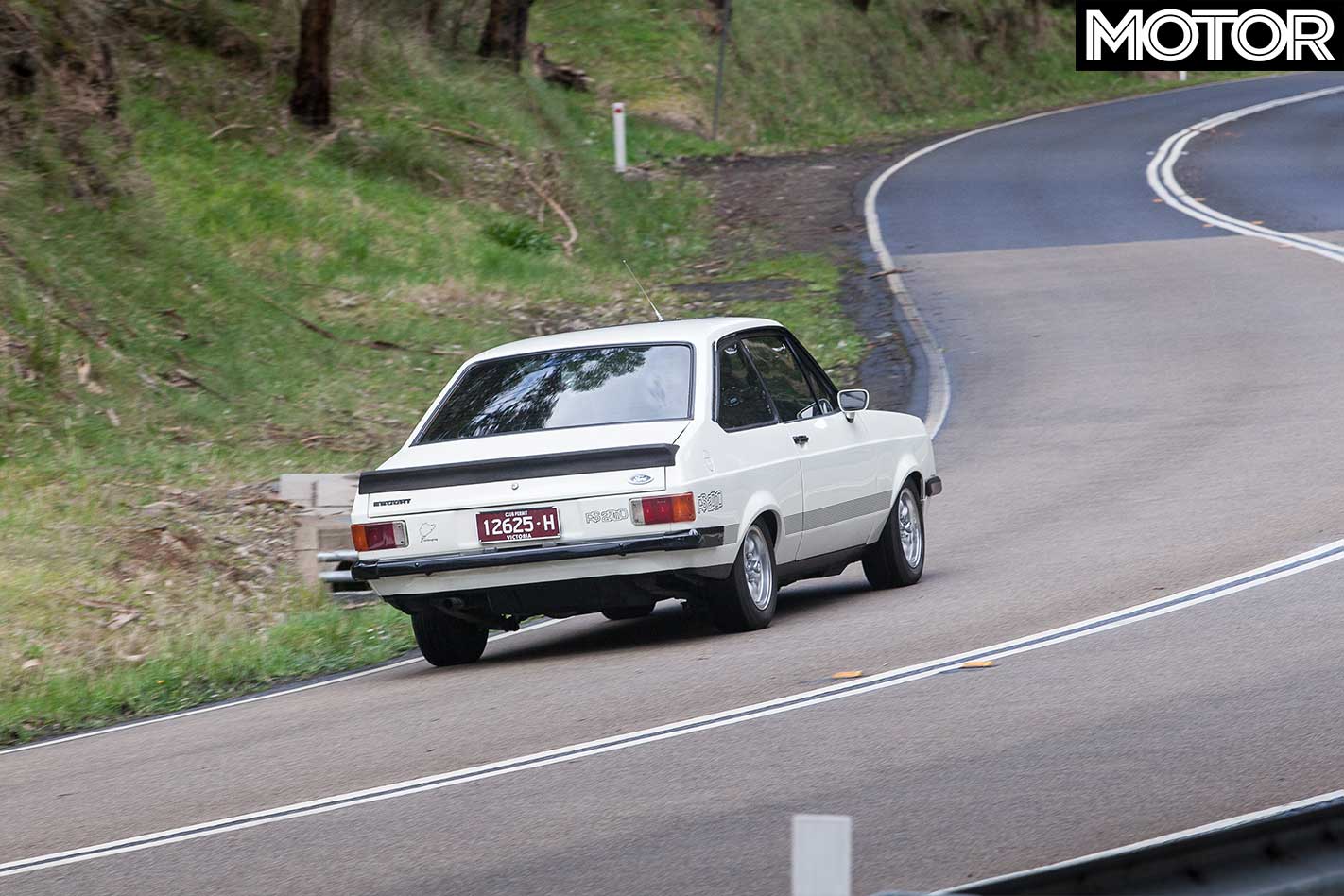
Rally King To be honest, I don’t drive the thing flat out and I’ve never been tempted to hillclimb it or whatever. That said, it has done the Geelong Sprints a few years back, so it’s not exactly a stranger to the big numbers on the tacho.
Owner Q&A Bought for: $13,000 (I think) Mods/Fix ($): Too much Best bit: Back-to-basics fun Used for: A reality check Plans: Giving it the berries every now and then and pretending I’m Bodie from CI5, and never sell it to Robbo
Is there a car you should never have sold? Nope, just a bunch I should never have bought.Any plans for the Escort? Fill tank. Thrash. Repeat
Worst bit about owning the car? I liked it better when it was worth a lot less.
SUNSET over Los Angeles is one of the greatest pseudo-natural spectacles the sprawling Californian metropolis has to offer.
The stunning show of colours is the result of a cool ocean on one side of the city, mountains on three others, something called an inversion layer and tonnes upon tonnes of vehicle exhaust belched into the atmosphere every day.
Californians are addicted to their cars and the atmosphere bears the scars.
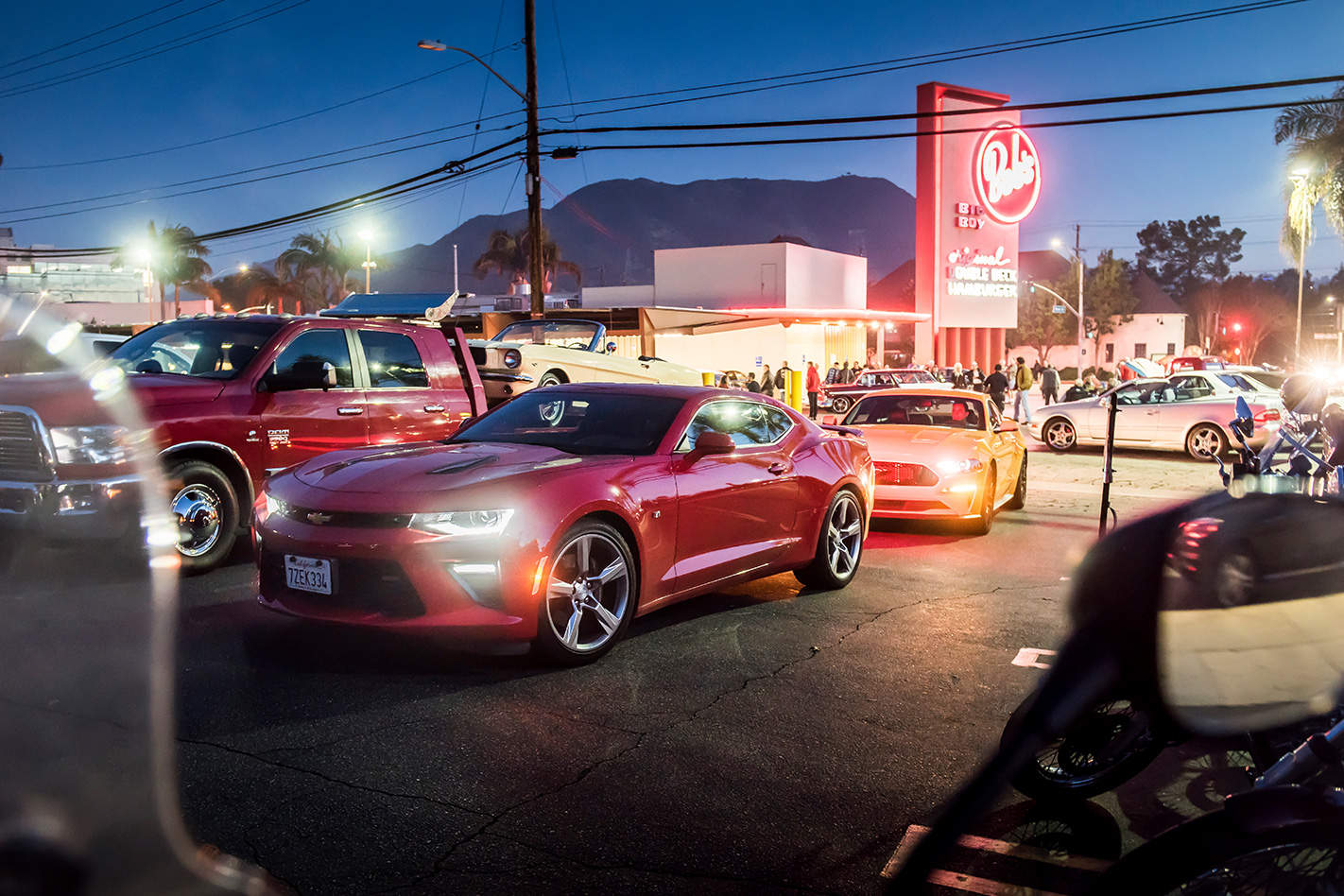
Just weeks before I arrive, the beauty of LA’s surrounding country was razed by bush fires. The torrential rain and mudslides that followed left little more than dirt. It was a grim metaphor for LA’s celebrity facade, where stars promenade the red carpet while 20,000 people sleep under bridges.
In LA there’s always another story playing out just below the surface and you don’t have to dig too deeply to find it. It’s the same with the two cars you see here.
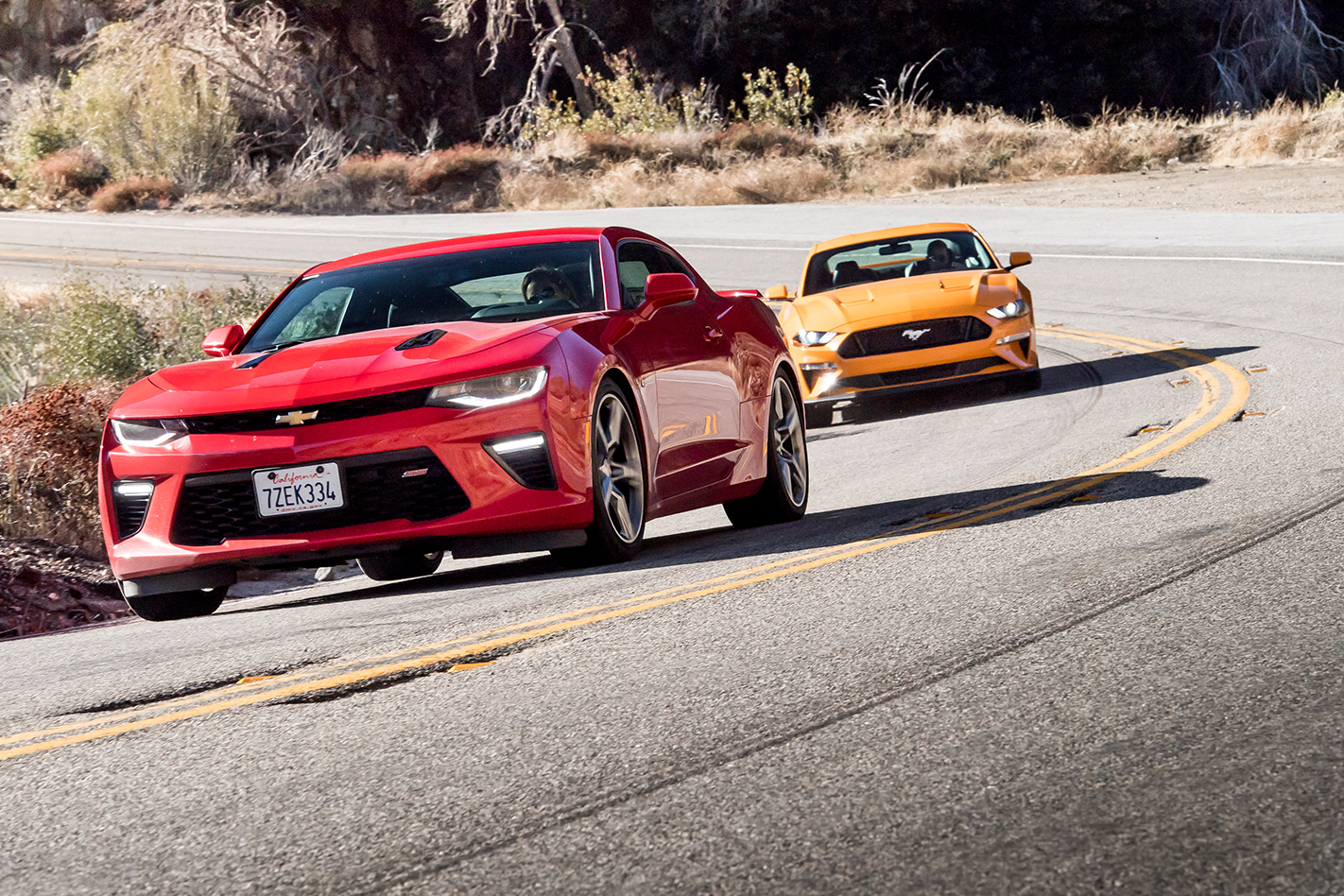
The pony car feud between the Ford Mustang and Chevrolet Camaro has been raging on US soil for half a century but the more interesting underlying story is their new significance in Australia, where the two arch enemies will bump gloves for the first time this year. I’m here to get a taste of how the new Camaro stacks up against the Mustang before the brawl kicks off, and to see whether either one can help soften our grieving for the passing of the home-grown rear-drive V8.
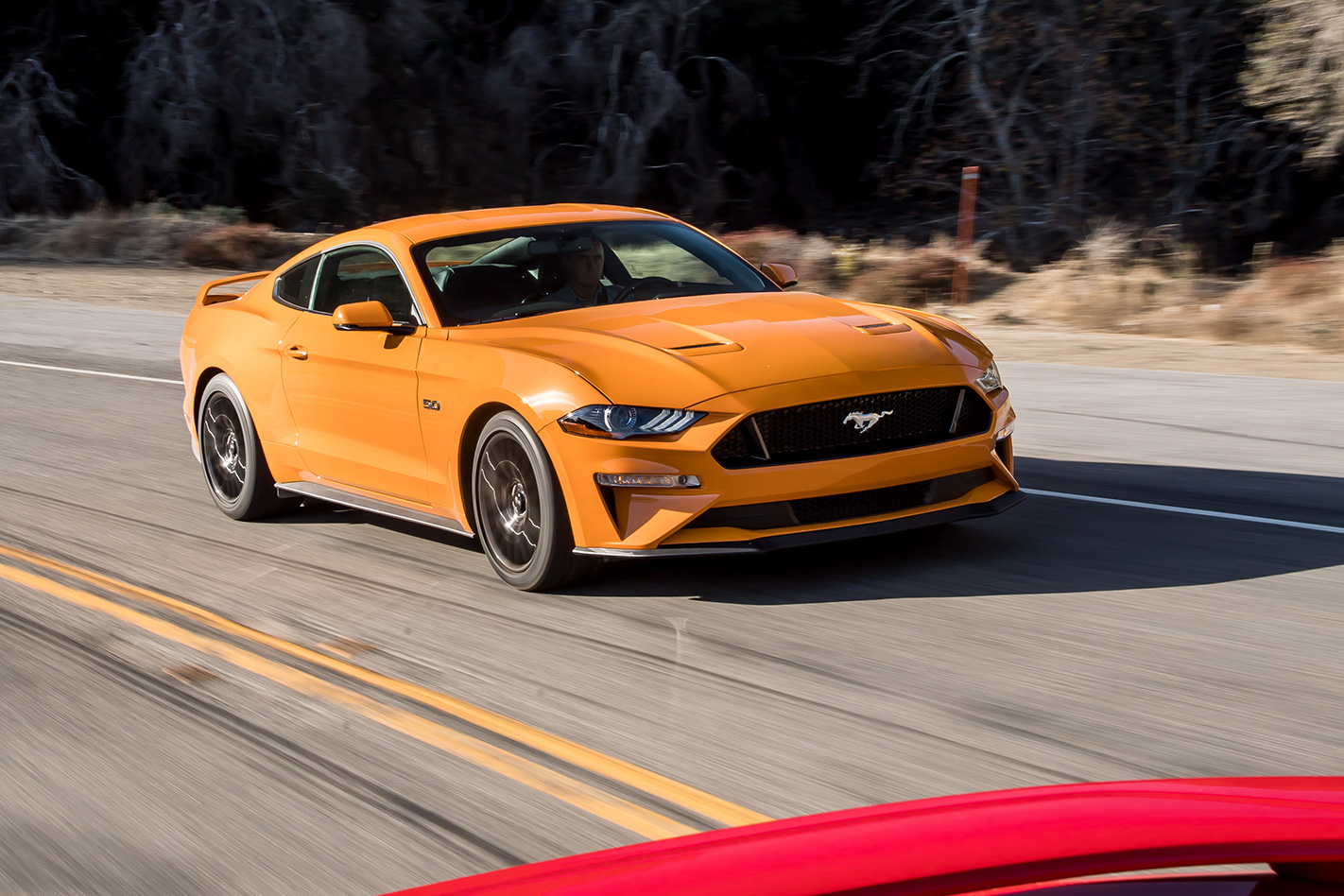
In the Blue – or, erm … ‘Orange Fury’ – corner, the Mustang’s styling gets a lot done with a little. There’s a simple purity to its lines and an elegance that hints at the Ford’s aim of appealing in many markets. While previous generations worked a home crowd, this version must appeal to European, British, Japanese and Australian buyers. Little has changed for the 2018 car and that’s no bad thing. The Mustang is as handsome as ever, the reshaped LED headlights and lightly redesigned bonnet and grille the only giveaways this is the well-revised 2018 model.
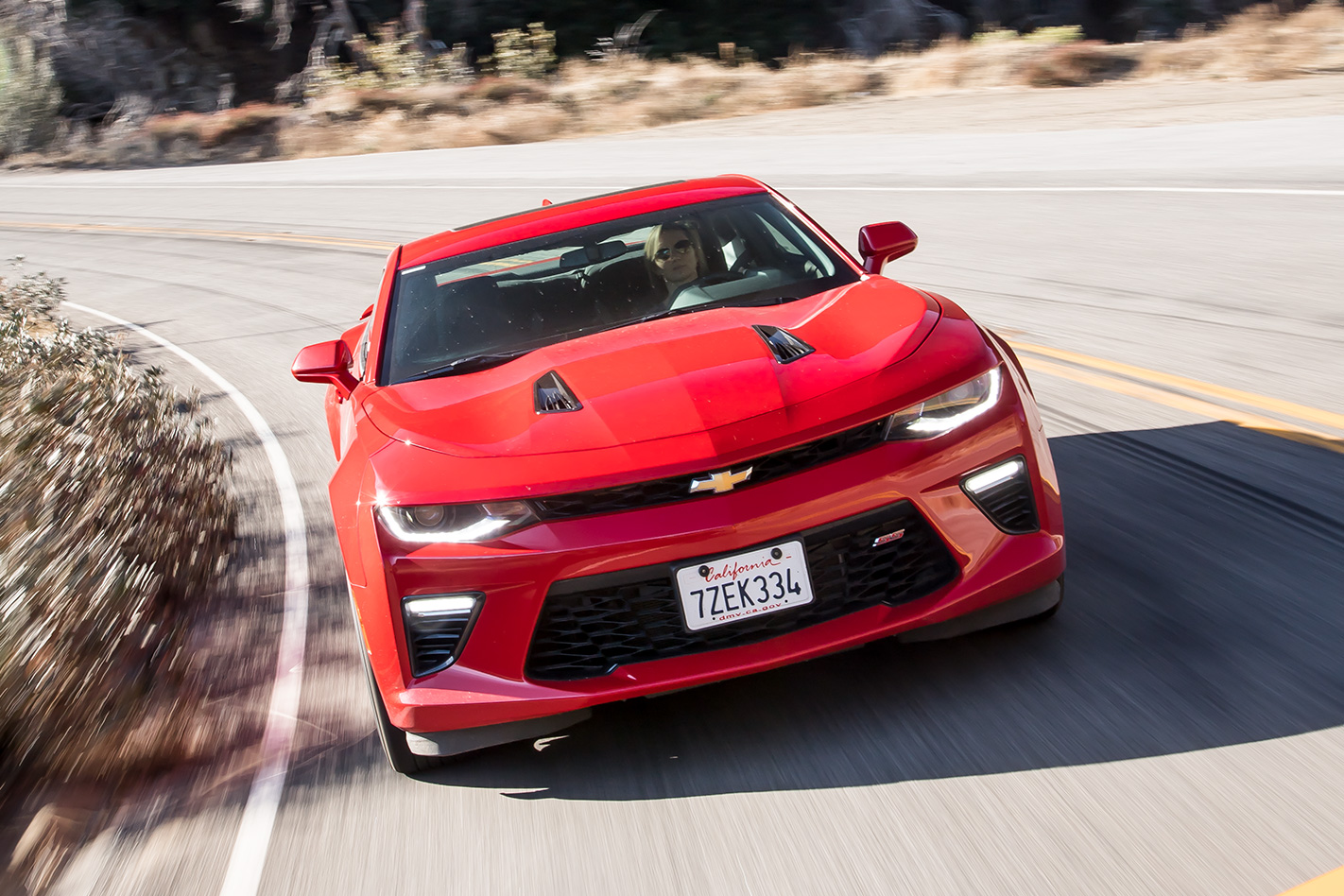
In the Red corner, however, the Camaro sacrifices elegance in the name of outright tensed-bicep brawn. If you’re seeing a little Corvette DNA in the exterior, you’re not imagining it. Of the two, it’s the Chevrolet with the most presence and a decidedly American stance, but that low roofline has had a dramatic effect inside the car as well.
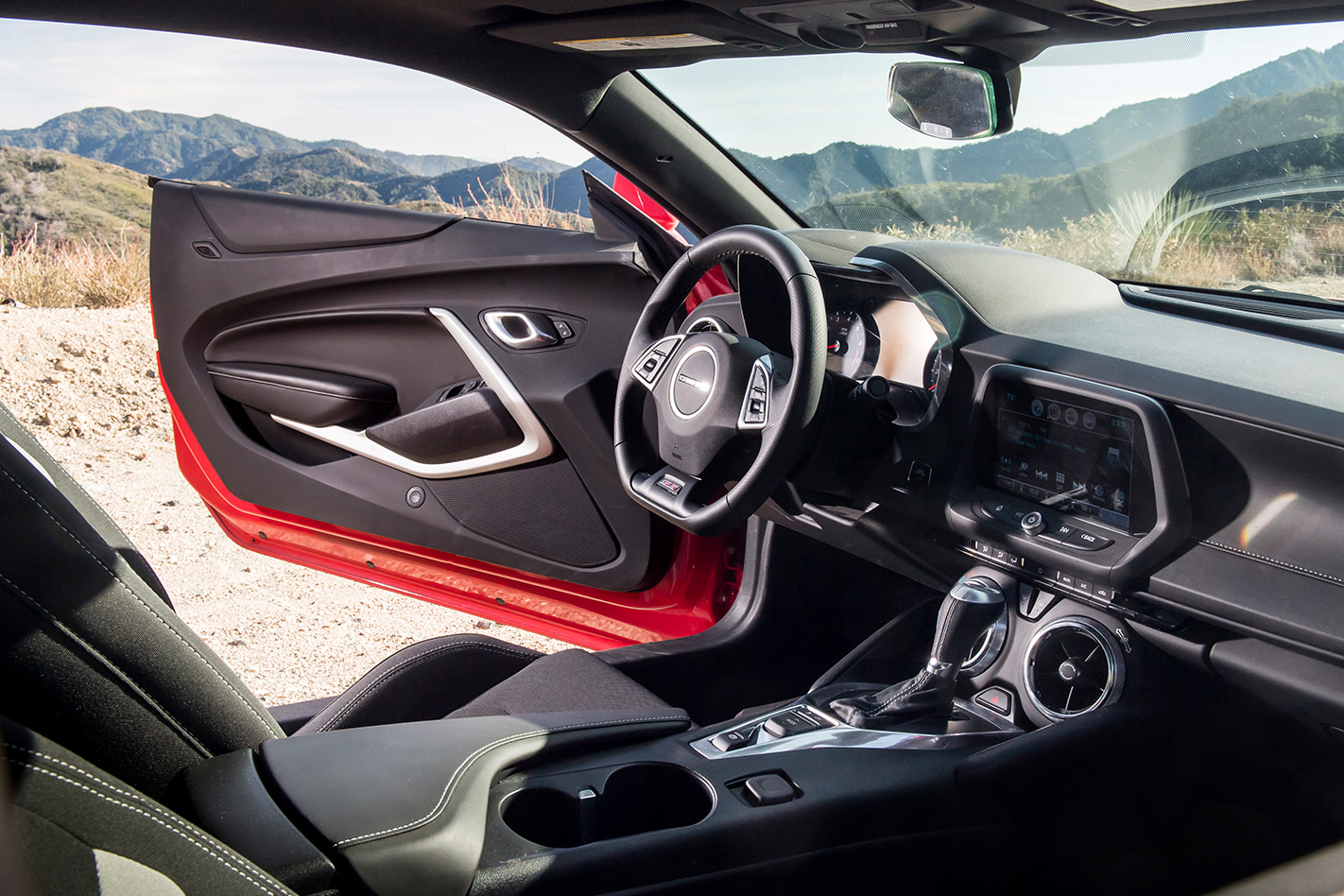
Among the most common criticisms of the current Mustang is the interior; specifically the lack of luxurious materials or niceties. Yet any assessment also needs to factor in the price. Yes, Ford Australia could have homologated the excellent Recaro seats and the machined aluminium dash that’s available to American buyers as an option, but then the ’Stang wouldn’t be a $60K car anymore. The update hasn’t brought dramatic change in the Mustang cabin, yet this doesn’t allow the Camaro to steal any points for quality or design.
They’re both fairly basic, as muscle coupes have always been. There are highlights such as the pair of auxiliary gauges and retro-inspired design for the Ford, and its sharp screen resolution, but both cabins are scattered with plasticky switches and trim that merely adds up to the sum of their cheap ’n’ cheerful parts.
But muscle cars are about looking cool and feeling good. And the true test of how well Ford and Chevrolet have plied their craft lays in a good, hard drive.
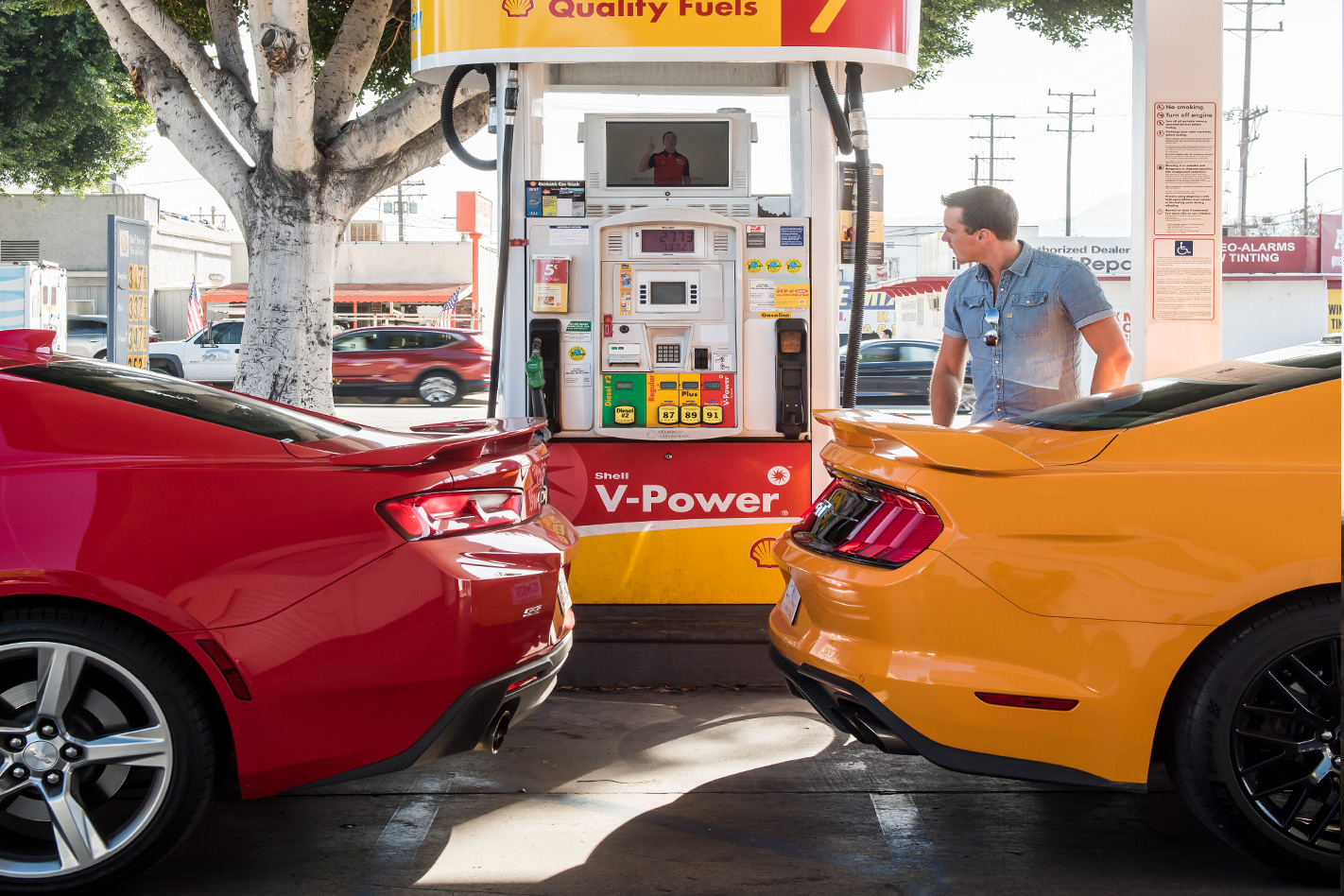
When the congestion eased and we could drive at a stroll, the Ford’s wheels hopped over each joining seam of the LA-standard concrete-slab freeway at a maddening tempo. The Camaro ironed the creases more effectively, perhaps as a result of a chassis tune that’s been tailored especially for US roads, unlike the global Mustang. But we won’t really get to the bottom of ride comfort until they hit Australian roads.
Perhaps it was the frustration of sitting in seemingly endless tailbacks, but at the sniff of canyon roads on the outskirts of LA’s suburban sprawl, the muscular pair leap from their haunches with a satisfying vigour and, in the Ford, the sort of soundtrack I was jonesing for.
Switch to the Ford however and the 343kW (Aussie GTs will have 339kW) double overhead cam Coyote V8 shines. The bigger Chevy V8 prefers a short shift with decent low-down torque characteristics, but the Blue Oval equivalent is beautifully sophisticated and begs to be revved. As part of its 2018 update, Ford’s engineers extracted another 33kW from the 5.0-litre (see sidebar p75) and you can feel it.
We will have to wait for a local test to sample the new 10-speed auto fitted to the 2018 Mustang, but we can report that the new twin-plate clutch fitted to the six-speed manual makes life significantly easier on the left leg, as well as easing clutch modulation.
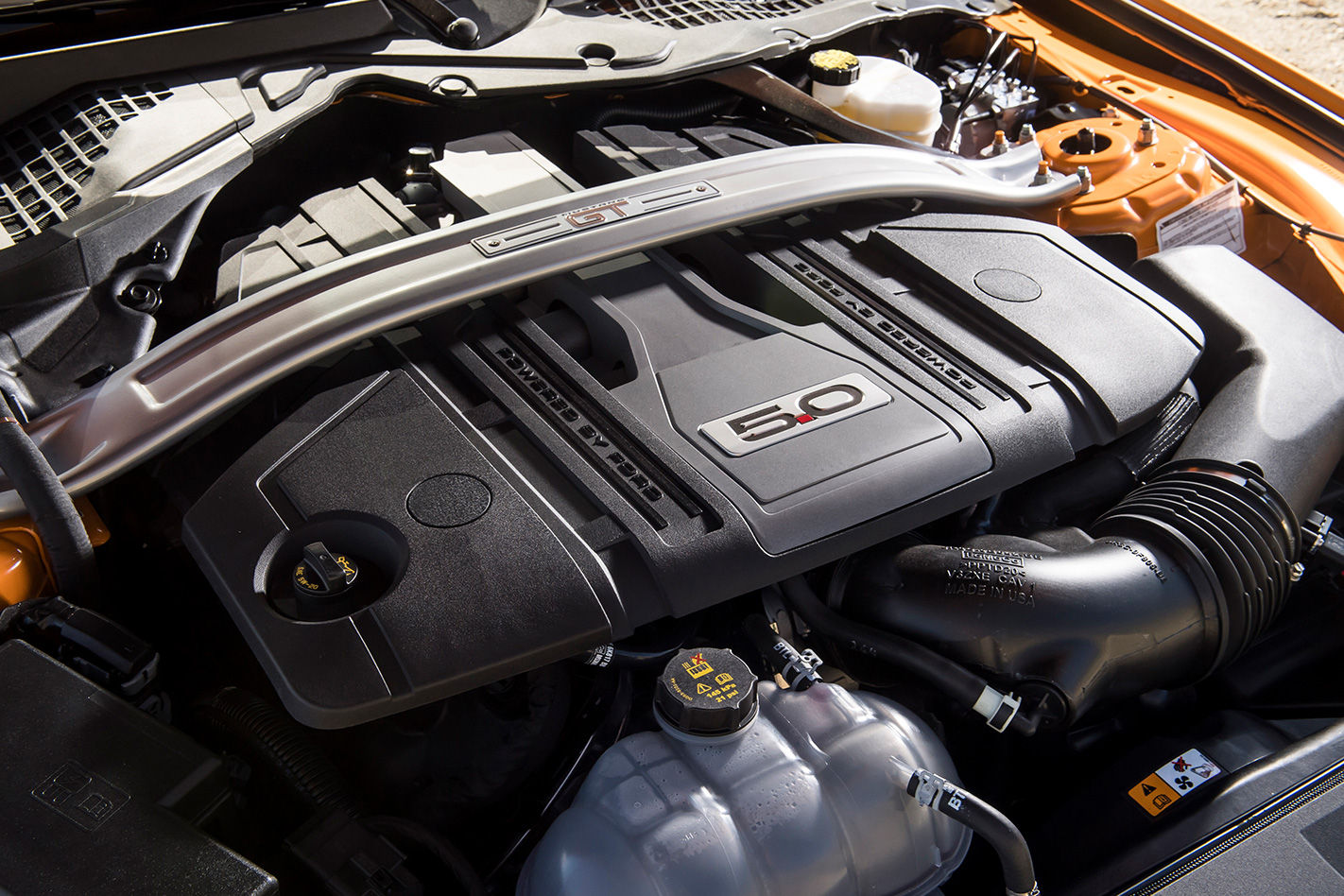
Spot a Mustang GT on Australian roads and you can almost guarantee it will have an aftermarket or optional Ford Performance exhaust fitted. It seems most owners take to the standard car’s all-bite, no-bark persona with a set of open pipes.
US buyers have to pay an extra $1000 for the Active Valve system, but thankfully Ford Australia has included it as standard in the GT. In normal mode the gorgeous stainless system sounds as serious as an atmo Mercedes-AMG 6.2-litre V8, but flick the drive mode to Sport and you are in for a treat. It’s like someone tripped over your Fender amp and accidentally rolled the volume to 11. When you strum a power chord all the windows explode.
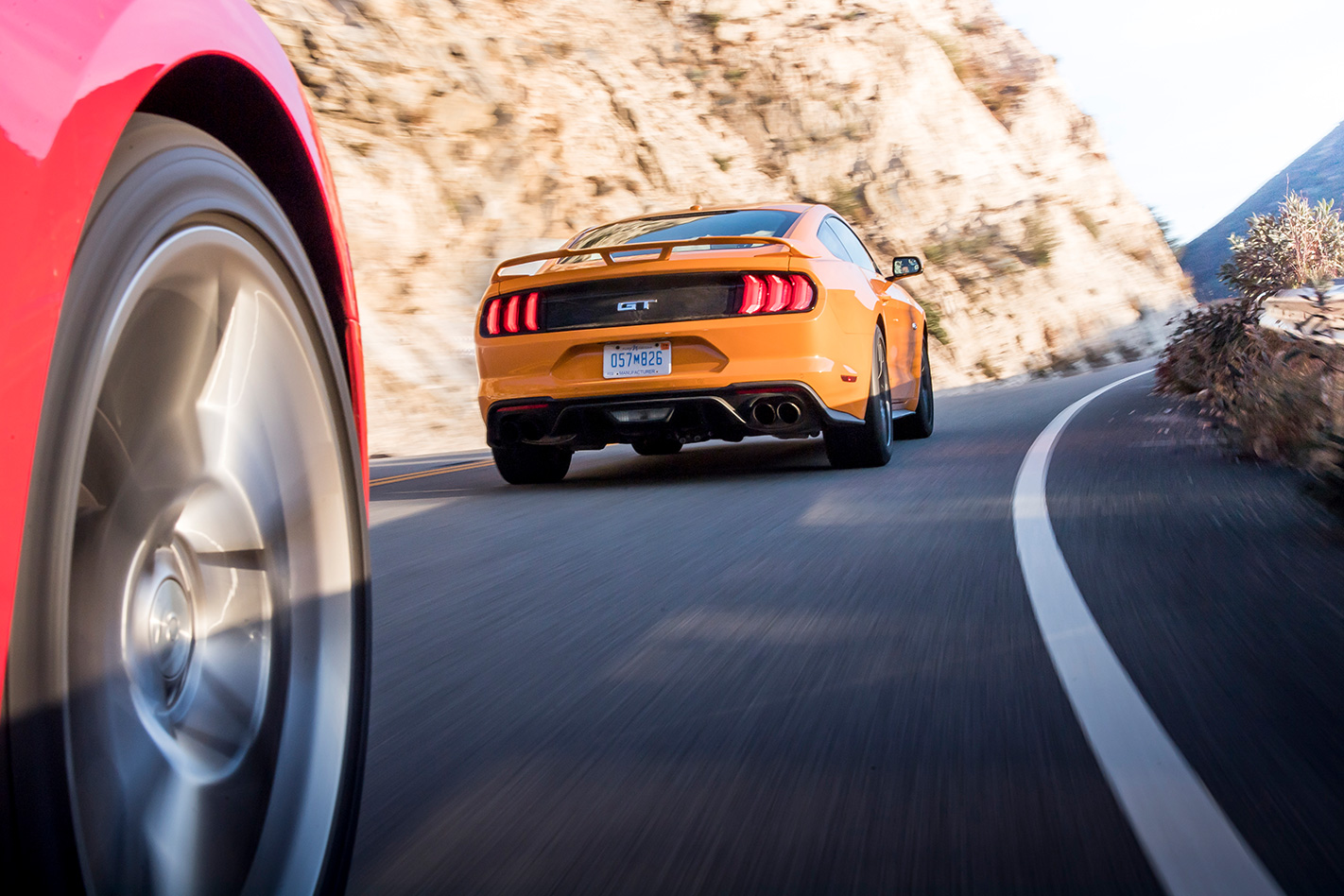
The bigger capacity Camaro is the torque champ with 614Nm (versus 569Nm for the Mustang) and the in-gear acceleration difference is clear. Despatching slow traffic with a swift overtaking manoeuvre takes less effort in the Camaro.
Unleashing this sort of grunt in this pair’s ancestors would be dangerous work, but they’ve come a long way.
I’ve grown to know the Mustang pretty well over a series of hard drives back home, so the pointy front end, vast lateral grip and engaging character are familiar. Optional MagneRide adaptive dampers are new for the 2018 version, the suspension has been retuned, and the good news is the Mustang has grown incrementally better.
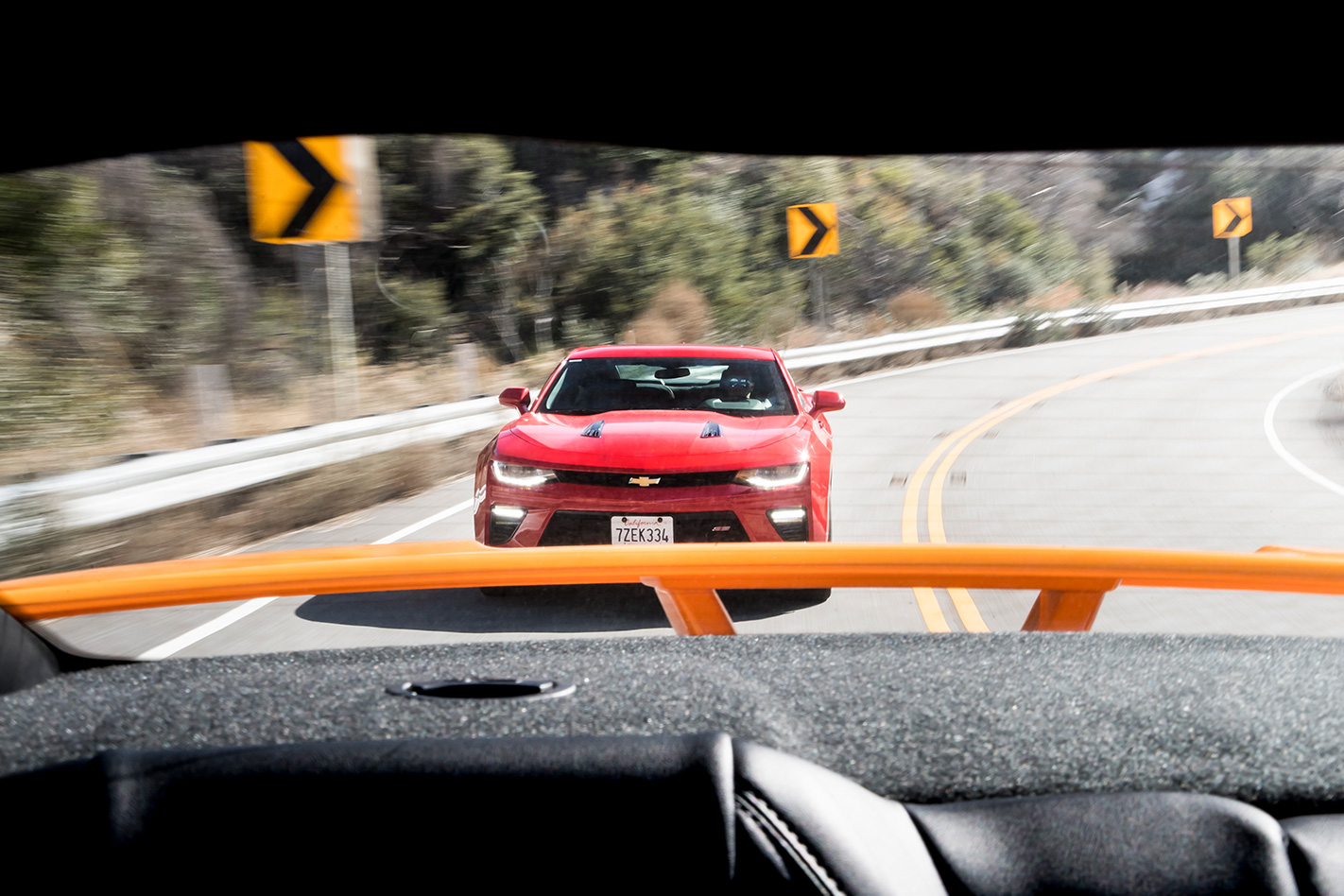
Can the Camaro compare? Damn straight. Its voracious appetite for corners is the most surprising and satisfying part of the Camaro package. Where the Mustang has a suppleness in corners that is perhaps more comforting and accessible, the Camaro is seriously precise and flat. Owners with a taste for track days will gravitate towards the Chevy’s relentless desire to turn and burn.
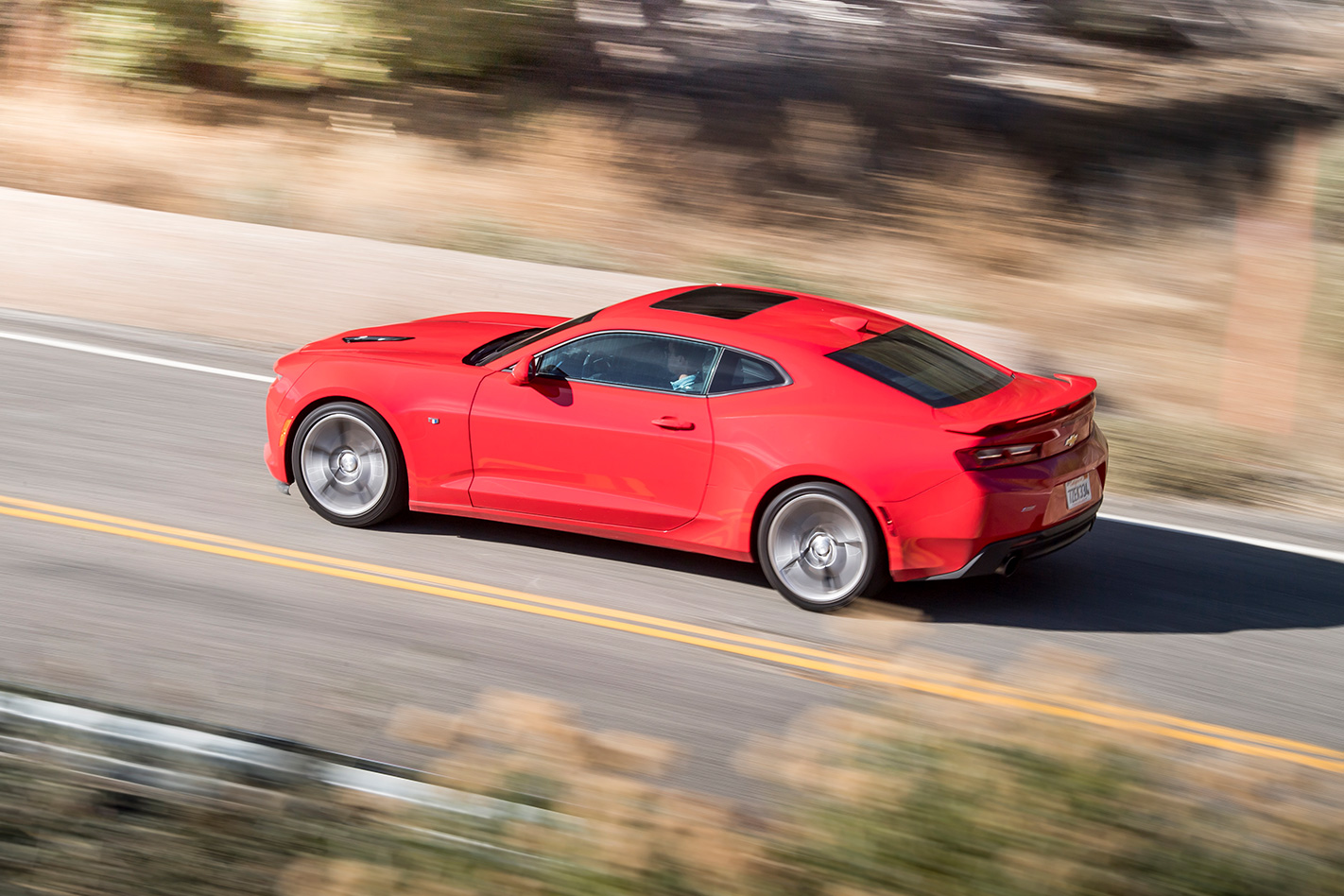
By comparison, the Chevrolet remains staunchly expressionless right up to the point the rear boots are about to peel off. On these canyon roads, where enthusiastic drivers regularly take an excursion into the scrub and the fines for crossing a solid line are vicious, it pays to adjust quickly to the different approach needed in the Camaro.
While the Ford is more friendly and forgiving and won’t punish you for being off the ideal line, the Camaro is more demanding and requires greater precision. Get it right in the Camaro, though, and it will carve corners with intoxicating pace.
The sweeping canyon roads let you maintain momentum and speed, so we didn’t give the brakes a track-style workout to test the onset of fade. We can say, though, that both coupes can shed speed to match their prodigious acceleration, courtesy of six-piston Brembos on the Mustang and four-piston calipers on the Camaro.
There’s a lot to take in and co-driver Lyn and I pull up to a remote mountain siding to compare impressions. Our chat is quickly interrupted by a heavily modified Baja Bug that arrives in a din of air-cooled Volkswagen clattering and proceeds to rip up a large puddle in a frivolous display of doughnuts, before exiting in a shower of mud and stones. Yep, Californians really are car nuts.
Sunny, mid-20-degree days and clear blue skies make it easy to forget this part of the world is in the midst of winter, but the sun disappearing behind the mountains not long after 5:00pm prompts us to head back into the metropolis to partake in an all-American pastime.
As I scull probably the most welcome cherry Coke I’ve ever tasted and nick some of the photographer’s fries, I pause to reflect on the pair of modern muscle coupes everyone is ignoring. It’s surprising that two cars so closely aligned in philosophy bring such different characters and skill sets.
The Mustang’s driver-friendliness, sophisticated engine and slick dial set earn it praise, while the Camaro counters with incredibly sharp dynamics and kick-in-the-pants design. The Ford design and engineering team faced the challenge of appealing to a whole new audience without alienating the longstanding American buyer.
In attempting to please many markets the Mustang has perhaps taken a small sideways step away from the muscle-car template. But is being an all-rounder really something you can criticise? And perhaps the patriotic Yankee Camaro would even benefit from a similar dose of cultural diversity?
Is a little exclusivity and dynamic sharpness worth an extra $27K? At that price point, the Camaro is bound to come under harsher scrutiny, but it’s hard to put a price on the strength of brand allegiance.
The Camaro and Mustang may be taken largely for granted by their countrymen, but a General versus Blue Oval war with so few doors hasn’t been waged Down Under since the early ’70s when the Monaro butted heads with the Falcon Hardtop. In the glowing embers of the homegrown, high-performance era, this is the new story that rises from the ashes.
Drivetrain change gives Citroen’s quirky crossover even more appeal.
TELL ME ABOUT THIS CAR
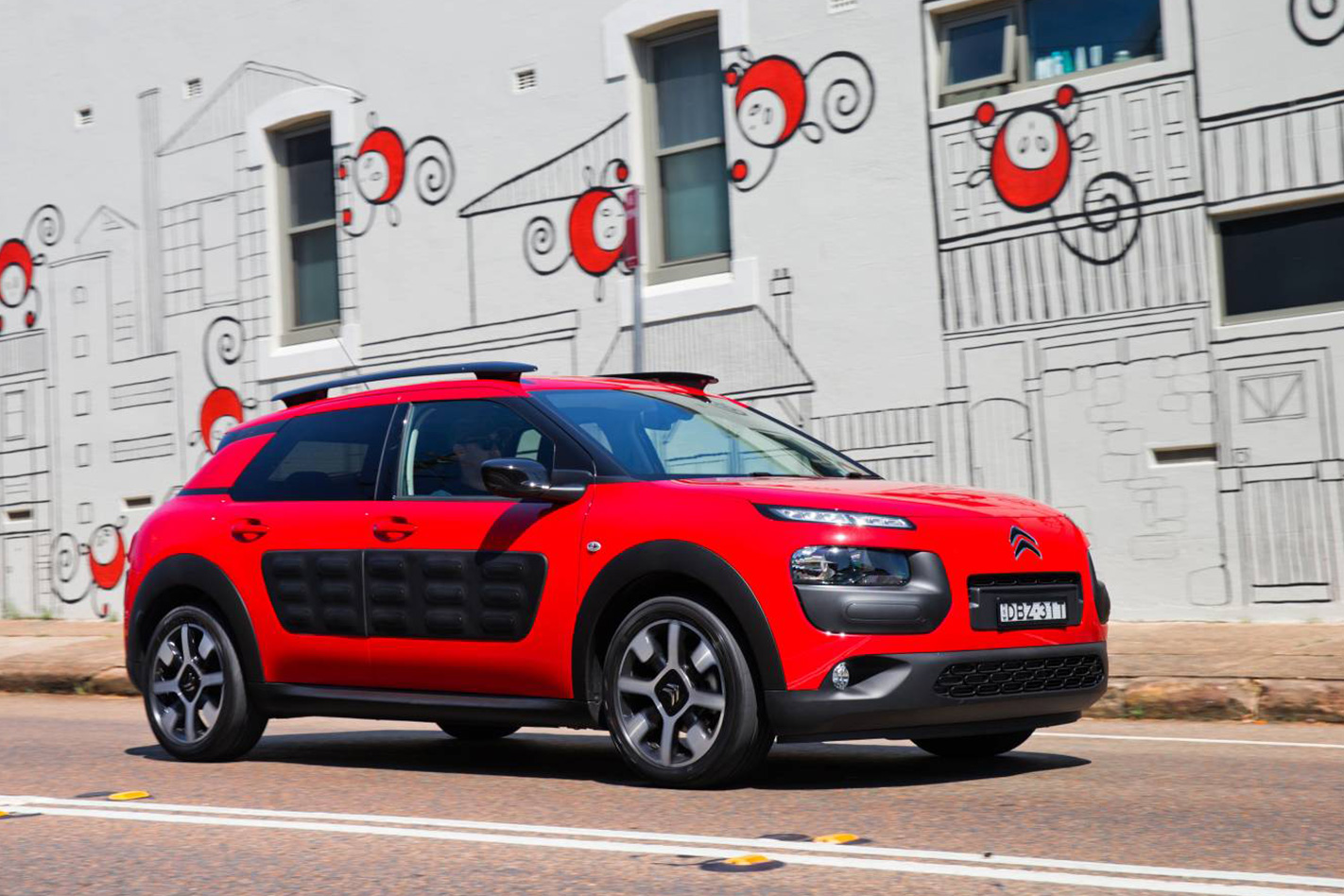
The Citroen C4 Cactus is a compact SUV that has been around since 2016 in Australia. Its eccentric Gallic styling and high level of comfort were well received here, only for it to be let down by its two powertrain options – a gutsy, but manual-only, three-cylinder turbocharged petrol engine, or a 1.6-litre turbo diesel coupled with a clunky and unbecoming semi-automatic transmission.
Citroen finally saw sense late last year revamped its line-up, deleting the diesel and adding a version with a proper six-speed automatic transmission mated to the sweet 1.2-litre petrol engine. As before the C4 is available in ‘Exclusive’ trim solely, with the 1.2-litre manual costing $26,990 and the auto $29,690.
STRENGTHS
- The 1.2-litre ‘PureTech’ turbo petrol engine, coupled with the six-speed auto is a big improvement over the semi-auto diesel powertrain. It feels nimble around town but doesn’t mind the open road either. It has a Sport mode for a bit of extra driving enjoyment, and Snow setting for slippery surfaces.
- It’s spacious inside. The back seat has the width to fit three grown men, though legroom is a little tight. Its cargo space is sizable at 358 litres, which is about average for a compact SUV.
- The official fuel consumption rating is a frugal 5.1L/100km with the automatic transmission, not much more than the manual.
- Once you work out what the steering wheel buttons do, you’ll find it simple to operate the infotainment system, which is little like a labyrinth at first when trying to navigate via the touchscreen.
- The cruise control is simple to operate from the steering wheel and there’s even a quick speed-limit selector which shows common speed limits on the touchscreen to set your speed to.
- The front seats are comfortable with a nice wide backrest and upward tilting cushion that supports your thighs.
- The suitcase-style, upward-opening glovebox looks cool and can store quite a few things.
- If you’re reading this review you probably agree that the Cactus looks cool and has oodles of charm.
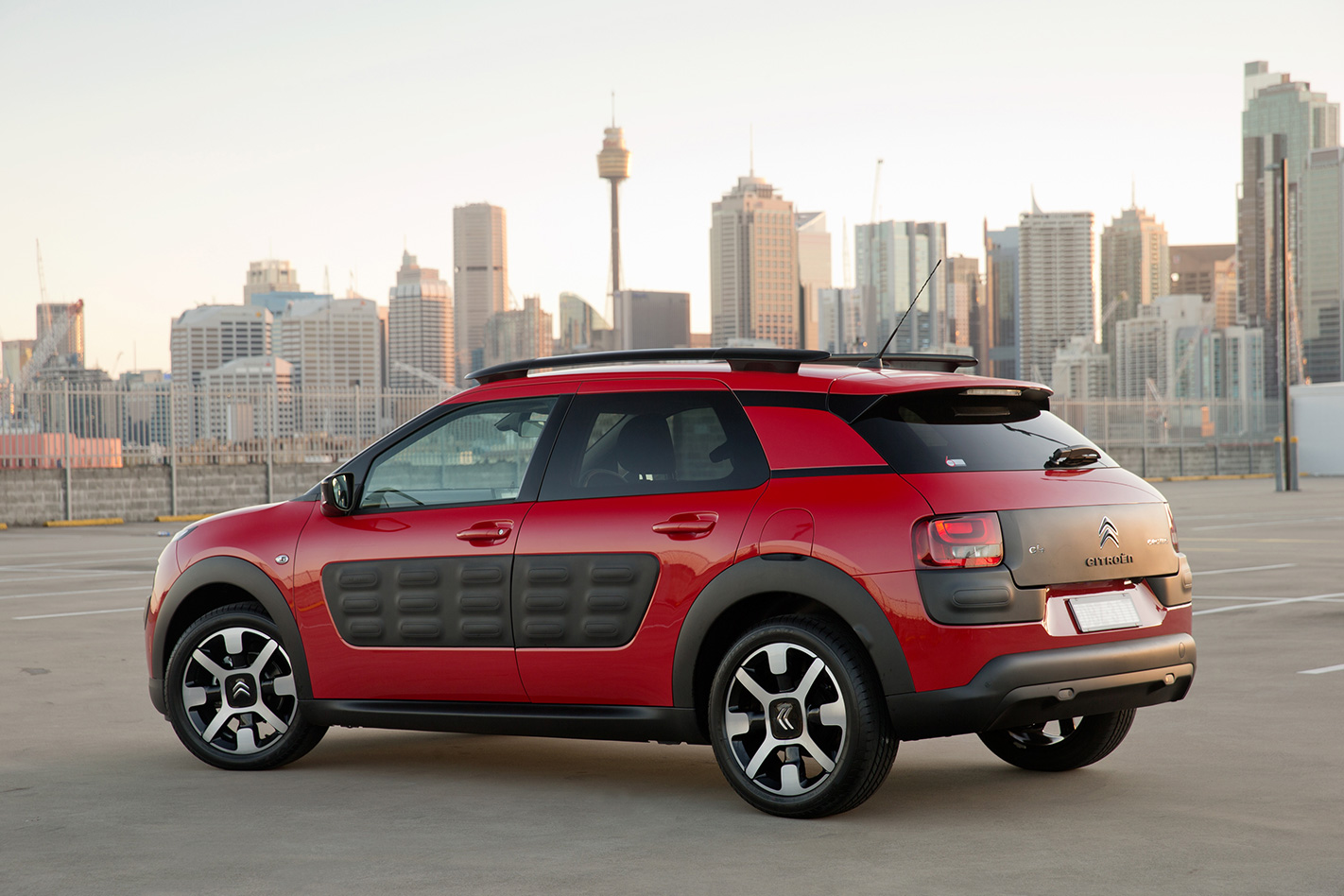
- The air-bumps on the side of the doors help avoid scratches but are also available in a few different colours giving an opportunity to customise the look of your Cactus.
- It’s covered by Citroen’s five-year warranty with five year roadside assist.
- The steering wheel doesn’t have a reach adjust, which can make it difficult to find the best seating position, which is a shame because the seats themselves are comfortable.
- Wind-noise and tyre-noise can be an issue in the back seats.
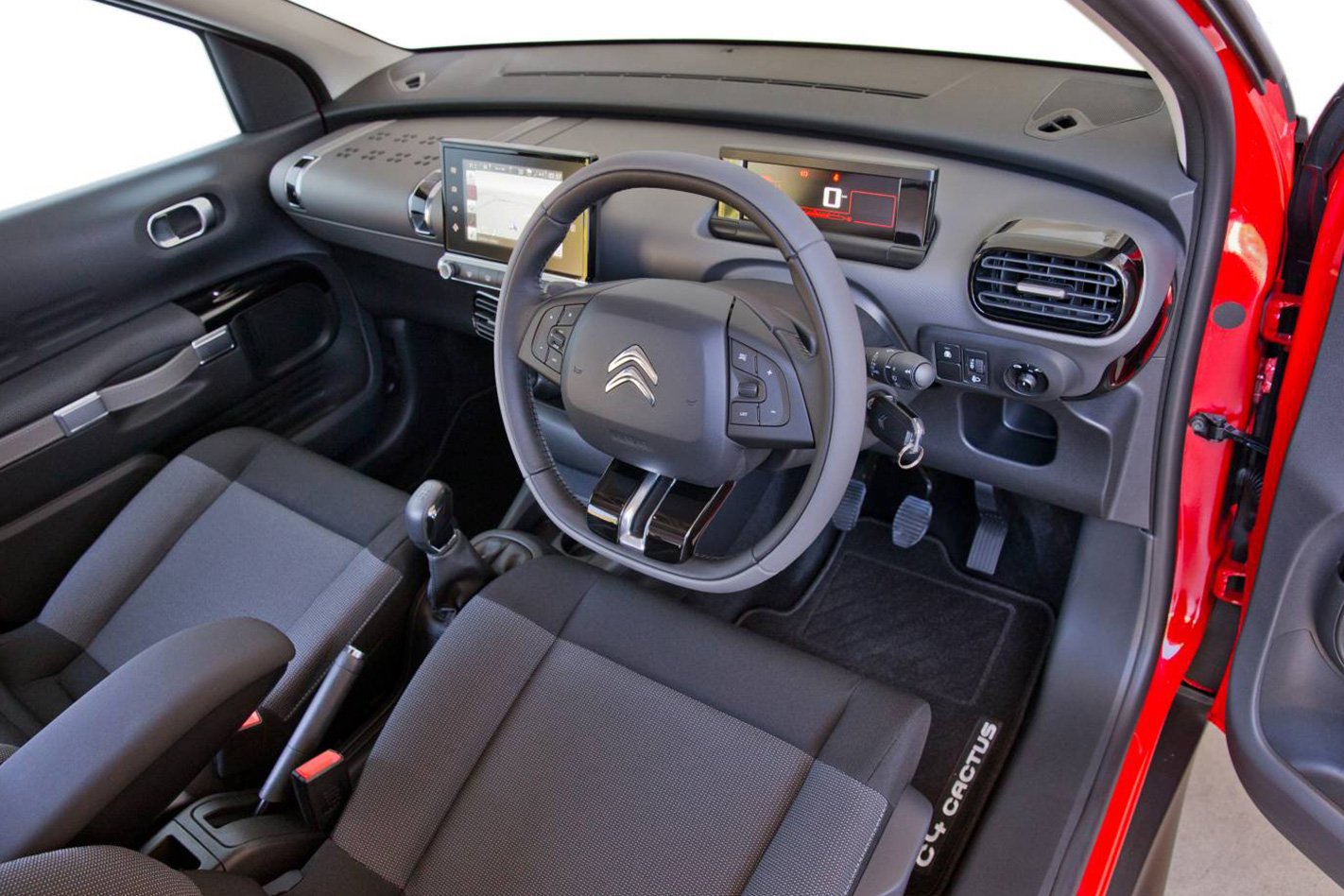
- Despite the interior space there aren’t many cabin storage options beyond the big glovebox. There are a couple of tubs to put your keys and phone up front, but there’s nothing at the back except for door bins, not even seat pockets.
- The back windows pop out a few centimetres, which suits the Cactus’ styling but isn’t as nice as being able to roll them down fully on a nice day.
NO CHILD should grow up disadvantaged – especially those who are sick – and Aussie car enthusiasts have been doing their bit to help out for more than 30 years.
Variety is an international charity formed in 1928 that provides help and support to sick children. First introduced to Australia in 1975, Variety has raised more than $220 million for kids in need and shows no sign of slowing down.
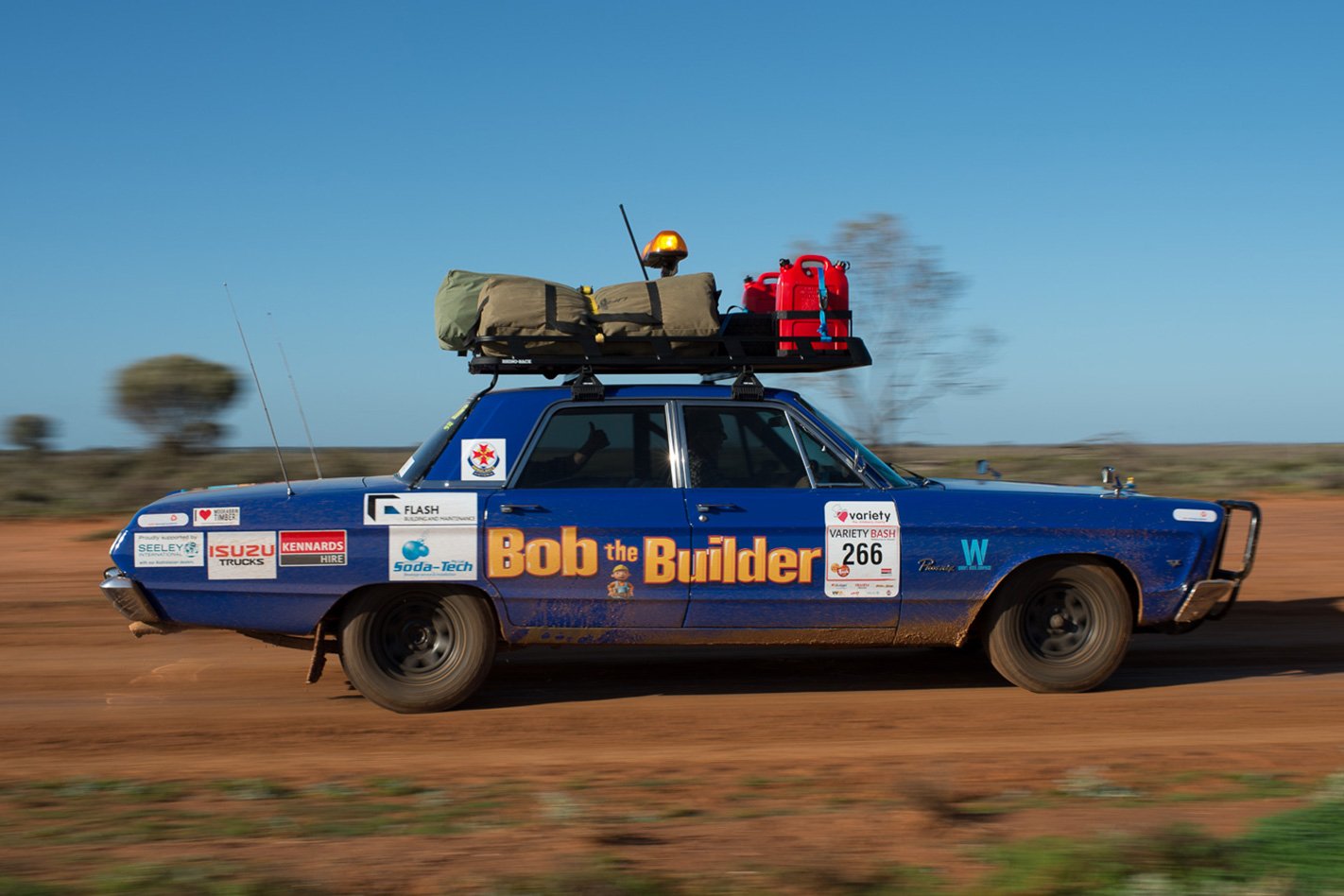
In Oz, the charity’s major event is the Variety Bash, which was started by Australian entrepreneur Dick Smith in 1985. It involves a drive across outback Australia with like-minded travellers from all walks of life in distinctively prepared vehicles.
Since its inception more than 30 years ago, $22 million has been raised by the Victorian chapter alone, and countless “anything goes” journeys have been undertaken across our country.
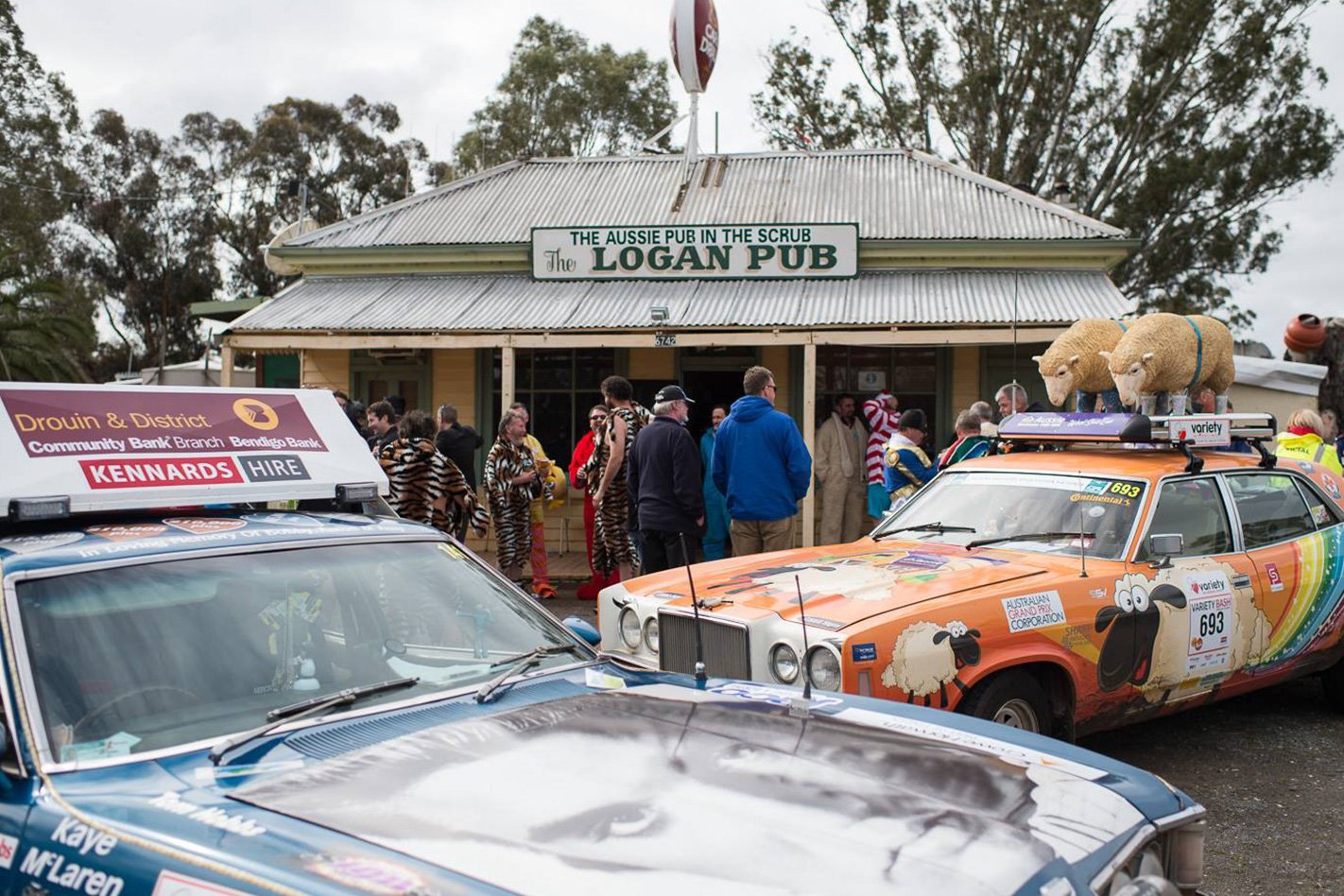
While the kids are the main focus, these communities are positively impacted as well, with Bash participants injecting more than three million tourism dollars into the rural economy each year.
The eclectic bunch of Bashers roll through towns wearing colourful costumes in equally colourful cars, and are able to meet with the kids they’re directly helping through their fundraising efforts.
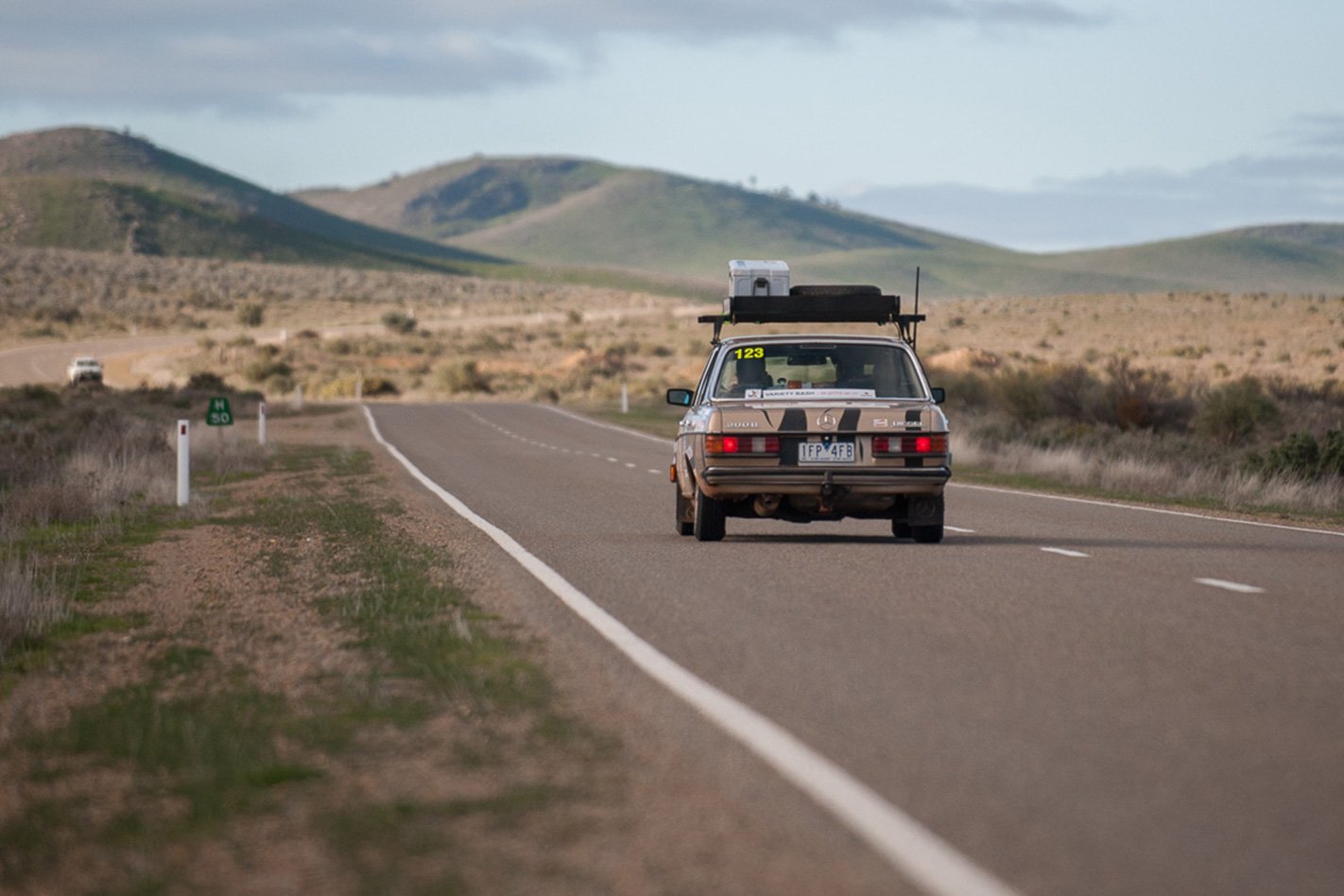
If this sounds like your speed, you’ll need a 30-plus year old car in order to participate and at least one companion to journey with. Entry costs $660 for the event itself, and first timers are required to raise $5,000 in order to get to the start line, while veterans shouldn’t have trouble hitting their $7,000 goal.
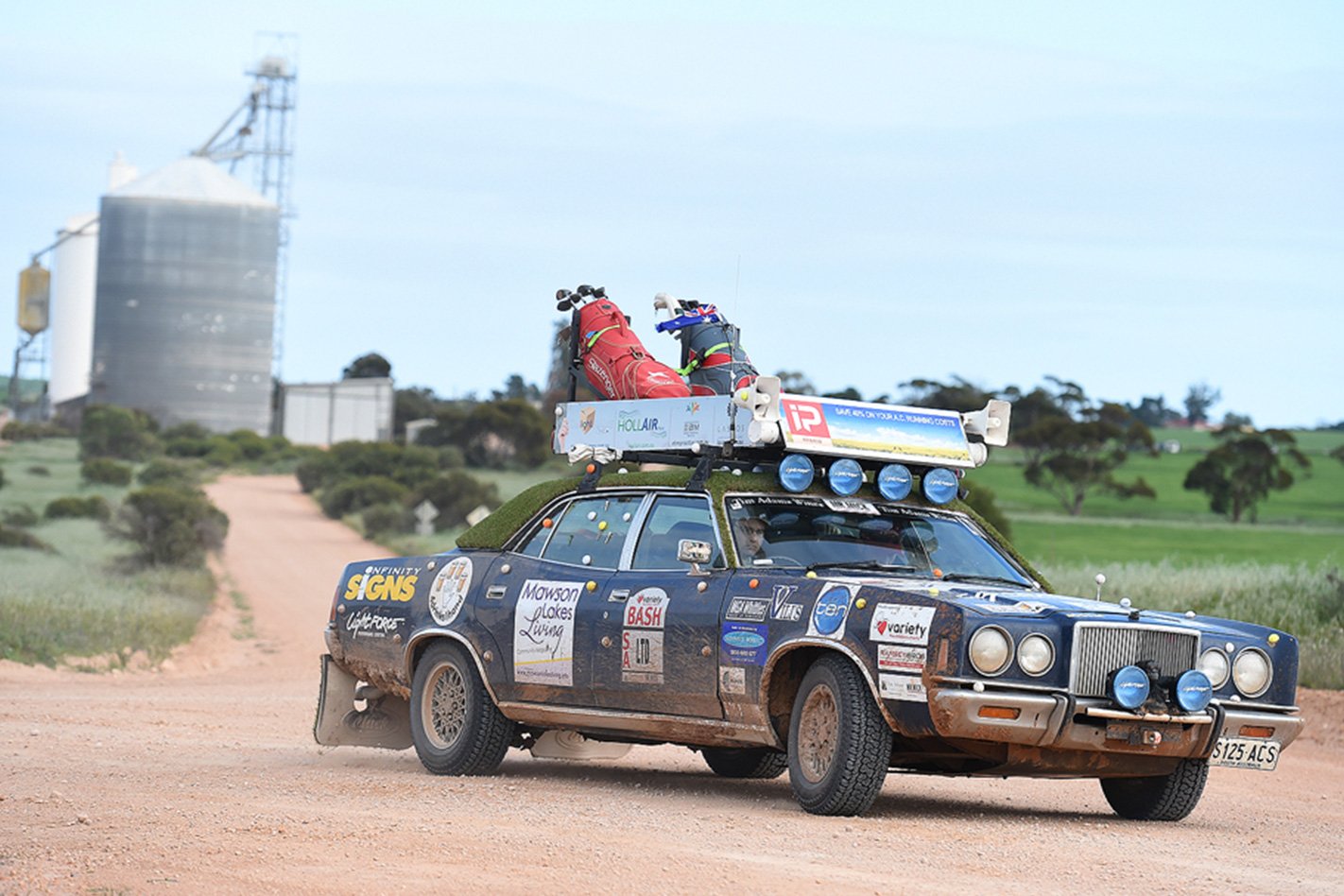
We at Wheels love nothing more than an epic outback drive, so tag along to this epic Aussie journey and raise some money for charity along the way.
To enter, visit the Variety Bash website, at Variety.org.au
Overkill is everywhere. A hollow-point bullet is designed to not just shoot stuff, but to explode once it has pierced whatever it hits. Clearly, simply shooting a hole in something is not enough for some people.
This feature was first published in MOTOR magazine’s February 2009 issue.
In the case of my grandmother, strawberries just weren’t sweet enough – she used to sprinkle sugar over them. She was almost blind from diabetes, but she could find that sugar-bowl by feel. But overkill is not always a bad thing.
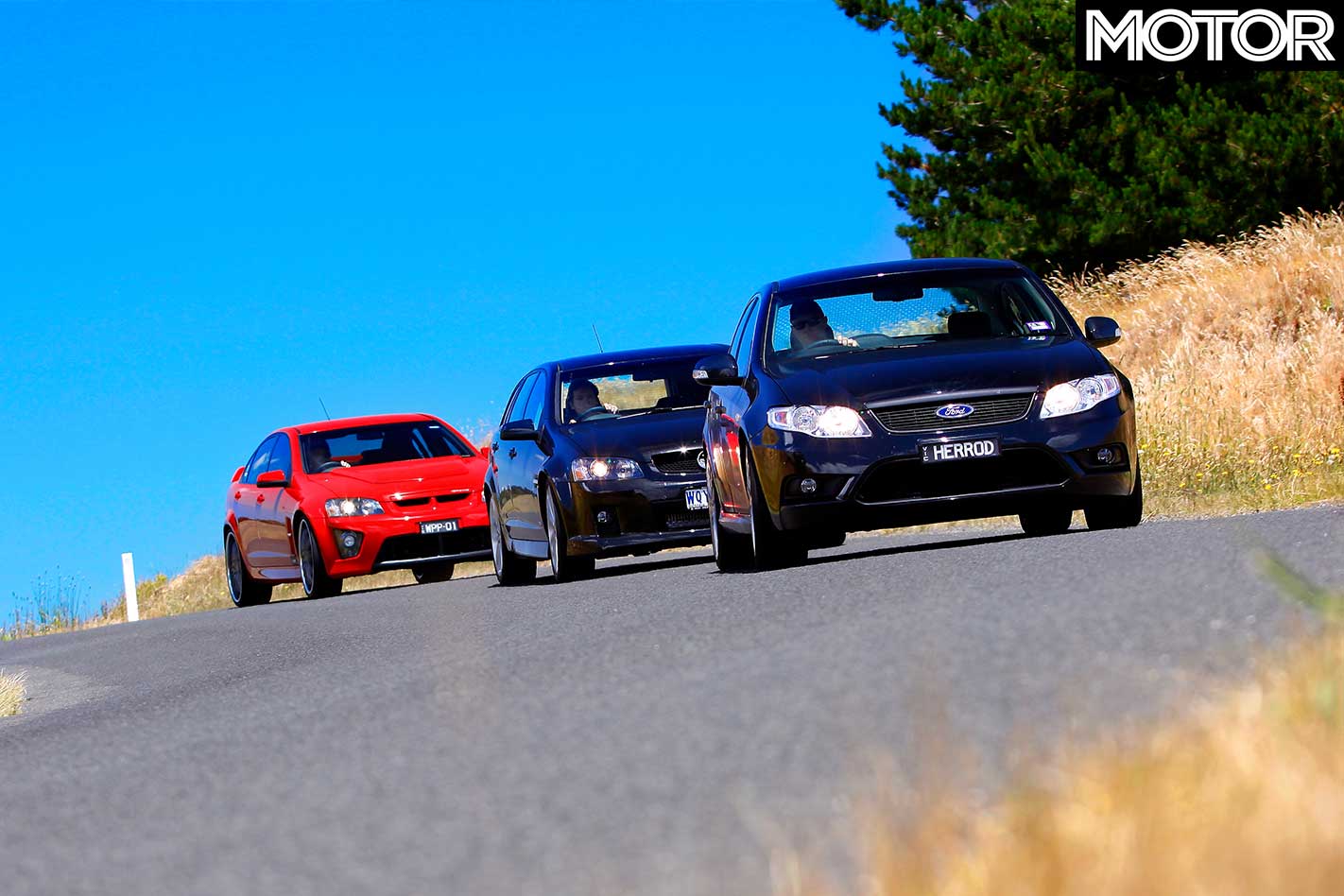
Forget that a Commodore with a 6.0- or 6.2-litre V8 is more than even the most fervent tappet-head was dreaming about even a decade ago. And forget that a home-brewed Falcon six with a V8-bashing factory intercooled turbo was equally the stuff of fantasy. Forget it all, because the game has really moved on.
See, there will always be a core group of people who reckon the stock stuff is a bit on the wimpy side. And it’s not that the factories don’t cater for them, because that’s the whole point; people like that don’t want what everybody else can buy off the shelf. They want more. They want something special. And they want it now.
Of course, as the off-the-peg gear gets better and faster, so too does the aftermarket up the ante in response, continuing to give the world’s headbangers what they crave. Or more.
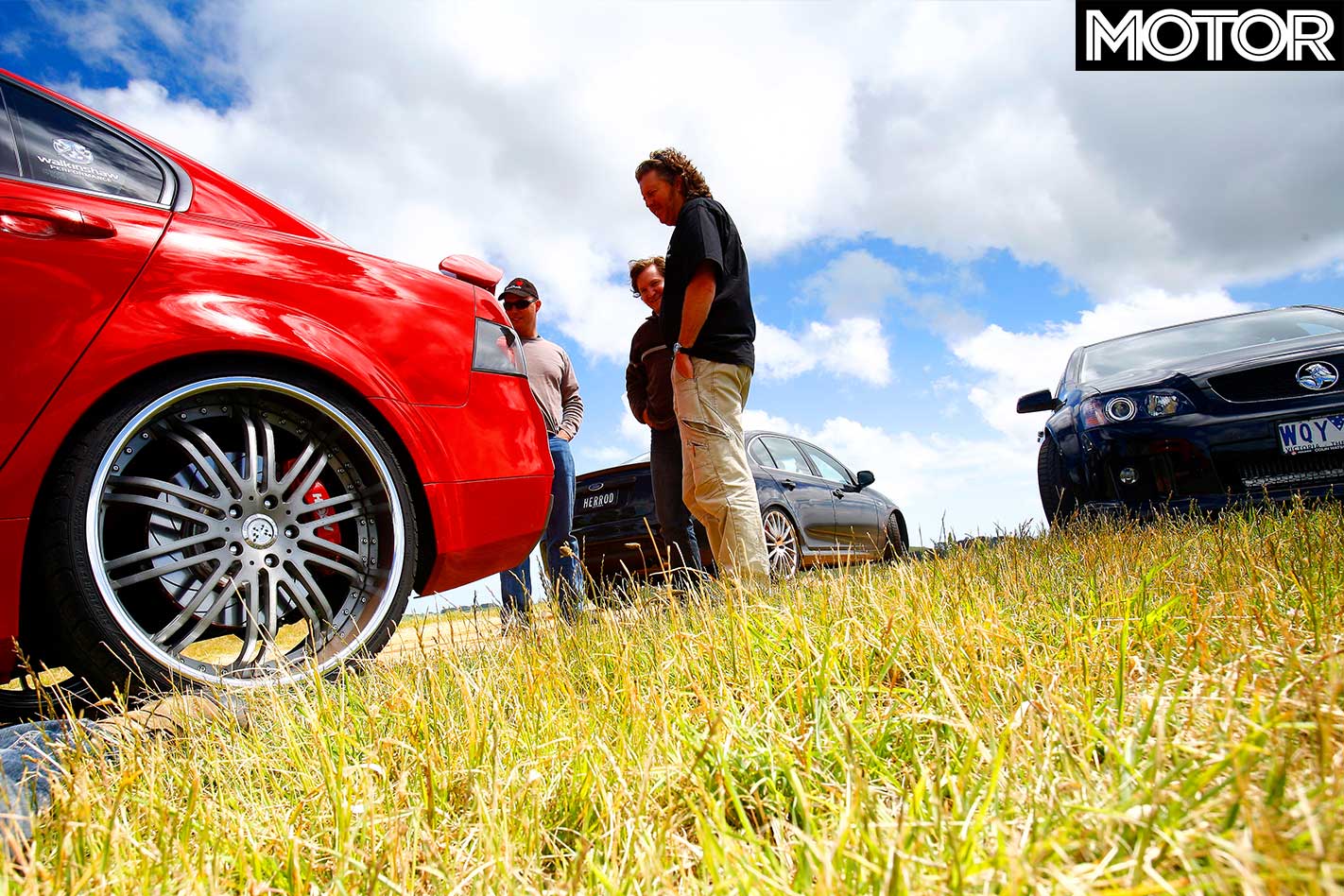
But more than that, the aftermarket modifiers haven’t just had to get more creative, they’ve had to get a whole lot smarter. Computer control of everything from the injection to the glovebox lid has meant that modifiers have had to get savvy and get there quickly. And when you sample the latest offerings from the mainstream modifiers (now there’s an oxymoron) you can see that overkill has never been more tempting.
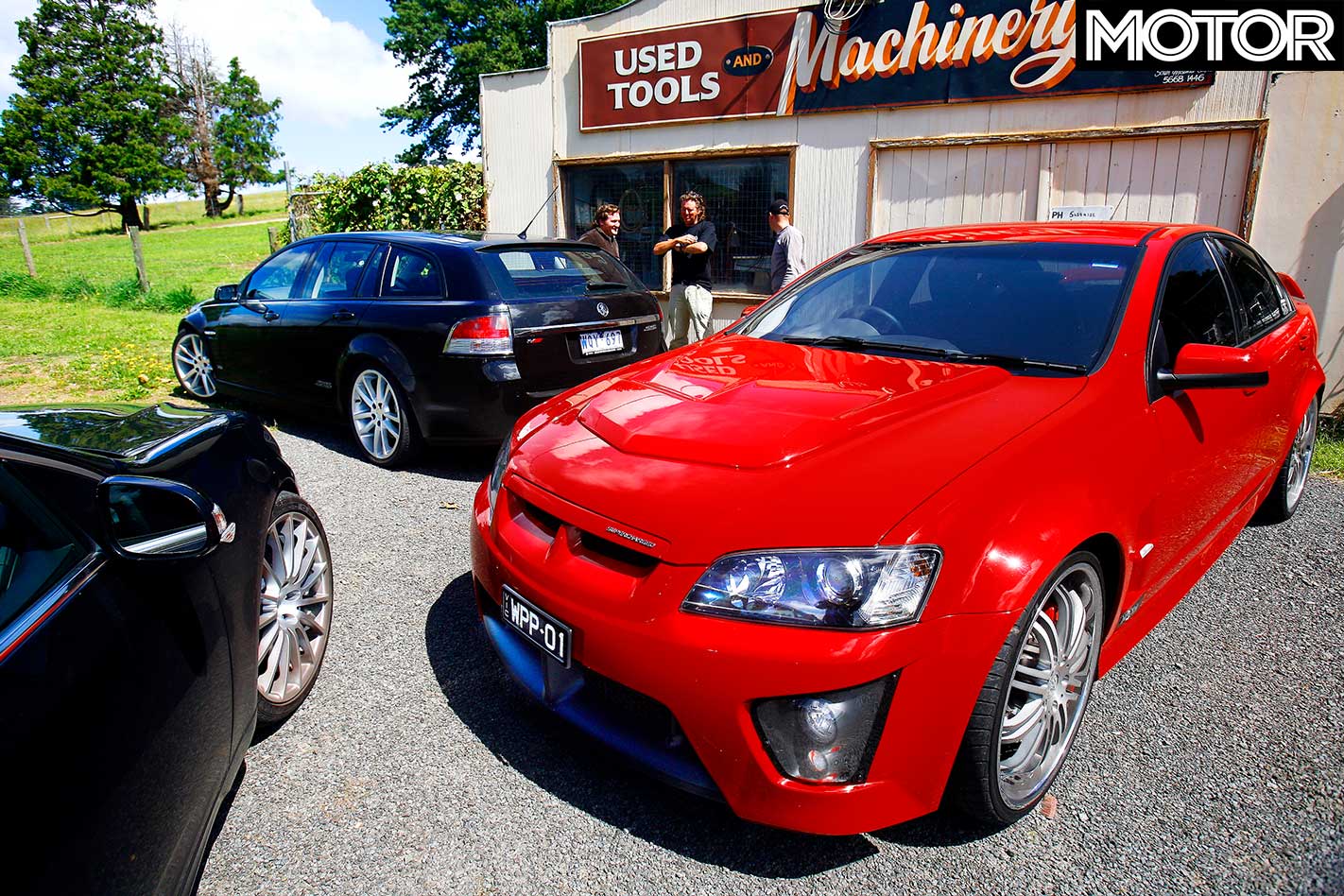
Let’s start with the Walkinshaw Performance treatment, as applied to an HSV Clubsport. Right from the moment you sidle up to it, it’s a bit of an eyeball wrencher.
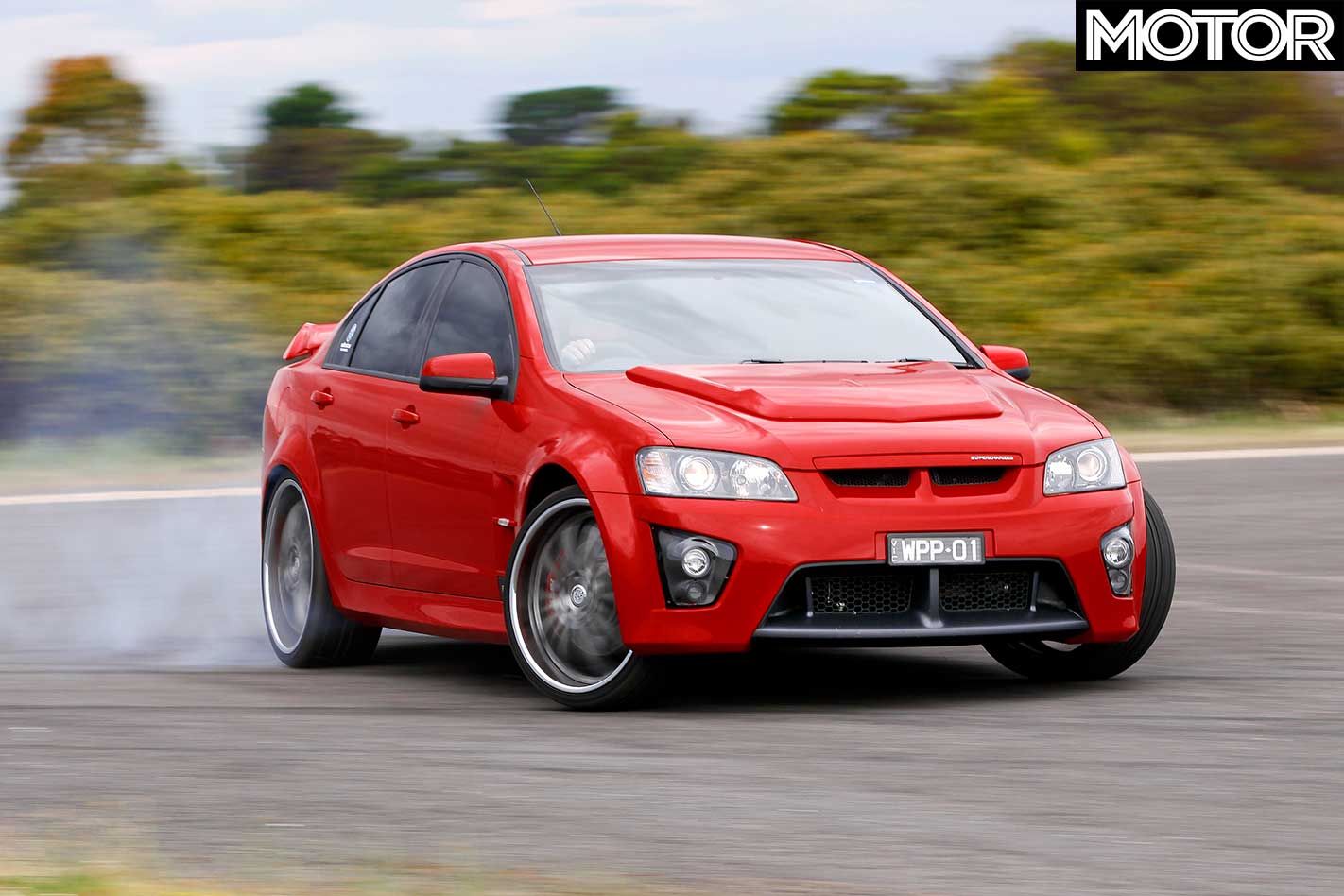
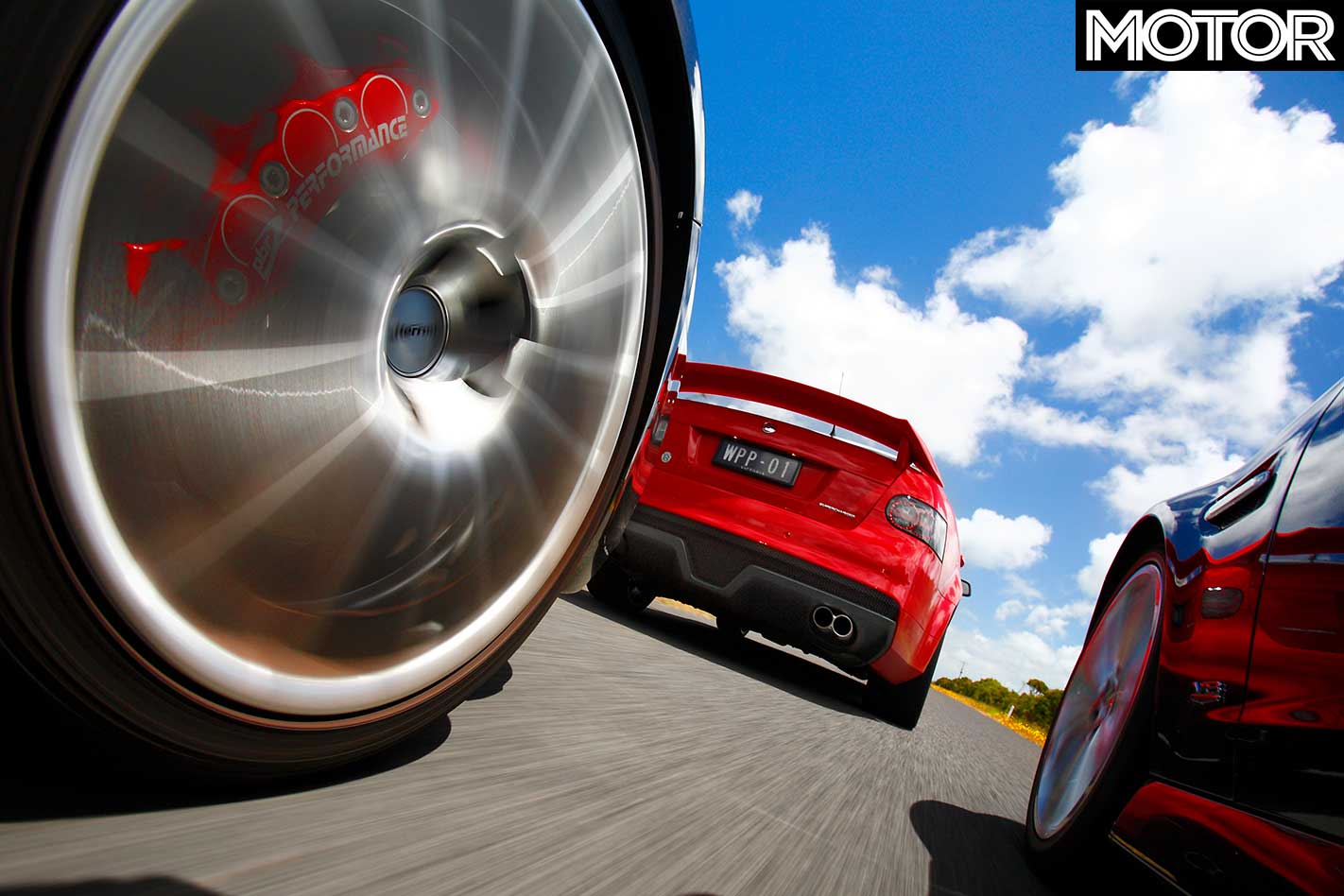
Same goes for the 22-inch alloys, which are really the only way to make such big brakes look lost and lonely inside the rim. More than that, the painted-on 245/30 front and (squeeze me?) 285/25 rear tyres eradicate any ride quality once you’re moving beyond urban speeds, or the bumps get bigger than pimples.
I’m also left wondering whether anybody at WP has actually driven this car any distance, because pretty much any bump is enough to send the front tyres and wheelarches into serious interface. Even in a dead straight line, the fronts smack into the arches with wince-inducing results and, frankly, you couldn’t live with it like that.
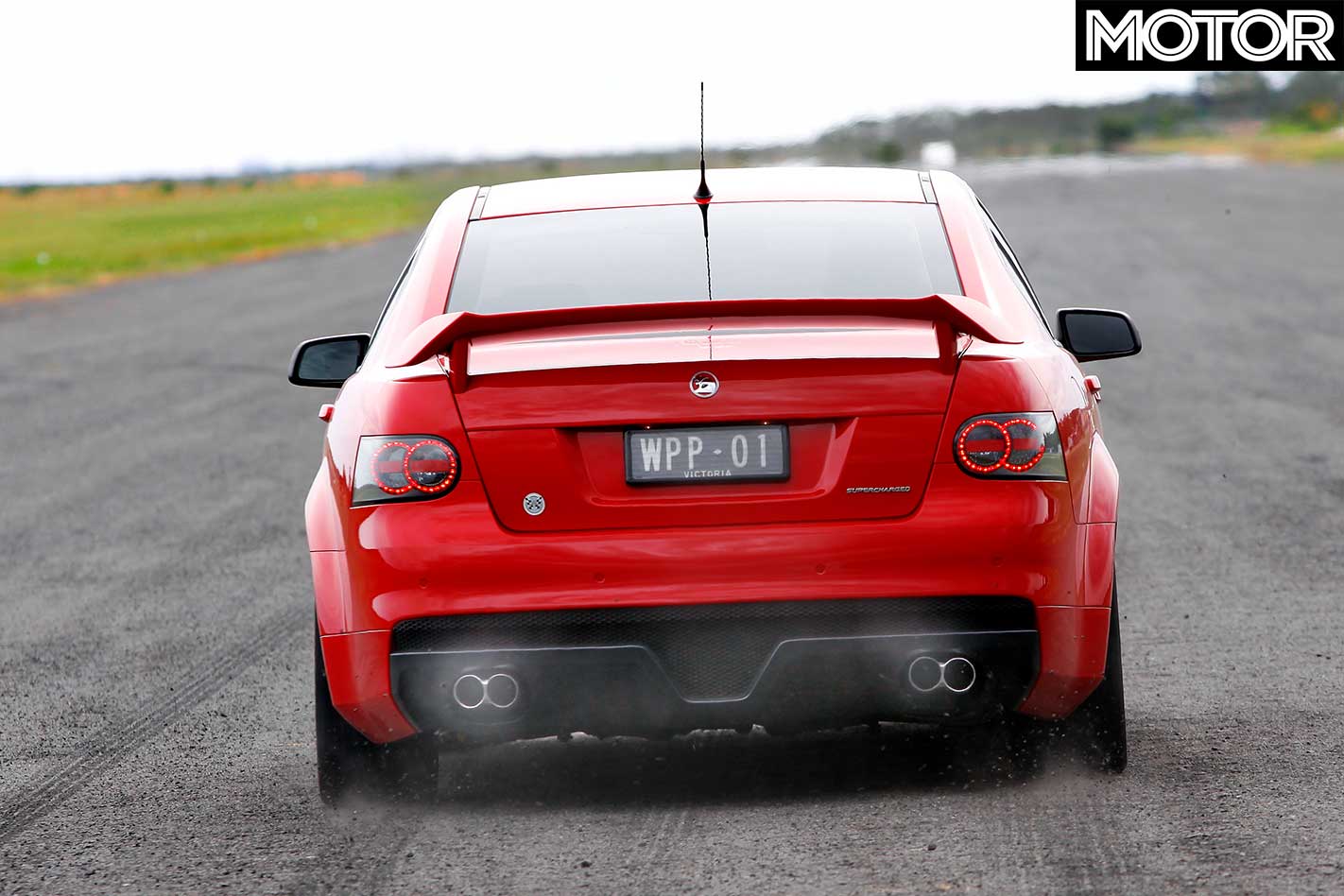
Keeping it all out of the dirt is WP’s suspension package with shorter springs and a shorter shock body, as well as revised bump-stops. But, again, those monster wheels compromise the end result; they’re so damn tall that the Clubby looks like a rollerskate on steroids.
But you and I both know that it’s what’s under the lid that counts here. And in that regard, the Walky has got things absolutely covered off.
The 6.2 retains the stock 10.7:1 compression ratio, which is a bit of a surprise when you see what’s been bolted to the top of it. The twin-screw blower is painted to match the rest of the car and sits there like a squat little red Buddha, calling the shots to the tune of 470kW by the time 6500rpm has turned up.
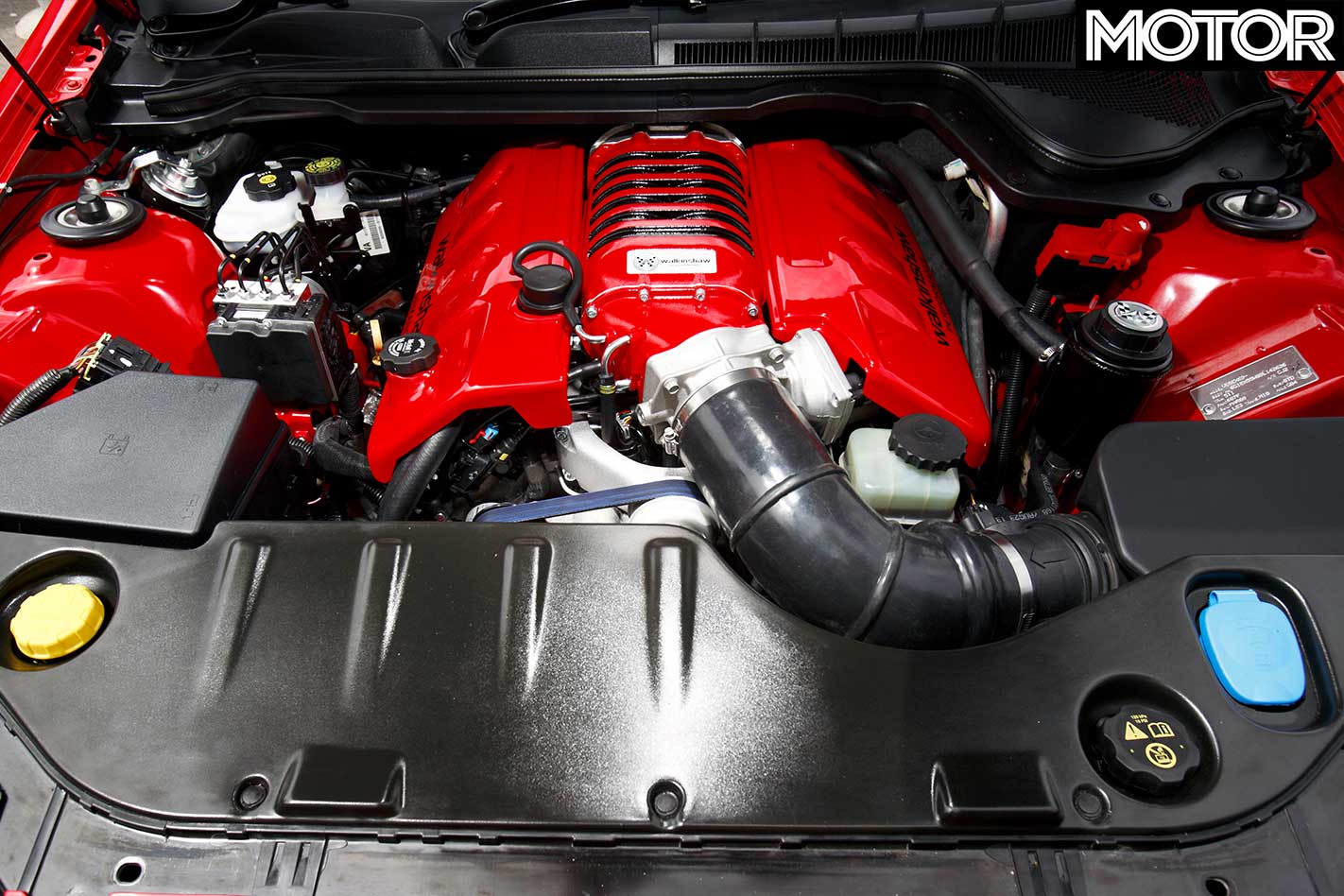
With the six-speed manual (and a tougher LS7-spec clutch), there’s an insane level of squirt on tap along with a distinctive – and loud – blower whine that won’t please everyone, but which we reckon sounds the biz.
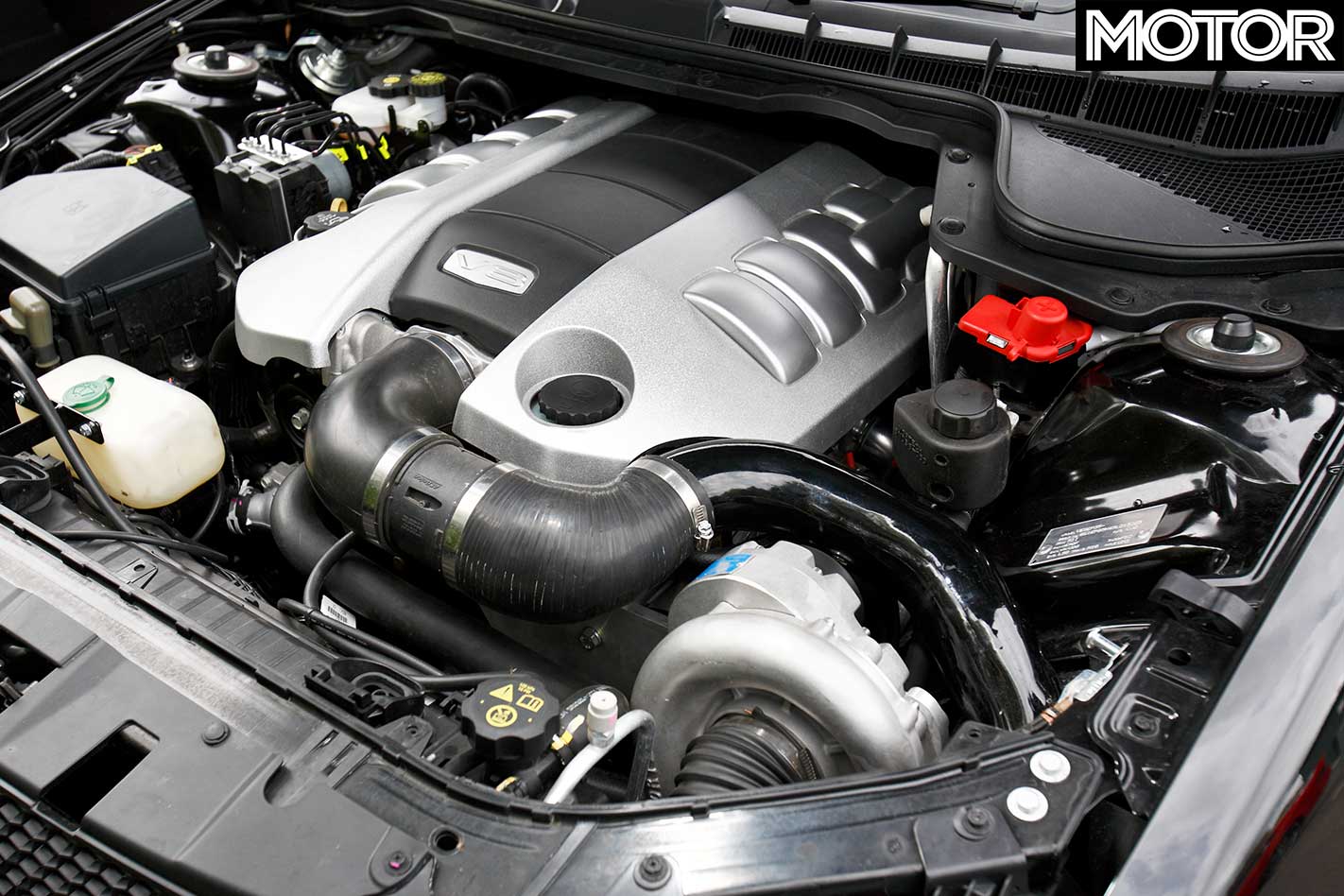
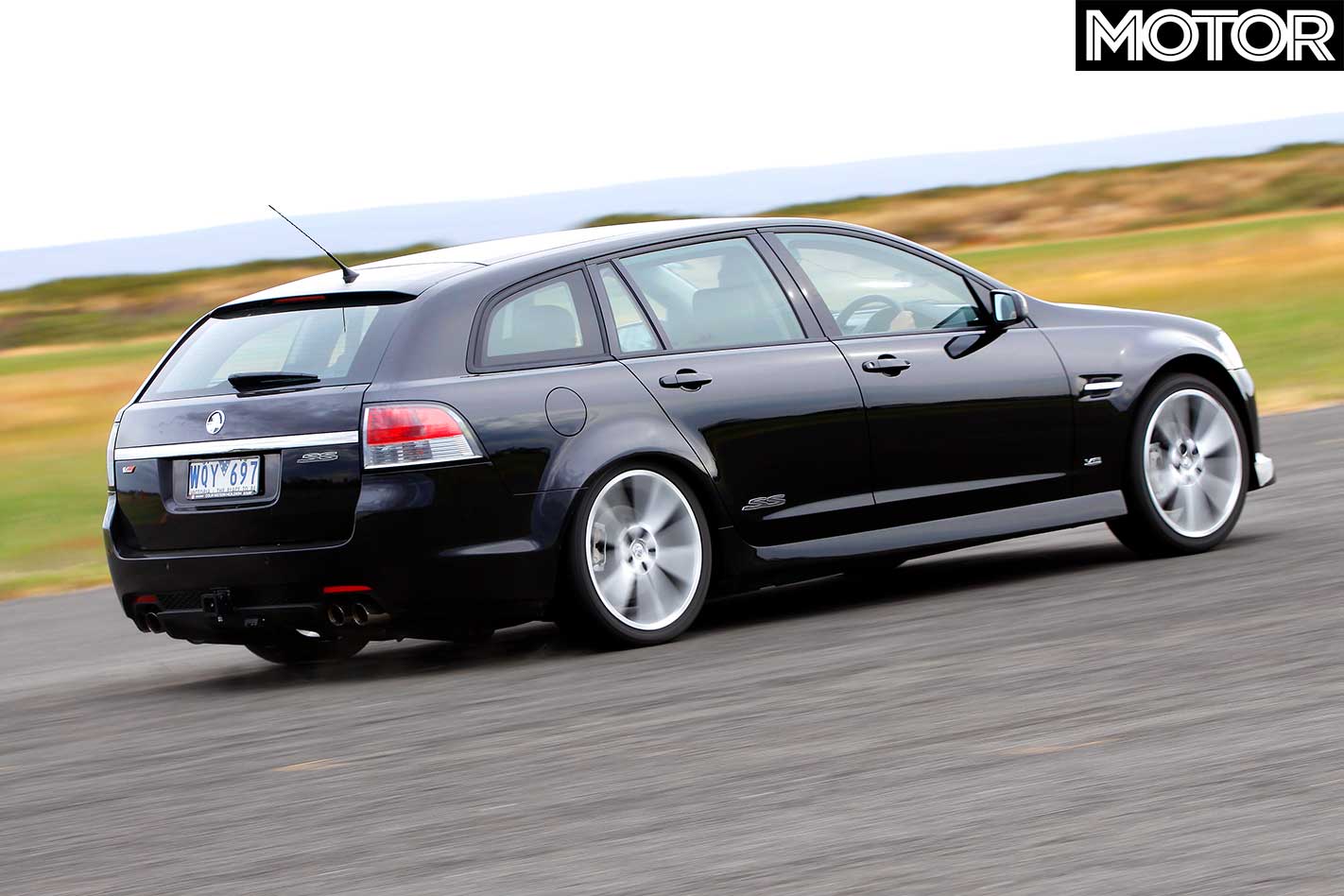
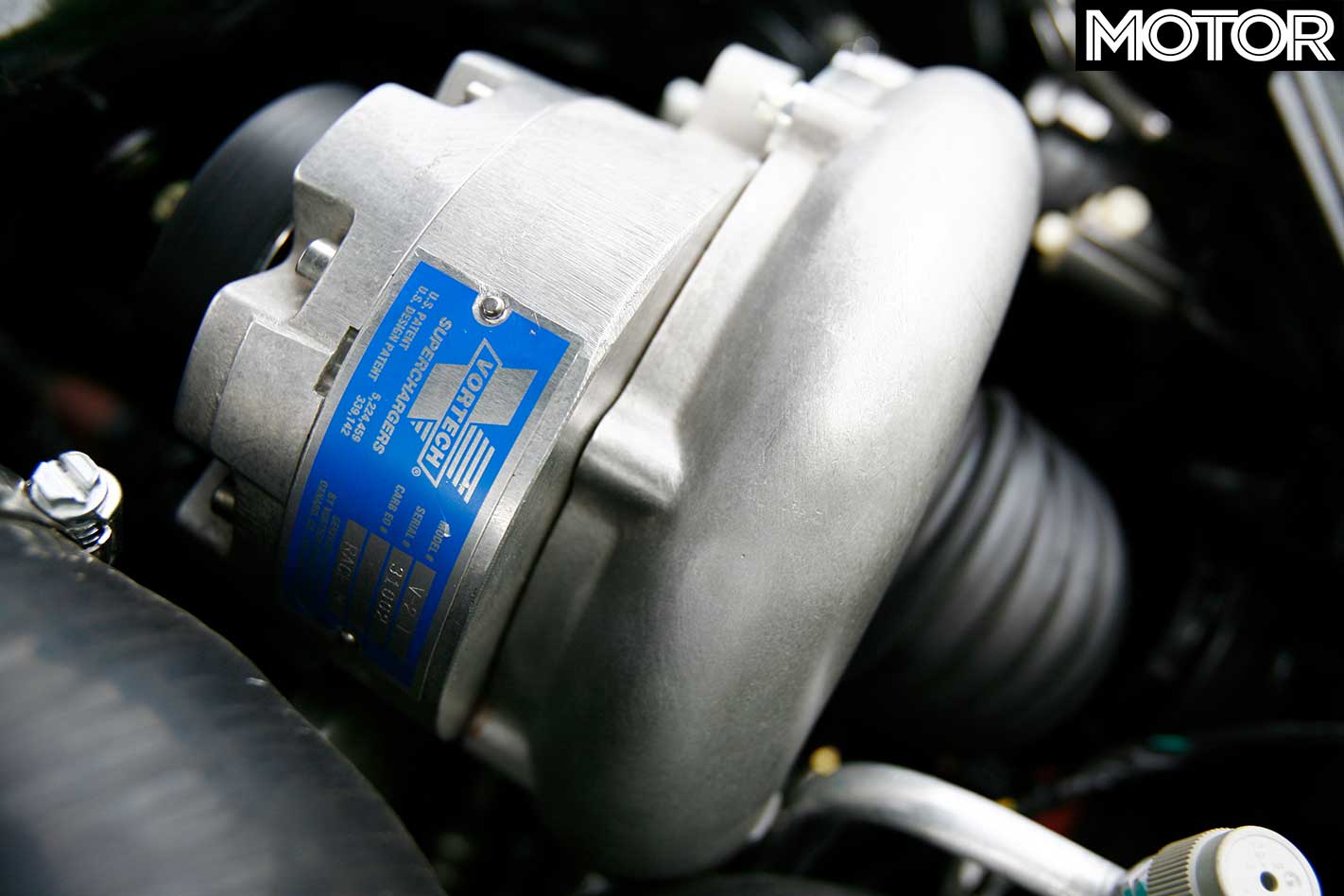
The other VE-based gadget featured here started out as a Commodore SS-V Series Sportwagon with a manual box and the optional 20-inch rims. And while it’s the least modified of this lot, its mods are the important ones. There’s a set of lowered springs, but it’s the supercharger installation by Corsa Special Vehicles that defines this very quick family truckster.
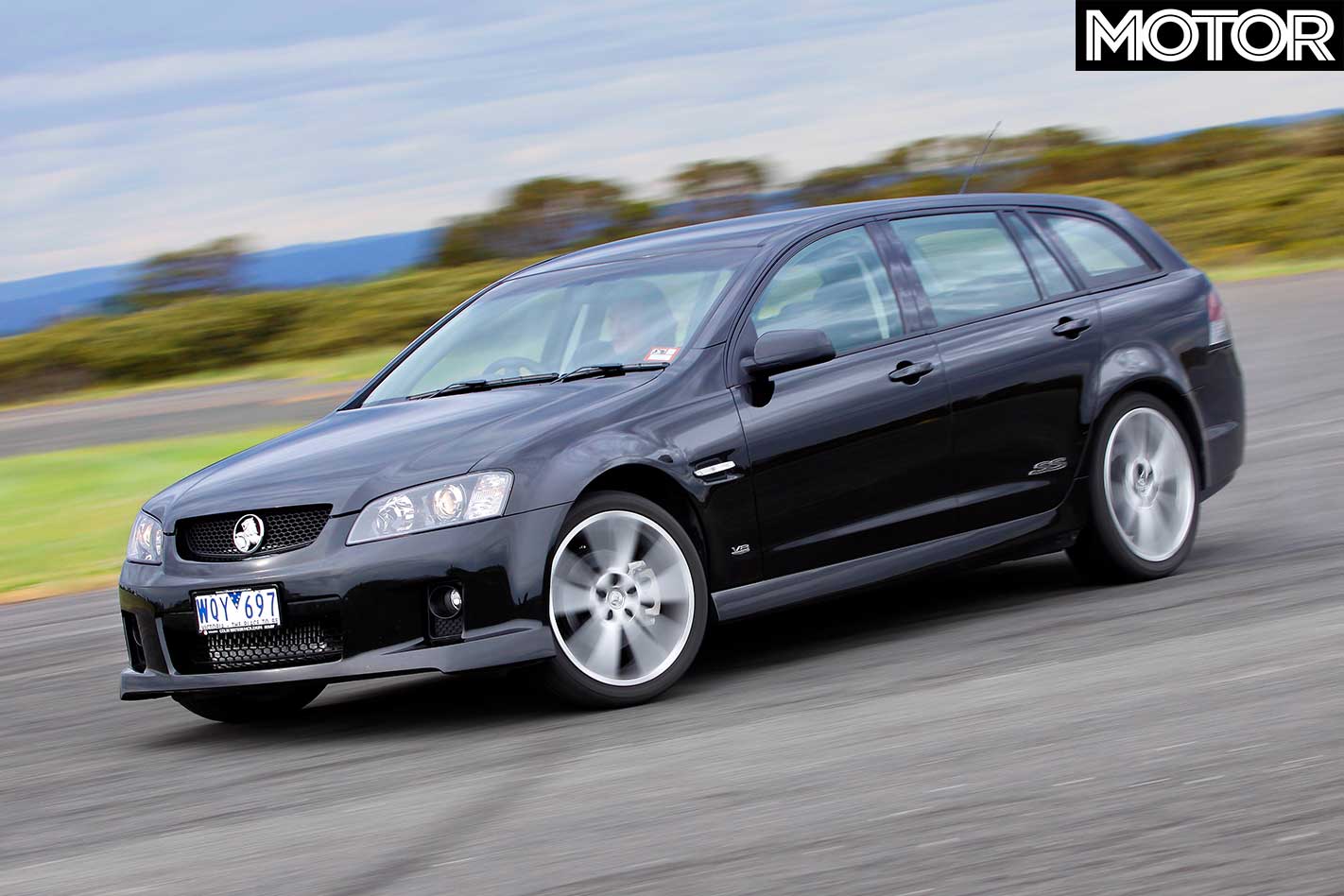
So, the centrifugal blower makes sense because the 6.0-litre feels absolutely like a stocker as you slip out the standard clutch and haul into the traffic flow. But bury the boot and by 5000rpm, the SS V’s force-fed bent eight is attempting to paste 300kW – call it around 400kW at the crank – straight to the deck.
There’s a nice ramp-up in urge as the blower gets into its stride and the engine feels like its welling up to something really special. Which it is. And let’s not forget that the basic engine (and CSV doesn’t so much as lift a cylinder head) is a pretty handy thing from the get-go anyway, so a lack of grunt is never the reality.
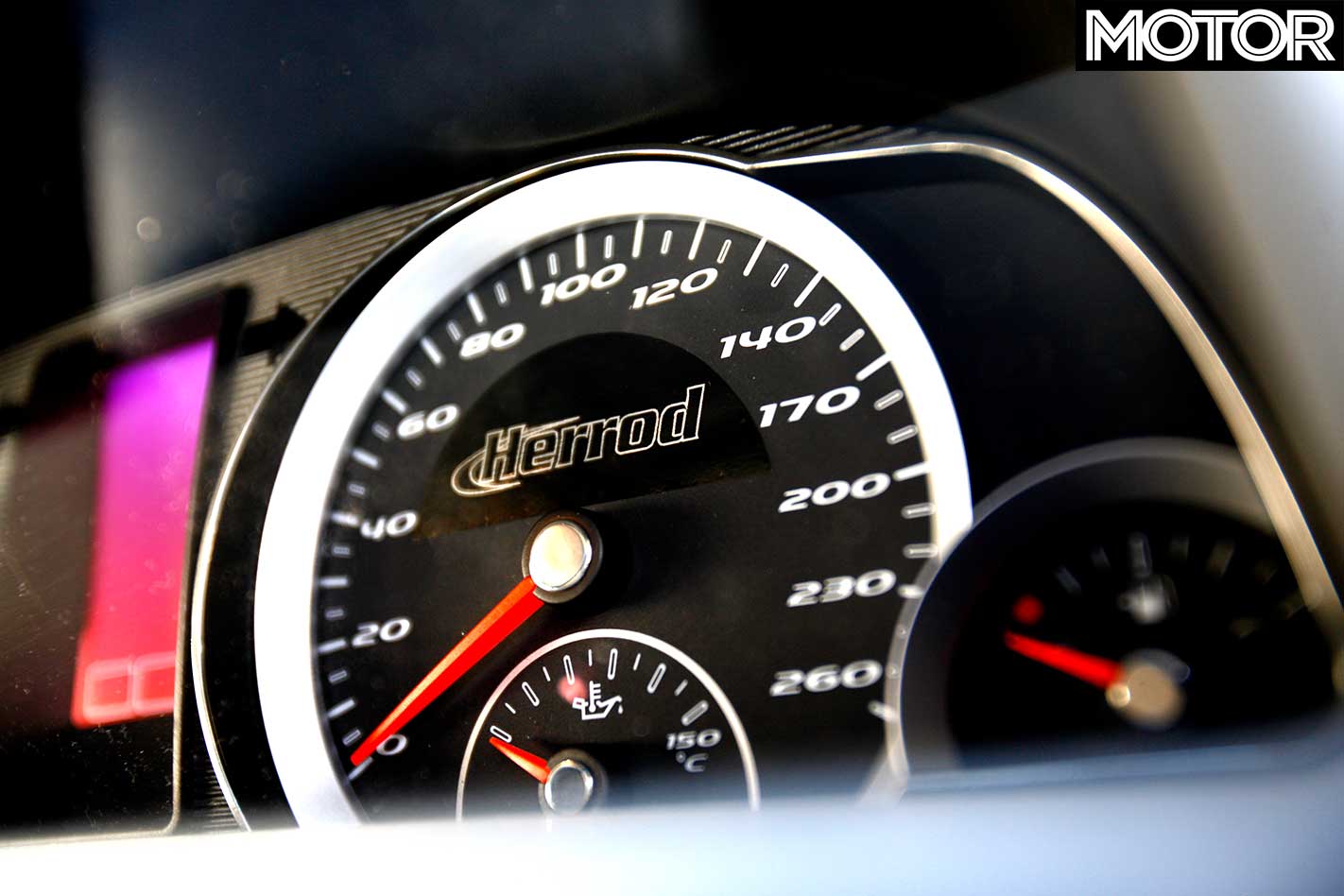
The third hell-raiser here is the work of Melbourne-based tuner Rob Herrod, who has been spinning spanners on blue-oval gear for more years than he cares to remember.
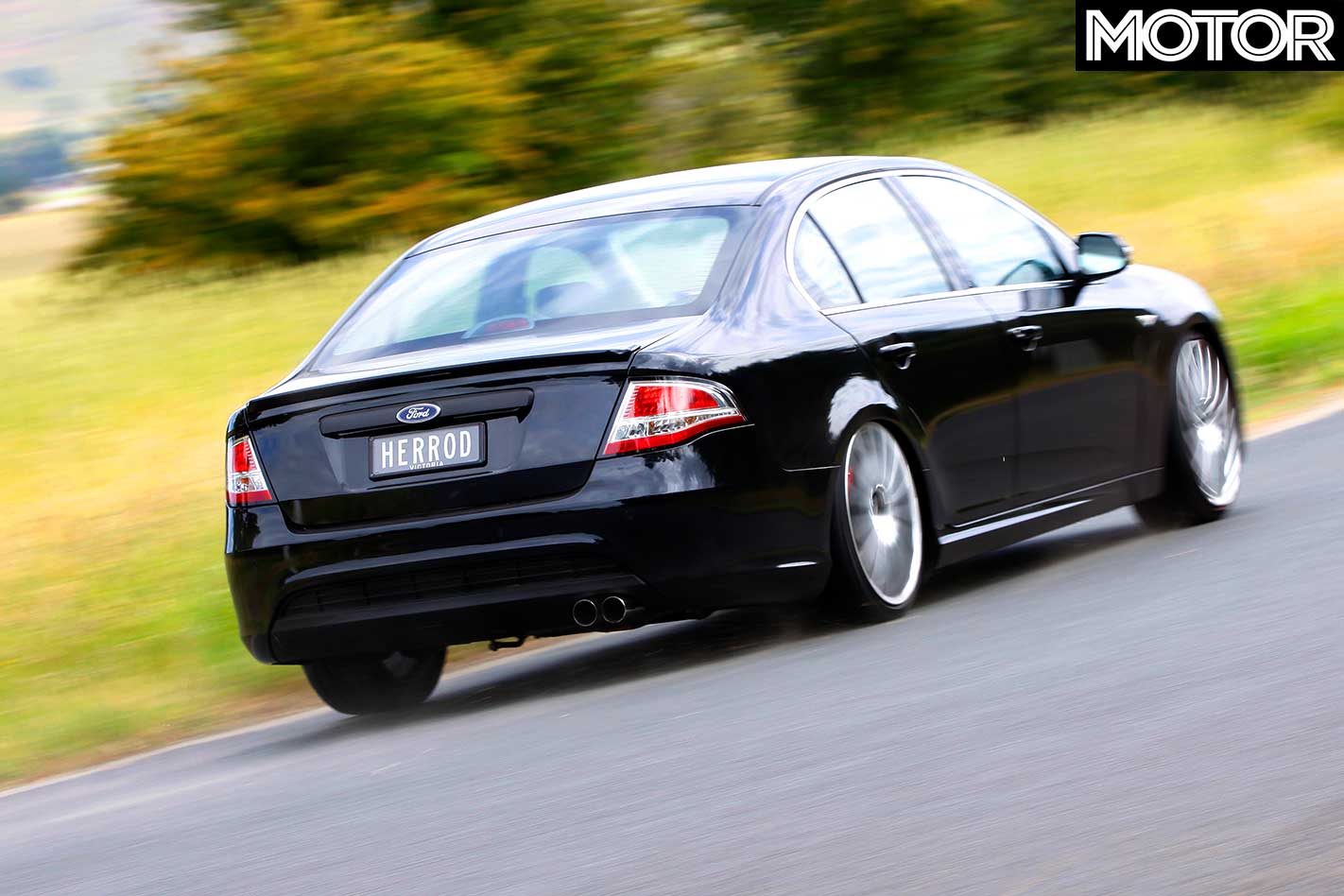
Like CSV’s Sportwagon, stealth is the theme here. And the blacked-out brightwork, including the side indicators, gives the G6E Turbo a smooth, classy (if slightly sinister) look that won’t have the rozzers doing head-spins.
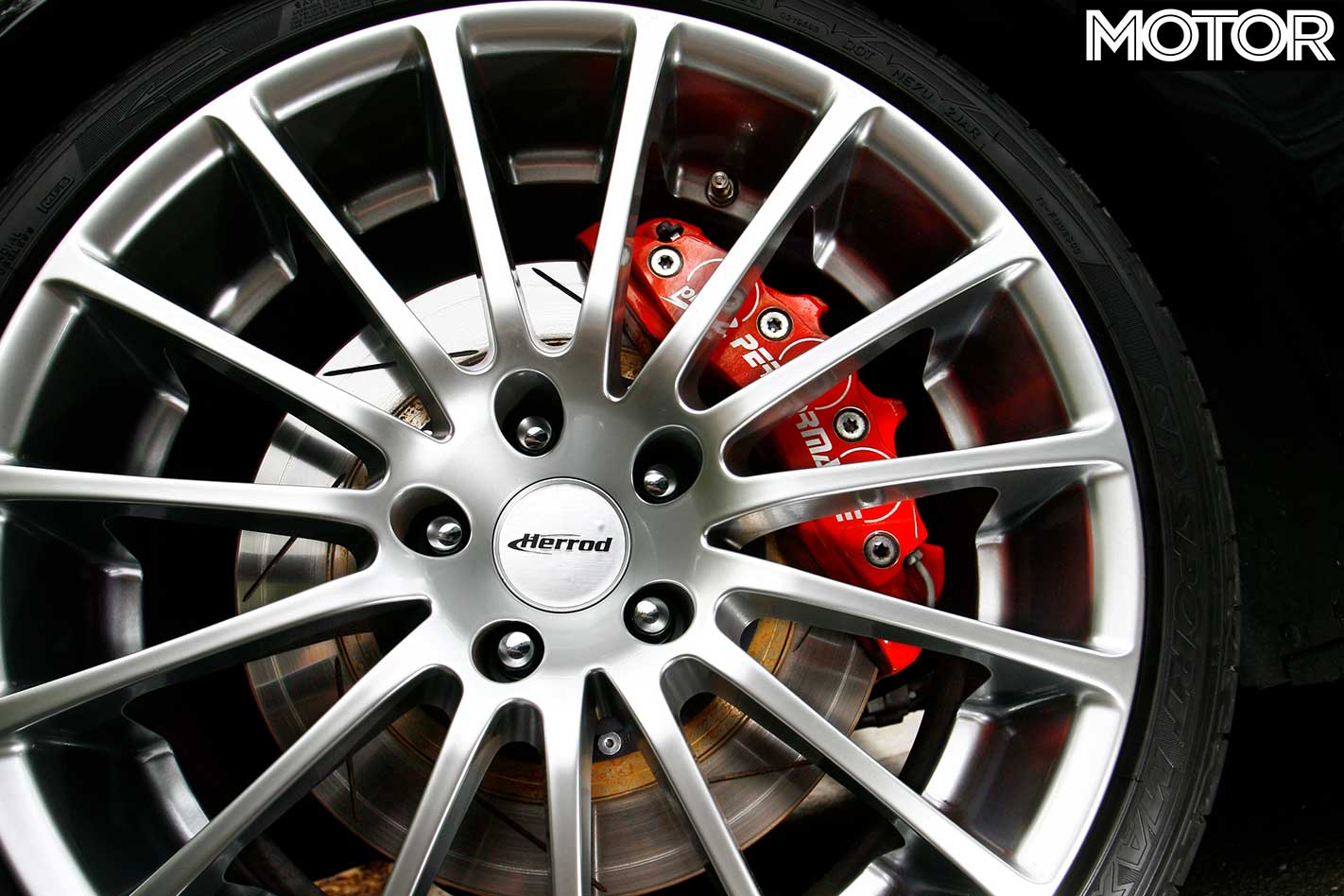
For a start, the brakes are truly mighty. They’re essentially PBR’s M-Series performance brakes: six-pot fronts and four-pot rears, with huge two-piece rotors. And as a straight-from-the-catalogue set-up, they take some beating.
Round bits are 20-inch German-sourced rims, 8.5-inches wide and loaded with 245/35 Dunlop Sport Maxx tyres. The rubber is not as aggressive as some – the Walky, for instance – but it’s also not as unforgiving, either. A new spring package drops it all down a bit but, in terms of ride quality, it keeps the end result quite civilised.
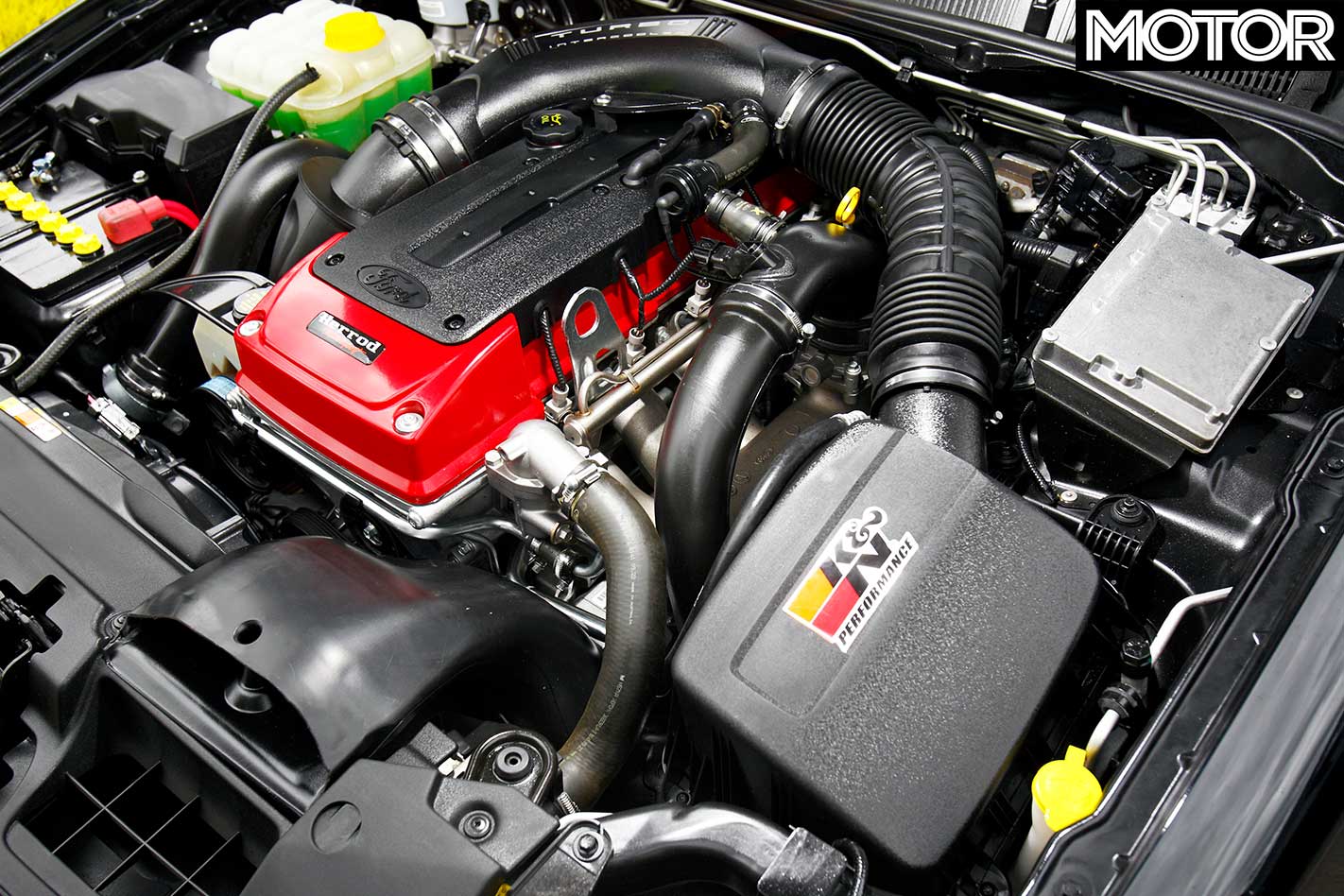
“(This kit) has a fairly easy 400kW in it,” says Herrod. And you can thank a touch over 1.0bar of boost (up from the standard car’s 0.6bar) for the bulk of that. But there are no secret herbs and spices here; what’s working for it is the inherent tunability in modern turbo motors and careful matching of the various components. Herrod may have made his name dealing with V8 Henrys but, if this car is anything to go by, he stands to become the go-to guy for boosted sixes, too.
Given that you can turn up at any of these tuning shops and pick the eyes out of the various bits and pieces on offer, there are no ‘standard’ WP, CSV or Herrod vehicles.
So there’s really only one thing to do: find a deserted runway and have a Driftbox shootout at 10 paces.
The big surprise was that the CSV Sportwagon was the quickest. And since it’s probably a full 70kW down on the Walky, the result raised more than a few eyebrows.
The 80 to 120km/h times paint a clearer pic. Even in sixth gear (where there’s no wheelspin), the WP car (9.9sec) is more than four seconds faster than the CSV (14.1sec). Its low- to mid-rpm poke is simply stunning.
So what’s going on? It’s simple really. The CSV gets its power down better because there’s less of it to contend with as you release the clutch from standstill. And, thus, it just gets out of the hole a whole lot more effectively on meagre street tyres.
It’s worth noting that the CSV was also more consistent than the other two on the less-than-perfect surface, reeling off low-13s time and again.The Walky, meanwhile, only scored the one low-13 from a fluky launch, after a series of mid-13 runs where it just flat-out refused to hook up.
The Herrod car is not quite as flaky off idle as the Walkinshaw-modded car, but it does build boost quickly, which comes in with enough of a bang to light up the rears early on in first gear and right to the hotmix-lifting end of second. If anything, it’s even worse than the Clubby once it’s really into its stride.
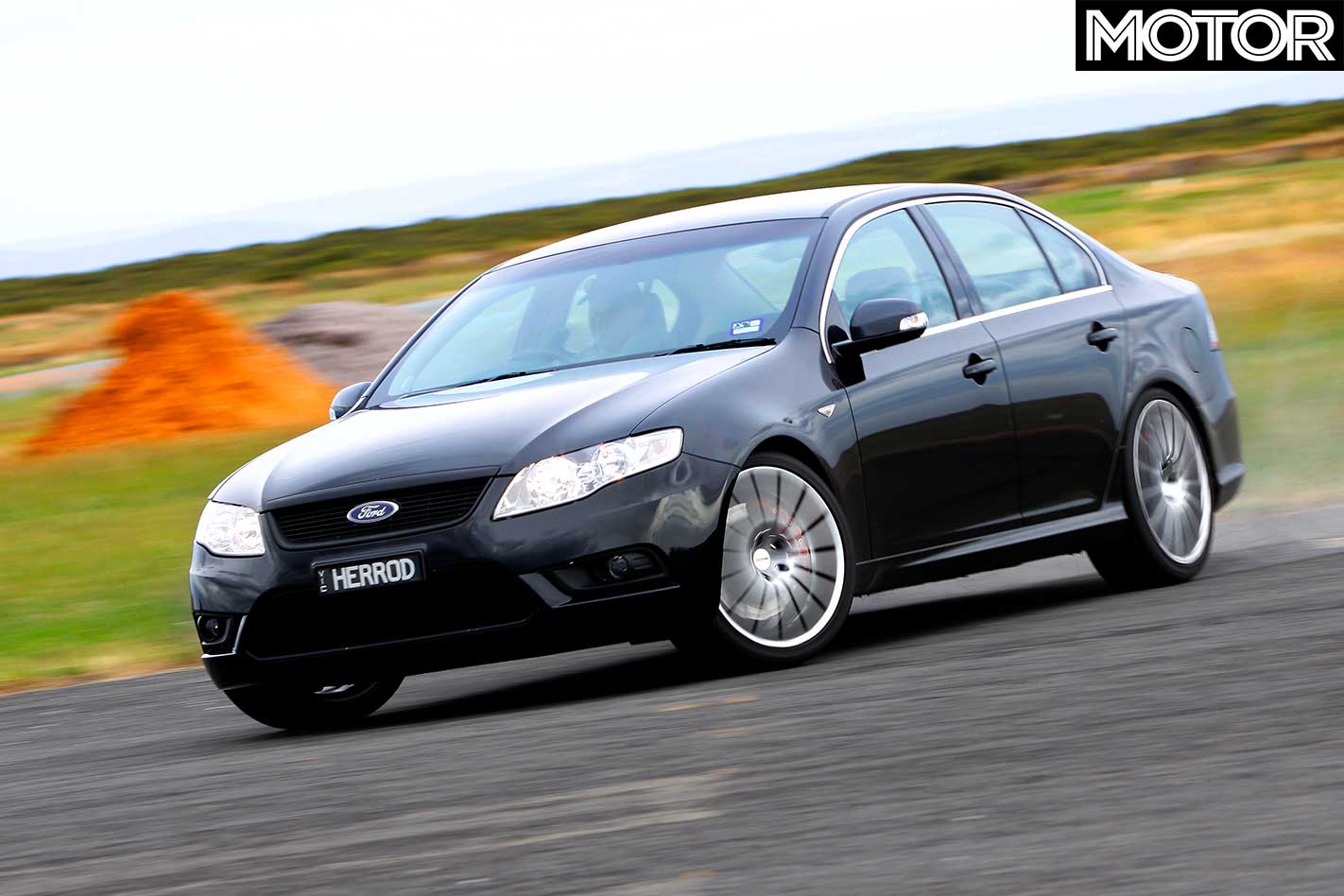
Our 0-400m best in the G6E was a 13.6 at 174km/h, with a 0-100m time of 5.4 seconds. Still quick, mind you, but well off what an engine and transmission of this calibre are capable of.
In its simplest form, the CSV Sportwagon is travelling faster than the other two when the real surge arrives. It finds more traction and gets on with it while the other pair are turning their rear rubber into very expensive atoms.
As far as the rest of each package goes, the Herrod-modded Ford is the pick of the crop in terms of living with the thing day-to-day. Jump straight into it from either VE and the Ford’s sharper steering and lighter feel is immediately obvious. And while the big-bore exhaust is a bit noisier, it’s never drummy or annoyingly in-your-face.
But the VE stuff isn’t perfect either. You still get the feeling, as you roll around in those big chairs and grapple with the huge tiller, that this was a car made for man-bears. And I’m no tiddler.
In the case of the Walky, the big issues are the wheel-to-arch clearance (or lack of it), the jarring ride and the sheer lairiness of its look. And while the CSV’s uncomplicated nature is nice – as is the big, deep exhaust note – it’s a bit on the feeble side when it comes to brakes.
But all those things can be amended, or eliminated completely, by a simple fiddle with the spec sheet. Our choice would be the stealth approach, but with the mega anchors, full-house engine mods and a set of lightweight 20s with sticky rubber. And if that sounds like a winner, then judging by this lot, you’ve never been so spoiled for choice.
The Walkinshaw Performance Clubsport tops the ladder here, partly because it’s the most comprehensive makeover, but also because the Clubby is the dearest donor car to start with.
So when you add the $36,360 worth of WP mods to the basic car’s $64,990, you wind up with $101,350. However, we’d ditch a lot of it and just go for the blower ($15,500), the exhaust ($2050), suspension ($690), oil cooler ($1250) and the heavy-duty LS7 clutch ($1500). Which would leave you with a $85,980 proposition. And a very wide smile.
All up you’re looking at $78,965, but you easily can see where your dough has gone.
The bargain is CSV’s Sportwagon, which adds just the blower kit and intercooler at $12,000, and $700 worth of springs. Call it $64,990. But it could use a brake upgrade.
FAST FACTS
| u00a0 | 2009u00a0Herrod G6E Turbo | 2009 CSV Sportswagon | 2009u00a0Walkinshaw Clubsport |
| BODY | 4-door, 5-seat sedan | 5-door, 5-seat wagon | 4-door, 5-seat sedan |
| DRIVE | rear-wheel | rear-wheel | rear-wheel |
| ENGINE | 3984ccu00a0in-line 6, DOHC, 24v, turbo | 5967ccu00a090-degree V8, OHV, 16v, S/C | 6162ccu00a090-degree V8, OHV, 16v, S/C |
| BORE/STROKE | 92.3 x 99.3mm | 101.6 x 92.0mm | 103.25 x 92.0mm |
| COMPRESSION | 8.8:1 | 10.4:1 | 10.7:1 |
| POWER | 400kW @ 5300rpm | 400kW @ 6000rpm | 470kW @ 6500rpmu00a0 |
| TORQUE | 780Nm @ 2500rpm | 680Nm @ 4800rpm | 770Nm @ 4500rpm |
| WEIGHT | 1770kg (as standard) | 1890kg (as standard) | 1842kg (as standard) |
| POWER/WEIGHT | 226kW/tonne | 212kW/tonne | 255kW/tonne |
| TRANSMISSION | 6-speed automatic | 6-speed manual | 6-speed manual |
| GEAR RATIOS | 2.98/1.78/1.30/1.00/0.71/0.55 | 3.01/2.07/1.43/1.00/0.84/0.57 | 3.01/2.07/1.43/1.00/0.84/0.57 |
| FINAL DRIVE | 3.73 | 3.45 | 3.70 |
| SUSPENSION (f) | Double A-arms, coil springs, anti roll baru00a0 | Struts, A-arms, anti-roll bar | Struts, A-arms, anti-roll bar |
| SUSPENSION (r) | Multi-links, coil springs, anti-roll bar | Multi-links, coil springs, anti-roll baru00a0 | Multi-links, coil springs, anti-roll bar |
| L/W/H | 4967/1868/1433mm | 4897/1899/1476mm | 4943/1899/1468mm |
| WHEELBASE | 2838mm | 2915mm | 2915mm |
| TRACKS | 1583/1598mmu00a0(f/r) | 1602/1618mmu00a0(f/r) | 1592/1590mmu00a0(f/r) |
| STEERING | power rack-and-pinion | power rack-and-pinion | power rack-and-pinion |
| BRAKES (f) | 355mm ventilated discs, six-piston calipers | 321mm ventilated discs, two-piston calipers | 365mm ventilated discs, four-piston calipers |
| BRAKES (r) | 355mm ventilated discs, four-piston calipersu00a0 | 350mm ventilated discs, single-piston calipers | 350mm ventilated discs, four-piston calipers |
| DRIVER AID | ABS, EBD, BA, DSC | ABS, EBD, BA, ESP | ABS, EBD, ESP, TC |
| TYRE SIZES | 245/35ZR20u00a0(f/r) | 245/35R20 (f/r) | 245/30R22 (f), 285/25R22 (r) |
| TYRE | Dunlop SP Sport Maxx | Bridgestone Potenza RE050A | Falken ZR22 |
| FUEL/TANK | 98 octane/68 litres | 98 octane/73 litres | 98 octane/73 litres |
| PRICE (in 2009) | $78,965 (as tested) | $64,990 (as tested) | $101,350 (as tested) |
| PROS | Huge FPV-beating output, excellent brakes, sharp looks | Incredible bang for the bucks, near-stock low-end driveability | Absolutely manic outputs, ferocious rolling punch |
| CONS | Painful to launch, twitchy throttle, should be quicker | Both the seats and the brakes arenu2019t up to its potential | 22s compromise ride and grip, noisy blower, poor tractionu00a0 |
| RATING | 9 out of 10 stars | 8 out of 10 stars | 8 out of 10 stars |
| u00a0 | Herrod G6E Turbo | CSV Sportswagon | Walkinshaw Clubsport |
| 0-10km/h (sec) | 0.5 | 0.5 | 0.4 |
| 0-20km/h (sec) | 1.0 | 1.0 | 0.9 |
| 0-30km/h (sec) | 1.6 | 1.4 | 1.4 |
| 0-40km/h (sec) | 2.1 | 1.9 | 1.9 |
| 0-50km/h (sec) | 2.5 | 2.4 | 2.4 |
| 0-60km/h (sec) | 3.0 | 2.8 | 2.8 |
| 0-70km/h (sec) | 3.6 | 3.2 | 3.3 |
| 0-80km/h (sec) | 4.1 | 3.9 | 4.1 |
| 0-90km/h (sec) | 4.7 | 4.4 | 4.6 |
| 0-100km/h (sec) | 5.4 | 5.0 | 5.1 |
| 0-110km/h (sec) | 6.2 | 6.1 | 6.2 |
| 0-120km/h (sec) | 7.0 | 6.7 | 6.9 |
| 0-130km/h (sec) | 7.9 | 7.5 | 7.7 |
| 0-140km/h (sec) | 9.0 | 8.3 | 8.5 |
| 0-150km/h (sec) | 10.2 | 9.2 | 9.3 |
| 0-160km/h (sec) | 11.5 | 10.1 | 10.5 |
| 0-170km/h (sec) | 12.9 | 11.6 | 11.6 |
| 0-180km/h (sec) | 14.6 | 12.9 | 12.9 |
| 0-400m | 13.6 @ 174.0km/h | 13.1 @ 181.8km/h | 13.2 @ 182.9km/h |
| 80-120km/h (Drive) | 2.8sec | N/A | N/A |
| 80-120km/h (3rd) | N/A | 3.3sec | 2.8sec |
| 80-120km/h (4th) | N/A | 5.4sec | 4.0sec |
| 80-120km/h (5th) | N/A | 7.1sec | 5.3sec |
| 80-120km/h (6th) | N/A | 14.1sec | 9.9sec |
When Hyundai announced the hero colour of N, its new performance brand that would take on the world, it said it was inspired by the “limitlessness” of our atmosphere.
Yet, while its choice of Sky Blue doesn’t strike us as the most intimidating war paint for battle, that hasn’t stopped Hyundai going in hard to establish itself in the fast-car game with some trash talk.
N Performance Development division boss Albert Biermann has called out the current Golf GTI, saying the German all-rounder will fall to pieces on track in the shadow of Hyundai’s first serious performance car, the i30 N.
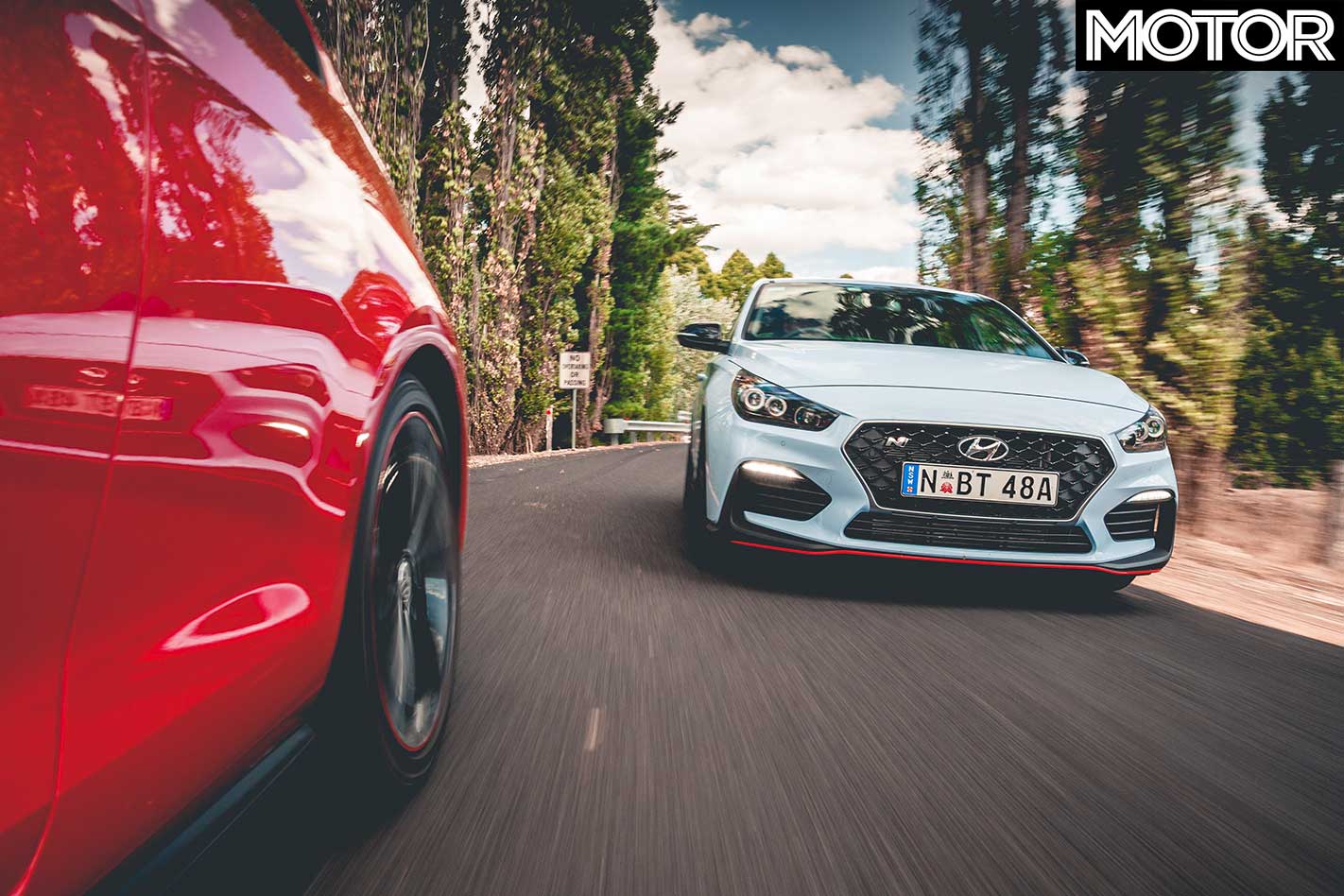
So what has Biermann so cocky? The N has wider tyres than a regular i30 and redesigned suspension, its steering rack is heavily upgraded, while adaptive dampers and brakes stripped from the larger Genesis sedan feature at each corner.
There’s a 2.0-litre inline four pinched from a Sonata, but with a bigger turbo and on overboost it’s good for 202kW and 378Nm. It spins a front LSD that varies lock with an electronically-controlled clutch. There are programmable drive modes, too, and specially developed Pirelli P Zeros.
Underlining Hyundai’s seriousness, the i30 N has landed in Oz for $39,990 (before on-roads), which is $8K less than a Golf GTI Performance and a frighteningly low price for something packing weaponry you’d expect from an AMG A45.
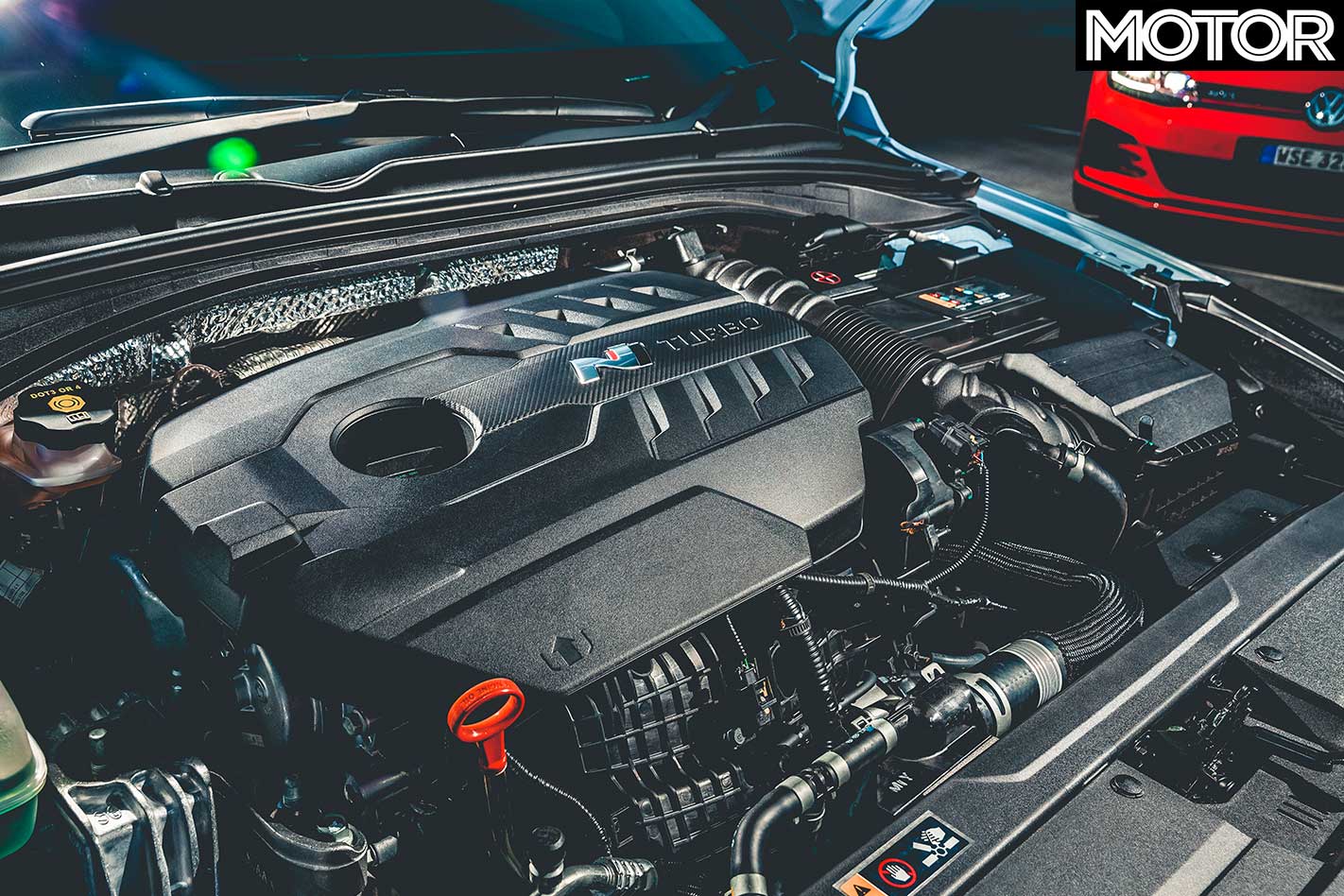
Fewer doors help the GTI shed 26kg, but because things like adaptive dampers and 19-inch wheels have been dropped to shrink its price, some might assume the GTI’s winning formula has been compromised. With the Golf’s inline turbo four pumping out 169kW and 350Nm, there’s a 33kW and 3Nm difference between the two until the i30 N’s overboost stretches the torque gap to 38Nm.
We’ve gathered both cars in Sydney and have them aimed at the highway to Bathurst. Open the taps in the Golf and there’s a slight pause as its turbo gathers steam under 3000rpm. From there acceleration quickens as revs climb, so that by 5000rpm you have to resist upshifting before kissing its 6700rpm limiter. We’d forgive you for missing that mark, though, as the Golf’s cut-out is indicated at 7300rpm and its hunger for revs belies its undersquare bore-and-stroke ratio.
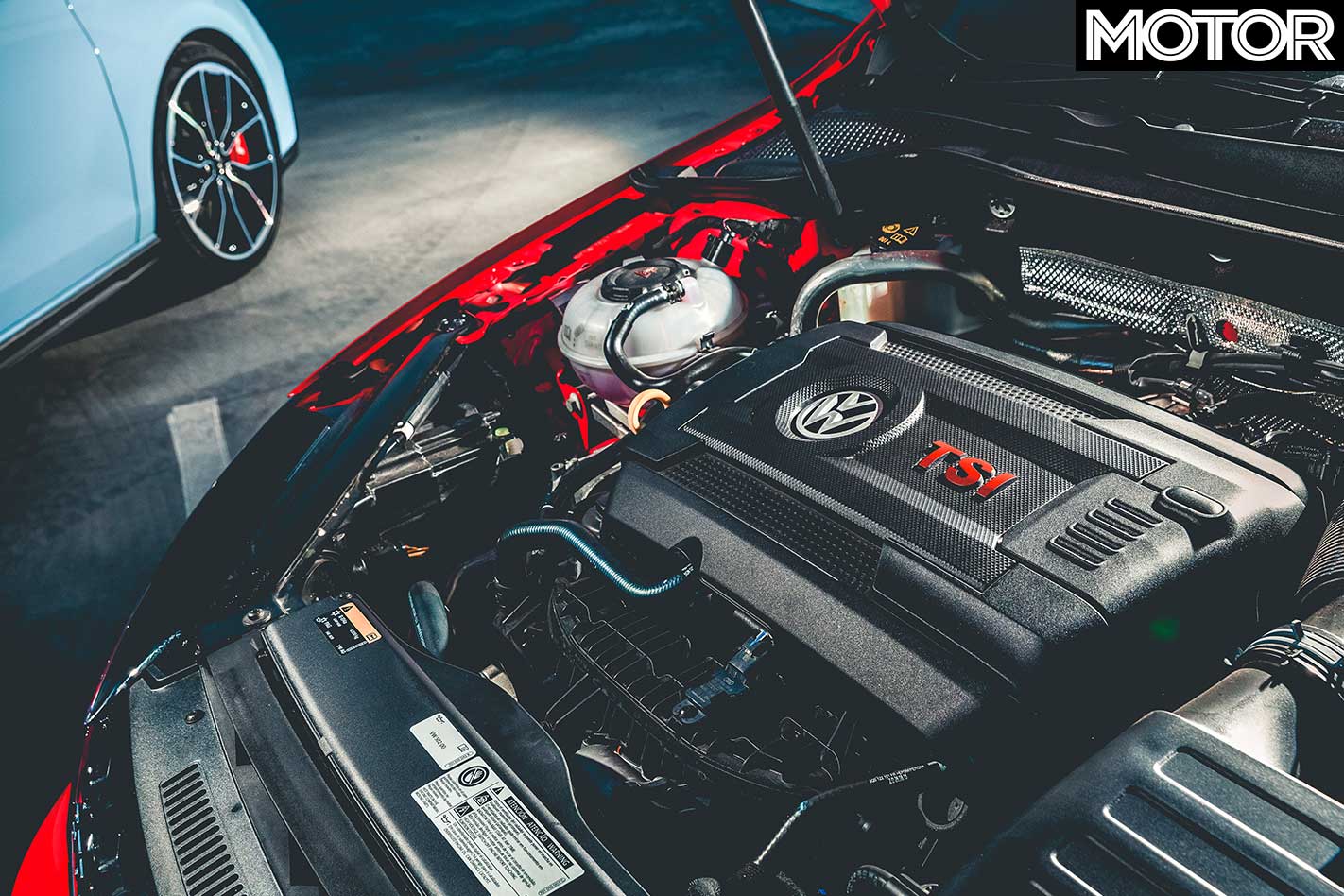
Like any low-compression turbo engine it’s a bit sluggish off boost, but sink the throttle from low revs and the thrust swells at 2500rpm before really flexing its muscles at 3500rpm. The surge lasts until 5500rpm before tapering off 600rpm shy of its 6850rpm redline.
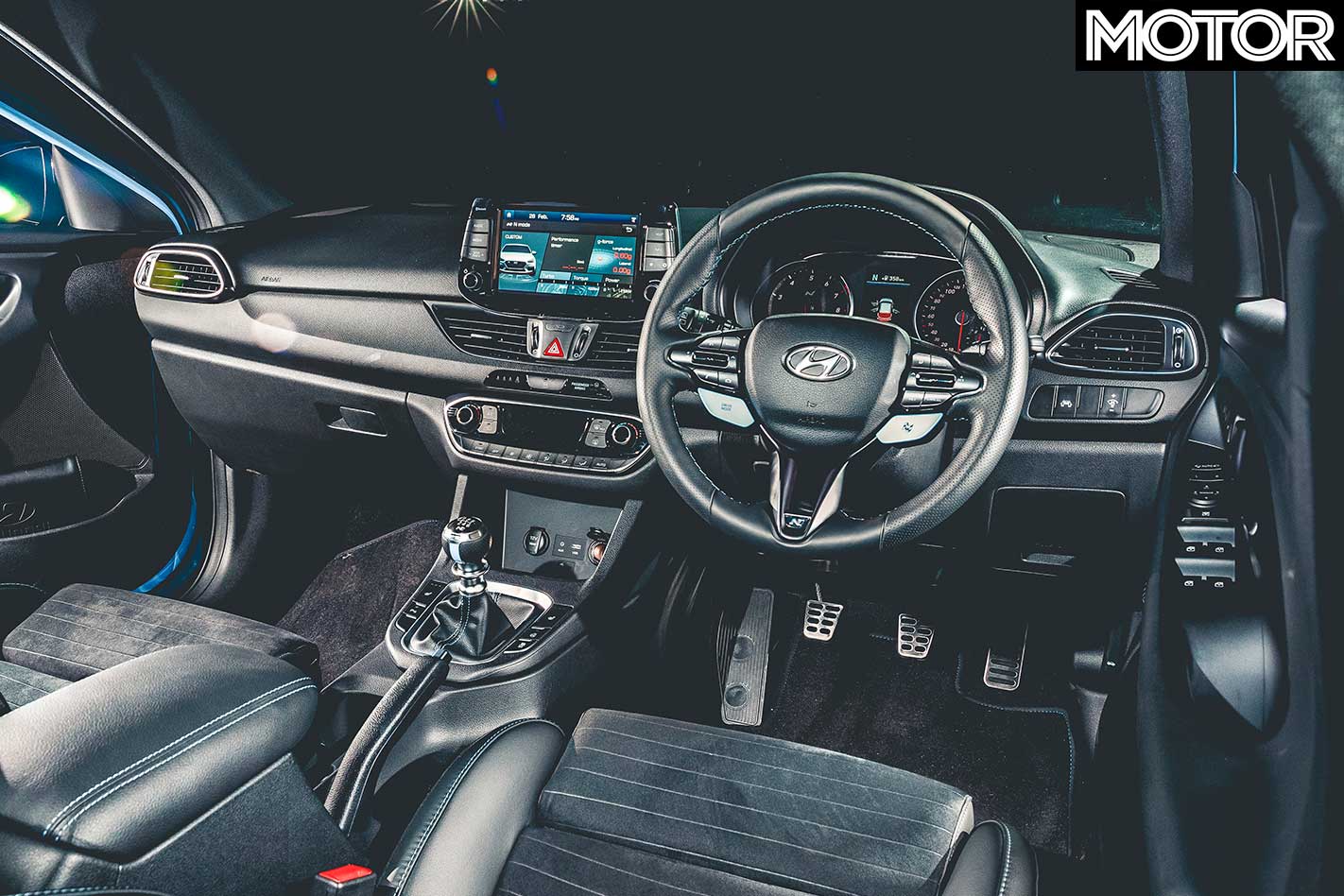
The i30 N tries its best F1-car impersonation as the rev needle sweeps past 5000rpm and shift LEDs flash across the dashboard, sending you for the i30 N’s ellipsoidal gear knob. Hyundai’s paid a lot of attention to its shift, with the i30 N’s lever finding each gate with a positive and smooth feel that’s leagues ahead of the six-speed in an i30 SR. There’s a slight dead spot in the clutch pedal’s stroke that makes it sometimes tricky to engage, but other than that it’s a peach.
Ditching the smooth stuff for more challenging surfaces reveals the i30 N rides a lot like it did on Rome’s cruddy tarmac at the international launch. Hyundai’s local chassis development team pleaded with Biermann for a country-specific chassis tune during his visit to Australia and they got their way after putting him in a prototype on our worst roads.
The changes are small, and mainly to do with smoothing the damping forces with some re-valving and software tuning to the three-mode adaptive shocks, but they’ve given the i30 N the same flat-riding composure that impressed us in Italy.
The rise and fall of some sections do challenge its suspension travel, and the 19s can drop into holes with a nasty thud – nor is the steering completely isolated from mid-corner bumps – but overall the ride is more than acceptable.
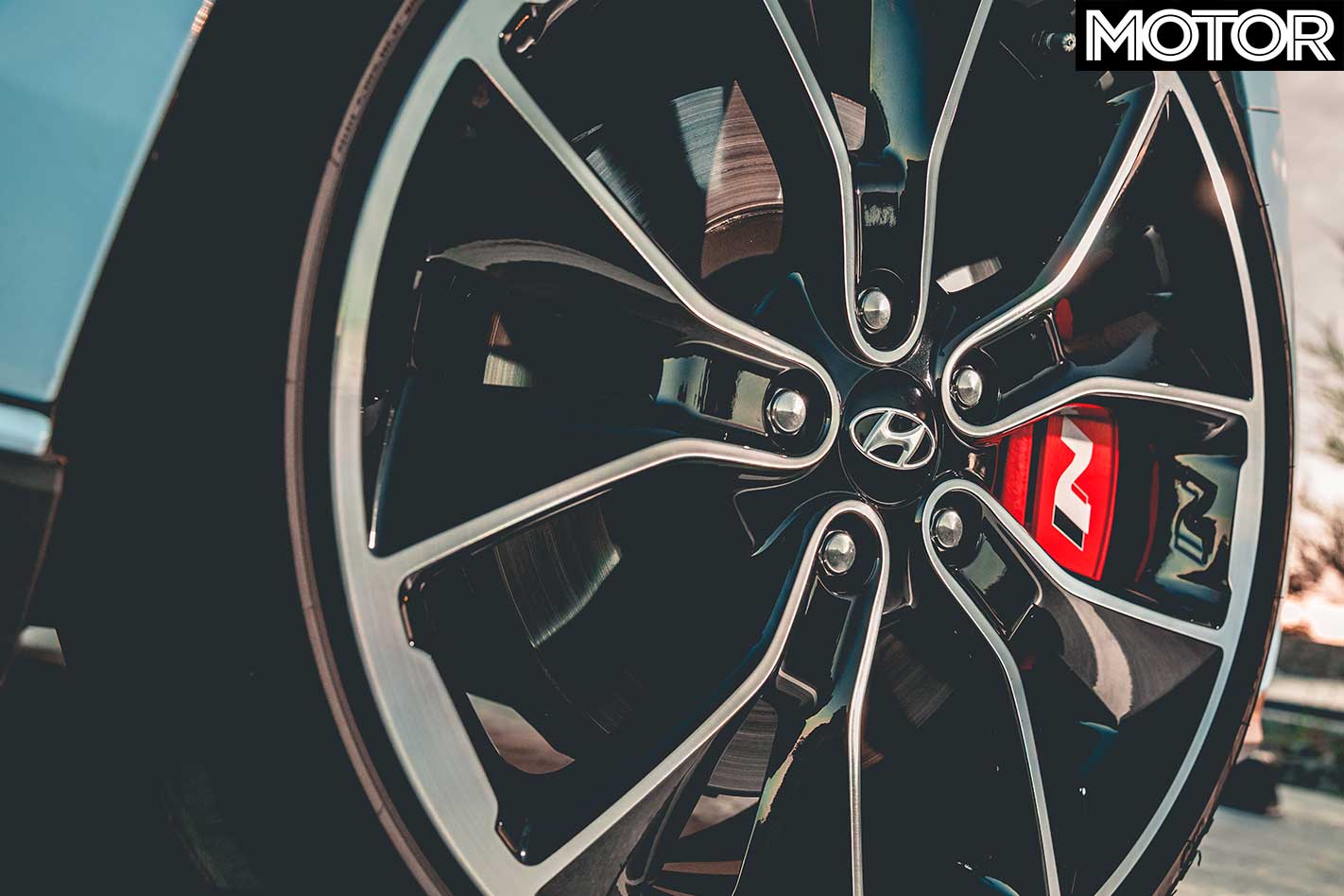
Sure, 18-inch tyres with a 40-series profile make the suspension’s job in controlling wheel deflections much easier, but there’s a level of composure and compliance about it that prove the company’s WRC engineers have clearly infiltrated the GTI handling department since they quit competition.
This Golf’s suspension is proof you don’t need adaptive dampers. And without them, there isn’t much reason to delve into the car’s personalised drive mode unless you want to slacken the steering assistance while the engine’s left in Sport.
It’s a completely different story in the i30 N, which you can setup like a GT3 car. You can alter its diff, steering assistance, exhaust noise, dampers, engine response, ESC, and rev-matching crispness through different modes.
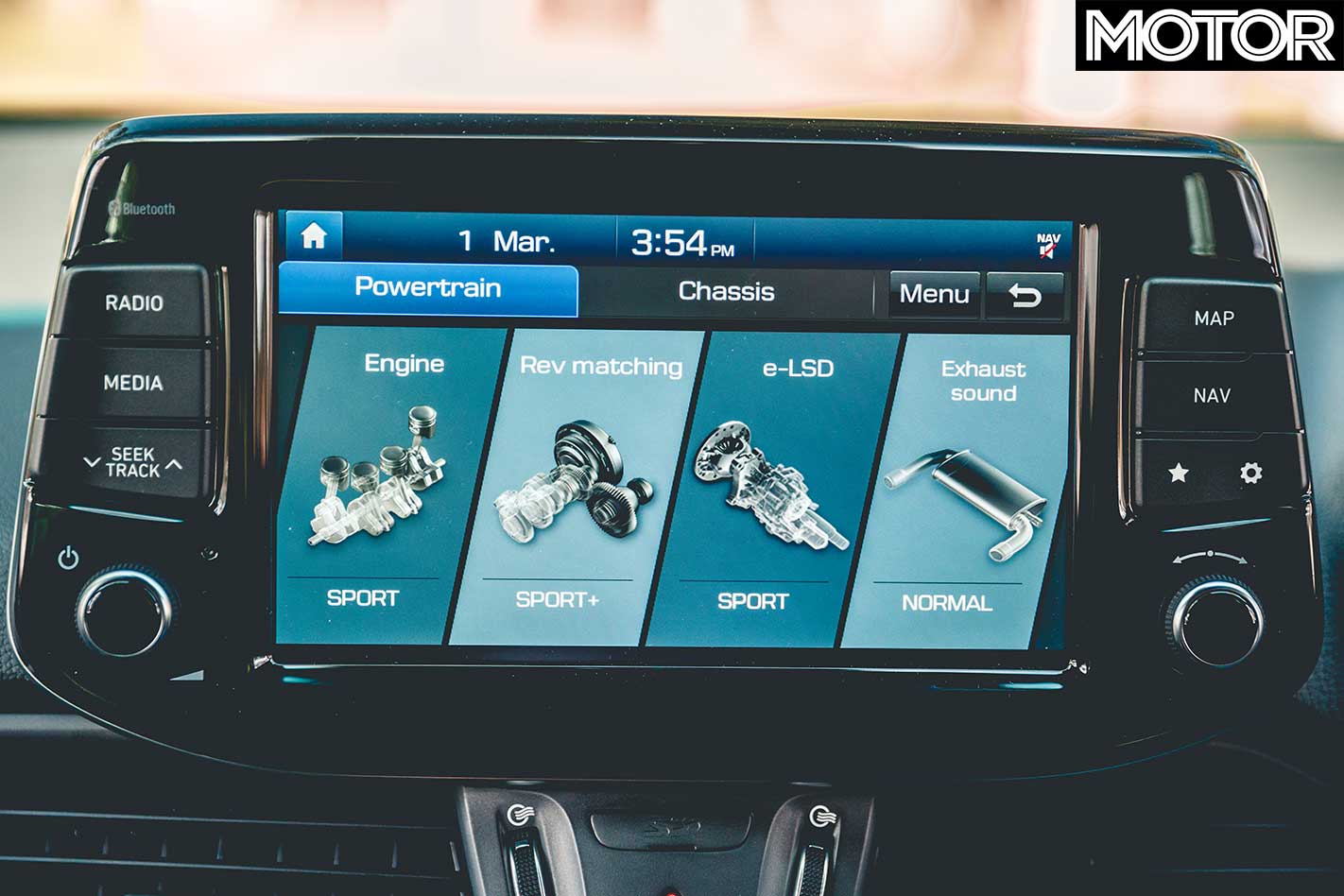
As the road surface smooths out and starts to curve, we grit our teeth and engage N mode. We suspect the dampers will turn to concrete and grind our spines to dust. They don’t. And the first thing that strikes you is how much grip the i30 N has.
The fixed-rate steering weights up nicely into the corners with a meaty, linear feel and the front tyres always seem to have enough footing to disperse the engine’s full 378Nm. Without weight on the nose, the i30 can push a little under power. But it will then tighten its line, literally steering itself out of corners.
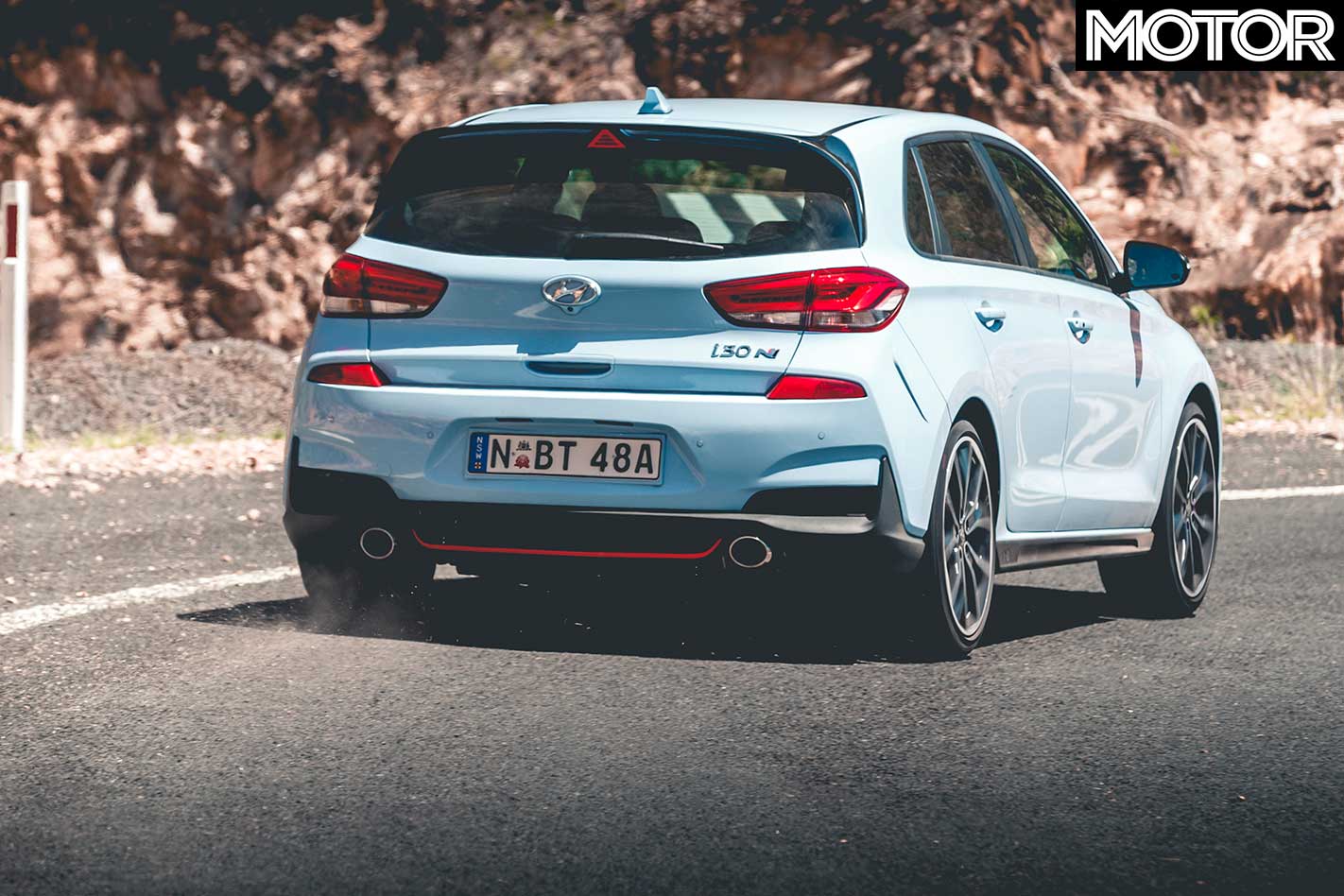
The downside is that while Biermann promised more rear-end liveliness for the production i30 N since a press evaluation of the prototype, it’s lacking the same tail-shake you’d find in a Megane RS or Focus ST. Softening the dampers brings the rear-end into play a little more, but it doesn’t change the car’s focus on using its spread of grip for stability.
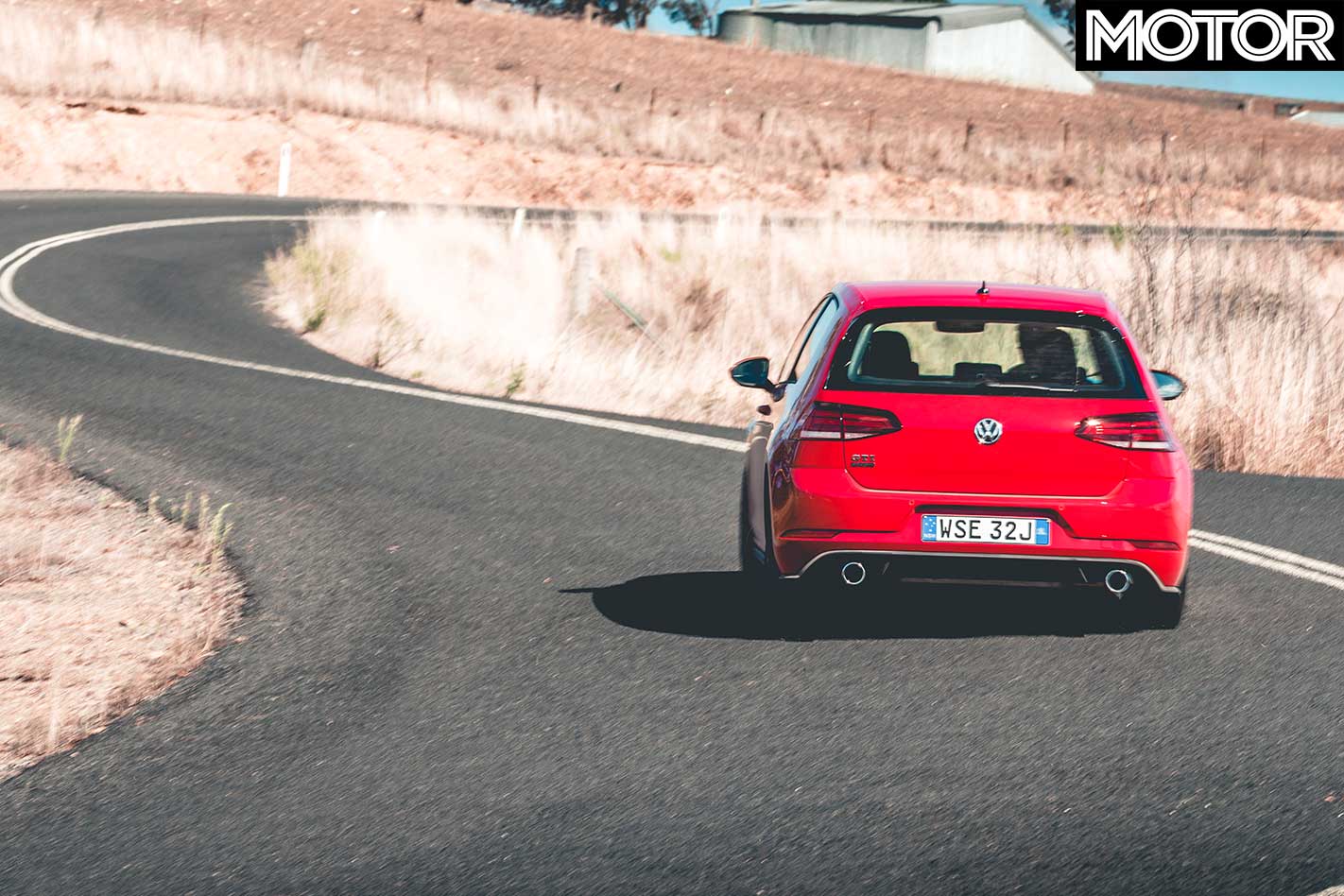
This is where the Golf steps in. A GTI Original might be 26kg lighter than its five-door sibling, but the truth is it feels as if twice that has been unloaded from the rear axle. Couple that with the idea a three-door bodyshell is stiffer by design and you have an adjustable chassis. Sure, the Original doesn’t cock its inside rear wheel like a Fiesta ST, but smooth and long damper travel allows a subtle weight shift that transfers grip from the rear to front axle in balletic fashion.
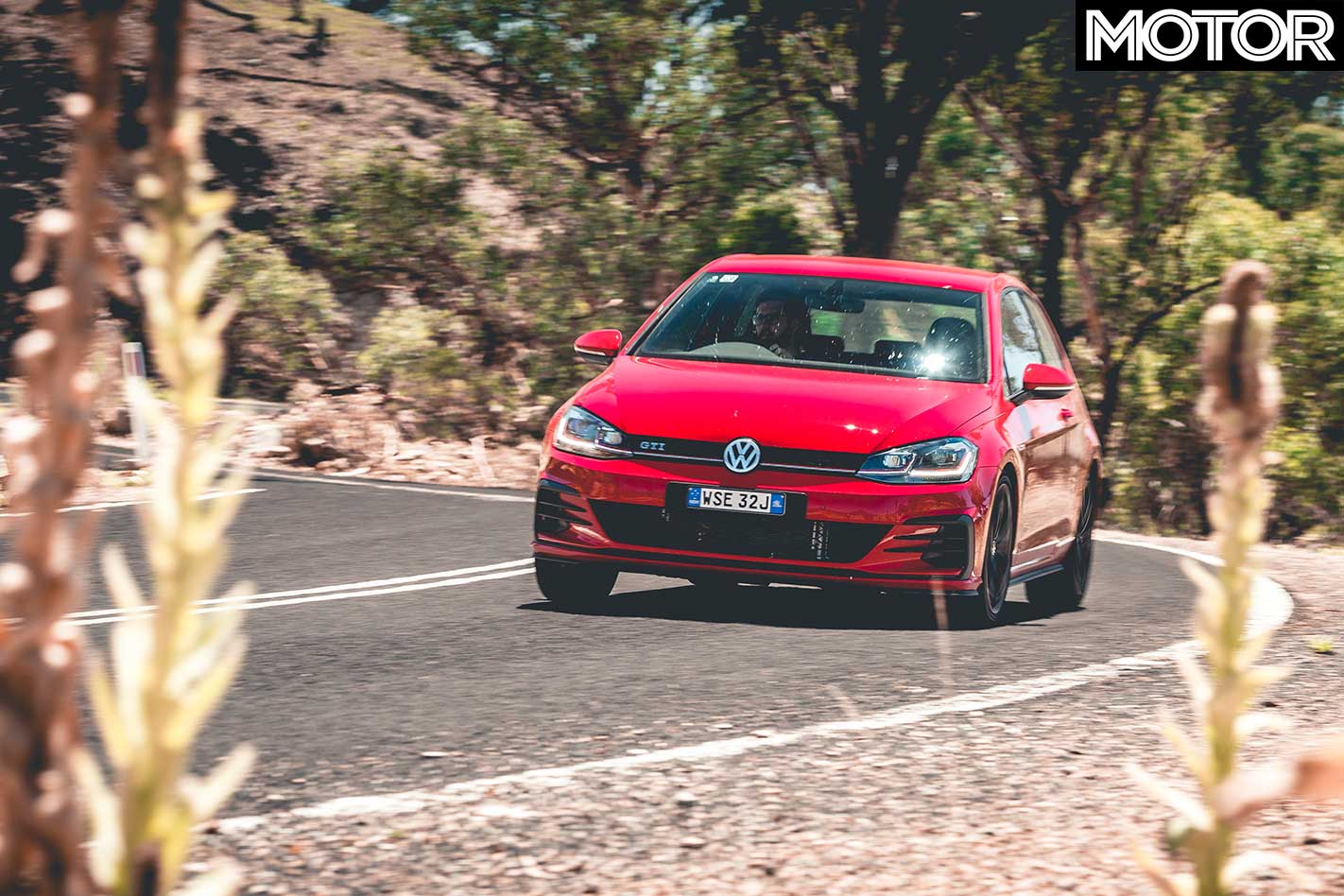
Further dulling its shine is its brake-activated torque vectoring that sometimes bites the inside front tyre with the subtlety of a shark. ESC Sport mode relaxes the system’s enthusiasm, but then frustratingly gives the engine too much leash. Even then, while the i30 N slingshots from bends with consistent tenacity, the Golf might grip to power out from one corner, only to push wide with wheelspin at the next.
There is a solution. If you’re confident enough to use the Golf’s light rear-end to rotate the car before the corner exit, it’ll happily straighten up and give the front tyres more grip, allowing you to drop the hammer on the throttle.
Both cars have precise brake feel on tight, winding roads to help you get a great sense of how hard the pads are biting the discs from the middle pedal. When you start braking later it’s the Golf’s items which pulse first with ABS.
It’s a similar situation with the steering wheel controls. There are some important things missing in the Hyundai’s standard equipment list, like all-round parking sensors, that are standard on the Golf.
After a hard day’s driving the Golf’s refined dual-clutch and lighter steering make the GTI a more tantalising prospect for traffic. It won’t be long, though, before you start to miss the i30 N’s charms. Its seating position is lower and inside it’s ergonomically on par with its German rival.
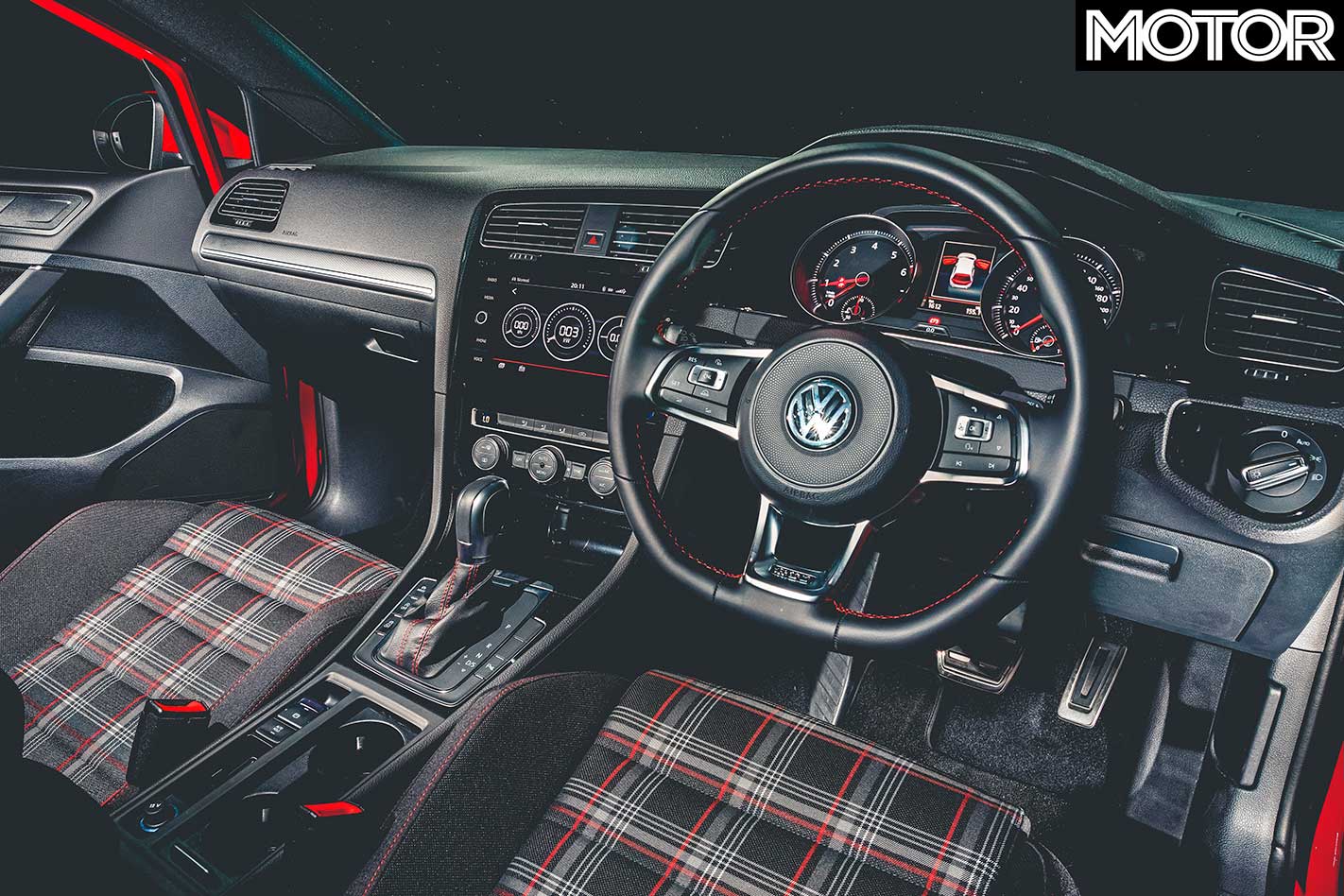
On the other hand, the Golf GTI’s clear-minded package is only improved by the Original’s passive suspension and three-door body. Even Sydney Motorsport Park can’t shake its poise and proves its stiffer, lighter chassis thrives on track as well as the road, though the open front differential hurts its corner exit speeds.
The i30 N’s mechanical bits are more at home on the high-speed circuit, as its bigger brakes let you go deeper into corners and its diff lets you squeeze the throttle earlier out of them. But it’s here, more than the road, that the i30 N’s tied down rear-end feels maybe a little too sensible. You walk away from the track dreaming of improvements for both, but while it’s a simple swaybar for the Hyundai, and maybe a small diet, the Golf’s traction problems aren’t so easily solved.
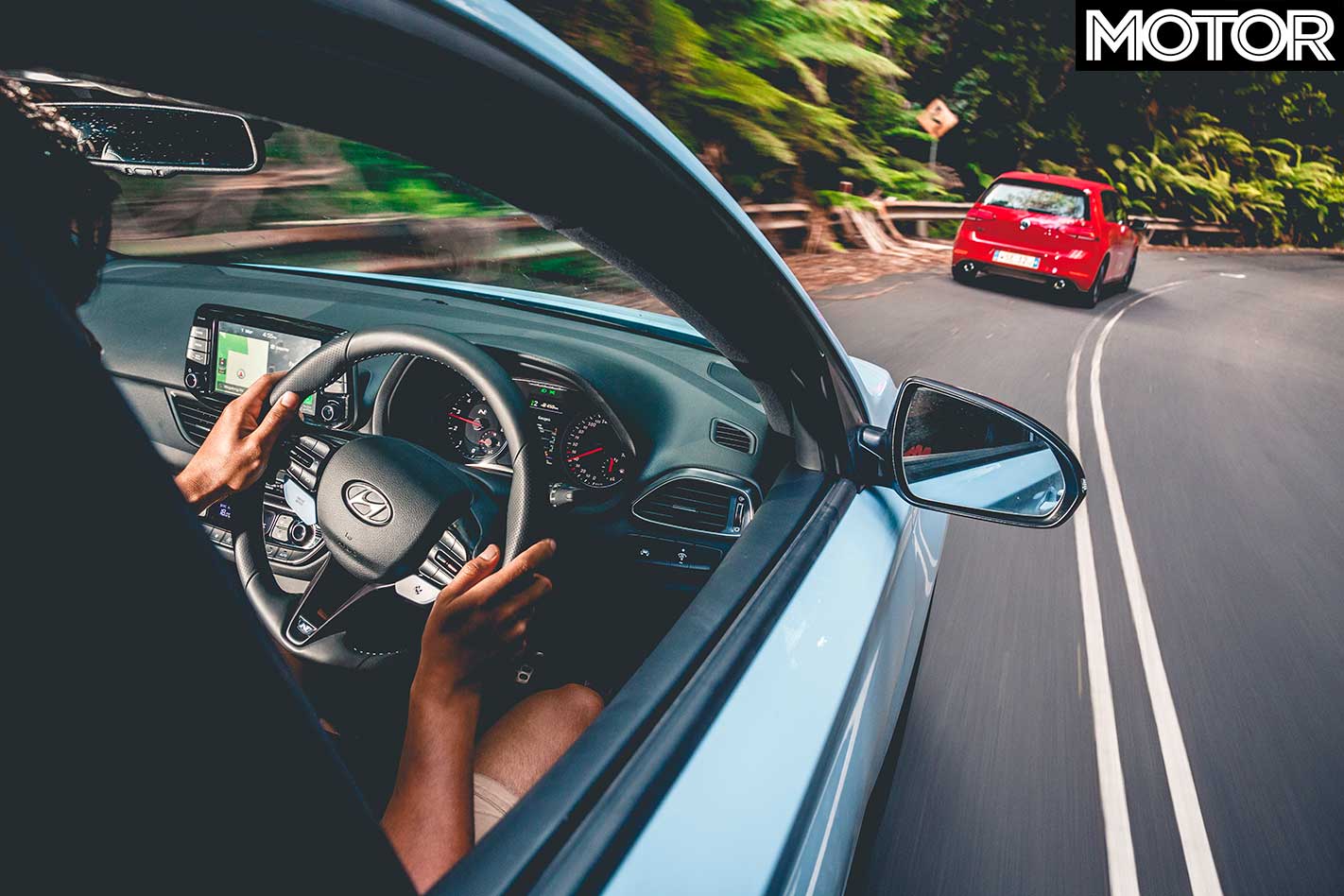
While the Golf’s slightly playful rear-end and stellar ride might be a consolation for its poor traction, its front-end makes the Hyundai’s, even with a smidge of torque steer and tram-lining on wavy roads, seem truly brilliant. And while the Golf can prove rewarding, the Hyundai offers more involvement, feedback, and accessibility.
Day-to-day the Volkswagen excels at being simple, straightforward, and sexy, while the i30 N’s stiffer primary ride and less sophisticated interior knock down its liveability points. The i30 N’s chubbier body pillars also make it harder to see out of its cockpit, but you wouldn’t call it ugly, or expensive.
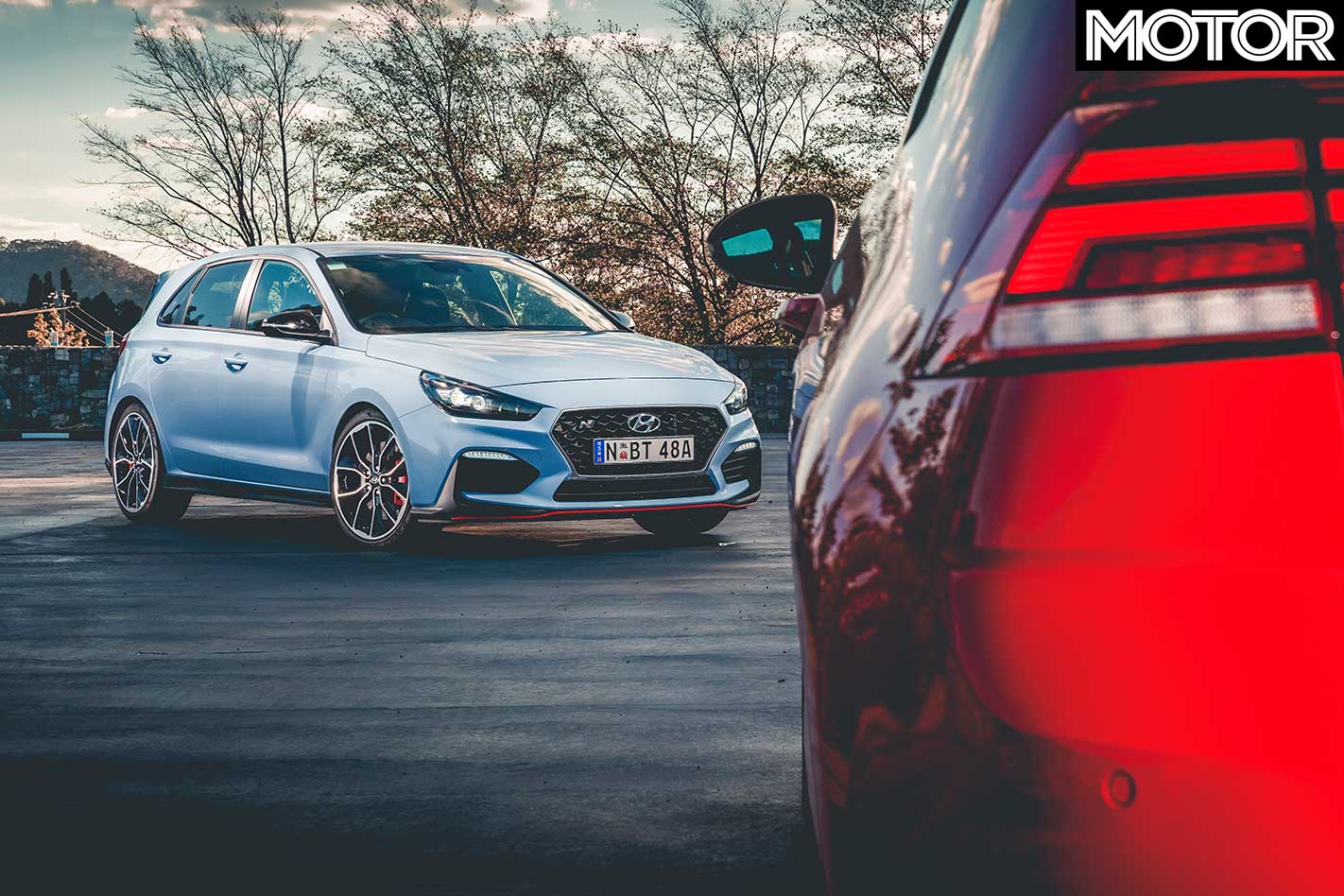
And with this battle won, Biermann’s war campaign gains a huge advantage as the diff-equipped GTI Edition 1 three-door must now prove it’s worth an extra $8K. How’s that for blue sky thinking?
Track Battle
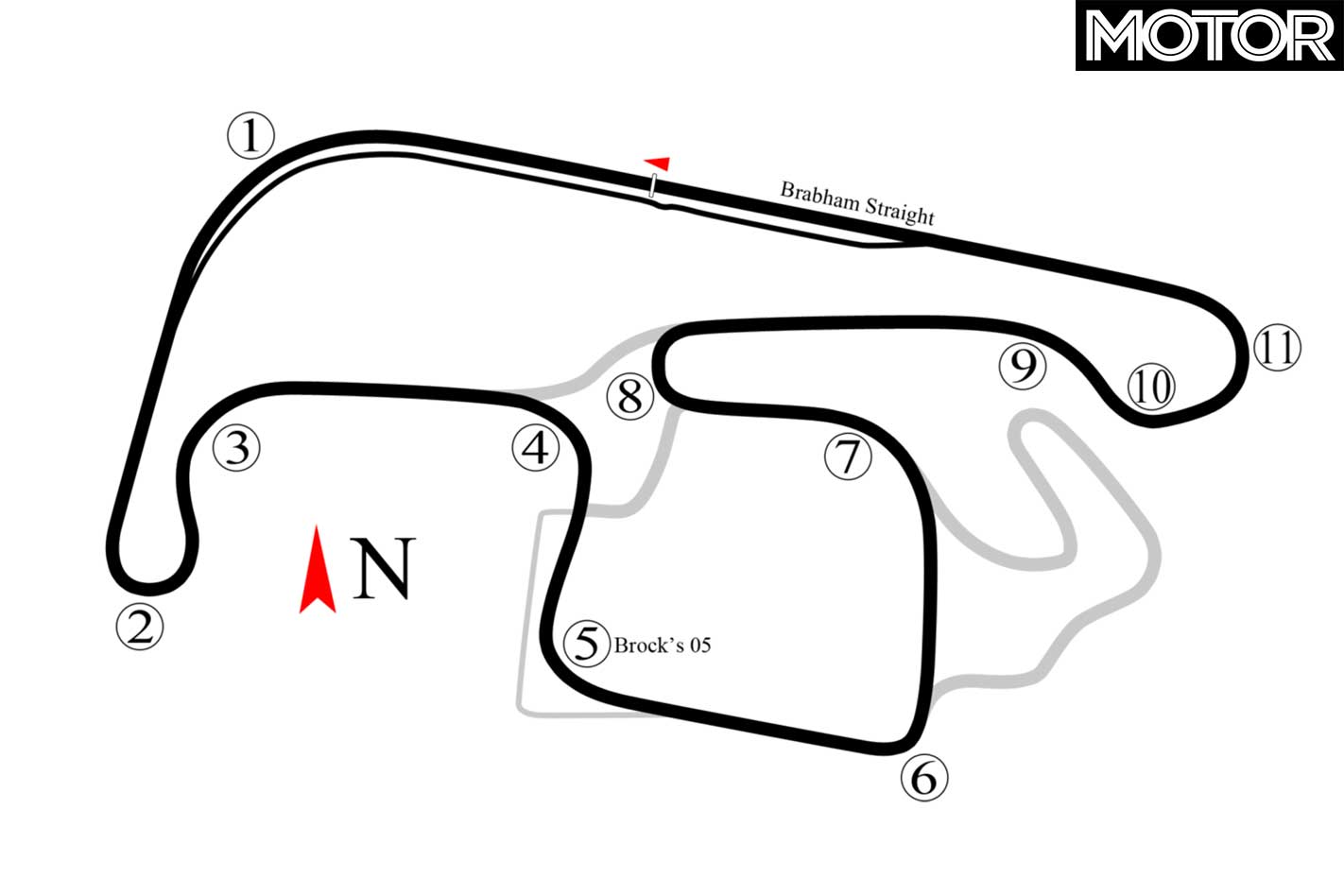
| u00a0 | Golf GTI | i30 N |
| Turn 2 | 62.4km/h | 59.2km/h |
| Turn 3 | 104.3km/h | 110.7km/h |
| Turn 5 | 101.8km/h | 102.6km/h |
| Turn 8 | 59.5km/h | 63.6km/h |
| Turn 11 | 79.6km/h | 82.9km/h |
| Vmax | 197.9km/h | 196.6km/h |
| Lap Time | 1min 59.6sec | 1min 57.9sec |
Drive: Louis Cordony
While we hoped a public test day at Sydney Motorsport Park would help split this pair, three five-lap sessions in each car only highlighted their respective strengths and weaknesses.
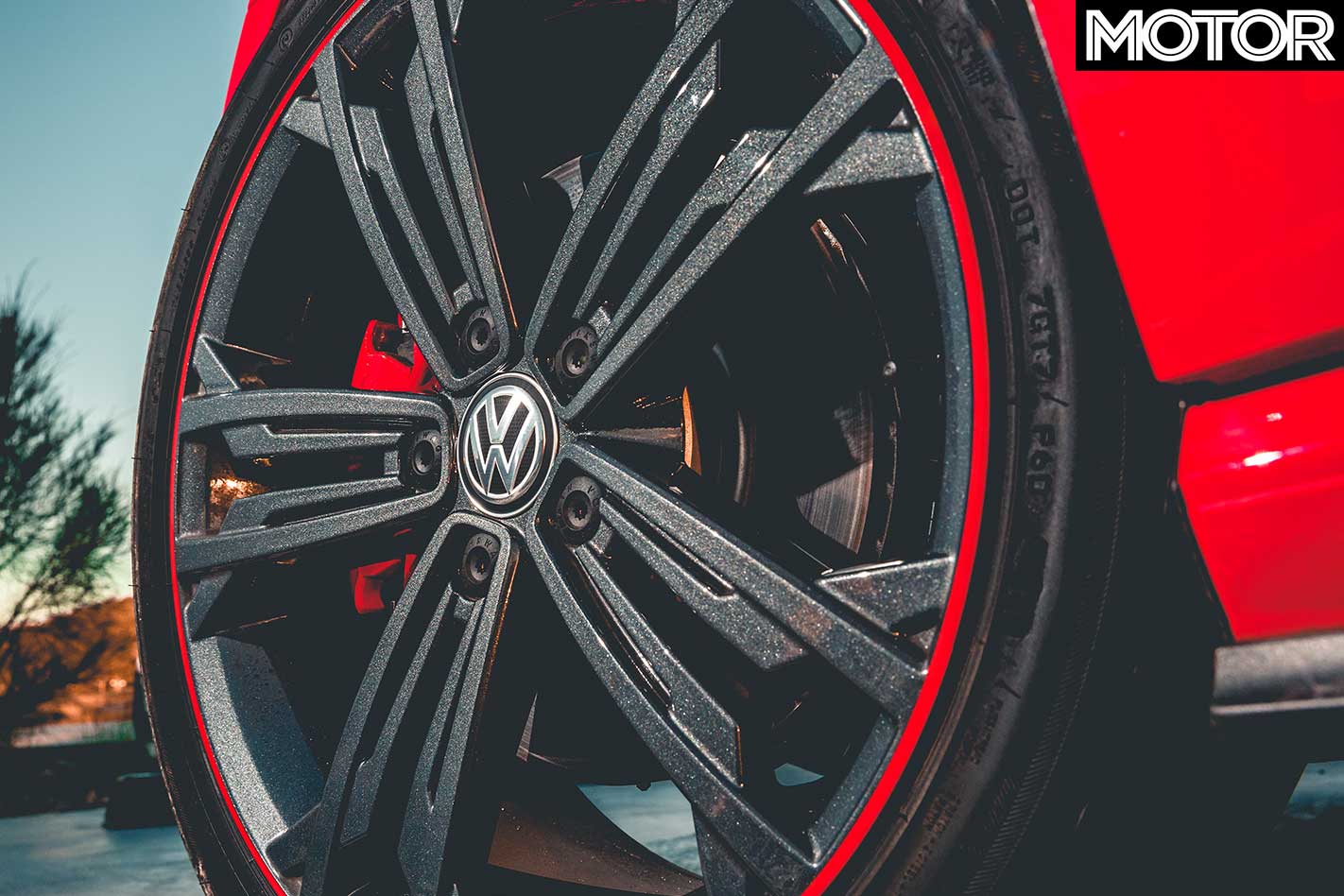
Second Opinion: “It’s the Golf GTI for me”
Jackpot. Three corners in a Golf GTI Original and that’s what comes to mind.
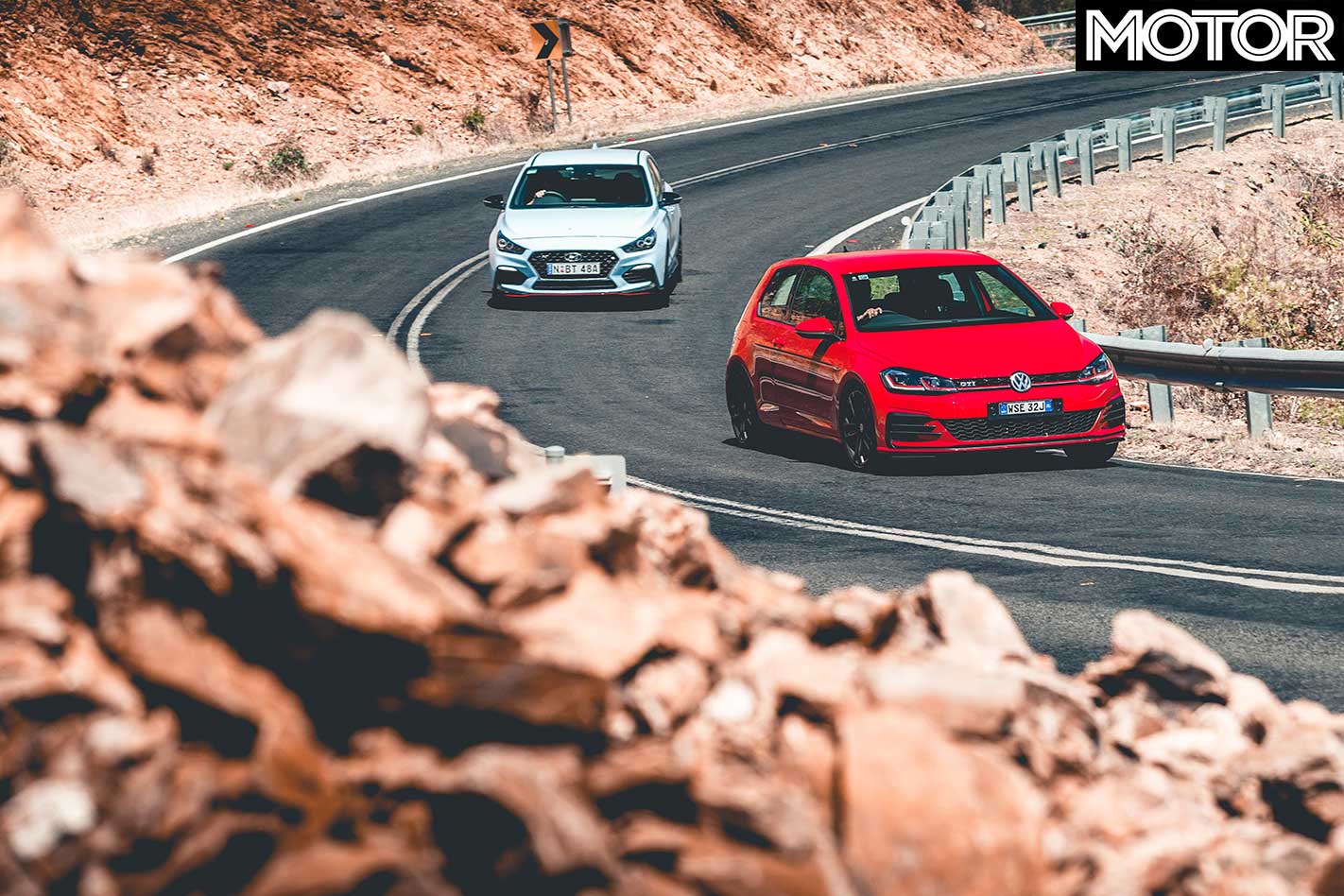
The plucky i30 N is no walk-up winner at $44,063 driveaway. Sure it has 202kW, but it weighs over 1429kg. The N can feel slower, and struggles to hide its extra mass, but the damping is Hyundai’s best yet, the ESC is excellent and the LSD helps deliver slingshot cornering.
What the i30 doesn’t have is the front-end of a Civic Type-R and I feel it should move around more, like the VW. Anyone who calls a Golf boring is wrong, and for this tester, the frisky and fun handler trumps the hard-and-fast by the slimmest of margins. – Dan DeGasperi
Fast Facts
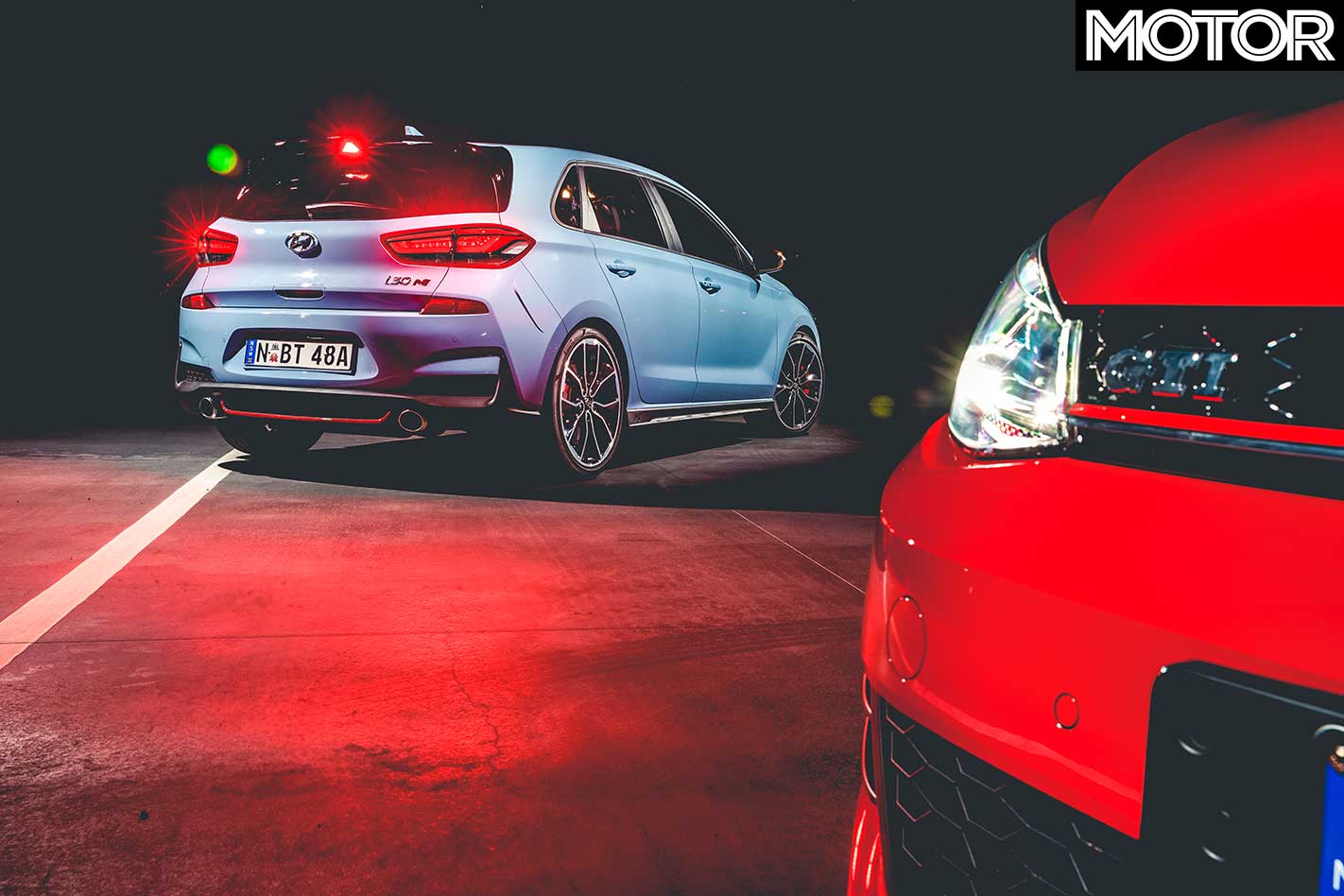
| u00a0 | 2018 Hyundai i30 N | 2018 VW Golf GTI Original |
| BODY | 5-door, 5-seat hatch | 5-door, 5-seat hatch |
| DRIVE | front-wheel | front-wheel |
| ENGINE | 1998cc inline-4cyl, DOHC, 16v, turbo | 1984cc inline-4cyl, DOHC, 16v, turbo |
| BORE/STROKE | 86 x 86mm | 82.5 x 92.8mm |
| COMPRESSION | 9.5:1 | 9.6:1 |
| POWER | 202kW @ 6000rpm | 169kW @ 4700-6200rpm |
| TORQUE | 353Nm @ 1450-4700rpm (378Nm on overboost) | 350Nm @ 1500-4600rpm |
| WEIGHT | 1509kg | 1326kg |
| POWER/WEIGHT | 134kW/tonne | 127kW/tonne |
| TRANSMISSION | six-speed manual | six-speed dual-clutch |
| SUSPENSION (f) | struts, adaptive dampers, anti-roll bar | struts, dampers, anti-roll bar |
| SUSPENSION (r) | multi-links, adaptive dampers, anti-roll bar | multi-links, dampers, anti-roll bar |
| L/W/H | 4240/1775/1320mm | 4268/1799/1442mm |
| WHEELBASE | 2650mm | 2626mm |
| TRACKS | 1556/1564mm (f/r) | 1538/1516mm (f/r) |
| STEERING | electrically-assisted rack-and-pinion | electrically-assisted rack-and-pinion |
| BRAKES (f) | 345mm ventilated discs, single-piston calipers | 312mm ventilated discs, single-piston calipers |
| BRAKES (r) | 314mm ventilated discs, single-piston calipers | 272mm solid discs, single-piston calipers |
| WHEELS | 19.0 x 8.0-inch (f/r) | 18.0 x 7.5-inch (f/r) |
| TYRE SIZES | 235/35 R19 91Y (f/r) | 225/40 R18 92Y XL (f/r) |
| TYRE | Pirelli P Zero (HN) | Bridgestone Potenza S001 |
| PRICE (as tested) | $42,990* (*Includes Luxury Pack $3000) | $39,990 |
| PROS | Stability; crackling exhaust; sticky front-end; brakes | Slick looks; refined everything; brilliant ride; grunt |
| CONS | Stiff primary ride; ‘safe’ rear end | Poor traction; steering feedback |
| RATING | 4.5 out of 5 stars | 4 out of 5 stars |
