
BMW has teased its dashboard of the future, which will include a function that will welcome the driver by name as soon as they open the driver’s door.
It’s the biggest change to the way customers will interact with a BMW since the introduction of iDrive, the dial-based controller system rolled out to the car maker’s products in 2001.
“The standout features of the new system are its clear, puristic layout, intuitive structuring and operation, the close interaction between the Information Display in the driver’s field of vision and the Control Display in the centre console, as well as new customisation options for the displays,” BMW said.
“The new display and control concept lends itself even more effectively to optimum attention management, so the driver is always provided with the appropriate information for the driving situation at hand at just the right time.”
The new dashboard’s design reflects the quad-headlight design that dominates BMW’s current crop of passenger cars, creating four virtual “pods” of information. On the left are the fuel gauge and speedometer with a numerical reference, while on the right is a tacho, drive mode and a temperature gauge. The two larger pods frame the sat-nav system’s map.
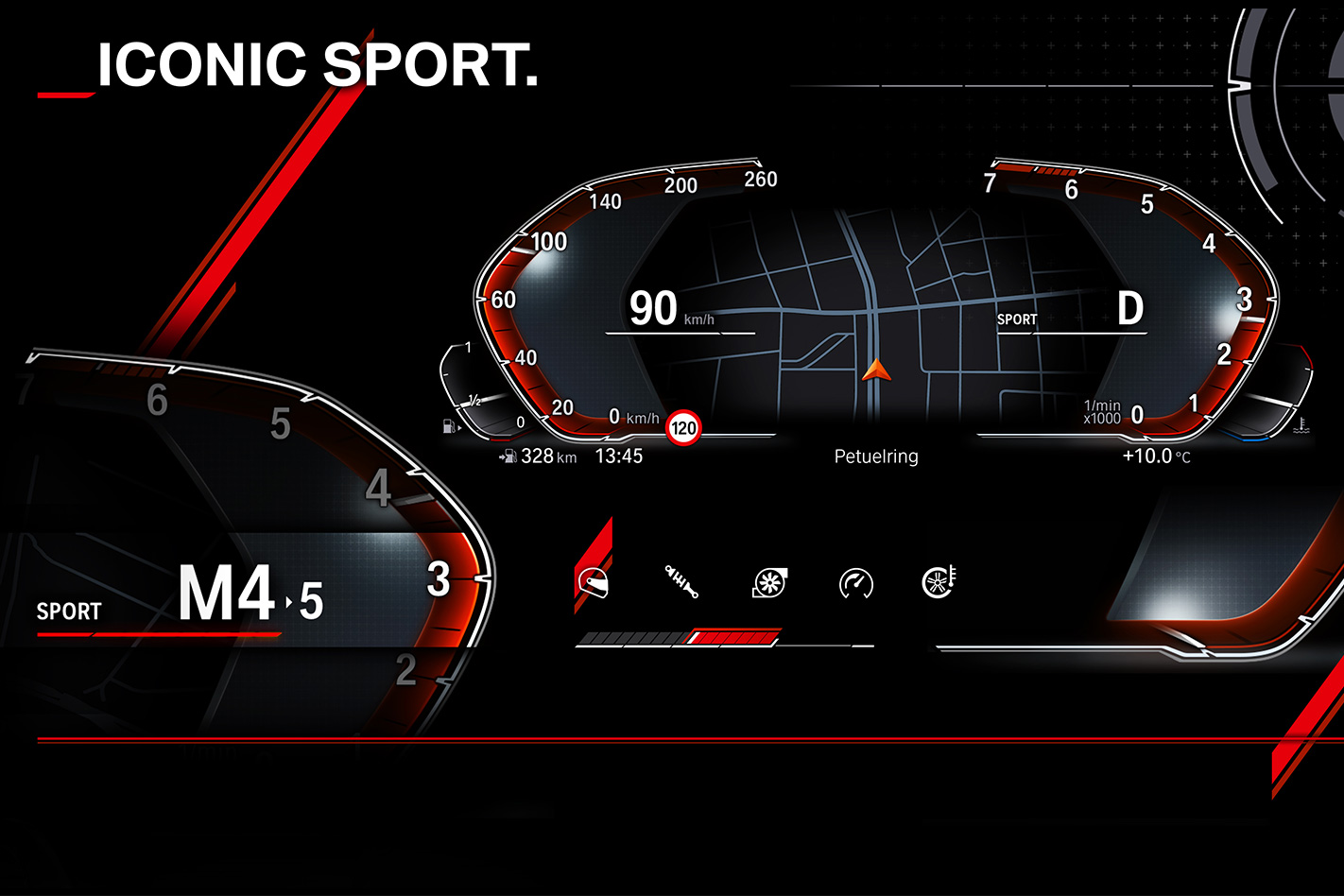
The “Information Display” dashboard is customisable, and swaps the interface over depending on what driving mode the vehicle is in. One frame shows the dash as it will look in Sport mode, with a manual gear indicator, needles on the speedo and tacho replaced with solid lines that trace out the edge of the cluster. There’s what looks like a lateral G meter, a race helmet that hints at a track mode, adaptive suspension, a boost gauge that hints at an end to normally aspirated engines, and a tyre temperature monitor.
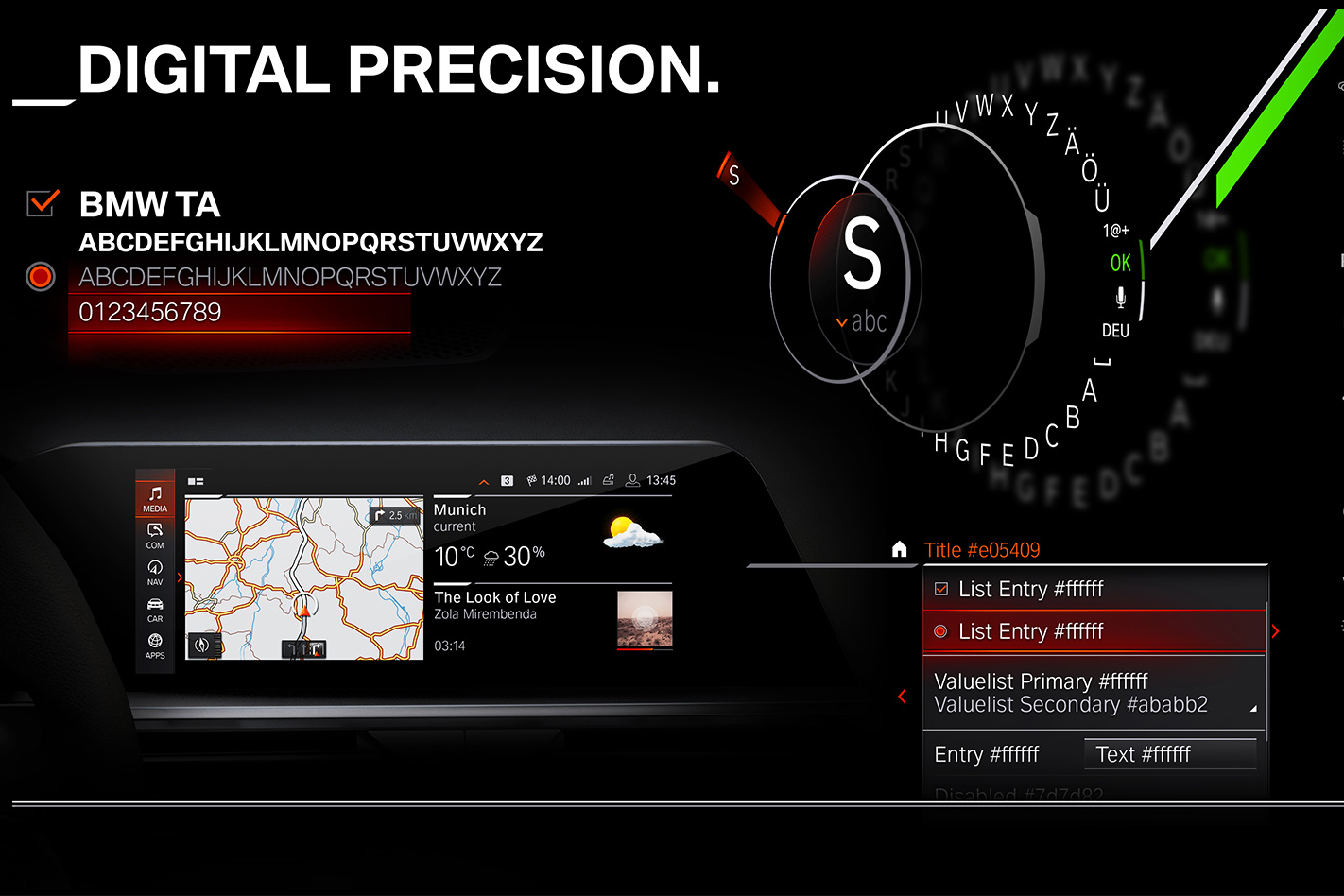
The “Control Display” part of what BMW calls its Operating System 7.0 steps up to a 12.3-inch display and adds a touch-sensitive function for the first time, but will also keep the traditional dial-based BMW iDrive controller. BMW says the interface has a much flatter menu structure than before, making it easier to find the settings. It will also get gesture controls.
The personalisation settings will also display a graphic of the vehicle showing its model name, equipment package and base colour. This hints that BMW is optimising the system for the day when its customers share, rather than own, cars.
BMW will officially reveal its dashboard of the future at the 2018 Beijing Motor Show, which starts on April 25.
Can’t wait to see the final score? Jump to the verdict now
IF ‘post-Trump’ is now a recognised term in educated society, then ‘post-CX-9’ must be a thing in Mazda’s inner sanctum.
Not the heavy, thick-pillared old lump but the comparatively svelte, COTY-winning new one. It has set a high-water mark for Mazda SUVs – and large SUVs in general – that makes the task of every subsequent newcomer that much harder.
Here, the microscope is focused pointedly and critically at the new-gen CX-5. And making its mission doubly difficult is the model we’ve chosen – the most expensive front-drive CX-5 you can buy ($34,390 Maxx Sport) featuring a 114kW 2.0-litre engine that could theoretically cure insomnia. Yet the variant that had us concerned may be the runt of the new CX-5 litter is actually anything but.
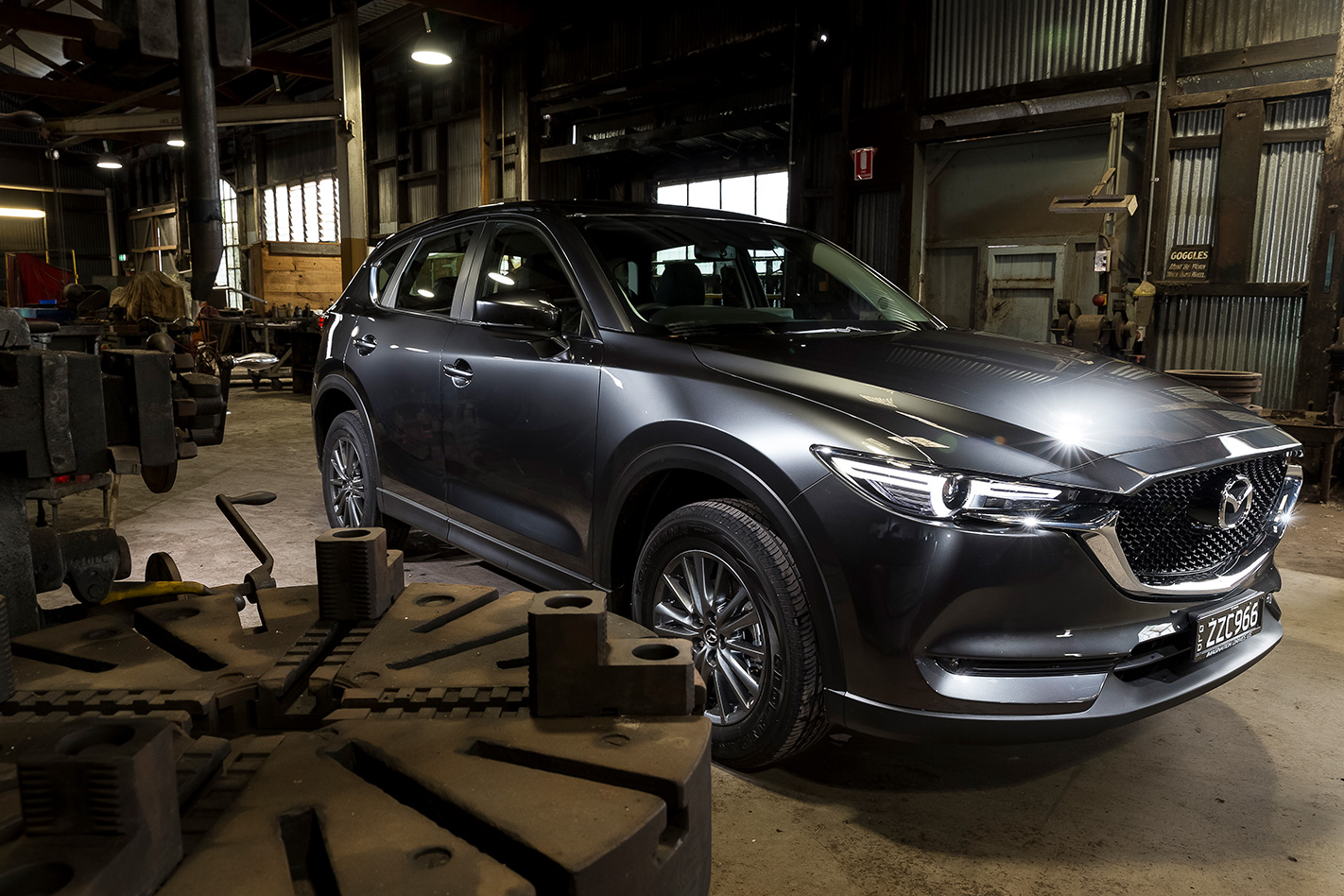
The engine is definitely a surprise. Seemingly unchanged since 2012, in front-drive Maxx Sport guise, this unassuming little unit has to lug 74kg more than it did five years ago, yet Mazda has clearly made improvements. Even in an SUV as beefy as this, it’s a peach of thing, revving out keenly (and usefully) to 6700rpm without any of the vibes that plague the CX-3.
Its ultimate lack of muscle sees the six-speed auto hunt up and down a bit on hills (in regular Drive mode, not ultra-primed Sport), yet the transmission calibration is close to spot-on and overall refinement is bloody good. The base 2.0-litre even has personality.
So does the rest of the new-gen CX-5. Inside, attention to detail is way ahead of the old car, hitting all the marks in terms of what you expect from a medium SUV, and then some (despite the lack of a digital speedo). Stitched dashboard and door tops look and feel really upmarket for $34K, as does the horizontal design aesthetic and metal detailing.
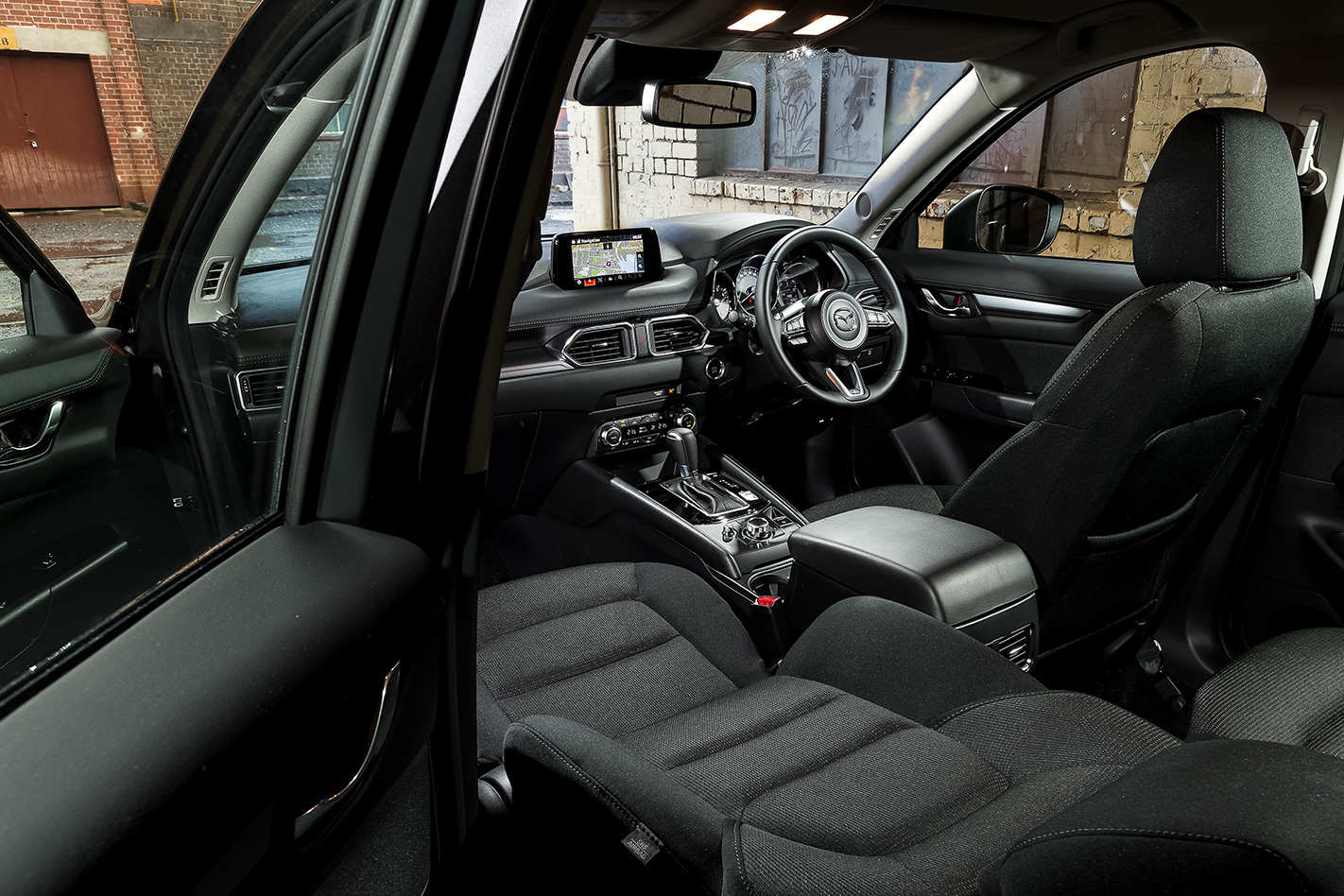
Better still is the CX-5’s leap forward in seat comfort and useability. Even the base Maxx gets a height-adjustable front passenger’s seat – a long-overdue feature in any Mazda – while Maxx Sport scores rear air vents, four auto up/down windows, and dual USB slots in its centre rear armrest to calm the little coots.
Both front seats are deeper and more supportive, as is the rear bench, making passengers feel part of the car. But this relatively low-slung seating feel doesn’t come at the expense of all-round vision. Even with charcoal trim like our test car, the new CX-5’s thinner pillars, lower dash and superior accoutrements make it feel so much more welcoming.
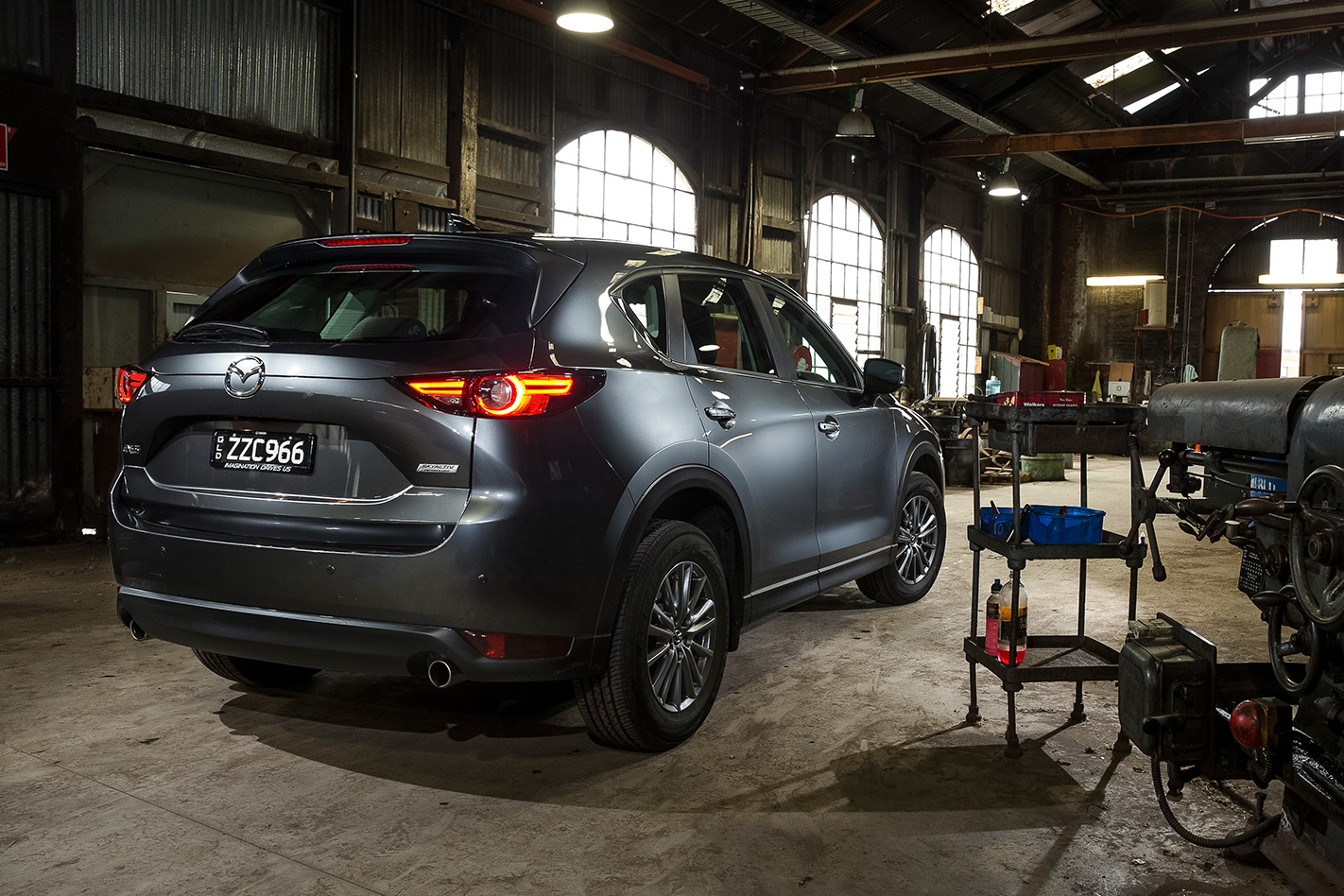
Pity its ride isn’t quite at the same level. Around town with just the driver on board, the Maxx Sport’s ride is entirely acceptable – firm, yet well-controlled – but over our punishing four-up test road, the CX-5 simply couldn’t relax.
It fails to iron out the low-frequency bumps that a really good ride does (see Subaru Forester) and can ultimately be a bit tiresome on longer, bumpier country journeys. The more challenging the road, the better the CX-5 is, but it always feels primed when sometimes you just want it to chill.
Where that works to its advantage is in corners. The Mazda can’t quite match the Escape’s instant poise, but its crisp steering is nicely weighted and, in typical Mazda fashion, the harder you drive it, the sweeter its balance and the greater its handling involvement.
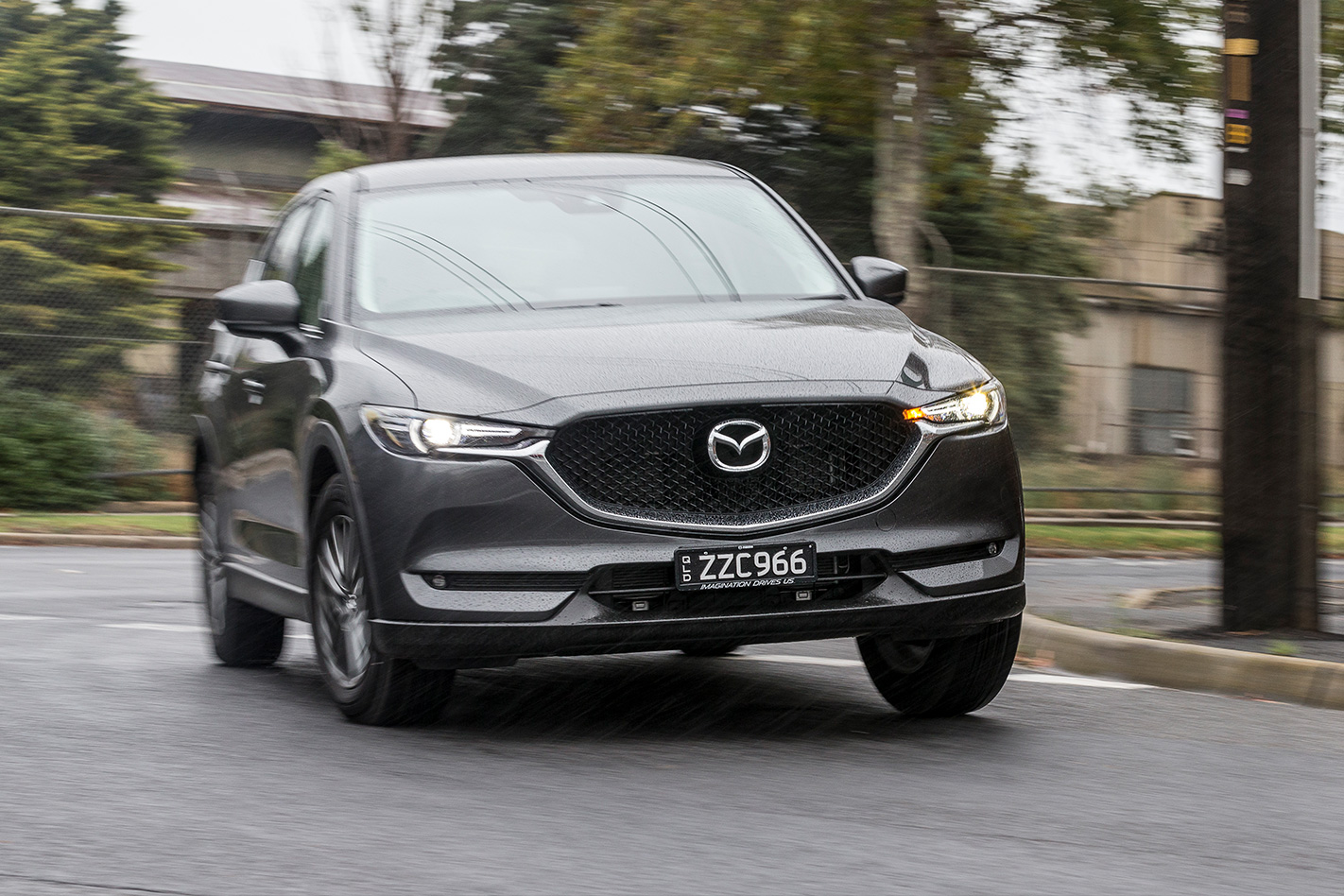
Tyre-noise suppression has simply caught up to its rivals, rather than setting a new standard, yet the CX-5 has gone from being a car that gets constantly singled out for NVH crimes to a car where it’s now a non-issue.
Yet this is no baby CX-9. The new CX-5 is a sportier, younger person’s car than its plush big brother. And this front-drive Maxx Sport variant represents amazing value for money, especially when you take into account the CX-5’s best-in-class resale.
Neither as fast or as frugal, or even as roomy, as the new Tiguan, it’s the CX-5’s engagement that gets it over the line. Unlike the old model, and unlike the base Tiguan, the new-gen CX-5 has warmth and personality on its side, and that’s the stuff that builds relationships, rather than just admiration.
SCORE: 8/10 MAZDA CX-5 MAXX SPORT SPECS
Model: 2018 Mazda CX-5 Maxx Sport Engine: 1998cc 4cyl, dohc, 16v Max Power: 114kW @ 6000rpm Max Torque: 200Nm @ 4000rpm Transmission: 6-speed automatic Weight: 1556kg 0-100km: 10.4sec Fuel economy: 10.4L/100km (tested) Price: $34,845 On sale: Now
 Medium SUV Megatest – Full coverage
Medium SUV Megatest Results
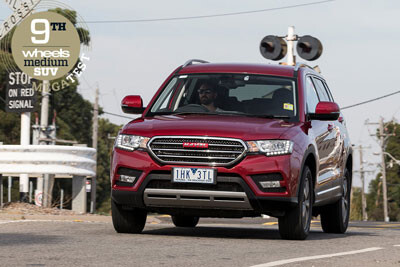 2018 Haval H6 Premium
Score 2/10
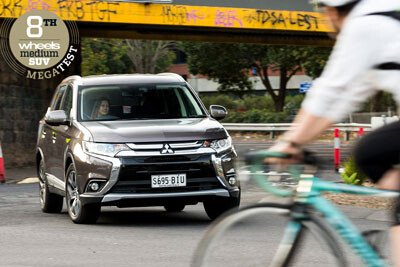 2018 Mitsubishi Outlander LS
Score 5/10
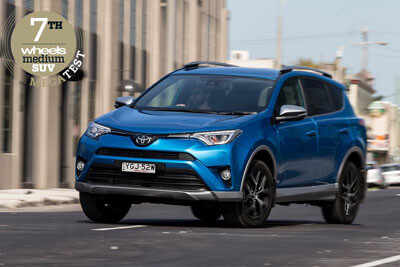 2018 Toyota RAV4 GXL
Score 6/10
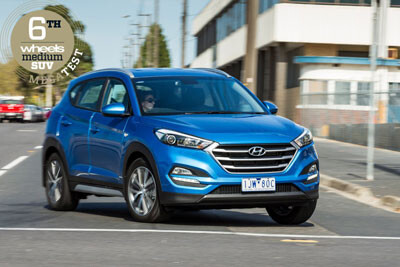 2018 Hyundai Tucson Active X
Score 6.5/10
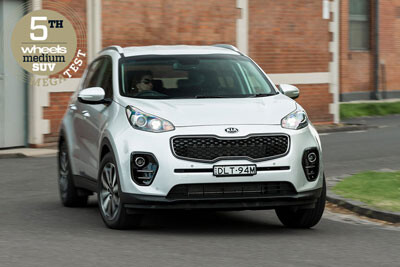 2018 Kia Sportage SLi
Score 7/10
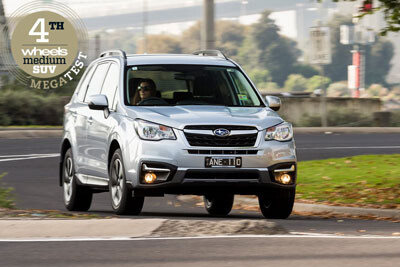 2018 Subaru Forester 2.5i-L
Score 7.5/10
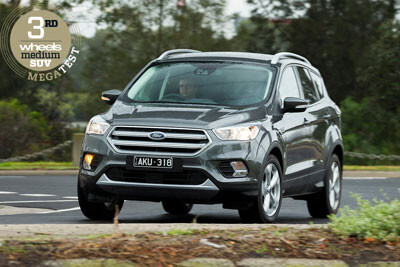 2018 Ford Escape Trend
Score 7.5/10
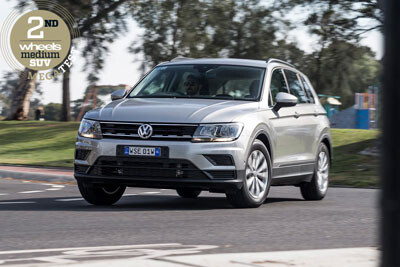 2018 Volkswagen Tiguan Trendline
Score 8/10
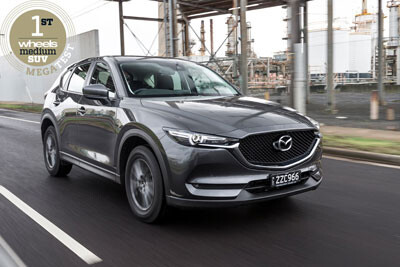 2018 Mazda CX-5 Maxx Sport
Score 8/10
THE legendary “Toyota Camry with leather”, the Lexus ES, will tease its brand-new looks with an official unveiling at the 2018 Tokyo Motor Show.
Few details are available, but the seventh-generation midsize sedan presents what Toyota calls a “ re-imagined luxury equation, featuring engaging design, athletic performance and renowned Lexus refinement”.
Straight away we notice the strong LS influence; it gets one of the proportionally biggest signature Lexus spindle grilles to ever feature on a vehicle rolling out of Toyota’s luxury car-making division. It’s framed by narrow LED headlights with a Nike Swoosh-like daytime running light etched underneath it, Camry-esque boomerang-style features and what looks like a subtle splitter running the full width of the lower air dam.
The “hybrid” badge on the trailing edge of the rear door’s skin, as well as the blue-tinged Lexus badge in the grille all point to this version of the Lexus using the Camry’s 2.5-litre four-cylinder petrol-electric hybrid drivetrain. A V6 version is also anticipated.
As it’s done for the Camry, the new-gen ES is expected to get a huge kick up in terms of the refinement of its ride and handling from its move to the Toyota New Generation Architecture, the newly developed modular platform that has transformed other Toyota-badged cars, potentially including the next-gen Toyota Corolla due here in August. One of the features of TNGA is its ability to cater to both front- and rear-wheel-drive applications, with rear drive having more of a luxury tinge to it.
A teaser video shows straked, BMW-esque LED tail-lights add visual appeal to the ES’s flanks and rear, while the bootlid sports a subtle integrated spoiler, indicating Lexus is keen to talk up its new sedan’s dynamics.
The Lexus ES will make its debut at the 2018 Beijing Motor Show, which starts on April 25.
It’s the original front-drive performance car, sparking a small-car/big-engine philosophy echoed in hot-hatches to this day.
This feature was first published in MOTOR magazine’s February 2009 issue.
The Mini Cooper S championed the light and nimble, dispelled the ‘no substitute for cubic inches’ mantra, and redefined what constitutes a genuine performance car. And it became the ultimate underdog, the David that pulverised its bigger, more-powerful Goliath rivals in both racing and rallying.
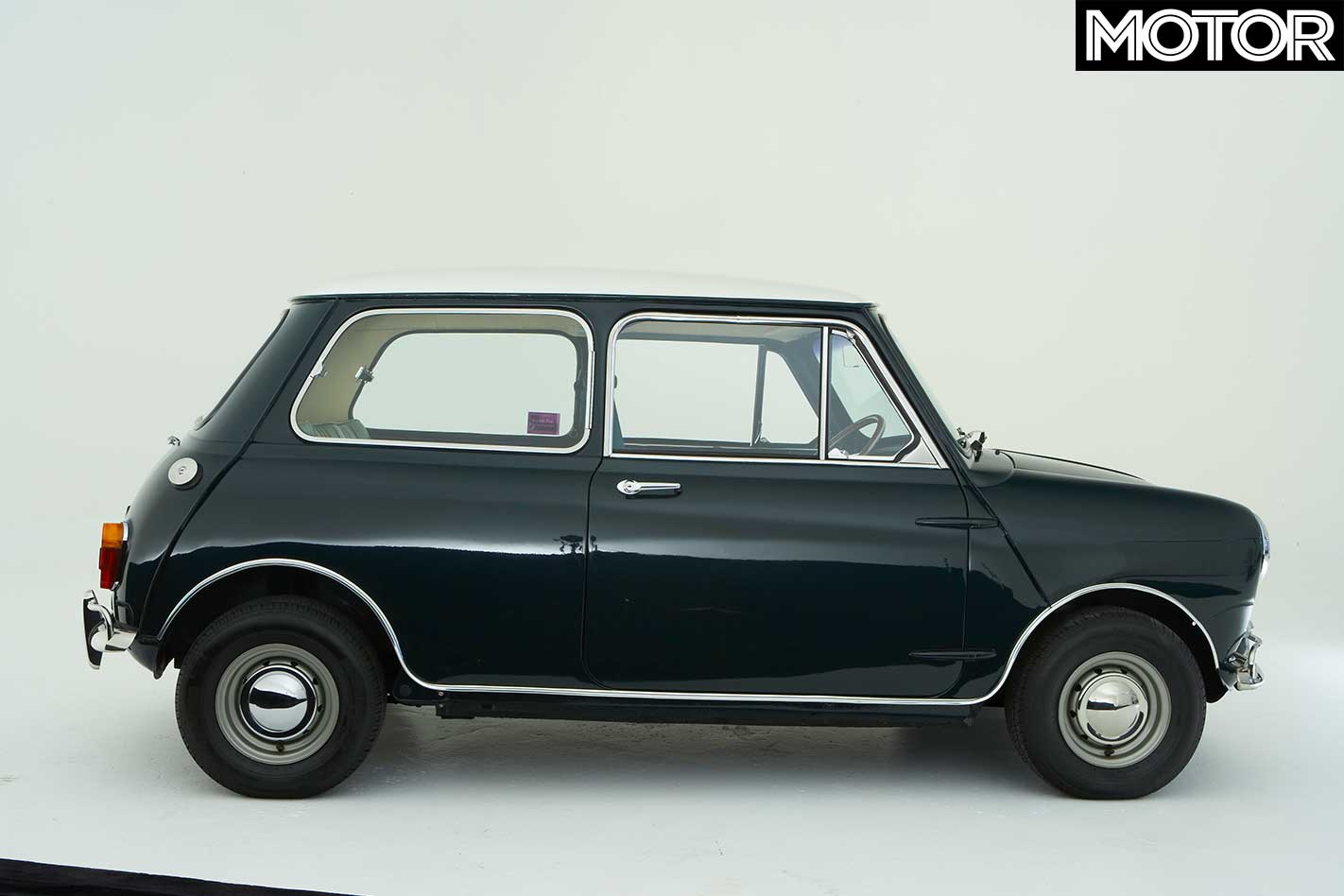
Cost effectiveness was assured by raiding the Morris parts bin, while its pleasing styling cues were both cheery and distinctively English. F1 engineering guru John Cooper convinced BMC to produce a hot Mini – initially a warmed ‘Cooper’ version, followed by a hotter S.
Like Carlo Abarth with Fiats the decade before, Cooper exploited the Mini’s packaging and cost-effectiveness benefits to produce an affordable, but genuinely fast performance micro.
Debuting in Europe in 1963, two years after the regular Cooper, the S’s four-cylinder was bumped up up to 1071cc, though the local version – manufactured at the BMC plant at Zetland in Sydney – debuted in July 1965 with a twin-SU-fed 1275cc engine mated to a four-speed manual ’box.
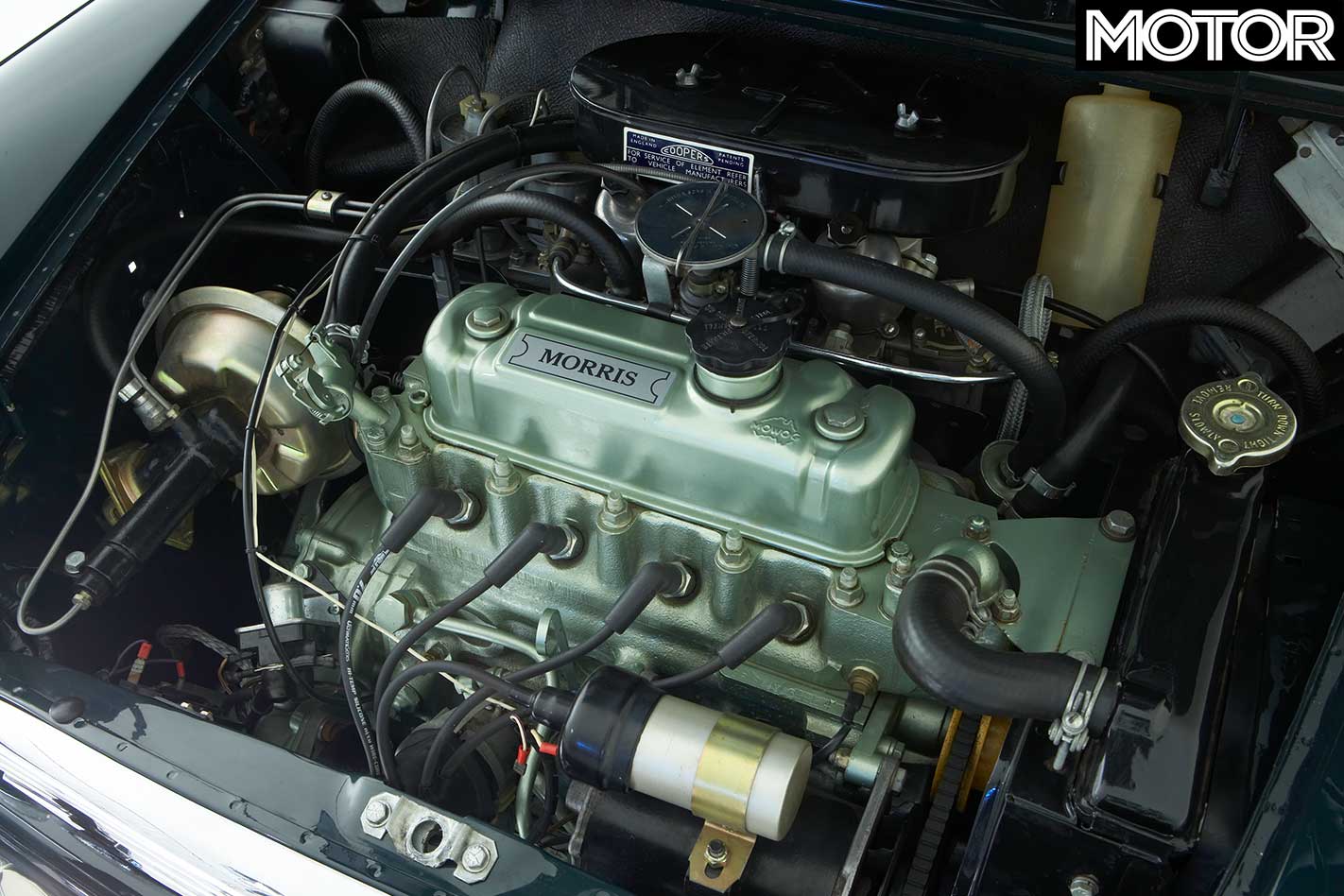
Signature twin fuel fillers fed two 25-litre tanks, giving the Cooper S impressive mileage. It recorded 8.4L/100km on test in Modern Motor January ’66, for a 600km range.
Make no mistake, the engine was huge for a tiny three-metre-long, 1.4m-wide Mini, dwarfed by competition rivals such as Ford Mustangs. And the Cooper S weighed a mere 635kg for a power-to-weight ratio of 88kW/tonne, more than a match for contemporaries such as the Ford Cortina GT500 (77kW/tonne) and the Renault R8 Gordini (90kW/tonne).
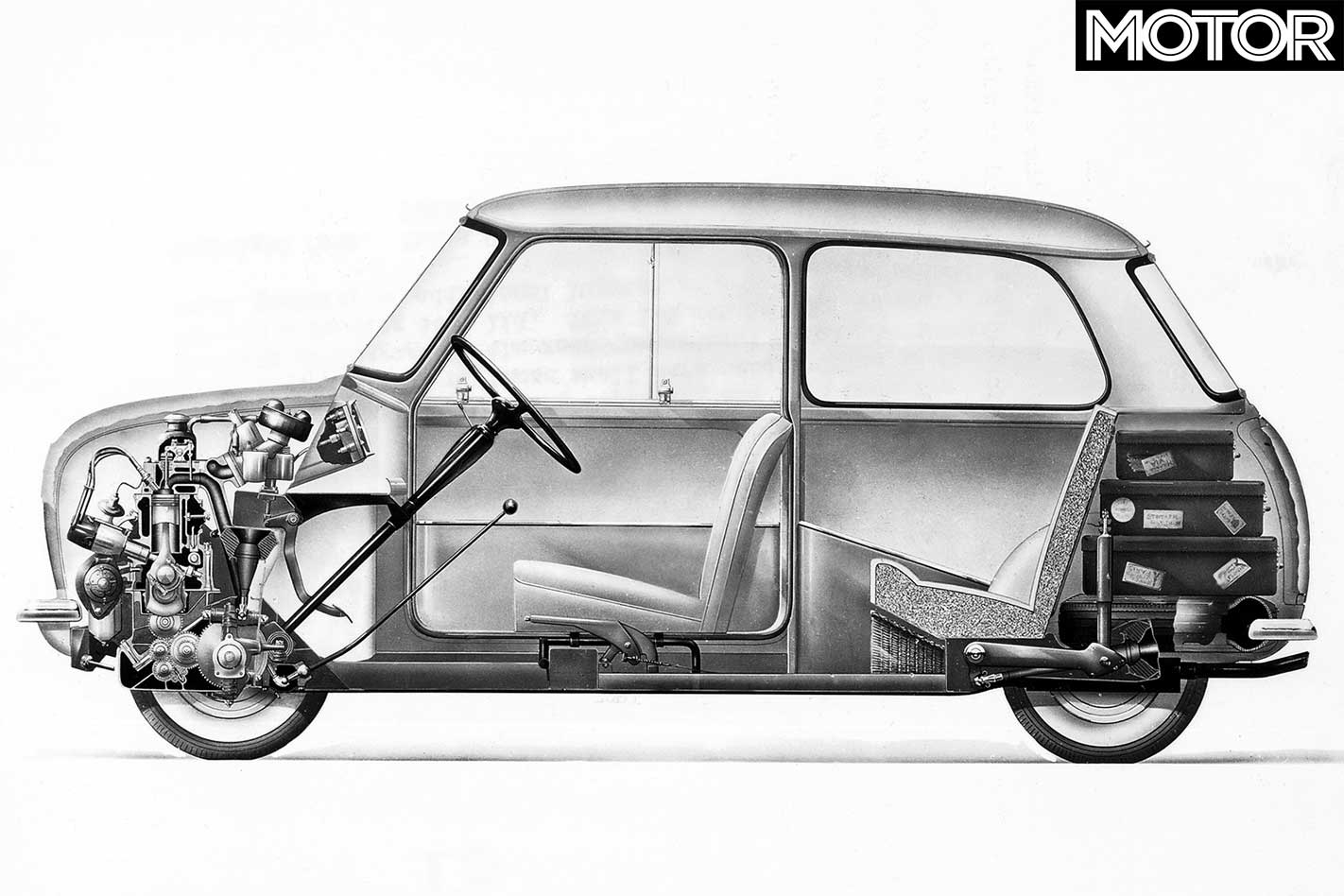
It uses interconnected fluid-filled displacers, which each contain a rubber spring, so when the fluid was displaced in one of them it was transferred to the other (front to rear or vice versa). This in turn lowered the opposing end of the car to keep it level. If both the front and rear hit bumps simultaneously, then the rubber springs came into play.
The Cooper S initially etched its name in stone by twice winning the Monte Carlo rally. And it repeated the effort in ’66 by finishing first, second and third. But a quick rule change saw the victorious Cooper S of Timo Makinen disqualified, handing the win to Finn, Pauli Toivonen, in his Citroen DS21. But even Toivonen knew it was a token victory.
“None of us dreamed that the stewards would turn the results upside down, and for such a stupid reason,” he admitted.
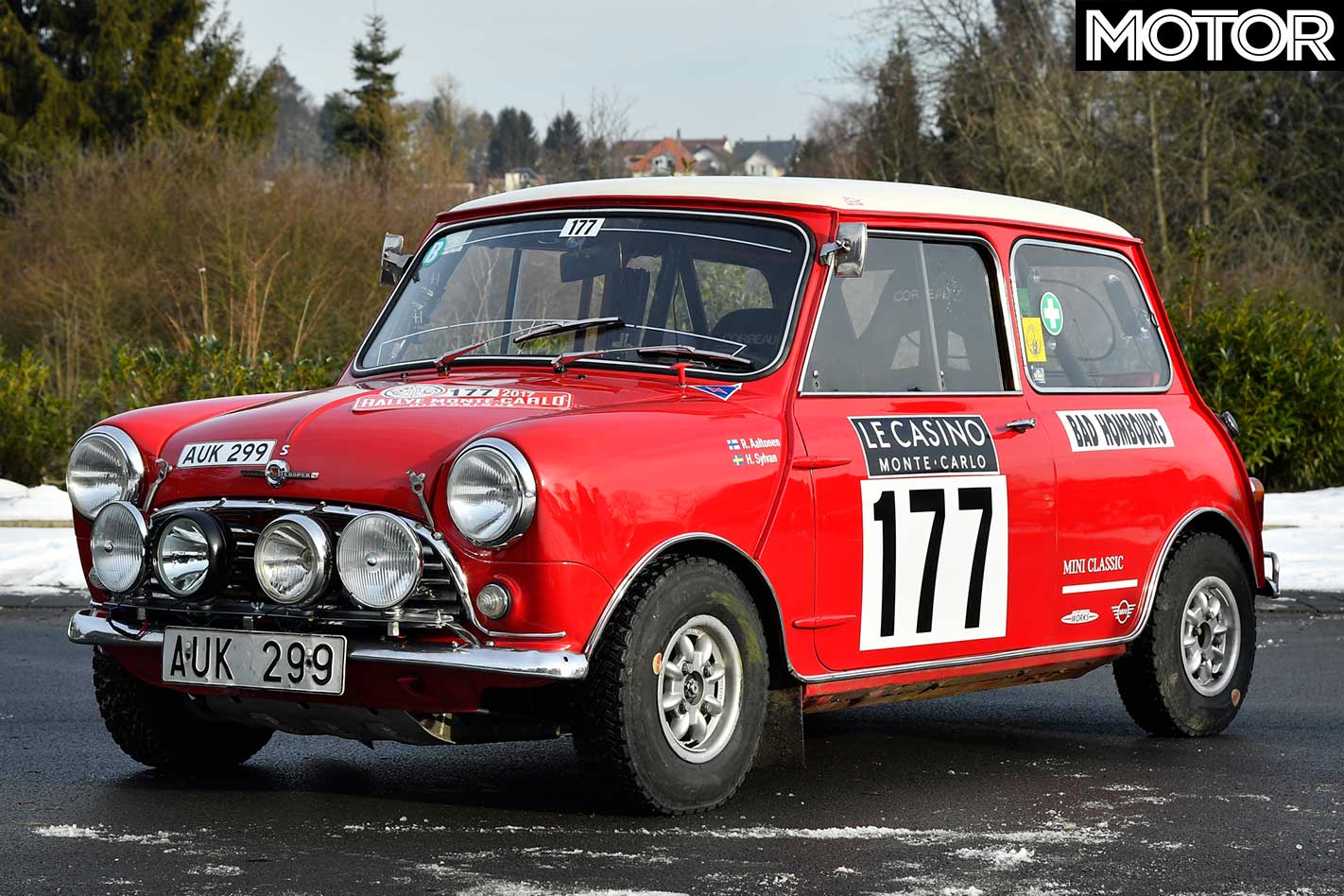
While outlawed at the Monte, Bathurst ’66 saw a 17-strong Mini assault on Mount Panorama, with BMC factory support.
The production-car race was categorised into price points back then, with the maximum capacity (55-car) field led by the most expensive, Class D. This is where the Mini, once again, had its rival by the balls: the Cooper S cost just $2280 in 1966, while the R8 Gordini asked $2630 and the Cortina GT500 $3006 . And don’t even bother comparing the running costs of racing a Cooper S against a V8 or Holden six…
So for Mount Panorama’s classic in ’66, the Minis started behind the Ds. When the chequered flag dropped, the Cooper Ss had filled the first nine places. No other car in the race’s history has got close to repeating such dominance.
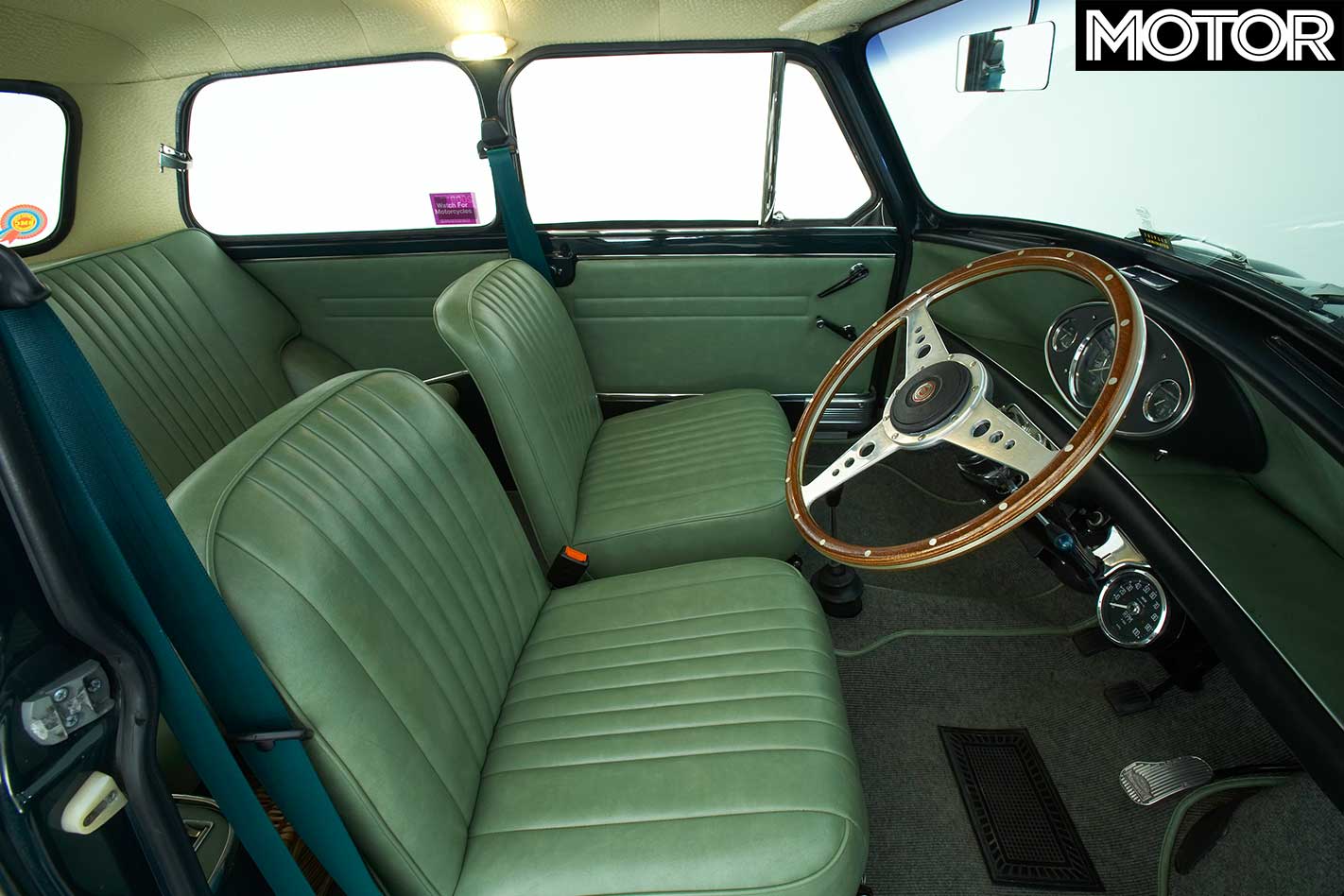
BMC never intended the Cooper S to be a race car, but the tiny terror literally won thousands of events across the globe, and the irony of its success was further frustrating for rivals because of its humble and practical – not performance – origins.
While Volkswagen’s original MkI Golf GTI is generally credited as the instigator of the hot-hatch, the Cooper S was the first front-drive, pint-sized performer that espoused such a configuration. It sparked a paradigm shift in the definition and execution of what makes a performance car, as until the Mini Cooper S came to the fore in the mid-1960s, you needed a seriously powerful and large machine to win any sort of motorsport contest.
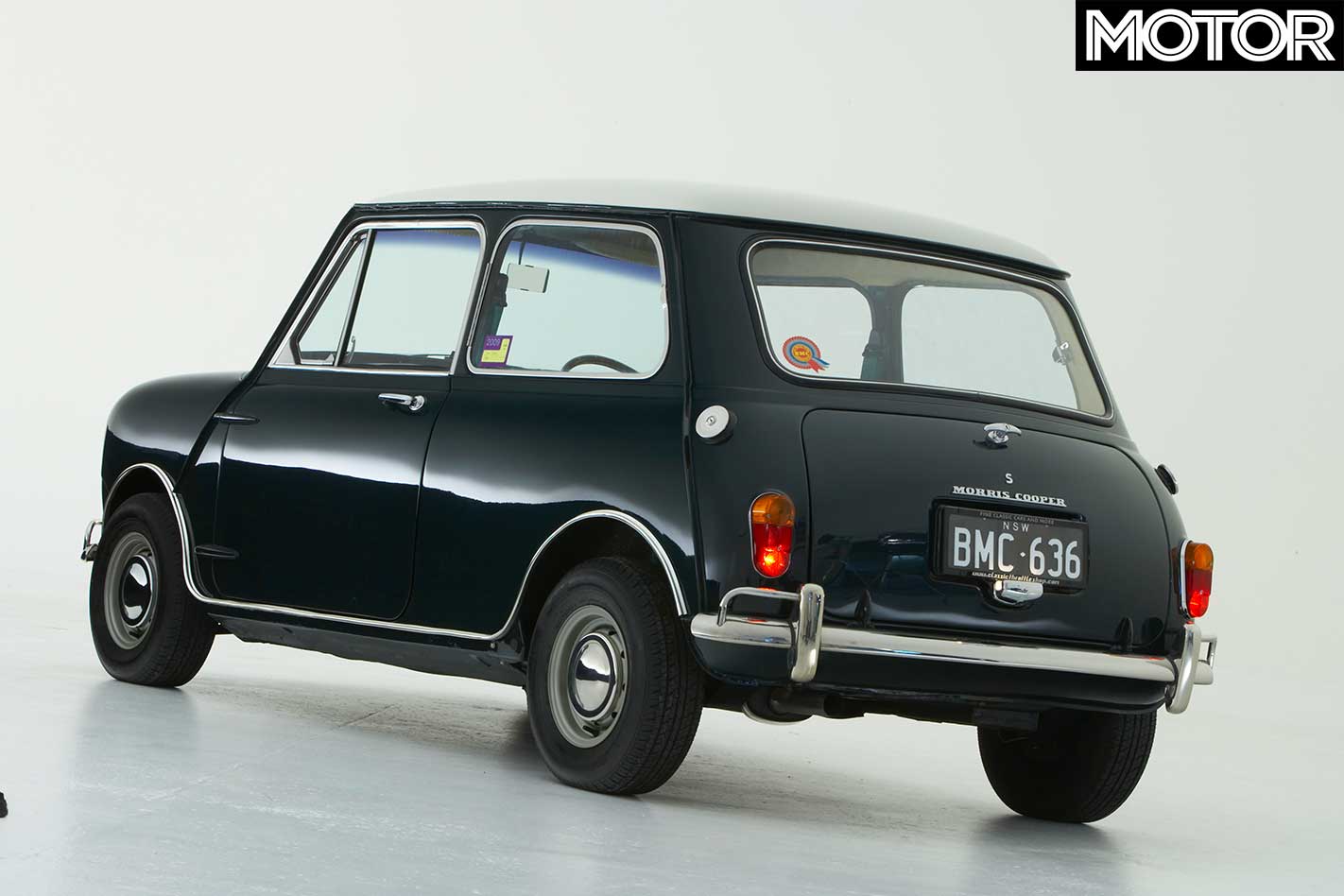
Only a handful of years later, Holden subscribed to the ideal in putting the LC Torana GTR and later GTR XU-1s up against Ford’s 5.8-litre V8 Falcons. The Mini Cooper S demonstrated that when it comes to performance supremacy, there’s more at play than simply piling on the horses.
Where can I get one & what’s it cost?
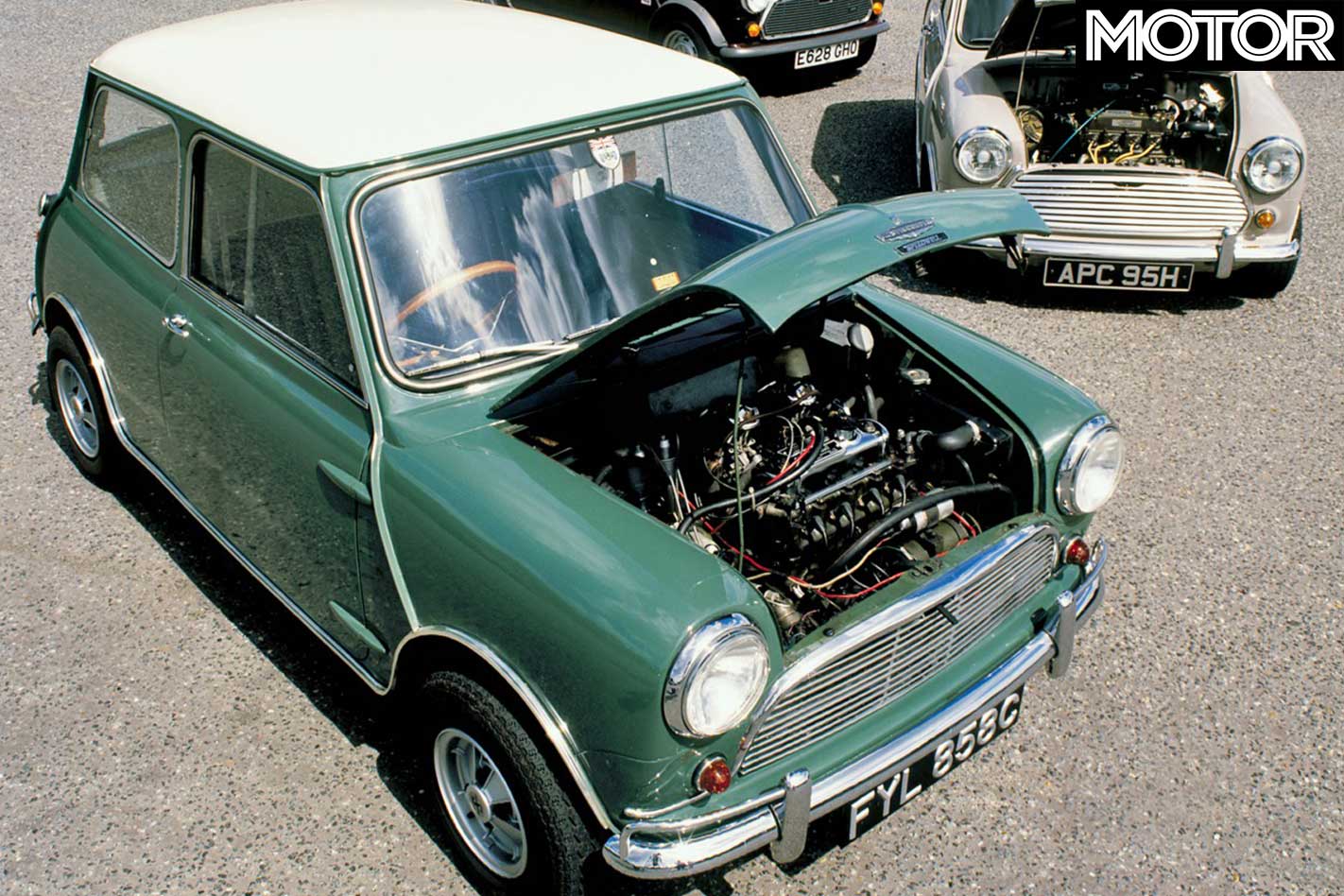
Shannons have a number of Cooper S models on their website, some Australian and some imported, with the highest price being $19,000 for an Aussie 1275cc in British Racing Green. We also found a beige 1968 model that went for $13K, and an immaculate 1968 Cooper S with 65,000km on the clock for $25K. So per inch, they’re not cheap.
Finding unrestored versions is difficult, so the buying seems to be a broad range from low-teens to around $30K.
As always, specialist collector’s dealers are a smart way of finding a genuine Cooper S. The ’66 Oz-spec example photographed here is owned by the Classic Throttle Shop in North Sydney (02 9922 2036 or classicthrottleshop.com). And, despite shooter Bateman’s obsession, it’s actually not for sale, such is the regard this vehicle is held in.
AS OF 2018: Our sister publication Unique Cars had recently called $32K a ‘steal’ for a tidy ’69 Cooper S, but one 1964 Cooper S is for sale on the TradeUniqueCars classifieds in tidy but modified condition for $24K at the time of this update.
Why wasn’t it thought of before?
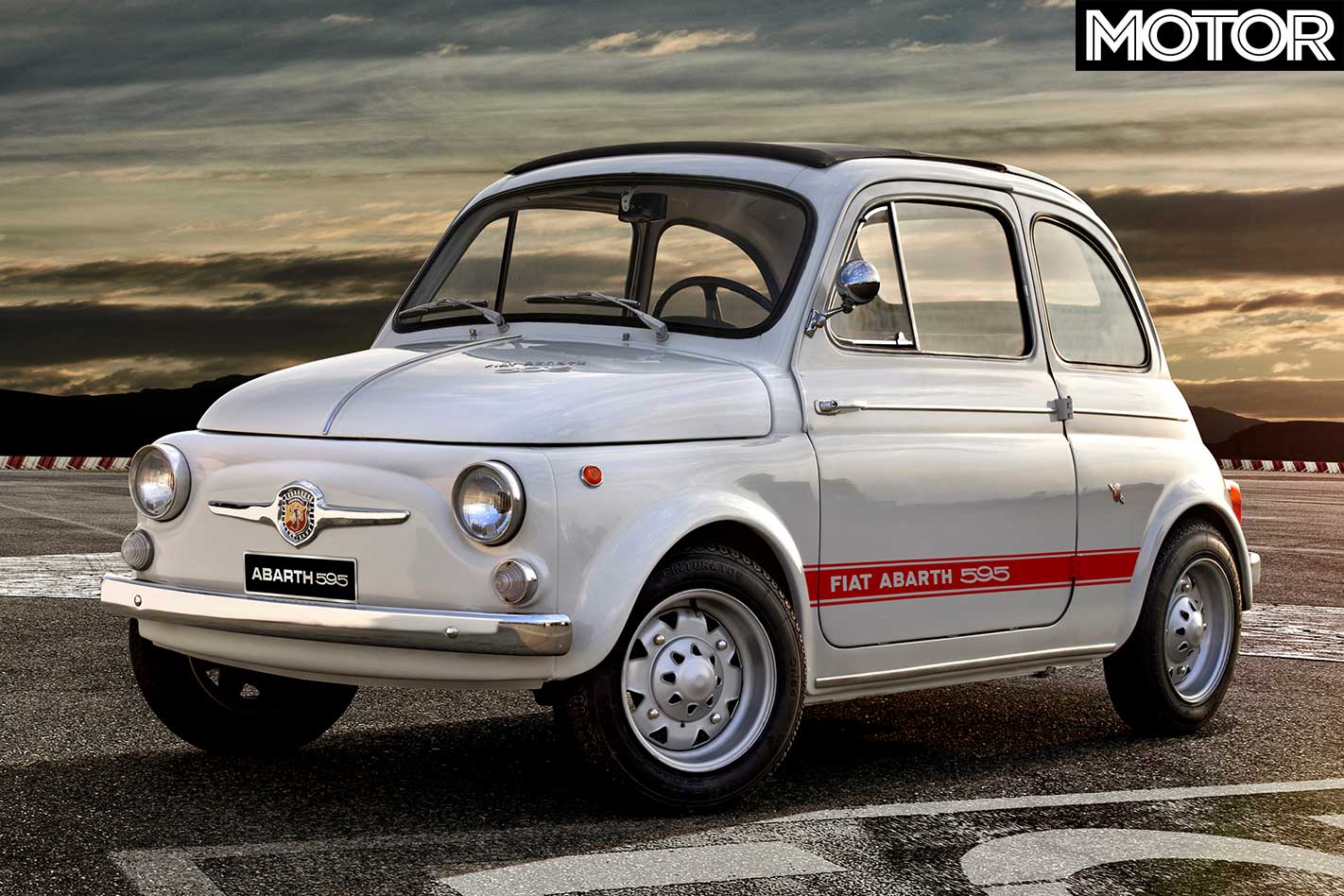
Indeed, it was the Italians – Fiat specifically – who’d set the small performance benchmark with Carlo Abarth’s tuning house, producing wee weapons such as the Abarth 600, which boasted a 1.0-litre engine in its largest form.
What made the Cooper S such a groundbreaking vehicle, however, was not just its on-paper stats, but the effectiveness of its execution, meaning it had no direct rivals when it launched. In simple terms, nothing came close to its combination of power-to-weight and agility. It moved the goal posts, dominating race and rallying for the best part of the 1960s.
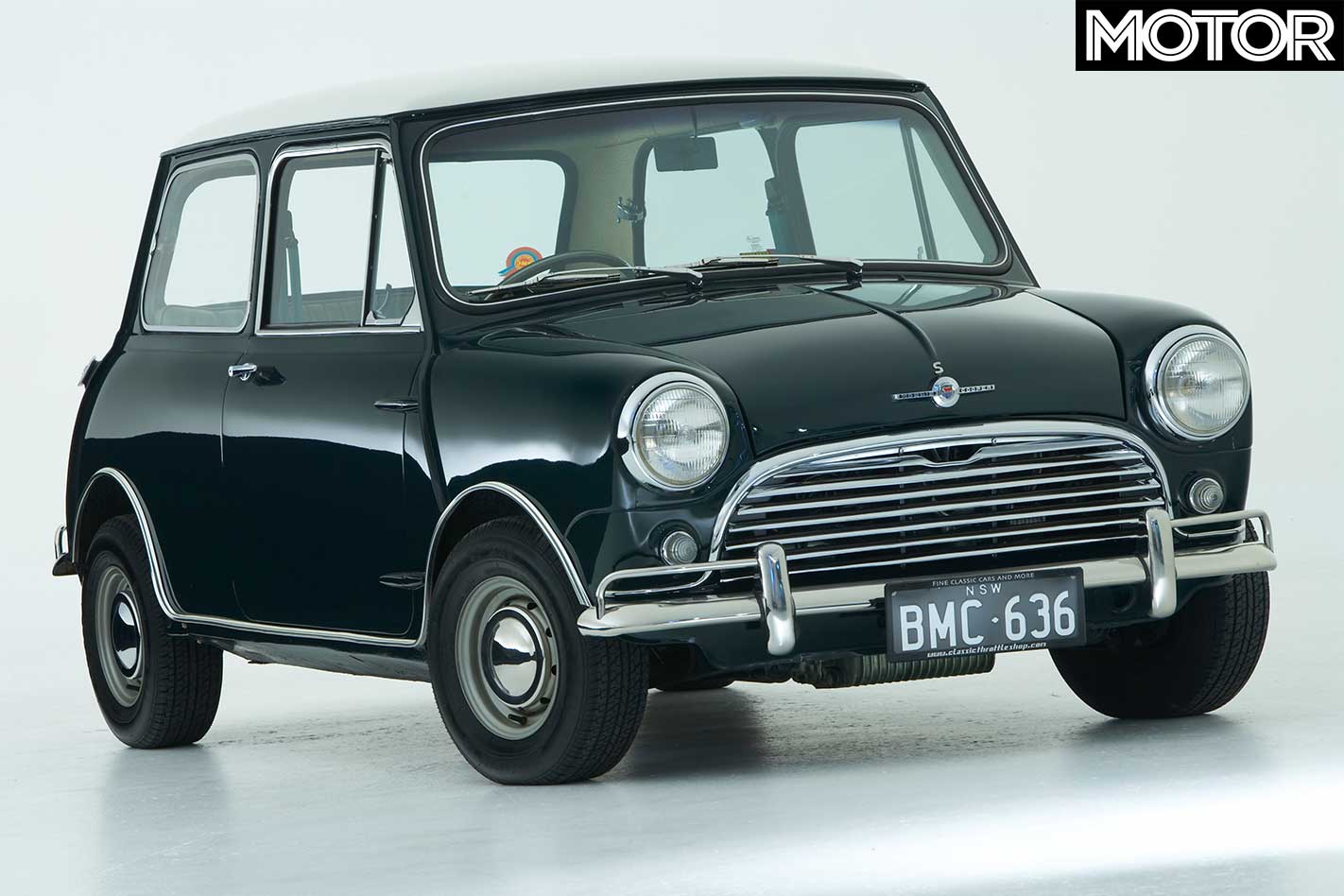
1 – Handling The chuckability of the Cooper S is superb. This is a car that set the benchmark for front-drive pocket rockets, offering so much fun for such little effort.
2 – Credibility Respected and admired by people of all walks of life, the Cooper S doesn’t scream ‘money’ or ‘wanker’ like many of the cars that it beat in competition.
3 – Size Storing, parking, even refuelling a Cooper S is a breeze with its Dinky-like dimensions. Still, that doesn’t mean they’re any cheaper to restore, mind you.
THE BAD
1 – Size With the proliferation of 4WDs on our roads, and the reduced visibility of modern cars, the Mini feels more vulnerable than ever. It was never designed to crash!
2 – Authenticity There are a lot of fakes around, so do your research and make sure your Cooper S is legit. Every part can be faked, so checking body and engine details is a necessity.
3 – Corrosion Rust can occur in the door sills, hinges, seams, the boxed area between the front screen and guards – pretty much anywhere. Replacement sections are available, luckily.
KIA is mulling the possibility of extending what was once the industry benchmark unlimited kilometre warranty out to a marathon 10 years, as other brands start to encroach on its current seven-year best offer.
Holden is the latest rival to match Kia’s seven-year deal following Honda, which also temporarily introduced the offer in 2017 and, although both warranty deals were for a limited period, Kia is preparing its next move should any brand announce a seven-year plan as a permanent fixture.
Speaking to journalists this week, Kia Motors Australia COO Damien Meredith said a further extension of the current deal was on the cards, depending on the actions of other manufacturers.
“It would be fair to say [the seven-year warranty is] our unique selling proposition and has been for four years,” he said. “I think if you did it, we would look at ten [years] very, very seriously.”
Select brands are already offering a 10-year warranty in Europe, but Meredith explained the Australian version would be even more comprehensive, if it were to go ahead.
“We would be better than that because we would try to keep it at the unlimited stage in regards to kilometres.”
A 10-year unlimited kilometre warranty would not just represent Australia’s longest but is likely to be a global first as well, and another feather in Kia’s cap. Its seven-year offering has to date played a role in enhancing the company’s strong sales.
The evolution of warranty duration and coverage in Australia has been driven partly by demanding customer requirements, competition and a unique situation created by the combined actions of local legislation bodies, said Meredith.
“In Australia, we are moving from what were in effect antitrust laws to consumer law. It’s a different ball game so it doesn’t matter if your television or whatever doesn’t work after eight years and you’ve looked after it, you go back to the manufacturer and say this is faulty what are you going to do about it?” he said.
“With what the demands of the consumer are and the ACCC and the challenging aspects of the Australian consumer law, maybe a 10-year warranty – unlimited – covers those three pillars quite well, so we’re thinking seriously about that.”
Earlier this year, the ACCC had stern words with Kia’s sister brand Hyundai regarding its obligation to customers. The action was in response to a growing number of Hyundai customers that had complained of persistent vehicle problems failing to be identified and resolved despite repeated visits to Hyundai dealerships.
Following the discussions, Hyundai agreed to better inform its customers of their rights and promised to comply with the laws in place to protect consumers.
Meredith concluded by acknowledging the company’s responsibility to honour a warranty regardless of its length, and any change to the duration would comply with consumer legislation first and foremost.
KIA is preparing the ground for a fleet of more performance-focused and sporty models to proliferate the Australian range, united by a new GT brand, and building on the high-performance kudos infused by the rear-drive Stinger sedan.
With sales of the Stinger averaging about the 180 per month mark, Australians are demonstrating they are happy to write a cheque for a high-performance Kia, and the company says that a shifting perception of the brand has the potential to take the company further into more sporty markets.
Kia Motors Australia COO Damien Meredith explained the strategy will be split into two levels of GT treatment “There’s GT Line and GT,” he said.
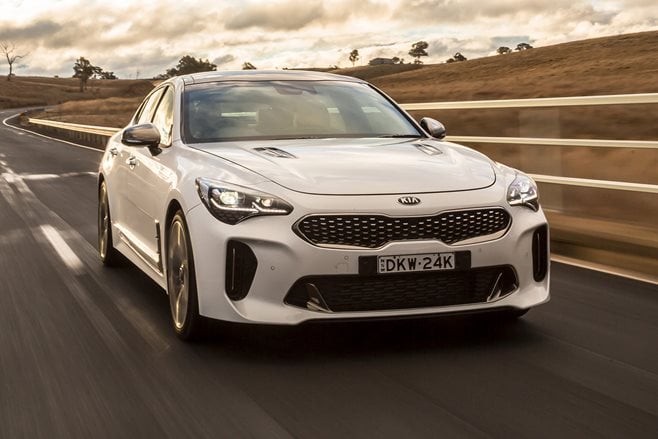
The next GT model to follow the Stinger GT is yet to be confirmed but Meredith suggested a warmed-up version of the Cerato hatch and sedan is in the running as an early arrival.
“For example, if you had the opportunity for a stronger, faster engine in a Cerato and you could have IRS (independent rear suspension) and a few other bits and pieces, would you go down that line and have a sedan and hatch with that componentry?” he said.
“The answer would probably be yes and we would call that GT.”
While Kia has the Stinger as its performance flagship, sister brand Hyundai has also recently broken into the driving enthusiast market with its potent i30 N hot hatch, but Meredith said Kia had no plans to try and cut the N’s grass.
“There’s nothing in our plan to match an N, but we’ll look at something with regards to Cerato.”
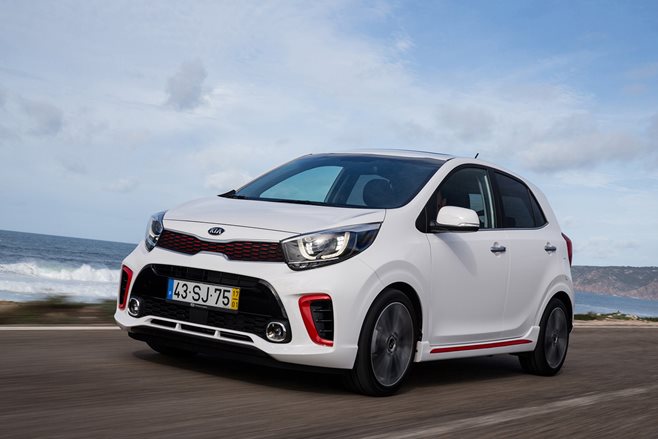
Dubbed the Picanto GT Line, the littlest representative of the new performance brand is on sale now from $17,490 in auto-only.
Below the pumped-up GT variants, the strategy to appeal with more sporty cars will extend to the GT Line and a range of Kias that wear more dynamic styling addenda. While the first model is yet to be confirmed, Meredith said the company would eventually like to extend the GT Line range-wide.
“We would like to see a GT Line in each of our products including the SUVs,” he said.
“We will still, in each of the line-ups, look at having GT Line in each of the segments as we’ve done with Picanto. That doesn’t stop us from having a Picanto GT either.”
In Europe, the Kia Rio GT Line is already on offer, posing another possibility that could join the Australian GT movement in the coming months.
Kia has tested the high-performance market in the past with the Proceed GT but, with a manual gearbox only, the accomplished hatchback failed to find a broad audience. For its second attempt on the hi-po segment though, the Stinger has made waves with serious power channelled through rear wheels and an automatic transmission.
“It’s selling relatively well, we’re averaging about 180 Stingers a month,” said Meredith. “If you talk to the dealer network, they are ecstatic about the car, it’s obviously brought a new channel of people into the business to buy our brand.”
With the new GT approach, Kia is planning to keep that influx of driving enthusiasts flowing.
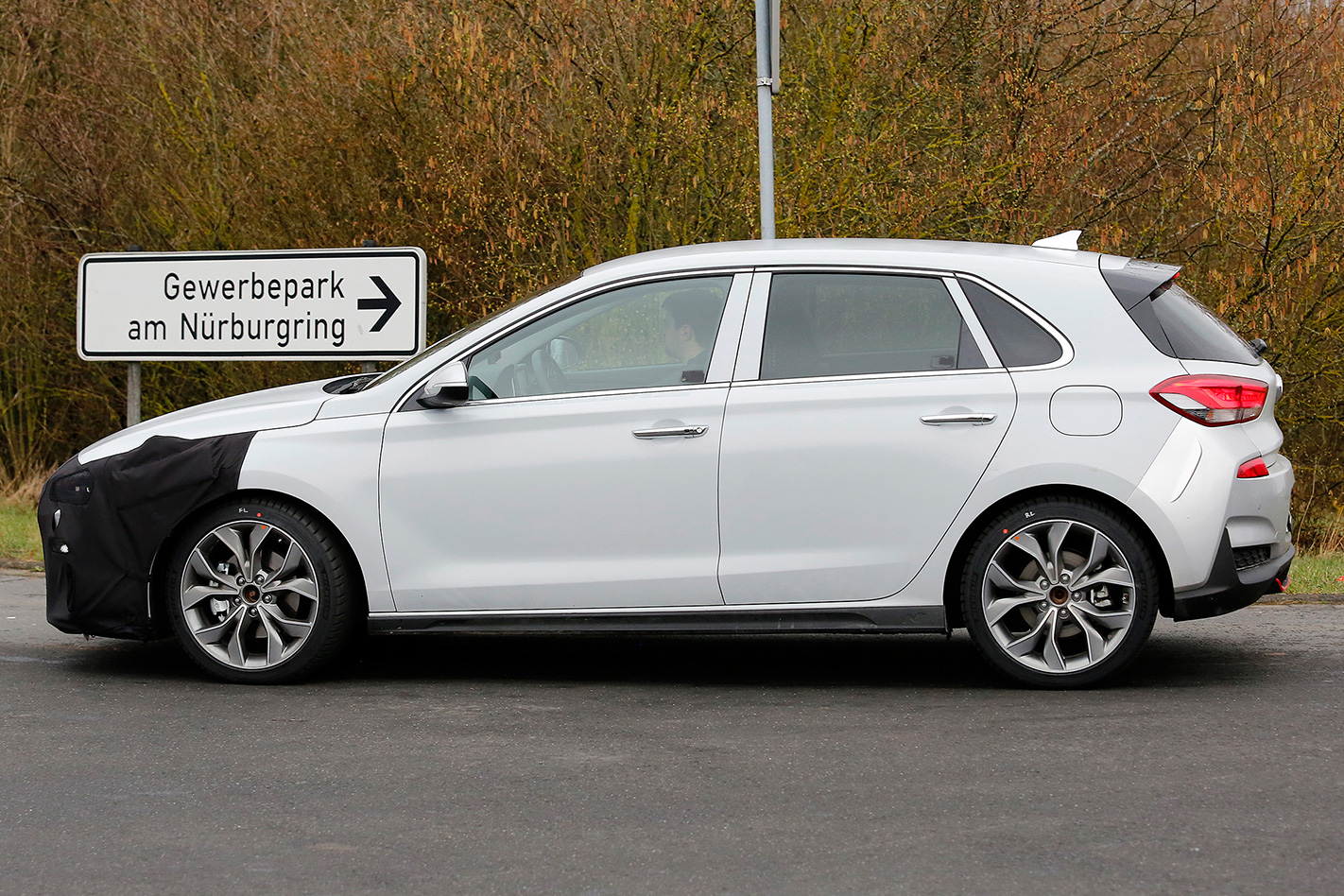
A HYUNDAI i30 hatch wearing distinctively sporty N-branded attire and partial camouflage has been spied testing in Europe, previewing a new line of N Sport models in the works.
Following the successful launch of Hyundai’s motorsport-focused N division, the brand appears to be readying the first in a range of warmed-up, style-focused N Sport models to sit below fully fledged N vehicles in a similar fashion to Renault GT-Line variants, VW R-Line models and numerous other examples from performance subsidiaries.
When introduced, it is believed the i30 N Sport will take the place of the existing i30 SR sold here in Australia, taking over its mantle as the sporty-looking everyday hatchback with improved dynamic ability and pokier engine performance than other models in the regular i30 range.
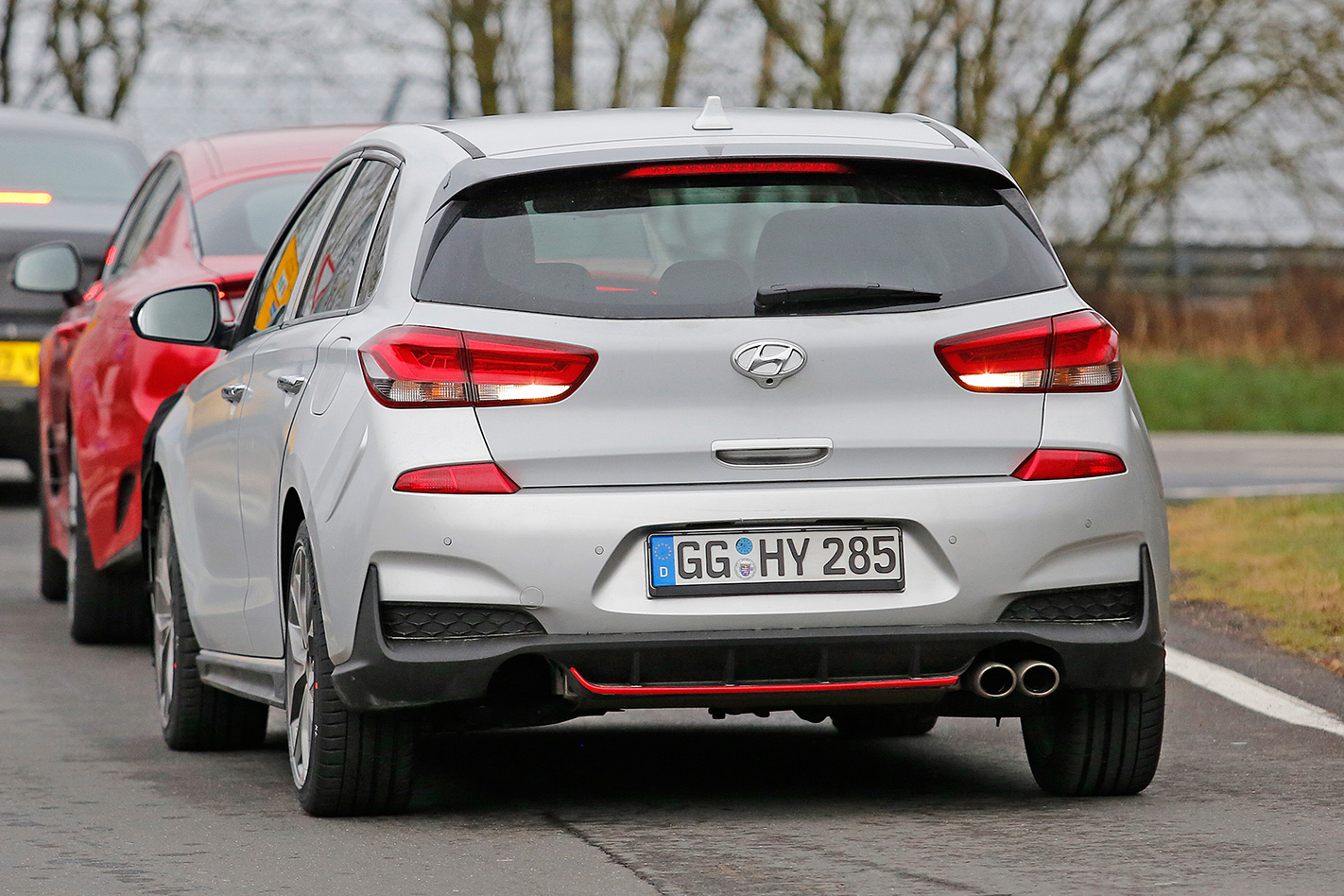
Other minor differences include a chrome window surround, rather than the N’s blacked out trim, and large alloy wheels of a different design. A small black rear spoiler at the top of the hatch seems to match that of the i30 N.
Heavy black cladding on the front suggests that area is where the N Sport’s changes are most noticeable. The i30 SR currently sold in Australia does not have a unique front bumper or grille treatment, instead using the same plastics as the regular i30 Premium.
Some speculation has suggested the i30 N Sport will be powered by a further de-tuned version of the i30 N’s 2.0-litre turbo four-cylinder engine that’s currently available in two outputs of either 184kW in the regular i30 N, or 202kW in the i30 N Performance – only the latter of which is being sold in Oz.
Locally calibrated suspension and steering tunes are an almost dead certainty, as the i30 SR already benefits from such improvements.
It’s unlikely we will see the i30 N Sport arrive in local dealerships before 2019, though we shouldn’t have to wait that long to see it in production form. Expect an official reveal later this year.
TOYOTA Australia is referring to three new additions to its Hilux line-up as ‘halo’ models, but don’t expect improvements to power, performance, or handling.
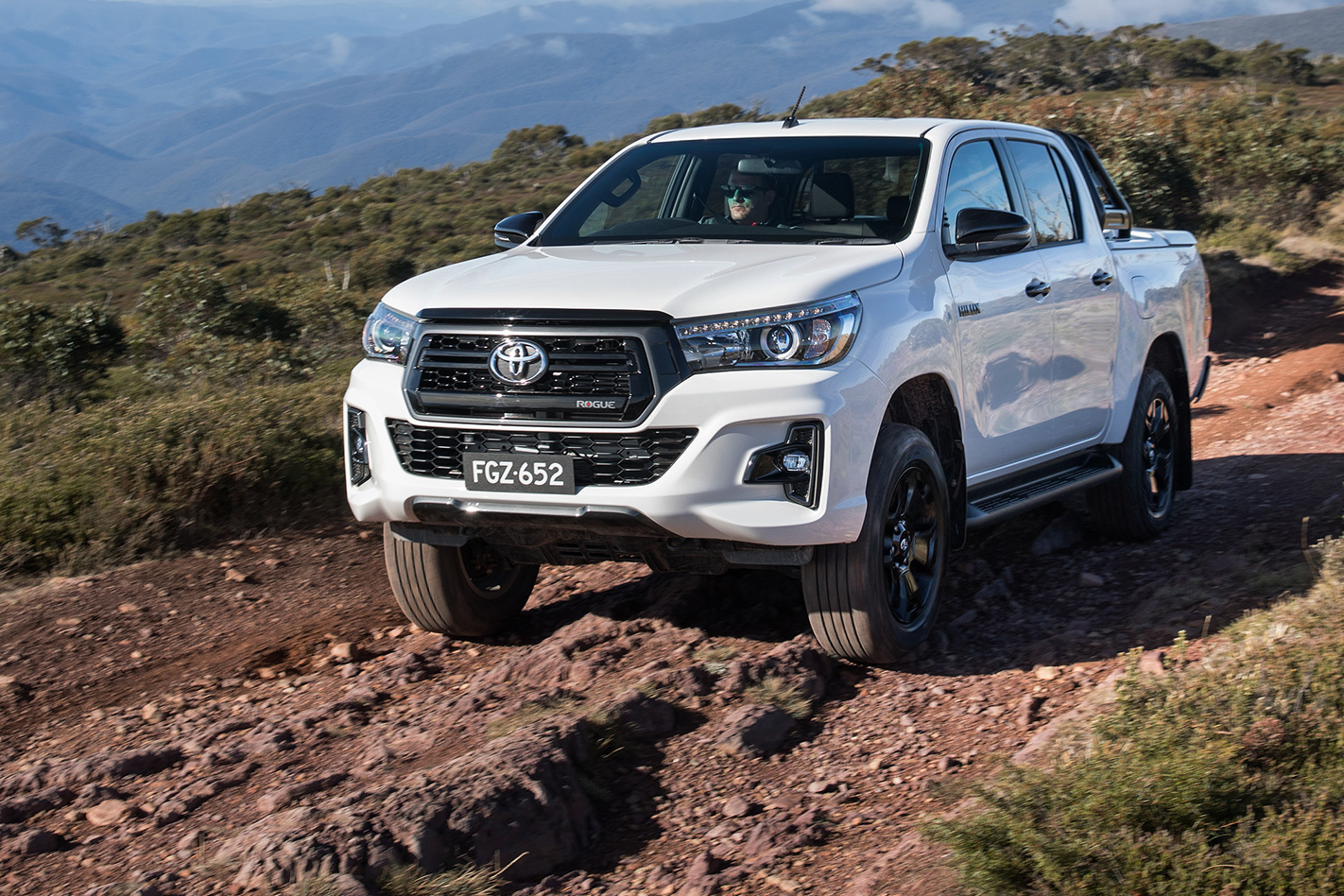
Instead, the new arrivals – called Rogue, Rugged, and Rugged X – are aimed at delivering greater urban utility and style (Rogue), or improved off-road durability and functionality (Rugged and Rugged X).
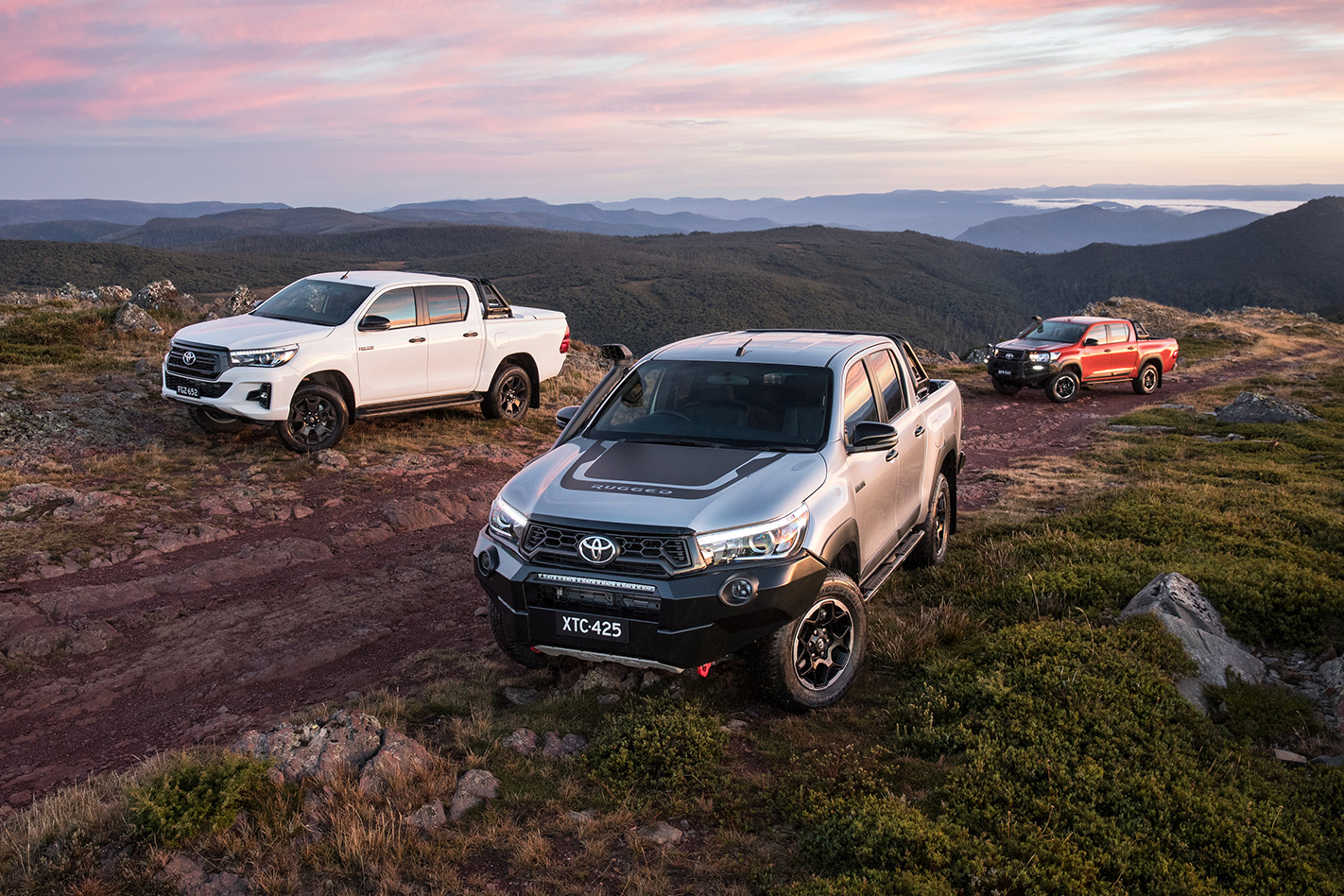
At the back, an integrated sports bar is rated to carry 75kg on top, or handle 250kg tethered to it. The cargo compartment gains a healthy improvement in terms of convenience and security, now covered by a hinged hard tonneau cover with internal light, and locking integrated with the vehicle’s central system. The tub is now lined with marine-grade carpet and gets additional dust seals.
Moving to the Rugged X, also based on SR5, this model is pitched at buyers who would otherwise spend thousands adding aftermarket accessories to make their vehicle better prepared for serious off-road work.
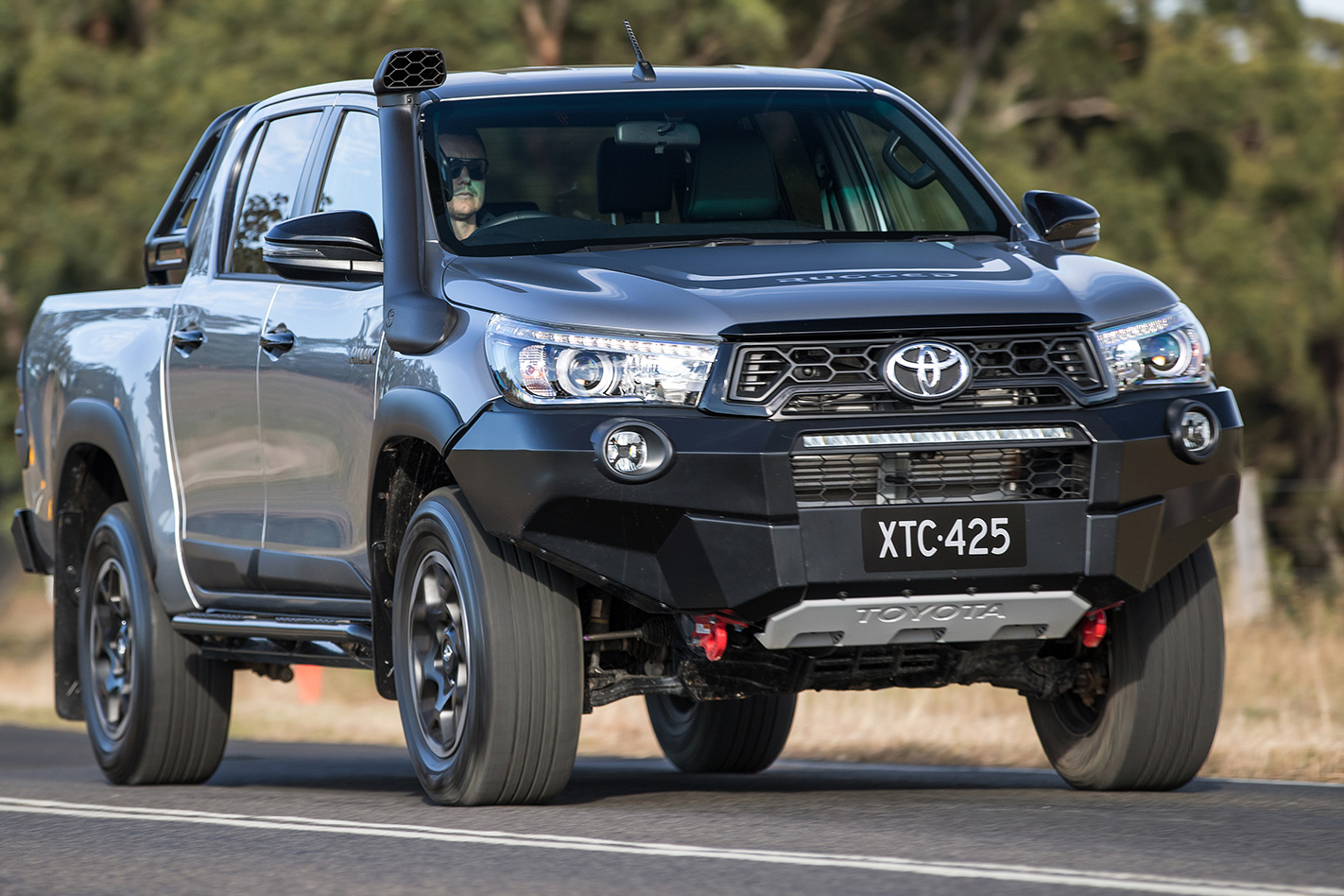
Along the flanks are side steps that link to rock sliders intended to provide chassis-rail protection; above sits moulded wheel arch protectors. Like the Rogue, the Rugged X also runs the sports bar above the rear of the cabin, while a steel bumper adds extra protection and the (standard) tow-bar mounting also provides recovery hooks.
Inside, as with the Rogue, the Rugged X gets perforated leather front seats with heating, and power adjustment for the driver, as well as the revised instrument graphics. Rugged X is offered as a six-speed manual for $61,690, or with six-speed auto for $63,690.
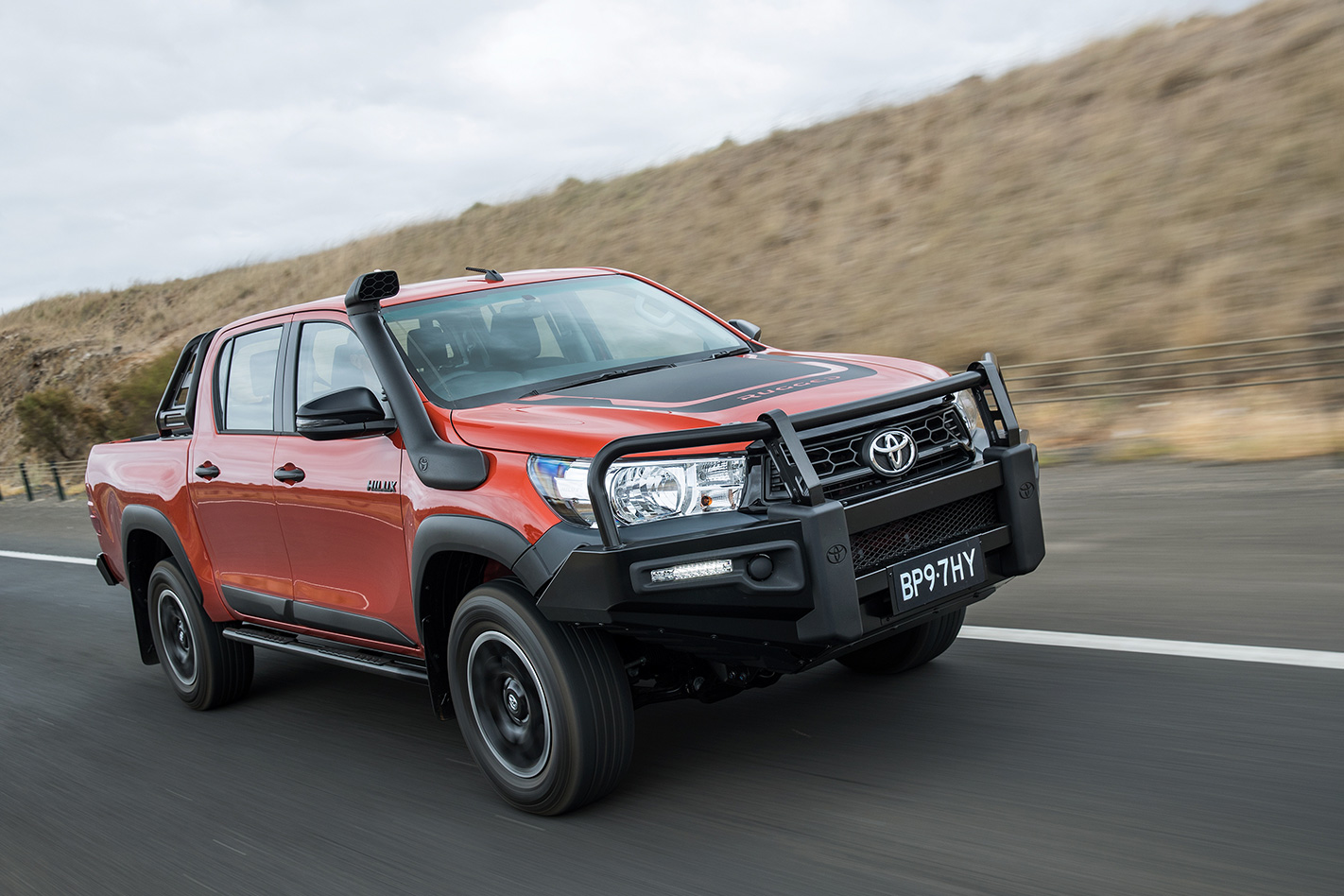
All three new Hi Lux models hit showrooms on Thursday April 26th
MORE: Toyota Hilux Range Review MORE: Toyota Hilux Specs, Range & Price
Aston Martin has confirmed it will replace the Vanquish with a range-topping GT car bearing the DBS badge.
More specifically, it will be called the Aston Martin DBS Superleggera.
The DBS badge goes way back to the 1960s, when the first DBS made its first appearance. More recently, the DBS was revived around a decade ago.
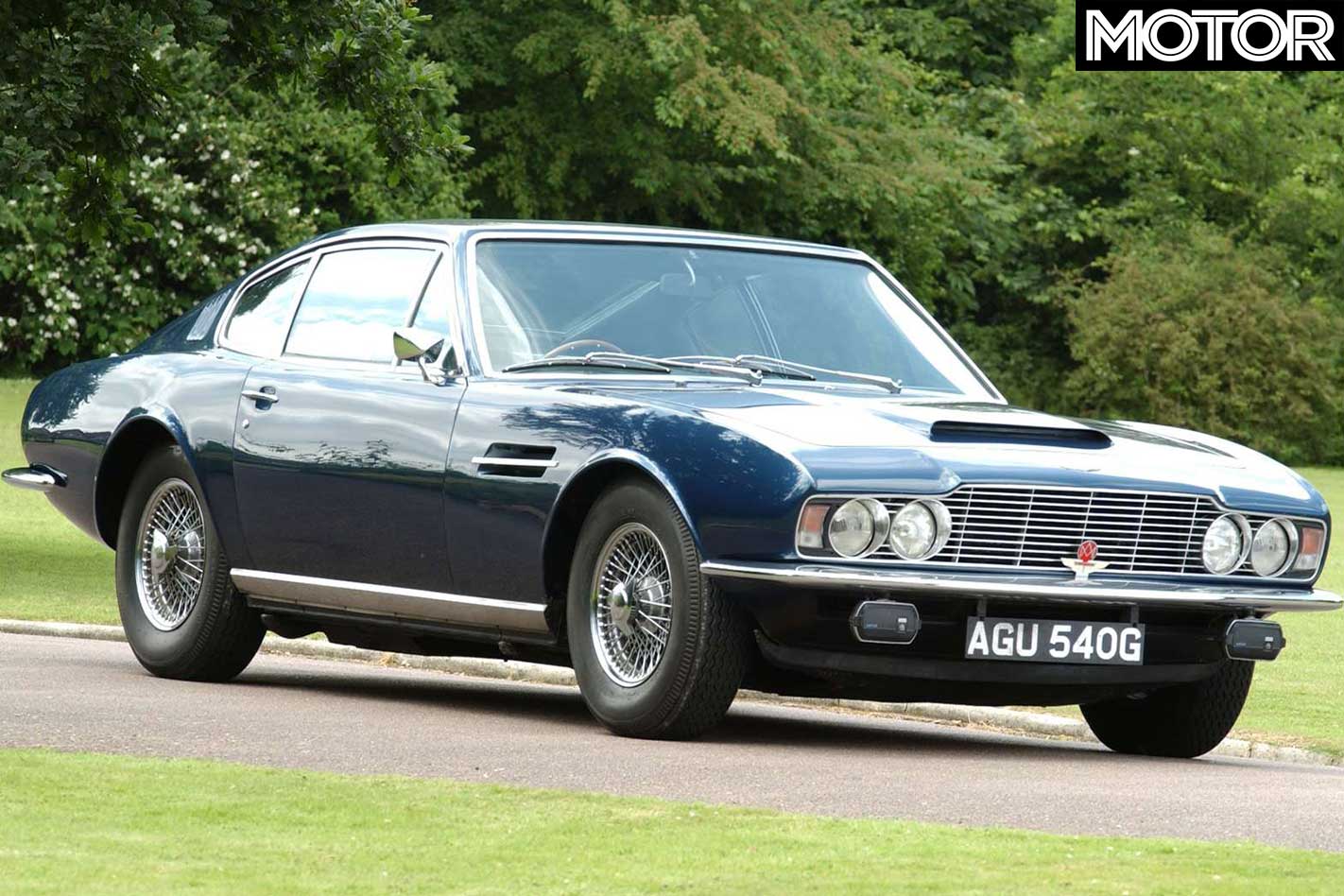
“Sitting at the pinnacle of the sportscar line-up, DBS Superleggera will feature the highest levels of performance, craftmanship and design,” Aston Martin says.
The ‘Superleggera’ part of the name is in reference to coachbuilder Touring Superleggera, which worked with Aston on the DB4, DB5, and DB6 among other projects.
Aston Martin chief creative officer, and the man who designed the 2007 DBS, Marek Reichman says the re-assigning of such an iconic badge was very deliberate.
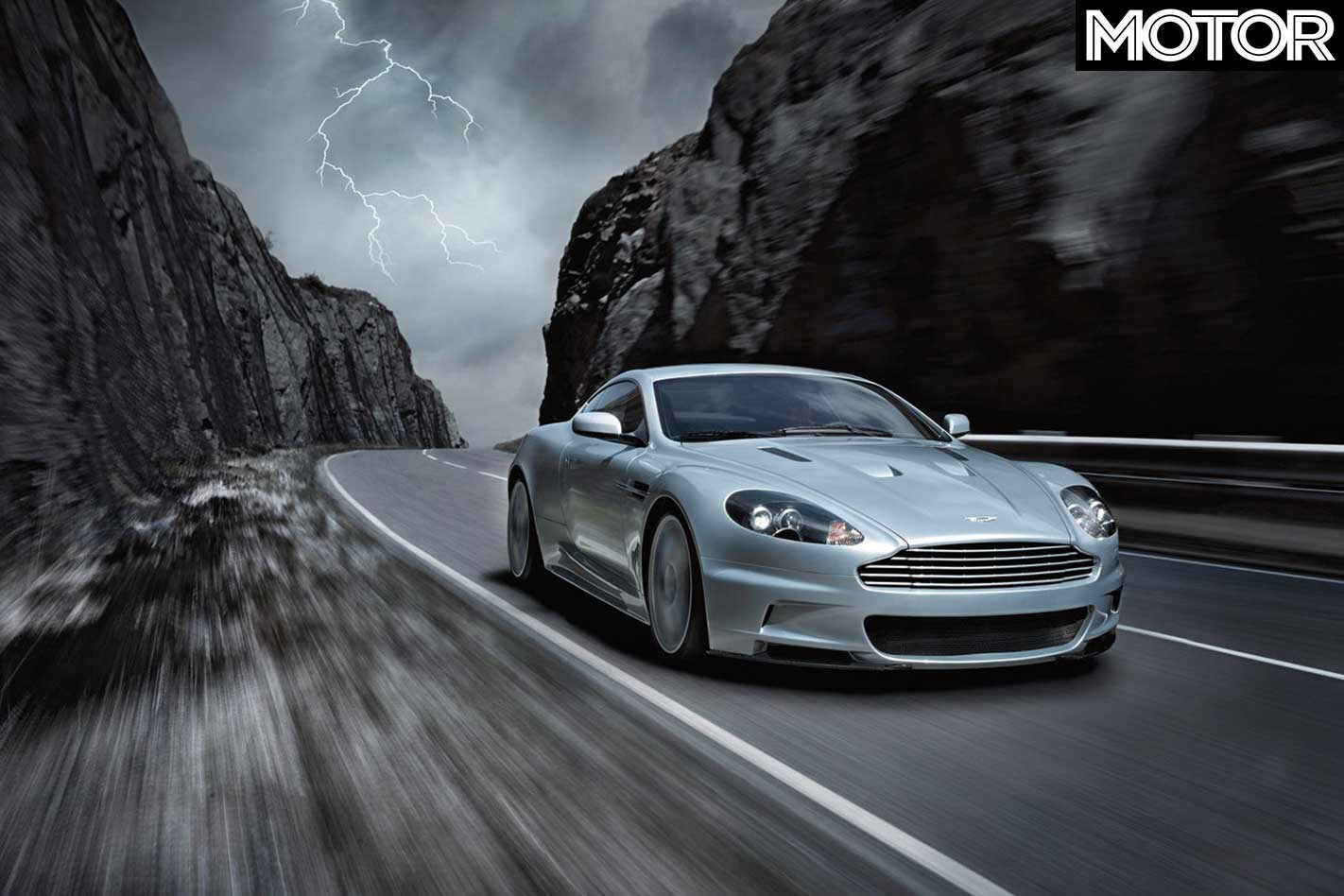
“It’s the definitive Aston Martin Super GT. It’s an icon, a statement and this one will be no different.
“We’ve pushed the boundaries of performance and design to give this car a distinct character and ensure it’s worthy of the heritage and weight that this name carries.”
Though it will take pride of place at the top of Aston’s grand-touring line-up, the DBS Superleggera won’t be the fastest road-car built by the brand.
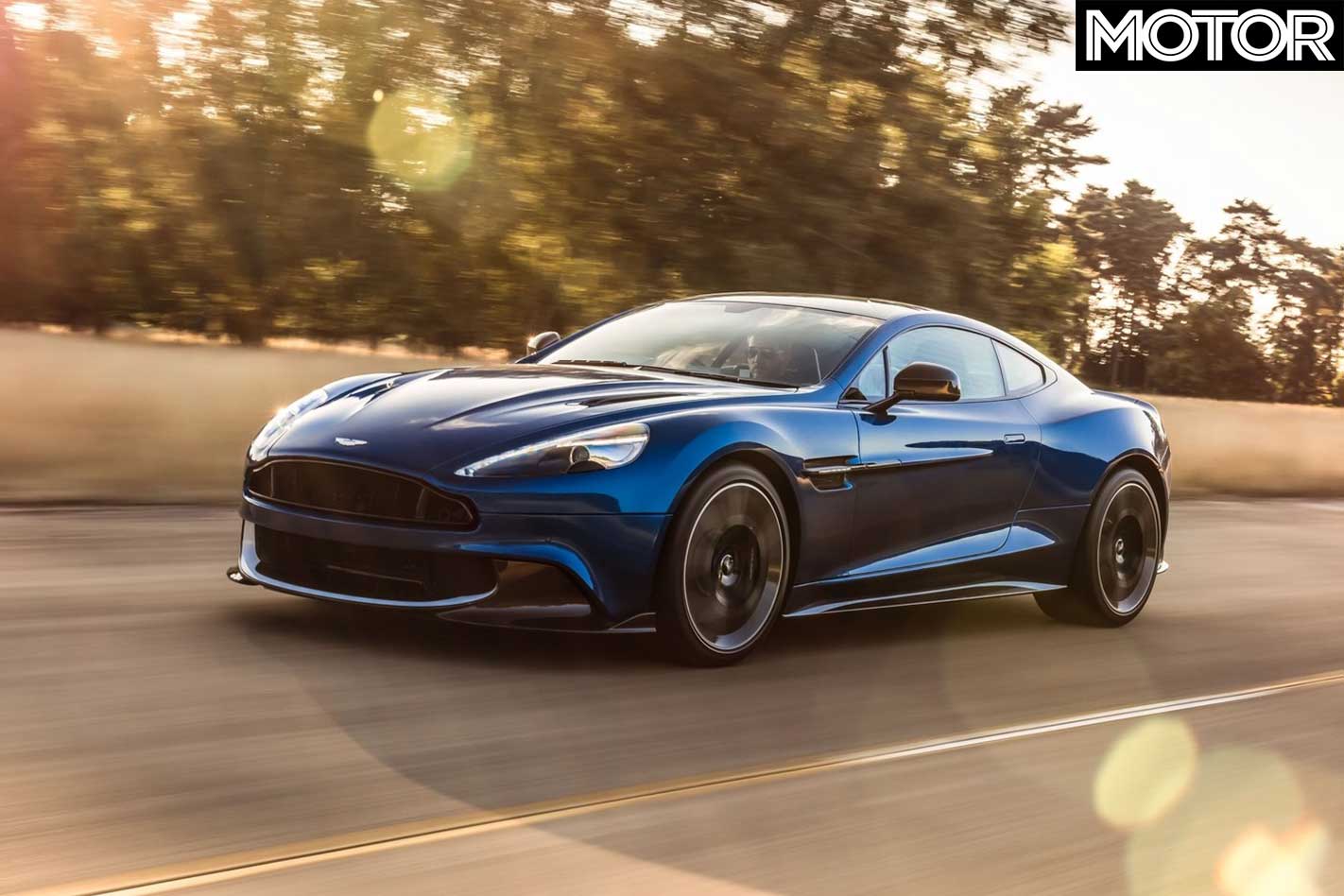
Plus, the Vanquish badge is now free to use for something else…
Can’t wait to see the final score? Jump to the verdict now
IT’S UNDERSTANDABLE how the Volkswagen Tiguan is viewed as the Golf of medium SUVs.
Based on the MQB modular architectural component tech-fest underpinning most transverse-engined Volkswagen Group cars, the 110TSI Trendline actually is closest to our 2013 COTY-award winning (and enduring benchmark small-car) hatchback. Certainly in terms of lightness and efficiency, including the entry-level front-drive variant’s ultra-sweet 1.4-litre turbo four-pot and seven-speed dual-clutch transmission.
Given the Golf’s supremacy, we expected the Wolfsburg crossover to bulldoze all before it. So how is second place even possible with such guaranteed genetic goodness, particularly when the list of pros comprehensively outweighs the cons?
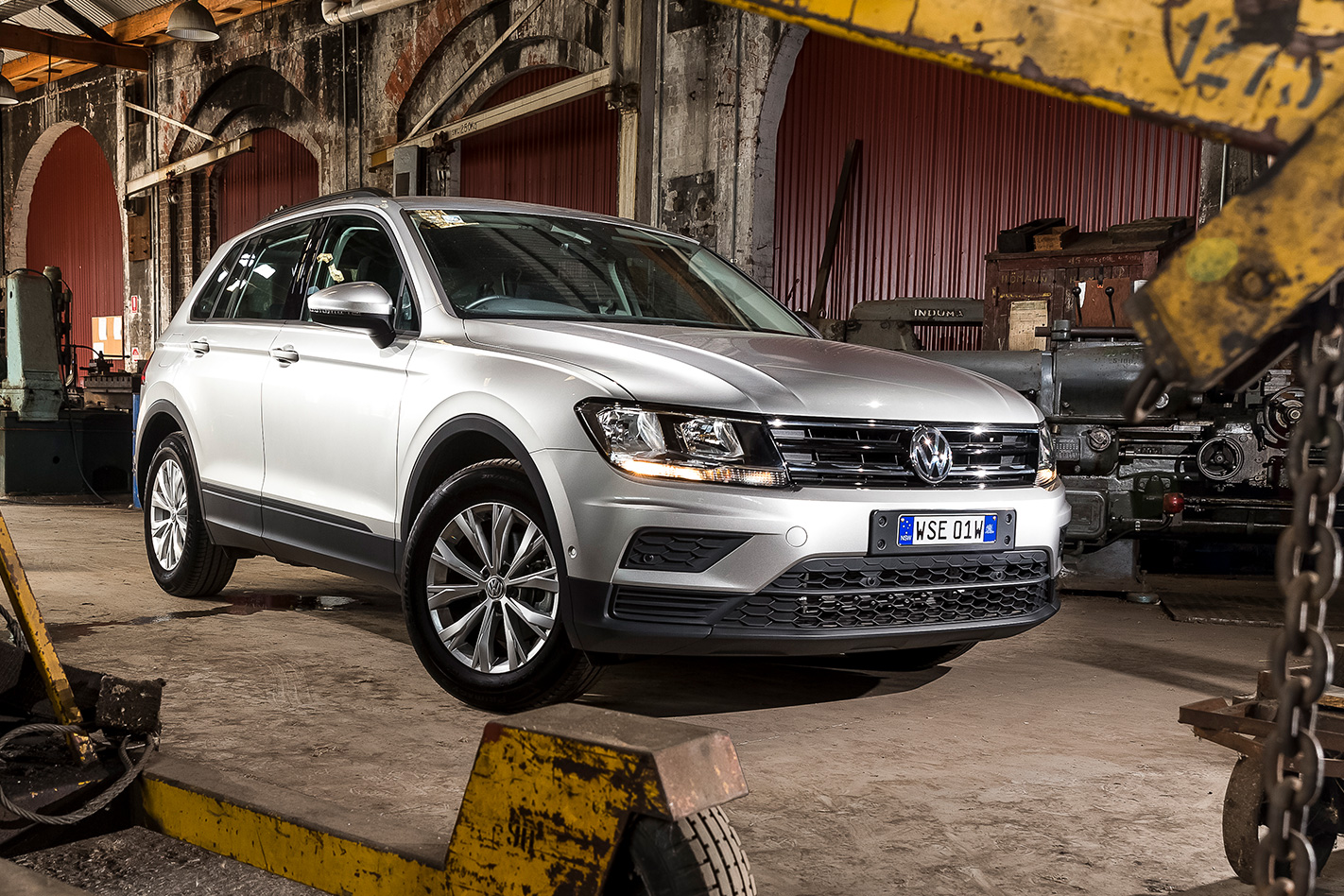
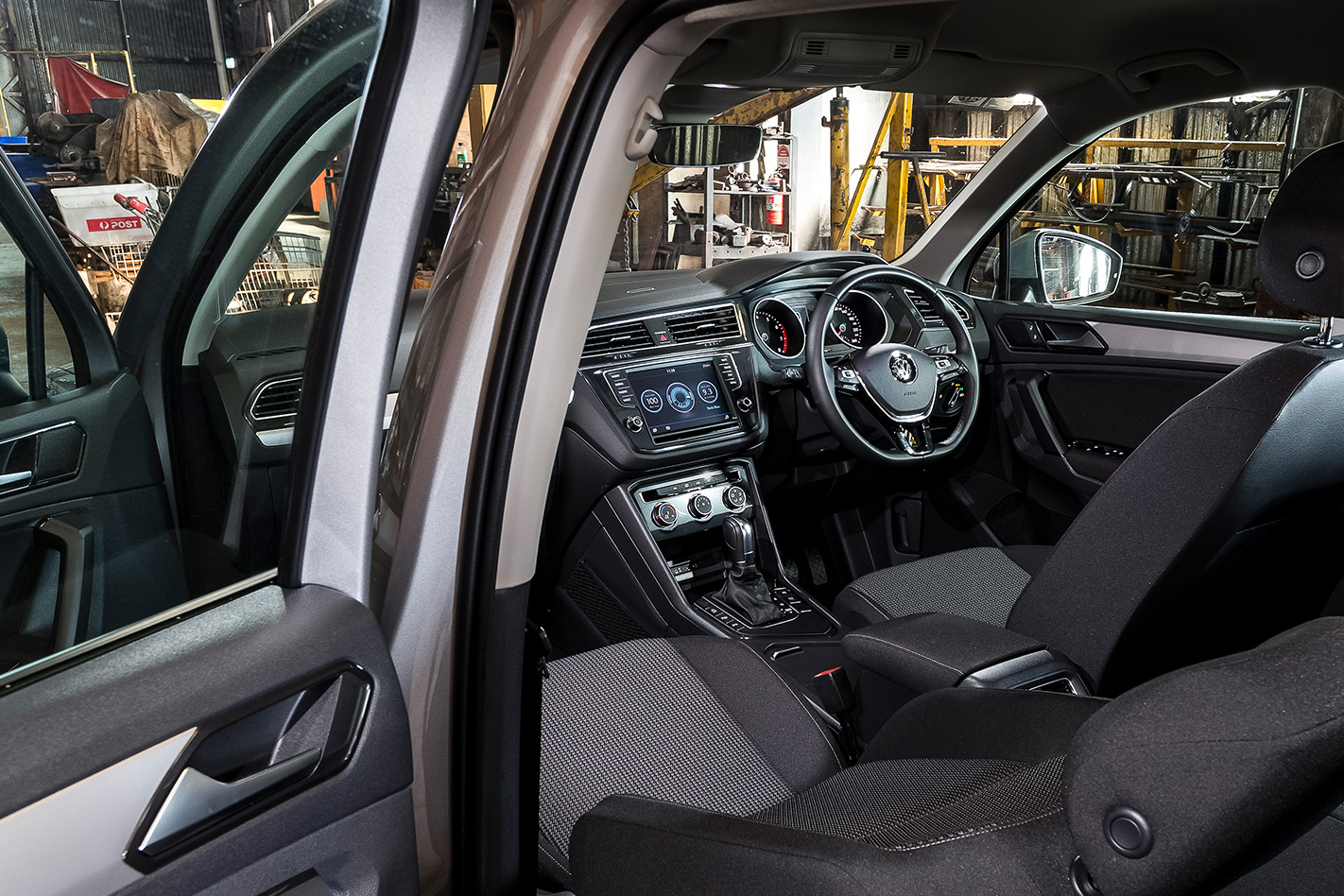
Significantly larger, longer and wider than its dinky predecessor, the second-gen Tiguan is a packaging knockout, offering an exceptionally airy, spacious and solid cabin environment infused with palpable quality. Anybody familiar with any contemporary Volkswagen will instantly connect with the elegant instrumentation, superbly crafted steering wheel, sensible central touchscreen interface, firm yet ably supportive seating, and the almost sensual tactility of materials.
In this base Trendline we identified 10 surprise-and-delight features none of the others offer, such as flocked door bins, a ratchet-actuated height-and-length adjustable central armrest, infinitely adjustable front-seat reclining mechanism, climate-controlled glovebox, proximity-sensitive multimedia interface, louvered cupholder jalousie, a frameless rear-view mirror, and a sliding back seat. Only one other SUV here features remote-control window operation (Escape), and another a passenger-seat height adjuster (CX-5).
Yet visible expanses of plain vinyl trim and the lack of a centre armrest does make Tiguan’s rear quarters feel somewhat austere, particularly compared to the salubrious-looking Mazda. Lucky that Teflon-smooth engine reclaims some of that premium goodness.
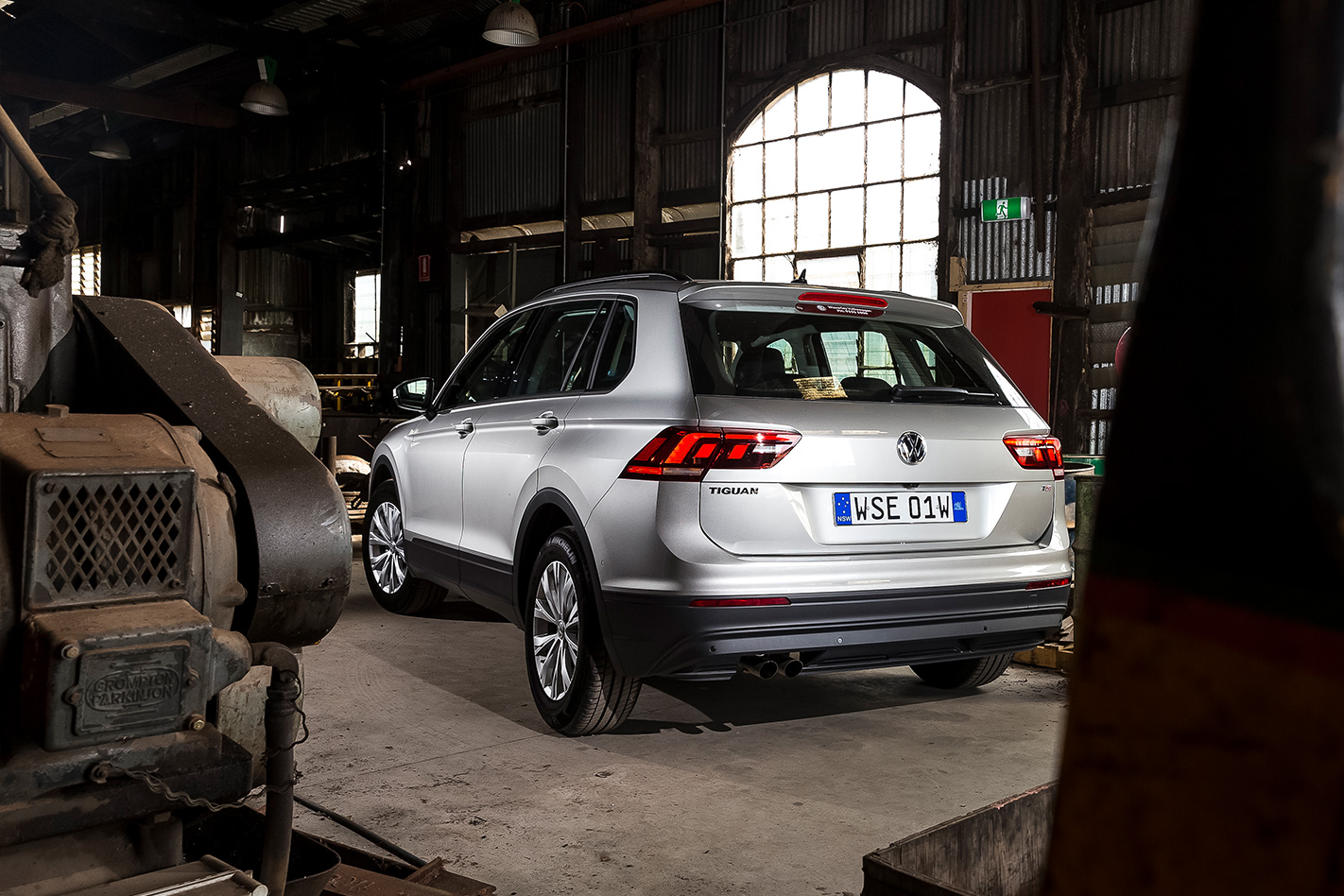
Marginally the quickest yet clearly the most economical, Wolfsburg’s 110kW 1395cc firecracker infuses the Tiguan with waterslide levels of slickness. Half a second ahead of the next-best to 100km/h, first to 400m and quickest in both the 30-70km/h and 80-120km/h brackets, it’s also the most parsimonious on petrol by nearly a litre. The almost viceless Tiguan proudly upholds the Golf’s mantle of unassailable efficiency. What a joy… in the right conditions.
That’s what makes the laggy nothing-then-everything step-off acceleration all the more infuriating, especially when accompanied by front axle tramp that turns violent over damp roads. Difficult to modulate in heavy traffic, you wonder whether Volkswagen’s engineers actually fully validated the 1.4 DSG combo. Living with it in wet peak-hour commutes would have us crying out for even the Outlander’s soul-sapping CVT. Our advice is to avoid infuriation by choosing the delightful, and cheaper, six-speed manual base Tiguan instead (the same applies to the Ford Escape too, BTW.)
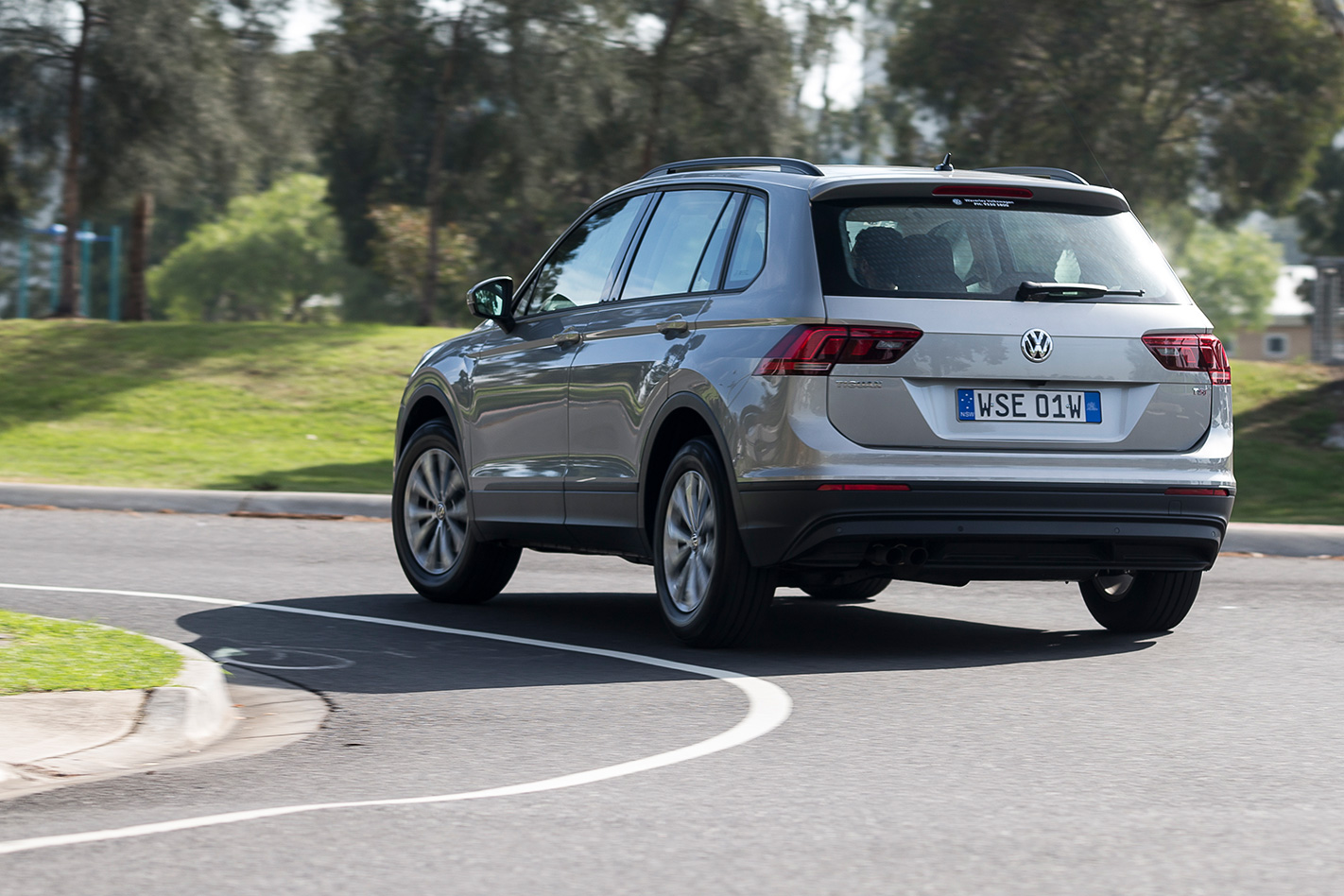
A similar snatching-defeat-from-the-jaws-of-victory scenario sullies the Tiguan’s almost supernaturally gifted steering, handling and roadholding characteristics. When the roads and environment align, nothing here touches the 110TSI’s suave cornering speed, incisive handling and fearless body control. This thing can reel in a mountain pass with the killer instinct and confidence of a warm hatch.
But there’s an inevitable but. Unless traversing glassy surfaces, the ride always feels agitated, with excessive (for a Volkswagen) road noise joining the unsettled suspension. This particular Golf-on-stilts is just too stiff-legged for a family hauler. Earth calling Wolfsburg: time to democratise those adaptive dampers! The $50K-plus Tiguan R-Line is way beyond the reach of this lowly end of the medium SUV class.
This, and the jerky powertrain progress, is why the Tiguan ultimately sounds and feels more like an Octavia (which is a plus-sized, 10-percent-inferior Golf in Skoda drag) than the iconic Wolfsburg hatch. Not the leap forward in refinement over its predecessor that this Megatest’s winner so clearly is, VW needs to finish finessing its otherwise brilliant medium SUV.
SCORE: 8/10 VOLKSWAGEN TIGUAN TRENDLINE SPECS
Model: 2018 Volkswagen Tiguan Trendline Engine: 1495cc 4cyl, dohc, 16v turbo Max Power: 110kW @ 5000-6000rpm Max Torque: 250Nm @ 1500-3500rpm Transmission: 7-speed dual-clutch Weight: 1450kg 0-100km: 9.1sec Fuel economy: 9.5L/100km (tested) Price: $35,190 On sale: Now
Medium SUV Megatest – Full coverage
Medium SUV Megatest Results
2018 Haval H6 Premium
Score 2/10
2018 Mitsubishi Outlander LS
Score 5/10
2018 Toyota RAV4 GXL
Score 6/10
2018 Hyundai Tucson Active X
Score 6.5/10
2018 Kia Sportage SLi
Score 7/10
2018 Subaru Forester 2.5i-L
Score 7.5/10
2018 Ford Escape Trend
Score 7.5/10
2018 Volkswagen Tiguan Trendline
Score 8/10
2018 Mazda CX-5 Maxx Sport
Score 8/10
