
The Jeep Grand Cherokee Trackhawk is, as metal band Pantera might put it, a vulgar display of power.
An astonishingly fast brute, the Trackhawk will hit 100km/h in a claimed 3.7 seconds, thanks to 522kW/868Nm from its 6.2-litre supercharged V8. It also weighs 2399kg.
But what usually happens when an American muscle car is fresh onto the market? That’s right, John Hennessey gets a hold of it and turns it up to 11. Or, in the case of the Trackhawk, 10.5. Seconds.
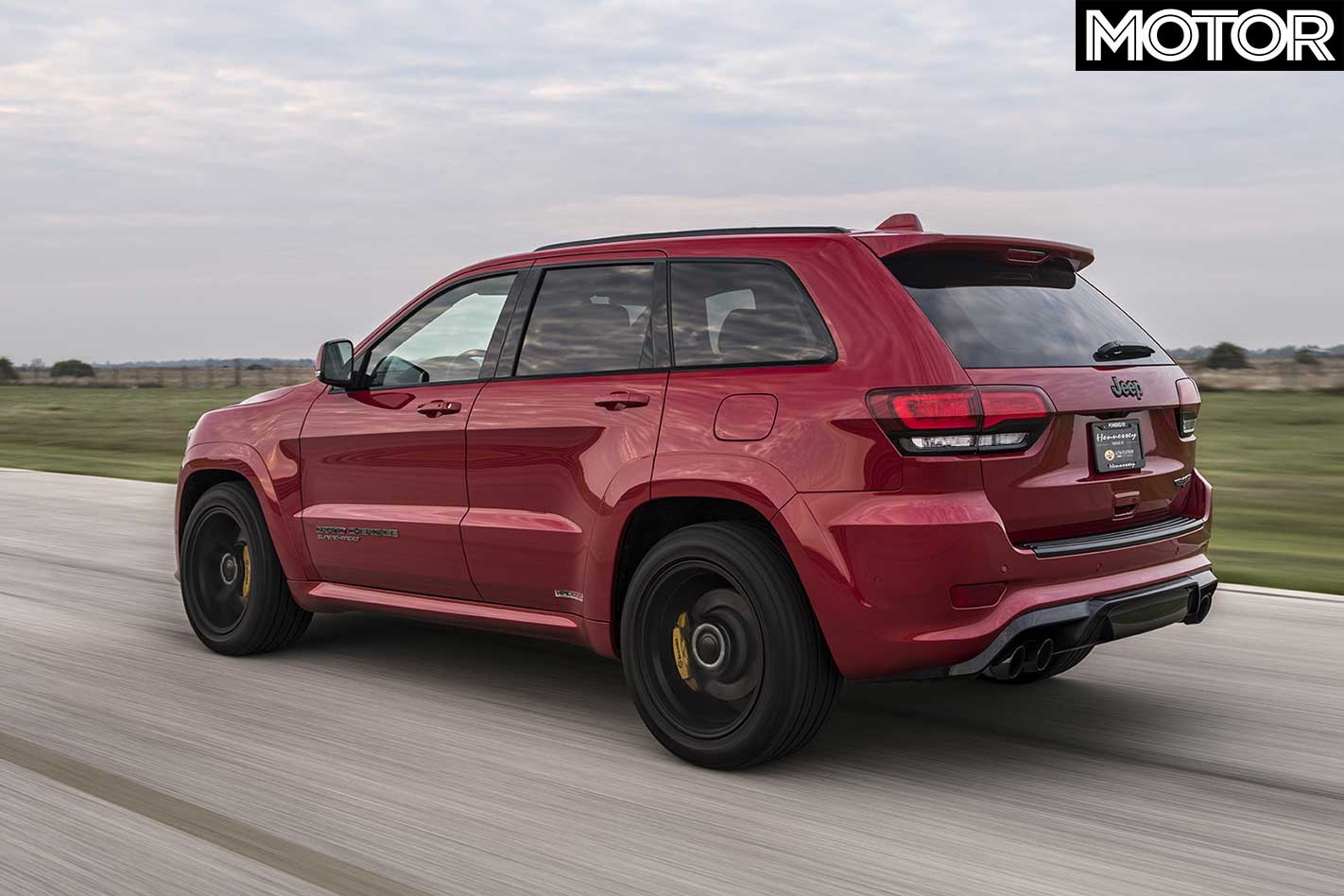
It’ll also hit 100km/h in just under 3 seconds, which rivals the sprint claimed by the Porsche 911 GT2 RS.
How, you ask? 746kW for a start, and a torque figure with four digits, 1314Nm.
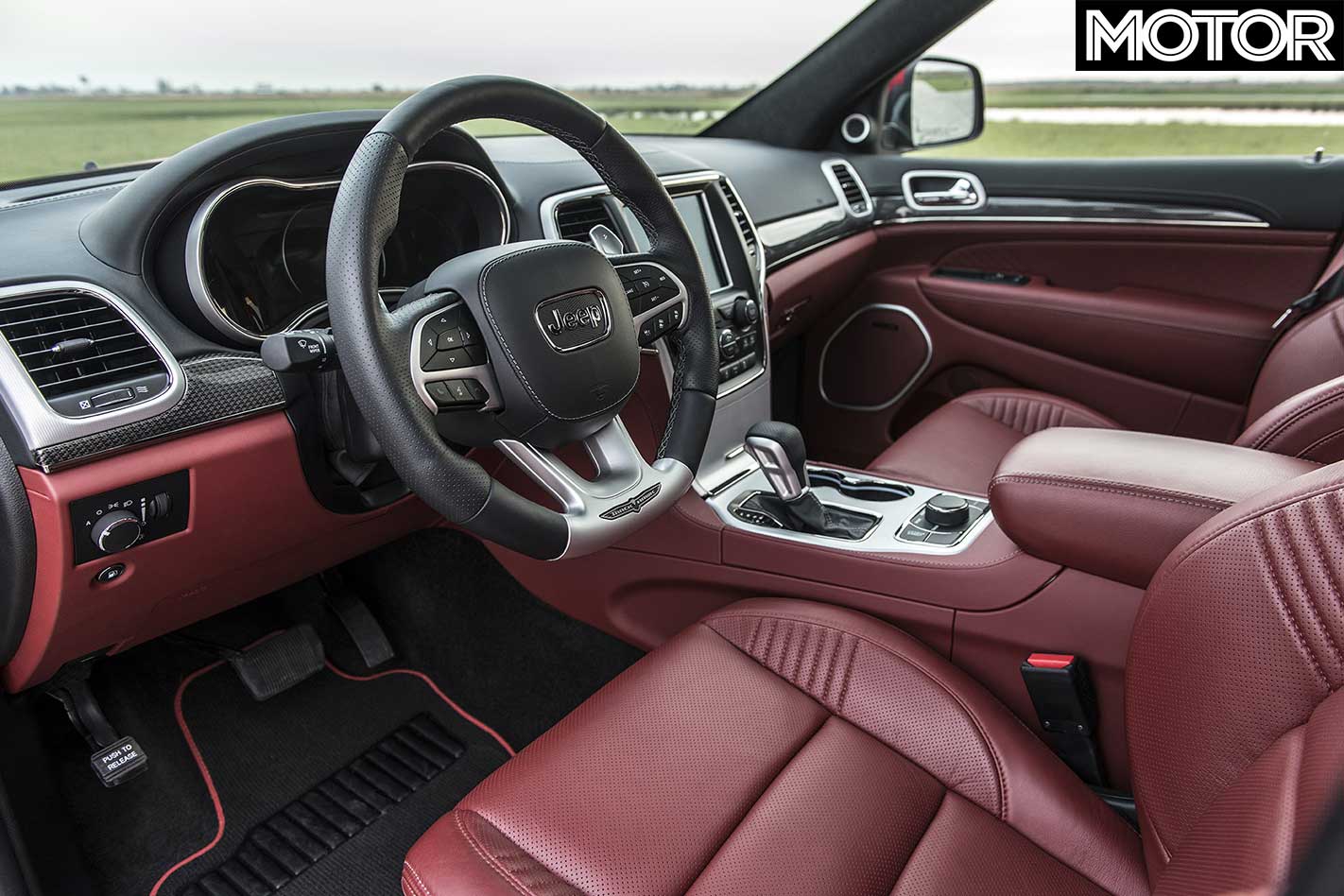
It produces 14psi, and is helped along by a few other peripheral parts in the engine bay.
High-flow injectors, induction, and fuel pump mean everything the engine needs to go fast is… well, flowing. An engine management re-tune keeps it all in check, while some dyno testing and calibration ensures it worked.
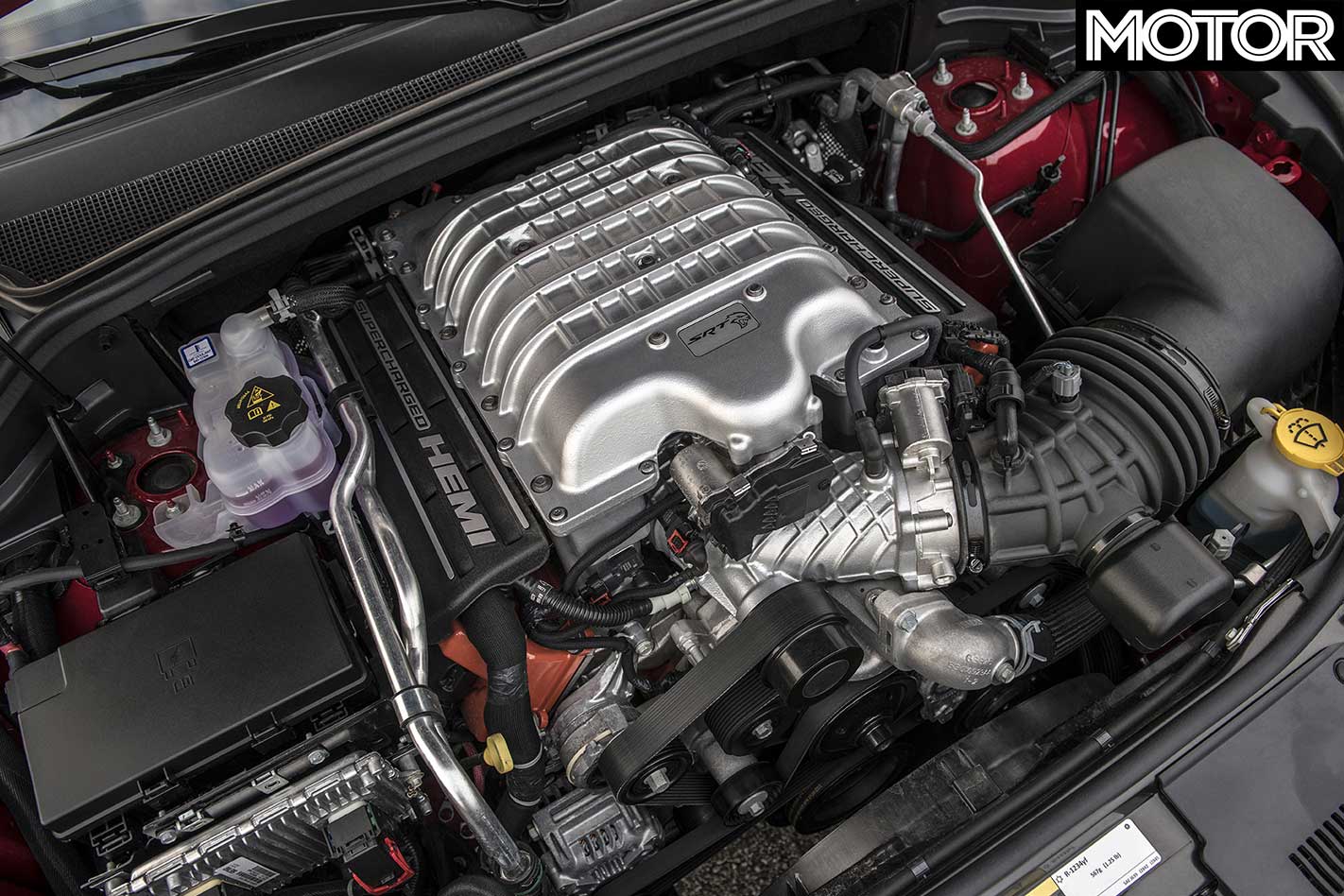
Sadly, Hennessey being US-based means this kit probably won’t see Aussie roads, but do let us know if you manage 1000hp from your own Trackhawk. We’d be very interested to know.
A facelifted version of the Citroen Grand C4 Picasso has arrived in Australia with fresh looks and a more affordable petrol variant.
The seven-seat people mover is the latest model from the French car maker to make a belated entry into the Australian market due to parent company Groupe PSA’s local distribution changing hands.
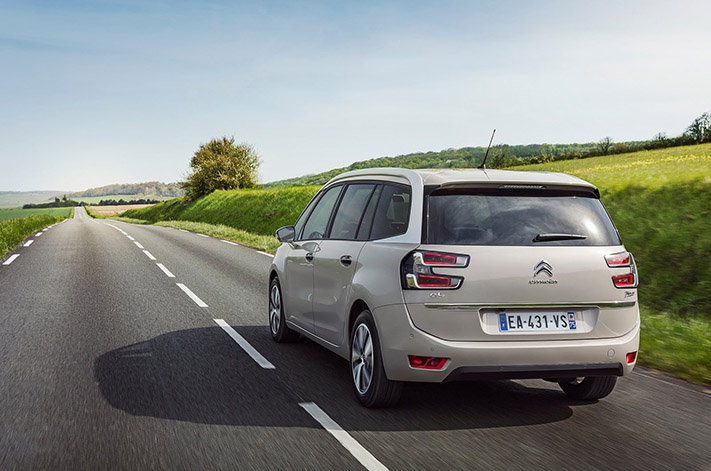
The midlife facelift brings fresh styling tweaks with restyled bumpers and headlamps for the Kia Carnival, Honda Odyssey and Volkswagen Multivan rival. The rear end gains similar treatment including revised tail-lights.
The interior gains more aesthetic interior trim and updated multimedia via a larger 7.0-inch touchscreen, while extra driver assist tech and a hands-free tailgate bring more convenience.
The 2018 Grand C4 Picasso range starts from $38,490 for the 1.6T Exclusive, which adopts the 121kW/240Nm 1.6-litre four-cylinder turbo-petrol engine from the now defunct C4 Picasso hatch. Paired with a six-speed automatic transmission sending power to the front wheels, it sips an official combined fuel use rating of 6.4 litres/100km, which isn’t a bad return if shifting six passengers.
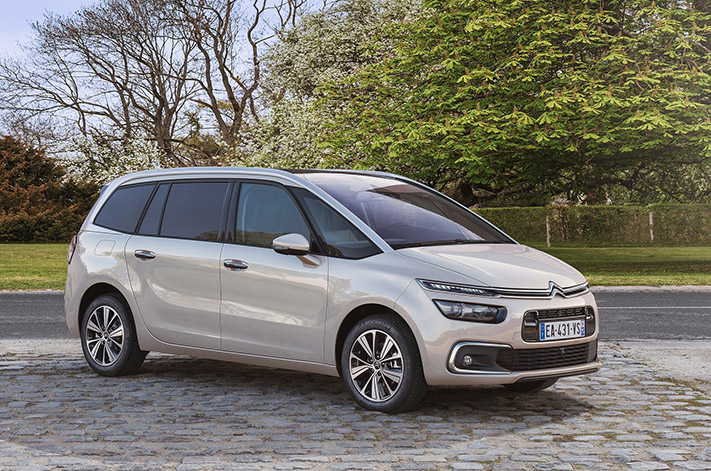
The 1.6T Exclusive joins the turbo-diesel 2.0 HDi Exclusive, which comes in at $44,490 – which is about $1000 less than the previous model.
As before, the 110kW/370Nm 2.0-litre turbo-diesel version lowers fuel use to 4.5L/100km with the aid of idle-stop technology.
The petrol-powered 1.6T lacks the 2.0 diesel’s idle-stop system, along with auto emergency braking and adaptive cruise control, but still comes the rest of its standard kit, which includes:
- Lane departure warning
- Blind spot monitoring
- Apple CarPlay/Android Auto
- Digital radio
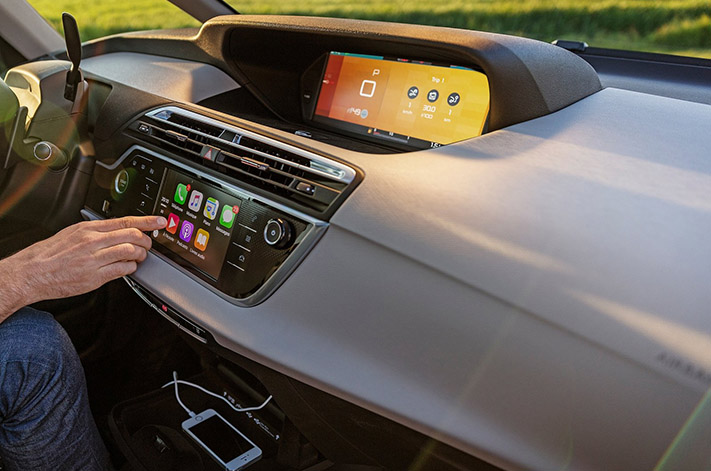
- Satellite navigation with speed sign recognition
- 12-inch panoramic HD central display with three selectable themes
- 360-degree vision parking
- Hands-free tailgate
- Keyless entry and start
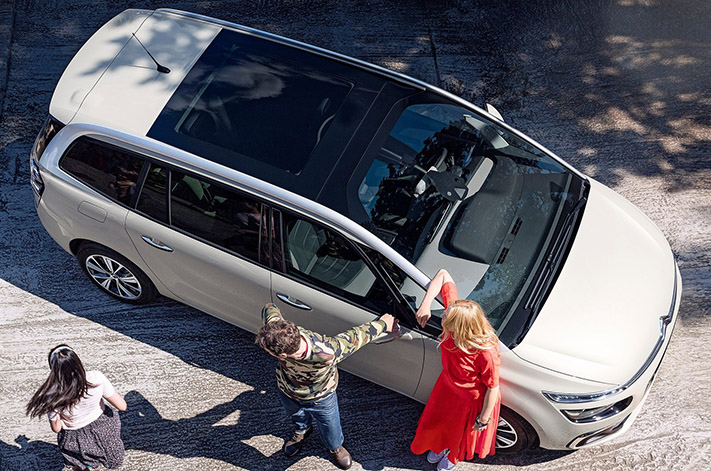
- Panoramic windscreen with sliding sun blinds and panoramic sunroof
- 17-inch alloy wheels
Options include a pack that adds Nappa leather upholstery, front seat heating and massaging, driver’s lumbar adjustment, LED reading lights for the airline-style rear trays, rear-seat flat-fold function (allowing loads of up to 2.5m long) and an electric footrest. Premium paint and differently styled 18-inch alloy wheels are also available.
2018 Citroen Grand C4 Picasso pricing
- 1.6T Exclusive – $38,490
- 2.0 HDi’s Exclusive – $44,490
- Leather Lounge Pack – $5000
- Premium paint – $800
- 18-inch Python alloy wheels – $690
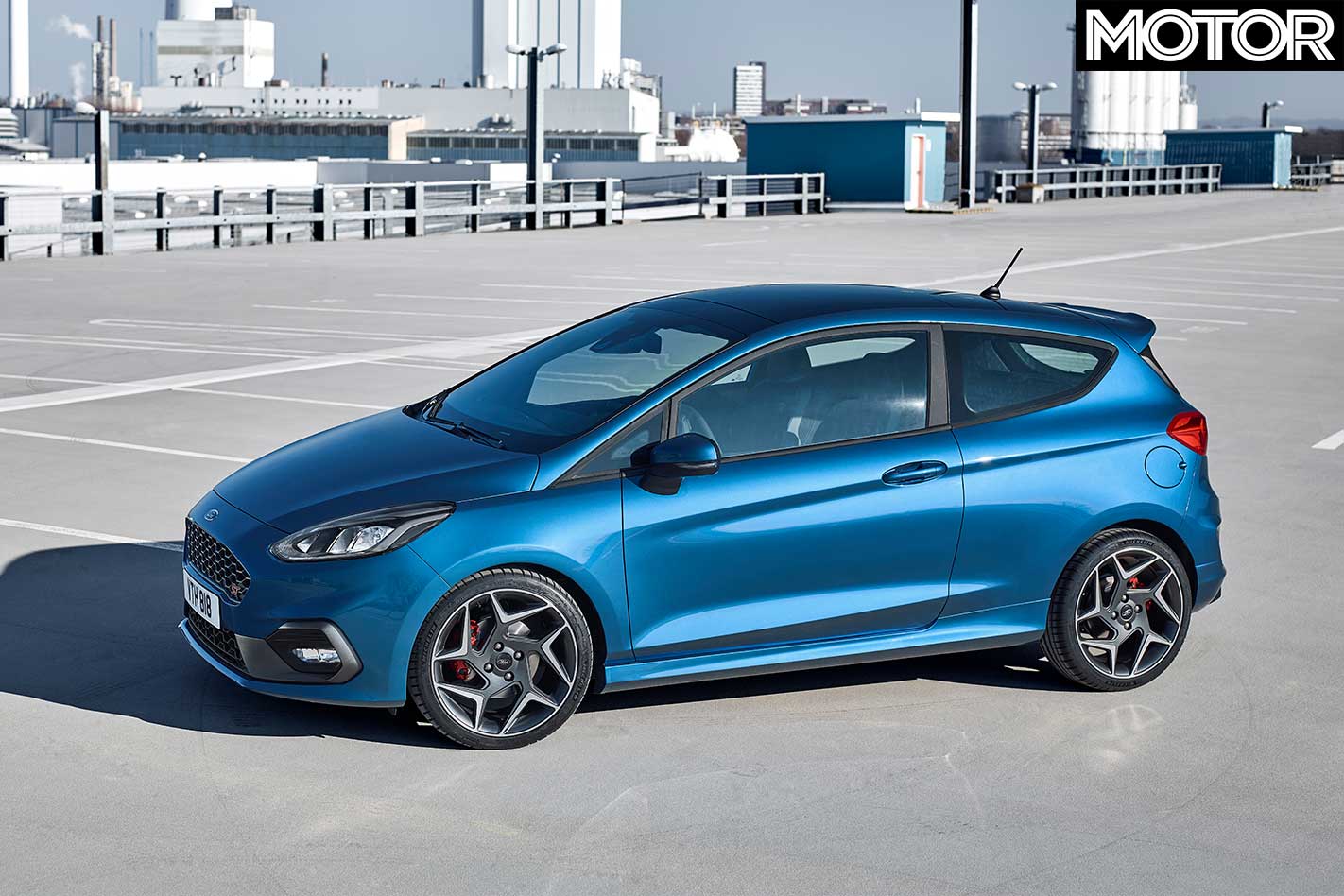
FORD Australia has officially confirmed a local arrival of the next-generation Ford Fiesta ST for about this time next year.
The new ST will feature a more powerful 147kW/290Nm 1.5-litre three-pot EcoBoost engine and six-speed manual transmission, with performance further enhanced by light-weight cutting-edge chassis technology and advanced aerodynamics.

The Fiesta’s EcoBoost engine uses an integrated exhaust manifold that delivers torque faster by minimising the distance exhaust gasses travel between cylinders and the turbocharger. It can run on just two cylinders while coasting or cruising to save fuel.
The German-built ST will be orphaned as the only seventh-generation Fiesta variant to be sold in Australia.

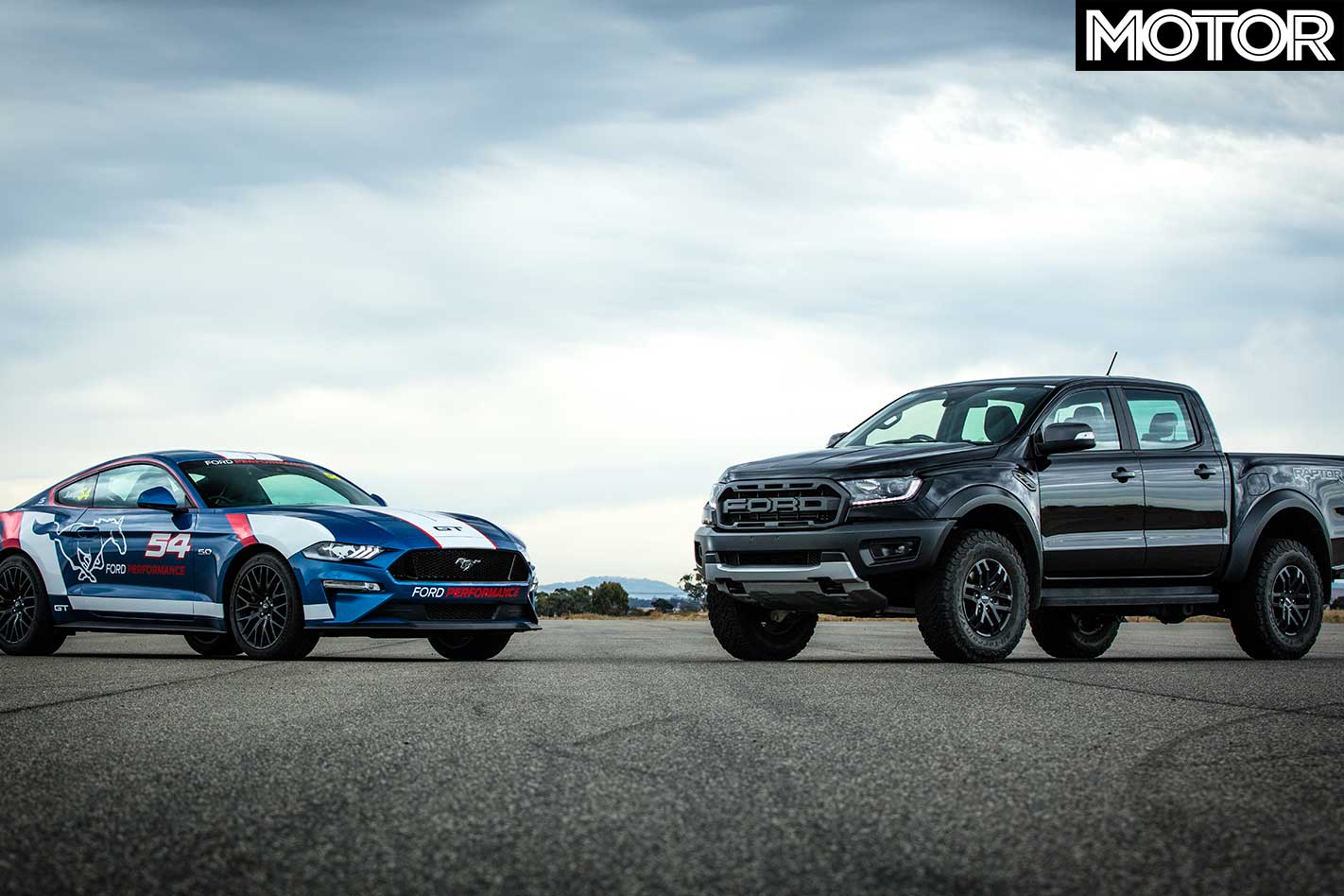
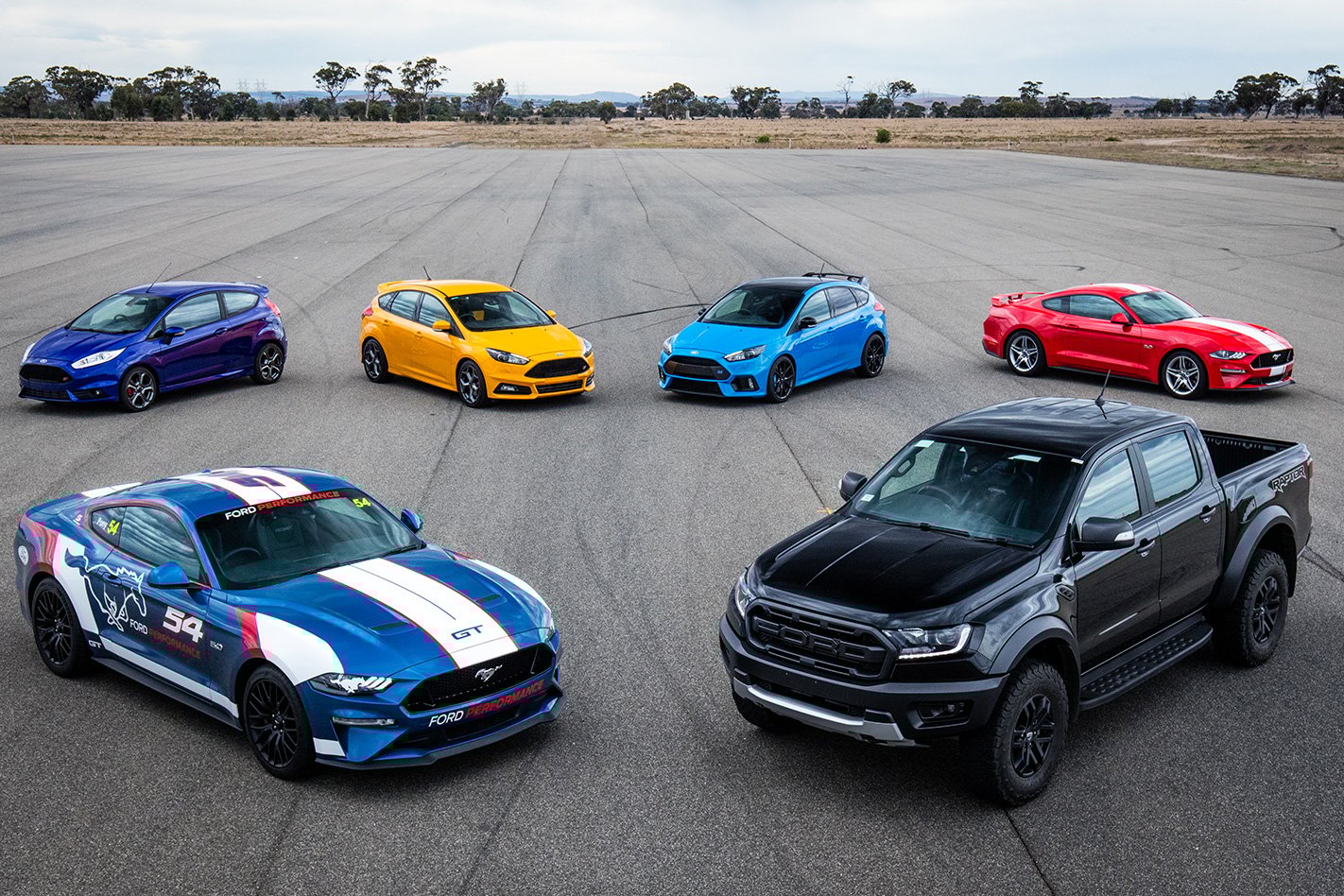
There are no such issues with the ST, which has been sourced from Europe previously and will find a home here under the newly launched Ford Performance brand, along with the Focus ST and RS, Mustang and Ranger Raptor.
“There is a strong appetite and passion for the Fiesta ST in our line-up, and we can see the affinity and esteem that Australians have with driving enjoyment of the existing model,” said Ford Australia CEO, Graeme Whickman.
“Fiesta ST shows the depth of enthusiast models that we’re bringing to Australia, with everything from this hot-hatch through to the Ranger Raptor.”
In Melbourne’s Albert Park, Ford Australia this morning announced the official launch of Ford Performance in Australia and New Zealand.
As well as announcing that the new Mustang would replace the Ford Falcon on the Supercars grid, the plans for Ford Australia’s local line-up was also clarified.
Ford confirmed it will bring the next generation Ford Fiesta ST to Australia under the Ford Performance banner, as well as the new Mustang and the Ranger Raptor.
“We want to showcase our passion for performance and we want to bring performance you can use to more customers,” he said.
“Ford Performance globally focuses on developing innovations and technologies such as aerodynamics, [making things] lightweight, designing electronics, fuel efficiency, and powertrain performance.”
Whickman confirmed the Fiesta, as the first announcement of the morning, would arrive in showrooms in the first half of 2019, with the pricing and specification for the 1.5-litre turbo three-cylinder hatch to be revealed closer to its launch.
But despite (or due to) the recent end to production of the Ford Focus RS on April 6th, there was no mention of the badge’s future in Australia.
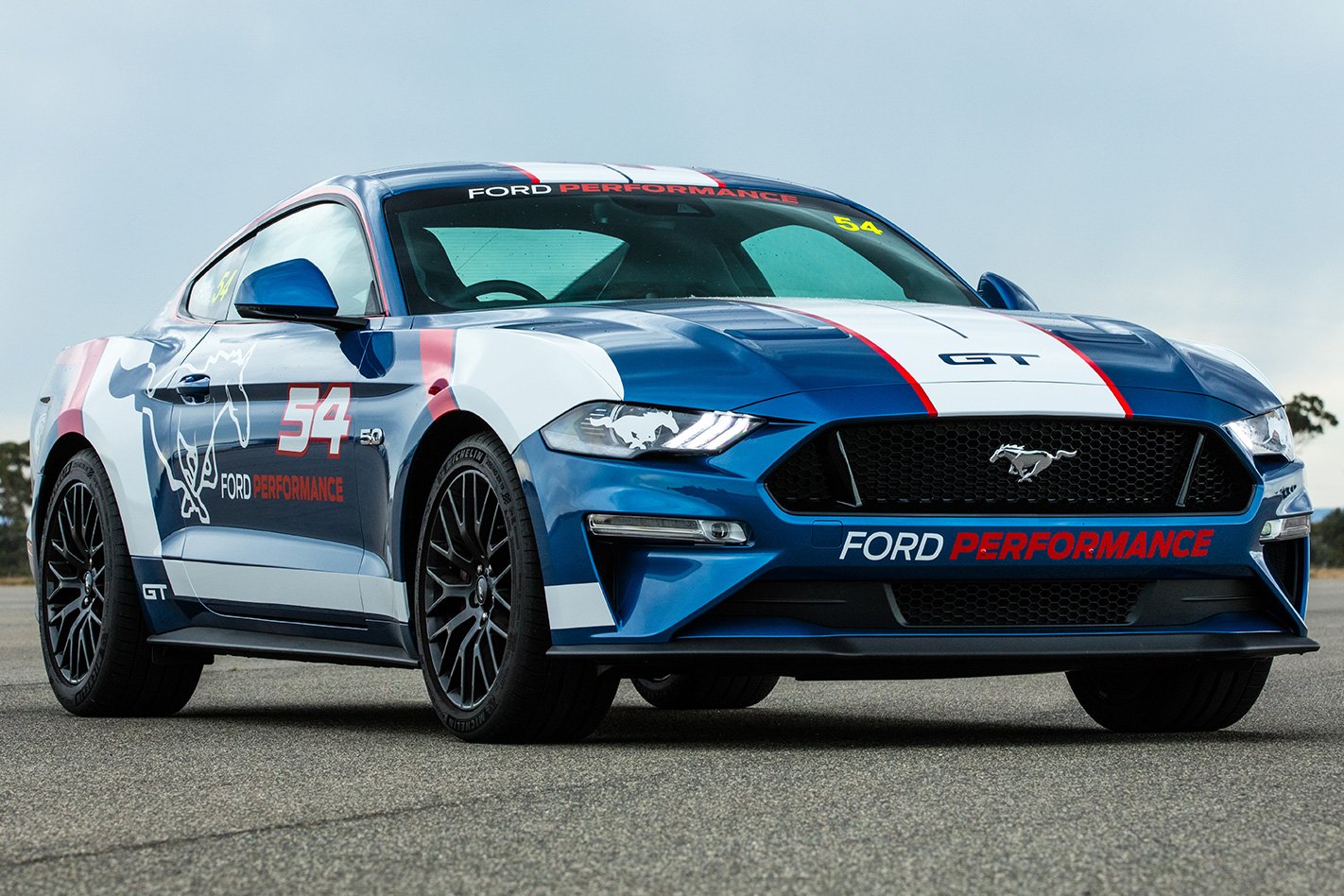
The final, and main, announcement of the morning was that the Ford Mustang would join the Supercars grid starting in 2019, though details are scarce so far as per our full report on the topic.
We do know it will be running a V8, but will bring you more news as it comes to hand.
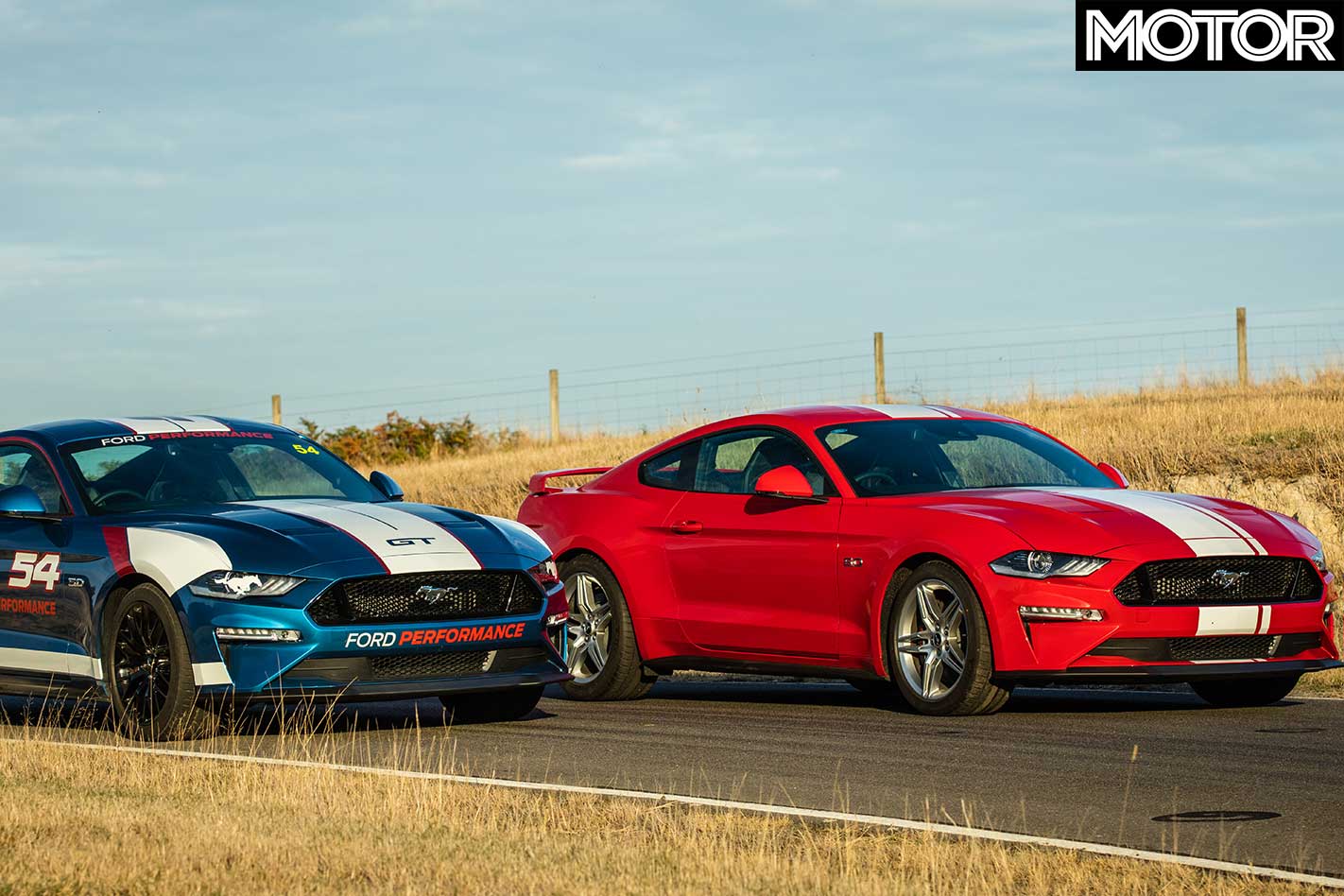
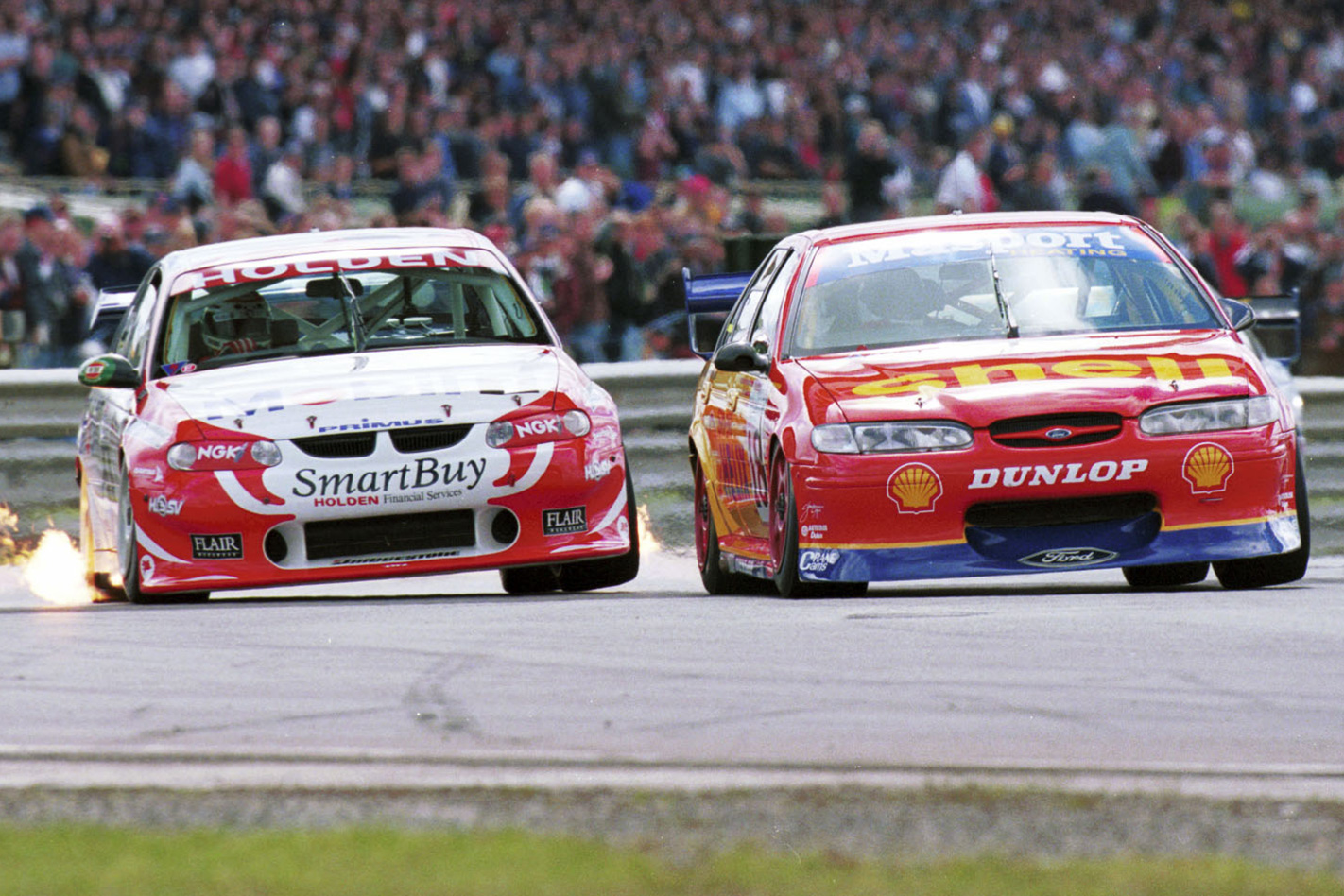
FACTORY-backed Ford and Holden teams will again bang doors on the Supercars circuit from next year, with Team Blue backing the Ford Mustang from 2019.
Revisions to the Supercars format revealed in 2016 allow for a broader range of body styles and engine layouts, from the current V8 four-doors through to four-cylinder coupes, to fight for championship points. However, while Ford is taking advantage with the Mustang coupe, its decades-old rival is likely to stick with the recently revealed four-door ZB Commodore racer.
Ford’s support for the Mustang – both DJR Team Penske and Tickford Racing have confirmed they will swap out of their FGX Falcons at the end of this season – includes further investment in Supercars. The brand is also stumping up a hardcore Ranger Raptor as the series’ official recovery vehicle.
Both Ford Australia and Ford Performance will work with DJR Team Penske and Tickford Racing “combining the technical knowledge and expertise of Ford Performance with the experience and skillset of these highly-successful teams”.
“We welcome the Mustang to Supercars, and it’s fantastic that Ford, and its Ford Performance division, see the Supercars Championship as a great competitive environment and also a strong marketing platform to be involved in. This is a landmark day for Australian motorsport and the teams involved.”
Holden Motorsport said it was keen to see the Ford Australia-backed teams back out on the track. “Holden Motorsport would like to welcome Ford back to the Virgin Australia Supercars Championship,” it said in a statement. “The Holden-Ford rivalry stretches back to the 1960s and is considered one of the greatest in motorsport history across the globe. It’s also fuelled an incredible passion for motorsport in Australia.”
Ford has its work cut out. Since 1960, Holden has stood on the top step of the podium 537 times, while Ford has only taken it 351 times. For the record, another 30 have been claimed by Nissan. Likewise, Holden has claimed 331 pole positions against Ford’s 273 and Nissan’s 26.
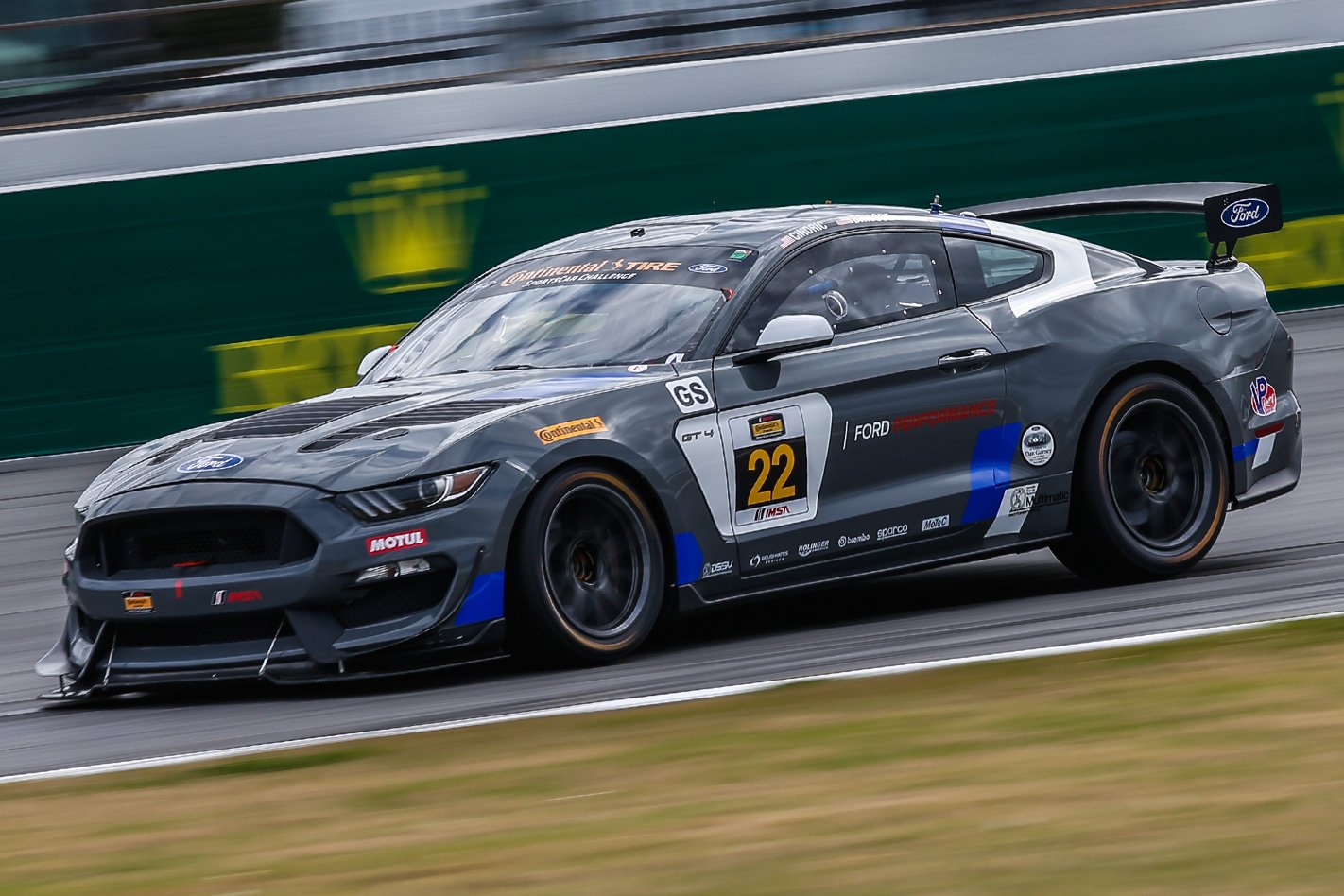
Ford Australia has confirmed the Mustang will take part in the Supercars championship from the 2019 season.
The announcement signifies Ford’s biggest commitment to Australian motorsport since its departure from Supercars in 2014.
Ford Australia will be providing financial and technical support to DJR Team Penske and Tickford Racing to homologate the Mustang under Supercars’ Gen2 regulations. The Mustang will be the first two-door car to compete in Mustang since the Group A days.
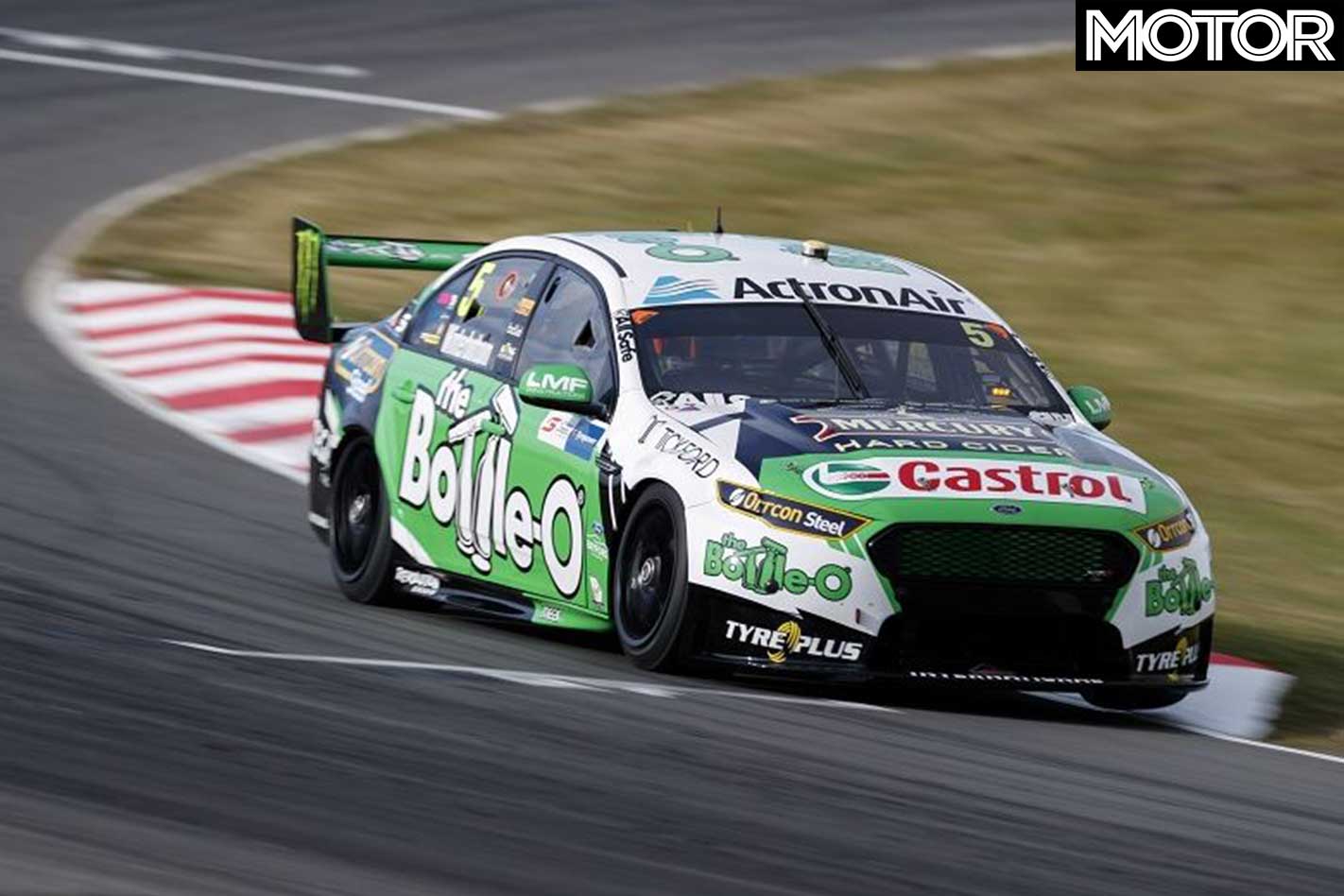
Ford Australia boss Graeme Whickman wouldn’t be drawn on whether the arrangements with Penske and Tickford constituted a ‘factory effort’, saying that it is a “partnership” but MOTOR understands Ford Performance is heavily involved with the development of the Mustang racer.
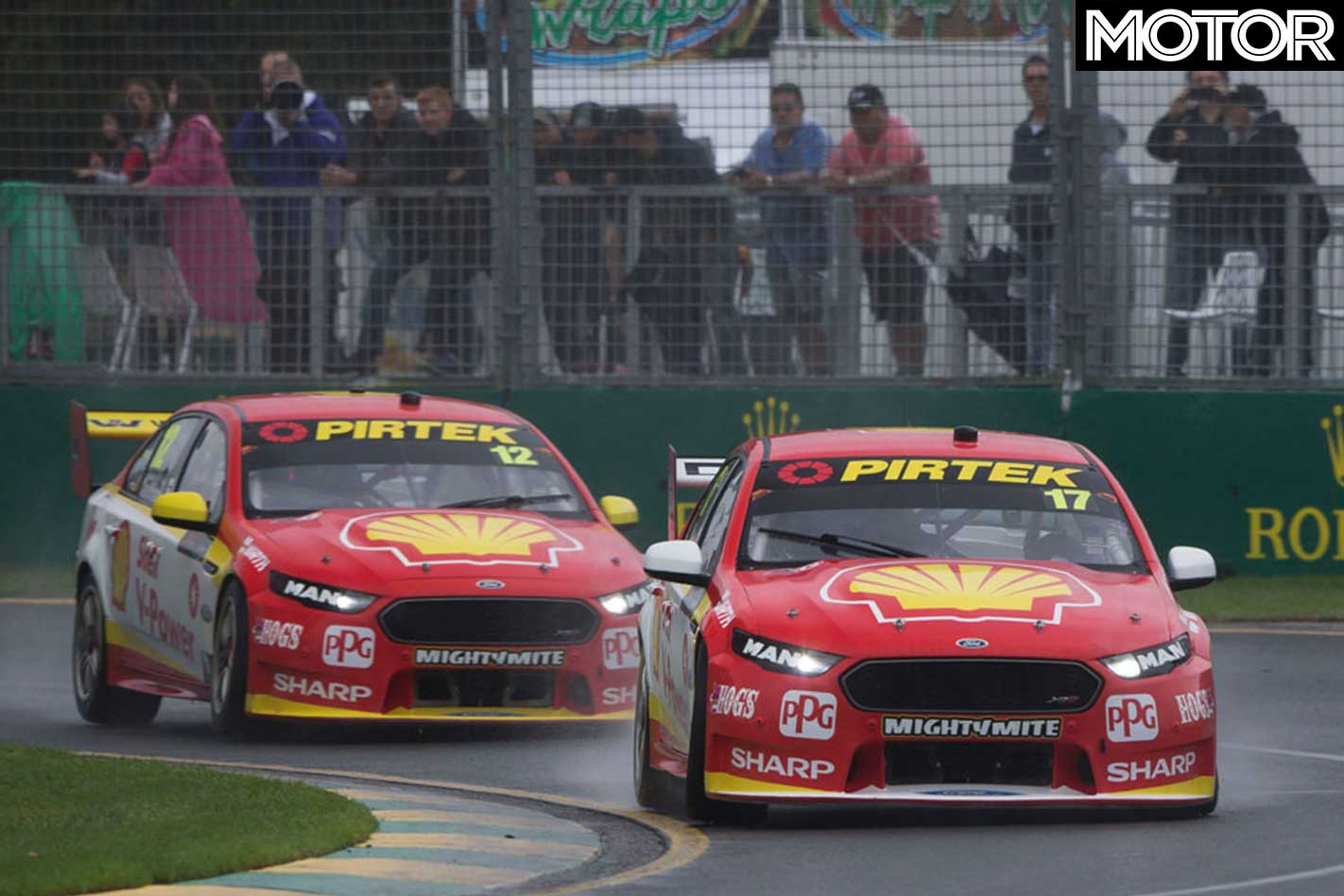
Whickman also refused to put a timeline on Ford’s Supercars involvement, but said that given the Mustang is a model that will form part of Ford’s range “ad infinitum” that he expects that the arrangement will “carry on for the foreseeable future.”
In other Supercars news Ford confirmed that the forthcoming Ranger Raptor will act as the official recovery vehicle for the Supercars championship.
Ford has confirmed the new-generation Fiesta ST for the Australian market.
To support its launch of the Ford Performance brand locally, Ford Australia has confirmed the new Fiesta ST will join the Ranger Raptor in showrooms in the first half of 2019.
Ford Australia’s reluctance to commit to the new Fiesta range cast doubts over whether the next-generation would launch here, however, the ST’s success – both critically and commercially – allowed the case to be made.

Launch control and a limited-slip differential allows it to hit 100km/h in a claimed 6.5sec on its way to a top speed of 232km/h, while the three-pot also features cylinder deactivation to improve fuel efficiency by 11 per cent.
The new Fiesta ST will also feature adjustable drive modes – Normal, Sport and Track – which will alter the engine mapping, traction control, ESC, active exhaust and steering assistance. ESC can also be deactivated completely.
Extra equipment such as an 8.0-inch screen with SYNC3 infotainment, rain-sensing wipers, auto headlights, B&O audio system and active driver aids such as lane-keeping assist also appears for the first time, but crucial to the car’s success will be retaining its trademark exuberant handling.
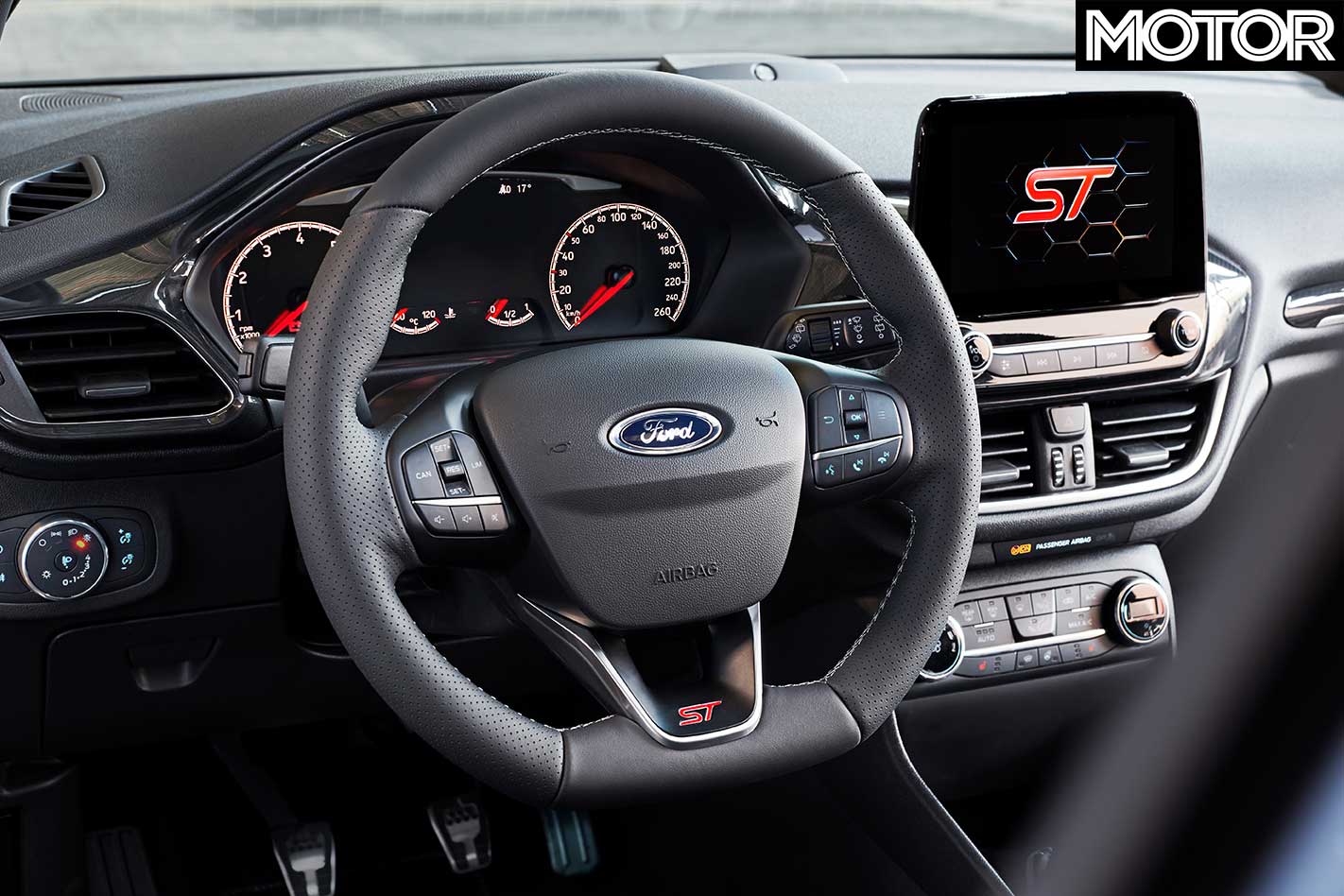
Exact pricing and specification details – including whether both three- and five-door variants will be offered – will be revealed closer to the car’s launch.
FORD’S iconic Mustang pony car is officially returning to premier touring car racing in Australia after a 33-year absence.
Tickford Racing and DJR Team Penske confirmed today that they will field facelifted Ford Mustangs in the 2019 Supercars championship with the blessing of Ford Australia.
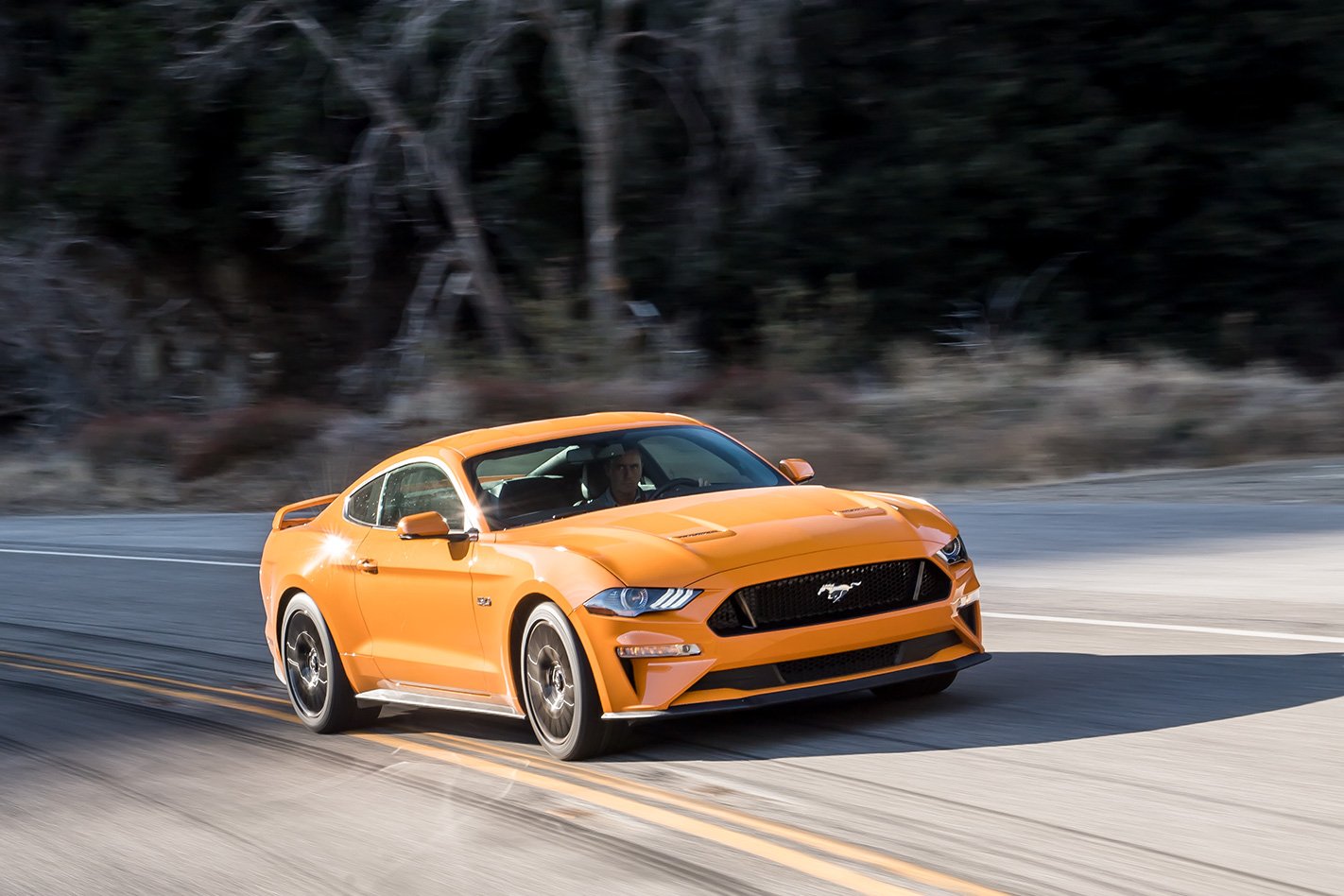
Here are three of the toughest ’Stangs to have campaigned Down Under.
1985 GREENS-TUF FORD MUSTANG Dick Johnson

Johnson bought two Mustangs from the German Zakspeed team in mid-1984 after Ford Australia didn’t homologate the XE or XF Falcon to race under Group A regulations.
Wearing the iconic #17 and dressed in Greens-Tuf paint, the Mustang made its race debut at the ’85 season opener, which was the first under Group A regulations following the demise of Group C in ’84. However, the car’s first entry was the ’84 Bathurst 1000, where Group A cars were permitted. Johnson added the car to the grid as a back-up vehicle in case he encountered problems with his XE Falcon. The Mustang qualified 48th, but didn’t race.

1967 FORD MUSTANG GTA Pete Geoghegan
Ian ‘Pete’ Geoghegan and his ’67 GTA notchback Mustang are one of the most competitive combos in ATCC history, sweeping three consecutive championships (1967, ’68 and ’69).

Geoghegan and the GTA Mustang quickly became a crowd favourite due to the spectacular slides that ‘Big Pete’ would perform each lap.
Geoghegan’s engineer, John Sheppard, was responsible for tuning and maintaining the GTA, which was fitted with a four-speed gearbox and 302-cubic-inch engine from a ’67 fastback. The engine was hotted up with four Weber carburettors, before eventually being converted to fuel injection.
But the GTA’s party trick was its unique three-wheel cornering style, which was due to a modified suspension geometry.
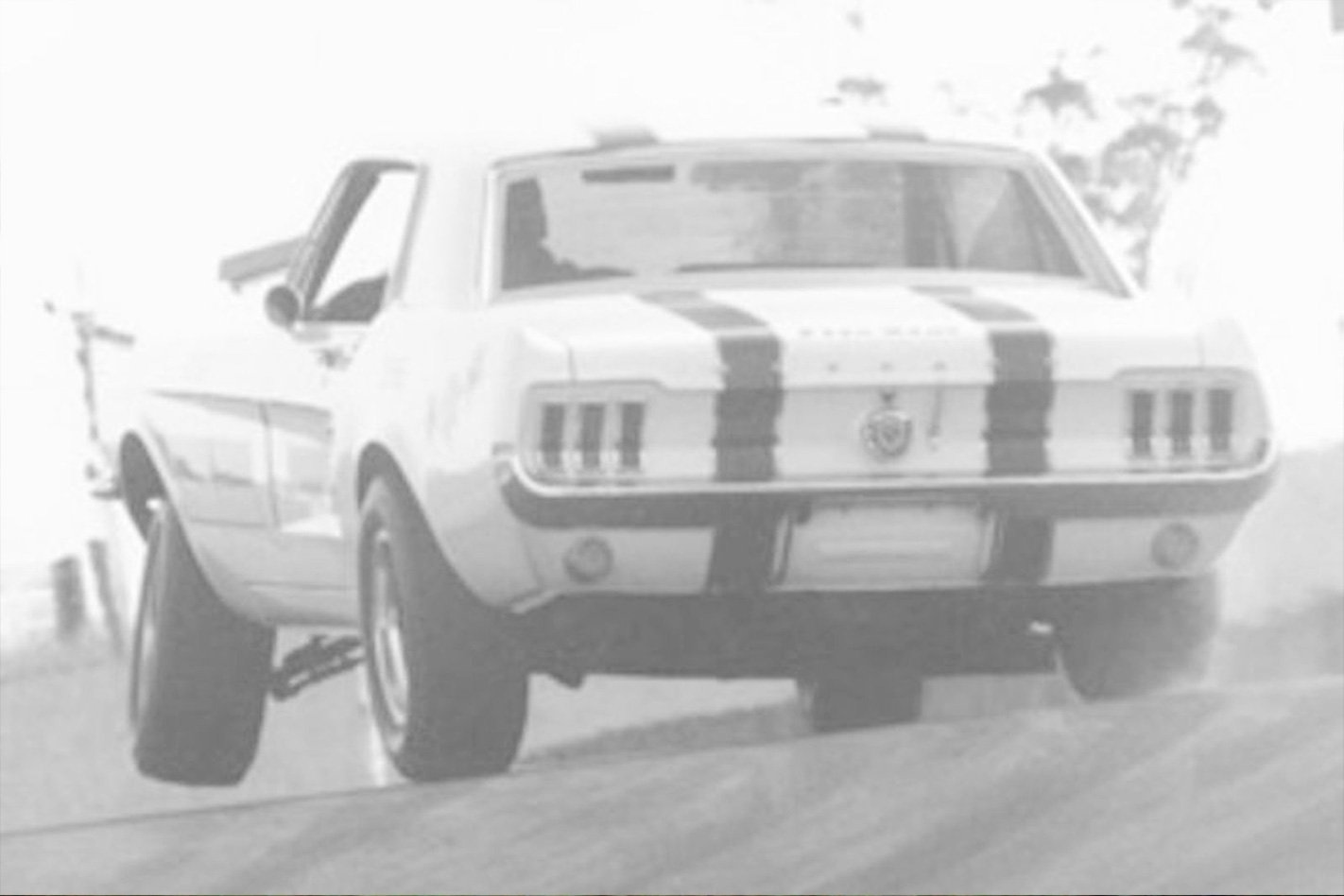
In order to widen the track, and fit fat rubber under the flared arches, the top wishbones were shortened by an inch to allow the unladen wheel to lean in and clear the mudguard.
“Most of the circuits then were stop-start affairs and it was more important to get off the line and out of the corners fast, than to carry speed through them. So we left the rear springs pretty soft, so that the car would squat and get its power down,” Sheppard explained.
“I suppose if Pete hadn’t been so naturally talented we might have gone testing and developed the suspension more, but he could drive around any problem and rarely complained. And if the driver was happy, then so were we!”
1969 TRANS-AM MUSTANG Alan Moffat
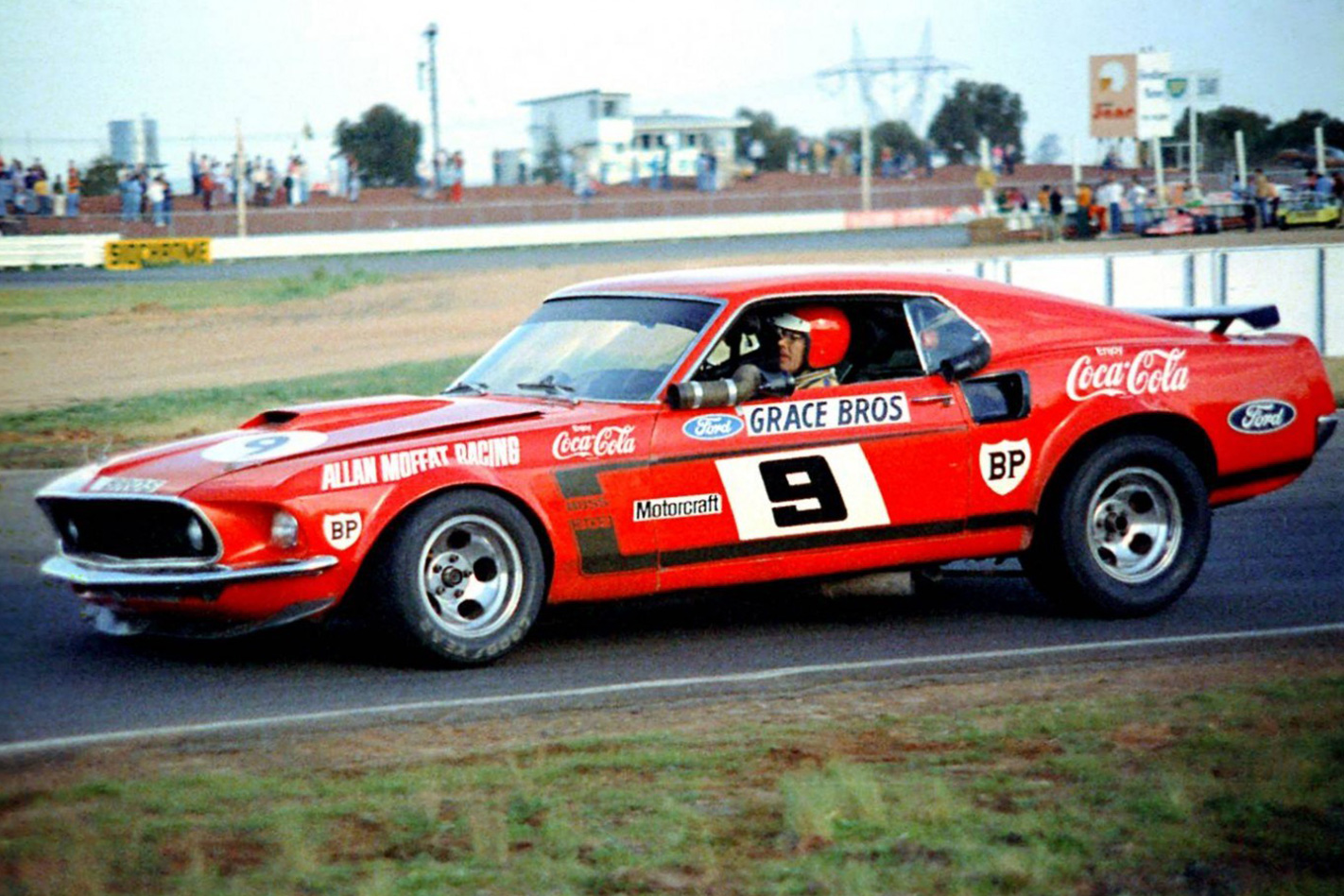
Nicknamed the Moffstang, the Boss 302-equipped 1969 Trans-Am Mustang was all-conquering, and considered by some to be the greatest touring car to race Down Under.
The car, built to dominate Chevrolet’s Camaro in the Trans-Am series in the US, arrived in Australia box-fresh for the ’69 series.
During its racing career, which spanned from May 1969 until December 1974, Moffat and the Boss 302 scored 101 race victories from 151 starts, along with a bevvy of qualifying and lap records.

Despite the incredible two-out-of-three win rate over a four-year period, Moffat and the Mustang never won the ATCC title.
Can’t wait to see the final score? Jump to the verdict now
GOOD riddance. ‘Escape’ is far more apt for a lifestyle-promising SUV than the controversial Kuga nameplate (blame the Germans) it usurps, with the swaparoo finally addressing a key reason for the European Ford’s failure to fire in Australia.
However, the menu is not the meal, and this 2013-vintage SUV still has an uphill battle to fight, even with a name that’s literally no longer on the nose.
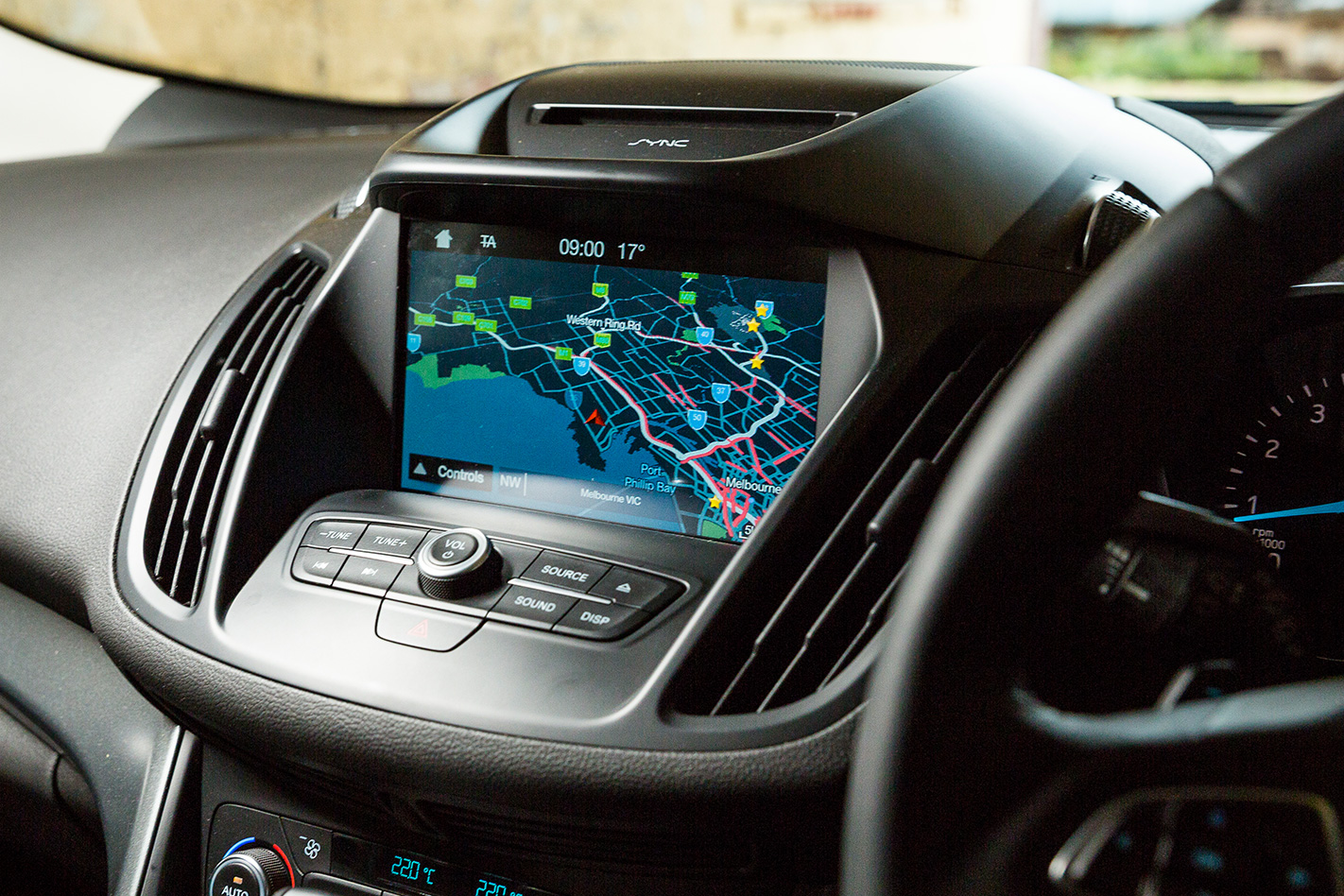
Exhibit A: what you see. Rather oddball in some of its detailing, a number of the Escape’s ‘improvements’ don’t quite gel. Behold, for example, the newly bluffer grille that only accentuates the thick-limbed body’s slight awkwardness. The same applies inside.
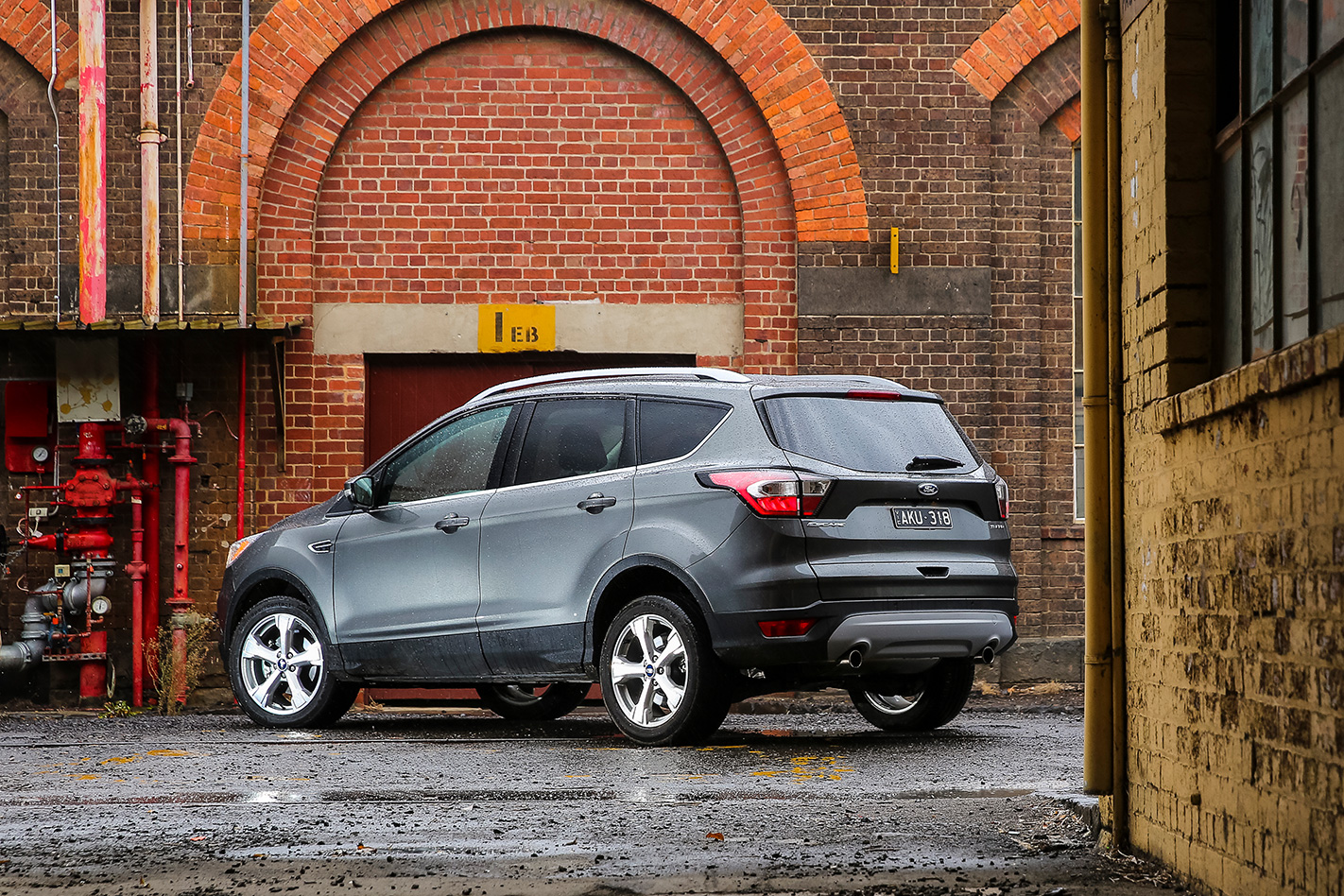
While the tweaked dashboard boasts an in-vogue touchscreen with Ford’s massively improved SYNC3 multimedia interface, it lives within a heavy-handed hood that looks like Darth Vader’s mask. Trunk-like A-pillar bases could hide a whole Death Star from the driver’s view, and clap-arm wipers thud during each sweep, failing to clear the entire screen properly. The front passenger feels higher than a Cypress Hill fan, perched on a seat with no downward adjustment, but at least the gearlever’s confounded, side-mounted shift toggle gives way to a pair of proper wheel paddles.
Yet these are all superficial observations because the Escape’s driving position is first class. Its front seats are firmly supportive, the steering wheel is perfectly sized, ventilation is brilliant, the dials classy (and include a clear digital speedo), the build quality acceptable, and there’s plenty of room.
Moving to the back, the cushion might look emaciated, but the elevated hip point enables a more natural posture that proves comfortable, aided by a reclining backrest, rear vents and an invitingly airy ambience. Unexpected wins include remote control-activated windows (with auto up/down for all), capless refuelling for cleaner hands, and a one-tap retractable cargo blind for the usefully large luggage area.

At the other end is a lusty yet refined 134kW/240Nm 1.5-litre turbo four, offering gutsy off-the-line performance as well as a steady stream of instant oomph for effortless overtaking. Among the fastest in every acceleration increment, the Ford’s impressive fuel economy came as one of the test’s most welcome shocks, assisted by a seamless idle-stop system. Braking proved the best of the bunch too.
Also keeping Escape youthful is its leading dynamic agility, with the group’s most fluid and intimate steering, providing gloriously precise handling and beautifully poised roadholding, as well as firmly controlled, yet reasonably supple, ride comfort.

Keeping in mind that the Trend wears 235/50R18 rubber, initial bump impact feels quite firm at first (and so isn’t in the same league as the super-absorbent Forester), but the dampers do smooth things out with disciplined cushiness. Road/tyre noise is also agreeably contained in most circumstances.
Focused and refined, this Ford is the medium SUV set’s top driving machine, as well as one of the best-equipped. Note also that while AEB is optional ($1300), it is accessibly bundled with rear cross-traffic alert, lane-departure warning and assist, auto high-beam, adaptive cruise and blind-spot monitoring.
Three years ago a (thirsty) Kuga 1.6T AWD managed the same score (but second place) in our medium SUV Megatest. So third spot for its ageing yet more sophisticated, and oh-so-likeable successor is a terrific effort. The Escape isn’t just about changing names.
SCORE: 7.5/10 FORD ESCAPE TREND SPECS
Model: 2018 Ford Escape Trend Engine: 1499cc 4cyl, dohc, 16v turbo Max Power: 134kW @ 6000rpm Max Torque: 240Nm @ 1600-5000rpm Transmission: 6-speed automatic Weight: 1532kg 0-100km: 9.6sec Fuel economy: 10.5L/100km (tested) Price: $34,290 On sale: Now
 Medium SUV Megatest – Full coverage
Medium SUV Megatest Results
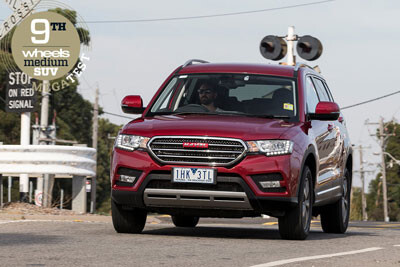 2018 Haval H6 Premium
Score 2/10
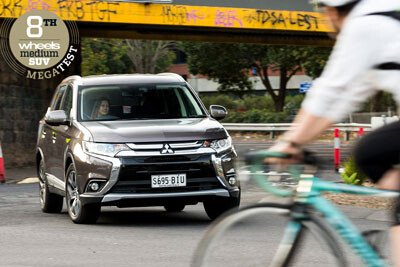 2018 Mitsubishi Outlander LS
Score 5/10
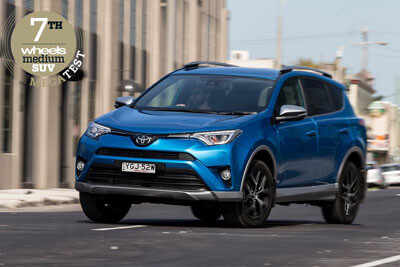 2018 Toyota RAV4 GXL
Score 6/10
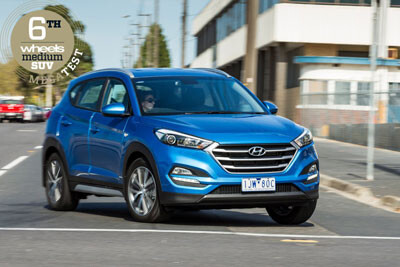 2018 Hyundai Tucson Active X
Score 6.5/10
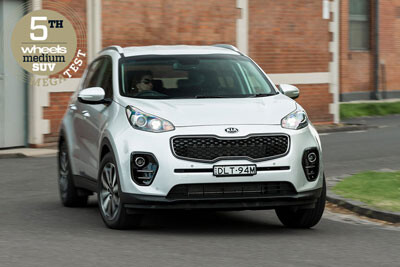 2018 Kia Sportage SLi
Score 7/10
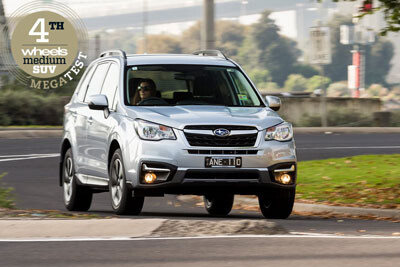 2018 Subaru Forester 2.5i-L
Score 7.5/10
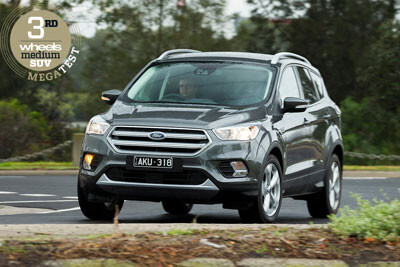 2018 Ford Escape Trend
Score 7.5/10
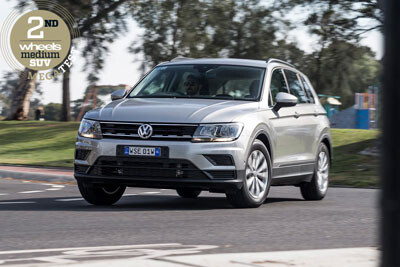 2018 Volkswagen Tiguan Trendline
Score 8/10
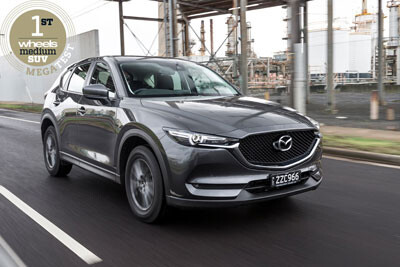 2018 Mazda CX-5 Maxx Sport
Score 8/10
GAZOO Racing-badged versions of future Toyotas including the Supra and even the Corolla could one day compare your lap of the race circuit with thousands of others, if code that’s under development sees the light of day.
The Toyota Gazoo Racing Recorder software, revealed in trademark applications, is believed to be similar to software developed for the US market Chevrolet Camaro and Corvette. GM’s version of the software, called Performance Data Recorder, allows owners to make a digital copy of their hot laps.
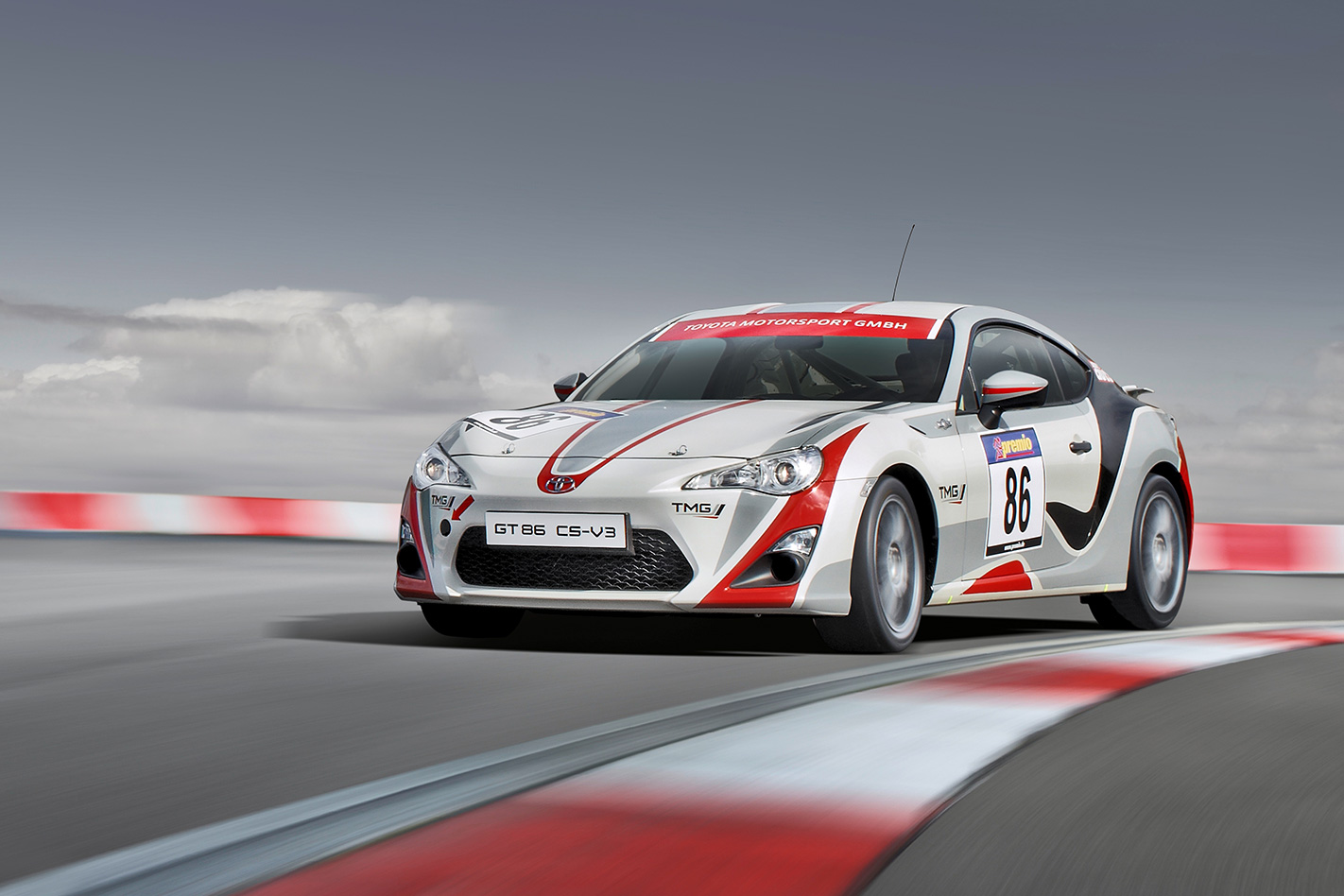
The Gazoo Racing software is believed to be an advance on similar software launched in Japan in 2014 specifically for the Toyota 86. Called the “Sport Drive logger”, the Toyota-based software would allow Japanese 86 owners to drive a local real-world track, and then go home and plug the data into a games console running racing sim Gran Turismo 6. The game would then be able to re-create the lap on the virtual track.
The software should also allow Supra owners to set a benchmark lap on the racetrack and then compare their times with other real-world drivers, turning the games console into a virtual hot lap classroom.
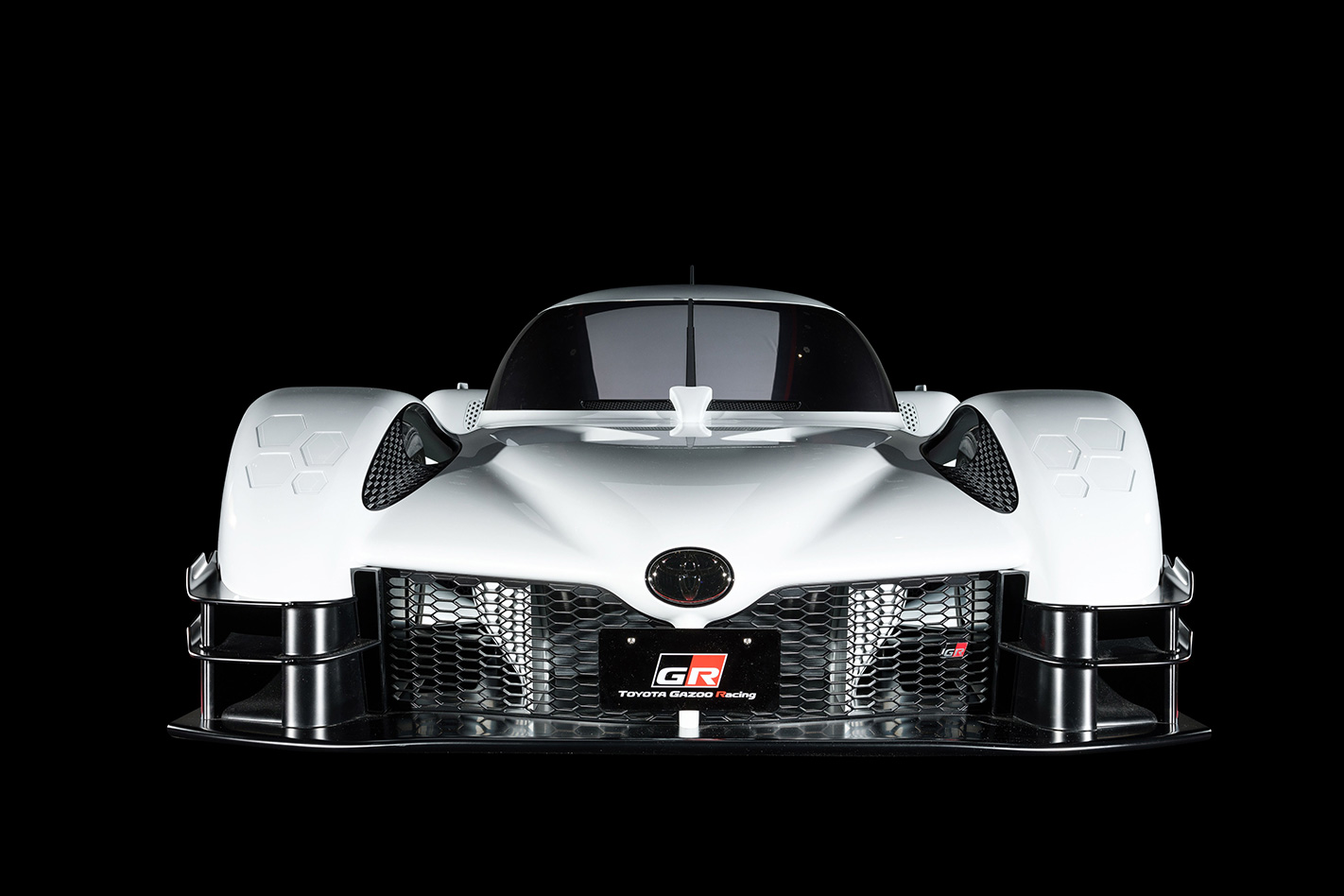
Then there’s the Toyota-badged supercar, flagged by the GR Super Sport. The software could also make its first appearance in the road-going production form of the LMP1 endurance racer that the concept car has flagged is high on Toyota’s wish list.
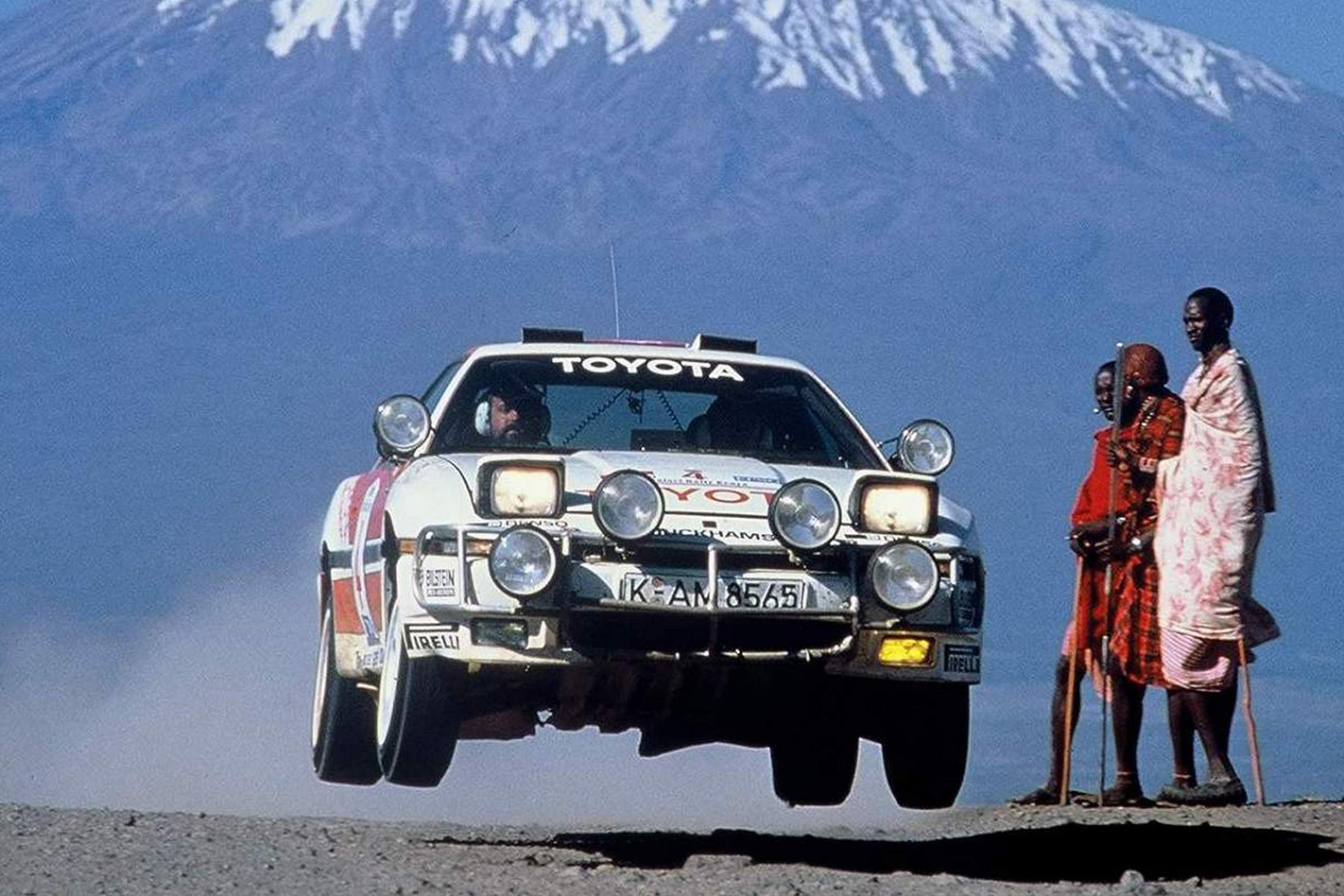
Other car-making brands are also looking at how they can blur the line between the real and online worlds. Porsche has hinted it is likely to develop a virtual Mark Webber to help its drivers set hot laps around the world’s most challenging race circuits, and a new iteration of AMG’s Track Pace app found in the GT 4-Door shows braking markers and turn-in points on the car’s head-up display to help drivers lap quicker.
