
As the Honda HR-V enters middle age, we take an in-depth look at the top end of the Japanese company’s entry-level SUV range
TELL ME ABOUT THIS CAR
The latest version of the sharply styled and well-equipped Honda HR-V – it has sold here as a boxy SUV before, but what seems a lifetime ago – was added to the Japanese car maker’s Australian showrooms early in 2015. Since then, satellite navigation was included last year as standard equipment – the only significant running change made to the Mazda CX-3 fighter since its launch.
However, in that time we’ve seen keen, new competitors including the Hyundai Kona, Mitsubishi Eclipse Cross and an all-new Subaru XV enter the fray in what is one of the most hotly contested corners of Australia’s new-car market. Can the CR-V afford to stand still?
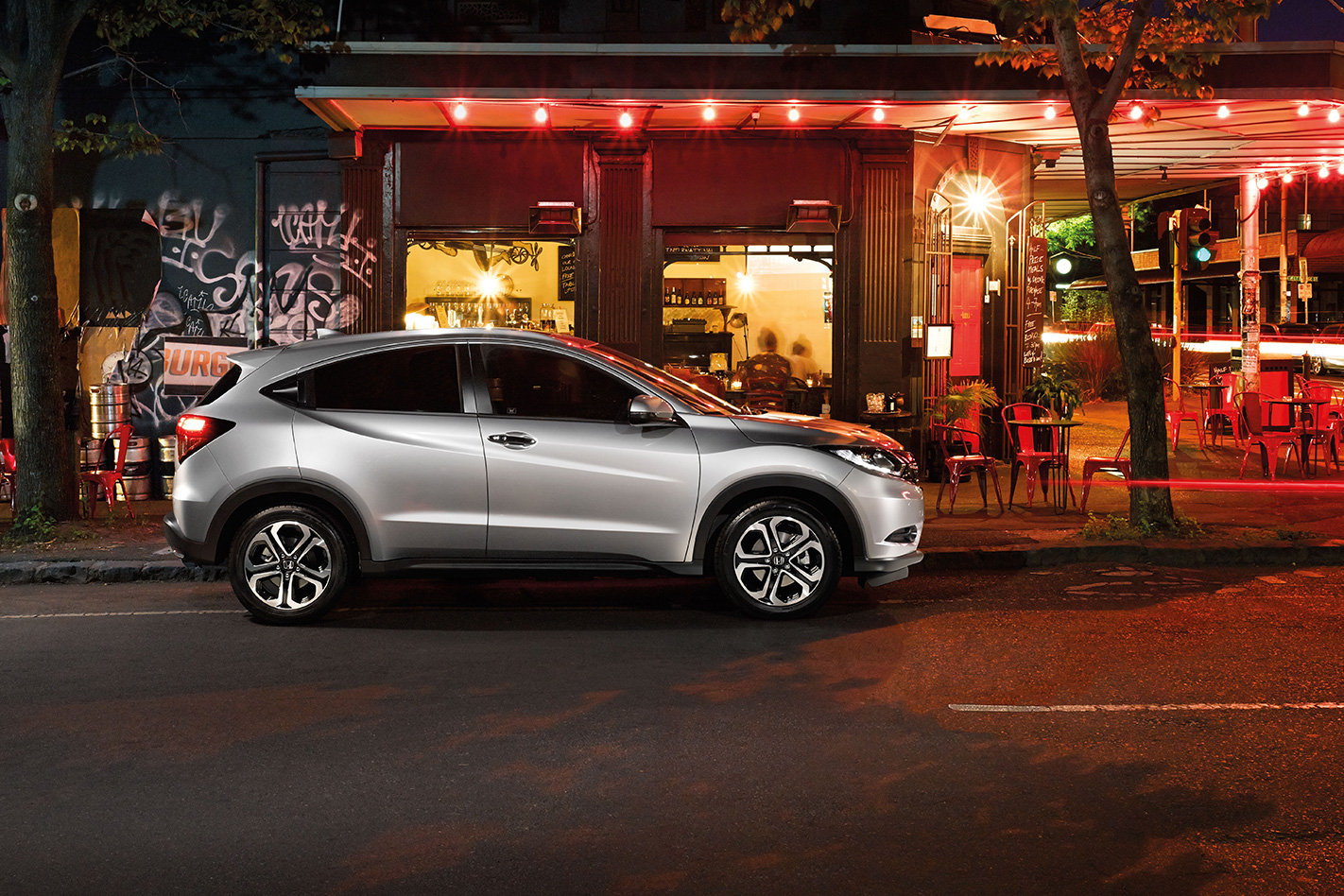
The version we’re looking at here is the range-topping HR-V VTi-L costing from $33,340. For an extra $1000 you can add a safety pack that includes automatic emergency braking, a lane diversion monitor and headlights that will automatically dip the high beams in the face of oncoming traffic.
STRENGTHS
- It remains a good looking compact SUV. Okay, the design is a little more mainstream than some, but compared with the forced, heavy styling of competitors including the plasticky Hyundai Kona, bug-eyed Nissan Juke, fluid-retaining Ford EcoSport and the split window-tailgated Mitsubishi Eclipse Cross, it’s actually pleasing and resolved to look at.
- It comes well equipped. The VTi-L sits on 17-inch alloy wheels, and inside there are creature comforts such as dual-zone climate control air-conditioning, a powered driver’s seat, self-dimming rear-view mirror, plenty of leather trim, and an enormous sunroof with a proper sunshade, not a screen. There are LED headlights and even keyless entry and engine start.
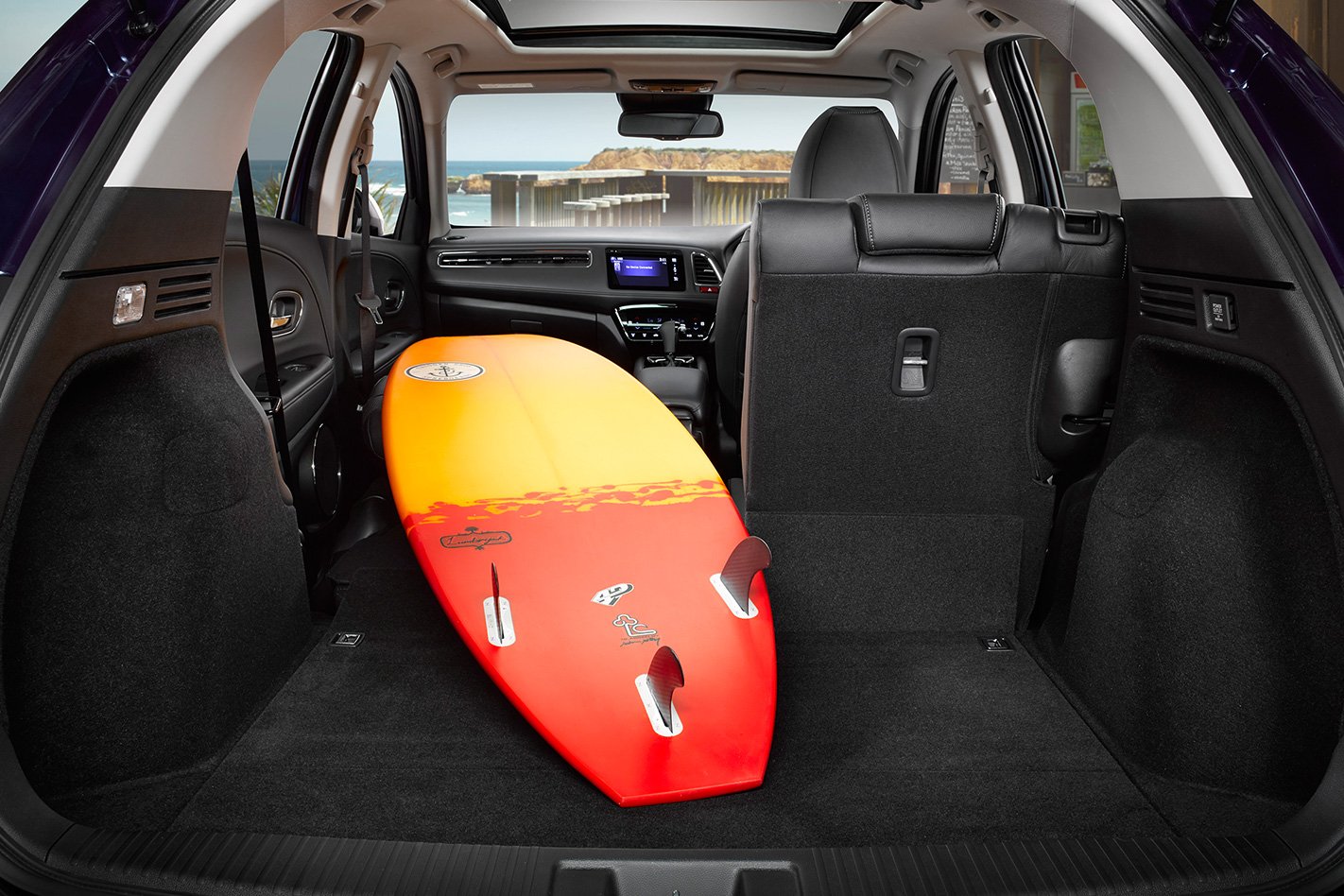
- It’s a versatile interior. The HR-V is based on the likeable Honda Jazz, and carries over the same versatility, including the Magic Seat system that allows the front pews to fold almost flat, contributing to load space. A near flat rear floor leaves plenty of room for two adults, and the boot space is generous. A pair of cupholders mounted in the centre console even have a false floor that will allow them to take different shapes ranging from a cup of coffee to a one-litre water bottle.
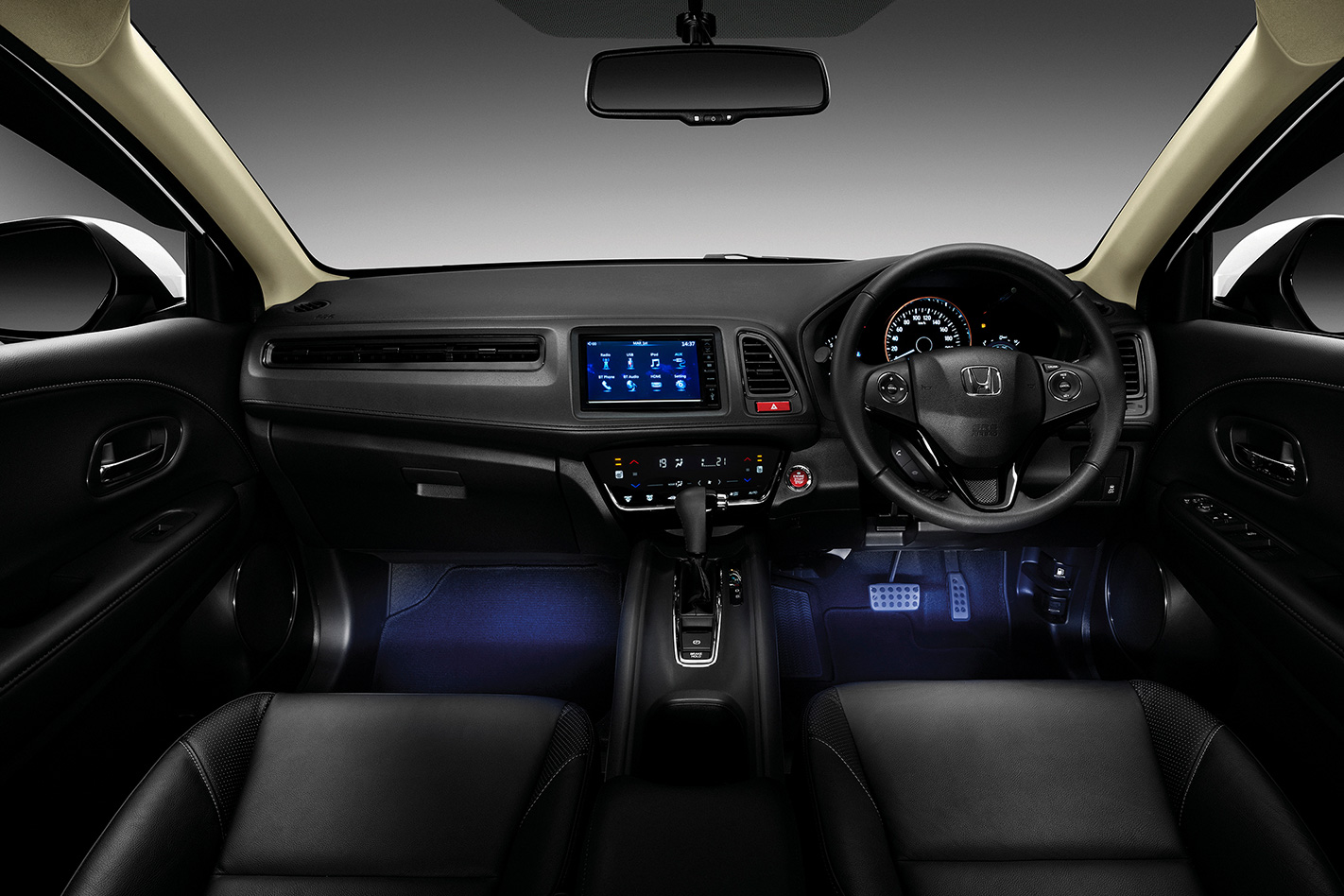
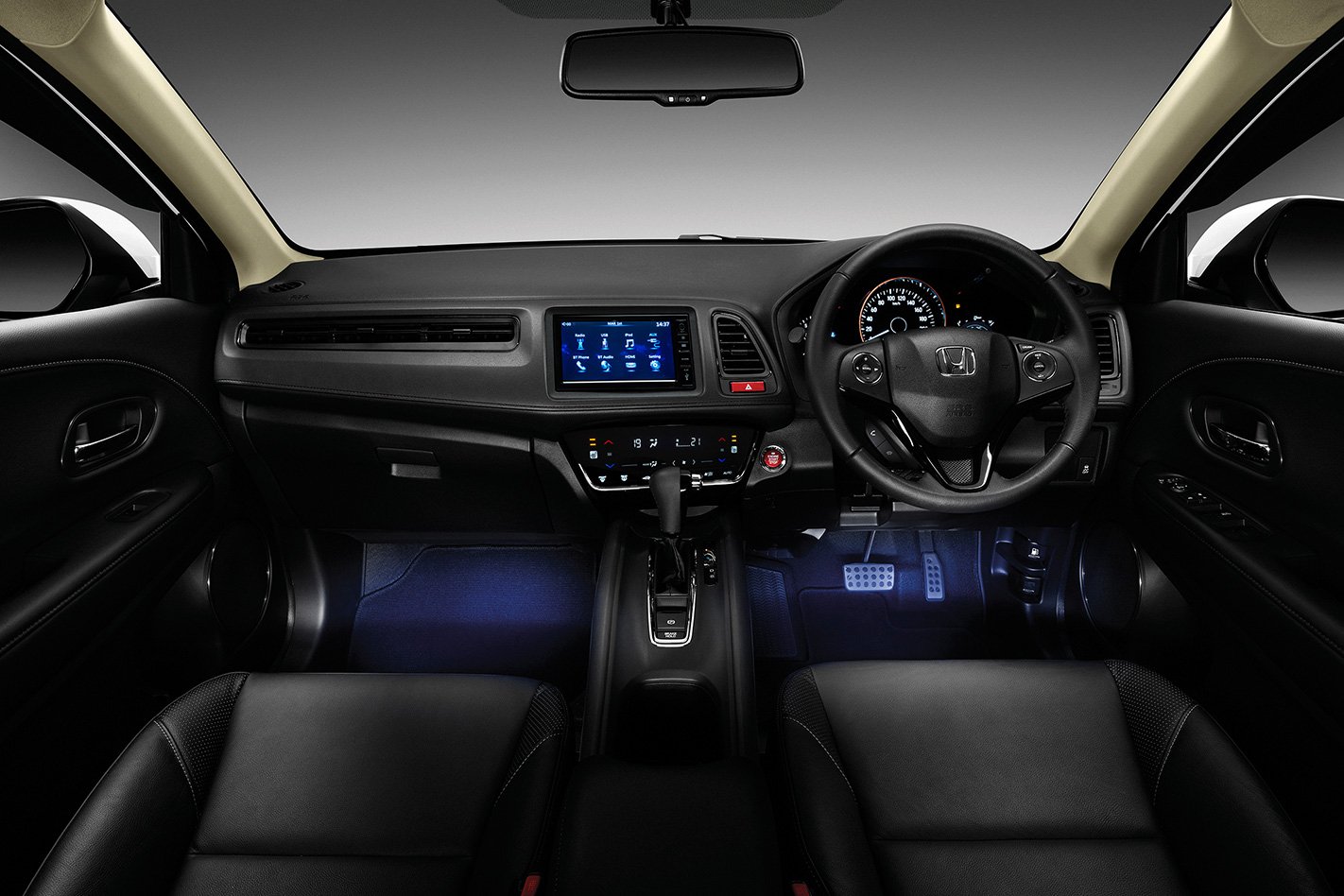
- It’s pleasing to look at inside. The instrumentation is clear, touch-sensitive switches replace traditional buttons, and the aircon vents running across the passenger side of the dash add an intriguing design element.
- The ride and handling are good. The HR-V uses the same suspension – MacPherson front, torsion beam rear – as the Jazz. We’ve had no real complaints about the Jazz’s dynamic abilities, and the same goes for the SUV. The suspension is made slightly stiffer on the HR-V because it weighs more than the Jazz, but it’s still pretty good, even on rough city roads.
- The steering is excellent for the city. It’s light enough to shuffle the HR-V into a tight sport, aided by front and rear parking sensors and a reversing camera, and yet still feels good at higher speeds.
WEAKNESSES
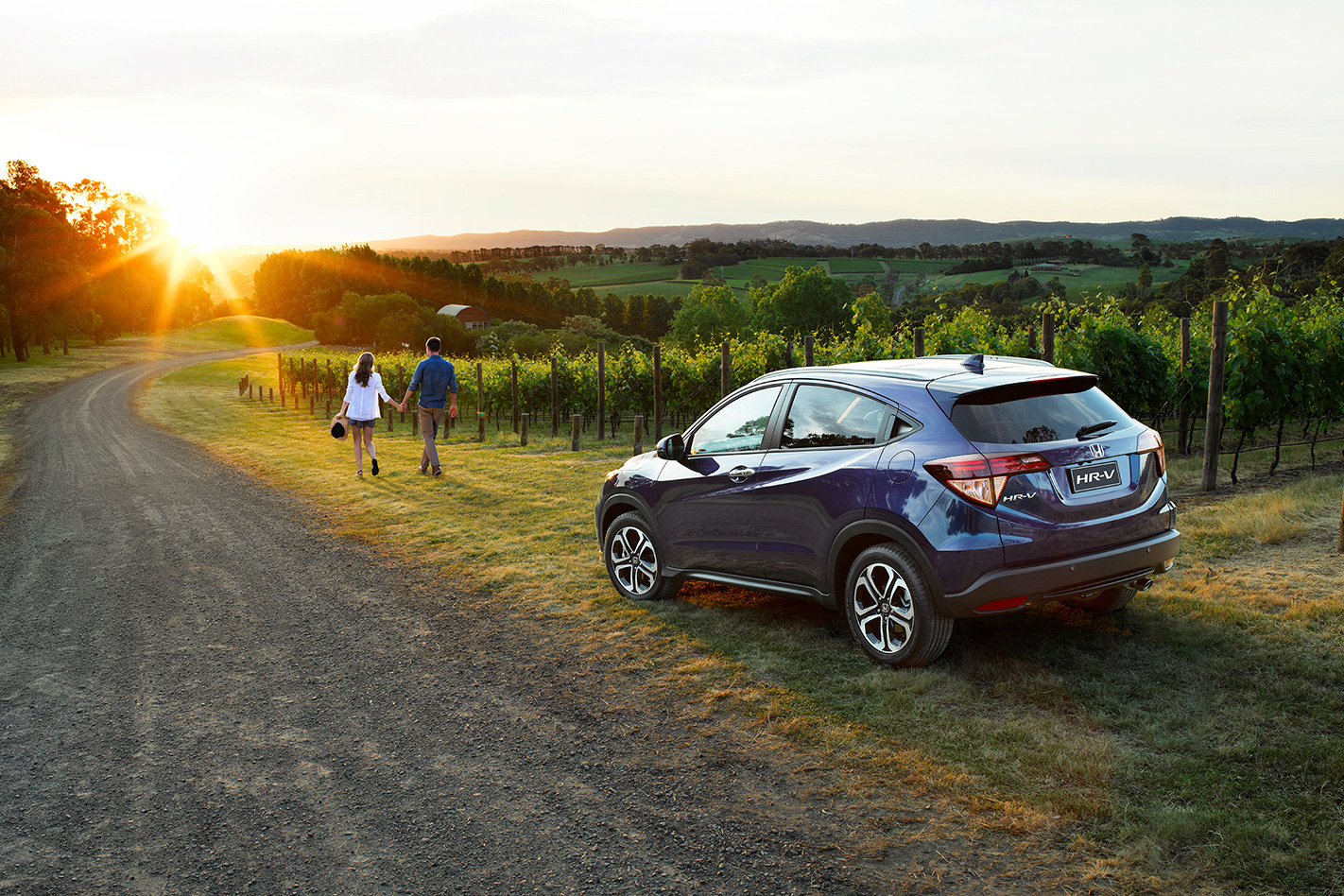
- The entire HR-V range is front-drive only. Competitors offer all-wheel-drive alternatives which are handy if you’re using your soft-roader-styled ride to make regular trips to the snow or the beachfront, where the extra traction is a distinct advantage. It means the HR-V is more suited to city car duties than an outdoors lifestyle.
- Honda won’t let you buy an entry-level $24,990 HR-V VTi, or the mid-spec $27,990 VTi-S, and fit it with the safety pack. It means you have to buy the $33,340 VTi-L if you want the $1000-added-cost automatic city braking function – a feature that’s standard on some much cheaper entry-level rivals.
- The combination of the HR-V’s 1.8-litre engine and a continuously variable transmission, both borrowed from the Jazz, are a little underwhelming in the heavier HR-V. The engine lacks low-down torque, and the CVT isn’t good when stepping off the line. Combine the two, and the HR-V is a bit slow to get away from the traffic lights. Itr also has a penalty on fuel use.
- The HR-V has a 50-litre fuel tank. It will officially drink 6.9L/100km, but in city driving that could easily be 20 percent more. Because the fuel tank is so small, you’ll be visiting the petrol station regularly to top it up. There’s also no fuel-saving stop-start engine tech helping things; look to rivals for what they’re doing.
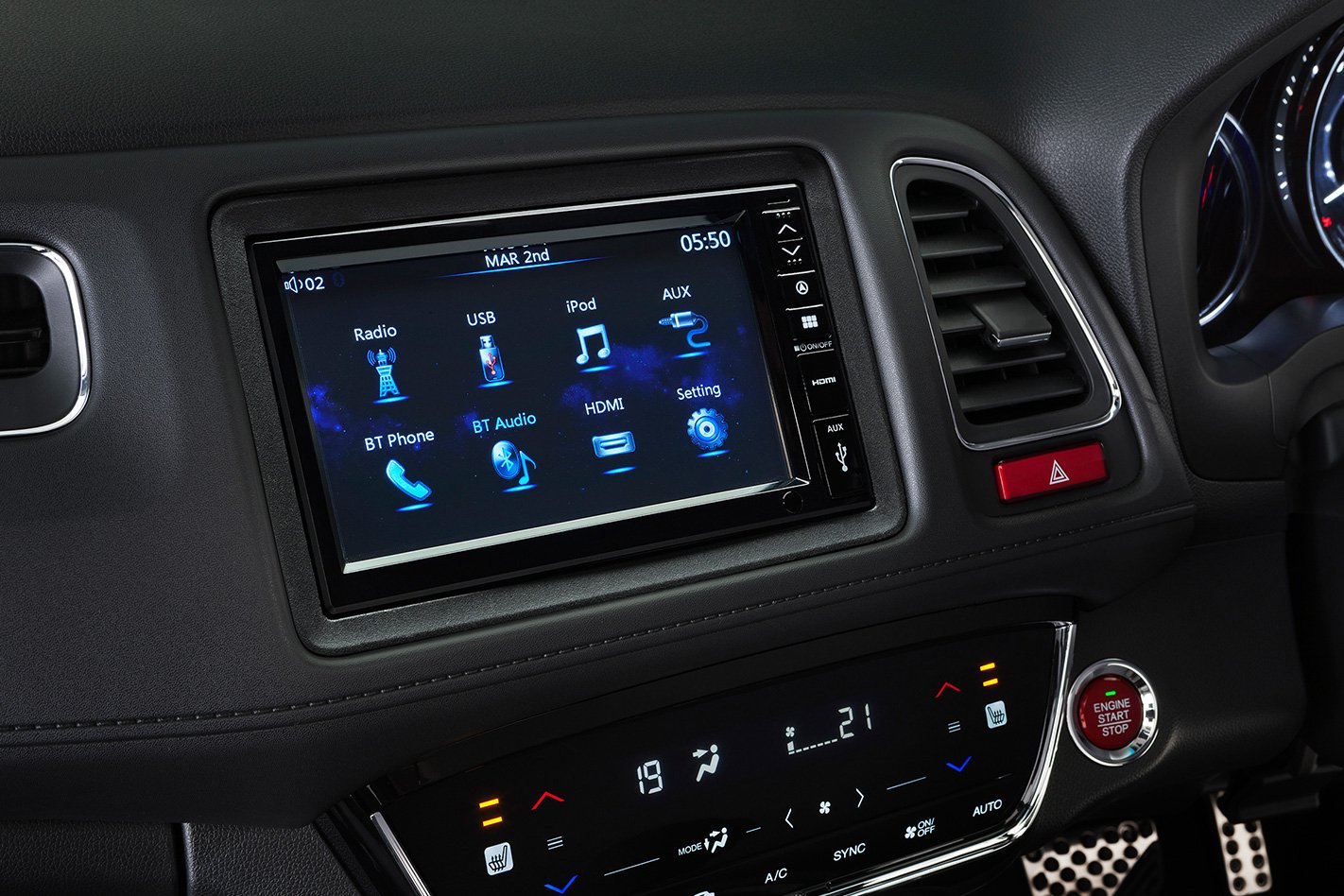
- The satellite navigation system’s graphics look like a colourised 1990s version of Donkey Kong. There’s nothing fine or detailed about it; the patched-in head unit that also serves as the radio just serve up the basics.
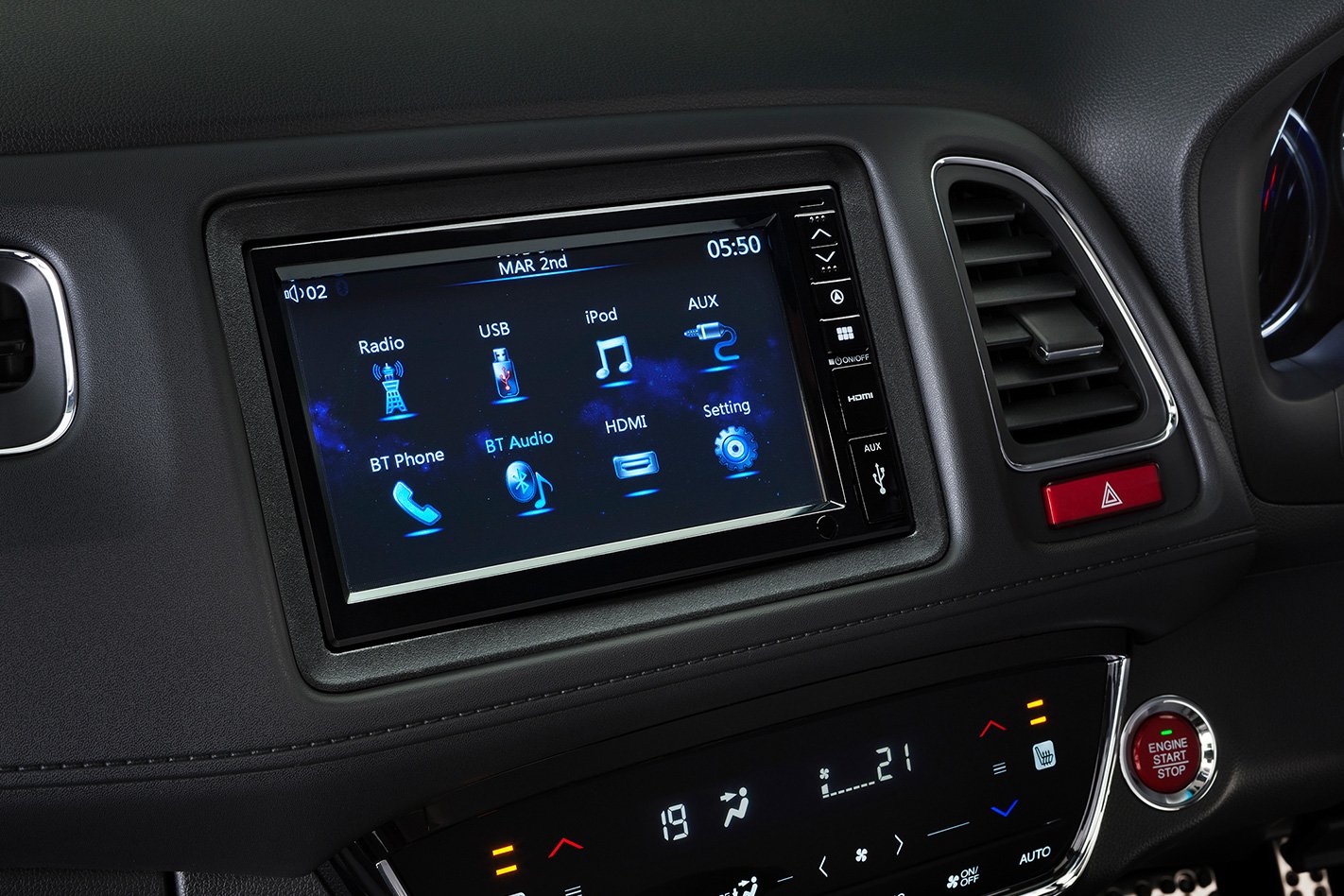
- There’s no digital speedo or head-up display. The dash and multimedia screen are both set very low, so moving eyes to take in either require a big movement away from the road ahead. If you’re trying to adjust a radio station in stop-start traffic, best put up with the poor choice of music and focus on the road ahead.
- The vertical rear door handles are recessed high on the trailing edge of the doors. It’ll be okay once you’re used to it, but rush to pick up Granny from bingo late one night when it’s chucking rain down sideways and you might have a very different opinion of how well the form-over-function feature works.
ANY RIVALS I SHOULD CONSIDER
Plenty. This is a crowded corner of the market, with something to suit all tastes. Browse through the Ford EcoSport, seriously well-equipped Haval H2, Mazda CX-3, Nissan Juke, unproven MG ZS, Renault Captur, the sharp-driving Suzuki Vitara at the more value-driven end of the market. Try the Fiat 500X, Holden Trax, Hyundai Kona, Mitsubishi ASX, and Peugeot 2008 as similarly priced rivals, and even some more expensive options including the Citroen Cactus, Jeep Compass and Renegade, Nissan Qashqai, and Toyota C-HR.
The Mitsubishi Pajero Sport has a received a mild upgrade that brings additional safety and convenience, subtle aesthetic changes and a new five-seat variant.
The Pajero Sport range grows from three to four variants, with the GLS five-seat bridging the gap between the entry-level GLX five-seat and GLS seven-seat.
Until now the entry-level GLX was the only version available with five seats and the new variant gives buyers an opportunity upgrade to the GLS spec for around $4000 cheaper than the three-row version.
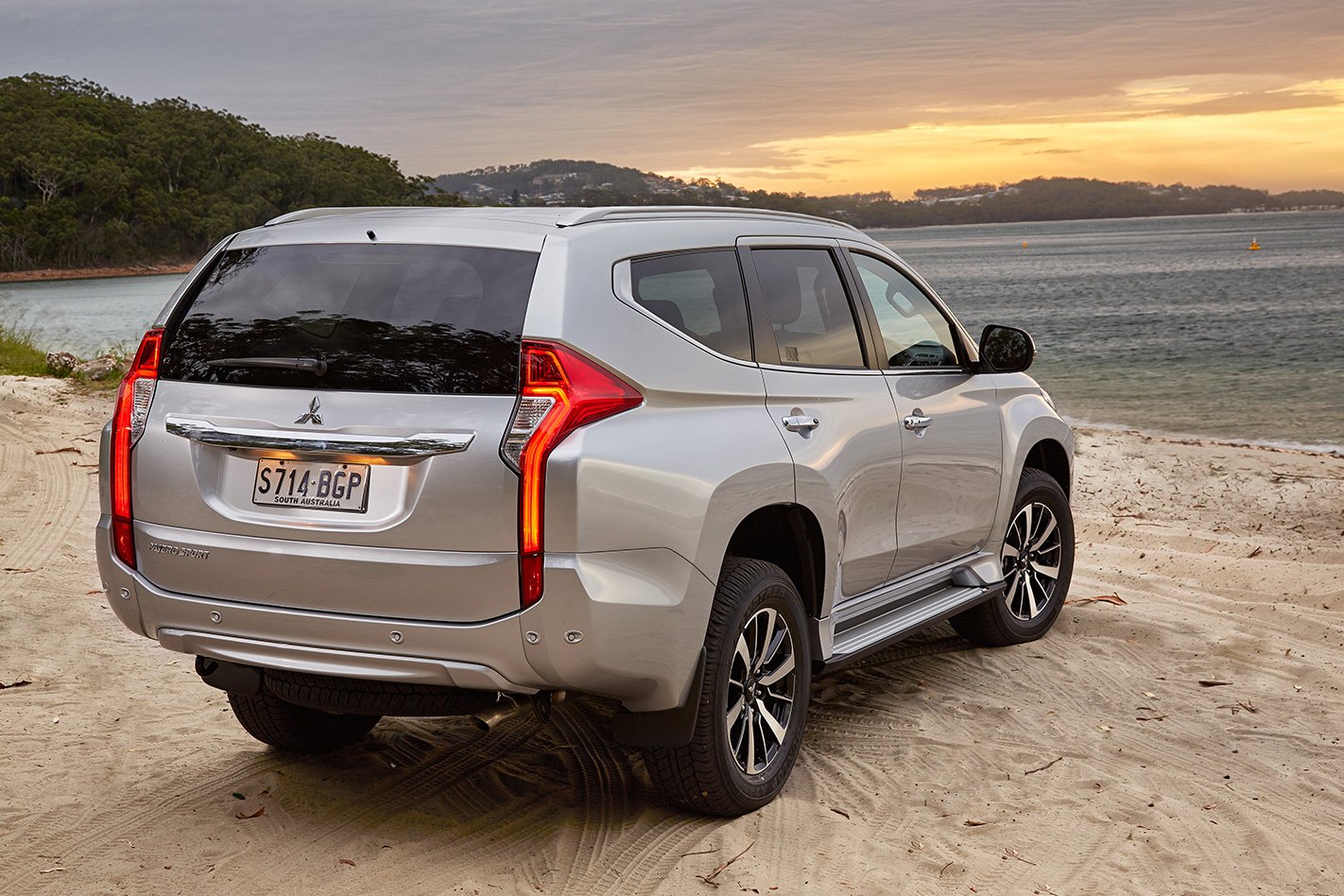
The 2018 upgrade also introduces automatic emergency braking, which Mitsubishi calls Forward Collision Mitigation, while Adaptive Cruise Control also becomes standard across the range.
Cosmetic changes include new 18-inch alloy wheels on the GLX, while the range-topping Exceed gains a tailgate spoiler as standard.
Inside, all variants feature a new soft trim along the console sides, two USB ports for second row occupants next to a 12-volt power socket.
Each variant also gains illuminated driver and passenger vanity mirrors.
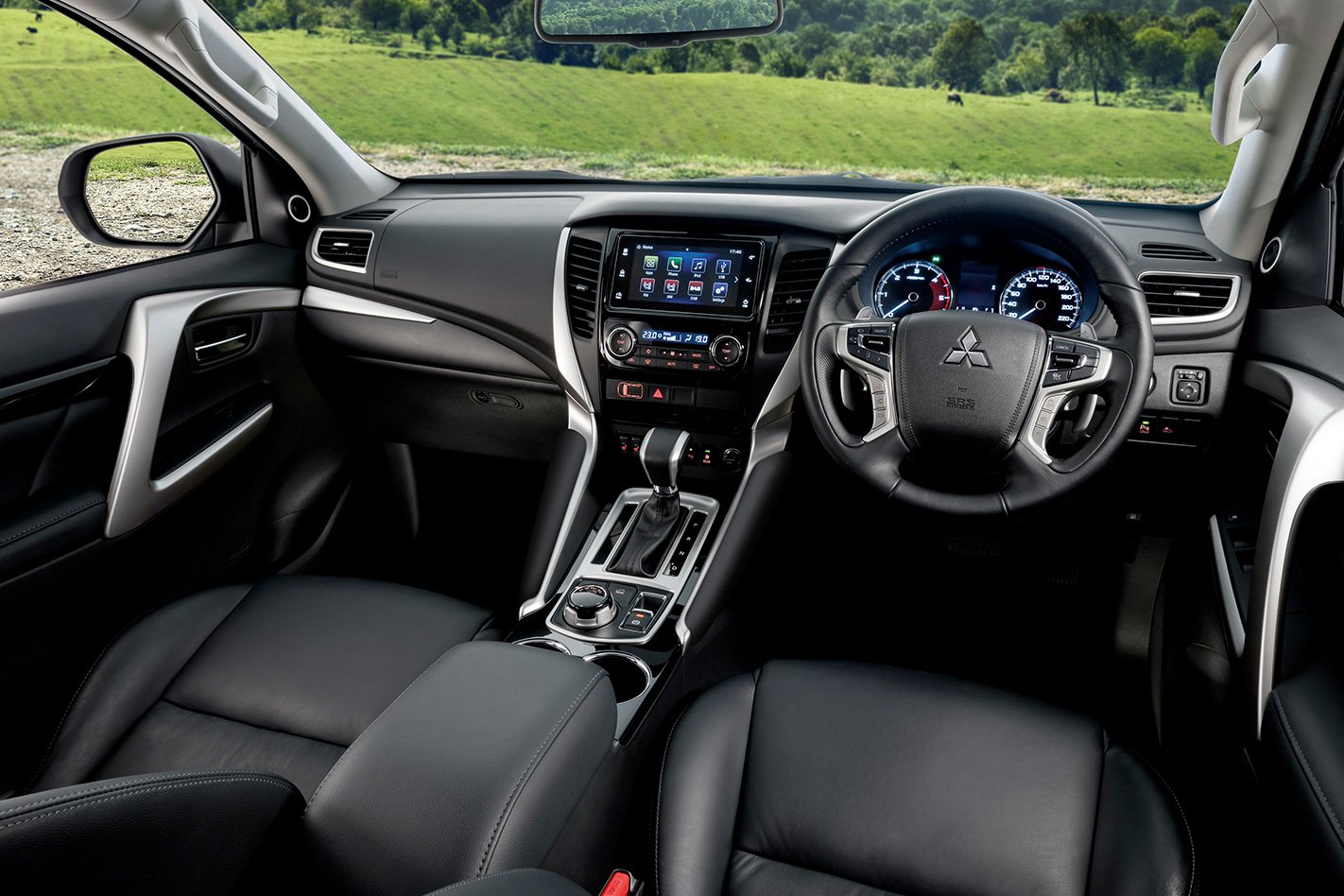
All Mitsubishi Pajero Sport variants are powered by a 133kW/430Nm 2.5-litre turbo diesel engine coupled with an eight-speed automatic transmission and all-wheel-drive, which is unchanged for the range refresh.
The 2018 Mitsubishi Pajero Sport is on sale now.
2018 Mitsubishi Pajero Sport pricing
- Pajero Sport GLX 5-seat – $45,500
- Pajero Sport GLS 5-seat – $48,500
- Pajero Sport GLS 7-seat – $49,500
- Pajero Sport Exceed – $53,650
McLAREN has teased the interior of its BP23 hypercar – in a piece of art that will be sent to all 106 buyers before they even take delivery of the hybrid-engined three-seater.
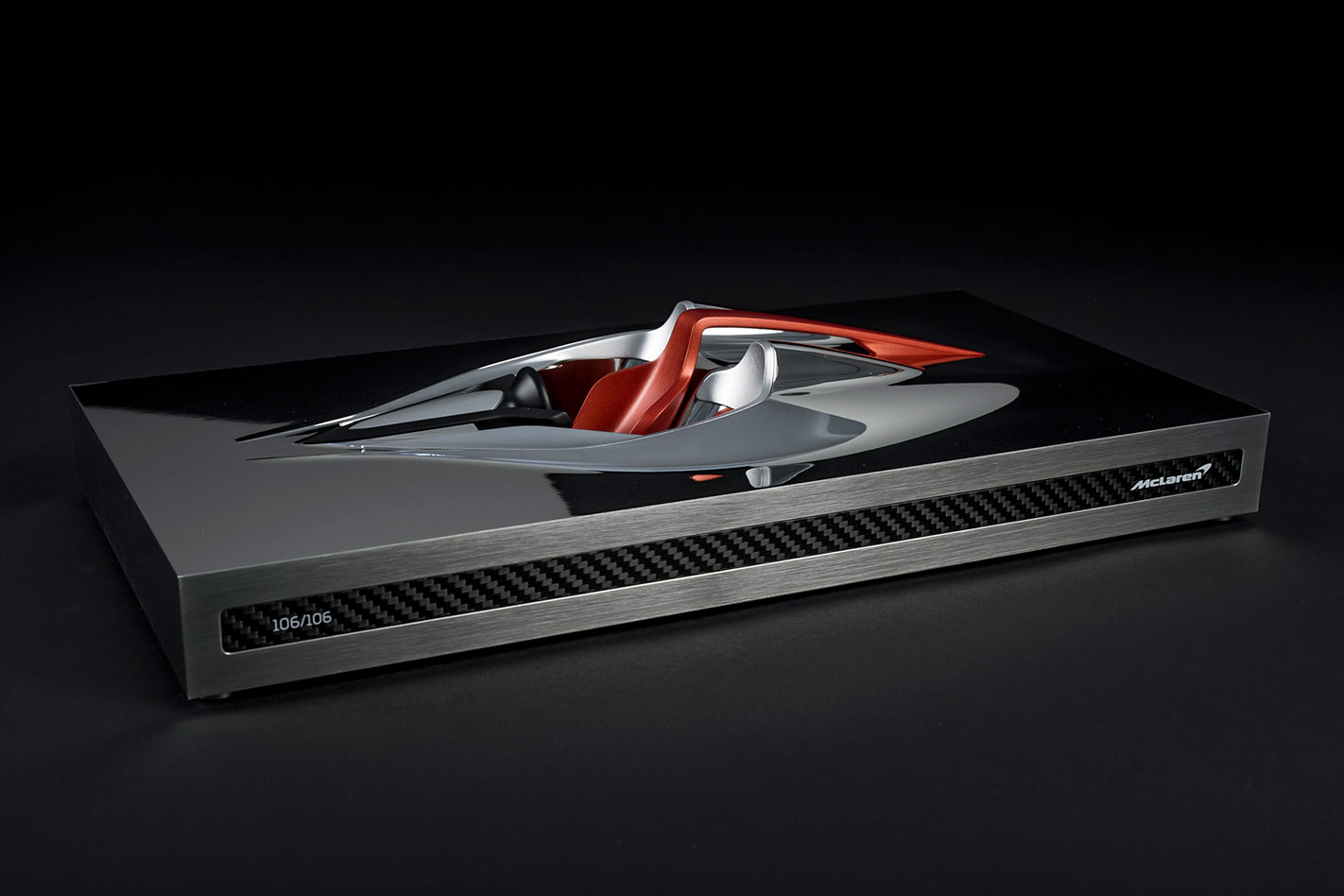
Called the “Speed Form”, the individually numbered artworks signed by McLaren chief Mike Flewitt and design head Rob Melville show the three-seat cockpit in fine detail, including the front-and-centre driving position. It reveals the more modern take on the McLaren F1 will adopt a much more design-focused, swooping form than the race car for the road feel of the earlier hypercar.
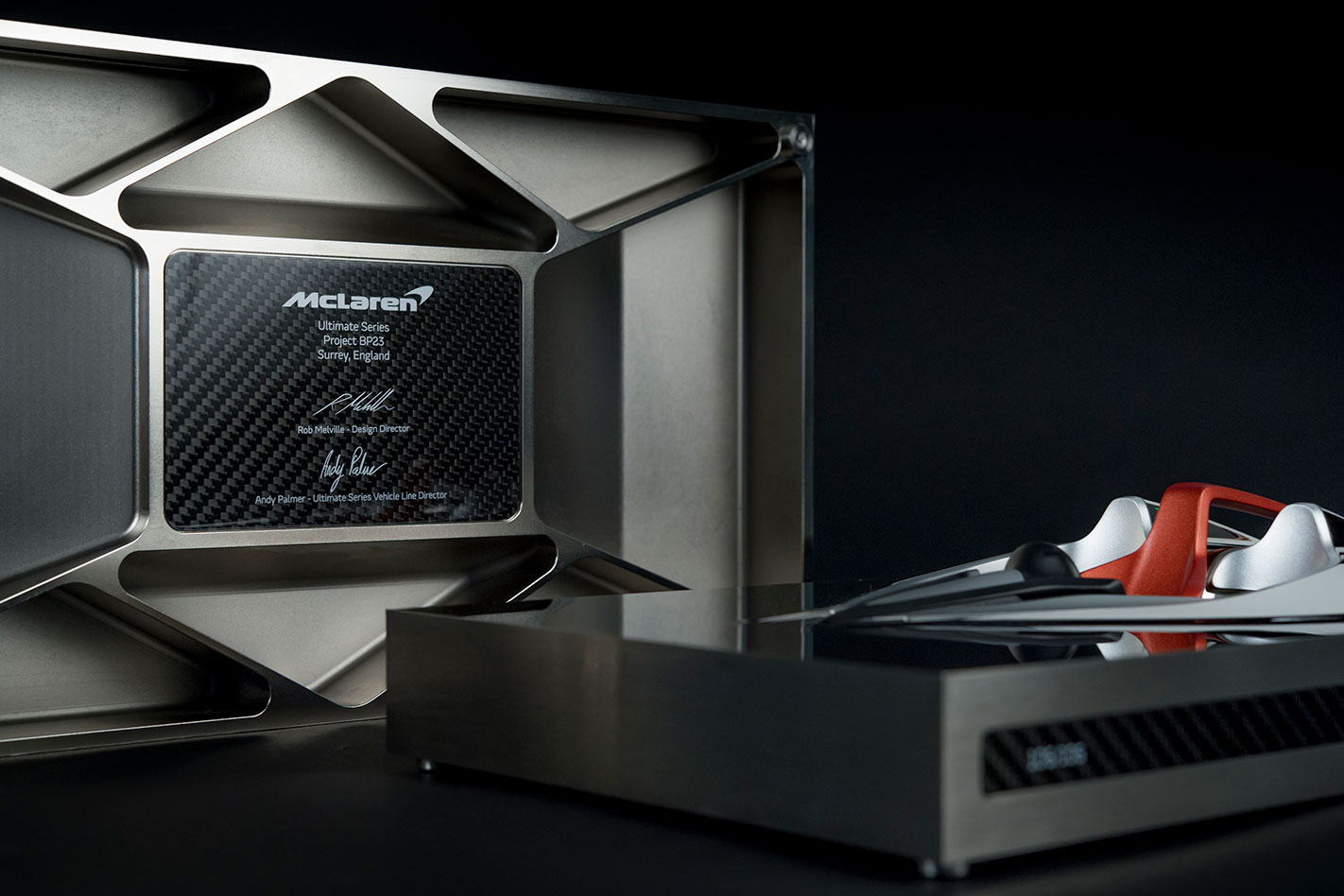
Few details are known about the Ultimate Series BP23 “hyper-GT”, although McLaren has confirmed that just like the Formula 1-derived Mercedes-AMG Project One it will use a petrol-electric hybrid system to provide its propulsion. The British sports car brand has already confirmed the BP23 will be faster than the F1 – which at 386.4km/h held the record as the world’s fastest production car for almost a decade. In fact, the McLaren F1 still holds the record as the fastest normally aspirated production car. For the BP23, the top speed will be more than 390km/h.
At its core, the BP23 is expected to use McLaren’s Monocage, a carbonfibre tub that in the 720S becomes the structural centre of modular drive and steering units that fit to either end. It’s expected the tub will need significant modification to adapt to the centrally located driving position.
According to McLaren, the hand-painted, 3.6kg Speed Form sculpture takes about 100 hours – the equivalent of almost two weeks of work – to make. Just polishing it accounts for a third of that time.
We’re also yet to learn what the BP23 will wear as its official name once it is officially revealed – that date is yet to be confirmed. McLaren took a big diversion from its usual alphanumerical mix for the Senna, and has confirmed it will do the same thing with the hyper-GT.
Oh, and why only 106 customers? That’s exactly the same number of McLaren F1s that the company built and sold.
To celebrate the new-look MOTOR Magazine, together with BMW we’re putting one very smug punter behind the wheel of a proper M machine at either Phillip Island, Sydney Motorsport Park or Norwell Motorplex racetracks.
During a BMW Drive Day, you’ll get to experience the precision and power of M Division’s turbo six-cylinders under the expert guidance of an official BMW M instructor. A BMW Driving Experience also provides a unique opportunity to develop essential skills in a fun and rewarding environment.
For your chance to win, enter the reader code found within the April, May and June 2018 issues of the new-look MOTOR, into the form below.
This competition has now closed and the winner has been drawn. Congratulations to Mark from NSW.
Click here for more information about the BMW Advance 1 Driving Experience course.
Once a week, we like to have a sift through the classifieds on our sister publication Unique Cars’ website, and see what we might have bought if we had the money.
This week we’ve plucked out plenty of classics, both old and new, to tempt you with.
So let’s crack on…
1977 Holden LX Torana SS – $139,000
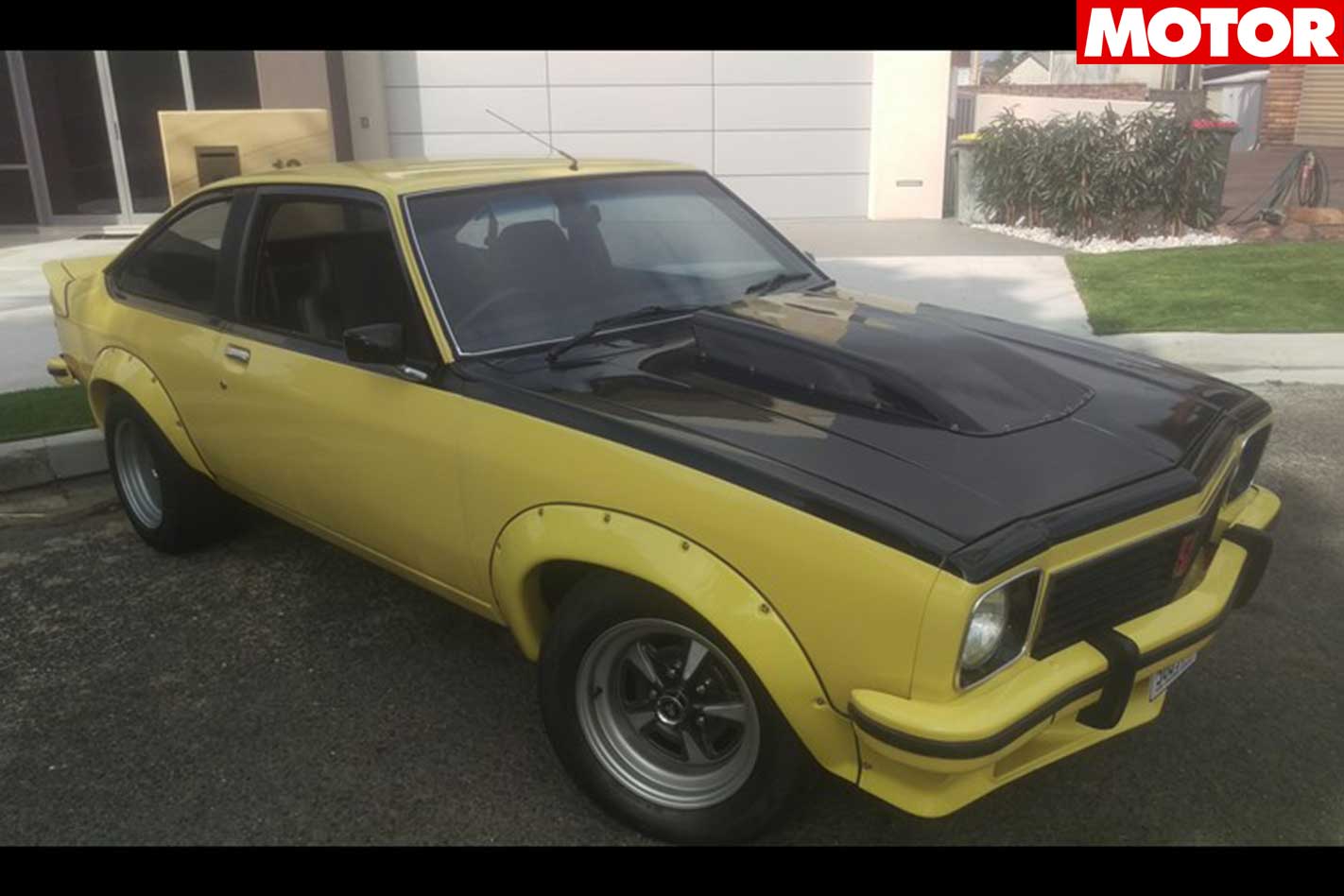
It’s a genuine SS according to the seller, with “full A9X gear” and a Holden 5.0-litre V8 in the snout.
If you think it’s worth it, $139,000 will get you this apparently rust-free classic.
1977 Ferrari 308 GTB – $285,000
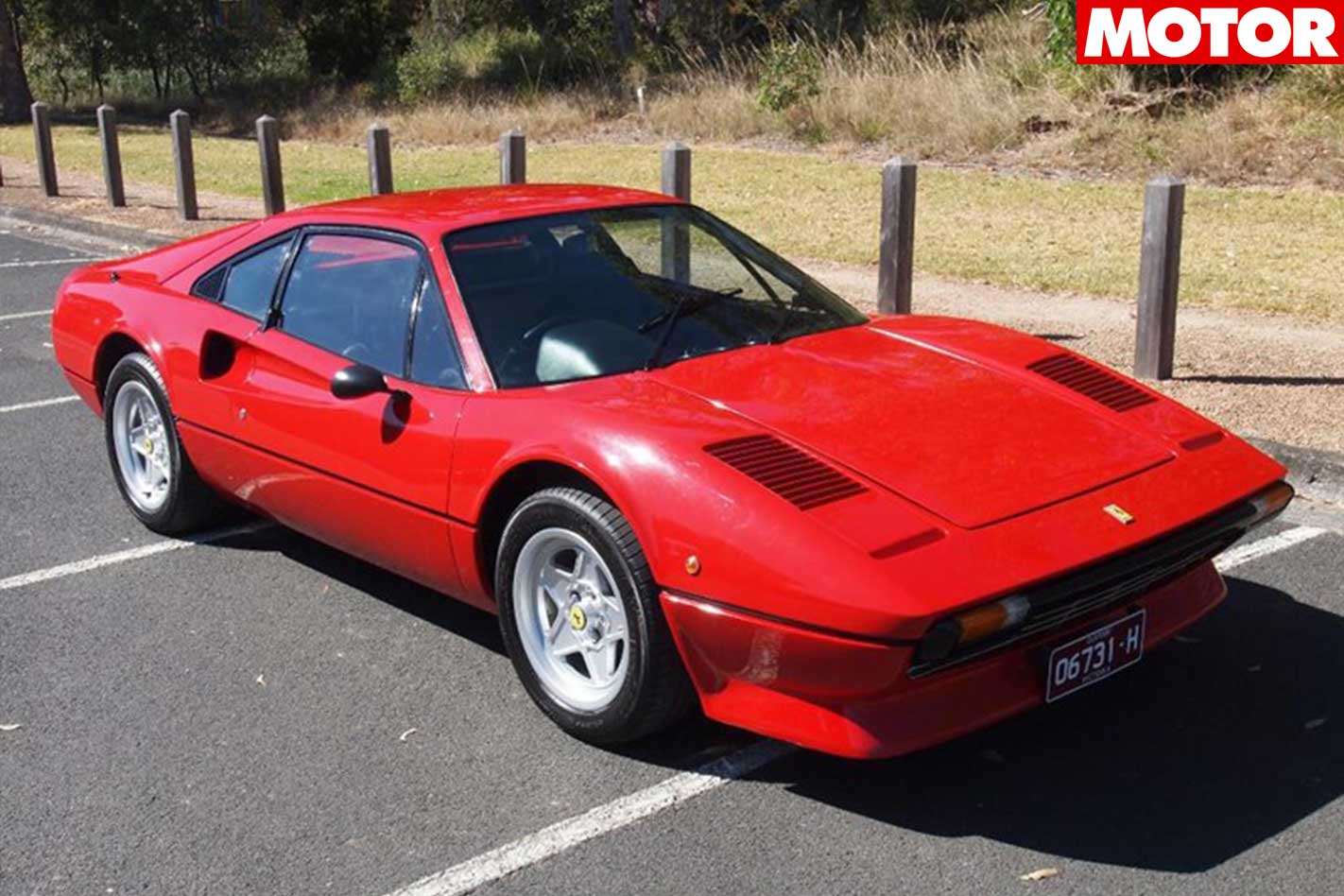
It’s roadworthy and according to The Healey Factory, its seller, is a Vetroresina-built 308, of which only 712 were built.
2001 Ford AU Falcon XR8 – $18,500
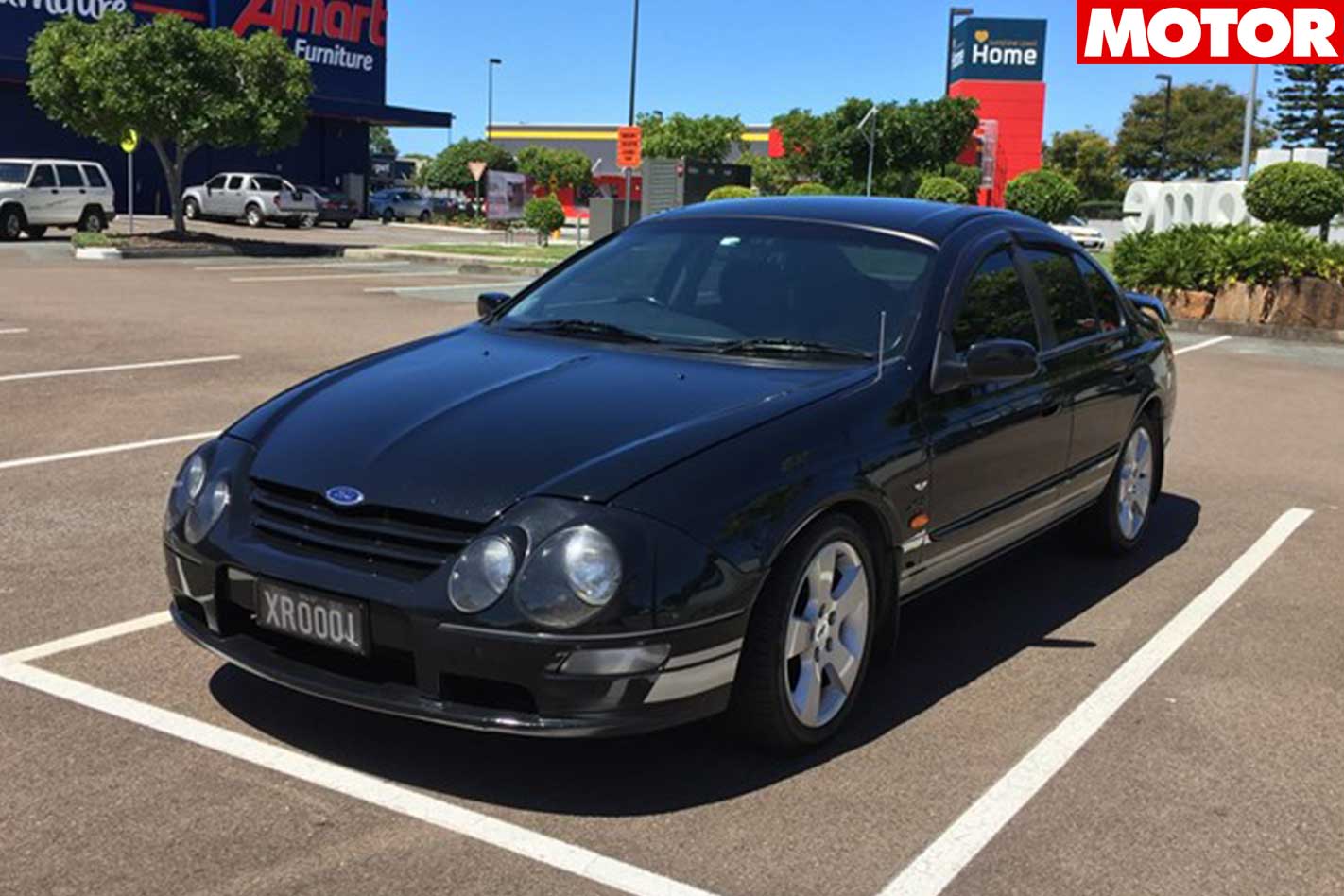
It’s wearing its original black coat, and only sports 161,000km on the odometer.
In the spirit of honesty, the seller admits the radio has been replaced, so whether you want to use that information to haggle down the $18,500 asking price is up to you.
1959 Porsche 356A – $200,000
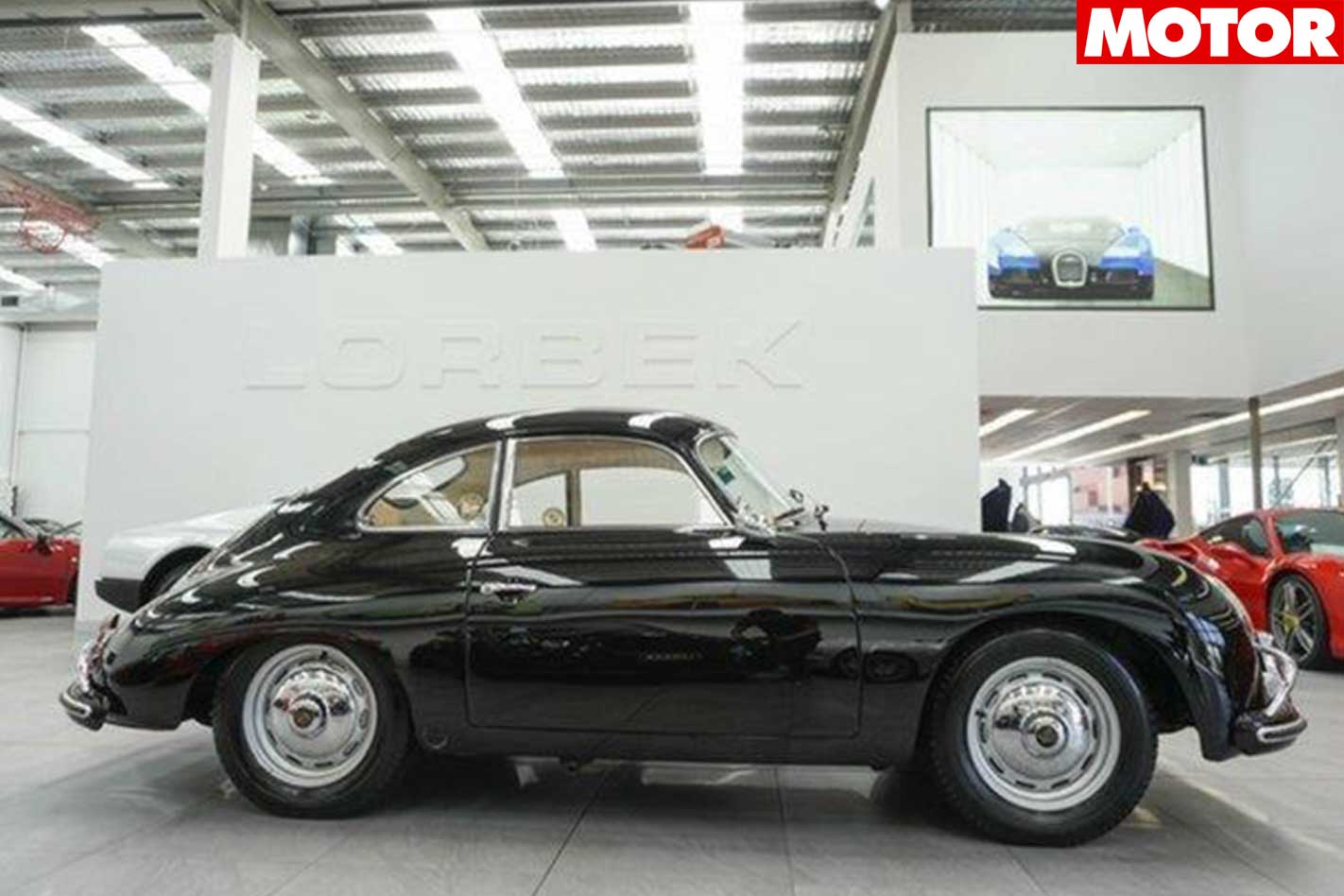
So it’s no surprise that Lorbek in Port Melbourne is asking $200K for this 72,590km example of a 356A. It’s a coupe in manual, and it’s factory right-hook. According to Lorbek.
1997 Subaru Impreza WRX – $5000
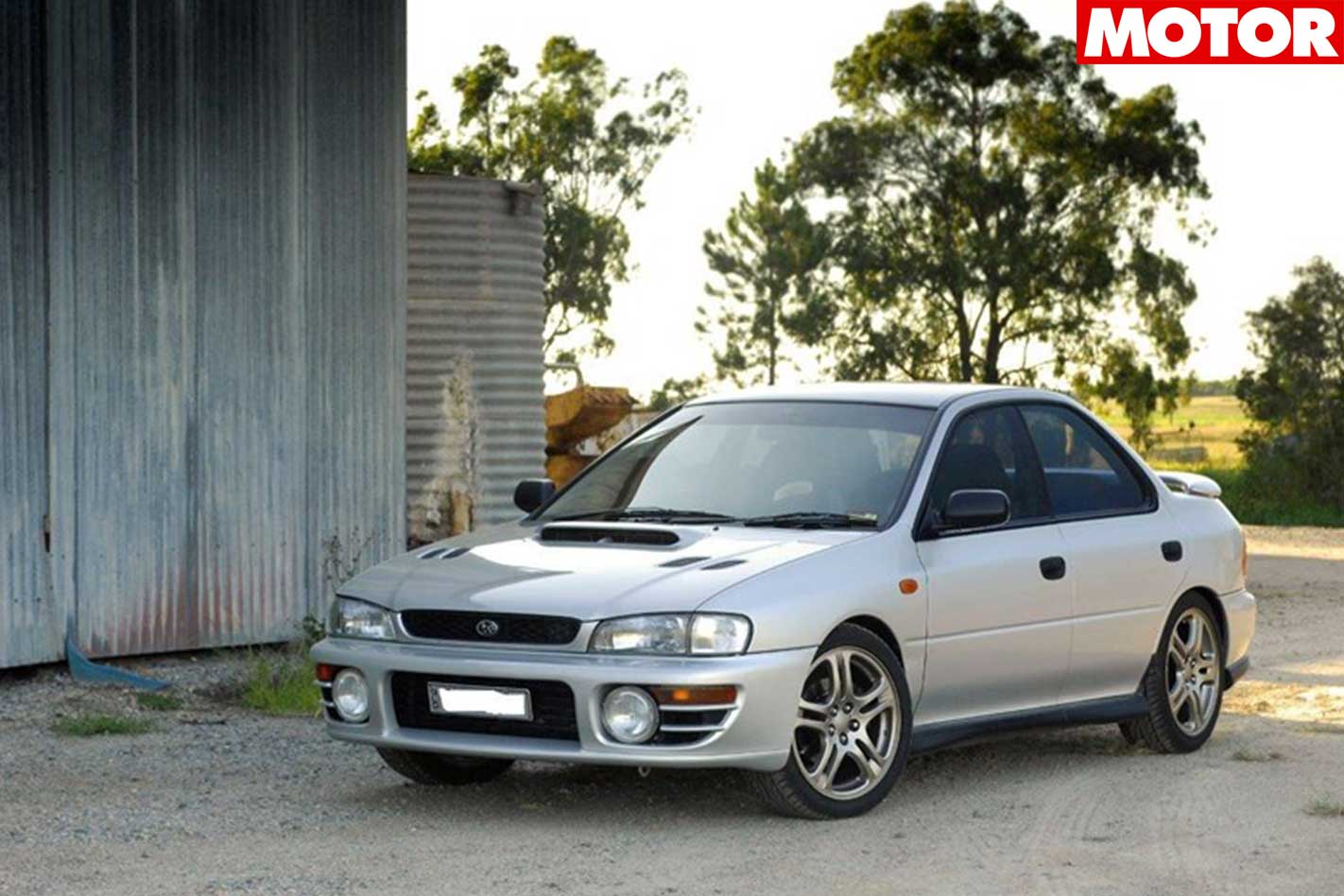
The ad description is promising. Its owner for the last 17 years has listed it without a roadworthy certificate, but says it’s in “fantastic” condition, accident-free, and stock aside from a coil over suspension kit, stainless steel turbo-back exhaust and 17-inch Subaru wheels.
It’s a roll of the dice, but it could pay off big-time.
IT’S A MASSIVE vote of confidence by a manufacturer to allow journalists to hammer around a racetrack at a car launch, and while it’s something that’s expected of high-end metal like Porsches, RS Audis and BMW M cars, it’s a rarer event at the cheaper end of the performance car spectrum.
What’s even less common is when car company PRs devote an entire day to on-track driving, with no minders sitting in the left seat to reign drivers in, no pace cars, no chicanes to keep speeds low and no instructions beyond “go forth and drive”. Hyundai’s Australian i30 N launch was one such event.
The driver briefing was, well, brief. The summary of instructions were thus – wear a helmet and long sleeves, don’t have the windows half-way up, and keep speed in the pits to under 40km/h. See flashing red lights from the marshalling bunkers? Then end your lap early. No words about keeping an eye on engine temps, no comments on capping outings to a certain number of laps – no attempt, in fact, at shortening the leash on a bunch of motoring writers. We assume Hyundai’s corporate insurance policy is pretty robust.
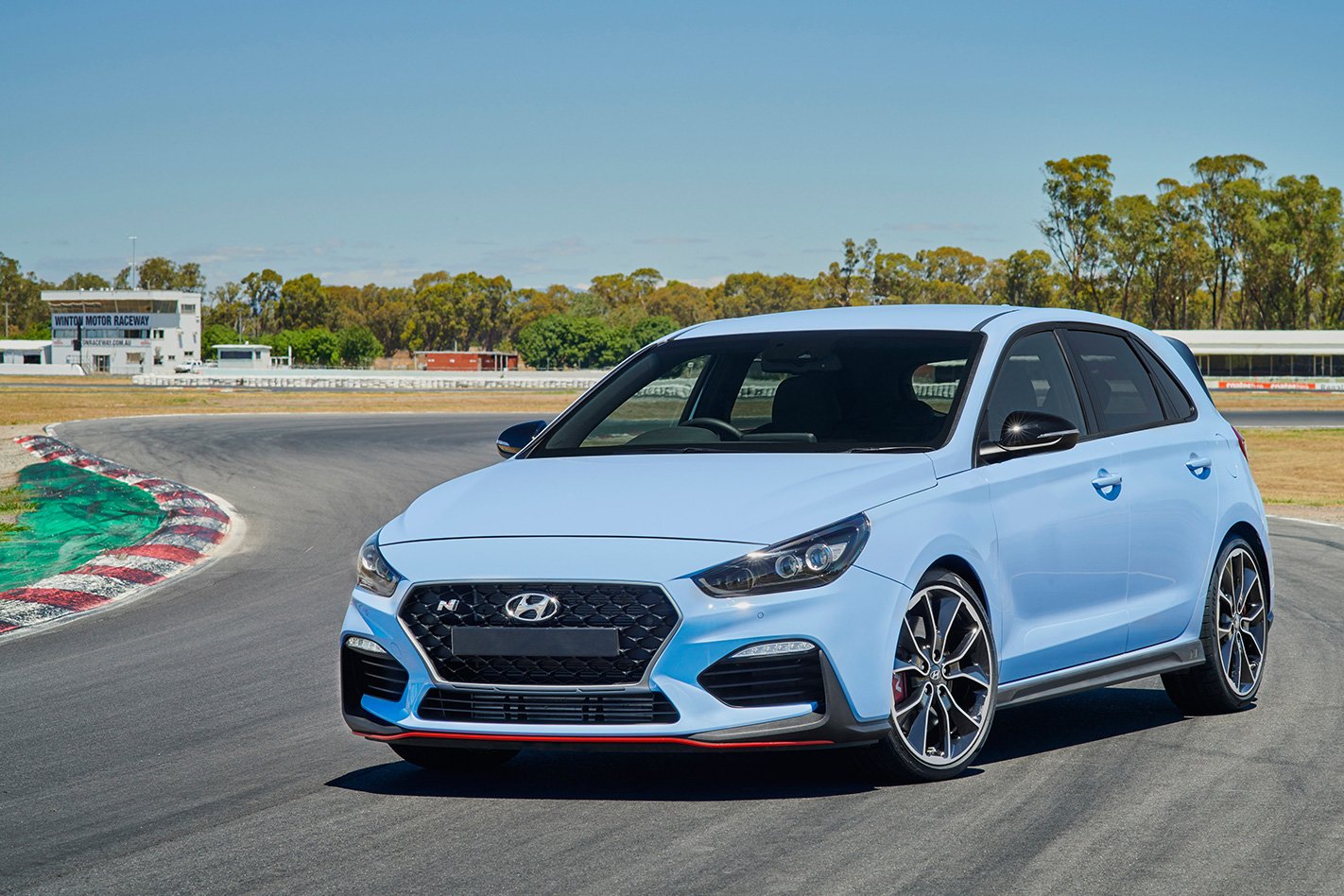
Back to the i30 N. Hyundai’s PR people looked suspiciously relaxed, but we aren’t ones to question the offer of free track time. Helmet donned and sleeves rolled down, we head out in a bog-standard $39,990 example, ignoring specced-up Luxury pack cars that add frills, but not speed.
From the outset, the N feels at home in this environment. Leaving Winton’s pit lane and heading toward the left-right chicane at the end of its modest straight, its roomy cabin and low-mounted seats leave plenty of room for a helmet-clad head and no obstructions for elbows as you saw at the wheel.
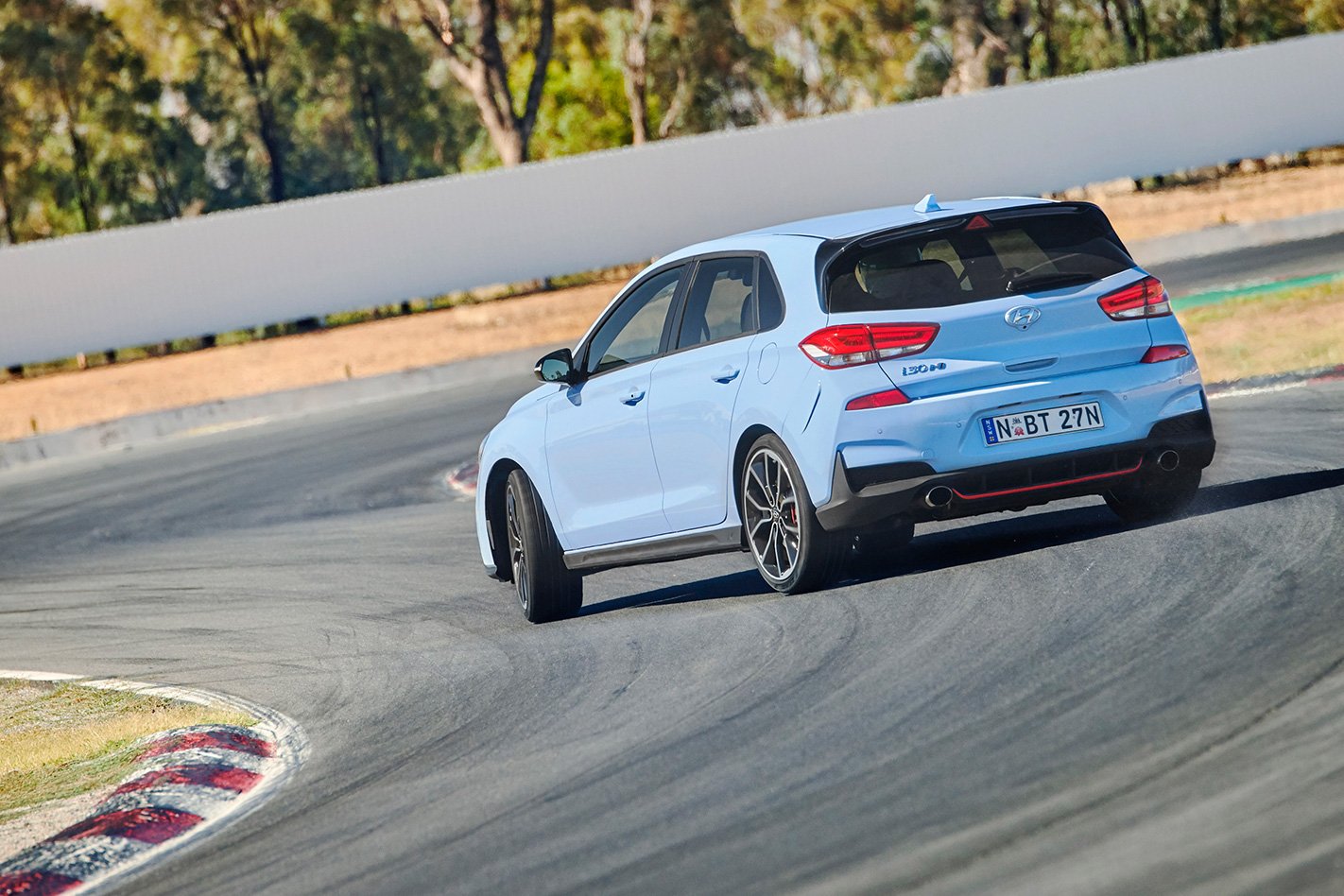
Careful engineering of the front suspension geometry (which is also unique to the N) sees the i30 N’s steering axis almost perfectly intersect the centre of the tyre’s contact patch, achieving a scrub radius that’s close to zero and virtually banishing straight-line torque steer. Under hard acceleration the steering wheel does start to pull in your hands when at higher degrees of lock, but it’s minor considering the engine’s meaty 378Nm torque max when in overboost. With no variable-ratio gimmickry to spoil the feel, the i30 N’s steering is as consistent and linear as it is alert and assertive.
Dial up the speed, and the chassis reveals itself to be one that’s stable rather than ultra-darty, with a buttoned-down rear axle that resists breaking free even under big throttle lifts and heavy cornering load. Unlike French options like the 308 GTi and previous-gen Megane RS – not to mention the surprisingly oversteery Focus ST – the i30 N prefers to keep its rear on a straighter path.
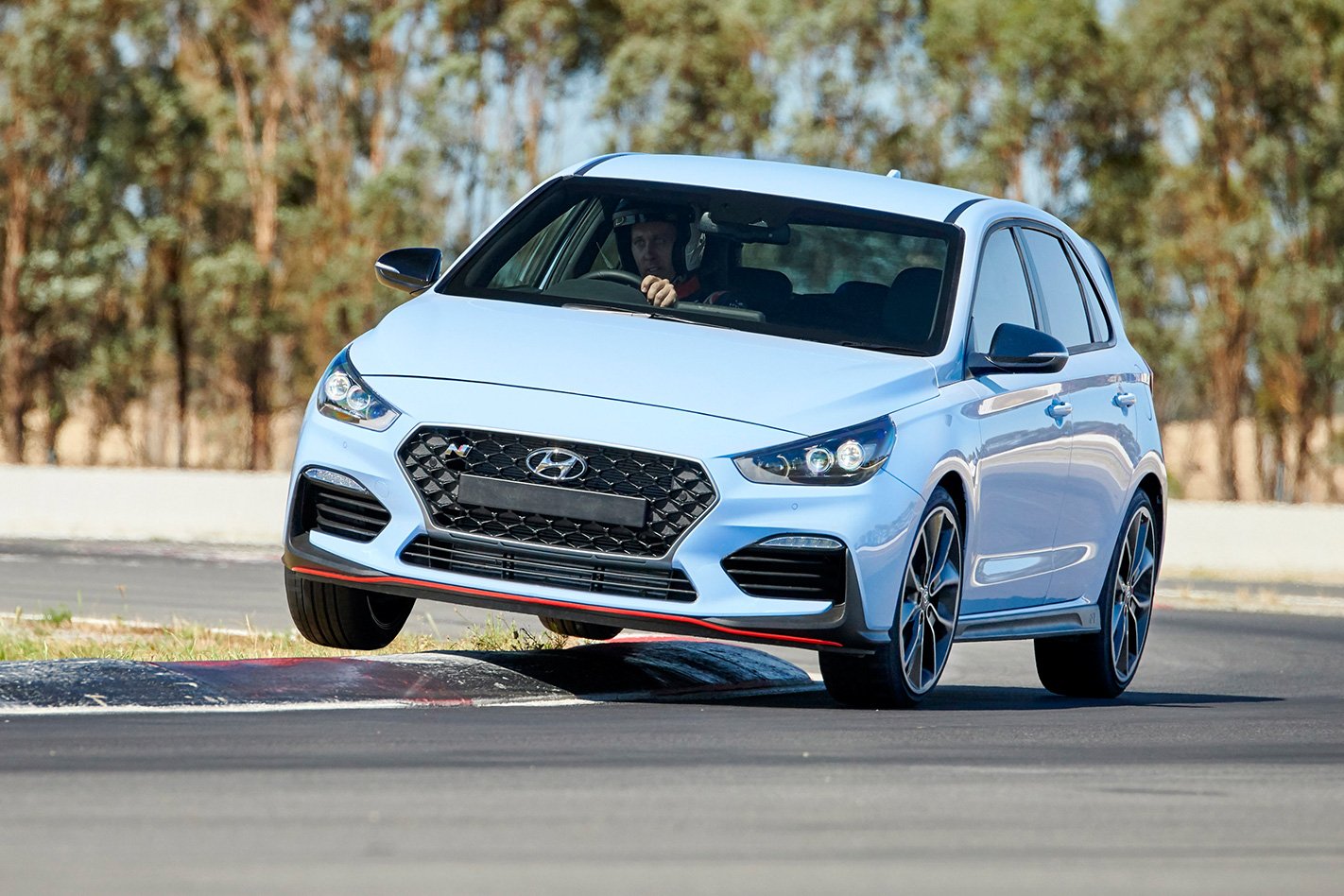
It’s plenty fast without resorting to rally-style tricks though, thanks to that wicked mechanical differential up front. Electronically-controlled and hydraulically actuated, the diff does a stellar job of keeping traction in check when the accelerator is buried deep in the carpet. It enables an almost AWD feel to its on-track behaviour too, with power able to be fed in ahead of the apex rather than waiting until the wheels start to straighten. Pin the power, let the diff sort things out – the electronics are remarkably effective.
In fact, virtually every feature is designed to help you drive fast. There are shift lights on the dash that progressively illuminate before flashing just shy of redline, giving you perfect shift timing. The gearshifts themselves are hard to bodge given the well-defined gate and slick carbon synchros, while downshift rev-matching helps you concentrate on nailing brake points rather than heel-toeing. Meanwhile, the big-bolstered seats might not say ‘Recaro’, but they do an excellent job of locking your torso in place when you’re cranking up the lateral G.
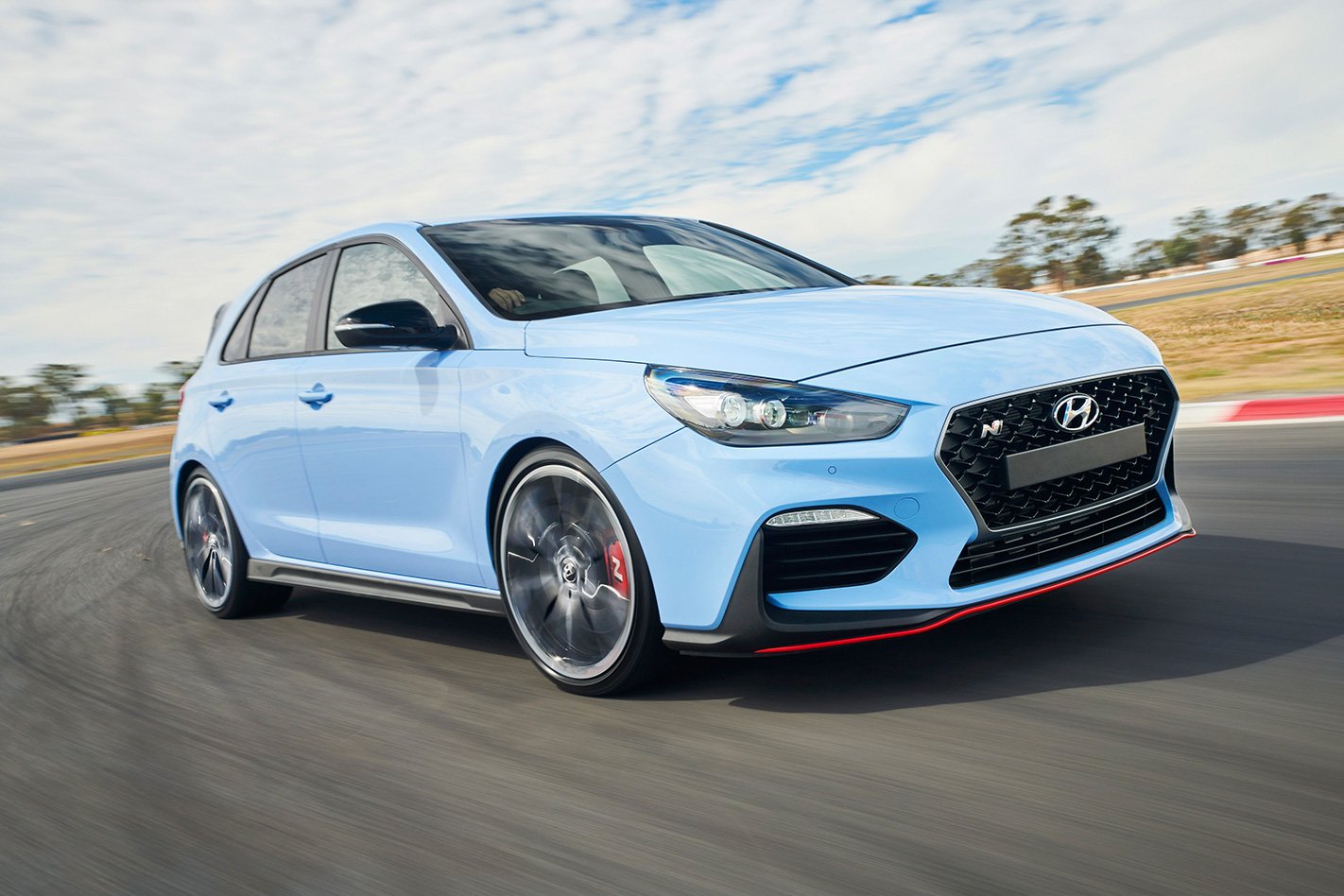
Then there’s that engine. A relative of the Sonata’s turbo donk, the 2.0-litre’s smidge of low-rpm lag that’s felt out on the street ceases to be an issue out on a track – with the tacho needle kept above 3000rpm, engine response is vicious, it’s 202kW and 378Nm in full effect. Not quite as rabid as a Civic Type R, but not far off – which isn’t bad considering the Honda packs more power, more torque and weighs a little less.
The exhaust adds some extra drama too. Slotted into Sport+, big lifts of the throttle at high rpm elicit heavy-caliber sound effects from the twin tailpipes – sonic whipcracks that have you wondering whether the exhaust gaskets are a regular service item on the i30 N.
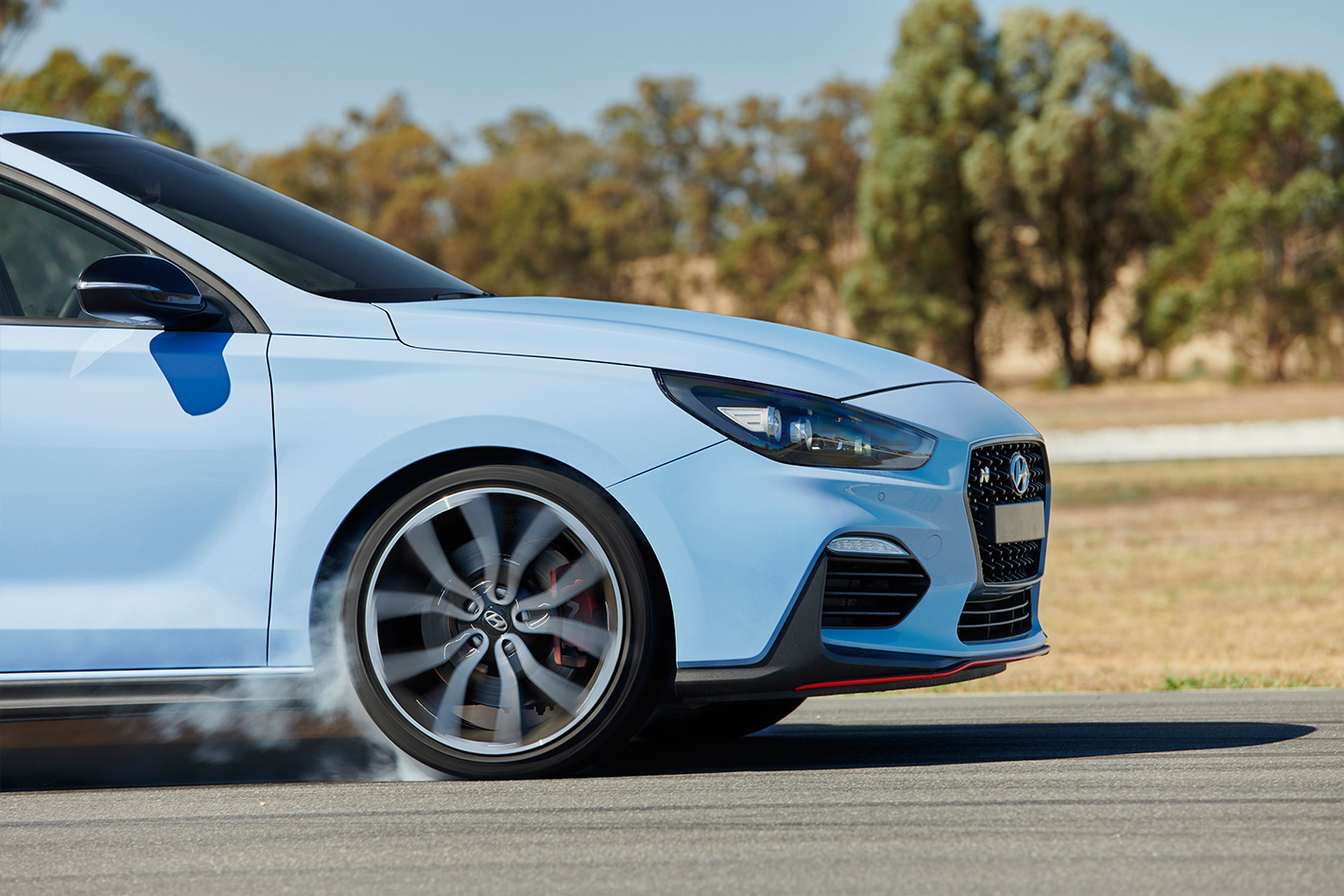
To demonstrate what’s possible, Hyundai also wheeled out a lightly modded example for the press to thrash. With Pirelli Trofeo R semi-slicks, lightweight O.Z Racing wheels (both of which help shed 7kg of unsprung weight per corner), brake cooling ducts and Pagid pads, that car easily achieved a 1:40.4 around Winton’s long configuration. Not only that, but the stiffer sidewalls of the Trofeos gave a sharper turn-in that helped unstick the rear wheels more easily, unlocking a more chuckable character. With Hyundai’s track-day-friendly warranty also covering cars on aftermarket rubber, it’s a modification that’s well worth doing.
Yet what’s just as impressive as its actual on-track performance, is the i30 N’s durability. Many road cars start to come apart at the seams when subjected to repeated laps at race speed, but the i30 N was barely breaking a sweat. Oil and coolant temps were stable, tyres weren’t chunking, brake fluid never boiled. Remarkable, given every car present was driven hard and with varying degrees of competence and mechanical sympathy. I peeked into a caliper at the end of the day, and there was still more than a centimetre of brake pad thickness. It seems unlikely that owners will be making many warranty claims from pit lane.
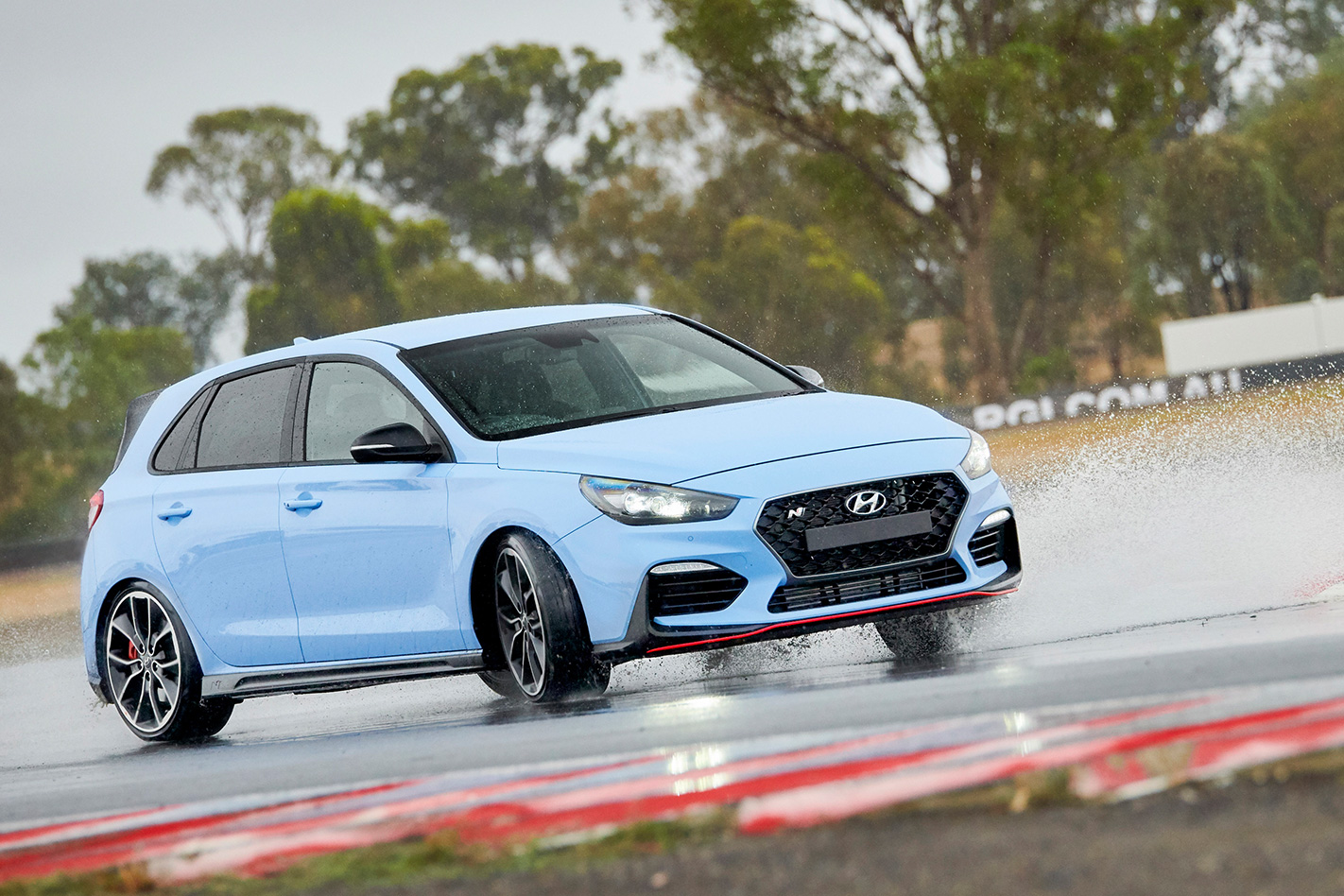
FOR those with a tribe to transport, the large seven-seat SUV is the must-have alternative to the maligned people-mover.
Australians have an insatiable appetite for high-riding soft-roaders, and are spoilt for choice in our crowded market.
Thankfully, Mazda, Skoda, and Peugeot are here to offer their own take on the genre to keep Aussie customers happy.
The Peugeot is the fresh-faced underdog in this comparison, with the CX-9 a favourite of the WhichCar team (having won the 2017 Wheels Car of the Year award), and the Skoda Kodiaq narrowly losing out to the Volvo XC60 at this year’s Wheels COTY.
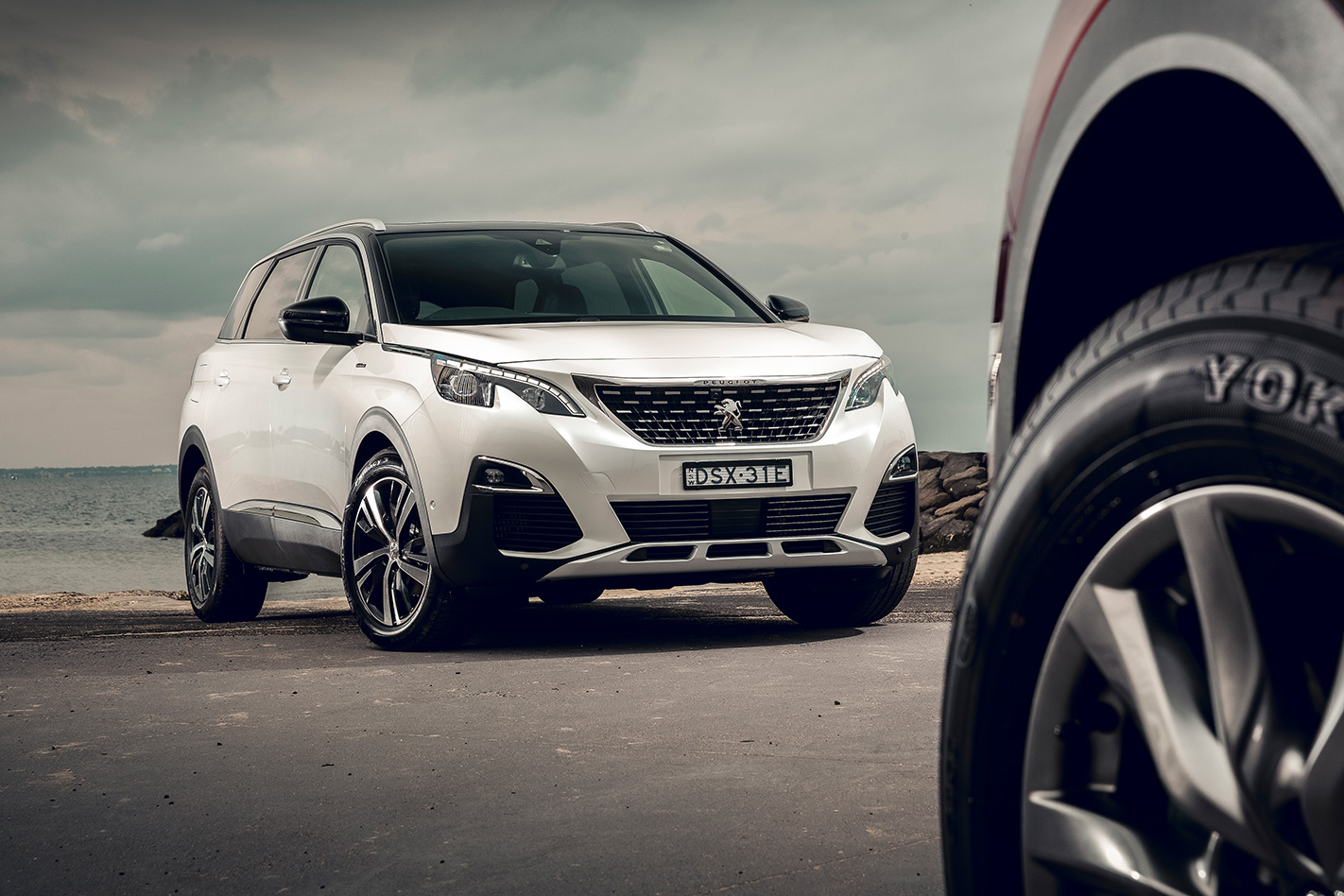
Before we delve into how each car performs, we need to mention that while these competitors are all classed as large SUVs, and have seven seats, there is a decent difference in size. The Mazda is significantly larger than its rivals here, while the Peugeot feels a half-size smaller than the Kodiaq.
Along with being the largest, the CX-9 Touring is also the most expensive of the trio, with a sticker price of $50,290 for the front-drive variant we tested.
READ NEXT: SUV 7-seater under $60K: Australia’s Best Value Cars READ NEXT: Large SUV/4WD: Australia’s Best Value Cars
Meanwhile, the Peugeot costs $46,990 in standard GT-Line trim, while our test vehicle was fitted with a few pricey options including massaging Nappa leather front seats and a vast panoramic glass roof, blowing the price out to $53,740. Both of these options do little to add to the 5008’s appeal, so don’t let that conspicuous as-tested price sway you.
However, it doesn’t hold a candle to the bargain price of the Skoda, which will set you back $42,990, with our test vehicle’s only option being metallic paint, making it the cheapest of the trio.
You get a heap of metal for your cash with all three vehicles, and as much as we love a good wagon, it’s impossible to find any at this price point with such versatility.
Of the trio, the 5008 has the most premium feel, with a design-led appeal which catches the eye outside, and pleases inside. Within the cabin there that upmarket Nappa leather seat with a massage function for the driver, the dash is trimmed with a fabric which is both stylish and tactile, and the switchgear appears to be lifted from the cabin of Lamborghini’s latest creation.
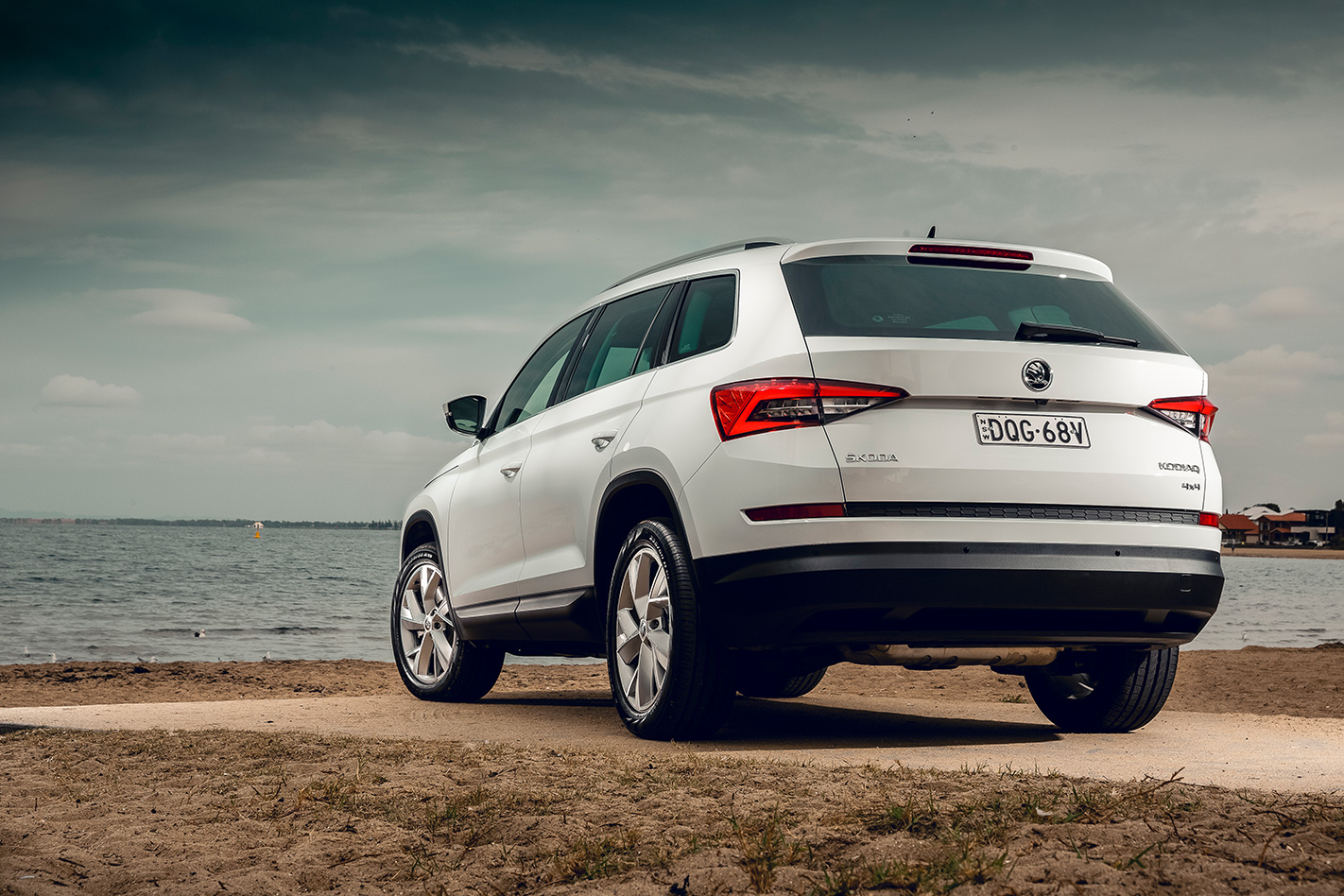
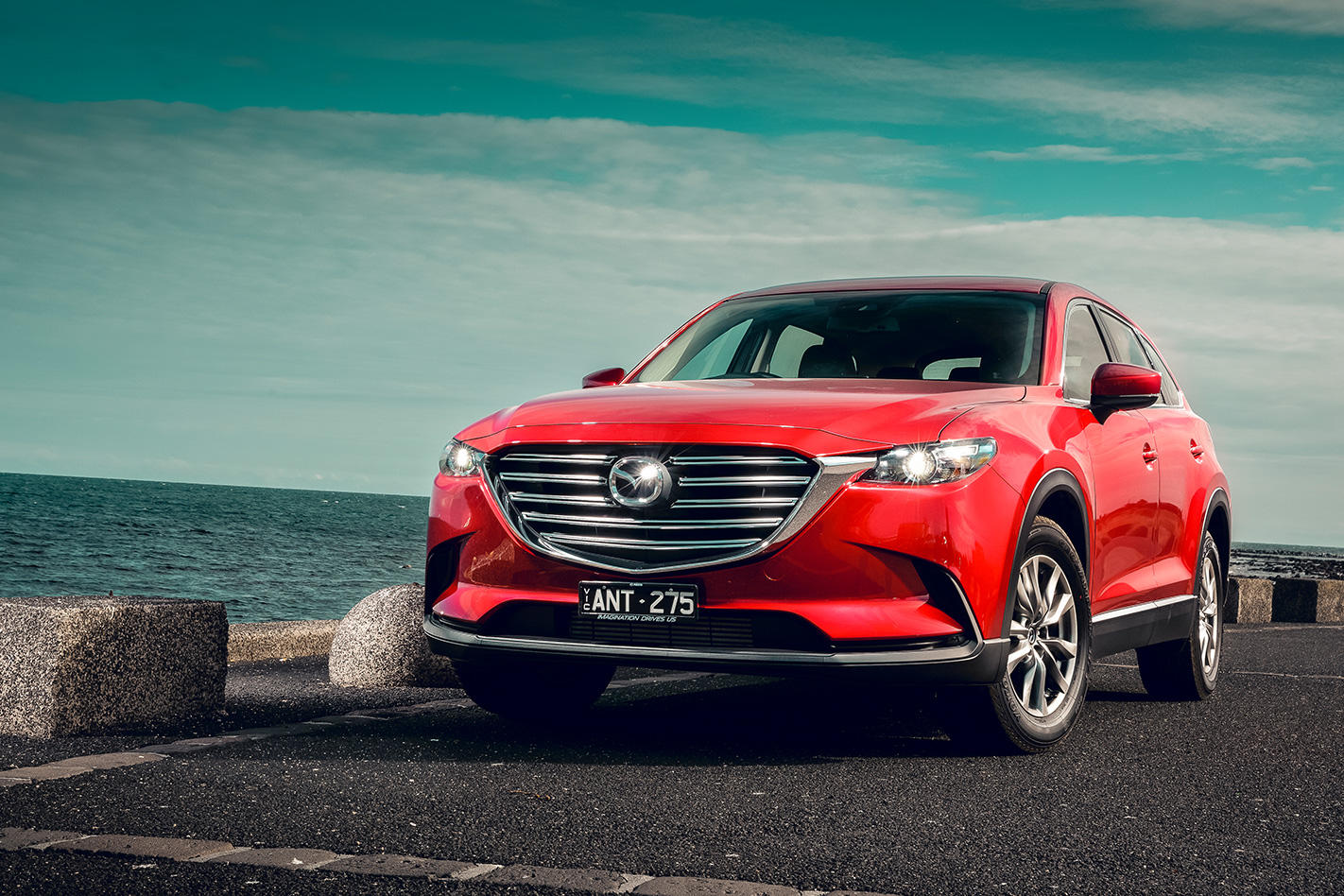
The Mazda is a familiar sight on Australian roads, but still has a self-confident and handsome profile, with that signature undershot front end. Inside it’s all about practicality. There are physical dials for the infotainment and climate change, while there are multiple cup-holders and charging points for the second row.
Where the Mazda falls short is the lack of digital speedo and adaptive cruise control. It could seem like a small omission, but it shows the age of the CX-9 against its competitors and makes a big difference in convenience and comfort for long drives.
The CX-9 is also the only car of the trio with top tethers in the third-row, a potential make-or-break feature for those looking to transport young ones.
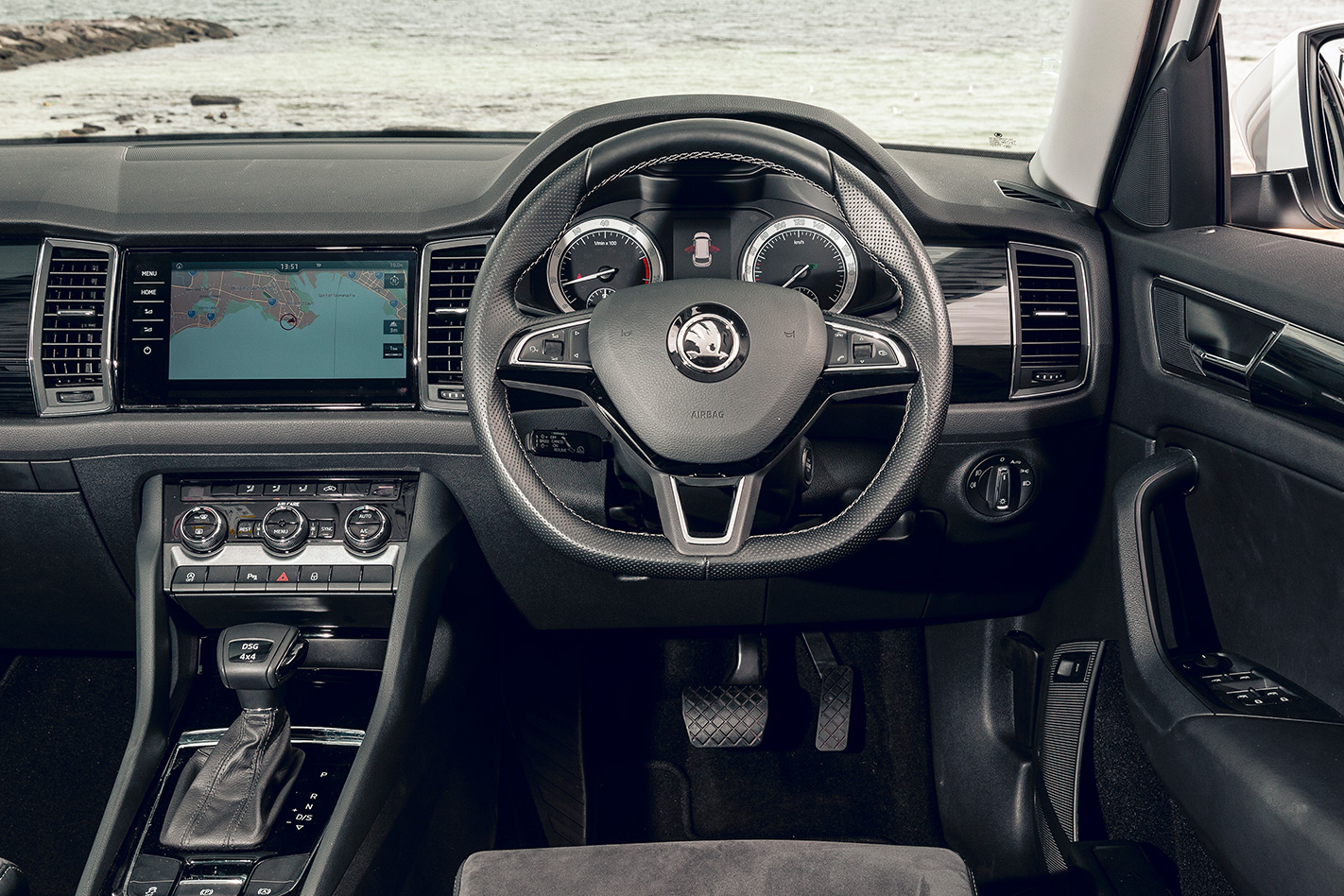
The Skoda’s interior is a masterclass in ‘surprise and delight’ design, with multiple small features adding up to something greater than the sum of their parts. Hidden umbrellas, automatic door protectors, phone and tablet holders in the second row, and a pair of inbuilt picnic rugs are proof the Czech company has thought about the Kodiaq with almost Scandanavian levels of practicality. The faux-suede trimming on the seats is also a nice touch.
Despite its considerable heft, (it’s 368kg heavier than the Peugeot), the CX-9 is comfortably the quickest of the trio thanks to a 170kW/420Nm 2.5-litre turbocharged four-cylinder petrol engine. While performance ability isn’t always high on the priorities list for large SUV buyers, this power advantage makes life easier behind the wheel of the Mazda, where it gets off the line with ease, and can make the all the difference when overtaking on rural roads.
If you want a diesel CX-9, you’re out of luck, but Mazda has a Plan B. Later this year, the slope-backed CX-8 is scheduled to arrive Down Under.
The 5008 is outgunned in this fight, packing a 121kW/240Nm four borrowed from its 3008 and 308 siblings, while the Kodiaq is the middle child in terms of power with 132kW/320Nm.
The ample torque output in the Mazda means that it always feels unhurried. What are often full-throttle scenarios in the Peugeot are just gentle flexes of your ankle in the refined Japanese car.
If dirt-road confidence is a must-have, the Skoda holds an advantage over its opponents, being the only car with all-wheel drive. The 5008 is front-drive only, while Mazda will sell you an all-paw CX-9 Touring if you have the extra cash.
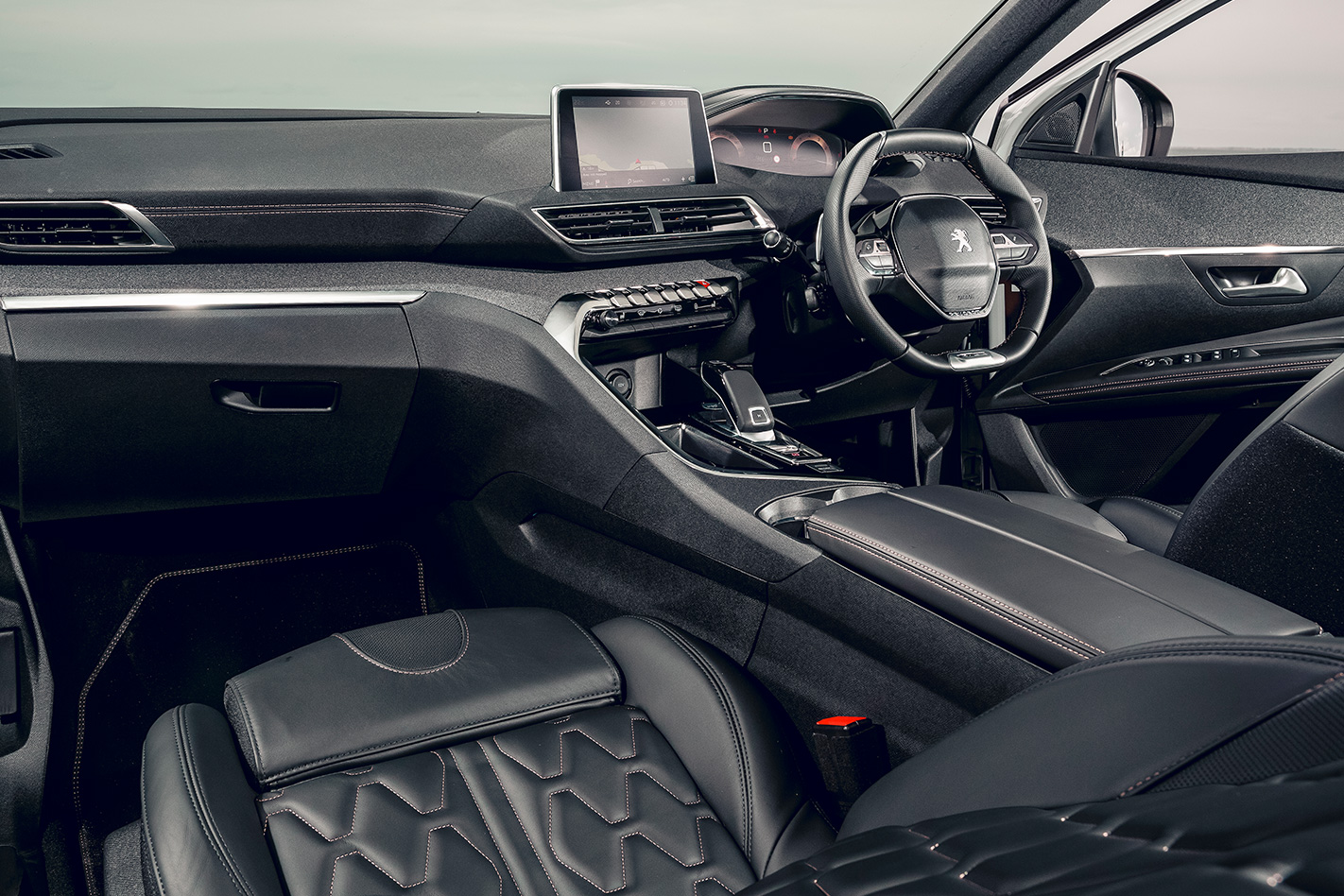
It’s the French 5008 which shines dynamically though. Of the three it’s the car which will please an enthusiast driver the most, with sharp turn-in, and corner carving ability which belies its size.
The Skoda is less confident in the bends, but won’t be left completely in the 5008’s dust. Its biggest downfall when driving is the way the DSG automatic gearbox hesitates at low speeds, which can become an irritant. The ride is typical of Volkswagen Group Product – that is firmish, but well controlled and rarely unsettled.
There’s no hiding the Mazda’s size on the road, and while it’s no corner carver, the CX-9 is a seriously good long-haul ride. It feels the most settled of the trio on craggy roads, and when combined with the hearty engine will soak up highway driving with ease.
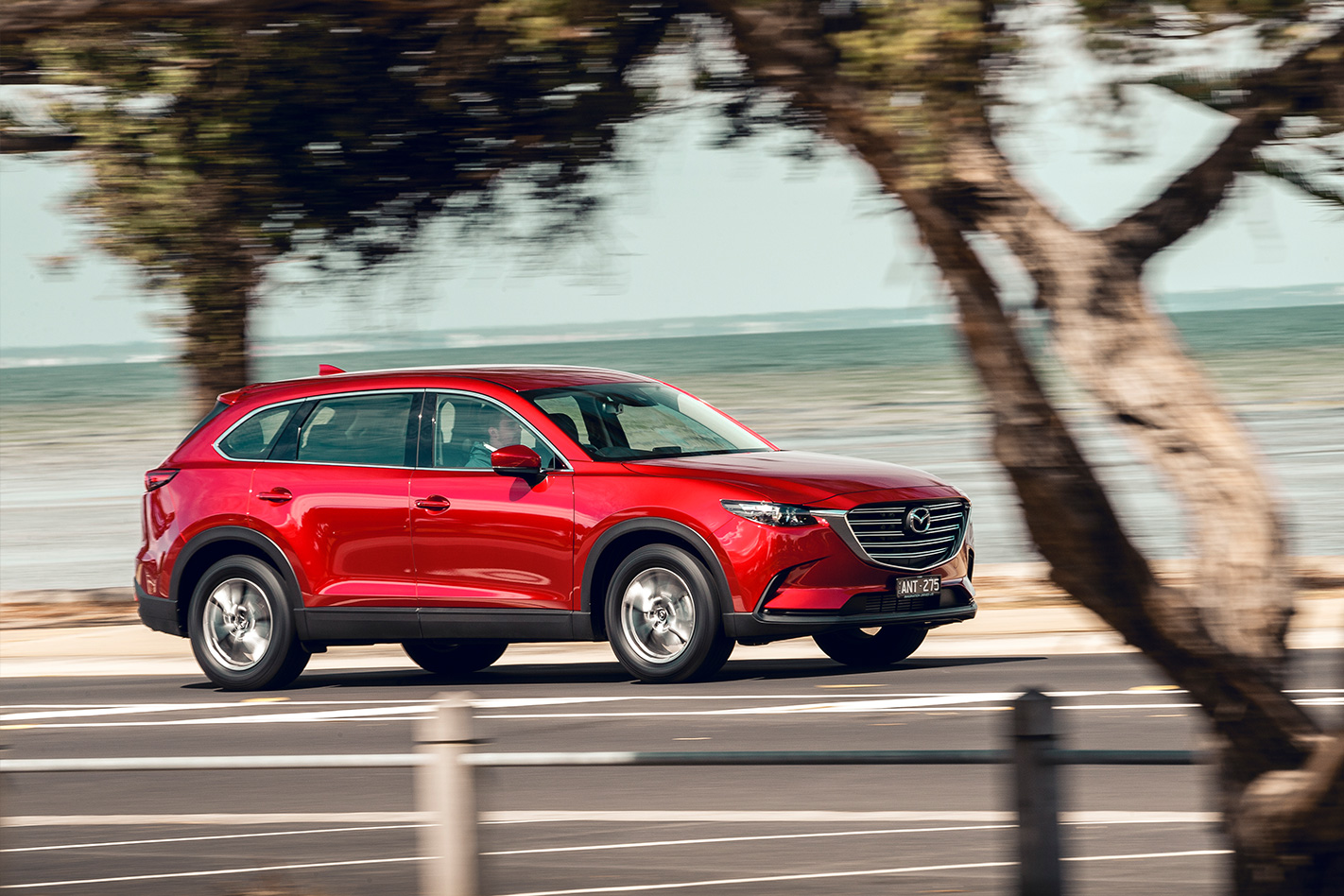
When it comes to seven-seat large SUVs, size is king, and it’s here the Mazda holds all the trump cards. The largest of this trio, the CX-9 has the longest overall length and wheelbase (5075mm/2930mm).
This flows through into the cabin, with rear passengers afforded the most room in the CX-9. The Skoda is comparable for passenger comfort, despite a 139mm shorter wheelbase. But second-row occupants in the Peugeot are dealt the worst hand, with the hard-backed front seats eating into rear leg room.
The Skoda provides a great alternative for owners wanting to get more dirt in their teeth, and escape the metro more often. The small features hidden throughout the Kodiaq’s cabin will keep a smile on any owners face for years to come.
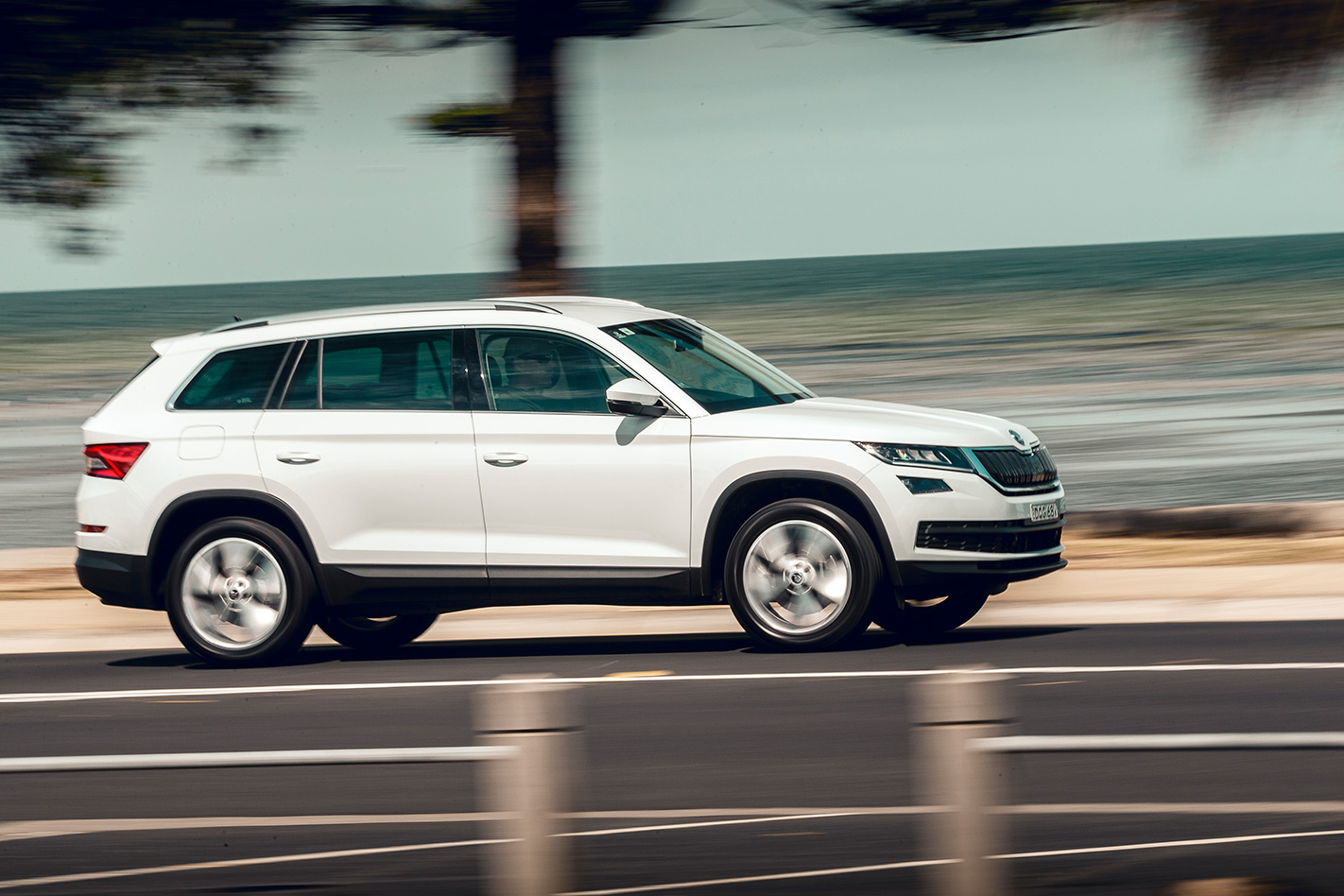
Though the Peugeot falls short of completely nailing the large SUV brief due to its compromised packaging, its relatively compact dimensions might actually bring it into favour with urbanites who occasionally need seven seats but don’t want to be piloting a lumbering behemoth through the city sprawl. For those weekends when you escape to emptier roads, it’ll put a smile on most faces.
At the end of the day, it’s the Mazda which continues to offer the best value to customers, with impressive interior room, ride comfort which seems custom made for long-haul Aussie roadtrips, and a punchy engine to make life easy. Wheels’ 2017 Car of the Year still has what it takes.
FOR many BMW 7 Series customers, one of the six most affordable versions of the range-topping limousine will be more than sufficient.
Priced from $222,100, the entry-level 730d offers bountiful diesel torque coupled with surprising fuel efficiency. At the top of the pack, the $318,710, extended-wheelbase 750Li offers twin-turbo V8 power and extra legroom in the back for people who prefer to be driven.
Straying into the hugely powerful, ultra-luxury and poisonously expensive large limo segment is, unsurprisingly, not a volume player for the Munich manufacturer. Nonetheless, for a very particular type of customer – the type who wants typical lavish 7 Series comfort, but also demands that the carbonfibre cell-clad saloon should be able to destroy sports cars in the traffic light drag race – there is not just a single option, but two. With a budget of about $400,000 you can now walk into a BMW dealership and face a conundrum: go home in a $424K BMW M760Li, or a $369K BMW 7 Series-based Alpina B7 Biturbo.
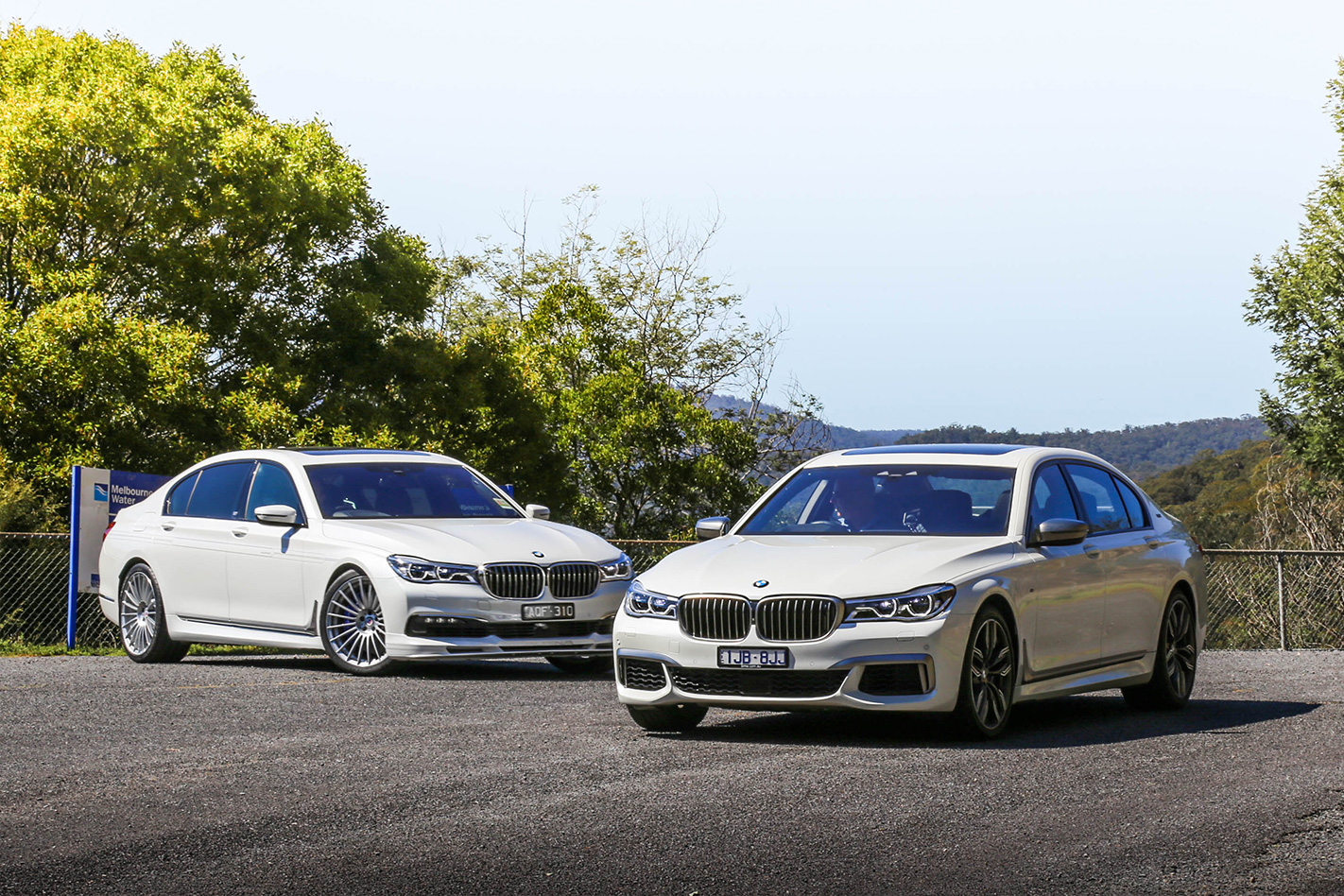
Saying they are similar is probably not quite accurate – saying they’re almost identical in aspects is more correct. Step back and take in the pair of white Beamers (pearlescent in the case of the Alpina, satin metallic-flecked in the BMW’s) and you will need a moment or two to spot the visual differences. Opt for the M760Li and you’ll get a whopping 488kW and 800Nm under the bonnet; go for the B7 and it will match the M760Li’s torque output, but forfeits a single kilowatt. But it’s the performance approach that positions these two bahn-stormers a country mile apart.
Let’s start with those powerplants. The pumped-up pair might produce almost identical outputs, but while the Alpina-badged 7 Series uses a modified version of the 750i’s 4.4-litre twin-turbo V8, the M760 packs a massive 6.6-litre twin-turbo V12, shared with Rolls-Royce.
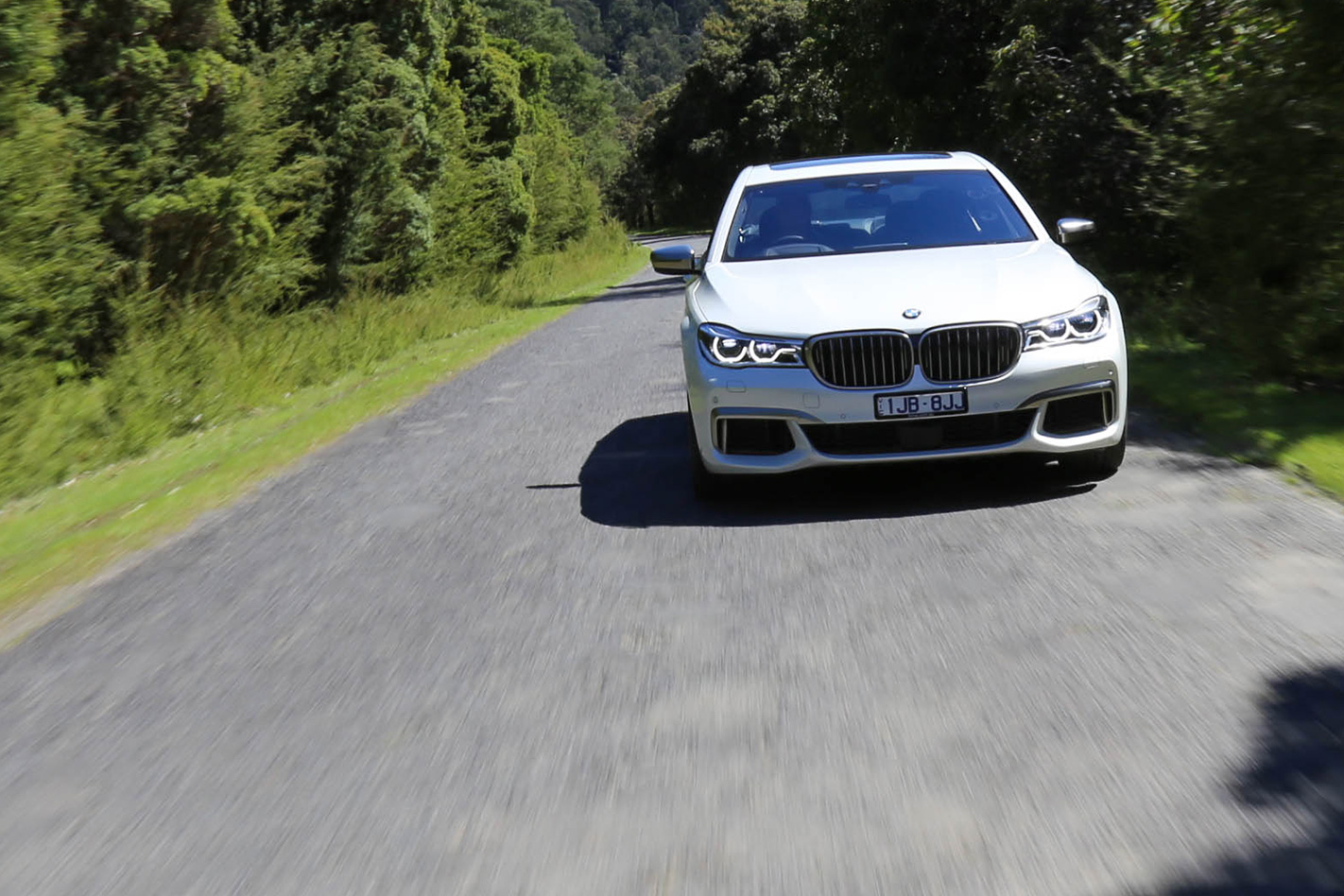
At the helm of the Alpina, the V8 also punches with heavyweight clout, but makes you work for the performance. Peak torque comes in at 3000rpm, delivering similarly tractable grunt without breaking sweat, but if pushed hard, the V8 will eagerly spin up to its maximum power at 5750rpm. If the M760Li engine is the sleeping dragon, the Alpina donk is the waking one, a more highly strung, race tuned unit that rewards when thrashed.
Unlike the B7’s smaller B3 and B4 cousins, the Alpina exhaust note is not as antisocial as we’d expect for something wearing Alpina’s crankshaft and carburettor badge. The sound is wholesome and authentic from the quad stainless pipes, but we would have liked a little more shout to go with the free-revving nature of the engine.
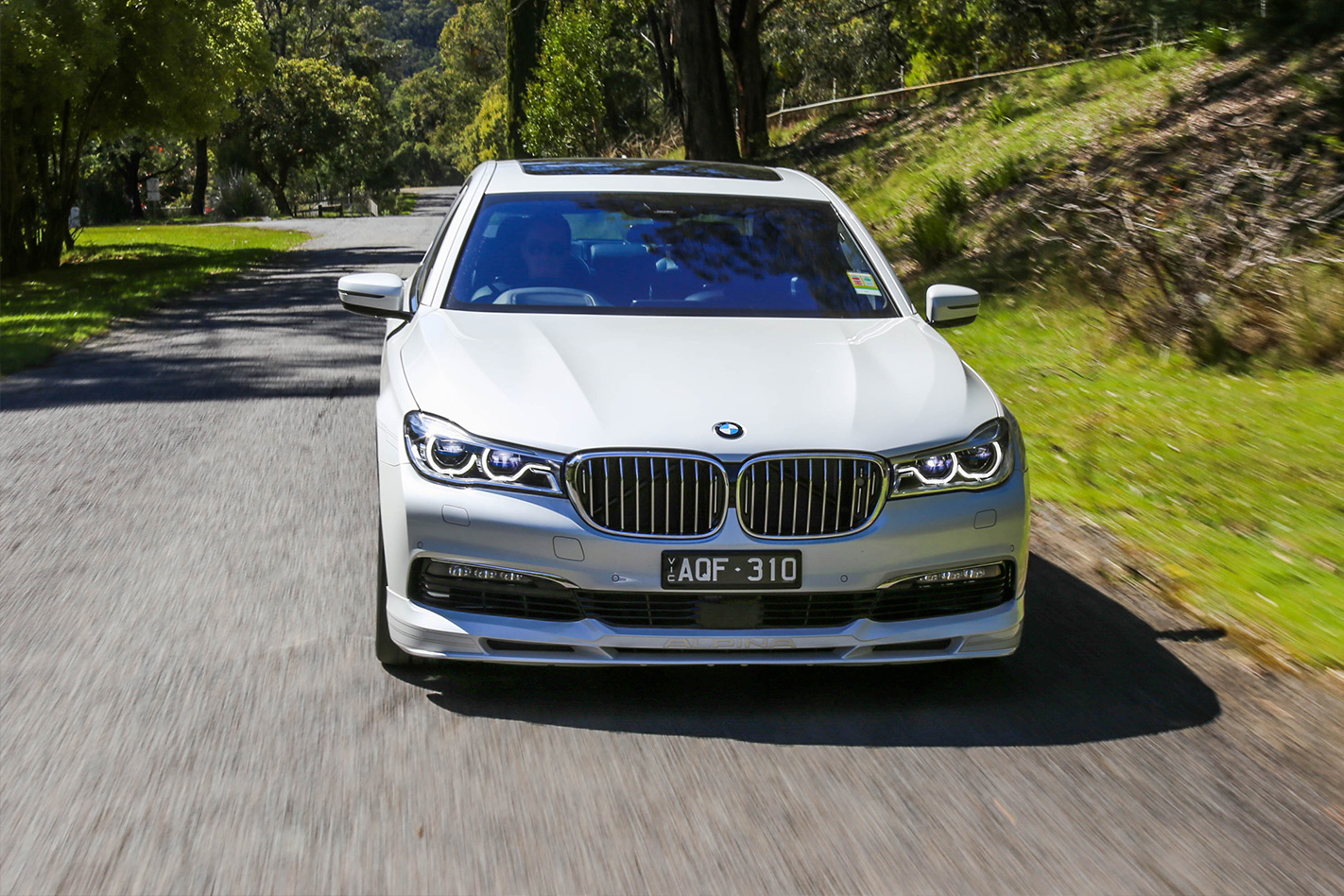
Alpina has fettled BMW’s automatic gearboxes for years, and a longstanding calling card are the push-button manual gear selectors hidden behind the steering wheel’s spokes. Alpina might be holding on to the feature in the name of provenance and heritage, but a move to less fiddly paddles would suit the driving enthusiast better. That said, the M760Li only offers self-serve via the central console-mounted stick.
But it’s the oily bits after the gearbox that represent the second significant mechanical difference. While the Alpina sticks with the rear-drive layout of most of the 7 Series family, the M760Li adopts BMW’s xDrive all-wheel-drive system. In practice, the all-wheel-drive traction makes the M-badged car way faster off the mark despite a 70kg weight penalty.
The Alpina will get to 100km/h from standstill in a claimed 4.2 seconds but with its extra traction, the BMW will cut that to a dizzying 3.7 seconds. In-gear acceleration, however, feels much more closely aligned, with both cars showing an almost unbelievable ability to pile on pace while overtaking. The accompanying silky ride and absence of noise other than the metred engine note makes the whole performance even more surprising.
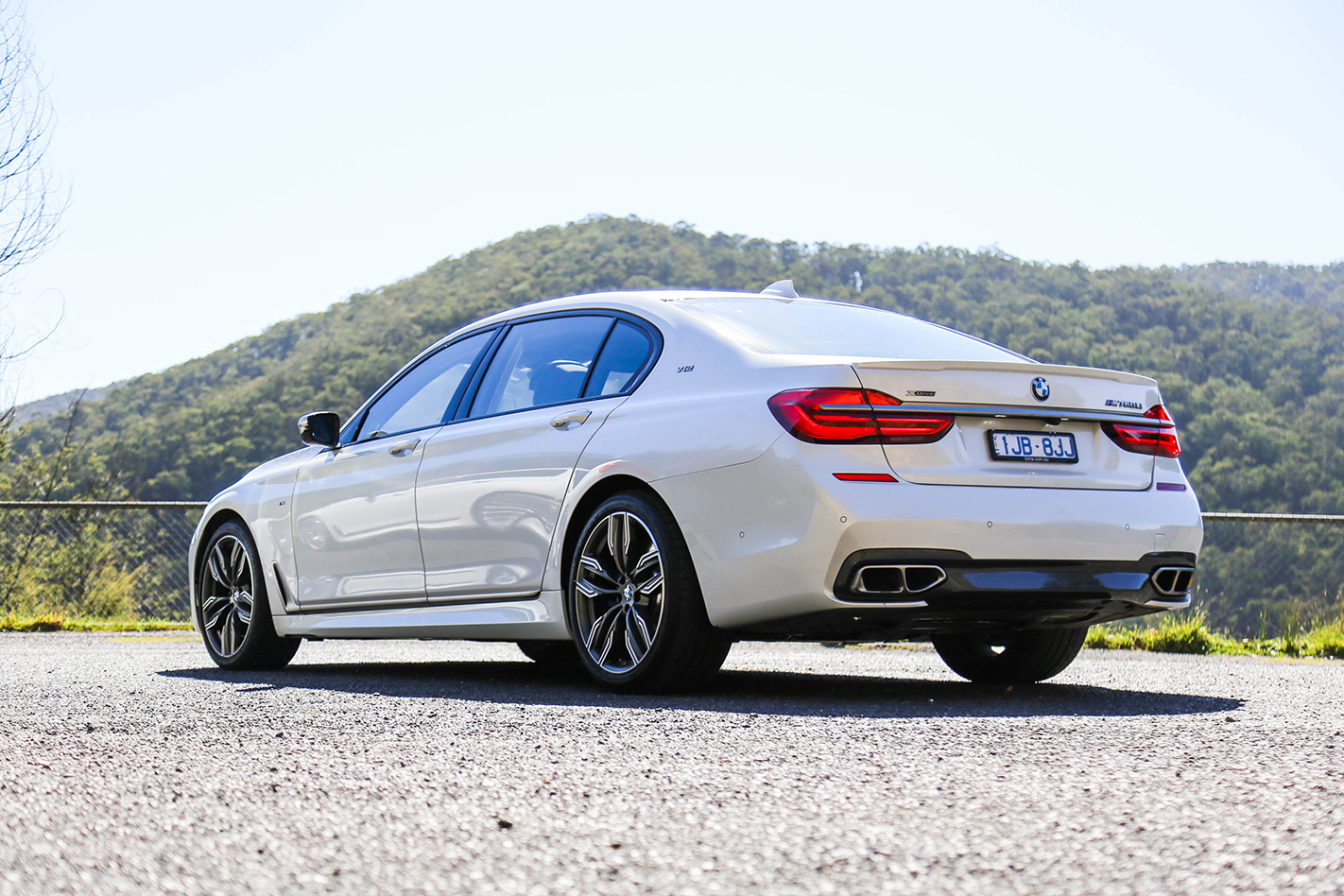
That said, it will carry pace through corners in a way that defies its 2180kg kerb weight. There is certainly a purity to the Alpina’s rear drive chassis which imparts a sharpness when blasting twisty roads, but the xDrive builds in an added confidence. Our money would be on the BMW if you had to get somewhere in a hurry in the wet, but the Alpina’s handling will appeal more to dry-weather driving enthusiasts.
Aside from monstrous performance, the executive set also trades in exclusivity: you are very unlikely to ever see another M760Li or B7 on the road. From a styling perspective, the Alpina shouts its exclusivity with the classic cow-catcher front bumper, massive 20-spoke wheels, iconic pin striping and a bootload of chrome badges, while the M760Li murmurs its differences with classy smoked chrome finishes, subtle V12 badging on its rear quarters, and its more richly tailored body kit. Both turn heads with their sheer presence and size, but we get the impression that while the Alpina drew glances for its exaggerated features, passers-by only wanted to know who was in the back seat of the BMW.
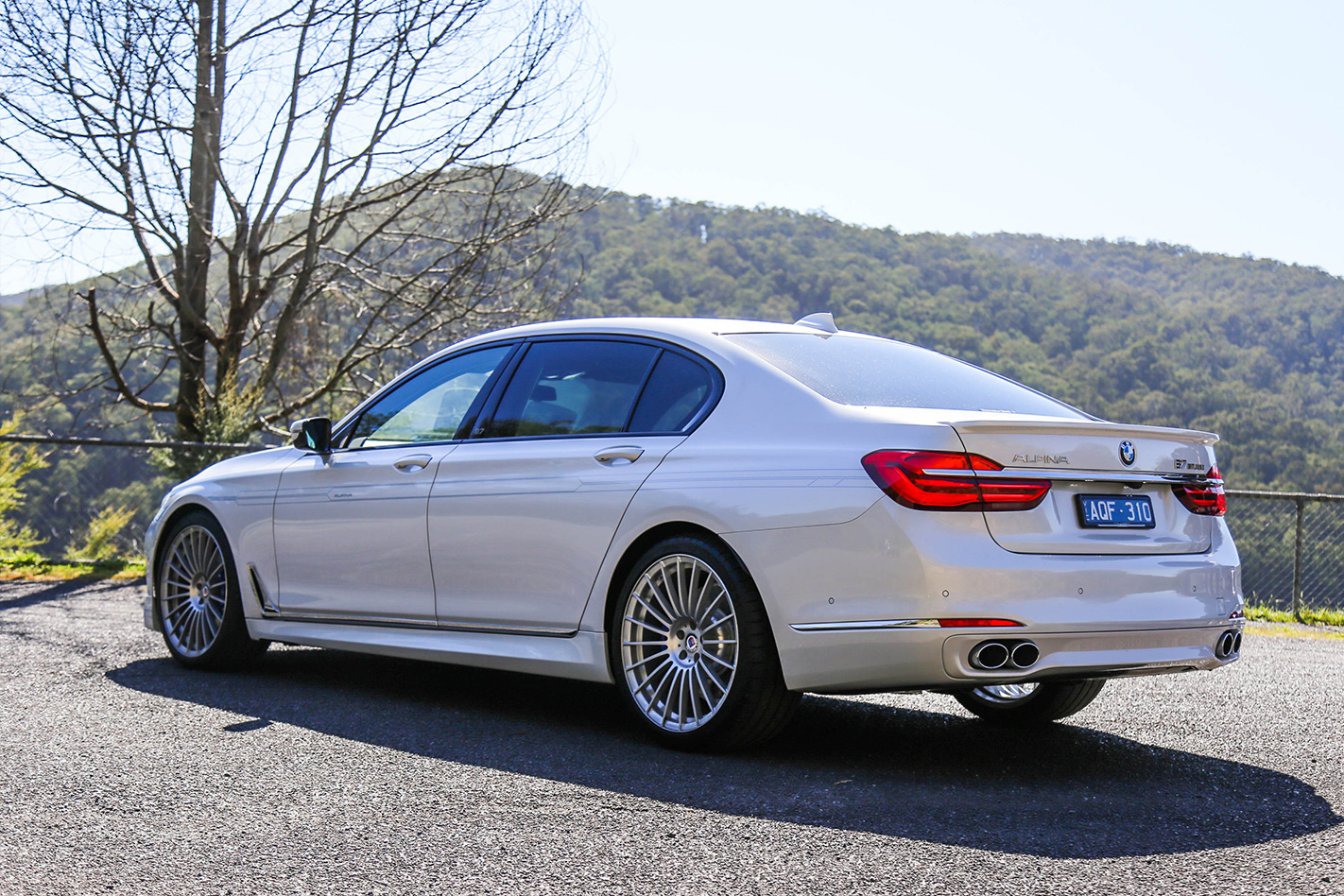
Our cars came decked out with multimedia screens for two rear occupants – a removable tablet that could also control many of the cars’ settings added a third – and rear seats that adjusted electrically, and even came with massage functions.
Both saloons are also dripping with technology, including a heat-sensing camera that can pick out people and animals in the pitch dark, a vast sunroof illuminated with hundreds of stars in the dark, and gesture controls for answering a phone or adjusting the multimedia system’s volume without touching a single switch or dial. The M760Li even has a remote control function on its key fob to allow the driver to slip into a tight parking space without being in the car.
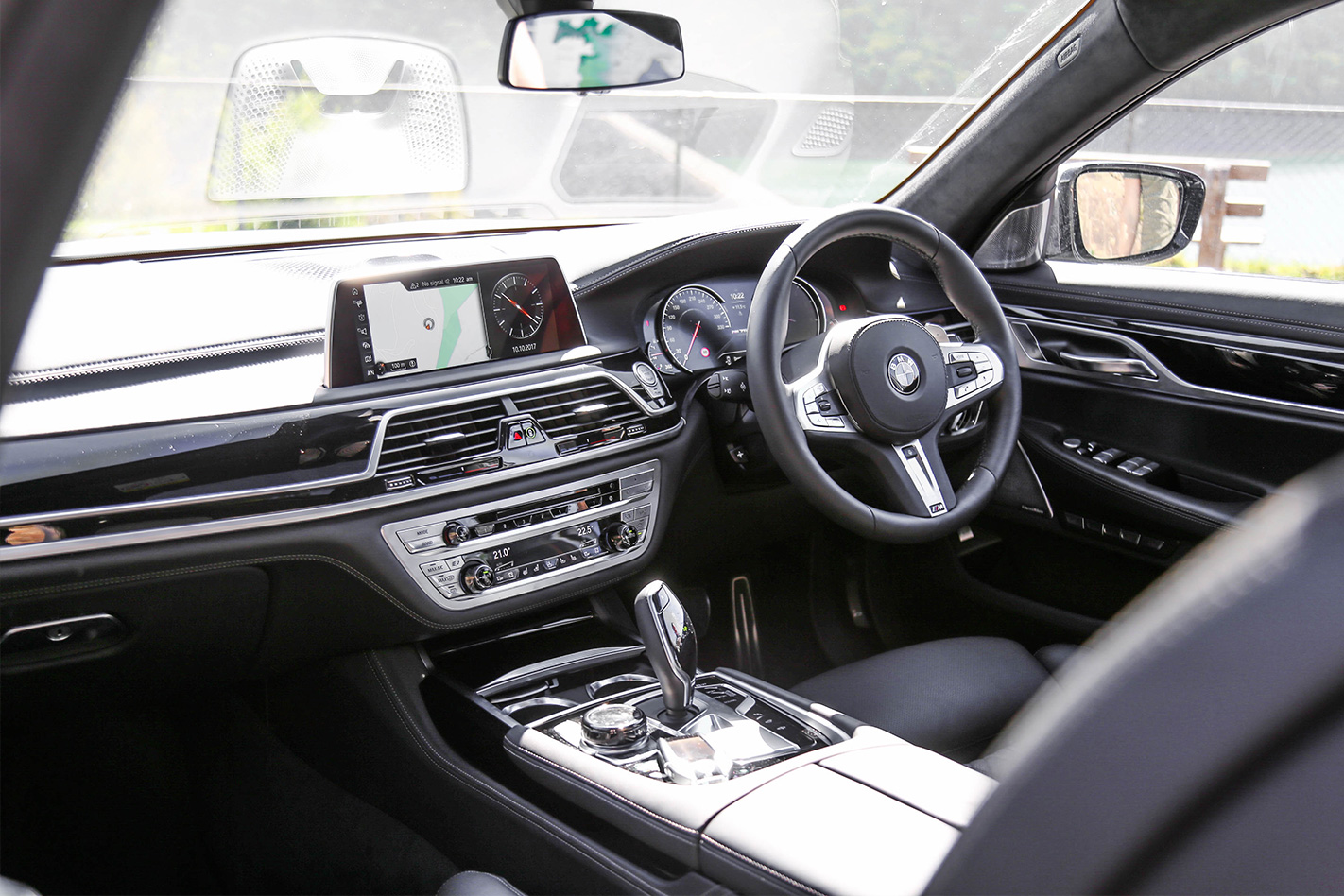
It’s a little disappointing; jump in a 1990s-era Alpina and the interior will have featured a festival of the company’s trademark green and blue, Recaro seats, bespoke steering wheel and unique instrumentation. We would have loved for that spirit to be invoked in the modern equivalent.
Despite the notable boost in performance, the 7 Series’ renowned, underlying ride and comfort remains in both the B7 and the 760Li – perhaps the most impressive attribute of the potent pair. Cart important executives about from one day to the next, and you’d never come to realise the alternate personality that each car hides. Find a stretch of road that you need to cover very quickly, though, and both M760Li and B7 will perform party tricks that need to be experience to be believed.
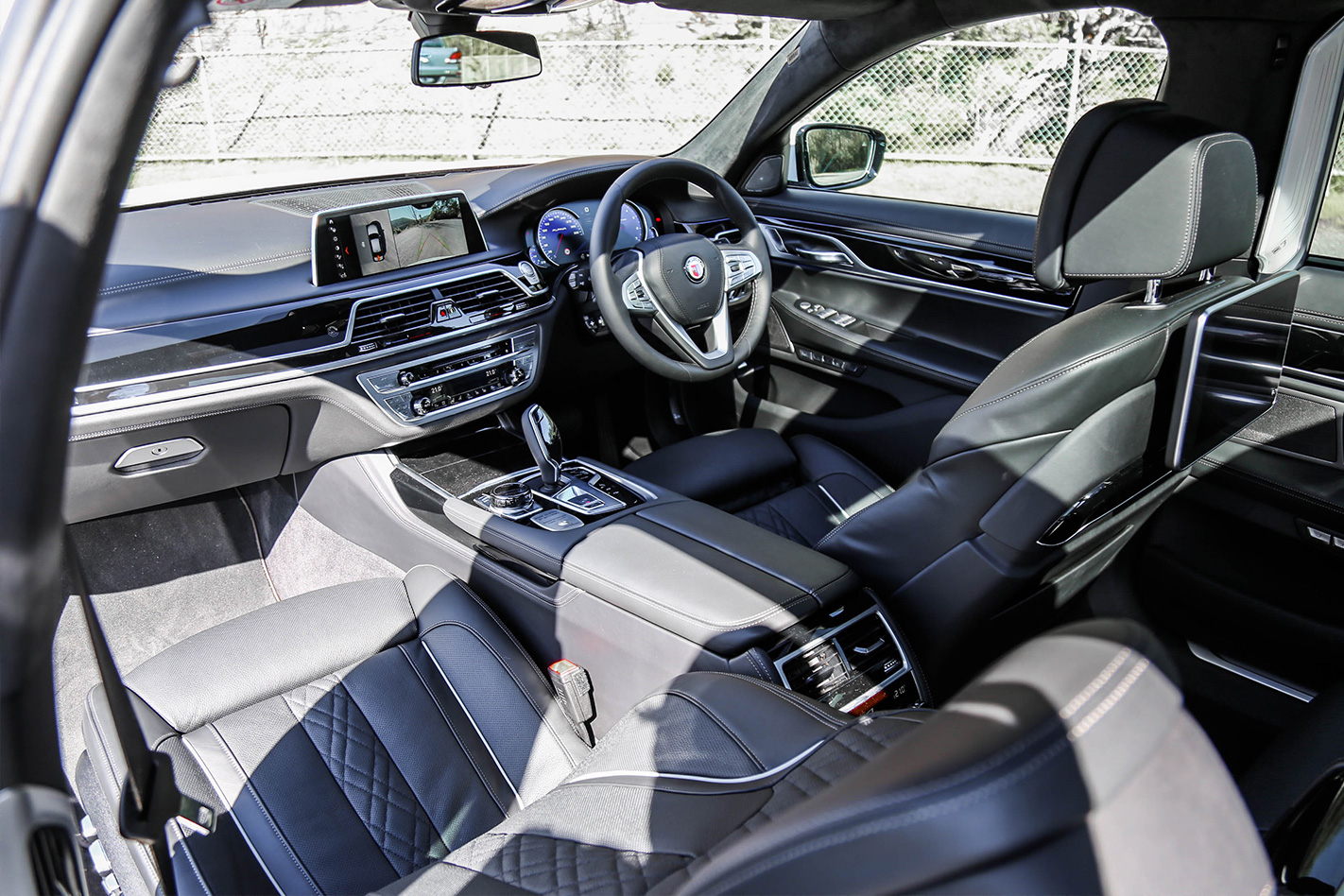
Yearn for an M7, and neither car is for you. But both come close to something worthy of wearing the M badge.
Each, though, delivers a serve of high performance very differently. The rear-drive, high-strung V8-engined Alpina is arguably the option that lends itself best to hard driving, with the less conspicuous styling matching its unapologetic performance.
In the polar opposite way, the M760Li prefers to despatch devastating performance more subtlety, lulling other motorists into thinking it’s a harmless and soporific limo right up to the point where it disappears over the horizon in front of them.
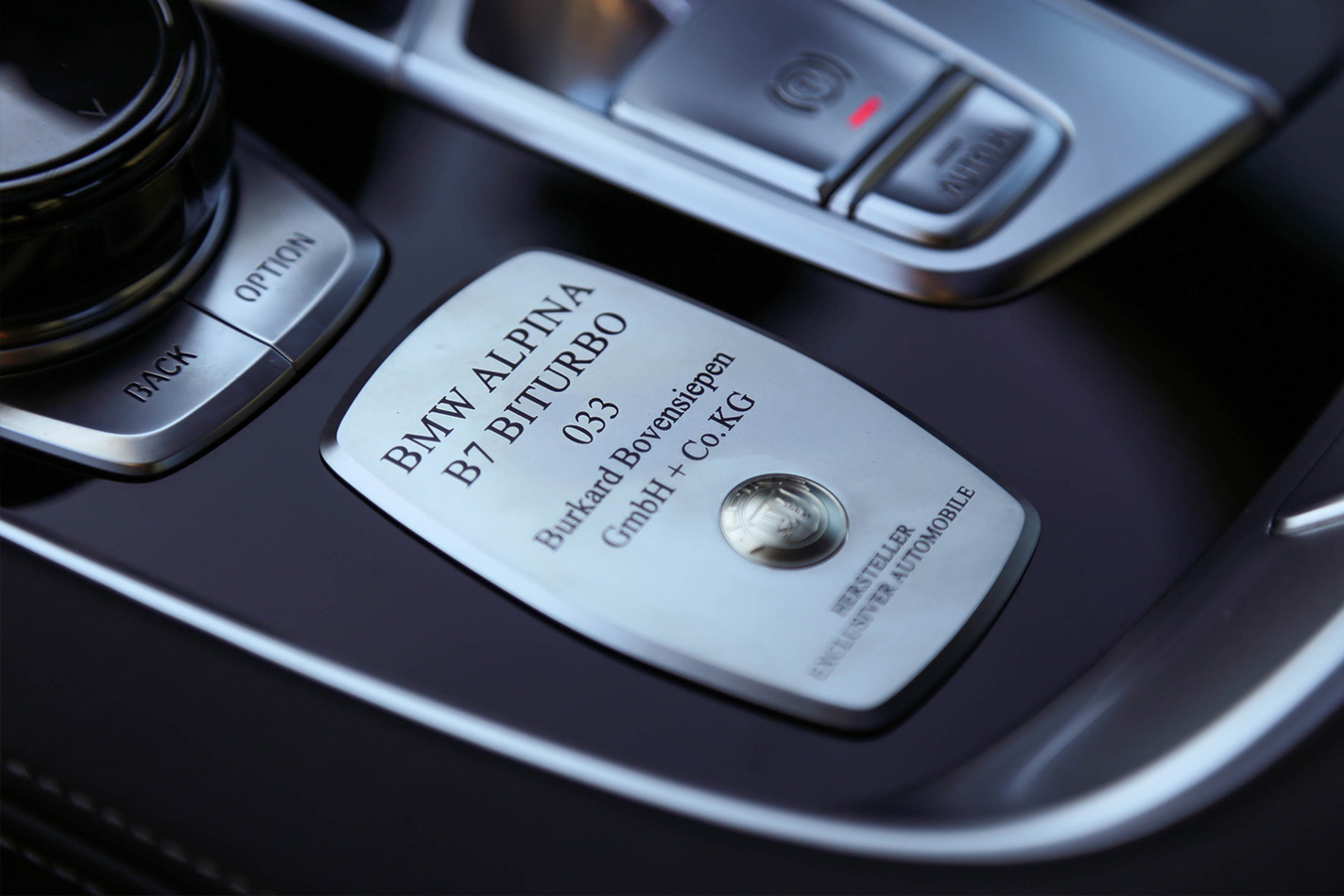
In either case, these hyper sedans embody the luxury brand mantra that to be a purveyor of premium models, you have to be able to offer choice, and lots of it. These two fill that brief. For fans of BMW’s venerable 7 Series, drawn to its comfort but with an underlying need to go places in a hurry, choosing between them will be a delightfully difficult decision.
THERE was a time when choosing between trade utes was all about ruggedness, tray size and load carrying capacity, with creature comforts coming to the fore as dual-cabs morphed into quasi SUVs.
Volkswagen had most bases covered with its Amarok V6, only for German rival Mercedes-Benz to not just enter the fray with its new X-Class range, but open a whole new front with its performance focused X350d range topper.
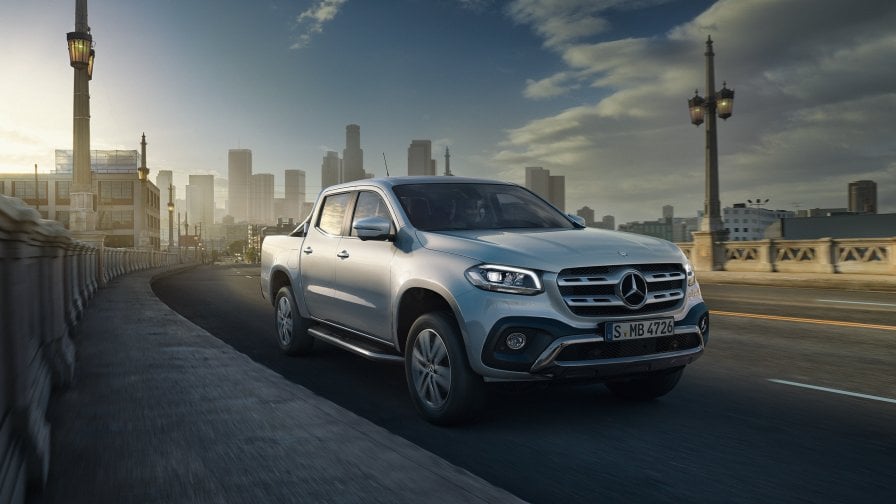
The torque fest gives the new 190kW/580Nm Amarok V6 TDI 580 serious bragging rights over the Merc and the rest of its two-tonne competitors. Wolfsburg is yet to provide performance figures to compare with the X350d’s 7.9-second 0-100km/h acceleration; not that it really matters in a market where twisting power is more important than the traffic-light grand prix.
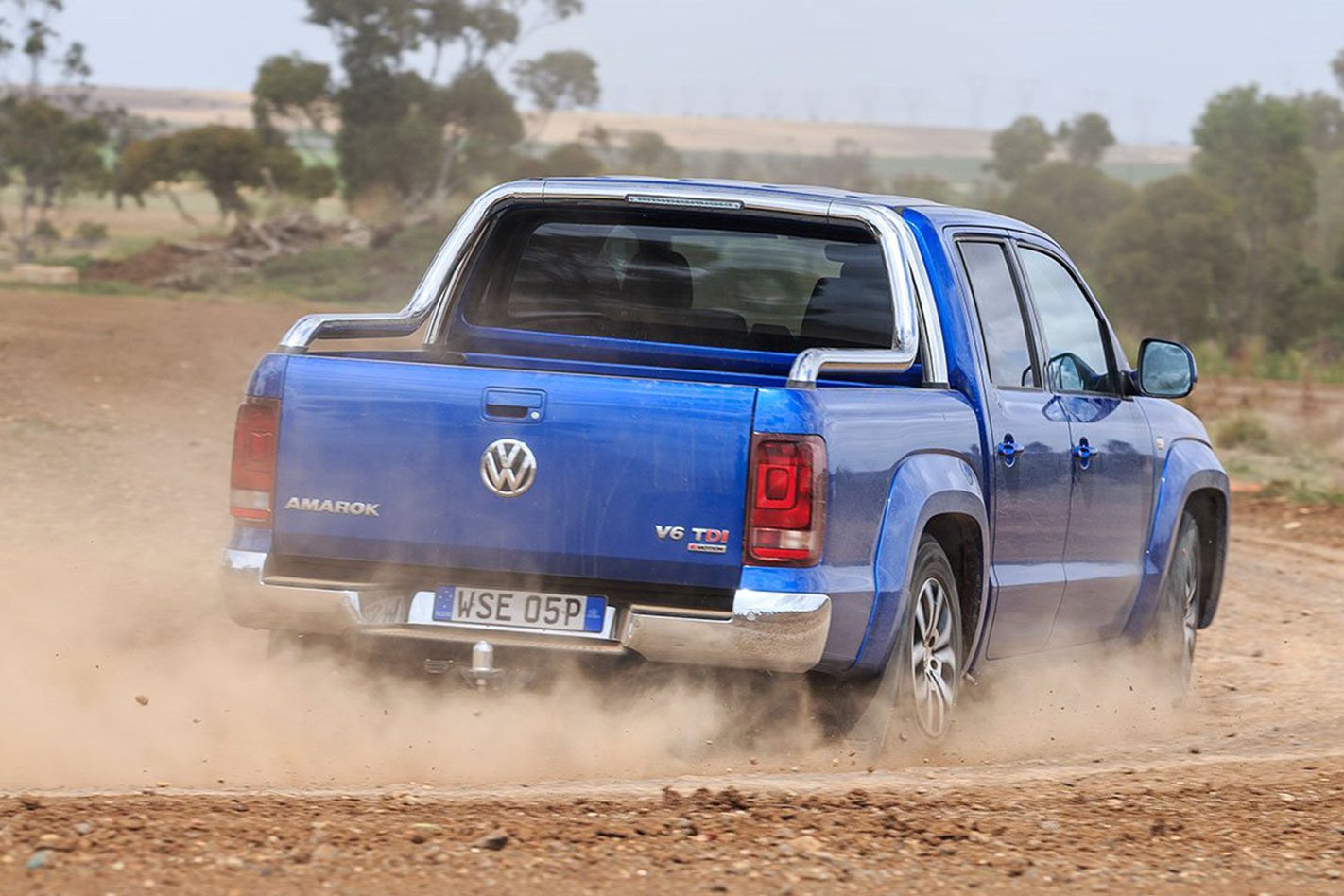
“As we’ve promised before, we have no intention of giving up the mantle of the most powerful ute in its class and are looking to offer the upgraded 190kW Amarok V6 later in the year,” he said.
The TDI 580 will initially arrive in range-topping Ultimate spec, which should mean a $70,000-plus price tag that’s more white-collar than hi-viz, but should be still around $10,000 cheaper than the X350d when it arrives here.
A small running update in 2017 did a little to lift the HR-V’s stock, but how does the otherwise unchanged, yet popular, HR-V really stack up?
WHAT IS IT?
The Honda HR-V is the Japanese brand’s compact SUV that’s available in four different front-wheel-drive only model grades starting at $24,990 for the VTi, up to $34,340 for the VTi-L ADAS.
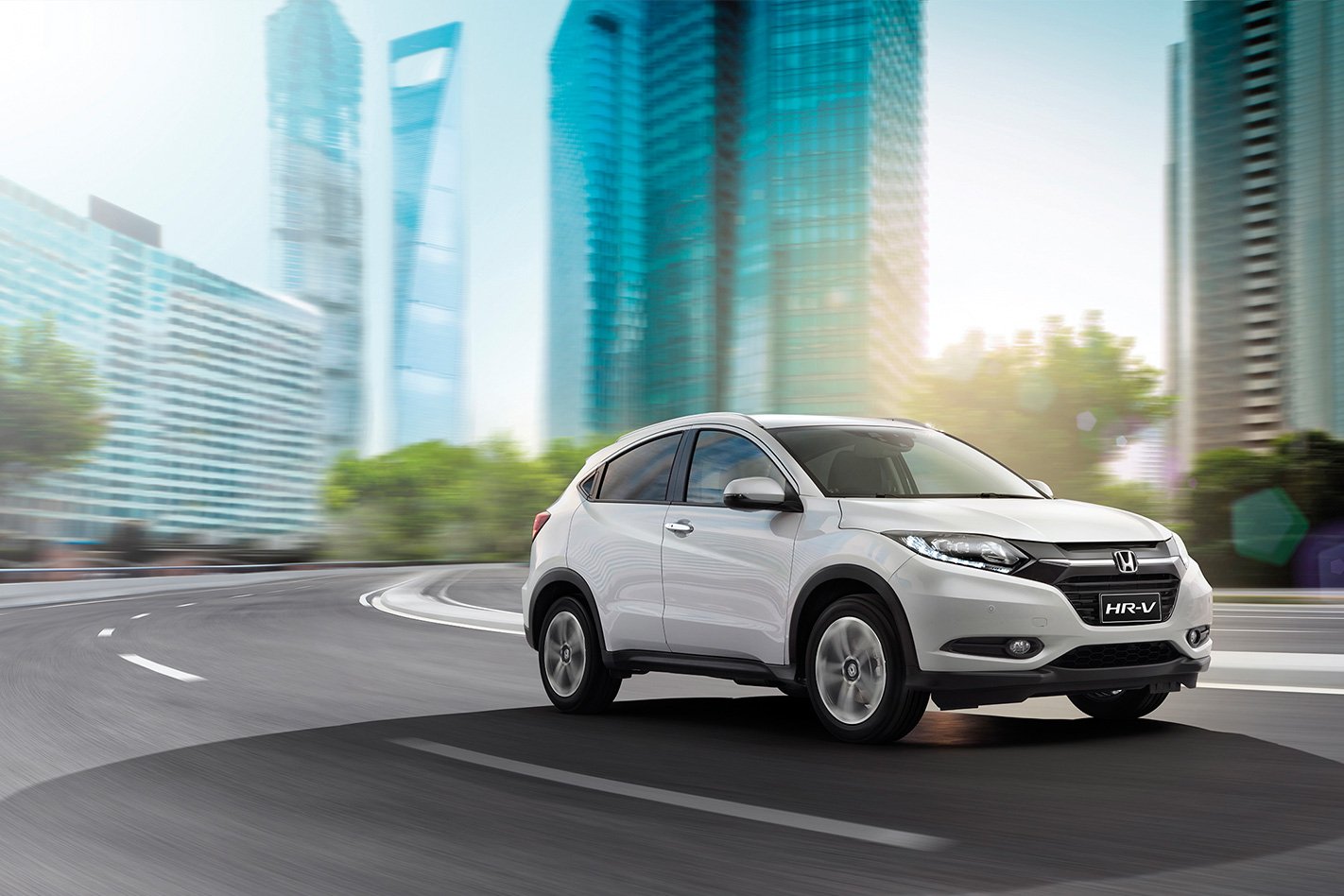
The Honda HR-V received a small running change in mid-2017, and though it’s essentially still the same car that quickly rose to become the Japanese brand’s biggest-selling model – until the Civic small sedan and CR-V came along – the segment it competes in is one of the most hotly contested on the Australian market, so plenty of people are looking at it.
MAIN RIVALS
Ford EcoSport; Holden Trax; Hyundai Kona; Jeep Compass; Mazda CX-3; Mitsubishi ASX; Mitsubishi Eclipse Cross; Nissan Qashqai; Subaru XV
THE WHEELS VERDICT
There’s elements of the Honda HR-V that still resonate with buyers today, and that’s reflected in part by its strong showing on the compact SUV sales charts. But the game is moving on, and the Honda risks not keeping up with it.
MINUS: Road noise; dated interior; CVT seems to only chase power or economy; city safety limited to top model only; pricey
THE WHEELS REVIEW
HONDA’S compact SUV was launched on the Australian market in early 2015 with a fair bit of applause. Fresh looking, decent to drive, and generously equipped, it was well worth the effort for potential buyers to head into Honda showrooms and kick tyres.
It’s that package that helped the compact Honda HR-V rise to the rank of third best-seller in its segment behind the Mazda CX-3 and the Mitsubishi ASX. Inside Honda’s showroom, the HR-V is also the third best-seller for the brand, behind the slightly larger CR-V and the recently introduced, sharper looking Civic small hatch and sedan range.
Standard satellite navigation, featuring a 7.0-inch colour touchscreen with kludgy, simple graphics, was the only change made to all model grades in mid-2017. Otherwise, the $33,340 VTi-L gains you steering wheel-mounted paddle shifters, chrome-look front door handles (the rears are recessed into the trailing edge of the doors), retracting wing mirrors, a huge, properly-screened sunroof, touch-controlled dual-zone climate control, one-touch powered windows that drop or close at a long press of the remote key fob, tinted rear windows, a self-dimming rear-view mirror, LED reading lights, eight-way electrically adjusting driver’s seat, heated front seats, comfy leather seat trim, alloy pedal covers, and front and rear parking sensors over the $5350 cheaper VTi-S.
What the VTi-L still doesn’t get as standard, though, is the automatic city braking, lane departure warning and automatic high-beam assist system that’s essentially a $1000 option available only to the top-spec HR-V – you’re effectively locked out from adding it to any of the cheaper versions. It’s a stand-out omission when you consider low-speed automatic city braking is included in the entry-level Mazda CX-3 Maxx’s $20,490 price-tag – likely one of the reasons it is more popular with buyers.
The HR-V range retains its Honda Civic-sourced 1.8-litre four-cylinder engine mated with a CVT, and sending drive only to the front wheels. The auto works hard to tap the best performance or fuel economy out of the engine, and not a balance of the two, at times feeling like a two-speeder as it hunts in the high revs for torque – there’s a noticeable low-down hole in how well the HR-V builds speed – or low revs for eking out the extra mileage. On test, we saw an average fuel use of 7.2L/100km with mainly highway driving versus an official 6.9L/100km – the HR-V’s 50-litre fuel tank is quite small, so in hard city driving you’ll be ducking into the servo a fair bit.
The Honda’s biggest test for buyers, though, is how it stacks up against its competition. In VTi-L spec, it’s priced against the Mazda CX-3 sTouring, which gains all-wheel drive, better LED headlights, larger 18-inch wheels (although this will potentially make the ride rougher and noisier than the Honda’s), better fuel economy from a bigger 2.0-litre engine with an idle-stop function, and that city-smart safety pack … although you’ll sit on cloth seats and grip a vinyl, not leather, steering wheel.
Ultimately, though, the Honda HR-V we’re driving today is little different to the one that launched here in 2015, which is a bit disappointing given how far the game has moved on, particularly in terms of rolling out AEB to more models. With new entrants such as the style-driven Hyundai Kona, the suddenly attractive Jeep Compass and the value-driven Mitsubishi Eclipse Cross, refreshed models such as the (still borderline, but improved) Ford EcoSport, and value-driven stalwarts such as the Mitsubishi ASX (which also limits city braking to its higher-priced models) all vying for buyers’ interests, firmly standing your ground in the face of change isn’t going to help.
SPECS Model: Honda HR-V VTi-L Engine: 1799cc 4-cyl, sohc, 16v Max power: 105kW @ 6500rpm Max torque: 172Nm @4300rpm Transmission: CVT, FWD Weight: 1382kg 0-100km/h: 10.2sec (estimated) Fuel economy: 6.9L/100km Price: $33,340 On sale: Now
