
PORSCHE’S venerable flagship 911 is due for a generational update late next-year, with the iconic sports car’s eighth incarnation designed in support of an increasingly electrified future.
While the 992 version 911 isn’t expected to be officially revealed until October, speculation around the car’s vital statistics remains rampant. Wheels tapped our industry sources and collated everything there is to know about the next-gen 911.
Ever-tightening emissions regulations in Europe will play a large part in shaping the 911s future, ushering the car further towards electrification and turbo power, while consumer demands continue to prompt PDK gearboxes to replace three-pedal DIY shifters.
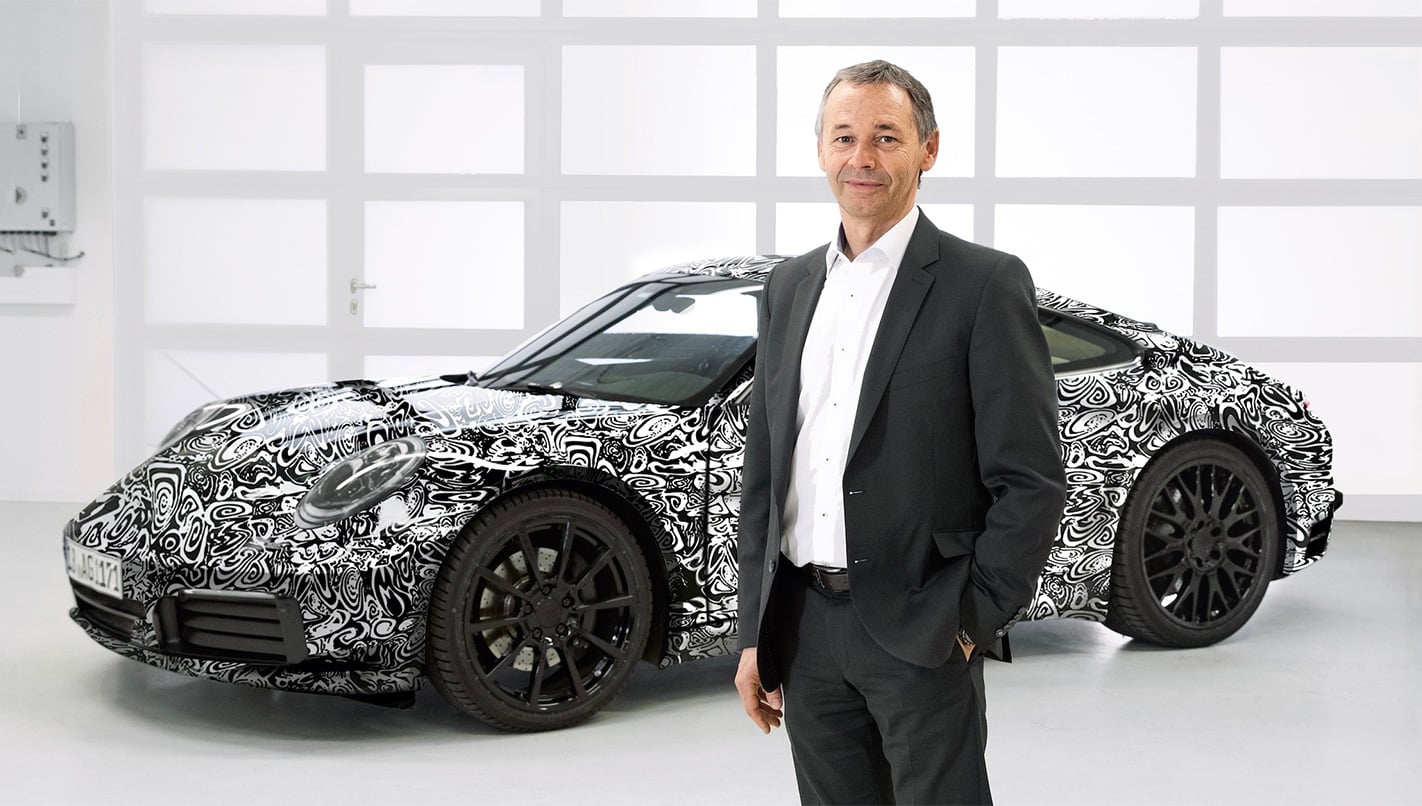
The entire range is likely to be equipped with 48-volt electrical sub-systems, which is a toe in the water ahead of a plug-in electric hybrid 911 that’ll be put into production when the 992 receives a mid-life update.
A PHEV 911 would likely combine the 3.0-litre EA9A2 flat-six combustion engine with a 70kW electric motor good for a system output of 362kW/761Nm and a 60km emissions-free range. It is understood a fully-electric 911 isn’t slated until the next generation after the 992.
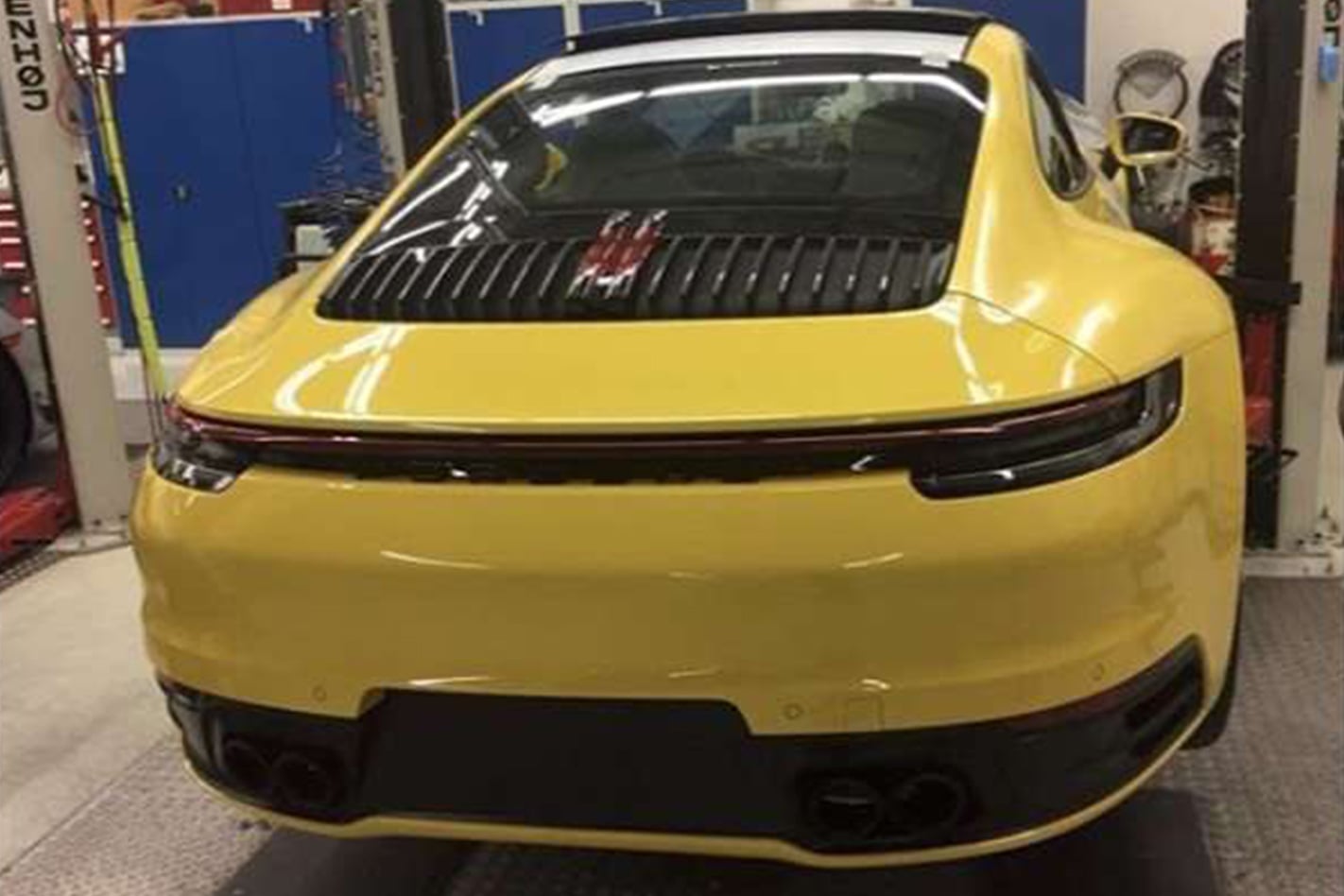
A 331kW Carrera S is likely to be the first model to be revealed, with an entry-level 295kW Carrera to follow in late 2019, and a flagship 470kW Turbo S arriving in 2020.
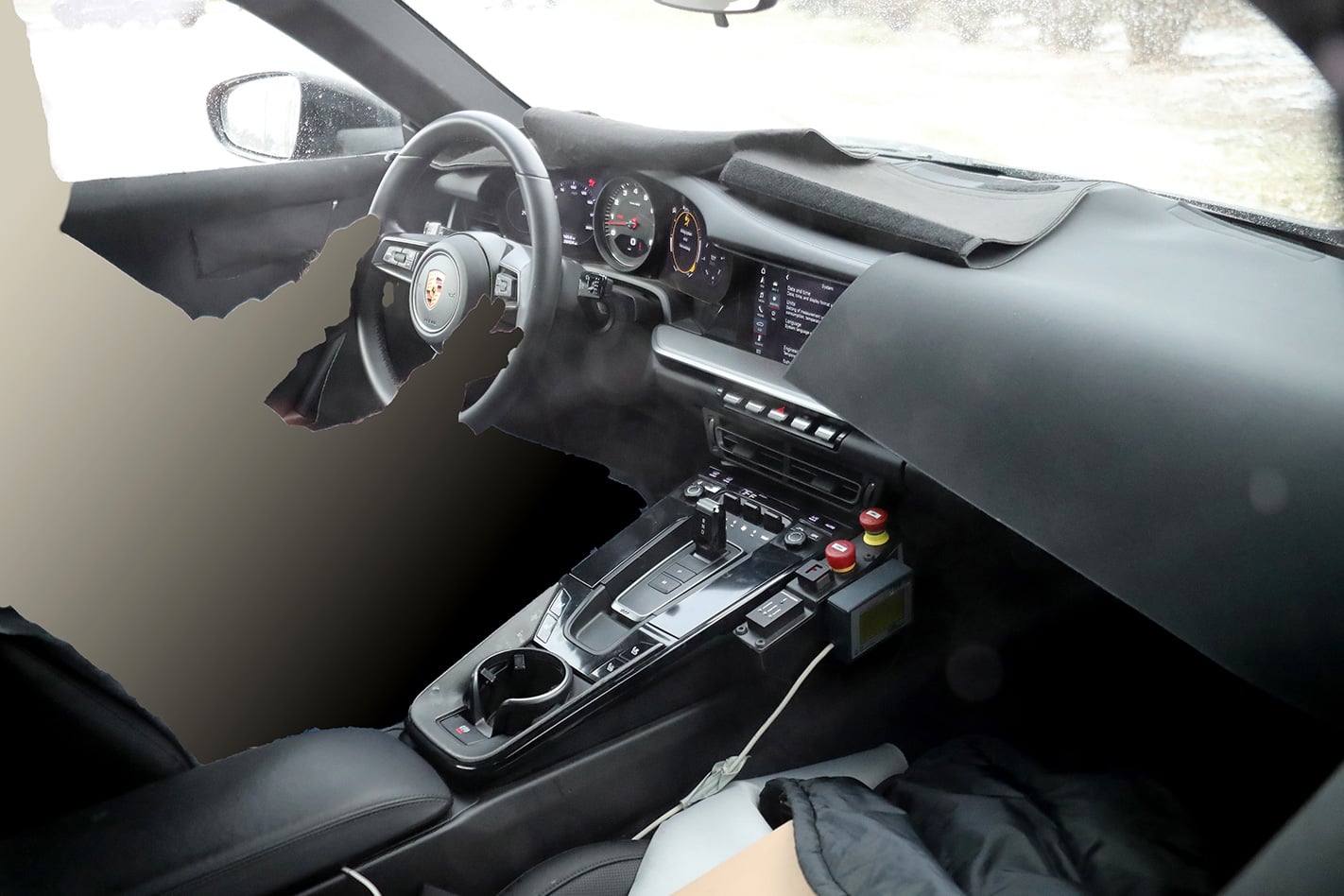
While turbocharged flat-six engines will power most of the range, Porsche recently poured cold water on the theory that the entire line-up would be boosted.
It was reported earlier this year the GT3 would lose its naturally-aspirated 4.0-litre screamer in favour for a twin-turbo 3.8-litre unit, but Wheels understands the German manufacturer will try to proliferate the 992 range with similar turbo and atmo engines as seen in the 991.2 range.
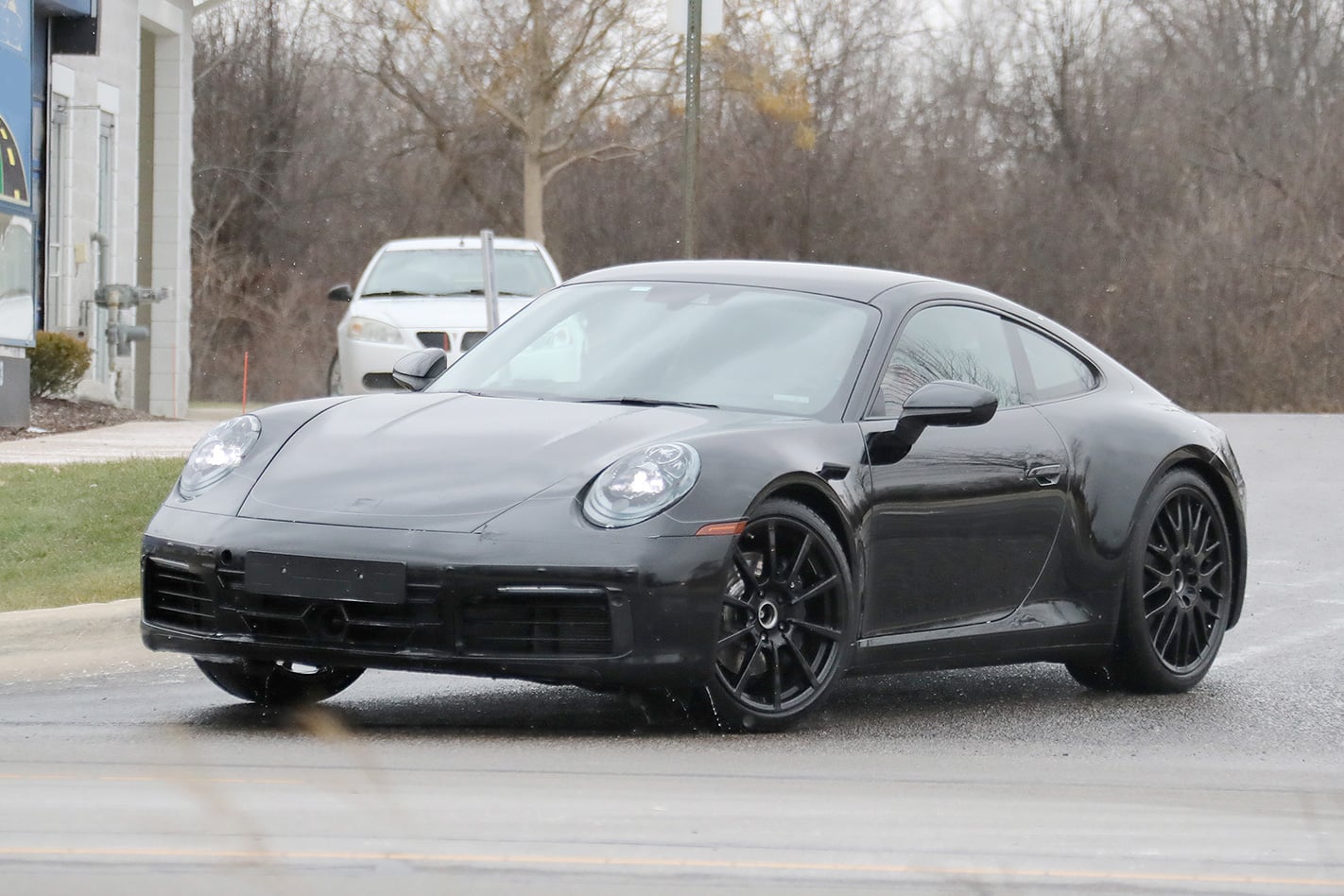
Porsche Australia was unable to confirm when Australians should expect the 992 911 to arrive locally.
TORQUE vectoring. Rev-matching throttle blips on downshifts. Torquey hybrid drivetrain. Reads like a pretty good mix, right? And it’s all coming to future Toyota and Lexus passenger cars.
Toyota has teased a raft of upcoming technologies optimised for its Toyota New Global Architecture, the next-gen platform that already underpins the Camry, Prius and C-HR, and by the end of this year, the all-new Corolla.
And it’s a pretty good read, with a torque-vectoring all-wheel drive system – including an electric rear axle in hybrid applications – a tooth-geared version of a continuously variable transmission that consigns step-off lag to the history books, and best of all, a new generation of six-speed manual transmission.
There’s also a new 2.0-litre engine replacing the 1.8 that promises a better spread of torque, as well as improved integration with the hybrid system.

Let’s start with the most boring bit first. Toyota has added a single gear to its continuously variable transmission to help the stepless auto fight for the traffic-light sprint line honours.
One of the drawbacks of the CVT is its inability to react quickly to changes in speed – braking hard from an urban speed and then stomping on the accelerator will leave even the best CVT systems struggling to readjust the ratio in time.
However, as part of its optimisation for the new architecture that includes a big overhaul of the car maker’s 2.0-litre engine, the CVT adds a “launch gear” that steps in to provide direct drive at low speeds, removing the lag that CVTs experience on step-off.
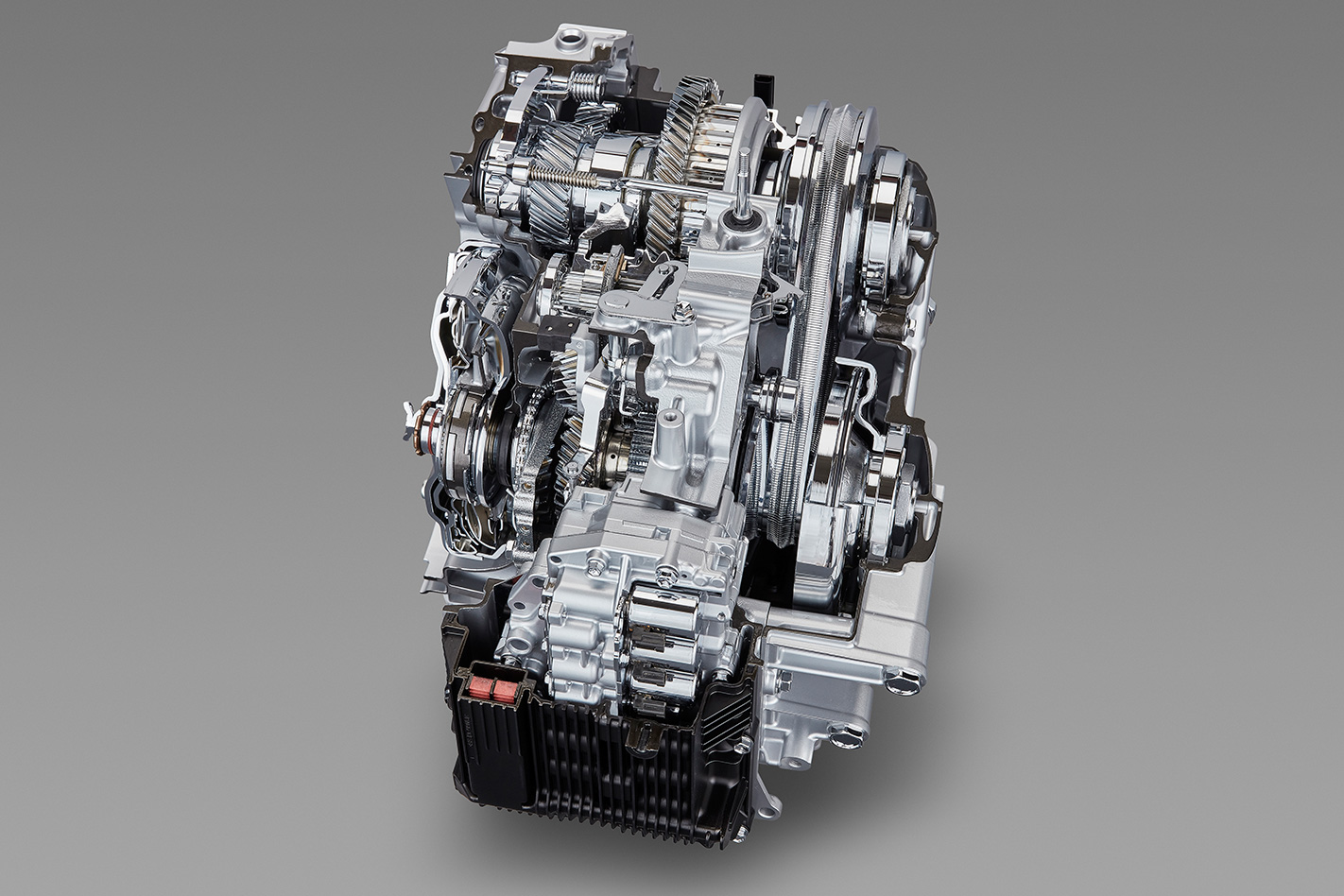
There’s a knock on-effect, too, with the launch gear reducing the input loads on the transmission, meaning the pulleys don’t need to be as big. Combined with the narrower vee, Toyota claims shifting speeds are 20 percent faster than before.
Toyota’s six-speed manual gearbox also comes in for a TNGA-related overhaul. It has shed 7kg compared with the one it replaces, and is 24mm shorter, with Toyota now claiming it is one of the world’s smallest self-shifters. It also comes with rev matching on downshifts.
Both gearboxes will mate with a “Dynamic Force” 2.0-litre direct-injection engine that’s also optimised for hybridisation.
Expected to displace the 1.8-litre unit under the bonnet of the current Toyota Prius, the car maker has taken all the bits it learned about thermal efficiency and variable valve technology and made the upsized donk more torquey right across its rev range.
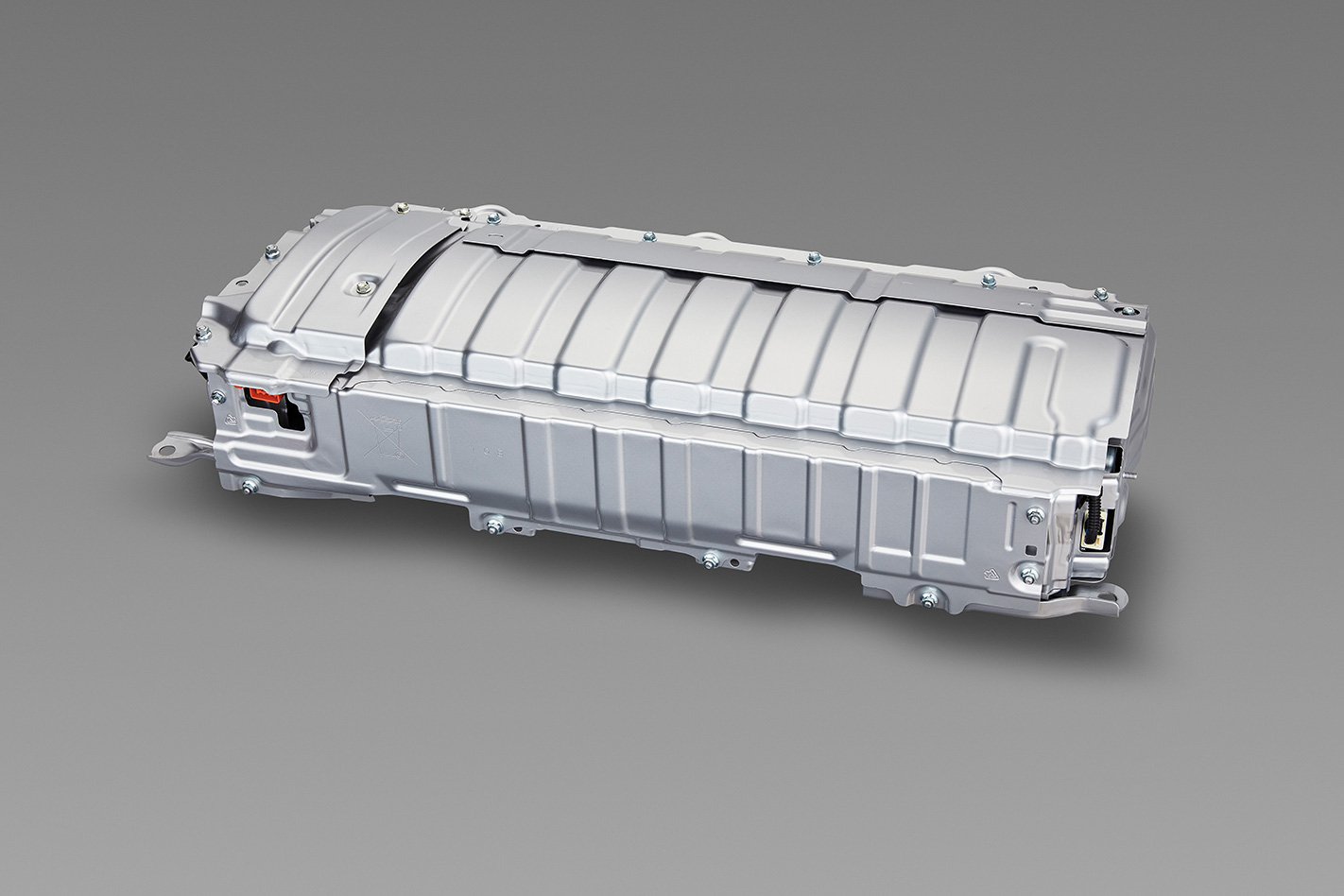
Adding weight to the performance promise is the torque vectoring system. When cruising it can disengage the ratchet-type dog clutches on the front- and rear-wheel shafts, allowing the vehicle to drive like a dedicated front-wheeler.
Toyota says it will start adding the TNGA-optimised features to its passenger car line-up almost right away, improving fuel efficiency by about 18 percent.
The engines and gearboxes are the first four components Toyota has optimised for the new TNGA platform. Once completed, it will have expanded to 17 versions of nine engines, 10 versions of four transmissions, and 10 versions of six hybrid systems.
Expectation’s a funny thing.
This review was first published in MOTOR magazine’s August 2008 issue.
Too much of it can only lead to utter disappointment when things don’t go according to plan — just ask anyone who allocated their share of last month’s $58 million Powerball booty to the eternal pursuit of hedonism and vehicle acquisition, only to discover that the winning ticket wasn’t even sold in their state.
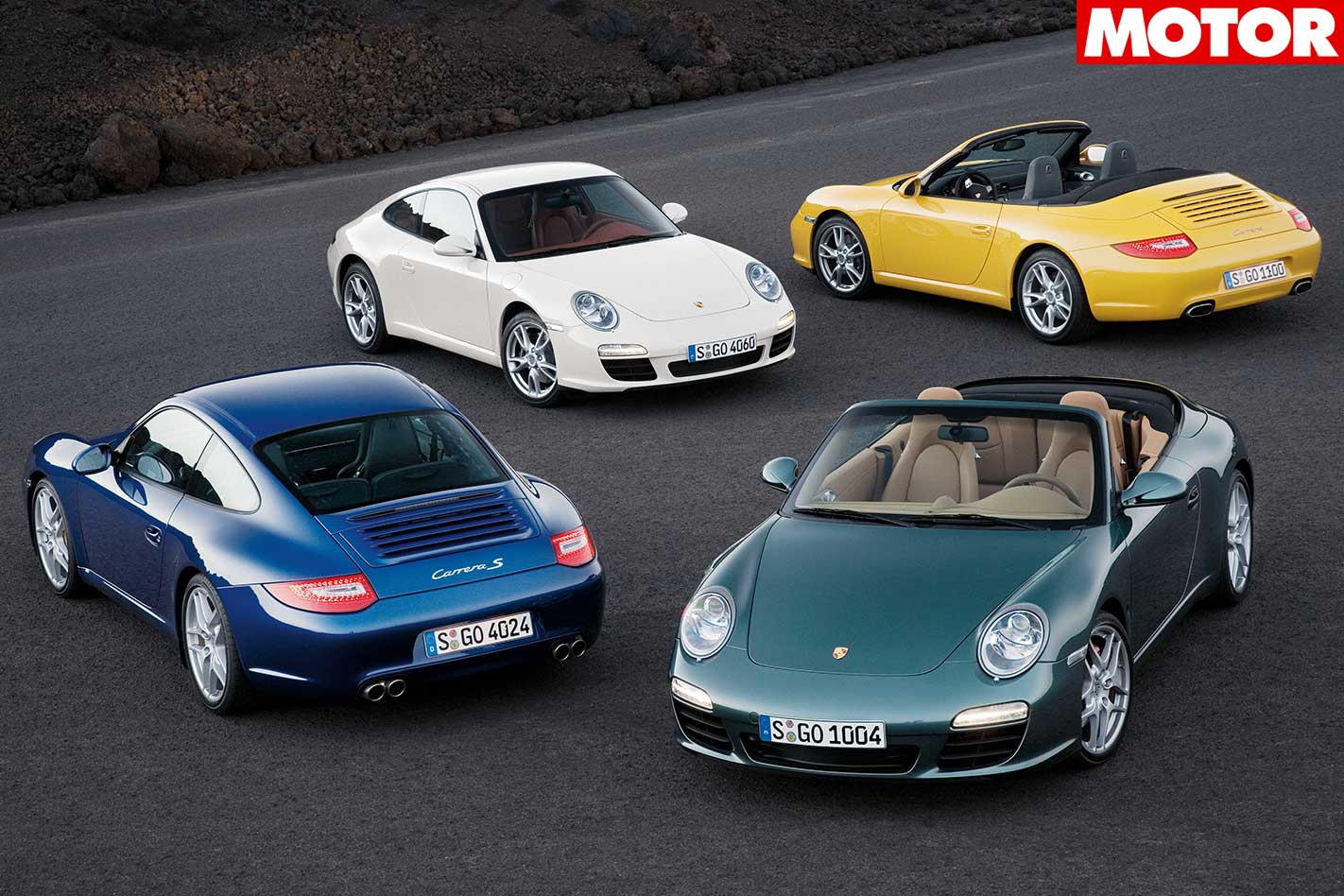
But when the guarantee of something great does exist, few things can compare to the rare, but exciting sensation that comes with it. Like the news that Porsche was going to upgrade the already brilliant 997-series 911 with a double-clutch transmission, direct fuel injection and some techno taillights.
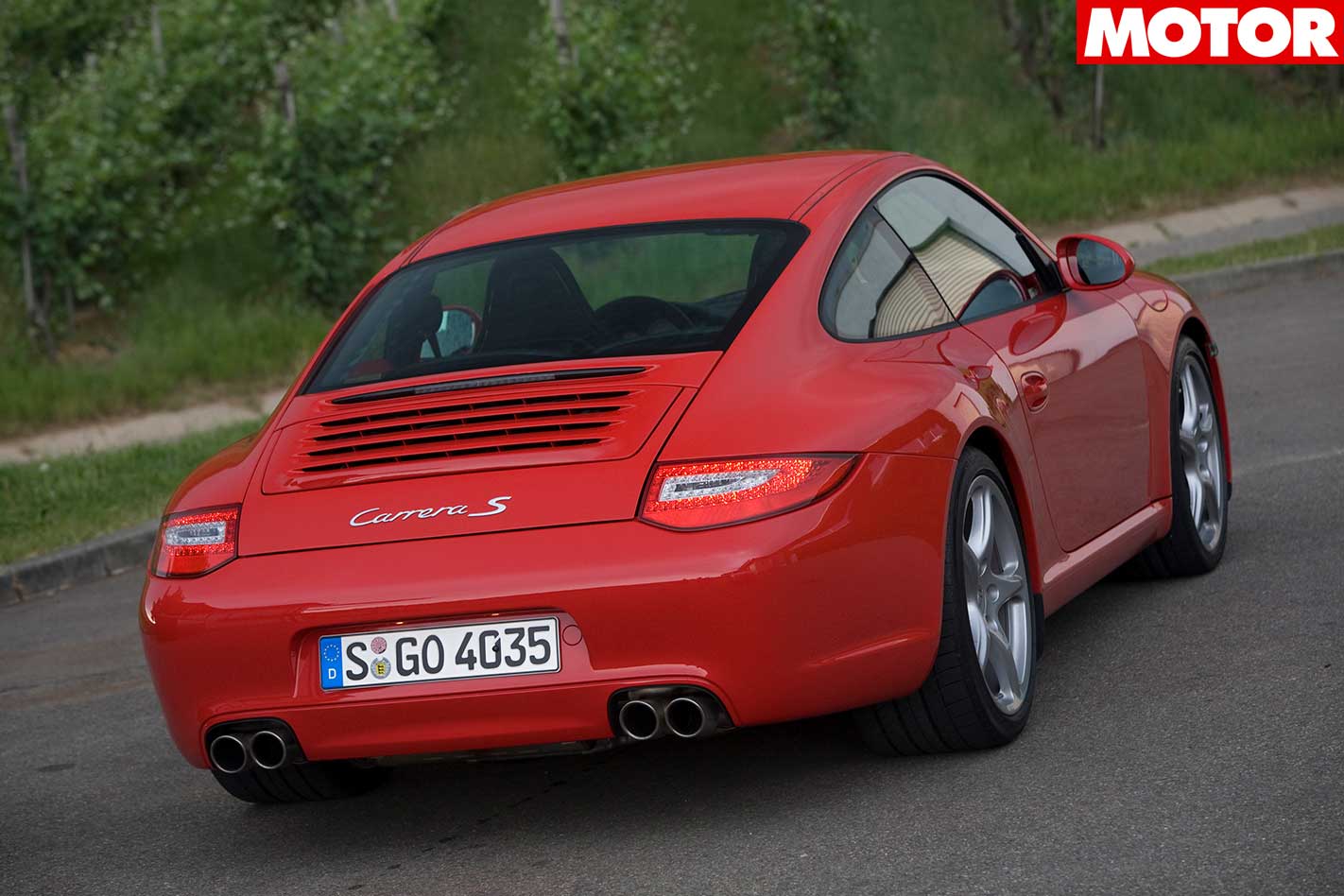
Yes, it’s faster, edgier, sexier, better-equipped and more expensive, but it’s also cleaner, greener, more efficient and, best of all, more fun. Rarely, if ever, has embracing mother nature delivered such a rush.
Both direct-injection 911 engines are all-new. Not one single component has been carried over from the existing 3.6- and 3.8-litre flat sixes that have powered the Carrera and Carrera S 911s since 2004.
Cylinder head, pistons, conrod, crankshaft, induction system, exhaust system, oil system, engine case, you name it, they’re different. Even the screws have changed (due to new legislation, apparently).
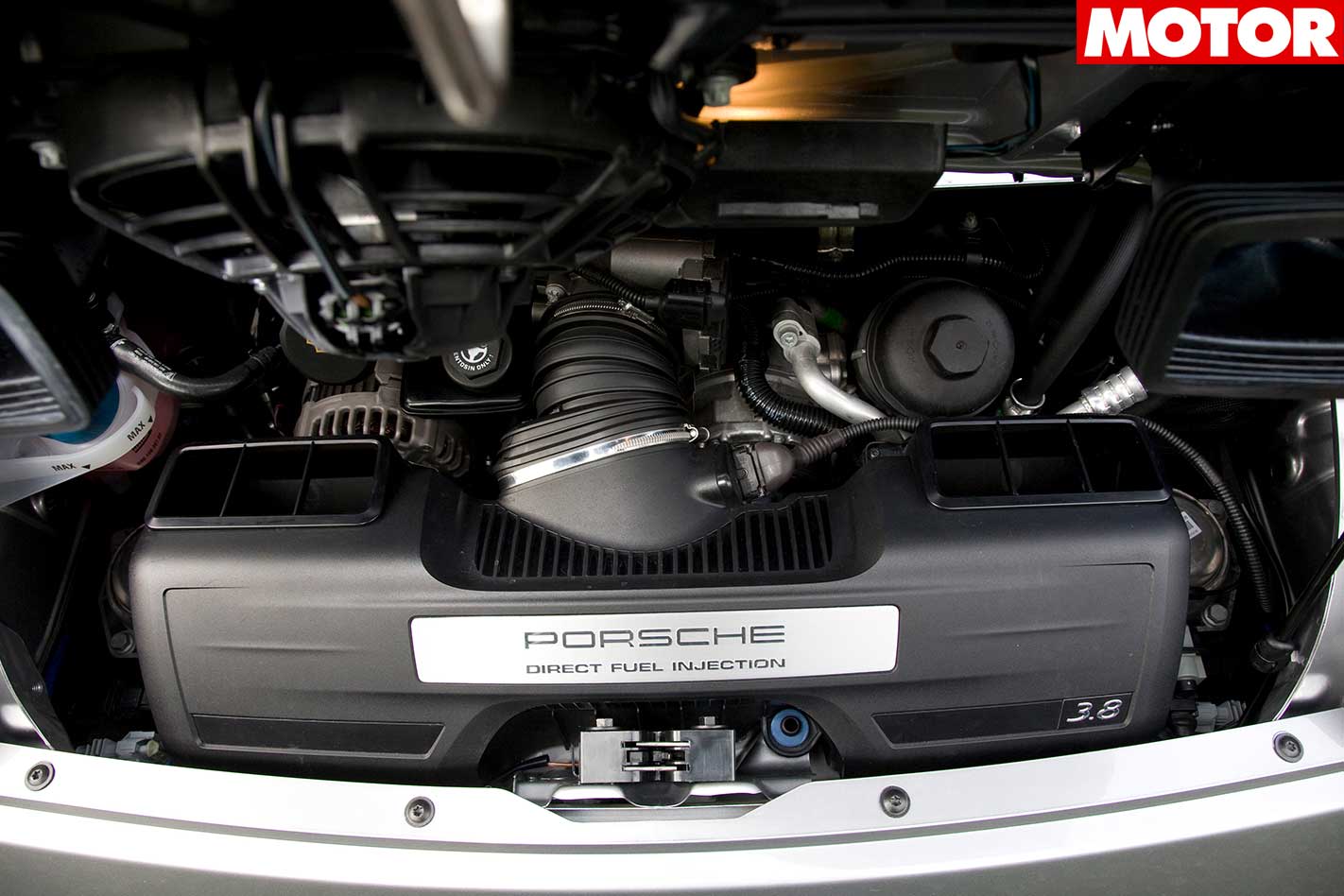
On paper, the most obvious change is to the engine’s bore and stroke configuration. Previously, both capacities shared the same 82.8mm stroke, but the 3.8 ran a 99.0mm bore — 3.0mm larger than the 3.6’s. While the direct-injection flat sixes are essentially still a 3.6 and a 3.8, the smaller engine is more oversquare than before (with a larger 97.0mm bore and shorter 81.5mm stroke for 3614cc), while the harder-edged 3.8 is dramatically more oversquare (running a 102.0mm bore and a much-shorter 77.5mm stroke for exactly 3800cc).
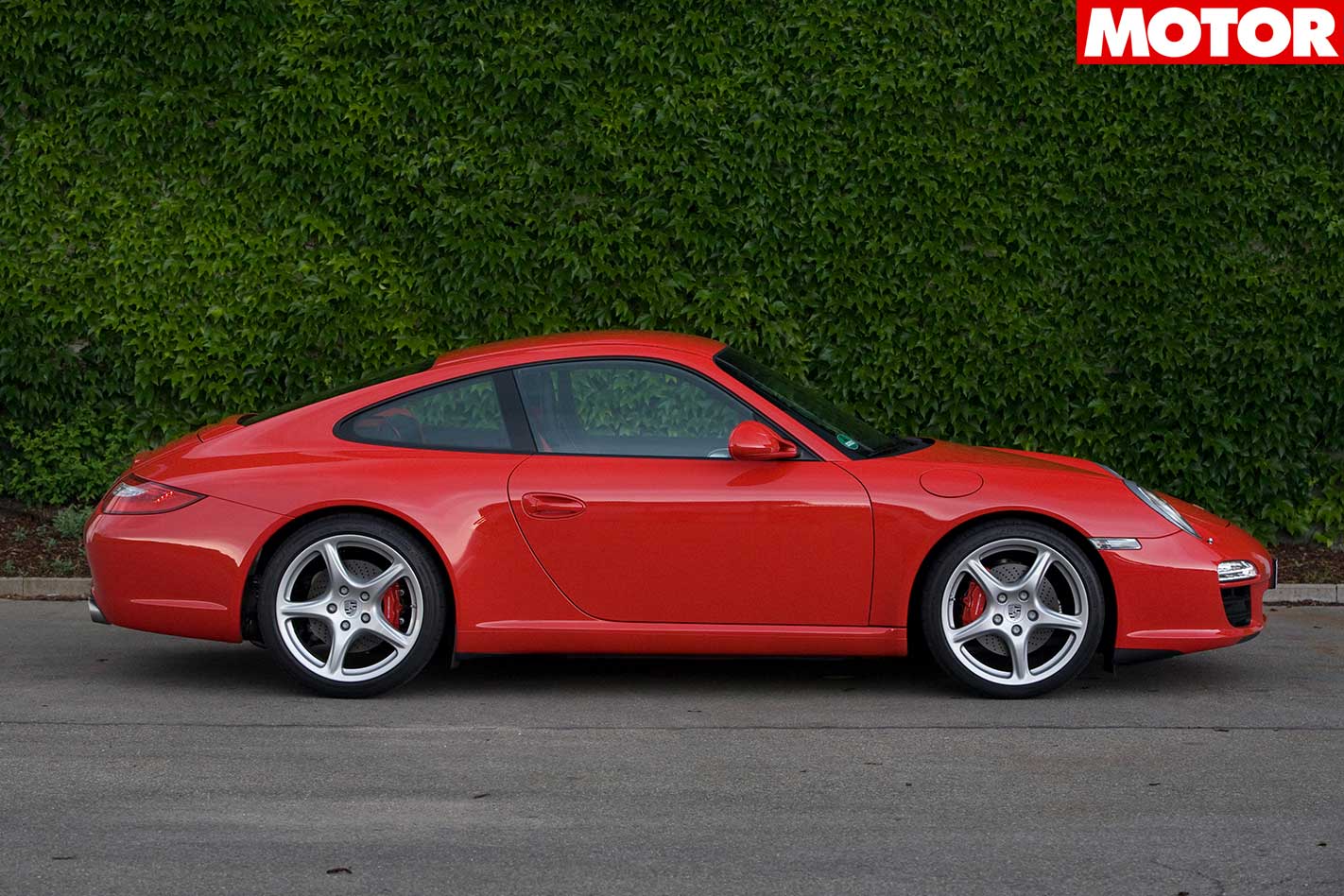
The effect of the altered bore/stroke relationship is a raised rev ceiling (up 200 revs to 7500rpm for both), aided by reducing friction with a special coating on the cup tappets and piston rings. But it’s the DFI 3.8 that feels to have the edge.
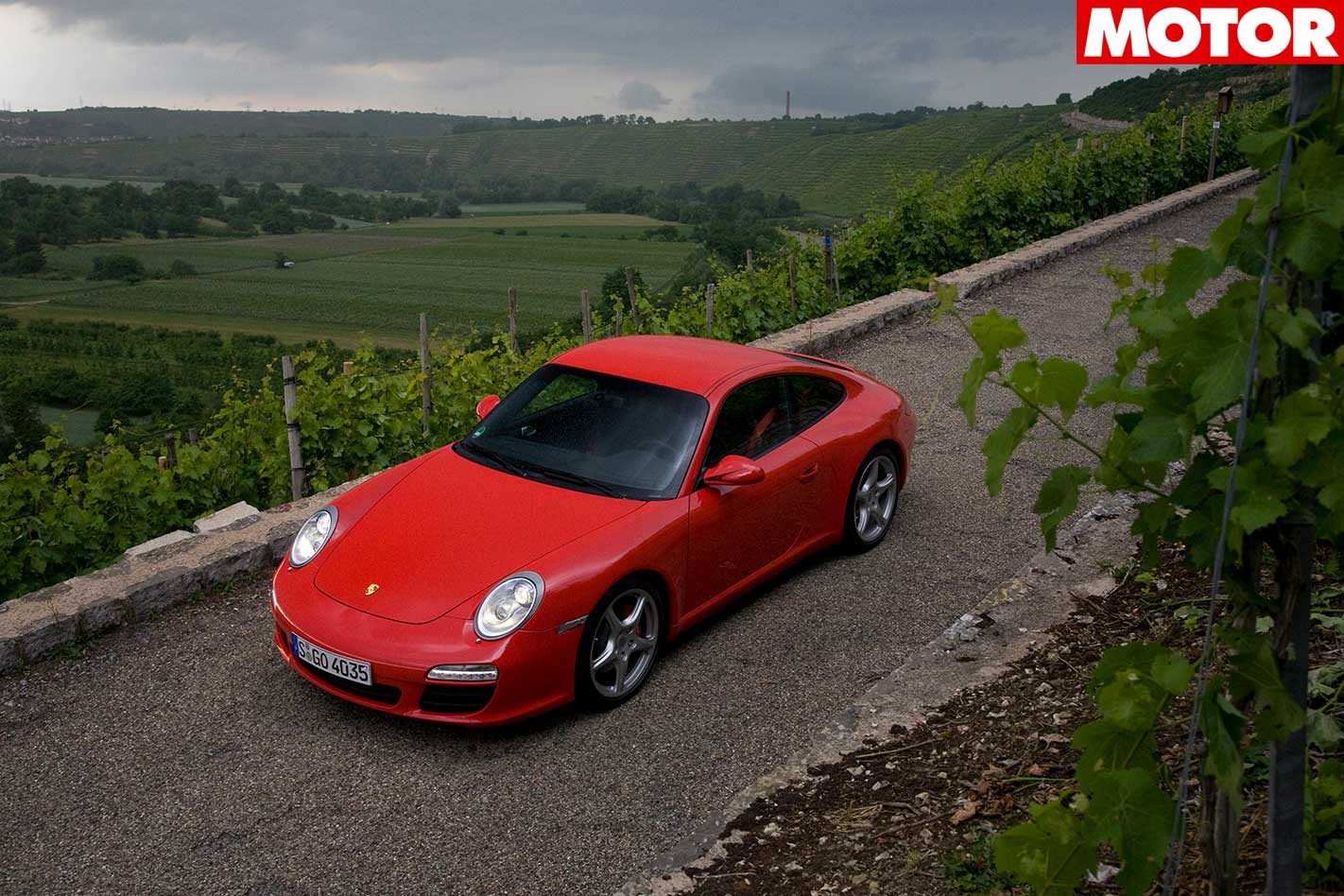
It’s hard to think of a more appropriate place to test the new 3.8’s mettle than on a blissfully unrestricted German autobahn. And that’s what lies ahead — about 35km of it.
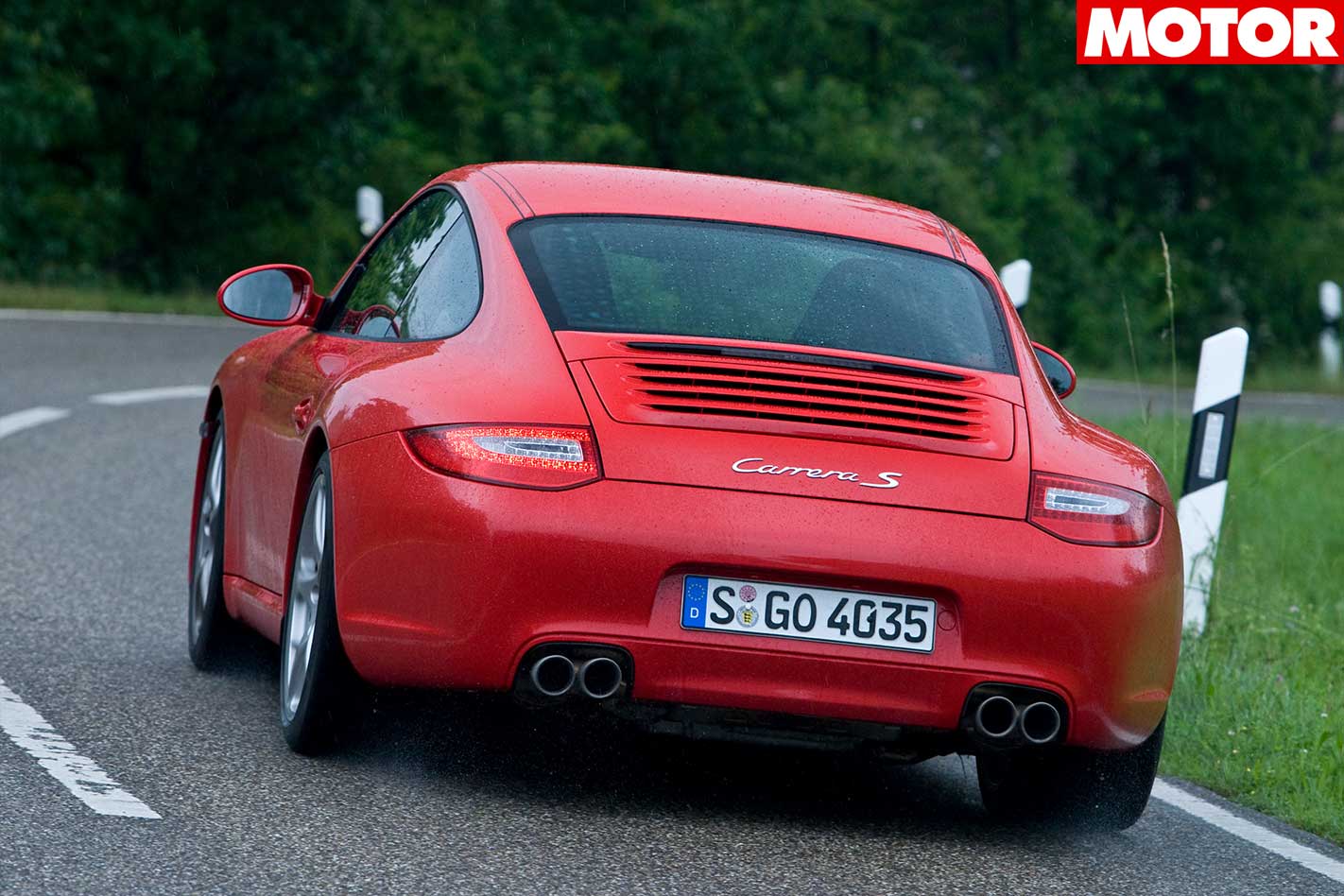
The new S absolutely relishes the challenge. I forget to check what third winds out to, but I manage to see 204 in fourth. Considering the ’08 manual coupe’s zero-to-200km/h claim is only 15.2sec, there’s hardly time to note down specs, so I grab fifth and keep the right pedal pinned. The S’s brilliant new 3.8 maintains the rage, but there’s a moment to notice the change in its character.
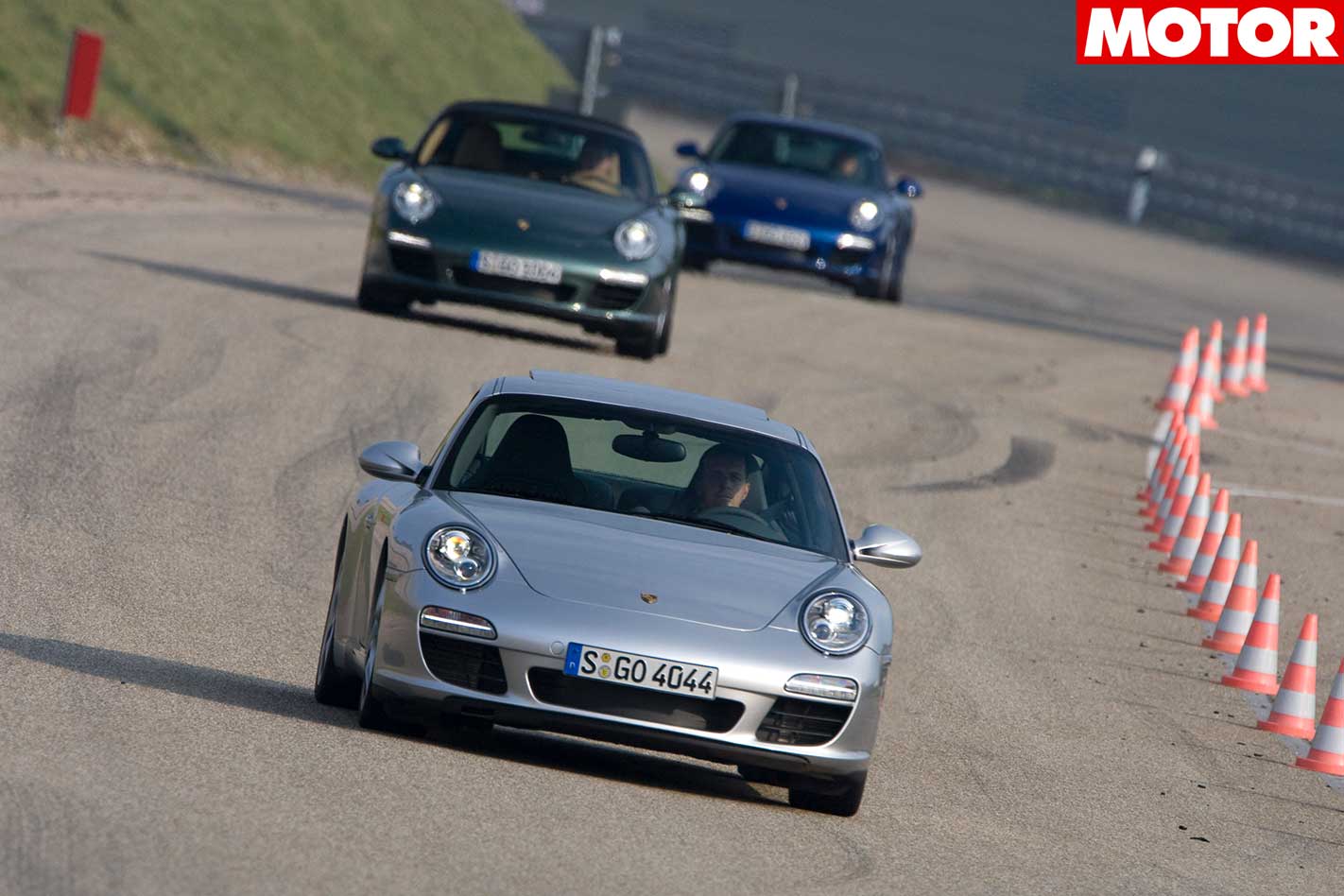
It sounds magnificent — even better than the old engine (and that’s saying something) — but above six-eight in sixth, it’s a noise than can be truly, indelibly appreciated. At full load in top gear, the centre dial’s digital speedo keeps ticking over beyond 270 and the engine’s hard-edged wail fills the Carrera S’s cabin.
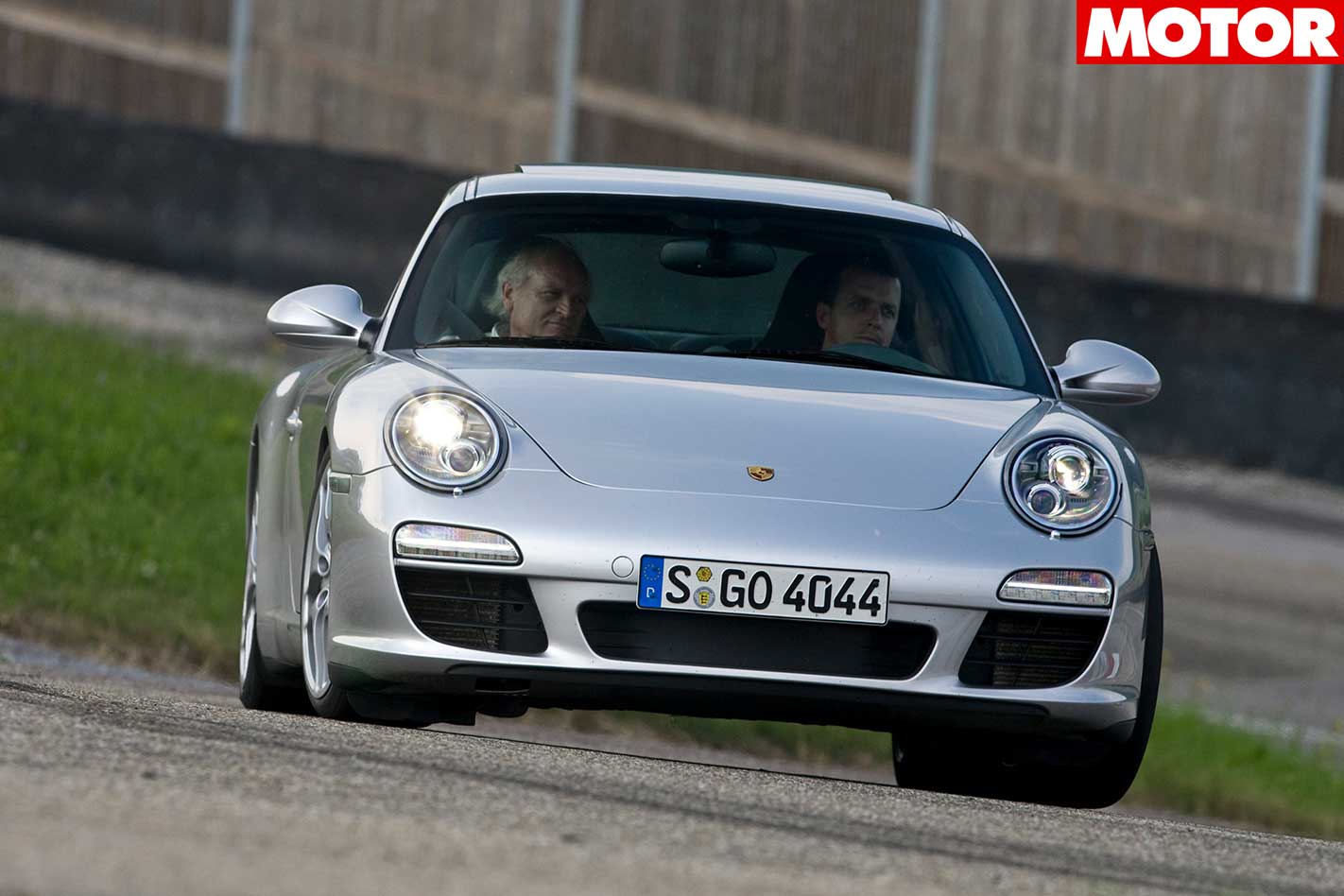
The 911 could’ve easily handled more. At close to top whack, it’s so confident, so planted, you’d think it was made for the roads skirting Stuttgart… But, contrary to popular opinion, not all German roads are billiard-table smooth.
The back roads snaking to our lunch car-swap point serve up a combination of on- and off-camber bends, up- and down-hill hairpins and one particularly scar-riddled section of road Porsche must have missed when tuning the ride of every Cayenne. And again, the new 911 performs beyond expectation.
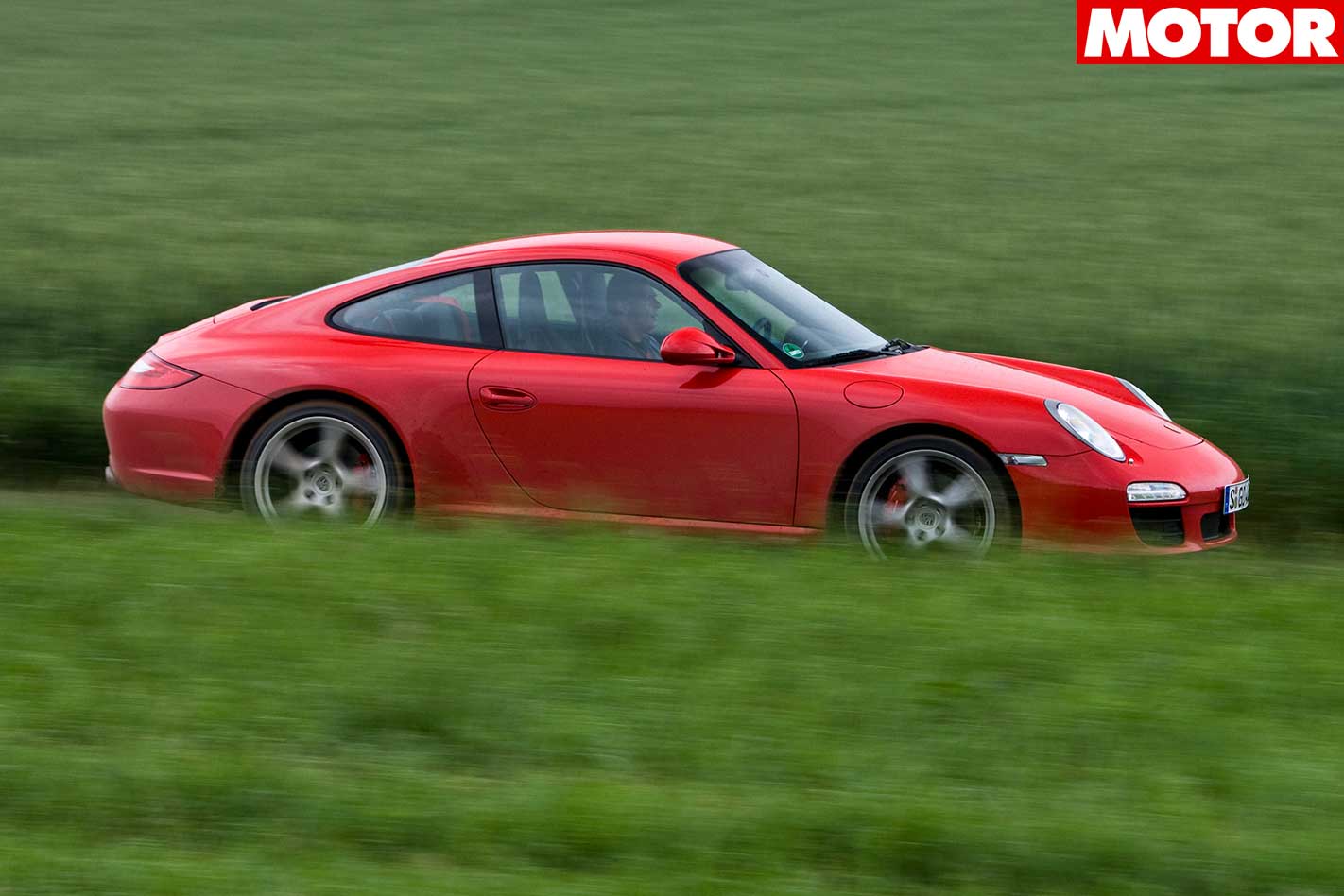
The improvement is small, but worthwhile — the Carrera S (on new-design, slightly lighter 19s) absorbs road hits with greater suppleness while nailing bends with unflappable poise and even greater connection.
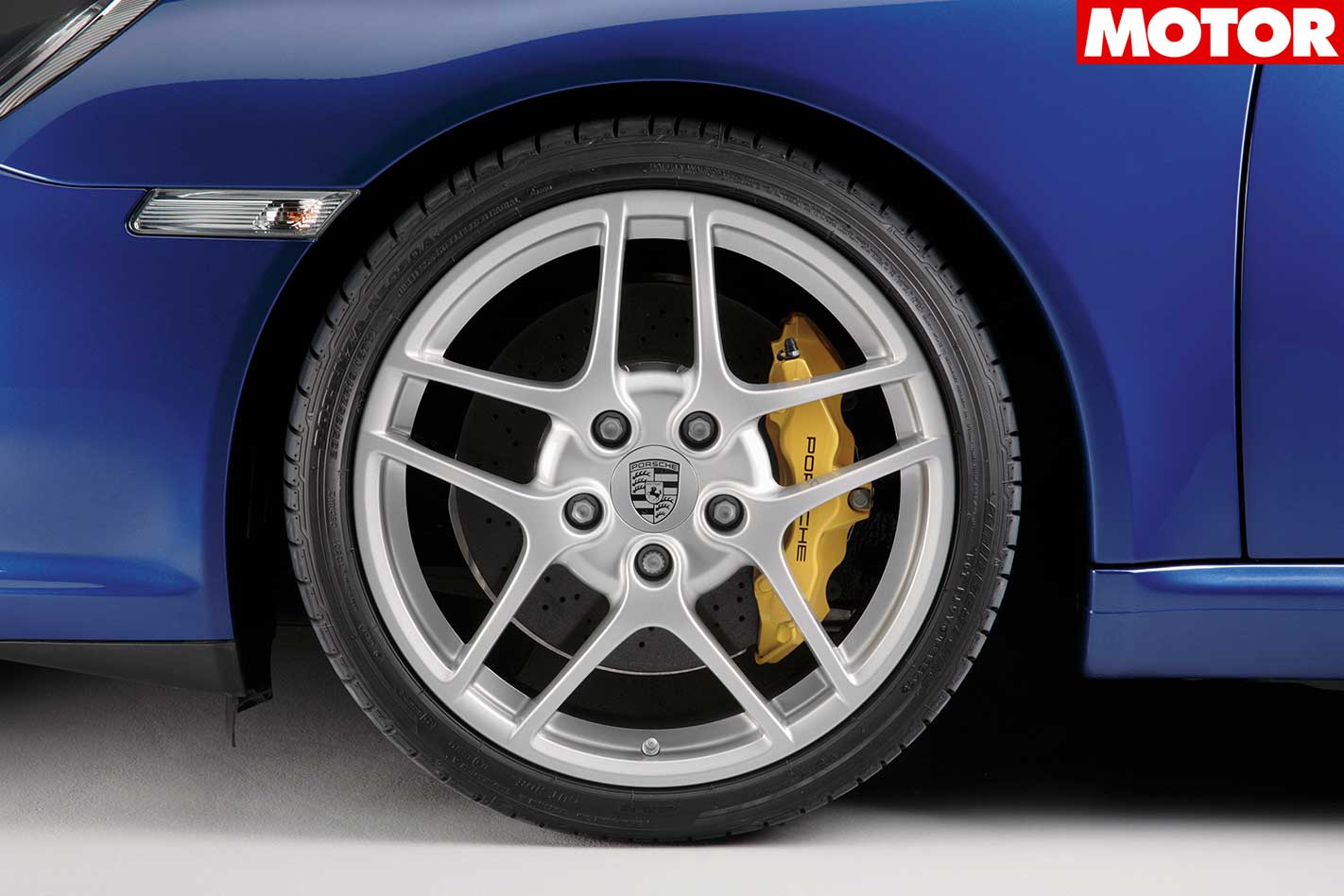
Our manual coupe’s optional (and bloody brilliant) Porsche Ceramic Composite Brakes (PCCB), denoted by their yellow calipers, carry-over their 350mm sizing and six-piston front, four-piston rear calipers from last year’s S, but the base Carrera scores an all-new brake system — 330mm drilled and vented front discs (up from 318) with stronger, stiffer four-piston calipers, and same-size drilled and vented rear discs.
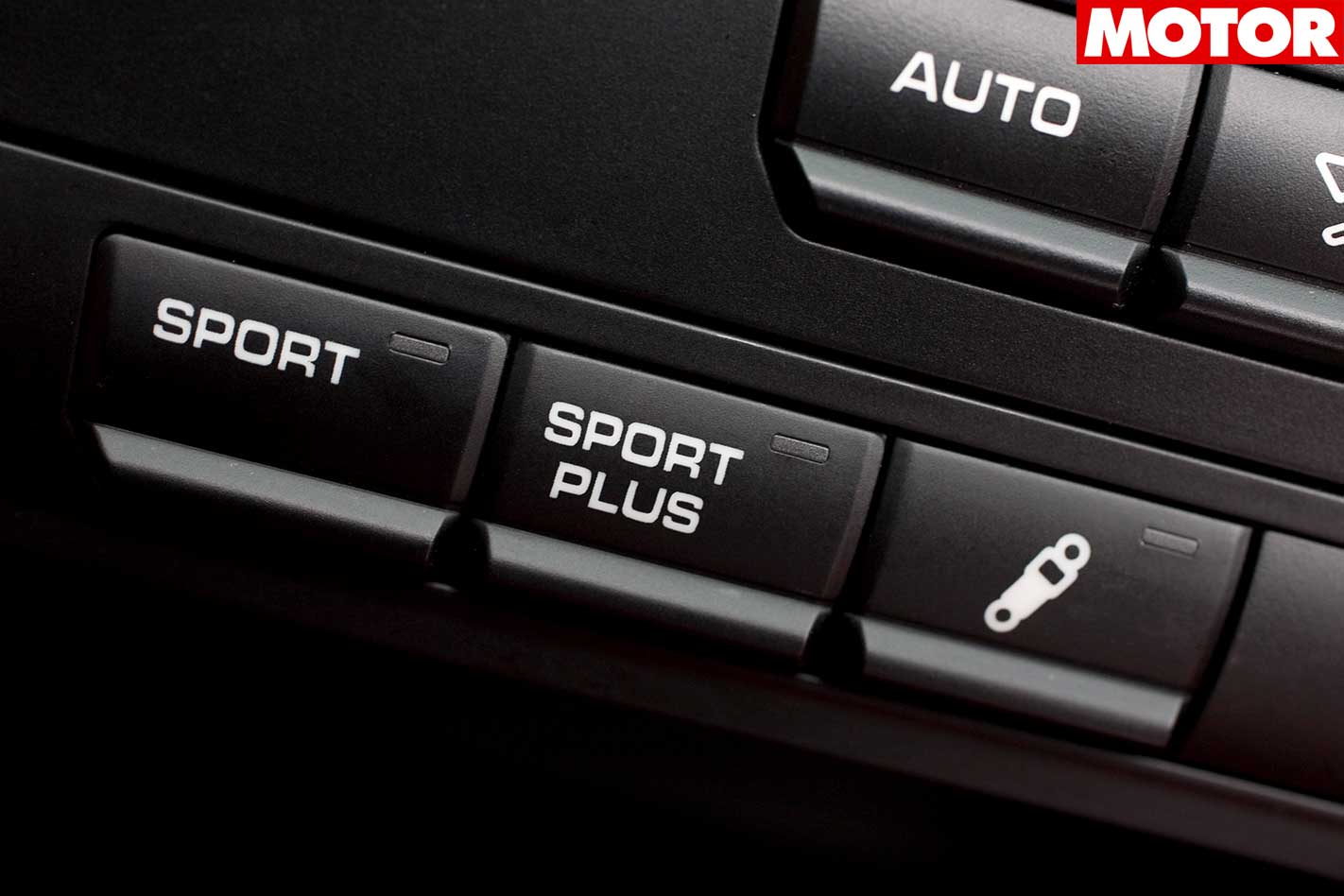
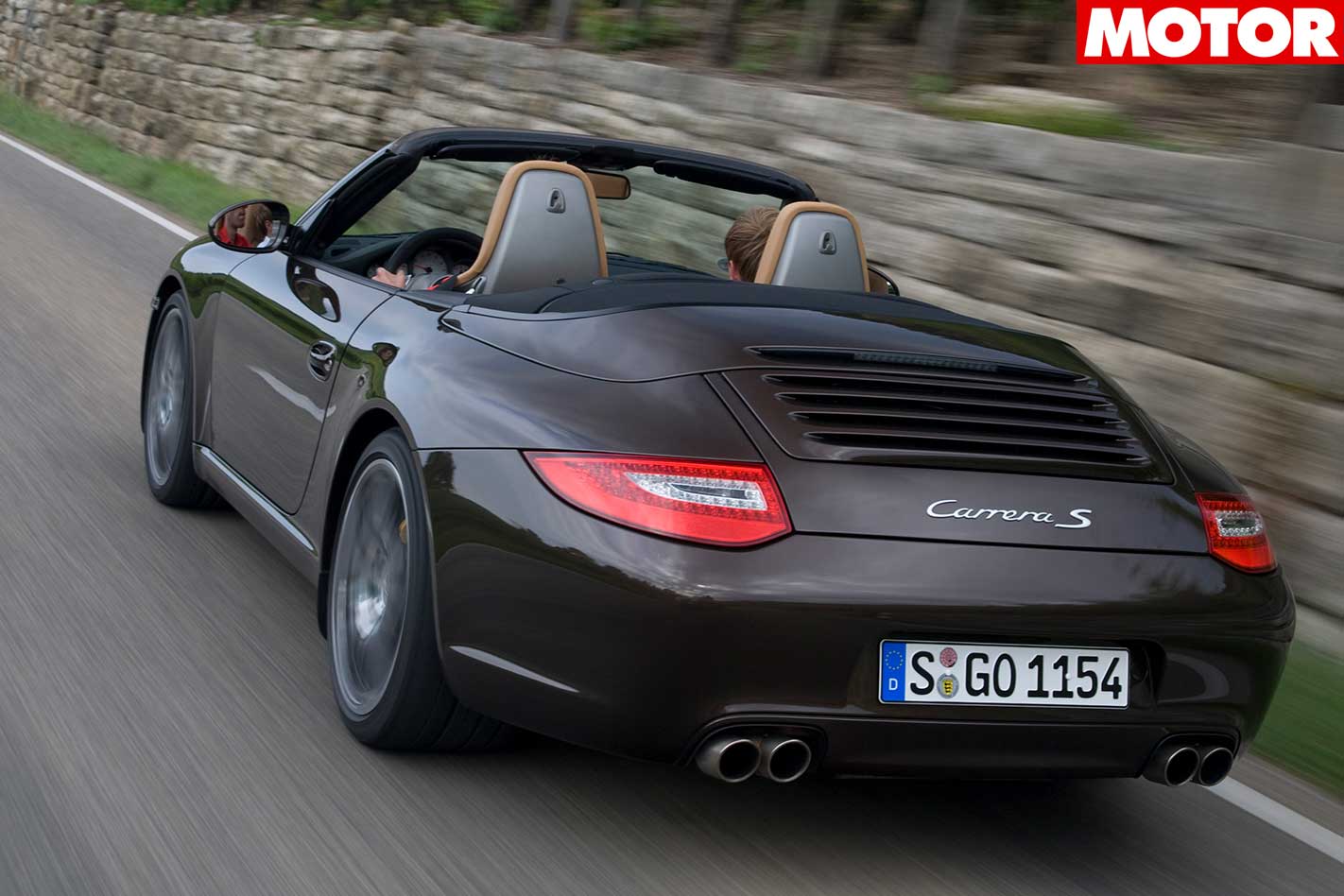
The steed is a 911 Carrera S PDK cabriolet featuring the optional Sports Chrono Package Plus. This incorporates a ‘launch control’ for the seven-speed PDK transmission, as well as an additional Sport button on the dash (Sport Plus) that cuts overall reaction and shift times to less than half of what they were in the Tiptronic S, and the new Carrera S coupe’s 0-100km/h time to just 4.3sec (4.5 without Sport Plus, or 4.7sec with the regular six-speed manual).
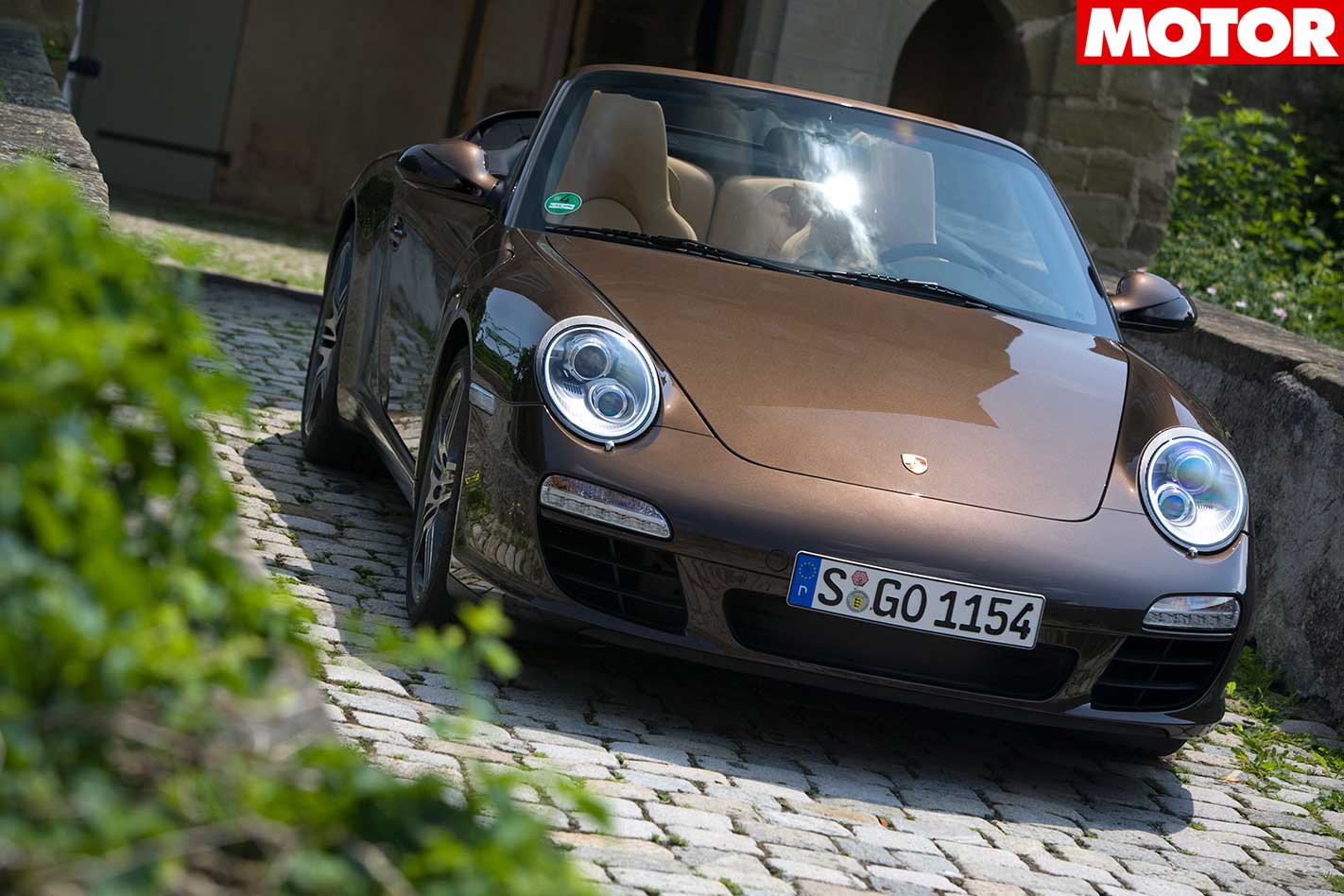
Indeed, in Drive, all settings in default, the only way you can tell the PDK has changed gear is by the alteration in engine note.
No vibes through the pedals, no twinkle through the 911’s terrific new steering wheel. It’s simply flawless. Unlike some of the VW/Audi DSG offerings, Porsche’s PDK doesn’t roll back on hills and never hesitates or clunks shifts. It’s arguably the easiest, most user-friendly two-pedal car in existence, yet there’s wickedness lurking just a simple movement away.
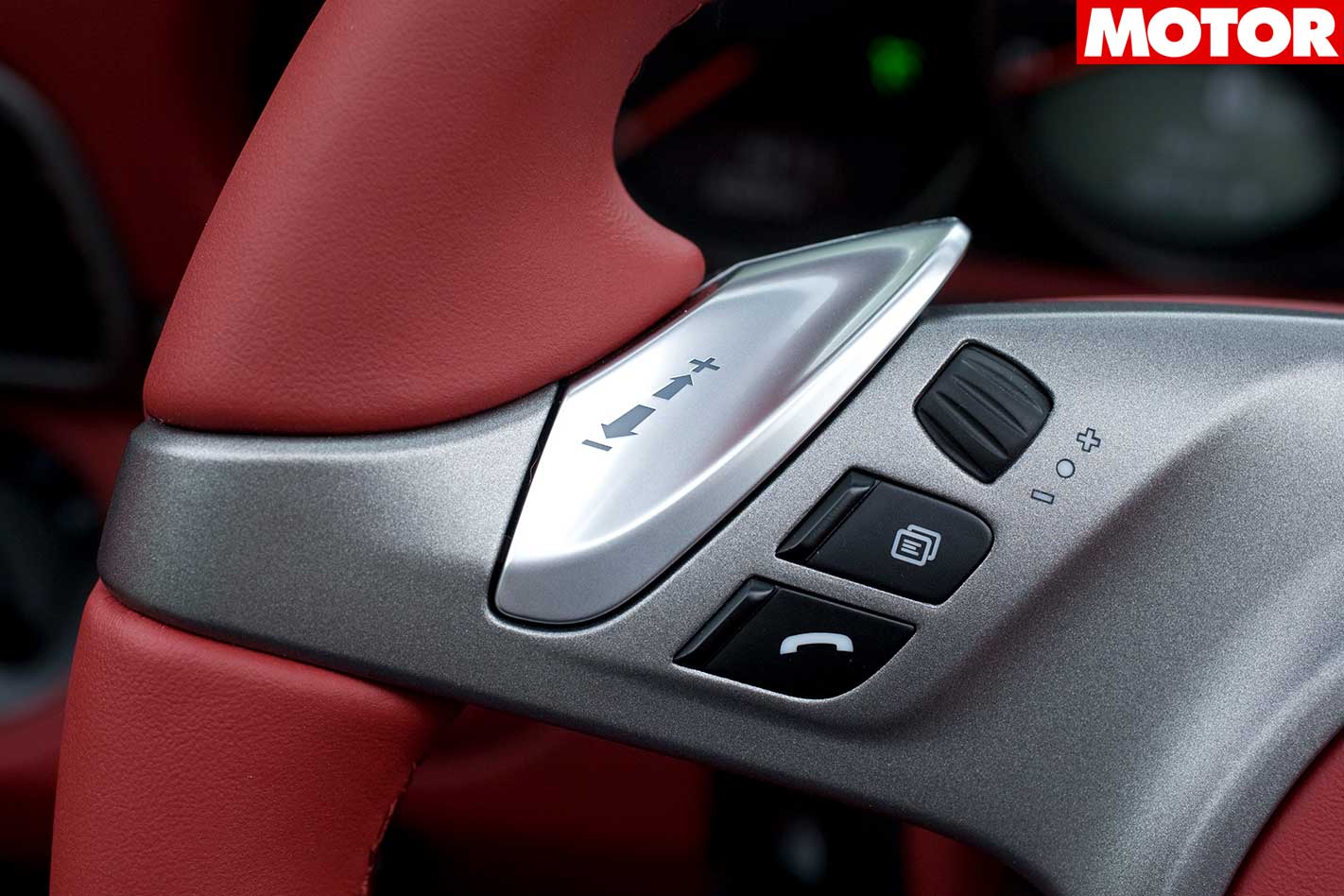
Hit ‘sport’ and the transmission mapping becomes more alert, but never stupidly over-eager. In any mode, mashing the throttle sends PDK down as many ratios as it can go in one deliciously seamless, throttle blipped action, but ‘Sport’ is so intuitive that even when you do that, it somehow settles again quicker than any two-pedal car I can think of. And there’s still ‘Sport Plus’ to go.
Select ‘Sports Plus’ at standstill and the words ‘Launch Control Active’ are highlighted in the centre dial’s digital screen. Then all you need to do is left-foot brake and quickly nail the throttle.
Relax again and you notice how calm PDK is when effortlessly swapping between seventh and sixth at a fast cruise over hilly terrain. At 100km/h, top gear in the old Tiptronic S saw it ticking over at 2450rpm, but PDK’s highest drops that to just 1750. No wonder the new double-clutch ’box has been so helpful in achieving such impressive reductions in carbon-dioxide emissions and fuel consumption.
The superb new steering wheel’s round centre boss wheel isn’t as fat and ugly as last year’s effort, and the slightly thicker, re-shaped rim feels just about perfect.
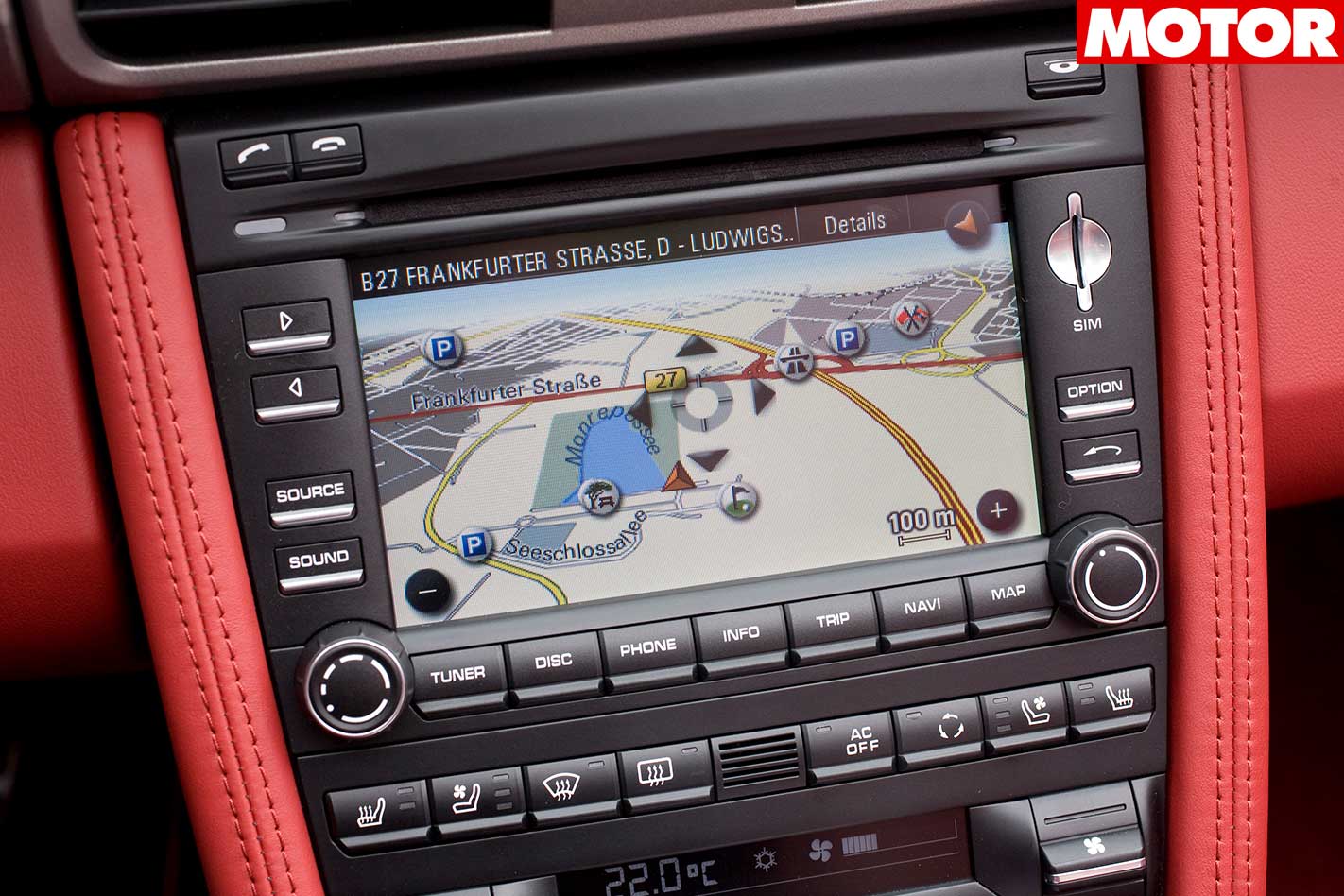
The main dash architecture remains the same, but the centre console’s more tactile switchgear is all new, and its colour screen is now touch-activated.
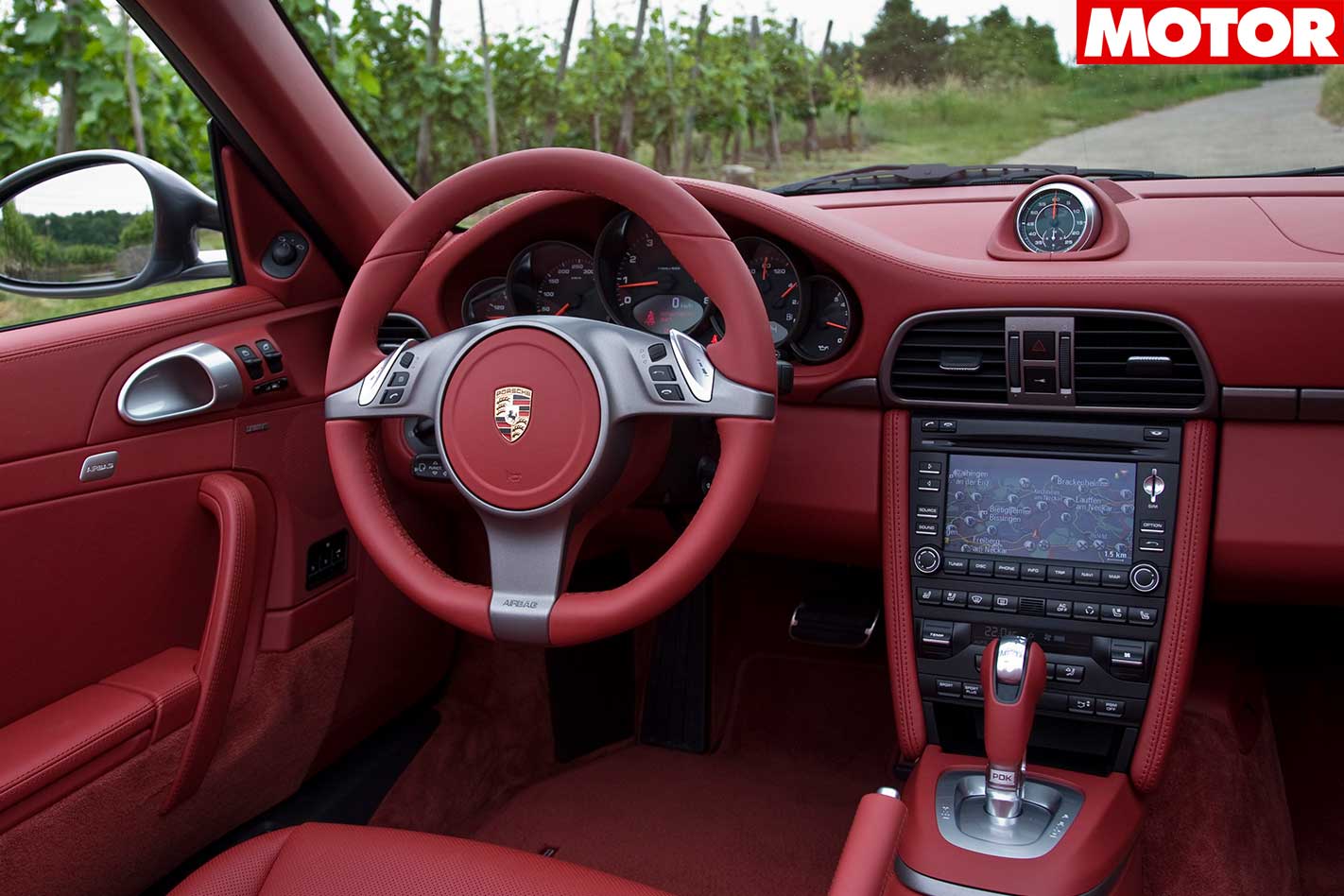
Both our cars had chocolate-leather interiors, just like a modern lounge, and that includes not only the seats, but the dash, wheel, doors, carpets, everything.
No, the 2008 911 won’t be cheaper, making it even less attainable than it ever was, but what an achievement. More ability and more character. More style and more choice. The Carrera S is so close to perfection that it’s hard to imagine how it could ever be better, but it will be.
Porsche confirmed on the launch that the next-generation 911 will be “faster again”, which is great news for us, if sobering news for its rivals. Poor old BMW. If it does decide to build a new-generation M1, what a challenge.
Have Cake, Eat Too
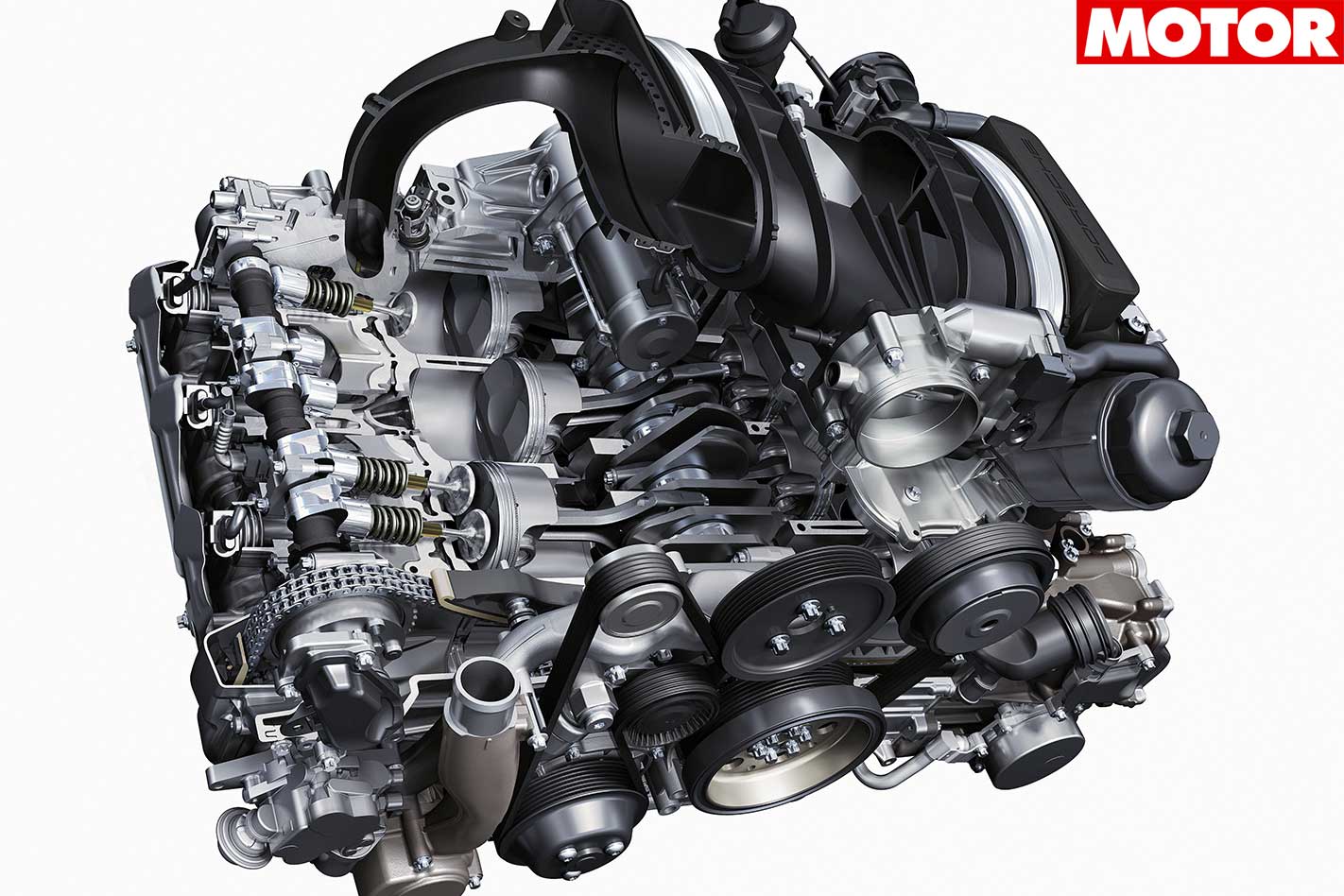
Measured from mid-crank height, they’re 20mm lower from the top and 10mm lower from the bottom, which lowers the centre of gravity. They weigh 6kg less, despite the use of stainless-steel for all components that carry fuel (so they can run on all types of petrol), yet the power units are 22% more rigid.
The oil circuit follows the principles of dry-sump lubrication, but employs an electronically-controlled pressure oil pump that operates on demand – thereby reducing weight and simplifying construction compared to a traditonal full dry-sump design. But the proof’s in the numbers.
The manual Carrera S is 9km/h faster, 0.1sec quicker to 100, 8% more economical and produces 10% less CO2. But the PDK is 15km/h faster than the old auto (at 300km/h), 0.8sec faster to 100 (or 1.0sec with Sports Chrono Plus), 13% thriftier (at 10.2L/100km) and 15% cleaner (at 240g/km). Indeed, the 3.6 PDK does 4.7 to 100, yet sips 9.8L/100km – less than a bloody Camry!
7-Speed PDK
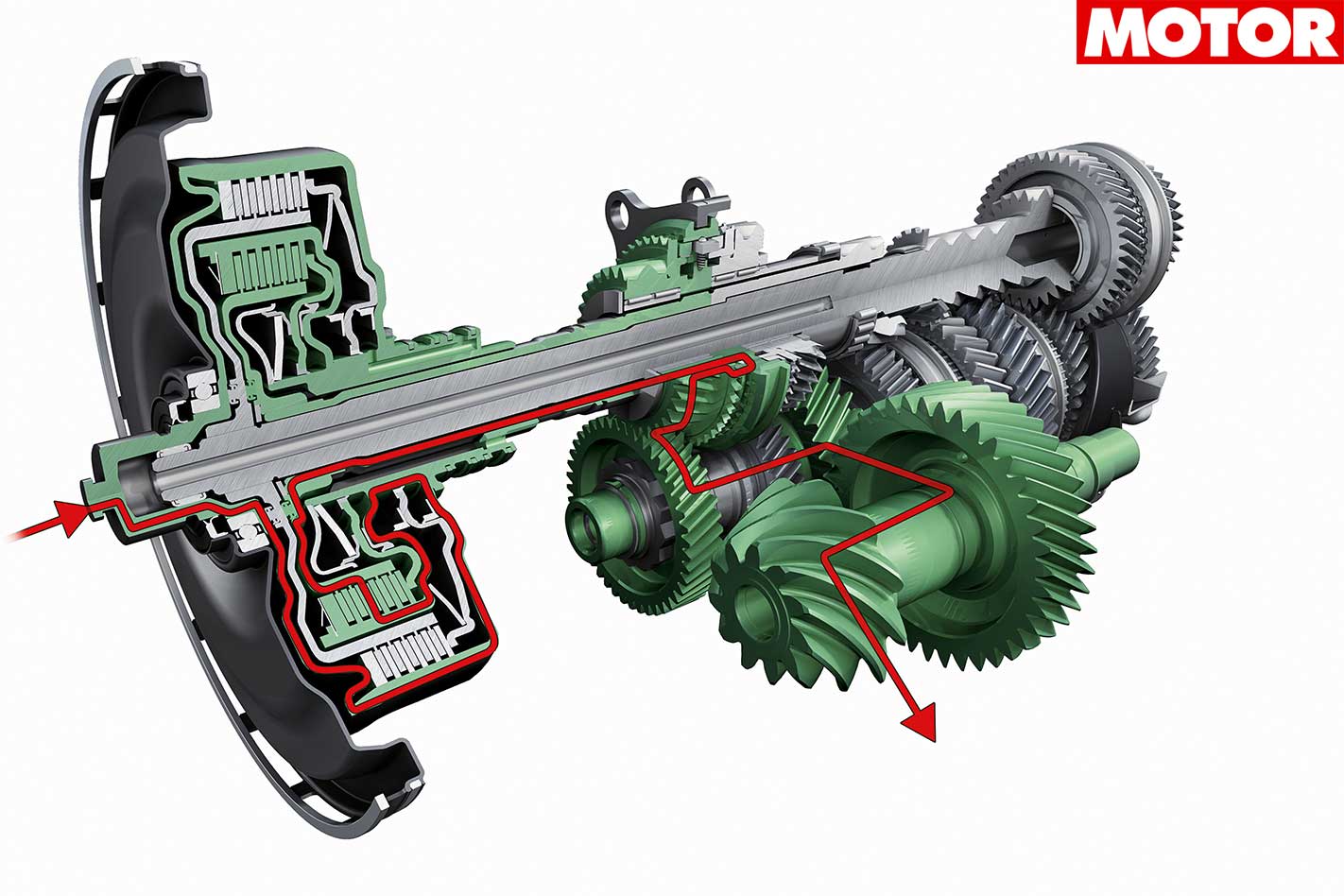
But, more importantly, it’s up to a second quicker to 100km/h (4.3 v 5.3 for an S with Sports Chrono Plus) and is now the ’box du jour for serious track addicts. It’s only rated to 440Nm, though, so don’t expect one in the Turbo any time soon.
Double-clutch Pioneers
Fast Facts
Fast Times 0-100km/h: 4.5sec (4.7)* 0-160km/h: 9.6sec (9.9)* 0-200km/h: 14.8sec (15.2)* 0-1000m: 22.7sec (22.9)* Top speed: 300km/h (302)* * Manufacturer’s claims PDK (manual)
Likes: Everything you could want in a sports coupe – even economy! Dislikes: Shame it’s such an extravagent purchase for most of us
MITSUBISHI has urged owners to update around 100,000 potentially lethal Takata airbags after the pace at which the car maker was replacing them dried up to a trickle.
A spokesman for the Japanese car maker said in the early stages of the recall, about 1000 airbags a day were being replaced. However, the spokesman said after replacing more than 136,000 of the 235,151 potentially faulty airbags in Mitsubishi-badged products, the rate of replacement had slowed to about 500 a day despite the company’s efforts to reach out to affected owners.
“In some cases we have sent up to six letters to owners to advise them of the need to replace their Takata airbag inflator, without any result,” he said.
Mitsubishi has seven separate recalls to replace the Takata airbags, spanning cars up to 15 years old.
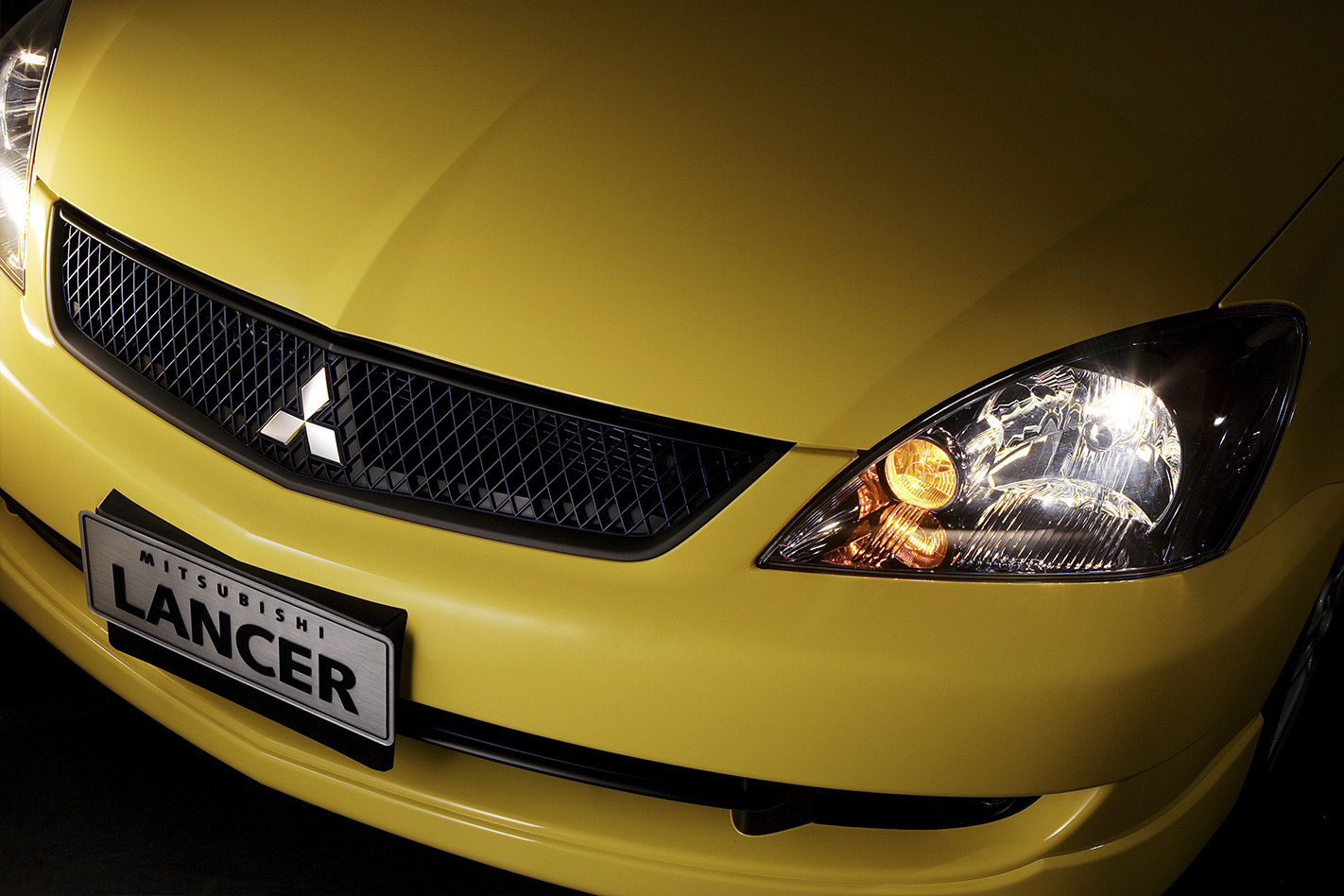
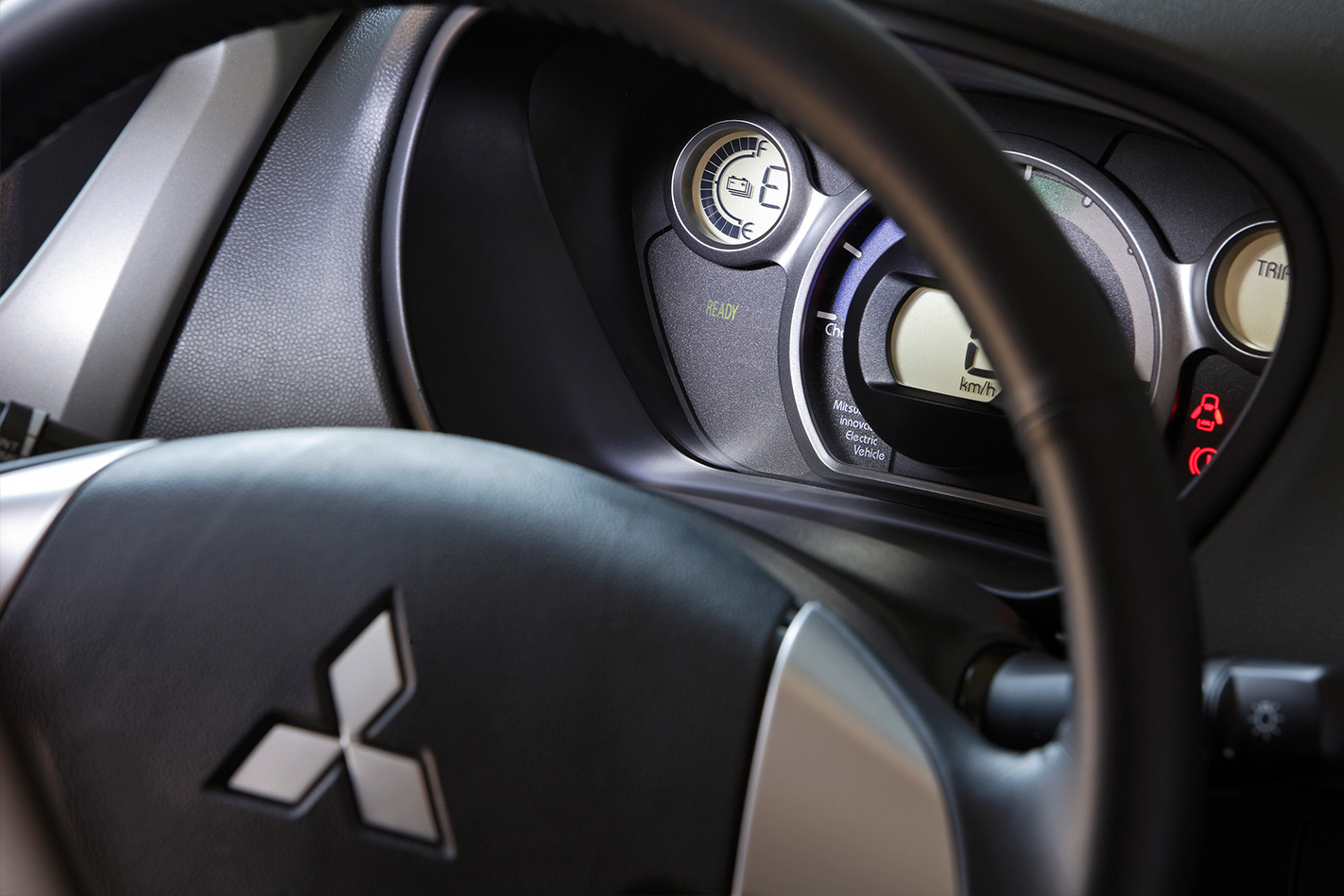
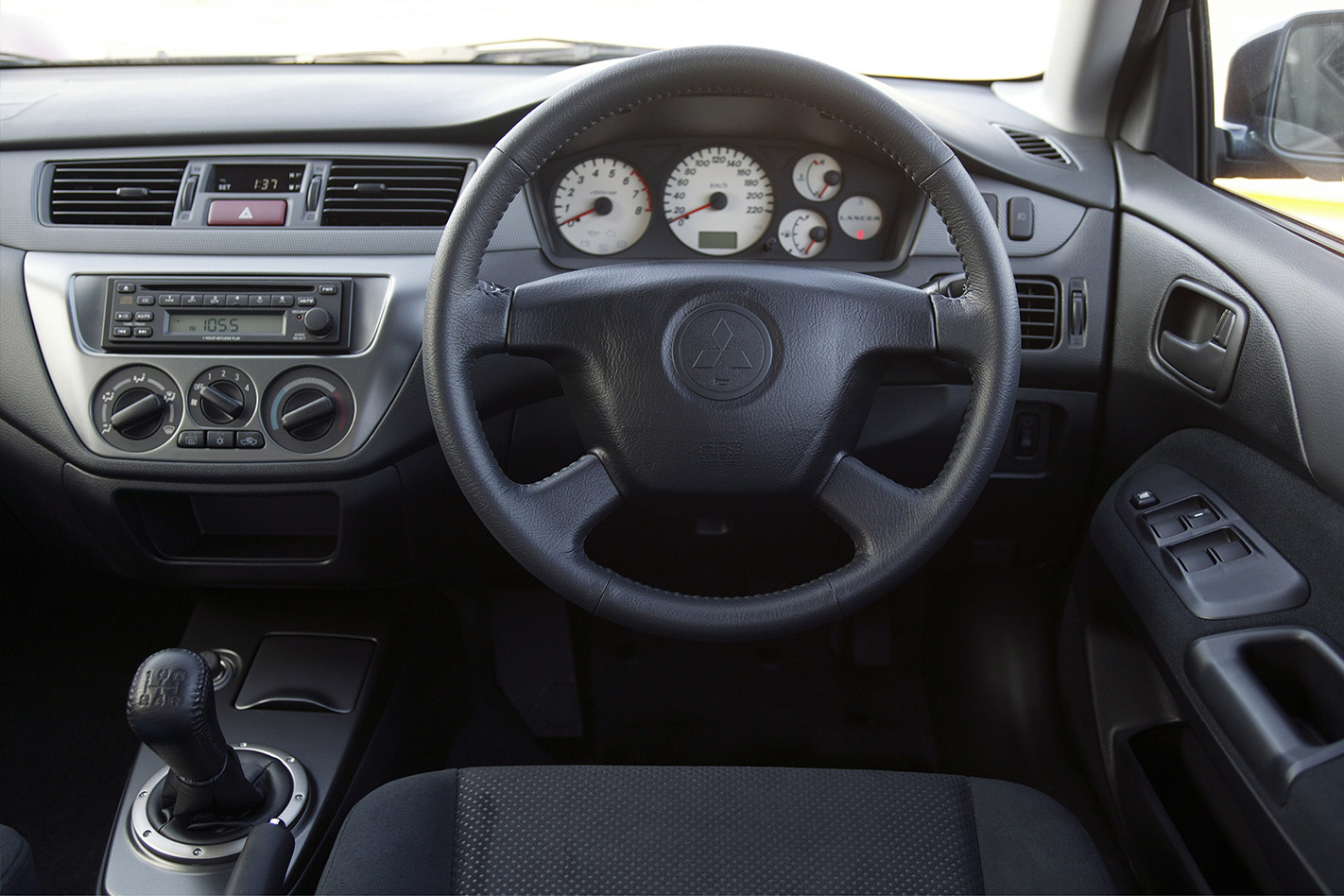
Models affected include Australia’s first electric car from a mainstream manufacturer, the Mitsubishi i-MiEV electric car sold between 2010-11; the Lancer small car built between 2003-08; the Triton trade ute built between 2007-14, and various versions of the Pajero large SUV built between 2006-16.
Today, it has taken the unprecedented step of publishing an open letter to Mitsubishi owners in the national media asking them to heed the recall notice. Signed by Mitsubishi Australia chief executive John Signoriello, it presses customers to visit the Mitsubishi website to see if their vehicle is one of those caught up in the recall.
Mitsubishi is believed to be facing the same owner apathy many of the other brands caught up in the global airbag recall – including BMW, Lexus, Mazda, Nissan, Subaru and Toyota among others – are struggling with. One industry source told Wheels that some owners were even refusing to take part in the recall because they believed they were unlikely to ever crash, and did not need the replacements.
None of the Takata airbags that are part of Mitsubishi’s recall are the so-called “alpha” airbags, which are the ones identified as having an increased risk of death or serious injury if they deploy in a crash.
However, Mitsubishi has warned that there is still a risk that the Takata airbags used in its vehicles could still shoot dangerous shrapnel out at vehicle occupants once they explode to inflate the bag, or split if the propellant has come into contact with the airbag’s fabric and damaged it.
Mitsubishi’s struggle with the Takata recall is in contrast to Honda, which by late last year had completed more than 86 percent of its almost 650,000 airbag replacements to models including the Jazz city car, Civic small car, Accord Euro small sedan, CR-V mid-size SUV and Odyssey people mover. Unlike Mitsubishi, Honda’s airbags have been linked to a fatality after the death of a Sydney man in what police described as a “survivable” crash last year.
At its peak, Honda was replacing up to 9000 airbags a week. Its current rate is about 3500 a week.
Honda spokesman Neil McDonald said the car maker had sent more than 1.2 million communications to customers, including letters and text messages, in its bid to track down affected owners, and had tried some novel approaches to locate them.
“We use NEVDIS [the National Exchange of Vehicle and Driver Information System that contains vehicle registration details] data to contact customers; in other cases we’ve used debt collectors to contact owners,” McDonald said.
“We [also] have identified postcode hotspots where there are still outstanding recalls, and most of these are in metro Melbourne and Sydney (Werribee, and Box Hill, Glen Waverley areas in Melbourne; and western Sydney areas like Cabramatta).”
It is believed as many as four million vehicles in Australia are affected by the Takata recall, with more cars regularly swelling the numbers as car makers constantly add to the list of cars affected as new batches of the faulty units are discovered. About 1.7 million have been fixed, according to Australian Competition and Consumer Commission records.
The ACCC, which is overseeing the Takata recall here, is weighing up whether to issue the nation’s first-ever compulsory recall for a faulty product, which would force owners to have the life-threatening airbags replaced.
The Takata airbags are linked to one death in Australia and at least one serious injury.
There was a time when the Mazda 3 regularly traded blows with the Toyota Corolla for sales domination in Australia, but it now finds itself fighting on three fronts, with trade utes and SUVs joining the fray.
So Mazda has launched its latest salvo to keep its popular small hatch and sedan combo in the top four here, with equipment upgrades at the lower end of the range and sharp driveway pricing, which should see it through until an all-new model arrives next year.
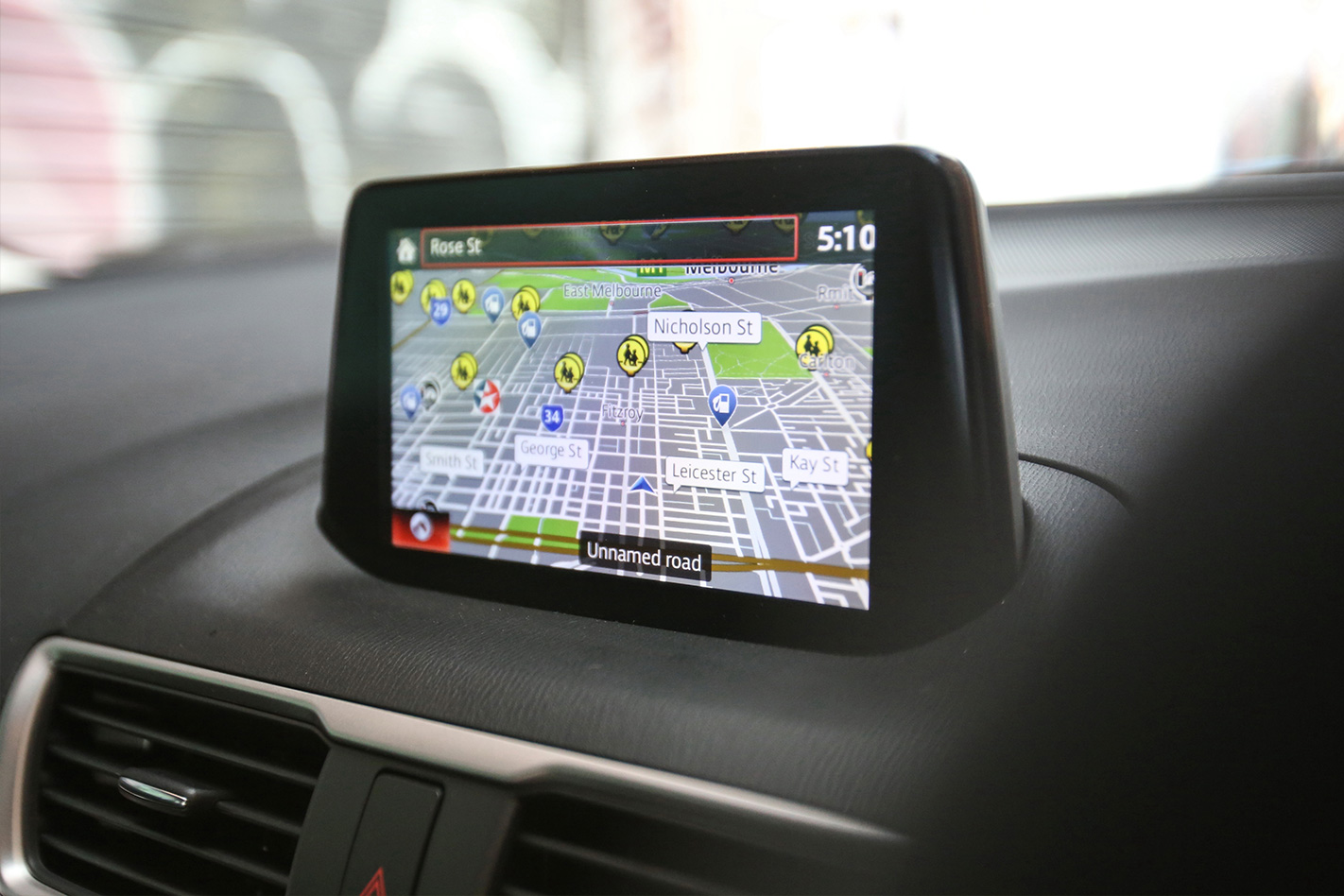
The upgrades start with the cheapest Mazda 3, the Neo, which is renamed the Neo Sport and finally gains a floating touchscreen screen with Mazda’s MZD Connect infotainment system, reversing camera, digital radio and two extra speakers.
The big-selling Maxx also has “Sport” added to its badge, and gets rain-sensing windscreen wipers, dusk-sensing headlights, dual-zone climate control and an electric parking brake.
Driveway prices for the Neo Sport and Maxx Sport are just $1000 and $600 above the manufacturer’s retail price respectively, even with the additional kit.
Meanwhile, the Mazda3 Touring’s driveway price is only $200 more than retail. It gains advanced keyless entry, adding to premium features including leather trim and powered, auto-folding door mirrors.
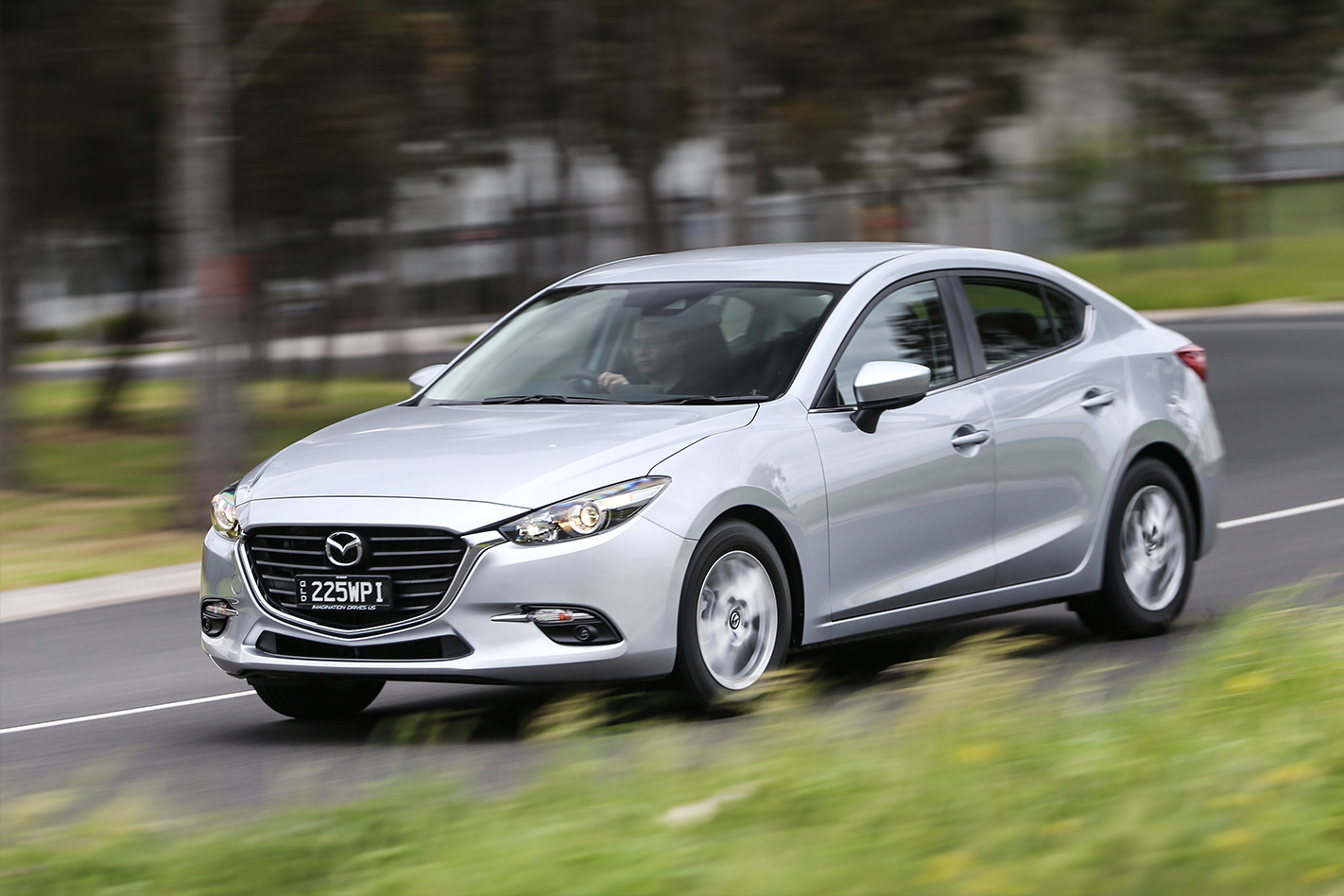
The additions make the Mazda 3 Neo Sport, which comes standard with automatic emergency braking, more than just a low price point to bring buyers to the showroom, and reinforces the second-up Maxx Sport as the pick of the bunch in terms of value and equipment.
Despite their new names, the Neo Sport and Maxx Sport gain nothing by way of performance from the 2.0 litre SKYACTIV-G petrol engine shared with the Touring.
The 2.5-litre SKYACTIV-G-powered SP25, SP25 GT and SP25 Astina variants don’t add to their already extensive features lists, but also benefit from little or no driveaway costs.
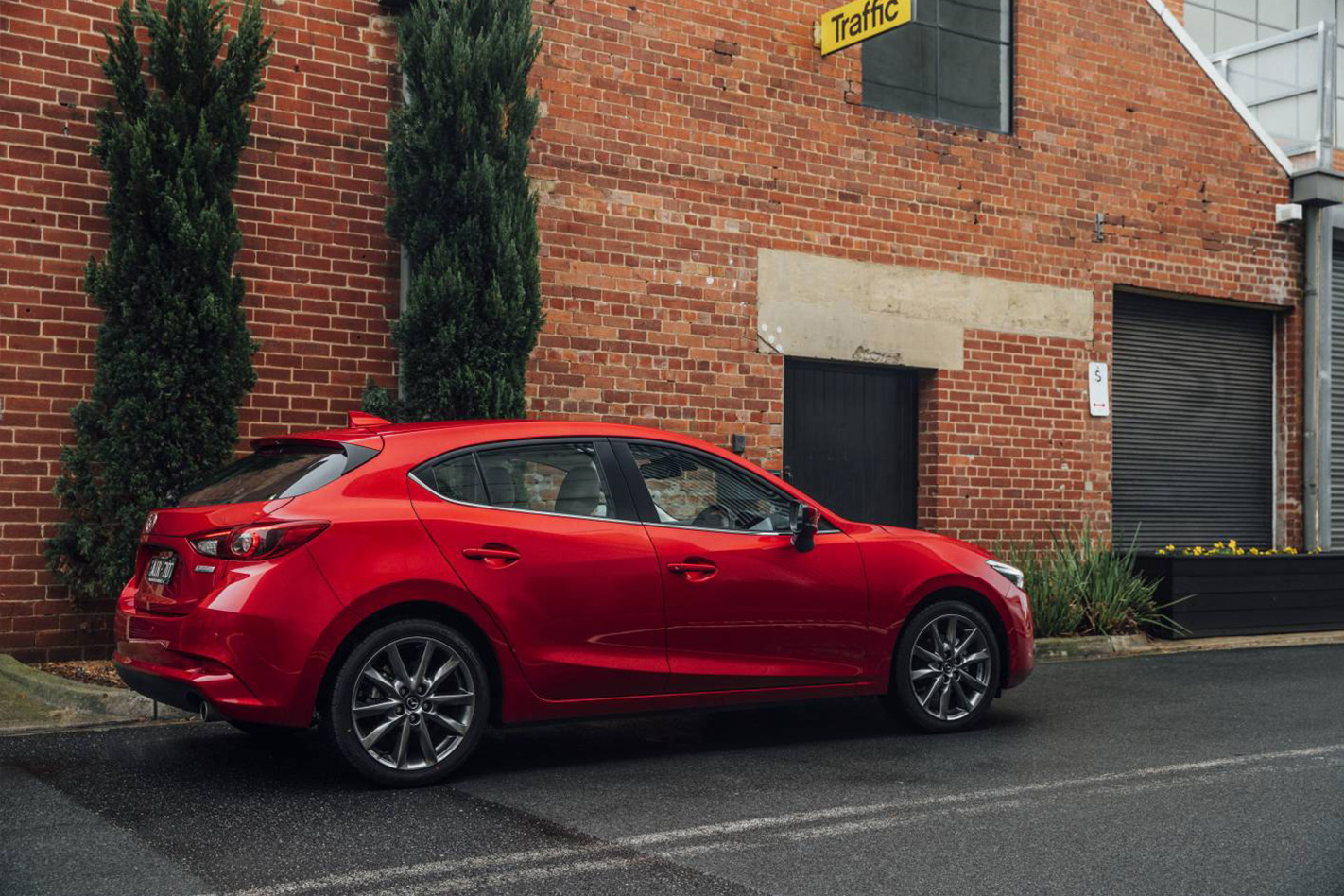
All Mazda 3 variants come with a choice of a six-speed manual gearbox or six-speed automatic transmission.
2018 Mazda 3 hatchback and sedan retail/driveway pricing
- Mazda 3 Neo Sport man – $20,490/$21,490
- Mazda 3 Neo Sport auto – $22,490/$23,490
- Mazda 3 Maxx Sport man – $22,890/$23,490
- Mazda 3 Maxx Sport auto – $24,890/$25,890
- Mazda 3 Touring man – $25,290/$25,490
- Mazda 3 Touring auto – $27,290/$27,490
- Mazda 3 SP25 man – $25,690/$25,990
- Mazda 3 SP25 auto – $27,690/$27,990
- Mazda 3 SP25 GT man – $29,990/$29,990
- Mazda 3 SP25 GT auto – $31,990/$31,990
- Mazda 3 SP25 Astina man – $33,490/$33,490
- Mazda SP25 Astina auto – $35,490/$35,490
ALPINA has applied its mechanical magic to BMW’s third-gen X3, turning the mid-sized luxury SUV into the fire-breathing XD3 with 286kW/900Nm and performance to worry some serious hi-po hardware.
Unfortunately, Aussies won’t get the opportunity to buy the most vicious version, with a watered-down XD3 the only option, if confirmed for local showrooms. Both offerings, however, promise to add some pepper to the crossover market.
While some car-makers are baulking at diesel power, the boutique BMW tuner is embracing liquid coal in spectacular style, fitting the left-hand drive xDrive30d’s six-cylinder engine with a mind-boggling four turbos.
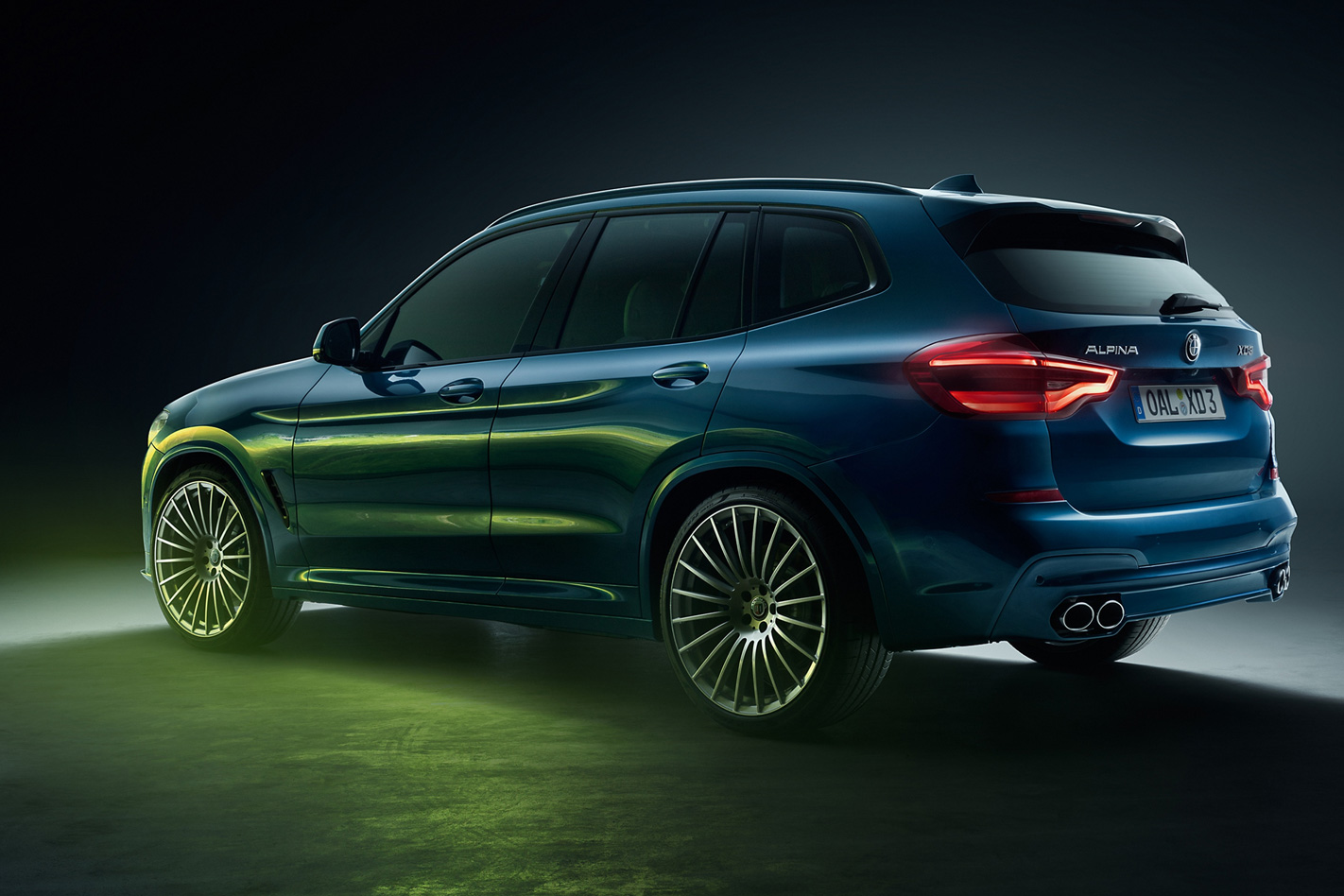
But despite the prodigious power and monstrous torque, the Buchloe bruiser will still return about 9.0L/100km, says its maker.
Alpina has lined up the 2018 Geneva motor show for the XD3’s debut, where it will make its first public appearance alongside some of the company’s other fettled BMWs, including its new 5 Series-based D5 S sedan and B5 Touring, and the B4 S convertible which takes the 4 Series convertible as its basis.
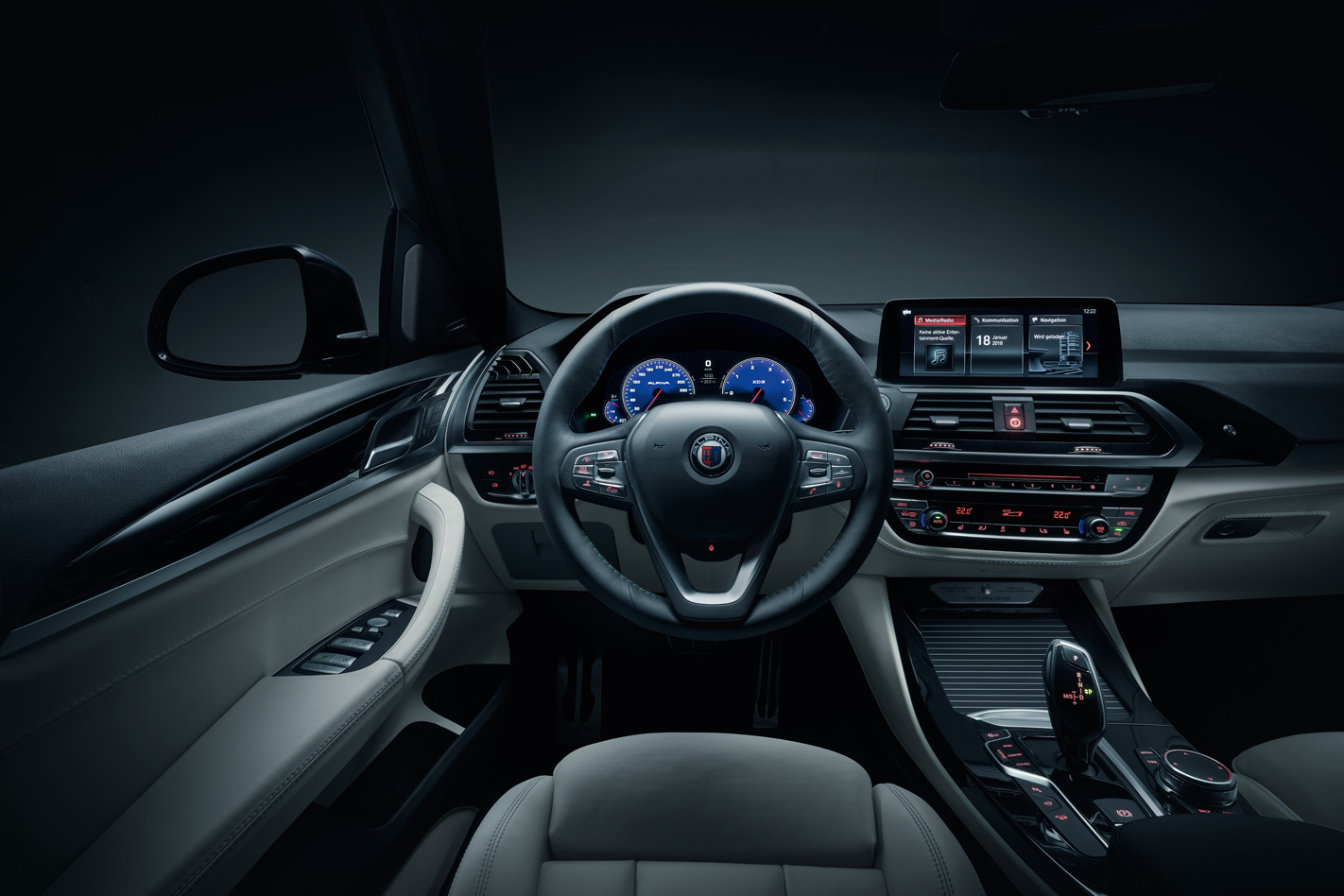
Amputating a brace of blowers knocks power back to 245kW, torque drops to 700Nm, the 0-100km/h dash takes a little longer at 4.9 seconds, with the top speed levels off at 254km/h.
Despite the performance deficit, the right-hand drive XD3 is still a potent SUV and definitively wipes the floor with the rest of the BMW X3 range. Only the forthcoming X3 M40i will challenge its mantle when it arrives in July packing a twin-turbo six that knocks out 265kW/500Nm – enough to get to 100km/h in 4.8s.
Alpina Australia is yet to confirm if the XD3 will be offered locally but given the increasing range which now extends to B3, B4, B7 and soon-to-be B5, and the local demand for high-performance SUVs, the XD3 would appear to be a dead-cert.
A mid-life facelift for the BMW i3 compact electric car adds a more athletic variant to the four-strong line-up.
WHAT IS IT?
A sportier version of BMW’s WCOTY-winning EV that adds power, torque, width, functionality and driver appeal.
WHY WE’RE DRIVING IT
The BMW i3 arrived in Oz in 2014, and other than a battery upgrade in 2016 hasn’t seen much by way of running improvement, until now. The BMW i3S is a decent step on and introduces a ‘driftable’ traction control system that’s on its way into the rest of the BMW line-up.
The Nissan Leaf is the most obvious one, but the old model is no longer available and the new one isn’t yet here. Then there’s the Renault Zoe that’s only available to fleet buyers. Other than budget-stretching Teslas, the BMW i3 is it as far as pure EVs are concerned.
THE WHEELS VERDICT
BMW’s sharpened i3S is even livelier than the already engaging i3 and it looks better, too, which makes the relatively meagre $1200 price premium over the regular car easy to swallow. But the i3 is starting to show its age in areas such as active safety, so the circa-$70K price tag is becoming harder to reason with even though the i3S admirably upholds the fun-to-drive, eco-friendly credentials.
THE WHEELS REVIEW
HOW’S this for a reality check. Right now, private buyers in Australia shopping for an electric car (that isn’t a $100K+ Tesla) have just one choice: the BMW i3. While the rest of the industry tramples over itself to blow more smoke about future EVs, the pioneering i3 is getting on with it, and has been since 2014.
In 2016 a 94Ah/33kWh battery upgrade boosted the WCOTY-winning EV’s range, and now this mid-life facelift introduces a sportier variant called the i3S in battery electric (BEV) and range-extender (REX) formats at a $1200 premium over the regular i3 models.
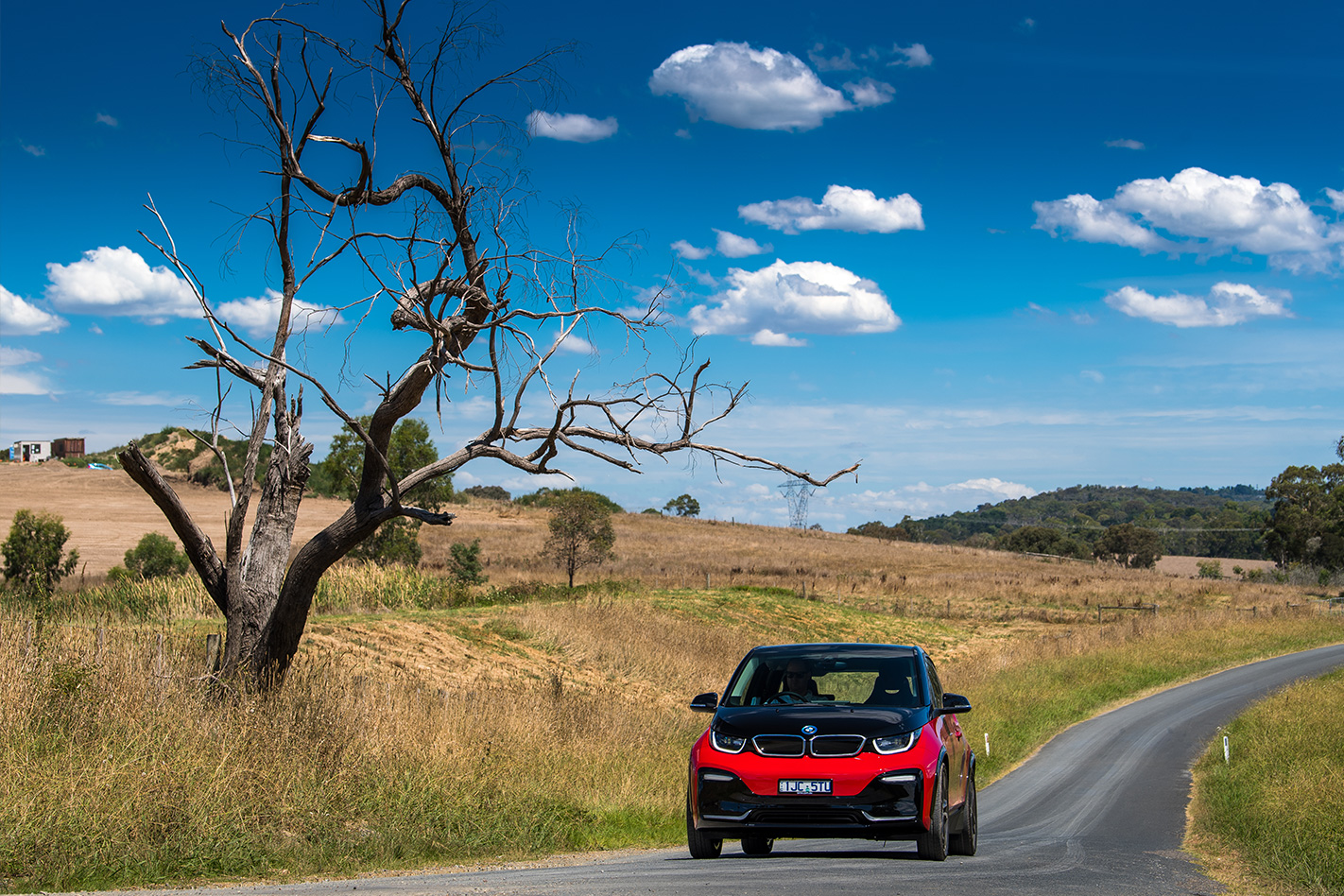
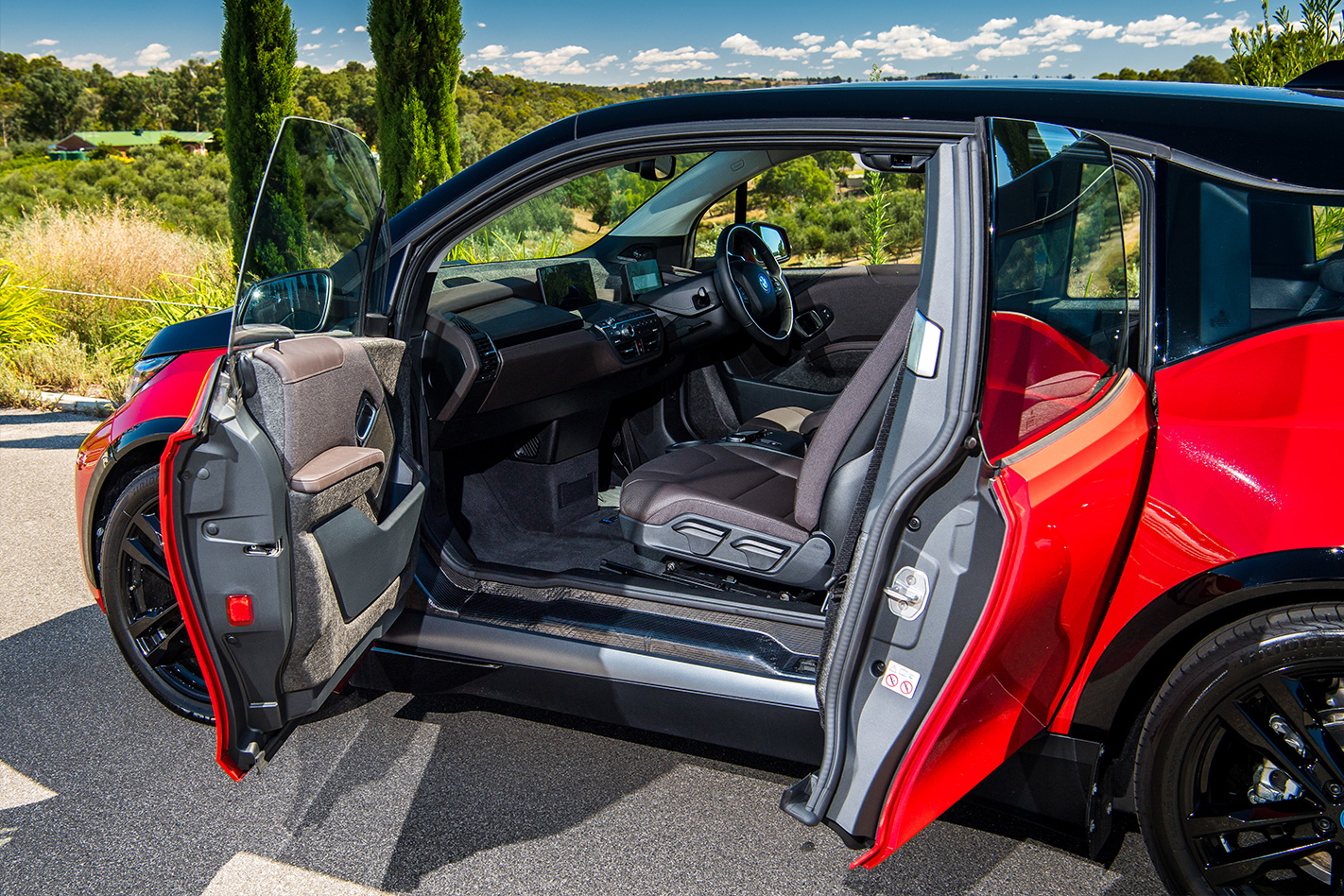
A new Sport mode sharpens throttle and steering sensitivity in what was already an alert and agile car. A passive sports suspension is standard, lowering the i3S by 10mm using model-specific springs, dampers and anti-roll bars. The ride is firm and sends thumps through the carbonfibre body even at low speeds, but the pay-off is an i3 that’s raring to change direction on tyres that are 20mm wider and run on inch-larger wheels.
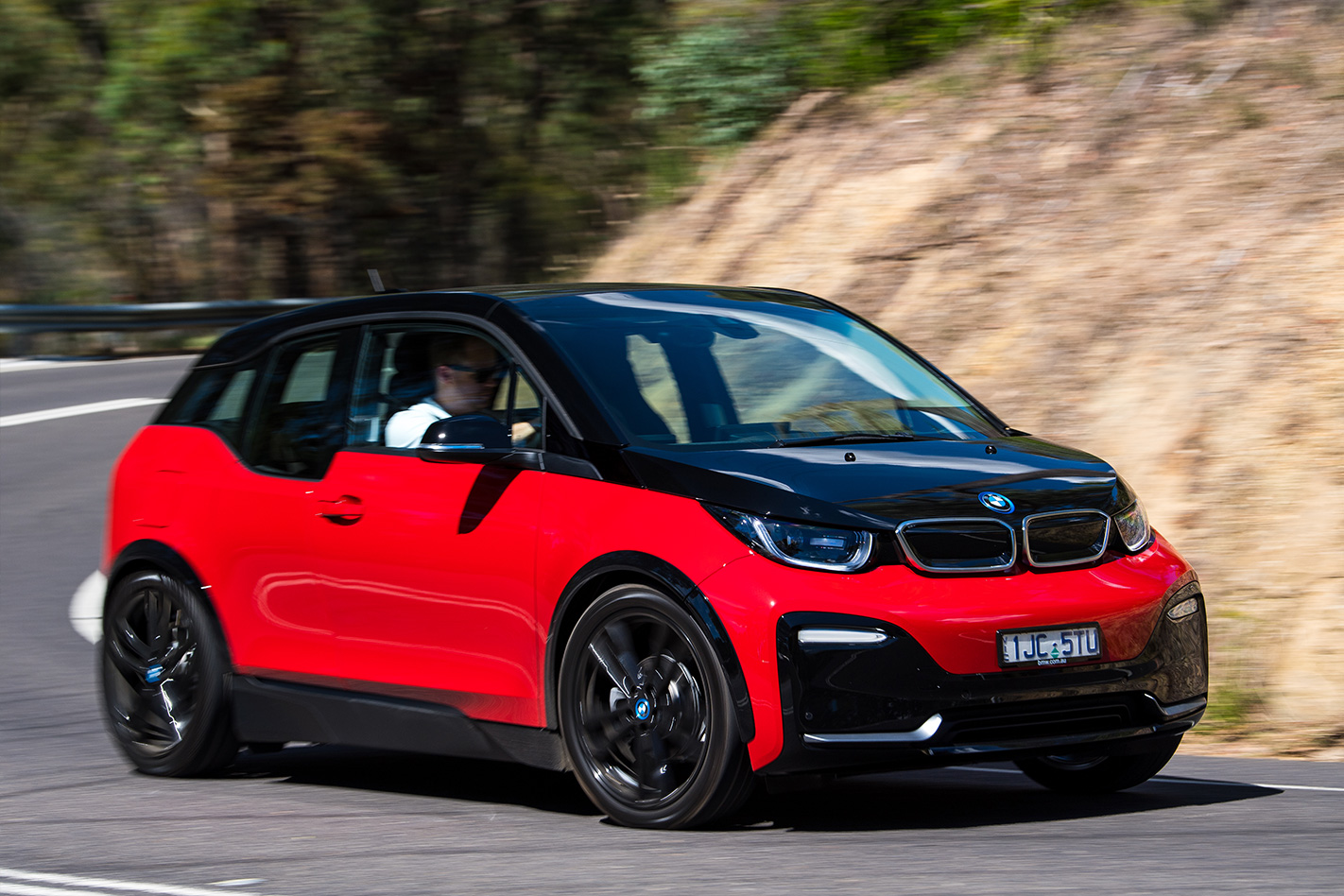
Inside is where the eco difference is emphasised. A wider, higher-resolution 10.25-inch screen ‘floats’ above the sculpted dashboard displaying BMW’s latest iDrive 6 infotainment system. Sadly at this price, the i3S misses out on some active safety tech such automatic emergency braking and lane departure warning. Distinguishing the i3S in traffic are revised front and rear bumpers, fully LED lighting and bodywork that’s 40mm wider to fit over the car’s broadened track.

Vincent van Gogh died having sold just one painting, and though BMW has clearly sold more than one i3, there’s still a chance the fun-loving talent of this electric city car won’t gain the widespread recognition its owed until it’s no longer in showrooms and battery-powered driverless pods dominate the landscape. It’s a great car, and that would be a real shame.
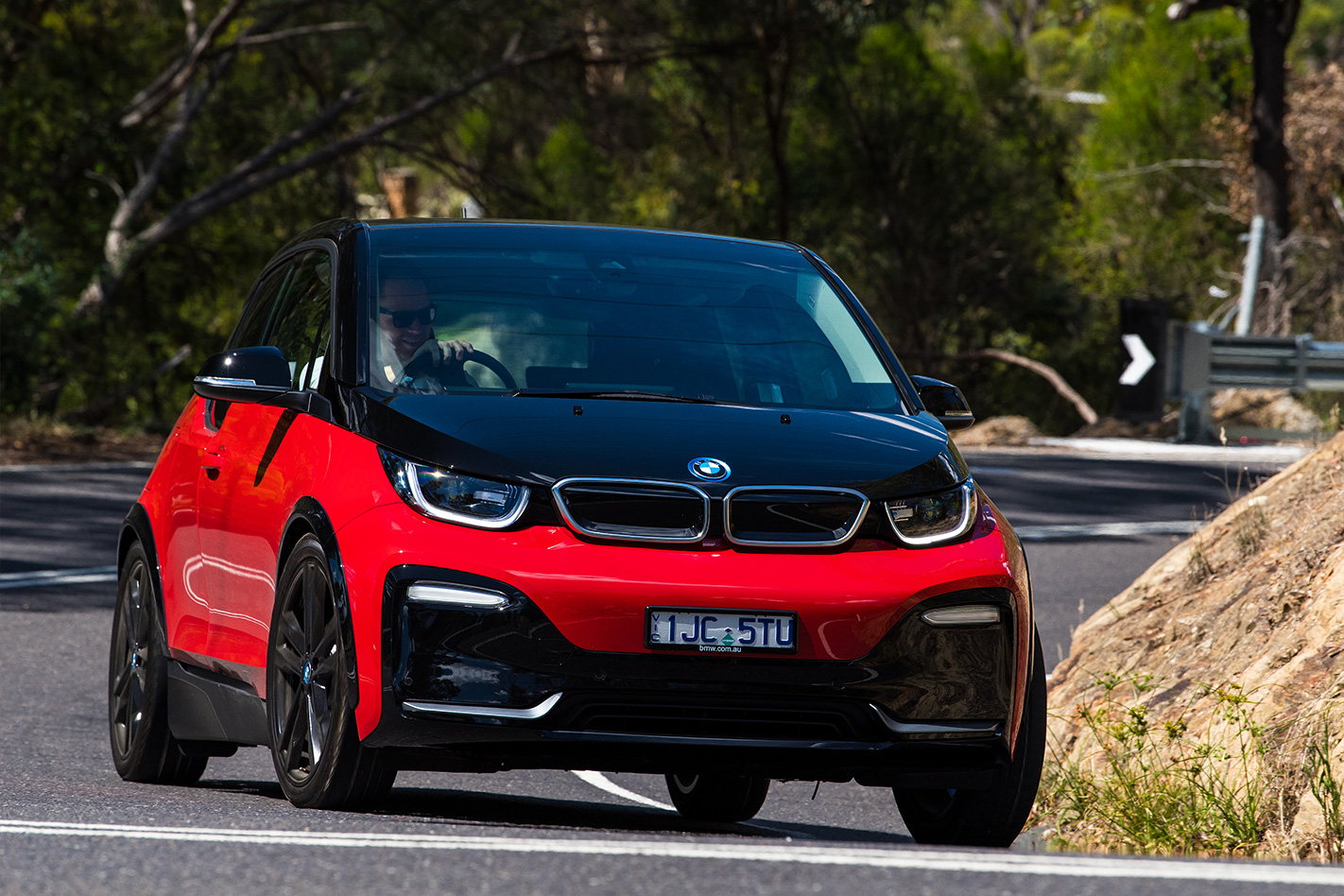
Model: BMW i3S BEV Engine: Electric motor Max power: 135kW @ 4800rpm Max torque: 270Nm @ 0rpm Transmission: Single-speed auto Kerb weight: 1265kg Fuel economy: 0.0L/100km 0-100km/h: 6.9sec (claimed) Price: $69,900 On sale: Now
THE Ford Ranger Raptor may need to become the Ford Ranger Cougar in Australia if the car maker’s last-ditch bid to own the rights to the name of its most performance honed trade ute yet falls completely flat.
Ford is facing an anxious four-month wait as it and the Raptor name’s current trademark owner, Toyota’s truck division Hino, sit out a “cooling-off” period that will culminate in the current trademark’s opposition process kicks off again in late June.
Hino’s extra six-month hold over the Raptor name comes on top of another similarly lengthy extension to the cooling-off period granted earlier last year by IPAustralia, the government body that oversees trademark disputes here.
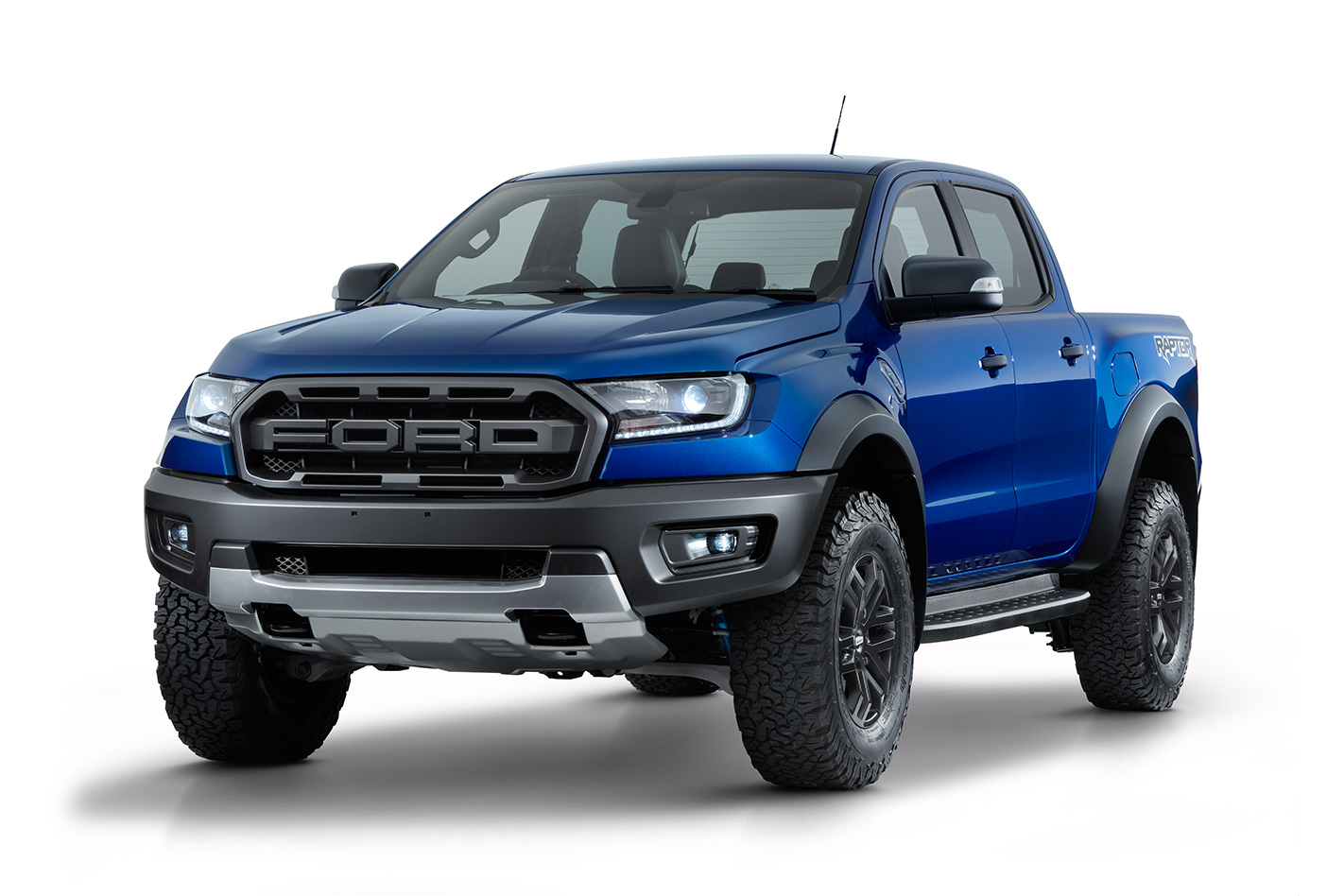
The trademark dispute came to a head last year after Ford applied to have the Raptor name removed from Hino’s grasp on the grounds that Hino had not used the name since it was first registered in 1994, and was therefore no longer in use. Hino, though, thinks otherwise.
The Ford Ranger Raptor, featuring a 157kW/500Nm twin-turbo 2.0-litre diesel engine, hasn’t yet set an arrival date in Australia, although it’s believed to be loosely slated for late this year.
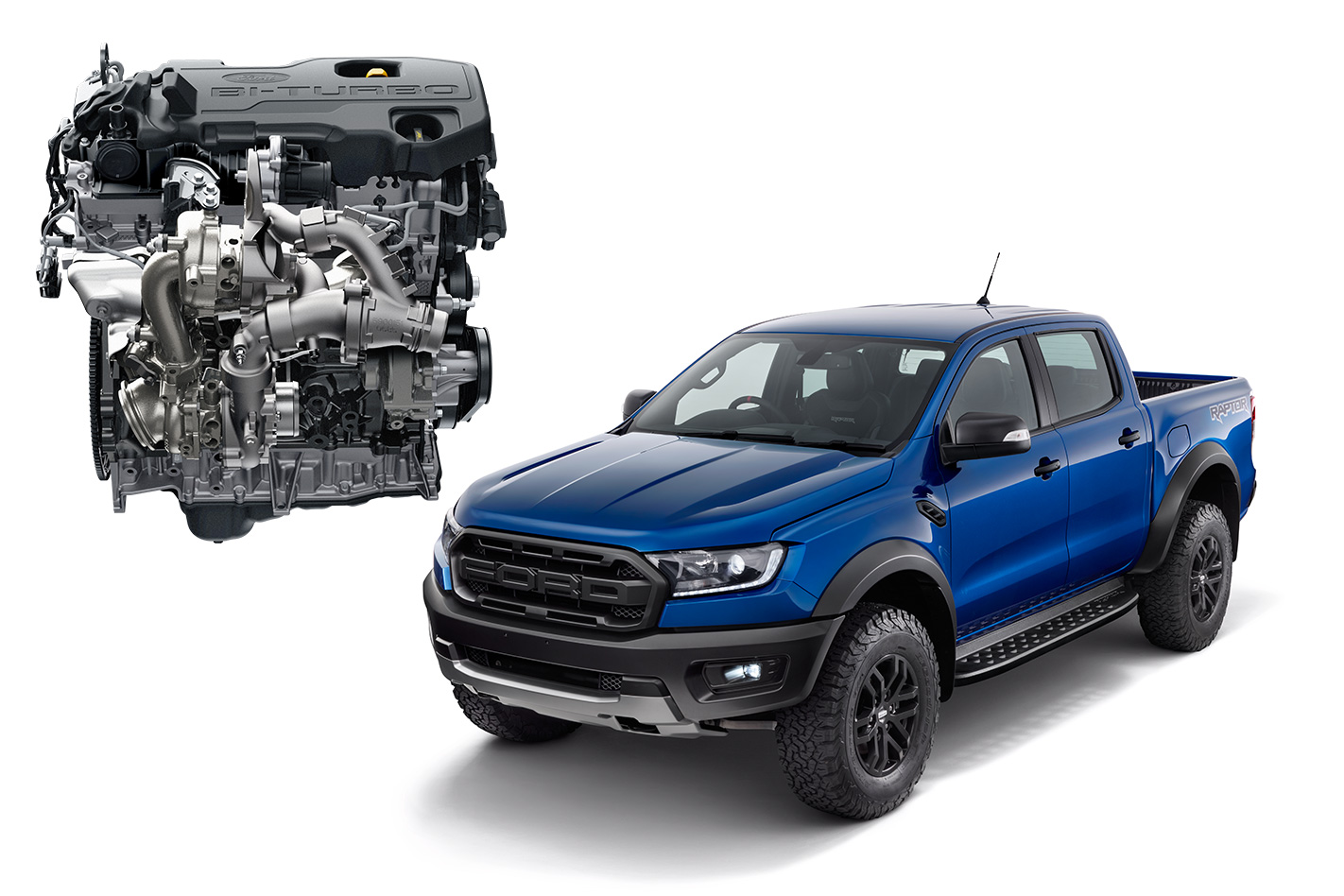
A Ford Australia spokesman told Wheels there was currently a commercial discussion around the Raptor name, “however Hino’s use of it is for a different category of vehicle”. “Ford is talking with Hino to ensure the Raptor name is used appropriately,” he said.
This isn’t the first time, either, that Toyota and Ford have tried to bloody each others’ nose over what to name a vehicle. Late last year the Japanese car-making giant refused to release “Edge” to Ford, forcing the US brand to use the name “Endura” – an orphan in the Ford world – for the replacement for its five-seat, locally made Territory SUV.
TWIN turbos make BMWs fast today, but the company has a plan that will eventually put triple-motor EVs at the very top of its performance car hierarchy.
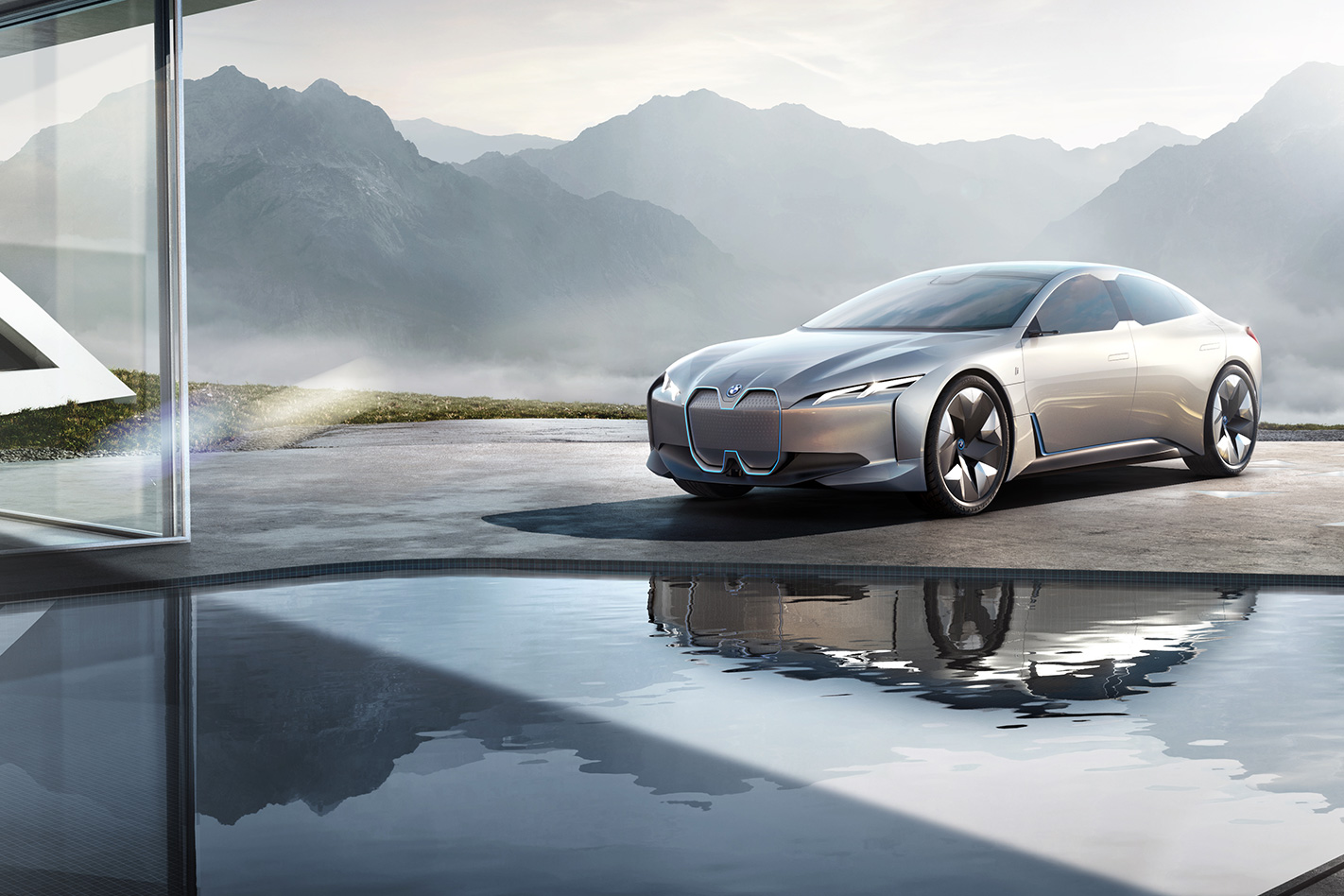
Sometime by the middle of the next decade, the Munich brand’s most desirable car is likely to be an EV that’s quicker than today’s BMW M5, with a greater driving range than the current Tesla Model S, and which looks like the i Vision Dynamics concept (below) revealed in Frankfurt last year.
“The trend towards e-mobility is irreversible,” according to BMW sales chief Ian Robertson. The experienced exec was speaking recently in Munich at an exclusive workshop to brief media on the company’s latest product strategy.
Some have encouraged their citizens to buy EVs, others have moved to make both plain and plug-in hybrids more attractive, and some have done little or nothing. Sales vary accordingly…
For a company like BMW Group, which sells its products all over the world, this makes its business more complex than ever before. “Global markets will continue to demand very different types of drivetrains for a long time to come,” Robertson observed. But BMW has a plan to meet the challenge.
The first car based on one of the new architectures is scheduled for launch in 2021. While BMW execs referred to it during the briefings in Munich as the i Next, it’s likely to be the production version of the i Vision Dynamics concept which some European sources believe will be badged i5.
FAAR is for smaller front-drive and all-wheel-drive models, including Mini. CLAR is for larger rear-drive and all-wheel-drive vehicles, so it will be the basis of future BMW and possibly also Rolls-Royce models.
BMW engineers used 3D-printed models, all with an identical removable sedan skins, to demonstrate how it should work in practice. We can’t show them to you, as photography was verboten.
There’s not a lot of difference between the internal combustion engine and plug-in hybrid versions, but the EV uses a completely different centre section to house its underfloor batteries. BMW is developing two sizes of battery cell, one around 80mm thick for use in cars, another around 140mm thick for SUVs and crossovers.
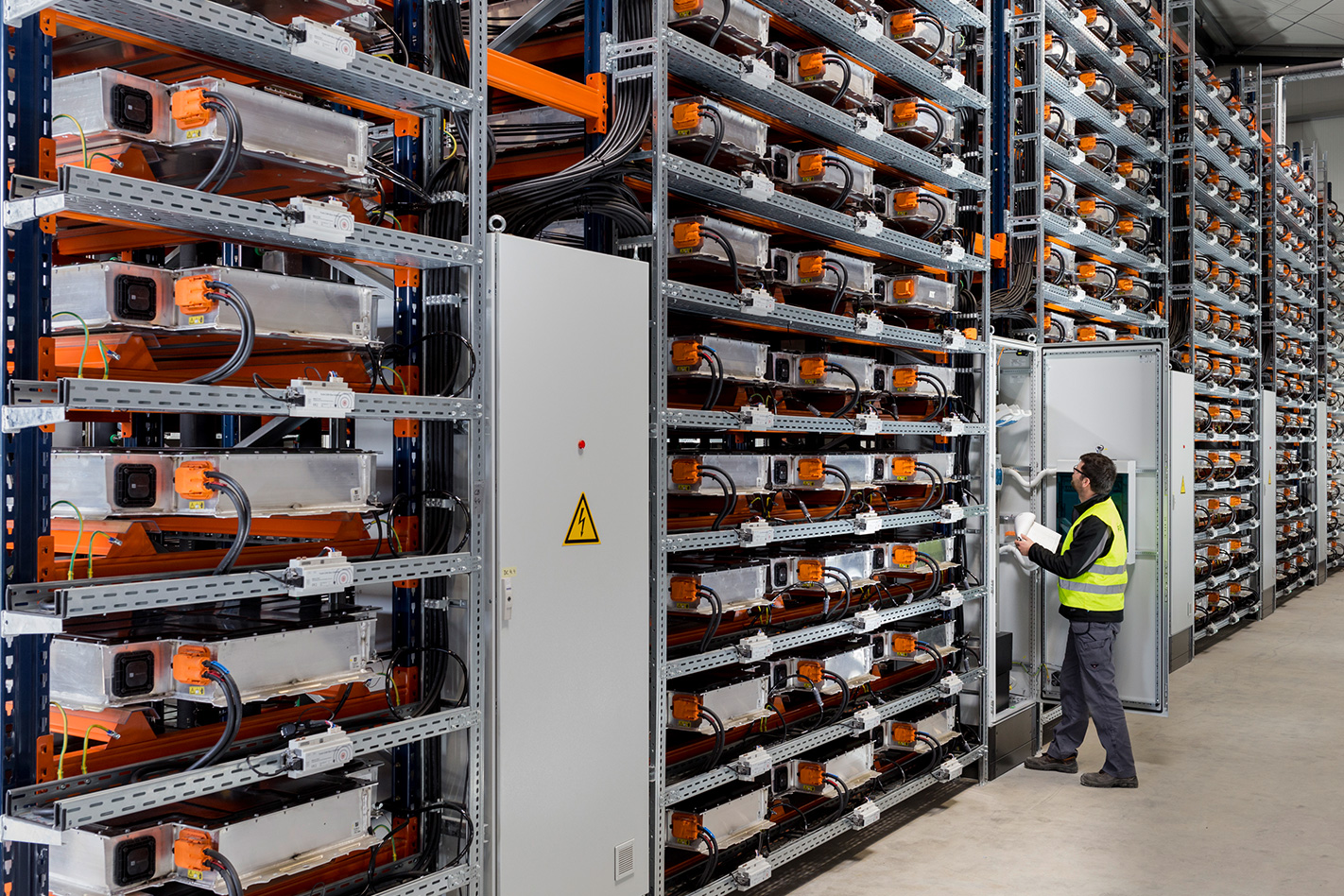
BMW execs and engineers sketched a remarkably detailed outline of their FAAR and CLAR EV strategy. The company plans to produce basic and premium versions of its battery packs, the latter with superior energy density to justify the greater cost.
The aim is to turn out packs with 120kWh (more than market leader Tesla offers today), 90kWh and 60kWh energy storage capacities. Driving ranges of up to 450km for the smallest and 700km for the largest packs are promised.
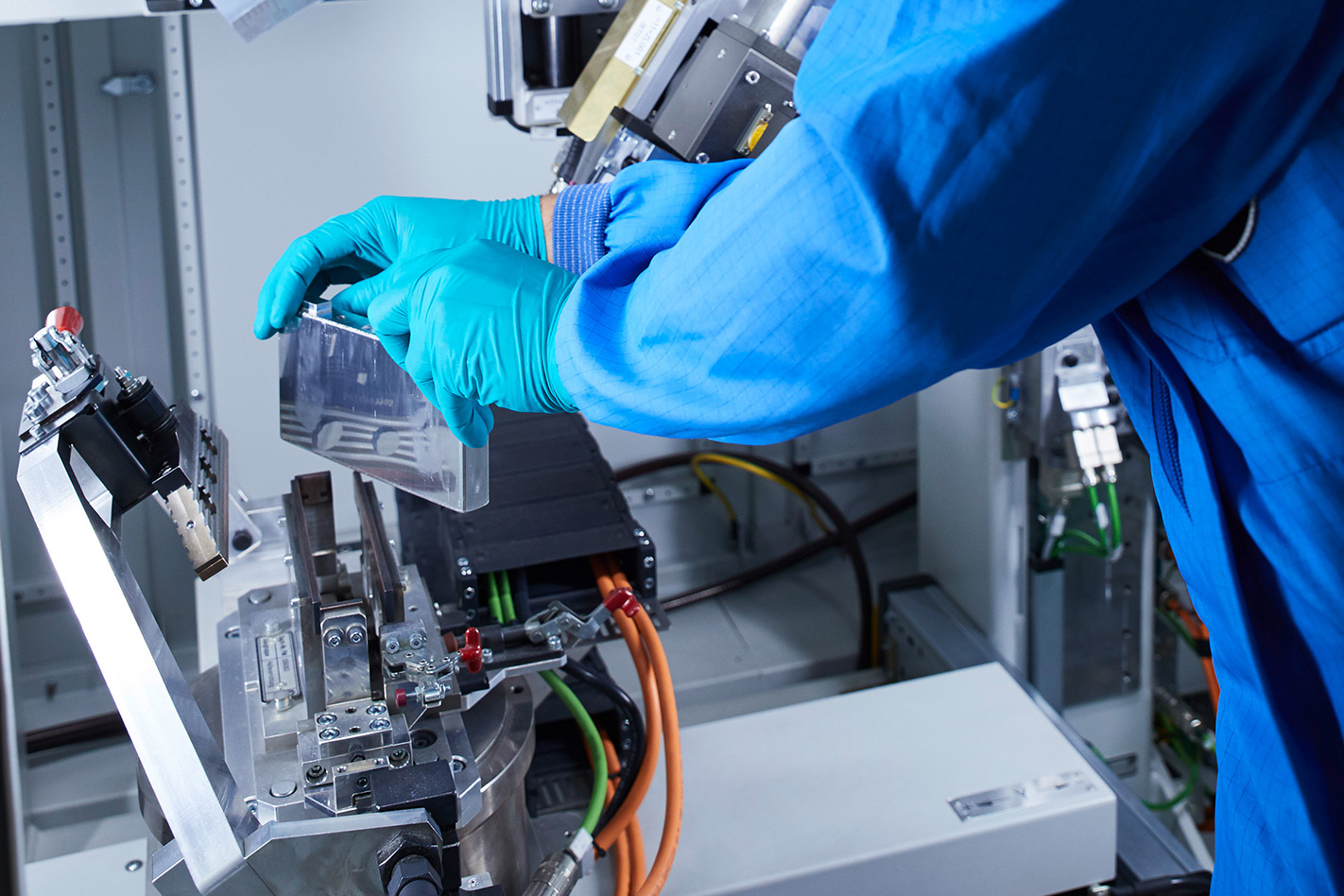
Engineers in Munich confirmed that the larger CLAR architecture is being designed to enable top models to have dual rear motors, for the purpose of torque vectoring, plus a front motor. And this adds up to one damned fast EV. Acceleration to 100km/h in around 3.0 seconds is possible with this set-up.
“If the market wants it, we are able to deliver that with this modular kit,” promised a BMW engineer.
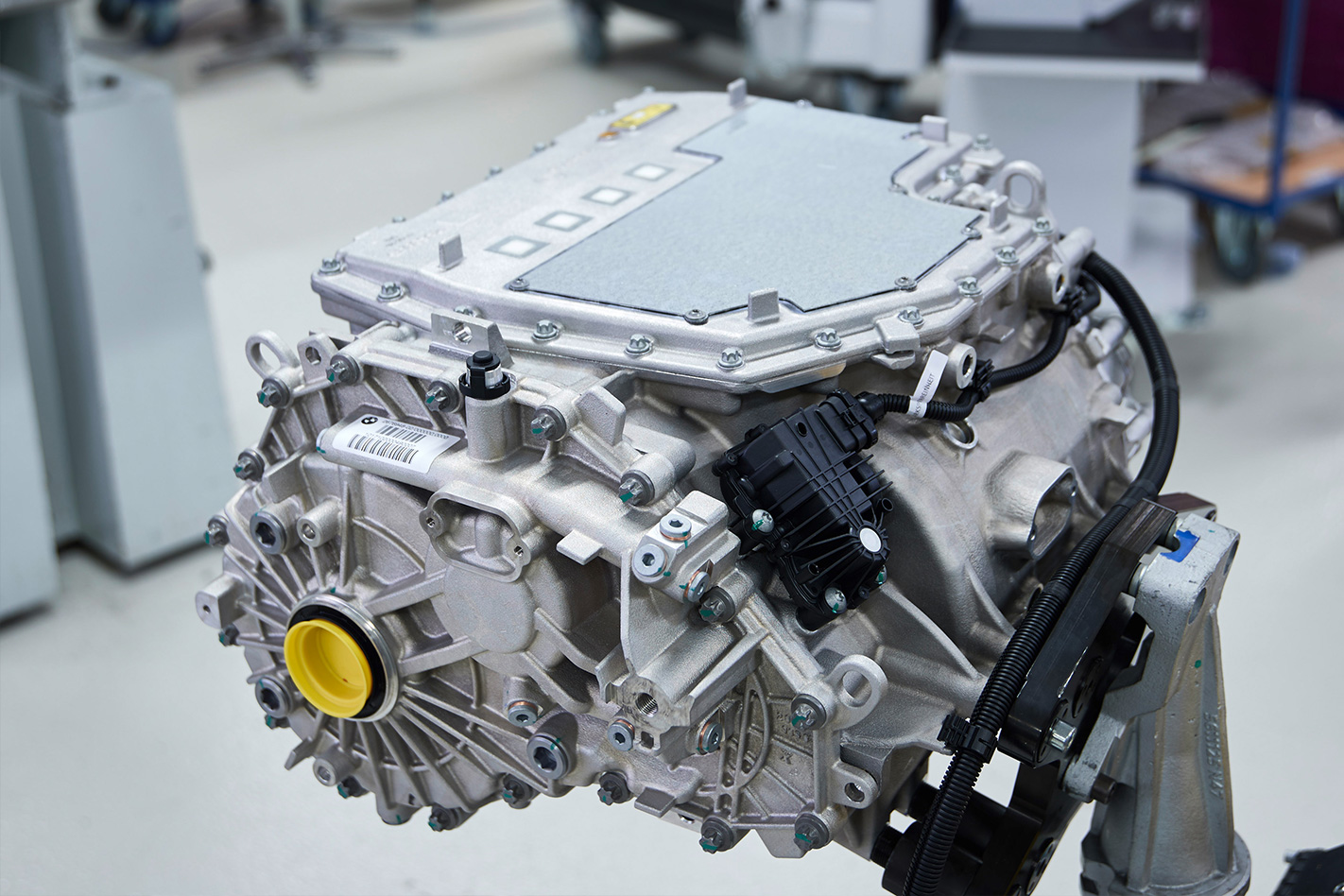
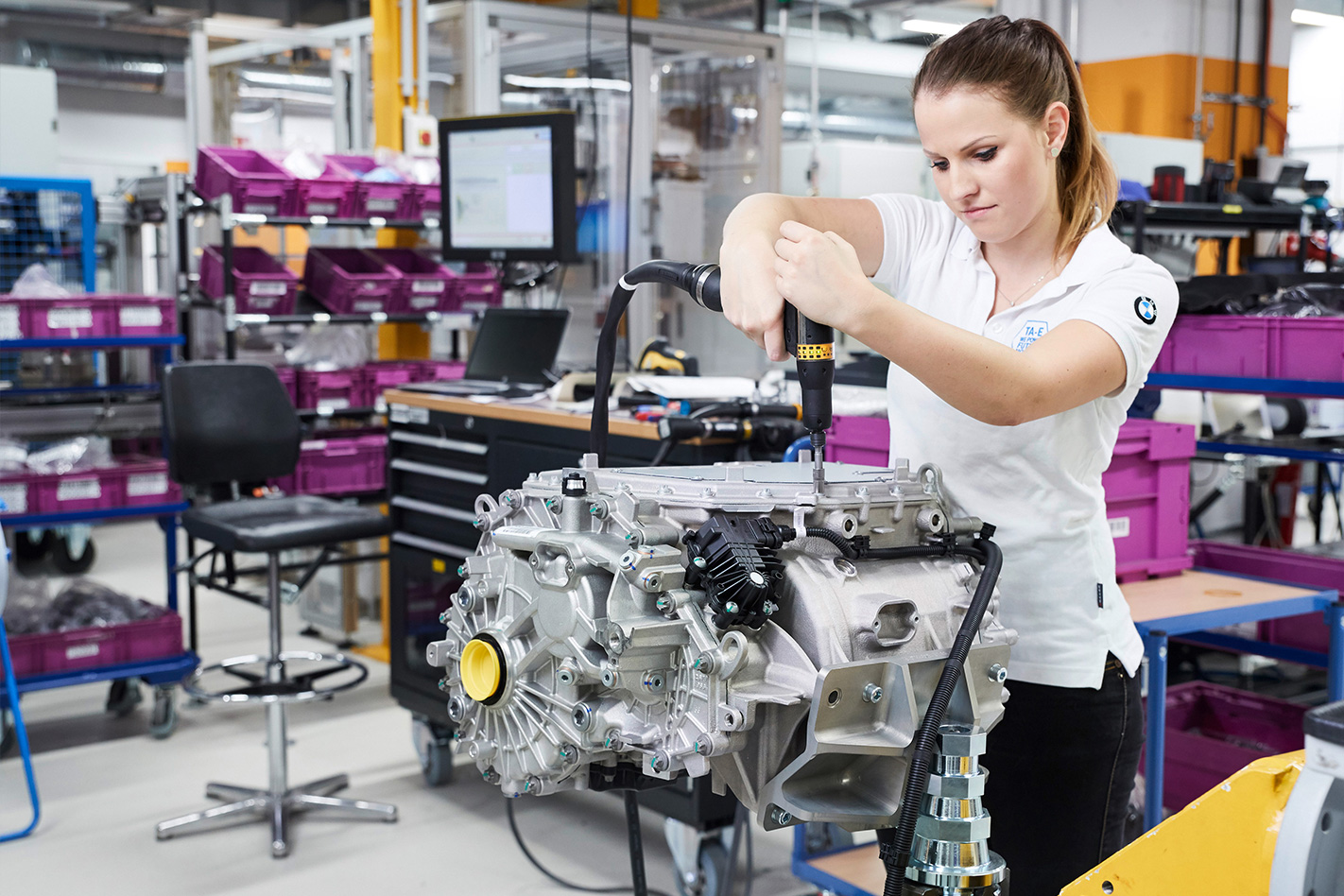
BMW manufactures its own electric motors, while most other car makers buy from outside suppliers. Engineers insist that its synchronous, current-excited motor makes BMW’s electric motors stand out from the rest.
“It delivers very high power also at high speeds, for example,” said one engineer.
There’s also plenty of potential to squeeze more power out of BMW’s motors without increasing size. And synchronous motors don’t need the expensive rare earths used in permanent-magnet motors either.
THE return of the Toyota Supra may be attracting all the headlines, but it’s what’s happening in the background at next week’s Geneva motor show that has us excited – an all new Toyota Corolla hatch is coming.
Okay, so “Corolla” and “excited” have never really featured much in the same sentence when referring to the best-selling passenger car in Australia for several years running. However, this one is expected to move to the Toyota New Generation Architecture, the same all-new platform that underpins the Toyota Prius, Toyota C-HR and the now fully imported Toyota Camry.
And there’s one defining character of TNGA we like: It introduces a liberal dose of driver enjoyment, something that’s been missing from Toyota’s DNA for the last couple of decades.
The Japanese car maker has released only a single teaser image of the 2019 Toyota Corolla, but we can already see the the reimagined hatch wants to shake off some of the dowdy, conservative looks of the past. Looking lower, longer and more sculpted than the generation it will replace, it appears the Corolla is looking to tug the emotional heartstrings of buyers.
Wearing a new headlight signature up front with what appear to be integrated LED daytime running lamps, other notable changes include a wing mirror attached to the door skin rather than plugged into the corner of the A-pillar, a more swept roofline and higher waistline that reduces the size of the glasshouse, and a short rear overhang.
Of note, too, is a contrasting roof colour – a design element rolled out on the C-HR that Toyota appears to be keen to introduce across more models.
The Corolla’s more stylish exterior, and the MacPherson front/double-wishbone rear suspension system that TNGA introduces, also gives Toyota’s Gazoo Racing sub-brand something to work with. The car maker has made no secret of its desire to have its motorsport division develop road-going cars, with the Toyota Corolla GR expected to one day take on the likes of the soon-to-arrive Hyundai i30 N, the Volkswagen GTI and the Peugeot 308 GTi.
Toyota Australia has not yet announced plans to introduce Gazoo Racing-fettled cars here, although it says it is still interested in the idea of pitching something into the hot hatch segment. Toyota has already produced GR-badged cars for other markets, and last year teased a more performance-honed version of the C-HR small SUV featuring a “Hy-Power” petrol-electric hybrid drivetrain.
The car maker released a statement at the same time as the Hy-Power’s reveal saying it would have more details “regarding the significant and strategic future development of higher performance hybrid options” early this year, although that is expected to be a hybrid version of the reborn Toyota Supra hat’s also expected at Geneva, although in race car rather than road-going spec.
A future hybrid version of the Corolla is also expected, with speculation hinting that it could step up from its current 1.8-litre four-cylinder engine to a 2.0-litre version that brings more fuel-saving torque to the petrol-electric party.
