
Fiat’s go faster arm, Abarth, has announced Australian specs and pricing for the next iteration of its ‘hotted up’ version of the cutesy Fiat 500.
With a turbocharged 1.4-litre at its disposal, much like the 124 Spider… and every other Abarth, the 595 will have its output notched up a few rungs from 104kW to 107kW.
But it’s to the Competizione we think more fast car fans will turn their attention, with a 132kW donk and the option of a manual gearbox in a car that should weigh in at just over the tonne.
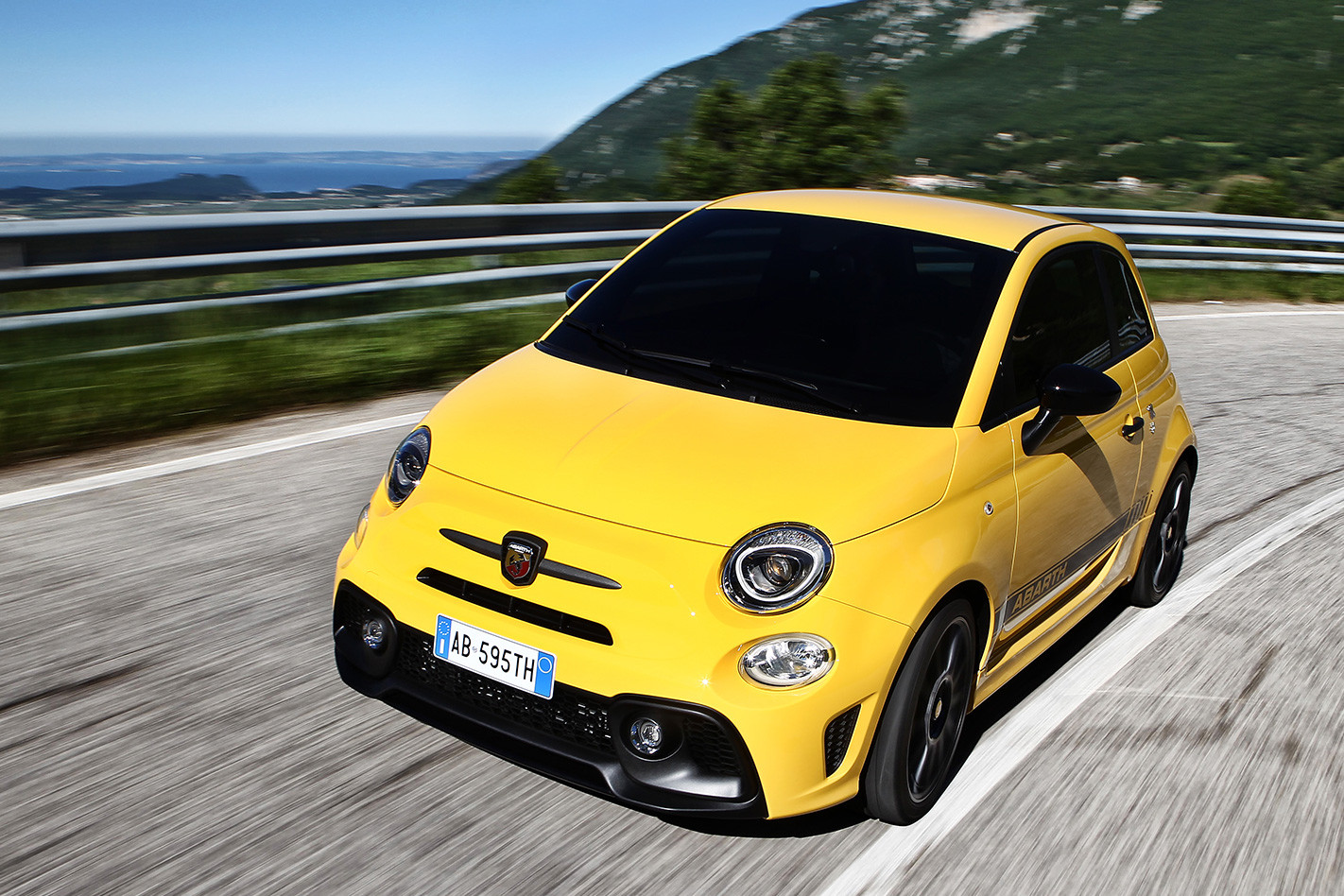
Of even more importance, however, is the significant drop in price the new 595 scores over its predecessor.
The standard 595 doesn’t become all that much cheaper, one must now only fork out $26,990 rather than the $27,500 used to cost to pick up a manual.
But a manual 595 Competizione now costs a far more reasonable $31,990. This places it down around the Renault Clio mark, though with less power and presumably less weight – Fiat-Chrysler hasn’t confirmed the weight of the hatch just yet.
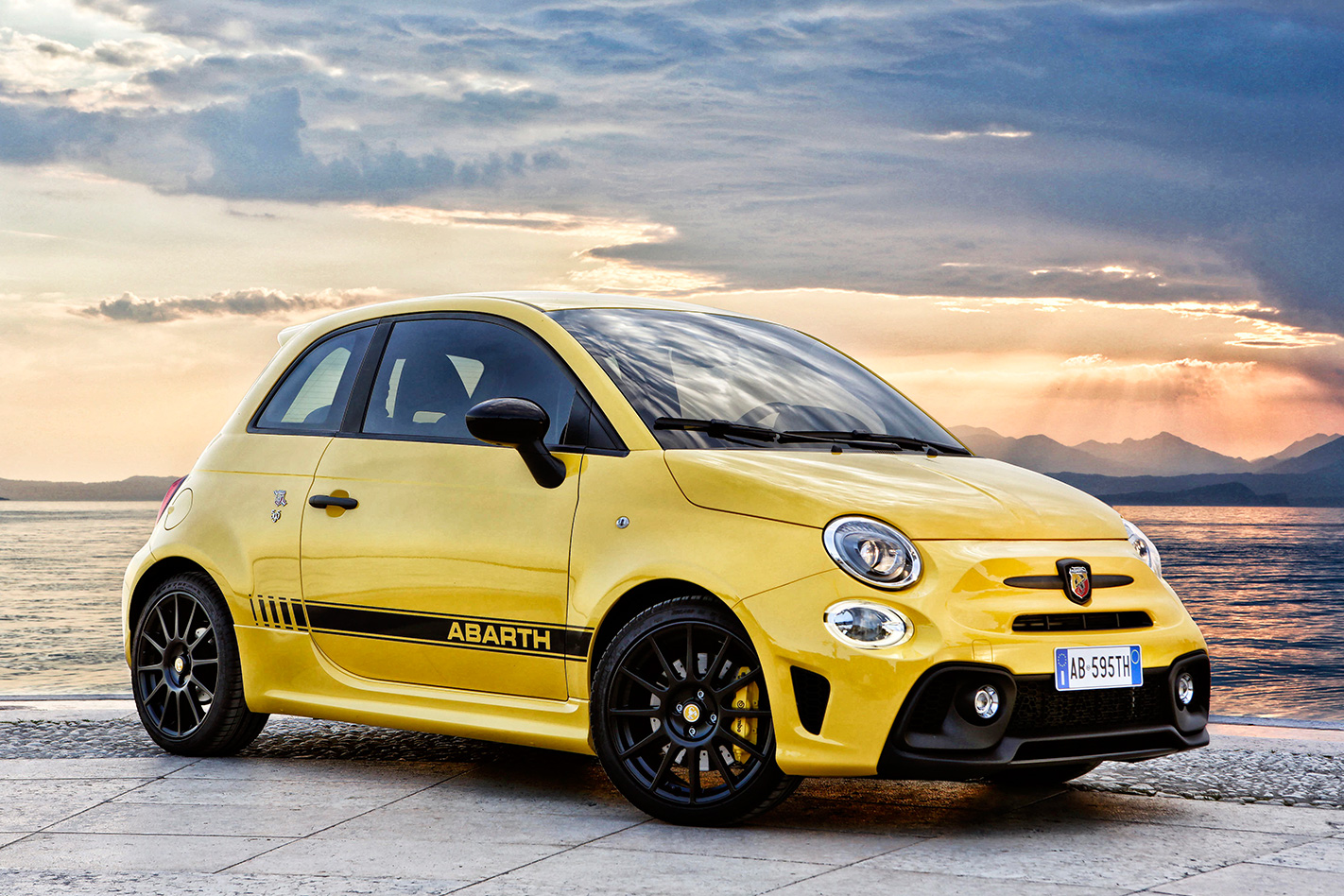
The Competizione comes standard with Koni shocks front & rear, and four-piston front Brembo brakes, with the lovely bimodal Record Monza exhaust.
The good news for Australia is that the 595 Competizione (and the standard 595, if you’re that way inclined) is available in showrooms this month.
AFTER several years locked in a holding pattern, South Korean SUV specialist SsangYong will return to Australia next year with a full manufacturer-backed model range.
Senior Executive Director of SsangYong’s Export Headquarters, Daniel H. Rim, confirmed at the Frankfurt motor show that the brand would transition from being handled by importer Ateco to being fully supported by head office.
“We’re going through due diligence now, setting up the operation, setting up the distribution centre, it’s all in the works, and hopefully soon we’ll start retailing again.”
Sales of SsangYong’s previous line-up had stagnated due to a difference of opinion with Ateco over where the brand should be positioned in the fit-to-burst Australian market but Rim believes a virtually all-new model range and full factory support will give SsangYong a strong chance of success.
“Since we will start our own distribution I think it will be more competitive, and we’ll be handling our own marketing so we’ll prioritise our own spending … we’ll be more competitive and we’ll be more efficient.”
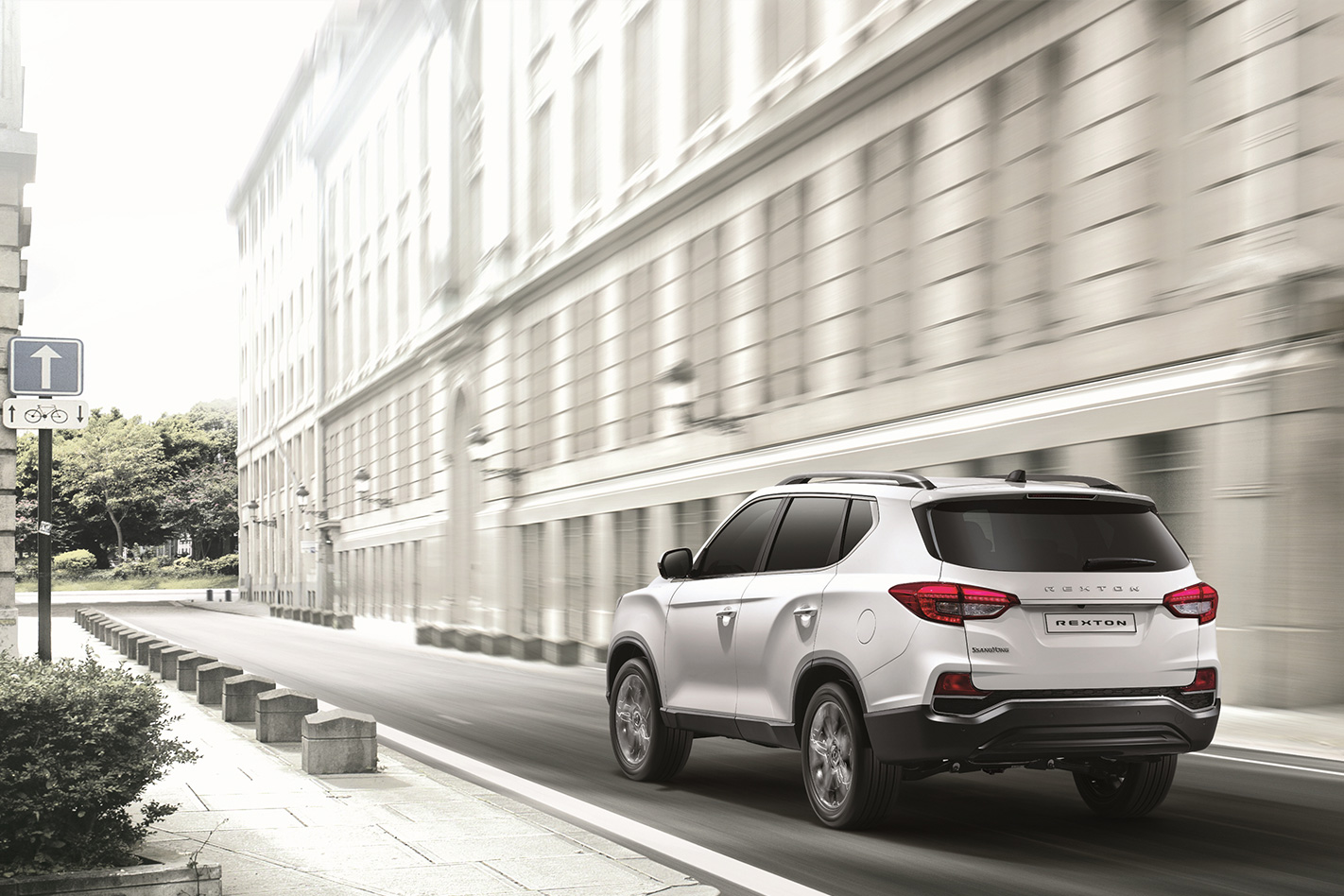
Leading the change will be the imposing new-generation Rexton, launched at the Seoul Motor Show earlier this year with a 133kW 2.2-litre turbo-diesel four, but set to receive a 2.0-litre direct-injection turbo-petrol four next month.
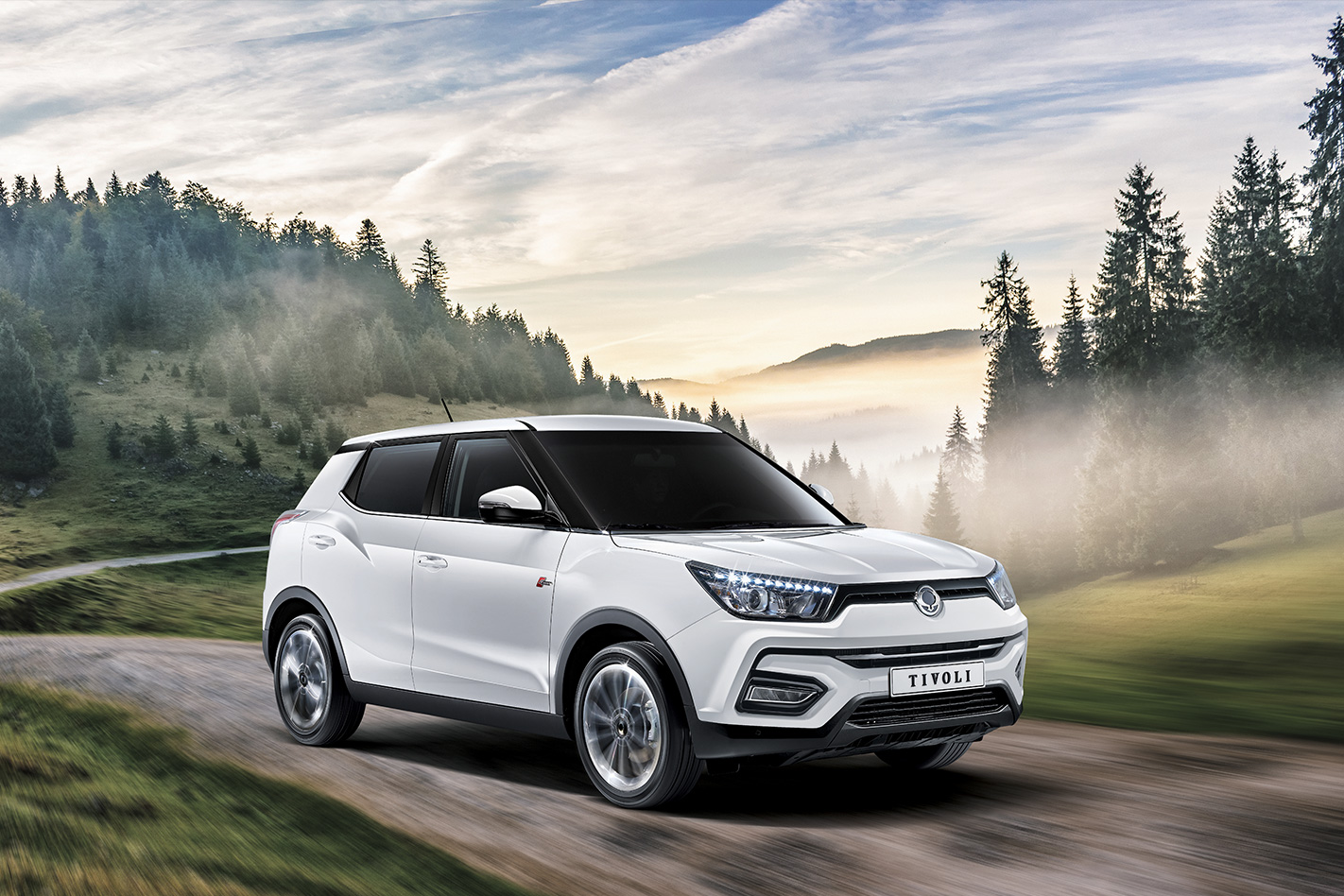
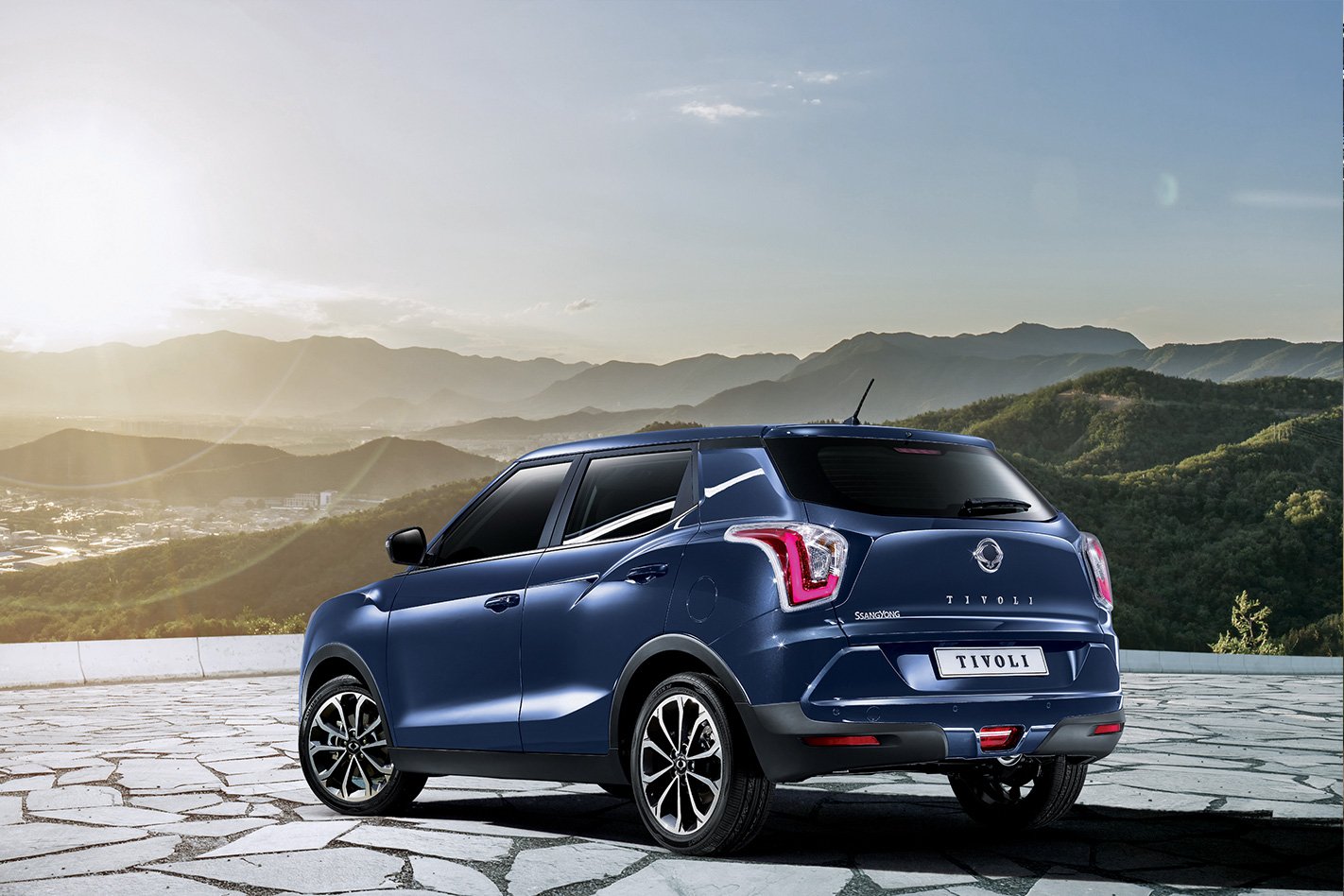
SsangYong’s Australian model range will also include the handsome Tivoli small SUV – launched at Geneva in 2015 but freshly updated with new lights, wheels, and trims – however it’s the Rexton-based utility, due later in 2018, that gives SsangYong its best chance of achieving decent sales volume in Australia, given our unwavering lust for dual-cab utes.
“Typically I think we’ve [achieved] 3000-4000 [sales] in the past and I think it would be easy to top that”, says Rim. “Our dealers would very much like to see us come back and work with them properly. So we’re looking to utilising the existing network, and of course we need to build on from what we have today. We obviously have to start with the metropolitan areas first and expand our coverage.”
And expect SsangYong to support its fresh model range with a Korean-style warranty. “We’ll be as competitive as anybody, like Kia and Hyundai. We have to be. And we’re confident with our quality we can offer a good coverage in warranty.”
THE JEEP Grand Cherokee SRT Trackhawk has already pummelled the laws of physics into submission, pumping out numbers that can boggle the mind if you think about it for too long.
But now things are being taken a step further, thanks to the American madhouse, Hennessey, and the lunatics within who feed themselves on a diet of destroyed tyres and distilled horsepower.
The tuning house responsible for the ‘Exorcist Camaro’ has developed a HPE1000 supercharger upgrade for the Trackhawk, which boosts outputs from 527kW and 874Nm, to a staggering 754kW and 1313Nm.
The ‘regular’ Trackhawk will accelerate to 100km/h in a claimed 3.6sec, or 60mph (97km/h) in 3.5sec.
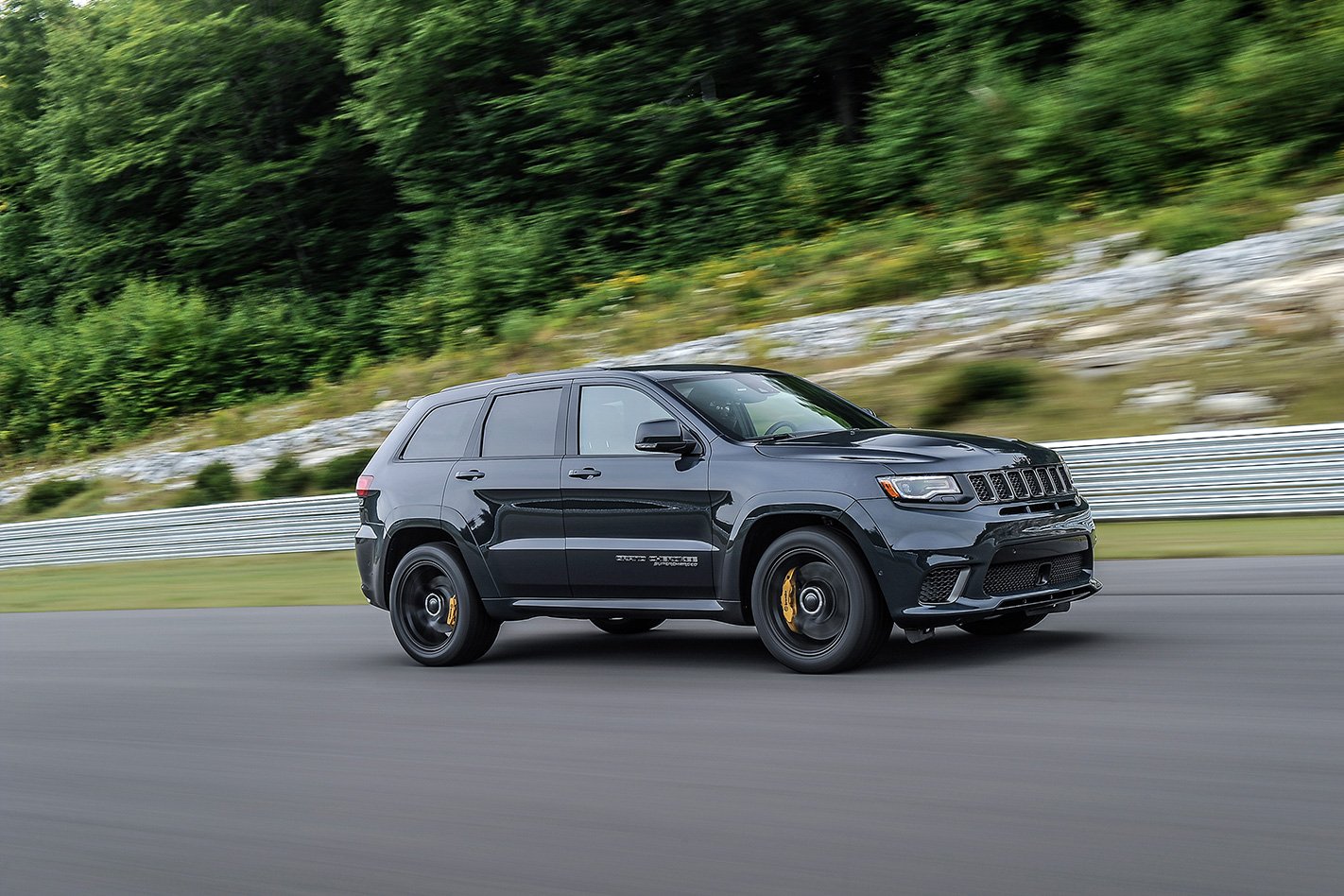
Remember, the Trackhawk still weighs in at 2426kg.
The quarter mile can apparently be crushed in 10.5sec, at 214km/h (133mph).
So, what does the HPE1000 kit include? Well, send your donor car to Hennessey and they will add a 4.5-litre supercharger to replace the stock unit, which sits atop the 6.2-litre V8. Boost is then wound up to 14psi.
Stainless steel long tube headers are fitted, along with upgraded fuel injectors, fuel pump, a high-flow air induction system, and a custom engine tune dialled in.
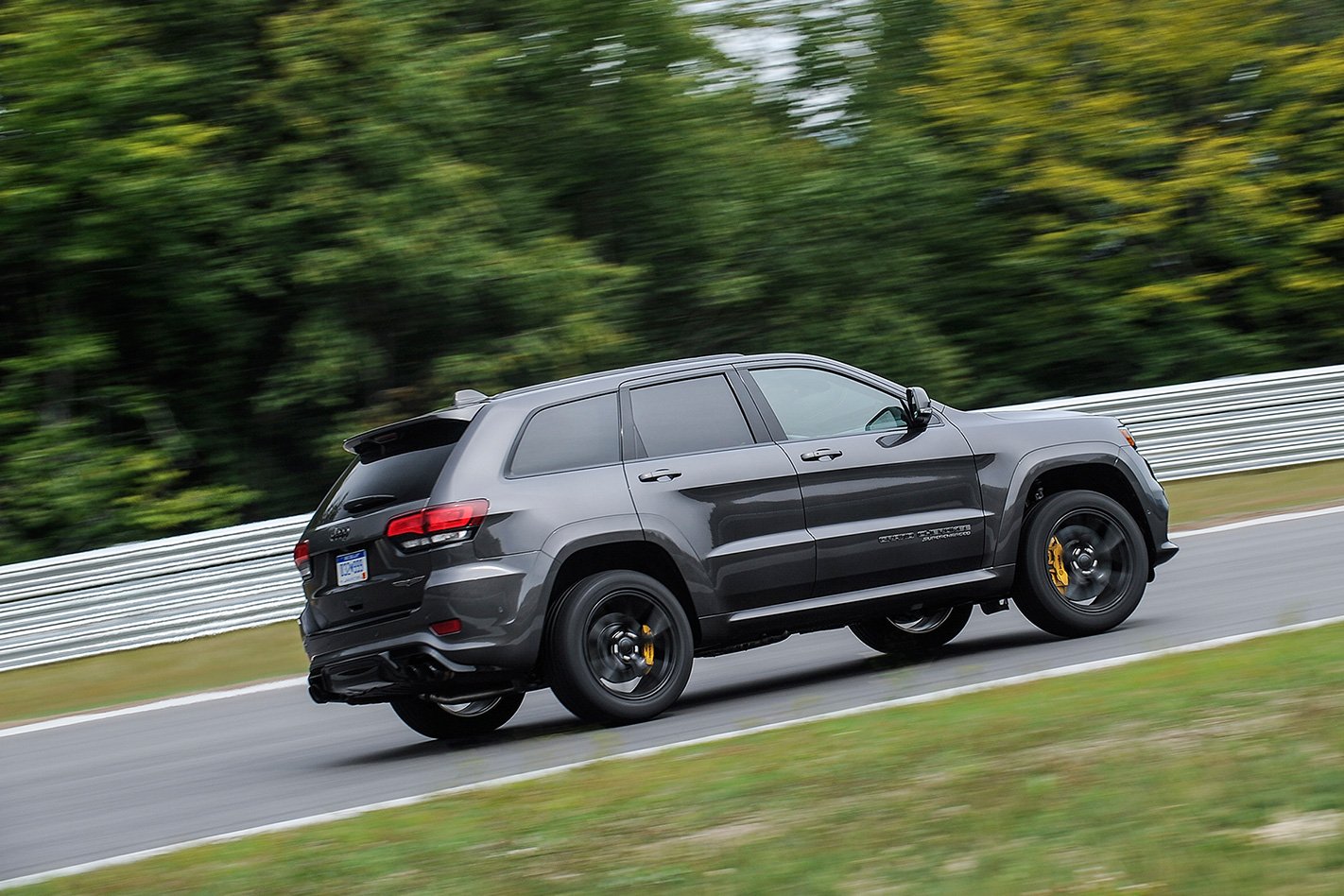
All that, and it comes with a warranty – albeit limited to 19,000km.
If the HPE1000 sounds like too much of a handful, you can opt for the HPE850 kit, which makes a stout, though comparatively measly, 635kW and 1145Nm.
Hennessey has serious experience here, with the HPE1000 and HPE850 kits both available for the Dodge Charger and Challenger Hellcat variants.
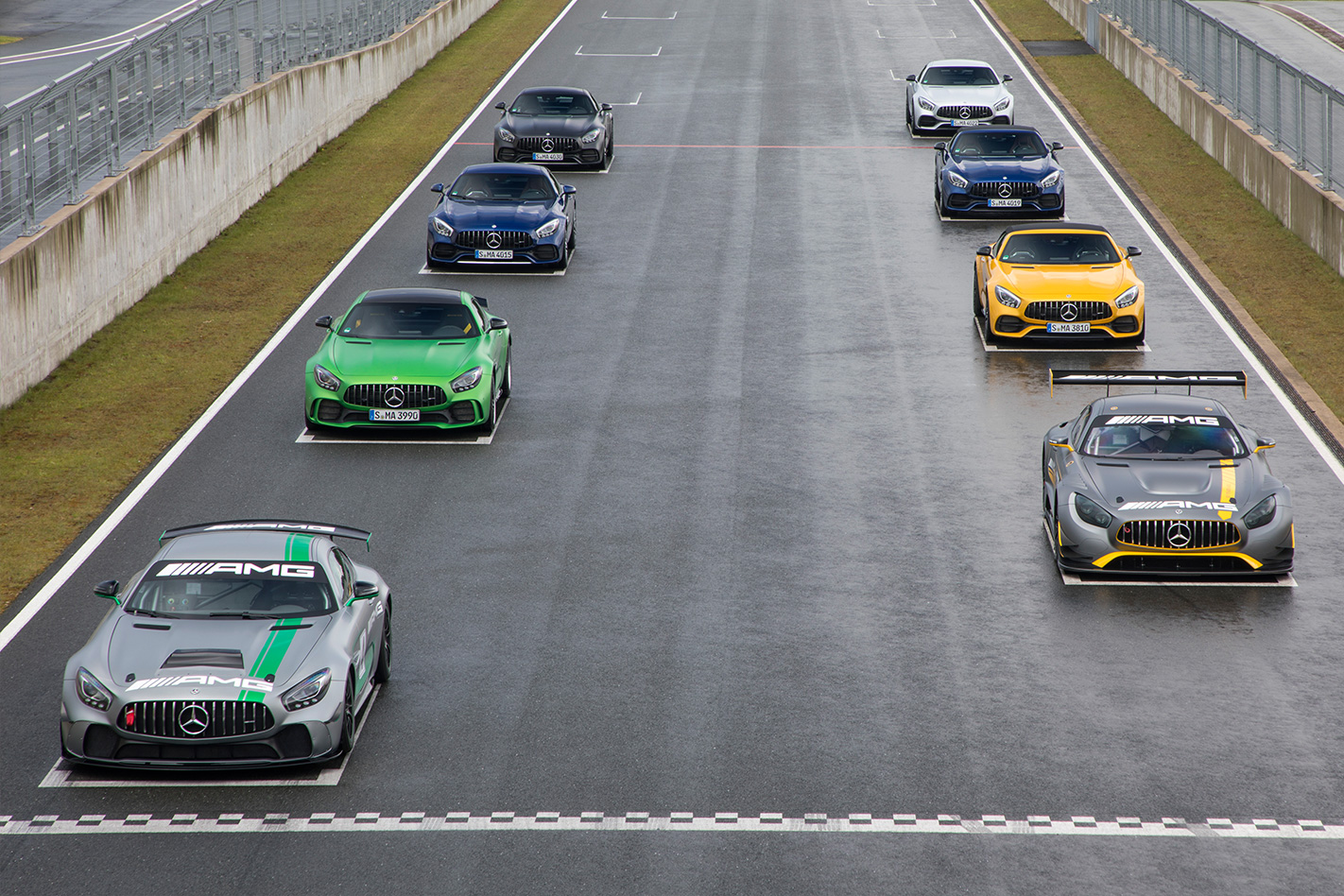
HEADLINED by the release of the manic Project One hypercar, Mercedes-AMG is lining up an onslaught of feisty new models to keep the pressure applied to its European high-performance rivals, including more GT variants and new numbers introduced alongside its 63, 45 and 43 boot badges.
With the established GT sports car family and arrival of the mighty Project One hypercar, the German high-performance purveyor has now built a healthy portfolio of contenders in a wide range of segments.
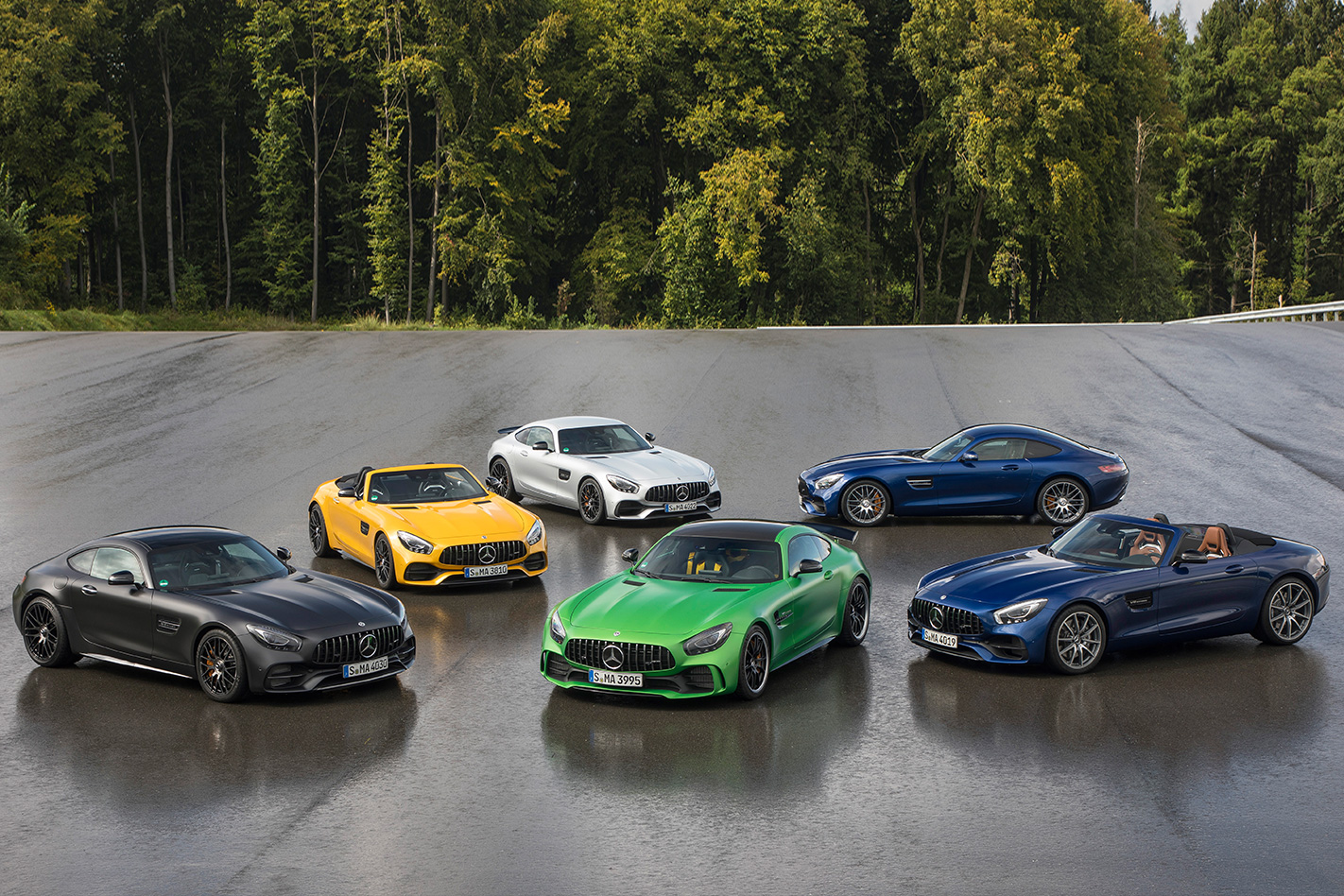
Speaking at the Frankfurt motor show, Mercedes-AMG boss Tobias Moers added to speculation that an additional AMG GT variant could join the range in the form of a Black Series as a new flagship of the two-seater range above the GT R.
“The GT R is still very competitive,” he said. “If we do a Black Series it’s going to be in the GT family but there’s still a little bit of time.”
In previous iterations, Mercedes’ performance-enhanced Black variants have arrived toward the end of a model lifecycle, which rules out the GT Black for at least the immediate future, but Moers did hint at a number of tantalising features if the car is confirmed.
While the AMG S63 Coupe and convertible have demonstrated the same 4.0-litre turbo V8 that powers the GT family is capable of up to 450kW and 900Nm, GT maximum power may be limited by its dual-clutch transmission, said Moers.
“The DCT in the GT, not that much more [than GT R’s 430kW], but we’re going to find out.”
While the current GT flagship has undergone weight reduction for even greater track potency, Moers said GT Black would honour a tradition with further weight minimization.
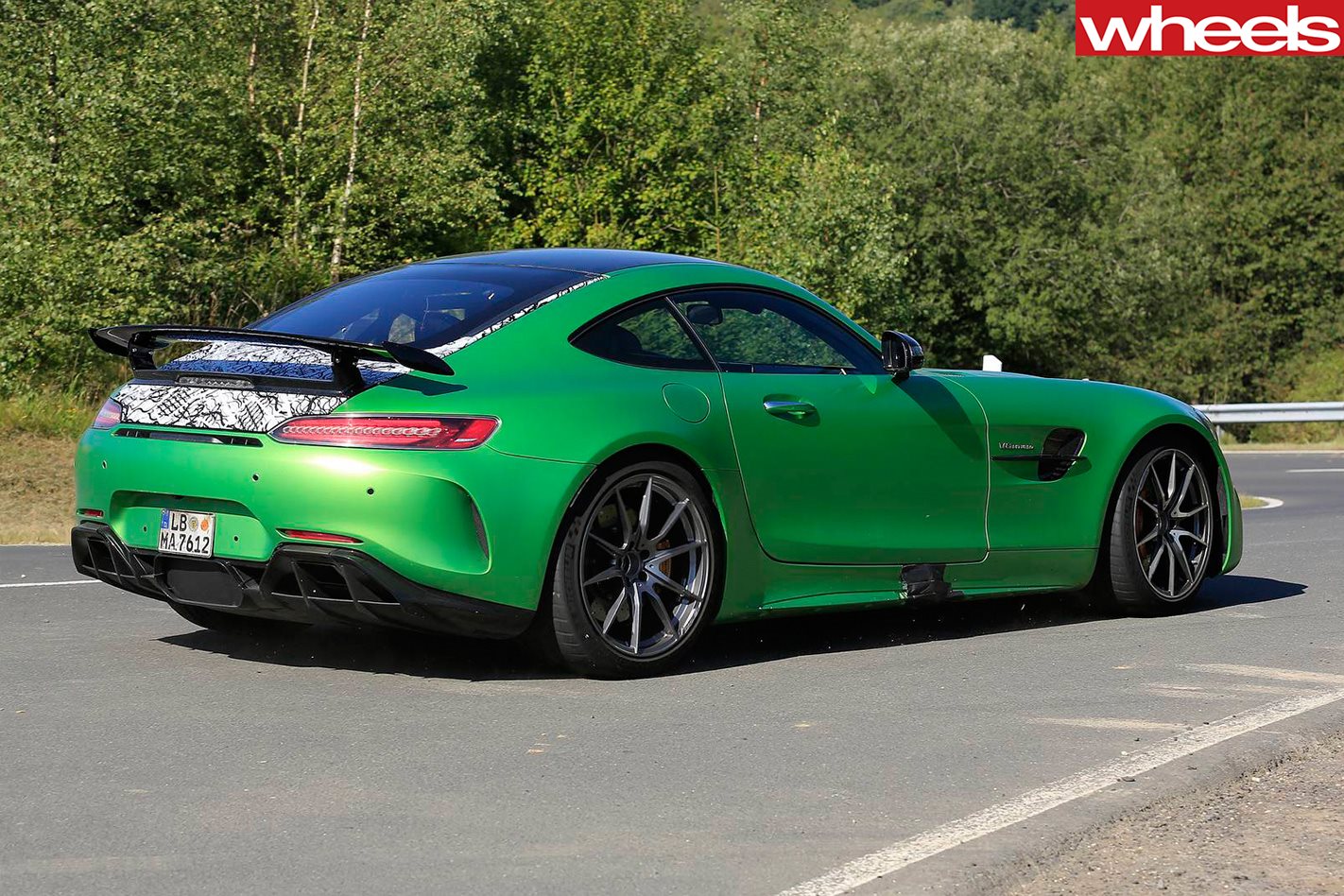
His comment lines up with spy images of a potential Black Series mule spotted testing at the Nurburgring recently with polycarbonate windows.
The GT range has already expanded to include a new GT C in both convertible and coupe forms, but an as-yet unnamed four door version is set to arrive next year bringing the most radical update for the line-up since its launch, and Moers offered an additional insight into the model.
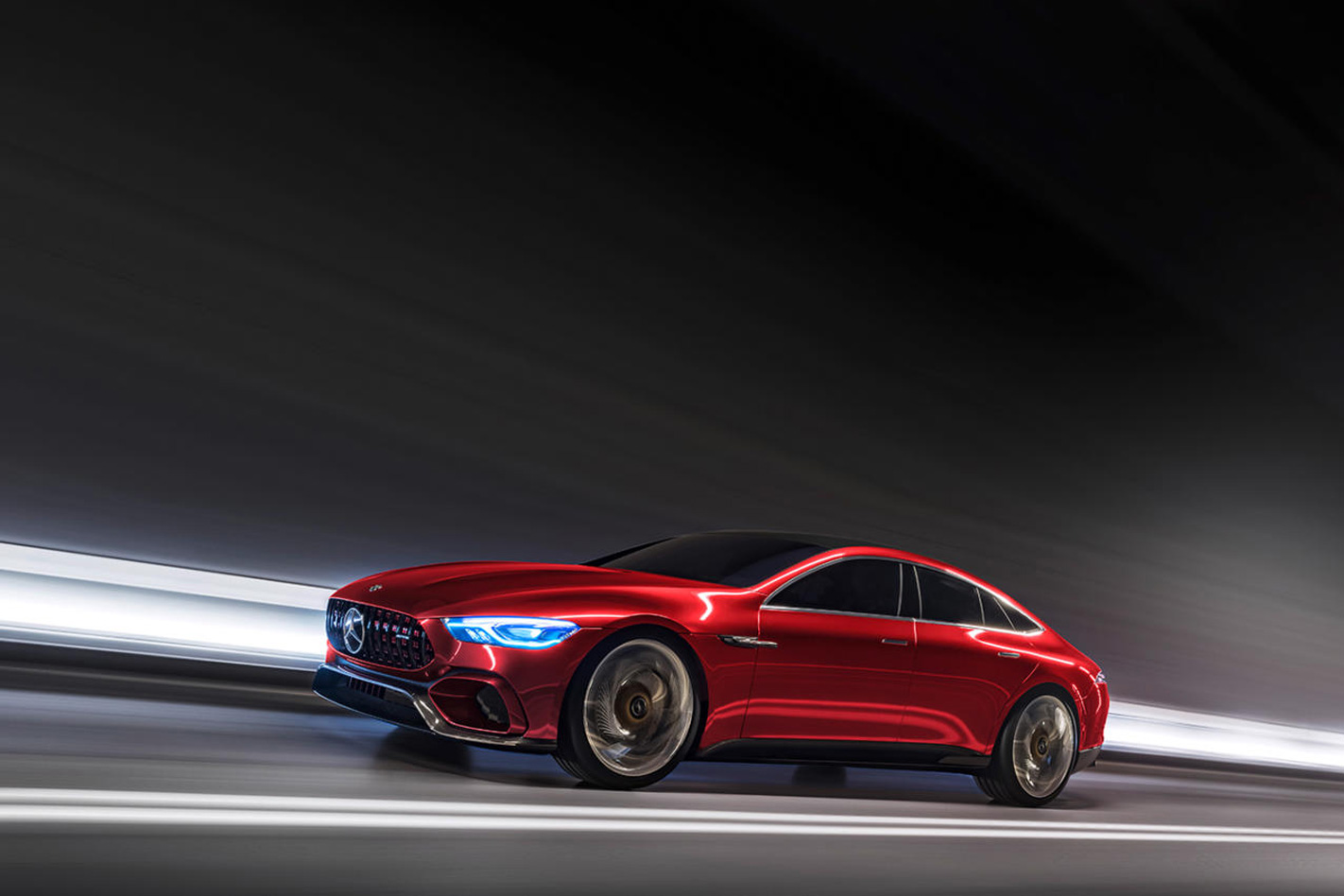
Wheels has learnt that the four-door GT4 Concept which rolled out in March this year is a ‘pre-positioning’ concept which closely resembles the final product and, with a platform shared with the E63, is likely to borrow its 450kW 4.0-litre V8, but Moers said a hybrid should also be expected.
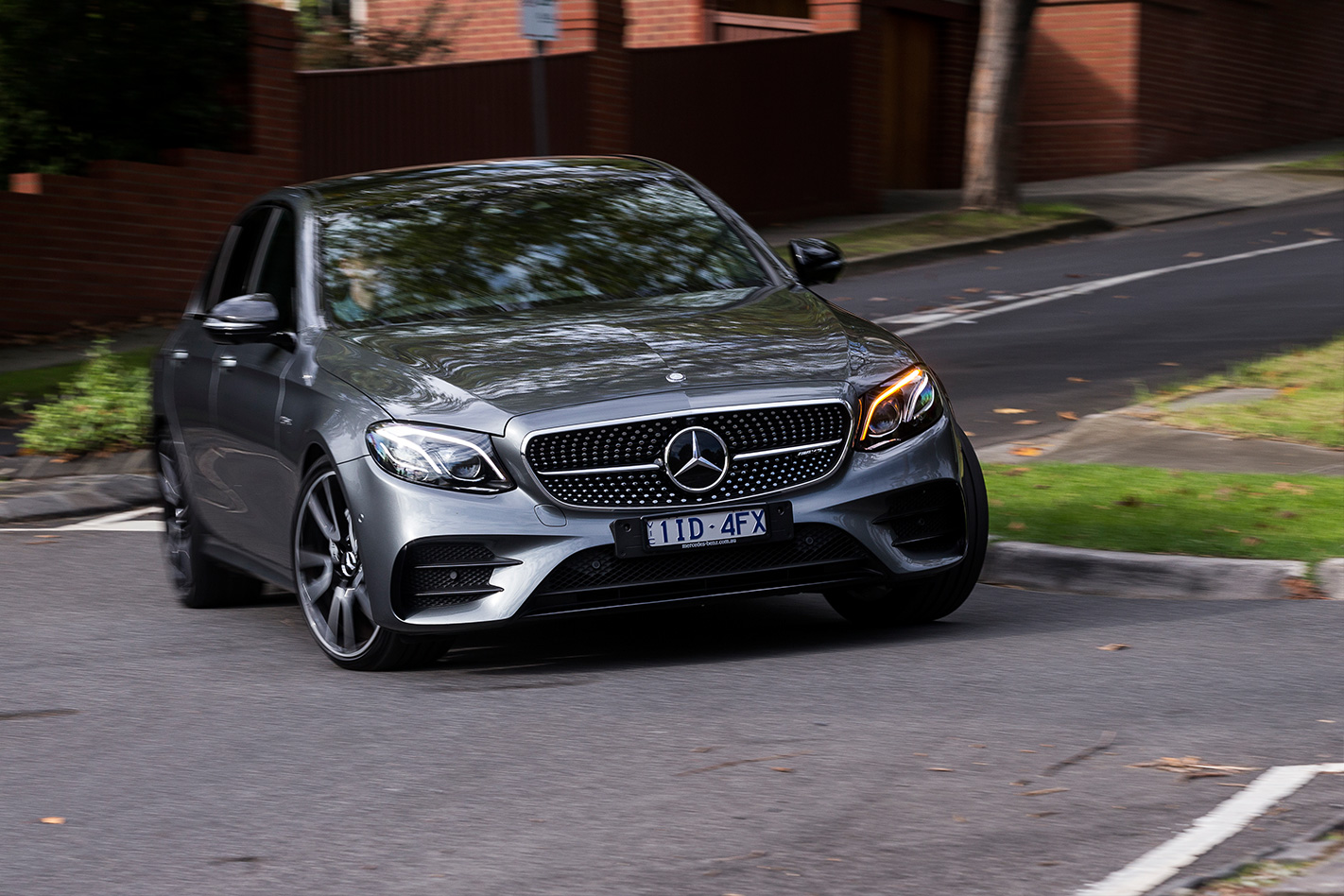
Another key element of the AMG family expansion has been the introduction of E43 and C43 variants and A45 derivatives before that.
According to Moers, the strategic move to introduce sub-63 and 65 offerings was intended to attract new customers to true AMG cars that are more affordable without compromising the company’s performance principles.
“We expected that by introducing the 43 we would hopefully see some kind of customer journey – people coming in from other brands then stepping up to 63s. This was our estimation. It happens.
“We moved the brand of AMG out of the position that it’s all about power and straight-line speed. In the new days it’s more holistic. The right power output in combination with driving dynamics.
“It would be easy for us to put a 43 badge on a C-Class, modify the power output of the engine a little bit, tune the calibration of the gearbox, done. It would work for sure for two years but sustainable? Never.”
When asked if the success of 45 and 43 variants would spawn more intra-range numbers, Moers answered “Yes but we didn’t officially talk about it,” he said.
“We have a very good working model with our engine performance in C-Class and we are going to introduce that in the next compact.”
Moers would not confirm a specific number but Wheels has previously learnt from a Mercedes-AMG source that the 53 badge will be introduced to represent an electrically supplemented inline six-cylinder engine.
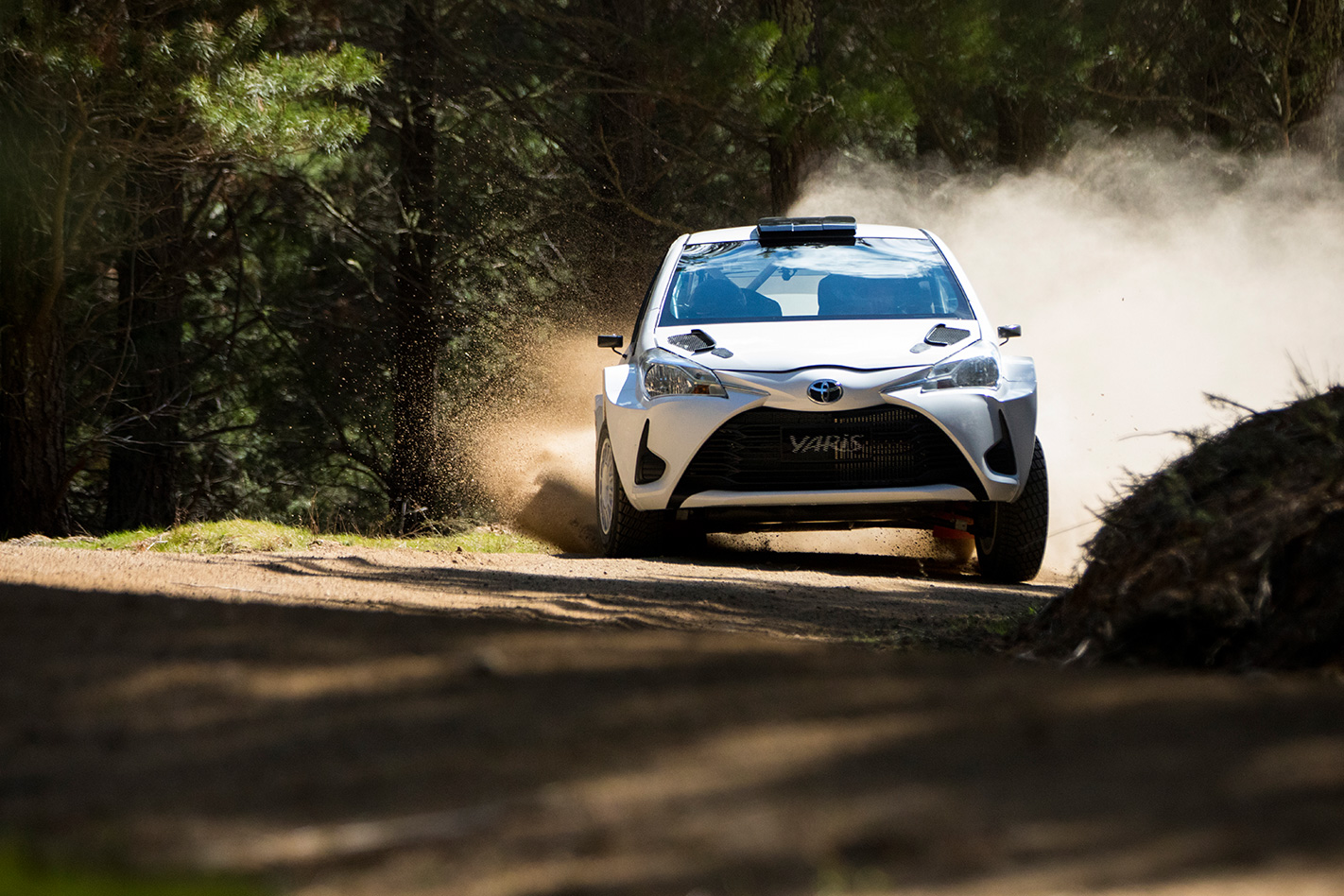
Neal Bates Motorsport driver Harry Bates has unveiled his new Toyota Yaris AP4 to a rough weekend in the Australian Rally Championship (ARC).
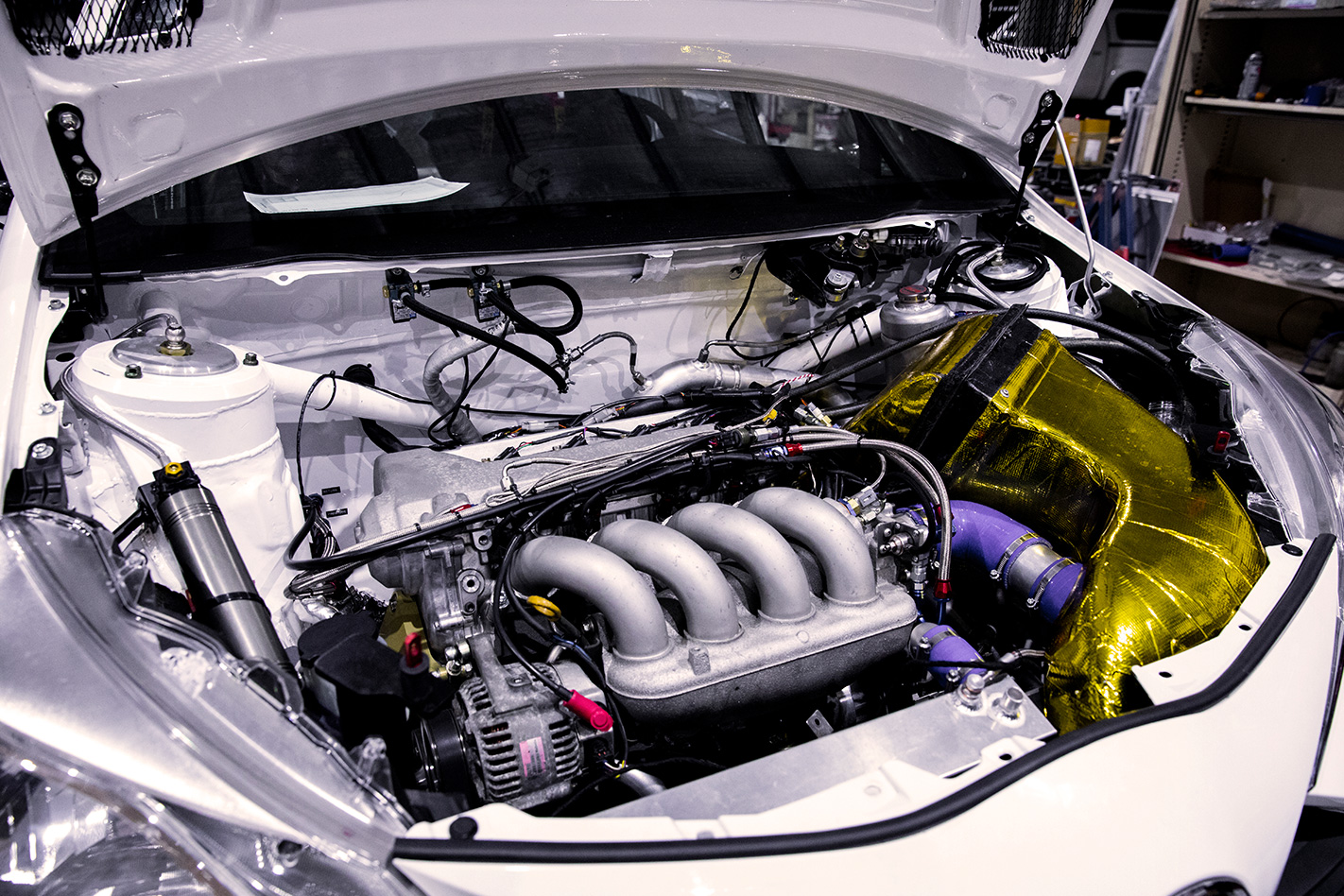
The 224kW/420Nm 1.6-litre turbo four powered monster of a hatch debuted at Rally SA at the weekend, though it didn’t quite meet expectations as it was sidelined for most of the event after mechanical trouble.
Prior to the less-than-fortuitous weekend, Harry Bates said he and the team (including father Neal Bates, former ARC/WRC driver and four-time ARC title-holder) were confident the 1230kg Yaris would perform well.
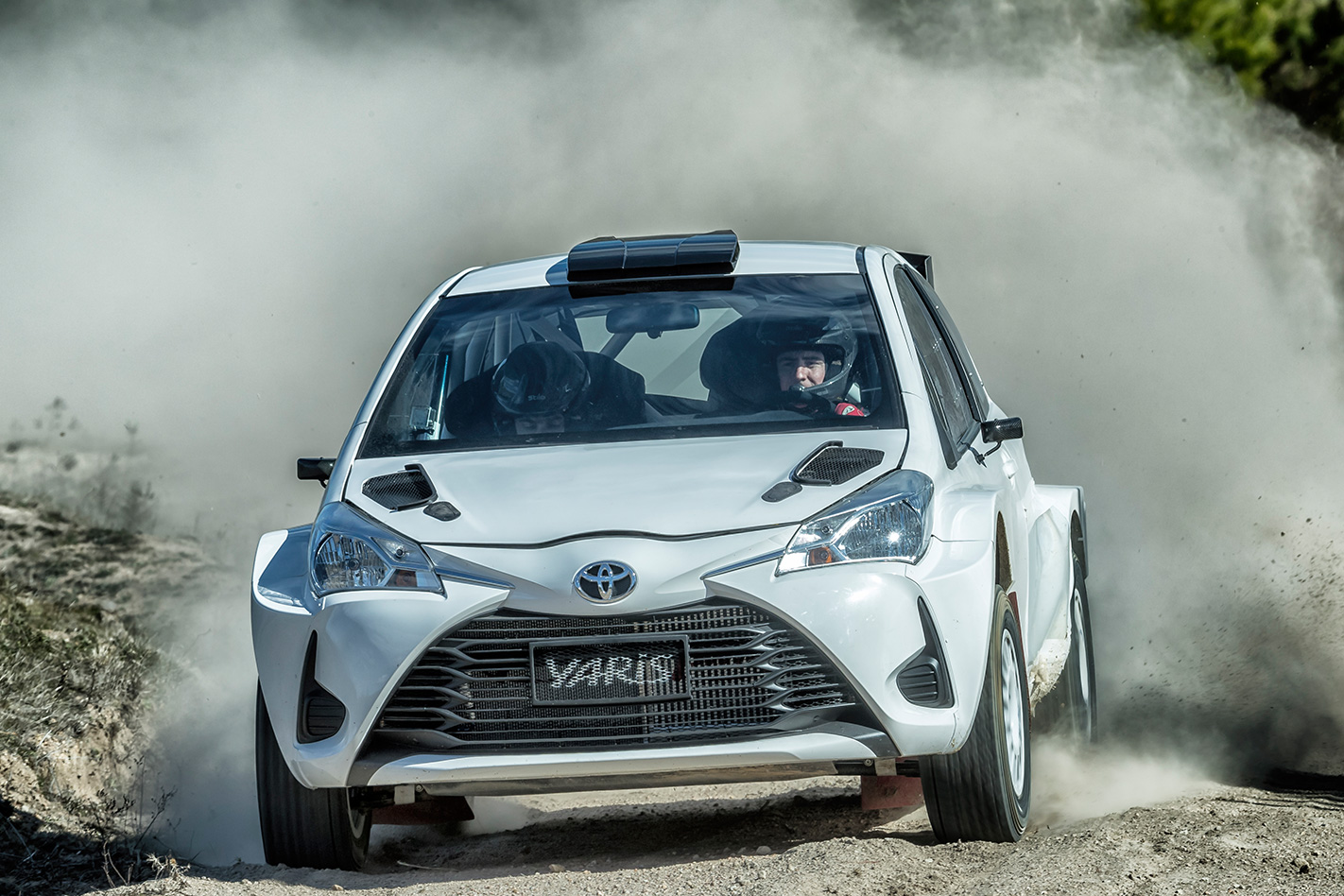
“The shakedown confirmed our decision to opt for the Yaris with its combination of small, light car with turbo performance resulting in brisk acceleration, excellent suspension travel and nimble handling.”
“It was quick and strong, just as you’d expect from the latest in a long line of rally cars built by dad and his team at Neal Bates Motorsport.”
Day two saw the car make one stage before being pulled out again. This left Harry bates third on the ladder, dropping down two rungs from the top spot.
Despite the unfortunate incident in South Australia, the Yaris performed well previous to the weekend, and will continue to be the team’s runner into the next season.
As such, it’d powered by a de-stroked 1.8-litre 2ZZ-GE which complies to the necessary 1.6-litre limitations, aided by a 34mm inlet restrictor to limit power output.
It’s also relying on a Sadev six-speed sequential gearbox with Sadev differentials to get power to the wheels.
The car it replaced, the Neal Bates Motorsport S2000 Corolla, had been the team’s car for 10 years.
“For its time, the Corolla was one of the best S2000 cars in the world,” says Neal Bates.
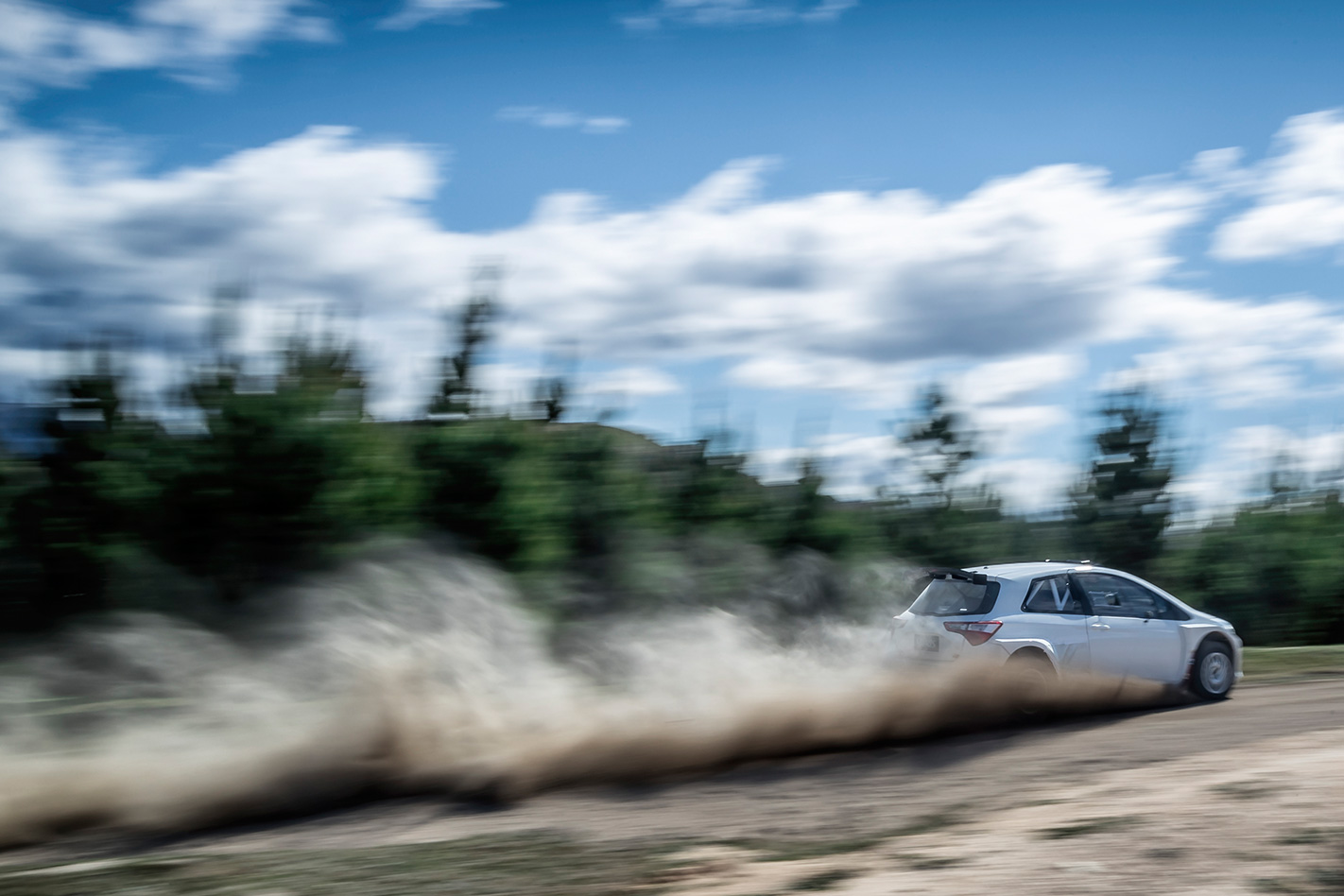
The final round of the ARC will be held at Rally Australia in Coffs Harbour in November in conjunction with the final round of the World Rally Championship.
PITCHING a handsome, eminently worthy value-branded offering in with the pack of wolves that is the premium European set is going to leave someone bloodied. Kia just hopes it’s the opposition, not its dramatic new Stinger.
On paper, this perception-altering rear-drive liftback sedan has all its ducks in a row – strikingly muscular styling, purist drivetrain layout with an all-turbo engine line-up, a dedicated sporting focus and enough packaging proficiency to carry some credibility – yet the gamble of entering a declining global sedan market dominated by German brands with a Korean badge glued to your snout and tail can’t be overstated enough.
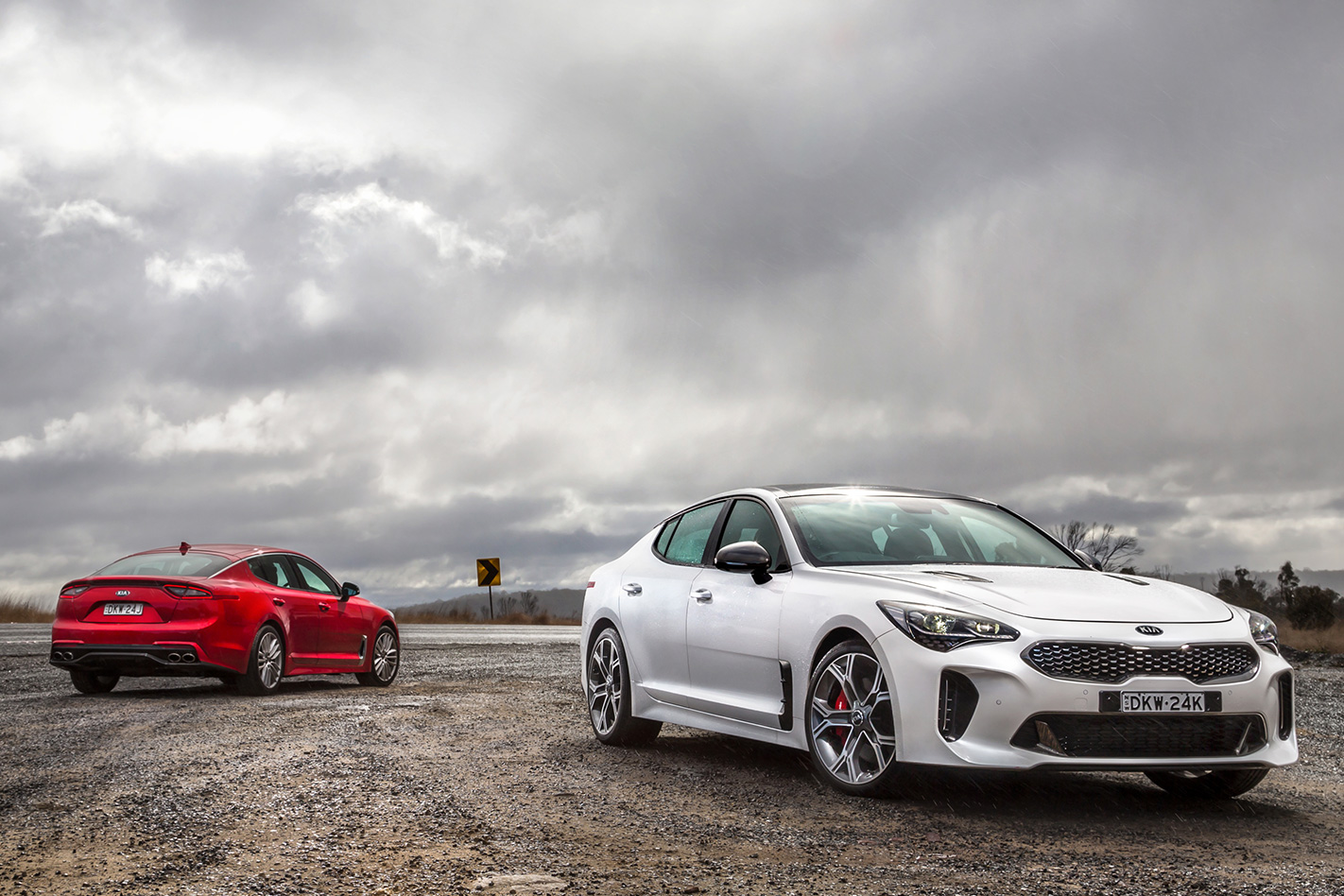
If there was a car market born for the Stinger to play in, it’s ours. The uncanny timing of Kia’s rear-drive flagship to Australian showrooms just moments after Holden will call it quits on 69 years of domestic rear-drive production is orchestrated perfection. When stocks of the current VFII Commodore/Calais run dry – unlikely before 2018 – the most affordable rear-drive sedan available in this country will be… Kia Stinger.
And let’s not discount the Stinger’s X-factor, an (affordable) gran-turismo presence that may well attract some fairly atypical buyers into a Kia showroom.
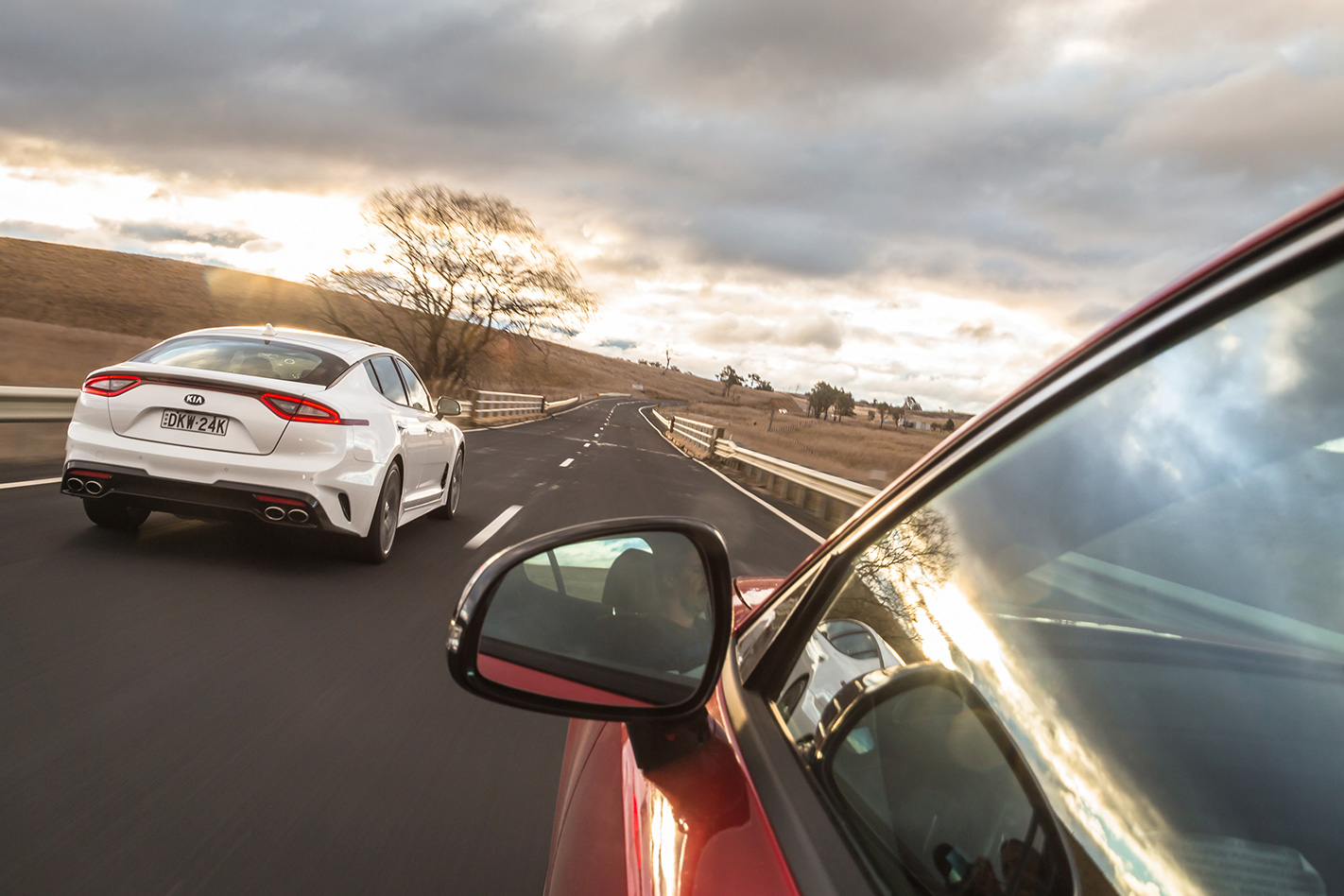
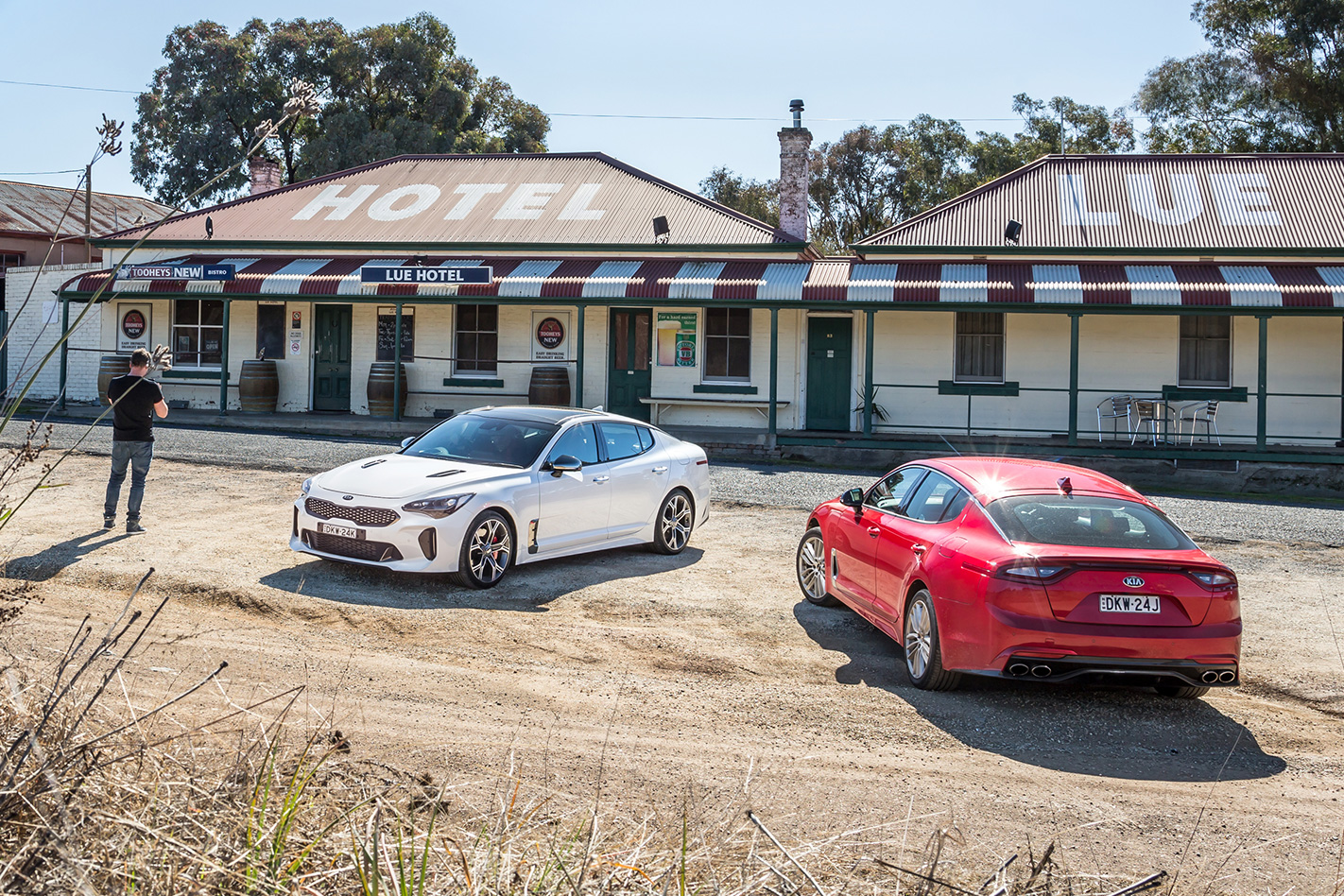
With the Stinger’s original launch date of “late August” pushed out by a month due to delayed supply, the two Stingers you see here are pre-production ‘P1’ cars (see sidebar, right), with all the key engineering pieces in place but lacking full-production cabin plastics, as well as fully sorted electronics (check out the video).
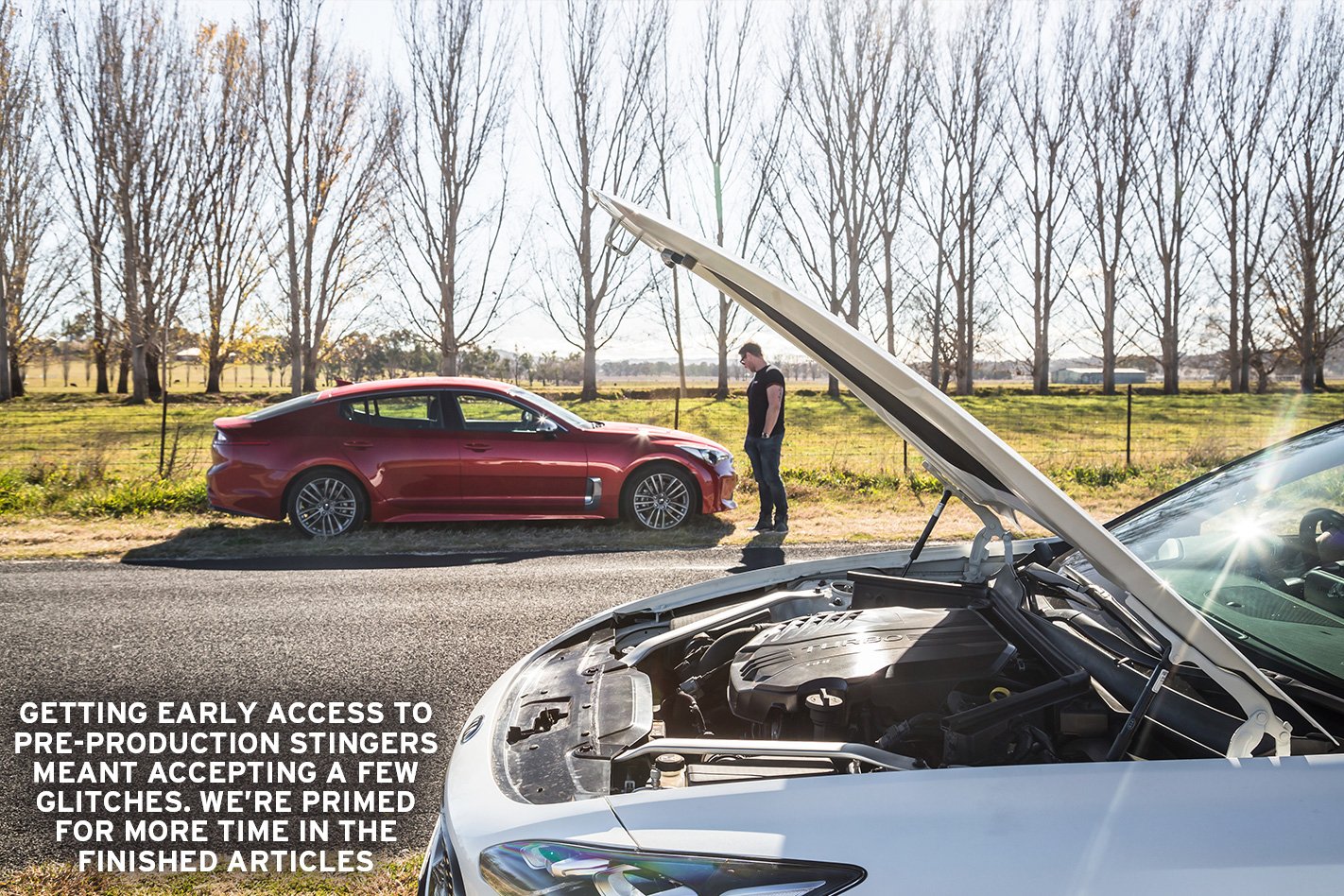
Our test Stingers aren’t quite to production trim spec but they’re bloody close. Due to a last-minute juggle of suspension componentry, our test V6 is essentially the flagship GT running the fixed-rate dampers from the 330S and 330Si (and non-perforated brake rotors, unlike production V6s) while the Stinger GT-Line four boasts the premium adaptive suspension it will share with the production V6 GT, teamed with the slightly daggy 18-inch wheels and lesser-spec 225/45R18 Continentals worn by the 200S and 200Si. The 330Si and GT V6s wear striking 19s with top-shelf rubber – Continental ContiSportContact 5 tyres measuring 225/40R19 front and 255/35R19 at the rear.
As it turns out, the 272kW/510Nm V6 needs every fragment of traction it can get because it’s quick. Seriously quick. Issues with the ESC meant our ‘pre-pro’ version refused to be properly primed off the start line (building revs with your right foot while holding it on the brake with your left), yet it still managed a deeply impressive 5.1sec to 100km/h (bang on Kia’s claim). That’s two tenths shy of the Commodore SS-V Redline automatic we tested in August 2016; a margin the Stinger loses in the first 0-20km/h dash.
It’s all down to that launch.
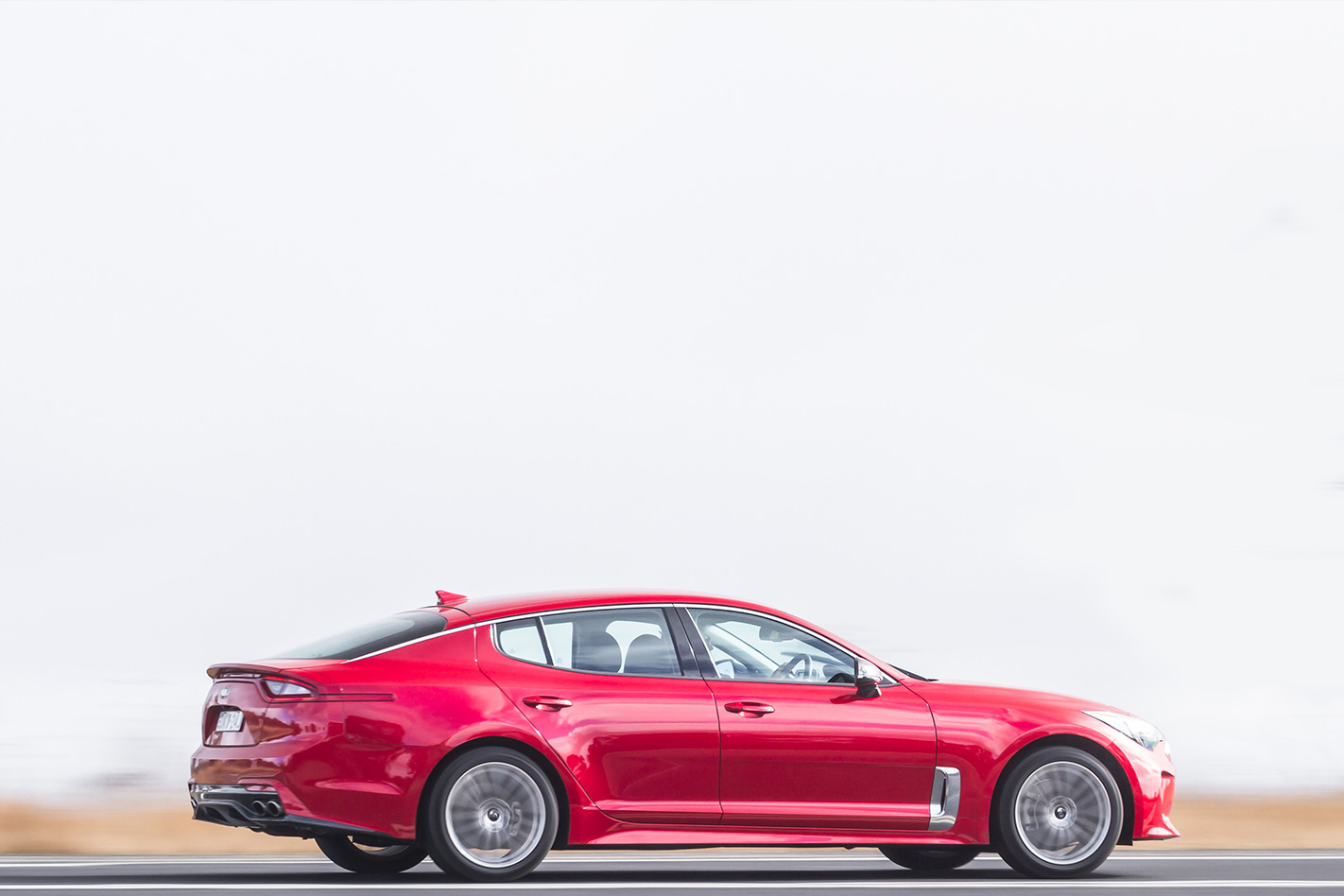
For those of us who prefer some aural entertainment to accompany a meaty feast, Kia Australia has gone it alone in exclusively offering an optional sports exhaust on the V6. A bi-modal system that opens its flaps once throttle input exceeds 50 percent, it’s the work of Melbourne company Lumex (who also developed the two-stage systems on LSA-engined HSVs) and will command around $2000 more on all three V6 trim grades. In our opinion, it’s a mandatory choice.
Without the barky rasp the sports exhaust brings – especially under load from 2500rpm onwards, all the way to the six-five upshift point – Kia’s twin-turbo V6 lacks any discernible character. It serves up less whistle and wastegate commotion than the 2.0-litre four-pot, which is no bad thing, but in unfettled form the Stinger’s boosted V6 gives off major Carnival and Sorento vibes, exposing its working-class gene pool.
The 182kW/353Nm four-cylinder (slightly less than it produces in the Optima GT due to a different exhaust system) is a bit of a dark horse too, despite suffering from turbo lag on step-off and, like our GT, zero opportunity to enhance its dragstrip launch ability by winding it up on the brake. Still, 7.2sec to 100km/h and a 15.1sec quarter are solid numbers for the base Stinger’s mid-40-ish starting price. And with the production car’s electronics sorted to ensure a swifter launch, there’s absolutely no reason why the 2.0-litre four won’t approach Kia’s 6.0sec claim.
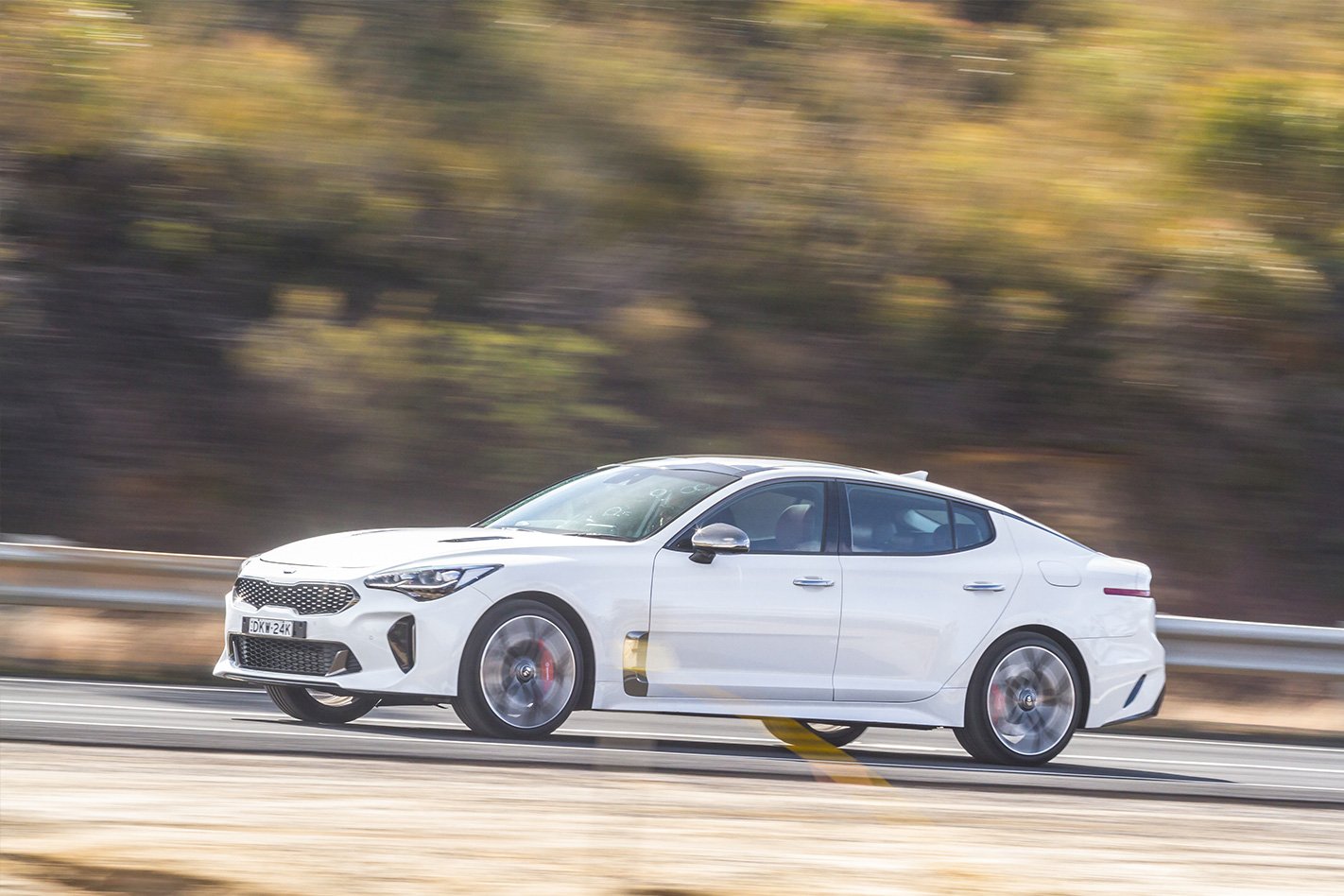
Where the 2.0T really comes into its own is dynamically. Even the base car is a pretty sweet package, tuned to deliver firm control with enough suspension suppleness to remain composed on rough surfaces. But it can’t match the finesse and sophistication of the adaptive-damped version.
Both the 2.0T and V6 have been tuned to produce a near-identical driving experience, but you can tell there’s less weight over the Stinger four’s nose. It feels more on its toes than the V6, with sharper turn-in, more nuanced balance and crisper steering feel than our 19-inch-wheeled V6 on fixed-rate dampers. But on narrower 18-inch tyres, spirited cornering sees the superbly balanced four arc its tail out earlier, demonstrating its lack of mid-corner grip and corner-exit power down. The top-spec four-pot GT-Line, which gains stickier 19s, will be noticeably superior – 255/35R19 rear Contis do that to a car – but the 200S and 200Si will continue to offer more power than cornering purchase.
Stingers with adaptive dampers will offer five suspension modes – Eco, Comfort, Smart, Sport, and Custom – though we’d stick mostly to Smart (an ‘auto’ setting) and still-comfortable Sport on twistier roads. At a faster pace, Comfort’s greater vertical motion and lesser body control mean that Smart achieves the finest combination of level bump absorbency, pointy steering, tight control, excellent balance, and keenness to change direction. In that set-up, the Stinger’s a real peach.
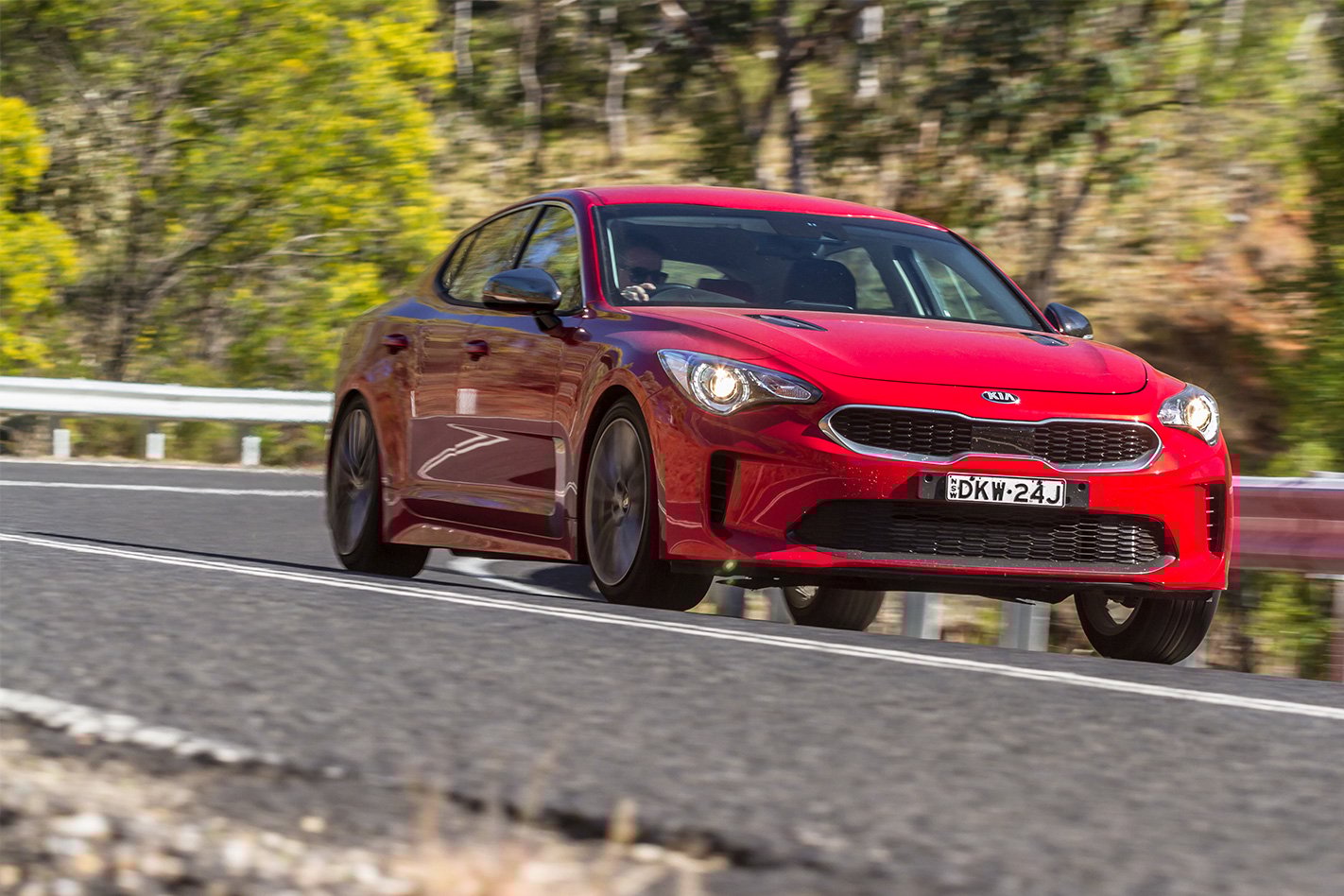
The heavier V6 needs to be more consciously trail-braked into tight corners to keep it balanced, but on fast, flowing roads the Stinger range-topper is exceptional, mainly because it has the grip to match its grunt. Adding power throws a lovely, throttle-adjustable weight bias onto its outside rear tyre, working in combination with a mechanical limited-slip diff for plenty of rear-steer antics… until the judicious ESC system decides you’re being a hooligan.
The Aussies have done a terrific job tuning the Stinger’s steering. This is by far the most connected Kia we’ve ever driven, with crisp, uncorrupted feel and none of the kickback over bumps that has plagued Korean cars for generations. There’s a degree of numbness at dead-ahead but the moment you start to add lock, the Stinger is on its game. The V6 GT has just 2.2 turns lock-to-lock (2.5 for the 18-inch-wheeled four), and a meatier feel than its lighter sibling, yet it manages to serve up sharpness without over-reactive nervousness.
It feels progressive and natural, as a driver’s car should. And for the first time in a Korean car, all three steering-weight settings work. Comfort isn’t too light, Sport isn’t too heavy, and for all but the most lead-footed of driving, Smart is just right.
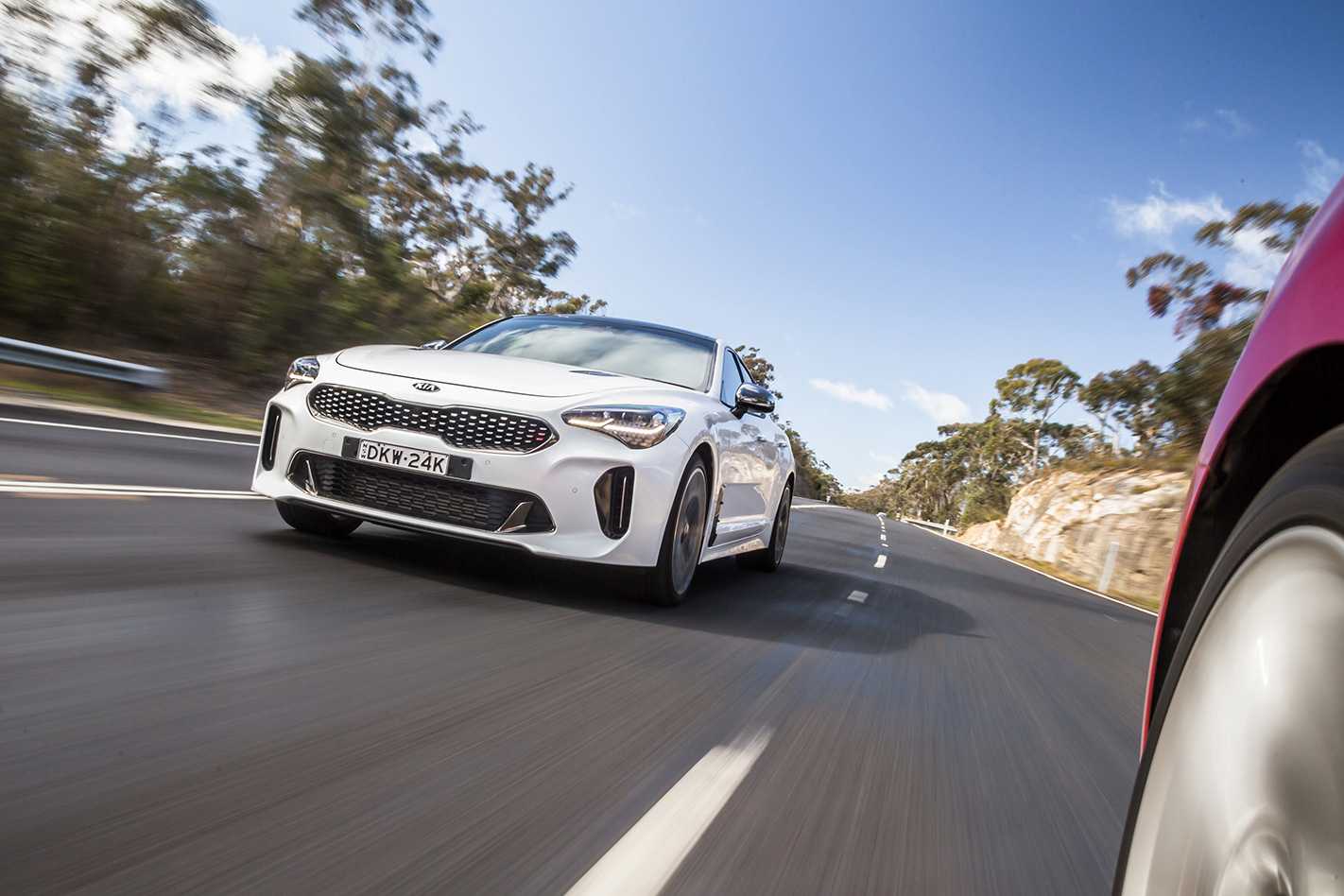
You can work around it by pre-empting the point it wants to shift, then tweaking the left downshift paddle to maintain a ratio, but that’s unnecessary work.
And then there’s the common Korean fault of not allowing you to grab a lower gear early enough. Despite both engines being capable of reaching 6500rpm, the most revs you’ll get in a downshifted gear is just over 5000rpm. On hilly, twisty roads where engine braking is key, that left paddle cops plenty of punishment.
The Stinger’s hot seat definitely delivers a gran turismo feel. Its driver seat’s lowest setting is just 180mm above the road – 45mm lower than an Optima’s – which definitely makes you feel part of the car. In the GT, full electric operation (including a driver’s under-thigh extender) and both heating and cooling are part of the deal, as well as sumptuous red Nappa leather if you aren’t petrified of colour, but the seats themselves fall a little short. Literally. There isn’t quite enough under-thigh support due to inadequate cushion tilt for the driver. And they could use a bit more side bolstering too – especially given the Stinger’s cornering capability.
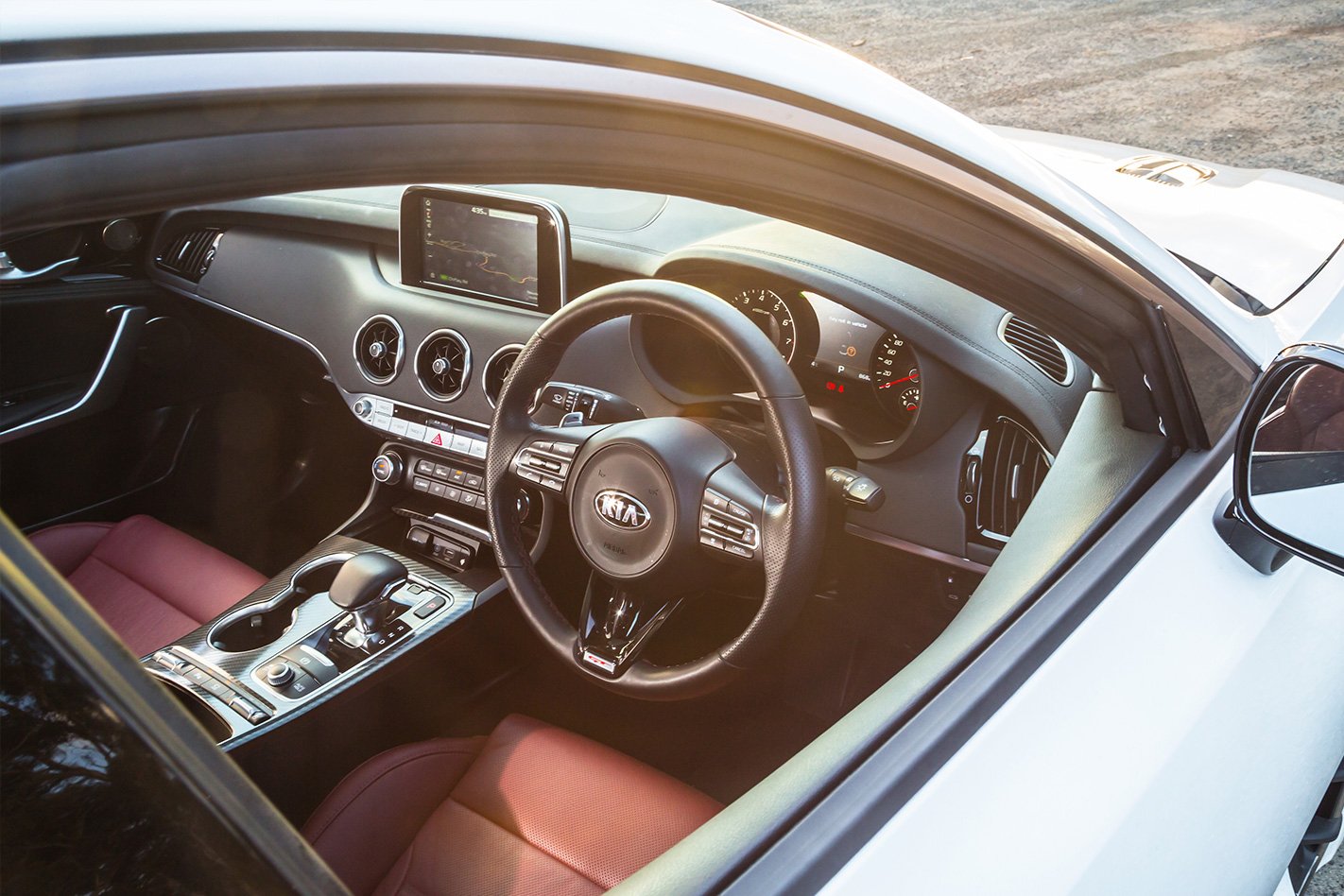
At least you can substitute them with Apple CarPlay to lift the sophistication.
Even with the front passenger’s seat set to its lowest position (via a manual crank-handle adjuster in the base 2.0T), there’s an acceptable amount of toe room for an adult banished to the rear, with leg- and knee-room bordering on generous… for two people.
A sizeable transmission tunnel exposes the rear-drive Stinger’s low-slung form, making the centre position a child-only affair, though the outer spots will comfortably seat adults. There’s minimal ‘theatre effect’ though, with the front headrests looming large in your field of vision, and the seat itself mirrors the front buckets in its rather short cushion length and sparse under-thigh support.
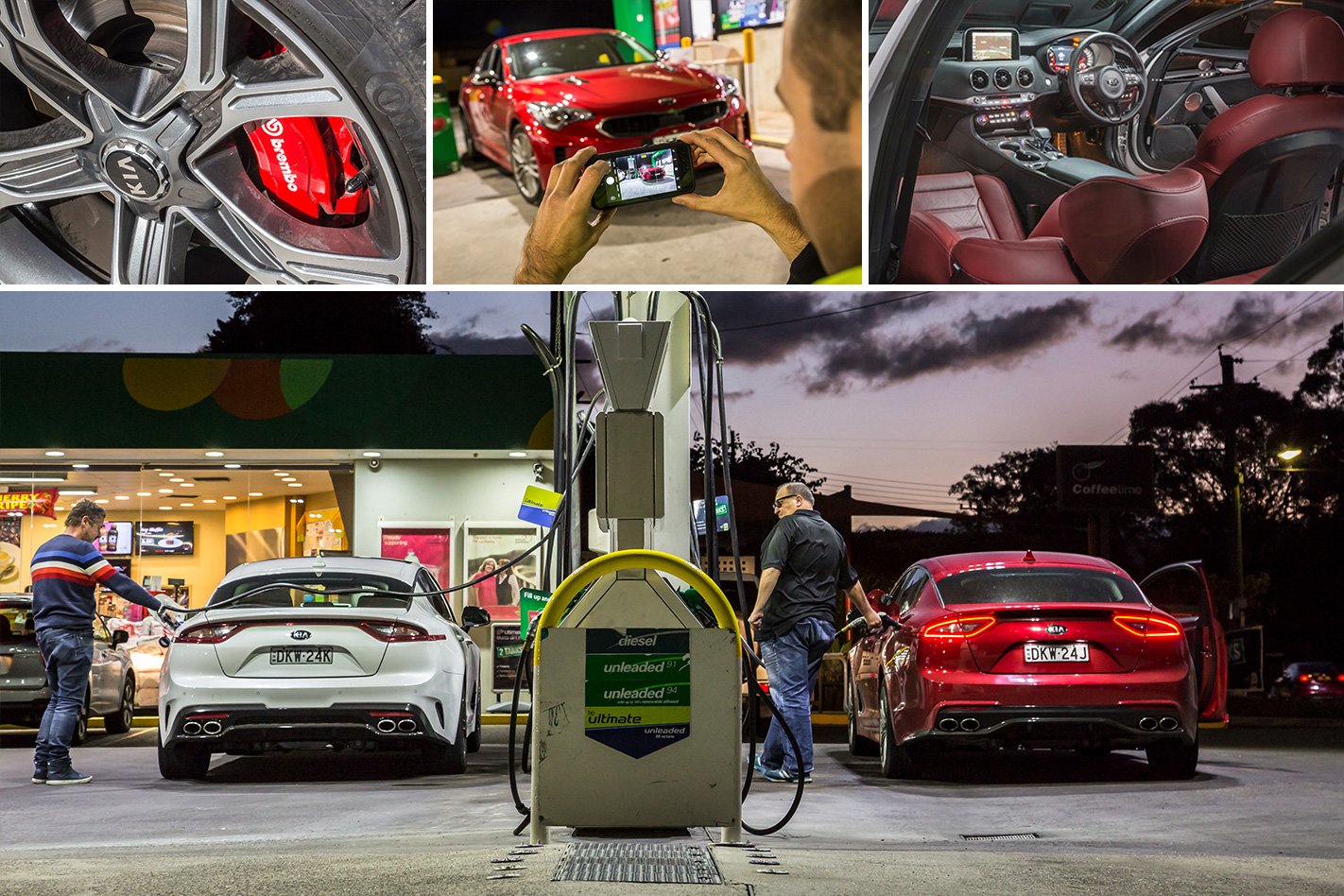
But the Stinger isn’t meant to make total practical sense. This is an emotional car driven by the passion of Kia’s European design bosses, producing a seductive sedan that just so happens to wear a Kia badge. And we have to applaud the Stinger’s Aussie-tuned chassis, which treads an impressively subtle line between controlled comfort and agile sportiness. Add a value-for-money pricing structure spanning roughly $43,000 to $60,000, give or take a grand or two, and you get plenty of presence for what is essentially chump change compared to what its comparative European rivals cost – the exact cars, in fact, which Kia will be pitching the Stinger against in most other markets.
Be that as it may, the four-pot engine’s lack of acoustic personality doesn’t match the Stinger’s sporting panache, and that’s where the disconnect between the styling team, who’ve done a terrific job in nailing the gran turismo brief, and the engineering decision to insert an off-the-shelf engine like this becomes exposed. The Stinger deserves to have its sporting personality and styling charisma enhanced by suitably seductive powertrains, even the four-cylinder version.
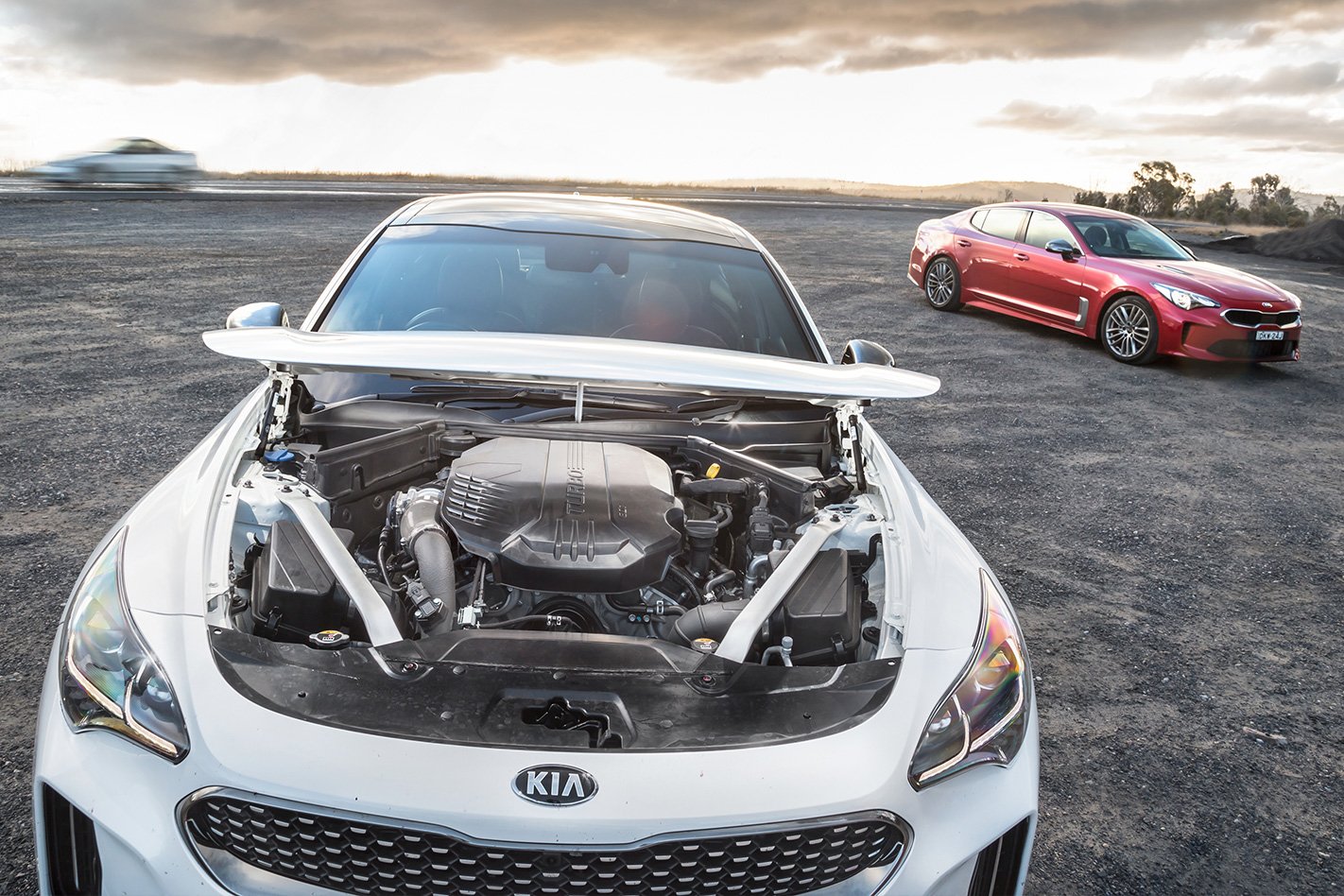
The Stinger isn’t perfect, but as an adaptive-damped GT range-topper, or even an entry-level rear-drive alternative to a bunch of far less dynamic front-drivers, Kia’s entertaining flagship brings enough individuality and quality to demand that Euro-focused badge snobs pay serious attention.
Ones they really did build earlier
The two Kias you see here are ‘P1s’ of a different kind – pre-production ‘CK’ Stingers with almost-finished interiors (the lower plastics lacked production materials and textures), non-production paint quality, and their fair share of creaks and rattles.
The V6’s slightly breathless braking ability can be put down to its lack of perforated discs, while the unswitchable ESC, over-cautious collision alert and other maladies (only one working windscreen washer in the 2.0T and just one folding mirror in the V6) can’t be judged until we chuck the production version into a comparo.
As for the GT’s adaptive dampers that fixed themselves to their firmest setting on video day, well, blame the police. Apparently they disconnected the power supply during their testing and completely wiped the P1 GT’s electronic memory. Hence why our test GT had fixed dampers, not the adaptive dampers of the production car.
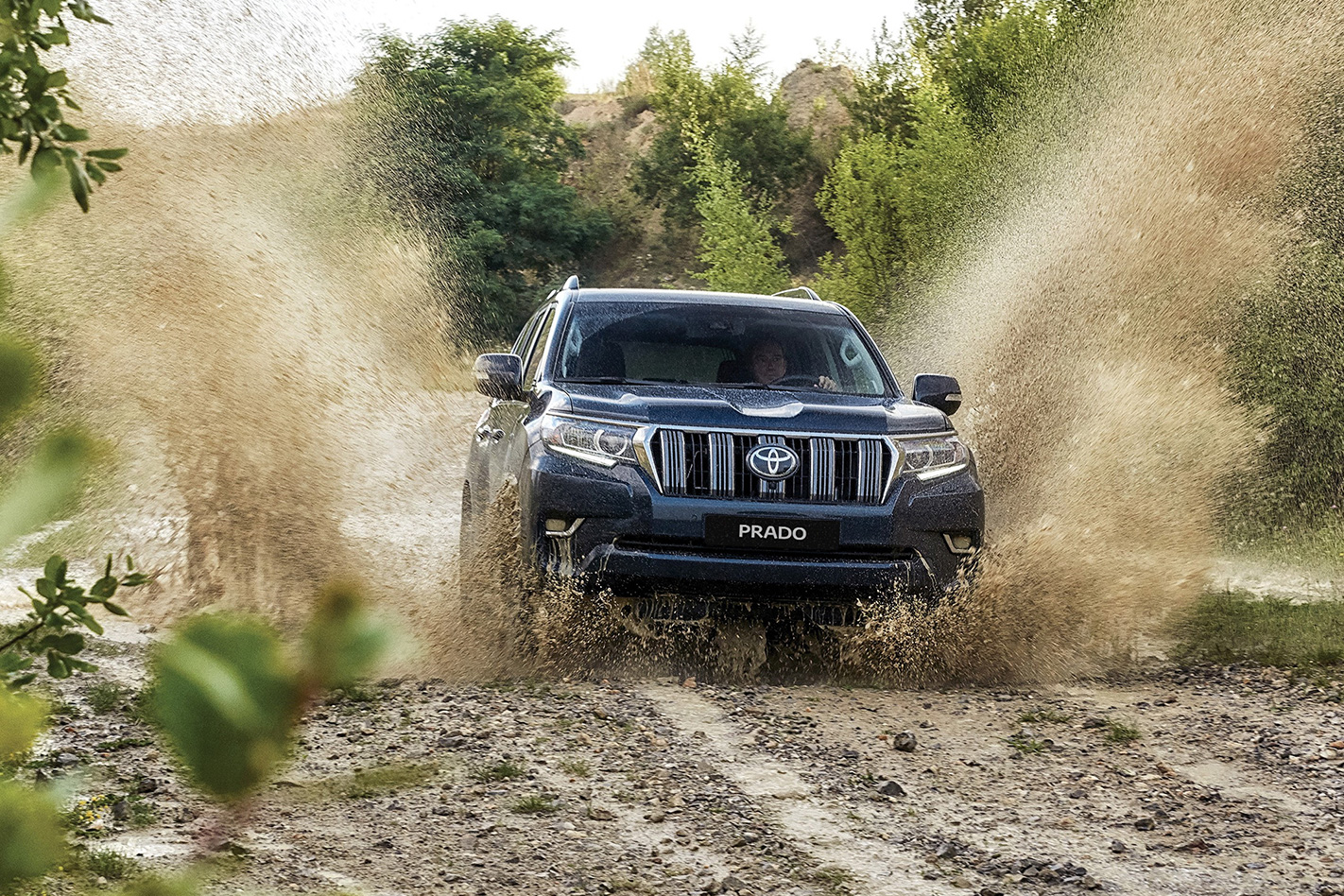
OWNERS of the 2018 Toyota LandCruiser Prado will not only be able to say their SUV has a little Aussie DNA, but a touch of Wheels spirit as well, with the development of the latest version steered in part by both local testing and Wheels’ critical eye.
Given the popularity of the Prado Down Under, Toyota subjected the prototype to a gruelling testing regime including some of the most punishing environmental and geographical challenges Australia has to offer. For the fifth-generation arriving next year, Toyota also listened to Wheels’ critical appraisal of the fourth-gen version from when it launched in 2009.
“When it comes to the drive-select, when the Prado came out in 2009 your magazine criticised it a lot,” he said. “This was good feedback for us to check the stability and rethink the system. We had daily challenges on that.
“As a result, we changed the modes to meet the need of our customers and we also tested them in Australia so that we could be sure that this time we would meet your needs.”
As Australia’s top selling mid-sized SUV, the Prado is a critical model for the Japanese car maker locally, and the fifth-generation model underwent an extended two-year testing and development program in central Australia.
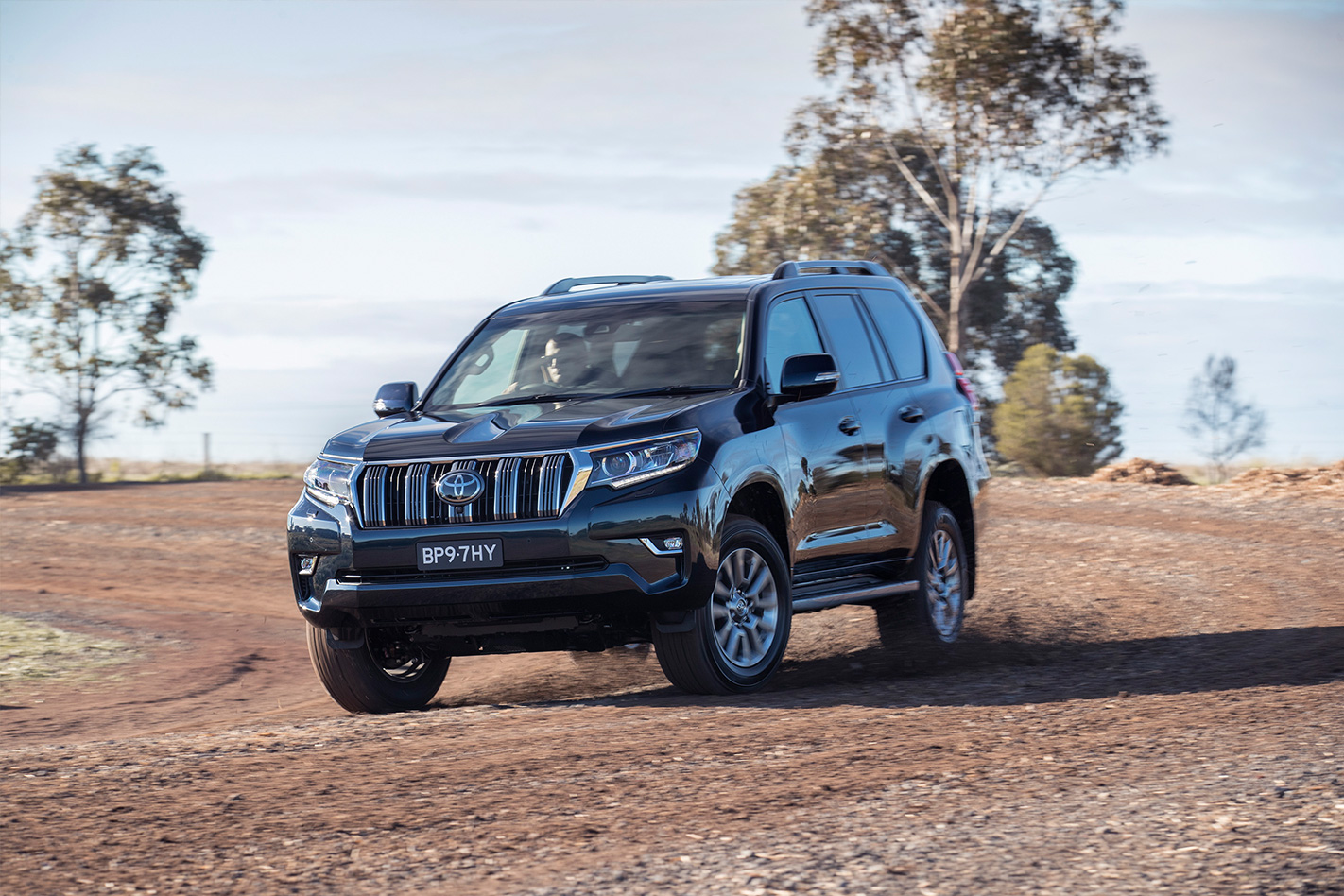
While the new version has a number of updated features including new engine options not previously available for the local market, the updated drive mode selector is one area that was affected by our feedback and tough Aussie conditions.
“For off-road conditions, we implemented multi-drive select feature and also the automatic crawling systems. We really had to test whether the new systems can cope with a real off-road situation. Not just a rough road but a real off-road situation.”
“These kind of voices from our customers are very important for us, not only for LandCruiser but for Toyota. We want to hear the voices of our customers and implement the feedback in our product development. This is a good example of that”.
The new Prado arrives in November this year and will receive the full Wheels shakedown once again.
THE head of Renault Sport says the time is right for a mainstream performance SUV, but the question is whether one can be made economically while still staying true to the brand’s values of high performance and driver satisfaction.
“There’s a market for that,” said Patrice Ratti when asked about the potential for a Renault Sport-fettled SUV.
“Now the market is very scale-oriented, you see Porsche, Lamborghini, Maserati [doing performance SUVs].
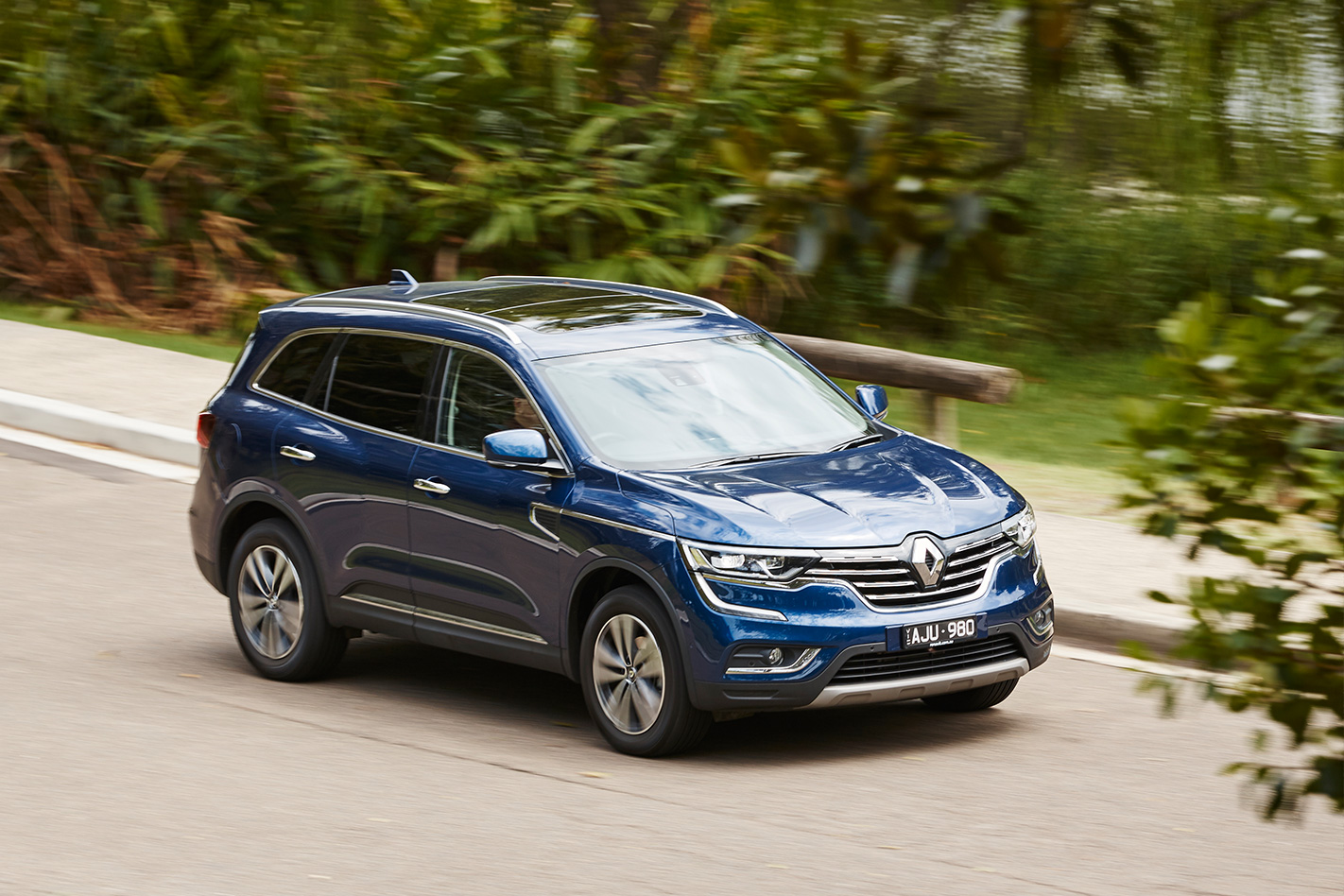
While luxury automakers are rolling out an ever-increasing number of high powered SUVs and crossovers, like the Mercedes-AMG GLC 63and Audi SQ5, fatter profit margins at the premium end of the market mean the business case is easier to justify.
It’s a different story at the lower and medium ranges of the price scale, where the Captur and Koleos sit. What’s more, Renault Sport isn’t interested in the approach adopted by corporate cousin Nismo, which has released a number of Nismo-badged SUV models – like the X-Trail Nismo and Juke Nismo – that were little more than styling packages applied over lightly warmed-over mechanicals.
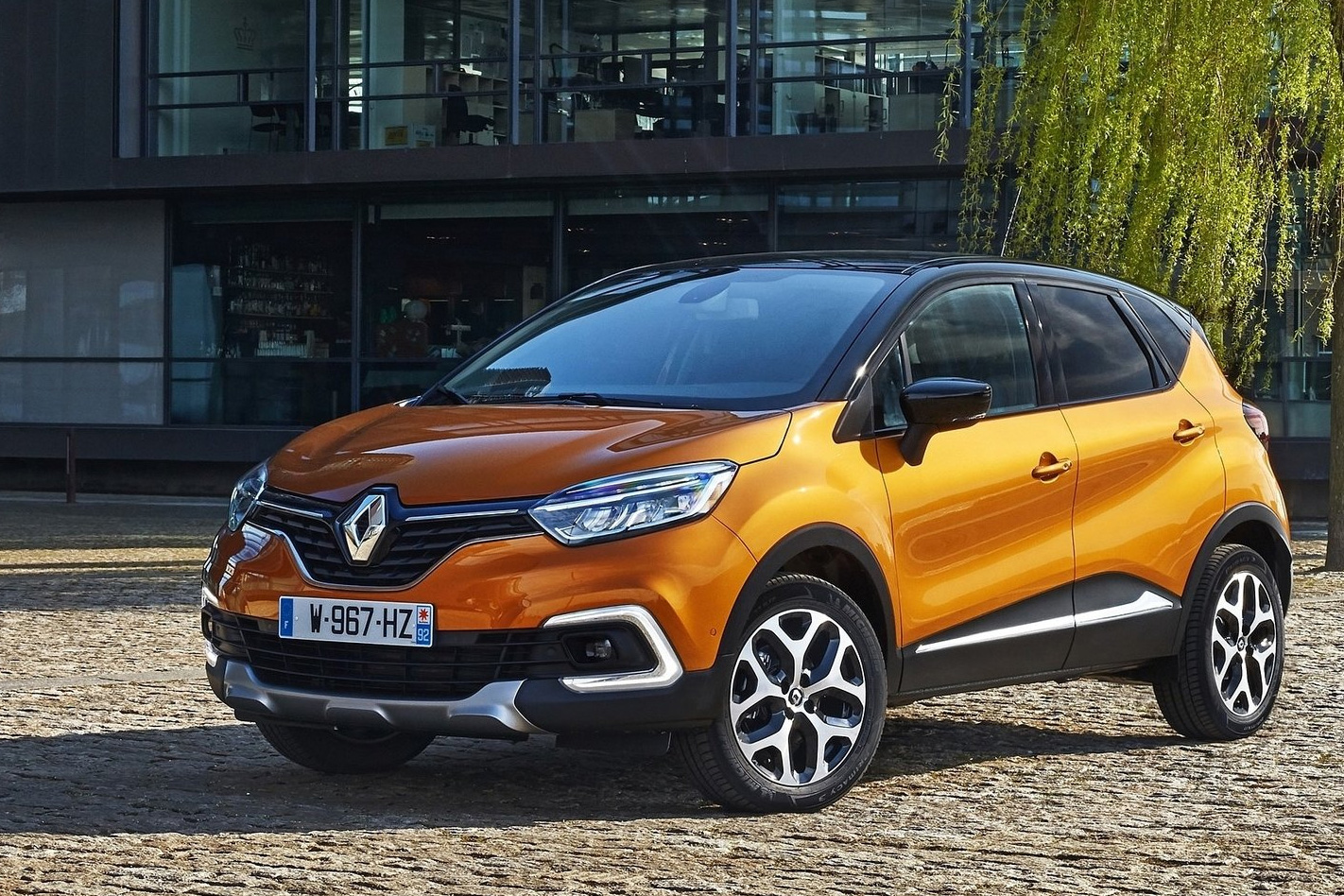
“If we’re able to find a way to do it at Renault Sport prices then there’s probably a market for that,” Ratti continued.
“But it’s not an easy thing to do because if we do it, it has to be ‘Renault Sport’, so it’ll need to have good handling and enough power.”
But would it harm the brand?
“Look at what happened with Porsche,” he said, “most of their sales now are of Cayenne and Macan, so I don’t think SUVs damaged them – but they did a good product.
“So if we’re not able to do a good product at the right price then we won’t do it. So nothing decided, but we’re looking at many things.”
Volkswagen has announced that a special edition, sub-$50K Golf R will arrive in Australia in December.
There are no images of it yet – because it hasn’t quite been built yet, but what we do have are the details.
At $47,490 in manual guise or $49,990 with DSG, The Golf R Grid Edition is priced a few thousand dollars south of the standard R hatch.
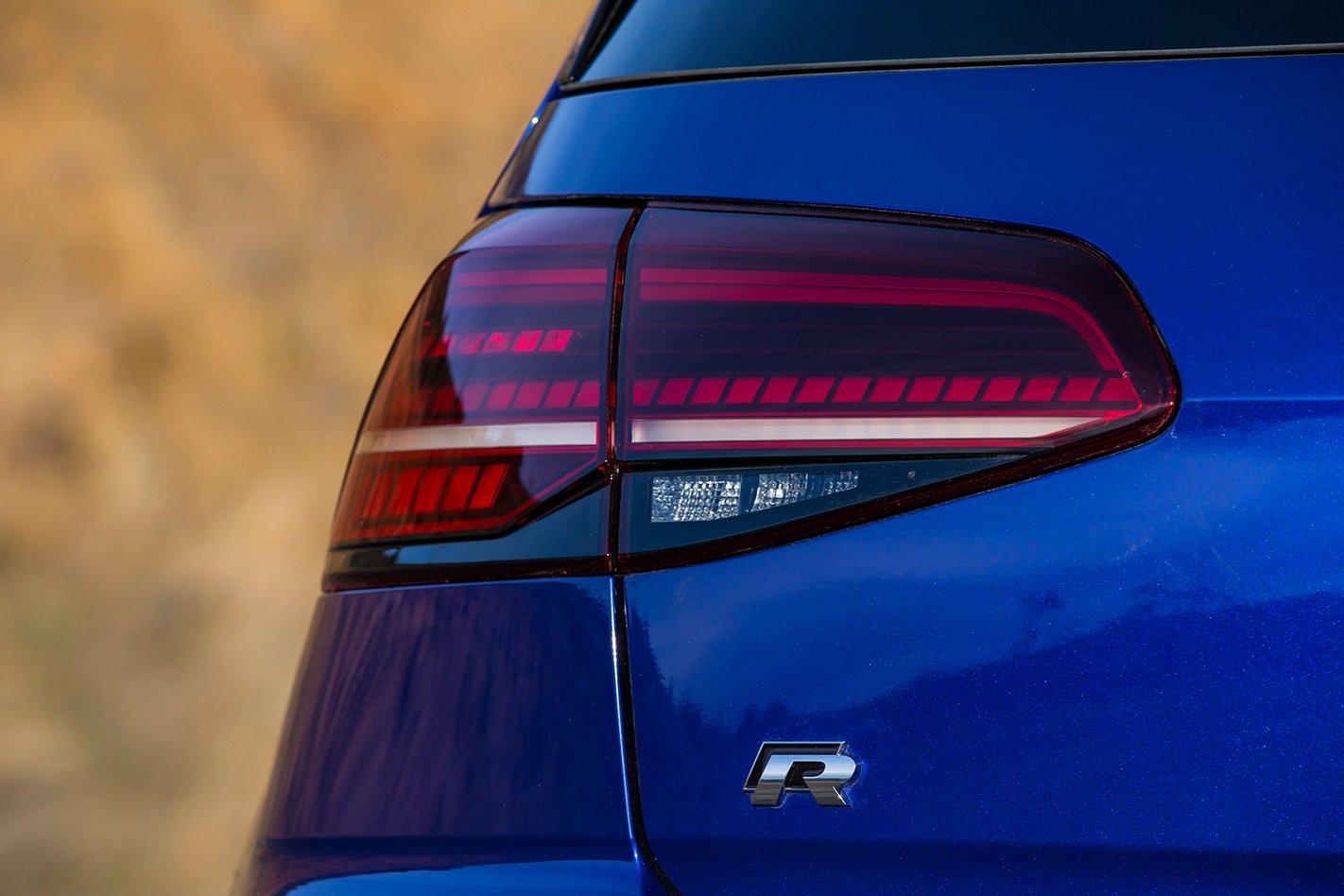
For comparison, the regular R in manual costs $52,990, while a DSG-equipped version sets buyers back $55,490.
The Grid Edition joins the Golf GTI Performance Edition as a special that’s only available in the Australian market.
The Grid edition scores the same performance from the 213kW/380Nm 2.0-litre turbo four as the standard R, so the most noticeable differences will be in trim specification.
As previously mentioned, leather seats are swapped out for ‘Race’ sports cloth and Alcantara combination upholstery, while the exterior of the Grid Edition is adorned with black door mirrors.Also available in Grid Edition specification is the Golf
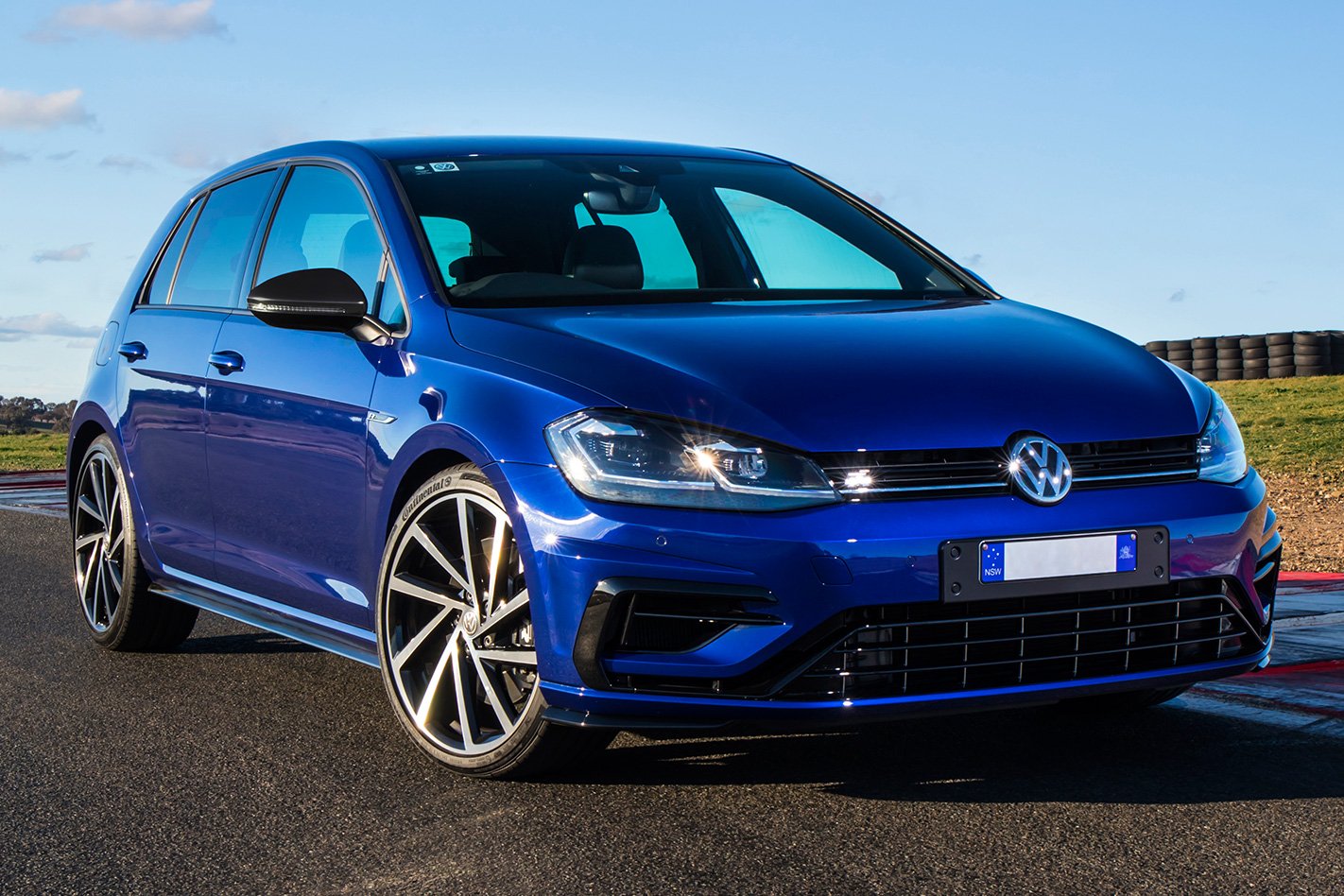
The wagon scores black roof rails to set it apart from the rest.
However, if you’ve got extra cash to burn and can’t wait until December for the Grid Edition, the Golf R Wolfsburg edition is now available in Australia.
In either hatch or wagon form, the Wolfsburg comes with DSG only, and costs a few dollars more than its more basic variants.
At $57,990 for the Wolfsburg hatch, or $59,990 for the wagon (which isn’t a massive step up from the $57,490 standard price for an R wagon), the Wolfsburgs cop 19-inch ‘Pretoria’ alloy wheels, carbon fibre exterior mirror housings, extra paint options, and Nappa leather appointed upholstery.
Holden’s Commodore SS ute has been our sub-$50K Bang For Your Bucks (BFYB) champion for the last two years, but would that be so had we included used cars in the mix?
While we will never know categorically, we can survey how past racetrack stars have since fared on the used market – and enter into contention sub-$100K models that have depreciated.
So if a near-new racetrack star is on the purchasing cards, where would MOTOR look?
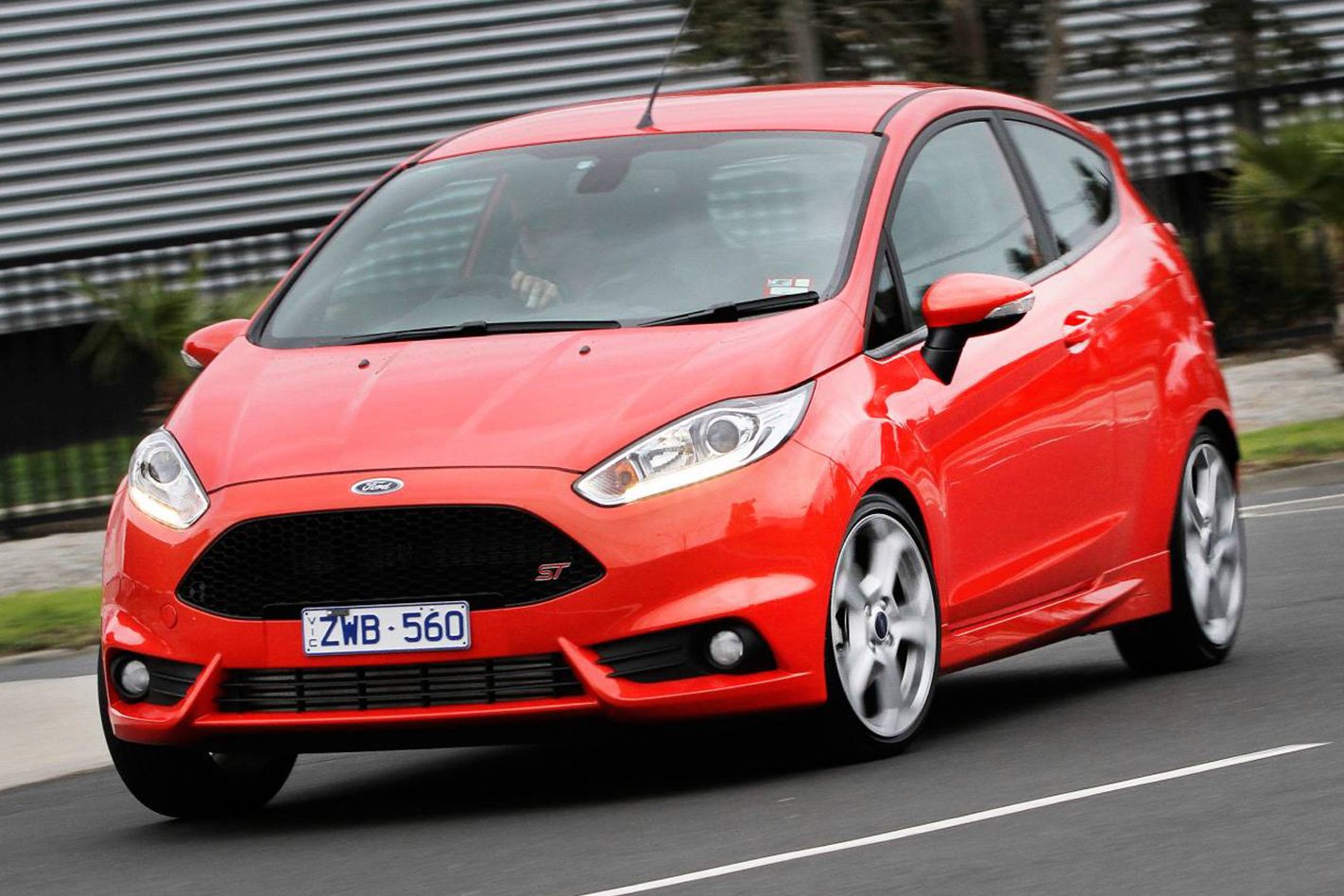
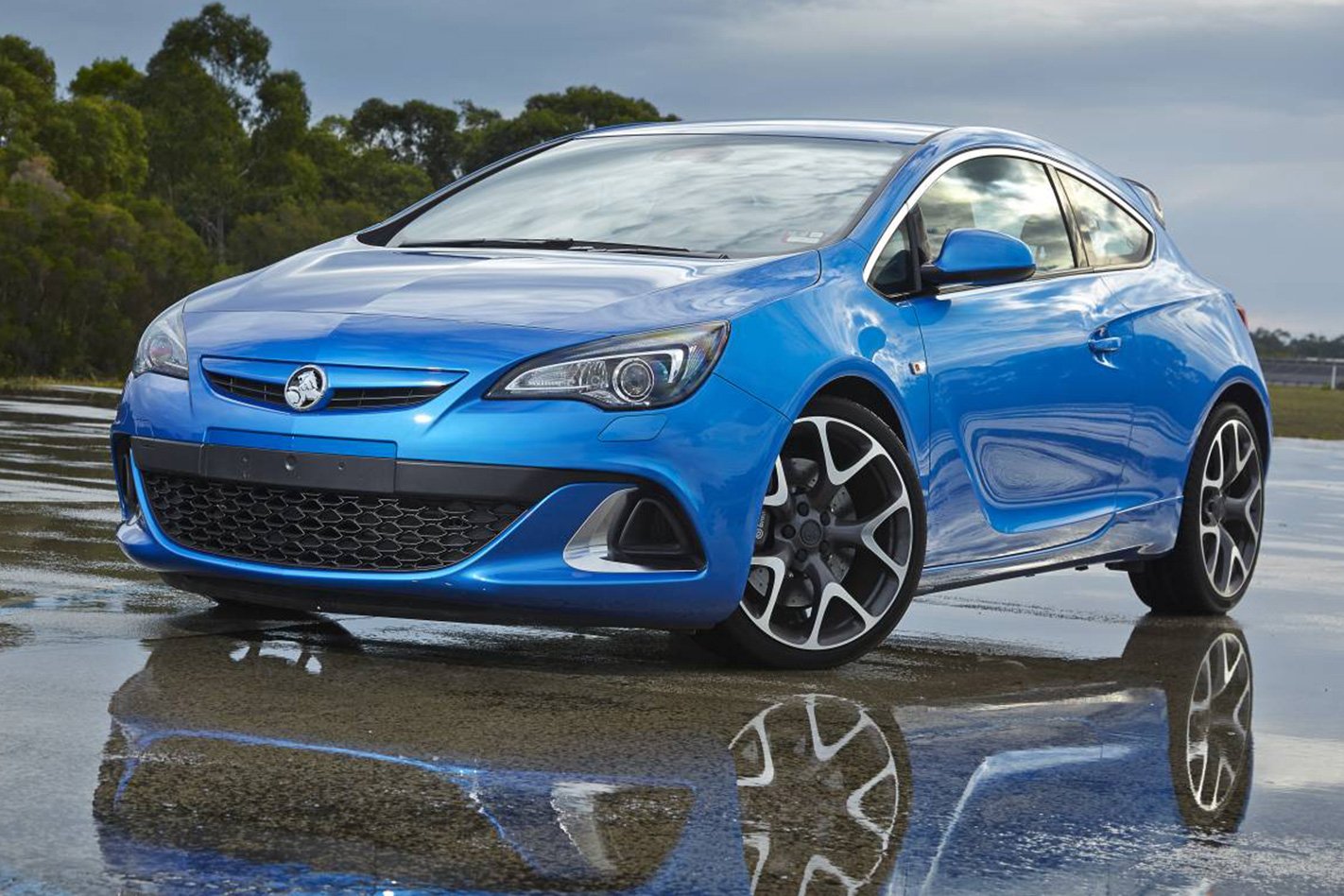
A year later, in 2015, BFYB’s fastest lap time was 1min 42.1sec from the Holden Astra VXR. That 206kW/400Nm 2.0-litre turbo Lion, with standard Recaros and Brembos, can now be had for under $20,000 with a 20,000km odometer. That’s a lot of ‘fast’ for not much cash.
Of course while those former Bang stars have fallen far in resale-value terms, there are also more expensive and focused sports cars that are just starting to fall under $50,000 used.
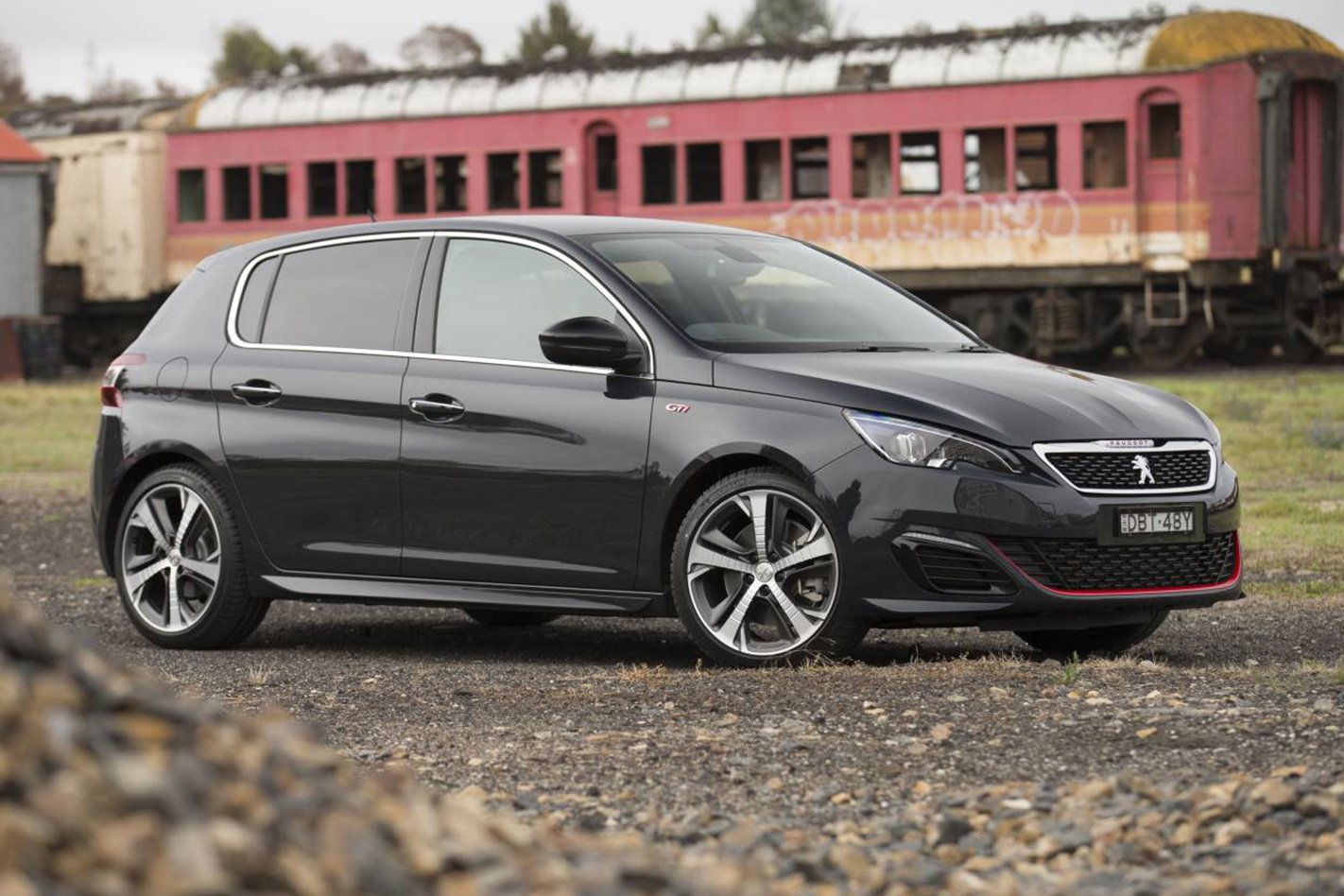
Although $61,990 plus on-road costs new, this 201kW/360Nm 2.0-litre turbo front-driven stripped-out special can now be purchased for around $45,000 – particularly for a rare (read ‘unwanted’) model de-optioned without audio and air-conditioning.
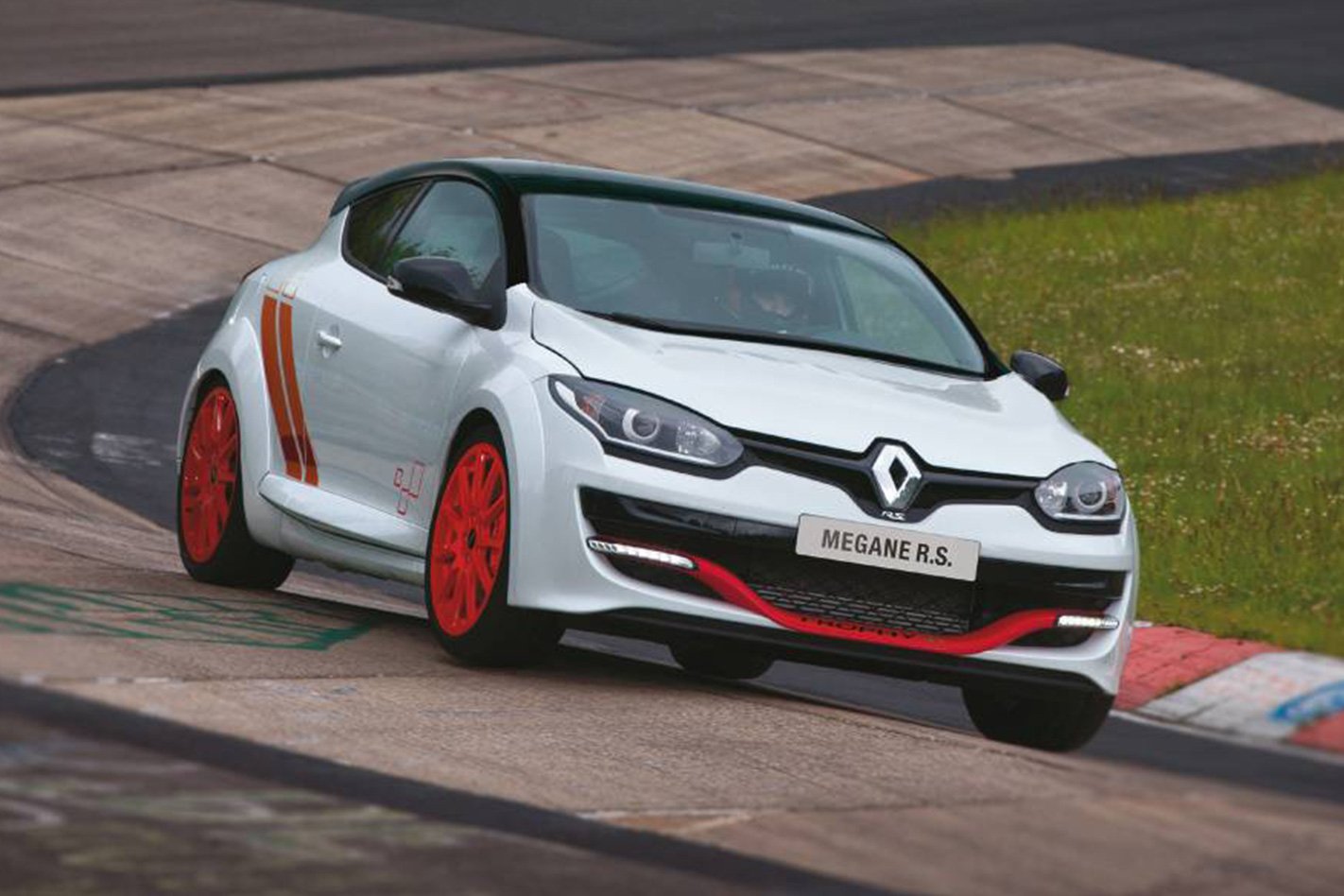
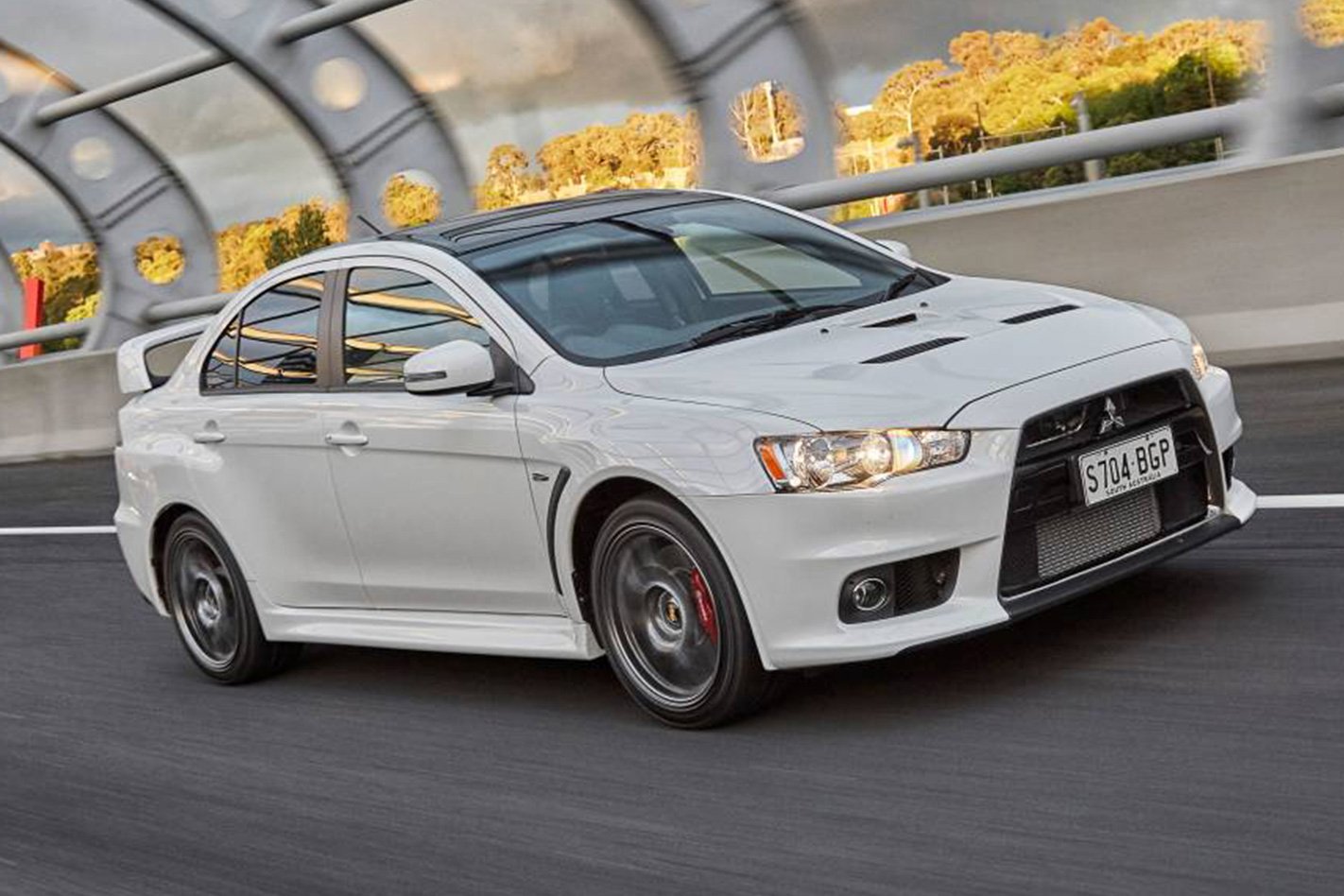
All-paw Japanese hero or front-drive French maestro? It would be a tough tussle, depending on the priorities. Either way, when it comes to used racetrack stars, we may not give out awards – but there’s plenty of bang for your buck to be found here.
