
The fourth-generation Audi A8 has made its global debut at the 2017 Audi Summit in Barcelona, Spain, in a glitz-heavy unveiling that heralded its arrival as a turning point for the brand.
And it is, in more ways than one. Large luxury cars are usually the technology flagships of the world’s prestige marques, and the A8 is packed with some incredibly cutting-edge gear – not least of which is its self-driving tech.
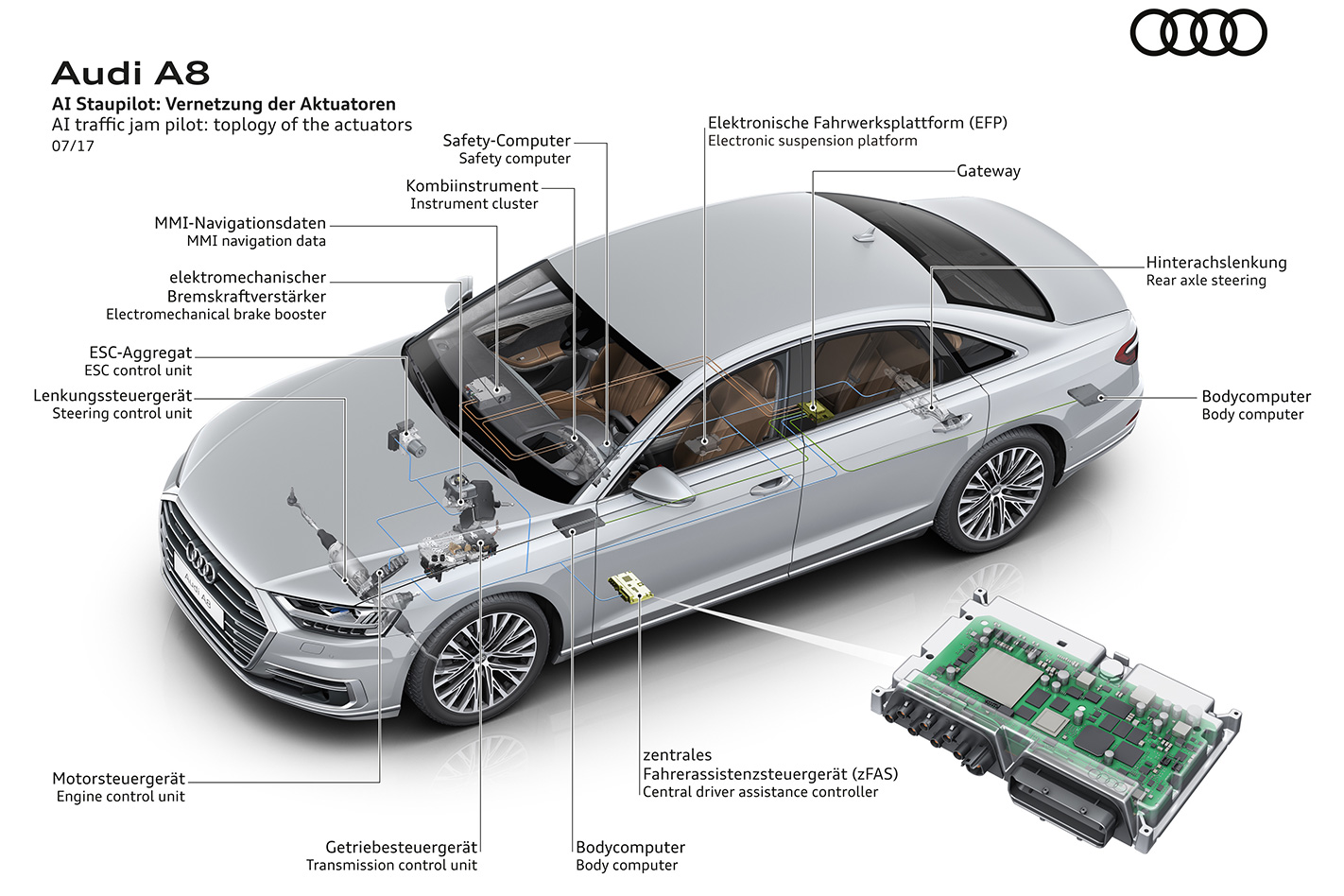
Billed by Audi as the world’s first production car with a true level-three autonomous capability, the new A8 is festooned with enough sensors and computing power to be able to drive itself along a road at speeds up to 60km/h.
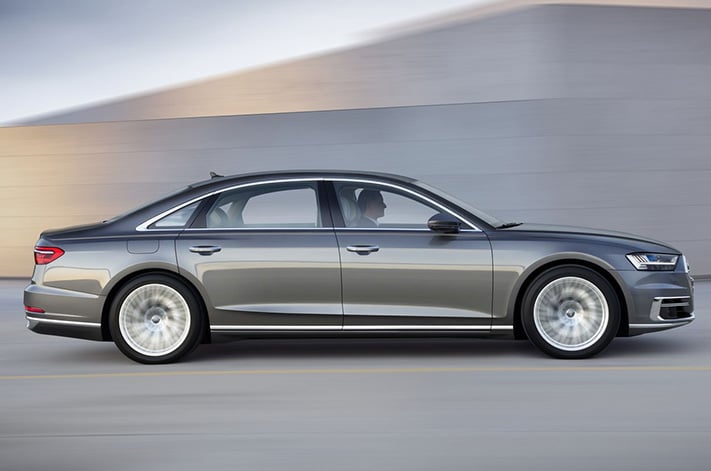
‘Level three’ isn’t exactly what you may think of when you think of a self-driving car – and Audi takes the time to describe it as “highly automated” rather than truly autonomous – but the new A8 can, in certain circumstances, permit fully hands-off driving.
These include when parking (you don’t even have to be in it for that one), as well as when driving on a freeway at sub-60km/h speed. The latter mode, dubbed Traffic Jam Pilot by Audi, has some caveats however: there must be a barrier between the car and traffic coming the opposite direction, and there must be clear lane markings. Even so, for those who routinely deal with freeway congestion it’ll no doubt be worth its weight.
Both systems rely on a 360-degree array of optical cameras, laser scanners and radar/ultrasonic sensors to build up a picture of their surroundings, which is rendered on the driver’s instrument panel in real-time.
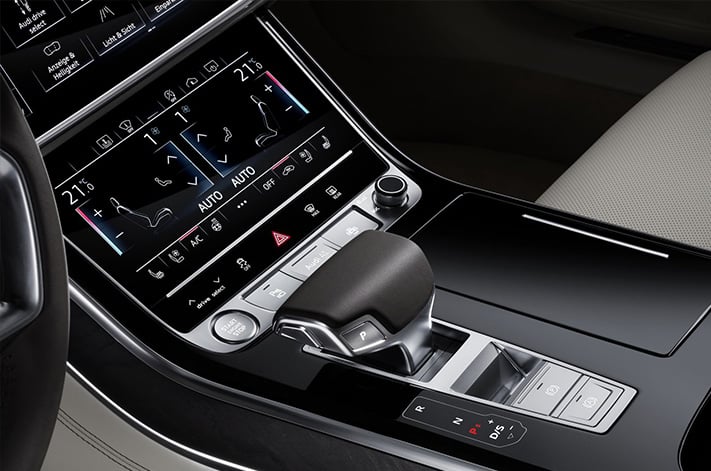
Speaking of which, the A8’s infotainment suite is very much cutting edge. Boasting more screens than a JB Hi-Fi, the fourth-gen A8 replaces the bulk of traditional centre-stack controls with virtual buttons, with very few physical switches. Haptic feedback sends a light buzz into your fingertip whenever you press an on-screen button, which helps simulate the tactile feel of conventional switchgear.
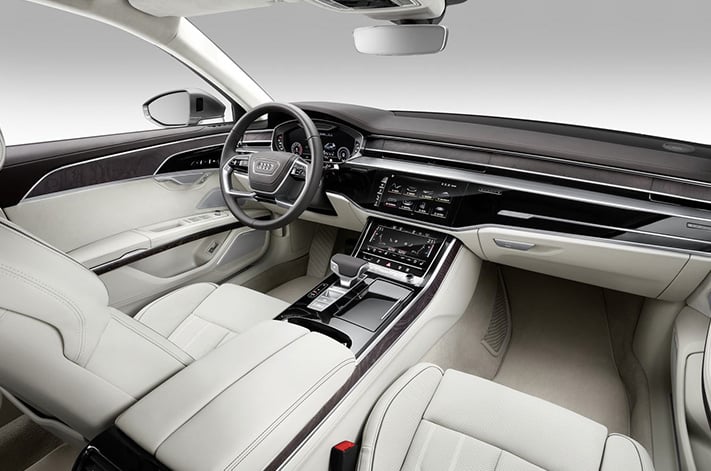
As part of Audi’s decluttering strategy for the A8, the company’s MMI infotainment controller has vanished from the interior. With two high-resolution multifunction touchscreens occupying the entire centre stack (the top displaying sat nav, audio and phone data, the bottom showing climate control functions), Audi reckons you won’t miss that rotary dial and its shortcut buttons.
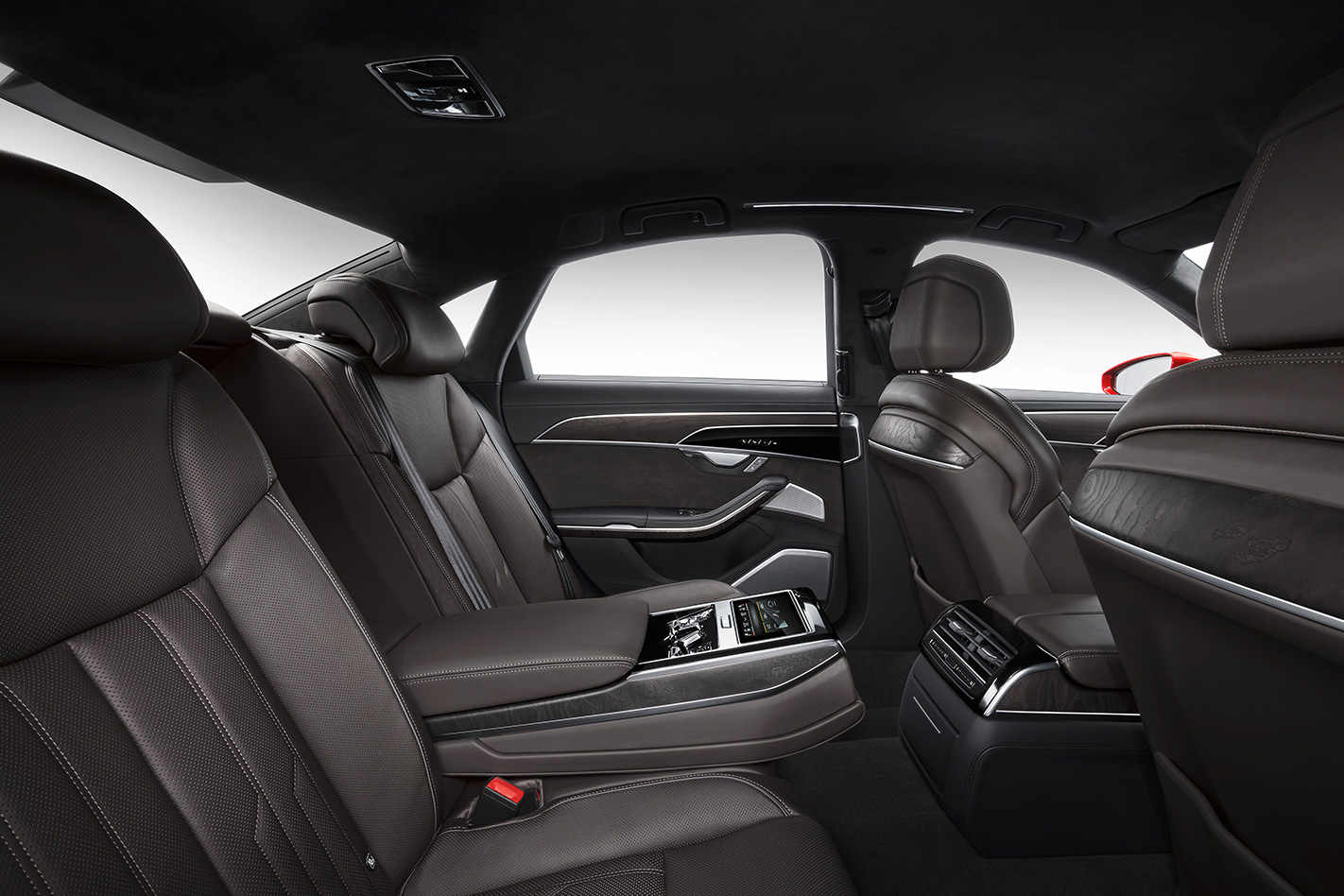
There are more screens elsewhere too. Rear seat entertainment screens are available, naturally, but Audi has also followed BMW’s lead and grafted a removable tablet into the fold-down centre armrest as well.
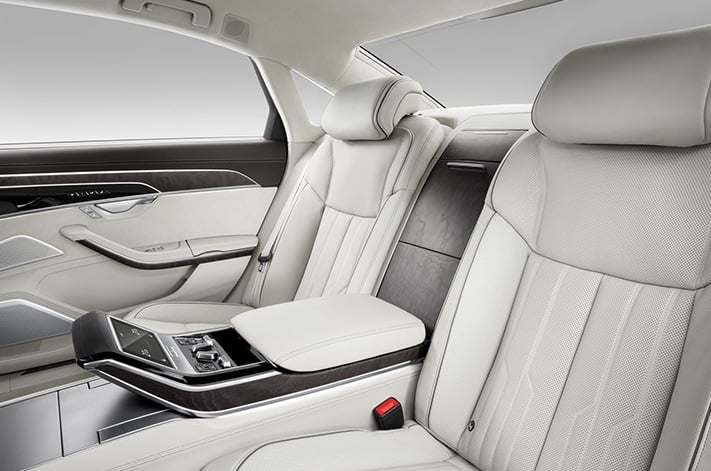
A more luxurious rear seat option sees a pair of powered seats replace the standard bench, which are then bisected by a centre console offering and new an even larger touchscreen. A fold-out footrest on the rear of the passenger side front seat is also available, and has a built-in massage feature.
Running all of this technology is a 48-volt charging system, a significant departure from the usual 12-volt automotive electrical system, but one that’s necessary for the high-end equipment and their high energy consumption.
An example of that equipment is the A8’s active suspension, which uses cameras to detect bumps in the road and adjusts a titanium torsion bar attached to each wheel to help smooth out the ride. It’s a concept that’s been played with before, but Audi reckons its system can make the A8 handle as crisply as a sports car while being as compliant as a limousine.
Further enhancing dynamics include the availability of four-wheel steering, as well as a variable steering rack ratio – both of which serve to help the A8 corner more tightly.
Two engines will be available initially in Europe, with a 3.0-litre turbo petrol V6 and 3.0-litre turbo diesel V6 being the mainstay motors of the family with power outputs of 210kW and 250kW respectively.
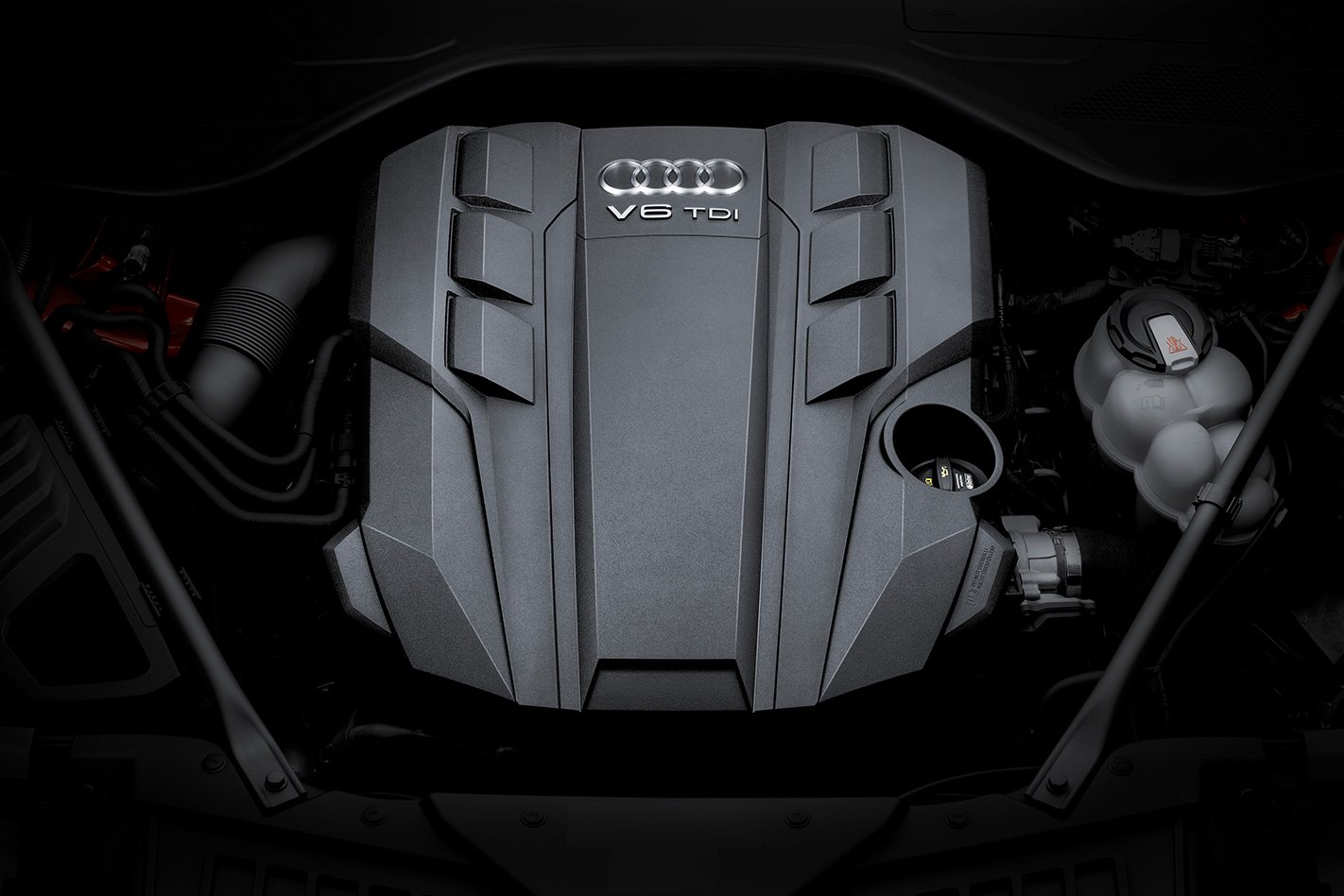
A pair of 4.0-litre petrol and diesel V8s will follow, with the petrol making 338kW and the diesel generating 320kW, while the A8 L e-tron quattro plug-in hybrid will generate 330kW via a 3.0-litre diesel V6 and electric motor setup.
These will be the most powerful engine options until the eventual arrival of a 6.0-litre, twin-turbo W12 flagship.
Australian launch timing, pricing and specifications have yet to be announced.
The Aston Martin Valkyrie, which has been teased for about a year, is finally becoming a reality.
Or at least, one we can see.
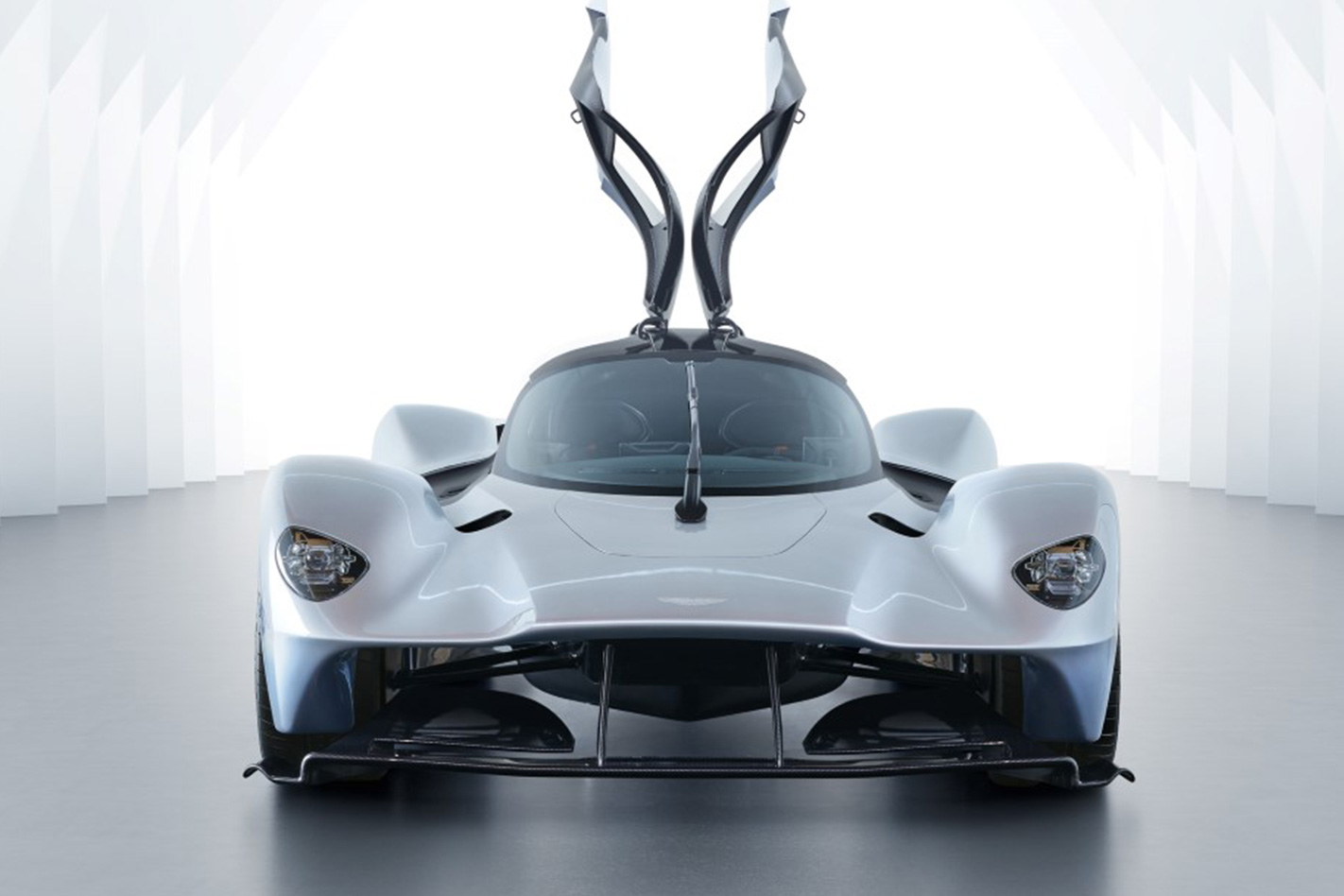
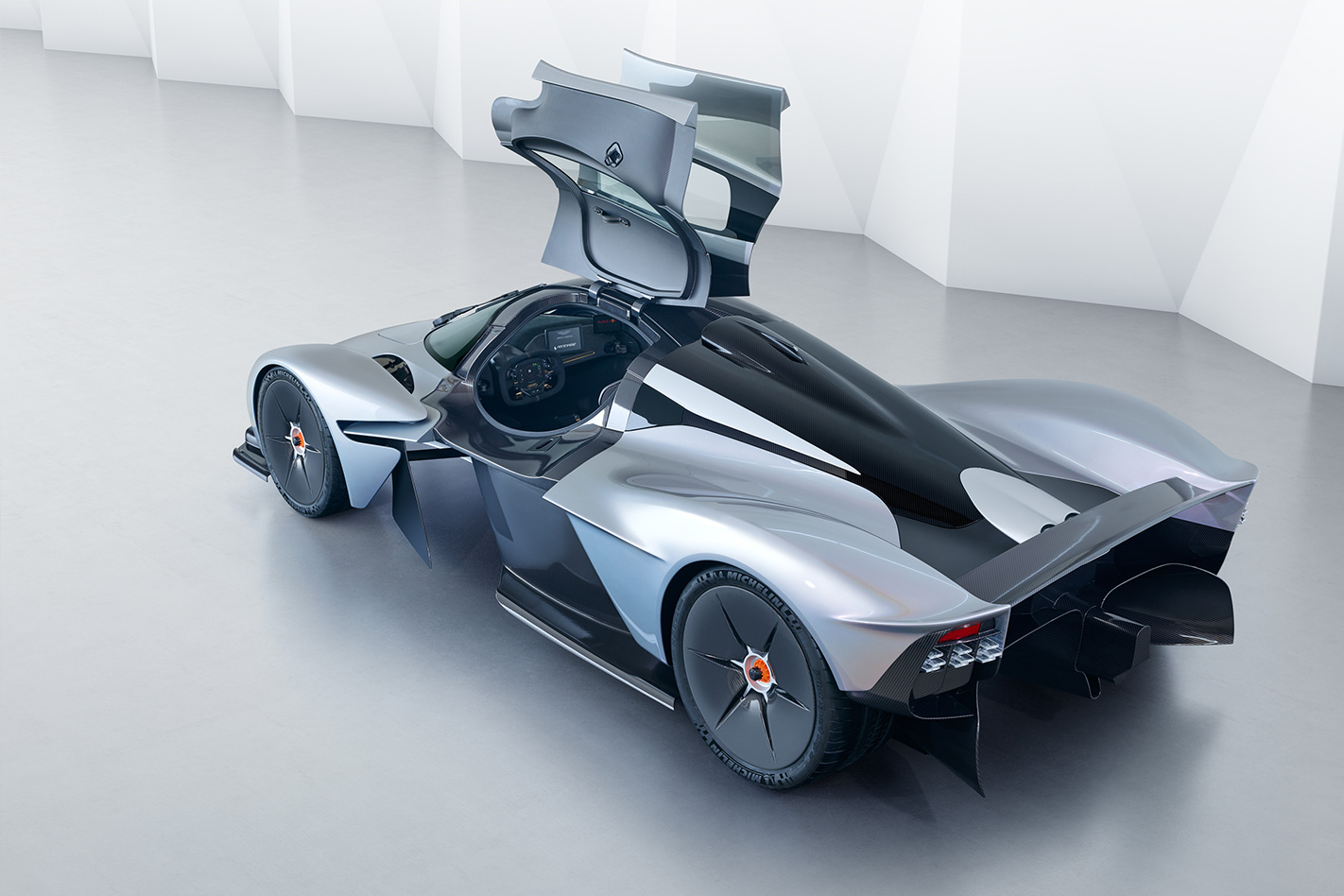
Aston Martin has released more extensive images of the exterior and, for the first time, revealed to us what the interior of the hypercar will look like.
The design team’s aim was to keep the interior simple in order to “keep distractions to a minimum and focus the driver on the road ahead”. They certainly succeeded.
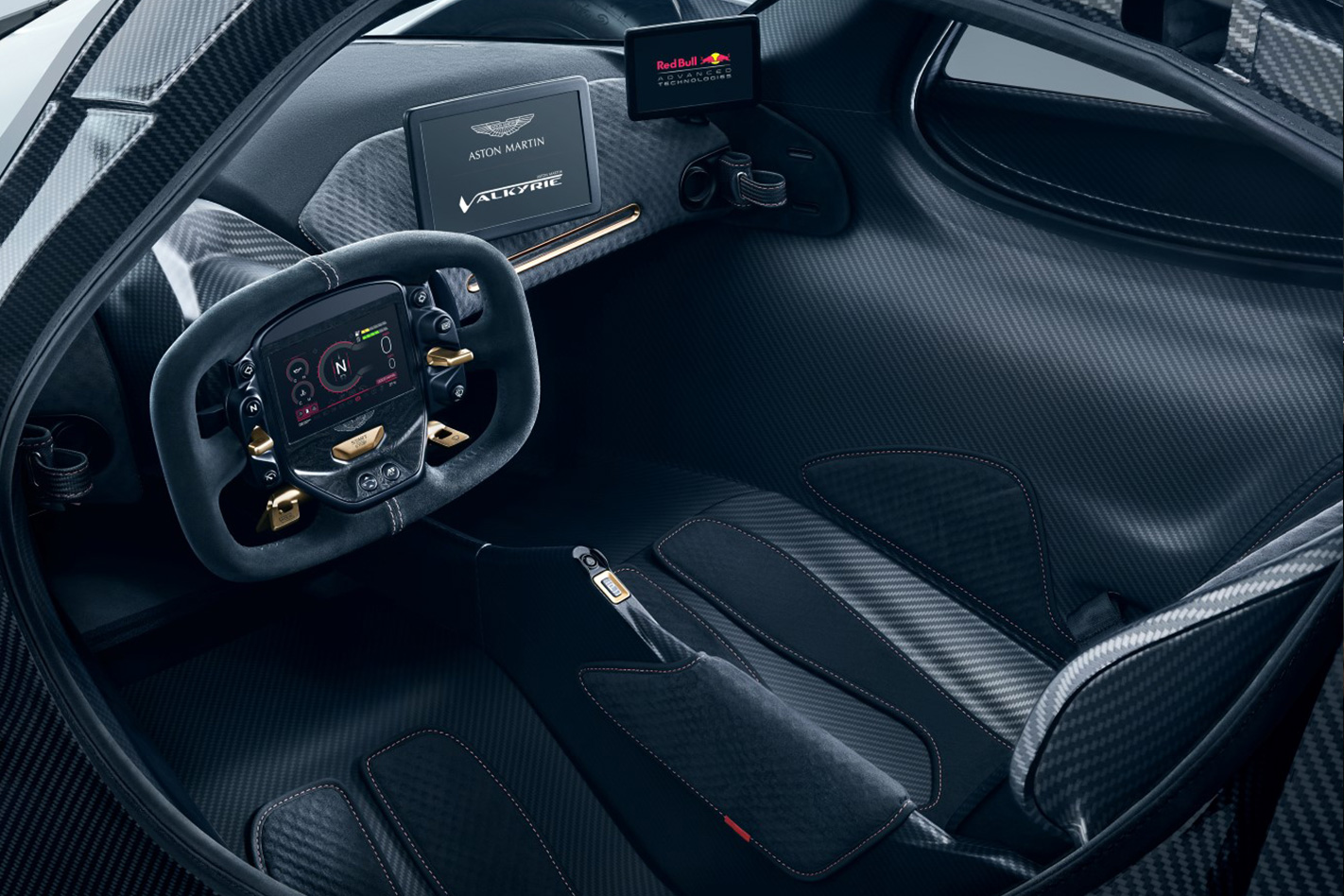
Visibility from the driver’s seat has also been maximised though use of rear-cameras in place of door mirrors.
Aston Martin Vulcan gets an AMR upgrade
Since the Valkyrie has no rear window due to a roof-mounted engine air intake, the windscreen is free of a rear-view mirror.
The seats are directly mounted to the tub, which Aston interior design director Matt Hill says maximises the amount of space available to the occupants.

“One of the biggest changes in this latest model are the openings in the body surface between the cockpit and front wheel arches, Newey having found that they were the key to achieving considerable gains in front downforce.”

It’s not just a style point, though, as the lights are estimated to be “30-40 per cent lighter than the lightest series production headlamps available to Aston Martin”.
At that point, it might as well be painted on.

“The remaining areas of non-structural bodywork are still subject to evolution and change as Adrian [Newey] continues to explore way of finding more downforce,” he says.
“The new outlets in the body are a case in point. The fact that they are so effective gives them their own functional beauty, but we’ve finessed them without impacting on their functionality.”
AMG’s new fast SUV is set to arrive in Australia by the end of 2017, with a pricing topping that of the wild AMG C63 S.
The GLC63 S gets air springs with adaptive adjustable damping, 4matic AWD, fully variable torque distribution, a rear LSD, and of course the 375kW/700Nm 4.0-litre V8 biturbo engine which puts its power though a nine-speed dual-clutch gearbox.

Claimed acceleration for the GLC63 S is an incredible 3.8 seconds to 100km/h, with an electronically-limited top-speed of 250km/h.
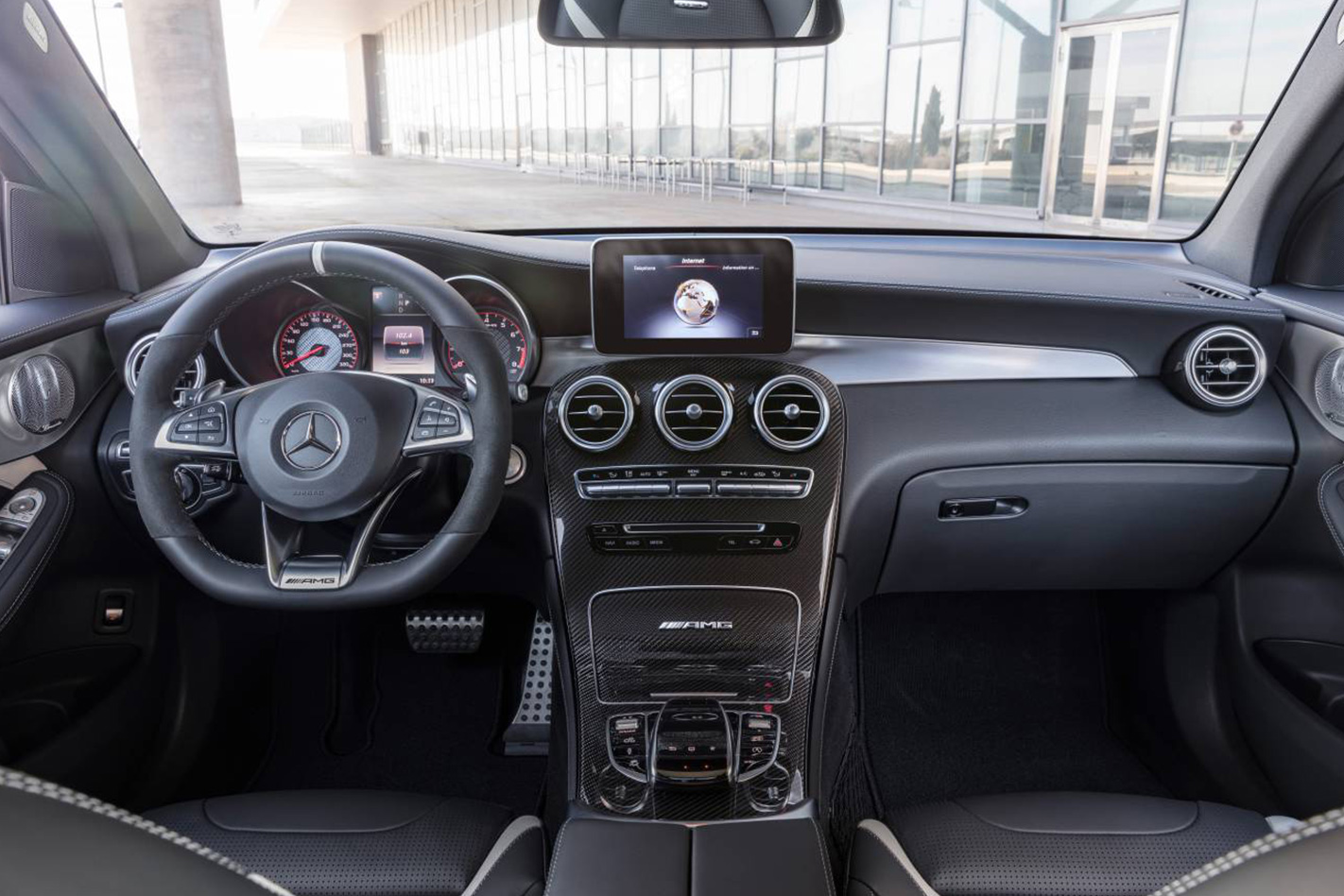
Expect it to weigh in at a couple of hundred extra kilos, though.
Something to sweeten the deal, offered by AMG, is the ‘Exterior Carbon Package’, priced at $4500, which includes carbon-fibre mirror housings and a carbon-fibre rear lip spoiler.

Both packs are relatively cheap in the realm of options lists, though the ‘Edition 1’ pack stands out as best value for money.
At $10,900, it includes the brakes pack, plus new paintwork and yellow accent stripes, an aero-pack, better seats, a ‘sports’ steering wheel, plus plenty of other visual additions.
All packs are available on both styles of GLC63 S.
Ever since Aston Martin first started touting figures for its extreme Valkyrie hypercar, we’ve wondered whether the project would ever come to fruition.
It seemed such a reach for a company with relatively limited resources, but the latest news from Gaydon suggests the project is progressing apace.
This is the first time we’ve seen the interior and it’s certainly minimalist.
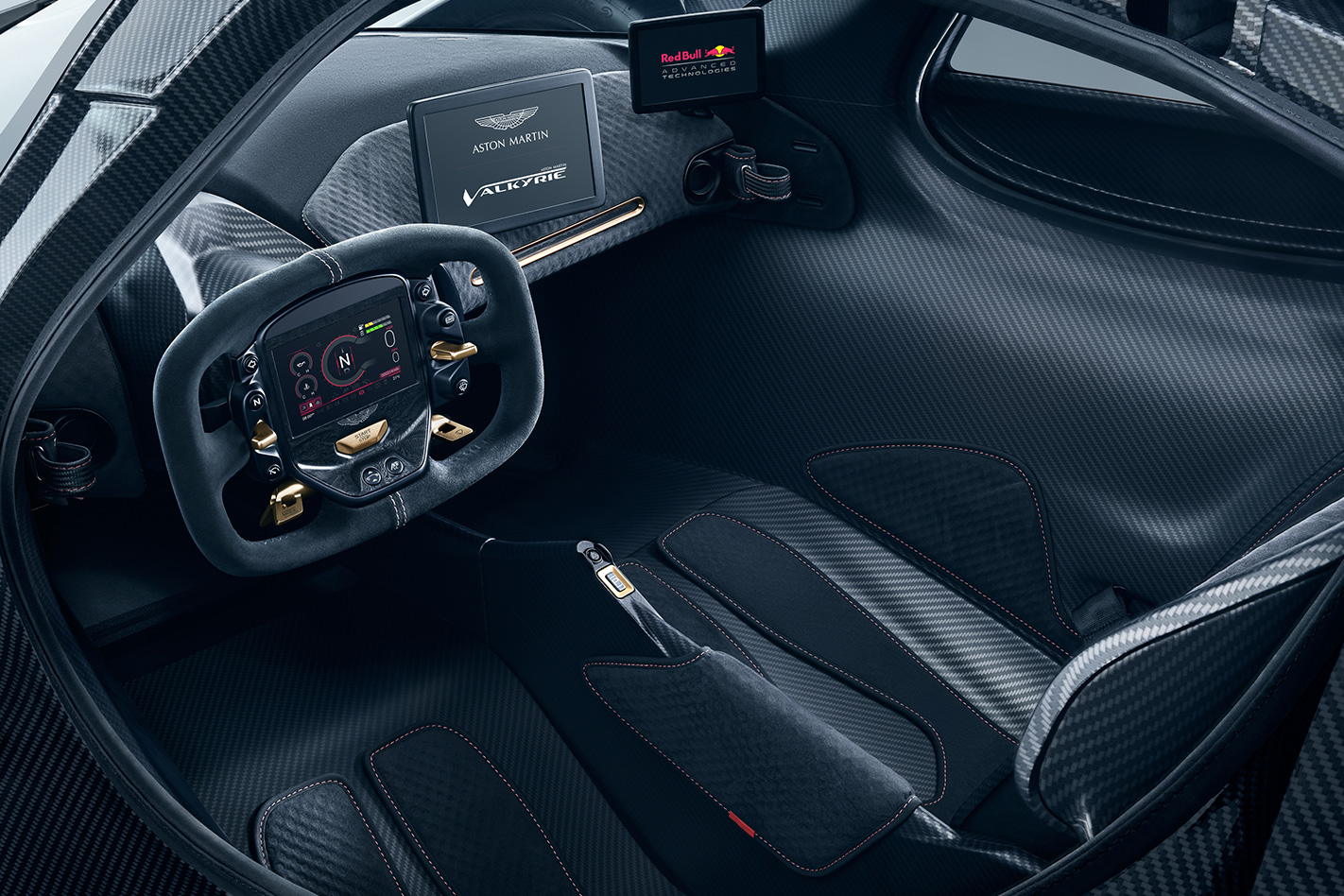
If you were expecting the drama of a LaFerrari, the polish of a Porsche 918 or the techy cool of a McLaren P1, you may well be disappointed.
Matt Hill, Aston Martin Creative Director of Interiors clearly sees things a bit differently and touches on some of the design constraints placed upon him by the Valkyrie’s radical, insect-like exoskeleton.
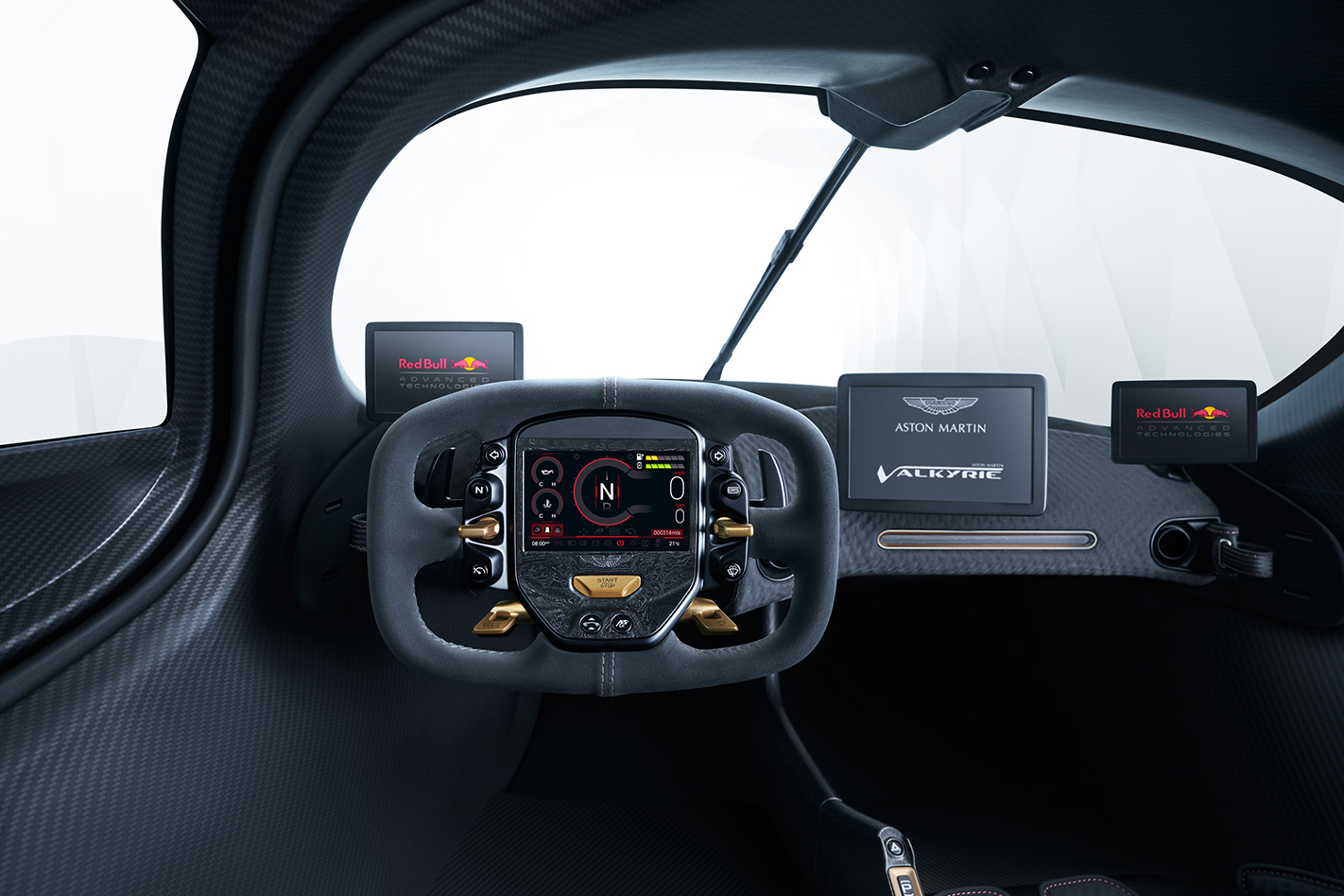
“In this instance, we’ve started from a position where you think something is impossible and work at it until you find a way to make it work. We’ve been fighting for millimetres everywhere, but the battle has been worth it, as it’s been fantastic seeing customers try the interior buck for size. They love the ritual of getting in and how it feels to be sat behind the wheel. They’re also genuinely surprised at how the car just seems to swallow them.
“You really do have to sit in it to believe there is genuine space for two large adults.”
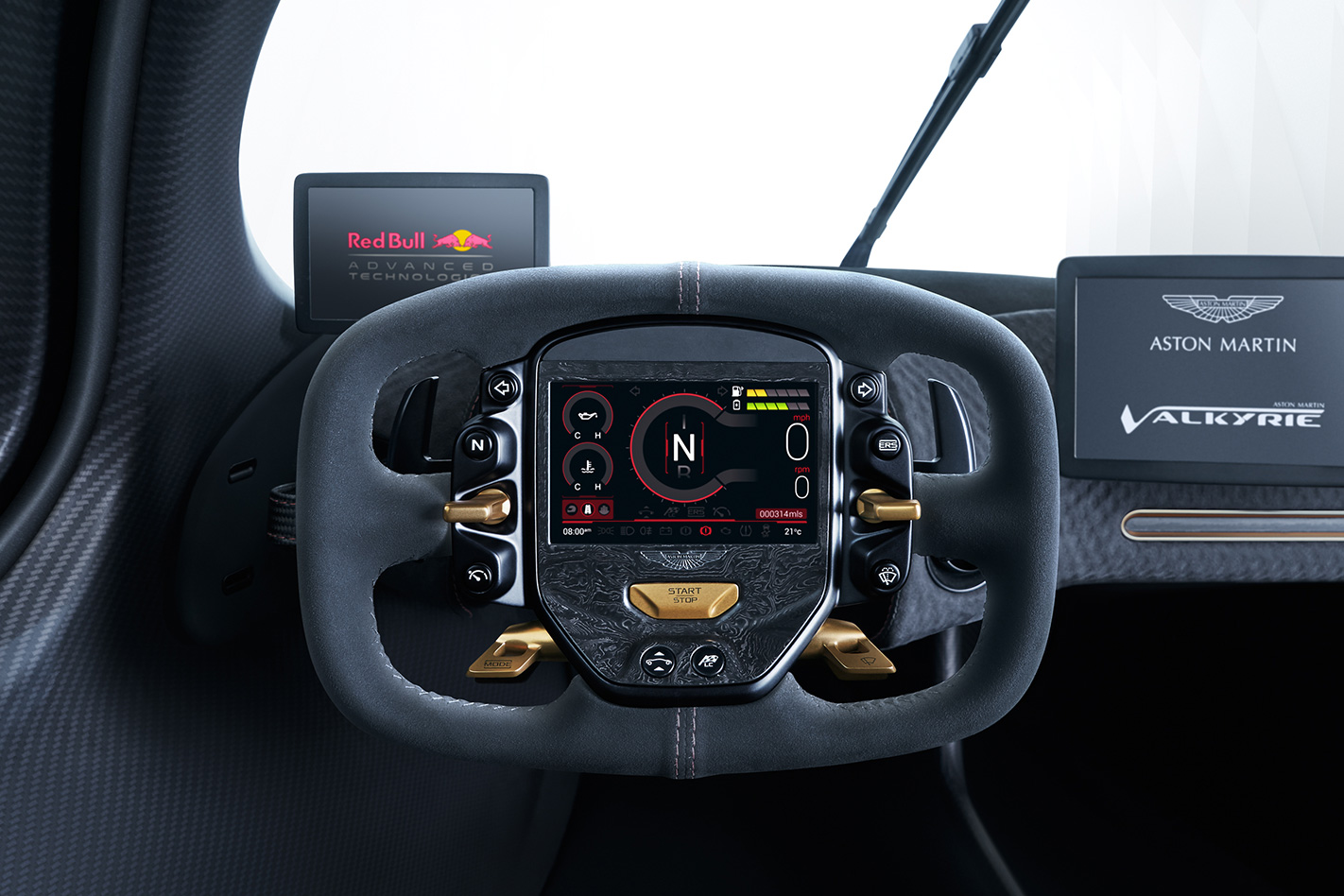
“The new outlets in the body are a case in point. Ordinarily the last thing we’d want to do to one of our surfaces is cut a hole in it, but these vents work the front wings so much harder that they’ve found a significant gain in front downforce. The fact that they are so effective gives them their own functional beauty, but we’ve finessed them without impacting on their functionality. That they also serve as windows through which to view the fabulous wing section front wishbones is a welcome bonus.”
A four-point harness is fitted as standard, and there’s also the option of six-point tethers for those who intend to do more track driving.
We absolutely love the attention to detail regarding the car’s nose badge. A conventional badge was deemed to represent excess weight, and a sticker not premium enough, so Aston Martin developed a chemical etched aluminium badge just 70 microns thick.
That’s 30 per cent thinner than a human hair, and a remarkable 99.4 per cent lighter than the regular enamel wings badge. The badge (nicknamed the ‘lacewing’) is then attached to the painted body and covered with a gossamer-thin coat of lacquer.
It’ll be a while yet before we get a functional car to test, as Newey and his team are still finessing the aero elements, but it looks as if the Valkyrie could well be worth the wait.

AUDI has unveiled its most advanced and technology packed A8 large luxury sedan to date.
With a plethora of new safety, convenience and comfort advances debuting in the fourth-generation car, class-leading level-three autonomous features will not be offered with the first vehicles, including Australian versions that will arrive in mid 2018.
The new A8 is the first production car developed to offer off-the-shelf self-driving assistance that does not require the driver to touch any controls in traffic up to speeds of 60km/h but, while Audi says the system is ready to go, legislation is preventing its roll out globally.
“We designed the complete A8 for the automated functionality,” he said. “We introduced all of the technologies that are required for this but three challenges need to be met.
“First of all you need a legal framework and that’s only starting to happen in certain countries right now. Secondly, you need a special homologation process for automated driving and that’s also just starting. Then, in every market you bring this technology to, you need to make a very deep validation and testing.
“When all of these three factors are met, we will bring the Piloted Driving function.”
“The first production A8s will not have Traffic Jam Pilot on board because we don’t have homologation for this technology. We cannot really say right now when the cars will have this technology.”
Rolling out the functions as the systems are legalised will not be a simple retrofit or software switch, as Audi will not fit much of the sensor hardware to production vehicles until the exact requirements of each global region are established.
“If you’re asking for my personal opinion, I would say buy an A8 now because the level two systems; our adaptive cruise assist, which works from zero to 250km/h is a superb function … it offers the best driver’s assistance you can get. It’s a big step forward from our previous models”.
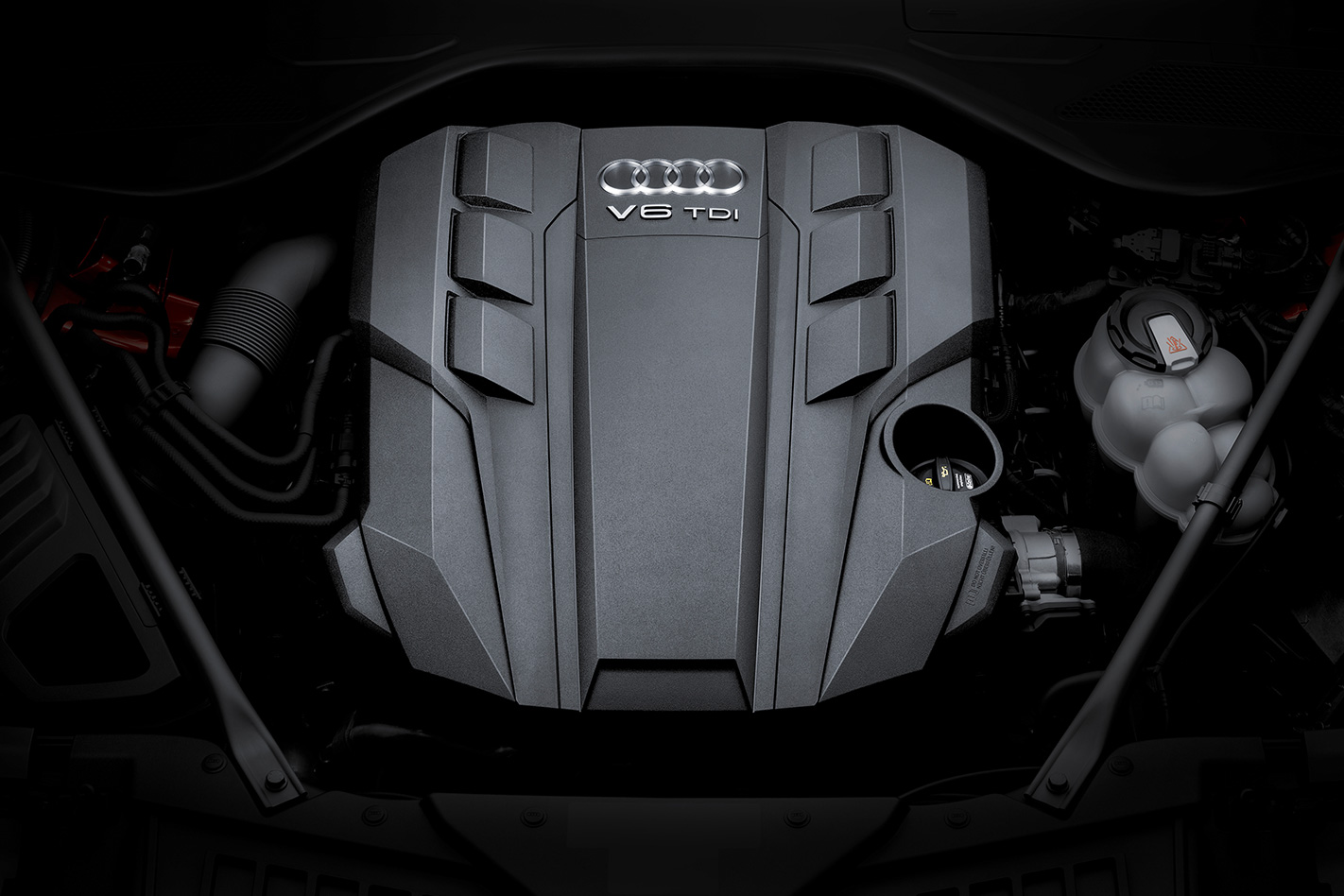
From launch, the A8 range will be diesel-only with a 3.0-litre V6 powering a long and short wheelbase version with 210kW, while a V8 diesel A8 will also be on offer in short wheelbase only and 320kW.
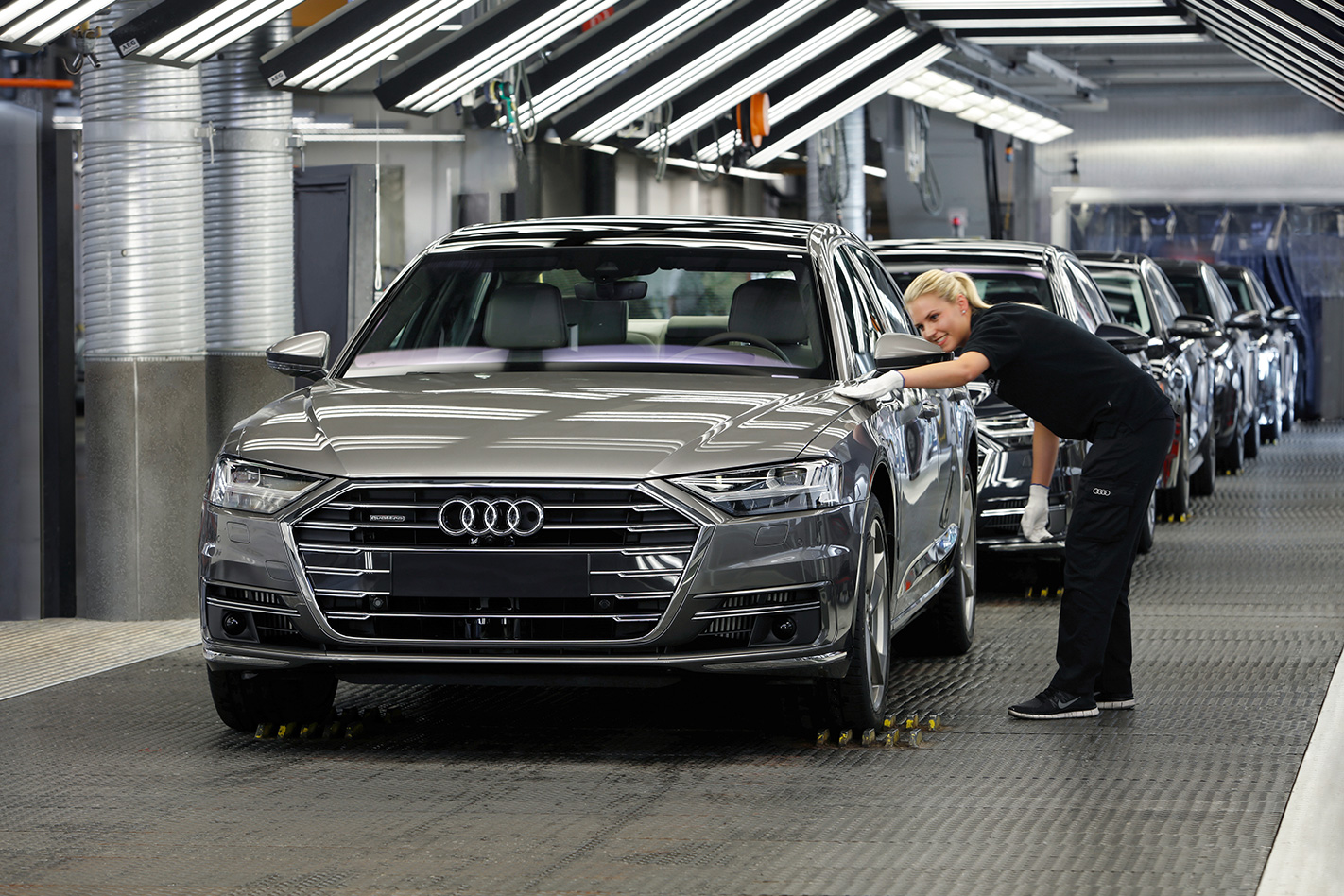
Regardless of the drivetrain, all A8s set a new benchmark for the car maker with a 48-volt main electrical system in place of the more traditional 12-volt system, which enables the use of high-demand electrical systems such as a new all-in-one belt-drive alternator/starter.
The high-power electrics also run an active suspension system that uses electromechanical actuators on each corner of the suspension in place of passive anti-roll bars for a superior ride and improved dynamics, says Audi.
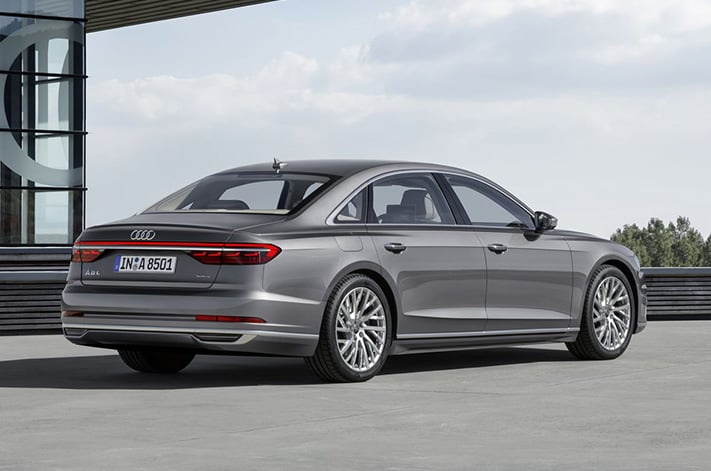
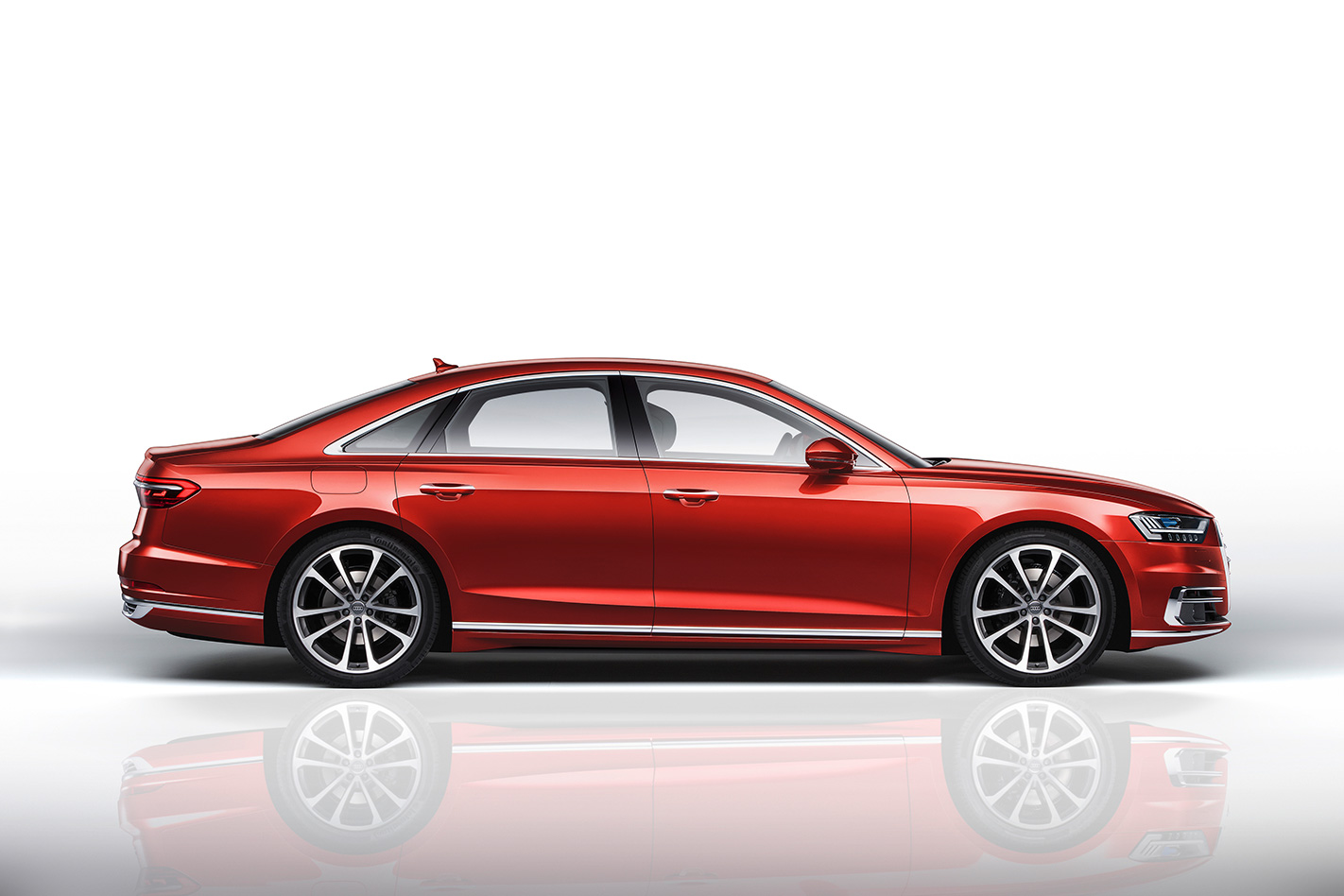
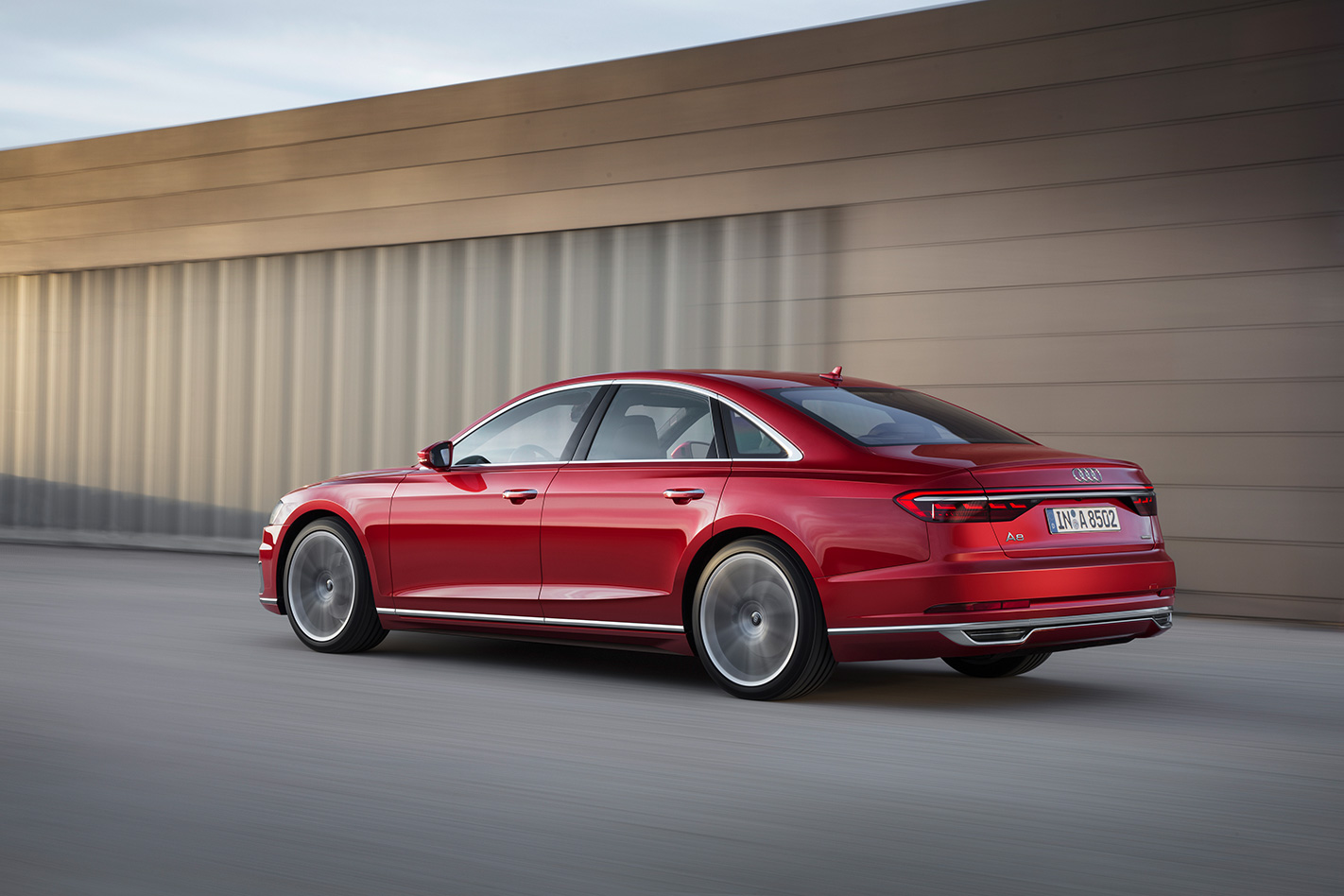
On the outside, the A8 has grown compared with its predecessor, measuring a significant 5170mm in length or 130mm longer for the L version which has a stretched wheelbase for more second-row seating space.
Its new styling wears the largest grille yet fitted to any Audi model and is complemented by a recognisable but evolved A8 aesthetic, Audi’s laser headlights with LED matrix and organic LED tail lights that are connected with a continuous light band for boosted visibility and a striking look.
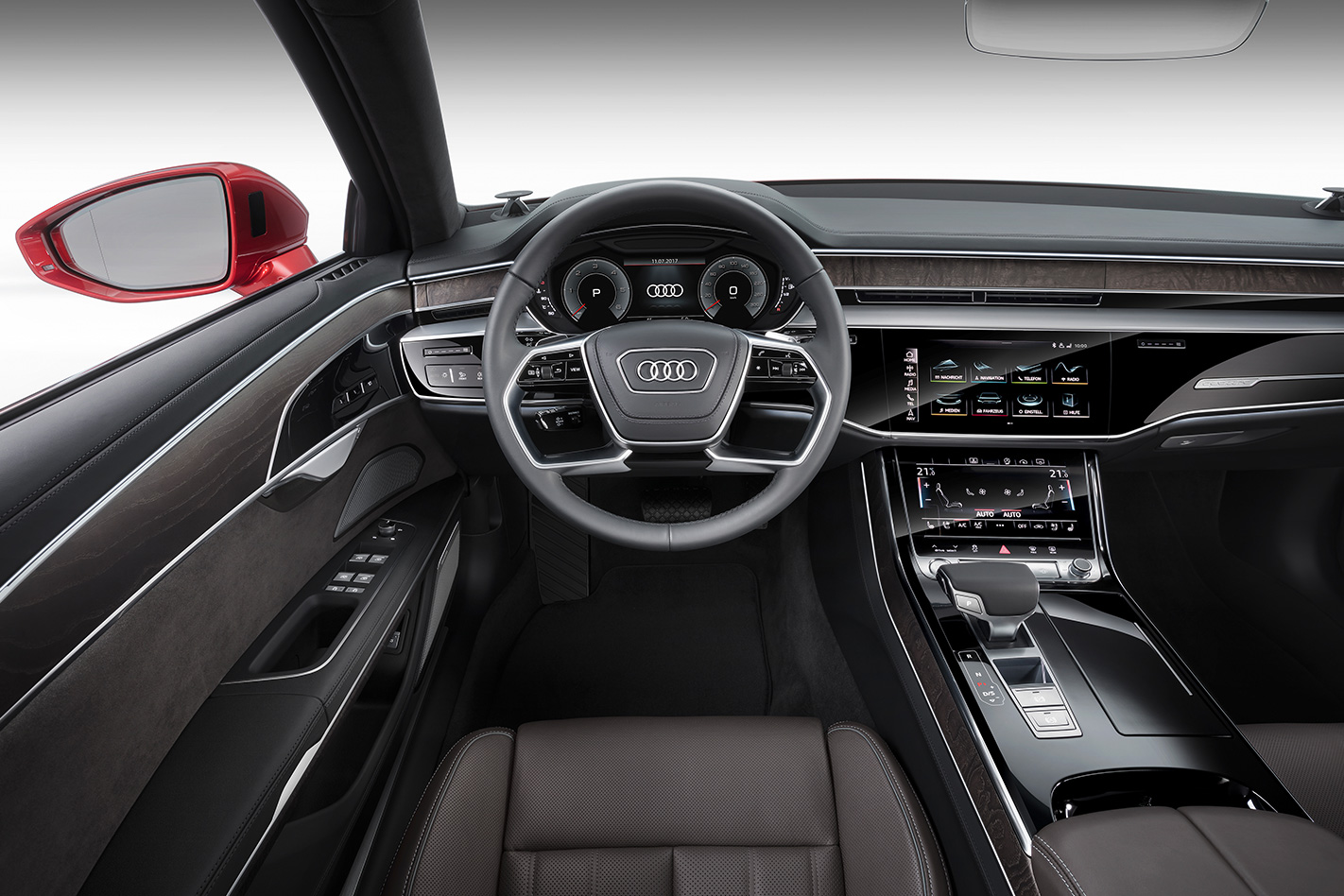
Its expansive dash and low bulkhead creates a genuinely spacious feel with a continuous line that flows through the central area to the door trims, while air vents hide away until opened with solid-state switches featuring haptic vibration feedback.
Central information, climate controls and driver’s instrument cluster are now exclusively digital for a clean but versatile design.
Like many models in the four-ring line-up, the A8 now gets the Virtual Cockpit gauge cluster for customisable views and displaying the prioritised information, while almost all traditional switches and knobs have been removed in favour of a pair of touch screens.
The larger 10.1-inch screen provides access to the new MMI Operating Display Concept systems, while a second lower screen measures 8.6 inches for access to comfort systems including climate controls. Both large panels have a haptic vibration and audible reaction to touch controls. An additional head-up display is optional.
Like the touchscreens, electric door opening handles are also a first for Audi and allow the door to be popped open with a small movement of the interior handle, but a larger pull overrides the electrical operation in the case of a faulty system.
Despite the new larger dimensions (1473mm high, 1945mm wide and up to 3128mm long) the new Audi has lost weight thanks to the use of more exotic construction materials and techniques including a carbon fibre rear panel and magnesium strut tower bars.
OFFERED in either 140kW diesel or 185kW petrol guises, the all-new Audi Q5 is built around the fiendishly clever ‘quattro ultra’ chassis and delivers exactly what’s asked of it. Polished, capable but hardly inexpensive, the Q5 looks set to assume sales leadership in its class.
WHAT IS IT
There’s no shortage of choice if you want a mid-sized premium SUV, but if you’re looking for something that matches the all-round talent of the latest Audi Q5, the list gets very short indeed. The script doesn’t deviate significantly to what’s gone before, but think bigger, slicker, quicker and safer.
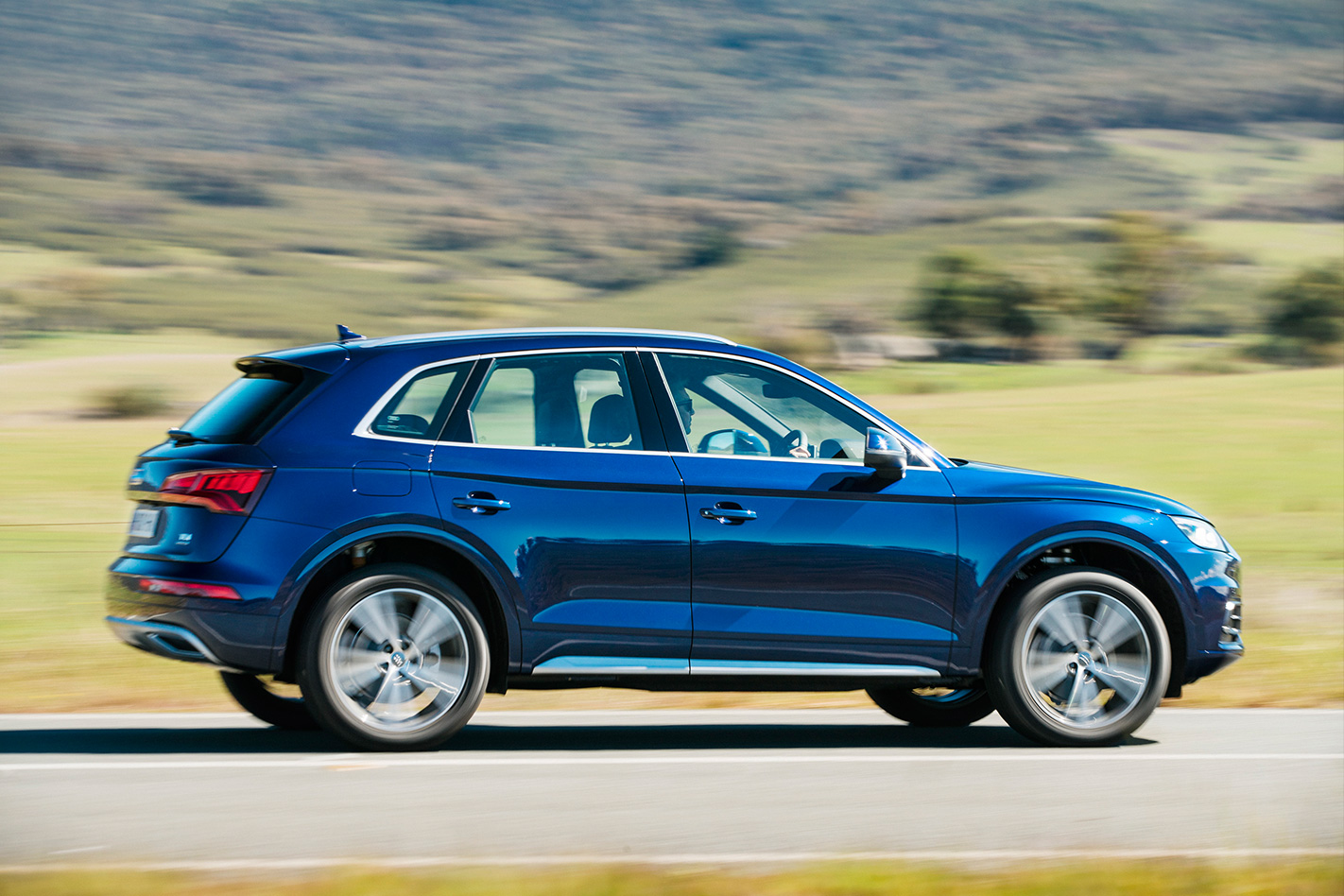
Ever since the Porsche Macan arrived in 2014, the Q5 has had a tiny tang of lame duck about it. Sales have held up over that period, but it no longer exuded that typically modernist Ingolstadt sheen. The latest car looks to rectify that with some intriguing technical highlights.
MAIN RIVALS
BMW X3, Jaguar F-Pace, Mercedes GLC, Porsche Macan, Volvo XC60
THE WHEELS VERDICT
The Audi Q5 is an artful melange of well-judged compromises that, in this latest all-new generation, coalesce into a wholly convincing end product. We’d skip the charmless diesel engine and instead spring for the excellent 2.0 TFSI petrol version. It’s not cheap, but it’s hard to feel short-changed by the Q5’s discreet delivery.
PLUS: Depth of engineering, efficiency, feel-good interior, sweet steering, petrol engine’s zip MINUS: Diesel could use more go, ride can get busy with big wheels, big-ticket options add up
THE WHEELS REVIEW
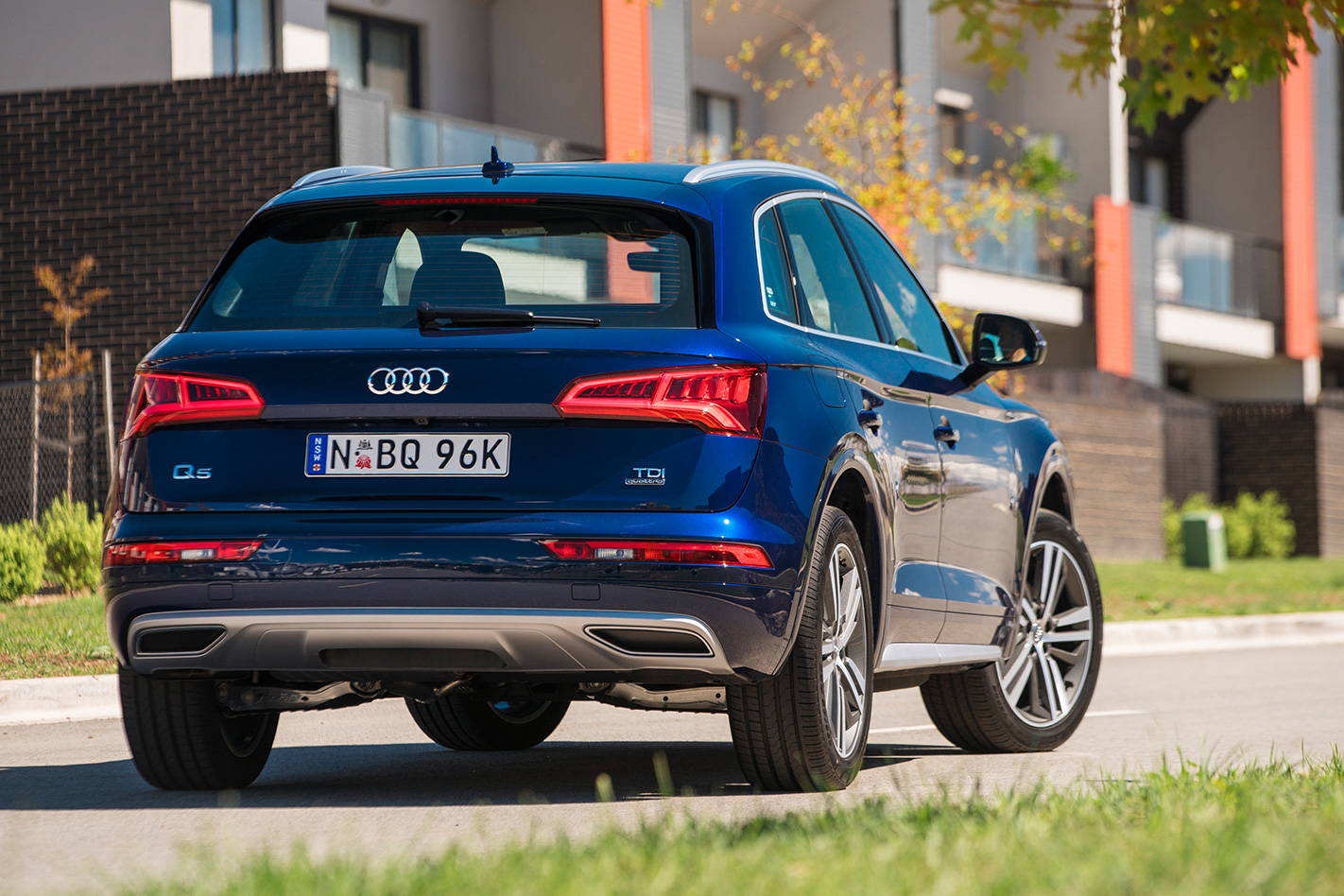
OTHER than brackish lagoons and miles of arrow-straight roads, there’s not a lot to see in the Coorong. If you’re in the latest Audi Q5 2.0 TFSI, there’s not a lot to hear either. At an indicated 110km/h it’s eerily quiet. You hear your passenger’s jacket zip clinking as the car sits into the odd dip, a welcome spritz of treble over the blanketed bass tones of tyre and suspension.
The car’s computer tells us we’ve been in front-wheel drive mode for 99.8 of the last 100km, the Q5’s quattro ultra drive system reading the low-mu gravel exit of a car park and engaging the spring-loaded rear dog clutches silently and imperceptibly. I think my co-driver has nodded off and ponder giving him a 755-watt fusillade with the optional 19-speaker Bang and Olufsen stereo, but it turns out he’s just looking in vain for some signposted pelicans.
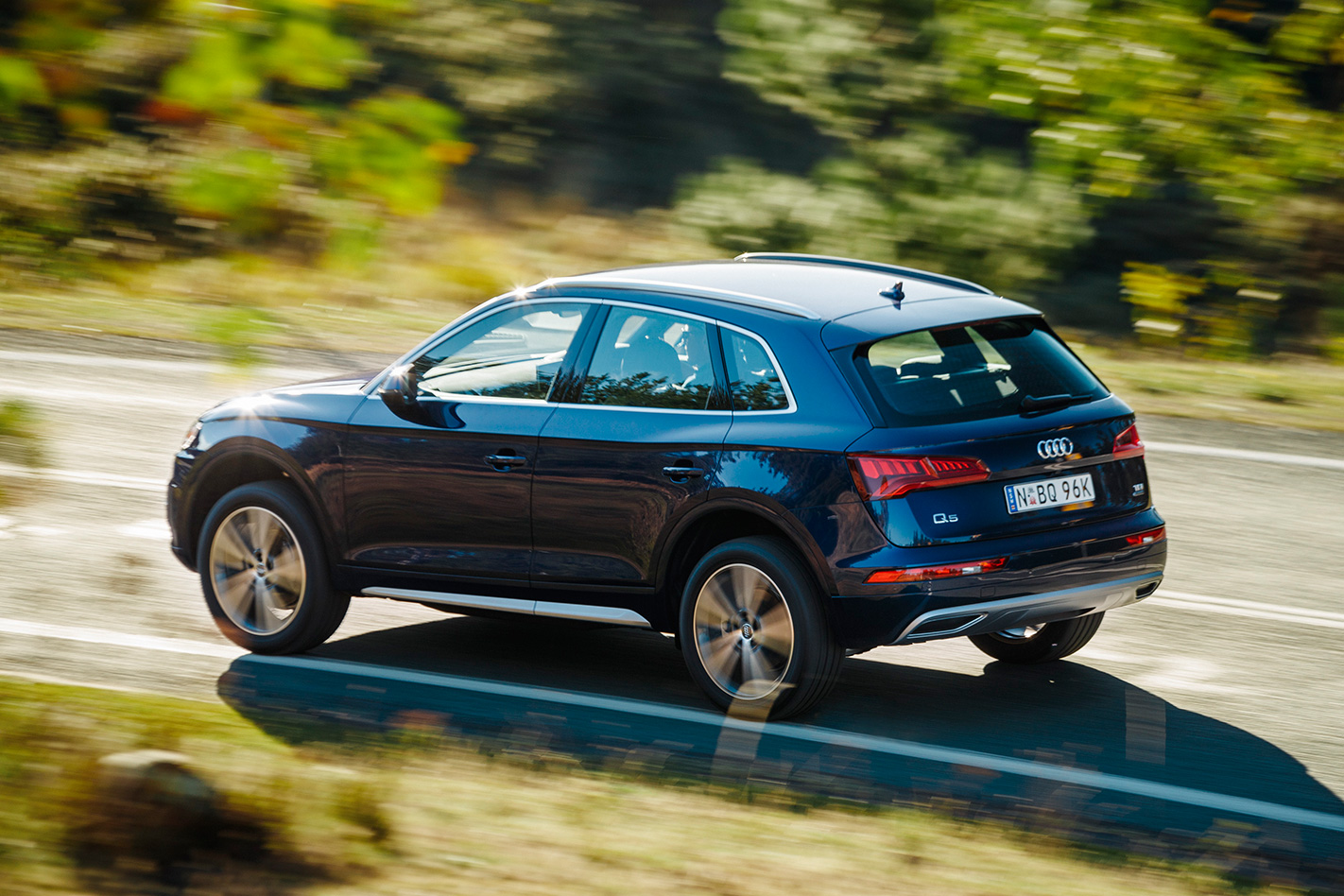
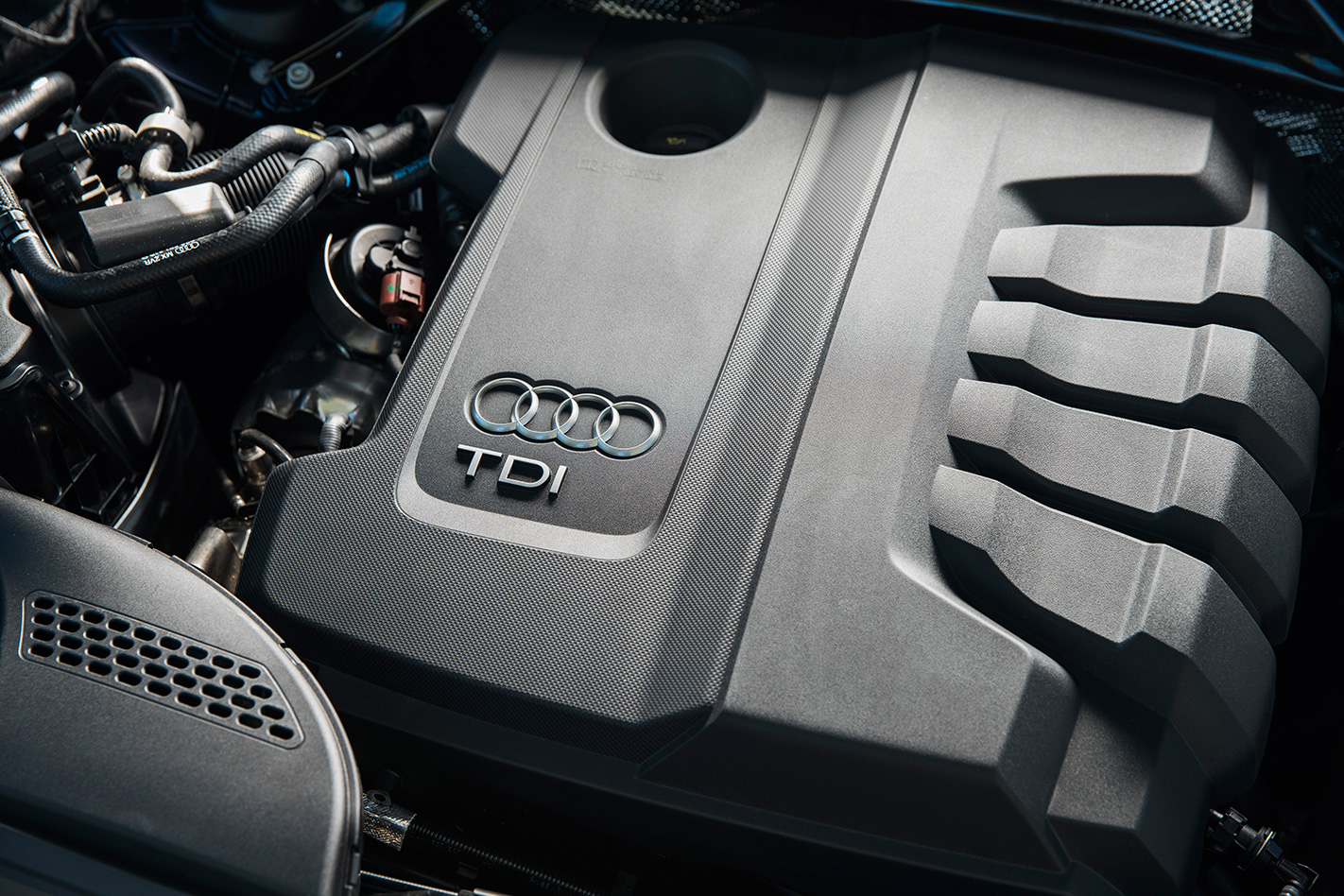
This all-new car has been a long time coming, riding on the next-gen MLB Evo chassis that now distances it from its Porsche Macan cousin. Aussie buyers get the choice of a 140kW/400Nm 2.0 TDI diesel, offered in either Design or Sport trims, or a 185kW/370Nm petrol version that’s sold exclusively in Sport trim.
Both drive through seven-speed twin-clutch transmissions, but it won’t take too long behind the wheel to convince anyone that the petrol engine is the smarter choice. The diesel does a job, but lacks anything in the way of zest, getting to 100km/h in a leisurely 7.9s.
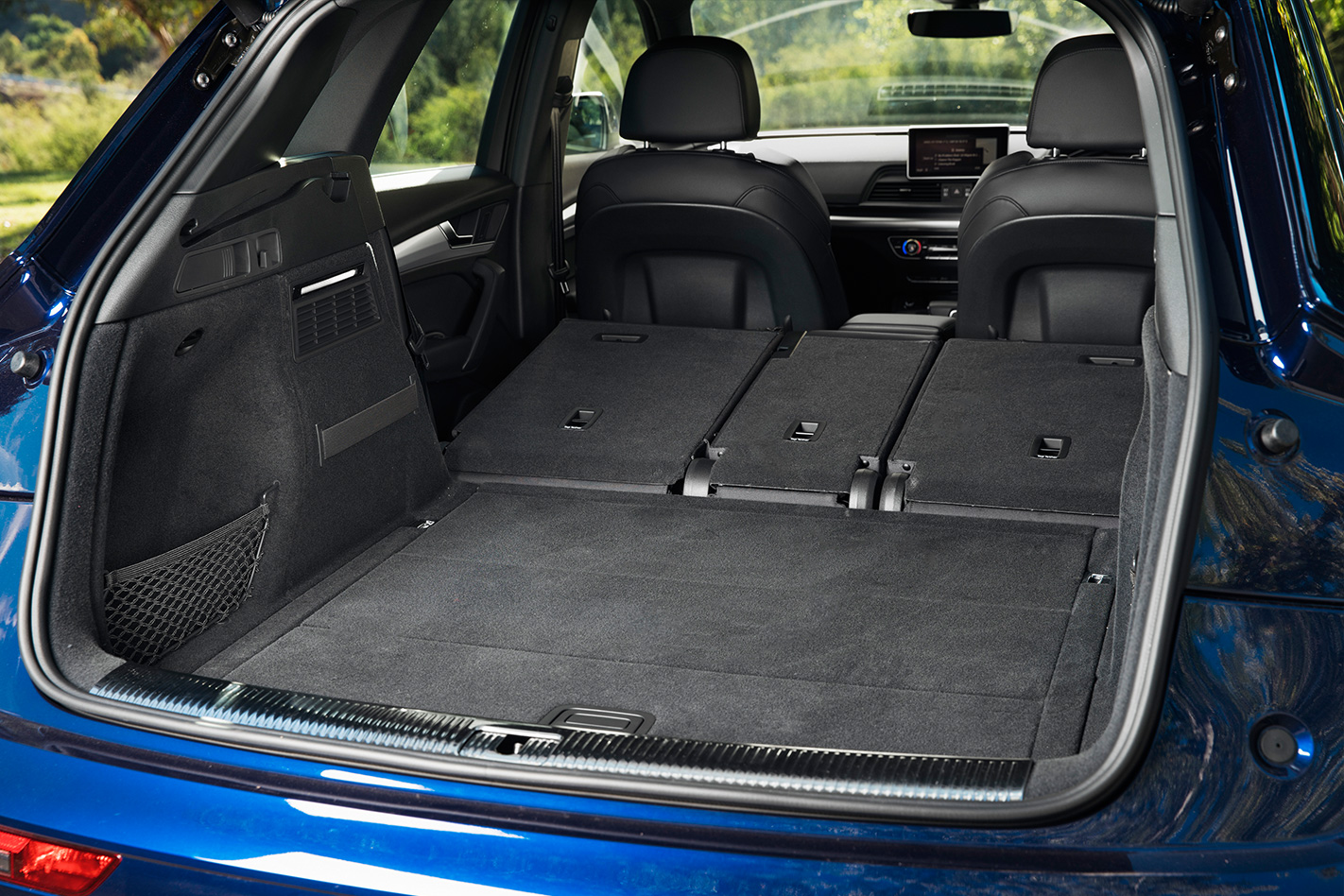
The Q5’s fundamentals don’t brook too many surprises. It’s about the same width as before, but 34mm longer, 4mm wider and with 12mm grafted into the wheelbase. Luggage space squeaks up by ten litres to 550 litres, or you can opt for the sliding rear bench to extend that to 610 litres in exchange for the odd passenger DVT.
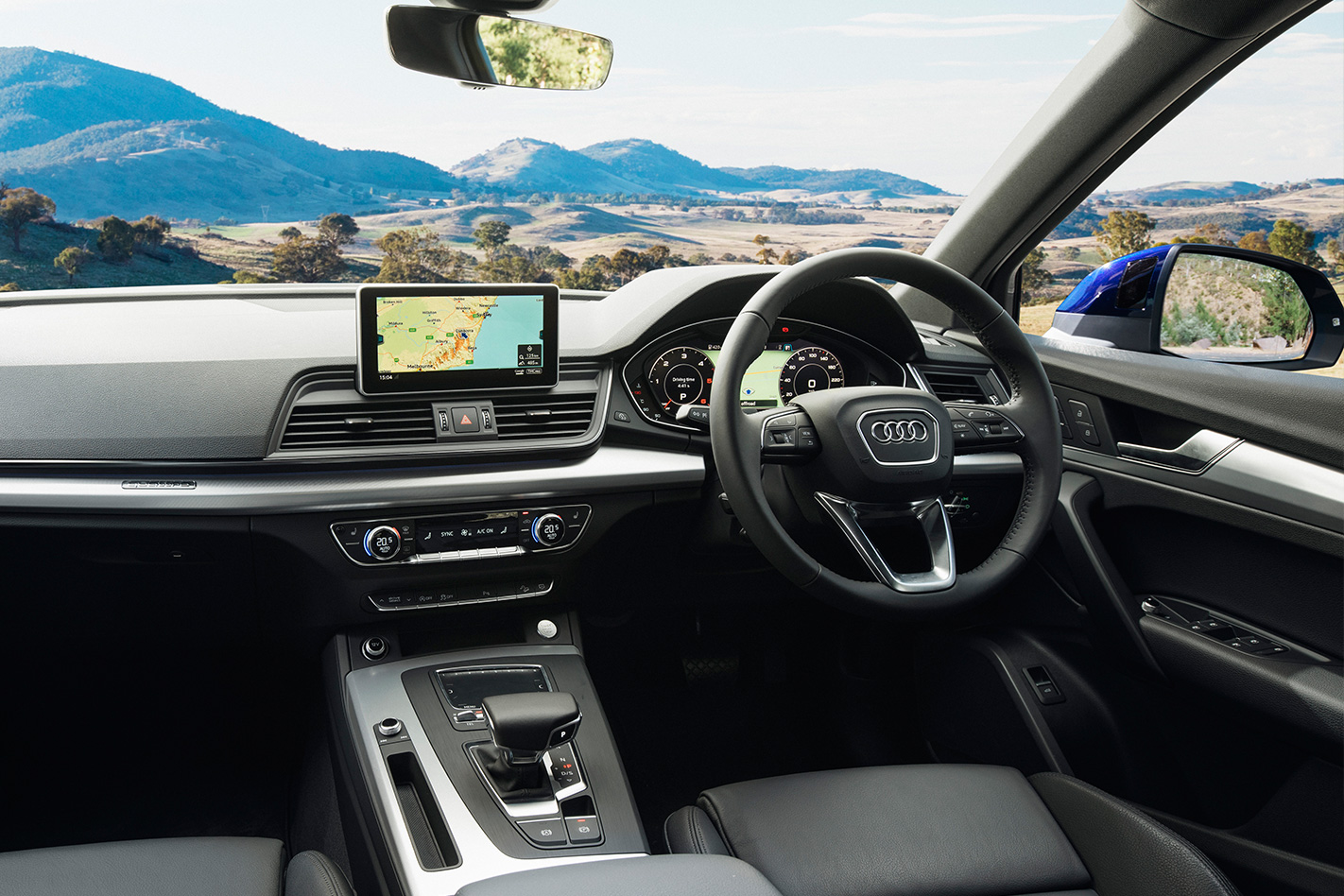
The interior is a magnificent place to sit, with a broad spar across the dashboard that visually lowers and widens the fascia and there’s a formidable suite of electronics, from Android Auto and Apple CarPlay mirroring to Google Earth, a WiFi hotspot, wireless inductive charging for your phone and, if you opt for Sport trim, Audi Virtual Cockpit instrument panel and a head up display.
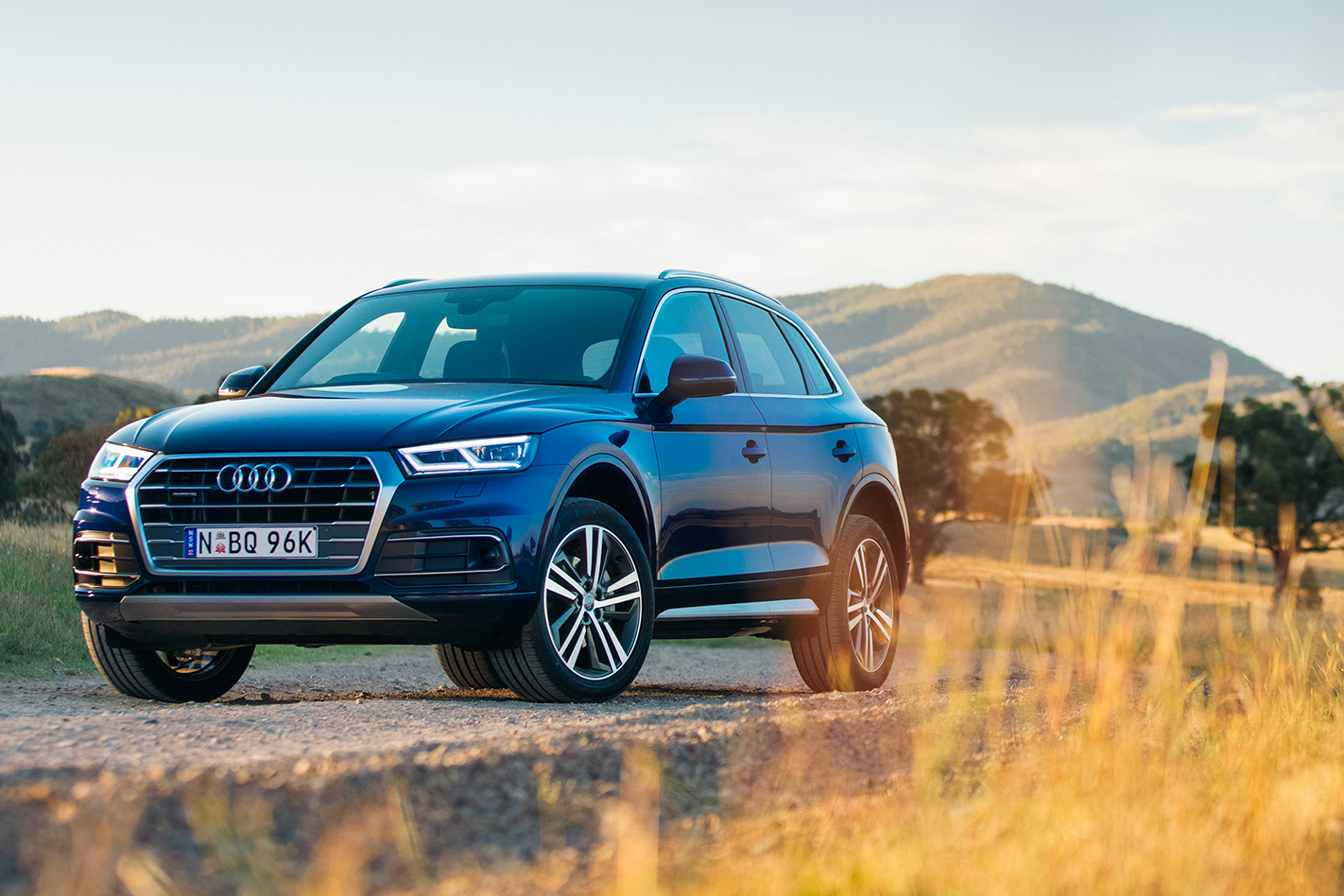
The test cars were riding on 20-inch alloys, and Audi’s development engineer on hand recommended 19s instead. When asked if 18-inch rims rode better he laughed and claimed that nobody was going to buy this car with 18-inch wheels. While you are mulling over the finer points of the Q5 configurator, tick the options box marked 1BK, which is adaptive air suspension. It’ll set you back $3990 but will transform ride quality and, as an added bonus, increase the car’s ground clearance by 45mm if you should venture off road. You can even drop the rear end by 15mm to load the car.
Vote for the Audi Q5 to win the 2018 Wheels Car of the Year Readers’ Choice competition
SPECS Model: Audi Q5 2.0 TFSI Engine: 1984cc 4cyl, dohc, 16v, turbo Max power: 185kW @ 5000rpm Max torque: 370Nm @ 1600rpm Transmission: 7-speed dual-clutch Weight: 1795kg 0-100km/h: 6.3sec Economy: 7.3L/100km (claimed on 20-inch wheels) Price: $73,211 On sale: Now
This was meant to be a Mustang, you know.
A Mustang with which Ford would return to Le Mans in 2016 to have a crack at winning a class, some 50 years after it won the whole thing outright with the GT40. At least, that was the plan.
The engineers called it Project Silver, after the Lone Ranger’s horse.
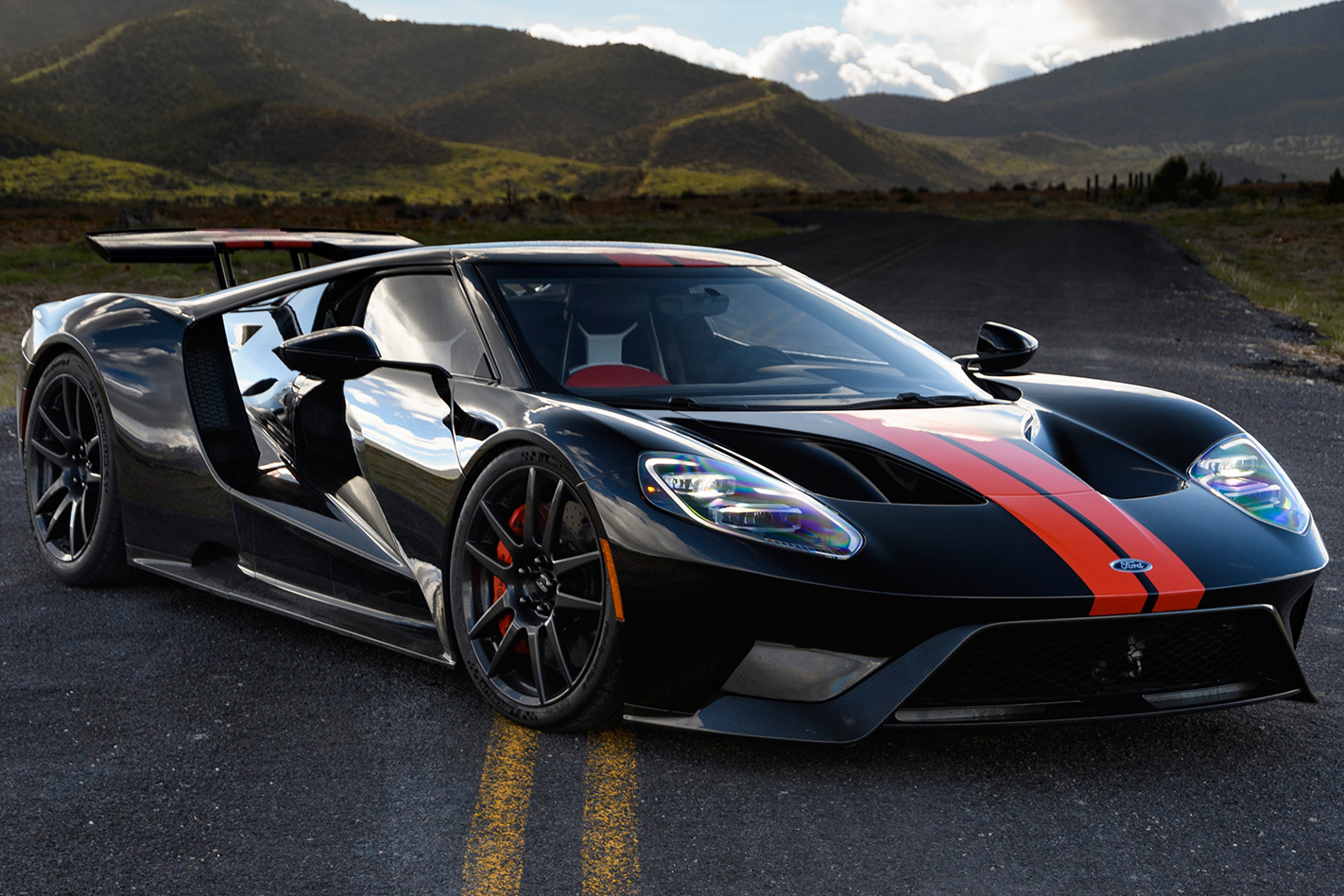
And the more Ford modified the Mustang for GT racing, the less of a Mustang it became, until they figured they’d never win a damned thing with it while it was recognisably a Mustang, and officially canned the project.
At least, that’s how the story now goes. They say that the Le Mans project then became completely unofficial, a skunkworks outfit with fewer than 20 designers and engineers hidden in a design studio in a basement behind a padlocked door, determined not to let it go and coming up with an outline design for the rebirth of the GT instead, probably slipping some clay and wheels through on expenses as ‘new pencils’ or something.
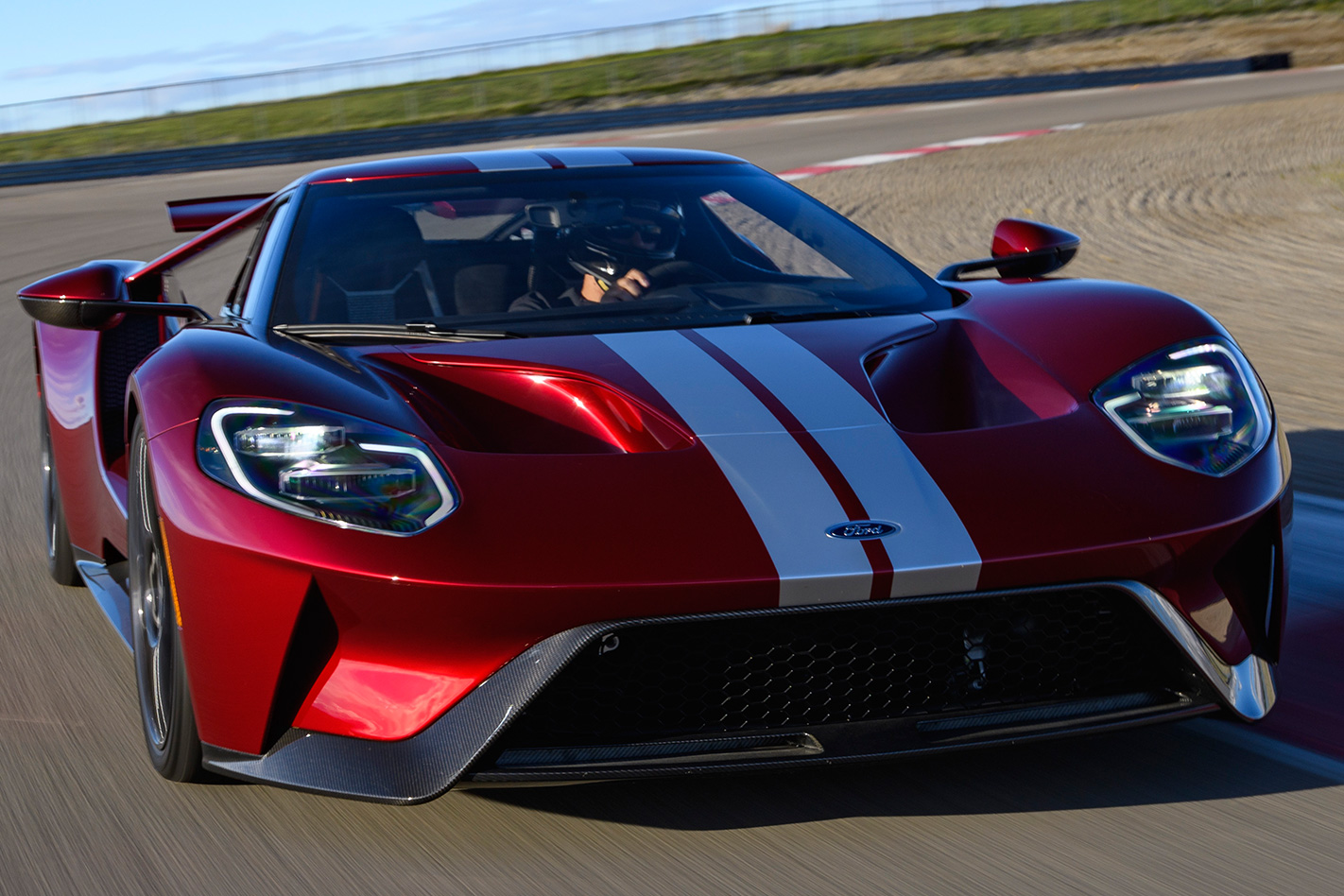
The GT, then, very much like the original GT40 and quite unlike the GT of 2005, was designed primarily to go racing. But GT racing rules being what they are, if you’re not designing a top-pace LMP prototype, you have to make road versions.
The GTE class is dominated by Porsches, Aston Martins, Ferraris and Corvettes – which are all road cars converted for racing.
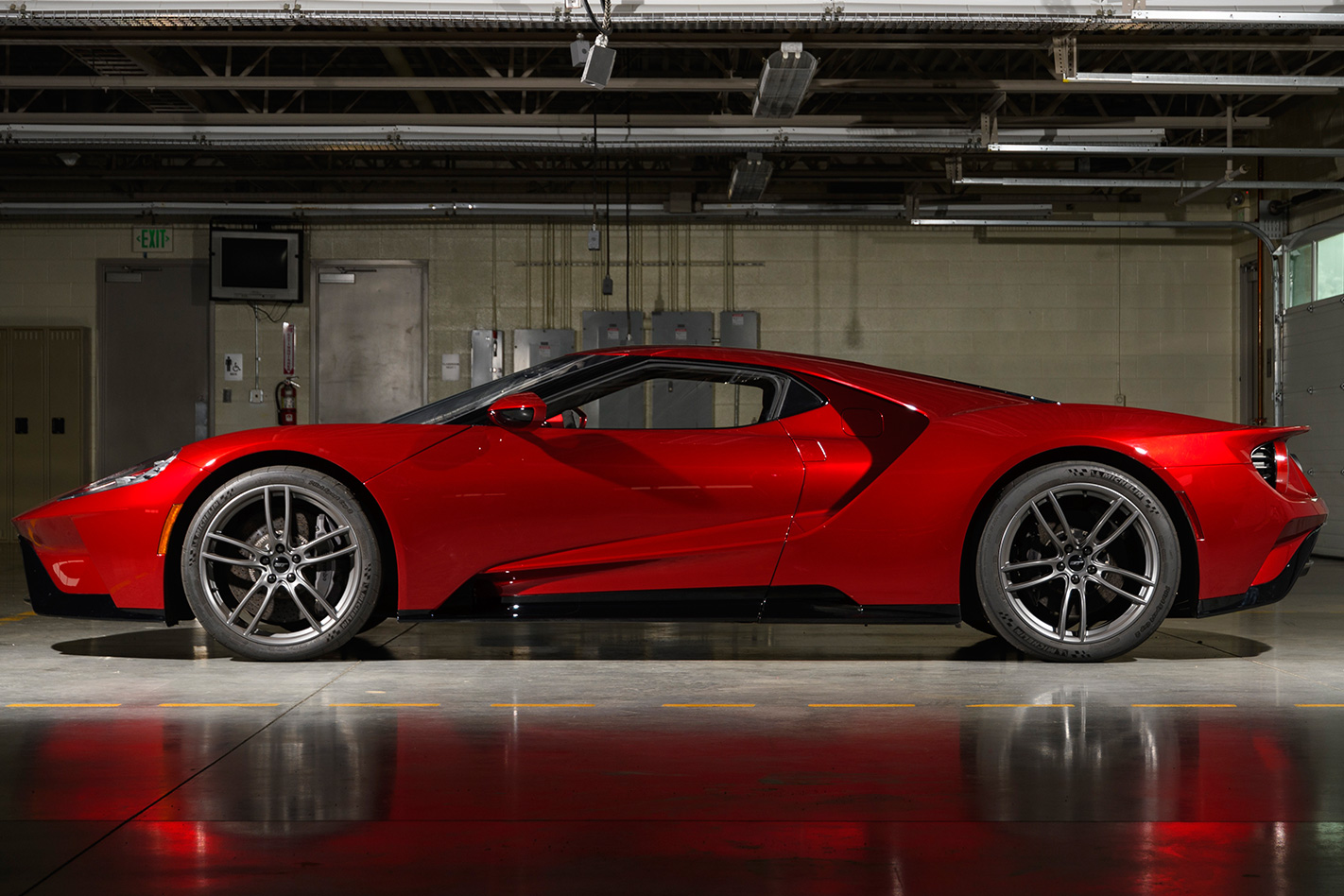
That’s not something that Aston Martin or Ferrari could do in a road car because you wouldn’t buy an Aston if you kept elbowing your passenger, but this isn’t fundamentally a road car. That’s a theme you might notice we keep coming back to.
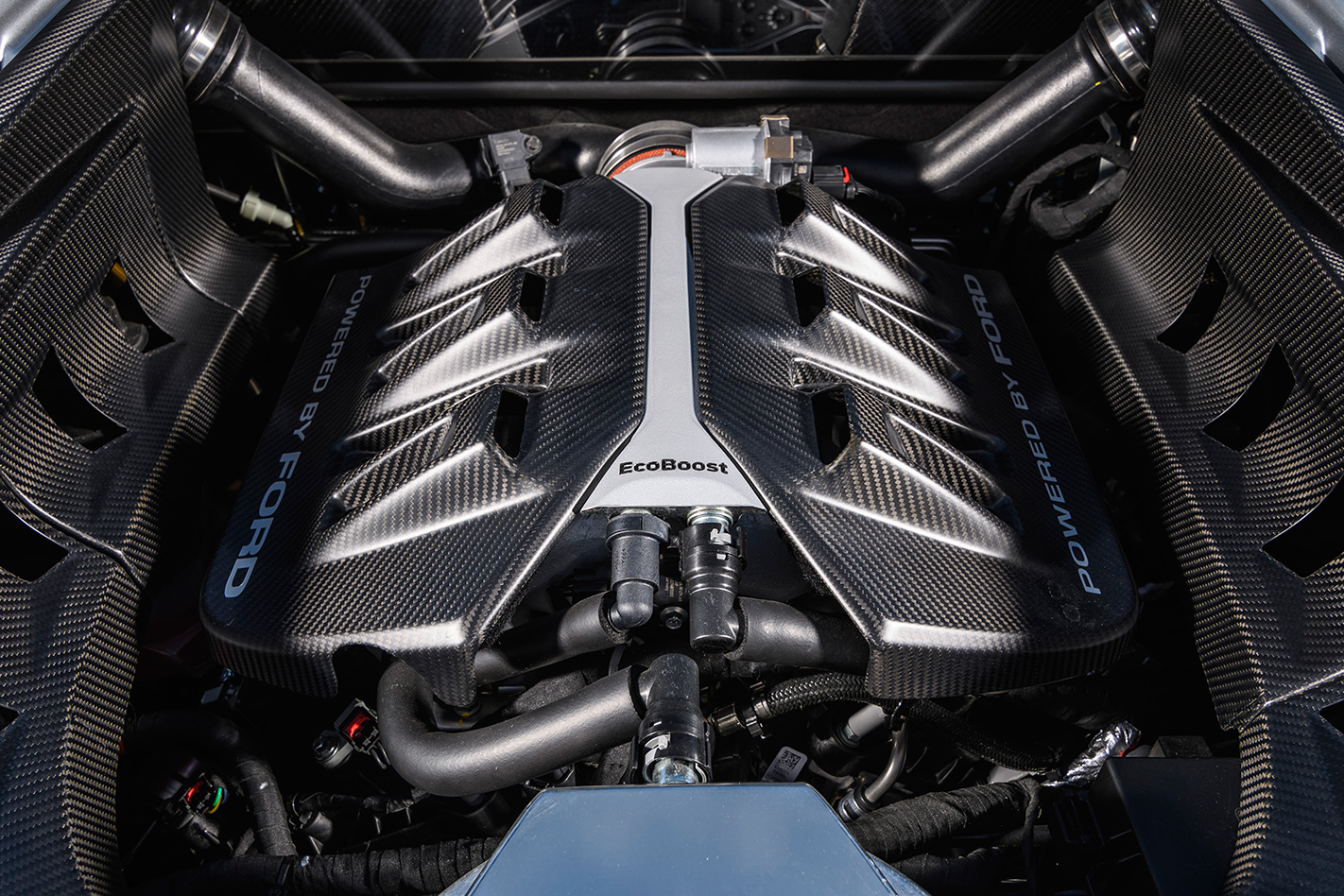
The passenger cell is a carbon-fibre tub, light, stiff and with an integrated roll cage inside it at the point of production – something somebody making road-going GT cars wouldn’t, etc, and so on and so forth – behind which sits a 3.5-litre, twin-turbo V6 EcoBoost engine, which drives the rear wheels via a Getrag seven-speed dual-clutch gearbox (although the race car uses a different sequential gearbox).
That’s one of the ways Ford has justified the GT’s cost. It says racing will improve the breed. That old chestnut. With the GT41.8 I think it’s true.
Because it’s a V6 the engine is relatively compact, wrapped close by bodywork, but the air into it takes a complicated route – coming in at the rear, channelling under the lower bodywork to the turbos, before being scooted back to the sides, up through those visible intercoolers, and then ducted across the buttresses to the inlet manifold.
Ford tested the engine in a North American ‘IMSA’ GT race car and discovered it kept blowing head gaskets and ruining heads. Its engineers modified it for racing and, to their credit, fed the expertise back into road car engine design where the lessons now form part of the engine design rulebook.
There are other race/road handovers, such as the eight composite components in the GT’s chassis that are part of a development program to reduce the cost and time taken to make lightweight materials. Today the GT, one day a Ford Focus.
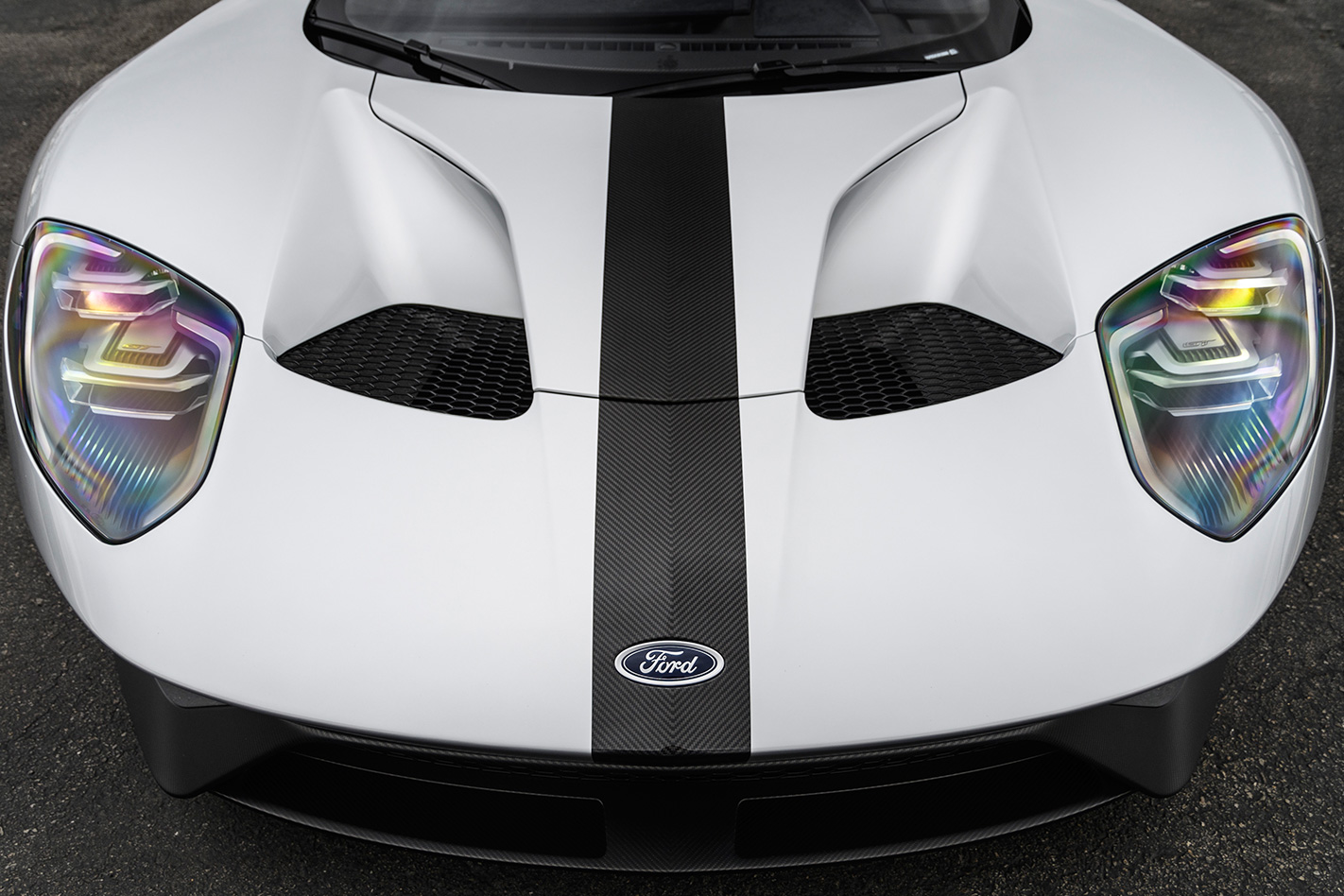
It’s just that it’s a perilous path to go down, should GT cars start to be designed as racing cars in the first place, rather than being race versions of road cars that you can see and buy.
Look at it this way, GTE regulations have this thing called the Balance of Performance (BOP) – it’s designed to equalise the top speeds of the cars, and keep the competition fairer.
And while the GT makes 482kW in road trim, as a racing car the BOP limits the GT’s power to less than 500hp (368kW). Yet it still wins. If the GT’s boost was allowed to be turned up fully, it’d be closer in speed to an LMP car than the rest of the GTE category.
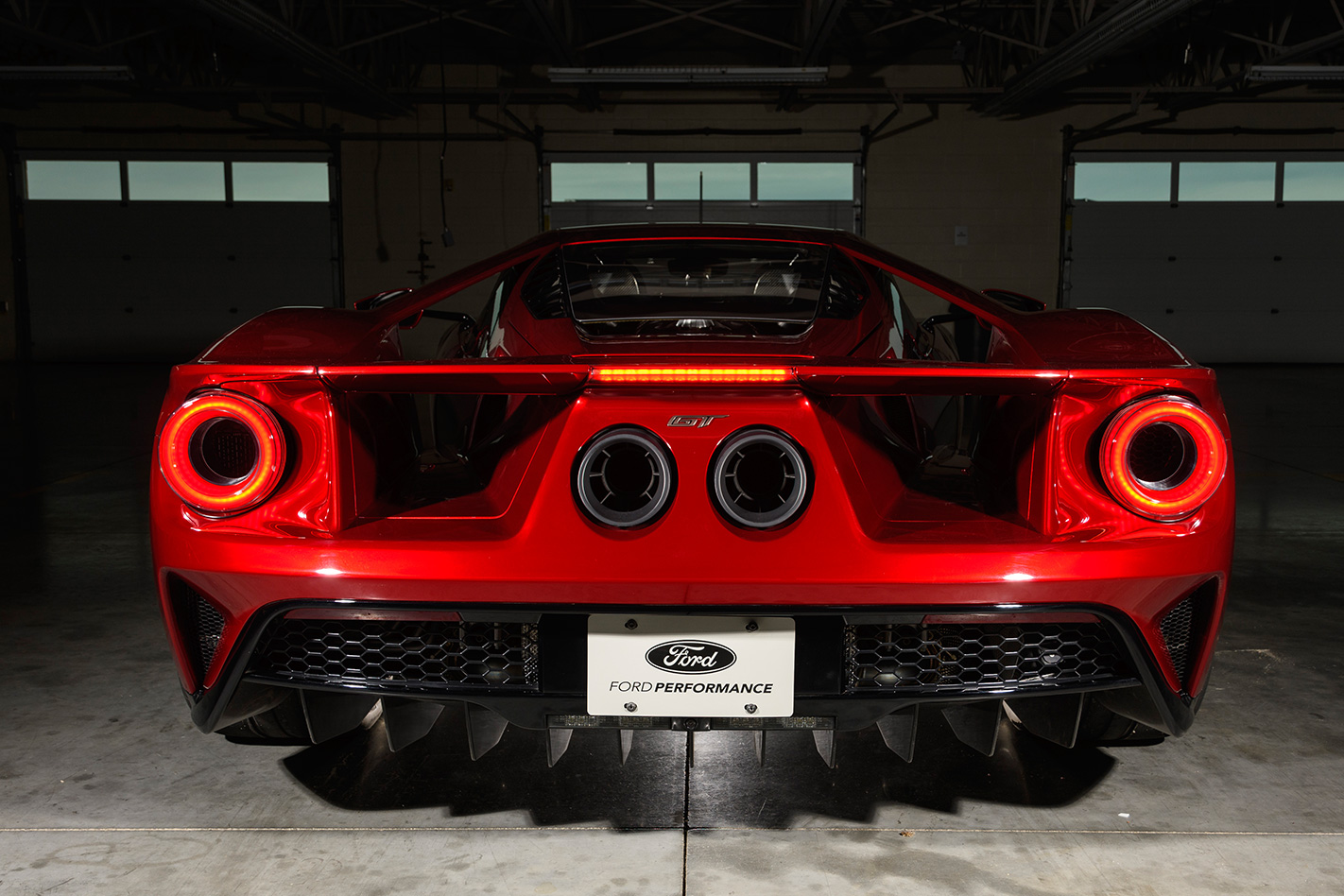
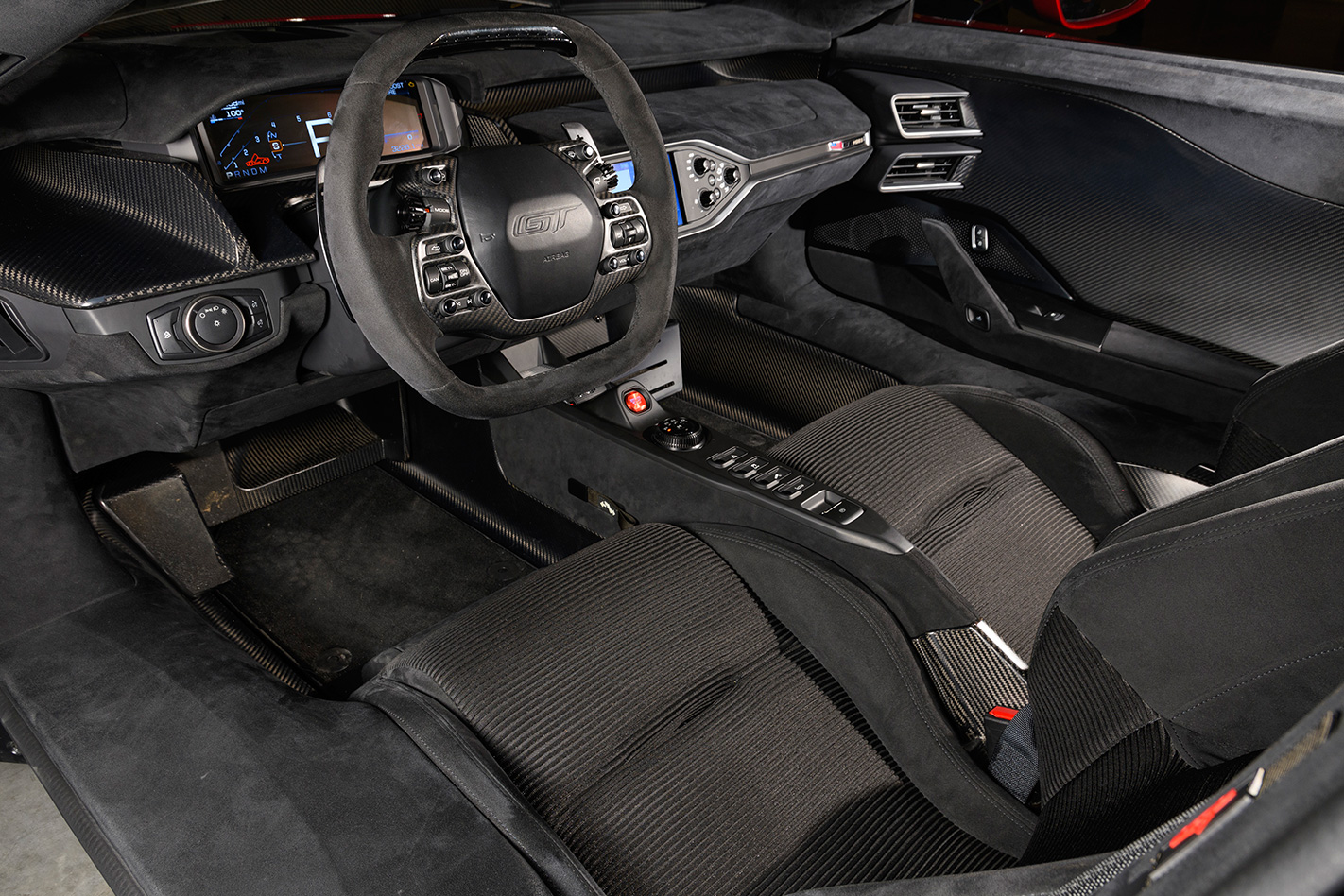
What that also means, though, is that there’s an inordinate amount of technical goodness to get immeasurably excited about. Would a pure road GT car be given a carbon-fibre dash that was both a structural component but also channelled ventilation air through it?
Would it get fixed seats with pedals that move instead, via a fabric pull strap? Would it be given a rear wing that not only moves up and down, but has a movable lower edge so that, in some positions, it makes lots of downforce but, in others, reduces drag?
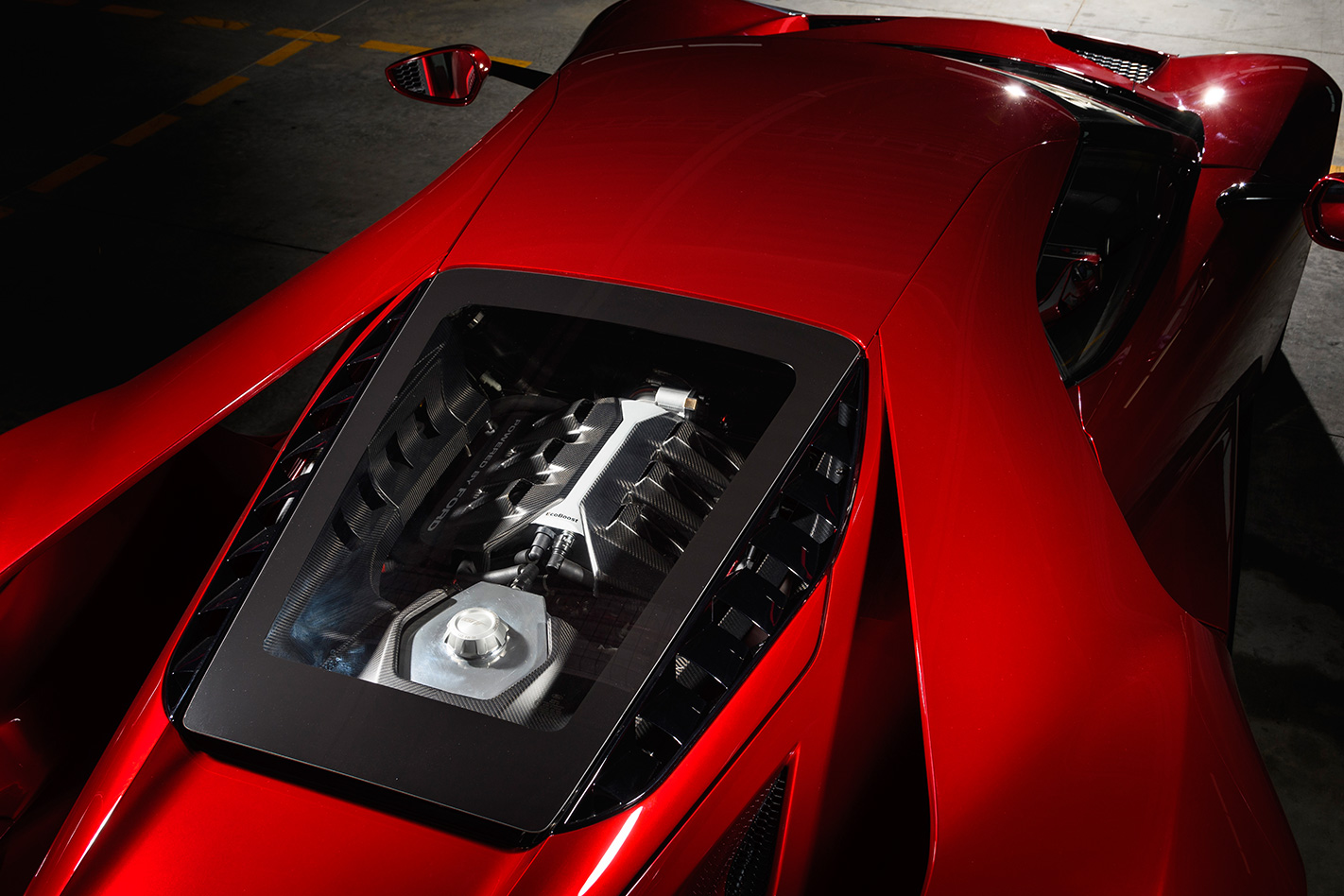
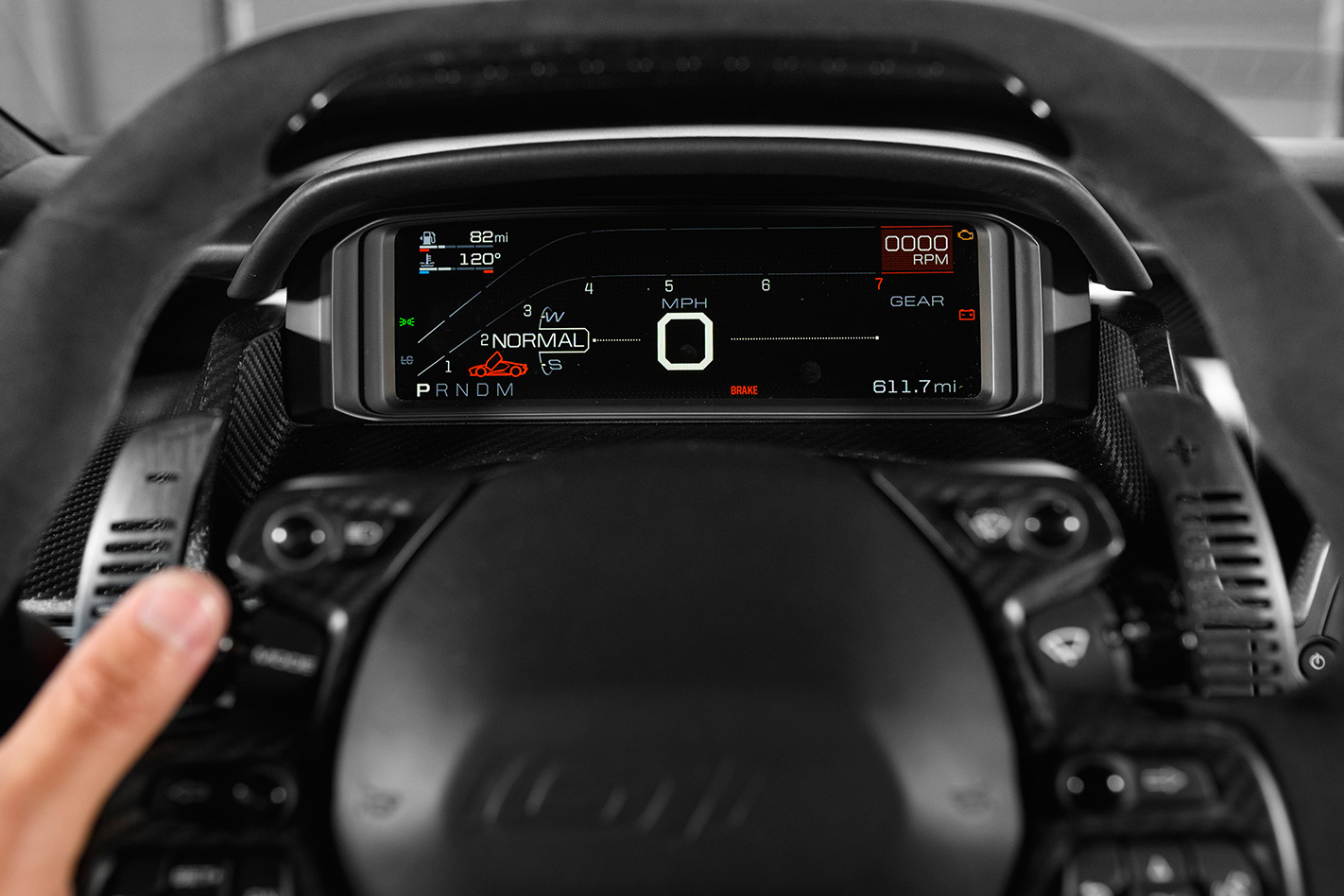
And don’t get me started on the suspension itself. Actually, do (see sidebar), and know that this two-height unit doubles the spring rate in Track mode, when the car drops by 50mm to have a 69mm ride height.
And when I say drops, oh man, does it ever drop. You might have seen or felt a supercar’s nose lift gently via electronic motor, or an air-sprung 4×4 raise as its chambers are pressurised. None of that nonsense here.
You switch to Track mode, or push the nose-lift, and in the time it takes to say ‘pssht’, so the GT has dropped or lifted, like a race car being hoiked on its air jacks. It’s mega. Too unrefined for a conventional road car, no doubt, but mega nonetheless. It’s also key to remember this isn’t just any road car.
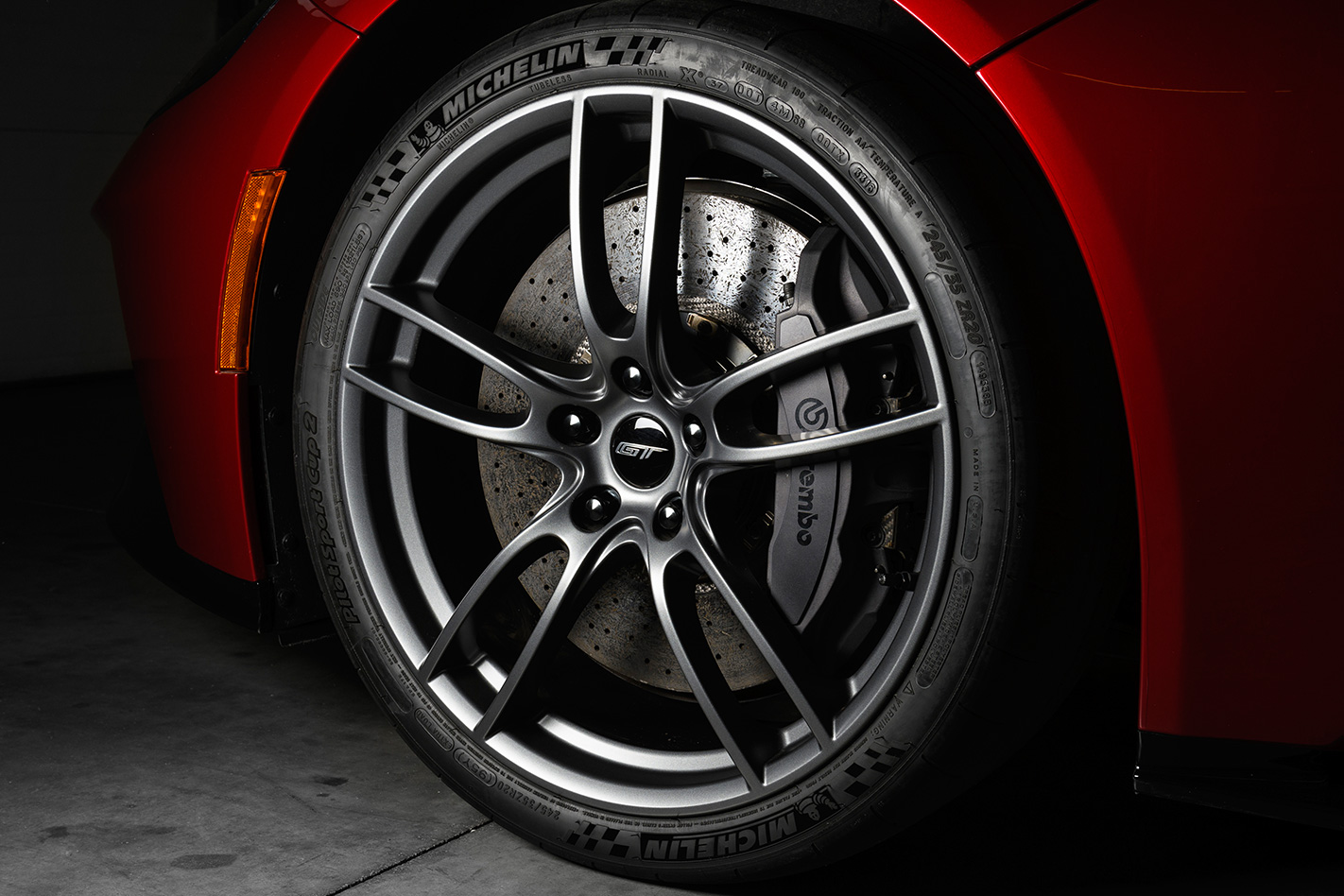
The engine’s audible and the stiff passenger cell acts as an echo chamber for road noise – so far, so racing car – but the ride is just astonishingly comfortable.
Now, that’s the sort of thing that gets written about sports cars sometimes. I’ve said it about Lotuses and McLarens, and they are really very pliant indeed, until you step back into a Mercedes S-Class.
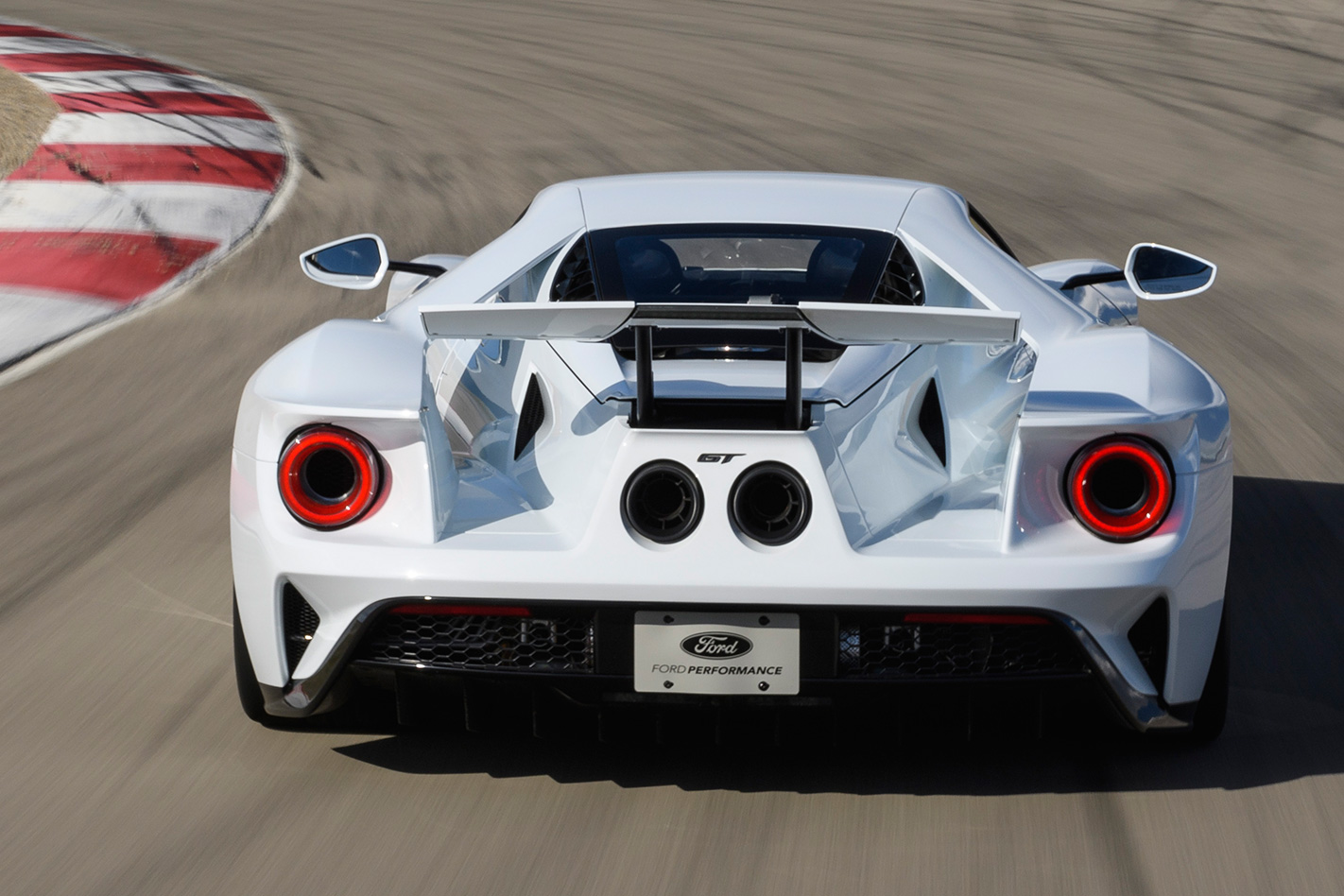
What that doesn’t equate to, necessarily, is making the GT a thoroughly entertaining road car.
Which is odd, because it should. But while the GT’s steering is pleasingly heavy and linear, and self-centres as it ought to, it doesn’t feed back loads of road feel and neither does it gain much extra weight as you push into corners. Most road cars let you know you’re building cornering force, by giving you some steering weight to lean on – a bit of reassurance – but that’s missing here.
I even like the noise. It’s a gruff note, a bit unsophisticated and gravelly, to the extent that, say, Aston or AMG wouldn’t let it out of the factory that way; but it’s an honest and effective noise, plus it comes with minimal lag (in ‘Sport’ mode there’s a very effective anti-lag system, too) and an extra kick in the back from 5500 to 7000rpm to make it feel as fast as the claimed sub-3.0sec to 100km/h and all-in 346km/h.
But with its phenomenal mechanical grip limits, absence of roll, plus slightly over-servoed brakes on our test example, it’s not as communicative a road car as, say, an Aston V12 Vantage S or a Porsche 911 GT3. Not by a distance.
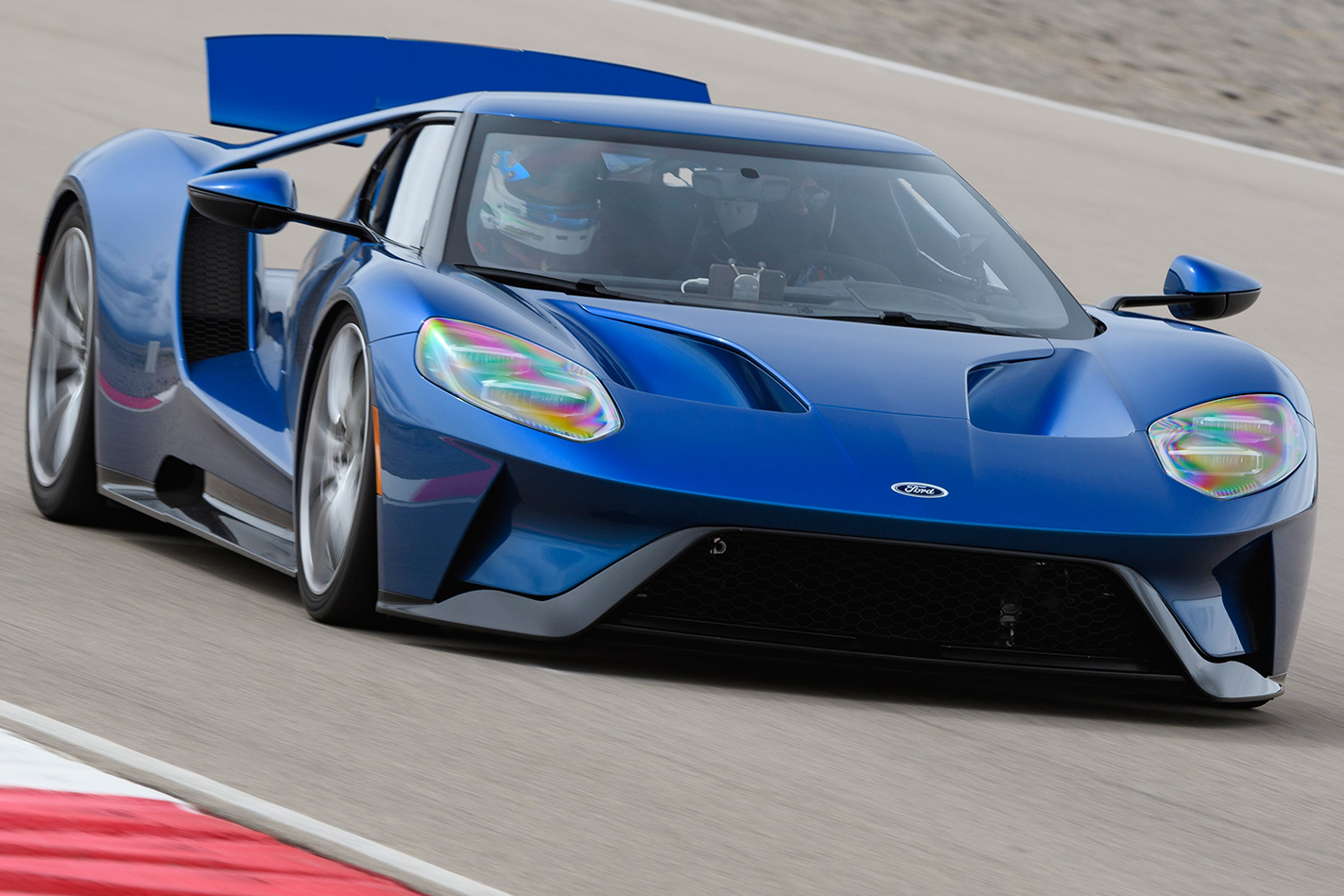
Maybe that’s because, perhaps inevitably, what you need to do to get the best out of it is drop the suspension in a moment, feel the spring rate double and get the hell onto a circuit. And here, yes, the GT makes every bit of sense of its mechanical layout.
Despite the ride height drop and spring rate change, there’s still sufficient softness here to attack kerbs – that damping really is extraordinary – and it’s a reassuring and pliable enough supercar that after just a few corners you’ll be happily doling out the full 482kW onto the next straight and leaning heavily on the carbon ceramic brakes into corners.
Really, though, what the GT appreciates is being driven properly – trailing the brakes into a corner, getting back on the power at the apex, doing what race drivers are meant to do to it.
Ford says its original performance benchmark was the Ferrari 458 Speciale, but then McLaren launched the 675 LT, so it bought one of those and realigned what it wanted the GT to do. Ford’s engineers say the GT is quicker around every race track it has taken it to. And I believe them.
Whether it’s a more enjoyable car is a slightly different matter. But it’s enough for me that they do different things. The 675 was never designed as a racing car so it is more engaging on the road.
And this is where I find my cynicism about the GT somewhat failing. Because without the road car program, Ford wouldn’t have done it at all. Besides, what the hell is it meant to do? Build a conventional $300,000 GT car and then think about taking it racing? Well, you wouldn’t buy it, would you?
No, the sensible thing would be do nothing, but instead, here is a carmaker whose stock in trade is selling Fiestas, yet it had the cojones to say, ‘here is a half-million dollar supercar and, if you’d like one, we’ll sell you one’. I can’t think of many manufacturers who would not just have that bravery, but also the ability to flog a road car worth in excess of half a million dollars.
So, cynicism be damned. Yes, I worry what 10 other cars like it would do for GT racing and it’s not one of the world’s greatest road cars; but it’s damned good on the road, superb on a track, and immensely desirable while coming from a company that usually bring you conventional cars. What a wonderful thing.4 out of 5 starsFord GT specs: Engine: 3497cc V6, DOHC, 24v, twin-turbo Power: 482kW @ 6250rpm Torque: 746Nm @ 5900rpm Weight: 1363kg (dry) Price: AUD$600,000 (est)
INGLOSTADT replaces the old diesel SQ5 with a slicker turbocharged petrol model. It’s lighter, smarter and better to drive. But without the punchy oil burner, the SQ5 could struggle to differentiate itself.
WHAT IS IT
A 260kW/500Nm mid-sized luxury SUV that’s smart looking, impeccably finished and which comes in at under $100k shouldn’t be too tough a sell, but the market is crowded with talent and the Audi SQ5 could even prove a little too subtle for its own good.
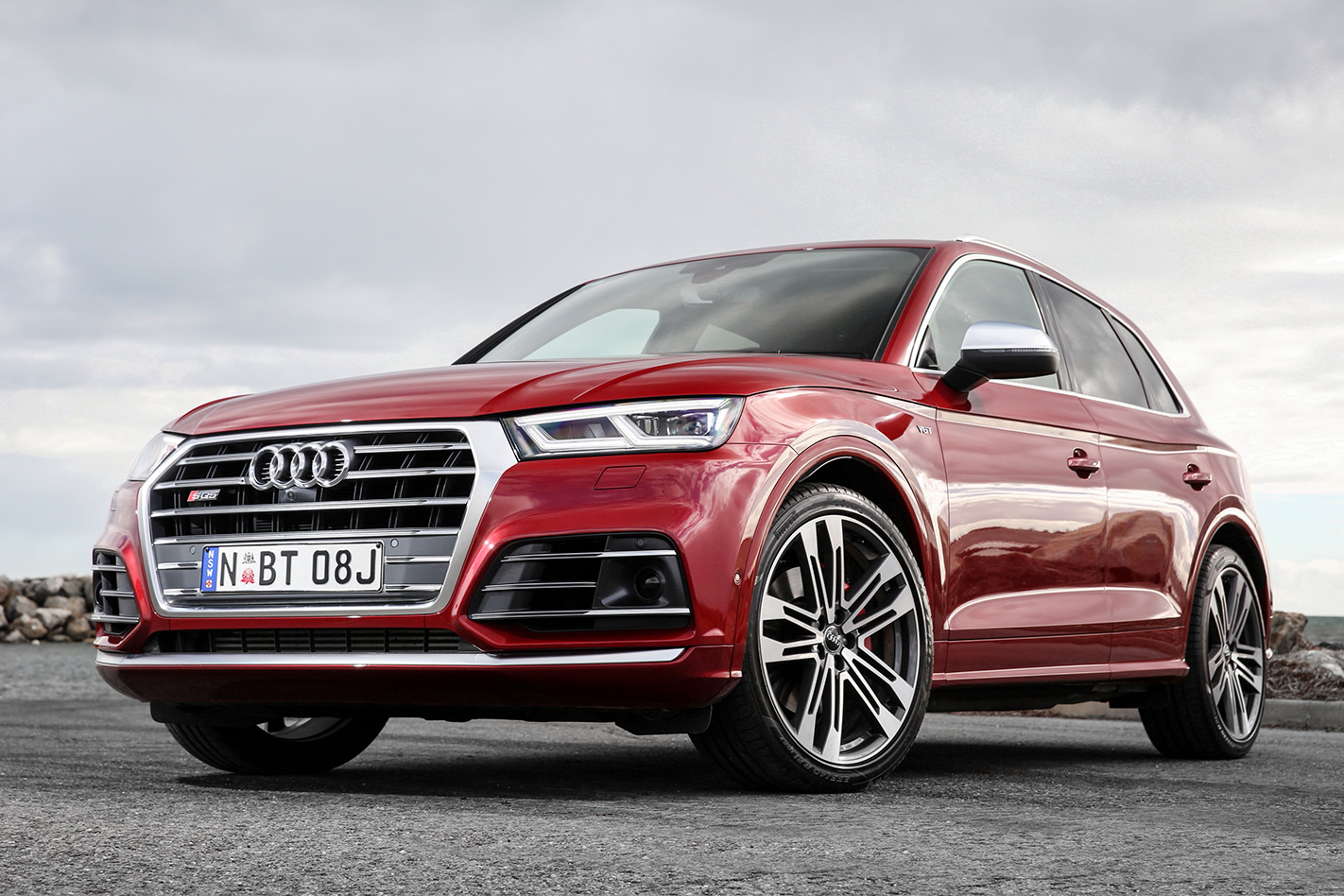
We’ve got a guilty penchant for both the Porsche Macan S and the Mercedes-AMG GLC43, so seeing how Audi’s rival stacked up seemed too good an opportunity to pass up.
MAIN RIVALS
BMW X4 xDrive35d, Jaguar F-Pace V6 S, Mercedes-AMG GLC43, Porsche Macan S
THE WHEELS VERDICT
Make no mistake, the Audi SQ5 is a painstakingly competent sports SUV. Specify the optional air suspension and it’s a brilliantly composed and rapid coverer of kilometres but in buffing the SQ5 to such a sheen, we can’t help but feel as if Ingolstadt has slightly over-polished its gem, burnishing too much of its assertiveness away in the process.
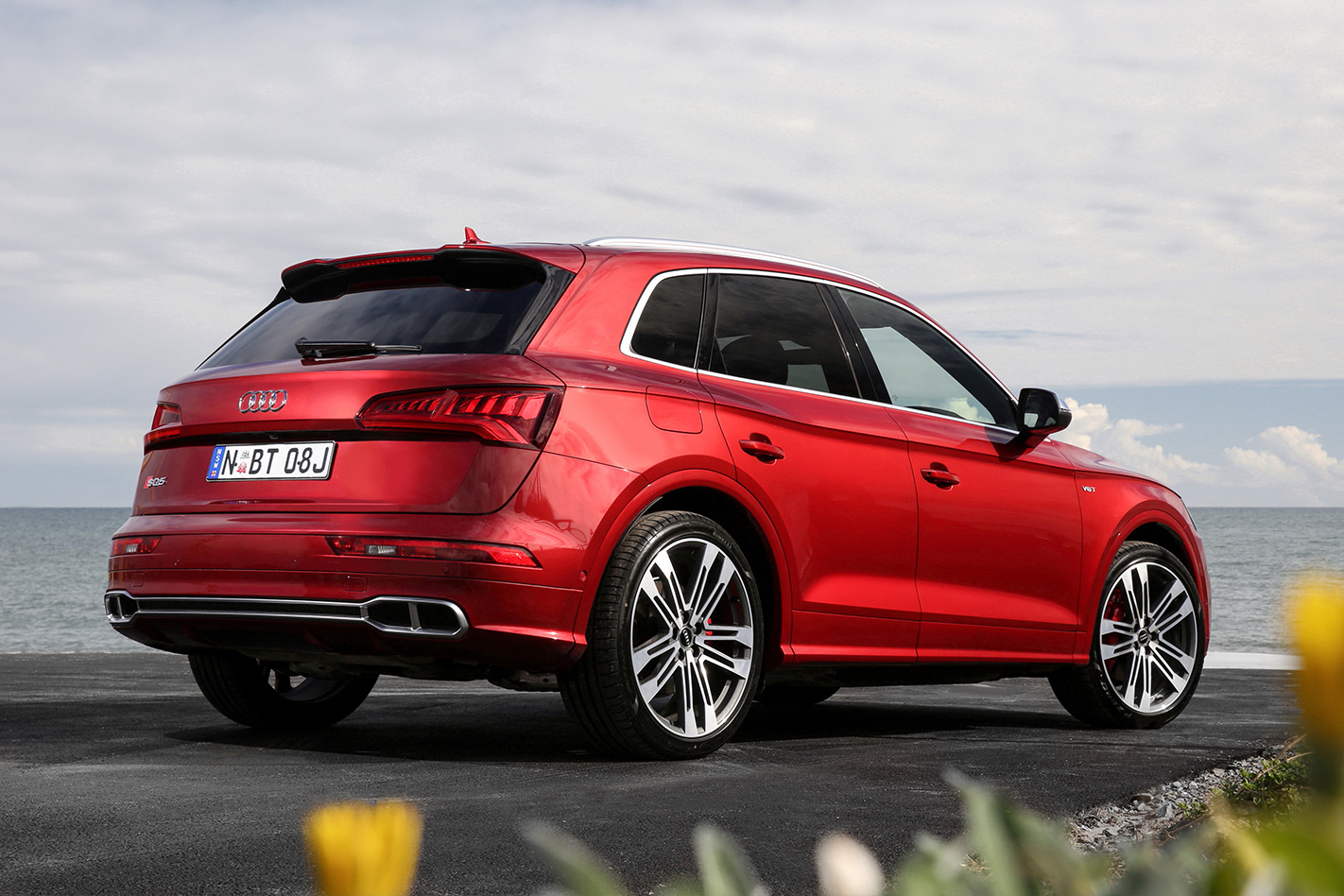
MINUS: Unsettled ride on standard springs, big wheels look inelegant, engine lacks charisma
THE WHEELS REVIEW
IT WAS never too hard to pin down the appeal of Audi’s old SQ5. You could easily rattle off a ten-second elevator pitch for the ‘one size fits all’ vehicle, a sports SUV that could do the family thing, entertain on a decent road, scrub up presentably when required and which wouldn’t put an irrevocable dent in the budget at the bowsers.
Mind you, that was a simpler time, when we believed what earnest Germans told us about diesel engine economy and emissions. These days Audi’s playing to a tougher crowd, so it’s entirely understandable that the company has launched the all-new SQ5 with a petrol engine under the bonnet, in this case borrowing the S5’s 3.0-litre 90-degree V6 with a twin-scroll turbocharger neatly ensconced in the vee.
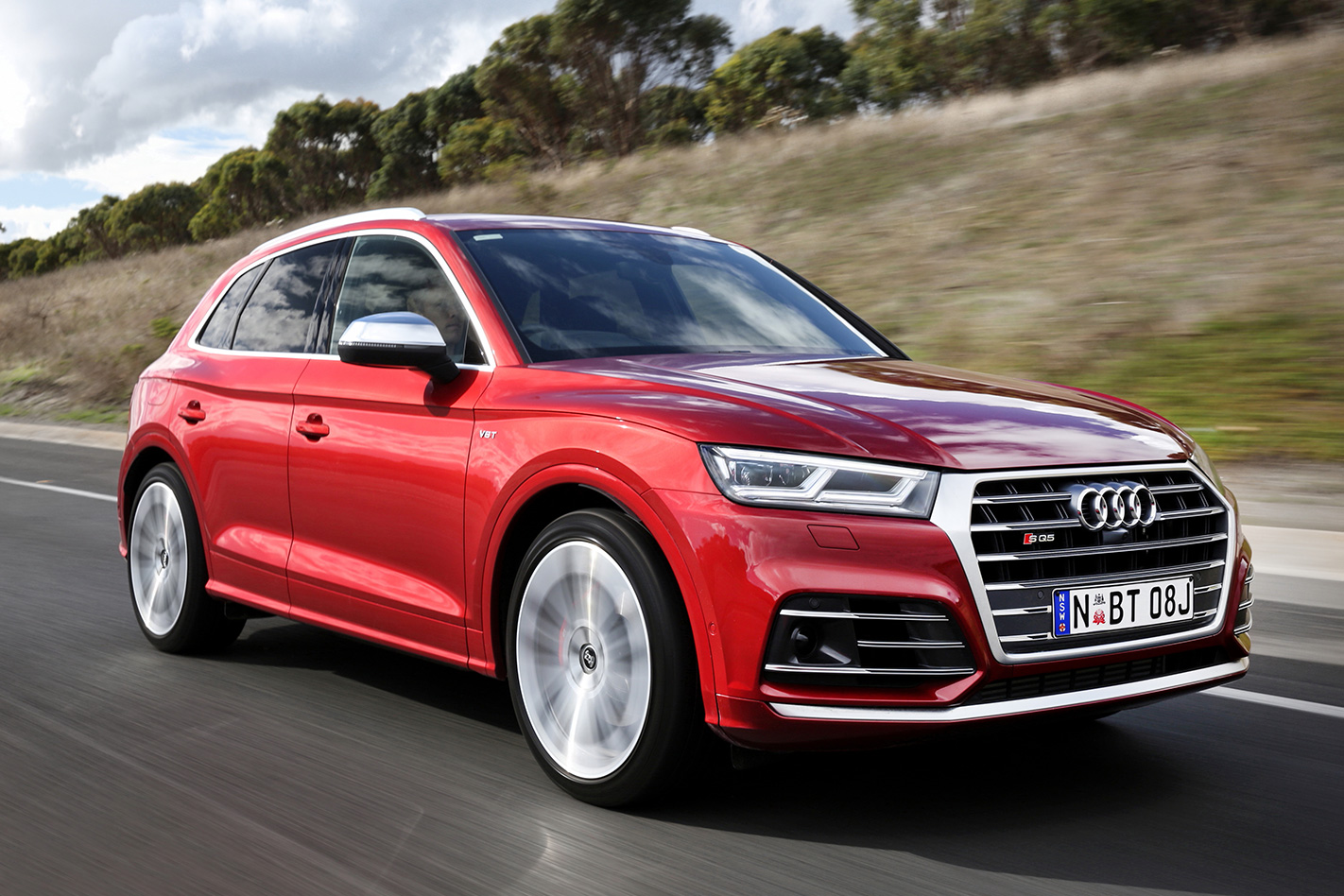
At flat chat, the ZF eight-speeder provokes a bassy woofle as it shuffles up through the ratios but that’s about as much attitude as you get, even when plugged into Dynamic mode. Unlike the rest of the Q5 range, which use the part-time quattro ultra chassis, the SQ5 opts for the full-time quattro all-wheel drive architecture with a self-locking centre diff, and predictably undramatic traction off the line helps it to a 5.4 second sprint to 100km/h; identical to the Porsche Macan S and a few tenths slower than the old SQ5 diesel.
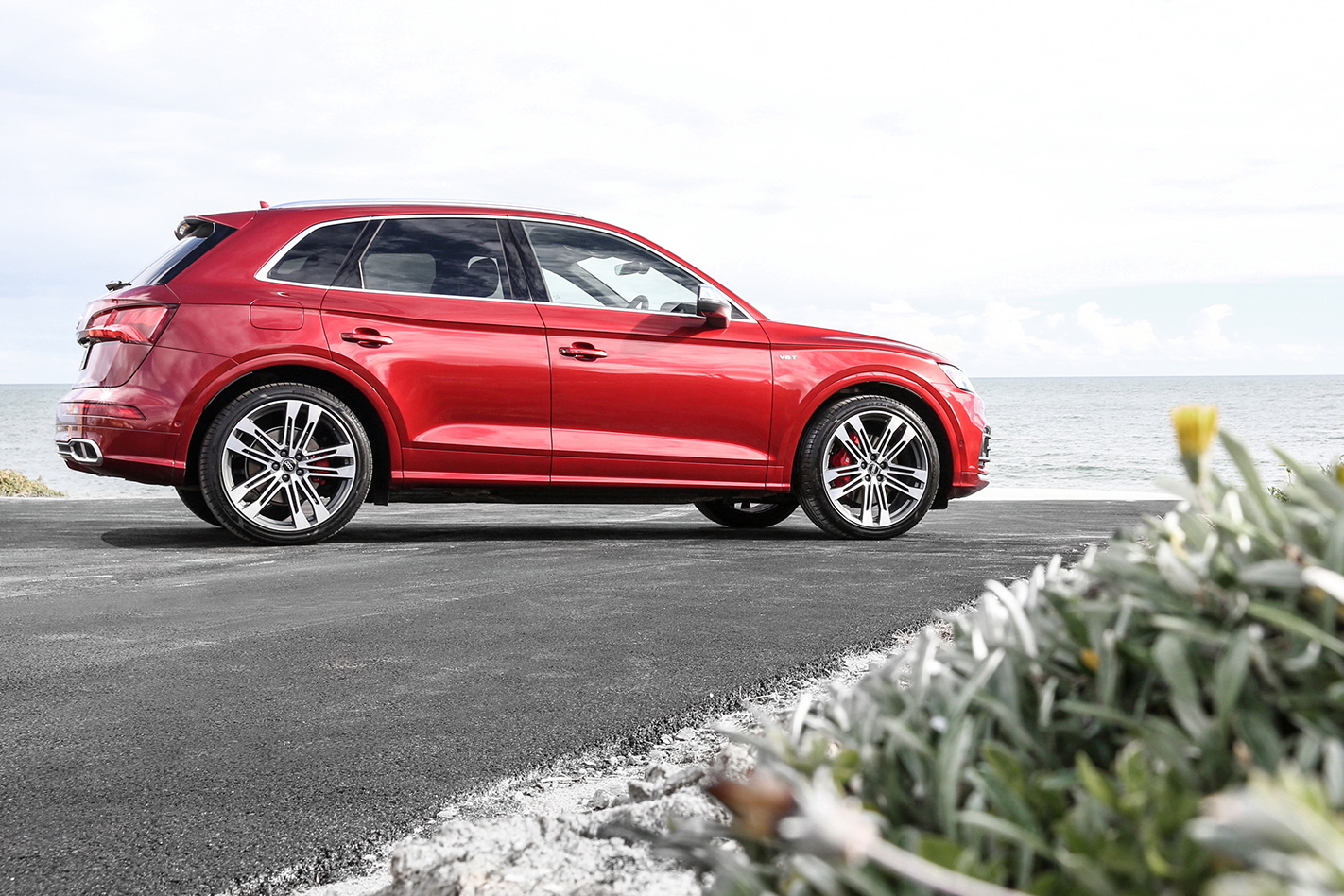
The air setup allows the car to breathe more easily along broken bitumen. There’s also the option of a quattro sport differential, which can split drive between the rear wheels, although we’d question whether this is a bit of a punchy choice for a tall SUV that’s slightly too cumbersome to make the most of such a fitment.
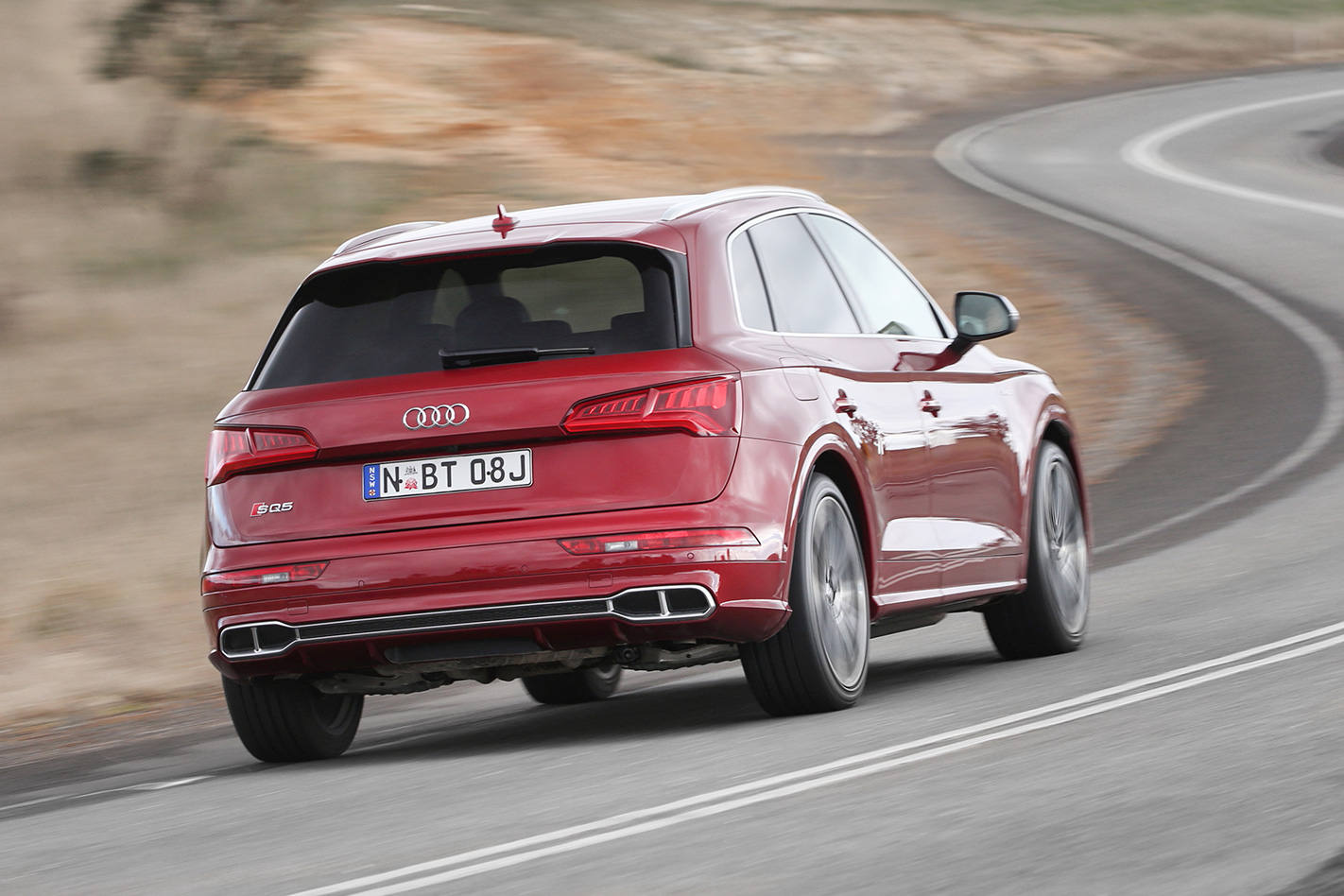
Unsprung weight is further reduced via the fitment of lightweight brake calipers. All up, the current SQ5 pares 130kg from the kerb weight of the old car, although much of that figure comes from replacing the diesel lump with a far lighter petrol engine. As a result fuel consumption is a relatively laudable 8.7L/100km which is virtually lineball with a 178kW Ford Escape.
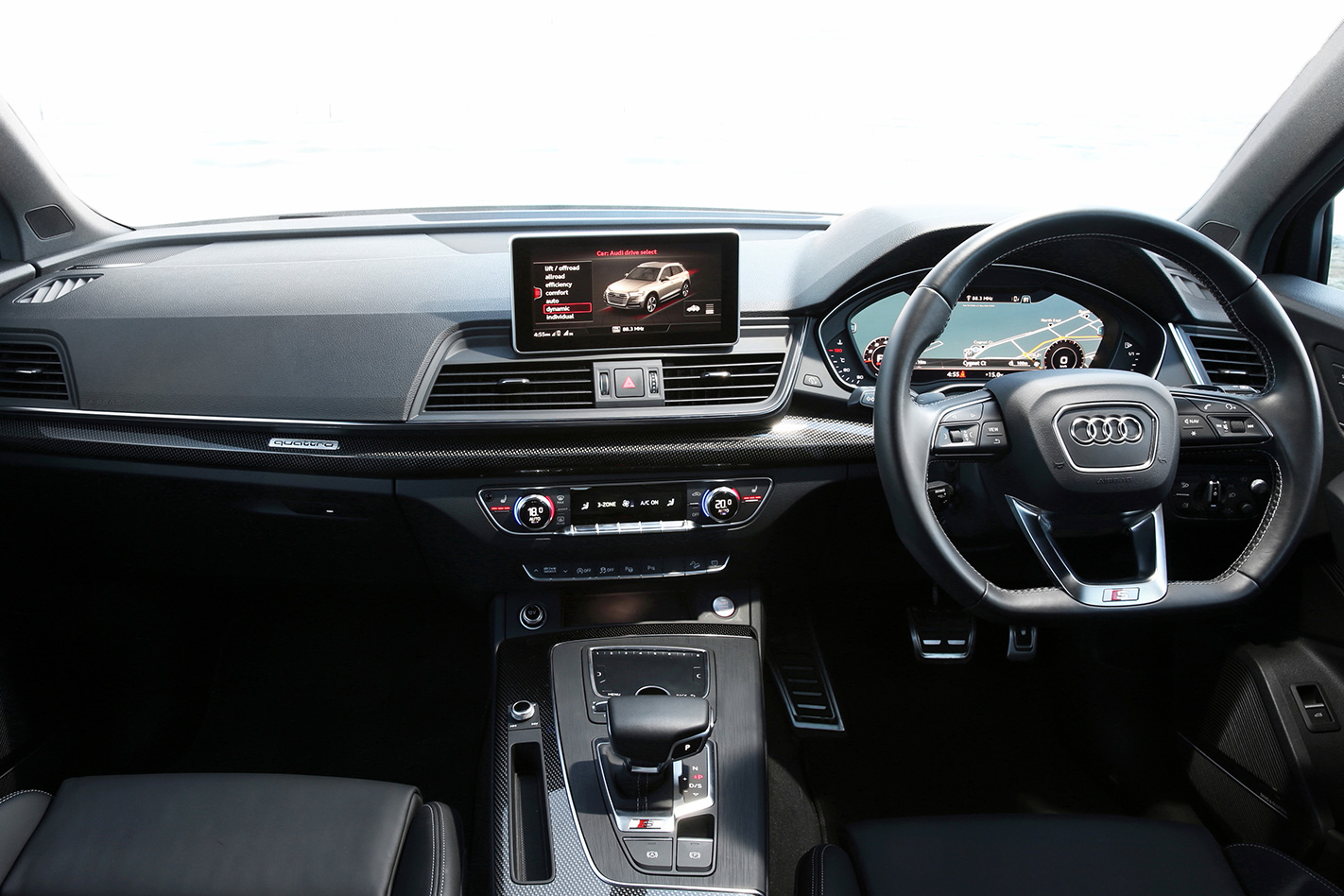
The SQ5 needs to be something other than a Q5 that’s a smidgeon quicker and a bit glitzier inside. It ought to express its own identity with more clarity and confidence. The meek were supposed to inherit something. Whether it’s your hundred grand is a decision you’ll need to make.
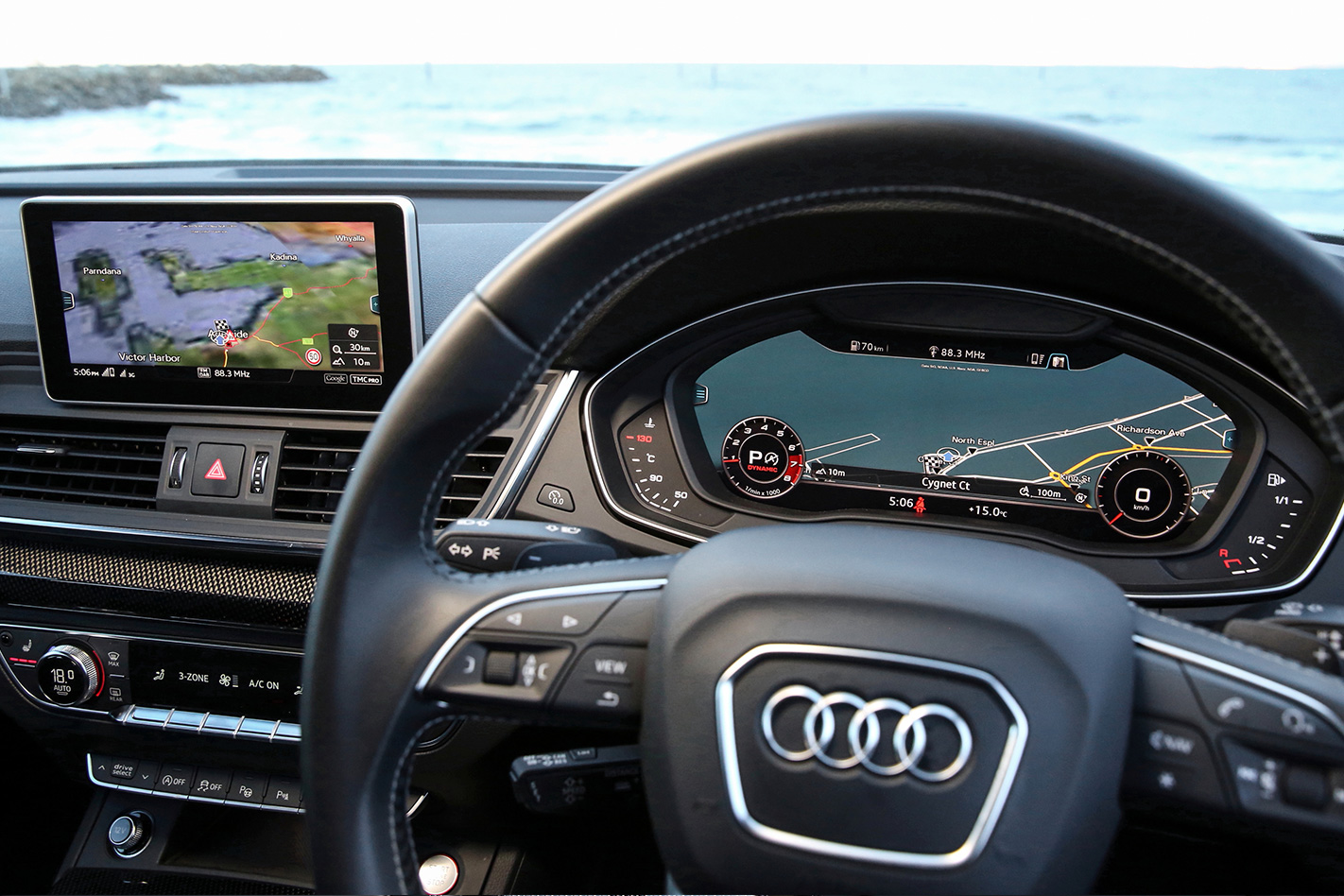
Model: Audi SQ5 Engine: 2995cc V6, dohc, 24v, turbo Max power: 260kW @ 5400rpm Max torque: 500Nm @ 1370-4500rpm Transmission: 8-speed automatic Weight: 1945kg 0-100km/h: 5.4sec (claimed) Top Speed: 250km/h (limited) Fuel Economy: 8.7L/100km (claimed) Price: $99,611 On sale: Now
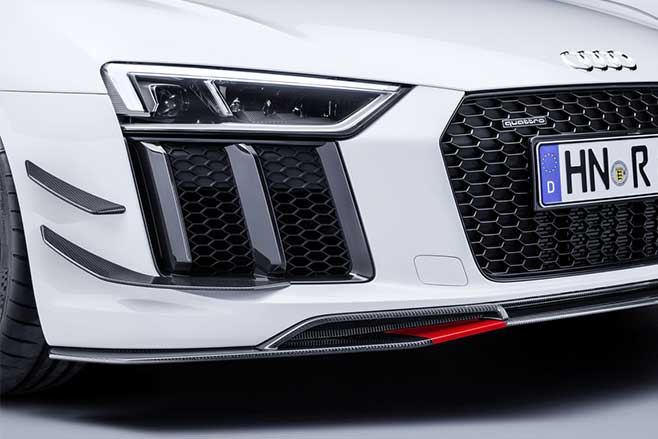
With a focus on honing handling and suspension, the Audi TT and R8 Performance Parts kits mean fresh, but angrier faces for some of Audi’s top sports models.
As part of a ‘retrofit range’, the VW Group brand will launch aftermarket Performance Parts “in Germany and other markets for the current Audi R8 and Audi TT models only”, though it says additional model packs will follow over time.
The four main areas improved by the packs are suspension, exhaust, exterior fittings, and interior components.
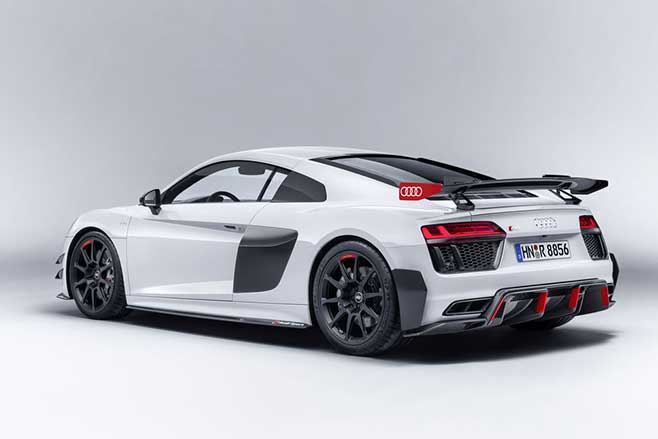
AWD TTs also can be fitted with a rear axle cross-member reinforcement bar, which increases the car’s rigidity and improves handling.
TT RS owners can also increase their cars’ top speed to 280km/h.
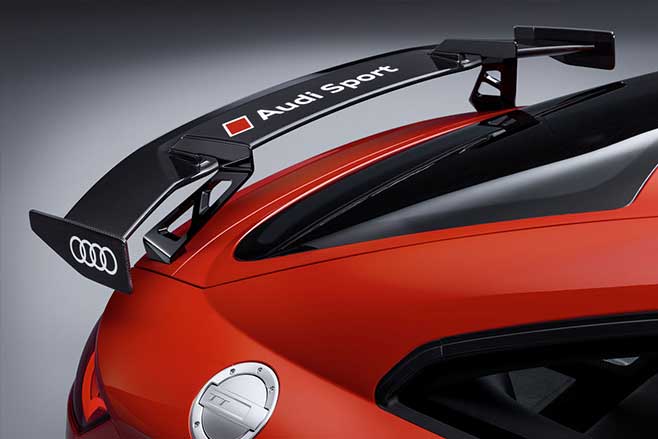
Audi says the most “spectacular” items in the range are those of the aero kits, which Audi itself specifically wind tested and developed. This kit increases downforce on the R8 by over 100kg at 330km/h.
The carbon fiber-reinforced polymer parts are also available for the TT.
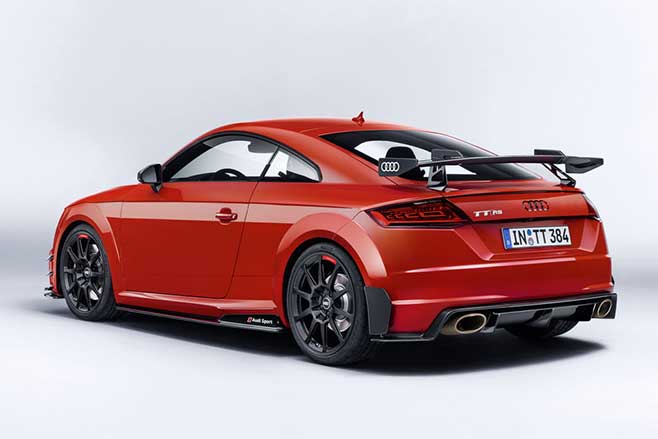
Audi Sport MD Stephan Winkelmann says the introduction of these aftermarket parts adds a new element to the Audi Sport brand.
Top 5 V10 or V12 performance bargains
“With the Audi Sport Performance Parts, we are tapping into a new business segment,” says Winkelmann.
“Our wealth of experience garnered over many years of building sports cars is incorporated into every component we offer, along with our expertise from motor racing, which is still the best test bed for volume production.”
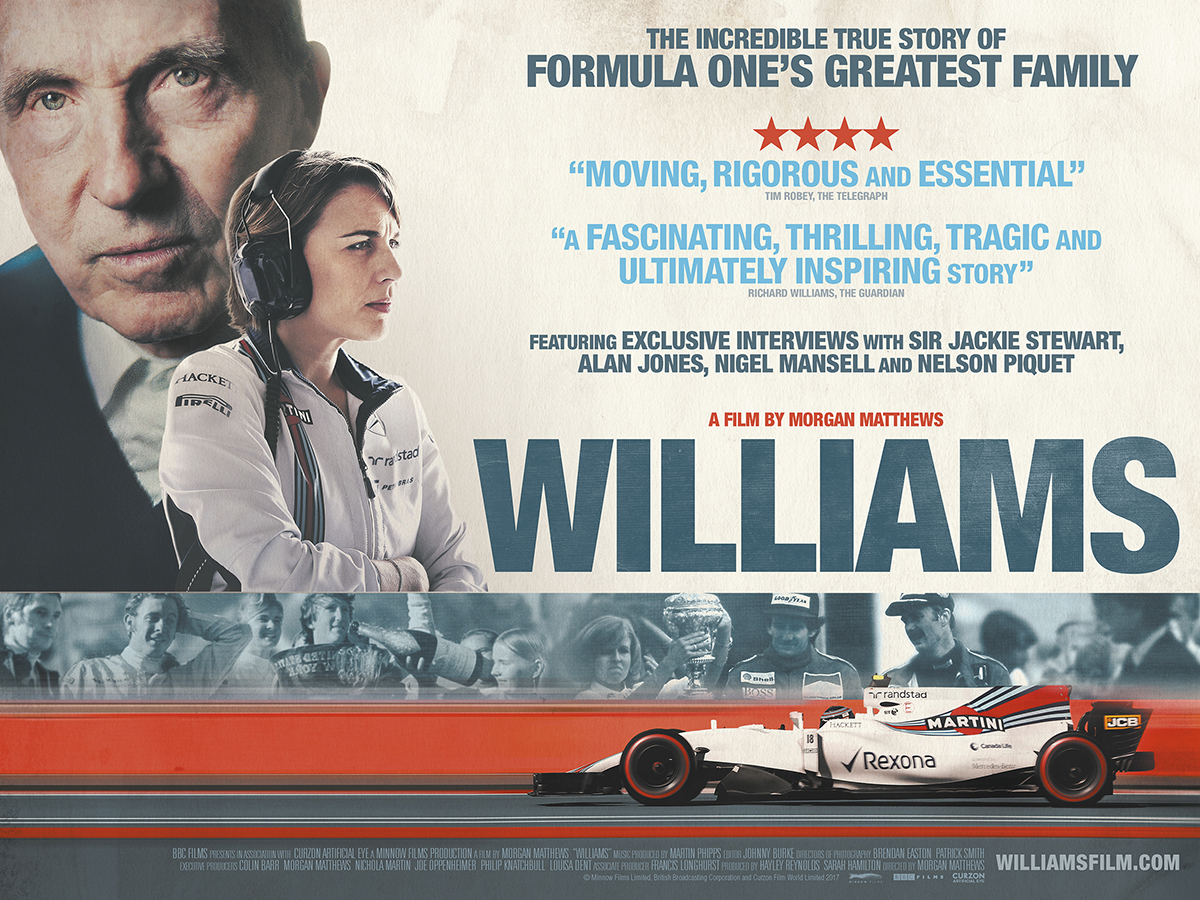
THE story of Formula 1 luminary Sir Frank Williams has been recognised in an official documentary, premiering in London today.
The film, simply entitled Williams, is based on the 1991 book A Different Kind of Life written by Frank’s late wife, Lady Virginia Williams. Williams details not only Frank’s obsessive passion for motorsport, but also his family’s journey behind the scenes following Frank’s tragic, paralysing car accident.
“We are incredibly proud of the film and its enduring message of what the human spirit is capable of achieving in the face of adversity,” says Frank’s daughter and deputy team principal, Claire Williams. “I hope that it inspires people as much as my parents’ story inspires me.”
Featured in the film are F1 legends Sir Patrick Head, Sir Jackie Stewart, Nigel Mansell and Nelson Piquet, plus racing footage and candid accounts of what really went on behind closed doors.
Williams Formula One was founded by Sir Frank 40 years ago. It has won nine constructors’ and seven drivers’ championships. Its first drivers’ title in 1980 was won by Australian world champion Alan Jones.
Sir Frank, 75, is one of the most respected men in in the Formula 1 paddock. He was knighted in 1999.
“I hope this account of one man’s fearless pursuit of his dream to go racing also captures people’s hearts and inspires our fans,” says Claire.
“At the end of the day, they are the people who make the sport what it is, something Williams has never forgotten. This is the true story of their team.”
Williams drivers past and present are expected to attend the film’s opening in Mayfair, London. A general cinema release in the UK will follow, and on demand viewing from August 4th via Curzon Home Cinema online.
