
THE widow-maker is back.
But, despite its rear-wheel drive layout and a reputation for loutish conduct, Porsche’s most powerful 911 yet hasn’t worked out how to fully let its hair down.
Making its global debut at the Goodwood Festival of Speed, the new Porsche GT2 RS went for a tour up Lord March’s now iconic driveway, and it didn’t exactly go as planned.
Stopping on track for a baying crowd, what ensued were two thoroughly un-Australian attempts at vehicular showmanship in a weekend full of automotive titillation.
Watch and blush as the man behind the wheel of Porsche’s 515kW weapon tries to rip a donut, only to hop, skip, and be left sitting in distinctly smoke-free shame.
The second attempt doesn’t go any better.
Perhaps our pilot forgot to turn off the car’s electronic shackles? Regardless, it’s a chuckle-worthy sight to behold when something as loony as a GT2 RS embarrasses itself.
It’s not clear who was driving at the time, though Mark Webber and Walter Rohrl were both in attendance with Porsche.
Credit where it’s due, at least he had a go, and can head home knowing he didn’t put the $645,400 car into the hay bales like these lot, below.
First crash of the weekend goes to this Ford RS200 Evo 2, which ended up much worse for wear after its off-road excursion.
Then there was a Ferrari 458 GTE car which found itself in a spot of trouble. Perhaps the Italian stallion was simply in need of a feed?
This NASCAR driver did nothing to quell inaccurate stereotypes when he binned it at the very first corner, which just so happens to be a right-hander.
Not even renowned drifting champion Chris Forsberg, a man who lives for taking corners in an exuberant fashion, could nail the Goodwood hillclimb.
If anyone is looking for inspiration, or a lesson on how to do it properly, look no further than reigning (and retired) F1 champ Nico Rosberg, and the man who replaced him at Mercedes, Valtteri Bottas.
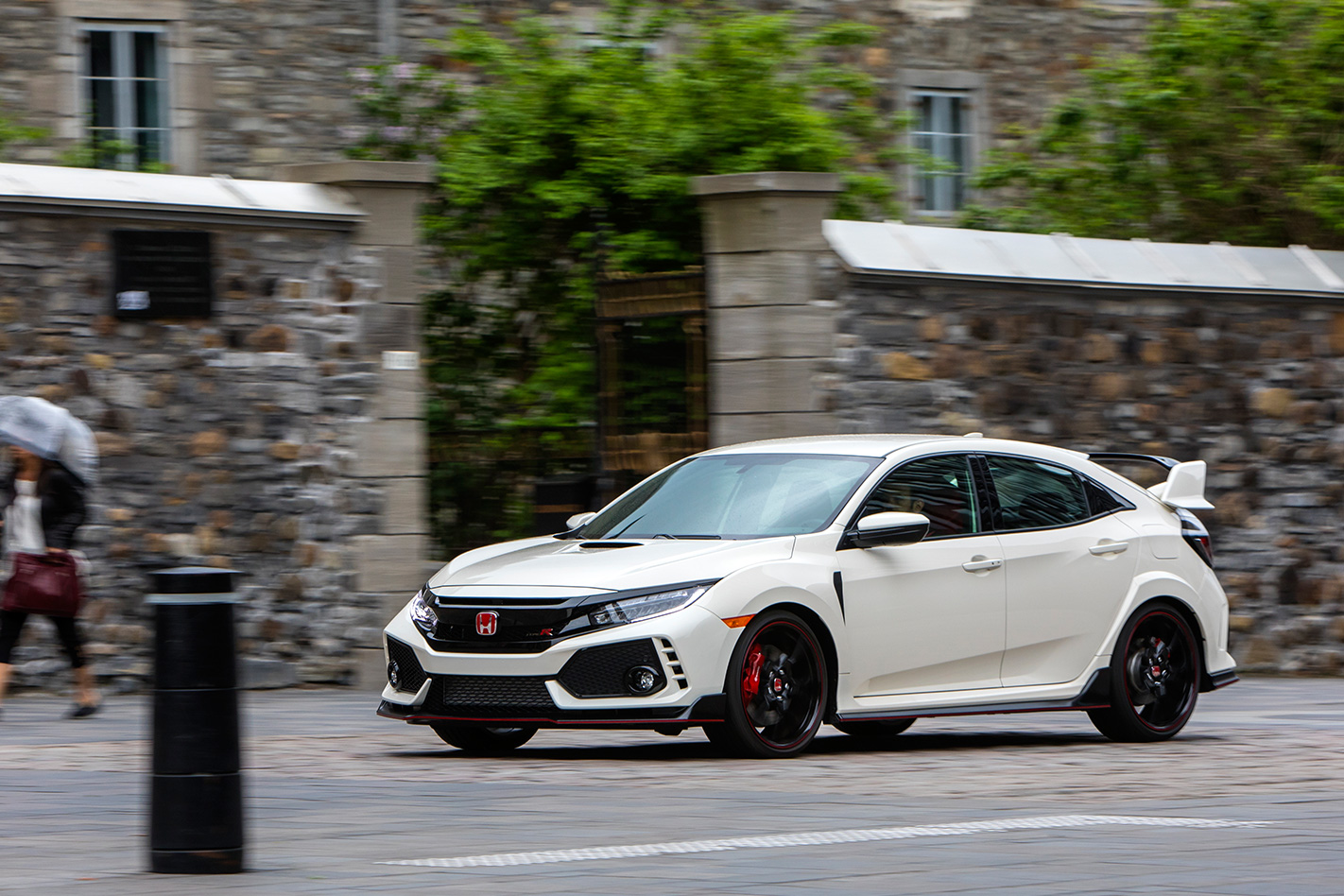
The new Honda Civic Type R will arrive in Australia in October, and customers are already queuing.
WHAT IS IT? Front-drive five-door hot hatch with lively turbo 2.0-litre four and lovely six-speed manual transmission. It’s not pretty, but is quick and well equipped
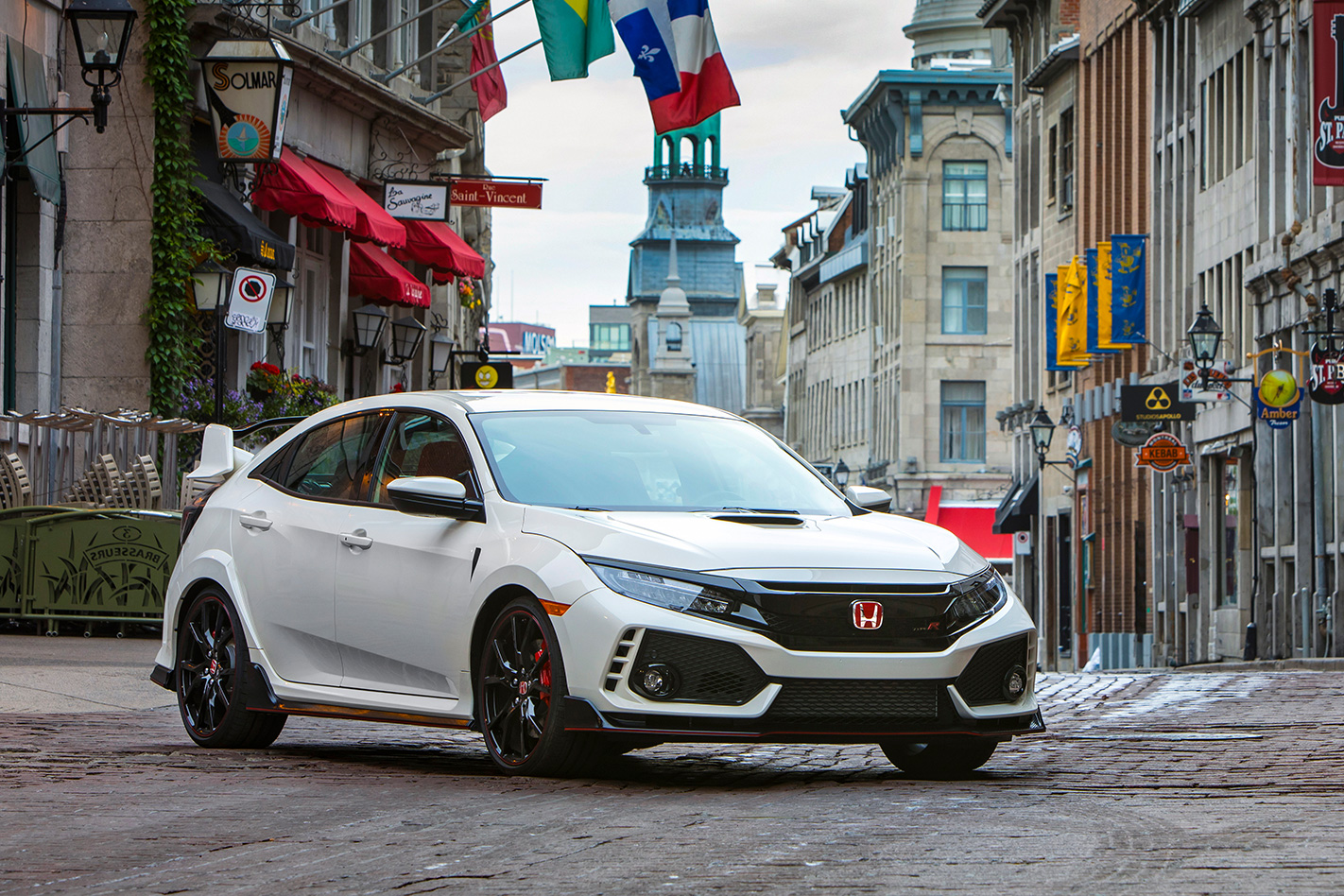
MAIN RIVALS The Ford Focus RS and VW Golf R manual may have all-wheel-drive, but they’re priced like the front-drive Honda Civic Type R. Its closest front-drive competitor is the less powerful, and less expensive, Peugeot 308 GTi 270.
THE WHEELS VERDICT There was a time, long ago, when Honda was unquestionably Japan’s most spirited and daring car maker. There are flashes of brilliance from the new Civic Type R, but not enough of them to make it a completely compelling car.
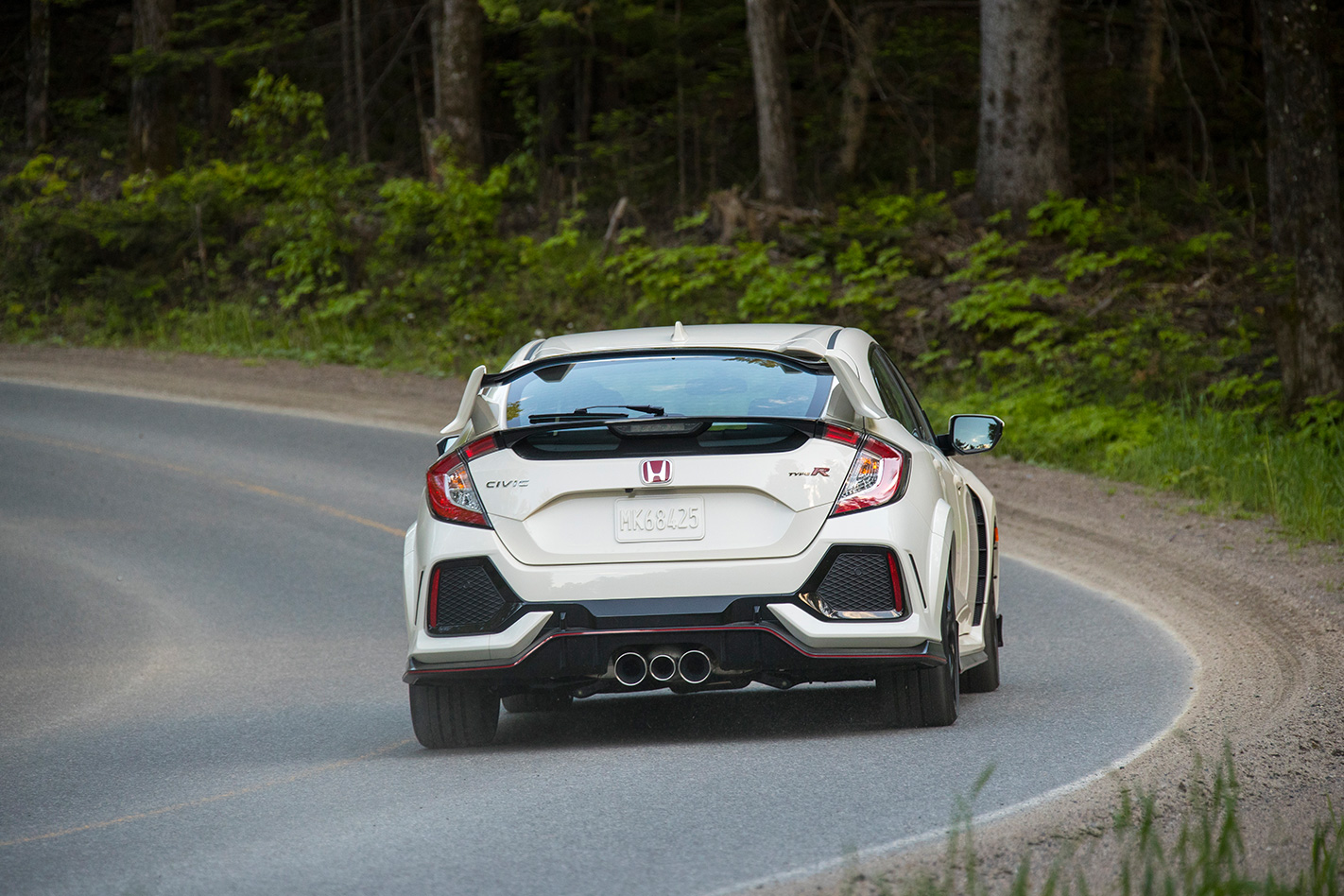
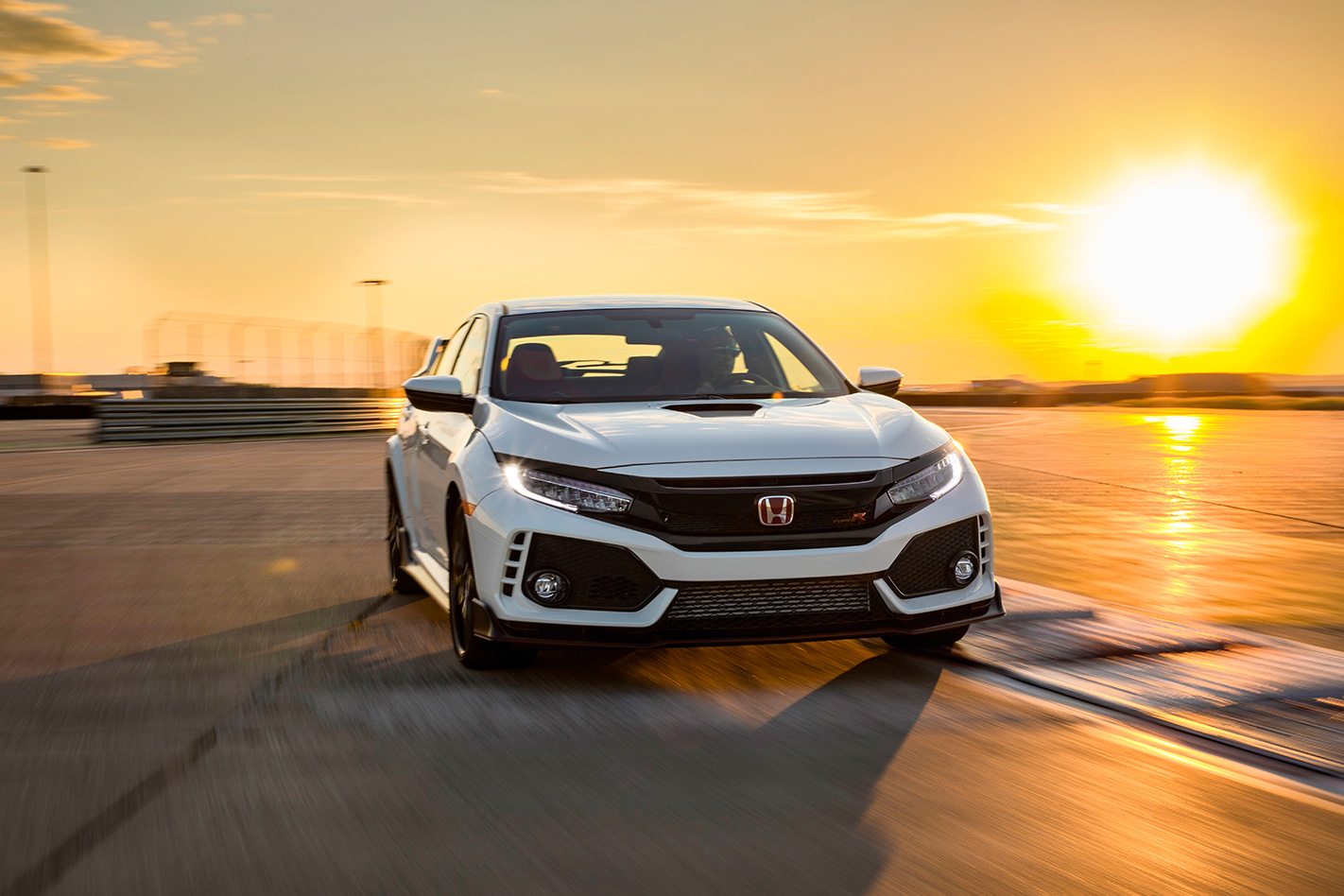
THE WHEELS REVIEW THE further you are from the Honda Civic Type R, the better it looks. It’s hard to say exactly how far is far enough. Just keep walking until the details of its designer-frenzy exterior begin to blur…
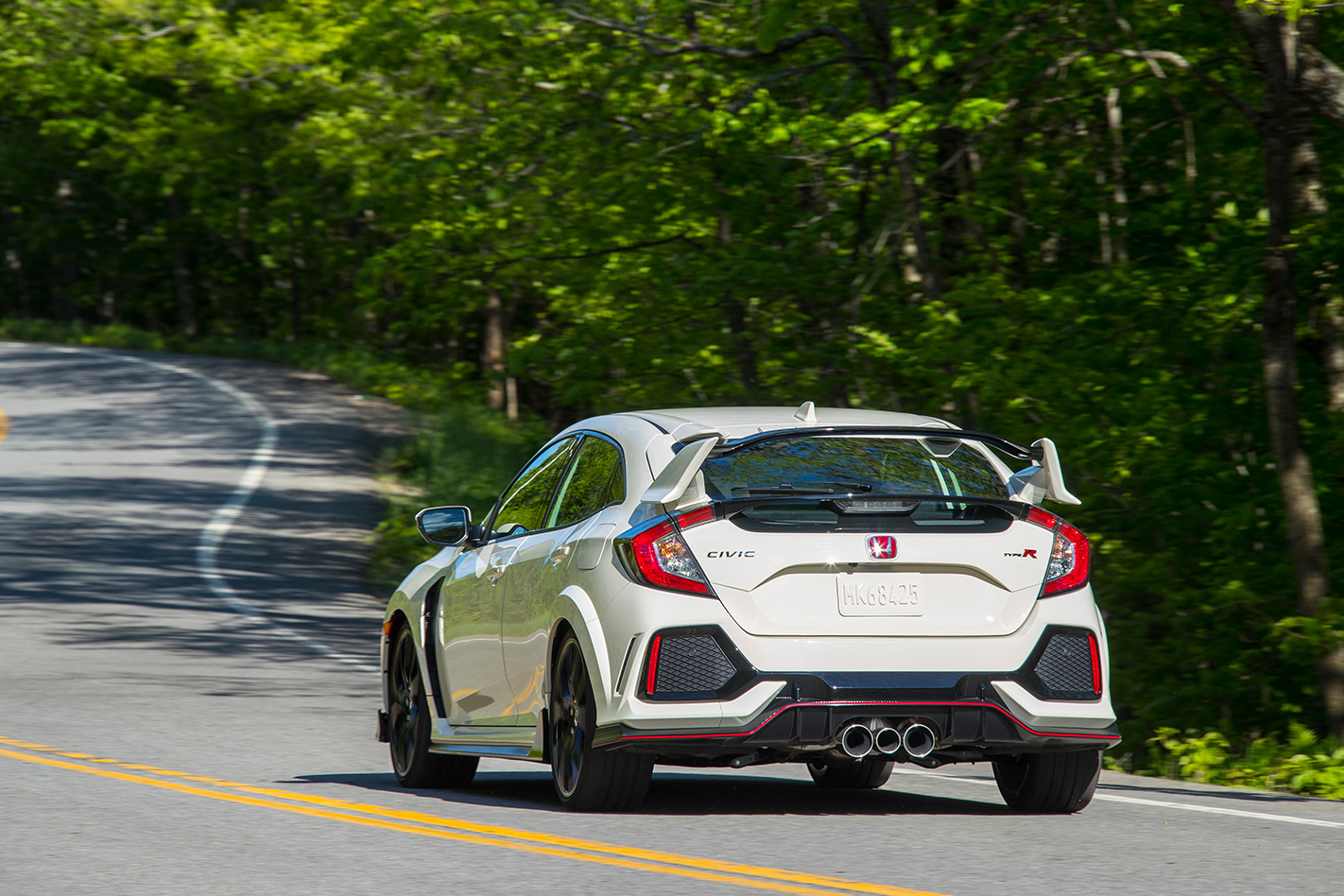
It’s hard to believe this hot hatch comes from the same company whose studios once turned out the calm and cleanly elegant shape of the 2003 Accord Euro. The new Civic Type R is instead a visually shouty assembly of aesthetic offences.
Honda’s design language may be incoherent gibberish lately, but this hasn’t entirely extinguished the brand’s appeal. More than 250 customers ordered the new Type R even before the official price – $50,990 – was announced.
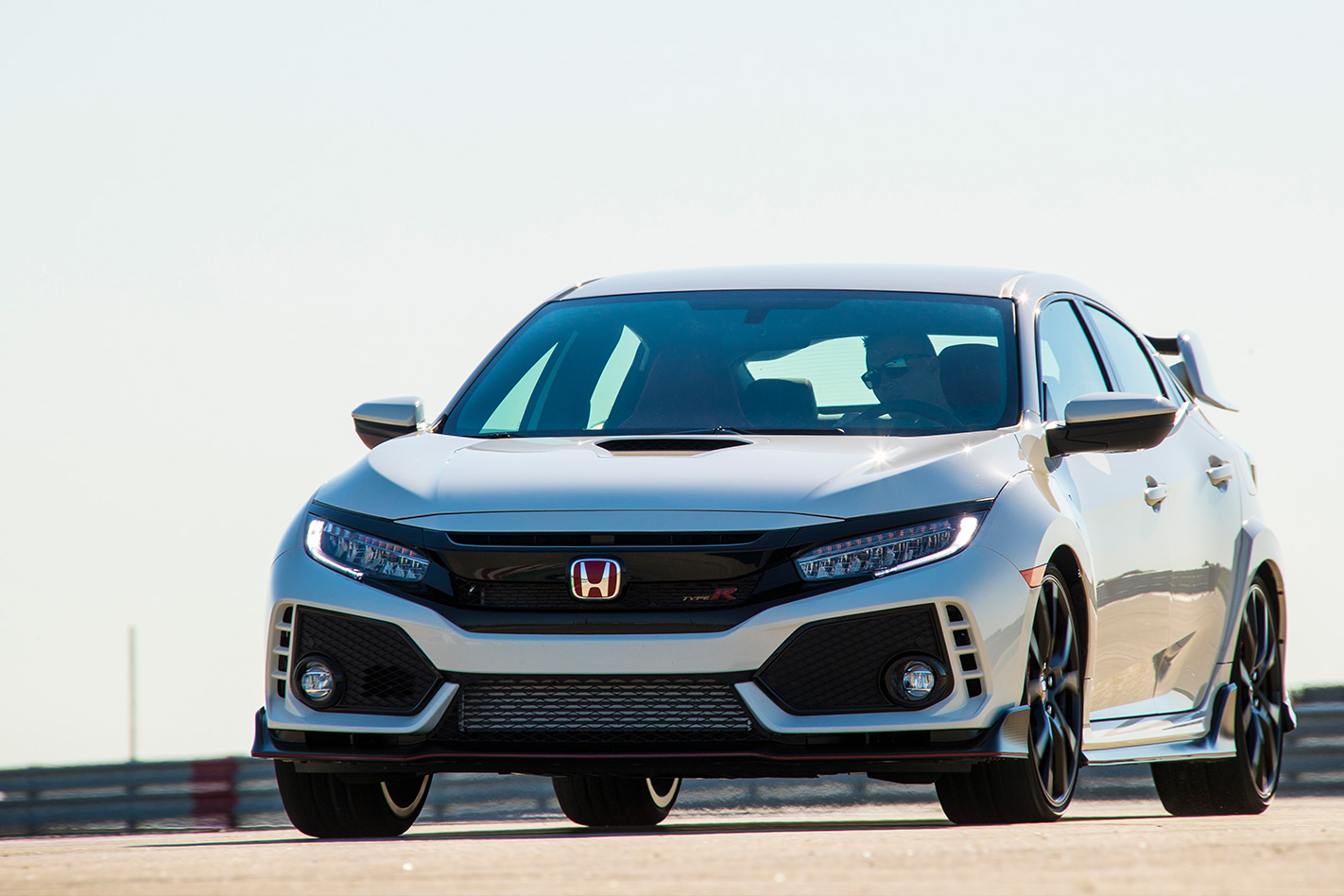
Great lap times aren’t a guarantee of all-round greatness, but maybe, just maybe, the Civic Type R engineers got it as right as the car’s designers got it wrong…
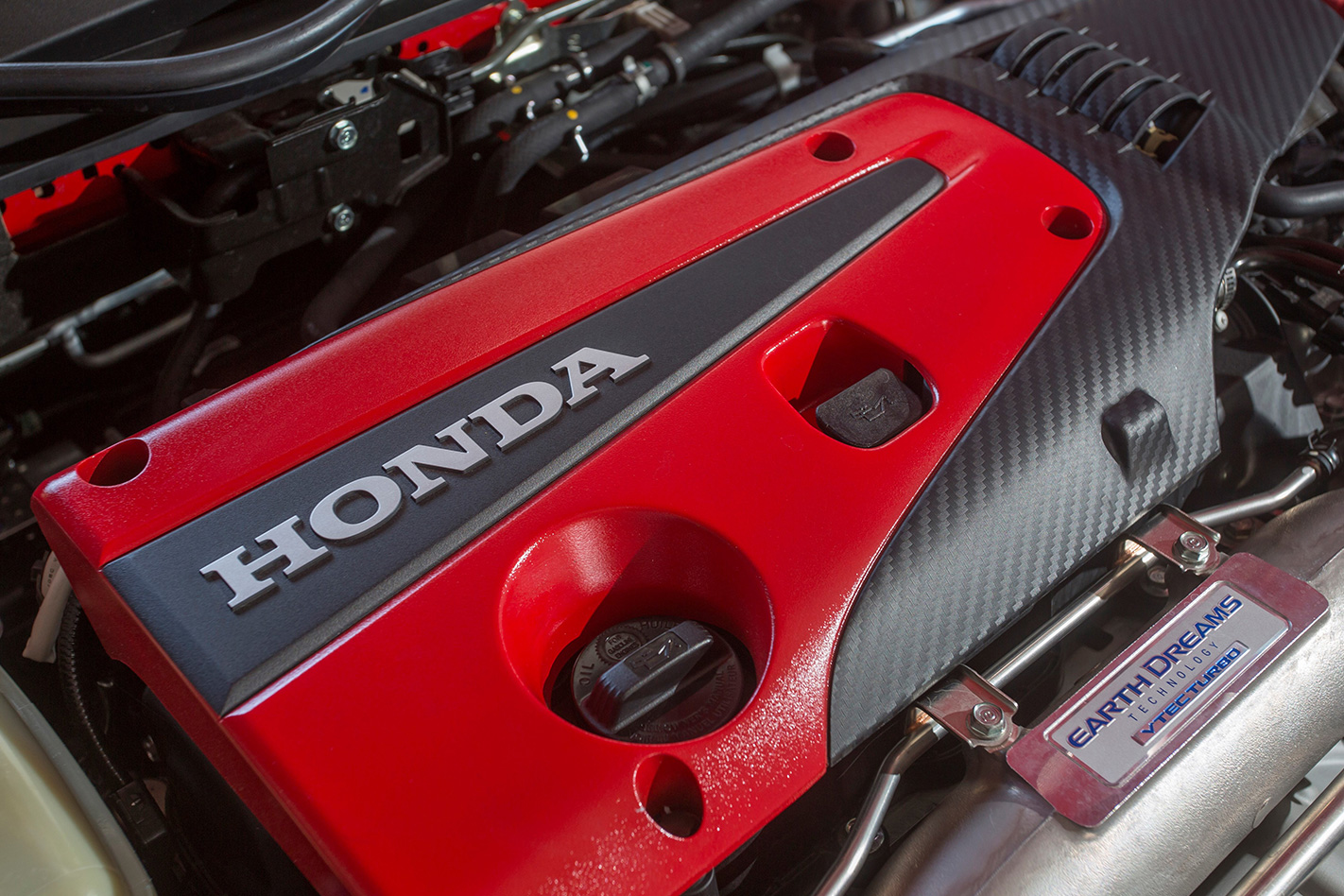
The Type R is based on the new Civic hatch that recently went on sale in Australia. But while the regular line-up is produced in Thailand, the hot version is made in England. Honda’s big Swindon factory is, in fact, the only one in the world assembling the Civic Type R. But the USA is where the Civic Type R’s engine is made. The turbocharged and direct-injected 2.0-litre four is from a Honda facility in Ohio. The Anna plant has been building the engine, designed specifically for the Type R, since 2015.
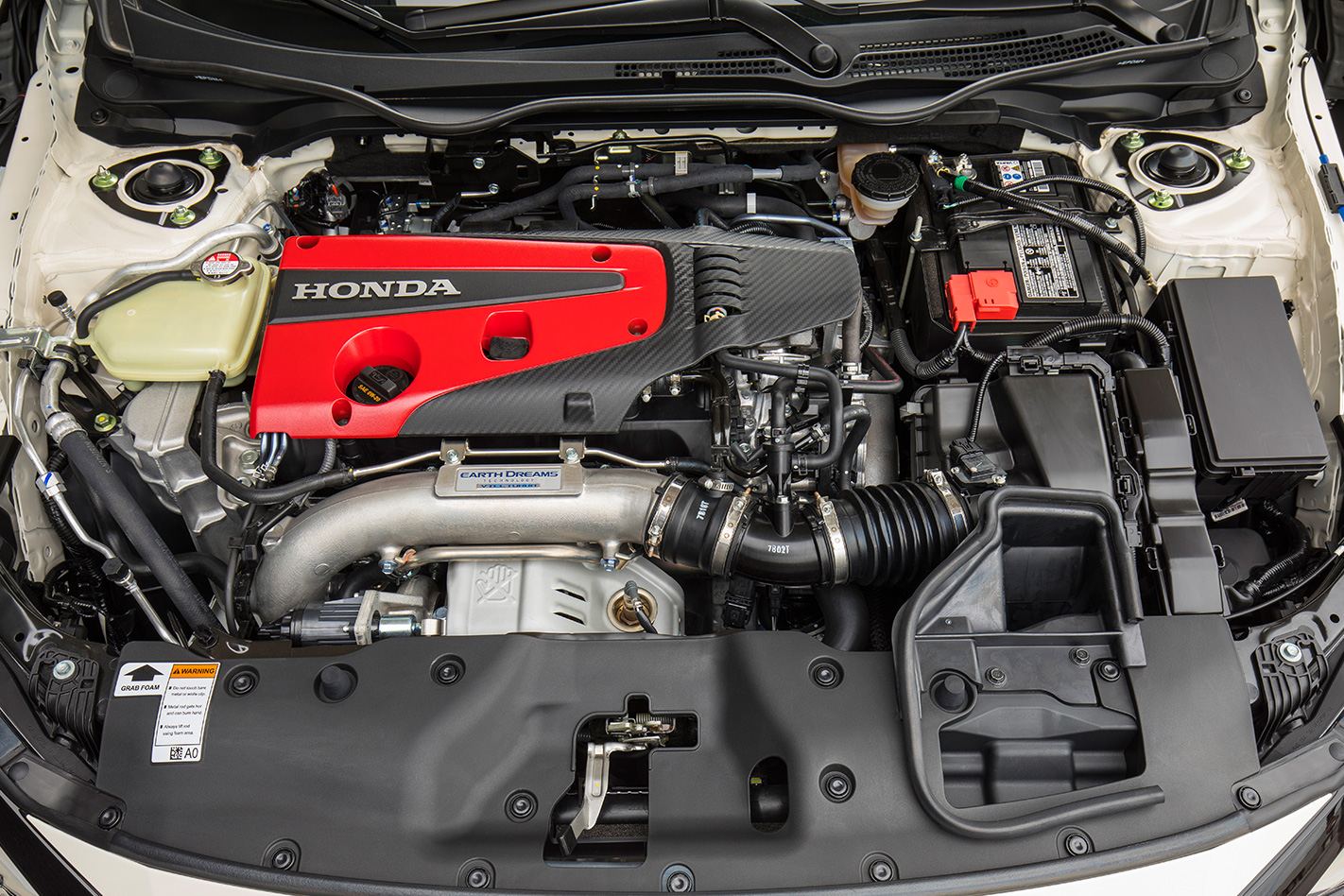
While the output of a European Civic Type R engine is 235kW, for Australia the maximum is 228kW. It’s a difference that reflects the poorer quality of fuel stipulated for Australian certification testing. This is why the Australian Civic Type R burns more fuel in the official consumption test.
Other noteworthy drivetrain changes compared to the fourth-gen Civic Type R include a seven percent shorter final-drive, which pushes the six-speed manual’s ratios a little closer together. The adoption of a fly-by-wire throttle enables a rev-matching system that blips the throttle for smooth downshifts.
The most important of the chassis upgrades over the regular Civic hatch is a new front suspension design. It delivers different geometry and more stiffness. Some stiffer Type R parts are also installed in the rear multi-link set-up.
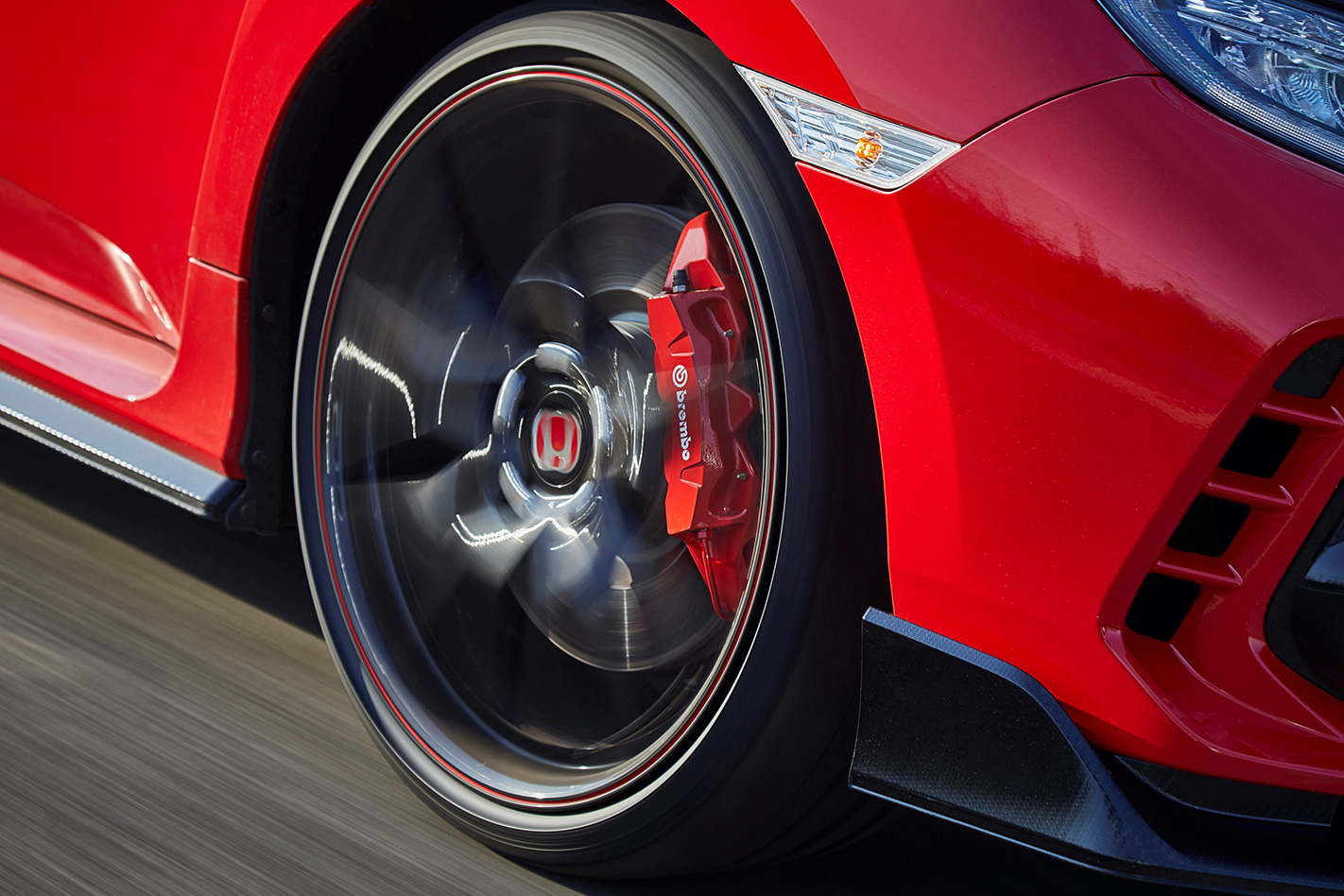
The Civic Type R rolls on 20-inch wheels wrapped in hefty 245/30ZR20 Continental SportContact 6 rubber. Big four-piston Brembo calipers bite the Honda’s hefty drilled and ventilated front discs, while the solid rear discs are larger than on the standard Civic.
And that wing isn’t just for looks. It really does generate downforce, apparently.
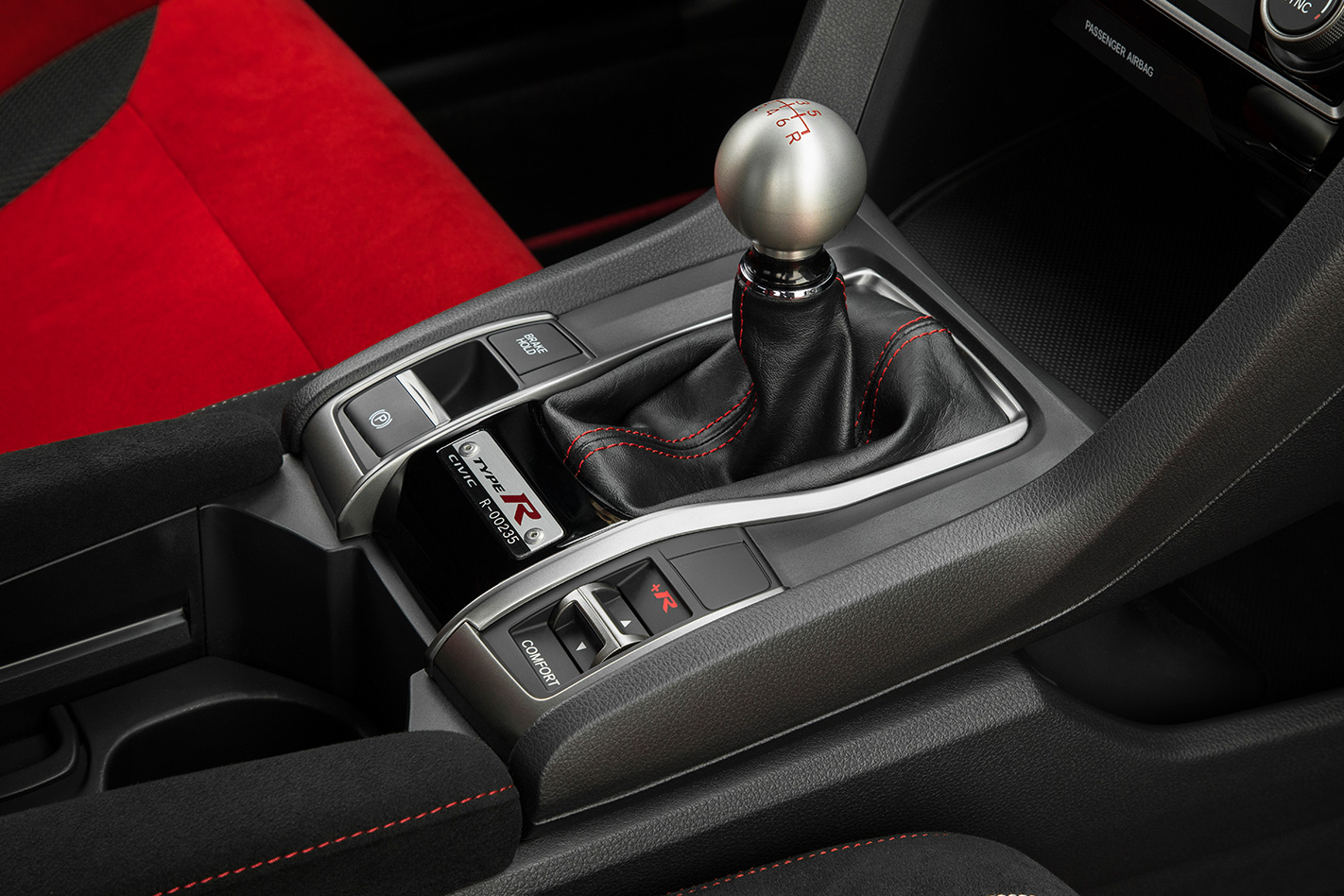
What joy it is to drive a Honda-made manual again! Quick, slick, and perfectly precise, this is a great gearbox. The metal sphere atop the stick is a treat to touch, too. It doesn’t take long to discover the Civic Type R’s new rev-matching feature is excellent, too. It can be switched off, but it’s hard to think of a reason why you’d want to.
Around the Lausitzring it’s easy to keep the Civic Type R’s engine in its juicy zone between 3000 and 7000rpm. The Lausitzring layout chosen by Honda only requires third, fourth and fifth gears. While the keening, high pitched wail of earlier generations of atmo Type R engines is absent, the turbo 2.0-litre sounds eager and, at the top of the tach, even a little angry.
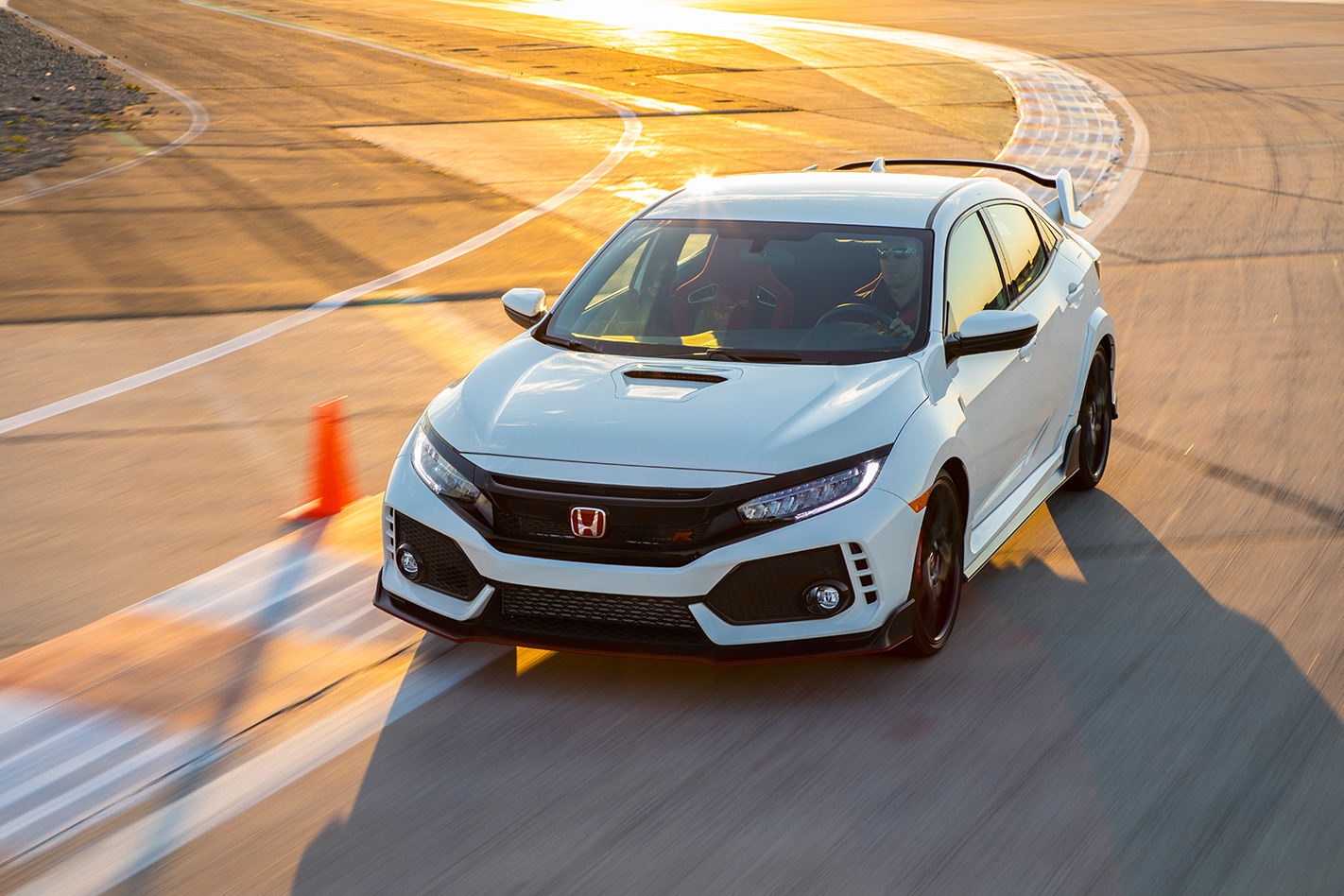
Cycling through the Comfort, Sport and +R modes in succession is instructive. The softest mode is reasonably crisp, but switching to Sport adds some weight to the steering and brings an appreciable increase in throttle responsiveness. Going to +R brings more of the same. Regardless of the level of steering assist, there’s useful feedback from the quick, 2.1 turns lock-to-lock rack.
Heading back to Dresden on sometimes unrestricted autobahn, the Civic Type R reaches an even higher speed. A gap in the traffic presents an irresistible opportunity to squeeze the throttle to the stop in sixth. The Honda leaps forward and the speedometer is reading 240km/h and still rising when the time comes to back out of it. The Type R’s stability at this speed is impressive.
Hot hatches are supposed to be sensible as well as speedy. Though the new Civic hatch is much longer than the car it replaces, the interior package doesn’t feel especially spacious, especially in the rear seat.
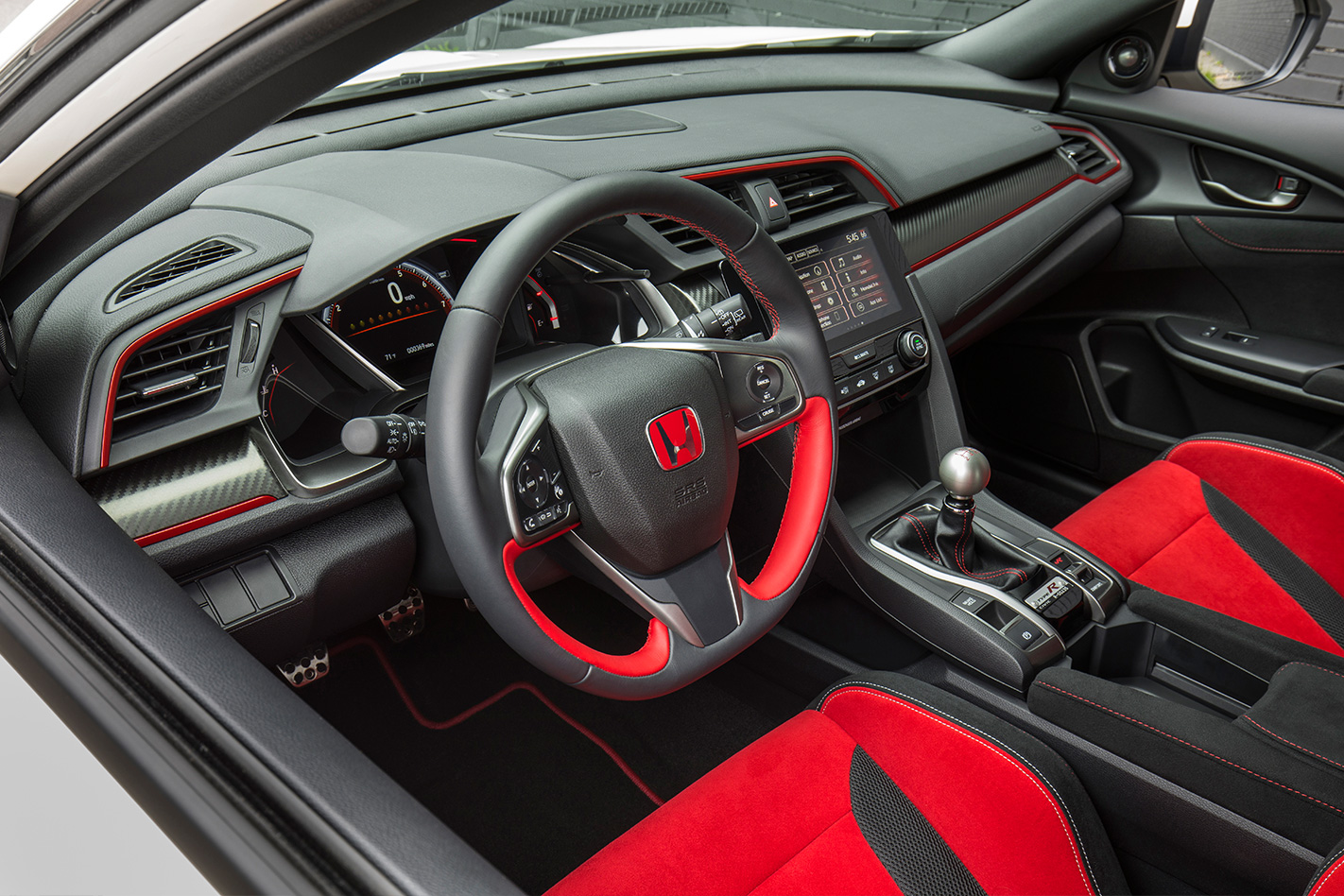
There was a time when Type R stood for something that you could find nowhere else; high-revving naturally aspirated engines that no-one else would dare build, in cars that few could rival for quality. This ain’t the case with the new Civic Type R.
There are better to drive hot hatches with turbo four-cylinder engines than the Honda, some of them with better interiors and all of them with better exterior designs. The way the Civic Type R looks is probably the least of its problems.
Filling in the gaps So why did the previous Civic Type R never come to Australia? Timing is the simple answer. The fourth-generation of Honda’s hot hatch went into production quite late in the life of the Civic five-door it was based on. So late, in fact, that it had a very short two-year life. Honda Australia could have imported the car, but local leadership decided they would prefer to wait for the following generation, which would be ready at almost the same time as the 10th-generation Civic hatch.
SPECS Model: Honda Civic Type R Engine: 1996cc in-line 4-cylinder, dohc, 16v, turbo Max Power: 228kW @ 6500rpm Max Torque: 400Nm @ 2500-4500rpm Transmission: 6-speed manual L/W/H: 4557/1877/1434mm Wheelbase: 2699mm Weight: 1393kg Economy: 8.8L/100km Price: $50,990 On sale: October
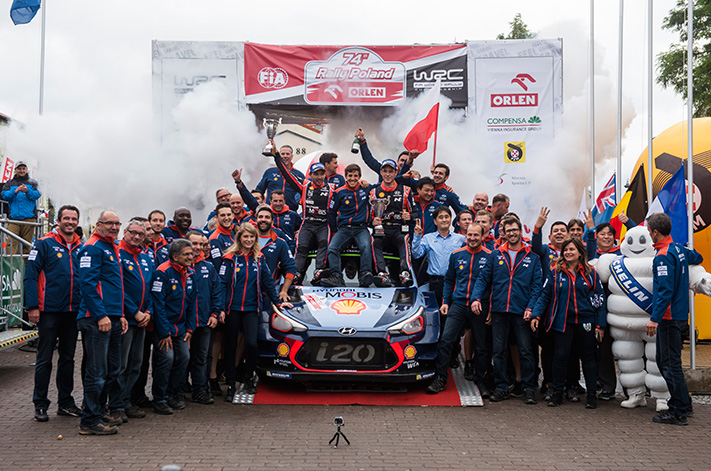
BELGIAN Thierry Neuville has put himself right in the fight for the world championship after coming out on top at Rally Poland after a stunning battle with Ford’s Ott Tänak, who crashed out of a narrow lead three stages from the finish.
With five rounds remaining, the Hyundai i20 driver has cut Sébastien Ogier’s championship lead to 11 points.
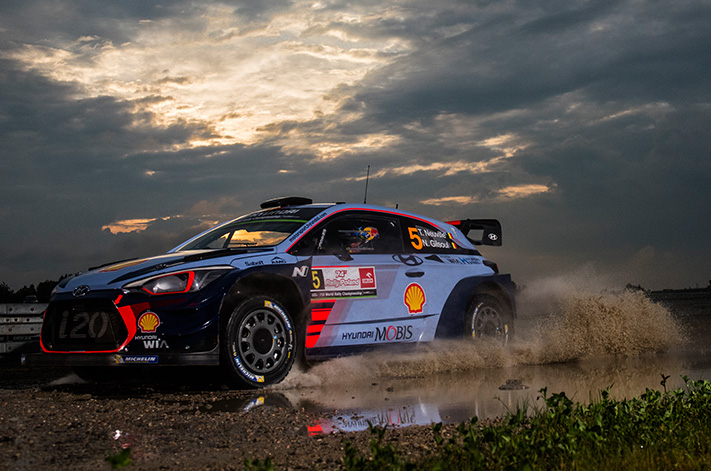
Neuville began Sunday’s final leg in front, but a stunning drive through the opening speed test elevated his Estonian rival to the lead.
Then at the very next stage, Tänak slammed his Ford Fiesta into a tree.
The pressure off, Neuville eased through the remaining kilometres to head team-mate Hayden Paddon by a comfortable 1min 23.9sec, with Ogier overcoming punctures to claim third, a further 56.9sec adrift.
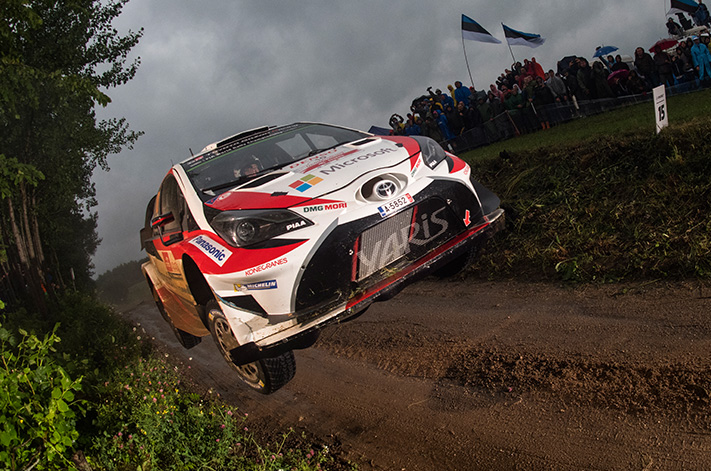
Neuville, who claimed his sixth consecutive podium to confirm his recent consistency, was generous in his praise for the Estonian.
“I was sorry for him and congratulate him on the job he did before he crashed,” Neville said. “He was amazing again and one guy who was hard to beat.”
Paddon’s second place ends a character-building 12 months since his last podium. The Kiwi could not match the pace of the early starters on Friday’s rain-soaked and sludgy tracks, but an error-free event combined with several stage wins as conditions improved brought its reward.
The WRC now moves to Rally Finland, the fastest round in the championship.
The flames continue to be stoked by protagonists and observers
The white-hot war of words following the contretemps between world Formula One title contenders Sebastian Vettel and Lewis Hamilton in the Azerbaijan Grand Prix is a gift from the gods for the new owner of Formula One.
With the controversy simply not going away thanks to the FIA announcing it has chosen to investigate whether further action should be taken over Vettel’s collision with Hamilton.
The spicy rivalry has put a greater edge to the tight duel for the 2017 championship, and it looks like a brilliant box-office boost for Liberty Media.
Hamilton branded his German rival “a disgrace” for deliberately driving into him during a chaotic Azerbaijan Grand Prix during which Vettel was handed a mild 10-second drive-through penalty for the incident.
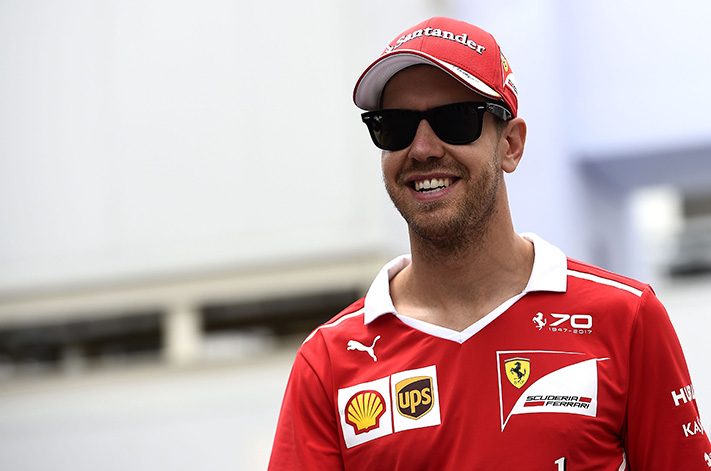
“I don’t think I did anything wrong,” Vettel maintained. “It wasn’t the right thing what he did. It wasn’t right that I got a penalty and he didn’t. He brake-checked me as well.”
Hamilton had the officials on his side. “The stewards looked at my data and the reason I didn’t get a penalty is because I clearly did not brake test him. It could not be clearer. Ultimately what happened was disrespectful.”
A brace of former world champs immediately chimed in with their thoughts.
Said the always blunt Niki Lauda: “When you hit somebody up the arse, it is your fault. No question. But to drive next to him and hit him on purpose, I have never seen anything like this.
“That was a petulant move and something a four-time world champion should be able to control, commented Damon Hill, now a TV pontificator. “It was a rush of blood to the head.”
Jacques Villeneuve, though, defended Vettel’s heated swerve at Hamilton, saying the incident merely suggests F1 drivers have emotions.
A victim of a still-talked about collision with Michael Schumacher in the 1997 F1 title decider at Jerez, Villeneuve argued Vettel’s actions were much less serious.
“They’re going 10mph, who cares?” he told Autosport this week.
“Of course it was ugly, but ultimately Lewis brake-tested him.
“I’m a driver, I’ve been there. Whenever a driver did that to me, then I would do whatever Seb did.
“He got a penalty, the biggest he could get I guess according to the new rules.”
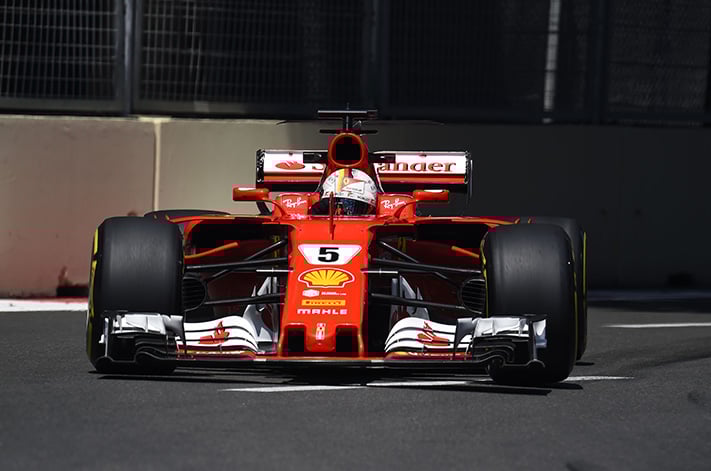
Stewart felt Vettel was incited by Hamilton actions in slowing down so quickly in a very unlikely place. “That was a shock to Sebastian, and that is why he came alongside Lewis to ask ‘what the hell are you doing?’.
Stewart did not approve of Vettel’s apparent retaliation but added: “It would be very simple to put the complete blame on one man, but what initiated the bad behaviour was what happened before.”
Hamilton also raged that Vettel’s dangerous driving was not behaviour becoming of a multiple world champion who should be setting standards. But Hamilton then appear to challenge Vettel to get physical. “For him to pretty much get away with driving into another driver is a disgrace. If he wants to prove he is a man we should do it out of the car, face-to-face.”
Vettel was given a 10-second stop-go penalty for dangerous driving in last Sunday’s race in Baku after what appeared to be retaliatory contact with Hamilton’s Mercedes.
The FIA reports that: “Following the recent incident at the Azerbaijan Grand Prix in which Car 5 (Sebastian Vettel) was involved in a collision with Car 44 (Lewis Hamilton), on Monday July 3, the FIA will further examine the causes of the incident in order to evaluate whether further action is necessary.
“A statement regarding the outcome of this process will be made available before the upcoming Austrian Grand Prix (7 – 9 July).”
Next weekend’s Austrian GP should be fun.
Marquez show mastery of Sachsenring MotoGP
The German round marks the half-way point of the season. Still lots can happen.
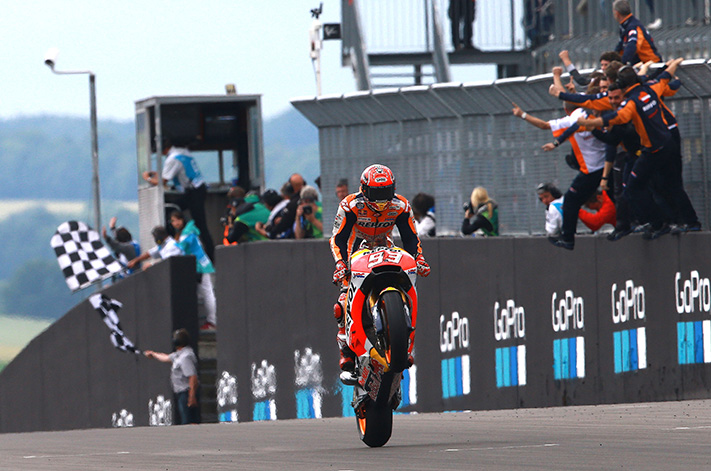
Marc Marquez appears to have the Sachsenring totally worked out, winning for an eighth time in a row at the weekend. And earning him the lead in the world championship heading to the summer break
It was the second win of the year for the Honda star after he started from pole.
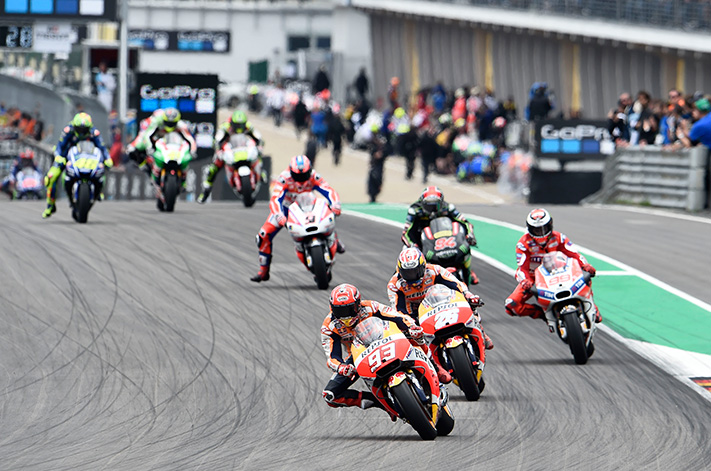
The technical Sachsenring is one of the shortest and slowest circuits on the calendar with numerous tight curves. A measure of how tight it is – – the powerful Ducatis reach only 298km/h.
Marquez and Pedrosa jumped away well from the front row at the start, to hit turn one in first and second.
On lap five, Folger moved past Pedrosa and then pounced on Marquez one lap later.
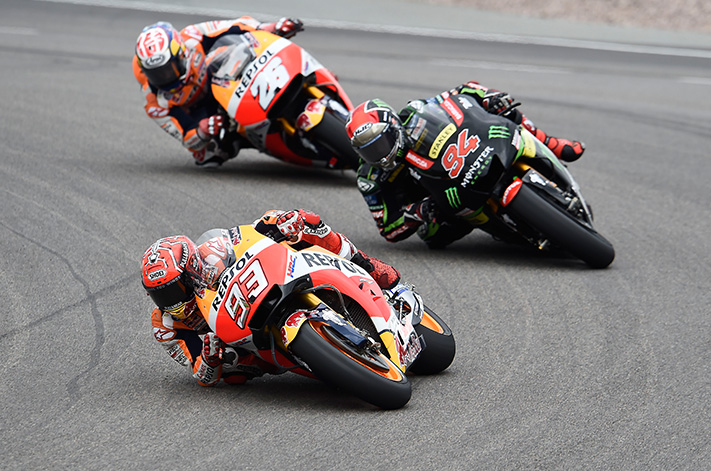
“I’m very, very happy. I knew before the weekend that this was an important moment in the championship and that the Sachsenring was an important circuit for us,” said Marquez.
“It was the place to take a risk if necessary and to try to win. So I’m happy we took these 25 points and the lead in the championship before the summer break.
“The race was very tight. Honestly, before the start I thought I would have to battle with Dani, but actually there was also another very fast opponent. I was very surprised at the beginning to see Jonas there, and I thought he might stay in between with the other riders, but he actually remained there! He was quite a tough opponent!
Heading into the summer break, the championship is very close with four riders within 10 points.
What stands out?
The Q5 is about the same price and size as the Audi A4 medium luxury sedan. But it has an SUV wagon body, rides higher, and drives all four wheels, which makes it better on gravel roads and easy tracks. The Q5 also handles well on sealed roads, and has an appealingly detailed cabin. This review covers Q5s on sale prior to July 2017.
What might bug me?
Stop-start traffic in a Q5 diesel. Their S-Tronic dual-clutch auto gearboxes do not provide the fluid, elastic take-up from rest that you get from a conventional automatic.Driving after a puncture: the Q5 is fitted with a skinny space-saver spare tyre that restricts the recommended top speed to 80km/h.
What body styles are there?
Five-door wagon only.All Audi Q5s drive all four wheels. The Q5 is classed as a medium SUV, higher priced.
What features do all versions have?
Bluetooth connectivity, cruise control, and front and rear parking sensors.Power-adjusted front seats. A 7.0-inch central colour screen. A reversing camera, and satellite navigation.Alloy wheels, which are lighter and more stylish than steel wheels.Three zones for the air-conditioning, so that each person up front and those in the rear can set different temperatures and fan speeds.Smart key entry (which unlocks the doors if you grab a handles when the key is nearby, perhaps in a pocket or bag), and a power-opening tailgate.Leather on at least some of the seats (some models have full leather, others mix this with fake leather).Eight airbags: one in front of each front occupant; side airbags to protect the bodies of people in outboard seats, front and rear; and curtain airbags along each side to protect heads from side impacts.Electronic stability control, which can help control a skid. All new cars must have this feature.The Q5 is covered by a three-year, unlimited kilometre warranty.There is also an optional service plan, which effectively gives a discount if you pre-pay for the first three services. (Services are due every 12 months or 15,000km.)
Which engine uses least fuel, and why wouldn’t I choose it?
On the official test, the 2.0-litre turbo-diesel engine in the Q5 2.0 TDI, used least fuel, consuming 6.1 litres/100km (urban and country combined).In use this is a fine engine that most drivers would find satisfying, especially in country driving. However, the Q5 2.0 TDI was suspended from sale for several months in 2016 while Audi parent Volkswagen Group sought to rectify its engine control software, which was found to include a device for cheating emissions tests. (Only a software update was needed.)Only marginally more thirsty is the 3.0-litre V6 turbo-diesel supplied with the much more expensive Q5 3.0 TDI. This engine uses 6.4 litres/100km on the standard test, and is much more powerful than the 2.0 litre.A reason not to choose either diesel is that both have particulate filters, and therefore are not suited to predominantly short trips around town. The filter prevents diesel soot from getting into the air, and you need to do a 15-minute drive above 60km/h regularly to keep it clean.A second reason not to choose either diesel is that you prefer the extra zip and friendliness that Audi’s petrol engines deliver, especially around town.The 2.0-litre turbo petrol engine in the Q5 2.0 TFSI uses about 25 per cent more fuel than the 3.0-litre diesel. But it’s a very nice engine and works well in the Q5.The 3.0-litre supercharged V6 petrol engine in the more costly Q5 3.0 TFSI is not much thirstier than the 2.0 petrol, consuming 8.5 litres/100km on the official test. Considering the impressive performance available, that’s quite frugal.All petrol Q5s have a traditional eight-speed automatic gearbox. In contrast, the 2.0 TDI and 3.0 TDI diesels get a seven-speed S-Tronic gearbox, which uses computer-controlled manual-type clutches. The S-Tronic is an excellent gearbox once you are moving and it saves fuel, but it does not provide the fluid, elastic take-up from rest that you get from a traditional automatic, instead feeling snatchy sometimes on hills, and jerky occasionally in stop-start traffic. So that is a third reason you might not want a diesel.The exception here is the SQ5. This is the quickest Q5, using a twin-turbocharged version of the 3.0-litre V6 diesel that provides even more power than the 3.0 TFSI petrol. And it does so while using less fuel. The SQ5 drives through a conventional eight-speed auto gearbox like that in petrol Q5s.
What key features do I get if I spend more?
Stepping past the 2.0 TDI or TFSI four-cylinder Q5s and spending more for a 3.0 TDI (diesel) or 3.0 TFSI (petrol) gets you one of the more powerful V6 engines, and full leather trim. The wheel size rises an inch to 19 inches, which is mainly a visual change.Spend more again for an SQ5 and the wheel size is greater again at 20 inches, with tyres correspondingly lower in profile. Seats are better finished in Nappa leather. Style elements include brushed aluminium inlays on the centre console and doors.You can order the bigger wheels on any model, and you can also order a sunroof.Several option packages are available.Among them is an Assistance package, available on any Q5 and the SQ5. This adds adaptive cruise control, which matches your speed to that of a slower vehicle in front. It also gives you active lane assist, which provides mild steering assistance above 60km/h to help prevent you from drifting out of your lane. There is also Audi Pre Sense Front, which can automatically apply the brakes to avoid a crash when travelling below 30km/h.A Technology package, also available for all models, brings you a Bang & Olufsen sound system. And it includes headlamps that switch on automatically when it’s dark, and that dip the high beam automatically for oncoming drivers.A Technik package brings satellite navigation and a reversing camera to the less costly Q5s.
Does any upgrade have a down side?
The bigger tyres fitted to the SQ5 (and optional on other models) are more susceptible to damage from rocks when driving on gravel roads. They are also more expensive to replace.The SQ5’s stiffer suspension and low profile tyres make for a firm ride.White and black are the only standard colours, with the remaining 13 costing extra.
How comfortable is it?
A blend of metallic finishes and nicely crafted plastics – as well as the elegant and clean instrument cluster – create an upmarket feel. The central MMI (multi-media interface) controller is easy to use.There are clever ergonomic touches, such as the rollers on the steering wheel that allow quick and easy volume adjustments or rapid scrolling through the trip computer.The standard 10-speaker audio system sounds very good.The seats are firm in the right places but comfortable, with great support. The tall seating position allows good forward vision. The view out the back, however, is restricted by the large rear-most roof pillar and a windowline that rises towards the rear.The Q5 rides quite firmly, which contributes to the impressively direct and responsive steering and gives the car a planted, reassuring feel through corners. The trade-off is that you notice small bumps more than you would on softer suspension, particularly at city speeds.The 2.0-litre engines in the less costly Q5s will meet most people’s needs. The 2.0 TDI diesel Q5 is great for country touring, where it feels more relaxed than the 2.0 TFSI petrol version when climbing hills and cruising. The petrol model has more zip for suburban driving, and brisker acceleration.The more expensive, V6 Q5s go about their business with less apparent effort. The 3.0 TDI diesel is smooth and rarely feels flustered. The supercharged 3.0 TFSI petrol sounds sportier but feels like it makes harder work of everyday driving, even though it is quicker.The SQ5 adds lots more urge again but also brings an even firmer ride, which means you feel more of the bumps.
What about safety?
The Q5 has excellent airbag protection, and parking sensors that can warn of minor bingles, helping it to a safety rating of at least Very Good. The standard reversing camera on 3.0-litre models lifts them to Excellent.The city emergency braking that comes with the Assistance package (optional on all Q5s) operates at speeds below 30km/h, where it will initiate a full emergency stop if the system concludes that a frontal collision is imminent. Above this speed, the system will sound a warning and prepare the brakes to reduce stopping distances. It is named Audi Pre Sense Front, and relies on a radar-based sensor.The Australasian New Car Assessment Program (ANCAP) has rated the Q5’s safety at five stars, its maximum.
I like driving – will I enjoy this car?
The Q5 is a highly capable, sporty car; it is one of the best driving SUVs you can buy. If there is a shortcoming, it is that the steering feels slightly artificial: you wish for more feedback.The 3.0 TDI diesel has loads of oomph, and is particularly good at storming up hills without shifting to a lower gear. The 3.0 TFSI supercharged petrol goes even harder.The SQ5 doesn’t have the instant response of the 3.0 TFSI, but once it gets going there’s a seemingly endless surge of energy that is great fun.The SQ5’s firmer suspension teams with the 20-inch tyres for excellent grip through bends. Push on though, and its two-tonne-plus weight makes itself obvious.That SQ5 also has a deep and burbly sound that grows into a roar when you drive it hard. And its eight-speed auto works very smoothly.The Q5 is designed only for light-duty off-road driving – think gravel tracks or snow-covered roads. It does not have the underbody protection, wheel articulation or traction systems of dedicated off-roaders. And its space-saver spare tyre is all but useless off-road.
How is life in the rear seats?
There’s ample head room in the rear but it’s not matched by the leg room: big adults may find themselves calling on those up front to shift their seats forward slightly.The rear seats can be slid fore and aft, so that you can sacrifice leg room for luggage space (when your rear passengers are children, for example). But it is not as spacious for large legs as some similar cars (for example, the Land Rover Discovery Sport).There’s also a big transmission tunnel in the centre of the floor that intrudes on leg space for the person in the middle.However, small adults and children won’t have an issue, especially in the outer seats.Those in the rear get their own air-conditioning vents and temperature controls.
How is it for carrying stuff?
The back seat of the Q5 splits in a 40-20-40 configuration, which helps you fit people around big cargo items. The boot itself is quite wide but not very long.A storage net under the luggage cover is great for separating small or light items (a child’s toy or a small bag, for example) from the rest of your luggage.All Q5s are rated to tow 2000kg, which is good for a medium SUV. The BMW X3 has an identical towing capacity, and the Land Rover Discovery Sport tows up to 2200kg.
Where is it made?
All Q5s are made in Germany.
What might I miss that similar cars have?
Perhaps automatic braking that can initiate an emergency stop at highway speeds, rather than just low city speeds. This is standard on the Land Rover Discovery Sport, for example, and on some versions of the Mercedes-Benz GLC-Class.A driver-assistance system that can hold your place automatically in stop-start traffic, accelerating and braking the car as required. The Mercedes GLC offers this, for example.Other luxury medium SUVs you might consider include the BMW X3, Lexus NX and Volvo XC60.Good alternatives that cost less include the Mazda CX-5, Kia Sportage, Ford Kuga, Hyundai Tucson and Subaru Forester, particularly the Forester XT turbo petrol models.
I like this car, but I can’t choose which version. Can you help?
While the performance of the SQ5 is tempting, the Q5 2.0 TFSI makes more sense. The sweet petrol engine works well in the Q5 and has more than enough go for most people.
When did Audi replace this Q5?
The Q5 went on sale in 2009 and was updated in 2014. A reversing camera and satellite navigation was added to the 2.0-litre models in November 2015. The Q5 2.0 TDI was suspended from sale in the third quarter of 2015 over the Volkswagen Group diesel emissions scandal.The B8 Audi A4, on which this Q5 is based, was replaced about March 2016 with the all-new B9 A4. An all-new Q5 arrived in July 2017.
What stands out?
An energetic yet frugal turbocharged engine, a tall and space-efficient cabin and a long list of luxury and convenience features are highlights of the Jeep Renegade small SUV. The four-wheel drive Renegade Trailhawk brings genuine off-road capability and protection.
What might bug me?
Admitting that that that you can’t take your Jeep off-road – unless you have bought the most expensive version, the Renegade Trailhawk.Driving at 80km/h on your space-saver spare tyre until you can fix your full-sized flat – again, unless you have bought a Trailhawk, which has a full-sized spare wheel and tyre.Having no way to play music from your CD collection. Like a growing number of new cars, the Renegade treats the Compact Disc as an obsolete technology, and is not equipped with a player.
What body styles are there?
A five-door SUV is the only body style. Most Renegades drive only their front wheels, but the Trailhawk drives all four wheels. The Jeep Renegade is classified as a small SUV, lower priced.
What features do all Renegades have?
Touchscreen, steering-wheel and voice control for the audio system, and Bluetooth-connected mobile phone functions. Analogue and digital radio, inputs via AUX and USB, and at least six speakers.Power outlets (12V) on the centre console and in the boot.Height and reach adjustment for the steering wheel, from which you can also operate the cruise control.A rear-view camera.A parking brake that is operated by an electric switch rather than a mechanical lever.Electronic traction control, which helps prevent wheelspin on slippery roads.On all but the Trailhawk, a space-saver spare wheel and tyre (the Trailhawk has a full-sized spare). A tyre pressure monitor, which tells you if a tyre is losing air – giving you early warning of a slow puncture.Seven airbags, and electronic stability control. (For the placement of airbags, and more on the Renegade’s safety systems, please open the Safety section below.)The Jeep Renegade has a five-year, 100,000km warranty.
Which engine uses least fuel, and why wouldn’t I choose it?
The turbocharged 1.4-litre four-cylinder is the most economical of the three engine options. It uses 5.9 litres/100km on the official government test cycle (city and country combined). In real-world driving it’s a bit thirstier, using about 7.5 litres/100km.This very good engine powers automatic-gearbox versions of the least costly Renegade, the Sport, and all Renegade Longitudes and Limiteds.The main reason you might not choose it is that you want to treat your Renegade as a proper Jeep, and drive it on tracks and trails. It is not available on the only four-wheel drive model, the Trailhawk.The other reason you might not choose it is that you would like to pay as little as possible for your Renegade, by opting for the Renegade Sport and a manual gearbox.Manual versions of the Sport use a slightly bigger, but less powerful, non-turbocharged 1.6-litre four cylinder. It uses only marginally more fuel than the 1.4 turbo.The 4WD Renegade Trailhawk uses a much bigger, 2.4-litre, non-turbo four-cylinder. Even though it is bigger, and ultimately makes more power, it does not feel as strong as the 1.4 turbo in most driving conditions. And it uses about 20 per cent more fuel (over a mix of city and country driving). All Renegade engines run on petrol.The Renegade Sport offers a five-speed manual gearbox or a six-speed dual-clutch automatic. The Longitude and Limited offer only the six-speed dual-clutch automatic. The Renegade Trailhawk comes only with a nine-speed conventional auto.Dual-clutch automatics operate much like a manual gearbox with robotic control. They save fuel and shift very swiftly and smoothly on the highway, but generally don’t feel quite as fluid and elastic as a conventional auto in stop-start driving conditions. Nevertheless, the dual-clutch autos in Renegade test cars worked unobtrusively in city traffic.
What key features do I get if I spend more?
Prices start with the Sport manual, which has cloth-covered seats, a 5.0-inch touchscreen, 16-inch steel wheels, and the least powerful (1.6-litre) engine. Spend more on a Sport and you can have the more powerful, 1.4-litre turbo, engine, with its six-speed automatic gearbox.Walk past the Sport to the more costly Longitude, and you keep the 1.4 turbo auto. You also get two-way electric adjustment for the driver’s seat, and dual-zone climate control (where the driver and passenger can individually select cabin temperatures). Headlights switch on automatically when it gets dark, there are front foglights, and wipers operate automatically when it rains. Wheels are an inch bigger than those on the Sports, at 17 inches, and are made from aluminium alloy. They use lower profile tyres and look fancier.Spend more again for a Renegade Limited and you gain leather seats, with heating and eight-way power-adjustment for both driver and passenger. There is satellite navigation, displayed on a bigger touchscreen (6.5 vs. 5.0 inch). The sound system is better and has a further three speakers, making nine. Headlights are brighter, bi-xenon, units, and there are rear parking sensors (which help you judge how close you are to obstacles). You can unlock the car and drive away without taking the proximity key from your pocket or bag. The wheels grow a further inch to 18 inches. The engine and gearbox are the same as the Longitude’s.Choosing a Limited also allows you to add, at extra cost, active driver aids from two Safety packs. One – the Safety Pack – brings you a forward collision warning, auto braking, a lane departure warning, blind-spot detection, and rear cross-path detection (for more on these features, please open the Safety section below). The other – the Advanced Safety Pack – brings you Adaptive cruise control, which will match your speed to that of slower cars ahead on the highway, returning to your pre-set when the way is clear. It also gets you a self-parking system.The most expensive Renegade is the off-road oriented Trailhawk. The Trailhawk matches the Limited for most appointments (seat material is cloth, with leather optional), but comes with the 2.4-litre engine and – importantly – the nine-speed conventional auto gearbox. Its first gear is relatively low, which means you can drive steadily at slow speeds in rough going. And it drives all four wheels.The Trailhawk also rides higher, so that it can clear obstacles more easily, and has different front and rear body mouldings that do not extend as far past the wheels, which helps when nudging up to and driving off obstacles. Steel plates under the body protect the engine, fuel tank and other vitals from off-road damage. Wheel size shrinks back to 17 inches, tyres are designed for off-road use, and you get a full-sized spare.On a Trailhawk you can option the lane departure warning, blind-spot monitor, rear cross-path detection and self-parking – but not the auto emergency braking.On a Longitude, Limited or Trailhawk you can option a My Sky sunroof – two manually removable roof panels. On a Limited or Trailhawk you can option instead a powered, glass, Panoramic sunroof.
Does any upgrade have a down side?
The 17-inch and (especially) 18-inch tyres on the Longitude and Limited don’t ride as smoothly on bumpy roads as the 16-inch tyres on the Sport, and are more expensive to replace.The Trailhawk rides higher than the other Renegades and, with its bigger engine, underbody protection and 4WD system, is considerably heavier. It does not feel as nippy to handle as the others, and it uses more fuel.Only white paint comes at no additional cost.
How comfortable is the Renegade?
The Renegade feels roomy for a small SUV, thanks to a tall cabin. There’s also plenty of seat and steering-wheel adjustment, so that short and tall drivers can get comfortable. The wide and forward-placed pillars either side of the windscreen obstruct vision annoyingly, however.Even on the Renegade Sport and Longitude, the cabin’s fit and finish is good. The more expensive Limited and Trailhawk have the bigger and more useable touchscreen, and leather trim either standard or optionally. Minor controls and switchgear are logically placed, and the connectivity and sat-nav systems are intuitive to use.The Renegade is easy to park, thanks to good vision from the high driving position – and to the square body shape.The Renegade steers nicely and handles well across a wide range of road surfaces. However it’s noticeably noisy on gravel roads and coarse-chip bitumen.Engine response and general drivability vary enormously depending on the engine fitted, but even the least powerful engine is adequate on the highway.
What about safety in a Jeep Renegade?
All Renegades have seven airbags: two directly in front of the driver and front passenger; one alongside each front occupant to protect the upper body; curtain airbags down each side of the car to protect the heads of those sitting next to a window; and an airbag to protect the driver’s knees and legs.All Renegades also have a reversing camera, and electronic stability control. The latter can help you bring a skidding car back under control, and is mandatory on all new cars.All Renegades bar the Sport have auto-on headlamps – which help make sure you are visible to other drivers.No Renegade has autonomous emergency braking standard. However, you can option it at extra cost on a Renegade Limited (only). The option, titled Forward Collision Warning Plus, reads the road ahead with radar and video sensors. If the system concludes you are closing too fast on a vehicle or other large obstacle ahead, it will supply a warning. If you ignore the warning it will apply the brakes automatically.On a Limited or Trailhawk you can option Lane Departure Warning Plus. This system is designed to prevent your drifting distractedly – or sleepily – out of your lane on the highway. If it senses that you are about to leave your lane without indicating, it will apply a gentle steering correction that alerts you while helping to bring the car back.Also available on a Limited or Trailhawk are two rear-facing sensory driver aids: Blind-spot monitoring and Rear cross-path detection. The former alerts you to vehicles travelling near your rear corners, which might not show in your mirrors. The latter helps when you are reversing, perhaps from a shopping centre car park: it alerts you to cars approaching your path from either side.The Australasian New Car Assessment Program (ANCAP) has rated the Renegade at five stars for safety, its maximum. The five star rating, announced in October 2016, applies to front-drive Renegades built since May 2016. The 4WD Renegade Trailhawk was not tested.
I like driving – will I enjoy this car?
That depends on which model you are driving, and on where you want to drive. The Renegade is three very different cars, depending on the engine and gearbox combination fitted.Behind the wheel of the Sport 1.6 manual there isn’t much excitement. This is a city car, and not much more. The engine needs to be revved hard to give its best, and is noisy when doing so.There is far better news with the 1.4-litre turbo engine in the Sport auto, Longitude and Limited. This is very responsive at all speeds, notably quiet and smooth, and much more useable for out-of-town excursions. It is the pick of the three engines.The non-turbo 2.4-litre engine in the Trailhawk is more powerful on paper but you have to work it harder to get at the power, and it is driving a taller and heavier car. It’s still good on the highway, though, cruising and overtaking quite happily.If you are interested in off-roading, then the Trailhawk offers a level of off-road ability that only one other small SUV can match – and that is the Suzuki Jimny, which drives more like a small truck than a small car.The Trailhawk 4WD system is fully automatic, and in very slippery conditions directs drive to the wheel or wheels that can use it most. Using a switch, the driver can tailor its response for different driving conditions, such as snow, sand, mud or rocks.The low first gear in the wide-ratio nine-speed gearbox means the Trailhawk can crawl along at very low speeds, even against brakes, without stalling. Best of all, the Trailhawk is well protected underneath. While you might get it stuck if you try hard enough, you’re not likely to damage anything serious.
How is life in the rear seats?
The Renegade’s cabin works well in as much as a tall adult can sit in the rear seat behind a tall driver and not be cramped. The rear seat cushion is quite long, again making it comfortable for tall adults. However, sitting three mid-sized adults across the rear isn’t possible.The cabin is a good height for getting small children in and out of child seats, for which there are two sets of ISOFIX attachment points.
How is it for carrying stuff?
The Renegade has a small SUV body, so don’t expect much luggage space. However, because it is tall and square, the boot is bigger than in than many similar vehicles. It is accessed by a single top-hinged door.The spare wheel is stored in the cargo area, which means removing any luggage if you get a flat tyre.The back seat folds 60/40 and reasonably flat, to lengthen the luggage space if need be.If you wish to tow a small boat or camper trailer, all Renegades except for the Sport manual and the Trailhawk can tow a handy 1200kg. The others tow considerably less: up to 800kg for the Sport manual, and 907kg for the Trailhawk.
Where does Jeep make the Renegade?
All Australian-delivered Renegades are built in Italy.
What might I miss that similar cars have?
Even better fuel-efficiency and a longer touring range from a diesel engine (available in the Mazda CX-3 and Suzuki Vitara, for example).On the less costly of the Renegades, autonomous emergency braking. This is standard on the CX-3 and Toyota C-HR, for example. (On a Renegade, you can option it only on a Limited.)Support for Apple CarPlay and Android Auto, which would let you display apps from your compatible smartphone on the car’s touchscreen and use them from there. The Holden Trax and Subaru XV offer this, for example.Other cars you might consider include the Ford Eco-Sport, Nissan Qashqai, and Mitsubishi ASX.
Are there plans to update the Renegade soon?
The Renegade was all-new when it arrived in Australia late in 2015. About July 2017 steel wheels were substituted for alloy on the Renegade Sport, the Longitude lost its rear parking sensors and blind-spot monitor, and blind-spot and rear cross-path detection were added to Safety pack options for the Limited and Trailhawk.Don’t expect a generational change before 2020, and you are likely to see only detail changes in the mean time.
I like this car, but I can’t choose which version. Can you help?
Provided you don’t need 4WD, the Limited offers the best value and it allows you to add auto braking. If you want to go off road there is only one choice: the Trailhawk.
It’s fitting Honda chose Dresden as the base to globally launch its 2018 Honda Civic Type R.
The small city in Germany’s south was once its cultural jewel before allied forces levelled it in World War Two. It remained in ruins until, over the past thirty years, Dresden citizens began to rebuild it to former glory.
Honda’s Type R lineage has suffered a similar experience. Faster, better rivals bombed the badge into retirement in 2012. During this absence, however, Honda chose to quietly rebuild its performance arm.
Now, arriving this September for $50,990, an all-new Civic Type R will inject a hot Honda back into the Australian market. And it’s coming with vengeance.
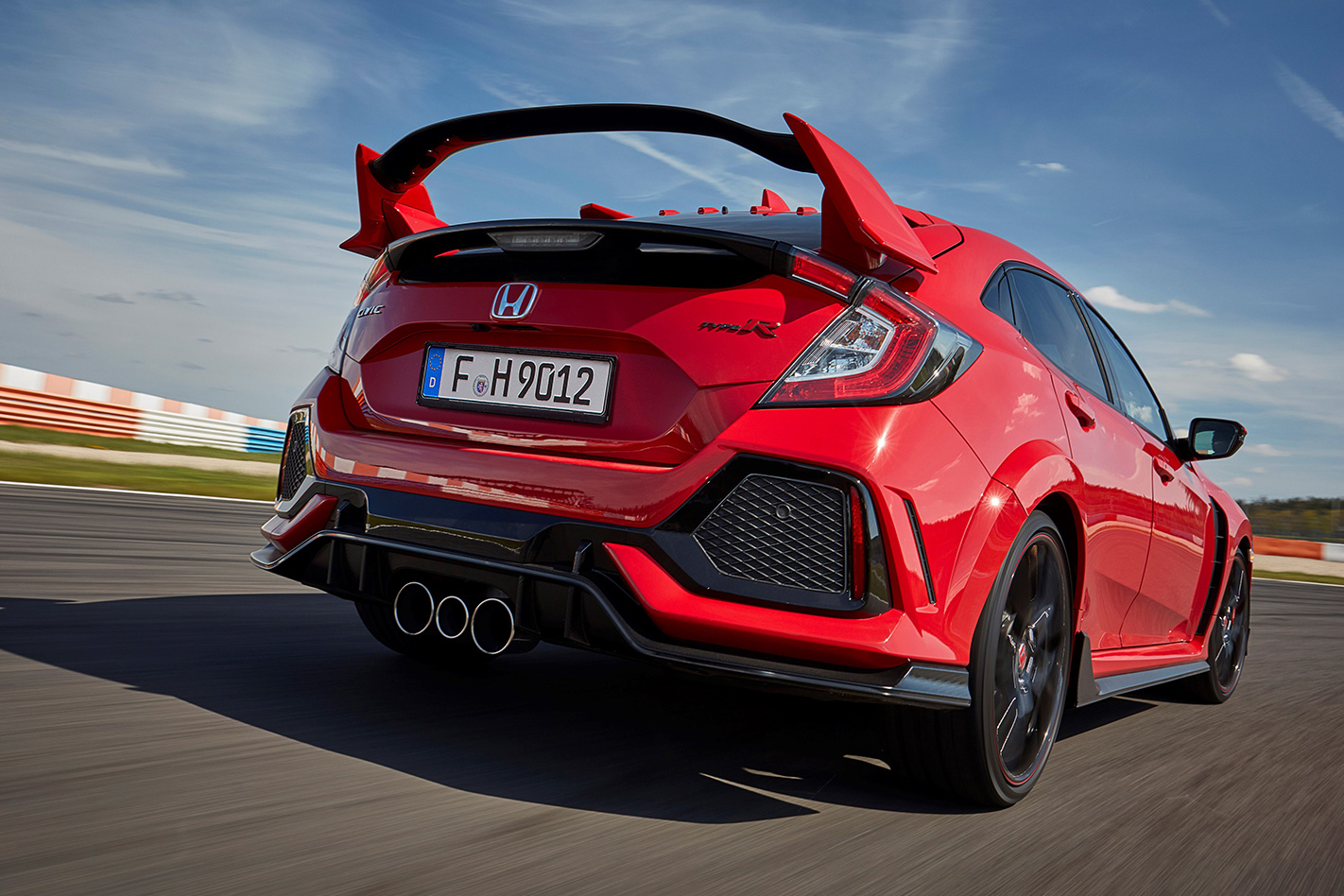
Yep, that’s right, this thing’s turbocharged. Honda’s traded revs for torque and hung a monoscroll turbocharger off the 2.0-litre engine. The result is 235kW and 400Nm.
Aussie cars, though, make 228kW in line with the 2015 Civic Type R, as engineers have wound back boost and fuel flow to protect it from our hot weather and poor fuel quality.
That’s still a significant jump up from the third-generation car’s atmo 148kW and 193Nm, the last Type R sold here. The turbocharger doesn’t only bring more power, but a change of character as well. This Type R isn’t about chasing redline for every last kilowatt.
There’s no dramatic engine noise, either, besides a small whistle from a deflating turbocharger when the throttle plate closes.
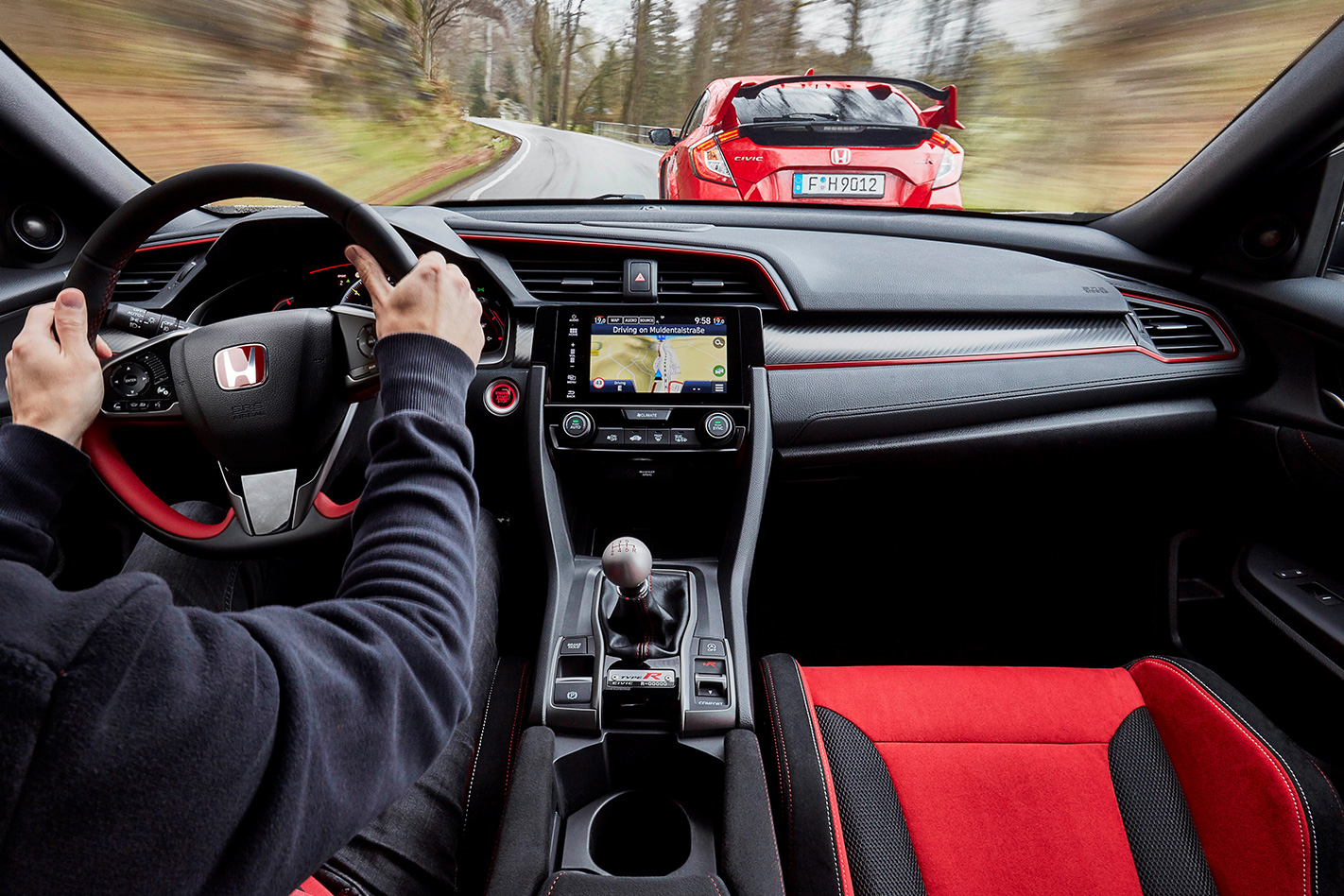
Honda says an auto would add too much weight, so it’s offered only with a six-speed manual. Atop it a spherical titanium gearknob which moulds nicely to your palm and drives into each gate with a satisfying snick.
Honda reckons 100km/h from rest is yours in 5.7sec in both Aussie and Euro models, and if the road’s long enough the Civic Type R can clip 272km/h.
Starting with the tenth-generation Civic’s lighter, stiffer chassis, engineers strengthened suspension-mounting points and swapped its rear torsion beam for a multi-link setup.
Continental SportContact6 tyres add 10mm of tread to each corner. While 20-inch wheels hang over a 95mm longer wheelbase and sit 65mm further apart on the new rear track.
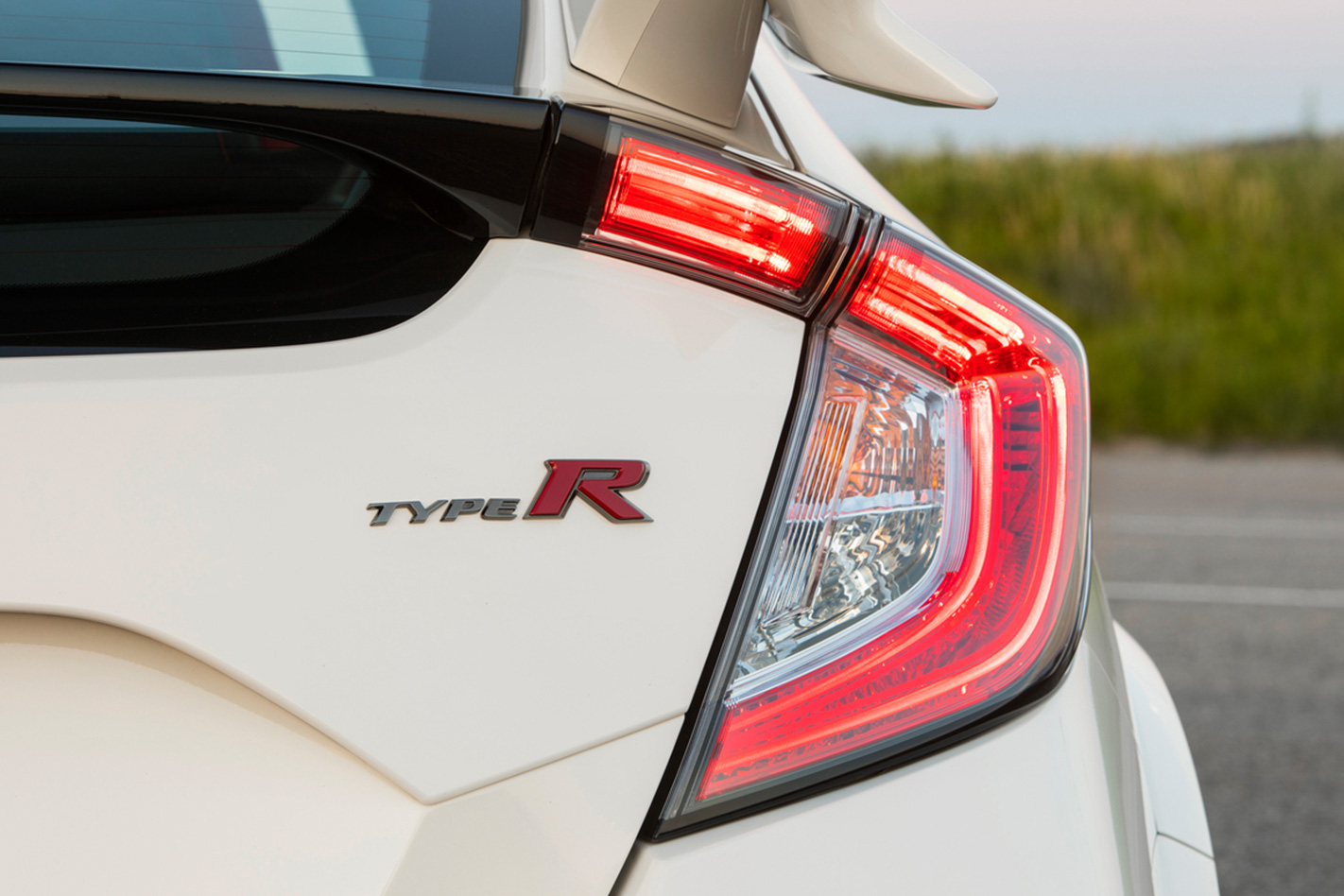
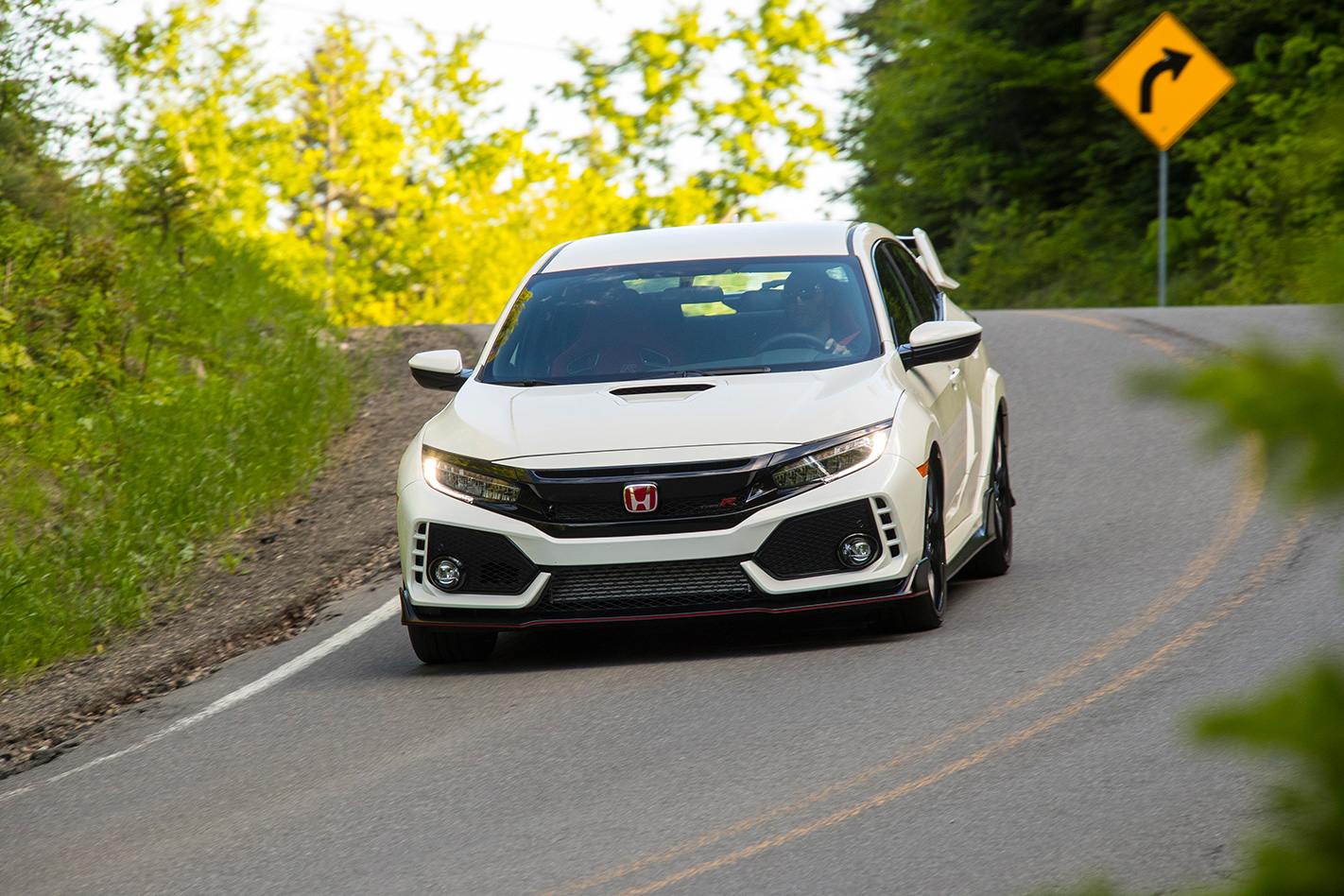
New aerodynamic trickery helps. All those wings, vents, and vanes make the Civic Type R a true downforce car. The only one in its category, Honda says. True or not, it feels properly planted at such speeds.
With huge four-piston Brembo front calipers clamping drilled discs the Civic Type R pulls up like its trailed by parachutes, but it lacks the finesse and feel of Nissin systems in foregone models.
Adding to its dynamic arsenal are adaptive dampers. They’ve been retuned for the 2018 model and are at the centre of its three-mode drive system that flicks between Comfort, Sport, and ‘R+’.
They give the Type R a broad range of ride compliance without sacrificing grip. It’s hard to say how they’ll handle Melbourne’s tram-tracked roads, but first impressions are good.
What lets it down, though, is its dual-pinion electric steering rack. Numb steering feel robs the car of much needed tactility. And it’s darty just off centre, requiring quick corrections to keep a smooth cornering arc.
Buyers new to the brand will find it a dynamic class act that’s both hugely capable and forgiving. It’s also very liveable. The ride’s polished, you won’t suffer tinnitus on highways, and we can think of worse transmissions – automatic or manual.
Honda Civic Type R caught in Australia
Inside, the rear seats are a bit drab, there’s no satellite-navigation available on Aussie models, and we’d appreciate electrically adjustable front seats. But the interior feels solid, forward vision’s great, and the Type R specific seats are extremely comfortable and well bolstered.
Demand’s been strong, with over 250 orders already placed on the car in Australia. Honda expects to sell 1000 units over its first year on sale.
Diehard fans might miss the frenetic power rush, raw lightweight cabins, and textural steering feel that defined original Type Rs. But maybe that’s what happens when you rebuild something from the past. You lose its original foundations to make it better.
Like we said, Dresden’s a fitting place.
4.0 stars out of five
Likes: Capable dynamics, ride, gearshift
Dislikes: No sat-nav for Aussies, not that hardcore anymore
2018 Honda Civic Type R Specifications Engine 2.0-litre inline four, DOHC, 16v, turbo Power 228kW @ 6500rpm Torque 400Nm @ 2500rpm Kerb weight (EU) 1380kg Max speed 272km/h Length/width/height 4557mm/1877mm/1434mm Brakes four-piston calipers, 350mm ventilated (f); 305mm solid discs (r) 0-100km/h 5.7sec (claimed) Fuel consumption 7.7 litres per 100km (claimed combined cycle) Price AUD$50,990
I DON’T KNOW about you, but I can pinpoint the exact moment I realised what I wanted to do with my life.
I was in my early teens, my pimply face buried in the latest issue of Wheels as our family Commodore bombed along the hay plain. Reading Wheels on our annuel family road trip was a tradition and, having just devoured the front section, I turned the page to find my future laid out before me.
It was a road test of the 996-gen 911 GT2 and Peter Robinson was at the wheel, his face serious and beard resplendent as he pushed the latest turbocharged animal from Stuttgart to the limit, its winged red rump seeming to just edge into oversteer as he flung it into a tight right-hander somewhere in Europe.
“That,” I thought to myself, “is what I have to do.”
I’d been reading Wheels for years and, as well as using it as a monthly dose of escapism, I knew it provided the best independent opinion and analysis from writers like Robbo, Phil Scott, Angus MacKenzie and John Carey.
But there was something else. Something different in the way they wrote about cars. Something less tangible that set a Wheels road test apart.
Fast forward a decade or so and, as a freshly minted (and still pimply) Wheels staffer, I was about to get my first taste of that unique ingredient. Still slightly awestruck at landing my dream job, I was sent on a comparison test in my very first week. I was there to glean as much as I could from the experienced road testers, and hopefully, not to make a total mess of it.
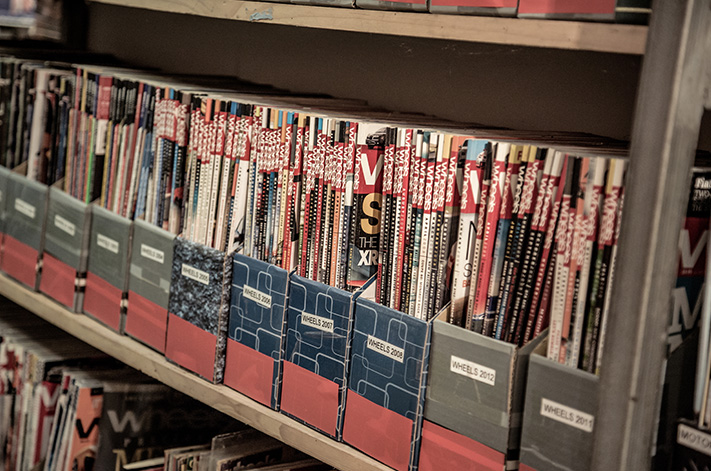
It was still fun, but I quickly learned that a Wheels road test follows a strictly enforced procedure – one cultivated from decades of experience and handed down through the generations.
Today’s road test starts even before a wheel is turned. Tyre pressures are checked, tyre details are recorded, and every car is brimmed with fuel to ensure accurate real-world figures at the test’s completion. Even details like steering turns lock-to-lock are written down, because experience says the numbers recorded in the press pack might be wrong.
The list goes on, and every box has to be ticked. Wheels even set the global agenda by introducing ‘four-ups’ in the mid-1970s – a process where every car is driven back-to-back on the same challenging piece of tarmac, in the same conditions, at the same speed with four passengers on board. This method was quickly adopted by international titles Autocar and Car & Driver, who still use it today.
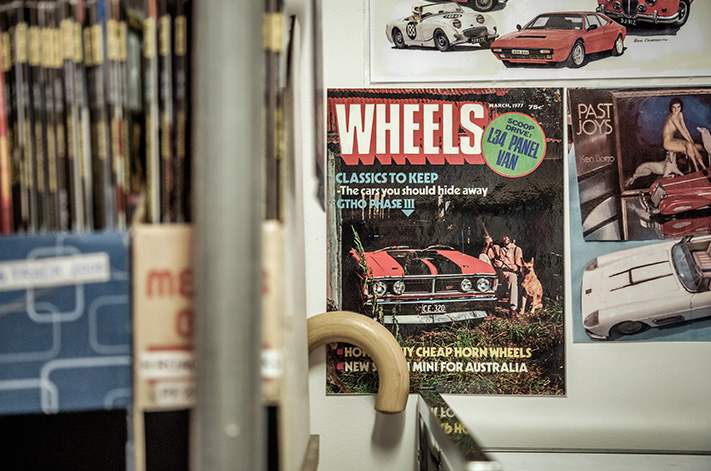
I’m confident no other Australian outlet goes to such exhaustive lengths to road test cars as Wheels does. Am I getting a little preachy? Possibly, but the reason Wheels goes to such extremes is to serve you, our readers. As fun as this job is, every staffer knows that testing cars is a serious business. Our opinions and verdicts don’t only decide if a new model is successful or not, but are used to help thousands of people through the process of buying a new car.
Which is why Peter Robinson is about to descend on the Wheels office to deliver a road-testing masterclass to our rapidly expanding editorial team. Through a full day of lectures, Peter will educate the next generation of road-testing talent to ensure that, just as we’ve been doing for more than 60 years, Wheels continues to deliver a definitive and thoroughly considered verdict on every car we test.
The way we were
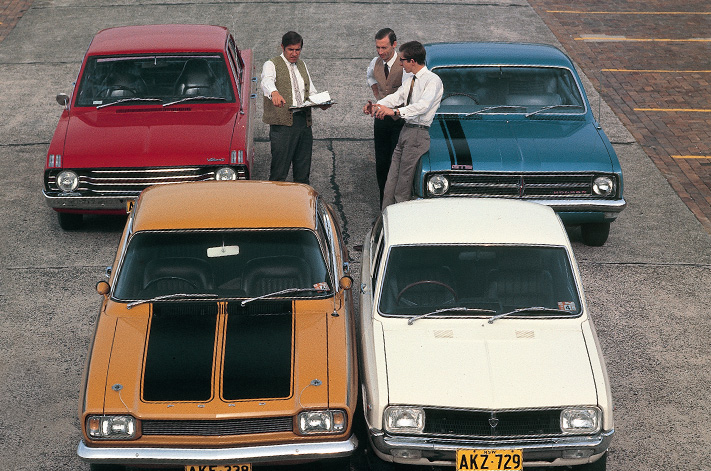
Flick back to Wheels issues from the 1960s and you’ll notice the collar-and-tie dress code was a little more formal than today, and the clipboards seem a quaint touch. But already the scope of road testing was being pushed. Legend says former editor Bill Tuckey (who is credited with inventing the comparison test) used to drop an egg out the window before he bashed the brake pedal to record stopping distances.
He’d even throw Bon Ami cleaning powder on the windscreen to test the swept area of the wipers.
Volkswagen reckons it will soon have cars on our roads that can talk to each other and share information about how to beat traffic snarls.
While Volkswagen isn’t the first to use this technology – both German luxury brand Mercedes-Benz and premium US brand Cadillac have already rolled out similar vehicle-to-vehicle communications systems – it’s the first time it has featured in a mainstream car brand.
But what is vehicle-to-vehicle communication, and what does it mean for buyers who will one day see the acronym “V2V” or V2X” written on a car’s spec-sheet?
The basic idea behind V2V is for cars to share information they have sensed about the traffic around them with other cars. That information is sharing is via a short-range wireless system that doesn’t need to see the other car it is talking with. V2X, meanwhile, is all about cars talking to things on the side of the roads, such as traffic lights.
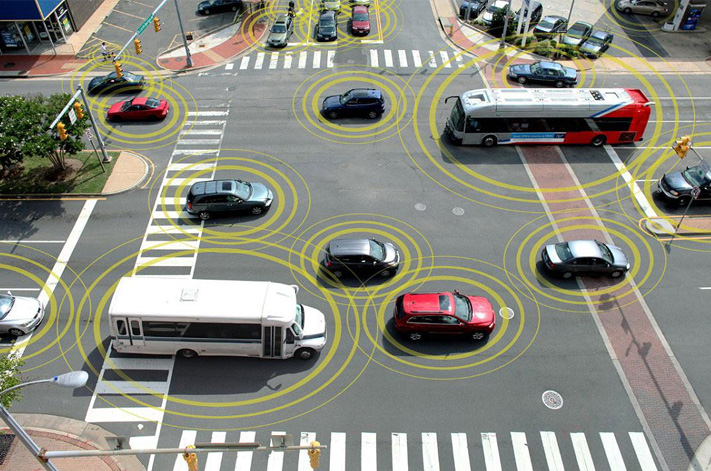
V2V and V2X are like a more autonomous version of Waze, the sat nav-based smartphone app that shares information about traffic jams, breakdowns, and collisions with other users. However, instead of using drivers to update the information, V2V and V2X do it automatically – and much faster.
Volkswagen claims its V2V system, due in 2019, will be able to warn other cars of immediate minor concerns, such as making an emergency stop, even before other drivers are aware of them happening. It can also send information about weather conditions, learned from tricks such as using the car’s sensors to detect black ice on winter roads.
While Volkswagen believes these features will be available at the V2V system’s launch, it may one day expand to allow emergency services to alert drivers of approaching emergency vehicles – even before they see the flashing lights in the rear-view mirror or hear the siren.
Other potential V2X applications include Audi’s Traffic Light Information system that the German luxury car maker premiered late last year, and that talks with traffic lights. Audi plans to use the system to help its cars ‘predict’ when the lights will turn green, telling the cars’ stop-start system when to shut the engine off, and when to fire it back up.
It’s all well and good to think about how this system will work – as well as to see early versions of the technology making its debut overseas – but there’s quite a way to go before this technology will work as seamlessly as car makers would like.
One of the problems facing V2V systems is critical mass – having enough cars on the road with the system enabled to validate its purpose and existence.
Did you know?
The V2X system rolled out in Cadillac’s CTS was developed by a small Australian software company called Cohda Wireless.
Cohda, based in Geelong, Victoria, developed the system to allow it to send as many as 1000 messages a second to cars within a 300-metre range.
The company says the system installed on the Cadillac CTS give it “360-degree” awareness of everything happening around it by collecting information from nearby cars and roadside infrastructure.
DAMN rain. I can hear it now, even through my helmet as I sit cocooned in the rollcage-encased cabin, pitter-pattering away on the tin roof of the pit garage, taunting me with its relentless thrum.
“It’ll be fine,” I lie to myself, resolutely ignoring the lizard part of my brain that taunts:
“The car’s on slicks…”
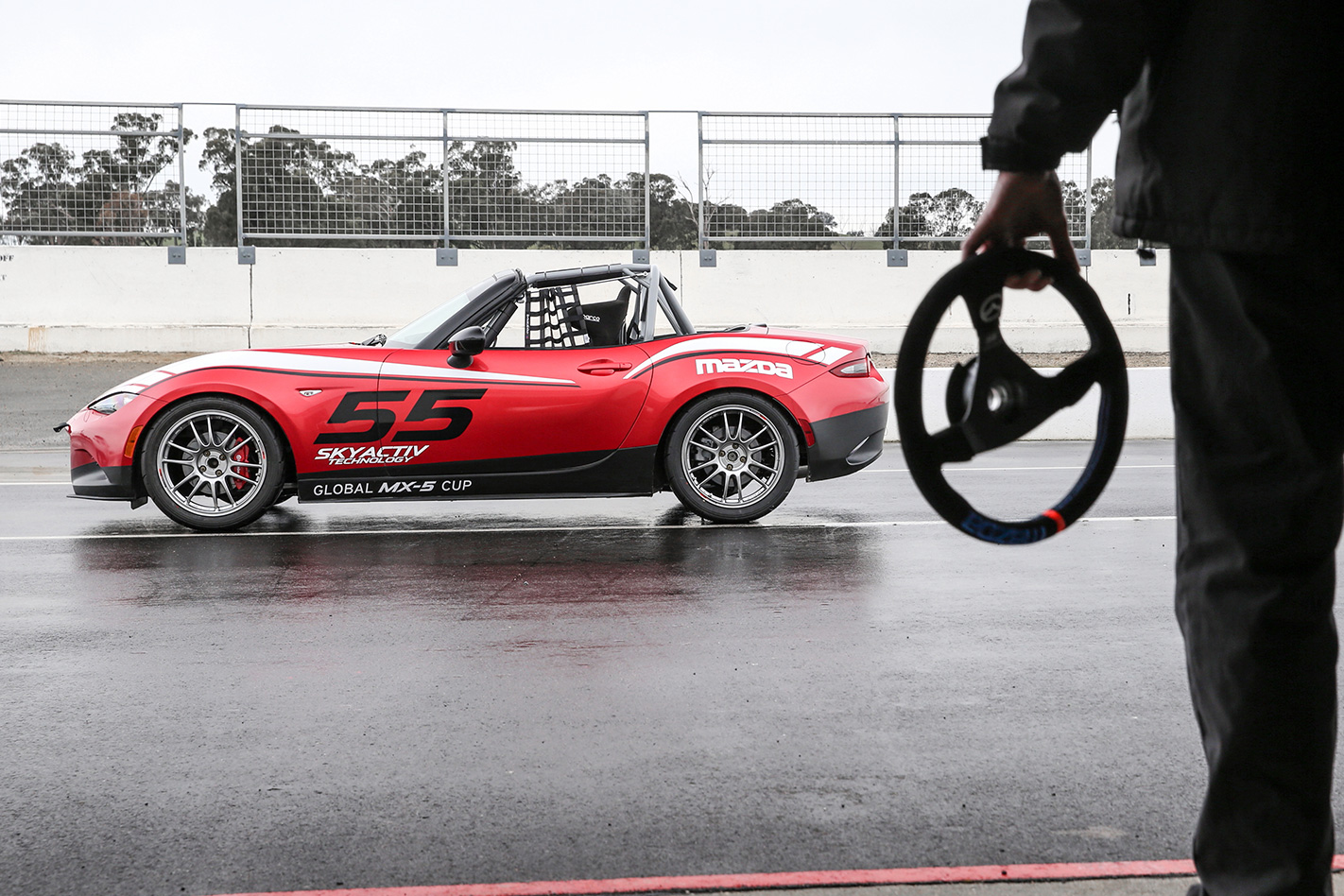
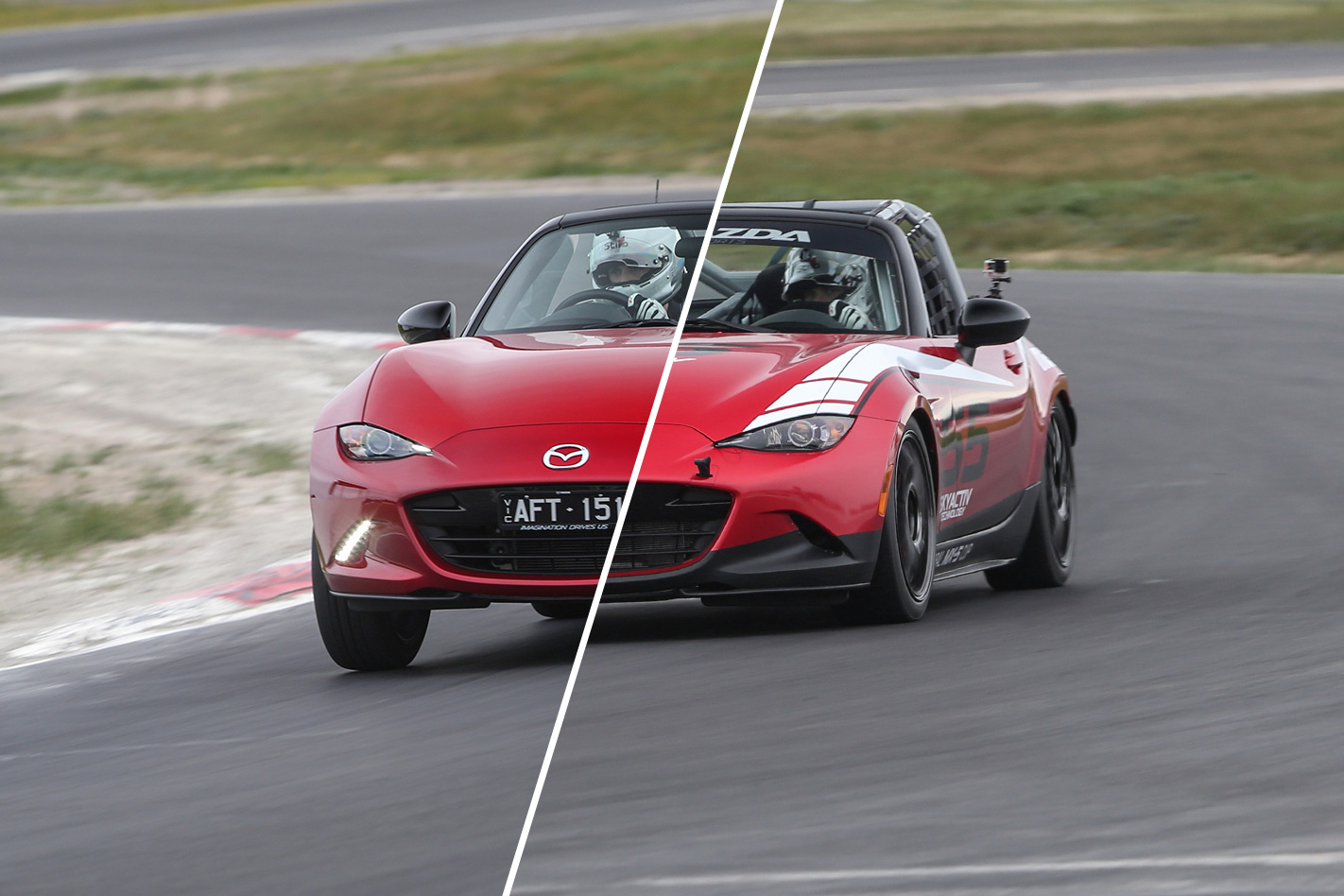
At this point a sane person might ask: Why? Why, when the sky is black and hawking forth sheets of water that make the track shinier than a shaving mirror, would you venture out at all? Especially on slicks. Well, as is often the case when there’s a racing car involved and a lap time to be achieved, sanity didn’t really enter into the equation. Cars just like this one have been dicing in tightly fought one-make championships around the globe all year, and Mazda has flown this example out to see if it’d make a viable grassroots championship here. But testing this box-fresh, racing version of our 2016 COTY is only part of the reason Wheels has come to Winton. Our real mission is to compare the MX-5 Cup with its standard road-going equivalent, the 2.0 GT Roadster, to discover how great a change fitting racing-spec suspension and rubber has made to the MX-5’s sweetly honed chassis.
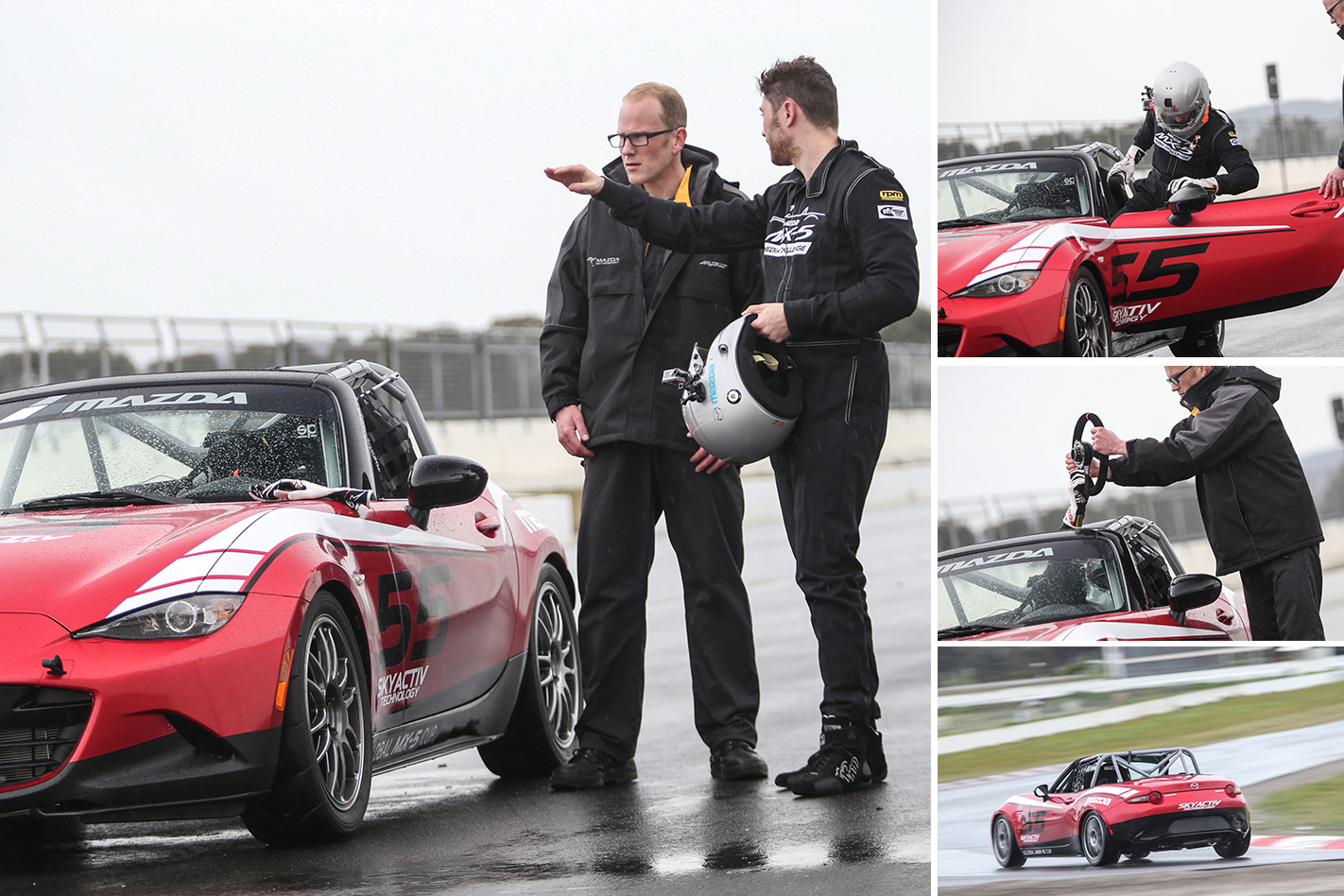
Conventional Bridgestone Potenza road tyres that clear water more efficiently and a more familiar dynamic package meant I was more confident in the road-going MX-5; which quickly provided a vivid reminder of what makes the ND MX-5 so special. The steering is light and reactive, the larger 118kW/200Nm 2.0 litre engine is torquier than the base car’s 1.5 and has just enough grunt to overcome the rear rubber. And the softly sprung double A-arm front, multi-link rear suspension delivers an almost comical level of roll that’s key to the MX-5’s dainty charm. The short-throw gear-change is sweet too, and the pedals perfectly positioned for heel-and-toe downchanges.
It’s fun and predictable – the only real complaint goes to the flat seats that lack lateral support – and by lunch time the road-going MX-5 had set a 1:58.60; almost six seconds quicker than the Cup car. Not exactly the result we were expecting.
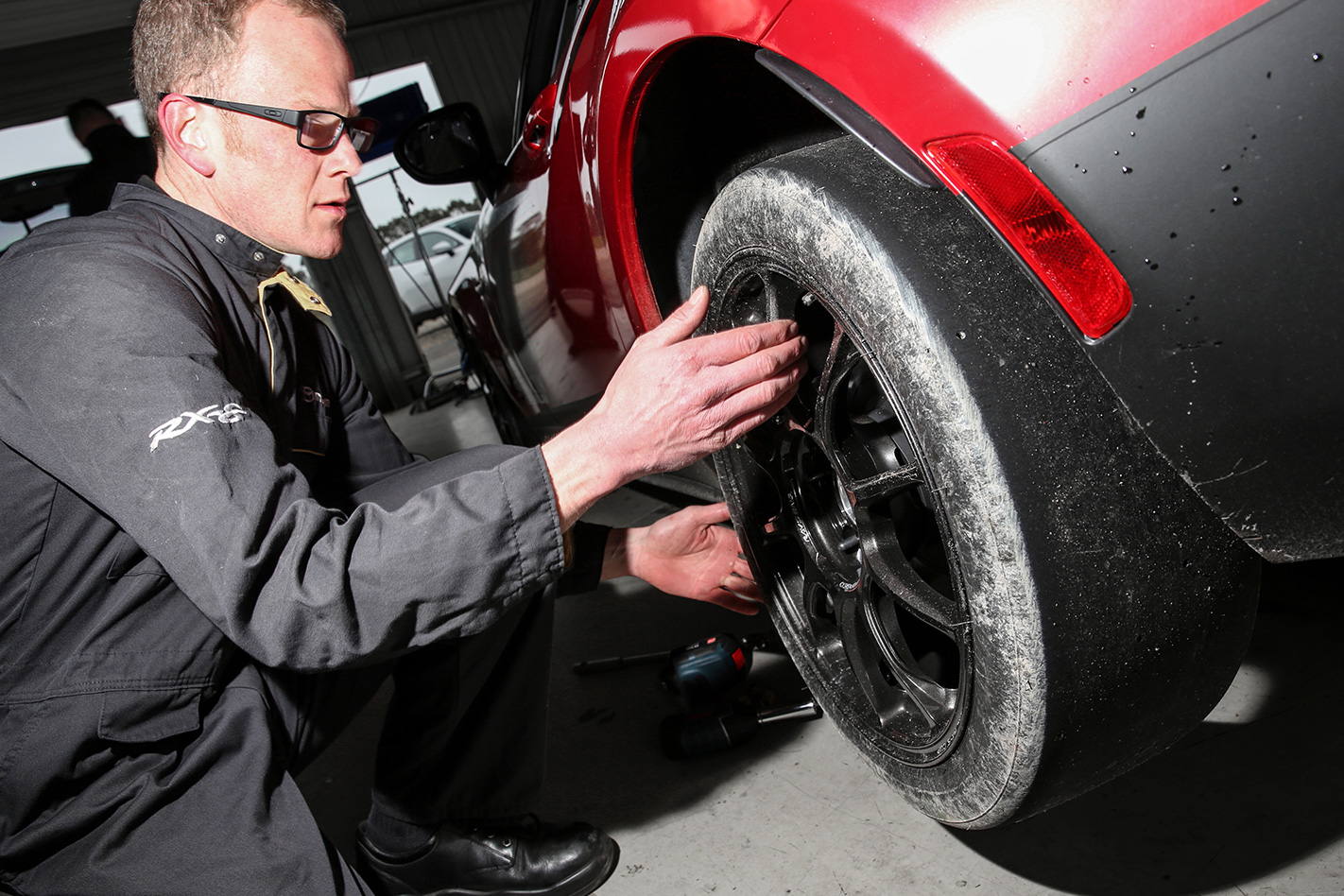
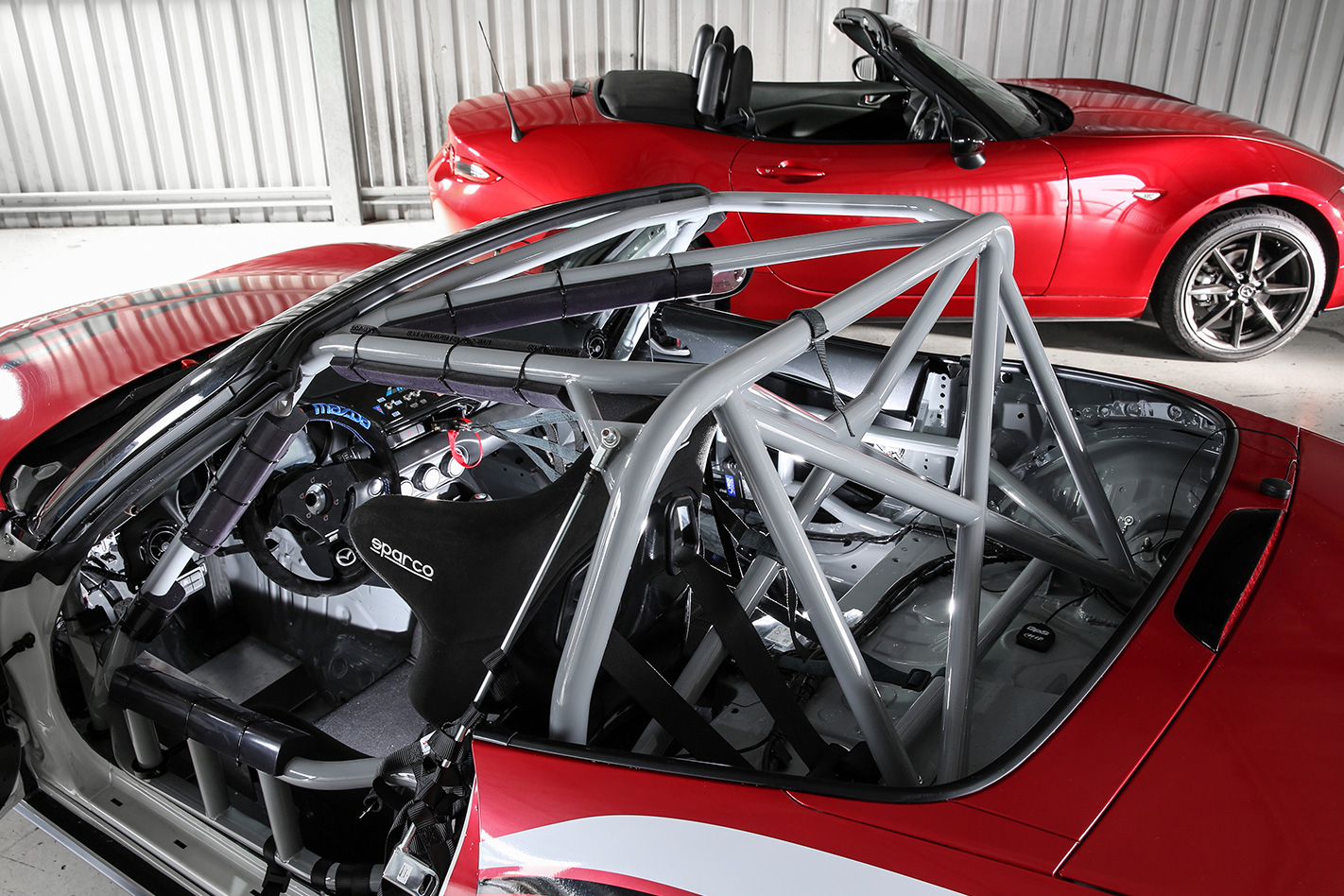
In many ways, the MX-5 Cup should be one of the best cars Wheels drives this year. It promises to take one of the most charismatic and enjoyable sportscars on sale, and dial everything up to 11. Sounds like a slam-dunk. But as I thread myself into the stripped-out cabin – which instantly feels more V8 Supercar than affordable two-seat roadster thanks to its exposed FIA-approved rollcage, window netting, enormous wing-backed Recaro racing seat and AiM Tech digital dash complete with shift lights – a nasty voice in my head whispers: “What if they’ve dialled out the fun? What if the screwed-down suspension and track focus has stolen some of the MX-5’s magic?”
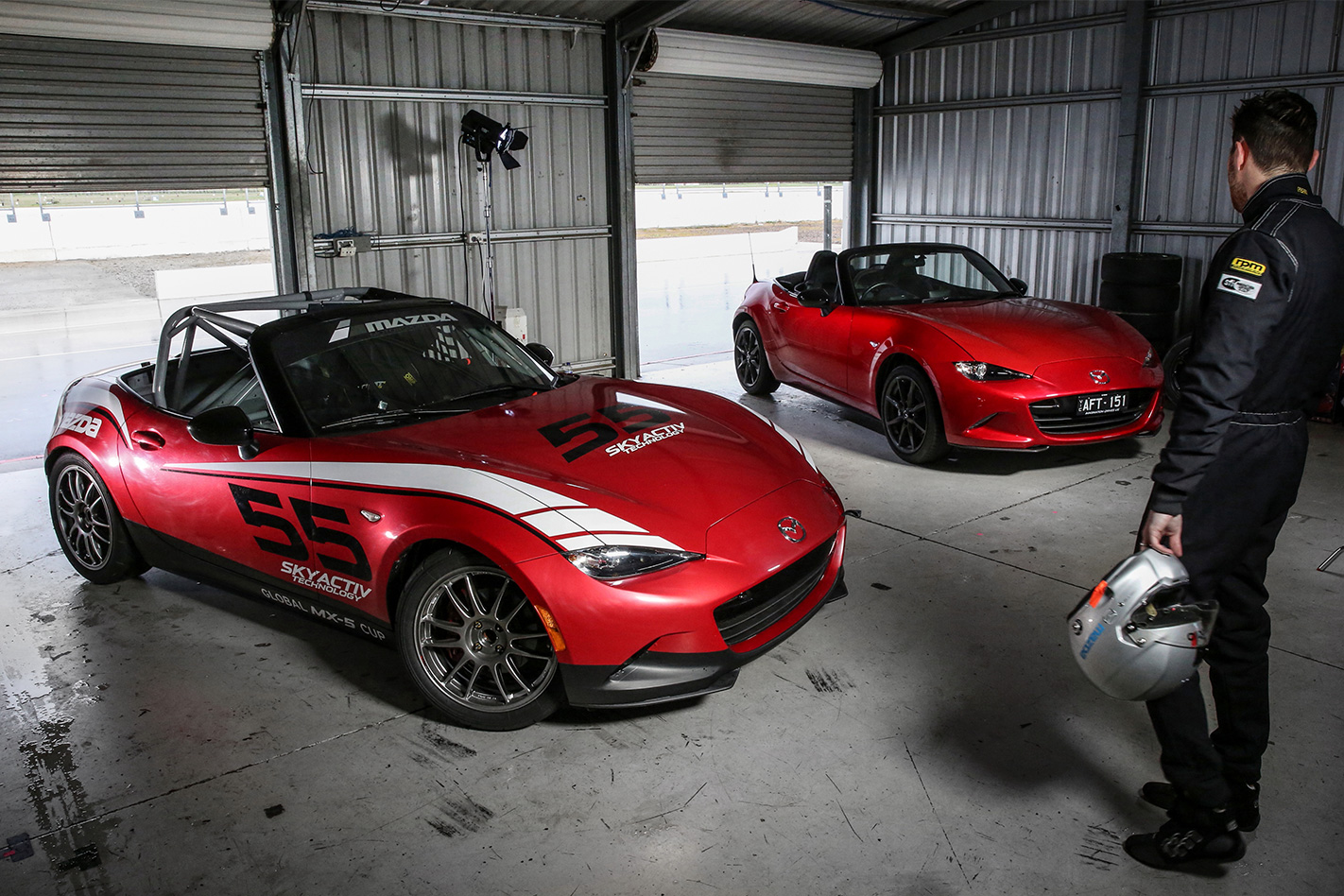
You can buy an MX-5 Cup in America, where they’re built (hence the left-hand-drive layout), for US$53,000, which translates to roughly A$70K. That’s at the affordable end for a turn-key racer, but is still almost double the 2.0 Roadster’s $39,550, so you’re probably expecting a big jump in power.
Wrong. The Cup car’s 2.0-litre atmo four is the same unit wedged into the regular MX-5, only fitted with a sealed racing ECU and a less restrictive stainless steel race exhaust. Mazda says outputs have barely changed from the road car’s 118kW/200Nm.
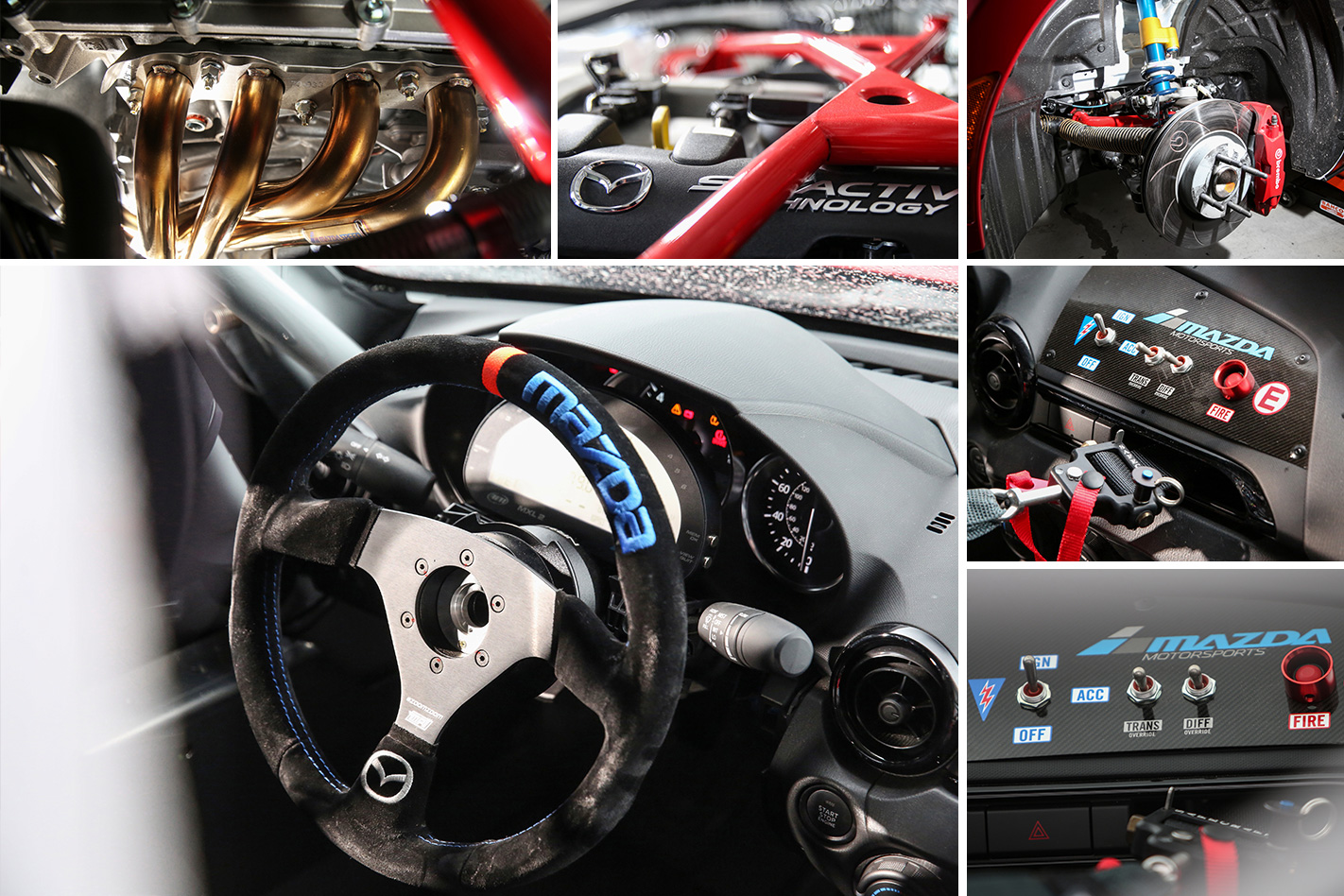
The biggest dynamic change is delivered by the heavily revised suspension. Where the road car rolls from turn to turn, the Cup car uses Multimatic DSSV coil-overs with 11-stage adjustable bump and rebound settings to turn and grip much more aggressively. And even on a slick track, the change in character is immediately obvious; the road car’s delicate playfulness replaced with a hard-edged steeliness that feels far more serious, and noticeably faster.
With my confidence building and the lap timer ticking, I fail to heed the warning of water hitting my visor as a passing shower grows steadily heavier. Suddenly the Cup car’s extra confidence and lateral purchase evaporate, every corner bringing an unknown level of grip. Combined with a short wheelbase and no traction or stability control aids, it soon has me spinning like a top towards the muddy outfield.
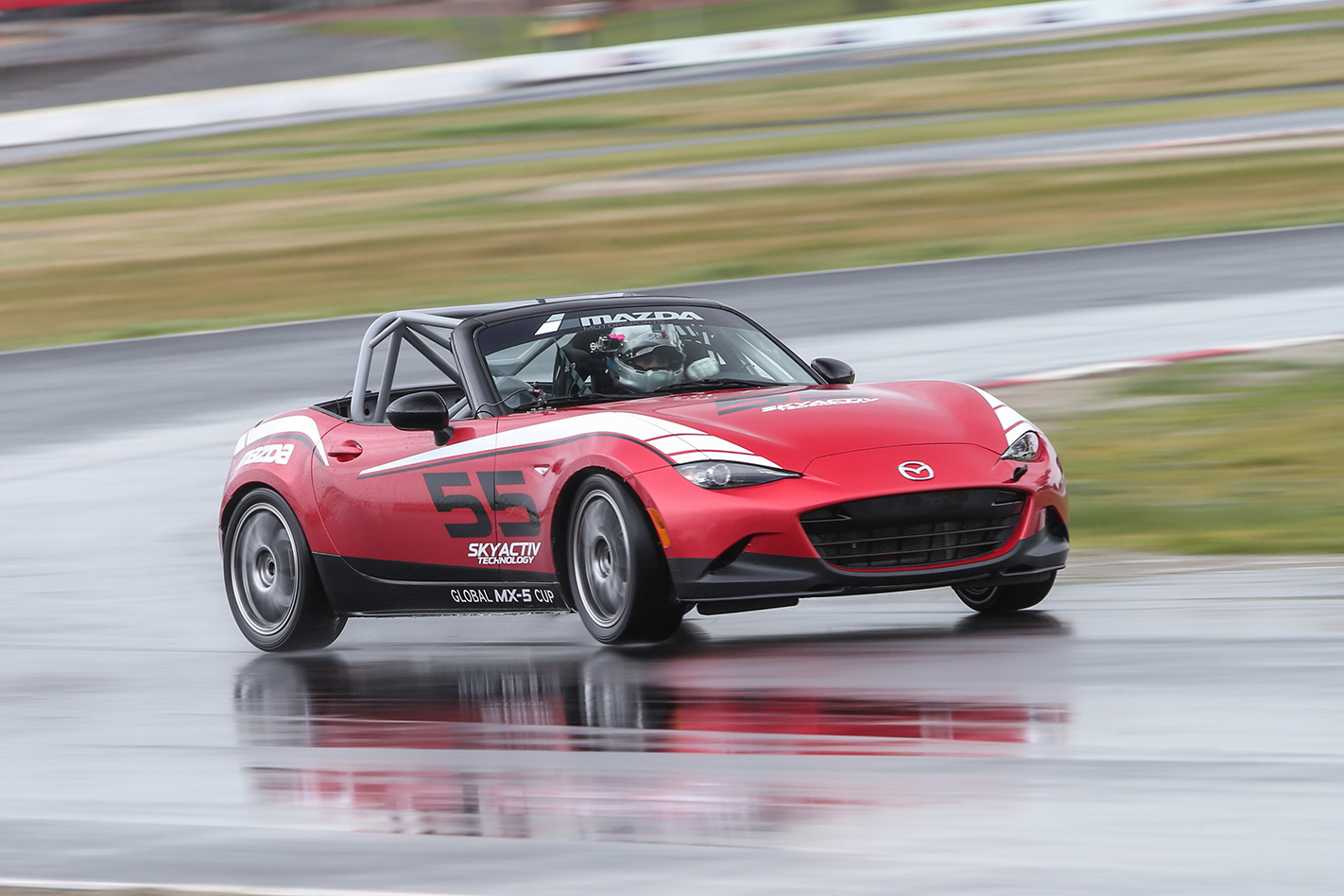
Mercifully, by late afternoon the sun has appeared and the track is dry, so I’m let loose for five timed laps in each car. And it’s here that the Cup car comes into its own. With the slicks finally able to bite, I begin to lean hard on the chassis and what I discover is a very friendly little racing car. The lasting impression isn’t one of ferocious speed – the lack of engine tweaks means both MX-5s have similar trap speeds of around 160km/h at the end of Winton’s main straight – but rather of tenacious lateral grip. The race car encourages you to turn in harder, to brake later and to carry far greater mid-corner speed, especially through Winton’s long left-hand sweeper. Data logging shows the Cup car is tipping into the sweeper at 140km/h, some 18km/h faster than the road car. It’s an advantage the Cup carries through the entire turn.
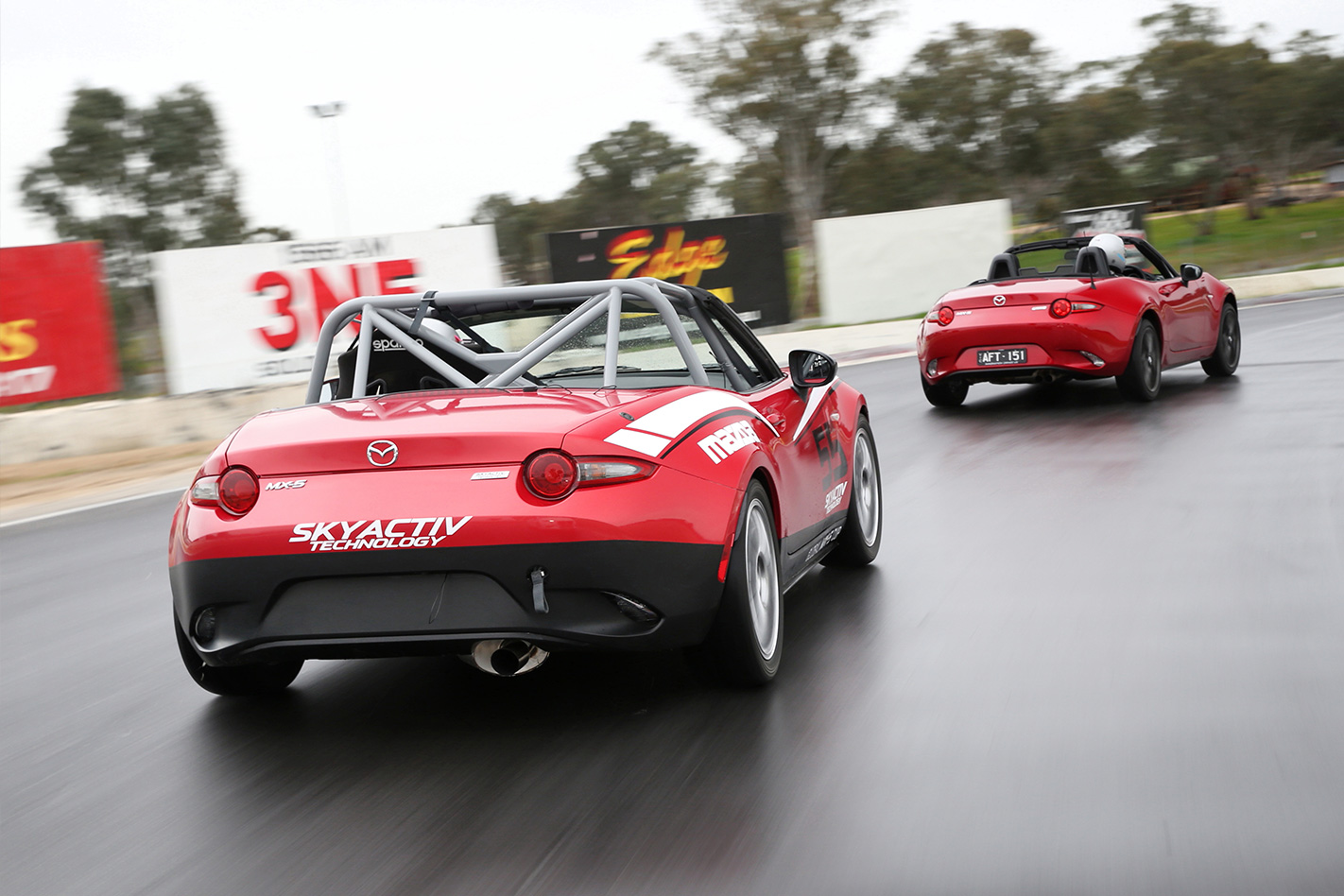
But is it fast enough? That’s debatable. There’s no doubt more grunt would dial up the excitement, but the Cup is still capable of delivering a dopamine hit chiefly because you always feel like you’re in charge. You emerge not stinking of sweat and relieved to be alive, but gurning like an idiot, knowing you’ve wrung every last drop out of the car, and yourself.
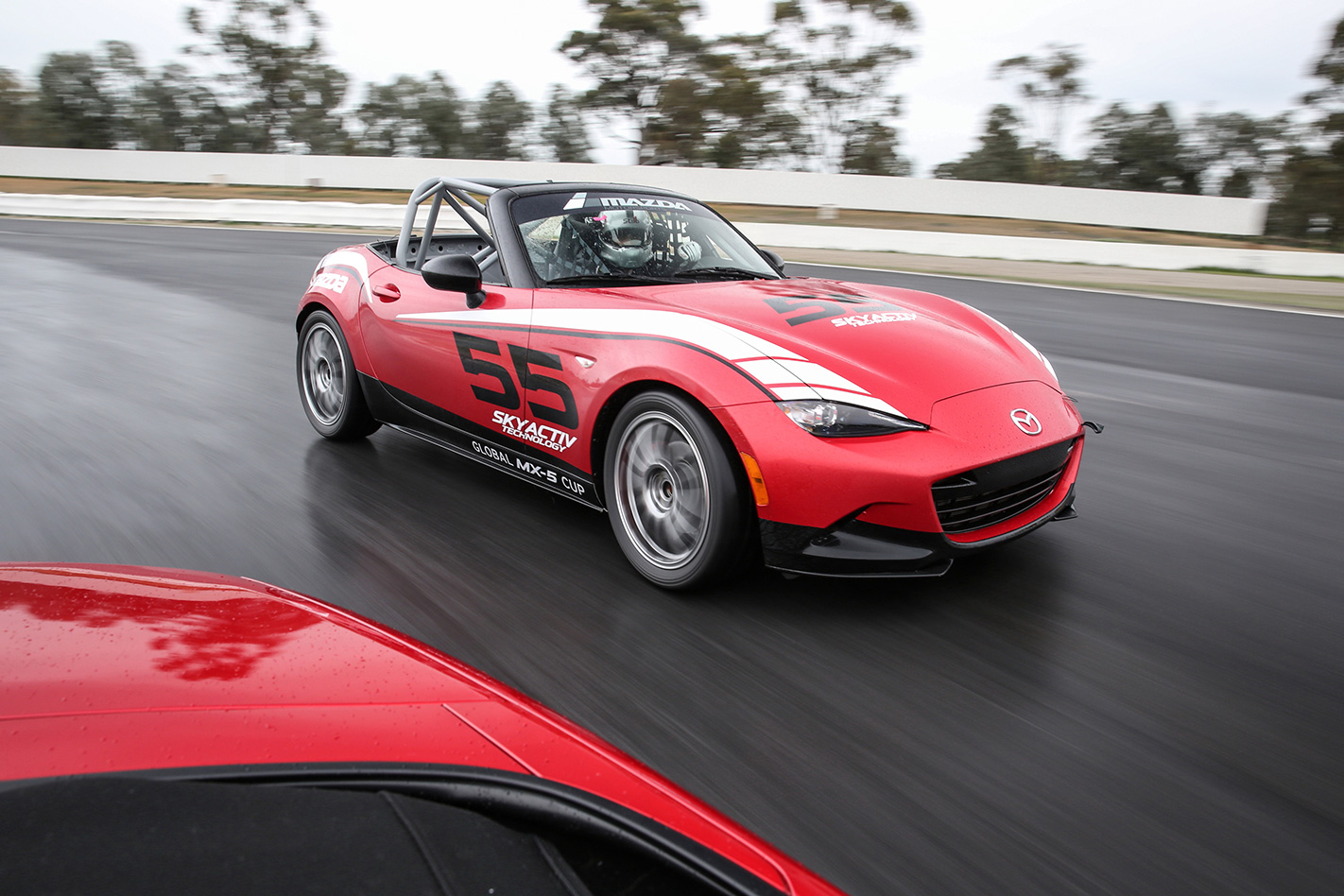
All this means that as the Cup car is loaded onto the truck to be shipped back to Mazda HQ, I’m itching to know what it’d be like to race one wheel-to-wheel in a field of 40-plus cars. The chances of that happening, though, at least in Australia, are pretty slim. While Mazda insists it’s evaluating the category, the fact Toyota already fills the demand for a low-cost one-make category, and the significant financial investment required to get a rival series up and running, means Mazda is unlikely to take the plunge.
It’s a shame because despite my fears to the contrary, the Cup car still feels like an MX-5. Only sharper. And faster. Praise doesn’t come much higher than that.
Price & Equipment – Winner: Draw
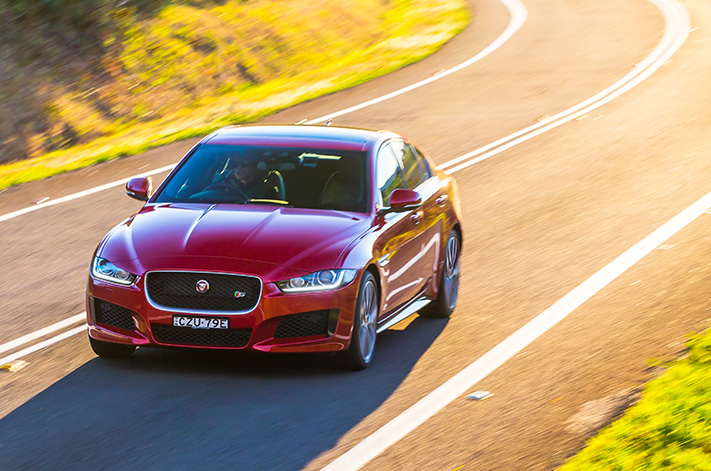
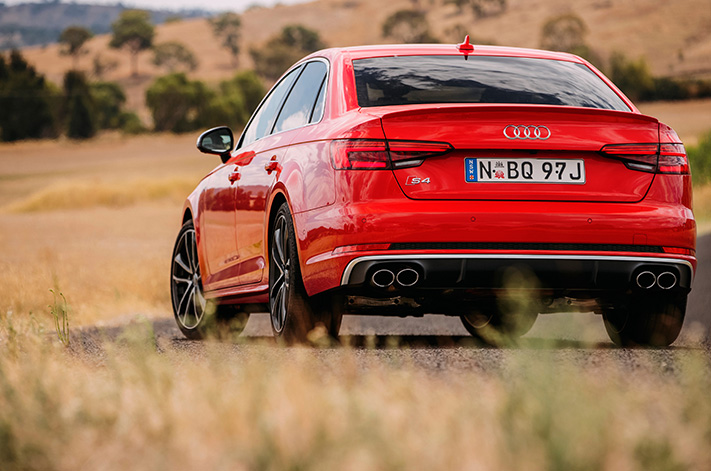
The new Audi S4 narrowly edged out the Benz-AMG C43 in a recent sub-muscle sedan stand-off (April issue of Wheels Magazine) and returns to fend off Jaguar’s ultimate mid-size performance sedan, the XE S. It ticks most boxes, often with greater flair than the Jag, boasts extensive active safety and the superb virtual cockpit, but misses a power-adjust steering column.
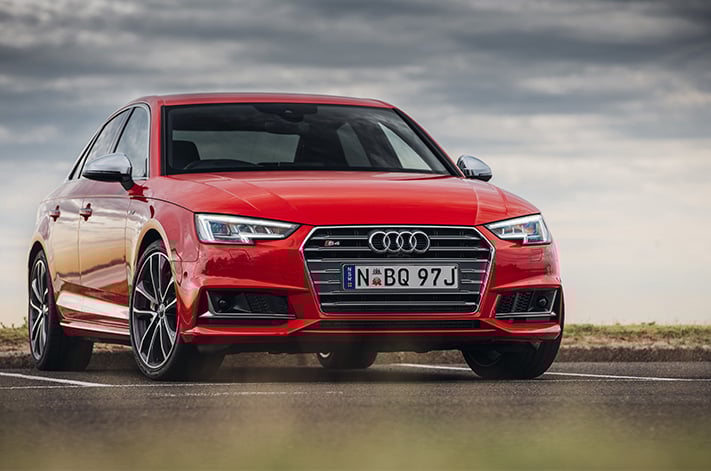
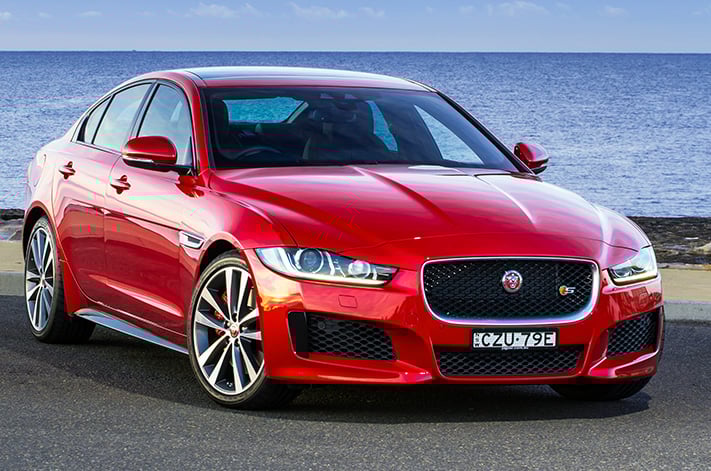
Among the kit the $105K Jaguar XE S shares with its $100K Deutsch rival are a tyre-pressure monitor system, rain-sensing wipers and dusk-sensing headlights, LED DRLs (with bi-xenon rather than LED headlights), 19-inch alloys, powered, memory front seats, climate control – dual zone here, tri-zone in the Audi – and six airbags.
Interior & Versatility – Winner: Audi S4
We’ll change the record when a rival brand upstages Audi’s interiors. But for now the S4 applies sporty leather, suede/Alcantara and aluminium to a classier cabin with a fundamentally sharper focus on finish and tactility. A 480-litre boot is plenty big – about 25L larger than the XE; a space-saver costs extra.
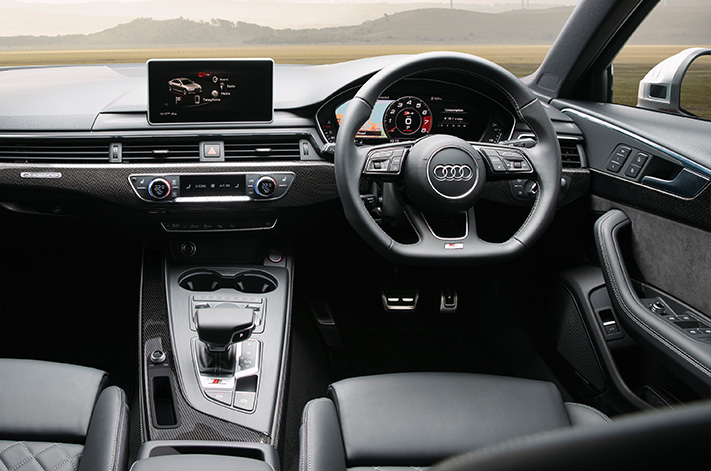
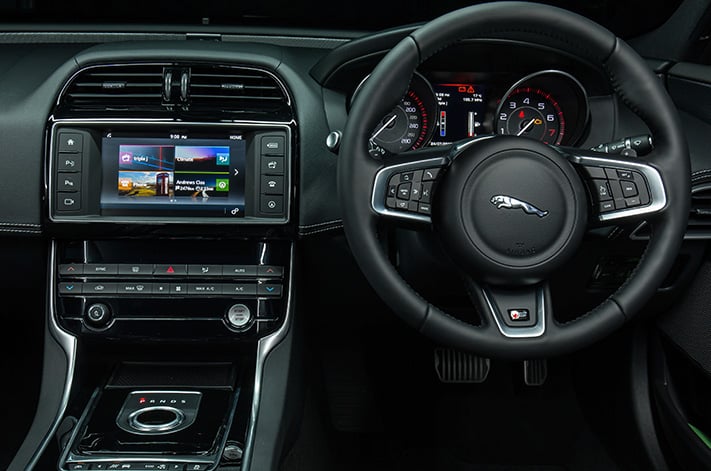
The XE takes the clean, minimalist approach established by the original XF, which still appeals. But in details such as the odd trim gap and switch or trim piece, the XE feels less rich inside than the S4. There’s less rear legroom too, though like the Audi, the seatback folds 40/20/40, which is great for maximising occupant/cargo possibilities.
Performance & Economy – Winner: Draw
The S4’s adoption of the turbocharger, replacing the prior model’s snarly supercharged 3.0-litre V6, results in an objectively better engine that uses less fuel and produces more grunt, at 260kW and 500Nm. With an eight-speed auto and AWD, it’s a slick, all-weather powertrain, but without the old donk’s – or its rival’s – top-end lust.
Like the S4, the XE S is less flamboyant about its performance than some of its contemporaries – such as the AMG C43 – and far tamer than a full-on sports sedan. In the Jaguar’s case especially, that’s a shame because the 250kW blown 3.0-litre V6 is wild in the F-Type. If it was as angry in the hi-po XE, it’d give the Jag a malevolent edge.
Ride & Refinement – Winner: Audi S4
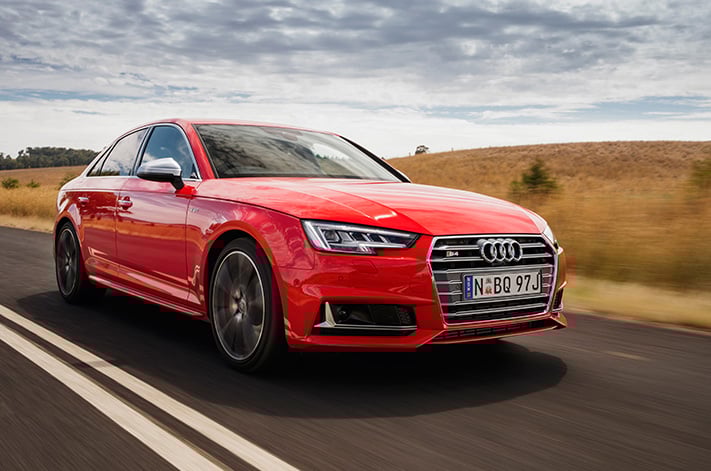
The Audi A4 is a lovely, pliant and quiet medium sedan and, elevated into the second-tier sports sedan realm on 19s and firmer suspension – with help from adaptive dampers – it remains so as an S4. Sure, this is no base A4 on chubby sidewalls, but given the extra performance and handling ability, the modest compromise is justified.
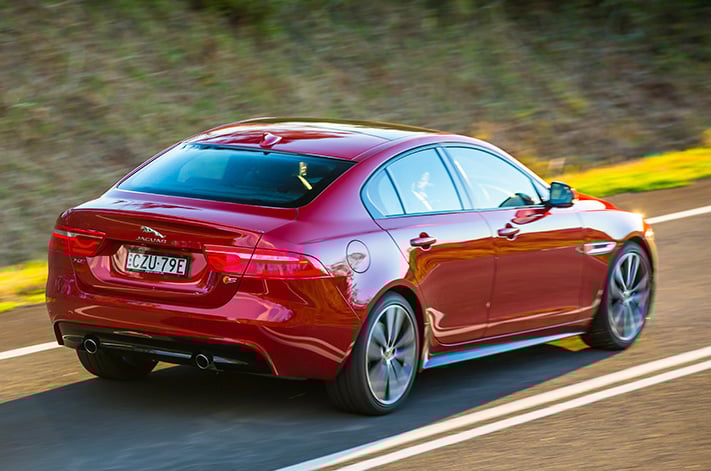
The XE, like the A4, is a fabulously fine-riding mid-size premium sedan. You gain the brand’s adaptive dynamics system as a standard feature in the flagship, which helps offset uprated springs and bigger wheels – 19s, like the S4. The result is the Jaguar makes the high-performance transition without significant ride trade-off.
Steering & Handling – Winner: Draw
Audi’s quattro all-wheel drive gives the S4 a substantially different dynamic flavour – and an edge if the road is slippery or wet. So, while the S4’s steering is lighter, and not as connected or fluid as the XE’s, its point ’n’ shoot personality and grip on the road make it immensely rapid and almost foolproof over a challenging back road.
The Jaguar XE doesn’t hide its sporty streak, even in the base 20t. But while adding grunt in the S should be a surefire way to make a better, quicker sports-sedan version, the extra weight over the nose removes some of the lovely balance found elsewhere. Yet there’s still plenty to like about a talented rear-drive chassis packing 450Nm.
Verdict
In Wheels Magazine’s April issue sports sedan double-header, the new B9-series Audi S4 stacked up as the everyman’s ‘sports sedan lite’ alongside Alfa Romeo’s liveable M3/C63-beater, the Giulia Quadrifoglio. However, Jaguar’s XE S didn’t figure in those fights. Before the Giulia arrived, at least, it was the left-field pick of the premium medium sedans.
And, while experience suggests that some dynamic purity is lost as you scale the XE range, surely a 250kW supercharged rear-driver with such fine fundamentals deserves a shot at greatness. Here, the Audi S4 has a nicer cabin, with more space in the back and a refinement and ride advantage. It wins. But the Jaguar XE S has nicer steering, a snarlier top-end, and individuality on its side. We’d certainly be tempted.
First published in the June 2017 edition of Wheels Magazine, Australia’s most experienced and most trusted car magazine since 1953.
