
The fastest road-going 911 is about to officially launch at Goodwood and, with 515kW, launch it will.
Coupled with 750Nm (a total 59kW/50Nm over its predecessor), the 911 GT2 RS is claimed to be able to pull its 1470kg mass to 100 km/h in 2.8 seconds.
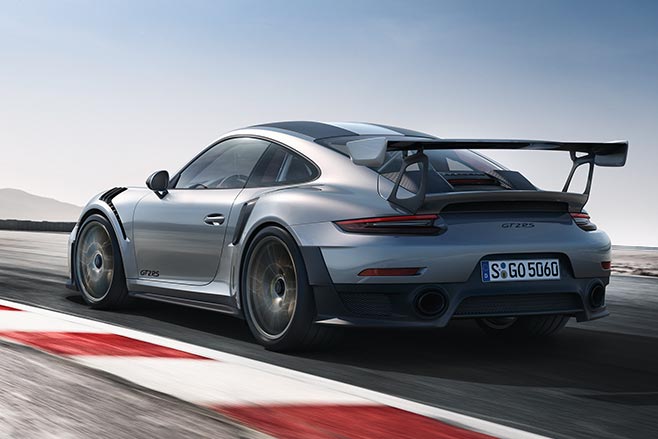
Porsche says the GT2 RS will carry on to a blistering top speed of 340km/h.
Porsche Cayenne breaks airplane towing record
Its 3.8-litre biturbo flat six is built on the 427kW 911 Turbo S engine, but with larger turbos, an additional cooling system which sprays the charge-air cooler with water when it reaches high temperatures.
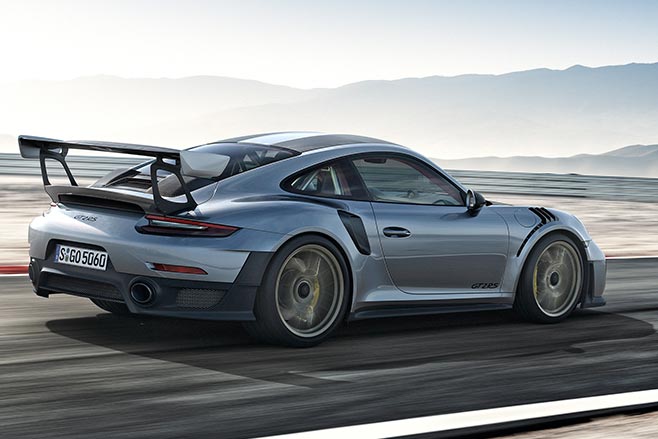
For example, the GT2’s exhaust system is made from extra-lightweight titanium and is about seven kilograms lighter than that of the 911 Turbo.
Speed secrets: Porsche Sport Driving School
With the Weissach pack, however, the roof, anti-roll bars, and coupling rods on both axles are made of carbon. Magnesium wheels reduce unsprung weight, and the luggage compartment lid and carbon roof get a strip in the same colour as the car.
Inside, the GT2 RS gets lashings of red Alcantara, black leather, and carbon-weave finish, with a sports steering wheel and full bucket seats.
There’s also the optional Chrono Package which adds a performance display allowing drivers to evaluate track times.
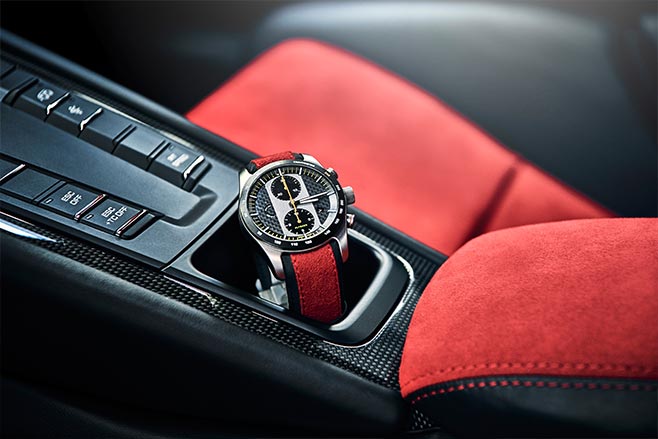
That, of course, will add a few (thousand, probably) dollars to the already hefty $645,400 price tag Australians will face, if they manage to secure one.
First local deliveries are expected in early 2018, but prices for the Weissach pack, the Chrono pack, and the watch are yet to be finalised.
Four seats, no roof: Mercedes-Benz launches its latest E-Class Cabriolet in Europe, and we were there to get our first taste ahead of its Australian debut.
TELL ME ABOUT THIS CAR
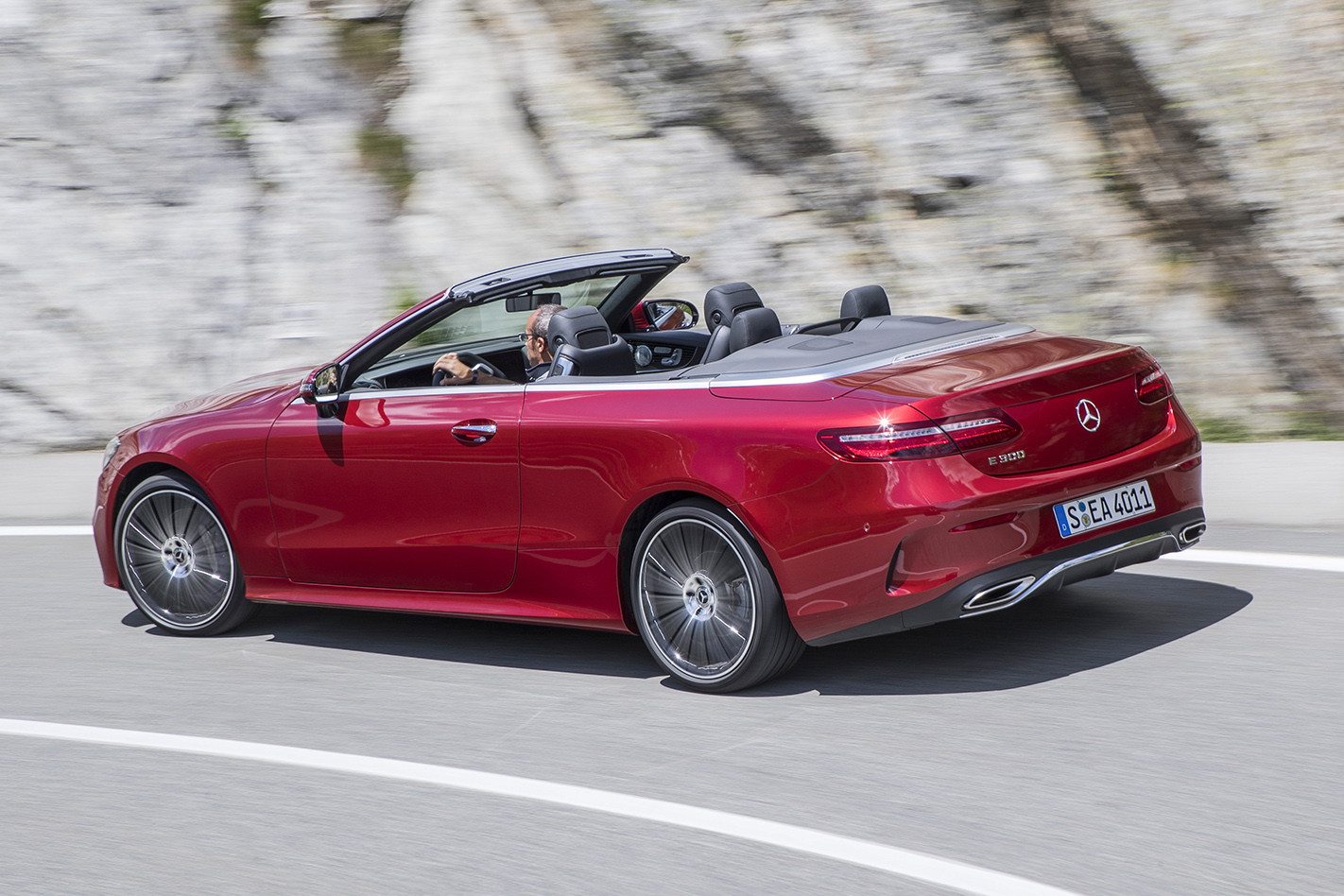
The E-Class Cabriolet is the fifth bodystyle in Mercedes-Benz’s large car range. Following on from the C-Class-based outgoing model, Benz’s new E-Class drop-top makes a move to much larger underpinnings and not only scores more space, but also finally sports a luxurious feel that matches the rest of the range it belongs to.
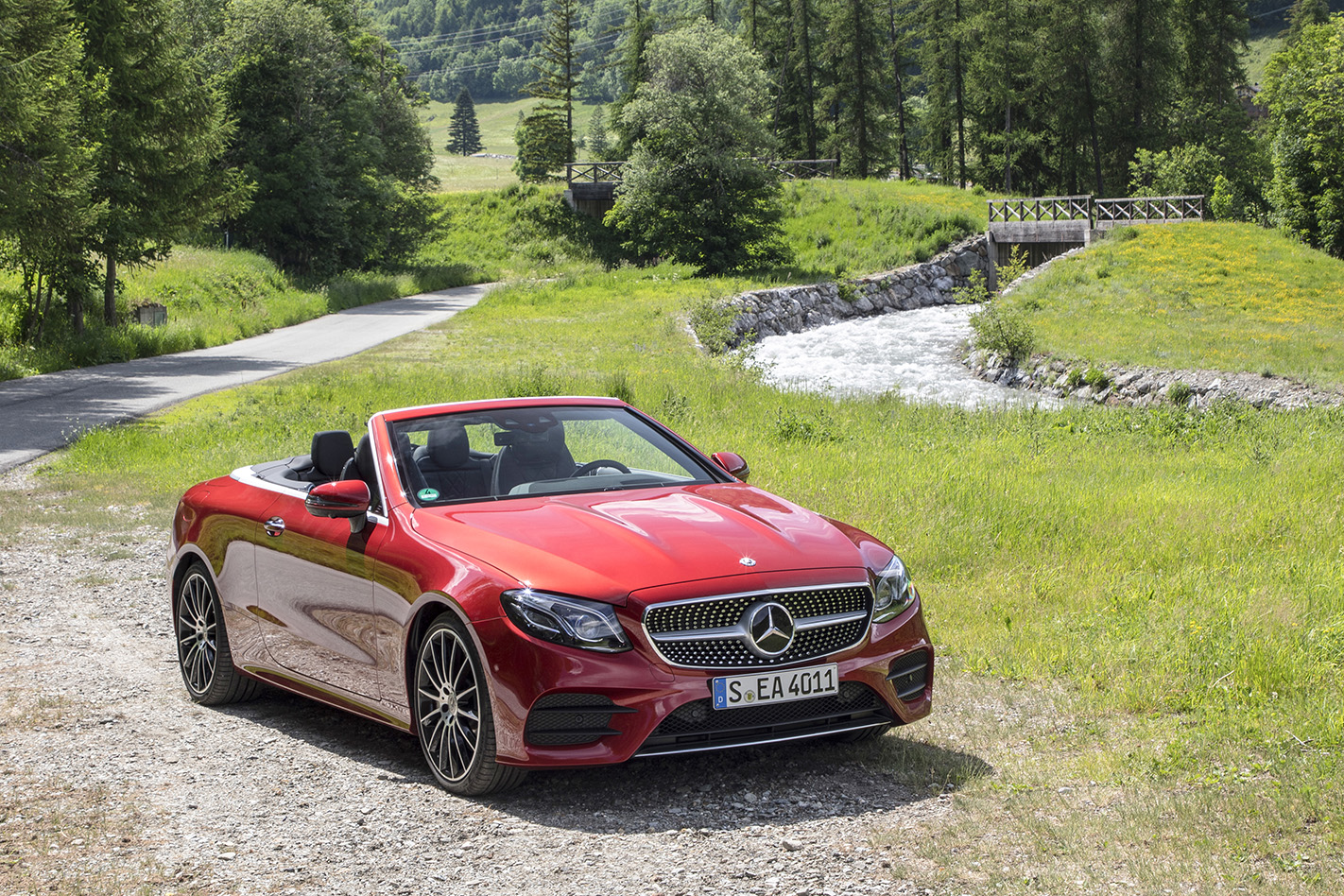
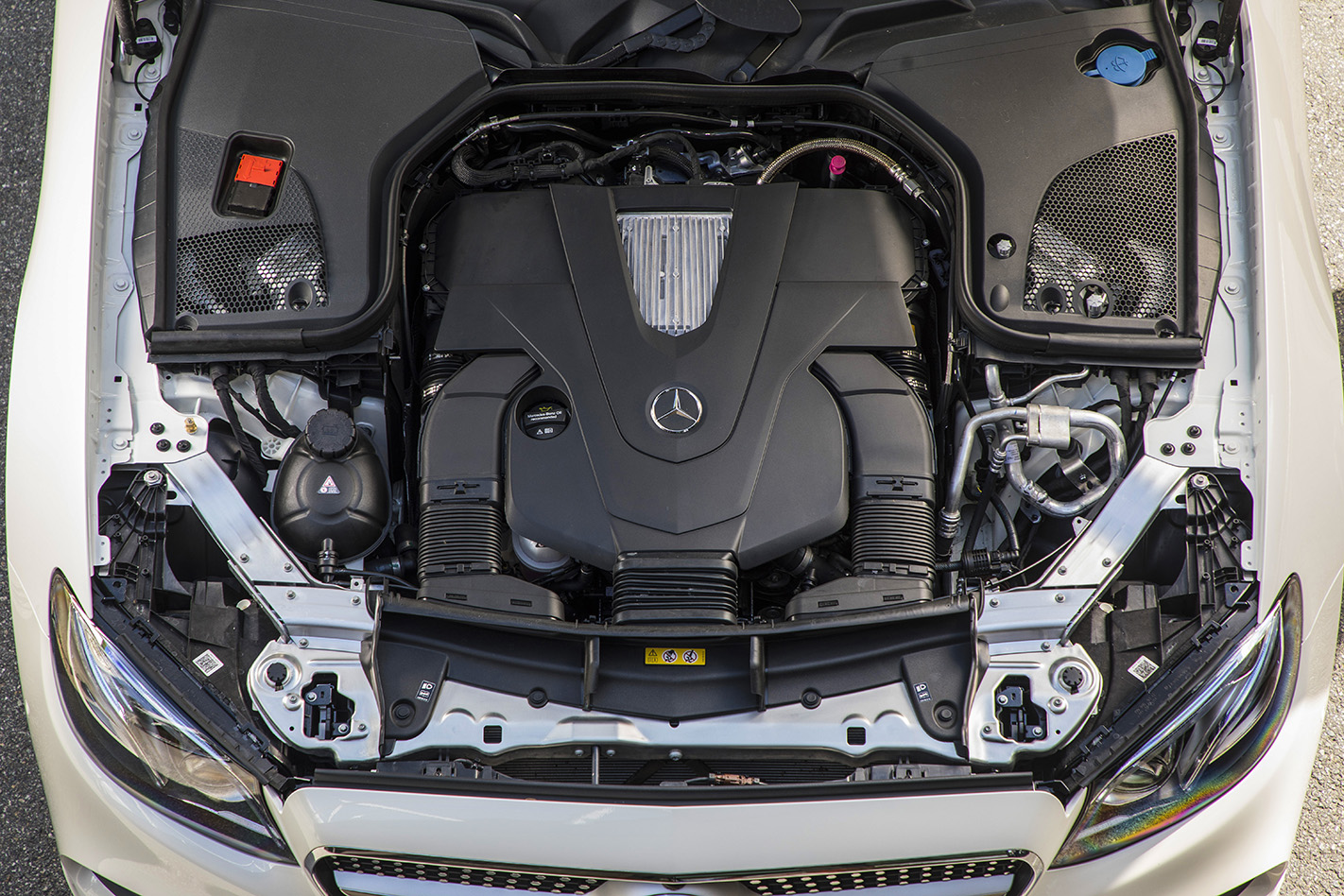
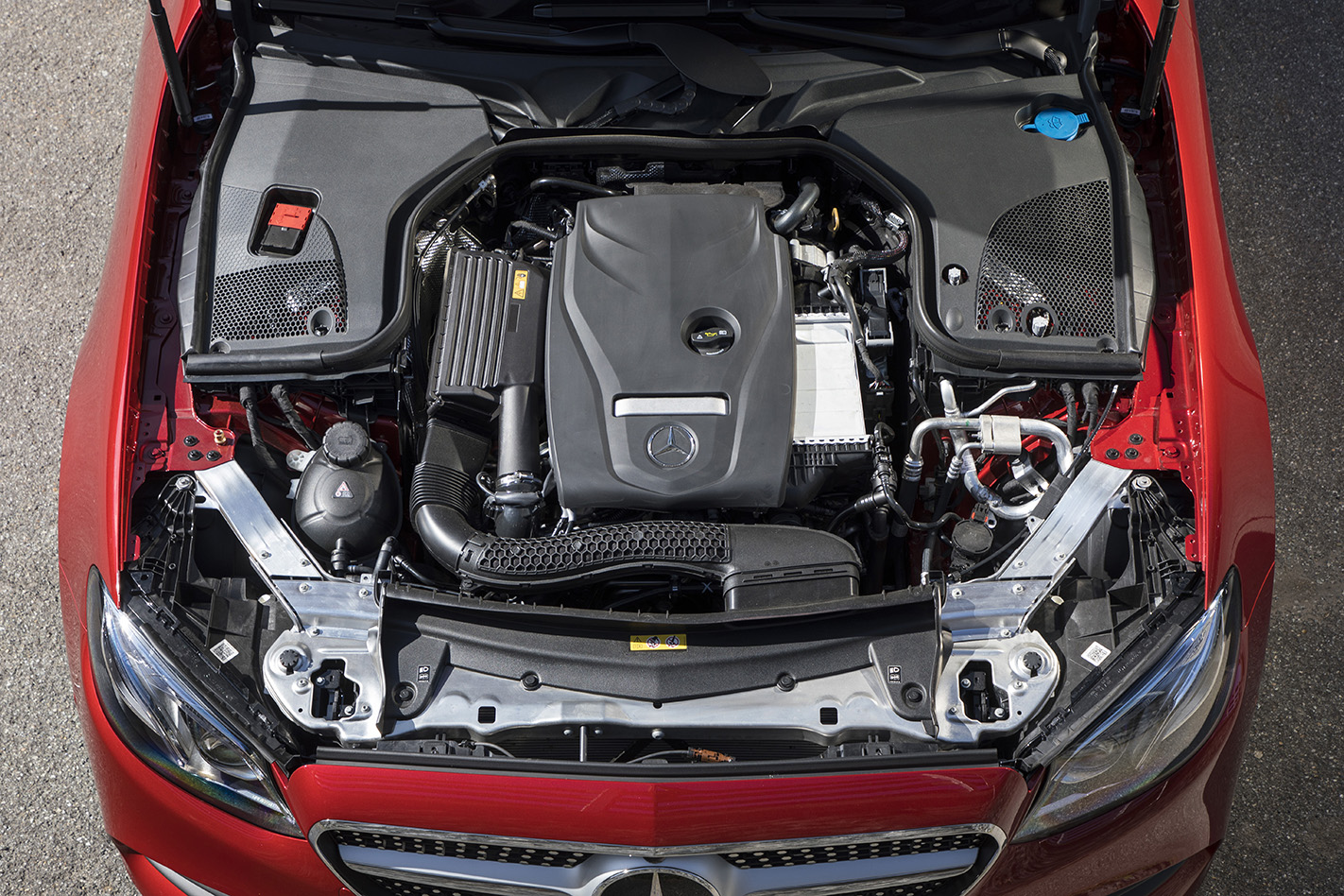
Available in Australia from September with pricing to be confirmed soon, the E-Class Cabriolet will be available with two engines – a turbocharged 2.0-litre four-cylinder petrol in the E300 and a 245kW/480Nm twin-turbo 3.0-litre petrol in the E400.
A nine-speed auto is standard-issue for both, while the E400 will benefit from the extra traction of all-wheel drive.
STRENGTHS
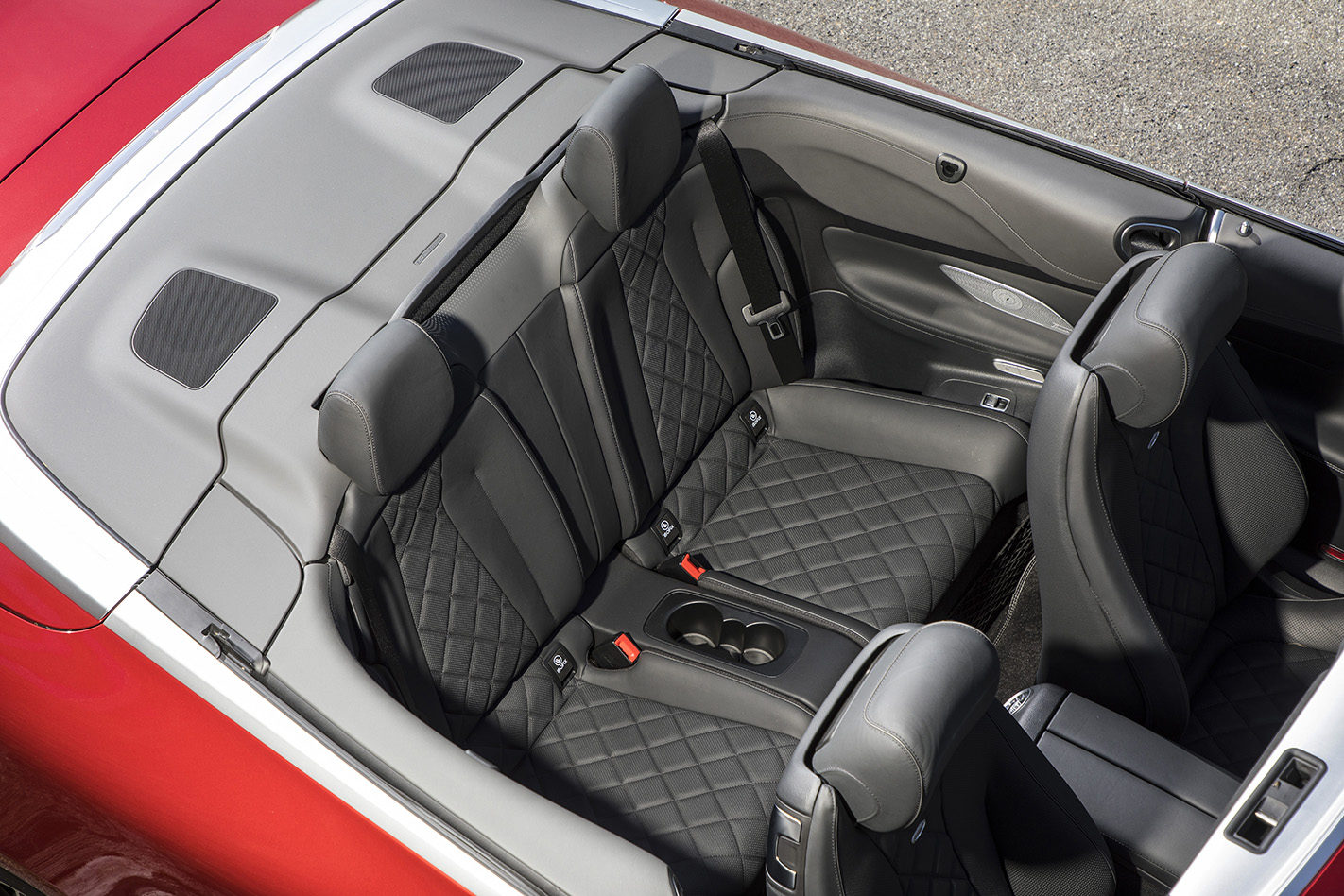
- Cabin space. This is the biggest area of improvement for Benz’s latest E-Class convertible, and it comes courtesy of a significantly larger platform that liberates a sizable 102mm more rear seat legroom. The old car was cramped due to being based on smaller C-Class underpinnings, but its replacement now has full-sized E-Class bones underneath. It makes the E-Class Cabriolet one of the most comfortable four-seat convertibles – if not the most comfortable – in the luxury segment.
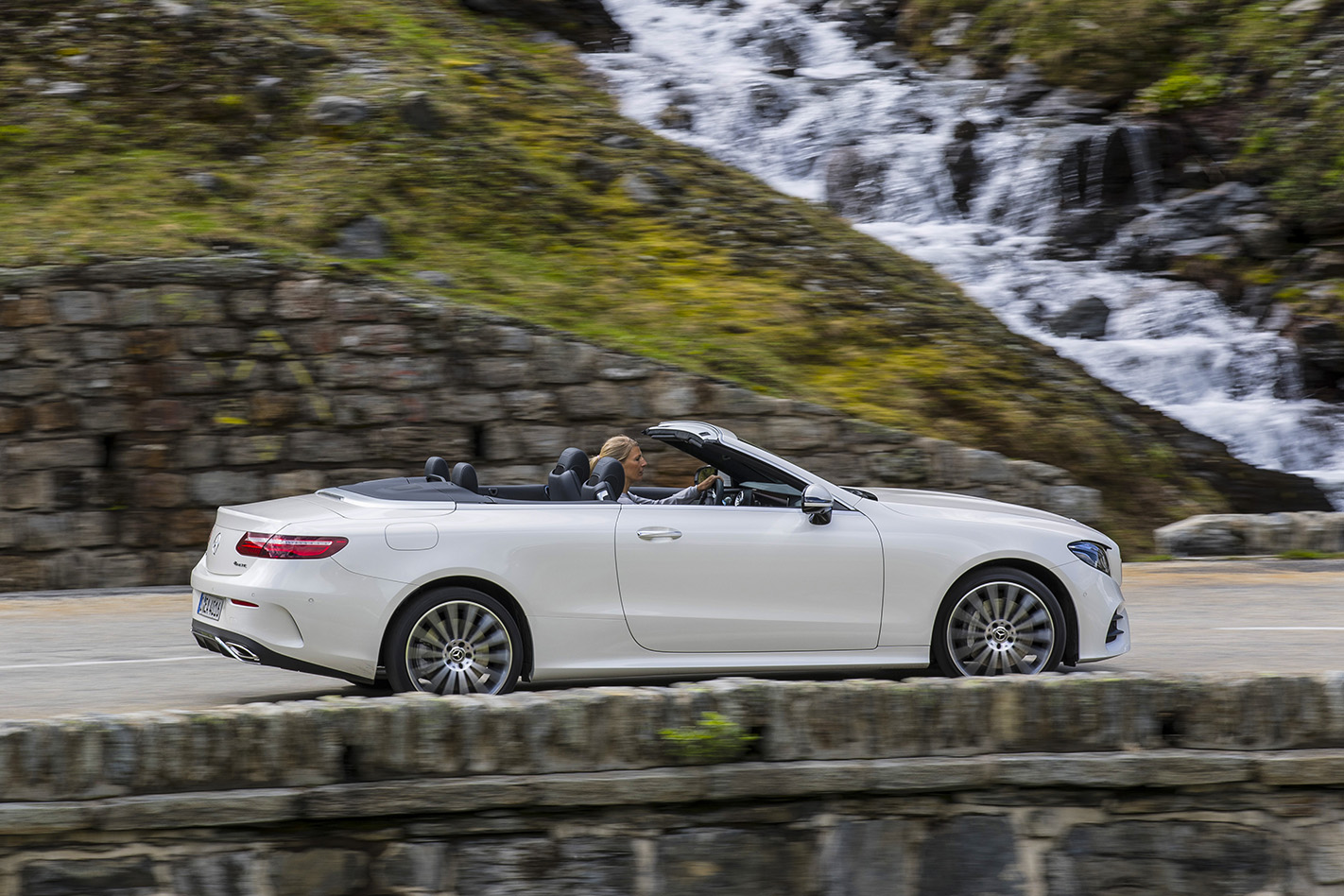
- Structural strength. A car’s roof adds significant strength to its chassis and convertibles frequently suffer from a lack of torsional rigidity without a roof to ‘box in’ its frame. The E-Class Cabrio, on the other hand, bucks this trend. Benz engineers have found a way to virtually eliminate chassis flex, and the result is a car that feels more solid, substantial and stable than many other drop-tops.
- Refinement. Just like the E-Class sedan and coupe, the Cabriolet’s interior is a lovely place to be. There’s liberal use of soft leather, the two-screen instrument panel is bright and clear, the jet-turbine-inspired air vents exude cool (literally) and it’s impressively quiet inside when the roof and windows are all up. It’s tremendously quiet and creak-free, which are not common convertible traits.
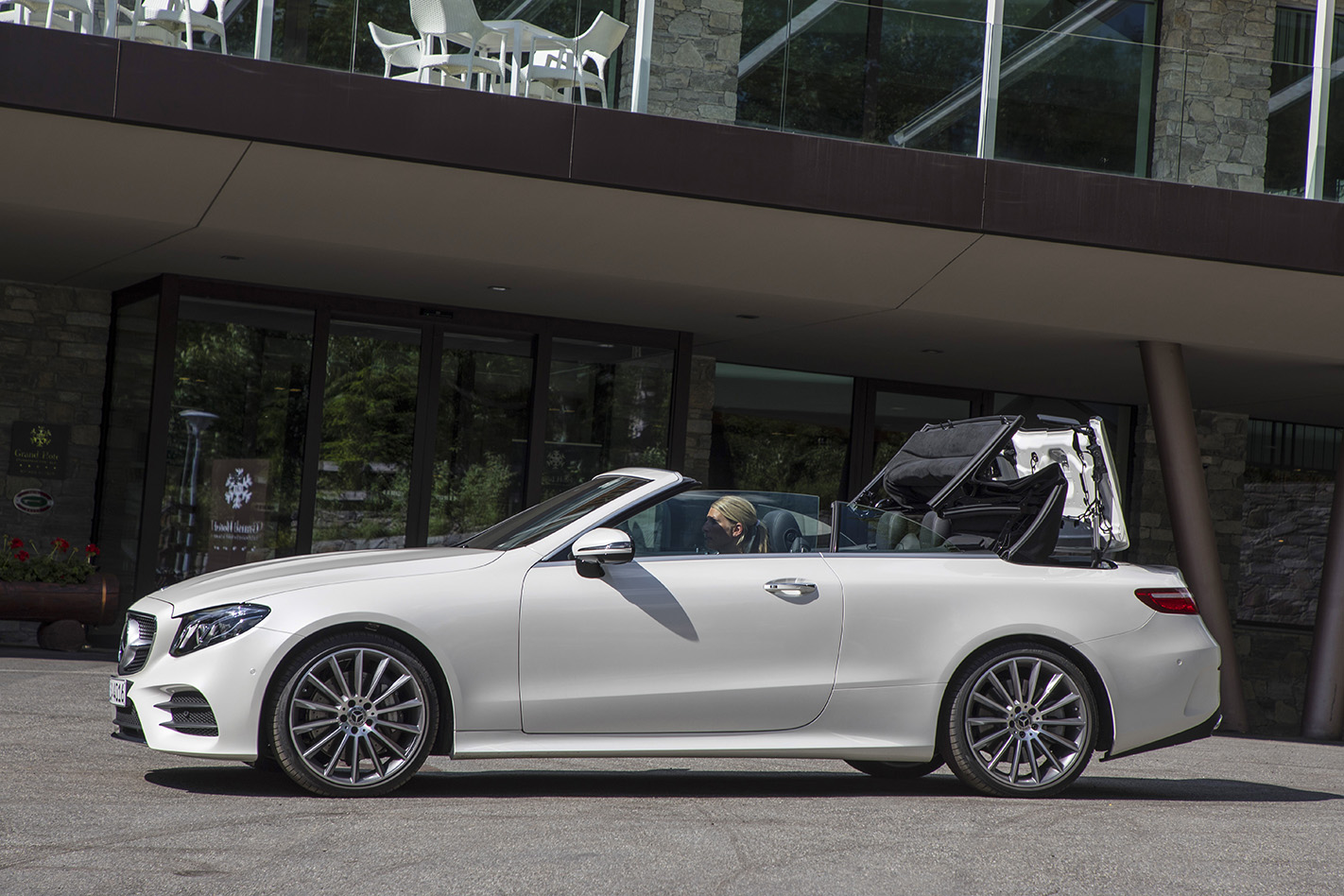
- Speedy roof. Taking 20 seconds to go up or down, the E-Class Cabriolet’s folding soft top moves fast enough to be completely finished during the average red light cycle. Even if the light turns green before you’re finished, it’s capable of operating at speeds up to a generous 50km/h.
- Comfort. The front seats are excellent, the rear seats have plenty of space for a pair of adults and there’s the extra benefit of headrest-mounted hot air blowers and seat heaters on all seats to keep you cosy when going topless in cooler weather. If you’re worried about getting your hair messed up, two power-operated wind blockers can be raised to reduce buffeting when the roof is folded.
- Effortless V6 power. The E400 variant enjoys a healthy output of 245kW and 480Nm from its twin-turbocharged petrol V6. It may weigh just under two tonnes when empty, but that power and torque is more than sufficient to get the E400 moving briskly. When the nine-speed auto is in comfort mode, it moves along especially gracefully.
- Handling. The other benefit of having a torsionally rigid chassis is that handling doesn’t suffer in the transition from coupe to convertible. Because of this, the E-Class Cabriolet feels just as competent around a corner as the equivalent hard-top, though the extra 150kg it carries does give it a bit more mass to contend with.
WEAKNESSES
- Upright rear seats. The new E-Class Cabrio has plenty of space behind the front seats, finally, but it could also benefit from a rear backrest that’s a little less firm, and a little less vertical. With that one change, rear seat passengers would benefit from a great deal more long-distance comfort
- Power in low-end models. The E300 is a fine cruiser, but steep ascents see its 2.0-litre engine working hard and generating plenty of noise. It doesn’t necessarily struggle, but it doesn’t feel as effortless as the E400 does either.
- Dorky wind blocker. Mercedes spent a fair bit of time engineering the Cabrio’s “Aircap” wind-blocker system, which uses a retractable wing above the windscreen and a retractable mesh panel behind the rear seats to minimise in-cabin wind buffeting when the roof is down. It’ll keep your hairdo intact even at highway speed, but it ruins the elegant lines of the car when it’s activated.
Here’s the thing: the E-Class Cabriolet, now that it’s grown significantly, doesn’t really have any direct rivals. The BMW 4 Series convertible can’t compete on interior space, and the Audi A5 Cabriolet is in the same situation. Lexus, Jaguar and Infiniti don’t presently have any four-seat convertibles of their own either, let alone ones that can rival the E-Class Cabrio on an even footing.
Call them what you will, utes or pick-ups – they’re an increasingly common site on Australian roads and even people who don’t wear flouro for a living are buying dual cab versions as family SUVs with trays.
With the right care, all will provide years of faithful service be it for work or play, but some offer more in terms of capability, performance and, perhaps as importantly, driveway/worksite/campsite cred.
In no particular order, to prevent you from landing yourself behind the wheel of something with the lingering aftertaste of buyer’s remorse or asbestos brake pads, here’s where we’d be directing our dollars.
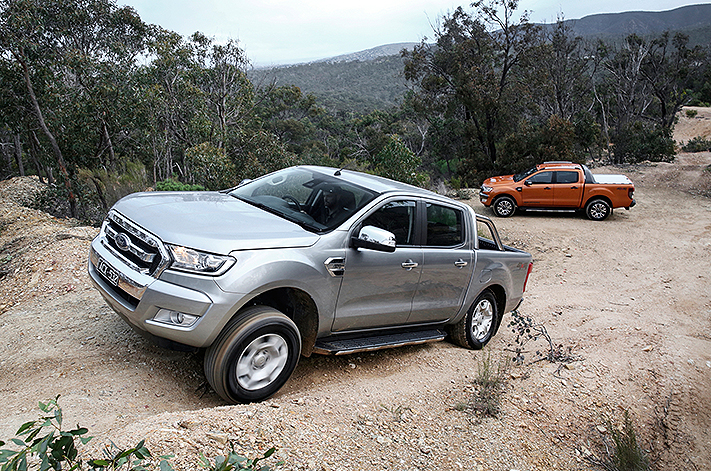
FORD RANGER Ford Australia was uncharacteristically early in identifying a trend for mainstream utes, so it helped the parent company engineer the latest-generation Ranger. It shares much with the Mazda BT-50 including underpinnings and 3.2-litre five-cylinder diesel engine, but has been independently polished to give it a more desirable ‘Yank truck’ interior, electric power steering system and new injectors that bring more refinement to the five-pot donk. It operates well off road, but you might want to chuck some jerry cans in the back for longer trips.
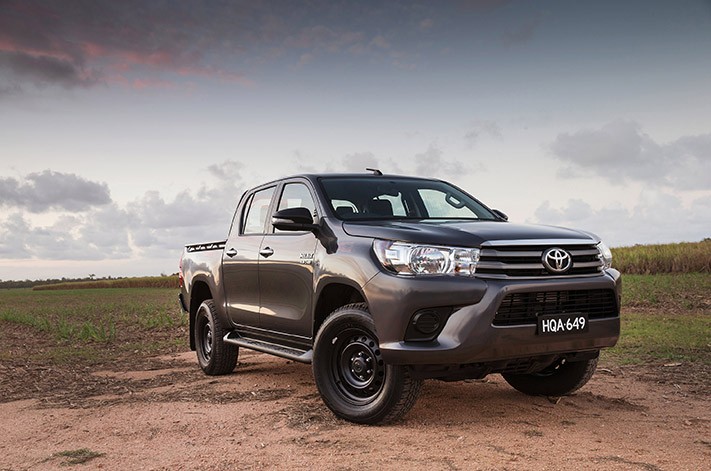
TOYOTA HILUX OK, so it’s ageing and lacks the refinement of some of its competitors, but even its biggest critics acknowledge the venerable Hilux’s unbreakable reputation and key role in everything from driving Australia’s mining boom to establishing caliphates. The 2.8-litre diesel won’t win races or fuel economy drives and the interior of its top-spec SR is still a little blue collar, but its climbing ability and gecko-like traction means it’s perfect for dirty weekends.
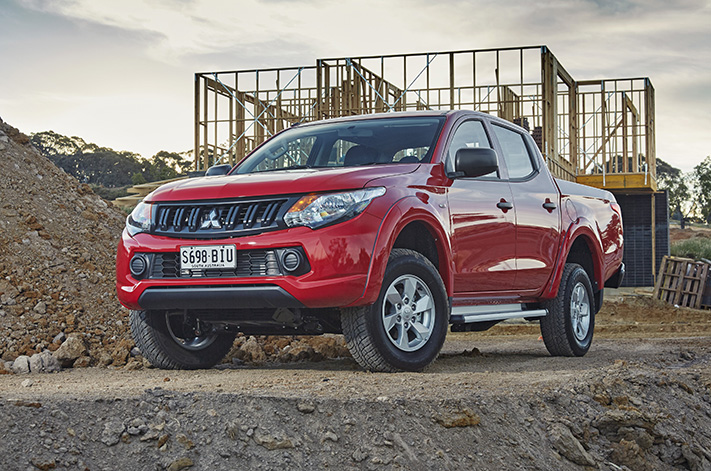
MITSUBISHI TRITON If you break down ute sales to just dual cabs the Triton is actually the most popular among private buyers thanks to its value for money in terms of equipment levels. The popular GLS double cab comes with hill-start and trailer-stability assist, dual-zone climate control, HID headlights, LED driving lights, sporty styling and a punchy 2.4-litre diesel for its $41,500 starting price. It’s not the best performer on tar or dirt, but that obviously hasn’t worried buyers.
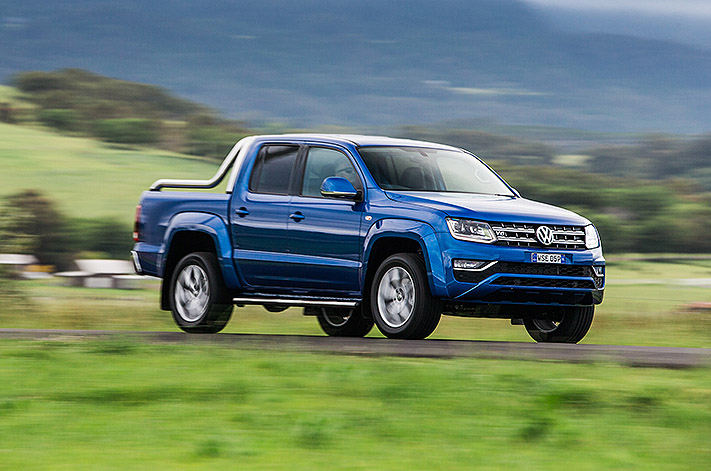
VOLKSWAGEN AMAROK The Amarok brings smugness to the ute segment. While owners of Thai-built Japanese utes argue over the merits of their respective charges, owners of the Argentine-built German ute revel in the fact their car is more refined than a Swiss finishing school graduate. As well as a spacious quality interior, it offers the most carlike driving experience with precise steering and a frugal but powerful 3.0-litre V6 diesel that doesn’t ask questions when you put the foot down. It’s the most powerful option in the segment.
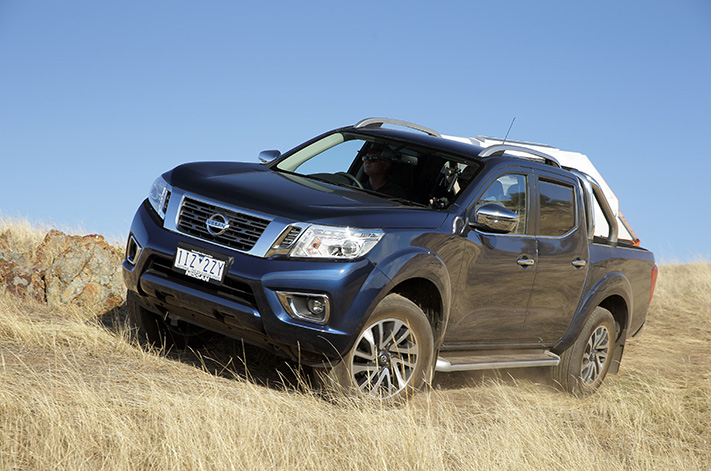
NISSAN NAVARA The Navara is second to Amarok in terms of drivability with refined steering and handling, and a potent four-cylinder 2.3-litre twin-turbo diesel. It’s the only ute on the list to have coil suspension in all four corners (Tradie tray versions get leaf springs), which was much improved with a recent Series 2 update for better ride on dirt, though it does have a lower ride height than its competitors which can limit off-road use. The Navara also has a comfortable cabin and its smaller size means it’s easier to park than most utes.
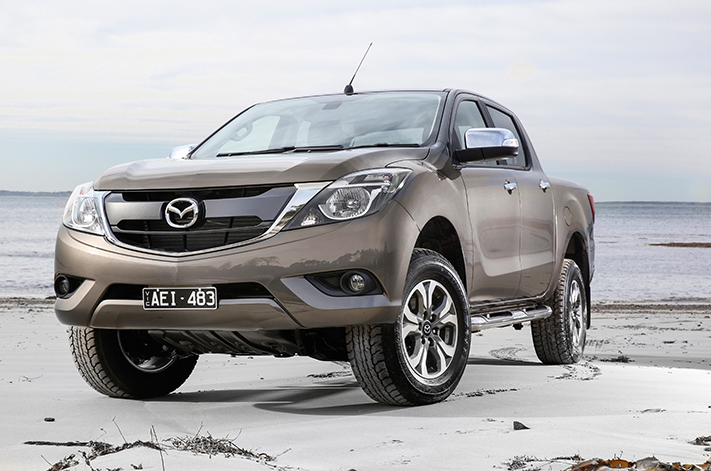
MAZDA BT-50 While it didn’t receive all the refinements handed to its Ford Ranger half-sibling, the BT-50 is still a capable jack-of-all-trades and during last year’s eight-ute megatest it showed that it’s one of the best off-road performers. It doesn’t have the Ranger’s ‘look at moi’ factor, but the $5000 price difference between the range-topping BT-50 GT and Ranger XLT will go a long way to scoring some decent aftermarket products.
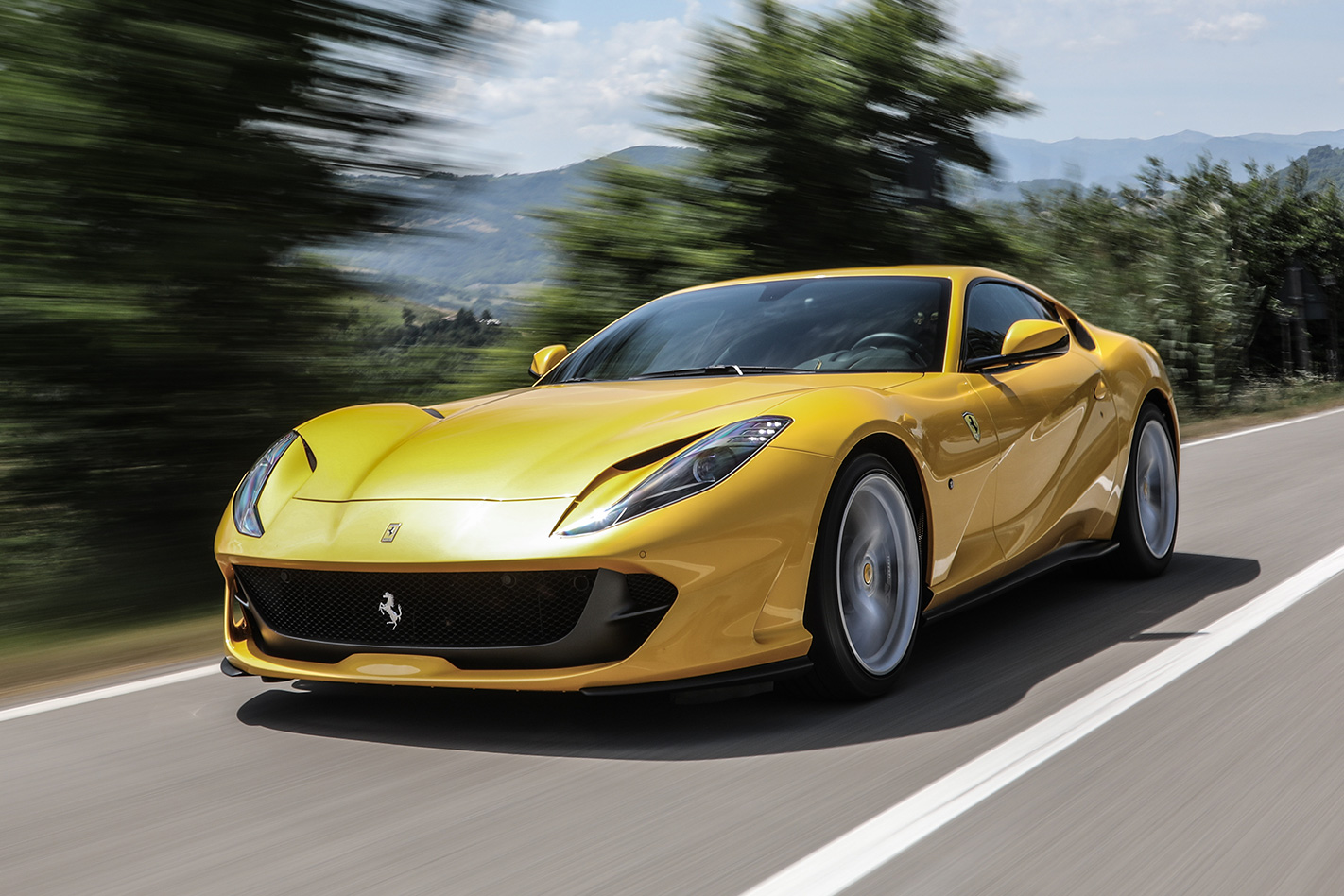
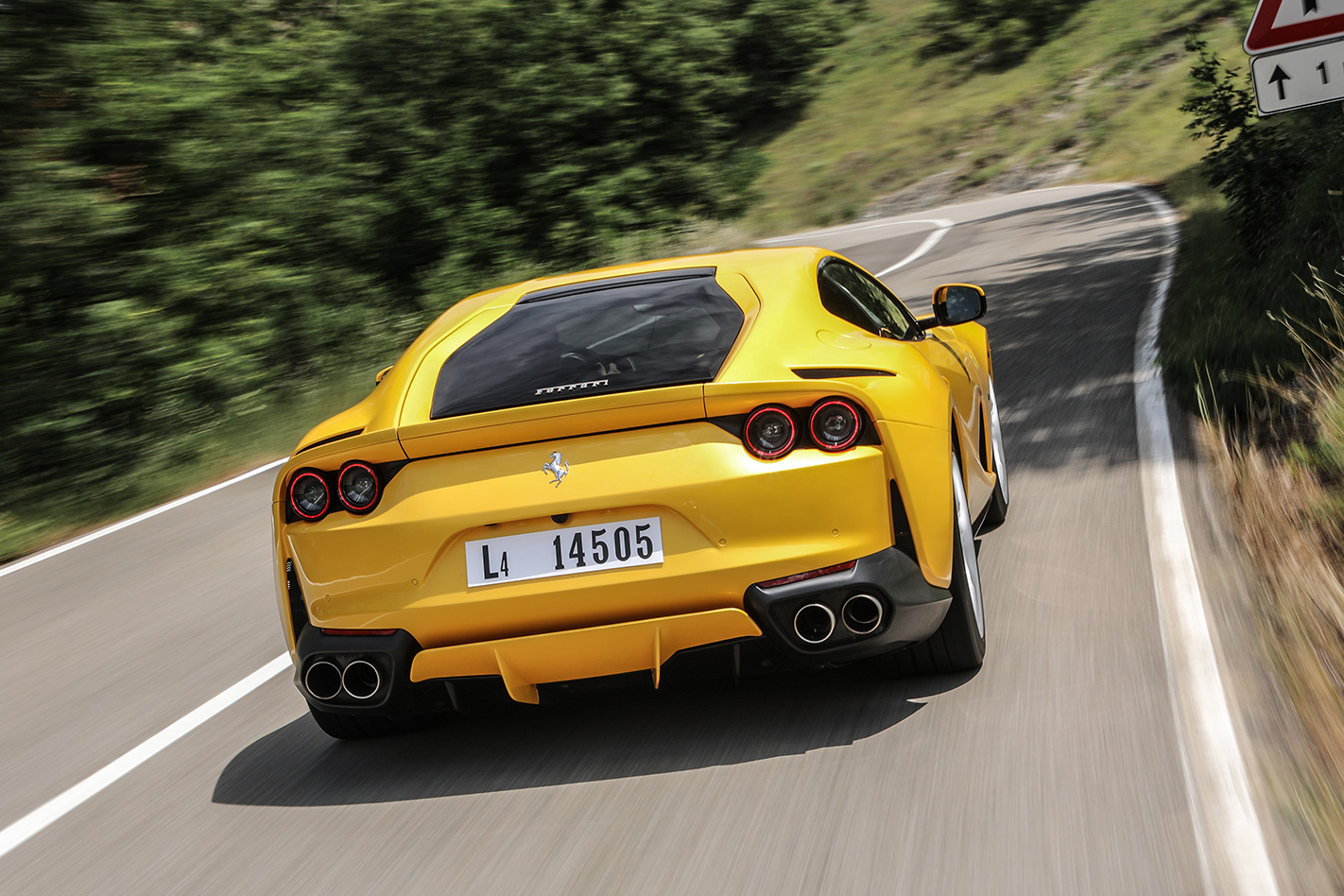
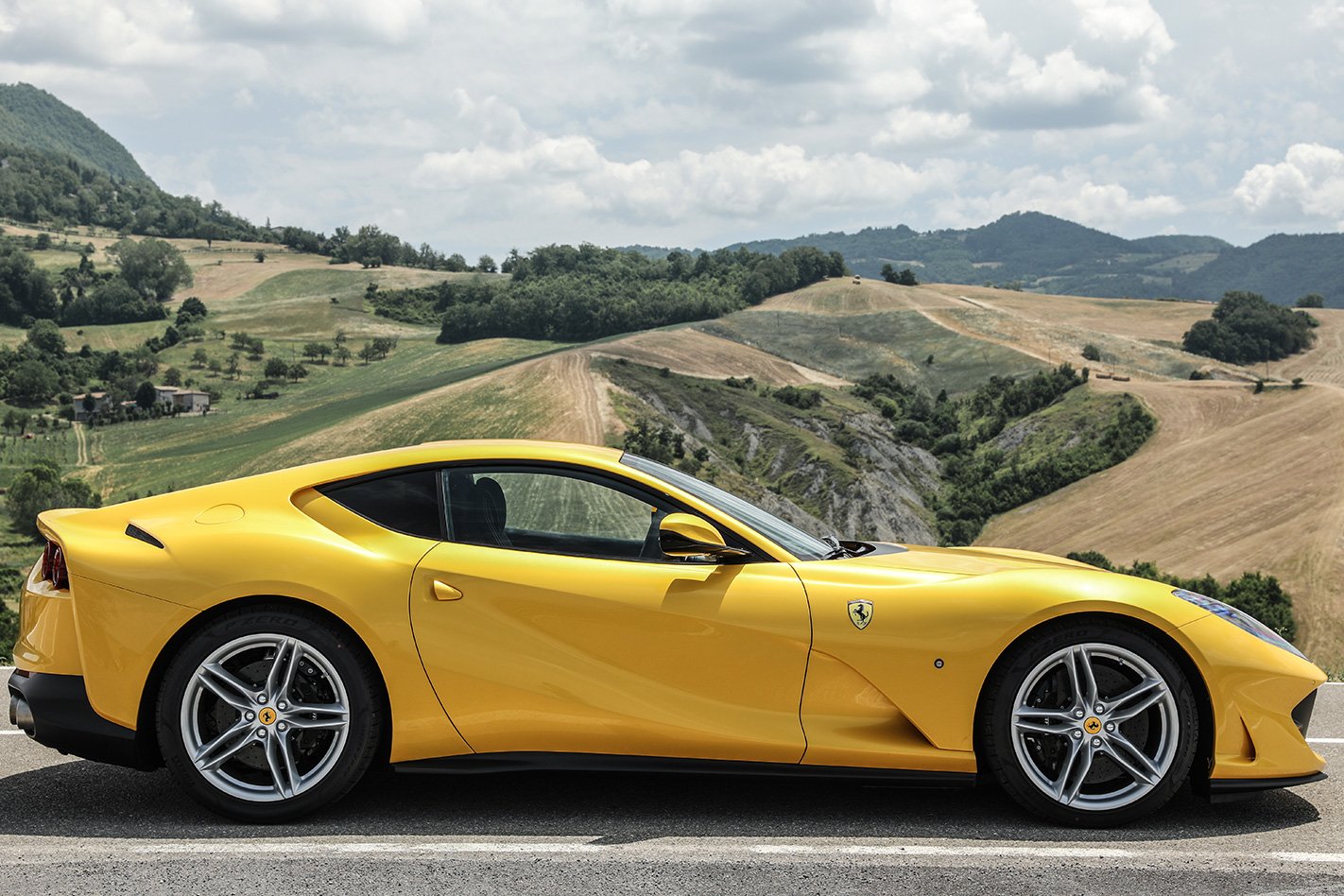
The new Ferrari 812 Superfast is a victim of its own success.
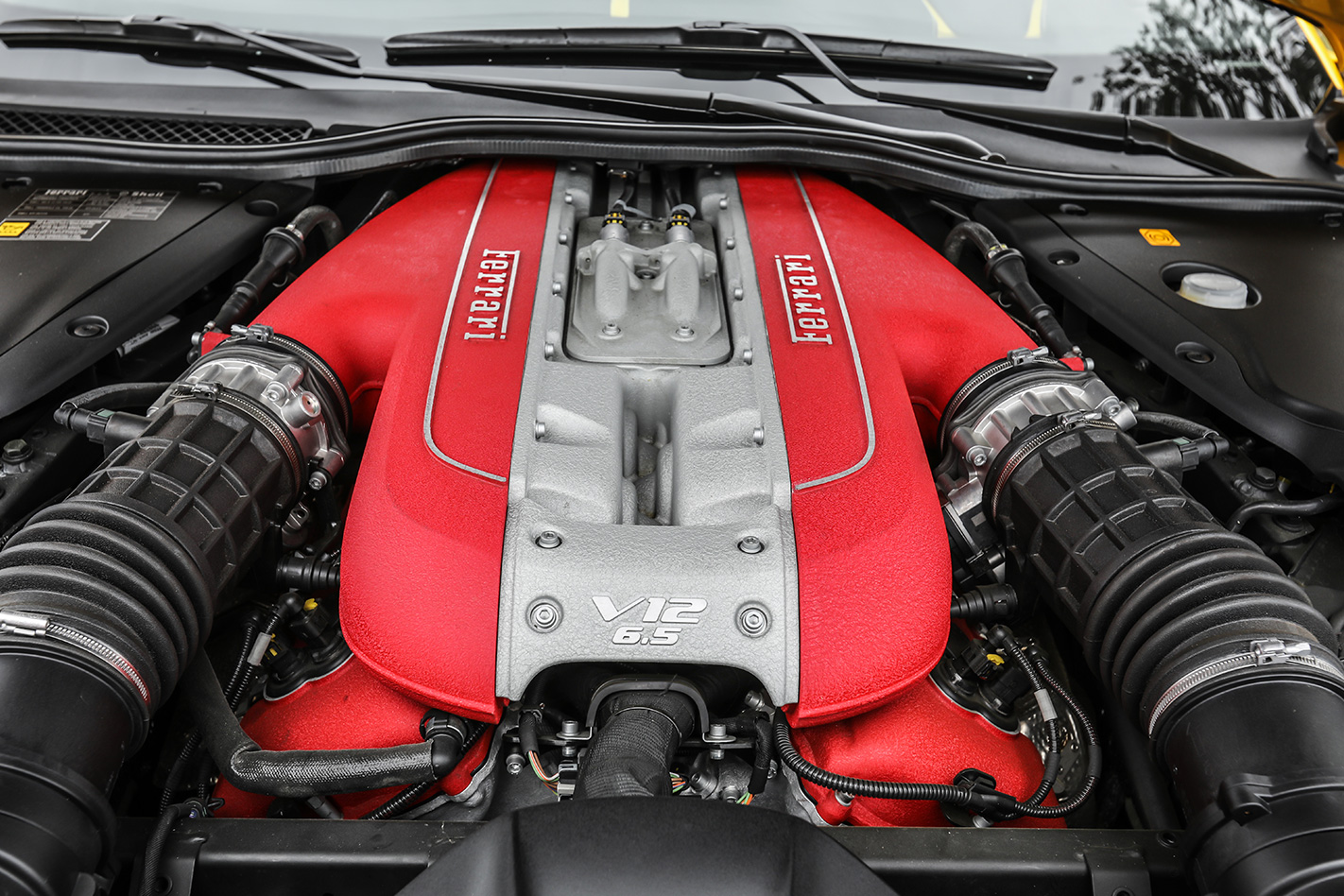
Demand for Maranello’s new 588kW, 340km/h, $610,000 V12 super GT is so strong that Australian pre-orders account for 1.5x the entire expected production run.
Essentially, this means Ferrari has 7.5 years’ worth of orders for an expected five-year production run before the car has even officially gone on sale.
Justin Bieber’s Ferrari 458 up for auction
Sadly for those that didn’t get in early, the situation is unlikely to alter Australia’s allocation. “I thought I’d get in early and get some extra production,” explained Appleroth, “[but] the response was ‘yes, Australia is exceptional, however the response has been somewhat similar all around the world’.”
“The supercar market is in a boom in Australia and we’ve decided to have a progressive 9-10 per cent growth each year; we haven’t met the market’s demands but now we have to do something.”
“We of course look at every single person who orders a car and we know who the speculators are. We’ve been doing this a long time, this is not something new to us but we know how to manage that within our family.
Ferrari Toyota GT4586 circuit shakedown
“We’re happy that our clients over time make money, but we’re not in the interests of making some members of the public a lot of money very quickly. It’s about the enjoyment of the car, it’s about driving.”
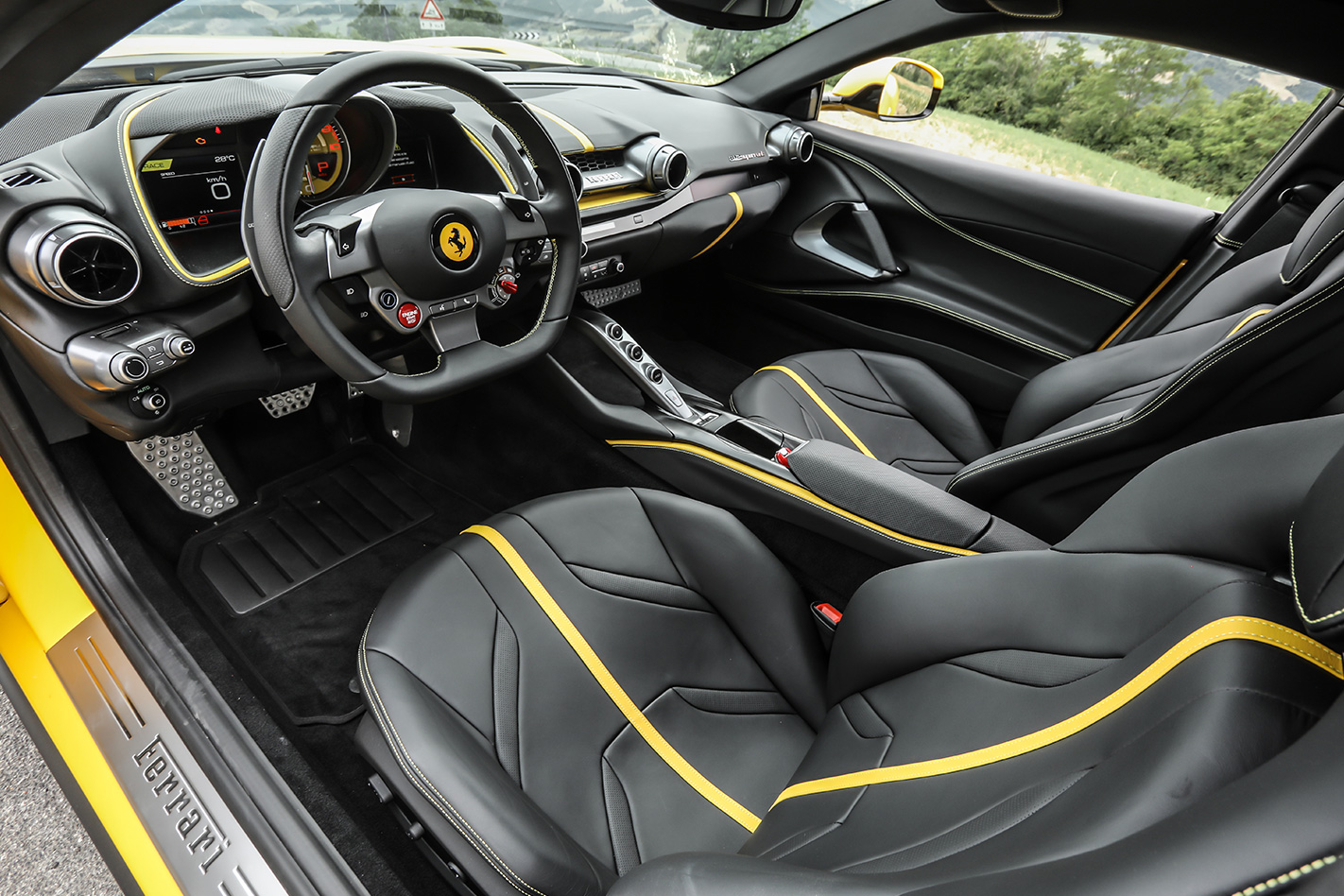
Australia also has the highest percentage of Ferrari buyers in the western world (nine per cent) and the youngest average buyer (48yo overall; 52yo for V12).
The first Australian 812 Superfasts are expected to land in December 2017.
Audi has built its performance reputation on the power of the quattro sub-brand, exploiting a heritage of fast all-wheel drive cars that hark back to the iconic ur-quattro from 1980. Now that looks as if it could change.
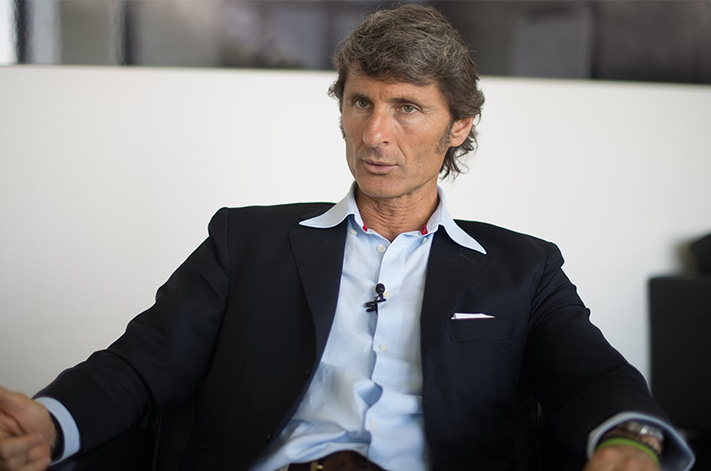
Speaking at the Goodwood Festival of Speed, British publication Auto Express reports that Audi Sport CEO Stephan Winkelmann has all but confirmed high-performance Audi’s may soon send power to just the rear wheels “I can imagine we can also have cars with rear-wheel drive or two-wheel drive in the future,” he said.
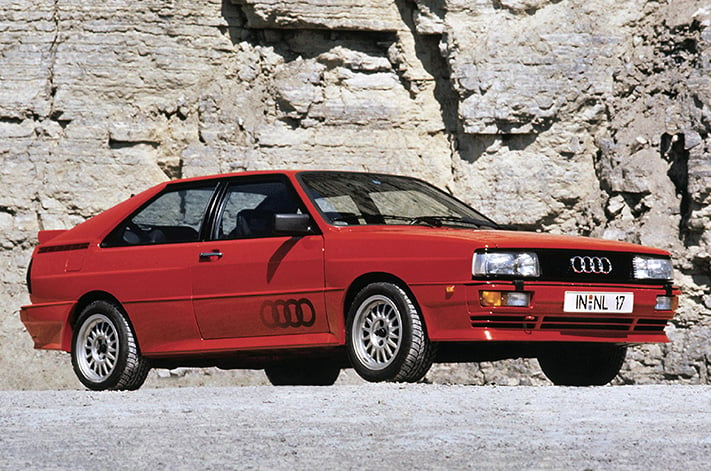
Founded in 1983, Quattro GmbH rebranded itself Audi Sport last year, a move that sparked some to question whether all-wheel drive was the sole solution to future fast Audis. “When looking at the name, we decided Quattro could be misleading,” admitted Winkelmann. “Quattro is the four-wheel-drive system and is one of the things that made Audi great – but in our opinion was not the right name for the company.”

So perhaps Winkelmann was right in pushing to change quattro gmbH to Audi Sport after all. And why, for the first time in almost 80 years, we might get rear-wheel drive Audis. Here’s hoping they’re worth the wait.
You may have noticed vehicle platforms and their codes or names regularly referred to in WhichCar reviews and wondered what all the fuss is about.
While vehicles used to be built on more unique chassis and subframe sets, the continually expanding ranges of vehicles from all manufacturers have required the introduction of a more versatile solution.
That solution is one modular system of shared platforms that provides the basis or ‘architecture’ for a number of models.
The term platform implies a minimal amount of hardware, but the principle can include much more componentry including axles, suspension and all of the main structural parts and underbody to support them.
What’s the advantage? With a common architecture for multiple models and variants, the enormous cost of vehicle development can be spread over a wider range of cars. Further savings are also possible in manufacturing where the single platform occupies just one production line, and the processes that define and differentiate each model happen later.
One key disadvantage is that the close mechanical relationship of multiple cars raises the possibility of each becoming too similar and diluting brand diversity, but various manufacturers focus a significant part of platform development on being able to support a wide range of body shapes, driveline and variant options.
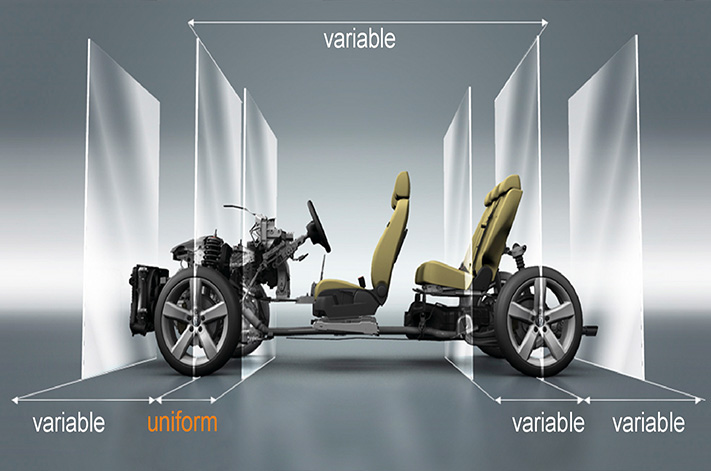
Examples include Volkswagen’s MQB platform which underpins a huge number of models across all of the company’s various marques, from the VW Golf, through the Audi TT to the forthcoming Volkswagen Tiguan Allspace.
As you can see, just because two given models share a platform, they can possess very different dimensions, including internal, external, wheelbase and track measurements.
The Volkswagen Group has a number of platform templates including MEB for electric vehicles and MLB for larger vehicles, but other brands are taking a more holistic approach.
Subaru’s Global Platform now underpins the new Impreza hatchback but the company has plans for the modular architecture to form the basis of its entire range.
The Japanese manufacturer also says that it has engineered the Global Platform to accommodate both hybrid technologies as well as full EV powertrains, which highlights how far into the future car makers must look when developing such a critical component.
While platform sharing is now widely used, it is not a new idea with General Motors the first to implement the idea in the early 1900s. Since then all the major manufacturers have adopted the process, which has resulted in wider range options for customers at more affordable prices.
HONDA quietly upgraded its entry-level baby Jazz hatchback with 15-inch alloy wheels in early 2017, aligning it closer to its more premium siblings, but with an unchanged price tag of $14,990 before on-road costs for the manual, while the CVT automatic attracts a $2000 premium.
The minor update affected just the VTi base Jazz variant, with the higher specification VTi-S and VTi-L continuing on with their more generous equipment levels for $19,790 and $22,490 respectively.
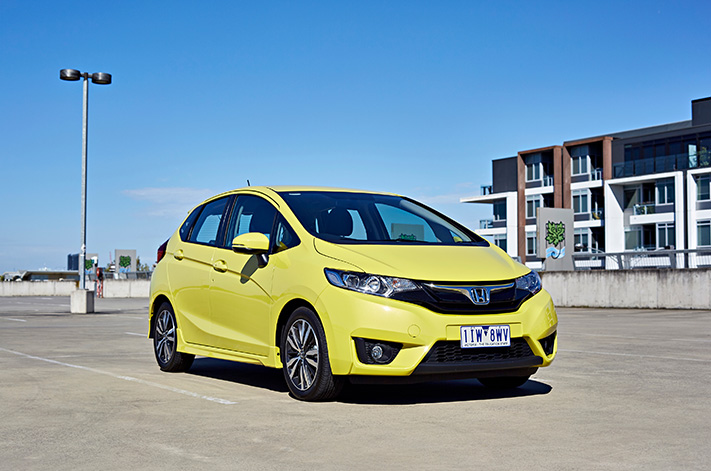
The only engine choice for the Jazz is a 1.5L inline four-cylinder producing 88kW and 145Nm. All variants equipped with the CVT transmission receive steering wheel-mounted paddle shifters.
Fuel economy for the manual VTi is rated at 6.2L/100km on the combined cycle, while CVT-equipped models improve on that figure, dropping to 5.8L/100km.
All trim levels receive LED headlights and tail-lights, electrically adjustable mirrors, power windows, and 6.1-inch touchscreen display with Bluetooth connectivity and controls on the steering wheel.
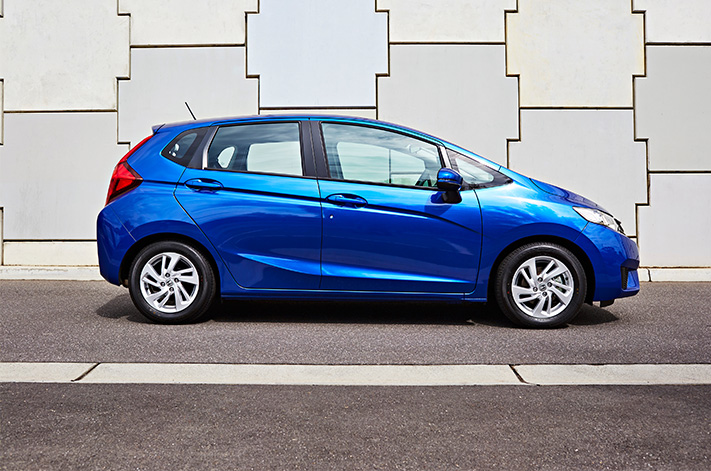
The range-topping VTi-L is equipped with numerous luxury features for the extra $2700 over the VTi-S, most notably including keyless entry with push-button start and heated leather seats.
Speaking of seats, all models have Honda’s clever Magic Seat system as standard, allowing the rear seats to be both folded down and tipped up for voluminous second-row load space and ease of loading.
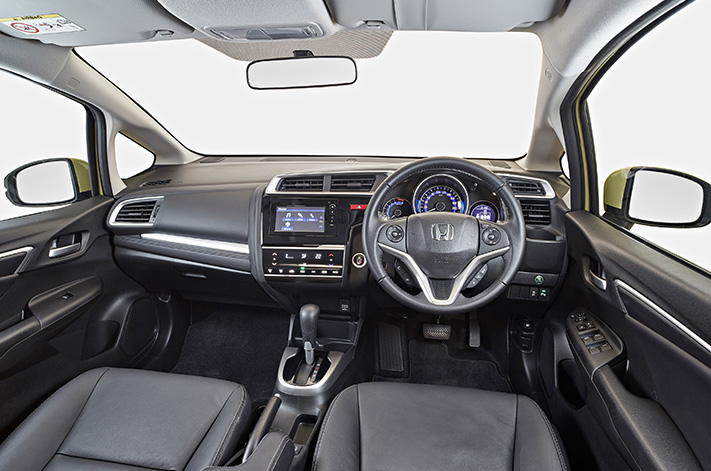
That said, more recent safety enhancements such as forward collision warning and autonomous emergency braking are not available on the Jazz.
At the time of the VTi’s update, the Japanese car maker sang the Jazz’s praises as one of the company’s most popular models – a mantle it continues to hold in third place behind its Civic bigger sister with 4786 registrations to the end of May this year, and the HR-V small SUV with 4761 sales to its name.
List Pricing
VTi manual – $14,990 VTi automatic – $16,990 VTi-S automatic – $19,790 VTi-L automatic – $22,490
A SERIES of recalls to fix unwanted electrical gremlins has revealed one of Tesla’s most tightly-held secrets: the number of cars the boutique electric car maker sells here.
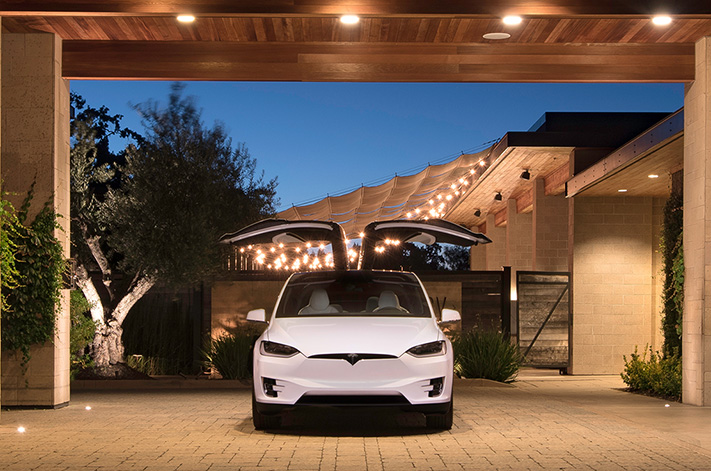
The Californian company sells two vehicles here: the Model S five-door large hatchback and the Karate Kid-doored Model X large SUV.
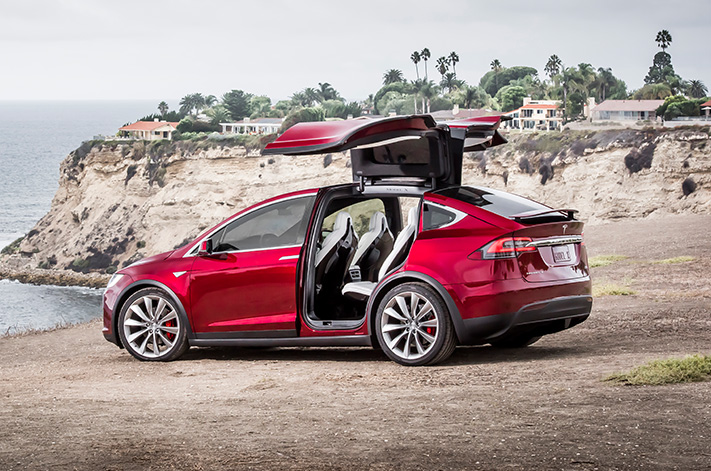
However, it chooses to not provide monthly tallies of its sales, a telling group of numbers provided by just about every other brand on sale in Australia that is compiled by the FCAI and released publicly each month – and giving us a sign of how strong the new-car sales pulse is registering.
But Tesla has recently issued a recall for both the Model S and Model X with build dates running between February and October last year, to repair faulty electric parking brakes in one, and misfiring airbags in the other, which give clues as to how strong its sales here really are.
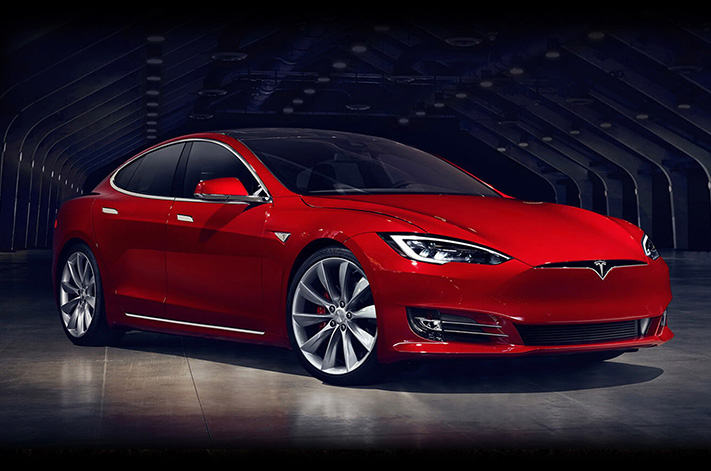
That is in addition to an earlier fix that Tesla rolled out for the Model X, built in the same timeframe as the recalled Model S that covered 324 vehicles.
Average those 793 sales out and calculate it over 12 months, and that suggests Tesla’s annual tally – admittedly coming off the back of strong interest in the Model X that was officially launched here in January this year – currently sits at around 1060 cars a year.
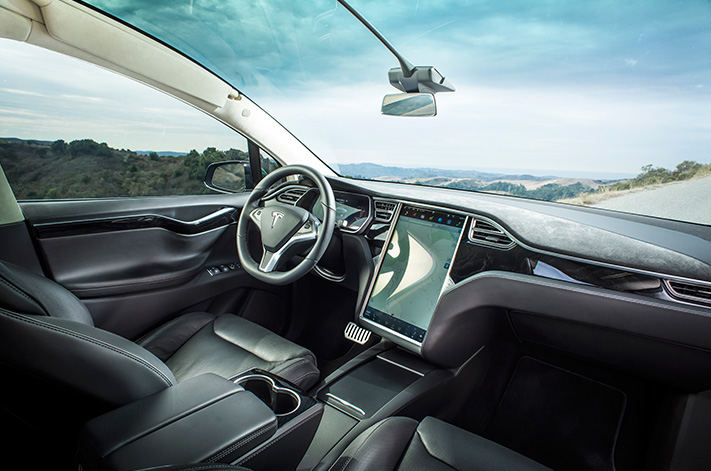
A Tesla spokesman told Wheels it did not report its sales numbers, and therefore could not assist us with verifying the numbers quoted here.
Tesla built 83,922 vehicles last year, information filed with the US Securities and Exchange Commission show. That means Australian deliveries alone would have accounted for almost 1.3 percent of the Californian car maker’s production last year.
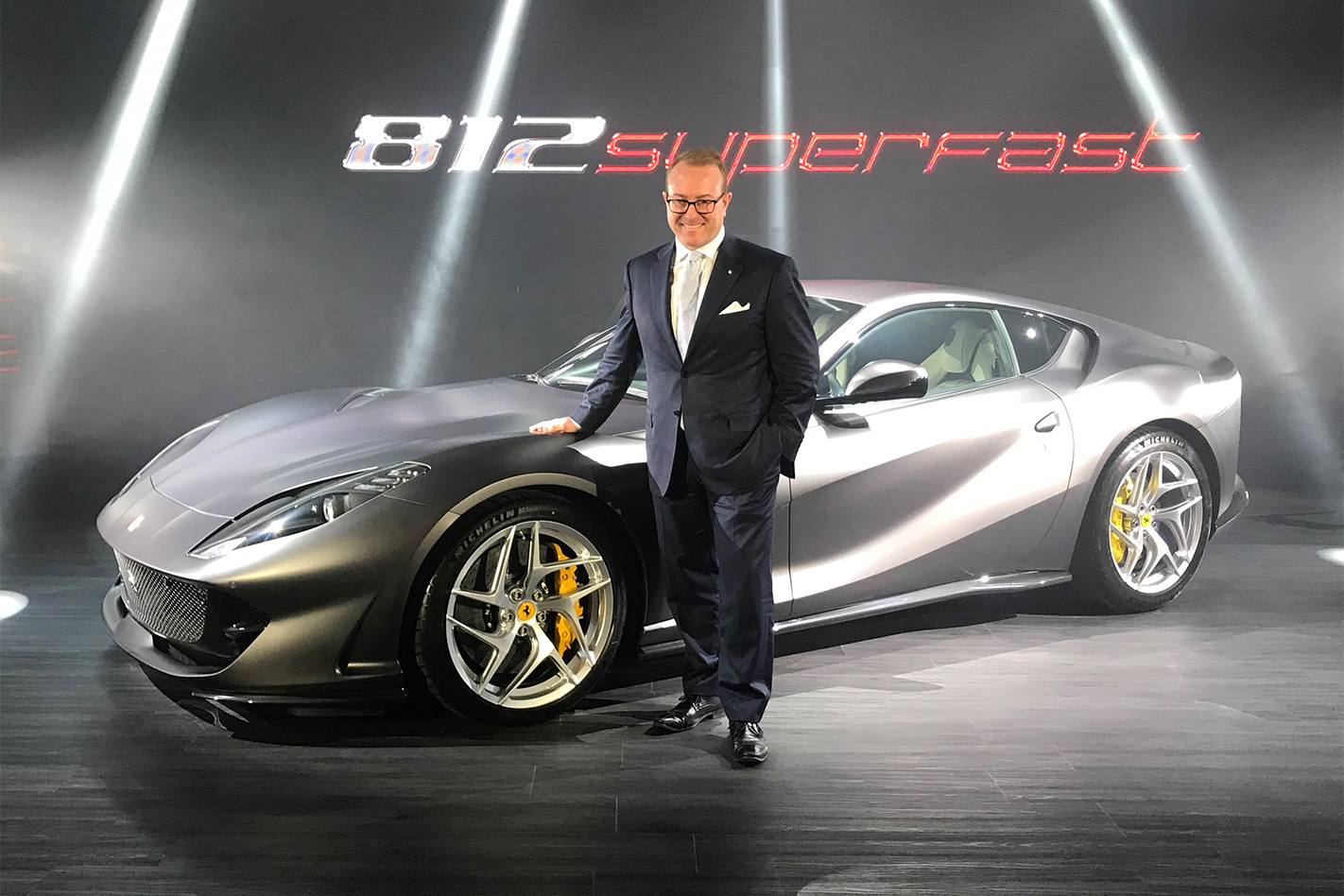
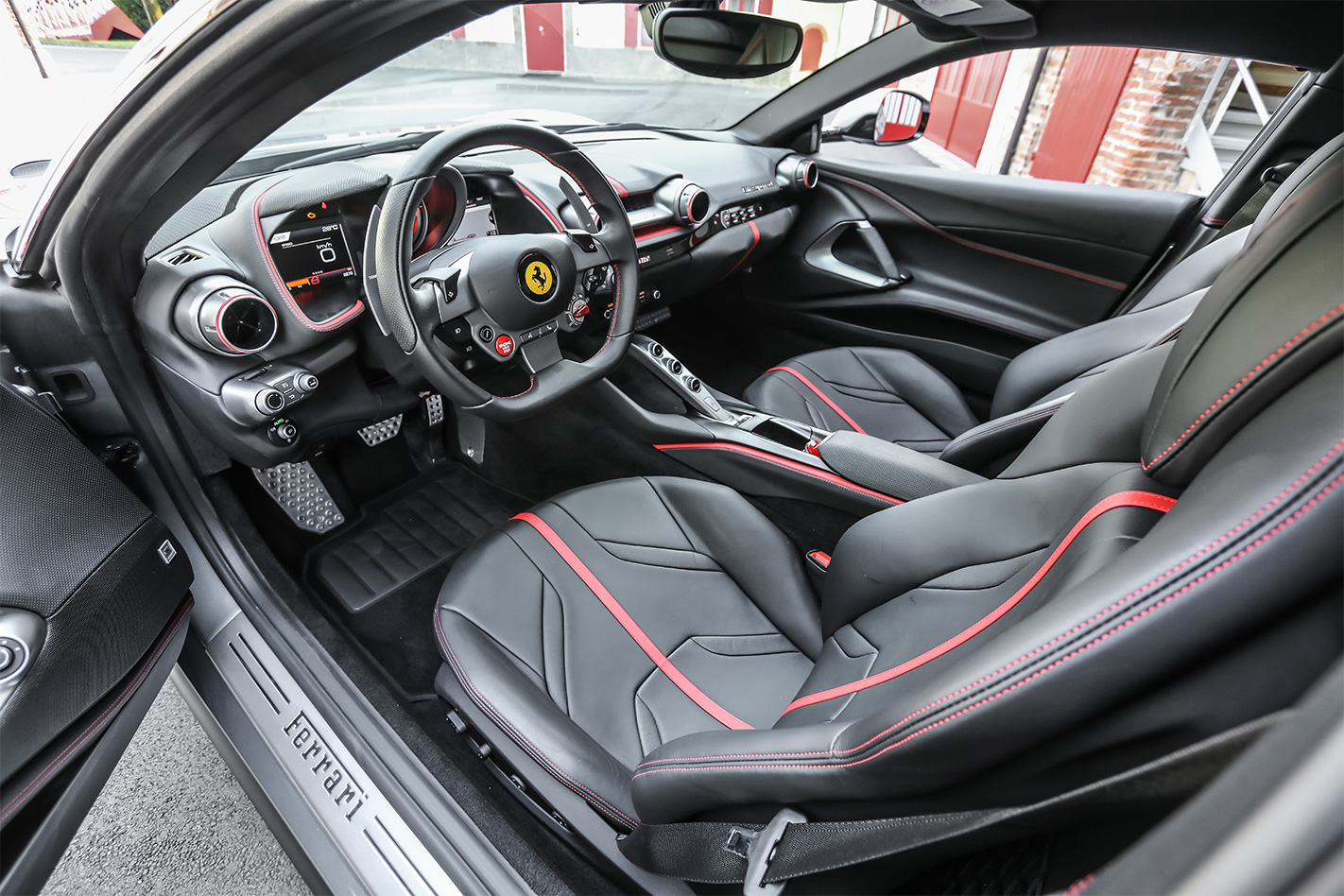
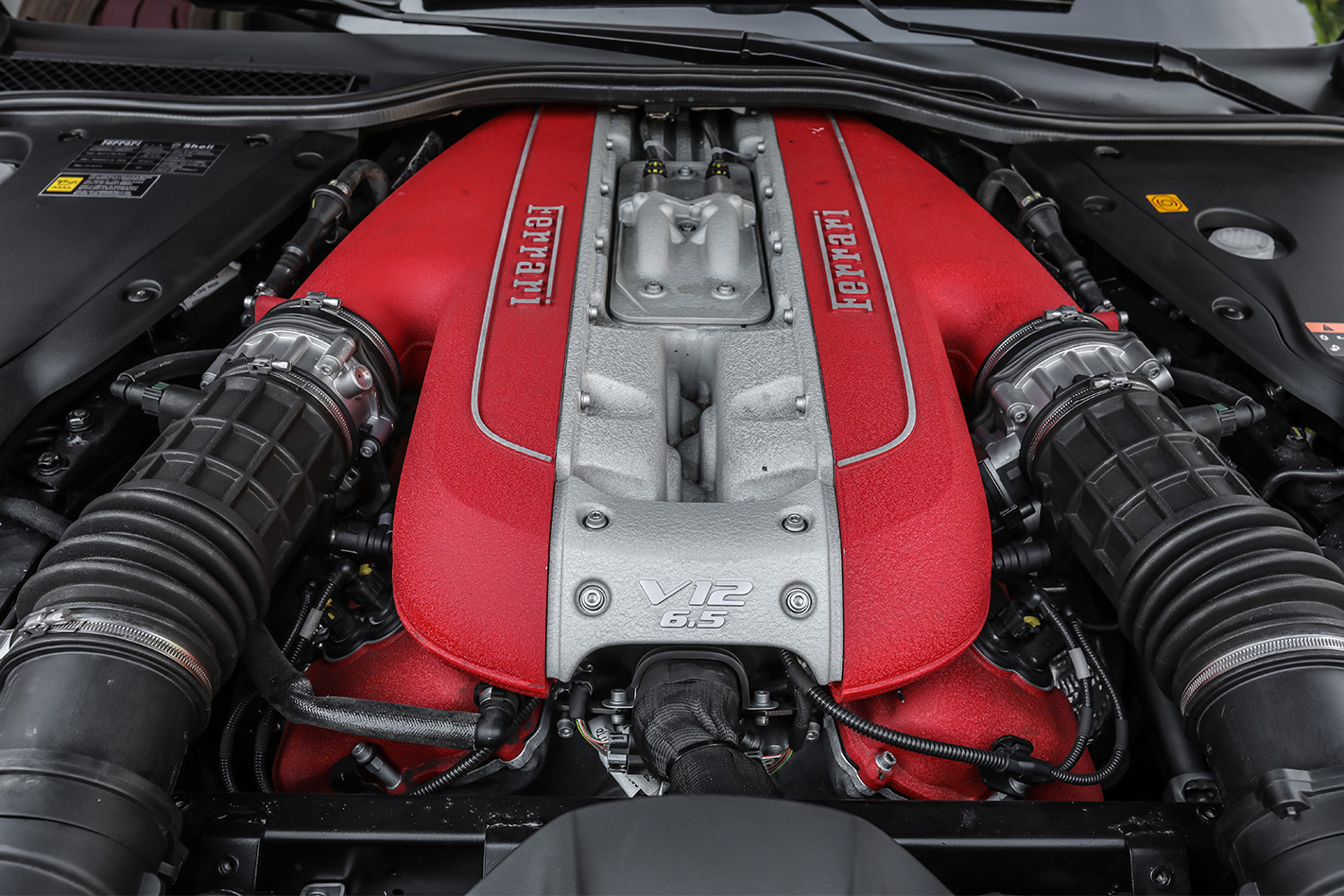
The new Ferrari 812 Superfast has landed in Australia with a much-reduced pricetag.
Granted, $610,000 plus on-roads it still an immense amount of money, however Maranello’s new V12 range-topper undercuts its F12 Berlinetta predecessor by more than $80,000.
The ultimate hypercar track day
And spend it they do, with Appleroth saying he expects the average options spend on an 812 Superfast to be in excess of $100,000, higher than the average across-the-range spend of about $65,000.
Supercars get F1 livery makeovers
It’s the first Ferrari with electronically-assisted power steering, which has allowed engineers to step up the electronic assistance systems, with V2.0 of the Virtual Short Wheelbase all-wheel steering first seen on the F12tdf and V5.0 of Side Slip Control introduced with the 458 Speciale.
Australia’s first 812 Superfasts are expected in December.
HONDA’S fifth-gen Civic Type R hot hatch will cost from $50,990 when it arrives in Australia this October as a single, highly equipped model.
Australian Civic Type Rs receive a slightly detuned version of the 2.0-litre turbocharged four-cylinder VTEC engine, which will produce 228kW and 400Nm on 95RON petrol and be suitable for our hot weather conditions. European and Japanese Civic Type Rs put out 235kW on 98RON fuel.
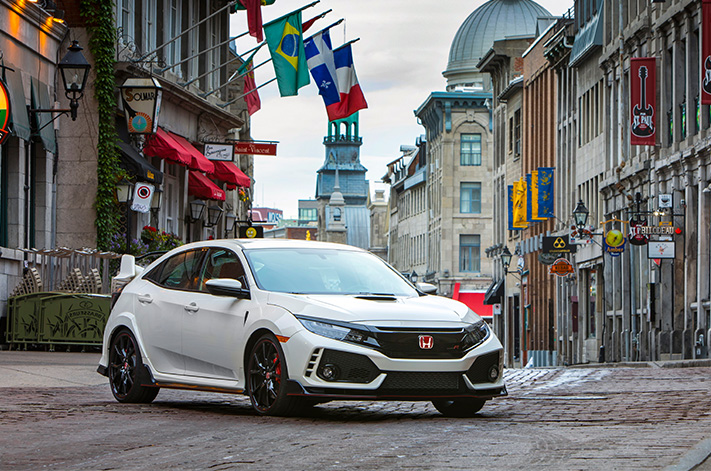
The gearbox is limited to a six-speed manual in all markets. The Civic Type R is front-wheel drive and holds a record for being the fastest front-driver to lap the Nurburgring racetrack. Some of the Type R’s competitors are all-wheel drive, such as the Ford Focus RS and Volkswagen Golf R, though the Civic is lighter than both of those cars and has a competitive power-to-weight ratio.
Standard equipment for locally delivered Civic Type R models includes adaptive dampers, Brembo brakes, 20-inch alloy wheels with Continental SportContact 6 tyres, and active safety systems and driver assistance features such as automatic emergency braking (AEB), radar cruise control and lane departure warning.
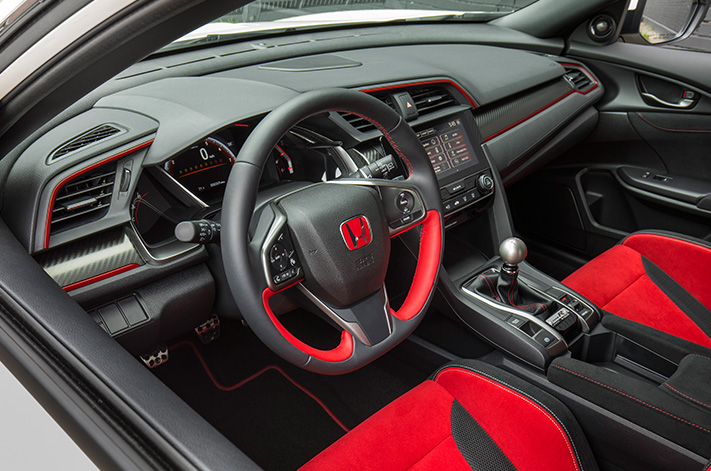
An exterior aero package, sports seats, rear-view camera, parking sensors, smart entry with push-button start and smartphone integration via Apple CarPlay or Android Auto are all standard as well.
The Type R has model-specific upgrades to reduce torque steer and improve cornering including its own spring, damper and bushing settings, as well as a ‘Dual-Axis’ front axle with aluminium arms and steering components. It also has multi-link rear suspension, adaptive variable electric power steering and a limited-slip differential.
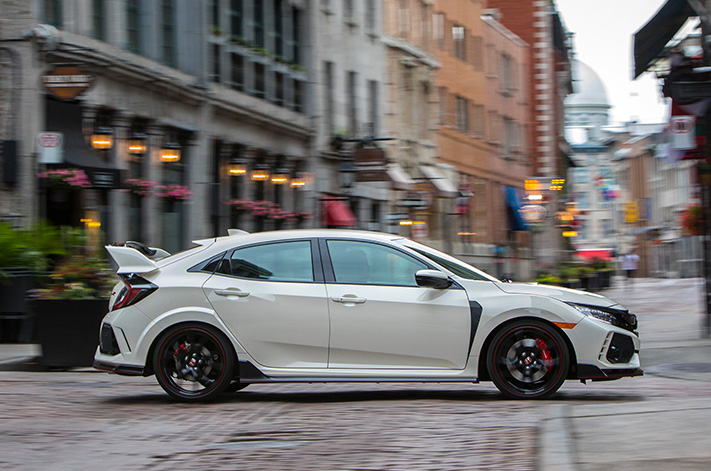
Comfort, Sport and R+ driving modes allow the drive to switch between different settings for steering and throttle response, transmission rev-matching, stability control and adaptive damping.
“Honda Civic Type R strikes a fine balance between extreme performance and everyday usability,” the brand claims.
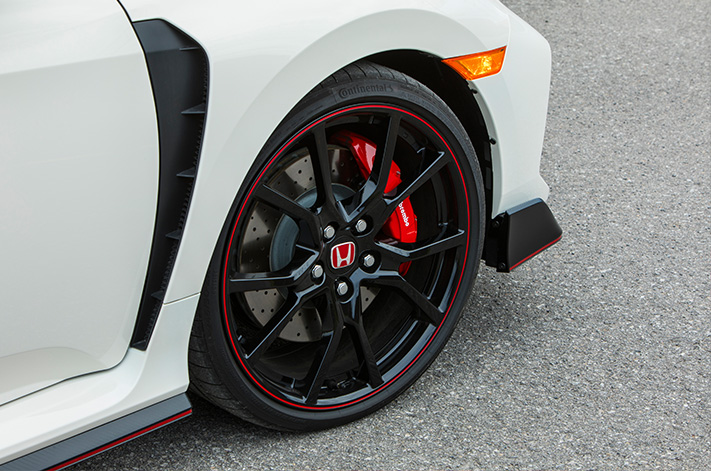
Further differences to other 10th-gen Civics include a four-seat configuration, with no middle seat in the rear. Boot space is 414 litres. Fuel economy for Aussie models is listed at 8.8L/100km.
Five paint options are available including the Championship White hero colour, plus Rally Red, Crystal Black, Sonic Grey and Brilliant Sporty Blue.
At least 200 firm orders are currently held by Honda dealers in Australia, with more than 5000 expressions of interest on top of that. Those at the top of the list will start receiving their Civic Type Rs in October. Buyers placing an order now should expect to face a wait.
