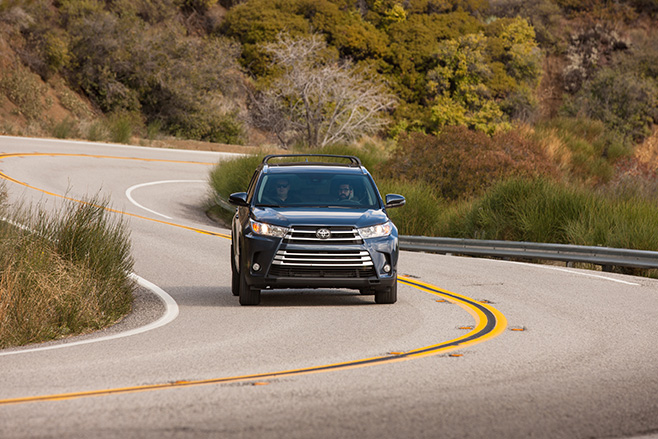
Toyota Australia has launched its updated Kluger family, with a multitude of mechanical and cosmetic changes designed to keep the big seven-seater family bus competitive in one of the most fiercely-contested segments.
The changes have resulted in a price rise between $1360 and $2360 depending on variant and include improved performance and efficiency. The 3.5-litre naturally-aspirated V6 of the current car remains the sole powertrain on offer, but power and torque gets pumped up by 17kW and 13Nm to take peak outputs to 218kW and 350Nm.
The adoption of direct fuel injection and an increase in compression ratio are responsible for the new Kluger’s newfound grunt, yet also help reduce fuel economy by a claimed 10 percent.
A new eight-speed automatic gearbox replaces the outgoing car’s six-speed, and also does its part to improve efficiency.
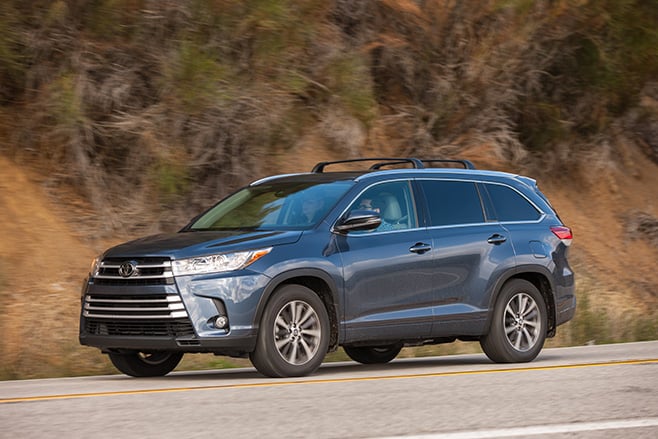
The Kluger range will continue to be sold in either front- or all-wheel drive form, with the latter employing a front-biased on-demand AWD driveline. Official combined-cycle fuel economy ranges from 9.1L/100km for the FWD GX and GXL, to 9.5L/100km for AWD variants.
The 2017 Kluger’s exterior receives new grilles (silver on GX and GXL, chrome on Grande), tail lamp housings, alloy wheels (18-inch on GX and GXL, 19s on Grande) and three new body colours – silver, brown and a deep red.
On the inside, new materials and soft-touch surfaces are joined by metallic silver highlights on GX and GXL grades, while the Grande scores silver faux woodgrain and blue LED ambient lighting to give it a more premium aura.
Equipment upgrades include an eight-inch infotainment display with satellite navigation and a digital radio tuner make its way into the GXL, along with a power-operated tailgate with independently-opening glass. Other standard GXL kit includes three-zone climate control, keyless entry and ignition, leather upholstery and heated front seats.
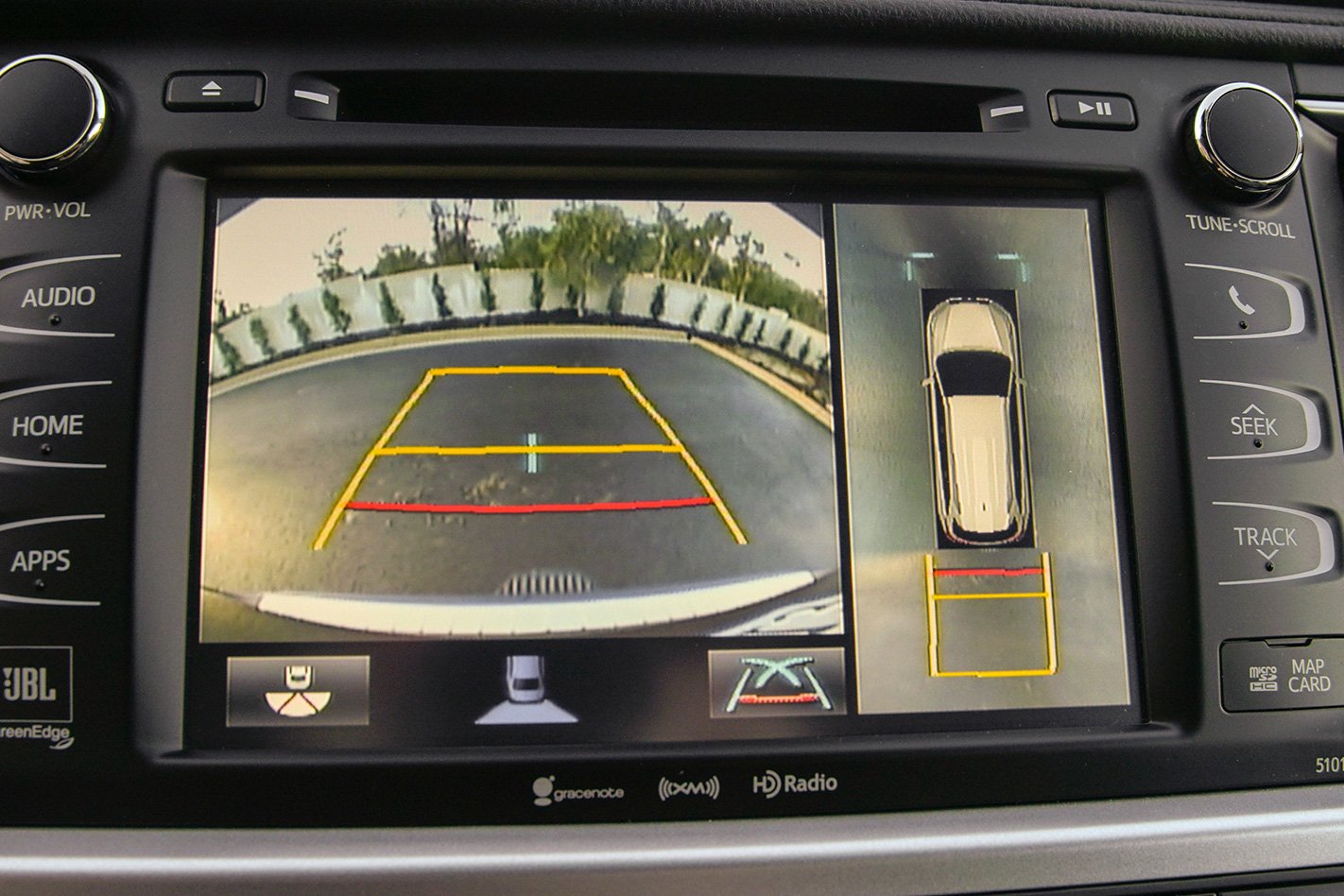
The GX misses out on major changes to its spec sheet (which presently includes cruise control, basic air conditioning, a six-speaker audio and front foglamps), but the Grande now receives front parking sensors as standard, a bird’s-eye view parking camera display and chrome rear bumper garnish.
That’s in addition to the Grande’s power-retractable moon roof, heated and ventilated front seats, nine-inch rear seat entertainment displays, heated wing mirrors and built-in retractable sunshades for the rear seats.
Seven airbags, reversing camera, reverse parking sensors, ABS, brake assist, electronic brakeforce distribution, stability control and traction control round out the Toyota Kluger range’s list of standard safety equipment.
However, buyers will need to head straight for the top-grade Kluger Grande to find more cutting edge safety tech like collision detection, autonomous emergency braking, active cruise control, lane departure warning and blind spot monitoring.
2017 Toyota Kluger Pricing
GX $43,550 (+$1360) GXL $53,550 (+$2360) Grande $65,935 (+$1860) AWD: Add $4000 ($29 less on Grande)
SsangYong has revealed rendered images of its new seven-seat SUV concept car, the XAVL, which will debut at the Geneva Motor Show in March.
The Korean carmaker says the XAVL mid-size SUV is an updated and up-sized version of the five-seat XAV concept which was revealed at the Frankfurt show in 2015.
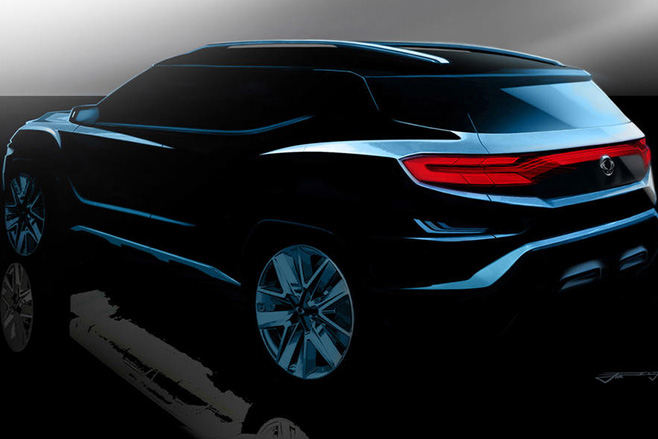
Expected to be a similar size to the Nissan X-Trail and Skoda Kodiaq, the XAVL concept’s name stands for “eXciting Authentic Vehicle Long”. Not terribly imaginative, but acronyms rarely are. Styling is an evolution of the XAV concept’s edgy lines, and, like the XAV, takes some inspiration from the Jeep-like second-generation Ssangyong Korando.
Besides boasting a bigger cabin and a third row of seating, the XAVL is also expected to feature a suite of new safety tech for passengers and pedestrians, as well as preview Ssangyong’s next-generation infotainment system with enhanced connectivity.
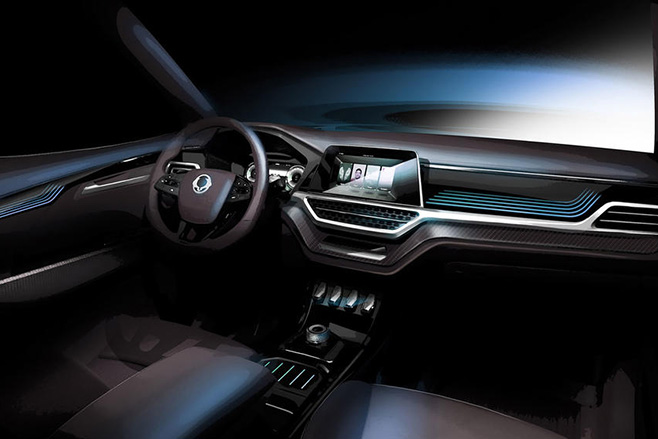
How far is it from the showroom? Well considering the XAV has yet to find its way to a production line, the XAVL is similarly unlikely to go on sale before 2020 – if it ever eventuates, that is. If it does, SsangYong claims the XAV and XAVL will be powered by a diesel and petrol engine in road-going form.
Even if the concept is turned in to a reality, however, we’re unlikely to see it on Australian shores any time soon. The SsangYong brand is in the process of being wound down in this country, and the Korean automaker sold a grand total of 371 cars in 2016.
The Australian Automobile Association has released its latest Transport Affordability Index, with data collected over the final quarter of 2016 revealing that car ownership, when judged as a national average, takes up 13.6 percent of the typical Australian household’s income – an increase of 0.2 percent over the previous quarter.
The index also covers every capital city and weighs vehicle-related ownership expenses like tax, insurance, maintenance, fuel consumption, finance and tollways against the median income. The cost of public transport is also taken into account, but usually pales in comparison to vehicle costs. Depreciation isn’t factored in, nor are parking or air travel expenses.
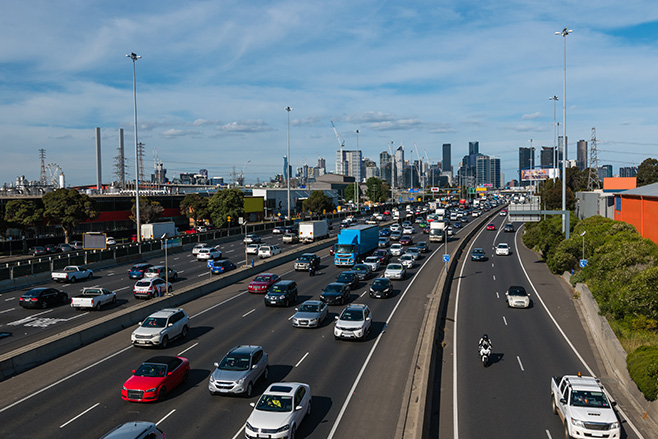
The Index uses a hypothetical household made up of two adults, children and two cars (one ten years old, the other near-new) earning the average wage for that particular city. One adult in this hypothetical family unit also travels to and from their suburban home to the city every weekday.
For the fourth quarter of last year, the index found Sydney and Melbourne, the two most populous cities in Australia, endured the biggest rise in household transport expenses, with annual costs jumping by $397 in Sydney and $519 in Melbourne.
Fuel was the greatest driver of those increases, though tolls also took a heavier, toll on transport expenses too. In fact, if toll costs were ignored, Perth would have overtaken Melbourne to come in at fourth most-expensive overall.
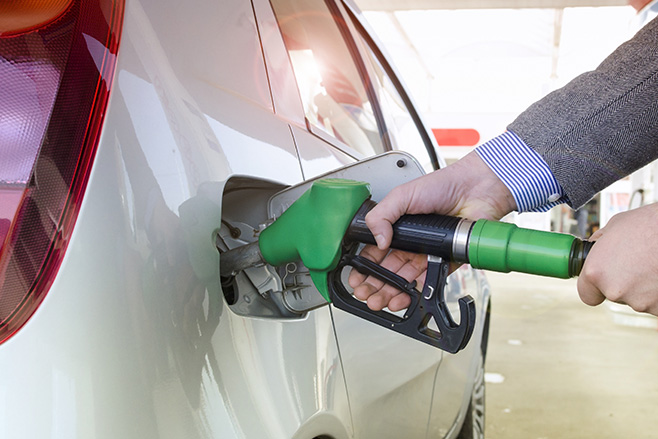
That said, according to the index the biggest single expense that car-owning households have to deal with continues to be car repayments, accounting for at least $120 per week on average – roughly a third of total weekly transport costs. Fuel, the next-biggest expense, comes in at roughly half that amount.
Average annual transports costs in Sydney were the highest by far, with the typical family spending $22,050 per year on mobility. Brisbane came in second with an annual cost of $19,409, despite being the only city to see a reduction in transport costs compared to the previous quarter.
Meanwhile Hobart was the lowest with a 12-month total of $14,438. Smaller cities typically fared better due to costs for public transport, driver’s licences and vehicle registration being less costly than in Australia’s major population centres on the East Coast. The absence of toll roads in cities like Adelaide, Hobart, Canberra and Darwin also helped keep transport expenses low.
Proof that sometimes less really is more.
BY their nature, performance cars have an enormous hill to climb at Car of the Year. Typically compromised on space and comfort at the expense of going fast, they nail some COTY criteria but fall spectacularly flat in others.
Except the BMW M2 arrives with very few of those go-fast compromises.
Utilising much of the body of the regular 2 Series but with 80mm added to its girth, the M2 benefits from a compact yet spacious cabin that can transport four people at a pinch.
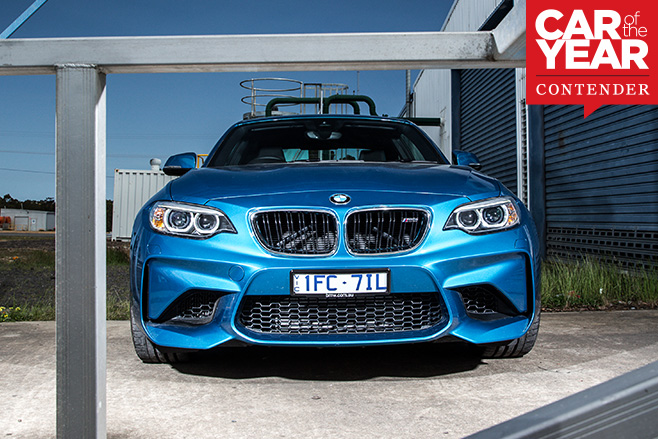
Judges also loved the simplicity of what is BMW’s most affordable M model. Whereas M cars with larger numbers require button pressing and adjustments to alter throttle mapping and gearshift points, the M2 is more point-and-shoot from a choice of three driving modes.
The M2 also has some worthy additions to the BMW family, such as autonomous emergency braking. BMW has been resisting on the grounds that drivers should be in control of driver’s cars, yet it’s finally succumbed to the inevitable with this iteration. The AEB worked well when aimed at a regular passenger car, but didn’t always pick the back of our ute target.
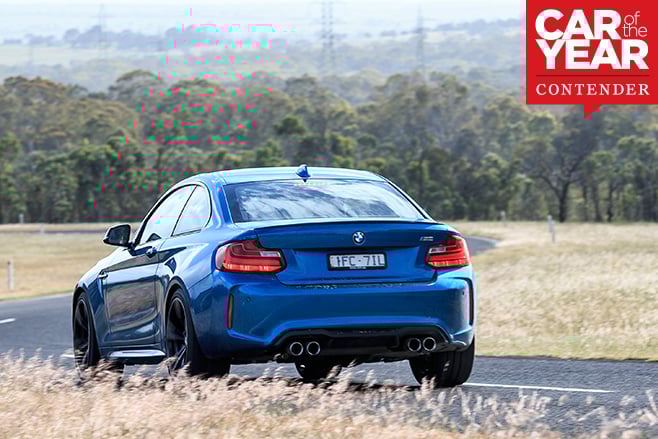
In the Pure form of our COTY tester it’s a $90K proposition – and one that brings near-Porsche 911 acceleration to the bitumen.
Indeed it’s the engine that cements the M2 as such a delight. Incredible tractability and low-rev torque flourishes to a near-7000rpm concerto of big kilowatts. It’s an engine rarely lacking, yet one that happily obeys more mundane commands in everyday driving.
It’s teamed with one of the slickest DIY-shifters in the business. That six-speed manual is arguably the better transmission with a wonderfully crisp and accurate shift action, even if it adds 0.2 seconds to the 0-100km/h time achieved by the seven-speed DCT.
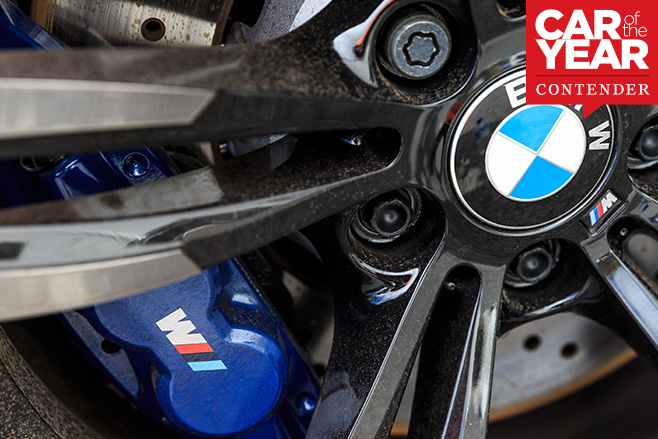
Its brakes, too, are a bit underwhelming, giving the occasional metallic grind.
In the end, though, while the M2 did score two votes from the judges, it’s more a welcome return to form for M than a genuine boundary breaker, which is why it failed to progress beyond round one. Yet that shouldn’t detract from the M2’s apeal. This is the kind of car BMW’s M Division should be making.
Specs
BODY Type: 2-door coupe, 4 seats Boot capacity: 390 litres Weight: 1495 – 1520kg
DRIVETRAIN Layout: Front-engine (north-south), RWD Engine: 2979cc 6cyl turbo (272kW/465Nm) Transmissions: 6-speed manual; 7-speed dual-clutch
CHASSIS Tyres: 245/35ZR19 (f), 265/35ZR19 (r) ADR81 fuel consumption: 7.9 – 8.5L/100km CO2 emissions: 185 – 199g/km (combined) Collision mitigation: No Crash rating: Not tested Prices: $89,615 – $98,615
Sizzling performance meets fizzling value equation.
‘OLD SCHOOL’ isn’t a descriptor one would usually apply to a cutting-edge, $400,000 flagship supercar from Audi, and yet, in the context of this year’s Car of the Year field, it’s apt. Alongside the other piece of lotto-prize exotica on hand – the fiendishly complex hybrid-powered Honda NSX – the recipe for Audi’s second-gen R8 is decidedly conventional: big, aspirated engine in the middle, four-wheel drive, and styling that, initially at least, looks more like a rehashed version of the original than something new-gen.
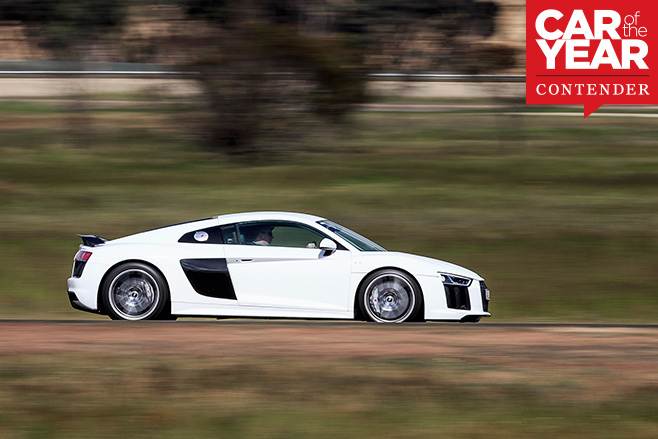
And yet, it’s precisely this simplicity, this dynamic honesty and the R8’s instant sense of hardwired connection that won so many hearts among the COTY judges.
Key to the appeal is, of course, the R8’s howling V10, a shining beacon of an atmo engine at its best. Pin-sharp, soulful and eager to rev, it is, quite simply, one of the great supercar donks, and provides one of the great supercar noises, especially with the exhaust button deployed.
Two power outputs are available (see specs, left) though only the more rabid Audi R8 Plus version, which hones in on its 8700rpm limiter with a frenzied fury missing in the standard car, was on-hand at COTY. Plus versions score a firmer, fixed suspension set-up, extra lashings of carbonfibre inside and out (including that fixed carbon rear wing), fixed sports seats and standard carbon-ceramic brakes.
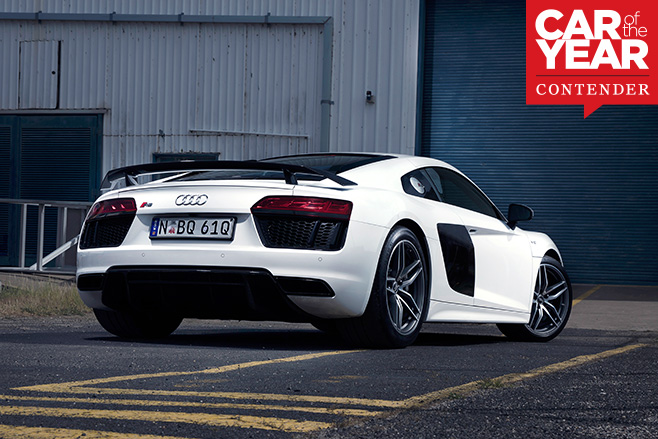
Despite the additions, judges who had driven the regular V10 Coupe argued that it’s potentially the smarter buy, due to its marginal loss in performance, softer, more comfortable suspension and $35,000 saving.
In both cases, Audi’s engineers have nailed the dynamics. R8 V2.0 is lighter and 40 percent stiffer than before, thanks to a chassis that’s now 79 percent aluminium and 13 percent carbonfibre, and the result is an out-and-out supercar with a stunning breadth of ability.
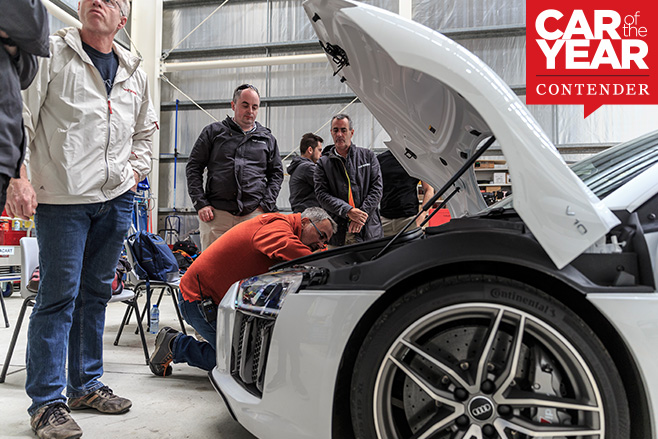
And while the R8 feels alive at, or even beyond, its limits, it’s just as capable at cruising in city traffic in relative comfort thanks to suspension that’s supple enough and excellent visibility. The redesigned interior was singled out for particular praise too, thanks to its stunning combination of quality materials, futuristic design and intuitive ergonomics.
Where the R8 begins to stumble, however, is in the efficiency stakes. The double-edged sword of retaining that atmo heart means the V10 Plus slurps 12.3L/100km, despite Audi’s claimed 13 percent fuel consumption improvement over the first-gen car.
It’s arguably not that great against the technology criterion either, even with its carbon-infused chassis, laser headlights and standard inclusion of Audi’s excellent Virtual Cockpit. While these additions bring welcome advances, this new car feels more like an excellent refinement of the original R8 recipe, rather than a step-change with genuine innovation.

Which brings us to value, where, as is normally the case with supercars, the law of diminishing returns raises is ugly, serpentine head. Compared to the similarly priced NSX, though, the more conventional, more accessible R8 is the more engaging, and the judges’ pick, even if it is less technically advanced.
Specs
BODY Type: 2-door coupe, 2 seats Boot capacity: 112 litres Weight: 1555 – 1595kg
DRIVETRAIN Layout: mid-engine (north-south), AWD Engines: 5204cc V10 (397kW/540Nm); 5204cc V10 (449kW/560Nm) Transmission: 7-speed dual-clutch
CHASSIS Tyres: 245/35R19 – 305/30R20 ADR81 fuel consumption: 11.4 – 12.3L/100km CO2 emissions: 272 – 287g/km Collision mitigation: No Crash rating: not tested Prices: $354,616 –$389,616
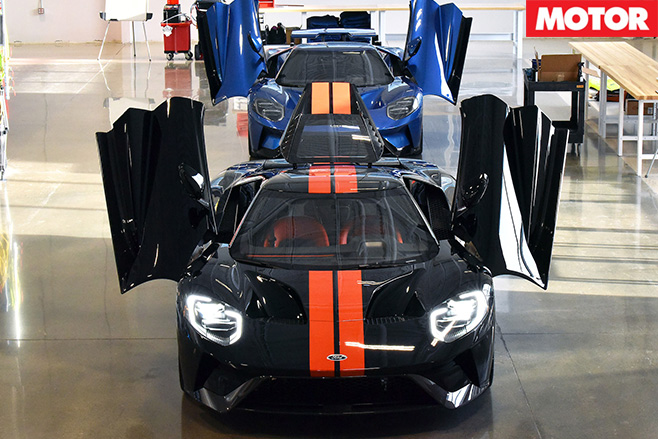
When the super wealthy applied to buy the super-limited-run Ford GT and were rejected, denial and anger kicked off the stages of grief before bargaining with the Blue Oval began.
Given that over 6500 applications were received for a total production run of 500 units of the twin-turbo V6 supercar, Ford politely doubled the initial allocation. But what they didn’t reveal at the time was that a GT Competition Series was also being readied.
While not officially confirmed by the company, US website Autoblog.com has published scans of the owner’s manual found in newly delivered GTs that states alternate operating procedures for what it states – in Ford corporate font – is a ‘Competition Series.’
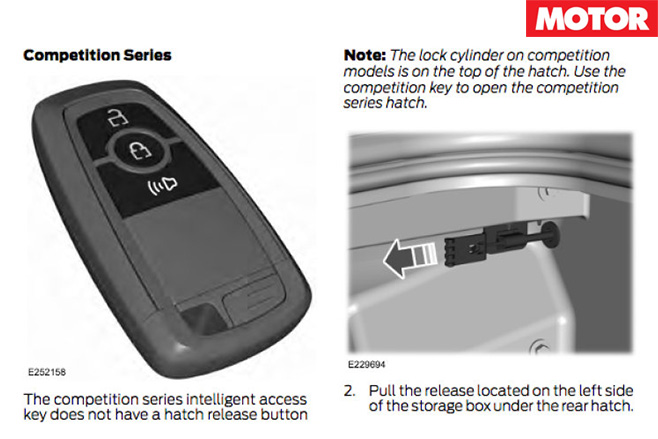
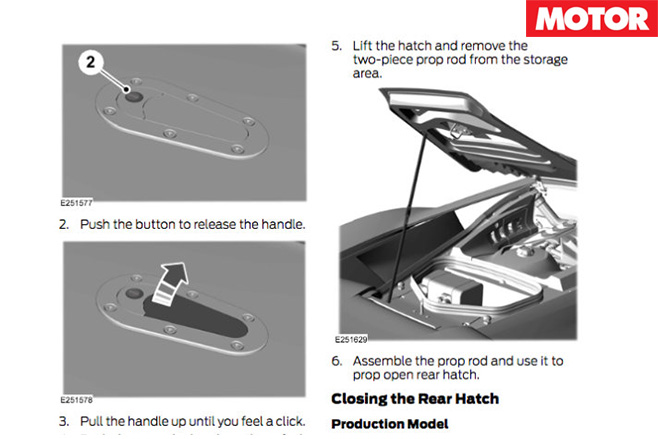
At the rear of the vehicle, twin mechanically-operated latches appear surrounded by racecar-spec rivets, with the manual advising to “push the button to release the handle” and then “pull the handle up until you feel a click.”
Gas struts to hold up the rear hatch are replaced by a “two-piece prop rod” located in the storage bay.
Ford both in the US and Australia can’t shed any further light on the GT Competition Series or whether its production will be a part of or in addition to the 1000-unit confirmed build.
Specifications released early this year revealed that the GT weighs 1363kg, with its Ecoboost 3.5-litre twin-turbo V6 petrol engine producing 482kW at 6250rpm and 746Nm at 5900rpm, and sending drive to an LSD-equipped rear axle via a seven-speed dual-clutch transmission.
Pic credit: Autoblog.com
Plenty of folks have done what they thought was the smart thing: they snapped up a VF Series 2 Commodore SS or SS-V and hid it away, figuring the last SS Commodore will have to be worth money in the not-too-distant.
Thing is, they might have jumped the gun. See, taking a leaf out of Ford’s book, Holden has saved a handful of special, final-edition models till the last gasp of local production. You can order them from early 2017, but you won’t take delivery until the middle of the year.
And, if anything, they’re going to be even more collectible than those last SS and SS-Vs. How come? Because – like the Falcon XR8 and XR6T Sprints – the last performance Commodore Special Editions (as Holden is calling them) will be just that – a bit special. Or a lot special. Depends on how you look at it.
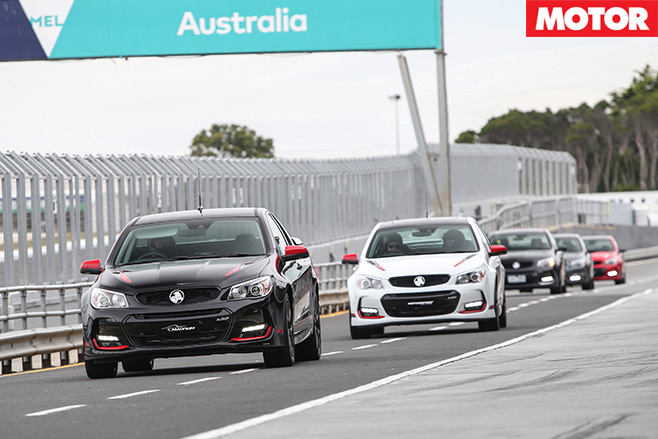
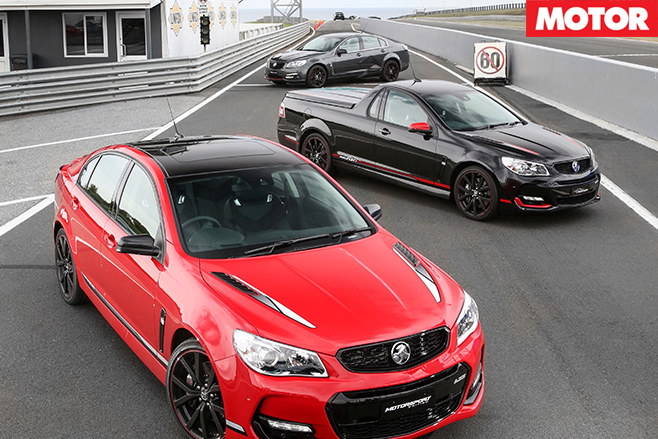
The first model is called the Motorsport Edition. It’s based on an SS-V Redline, which means it gets the big Brembos and the 304kW 6.2-litre engine that we’ve been raving about since we first drove it a year or so ago. On top of that, it gets Magnetic Ride Control from HSV with three distinct damper settings.
The Tour setting amounts to a damper consistent with the standard Commodore FE2 set-up, while flipping the switch to Sport gets you the equivalent of FE3. Turn the knob all the way to Performance and it’s tighter again while the Track setting is the Performance damper rate but with ESP disabled. The bi-modal exhaust valve, steering assistance and throttle sensitivity are also all linked to the driver-mode switch.
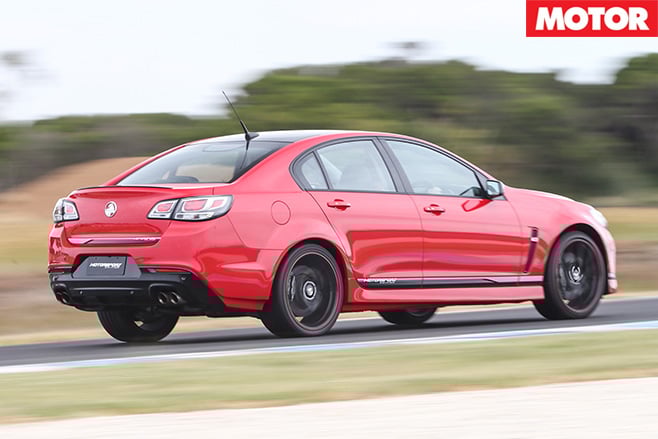
But probably the biggest news is the addition of a driveline cooling package that includes engine-oil and transmission-oil cooler units and it’s this fitment that takes the Holden to GM’s Level Three track-readiness rating.
They’re lifted from the Camaro ZL1, and if the external coolers can keep GM’s 11-second monster cool, they should work here, too. Other additions include a black roof, shift paddles with the auto and 20-inch lightweight alloys. A pair of specific (and heated) front seats are also part of the deal.
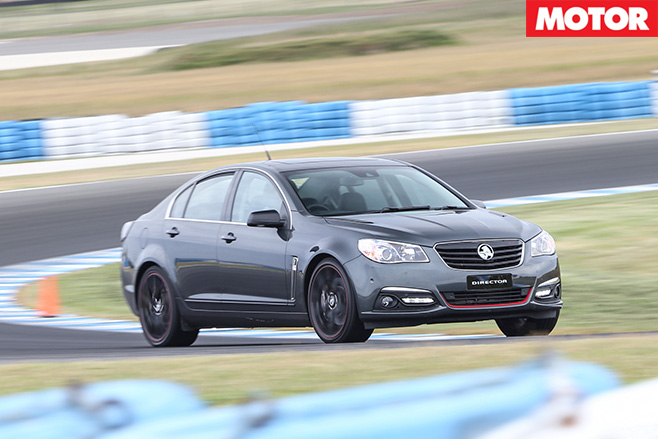
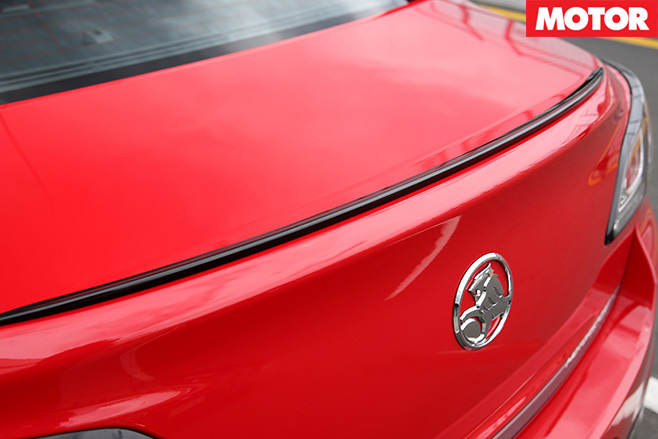
Both the Motorsport and Director come with a fairly subtle lip spoiler for the bootlid, but there’s a proper wing optional on the Motorsport. The Director also picks up the SS’s bonnet vents.
The third member of this unholy trinity is the Magnum (yet another nod to Brock’s famous models) Ute, based on the SS-V Redline Ute. Because of the architecture involved, the Magnum misses out on the Magnetic Ride gubbins, but it does pick up the equivalent of an FE3 tune for its rear-end.
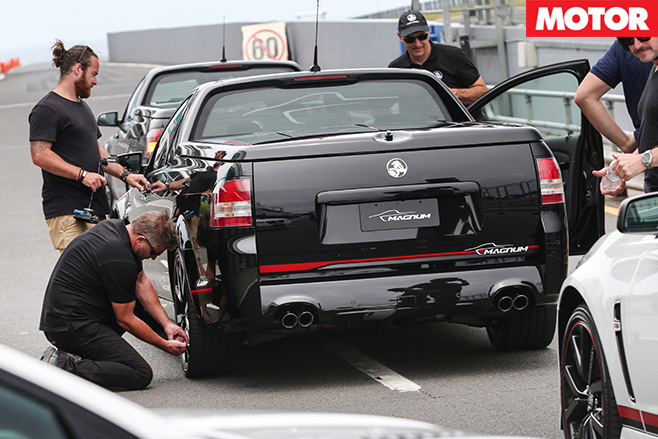
Meanwhile, the Magnum picks up the cross-drilled rotors, powertrain cooling kit, upgraded seats (from a Calais V) a hard tonneau, and those 20-inchers.
Now, you might be sitting there thinking that the changes Holden has carried out don’t amount to much considering Ford went to the trouble of actually turning up the wick on its own, XR8 Sprint, equivalent of saving-the-best-till-last. But that would be ignoring the fact that your basic Commodore SS-V Redline or Calais V was already so far ahead of the bread-and-butter XR6 and XR8. And let’s not forget that Holden had to resist the urge to go too crazy and trip over anything HSV might have had in the pipeline, too.
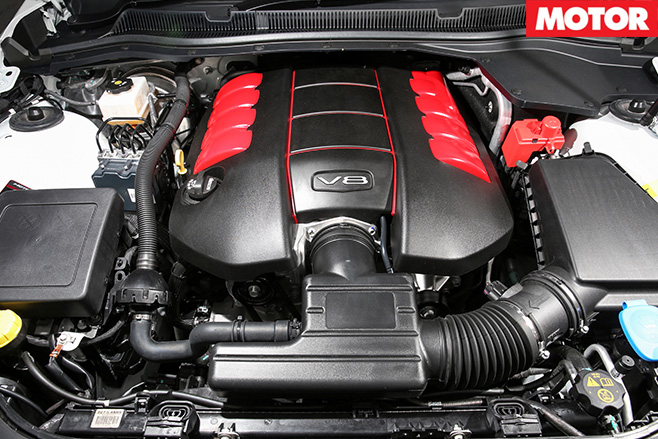
So I skipped Sport even (which at least opens the exhaust valve) and went straight for Performance. And from there, Track is but a couple of taps of the mode selector away with the added benefit that you’ve also disabled ESP. For once, my family can be proud of me.
To be honest, there’s not a whole lot of difference in the way the Motorsport and Director drive, provided your Motorsport is running the six-speed slushbox. True, the Director lacks that extra stiff rear-cradle bush, but Holden’s lead development engineer for this project, Dan Pinnuck, admits that you’d have to be “doing something fairly extreme to notice the difference”.
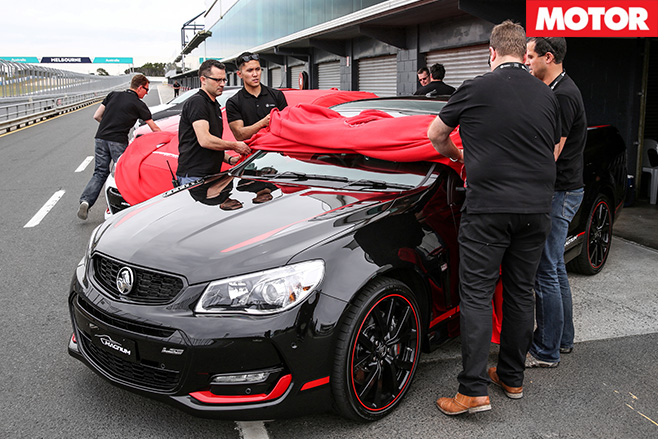
Our pick would be the Motorsport manual, purely because being able to pluck gears at redline is (a) totally satisfying and (b) gives you that little edge in outright control by not having to second-guess the tranny. That said, the auto does obey your commands via the paddles, but it’s not always quite as instantaneous as you might like. But whichever transmission you opt for, you’ll be amazed at how precise and tight such a big, heavy car can feel. The move to add the driveline coolers makes sense, too, because it’s now that you realise that these are actually decent track-day cars.
If anything, the Magnum Ute is even more of a surprise-and-delight deal. Not that it’s going to be any faster than the other two, but simply that it’s probably come further in terms of its track-readiness. The changes to the rear end to soften it have worked wonders and there’s now even more power-down and ability to launch itself out of a turn.
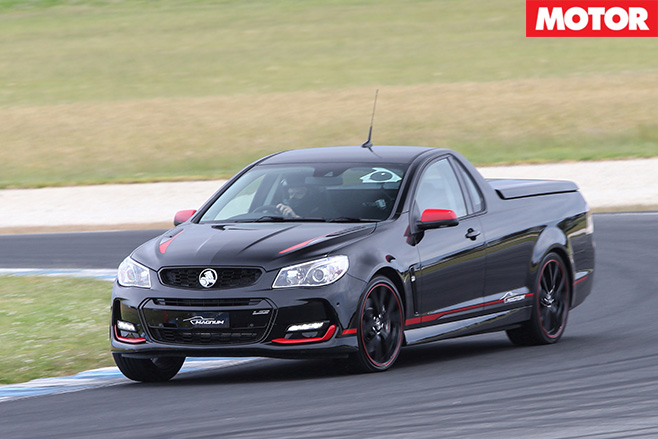
And here’s how you know the driveline cooling work has been worthwhile: we caned these cars around Phillip Island for about three hours in 30-something ambient and high humidity. And despite having no cool-down between stints, not a single car spat a drop of coolant, nor did a single tranny get hot enough to prompt the ECU into limp-home made.
So what’s the price of all this specialness? Well, both the Motorsport in automatic form and the Director (which is auto only) are $63,990, which represents a hike over the auto SS-V Redline and the Calais-V at $56,690 and $55,990 respectively. The Motorsport Edition with the manual saves you a couple of grand ($61,790). But you are getting a fair bit more hardware, including that US-spec cooling system that suddenly makes these cars track-realities, if that’s your thing.
Holden’s general manager for product marketing, Ben Lasry put it in simple terms: “Our goal was to build the best Commodore we’ve ever built. This is one for the enthusiasts.” The significance of these cars is not lost on Dan Pinnuck, either: “These are cars that show our appreciation of what [the Commodore] represents.” I’m not in a position to argue those points.
The other thing you can’t argue with is exclusivity. And with just 1200 examples of the Motorsport Edition (plus 151 for New Zealand) 360 Directors (51) and just 240 Magnums (51) these things won’t be common. The real danger, of course, is that they’ll be so utterly collectible, they’ll never be seen on the streets. Which would be a crying shame but, at the same time, some kind of mournful metaphor for the whole local car-making shebang.
SS-V REDLINE MOTORSPORT
Body: 4-door, 5-seat sedan drive: rear-wheel engine: 6162cc V8, OHC, 16v bore/stroke: 103.1 x 91.4mm compression: 10.7:1 power: 304kW @ 6000rpm torque: 570Nm @ 4400rpm power/weight: 169kW/tonne transmission: 6-speed manual weight: 1793kg Front suspension: struts, coil springs, anti-roll bar Rear suspension: multi-links, coil springs, anti-roll bar L/W/H: 4964/1898/1471mm Wheelbase: 2915mm Tracks: 1593/1590mm (f/r) Steering: electrically-assisted rack-and-pinion Front brakes: 355mm ventilated discs, 4-piston calipers Rear brakes: 360mm ventilated discs, single-piston calipers Wheels: 20 x 8.5-inch (f); 20 x 9.5-inch (r) Tyres: 255/35 ZR20 (f); 275/35 ZR20 (r) Bridgestone Potenza Price as tested: $61,790 Pros: Worthwhile upgrades; collectibility Cons: Bowing out when it’s better than ever Star Rating: 4.5
Tell me about this car
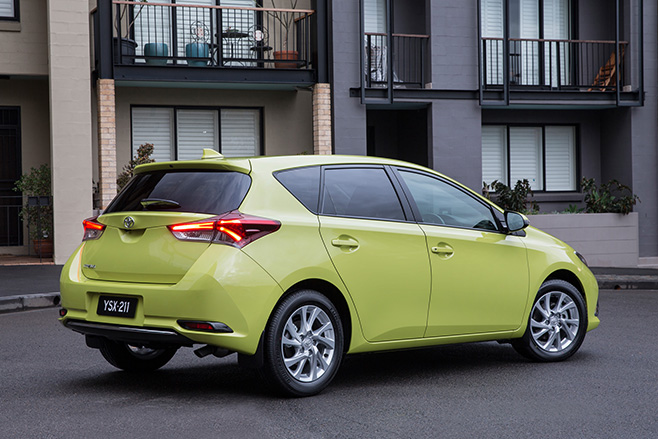
The Toyota Corolla Ascent Sport hatch is next in the line-up after the entry level Ascent. At $21,210 it costs $1020 more than the Ascent and for that you get a sportier bodykit, fog lights and a larger, 7-inch touchscreen and an option for in-built satellite navigation for an extra $1000. The driver assistance safety pack is a $750 option in this variant. It comes standard with a six-speed manual gearbox with a CVT available for $1580. The Corolla Ascent Sport Hatch we tested had the optional sat-nav and safety pack and the manual transmission.
Strengths
1. The Safety Pack brings high-tech active safety to the Corolla including forward collision warning and autonomous emergency braking, lane departure alert and automatic high beam. The extra $750 doesn’t seem too much for all that extra safety.
2. The interior has been refreshed with new air vents and piano black trim. The 7-inch screen is a welcome change from the small display in previous versions.
3. Toyota has tweaked the suspension adding larger-diameter dampers and improved suspension mounting rigidity which has resulted in noticeably improved ride comfort. It absorbs bumps well and feels grounded.
4. The electric power steering is light and responsive around town while feeling securely firm at higher speeds.
5. The 103kW 1.8-litre engine isn’t the most powerful in its class but works well across the range particularly at higher revs.
6. Fuel economy is good, though the manual will drink about 10 percent more than the CVT. Toyota reckons you’ll average about 6.7-litres/100km but we did about 7.5-litres/100km.
7. Exterior build quality is excellent.
Weaknesses
1. The manual gearbox feels sloppy and the long riding clutch means you’re revving the hell out of the car in the time it takes to shift from first to second. It says a lot when the CVT auto is seen as the far better option.
2. The Toyota Corolla is great if you treat cars like appliances with function in mind, but it’s not exactly the kind of car you’ll be itching to drive every day.
3. The new interior looked good but lacked the precise build quality of the car’s exterior.
4. The name Ascent Sport should not be taken too literally.
Are there any rivals I should consider?
The Corolla is Australia’s most popular passenger car but has stiff opposition from the Mazda3 and Hyundai i30. The Mazda3 Maxx and i30 Active X sit in the Corolla Ascent Sport’s price range and are certainly worth the look as are the Holden Astra R, Ford Focus Trend and Subaru Impreza 2.0i hatch.
Toyota has released a teaser image of its new electric-powered i-TRIL concept car which it will unveil at Geneva Motor Show next month.
Developed by Toyota’s European branch, the i-TRIL is an all-electric concept city-car that’s meant to be fun to drive at slower speeds, and also has autonomous capabilities.
Toyota says the concept will “showcase numerous innovative aspects of Toyota’s research into ever-better and more engaging environmentally friendly mobility solutions.”
The teaser image looks more like something from a Batman movie promotion, and shows very little about the car itself, apart from the fact it will feature LED lights and a quirky body shape.
Toyota has revealed it will seat three people with its “one-plus-two” layout. It will also include a technology Toyota calls Active Lean, which offers passengers stability, safety and comfort while cornering.
Toyota is also due to reveal its 2017 Toyota Yaris and Europe-focused Yaris GRMN hot hatch.
The third-generation Yaris receives a facelift designed in Toyota’s ED2 design studio in Nice, France. The mid-life upgrade will include a fresh new look inside and out, and a fresh 1.5-litre engine.
It will also be packed with more safety equipment like Pre-Collision System with Autonomous Emergency Braking and lane departure alert, as part of a Toyota Safety Sense package.
The Yaris GRMN hot hatch will feature a supercharged 1.8-litre engine that will produce more than 159kW.
Unfortunately at this stage, the GRMN will be exclusive to Europe and Japan according to a Wheels report we ran last month, although TMCA said it’d be interested in adding a high-performance Toyota Yaris to the Aussie line-up.
Holden Astra RS-V
From: $30,740
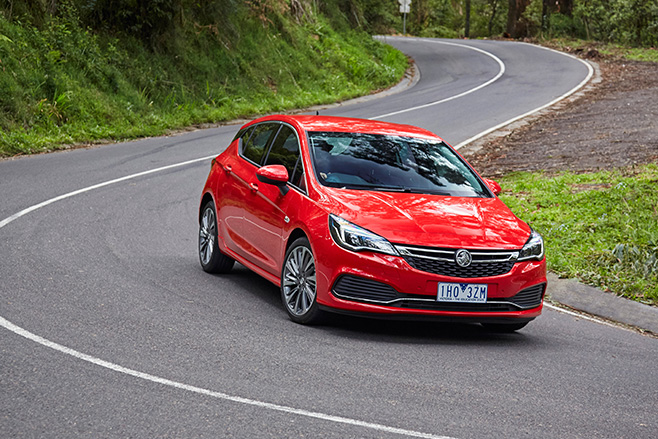
The sporty range-topping Holden Astra is powered by a 1.6-litre four-cylinder turbo petrol engine that pushes out 147kW. It’s quick off the mark, particularly in Sport mode, which adjusts engine tune, suspension and electronic steering for even better handling. The steering has been tuned for Australian conditions and the new chassis provides excellent body control. It comes with a choice of six-speed manual or automatic transmissions, both of which are very able. For the money you also get an advanced driver assistance system which includes autonomous braking and lane keeping assist.
Toyota 86/Subaru BRZ
From: $30,790.
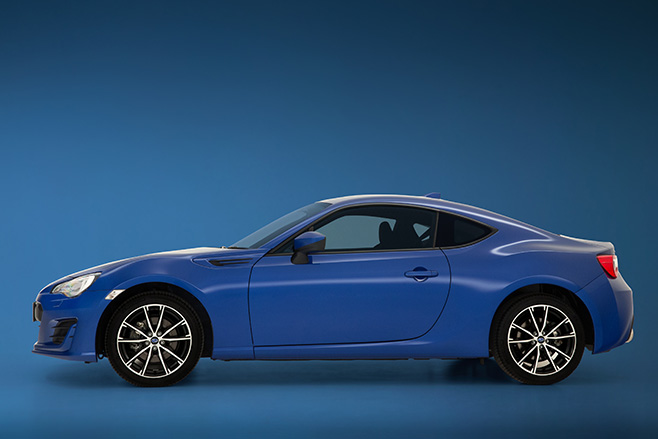
The ‘Tobaru’ is a rear-wheel-drive sports coupe, with stylish looks and superb steering and handling that you’d expect in cars with an extra digit in their price tags. It eats bends, with minimal body roll, and the low seating position increases the sensation of speed so even zipping through a roundabout is an event. Developed by Toyota and Subaru both cars are very similar, with the same 2.0-litre horizontally opposed four-cylinder petrol engine and a choice of six-speed manual and automatic versions. The auto is fun to drive through paddle shifters but the manual is fantastic and more than $2000 cheaper.
Fiat Abarth 595
From: $31,500
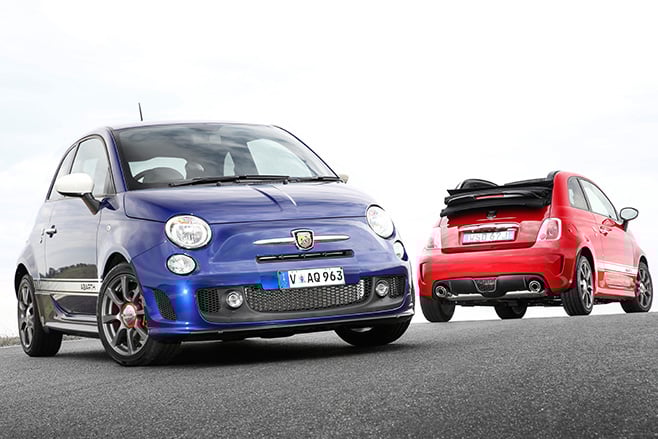
The Abarth 595 is the entry point to Fiat’s performance-focused line-up and first one that can be called reasonably priced. It’s less powerful and not as hard riding over bumps as the Abarth Competition, thanks to its 16-inch wheels in place of the 17s fitted to other models. This makes it a better daily drive while still being plenty of fun. Handling is sharp and steering engaging and the 103kW/206Nm 1.4-litre four-cylinder turbo engine is eager despite sounding a little meek. Power is to the front wheels via a five-speed manual gearbox.
Mazda MX-5
From: $31,990
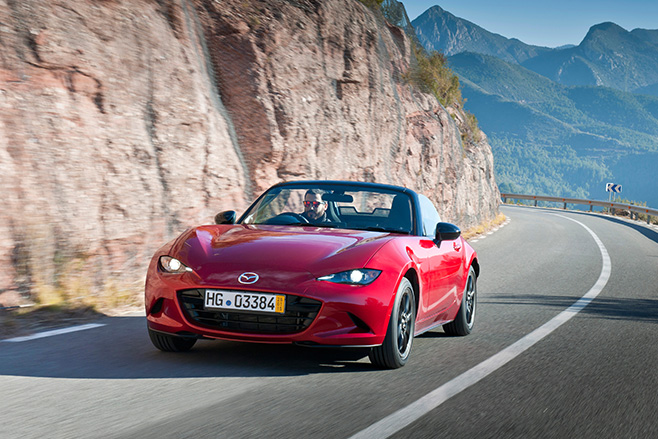
Mazda’s perky little rear-wheel-drive roadster didn’t win 2016 Wheels Car of the Year for its practicality. It’s a cracker to drive, especially with the top down, with a nice low down driving position. It comes with a choice of 96kW 1.5- and 118kW 2.0-litre engines – the 1.5 is the purist’s choice and lacks a little power on hills but is very responsive, while the 2.0-litre is noticeably perkier at low speeds and accelerates with less effort. Either way, the great thing about driving the MX-5 is the precise accelerator and steering inputs are helped by the limited-slip differential, which enhances acceleration in corners and on slippery roads. It comes with six-speed manual and automatic transmissions, but the manual is the far better option and $2000 cheaper.
Ford Focus ST
From: $38,990
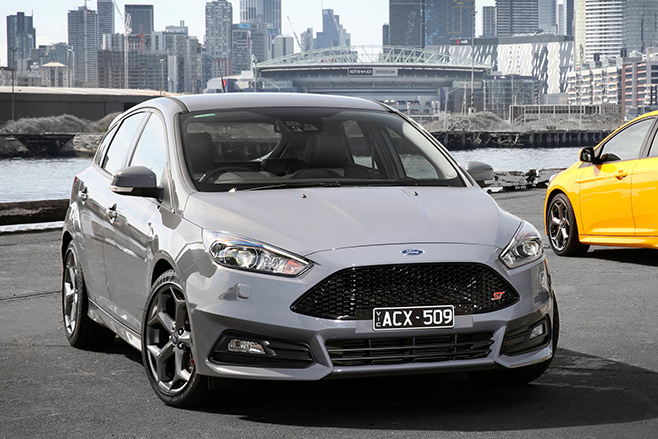
The Focus ST is an excellent budget alternative to the Focus RS flagship and is a hot hatch in its own right alongside the likes of the Volkswagen Golf GTI and Peugeot 308 GTi. Unlike the AWD RS, power from the 184kW/345Nm 2.0-litre turbocharged four-cylinder goes to the front wheels only. All that power to the front means ensuring you’ve got your hands steering when on acceleration to counter torque steer ‑ though that’s part of the fun of cars like this. Other than that it handles well in all conditions ‑ particularly bends ‑ thanks to the well-weighted steering, tight suspension and electronic traction control. The Focus ST only comes with a six-speed manual gearbox, which isn’t a bad thing.