
JUST AS Buzz Aldrin will always be the second man to walk on the moon, the XA Falcon GT will always live in the shadow of the model that went before it, the XY GT and its Phase III derivative.
True, the XA-based Phase IV was scrapped in the face of the supercar scare (although four examples did escape the factory and are now worth more than most Central American economies) but the GT that did emerge, while watered down a bit, wasn’t all bad. In fact, it was pretty damn good.
The point was that the XA GT didn’t have to be specified as a Bathurst-winner any more because CAMS changed the rules for the 1973 Great Race (the first over 1000km rather than 500 miles). By switching from Series Production rules – which demanded the race-car be homologated as a road car first – to Improved Production rules, the need for a road-going Phase IV was neatly sidestepped.
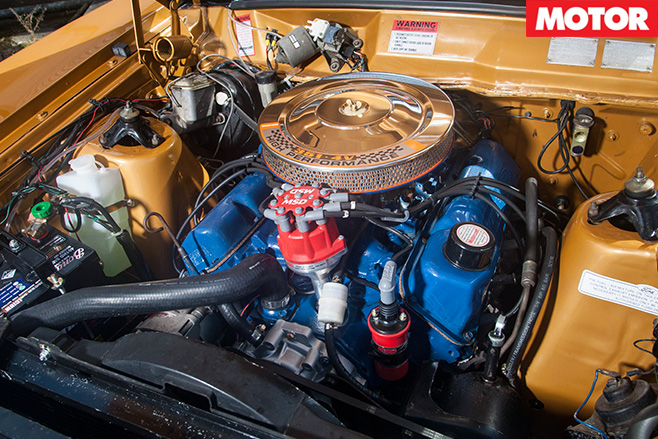
The other thing in the XA’s favour was the availability of a hardtop coupe. As well as a theoretically slipperier shape for Conrod Straight, the arguably butt-heavy Hardtop could also accommodate a huge rear tyre. In fact, it looked pretty comical without it and many of those that were sold new on the factory steel wheels didn’t stay on them for long.
The two-door version of the XA wasn’t what you’d call a pretty car, but it did make a statement. There are many who reckon the XA GT sedan is a better proportioned car, and that’s an easy view to agree with. But for sheer presence and the added bonus of rarity, the Hardtop is the one.
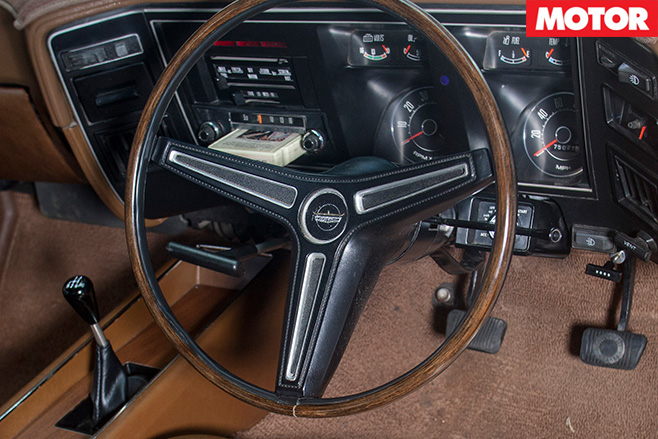
It was a task made easier by the frameless glass that featured on the commercial line-up. The XY GT-HO was still the current race-car in 1972 (the year the XA was launched) but come 1973 and most teams had switched to the new car, mostly in Hardtop form. Moffat’s Hardtop (with Ian Geoghegan co-driving) led home a brace of XU1s driven by the usual suspects with Murray Carter and Laurie Nelson seventh outright in their XA.
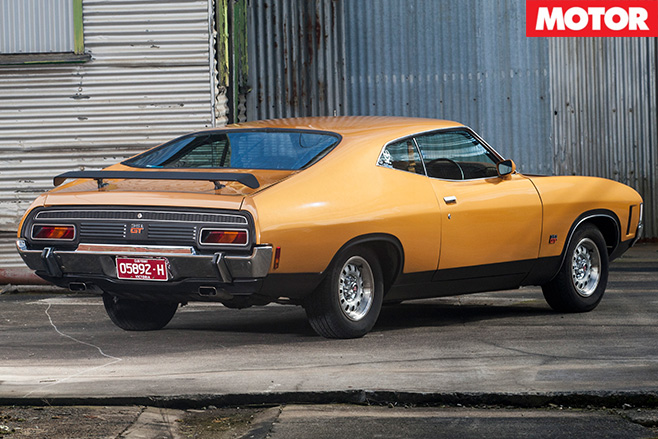
IN DETAIL Engine: 5763cc V8, OHV, 16v Outputs: 224kW/515Nm Weight: 1476kg Price: $4955
What’s our fave Falcon? Check out MOTOR’s take on the top 10 Fast Ford Falcons ever made here.
Proudly taking you to places you may not know even exist.
WHAT IS IT? The most off-road capable variant of Jeep’s full-size 4×4 SUV.
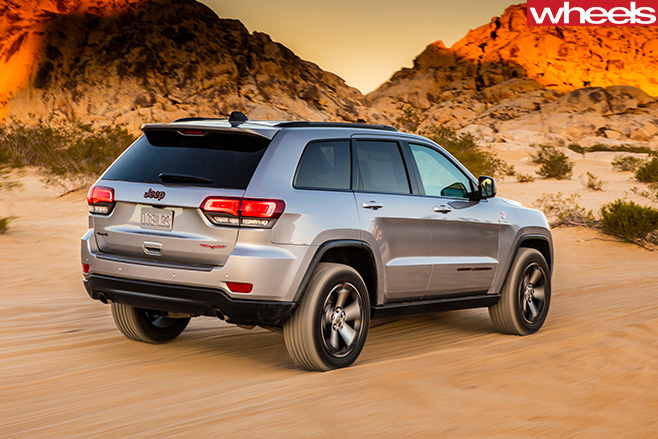
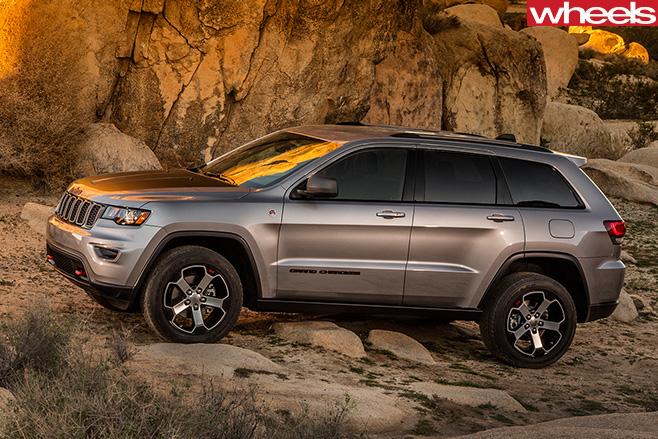
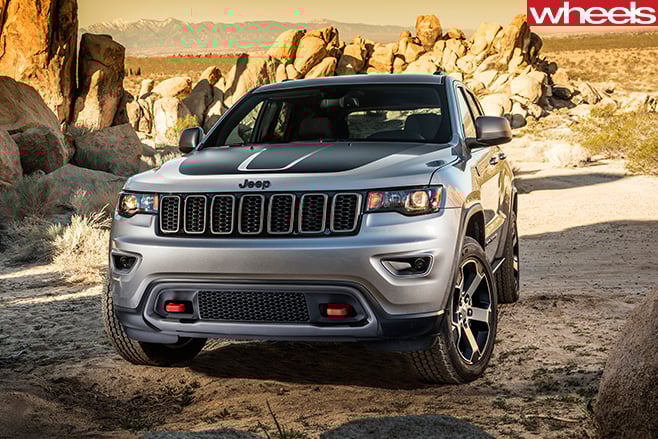
You could question, as I do, why anyone would really need this level of off-road ability — what the hell are you trying to escape from? — but clearly there’s a market for it and Jeep’s rugged brand values mean it’s happy to deliver.
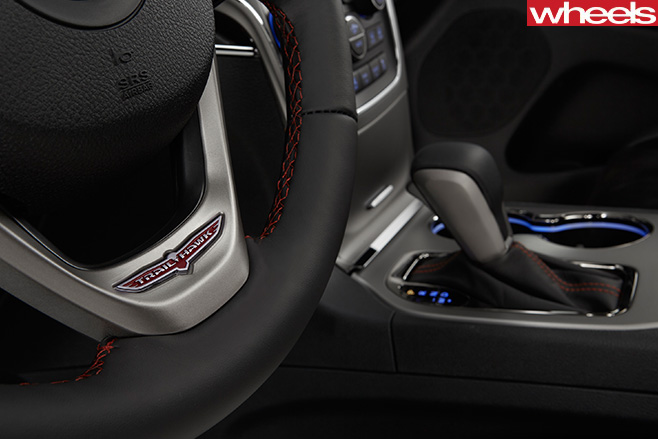
Also crucial to Trailhawk’s go-anyway ethos is the new rubber; seemingly grenade-proof boots from Goodyear featuring Kevlar-reinforced sidewalls. We watched as others in our group descended the ultra-steep trail and boggled as the front-left copped the full weight of the Trailhawk — all 2.4 tonnes of it — with barely any detectable sidewall distortion.
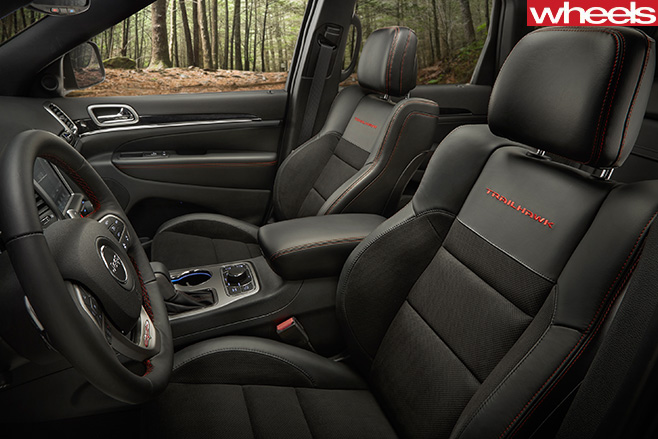
SPECS Model: Jeep Grand Cherokee Trailhawk Engine: 2988cc V6 (60 degree), dohc, 24v, turbo diesel Max power: 179kW @ 3600rpm Max torque: 569Nm @ 2000rpm Transmission: 8-speed automatic Weight: 2393kg 0-100km/h: 8.9sec (estimated) Fuel consumption: 7.7L/100km Price: $75,000 (estimated) On sale: First quarter 2017
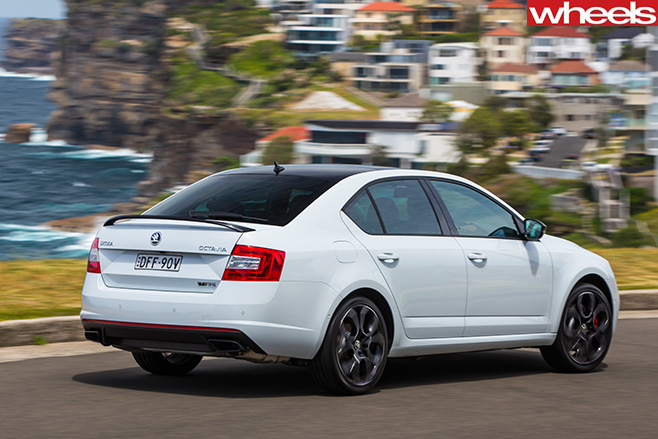
The limited-edition, manual-only 2016 Skoda Octavia RS230 is the Czech brand’s hottest Octavia variant yet.
Though only up 7kW, an electronically controlled limited-slip diff and 19-inch wheels wearing sticky tyres ramps up the handling ability, while extras elsewhere make the sports flagship liftback sedan and wagon tougher-looking and even better value.
WHAT IS IT? The 2016 Skoda Octavia RS230 becomes the most powerful, capable version of the third-gen liftback sedan and wagon that first arrived in 2013.
The RS230 borrows its engine and electronically controlled limited-slip diff – with the ability to send 100 percent of torque to either front wheel – from the Golf GTI Performance, but with a six-speed manual gearbox.

The Skoda Octavia RS230 liftback sedan costs $41,490 and the Skoda Octavia RS230 wagon costs $43,190.
A $1700 optional Tech Pack brings driver assistance systems such as automatic parking assist, lane assist and keyless entry and start, and introduces a cranking 10-speaker Canton sound system.
WHY WE’RE TESTING IT Wheels was given a drive of the 2016 Skoda Octavia RS230 on public and private roads in New South Wales as the model became available in Oz.
THE WHEELS VERDICT
The Skoda Octavia is a persuasive sports family car and the RS230 brings a subtle boost to the RS162’s speed and ability, with extra visual appeal – it’s easily worth the extra $3600.
PLUS: Clever diff helps front-drive power-down; cabin space and features for the money; more involving than a Levorg MINUS: There are only 70 available initially; softer than a Volkswagen Golf GTI Performance, which provides the engine and LSD
THE WHEELS REVIEW If the passing of the baton from the Subaru WRX to the Golf GTI was the work of the past decade, now its Czech sibling is working on former Subaru Liberty buyers.
The Octavia got off to a slow start on the back of its eastern-bloc look and unknown status when, with the oddball Roomster, it heralded Skoda’s return to Australia in 2007.
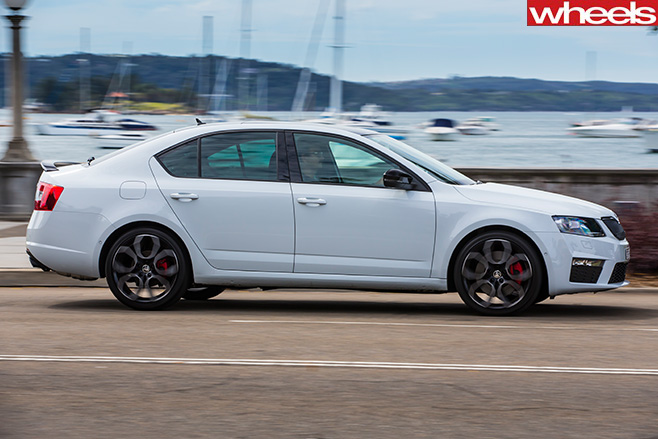
For $3600 more than a regular Octavia RS162 you get a real electronically controlled limited-slip diff – as opposed to a quasi-LSD ESC function – a modest 7kW peak power boost, handling and styling tweaks, and equipment extras.
Yes, the badge is a bit deceptive because on the RS162, the numerals stand for kilowatts, while the RS230’s signify horsepower – it has 169kW.
If you want to understand the mechanical changes in the hierarchy the VW Group’s hi-po machines, it’s effectively the slotting of a Golf GTI Performance engine and LSD – in a manual – into its bigger, heavier platform buddy.

That’s a good thing, because despite the mild power-up – at 6.7sec it’s only officially a tenth quicker 0-100km/h than the 162 – the changes make the Octavia RS better in every area, especially its low-speed power-down and aggro aesthetics – while strengthening its ever-impressive value for money credentials.
The throbby low-rev rort carries from the regular petrol RS. No need to go cog-swapping in search of grunt, though the oiled six-speeder is sweet, and the hint more pep up top is a joy to deploy.
The clever differential makes the biggest dynamic difference, letting you get on the right pedal sooner when exiting corners thanks to an adroit ability to sling 100 percent of torque to an individual front wheel.
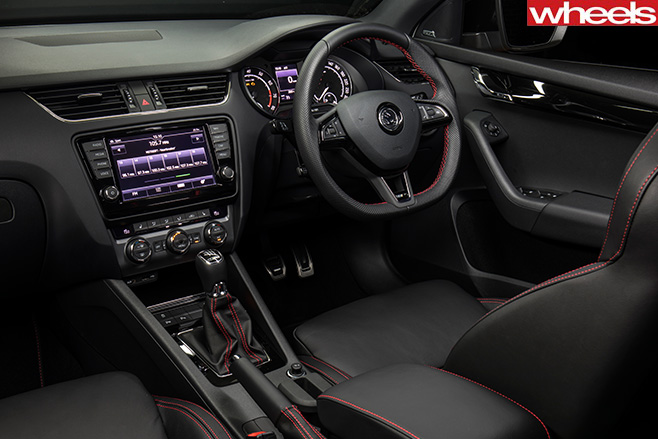
Back on the road – a quiet, twisty one – the RS230 impressed with its able, entertaining and practical personality, which few family cars can match – certainly not with this much room inside, for less than $45K.
SPECS Model: Skoda Octavia RS230 Engine: 1984cc 4cyl, dohc, 16v turbo Max power: 169kW @ 6200rpm Max torque: 350Nm @ 1500-4600rpm Transmission: 6-speed manual Weight: 1391kg [1425 wagon] 0-100km/h: 6.7sec (claimed) [6.8 wagon] Fuel economy: 6.3L/100km [6.4 wagon) Price: $41,490 [$43,190 wagon]
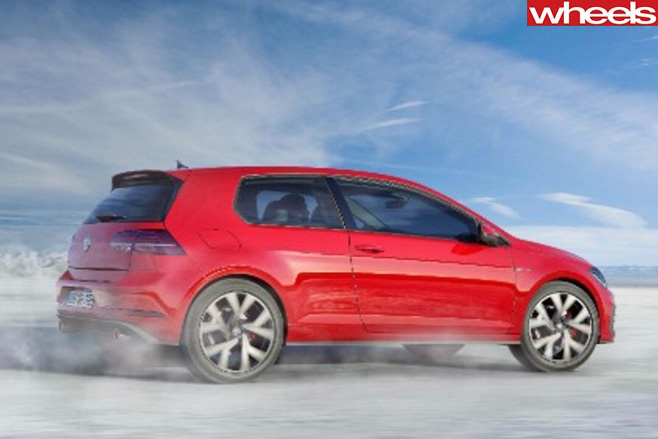
Pictures of the facelifted Volkswagen Golf 7 have been published a day before its official launch by Italian magazine Quattroruote, which seems to have since deleted them.
The low-quality images meet expectations of the first major update since VW’s seventh-generation hatchback went on sale in 2014, with changes based around subtle exterior and interior tweaks.
There’s a revised front bumper, with the most noticeable change for the flagship Volkswagen Golf R – which now features a reverse-shaped air dam and reworked side intakes featuring C-shaped LED lights.
A change for the LED tail-lights is subtler, with barely anything else of note for the rear end.
More intriguing is a bright-yellow Golf featuring large, stylish alloy wheels, a sporty front bumper, and a black diffuser-style rear bumper. It’s unknown at this stage whether this is a new-look GT, an R-Line edition, or even a new, mid-range model.
The interior pictures show a Golf with the 12.5-inch HD virtual cockpit that will be borrowed by the Passat and give buyers a digital display option over the standard analogue dials.
And central on the dash is a top-spec, high-resolution infotainment display, expected to feature the gesture control capability first hinted at by last year’s Golf R Touch concept.
The Golf is also tipped to gain the Passat’s low-speed semi-autonomous-driving system, called Traffic Jam Assist, as an option.
Instead, speculation points to the recently introduced 1.0-litre three-cylinder turbo becoming more prominent in the range, while there could be tickle-ups for the 1.4-litre turbos used in regular versions of the Golf sold in Australia, as well as the GTI and R performance models.
The update will carry Europe’s best-selling car towards the Mark 8 generation due in 2019.
Speaking to WhichCar at the Australian launch of the Octavia RS230, Skoda executives hinted that talks regarding the adoption of a standard, range-wide five-year warranty are underway.
Skoda managing director, Michael Irmer, said of the brand’s warranty plans that “we are always thinking about these things.”
Mr Irmer doesn’t believe the real cost of a longer warranty would be significant, and felt that a standard five years of cover could create a positive perception around product confidence and reliability.
Skoda currently offers an optional two-year extended factory warranty on top of its standard three-year, unlimited kilometre warranty. It is offered alongside a Service Pack which brings pre-paid car servicing for three years and 45,000km, or five years and 75,000km. The brand’s Care Pack bundles the Service Pack and the extended warranty.
The brand also offers a program called Skoda Choice, which guarantees the future value of your car. It says nearly half of Skoda finance buyers year-to-date have taken up Skoda Choice.
Of the current optional extended warranty Mr Irmer said, “We like to give customers the choice. Some people will want [the five-year warranty] and some people won’t,” however he said that this approach could change in the future.
As a factory warranty (rather than a dealer warranty) the extra two years comes without the need to visit a Skoda service department for routine maintenance, and currently costs extra. It is priced from $999 to $1699 depending on the model – for the brand’s best-seller the Octavia it costs $1499. However, for buyers using Skoda finance, the warranty extension is free.
The extended warranty also brings two years’ Skoda Roadside Assistance and is transferrable to subsequent owners without cost.
You want a Light car to be light on the pocket, as these three are.
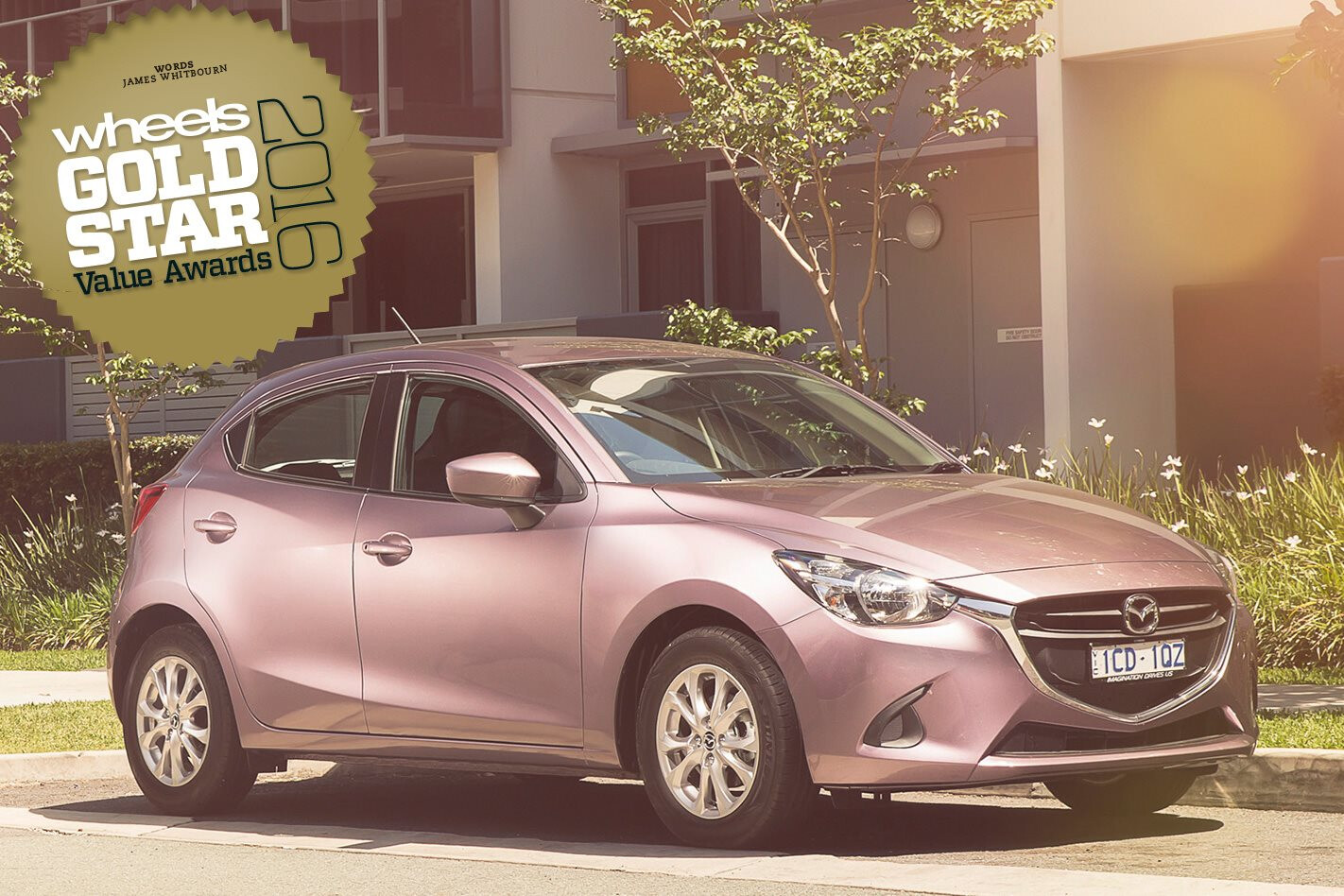
Mazda 2
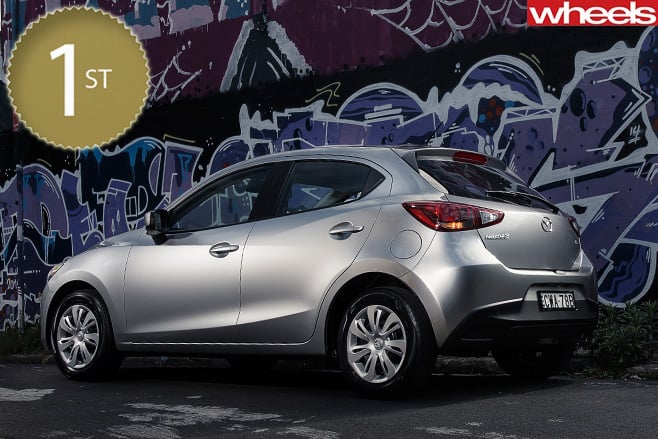
Let’s compare the Mazda to the rest of the Gold Star field for a bit of context. The Commodore Evoke, which won the Large category, will lose more to depreciation in three years than the Mazda costs. The Large category-winning Hyundai Genesis will use twice as much fuel and the Mercedes E200, which won Premium Large, will cost nearly three times as much to insure. This year’s most costly placegetter, the Audi A6, will cost $47,500 over three years, including depreciation, fuel and insurance – the Mazda 2 Neo will only cost $11,583 and that’s comparing it with cars that are considered good value in their categories.
As well as being easier on the back pocket than a big, powerful car, the Mazda 2 Neo will save a few bucks compared to its classmates by being a bit more economical and having longer service intervals.
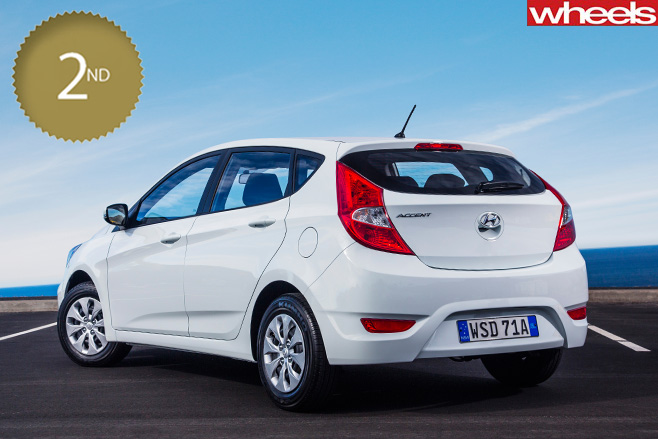
Hyundai Accent Active
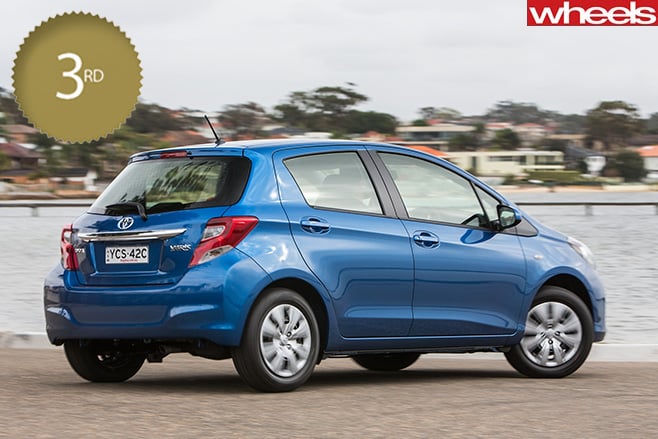
Toyota Yaris Ascent
MORE GOLD STAR COVERAGE
 WHEELS GOLD STAR VALUE AWARDS
What if someone could expose the hidden costs, crunch the numbers, present the data, and draw conclusions about how to best spend your hard-earned on a brand new car? Enter Wheels’ annual Gold Star Value Awards.
Find out more
 BEST LIGHT CARS $17K to $25K
Mid-range light cars come with creature comforts that initially cost more but help retain value.
View the results
 BEST CITY CARS
Just because they’re small and cheap to run doesn’t mean all city cars offer great value. Here are three that do.
View the results
Just because they’re small and cheap to run doesn’t mean all city cars offer great value. Here are three that do.
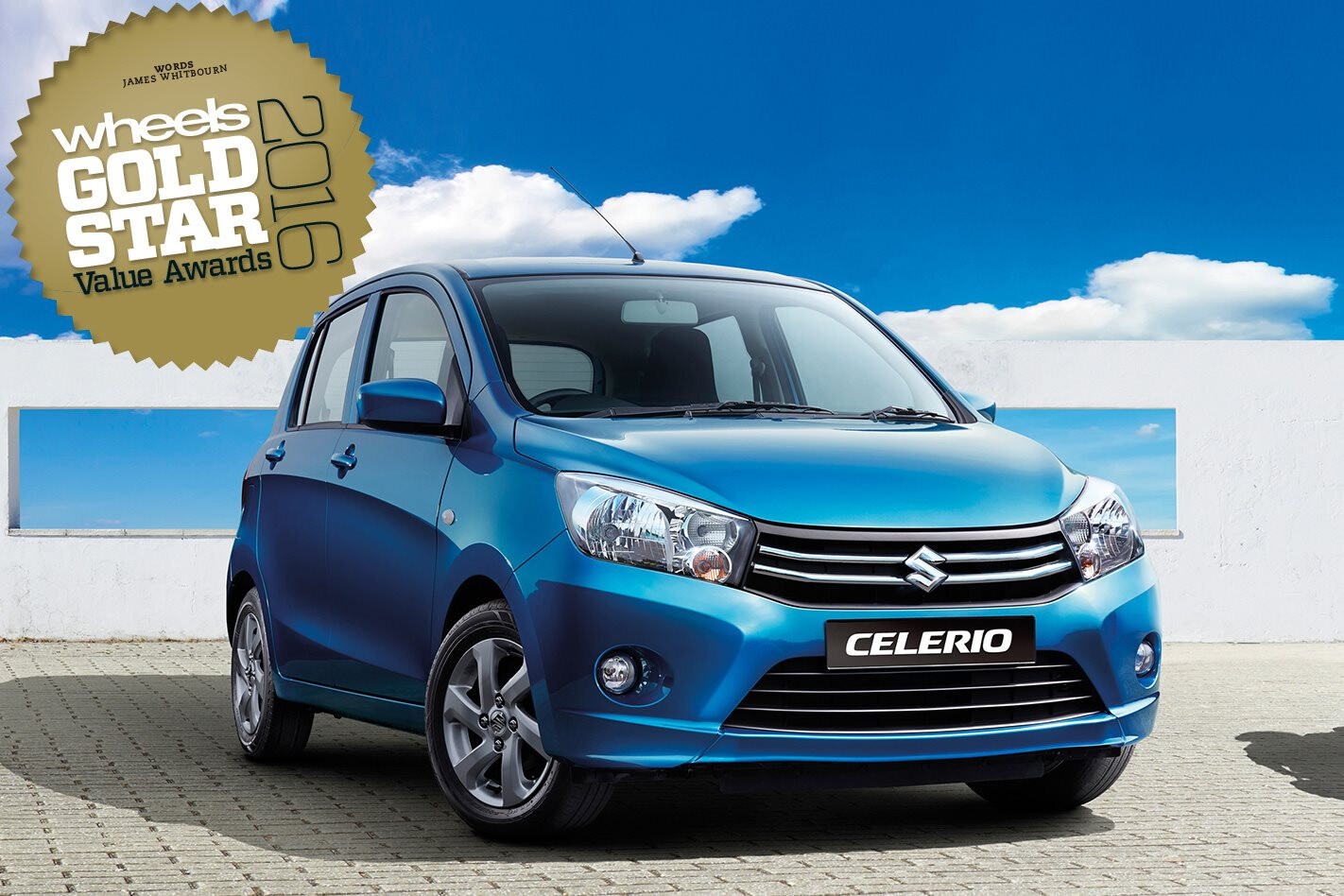
Suzuki Celerio
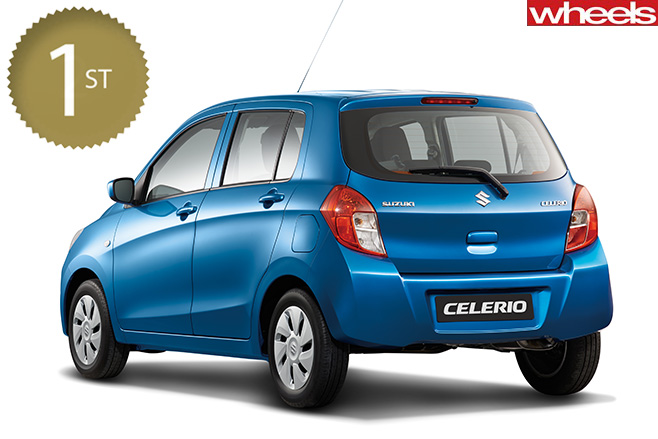
Tiny engines are the norm in this class; however, the Suzi’s 1.0-litre three-cylinder is really small and, at 4.7L/100km, uses less fuel based on the official combined cycle test than each of its three- and four-pot rivals. Its annual insurance premium of $524.13 made the Celerio the second least-expensive car to insure of the whole field, while a 46 percent three-year retained value forecast means it sheds just over $7000 in three years, which is less than any other Gold Star contender.
No car is cheaper to own. Only the Suzuki’s three-year, 100,000km warranty falls short of best practice.
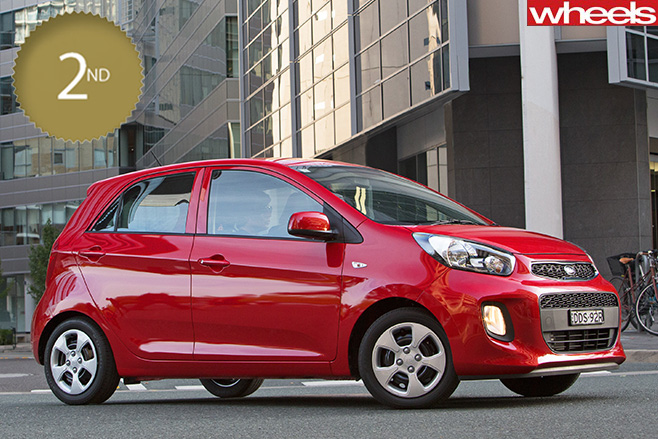
Kia Picanto Si
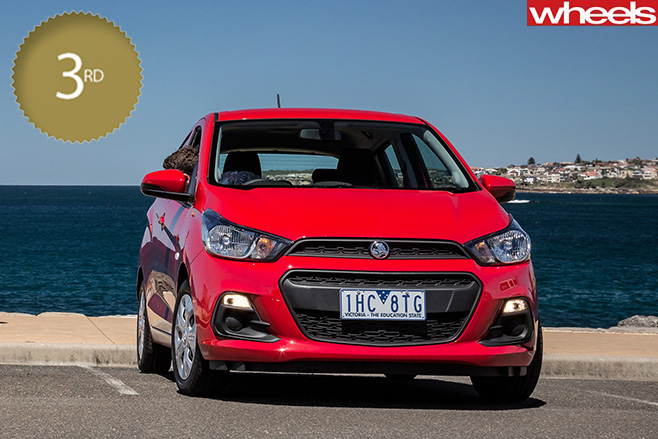
Holden Spark LS
MORE GOLD STAR COVERAGE
WHEELS GOLD STAR VALUE AWARDS
What if someone could expose the hidden costs, crunch the numbers, present the data, and draw conclusions about how to best spend your hard-earned on a brand new car? Enter Wheels’ annual Gold Star Value Awards.
Find out more
 2016 BEST VALUE CARS IN AUSTRALIA
Take the hassle out of choosing the best bang for your motoring buck with our definitive guide to Australia’s best value-for-money cars in Australia.
View the results
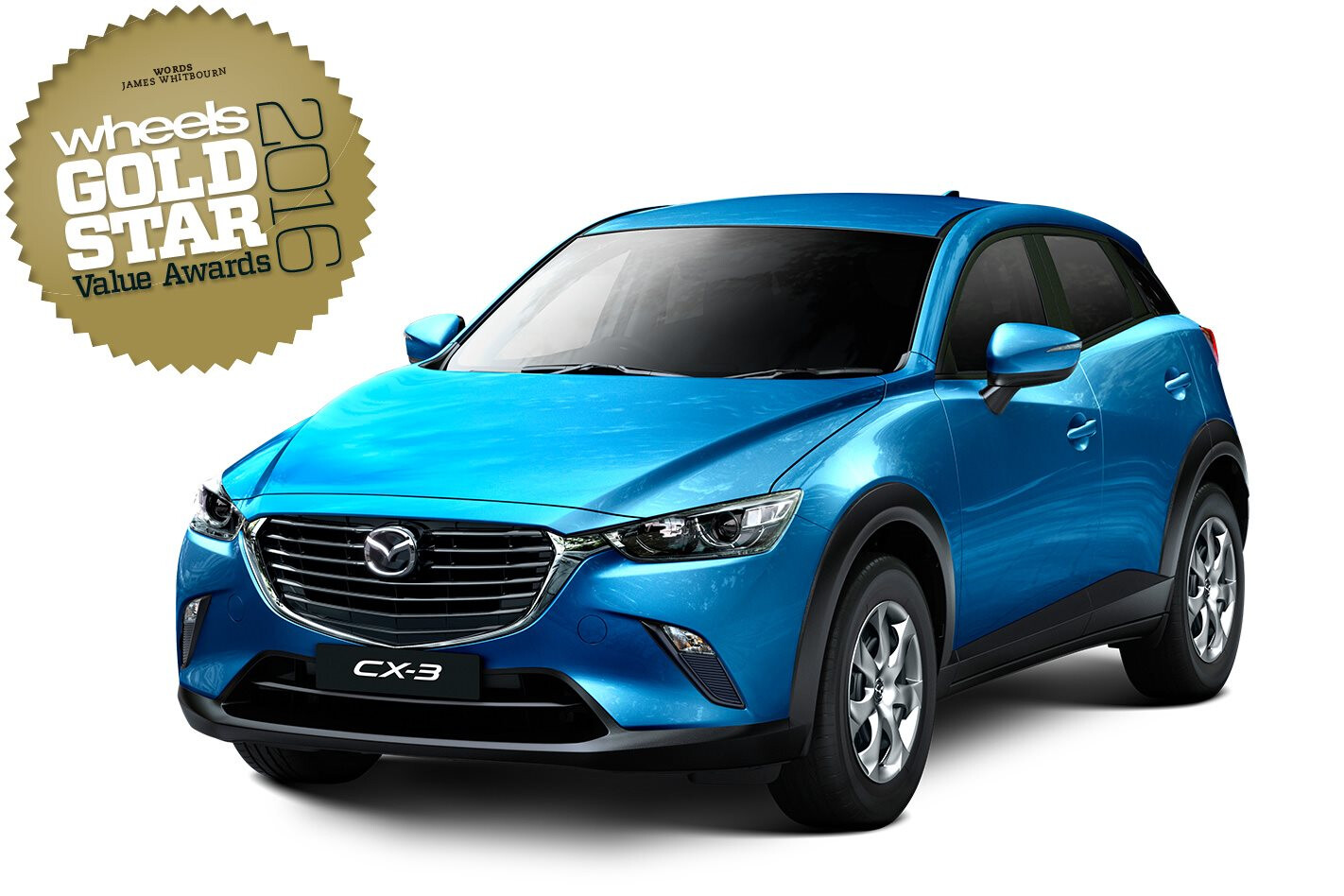 BEST CITY SUV 2016
Mazda has a firm stake at the top of this rapidly growing category.
View the results
Take the hassle out of choosing the best bang for your motoring buck with our definitive guide to Australia’s best value-for-money cars in Australia.
THE notion that some cars are duds while those at the other extreme represent driving bliss is at the core of any comparison – just as the idea that some cars are money-pits while others are inherently easier on the wallet is central to Wheels’ annual Gold Star Value Awards.
Considering that a car is the second-most expensive purchase most people make, and the most complex product almost anyone buys, it’s important to have the right advice on both fronts. When fine dynamics and fiscal shine coincide in a decent-driving, value-packed product, you have a Gold Star car.
The dominant cost of car ownership is depreciation – the chunk of the initial outlay that vanishes over the first few years, much of it (as popular perception suggests) the moment you drive out of the showroom.
Of the 63 cars that made the podium in 2016, the healthiest three-year retained value figure belongs to the Audi RS3, which held 67 percent of it’s value, while the worst went to the Ford Falcon Ecoboost (34 percent). For the Falcon, that means $24,000 gone in three years, and it only costs $36,400. Yet our analysis says the Ford is the second-most cost-effective car in its class – yes, large cars are a depreciation disaster.
Depreciation makes up as much as three-quarters of the cost of owning a car from new; then there are running costs including fuel and insurance. Annual premiums, obtained online from AAMI, range from just over $500 (for the average light or sub-light hatch) to a bit less than $2000 for a typical large luxury sedan. Fuel costs run from less than $700 annually (the turbo-diesel Volvo S60) to more than $1800 – a Falcon sedan again, this time the petrol six-cylinder G6E Turbo.
More than 2000 cars were evaluated for the 2016 Wheels Gold Star Value Awards. Read on as we uncover the stellar buys in each of 21 categories.
THE CATEGORIES
CITY CARS
Just because they’re small and cheap to run doesn’t mean all city cars offer great value.
View the results
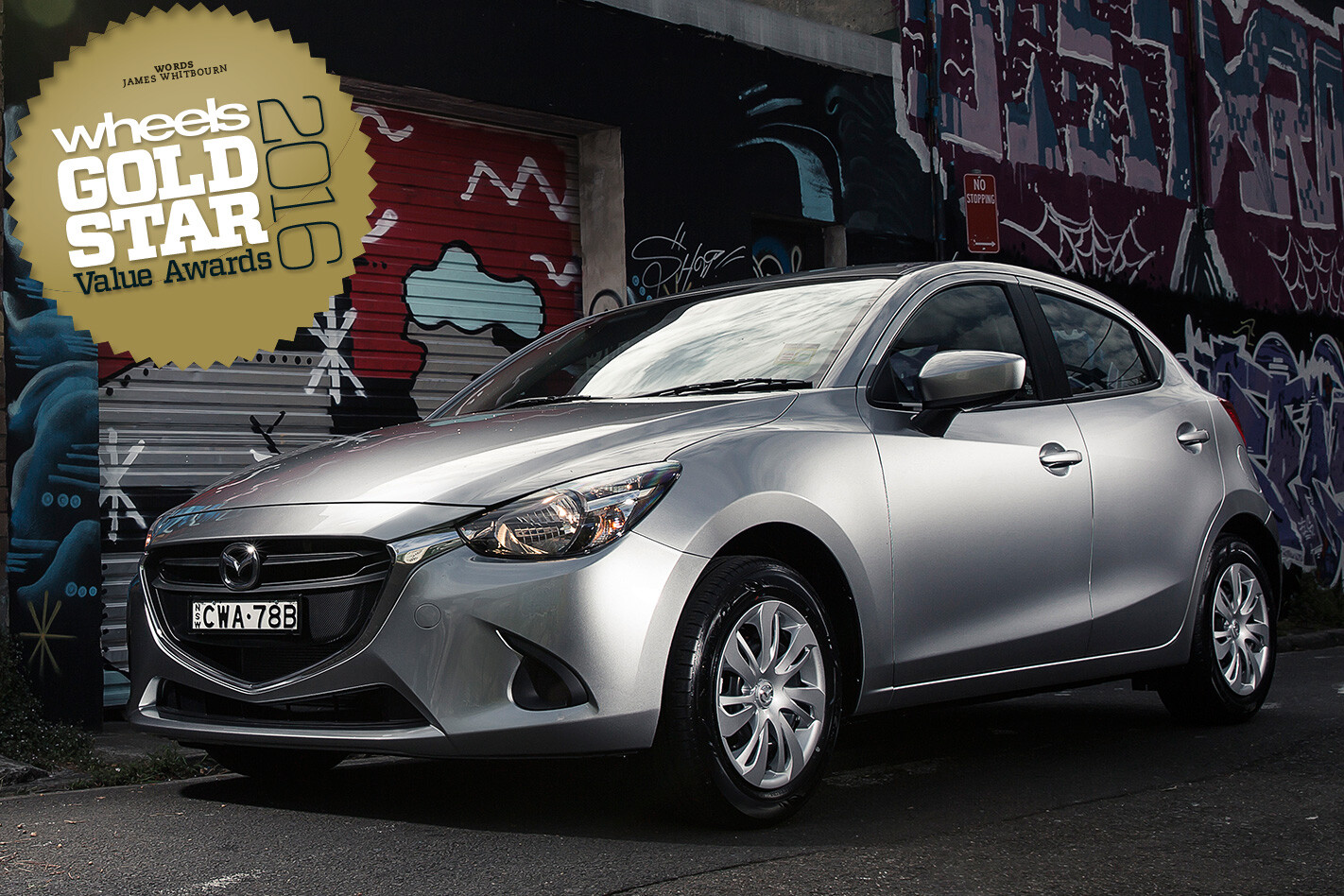 LIGHT under $17K
You want a light car to be light on the pocket, as these three are.
View the results
LIGHT CARS $17K to $25K
Mid-range light cars come with creature comforts that initially cost more but help retain value.
View the results
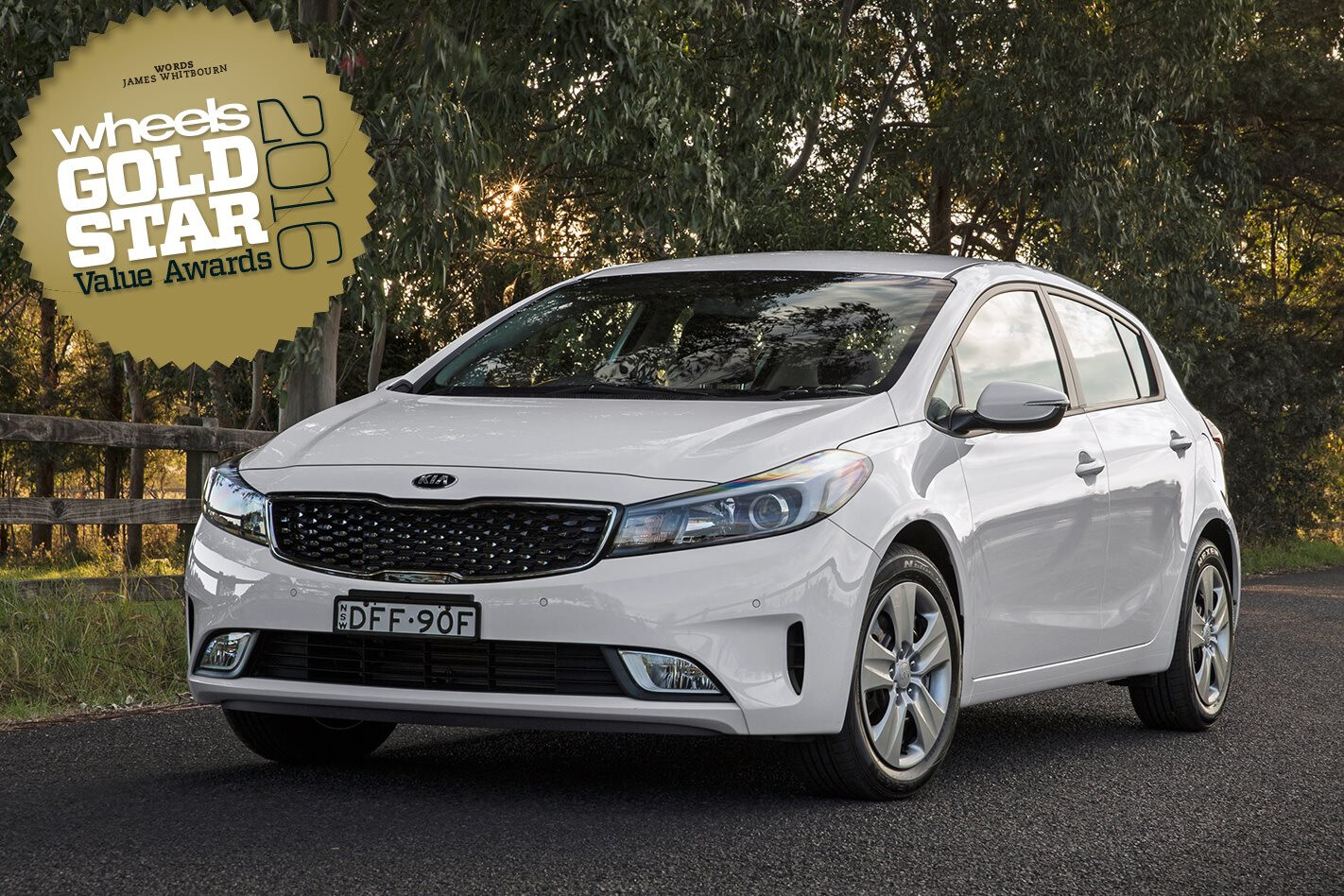 SMALL CARS under $24K
In this hotly contested category it pays to have an economic edge.
View the results
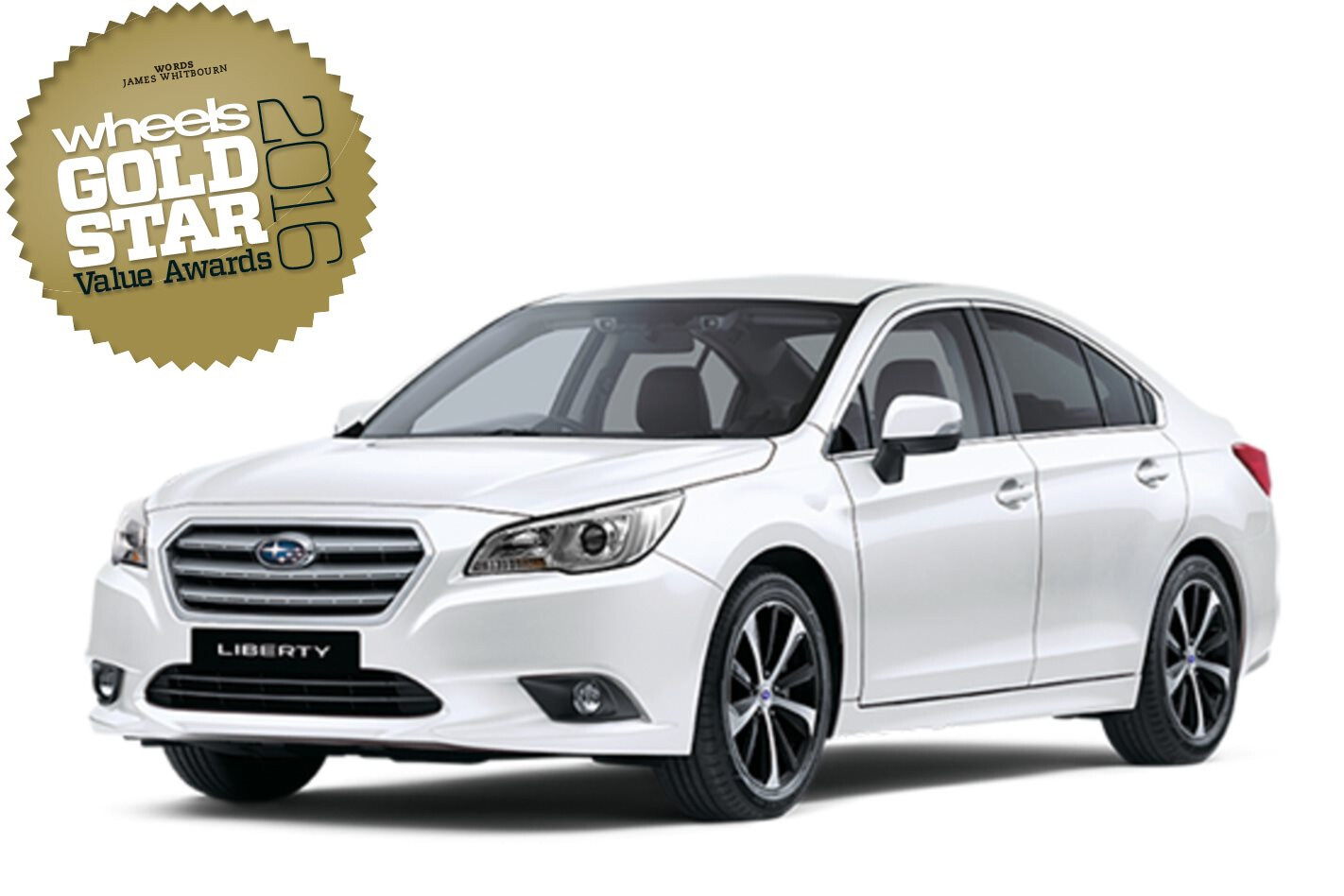 MEDIUM CARS under $45K
This segment shows how sensible choices need not be boring.
View the results
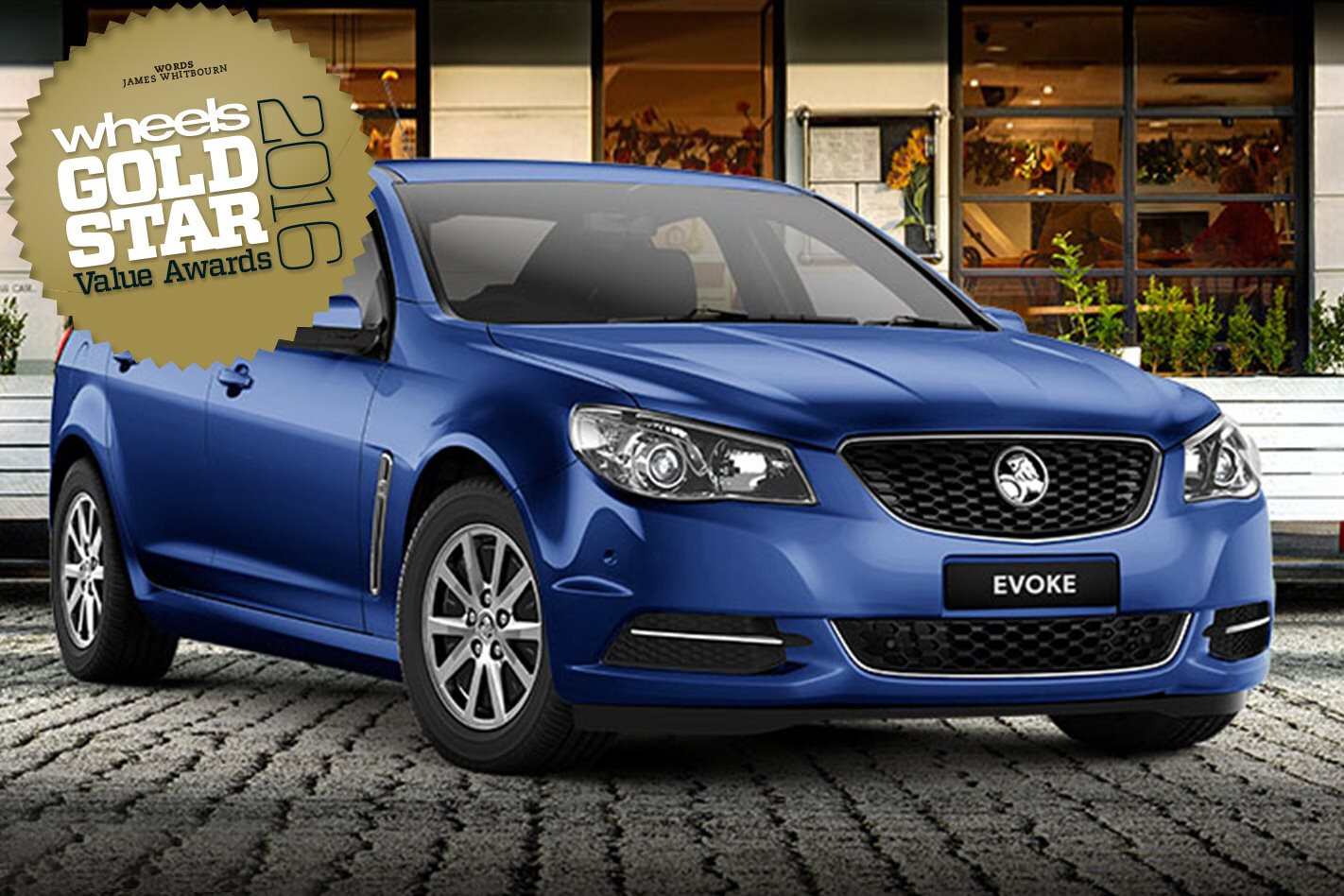 LARGE CARS under $45K
Economical engines have helped large cars avoid becoming instant money pits.
View the results
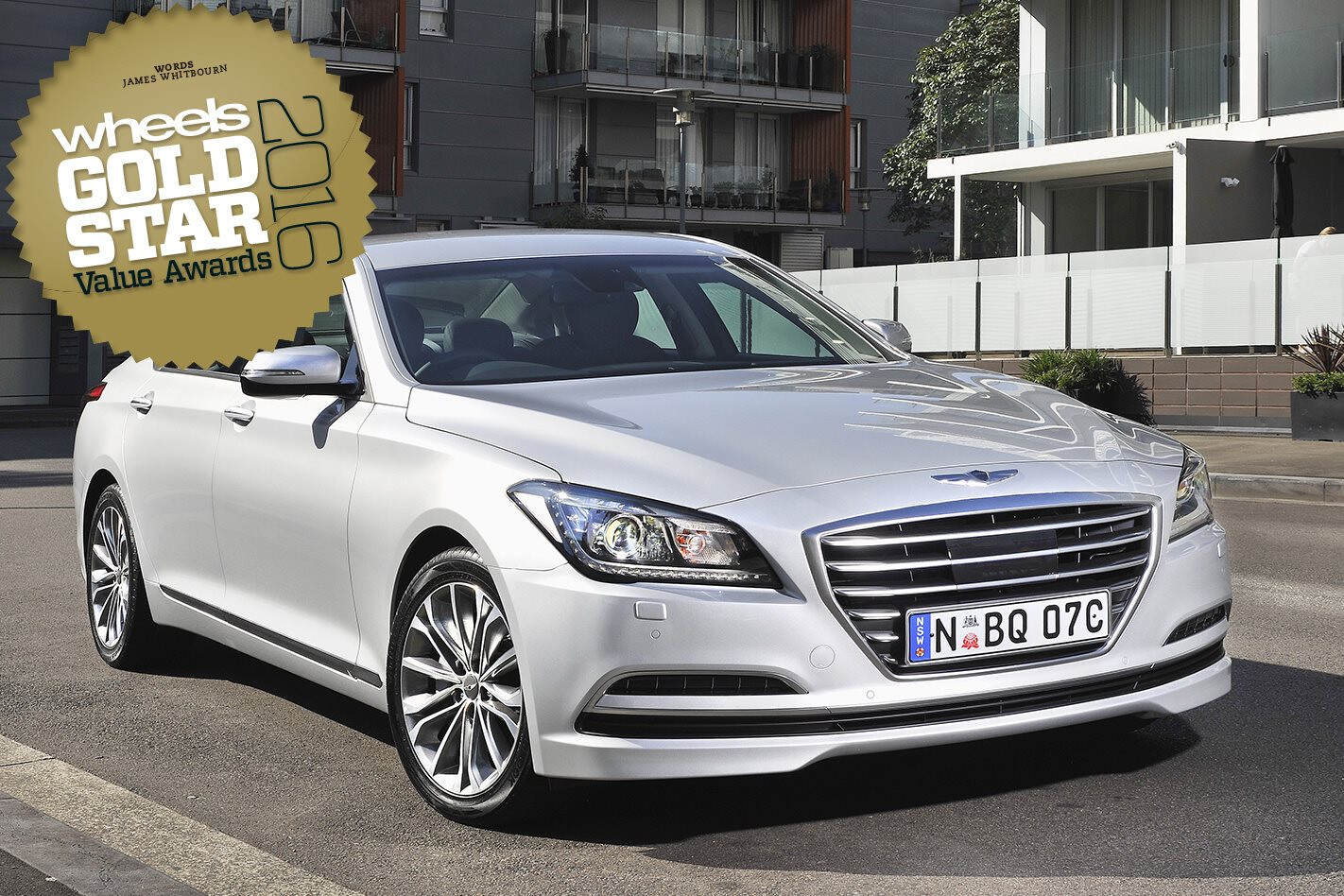 LARGE CARS $45K to $65K
Cars at this level need to tick a few boxes to deliver on value.
View the results
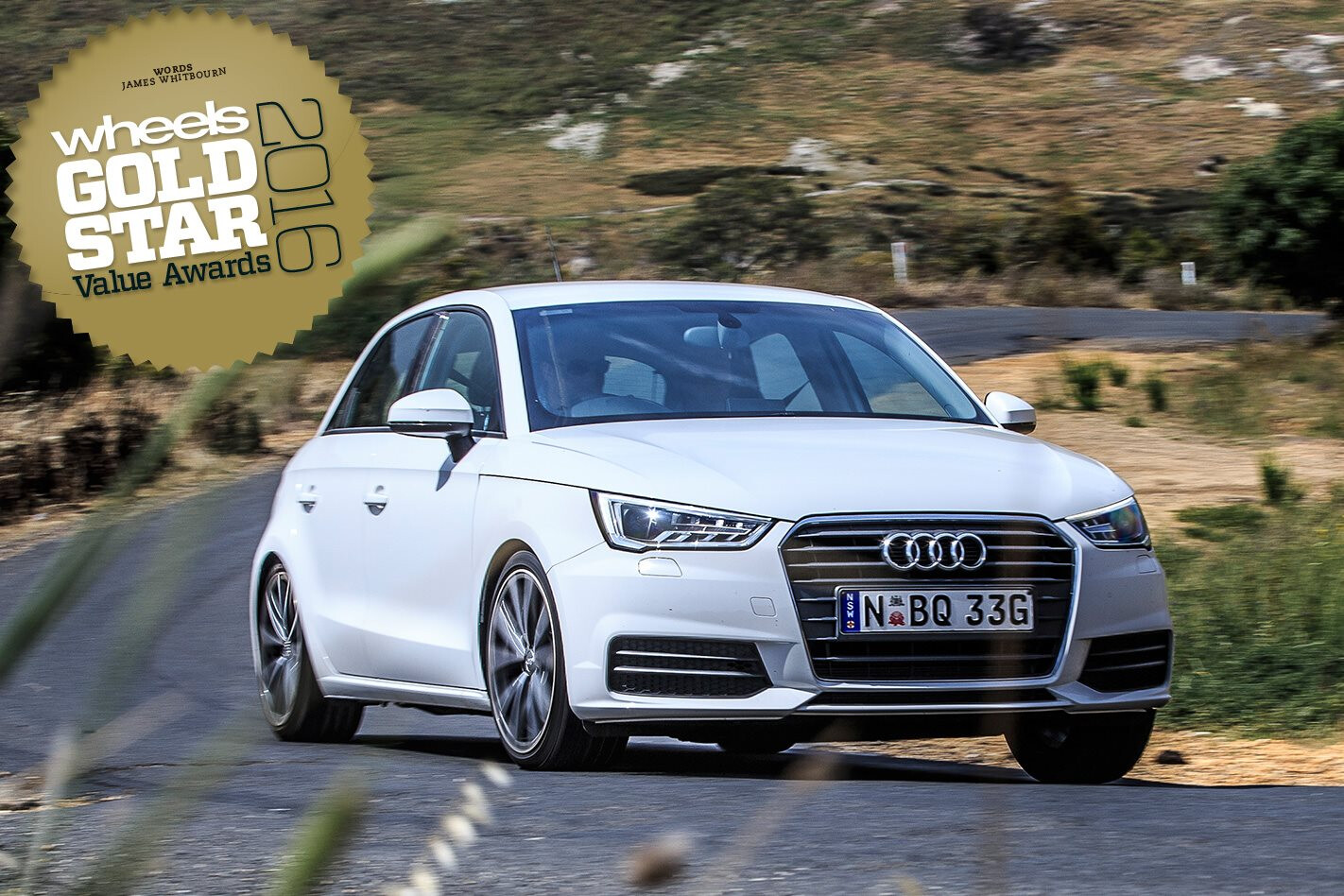 PREMIUM COMPACT CARS under $50K
These three compact cars, Audi A1, Mini Cooper and the BMW 118i, will give you greater economy in a nifty city-car size, with a touch of class.
View the results
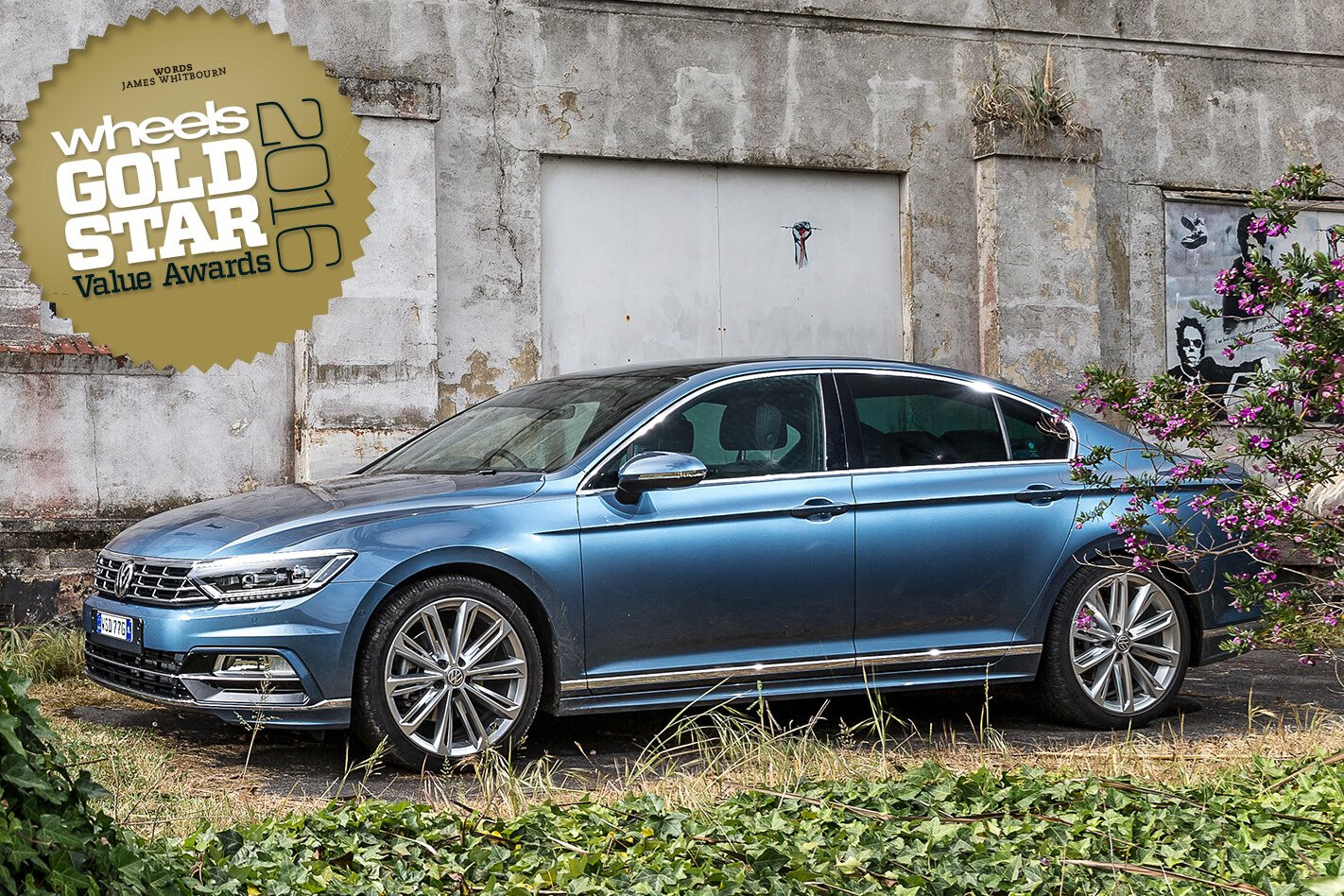 PREMIUM MEDIUM CARS $45K to $60K
Depreciation takes its toll on otherwise excellent cars.
View the results
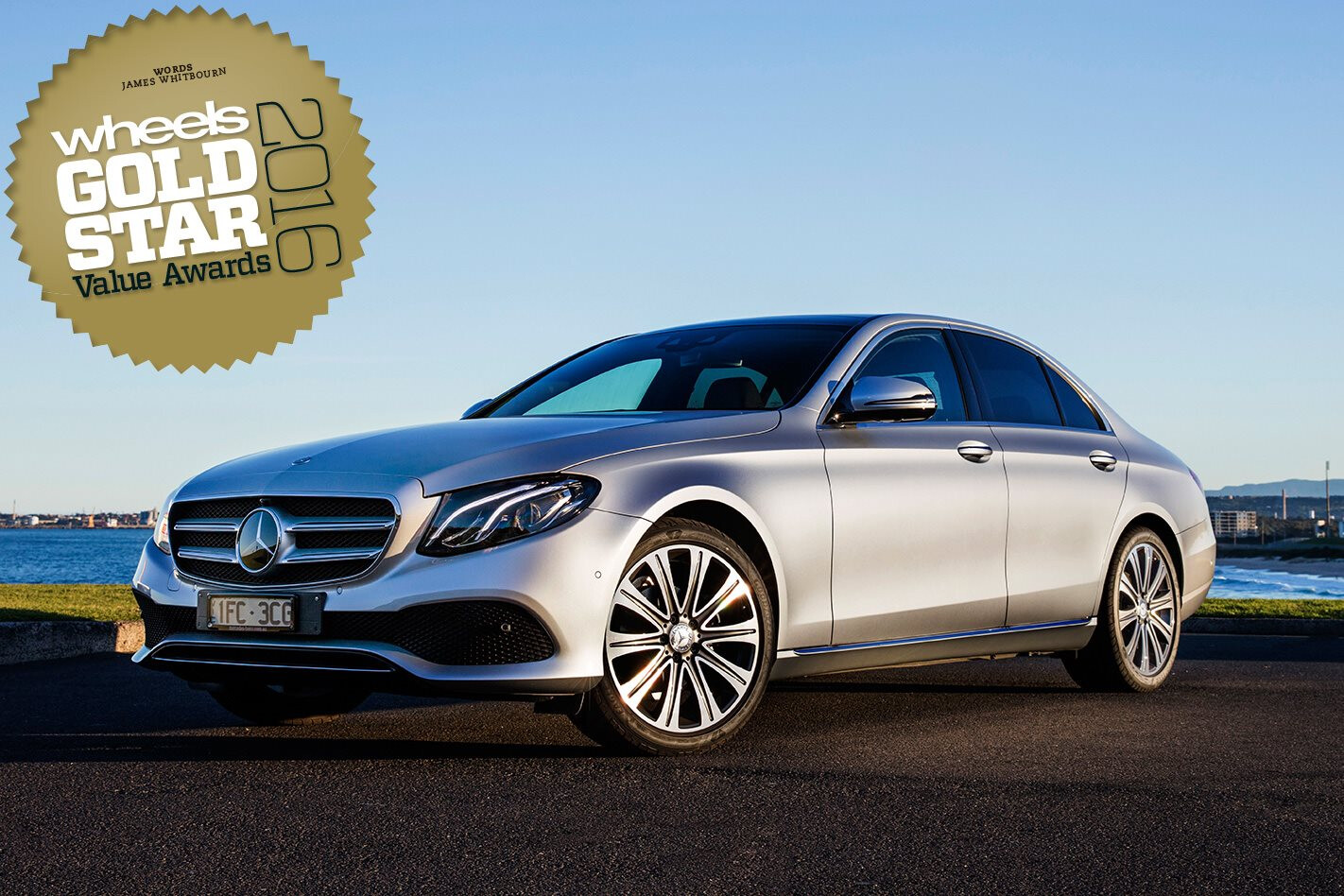 PREMIUM LARGE CARS
Gone are the days when big luxury cars were all gas guzzlers.
View the results
CITY SUV
Mazda has a firm stake at the top of this rapidly growing category.
View the results
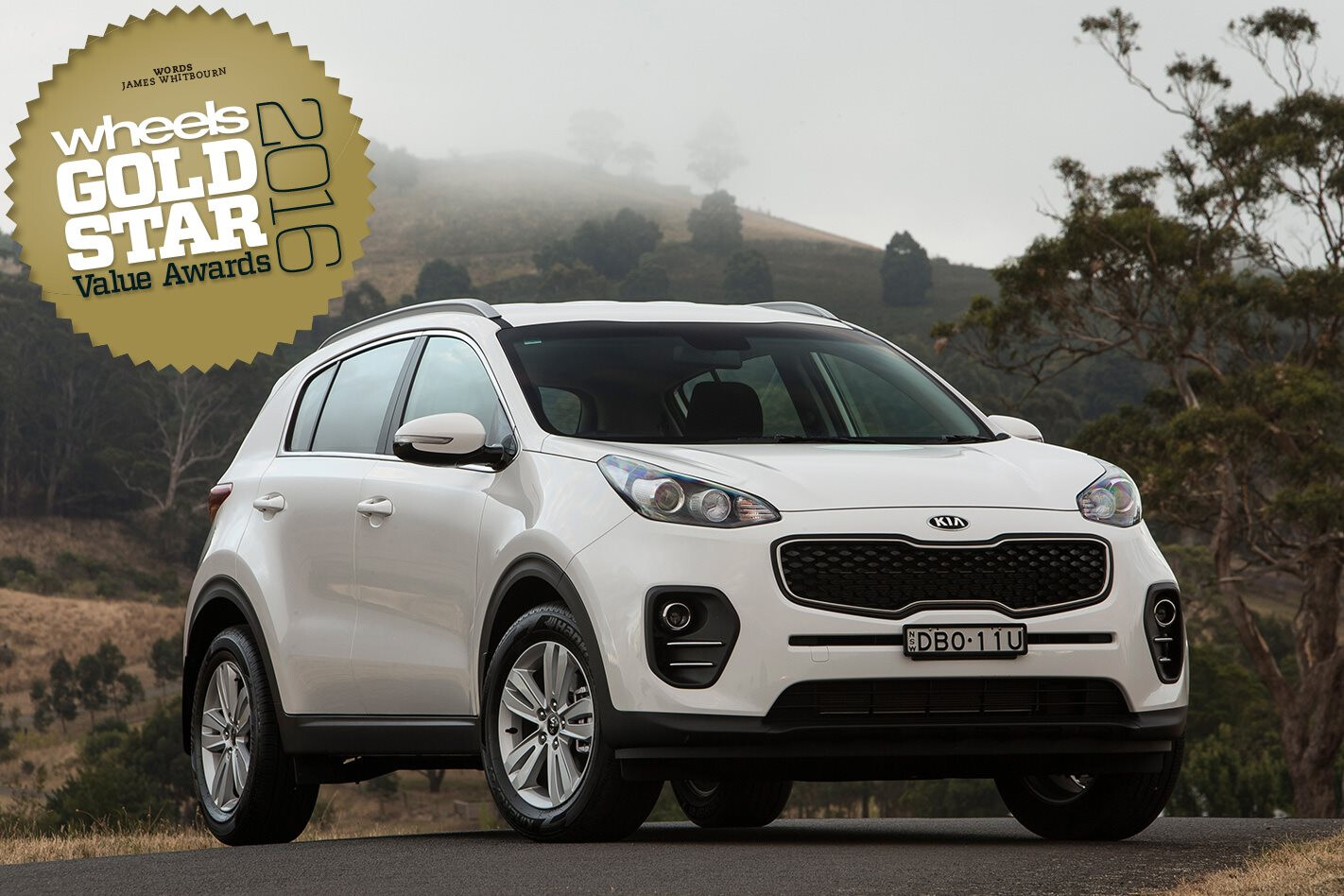 MEDIUM SUV under $45K
If you want the space of an SUV, without the premium price tag, then check out the Kia Sportage, Mazda CX-5 and the Hyundai Tucson.
View the results
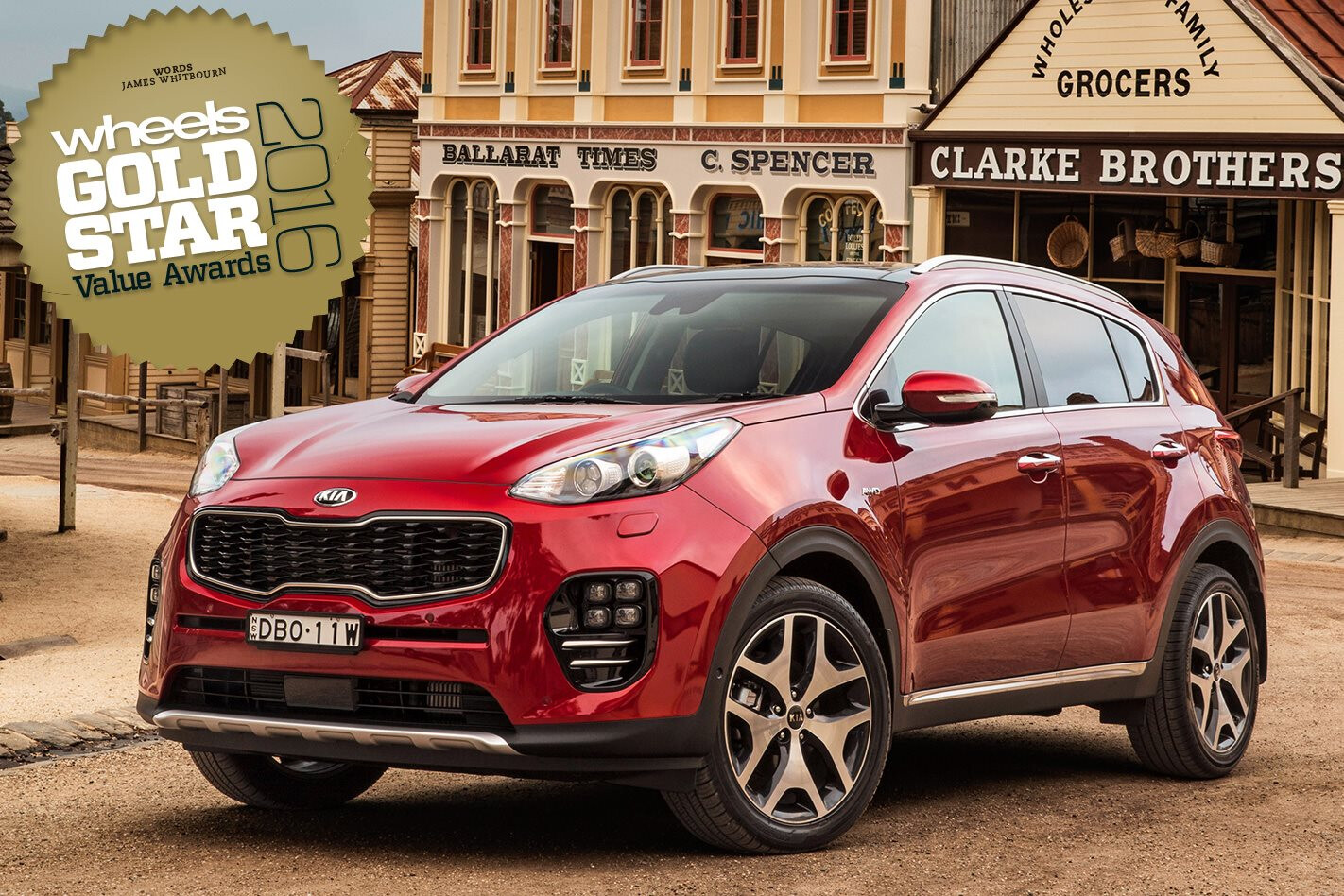 MEDIUM SUV $45K to $65K
If you want it all: the label, the space, and all the tackle then the Kia Sportage, Hyundai Tucson and Range Rover Evoque are worth a look.
View the results
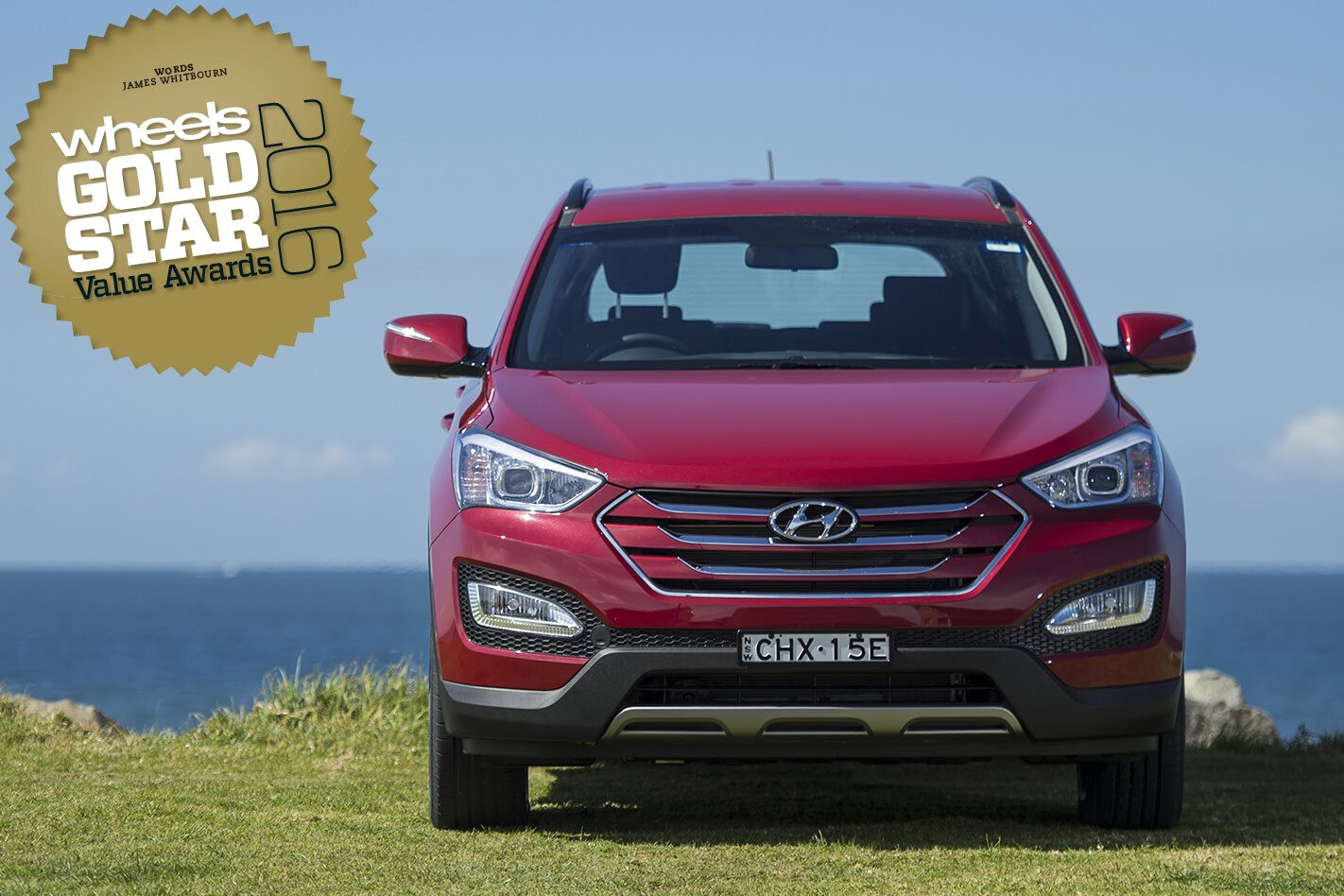 LARGE SUV/4WD
A large SUV or 4WD is a great solution for those with a sense of adventure.
View the results
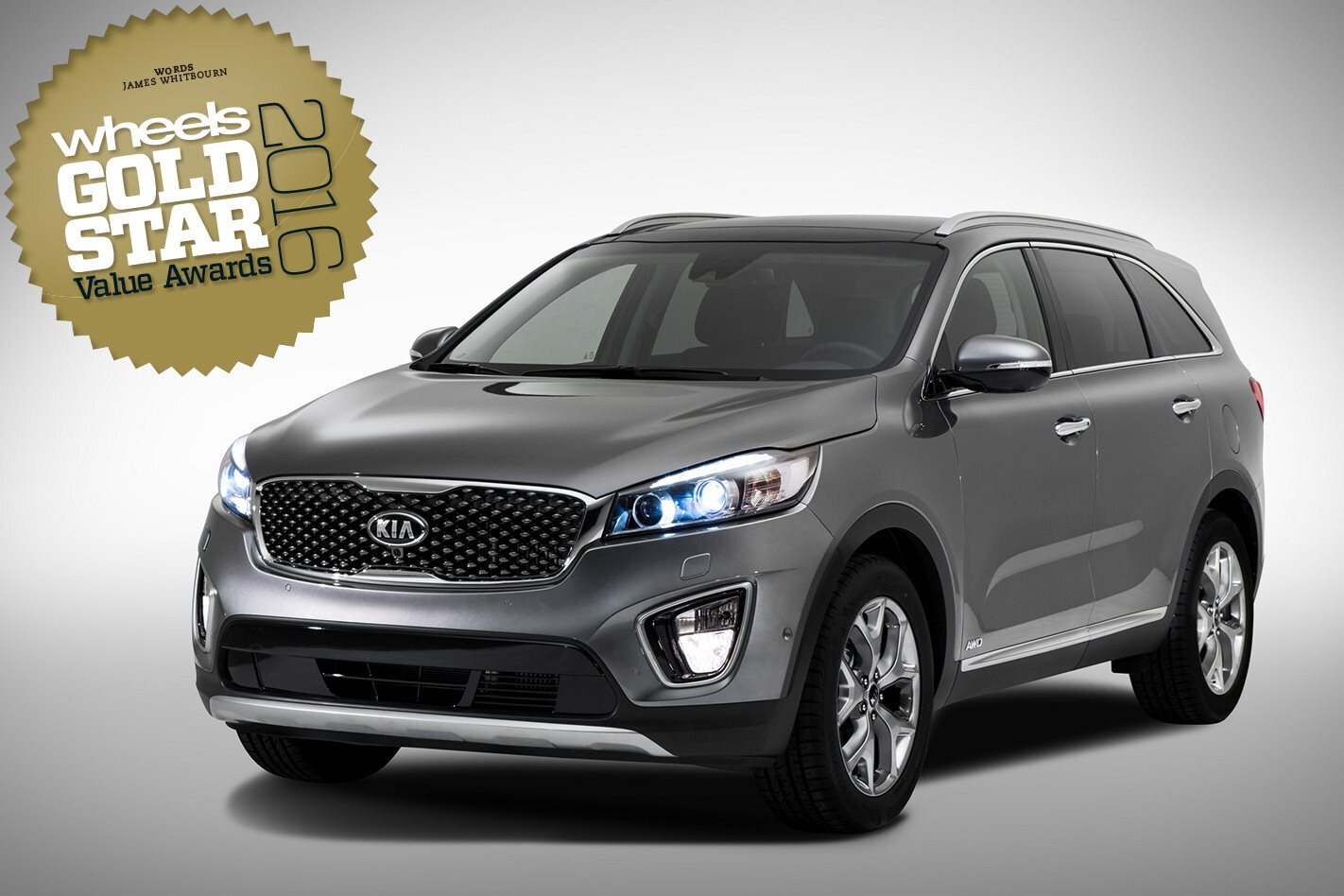 MEDIUM SUV 7-seater
An SUV that’s nimble enough to traverse the city-scape, but with added utility.
View the results
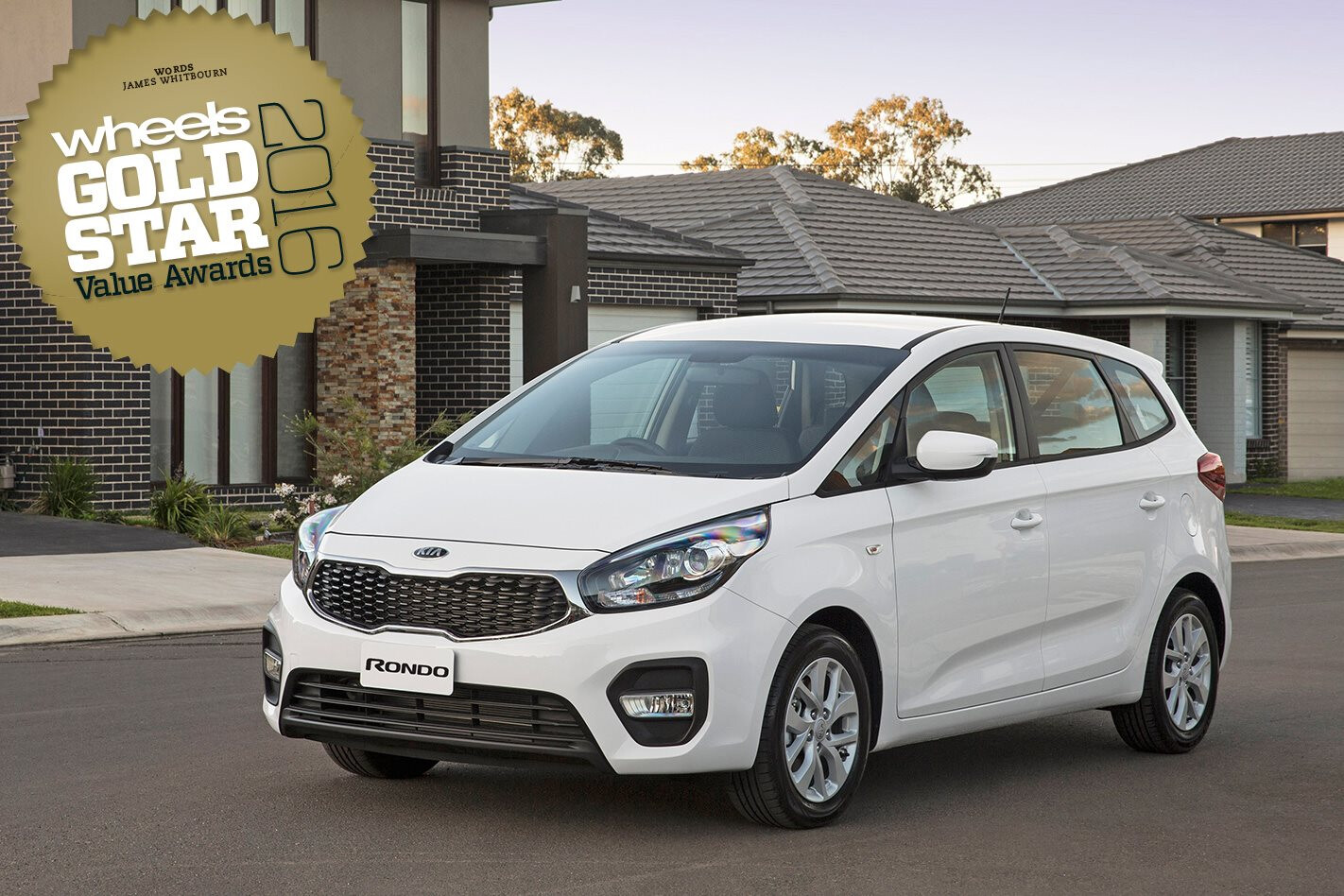 PEOPLE-MOVERS under $60K
For moving the family on a budget. Introducing the Kia Rondo Si, Citroen C4 Picasso, and Kia Carnival S.
View the results
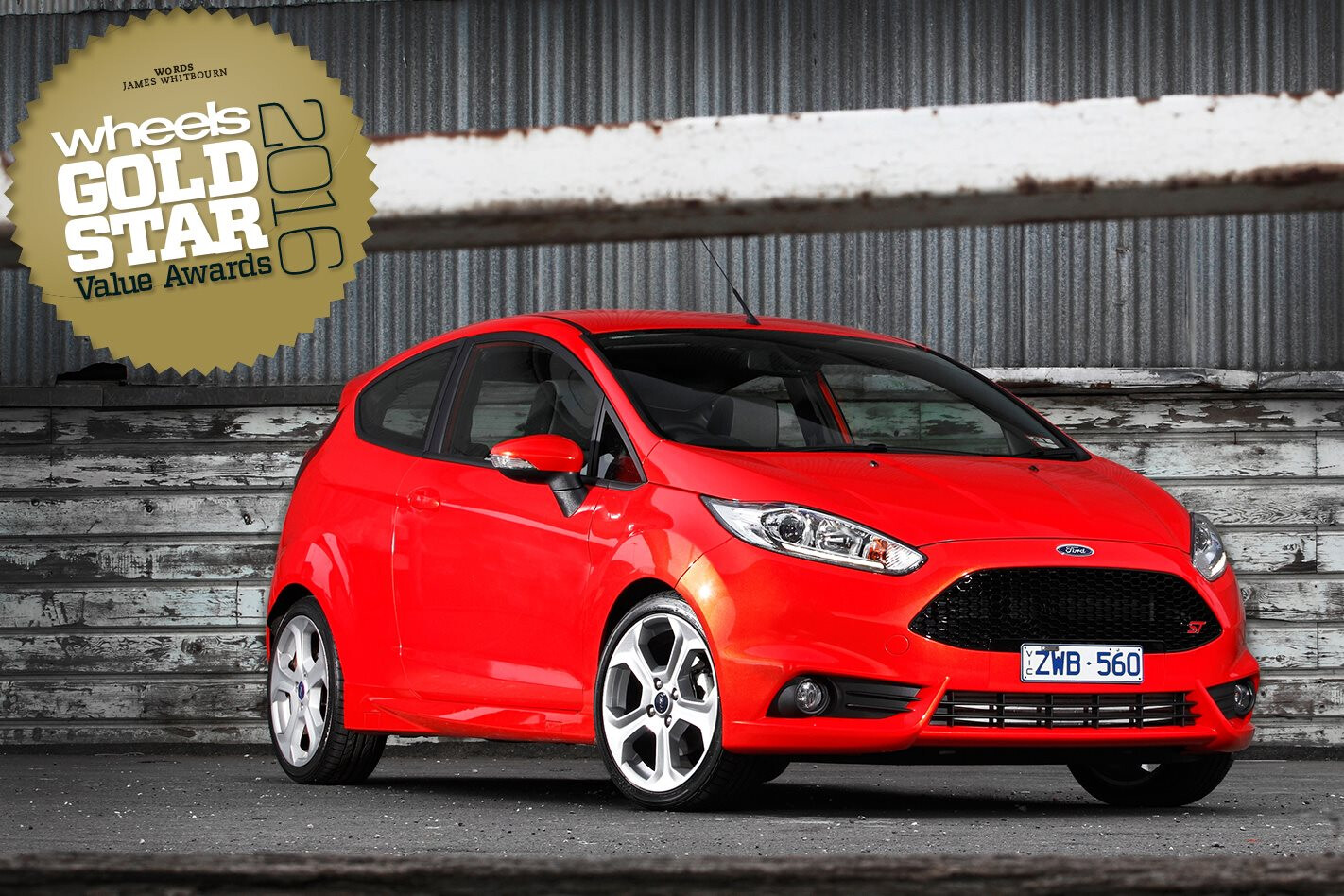 PERFORMANCE under $75K
Hair raising performance doesn’t have to empty your wallet. Get the best bang for your buck from the Ford Fiesta ST, Mazda MX-5, and Renault Clio RS200.
View the results
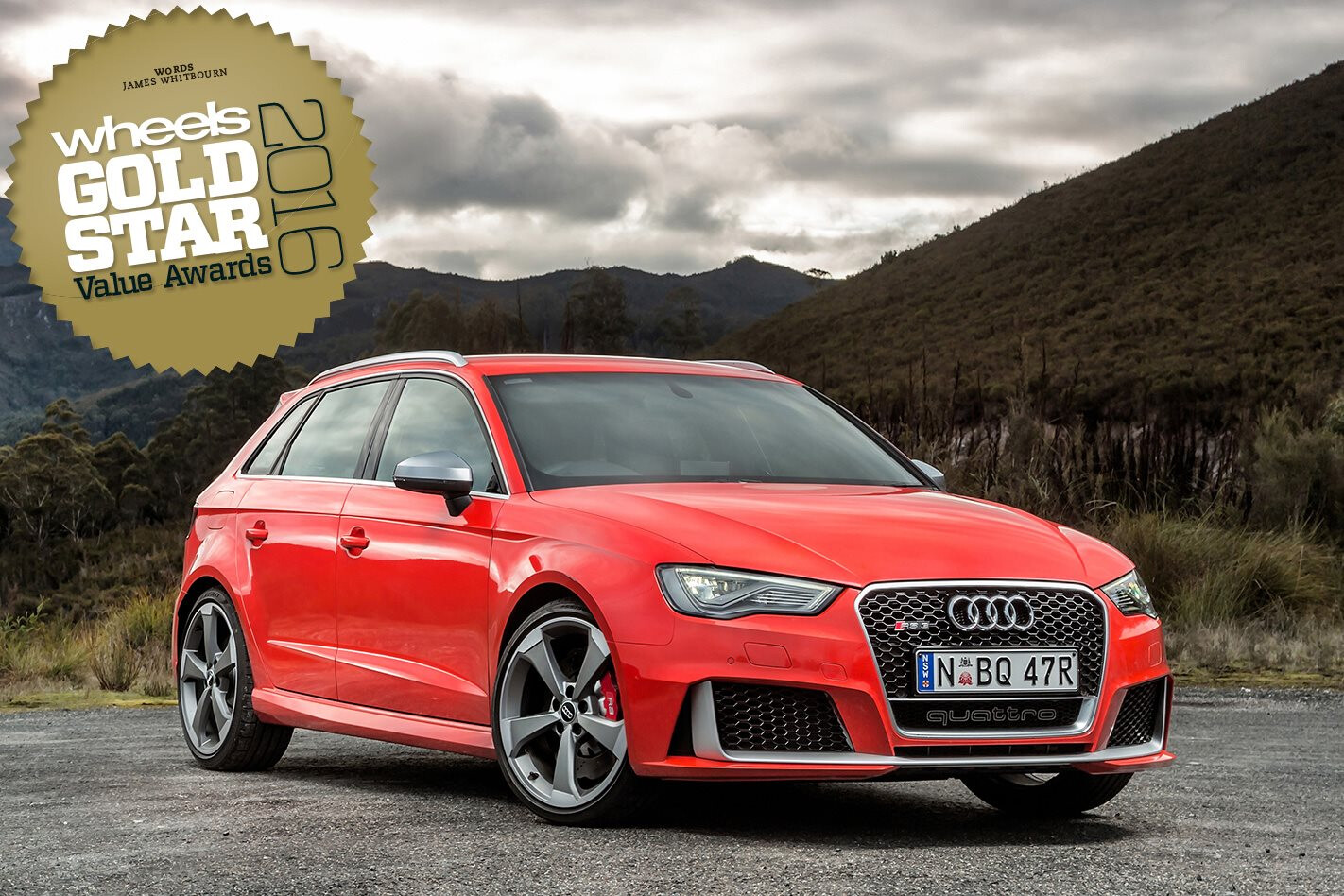 PERFORMANCE $75K to $150K
Don’t hurt your wallet just for some cheap thrills. The Audi RS3, Lotus Elise S, and Alfa Romeo 4C will tickle you in the right spots without breaking the bank.
View the results
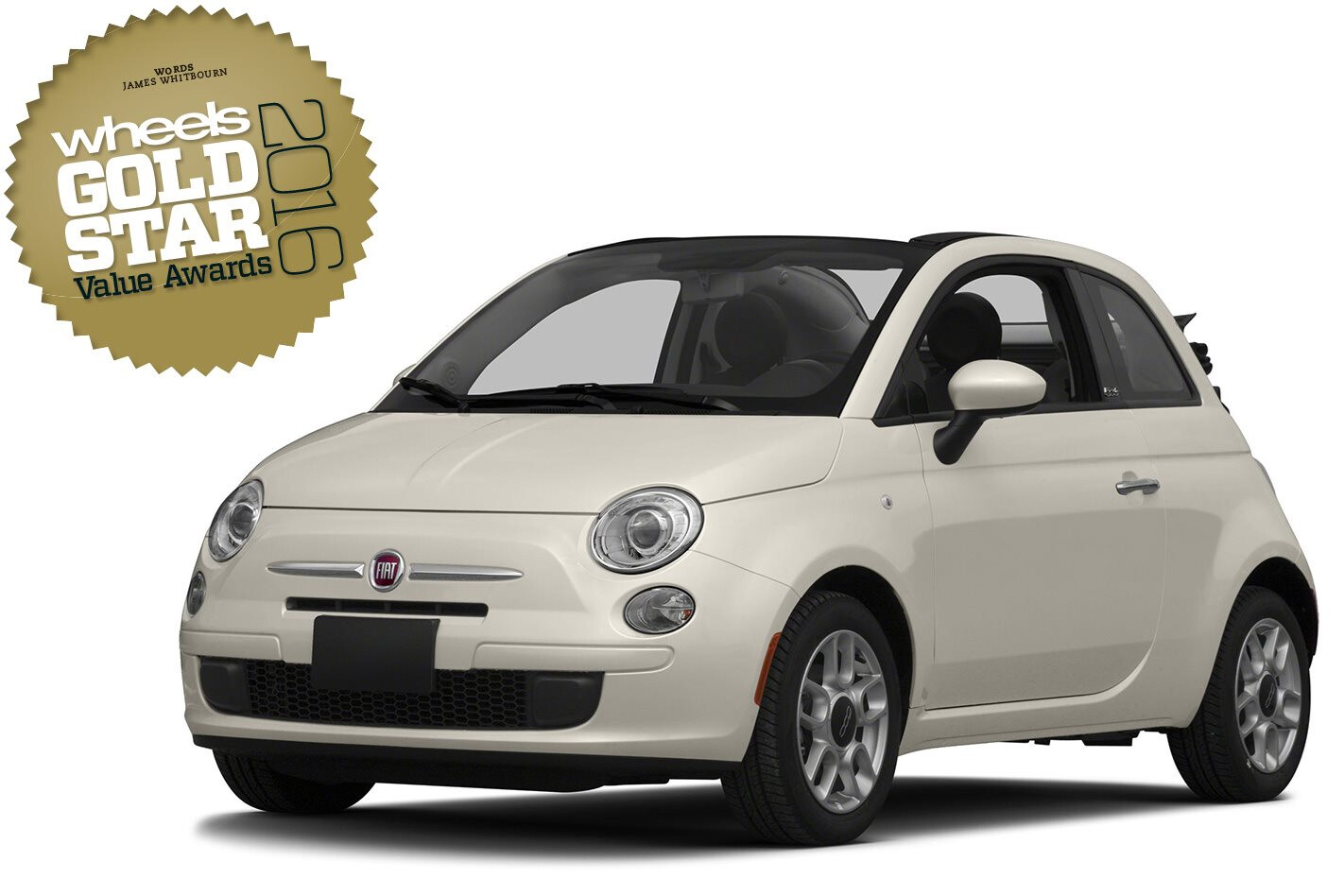 CONVERTIBLES under $60K
Drop the top, and drop the costs. Introducing the Fiat 500C Pop, Fiat Abarth 595C, and Citroen DS3 DSport.
View the results
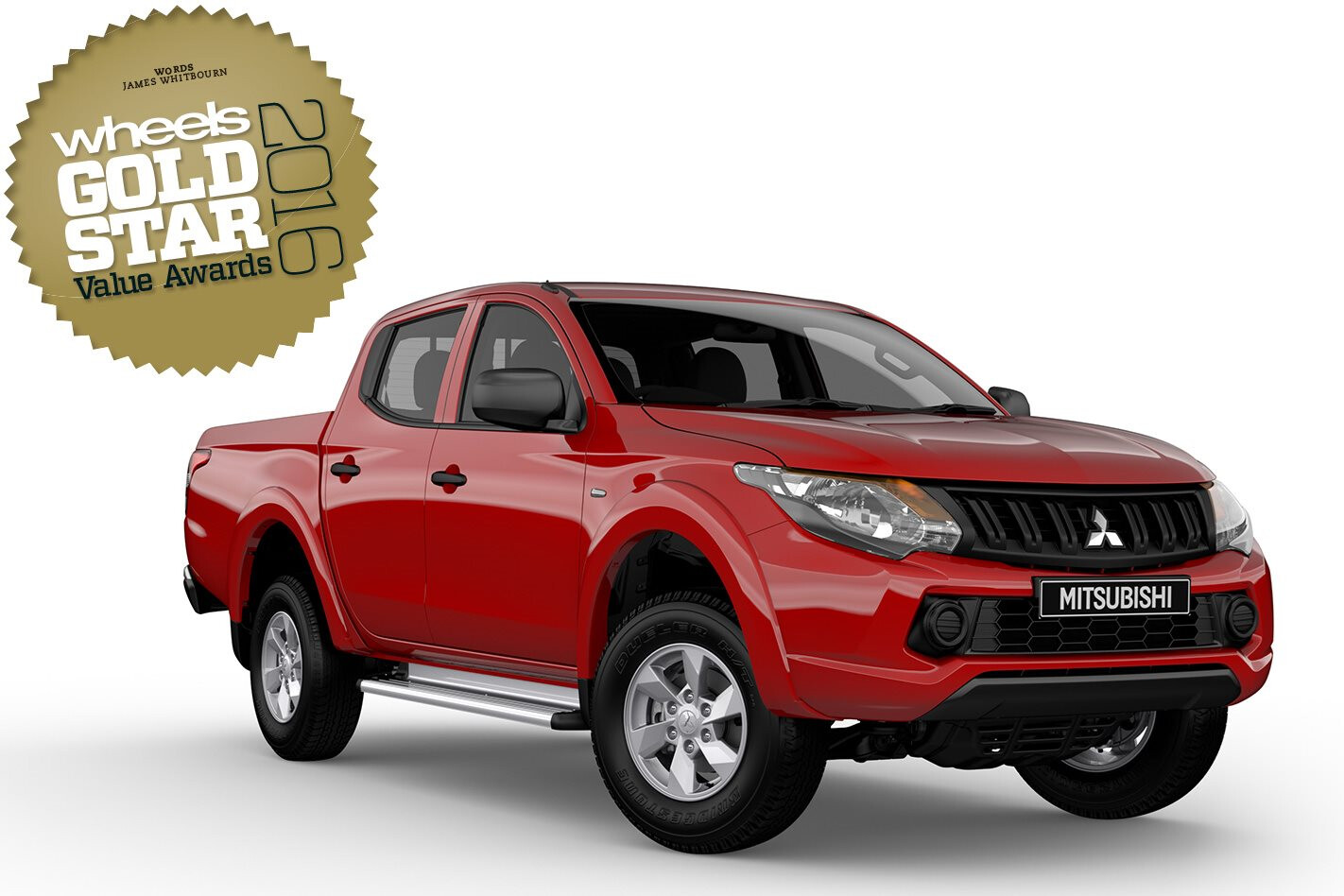 DUAL-CAB 4×4 UTES
A ute for the frugal tradie. Here we have the Mitsubishi Triton GLX, Ford Ranger XLS, and Toyota Hilux Workmate.
View the results
GOLD STAR CRITERIA
Depreciation
The biggest cost of ownership for most new cars. Of the 2000-plus cars number-crunched, Glass’s three-year retained value figures ran from 33 percent on a base model Toyota Aurion to 69 percent on another Toyota, the Landcruiser GXL.
Insurance
Comprehensive insurance quotes obtained online from AAMI for a 35-year-old male living in Chatswood, NSW, Rating One for life, no finance, private use.
Fuel
Annual fuel cost was calculated on ADR combined-cycle consumption figures – not real-world, but a good base for comparison. Annual distance travelled is taken as the ABS Australian average of 14,000km, and fuel prices on the day were used.
Purchase price
Most new-car buyers set out with a budget in mind, so the survey is divided into price brackets. The real cost of owning the car is depreciation, which is where purchase cost comes into our value analysis.
Real cost
It’s relatively easy to put a representative number on the three-year cost of depreciation, fuel and insurance, so the total of these running costs equate to 80 percent of a car’s score.
Service
Widespread fixed- or capped-price servicing schemes would make it possible to compare car servicing costs, but for the fact they’re not universal. We can score service intervals; a longer interval may result in less expense and it will certainly be more convenient, so it takes the maximum 10 points.
Warranty
If nothing else, a seven-year warranty gives greater peace of mind compared with a three-year warranty. However, it’s impossible to put a hard cost on what an extra-long warranty is worth; it only translates into cash if something goes bang and is fixed without cost. Warranty accounts for 10 points of 100.
Stay tuned as we reveal more of Australia’s Best Value Cars each day.
First published in the October 2016 issue of Wheels magazine, Australia’s best car mag since 1953.
Opportunity knocked, but Nissan didn’t fully open the door.
Can’t wait to see the final score? Jump to the verdict now.
LAST time we tested (and slammed) the Pathfinder, Nissan had a conniption. ‘Surely it can’t be that bad’ went the general line of questioning, but the ST-L Hybrid was indeed an undisputed dunce. So kudos to Nissan for stumping up a base ST for this Megatest, knowing full well its US-made SUV was never going to be the darling of the group. More the plain-Jane, uncoordinated sister.
Yet there’s something about the base Pathy that cuts through its layers of mediocrity to make it almost likeable. For all the Nissan Pathfinder’s flaws, in comparison to Holden’s odious Captiva, it actually feels plush, refined and inviting.
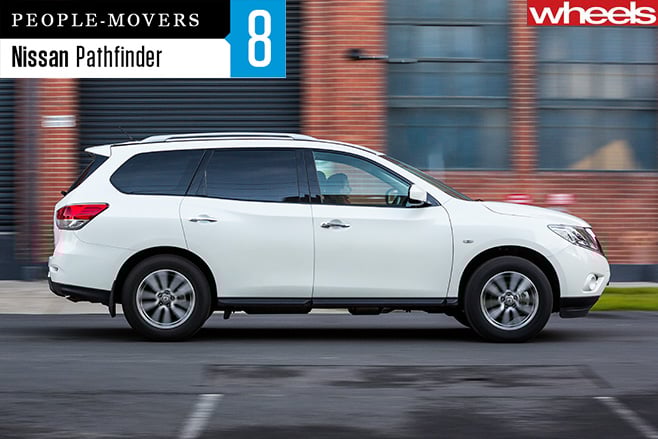
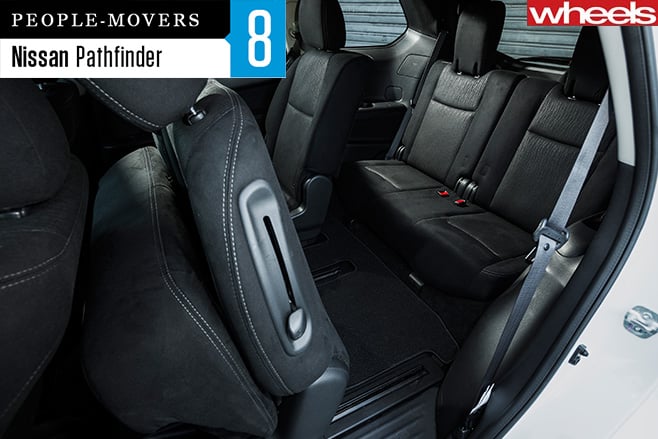
A clever ‘EZ Flex’ seating system allows the second row to effortlessly tilt and slide forward, even with an ISOFIX (not top-tether) baby seat in place, and it remembers its position when slid back. It’s hard to beat for rear-row access, making a quick pull-over and iPad snatch from a misbehaving brat a parenting breeze. Pity the set-up is still configured for left-hand drive, where flipping a single outboard centre seat means exiting onto the street.
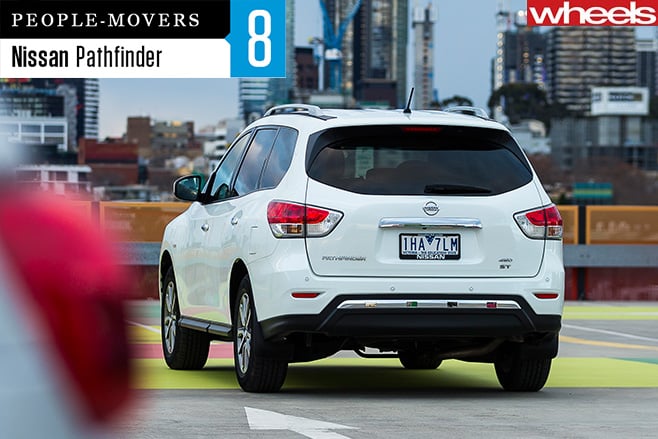
The Pathfinder ST is never going to be a driver’s car, with anaesthetised, yet kickback-prone steering unable to deliver any connection either side of straight ahead, though its all-wheel-drive system channels its syrupy grunt with conviction, and good-quality Continental tyres go a long way towards compensating for its soggy chassis.
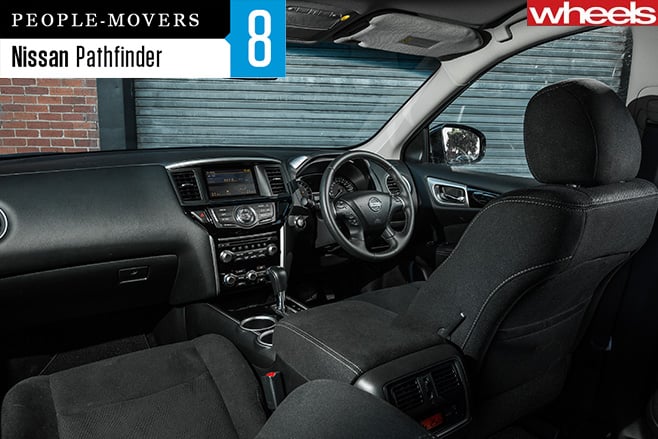
But in aiming to satisfy Middle America, rather than aiming to challenge the class-best, not to mention premium-brand SUVs – as is the case with the Kia Sorento and Mazda CX-9 – the monocoque-bodied Pathfinder continues to feel like an opportunity missed.
NISSAN’S updated Pathfinder – due here in the first half of 2017 – should address many of the problems of this fourth-generation model, starting with the steering. An 11-percent-quicker rack and “improved cornering feel” will combine with an extensively revised suspension tune (firmer spring and damper rates, new rebound springs in the front struts) to hopefully lessen the vague sogginess that makes the current monocoque Pathfinder feel like it still has a separate chassis. Fresh front styling gives the MY17 model a much sharper look, and it’ll also boast up-to-date driver-assistance and multimedia tech. But the confusing, button-heavy control layout will remain unchanged.
|
 SPECS
SPECS Other seven seater options
Holden Captiva LT AWD
The Holden Captiva LT AWD fails to make a captivating argument for why you’d bother over other, more composed competitors.
Honda Odyssey VTi
An odyssey is an ‘epic journey’. Unfortunately for the Japanese carmaker, the story of the Honda Odyssey has been one of a downward slide.
Toyota Kluger GX AWD
The Toyota Kluger offends no one by sticking to the middle of the road. There’s no escaping that the Toyota offers plenty for the money.
Hyundai Santa Fe 30
The Hyundai Santa Fe better at pleasing its driver, rather than shifting a tribe of seven, as we uncover headroom and visibility issues in the third row.
Volkswagen Multivan
The Volkswagen Multivan is certainly the leader of the space race, if not quite the final frontier. Commercial vehicle origins let it down against more sophisticated competition.
Ford North America has backed tuning company Roush Performance with development of a high-output Focus RS with 372kW of power and three-way adjustable suspension.
Unveiled alongside tuned Mustang coupes and even Fiesta and Focus ST models at the SEMA show in Las Vegas this month, the Focus RS concept gets a shortblock performance assembly, cooling system and heavy calibration work in order to leap 115kW from the standard 257kW. No torque figure is given beyond the production model’s 440Nm.
PFC slotted brake rotors and Roush PerformanceTrakPak three-way adjustable suspension with camber plates are added underneath, and 255/35 R19 Continental ExtremeContact Sport tyres wrap around lightweight forged alloy wheels.
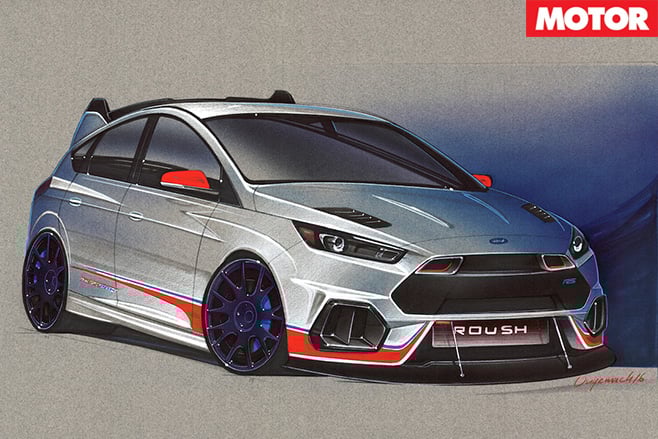
“With calibration work producing an impressive 500 horsepower, the lines between design and functional performance blur – transforming this into a true street/race car,” Ford US said in a statement.
If the styling isn’t to all tastes, then there are rival Focus RS alternatives that were likewise Ford-backed for SEMA.
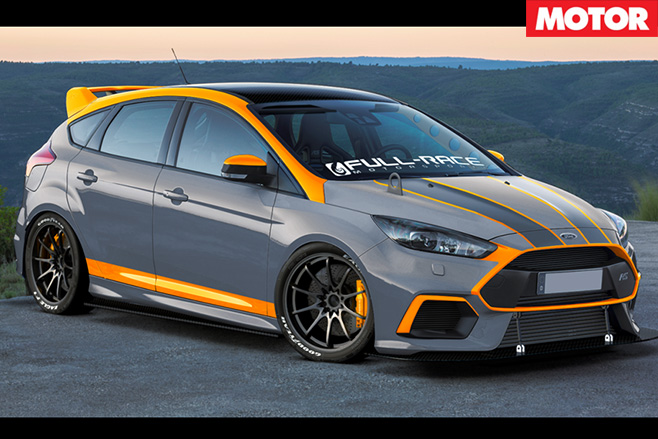
The “stealth grey and fire orange” example even gets a carbonfibre driveshaft, upgraded CV axles and front limited-slip differential.
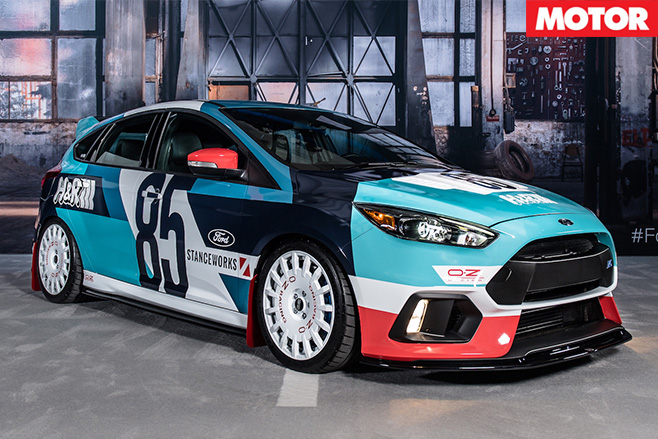
While Ford’s hottest hatchbacks are all seen here in concept form, performance parts are filtering into the American market now. Ford Australia has only backed Mountune performance parts for its Fiesta ST and Focus ST models locally, however, with word still to come through about potential Focus RS tuning kits for our market.
