
The BMW i3 was the first electric vehicle I ever drove. Its design was divisive, yet undeniably cool. With its almost alien-like styling, it felt as if a moon rover had been given a cabin and placed in a showroom.
Today, BMW’s electric cars closely resemble their petrol-powered counterparts.
By the end of this year, BMW plans to offer 16 battery electric variants across eight models, significantly easing the shift to electric vehicles.
Working in this field has profoundly changed my perspective on the feasibility of switching to electric cars for many people, particularly when compared to their petrol counterparts.
1
This is especially evident with the iX2, which, when driven consecutively with the X2 petrol models, strongly reinforces the case for electric vehicles.
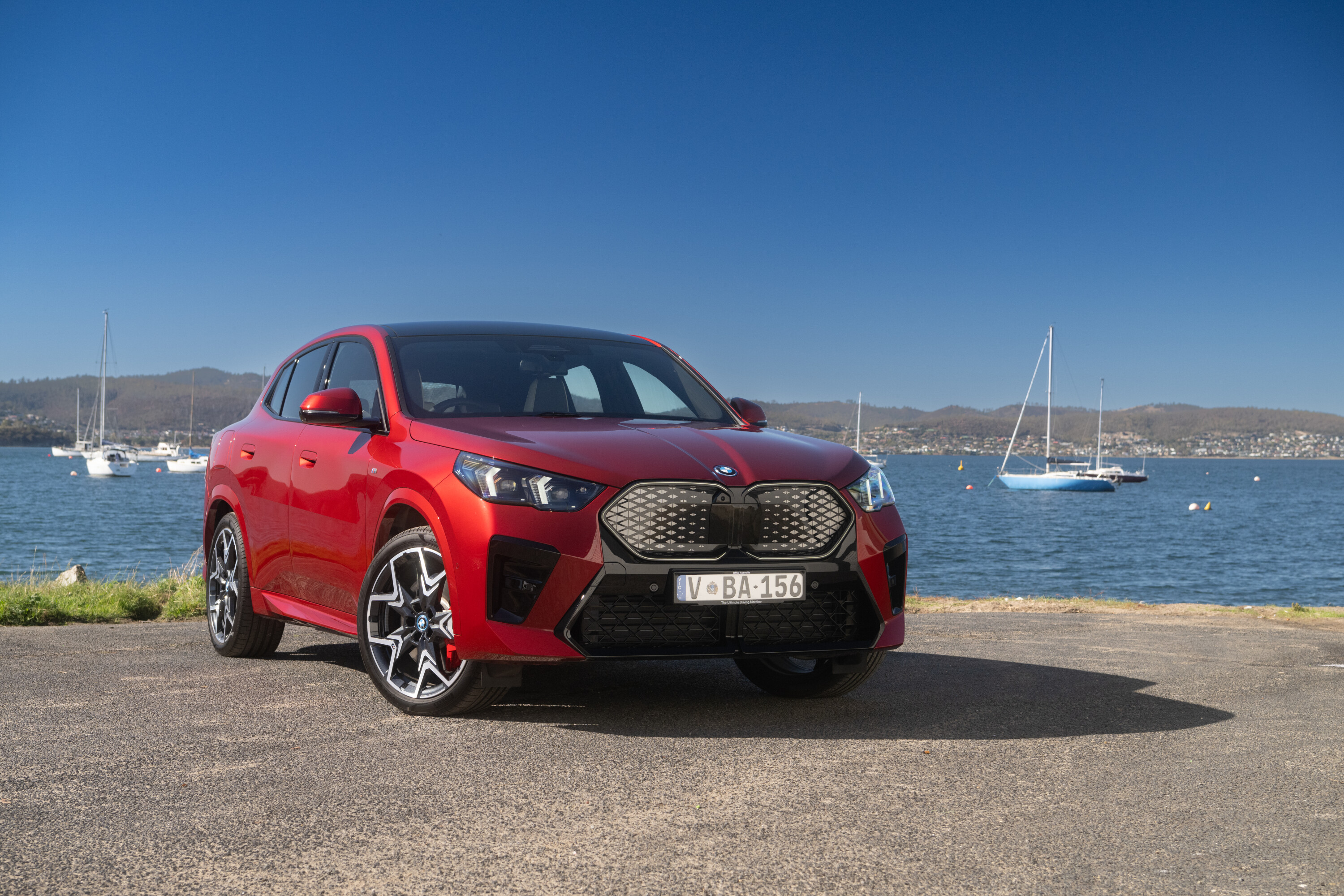
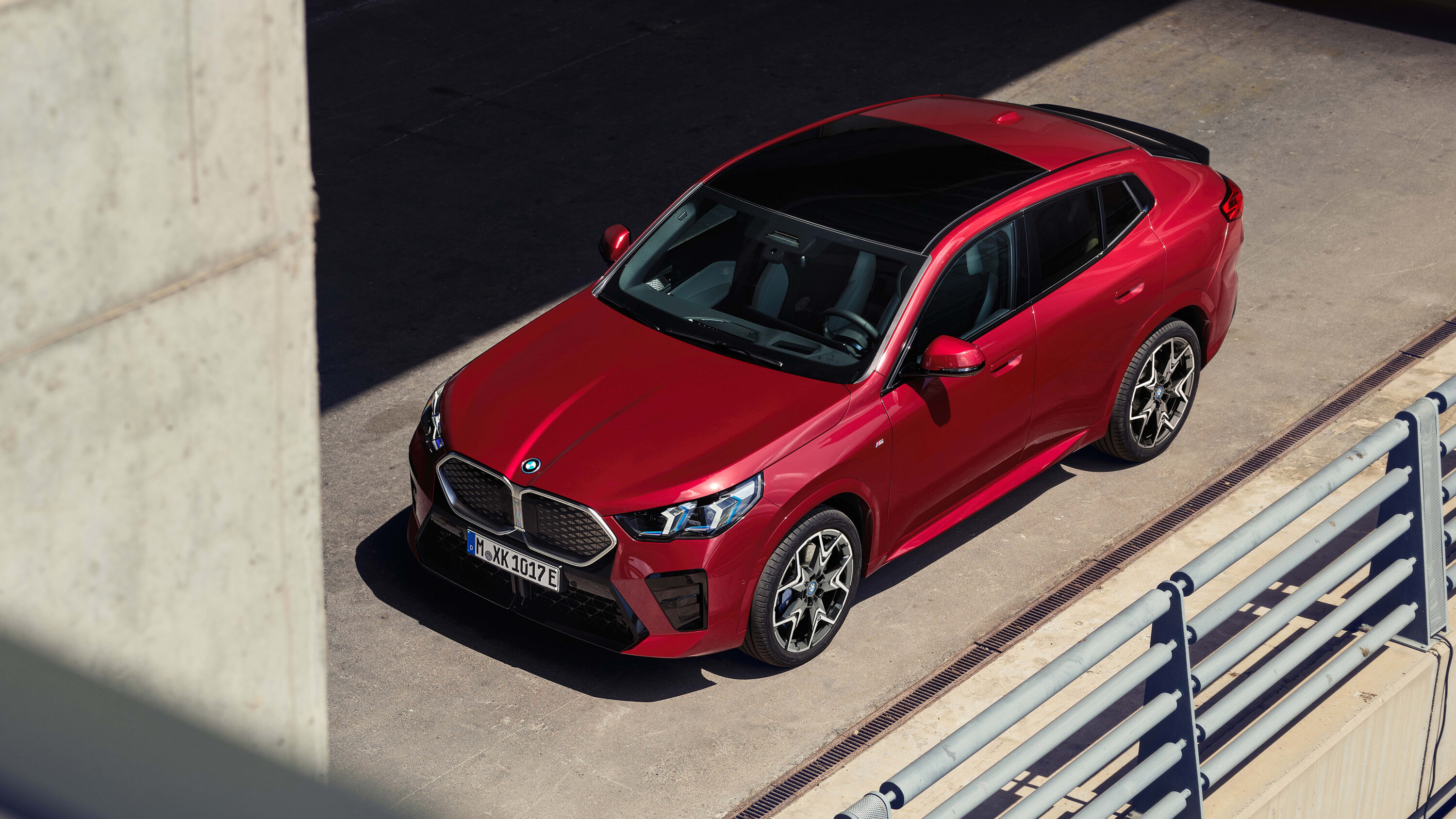
For it’s second generation update the X2 adds the iX2 to the line-up for the first time, a battery electric version of its sporty five seater small SUV. Or as BMW likes to call it, their Sports Activity Coupe.
We had the opportunity to drive this new iteration down across the south of Tasmania to see if the car was capable of handling the windy terrain of where surprisingly quite a few BMWs already live.
JUMP AHEAD
- How much is it, and what do you get?
- Features
- Interior comfort, space, and storage
- How do rivals compare on value?
- What is it like to drive?
- Efficiency
- How safe is it?
- Warranty and running costs
- VERDICT
How much is it, and what do you get?
The iX2 lineup in Australia will feature two models.
The entry-level iX2 eDrive20 variant is set to arrive in Australia by July this year, following a similar launch approach as last year’s iX1, which also made buyers wait several months for the more economical version.
The incoming iX2 xDrive20 is listed at $82,900 before on-road costs, carrying a $7,000 premium over the entry-level petrol X2 variant, and is front-wheel drive as opposed to the all-wheel drive system on the X2.
| 2024 BMW iX2 Pricing | |
| X2 xDrive20 | $82,900* |
| iX2 xDrive30 | $85,700* |
| * before on-road costs | |
BMW has intentionally priced its electric vehicles below the luxury car tax threshold to make them more affordable for consumers.
Nick Raman, BMW’s Product and Business Communications Manager, noted that this pricing strategy was carefully considered. For context, an ix2 XDrive30 in Europe is priced over 60,000 euros, which translates to around 106,000 Australian dollars.
That means there are now six variants that sit below this threshold with the iX1 is entry point to electric at $78,900 plus on road costs.
1
The BMW iX2 eDrive20 features a 65kWh battery and a front electric motor, which produces 150kW and 250Nm and achieves a claimed range of 455 kilometres which will be confirmed when it arrives down under as well as consumption figures.
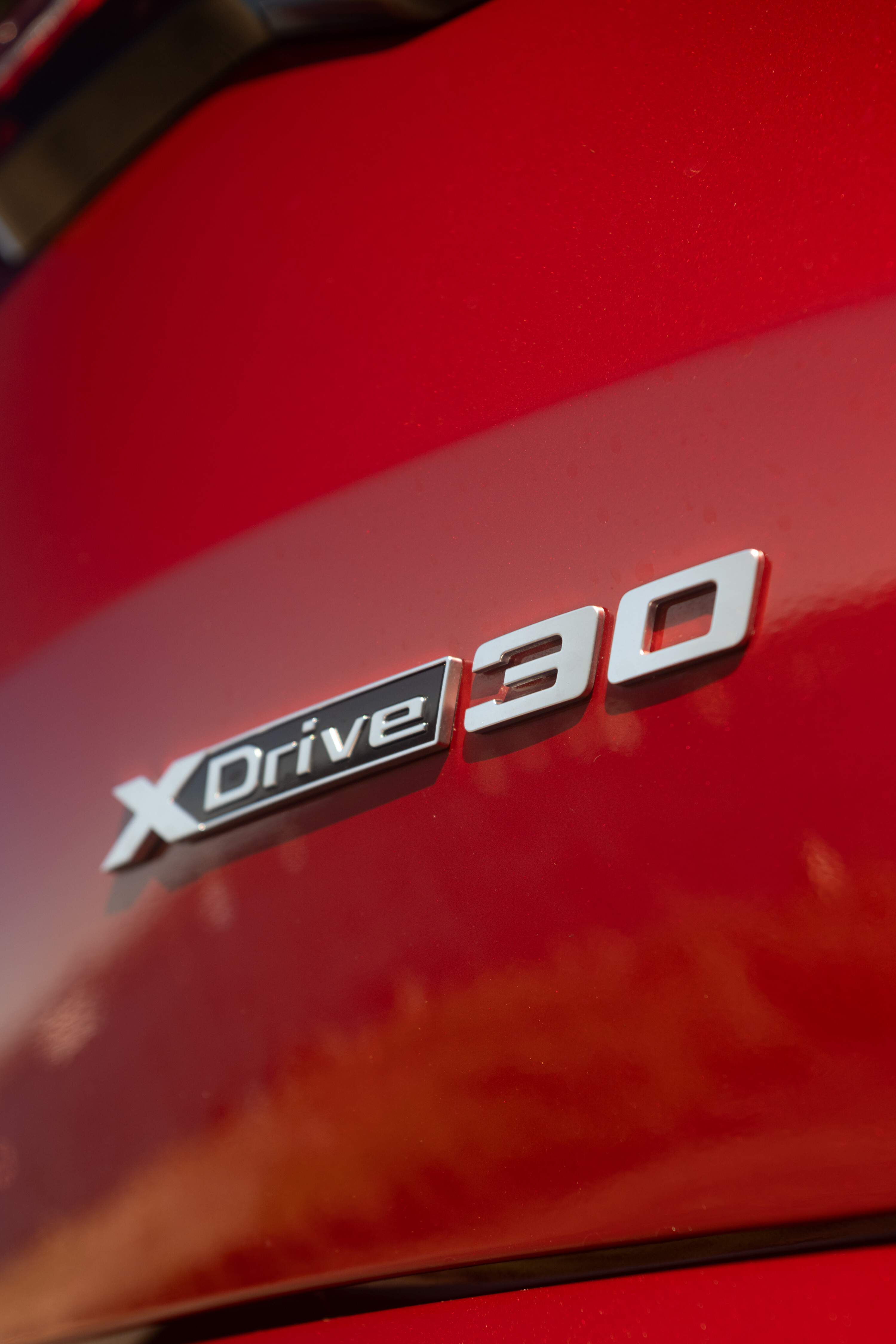
In comparison, the iX2 xDrive30 uses the same 65kWh battery but includes dual electric motors, one at the front and one at the rear, providing 230kW and 494Nm, for an identical 0-100km/h time with the iX1 xDrive30 of 5.6 seconds. This is when the boost mode is activated.
The iX2 xDrive30 offers a WLTP-certified range of up to 395km.
1
Features
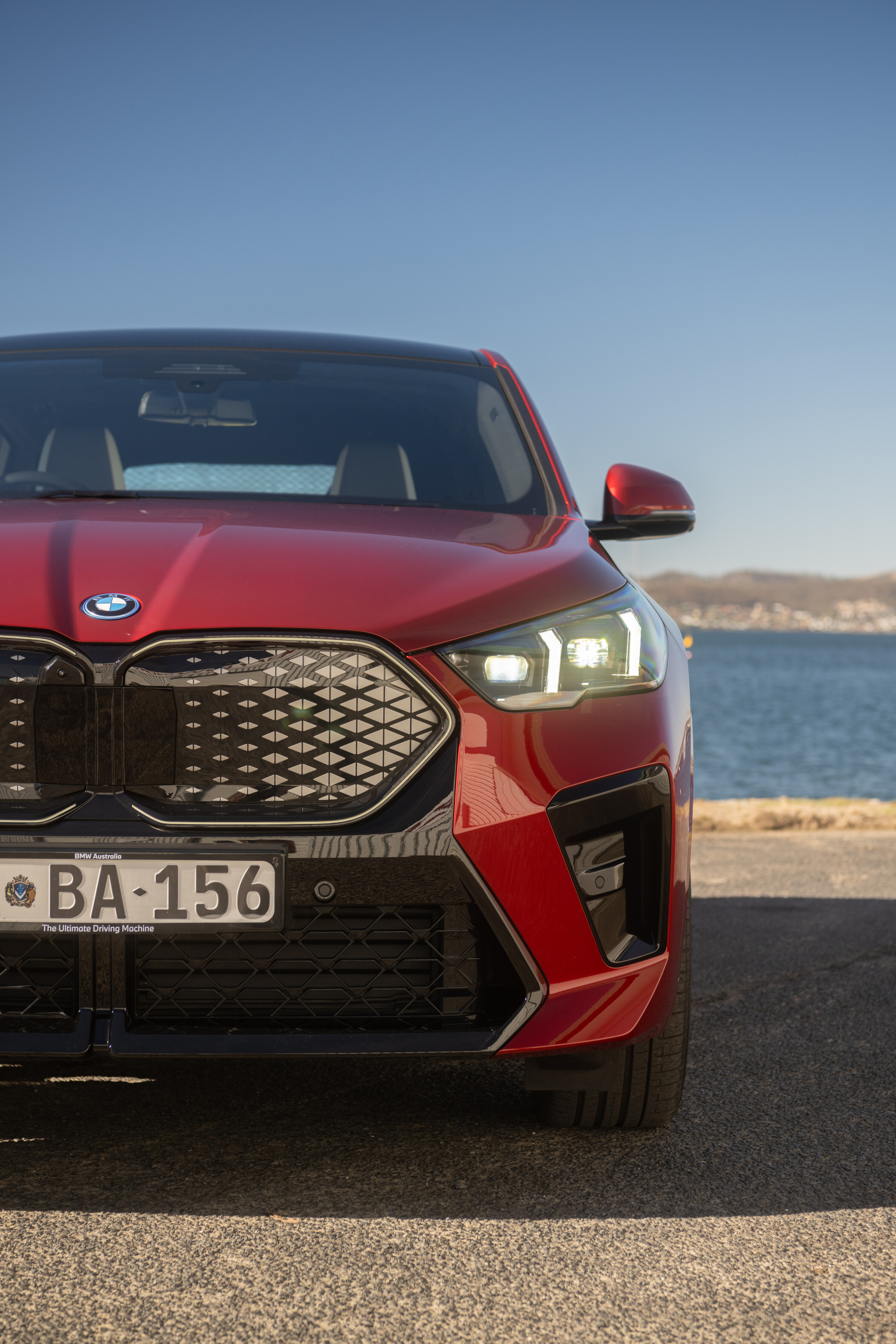
As BMW planned, the iX2 line-up imitates that of the iX1- with the XDrive20 offering an almost identical set of features. Key feature differentiators on the iX2 are larger wheels, acoustic glazing and lack of roof rails.
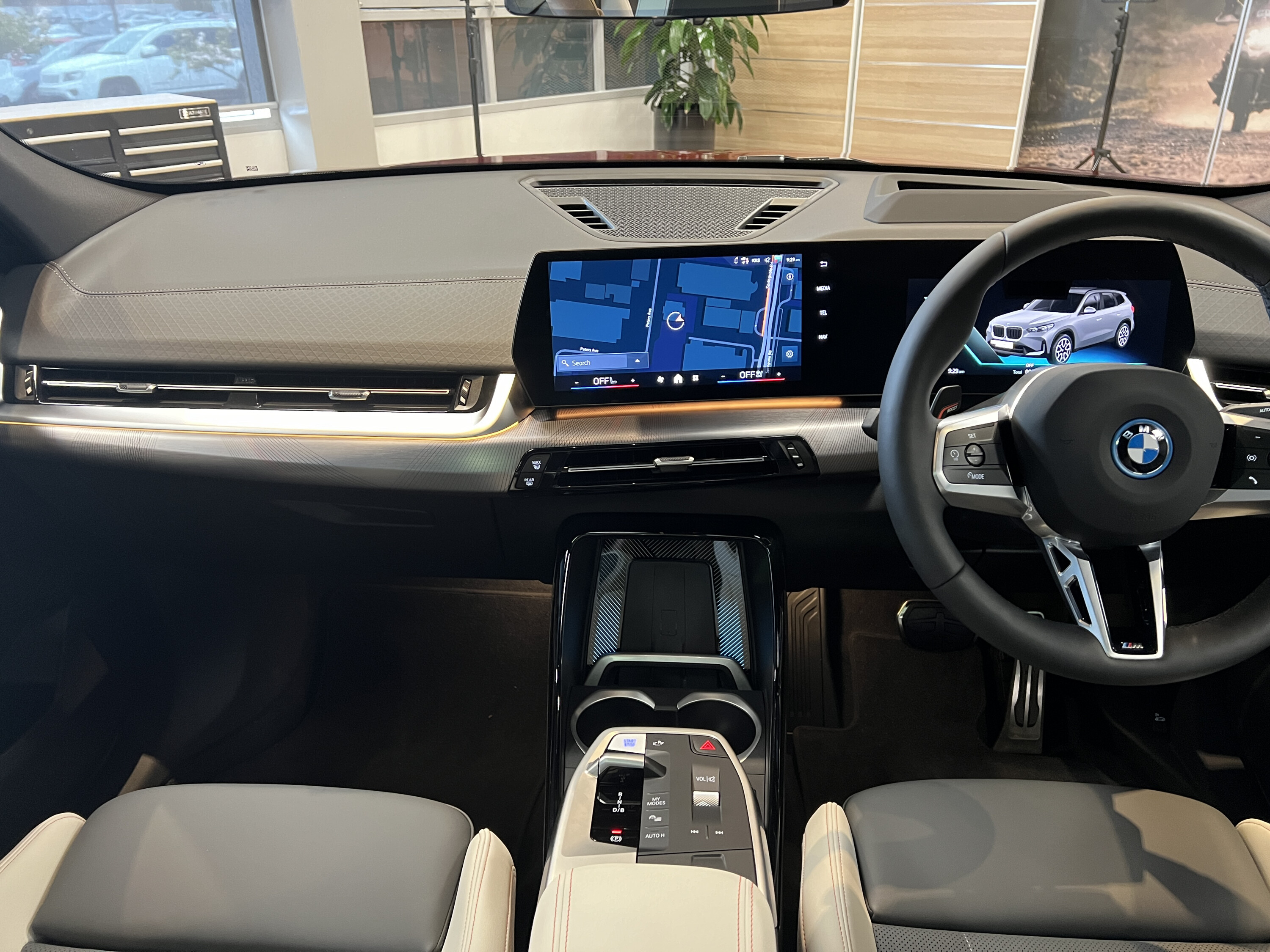
As a driver you’re equipped with a modern cabin that is directed towards you featuring a curved display built by a 10.7-inch infotainment screen and a 10.3-inch digital dashboard, creating a cockpit that is both driver-centric and highly functional.
Every control is strategically placed for optimal accessibility, and the infotainment system, compatible with wireless Apple CarPlay and Android Auto, connects swiftly. This system is powered by BMW’s iDrive 9, which is based on Android’s open-source platform.
1
| 2024 BMW iX2 xDrive30 features | |
| 10.3-inch driver display screen | Digital key |
| 10.7-inch curved touchscreen | Head Up Display |
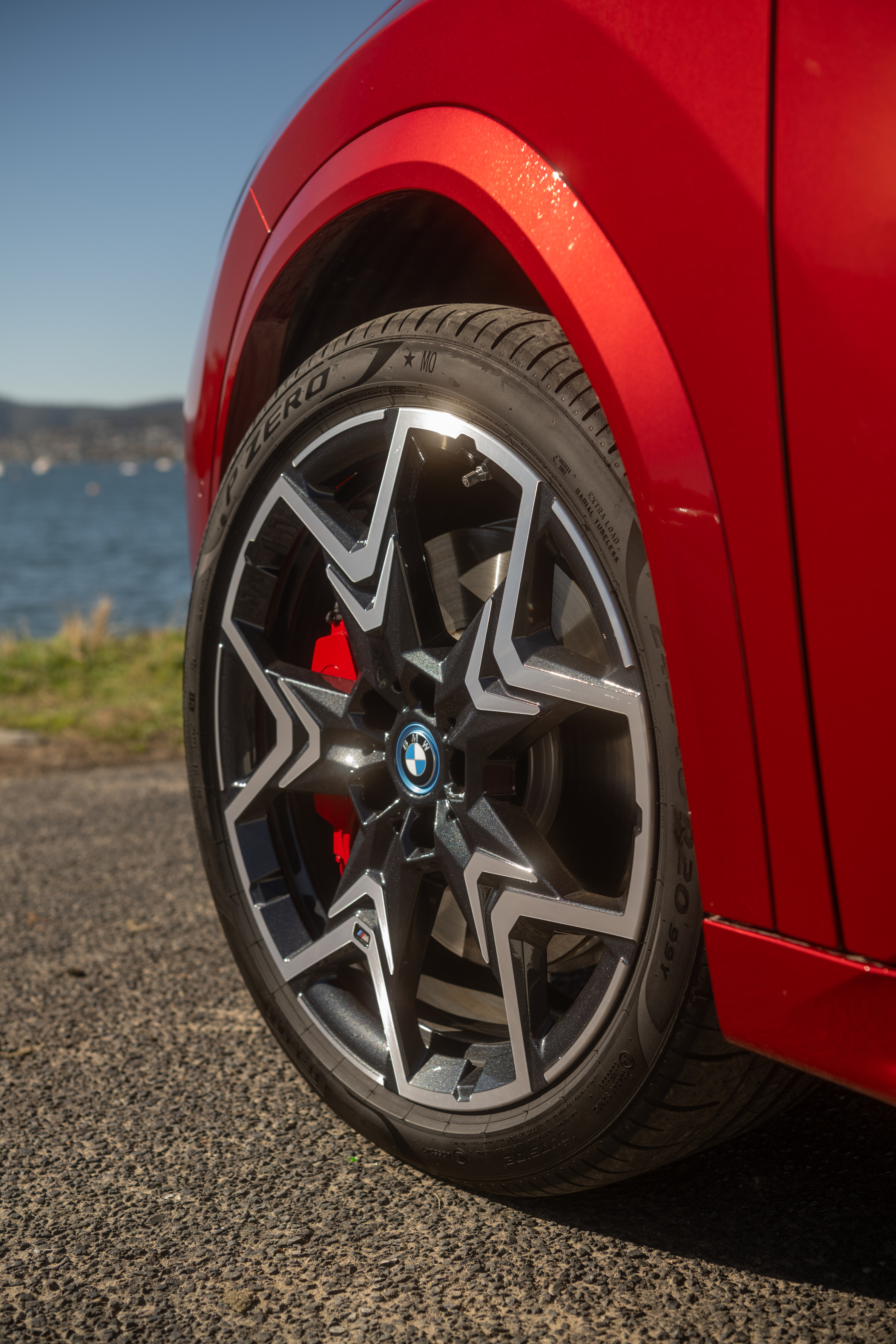
| 19-inch ‘M Sport’ alloy wheels | Kidney grille illumination |
| 2-zone auto climate control | Veganza’ synthetic leather upholstery |
| 360 degree reverse camera | Lights package, interior |
| Acoustic pedestrian warning | M Sport leather steering wheel |
| Adaptive LED Headlights | M Sport Package, incl M adaptive suspension & M steering |
| Automatic tailgate | Tyre pressure monitoring system |
| Blind spot monitors | Wireless charging |
| DAB Digital radio | 12-month Chargefox subscription |
The front seats are power-adjustable, with the driver’s seat featuring a memory function for up to three drivers. The $3600 Enhancement Package adds luxury with a panoramic glass sunroof, a heated steering wheel, a 12-speaker Harman/Kardon audio system, and a massage function for the front seats.
Complimentary with every sale is a 12 months subscription to Chargefox public chargers – Australia’s largest charging network.
1
Interior comfort, space and storage
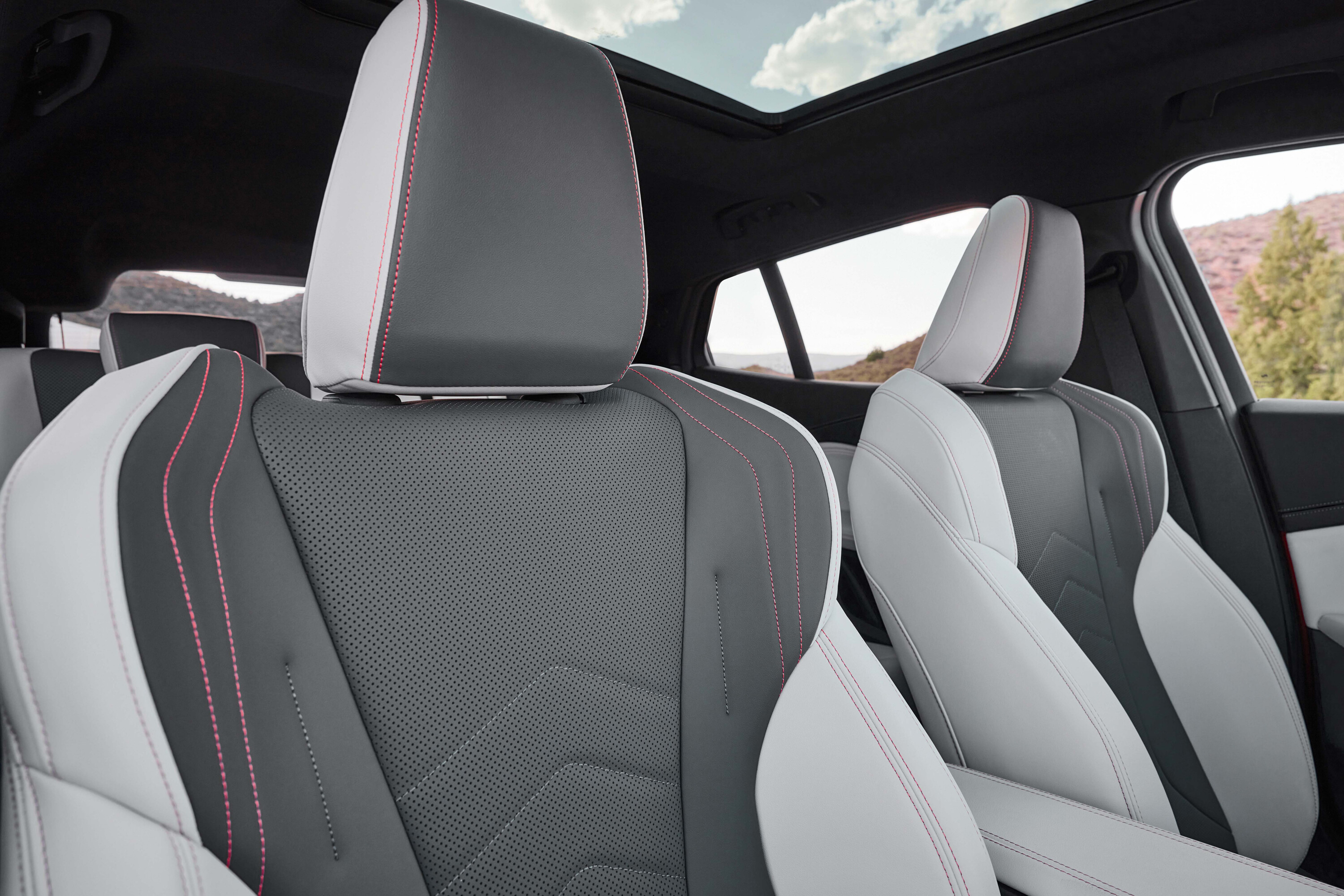
The interior of the iX2Drive30 we evaluated is meticulously crafted, with a focus on soft touch surfaces that enhance its luxurious ambiance.
The seats are upholstered in BMW’s exclusive ‘Veganza’ vegan leather, providing exceptional comfort and a convincingly authentic leather feel.
In response to feedback about the difficulty of swiftly navigating the menu, the new operating system now includes a feature for quick access to links by a simple swipe down. However, users should be aware that these links can be overly sensitive and may activate unintentionally.
BMW has introduced the ‘Digital Premium’ subscription, priced at $9.99 per month or $109 annually. This service adds capabilities such as installing apps to enhance drive modes, provide live maps, and control lighting features, and includes a 90-day trial for customers to explore its benefits.
1
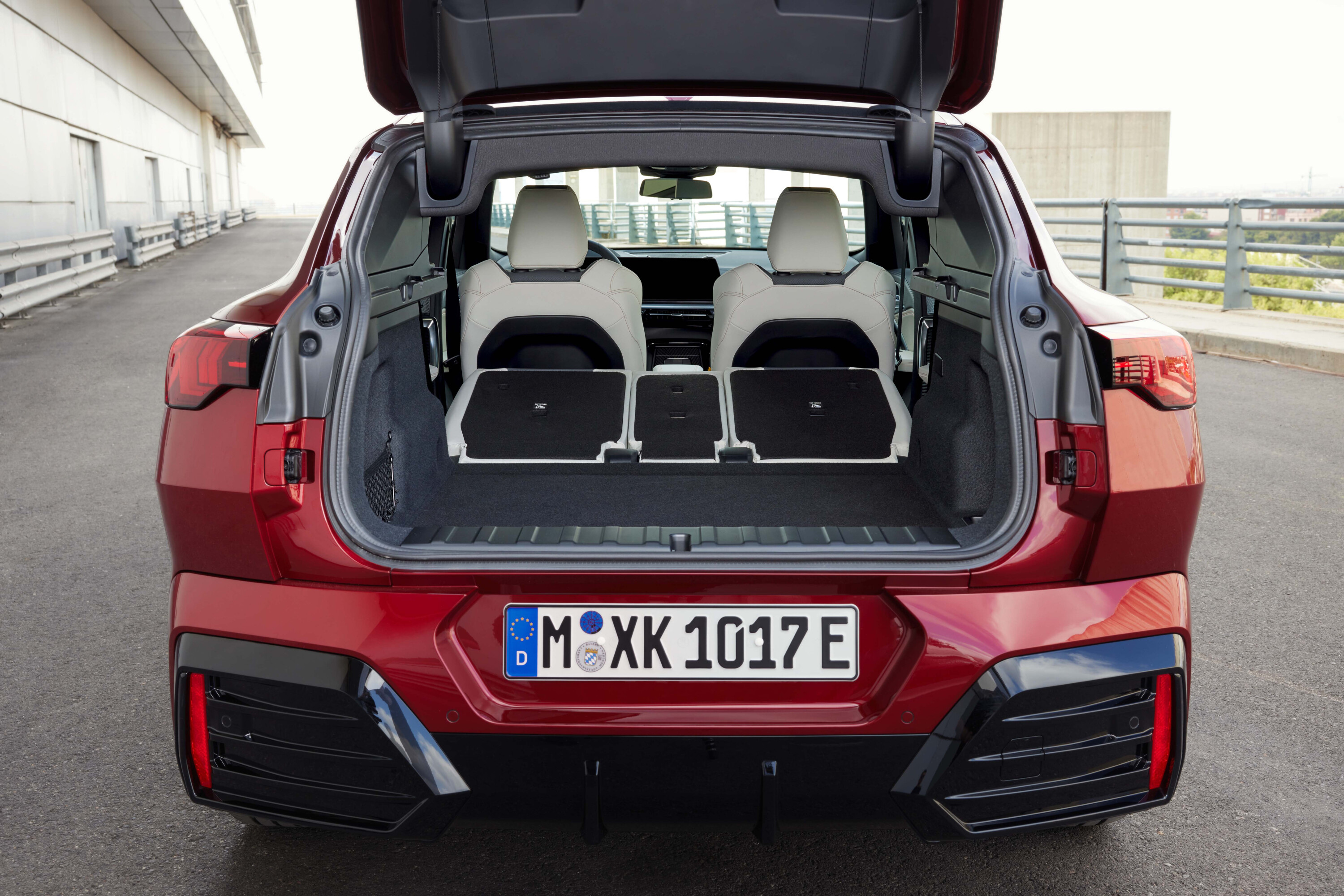
Storage solutions in the iX2 are cleverly integrated, though somewhat limited.
The centre console is compact, perfectly sized for small essentials like a card wallet, lipstick, or a tub of gum. Larger items can be stored in the open area below, and there is a specially designed upright wireless phone charger at the front of the car.
Rear headroom is naturally compromised because of the sloping roof but if your passengers aren’t too tall it shouldn’t prove a headache. Similarly, two adults can fit okay, but I wouldn’t be pushing for a third in the centre.
Nine exterior paint colours are available, with Alpine White as the only standard option. Inside, there are five trim options, all available at no additional cost on the top-spec xDrive30.
1
How do rivals compare on value?
The BMW iX2 will go head-to-head with competitors such as the Lexus UX300e and Mercedes-Benz EQA . But there are plenty of electrified options vying for attention like the Volvo C40 and Polestar 2.
Dimensionally similar, the EQA is slightly taller with the recently added EQA 250+ priced from $84,900 before on-road costs also slips below the LCT threshold. It can drive up to 426km on an WLTP cycle.
Available in two grades, the UX300e pricing sits at $80,720- $88,190 for Luxury and Sports Luxury models before on-roads. Both have a humble output of 150kW and 300Nm, and a range of 440km on WLTP testing.
1
What is it like to drive?
The basics
| BMW iX2 xDrive 30 | |
|---|---|
| Battery | 65kWh |
| Drive | All-wheel drive |
| Power | 230 kW |
| Torque | 494 Nm |
| Acceleration (0-100kmph) | 5.6 sec |
| Range (WLTP) | 395 km |
With the iX2 xDrive20 hitting our shores later by July of this year, our test vehicle in Hobart was the higher-specced xDrive30.
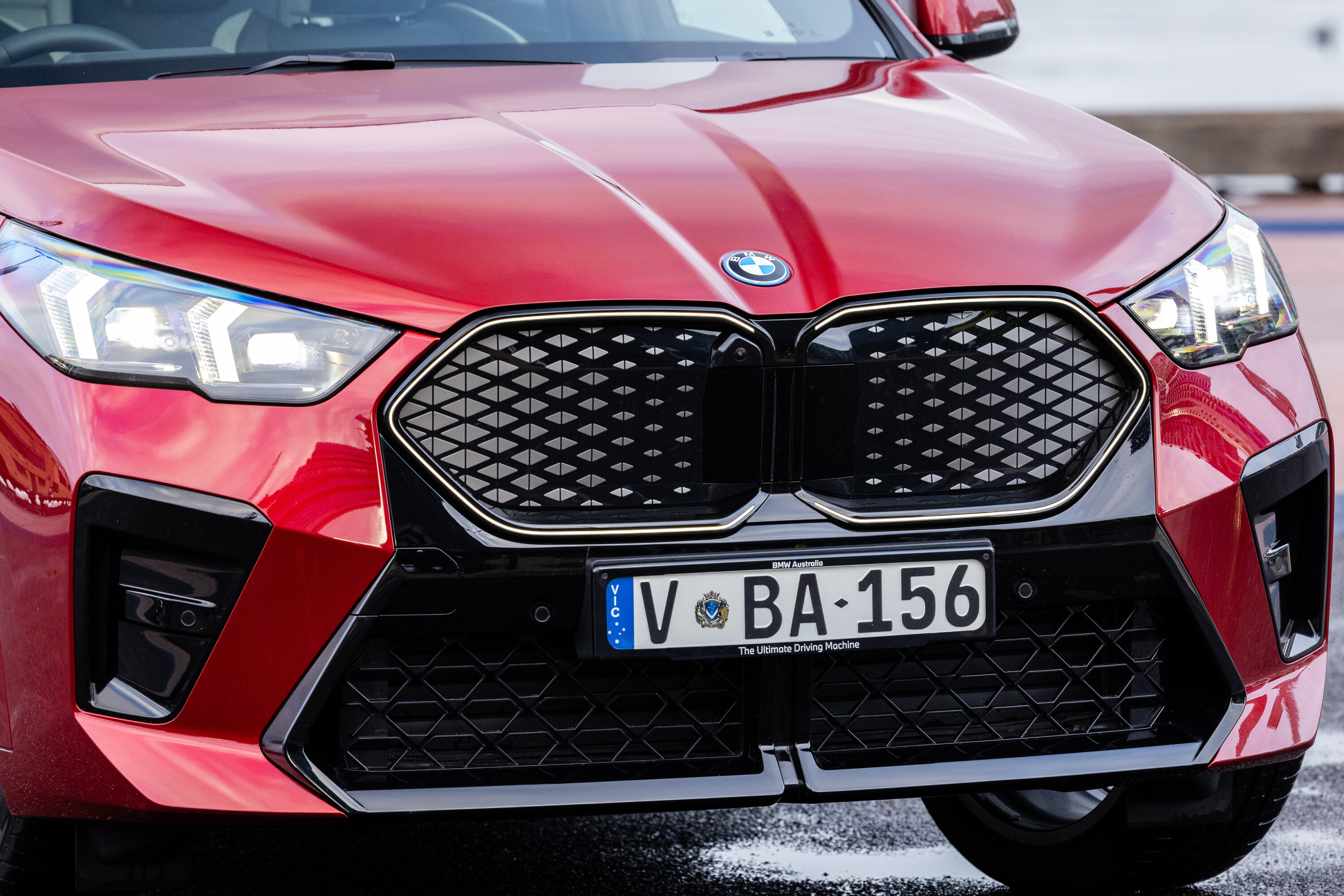
The powertrain of the iX2 accelerates quickly and smoothy. The boost mode on the steering column takes this even further but doesn’t produce any huge amount of jerk which is a great thing. When at speed there was some noticeable wind and road noise, which could be easily drowned out with some music.
Electric torque is consistently a highlight, delivered smoothly and responsively in the iX2. A boost mode activated by the shift paddle adds an element of fun, though it’s not overly dramatic.
1
The electric iX2 offers a smoother driving experience compared to its petrol counterpart, especially with the switch between electric power and regenerative braking which happened quite seamlessly.
However, while performing on Tasmania’s roads the SUV felt a bit aggressively into road imperfections, especially when equipped with 20-inch alloy wheels on our test car, leading to bumps being distinctly felt through the steering wheel. While it’s not uncomfortable, it lacks the polished ride quality of other more premium cars in the BMW garage.
As a daily driver on smoother, inner-city roads you wouldn’t have too much trouble. It’s the trickier potholes where the car finds challenge, but nothing that can’t be sorted with a strong-worded email to your local council.
1
- What is a Powertrain or Drivetrain?
- Power vs torque
- Car suspension explained
- Automatic transmissions (‘gearboxes’) explained
- Chassis control systems explained
- Car vs Ute vs SUV: How the vehicle you buy should guide the way you drive
- What is the WLTP emissions and range test?
Power consumption is rated at 18.5kWh with a range of up to 395km. Unfortunately on test we weren’t able to assess the stop for a charge-up but BMW asserts a 10-80% charge takes just 29 minutes.
So the great news is although the range does sit lower than some competitors, the DC charging rate reaches 130kW with max AC charging at 22kW. You’ll be back up and charged in what will feel like no time.
How safe is it?
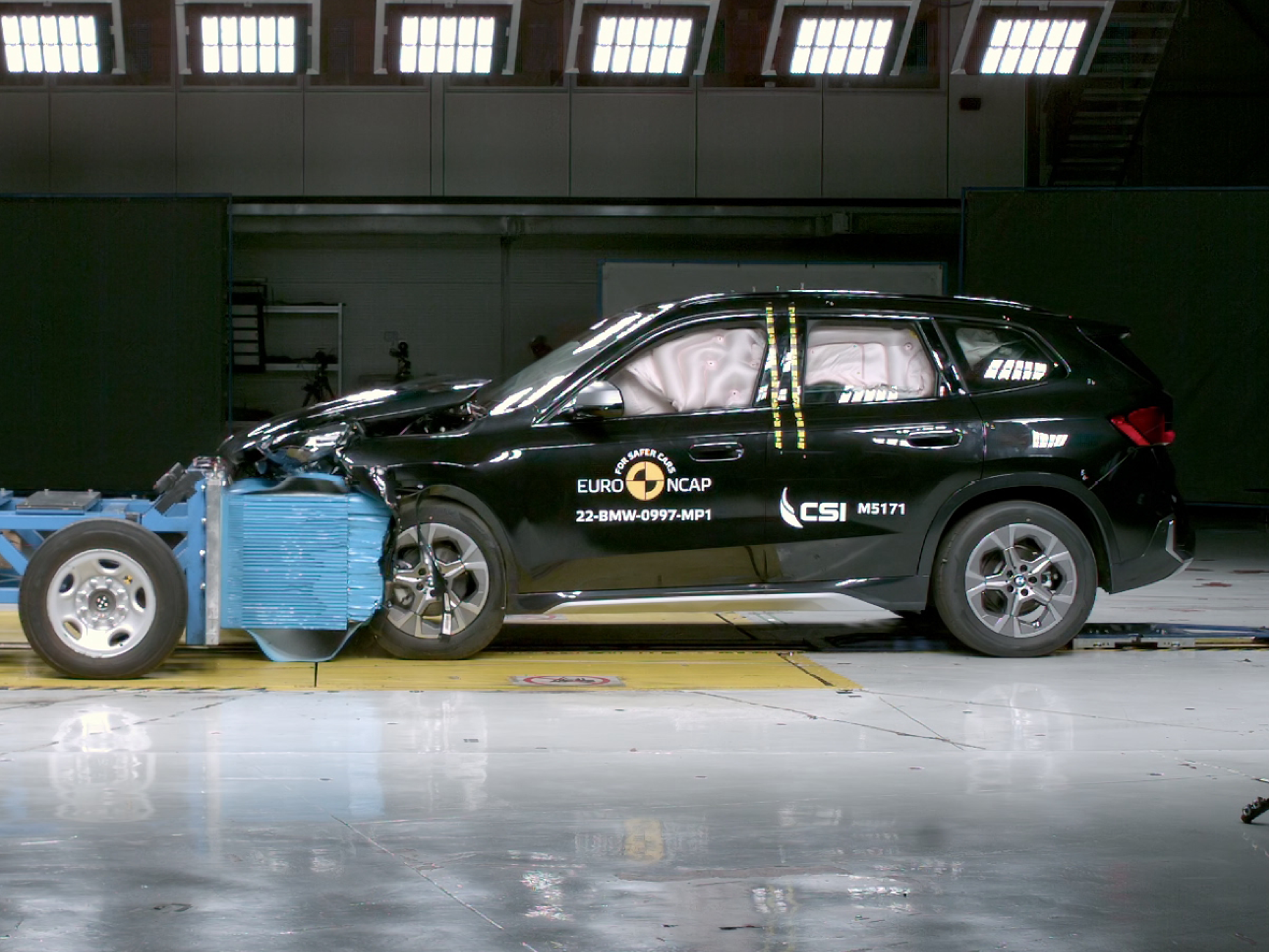
ANCAP testing will likely not be pursued according to BMW, but previously the X2 held a five-star score based on Euro NCAP assessments.
It’s important to note that this score was carried over form the X1 which shares many similarities, but didn’t account for the iX1.
The iX2 xDrive30 is fitted with the plenty of safety, including:
| Adaptive cruise control with stop-and-go function | Cornering brake control |
| Front, side and head airbags | Dynamic traction control |
| Blind-spot monitoring | High-beam assist |
| Lane departure warning | Adaptive LED headllights |
| Lane change warning | Anti-dazzle rear view mirror |
| Front collision warning with brake intervention | Park distance control |
| Rear cross-traffic alert | Parking assistant |
| Rear collision prevention | Panorama view, 3D view and surround-view cameras |
| Dynamic stability control | Drive recorder |
| Anti-lock braking system | Intelligent emergency call |
| Braking assistant |
2
Warranty and running costs
BMW Australia includes a five-year, unlimited-kilometre warranty with every new vehicle.
For the iX2, there is also a Service Inclusive package available, which covers five years or 80,000km for a cost of $2200.
VERDICT
The iX2 has arrived on our shores in its top-spec iteration, offering half of the pie of what to expect from the full lineup.
What stands out is how this model serves as an excellent example for those considering a switch to electric vehicles, made even more appealing by its attractive price point for prospective X2 buyers, particularly if you’re drawn to its distinctive sloping roofline.
However, while the iX2 impresses, it faces stiff competition. There are several other small electric SUVs on the market that offer softer rides, longer driving ranges, and greater practicality and visibility. Despite these challenges, the iX2 remains a compelling option. Its stylish design, competitive pricing, and advanced features make it a vehicle worth considering for those exploring the expanding universe of electric SUVs.
MORE
Everything BMW
MORE
Small SUVs
It might read funny seeing another BMW launch, when the brand now offers over 72 model variants locally.
I wouldn’t judge you for confusing the brand’s Australian website with a global one showcasing every model they have available worldwide – just as I did.
So when we had our product presentation at the launch of the all-new X2 and iX2, I was wondering what the new model could really offer customers, who at this point have 71 other options from the German brand.
1
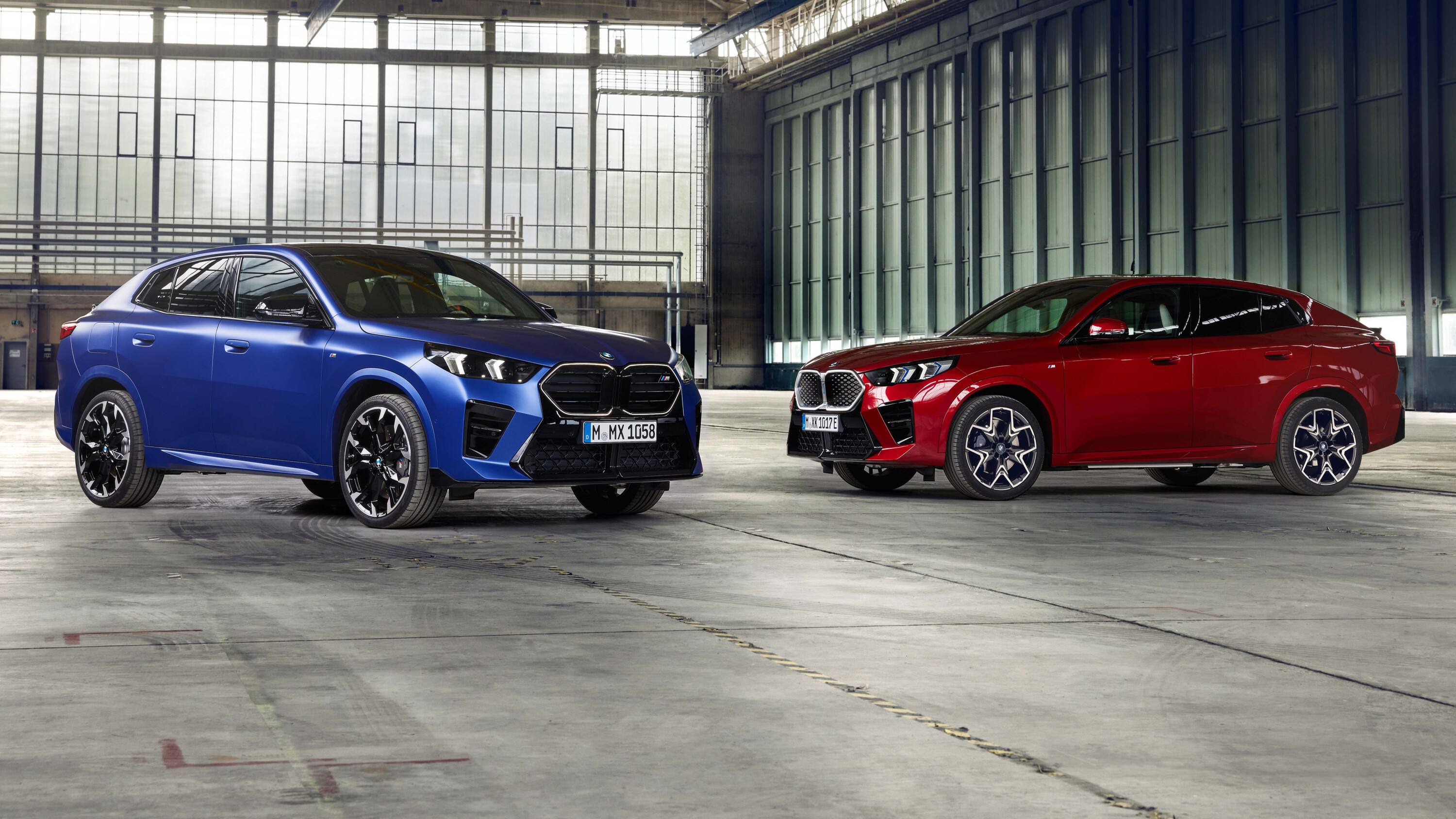
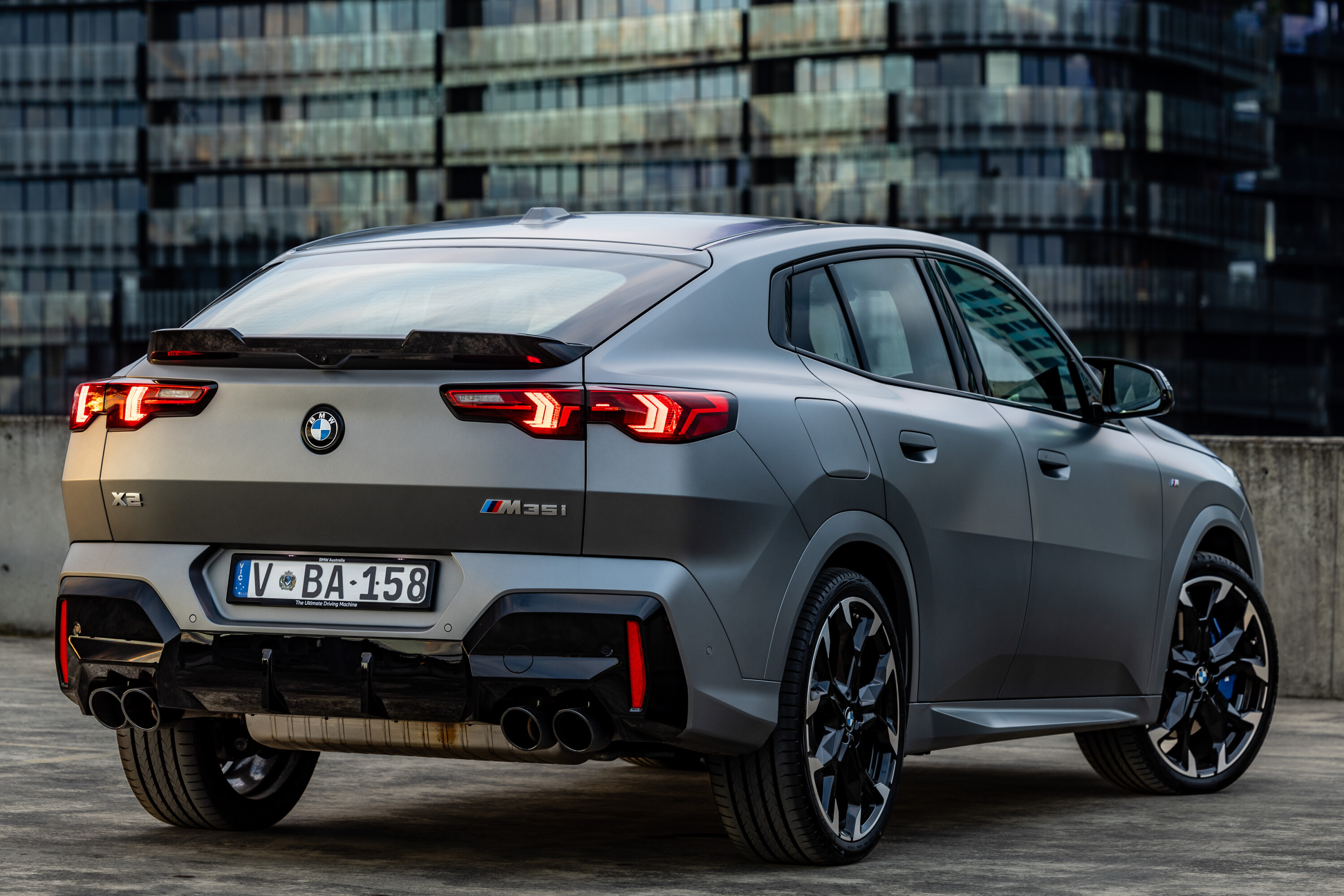
What quickly became apparent is how the new second-generation X2 fits the gap currently missing in its small SUV portfolio – a sporty version of the recently launched third-generation X1.
The new X2 has been built on the same platform as the X1, differentiating primarily in terms of style and functionality. The X1 and iX1 maintain a more conventional design, which generally makes them more practical, whereas the X2 and iX2 are designed with a more aggressive appearance in mind.
This pattern repeats itself through the range, for example with the sensibly styled X3 contrasted with the athletic look of the X4. It happens again with the X5 and X6, where it all began.
The new X1 launched in our market just over 12 months ago, resulting in record sales results in 2023. Along with the iX1, it’s paved the way of opportunity in the compact SUV world for BMW, which has clearly seized the growing market opportunity of a segment that barely existed ten years ago.
1
JUMP AHEAD
- How much is it, and what do you get?
- Features
- Interior comfort, space, and storage
- How do rivals compare on value?
- What is it like to drive?
- Fuel efficiency
- How safe is it?
- Warranty and running costs
- VERDICT
How much is it, and what do you get?
Australia will receive two variants of the new petrol sports activity coupe, and both will come off the production line with an M Sport package.
The line-up begins with the X2 xDrive20i, priced at $75,900 before on-road costs. The performance-focused X2 M35i xDrive features a 2.0-litre turbo B48 four-cylinder engine with all-wheel drive and a seven-speed dual-clutch transmission, coming in at $92,900 excluding on-road costs.
Electric versions of the model will sit in the middle of the range, with the single-motor iX2 eDrive20 coming in at $82,900 and iX2 xDrive30 available for $85,700 – both excluding on-road costs.
| 2024 BMW X2 Pricing | |
|---|---|
| X2 xDrive20i | $75,900* |
| X2 M35i xDrive | $92,900* |
| * before on-road costs | |
1
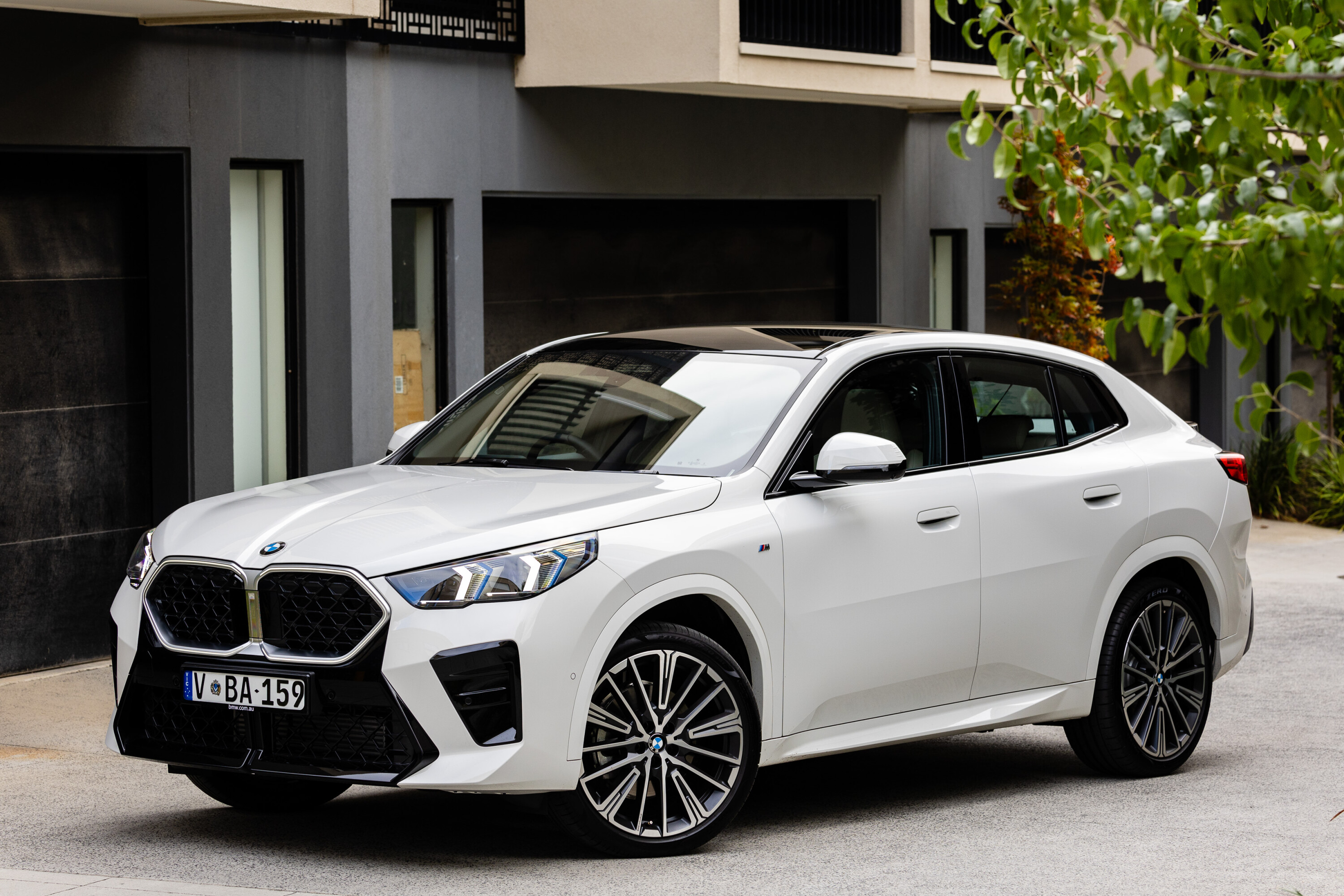
The second-generation X2 is now almost 20cm longer than the outgoing model, measuring in at 4.5 metres in length and edging into midsize-SUV territory.
Additionally, the vehicle features a longer wheelbase (22mm) and wider tracks (21mm).
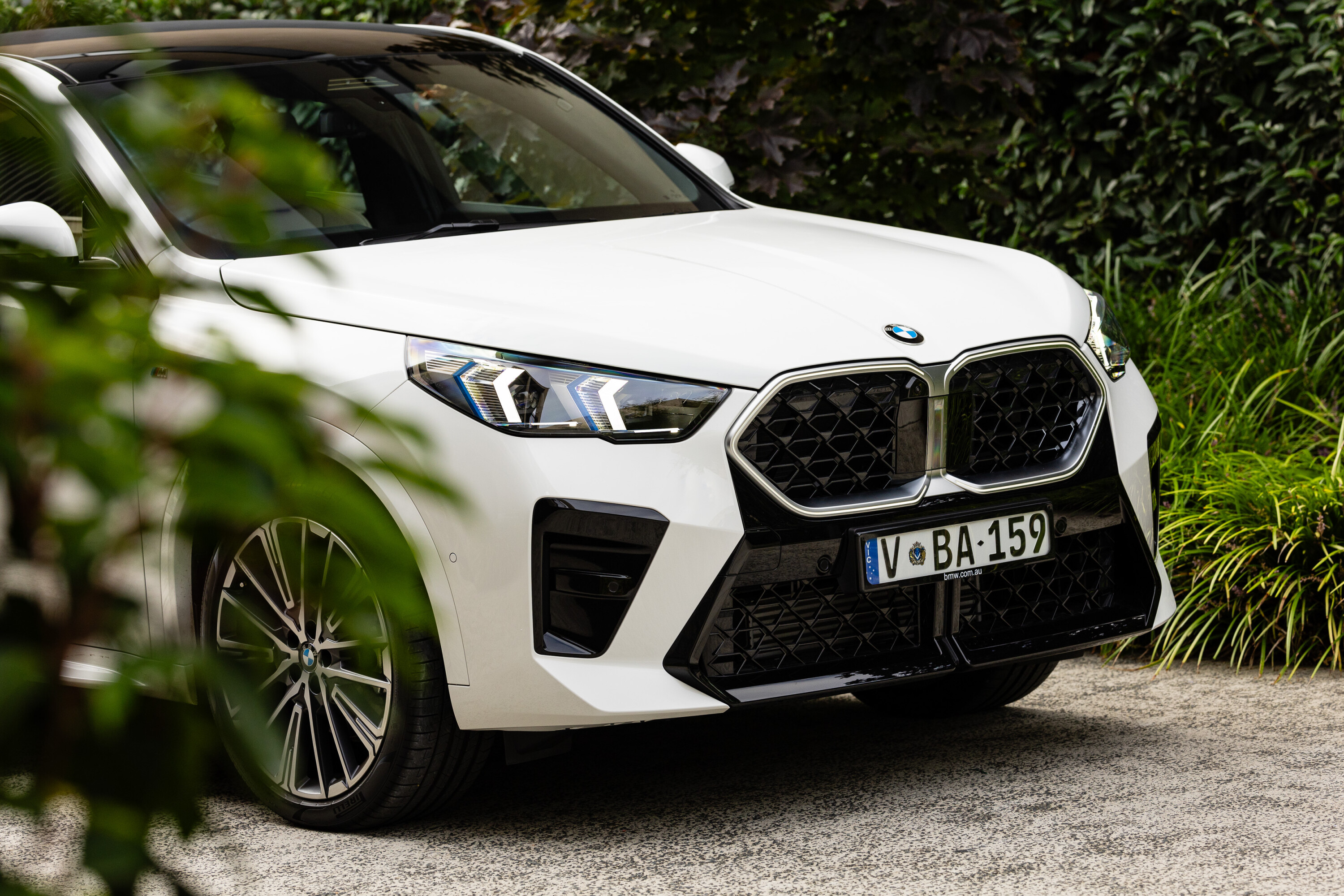
The design is enhanced by a tapered roofline and an integrated rear spoiler, creating a distinctive appearance.
1
The upgrade in length means the bonus of additional boot capacity is increased to 90-115 litres dependant on configuration.
The xDrive20 is powered by a 150W/300Nm 2.0-litre four-cylinder petrol engine. It’s paired to a seven-speed automatic dual-clutch transmission that means acceleration from 0-100km/h is reached in 7.4 seconds.
The M35i on the other hand is equipped with a robust 233kW and 400Nm of torque, which is actually up from European version’s 221kW, allowing for an acceleration of 0-100km/h in just 5.4 seconds.
Both are paired to BMW’s xDrive all-wheel drive system.
1
Features
The base xDrive20i comes equipped with a range of sophisticated features designed to enhance both comfort and performance, that we’ve come to expect from the German automaker.
It includes a 10.3-inch driver display paired with a 10.7-inch curved touchscreen for a driver-focused interface experience. Comfort is a priority with front electric seat adjustment and front heated seats, all upholstered in ‘Veganza’ synthetic leather. Three leather trim options are available for an additional $2154, or four leatherette options.
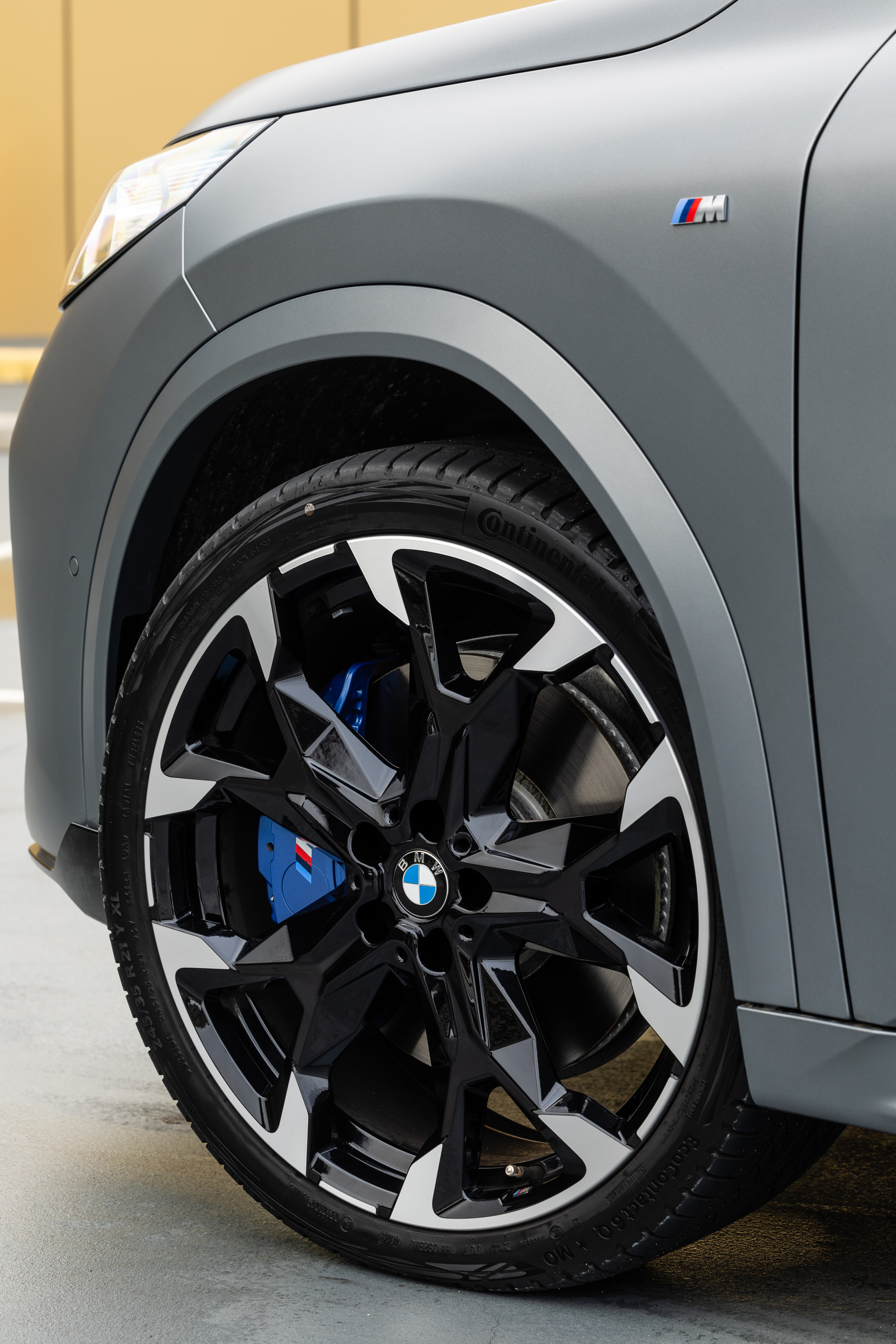
The vehicle we drove was also fitted with the optional $2000 20-inch wheels, over the standard 19-inch version. All versions of the X2 benefit from the M Sport Package as standard, which includes M adaptive suspension and M design additions such as sports seats.
If you wanted to further beef up your X2, the M Sport Package Pro adds additional pizzazz such as red gloss brake callipers and an M rear spoiler.
1
Visibility and safety is enhanced by adaptive LED headlights, cool sequential pulsing indicators, a 360-degree reverse camera and blind-spot monitors. Additional luxuries include dual-zone auto climate control, a head-up display, and kidney grille illumination.
Our test vehicle also had the available enhancement pack, adding the panoramic sunroof, a Harman/Kardon premium audio system, and steering wheel heating for $3700.
| 2024 BMW X2 xDrive20i features | |
|---|---|
| 10.3-inch driver display screen | Digital key |
| 10.7-inch curved touchscreen | Front electric seat adjustment |
| 19-inch ‘M Sport’ alloy wheels | Front heated seats |
| 2-zone auto climate control | Head Up Display |
| 360 degree reverse camera | Kidney grille illumination |
| Acoustic glazing | Veganza’ synthetic leather upholstery |
| Adaptive LED Headlights | Lights package, interior |
| Automatic tailgate | M Sport leather steering wheel |
| Blind spot monitors | M Sport Package, incl M adaptive suspension & M steering |
| DAB Digital radio | Wireless charging |
1
Moving up to the M35i will add most of those options and enhancement packs such as the M Sport Package pro plus more.
This includes larger standard 20-inch wheels, which can be upgraded to 21 Y-Spoke style alloys, as well as coral red interior trim, dark blue metallic brake calipers and M specific dash trims.
Alpine White exterior paint is a no cost option while Metallic paints add $1800 to your drive-away price. BMW Individual metallic paintwork is also a $5000 option but reduced to $3200 when purchased in combination with the enhancement pack.
| 2024 X2 M35i xDrive additional features | |
|---|---|
| 20-inch M Sport alloy wheels | M differential |
| 12- speaker Harman Kardon audio system | Panoramic glass sunroof |
| Leather upholstery | Shadow Line Kidney frame |
| Lumbar support with active seat massage | 4 exhaust tailpipes |
| M braking system | Illuminated kidney grille |
Interior comfort, space and storage
The X2’s interior emphasises soft touch points throughout to enhance the luxurious feel. The cabin features seats upholstered in BMW’s signature ‘Veganza’ vegan leather that are very comfortable and would be hard to differentiate from actual leather.
It’s obvious as well that great design has been at the forefront of the development of this small SUV.
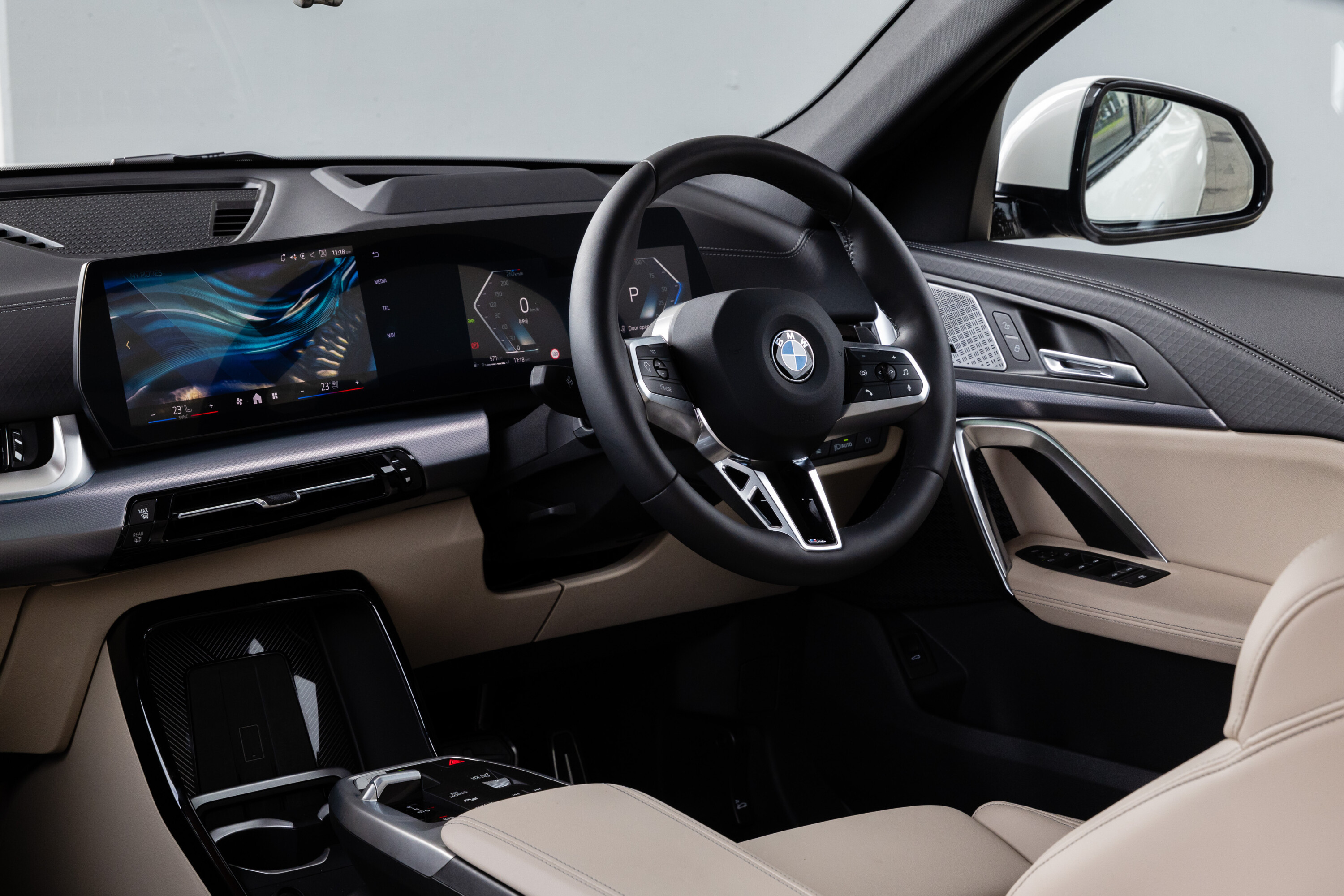
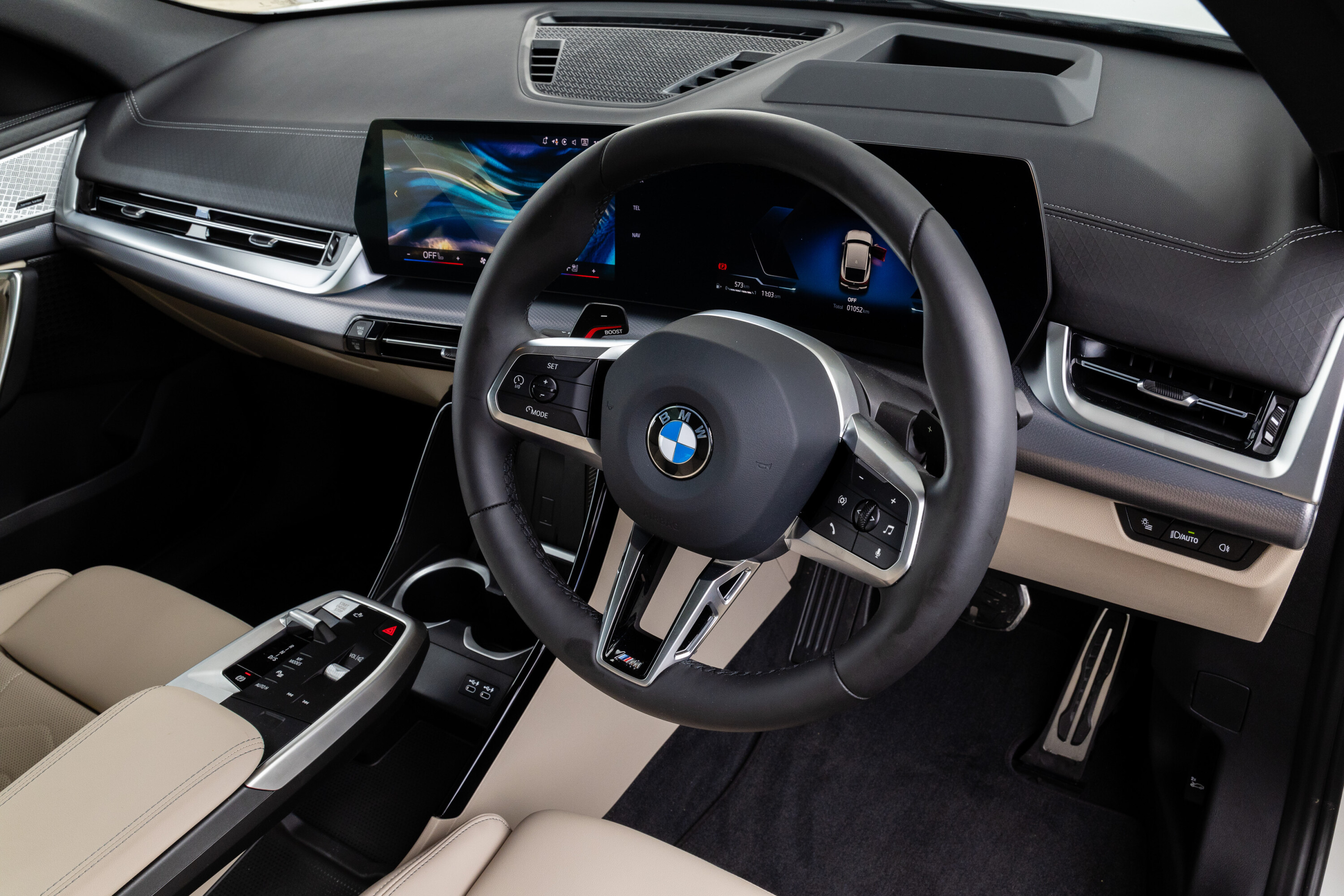
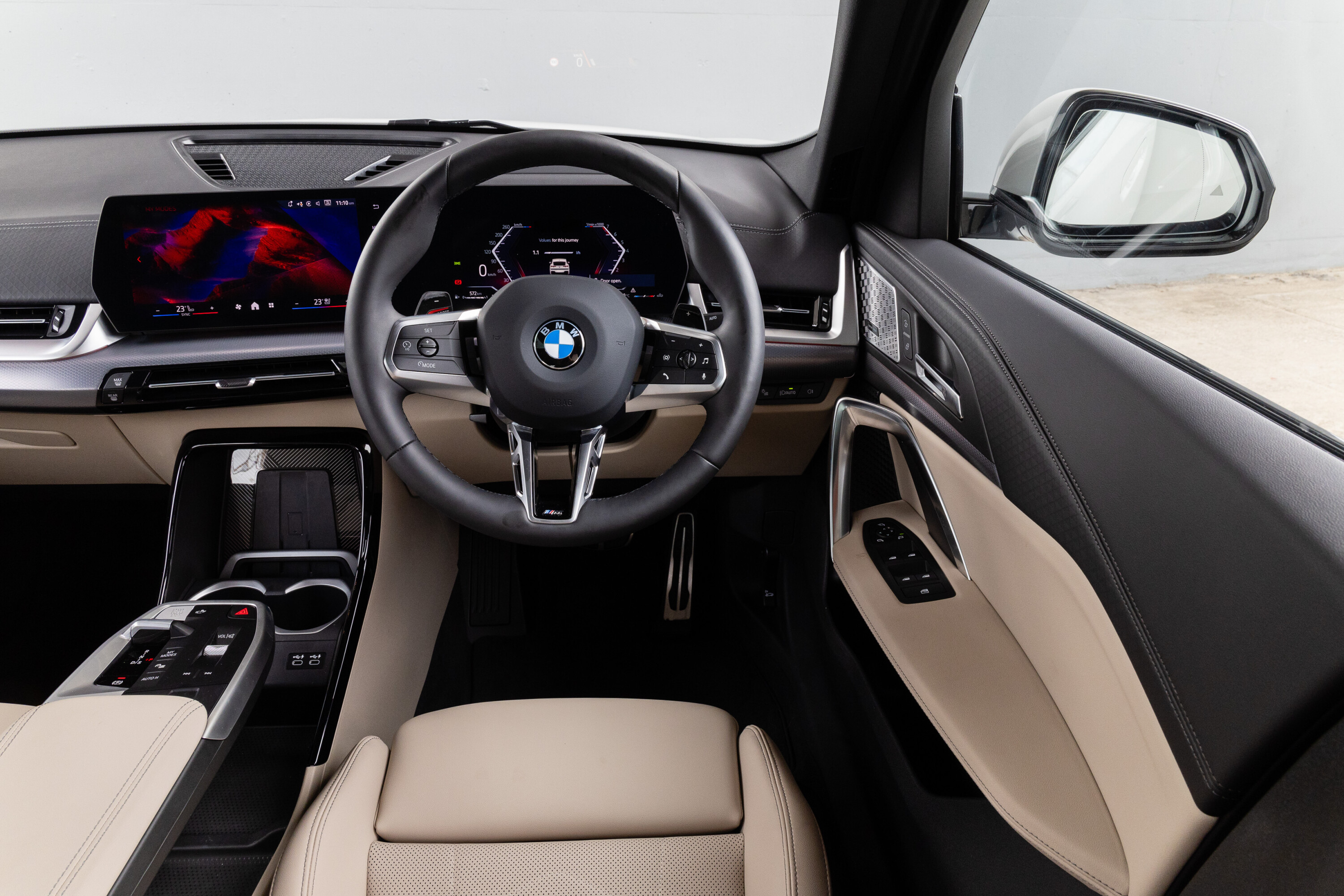
As the driver, the cockpit centres around a curved display that includes a 10.7-inch infotainment screen and a 10.3-inch digital dashboard, creating a driver-focused environment.
1
All controls are conveniently placed to ensure ease of use, and the system supports wireless Apple CarPlay which paired quickly. BMW’s iDrive 9 operating system enhances the experience further, using Android’s open source software.
Following customer feedback on difficulties in locating menu items, the latest operating system has introduced a feature where quick links can be accessed with a simple swipe down on the menu. However, there is a minor drawback: these quick links can be too sensitive, sometimes activating when merely browsing through the features.
For owners wanting specific applications, BMW is offering ‘Digital Premium’ subscriptions for $9.99/month or $109 for the year. It adds functionality to install apps which can add extra drive modes, live maps and lighting functionality – arguably features which buyers should expect to come standard in any premium car at this price point. There is, at least, a 90-day complimentary period for customers to give it a go.
1
Storage solutions are cleverly designed, albeit quite small, with just enough space in the centre console for essentials like a slim card wallet.
Larger items can be accommodated in the open area below, which also houses two USB-C chargers. I struggled to squeeze my handbag in there, but if I were to live with the vehicle as I usually do, my bag would end up in the passenger seat footwell or on the seat itself.
An upright wireless charger, secured with a rollercoaster-style bar, adds a functional touch to keep your mobile phone in place.
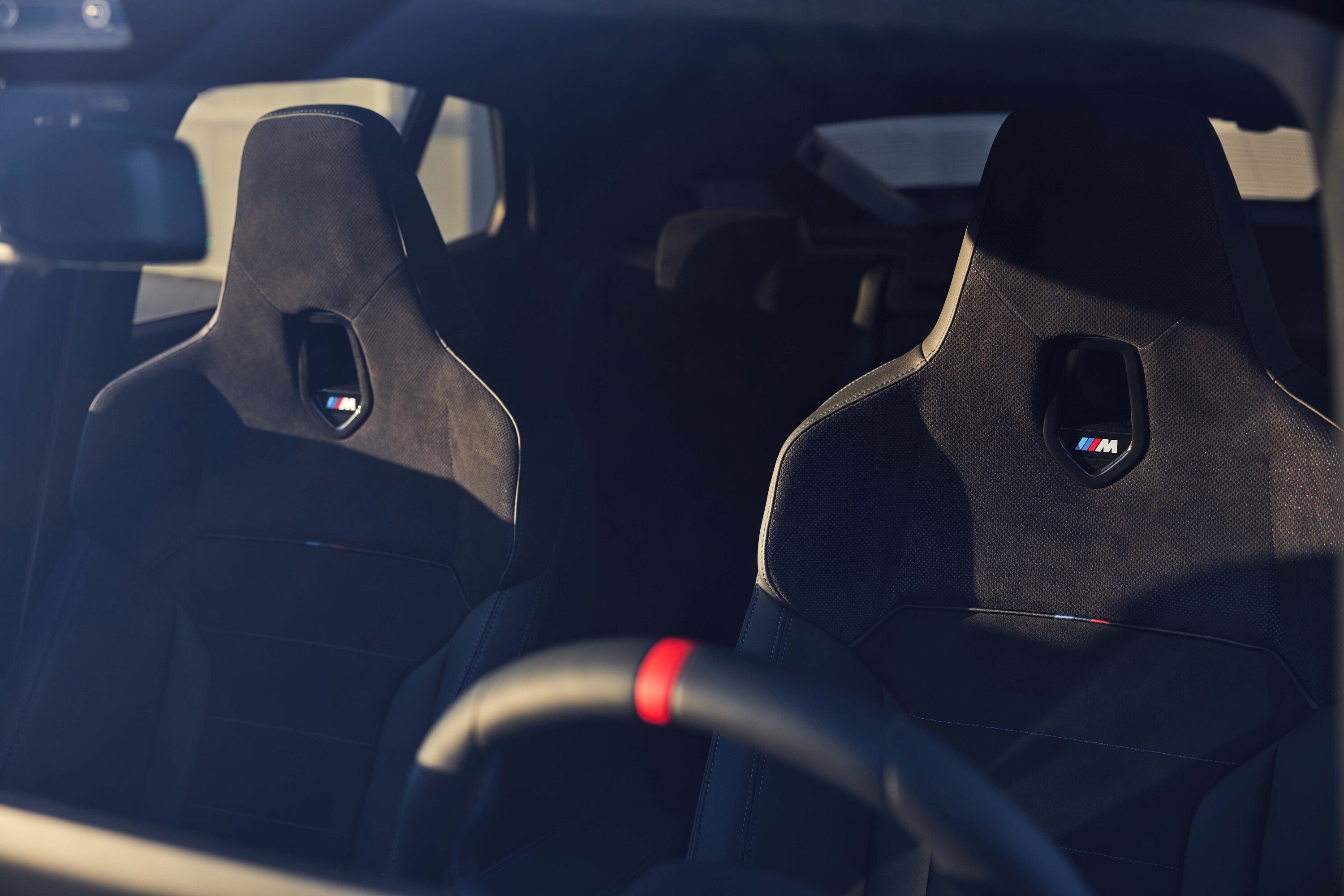
Both front seats are power-operated and include a massage feature, which would work well on longer trips to keep drivers awake with some light prodding in the back.
1
The cabin is definitely on the cosier side
My main complaint, which applies to all models, concerns visibility: the forward view is hindered by thick A-pillars, and the rearward view is limited through a slim window and chunky C-pillars due to the vehicle’s rear design. It means you’re heavily reliant on the reverse camera. But again, that’s what the X1 exists for, to alleviate coupe-like limitations.
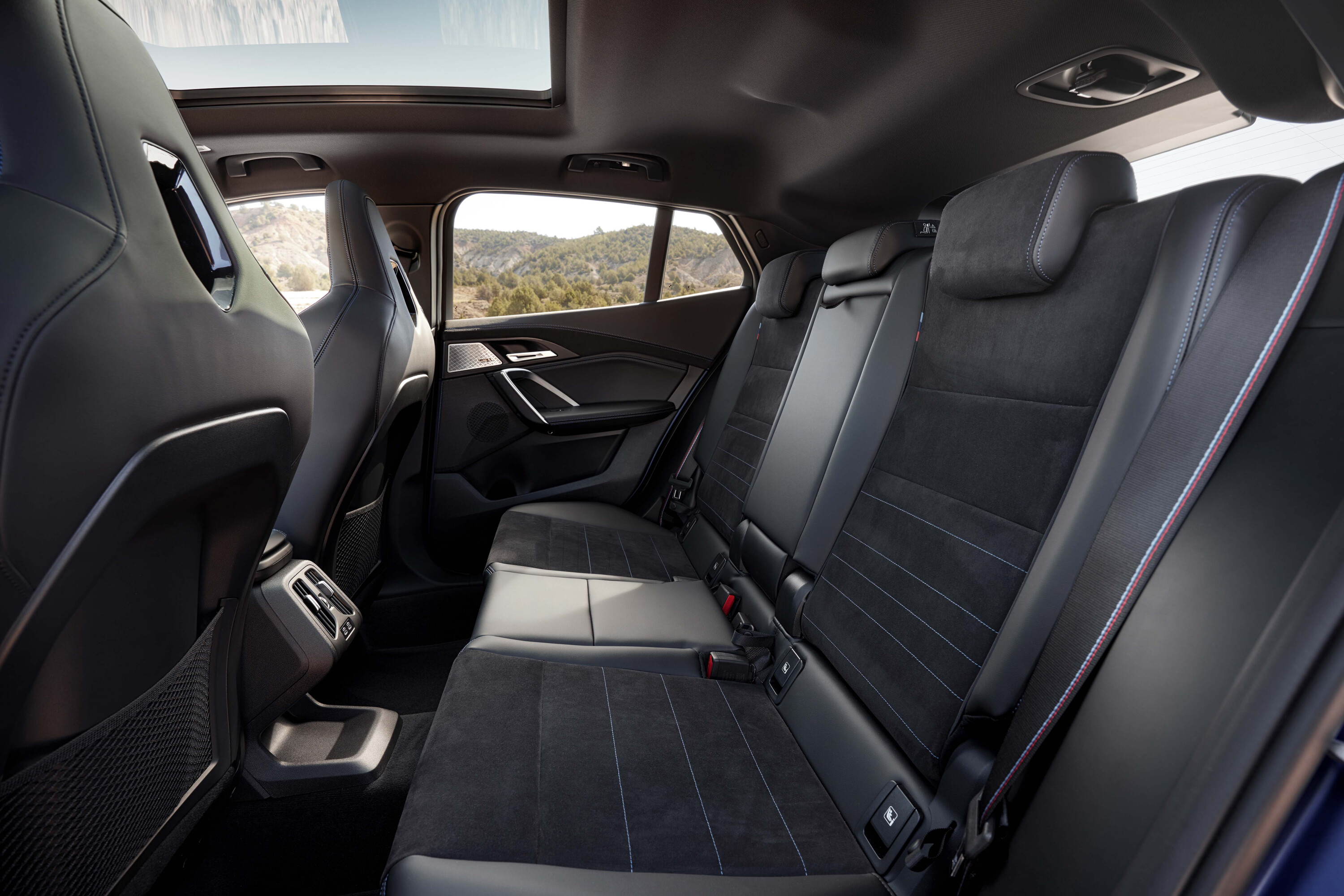
While we’re on the topic, let’s talk space. The cabin is definitely on the cosier side, but that can be expected of a car this size. Although longer and slightly taller in its new iteration, rear headroom is now compromised by a sloping roofline meaning taller passengers will be vocal. If you’re ever wanting three in the back, don’t think about it – get something bigger.
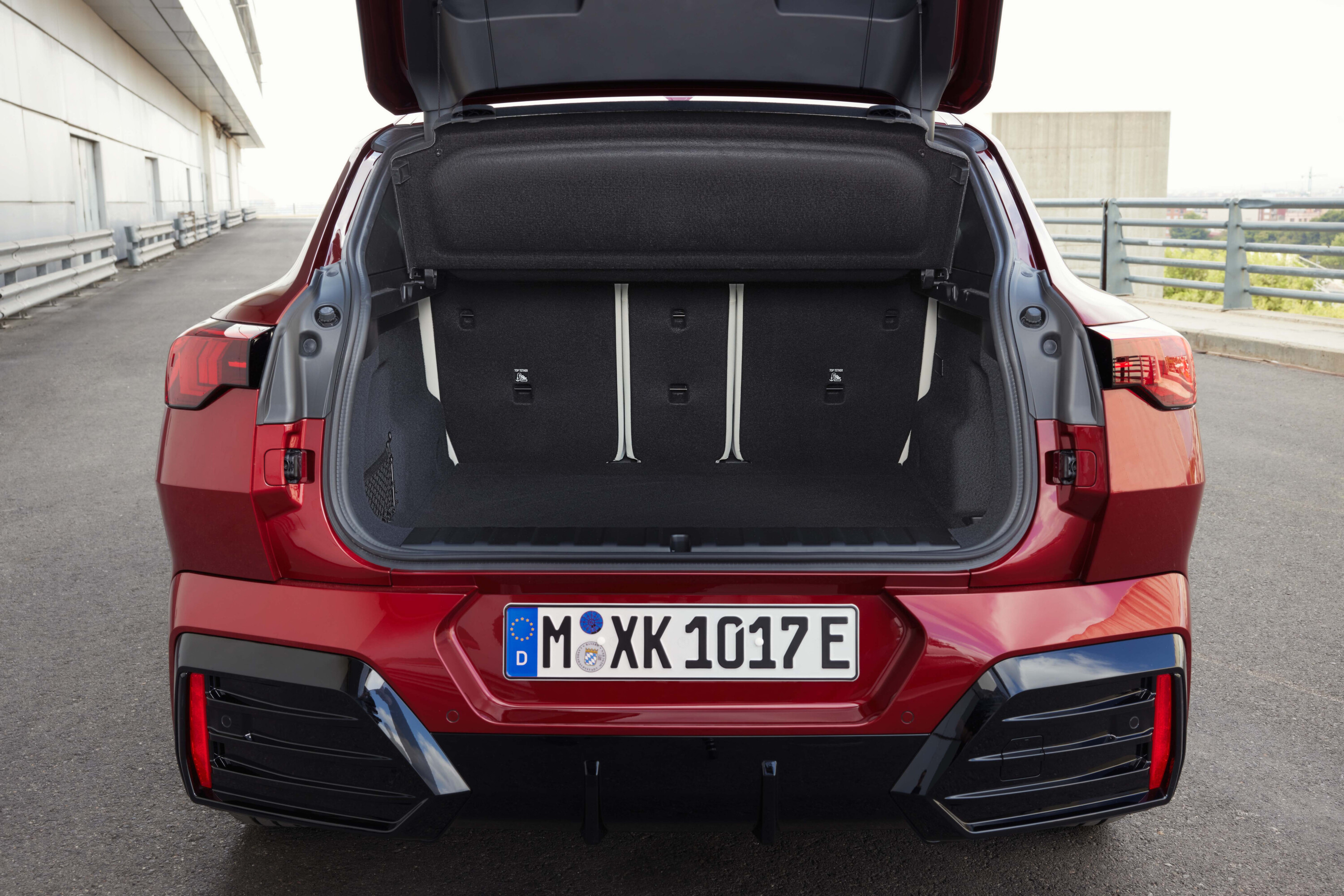
Boot capacity is generous in both models at 560 litres (or 1470 with rear seats folded) which is significant compared to rivals. You get some nifty additional storage where a spare tyre usually lives, which comes at the expense of, well, not having a spare tyre.
1
How do rivals compare on value?
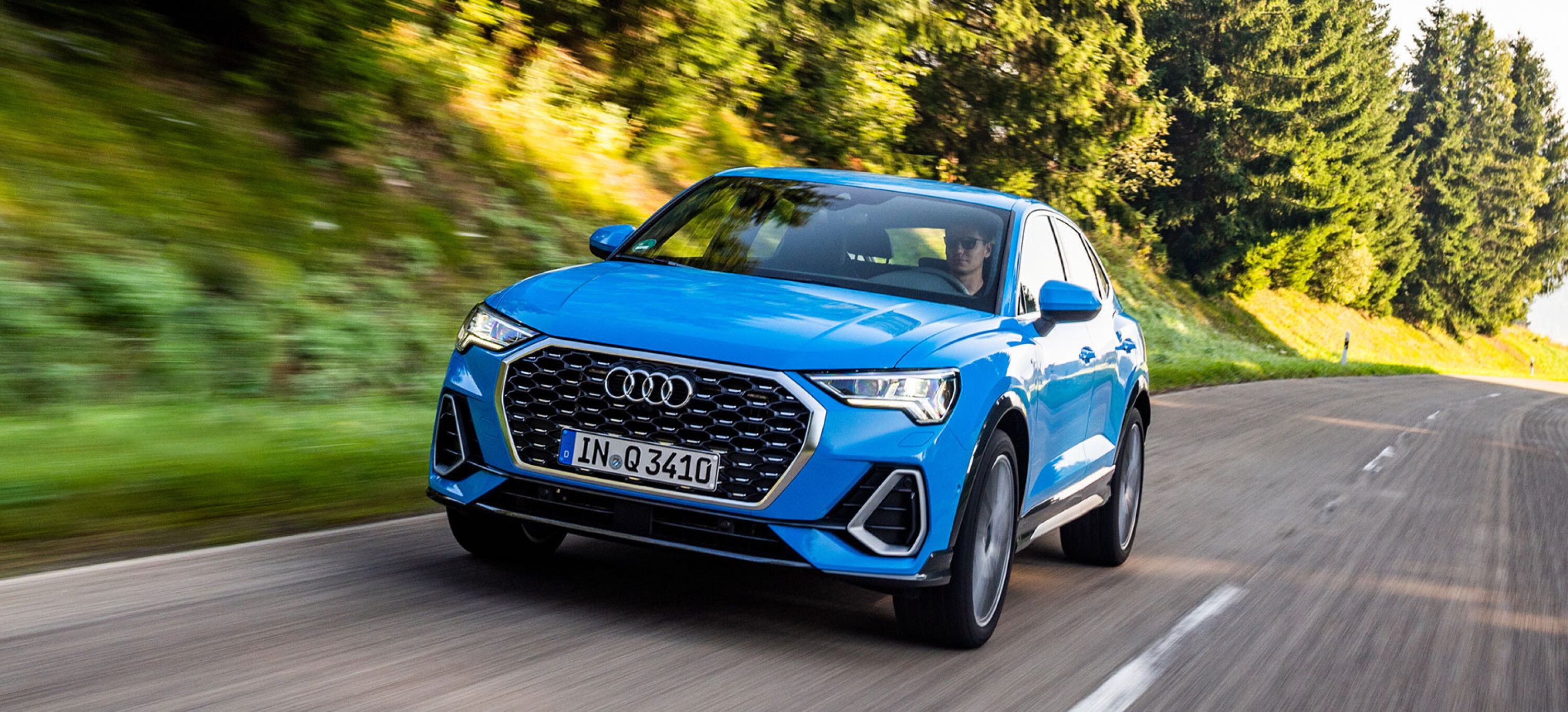
The most direct competitor to the coupe SUV is the good-looking little Audi Q3 Sportback.
By luxury standards, the Q3 is on the more affordable side starting at $58,200 before on-roads, and continues to look fresh since the second-generation launched in 2018.
The 35 TFSI all-wheel-drive model are equipped with a 1.4-litre turbocharged four-cylinder petrol engine, which generates 110kW and 250Nm of torque. This engine is coupled with a six-speed dual-clutch automatic transmission that drives the front wheels.
A performance version more closely comparable with the M35i is available higher up in the range – the RS TFSI quattro S tronic – paired to a whopping 294Kw/480Nm 2.5-litre five-cylinder engine that does the 0-100km/h sprint in just 4.5 seconds. This one will set you back $105,300 prior to on-road costs.
Audi’s standard warranty has been increased up to five-years and unlimited kilometres, with a five-year service plan bundled up into an extra $3330.
1
What is it like to drive?
The basics
| BMW X2 xDrive20i | BMW X2 M35i | |
|---|---|---|
| Four-cylinder Four-cylinder | 2.0-litre four-cylinder | 2.0-litre four-cylinder |
| Drive | All-wheel drive | All-wheel drive |
| Power | 150 kW | 233 kW |
| Torque | 300 Nm | 400 Nm |
| Acceleration (0-100kmph) | 7.4 sec | 5.4 sec |
| Fuel consumption (l/100km) | 7.5 | 7.8 |
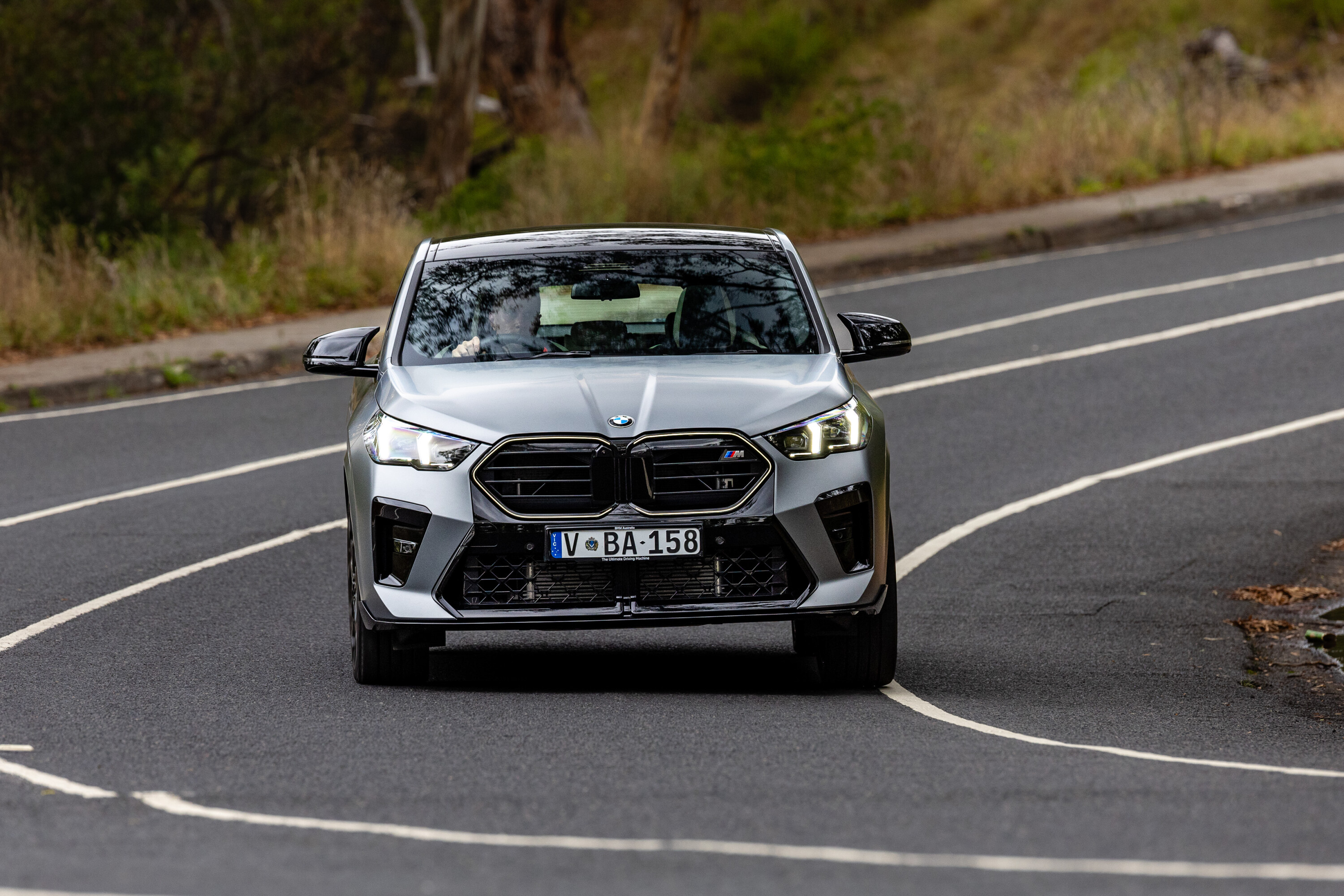
First up at the launch, the M35i was my companion for the first portion of our 200km drive loop. Initial impressions were of a grunty-sounding engine, but from within the cabin it was hard to tell how much of this might have been synthesised.
When moving through the winding roads in south Tassie, the steering was lighter than anticipated. Although a great feature to mask the weight of the vehicle, there was almost a dead spot in the centre of the steering wheel. It was made even more prominent by how responsive the wheel became when turned further in either direction.
1
A quick tap onto Sports mode quickly firmed up the steering feel and increased engine noise.
A few deep potholes allowed us to properly assess the suspension. Wheels were quite quick to thump into the gaps, but the rebound was almost completely absorbed by the car.
The powertrain itself was a good amount of sporty with some artificial noise used to emphasise this further. It’s not a full blown M offering by any means, but with a 5.4 second 0-100km/h time, it’s got plenty of go.
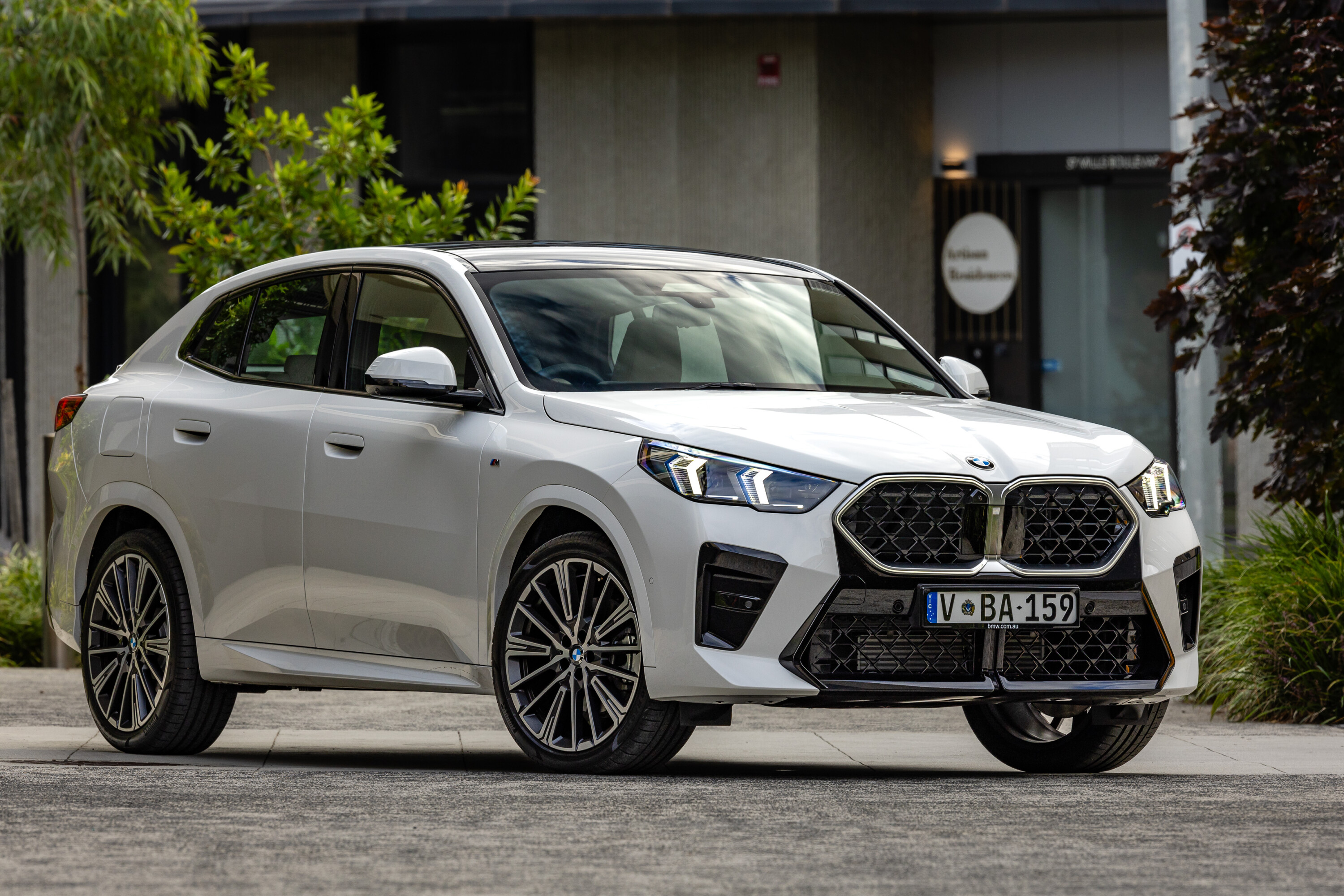
1
The XDrive20 felt like a lighter version of the M35i – both in weight and steering feel. It’s two seconds slower that the range-topper to 100km/h, but offers enough punch from a red light.
Safety features like lane-keep assist were non-intrusive and beeps and chimes were minimal throughout the day.
There’s a slight amount of body roll which is natural in these types of taller cars. You can’t forget that the higher entry hip-points come at a cost.
If any of the terms in this section have left you scratching your head, these articles will help bring you up to speed!
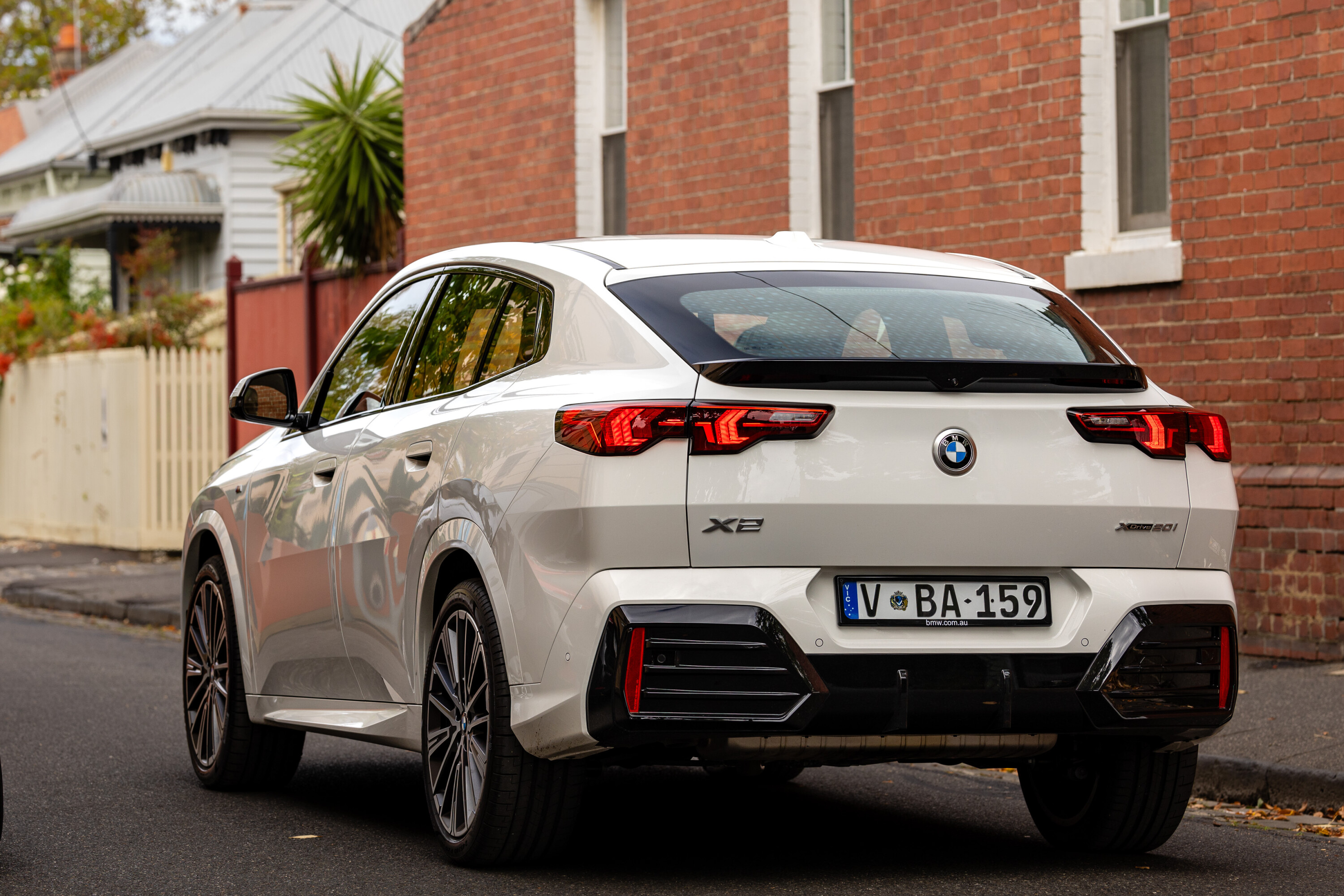
2
- What is a Powertrain or Drivetrain?
- Power vs torque
- Car suspension explained
- Automatic transmissions (‘gearboxes’) explained
- Chassis control systems explained
- Car vs Ute vs SUV: How the vehicle you buy should guide the way you drive
- What is the WLTP emissions and range test?
Our drive test saw fuel consumption sitting at 10.9L/100km on the M35i compared to the quoted range of 7.8L.
But that could be somewhat put down to some rather spirited driving. The return trip, taken at a more leisurely pace, returned an improved 9.3L.
The return drive in the xDrive20i similarly saw consumption at 8.8L versus the quoted 7.5L usage, which is fairly common usage for a vehicle of this size and capacity.
How safe is it?
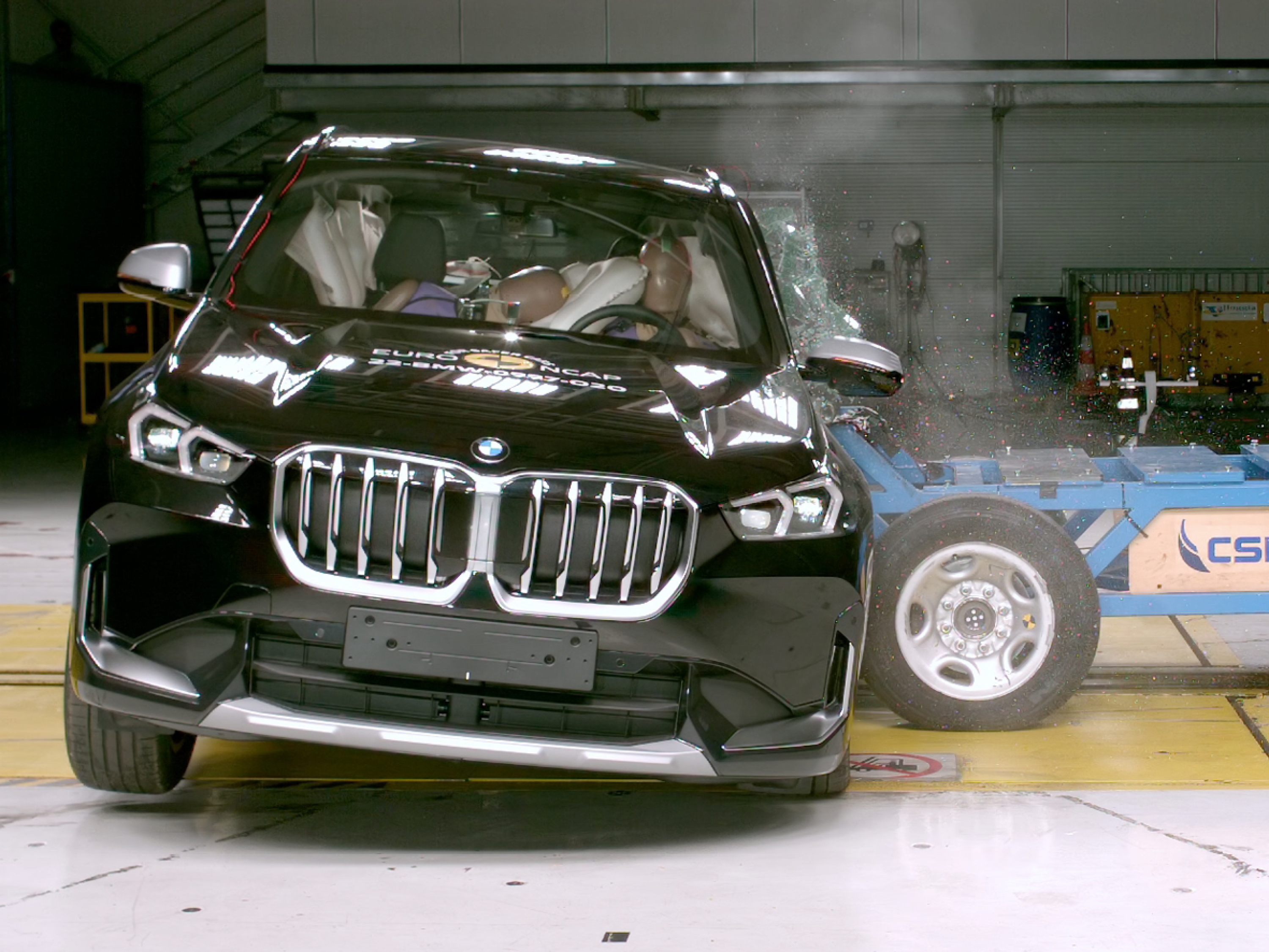
The previous generation X2 inherited its safety rating from the X1, as both models share the same platform and safety features.
Although BMW does not currently plan to have the X2 and iX2 undergo ANCAP testing locally, the recently launched X1 has retained its maximum safety rating, which was carried over from ENCAP in mid-2022.
Driving Assistant suite of features is available across the petrol range including:
| Adaptive cruise control with stop-and-go function | Cornering brake control |
| Front, side and head airbags | Dynamic traction control |
| Blind-spot monitoring | High-beam assist |
| Lane departure warning | Adaptive LED headllights |
| Lane change warning | Anti-dazzle rear view mirror |
| Front collision warning with brake intervention | Park distance control |
| Rear cross-traffic alert | Parking assistant |
| Rear collision prevention | Panorama view, 3D view and surround-view cameras |
| Dynamic stability control | Drive recorder |
| Anti-lock braking system | Intelligent emergency call |
| Braking assistant |
1
Warranty and running costs
BMW Australia provides a five-year, unlimited-kilometre warranty for all new vehicles in its line-up.
Additionally, BMW offers a Service Inclusive package for the X2, covering five years or 80,000km, available for $2500. The package covers things like oil changes, filter swap overs and more.
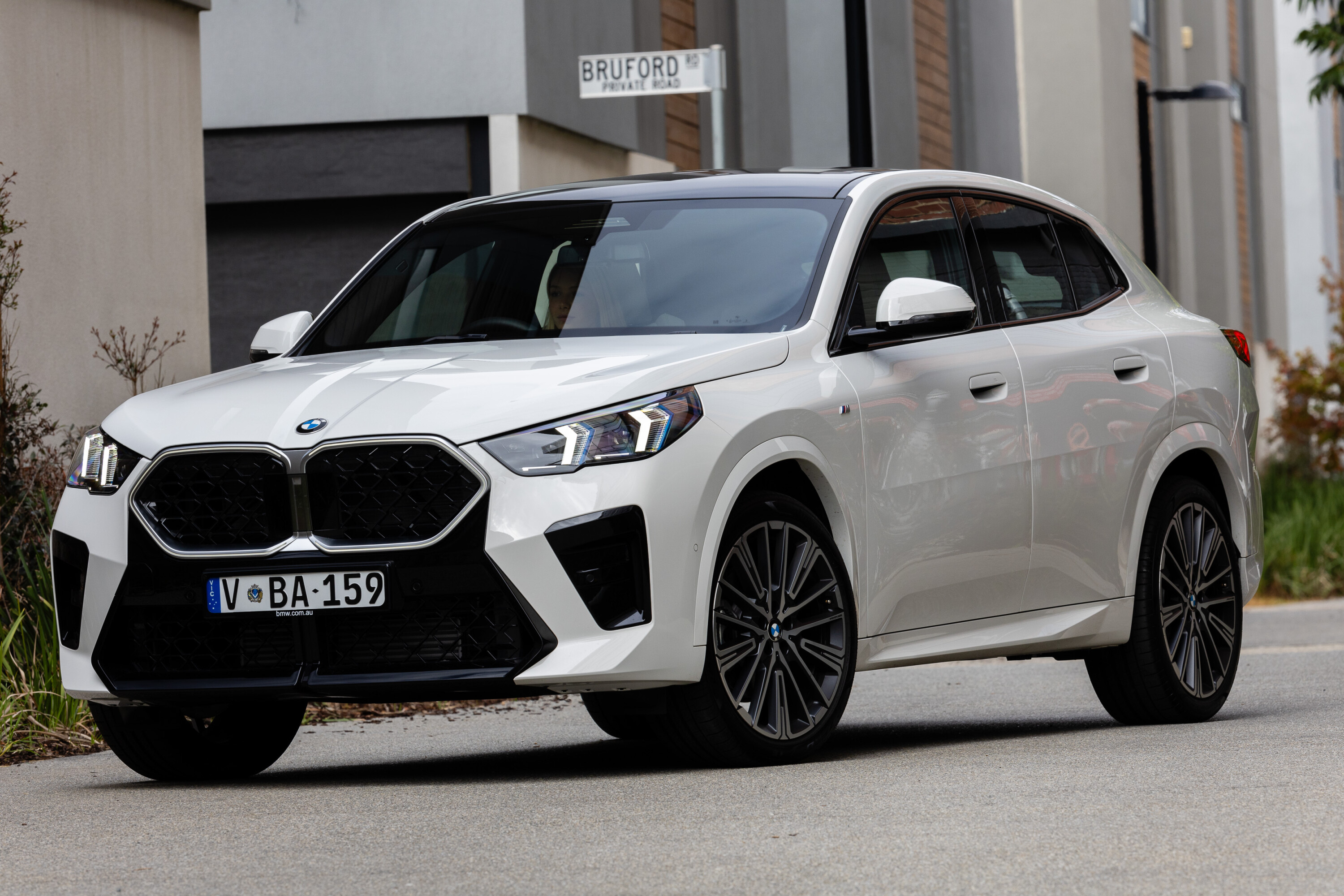
1
VERDICT
The second-generation X2 has made a discreet debut in BMW showrooms, yet its design is striking enough to merit a second glance.
Priced nearly $14,000 higher than its predecessor, BMW maintains that the increase is justified by a comprehensive redesign along with substantial enhancements in technology and safety features.
While the X2 performs admirably in many areas, its firmer ride and lighter steering may diminish the appeal of the M35i model. Conversely, the xDrive20i, particularly when equipped with a few additional enhancement packs, likely offers enough appeal for most buyers.
This model is well-suited for those using the small SUV primarily for urban living, but can handle the winding roads of rural areas with ease.
MORE
Everything BMW
MORE
Small SUVs
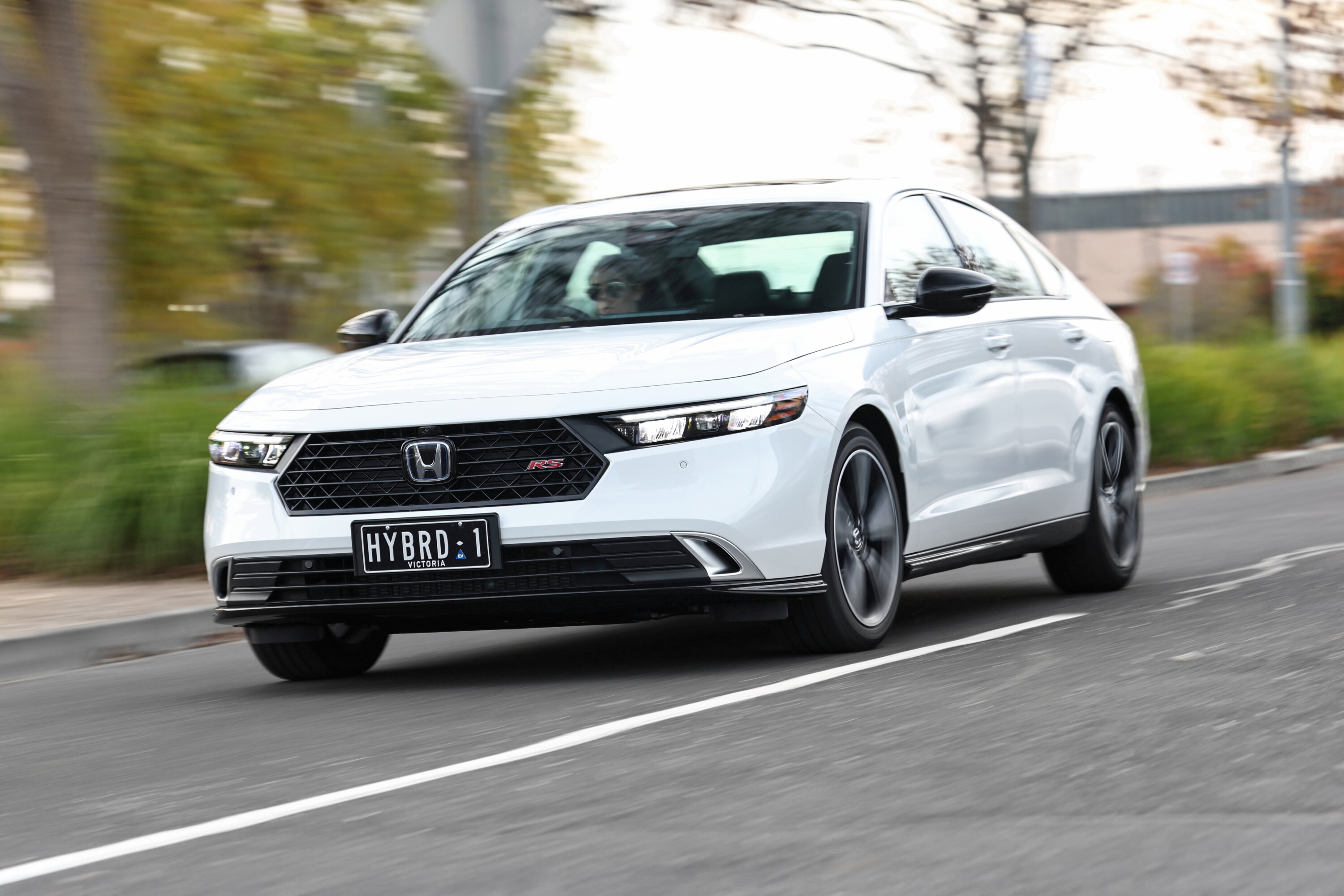
The 2024 Honda Accord sedan has arrived in Australia in a sole hybrid-only variant.
Honda Australia has announced the new Accord E:HEV RS hybrid will be priced from $64,900 drive-away when it lands in local showrooms in May – $3000 and $7000 more than VTi-LX Hybrid and VTi-LX Petrol run-out models, respectively.
This compares to between $37,917 and $51,417 before on-road costs for hybrid versions of the soon-to-be-updated Toyota Camry.

1
Now in its 11th generation, the latest Accord has finally reached Australia after it was unveiled in North America in late 2022, while Chinese and Thai-built versions of the midsize sedan debuted in 2023.
Right-hand drive versions of the Honda Accord continue to be sourced from Honda’s factory in Thailand, which also builds the CR-V midsize SUV for our market.
Honda Australia attributed the delay between North America and the Asia-Pacific to a separate model lifecycle between the two versions, as the previous-generation Accord launched in 2017 but didn’t arrive in the Asia-Pacific until 2019.
1
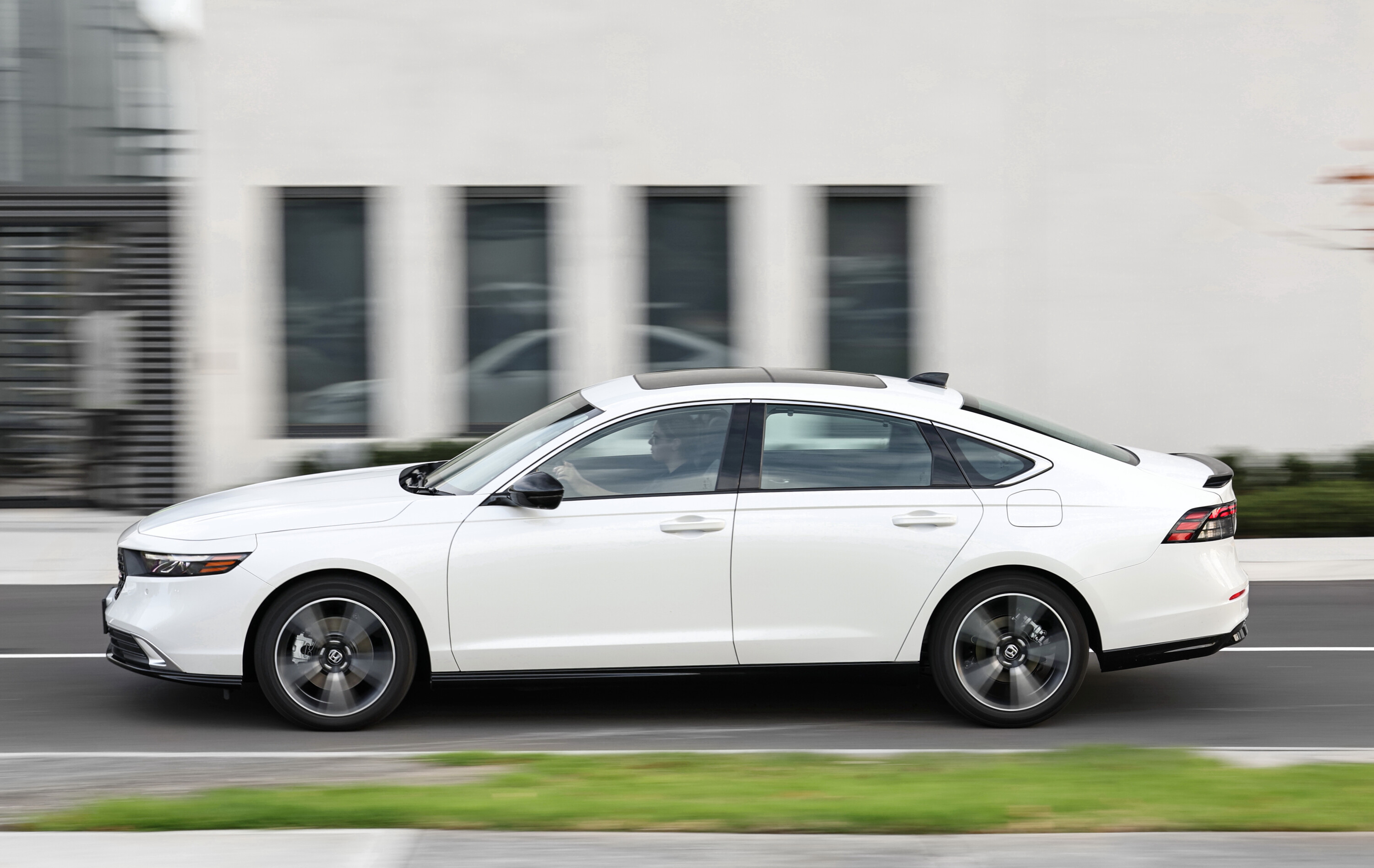
The latest Accord rides on an updated version of Honda’s Global Architecture, with a longer body at 4971mm – up 70mm, making it larger than the one-size-up Skoda Superb – and an unchanged 2830mm wheelbase.
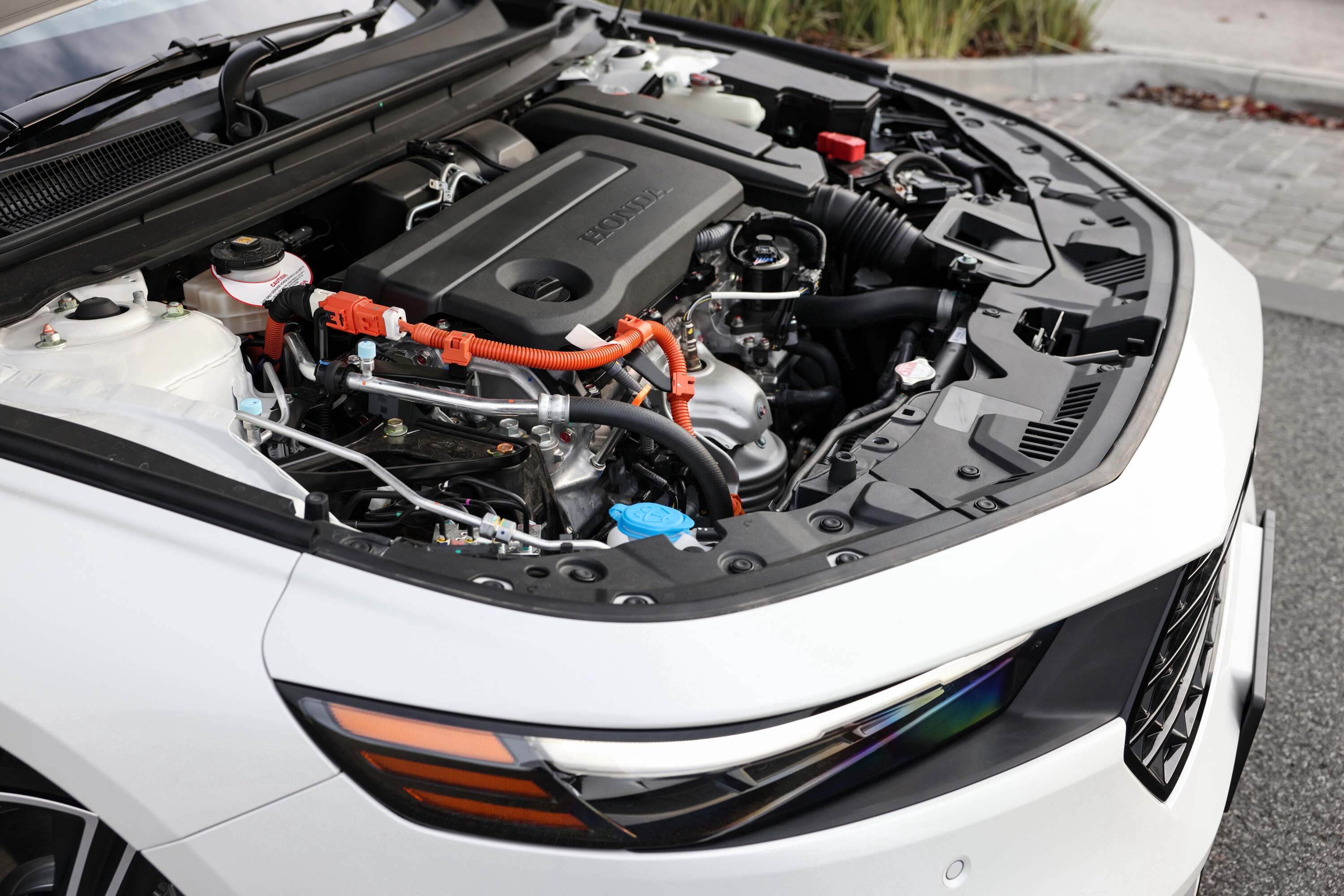
Under the bonnet, the Accord E:HEV RS features Honda’s latest fourth-generation 2.0-litre Atkinson-cycle petrol-electric hybrid system shared with the CR-V E:HEV RS.
The 108kW/182Nm internal-combustion engine is paired with two electric motors for a 135kW/335Nm total system output, with torque up 20Nm and power available from a broader rpm for improved response over the last Accord hybrid.
1
It can now be driven in a one-pedal style with additional levels of deceleration for regenerative braking compared to the previous model.
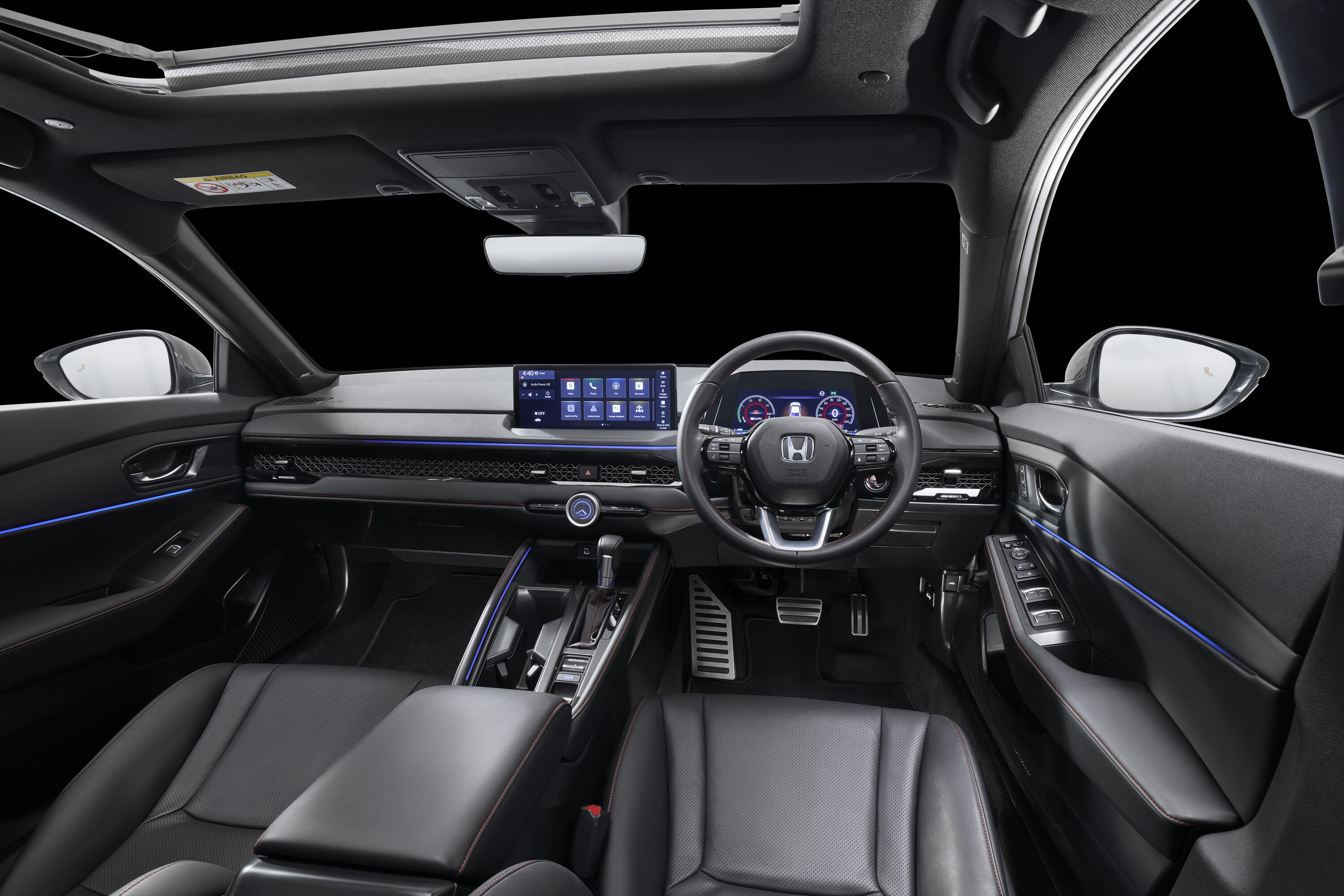
Inside, the Accord E:HEV RS features a 12.3-inch infotainment system with Google built-in – a Honda first in Australia – a 10.2-inch digital instrument cluster, an 11.5-inch head-up display and, similar to the new Skoda Superb, an ‘experience selection dial’ to operate multiple vehicle functions with a single control.
It also features an improved version of the Honda Connect telematic system that first debuted in the Civic Hybrid, with the Accord adding digital key functionality and a function to remotely track and immobilise the vehicle in the event of a theft.
1
VFACTS new-car sales data reveals 144 examples of the Honda Accord were sold in Australia in 2023, making it one of the lowest-selling mainstream cars on local roads.
More than 10,000 units of its Toyota Camry arch-rival were delivered last year, while 1528 Mazda 6s, 1395 Skoda Octavias and 338 Hyundai Sonatas were also sold in Australia in 2023.
Like the Accord, the next-generation Toyota Camry due in Australia in the second half of 2024 will switch to a hybrid-only line-up.
1
2024 Honda Accord pricing
| Variant | Pricing | Change |
|---|---|---|
| E:HEV RS | $64,900 | up $3000 (over VTi-LX Hybrid) |
| All prices are drive-away. | ||

1
2024 Honda Accord features
| 2024 Honda Accord E:HEV RS features | |
|---|---|
| 18-inch alloy wheels | Dual-zone climate control |
| 12.3-inch infotainment system | Front and rear parking sensors |
| Wireless Apple CarPlay and Android Auto | 360-degree camera system |
| Google built-in functionality (Assistant, Maps, Play Store) | Autonomous emergency braking (vehicle, pedestrian, cyclist, motorcyclist) |
| Honda Connect service with digital key function | Lane-keep assist |
| Over-the-air software updates | Lane departure warning |
| 12-speaker Bose audio system | Blind-spot monitoring |
| 10.2-inch digital instrument cluster | Rear cross-traffic alert |
| 11.5-inch head-up display | Adaptive cruise control |
| Experience selection dial | Traffic jam assist |
| Wireless phone charger | Adaptive high beam |
| Front and rear USB-C charge ports | Traffic sign recognition |
| Full-LED headlights, tail-lights and DRLs | Driver attention monitor |
| Active noise cancellation | Rear seat reminder |
| 2024 Honda Accord available colours | |
|---|---|
| Platinum white | Lunar silver |
| Meteoroid grey | Crystal black |
MORE
Everything Honda
It’s a hard nut to crack, this world of premium SUVs, but few newbies have enjoyed such roaring success as the Lexus RX.
First introduced in Australia in the early noughties, the RX quickly became Lexus’s most popular model and has steadily built a reputation as the thinking man’s alternative to the established Germans. Cheaper to buy and thriftier to run, yet absolutely bursting with equipment and high-quality, luxurious touches – that’s long been the Lexus RX MO.
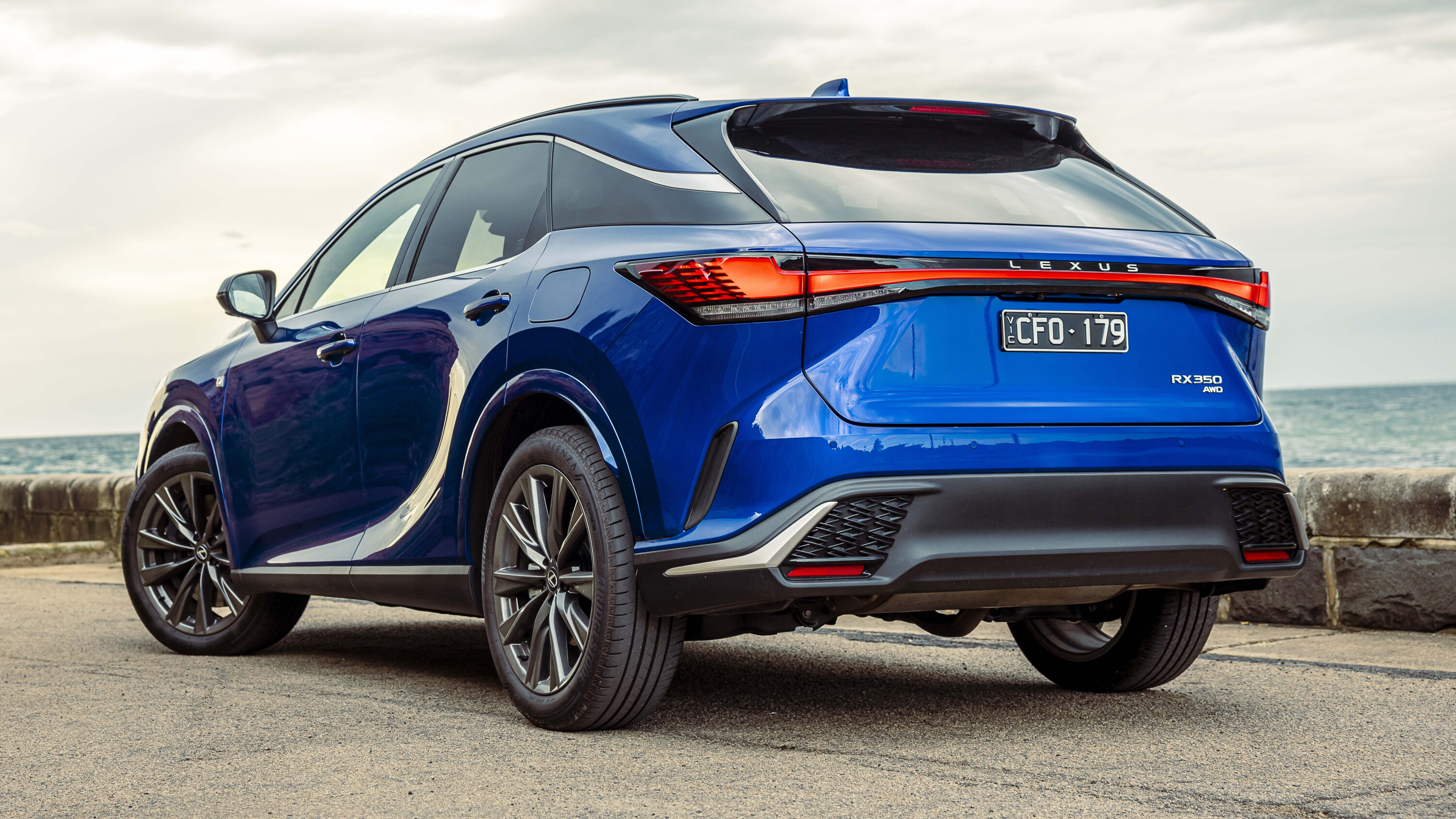
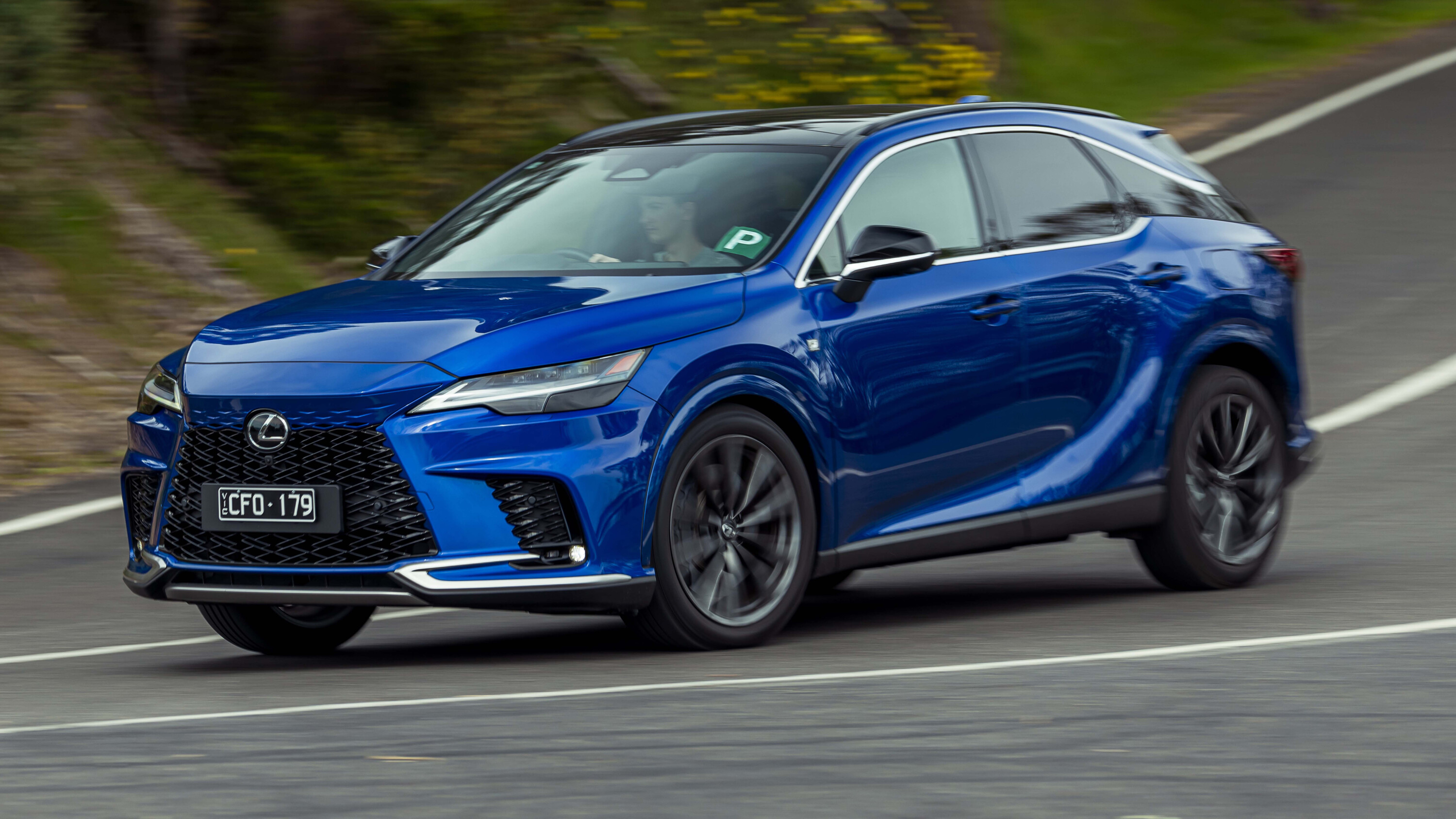
The version you see here is the fifth-gen RX, an all-new model that sauntered onto Aussie roads in 2023. Longer, wider, lower and rolling on a stretched wheelbase, it’s the biggest RX yet and also offers buyers a mind-boggling array of choice thanks to four engines, four trim levels, multiple option packs and the choice of front- or all-wheel drive.
1
JUMP AHEAD
How much is it and what do you get?
Our particular tester is the RX350 F Sport, which retails for $101,745, and doesn’t only score a host of sporty detailing such as unique 21-inch wheels, more aggressive bumper designs and an F-Sport steering wheel, but it’s also one of the few offerings in the line-up not to use a hybrid powertrain.
Instead, propulsion comes from a 2.4-litre four-cylinder turbo petrol that makes a healthy 205kW/430Nm and sends its grunt to both axles through an eight-speed torque converter auto.
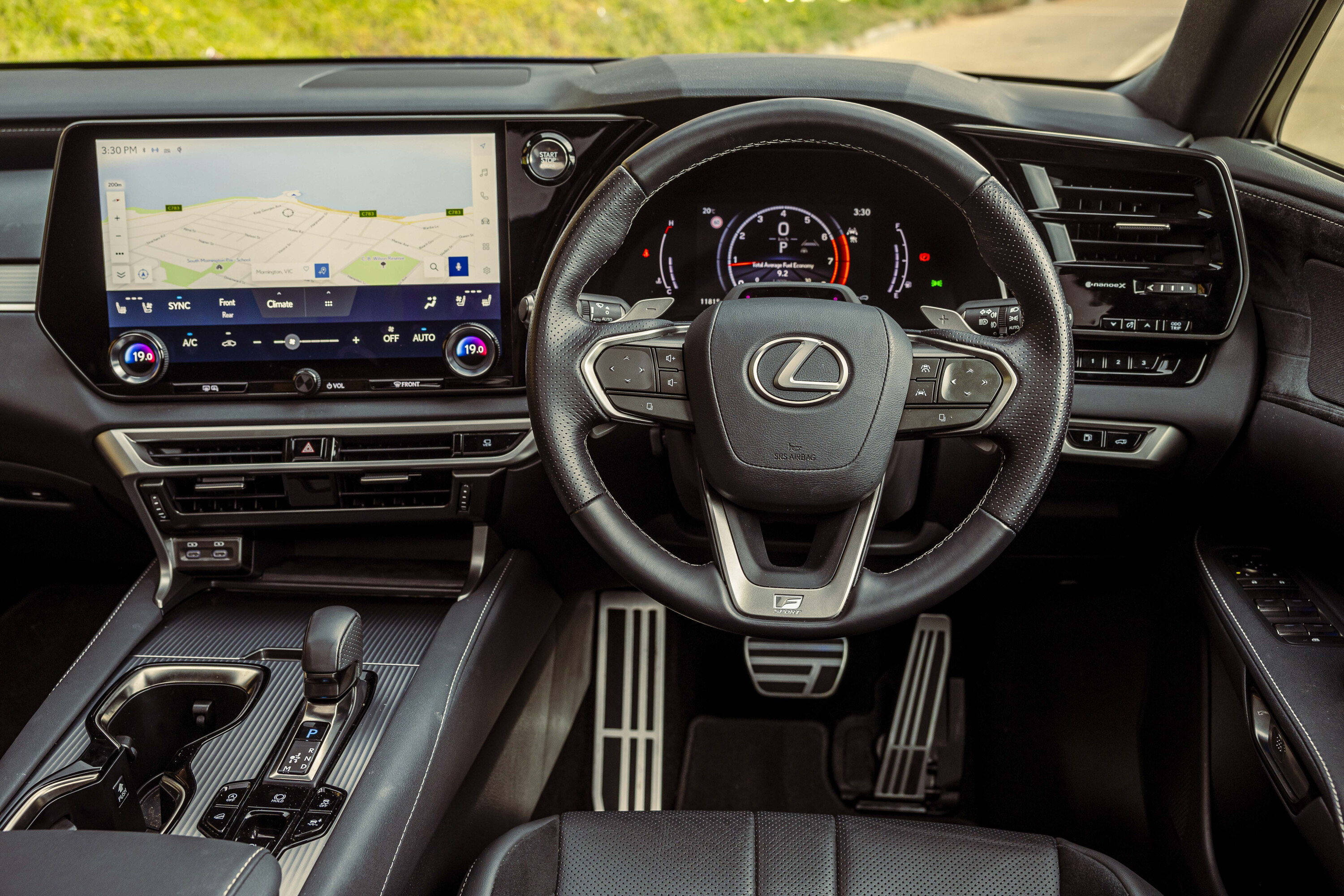
It that recipe sounds a touch old-school, don’t be alarmed: the RX feels effortless and polished from the get-go. The steering is light, the ride quality on large 21-inch alloys is relaxed and comfortable, and the cabin is impressively refined and quiet at a highway cruise.
1
Cabin space and comfort
The cabin makes an equally strong first impression. The snug and supportive front seats, which are part of the F Sport treatment, are especially fabulous, as is the soft and tactile leather steering wheel and high-end 21-speaker Mark Levinson stereo.
The sense of quality is also top drawer, as you’d expect from Lexus, and you’ll encounter soft leather touch points, lovely suede inserts on the door cards and soft-touch plastics on the dash.
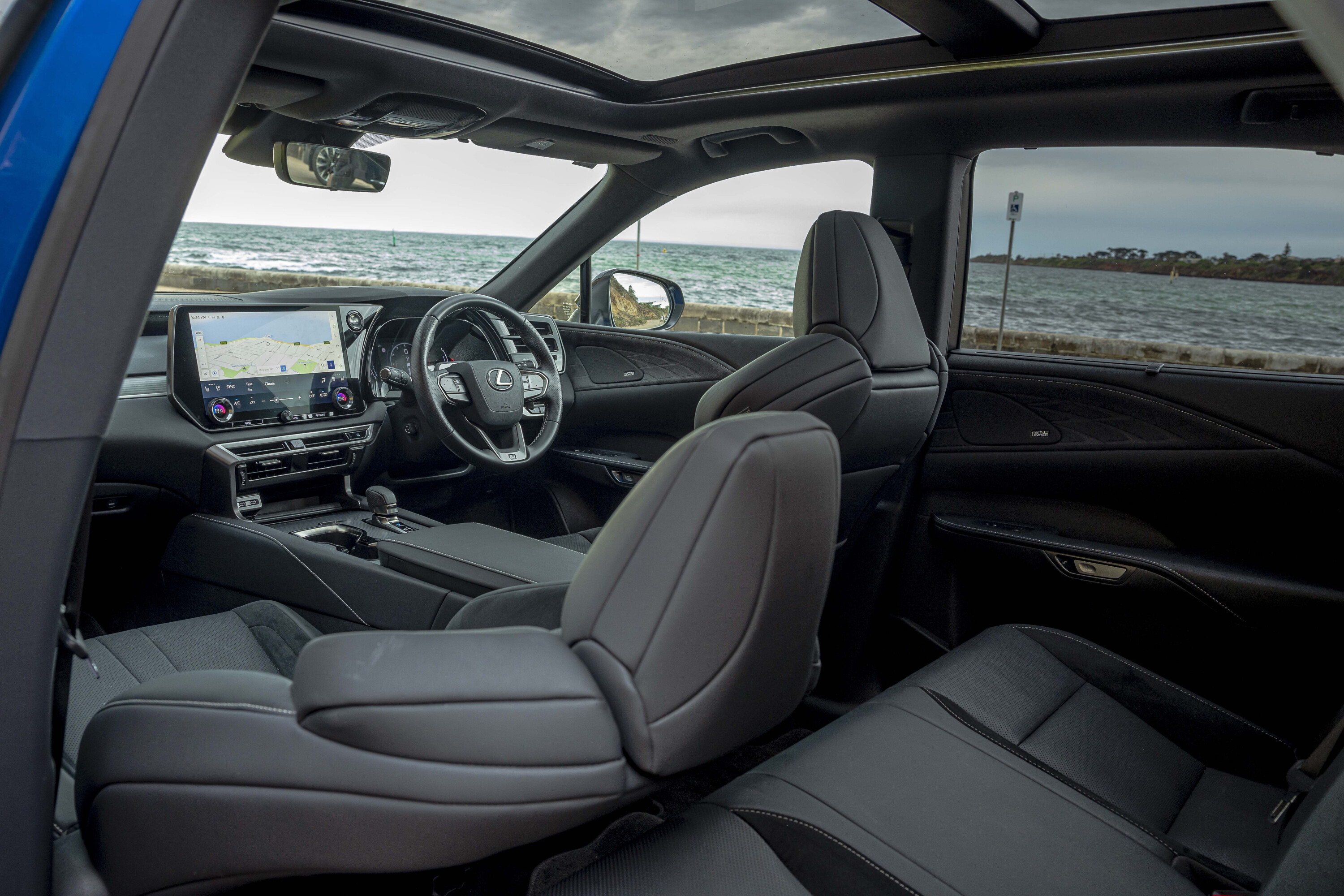
There are a few weak points, however. The biggest and most confronting is the huge slab of piano-black plastic that surrounds the 14.0-inch centre touchscreen. It dominates the dash design and looks and feels on the cheap side, which erodes the cabin’s overarching sense of luxury. Hard, scratchy plastics can also be found on the doors and the rear of the centre console.
1
Happily, the cabin’s core ergonomics are hard to fault – the dreaded Lexus touchpad has been banished! – and the centre touchscreen itself is large, bright and integrates well with Apple CarPlay and Android Auto, although only Apple users will enjoy a wireless connection, which is a drag in 2024.
Our test car was fitted with the optional Enhancement Pack and a sliding panoramic roof, with the latter further enhancing the cabin’s sense of space and airiness.
Rear seat space has grown, thanks in part to the 60mm wheelbase stretch, and there’s ample knee and toe room, although taller passengers might find headroom a little tight. There’s loads in the way of amenity, though, thanks to a reclineable backrest, dedicated air vents with temp control, two USB-C ports and a centre arm rest with twin cupholders.
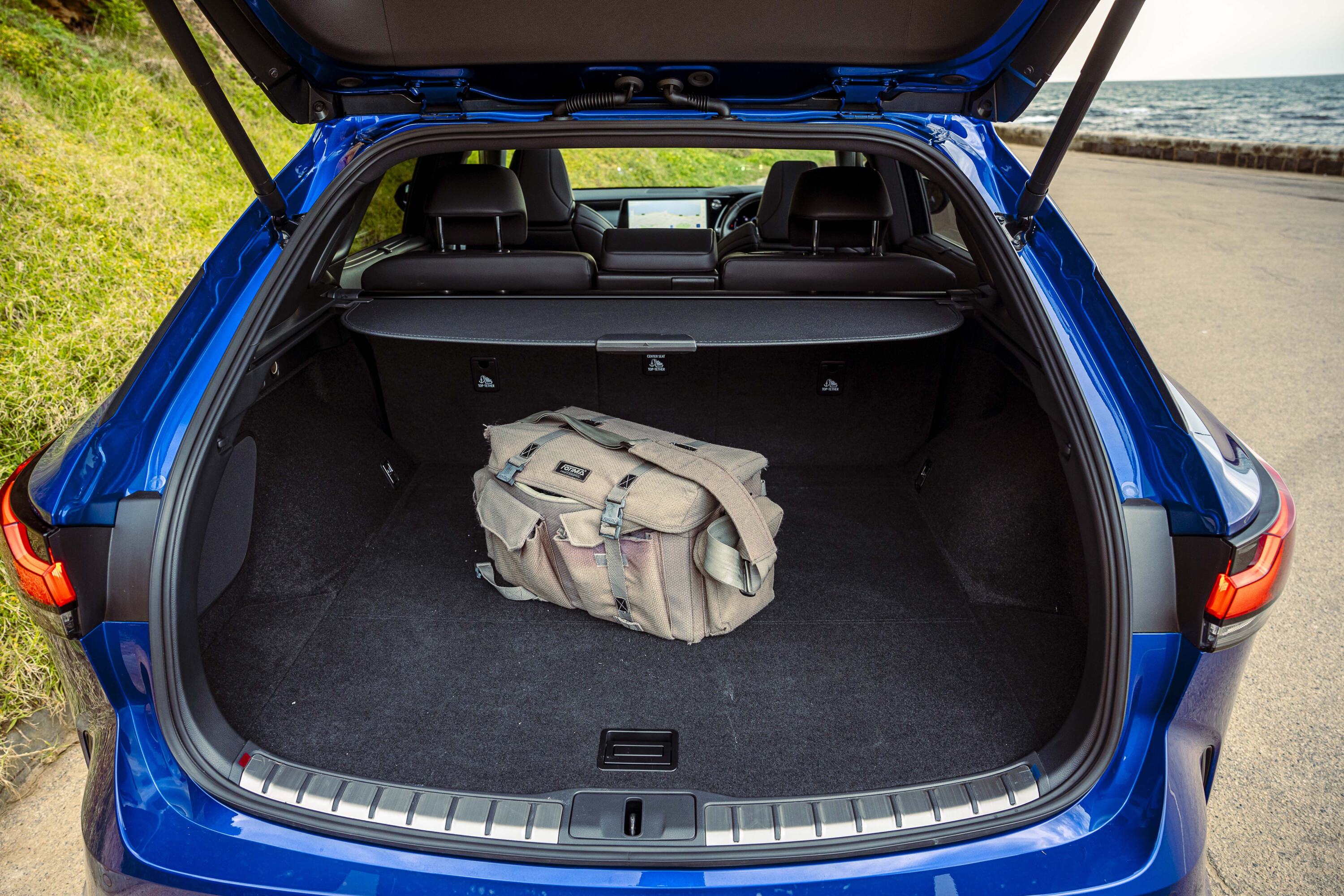
The boot is generous, too, at 612L and offers a wide and low aperture, two bag hooks, electric releases for the rear seats and a 12V socket. A space saver spare and additional storage cubby are housed beneath the boot floor.
1
What’s it like to drive?
There’s a decent amount of dynamic cohesion for keen drivers to explore.
While the adaptive suspension is undoubtedly softly set-up with plenty of travel and suppleness, body control is impressive on a twisty section of road and the steering is accurate, if a little too light and lifeless. Performance from the 2.4-litre engine is quick rather than fast, yet the turbo unit is quiet and ably supported by the eight-speed auto which is smooth and unobtrusive.
Unfortunately, however, this non-hybridised powertrain is relatively thirsty when driven hard. On our dynamic loop, the RX350’s efficiency was relatively poor and its consumption reading was one of the highest of any large SUV we’ve tested.
Happily, things did improve on a longer drive that took in more highway miles and where we saw an as tested fuel figure of 13.0L/100km. Officially, Lexus claims the RX350 F Sport drinks 5.4L/100km on the combined cycle.
1
VERDICT
There’s lots to like about the new RX. It’s quiet, refined and should be the kind of SUV that slips seamlessly into your life as you relish its effortless powertrain, silken ride quality and sublimely comfortable seats.
But for all its goodness, there are some chinks in its armour like the heavy-handed dash design, inconsistent cabin materials and high fuel use.
MORE
Everything Lexus
| 2024 Lexus RX350 F-Sport specifications | |
|---|---|
| Body | 5-door, 5-seat SUV |
| Engine | 2393cc inline 4cyl, 16v, DOHC, turbo |
| Power @rpm | 205kW @ 6000rpm |
| Torque @rpm | 430Nm 1700-3600rpm |
| Transmission | 8-speed automatic |
| 0-100km/h | 7.9sec (claimed) |
| L/W/H | 4890/1920/1695mm |
| Wheelbase | 2850mm |
| Track width | 1650/1675mm |
| Boot space | 612L/1678L |
| Weight | 2005kg |
| Fuel / tank | 95 RON/ 67.5L |
| Fuel use L/100km | 5.4L/100km (combined)/13.0L/100km (tested) |
| Suspension | MacPherson struts, coil springs, adaptive dampers, anti-roll bar (f) Multi-link, coil springs, adaptive dampers, anti-roll bar (r) |
| Steering | Electric rack-and-pinion |
| Brakes | 400mm discs with six-piston callipers (f) 340mm dics with single-piston calliper (r) |
| Wheels | 21-inch alloy |
| Tyres | Bridgestone Alenza Enliten 235/50 R21 |
| Price | $101,745 before on-roads |
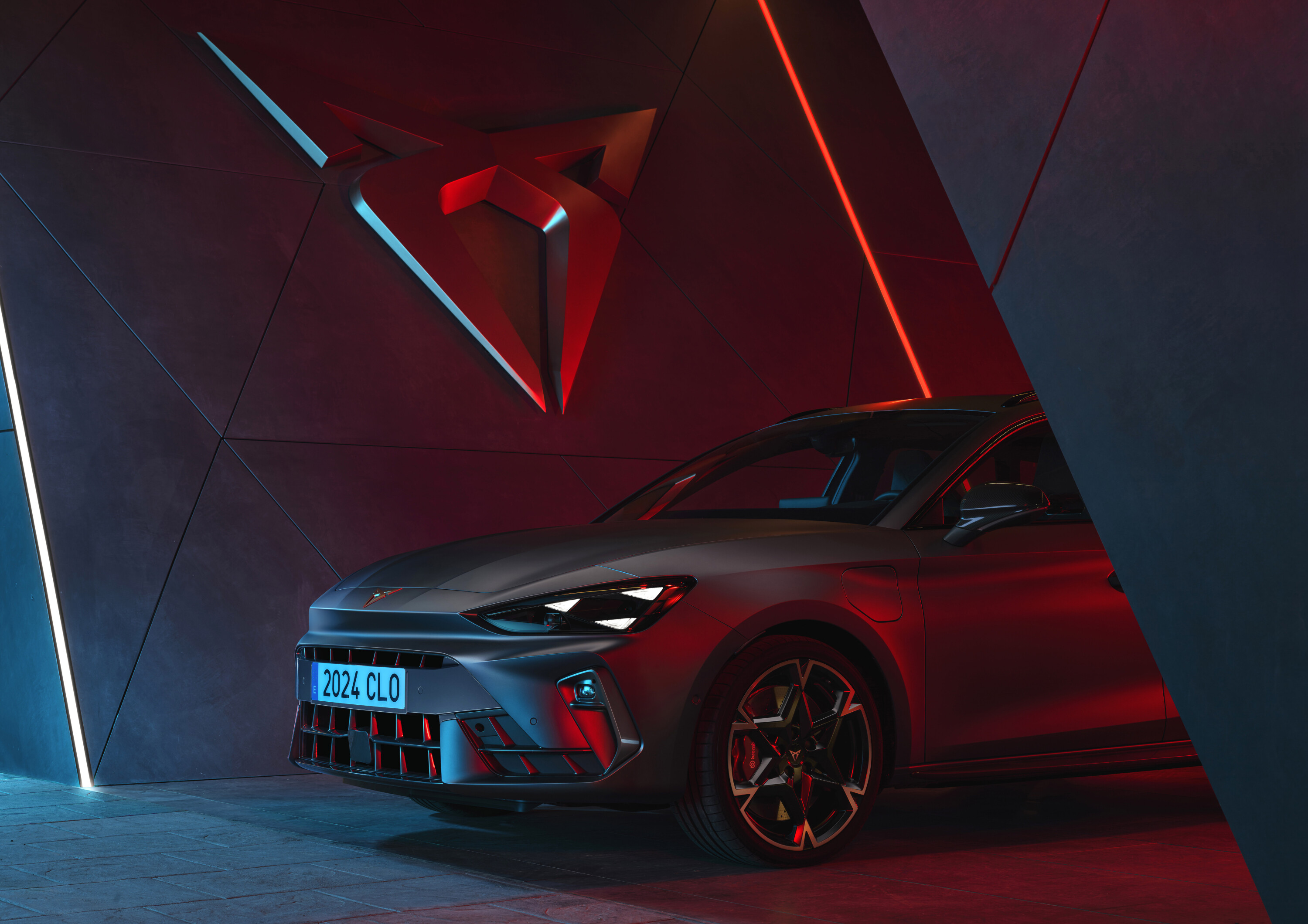
The facelifted Cupra Leon has debuted with a revised look – as the brand confirms the Sportstourer wagon will finally reach Australia.
First previewed in June 2022, the mid-life update for the Leon follows recent revisions applied to the related Volkswagen Golf, Skoda Octavia and Audi A3.
It was unveiled alongside a similar update to its Cupra Formentor sibling, with both vehicles from the Spanish brand also benefiting from new plug-in hybrid technology and an updated infotainment system.
1
The facelifted Leon hatch will launch in Australia in around 12 months’ time – alongside the updated Formentor – while the Leon Sportstourer will follow in mid-2025.
While the Leon hatch will continue to be available in four variants – V, VZ, VZe and VZx – the Sportstourer will be restricted to the plug-in hybrid VZe and VZx in Australia.
The Leon Sportstourer VZx is all-wheel drive and boasts identical power to the Volkswagen Golf R and Audi S3, unlike the less-powerful, front-wheel-drive VZx hatch that shares more in common with the Golf GTI Clubsport.

1
It will be an indirect successor to the Golf R wagon, which was axed in Australia at the end of 2023 due to low sales.
“[Sportstourer] is a niche but interesting to Cupra. We don’t need to chase volume – can choose our own territory. Will be fairly limited volume but we’re prepared to be surprised! Wagons still perform fairly well in New Zealand,” said Cupra Australia’s head of product and marketing Jeff Shafer.
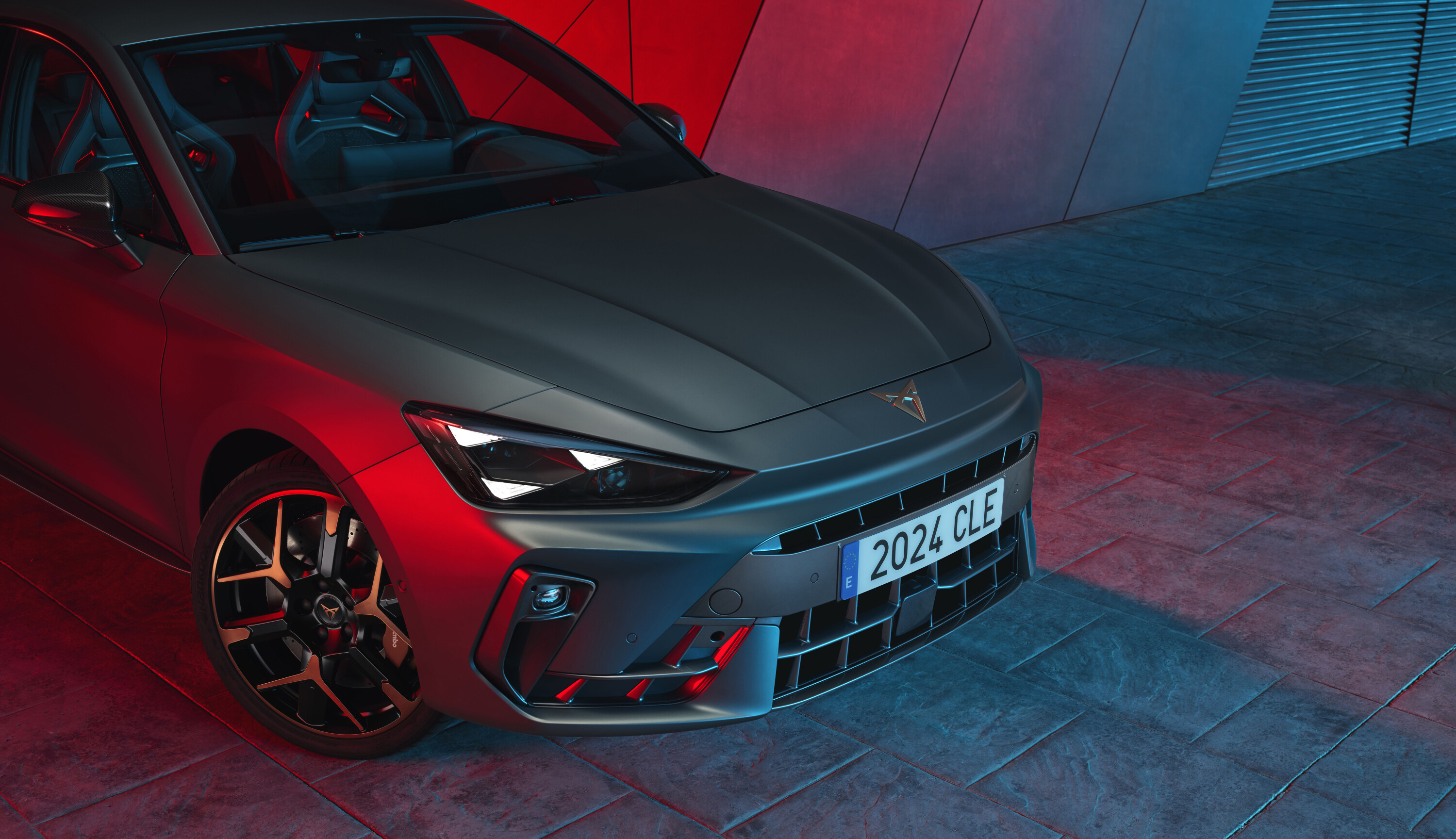
The front end of the Leon hot hatch and wagon receives the most notable styling change, introducing a ‘shark nose’ face that ties it more closely to the upcoming Raval, Tavascan and Terramar models – and better differentiates the Cupra from the Seat Leon that it is based on.
1
Cupra’s logo moves from the grille to a more pronounced bonnet for a more aggressive look overall, while the Leon adopts a new tri-triangular headlight treatment.
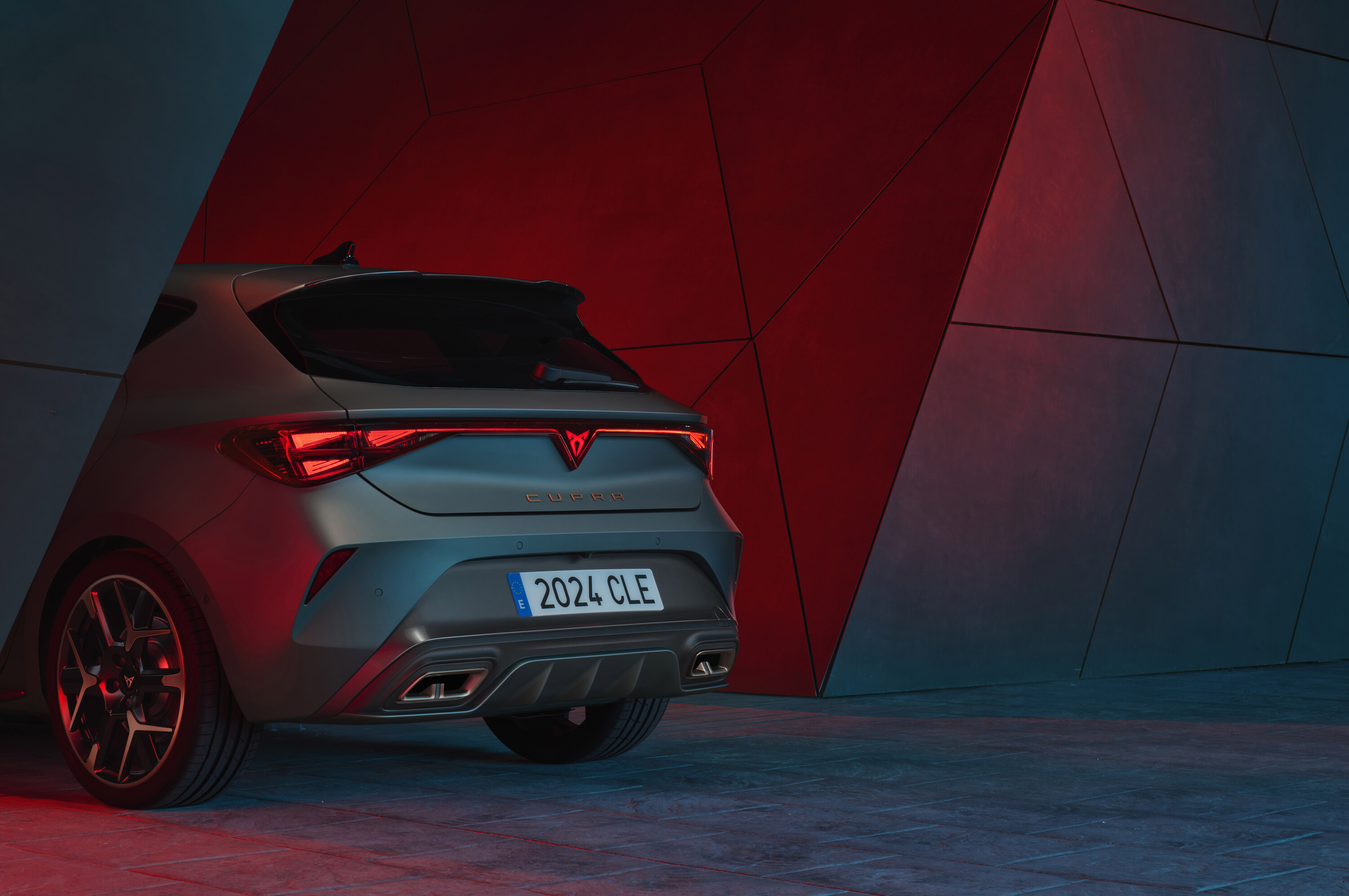
At the rear, the main revision is the Cupra logo now being integrated into the horizontal tail-light bar, while there are also revisions to the lower bumper.
Two new exterior colour options have been added: Century bronze and enceladus grey.
Cupra has fitted a larger 12.9-inch touchscreen – up from 12-inch – with an improved infotainment system that aims to aims to address criticisms of the current set-up.

1
Improvements include a more intuitive interface – especially for the climate control – and illumination for the touch-sensitive temperature and volume sliders for better usability in low-light environments.
Material quality has been lifted in the Leon’s cabin, and there’s a subtle tweak to the centre console design. A 12-speaker, 425-watt Sennheiser audio system becomes a new option.
Like the new Formentor VZx – and the related Volkswagen Golf R and Audi S3 – the all-wheel-drive Leon Sportstourer VZx moves to a 245kW turbo petrol that now has its outputs distributed to all four wheels via a torque-splitter arrangement rather than the previous Haldex system, and gains a Drift mode.
Cupra says it also features Akebono brakes, but it’s currently unclear whether these are standard or optional.
1
The front-drive Leon VZx hatch will retain its existing 221kW/400Nm setup, which is identical to the Volkswagen Golf GTI Clubsport offered in Europe.
There are improvements for the plug-in hybrid Leon VZe – set to be available in hatch or wagon form in Australia – with power increasing from 180kW to 200kW and its electric-only range almost doubling from 67 kilometres to “more than” 100km courtesy of a larger 19.7kWh battery, up from 12.8kWh.
Cupra says its charging capability also improves to 50kW with the addition of DC fast-charging capability, in addition to the 11kW AC home charger support available in the pre-facelift model.
1
Cupra’s local deliveries are currently down nearly 30 per cent year to date after a relatively huge year of growth in 2023, though it expects to match or slightly better last year’s result by the end of 2024.
The brand has a massive product year in 2025 with the arrival of multiple models, with the facelifted Leon and the Leon Sportstourer wagon set to be joined by the updated Formentor crossover.
In addition, it will also launch the Tavascan electric SUV and the Audi Q3-based Terramar midsize SUV, which is set to be the last combustion-engined Cupra before the brand goes all-electric by the end of the decade.
MORE
Everything Cupra
Cupra’s most popular model, the Formentor, has been given its first big update, encompassing revised styling, an upgraded cabin, and new powertrains.
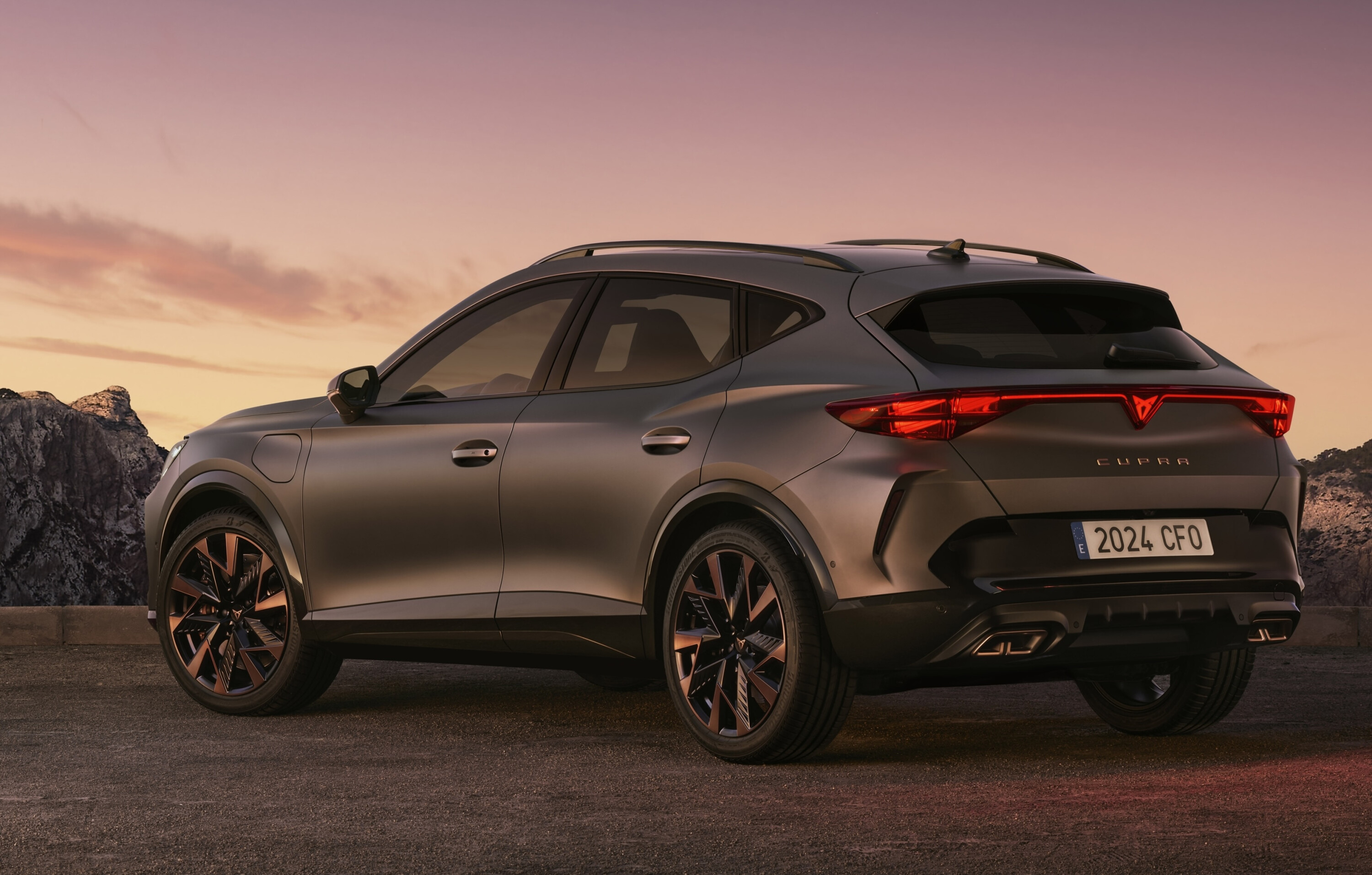
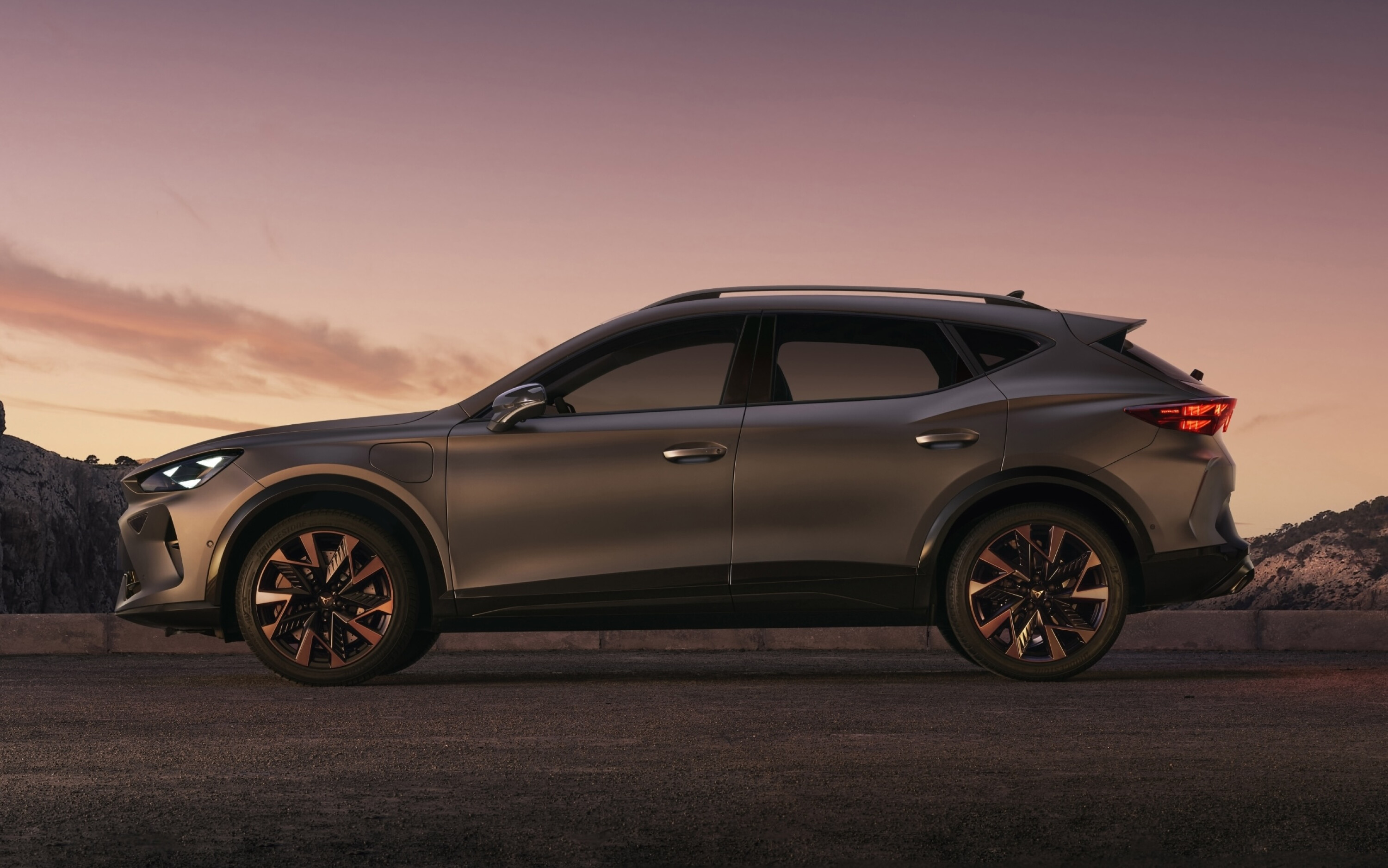
The front end of the Spanish brand’s compact crossover receives the most notable styling change, introducing a ‘shark nose’ face that ties it more closely to the upcoming Tavascan and Terramar SUVs.
Cupra’s logo moves from the grille to a more pronounced bonnet that now slightly overlaps a thin air-intake with a gaping grille mouth below that for a more aggressive look overall.
1
As expected from previous spy shots, the 2025 Cupra Formentor – not due here till around April 2025 – adopts a new tri-triangular headlight treatment.
At the rear, the main revision is the Cupra logo now being integrated into the horizontal tail-light bar, while a diffuser-style lower bumper has been added.
Two new exterior colour options are Century Bronze and Enceladus Grey.
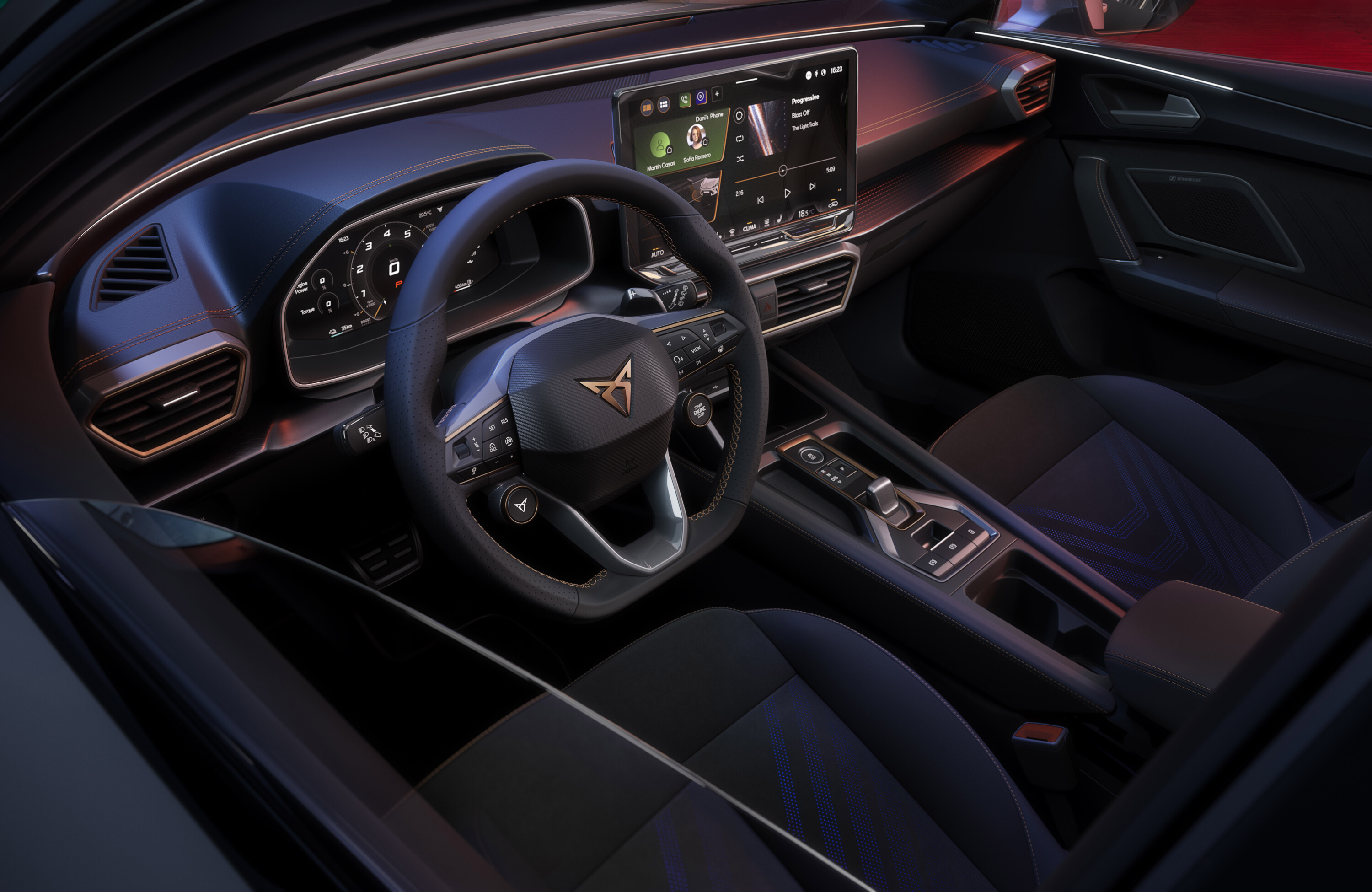
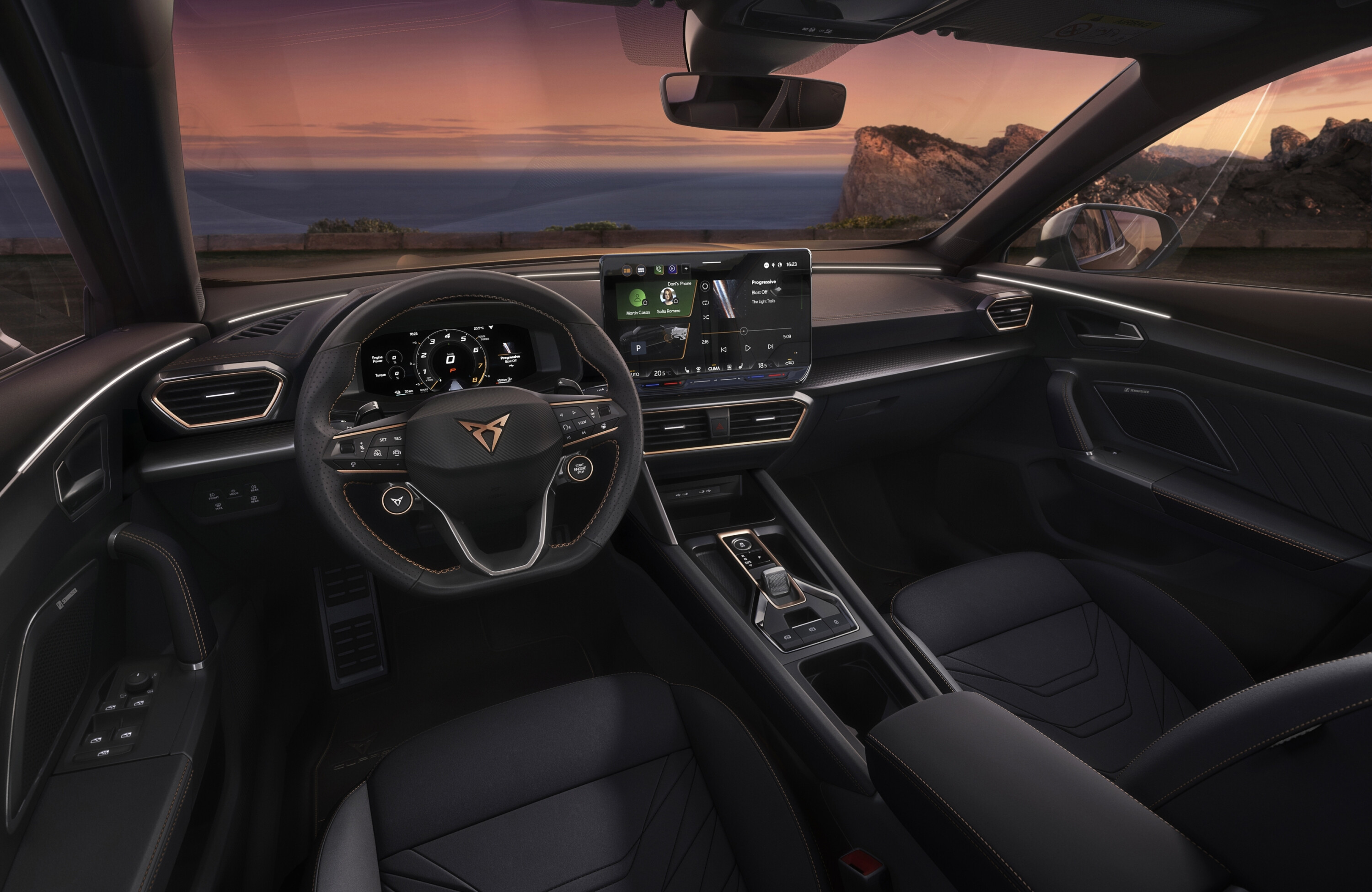
Inside, Cupra says material quality has been lifted, there’s a subtle tweak to the centre console design, and central to the dash is a new, 12.9-inch touchscreen.
1
The infotainment system aims to address criticisms of the current set-up, with a more intuitive interface – especially for the climate control. Touch-sensitive sliders for temperature and volume remain but, thankfully, are now illuminated at night.
A 12-speaker, 425-watt Sennheiser audio system becomes a new option.
Under the bonnet, the flagship Formentor VZx moves to a 245kW turbo petrol that now has its outputs distributed to all four wheels via a torque-splitter arrangement rather than the previous Haldex system, and gains a Drift mode.
Cupra says it also features Akebono brakes, though it’s unknown at this stage whether these are standard or optional.
1
There are improvements for the plug-in hybrid VZe, with power increasing from 180kW to 200kW and its electric-only range almost doubling from 58km to “more than” 100km courtesy of a larger, 19.7kWh battery.
Cupra says its charging capability also improves to 50kW with DC.
The VZe has replaced the VZx performance model as the most popular Formentor variant locally. The new PHEV version will arrive slightly later, in mid 2025.
The range will also gain a first ‘eTSI’ mild-hybrid petrol drivetrain.
Cupra’s local deliveries are currently down nearly 30 per cent year to date after a relatively huge year of growth in 2023, though the brand expects to match or slightly better last year’s result by the end of 2024.
The brand has a massive product year in 2025 with the arrival of multiple models, with the facelifted Formentor joined by the updated Leon hatch, the Leon Sportstourer wagon, as well as the Tavascan electric midsized SUV and Terramar SUV that is set to be the last combustion-engined Cupra before the brand goes all electric by the end of the decade.
MORE
Everything Cupra
Spanish brand Cupra has announced a range of end-of-financial-year offers for its line-up of hatches and SUVs.
The relatively young Volkswagen Group brand has a relatively quiet product year ahead before a major new-car assault in 2025.
In addition to facelifted versions of the Leon hatch and Formentor crossover, Cupra will introduce the Tavascan electric midsize SUV, Terramar petrol and hybrid SUV, and the wagon version of the Leon.
Here’s the lowdown on the deals for current showroom models, with the offer running from 1st May 2024 to 30 June 2024.
Cupra Formentor
1
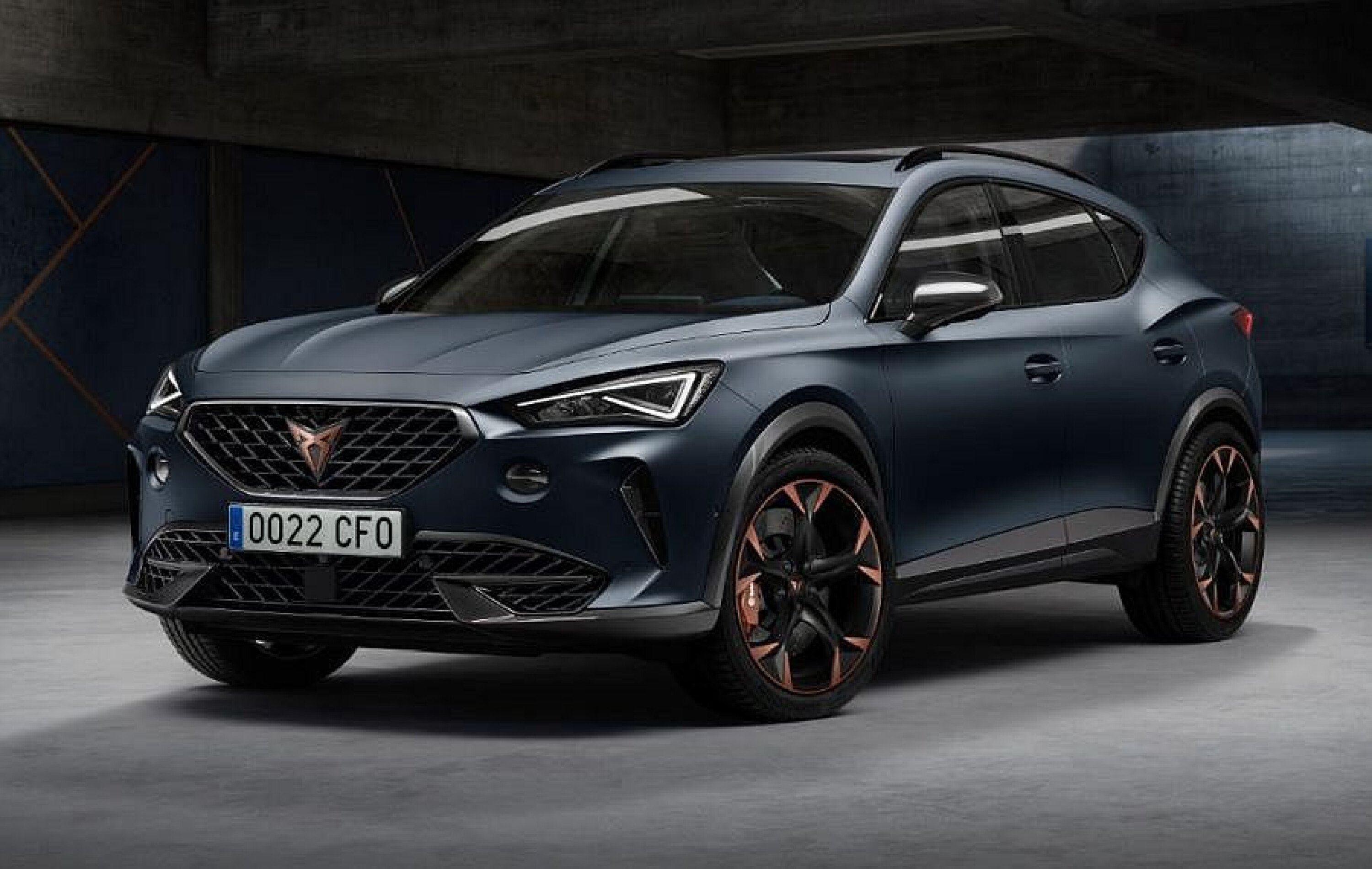
A simple, 1 per cent finance offer has been applied to the full range of the brand’s best-selling model. The Formentor compact crossover is available with a good choice of drivetrains, which include plug-in hybrid and performance variants. Cupra has revealed a facelifted Formentor this week, though the updated model isn’t due in Australia until April 2025.
Cupra Ateca
1
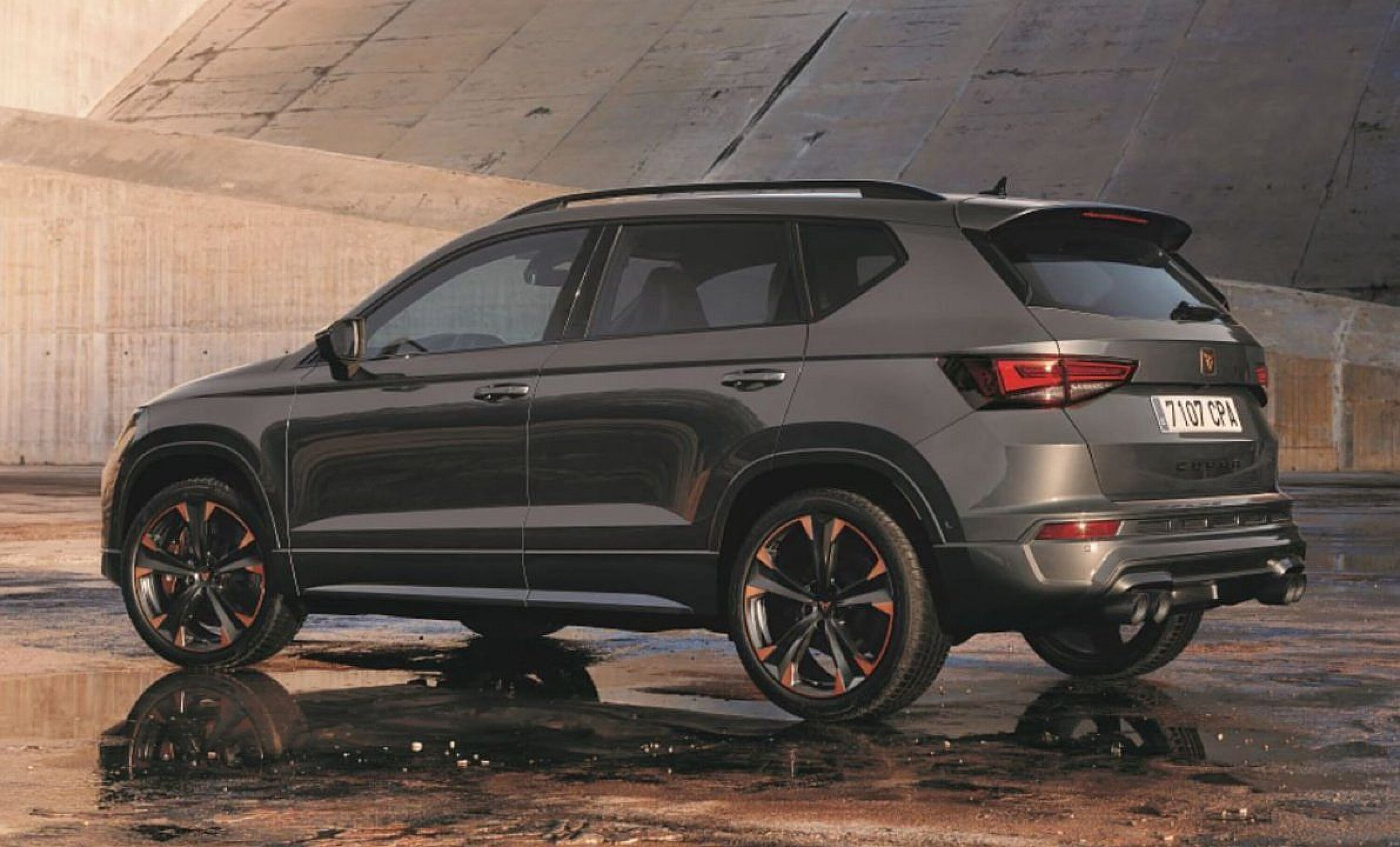
A $58,888 drive-away deal is offered for the Ateca VZx, the only variant offered locally of the small SUV. That’s a saving of about $8000 (based on a Sydney postcode) for the 221kW, all-wheel-drive model.
Cupra Born
1
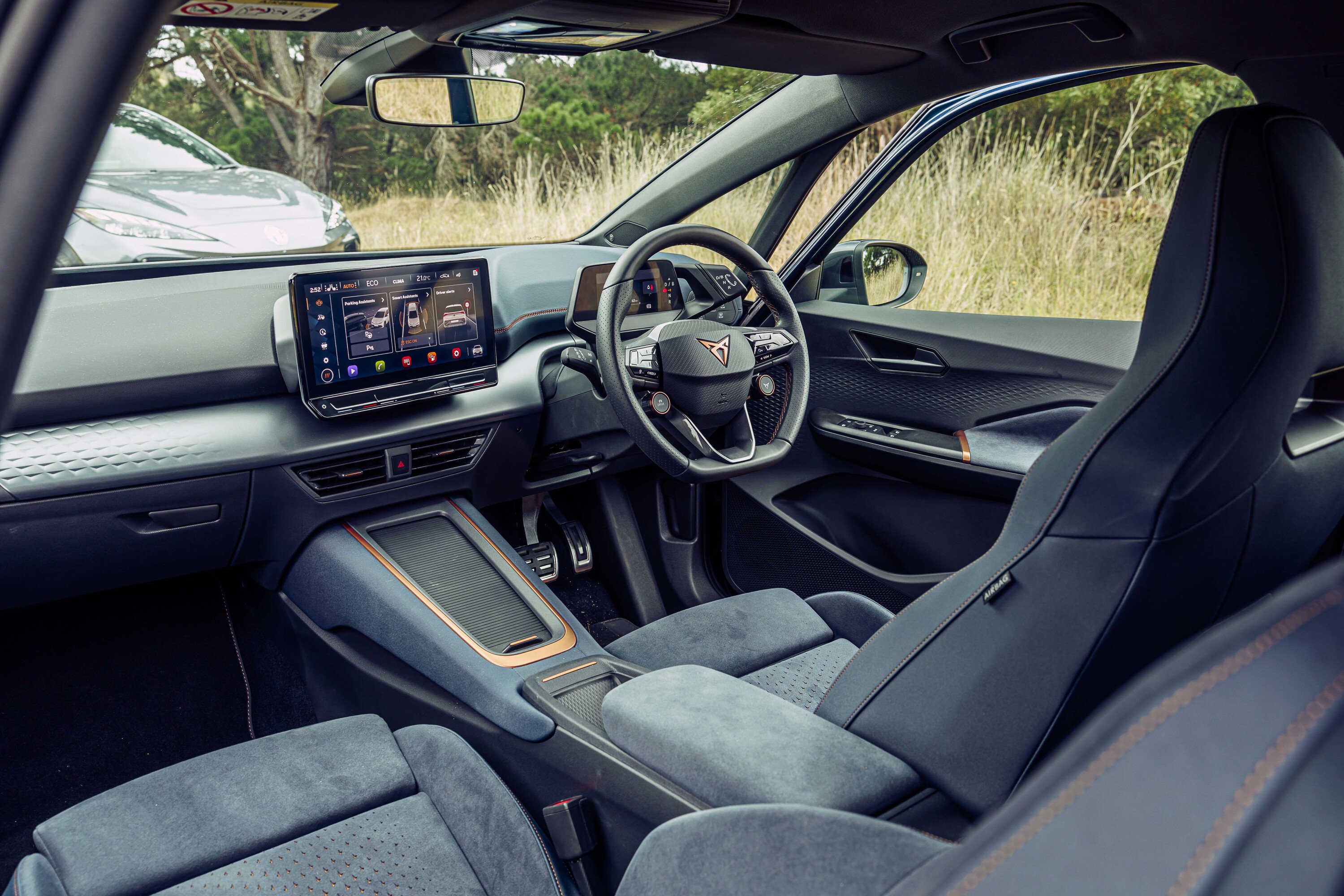
The electric hatchback is available with a free Interior Package worth $2900. The cabin upgrade (pictured above) adds ‘Blue Dinamica’ fabric upholstery, front seats with heating and massage functions, and a Beats audio system.
Cupra Leon
1
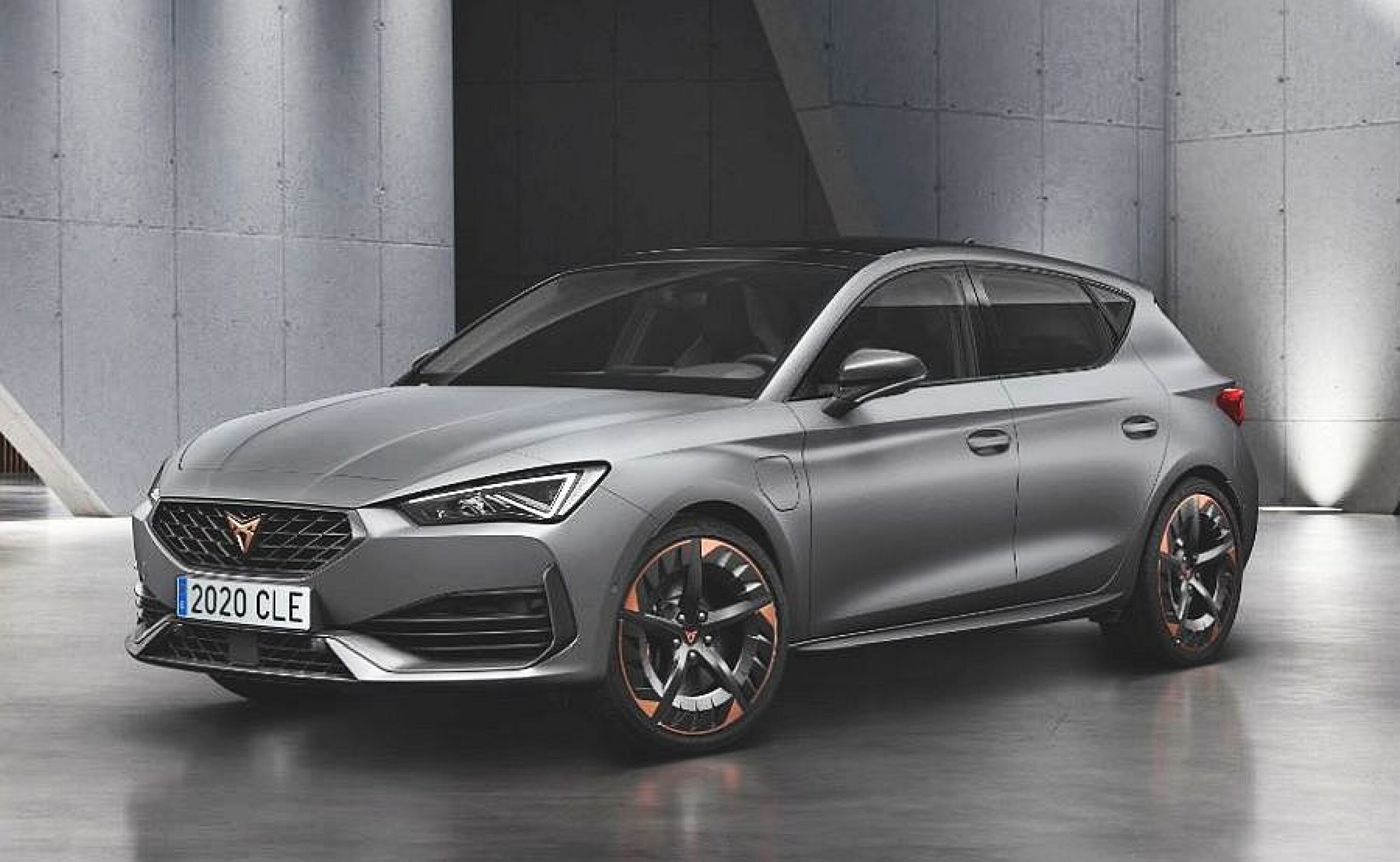
Cupra’s answer to the VW Golf is offering savings of several thousand dollars across the four-variant, front-wheel-drive range with EOFY drive-away pricing. The base Leon V is available for $44,888, the VZ for $53,888, and the range-topping VZx hot-hatch costs $61,888 with on-road charges included. The plug-in hybrid VZe drive-away price varies from $61,325 to $64,325 depending on state.
MORE
Everything Cupra
April 2024: Polestar & partner claim 370kW+ EV charging speed achieved
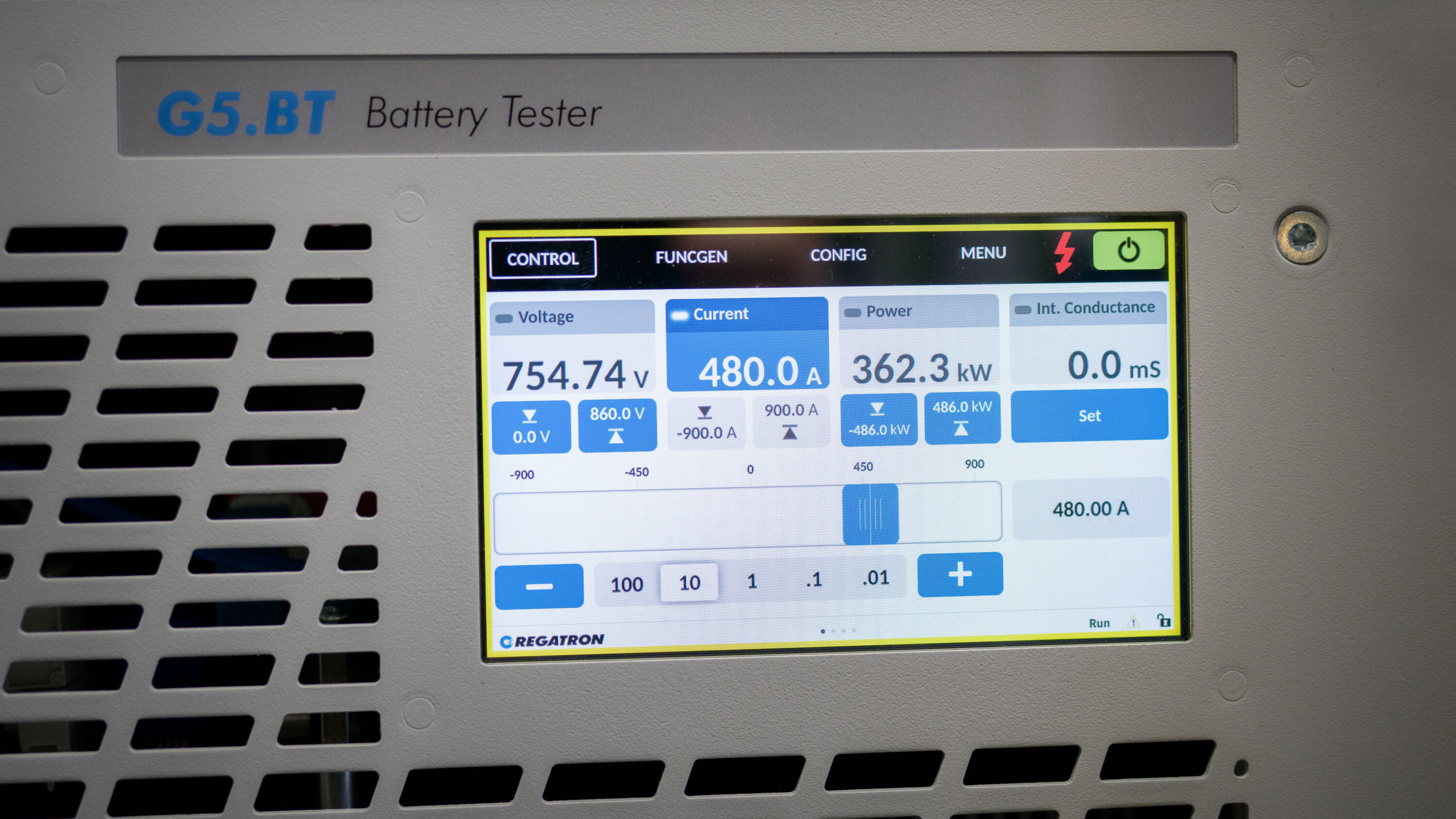
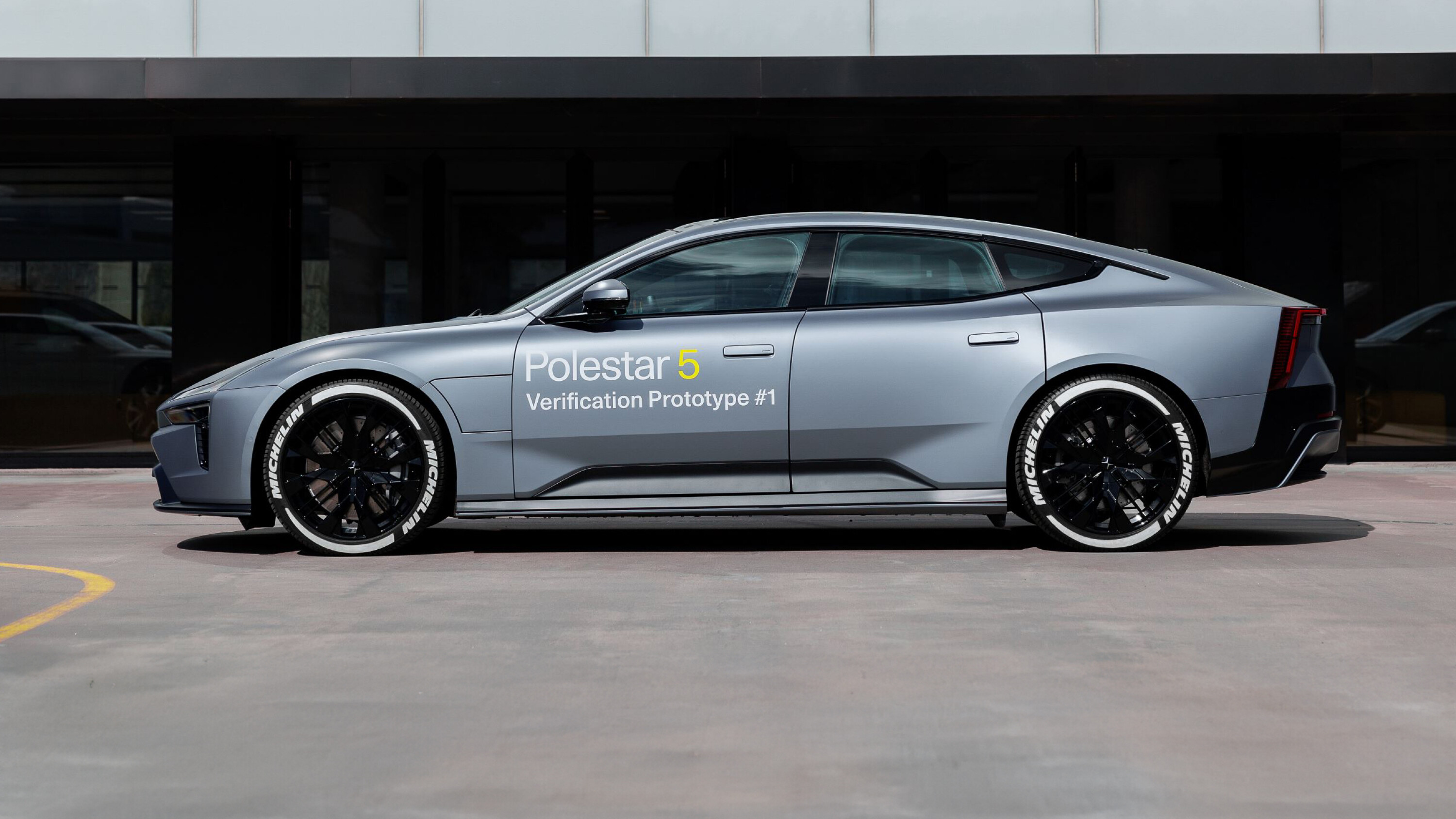
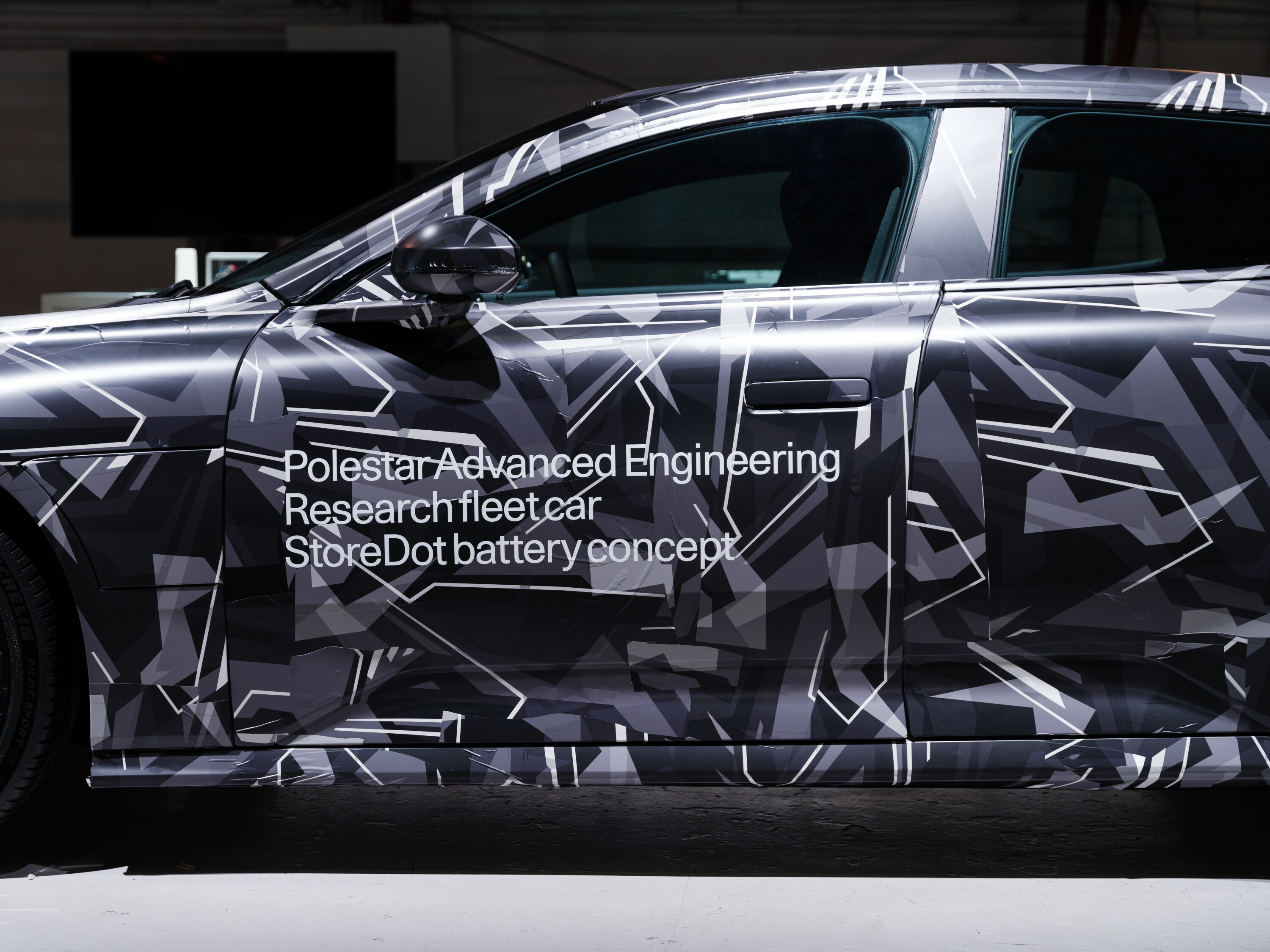
Polestar says it has successfully demonstrated Extreme Fast Charging (XFC) with a prototype of its upcoming Polestar 5 sedan, achieving a 10-80% charge at rates ranging from 310kW to “in excess of” 370kW.
Using a 77kWh battery pack, Polestar says the successful test – carried out with technology partner StoreDot – proves the potential for adding an impressive 320 kilometres of driving range in just 10 minutes.
1
The fastest-charging EVs currently on sale right now are the 800V models sold by the Hyundai-Kia group – such as the Ioniq 5 and EV6 – with MY23 77.4kWh models claiming a 10-80% charge time of 18 minutes.
Those models are designed for best speeds on a 350kW ‘ultra fast charger’, although their actual charging power will typically peak at around 220kW as a battery management requirement.
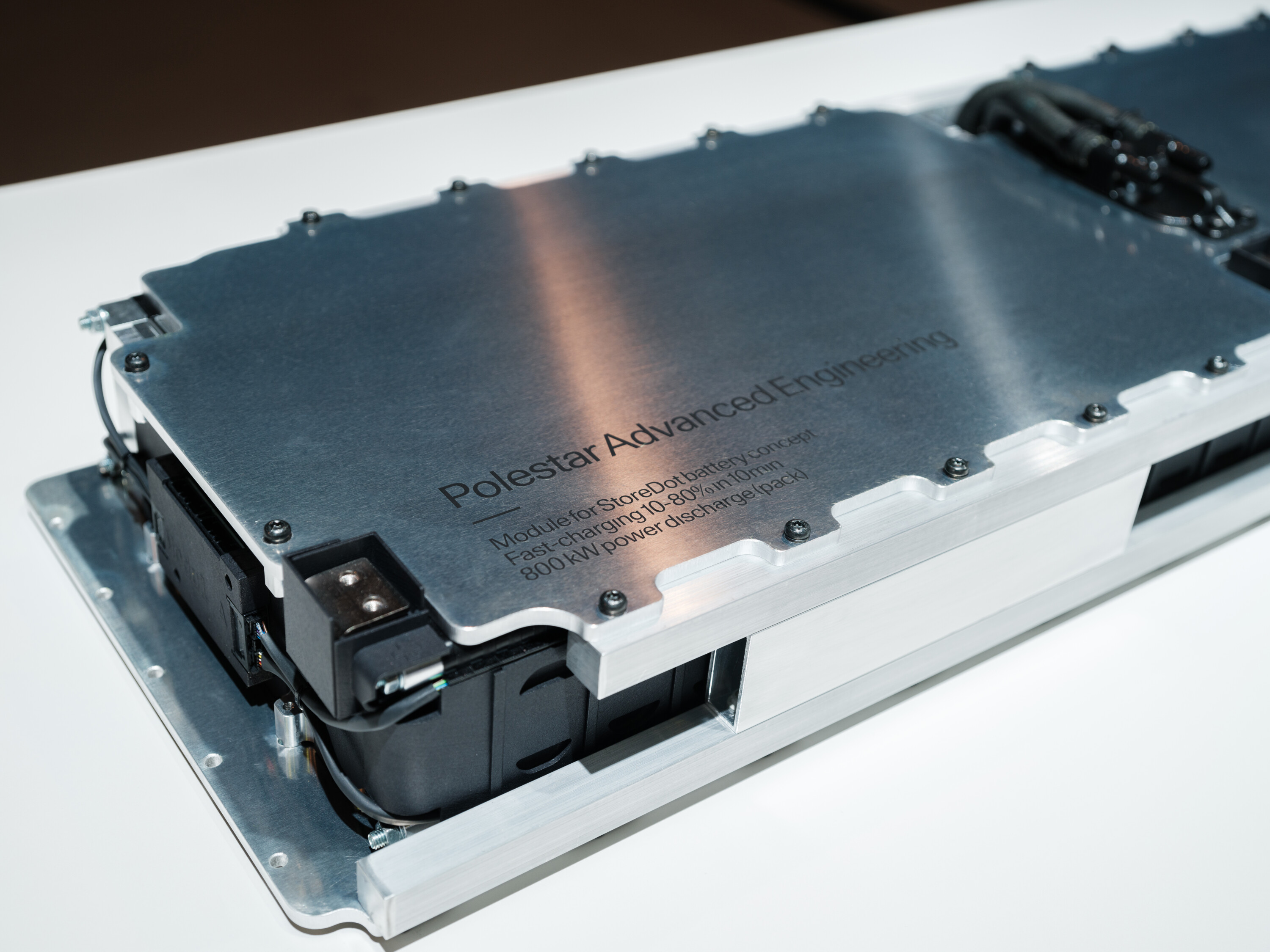
Polestar says: “StoreDot’s revolutionary XFC technology utilises silicon-dominant cells with an energy density on par with state-of-the-art NMC cells, and does not require specialist cooling systems in the vehicle.
“The experimental XFC battery’s modules have a structural function which, improves mechanical properties and cooling ability while maintaining or reducing weight levels, with high recyclability and serviceability also paramount in the design of the pack.”
4
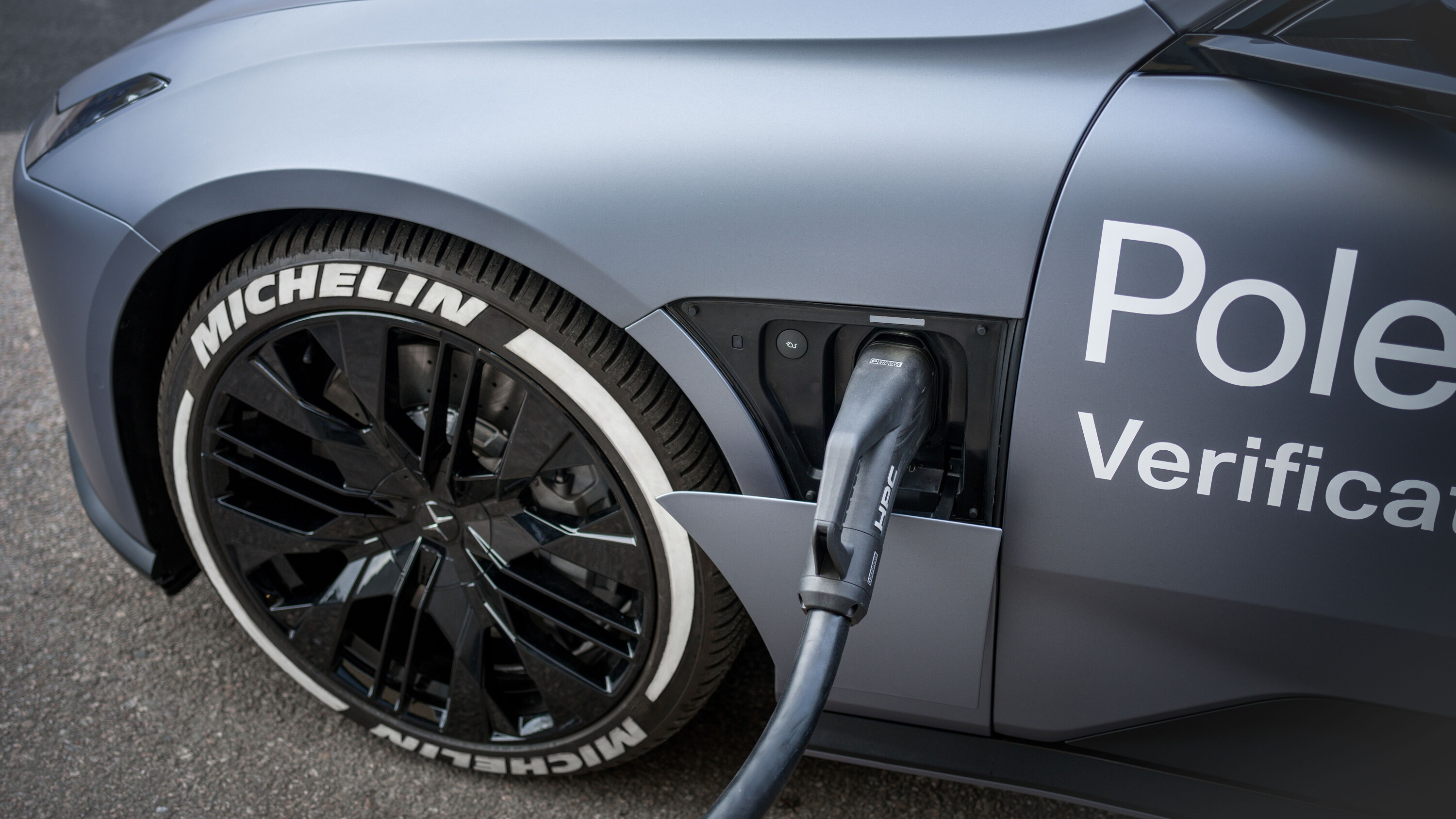
Importantly, the XFC system is on-board and thus requires no special upgrades to charging stations – meaning the ~310kW rate would be achievable with any of today’s 350kW ultra-fast DC chargers.
Polestar and StoreDot say their special XFC-capable battery pack can be increased in capacity to “at least” 100kWh.
Although not yet published at the time of scheduling this story, Polestar says a video of the test can be watched here. We’ll update this story with an embedded video as one becomes available.
? Continue reading our previous story below for further comments and insight on StoreDot’s XFC charging claims.
1
November 2023: 160km of range added in just 10 minutes? Polestar says yes
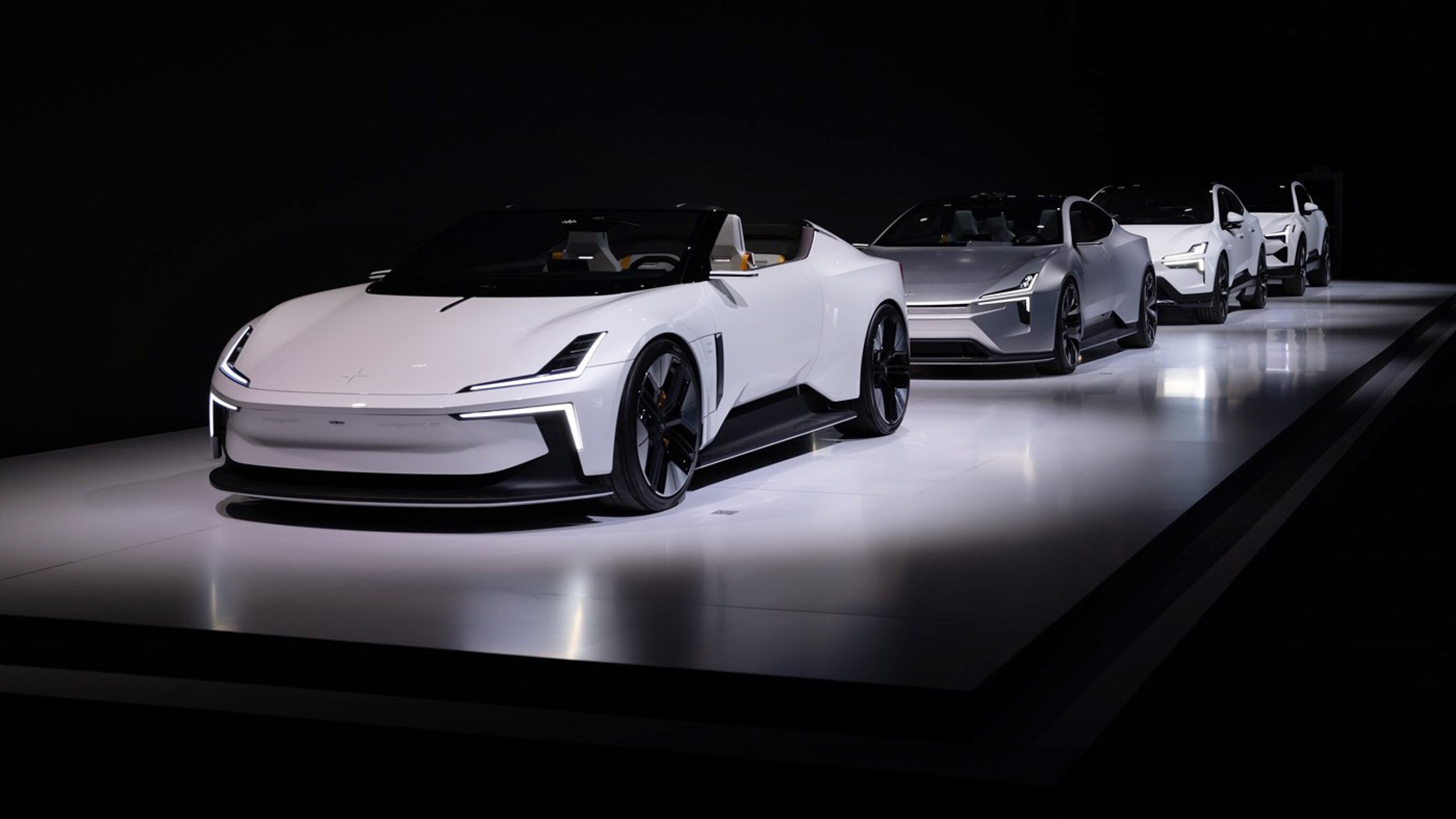
Swedish-ish EV maker Polestar says it’s preparing to showcase an “extreme fast charge” technology, or ‘XFC’, in a prototype of the upcoming Polestar 5 sports sedan.
How does 160km (100 miles) of range from 5 minutes of charging, sound?
Polestar, the popular sports-luxury spinoff of Volvo and Chinese parent Geely, has confirmed an investment with Israeli battery developer StoreDot to utilise its XFC system – which, Polestar claims, can achieve its extreme charging speeds with existing lithium-ion EV battery designs.
Last week’s Polestar Day in Los Angeles was the scene of the announcement, but for now, the companies are offering no details on how the XFC system works and what sort of power outputs it will deliver.
1
It’ll be sometime in 2024 before we actually see the technology demonstrated with the upcoming Polestar 5 – and even then, only in prototype form.
The brand has yet to say if it will integrated StoreDot’s tech into the production Polestar 5, but determining that is of course part of the prototyping process. Polestar is a StoreDot investor, however, so it will undoubtedly be planning to drive the XFC system to production in time for the 5’s launch.
How the XFC tech will be integrated into public charging stations is still to be seen, and with North America rapidly moving towards Tesla’s Supercharger network as a new standard (NACS) – including Polestar [↗] – it’ll be interesting to see if Tesla will need to come on board with XFC.
“StoreDot is making huge strides forward in the development of their extreme fast charging technology and we are a proud investor and partner in its evolution,” Polestar boss and former Volvo design chief Thomas Ingenlath said.
“StoreDot’s pioneering extreme fast charging batteries, combined with our upcoming top-of-the-line electric powertrain, can revolutionise the ownership experience for EV owners with the ability to recharge in minutes.”
1
StoreDot CEO Dr Doron Myersdorf said: “Charging anxiety will soon be a thing of the past.”
That’ll be music to EV buyers’ ears. StoreDot has emphasised that the main benefit of its XFC system is that it will enable ‘next generation’ charging speeds without waiting for anticipated revolutions in battery design – although it intends to be part of that revolution, too.
First, it plans to get its XFC charging speed down to three minutes for 160km of driving by 2028, and two minutes by 2032 – about as long as it takes to fuel a petrol car (albeit without the same amount of range).
StoreDot’s ‘100inX’ roadmap, announced in 2021, will then call for advancing its battery designs to a semi-solid state, and then a post-lithium design.
“We still have lots of work to do to fully integrate our systems into a production car, but our teams are already fully engaged, and we will be demonstrating those results in the coming months,” Dr Myersdorf said.
MORE
Everything Polestar
1
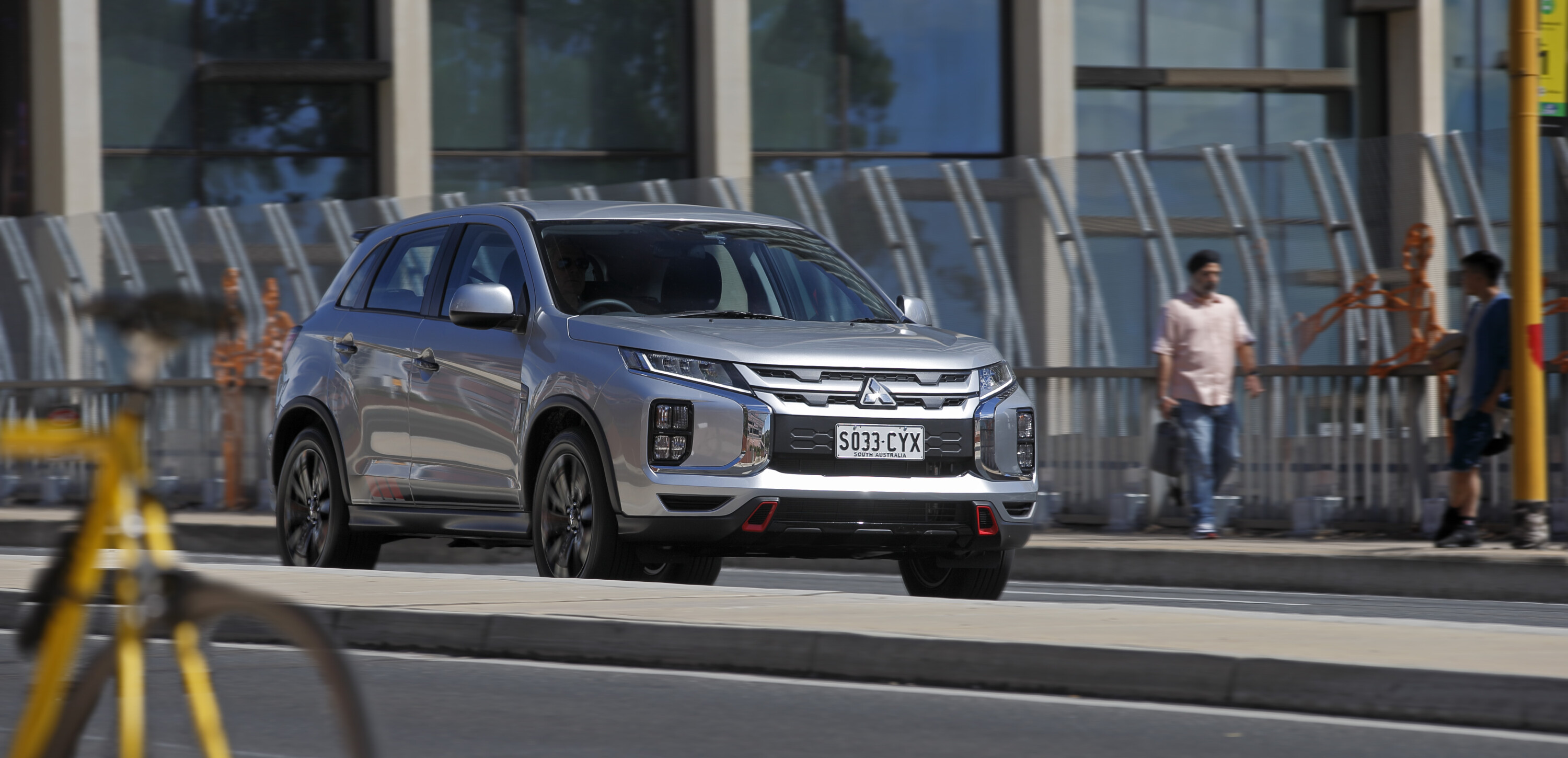
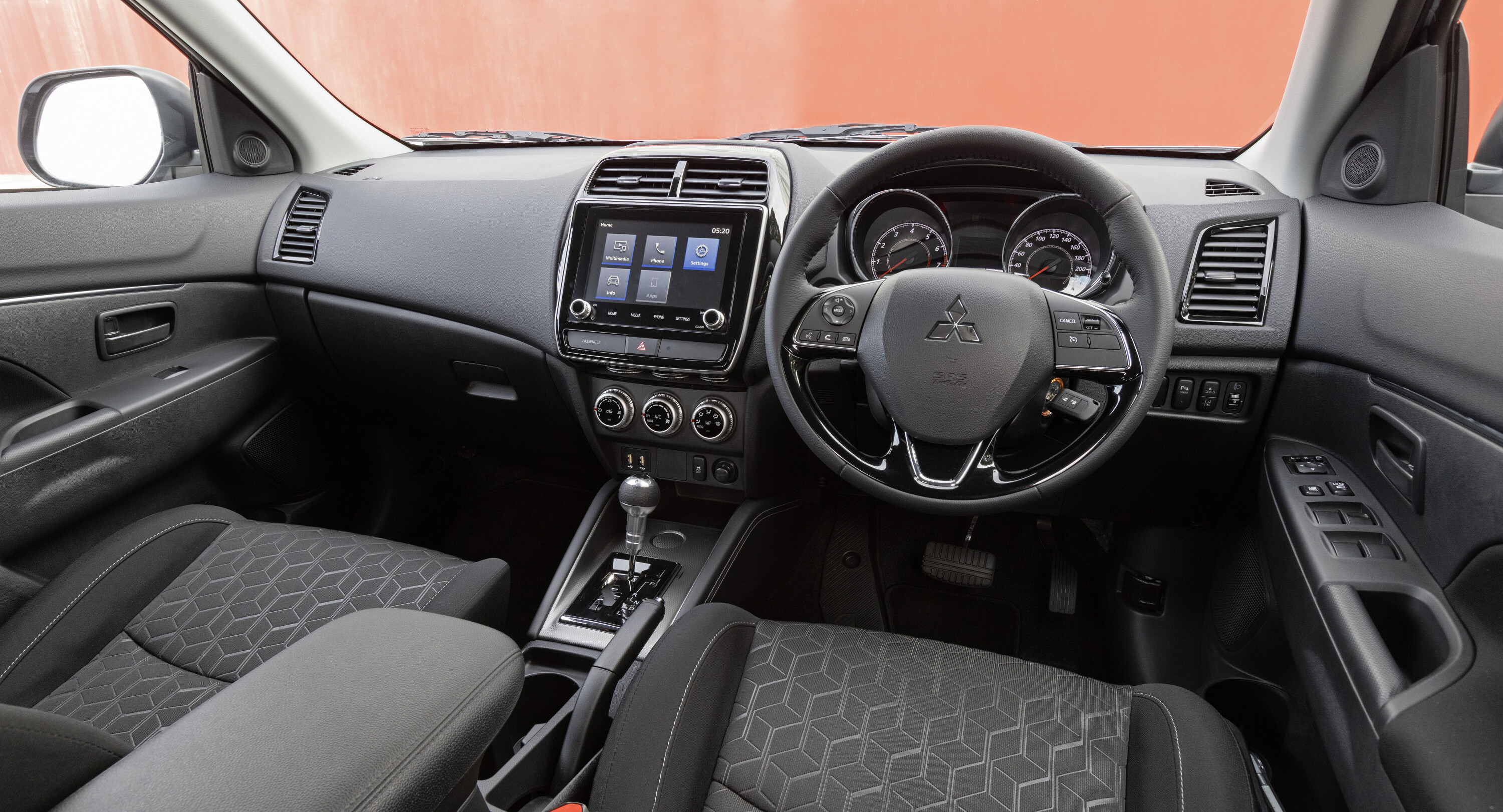
The Mitsubishi ASX small SUV has been discontinued in its Japanese domestic market, but production will continue for Australia “until further notice”.
“[ASX] production continues for Australia and other markets until further notice,” said a Mitsubishi Australia spokesperson.
The Japanese motoring media reports production ended this month for the domestic market, with one outlet – Response [↗️] – claiming an all-electric successor to the ASX will debut in 2025.
1
According to the report, the electric ASX successor will be based on the same Renault–Nissan–Mitsubishi ‘AmpR Medium’ platform as the Nissan Ariya, Renault Megane E-Tech and Scenic E-Tech.
It will reportedly measure 4380mm long, 1810mm wide and 1650mm tall, with a 2670mm wheelbase – making it 15mm longer and 10mm taller than the current ASX, with an identical width and wheelbase.
Excluding the tiny Mitsubishi I-MIEV – sold in Australia between 2010 and 2012 with now-outdated technology – the rumoured small SUV would be the first Mitsubishi electric car available globally.
1
“As for what happens next, we are still working towards the most appropriate solution that will satisfy our safety, emissions and other requirements,” added the Mitsubishi Australia spokesperson.
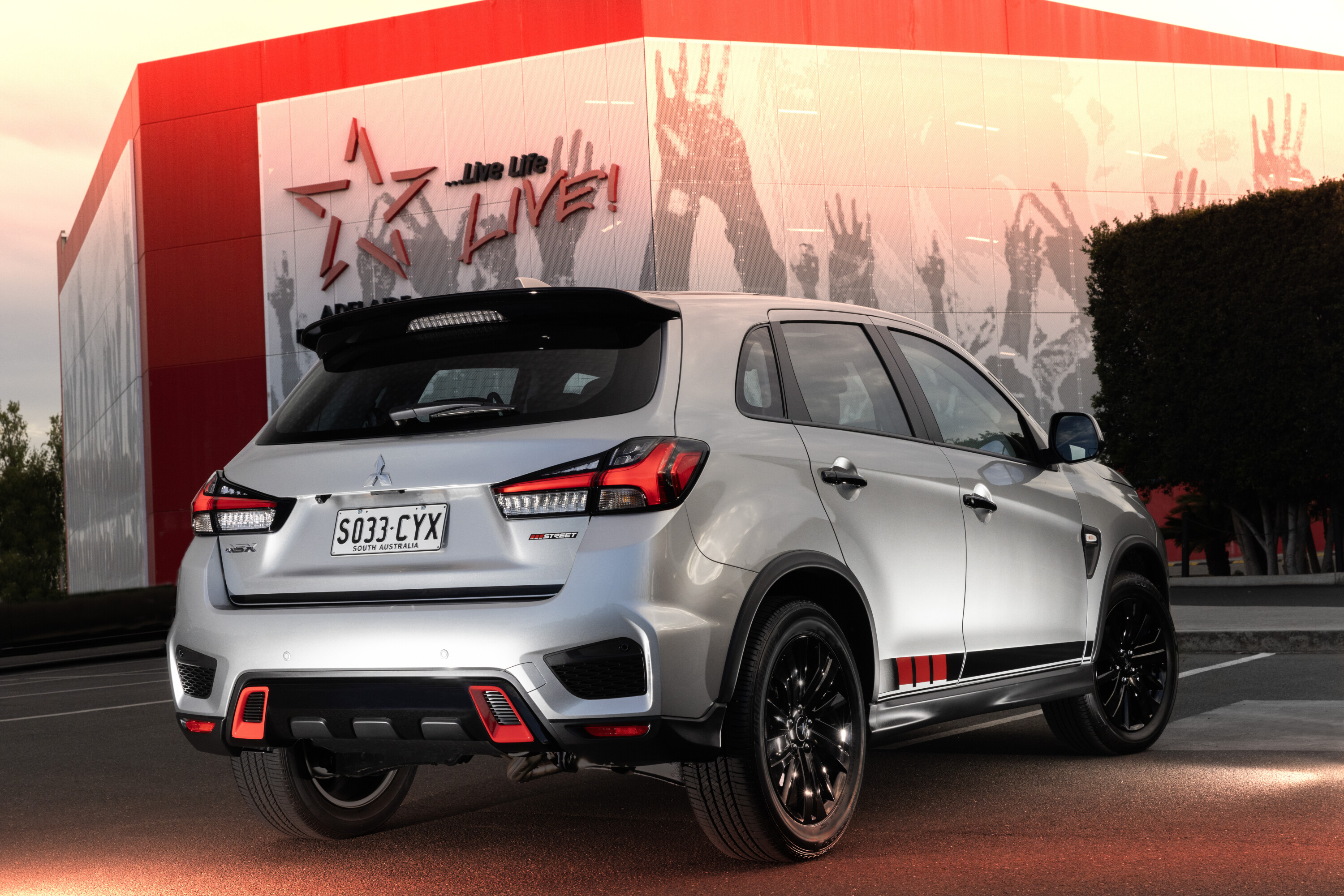
Also known as the RVR in Japan and Canada and Outlander Sport in the United States, the current Mitsubishi ASX launched in 2010, making the 14-year-old small SUV one of the oldest cars still in production.
It has received several updates over the years, including four facelifts, as it faces competition from the newer Mazda CX-30, Toyota Corolla Cross, Hyundai Kona and GWM Haval Jolion.
1
In December 2023, Mitsubishi Australia CEO Shaun Westcott told Wheels the ASX was approaching the “end of its life” but it remains “one of Australia’s best-selling light SUVs” despite its age.
“There’s still a place for it. It’s still selling strong, and the demand for that product far exceeds our supply so it’s still got some legs in it, but it is getting towards the end of its lifecycle. A replacement is intensively under study at the moment,” he said.
“Watch this space,” added Mitsubishi Australia’s marketing and product strategy boss Oliver Mann.
Mitsubishi’s European division unveiled its own replacement for the ASX in late 2022 as a rebadged Renault Captur. A facelifted version of the Renault-based European ASX debuted last week.
However, Mitsubishi Australia has no current plans to offer the Renault-based version here, while another small SUV contender – the Southeast Asian-focused Mitsubishi XForce – won’t be sold in Australia due to our stricter safety and emissions regulations.
MORE
Small SUVs
Snapshot
- A Tesla Cybertruck has been officially imported to Australia
- The left-hand drive pick-up was spotted cruising the streets of Sydney
- Tesla has confirmed the Cybertruck will tour local showrooms to help boost Model 3 and Model Y sales
UPDATE: Tesla Cybertruck showroom tour confirmed
Well, it was always a long shot…
Tesla has quashed speculation that the recent appearance of a Cybertruck on Sydney roads meant it was reconsidering plans to sell its controversial pick-up Down Under.
Instead, Tesla has now confirmed the left-hand drive Cybertruck will tour showrooms across Australia and New Zealand to help drive sales of the Model 3 and Model Y.
The first appearances will be in Sydney with other locations set to be confirmed at a later date. Here’s where you can get up close and personal with the Cybertruck.
- Tesla Sydney: April 26 – May 5
- Tesla Chatswood: May 6-12
- Tesla Parramatta: May 13-19
- Tesla Miranda: May 20-26
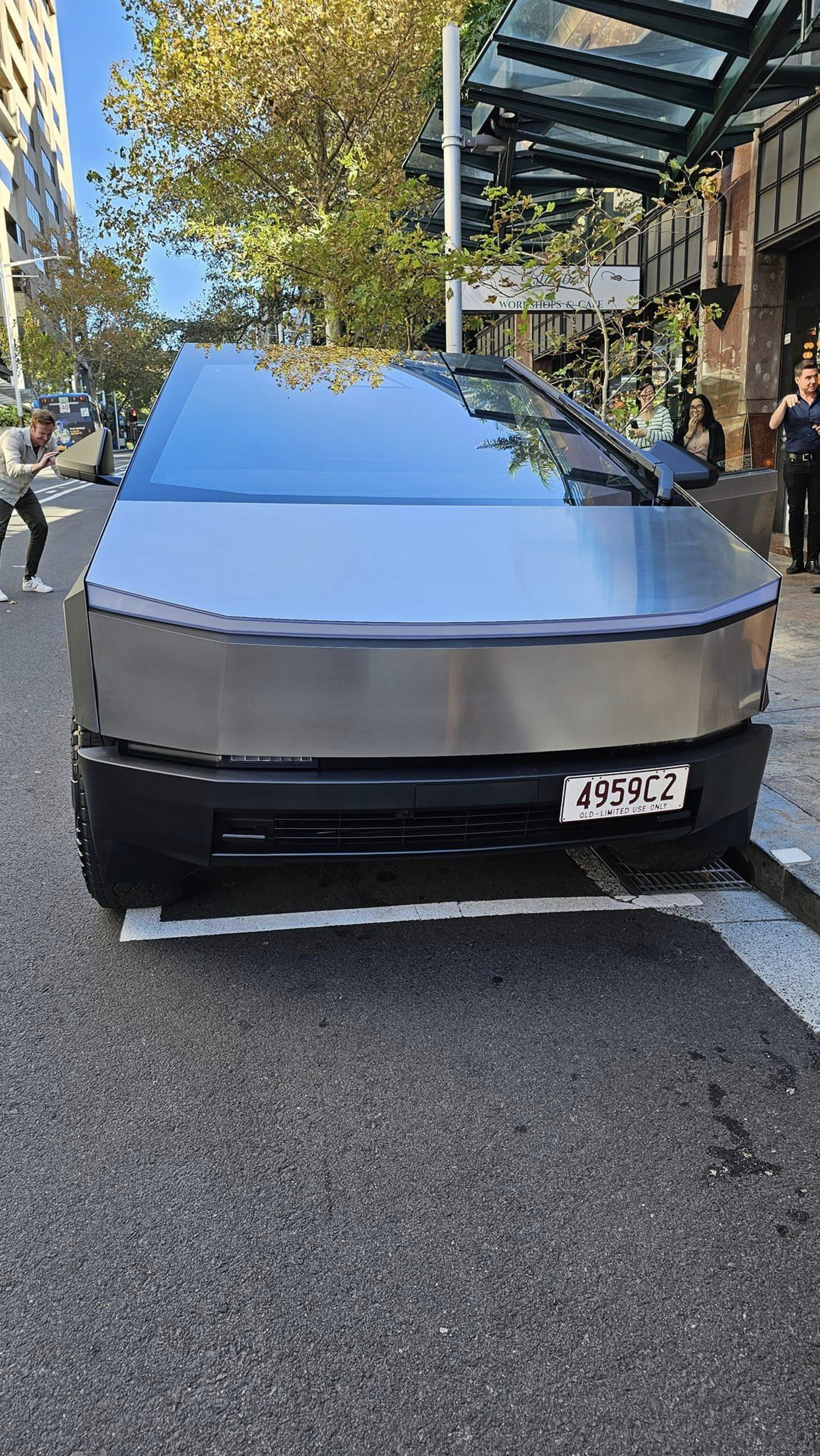
April 26: A Tesla Cybertruck has been spotted cruising the streets of Sydney, fuelling speculation that the EV pick-up could be added to Aussie showrooms.
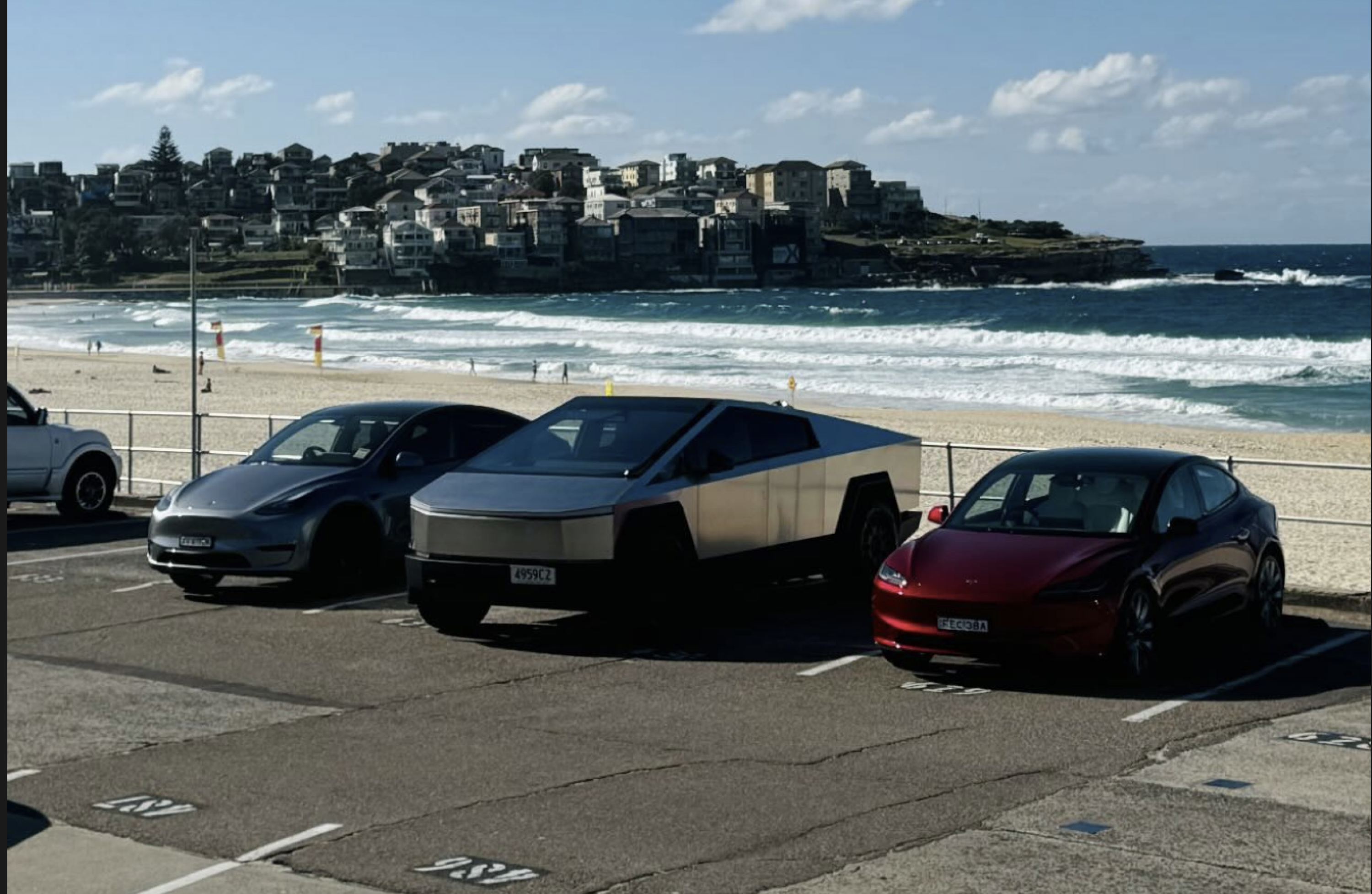
The Cybertruck, which is arguably the world’s most controversial vehicle, has been pictured in a carpark at Sydney’s iconic Bondi Beach where it was parked next to a Model 3 and Model Y.
1
The Cybertruck in question is wearing temporary Aussie numberplates and was later spotted in Coogee and North Sydney. The images in the gallery below were snapped by Kevin Ngo and shared on Facebook [↗]
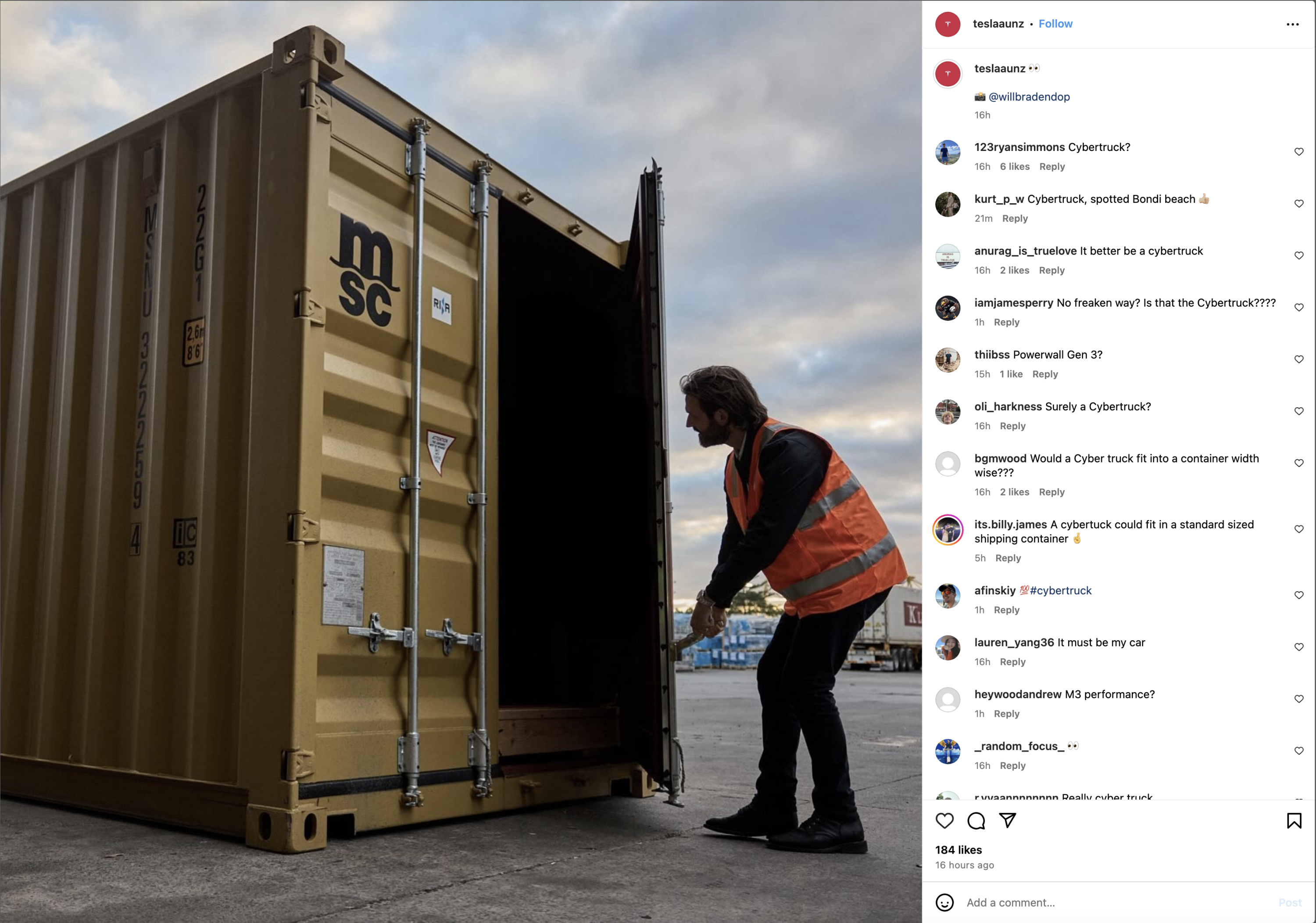
It seems this Cybertruck is owned by Tesla, with today’s appearance following an Instagram post on the Tesla Australia New Zealand account that showed a teaser photo of a shipping container.
3
For now it’s unclear why the Cybertruck has been imported to Australia given it’s broadly understood that Tesla won’t make the electric pick-up in right-hand drive, effectively ruling it out for Aussie showrooms.
It could be that the Cybertruck’s arrival is an extension of its recent world tour where Tesla has visited other key right-hand-drive markets like Japan, Malaysia and Thailand.
1
Elon Musk infamously unveiled the Cybertruck to a global audience of millions back in 2019, with that reveal culminating in the pick-up’s ‘armour glass’ side window being smashed with a metal ball.
The Cybertruck then appeared on the company’s Australian website, where it still remains today, and Aussie customers were able to place a $150 deposit. Since the, Tesla has removed the ability to place a deposit and offered existing despot holders a credit towards a Model Y or Model 3.
Currently the Cybertruck is available for sale only in the United States and Musk has previously indicated it’s unlikely to be offered in Europe as its angular exterior design won’t meet European regulations. Australia also has strict vehicle design rules that the Cybertruck is unlikely to pass.
Furthermore, Tesla recently changed plans to offer right-hand-drive versions of the facelifted Model S and Model X, both of which are no longer on sale in Australia.
So the chances of the Cybertruck being built in right-hand drive are slim but keep your peepers peeled if you’re in Sydney today!
And there’s always the upcoming Kia Tasman if you’re keen on an electric pick-up…
MORE
Everything Tesla
