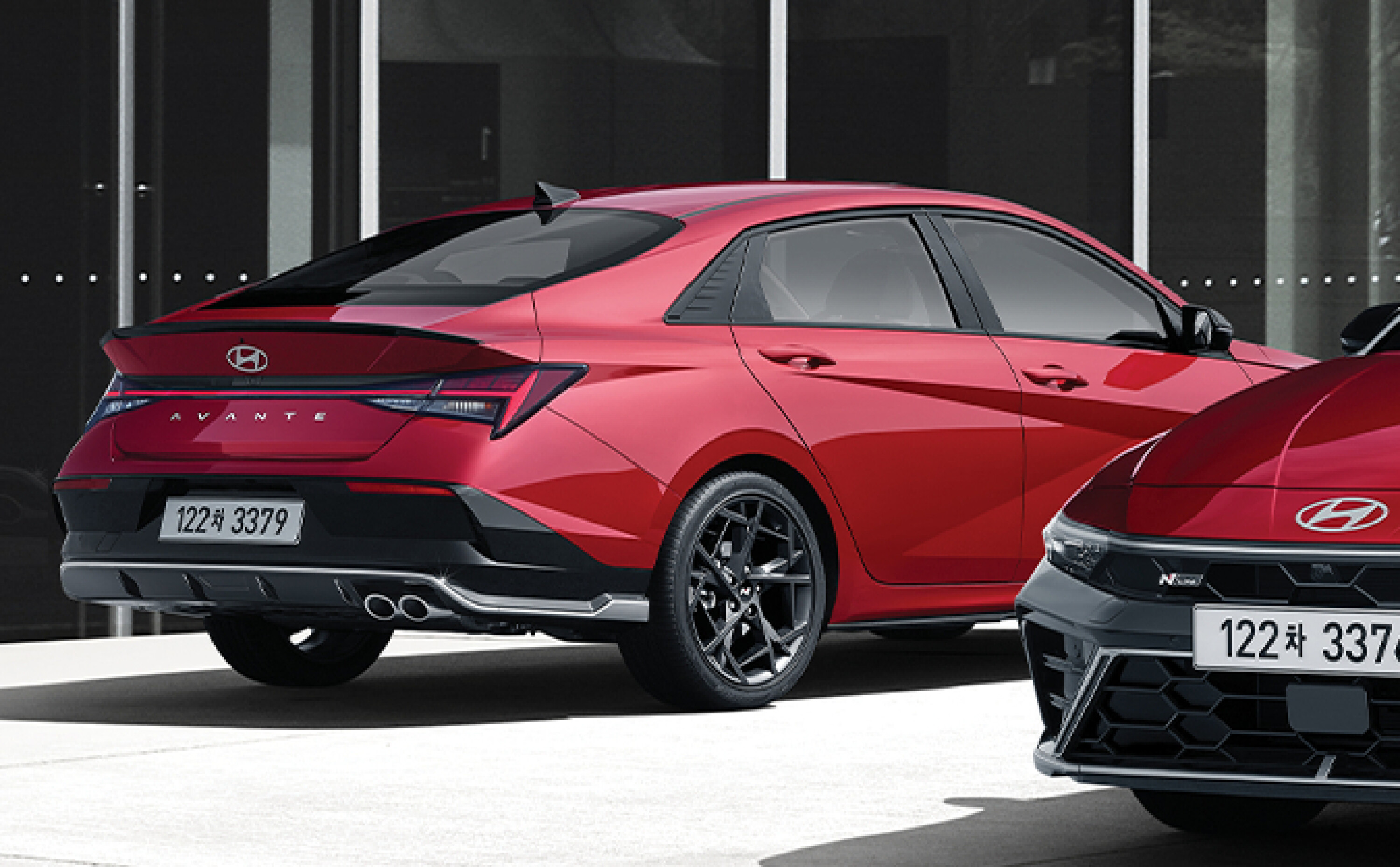
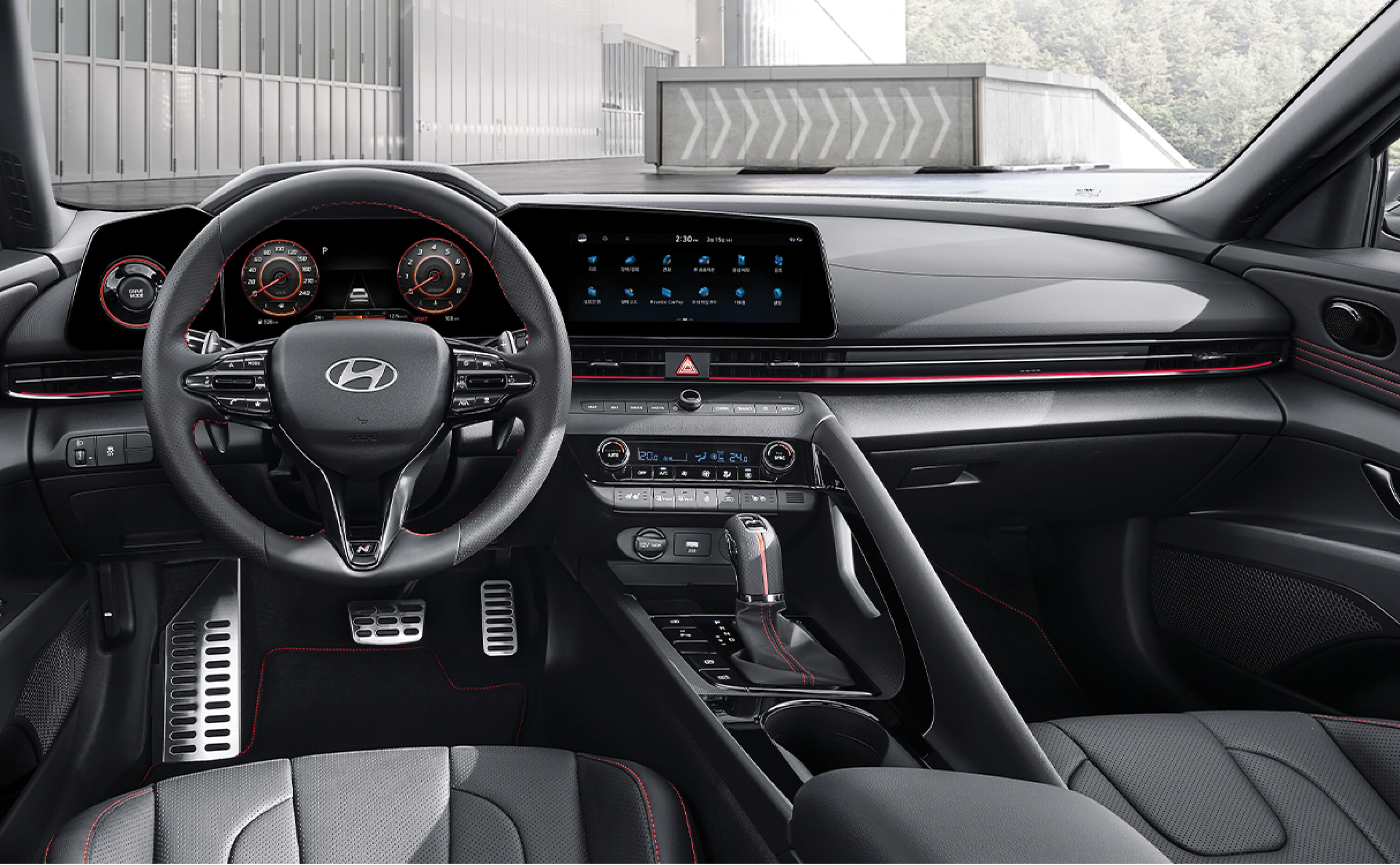
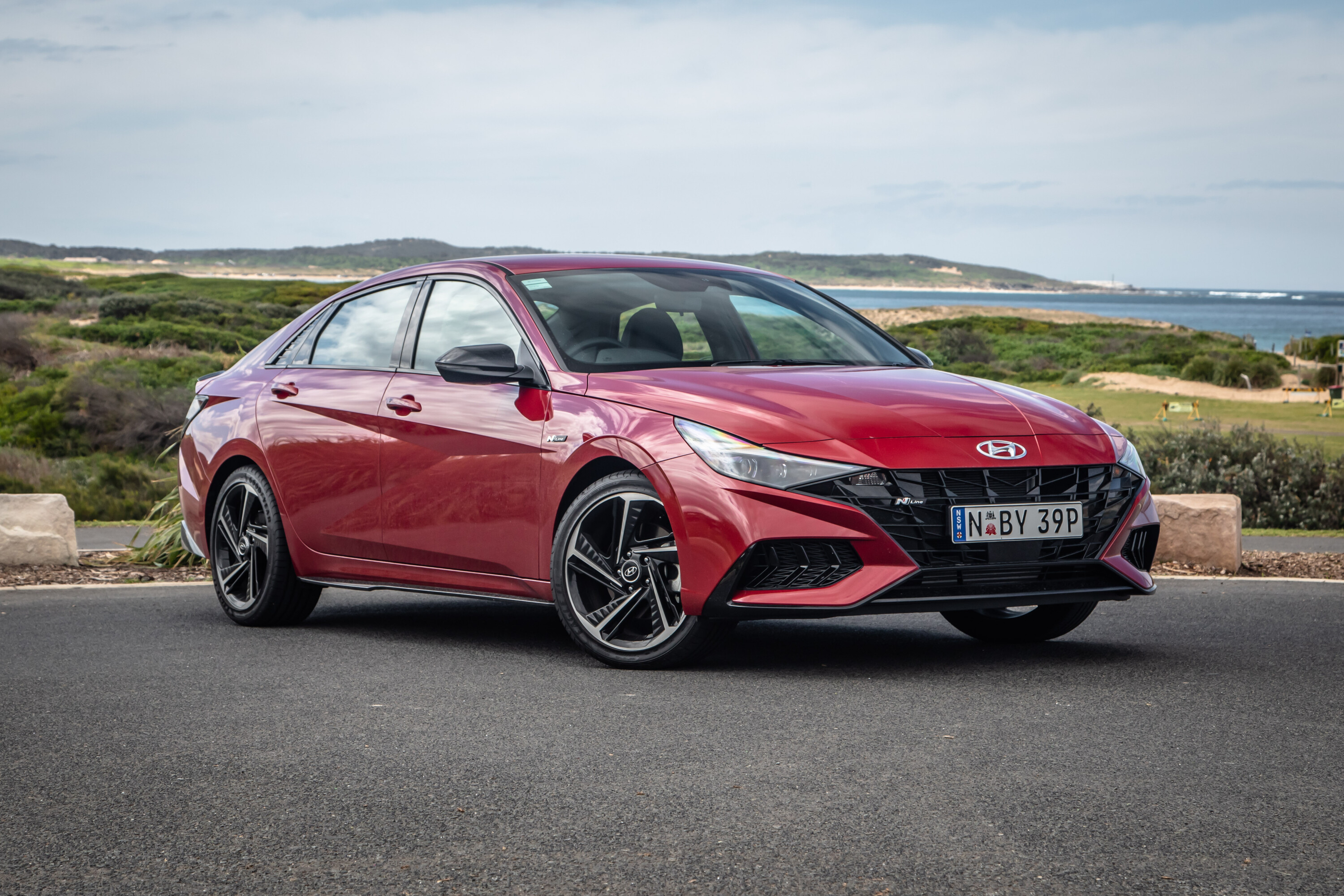
The facelifted Hyundai i30 Sedan N Line has debuted ahead of its local launch.
Snapshot
2024 Hyundai i30 Sedan N Line facelift revealed
Hybrid option available overseas, not confirmed for Australia
Due in Australia later this year
Following the reveal of the standard i30 Sedan – including the first-for-Australia hybrid – and performance N facelifts earlier this year, the updated N Line version has finally debuted in South Korea.
Hyundai Australia has confirmed the updated i30 Sedan – sold as the Elantra and Avante in other markets – will arrive here later this year, pending any delays.
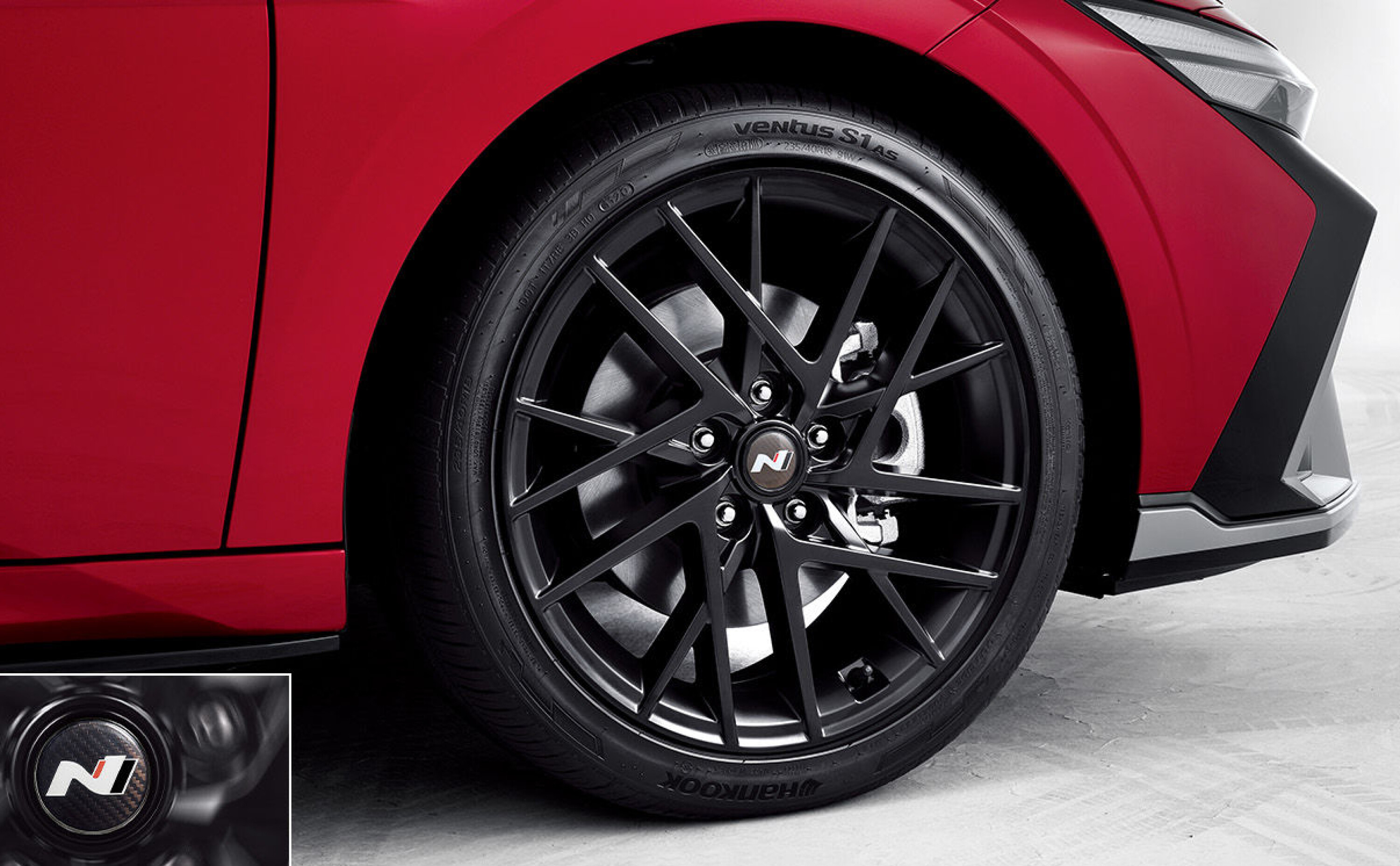
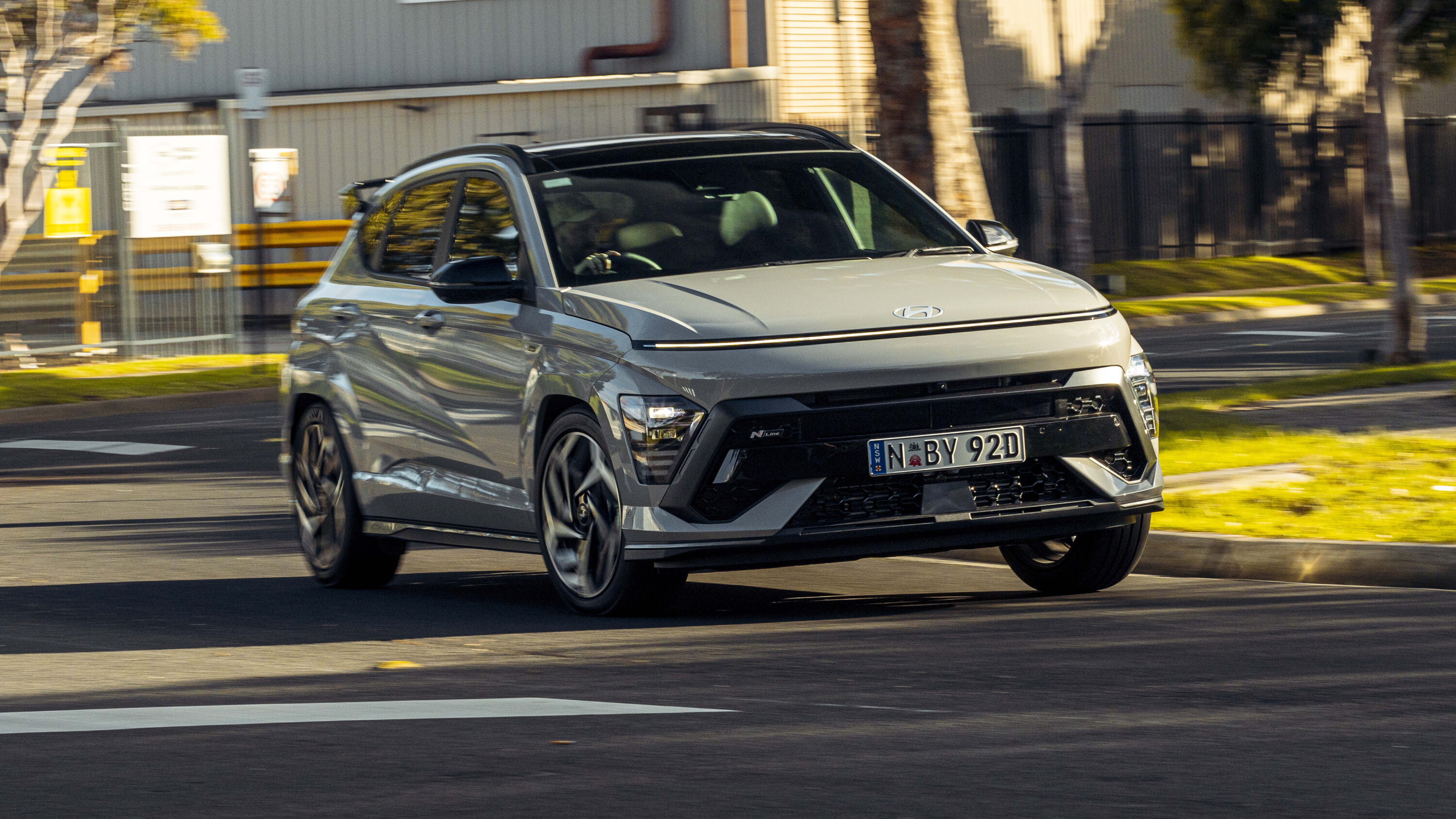
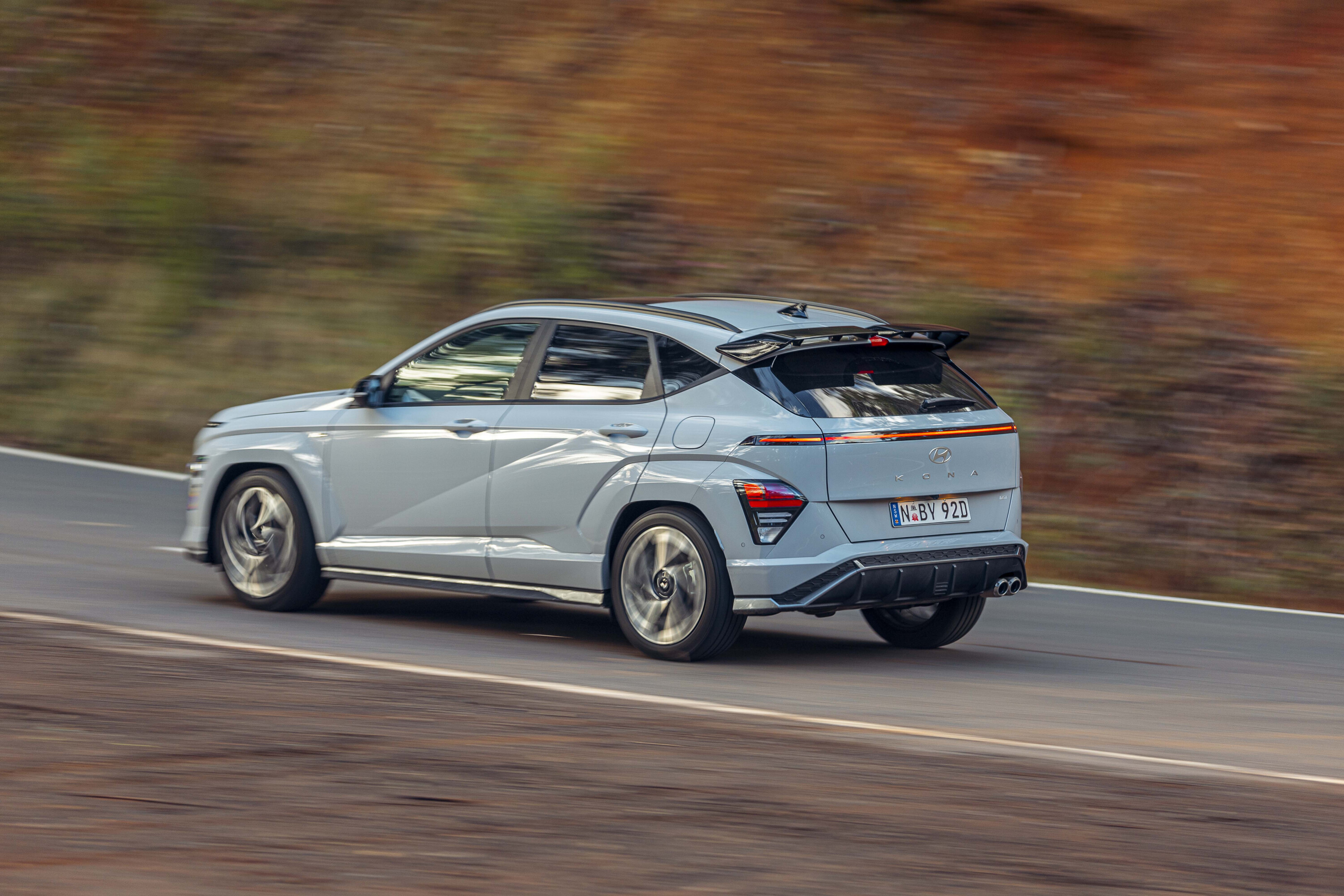
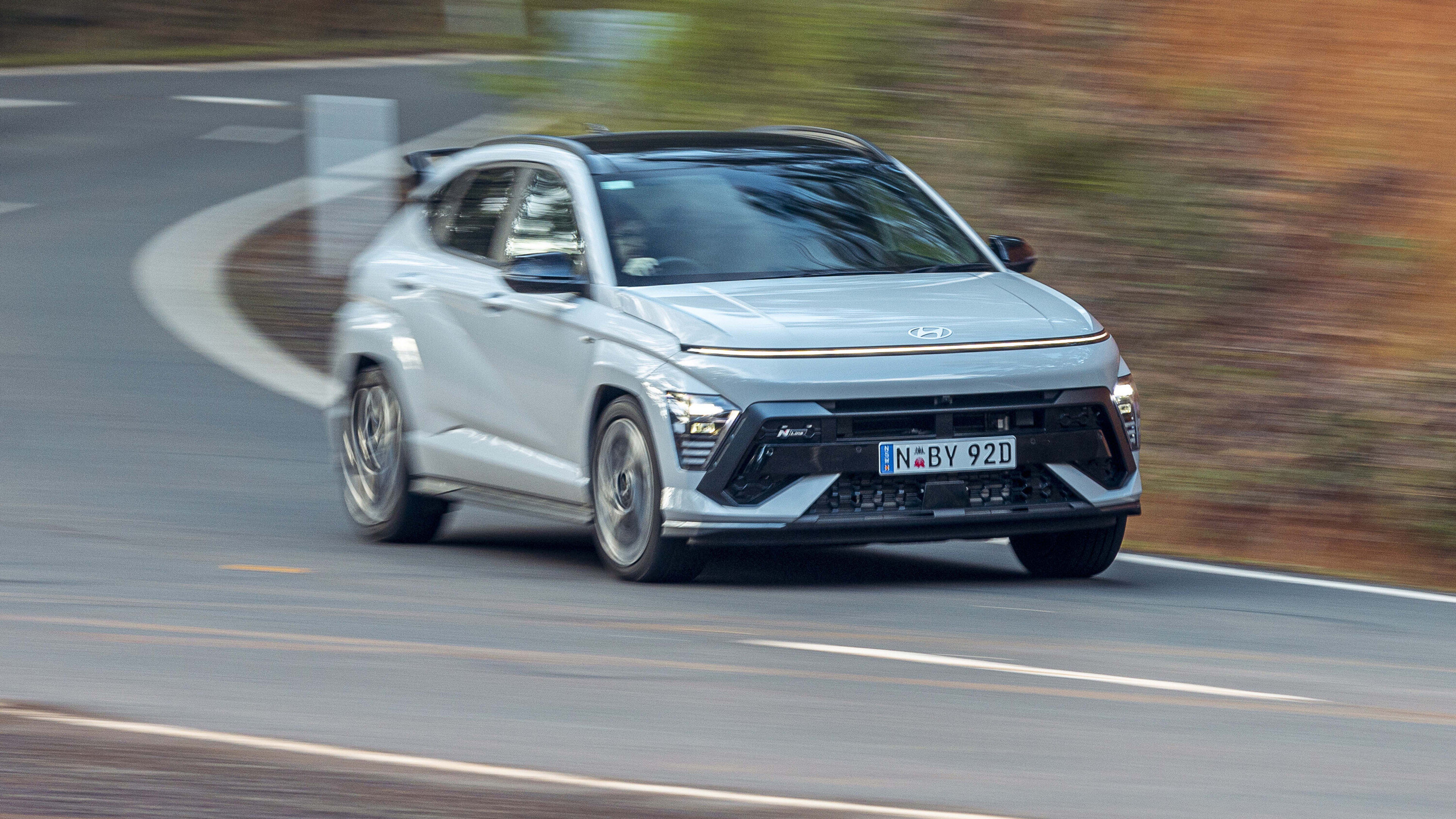
As with the full-fat i30 Sedan N, the N Line receives an N-specific body kit with new-look front and rear bumpers and alloy wheel designs, joining the reshaped headlights, wider grille, new chrome beltline and updated light signatures applied to all versions.
As with the i30 Sedan N – plus the Sonata, Kona and Tucson N Lines – the wheel centre caps now feature an N insignia, replacing the Hyundai logo found on standard models.
A hybrid powertrain is now available for the i30 Sedan N Line overseas, but it is unclear if Hyundai Australia will offer the hybrid in N Line form or if it will remain exclusively fitted with a 150kW/265Nm 1.6-litre turbo-petrol engine.
The i30 Sedan Hybrid was confirmed for Australia in March, with full details still to be announced.
In the latest Kona small SUV, the separate N Line variants were replaced by a range-wide N Line Option Pack, available in three powertrains shared with the i30 Sedan: a naturally-aspirated 2.0-litre petrol, petrol-electric 1.6-litre hybrid, and N Line-exclusive 1.6-litre turbo-petrol.
The 1.6-litre naturally-aspirated hybrid engine will compete with the popular Toyota Corolla Hybrid sedan. It produces 104kW and 265Nm, matched to a six-speed dual-clutch automatic transmission and a 1.3kWh lithium-ion battery.
1
“[We have] Santa Fe hybrid; we’ve got next-generation Kona coming out this year in a hybrid powertrain followed by a battery electric powertrain later this year. We’ve got a facelift i30 Sedan with a hybrid powertrain for the first time in Australia. That’s just this year,” said Hyundai Australia direct consumer senior manager, Andrew Stamatakis, in March.
A combined fuel consumption figure below 4.0L/100km and CO2 emissions below 100g/km are likely for the standard i30 Sedan hybrid.
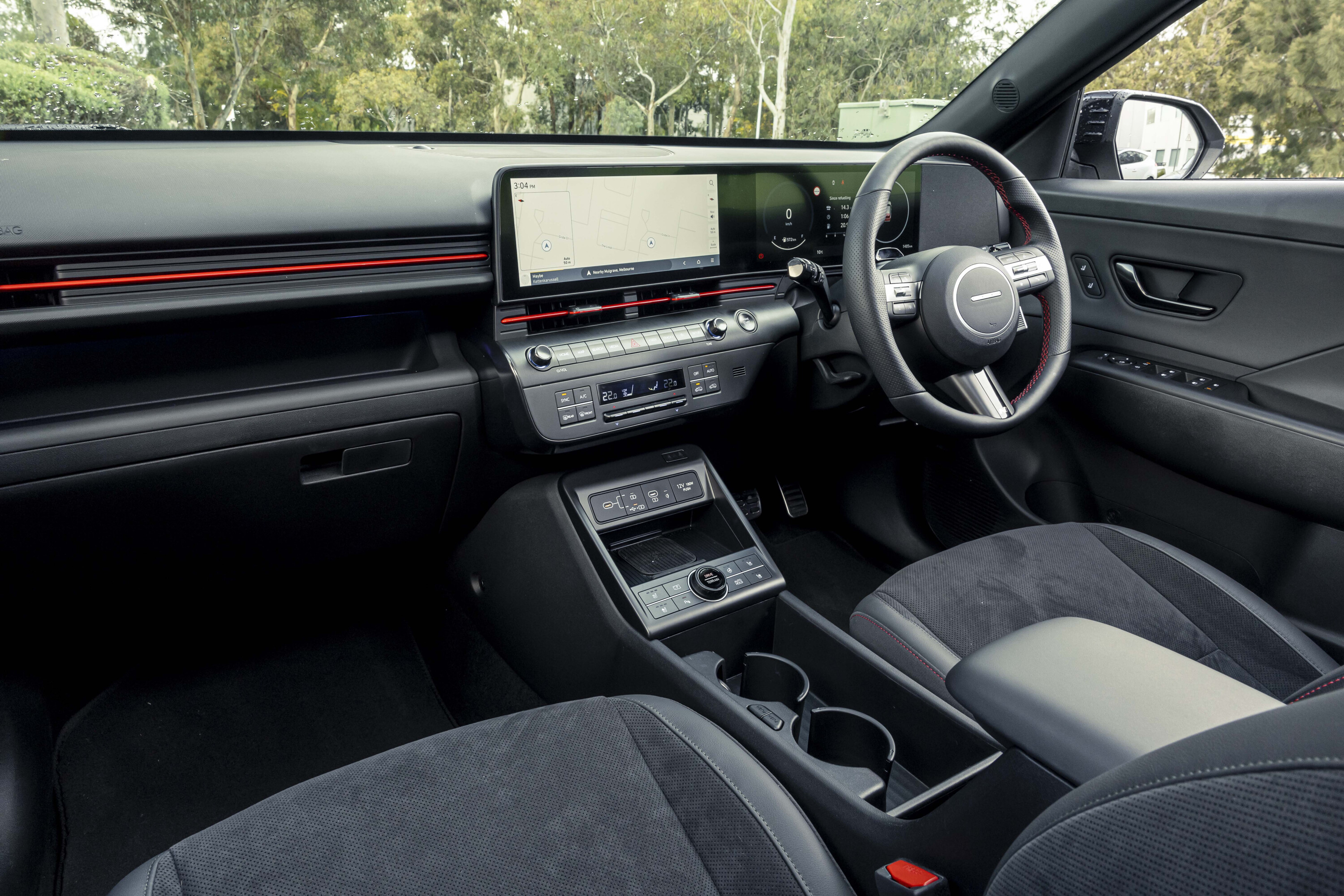
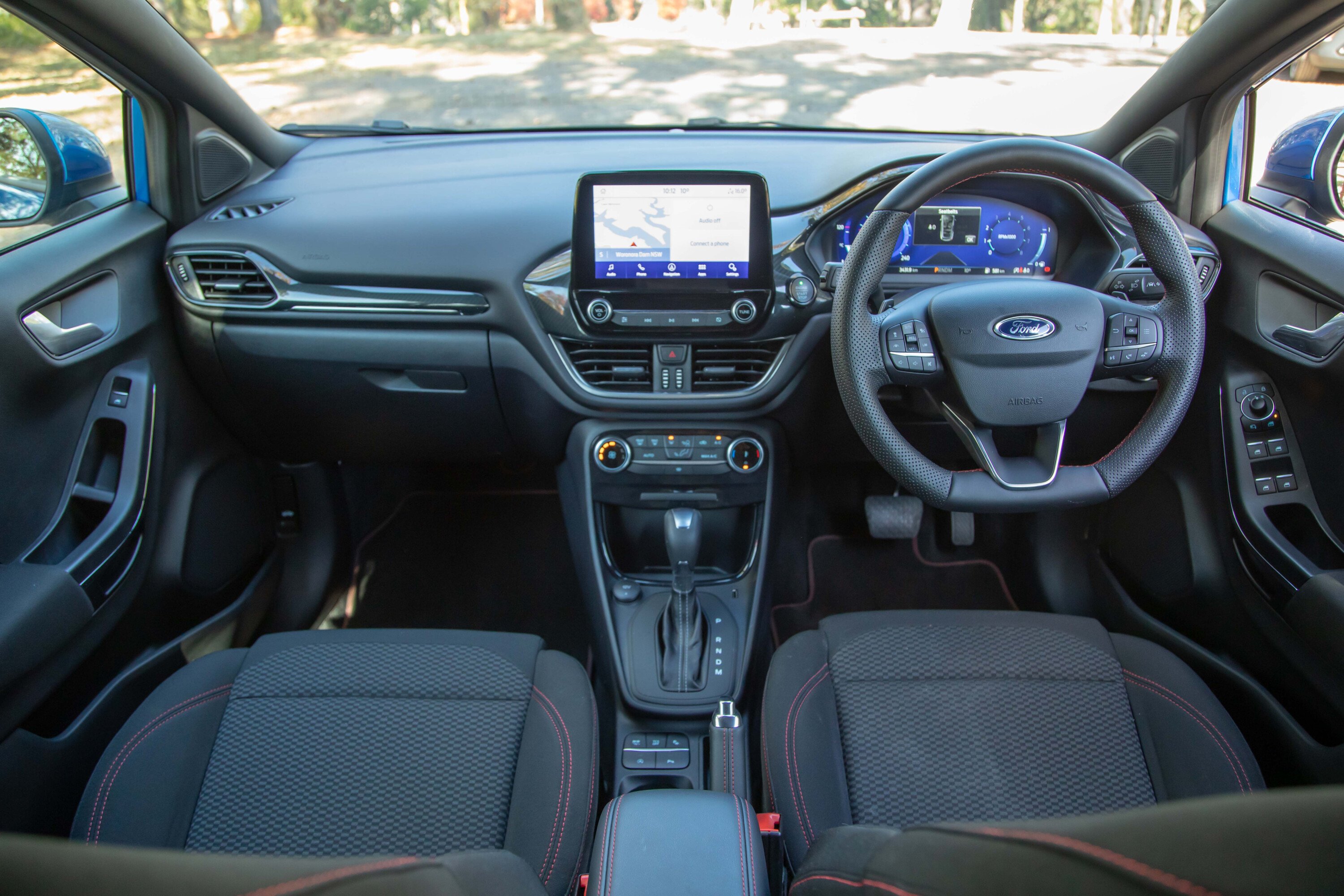
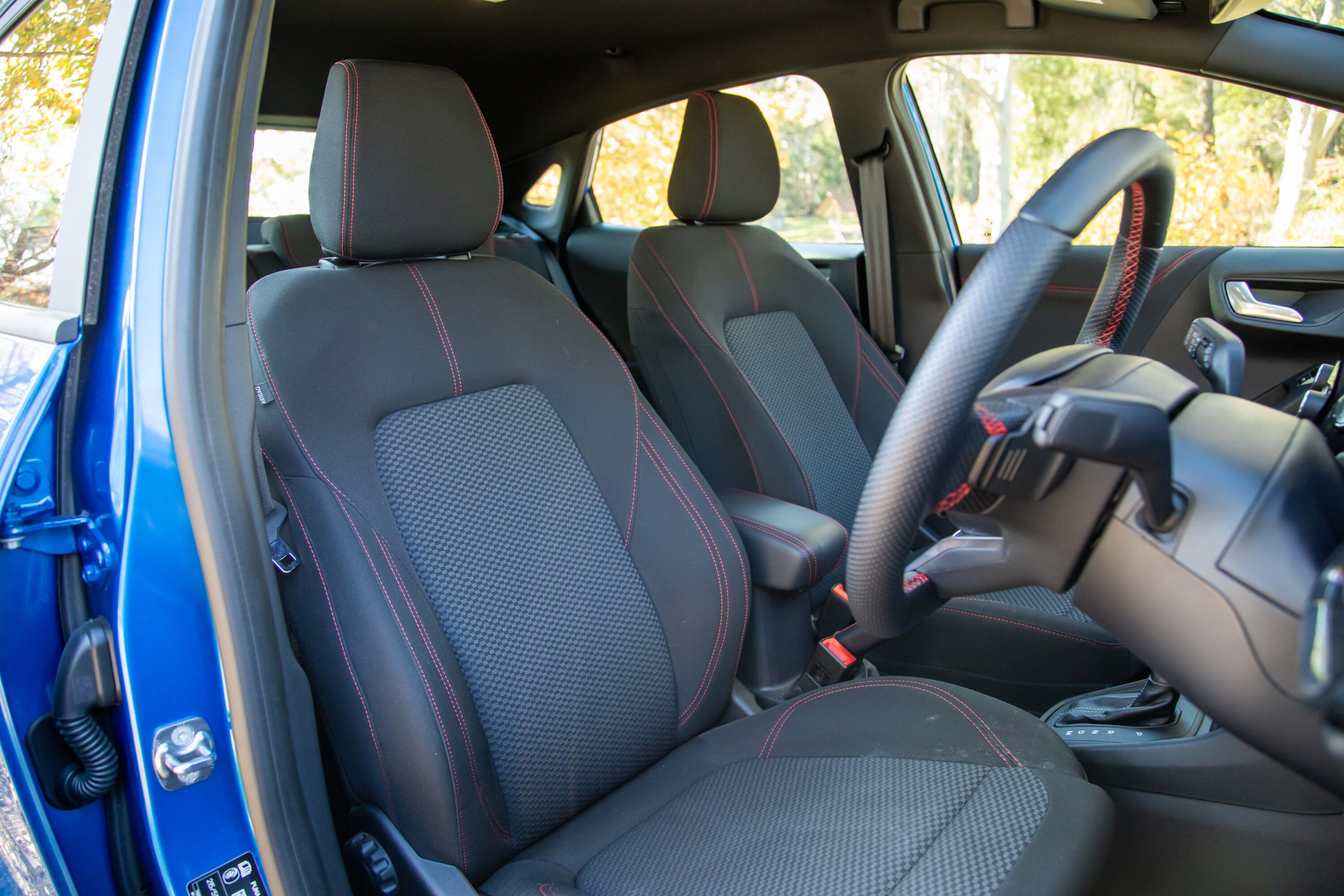
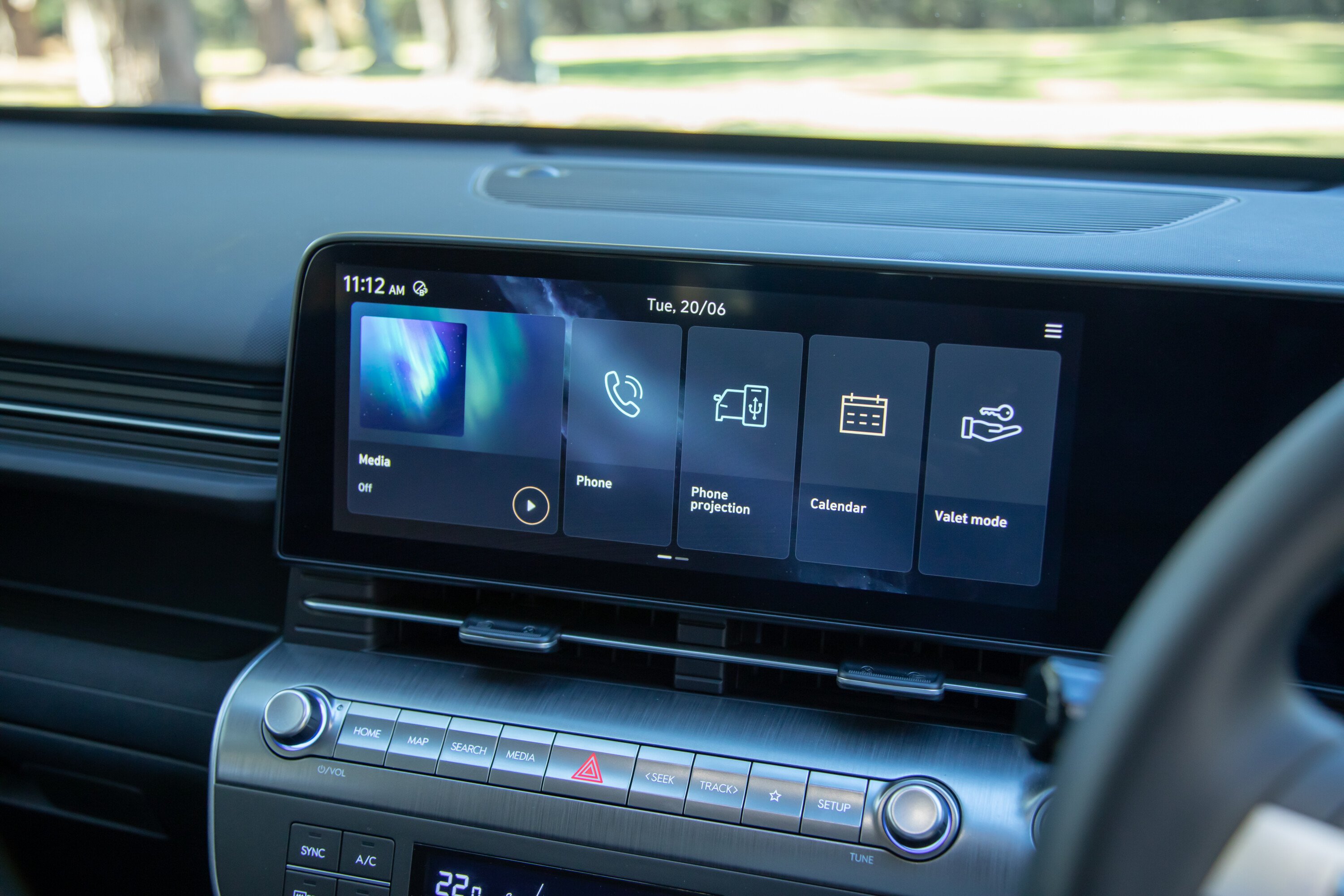
While there are no significant interior changes, the updated i30 Sedan adopts a blind-spot view monitor, a 360-degree camera system, USB-C charge ports, an optional built-in dashcam, an odour-reducing climate control system, and digital key functionality.
1
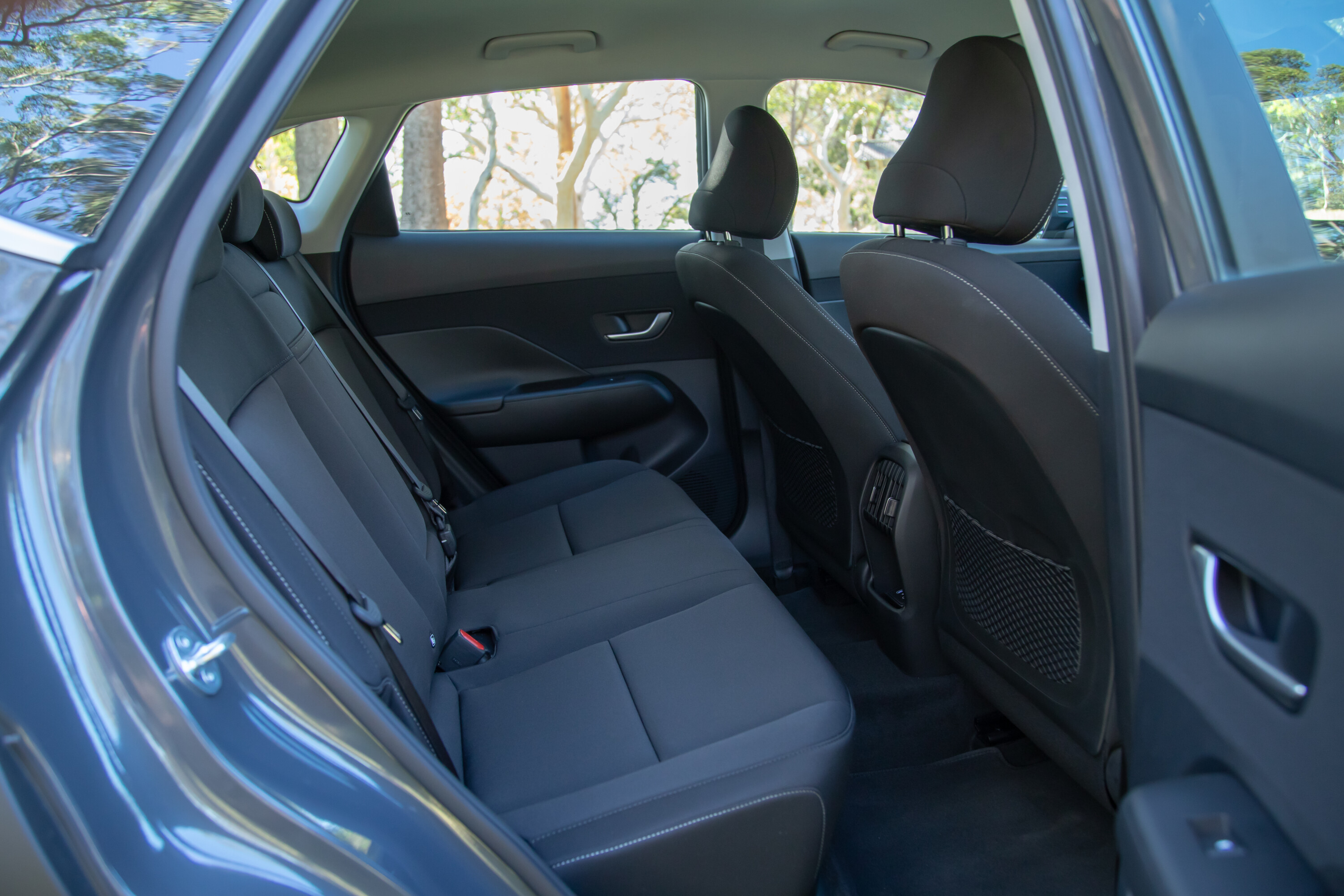
Second-row passengers are protected by a new rear-side airbag, taking the total airbag count to eight – but it continues to lack a front-centre airbag, meaning the i30 Sedan is unlikely to receive a five-star safety rating if ANCAP tests it.
The facelifted 2024 Hyundai i30 Sedan – including the N Line and N – will arrive in Australia in the second half of this year, pending any delays, with local details to be announced closer to the time.
Currently, the i30 Sedan is priced from $26,000 before on-road costs for the entry-level Active manual, rising to $50,200 plus on-roads for the i30 Sedan N.
First revealed in early 2020, the i30 Sedan is rebadged specifically for Australia to capitalise on the success of the i30 nameplate – despite the i30 hatch sharing more in common with the previous-generation Elantra.
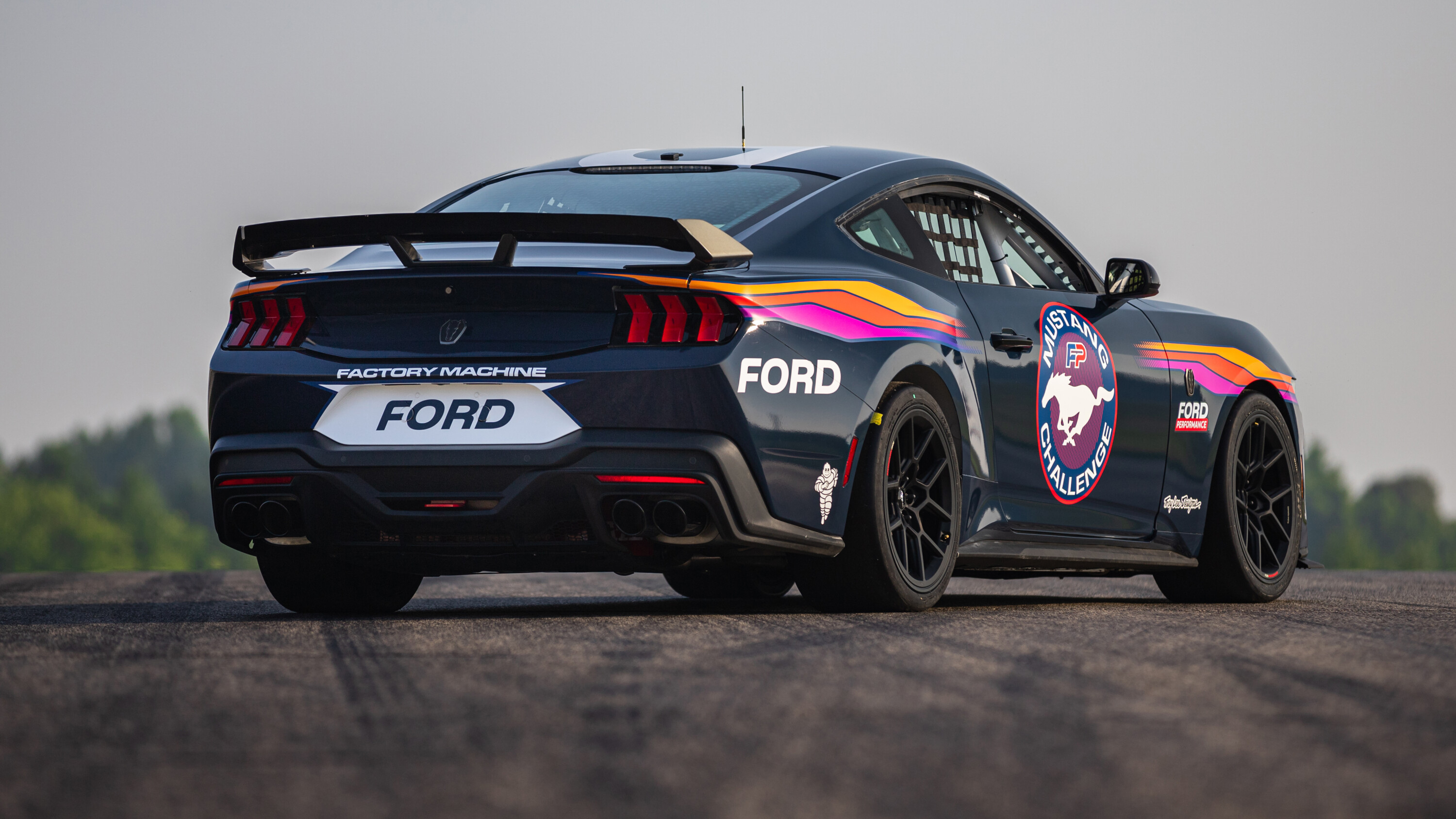
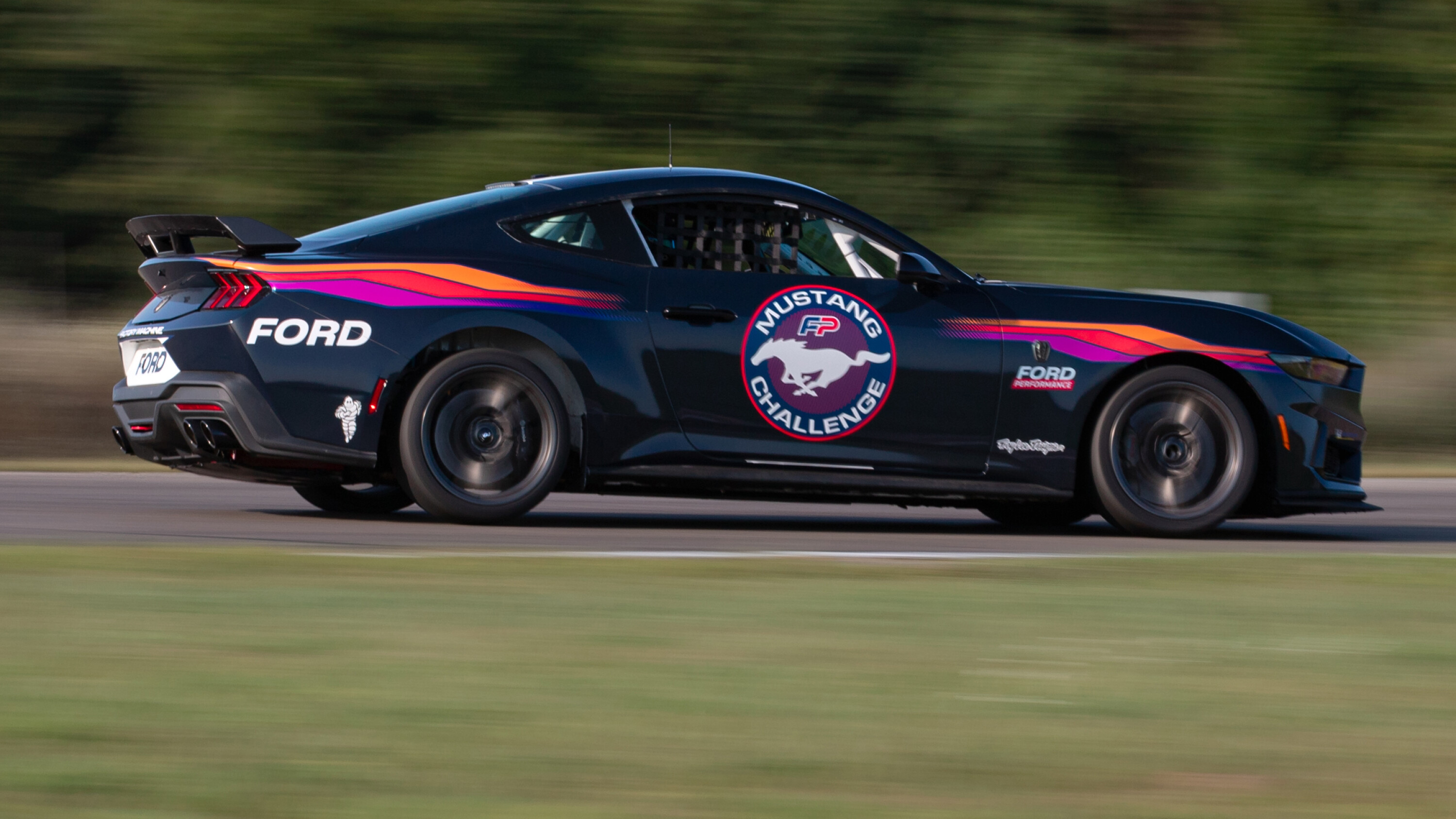
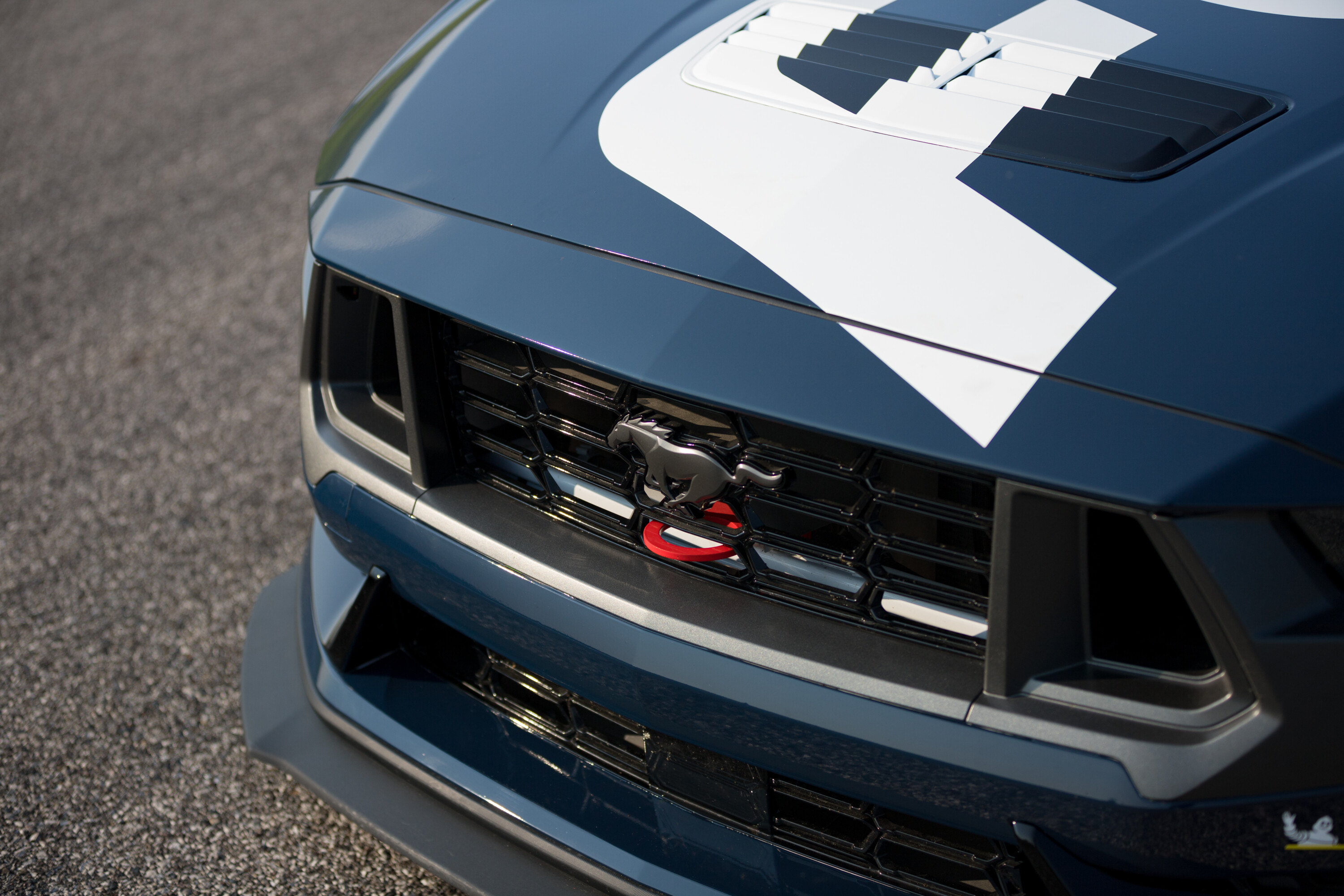
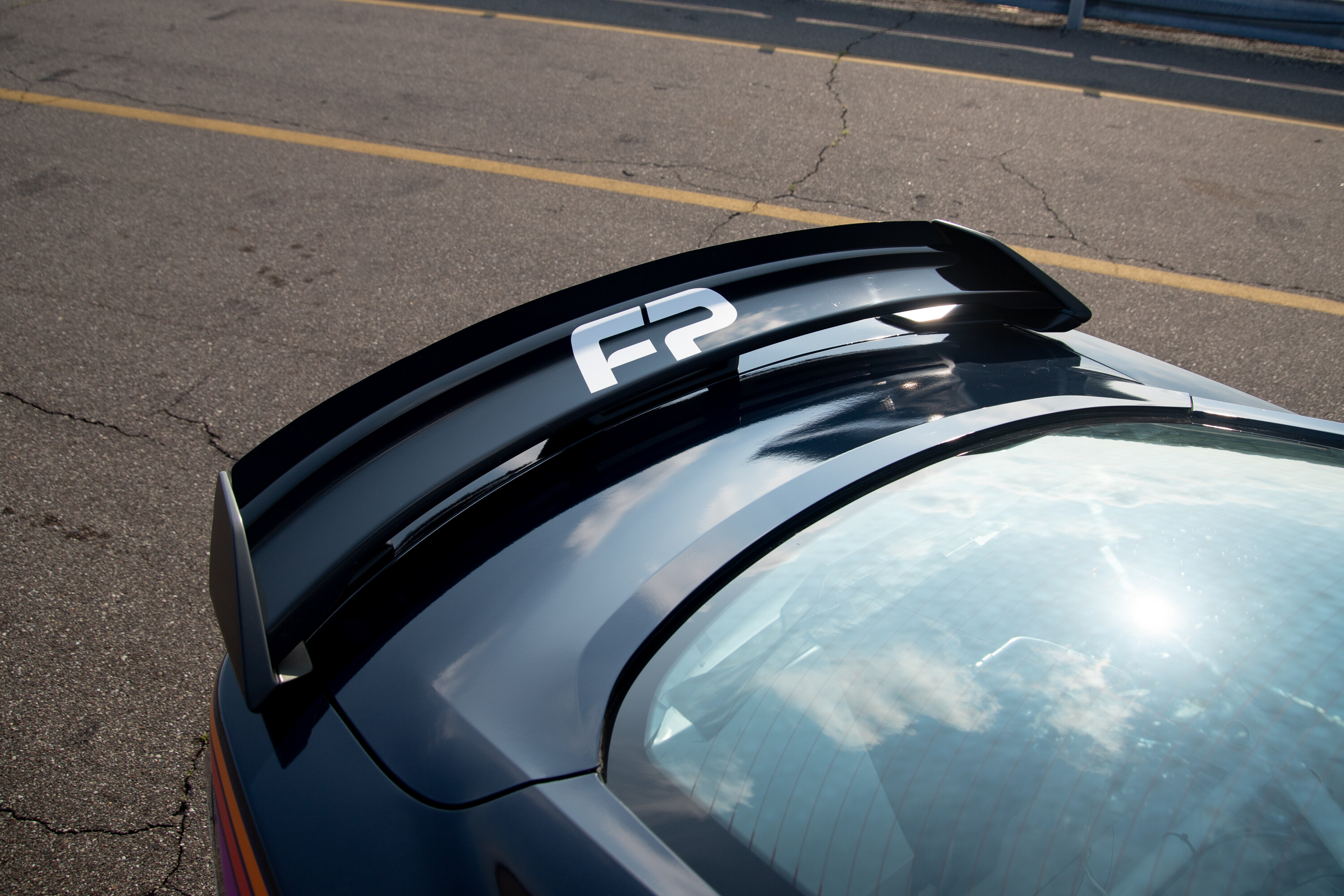
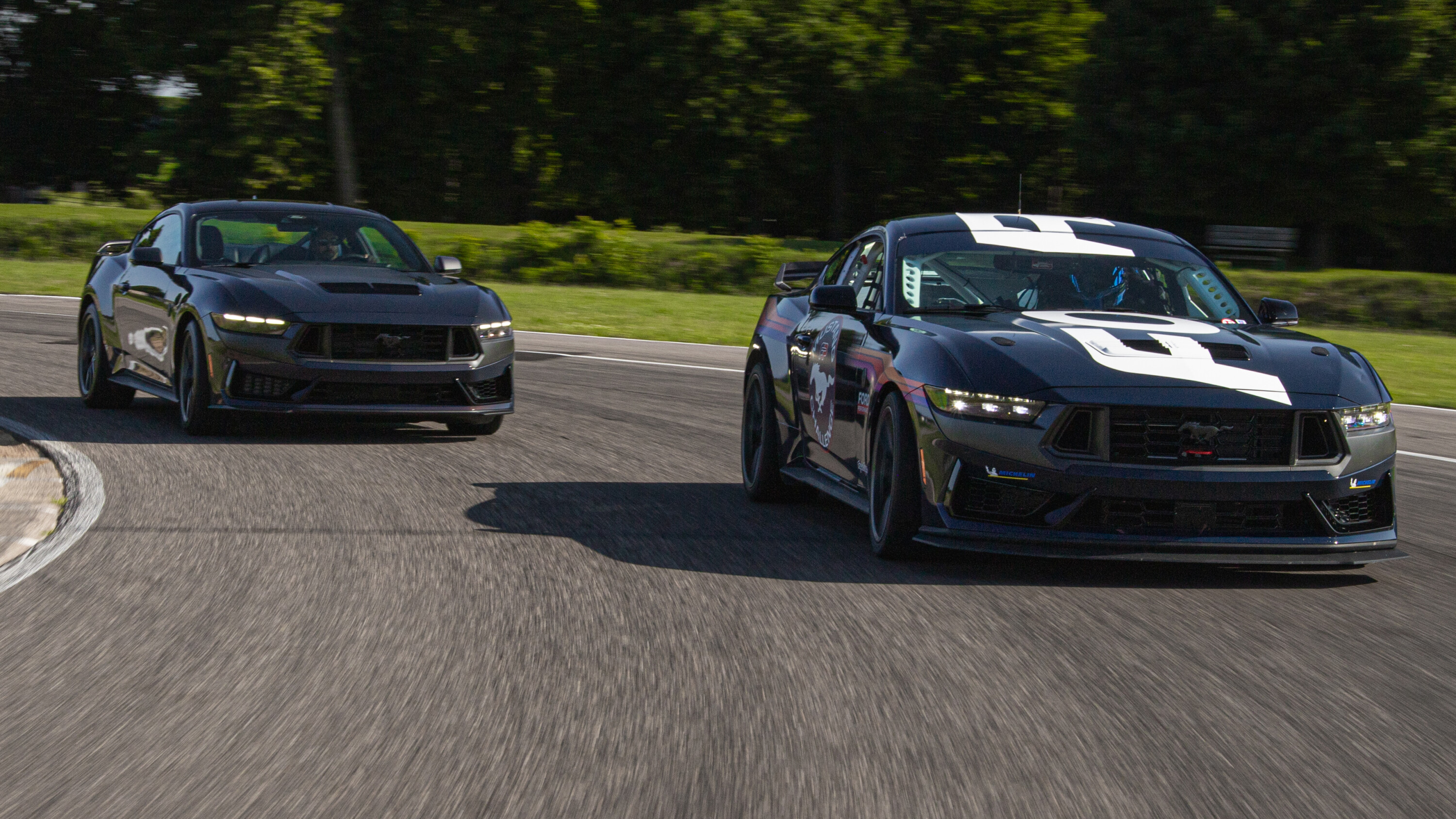
The Ford Mustang Dark Horse R has been revealed as a turn-key track car for enthusiasts and is the catalyst for a new, one-make Mustang Challenge series.
Ford’s latest competition is based on the “track-capable” Mustang Dark Horse road car, which has its media-drive debut this week in the US.
The R reflects Ford’s increased focused on customer racing with its latest, seventh-generation Mustang, serving as a more affordable, entry-level competition car below the FIA-grade GT3 and GT4 versions also unveiled this year.
1
The Dark Horse R will feature exclusively in an all-new Mustang Challenge racing series due to kick off in 2024 and sanctioned by North America’s International Motor Sports Association (IMSA).
About half of the 10 to 12 races planned for the Mustang Challenge calendar will incorporate North American sports car racing weekends.
“Mustang Dark Horse R bridges the gap between Dark Horse and Mustang GT3 and GT4,” said Mark Rushbrook, global director, Ford Performance Motorsports. “Production-based Mustang vehicles have raced from the very beginning, all the way back to winning the 1964 Tour de France, even. Dark Horse R offers our passionate customers not just an attainable, factory-built race car, but also a racing series to compete with other Mustang enthusiasts.”
1
Ford has set a price of US$145,000 ($215,000) for the Dark Horse R, which owners can also use to compete in other grassroots motorsport events.
The R shares plenty of components with the street-legal Mustang Dark Horse, including its drivetrain that comprises 5.0-litre V8, Tremec six-speed manual, Torsen limited-slip differential. The road car produces 500hp (373kW), where Ford quotes “500+ horsepower” for the R.
It’s fitted out, however, with multiple, track-focused features (see list below), and is available with slick Michelin tyres created for the Mustang Challenge series.
1
Ford Australia has no plans to introduce a Mustang Challenge series, though it says the option is there for local track-day enthusiasts to purchase a Dark Horse R from Canadian company Multimatic.
However, in addition to the US$145,000 price tag for the left-hand-drive-only Dark Horse R, buyers would be responsible for shipping and other associated costs with getting the car here.
2024 Ford Mustang Dark Horse R key features
2024 Ford Mustang Dark Horse R Exterior
Front and rear tow hook
Underbody tie down hoops
Reinforced jacking points
2024 Ford Mustang Dark Horse R Interior
Recaro FIA racing seat
Safecraft FIA safety nets
Sparco quick-release steering wheel
Driver keypad and button controls
Sparco FIA racing harness
MoTeC data display and logging system
Sparco FIA fire suppression system
Fuel cell
1
2024 Ford Mustang Dark Horse R Drivetrain
Upgraded oil system
Borla racing exhaust system
Upgraded transmission cooling
Ford Performance oil pan
Upgraded differential cooling
2024 Ford Mustang Dark Horse R Chassis
Roll cage
Adjustable anti-roll bars
Multimatic DSSV dampers
Select seam welding
Adjustable front camber plates
1
2024 Ford Mustang Dark Horse R Brakes/Wheels/Tyres
Performance ABS
Race brake cooling ducts
Brembo race calipers u2013 Front
Ford Performance Parts R1 Flow-Formed Wheels (19u201d x 10.5u201d front, 19u201d x 11u201d rear)
Brembo race rotors – Front
Bespoke Michelin 19u201d slick race tyre for Mustang Challenge, sold separately
Imagine if every duke and duchess in England got together and opened a tender process for a vehicle that suited their every need.
It would be big, statement-making, opulent – something to shuttle down narrow, cobbled country lanes, or to the opera at night. Something in which to reach the roadless, far-flung corners of a sprawling estate – with confidence of getting back to the manor, and with clean boots, no matter what off-road treachery you faced.
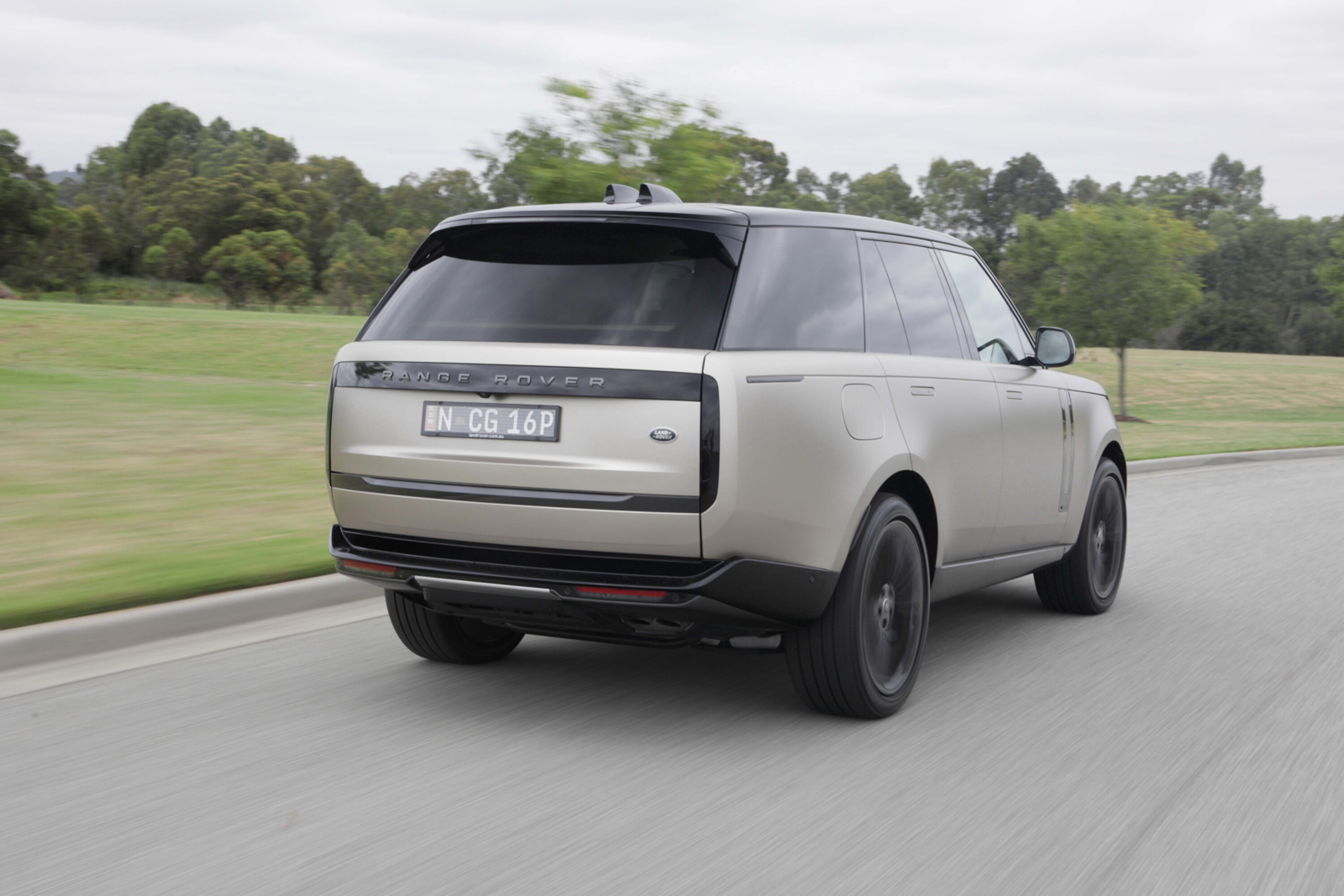
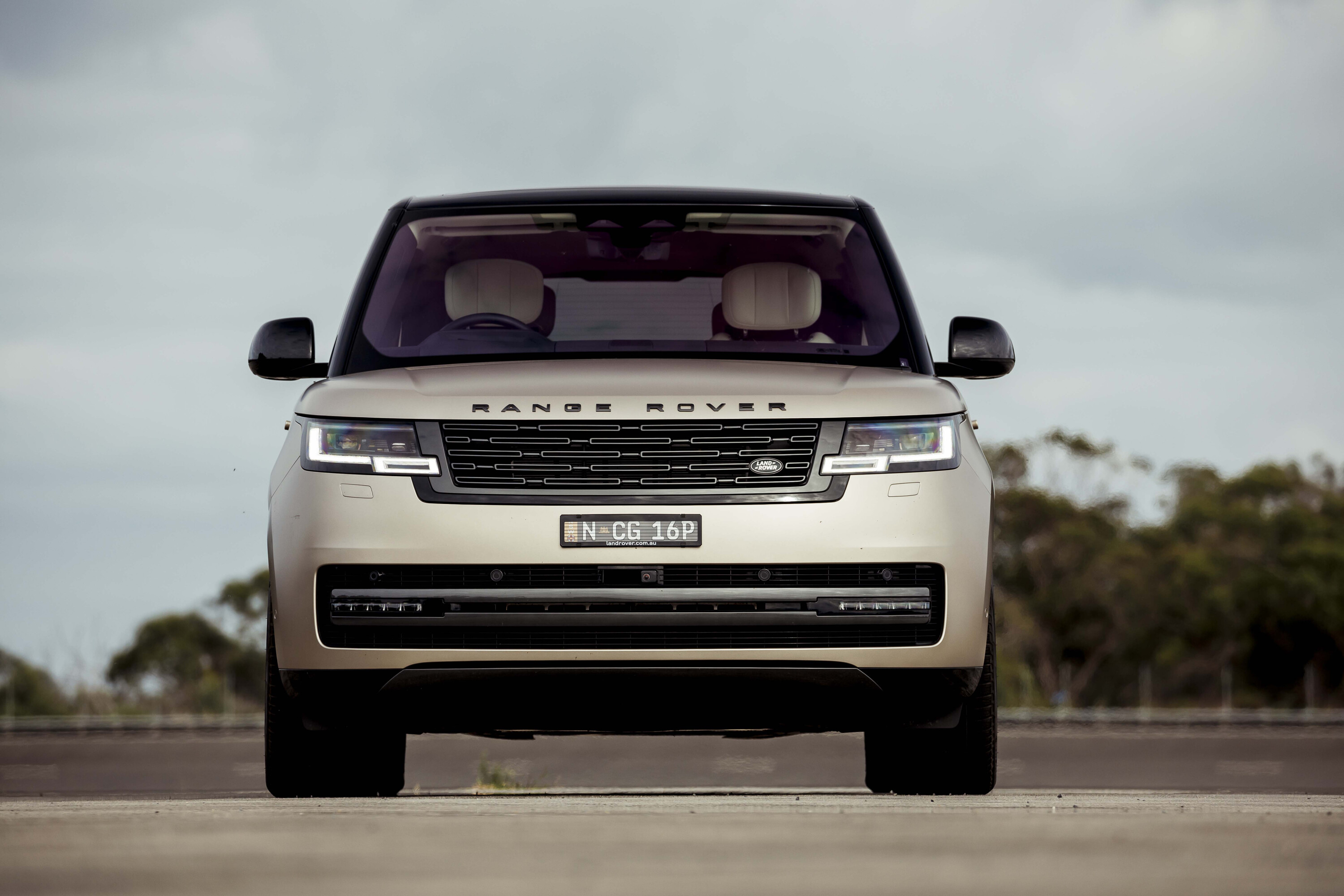
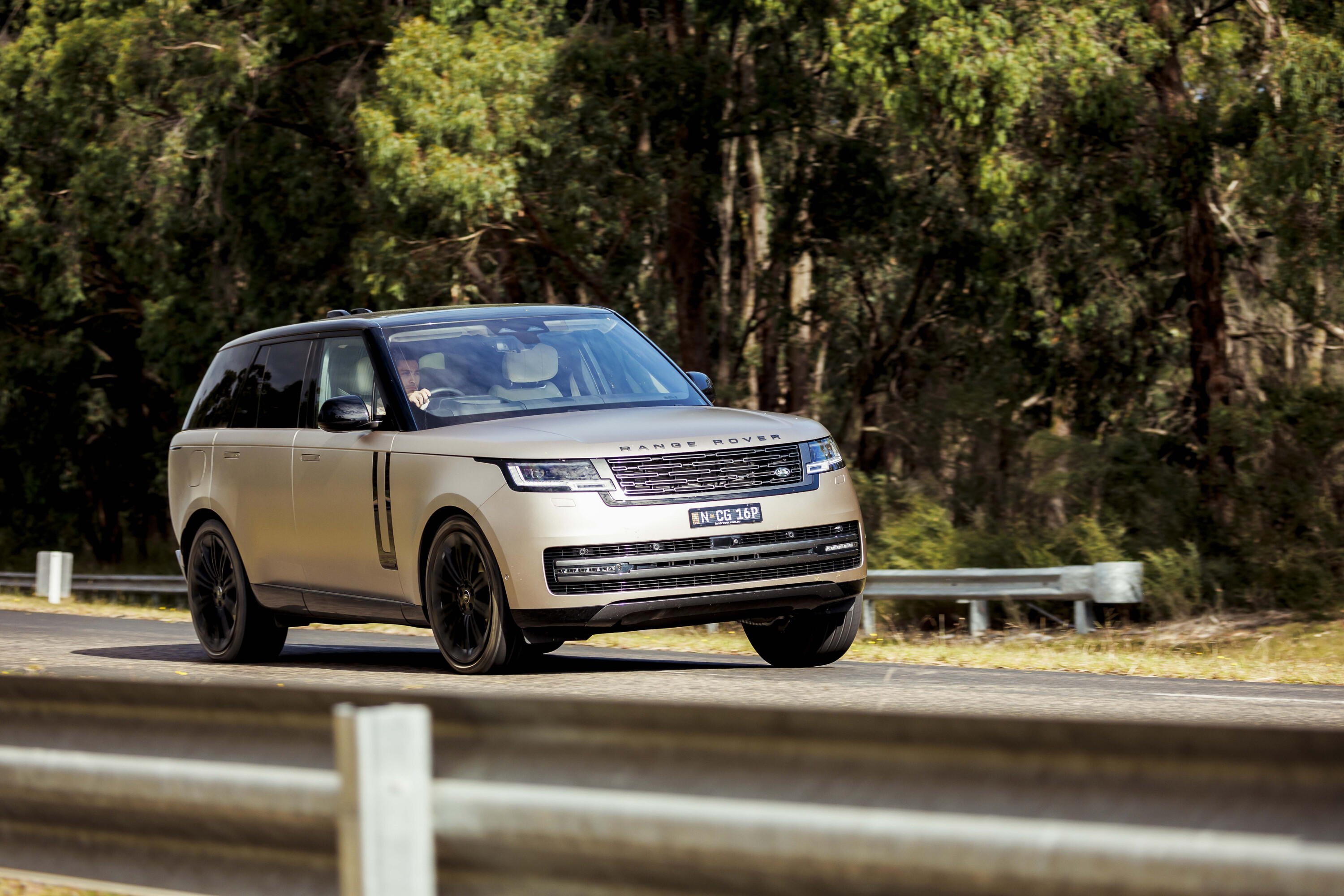
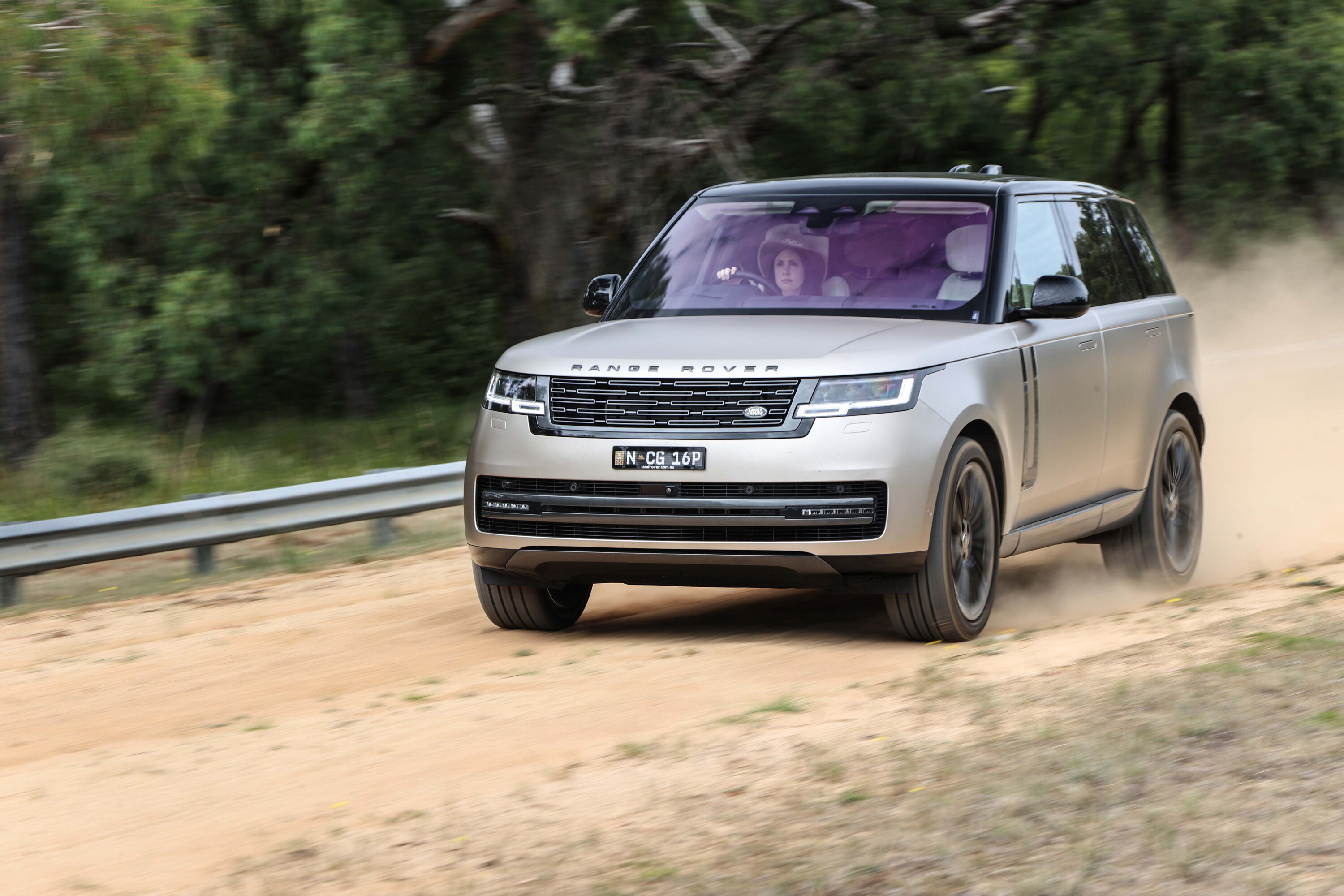
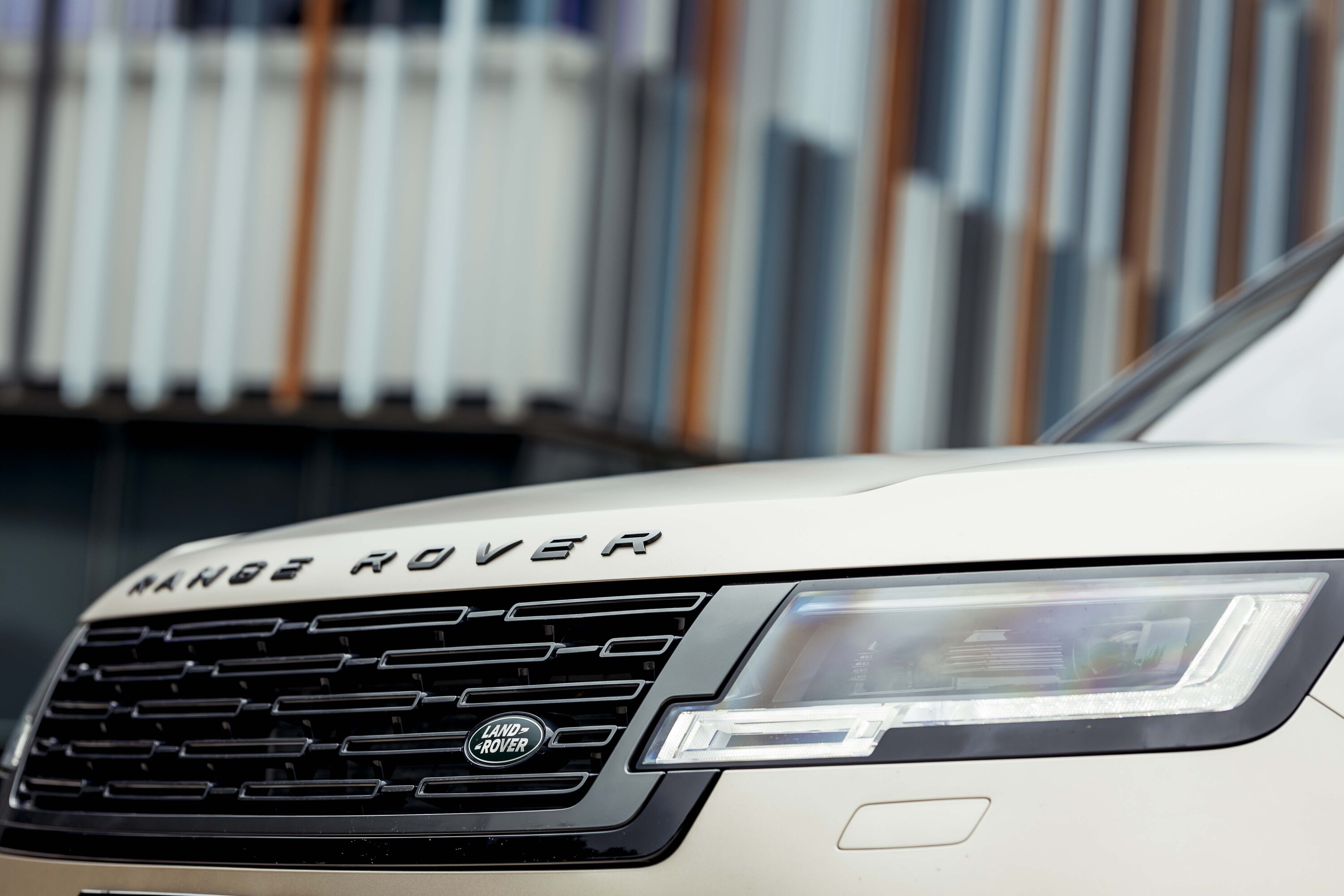
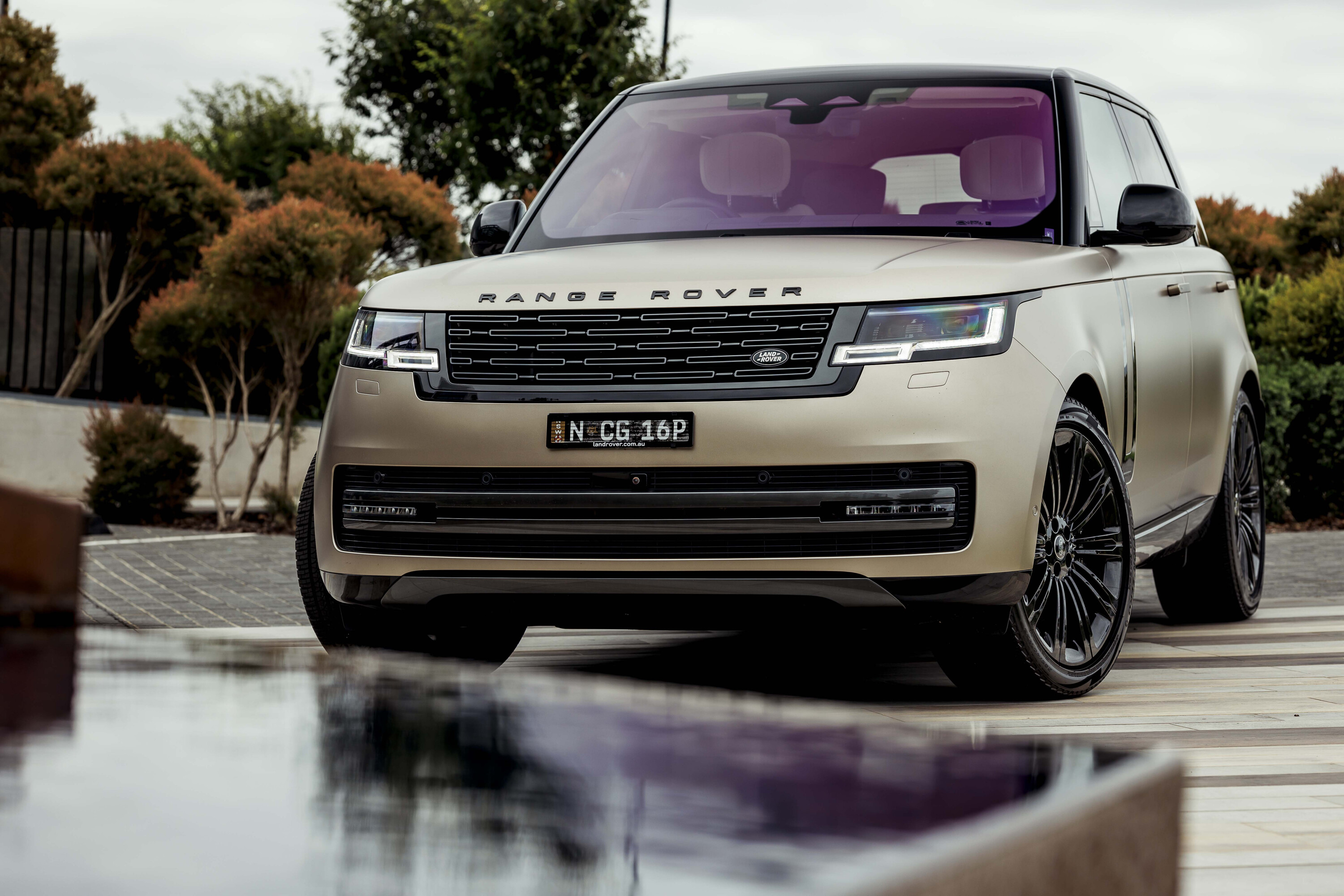
One vehicle that would fit the brief perfectly would be this: the new Range Rover P530 Autobiography.
The original luxury SUV, the inimitable Range Rover continues to do luxury in its own, almost prescriptive way. But it’s a prescription you’d happily accept, as many have tried to copy it – without quite succeeding. If there was a recipe for making a Range Rover, it would be a closely guarded industry secret.
1
Now up to its fifth generation, the almost sculpted-looking Range Rover was designed by Gerry McGovern, who wanted to evolve the styling rather than reinvent it. Made in Solihull, UK, the L460-codenamed Range Rover is built on the new, electric-ready Modular Longitudinal Architecture (MLA) that was originally set to underpin future Land Rover and Jaguar models – until it was painfully canned in 2021 at an eye-watering cost of $2 billion.
Jaguar Land Rover (JLR) executives realised it wouldn’t be enough to meet future emissions regulations. Instead, it will underpin just the new Range Rover and Range Rover Sport – a lot of R&D money to amortise over just two model lines.
In Australia, there are currently 16 variants of the new Range Rover – and explaining the range would merit an entire article on its own. There are eight derivatives utilising four engine configurations – a 3.0-litre turbocharged inline-six available as a petrol, diesel or plug-in hybrid.
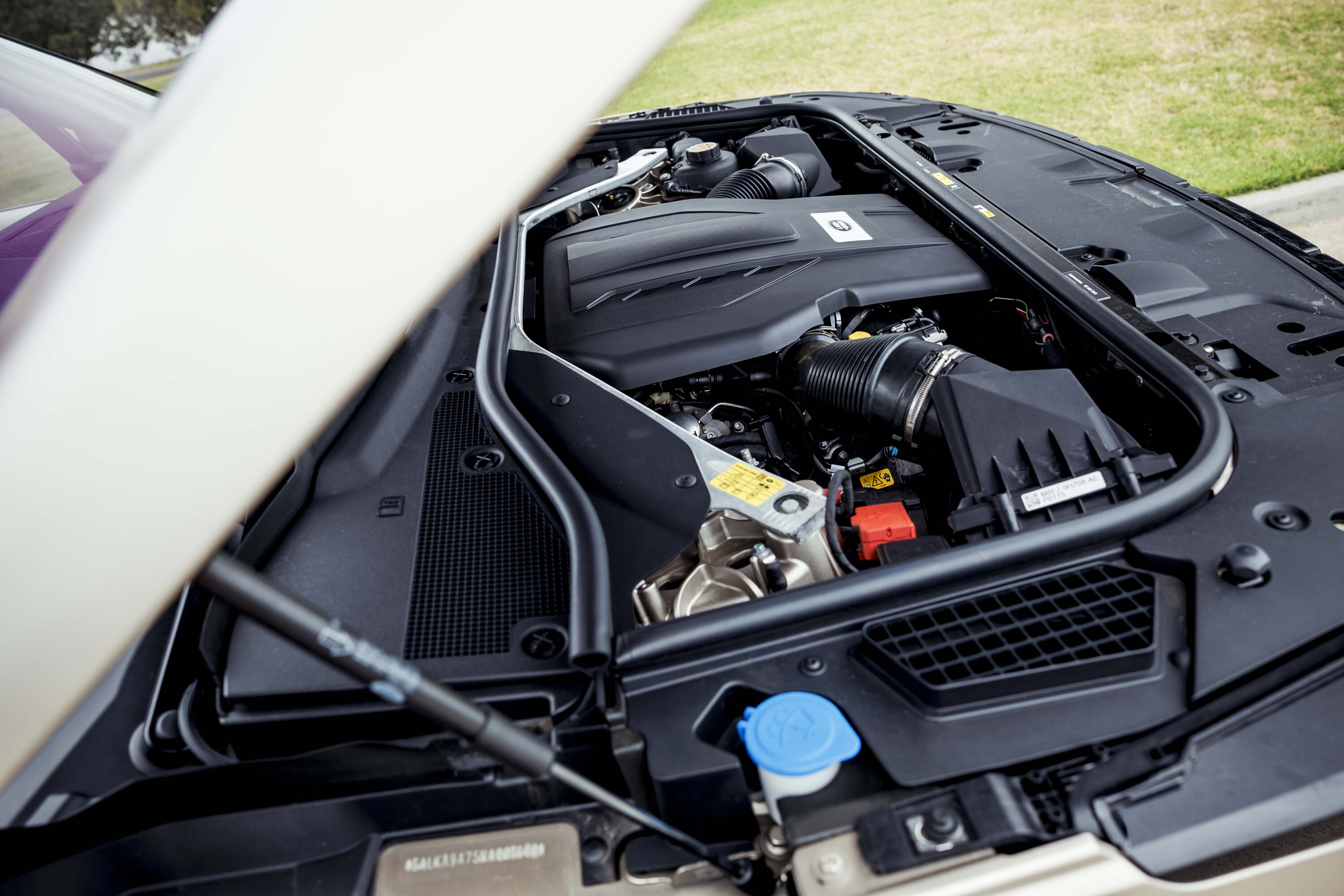
Then there’s the 4.4-litre twin-turbo petrol V8. The six-cylinder is a JLR design while the V8 is sourced from BMW and an all-electric Range Rover is due in 2024. Our P530 First Edition we’re driving today is powered, delightfully if not particularly sustainably, by the V8.
As you’d hope for a car priced at $321,875 before on-road costs, the list of standard features is exhaustive. Basically, it comes with everything you could ever hope for on a modern vehicle, only excluding a handful of very picky want-to-haves.
Mechanically, you get that 4.4-litre twin-turbo V8 belting out 390kW, mated to an eight-speed torque converter auto. There’s an advanced all-wheel drive system, one of the best at going off-road of any vehicle. You get air suspension, all-wheel steering and, inside, oodles of interior space and more leather than a Berlin nightclub.
There’s also plenty of tech and gadgets – if you’re into that stuff – such that any user manual would be thicker than the Yellow Pages (circa 1995).
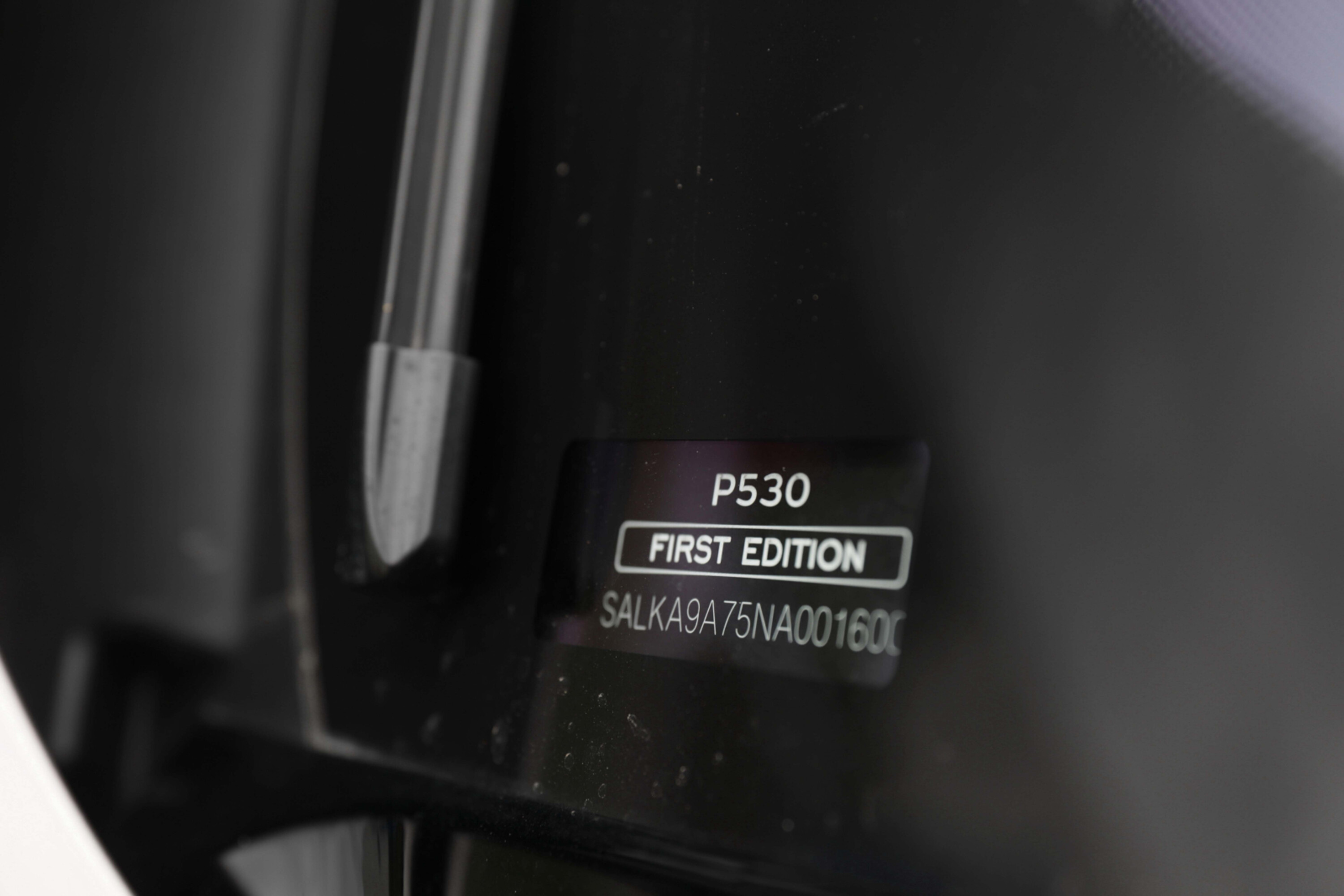
For an additional $15,347 over the ‘standard’ Autobiography, the First Edition gets you $15,170 worth of options. The remaining $177, we are left to guess, is so you can stir up your Autobiography-driving mate by telling them theirs must be the Second Edition.
1
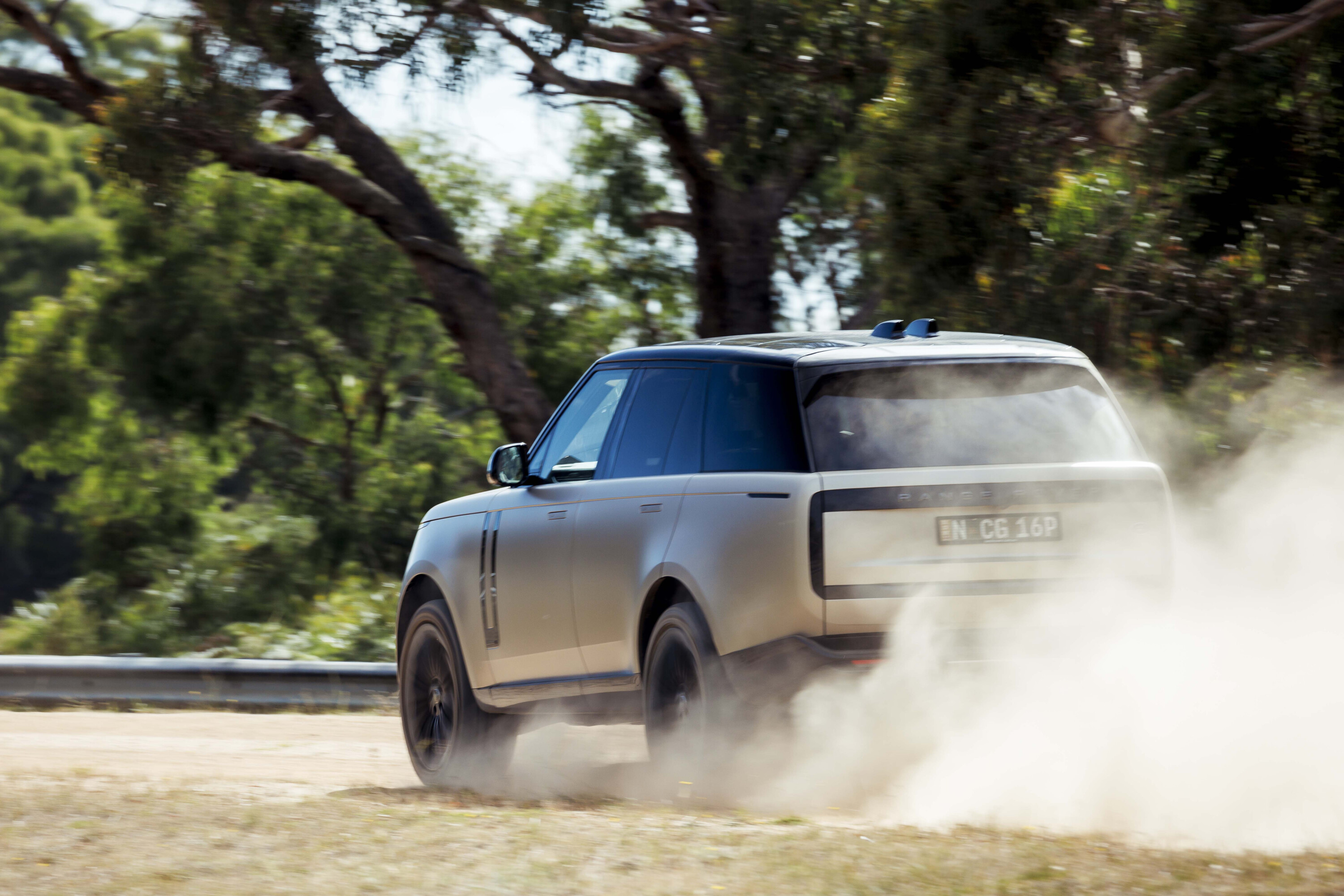
The First Edition gets some unique things, like a Natural Ecru Walnut veneer with inlay and unique First Edition script. There’s also illuminated metal tread plates that read “First Edition”. Unfortunately, the Sunset Gold satin finish of our test car, while only available on First Edition, is not standard. You need to pony up $17,000 for that.
We’d actually recommend seeing this in the metal before purchasing, too, as the matte finish emphasises the somewhat contourless, flat surfaces of the Range Rover, especially down the side, giving it a bit of a featureless, slab-like vibe from some angles. The exterior contours and lines are deliberately minimal, and a glossy finish would have them stand out more, giving the body a bit more shape. Our two cents, anyway.
Two premium metallic paint finishes – usually carrying a $2220 premium on the Autobiography – are also offered as no-cost options on First Edition: Batumi Gold or Charente Grey. So if you spec your First Edition in one of those, the $15,347 price premium over a regular Autobiography includes $15,170 of what would otherwise be options.
1
2023 Range Rover P530 Autobiography First Edition features (over standard P530 Autobiography)
2023 Range Rover P530 Autobiography First Edition features
Privacy glass
Domestic 240v plug socket in rear seats
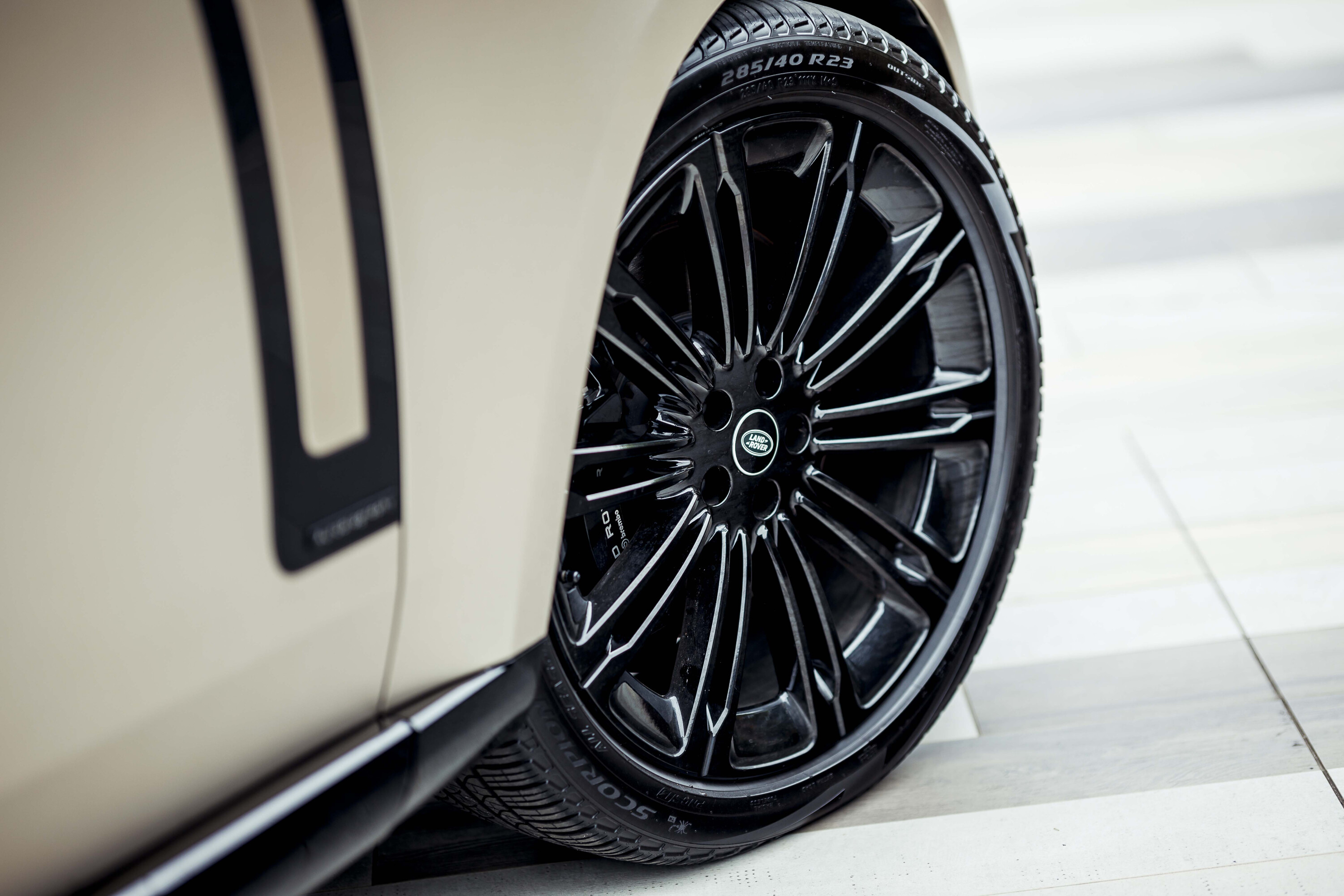
23-inch wheels (in a unique design)
Batumi Gold or Charente Grey premium metallic paint
Front centre console refrigerated compartment
Natural Ecru Walnut veneer with inlay and First Edition script or Natural Black Birch veneer with inlay and First Edition script (not available on other models)
Tailgate Event Suite (includes the Versatile Loadspace Floor, Integrated Cup Holders,
Illuminated metal treadplates with First Edition script (not available on other models)
Tailgate Lighting and Tailgate Speakers)
Availability of Sunset Gold in Satin Finish u2013 Ultra Metallic Paint ($17,000 option not available on other models)
11.4-inch Rear Seat Entertainment
The P530 Autobiography First Edition comes with a full-size 23-inch spare wheel.
Range Rovers are bought with the heart, but if that pesky head keeps wanting a seat at the table, you can get a lot of the opulence of the Range Rover – and V8 performance – for a lot less.
The BMW X7 M60i xDrive has the same 4.4-litre twin-turbo V8 (390kW/750Nm) and silky smooth eight-speed auto, but is nearly 40 per cent less expensive at $197,900 before on-road costs. It comes on 22s as standard, with air suspension and the highest quality BMW Merino leather. The leftover $123,885 buys you a very good holiday and nobody is going to call a BMW X7 a horrible place to sit – even if the latest model has been clobbered with the ugly stick. Several hundred times.
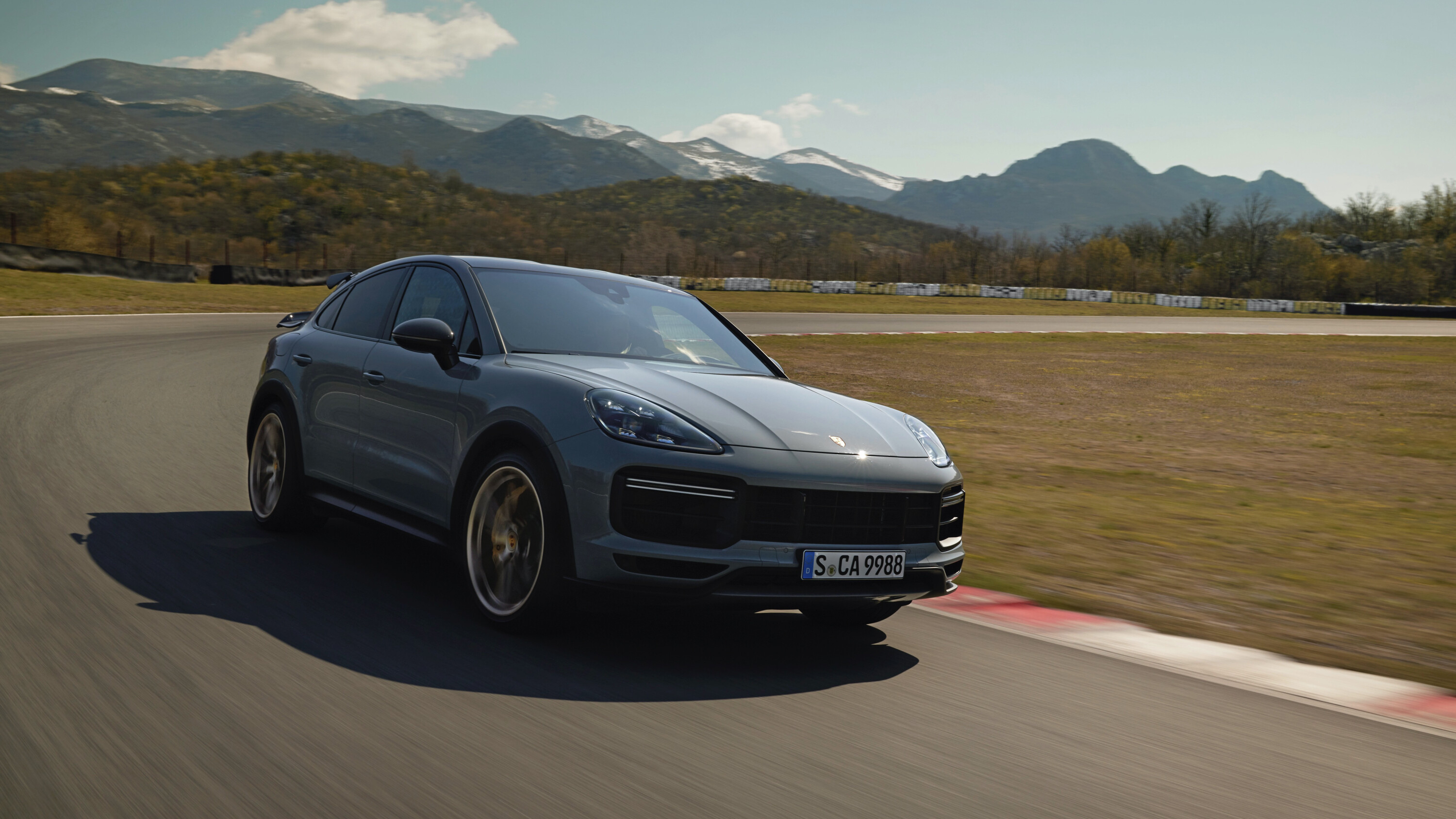
Other German options include the Audi SQ7 at $163,400 – also powered by a twin-turbo V8, with 373kW/770Nm. Boasting a lot more power (but potentially reduced ride quality) there’s the 450kW/850Nm Mercedes-AMG GLS63 at $267,100. There’s also the 404kW/770Nm Porsche Cayenne Turbo at $263,300 (all before on-road costs). Each is a worthy alternative, if not quite as ‘special’ as a Rangie.
1
To get closer on interior leather quality – and badge prestige – there’s the 404kW/770Nm Bentley Bentayga V8 ($378,600) or the 410kW/730Nm Mercedes-Maybach GLS600 ($360,800). If you ask us, however, neither feels as eventful as the Range Rover.
An Aston Martin DBX might be the most spiritually close rival of all; also British, extravagantly leather-appointed interior, and powered by a thumping 405kW/700Nm twin-turbo AMG-sourced V8. It’ll set you back $357,000.
“Do you want the hot rock massage on level three, or five?” This is a question you might hear asked in the new Range Rover Autobiography. And “I’m feeling three today” is something you might answer.
From the outside, the Range Rover is massive, a giant brick of a thing at five metres long, two metres wide and almost two metres tall. Any vehicle that makes 23-inch wheels look like 20-inch wheels is a big one. The styling is very similar to the previous model, at least at the front, but with a dash more Range Rover Sport. The rear tapers to cool, thin LED tail-lights – although it must be said, the front and rear look like they were styled by entirely different teams.
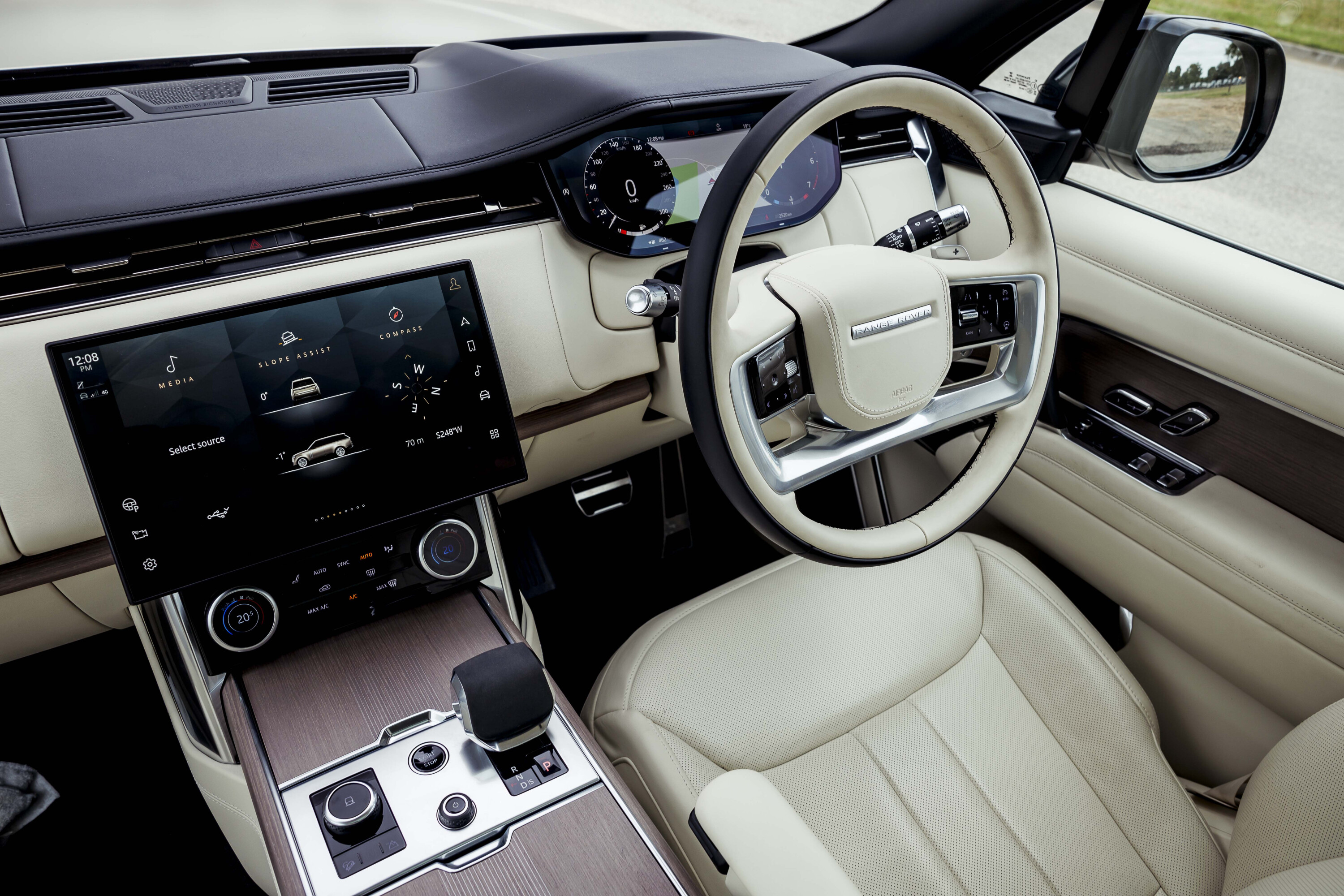
Hit unlock on the keyfob and little electric motors whir as the flush door handles pop out. As you open the huge doors, a strong smell of leather invades your nostrils. Inside, the Range Rover has a delightful, almost charming hand-made ambience to its interior. Using the various interfaces, there’s often the sense that some minor function is not quite the best way of doing things, but you forgive it anyway.
Testament to the sound insulation, it’s very quiet inside. Getting into your peacefully quiet Range Rover from a busy city street would be a calming relief alone. The leather quality is very good.
1
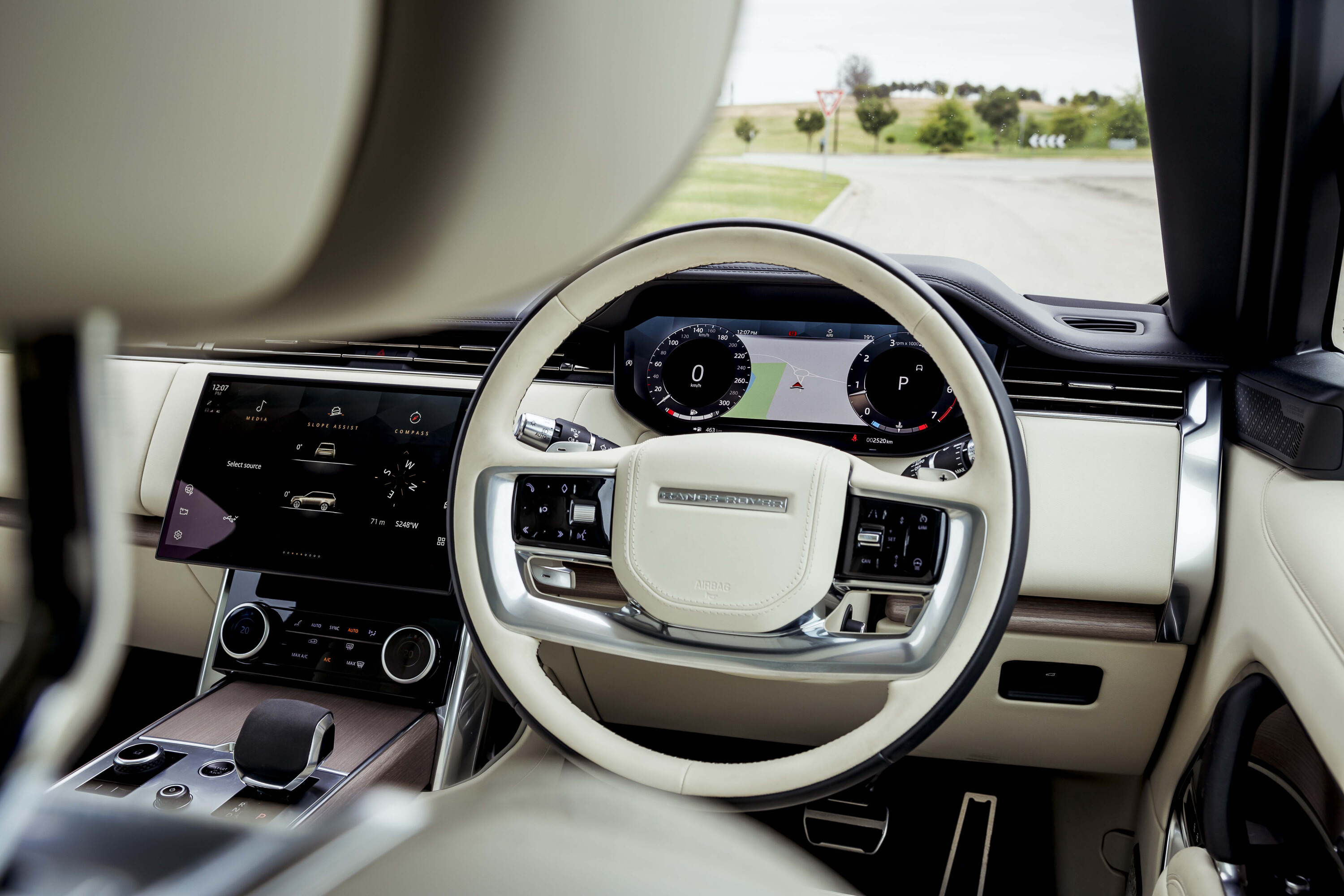
An awesome amount of computing power goes on in the new Range Rover – 69 individual ECUs run the entire show. Taking pride of place in the centre dash is a huge 13.1-inch touchscreen presenting the biggest, crispest and clearest Apple CarPlay we’ve ever seen. The screen itself is something of a fingerprint magnet and if the sun hits it the wrong way, it looks like an iPad that’s been handled by a toddler. You’ll want to keep a microfibre cloth nearby for regularly wiping it down.
Thank you, Land Rover, too, for keeping dials and hard buttons for the air-conditioning. Other brands are migrating these functions into touchscreens, which is a maddening trend.
Rear-seat space and packaging aren’t as great as we hoped for such a large vehicle – even with the 75mm longer wheelbase compared to a previous-generation short-wheelbase model. Back-seat passengers won’t feel cramped, but we wouldn’t say knee- and foot-room was mind-blowing. Get the 200mm-longer Long Wheelbase version if you plan to regularly sit in the back.
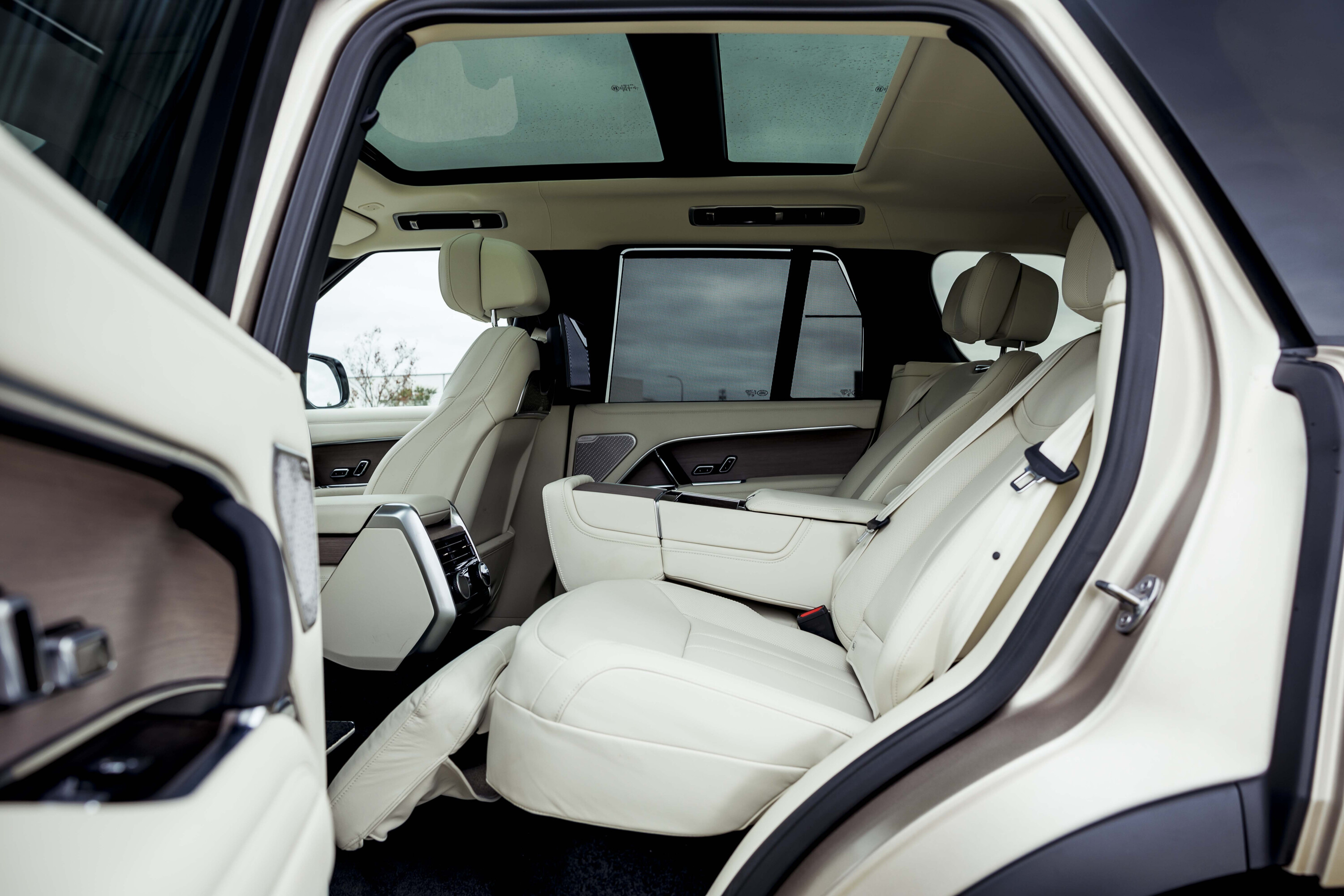
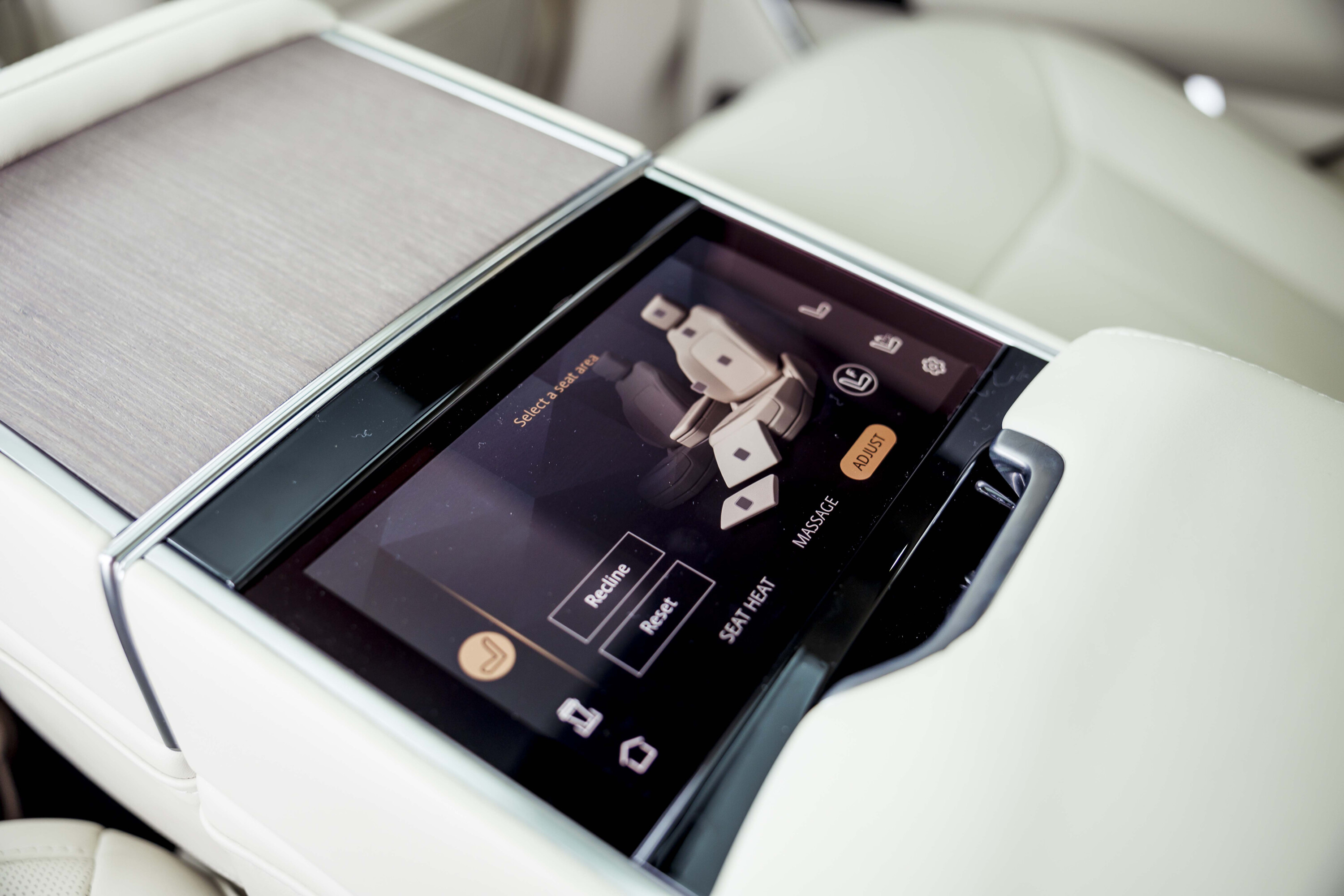
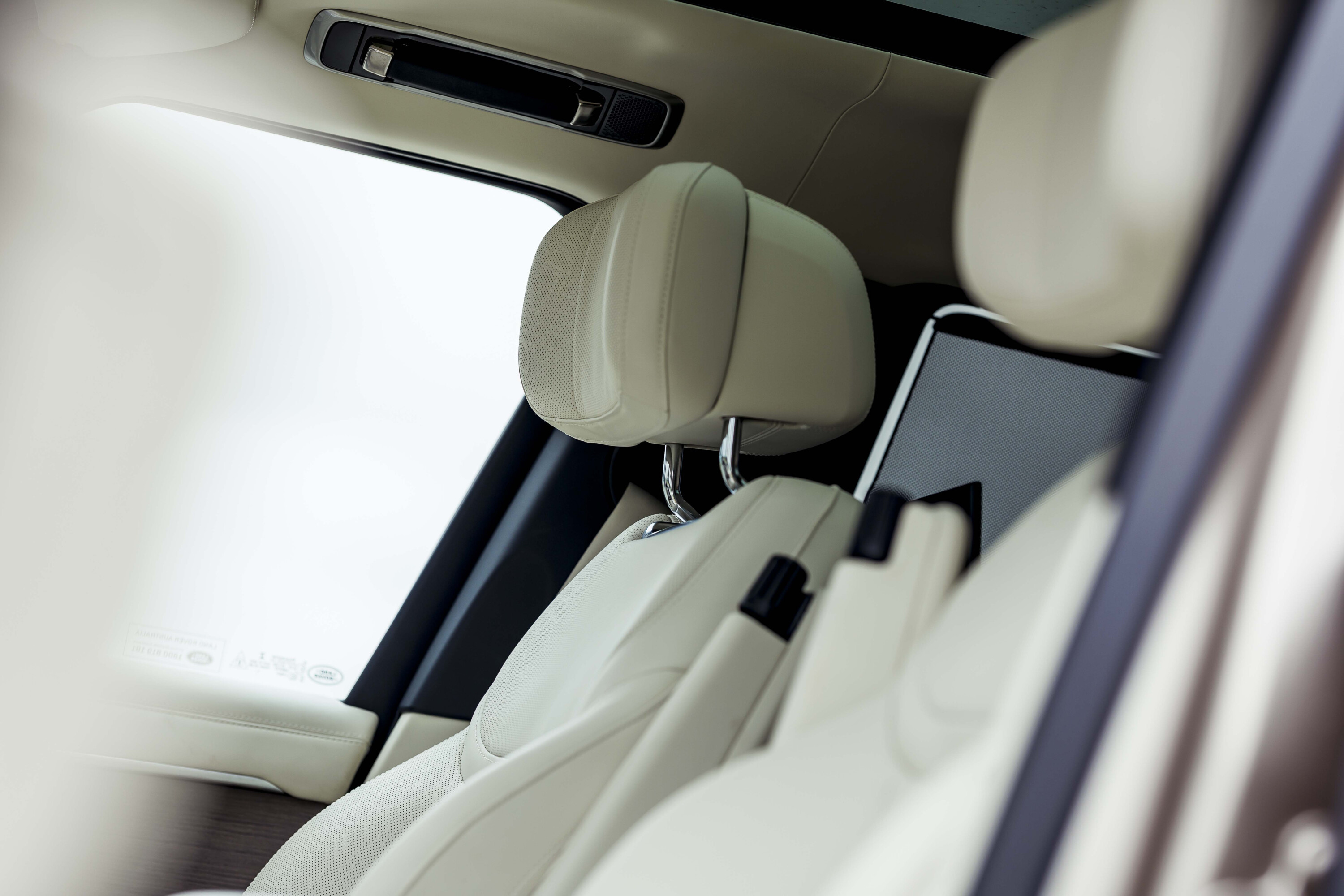
Our test car had the Chauffeur Mode rear seat which folds the front passenger seat forward and partially reclines the rear seat behind. Cool, but a slight novelty – it hardly reclines flat. We’re very difficult to please…
1
While we’re being petulantly picky, we have a few bones to pick. The Range Rover is so quiet on the move that the AC fan and front air vents are bothersomely loud – and not even on the highest fan speeds. Yeah, yeah, but it’s this kind of attention to detail that should separate a Range Rover from a BMW X7.
It could have been cool to experience an air-conditioning fragrance, too, like other luxury marques – but now we’re just sounding spoilt.
While we’re throwing punches the poor Range Rover’s way, its standard Meridian Signature Sound System – an $8180 option on the HSE – didn’t quite meet our expectations, set admittedly in the stratosphere after reading about its 34 speakers and 1600W of power. It’s great, but we remember the Bang & Olufsen 3D Advanced Sound System in top-tier Audis being more impressive.
We encountered a software gremlin in the system, too. While adjusting the front seat into Chauffeur Mode (from the driver’s seat, using the centre screen) it glitched out and wouldn’t cooperate. We had to stop and adjust the front passenger seat using the controls on the side of the seat itself.
1
There’s also voice command, activated by a button on the steering wheel, which can fulfil basic commands such as turning on the seat heater or adjusting the AC temperature. It’s basic and a bit slow but does the job.
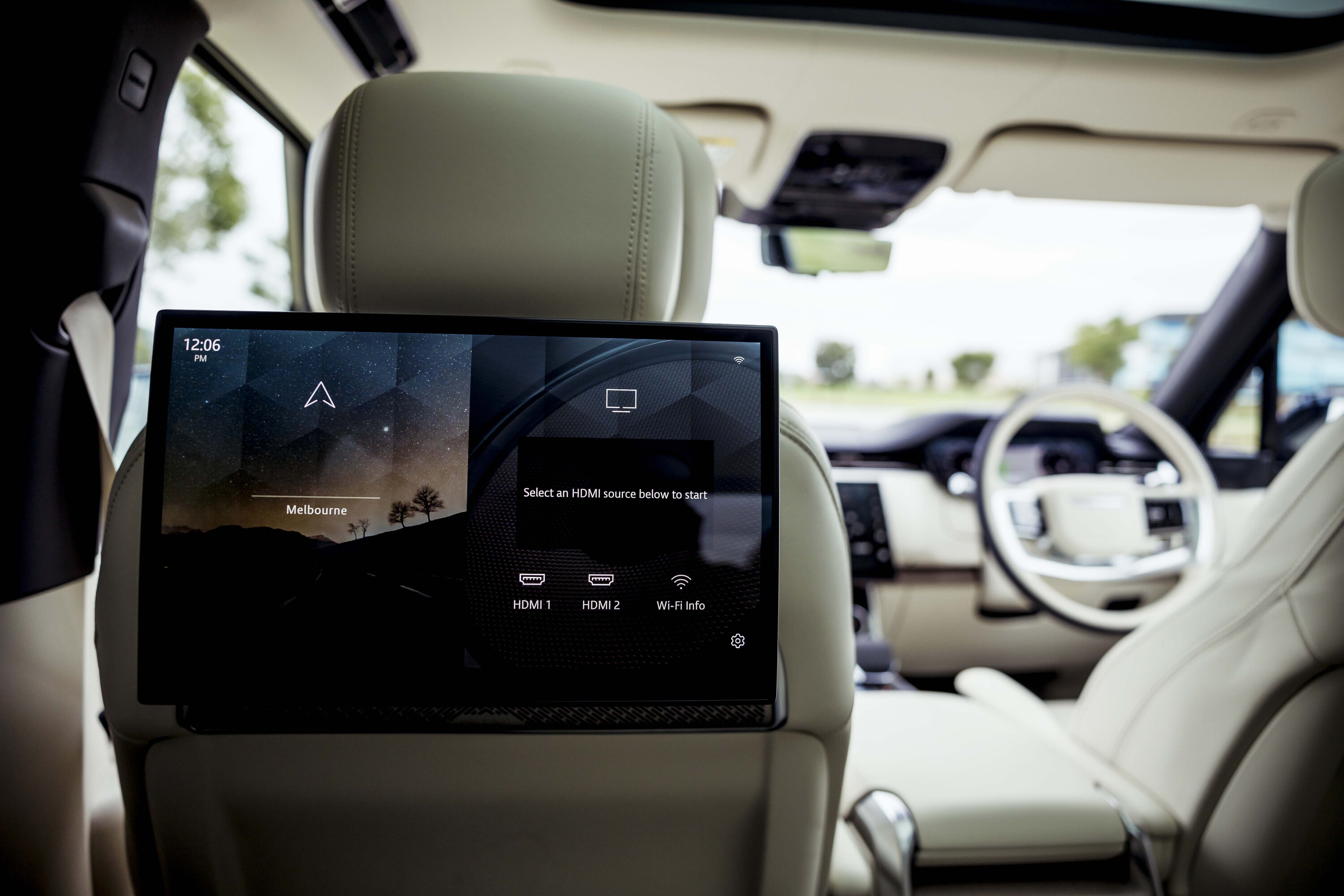
A pair of ISOFIX mounting points are provided on the outboard seats. There are window shades (controllable from the front), four rear air vents and 11.4-inch screens on the back of each front headrest where kids could watch anything (with provided, Range Rover branded Bluetooth headphones). What a (start to) life.
The boot features a two-part opening tailgate in classic Range Rover fashion. Both the upper and lower folding tailgate sections open and close electrically, which is lovely. The boot itself is acceptably large at 1050 litres. Curiously, there’s a little control panel in the boot that lets you adjust the rear air suspension height. There’s a funny choof sound as you lower the rear and the air suspension releases air, like a dog sneezing. It’s fun to play with, if nothing else…
Up to eight USB-C outlets are provided throughout the new Range Rover, as well as a 15W wireless charging pad in the front.
2023 Range Rover P530 Autobiography First Edition quick specs
Engine
4395cc twin-turbo V8 petrol
Power
390kW @ 5500-6000rpm
Torque
750Nm @ 1800-4600rpm
Transmission
8-speed automatic
Body
5-door, 5-seat upper large SUV
Fuel consumption (tested)
13.5L/100km
Boot space (5/2 seats)
1050/2335L
In a word: beautiful. For a vehicle its size, the Range Rover is effortless with light-feeling steering and lovely power. It’s quite wide and easily fills an Australian lane – narrow country roads with soft edges and without shoulders feel very narrow – and less confident drivers will never feel completely at ease with its width. But it perches you up nice and high with a commanding view of the road.
At urban speeds, it’s a delight – quiet and sumptuously comfortable. The ride quality is one of the Range Rover’s most enjoyable aspects, feeling expensive as if a team of engineers has fussed over it for a very long amount of time (and they probably have).
1
It makes Australian roads feel like European ones and indeed local governments would do well mandating that all new cars are fitted with Range Rover air suspension. It would certainly save a lot of cash on road maintenance. That Range Rover can achieve this level of ride comfort on 23-inch wheels is astonishing.
That said, over some bumps at about 100km/h there is a subtle but perceivable wobble through the entire superstructure of the car owing presumably to its size – and probably the fact there’s a giant hole in the roof for a window, affecting rigidity. Hardly a deal-breaker, but if we’re allowed to be perfectionists…
In the driver’s seat, there’s a head-up display and a 13.7-inch digital instrument cluster with plenty of adjustment and individualisation. For parking, there are more cameras than a maximum security prison and provide the kind of visibility that makes you look like an Olympic-level reverse parker. There’s also a digital rear-vision mirror which greatly improves rear visibility once you get used to it.
One underrated new feature is the rear-wheel steering, which helps neutralise the feeling of length. With some large cars, you might hesitate before a U-turn – especially if it means ending up in a frenzied three-point turn instead.
1
This is never a problem in the Range Rover which U-turns on a dime for a vehicle its size, thanks to rear wheels which can point in opposite directions from the front up to (a very aggressive) 7.3 degrees. If you glance in the side mirrors you can see them tilting in and out which is very cool.
We’d describe the powertrain as smooth as butter – we never felt a single gear change, not once. There’s plenty of performance from that twin-turbo V8, too, more than enough to startle passengers who’ve never been in anything ‘fast’.
Sinking the accelerator into the deep carpet, the Range Rover almost pauses to take a deep breath before it selects a lower gear and unleashes a classic, if slightly muted, V8 roar. Pleasingly, it’s a natural-sounding engine note and if there’s any fakery involved, it’s completely tricked this road-tester who has a keen ear (and distaste) for artificial engine noises. If it’s a V8 noise you crave, you’ll be satisfied.
Range Rover claims 4.6 seconds 0-100km/h but our own testing yielded a best of 5.4 seconds. It squats so hard that the headlights must come close to dazzling oncoming drivers at night. It’s slightly unnerving as the speed builds so easily in such an enormous vehicle. Certainly, transitioning from maximum acceleration to maximum braking almost feels slow-motion-like as the Range Rover goes from heavy squat to heavy dive.
1
In the corners, despite the 48-volt active anti-roll bars, the Range Rover is a bit boat-like with plenty of squat, dive and body roll – even in its most sporty Dynamic mode. It’s a bit lazy, and not the most agile of vehicles, but that’s the price you pay for ride quality as good as this.
We were slightly disappointed by the amount of wind noise coming from around the A-pillar (presumably the side mirrors). Video side mirrors – eliminating the need for aerodynamically bulky physical units – could be a worthwhile addition to future Range Rovers.
Hardcore off-roading wasn’t a part of this test but Range Rover promises much. As well as the much-lauded Terrain Response 2 system offering five off-road software modes, at its maximum adjustable height the air suspension grants 295mm of ground clearance. There are also locking centre and rear diffs, and a 900mm wading depth.
We’d be very hesitant taking our test car off-road given the $17,000 optional paint finish and 23-inch wheels with 40-profile road tyres, but each to their own.
1
The Range Rover offers a full suite of semi-autonomous driving capabilities including radar cruise control with self-steering, all of which only added to the pleasure of highway driving – even if it chimes at you to return your hands to the steering wheel after a certain amount of time.
Driving on country roads at night is fun with the adaptive headlights which let you use the high beam even when following cars – or with cars oncoming. A computer scans the road ahead and quickly turns off individual LEDs within the headlights, putting a car ahead in a little ‘box’ of shade surrounded by high-beam.
This avoids dazzling other road users and is extremely cool tech (if not unique to Range Rover). That all said, the high beams could be a bit brighter if you live in the country.
Fairly poor. Range Rover reckons 11.8L/100km on the combined cycle is possible. During 2300km of testing, we recorded 13.5L/100km. The Range Rover has a 90-litre fuel tank.
Very safe, although its hefty 2585kg kerb weight and all-season Pirelli Scorpion tyres affected its ability to avoid obstacles in emergency situations.
On unsealed roads, the Range Rover’s active safety systems such as electronic stability control were superb at preventing a slide and felt as advanced as any system on any modern car.
1
However, the Range Rover performed below average in bitumen emergency braking and lane-change manoeuvres as part of our safety testing. Through a lane-change exercise, the Range Rover could only achieve 80km/h – about the same as a new Ford Everest on all-terrain tyres, so not particularly great. The ESC felt flustered and unable to contain such a heavy, high, pitching vehicle. Braking from 100km/h to a stop took 47.6 metres – around five to 10 metres longer than a normal car.
If you rarely take your Range Rover off-road, we recommend replacing the tyres with more road-focused versions such as Pirelli P-Zero.
For passive safety, the Range Rover scored a maximum five-star safety rating when crash-tested by the independent Australasian New Car Assessment Program (ANCAP) in 2022.
The new Range Rover P530 isn’t what you’d call cheap to run, owing a lot to the V8’s fuel consumption. A plug-in hybrid would be more affordable everyday. Same, too, the electric version when it arrives next year.
All Land Rovers and Range Rovers come with a five-year, unlimited-kilometre warranty. The Range Rover P530 comes with a five-year, 130,000km servicing plan included in the price. Range Rover also throws in five years of roadside assistance for no additional charge.
1
Depreciation, as ever, is brutal for many luxury vehicles. Expect your new Range Rover to lose approximately a third to half of its value over five years.
Covering off absolutely everything about the Range Rover P530 Autobiography First Edition in this review is almost impossible. You’d need a book.
A very high price brings very high expectations, and the Range Rover met all but the highest of them. If you’re okay with a few little quirks and minor flaws, you’re unlikely to be disappointed. And it’s the kind of car you buy yourself as a gift. In P530 guise, the V8 is the meat between two pillowy brioche buns. You just can’t beat a V8 Range Rover. In many ways, this could be the ultimate car.
Many owners will be attracted because of the Range Rover badge, and it’s fair to say they might also be concerned about perceptions of driving a V8 Range Rover as the world struggles to contain its overall carbon emissions. Nobody needs to use three times as much fuel to get from A to B as someone else.
1
Buy the plug-in hybrid, you might say, or wait for the electric model, but it’s a shame Range Rover hasn’t been able to offer a V8 as even a mild hybrid, let alone a plug-in hybrid – like the Porsche Panamera Turbo S E-Hybrid. It would have extended the life of what is a classic formula. Instead, this could be your last chance to own a V8-powered Range Rover, so you had better get in quick.
Unlike a German car which is a perfect facsimile of another one, a Range Rover feels a bit unique. It’s as if, at the factory, they implant a soul at the end of the production line – something German car-makers haven’t yet quite been able to figure out.
Yes, you could get something like a BMW X7 for much less – but you might never be able to shake the sense that you’re somehow missing out. And that about says it all.
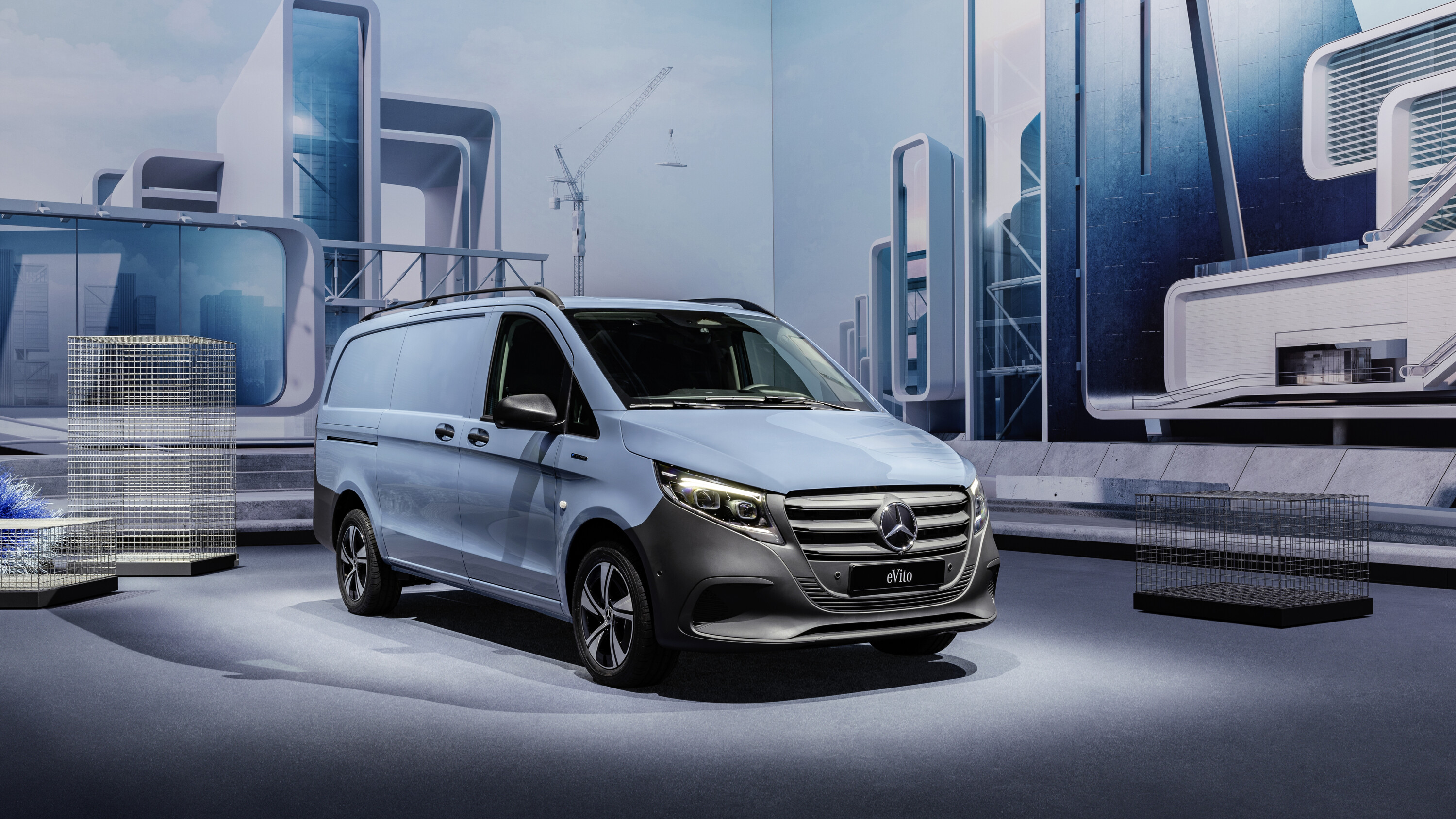
The facelifted 2024 Mercedes-Benz V-Class and Vito mid-size vans have debuted ahead of a local launch in the first half of 2024.
Snapshot
2024 Mercedes-Benz V-Class and Vito facelifted
Updated designs, modern infotainment system, and new tech
Electric variants to be replaced by all-new models from 2026
Due to commence right-hand drive production in early 2024, the updated V-Class and Vito feature updated designs and improved technology to extend the mid-size van’s lifecycle, first launched in 2014.
Mercedes-Benz has confirmed the internal-combustion V-Class and Vito will continue to be produced beyond 2026, while all-new vans will replace the battery-powered EQV and EVito on a dedicated ‘Van.EA’ electric vehicle architecture.
1
The new modular electric vehicle platform will support mid-size and large vans – including the successor to the current ESprinter large van – for commercial and private customers from 2026, with a longer driving range, more drivetrains, and the next-generation MB.OS infotainment system.
For now, however, the latest V-Class and Vito have been updated with a larger front grille, reshaped headlights, new LED tail-light signatures, and Mercedes-Benz’s latest steering wheel with capacitive controls.
Five new exterior colours – kalahari gold, high-tech silver, sodalite blue, alpine grey, and vintage blue – are available, as are redesigned wheel designs up to 19-inch alloys.
1
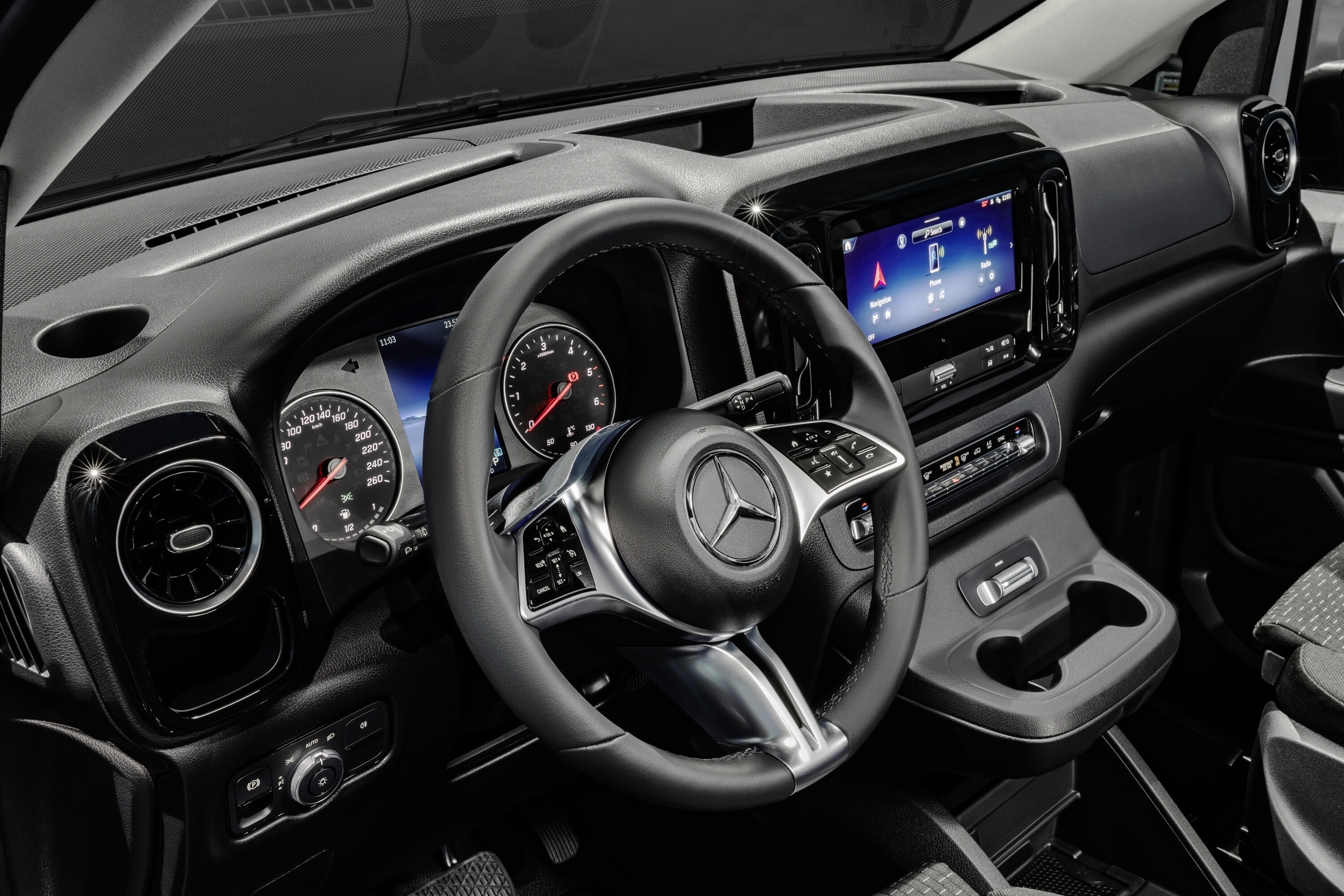
Inside, the commercial-orientated Vito and EVito are equipped with a 10.25-inch widescreen MBUX infotainment system – up from a 7-inch unit – and a larger 5.5-inch colour instrument cluster display between analogue dials.
Newly added features for the Vito include a wireless phone charger, dimmed rear lighting for loading items in the dark, and an available electric tailgate, heated steering wheel and 360-degree camera system.
As before, the V-Class people-mover will be available in exclusive, avantgarde and style lines. The optional AMG-Line body kit adds a new-look star-pattern grille, as seen on recent Mercedes-Benz passenger vehicles.
1
A new rear chrome strip with Mercedes-Benz lettering features on all V-Class derivatives, while adaptive LED headlights with 84 light elements will be optional.
The V-Class and EQV have a redesigned dashboard with dual 12.3-inch screens, running the MBUX infotainment system with augmented reality satellite navigation.
Mercedes-Benz claims the V-Class’s updated wood-look dashboard is inspired by furniture, while a 64-colour ambient lighting system is also new for the facelift.
1
A new V-Class Exclusive flagship variant adds an illuminated front grille, an upright Mercedes-Benz star on the bonnet, and an LED light strip.
While no major powertrain revisions are expected for the internal combustion or electric models, Mercedes-Benz has yet to be announce specific details.
Mercedes-Benz said there have been no structural improvements for the V-Class and Vito range. The ANCAP rating for the V-Class from 2014 expired at the end of 2022, following a newly-introduced six-year datestamp limit.
1
The brand said it has no plans to retest the V-Class and Vito under more-stringent Euro NCAP and ANCAP criteria, affirming that its vehicles still fulfil safety regulations and are “very safe”.
Right-hand drive production for the facelifted Mercedes-Benz V-Class, Vito, EQV and EVito is due to commence in early 2024, with examples likely to reach local showrooms in the first half of next year.
Below: The pre-facelift 2023 Mercedes-Benz EQV electric people-mover
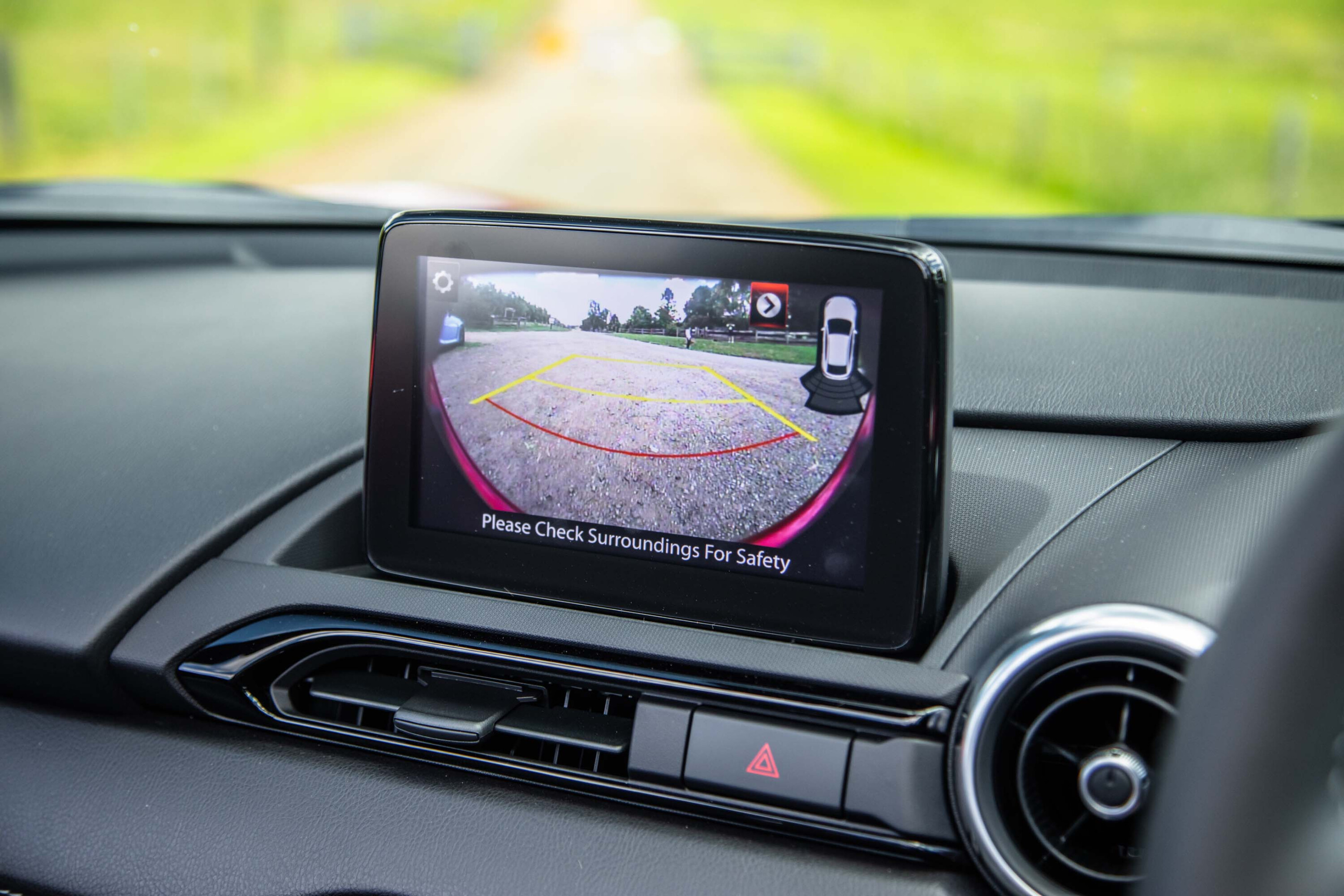
The Federal Government has announced ‘reversing aids’ will be mandated for newly-introduced vehicles sold in Australia from 1 November 2025.
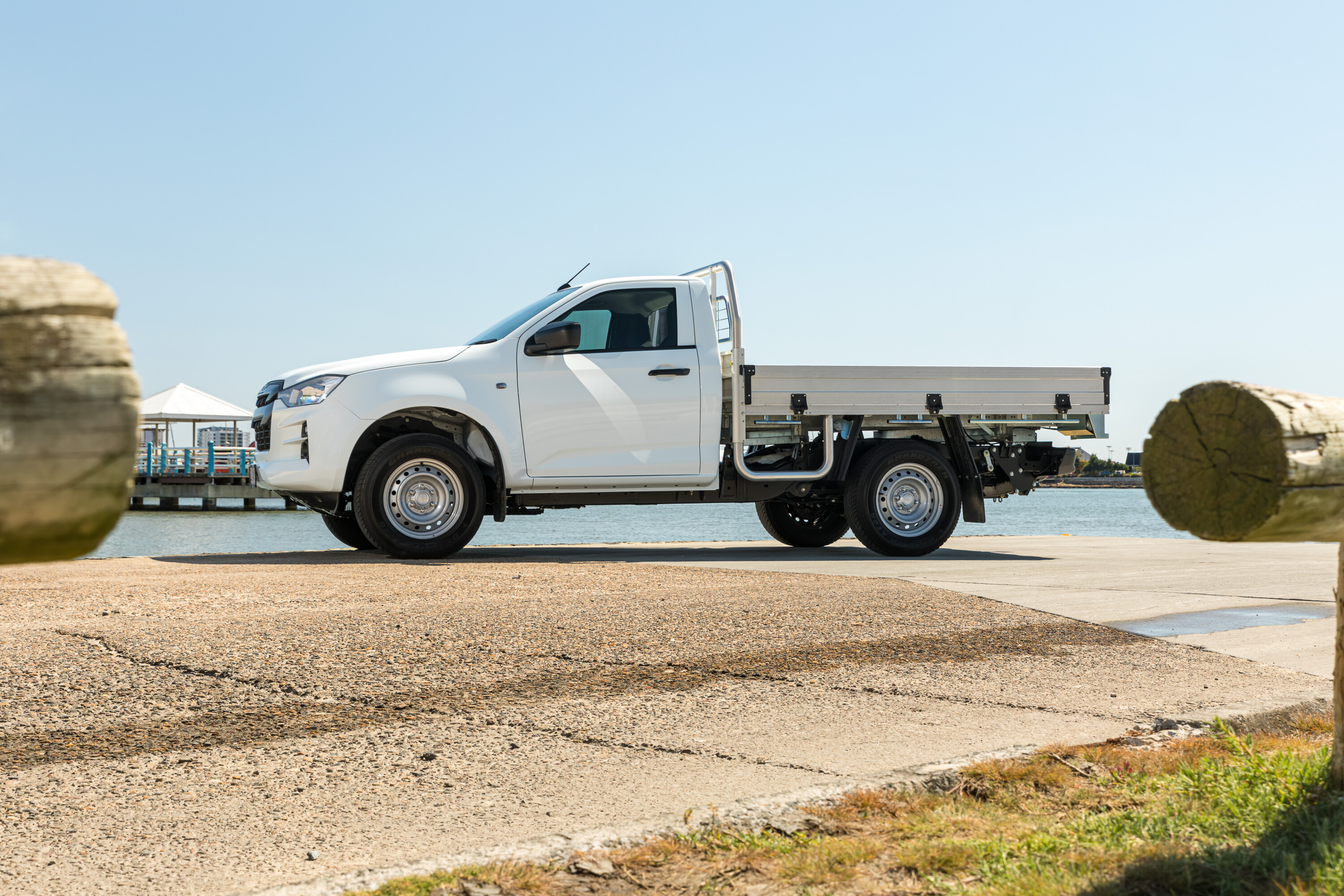
It will apply to all vehicle categories – from light passenger vehicles to heavy goods trucks – under a new Australian Design Rule 108/00 for reversing technologies, excluding a ‘partially completed vehicle’, such as cab-chassis utes.
Vehicles introduced in Australia before the initial mandate must be fitted with potentially life-saving reversing aids by 1 November 2027.
1
The new legislation will require the fitment of “mirrors, cameras or sensors and includes performance and installation requirements to maximise the effectiveness of the technology”.
It is intended to reduce the impact of collisions with pedestrians when a vehicle is reversing, following “advocacy from organisations such as KidSafe, and parents who have experienced both fatal and non-fatal driveway incidents”.
“We know that reversing aids will improve visibility for drivers to minimise black spots while reserving. The Australian Government predicts that this change will contribute to a reduction in both fatal and non-fatal driveway incidents,” said Federal Assistant Minister for Infrastructure and Transport, Carol Brown.
1
“Every week a child is injured in a driveway runover incident, with children under five most at risk. These new regulations will help lower the number of injuries and deaths and the devastating long-term effects on families,” added KidSafe Victoria CEO, Melanie Courtney.
A regulation impact statement published by the previous Federal Government in 2022 estimated reversing aids would save 12 lives, avoid 340 severe and 152 minor injuries, and provide approximately $38.6 million in net benefits.
The Federal Chamber of Automotive Industries (FCAI), representing the carmakers, told WhichCar it supports the requirement for reversing aids in light-duty vehicles to prevent loss of life or serious injuries.
1
“FCAI members have acted rapidly to increase the uptake of reversing aid technologies. This rapid uptake generally matches the development led by the automotive industry of reversing aid technology from infancy to maturity,” it said.
“Through the consultation process, the government acknowledged that there has been a rapid uptake of Vehicle Reversing Aid Technologies in Australia in recent years, even in the absence of regulation.
“The FCAI is encouraged by the fact that the Government has allowed reasonable lead time to allow manufacturers to increase uptake of these technologies to those models remaining in the new vehicle market not yet fitted.
1
“The FCAI also welcomes the Government’s acknowledgement that cab-chassis vehicles are difficult to regulate in this area and has exempted these models.”
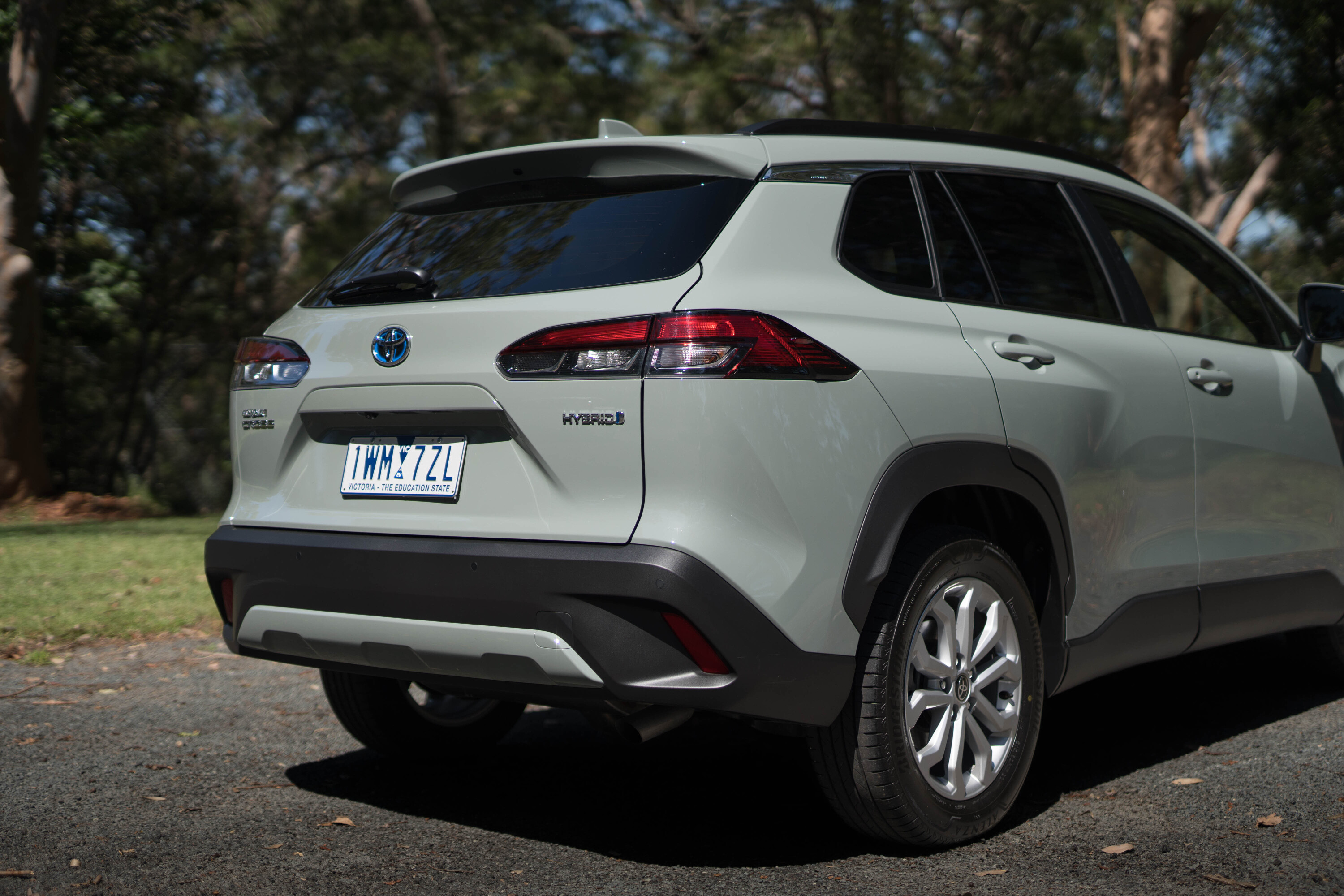
Most passenger vehicles sold in Australia are fitted with a reversing camera as standard due to customer demand, but rear parking sensors are not as common – particularly for base variants.
Under the new legislation, the 70 Series wagon is required to be fitted with a rear-view camera and reverse sensors from November 2027, but the cab-chassis ute will be exempt, should it remain on-sale at this time.
While rear-view cameras are required in the European Union from 2022, the United Kingdom has yet to announce changes, with many vehicles – such as the £44,170 Volkswagen Golf R hatch (AU$84,000) – not fitted with the technology as standard.
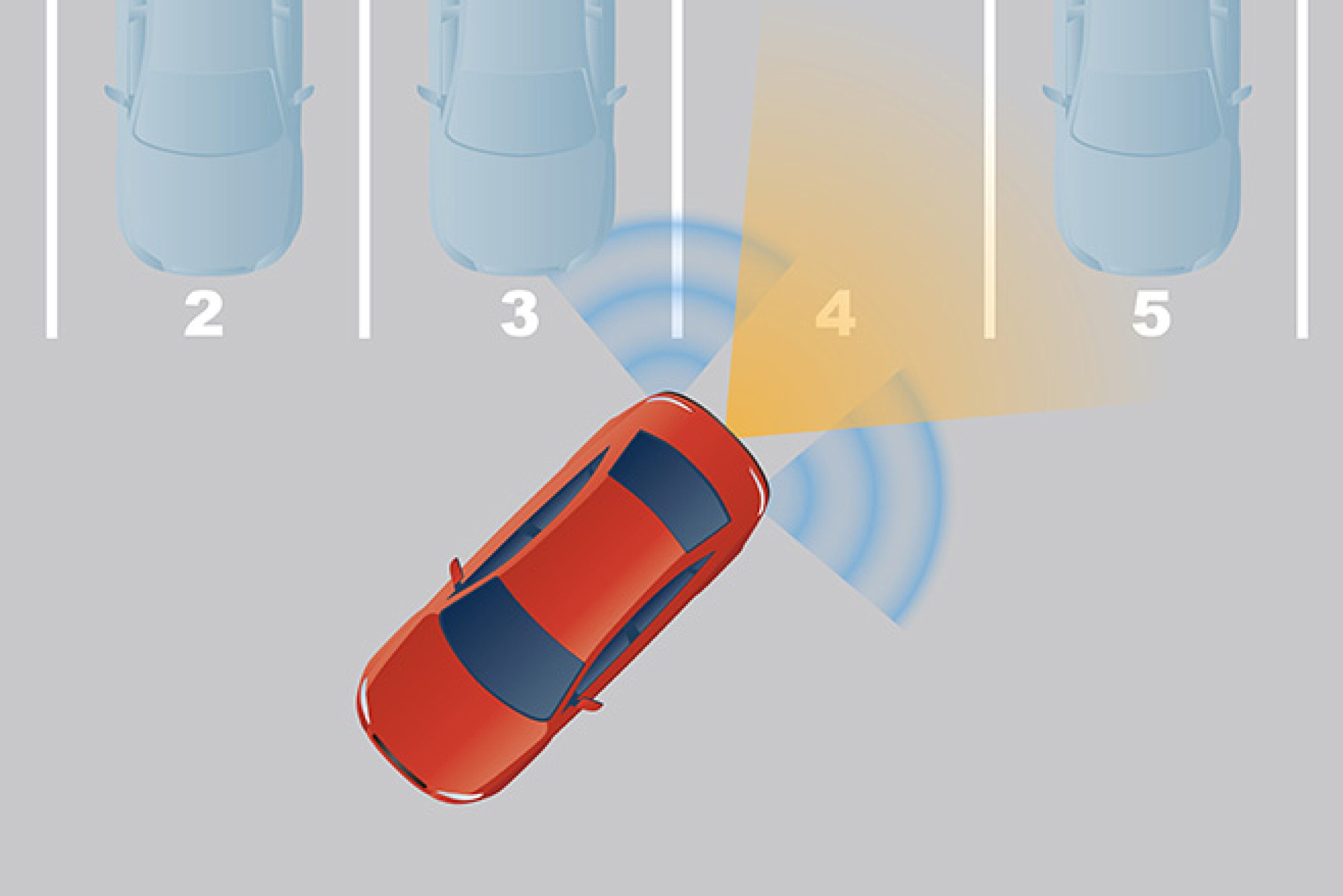
The local mandate does not include more advanced systems, including rear autonomous emergency braking (AEB) to automatically brake the vehicle when an object is detected in reverse or rear cross-traffic alert to detect approaching pedestrians and traffic.
Front and rear AEB is tested with other technologies by the Australasian New Car Assessment Program (ANCAP) as part of its safety assist and vulnerable road user categories. A minimum score of 70 and 60 per cent, respectively, is required for a vehicle to achieve the highest five-star rating.
“Through our non-regulatory approach, ANCAP has been encouraging active safety systems to assist in these scenarios – systems that can detect adult pedestrians when reversing then autonomously brake to avoid or reduce the severity of an impact,” said ANCAP CEO, Carla Hoorweg.
“From this year, this requirement increases further to assess the ability of the vehicle to autonomously brake in reverse for a child or person of smaller stature.
“Each ANCAP safety rating provides consumers with a Vulnerable Road User Protection score, and this is a good way to understand how well a vehicle can protect those outside the vehicle.”
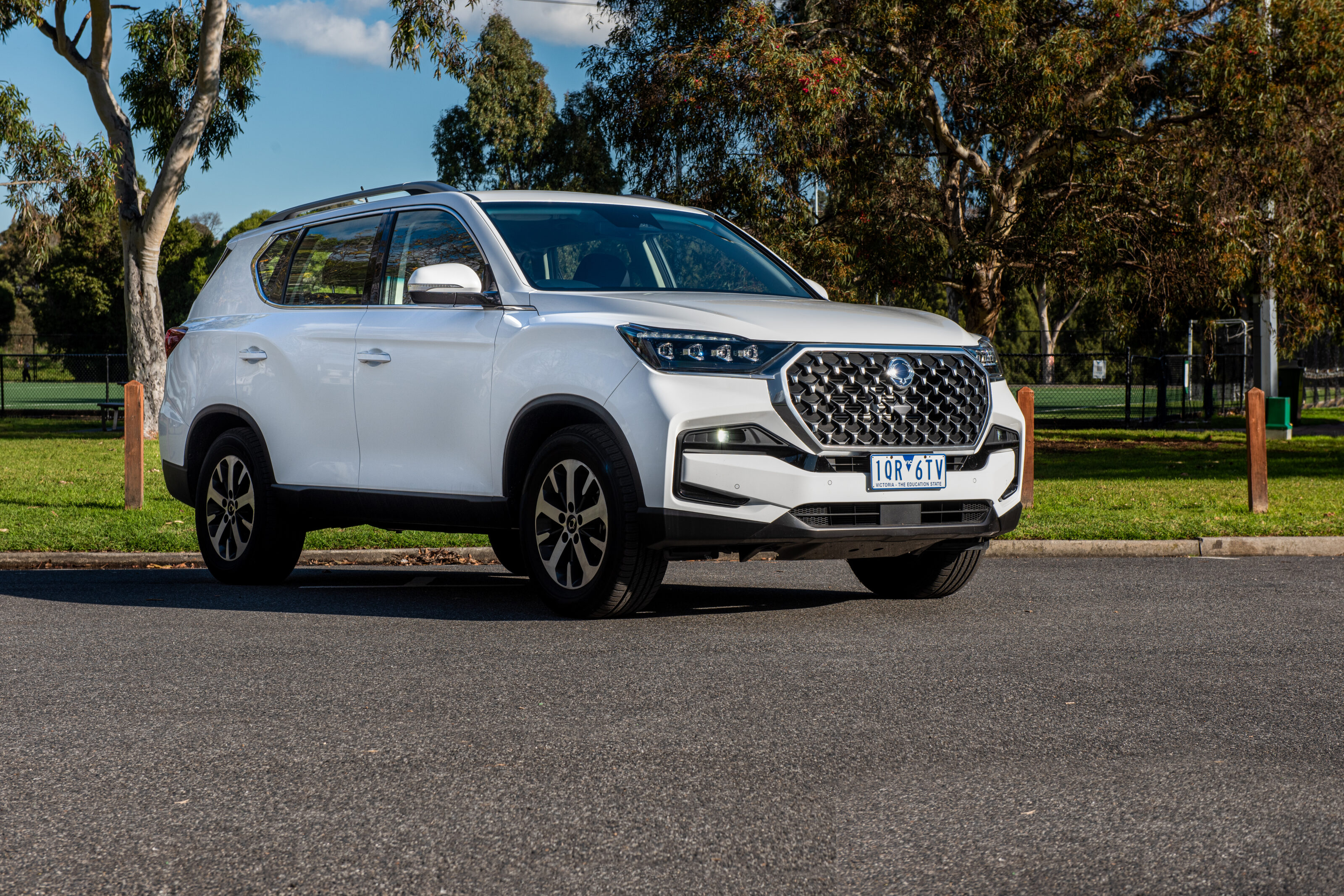
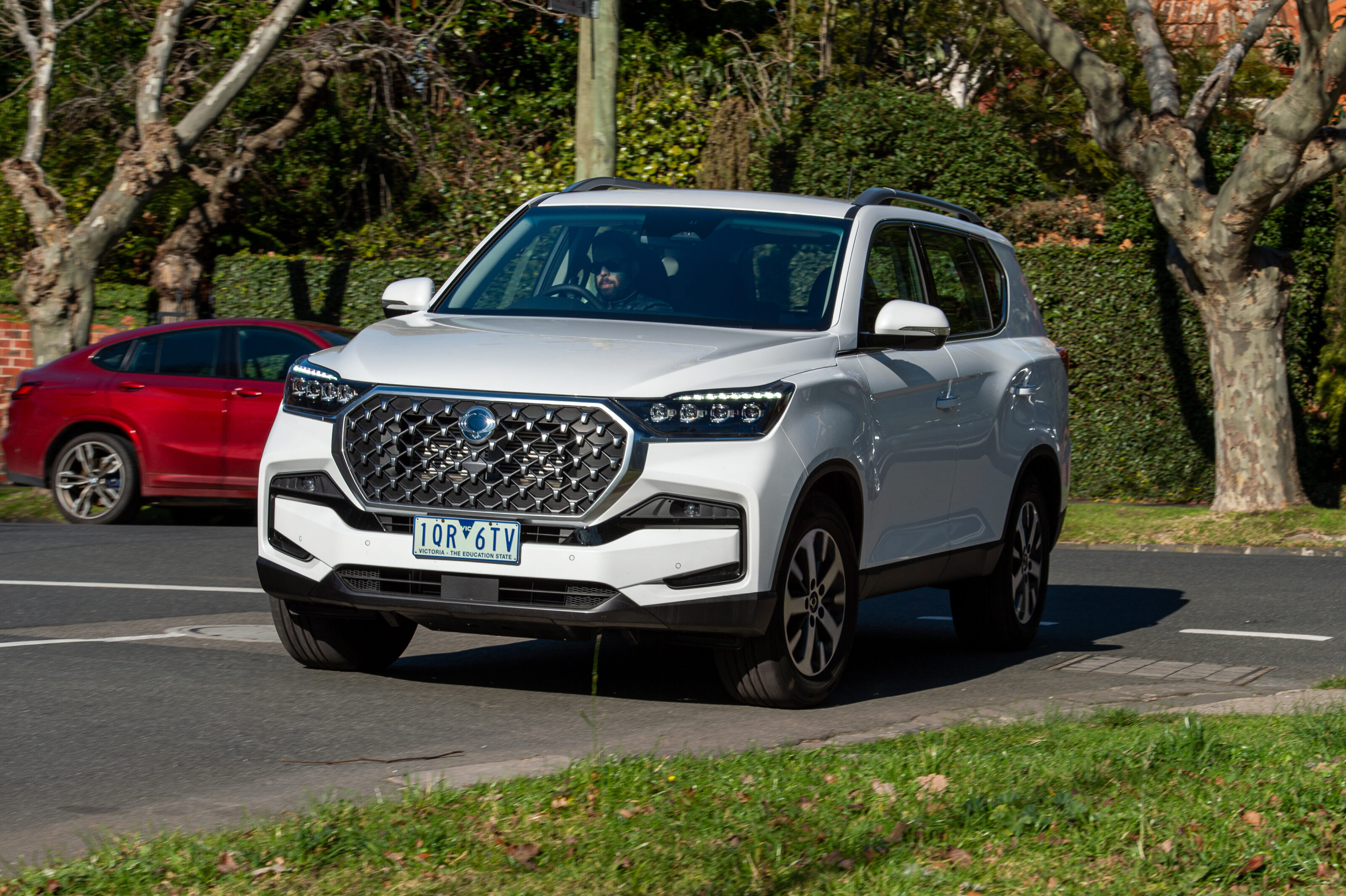
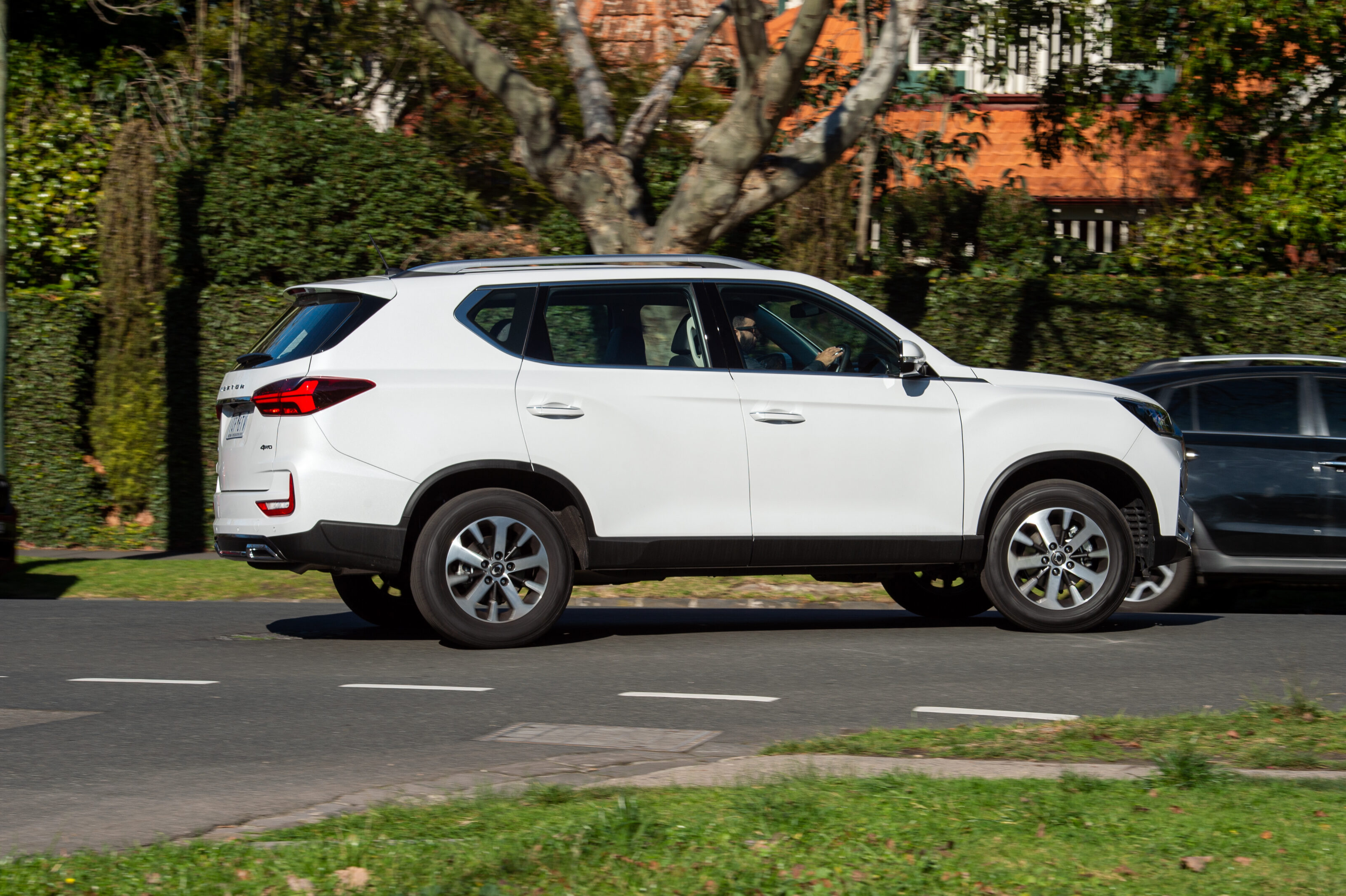
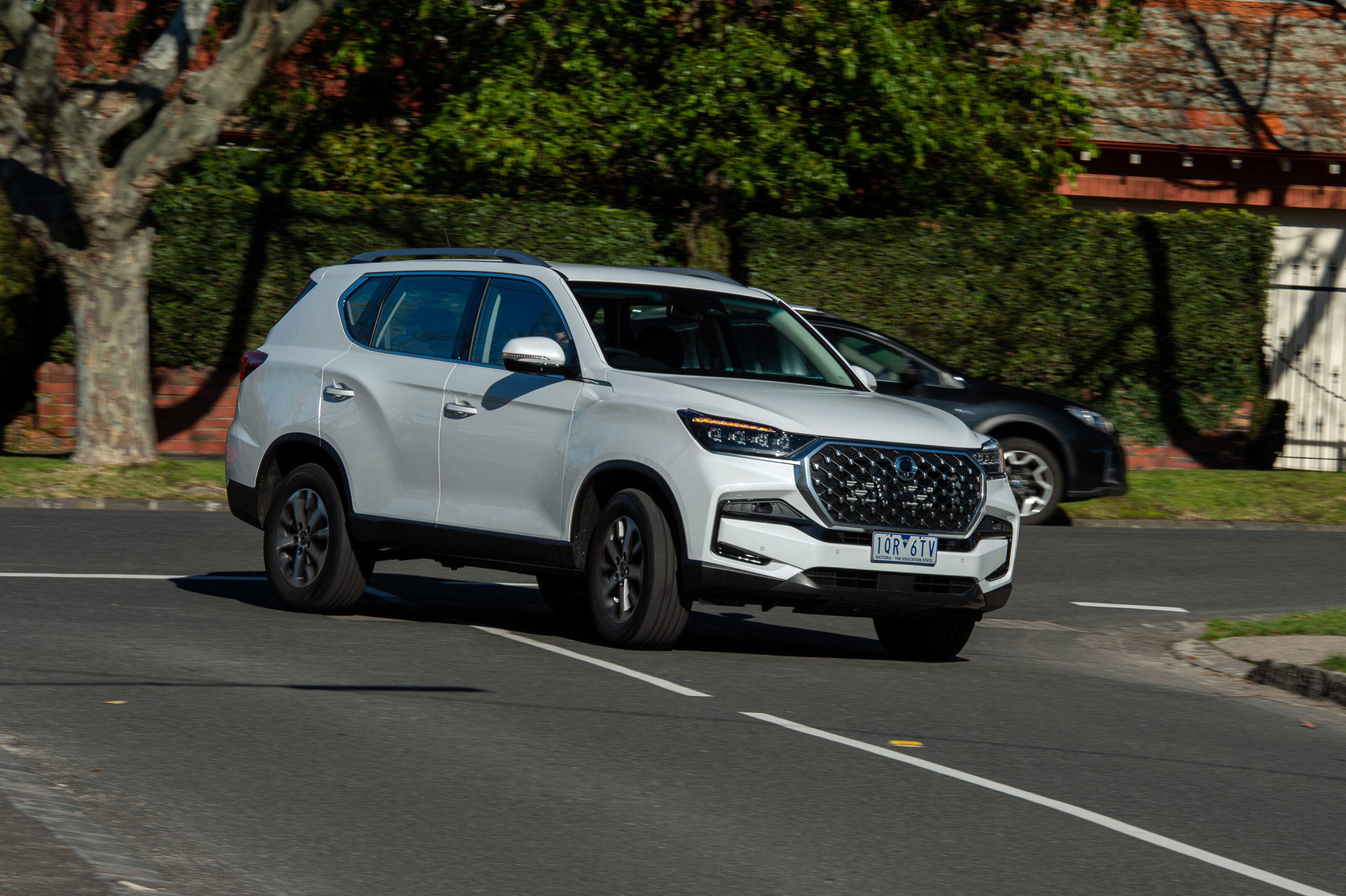
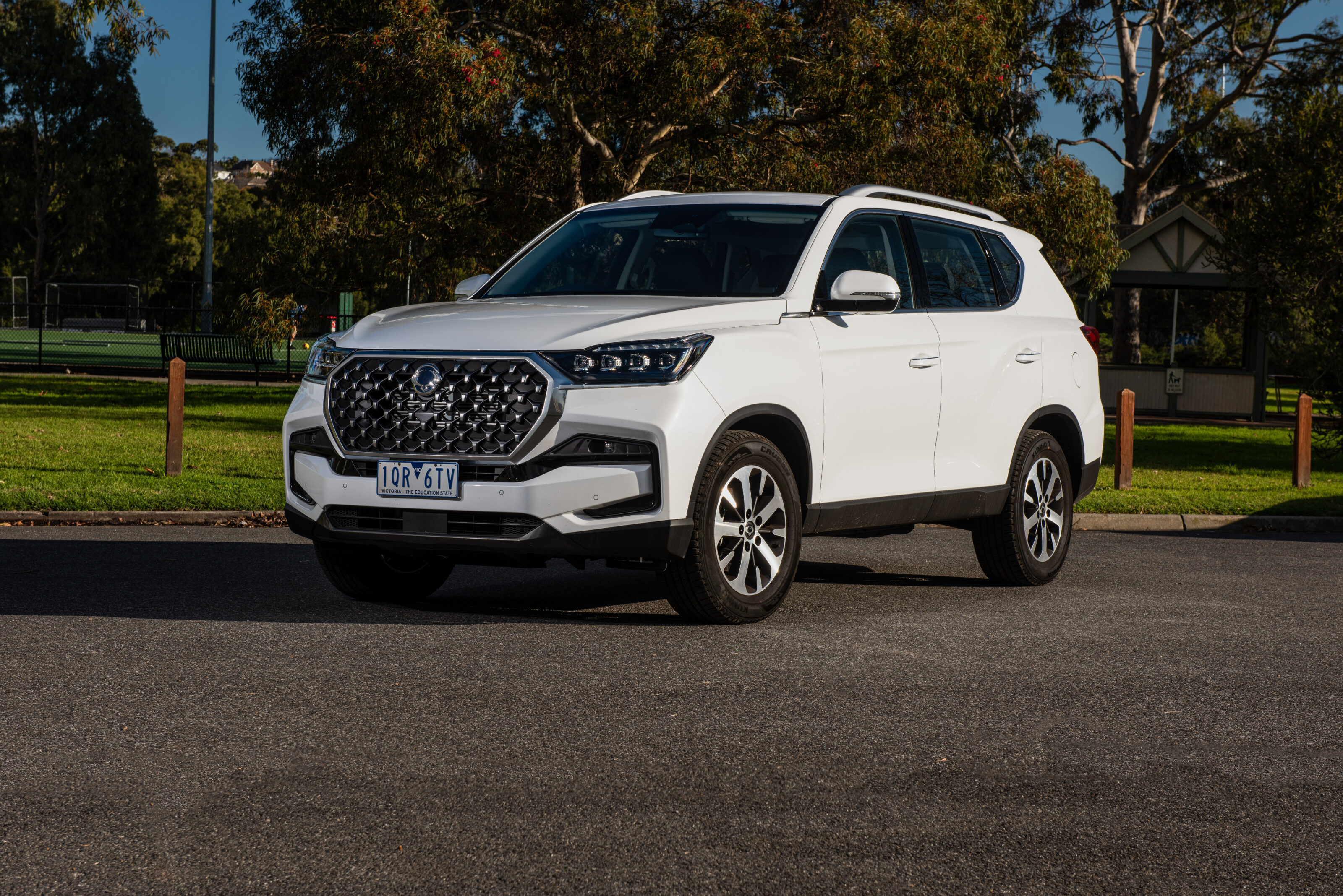
The ELX is the more affordable of the two-pronged SsangYong Rexton range, which on paper at least offers a pretty good bargain for anyone seeking a features-packed, ute-based four-wheel-drive SUV.
While this is the entry-level variant in the Australian line-up, its sharp, fixed drive-away price brings similar equipment levels to pricier medium-spec seven-seat rivals, such as the Mitsubishi Pajero Sport GLS, Isuzu MU-X LS-U, and Ford Everest Trend.
And while it misses out on a bunch of features found in the range-topping Rexton Ultimate, there are reasons to choose this beyond its cheaper price tag.
4
Pricing and Ownership
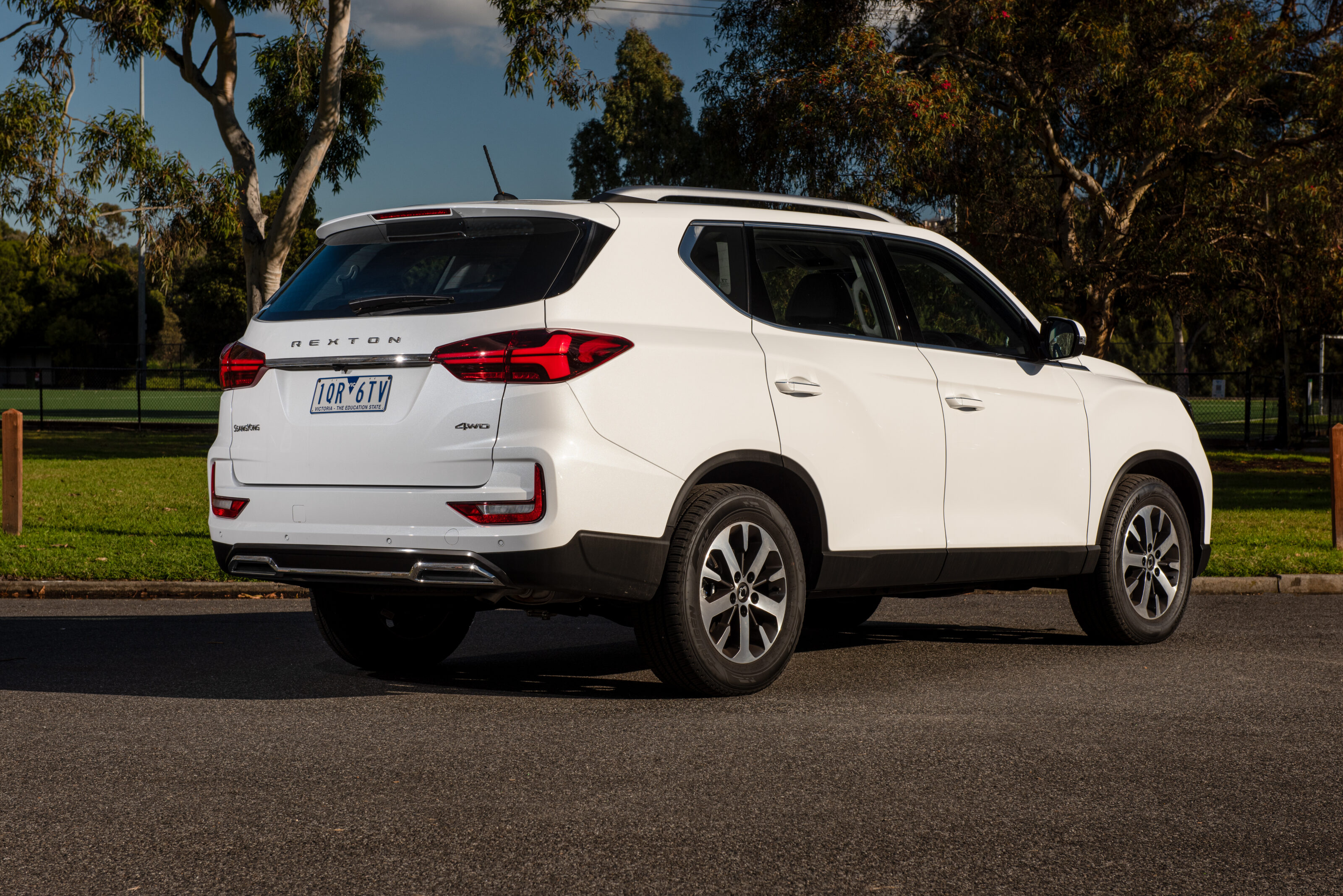
This is the second-generation model of the Rexton seven-seat SUV, which shares underpinnings with the SsangYong Musso 4×4 ute. It underwent a significant facelift in 2021 that brought a much bolder-looking front end dominated by the huge grille and attractive quad-style LED headlights, LED daytime running lights and LED foglights.
The ELX is priced at a very competitive $48,990 drive-away, with the range-topping Rexton Ultimate coming in at $55,990 drive-away.
1
Both are powered by a 2.2-litre turbo-diesel engine with an official combined fuel economy rating of 8.7L/100km, which isn’t bad for a 2.3-tonne wagon.
Running costs are also kept down with an affordable service regime under the brand’s 777 Care Cover that includes a seven-year warranty, seven-year roadside assistance plan, and seven years of capped-price servicing.
Like all SsangYong models, it has a 15,000km/12-month service schedule, which costs $375 for each service and includes oil changes plus air- and oil-filter replacements. As with most brands, you pay extra for parts when required, for which SsangYong provides up-front pricing for different parts.
Features
1
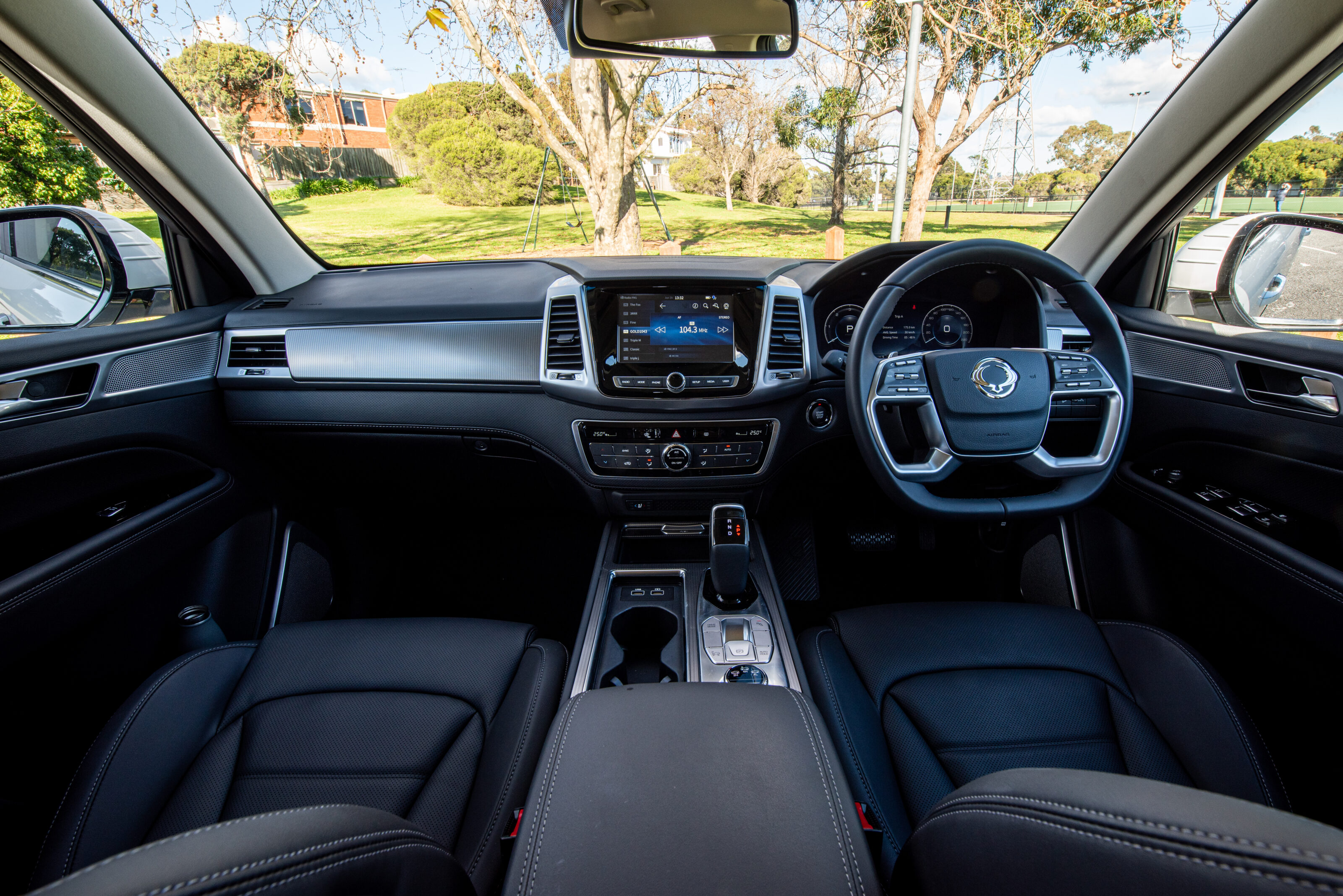
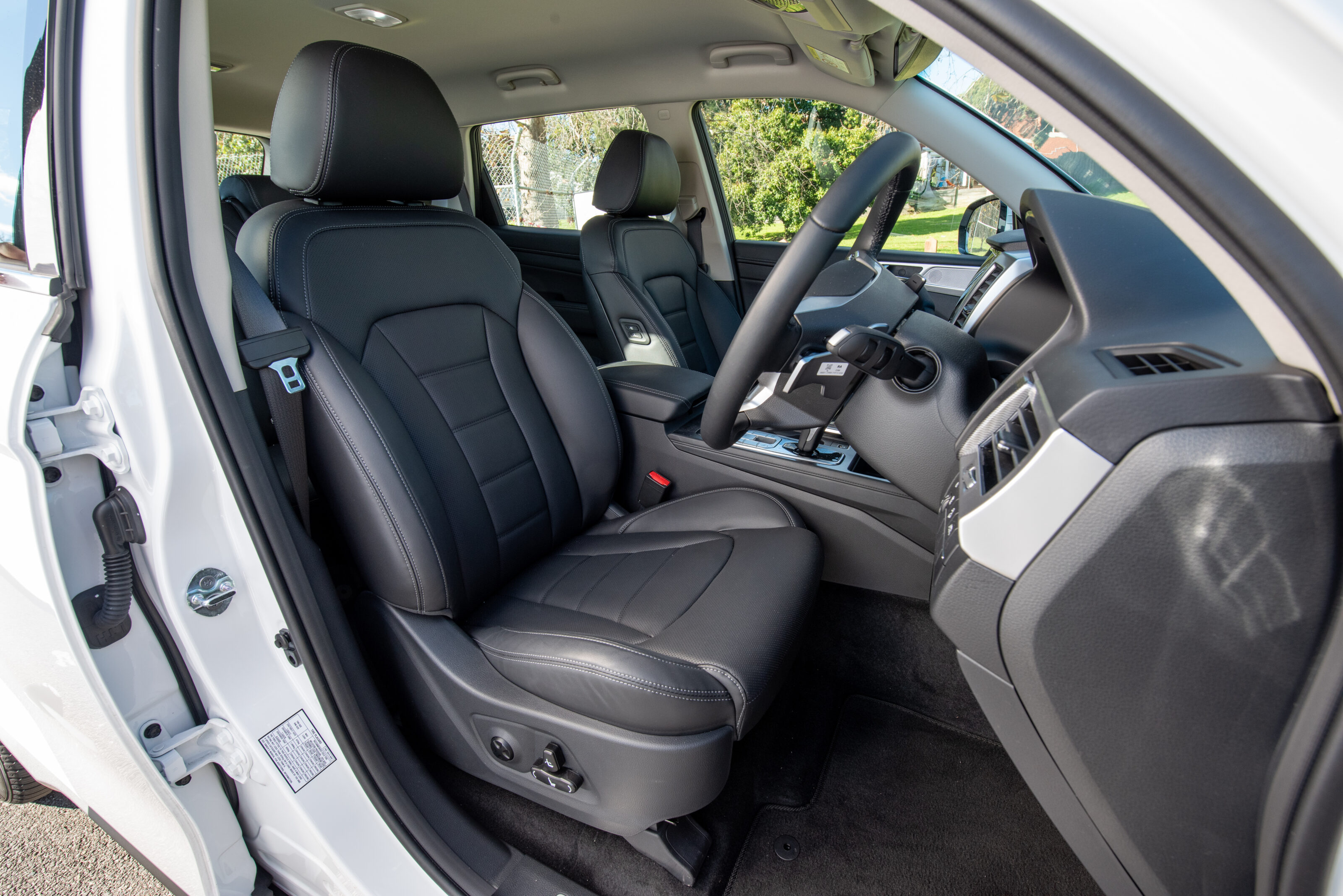
As well as seven seats, the Rexton ELX comes with 8.0-inch infotainment touchscreen and 12.3-inch digital driver display, with Apple CarPlay/Android Auto. It’s not short of creature comforts, either, which include leather-appointed seats, power-adjustable front seats with heating and ventilation, heated outboard rear seats and dual-zone climate control.
By comparison, spending more on the Ultimate brings all that plus fancier Nappa leather upholstery, illuminated scuff plates, sunroof, driver’s seat position memory, ambient interior lighting, 360-degree reversing camera, powered tailgate, touch-sensing front door locks, and a wireless phone charging pad.
1
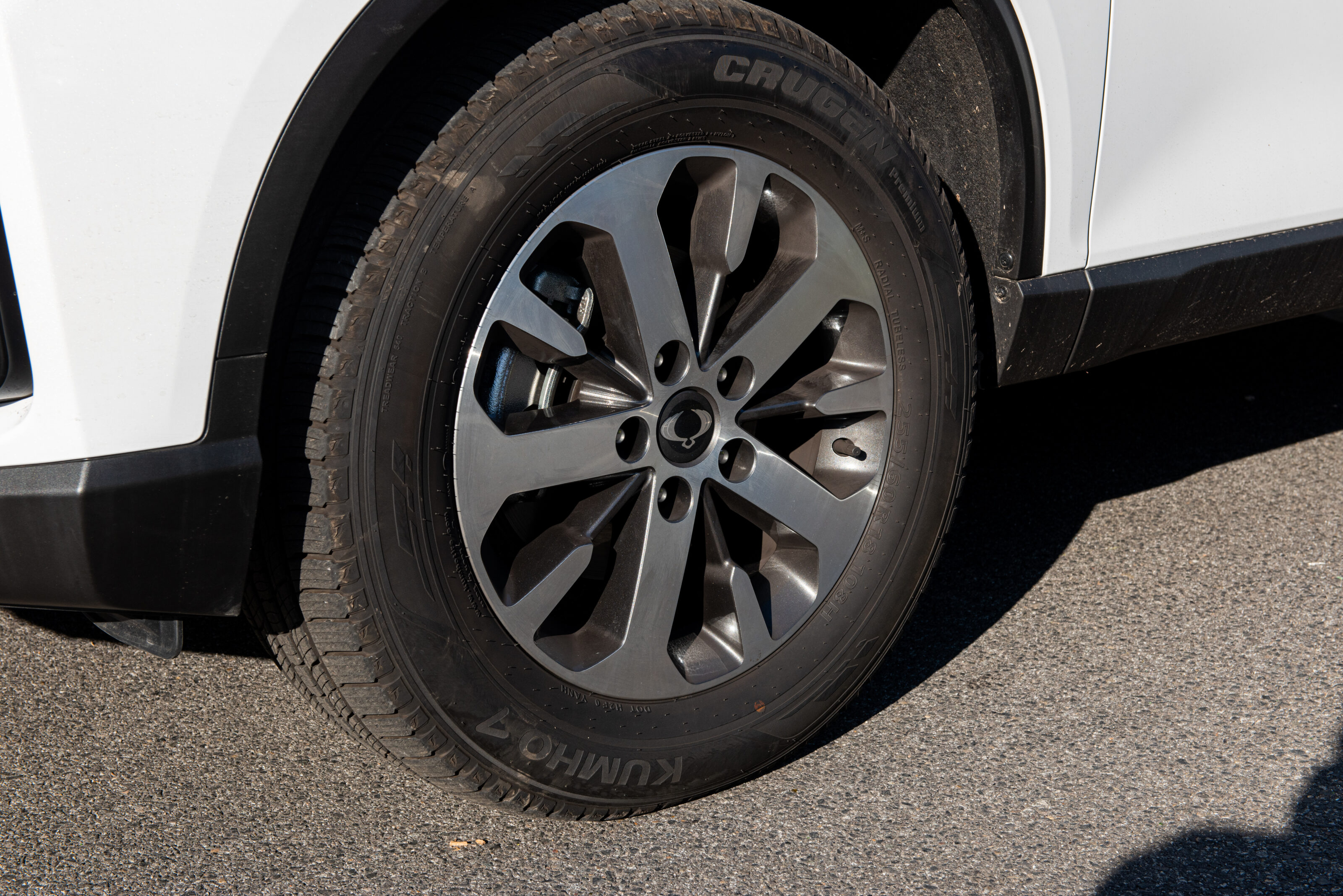
The ELX and Ultimate models are both fitted with 18-inch alloy wheels. The flagship model previously wore fancy 20-inch chrome-finished rims, which were an odd inclusion for a vehicle with genuine off-road capability.
The 18s make a lot more sense.
The Rexton is a serious off-roader, its part-time four-wheel-drive system coming with high- and low-range gearing as well as an auto-locking rear differential.
Space and Comfort
1
Even in ELX spec, the Rexton oozes showroom appeal. The heated and ventilated front seats are a nice place to be, with good back support and side bolstering.
Overall fit and finish are quite good. Hard plastics are mostly confined to hidden spots and the area directly above the 8.0-inch touchscreen.
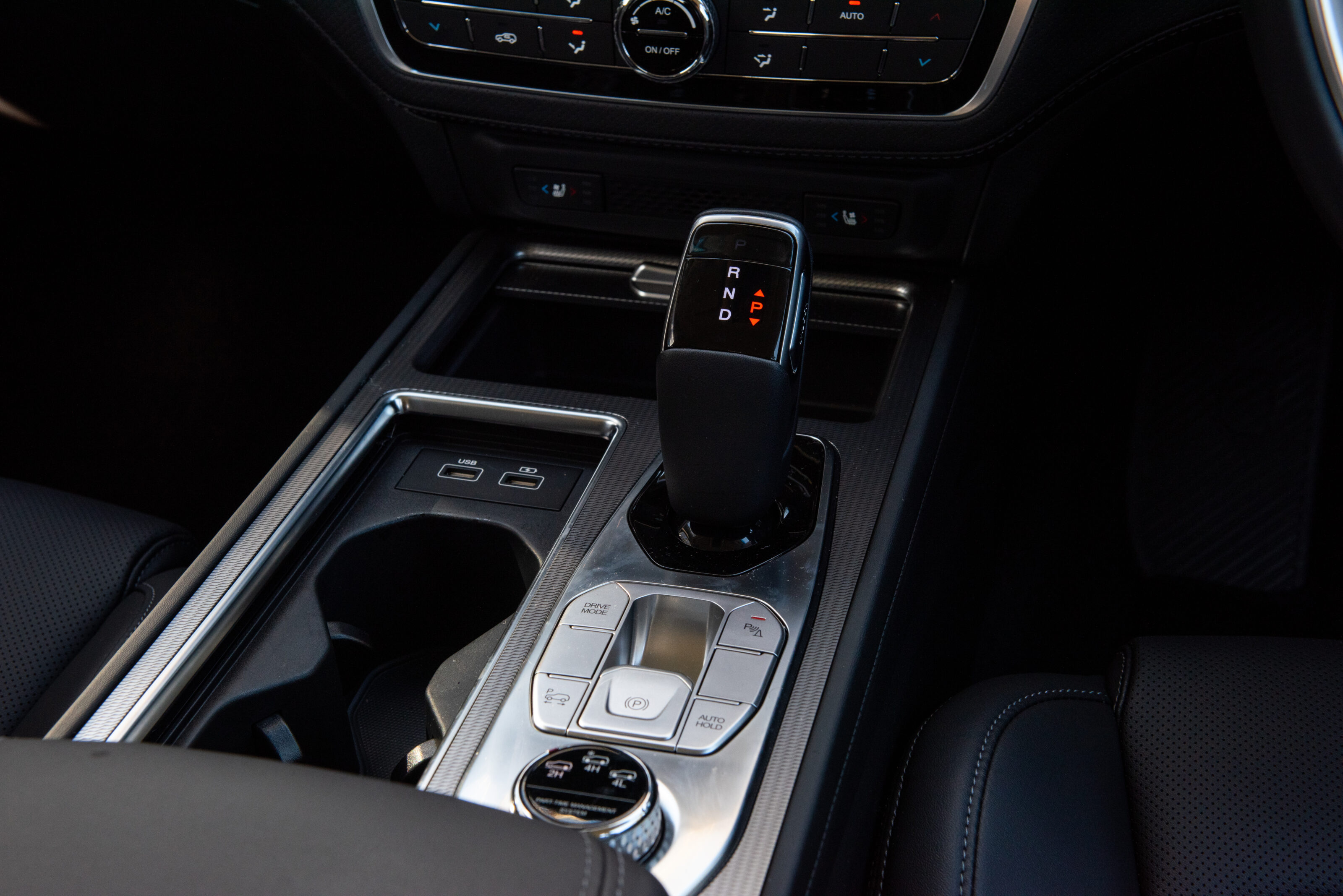
The centre console looks good and features a joystick-like gear shifter and attractive transfer case control dial with knurled metal edging.
Both cup holders in the centre can be hidden by an attractive roller shutter, though you won’t be able to close it all the way if you plug your phone cable into one of the two front USB ports. There is a covered storage tray at the front and a deep tub enclosed by the padded armrest next to your hip. Other front storage areas include the glovebox and large door bins.
6
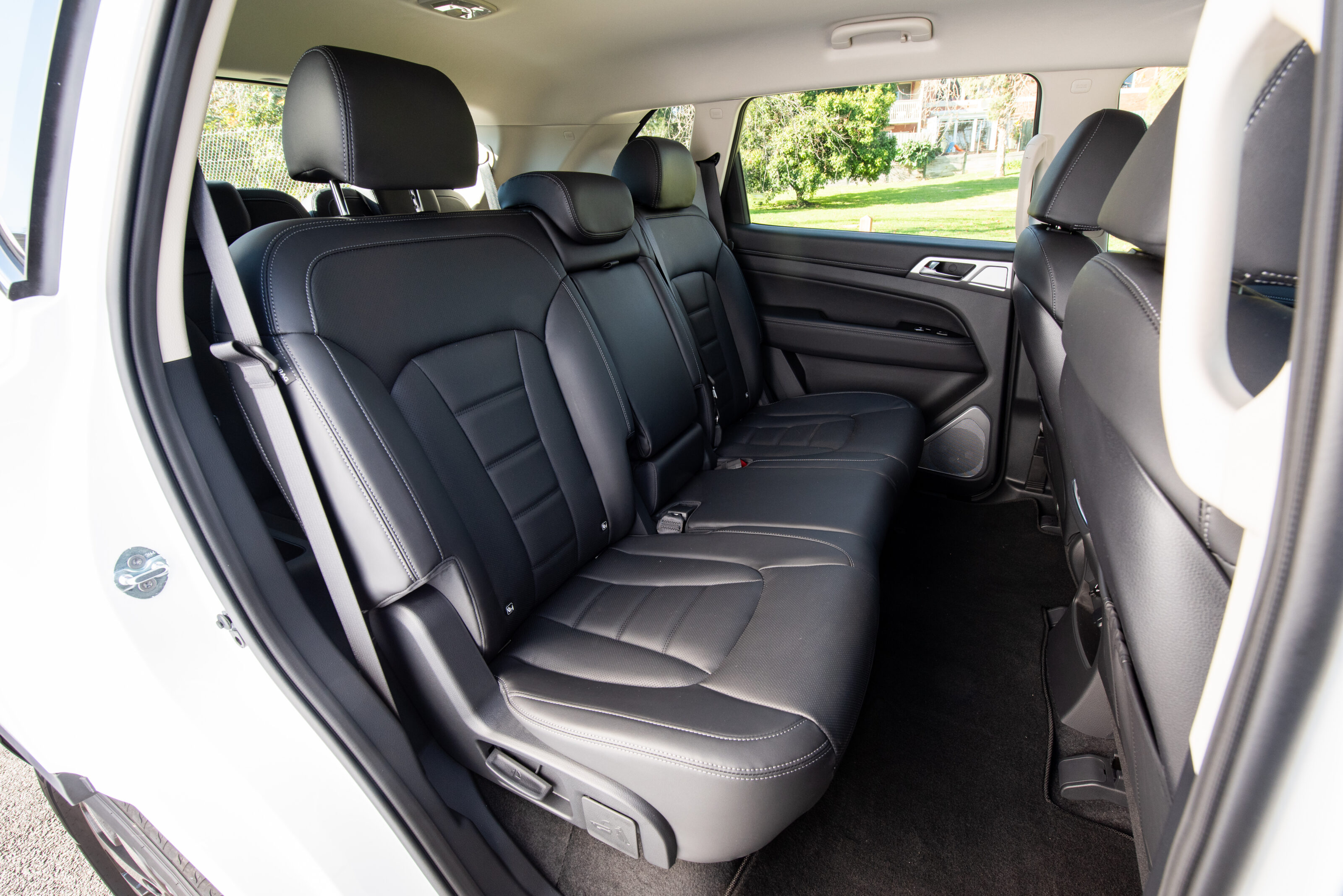
Middle-row seats are also well-padded, the outboard ones fitted with heaters. However, taller people will find leg and headroom to be a little tight, which is surprising for a large SUV like this.
The whole bench can slide back and forth, mainly to provide more third-row legroom, and the backrests recline up to about 60 degrees so passengers can catch 40 winks on longer drives.
Although the middle seat is okay for short trips, you will only be really comfortable if you have an unusually inward-curving spine. With nobody sitting there, the centre backrest folds down to become an armrest with cup holders and a handy enclosed storage tray.
4
Middle-row passengers also get air vents, two USB sockets, a 12-volt socket and decent-sized door bins.
The third row is accessible by folding the middle row seatback down and rolling the lot forward. This provides a decent gap to get back there, but that is about where the convenience ends.
Unless you push the middle row forward, the rear space is very tight. The seats are very low too, so anyone from about 12 years old will be sitting with their knees up and hard against the seatbacks.
2
Kids will naturally find it roomier back there, but there’s no view and they’ll feel quite isolated. But at least there is an air vent with fan control back there should they feel a little queasy.
I reckon you’re best treating the Rexton as a five-plus-two SUV that brings a huge boot with pop-up seats for emergencies.
With three rows up, that boot space is very tight – the floor area is about 116cm wide with about 40cm between the powered tailgate and seatback, but that decreases as you come up because of the backrest angle. Still, it’s enough to fit your weekly shopping or a set of golf clubs.
3
1
But put the second-row seats down and you have a substantial 641-litre cargo area that will take loads up to 1.2 metres long. You can also raise the floor so it lines up with the folded seats to create a flat surface.
Folding the middle row seats down or forwards brings up to 1860 litres of space and allows for loads up to 1.7 metres long.
If you need to haul more, the Rexton has a big 3500kg braked towing capacity.
On the Road
1
The Rexton’s 2.2-litre turbo-diesel engine produces 148kW and 441Nm delivered via an eight-speed automatic gearbox sourced from Hyundai.
It’s a smallish engine compared to its rivals, but it actually produces more power and torque than 2.4- and 3.0-litre turbo-diesels in the Pajero Sport and Isuzu MU-X.
The Rexton is primarily rear-wheel drive, but you can select high- and low-range four-wheel drive with a neat dial for when you want to go bush or to the snow.
It’s quick off the mark and will get to highway speeds soon enough, the transmission quickly finding the right gears to get you there. Once at speed, there is sufficient power in reserve for overtaking albeit with a little turbo lag.
1
The engine sounds rather agricultural on start-up, but once you get moving is surprisingly quiet and the entire 4×4 diesel powertrain feels quite refined.
A 10-link independent rear suspension set-up with wishbones up front and coil springs at each corner brings reasonable road manners at moderate speeds around town.
However, this is an old-school body-on-frame SUV, and at higher speeds you feel every bump and crease.
1
Ride quality was busy on the pre-update Rexton Ultimate with its big 20-inch rubber, but it’s noticeably tamed on the ELX’s 18s. The Rexton still bounces around a little but not quite as much.
To be fair, few of the Rexton’s direct rivals exactly provide a smooth ride – the Ford Everest being one of the notable stand-outs – but they do tend to settle a little quicker over bumps.
On the plus side, the Rexton rides well on gravel and its 203mm ground clearance will see off obstacles and speed bumps, though you’ll soon learn to negotiate them slowly.
5
Another disadvantage of the body-on-frame chassis is that handling can be compromised, particularly on winding roads. Body roll can be quite pronounced and the steering feels a little light despite getting firmer as you speed up.
If you do overcook a bend the Rexton will do its best to avoid disaster by employing anti-rollover protection, which adjusts the amount of engine output and braking power delivered to each wheel while driving around sharp turns to keep it upright.
But it brakes okay, and down hills, you can engage paddleshifters to gear down to ease yourself into bends.
Safety
For some reason, the Rexton hasn’t been independently crash-tested by ANCAP or EuroNCAP, but both variants bring a bunch of safety features including autonomous emergency braking with forward-collision warning, braking assist, blind-spot warning, rear cross-traffic alert, lane departure warning, trailer sway control and parking sensors at both ends.
It also comes with nine airbags, including for the driver’s knee and side curtains although the third row is unprotected.
Noteworthy omissions are adaptive cruise control and lane-keep assist, which are available in the Rexton’s smaller Korando sibling.
VERDICT
1
The sub-$50,000 price tag makes the SsangYong Rexton ELX quite a bargain, with its generous standard equipment list and more compliant ride making it the pick of the duo.
It represents great value for anyone seeking an affordable large SUV with a big towing capacity, huge boot, reasonable fuel economy and comfort for the daily drive while offering the opportunity to escape beyond the beaten track with a boat or caravan in tow on the weekends.
Only SUV shoppers can determine whether the Ultimate’s additional features are worth it for the extra $7000 spend.
Welcome to the new Wheels Best series that will interrogate vehicle segments like never before, giving consumers the definitive guide to – as we say on the tin – the best new cars available.
Wheels is famous for its ‘Megatests’, though we wanted to go further than these giant group comparisons that have typically focused on one price point in any given vehicle category.
The Wheels Best series will cover multiple sub-categories in one vehicle segment to better assist new-car buyers who have differing needs and desires: whether their priority is family practicality, performance, value for money, or luxury; whether they have a particular budget cap; or whether they’re simply after a particular drivetrain such as hybrid or electric.
This also allows for any given make-model to be represented across different sub-categories by its multiple variants.
1
In time-honoured Wheels tradition, we also crown an overall segment winner.
And for our first ever Wheels Best segment, Small SUVs make for a natural choice.
The Small SUV category is the third most popular in Australia – accounting for about a fifth of the new-car market when you include ‘light’ SUVs. Industry body FCAI separates light and small SUVs in its VFACTS sales figures, but this doesn’t account for major price overlaps between the two.
3
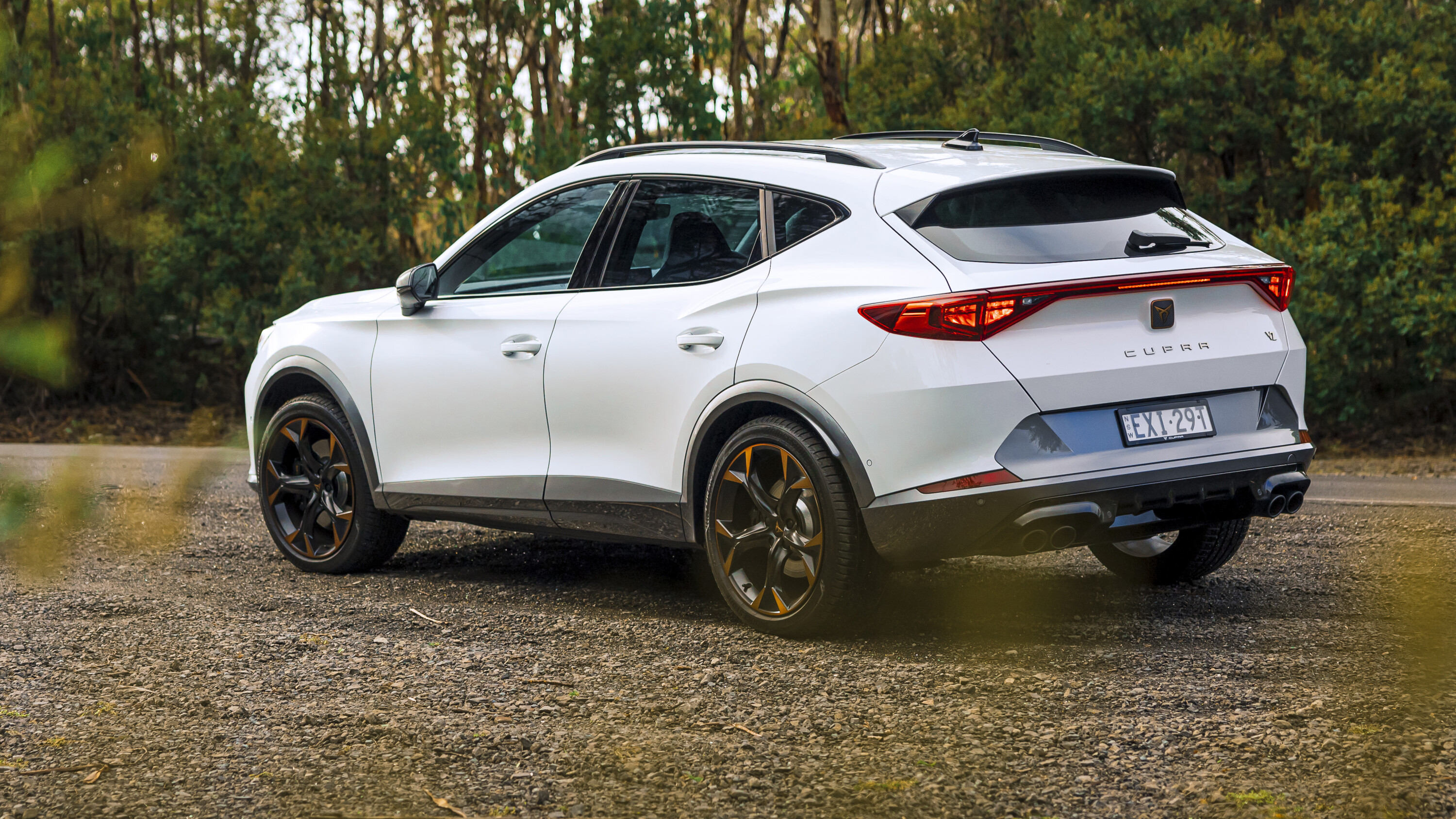
Similarly, we’ve pulled the Cupra Formentor from its official ‘Medium SUV’ classification because, at 4.4 metres long, the Spanish five-door sits below our 4.5m threshold for distinguishing small SUVs.
The Formentor joins the Toyota Corolla Cross as a still-fresh model, both released in 2022, while the Volkswagen T-Roc was heavily updated last year, too.
Yet, as our Wheels Best series covers all small SUVs you can buy right now, how long a car has been on sale is irrelevant. Indeed, one of our category winners was first released in 2019.
5
So, what are the best Small SUVs you can buy in 2023?
Read on for the most comprehensive comparison guide you’ll find to the world of compact sports utility vehicles.
Humans are getting taller. In 150 years, thanks to improvements in nutrition and medicine, the average height of a human living in an industrialised nation has grown a staggering 10cm.
The same has been happening with cars for decades now. Formerly dominant small cars like Corolla and Golf are being bullied out of existence by younger siblings who’ve simply grown taller. The trend isn’t going away either. Since 2013, sales of small “C-segment” SUVs have risen from around 75,000 to almost 200,000 last year as more models hit the market.
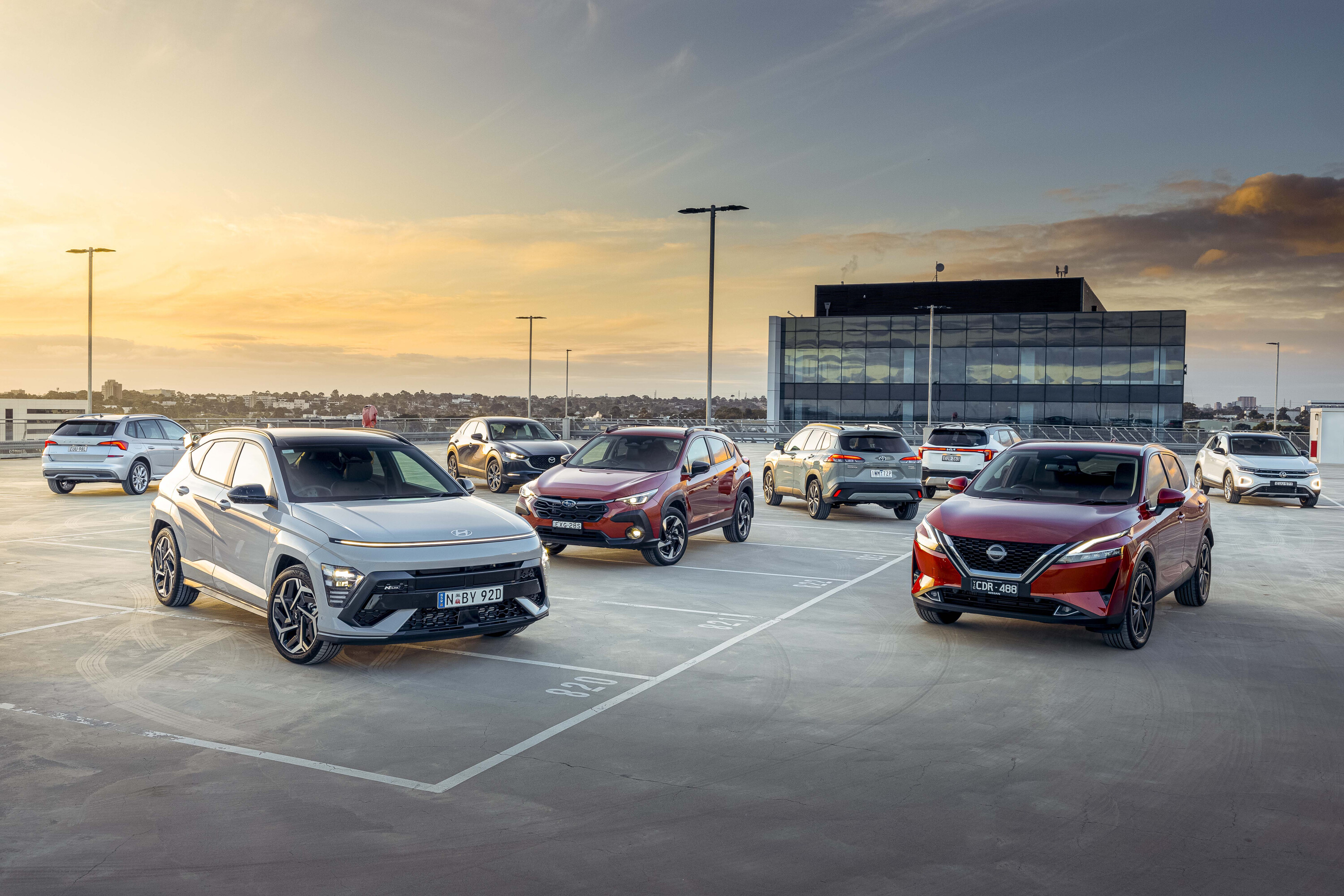
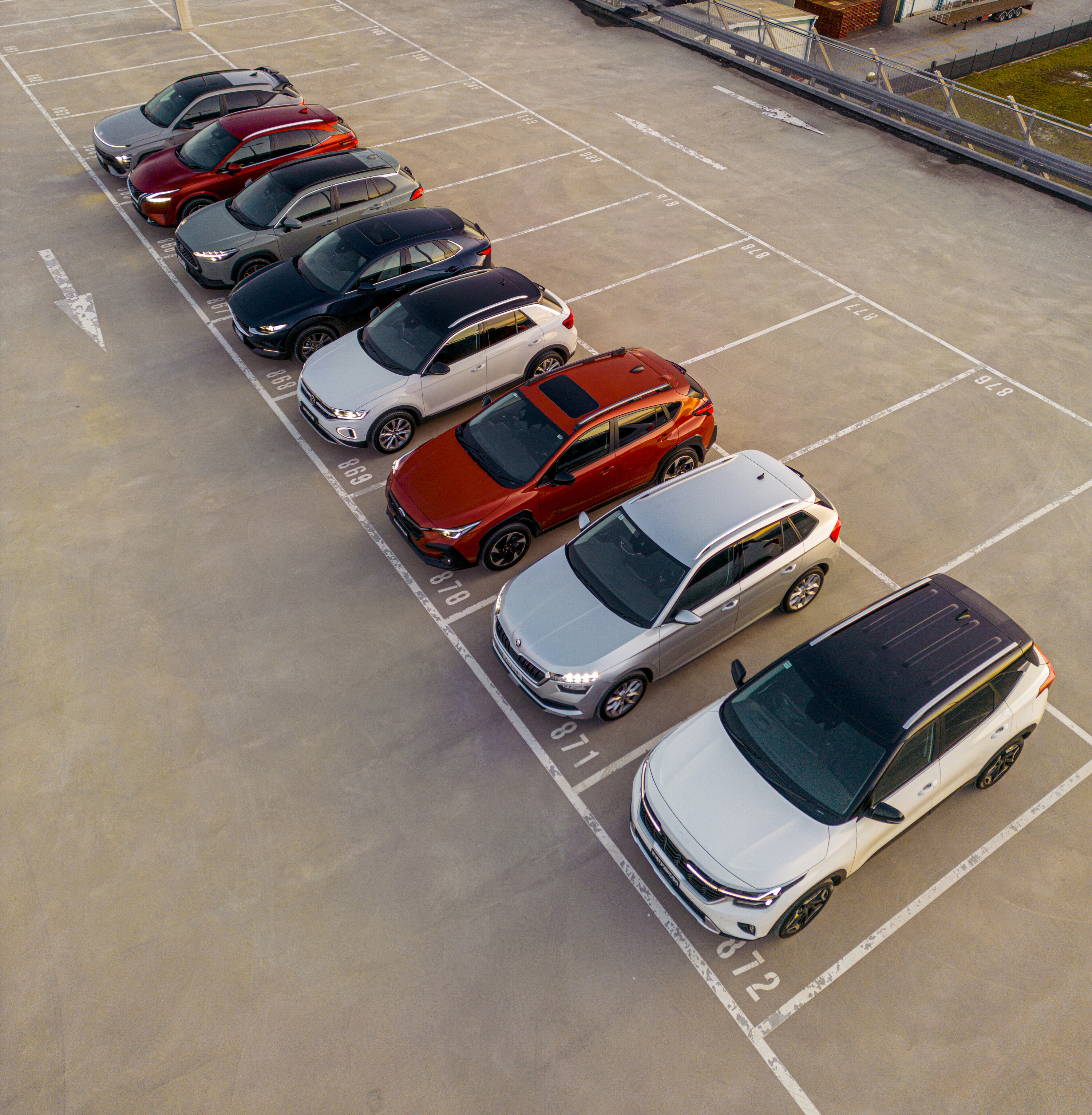
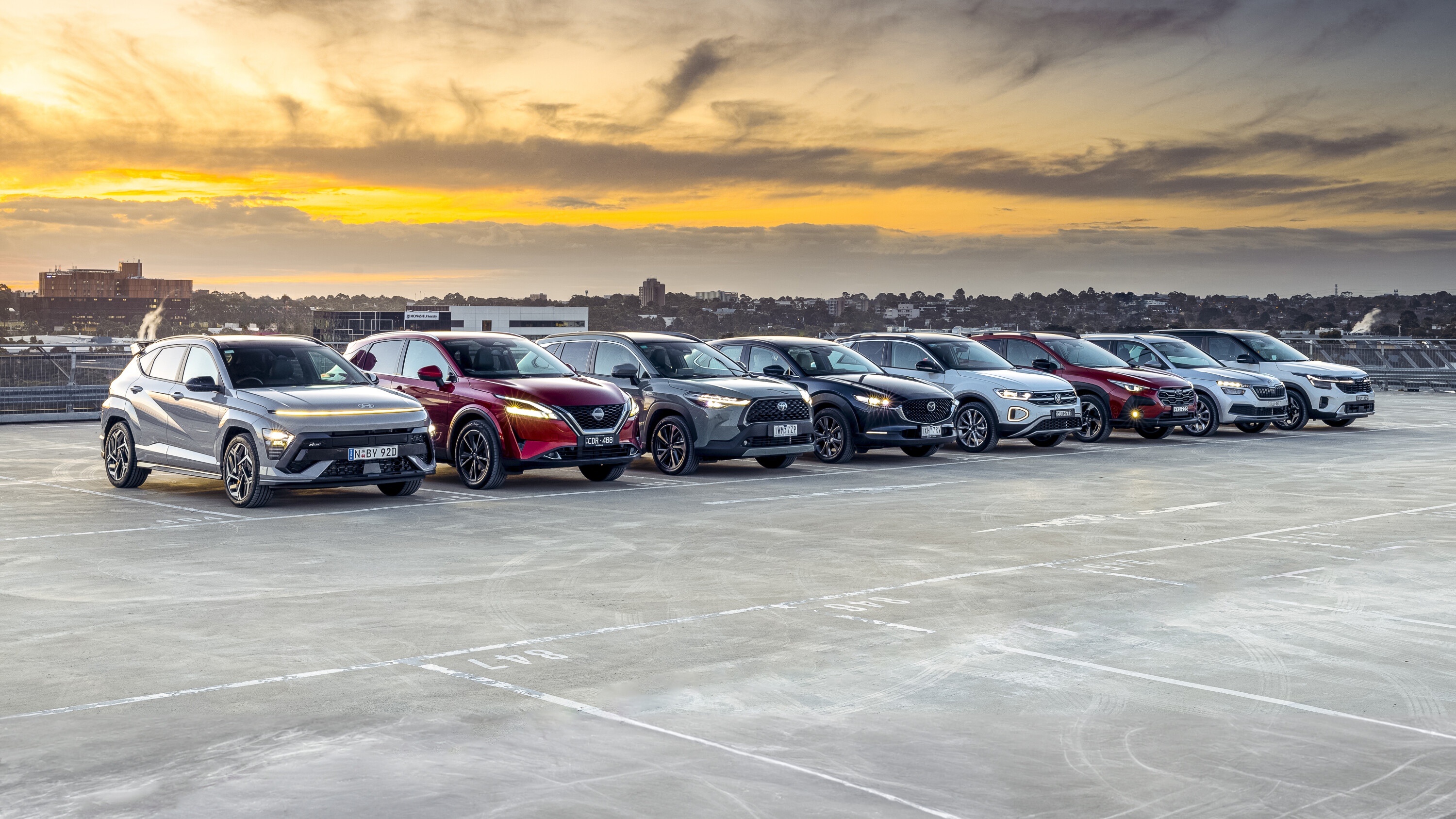
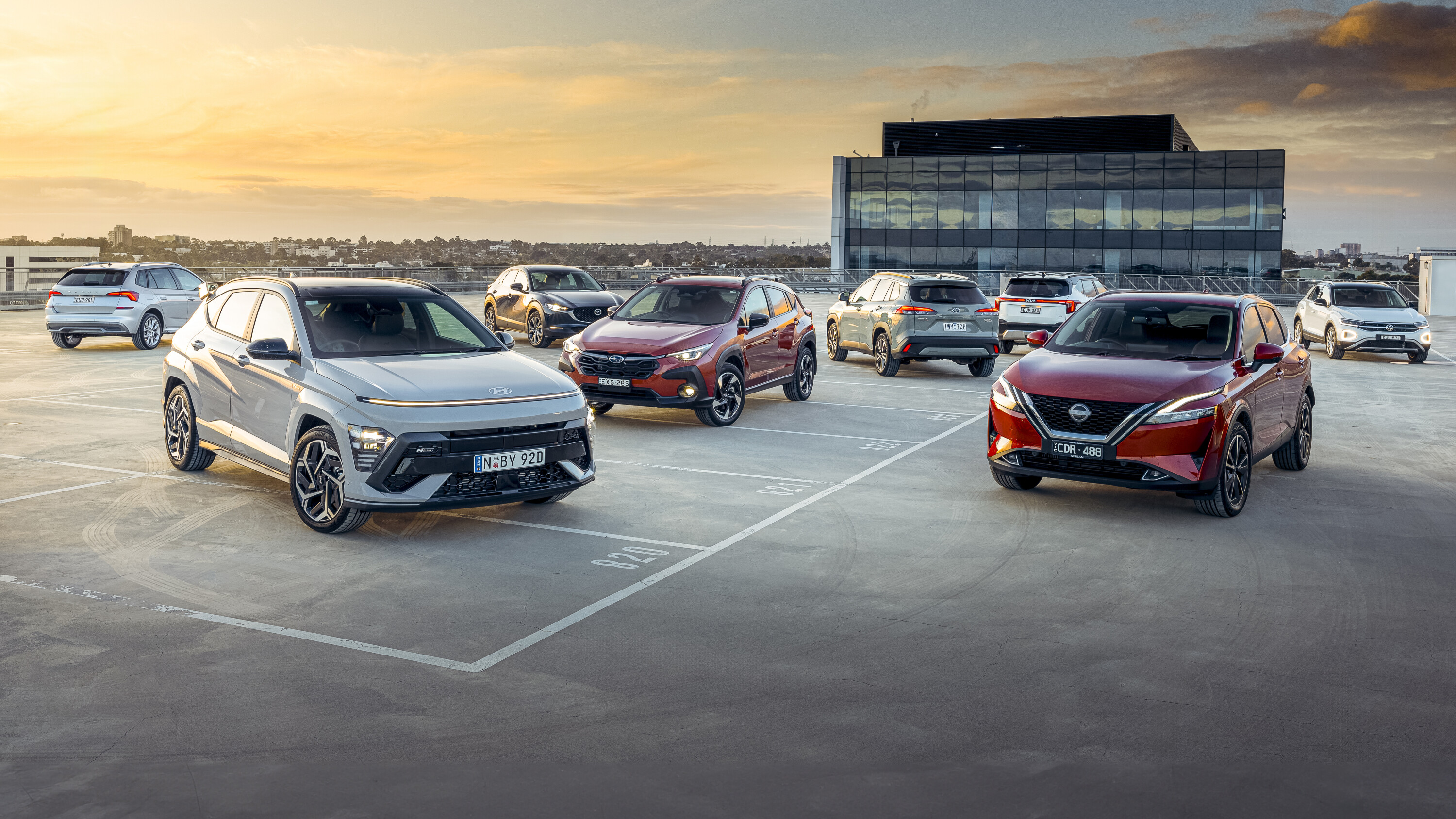
Today’s objective is to compare eight of them, representing the sharpest and cleverest of the small SUV lot – all around $45K. The newest is the Hyundai Kona – here in $46,500 N-Line Premium guise – its space-age exterior concealing a clever new interior that almost makes the Kona feel a size larger than it actually is.
1
Taking on the Kona, in alphabetical order, we begin with its Korean cousin, the Kia Seltos.
Our top-spec GT-Line AWD uses the same 146kW 1.6-litre turbo engine and at $44,900 it undercuts the Kona by a small, but still useful, margin.
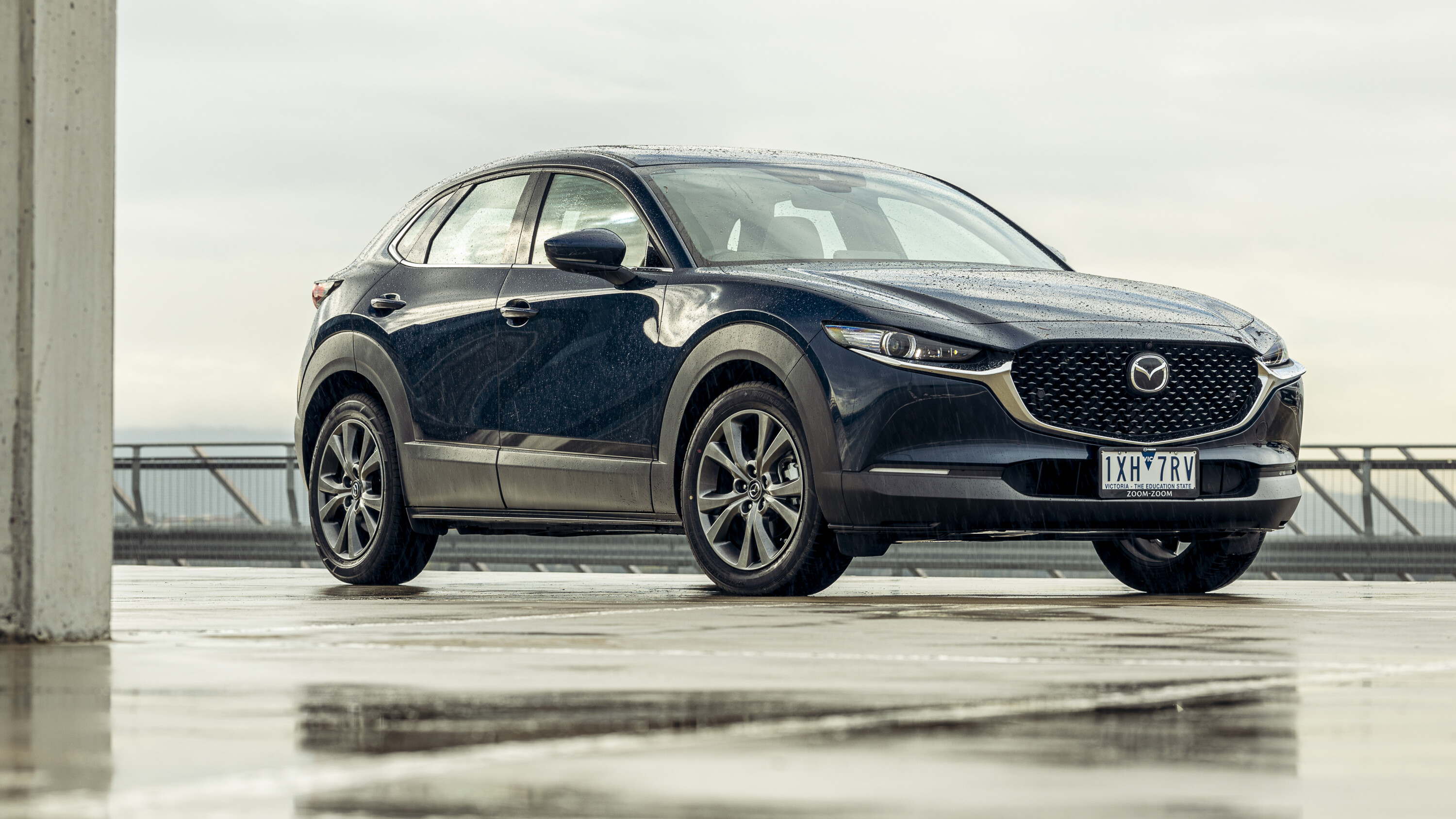
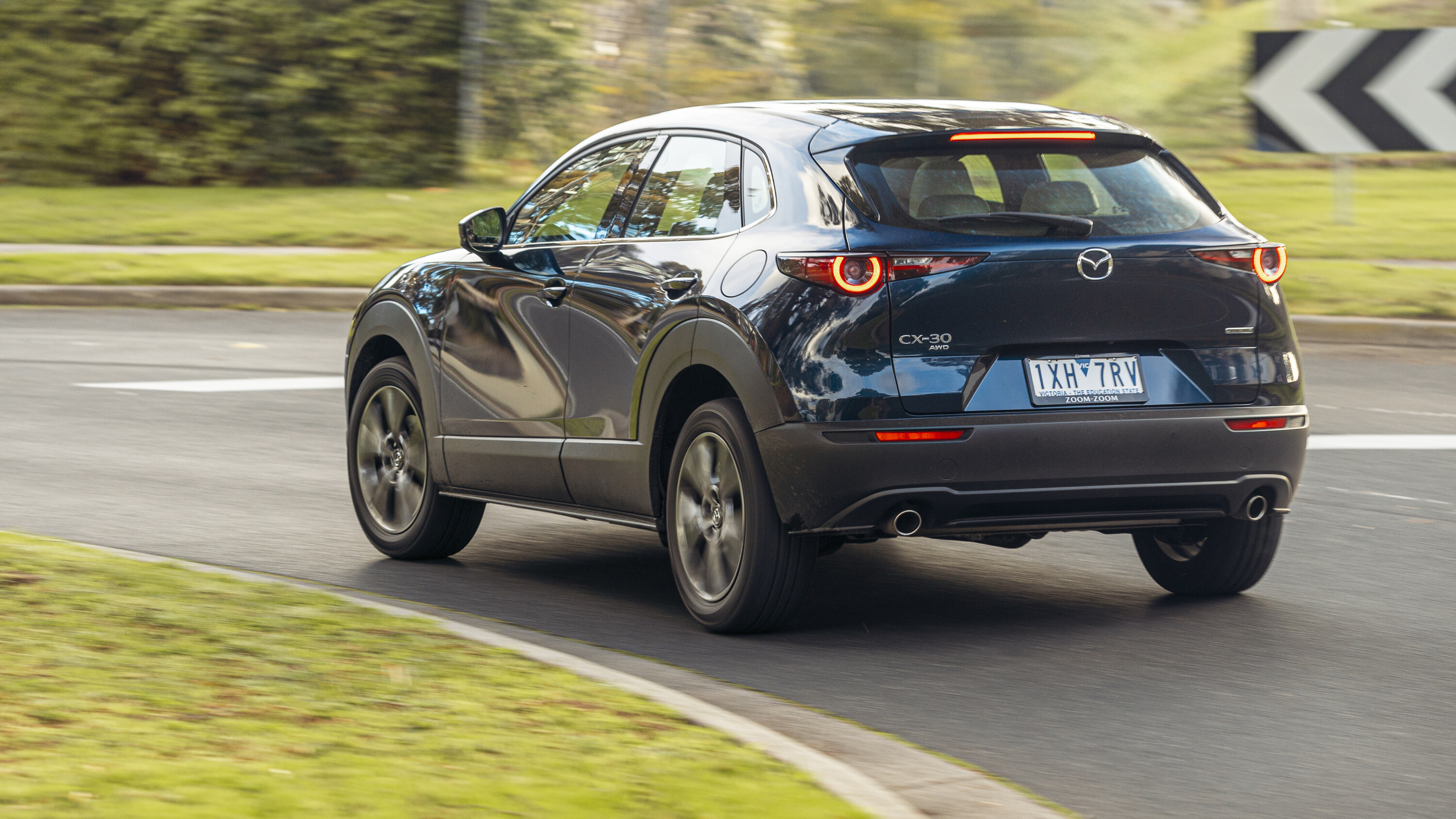
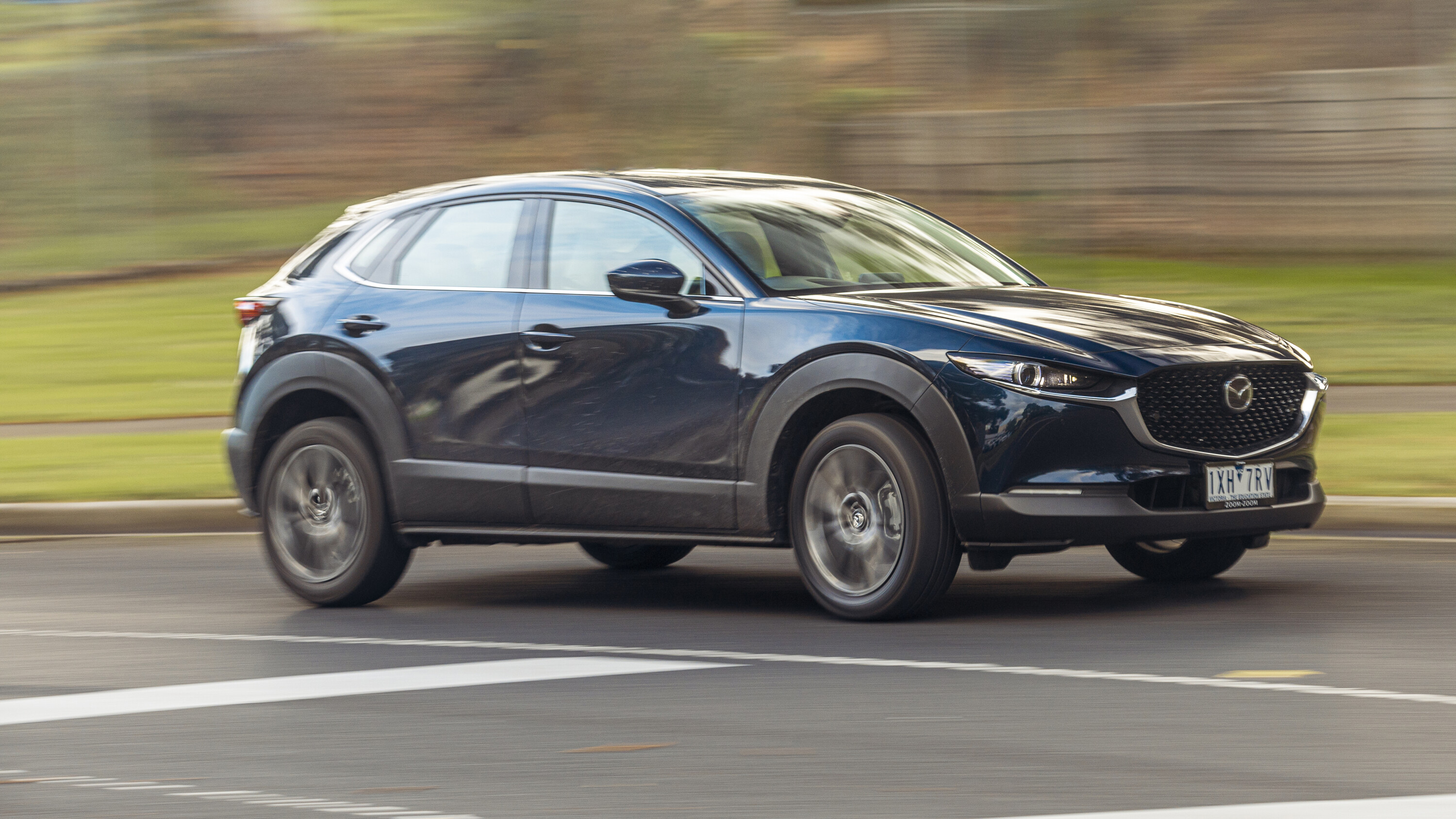
Next up, we have Mazda’s CX-30. At $45,310, our G25 Astina AWD packs the bigger, punchier 139kW 2.5-litre motor and all that clever engineering that made it our 2021 Car of the Year. It will be hard to beat, especially with its Lexus-like interior for a not-very-Lexus-like price.
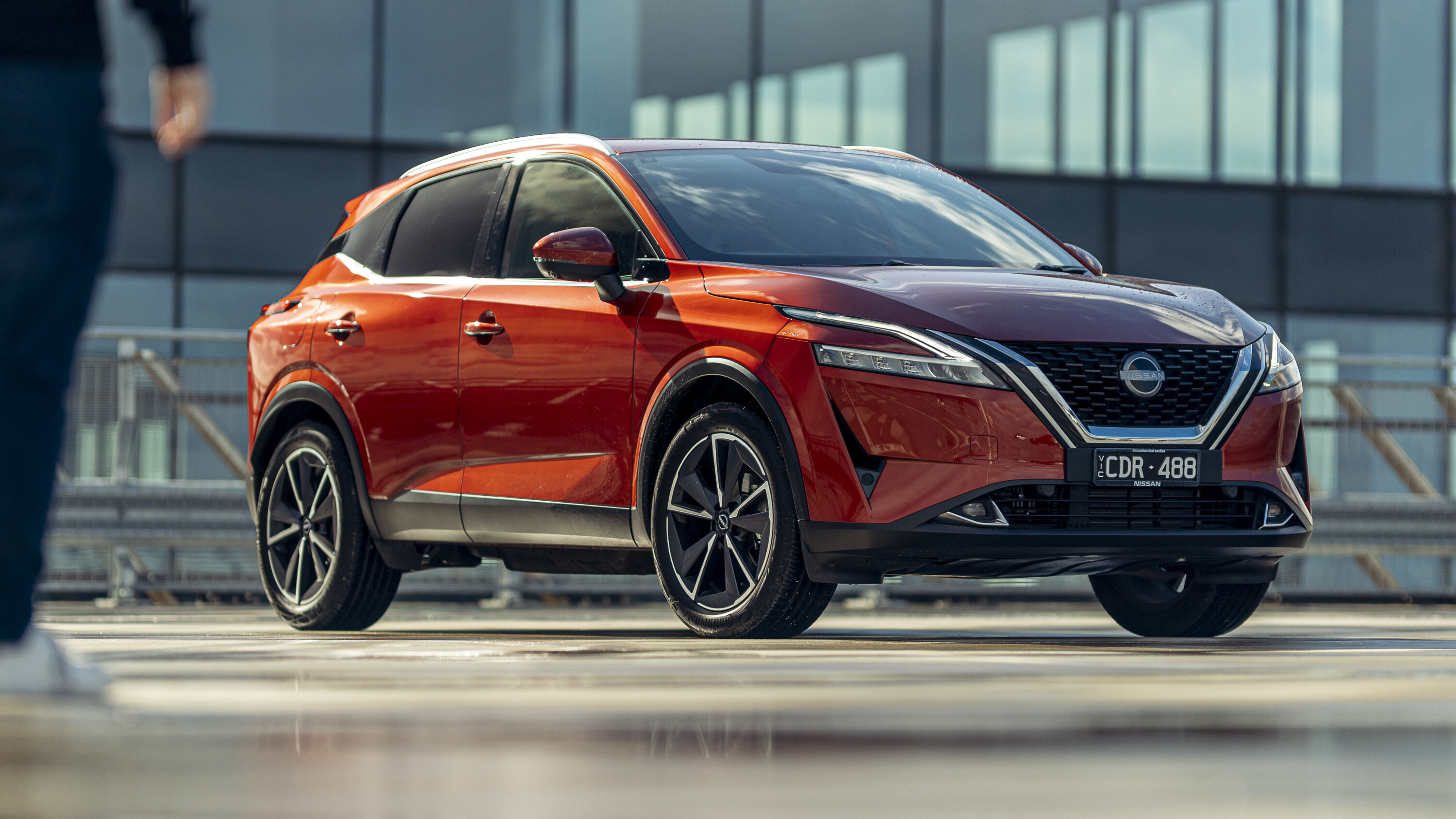
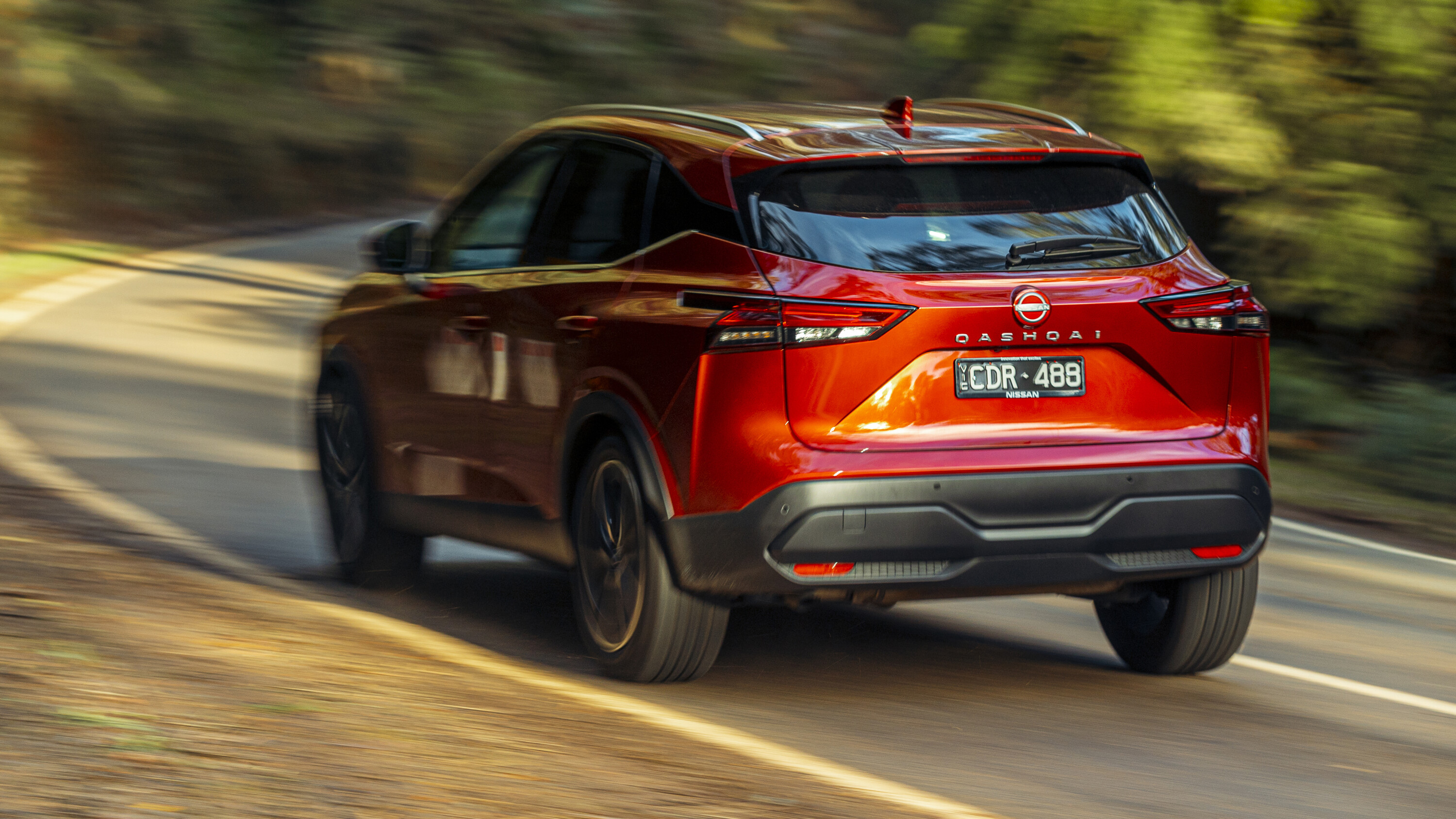
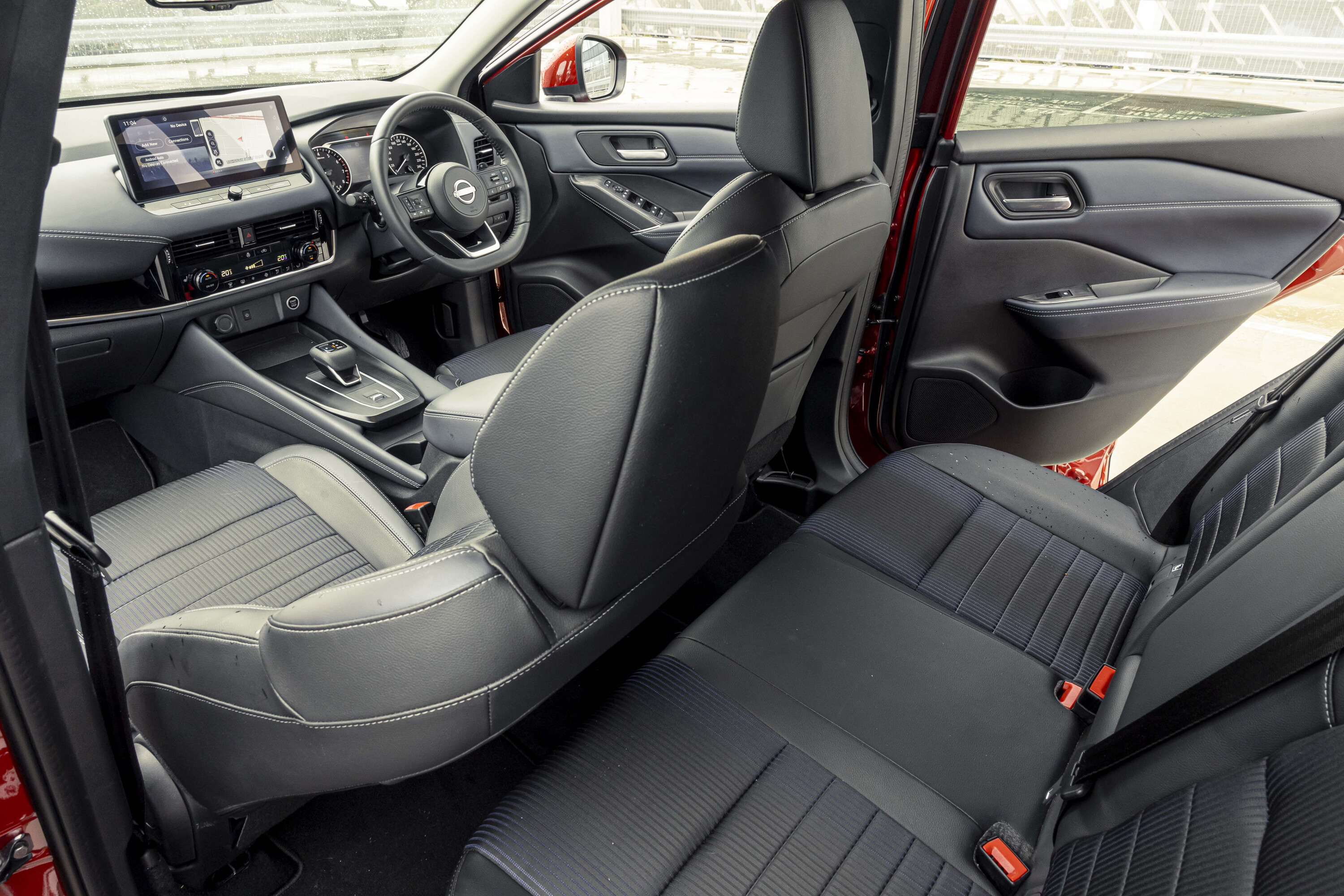
Nissan’s Qashqai ST-L, meanwhile, is almost the sweetheart of the entire Qashqai range – offering standard 19-inch wheels and a beautiful 12.3-inch touchscreen at a very sharp $42,190. Its 1.3-litre turbo inline-4 also promises to be one of the most economical here.
1
The Skoda Kamiq could upset the lot of them, however.
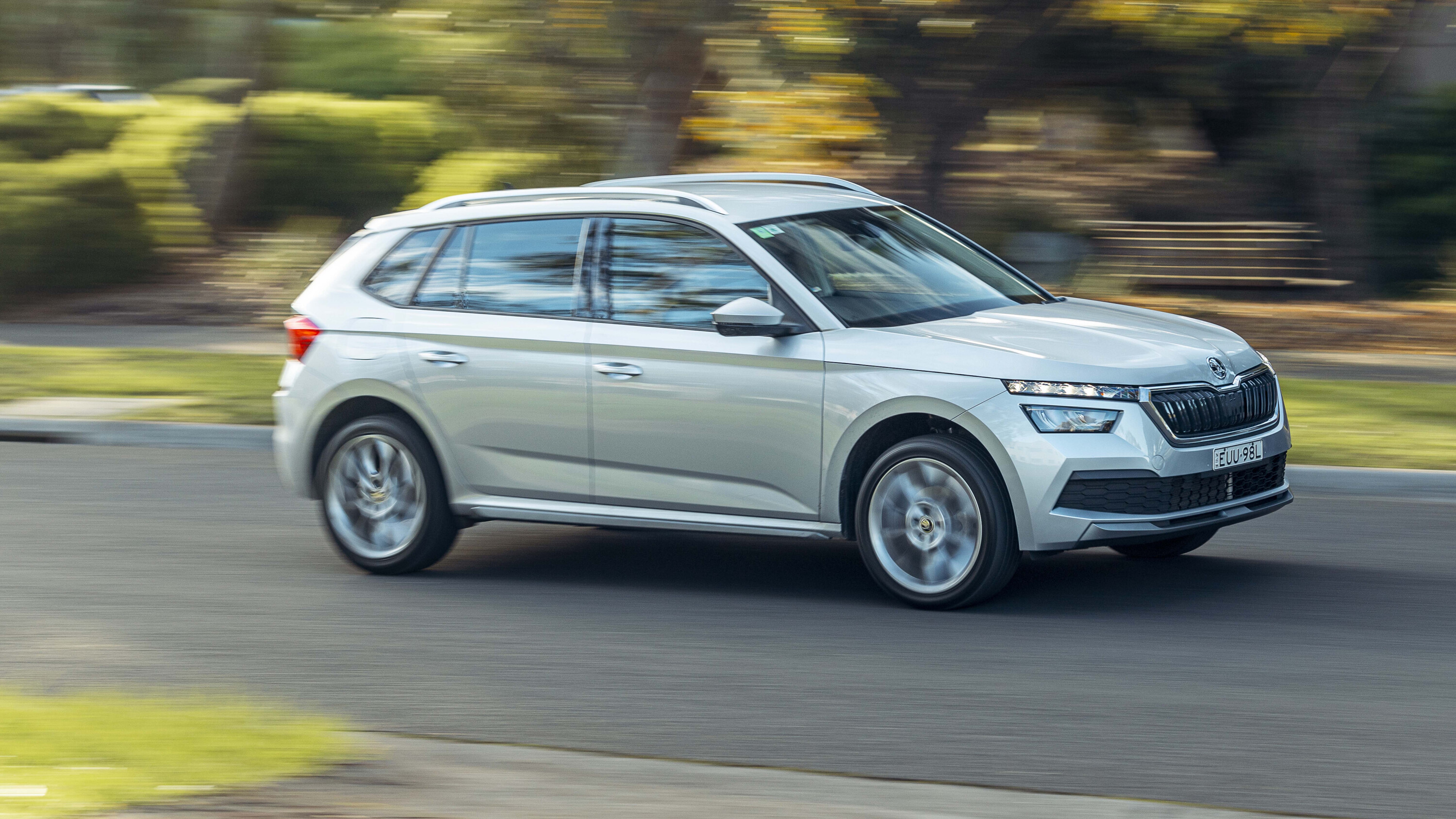
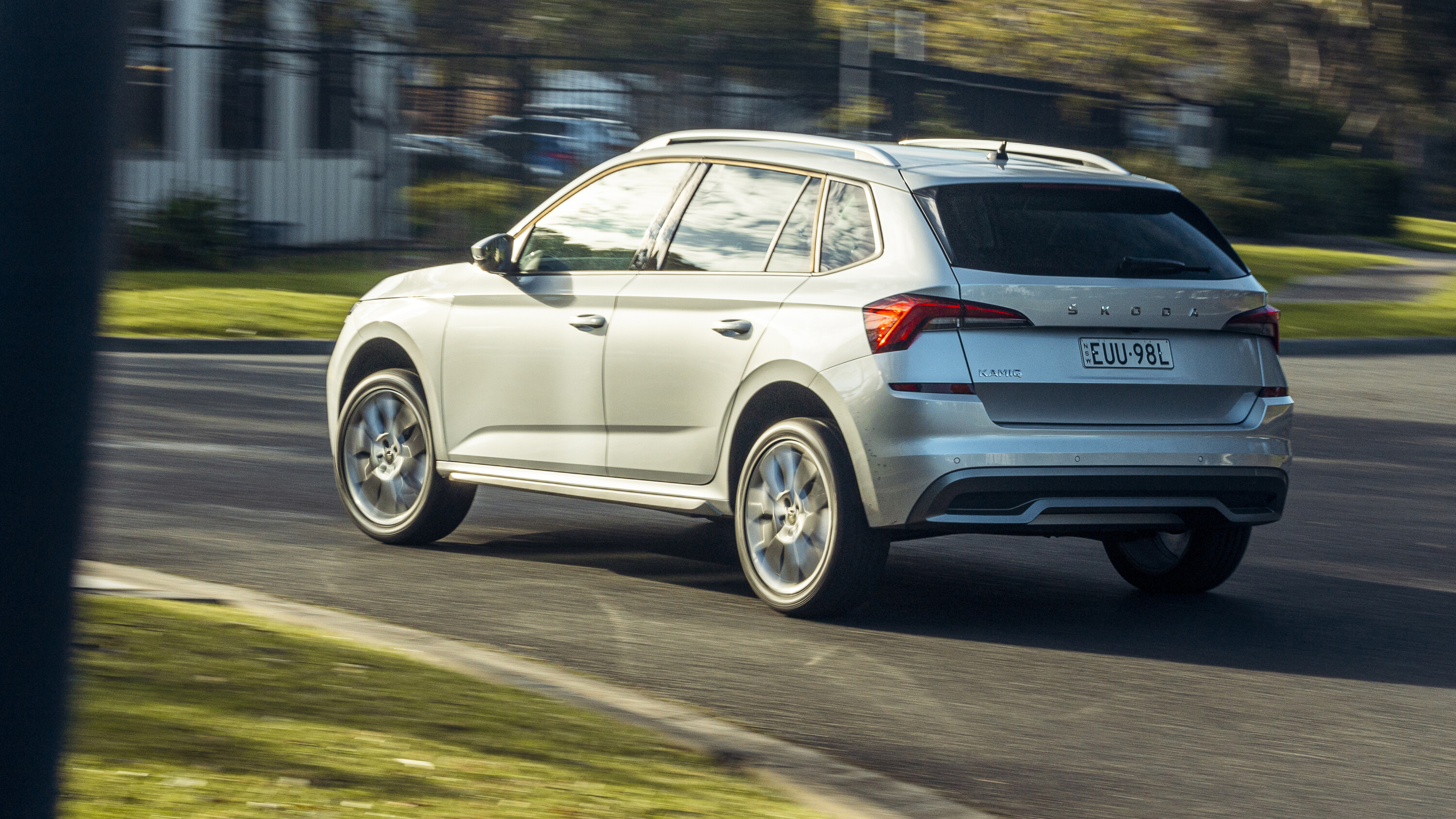
At $37,990 – drive-away – our Style 85TSI is the cheapest small SUV on-test and Czechs (sorry) plenty of other boxes. But with just 85kW, can its 1.0-litre turbo triple win us over with charm instead?
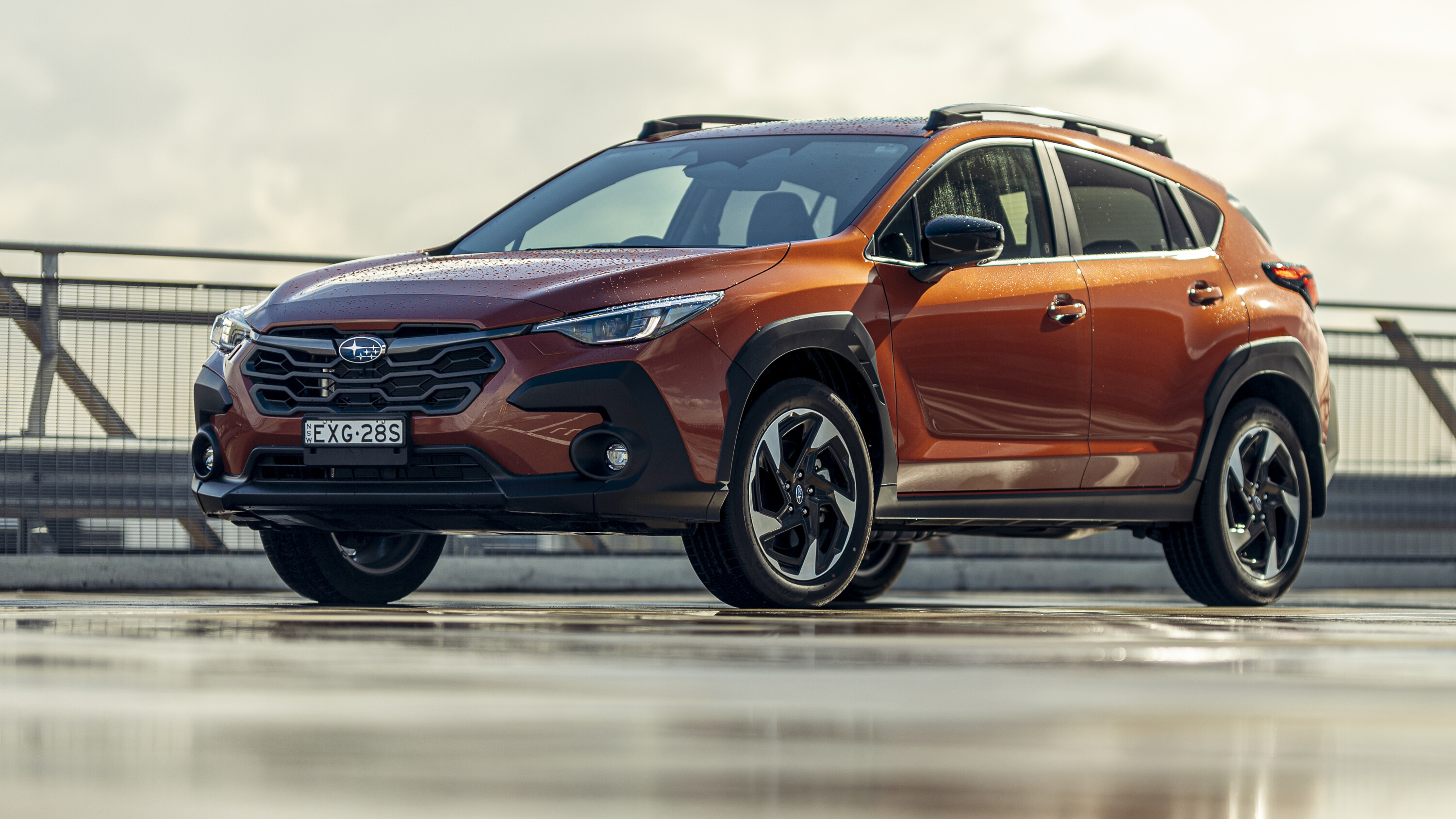
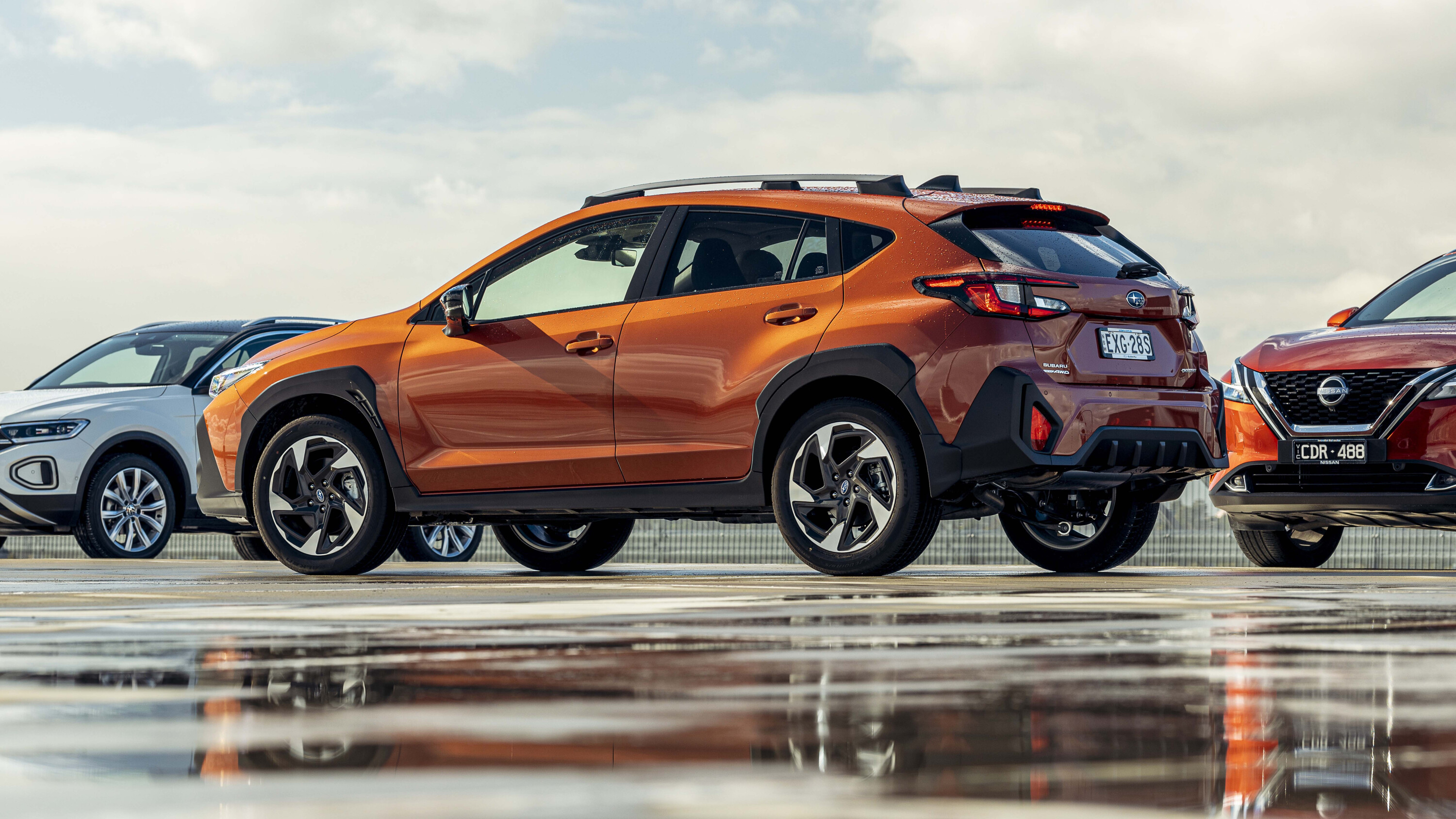
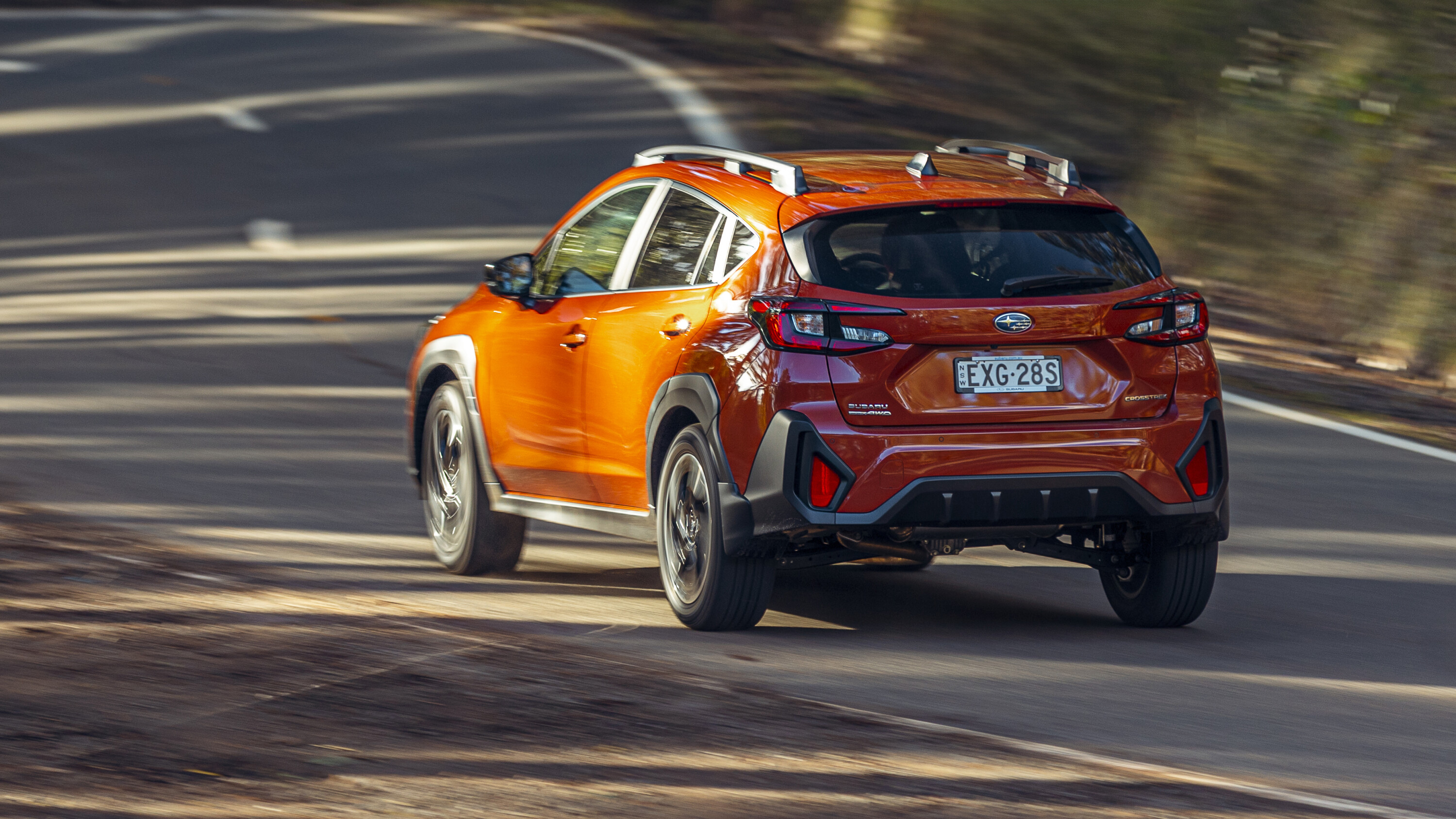
Subaru’s top-spec Crosstrek S sticks to a tried-and-true formula – but all-wheel-drive is not the USP it once was. At $41,490, it certainly has price going for it, and its low-lying boxer engine and an independent rear-end suspension hold lots of dynamic promise.
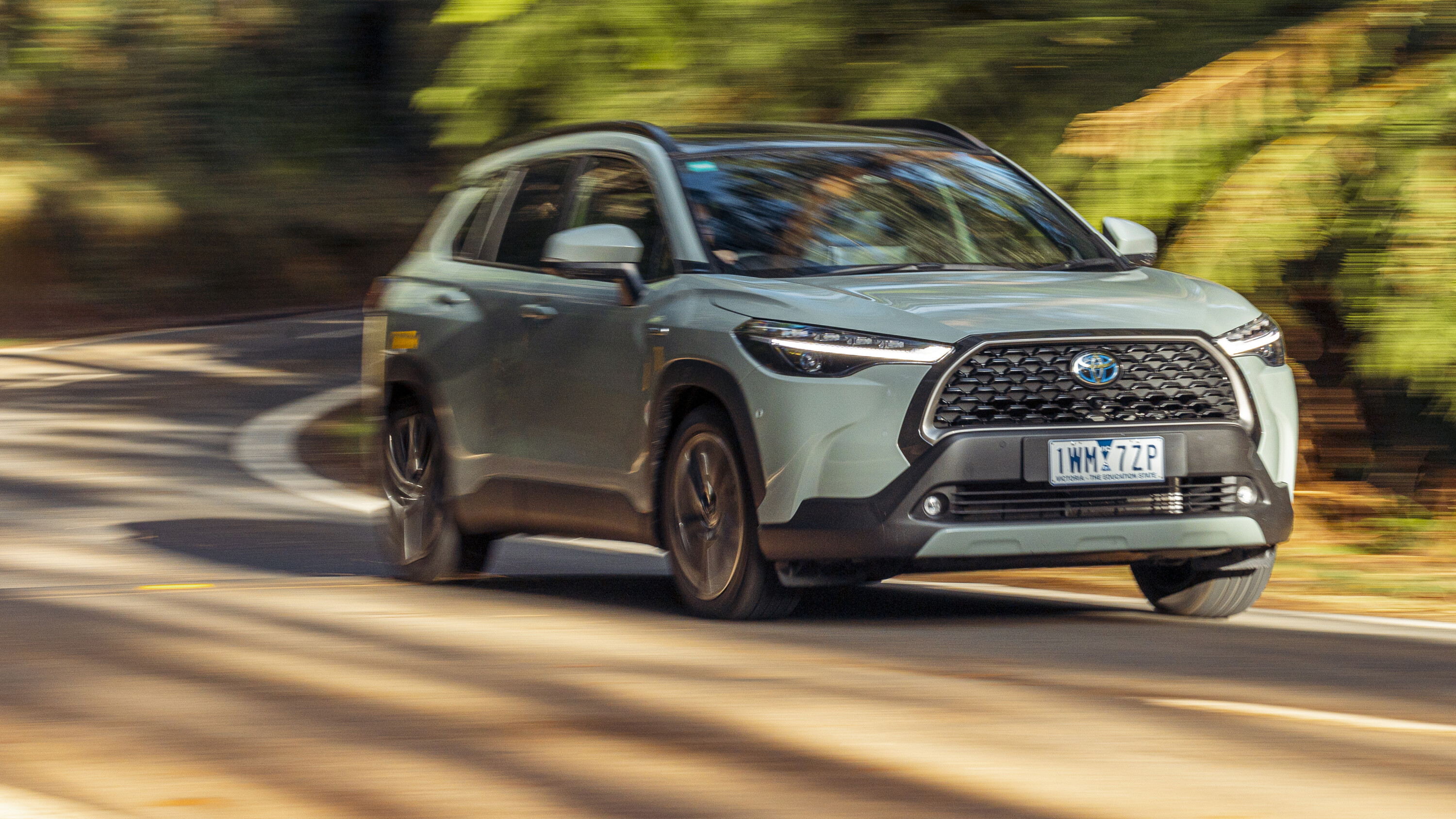
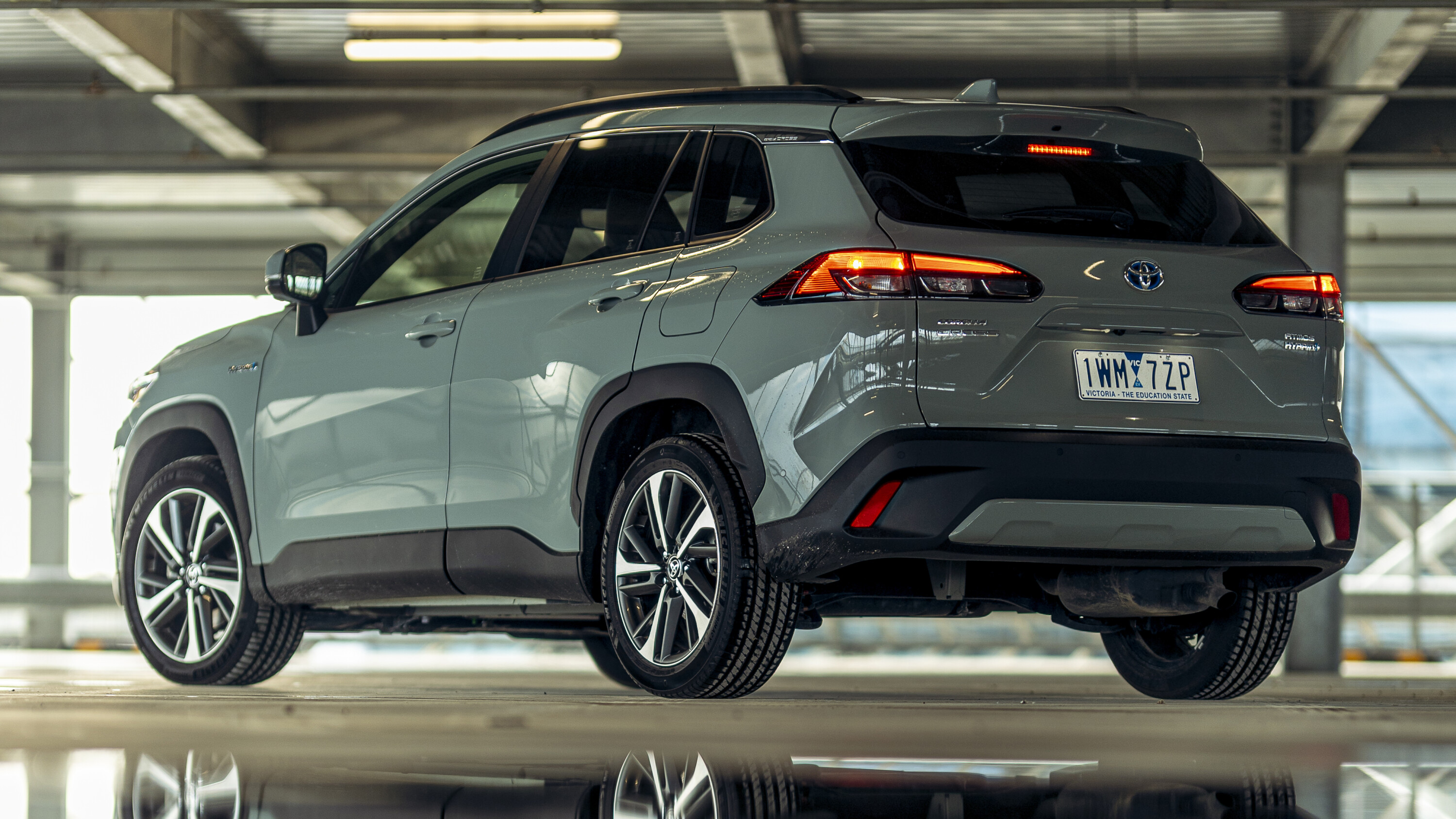
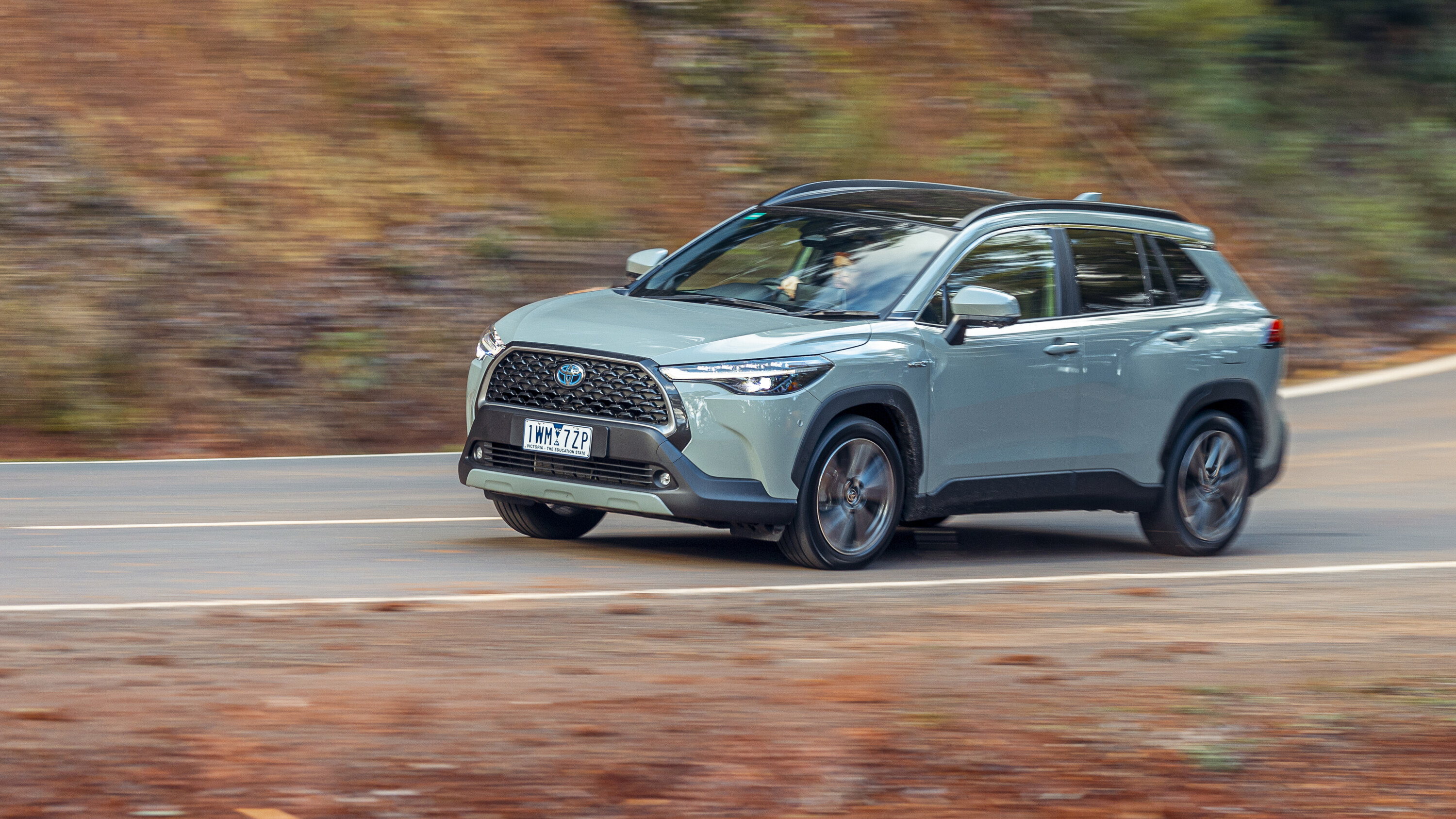
The front-drive, torsion-beam Toyota Corolla Cross Atmos hybrid is, at $46,050, the second priciest car here. But it’s also the only hybrid, bringing a level of efficiency that has us wondering if Toyota engineers snuck in some Peter Brock crystals somewhere. Also, it’s dirt cheap to service.
At $37,100, it rivals the Kamiq for outright value and brings loads of standard equipment for the money – and that inimitable German feel.
We’ve omitted one of the most popular vehicles of the segment, the Mitsubishi ASX, because this is a test of best small SUV, not best-selling… while, for us, the jury is out on the popular new Chery Omoda 5 as active safety features such as its Lane Keep Assist feel, well, unfinished.
With all that out of the way, let’s see which small SUVs can hang their heads tallest – and which need to duck.
Loads of standard equipment and desirable luxuries
Spacious and comfortable cabin
Rear seat and boot are roomy and loaded with amenity
Not so much…
Heavy fuel use
Ride & handling not as cohesive as others on test
1.6Tu2019s short service intervals and high servicing costs
Cabin materials and quality lag behind rivals
Kia Seltos AWD GT-Line
Price
$44,900
Engine
1.6L 4cyl turbo
Power/torque
146kW/265Nm
Gearbox
8-speed auto
Economy claimed/tested
7.4L/10.4L
Drive
AWD
Boot size
433L/1393L
Weight
1495kg (tare)
Warranty
7yr/unlimited
Servicing
12 months/10,000km
5yr service costs
$2808
Fuel
91 RON/E10
L/W/H/WB
4385/1800/1635/2630
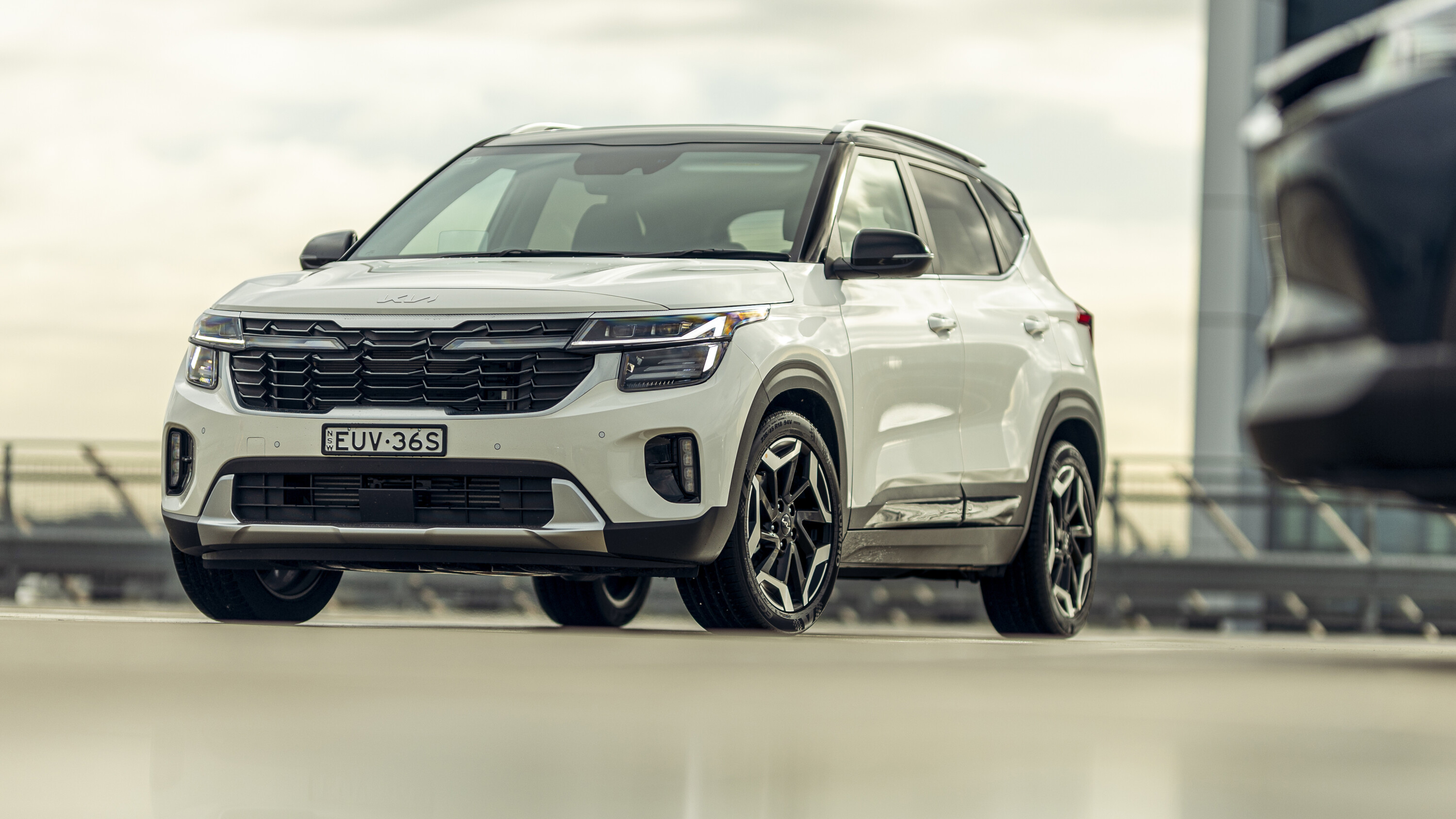
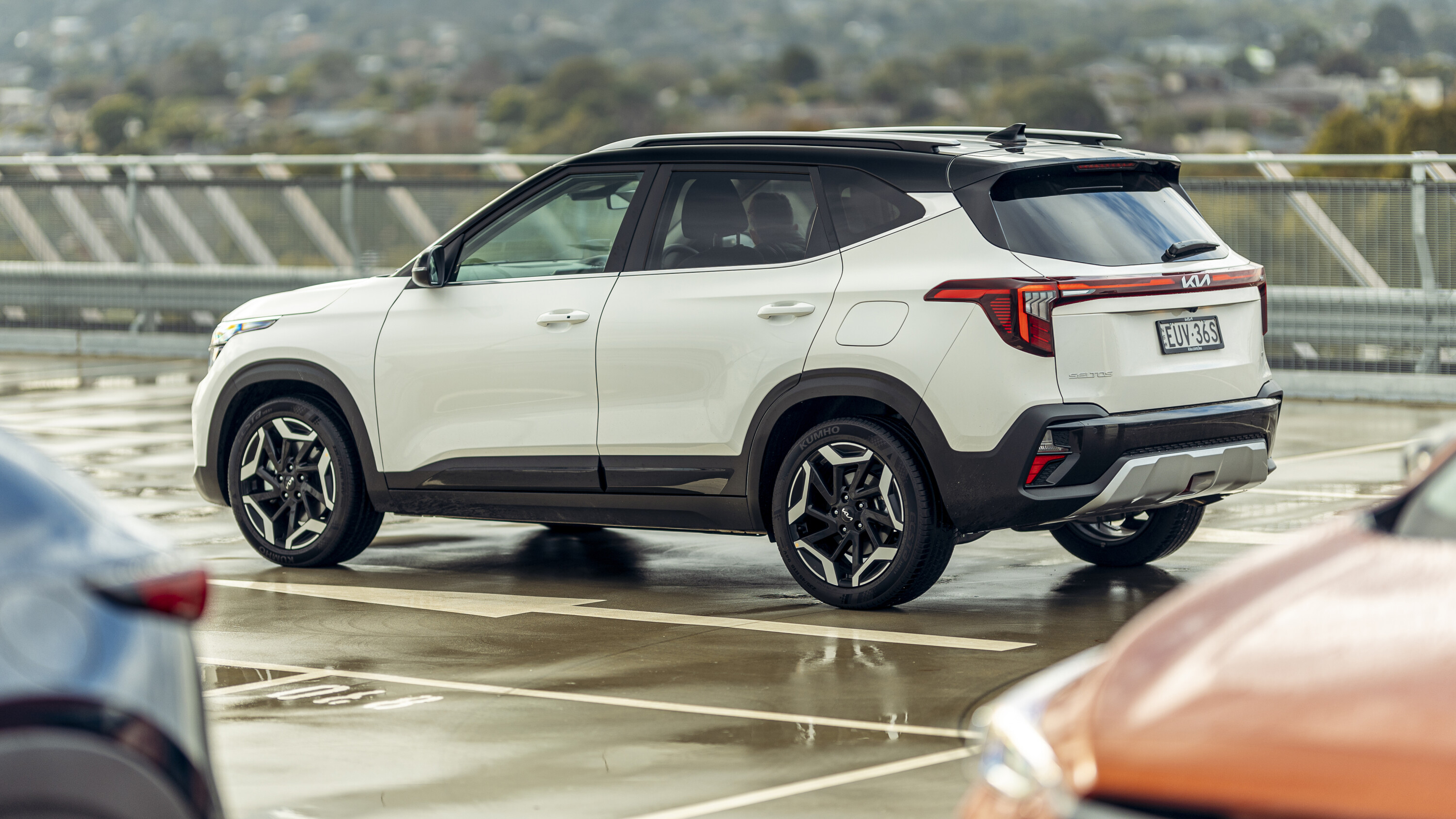
Once the shining star of the small SUV segment, it might be a touch surprising to find the Kia Seltos as our last place finisher.
Kia’s small SUV has long been easy to recommend thanks to its desirable blend of cabin space, high equipment levels, a long 7-year warranty and punchy 1.6L turbo/AWD combo, so how has it found itself at the bottom of this pack?
The answer is a simple as it is predictable: progress. Newer rivals have swamped the once segment-leading Kia, with alternatives like the VW T-Roc and fresh Hyundai Kona now gazumping the Seltos for dynamic cohesion and powertrain polish, as well as for cabin quality, tech and connectivity.
1
But while the Seltos’s shine may have dimmed slightly, its core goodness remains.
Plus, Kia did treat the Seltos to a worthwhile mid-life update at the end of 2022 which brought a fresh 1.6-litre turbo/8-speed auto combo (now shared with the new Kona), standard rear-air vents and an improved safety suite.
Value continues to be a core Seltos attraction. Our test car is the flagship GT-Line AWD which, although one of our pricier contenders at $44,900 before on-road costs, is bursting with standard equipment.
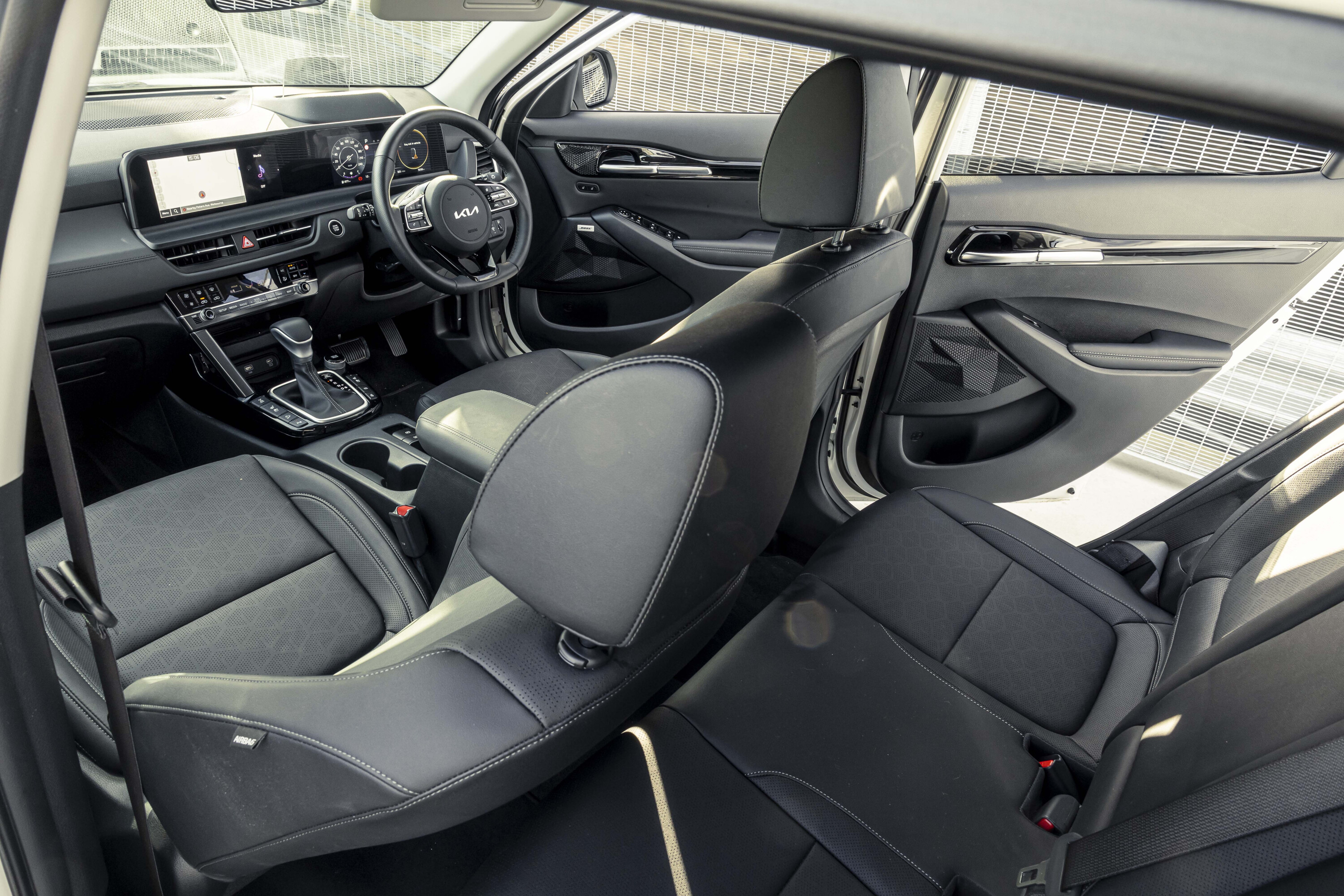
18-inch alloys, LED headlights, a show-stopping full-width digital display, head-up display, heated/ventilated front seats, a heated steering and heated second-row seats are all included. As is an interior design that still holds its own compared with fresher competitors.
1
Dominated by the sweeping widescreen digital display, the button-heavy cabin layout features sound ergonomics, a sporty flat-bottom steering wheel with perforated grips and a sound level of connectivity thanks to a wireless charging pad, twin USB ports for both rows of seats and wired Apple CarPlay/Android Auto.
It’s only when you start poke and prod the cabin that you realise the quality isn’t up to the same standard as other SUVs here. Hard, scratchy plastics are easily found – including on the front doors which is a surprise in a range-topping model – and there’s a heavy use of piano-black plastic which scratches easily and attracts fingerprints.
Storage is adequate rather than excellent, too, with twin central cupholders, a small lidded bin and averagely sized door pockets feeling decidedly subpar when compared with the Seltos’s newer Korean cousin, the Hyundai Kona.
1
A power tailgate is standard and in terms off outright litreage, the GT-Line offers 433L of luggage capacity
The back seat is one of the best of this group, however. Boasting ample knee- and headroom for 6ft adults, the GT-Line also includes heated outboard rear seats, decently sized door bins, a centre armrest with twin cupholders and dedicated air vents.
Boot space is a bit of a mixed bag. A power tailgate is standard and in terms off outright litreage, the GT-Line offers 433L of luggage capacity, which trails only the 445L T-Roc for load-lugging ability. A full-size spare is also fitted (hooray!) but its inclusion means you can’t drop the boot floor onto the lower of its two levels, which reduces the available space. There are no bag hooks, either.
Things are equally hit and miss when it comes to how the Seltos drives. While the GT-Line trim level brings a sporty flavour and a ride/handling balance that mostly strikes a decent balance between comfort and control, heavier than average steering is a sniff cumbersome in tight carparks and road noise can also be an intrusive companion on corse chip surfaces.
1
And while the 1.6-litre turbo petrol is impressively gutsy, it’s also thirsty (only the Kona, which uses the same engine, drank more) and suffers from noticeable rev hang after you lift off the throttle.
Its 10,000km servicing intervals are short, too, and the Seltos is also one of the most expensive of this group to service over five years. The good news is that switching to a smooth-shifting eight-speed auto rather than the pre-facelift’s dual-clutch brings a big improvement in everyday driving.
Buying a Seltos in 2023 brings a few caveats, then, but if lots of standard equipment, punchy turbo performance and a roomy cabin and big boot are high priorities, Kia’s handsome small SUV remains a well-rounded machine.
In isolation, the Qashqai ST-L is a likeable thing.
Sure, there’s no choice of all-wheel drive and a hybrid powertrain has still yet to join the local line-up, but its sharp design, high quality interior and perky 1.3L turbo engine make it a compelling choice in the product-saturated small SUV segment.
Unfortunately, it fails to excel in this crowd. Consistently low performance across the various assessment criteria sees it relegated to seventh-place overall, its high servicing costs in particular putting it well behind the rest of the group (at $2916 over 5 years, it’s the most expensive of these to service, while the next service outside of this period costs a whopping $1100).
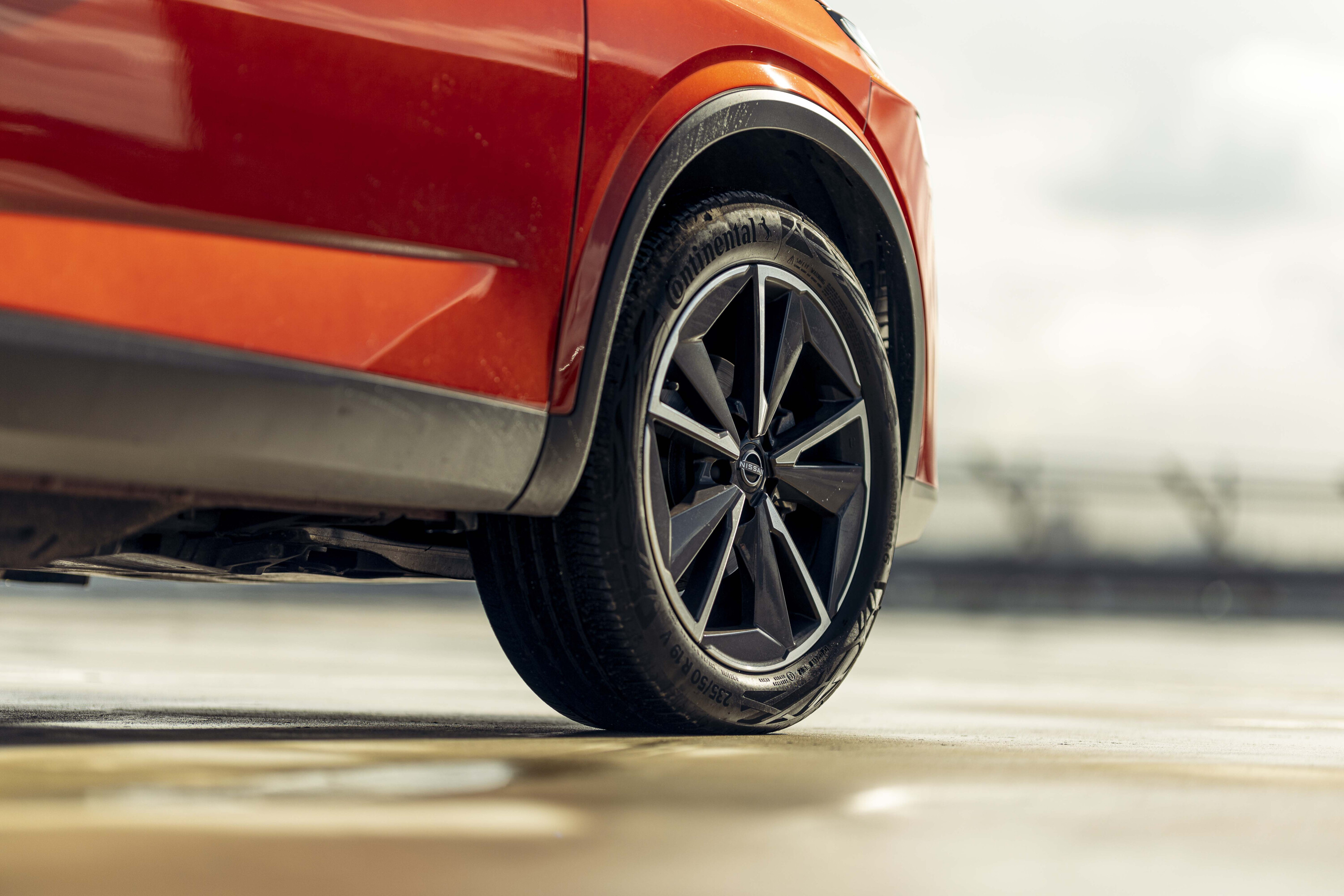
It was also judged second-last for dynamics and comfort. Its pointy front end offers some driver-engagement factor, and despite being a bum-dragger by default it is commendably grippy on damp pavement via its Continental rubber.
1
But ride quality on the attractive 19-inch alloy wheels doesn’t provide the suppleness required for daily-driver duty.
Those rollers slap over expansion gaps and don’t deliver enough compliance over potholes and other sharp-edged road features, but hey, ask anyone with a predilection for stilettos and they’ll tell you that there’s a price to be paid for wearing good-looking shoes: comfort.
Speaking of comfort, poor under-thigh support for the back seat also harmed its cabin comfort score to a great degree. For children and other short-legged folk, it’ll arguably be fine.
For adults, the cushioning puts too much weight on your glutes and thus limits its long-distance comfort. The seat spec is good though: heated front seats and a heated steering wheel are standard on the ST-L grade, as is an 8-way power-adjustable driver’s seat (the passenger’s pew is only manual).
2
Quality-wise, there are a couple of missteps.
For one, a discolouration of the Park button on the gear selector that appears to be a common fault on Nissan’s newly-adopted puck-style transmission interface. Another is a spongy feel to the upper half of the steering wheel volume rocker switch, which again is something that’s been observed in multiple Nissans.
They’re minor issues, but their reappearance suggests Nissan needs to have a word with its suppliers about quality control. It’s a shame, since their presence takes some of the shine off what is otherwise a very nicely made and presented cabin – we like the deep pearl blue vinyl trim on the dash and door cards, the soft-touch uppers, the padded centre console trims, the nicely textured gearshift surround and the dual-level centre console box.
At the ST-L grade, the Qashqai gains a wireless phone charge pad and features a bright and clear 12.3-inch infotainment display that’s intuitive to use, boasts built-in nav, and integrates well with Android Auto and Apple CarPlay – albeit via a wired connection.
1
There’s also the ultra-wide opening angle of the rear doors, thanks to cast metal hinges and geometry that’s similar to what’s used by the Qashqai’s bigger brother, the X-Trail.
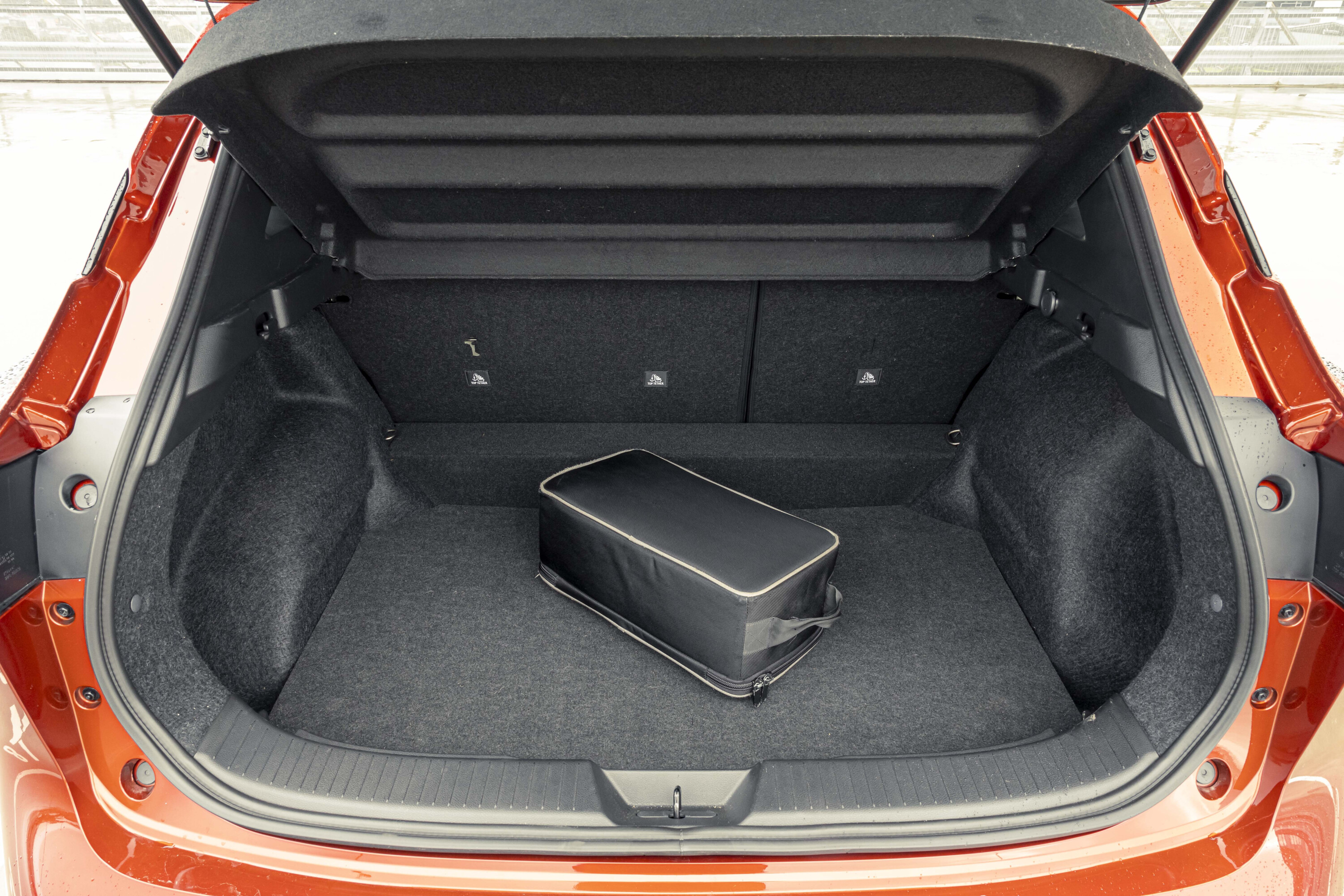
At 429 litres of seats-up storage space the Qashqai had the third-biggest boot on test, but the ST-L misses out on the reconfigurable floor system of the top-shelf Ti, which is a shame because it leaves a massive step between the actual boot floor and the backrests when the rear seats are folded down. A pair of shopping bag hooks and a 12V outlet are a nice plus, though.
Efficiency was where the Qashqai performed best, with its 7.45L/100km on-test average putting it fourth out of eight for fuel burn.
1
That being said, the T-Roc, which boasts identical outputs of 110kW and 250Nm, is also a front-driver, and weighs just 85kg less than the Nissan, recorded a 6.58L/100km result on the same test loop.
Driveability is generally good, however the CVT calibration can feel a touch dozy in its default mode – better to flick it over to sport if you want to exploit the 1.3L turbo’s respectable torque output to its fullest.
The Qashqai commits no egregious crimes. Were it not for a comparatively high retail sticker versus the other front-drivers and eye-watering maintenance costs, it arguably would have placed higher.
The Subaru Crosstrek is one of the nicest cars in its class to drive, although it makes you ‘pay for it’ with an oddly small boot and other omissions like no rear-seat air vents. At all.
Replacing the old XV, the newly named, ruggedly styled Crosstrek is basically an Impreza with higher suspension and different styling. It sits on the same platform, uses a 2.0-litre naturally aspirated “boxer” engine, all-wheel-drive and a CVT automatic transmission.
Inside, it’s a very practical, functional and sensible place to be – if not as stylish as European rivals such as Volkswagen and Skoda, or even Japanese alternatives such as Mazda. The Crosstrek S we tested has leather-accented seats giving it a comfortable vibe, although it has a tough and resilient feel like one of those Otterbox phone cases.
1
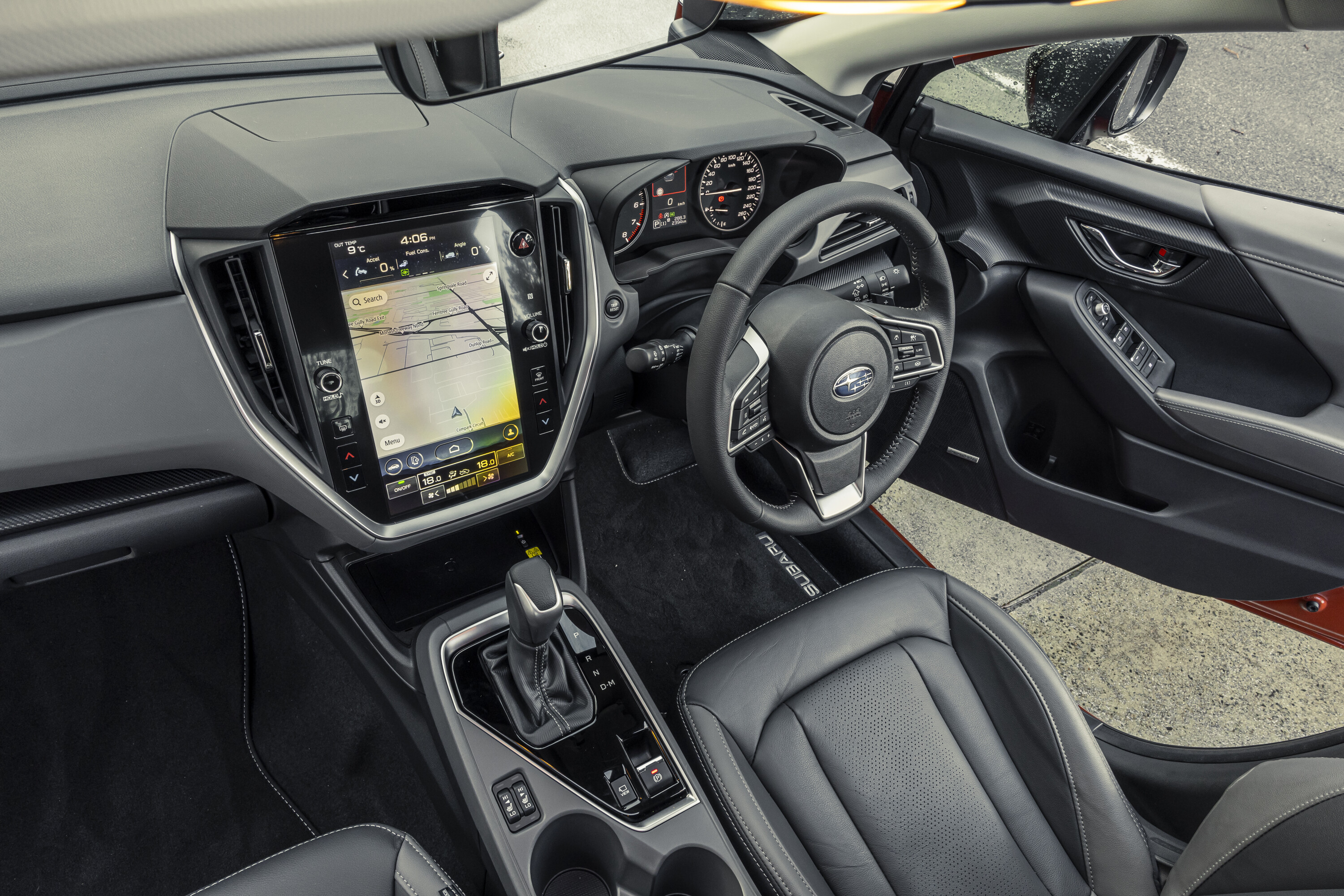
A tall, portrait-orientated 11.6-inch infotainment touchscreen gives it a modern feel – and integrates Apple CarPlay well – although notably for a top-spec grade, the S only has a 4.2-inch digital display in its partly analogue instruments.
There isn’t the larger, wholly digital displays you’ll find in rival vehicles.
At $41,490 before on-road costs, the Crosstrek S brings lots of must-haves such as wireless Apple CarPlay and Android Auto, a wireless phone charger, electric front driver’s seat (manual passenger) and an impressive active safety suite, which we’ll get to shortly.
There’s also a hybrid model costing $45,090 which adds a small, 12kW/66Nm electric motor and brings fuel economy of 6.5L/100km – down from this non-hybrid model’s 7.2L/100km (both claimed figures by Subaru).
1
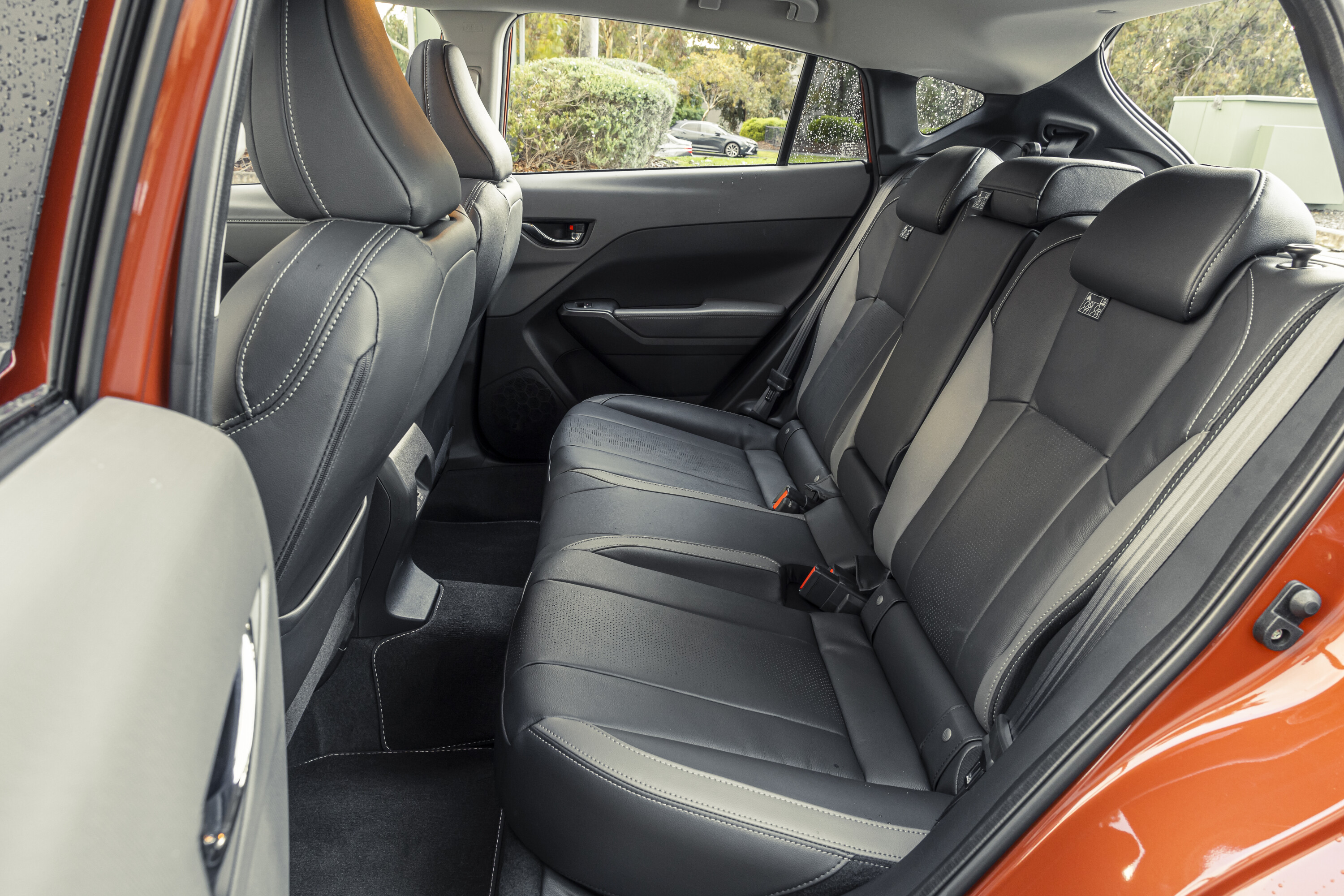
In the back seat, there are two ISOFIX mounting points for baby seats while for adults there’s ample knee room.
There are USB-A and USB-C charging outlets however no air-vents at all, meaning on a hot day your poor kids are a bit short-changed. We test very few vehicles with no rear air-vents these days, so it’s a remarkable omission especially for a supposedly higher grade model.
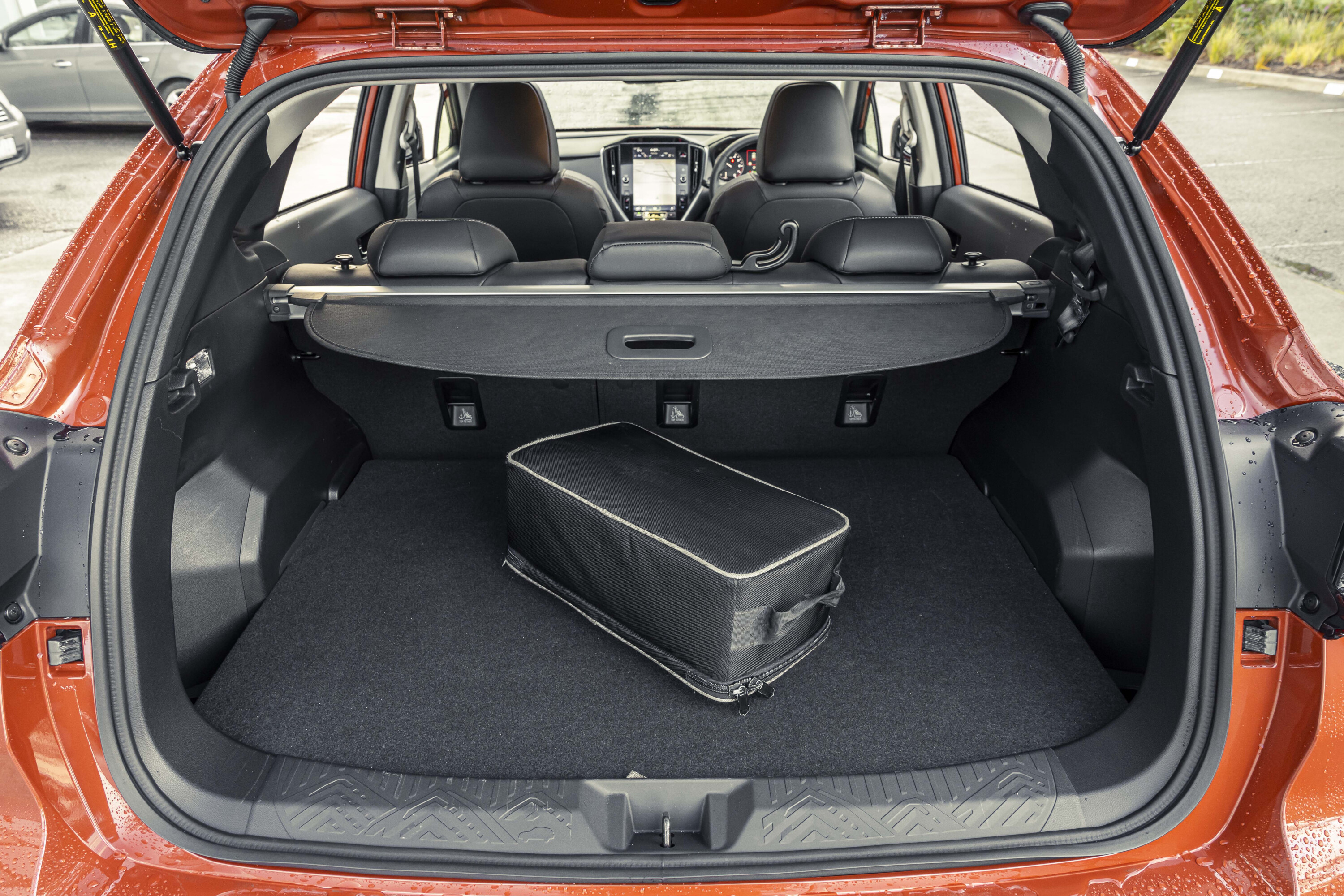
The boot is also oddly tiny. Subaru has elected to fit a large, space-saver spare wheel but it’s meant raising the boot floor, cutting the boot size to just 291 litres. The hybrid model gets a puncture repair kit and 315 litres. The rear back-rest is a 60/40 split and there’s no ski-port; the second row also doesn’t tilt or slide.
1
On the plus side, the Crosstrek is exceptionally safe, even by modern standards. It hasn’t been crash-tested by ANCAP, but you could count on it getting five stars.
It has a fatigue-detecting driver attention monitor, a reversing camera with rear-cross traffic alert, adaptive cruise control, blind spot monitoring and a 360-degree top-down parking camera. There is lane keep assist, the autonomous emergency braking (AEB) works at higher inter-urban speeds – a big, fat, green tick from us – and the AEB also works in reverse.
While the Crosstrek’s interior feels more functional than desirable, the way it drives is absolutely something that will delight. Forward visibility is excellent, it’s quiet, the steering is light, fast and direct and the ride quality is as comfortable as some luxury SUVs.
1
All the controls feel lovely to use, while the handling – thanks to its independent rear suspension and low-lying boxer engine – is best-in-class. Based on this 2.0 S’s handling, a WRX version of the Crosstrek makes absolute sense. Do it, Subaru!
Don’t get us wrong, the Crosstrek could use more power – its 115kW/196Nm means the engine is always working hard, and you’ll be waiting for a nice, long stretch of road to risk any overtaking. But for most, it will be sufficient.
Efficiency is also average compared to rivals. Subaru claims 7.2L/100km using 91RON, but on the plus side a large 63-litre fuel tank gives it a theoretical 800-900km range. We’d also like to see cheaper servicing costs; $2371 over five years is a bit steep. A Corolla Cross is nearly half that.
1
In the final reckoning, we really like the Crosstrek as a driver’s car.
We only want more power because the car could easily handle more, but we were surprised at how small the boot is – and the lack of rear air-vents. No full digital instrument display seems a missed opportunity; and a manual passenger seat seems a bit cheap.
That all said, $41,490 is pretty sharp, the Crosstrek’s engineering feels rock solid, and we don’t doubt it would ever let you down. Plus, we’d almost always look forward to driving it.
Mazda’s small SUV achieves a solid par performance
?️ Tony O’Kane
Things we like
Great for drivers
Superb upholstery
Respectable value
Not so much…
Infotainment feels rather dated in 2023
Meagre accommodation for backseaters and luggage
Pricey to service
Mazda CX-30 G25 Astina AWD
Price
$45,310
Engine
2.5L 4cyl
Power/torque
139kW/252Nm
Gearbox
6-speed auto
Economy claimed/tested
6.8L/8.8L
Drive
AWD
Boot size
317L/XXX
Weight
1544kg
Warranty
5yr/unlimited
Servicing
12 months/10,000km
5yr service costs
$2187
Fuel
91 RON/E10
L/W/H/WB
4395/1795/1540/2655
The CX-30 is an extraordinarily balanced thing: for every strong virtue it has, there’s an equally strong demerit to balance it out. Accordingly, its position in the middle of the pack is deserved.
For example: it handles fantastically well. Its direct, feelsome steering and adept suspension egg keen drivers on, and that 139kW/252Nm 2.5-litre atmo engine is zingy, responsive, and meshes very nicely with a lovely six-speed auto and all-paw drivetrain.
Counteracting that is the fact it’s a rather firm-riding thing, with plenty of road noise to contend with. Mazda’s Zoom-Zoom philosophy creates great driver’s cars, but sometimes the general daily liveability factors can suffer as a result.
1
But it must be said that although the CX-30’s naturally aspirated four-cylinder petrol and six-ratio trans might seem a bit old-school in an era of high-boost/low displacement turbos, hybrids and eight-speed autos, it’s a mechanical package that won’t leave anyone wanting.
It’s a likeable combo that gets better the harder you drive it, and it’s perfectly fine with running on regular unleaded too. On the flipside, it’s a pretty thirsty thing: the factory claim is 6.8L/100km on the combined cycle, but our testing returned an average of 8.78L/100km. It was better than the Koreans and the Subaru in that regard, but that’s not an amazing result for an atmo powerplant.
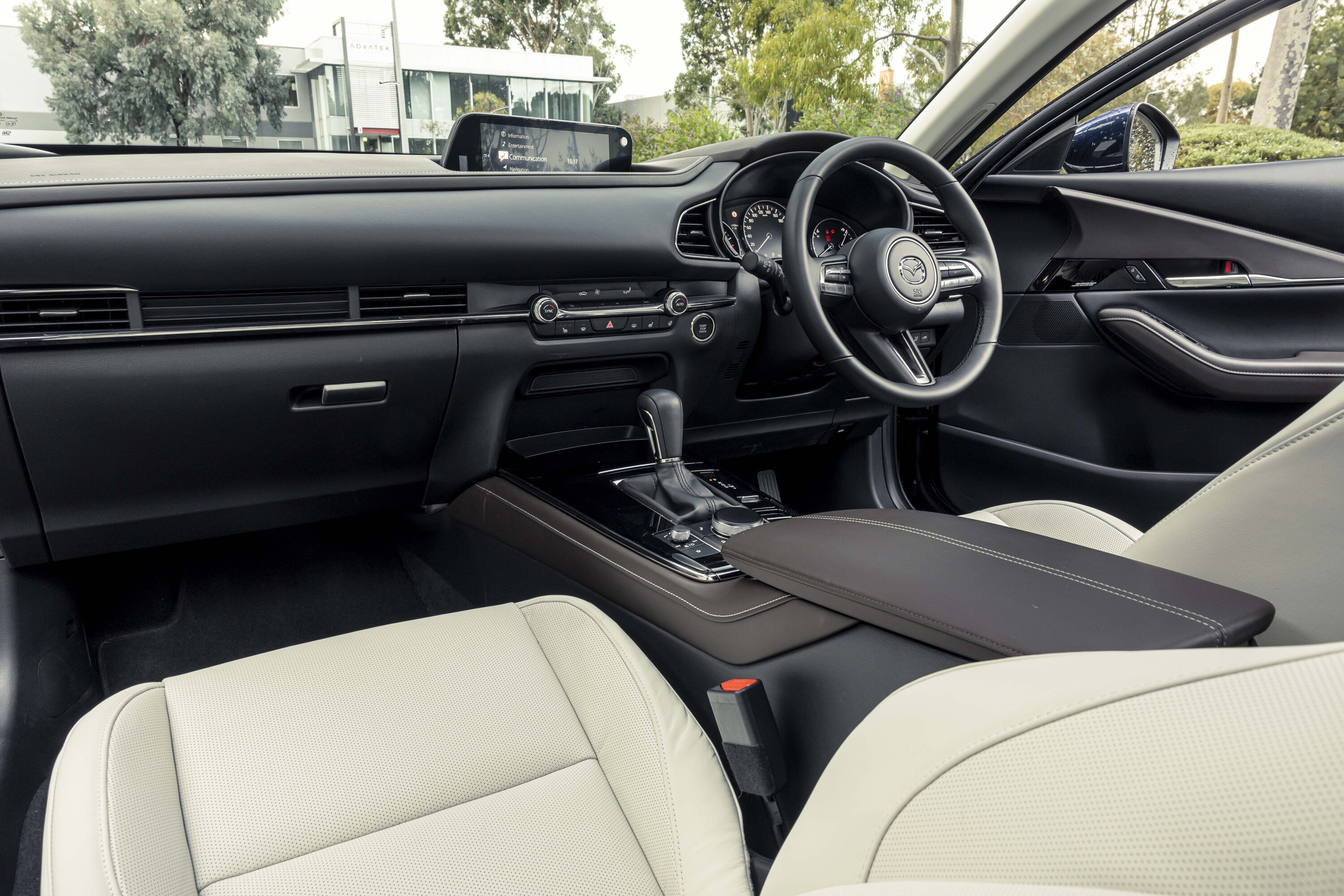
The in-car experience is also a case of give-and-take. The seats themselves are absolutely fantastic, sculpted to fit both torso and legs like a tailored suit and being lovingly upholstered in our Astina-spec tester with creamy white perforated leather.
1
Matched by beautiful brightwork and plenty of soft-touch surfaces throughout (both upholstered and moulded), the only problem is it’s also saddled with the smallest and most difficult-to-use infotainment screen, has the squeeziest back seat and the second-smallest boot.
Head up display? Yes. Wireless phone charging pad? No. The Mazda denies those customers who insist on “having it all”, particularly those who ask for a modern infotainment suite. In this day and age, neglecting that single aspect strikes us as a peculiar strategy.
But it’s those in the back seat who will feel truly shortchanged. While the front offers excellent ergonomics and plenty of space, second-row occupants must deal with a shortage of headroom, significant roof intrusion from the sunroof mechanism and the most limited rear legroom out of the entire field.
1
Those intending to cart around other people on a regular basis should look elsewhere, because the Mazda scored last for back seat accommodation by a big margin.
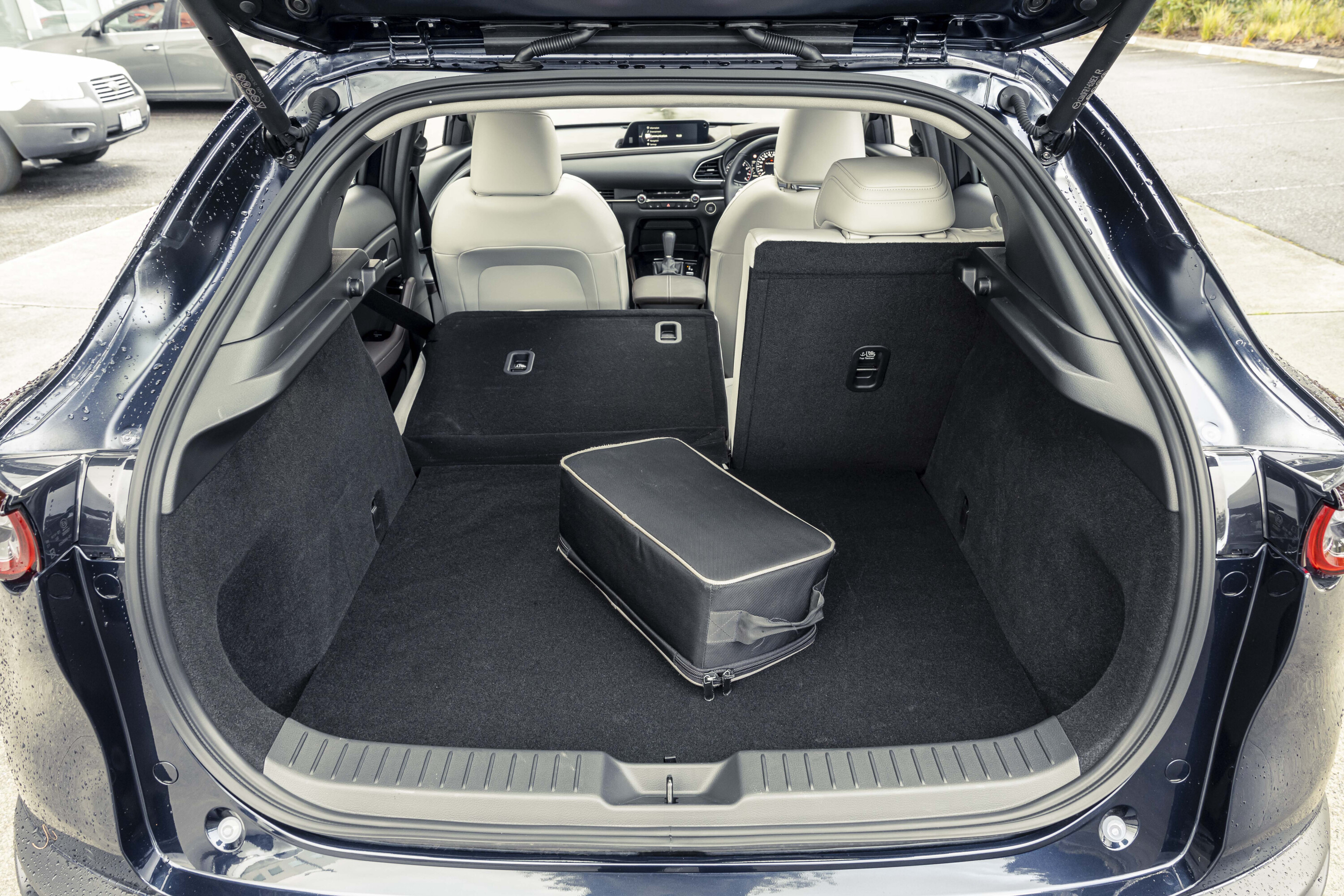
Luggage space is a similar story – it’s tight back there. Not only is the 317-litre boot capacity the second-smallest here, but the loading lip is high, there’s no dual-height floor, it’s rather narrow, there are no bag hooks and there’s no dedicated cargo space under the floor either – just a small air gap above the space saver spare.
The Astina grade scores a powered tailgate, but in all other respects the luggage-carrying capabilities of the CX-30 are disappointing.
1
It fared better in ownership costs and overall value, though.
It was the third-cheapest car to maintain for a five year period, and at $45K for a feature-heavy all-wheel-drive small SUV with high levels of build quality, it presents decent value for money as well. It’s just a shame some of those features aren’t as up-to-date as what you’d find in the others.
But nevertheless, the CX-30 Astina presents itself as a connoisseur’s small SUV. An understated Seiko versus the flashy G-Shocks that populate the rest of thus field. Drivers will love it, their passengers maybe not so much. Overall excellence escapes it, but the CX-30 still has plenty of reasons for you to look in its direction.
Today we are testing the range-topping Atmos grade in front-drive hybrid spec at $46,050 before on-road costs. For an extra $3000, you can have it in all-wheel-drive with an additional 30kW rear electric motor. We’ll come back to this.
1
Inside, the Atmos is a lovely place to sit, with a premium-economy vibe.
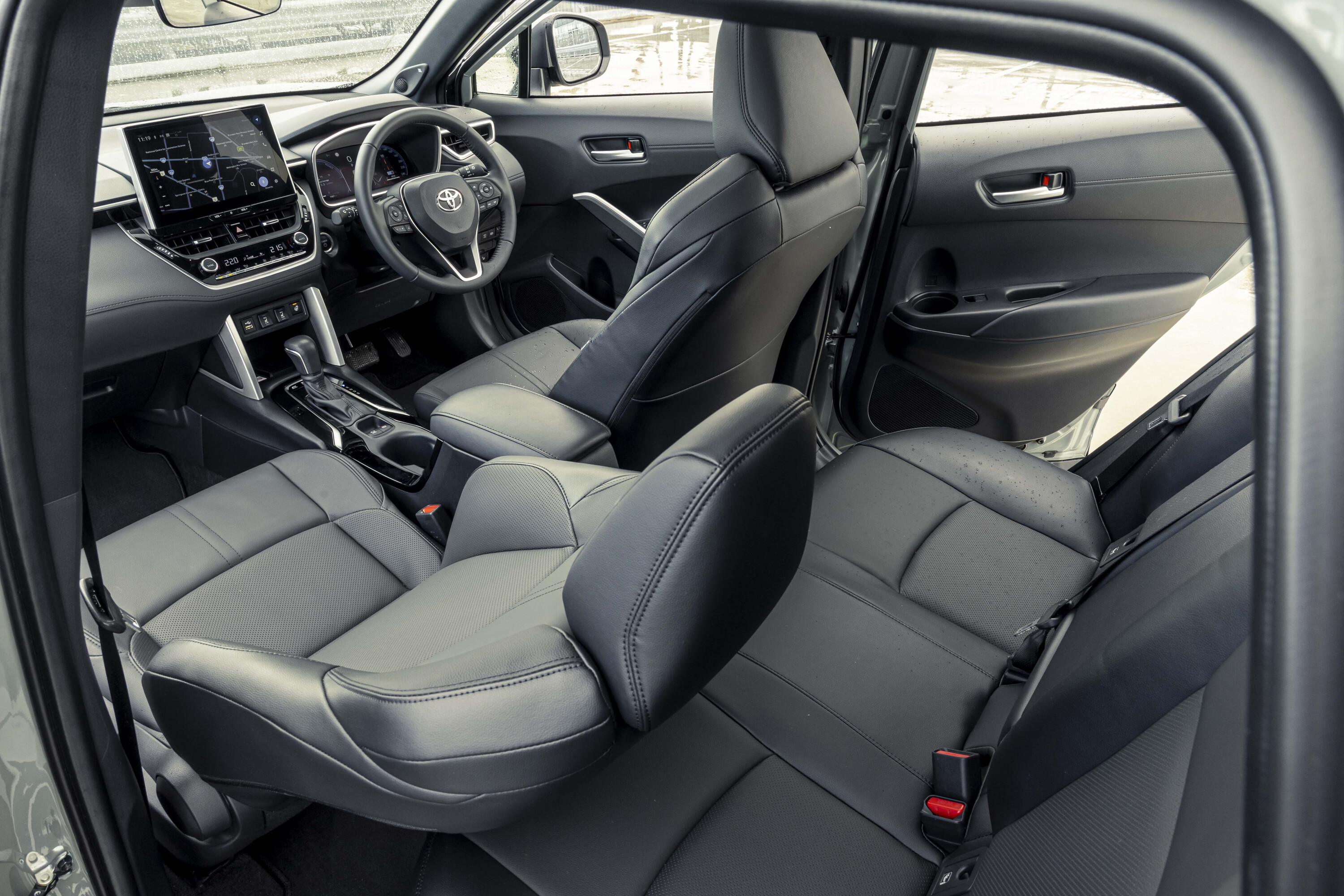
A 12.0-inch digital instrument display brings a high-tech feel, while a large 10.5-inch infotainment screen is so large, and mounted so high on the dashboard, you almost want to fold it shut, like a laptop. We love how bright and clear Apple CarPlay presents on this huge screen, making the Corolla Cross feel like a seamless extension of your phone.
The Atmos brings all sorts of extra equipment making each day a little bit nicer, such as 360-degree top-down parking view, eight-way power adjustable front seats, heated front seats and steering wheel, and a giant sunroof. There’s also a nicer, nine-speaker JBL audio system and larger 18-inch wheels.
1
In the back, there are two ISOFIX mounting points for baby seats – even if space would be a little bit tight for three adults (two adults would be fine).
The Corolla Cross is oddly narrow for its size; the front centre console is also quite slim.
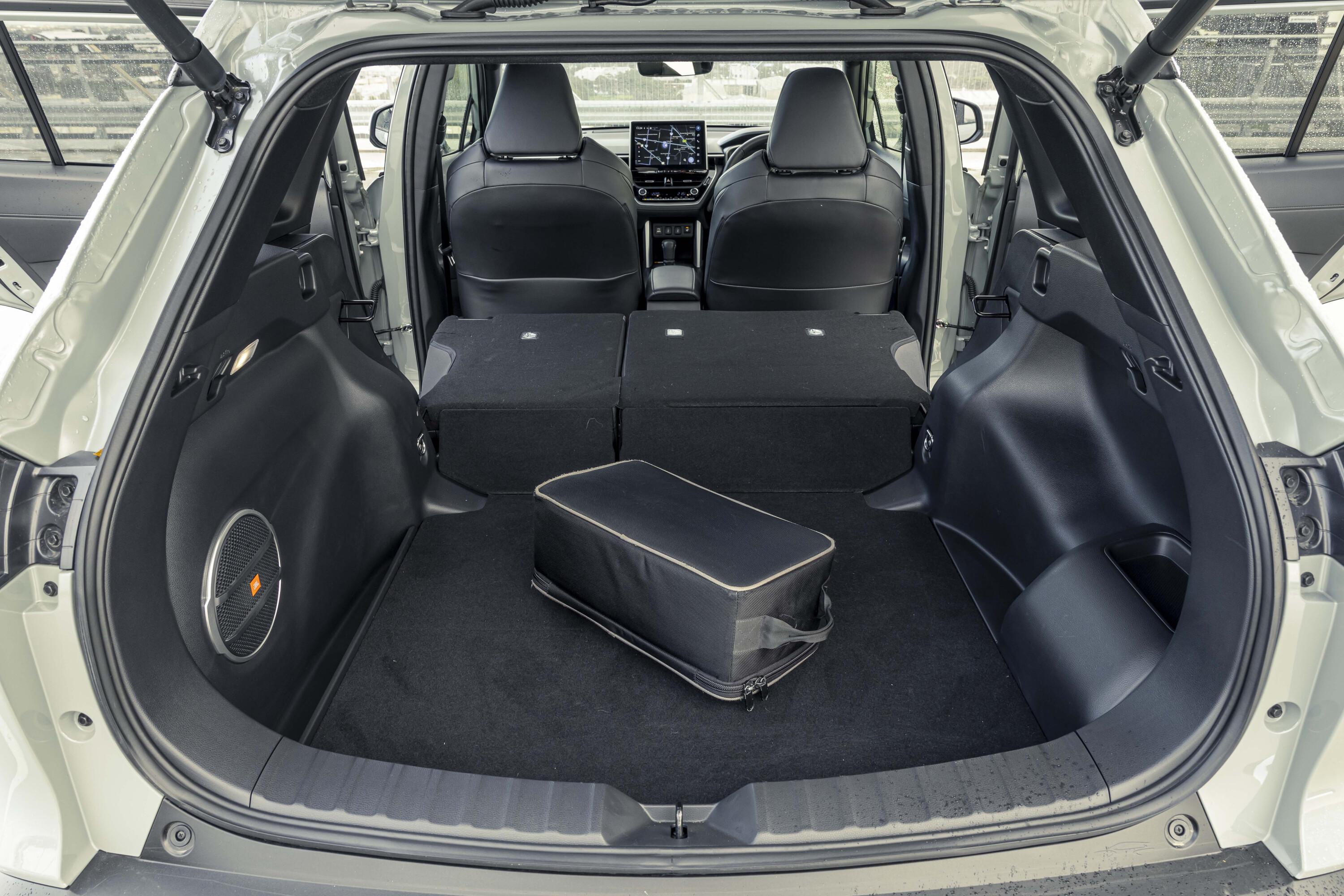
The boot is 414 litres, somewhat smaller than a RAV4 (making that the vehicle still to get if you have prams and other things to cart around). It’s also a 60/40 split-fold with no ski-port and notably, the seats don’t fold flat, with quite a pronounced lip. On the plus side, there’s an electric tailgate with foot sensor.
The Corolla Cross is about as safe as modern cars get, scoring five stars in local crash-testing and boasting all the modern active safety systems you could want.
1
There’s also Toyota’s connected services system, which can automatically call emergency services in the event of an airbag deployment.
That includes adaptive cruise control, lane keep assist, blind-spot monitor, a driver attention monitor (which lets you know if it thinks you’re getting tired), eight airbags and a reversing camera with reverse-cross traffic assist.
Curiously, the Corolla Cross’s autonomous emergency braking is rated to city speeds only – not higher, inter-urban speeds like more advanced systems. It can detect cyclists and pedestrians, however, and works when reversing. There’s also Toyota’s connected services system, which can automatically call emergency services in the event of an airbag deployment.
The Corolla Cross is a peach to drive. The 83kW electric motor makes it feel like an electric car at lower speeds, meaning it’s quiet, smooth and responsive, giving it a luxurious feel.
1
A small battery gives it minimal “EV-only range”, basically limited to car parks.
It gets extra points for its tight turning circle, too, making three-point turns a breeze. For acceleration, it has a good amount of power, able to do 0-100km/h in a brisk 7.7 seconds.
The ride quality is excellent, meaning you’ll feel minimal bumps as you waft along. The handling is also impressive for a crossover SUV.
Which brings us to the additional $3K for the all-wheel-drive model. If you plan on any ski trips, or live in a wet area, it’s worth spending. Same, too, if you’re often driving on winding roads or you like good handling, as the all-wheel-drive model gets more sophisticated independent rear suspension. Our front-drive test car uses a cheaper Torsion beam set-up.
1
Note that the AWD model does have a smaller boot – 380L versus 414L – and you give up a space-saver spare wheel for a puncture repair kit. It has a larger fuel tank, 43 litres versus 36.
Of course, efficiency is the real Corolla Cross drawcard, and we were extremely impressed by how little fuel this car uses. Toyota claims 4.3L/100km on the combined cycle (or 4.4L/100km for the all-wheel-drive model) and you can expect to regularly be in the “low fives” at the very least.
That’s incredible for a small SUV. The Corolla Cross also uses 91RON and costs about $250 to service (every 12 months or 15,000km) which is about as cheap as it gets in the new car world.
1
Its five-year, unlimited kilometre warranty can’t match Kia’s seven-year warranty but the engine and driveline is further warranted to seven years, and the battery is covered for 10 years. So it’s pretty close.
All in all, the Corolla Cross Atmos Hybrid is an excellent car with minimal flaws. We could easily see ourselves driving one every day, with few annoyances, and delighting at not just how it drives, or the crisp, clear Apple CarPlay, but just how little fuel it uses. It’s a very easy, low-risk car to recommend.
Deep boot has lots of u2018simply cleveru2019 touches
Not so much…
Price rise over the same model offered 12 months earlier
3-cyl turbo lacks grunt in this company and needs 95RON
Dual-clutch not as smooth or as responsive as a conventional auto
Skoda Kamiq Style 85TSI
Price
$37,990 (driveaway)
Engine
1.0L 3cyl turbo
Power/torque
85kW/200Nm
Gearbox
7-speed dual-clutch
Economy claimed/tested
5.4/6.1L
Drive
FWD
Boot size
400L/1395L
Weight
1305kg (tare)
Warranty
7yr/unlimited
Servicing
12 months/15,000km
5yr service costs
$1800
Fuel
95 RON
L/W/H/WB
4241/1793/1531/2651
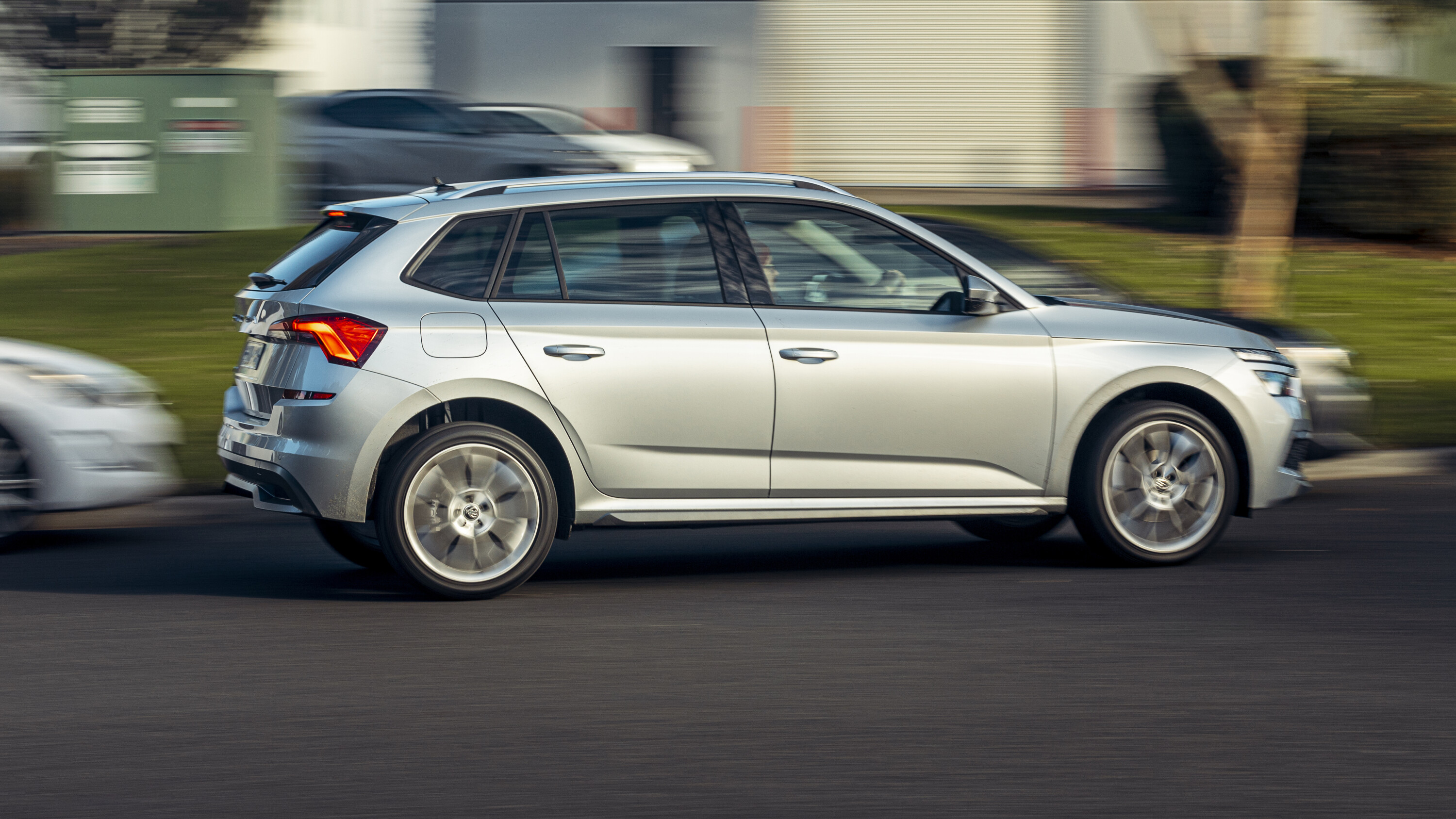
Smaller, cheaper and significantly less powerful than any other contender in this test, finishing in third place is quite an achievement for the Skoda Kamiq. Especially when you consider its recent price hike…
Back in 2021 you could buy this exact Kamiq for $29,990 driveaway. Now, though, just 18 months later, the very same SUV carries a $37,990 price tag. Ouch. Worse still is that Skoda hasn’t softened the blow by throwing in a host of extra standard equipment. Trims levels, connectivity and safety systems remains as they were.
So the Kamiq is no longer the segment-leading bargain it once was but don’t confuse that with thinking it’s now poor value. In fact, in the context of this test, the exact opposite is true.
1
Represented here as the entry-level Kamiq 85 TSI Style, the Skoda is the cheapest of our eight contenders by some margin once you factor in on-road costs.
Part of that is down to it being the entry level model to the Skoda range – the 110 TSI Monte Carlo and 110TSI Signature are also available for $41,990 and $42,990 respectively – but even in test littered with high-spec rivals, the Kamiq doesn’t feel like a budget offering.
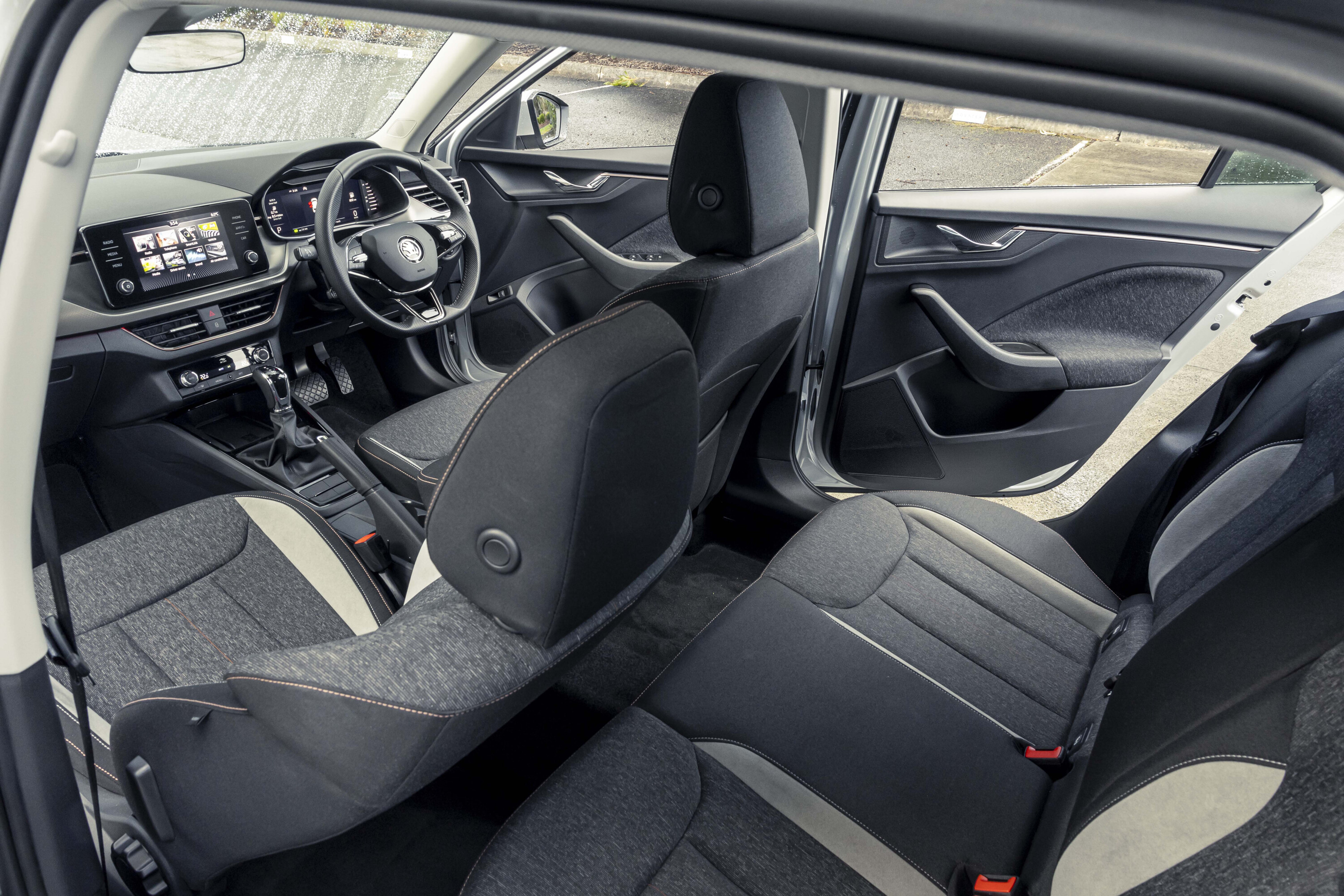
The level of standard equipment is high (18in alloys, digital instruments, wireless phone charging, adaptive cruise control, dual-zone climate control, LED headlights, keyless entry and an 8.0-inch touchscreen are all included) and although the cabin design can initially seem a touch business-like, closer inspection shows great care has gone into making an entry-level interior feel special and premium.
1
The textured plastics on the doors are superior to those in the Kona and Seltos, there’s a subtle pattern that runs across the dash inserts, and the floating door handle design is a nice touch, too.
Even the cloth seats excellent, with their comfort and support making up for the fact that they’re manually adjustable.
Look hard and you can discover some scratchier plastics below the beltline, and there are a few ergonomic foibles like having a manual dial to adjust the temp control (great!) but burying the fan speed control in the centre screen (fail), but the Kamiq’s cabin certainly doesn’t feel like the cheapest of this group.
2
The boot is also one of the best of this group.
Better still is how cleverly the Kamiq uses its space. Despite being the smallest of our eight contenders, the Kamiq’s second row rivals the new Kona for room and may even have the edge when it comes to knee and head room. Comfortable and supportive back seat, too, and you score two additional USB-C ports and dedicated air vents, though there’s no centre arm rest.
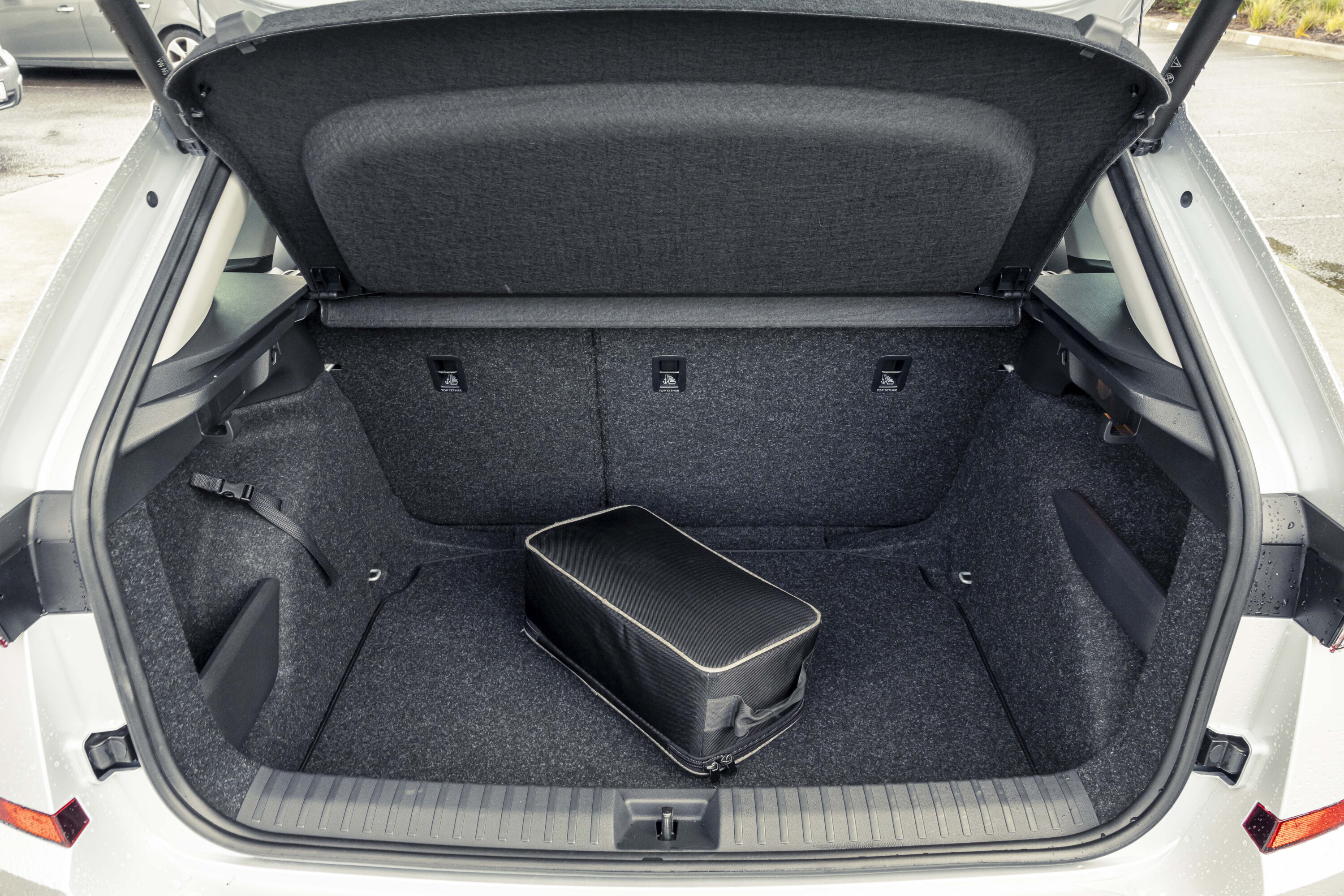
The boot is also one of the best of this group. Impressively deep, despite also housing a full-size spare, the Kamiq’s 400L boot includes a reversible carpet mat with a rubber underside, four bags hooks, a useful storage cubby, a rail to hook things on and a strap for clipping in loose items.
One area the Kamiq does does lag behind this group, however, is what’s under the bonnet. Fitted with an 85kW/200Nm 1.0-litre 3cyl turbo, the Kamiq 85TSI is the least powerful contender here and while it’s also the lightest by around 100kg, it is noticeably less potent when attempting an overtake or accelerating up to 100km/h.
1
There’s plenty of powertrain vibration too, which some might optimistically call part of a three-cylinder’s off-beat charm, but others might find intrusive.
The dual-clutch auto doesn’t help, either. It’s overly keen to shift into a high gear, which can make the 1.0L engine feel laboured, and it can also be jerky and slow to respond.
The trade off, however, is the Kamiq’s powertrain is impressively efficient. With an as-tested fuel figure of 6.05L the Skoda trailed only the Corolla Cross hybrid for fuel use. The handling is impressively cohesive, too, thanks to steering that is light and accurate, grippy Goodyear tyres and a chassis that strikes a nice balance between comfort and control on 18-inch alloys.
Throw in a 7-year/unlimited km warrant and the second cheapest servicing costs and it’s clear the Kamiq is punching above its weight. If only it was still $30K driveway. What a bargain that was…
Cabin feels special and offers class leading levels of comfort
Space and storage
Loads of standard equipment and active safety gear
Not so much…
Short service intervals for 1.6T AWD models
Heaviest drinker of all our contenders
Rotary gear selector stalk takes getting used to
Hyundai Kona N-Line Premium
Price
$46,500
Engine
1.6L 4cyl turbo
Power/torque
146kW/265Nm
Gearbox
8-speed auto
Economy claimed/tested
7.6L/11.0L
Drive
AWD
Boot size
407L/1241L
Weight
1450kg/1585kg
Warranty
5yr/unlimited
Servicing
12 months/10,000km
5yr service costs
$2394
Fuel
91 RON/E10
L/W/H/WB
4385/1825/1590/2660
Roomier, quieter, and now markedly better to drive, this second-generation Hyundai Kona is a huge improvement over the model it replaces.
It’s also, if such a thing is possible, even funkier to look at. Tested here in Premium N-Line guise, this is as bold and as expensive as the new Kona gets until the electrified models arrive later this year. And it’s oozing with visual X-Factor.
More cohesive to look at, yet just as busy, as the first-gen Kona, much of our test car’s visual punch is down to the N-Line pack (standard on 1.6T AWD models but a $3000-4000 option on other variants) which adds larger 19-inch wheels, chrome exhaust tips, a twin-element rear wing, and body-coloured cladding. The result is a small SUV that, in this company, feels daring and overtly sporty.
1
Inspiration from Hyundai’s flagship EV, the Ioniq 5, is obvious in the interior design
It’s a similar story inside, too. There are two trim levels in the new Kona range – the standard Kona or the Kona Premium – with the latter adding a host of desirable goodies like a full-width front light bar, heated/ventilated front seats, a heated steering wheel, acoustic windscreen, paddle shifters, native sat-nav, and heated rear seats.
The N-Line pack also brings leather/Alcantara seats, a sportier steering wheel, alloy pedals and red detailing on the dash to create a cabin that looks and feels remarkably premium for a $45K small SUV.
Inspiration from Hyundai’s flagship EV, the Ioniq 5, is obvious in the interior design, and the build quality is impressive. Hard plastics do abound, but the textures and finishes are miles better than Hyundais of old. And there’s plenty of substance to back up the focus on style.
1
Underneath the Kona rides on Hyundai’s fresh K3 platform and it’s now 145mm longer, 25mm wider, 20mm taller and rolls on a wheelbase stretched by 60mm.
This translates into a far roomier cabin and Hyundai’s designers have cleverly maximised the available space by fitting front seats that are 30 percent thinner, which ekes out additional rear knee room. The back seat is now one of this segment’s roomiest and 6ft adults have ample knee, head, and shoulder room.
There are dedicated rear air vents, too, as well as two USB-C ports which complement two additional USB-Cs and a wireless charging pad up front. The Kona is also the only contender to offer an adjustable backrest for the rear seat.
2
Cabin storage is class-leading. Moving the gear shifter to a rotary stalk has freed up the centre console, the door bins are large and there’s a useful storage shelf built into the dash. Boot space is another improvement.
Premium versions gain an electric tailgate, and the 407L boot is lower, wider, and larger than before. There’s also a two-stage boot floor, three bag hooks, and an ingenious design for storing the parcel shelf against the back of the rear seats for when you want to carry larger items.
It’s also a fun SUV to hustle on a twisty road. The 1.6-litre turbo, which is now paired with a smooth shifting 8-speed automatic, offers ample performance and the ride on 19in alloys is comfortable and composed.
1
The 1.6T was the heaviest drinker of all our contenders, though, at 11L/100km and it also has short 10,000km service intervals which further erodes a value equation that, thanks to a $46,500 sticker price, was already looking a touch shaky.
Yet it’s a worthy second place for the Kona. Stylish, premium and refined, this second-gen model now has the comfort, space and practicality to match its eye-catching looks.
Impressively premium and polished for an affordable small SUV, the T-Roc forgoes flashy electronic bells and whistles and instead focuses on the core ingredients of “what makes a great car”.
Take its suspension, for example. Roadholding, dynamics and driver satisfaction are key (you’re reading Wheels, after all), but ride comfort is paramount in the SUV segment, too. The T-Roc nails both. Supple when it needs to be, despite lower profile rubber than other cars in this test, the T-Roc’s expertly judged ride also delivers fluid handling that makes it properly engaging on a twisty road.
1
The spicy T-Roc R might be the real ‘driver’s choice’ of the T-Roc family, but there’s still plenty of dynamic talent in the more humble T-Roc 110TSI Style.
Strong efficiency credentials, too, thanks to its 1.4-litre turbo petrol returning the third-lowest fuel consumption figure of this group.
But a good chassis only gets enjoyed occasionally. A good interior is enjoyed every time you open the door and the T-Roc’s cabin quality is hard to fault.
Lovely fine-grained leather wraps the steering wheel, the elbow rests on the doors have soft black vinyl with a (real) contrast stitch, and the grippy microsuede seat upholstery and deep bolsters won universal praise from the testing team. The seats may be manually adjusted, but they were easily the most supportive of any SUV here.
1
However, the T-Roc’s 445 litre boot is the largest here, delivering a solid practicality win.
You can see where VW has kept costs down, however. Hard plastic uppers for the door cards, a solid plastic dashpad with moulded-in seam stitching, shiny leathergrain textures on the lower dash and scratch-magnet piano black around the transmission selector undermine the sense of luxury a little, yet the T-Roc’s cabin is impressively premium.
The back seat also provides plentiful support for adult frames, though the centre position is hampered by a sizable centre tunnel and much firmer cushioning. Better to leave it unoccupied so your backseaters can enjoy the fold-down armrest and dual USB-C outlets.
Front cabin stowage could be better, too. There’s nothing like the Kona’s innovative centre console, just a fairly conventional cupholders-n’-centrebox arrangement, a reasonably-sized glovebox, and a wireless phone charging pad that’s a bit difficult to access with the transmission in Park. However, the T-Roc’s 445 litre boot is the largest here, delivering a solid practicality win.
2
It’s worth mentioning that the spec we received for this test is a little at odds with the rest of this crowd.
The T-Roc 110TSI Style is effectively the base model if you don’t count the special edition T-Roc CityLife, while almost everything else is either at the top of their respective tree or close to it.
However, at the time of publishing VW Australia will have rectified this anyway: built-in GPS, a widescreen electronic instrument panel, rear cross traffic alert, blind spot monitoring and wireless Android Auto/Apple Carplay will be standard on the T-Roc Style by the time you read this, boosting the RRP to $38,890.
But here’s the kicker. Even though the $45,200 T-Roc 140TSI R-Line would have been a better match to the others on price, power and equipment, the lower spec 110TSI still had what it took to rise above them all while also being one of the cheapest. When you get the fundamentals right, victory becomes easy.
2023 Best Small SUV series
Looking to get into a brand-new small SUV? Our stories below will guide you to the model that best suits your needs!
The Ford Puma and previous Hyundai Kona exemplified the occasional oddity of the Federal Chamber of Automobile Industries’ vehicle classifications.
Split by just two millimetres despite the Ford being based on the Fiesta city car and the Kona on the i30 hatchback, the 4205mm Puma was labelled a ‘Light’ SUV while the 4207mm Kona was classed as a ‘Small’ SUV.
The Kona has put on a major growth spurt for its second generation, stretching an extra 150mm over a platform now shared with the sedan version of the i30 (as well as the Kia Niro).
1
Even the Puma remains a small SUV in our book, though, and the comparison is even more pertinent when you consider pricing overlaps.
Take our range-sweetspot, mid-spec Puma ST-Line we have here that costs from $33,190 before on-road costs, matching up with a base Kona that has stepped up to $32,000 from its previous $26,990 starting point.
The Puma offers more convenience features, including factory navigation, voice control, auto-dim rear-view mirror, LED ambient interior lighting, auto wipers and one-touch windows front and rear (just front in the Kona). It also has a much larger digital instrument cluster, though the Ford’s standard-features victory isn’t conclusive.
1
In return, the Kona has a 50 percent larger infotainment touchscreen, dual-zone climate versus the Ford’s single zone, and wears 18-inch alloy wheels rather than 17s.
Hyundai has also equipped the Kona with an impressive list of inclusive active safety, which includes features such as forward-collision warning system with direct oncoming traffic and junction turning functions, safe exit (to help prevent the opening of doors into oncoming traffic), and lead-vehicle take-off alert.
Ford asks Puma buyers an extra $990 for a Park Pack that adds adaptive cruise, blind-spot and rear cross-traffic monitoring, and front sensors that are all standard on the base Kona.
1
Dual panels – the upper panel an active, drag-reduction flap – even hint at the grille-less face of an electric car.
Hyundai says the Kona EV was the first variant to be designed, and that revelation is borne out by the futuristic slim, full-width daytime running LED strip and matching rear LED bar found even on the petrol version. Dual panels – the upper panel an active, drag-reduction flap – even hint at the grille-less face of an electric car.
Inside, the Kona’s new fit-out borrows from the company’s Ioniq 5 with its curved panel of dual displays and pinboard, plus lower-dash module for heating/ventilation controls and various infotainment short-cut buttons.
The 12.3-inch horizontal infotainment touchscreen is matched by a same-size digital driver display if you tick the N-Line option pack or step up to the Kona Premium.
1
The base Kona’s relatively basic instrument cluster accedes to the Puma’s 12.3-inch driver panel, which is superior graphically if limited in customisation options.
A clever application of textured surfaces by Hyundai’s interior designers overcomes the extensive use of hard plastics to lift perceived quality, while the Kona interior impresses most with its abundant space and useful practicality.
The centre console comprises an open-access storage area with removeable top tray, wide phone tray with inductive charging, and an S-shaped middle section that provides clever, flexible storage for drinks and phones.
Ford’s smallest SUV isn’t quite as generous for storage space, and the same can be said for room in the rear seat. Where knee room is cramped for adults in the Puma, the Kona delivers class-leading space after gaining nearly 8cm over the previous-generation model – helped largely by a 6cm stretch to the wheelbase.
1
There’s also extra shoulder width that would allow three adults to squeeze across the rear bench that is firmly cushioned but provides excellent under-thigh support.
The Puma still works as a small family SUV, especially as it offers one of the most versatile boots in the segment through its variable-height floor and underfloor storage tub.
Boot volume in the Kona is only fractionally behind the Puma’s 410 litres to address the luggage-compartment weakness of the previous model. As with the Ford, there’s a cargo blind and the rear seats fold 60.40.
2
An auto tailgate is only $750 on the Puma where for the Kona it’s available only on higher-spec models.
Torsion-beam rear suspensions sit under both models, though this is most obvious in the Kona where there’s a comparative lack of sophistication. Although the Kona rides with a greater suppleness than the firmly sprung Puma, the Hyundai’s suspension feels like it’s working overtime across the patchier surfaces thrown up by urban and suburban roads where the Ford’s damping continuously excels.
It’s no coincidence, as with the previous-generation Kona, that the rear-multilinked Kona Premium is better at dealing with variable surfaces.
1
The Puma also remains quite the revelation on country roads, its chassis taking on corners with enthusiastic agility to make the Ford stand out as a rare, bona-fide driver’s car in its class.
The Kona’s steering is less convincing in both its weighting and on-centre precision, while the Hyundai’s lane-keeping aid needs to be turned off to avoid unnecessarily intrusive nudges of the wheel.
This can be done conveniently on the steering wheel, though it defaults to On every time you start the car. It’s a repeat for the annoying Speed Limit warning that chimes in even if you creep ever so slightly over a prevailing limit.
1
Getting up to speed is a somewhat sluggish process in the base Kona, which carries over a normally aspirated 2.0-litre four-cylinder and CVT auto that was never a firecracker but must now contend with shifting a slightly heavier vehicle.
While it will be more than serviceable for some owners, spending above $30,000 in this segment starts to access some good engines – including a variety of three-cylinder turbos that are exemplified by the one found in the Puma.
Ford’s teeny 1.0L may have modest outputs of 92kW and 170Nm – less than the 110kW/180Nm of the Kona – but this is a highly willing and characterful engine. Its torque is spread across 1400 to 4500rpm where the Kona only peaks at the latter figure, making the Puma more responsive.
1
Paddle shifters also give the driver manual access to gearchanges – and a surprisingly sporty engine note when revs are allowed to climb.
The Puma’s smaller engine is also more economical, according to official consumption figures, though unlike the Kona it requires premium unleaded.
Count that as another factor, along with a larger cabin, larger active-safety arsenal and slightly lower price tag, that arguably makes the Hyundai Kona the sensible choice here.
The Puma isn’t without its pragmatisms, however, while it offers more convenience features than its rival here. But the Ford stands out predominantly for the way it’s engineered for relentlessly enjoyable driving.
SCORING
Ford Puma ST-Line
Hyundai Kona
Overall
8.0/10
7.5/10
2023 Best Small SUV series
Looking to get into a brand-new small SUV? Our stories below will guide you to the model that best suits your needs!
Choosing an overall winner in our comprehensive small-SUV test is no easy feat.
As Australia’s third-largest segment (dual-cabs and medium SUVs are one and two) it’s the sheer size and variety of small SUVs on offer that makes declaring one model ‘the best’ so challenging.
1
Consider, for example, the different buyers and budgets for a $21,900 Hyundai Venue and a $120,000 Mercedes-AMG GLA 45. Will the pair ever be cross shopped? We doubt it.
And yet, after some considered thought, deciding on a winner was actually quite simple for the team.
VW’s second-smallest SUV, the T-Roc, not only won our $45K comparison – our biggest test category with eight contenders, including the largest presence of new-generation models – but it presents a remarkably convincing case across the entirety of its model range. And that’s the key to its success – consistency.
1
Where other small SUVs have seriously persuasive variants (the new Hyundai Kona Premium and the Toyota Corolla Cross GXL hybrid are standouts) they also have weaker points in their range that make a blanket recommendation problematic.
The T-Roc, however, is excellent no matter which variant you buy. Kicking things off is the sharply priced T-Roc CityLife which, for $35,990, offers strong value, high levels of standard equipment and, thanks to its 17-inch alloys, has arguably the best ride quality of any small SUV currently on sale.
An expertly judged ride is a core T-Roc attribute, with the 110TSI Style ($37,100) matching the CityLife, while the sportier 140TSI R-Line ($45,200) also strikes a good compromise between everyday comfort and control.
1
Things are decidedly more focused in the flagship R version ($60,300), yet even there the T-Roc remains an impressive daily.
And while the T-Roc R Grid Edition may have lost out to the closely related Cupra Formentor VZx in our Best Small Performance SUV segment, it was a close contest. And in that test the VW was a sizeable $11,490 less expensive than the Cupra which, depending on your priorities, might swing the victory back in the T-Roc’s favour.
As you’d expect for an SUV built on VW’s ubiquitous MQB platform, the T-Roc is remarkably polished and refined. The cabin feels tightly screwed together, the mix of materials is mostly premium (a few scratchy plastics can be found), and the boot and backseat are both commendably roomy.
1
Fizzy, quiet and economical, all three of the available powertrains are easy to recommend.
It’s how the T-Roc drives, however, that really sets it apart. We’ve already mentioned the excellent ride quality but engaging handling and sharp steering are other key character traits.
And there’s not a dud engine in the line-up. Fizzy, quiet and economical, all three of the available powertrains are easy to recommend.
As for weaknesses? The absence of a hybrid option is something of an Achilles heel, especially considering the popularity of the Corolla Cross hybrid and Australia’s recent upswing in hybrid sales.
2
But if it’s efficiency you’re chasing, our ‘as tested’ field figure of the 110TSI was 6.58L/100km, putting it only a whisker behind the Corolla Cross at 6.02L.
Servicing costs are on the high side, too, at approximately $2450 over five years (a Corolla Cross is $1250) but in nearly every other discipline the T-Roc is either segment-leading or close to it. That makes it an easy small SUV to recommend, without the caveat of “get this variant”, and a worthy overall winner.
2023 Best Small SUV series
Looking to get into a brand-new small SUV? Our stories below will guide you to the model that best suits your needs!