
Get your tinfoil hats at the ready… KFC has used the cover of coronavirus to deploy its secret army of 5G-connected autonomous delivery trucks in Shanghai to deliver fried chicken to unsuspecting passers-by.
It sounds like a conspiracy theorist’s nightmare big-buck trifecta: 5G, autonomous cars and China.
To be honest, it also sounds pretty damn amazing.
It’s become a reality in the huge Chinese city, with KFC-branded trucks autonomously delivering food in a way that promotes social distancing and limits human contact.
Placing an order with the KFC van is as simple as walking up to the miniature self-driving vehicle, using its touchscreen to select an item and pay for it using a cashless QR code system.
Then it’s as easy as grabbing your food through the tiny window.
While it appears that a fried chicken smash-n-grab is a potential downside to the system, surveillance systems would no doubt dissuade hungry shoppers from snaffling a second serve of potato and gravy from the unmanned vans.
The autonomous KFC delivery truck is masterminded by Chinese-based self-driving tech start-up Neolix, which used a recent $29 million funding to create these unique delivery vehicles.
Neolix’s driverless trucks are electric – naturally – and can travel up to 100km on a charge at speeds of up to 50km/h.
There’s not a lot of information available on the vans themselves – though they would smell pretty amazing – but we’d suggest that the vans would be geo-fenced to operate within particular sections of the city based on known, mapped routes.
And, much like a large Roomba vacuum cleaner stocked with chicken nuggets, the vans would be equipped with sensors front and rear to ensure the only damage to pedestrians will be to their cholesterol levels.
They’ve been known to roam places like university campuses, local streets and Shanghai city in search of hungry customers.
Hovering outside nightclubs and bars in the wee small hours wouldn’t be a bad play, either.

They’re capable of Level 4 autonomous driving, and use the rapidly-emerging superfast 5G cellular network to communicate with home base.
While the autonomous delivery trucks were already in development before the advent of coronavirus, the need for socially-distanced, limited human contact became an ironic coincidence, which has only boosted the initiative’s effectiveness.
If there’s one good thing that’s come from Covid-19, brands have been forced to innovate new ways of connecting with people and think of cool new logistics solutions.
It’s uncertain how well the autonomous truck is able to up-sell, though. Do you want fries with that?
NEXT “Nobody is even close” to making a truly self-driving car, says Toyota
It’s more difficult to stay on top than to get there, so they say.
Each successive 911 GT3 since the very first one in 1999 has been somehow better than the last and the outgoing 991.2 model is still one of the most immersive driver’s cars in the world.
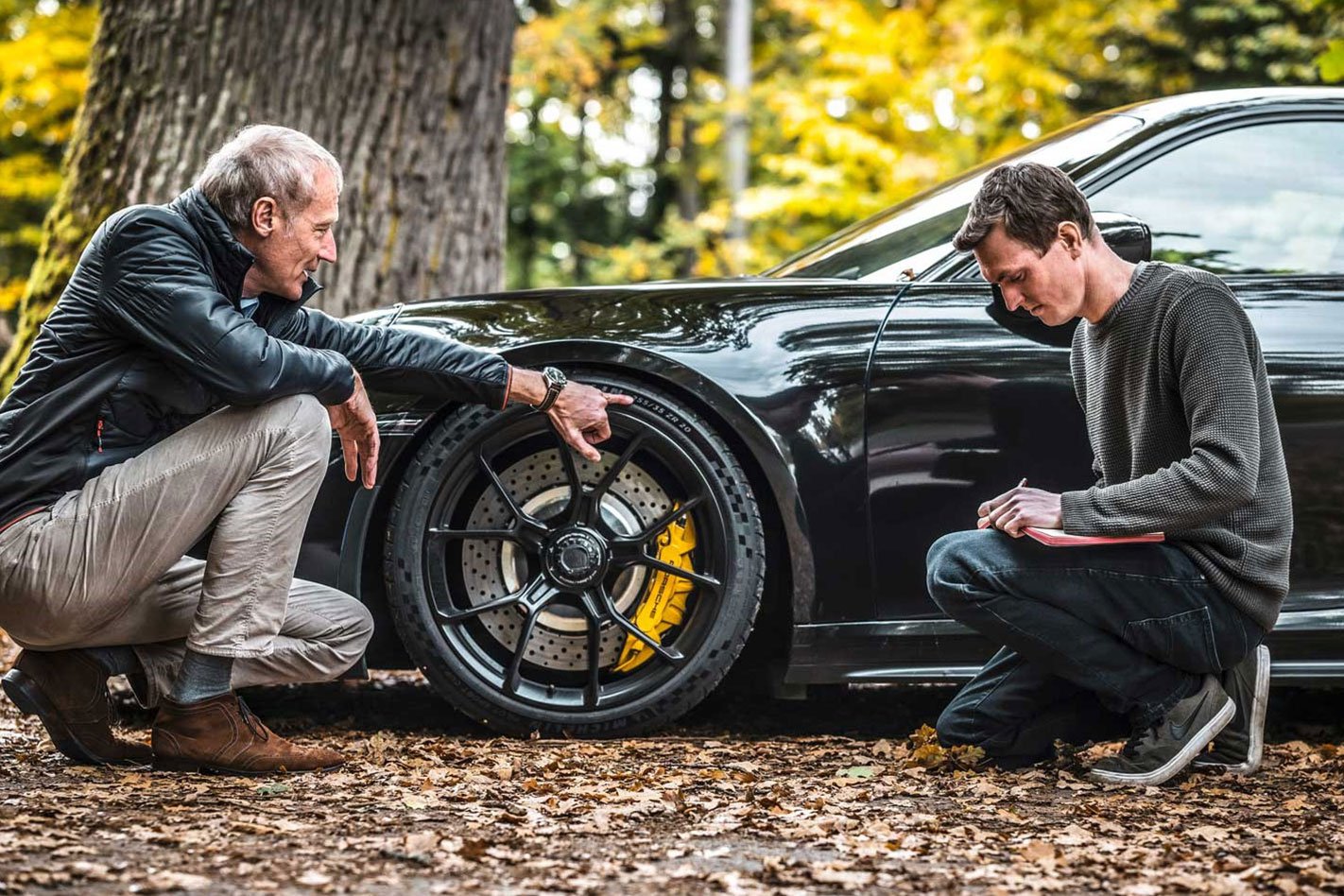
We’re at Porsche’s secretive Weissach engineering centre where GT division boss Andreas Preuninger and his team are putting the finishing touches to the 2021 911 GT3.
Aside from a first-hand briefing, we’re also here to experience the GT3 at even firster-hand: out on the road in the passenger seat wheel of a prototype in close-to-production spec, with Preuninger at the wheel.
The basics
The new GT3 will be revealed to the world undisguised early in 2021.
Pricing is not yet confirmed but will be “a little bit more” than the previous car, Preuninger says, in line with usual inflation from one generation to the next.
The new 992 platform means overall dimensions have inflated too. It’s a bigger car than before, yet the new GT3 weighs the same as the last one – no small achievement.
Kerb weight is 1340kg, or thereabouts. The new platform brings its own benefits in extra stiffness, wider tracks and larger wheel wells: 21-inch rear tyres are now standard (they had to be engineered into the previous GT3 RS).
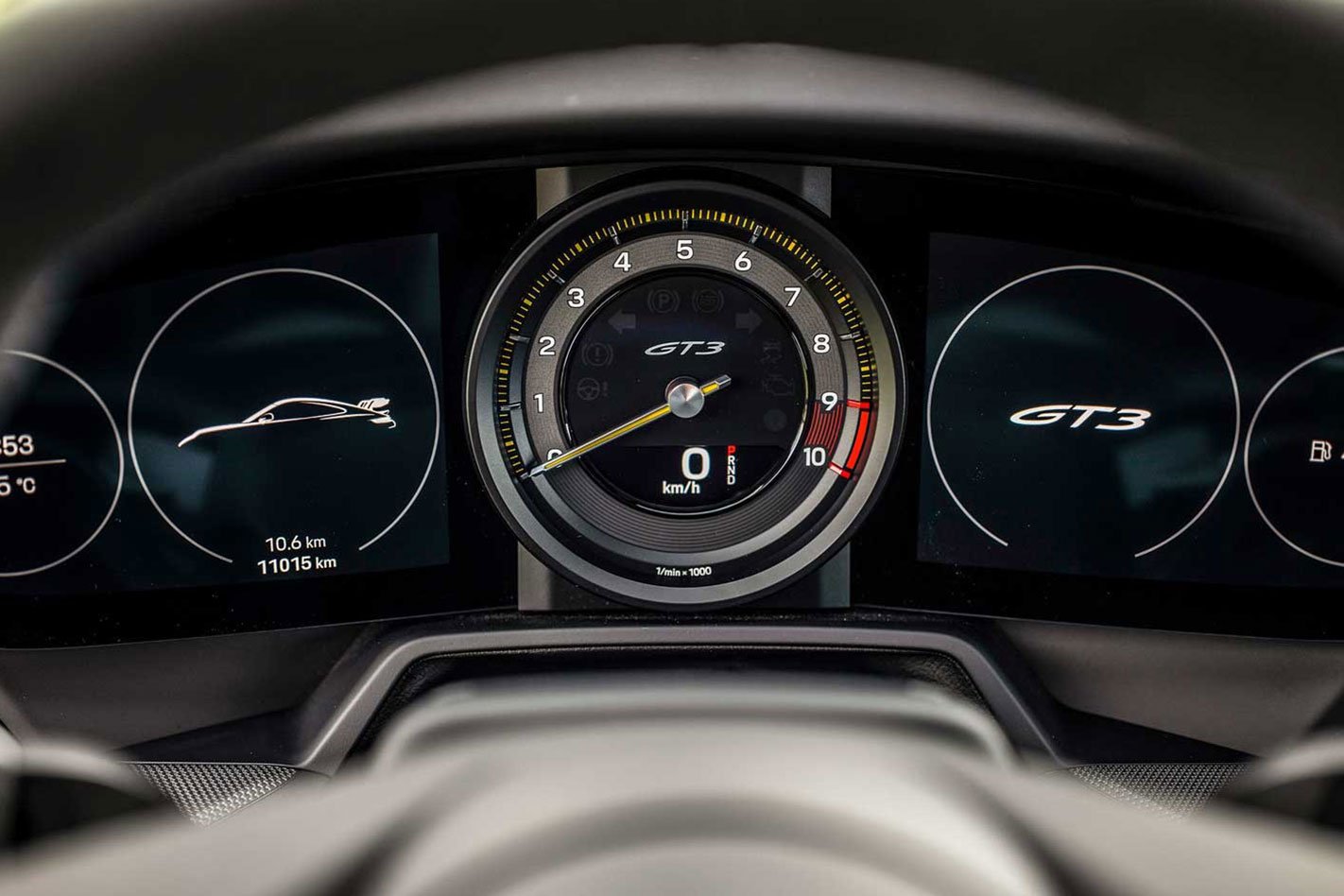
It develops around 8kW more than before, for a total around the 375kW mark.
Happily, there’s still not a turbocharger in sight.
For the first time in a road-going production 911, the front suspension is by double wishbones rather than MacPherson struts, taking its design from the 911 RSR Le Mans car.
“That brings advantages in camber stiffness and precision,’ explains Preuninger. ‘Our mid-engined competitors have had double wishbones for a long time but it wasn’t possible on the old 911 platform.”
Let’s meet the prototype
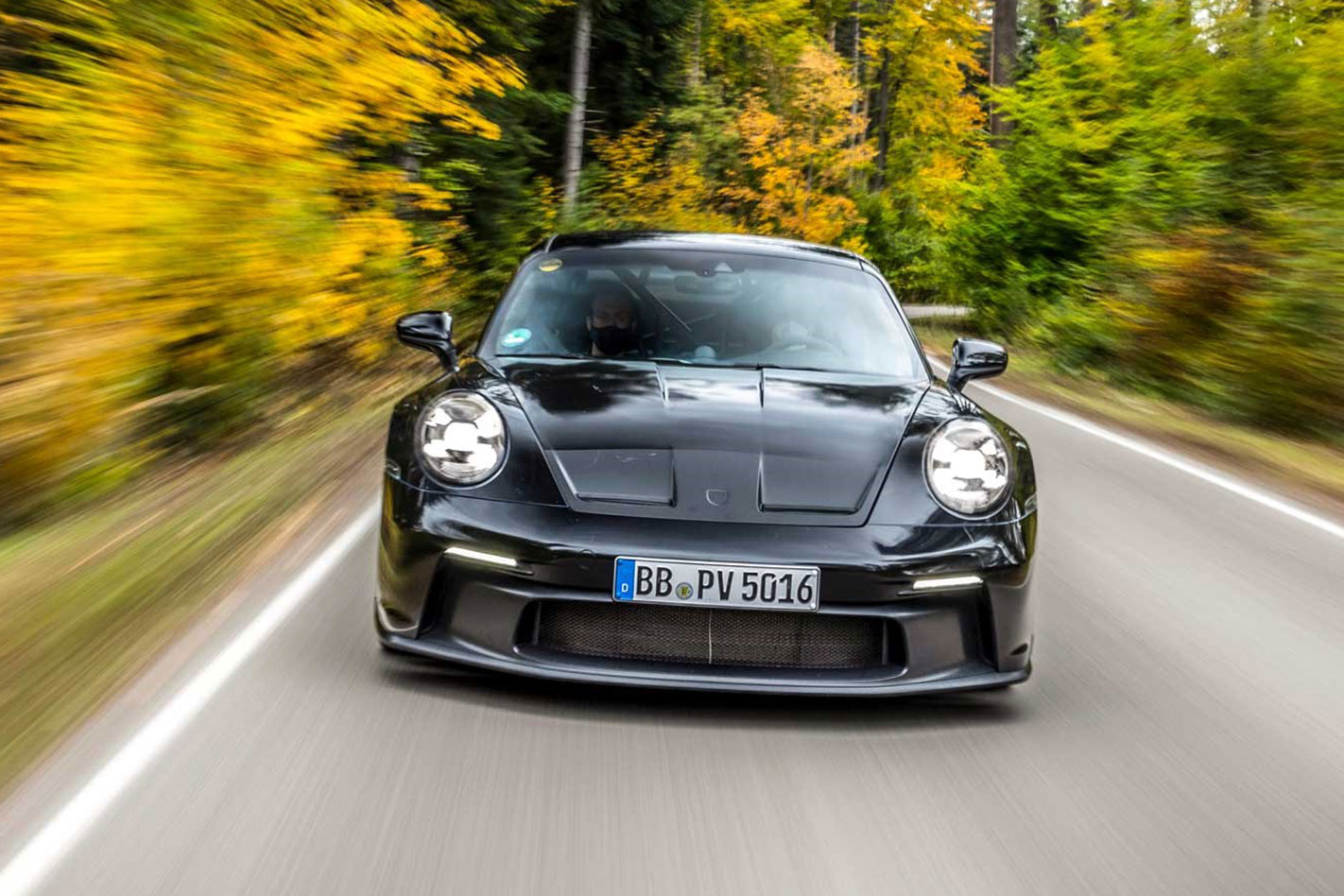
Aside from the camera-shy matte black wrap, camouflage is minimal, other than the fake rear bumper; the production version will be easier on the eye.
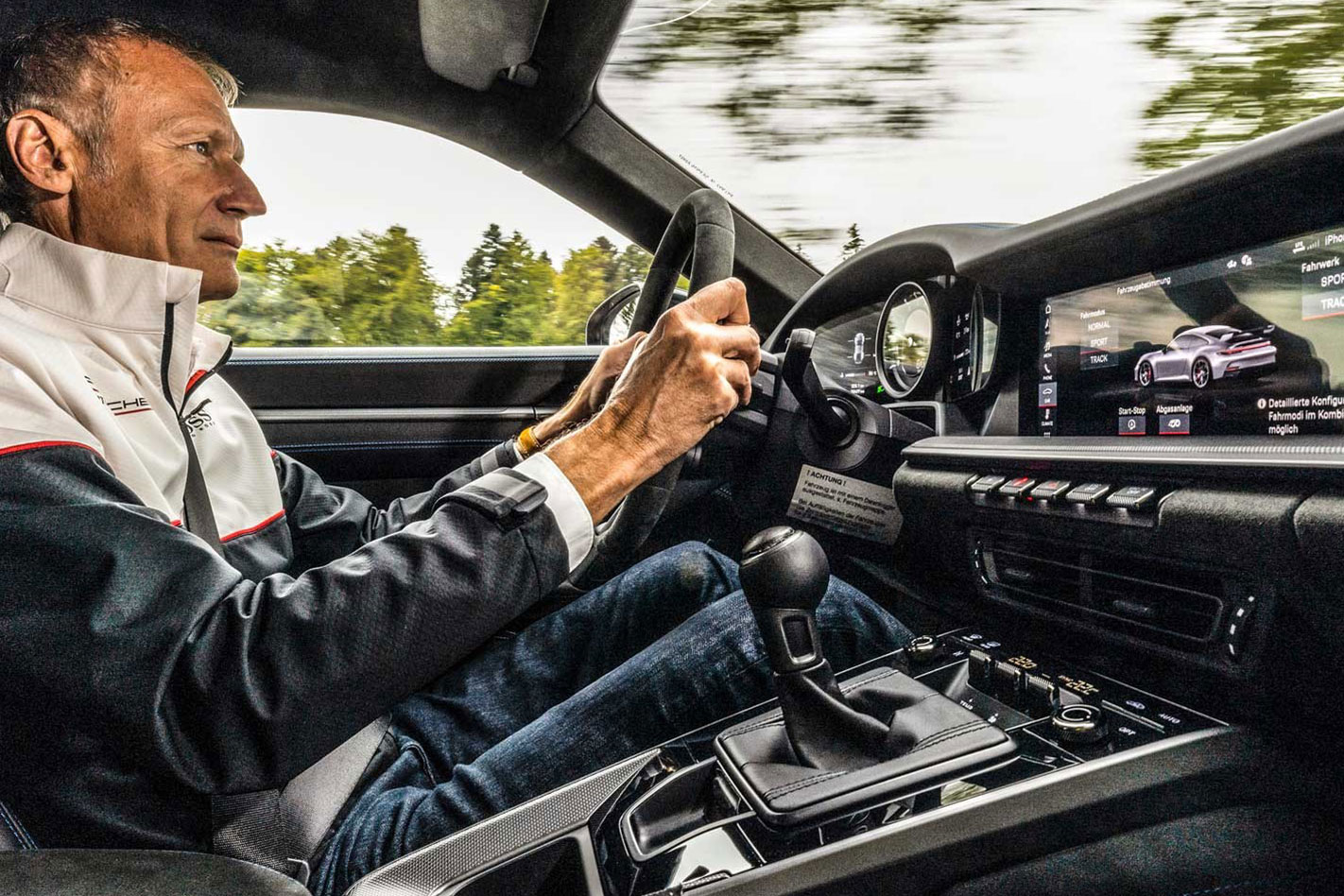
This car is fitted with the double-clutch PDK gearbox (a lighter development of the unit fitted to the previous car).
It’s an option: a six-speed manual will still be standard equipment. As before, the harder-core GT3 RS version which will follow a little later will be PDK-only.
But not paddleshift-only. Spec PDK and the gear selector looks identical to the manual lever. You’d have to count the pedals in the footwell to be sure.
Regular PDK 911s have a square plastic blade to select drive, reverse and so on, with manual control only possible via the steering paddles, but in the GT3 you can also punch the lever back and forth to shift up and down the ’box.
How does it feel out on the road?
Sauntering out of Porsche’s R&D base the GT3 already feels… well, like a 911 GT3.
“Our aim is that you should be able to tell in the first few metres that you are in a GT3, rather than a 911 Carrera or Turbo,” Preuninger says.
Flat-six warmed through, the road clears to a well-sighted section and the (analogue) tacho-needle pings off the 9000rpm redline (something of a GT3 USP. “People expect it,” Preuninger acknowledges).
The acceleration feels fast enough to thrill, without scrambling your senses like some modern supercars.
“In a straight line it’s not substantially quicker than the old one,” Preuninger says, matter of factly. “Why would it be? Similar power, similar weight. Six-hundred horsepower… you don’t need all that power!
“I’d rather have 100hp [75kW] less and keep it naturally aspirated.”
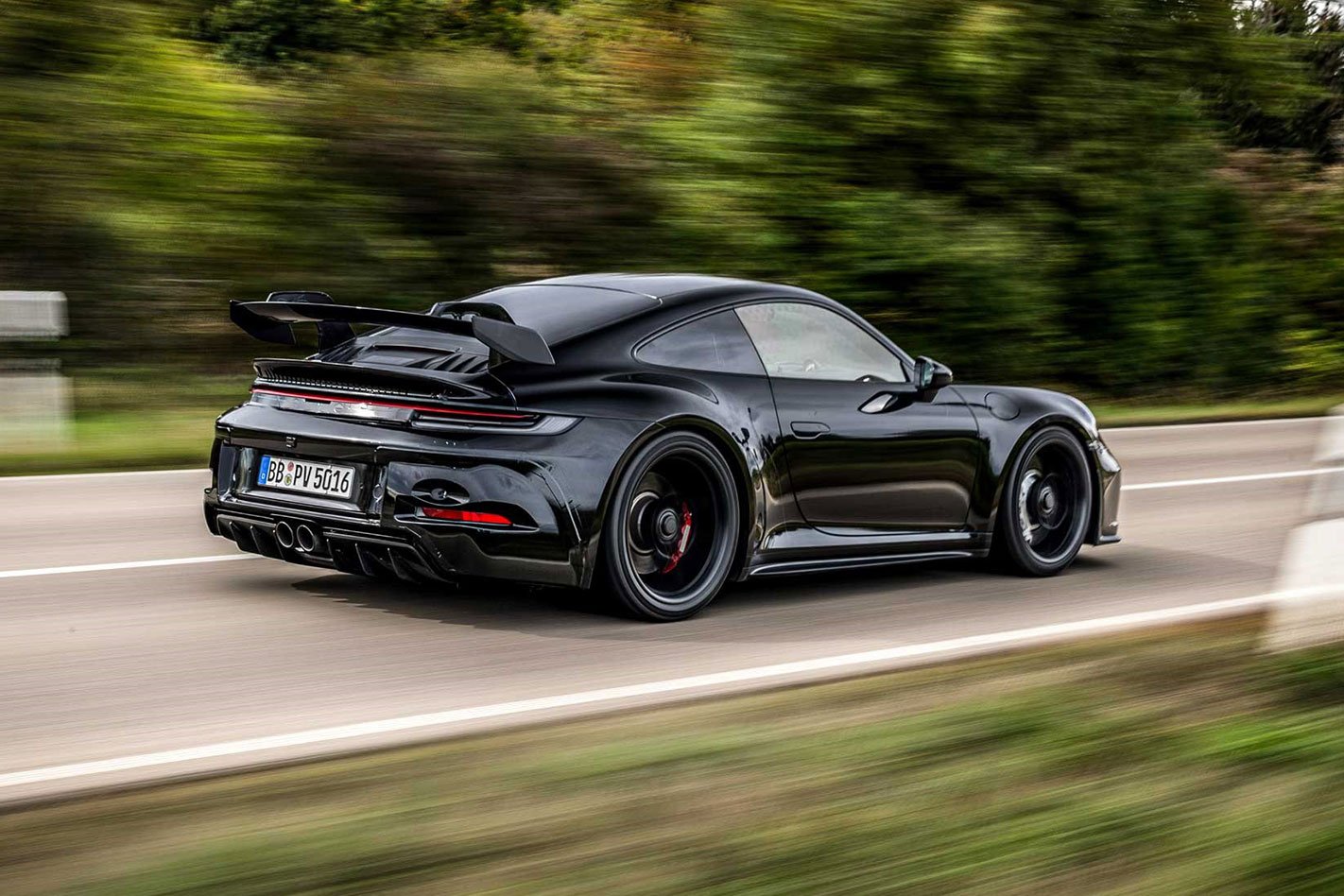
The standard-fit adaptive dampers are faster-reacting (and lighter) than ever before, and on tough surfaces, they work wonders. “The faster you go, the better the damping is,” AP says.
You sense this car will be more than a match for the gnarliest of roads.
Downsides? Nits are hard to pick from the passenger seat, but here goes.
Engine noise in seventh gear is rather rowdier than a regular 911, and could become tiring on a long journey.
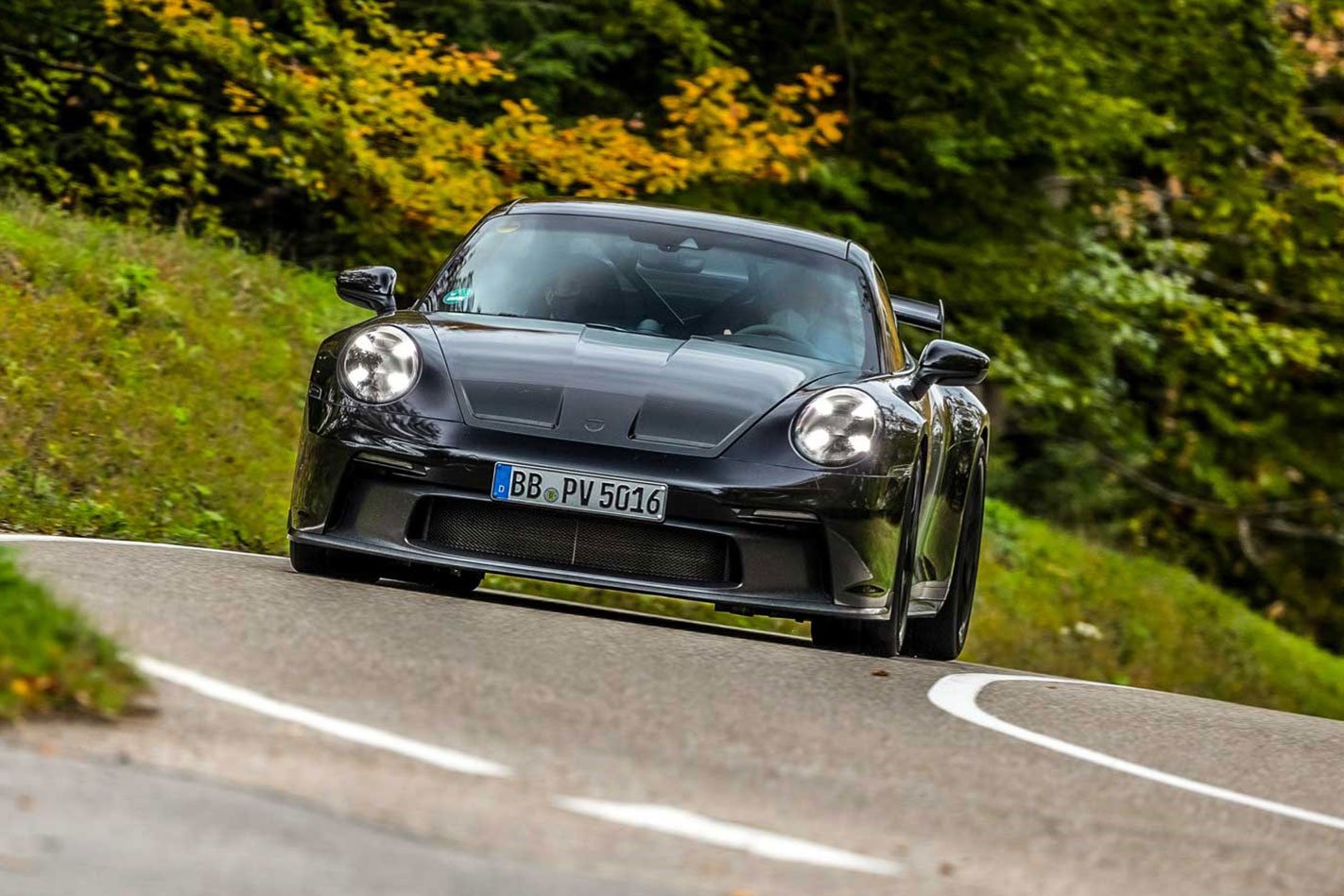
But none of these feels like a deal-breaker.
Preuninger has covered thousands of kilometres in this prototype, but is clearly enjoying driving it just as much as ever.
“At speed, it’s a zen-like meditation feeling – I don’t get quite that same feeling in any other car,” he smiles.
We’ll find out how that feels in the first half of 2021; it can’t come soon enough.
This story was first published on CAR UK
If there’s been one success from a year in which we’ve seen a solid downtown in new car sales, it’s the Toyota RAV4.
The car that started the SUV trend 30 years ago has sold consistently well, with Toyota unable to get enough of the hybrid variants and the nameplate becoming the best-selling car on the Australian market for the first time in August 2020.
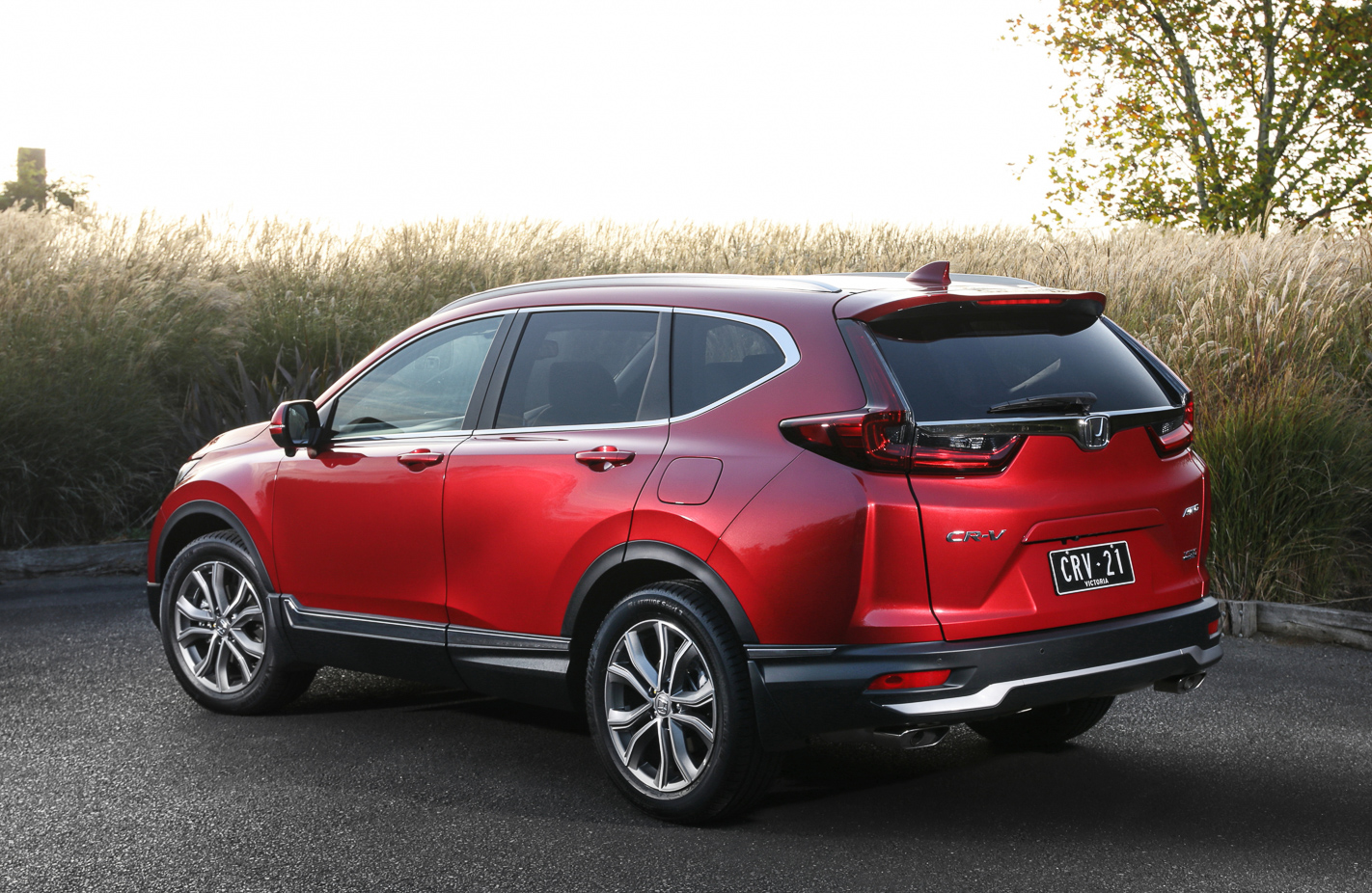
This is the type of success that mid-size SUV rivals Ford and Honda are eyeing off with the new Escape and CR-V, respectively.
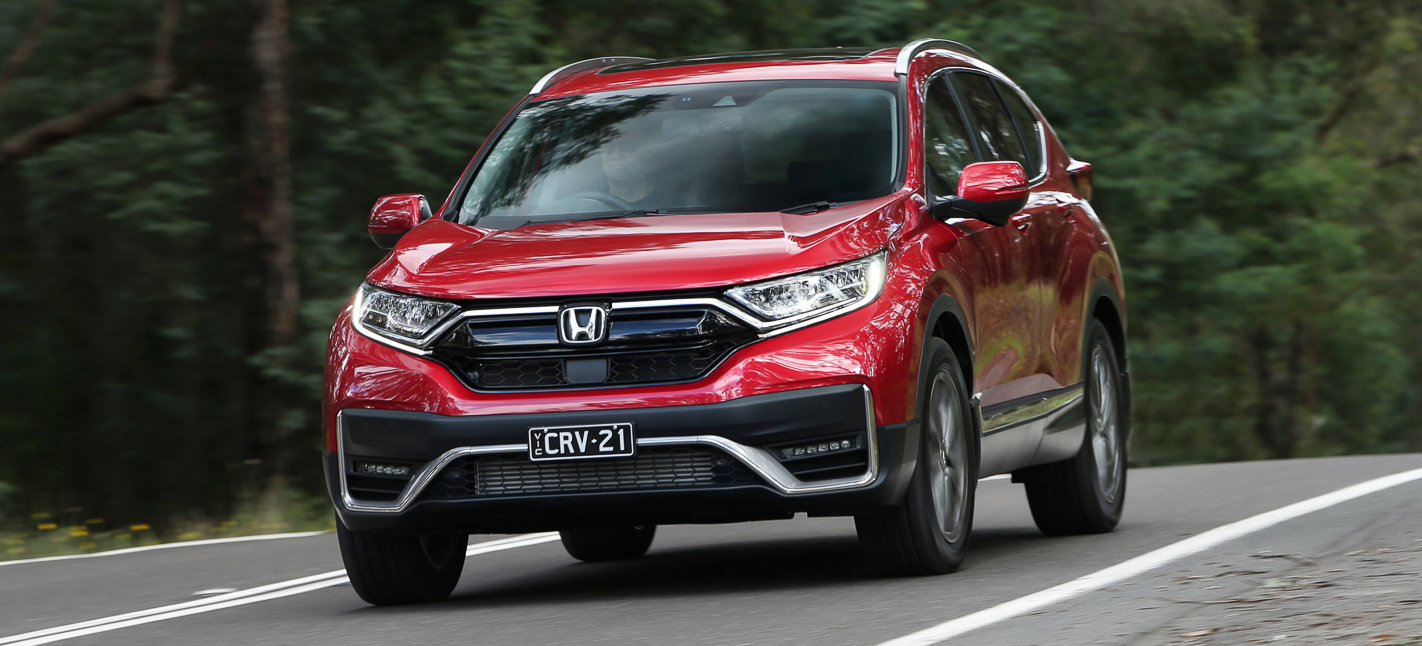
Both are counted as newcomers to the segment, with the Ford (below) coming in as an entirely new generation while Honda’s CR-V scores some subtle styling tweaks and new kit as standard.
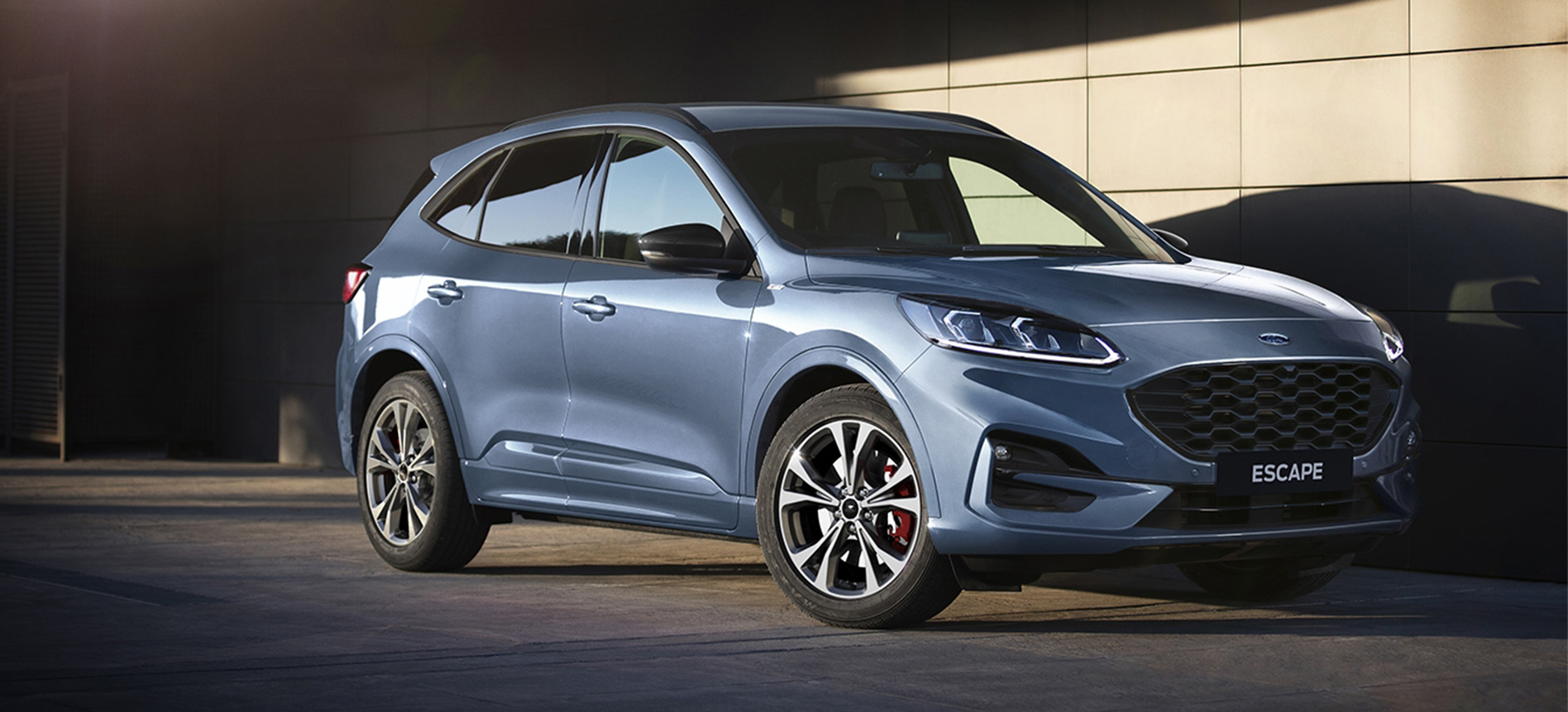
The two of them certainly have the upper hand in terms of being newer, but is the substance there to trouble the Toyota?
Let’s pitch each against one another to see how the three compare on paper. For the purposes of direct comparison, we’ll look at the higher-specification end of the scale between the trio.
Equipment and Technology
The Ford Escape has experienced the greatest change of all, superseding a seven-year-old iteration in its predecessor.
With that comes a whole brace of new tech, equipment and safety features.
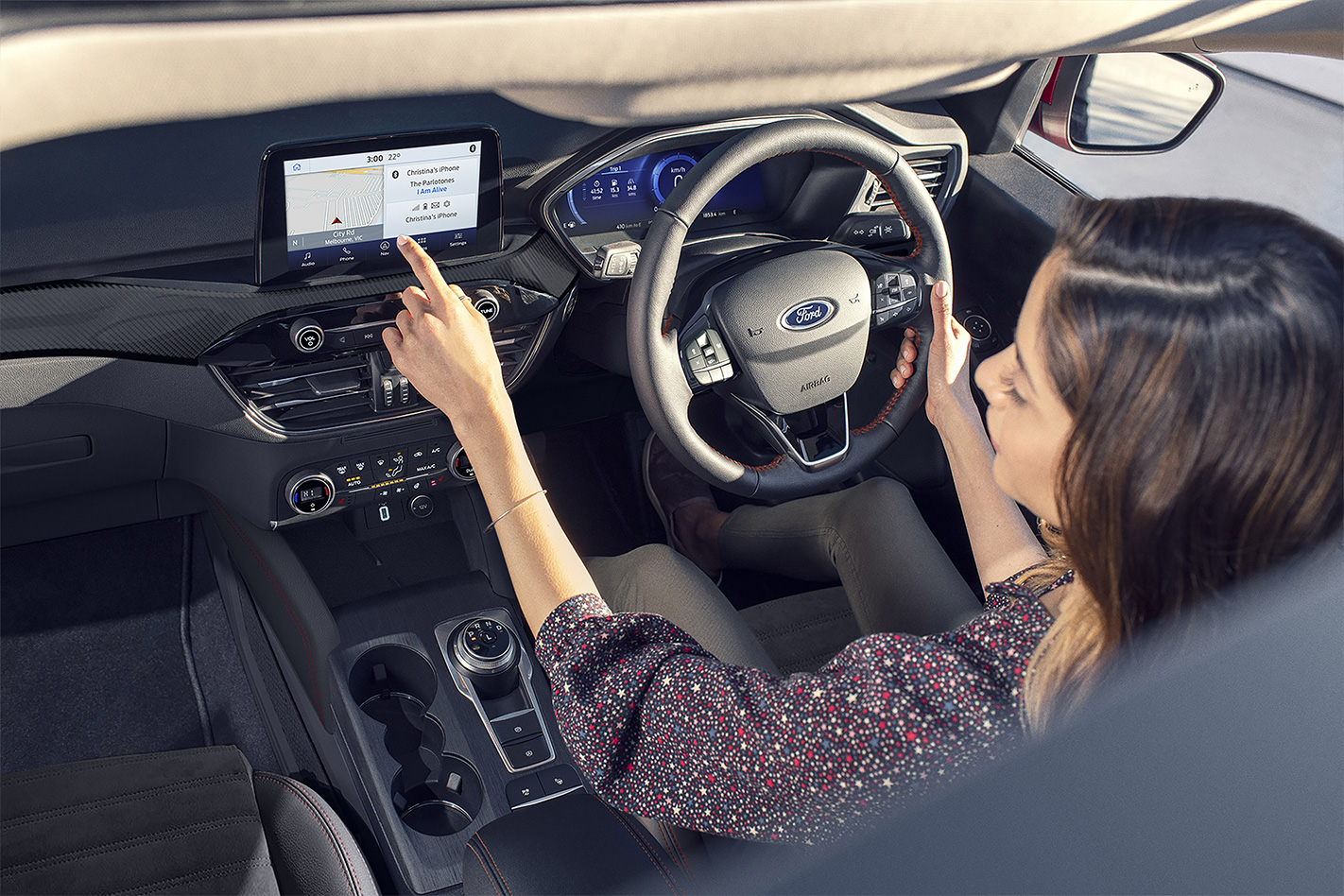
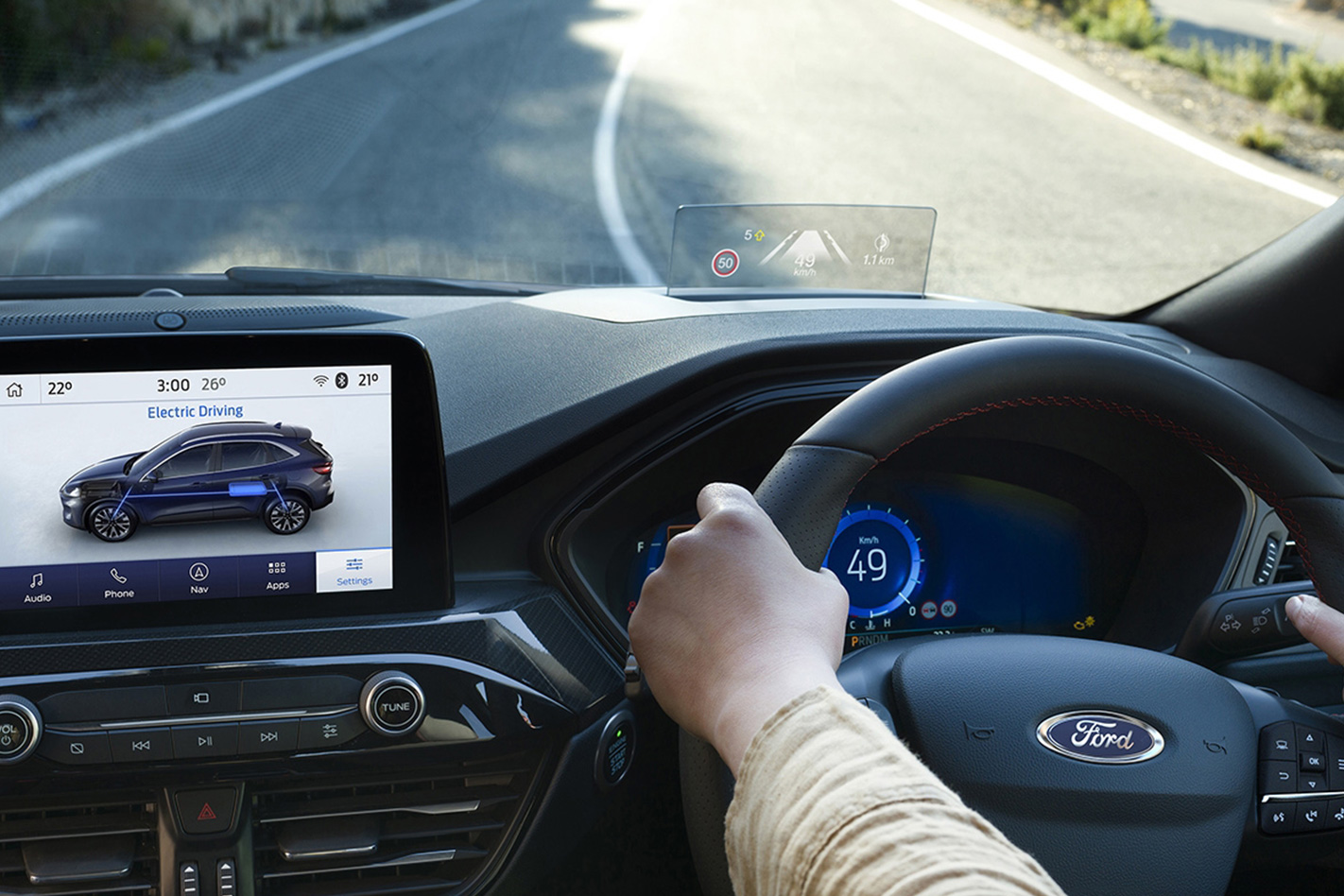
The most impressive updates are found in the overhauled interior.
The top-spec Vignale is positioned as the luxury-focused variant of the three-model range, featuring items like an 8.0-inch touchscreen with SYNC 3 and Apple Carplay/Android Auto connectivity, head-up display, leather appointed and heated seats, panoramic sunroof, power tailgate and advanced auto park assist.
All versions will also come with the FordPass Connect embedded modem as standard that brings remote vehicle functionality and connected services such as remote vehicle lock and unlock, key vehicle information and the ability to schedule your next service, all via a dedicated phone app.
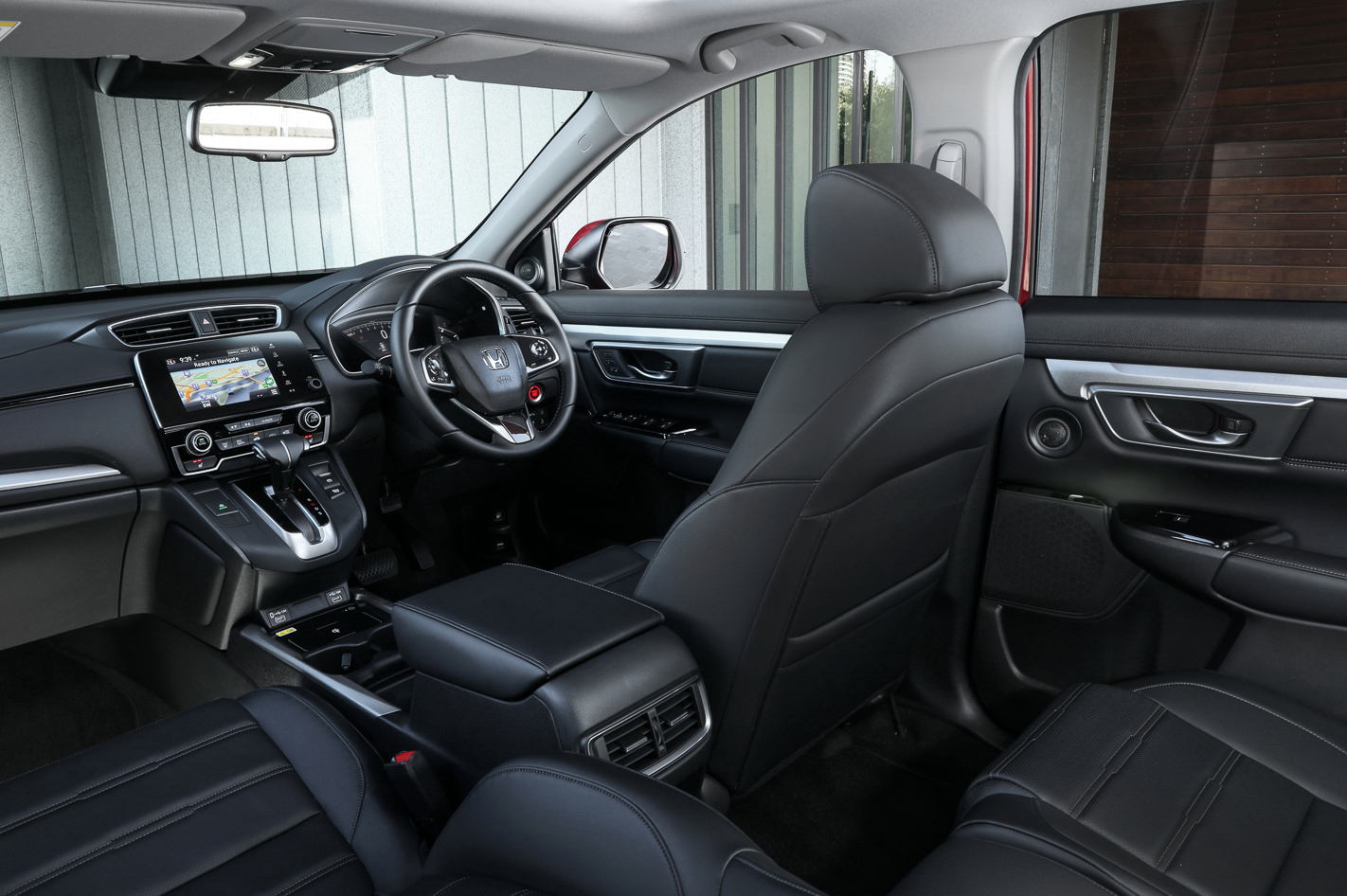
In Honda’s corner, a 7.0-inch colour touchscreen takes pride of place in the centre stack, supporting Apple Carplay/Android Auto functionality and wireless phone charging.
The centre console has been redesigned for 2021, with improved storage spaces and easier access to charge ports, and the cabin on the high-end VTi-LX grade features seat heating, leather-appointed upholstery and power-adjustable driver’s seat.
Toyota RAV4 price and features
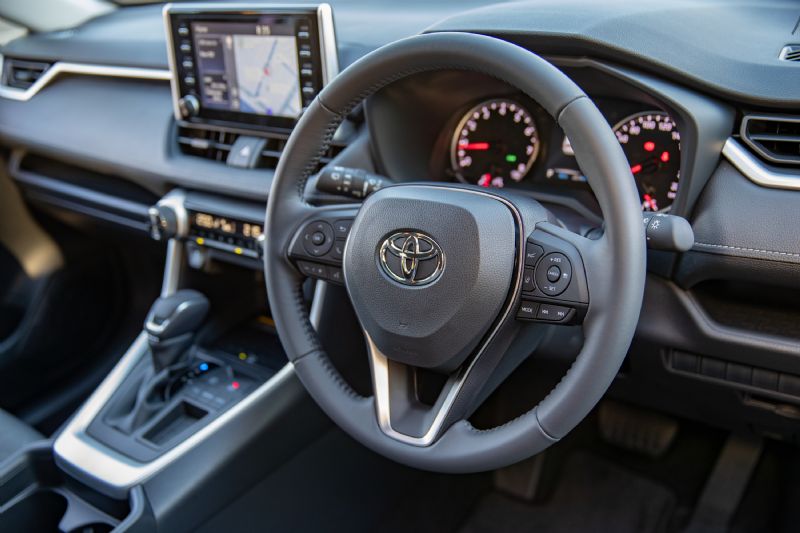
The comparable Toyota RAV4 Cruiser equips part-leather heated seats, power memory driver seat, JBL sound system, panoramic sunroof, ambient lighting.
It also has an 8.0-inch touchscreen for controlling interior functions and Apple CarPlay/Android Auto smartphone pairing.
Engine and Drivetrain
The Escape’s volume-selling 2.0-litre EcoBoost four-cylinder engine – which is fitted to the Vignale range-topper – is used across the range, and produces 183kW/387Nm.
An eight-speed automatic transmission sends the power to the wheels.
It’s available with either front- or all-wheel-drive in the ST-Line and Vignale, and claimed combined fuel economy is 8.6L/100km.
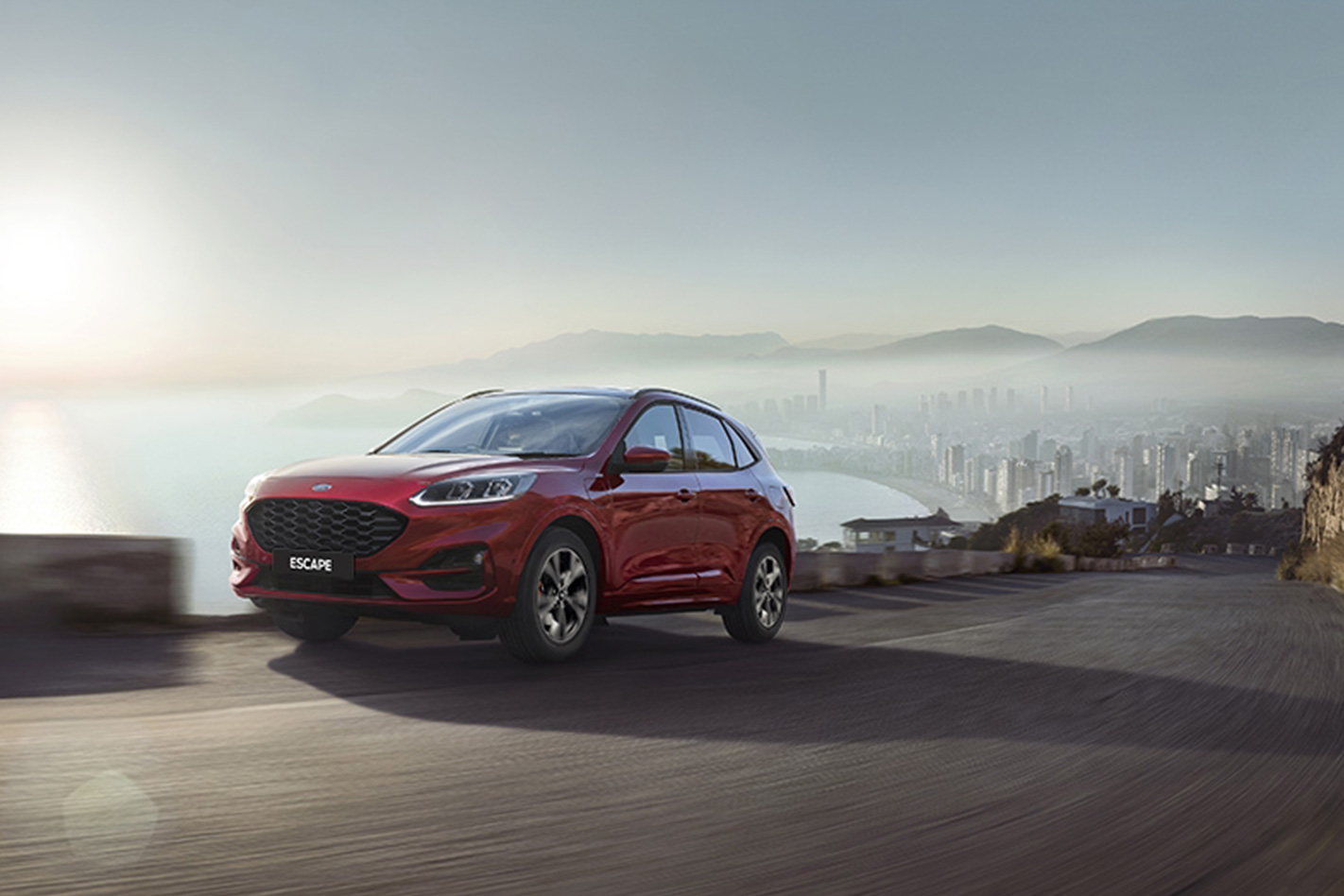
A hybrid engine is available, though is only sold in ST-Line trim, and it won’t arrive until late 2021.
Upper-spec versions of the Honda CR-V use a 1.5-litre turbo four-cylinder engine that sends 140kW/240Nm to all four wheels via a continuously variable transmission in the CR-V VTi-LX AWD.
The RAV4 Cruiser is powered by a 2.0-litre naturally-aspirated four-cylinder engine that powers the front wheels only.
Outputs for that powertrain are 127kW/203Nm, which is down on rivals, though a hybrid option is available for the Cruiser specification for $2500 in front-wheel-drive form, or $5500 for AWD.
Safety
Safety ranks high on the Escape’s feature list and the new model has been awarded the full five-star rating by the Australasian New Car Assessment Program (ANCAP), with particular praise awarded for its autonomous emergency braking system (AEB).
It also features lane departure warning, evasive steering assist, traffic sign recognition, blind-spot detection, lane keep assist and a driver impairment monitor.
Honda’s Sensing active safety suite features on the CR-V VTi-LX, with items like adaptive cruise control, lane-keep assist, AEB, and road departure mitigation system.
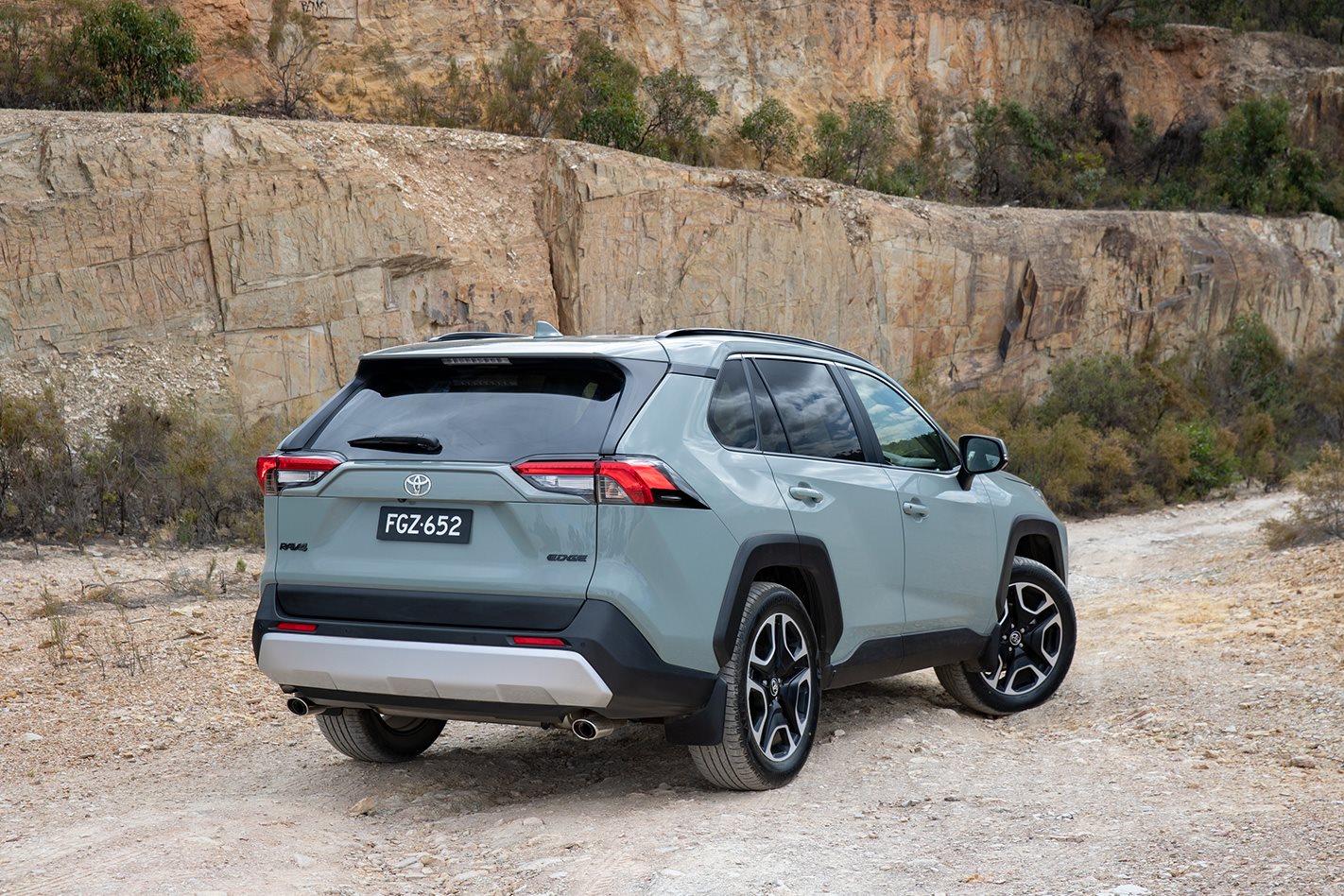
Autonomous emergency braking, adaptive cruise control, stability control, seven airbags, a reversing camera, front and rear parking sensors and rear seatbelt reminders are standard on all RAV4s.
Price
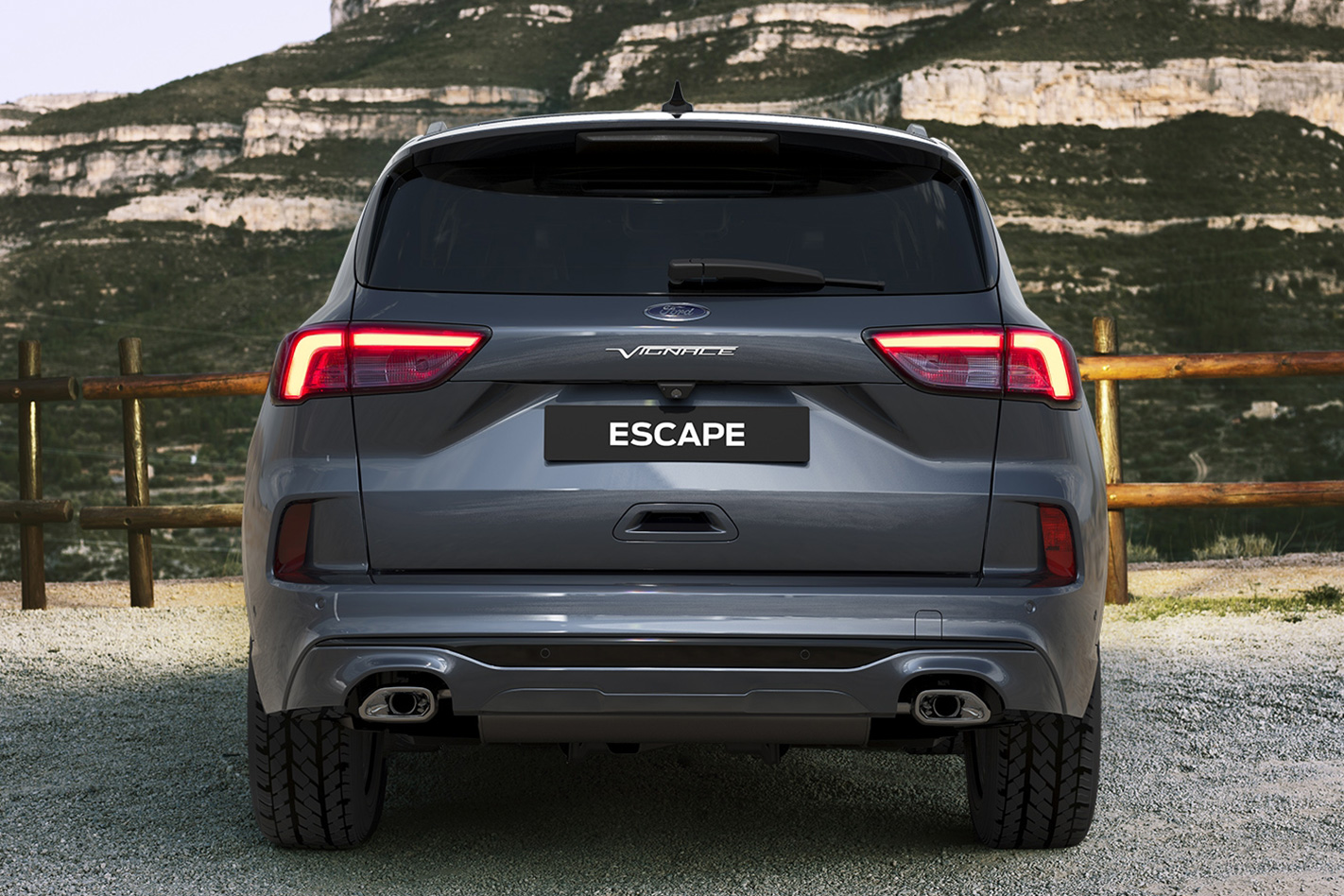
Positioned as the luxury-spec variant with associated high-end trimmings, the Ford Escape Vignale is the most expensive in the range at $49,490 (plus on-road costs).
That said, the Escape ST-Line PHEV FWD will take its place when it arrives in late 2021.
The Honda CR-V VTi-LX AWD costs $2000 less (than the Ford) at $47,490.
While not available on VTi-LX spec, consider too that Honda is one of the few medium-size SUVs that is able to cater for seven passengers, should you opt for that seating arrangement in other specifications.
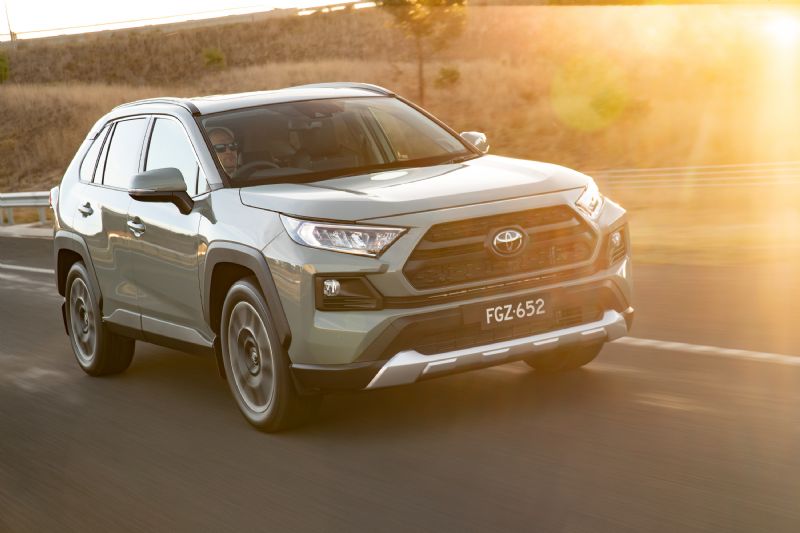
At $40,915, Toyota’s basic RAV4 Cruiser is a relative bargain in comparison, though it doesn’t match up spec-for-spec with the other two.
It has a smaller engine, has front-wheel-drive and doesn’t feature the same volume of equipment.
At $40,915 for a fairly high-spec Toyota RAV4, it makes for good buying. Even stepping up to the AWD hybrid version will only cost $46,415.
Summary
The RAV4 has the runs on the board with Aussie buyers; the brand holds strong appeal, the new, bolder interior and exterior design have resonated well, and the variety of drivetrains gives buyers choice.
Getting one in your spec and colour, though, may mean a bit of a wait.
Ford’s great hope is the Escape, and it’s a solid return to the mid-sized SUV ranks for a company that has definitely struggled in this area.
Lack of choice, especially with the delay in the hybrid version, may hurt sales in the short term, though the execution is good.
The CR-V, meanwhile, also has strong links with a loyal buying audience, and its more subtle styling will find favour with those not enamoured by the RAV4’s more rugged looks.
Building A-Class act
Inwood’s at his best when exercising his options. Here’s proof
- Price as tested: $66,640
- This month: 1056km @ 7.8L/100km
It all happened so fast. One minute I was talking to the nice PR man from Mercedes about a possible long-term A-Class, then the next I was shouting “YES!” or muttering “Hmmm, no, pass” as he read through the options list of what was to become ‘my’ A250 4Matic.
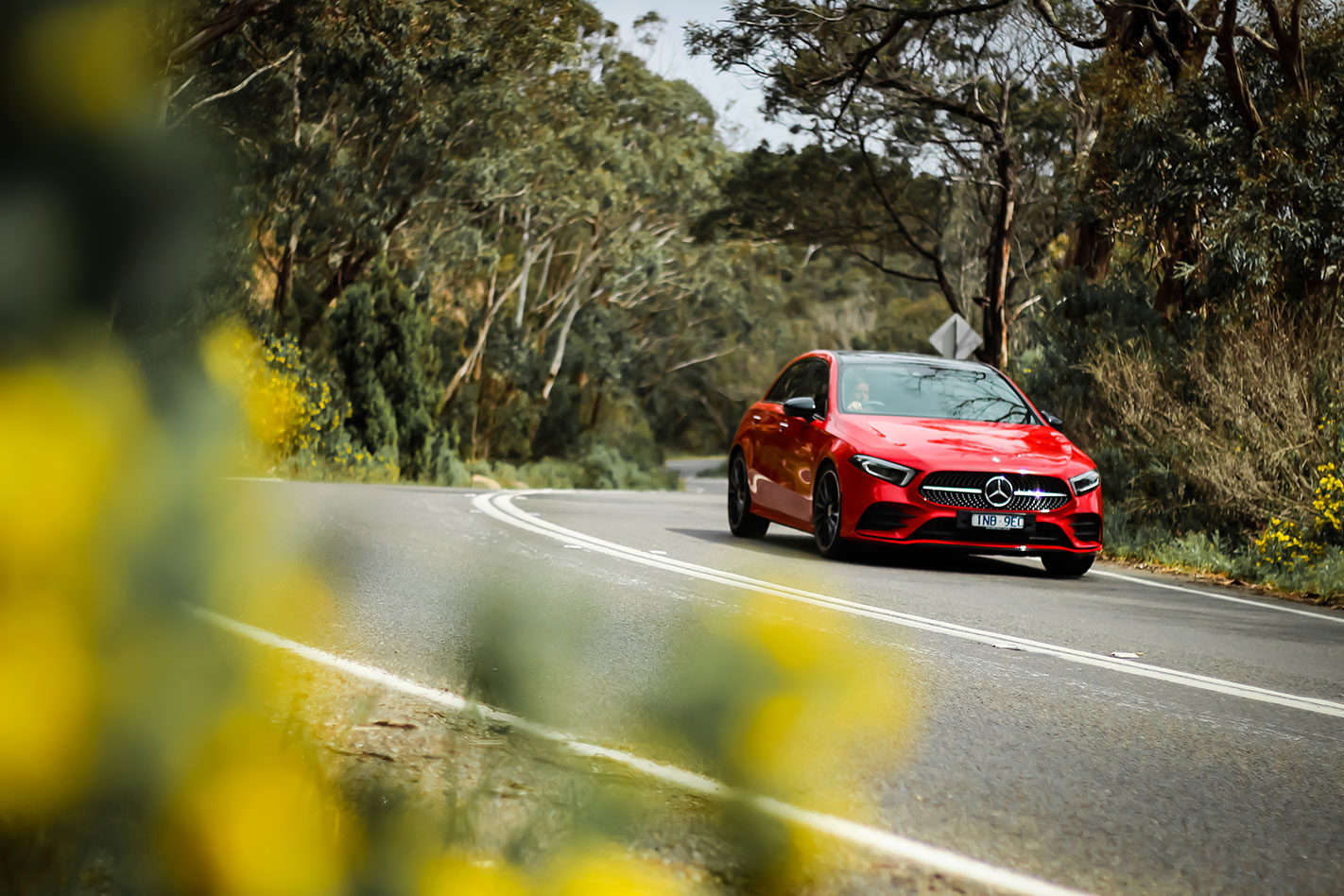
The temptation to get carried away was strong, though with the level head of a man who agonises over whether 50c for an extra shot of coffee really is worth it, I tried to spec the car as if I was ordering it for myself. Which kind of spoiled my ‘make it rain’ fantasy a little.
So, what have I ended up with? A cracking-looking hatchback, clearly. While I’m one of the few that thinks the old A-Class actually looked sharper (I miss the confident swage line that kicked up into the rear door. Without it, this new shape looks a little amorphous), there’s no denying that 1NB9EC packs a visual punch. Helping the cause is its Jupiter Red (non-metallic) paint which, happily, comes as standard, and larger 19-inch multi-spoke AMG alloys that add $1390 to the base $55,500 sticker price.
A trick of Merc’s product planning strategy means you can’t option the larger alloys (18s are standard) without also ticking the box for the AMG Exclusive Package for $3190. Crucially, this adds adaptive dampers, which is a must as A250 4Matics run on AMG Line suspension that’s 15mm lower. It also brings other goodies like two-tone leather upholstery (I went all out with the red inserts), plus ambient lighting with 64 colours to choose from, and dual-zone climate control with rear vents.
Slipping inside brings further opportunity to spend up big. As an audiophile, I couldn’t pass up the Communication Package, which for $2490 adds an excellent 12-speaker, 590W Burmester sound system. The fact this pack bundles in a clear and easy-to-read head-up display makes it feel like money well spent. It adds a further sprinkle of luxury to what is a class-leading cabin.
Depending on the intensity and colour of the ambient lighting, it can feel a little ’80s disco in there, especially at night, but dial back the intensity and there’s no escaping the feel-good factor the cabin delivers. The twin 10.25-inch screens are a highlight, and I’m finding the functionality of ‘Hey Mercedes’ and the twin-touchpads on the steering wheel genuinely useful.
My only real interior gripes are the heavy use of piano black on the centre console, which attracts dust and finger prints (you can’t option this out, sadly), and some of the plastics used on the lower doors and the indicator stalks. Normally this wouldn’t be a deal breaker, but as the right stalk acts as your gear selector, you interact with it frequently and its cheap-feeling plastic is at odds with the rest of the cabin.
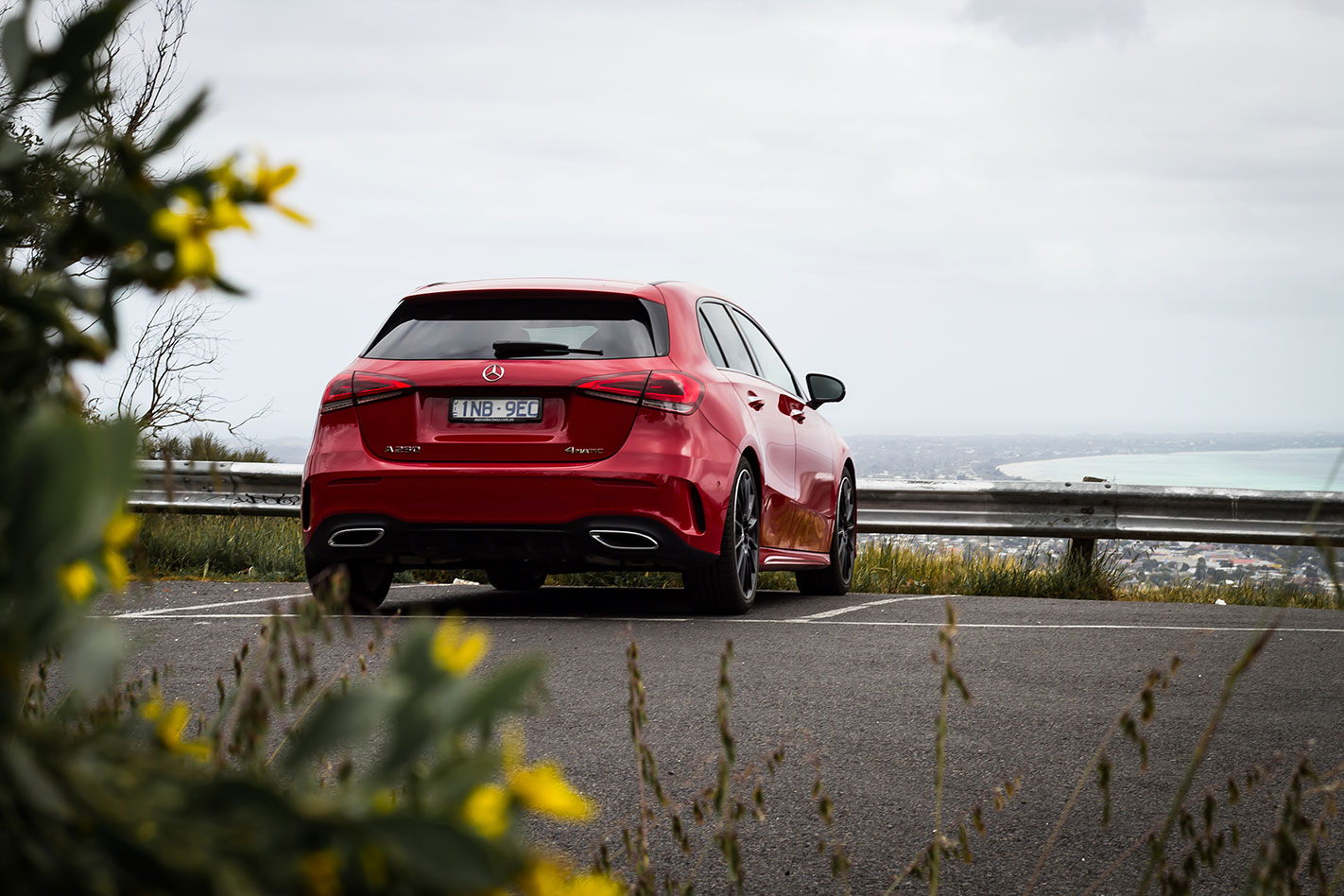
For just $990 you can also add a panoramic sunroof, so I did, and this is part of the wider Vision Package which bundles multi-beam LED headlights with adaptive high-beam assist and a sensational 360° overhead camera.
The Seat Comfort Package for $1290 gives me fully electric and heated front seats with memory function. And with a view to testing the calibration of Merc’s latest active safety gear, the final option I ticked was the Driver Assistance Package. For $1790 this brings the same semi-autonomous capabilities you get in an S-Class.
So without even trying I’d added $11,140 to the price of ‘my’ A-Class. Sounds quite a lot, when you consider it in percentage terms (20 percent of the purchase price). Do I have any regrets? Not really. My only question mark surrounds the 19-inch alloys, which are a pain to keep clean and look dreadful when dirty. But that’s it. The rest of the package looks and feels special and, as we know from COTY, an A250 4Matic is an absolute hoot when the road gets twisty. More on that next month.
Update 2
Inwood comes to terms with MBUX, but what’s the odd noise?
Be honest here – how often do you use voice recognition software? Rarely, would be my guess, for beyond asking Siri to explain the meaning of life and how to dispose of a dead body (just kidding, though I’m sure I’m now on some kind of ASIO watch list), I’ve found that voice recognition tends to fall into the same box as tech like Google Glass and virtual reality headsets: clever, but also kind of useless.
Happily, this isn’t the case with the A250. Armed with Merc’s ‘Mercedes-Benz User Experience’ infotainment software (dubbed MBUX), I find myself talking to the A250 so regularly that “Hey Mercedes!” is now firmly entrenched in my lexicon.
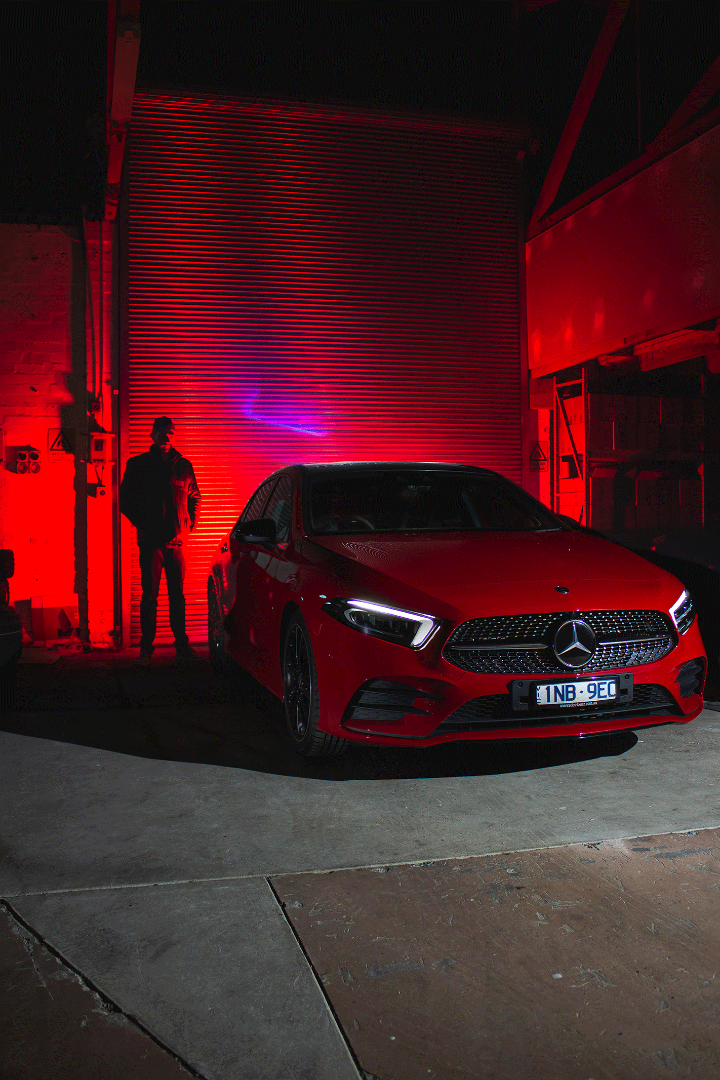
It handles all of the regular commands (“Take me home”, “Call the wife”, “How do you dispose of a…”) with ease, though what elevates it beyond Siri or Alexa is its ability to control the car’s functions. “Close the sunroof blind”, “I’m cold/hot”, and “turn on the heated seats”, are commands I use more than I expected.
That’s not to say it’s all been smooth sailing, mind. The hype that “MBUX can accept natural language so you can ask it anything!” is only partly true, and it has an annoying habit of cutting me off mid-command to say “I’m sorry, how may I help you?” Still, the system has ‘learning software’ so these foibles might improve with time (Merc suggests it takes six weeks for it to recognise habits and patterns), and anyway, voice recognition is just one facet of MBUX. The twin, highly configurable 10.25-inch touchscreens are a masterstroke thanks to easy-to-navigate menus, glossy high-resolution graphics and snappy response times. And they don’t cast reflections into the cabin or act like giant mirrors.
What can be a little daunting is how configurable the system is. In fact, the A250’s tech can become so all-consuming that it’s easy to overlook how the car actually drives. But before I could do much of that this month, something started to squeak and chirp intermittently from the engine bay. Sometimes it even rattled a little, though it wasn’t until a fellow Wheels staffer asked, “Is your A-Class a diesel?”, that I thought I should probably get it checked. So back to Benz went the A250 for a quick look over. I’ll report the findings next issue.
Update 3
Back from the dealer and straight into the fray, goes our A250
- This month: 1101km @ 8.9L/100km
The likely cause, it was determined, was a squeaky belt or similar, so the Mercedes tech team dutifully removed and checked all of the ancillaries. Success! With everything replaced, oiled and tightened, the A250 is now back in my care and performing faultlessly.
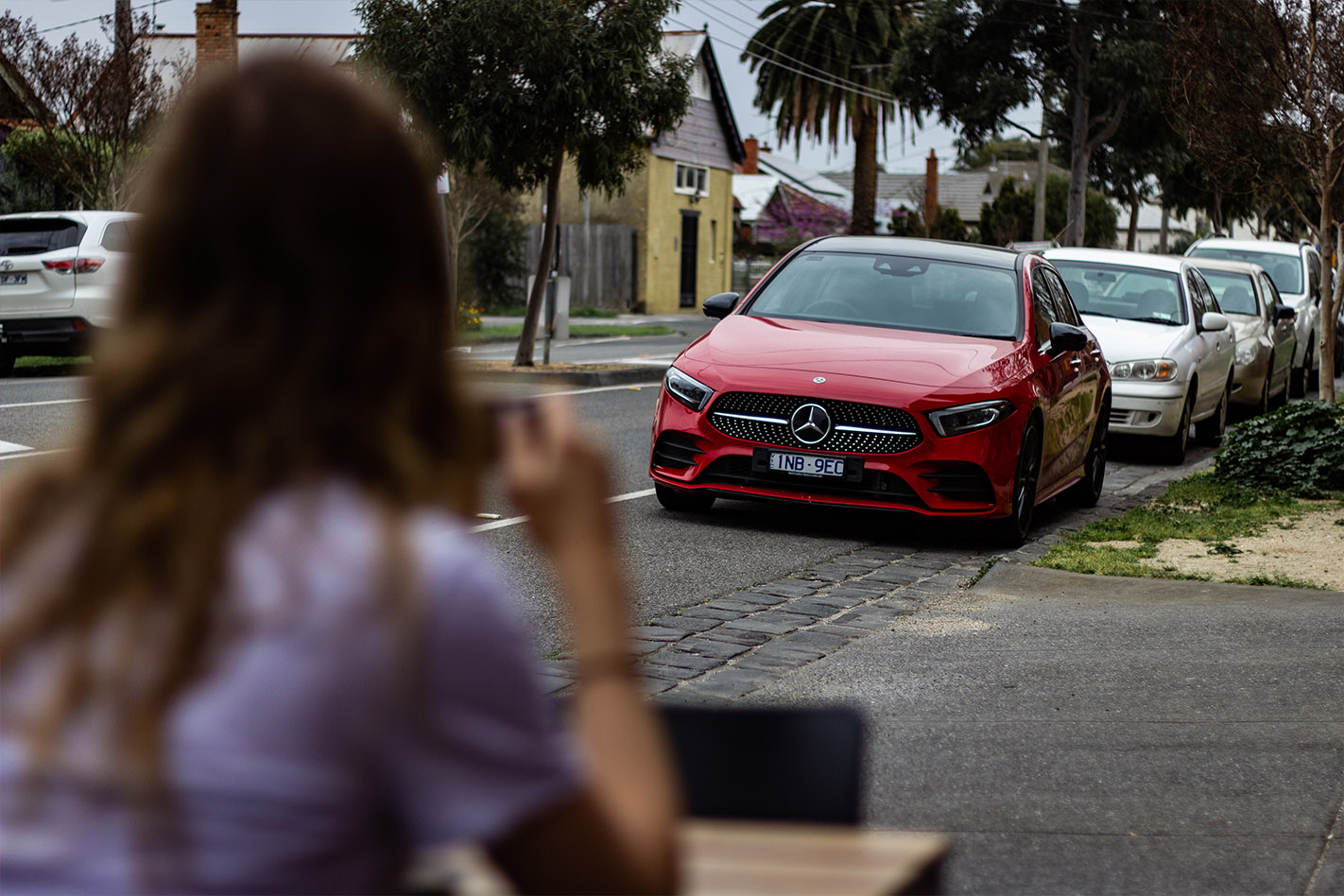
Good thing too, for the past month has been a mishmash of the drudgeries of everyday life – choking city traffic, airport car parks, rabbit-warren inner-city laneways, speed-bump-riddled backstreets, and a stint as a five-up minicab as I ferried inebriated friends about as designated driver.
Mundane duties, but important. How the A250 performs here is considerably more relevant for potential buyers than how it dissects a winding mountain round, regardless of its sporting pretensions and ability. The upshot? A solid pass. Where the old A-Class was let down by sub-par packaging headlined by a compromised rear seat and small boot, this generation is notably better. It’s still not commodious in the back – a Golf feels roomier and we had to scooch the front seats forward for some much-needed kneeroom – but three adults can sit shoulder-to-shoulder for short journeys.
No complaints about the ride, either, which was another Achilles heel of the previous-gen car. Experience in other A-Class variants suggests adaptive dampers are a vital option, and fitted as they are to this car (as part of the $3190 AMG Exclusive Package), the A250’s ride still errs on the firm side of the wafty/sporty spectrum but never feels crashy or terse. Speed humps require a degree of caution, however, as it’s surprisingly easy to catch the nose should your entry speed be a tad high.
The A250 is a wieldy and impressive city car. The steering is light and accurate (in Comfort mode), and the handling sharp and responsive, making it nicely manoeuvrable in tight spots. The plethora of assistance systems and excellent high-resolution cameras help here too, and in stop-start traffic, Merc’s adaptive cruise control is one of the best on sale. Impressive, too, that this functionality in a $60K hatchback is the same as that fitted to a $400K S-Class.
Also not to be discounted is the A250’s feel-good factor. For while you could argue that a Golf, or even a Mazda 3 like Trent’s long-termer, tick many of the same boxes as the Benz for considerably less, the A250’s kicker is its ability to quash this ‘diminishing returns’ argument by feeling a step above in the premium stakes.
Update 4: Hilling it
Early bird catches the worm given ‘Arthur’ chance
This month: 1020km @ 8.7L/100km
Car of the Year, almost a year ago to the day. Stretching before me is the dirt section at Ford’s You Yangs proving ground and what’s about to follow is the biggest surprise of the event: how Merc’s box-fresh A250 4Matic performs when it gets its wheels dirty.
It’s been well reported how the A-Class range went at Wheels’ COTY; a story of disappointment when it came to the then entry-level A200, and one of quick-witted fun and rorty performance in the A250. In fact, the A250’s chuckability and balance (especially on a loose surface) were enough for me to vote for the A-Class to go through to round two of COTY testing. It didn’t make it, but still, that memory has lingered…
Until now, my A250 has been confined to city duties but with a Sunday morning miraculously free, the wife and I set off for a good ol’-fashioned drive. Arthurs Seat, south of Melbourne, is one of those tourist roads that’s usually a disaster for keen drivers. Slow-moving tourists, puffing cyclists and the sheer volume of traffic make it a place to avoid. Be at the bottom before 8am, however, and its surfeit of tight hairpins, constant-radius corners and decent surface make it one of the best driving roads in Victoria. Ideal for an all-wheel-drive hatch with 165kW/350Nm…
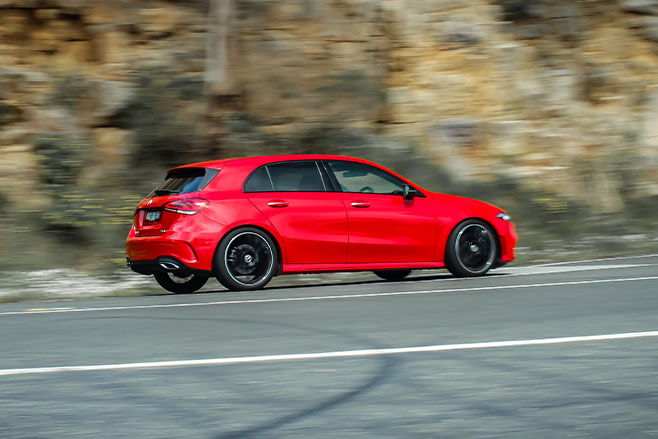
Selecting the right driving mode is crucial to extracting the best from the A250. In Comfort, the steering’s too light and the engine and gearbox response too sluggish to be properly engaging. Sport and Sport+ offer ascending levels of aggression, but the best results come from Individual mode. Here you can set the engine, gearbox and steering into Sport+ but keep the adaptive suspension in Comfort for greater compliance and dial the ESP mapping to Sport to feel the car move around a little.
Do that and the A250 delivers a fair impression of a fully fledged hot hatch. Performance from the clean-revving 2.0-litre four is punchy, if not blistering (0-100km/h is marginally quicker than a Golf GTI at 6.2sec), and the steering is meaty and direct. There’s talent to the chassis, too. A little bit of push on the way in; the suggestion of yaw if you give a big lift or trail the brakes too heavily.
It’s fun, though just how much fun will be thrown into sharper context next month when this red A250 will be replaced by the harder-charging and AMG-fettled A35. Law of diminishing returns? Tune in next month to find out.
Lost for words
After months of singing MBUX’s praises, issues are starting to appear around its much-lauded “Hey Mercedes” voice control system. Commands have been ignored, cut off halfway through, or simply failed to compute. The result? I’m using “Hey Mercedes” less, and the central and steering-wheel mounted touch pads more and more.
Subaru will release 31 examples of the Liberty Final Edition to see out the nameplate, with the limited run marking the 31 years that the Subaru Liberty has been on sale in Australia.
Subaru says the Liberty Final Edition takes the 2.5i Premium and adds $6400 worth of inclusions for an added $1990 on top of the standard car.
All-in, the Subaru Liberty costs $39,930 (before on-road costs).
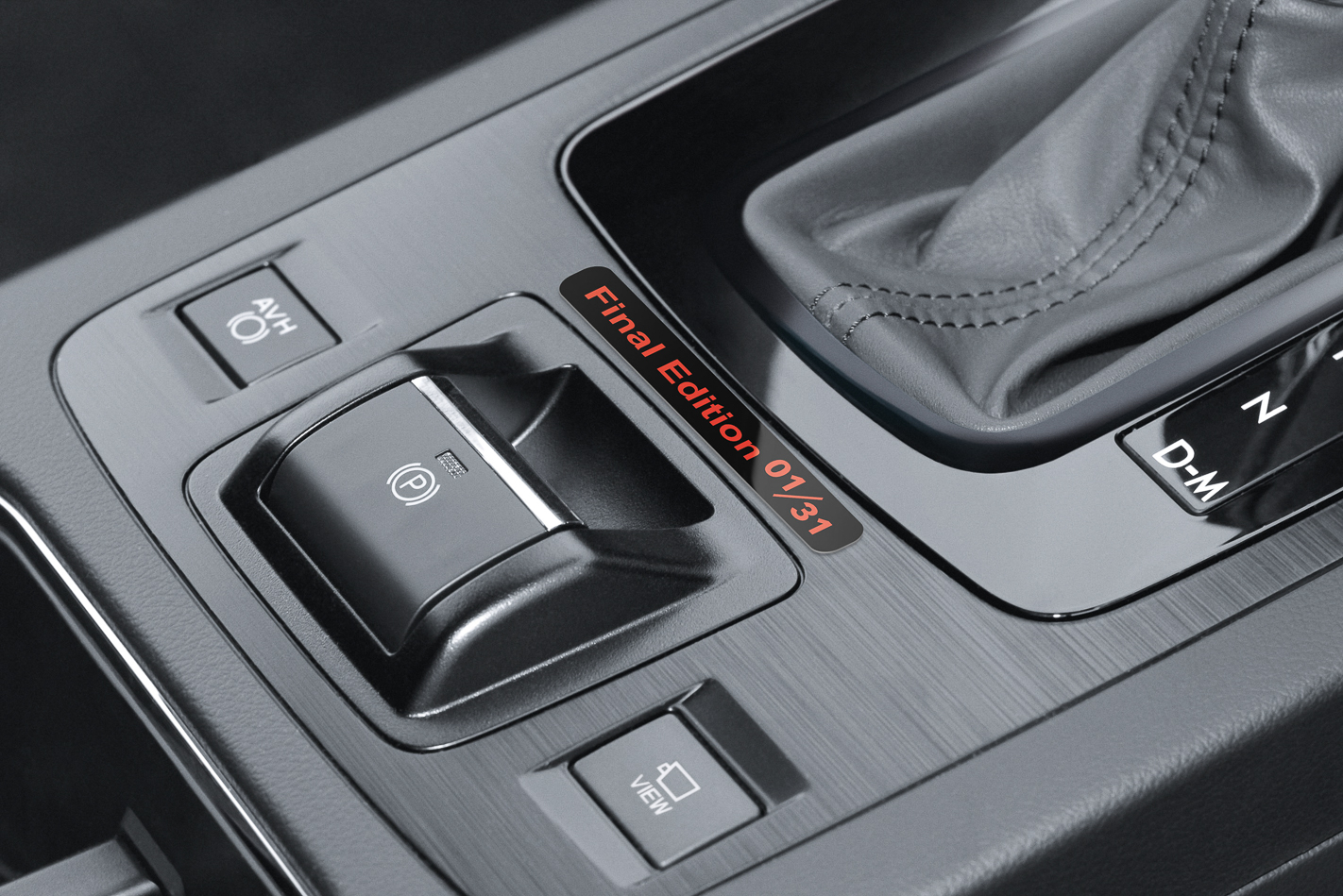
Each one will be numbered with a Final Edition plaque in the cabin, and it’s available in three colours – 15 examples in Magnetite Grey, 10 examples in Crystal Black and six examples in Crystal White.
The laundry list of add-ons includes 18-inch STI alloys, STI front lip spoiler, rear boot lip, mesh front grille insert, Harman Kardon sound system, Ultrasuede seat inserts, contrast blue stitching and black trim highlights inside and out.
As a reminder, the 2.5i Premium already features items like part-leather heated and electric seats, an 8.0-inch infotainment system with smartphone mirroring, keyless entry and sunroof.
The 2.5i Premium is powered by a 2.5-litre Boxer engine and sends power to all four wheels via a continuously variable transmission.
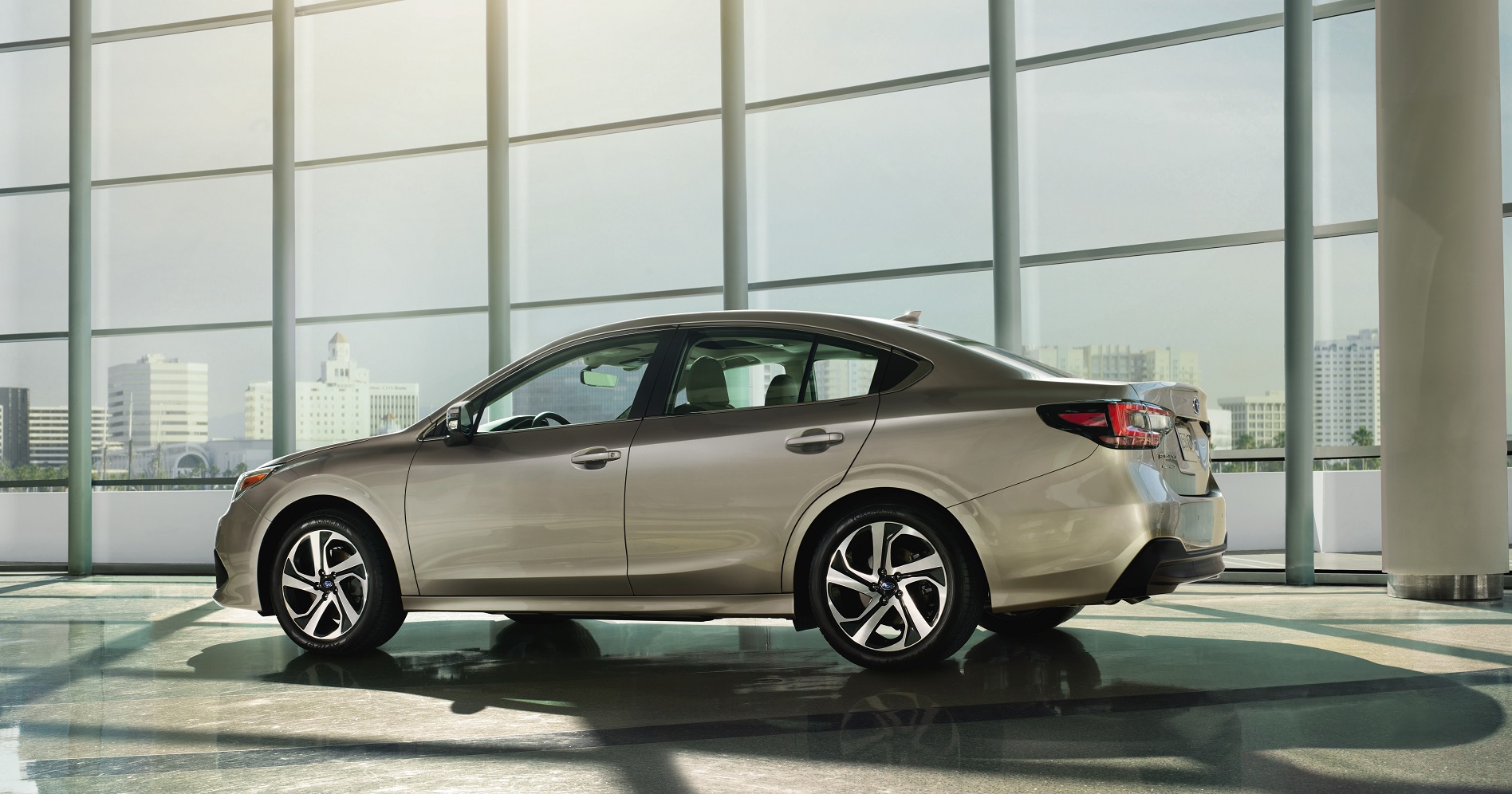
“We wanted to mark the end of Liberty’s distinguished history with the brand in a truly exclusive way and these individually numbered vehicles are a tribute to what it has contributed to Subaru over more than three decades,” said Subaru Australia general manager Blair Read.
Don’t blink if you’re keen on one of these 31 Liberty Final Editions; with so few examples on offer, Subaru says they’ll be sold on a first-come, first-served basis.
The Liberty joins sedans like the Ford Mondeo on the no-longer wanted list, as buyer preferences favour cars like Subaru’s own Forester and XV.
SUBARU LIBERTY – A HISTORY
1989 First-generation Liberty launches in Australia.
1991 10,000th Liberty sold in Australia and RS Turbo version launched. Winner of Wheels‘ annual quality award.
1994 All Libertys get dual front airbags.
1995 Liberty wins Wheels Car of the Year
1999 Liberty wagon wins Wheels Car of the Year.
2001 Liberty B4 reintroduced turbocharged technology to the range.
2004 New generation Liberty and Outback awarded the best ever five-star crashworthiness ratings in independent testing performed by ANCAP.
Introduction of six-cylinder 3.0-litre options, including the Liberty spec.B and Liberty GT tuned by STI.
2006 Premium versions of Model Year 2007 Liberty and Outback feature the revolutionary SI-Drive system. Subaru Intelligent Drive offers the option of three different drive experiences in one.
2009 Liberty passed the 120,000 sales mark in Australia. Fifth-generation Liberty launched.
2012 Subaru introduces the sophisticated EyeSight driver-assist system on Liberty and Outback 3.6 Premium variants.
What is the 2020 Toyota HiLux Rogue?
Australia’s outlier position with dual-cab utes remains unchecked as we head into a new decade.
Our fascination with dual-cab 4x4s stems partly from fashion and mostly from economic pragmatism, as small business and family life collides in a tax-friendly way to push the ute further into the mainstream.
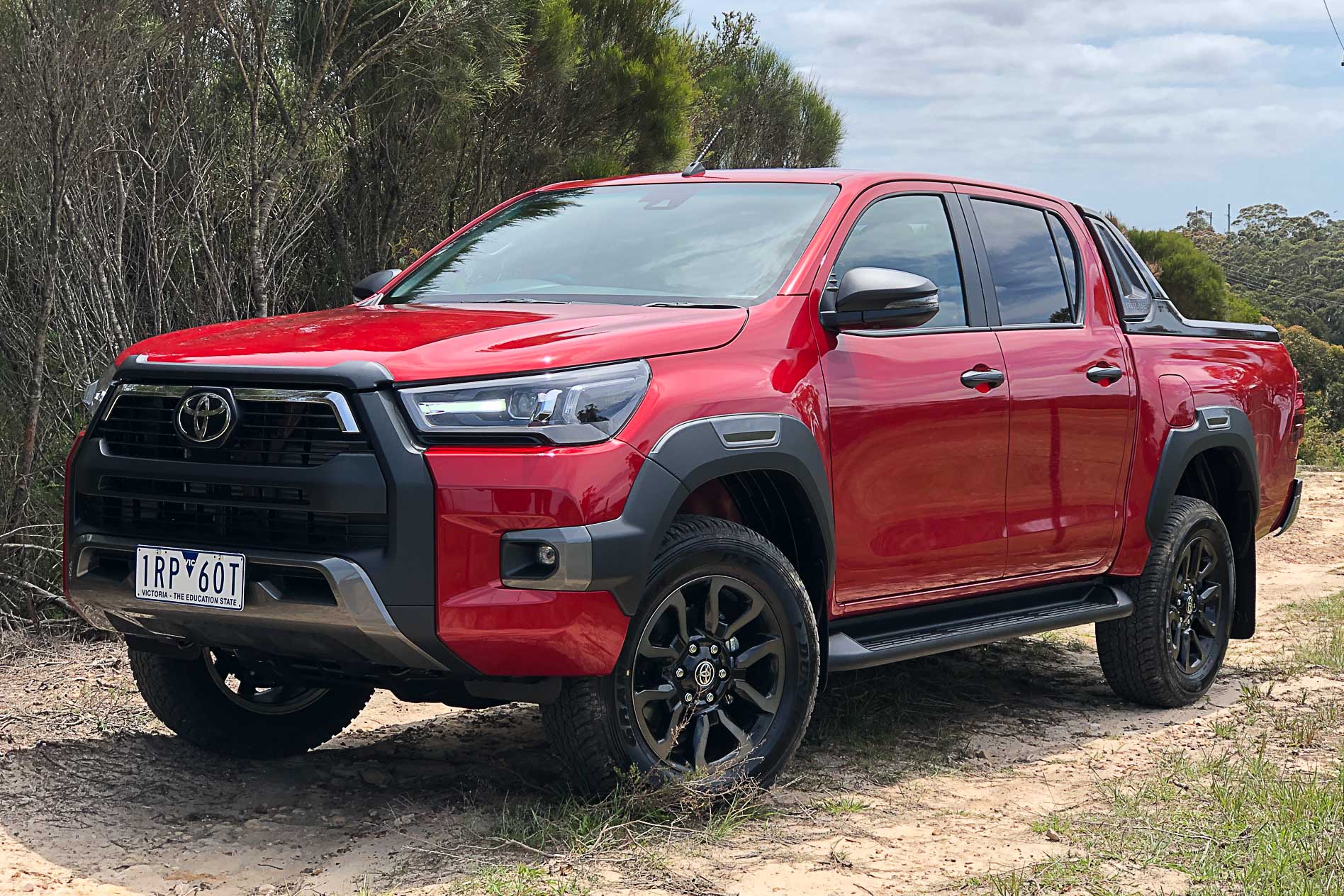
The eighth-generation Toyota HiLux launched in 2015 with new engines and safety technology to cement the vehicle’s place at the front of the queue with mining and construction companies, but the 2020 facelift addresses key areas like ride, handling and power output7 aimed squarely at the suburban-dwelling HiLux.
Introduced in 2018 to keep up with an influx of hotted-up utes from rivals like Ford and Nissan, the Rogue is the second-most expensive ute in the HiLux line-up.
But is it that much better than its cheaper siblings?
Price and value
The Toyota HiLux Rogue, equipped with a 2.8-litre four-cylinder turbo-diesel engine and a six-speed automatic transmission, will cost you $68,990 plus on-road costs.
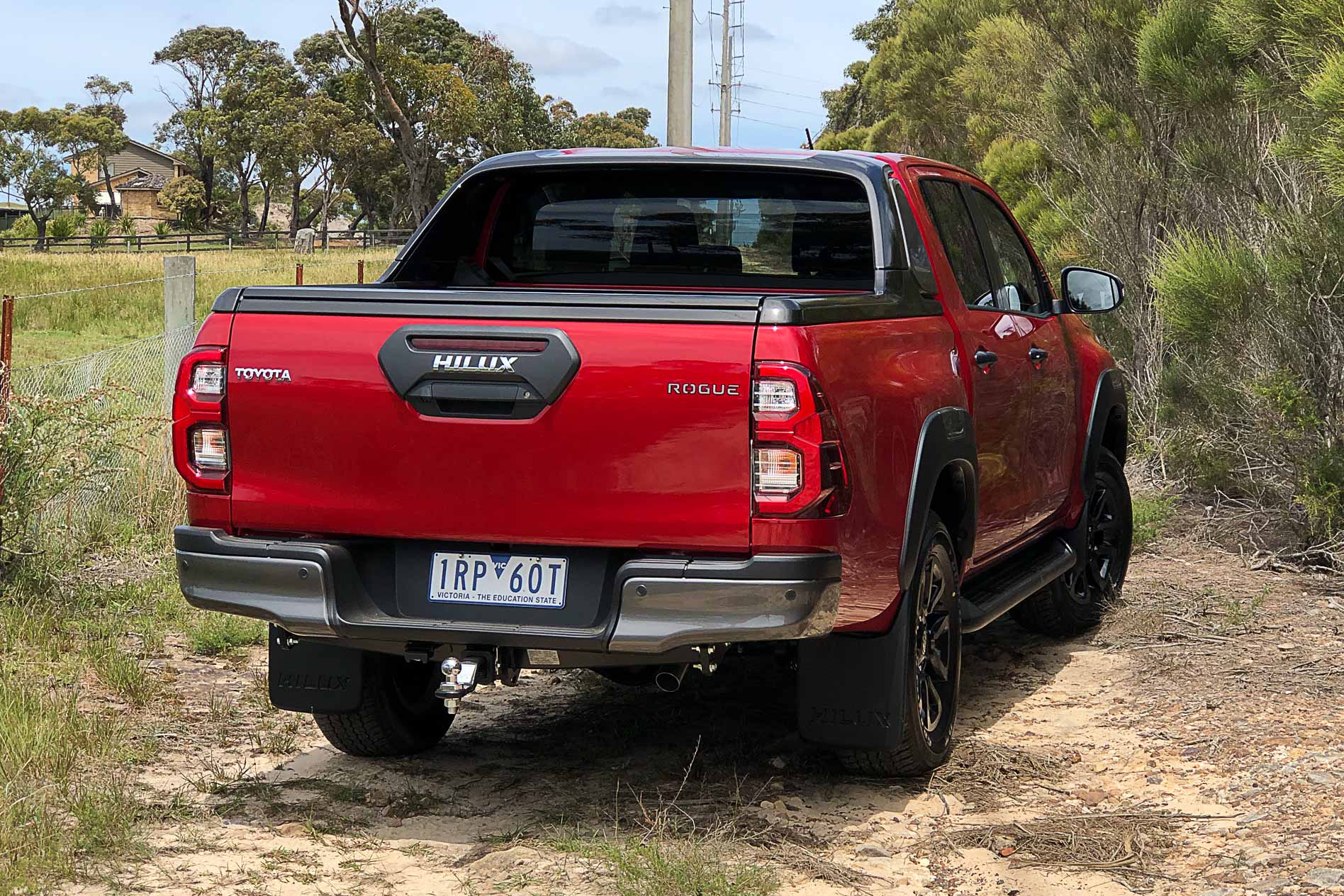
Dual-range 4×4 with hill descent control, adaptive cruise control, lane-keep assist, road sign detection and AEB with cyclist detection during the day, LED headlights and taillights, 18-inch alloys with highway-spec tyres, a new 8.0-inch multimedia system with Apple CarPlay and Android Auto and a small digital dash screen are standard, along with a 60/40 split base rear seat.
There’s also a towbar and associated electrics, though it misses out on a brake controller unit.
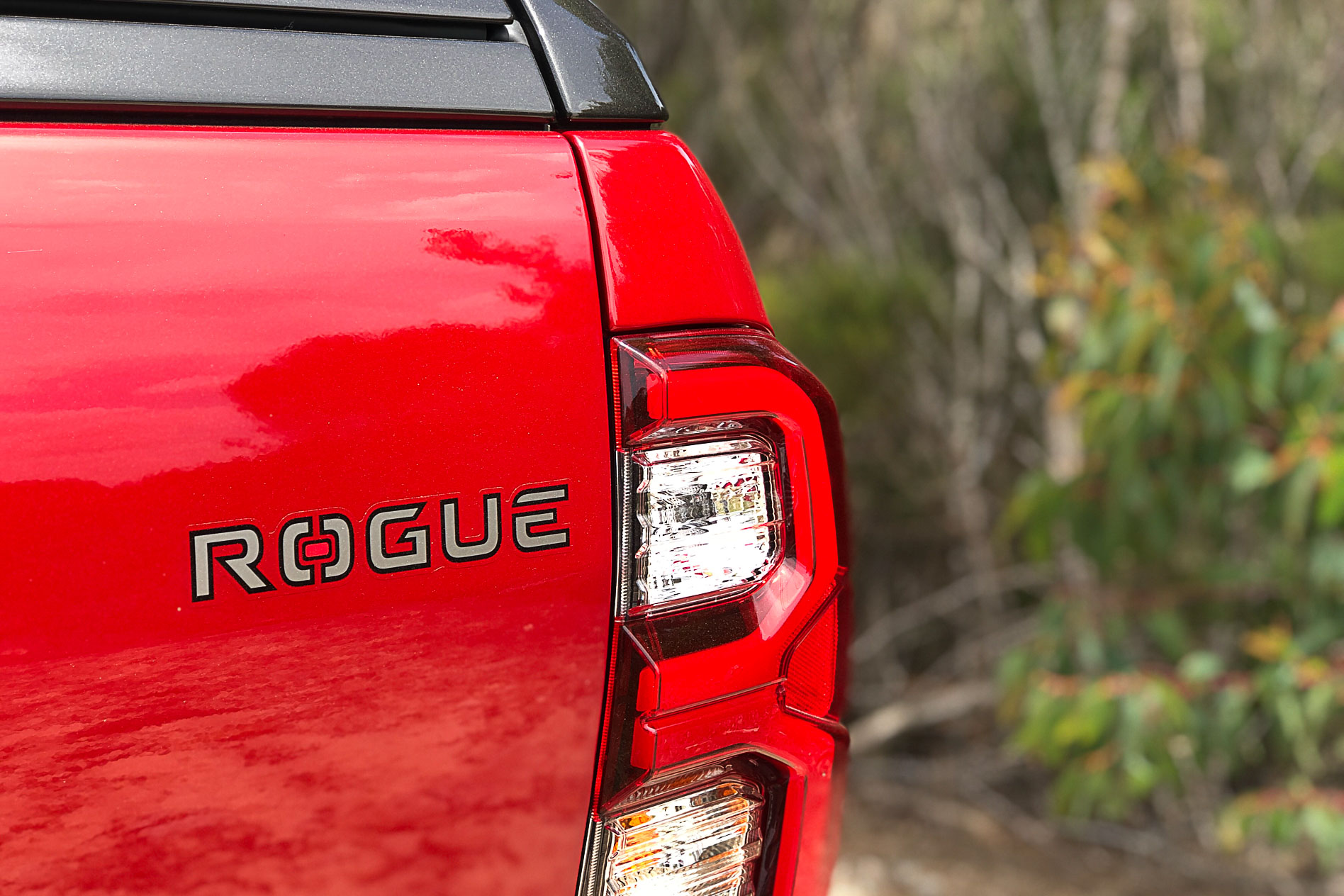
The Rogue adds a bit to the mix, including a redesigned sport bar for the tray, carpet tub lining, an electric roller-shutter for the tub and 18-inch rims, along with a bespoke front bumper treatment and extra decals.
Mechanically, though, there is no change to the spec – and you can get exactly the same set-up on the $52,160 SR5. If you want leather seats, an SR+ costs $2000 more.
Ford’s 2.0-litre twin-turbo Ranger Wildtrak costs $64,940 in auto guise, by way of comparison, while Nissan’s Navara N-TREK Warrior costs $63,790.
Living with the Toyota HiLux
There’s not much in the way of change for the interior of the HiLux Rogue. A new instrument cluster insert offers up redesigned speedo and tacho dials and does include – hallelujah! – a digital speedometer for the first time in a HiLux.
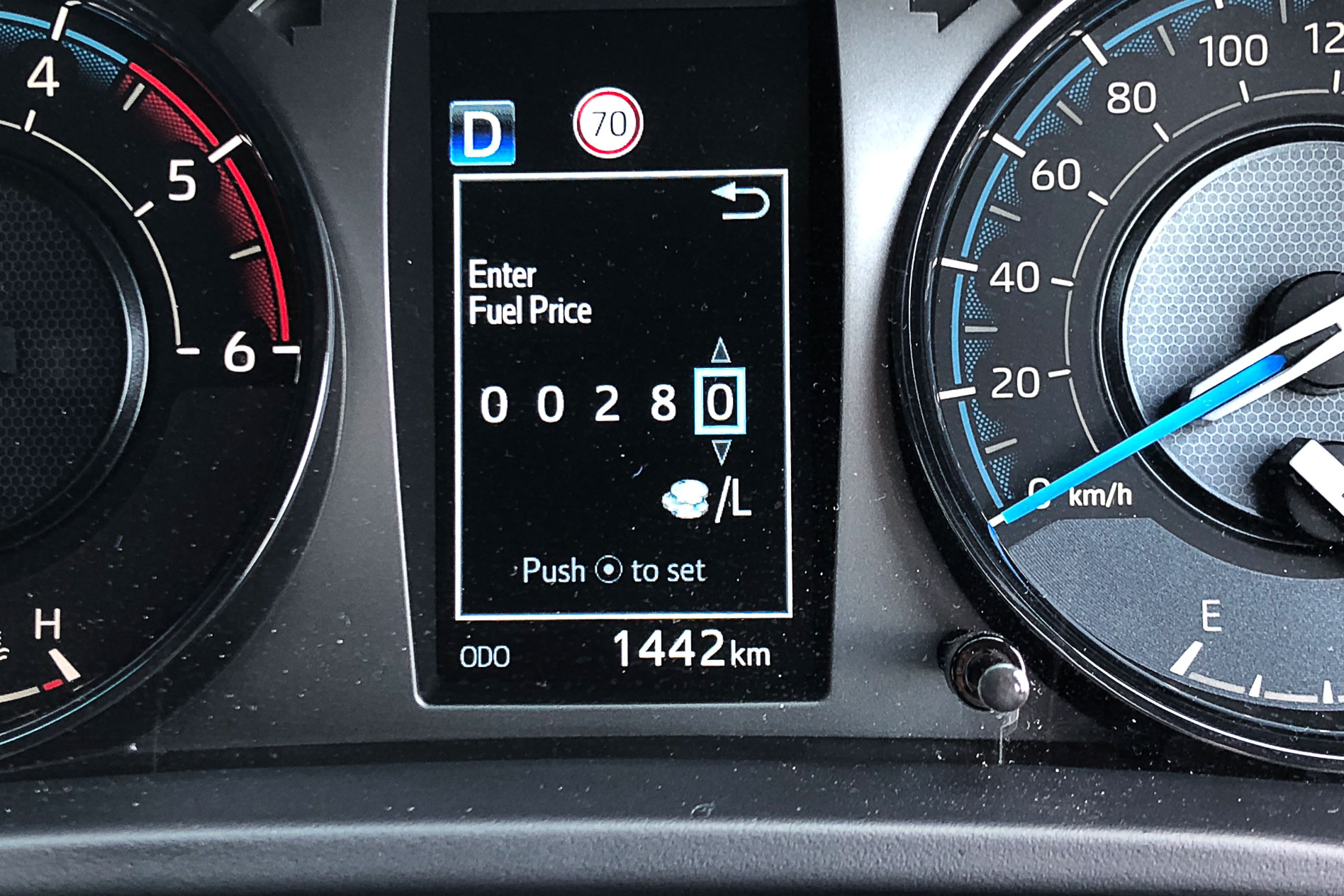
It also offers more data for the driver, but not to the extent of things like engine oil pressure or temperature.
The other big change is the addition of a larger 8.0-inch screen to the centre console. The new system is compatible with Apple CarPlay and Android Auto, along with something known as myToyota. This will allow owners to use other apps like Stitcher and AccuWeather, which aren’t supported by either phone interface.
The screen can be used via capacitive touch, with larger icons making it an easy job. Each function can be accessed via buttons, and many owners will be pleased to note that the volume knob has returned.
The Rogue’s seats are comfortable and supportive, and the steering wheel, while firm underhand, is comfortable over a longer journey. Rear seat occupants do sit quite vertically, which can be uncomfortable on a long stint, but there is plenty of headroom, toe room and shoulder room.
There are two ISOFIX points for baby seats, but the top tether points are tough to access if you’re looking to change seats between cars.
A big tick for the flip-down hook on the back of the front seat to hang that plastic bag-full of Friday night takeaway from, Toyota.
Storage in the doors and in the centre console is adequate (just), but the rock-hard plastic that’s used to make the small trays and the two cupholders means that rattling is a real drama on rough stuff.
The tray of a dual-cab is never the best place to store day-to-day stuff, but Toyota has added a powered roller shutter to the Rogue that cleans up the looks and adds some security.
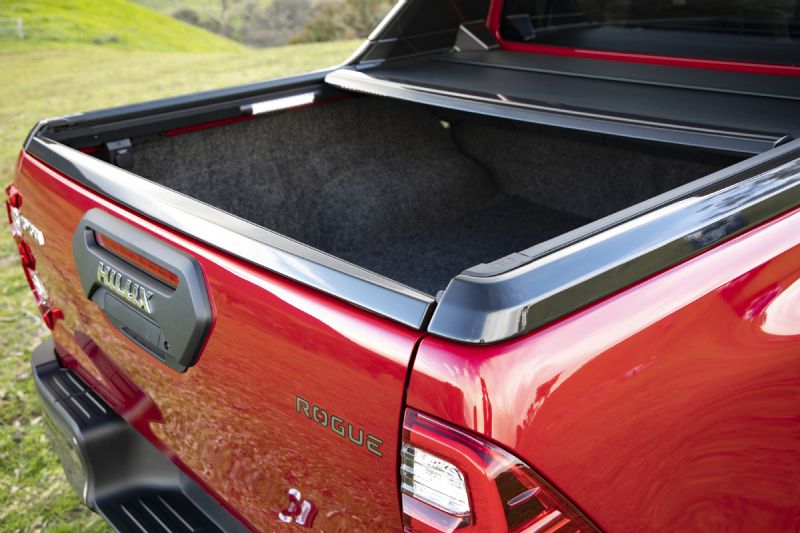
A marine-grade carpet tub liner is a new one for me, but it’s a lot kinder to objects carried in the back than either a plastic tub liner or spray-on protector.
The tailgate lacks any form of soft-open mechanism, though, slamming down with a loud clank when unlatched.
We’ll talk about how it drives in a minute, but the changes to the suspension have also improved the quietness inside the cabin of the HiLux, too.
Off-throttle, the engine quietens down nicely and aside from a little wind noise around the wing mirrors, the HiLux is easy to drive over longer distances.
However, it’s always worth noting that the inherent characteristics of a dual-cab 4×4 utility – high centre of gravity, narrow track width, dual-purpose tyres – still exist, which make the HiLux and all of its rivals less safe to drive in urban situations than, say, a hatchback or station wagon.
Engine, transmission and drivetrain
Under the bonnet of the HiLux Rogue, the 2.8-litre four-cylinder turbocharged diesel engine has been considerably overhauled – but the more expensive Rogue doesn’t offer anything on top.
A larger, ball-bearing-equipped turbocharger, a stiffer cylinder block, better exhaust gas management and improved cooling help to boost outputs to 150kW (up 20kW) and 500Nm (up 50Nm) on the six-speed automatic version, and 420Nm for the six-speed manual version (despite what you might read elsewhere).
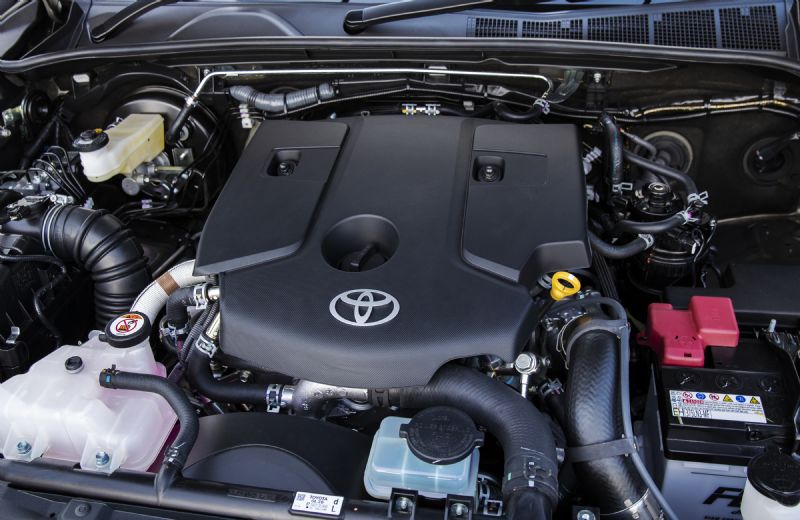
It’s still slightly down on the Ranger 2.0-litre twin-turbo’s 157kW, but the torque is now a match.
As well, the updated six-speed auto can now handle 3500kg of braked trailer, which is a 400kg jump over the previous version. Toyota says it’s down to improved torque lock-up calibration.
The HiLux retains its dash dial-activated low-range 4×4 set-up, with the default drive mode being rear-wheel-drive. A hill control descent button and an old-school ‘idle-up’ button are the main electronic off-road aids.
Driving the Toyota HiLux Rogue
Toyota has worked hard to bring new updates to the HiLux.
Chief amongst these are the changes to the suspension, which has been tweaked to improve the HiLux’s previously brittle and busy unladen ride quality, especially when the rear end is empty.
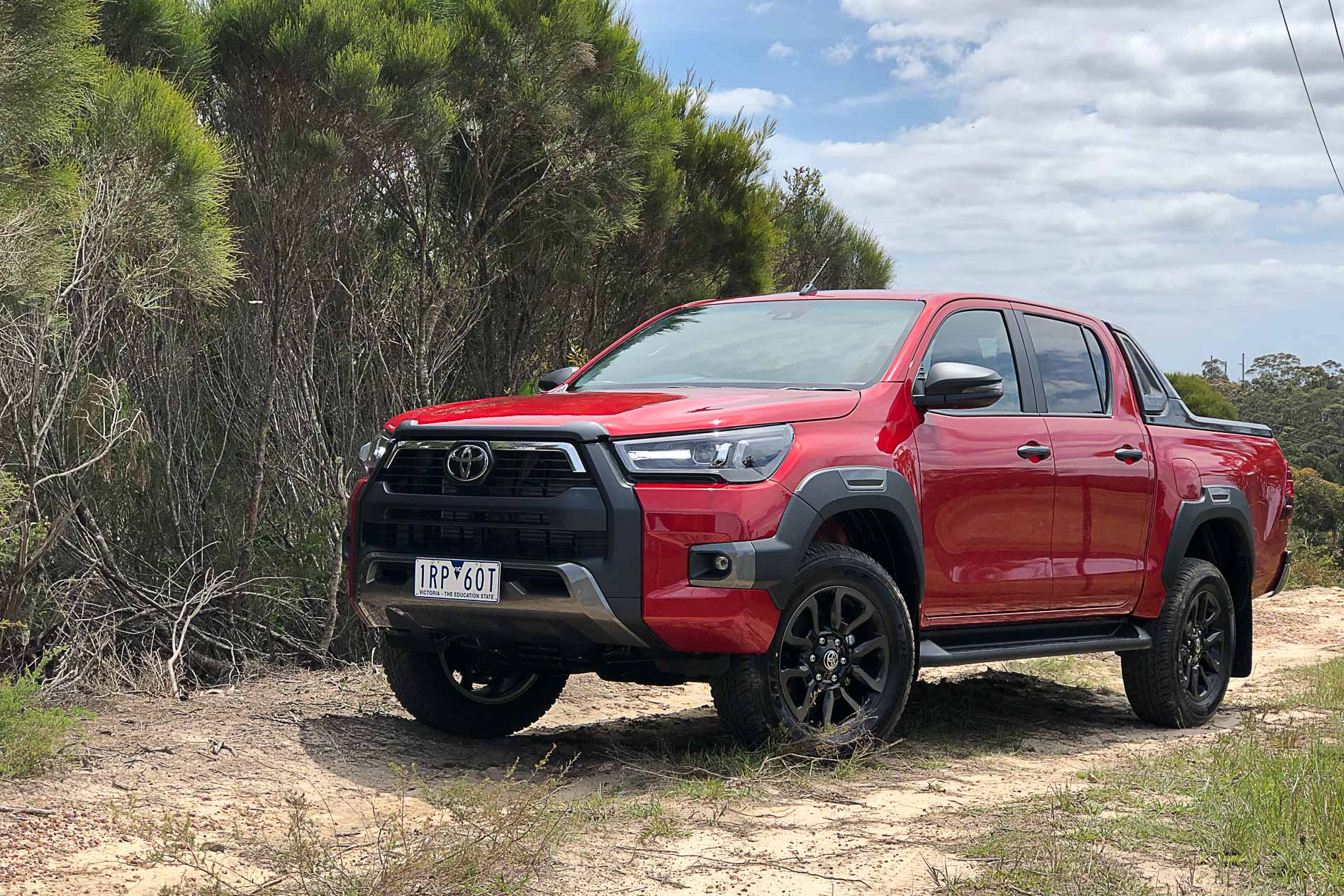
Lower-friction (read: more expensive) shocks, revised bushings and new longer, softer leaf springs combine with updated bushes that sit between the body and the ladder-frame chassis to give the HiLux a much more mature, controlled and overall more pleasant ride quality.
Steering feel, too, has been improved. Toyota has kept the older-style hydraulic steering assistance for the HiLux because it claims it’s more reliable off-road.
A variable ratio pump has been added to the system, which works harder at low speed to lighten the steering effort and firming it up at higher road speeds.
Overall, the HiLux is now quieter, much more compliant over small bumps and breaks in the road and it generally feels much more refined – and it needed to, given the quality of its opposition.
Safety of the Toyota HiLux Rogue
There’s no change to the HiLux’s five-star ANCAP safety rating, which was a major goal during the development of the eighth-gen ute.
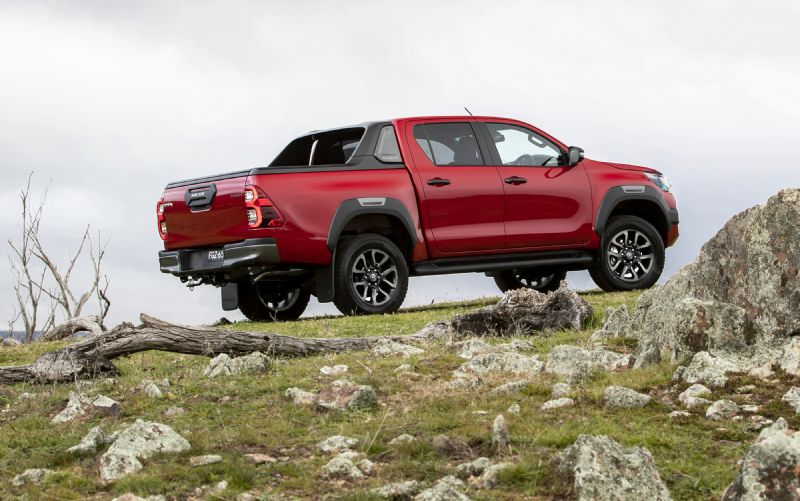
However, the active safety equipment level of the HiLux (including high-speed AEB with daytime cyclist detection, trailer sway control, lane-keep assist and adaptive cruise control) is being challenged by rivals like the new Isuzu D-MAX, which also offers rear cross-traffic detection and blind-spot warning on higher-spec models.
How much does it cost to run the Toyota HiLux Rogue?
The HiLux’s servicing intervals of six months or 10,000km are shorter than those on key rivals like the Ranger (15,000km/12 months) and are, consequently, more expensive when it comes to fixed-price service plans.
A capped-price service plan over five years will cost $3537, with the first four services capped at $250 each.
The HiLux uses standard diesel and doesn’t need AdBlue to treat its exhaust system, though the fuel filler cap hides a blanked-off second filler neck.
At a claimed combined fuel economy figure of 7.0 litres/100km, the Toyota HiLux Rogue’s 80-litre fuel tank allows a theoretical range of 1150km on one tank of diesel.
Over 260km of testing, we used 8.7L/100km over city and highway.
Verdict – the 2020 Toyota HiLux Rogue
We’ve rated the 2020 Toyota HiLux previously against the prism of the more affordable SR5 variants, and came away impressed with the much-improved ride quality and engine refinement.
However, the value proposition of the Rogue is questionable; the nearly-$15,000 ask over the top of the SR+ or even the $6500 uptick over the SR5+ for what is essentially a cosmetic makeover is tough to justify, in our view. It looks sharp, sure, but it’s a big jump.
Rating 3.5/5
What you will like
Much more comfortable, smoother and calmer to drive
What you won’t
The add-ons don’t add much other than looks
Specifications
Price: From $68,990 (6AT)
Engine/Transmission: 2.8-litre 4cyl turbo diesel
Fuel consumption/CO2/Tank size: 7.0L/100km, 212g/km, 80L
Safety: 5 stars
Seats: 5
Warranty / Service Interval: five years/160,000km, 10,000km/6 months
Spare Wheel (type): full size
Weight: 2050kg
Car manufacturing involves the use of a lot of plastics – in fact, almost 30 per cent of a new car build is comprised of plastic.
They must be resolutely strong, withstand high heat, and meet exacting safety and quality standards.
Petroleum-based plastics are best used in these instances but unfortunately are not recyclable in most cases.
However, Audi has partnered with the Karlsruhe Institute of Technology (KIT) in Germany to launch a pilot project to find new ways of recycling automotive plastics.

Whereas plastics of the same type can often be mechanically recycled (chopped up and re-melted, basically), mixed plastics pose a much greater challenge.
That’s why Audi and KIT are teaming up to investigate the viability of chemically recycling these mixed plastics into a resource-conserving cycle.
The Chemical Recycling of Plastics in Automotive Engineering study will investigate ways to chemically recycle mixed plastics as a complement to traditional mechanical recycling.
From this, Audi hopes to implement new processes and methods of using recycled automotive plastics in its automotive production.
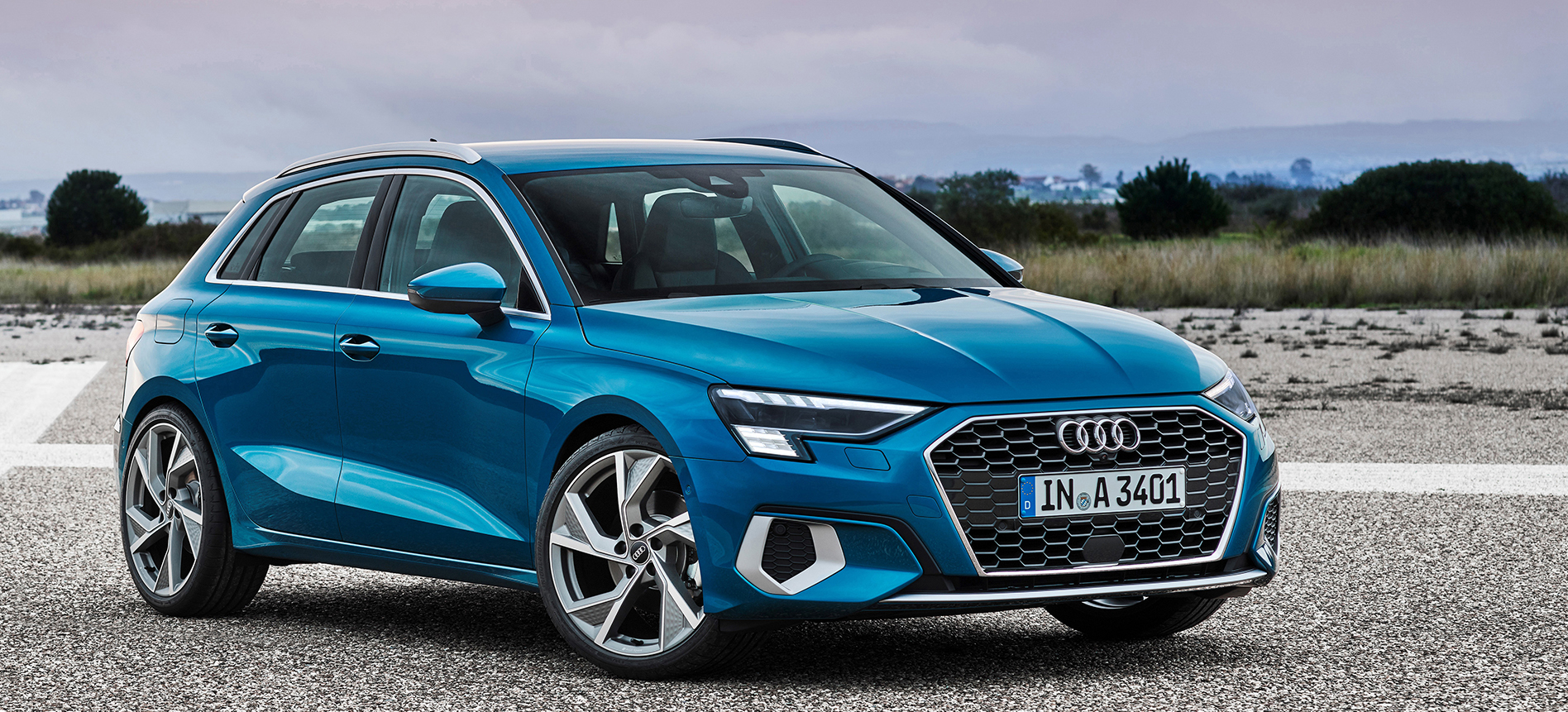
Audi will supply the study with plastic components that are no longer needed, such as grilles, fuel tanks and trim pieces from its German dealership network.
This waste is able to be recycled into pyrolysis oil, which is almost of the same quality of brand new petroleum-based plastics.
The goal is to be able to create secondary plastic components from the pyrolysis oil and install them into new cars, giving the old plastic waste a new lease on life.
So far, chemical recycling is the only way to convert mixed plastic waste into products equalling the quality of new ones.
Creating these secondary plastics through chemical recycling saves energy, costs and – most importantly – is beneficial to the environment.
Audi is one of the first automobile manufacturers to test this recycling method in a pilot project with plastics from automobile production.
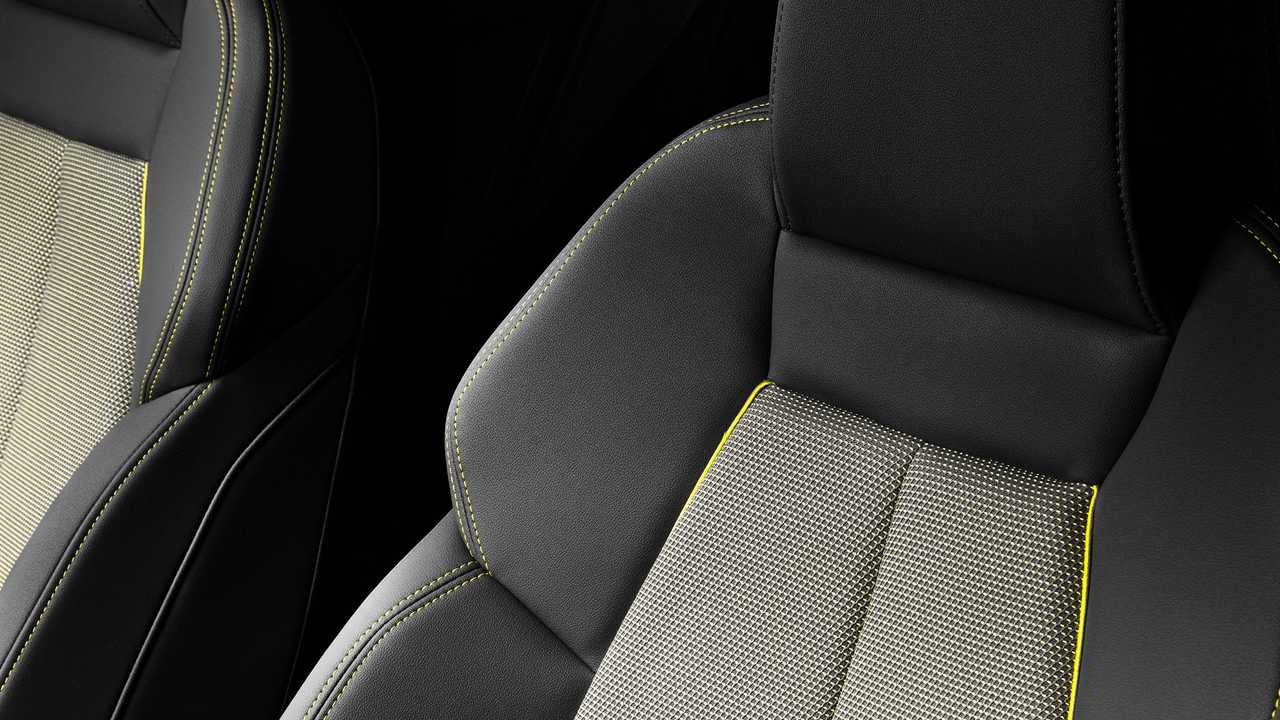
For Audi, chemical recycling could develop into a major component of wider plastics recycling, and imagines its uses as especially applicable to the automotive industry.
The company plans to gradually increase the proportion of secondary plastics throughout its model range in the near future.
Month 1: Space Ace
‘In-betweeny’ slots into a sweet spot
Price as tested: $41,490
Fuel this month: 497km @ 9.7L/100km
Short and relatively sweet is the best way to describe my experience with the latest addition to the Wheels long-term garage.
Joining the fleet this month is a Mazda CX-30. A G25 Astina FWD, to be precise. We have become well acquainted with the Mazda 3 hatch on which it’s largely based, having run one as a long-termer late last year, and now it’s time to see if this highly anticipated model can replicate the experience enjoyed by Trent.
The CX-30 should retain the values that earned the Mazda 3 a top-three place at Wheels Car of the Year 2020, but there are some key differences with this model, namely the G20 specification that brings with it the smaller-capacity engine.
I am but a temporary custodian, though, because Andy Enright takes the keys from next month.

Built as the Goldilocks proposition to sit between the popular CX-3 and CX-5 models, the CX-30 fits neatly in that niche in every dimension. This has benefits, with the nimble hatch-like ability and manoeuvrability of the CX-3 retained, while adding vital millimetres to the interior space and litres to the boot.
But don’t be lulled into believing that this makes the CX-30 a load-lugger – it is based on the Mazda 3 hatch, after all. No, this remains a style-driven vehicle that forgoes some utilitarian practicality for dashing good looks.
Mazda’s ‘fluid’ design language is on full display with the CX-30, and I think it works well. The little Mazda stands out even when rubbing shoulders with more expensive European offerings in the leafy inner-city suburbs of Melbourne.
The cabin is beautifully presented – and to think this isn’t even the top spec – with every touch point a testimony to well thought-out design and placement.
At a time when car makers across the pricing spectrum are moving to bigger touchscreens inside their cabins, Mazda has made the interesting choice to move the screen further away from the driver, effectively out of finger-prodding range. To me, that’s a good thing because, while the screen (non-touch in this case) is further away, it is closer to your eyeline when driving.
I find a touchscreen system more distracting to use than Mazda’s rotary-dial set-up. It avoids a bugbear of mine, which is having to use a touchscreen for a function that should be a button – particularly climate control.
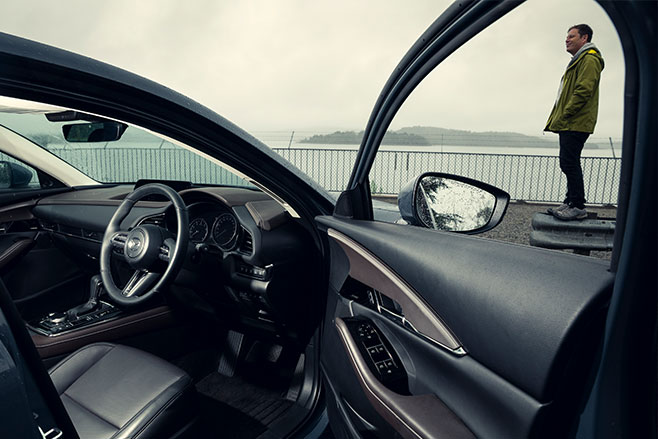
Not all of Mazda’s technological advancements had me smiling, though. While a full suite of safety functions comes as standard on the CX-30, their functionality isn’t as refined as you’ll find in its competitors.
The blindspot monitoring caught my ire in particular, being triggered by a particularly high kerb, as well as parked cars. These false positives are annoying both in their intrusive tone and in the way they erode confidence in such an important safety system.
But kudos to the active cruise control, which is calibrated in such a way that it feels natural in how it builds and removes speed on a relatively quiet freeway.
The CX-30 kicked off its stay with us by returning 9.7L/100km from a single tank. It’s not bad, but certainly not great. The atmo four-pot requires a deft right foot off the line to prevent the revs from flaring if you want to get away from a standstill with a minor sense of urgency.
Will the CX-30 enjoy a rosy sheen at the end of its tenure in our long-term stable? I’ll defer to Enright to decide that in a couple of months.
– CAMERON KIRBY
Month 2: Eye of the Beholder
A new custodian brings a fresh perspective
This month: 1571km @ 8.4L/100km
I’ve come to realise that running a long-termer like this Mazda CX-30 has both plus and minus sides to the ledger. While it’s great to really get to know a vehicle in the way that you never can with just a day or two spent on a road test, it’s inevitable that manufacturers engineer their cars to make the good stuff overt and the less-brilliant aspects a bit trickier to unearth.
When Cam Kirby handed the CX-30 over to me, he wasn’t particularly impressed with the fuel figures he’d seen. That was surprising, as Mazda has long campaigned on the fact that a decently sized atmo engine will tend to return better fuel figures in the real world than a downsized turbo engine that’s often been designed to game laboratory fuel-economy tests. Therefore, the 9.7L/100km he saw in our G25 Astina seemed to run counter to that theory. Kirby does a lot of city driving, where my use is a little more open road, and that has helped economy improve to 8.4L/100km during my tenure.
As a Wheels comparison test winner, the CX-30 G25 Astina is undoubtedly a class act. The interior finish is extremely good, it handles sweetly and the instruments are a model of clarity. With such attention to detail, it’s odd that a couple of detail-oriented errors have crept in. A mis-spelled error message flashed onto the screen warning me of ‘Low Camera Visibilty’ at one point.
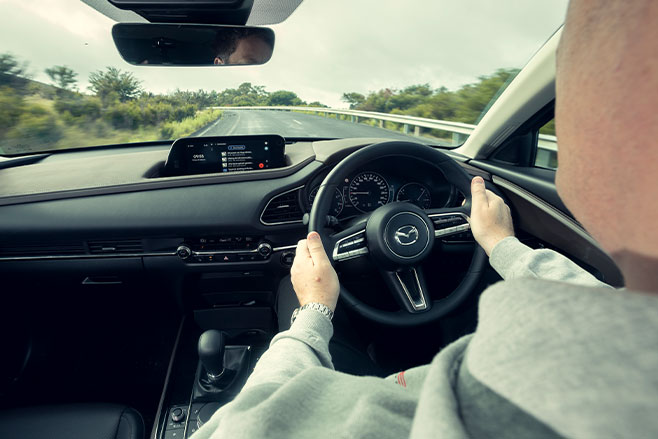
I’m an Android Auto user, and the smartphone mirroring works well on the whole, but once in a while the system will have a bit of a tug of war over whether a podcast gets to be played via the wired Android Auto connection or the Bluetooth connection to your phone. This manifests in the audio cutting out, switching automatically to the other source and the podcast stopping. That can become annoying when you’re settling into a freeway trip.
These are but minor blips that I’ll doubtless find a way to work around. Slightly more trying is the poor calibration of the adaptive cruise control on busy major routes. It brakes jerkily and then drops a gear and guns the engine to accelerate back up to speed when the lane ahead clears. I’ve learned to leave it well alone on anything but sparsely trafficked roads.
Overall, I have warmed to the CX-30. There’s an easy practicality and sweet nature to it that’s been slightly marred by a few weird calibration oversights. Everything is a relatively easy fix in terms of vehicle development, but if you’re a current owner, they might just take the shine off the experience. Viewed objectively, however, the CX-30’s positive attributes weigh massively in its favour. I’ll take that.
– ANDY ENRIGHT
Month 3: Splendid isolation
Amid ‘the big pause’, the CX-30’s character shines
This month: 545km @ 7.4L/100km
I have taken to keeping a copy of Wheels in the seatback pocket of the Mazda CX-30. That and an email from Victoria Police ought to prove to any testy roadside rozzer that this is a test car that requires driving, something I clearly can’t reasonably do at my desk at home.
That said, a couple of other engagements have meant that my use has been strictly local, the CX-30 doing a sterling job of bumping up dirt tracks in the hills to spots where my partner and I can go for a walk in complete isolation. As a result, the body surfacing that Mazda is so proud of is frequently plastered with mud. Inwood claimed to need the CX-30 recently for a TV shoot, so I took it to a jetwash and removed the most egregious spatters only to find that the plastic body mouldings, which look pristine when wet, later dry to a muddy brown. A bit of elbow grease is required for these to come up clean.
As time passes, I’m appreciating some of the CX-30’s genuinely thoughtful touches. I love the subtle red line on the analogue speedo that indicates where the speed limit is. The deep central storage box can keep all manner of gear out of sight when you leave the car for a few minutes, while the keyless go is a boon if, like me, you’re particularly pernickety about hand cleansing and cross-contamination.
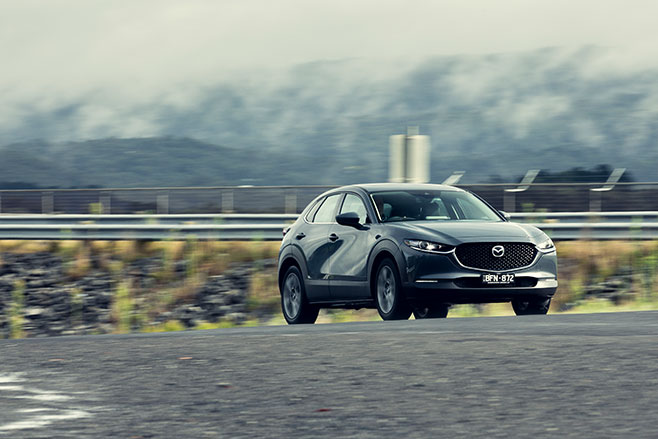
One thing is irking me and it’s the standard sat-nav. It’s directed me up roads that don’t exist, and I haven’t discovered a way for it to auto-dim the glaring white screen when the sun dips behind the horizon. Thankfully, there’s always Android Auto to the rescue. I’ve just treated myself to a new subscription to the Tidal music streaming service to keep me sane at home, and flicking through tracks on Android Auto’s interface is simple using the wheel-mounted controls.
The front-drive CX-30’s fuel economy, which looked worryingly high when Cam Kirby handed the vehicle over to me, has now settled nearer to what I’d originally expected from it – a more modest 7.4 litres per 100km. Good, but not great in the overall scheme of things, and still a little way off Mazda’s 6.6L/100km ADR figure.
Would I recommend the CX-30 to a friend? Certainly. It’s a very good thing, and the longer I spend with it, the more I’m keying into its low-maintenance, easygoing personality.
It just takes a bit of knowing.
Tanks a lot
I haven’t figured out why the CX-30 needs two fuel gauges, displayed in such close proximity. There’s both a digital meter with a range figure and an analogue-style needle gauge. Both agree with each other and both go down too quickly, due to the CX-30’s dinky 48-litre fuel tank.
– AE
Month 4: Lock down the details
Enright discusses the finer points of CX-30 ownership
This month: 1317km @ 6.3L/100km
I’ll freely admit that I was surprised that BFN872 has covered over 1300km for this report. It seems that even when used infrequently, essential journeys for a motoring scribe can tot up. So I thought I’d try to cover some of the CX-30’s finer details that you’d only discover with an extended spell with the car. So here – drum roll, please – are the Five Mazda CX-30 Facts You Won’t Find in the Road Test.
1) If your new Mazda isn’t getting the fuel economy you expected, just wait a while and it’ll get better. Throughout its tenure in the Wheels garage, the CX-30’s fuel figures have steadily improved, from 9.7L/100km to begin with to a figure of just 6.3L/100km this month. That’s 0.2L better than the ADR figure now that 6000-odd kilometres have loosened up the 2.5-litre engine a little. Bravo.
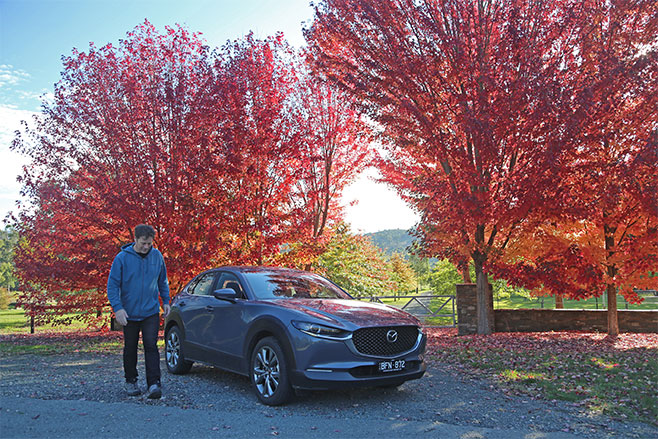
2) We’ve mentioned the thoughtful touches in the cabin in the past, but the illuminated starter button is a peach. Get into the car at night, rest your foot onto the brake pedal and the starter ring will light up in white and pulse a green centre LED.
3) Rather than use the rotary controller to tediously hunt and peck between, say, Android Auto maps and the Tidal music service on the non-touch screen, the physical navigation and audio buttons on the centre console will do the job instantly. That’s in contrast to Honda, for example, which will default you back to its proprietary nav system, forgetting that you were using phone mirroring for your direction finding.
4) Aside from the starter button, the CX-30 doesn’t do night particularly well. The nav screen is blinding white and the cabin also features a very bright airbag warning light almost at eye height near the rear-view mirror. Then there’s the automatic high beam function for the headlights that gets flummoxed far too easily and can dazzle oncoming drivers.
5) Stay on top of your tyre pressures. I’d been happily checking the tyres to placarded pressures during summer and they were fine. As the weather has become colder, I’ve noticed the CX-30’s front Dunlops (never a great tyre at the best of times) feel sloppier. Given that you lose 1psi per 5.6°C drop in temperatures (and it’s been pretty chilly in my locale), upping the pressures by 2-3psi has rectified the problem. Thankfully, the Mazda is back to its perkiest.
Although I seem to be have done a rather shambolic job of staying home during lockdown, hopefully it helps you better understand the intriguing CX-30. As the date approaches when it returns to its manufacturer, I’m beginning to think that whatever replaces it will have some quietly competent boots to fill.
Blue-sky thinking
Mazda’s revolutionary Skyactiv-X engine will join the CX-30 range in a matter of months.
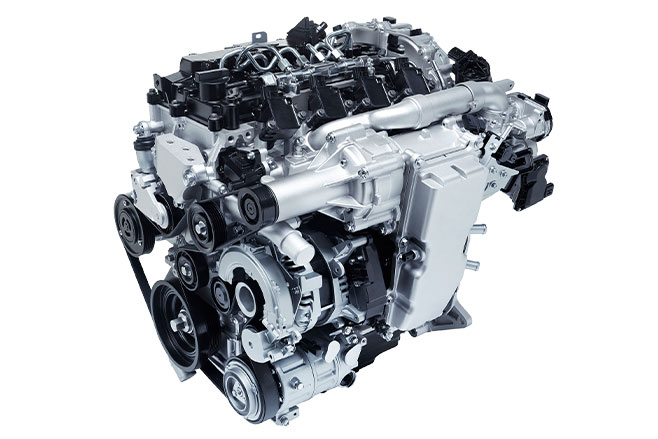
Mazda claims an efficiency boost of between 20 -30 percent for the 132kW/224Nm 2.0-litre unit, which features a supercharger and mild-hybrid tech. It’s being positioned as a flagship powertrain, so it won’t be cheap. We’d expect the top Astina model to retail north of $45K.
– AE
Month 5: Fade to grey
Enright says sayonara to the super-subtle CX-30
This month: 1846km @ 6.9L/100km
Overall: 5279km @ 8.0L/100km
Nobody commented much on the Mazda CX-30 while it was in my tenure. Despite being one of the first on the road in Oz, not a single person asked what it was. It’s pretty much the invisible car, a small SUV in a vast ocean of rival offerings, not helped here by its dour grey paint finish.
Where Kirby was mobbed by groupies wanting to borrow his Jimny and Inwood was desperately cobbling up excuses not to let the keys to his Fiesta ST leave his person, I knew that the Mazda would always have my seat, mirrors, and phone settings in place.
Despite its anonymity, I found myself growing to enjoy its quietly handsome styling. I’d find myself catching a glimpse of the CX-30 on the CCTV camera monitors at home and being struck by the coupe-like swoop of the glasshouse. Likewise, the cabin’s considered finish, quality touch points and unfussy practicality were features that grew in importance over time.
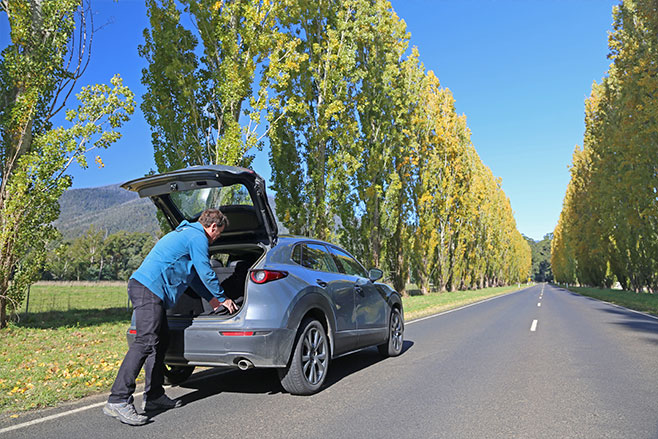
Strangely, for a Mazda at least, it was the way the CX-30 went down the road that left me largely cold. While the ride quality was good and the steering accurate, the tyres on the CX-30 and the vehicle’s comatose body control never really got me juiced to drive it. Couple that with a flat-sounding 139kW and it’s not a recipe for much in the way of excitement.
Dial things back, accept that the CX-30 isn’t going to be much of a corner carver and it’s all perfectly pleasant. And for many people in this price bracket, perfectly pleasant is more than an acceptable measure of success. It does have its quirks, though. The keyless unlocking seemed to have a mind of its own, usually managing to figure out when the key was in your most inaccessible pocket and then refusing to unlock the door when giving the handle a tug.
MORE All the local pricing and specs for the CX-30 range
Despite some minor peccadilloes, the CX-30 was a very easy car with which to live, with excellent reliability, decent comfort levels and steadily improving fuel economy. In recent months it was routinely dipping into the sixes, which isn’t far off its ADR of 6.6L/100km for this front-driver.
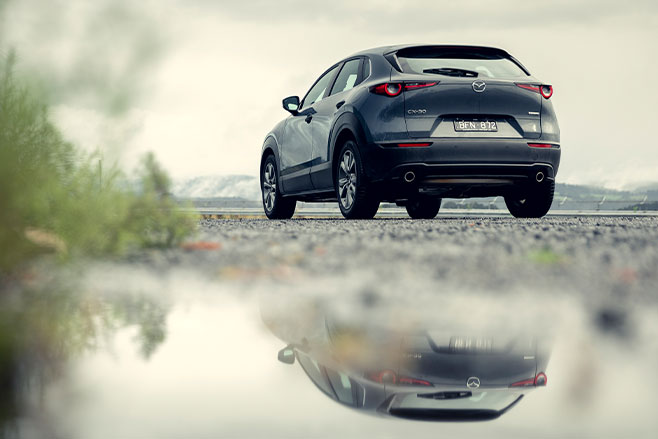
On test against the Kia Seltos and Toyota C-HR, the CX-30 proved the lightest, quickest, best finished and most comfortable. Its 317-litre boot may be an impediment to family buyers, though. Better for quality-conscious empty-nesters. People of my demographic, in short.
We tend to think of pleasantness as a measure of damning with faint praise when assessing cars. It’s usually a fallback option in lieu of overt talent. Yet sometimes making a car quietly endearing and fuss-free creates the basis of a very solid long-term relationship. The CX-30 is a slow burn yet, over time, you’d never regret your purchasing decision.
– AE
Ford‘s top Wildtrak X is back for the 2021 Ranger, with the model welcoming another special edition variant that boosts its off-road swagger.
The 2021 Ranger Wildtrak X picks up where the 2020 version will soon leave off as supply runs out, introducing unique modifications to its exterior, interior and equipment levels.
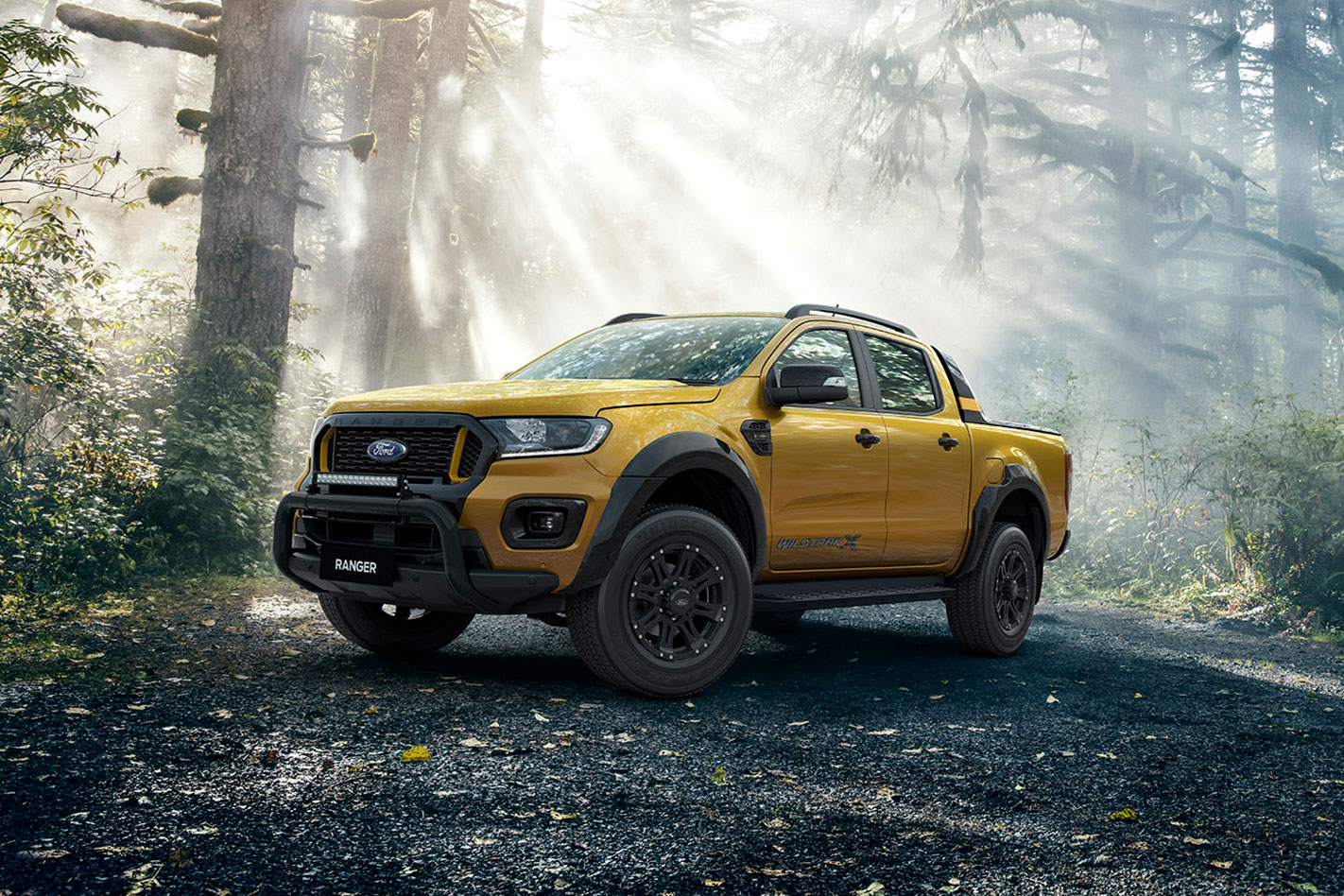
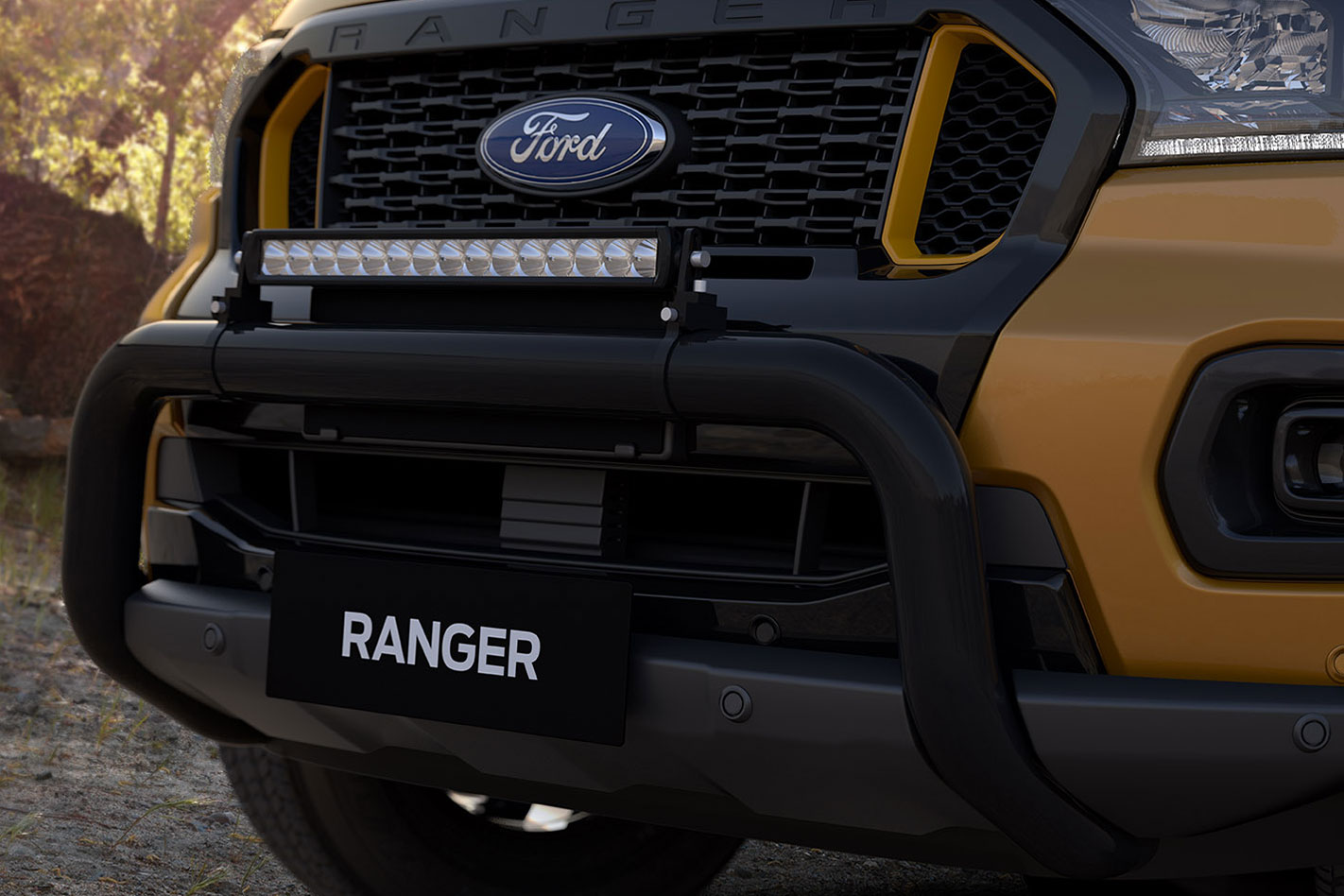
There’s no intake snorkel this time around, but it does feature another 20.5-inch LED light bar that sits fore of a redesigned front grille.
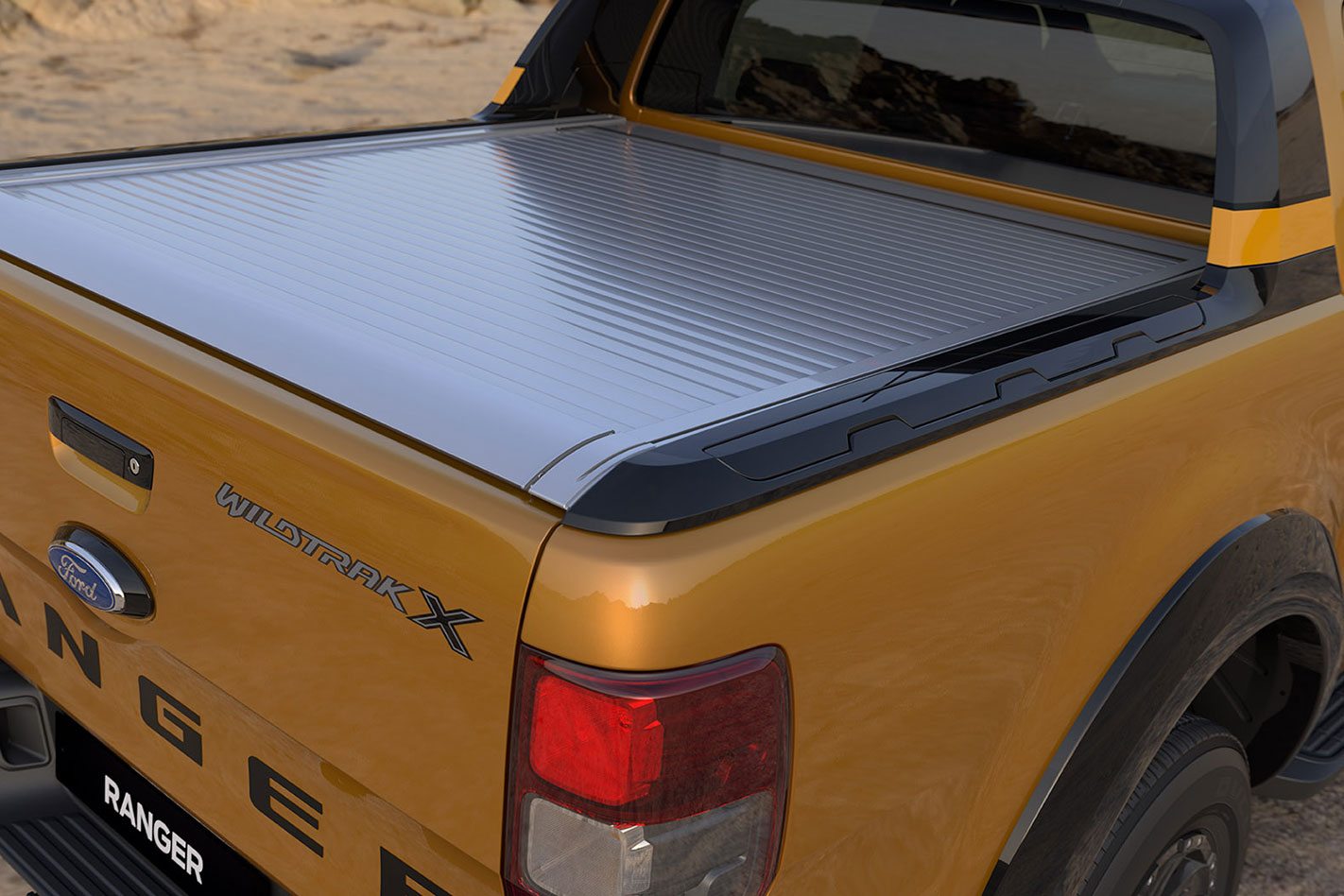
Under a black sports bar is the same Power Roller Shutter that added 80mm opening length between the roller canister and tailgate, as well as 20mm extra height clearance.
The new Wildtrak X also rides on 18-inch alloys with a 35mm offset for a wider stance, fitted with chunky off-road tyres.
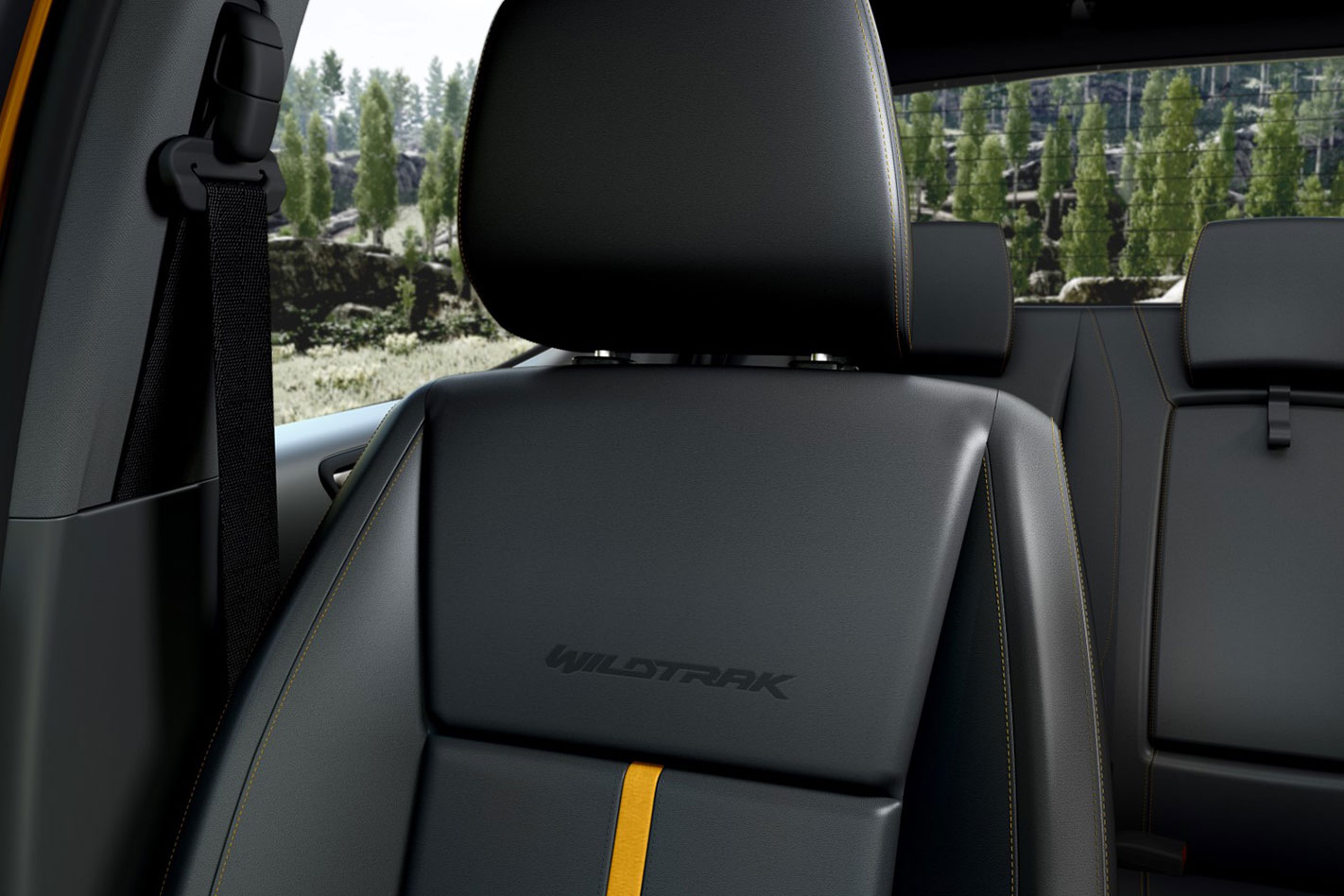
It’s otherwise standard fare inside with Ford Sync 3 technology loaded on to the multimedia system.
FordPass Connect also features, equipping the X with a modem that pairs with smartphones to enable remote vehicle functions.
You can order a Wildtrak X with either a six-speed or 10-speed automatic powertrain, with either option dictating a different engine size and manufacturer listed price.
It’ll cost $66,490, or $200 more than the previous X.
For another $1500 you can order the 10-speed auto that employs the brand’s 2.0-litre twin-turbo four-cylinder diesel.
It bumps outputs to 157kW/500Nm and drives down fuel consumption to 7.4l/100km on the combined cycle.
Volvo has taken crash testing to new heights to help rescue workers.
The Swedish brand has dropped 10 new cars from a 30-metre-high crane to simulate extreme car crashes, such as those at high-speed or between two differently sized vehicles, allowing rescue crews to practice extracting victims and treat them more quickly.
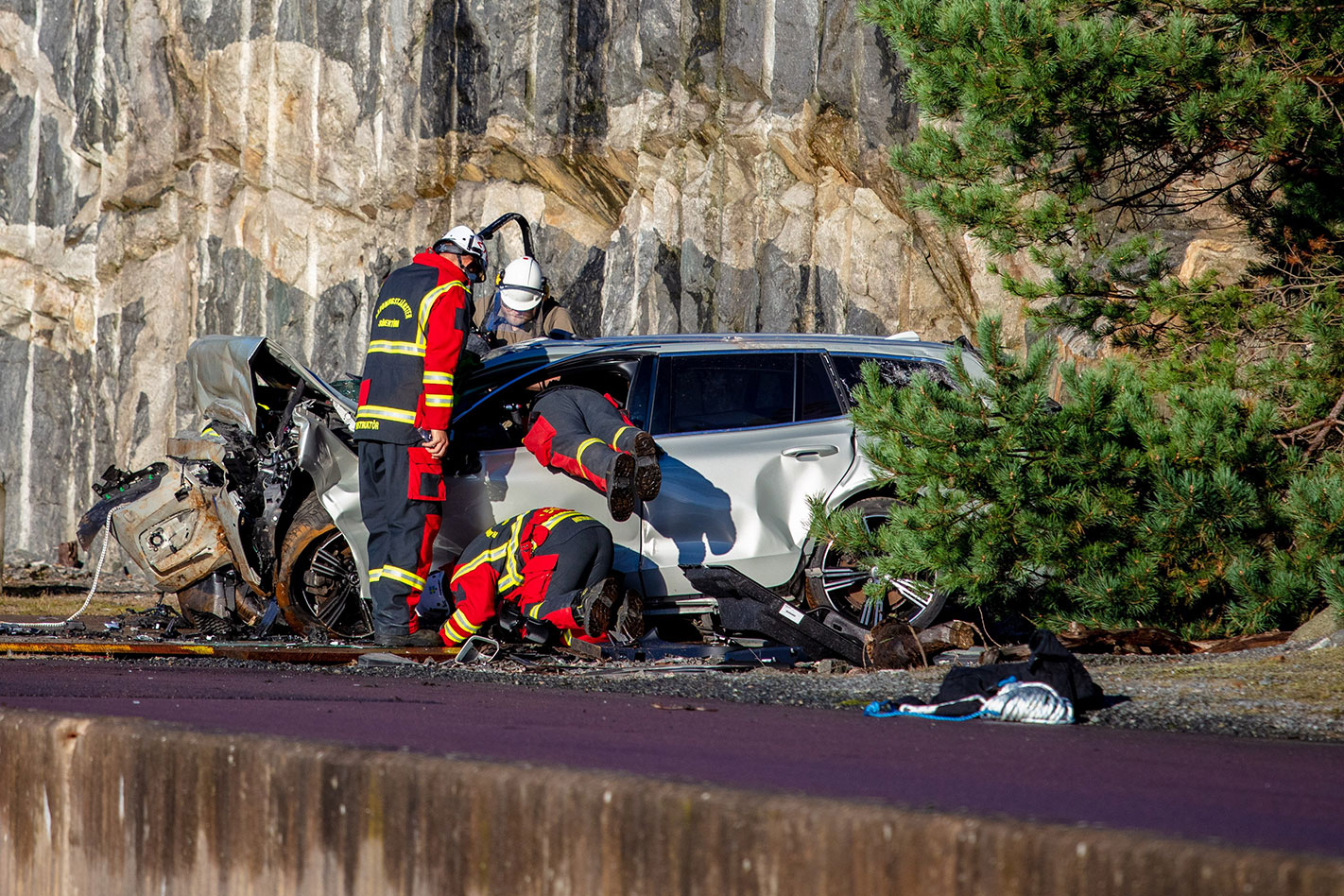
It’s been done to give Sweden’s first response teams a chance to work on new-age vehicles, like the XC40 small-SUV and V60 wagon, among others.
“The problem we have,” firefighter Jens Molin says, “is that when we do train normally, we usually get our cars from scrap yards. These cars, most of them, 10, 15 and maybe 20 years old.
“They work very differently to the cars today – regarding safety, steel [strength] and how they work when we try to open them up.”
The results, captured on video from all sorts of angles, are sobering, given the speeds they’re travelling at are commonplace in Australia.
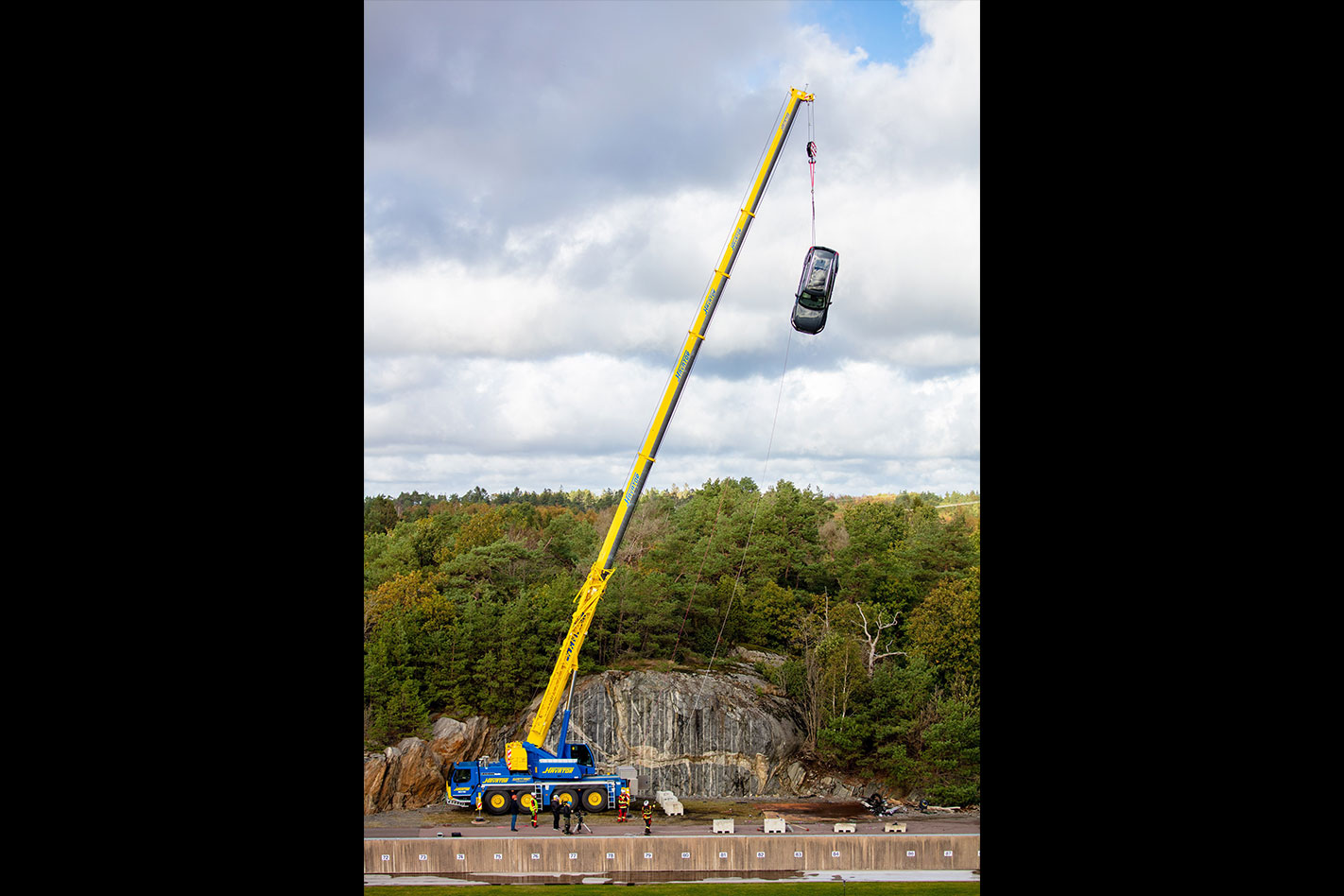
From such a height, the vehicles are doing around 70km/h when they meet the earth.
The experiment also dropped the cars on their sides to test impacts on areas without crumple zones, so rescue workers could try more crash types.
After the drops, workers on site methodically worked through extraction techniques and record hydraulic tool pressures in the aftermath, building a report on findings to give other rescue crews.
Volvo says it’s the first time it’s brought crash testing outside the lab.
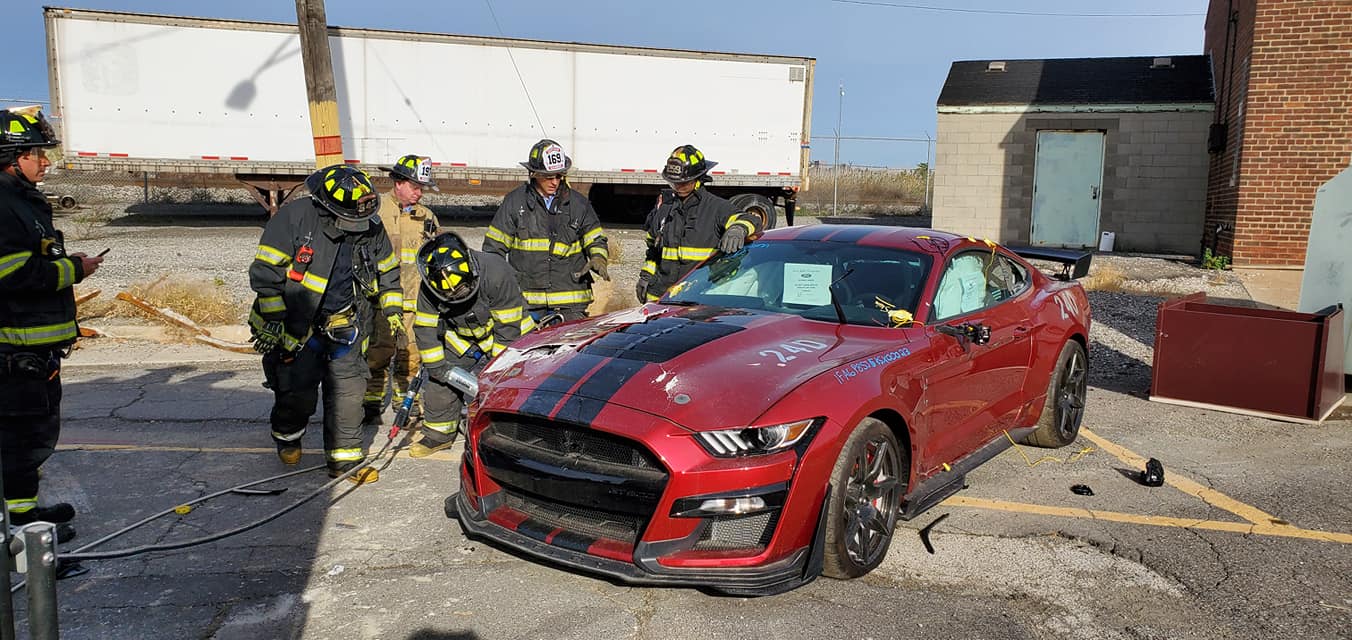
But it’s not the only one sacrificing cars for the sake of safety. Ford recently donated a Mustang GT500 prototype, carbon fibre wheels and all, to the Dearborn Fire department to cut apart for research.
